MEADOWOOD NURSING CENTER
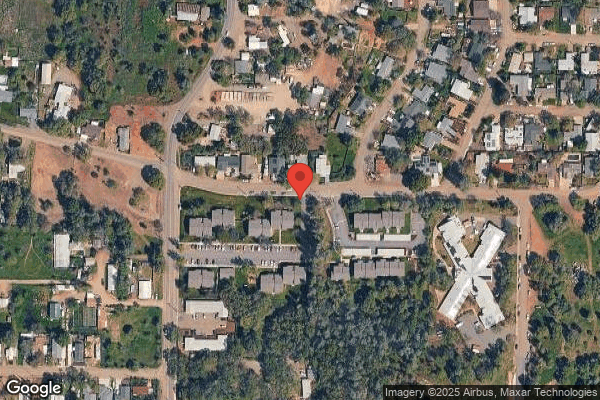
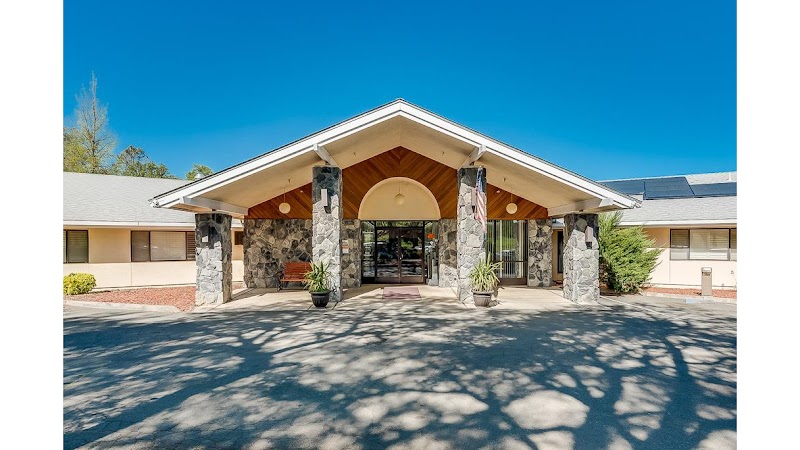
3805 DEXTER LANE, CLEARLAKE, CA 95422 (707) 994-7738
For profit - Individual 99 Beds AJC HEALTHCARE Data: November 2025
Trust Grade
0/100
#852 of 1155 in CA
Last Inspection: January 2025

Within standard 12-15 month inspection cycle. Federal law requires annual inspections.

Overview

Meadowood Nursing Center has received a Trust Grade of F, indicating significant concerns about the quality of care provided. This places them at #852 out of 1155 nursing homes in California, which is in the bottom half, and they rank #3 out of 3 in Lake County, meaning there are only two local options that are better. Although the facility is showing improvement, reducing issues from 11 in 2024 to 3 in 2025, it still faces serious challenges, including a concerning 56% staff turnover rate, which is higher than the state average. The nursing home has incurred $134,827 in fines, higher than 94% of California facilities, suggesting ongoing compliance issues, and it provides less RN coverage than 98% of state facilities, which is a crucial aspect of resident care. Specific incidents include a resident who fell and fractured their femur due to improper assistance during a transfer and another resident who experienced serious pain due to delays in receiving prescribed medication. While the quality measures have a good rating of 4 out of 5, the overall picture raises red flags that families should carefully consider.

Trust Score
F
0/100
In California
#852/1155
Bottom 27%
Safety Record
High Risk
Review needed
Inspections
Getting Better
11 → 3 violations
Staff Stability
⚠ Watch
56% turnover. Above average. Higher turnover means staff may not know residents' routines.
Penalties
⚠ Watch
$134,827 in fines. Higher than 78% of California facilities, suggesting repeated compliance issues.
Skilled Nurses
⚠ Watch
Each resident gets only 11 minutes of Registered Nurse (RN) attention daily — below average for California. Fewer RN minutes means fewer trained eyes watching for problems.
Violations
⚠ Watch
53 deficiencies on record. Higher than average. Multiple issues found across inspections.
★★☆☆☆
2.0
Overall Rating
★★☆☆☆
2.0
Staff Levels
★★★★☆
4.0
Care Quality
★★☆☆☆
2.0
Inspection Score
Stable
2024: 11 issues
2025: 3 issues

The Good

  • 4-Star Quality Measures · Strong clinical quality outcomes
  • Full Sprinkler Coverage · Fire safety systems throughout facility
  • No fines on record

Facility shows strength in quality measures, fire safety.

The Bad

2-Star Overall Rating

Below California average (3.1)

Below average - review inspection findings carefully

Staff Turnover: 56%

10pts above California avg (46%)

Frequent staff changes - ask about care continuity

Federal Fines: $134,827

Well above median ($33,413)

Significant penalties indicating serious issues

Chain: AJC HEALTHCARE

Part of a multi-facility chain

Ask about local staffing decisions and management

Staff turnover is elevated (56%)

8 points above California average of 48%

The Ugly 53 deficiencies on record

6 actual harm
May 2025 1 deficiency
CONCERN (D) 📢 Someone Reported This

A family member, employee, or ombudsman was alarmed enough to file a formal complaint

Potential for Harm - no one hurt, but risky conditions existed

Deficiency F0602 (Tag F0602)

Could have caused harm · This affected 1 resident

Based on interview and record review, the facility failed to protect one resident (Resident 1) of seven sampled residents from misappropriation of resident property when Resident 1 ' s debit card was ...

Read full inspector narrative →
Based on interview and record review, the facility failed to protect one resident (Resident 1) of seven sampled residents from misappropriation of resident property when Resident 1 ' s debit card was used by Certified Nurse Assistant 1 (CNA 1). This failure resulted in Resident 1 feeling taken advantage of, and stupid. Findings: A review of Resident 1 ' s admission record indicated admission to the facility in June 2023 with diagnosis which included polyneuropathy (a condition where multiple peripheral [outermost] nerves are damaged), intervertebral disc degeneration (a condition where the cushioning discs between the vertebrae [bones that make up the spine] in the spine wear down over time), arthritis (inflammation and damage in the joints), depressive disorder (a mental health condition characterized by symptoms like sadness, loss of interest and low energy), chronic pain syndrome (persistent pain), and adult failure to thrive (decline in overall health and well-being). A review of a Minimum Data Set (MDS- a federally mandated resident assessment tool), dated 3/24/25, indicated Resident 1 had no memory impairment. A review of Resident 1 ' s Situation, Background, Assessment, Recommendation (SBAR- a communication tool used by healthcare workers when there is a change of condition among the residents) Communication Form, dated 4/29/25, indicated, [Resident 1] expressed she gave her card to an employee who expressed financial concerns and needed to borrow money. [Resident 1] loaned employee money with the understanding she would be paid back. When [Resident 1] did not hear from employee after transaction [Resident 1] reported [the situation]. A review of a progress note dated 4/30/25 at 12 p.m. indicated, [Social Service Director (SSD)] Spoke with [Resident 1] regarding fiduciary [a person who holds an ethical relationship of trust with one or more parties] abuse. [Resident 1] stated she felt stupid and cannot believe she fell for it . A review of the facility ' s document titled ETHICAL HOUSE RULES, dated 8/30/23 and signed by CNA 1, indicated, All personnel are prohibited from accepting gifts, tips, loans or financial dealings of any kind with any residents or visitor .Any employee removing any item from the facility without permission of the Administrator in writing will be terminated .This includes .residents personal belongings. During an interview on 5/6/25 at 2:20 a.m., Resident 1 stated she gave her debit card and pin number to CNA 1 to help her pay off her debt after she expressed financial hardships to her. Resident 1 expected to receive the money back. When Resident 1 did not see CNA 1 after the transaction, Resident 1 reported the incident to the facility. Resident 1 stated, She [CNA 1] hit me at a very vulnerable spot in my life. My son doesn ' t live here, and I have no visitors. I feel stupid and should have known better. My kindness was taken advantage of. How stupid can I be? During an interview on 5/6/25 at 3:12 p.m., CNA 2 stated, We [staff] are not allowed to accept gifts. No cash at all. If it ' s a gift, we need to ask our supervisor, even if it ' s just a cookie. But, absolutely no cash or bank card. CNA 2 confirmed staff are not allowed to remove resident ' s belongings from the facility. During an interview on 5/6/25 at 3:28 p.m., the SSD stated, We are not supposed to accept gifts from residents. We are not supposed to take their card for any reason. Staff should know this. During an interview on 5/6/25 at 3:42 p.m., the Administrator (ADM) stated, I had to terminate her [CNA 1] because she did take the card. She told me that she took the card and withdrew the money . The ADM stated her expectation was for employees not to accept gifts or money from residents, and further stated, .that is against our policy. A review of the facility ' s policy and procedure titled, Gift, Gratuities, and Payments, dated 2021, indicated, Our facility prohibits employees from receiving or giving any gift, gratuity, or payment for services rendered .The giving or accepting of anything of value by our employees to or from any of our suppliers, residents .is prohibited. A review of the facility ' s document titled [The Facility ' s] Employee Handbook, dated January 2025, indicated, Employees are prohibited from accepting gifts, tips, hospitality, or entertainment in any amount from or on behalf of a resident .
Jan 2025 2 deficiencies
CONCERN (D)

Potential for Harm - no one hurt, but risky conditions existed

Respiratory Care (Tag F0695)

Could have caused harm · This affected 1 resident

Based on observation, interview, record review, and facility policy review, the facility failed to obtain a physician's orders for the use a respiration device for 1 (Resident #140) of 3 sampled resid...

Read full inspector narrative →
Based on observation, interview, record review, and facility policy review, the facility failed to obtain a physician's orders for the use a respiration device for 1 (Resident #140) of 3 sampled residents reviewed for choices. Findings included: A facility policy titled, Acapella Device, indicated, The Acapella device is used to help remove mucus from the lungs by vibrating to loosen the secretions from the airway walls. Per the policy, A licensed nurse or Respiratory Therapist may utilize an Acapella device on a resident in a skilled nursing facility for airway clearance and to help improve respiratory function in various clinical situations, adding the resident's quality of life. All extensions of the Acapella would need to be accompanied by a physician's order. An admission Record revealed the facility admitted Resident #140 on 01/08/2025. According to the admission Record, the resident had a medical history that included diagnoses of acute pulmonary edema and pulmonary hypertension. An admission Minimum Data Set (MDS), with an Assessment Reference Date (ARD) of 01/15/2025, revealed Resident #140 had a Brief Interview for Mental Status (BIMS) score of 14, which indicated the resident had intact cognition. Resident #140's care plan, included a focus area initiated 01/09/2025, that indicated the resident had potential for altered respiratory status/difficulty breathing. Interventions directed staff to administer medications/puffers as ordered and to monitor for effectiveness and side effects. During a concurrent observation and interview on 01/21/2025 at 10:03 AM, the surveyor noted a handheld device that one breathed into at the bedside of Resident #140. Resident #140 stated they had been administering the device to themself. During an interview on 01/23/2025 at 9:02 AM, Licensed Vocational Nurse (LVN) #1 reported he was not aware Resident #140 had a handheld device that one breathed into at their bedside. LVN #1 stated the resident should not have it and that he was going to remove it from the resident's room as there was no physician's order for the resident to have it. During an interview on 01/23/2025 at 11:19 AM, LVN #4 stated a physician's order was required for the use of medical devices, to include an Acapella device. During an interview on 01/23/2025 at 11:58 AM, Respiratory Therapist (RT) #3 stated an Aerobika and an Acapella were the same devices. RT #3 stated both were an oscillating positive expiratory pressure device that used a flutter valve to help break up secretions in a person's airway. RT #3 stated he did not know Resident #140 had a handheld device that one breathed into or Acapella device and that the resident must have gotten it from the hospital. RT #3 acknowledged that prior to 01/23/2025, the resident did not have a physician's order the use of the device. RT #3 stated if he saw the device, he would have called the physician to get an order for its use. RT #3 then acknowledged that he mentioned the device on an assessment that he completed prior, then stated he remembered the resident did have the device, but that he forgot to place an order for it. RT #3 stated since the concern was brought up by the surveyor, the physician had been notified and an order was obtained for the device use. Resident #140's Pulmonary Evaluation, signed by RT #3 and dated 01/13/2025, indicated Acapella usage was effective. Resident #140's Order Summary Report for active orders as of 01/24/2025, revealed an order dated 01/23/2025, for airway clearance therapy by way of an Acapella, exhale through the device two to three seconds and repeat 10 times, as tolerated every 24 hours as need for increased secretions or congestion until 01/31/2025. During an interview on 01/24/2025 at 10:29 AM, the Director of Nursing (DON) stated a physician's order was required for the use of an Acapella device for a resident and the device needed to be administered by either a RT or a registered nurse. The DON stated the expectation was for staff to follow the protocols when it came to medical devices. During an interview on 01/24/2025 at 12:40 PM, the Administrator stated the facility staff was expected to inform the nurse when a device was discovered at a resident's bedside to ensure the facility got a physician order and followed their pulmonary program policy.
CONCERN (E)

Potential for Harm - no one hurt, but risky conditions existed

Deficiency F0582 (Tag F0582)

Could have caused harm · This affected multiple residents

**NOTE- TERMS IN BRACKETS HAVE BEEN EDITED TO PROTECT CONFIDENTIALITY** Based on record review and interview, the facility failed to ensure a Notice of Medicare Non-Coverage (NOMNC) was issued to 2 (R...

Read full inspector narrative →
**NOTE- TERMS IN BRACKETS HAVE BEEN EDITED TO PROTECT CONFIDENTIALITY** Based on record review and interview, the facility failed to ensure a Notice of Medicare Non-Coverage (NOMNC) was issued to 2 (Resident #244 and Resident #245) of 3 sampled residents reviewed for beneficiary notification. Findings included: 1. An admission Record indicated the facility admitted Resident #244 on 06/27/2024. According to the admission Record, the resident had a medical history that included a diagnosis of paraplegia. Per the admission Record, the resident discharged home on [DATE]. A Minimum Data Set (MDS), with an Assessment Reference Date (ARD) of 08/19/2024, revealed Resident #244 had a planned discharge to home/community on 08/19/2024. The SNF [skilled nursing facility] Beneficiary Notification Review, revealed Medicare Part A skilled services for the resident began on 07/11/2024 and the last covered day of Part A service was 08/18/2024. Per the SNF Beneficiary Notification Review, the facility initiated discharge of the resident from Medicare Part A services when benefit were days were not exhausted and a Notice of Medicare Non-Coverage, Form CMS-10123 was not provided to the resident. 2. An admission Record indicated the facility admitted Resident #245 on 09/20/2024. According to the admission Record, the resident had a medical history that included a diagnosis of rheumatoid arthritis. Per the admission Record, the resident discharged home on [DATE]. A Minimum Data Set (MDS), with an Assessment Reference Date (ARD) of 10/25/2024, revealed Resident #245 had a planned discharge to home/community on 10/25/2024. The SNF [skilled nursing facility] Beneficiary Notification Review, revealed Medicare Part A skilled services for the resident began on 09/20/2024 and the last covered day of Part A service was 10/24/2024. Per the SNF Beneficiary Notification Review, the facility initiated discharge of the resident from Medicare Part A services when benefit were days were not exhausted and a Notice of Medicare Non-Coverage, Form CMS-10123 was not provided to the resident. During an interview on 01/22/2025 at 3:30 PM, the Biller stated she was not able to provide a reason as to why the NOMNC was not issued to Resident #244 and Resident #245 and that she did not know why it was not done. During an interview on 01/24/2025 at 9:56 AM, the Business Office Manager stated that when a resident discharged from therapy, the Social Services Supervisor (SSS) was to deliver the NOMNC to the resident and/or the resident's responsible party at a minimum of two days prior to the resident being discharged from therapy caseload. The BOM stated she did not know why the notices were not issued. During an interview on 01/24/2025 at 10:20 AM, the SSS stated for the past six months she was responsible for the issuance of beneficiary notices. The SSS stated a NOMNC should be issued two to three days prior to last covered day of therapy services. During an interview on 01/24/2025 at 10:51 AM, the Director of Nursing (DON) stated a NOMNC should be given to a resident by the social worker 48 hours prior to discharge. The DON stated she did not know why the notices were not issued. During an interview on 01/24/2025 at 10:55 AM, the Administrator stated she expected the business office to oversee compliance with NOMNC notices. The Administrator stated she did not know why the notices were not given to the residents.
Jul 2024 1 deficiency 1 Harm
SERIOUS (G) 📢 Someone Reported This

A family member, employee, or ombudsman was alarmed enough to file a formal complaint

Actual Harm - a resident was hurt due to facility failures

Accident Prevention (Tag F0689)

A resident was harmed · This affected 1 resident

**NOTE- TERMS IN BRACKETS HAVE BEEN EDITED TO PROTECT CONFIDENTIALITY** Based on interviews and record reviews, the facility failed to provide adequate supervision and assistance to prevent a fall for...

Read full inspector narrative →
**NOTE- TERMS IN BRACKETS HAVE BEEN EDITED TO PROTECT CONFIDENTIALITY** Based on interviews and record reviews, the facility failed to provide adequate supervision and assistance to prevent a fall for one out of two sampled residents (Resident 1), when: 1. The facility's policy was not followed when Resident 1 was assisted by one staff only while using a mechanical lift to transfer Resident 1 from wheelchair to bed, and the policy indicated at least two nursing staff were needed to safely move a resident with a mechanical lift. 2. The staff completing the transfer for Resident 1 did not have a mechanical lift competency completed prior to Resident 1's fall incident on 3/21/24. These failures resulted in Resident 1 sustaining a fall on 3/21/24, resulting in a left femoral fracture (a break in the thigh bone). Findings: During a review of Resident 1's face sheet (demographics), it indicated she was admitted to the facility on [DATE], with diagnoses of Hyperlipidemia (HLP, high levels of fat particles - lipids, in the blood), Quadriplegia (paralysis below the neck that affects all four limbs), and Anxiety disorder (persistent and excessive worry that interferes with daily activities). A review of Resident 1's Minimum Data Sheet Assessment (MDS, a standardized assessment tool that measures health status in nursing home residents), dated 7/18/24, Brief Interview for Mental Status Assessment (BIMS, a screen used to assist with identifying a resident's current cognition (the conscious and unconscious processes involved in thinking, perceiving, and reasoning and to help determine if any interventions need to occur) score was 15, indicating intact cognition (the mental action or process of acquiring knowledge and understanding through thought, experience, and the senses). Resident 1 needed maximal assistance (staff performs more than half the effort of completing a task) up to dependent on staff, for the provision of personal care. A review of the X-Ray (imaging that creates pictures of the inside of your body) result, dated 3/25/24 at 13:08 (1:08 p.m.), indicated Resident 1 had a left femoral neck fracture. A review of Unlicensed Staff A's (CNA) Core Clinical Competencies-Mechanical Lift (sling lift) indicated he did not receive the competency test prior to Resident 1's fall on 3/21/24. A review of staff record indicated Unlicensed Staff A had an Employee Warning record note, dated 3/26/24, for not following standard of practice and facility protocol and record falsification resulting in Resident 1's injury. A review of the Nursing readmission Note, dated 3/28/24, indicated Resident 1 came back from the hospital with a diagnosis of left partial hip replacement (removes and replaces the ball of the hip joint. It does not replace the socket) following left trochanteric neck fracture (a type of broken hip). A review of Resident 1's care plan (CP, a plan that specifies your health care and support needs and outlines how your provider will meet your requirements), dated 12/19/24, indicated Resident 1 used a Hoyer lift (mechanical lift) for all transfers with extensive assistance of at least two staff members. During an interview on 7/30/24 at 12:07 p.m., the Director of Nursing (DON) stated there should always be two staff present when using the lift for residents' safety. During an interview on 7/30/24 at 12:14 p.m., Licensed Staff B stated she was a nurse and did not transfer residents, however, she believed using mechanical lifts required two staff for safety precaution to prevent falls and accidents. During an interview on 7/30/24 at 12:16 p.m., Licensed Staff C stated there should be two staff present when using mechanical lifts to prevent falls and accidents. During an interview on 7/30/24 at 12:17 p.m., Unlicensed Staff D stated they were trained to use mechanical lifts before they were allowed to use it on a resident to ensure they knew how to use it safely and properly. Unlicensed Staff D stated there should always be two staff present when using the mechanical lift. Unlicensed Staff D stated this was to protect the residents from falls, accidents, and injuries. During an interview on 7/30/24 12:22 p.m., Unlicensed Staff E stated they were trained to use the mechanical lift to ensure they were using it right for residents' safety. Unlicensed Staff E stated at a minimum, there should always be two staff present when using the mechanical lift to prevent falls, accidents, and injuries. During an interview on 7/30/24 at 4:27 p.m., Resident 1 stated he could not recall if there were two staff that assisted him when he fell while being transferred using the mechanical lift. Resident 1 stated he believed someone could have caught him if there were two staff present during his transfer using the lift. During an interview on 7/30/24 at 4:56 p.m., Unlicensed Staff F stated they were trained to use the mechanical lift to ensure they knew how to use it properly and safely. Unlicensed Staff F stated she did not help Unlicensed Staff A when he transferred Resident 1 using the mechanical lift. Unlicensed Staff F stated, using a mechanical lift required two staff for safety and to prevent falls, accidents, and injuries. During an interview on 7/30/24 at 5:40 p.m., the Assistant Director of Nursing (ADON) stated staff was not following the mechanical lift policy and procedure when Resident 1 fell on 3/21/24, while using the mechanical lift. The ADON stated, transfers with mechanical lifts required two staff for safety. The ADON stated, if there were two staff present when Resident 1 was being transferred using the mechanical lift, staff could have caught Resident 1, which could result in a better outcome for his fall. During an interview on 7/30/24 at 6 p.m., the Administrator verified Unlicensed Staff A's Employee Warning record note, dated 3/26/24, was due to him not following the facility's protocol of having two staff present when using the mechanical lift. A review of the facility's policy and procedure (P&P) titled, Lifting Machine, using a Mechanical, revised 1/17/23, the P&P indicated, The purpose of this procedure is to establish general principles of safe lifting using a mechanical lifting device .at least 2 nursing staff are needed to safely move a resident with a mechanical lift.
May 2024 7 deficiencies 2 Harm
SERIOUS (G) 📢 Someone Reported This

A family member, employee, or ombudsman was alarmed enough to file a formal complaint

Actual Harm - a resident was hurt due to facility failures

Accident Prevention (Tag F0689)

A resident was harmed · This affected 1 resident

**NOTE- TERMS IN BRACKETS HAVE BEEN EDITED TO PROTECT CONFIDENTIALITY** Based on observations, interviews and records review, the facility failed to ensure two of three sampled residents (Resident 1 a...

Read full inspector narrative →
**NOTE- TERMS IN BRACKETS HAVE BEEN EDITED TO PROTECT CONFIDENTIALITY** Based on observations, interviews and records review, the facility failed to ensure two of three sampled residents (Resident 1 and Resident 2) were free from accidents when: 1. The facility staff took more than five minutes to answer Resident 1 ' s call light (an alerting device for nurses or other nursing personnel to assist a patient when in need), when Resident 1 turned on his call light for assistance to use the toilet. This failure resulted in Resident 1 to fall on the floor twice while attempting to go to the toilet without staff assistance causing Resident 1 to sustain right arm fracture. 2. The facility staff did not ensure Resident 2 was supervised when smoking. This failure resulted in Resident 2 to sustain cigarette burns to his right thigh and right scrotum (The bag of skin that holds and helps to protect the testicles). Findings: Resident 1 A review of the admission Record indicated Resident 1 was admitted on [DATE] with diagnosis including but not limited to Unsteadiness on Feet and Other Abnormalities of Gait (a manner of walking or moving on foot) and Mobility. A review of the ADL (Activities of Daily Living - the tasks of everyday life like eating, dressing, getting into or out of a bed or chair, taking a bath or shower, and using the toilet) Care Plan initiated on 11/30/23 indicated Resident 1 required moderate assistance (when the assisting person(s) or device(s) are required to perform approximately 50 percent of the work of a mobility task while the resident perform 50 percent of the work) with one-person assist for all transfers. A review of the Minimum Data Set (MDS -health status screening and assessment tool used for all residents) dated 12/04/23 indicated Resident 1 had a BIMS score of 14 out of 15 (Brief Interview for Mental Status - a 15-point cognitive [relating to the mental process involved in knowing, learning, and understanding things] screening measure that evaluates memory and orientation. A score of 13 to 15 is cognitively intact). A review of the Progress Notes dated 2/21/24 at 2:07 p.m. indicated Resident was found on his knees facing the bathroom toilet. A review of the document titled Fall Investigative Summary (no date) indicated Resident 1 had a fall incident on 2/22/24 at 6:56 a.m. The document indicated an unidentified CNA (Certified Nursing Assistant) entered Resident 1 ' s room to answer the call light when Resident 1 was observed holding on the bathroom door handle while lowering himself to the floor. The document indicated Resident 1 was noted with skin tear to right elbow and on right forearm with scant blood. A review of the Progress Note dated 2/26/24 at 1:05 p.m. indicated Resident 1 was noted with right hand and arm swelling with large bluish-purple discoloration. The Progress Note indicated the physician gave an order to send Resident 1 to the hospital. A review of the Progress Note dated 2/26/24 at 1:54 p.m. indicated Resident 1 returned to the facility from the hospital with a diagnosis of fractured (broken bone) humerus (upper arm bone). During an observation in Resident 1 ' s room and concurrent interview with Unlicensed Staff A on 5/06/24 at 2:07 p.m., Resident 1 was observed sitting at the edge of his bed, both feet resting on the floor, and his head was resting on a pillow. Resident 1 appeared to be sleeping. Unlicensed Staff A was outside of Resident 1 ' s room documenting. When Unlicensed Staff A was asked if it was normal for Resident 1 to sleep while sitting at the edge of the bed, she stated, sometimes because he feels full. When Unlicensed Staff A asked Resident 1 if he wanted to lay down on bed, Resident 1 said yes. When Unlicensed Staff A was asked how much assistance was needed to transfer and walk Resident 1, Unlicensed Staff A stated Resident 1 required limited assistance (resident highly involve in activity; staff provide guided maneuvering of limbs or other non-weightbearing assistance) with transfer and walking. During an observation and concurrent interview with Resident 1 in his room on 5/06/24 at 3:16 p.m., Resident 1 was sitting at the edge of his bed, awake. When asked about his fall incident on 2/22/24, Resident 1 stated he fell twice while he was in his old room. He stated he turned his call light on because he wanted to use the toilet, but it was taking for the CNAs to answer his call light and could not wait any longer. He stated he had to go, so he attempted to go to the toilet without staff assistance and fell on the floor. Resident 1 stated he waited for more than twenty minutes for the CNA before he decided to go to the bathroom on his own. During an interview with Resident 3 on 5/06/24 at 3:19 p.m., when asked how long he had to wait for the facility staff to answer his call light, Resident 3 stated he had to wait for a long time, maybe 20 minutes or longer. He stated his left foot was amputated and could not transfer without staff assistance to use the toilet. When Resident 3 was asked what happened when he had to wait for a long time, Resident 3 stated he had to sit on his poop for a long time causing him to have sore on his butt. During an interview with Unlicensed Staff A on 5/07/24 at 11:44 a.m., when asked about the facility ' s policy regarding call light response, Unlicensed Staff A stated staff should answer the call light within three to five minutes or as soon as possible. When Unlicensed Staff A was asked about the risks for the residents if they had to wait for a long time for the call light to be answered, Unlicensed Staff A stated residents could fall when attempting to transfer or could choke when eating. She stated the resident might also be needing pain medication. During an interview with Unlicensed Staff B on 5/07/24 at 12:06 p.m., when Unlicensed Staff B was asked about the facility ' s policy regarding call light response, Unlicensed Staff B stated staff should answer the call light within three to five minutes and no more than five minutes. She stated if she could not assist the resident immediately, she would still answer the light and tell the resident she would be back. When Unlicensed Staff B was asked about the risk for the resident if his/ her call light was not answered or if resident had to wait for a long time, Unlicensed Staff B stated resident was at risk for falling from trying to transfer unassisted which could result to serious injuries. During an interview with the Director of Staff Development (DSD) on 5/07/24 at 1:03 p.m.; when the DSD was asked about her expectation from facility staff to answer the call lights, the DSD stated staff were expected to help each other and answer the call light as soon as possible, and no more than five minutes. She stated it could be a safety issue for the residents when they are left waiting for too long for the call light to be answered. A review of the Facility policy and procedure titled Call System, Resident dated September 2022 indicated, Calls for assistance are answered as soon as possible, but no later than 5 minutes. Urgent requests for assistance are addressed immediately. A review of the Facility policy and procedure titled Activities of Daily Living (AD Ls), Supporting revised on March 2018 indicated, Appropriate care and services will be provided for residents who are unable to carry out ADLs independently, with the consent of the resident and in accordance with the plan of care, including appropriate support and assistance with: .b. Mobility (transfer and ambulation, including walking); c. Elimination (toileting); Resident 2 A review of the admission Record indicated Resident 2 was admitted on [DATE] with diagnosis including but not limited to Left side Hemiplegia (the loss of the ability to move [and sometimes to feel anything] one side of the body); Anxiety Disorder (intense, excessive, and persistent worry and fear about everyday situations) and Nicotine Dependence (also called tobacco addiction). A review of the Smoking Care Plan initiated on 5/23/22 indicated Resident 2 smoked cigarette unsupervised. One of the Care Plan interventions indicated, smoking supplies will be kept in personal locker in activities. A review of the Minimum Data Set, dated [DATE] indicated Resident 2 had a BIMS score of 15 out of 15 points. A review of the Progress Notes dated 4/22/24 at 1:38 p.m. indicated Resident 2 was observed to have smoke emanating from his pants and brief. The Progress Note indicated an unidentified CNA removed Resident 2 ' s pants and put out the embers that were touching Resident 2 ' s skin. When Licensed Staff C assessed Resident 2, Licensed Staff C found small circular burn marks with ash on Resident 2 ' s right inner thigh and right scrotum. A review of the Progress Notes dated 4/22/24 at 4:11 p.m. indicated Resident 2 sustained two cigarette burns to his right upper thigh and one cigarette burn to his right groin with singed (burned slightly) hair. The burnt skin on the groin measured 0.5 cm. (centimeter - a measure of length) in length, 0.5 cm in width in depth (deepness). The burnt skin close to the groin measured 0.5 cm in length, 0.5 cm in width and 0.1 cm in depth, and the wound far from the groin measured 0.3 cm in length, 1.5 cm in width and 0.1 cm in depth. The Progress Note indicated Resident 2 stated he did not feel anything when the cigarette ash dropped on his lap, but he smelled hair burning. A review of the smoking Care Plan initiated on 4/22/24 indicated, [Resident 2] is now supervised smoker due to unsafe cigarette smoking practices. Care plan interventions indicated, Encourage smoking supervision to prevent any further burn injury from smoking cigarettes; Encourage use of smoking apron to prevent embers and hot ashes falling onto clothes; Encourage/ remind resident to wear smoking apron while smoking for safety PRN (as needed); and Resident to smoke outside with supervision in designated smoking areas set by facility. During an observation and concurrent interview with Resident 2 on 5/07/24 at 11:25 a.m., Resident 2 was sitting on his wheelchair in his room. When Resident 2 was asked about the cigarette burn incident on 4/22/24, he stated his pants caught on fire without knowing it. Resident 2 stated he had been smoking outside without staff supervision and had been keeping his cigarette and lighter. When Resident 2 was asked how often would he go out for a smoke, he stated at least every two hours. During an interview with Unlicensed Staff A on 5/07/24 at 11:50 a.m., when Unlicensed Staff A was asked about the facility ' s smoking policy, Unlicensed Staff A stated the facility had a set schedule for resident to smoke. She stated RNAs (Restorative Nursing Assistant) and activity staff provided close supervision to the resident who were outside smoking. When Unlicensed Staff A was asked about the risks for the residents who were allowed to smoke without staff supervision, Unlicensed Staff A stated resident ' s clothes could catch on fire, burn his/her finger, or could start a fire. During an observation at the back patio with Unlicensed Staff A on 5/07/24 at 11:54 a.m., Resident 2 and Resident 4 were outside smoking with no staff supervision. Both residents were not wearing a smoking apron. When Unlicensed Staff A was asked reason why Resident 2 and Resident 4 had no smoking apron while smoking cigarette, Unlicensed Staff A stated both residents were independent with smoking and did not require smoking apron and staff supervision. During an interview with Unlicensed Staff B on 5/07/24 at 12:11 p.m., when Unlicensed Staff B asked about the facility ' s smoking policy, Unlicensed Staff B stated smoker residents were allowed to smoke at 10:00 a.m., 1:30 p.m., 5:00 p.m., and 8:00 p.m. She stated activity staff provides supervision during daytime and CNAs provide supervision in the evening. When Unlicensed Staff B was asked about the risks for the residents who were allowed to smoke without staff supervision, Unlicensed Staff B stated resident could start a fire if on oxygen (a life-supporting component of the air) therapy, pants could catch on fire when lit cigarette was dropped accidentally. During an interview with the DSD on 5/07/24 at 1:03 p.m., when the DSD was asked about the burn incident involving Resident 2, the DSD stated prior to the incident, Resident 2 was allowed to smoke unsupervised. She stated after the incident, the facility set a smoking schedule for the residents to follow including Resident 2. The schedule was set at 10AM, 1 PM, 4:15 PM, and 8:15 PM. She stated RNA or Activity staff will provide supervision to include donning the smoking apron and lighting the cigarettes. She also stated that resident ' s cigarettes and lighters will be kept at the nurse ' s station. However, when this writer shared my observation with Resident 2 smoking unsupervised and with no smoking apron, the DSD stated Resident 2 always does what he wanted to do. She stated she will have to talk to the administrator to address this issue. A review of the Facility policy and procedure titled Smoking Policy - Residents revised on July 2017 indicated, This facility shall establish and maintain safe resident smoking practices. The policy indicated, Any resident with restricted smoking privileges requiring monitoring shall have the direct supervision of a staff member, family member, visitor or volunteer worker at all times while smoking.
SERIOUS (G) 📢 Someone Reported This

A family member, employee, or ombudsman was alarmed enough to file a formal complaint

Actual Harm - a resident was hurt due to facility failures

Deficiency F0697 (Tag F0697)

A resident was harmed · This affected 1 resident

Based on interviews and records review, the facility failed to ensure one of three sampled residents (Resident 5) was free from pain and discomfort when Resident 5 who had left hip arthroplasty (also ...

Read full inspector narrative →
Based on interviews and records review, the facility failed to ensure one of three sampled residents (Resident 5) was free from pain and discomfort when Resident 5 who had left hip arthroplasty (also known as hip replacement - a surgical procedure to replace some or all of a joint) and Chronic Pain (pain that lasts for longer than 3 months) did not receive her ordered pain medication according to the scheduled administration time. This failure resulted in Resident 5 to experience excruciating pain to the point that she was in tears. Findings: During a telephone interview with Resident 5 on 5/06/24 at 8:40 a.m., Resident 5 stated she was admitted to the facility to receive Physical Therapy after a left hip replacement. She stated she had a lot of pain from the recent hip replacement and past multiple surgeries. Resident 5 stated facility nurses were not giving her pain medication on time. She stated when she asked for her pain medicine, it would take more than two hours or more to get it causing her to experience excruciating pain to the point that she was in tears. A review of the Hospital Record titled Discharge Summary dated 9/29/23 indicated Resident 5 had a left hip arthroplasty (a surgical procedure to replace some or all of a joint) on 9/25/23. The Discharge Summary indicated Resident 5 had chronic pain with multiple surgeries of her neck and lower back. A review of the Minimum Data Set (MDS -health status screening and assessment tool used for all residents) dated 10/05/23 indicated Resident 5 had a BIMS score of 15 out of 15 points (Brief Interview for Mental Status - a 15-point cognitive [relating to the mental process involved in knowing, learning, and understanding things] screening measure that evaluates memory and orientation. A score of 13 to 15 is cognitively intact) A review of the Medication Administration Record (MAR) for November 2024 indicated an order for Oxycodone Hydrochloride ER 30 mg (milligram - a measure of weight) Oral Tablet to give one tablet every twelve hours for Chronic Pain at 9:00 a.m. and 9:00 p.m. A review of the Controlled Substance Accountability Sheet for Resident 5 indicated, Oxycontin (also known as Oxycodone) Tab (tablet) 30 mg ER take one tablet by mouth twice a day. The Controlled Substance Accountability Sheet indicated one tablet of Oxycontin 30 mg was signed off on 10/25/23 at 6:30 a.m. and 9:00 p.m. A review of the facility document titled Order Summary Report with date range 11/01/23 to 11/30/23 indicated the following physician ' s orders: Oxycontin (used to help relieve severe ongoing pain) Oral Tablet 20 mg to give one tablet every twelve hours for Chronic Pain for four days written on 11/05/23; and Norco Oral tablet 10-325 mg (Hydrocodone-Acetaminophen - used to relieve moderate to severe pain) to give 1 tablet every four hours as needed for moderate to severe pain written on 11/11/23. A review of the document titled Medication Administration Audit Report from 11/01/23 to 11/22/23 indicated Resident 5 was given Oxycontin 20 mg Oral Tablet on 11/06/23 at 11:50 p.m. when the medication was scheduled to be given on 11/06/23 at 9:00 p.m. A review of the Progress Note dated 11/13/23 at 12:43 p.m. indicated Resident 5 discussed with Licensed Staff E about her concern regarding her pain not being managed. The Progress Note indicated, [Resident 5] stated that she will ask for her pain medicine and the nurse will bring it an hour or 1 1/2 hours later and sometimes even later then [sic] that. A review of the facility document titled Order Summary Report with date range 11/01/23 to 11/30/23 indicated the schedule for Norco was changed on 11/15/23 to Norco Oral tablet 10-325 mg to give 1 tablet by mouth every four hours for Chronic Pain A review of the Medication Administration Record (MAR) for November 2024 indicated an order for Norco Oral tablet 10-325 mg was scheduled to be given at 12:00 a.m.; 4:00 a.m.; 8:00 a.m.; 12:00 p.m.; 4:00 p.m.; and 8:00 p.m. A review of the document titled Medication Administration Audit Report from 11/01/23 to 11/22/23 indicated Resident 5 was given one tablet of Norco Oral Tablet 10-325 mg on the following dates and times: - On 11/15/23 at 12:42 a.m. when the medication was scheduled to be given on 11/14/23 at 4:00 a.m. - On 11/16/23 at 5:38 p.m. when the medication was scheduled to be given on 11/16/23 at 4:00 p.m. - On 11/21/23 at 1:49 p.m. when the medication was scheduled to be given on 11/21/23 at 12:00 p.m. During an interview and concurrent record review with the Director of Nursing (DON) on 5/07/24 at 12:44 p.m., when the DON was asked about the facility ' s policy on medication administration, the DON stated the nurses could administer medications one hour before or one hour after the scheduled medication administration time. She stated nurses were expected to follow the doctors order and sign off the medication as soon as it was given to the resident. A review of the document titled Medication Administration Audit Report for Resident 5 with the DON, the document indicated an order for Norco oral tablet scheduled to be given at 4:00 a.m. on 11/14/23. However, the document indicated the medication was signed off on 11/15/23 at 12:42 a.m. The DON stated there was at least eight minutes delay in their EMAR (electronic medication administration record) when saving the licensed nurses signature; however, she stated it should not take an hour or more to save it. During an interview with Licensed Staff D on 5/07/24 at 1:27 pm., when Licensed Staff D was asked about the facility ' s policy on medication administration, Licensed Staff D stated nurses could administer medications one hour before or one hour after the scheduled medication time. Licensed Staff D stated nurses would sign off the medication as soon as the medication was administered. When Licensed Staff D was asked how would late pain medication administration affect the resident, Licensed Staff D stated administering the medication too late or too soon would affect the next scheduled administration time making pain management ineffective, and the resident could go through a lot of pain. A review of the Facility policy and procedure titled Administering Medications revised in April 2019 indicated, Medications are administered in a safe and timely manner, and as prescribed. The policy ' s subcategory titled Policy Interpretation and Implementation indicated . 4. Medications are administered in accordance with prescriber orders, including any required time frame; . 5. Medication administration times are determined by resident need and benefit, not staff convenience. Factors that are considered include: a. Enhancing optimal therapeutic effect of the medication; . 7. Medications are administered within one (1) hour of their prescribed time, unless otherwise specified (for example, before and after meal orders).
CONCERN (D) 📢 Someone Reported This

A family member, employee, or ombudsman was alarmed enough to file a formal complaint

Potential for Harm - no one hurt, but risky conditions existed

Assessment Accuracy (Tag F0641)

Could have caused harm · This affected 1 resident

**NOTE- TERMS IN BRACKETS HAVE BEEN EDITED TO PROTECT CONFIDENTIALITY** Based on interviews and records review, the facility failed to ensure the Minimum Data Set (MDS - health status screening and as...

Read full inspector narrative →
**NOTE- TERMS IN BRACKETS HAVE BEEN EDITED TO PROTECT CONFIDENTIALITY** Based on interviews and records review, the facility failed to ensure the Minimum Data Set (MDS - health status screening and assessment tool) was accurately completed for 1 of 3 sampled residents (Resident 1). This failure resulted in lack of complete information necessary to develop a resident centered care plan to meet Resident1 ' s health care needs. Findings: A review of the admission Record indicated Resident 1 was admitted on [DATE] with diagnosis including but not limited to Unsteadiness on Feet and Other Abnormalities of Gait (a manner of walking or moving on foot) and Mobility. A review of the MDS dated [DATE] indicated Resident 1 had a BIMS score of 14 out of 15 (Brief Interview for Mental Status - a 15-point cognitive [relating to the mental process involved in knowing, learning, and understanding things] screening measure that evaluates memory and orientation. A score of 13 to 15 is cognitively intact). During an interview and concurrent record review with the MDS Coordinator (MDSC - a nursing professional who helps manage a nursing team in a medical facility) on 5/06/24 at 3:30 p.m., when the MDSC was asked about the process of gathering data entered to the resident ' s MDS assessment, the MDSC stated CNAs (Certified Nursing Assistants) would document the care provided for the resident to PCC (Point Click Care - an electronic health care record for residents). The information entered during the seven-day observation period to PCC would populate (to automatically add information to a list or table on a computer) to the MDS assessment. After review of the MDS for Resident 1 dated 12/04/23 with the MDSC, the MDSC verified Resident 1 ' s ability for eating, maintaining oral and personal hygiene, shower/bathe self, lower and upper body dressing, putting on/taking off footwear indicated, Not assessed/no information. The MDSC stated the MDS for Resident 1 was inaccurately completed. She stated she was responsible of making sure the assessment was accurate. When the MDSC was asked about the purpose of completing an MDS assessment, she stated MDS assessment reflects the care and needs of the resident. A review of the Facility policy and procedure titled Comprehensive Assessments and the Care Delivery Process revised in December 2016 indicated, 1. Comprehensive assessments, care planning and the care delivery process involve collecting and analyzing information, choosing and initiating interventions, and then monitoring results and adjusting interventions and 2. Assessment and information collection includes (WHAT, WHERE and WHEN?). The objective of the information collection (assessment) phase is to obtain, organize, and subsequently analyze information about a patient. The policy indicated, Complete the Minimum Data Set within 14 days after admission.
CONCERN (E) 📢 Someone Reported This

A family member, employee, or ombudsman was alarmed enough to file a formal complaint

Potential for Harm - no one hurt, but risky conditions existed

ADL Care (Tag F0677)

Could have caused harm · This affected multiple residents

**NOTE- TERMS IN BRACKETS HAVE BEEN EDITED TO PROTECT CONFIDENTIALITY** Based on observation, interviews and records review, the facility failed to ensure three of three sampled residents (Resident 6,...

Read full inspector narrative →
**NOTE- TERMS IN BRACKETS HAVE BEEN EDITED TO PROTECT CONFIDENTIALITY** Based on observation, interviews and records review, the facility failed to ensure three of three sampled residents (Resident 6, Resident 5 and Resident 7) were given showers during their scheduled shower days. This failure to maintain Resident 6, Resident 5 and Resident7 ' s personal grooming and hygiene needs had the potential to raise the risk of unidentified skin issues, bacterial and fungal infections. Findings: Resident 5 During a telephone interview with Resident 5 on 5/06/24 at 8:40 a.m., Resident 5 stated she was admitted to the facility to receive Physical Therapy after a left hip replacement (a surgical procedure to replace some or all of a joint). She stated she did not have showers for a few weeks during her stay at the facility. A review of the admission Record indicated Resident 5 was admitted on [DATE] with diagnosis including but not limited to Joint Replacement and Chronic Pain Syndrome (pain that lasts for longer than 3 months). A review of the Minimum Data Set (MDS -health status screening and assessment tool used for all residents) dated 10/05/23 indicated Resident 5 had a BIMS score of 15 out of 15 points (Brief Interview for Mental Status - a 15-point cognitive [relating to the mental process involved in knowing, learning, and understanding things] screening measure that evaluates memory and orientation. A score of 13 to 15 is cognitively intact). The MDS indicated Resident 5 required partial/moderate assistance (Helper lifts, holds or supports trunk or limbs, but provides less than half the effort) from staff with showers. During an interview with the Medical Records Director (MRD) on 5/07/24 at 1:12 p.m., when the MRD was asked to provide a copy of Resident 5 ' s shower log report for November 2023, the MRD stated the facility did not have an electronic record to show whether the residents had shower or bed bath. However, she stated CNAs (Certified Nursing Assistant) were documenting on the shower sheets for type of baths provided to the resident. A review of the document titled CNA Shower Sheet Documentation dated 11/16/23 indicated Resident 5 refused a shower on 11/16/23. The facility did not provide additional shower sheets for November 2023. Resident 7 A review of the admission Record indicated Resident 7 was admitted on [DATE] with diagnosis including but not limited to Alzheimer's Disease (type of dementia that causes problems with memory, thinking and behavior); Parkinson's Disease (disorder of the central nervous system that affects movement) and Adult Failure to Thrive (syndrome of weight loss, decreased appetite and poor nutrition, and inactivity, often accompanied by dehydration, depressive symptoms, impaired immune function, and low cholesterol). A review of the MDS dated [DATE] indicated Resident 7 had a BIMS score of 5 out of 15 (a score of 00 to 07 is severe impairment). Resident 7 was dependent (Resident does none of the effort to complete the activity. Or, the assistance of 2 or more helpers is required for the resident to complete the activity) with shower. During an interview with the MRD on 5/07/24 at 1:12 p.m., when the MRD was asked to provide a copy of Resident 7 ' s shower log report for the month of January 2024 and February 2024, the MRD stated the facility did not have an electronic record to show whether the residents had shower or bed bath. However, she stated CNAs (Certified Nursing Assistant) were documenting on the shower sheets for type of baths provided to the resident. However, the facility did not provide a copy of shower sheets for Resident 7 at time of exit. Resident 6 A review of the admission Record indicated Resident 6 was admitted on [DATE] with diagnosis including but not limited to Low Back Pain, Major Depressive Disorder (a mental disorder characterized by a persistently depressed mood and long-term loss of pleasure or interest in life) and Chronic Pain Syndrome. A review of the MDS dated [DATE] indicated Resident 6 had a BIMS score of 15 out of 15 Resident 6 required setup or clean-up assistance (Resident completes activity. Helper assists only prior to or following the activity) with shower. The MDS indicated Resident 6 was occasionally incontinent (having no or insufficient voluntary control) of bladder function. During an interview with Resident 6 on 5/06/24 at 2:16 p.m., when Resident 6 was asked if she gets her shower on her scheduled shower days, Resident 6 stated no, she stated she has not received shower in two weeks. She stated she had to wash herself using the paper towel from the toilet because she was already having perineal (the region of the body between the anus and the genital organs) itching. Resident 6 stated she was scheduled to have shower every Tuesdays and Fridays. When Resident 6 was asked how important it is to her to get her shower, she stated very important. She stated she felt dirty without having a shower. During an interview with Unlicensed Staff A on 5/07/24 at 11:47 a.m., when asked about resident ' s shower schedule, Unlicensed Staff A stated residents were given shower two days per week and as requested. She stated should the resident refused shower, she would offer three times and report to the nurse. When Unlicensed Staff A was asked about the risks for the resident when not getting shower, she stated resident would be at risk for skin breakdown, dry skin, and dry scalp. During an observation in Resident 6 ' s room on 5/07/24 at 12:03 p.m., when Unlicensed Staff B reminded Resident 8 about her shower, Resident 6 asked Unlicensed Staff B if she could also have her shower. Unlicensed Staff B told Resident 6 that she was schedule to have her shower in the evening. Resident 6 stated, who would want to have shower when you are ready to go to sleep. Resident 6 told Unlicensed Staff B that she really wanted to have her hair washed since she had not had shower for two weeks. During an interview with Unlicensed Staff B on 5/07/24 at 12:09 p.m., when asked about shower schedule for the residents, she stated residents were given showers twice a week and as requested. She stated each resident have their own scheduled showers. When Unlicensed Staff B was asked what would she do if a resident requested shower out of her scheduled shower day, she stated if she was not too busy, she would give the resident a shower. When Unlicensed Staff B was asked how important shower is for the residents, she stated to maintain good hygiene and prevent from smelling and bacterial growth to skin. During an interview with the MRD on 5/07/24 at 1:12 p.m., when the MRD was asked to provide a copy of Resident 6 ' s shower log report for the month of April 2024 and May 2024, the MRD stated the facility did not have an electronic record to show whether the residents had shower or bed bath. However, she stated CNAs were documenting on the shower sheets for type of baths provided to the resident. A review of the document titled CNA Shower Sheet Documentation for April 2024 indicated Resident 6 refused shower on 4/16/24, 4/19/24, 4/23/24, 4/26/24 and 4/30/24. The facility did not provide shower sheets from 5/1/24 to 5/7/24. A review of the Facility policy and procedure titled Activities of Daily Living (ADLs), Supporting revised in March 2018 indicated, Residents who are unable to carry out activities of daily living independently will receive the services necessary to maintain good nutrition, grooming and personal and oral hygiene.
CONCERN (E) 📢 Someone Reported This

A family member, employee, or ombudsman was alarmed enough to file a formal complaint

Potential for Harm - no one hurt, but risky conditions existed

Quality of Care (Tag F0684)

Could have caused harm · This affected multiple residents

**NOTE- TERMS IN BRACKETS HAVE BEEN EDITED TO PROTECT CONFIDENTIALITY** Based on observation, interviews and records review, the facility failed to ensure call lights (an alerting device for nurses or...

Read full inspector narrative →
**NOTE- TERMS IN BRACKETS HAVE BEEN EDITED TO PROTECT CONFIDENTIALITY** Based on observation, interviews and records review, the facility failed to ensure call lights (an alerting device for nurses or other nursing personnel to assist a patient when in need) were answered within five minutes per facility policy for two of three sampled residents (Resident 1 and Resident 3). This failure resulted in 1) Resident 1 to fall on the floor twice while attempting to go to the toilet without staff assistance causing Resident 1 to sustain right arm fracture; and 2) Resident 3 developed Moisture-associated skin damage (MASD - caused by prolonged exposure to various sources of moisture, including urine or stool) to his perirectal area from sitting on his poop for a long time. (Cross Reference F689) Findings: Resident 1 A review of the admission Record indicated Resident 1 was admitted on [DATE] with diagnosis including but not limited to Unsteadiness on Feet and Other Abnormalities of Gait (a manner of walking or moving on foot) and Mobility. A review of the ADL (Activities of Daily Living - the tasks of everyday life like eating, dressing, getting into or out of a bed or chair, taking a bath or shower, and using the toilet) Care Plan initiated on 11/30/23 indicated Resident 1 required moderate assistance (when the assisting person(s) or device(s) are required to perform approximately 50 percent of the work of a mobility task while the resident perform 50 percent of the work) with one-person assist for all transfers. A review of the Minimum Data Set (MDS -health status screening and assessment tool used for all residents) dated 12/04/23 indicated Resident 1 had a BIMS score of 14 out of 15 (Brief Interview for Mental Status - a 15-point cognitive [relating to the mental process involved in knowing, learning, and understanding things] screening measure that evaluates memory and orientation. A score of 13 to 15 is cognitively intact). A review of the Progress Notes dated 2/21/24 at 2:07 p.m. indicated Resident was found on his knees facing the bathroom/toilet. A review of the document titled Fall Investigative Summary (no date) indicated Resident 1 had a fall incident on 2/22/24 at 6:56 a.m. The document indicated an unidentified CNA (Certified Nursing Assistant) entered Resident 1 ' s room to answer the call light when Resident 1 was observed holding on the bathroom door handle while lowering himself to the floor. The document indicated Resident 1 was noted with skin tear to right elbow and on right forearm with scant blood. A review of the Progress Note dated 2/26/24 at 1:54 p.m. indicated Resident 1 returned to the facility from the hospital with a diagnosis of fractured (broken bone) humerus (upper arm bone). During an observation at the hallway on 5/06/24 at 2:21 p.m., the call light in room [ROOM NUMBER] was activated. An unidentified facility staff answered the call light at 2:29 p.m. During an observation and concurrent interview with Resident 1 in his room on 5/06/24 at 3:16 p.m., Resident 1 was sitting at the edge of his bed, awake. When asked about his fall incident on 2/22/24, Resident 1 stated he fell twice while he was in his old room. He stated he turned his call light on because he wanted to use the toilet, but it was taking long for the CNAs to answer his call light and could not wait any longer. He stated he had to go, so he attempted to go to the toilet without staff assistance and fell on the floor. Resident 1 stated he waited for more than twenty minutes for the CNA before he decided to go to the bathroom on his own. Resident 3 A review of the admission Record indicated Resident 3 was admitted on [DATE] with diagnosis including but not limited to Absence of right and left leg; Diabetes Mellitus (disease that result in too much sugar in the blood); and Muscle Weakness. A review of the MDS dated [DATE] indicated Resident 3 had a BIMS score of 14 out of 15. The MDS indicated Resident 3 was incontinent with bowel and bladder function (no control of the flow of urine and the release of stool). The MDS indicated Resident 3 required substantial/ maximal assistance (Helper lifts or holds trunk or limbs and provides more than half the effort) from staff to maintain perineal hygiene and transfers. A review of the Progress Note dated 5/03/24 at 10:15 a.m. indicated Resident 3 was noted with Moisture-associated skin damage to his perirectal area. During an interview with Resident 3 on 5/06/24 at 3:19 p.m., when asked how long he had to wait for the facility staff to answer his call light, Resident 3 stated he had to wait for a long time, maybe 20 minutes or longer. He stated he has no feet and could not transfer without staff assistance to use the toilet. When Resident 3 was asked what happened when he had to wait for a long time, Resident 3 stated he had to sit on his poop for a long time causing him to have sore on his butt. During an interview with Unlicensed Staff A on 5/07/24 at 11:44 a.m., when asked about the facility ' s policy regarding call light response, Unlicensed Staff A stated staff should answer the call light within three to five minutes or as soon as possible. When Unlicensed Staff A was asked about the risks for the residents if they had to wait for a long time for the call light to be answered, Unlicensed Staff A stated residents could fall when attempting to transfer or could choke when eating. She stated the resident might also be needing pain medication. During an interview with Unlicensed Staff B on 5/07/24 at 12:06 p.m., when Unlicensed Staff B was asked about the facility ' s policy regarding call light response, Unlicensed Staff B stated staff should answer the call light within three to five minutes and no more than five minutes. She stated if she could not assist the resident immediately, she would still answer the light and tell the resident she would be back. When Unlicensed Staff B was asked about the risk for the resident if his/ her call light was not answered or if resident had to wait for a long time, Unlicensed Staff B stated resident was at risk for falling from trying to transfer unassisted which could result in serious injuries. During an interview with the Director of Staff Development (DSD) on 5/07/24 at 1:03 p.m.; when the DSD was asked about her expectation from facility staff to answer the call lights, the DSD stated staff were expected to help each other and answer the call light as soon as possible, and no more than five minutes. She stated it could be a safety issue for the residents when they are left waiting for too long for the call light to be answered. A review of the Facility policy and procedure titled Call System, Resident dated September 2022 indicated, Calls for assistance are answered as soon as possible, but no later than 5 minutes. Urgent requests for assistance are addressed immediately.
CONCERN (E) 📢 Someone Reported This

A family member, employee, or ombudsman was alarmed enough to file a formal complaint

Potential for Harm - no one hurt, but risky conditions existed

Deficiency F0760 (Tag F0760)

Could have caused harm · This affected multiple residents

Deficiency Text Not Available

Read full inspector narrative →
Deficiency Text Not Available
CONCERN (E) 📢 Someone Reported This

A family member, employee, or ombudsman was alarmed enough to file a formal complaint

Potential for Harm - no one hurt, but risky conditions existed

Deficiency F0919 (Tag F0919)

Could have caused harm · This affected multiple residents

**NOTE- TERMS IN BRACKETS HAVE BEEN EDITED TO PROTECT CONFIDENTIALITY** Based on observations, interviews and records review, the facility failed to ensure call light was in good working condition for...

Read full inspector narrative →
**NOTE- TERMS IN BRACKETS HAVE BEEN EDITED TO PROTECT CONFIDENTIALITY** Based on observations, interviews and records review, the facility failed to ensure call light was in good working condition for one of three sampled residents (Resident 8). This failure had the potential risk for Resident 8 ' s needs uncommunicated to the staff placing her at risk for neglect and harm. Findings: A review of the admission Record indicated Resident 8 was admitted on [DATE] with diagnosis including but not limited to Age related cognitive [relating to the mental process involved in knowing, learning, and understanding things] decline, Chronic Obstructive Pulmonary Disease (COPD - diseases that cause airflow blockage and breathing-related problems), and Muscle Weakness. A review of the Minimum Data Set (MDS -health status screening and assessment tool used for all residents) dated 1/18/24 indicated Resident 8 had a BIMS score of 15 out of 15 (Brief Interview for Mental Status - a 15-point cognitive screening measure that evaluates memory and orientation. A score of 13 to 15 is cognitively intact). The MDS indicated Resident was continent with both bowel and bladder function and required setup or clean-up assistance (Resident completes activity. Helper assists only prior to or following the activity) with transfers. A review of the Progress Note dated 2/16/24 at 7:45 a.m. indicated Resident 8 was noted lying on the floor on her left side next to her bed. During an interview with Resident 8 on 5/06/24 at 2:12 p.m., when Resident 8 was asked about her fall incident on 2/16/24, Resident 8 stated she could not remember what happened. During an interview with Resident 6 on 5/07/24 at 11:58 a.m., when asked about the fall incident on 2/16/24 involving Resident 8, Resident 6 stated Resident 8 was on her bed prior to the incident. She stated Resident 8 stood up to go to the bathroom and fell on the floor. Resident 6 stated she was not sure if Resident 8 put her call light on. However, Resident 6 stated Resident 8 ' s call light had not been working for a long time. She stated she would turn her call light on for Resident 8 if she needed assistance. During an interview with Resident 8 and concurrent observation in Resident 8 ' s room on 5/07/24 at 12:01 p.m., when Resident 8 was asked if she could turn her call light on, the light did not turn on outside of Resident 8 ' s room. Resident 8 stated her call light had not been working for a long time. She stated Resident 6 would turn her call light on for her. During an observation in Resident 6 ' s room on 5/07/24 at 12:03 p.m., when Resident 6 was asked to turn her call light, the light outside her room lit. When Unlicensed Staff B entered the room to answer the call light, Unlicensed Staff B was told Resident 8 ' s call light was not working. Unlicensed Staff B checked the call light connection and verified the light was not working, she stated the call light connector that connects to the wall had an accumulated dirt or grease that is preventing a complete connection. Unlicensed Staff B removed the dirt and reconnected the call light which then worked after. During an interview with the Maintenance Director on 5/07/24 at 1:22 p.m., when the Maintenance Director was asked about his process in making sure resident ' s call lights were working, the Maintenance Director stated he and his staff made sure to do daily room rounds to test the call lights. When the Maintenance Director was asked if he received a report that Resident 8 ' s call light was not working, he stated no. He stated he checked the call light in the morning on 5/07/24 and there was no problem. A review of the Facility policy and procedure titled Call System, Resident dated September 2022 indicated, Residents are provided with a means to call staff for assistance through a communication system that directly calls a staff member or a centralized workstation. The policy indicated, The resident call system remains functional at all times.
Mar 2024 2 deficiencies
CONCERN (D) 📢 Someone Reported This

A family member, employee, or ombudsman was alarmed enough to file a formal complaint

Potential for Harm - no one hurt, but risky conditions existed

Free from Abuse/Neglect (Tag F0600)

Could have caused harm · This affected 1 resident

**NOTE- TERMS IN BRACKETS HAVE BEEN EDITED TO PROTECT CONFIDENTIALITY** Based on interview and record review, the facility failed to ensure a resident (Resident 1) was free from abuse by another resid...

Read full inspector narrative →
**NOTE- TERMS IN BRACKETS HAVE BEEN EDITED TO PROTECT CONFIDENTIALITY** Based on interview and record review, the facility failed to ensure a resident (Resident 1) was free from abuse by another resident (Resident 2) of the facility. This failure had the potential to cause physical harm, pain or mental anguish. Findings: During an interview on 2/12/24, at 11:03 AM, in the Administrator ' s office, the Director of Nursing (DON) stated they were encouraging Resident 2 to get out of bed, but Resident 2 also wanted her roommate, Resident 1, to also get up, and pulled the blanket off Resident 1. During review of record, the Progress Note (PN), dated 1/26/24, written by the DON, indicated Resident 2 removed Resident 1 ' s blanket stating: If I have to get up, so does she. During an interview in room [ROOM NUMBER] on 2/12/24, at 2:01 PM, Resident 2 stated she remembered the incident with Resident 1. When asked why she pulled the blanket off Resident 1, Resident 2 stated the staff made her get up to clean the room, she wanted Resident 1 to get up too. During an interview on 2/15/24, at 4:30 PM, the DON stated she spoke with Certified Nursing Assistant D (CNA D) who reported Resident 2 took the blanket off Resident 1. The DON stated, when she spoke with Resident 1 on 1/26/24, Resident 1 stated Resident 2 acted like a crazy person, and she was afraid of her. During an interview on 2/16/24, at 9:05 AM, CNA D stated she noted Resident 1 ' s blanket on the floor when she was walking past her room, where both Resident 1 and Resident 2 were roommates. CNA D stated, when she asked Resident 1 why her blanket was on the floor, Resident 1 responded Resident 2 took it off her. When asked what Resident 1's reaction was about the incident, CNA D stated Resident 1 was upset and wanted her blanket back. CNA D stated, when she asked Resident 2 why she took the blanket off Resident 1, Resident 2 responded, if she had to get up, Resident 1 had to get up too. During an interview on 2/16/24, at 9:26 AM, Licensed Nurse J (LN J) stated, when CNA D reported the incident between Resident 1 and Resident 2 to her, she went into their room and spoke with Resident 2 to calm her down. Resident 2 was agitated and throwing her stuff around. LN J stated Resident 2 stated she was tired of hearing Resident 1 crying; Resident 1 had to get up. LN J stated Resident 1 was confused but stated Resident 2 was crazy and to get her out of the room. Resident 1 did not understand why Resident 2 pulled her blanket off her. A review of Resident 2 ' s facesheet indicated she was admitted on [DATE]. Further review of Resident 2 ' s medical records indicated care plans for problems including: 1) being at risk for abuse related to her potential aggressive behavior towards others, dated 2/7/23; and, 2) frequent episodes of behavior disturbances like verbal abusiveness, physical abusiveness towards other residents, dated 8/30/23, when she admitted kicking another resident and hitting another resident on the right arm at the nurses ' station on 2/4/24. Intervention included, amongst others, to provide a calm environment to retreat to, and staff education on signs and symptoms of abuse and prevention. A review of Resident 1 ' s facesheet indicated she was admitted on [DATE]. Resident 1 ' s care plan, initiated 1/26/24, indicated: The resident has a behavior problem of borderline personality disorder with bipolar disorder. The goal was for Resident 1 to have fewer episodes of statements of feeling unsafe in the facility. Interventions included, among others, to monitor and document behavior episodes and attempt to determine potential underlying causes, consider location, time of day, persons involved. The intervention referenced the resident-to-resident incident on 1/25/24, with Resident 2 removing Resident 1 ' s blanket stating: If she has to get up, so does she. The following day Resident 1 claimed Resident 2 threw trash at her and was yelling. Staff had to assure Resident 1 she was safe in the facility. A review of the facility policy titled: Abuse prevention program, indicated, as part of the resident abuse prevention, the administration will: .protect residents from abuse by anyone .develop and implement policies and procedures to aid the facility in preventing abuse ., or mistreatment of our residents. A review of regulatory §483.12 Freedom from Abuse, Neglect, and Exploitation to Definition in regulatory §483.12(a)(1), defined, abuse as, the willful infliction of injury, . intimidation, .with resulting physical harm, pain or mental anguish, and defined, willful, in the definition of, abuse, and, means the individual must have acted deliberately, not that the individual must have intended to inflict injury or harm.
CONCERN (D) 📢 Someone Reported This

A family member, employee, or ombudsman was alarmed enough to file a formal complaint

Potential for Harm - no one hurt, but risky conditions existed

Report Alleged Abuse (Tag F0609)

Could have caused harm · This affected 1 resident

Based on interview and record review, the facility failed to report immediately or within two hours, an alleged resident-to-resident incident between Resident 1 and Resident 2. This failure had the li...

Read full inspector narrative →
Based on interview and record review, the facility failed to report immediately or within two hours, an alleged resident-to-resident incident between Resident 1 and Resident 2. This failure had the likelihood for incidents of potential abuse between residents to not get reported, prevented, corrected, or investigated, and could result in physical, mental, or psychosocial harm to residents. Findings: On 1/26/24, the Department received the facility report of an incident between Resident 1 and Resident 2. During an interview on 2/12/24, at 11:03 AM, in the Administrator's office, the Director of Nursing (DON) stated they were encouraging Resident 2 to get out of bed, but Resident 2 also wanted her roommate, Resident 1, to also get up, and pulled the blanket off Resident 1. During review of record, the Progress Note (PN), dated 1/26/24, written by the DON, indicated Resident 2 removed Resident 1's blanket stating: If I have to get up, so does she. During an interview in the residents' room, on 2/12/24, at 2:01 PM, Resident 2 stated she remembered the incident between her and Resident 1. Resident 2 stated the staff made her get up to clean the room, and she wanted Resident 1 to get up too. Resident 2 stated she did not mean harm to Resident 1. During an interview on 2/15/24, at 4:22 PM, the Social Services Director (SSD) stated she was not in the facility on the day of the incident. The SSD stated the DON, on 1/26/24, instructed her to complete an SOC 341 as she was investigating the incident between Resident 1 and Resident 2. When asked if she was aware of the timeline of reporting potential abuse, the SSD stated she heard about the two-hour reporting timeline of a suspected abuse. When asked when her last training on abuse was, the SSD stated she could not specifically recall when her last abuse training was, that it could probably be late last year. During an interview on 2/15/24, at 4:30 PM, the DON stated, when she spoke with Resident 1 on 1/25/24, there was no reason to report it because Resident 1 was not upset or showing signs of having been affected by the incident. The DON stated, when she followed-up the next day, on 1/26/24, Resident 1 stated Resident 2 acted like a crazy person, and she was afraid of her. The DON stated that was when she initiated the investigation and sent the report. The DON stated she knew the expectation was to report within two hours, but she already stated her reason for not reporting the incident on the 1/25/24. During an interview on 2/16/24, at 9:05 AM, Certified Nursing Assistant D (CNA D) stated she noted Resident 1's blanket on the floor when she was walking past the room where both Resident 1 and Resident 2 were roommates. CNA D stated, when she asked Resident 1 why her blanket was on the floor, Resident 1 responded Resident 2 took it off her. When asked what Resident 1's reaction was about the incident, CNA D stated Resident 1 was upset and wanted her blanket back. CNA D stated, when she asked Resident 2 why she took the blanket off Resident 1, Resident 2 responded, if she had to get up, Resident 1 had to get up too. CNA D stated she reported the incident to Licensed Nurse J (LN J). During an interview on 2/16/24, at 9:26 AM, LN J stated, when CNA D reported the incident between Resident 1 and Resident 2 to her, she went into their room and spoke with Resident 2 to calm her down. Resident 2 was agitated and throwing her stuff around. LN J stated Resident 2 stated she was tired of hearing Resident 1 crying; Resident 1 had to get up. LN J stated Resident 1 was confused but stated Resident 2 was crazy and to get her out of the room. Resident 1 did not understand why Resident 2 pulled her blanket off her. LN J stated she reported the incident to the DON. A review of the facility policy titled: Abuse prevention program, indicated, as part of the resident abuse prevention, the administration will: .require staff training/orientation .that includes such topics as abuse prevention, identification and reporting of abuse .identify and assess all possible incidents of abuse .investigate and report any allegations of abuse within timeframes as required by federal requirements.
Feb 2024 1 deficiency
CONCERN (D) 📢 Someone Reported This

A family member, employee, or ombudsman was alarmed enough to file a formal complaint

Potential for Harm - no one hurt, but risky conditions existed

Pharmacy Services (Tag F0755)

Could have caused harm · This affected 1 resident

**NOTE- TERMS IN BRACKETS HAVE BEEN EDITED TO PROTECT CONFIDENTIALITY** Based on interview and record review, the facility failed to provide pharmaceutical services to one of two residents (Resident 1...

Read full inspector narrative →
**NOTE- TERMS IN BRACKETS HAVE BEEN EDITED TO PROTECT CONFIDENTIALITY** Based on interview and record review, the facility failed to provide pharmaceutical services to one of two residents (Resident 1), when the facility did not administer three ordered medications to Resident 1. This failure prevented Resident 1 from receiving medications to treat her medical conditions. Findings: A review of Resident 1 ' s admission Record and admission Progress Notes indicated she was admitted to the facility on [DATE] at 5:30 p.m. A review of Resident 1 ' s Physician Orders indicated the following three medications to be administered in the evening or night of 1/30/24: Carvedilol [to treat blood pressure] Tablet 25 MG [milligrams] two times a day at 8 a.m. and 5 p.m.; Combivent Aerosol Solution [to improve respiratory function] 20-100 MCG/ACT [micrograms] four times a day at 8 a.m., 12 noon, 5 p.m. and 9 p.m.; and Flonase [for allergy] 50 MCG/ACT at 8 a.m. and 8 p.m. A review of Resident 1 ' s Medication Administration Record (MAR) (where the administration of medications is recorded) for January 2024, indicated none of the above medications were administered to Resident 1 on 1/30/24. The MAR contained a note, from the licensed nurse assigned to care for Resident 1, that these medications were not administered to Resident 1 on 1/30/24, because the pharmacy had not delivered them to the facility. During an interview and record review on 2/2/24, at 11 a.m., the Assistant Director of Nursing (ADON) stated the facility maintained a stock of the most prescribed medications in its medication room so that medications could be administered to residents without having to wait for the pharmacy to deliver them. The ADON stated nurses should use this stock to administer medications to residents instead of waiting for the pharmacy to deliver their medications. The DON reviewed Resident 1 ' s medication orders and stated all three medications listed above were available at the facility ' s medication room when Resident 1 was admitted on [DATE], and could and should have been given to Resident 1 that evening and night. A review of facility policy tiled, Administering Medications, Revised April 2019, indicated Medications are administered in a safe and timely manner, and as prescribed.
Sept 2023 1 deficiency
CONCERN (D) 📢 Someone Reported This

A family member, employee, or ombudsman was alarmed enough to file a formal complaint

Potential for Harm - no one hurt, but risky conditions existed

Medical Records (Tag F0842)

Could have caused harm · This affected 1 resident

**NOTE- TERMS IN BRACKETS HAVE BEEN EDITED TO PROTECT CONFIDENTIALITY** Based on interview and record review, the facility failed to maintain complete and accurate medical records for one of two resid...

Read full inspector narrative →
**NOTE- TERMS IN BRACKETS HAVE BEEN EDITED TO PROTECT CONFIDENTIALITY** Based on interview and record review, the facility failed to maintain complete and accurate medical records for one of two residents (Resident 1), when Resident 1 ' s Medication Administration Record (MAR) (where nurses document the administration of medications) for August 2023, lacked documentation of blood glucose monitoring and administration of insulin during four of 19 days. This failure resulted in Resident 1 having an incomplete and inaccurate MAR. Findings: A review of Resident 1 ' s facesheet indicated she was admitted to the facility on [DATE], with diagnoses including Type 2 Diabetes Mellitus (impaired ability to regulate blood sugar levels). A review of Resident 1 ' s Physician Orders indicated orders, dated 8/10/23, for blood glucose (sugar) monitoring and administration of insulin (a medication used to control blood sugar) three times a day: 7:30 a.m., 11:30 a.m., and 4:30 p.m. A review of Resident 1 ' s MAR for August 2023, on 8/29/23, indicated no documentation of blood glucose monitoring on 8/15/23 at 11:30 a.m.; on 8/23/23 and 8/24/23 at 7:30 a.m. and 11:30 a.m.; and no documentation of insulin administration on 8/14/23 and 8/15/23 at 11:30 a.m; and 8/23/23 and 8/24/23 at 7:30 a.m. and 11:30 a.m. The respective MAR spaces for blood glucose monitoring and insulin administration were blank. During an interview and record review on 8/29/23, at 1:45 p.m., the Assistant Director of Nursing (ADON) reviewed Resident 1 ' s clinical record and confirmed Resident 1 ' s MAR for August 2023, lacked documentation of blood glucose and insulin administration as indicated above. The ADON stated Resident 1 was out of the facility during those days/times, and therefore the blood glucose monitoring and insulin administration were withheld. The ADON stated staff should have documented on the MAR that they were withheld because Resident 1 was out of the facility instead of leaving the spaces blank. A review of facility policy titled, Administering Medications, Revised April 2019, indicated: If a drug is withheld, refused, or given at a time other than the scheduled time, the individual administering the medication shall initial and circle the MAR space provided for that drug and dose.
Jul 2023 9 deficiencies
CONCERN (E) 📢 Someone Reported This

A family member, employee, or ombudsman was alarmed enough to file a formal complaint

Potential for Harm - no one hurt, but risky conditions existed

Comprehensive Care Plan (Tag F0656)

Could have caused harm · This affected multiple residents

**NOTE- TERMS IN BRACKETS HAVE BEEN EDITED TO PROTECT CONFIDENTIALITY** Based on observation, interview and record review, the facility failed to create and revise comprehensive care plans for fall pr...

Read full inspector narrative →
**NOTE- TERMS IN BRACKETS HAVE BEEN EDITED TO PROTECT CONFIDENTIALITY** Based on observation, interview and record review, the facility failed to create and revise comprehensive care plans for fall prevention, for one of three sampled residents (Resident 1) when: 1. Resident 1 was identified as being at risk for falls during an admission assessment, and a care plan was not initiated to prevent falls at the facility, which resulted in Resident 1 falling less than ten days after admission, and; 2. Resident 1's care plan for prevention of falls was created five days after her first fall at the facility and revised four days after a second fall at the facility that resulted in a fracture. The revised care plan after the second fall at the facility did not include any additional interventions to prevent further falls. These findings had the potential to result in further falls with major injuries for Resident 1, which could have caused harm and death. Findings: Record review indicated Resident 1 was admitted to the facility on [DATE] with medical diagnoses including Fracture of Right Femur (Thigh bone) Dementia (Impaired ability to remember, think, or make decisions that interferes with doing everyday activities), and Unspecified Fall, according to the facility Face Sheet (Facility demographic). Record review of a fall risk evaluation form dated 6/8/23 at 1:51 a.m., indicated, Upon admission and quarterly, at a minimum, thereafter, assess the resident status in the 8 clinical condition parameters listed below by assigning the corresponding score which best describes the resident. If the total score is 10 or greater, the resident should be considered at HIGH RISK for potential falls. Prevention protocol should be initiated immediately and documented on the care plan. Record review of an initial fall risk evaluation dated 5/16/23 at 2:15 p.m., indicated Resident 1 received a score of 12, which indicated she was at risk for falls. Record review of a nursing note for Resident 1 dated 5/25/23 at 6:09 a.m., indicated, RES (Resident) was observed AMB (Ambulating) to room when her legs went out from under her. CNA (Certified Nursing Assistant) was unable to get to RES prior to her falling. This note indicated Resident 1 suffered no injuries as a result of this first fall. Record review of Resident 1's care plans, indicated a care plan for prevention of falls was not initiated until 5/30/23, five days after Resident 1 had suffered one fall at the facility. The care plan included appropriate interventions to prevent further falls. During an interview with the Administrator and Director of Nursing (DON) on 6/22/23 at 11:22 a.m., they confirmed there was no care plan for prevention of falls prior to 5/30/23. They stated a care plan for prevention of falls was supposed to be initiated right after the resident had been determined to be at risk for falls in the fall risk evaluation. Record review of a nursing note dated 6/08/23 at 1:57 a.m., indicated, 0055 (12:55 a.m.) This nurse was alerted to report to the room d/t (Due to) RES (Resident 1) on floor with face down to tile .CNAs in room placing pillow under RES head and keeping RES in same position. This nurse noted a laceration to the left eyebrow with MOD/LG [Moderate to large] amounts of blood .This nurse observed a small hematoma [An injury that causes blood to collect and pool under the skin] to the left cheek/orbital [Eye area] region. RES c/o [Complained of] pain to the left shoulder During the time from initial fall and EMS [Emergency Medical Services] arriving the left cheek hematoma had grown exponentially and was approximately the size of a lemon. Ecchymosis [A discoloration of the skin resulting from bleeding underneath] was setting in around the left eye. RES left facility in route to the (Name of General Acute Care Hospital [GACH]) ER [Emergency room] via AMB [Ambulance] accompanied by 2 EMT's [Emergency Medical Transport] @ 0110 [1:10 a.m.]. Record review of the GACH emergency room documents dated 6/08/23, where Resident 1 was transferred right after the fall on 6/08/23, indicated, BIBA (Brought in by ambulance) for fall while getting out of bed at [Name of Skilled Nursing Facility] Contusion (A region of injured tissue or skin) to Left side of face with severe swelling. Bruising to Periorbital [Area around the eyes] area and eye swollen shut. Left Cheek also swollen and bruised. Pain in Left upper arm and shoulder .proximal humerus [A long bone located in the upper arm, between the shoulder joint and elbow joint] fracture. Record review indicated the care plan for prevention of falls for Resident 1 was revised on 6/12/23 (Four days after the fall with fracture) but no new interventions were added from the previous fall prevention care plan created on 5/30/23. The only two interventions revised indicated, (Resident 1) needs a safe environment with: even floors free from spills and/or clutter Ensure that (Resident 1) is wearing appropriate footwear, but these interventions were included in the care plan dated 5/30/23 and had not been effective in preventing falls for Resident 1, since she suffered a fall with fracture on 6/08/23 despite these interventions. During an interview with the Administrator and DON on 6/22/23 at 11:23 a.m., they confirmed no new interventions had been added to the care plan for prevention of falls for Resident 1, dated 6/12/23. They indicated this was an oversight. They also stated care plans were supposed to be revised/updated as soon as possible after a fall with injury. Record review of the facility policy titled, Falls and Fall Risk, Managing, last revised in March of 2018, indicated, The staff, with the input of the attending physician, will implement a resident-centered fall prevention plan to reduce the specific risk factor(s) of falls for each resident at risk or with a history of falls .If falling recurs despite initial interventions, staff will implement additional or different interventions, or indicate why the current approach remains relevant. Record review of the facility policy titled, Care Planning-Interdisciplinary Team, last revised in September of 2013, indicated, Our facility's Care Planning/Interdisciplinary team is responsible for the development of an individualized comprehensive care plan for each resident.
CONCERN (E) 📢 Someone Reported This

A family member, employee, or ombudsman was alarmed enough to file a formal complaint

Potential for Harm - no one hurt, but risky conditions existed

Deficiency F0658 (Tag F0658)

Could have caused harm · This affected multiple residents

**NOTE- TERMS IN BRACKETS HAVE BEEN EDITED TO PROTECT CONFIDENTIALITY** Based on interview and record review, the facility failed to follow professional standards of practice and their facility ' s po...

Read full inspector narrative →
**NOTE- TERMS IN BRACKETS HAVE BEEN EDITED TO PROTECT CONFIDENTIALITY** Based on interview and record review, the facility failed to follow professional standards of practice and their facility ' s policy to ensure that two of two sampled Residents (Resident 1 and Resident 6) were provided with neurological checks (Nursing assessments to check for presence of brain or spinal cord injury) after they suffered two unwitnessed falls at the facility in which they hit their heads. This finding had the potential to result in serious harm, including death, to the residents involved. Findings: Record review indicated Resident 1 was admitted to the facility on [DATE] with medical diagnoses that included Fracture of Right Femur (Thigh bone), Dementia (Impaired ability to remember, think, or make decisions that interferes with doing everyday activities), and Unspecified Fall, according to the facility Face Sheet (Facility demographic). Record review of a nursing note dated 6/08/23 at 1:57 a.m., indicated, 0055 (12:55 a.m.) This nurse was alerted to report to the room d/t (Due to) RES (Resident 1) on floor with face down to tile .CNA ' s [Certified Nursing Assistants] in room placing pillow under RES head and keeping RES in same position. This nurse noted a laceration to the left eyebrow with MOD/LG [Moderate to large] amounts of blood .This nurse observed a small hematoma [An injury that causes blood to collect and pool under the skin] to the left cheek/orbital [Eye area] region. RES c/o [Complained of] pain to the left shoulder During the time from initial fall and EMS [Emergency Medical Services] arriving the left cheek hematoma had grown exponentially and was approximately the size of a lemon. Ecchymosis E [A discoloration of the skin resulting from bleeding underneath] was setting in around the left eye. RES left facility in route to the (Name of General Acute Care Hospital [GACH]) ER [Emergency room] via AMB [Ambulance], accompanied by 2 EMT ' s [Emergency Medical Transport] @ 0110 [1:10 a.m.]. Record review of the GACH emergency room documents dated 6/08/23, where Resident 1 was transferred right after the fall on 6/08/23, indicated, BIBA [Brought in by ambulance] for fall while getting out of bed at [Name of Skilled Nursing Facility] Contusion [A region of injured tissue or skin] to Left side of face with severe swelling. Bruising to Periorbital [Area around the eyes] area and eye swollen shut. Left Cheek also swollen and bruised. Pain in Left upper arm and shoulder .proximal humerus [A long bone located in the upper arm, between the shoulder joint and elbow joint] fracture. Record review of a nursing note dated 6/08/23 at 8:27 a.m., indicated Resident 1 returned to the Skilled Nursing Facility from the GACH at 7:15 a.m., that same day (On 6/08/23). Record review of an e-mail sent to the Administrator by the Surveyor on 7/10/23 at 11:32 a.m., the Surveyor requested evidence of neurological checks for Resident 1 after the fall on 6/08/23. Record review of an e-mail sent to the Surveyor by the Administrator on 7/12/23 at 12:29 p.m., the Administrator indicated no neurological checks were found for Resident 1 after the fall on 6/08/23. Resident 6 was admitted to the facility on [DATE] with medical diagnoses including Hemiplegia (Paralysis to one side of the body) and Hemiparesis (Weakness to one side of the body), according to the facility Face Sheet. Record review of a nursing note dated 6/08/23 at 7:56 p.m. indicated, Resident [Resident 6] found on the floor beside w/c [Wheelchair] under gazebo and another resident beside him . Resident stated he hit his head .MD [Medical Doctor] gave order to send resident out for fall, with head injury due to hitting back of the head .Resident went out via x 2 [Two staff] emt [Emergency Medical Transport] transport @ 1930 [7:30 p.m.] to hospital. Record review of a nursing note dated 6/09/23 at 1:17 a.m., indicated Resident 6 returned to the Skilled Nursing Facility from the GACH at 1:17 a.m., on 6/09/23. Record review of an e-mail sent to the Administrator by the Surveyor on 7/10/23 at 11:32 a.m., the Surveyor requested evidence of neurological checks for Resident 6 after the fall on 6/08/23. Record review of an e-mail sent to the Surveyor by the Administrator on 7/12/23 at 12:29 p.m., the Administrator indicated no neurological checks were found for Resident 6 after the fall on 6/08/23. During an interview with the Medical Records Director (MRD) on 7/17/23 at 12:38 p.m., she was asked if she was responsible for ensuring neurological checks were being conducted after unwitnessed falls in which residents hit their heads. The MRD stated this was the responsibility of the Director of Nursing (DON), but she filed the neurological check worksheets in the residents ' charts. During a phone interview with the DON on 7/18/23 at 1:30 p.m., she was asked the reason neurological checks were not initiated for these two residents (Resident 1 and Resident 6) since they suffered unwitnessed falls where they hit their heads. The DON stated she would have to look into it (As if unaware). The DON was asked if she was responsible for ensuring neurological checks were being performed per facility policy when indicated. The DON stated she was under the impression that was the responsibility of the MRD. The DON was asked if she ensured neurological checks were being conducted after falls in which residents hit their heads. The DON stated she did not. Record review of the facility policy titled, Neurological Assessment, last revised in October of 2020, indicated, Neurological assessments are indicated: b. Following an unwitnessed fall; c. Following a fall or other accident /injury involving head trauma .Any change in vital signs or /neurological status in a previously stable resident should be reported to the physician immediately .The following information should be recorded in the resident ' s medical record: 1. The date and time the procedure was performed. 2. The name and title of the individual (s) who performed the procedure. 3. All assessment data obtained during the procedure.
CONCERN (E) 📢 Someone Reported This

A family member, employee, or ombudsman was alarmed enough to file a formal complaint

Potential for Harm - no one hurt, but risky conditions existed

ADL Care (Tag F0677)

Could have caused harm · This affected multiple residents

**NOTE- TERMS IN BRACKETS HAVE BEEN EDITED TO PROTECT CONFIDENTIALITY** Based on interview and record review, the facility failed to provide incontinence care (Cleaning of the private areas after a bo...

Read full inspector narrative →
**NOTE- TERMS IN BRACKETS HAVE BEEN EDITED TO PROTECT CONFIDENTIALITY** Based on interview and record review, the facility failed to provide incontinence care (Cleaning of the private areas after a bowel or bladder incontinence episode) promptly to two of three sampled residents (Resident 1 and Resident 5) that required it. This may have contributed to the development of urinary tract infections by these two residents at the facility, and had the potential to result in harm, suffering and loss of dignity to the residents involved. Findings: Record review indicated Resident 2 was admitted to the facility on [DATE] with medical diagnoses including Fracture of Right Femur (Thigh bone) and Diabetes Mellitus (A chronic disease characterized by high levels of blood sugars) according to the facility Face Sheet (Facility demographic). Record review of Resident 2's MDS (Minimum Data Sheet-An assessment tool) dated 6/15/23 indicated her BIMS (Brief Interview of Mental Status) score was 15, which indicated her cognition was intact. During a phone interview with Resident 2 on 7/27/23 at 8:32 a.m., she stated neither herself nor her roommate, Resident 5, received assistance with incontinence care every two hours as required. Resident 2 stated there were times when Resident 5 was not checked or provided incontinence care for over 9 hours, especially at night. Even during the day, according to Resident 2, neither of them were checked for incontinence every two hours. Resident 2 stated that on one occasion, she told the morning Certified Nursing Assistant (CNA) that she had just had an episode of diarrhea and needed to be changed, and the CNA told her she was just starting her rounds and could not help her right away but would be back to assist her. According to Resident 2, this CNA took more than one hour to return, and all this time Resident 2 was sitting in her own bowel movement. Resident 2 stated that the following day after this incident, she started to feel symptoms of a urinary tract infection. Record review of an incontinence care flowsheet for bowel/bladder care for May, 2023, indicated Resident 3 was provided bowel/bladder care assistance only twice in a 24-hour period on 5/21/23, three times on 4/22/23, 2 times on 4/23/23, 2 times on 4/24/23, 3 times on 4/25/23, 3 times on 4/26/23, 2 times on 4/27/23, and only 2 times on 4/30/23. Record review of a care plan initiated on 5/03/23 indicated Resident 2 required assistance of one to two staff with personal hygiene and pericare (Cleaning of the private areas). Record review of a lab result dated 5/02/23 at 12:58 p.m. indicated Resident 2 had more than 100,000 cfu/ml (Colony-forming unit per milliliter) of Escherichia coli (A bacteria that causes urinary tract infections), which indicated she had a urinary tract infection. Resident 2 was ordered antibiotics to treat this urinary tract infection on 5/01/23. Resident 5 was admitted to the facility on [DATE] with medical diagnoses including fracture of left femur (Thigh bone) and Enterocolitis due to Clostridium Difficile (A serious inflammation of the colon caused by a type of bacteria), according to the facility Face Sheet. Record review of Resident 5's MDS dated [DATE] indicated she required extensive assistance with toilet use. A nursing note dated 6/10/23 at 12:02 p.m., indicated, Resident [Resident 5] was treated on 5/9/23 for UTI (Urinary Tract Infection). The husband states that she is acting the same way she did then, i.e. (That is) ALOC (Altered level of consciousness), c/o (Complaints) burning with urination, lethargy (A condition marked by drowsiness and an unusual lack of energy and mental alertness), weakness and less verbal .Send to ER (Emergency room) for eval & Treat (Evaluation & treatment). Record review of Resident 5's bowel and bladder care (B & B) flowsheet for the month of June, 2023, indicated: · On June 5, 2023, she received assistance with B & B only twice in 24 hours (hrs.) · On June 6, 2023, she received assistance with B & B three times in 24 hrs. · On June 7, 2023, she received assistance with bowel care twice, and three times with bladder care in 24 hrs. · On June 8, 2023, she received assistance with bowel care twice, and three times with bladder care in 24 hrs. · On June 9, 2023, she received assistance with B & B twice in 24 hrs. · On June 10, 2023, documentation indicated she received assistance with B & B twice in 24 hours. During a phone interview with the Director of Nursing (DON) on 7/18/23 at 12:30 p.m., she stated residents requiring assistance with incontinence care were supposed to be provided with these services every two hours. She also stated that incontinence care provided was required to be documented. During a phone interview with Witness XX on 7/20/23 at 1:31 p.m., he stated Resident 5 had passed away recently because of the urinary tract infection that she developed at the facility. He stated staff left her wet for 6 to 7 hours at the time. During an interview with Resident 3 (Resident 5's roommate at the facility) on 7/17/23 at 2:05 p.m., she stated Resident 5 was not being checked, or provided incontinence care for time lapses of 4 to 5 hours. At the time of the interview, Resident 3 had been moved to another room than the one she used to share with Resident 5, and she now had another roommate. Resident 3 stated that this lack of assistance with incontinence continued to happen with her new roommate, who was often left soiled in urine and feces for hours. Resident 3 stated she was very concerned about it. Record review of the facility policy titled, Activities of Daily Living (ADLs-Activities of personal care such as bathing, using the toilet, etc.), Supporting, last revised in March of 2018, indicated, Appropriate care and services will be provided for residents who are unable to carry out ADLs independently, with the consent of the resident and in accordance with the plan of care, including appropriate support and assistance with: c. Elimination (toileting).
CONCERN (E) 📢 Someone Reported This

A family member, employee, or ombudsman was alarmed enough to file a formal complaint

Potential for Harm - no one hurt, but risky conditions existed

Deficiency F0725 (Tag F0725)

Could have caused harm · This affected multiple residents

Based on interview, and record review, the facility did not have sufficient staff to meet the residents' needs when call lights were not answered promptly, according to four of five sampled residents ...

Read full inspector narrative →
Based on interview, and record review, the facility did not have sufficient staff to meet the residents' needs when call lights were not answered promptly, according to four of five sampled residents (Resident 2, Resident 3, Resident 9, and Resident 10). These findings had the potential to result in inability for the residents to obtain assistance when needed, inability for staff to respond to medical emergencies, and lack of health services provided to the residents of the facility. Findings: During a phone interview with Resident 2 on 6/23/23 at 8:30 a.m., she stated she got food poisoning from a cereal she ate at the facility. Resident 2 explained this caused her explosive diarrhea and as a result, she had an incontinence accident. Resident 2 stated she pressed the call light, and it took 30 minutes for a Certified Nursing Assistant to get to her. Resident 2 stated she had another episode of diarrhea. Resident 3 stated she pressed the call light again, and it took another 30 minutes for a staff to show up. Resident 2 stated she was sitting in her soiled attends while waiting to be cleaned up. During an interview with Resident 3 on 6/22/23 at 12:45 p.m., she stated call lights took from 20 to 30 minutes to be answered. Resident 3 stated her bathroom was frequently out of toilet paper, hand soap and hand sanitizer and she pressed the call light to request them. During an interview with Resident 9 on 6/22/23 at 1:30 p.m., he stated it took up to 30 minutes for staff to respond to call lights. Resident 9 stated he pressed the call light because he was usually hungry and wanted a snack. During an interview with Resident 10 on 6/22/23 at 1:47 p.m., she stated call lights took up to 20 minutes, and sometimes even longer to be answered. Resident 10 stated that one time her roommate was chocking, and she pressed the call light, but nobody came. Resident 10 stated she had to scream for help during this situation. Resident 10 also stated that sometimes staff turned off the call light without providing any assistance at all, as they would say they would come back, but never returned. During an interview with the Administrator on 7/17/23 at 3:40 p.m., she stated call lights should be answered as soon as possible, but no later than five minutes. Record review of the facility policy titled, Answering the Call Light , last revised in September of 2022, indicated, Answer the resident call system immediately .If the resident needs assistance, indicate the approximate time it will take for you to respond. If the resident's request requires another staff member, notify the individual.
CONCERN (E) 📢 Someone Reported This

A family member, employee, or ombudsman was alarmed enough to file a formal complaint

Potential for Harm - no one hurt, but risky conditions existed

Deficiency F0726 (Tag F0726)

Could have caused harm · This affected multiple residents

**NOTE- TERMS IN BRACKETS HAVE BEEN EDITED TO PROTECT CONFIDENTIALITY** Based on interview and record review, the facility did not ensure 2 of 3 sampled Registered Nurses, (Licensed Staff C, and the D...

Read full inspector narrative →
**NOTE- TERMS IN BRACKETS HAVE BEEN EDITED TO PROTECT CONFIDENTIALITY** Based on interview and record review, the facility did not ensure 2 of 3 sampled Registered Nurses, (Licensed Staff C, and the Director of Nursing (DON)) had the competencies and skills sets to provide nursing and related services to assure resident safety and attain or maintain the highest practicable physical, mental, and psychosocial well-being of each resident, when: 1. Licensed Staff C made more than 25 medication errors in one shift, and did not initiate medication error reports or notify the physician and administration about them, 2. Licensed Staff C failed to act and provide nursing services for a resident complaining of chest pain (Resident 3) the evening of 5/10/25, and; 3. The DON, who was notified of the medication errors and chest pain experienced by Resident 3 the evening of 5/10/25, failed investigate the incidents, discipline, or reeducate Licensed Staff C, prevent her from working at the facility without reeducation, and monitor nursing services at the facility. These findings had the potential to result in harm and death to the residents involved. Findings: 1. During a phone interview with Resident 2 on 6/23/23 at 8:30 a.m., she stated the evening shift of 5/10/23, Licensed Staff C did not provide her, or any of her roommates (Resident 3 & Resident 4), with their medications on time. Resident 2 stated several medication errors were made that evening. Record review of a document titled, Medication Administration Count Summary Report, dated 5/10/23, indicated the evening shift of 5/10/23, 18 residents were assigned to Licensed Staff C, including Resident 2, Resident 3, Resident 4, Resident 5, Resident 7 and Resident 8. Resident 2 Record review indicated Resident 2 was admitted to the facility on [DATE] with medical diagnoses including Fracture of Right Femur (Thigh bone) and Diabetes Mellitus (A chronic disease characterized by high levels of blood sugars) according to the facility Face Sheet (Facility demographic). Record review of a facility report titled, Medication Admin Audit Report, for May, 2023, indicated Resident 2 was administered 5 medications more than one hour late on 5/10/23 for evening shift. Resident 3 Record review indicated Resident 3 was admitted to the facility on [DATE] with medical diagnoses including Chronic Obstructive Pulmonary Disease (A group of diseases that cause airflow blockage and breathing-related problems) and Supraventricular Tachycardia (A condition where the heart suddenly beats much faster than normal), according to the facility Face Sheet. During an interview on 6/22/23 at 12:45 p.m., Resident 3 confirmed all her medications for evening shift on 5/10/23 had been administered late, and close to midnight. Record review of a facility report titled, Medication Admin Audit Report, for May, 2023, indicated Resident 3 was administered 8 medications more than one hour late on 5/10/23 for evening shift. Resident 4 Record review indicated Resident 4 was admitted to the facility on [DATE] with medical diagnoses including Acute Bronchiolitis (A lower respiratory tract infection) and Heart Failure (A condition in which the heart muscle cannot pump enough blood to meet the body's needs), according to the facility Face Sheet. Record review of a facility report titled, Medication Admin Audit Report, for May, 2023, indicated Resident 4 was administered 3 medications more than one hour late on 5/10/23 for evening shift. Resident 5 Resident 5 was admitted to the facility on [DATE] with medical diagnoses including fracture of left femur (Thigh bone) and Enterocolitis due to Clostridium Difficile (A serious inflammation of the colon caused by a type of bacteria), according to the facility Face Sheet. Record review of a facility report titled, Medication Admin Audit Report, for May, 2023, indicated Resident 5 was administered 9 medications more than one hour late on 5/10/23 for evening shift. Resident 7 Record review of a facility document titled, Medication Admin Audit Report, for Resident 7, dated 5/10/23, indicated the medication Insulin Gargline (A long-acting type of insulin [Sugar reducing medication] that works slowly, over 24 hours) solution 30 units, scheduled at 4:00 p.m. on 5/10/23, was administered at 5:05 p.m. on 5/10/23. Resident 8 Record review of a facility document titled, Medication Admin Audit Report, for Resident 8, dated 5/10/23, indicated the medication Insulin Lispro Injection Solution (A fast-acting insulin used to control high blood sugar, that starts working 15 minutes after administration, and peaks at around 30-60 minutes after administration) 100 units/ml, which was required to be given before meals, scheduled at 4:00 p.m. (before dinner) was documented as administered on 5/10/23 at 11:14 p.m. During a phone interview with Licensed Staff C on 7/13/23 at 4:58 p.m., she confirmed administering medications late the evening of 5/10/23. Licensed Staff C stated she was dealing with residents that required a lot of care that evening, and she remember administering medications more than one hour late to her assigned residents. When asked if she had notified the physician or initiated medication error reports for the late medications, she stated she had not. Record review of an e-mail sent to the Surveyor by the Administrator on 7/12/23 at 12:22 p.m., indicated no medication error reports had been completed for Resident 2 and Resident 4 related to the evening shift on 5/10/23. 2. During a phone interview with Resident 2 on 6/23/23 at 8:30 a.m., she stated that on the evening of 5/10/23, Resident 3 was experiencing chest pain, and Licensed Staff C, assigned to their care, failed to respond with appropriate interventions to keep Resident 3 safe. During an interview on 7/17/23 at 2:05 p.m., Resident 3 confirmed having experienced chest pain and palpitations the evening of 5/10/23 and stated Licensed Staff C did not do anything about it, in fact, Licensed Staff C administered her medications very late that evening, close to midnight. Resident 3 stated that she pressed the call light several times that evening complaining of chest pain, and the Certified Nursing Assistant (Unlicensed Staff G) who answered the call light was notified about it. Resident 3 stated Unlicensed Staff G informed Licensed Staff C about the chest pain, but Licensed Staff C did not assess her, and just told her to go to sleep. Resident 3 stated she was very scared and felt like her heart was beating out of her chest. During a phone interview with Unlicensed Staff G on 7/17/23 at 5:15 p.m., he confirmed Resident 3 told him the evening of 5/10/23 that she was having chest pain. Unlicensed Staff G stated Resident 3 complained twice of chest pain, and both times he notified Licensed Staff C about it. Unlicensed Staff G stated Licensed Staff C asked him to take vital signs on Resident 3, which he did, and provided to Licensed Staff C, but he could not remember the readings. During a phone interview with Licensed Staff C on 7/13/23 at 4:58 p.m., she stated she could not remember if Resident 3 was having chest pain the evening of 5/10/23 but did remember her blood pressure was elevated. Licensed Staff C confirmed she did not reach out to the physician or administration regarding issues with Resident 3. During an interview with Licensed Staff F on 7/17/23 at 3:00 p.m., she stated that if a resident was having chest pain or rapid heartbeat, the right thing to do was to call an ambulance to transfer the resident to a General Acute Care Hospital (GACH) and notify the physician. Licensed Staff F stated she had worked with Licensed Staff C before and felt Licensed Staff C had no time management skills, no sense of urgency when encountered with certain situations that required urgency, and lack of ability to focus. Record review of all progress notes for May, 2023, for Resident 3 indicated there were no progress notes for her documented on 5/10/23 or 5/11/23 regarding chest pain or cardiac issues. During an interview on 7/17/23 at 3:40 p.m., the Assistant Director of Nursing (ADON) confirmed there was no documentation for Resident 3 the evening of 5/10/23. No changes of condition were initiated, and there was no documentation of chest pain complaints by Resident 3. 3. During a phone interview with Resident 2 on 6/23/23 at 8:30 a.m., she stated she discussed the late medications and Resident 3's chest pain with the DON the following day after the incidents occurred, the morning of 5/11/23. This was confirmed by Resident 3 during an interview on 7/17/23 at 2:05 p.m., who stated the DON was immediately notified of the events of 5/10/23 on 5/11/23. Record review of a letter e-mailed to the Surveyor by the DON on 6/27/23 at 5:08 p.m., indicated the DON was called to speak to Resident 2 the afternoon of 5/25/23 on multiple complaints. The letter indicated, [Resident 2] had a complaint about a PM (Evening shift) shift nurse [Name of Licensed Staff C] and described her appearance. The nurse took a long time to give medications, and complained roommate was having heart issues and no one would come and assist their room .DON looked up staff working and spoke to nurse [Licensed Staff C]. Nurse denied any knowledge of cardiac issues . [Licensed Staff C] is a part-time nurse who comes 1-4 times a month and noted this was the only shift this month [Referring to the evening of 5/10/23], and only time encountered these residents. Record review of an e-mail sent to the Surveyor by the Administrator on 7/19/23 at 5:38 p.m., indicated Licensed Staff C returned to work at the facility after 5/10/23 on 7 occasions: 5/15/23, 5/16/23, 5/18/23, 5/22/23, 5/23/23, 6/08/23 & 6/09/23, all for evening shifts. During a phone interview with the DON on 7/18/23 at 12:30 p.m., she stated she was not told about the late medications administered on 5/10/23 until several weeks later, and since the residents said it was not a big issue, she did not look into it any further. When asked about the chest pain for Resident 3, the DON stated none of the nurses working on 5/10/23 were aware of the issue (Including Licensed Staff C) and since the residents were not concerned, she did not investigate. When asked if she interviewed the Certified Nursing Assistant (Unlicensed Staff G) to inquire about Resident 3's chest pain, the DON stated she was under the assumption another Certified Nursing Assistant was assigned to Resident 3' s care the evening shift of 5/10/23, but she did not interview the nursing assistant. When asked if she had disciplined or reeducated Licensed Staff C, regarding medication pass, or changes in condition, or any other nursing related subject after the evening of 5/10/23, the DON stated she had not. The DON stated some in services were provided to Licensed Staff C after 5/10/23 but they were related to charting and documentation. When asked how well she felt she had investigated this issue with Licensed Staff C, the DON stated she did not do a good job overseeing it, and that it when it was brought up, she should have looked into it. The DON added, Now I have been able to see the whole picture, the system was broken. Record review of the staffing sign-in sheet for the evening shift of 5/10/23, indicated clearly that Unlicensed Staff G was assigned to rooms 17 through 19 (including room [ROOM NUMBER] where Resident 1, 2 and 3 lived). Record review of a training on, Medication Pass Policy & Procedure, dated 6/29/23 indicated an in-service had been provided to Licensed Nursing Staff on this subject by the DON, but Licensed Staff C's signature was not present in the sign-in sheet. Record review of the facility policy titled, Administering Medications, last revised in April of 2019, indicated, Medications are administered within one (1) hours of their prescribed time, unless otherwise specified. Record review of the facility policy titled, Adverse Consequences and Medication Errors, last revised in February of 2023, indicated, A medication error is defined as the preparation or administration of drugs or biological which is not in accordance with physician's orders, manufacturer specifications, or accepted professional standards and principles of the professional (s) providing services .Examples of medication errors include: g. Wrong time .Monitor the resident for medication-related adverse consequences when there is a (an): f. Medication error .In the event of a significant medication-related error or adverse consequence, take action, as necessary, to protect the resident's safety and welfare .Promptly notify the provider of any significant error or adverse consequence .Communicate the event to the oncoming shift .Document the following information in an incident report and in the resident's clinical record: b. Medication, route, dose, date and time of administration. Record review of the facility policy titled, Change in a Resident's Condition or Status , last revised in May of 2017, indicated, The nurse will notify the resident's Attending Physician or Physician on call when there has been a (an): d. significant change in the resident's physical /emotional/mental condition .g. need to transfer the resident to a hospital/treatment center .The nurse will record in the resident's medical record information relative to changes in the resident's medical/mental condition or status. Record review of the undated facility job description for Charge Nurse (provided by the facility when requested a job description for Registered Nurse), indicated, The primary function of the Charge Nurse is to insure effective, efficient comprehensive resident care is provided as prescribed by the physician and as required by the facility's policies and procedures .Specific Responsibilities: 1. Maintain an acceptable standard nursing practice .9. Promptly notify the attending physician and responsible party, family, of change in resident's condition and in accordance with the facility's policies and procedures .12. Prepare, administer, and document medications .and performs treatments according to the physician's orders and as directed by the facility's policies and procedures .17. Ensure the documentation in the medical record is current and complete .31. Notify Administrator and/or director of Nursing Services of any serious situation requiring administrative direction. Record review of the facility document titled, Director of Nursing Services Job Description, signed by the Director of Nursing on 9/22/22, indicated, The primary function of the Director of Nursing Services (DON) is the total management of nursing services directed to meet the individual needs of each resident in coordination with other Interdisciplinary team members (IDT-Interdisciplinary team consisting of members of different disciplines) and Department Managers to ensure compliance with local, State, and Federal regulations .Specific Responsibilities 2. Ensure implementation of established policies and procedures governing nursing services .8. Is responsible for oversight, discipline, and supervision of all nursing staff members .12. Direct and monitor the RN (Registered Nurse) Care Manager duties and assignments, including assessment and care planning of all resident care issues. 13. Direct and monitor the Charge Nurses in following the clinical systems adopted by the facility .15. Conduct rounds of each nursing unit to identify any clinical or supervisor problems that require correction .18. Respond promptly to resident and/or family requests or complaints and assist in the prompt resolution of grievances with other IDT members.
CONCERN (E) 📢 Someone Reported This

A family member, employee, or ombudsman was alarmed enough to file a formal complaint

Potential for Harm - no one hurt, but risky conditions existed

Deficiency F0760 (Tag F0760)

Could have caused harm · This affected multiple residents

**NOTE- TERMS IN BRACKETS HAVE BEEN EDITED TO PROTECT CONFIDENTIALITY** Based on interview and record review, the facility did not ensure 5 of 6 sampled residents (Resident 2, Resident 3, Resident 4, ...

Read full inspector narrative →
**NOTE- TERMS IN BRACKETS HAVE BEEN EDITED TO PROTECT CONFIDENTIALITY** Based on interview and record review, the facility did not ensure 5 of 6 sampled residents (Resident 2, Resident 3, Resident 4, Resident 5, and Resident 8) were free of medication administration errors, when one Licensed Nurse (Licensed Staff C) administered more than 25 medications over one hour late in one shift, including medications with the potential for causing serious harm if administered late. These findings had the potential to result in harm and death to the residents of the facility. Findings: Record review of a document titled, Medication Administration Count Summary Report, dated 5/10/23, indicated the evening shift of 5/10/23, 18 residents were assigned to Licensed Staff C, including Resident 2, Resident 3, Resident 4, Resident 5, Resident 6, Resident 7 & Resident 8. Resident 2 Record review indicated Resident 2 was admitted to the facility on [DATE] with medical diagnoses including Fracture of Right Femur (Thigh bone) and Diabetes Mellitus (A chronic disease characterized by high levels of blood sugars) according to the facility Face Sheet (Facility demographic). Record review of Resident 2's MDS (Minimum Data Sheet-An assessment tool) dated 6/15/23 indicated her BIMS (Brief Interview of Mental Status- tool to assess cognition) score was 15 out of 15 that indicated she was cognitively intact. During a phone interview on 6/23/23 at 8:30 a.m., Resident 2 stated the evening shift of 5/10/23, Licensed Staff C did not provide her, or any of her roommates (Resident 3 & Resident 4), with their medications on time. Resident 2 stated several medication errors were made that evening, which could have created an immediate jeopardy situation. Record review of a facility report titled, Medication Admin Audit Report, for May, 2023, indicated Resident 2 was administered 5 medications late on 5/10/23, as follows: · Docusate Sodium Oral Capsule (Medication to treat constipation) scheduled at 6:00 p.m. on 5/10/23, was documented as administered on 5/10/23 at 11:13 p.m. · Carvedilol Oral Tablet (Medication to treat high blood pressure) 12.5 mg (Milligrams) scheduled at 6:00 p.m., on 5/10/23, was documented as administered on 5/10/23 at 11:47 p.m. · Enalapril Maleate Oral Tablet (Medication to treat high blood pressure) 20 mg scheduled at 6:00 p.m., on 5/10/23, was documented as administered on 5/10/23 at 11:48 p.m. · Enoxaparin Sodium Injection 30 mg (Medication to prevent blood clots) 30 mg scheduled at 9:00 p.m., was documented as administered on 5/10/23 at 11:19 p.m. · Atorvastatin Calcium Oral Tablet (Medication to treat high cholesterol) 40 mg scheduled at 9:00 p.m., was documented as administered on 5/10/23 at 11:15 p.m. Resident 3 Record review indicated Resident 3 was admitted to the facility on [DATE] with medical diagnoses including Chronic Obstructive Pulmonary Disease (A group of diseases that cause airflow blockage and breathing-related problems) and Supraventricular Tachycardia (A condition where the heart suddenly beats much faster than normal), according to the facility Face Sheet. Record review of Resident 3's MDS dated [DATE] indicated her BIMS score was 15, which indicated her cognition was intact. During an interview on 6/22/23 at 12:45 p.m., Resident 3 confirmed all her medications for evening shift on 5/10/23 had been administered late, and close to midnight. Record review of a facility report titled, Medication Admin Audit Report, for May, 2023, indicated Resident 3 was administered 8 medications late on 5/10/23, as follows: · Sucralfate Oral Tablet 1 gm (Gram) scheduled at 3:00 p.m. on 5/10/23, was documented as administered on 5/10/23 at 10:59 p.m. · Omeprazole Oral Capsule (Medication for gastrointestinal ulcers) 40 mg scheduled at 4:30 p.m. on 5/10/23, was documented as administered on 5/10/23 at 10:58 p.m. · Topiramate Oral Tablet (Medication for migraines) 100 mg scheduled at 6:00 p.m. on 5/10/23, was documented as administered on 5/10/23 at 10:57 p.m. · Symbicort Inhalation Aerosol (Medication for treatment of COPD) scheduled at 6:00 p.m. on 5/10/23, was documented as administered on 5/10/23 at 10:57 p.m. · Metoprolol Succinate (Medication for treatment of high blood pressure) 25 mg scheduled at 6:00 p.m. on 5/10/23, was documented as administered on 5/10/23 at 11:03 p.m. · Atorvastatin Calcium Oral Tablet (Medication for treatment of high cholesterol) 40 mg scheduled at 9:00 p.m. on 5/10/23, was documented as administered on 5/10/23 at 10:57 p.m. · Mirtazapine Oral Tablet (Medication for treatment of depression) 15 mg scheduled at 9:00 p.m. on 5/10/23, was documented as administered on 5/10/23 at 10:57 p.m. · Benadryl Allergy Oral Capsule (Medication for treatment of allergies) 25 mg scheduled at 9:00 p.m. on 5/10/23, was documented as administered on 5/10/23 at 10:57 p.m. Resident 4 Record review indicated Resident 4 was admitted to the facility on [DATE] with medical diagnoses including Acute Bronchiolitis (A lower respiratory tract infection) and Heart Failure (A condition in which the heart muscle cannot pump enough blood to meet the body's needs), according to the facility Face Sheet. Record review of a facility report titled, Medication Admin Audit Report, for May, 2023, indicated Resident 4 was administered 3 medications late on 5/10/23, as follows: · Apixaban Oral Tablet (Mediation to treat Atrial Fibrillation) scheduled at 6:00 p.m. on 5/10/23, was documented as administered on 5/10/23 at 9:10 p.m. · Symbicort Inhalation Aerosol (Medication to treat Asthma) scheduled at 6:00 p.m. on 5/10/23, was documented as administered on 5/10/23 at 9:08 p.m. · Carvedilol Oral Tablet (Medication to treat high blood pressure) scheduled at 6:00 p.m., on 5/10/23, was documented as administered on 5/10/23 at 9:08 p.m. Resident 5 Resident 5 was admitted to the facility on [DATE] with medical diagnoses including fracture of left femur (Thigh bone) and Enterocolitis due to Clostridium Difficile (A serious inflammation of the colon caused by a type of bacteria), according to the facility Face Sheet. Record review of a facility report titled, Medication Admin Audit Report, for May, 2023, indicated Resident 5 was administered 9 medications late on 5/10/23, as follows: · Asmanex Inhalation Aerosol (An inhaled medication to treat lung disease) 200 mcg (Micrograms), scheduled at 4:00 p.m. on 5/10/23, was documented as administered on 5/10/23 at 11:56 p.m. · Metoprolol Tartrate (A medication to lower blood pressure) Oral Tablet 25 mg, scheduled at 4:00 p.m. on 5/10/23, was documented as administered on 5/10/23 at 11:56 p.m. · Keppra Oral Tablet (A medication to treat seizures) 250 mg, scheduled at 4:00 p.m. on 5/10/23, was documented as administered on 5/10/23 at 11:56 p.m. · Eliquis Oral Tablet (A medication to prevent blood clots) 2.5 mg, scheduled at 4:00 p.m. on 5/10/23, was documented as administered on 5/10/23 at 11:56 p.m. · Acidophilus Oral Tablet (A medication to promote the growth of good bacteria in the body) scheduled at 4:00 p.m. on 5/10/23, was documented as administered on 5/10/23 at 11:56 p.m. · Vancomycin HCL Oral Solution (An antibiotic to kill the bacteria Clostridium Difficile) 25 mg/ml (Milliliter) by mouth three times a day, scheduled at 4:00 p.m. on 5/10/23, was documented as administered on 5/11/23 at 12:11 a.m. · Vancomycin HCL Oral Solution 25 mg/ml by mouth four times a day, scheduled at 8:00 p.m. on 5/10/23, was documented as administered on 5/11/23 at 12:11 a.m. · Simvastatin oral tablet (A medication to treat high cholesterol levels) 5 mg scheduled at 8:00 p.m. on 5/10/23, was documented as administered on 5/11/23 at 12:11 a.m. · Debrox Otic Solution (Carbamide Peroxide) (A medication used to treat earwax buildup) 4 drops in both ears at bedtime, scheduled at 8:00 p.m. on 5/10/23, was documented as administered on 5/11/23 at 12:11 a.m. Resident 8 Record review of a facility document titled, Medication Admin Audit Report, for Resident 8, dated 5/10/23, indicated the medication Insulin Lispro Injection Solution (A fast-acting insulin used to control high blood sugar, that starts working 15 minutes after administration, and peaks at around 30-60 minutes after administration) 100 units/ml, which was required to be given before meals, scheduled at 4:00 p.m. (before dinner) was documented as administered on 5/10/23 at 11:14 p.m. During a phone interview with Licensed Staff C on 7/13/23 at 4:58 p.m., she confirmed administering medications late the evening of 5/10/23. Licensed Staff C stated she was dealing with residents that required a lot of care that evening, and she remember administering medications more than one hour late to her assigned residents. When asked if she had notified the physician or initiated medication error reports for the late medications, she stated she had not. Record review of the facility policy titled, Administering Medications, last revised in April of 2019, indicated, Medications are administered within one (1) hours of their prescribed time, unless otherwise specified.
CONCERN (E) 📢 Someone Reported This

A family member, employee, or ombudsman was alarmed enough to file a formal complaint

Potential for Harm - no one hurt, but risky conditions existed

Deficiency F0804 (Tag F0804)

Could have caused harm · This affected multiple residents

Based on observation, interview and record review, the facility failed to ensure residents' meals were palatable, appetizing and visually attractive, when three of four sampled residents (Resident 2, ...

Read full inspector narrative →
Based on observation, interview and record review, the facility failed to ensure residents' meals were palatable, appetizing and visually attractive, when three of four sampled residents (Resident 2, Resident 3, and Resident 10) complained about the food quality and taste. These findings could have resulted in decreased caloric intake, malnutrition, weight loss, frustration, and decreased quality of life for the residents of the facility. Findings: During a phone interview on 6/23/23 at 8:30 a.m., Resident 2 stated the food at the facility was terrible. Resident 2 stated it had no flavor, lacked ingredients, and was of very low quality. During an observation and interview with Resident 3 on 6/22/23 at 12:45 p.m., she was having lunch. Resident 3's salad had lettuce that was starting to turn brown and mushy, as if going bad. The salad only contained lettuce and a few pieces of raw mushrooms; no other ingredients were present. Resident 3 stated her meal was not too bad today but other days it was terrible. During an interview with Resident 10 on 6/22/23 at 1:47 p.m. she stated the food was not of good quality and had no flavor at all. Resident 10 stated the facility used the cheapest bread, and sometimes when she ordered the chef's salad, it only contained lettuce and tomatoes. During a taste tray observation on 6/22/23 at 1:14 p.m., with the Dietary Manager present, all the entrées of the regular and pureed lunch meals were tasted. The lunch meal consisted of glazed ham, broccoli with tarragon, and potato medley. The potatoes were partially smashed, losing their original shape from overcooking, and had no flavor. No salt or condiments were noted. The broccoli florets were also overcooked, as evidenced by losing their original shape as they were smashed from overcooking and had absolutely no flavor. No salt or condiments were noted. No oil or margarine was observed in any of these two entrees. The ham was hard and slightly dry. The Dietary Manager also tasted the food, and confirmed the broccoli and potatoes had no flavor or salt but did indicate the broccoli tasted just like broccoli. The Dietary Manager stated sometimes the food could use more flavor. The Dietary Manager was asked who cooked the lunch meals on 6/22/23 for lunch. The Dietary Manager stated the cook was [NAME] F. The presentation of the meal was unattractive. Record review of the recipe for broccoli with tarragon served for lunch on 6/22/23, indicated, Melt margarine in a small pain. Add tarragon and salt. Stir to mix. Pour over broccoli and mix well. Record review of the recipe for potato medley served for lunch on 6/22/23, indicated, Toss potatoes and onions with vegetable oil, salt, and pepper until well coated. During an interview with [NAME] F on 7/17/23 at 2:50 p.m., [NAME] F he confirmed he had cooked lunch on 6/22/23. When asked if he had followed the recipe for the meal, he stated he did. [NAME] F stated he had added the salt the recipes indicated. When shown photographs of the lunch meal on 6/22/23, [NAME] F confirmed the meal did not have a good presentation, and did not appear attractive. [NAME] F was also shown photographs of the salad that was served to Resident 3 on 6/22/23 for lunch. [NAME] F confirmed the lettuce in the salad appeared to be going bad, based on the dark brown coloring of the leaves. Record review of the facility policy titled, Food and Nutrition Services, last revised in October of 2017, indicated, Each resident is provided with a nourishing, palatable, well-balanced diet that meets his or her daily nutritional and specialty dietary needs, taking into consideration the preferences of each resident .Food and nutrition services staff will inspect food trays to ensure that the correct meal is provided to each resident the food appears palatable and attractive, and it is served at a safe and appetizing temperature.
CONCERN (E) 📢 Someone Reported This

A family member, employee, or ombudsman was alarmed enough to file a formal complaint

Potential for Harm - no one hurt, but risky conditions existed

Medical Records (Tag F0842)

Could have caused harm · This affected multiple residents

**NOTE- TERMS IN BRACKETS HAVE BEEN EDITED TO PROTECT CONFIDENTIALITY** Based on interview and record review, the facility failed to ensure clinical documentation for one of three sampled residents (R...

Read full inspector narrative →
**NOTE- TERMS IN BRACKETS HAVE BEEN EDITED TO PROTECT CONFIDENTIALITY** Based on interview and record review, the facility failed to ensure clinical documentation for one of three sampled residents (Resident 1) was accurate when three fall risk evaluations (A tool used to find out if a person has a low, moderate, or high risk of falling) contained false information regarding Resident 1's risk factors for falls. This failure had the potential to result in an inaccurate representation of the condition of the resident among the interdisciplinary team which could have triggered little or no efforts to initiate interventions to keep Resident 1 from falling. Findings: Record review indicated Resident 1 was admitted to the facility on [DATE] with medical diagnoses including Fracture of Right Femur (Thigh bone) Dementia (Impaired ability to remember, think, or make decisions that interferes with doing everyday activities), and Unspecified Fall (An act of falling or collapsing; a sudden uncontrollable descent), according to the facility Face Sheet (Facility demographic). Record review of a fall risk evaluation form dated 6/8/23 at 1:51 a.m., indicated, Upon admission and quarterly, at a minimum, thereafter, assess the resident status in the 8 clinical condition parameters listed below by assigning the corresponding score which best describes the resident. If the total score is 10 or greater, the resident should be considered at HIGH RISK for potential falls. Prevention protocol should be initiated immediately and documented on the care plan .Medications: Respond based on the following types of medications: Antihypertensives (Medications to control high blood pressure) .Narcotics (Controlled medications to treat moderate to severe levels of pain). Record review of an initial fall risk evaluation dated 5/16/23 at 2:15 p.m., indicated Resident 1 was not administered any predisposing medications (Antihypertensives of narcotics) for falls currently, or within the last seven days. Record review of Resident 1's Medication Administration Record (MAR) for May 2023, indicated Resident 1 had orders for Metoprolol Tartrate (An antihypertensive medication), which was administered on 5/16/23 (Day of admission) and Norco (A narcotic medication for treatment of moderate to severe pain) which was administered on 5/17/23 for the first time at the facility for high levels of pain. During an interview on 7/17/23 at 12:22 p.m., Licensed Staff E confirmed she had completed the fall risk evaluation dated 5/16/23 at 2:15 p.m. Licensed Staff E confirmed making a mistake on the question pertaining to predisposing medications for falls, and stated that she, Messed up. Record review of a nursing note dated 5/25/23 at 6:09 a.m., indicated Resident 1 suffered a fall with no injuries. The note indicated, RES (Resident 1) was observed AMB (Ambulating) to room when her legs went out from under her. CNA (Certified Nursing Assistant) was unable to get to RES prior to her falling. Record review of a fall risk evaluation dated 5/25/23 at 6:09 a.m., indicated Resident 1 had no falls in the past three months (Although she had just fallen at the facility that same morning, see note above). This evaluation also indicated Resident 1 was ambulatory and continent (bowel and bladder) and had not taken any predisposing medications for falls currently or within the last 7 days, including antihypertensives and narcotics. As a result of the answers in this fall risk evaluation, the new score for fall risk for Resident 1 was 3, which indicated she was not at risk for falls at the facility, even though she had just fallen earlier that same day. Record review of a Discharge summary dated [DATE] at 11:36 a.m., from the General Acute Care Hospital (GACH) that transferred Resident 1 to the Skilled Nursing Facility on 5/16/23, indicated, The patient is a [AGE] year-old female with past medical history significant for .multiple mechanical (An external force caused the patient to fall) falls .She presented to the hospital yesterday after a mechanical fall .Her initial significant fall she reports was back in December and she has had multiple since that time. Record review of Resident 1's MAR for May 2023, indicated Resident 1 was administered Metoprolol Tartrate (An antihypertensive) daily, and Norco (A narcotic) almost daily as well for high levels of pain. Record review of Resident 1's MDS (Minimum Data Set-An assessment tool) dated 5/26/23, indicated Resident 1 was frequently incontinent of urine (Unable to retain urine). During a phone interview with Licensed Staff B on 7/17/23 at 7:30 p.m., she confirmed filling-out the fall risk evaluation dated 5/25/23 at 6:09 a.m. Licensed Staff B stated she assumed the question in the evaluation which inquired about the number of falls within the last three months, meant how many falls the resident had at the facility prior to the most recent one, although this verbiage was not written anywhere on the form. Licensed Staff B stated that based on this assumption, she indicated Resident 1 had not had any falls within the last three months. Regarding urinary incontinence, Licensed Staff B stated she had been told by Certified Nursing Assistants that Resident 1 was continent, so she chose the answer on the evaluation form that indicated Resident 1 was continent (bowel and bladder). When asked about the reason she indicated Resident 1 was not taking any predisposing medications for falls, Licensed Staff B indicated she assumed this question indicated if she (Licensed Staff B) had administered any of these medications to Resident 1, and since she had not, she answered that Resident 1 was not currently taking those medications. Licensed Staff B stated she was unaware that fall risk evaluations produced a score (which determines the risk of falls) since she received no training on how to fill it out. During an interview with the Director of Nursing (DON) on 7/17/23 at 1:30 p.m., she was asked if Licensed Nursing Staff had been trained on how to fill out the fall risk evaluation forms. The DON stated they did. The DON was asked to provide evidence of this training to the Surveyor as soon as possible but no later than the end of the day on 7/18/23 and was given the option to provide them through e-mail. The DON did not provide the evidence requested. A nursing note dated 6/08/23 at 1:57 a.m., indicated, 0055 (12:55 a.m.) This nurse was alerted to report to the room d/t (Due to) RES (Resident) on floor with face down to tile .CNA ' s (Certified Nursing Assistants) in room placing pillow under RES head and keeping RES in same position. Record review of a fall risk evaluation dated 6/08/23 at 1:51 a.m., indicated Resident 1 was ambulatory and continent (bowel & bladder), and had not taken any predisposing medications (Antihypertensives and narcotics) currently or within the last 7 days. One of the questions, which inquired for a change in systolic blood pressure (The pressure in the arteries when the heart beats) between lying and standing positions was left blank. Record review of Resident 1's MAR for June of 2023 indicated she was administered Metoprolol Tartrate daily, and a Norco tab almost daily for high levels of pain. Resident 1's MDS dated [DATE] indicated she was frequently incontinent of urine. During a phone interview with Licensed Staff B on 7/17/23 at 7:30 p.m., she was asked about this fall risk evaluation dated 6/08/23, which she confirmed she had completed. Licensed Staff B restated she had been told by Certified Nursing Assistants that Resident 1 was continent, so she chose the answer on the evaluation form that indicated Resident 1 was continent (bowel and bladder). When asked about the reason she indicated Resident 1 was not taking any predisposing medications for falls (Antihypertensives and narcotics), Licensed Staff B stated she assumed this question indicated if she (Licensed Staff B) had administered any of these medications to Resident 1, and since she had not, she answered that Resident 1 was not currently taking those medications, or within the last 7 days. Licensed Staff B restated she had received no training on how to fill out the fall risk evaluations. Record review of the facility policy titled, Fall Management Program, last revised on March 13, 2021, indicated, As part of the admission Assessment, the licensed nurse will complete a fall risk evaluation. If a fall risk factor is identified, document interventions on the Resident's care plan .A licensed nurse will conduct a new fall risk evaluation quarterly, annually, upon identification of a significant change of condition, post fall as needed. Record review of the facility policy titled, Charting and Documentation, last revised in July of 2017, indicated, All services provided to the resident, progress toward the care plan goals, or any changes in the resident's medical, physical, functional or psychosocial condition, shall be documented in the resident' s medical record. The medical record should facilitate communication between the interdisciplinary team regarding the resident's condition and response to care .Documentation in the medical record will be objective (not opinionated or speculative), complete and accurate.
CONCERN (E) 📢 Someone Reported This

A family member, employee, or ombudsman was alarmed enough to file a formal complaint

Potential for Harm - no one hurt, but risky conditions existed

Safe Environment (Tag F0921)

Could have caused harm · This affected multiple residents

**NOTE- TERMS IN BRACKETS HAVE BEEN EDITED TO PROTECT CONFIDENTIALITY** Based on observation, interview and record review, the facility failed to ensure the living environment of 1 of 4 sampled reside...

Read full inspector narrative →
**NOTE- TERMS IN BRACKETS HAVE BEEN EDITED TO PROTECT CONFIDENTIALITY** Based on observation, interview and record review, the facility failed to ensure the living environment of 1 of 4 sampled residents (Resident 3) was kept in safe, attractive, and sanitary condition when the stool of the window frame in her room was noted to be soiled with dust, and stains were visible in multiple locations inside the room and the bathroom. In addition, soiled toilet paper was noted on the bathroom floor. These findings had the potential to result in illnesses for Resident 2, dignity issues and feelings of distress and frustration. Findings: Record review indicated Resident 3 was admitted to the facility on [DATE] with medical diagnoses including Chronic Obstructive Pulmonary Disease (A group of diseases that cause airflow blockage and breathing-related problems) and Supraventricular Tachycardia (A condition where the heart suddenly beats much faster than normal), according to the facility Face Sheet (Facility demographic). During a concurrent interview and observation on 6/22/23 at 12:45 p.m., the window stool of Resident 3's room was full of dust and grayish particles as if nobody was regularly cleaning these areas. This window stool was right next to Resident 3's bed, putting her at risk for breathing these dust particles. In addition, yellow and light brown stains were found in Resident 3's bathroom walls, floor, and bedside table. Even the toilet seat covers had large yellow stains that appeared to be urine. These stains were very visible to the naked eye. In addition, soiled toilet paper was observed on the floor of Resident 3's bathroom. Unlicensed Staff A was called, and he confirmed the findings. Resident 3 stated this was gross and made her feel terrible. Photographic evidence was collected with Resident 3's permission. Record review of the facility policy titled, Homelike Environment, last revised in February of 2021, indicated, The facility staff and management maximizes, to the extent possible, the characteristics of the facility that reflect a personalized homelike setting. These characteristics include: a. clean, sanitary and orderly environment.
Dec 2022 19 deficiencies 3 Harm
SERIOUS (G) 📢 Someone Reported This

A family member, employee, or ombudsman was alarmed enough to file a formal complaint

Actual Harm - a resident was hurt due to facility failures

Deficiency F0657 (Tag F0657)

A resident was harmed · This affected 1 resident

**NOTE- TERMS IN BRACKETS HAVE BEEN EDITED TO PROTECT CONFIDENTIALITY** Based on observations, interviews and record reviews, the facility failed to develop and implement a person-centered Care Plan f...

Read full inspector narrative →
**NOTE- TERMS IN BRACKETS HAVE BEEN EDITED TO PROTECT CONFIDENTIALITY** Based on observations, interviews and record reviews, the facility failed to develop and implement a person-centered Care Plan for one (1) of six (6) sampled residents, Resident 339, when: 1) Resident 339 was evaluated by a Physical Therapist for strength and mobility, which required two people to assist during transfer; and, 2) Resident 339 required two people to assist during transfer using a Hoyer or [NAME] Lift, (a mechanical lift device). These failures resulted in Resident 339 falling and sustaining a right shoulder dislocation, when staff incorrectly used the Sara lift mechanical device during transfer. Resident 339 was subsequently transferred to Emergency Department (ED). The facility staff provided inadequate care to a vulnerable resident when Resident 339's needs were not addressed appropriately. Findings: A record review titled, Interdisciplinary Team (IDT), notes, dated 9/30/21 at 9:10 a.m., indicated a, Fall Meeting was held. [Resident 339] had a fall with injury on 9/29/21 at 8 p.m., when [Resident 339] was being transferred from a shower chair to bed using a [NAME] Lift, per [Staff E]. During an interview on 12/9/22 at 12:25 p.m., the Director of Staff Development (DSD) stated all nursing staff received training before operating the mechanical device such as a Hoyer lift (non standing lift) and [NAME] Lift (standing lift). (A Hoyer Lift or a [NAME] Lift machine is a device to safely transfer a resident from a bed to a wheelchair or vice versa). The DSD stated staff received skills' training yearly. The DSD kept all skills' records in the employee's file. The DSD stated all staff were instructed to have two staff to operate the Mechanical Lift device for safety and to prevent falls. During a concurrent observation and interview on 12/9/22 at 1 p.m., when the DSD (Director of Staff Development) was asked how a Certified Nursing Assistant (CNA) would know when to use a Hoyer lift or [NAME] Lift (A device used to lift a resident during transfer) to care for a resident. The DSD stated each resident who needed a mechanical lift would have a sign inside their closet. An orange piece of paper measuring approximately a size of index card was located inside a resident closet which indicated the resident required Hoyer lift. A review of Resident 339's care plan revealed, prior to fall on 9/29/21, the facility did not include in the plan of care, under intervention, how to use the mechanical lift during transfer, During an interview on 12/9/22 at 12:37 p.m., the DON (Director of Nursing) stated all nursing staff were trained how to use a Hoyer lift and [NAME] Lift. The DON stated all Certified Nursing Assistants (CNAs) must have competency checked off before operating the Lift machine. The DON stated, to use of a Hoyer or [NAME] Lift, they must have two CNAs during the resident's transfer to prevent falls. The DON stated, one CNA operating the Lift machine, and the other CNA was positioned by the resident at the opposite side, to prevent falls. The DON stated the DSD provided in-services and checked the staff's skill on the use of Hoyer/[NAME] Lift machine. The DON stated Licensed Nurses needed to include the use of Hoyer or [NAME] Lift a mechanical device in a resident's care plan. During a concurrent observation, interview and record review on 12/9/22 at 1 p.m., in the [NAME] Lift storage room, Staff F and Staff G (CNA)s stated, to operate the Hoyer or [NAME] Lift Machine you must have two CNAs, one to operate the machine and the other CNA standing by the resident for support during transfer, to prevent falls. Staff F and Staff G demonstrated how to use a [NAME] Lift. Staff G and Staff F stated, the reasons for two CNAs was because one CNA needed to operate the machine, and the other CNA must be behind the resident, with a wheelchair to stand by, in case a resident's knees buckled. Staff F and Staff G stated, once a resident's knee buckled, the other CNA would bring the wheelchair and put it behind the resident to enable the resident to sit down to prevent falling. A review of the care plans for Resident 339, dated prior to 9/29/21, revealed no intervention mentioned for the need to use a mechanical lift. A record review for Resident 339's, Care Plan, dated 9/21/21, under, Problem, revealed no documentation on risk for falls or interventions, such as use of mechanical lift with two CNAs. Under, Problem, dated 9/29/21, the care plan revealed, Resident sent to emergency room (ER) after fall and injury to right arm, unable to feel fingers and move right arm. Pain level 10/10. A record review for Resident 339, by the Physical Therapy Department, titled, Resident Transfer Status, dated 8/24/21, and 9/10/21, revealed, Transfer Status: Maximum assistant of 2 or mechanical lift. A review of the Policy & Procedure titled, Care Plan, Comprehensive Person Center, revised on 12/2016, revealed, A comprehensive, person centered care plan that includes measurable objective to meet the resident's physical, psychosocial and functional needs are developed and implemented for each resident. Under #8: The Comprehensive, person centered care plan will: b) describe the services that are to be furnished to attain or maintain the residents highest physical, mental, and psychosocial well-being. A review of the Policy and Procedure titled, Lifting Machine, using a Mechanical, revised 7/2017, revealed, The purpose of this procedure is to establish the general principle of safe lifting using a mechanical lifting device. Under General Guidelines: 1) At least two (2) nursing assistants are needed to safely move a resident with a mechanical lift. 2) Mechanical lifts maybe used for tasks that required: a) Lifting a resident from the floor, b) transferring a resident from bed to chair . Staff must be trained and demonstrate competency using the specific machines or devices utilized in the facility.
SERIOUS (G) 📢 Someone Reported This

A family member, employee, or ombudsman was alarmed enough to file a formal complaint

Actual Harm - a resident was hurt due to facility failures

Quality of Care (Tag F0684)

A resident was harmed · This affected 1 resident

**NOTE- TERMS IN BRACKETS HAVE BEEN EDITED TO PROTECT CONFIDENTIALITY** Based on interview and record review, the facility did not provide care consistent with professional standards of practice, for ...

Read full inspector narrative →
**NOTE- TERMS IN BRACKETS HAVE BEEN EDITED TO PROTECT CONFIDENTIALITY** Based on interview and record review, the facility did not provide care consistent with professional standards of practice, for one of three sampled residents (Resident 71), when it failed to initiate a care plan after his recent, active infection on 12/1/22, and identify and evaluate his response to interventions, and revise interventions as appropriate. These cumulative failures resulted in Resident 71 sustaining unrelieved nausea and vomiting for eight days, causing poor hydration and nutrition intake levels, and a subsequent transfer to the hospital for sepsis (a life-threatening complication of an infection) and renal insufficiency (poor function of the kidneys). Findings: A review of Resident 71's Face Sheet (a document that gives a patient's information at a quick glance) indicated he was initially admitted to the facility with diagnoses including gastroparesis (a chronic condition that affects the stomach muscles and prevents proper stomach emptying), diabetes (a disease that occurs when the blood glucose, also called blood sugar, is too high), and severe protein-calorie malnutrition (happens when not enough protein and calories are consumed). A review of Resident 71's Progress Notes revealed he was recently sent to the hospital on [DATE], for, not eating and having c/o (complaints of) nausea and vomiting past 3 days [sic]. Resident 71 was diagnosed with influenza (a contagious illness that infects the nose, throat, and sometimes the lungs. Symptoms include fever, chills, muscle aches, cough, congestion, runny nose, headaches, and fatigue) and was readmitted to the facility later in the evening. Further review of the Progress Notes indicated eight days later, on 12/9/22, Resident 71 was again transferred out to the hospital. During record review and concurrent interview on 12/14/22 starting at 11:30 a.m., the ADON (Assistant Director of Nursing) stated Resident 71 was, kept on Alert Charting. When asked, the ADON stated, Alert Charting, meant that since Resident 71 was a readmission and was taking Tamiflu (a medication for influenza), staff were expected to monitor him for any side effects from the medication, any improvement or worsening of symptoms. During the concurrent record review and interview, the ADON stated Resident 71 was sent to the hospital on [DATE], due to continued nausea and vomiting. Review of the Progress Notes revealed nursing staff documented Resident 71 had bouts of nausea and vomiting on 12/2/22, 12/3/22, 12/4/22, 12/5/22, 12/6/22, 12/7/22, 12/8/22 and 12/9/22. The ADON confirmed Resident 71's symptoms occurred throughout all shifts. A review of Resident 71's, Nutrition-Amount Eaten, indicated the following: 1. 12/2/22 = 26-50% of breakfast and dinner was, refused. There was no data for lunch. 2. 12/3/22 = 51-75% of breakfast; lunch and dinner were, refused. 3. 12/4/22 = Breakfast and lunch were refused. Dinner was documented twice: One as 76-100% and the other as, refused. 4. 12/5/22 = All meals were, refused. 5. 12/6/22 = All meals were, refused. 6. 12/7/22 = All meals were, refused. 7. 12/8/22 = 0-25% of breakfast; lunch and dinner were, refused. 8. 12/9/22 = There was no data for breakfast, and lunch was, refused. A review of Resident 71's, Intake & Output indicated the following: 1. 12/2/22 = 500 2. 12/3/22 = 320 3. 12/4/22 = 2100 4. 12/5/22 = 240 5. 12/6/22 = 720 6. 12/7/22 = 340 7. 12/8/22 = 720 During the concurrent record review and interview, the ADON stated the amounts, in milliliters (a unit of measure), were Resident 71's total fluid intake for the day and verbally confirmed his meal intakes were missing entries. When queried, the ADON stated Resident 71's meal and fluid intakes had been poor throughout the week and were, most likely inadequate. The ADON noted the intake level for 12/4/22, and added it might even be a typo [typographical error (a mistake made when typing]), as it would have been unlikely Resident 71 consumed that much, as he had continuous nausea and vomiting. The ADON verbally confirmed Resident 71's food and fluid intakes were, concerning. A review of Resident 71's, Orders - Administration Note, dated, 12/4/2022, indicated, Zofran (an antinausea medication) Tablet 8 mg (milligrams, a unit of measure) PRN (as needed) Administration was: Ineffective. Resident 71's, Progress Note, dated, 12/7/22, indicated, C/O (Complains of) nausea but refused PRN Ondansetron (a generic name for Zofran) stating it does not help . During an interview, when asked if and how the staff addressed Resident 71's continuous nausea and vomiting, the ADON stated staff monitored and documented his symptoms and encouraged fluids. The ADON stated she expected staff to at least notify the physician of any resident who had poor intake for a day, or as soon as a pattern of poor intake was identified, and if current medications were ineffective. The ADON stated all interventions made by the staff should have been documented, and confirmed there was no documentation the physician was notified of Resident 71's continued symptoms. The ADON stated, There was not even a care plan initiated for his current condition. When asked if there should have been, the ADON stated, Yes. A review of Resident 71's, Progress Note, dated, 12/9/2022 09:35 (a.m.), indicated, Complain [sic] of body aches, headache and fatigue . Resident noted vomiting medium to large amount dark green to dark red fluid. Resident is pale in color, sunken eyes, stomach pain and requesting to be sent to ER . Review of Resident 71's, CMP (Comprehensive Metabolic Panel is a test that measures 14 different substances in the blood which provides important information about the body's chemical balance and metabolism [the process by which the body changes food and drink into energy]), dated, 12/9/22, indicated the following abnormal results: a. Sodium = 148 mmol/L (millimoles per litre, a unit of measure) b. Potassium = 3.1 mmol/L c. Total Bilirubin = 2.3 mg/dL (milligrams per deciliter, a unit of measure) d. BUN (Blood Urea Nitrogen)= 90 mg/dL e. Creatinine = 4.2 mg/dL. (Reference Range [normal values] for sodium = 135-145 mmol/L, potassium = 3.5-5.1 mmol/L, total bilirubin = 0.0-1, BUN = 7-25, and creatinine = 0.7-1.3. Sodium is one of several electrolytes [minerals in your blood and other body fluids] that help control the body's fluid levels, acid-base balance [the level of acids and bases in the blood at which the body functions best], and nerve and muscle activity. Potassium is critical to the proper functioning of nerve and muscles cells, particularly heart muscle cells. Bilirubin is a waste product created by the breakdown (destruction) of hemoglobin, a major component of red blood cells. BUN is a waste product the kidneys remove from the blood. Creatinine is a waste product made by your muscles. High BUN-to-creatinine ratios occur with sudden (acute) kidney problems, which may be caused by shock or severe dehydration, and a very high BUN-to-creatinine ratio may be caused by bleeding in the digestive tract or respiratory tract). A subsequent review of a Progress Note, dated, 12/9/2022 19:35 (7:35 p.m.), indicated, Received report resident [71] is to be transferred to another hospital for renal insufficiency and sepsis . A review of the facility policy, titled, Change in a Resident's Condition or Status, dated, May 2017, indicated, The nurse will notify the resident's Attending Physician or physician on call when there has been a . significant change in the resident's physical/emotional/mental condition; need to alter the resident's medical treatment significantly; refusal of treatment or medications two (2) or more consecutive times . A significant change of condition is a major decline in the resident's status that: Will not normally resolve itself without intervention by staff or by implementing standard disease-related clinical interventions (is not self-limiting); requires interdisciplinary review and/or revision to the care plan .
SERIOUS (G) 📢 Someone Reported This

A family member, employee, or ombudsman was alarmed enough to file a formal complaint

Actual Harm - a resident was hurt due to facility failures

Accident Prevention (Tag F0689)

A resident was harmed · This affected 1 resident

**NOTE- TERMS IN BRACKETS HAVE BEEN EDITED TO PROTECT CONFIDENTIALITY** Based on observation, interview, and record review, the facility failed to provide an environment free from accident hazards and...

Read full inspector narrative →
**NOTE- TERMS IN BRACKETS HAVE BEEN EDITED TO PROTECT CONFIDENTIALITY** Based on observation, interview, and record review, the facility failed to provide an environment free from accident hazards and failed to provided supervision to each resident to prevent avoidable accidents, when: 1. One out of 15 residents who required extensive assistance when transferring (Resident 339) was transferred by [Staff E] only. [Staff E] (Certified Nursing Assistant (CNA) was the only staff named in the Intradepartmental Team notes, who operated the mechanical lift that required two staff for safe operation. This resulted in Resident 339 falling out of the lift and sustaining a right shoulder dislocation requiring surgical intervention; 2. One out of five residents at risk for elopement (an unauthorized departure of a patient from an around-the-clock care setting) (Resident 78), exited the facility through the main entrance, without triggering an alarm. This resulted in Resident 78 wandering the area outside the facility for five and one-half hours; and, 3. One out of 16 residents who required oxygen (Resident 185), was roomed with an independent smoker (Resident 48), who was allowed to keep lighters at the bedside. This had the potential to result in a fire. These failures resulted in an unsafe environment for all 80 residents of the facility. Findings: Resident 339 1. A review of a Facility Reported Incident revealed Resident 339 had a fall incident, dated 9/29/21, while being transferred by [Staff E] Certified Nursing Assistant (CNA)) from a wheelchair to bed with the used of a mechanical device, such as [NAME] Lift (standing lift). Resident 339 sustained right shoulder injury (dislocation) which required surgery. A record review of Resident 339's face sheet revealed he was admitted to the facility on [DATE], with diagnoses of pneumonia, heart, and kidney problem. During an interview on 12/9/22 at 12:25 p.m., the Director of Staff Development (DSD) stated staff received skills training on orientation and yearly and kept all skills' records in the employee's file. The DSD did not make a comment when asked DSD whether there was another staff involved in the fall accident with Resident 339. When the DSD was asked whether she provided a competency training on the use of Hoyer and [NAME] Lift to Staff E prior to Resident 339's fall accident of 9/19/21, she stated, Yes, however, the DSD was not able to provide any evidence of a Competency Evaluation completed by Staff E, prior to 9/29/21. During an interview on 12/9/22 at 12:37 p.m., the DON (Director of Nursing) stated all nursing staff were trained on how to use a Hoyer Lift and [NAME] Lift. The DON stated two CNAs must use a Hoyer or [NAME] Lift, during a resident's transfer, to prevent falls. The DON stated one CNA operated the lift machine, and the other CNA was positioned by the resident, at the opposite side to prevent falls. The DON stated the DSD provided in services and checked the staff's skill on the use of the Hoyer/[NAME] Lift machine. The DON stated Staff E was not longer working for the facility. During a concurrent observation and interview on 12/9/22 at 1 p.m., in the [NAME] Lift storage room, Staff F and Staff G (CNAs) stated, to operate the Hoyer or [NAME] Lift Machine, there must be two CNAs, one to operate the machine and the other standing by the resident for support, during transfer, to prevent falls. Staff F and Staff G demonstrated how to use a [NAME] Lift. Staff G and Staff F stated, the reason for two CNAs was because one CNA to operate the machine, the other CNA must be behind the resident with a wheelchair, to standby, in case a resident buckled the knee. A record review of the IDT notes on Resident 339'S fall, dated 9/30/21 at 9:10 a.m., revealed a Post Fall Meeting was held. [Resident 339] had a fall with injury on 9/29/21 at 8 p.m. [Resident 339] was being transferred from a shower chair to bed using a [NAME] lift. Per [Staff E] (CNA who operated [NAME] Lift on 9/29/21), [Resident 339] was, dead weight (means heavy) and slipped through. [Resident 339] complained of pain in his right arm and right shoulder. A skin tear was noted to the right forearm. [Resident 339] was sent to ER (Emergency Room) for evaluation and treatment. [Resident 339] had a right shoulder dislocation. Education to be provided on 10/1/2021, regarding transfer status of residents to all staff. A review of the IDT note revealed no additional staff were interviewed by the IDT, the staff member who was involved in operation of the [NAME] Lift with Staff E. A review of IDT Progress Notes, dated 9/30/21 at 12:52 a.m., late entry for 9/29/21 at 8 p.m., under Nurse's Notes, revealed, At approximately 8 p.m., [Resident 339] slid out of the lift then to the floor. [Resident 339] hit his right arm and reportedly hit his head. [Resident 339] had skin tears to right forearm and right elbow. [Resident 339] was assisted back to bed by five CNAs and made comfortable as possible. A review of the Interdisciplinary (IDT) Progress Notes, under, Nurses' Notes/emergency room (ER) visits for Resident 339, dated 9/30/21 at 2:21 p.m., revealed, [Resident 339] returned from ER at 11:45 am by an ambulance. [Resident 339] has a sling onto his right arm. A review of Staff E's Competency Evaluation revealed, after Resident 339's fall accident of 9/29/21, Staff E was checked for skills competency on usage of the [NAME] Lift machine, on 10/1/21. The DSD did not provide evidence Staff E was checked for Competency Evaluation on use of the [NAME] Lift prior to the 9/29/21, fall incident. A review of the Policy and Procedure, titled, Lifting Machine, Using a Mechanical, revised on 7/2017, revealed, The purpose of this procedure is to establish the general principle of safe lifting using a mechanical lifting device. Under General Guidelines: 1) At least two (2) nursing assistants are needed to safely move a resident with a mechanical lift. 2) Mechanical lifts may be used for tasks that require: a) Lifting a resident from the floor, b) transferring a resident from bed to chair Staff must be trained and demonstrate competency using the specific machines or devices utilized in the facility. Resident 48 3. During an observation on 12/6/22 at 12:10 p.m., two disposable lighters were on top of Resident 48's bedside table. A resident on the bed adjacent to Resident 48, was receiving oxygen via a nasal cannula. During an interview on 12/7/22 at 8:32 a.m., Resident 48 stated she had been with her roommate, for about two weeks now, and she always kept her lighters on her table since she was transferred [to this room]. Resident 48 confirmed her roommate, always had her oxygen on. During an interview on 12/12/22 10:53 a.m., LN A confirmed smokers, who were identified as able to smoke independently, could keep their smoking supplies, including lighters, at the bedside. LN A stated smokers who were on oxygen, had their oxygen tanks switched off for safety. When asked if lighters were permitted in a room where another resident was on continuous oxygen therapy, LN A stated, That could be a red flag. That's a safety issue. LN A stated she would have explained the situation and the risks to the smoker, to request the lighter be removed from the room. During an interview on 12/12/22 at 11:23 a.m., the DON stated, though she knew Resident 48 would, not light up in the room, she could see how keeping lighters at a bedside when continuous oxygen was used in the room, could be risky. The DON stated fire safety should have been considered when Resident 48, who was allowed to keep lighters on her bedside, was transferred to a room with a resident who was on continuous oxygen therapy. A review of the facility policy titled, Oxygen Administration, dated, October 2010, indicated, Remove all potentially flammable items (e.g., lotions, oils, alcohol, smoking articles, etc.) from the immediate area where the oxygen is to be administered . Resident 78 2. During a review of a Facility-Reported Incident, reported to the State Agency on 11/07/22, indicated Resident 78 eloped from the facility on 11/05/22. The report indicated Resident 78, was gone, found 1:30 pm walking down a nearby road. During a review of the Unusual Incident Report, reported to the State Agency on 11/10/22, the report indicated staff became aware of Resident 78's absence at 10:50 a.m. The report indicated Resident 78 was last seen in the facility at 8:30 a.m. The report indicated Resident 78 was located, down the road, and returned to the facility at 1:30 p.m. Resident 78 was outside the facility for five hours. During a review of the Unusual Injury Report, reported to the State Agency on 11/10/22, the report indicated, on 11/7/22, Resident 78 complained of right ankle pain. The report indicated, upon assessment, Resident 78 had bruising along his chest and side. The report indicated Resident 78 was sent to the hospital for x-rays. The report indicated Resident 78 sustained a right ankle sprain. During a review of Resident 78's admission Record, dated 12/13/22, the record indicated Resident 78 was admitted to the facility 9/16/22. The record indicated Resident 78 was admitted with active diagnoses of Dementia with Psychotic Disturbance, Delirium due to Known Physiological Condition, Alcohol use with Alcohol-Induced Persistent Amnestic Disorder, and Cognitive Communication Deficient. During a review of Resident 78's Plan of Care, dated 10/6/22, the document indicated the facility identified a focus of Elopement Risk. The document indicated Resident 78 was an elopement risk, as evidenced by a history of attempts to leave the facility unattended. The document indicated interventions assigned to Resident 78 to prevent elopement, were assigned to the Nursing, Certified Nursing Assistant, and Activities departments.
CONCERN (D) 📢 Someone Reported This

A family member, employee, or ombudsman was alarmed enough to file a formal complaint

Potential for Harm - no one hurt, but risky conditions existed

Abuse Prevention Policies (Tag F0607)

Could have caused harm · This affected 1 resident

Based on interview and record review, the facility failed to implement its policies and procedures when care plans were not initiated for two of two sampled residents (Residents 56 and 22) after they ...

Read full inspector narrative →
Based on interview and record review, the facility failed to implement its policies and procedures when care plans were not initiated for two of two sampled residents (Residents 56 and 22) after they had a physical altercation. These failures had the potential for: For the victim, Resident 56, to have inadequate care to monitor and address possible effects of a recent altercation, and the aggressor, Resident 22, to have insufficient monitoring to prevent future physical aggravation towards other vulnerable residents. Findings: On 1/7/22, the Department received a report regarding a physical altercation between two of its residents, Residents 56 and 22. During an interview on 12/13/22 at 11:42 a.m., Resident 56 stated recalling the incident. Resident 56 stated her roommate at the time, Resident 22, struck her in the head during a conversation. Resident 56 stated, after being moved to a different room after the incident, Resident 22 would continue to try and go back into their old room. Resident 56 stated it was, a little weird, to see Resident 22 coming by her room, and, even seeing her act like nothing happened. An attempt was made to interview Resident 22 on 12/13/22 at 10:31 a.m., but was unsuccessful. Record review indicated Resident 22's diagnoses included age-related cognitive decline. Further review of Resident 22's Face Sheet (A document containing a patient's information at a quick glance) indicated, Special Instructions: Resident wonders [sic] around the facility. needs redirection, has been known to take other residents belongings and has ben [sic] found sleeping in empty beds . During a concurrent interview and record review on 12/13/22 at 11:04 a.m., when queried how resident safety was ensured during incidents of physical altercations, the ADON (Assistant Director of Nursing) stated staff were expected to stop the behavior and immediately separate the individuals involved. The ADON stated further interventions included Physician and Responsible Party notifications, 72-hour behavior monitoring for the residents, and updates of care plans. When asked if Residents 22 and 56 had their care plans updated to reflect the physical altercation that occurred, the ADON stated, No. The ADON confirmed care plans should have been initiated. During an interview on 12/13/22 3:05 p.m., the Administrator stated, Any new event, we care plan. The Administrator stated care planning was part of abuse prevention in the facility. When asked if Residents 22 and 56 should have had their care plans updated after their physical altercation, the Administrator stated, Yes. The Administrator stated both residents continued to be in the facility, and care planning would help staff be aware of their history, know to monitor their behaviors, and prevent reoccurrence or possible issues with future room transfers. A review of the facility policy titled, Abuse, Neglect, Exploitation or Misappropriation - Reporting and Investigating, dated, April 2021, indicated, Upon receiving any allegations of abuse . the administrator is responsible for determining what actions (if any) are needed for the protection of residents.
CONCERN (D) 📢 Someone Reported This

A family member, employee, or ombudsman was alarmed enough to file a formal complaint

Potential for Harm - no one hurt, but risky conditions existed

Report Alleged Abuse (Tag F0609)

Could have caused harm · This affected 1 resident

Based on interview and record review, the facility failed report the results of its investigation of one of three allegations of abuse or neglect, to the Department within five working days of the inc...

Read full inspector narrative →
Based on interview and record review, the facility failed report the results of its investigation of one of three allegations of abuse or neglect, to the Department within five working days of the incident. This failure had the potential to delay or impede the Department's investigation of the incident. Findings: A review of Department records indicated on 7/6/22, at 11:50 a.m., the Department received from the facility, via fax, a, Report of Suspected Dependent Adult/Elder Abuse (The Report). The Report was dated 7/6/22, and notified the Department of the suspected neglect of Resident 335. The Department received no further written communications from the facility concerning the suspected neglect of Resident 335. During an interview on 12/8/22, at 10:20 a.m., the Administrator and the Director of Nursing (DON) stated the facility became aware of the suspected neglect of Resident 335 on 7/6/22 when Resident 335 notified staff. The Administrator and the DON stated the incident was investigated by the former DON. The Administrator and the DON were asked for evidence the facility reported the results of its investigation to the Department within five working days of its occurrence. The Administrator and the DON stated they could not find any records of the investigation of the incident because it had been conducted by the former DON who no longer worked at the facility. A review of facility policy titled, Abuse, Neglect, Exploitation or Misappropriation - Reporting and Investigating, Revised April 2021, indicated: The administrator . provide the appropriate agencies . with a written report of the findings of the investigation within five (5) working days of the occurrence of the incident.
CONCERN (D)

Potential for Harm - no one hurt, but risky conditions existed

Pressure Ulcer Prevention (Tag F0686)

Could have caused harm · This affected 1 resident

**NOTE- TERMS IN BRACKETS HAVE BEEN EDITED TO PROTECT CONFIDENTIALITY** Based on interview and record review, the facility failed to provide care and services to prevent pressure ulcers to one of thre...

Read full inspector narrative →
**NOTE- TERMS IN BRACKETS HAVE BEEN EDITED TO PROTECT CONFIDENTIALITY** Based on interview and record review, the facility failed to provide care and services to prevent pressure ulcers to one of three residents (Resident 37) at risk for pressure ulcers. For Resident 37, after an assessment indicated Resident 37 was at risk for pressure ulcers and needed extensive staff assistance with bed mobility, the facility failed to create an individualized plan to frequently turn and reposition Resident 37 in bed in order to relieve pressure on bony prominences (a risk factor for the development of pressure ulcers). The facility also failed to have a system of accurately and comprehensively documenting the turning and repositioning of immobile residents at risk for developing pressure ulcers. These failures placed Resident 37 at risk for pressure ulcers. Resident 37 developed a pressure injury on his sacrum/coccyx area (bottom of spine area). Findings: A review of Resident 37's Face Sheet indicated he was originally admitted to the facility on [DATE], and had diagnoses including encephalopathy (alteration of brain function), Parkinson's disease (a nervous system disorder affecting movement), type 2 diabetes (uncontrolled blood sugar), heart disease, cerebral infarction (stroke), and generalized muscle weakness. A review of Resident 37's Braden Scale for Predicting Pressure Ulcer Risk, dated 9/19/22, indicated a score of 16, and Resident 37 was at risk for developing pressure ulcers. The Braden Scale indicated Resident 37 had slightly limited sensory perception, his moisture level (degree to which skin is exposed to moisture) was very moist, he was walked occasionally, his mobility was slightly limited, and his nutrition was adequate. A review of Resident 37's Minimum Data Set (MDS) Assessment, dated 11/13/22, indicated Resident 37 needed extensive assistance and required two staff for bed mobility (how resident moves to and from lying position, turns side-to-side, and positions body while in bed). The MDS Assessment indicated Resident 37 had no pressure ulcers but was at risk for developing pressure ulcers. The MDS assessment indicated Resident 37 had a Brief Interview for Mental Status (BIMs) score of 10, indicating moderate cognitive impairment. A review of Resident 37's Weekly Assessment, dated 11/27/22, indicated Resident 37 had no pressure ulcers or skin wounds. A review of Resident 37's SBAR Communication Form and Progress Note for RNs/LPN/LVNs, dated 11/28/22, indicated a change in Resident 37's condition. The SBAR Note indicated Resident 37 had developed a Deep Tissue Injury (DTI) to his sacrum. A review of Resident 37's IDT Review Note, dated 11/29/22, indicated a skin variance had been detected in Resident 37. The IDT Note indicated a DTI injury had been identified to his sacrum on 11/28/22. The IDT Note indicated as risk factors Resident 37, poor intake of food (consuming only 30% of meals). Under section titled New Interventions/Actions/Recommendations, the IDT Note indicated: Continue to follow plan of care. The IDT Note did not indicate the intervention of frequent turning and repositioning Resident 37. A review of Resident 37's care plans indicated two different and overlapping sets of care plans, created using two distinct templates. The first set of care plans contained interventions effective starting from 1/3/19, until the present. The second set contained interventions effective from 6/13/22, until the present. A review of the first set of Resident 37's care plans, with interventions starting on 1/3/19, indicated one care plan for risk of skin integrity/pressure ulcers. A review of Resident 37's care plan for skin integrity, dated 1/13/19, indicated Resident 37 was at risk for impaired skin integrity/pressure ulcers related to reduced mobility, diagnoses of Parkinson's and Diabetes Mellitus, Moisture Associated Skin Damage and had three goals: Resident will have improved skin integrity, modify or reduce risk factors for skin breakdown to maintain skin integrity and maintain adequate nutrition/hydration to prevent weight loss/dehydration. The care plan contained the following interventions: (1) treatment as ordered . (2) Staff to check skin during care rounds and bathing, (3) Notify MD with any decline in skin integrity, (4) Diabetic foot checks QD, Foot cradle to bed; (5) Braden scale on admit and weekly x 1 month; (6) Reduced friction and shearing; (7) MD wound consultant or podiatry consult as needed, (8) Keep skin clean and dry, pericare with each episode of incontinence, (9) RD referral as needed, diet, fluids and supplements as ordered, and (10) Labs as ordered. The resolved date column (indicating the date the care plan goals had been resolved), on this care plan, was blank. A review of Resident 37's second set of care plans, with interventions effective from 6/13/22, until present, indicated two care plans related to skin breakdown and pressure ulcers. The first care plan was dated 11/30/22, and was titled, The resident has UTD [unstaged pressure ulcer] to sacrum r/t [related to] disease process. Hx [history] of ulcers, Immobility. The care plan had the following interventions: (1) Administer treatments as ordered and monitor for effectiveness; (2) Treat pain per orders prior to treatment/turning . to ensure comfort; (3) Wound Care: cleanse UTD to sacrum .daily. The second care plan was dated 12/12/22, and was titled, At risk for skin breakdown Decreased mobility, Episode of bladder and bowel. HOB [Head of bed] elevated at times, does not like to reposition side to side. The care plan had the following interventions: (1) encourage and assist to turn q2hrs [every two hours]; (2) encourage to be up and out of bed daily; (3) keep clean and dry; (4) lubricate dry skin areas with lotion; (5) monitor for skin breakdown; (6) provide good pericare; (7) use pressure reducing device in bed and in w/c; (8) utilize siderails in bed to aid turning and repositioning. During interviews and record review on 12/09/22, at 12:10 p.m., and on 12/13/22, at 10:42 a.m., the Director of Nursing (DON) reviewed Resident 37's clinical record. The DON stated Resident 37 had been most recently admitted on [DATE], for encephalopathy but was a long-term resident. The DON stated, because of his encephalopathy, Resident 37 had difficulty making his needs know to staff. The DON stated Resident 37 acquired a pressure ulcer, a DTI, on the sacrum on 11/28/22. The DON stated the most important intervention to prevent pressure ulcers was turning and repositioning residents at the risk for pressure ulcer, every two hours. The DON was asked if this was done for Resident 37. The DON stated there was no documentation of turning and repositioning Resident 37 every two hours. The DON stated Certified Nursing Assistants (CNAs) documented turning residents under the flowsheet, Bed Mobility, in the resident's chart. A review of Resident 37's, Bed Mobility, flowsheets indicated fields for documenting dates and times and codes for documenting the levels of staff assistance needed by the residents for bed mobility. The flowsheets did not indicate fields for specifically documenting turning and repositioning of residents and which side they had been turned and repositioned in bed. Resident 37, Bed Mobility, flowsheets for the week prior to 11/28/22, when Resident 37 acquired the DTI, indicated eight documentations of, Bed Mobility, during that period. During an interview on 12/13/22, at 11:55 a.m., CNA YY stated she was assigned to care for Resident 37. CNA YY stated she turned and repositioned Resident 37 every two hours but did not document it. CNA YY stated Resident 37 was not able to turn and reposition himself in bed, independently, and needed staff assistance to do so. She stated the facility had no system for documenting the turning and repositioning of residents at risk for pressure ulcers. During an interview on 12/14/22, at 11:25 a.m., Licensed Nurse XX, who stated she was the facility's treatment nurse responsible for resident would care, stated Resident 37 had a pressure ulcer on his sacrum/coccyx area. Licensed Nurse XX stated Resident 37 had several risk factors for development of pressure ulcers, including diagnosis of diabetes, Parkinson's and heart disease, and immobility, which required staff to frequently turn and reposition Resident 37 in bed. A review of the facility policy and procedure titled, Pressure Injuries Overview, revised March 2020, indicated pressure ulcers/injuries are, localized damage to the skin and/or underlying soft tissue usually over a bony prominence, and occur, as a result of intense and/or prolonged pressure or pressure in combination with shear. Contributing factors included, moisture, nutrition, perfusion, co-morbidities and condition of the soft tissue. Pressure ulcers are classified into four stages (I, II, III and IV), Unstageable and Deep Tissue Injury (DTI). A DTI refers to, intact or non-intact skin with localized area of persistent non-blanchable deep red, maroon, purple discoloration or epidermal separation revealing a dark wound or blood-filled blister. A review of facility policy and procedure titled, Pressure Injury Risk Assessment, Revised March 2020, indicated risk factors for development of pressure ulcers included malnutrition, impaired mobility, exposure of skin to urinary, and fecal incontinence, and cognitive impairment. The policy indicated a risk assessment of residents, for the above risk factors, should be completed upon admission and repeated as often as required based on the resident's condition, and a care plan should be created based on the risk factors identified in the assessment. A review of facility policy titled, Prevention of Pressure Injuries, Revised April 2020, indicated pressure ulcer prevention interventions divided into six areas: Skin Care, Nutrition, Mobility/Repositioning, Support Surfaces and Pressure Redistribution, Device-Related Pressure Injuries and Monitoring. Under Mobility/Repositioning, the policy indicated: Reposition all residents with or at risk of pressure injuries on an individualized schedule, as determined by the Interdisciplinary Care Team.
CONCERN (D) 📢 Someone Reported This

A family member, employee, or ombudsman was alarmed enough to file a formal complaint

Potential for Harm - no one hurt, but risky conditions existed

Deficiency F0726 (Tag F0726)

Could have caused harm · This affected 1 resident

**NOTE- TERMS IN BRACKETS HAVE BEEN EDITED TO PROTECT CONFIDENTIALITY** Based on interview and record review, the facility failed to ensure Certified Nursing Assistants (CNAs) were able to demonstrate...

Read full inspector narrative →
**NOTE- TERMS IN BRACKETS HAVE BEEN EDITED TO PROTECT CONFIDENTIALITY** Based on interview and record review, the facility failed to ensure Certified Nursing Assistants (CNAs) were able to demonstrate competency in skills and techniques necessary to care for residents' needs, as identified through resident assessments, for one (1) of five (5) CNAs when: 1) Staff E (CNA) did not have a competency skill checked on the use of Hoyer/Sara lift (mechanical device to transfer a resident) before operating the mechanical device for Resident 339. This failure resulted in Resident 339 sustaining a right shoulder dislocation, requiring surgery, after he fell during transfer. Findings: 1) During an interview on 12/9/22 at 12:25 p.m., the Director of Staff Development (DSD) stated all nursing staff received training before operating a mechanical device such as a Hoyer lift (non-standing lift) and Sara lift (standing lift). (A Hoyer Lift or a [NAME] Lift machine is a device to safely transfer a resident from a bed to a wheelchair or vice versa). The DSD stated staff received skills' training yearly. The DSD stated the Hoyer/Sara lift machine skills check is in the Competency Evaluation check list under: 4) Patient Care skills, O) Day shift and night shift are to work together to dress and transfer residents that require assistance. The DSD kept all skills' records in the employee's file. The DSD stated Staff E (CNA) was no longer working in the facility. During an interview on 12/9/22 at 12:37 p.m., the DON (Director of Nursing) stated all nursing staff were trained how to use a Hoyer Lift and [NAME] Lift. The DON stated all Certified Nursing Assistants (CNAs) must have competency checked off before operating the Lift machine. The DON stated, to use of a Hoyer or Sara lift you must have two CNAs during a resident's transfer to prevent falls. The DON stated, one CNA operating the lift machine and the other CNA was positioned by the resident at the opposite side to prevent falls. The DON stated the DSD provided in-services and checked the staff's skills on the use of the Hoyer/[NAME] Lift machine. During a concurrent observation and interview on 12/9/22 at 1 p.m., in the Sara lift storage room, Staff F and Staff G (CNA)s demonstrated how to operate the Hoyer or Sara lift Machine. Staff F and Staff G stated the blue wrap in the Sara lift must be under the resident's arm to help stand and support while the resident is holding on to the metal handle while standing. Staff F and Staff stated they must have two CNAs to operate the Sara lift, one to operate the machine and the other CNA standing by the resident for support during transfer, to prevent fall. Staff G and Staff F stated the reason for two CNAs was because one CNA needed to operate the machine, and the other CNA must be behind the resident, with a wheelchair to standby in case a resident's knee buckled. Staff F and Staff G stated, once a resident's knee buckled, the other CNA would bring the wheelchair over and put it behind the resident to sit down to prevent falling. Staff F stated she received a competency training on how to use a Hoyer/Sara lift in 2006, and did not have a repeat skills' test thereafter. Staff G stated she had her skills' test in Hoyer/Sara lift 18 years ago. A record review of the IDT notes on Falls for Resident 339, dated 9/30/21 at 9:10 a.m., revealed a Fall Meeting was held. [Resident 339] had a fall with injury on 9/29/21 at 8 p.m. [Resident 339] was being transferred from a shower chair to bed using a Sara lift. Per [Staff E] (CNA who operated [NAME] Lift on 9/29/21), [Resident 339] was, dead weight (means heavy), and slipped through. [Resident 339] complained of pain in right arm and right shoulder. A skin tear was noted to the right forearm. [Resident 339] was sent to ER [Emergency Room] for evaluation and treatment. [Resident 339] had a right shoulder dislocation. Education to be provided on 10/1/2021 regarding transfer status of residents to all staff. A review of Staff E's employee file revealed she had an abuse training on the date of hire on 11/12/20. Additional competency skills' training was done on 10/1/21. The facility did not provide skills' training to Staff E before 9/29/21. A review of the Policy & Procedure titled, Competency of Nursing Staff, revised 10/2017, revealed: All nursing staff must meet the specific competency requirements of their respective licensure and certification requirements defined by State Law. Under interpretation and Implementation: 1) The staff development and training program is created by the nursing leadership, with input from the medical director, and is designed to train nursing staff to deliver individualized, safe, quality care and services for the residents.
CONCERN (D) 📢 Someone Reported This

A family member, employee, or ombudsman was alarmed enough to file a formal complaint

Potential for Harm - no one hurt, but risky conditions existed

Deficiency F0943 (Tag F0943)

Could have caused harm · This affected 1 resident

Based on interview and record review, the facility failed to implement an abuse and neglect training program for two (2) of five (5) unlicensed staff, when: 1) Staff E's Abuse training was done on hir...

Read full inspector narrative →
Based on interview and record review, the facility failed to implement an abuse and neglect training program for two (2) of five (5) unlicensed staff, when: 1) Staff E's Abuse training was done on hire date of 11/12/20 and 10/1/21. Staff E did not complete an abuse training in 2022. Staff E was involved in an alleged verbal abuse to Resident 0. 2) Staff N (CNA) did not receive Abuse training in years 2015, 2016, or 2017. Staff N called Resident 336, stupid, during care. These failures had the potential to result in abusive treatment to vulnerable residents and put all residents at risk for unsafe and inadequate practices by Unlicensed staff. Findings: 1) During an interview on 12/13/22 at 3 p.m., the ADM (Administrator) stated an alleged verbal abuse by Staff E to a resident, was reported. The ADM stated it was investigated by the Social Service Director (SSD) and was found unsubstantiated. The ADM stated she did not report to the Police Department, this alleged abuse, since it was found unsubstantiated. During an interview on 12/9/22 at 12:25 p.m., the Director of Staff Development (DSD) stated all staff received abuse training on their date of hire, yearly, or as needed. When asked for the list of staff who completed all the required training, the DSD stated she did not have a list of staff who completed their required training. The DSD stated, once staff finished their training, she would send the Competency Evaluation form to the Corporate office, and it was kept in their personnel file. A review of Staff E's Competency Evaluation form, from her personnel file, submitted by DSD , dated 11/12/20, revealed an Abuse training was initiated on her date of hire and repeated on 10/1/21. Staff E did not have a current Competency Evaluation on abuse in year 2022. Staff E was involved in an alleged verbal abuse to Resident 0 on 10/11/22. 2) During an interview on 12/13/22 at 10:08 a.m., the ADM stated, while the Business Office Manager (BOM) was inside her office, located next door to Resident 336's room, the BOM heard Staff N yell at Resident 336 and call him, Stupid. The ADM stated the BOM immediately went to Resident 336's room and found Staff N near Resident 336. The ADM stated the BOM reported, when she entered Resident 336's room, Staff N left the room immediately. The ADM stated Staff N was terminated and was reported to the Board of Certified Nursing. A review of, Resident Abuse Investigation Report Form, dated 8/12/22 at 9:40 a.m., revealed, [BOM] was in the business office next door to [Resident 336's] room, she heard [Staff N] raised voices and increasingly louder telling Resident 336 to move legs and called [Resident 336 ], stupid. [ BOM] entered [Resident 336's] room to investigate and found [Staff N] with [Resident 336]. [BOM] stated, [Staff N] left the room immediately. A review of Competency training for [Staff N] revealed the Abuse training was not done in years 2015, 2016, or 2017. A review of the Policy & Procedure titled, Competency of Nursing Staff, revised 10/2017, revealed: All nursing staff must meet the specific competency requirements of their respective licensure and certification requirements defined by State Law. Under interpretation and Implementation: 1) The staff development and training program is created by the nursing leadership, with input from the medical director, and is designed to train nursing staff to deliver individualized, safe, quality care and services for the residents. A review of health and safety code §483.95(c) revealed all facilities must develop, implement, and permanently maintain an effective training program for all staff, which includes, at a minimum, training on abuse, neglect, exploitation, misappropriation of resident property, and dementia management, that is appropriate and effective, as determined by staff need and the facility assessment.
CONCERN (E)

Potential for Harm - no one hurt, but risky conditions existed

Deficiency F0679 (Tag F0679)

Could have caused harm · This affected multiple residents

**NOTE- TERMS IN BRACKETS HAVE BEEN EDITED TO PROTECT CONFIDENTIALITY** Review of Resident 21's MDS (Minimum Data Set, an assessment tool), dated, Sep 12, 2022, indicated a BIMS (Brief Interview of Me...

Read full inspector narrative →
**NOTE- TERMS IN BRACKETS HAVE BEEN EDITED TO PROTECT CONFIDENTIALITY** Review of Resident 21's MDS (Minimum Data Set, an assessment tool), dated, Sep 12, 2022, indicated a BIMS (Brief Interview of Mental Status) score of 9 (moderately impaired cognition). The MDS Section F indicated the section was completed by obtaining information from Resident 21. Section F indicated it was very important for Resident 21 to listen to music, and doing things with groups of people was not very important for her. Review of Resident 21's MDS revealed a focus area, dated 9/9/22: [Resident 21] has a preference to have in-room visits, self-directed activity pursuits . Goal: [Resident 21] will have at least 6 to 8 hours of self-directed activity pursuits . During an observation on 12/6/22 at 9:49 a.m., Resident 21 was in bed asleep. During multiple observations on 12/7/22 at 10:15 a.m. and 3:10 p.m., Resident 21 was in bed asleep. During multiple observations on 12/8/22 at 8:36 a.m., 11 a.m., and 2:20 p.m., Resident 21 was asleep in bed. During multiple observations on 12/9/22 at 8:59 a.m., Resident 21 was asleep in bed. Record review revealed Resident 8 was admitted with diagnoses including blindness, dementia (a general term for loss of memory, language, problem-solving and other thinking abilities that are severe enough to interfere with daily life), anxiety (an intense, excessive, and persistent worry and fear about everyday situations), and severe depression (a persistent feeling of sadness). Resident 8's MDS, dated , [DATE], indicated a BIMS score of 6 (severe cognitive impairment). During an observation on 12/06/22 at 11:50 a.m., Resident 8 was in bed asleep. During multiple observations on 12/7/22 at 8:36 a.m. and 10:41 a.m., Resident 8 was in bed asleep. During a subsequent observation at 3:19 p.m., Resident 8 was in bed, with her eyes closed. During an observation on 12/8/22 at 8:43 a.m. and 3 p.m., Resident 8 was in bed asleep. During an observation on 12/9/22 at 8:55 a.m., Resident 8 was in bed asleep. During an interview and record review on 12/9/22 at 12:03 p.m., the AD (Activities Director) stated group activities had been paused due to a recent flu outbreak in the facility. The AD stated activities offered to the residents since the flu outbreak, included in-room visits, passing out magazines, and/or passing refreshments. When asked, the AD stated Resident 21 enjoyed family visits but could not recall when her family last visited. When asked about Resident 21's and 8's activities, the AD stated both residents were provided at least three in-room visits per week. A two-week record of activities for Residents 21 and 8, from 11/29/22 to 12/8/22, was requested and provided. A review of, Activities-In Room Visits, indicated Resident 8 was visited and offered coffee on 11/29/22, 11/30/22, 12/1/22, 12/4/22, 12/5/22, 12/6/22, 12/7/22 and 12/8/22, but Resident 8 refused all eight offers. Resident 21 was visited ten times from 11/29/22 to 12/8/22; all but two visits (12/3/22 and 12/6/22) were refused. When asked about past observations of Residents 21 and 8 and their high frequency of activities refusals, the AD stated she was not aware they had been refusing activities. When asked if repeated refusals were monitored, the AD stated, No, I think it should have been. The AD stated, providing activities to residents kept them alert and engaged. When asked about possible effects of prolonged inactivity, the AD stated it could lead to a decline in their health. During an interview on 12/12/22 at 8:52 a.m., the Administrator stated activities were provided to all residents to get them active and out of bed, kept them engaged and helped prevent depression. When asked about the multiple observations of Residents 21 and 8 and their repeated refusals of activity participation, the Administrator stated the residents' response to the activities should have been monitored. The Administrator stated, We could have changed something, and added examples, such as revising the offered activity and/or changing the timing of the activity. A review of the facility policy titled, Individual Activities and Room Visit Program, dated, January 2011, indicated, For those residents whose condition or situation prevents participation in group activities, and for those who do not wish to participate in group activities, the activities program provides individualized activities consistent with the overall goals of an effective program . Based on observation, interview, and records review, the facility failed to provide an Activities program designed to meet the needs and interests of seven sampled residents (Resident 8, 21, 25, 33, 36, 53, and 59), who received 1:1 activity visits. This failure had the potential to result in deterioration of the residents' mental and physical health and decreased quality of life. Findings: During an interview on 12/6/22, at 9:30 a.m., with the Infection Preventionist (IP), he stated the facility had been on a quarantine status due to positive flu cases. The IP stated the changes took place over three weeks ago. The IP stated social dining and group activities had been stopped as part of the quarantine process. During an observation, on 12/7/22, at 10:01 a.m., Resident 33 was in bed. Resident 33 had his eyes open and was staring at the wall. During an observation, on 12/8/22, at 11:09 a.m., Resident 36 was in bed. During an observation, on 12/12/22, at 3 p.m., Resident 36 was in bed. Resident 36 had a blanket over his face. During an observation, on 12/7/22, at 3:25 p.m., Resident 53 was in bed. During an observation, on 12/8/22, at 9:21 a.m., Resident 53 was in bed. During multiple observations, on 12/7/22 through 12/9/22, Resident 59 was in bed. During an interview, on 12/13/22, at 11 a.m., with Staff U, she stated she was responsible for the Activity program's 1:1 visits for Hallways 1 and 3. Staff U stated she had worked in the Activities Department for the past thee months. Staff U stated she spoke to the residents and took notes on what they liked. Staff U stated she determined what 1:1 visit she would provide, based on her knowledge of the residents. Staff U stated the facility had a cart which was used to transport activities to the residents. Staff U removed the cover on the cart. Stocked on the cart was one board game, color crayons, and pages to color. Staff U stated she used a nail polish kit, not currently stored on the cart for safety. Staff U stated the facility had [brand] products used for essential oils. Staff U was unable to locate the products. Staff U stated there was a supply storage area which had extra pages for coloring, different games, and magazines. Staff U stated most of her residents preferred coffee and talk visits. Staff U stated the Activities program was active seven days a week. Staff U stated she tried to see every resident in Halls 1 and 3 every day. Staff U stated, on days when the assistant, responsible for Halls 2 and 4, was off, she would be responsible for all four halls. Staff U confirmed having only one person for the building was a common occurrence. Staff U stated she was responsible for charting on each resident she visited. Staff U stated she would document what 1:1 visit she provided, total minutes of the visit and the level of resident participation. During an interview, on 12/13/22, at 11:10 a.m., with Staff U, she stated she was responsible for the Activity program's 1:1 visits with Resident 33. Staff U stated she spoke to Resident 33 for their visits. Staff U confirmed Resident 33 was not able to communicate a response. Staff U confirmed she had not tried any other activities for Resident 33. During a concurrent interview and record review, on 12/14/22, at 1:52 p.m., with the Administrator and the Director of Nursing (DON), Resident 33's Electronic Medical Record (EMR) was reviewed. The Administrator reviewed Resident 33's Activity Assessment and stated listening to music, being around animals, going outside, and painting, were listed as very important activity preferences. The Administrator reviewed Resident 33's Resident Preference Evaluation and stated reading, watching TV, and talking were listed as not very important activity preferences. The Administrator reviewed Resident 33's Plan of Care Follow up Question Report, dated 11/13/22-12/13/22. The Administrator stated the report listed all 1:1 activity visits for the given timeframe. The report indicated Visit with Resident, Talking/Conversing, and Watching TV were all documented visits for Resident 33. The Administrator reviewed the report and was unable to find any visits which included music, animals, or going outside. The Administrator confirmed the activities provided did not match Resident 33's interests. During an interview, on 12/13/22, at 11:12 a.m., with Staff U, she stated she was responsible for the Activity program's 1:1 visits with Resident 59. Staff U stated Resident 59 was guarded and had a lot of traumas so his walls were up. Staff U stated she talked to Resident 59 for the 1:1 visits. Staff U stated, over time, Resident 59 had started talking to her. Staff U confirmed she had not tried any other activities for Resident 59. During a concurrent interview and record review, on 12/14/22, at 1:42 p.m., with the Administrator and the Director of Nursing (DON), Resident 59's Electronic Medical Record (EMR) was reviewed. The Administrator reviewed Resident 59's Resident Preference Evaluation and stated listening to music, being around animals, and going outside were listed as very important activity preferences. The Administrator reviewed Resident 59's Resident Preference Evaluation and stated groups of people, the news, and talking were listed as not very important activity preferences. The Administrator reviewed Resident 59's Plan of Care Follow up Question Report, dated 11/13/22-12/13/22. The administrator stated the report listed all 1:1 activity visits for the given timeframe. The report indicated Visit with Resident, Talking/Conversing, Coffee Social, and Watching TV were all documented visits for Resident 59. The Administrator reviewed the report and was unable to find any visits which included music, animals, or going outside. The Administrator confirmed the activities provided did not match Resident 59's interests. During an interview, on 12/13/22, at 11:12 a.m., with Staff U, she stated she was responsible for the Activity program's 1:1 visits with Resident 25. Staff U stated Resident 25 was a new resident. Staff U stated Resident 25 did not really want anything to do with the Activities program. Staff U stated Resident 25 would tell her she was like one of those door-to-door salesmen but she did not have anything good to sell. When asked if Staff U ever asked what she could bring to Resident 25, that he would be interested in, Staff U responded, No not really, I just kept offering and stopping by. During a concurrent interview and record review, on 12/14/22, at 2 p.m., with the Administrator and the Director of Nursing (DON), Resident 25's Electronic Medical Record (EMR) was reviewed. The Administrator reviewed Resident 25's Resident Preference Evaluation and stated keeping up with the news, being around animals, and going outside were listed as very important activity preferences. The Administrator reviewed Resident 25's Resident Preference Evaluation and stated groups of people, music, and talking were listed as not very important activity preferences. The Administrator reviewed Resident 25's Plan of Care Follow up Question Report, dated 11/13/22-12/13/22. The Administrator stated the report listed all 1:1 activity visits for the given timeframe. The report indicated Visit with Resident, Talking/Conversing, Coffee Social, and Computer Internet were all documented visits for Resident 25. The Administrator reviewed the report and was unable to find any visits which included music, animals, or going outside. The Administrator confirmed the activities provided did not match Resident 25's interests. During a concurrent interview and record review, on 12/14/22, at 2:05 p.m., with the Administrator and the Director of Nursing (DON), Resident 53's Electronic Medical Record (EMR) was reviewed. The Administrator reviewed Resident 53's Resident Preference Evaluation and stated Country and Rock Music, being around animals, and going outside were listed as very important activity preferences. The Administrator reviewed Resident 53's Resident Preference Evaluation and stated groups of people, watching TV, and talking were listed as not very important activity preferences. The Administrator reviewed Resident 53's Plan of Care Follow up Question Report, dated 11/13/22-12/13/22. The Administrator stated the report listed all 1:1 activity visits for the given timeframe. The report indicated Visit with Resident, Talking/Conversing, and In Room Visits, were all documented visits for Resident 53. The Administrator reviewed the report and was unable to find any visits which included music, animals, or going outside. The Administrator confirmed the activities provided did not match Resident 53's interests.
CONCERN (E)

Potential for Harm - no one hurt, but risky conditions existed

Deficiency F0692 (Tag F0692)

Could have caused harm · This affected multiple residents

Based on observation, interview and record review, the facility failed to provide care and services to maintain acceptable parameters of nutritional status for two of two sampled residents, when it: a...

Read full inspector narrative →
Based on observation, interview and record review, the facility failed to provide care and services to maintain acceptable parameters of nutritional status for two of two sampled residents, when it: a. Failed to monitor and revise interventions to provide adequate hydration to Resident 21 as recommended by the RD, and; b. Failed to accurately record two of Resident 6's meal intakes. These failures had the potential for: a. Resident 21 to continue losing weight and increased her risk to develop dehydration (a condition where the amount of water in your body is too low) which may lead to dry skin and mucosa, sleepiness or tiredness, headaches, constipation, minimal urine output, dizziness and, in severe cases, delirium, unconsciousness or even death. b. Resident 6 to have inadequate monitoring of nutritional status due to false data, which may lead to significant weight loss and a decline in health. Findings: Resident 21 Record review indicated Resident 21 was admitted to the facility with diagnoses including dementia (a general term for loss of memory, language, problem-solving and other thinking abilities that are severe enough to interfere with daily life), weakness, and adult failure to thrive (a syndrome of weight loss, decreased appetite, poor nutrition intake, and inactivity). Review of Resident 21's MDS (Minimum Data Set, an assessment tool), dated, Sep 7, 2022, indicated a BIMS (Brief Interview for Mental Status) score of 9 (suggesting moderately impaired cognition), and she required staff supervision (oversight, encouragement or cueing) and one-person physical assist for eating and drinking. Further record review revealed Resident 21 weighed 130.6 lbs (pounds) on 11/6/22, and was 118.4 lbs on 12/5/22, indicating a weight loss of 9.34% in 30 days. During an observation on 12/6/22 at 9:49 a.m., Resident 21 was asleep in bed. There were no water pitchers present. During an observation on 1/2/7/22 at 8:54 a.m., Resident 21 was asleep in bed. A cup was on her bedside table, separated from her bed by a fall mat, approximately two feet away. Another cup, labeled, JUICE 3PM 12/6/22, was on her bedside table. Both cups appeared full. During an observation on 12/7/22 at 3:10 p.m., Resident 21 was asleep in bed. There was no water pitcher nor cups at her bedside. During an observation on 12/8/22 at 8:36 a.m., Resident 21 was awake in bed and appeared thin and frail. A cup of pink-colored liquid was on her bedside table. When asked if she wanted to drink, Resident 21 stated, No. During an observation on 12/9/22 at 8:39 a.m., Resident 21 was asleep in bed. Two full cups were on Resident 21's bedside table, approximately three feet from her bed. During an interview and concurrent observation of Resident 21's bedside on 12/9/22 at 9:11 a.m., Staff G confirmed the distance between Resident 21 and her cups. Staff G stated Resident 21 would spill the liquids on herself if they put the cups where she could reach them. Review of, Registered Dietitian Nutrition Assessment, dated 12/6/22, indicated Resident 21's daily fluid intake needs were 1614 ml (milliliters, a unit of measure) per day. Further review revealed Resident 21's fluid intake, documented from 12/1/22 to 12/12/22, was between 320 ml to 1080 ml per day. During an interview on 12/12/21 at 8:59 a.m., the Registered Dietitian (RD) stated she reviewed fluid intakes when she did her nutritional assessments and, when she found intakes were low, she would try to find out why. The RD stated a fluid intake of 500 ml per day, would not be enough, and added staff documentation of fluid intakes, could also be an issue. When asked about the observations made this week with Resident 21, the RD stated the nursing staff should have provided more assistance to Resident 21. The RD stated poor fluid intake placed Resident 21 at risk for dehydration. A review of the facility policy titled, Resident Hydration and Prevention of Dehydration, dated, October 2017, indicated, This facility will strive to provide adequate hydration and to prevent and treat dehydration. Nurses' Aides will provide and encourage intake of bedside snack and meal fluids, on a daily and routine basis as part of daily care . A review of the facility policy titled, Food and Nutrition Services, dated, October 2017, indicated, Nursing personnel, with the assistance of the food and nutrition services staff, will (and document as indicated) food and fluid intake of residents with, or at risk for, significant nutritional problems. a. Variations from usual eating or intake patterns will be recorded in the resident's medical record and brought to the attention of the nurse. B. A nurse will evaluate the significance of such information and report it, as indicated, to the attending physician and dietician . Resident 6 During an observation on 12/6/22 at 12:41 p.m., a tray of food was on Resident 6's over-bed table. Resident 6 was asleep, and the food appeared untouched. Resident 6 remained asleep as her meal tray was collected back at 1:21 p.m. During an observation on 12/8/22 at 8:34 a.m., a tray of food was on Resident 6's over-bed table. Resident 6 was asleep. Apart from one of the plated eggs cut into quarters (but not consumed), the food appeared untouched. Record review indicated Resident 6 was admitted to the facility for diagnoses including encephalopathy (a disturbance to the brain's functioning that leads to problems like confusion and memory loss) and adult failure to thrive. Resident 6's nutrition risk care plan, initiated on 8/10/22, indicated an intervention of, Record % eaten. During an interview on 12/9/22 at 9:11 a.m., Staff G stated, Meal Percentage Intakes, logs would be completed by the CNAs (Certified Nursing Assistants) as they collected the meal trays. The logs would then be given to the SNAs (Student Nursing Assistants), who input the written data into the residents' electronic charts. A concurrent record review with Staff G revealed the following discrepancies between Resident 6's log data and what was on her electronic chart: a. 12/6/22, lunch: Meal Percentage Log indicated, 50% was consumed. Electronic chart indicated, 51-75%, and; b. 12/8/22, breakfast: Meal Percentage Log indicated, 75% was consumed. Electronic chart indicated, 26-50%. During a subsequent interview, Staff G confirmed the discrepancies between the log and the electronic records. When asked about the observations made of Resident 6's meals and how it was contrary to what was recorded, Staff G stated she could not recall how she was able to determine Resident 6's meal intakes at those times but confirmed an intake determination of 50% or 75% would have been wrong if the food was untouched. Staff G stated staff were expected to accurately chart meal and fluid intakes to help prevent a decline in residents' health. During an interview on 12/9/22 at 11:37 a.m., the DON stated accuracy of food and fluid intakes was very important as that data was monitored and reviewed to ensure residents maintained adequate nutrition. During a concurrent review of the intake logs and the electronic records, the DON confirmed the discrepancies on Resident 6's two meals, and stated the data was not accurate. When asked about the observations of Resident 6 not eating her meals and the discrepancies to what was documented on her chart, the DON stated she did not understand how anyone could document an untouched meal as 50% or 70% consumed. The DON stated she expected staff to accurately chart what they saw and what they did. During an interview on 12/12/22 at 8:59 a.m., the RD stated she relied on documented meal and fluid intakes as she did nutritional assessments. The RD stated inaccurate information would result to inappropriate interventions. A review of the facility policy titled, Charting and Documentation, dated,July 2017, indicated, The medical record should facilitate communication between the interdisciplinary team regarding the resident's condition and response to care. Documentation in the medical record will be objective (not opinionated or speculative), complete, and accurate.
CONCERN (E)

Potential for Harm - no one hurt, but risky conditions existed

Deficiency F0725 (Tag F0725)

Could have caused harm · This affected multiple residents

Based on interviews and records review, the facility failed to ensure sufficient nursing staff to provide safe and quality of care to all residents during night shift, when: 1) The Nursing Staff Data ...

Read full inspector narrative →
Based on interviews and records review, the facility failed to ensure sufficient nursing staff to provide safe and quality of care to all residents during night shift, when: 1) The Nursing Staff Data sheet, dated 11/25/22, from 10 p.m. - 6:30 a.m., revealed two (2) Licensed Nurse CNAs were providing care. A review of the Facility census was 86 residents; 2) The Nursing Staff Data sheet, dated 11/27/22, from 10 p.m. - 6:30 a.m., revealed (1) Licensed Nurse (LN) and three (3) Certified Nursing Assistants (CNAs) were providing care. A review of the Facility census was 83; and, 3) The Nursing Staff Data sheet, dated 11/28/22, from 10 p.m. - 6:30 a.m., revealed, one (1) Licensed Nurse (LN) and one (1) CNA were providing care to residents. A review of the facility census was 82. These failures had the potential to result in falls and skin breakdown to vulnerable residents, when adequate staff was not present to attend to their toileting and turning needs. Findings: During a concurrent interview and record review on 12/9/22 at 10 a.m., with Staff R (CNA) staffer (ensures staff were sufficient) and Staff S (CNA) staffer stated they checked daily the Nursing Data sheet for any changes such as sick calls or no shows. Staff R and Staff S stated they were responsible for calling staff to replace sick calls on each shift and update the daily schedules, by crossing off the name of the call-off and replacing with the newly-assigned staff name and document the time of the arrival. Staff R and Staff S stated, when no one was available to work, they would work as a CNA on the floor at night shift. Staff R and Staff S stated they did not call Nursing Registry. Staff R and Staff S stated sometimes the Licensed Nurse or Charge Nurse would call for staff to come in to replace the sick call. When asked what they would to if they did not find anyone to replace the staff, Staff R and Staff S stated they would call Management like the Director of Staff Development (DSD) and the Administrator. Staff R and Staff S stated they would fill out a, Call-Off Report, form and write down who they attempted to call for replacement. A review of the Call-Off Report, dated 11/25/22, revealed four (4) staff called sick, one Licensed Nurse worked a double shift, and there was no replacement assigned for the CNAs. There was no record the Administrator (ADM) or DSD were called. A review of the Call-Off Report, dated 11/27/22, revealed three (3) staff called off sick There was no record of phone calls made to replace the staff, nor was there record of the DSD or Administrator being called. A review of the Call-Off Report, dated 11/28/22, revealed six (6) staff called off sick. In spite of multiple calls to facility staff, no replacement coverage was found. There was also no record the DSD or Administrator were called. During an interview on 12/9/22 at 2 p.m., the DSD stated the Staffer or Charge Nurse would call her and inform her of the staffing condition. The DSD stated she would come in to work on the floor when no Licensed Nurse was available to work. When asked what the DSD would have done if there were no replacement staff for one shift, the DSD responded she would mandate staff to stay over their shift. The DSD stated, leaving the residents without staff to help was, abandonment. During a concurrent observation and interview on 12/06/22 at 10:11 a.m., Resident 27 stated there were not enough CNAs at night. Resident 27 stated there were usually only two CNAs for the whole facility. Resident 27 stated he was independent and did not use call lights but the dependent residents in the hallways had to wait 20-30 minutes for help. Resident 27 stated the constant ringing of unanswered call bell lights at night disturbed his sleep and made him grouchy during the day. During a concurrent observation and interview on 12/06/22 11:39 a.m., Resident 287 stated the facility was short-staffed of CNAs. Resident 287 stated she had to wait up to 40 minutes for help after pressing the call light. During an interview on 12/7/22 at 2 p.m., Resident 19 stated the facility was always short staffed, especially at night. Resident 19 stated recently, there was one CNA in all the hallways; mainly only short of CNAs. Resident 19 stated he could help himself around, but other residents had to wait 50 minutes to get help from staff. During an interview on 12/9/22 at 10:37 a.m., Staff T (CNA) stated the facility had short staff in the afternoon. Staff T stated, when there was short staff, she felt rushed doing her work with the residents, such as giving them showers and assisting with feeding. Staff T stated sometimes when she arrived to work in the morning, some residents were very wet. During an interview on 12/12/22 at 2 p.m., the ADM (Administrator) stated the DSD oversaw the staff schedule. The ADM stated the facility did not use outside Nursing Registry for over one year. The ADM stated the facility would call her if there was a concern with staffing, and she would help call staff to come to work. When asked if she was aware of the lack of staffing on 11/25/22, 11/27/22, and 11/28/22, the ADM stated she was aware and had called staff. A review of the Policy and Procedure titled, Staffing, revised on 10/2017, revealed, Our facility provides sufficient numbers of staff with the skills and competency necessary to provide care and services for all residents in accordance with resident care plans and the facility assessments. Under Interpretation and Implementation: 1) Licensed nurses and certified nursing assistants are available 24 hours a day to provide direct resident care services. 2) Staffing numbers and the skill requirements of direct care staff are determined by the needs of the residents based on each resident's plan of care .4) Direct care staffing information per day (including agency and contract staff) is submitted to the CMS payroll-based journal system on the schedule specified by CMS, but no less than once a quarter. 5) Inquiries or concerns relative to our facility's staffing should be directed to the administrator or his/her designee. Under Nursing Service Staff: d) Each facility shall employ sufficient nursing staff to provide a minimum daily average of 3.5 nursing hours per patient a day.
CONCERN (E)

Potential for Harm - no one hurt, but risky conditions existed

Pharmacy Services (Tag F0755)

Could have caused harm · This affected multiple residents

**NOTE- TERMS IN BRACKETS HAVE BEEN EDITED TO PROTECT CONFIDENTIALITY** (2) During an observation on [DATE] at 8:37 a.m., Resident 185 was asleep in bed. A medicine cup labeled, 31 B, was unattended o...

Read full inspector narrative →
**NOTE- TERMS IN BRACKETS HAVE BEEN EDITED TO PROTECT CONFIDENTIALITY** (2) During an observation on [DATE] at 8:37 a.m., Resident 185 was asleep in bed. A medicine cup labeled, 31 B, was unattended on her bedside. The cup had contents which resembled applesauce and underneath was a layer of red-colored substance. The cup remained unattended until this surveyor left the Resident 185's bedside five minutes later. During an observation on [DATE] at 8:43 a.m., LN J was dispensing medications from a med cart two halls away from Resident 185's room. LN J was holding a medicine cup with at least five units of medications in it. During a concurrent interview, LN J stated he was doing med pass. When queried, LN J confirmed he was the nurse for Resident 185, and stated he had mixed her Senna (an oral medication used to treat constipation) with applesauce. When asked if he had given Resident 185 her Senna, LN J stated he left the medication at the bedside for, not even a minute, because another resident on another hall was calling. However, when asked about the cup full of pills he was currently dispensing, LN J declined to answer the question, and stated he planned to go back to Resident 185. When asked if medications were supposed to be left unattended at the bedside, LN J did not respond. During an interview on [DATE] at 9:30 a.m., the DON stated it was not acceptable practice for Resident 185's medication to be left unattended at the bedside, and medications should be administered to residents as they were prepared. The DON stated, leaving medications unattended could potentially compromise it, or someone else might take it. A review of the facility policy titled, Medication Administration - General Guidelines, dated, [DATE], indicated, Medications are administered at the time they are prepared . Medications are administered without unnecessary interruptions. Based on observation, interview and record review, the facility: (1) failed to properly dispose of controlled drugs (medications with a high potential for abuse and dependency), when controlled drugs documented as disposed were not destroyed and were kept unsecured. These failures created the potential for diversion of controlled substances and for staff to work impaired, placing residents at risk of improper care. The facility further: (2) failed to ensure proper handling and administration of medications for one resident (Resident 185), when Resident 185's medications were left unattended at her bedside table. This failure placed Resident 185 at risk of not receiving her medications. Findings: (1) During a concurrent observation, interview, and record review on [DATE], at 11:45 a.m., with the Assistant Director of Nursing (ADON), in her office, centrally located at the facility and with an unlocked door facing the entrance to Hallway 1, where Resident rooms 1-10 were located, the ADON explained the facility's process for disposing of controlled substances. The ADON stated controlled medications used in the facility consisted of Schedule II-V medications (the Drug Enforcement Administration classifies controlled substances into five Schedules (I, II, III, IV and V) according to their potential for abuse and dependency. Medications in Schedules II-V include Narcotics such as morphine, opium, methadone, oxycodone, hydrocodone and fentanyl; Stimulants such as amphetamine and methamphetamine; and Sedatives such as alprazolam, clonazepam and diazepam). The ADON stated nurses brought left-over controlled medications to her office, from residents who had been discharged or whose orders for controlled medications had been discontinued, or controlled medications residents refused [to take]. The ADON then stated, twice per month, in the presence of the Director of Nursing (DON) and the Consultant Pharmacist, the controlled medications were removed from their original packaging and were placed in a bin which was subsequently collected by a contractor, for incineration. The ADON was asked where the bin, containing the disposed controlled medications, was stored before being picked up for incineration. The ADON stated the bin was kept in her office, underneath her desk. The ADON then pulled a transparent plastic bin from underneath her desk, containing pills of different colors. The bin measured approximately 24 inches tall x 8 inches wide and resembled a sharps disposal container (a receptacle for the disposal of needles made of heavy-duty plastic with an opening which permits needles to be dropped into the box but prevents their retrieval). The bin was approximately 40% full with pills. The pills inside the bin were intact with no destruction agents. The bin had a label indicating: INCINERATION ONLY. Initial Storage Date [DATE]. The ADON stated the bin contained controlled medications disposed since [DATE], and due to be picked up for incineration. The ADON stated the last instance controlled drugs were disposed at the facility was on [DATE], and provided the controlled drug log signed by the Consultant Pharmacist. A review of the log indicated more than one thousand controlled medication pills were disposed, on [DATE], including morphine, hydrocodone and lorazepam. During an interview on [DATE], at 2:15 p.m., the Consultant Pharmacist (CP) stated he performed the disposal of controlled medications at the facility, twice a month. The CP stated controlled drugs were disposed of by removing the pills from their original packaging and placing them in the incineration box. The CP stated the disposal was made in the presence of the DON and ADON, and all three signed the controlled drug log indicating the drugs were disposed after placing the pills in the incineration box. The CP stated the pills were not destroyed or made unusable prior to placing them in the incineration box. The CP stated the incineration box should be kept in a locked and secured environment. A review of federal regulations, 21 Code of Federal Regulations Part 1317, indicated the, disposal of damaged, expired, returned, recalled, unused, or unwanted controlled substances, meant the, destruction of such substances. A review of policy and procedure titled, Controlled Substances, Revised [DATE], indicated: Only authorized licensed nursing and/or pharmacy personnel have access to controlled drugs maintained on premises . Access to controlled medications remains locked at all times and access is recorded. [Controlled Substances] that are opened subsequently not given . are destroyed. A review of the facility's agreement with the Consultant Pharmacist, titled, Clinical Pharmacist Services Agreement, signed [DATE], indicated the Consultant Pharmacist was responsible for ensuring the destruction of controlled substances in accordance with Applicable Law.
CONCERN (E)

Potential for Harm - no one hurt, but risky conditions existed

Deficiency F0757 (Tag F0757)

Could have caused harm · This affected multiple residents

**NOTE- TERMS IN BRACKETS HAVE BEEN EDITED TO PROTECT CONFIDENTIALITY** Based interview and record review, the facility failed ensure medications were administered as prescribed, to one of 20 sampled ...

Read full inspector narrative →
**NOTE- TERMS IN BRACKETS HAVE BEEN EDITED TO PROTECT CONFIDENTIALITY** Based interview and record review, the facility failed ensure medications were administered as prescribed, to one of 20 sampled residents (Resident 58), when facility staff administered Isosorbide Dinitrate and Carvedilol (medications to treat high blood pressure and heart failure) and Insulin Glargine (a medication to treat high blood sugar) to Resident 58 outside of the parameters indicated by Resident 58's physician. These failures resulted in Resident 58 receiving 28 doses of unnecessary medications (7 doses of Isosorbide Dinitrate, 17 doses of Carvedilol and 4 doses of Insulin Glargine) over a period of 40 days. Findings: A review of Resident 58's Facesheet indicated she was admitted to the facility on [DATE], with diagnoses including myocardial infarction, chronic kidney disease, and diabetes (uncontrolled blood sugar). A review of Resident 58's physician orders indicated the following medication orders: Isosorbide Dinitrate Tablet 30 MG [milligrams] Give 1 tablet by mouth one time a day . Hold for SBP [Systolic Blood Pressure] less than 110 or HR [Heart Rate] less than 60 [Beats per Minute], Start Date 10/19/22. Carvedilol Tablet 6.25 MG [milligrams] Give 1 tablet by mouth two times a day . Hold for SBP less than 110 or HR less than 60, Start Date 10/18/22. Lantus Solution 100 UNIT/ML (Insulin Glargine) Inject 40 unit[s] subcutaneously two times a day . Hold if BS [Blood Sugar] is less than 100 [mg/dl] . Start 11/13/22. A review of Resident 58's Medication Administration Record (MAR) (a document where resident medication administration is recorded) for November and December 2022, indicated the following: Staff administered Isosorbide Dinitrate Tablet 30 MG to Resident 58 on 11/4/22, 11/10/22, 11/13/22, 11/17/22, 11/24/22, 12/3/22 and 12/4/22, when Resident 58's pre-administration heart rate was documented as 58, 56, 56, 52, 58, 51 and 56 beats per minute, respectively (the physician's order required this medication not to be given if Resident 58's heart rate was less than 60). Staff administered Carvedilol Tablet 6.25 MG to Resident 58 on 11/4/22, 11/9/22, 11/10/22 (two doses), 11/11/22, 11/13/22 (two doses), 11/17/22, 11/23/22 (two doses), 11/24/22, 12/2/22, 12/3/22 (two doses), 12/4/22, 12/5/22 and 12/6/22, when Resident 58's pre-administration heart rate was documented as 58, 55, 56, 53, 58, 56, 56, 52, 58, 58, 58, 58, 51, 52, 56, 54 and 58 beats per minute, respectively (the physician's order required this medication not to be given if Resident 58's heart rate was less than 60). Staff administered Lantus Solution 100 UNIT/ML 40 unit[s] to Resident 58 on 11/16/22 (two doses) and on 11/24/22 (two doses), when Resident 58's pre-administration blood sugar level was documented as 73 and 74 [mg/dl], respectively (the physician's order required this medication not to be given if Resident 58's blood sugar level was less than 100 mg/dl). During an interview and record review on 12/9/22, at 9:37 a.m., the Assistant Director of Nursing (ADON) reviewed Resident 58's physician orders and MAR. The ADON confirmed facility staff did not follow Resident 58's physician orders when they administered Isosorbide Dinitrate, Carvedilol, and Insulin Glargine to Resident 58 outside of the orders parameters during the above-indicated dates in November and December 2022. A review of facility policy titled, Medication Administration - Preparation and General Guidelines, Revised August 2014, indicated: Medications are administered in accordance with written orders of the prescriber.
CONCERN (E)

Potential for Harm - no one hurt, but risky conditions existed

Menu Adequacy (Tag F0803)

Could have caused harm · This affected multiple residents

Based on observation, interviews, and record review, the facility failed to ensure the menu was followed for one day, when an incorrect portion of the seasoned sauce was served for lunch, and 42 of 42...

Read full inspector narrative →
Based on observation, interviews, and record review, the facility failed to ensure the menu was followed for one day, when an incorrect portion of the seasoned sauce was served for lunch, and 42 of 42 residents on pureed/dysphagia mechanical diets (food altered in consistency for those with swallowing difficulties) did not receive the correct food items. These failures had the potential for residents to receive the wrong and/or inappropriate allocation of caloric intakes, which could further compromise their medical status. Findings: Review of, Winter Menus, dated, 12/08/22, indicated, Roast Turkey, Seasoned Sauce, Tuscan Roasted Potatoes, [NAME] Beans with Red Peppers, Wheat Roll, Apple Streusel Pie. During an observation on 12/8/22 at 11:40 a.m., Staff L was whisking mashed potatoes on a steam pan. During a concurrent interview, Staff L stated those on a pureed/dysphagia mechanical diet would have the mashed potatoes instead of the roasted potatoes. During an observation of the tray line 12/8/22 at 12 p.m., Staff I poured a pan of sauce over the slices of roast turkey. The middle slices were coated in sauce, and the ends received less. During a concurrent interview and review of the menu spreadsheet, the DS (Dietary Supervisor) confirmed the menu indicated a serving of the seasoned sauce was supposed to be 1 oz (ounce, a unit of measure) each. The DS stated the poured sauce made it hard to ensure the appropriate amount of sauce was given with each serving. The DS stated the sauce should have been ladled separately onto each plate. During an observation on 12/8/22 at 12:22 p.m., Staff M looked at a plate's meal ticket, handed the plate back to the Staff I, and stated, This [meal ticket] says extra sauce. Staff I shrugged her shoulders and stated, There's no extra. During an interview and concurrent observation on 12/8/22 at 12:50 p.m., Staff I confirmed the mashed potatoes were not on the steam table and stated there was, no space. Staff I stated, residents on pureed/dysphagia mechanical diet were given pureed turkey, pureed wheat roll, and pureed green beans. When asked if they should have also been given the mashed potatoes, Staff I stated, Yes. During a subsequent interview and menu spreadsheet review with the DS, she confirmed those who were on a pureed/dysphagia mechanical diet did not receive the mashed potatoes as they were supposed to. The DS stated the menu was not followed. During an interview on 12/12/22 at 9:58 a.m., the RD (Registered Dietician) stated menus were designed and modified to meet the nutritional needs of the residents. When asked about the observations made during tray line on 12/8/22, the RD stated those on pureed/dysphagia mechanical diets, did not receive enough starch. The RD stated the menu was not followed, and the residents did not receive the calories they were supposed to. A review of the facility policy titled, Food and Nutrition Services, dated, October 2017, indicated, Each resident is provided with a nourishing, palatable, well-balanced diet that meets his or her daily nutritional and special dietary needs .
CONCERN (E)

Potential for Harm - no one hurt, but risky conditions existed

Food Safety (Tag F0812)

Could have caused harm · This affected multiple residents

Based on observation, interview, and record review, the facility failed to prepare and store food in a sanitary manner, when a kitchen staff was not wearing appropriate hair restraints, and the kitche...

Read full inspector narrative →
Based on observation, interview, and record review, the facility failed to prepare and store food in a sanitary manner, when a kitchen staff was not wearing appropriate hair restraints, and the kitchen pantry shelves contained multiple dented cans of food, and packages of English muffin kept past their storage date. These failures had the potential to place residents at risk for food-borne illness and the growth of microorganisms. Findings: During an observation on 12/6/22 at 9:10 a.m., Staff J was walking inside the kitchen without wearing a hairnet. During an observation of the pantry on 11/6/22 at 9:20 a.m., four 102-oz size cans of enchilada sauce, with dented sides, were located on the shelves. Two packages of English muffins, dated, 11/22/22, were on another shelf. A concurrent review of the manufacturer guideline on the rear of the muffin packaging indicated, Storage Information: Room temperature = 6-7 Days. During a concurrent interview, the DS (Dietary Supevisor) confirmed the cans were dented and should have been separated from the food supply shelves so they would not be used. The DS stated the muffins were past the manufacturer's guideline date and should have been removed from the shelves, last week. A review of the facility policy titled, Food Storage-Dented Cans, dated 2018, indicated, Food in unlabeled, rusty, leaking, broken containers or cans with side seam dents, rim dents or swells shall not be retained or used by the facility . All dented cans (defined as side seam or rim dents) and rusty cans are to be separated from remaining stock . A review of the Food and Drug Administration's, Food Code, dated, 2017, indicated, Commercially processed food . The day or date marked by the FOOD ESTABLISHMENT may not exceed a manufacturer's use-by date if the manufacturer determined the use-by date based on FOOD safety . During an observation on 12/9/22 at 8:52 a.m., Staff J was again in the kitchen without a hairnet. When asked where his hairnet was, Staff J responded, Sorry. The CDM (Certified Dietary Manager), who was present during the observation, shook her head as Staff J exited the kitchen to retrieve a hairnet. During a concurrent interview, the CDM stated hair coverings were part of food safety, and stated her expectation for all kitchen staff was to always wear a hairnet in the kitchen. A review of the facility policy titled, Dress Code for Women and Men, dated, 2018, indicated, Personal hygiene and appropriate dress are a very important part of the total appearance of the Food & Nutrition Services Department . Appearance is very important in maintaining a high standard of food service . Proper Dress: Men: hair net for hair .
CONCERN (E)

Potential for Harm - no one hurt, but risky conditions existed

Staffing Data (Tag F0851)

Could have caused harm · This affected multiple residents

Based on Interview and record review, the facility failed to submit an accurate staffing information based on Payroll Based Journal (PBJ) to Federal Agency for the month of May, June, July, August, Se...

Read full inspector narrative →
Based on Interview and record review, the facility failed to submit an accurate staffing information based on Payroll Based Journal (PBJ) to Federal Agency for the month of May, June, July, August, September, October, and November 2022. This failure had the potential to result in inaccuracy of numbers of Direct Care Staff needed to provide care to residents, based on PBJ report to the Federal Agency. Findings: During an interview on 12/9/22 at 12:19 p.m., the Administrator (ADM) stated, since May 2022, when a new Payroll system started, she identified the concern regarding incorrect information on the PBJ reported to Federal Agency. The ADM stated she had been working with the new Payroll Company to correct the information, and the Company was working on correcting the problem. The ADM stated, because of the inaccuracy of the report from the Payroll Company, the Federal Agency did not get the accurate staffing information from the PBJ. The ADM stated she paid the Payroll company monthly to correct the identified concerns. The ADM stated she would give the Payroll Company one more chance for the month of December, to correct the concerns or else she would get another Payroll Company. A review of multiple email responses between the ADM and Payroll Company, demonstrated discussion of the concerns of report inaccuracies submitted to the Federal Agency, for the month of May, June, July, August, September, October, and November 2022. A review of Health and Safety guidance §483.70(q) revealed, the facility was responsible for ensuring all staffing data, entered in the Payroll-Based Journal (PBJ) system, was auditable and able to be verified through either payroll, invoices, and/or tied back to a contract. A review of the Policy and Procedure titled, Staffing, revised in 10/2017, revealed, Our facility provides sufficient numbers of staff with the skills and competency necessary to provide care and services for all residents in accordance with resident care plans and the facility assessments. Under Interpretation and Implementation: 1) Licensed nurses and certified nursing assistants are available 24 hours a day to provide direct resident care services 4) Direct care staffing information per day (including agency and contract staff) is submitted to the CMS payroll-based journal system on the schedule specified by CMS, but no less than once a quarter. 5) Inquiries or concerns relative to our facility's staffing should be directed to the administrator or his/her designee. Under Nursing Service Staff: d) Each Facility shall employ sufficient nursing staff to provide a minimum daily average of 3.5 nursing hours per patient a day.
CONCERN (E)

Potential for Harm - no one hurt, but risky conditions existed

Infection Control (Tag F0880)

Could have caused harm · This affected multiple residents

Based on interview and record review, the facility failed to ensure one of three licensed nurses (Licensed Nurse D) knew the minimum contact time (how long the product needs to stay wet on a surface t...

Read full inspector narrative →
Based on interview and record review, the facility failed to ensure one of three licensed nurses (Licensed Nurse D) knew the minimum contact time (how long the product needs to stay wet on a surface to be effective) of the disinfectant used to sanitize the facility's reusable glucometers (portable devices which analyze resident blood samples for glucose levels). This failure created the potential for the use of contaminated glucometers, exposing residents to blood-borne diseases. Findings: During an interview on 12/12/22, at 12:19 p.m., Licensed Nurse D stated she had six residents who needed daily blood sugar monitoring. Licensed Nurse D stated she used wipes called, Sani-Cloth Germicidal Disposable Wipes, (Sani-Cloth) to disinfect the glucometers in between resident use. Licensed Nurse D stated the contact time of the Sani-Cloth was 60 seconds. A review of the packaging of Sani-Cloths used by the facility, indicated, Allow treated surface to remain wet for a full two (2) minutes. During an interview on 12/13/22, at 12:19 p.m., the facility's Infection Preventionist (IP) confirmed the facility used Sani-Cloths to disinfect glucometers, and stated he recommended staff observe a contact time of five minutes to properly disinfect the glucometers. A review of facility policy titled, Blood Sampling - Capillary (Finger Sticks), revised September 2014, indicated: The purpose of this procedure is to guide the safe handling of capillary-blood sampling devices to prevent the transmission of bloodborne diseases to residents and employees . Always ensure that blood glucose meters intended for reuse are cleaned and disinfected between resident uses.
CONCERN (F)

Potential for Harm - no one hurt, but risky conditions existed

Staffing Information (Tag F0732)

Could have caused harm · This affected most or all residents

Based on interview and record review, the facility failed to include the necessary information, such as Facility name, Total number of actual hours worked by Registered Nurse (RN), Licensed Vocational...

Read full inspector narrative →
Based on interview and record review, the facility failed to include the necessary information, such as Facility name, Total number of actual hours worked by Registered Nurse (RN), Licensed Vocational Nurse (LVN), and Resident census, on the Nursing Staff Data daily, for the month of November and December 2022. These failures had the potential to result in poor quality of care to residents, due to inaccuracy of total numbers of hours worked by the nursing staff. Findings: A review of the Nursing Staff Data daily staffing for the month of November 2022 and December 2022, revealed the data sheet did not have the name of the Facility, each Licensed Nurses and Unlicensed nurses did not have the actual total hours worked documented by each shift, and the resident census information. There were several erasure noted, of staff names in each data sheet, due to call offs. The data staffing sheet was difficult to understand who would work and how many hours were worked, due to the erasures and changes of different hours of staff arrival to work. During a concurrent interview and record review on 12/12/22 at 4:07 p.m., the Director of Staff Development (DSD) stated she was responsible for staff scheduling. The DSD stated she made sure the staff schedules for each month were done. When asked to verify whether the facility name, the total number of hours staff worked, or resident census, were in the Nursing Data Sheets, the DSD stated, No. A review of the Policy and Procedure titled, Staffing, revised in 10/2017, revealed, Our facility provides sufficient numbers of staff with the skills and competency necessary to provide care and services for all residents in accordance with resident care plans and the facility assessments. Under Interpretation and Implementation: 1) Licensed nurses and certified nursing assistants are available 24 hours a day to provide direct resident care services. 2) Staffing numbers and the skill requirements of direct care staff are determined by the needs of the residents based on each resident's plan of care . 4) Direct care staffing information per day (including agency and contract staff) is submitted to the CMS payroll-based journal system on the schedule specified by CMS, but no less than once a quarter. 5) Inquiries or concerns relative to our facility's staffing should be directed to the administrator or his/her designee. Under Nursing Service Staff: :d) Each facility shall employ sufficient nursing staff to provide a minimum daily average of 3.5 nursing hours per patient a day.
CONCERN (F)

Potential for Harm - no one hurt, but risky conditions existed

Deficiency F0919 (Tag F0919)

Could have caused harm · This affected most or all residents

**NOTE- TERMS IN BRACKETS HAVE BEEN EDITED TO PROTECT CONFIDENTIALITY** Based on observation, interview and record review, the facility failed to ensure the call light system, installed in the bathroo...

Read full inspector narrative →
**NOTE- TERMS IN BRACKETS HAVE BEEN EDITED TO PROTECT CONFIDENTIALITY** Based on observation, interview and record review, the facility failed to ensure the call light system, installed in the bathrooms used by residents, in 38 of 40 resident rooms (Rooms 1, 2, 3, 4, 5, 6, 7, 8, 9, 10, 12, 14, 15, 16, 18, 19, 20, 21, 22, 23, 24, 25, 26, 27, 28, 29, 30, 31, 32, 33, 34, 35, 36, 37, 38, 39, 40 and 41), were accessible to residents lying on the floor of the bathroom. This failure created the potential for residents who fell in the bathroom, not to be able to alert staff and summon help. Findings: During an observation and interview on 12/2/22, at 3:15 p.m., with the Director of Maintenance (DM), the call light system in the bathrooms used by residents in all resident rooms (Rooms 1, 2, 3, 4, 5, 6, 7, 8, 9, 10, 11, 12, 14, 15, 16, 17, 18, 19, 20, 21, 22, 23, 24, 25, 26, 27, 28, 29, 30, 31, 32, 33, 34, 35, 36, 37, 38, 39, 40 and 41), was inspected. The call light system in the resident bathrooms consisted of a button on the wall next to the toilet at elbow-height level of a resident sitting on the toilet and easily accessible by residents in that position. The DM measured the height of the call light buttons in the bathrooms, and stated they were placed at a height of 41 inches (more than three feet) from the floor. Except for the bathrooms used by residents in rooms [ROOM NUMBERS], none of the call light buttons on the remaining bathrooms had a string or cord reaching the floor or other system allowing residents to activate the call light while lying on the floor. During the simulation of a fall on the bathroom used by residents in rooms [ROOM NUMBERS], the surveyor could not reach the call light button while lying on the floor. During a concurrent interview, the DM agreed the bathroom call light buttons, without a string or cord reaching the floor, could not be reached by residents lying on the floor of the bathrooms. A review of facility policy titled, Answering the Call Light, revised March 2021, indicated residents were entitled to a timely response of their requests and needs.
Oct 2019 10 deficiencies
CONCERN (D)

Potential for Harm - no one hurt, but risky conditions existed

Resident Rights (Tag F0550)

Could have caused harm · This affected 1 resident

Based on observation, interview, record review, and review of facility policy, the facility failed to ensure staff provided one of 21 sampled residents, (Resident (R)15), with the necessary eating ute...

Read full inspector narrative →
Based on observation, interview, record review, and review of facility policy, the facility failed to ensure staff provided one of 21 sampled residents, (Resident (R)15), with the necessary eating utensils to maintain dignity during meals. Failure to ensure residents were provided with the appropriate dining utensils for meals, had the potential to result in a decrease in self-dignity during dining. Findings: Review of R15's, Record of Admission, indicated the facility admitted R15 on 08/07/18, and re-admitted her on 11/12/18. Review of R15's quarterly, Minimum Data Set (MDS), assessment with an, Assessment Reference Date (ARD) of 07/24/19, specified her active diagnoses included dementia and a history of a stroke. R15's, Brief Interview for Mental Status (BIMS), score of one out of 15, indicated she had severe cognitive impairment. The MDS indicated R15 required meal set-up and could eat the meals by herself with supervision. Review of R15's, Care Plan Meeting Note, dated 08/01/19, indicated R15 required supervision or set-up for meals. A, Weekly Summary, dated 09/29/19, indicated R15 was able to feed herself after having her meal set-up by staff. Observation of the noon meal service, in the assisted dining room, on 09/30/19 at 12:30 PM revealed R15 sat at a table with three other residents. R15 was able to feed herself the main meal with a fork, after having her meal set-up for her by staff. After R15 finished the main course, she began to eat a small bowl of pudding without using her spoon (which was on the table by the plate), by holding the bowl to her mouth and licking the pudding out of the bowl. Further observation from 12:45 PM to 1:05 PM revealed R15 continued to try to eat her pudding without using her spoon. During this time, Restorative Nurse Aide (RNA)83 and RNA116 walked back and forth to R15's table five times to help the other residents seated at the table; however, neither RNA83 or RNA116 stopped to give R15 her spoon to use for the pudding. When R15 completed eating her meal, staff found the pudding cup in her lap and removed it. R15 had pudding on her face and chin. Observation of the noon meal, in the assisted dining area, on 10/02/19 at 12:30 PM, revealed R15 had a spoon available, but she used her fingers to eat a small dish of ice cream. Observation from 12:30 PM to 12:40 PM, revealed R15 continued to use her fingers to eat her ice cream while staff walked by the table, sometimes looking at her or speaking to her. At 12:40 PM, a staff member suggested to her she could use her spoon for the ice cream and provided the spoon to her. R15 finished the ice cream using a spoon. During an interview on 10/03/19 at 9:47 AM, the Director of Nursing (DON) stated R15 became agitated if encouraged to do something she did not want to do. She stated staff, Just have to allow her to eat any way that she will. The DON stated, The dining room staff should have cued her to use the spoon or given her the spoon. Review of the facility's undated policy titled, Quality of Life-Dignity, revealed, Each resident shall be cared for in a matter that promotes and enhances quality of life, dignity, respect, and individuality.
CONCERN (D)

Potential for Harm - no one hurt, but risky conditions existed

Deficiency F0582 (Tag F0582)

Could have caused harm · This affected 1 resident

Based on interview, review, and review of facility policy, the facility failed to ensure that one resident, (Resident (R) R63), of three residents, reviewed for Advance Beneficiary Notices, received n...

Read full inspector narrative →
Based on interview, review, and review of facility policy, the facility failed to ensure that one resident, (Resident (R) R63), of three residents, reviewed for Advance Beneficiary Notices, received notification when the facility determined skilled services were no longer of benefit to R63 and would be discontinued. The facility failed to provide the required information to R63 or her representatives, to appeal the determination if so desired. This deficient practice had the potential to affect any residents who wished to continue skilled services or wished to appeal a change in coverage. Findings: Review of R63's admission, Minimum Data Set (MDS), assessment with an, Assessment Reference Date (ARD) of 07/29/19, revealed the facility admitted R63 on 07/22/19, with diagnoses that included diabetes mellitus, hypertension, and peripheral vascular disease. Review of the, Beneficiary Notice- discharged Within the Last Six Months, form completed by the facility, revealed R63 had a discharge date of 09/24/19, for Medicare Part A, with benefit days remaining, in the last six months. Review of the forms for R63 revealed she did not receive the form titled, Notice of Medicare Non-Coverage (NOMNC), as required, and on which she could have selected to continue services. During an interview on 10/01/19 at 2:27 PM, the admission Representative stated she was usually, pretty good about giving notice, but this one was missed. It's been on my desk. I just did not do it. Review of the facility's undated policy titled, Form Instruction for the Notice of Medicare Non-Coverage revealed, When to deliver the NOMNC . The NOMNC must be delivered at least two calendar days before Medicare covered services end or the second to the last day of services if care is not being provided daily.
CONCERN (D)

Potential for Harm - no one hurt, but risky conditions existed

Deficiency F0583 (Tag F0583)

Could have caused harm · This affected 1 resident

**NOTE- TERMS IN BRACKETS HAVE BEEN EDITED TO PROTECT CONFIDENTIALITY** Based on observation, interview, record review, and review of facility policy, the facility failed to ensure medical privacy and...

Read full inspector narrative →
**NOTE- TERMS IN BRACKETS HAVE BEEN EDITED TO PROTECT CONFIDENTIALITY** Based on observation, interview, record review, and review of facility policy, the facility failed to ensure medical privacy and confidentiality for one of 21 sampled residents, (Resident (R)2), when staff posted a sign on R2's room door, which identified one of R2's treatment orders. This failure had the potential to negatively impact the resident's self-image. Findings: Review of R2's, Record of Admission, indicated the facility admitted R2 on 11/30/17, with diagnoses that included dysphagia (difficulty swallowing foods or liquids). Review of R2's, Physician Orders, revealed an order dated 09/23/19, for, Nursing Measure: Nectar thick liquids to prevent choking. Observations on 09/30/19 at 9:53 AM, 10/01/19 at 2:56 PM, and on 10/02/19 at 8:35 AM, revealed a piece of paper taped to the outside surface of R2's room door that read,[Room number] Nectar Thick Liquids. During an interview on 10/02/19 at 8:45 AM, Certified Nursing Assistant (CNA)57 stated a nurse taped the paper sign to R2's door, but she did not know which nurse. CNA57 stated the paper was put there because R2 was on thickened liquids and could not have regular water. During an interview on 10/02/19 at 8:50 AM, Registered Nurse (RN)18 stated she did not post the sign on R2's door, and added that the sign was meant to remind staff that R2 was to receive only thickened liquids. During an interview on 10/02/19 at 9 AM, Licensed Vocational Nurse (LVN)106 stated he did not know who taped the paper sign to R2's door, but he knew it was wrong. LVN106 stated the facility's policy instructed staff to place a picture of a duck on the resident's door to identify a swallowing issue and to ensure the resident received thickened liquids. During an interview on 10/03/19 at 11 AM, the Dietary Manager (DM) stated staff were to use a picture of a duck on a resident's door to remind staff the resident is to have only thickened liquids. Review of the facility's undated policy titled, Quality of Life - Dignity, revealed: Residents shall be treated with dignity and respect at all times. Signs indicating the resident's clinical status or care needs shall not be openly posted in the resident's room unless specifically requested by the resident or family member. Discreet posting of important clinical information for safety reasons is permissible (e.g. [example] taped to the inside of the closet door).
CONCERN (D)

Potential for Harm - no one hurt, but risky conditions existed

Abuse Prevention Policies (Tag F0607)

Could have caused harm · This affected 1 resident

**NOTE- TERMS IN BRACKETS HAVE BEEN EDITED TO PROTECT CONFIDENTIALITY** Based on interview, record review, document review, and review of the facility's policy, the facility failed to implement its ab...

Read full inspector narrative →
**NOTE- TERMS IN BRACKETS HAVE BEEN EDITED TO PROTECT CONFIDENTIALITY** Based on interview, record review, document review, and review of the facility's policy, the facility failed to implement its abuse prohibition policy and procedure for one of 21 sampled residents, (Resident (R)51), who reported a missing gold necklace. The facility failed to report R51's allegation of misappropriation of resident property to the State Survey and Certification Agency, local law enforcement, and other agencies, in accordance with State and local laws, and failed to conduct a thorough investigation of R51's allegation to determine and implement, as indicated, corrective actions to prevent any future occurrences of misappropriation of resident property. This failure had the potential to place all residents, who resided in the facility, at risk for potential misappropriation of their personal property. Findings: During an interview on 09/30/19 at 9:11 AM, R51 stated she was missing a gold necklace which had her grandson's name on it, in cursive, and the facility was still looking for it. During a subsequent interview on 10/01/19 at 1:45 PM, R51 stated she believed the necklace was stolen, and the police were not notified. R51 stated she notified the Social Services Director (SSD) about the missing necklace, and initially said she did not want her son contacted since she was concerned her son would be upset with her about the loss of the necklace. R51 stated she never told the facility not to involve the police. Review of R51's, Record of Admission, revealed R51 was admitted to the facility on [DATE], with a diagnosis of major depressive disorder. Review of R51's significant change in status, Minimum Data Set (MDS), assessment with an ,Assessment Reference Date (ARD) of 05/20/19, and of her more recent re-admission MDS, with an ARD of 09/01/19, revealed R51 had, Brief Interview for Mental Status (BIMS), scores of 15 out of 15 on both assessments, which indicated she was cognitively intact. Both assessments documented R51 exhibited no symptoms of delirium or of an acute mental status change, nor any symptoms of psychosis during either assessment's seven-day look-back period. A review of R51's, Plan of Care-Current, initiated on 11/06/17, revealed R51 had a history of unfounded accusations about staff refusing or not offering her care. The care plan contained no evidence R51 had a history of making false accusations of missing items. Review of a, Social Services Progress Note, dated 05/10/19, indicated the SSD documented R51 reported her gold necklace missing. The entry noted R51 reported she had placed the gold necklace on her side table before using the bathroom, and when she returned, the necklace was missing. The entry noted R51 stated the necklace might have fallen into her trash sack. A, Social Services Progress Note, dated 05/20/19, revealed R51 requested a, Theft and Loss Report, be completed and alleged there was a thief in the facility, that we needed to investigate. During an interview on 10/01/19 at 12:57 PM, the SSD stated she was aware of R51's missing gold necklace. The SSD stated, when she used to work as a Certified Nursing Assistant (CNA) and assisted R51 with bathing, she remembered R51 wearing the gold necklace. The SSD stated R51 told her she placed the necklace on her side table before she used the bathroom, and it was gone when she returned from the bathroom. The SSD stated R51 had a few sacks on her side table, and the necklace may have fallen into one of those sacks and then inadvertently was thrown out when the trash was collected. The SSD stated R51 told her the necklace was worth $18,000 to $20,000, and she [the SSD] wanted to get R51's son involved since R51 had a history of making false accusations against staff. R51 did not give her permission to contact the son to get an estimate of the value of the necklace. The SSD confirmed the police were not called regarding the missing necklace. Review of, Social Services Progress Note, documented on 10/01/19 at 4:32 PM, revealed, Due to recent renewed allegation by [the] Resident (concerning [a] lost necklace), SSD again asked [the] resident for her permission to contact her son so that [the facility] could move forward with [the] investigation and possible replacement of the lost item. SSD, therefore e-mailed son, who [confirmed] he did indeed buy his mother a gold-colored necklace with an Egyptian cartouche, but that it cost much less that [sic] $3000. During a subsequent interview on 10/01/19 at 3:12 PM, the SSD stated she would have notified the police if she thought a crime was committed. The SSD stated R51's initial statement was the necklace may have fallen into the trash can, and she notified environmental services to search the trash. The SSD stated R51 eventually told her that her necklace was stolen, but there was no reason to believe the necklace was stolen. The SSD stated she was not aware of an investigation other than the one which was charted previously when R51 was a victim of theft, approximately 16 years ago. (Cross-reference F610 - Investigation, Prevention, and Correction of Alleged Violations) Review of a, Social Services Progress Note, dated 10/02/19 at 8:00 AM, revealed, There was an error - this [sic] necklace in question was not the Egyptian cartouche which [was] stolen and which was replaced many years ago; but a more recent gold chain necklace with her grandson's name in cursive. On 10/02/19 at 9:05 AM, the SSD provided her signed, typewritten statement which read, On May tenth, 2019, I was informed by [R51] that her small gold necklace, which held her grandson's name in cursive gold script, was missing, that she had only just realized it. I explained the reporting process, which would involve notifying her son, who she stated had bought the necklace, so that I could have a price to put on the Theft and Loss form for presentation to the Administrator. She said she would try to remember how much it cost and asked me not to tell her son. I . explained that since we could not replace the necklace itself, I would need to know the price for reimbursement. She told me to forget it, because she did not want to involve her son. As SSD, I respected her right to confidentiality. I .did a search of the room, and the necklace was not found. At that time, I had no suspicion that the incident was anything than a loss. On May 17th, . [R51] . requesting [sic] that a Theft and Loss be filled out, stating that, 'this place owes me thousands of dollars. They have insurance, and they can pay me'. I reminded her that she had agreed that it was more likely to have been lost by sliding off the bedside table into one of the several trash sacks. On October 1st, I finally received permission from [the] resident to contact [her] son. Review of the facility's, Theft and Loss Report, dated and signed by the SSD and the Administrator on 05/20/19, revealed R51 reported a missing gold necklace with a carved name on it. The report did not include the date or time the report was taken by staff. At the bottom of the report, the documentation read, Prior to [0]5/10/19. the necklace was identified as missing. The report included a written statement, which documented a room search was conducted, and the item was not located. The report noted the Ombudsman was aware of R51's allegation; however, it contained no evidence the facility notified the State Survey and Compliance Agency of the allegation of misappropriation of resident property, nor contacted local law enforcement, or other agencies, as required by State and local laws, to file a report on the possible theft of R51's necklace. Review of the facility's policy titled, Theft and Loss, dated 01/22/19, revealed, When the facility has reason to believe resident property with a current value of one hundred ($100.00) or more has been stolen, the Administrator shall notify in writing the appropriate law enforcement agency within 36 hours of the discovery of the alleged theft, unless the resident refuses to have a police report made. The facility will document this notification or refusal of notification on the appropriate report form.
CONCERN (D)

Potential for Harm - no one hurt, but risky conditions existed

Investigate Abuse (Tag F0610)

Could have caused harm · This affected 1 resident

**NOTE- TERMS IN BRACKETS HAVE BEEN EDITED TO PROTECT CONFIDENTIALITY** Based on interview, record review, document review, and review of facility policy, the facility failed to complete a thorough in...

Read full inspector narrative →
**NOTE- TERMS IN BRACKETS HAVE BEEN EDITED TO PROTECT CONFIDENTIALITY** Based on interview, record review, document review, and review of facility policy, the facility failed to complete a thorough investigation of an allegation of misappropriation of resident property and implement corrective actions, as indicated, for one of 21 sampled residents, (Resident (R)51). This failure had the potential to negatively affect residents, by hampering the facility's ability to identify valid occurrences of theft/misappropriation of resident property and take corrective actions to prevent future occurrences. Findings: During an interview on 09/30/19 at 9:11 AM, R51 stated she was missing a gold necklace which had her grandson's name on it, in cursive, and the facility was still looking for it. During a subsequent interview on 10/01/19 at 1:45 PM, R51 stated she believed the necklace was stolen, and the police were not notified. R51 stated she notified the Social Services Director (SSD) about the missing necklace, and initially said that she did not want her son contacted since she was concerned her son would be upset with her about the loss of the necklace. R51 stated she never told the facility not to involve the police. Review of R51's, Record of Admission, revealed R51 was admitted to the facility on [DATE], with a diagnosis of major depressive disorder. Review of R51's significant change in status, Minimum Data Set (MDS), assessment with an, Assessment Reference Date (ARD), of 05/20/19, and of her more recent re-admission MDS, with an ARD of 09/01/19, revealed R51 had, Brief Interview for Mental Status (BIMS), scores of 15 out of 15 on both assessments, which indicated she was cognitively intact. Both assessments documented R51 exhibited no symptoms of delirium or of an acute mental status change, nor any symptoms of psychosis during either assessment's seven-day look-back period. Review of a, Social Services Progress Note, dated 05/10/19, indicated the SSD documented R51 reported her gold necklace missing. The entry noted R51 reported she had placed the gold necklace on her side table before using the bathroom, and when she returned, the necklace was missing. Review of a, Social Services Progress Note, dated 05/20/19, revealed R51 requested a, Theft and Loss Report, be completed, and alleged there was a thief in the facility, that we needed to investigate. During an interview on 10/01/19 at 12:57 PM, the SSD stated she was aware of R51's missing gold necklace. The SSD stated, when she used to work as a Certified Nursing Assistant (CNA) and assisted R51 with bathing, she remembered R51 wearing the gold necklace. The SSD stated R51 told her she placed the necklace on her side table before she used the bathroom, and it was gone when she returned from the bathroom. The SSD stated R51 had a few sacks on her side table, and the necklace may have fallen into one of those sacks and then was inadvertently thrown out when the trash was collected. The SSD stated R51 told her the necklace was worth $18,000 to $20,000, and she [the SSD] wanted to get R51's son involved since R51 had a history of making false accusations against staff. R51 did not give her permission to contact the son to get an estimate of the value of the necklace. The SSD confirmed the police were not called regarding the missing necklace. Review of, Social Services Progress Note, documented on 10/01/19 at 4:32 PM, revealed, Due to recent renewed allegation by [the] Resident (concerning [a] lost necklace), SSD again asked [the] resident for her permission to contact her son so that [the facility] could move forward with [the] investigation and possible replacement of the lost item. SSD, therefore e-mailed son, who [confirmed] he did indeed buy his mother a gold-colored necklace with an Egyptian cartouche, but that it cost much less that [sic] $3000. During a subsequent interview on 10/01/19 at 3:12 PM, the SSD stated she would have notified the police if she thought a crime was committed. The SSD stated R51's initial statement was the necklace may have fallen into the trash can, and she notified environmental services to search the trash. The SSD stated R51 eventually told her that her necklace was stolen, but there was no reason to believe the necklace was stolen. The SSD stated she was not aware of an investigation other than the one that was charted previously when R51 was a victim of theft, approximately 16 years ago. Review of a, Social Services Progress Note, dated 10/02/19 at 8:00 AM, revealed, There was an error - this [sic] necklace in question was not the Egyptian cartouche which [was] stolen and which was replaced many years ago; but a more recent gold chain necklace with her grandson's name in cursive. On 10/02/19 at 9:05 AM, the SSD provided her signed, typewritten statement which read, On May tenth, 2019, I was informed by [R51] that her small gold necklace, which held her grandson's name in cursive gold script, was missing, that she had only just realized it. I explained the reporting process, which would involve notifying her son, who she stated had bought the necklace, so that I could have a price to put on the Theft and Loss form for presentation to the Administrator. She said that she would try to remember how much it cost, and asked me not to tell her son. I . explained that since we could not replace the necklace itself, I would need to know the price for reimbursement. She told me to forget it, because she did not want to involve her son. As SSD, I respected her right to confidentiality.I .did a search of the room, and the necklace was not found. At that time, I had no suspicion that the incident was anything than a loss. On May 17th, . [R51] . requesting [sic] that a Theft and Loss be filled out, stating that, 'this place owes me thousands of dollars. They have insurance, and they can pay me'. I reminded her she had agreed that it was more likely to have been lost by sliding off the bedside table into one of the several trash sacks. On October 1st, I finally received permission from [the] resident to contact[her] son. During an interview on 10/02/19 at 2:45 PM, CNA78 stated she worked the night shift of 05/10/19, and no one interviewed her regarding R51's missing necklace. During an interview on 10/02/19 at 2:58 PM, Registered Nurse (RN)15 stated she worked the night shifts on 05/09/19, and on 05/10/19, and she was not interviewed regarding 51's missing necklace. Review of the facility's, Theft and Loss Report, dated and signed by the SSD and the Administrator on 05/20/19, revealed R51 reported a missing gold necklace with a carved name on it. The report did not include the date or time the report was taken by staff. At the bottom of the report, the documentation read, Prior to [0]5/10/19.the necklace was identified as missing. The report included a written statement, which documented a room search was conducted, and the item was not located. The report noted the Ombudsman was aware of R51's allegation; however, it contained no evidence the facility notified the State Survey and Compliance Agency of the allegation of misappropriation of resident property, nor contacted local law enforcement, or other agencies, as required by State and local laws, to file a report on the possible theft of R51's necklace. During an interview on 10/03/19 at 9:47 AM, the Director of Nursing (DON) stated she was the abuse coordinator, but was unaware of R51's allegation of theft, as she was not working at the facility at the time of R51's allegation. The DON stated, if there were actual cause to call the police, the police would be notified, and an investigation completed. Review of the facility's policy titled, Theft and Loss, dated 01/22/19, revealed, To safeguard resident's property and valuables that are in the possession of the resident . 1. The facility will document the loss of personal property and conduct an investigation within 72 hours. 2. The facility shall maintain a Theft and Loss Record with resident name, article missing, current value, time and date of loss and action taken for follow up and outcome. 4. When the facility has reason to believe resident property with a current value of one hundred ($100.00) or more has been stolen, the Administrator shall notify in writing the appropriate law enforcement agency within 36 hours of the discovery of the alleged theft, unless the resident refuses to have a police report made. The facility will document this notification or refusal of notification on the appropriate report form. 8. All efforts to find the missing article will be noted on the Theft and Loss Record.
CONCERN (D)

Potential for Harm - no one hurt, but risky conditions existed

Deficiency F0657 (Tag F0657)

Could have caused harm · This affected 1 resident

**NOTE- TERMS IN BRACKETS HAVE BEEN EDITED TO PROTECT CONFIDENTIALITY** Based on observation, interviews, record review, and review of facility policies, the facility failed to ensure staff included t...

Read full inspector narrative →
**NOTE- TERMS IN BRACKETS HAVE BEEN EDITED TO PROTECT CONFIDENTIALITY** Based on observation, interviews, record review, and review of facility policies, the facility failed to ensure staff included the resident's representative in the care plan review process for one resident, (Resident (R)71), and failed to ensure staff revised the care plan to include aspiration precautions for one additional resident, (R2), of 21 residents selected for review of care plans. These failures had the potential to hamper staffs' ability to develop and revise resident care plans, which include person-centered goals and interventions, promoting resident safety and well-being. Findings: 1. Review of R2's, Record of Admission, indicated the facility admitted R2 on 11/30/17, with diagnoses that included dysphagia (difficulty swallowing foods or liquids). Review of a, Nurse's Note dated 05/08/19 revealed, Res [resident] also having [increased] swallowing issues this shift. Review of a faxed document to R2's physician, dated 05/08/19, revealed the following, Choking on phlegm. Nurse request . ST [Speech Therapist] eval [evaluation] d/t [due to] swallowing issue. Review of a, Nurse's Note dated 09/28/19, revealed, Resident had an unwitnessed episode of choking. Reported by CNA [Certified Nursing Assistant] that [the] resident was, 'purple' and could not speak. She elevated [the resident's] HOB [head of bed] and [the] resident was able to speak and not cough. [I] told [the] CNA to keep the HOB elevated at all times. Resident said, 'I think I choked on my saliva'. Review of R2's annual,Minimum Data Set (MDS), assessment with an, Assessment Reference Date (ARD), of 09/23/19, revealed R2 had a, Brief Interview for Mental Status (BIMS), score of eight out of 15, which indicated he had moderate cognitive impairment. R2 exhibited impairment in range of motion to his upper and lower extremity on one side of his body, and required extensive assistance of two or more persons for bed mobility. R2 required supervision and limited assistance with his meals to eat. Review of R2's, Multidisciplinary Short Term [sic] Resident Care Plan, last revised on 09/19/19, revealed the care plan did not address R2's swallowing problem and potential for aspiration, nor did it include aspiration precaution interventions such as keeping R2's head elevated. Observation on 09/30/19 at 8:30 AM, revealed R2 laid on his back in bed with the head of his bed in a low (not elevated) position. During the observation, R2 began to cough and then made choking sounds. CNA57, nearby R2's room, was called to the room by the surveyor. As CNA57 entered R2's room she stated, I don't know why the head of his bed is low. I always keep it raised up because of his choking. CNA57 then raised the head of R2's bed to approximately 45 degrees, and offered R2 a sip of thickened water from the glass setting on the bedside table. (Cross-reference F684 for additional information.) During an interview on 10/02/19 at 10:51 AM, CNA57 stated she told the charge nurse, Licensed Vocational Nurse (LVN)89, about R2's choking episode the same day the episode occurred (09/30/19). During an interview on 10/02/19 at 11:30 AM, the Director of Nursing (DON) was informed of R2's choking episode observed on 09/30/19, and a review of R2's documentation after the event revealed no documentation of the occurrence, or an update to his care plan. The DON stated the MDS Coordinator developed residents' original care plans during the MDS assessment process, but the charge nurse should have documented R2's choking episodes in the, Nurse's Notes, and was responsible for updating R2's, Multidisciplinary Short Term [sic] Resident Care Plan, with aspiration precautions, including to keep R2's HOB elevated to prevent him from choking and aspirating. Review of the facility's undated policy titled, Care Plan, revealed, Purpose[:] to develop an interdisciplinary plan to provide appropriate care for the resident. The care plan shall be updated as needed and at least quarterly. 2. Review of R71's, Record of Admission, indicated she was admitted to the facility on [DATE], with a diagnosis of Alzheimer's Disease. Review of R71's admission MDS, with an ARD of 09/12/19, revealed R71 had a BIMS score of three out of 15, which indicated she had severe cognitive impairment. Review of R71's, Care Plan Meeting Notes, dated 09/19/19, indicated the care plan was reviewed and there was, . no mtg [meeting] today. The MDS Coordinator signed this document. During an interview on 10/01/19 at 2:10 PM, R71's representative, Family Member (F1), stated she had not been invited to R71's care plan meeting. During an interview on 10/02/19 at 11:37 AM, the Social Services Director (SSD) stated R71 was a hospice patient and, since hospice was not available for a care conference, she did not schedule a care conference meeting with R71's representative. The SSD stated, We are trying to accommodate everyone involved. During interviews on 10/02/19 at 12:19 PM, and on 10/03/19 at 9:34 AM, the DON stated the SSD was responsible for inviting the resident and/or resident representative to the meetings. The DON stated the expectation was to invite the resident and, if the resident was unable to attend, to invite the resident's representative to the care plan meetings. Review of the facility's undated policy titled, Policy for: Family Participation in Care Plan Meeting, indicated, It is . policy to invite a resident's family/loved ones and/or responsible party. The resident, family member/loved ones or responsible party shall be contacted by phone, e-mail or in writing.
CONCERN (D)

Potential for Harm - no one hurt, but risky conditions existed

Quality of Care (Tag F0684)

Could have caused harm · This affected 1 resident

Based on observation, interview, record review, and review of facility policy, the facility failed to ensure staff implemented appropriate positioning precautions to minimize the risk of aspiration, f...

Read full inspector narrative →
Based on observation, interview, record review, and review of facility policy, the facility failed to ensure staff implemented appropriate positioning precautions to minimize the risk of aspiration, for one of five residents, with impaired swallowing ability, (Resident (R)2), out of 21 residents selected for review. This failure had the potential to place all five residents at risk for aspiration. Findings: Review of R2's, Record of Admission, indicated the facility admitted R2 on 11/30/17, with diagnoses that included dysphagia (difficulty swallowing foods or liquids). Review of a, Nurse's Note, dated 05/08/19 revealed, Res [resident] also having [increased] swallowing issues this shift. Review of R2's annual, Minimum Data Set (MDS), assessment with an, Assessment Reference Date, of 09/23/19, revealed he had a, Brief Interview for Mental Status, score of eight out of 15, which indicated he had moderate cognitive impairment. R2 exhibited impairment in range of motion to his upper and lower extremity on one side of his body and required extensive assistance of two or more persons for bed mobility. R2 required supervision and limited assistance with his meals, to eat. Review of R2's, Multidisciplinary Short Term [sic] Resident Care Plan, last revised on 09/19/19, revealed the care plan did not address R2's impaired swallowing ability and potential for aspiration, nor did it include aspiration precaution interventions, such as keeping R2's head elevated. (Cross-reference F657 for additional information.) Review of a, Nurse's Note, dated 09/28/19, revealed, Resident had an unwitnessed episode of choking. Reported by CNA [Certified Nursing Assistant] that [the] resident was, 'purple' and could not speak. She elevated [the resident's] HOB [head of bed] and [the] resident was able to speak and not cough. [I] told [the] CNA to keep the HOB elevated at all times. Resident said, 'I think I choked on my saliva'. Observation on 09/30/19 at 8:30 AM, revealed R2 laid in bed on his back, with the head of the bed in a low (not elevated) position. During the observation, R2 began to cough and then made choking sounds. CNA57, nearby R2's room, was called to R2's room by the surveyor. As CNA57 entered the room she stated, I don't know why the head of his bed is low. I always keep it raised up because of his choking. CNA57 then raised the head of the bed to approximately 45 degrees, and then offered R2 a sip of thickened water from the glass setting on the bedside table. During an interview on 10/02/19 at 10:51 AM, CNA57 stated she liked to keep the head of R2's bed up because of his choking problem. CNA57 stated the only time she would lower the head of R2's bed, to a flat position, was to make his bed or move him. During an interview on 10/02/19 at 11:30 AM, the Director of Nursing (DON) was informed of R2's choking episode observed on 09/30/19, and a review of the documentation after the event revealed no documentation of the occurrence, or an update to his care plan. The DON stated the MDS Coordinator developed residents' original care plans during the MDS assessment process, but the charge nurse should have documented R2's choking episodes in the, Nurse's Notes, and updated R2's, Multidisciplinary Short Term [sic] Resident Care Plan, with aspiration precautions. A subsequent review of R2's medical record revealed a new, Physician Order, dated 10/02/19 at 11:45 AM, which read, Place resident on aspiration precautions as a nursing measure. The nursing documentation included a new note, dated 10/02/19, which read, Res [resident] has new order to be placed on aspiration precautions. Res has had 2 episodes of choking on his own saliva in past 5 days. [his] HOB will be at 45 [degrees] at all times. [A] note was put in [the] kiosk to inform all CNAs. The note was signed by the DON. Observation on 10/03/19 at 11:01 AM, revealed R2 laid on his back in bed with the head of his bed lowered. A subsequent observation of R2 on 10/03/19 at 11:16 AM, while accompanied by the DON, revealed R2 continued to lay on his back in his bed with the head of his bed lowered. During an interview on 10/03/19 at 11:20 AM, the DON stated the information entered in the kiosk directed the staff to keep the head of R2's bed at a 45-degree elevation around the clock. She stated this measure was part of the aspiration precautions staff were to follow with R2. During an interview on 10/03/19 at 11:22 AM, with the DON and CNA76, CNA76 stated she had not looked at the kiosk that morning before going to work on the hallway. CNA76 was unaware R2 had new orders for aspiration precautions and required the head of his bed to be elevated to 45 degrees at all times. Review of the facility's undated policy titled, Aspiration Precautions, revealed, Purpose: To prevent aspiration in older adults with dysphagia. Aspiration is the misdirection of oropharyngeal secretions, or gastric contents into the larynx and lower respiratory tract. This is common in the elderly and can lead to aspiration pneumonia. Further review of the policy revealed under the heading, Best Practices: Prevention, the policy addressed the precautions to implement with food and fluid intake, including, Sit upright at 90 degrees when you eat, but did not address bed positioning outside of food or fluid intake.
CONCERN (D)

Potential for Harm - no one hurt, but risky conditions existed

Medical Records (Tag F0842)

Could have caused harm · This affected 1 resident

Based on interview and record review, the facility failed to ensure dietary staff documented periodic nutritional reviews for one of 21 sampled residents, (Resident (R)10). This deficient practice had...

Read full inspector narrative →
Based on interview and record review, the facility failed to ensure dietary staff documented periodic nutritional reviews for one of 21 sampled residents, (Resident (R)10). This deficient practice had the potential to affect the facility's ability to timely identify and provide appropriate care and services related to residents' nutritional needs. Findings: Review of R10's undated, Record of Admission, revealed the facility re-admitted R10 on 01/15/13, with diagnoses that included Alzheimer's disease, hypothyroidism, failure to thrive, and history of a cerebral vascular accident (stroke). Review of R10's, Dietary Progress Notes, from 08/01/18 through 10/03/19, revealed dietary staff documented a review of R10's intake patterns on 01/30/19, and the Registered Dietitian conducted a nutritional assessment on 04/03/19. Further review of R10's medical record revealed no further documentation by dietary staff. During an interview on 10/02/19 at 11:33 AM, the Dietary Manager (DM) stated the dietary staff should complete a dietary progress note for the residents on a quarterly basis. The DM stated his staff may have been pulled to perform other work, and if that were the case, he should have completed R10's quarterly notes. The DM verified R10 had no dietary progress notes for the previous two quarters (April 2019 and July 2019). During an interview on 10/03/19 at 2:25 PM, the Director of Nursing (DON) stated she expected all disciplines to complete the documentation of their assessments, as required.
CONCERN (D)

Potential for Harm - no one hurt, but risky conditions existed

Infection Control (Tag F0880)

Could have caused harm · This affected 1 resident

Based on observation, interview, record review, and review of facility policy, the facility failed to ensure the staff consistently implemented contact isolation precautions for one resident, reviewed...

Read full inspector narrative →
Based on observation, interview, record review, and review of facility policy, the facility failed to ensure the staff consistently implemented contact isolation precautions for one resident, reviewed for infection prevention and control, (Resident (R)26), of 21 sampled residents. Specifically, the facility failed to ensure staff donned Personal Protective Equipment (PPE) before entering R26's room, who was on contact isolation precautions. This failure created a potential for the spread of infectious organisms to other residents of the facility. Findings: Review of, Nurse's Notes, dated 09/26/19 at 2 PM, revealed, Resident returned from ER [Emergency Room] at 13:25 [1:25 PM] via ambulance. Dx [diagnosis] of shingles. resident was placed on isolation [precautions]. Observation on 09/30/19 at 9:18 AM, revealed a cart sat outside of R26's room with the following PPE: A container of Clorox Bleach germicidal wipes, two bottles of hand sanitizer gel, a box of disposable gowns, several boxes of disposable gloves, a box of disposable face masks, and a box of disposable eye covers. Observation on 09/30/19 at 10:45 AM, revealed Janitor36 entered R26's room, but did not put on the required PPE prior to entry. Continued observation revealed Janitor36 placed his un-gloved hand on the lid of a biohazard trash can inside the room. When Janitor36 noticed the surveyor, he left the room without washing his hands, walked to the PPE cart outside the door, and began to put on the PPE required to go back into the room. During an interview on 09/30/19 at 11:53 AM, Janitor36 stated he was aware he was required to put on a gown, gloves, and a face mask before going into R26's room. Janitor36 stated, I tried to get in and out of the room in a hurry and did not take the time to put them on. Janitor36 stated he attended the facility's yearly in-service on infection control. During an interview on 09/30/19 at 12 PM, the Director of Nursing (DON) was informed of the observation of Janitor36 not putting on the required PPE before entering R26's room. The DON stated Janitor36 knew better. Review of the facility's policy titled, Contact Precautions, revised January 2019, indicated, Contact transmission risk requires the use of contact precautions to prevent infections that are spread by person-to-person contact. Contact transmission (the most common mode) is divided into two subgroups: direct and indirect contact. Appropriate PPE for contact precautions is wearing a gown and gloves upon entering the contact precaution room. It is necessary for the PPE to be removed and perform hand hygiene performed [sic] before leaving the room. Review of the facility's policy titled, Shingles (Herpes Zoster) Preventing Varicella-Zoster Virus (VZV) Transmission from Herpes Zoster in Healthcare Settings, 08/14/19, indicated, In all cases, follow standard infection-control precautions.
MINOR (C)

Minor Issue - procedural, no safety impact

Deficiency F0838 (Tag F0838)

Minor procedural issue · This affected most or all residents

Based on interview and document review, the facility failed to conduct and document a comprehensive facility-wide assessment to determine what resources were necessary to care for its residents, compe...

Read full inspector narrative →
Based on interview and document review, the facility failed to conduct and document a comprehensive facility-wide assessment to determine what resources were necessary to care for its residents, competently, during day-to-day operations. The lack of an adequate facility assessment had the potential for the residents' needs to go unmet and/or result in a lack of services provided by the facility to competently care for the 77 residents who resided in the facility at the time of the survey. Findings: During the survey Entrance Conference conducted on 09/30/19 at 8:48 AM, with the Director of Nursing (DON), a request was made for a copy of the facility's Facility Assessment. During this meeting, the DON confirmed the resident census at the time of entrance was 77 residents. Review of the facility's comprehensive, Facility Assessment, revealed the review period for the assessment was from 10/01/18 through 09/30/19. Further review of the assessment revealed it failed to identify the resources needed to care for the specialized needs of the facility's resident population. The comprehensive, Facility Assessment: 1. Did not include information related to the tele-psych mental health services provided by the facility; 2. Did not include information related to the types of care and services provided by the facility, or the specialized training and/or competencies of the staff; 3. Did not identify the facility permitted resident smoking; 4. Did not include information related to the physical equipment needed to provide care and services to the residents, such as vehicles to provide transportation for the residents and care equipment, such as mechanical lifts to transfer residents from their beds to wheelchairs; 5. Did not include information related to the facility's electronic emergency kit notification system, which alerted the contracted pharmacy medications were being used by staff; 6. Did not include information related to resident-centered activities, group activities, and/or religious events which may impact the care provided by the facility; 7. Did not include information related to access to dental care, podiatry care, optometry care, physician(s), and other medical providers; and, 8. Did not identify the facility's rehabilitation services were provided by contractors and not by employees of the facility. During an interview on 10/01/19 at 1:30 PM, when asked about the missing components of the, Facility Assessment, the DON stated she would need to research if there was another recent document. During a subsequent interview on 10/02/19 at 4:19 PM, the DON provided the facility's, Emergency Preparedness, manual and asked if the manual was the same as the, Facility Assessment, since there were similar components. The DON stated the facility had nothing else to present as the, Facility Assessment.
Understanding Severity Codes (click to expand)
Life-Threatening (Immediate Jeopardy)
J - Isolated K - Pattern L - Widespread
Actual Harm
G - Isolated H - Pattern I - Widespread
Potential for Harm
D - Isolated E - Pattern F - Widespread
No Harm (Minor)
A - Isolated B - Pattern C - Widespread

Questions to Ask on Your Visit

  • "What safeguards are in place to prevent abuse and neglect?"
  • "Why is there high staff turnover? How do you retain staff?"
  • "Can I speak with families of current residents?"
  • "What's your RN coverage like on weekends and overnight?"

Our Honest Assessment

Strengths
  • • Licensed and certified facility. Meets minimum state requirements.
Concerns
  • • Multiple safety concerns identified: Federal abuse finding, 6 harm violation(s), $134,827 in fines. Review inspection reports carefully.
  • • 53 deficiencies on record, including 6 serious (caused harm) violations. Ask about corrective actions taken.
  • • $134,827 in fines. Extremely high, among the most fined facilities in California. Major compliance failures.
  • • Grade F (0/100). Below average facility with significant concerns.
Bottom line: This facility has a substantiated abuse finding. Extreme caution advised. Explore alternatives.

About This Facility

What is Meadowood Nursing Center's CMS Rating?

CMS assigns MEADOWOOD NURSING CENTER an overall rating of 2 out of 5 stars, which is considered below average nationally. Within California, this rating places the facility higher than 0% of the state's 100 nursing homes. A rating at this level reflects concerns identified through health inspections, staffing assessments, or quality measures that families should carefully consider.
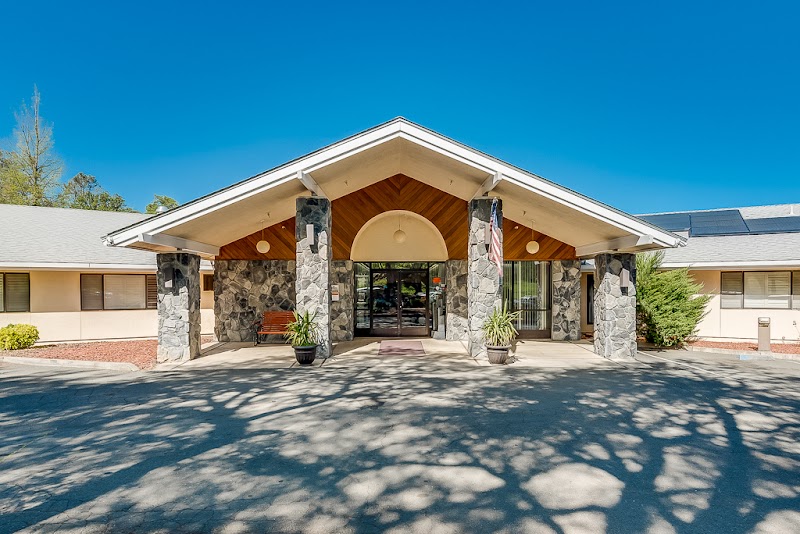
How is Meadowood Nursing Center Staffed?

CMS rates MEADOWOOD NURSING CENTER's staffing level at 2 out of 5 stars, which is below average compared to other nursing homes. Staff turnover is 56%, which is 10 percentage points above the California average of 46%. High turnover can affect care consistency as new staff learn residents' individual needs. RN turnover specifically is 91%, which is notably high. RNs provide skilled clinical oversight, so turnover in this role can affect medical care quality.

What Have Inspectors Found at Meadowood Nursing Center?

State health inspectors documented 53 deficiencies at MEADOWOOD NURSING CENTER during 2019 to 2025. These included: 6 that caused actual resident harm, 46 with potential for harm, and 1 minor or isolated issues. Deficiencies causing actual harm indicate documented cases where residents experienced negative health consequences.
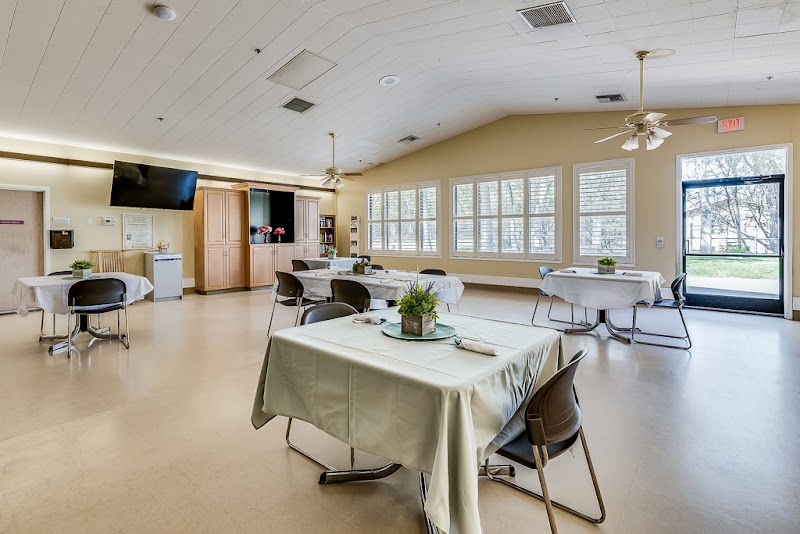
Who Owns and Operates Meadowood Nursing Center?

MEADOWOOD NURSING CENTER is owned by a for-profit company. For-profit facilities operate as businesses with obligations to shareholders or private owners. The facility is operated by AJC HEALTHCARE, a chain that manages multiple nursing homes. With 99 certified beds and approximately 94 residents (about 95% occupancy), it is a smaller facility located in CLEARLAKE, California.
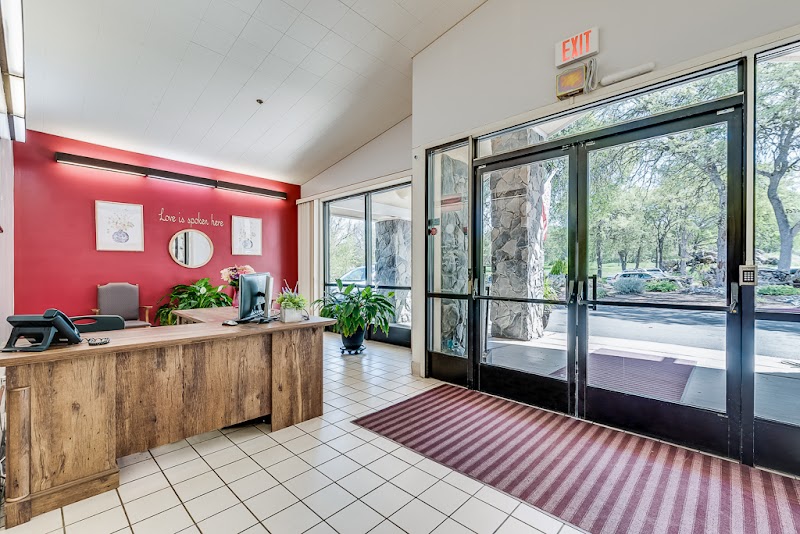
How Does Meadowood Nursing Center Compare to Other California Nursing Homes?

Compared to the 100 nursing homes in California, MEADOWOOD NURSING CENTER's overall rating (2 stars) is below the state average of 3.1, staff turnover (56%) is significantly higher than the state average of 46%, and health inspection rating (2 stars) is below the national benchmark.

What Should Families Ask When Visiting Meadowood Nursing Center?

Based on this facility's data, families visiting should ask: "What safeguards and monitoring systems are in place to protect residents from abuse or neglect?" "How do you ensure continuity of care given staff turnover, and what is your staff retention strategy?" "Can you walk me through typical staffing levels on day, evening, and night shifts?" "Can I visit during a mealtime to observe dining assistance and food quality?" These questions are particularly relevant given the substantiated abuse finding on record, the facility's high staff turnover rate, and the below-average staffing rating.

Is Meadowood Nursing Center Safe?

Based on CMS inspection data, MEADOWOOD NURSING CENTER has documented safety concerns. The facility has 1 substantiated abuse finding (meaning confirmed case of resident harm by staff or other residents). The facility has a 2-star overall rating and ranks #100 of 100 nursing homes in California. Families considering this facility should ask detailed questions about what corrective actions have been taken since these incidents.

Do Nurses at Meadowood Nursing Center Stick Around?

Staff turnover at MEADOWOOD NURSING CENTER is high. At 56%, the facility is 10 percentage points above the California average of 46%. Registered Nurse turnover is particularly concerning at 91%. RNs handle complex medical decisions and coordinate care — frequent RN changes can directly impact care quality. High turnover means new staff may not know residents' individual needs, medications, or preferences. It can also be disorienting for residents, especially those with dementia who rely on familiar faces. Families should ask: What is causing the turnover? What retention programs are in place? How do you ensure care continuity during staff transitions?

Was Meadowood Nursing Center Ever Fined?

MEADOWOOD NURSING CENTER has been fined $134,827 across 3 penalty actions. This is 3.9x the California average of $34,427. Fines at this level are uncommon and typically indicate a pattern of serious deficiencies, repeated violations, or failure to correct problems promptly. CMS reserves penalties of this magnitude for facilities that pose significant, documented risk to resident health or safety. Families should request specific documentation of what issues led to these fines and what systemic changes have been implemented.

Is Meadowood Nursing Center on Any Federal Watch List?

MEADOWOOD NURSING CENTER is not on any federal watch list. The most significant is the Special Focus Facility (SFF) program, which identifies the bottom 1% of nursing homes nationally based on persistent, serious quality problems. Not being on this list means the facility has avoided the pattern of deficiencies that triggers enhanced federal oversight. This is a positive indicator, though families should still review the facility's inspection history directly.