COMMUNITY CARE CENTER
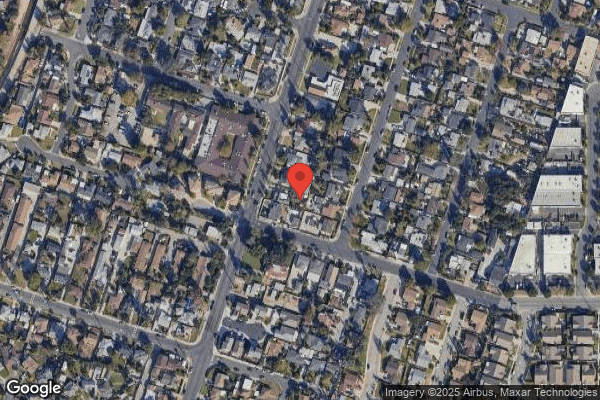

2335 S. MOUNTAIN AVE, DUARTE, CA 91010 (626) 357-3207
For profit - Limited Liability company 145 Beds Independent Data: November 2025 1 Immediate Jeopardy citation
Trust Grade
18/100
#773 of 1155 in CA
Last Inspection: July 2025

Inspected within the last 6 months. Data reflects current conditions.

Overview

Community Care Center in Duarte, California, has a Trust Grade of F, indicating significant concerns about its quality of care. With a state rank of #773 out of 1155, it falls in the bottom half of California facilities, and ranks #175 out of 369 in Los Angeles County, meaning there are many better options nearby. While the facility is improving, reducing issues from 36 in 2024 to 17 in 2025, there are still serious deficiencies, including a critical finding where residents were improperly restrained and another incident where proper emergency procedures were not followed for a choking resident. Staffing is a relative strength, with a 4 out of 5 rating and a low turnover rate of 24%, but the RN coverage is concerning, being lower than 82% of facilities in the state. On a positive note, the facility has no fines on record, which suggests some compliance with regulations despite its other challenges.

Trust Score
F
18/100
In California
#773/1155
Bottom 34%
Safety Record
High Risk
Review needed
Inspections
Getting Better
36 → 17 violations
Staff Stability
✓ Good
24% annual turnover. Excellent stability, 24 points below California's 48% average. Staff who stay learn residents' needs.
Penalties
✓ Good
No fines on record. Clean compliance history, better than most California facilities.
Skilled Nurses
⚠ Watch
Each resident gets only 13 minutes of Registered Nurse (RN) attention daily — below average for California. Fewer RN minutes means fewer trained eyes watching for problems.
Violations
⚠ Watch
71 deficiencies on record. Higher than average. Multiple issues found across inspections.
★★☆☆☆
2.0
Overall Rating
★★★★☆
4.0
Staff Levels
★★★★★
5.0
Care Quality
★☆☆☆☆
1.0
Inspection Score
Stable
2024: 36 issues
2025: 17 issues

The Good

  • 4-Star Staffing Rating · Above-average nurse staffing levels
  • 5-Star Quality Measures · Strong clinical quality outcomes
  • Low Staff Turnover (24%) · Staff stability means consistent care
  • Full Sprinkler Coverage · Fire safety systems throughout facility
  • No fines on record
  • Staff turnover is low (24%)

    24 points below California average of 48%

Facility shows strength in staffing levels, quality measures, staff retention, fire safety.

The Bad

2-Star Overall Rating

Below California average (3.1)

Below average - review inspection findings carefully

The Ugly 71 deficiencies on record

1 life-threatening 2 actual harm
Jul 2025 1 deficiency
CONCERN (D) 📢 Someone Reported This

A family member, employee, or ombudsman was alarmed enough to file a formal complaint

Potential for Harm - no one hurt, but risky conditions existed

Deficiency F0740 (Tag F0740)

Could have caused harm · This affected 1 resident

Based on observation, interview and record review the facility failed to provide behavioral health care services that included an environment and atmosphere that is conducive to mental and psychosocia...

Read full inspector narrative →
Based on observation, interview and record review the facility failed to provide behavioral health care services that included an environment and atmosphere that is conducive to mental and psychosocial well-being and reflected the resident's care plan goals that included behavior modification for sexually inappropriate behaviors, for one (1) of two sampled residents (Resident 1) by allowing Housekeeper 1 to return to work on (7/12/2025) in the same facility area where Resident 1's room was located, after Housekeeper 1 reported an unwitnessed sexual assault (when someone either touches another person in a sexual manner without consent) attempt made by Resident 1 against Housekeeper 1, on 7/12/2025. Housekeeper 1 reported being followed around and threatened by Resident 1, prior to 7/12/2025. As a result of this deficient practice, there is a potential for Resident 1 to continue following Housekeeper 1 around that could potentially lead to another attempt on sexual or other types of abuse initiated by Resident 1.Findings:During a review of Resident 1's admission Record (AR), the AR indicated the facility originally admitted Resident 1 on 4/26/2021 with diagnoses that included Paranoid Schizophrenia (a mental disorder characterized by delusions of persecution, grandiosity, or jealousy), major depressive disorder a mental health condition characterized by persistent feelings of sadness, loss of interest in activities).During a review of Resident 1's Minimum Data Set (MDS, a standardized assessment and care planning tool), dated 5/03/2025, the MDS indicated Resident 1 had moderate impaired memory and cognition (ability to think).During a review of Resident 1's progress notes dated 7/12/2025 timed at 3:26 PM authored by Program Counselor 1 indicated, It was reported to this writer from another staff member that the housekeeper stated to her that this resident touched her inappropriately in the B building male bathroom. Upon investigation and interviewing the housekeeper with the help of a translator, was able to provide a statement. See attachment. Upon investigation and interviewing both resident and housekeeper it was decided to place resident [Resident 1] on 24 [hr] LOS (line of sight). Staff will continue to monitor. Program Director and Charge Nurse were notified.During a review of Resident 1's progress notes dated 7/12/2025 timed at 1:10 PM authored by Registered Nurse (RN) 1, the notes indicated, RN supervisor was notified by program lead counselor about resident sexually assaulting and harassing a staff member earlier this morning. Written statement was taken, 1:1 counseling, line of sight order in place. Notified Director of Nursing at 1:12 PM, Administrator at 1:25 PM, Resident 1's Primary physician at 3:02 PM, Resident 1's Psychiatrist at 3:04 PM. Left voicemail for Resident 1's Responsible party at 3:48 PM.During a review of Resident 1's Post event review dated 7/12/2025, the note indicated IDT met to discuss resident's incident of sexually inappropriate behavior towards staff. Upon assessment resident had offered housekeeper staff to help move the cleaning cart. It was reported resident lunged attempting to hug and kiss staff. Due to Resident 1's diagnosis his behavior is unpredictable and unavoidable. IDT recommendation 1:1 counseling, placed in line of sight (LOS) monitoring for 24 hours behavior modification for sexually inappropriate behaviors. Care plan updated. See individual treatment plan for further information. The document was signed by the DON on 7/29/2025.During a review of Resident 1's active care plan for Behavior Problem initiated on 8/05/2021 with a revision date of 7/12/2025, the care plan indicated Resident 1 has a behavior problem related to paranoid delusion, as manifested by paranoid thoughts causing stress or anger, 7/12/2025 female staff sexually assaulted. The care plan goals included Resident 1 will reduce episodes of paranoid delusions and care plan interventions included to administer medications as ordered, monitor for any adverse reaction and notify psychiatrist and primary physician if observed, encourage Resident 1 to discuss fears and concerns, encourage Resident 1 to interact with staff and peers, monitor results of medication and notify any abnormality to medical doctor, and refer to Psychiatrist as needed.During a review of facility provided handwritten document with facility stamp dated 7/12/2025, the document indicated At approximately 7:20 AM, I [Housekeeper 1] was cleaning the hallway when Resident 1 approached me and offered to help me move the cleaning cart to which I said no because it wasn't his job. I then went to the [male] bathroom, and he [Resident 1] followed me again offered to help me clean and when I said no, he lunged at me to hug me trying to kiss me on the mouth. I immediately tried to get him off me, but he continued trying to grope (feel or fondle [someone] for sexual pleasure, especially against their will) me. I screamed for help, but no one heard me. He [Resident 1] continued forcing me until I managed to get away and his reaction was to hit me on my [buttocks]. The document included Housekeeper 1's name written and signed.During a review of facility provided handwritten document signed by the housekeeping manager dated 7/18/2025, the document indicated I, housekeeping manager offered Housekeeper 1 to move up [change work assignments] to the front of the facility due to the incident that took place in the area where Resident 1's resides on 7/12/2025. Housekeeper 1 said she did not want to move upfront of the facility. I explained to her what can happen, she [Housekeeper 1] still wants to stay in the area where Resident 1 resides.During an interview on 7/29/2025 with the Administrator (ADM) at 9:30 am, the ADM stated the incident had occurred a few weeks ago, Housekeeper 1 had reported to facility staff [Program Counselor 1] that Resident 1 attempted to kiss her and groped her. The ADM stated the incident had been investigated, Resident 1 was placed on 24-hour monitoring and Housekeeper 1 was removed and reassigned to work at a different area of the facility away from Resident 1. During an interview on 7/29/2025 at 10 AM, the Housekeeping Manager (HM 1) stated on 7/12/2025 Housekeeper 1 came to him and reported Resident 1 had approached her (Housekeeper 1) and tried to hug her, forcibly kiss her and put his hands down her shirt. HM 1 stated he went to speak to Resident 1's counselors who informed him [HM 1] they would take care of it. HM 1 stated he then returned to his office and reported the incident to his supervisor. HM 1 stated after taking a written statement from Housekeeper 1, he asked her if she felt well enough to stay and finish her shift, to which Housekeeper 1 agreed and requested to return back to the same area of the facility in which Resident 1 resided. HM 1 stated Housekeeper 1 is still working in the same assigned area as where the incident occurred up at this moment. During a telephone interview on 7/29/2025 at 10:43 am with Housekeeper 1, Housekeeper 1 stated on 7/12/2025 while in the facility hallway, she was going in and Resident 1 came up to her and offered to help push the cleaning supply cart. Housekeeper 1 stated she told Resident 1 she does not need help to which Resident 1 then took her cart and pushed it towards the male restroom. Housekeeper 1 stated that in front of the restroom Resident 1 stopped and told her he wanted a hug. Housekeeper 1 stated she told Resident 1 no because that was against the rules of the facility. Housekeeper 1 stated Resident 1 insisted and extended his arms towards her, lunged at her and put her against the wall. Housekeeper 1 stated Resident 1 touched her in the middle between her legs by her vaginal (the area between your legs that allows you to menstruate, give birth, pee and experience sexual pleasure) area and tried kissing her and touched her breast area over her shirt. Housekeeper 1 stated she was screaming trying to get a staff member's attention, but no one came. Housekeeper stated she was eventually able to get Resident 1 off of her and told Resident 1 she was going to report him to which Resident 1 responded to her that he did not care because they would not do anything to him and walked away. During an interview on 7/29/2025 at 12:25 PM with Program Counselor (PC) 1, PC 1 stated on 7/12/2025 she was notified that Housekeeper 1 was sexually assaulted by Resident 1 between 10 to 11 AM by facility staff translating for Housekeeper 1. PC 1 stated she was in the Dining Room with the residents during breakfast when Housekeeper 1 reported the alleged incident occurred and did not hear anything. PC 1 stated Housekeeper 1 continues to work in the same area that the incident occurred with Resident 1, but they try to keep an eye on Housekeeper 1 when she is working by herself. During a review of the updated facility's policy and procedure (P&P) titled, Care plans, comprehensive person-centered, with a revision date of March 2022, the P&P indicated a comprehensive, person centered care plan that includes measurable objectives and timetables to meet the resident's physical, psychosocial and functional needs is developed and implemented for each resident.During a review of the updated facility's policy and procedure (P&P) titled, Behavioral assessment, intervention and monitoring, dated of December 2024, the P&P indicated 1. The facility will provide and residents will receive behavioral health services as needed to attain or maintain the highest practicable physical, mental and psychosocial well-being in accordance with the comprehensive assessment and plan of care.
Jul 2025 10 deficiencies
CONCERN (D)

Potential for Harm - no one hurt, but risky conditions existed

Deficiency F0605 (Tag F0605)

Could have caused harm · This affected 1 resident

**NOTE- TERMS IN BRACKETS HAVE BEEN EDITED TO PROTECT CONFIDENTIALITY** Based on interviews and record review, the facility failed to carry out the physician's order to obtain monthly Clozaril (brand ...

Read full inspector narrative →
**NOTE- TERMS IN BRACKETS HAVE BEEN EDITED TO PROTECT CONFIDENTIALITY** Based on interviews and record review, the facility failed to carry out the physician's order to obtain monthly Clozaril (brand name for clozapine, a class of medications used to treat treatment-resistant schizophrenia, a chronic and severe mental disorder that affects how a person thinks, feels, and behaves) serum (liquid component of blood) level (concentration of certain substances) for one of 4 sampled residents (Resident 5). The facility did not carry out the order to obtain Resident 5's monthly Clozaril level in 2 of the past 5 months (May 2025 and June 2025). This deficient practice led to inadequate monitoring of Clozaril that may lead to insufficient or too much level of Clozaril that can affect the well-being of the resident. Findings: During a review of Resident 5's admission record, the admission record indicated Resident 5 was admitted on [DATE] with the diagnoses including schizoaffective disorder (a mental health condition characterized by a blend of psychotic symptoms like hallucinations (sensory experiences that seem real but are not) and delusions (false beliefs that persist despite contradictory of mental health conditions) along with significant mood episodes) and post-traumatic stress disorder. During a review of Resident 5's physician orders, there was an order for Clozaril 400 milligrams (mg) by mouth at bedtime for auditory hallucination manifested by responding to internal stimulus causing stress, dated 3/10/2025 at 11:01 AM. During an interview on 7/24/2025 at 10:15 AM, and a concurrent review of Resident 5's physician orders, the director of nursing (DON) stated there was an order to obtain Clozaril (blood, or serum) level every month, dated 3/10/2025 at 10:55 AM. During an interview on 7/24/2025 at 2:18 PM, DON stated the facility did not have the lab result of the Clozaril blood levels in May and June 2025 for Resident's 5. During the review of the facility policy, titled Antipsychotic Medications, dated July 2023, the policy did not indicate the monitoring Clozaril serum level, nor denote the process of adequate monitoring or antipsychotic usage.
CONCERN (D)

Potential for Harm - no one hurt, but risky conditions existed

Deficiency F0627 (Tag F0627)

Could have caused harm · This affected 1 resident

**NOTE- TERMS IN BRACKETS HAVE BEEN EDITED TO PROTECT CONFIDENTIALITY** Based on interview and record review, the facility failed to implement the facility's policy and procedure titled Discharge Summ...

Read full inspector narrative →
**NOTE- TERMS IN BRACKETS HAVE BEEN EDITED TO PROTECT CONFIDENTIALITY** Based on interview and record review, the facility failed to implement the facility's policy and procedure titled Discharge Summary and Plan, to ensure one of two sampled residents (Resident 146) had a physician's order to be discharged and complete the discharge summary note when the resident was discharged to the General Acute Care Hospital (GACH) on 6/11/2025. The deficient practice had the potential to negatively affect the continuity of care for Resident 146. Findings: During a review of Resident 146's admission Record (AR), the AR indicated the facility originally admitted Resident 146 on 9/7/2022 and readmitted on [DATE] with diagnoses that included schizophrenia (a mental disorder characterized by disruptions in thought processes, perceptions, emotional responsiveness, and social interactions) and anxiety disorder ( a mental health disorder characterized by feelings of worry, anxiety, or fear that are strong enough to interfere with one's daily activities). During a review of Resident 146's Minimum Data Set (MDS, a resident assessment tool), dated 6/11/2025, the MDS indicated Resident 146 was discharged to inpatient psychiatric facility (psychiatric hospital or unit) on 6/11/2025. During a review of an email message from the Case Manager (CM) of the Nursing Home Program titled, Resident 146 Hospitalization, dated 6/12/2025 at 9:13 AM, the email message indicated due to the nature of Resident 146's hospitalization and the fact that he would not be stabilized within seven days, the facility would not provide a bed hold ( to hold the resident's bed for new admission while the resident is in the hospital) for the resident to return to the facility after his hospitalization. During a concurrent interview and record review on 7/24/2025 at 9:04 AM, with the Social Services Assistant (SSA), Resident 146's Discharge Notification record, dated 6/11/2025, indicated Resident 146 was transferred to the hospital on 6/11/2025 due to physical aggression. SSA stated she had 24 hours to initiate the bed hold notice to the resident and his responsible party. The SSA stated bed hold notice was not initiated because she received an email message from Resident 146's CM of the Nursing Home Program that indicated the facility would discharge Resident 146 on 6/12/2025 at 9:28 AM. The SSA stated there was no DC order and no DC summary in Resident 146's medical records. During a concurrent interview and record review on 7/24/2025 at 9:14 AM with Licensed Vocational Nurse Supervisor (LVNS), Resident 146's medical records were reviewed, The LVNS stated there was no DC order to DC the resident on 6/11/2025 and there was no DC summary in the resident's medical records. LVNS stated she sent Resident 146 to transfer for psychiatric evaluation on 6/11/2025 and the seven days bed hold should be provided to the resident within 24 hours of the transfer, but she did not know the resident was discharged from the facility on 6/11/2025. LVNS stated she did not know the communication between the SSA and the CM to discharge the resident from the facility on 6/12/25. During an interview on 7/24/2025 at 9:40 AM with the Administrator (ADM), the ADM stated there was no bed hold notice for Resident 146's transfer to the hospital on 6/11/2025 since the resident was DC from the facility on 6/11/25. The ADM stated the outside facility Nursing Home Program CM had worked with the resident for a long time, and on 6/12/2025, the CM informed the facility would not be an appropriate placement for the residents due to the resident's behavior of having multiple physical aggression incidents towards others recently. The AMD stated there was no DC order from the physician and no DC summary regarding the discharge to GACH on 6/11/2025. The AMD stated the nurse should obtain a DC order from the physician and complete the DC summary to ensure the resident was properly and safely DC from the facility. During an interview on 7/24/2025 at 1:20 PM with the SSA, the SSA stated after she completed the DC notification, she put the DC document in an envelope and dropped it off to the nursing station, the nurses were responsible to contact the MD to obtain the DC order and complete the DC summary. During an interview on 7/24/2025 at 1:29 PM with the LVNS, the LVNS state she missed the DC notification for Resident 146 because she was busy to arrange the psychiatrist visits for other residents on 6/12/2025. The LVNS did not call the physician to obtain the DC order and did not complete the DC summary. The LVNS stated she should have checked the DC notification from the SSA, obtain an DC order, and complete the DC summary, so they would know the status of the resident after the transfer to ensure the resident received the continuation of care. During a review of the facility's policy and procedure (P&P) titled, Discharge Summary and Plan, dated 10/2022, the P&P indicated When a resident's discharge is anticipated, a discharge summary and post-discharge plan is developed to assist the resident with discharge.
CONCERN (D)

Potential for Harm - no one hurt, but risky conditions existed

Comprehensive Care Plan (Tag F0656)

Could have caused harm · This affected 1 resident

**NOTE- TERMS IN BRACKETS HAVE BEEN EDITED TO PROTECT CONFIDENTIALITY** Based on observation, interview, and record review, the facility failed to develop and/or implement an individualized person-cen...

Read full inspector narrative →
**NOTE- TERMS IN BRACKETS HAVE BEEN EDITED TO PROTECT CONFIDENTIALITY** Based on observation, interview, and record review, the facility failed to develop and/or implement an individualized person-centered plan of care with measurable objectives, timeframe, and interventions to meet the resident's needs for 1 of 3 sampled residents (Resident 56) by failing to: Update and implement Resident 56 care plan goals for mood swings related to schizoaffective disorder (mental illness can combines disorganized thinking and inappropriate behavior) manifested by going from calm and cooperative to physical/verbal aggression then leading to property destruction by kicking a hole in wall. These deficient practices had the potential to negatively affect the delivery of necessary care and services for Resident 56's medical and physical needs. Findings: A Review of Resident 56's admission Record [AR] indicated Resident 56 was admitted to the facility on [DATE], with diagnoses that included schizoaffective disorder and bipolar type (a condition that involves impulsive and aggressive outburst). A Review of Resident 56's History and Physical Examination (HPE, a comprehensive physician's note regarding the assessment of the Patient's health status) signed by the attending physician on 10/28/2024, the HPE indicated Resident 56 had a mental illness. A Review of Resident 56's Minimum Data Set (MDS, a comprehensive standardized assessment and screening tool) dated 4/26/2025, the MDS indicated that Resident 56 had moderately impaired cognition (ability to think and reason or thought process) and had behavioral symptoms such as hitting and screaming. A Review of Resident 56's care plans titled Mood swing related to schizoaffective disorder indicated Resident 56 had multiple physical aggression episodes with property destruction from 10/18/2022 to 7/14/2025. The care plan goal indicated that Resident 56 will reduce episodes of mood instability to 5 times per week in 3 months which was initiated on 10/26/2021 with a target date of 10/21/2025. A Review of Resident 56 care plan titled Resident broke overhead light over in his bedroom indicated under goals Resident 56 will have no further episodes of property destruction in the facility. A Review of Resident 56's Nursing Progress Notes date 7/20/2025 at 1:36PM, indicated that staff reported to the charge nurse at 11:15AM that Resident 56 was experiencing physical aggression with property destruction. The progress note indicated Resident 56 had a broken the light cover over his bed banging it multiple times with a closed fist. During a concurrent interview and observation on 7/21/2025 at 10:08AM, with the Program Director (PD) inside Resident 56 bedroom. PD stated that there were 6 areas boarded-up with plywood in Resident 56's room were areas in which Resident 56 kicked and punched a hole in the wall and was boarded-up with plywood. PD stated that she observed that Resident 56 had no injuries to his hands or feet. PD stated Resident 56 had the potential to cause others or he can sustain physical injury related to his physical aggression when he gets upset. During an interview on 7/24/2025 at 9:47AM, Certified Nursing Assistant (CNA 2) stated that when Resident 56 becomes upset he had exhibited aggressive behavior, such as kicking and punching the walls in his room.CNA 2 stated when Resident 56 was unable to speak with his family that it would trigger his aggressive behavior; Resident 56 would get angry and start punching and kicking the walls inside his room. During a concurrent interview and record review on 7/24/2025 at 10:16AM with the Licensed Vocational Nurse (LVN 1), Residents 56's Care Plans were reviewed. LVN 1 stated that Resident 56's care plan titled Mood swings related to schizoaffective disorder indicated the mood swings were manifested by going from calm and cooperative to physical /verbal aggression, LVN 1 stated that the care plan goals had not been updated despite the target date 10/21/2025 due to multiple episodes of Resident 56 physical aggression with property destruction, particularly on 6/2025 and 7/2025. LVN 1 stated the care plan indicated that Resident 56 had 7 instances of kicking a hole in the wall and damaged a property in June, and 5 similar incidents in July. LVN 1 stated that Resident 56's care plan did not have interventions addressing the root cause and triggers that caused his anger to escalate that resulted in property damage. LVN 1 stated that Resident 56 exhibited episodes of aggressive behavior, including punching and kicking the walls in his room, resulting in property damage such as holes in the wall. LVN 1 stated that multiple areas in Resident 56 room had been patched with boards due to previous damage. LVN 1 stated had the care plan been updated to address Resident 56 underlying triggers, it might have helped prevent his anger escalation thereby reducing physical aggression and property damage in his room. During a concurrent interview and record review on 7/24/2025 at 11AM with the Assistant Director of Nursing (ADON), Resident 56's Care Plans were reviewed. ADON stated that Resident 56's care plan titled Mood swings related to schizoaffective disorder which indicated the mood swings were manifested by going from calm and cooperative to physical /verbal aggression goals & interventions were not updated because he continued to have multiple episodes of physical aggression with property damage to his room. ADON stated had the care plan goal and intervention been updated to address the triggers that caused Resident 56 anger to escalate his physical aggression would have prevented the property damage to his room and possible injury. A review of the facility's policy and procedure (P&P) titled Care Plans, Comprehensive Person-Centered, revised on 4/2022 indicated the care plan includes measurable objectives and timetables to meet the resident's physical, psychological and functional needs is developed and implemented for each resident. The P&P indicated the care plan includes the resident stated goal and desired outcomes. The P&P indicated care plan interventions are chosen after gathering data, proper sequencing of events, careful consideration of [NAME] relationship between the resident's problems and their causes, and relevant clinical decisions making. The P&P indicated interventions address the underlying sources of problems. The P&P indicated assessments of residents are ongoing and care plans are revised as information about the residents and the residents change of condition.
CONCERN (D)

Potential for Harm - no one hurt, but risky conditions existed

Deficiency F0692 (Tag F0692)

Could have caused harm · This affected 1 resident

**NOTE- TERMS IN BRACKETS HAVE BEEN EDITED TO PROTECT CONFIDENTIALITY** Based on observation, interview and record review, the facility failed to maintain acceptable parameters of nutritional status f...

Read full inspector narrative →
**NOTE- TERMS IN BRACKETS HAVE BEEN EDITED TO PROTECT CONFIDENTIALITY** Based on observation, interview and record review, the facility failed to maintain acceptable parameters of nutritional status for 1 of 3 sampled residents (Resident 11) by failing to address Resident 11 weight loss by failing to: 1.The IDT (Interdisciplinary Team- a group of facility staff that develops a plan of care for the residents) did not conduce a comprehensive assessment to determine the resident's that refusal of dental treatment and tooth ache contributed to the weight loss. 2. Dietary Supervisor (DS) did not directly communicate to the Registered Dietician (RD) that Resident 1's dental issues were likely contributing to his weight loss. This deficient practice had the potential for the resident to continue to have increased weight loss. Findings: A Review of Resident 11's admission Record [AR] indicated Resident 11 was admitted to the facility on [DATE], with diagnoses that included schizoaffective disorder (psychotic symptoms, such as hallucinations [an experience involving the apparent perception of something not present] and delusions [false beliefs that are held with strong conviction]) and bipolar type (a condition that involves impulsive and aggressive outburst). A Review of Resident 11's History and Physical Examination (HPE, a comprehensive physician's note regarding the assessment of the Patient's health status) dated on 8/7/2024, the HPE indicated Resident 11 had a mental illness. A Review of Resident 11's Minimum Data Set (MDS, a resident assessment tool) dated 5/14/2025, the MDS indicated that Resident 11 had a moderately impaired cognition (thought process) and had a weight loss 5% or more in the last month. A Review of Resident 11's Weights and Vitals Summary dated 7/23/2025, indicated the following: Resident 11 weight 197lbs. on 9/3/2024. Resident 11 weight 167lbs. on 3/13/2025. Resident 11 weight loss of 28lbs or 14.2%, over 180 days/6 months. A Review of Resident 11's Health Status Note, dated 7/18/2025, indicated the interdisciplinary (a group of facility staffs that develops the care plan for the residents) team bi-monthly (twice a month) weight variance indicated Resident 11 weight was 156lbs. (indicating a weight loss of 41 lbs. or 20.8 % weight loss) in 10 months. During a dining observation on 7/22/2025 at 12PM, Resident 11 was served double portions for lunch and ate independently. Resident 11 ate 50% of his meal with occasional food spillage from his mouth. Resident 11 was served with cauliflower and spaghetti that the resident was able to chew. During an interview on 7/23/2025 at 1:50PM, Resident 11 stated that he had occasional dental pain and he did receive medication for pain. Resident 11 stated that sometime when he has dental pain he doesn't feel like eating too much food. Resident 11 stated he did not have any tooth pain while eating his meal today and was provided snacks. During an interview on 7/23/2025 at 2:04PM, Certified Nursing Assistant (CNA 3) stated that Resident 11 usually eat about 50% of his meals. CNA 3 stated that Resident 11 had trouble with chewing his food because of his missing teeth. During an interview on 7/23/2025 at 2:14PM, Licensed Vocational Nurse (LVN 1) stated that Resident 11 had received double portions for all his meals and typically consuming about 50%. LVN 1 stated that Resident 11 experienced tooth pain 2 to 3 times a week and was given Tylenol for relief. LVN 1 stated that Tylenol would alleviate the tooth pain and was under the care of a dentist. LVN 1 stated that Resident 11 would frequently refuse dental treatment, but a care plan was not developed to address the refusal to dental care. LVN 1 stated he has observed Resident 11 losing weight and appeared [NAME] in the upper body. During a review of the Dental Notes dated 6/11/2025, indicated Resident 11 reported his tooth bothers him and wished to have the tooth removed. During a concurrent interview and record review on 7/23/2025 at 3:21PM with Registered Dietitian (RD 1), Resident 11 Weight Variance from 9/6/2024 to 7/1/2025 was reviewed. RD 1 stated that RD 2 was managing Resident 11 weight loss from 9/2024 to 6/2025. RD 1 stated she took over the care of Resident 11 on 7/2025. RD 1 stated that Resident 11 Weight Variance report indicated from 9/6/2024 to 3/14/2025, Resident 11 had a weight loss of 14.2% (28lb) within a 6-month period. RD 1 stated that Resident 11 had achieved the target weight goal of 150 to 160 lbs. but still a potential for weight loss. RD 1 stated that despite receiving double portions at meals and supplemental snacks throughout the day, Resident 11 continued to lose weight. RD 1 stated that Resident 11 dental issues could have been contributing to his weight loss. During an interview on 07/23/2025 at 4:10 PM, DS stated that she was aware that Resident 11 had ongoing weight loss, noting a significant weight loss of 14% as of 3/14/2025. DS stated that RD 2 had implemented dietary adjustments, including double portions for every meal with additional supplemental snacks that the resident eats. DS stated that Resident 11 was on a mechanical soft diet because of his dental issues related to missing teeth and dental pain. DS stated she did not directly communicate but she documented Resident 11 dental issues and that information was readily available for RD 1 to review. DS stated that Resident 11 dental issues were likely contributing to his weight loss. A review of the facility's policy and procedure (P&P) titled Nutritional Assessment, revised 10/2017 indicated the dietitian, in conjunction with the nursing staff and healthcare practitioners, will conduct a nutritional assessment for each resident upon admission (within current baseline assessment timeframes) and as indicated by a change in condition that places the resident at risk for impaired nutrition. The P&P indicated the nutritional assessment will be conducted by the multidisciplinary team and shall identify at least the following components: current clinical conditions and recent events that may have affected a resident's nutritional status and risk factors, general appearance a description of the resident's overall appearance, chewing or swallowing abnormalities onset or exacerbation of conditions of the mouth, teeth, gums that affect the resident's ability to chew or swallow food and pain - the presence of clinical conditions or situations in which a resident's level of pain interferes with his or her ability to chew, swallow or otherwise consume the meals as provided.
CONCERN (D)

Potential for Harm - no one hurt, but risky conditions existed

Safe Environment (Tag F0921)

Could have caused harm · This affected 1 resident

Based on observation, interview, and record review, the facility failed to maintain a safe and functional environment for one of three sampled residents (Resident 64) by failing to provide a dead bolt...

Read full inspector narrative →
Based on observation, interview, and record review, the facility failed to maintain a safe and functional environment for one of three sampled residents (Resident 64) by failing to provide a dead bolt (a lock bolt to keep door closed that is moved by turning a knob or key in order to open) in good working condition in Resident 64's cabinet to keep the cabinet fully closed inside the shared residents' rooms of Resident 64. This deficient practice had the potential to have resident's belongings misplaced and inability of the resident to have a safe space and storage to keep their personal belongings. Findings: During an observation of Resident 64's room on 7/21/2025 at 9:00 AM, in the presence of the Infection Prevention Nurse (IPN), the cabinet on the left side with letter C in the shared room which belonged to Resident 64 was opened. Upon closer inspection of the cabinet, the dead bolt to keep the cabinet closed was missing. During a concurrent interview, the IPN stated all cabinets must have locks and the locks must work for the residents to have a safe space to keep their personal belongings in the shared rooms. The IPN stated all facility staffs are responsible to report to the Maintenance Department if something in a resident's room is not working properly once it is found. The IPN stated she would notify the maintenance department to fix the lock on the cabinet door. During an interview and observation on 7/21/2025 at 9:01 AM of Resident 64's room with Counselor 1, the cabinet on the left with letter C of the shared room which belonged to Resident 64 was observed open. The dead bolt used to maintain the cabinet closed was observed missing. During a concurrent interview, Counselor 1 stated he had verbally reported to Maintenance Department a few weeks ago that the cabinet lock was missing, but that Maintenance Supervisor who he reported about the lock no longer working in the facility. Counselor 1 stated he was not aware to put in the maintenance log any problem, rather when he was hired at the facility he was instructed if he saw a problem to verbally report to the maintenance staff. Counselor 1 stated he did not follow up with Maintenance Supervisor after reporting. During an interview on 7/24/2025 at 9:30 AM, with Administrator (ADM), ADM stated the maintenance staffs should be conducting daily facility checks, and room rounds. ADM stated, the Department heads also have assigned rooms that they check daily, and to ensure everything is safe and working correctly in the room. ADM stated the lock in Resident 64 room should have been fixed on 7/21/2025 or when it was reported to Maintenance Department. During a review of the facility's policies and procedures (P&P) titled, Maintenance Service, dated 12/2009, the P&P indicated the maintenance service is responsible for maintaining the buildings, grounds and equipment in a safe and operable manner at all times.
CONCERN (E)

Potential for Harm - no one hurt, but risky conditions existed

Safe Environment (Tag F0584)

Could have caused harm · This affected multiple residents

**NOTE- TERMS IN BRACKETS HAVE BEEN EDITED TO PROTECT CONFIDENTIALITY** Based on observation, interview and record review, the facility failed to provide comfortable and safe water temperature between...

Read full inspector narrative →
**NOTE- TERMS IN BRACKETS HAVE BEEN EDITED TO PROTECT CONFIDENTIALITY** Based on observation, interview and record review, the facility failed to provide comfortable and safe water temperature between 105 and 125 degrees Fahrenheit ( F) accordance with the facility's policy and procedure for nine of 11 sampled residents (Resident 92, 39, 144, 76, 66, 52, 71, 76, and 81) in the following locations: 1. room [ROOM NUMBER] and 22, room [ROOM NUMBER] and 26, room [ROOM NUMBER] and 30, and room [ROOM NUMBER] and room [ROOM NUMBER] sinks in the residents' restrooms shared by Resident 92, 39, 144, 76, and 66. 2. Women's Shower Room (WSR) S1, S3, S4, and S5 shared by residents Resident 52, 71, 76, and 81). These deficient practices had resulted in the residents not receiving comfortable hot water when showering and maintain personal hygiene effectively that can negatively impact the resident's physical and psychosocial wellbeing and quality of life. Findings: a. During a review of Resident 92's admission Record (AR), the AR indicated the facility originally admitted Resident 92 on 5/10/2012 and readmitted on [DATE] with diagnoses that included schizophrenia (a mental disorder characterized by disruptions in thought processes, perceptions, emotional responsiveness, and social interactions) and diabetes mellitus (a group of diseases that result in too much sugar in the blood). During a review of Resident 92's Minimum Data Set (MDS, a resident assessment tool), dated 7/1/2025, the MDS indicated Resident 92 had moderately impaired memory and cognition (ability to think and reasonably). The MDS indicated Resident 92 was independent with oral hygiene, toileting hygiene and chair/bed-to-chair transfer, and required supervision or touching assistance with eating, shower/bathe self and personal hygiene. b. During a review of Resident 39's AR, the AR indicated the facility originally admitted Resident 39 on 3/9/2012 and readmitted on [DATE] with diagnoses that included schizophrenia and anxiety disorder (a mental health disorder characterized by feelings of worry, anxiety, or fear that are strong enough to interfere with one's daily activities). During a review of Resident 39's MDS, dated [DATE], the MDS indicated Resident 39 had moderately impaired memory and cognition. The MDS indicated Resident 39 was independent with toileting hygiene and chair/bed-to-chair transfer, and required supervision or touching assistance with eating, oral hygiene, shower/bathe self and personal hygiene. c. During a review of Resident 144's AR, the AR indicated the facility admitted Resident 144 on 5/17/2017 with diagnoses that included schizophrenia and seborrheic dermatitis (A skin condition that causes scaly patches and red skin, mainly on the scalp). During a review of Resident 144's MDS, dated [DATE], the MDS indicated Resident 144 had moderately impaired memory and cognition. The MDS indicated Resident 144 was independent with toileting hygiene and chair/bed-to-chair transfer, and required supervision or touching assistance with eating, oral hygiene, shower/bathe self and personal hygiene. d. During a review of Resident 76's AR, the AR indicated the facility admitted Resident 76 on 10/11/2023 with diagnoses that included schizophrenia and constipation (when a person passes less than three bowel movements a week or has difficult bowel movements). During a review of Resident 76's MDS, dated [DATE], the MDS indicated Resident 76 had moderately impaired memory and cognition. The MDS indicated Resident 76 was independent with toileting hygiene and chair/bed-to-chair transfer, and required supervision or touching assistance with eating, oral hygiene, shower/bathe self and personal hygiene. e. During a review of Resident 66's AR, the AR indicated the facility admitted Resident 66 on 9/21/2022 with diagnoses that included schizoaffective disorder (a mental health condition characterized by a combination of schizophrenia symptoms and mood disorder symptoms) and dermatitis (a general term for inflamed skin, characterized by redness and itching). During a review of Resident 66's MDS, dated [DATE], the MDS indicated Resident 66 had moderately impaired memory and cognition. The MDS indicated Resident 76 was independent with oral hygiene, toileting hygiene and chair/bed-to-chair transfer, and required supervision or touching assistance with eating, shower/bathe self and personal hygiene. f. During a review of Resident 52's AR, the AR indicated the facility admitted Resident 52 on 5/16/2024 with diagnoses that included schizophrenia and constipation. During a review of Resident 52's MDS, dated [DATE], the MDS indicated Resident 52 had intact memory and cognition. The MDS indicated Resident 52 was independent with toileting hygiene and chair/bed-to-chair transfer, and required supervision or touching assistance with eating, oral hygiene, shower/bathe self and personal hygiene. g. During a review of Resident 71's AR, the AR indicated the facility admitted Resident 71 on 6/3/2025 with diagnoses that included schizophrenia and anxiety disorder. During a review of Resident 71's MDS, dated [DATE], the MDS indicated Resident 71 had intact memory and cognition. The MDS indicated Resident 71 was independent with toileting hygiene and chair/bed-to-chair transfer, and required supervision or touching assistance with eating, oral hygiene, shower/bathe self and personal hygiene. h. During a review of Resident 81's AR, the AR indicated the facility admitted Resident 81 on 2/26/2024 with diagnoses that included schizophrenia and hypertension (high blood pressure). During a review of Resident 81's MDS, dated [DATE], the MDS indicated Resident 81 had intact memory and cognition. The MDS indicated Resident 81 was independent with toileting hygiene and chair/bed-to-chair transfer, and required supervision or touching assistance with eating, oral hygiene, shower/bathe self and personal hygiene. During an observation on 7/21/2025 at 9:31 AM in the restroom between room [ROOM NUMBER] and 30, the Social Services Assistant (SSA) turned on the hot water faucet, but no hot water coming from the hot water faucet. During an interview on 7/21/2025 at 9:35 AM with Resident 92. Resident 92 stated he used the restroom between room [ROOM NUMBER] and 30 everyday, but there was no hot water coming out from the faucet in the restroom sink. Resident 92 stated it was not comfortable to wash his face and hands with cold water. During a concurrent observation and interview on 7/21/2025 at 9:36 AM with the SSA, the SSA stated she kept the hot water faucet running in the restroom between room [ROOM NUMBER] and 30 until now, but the water from the hot water faucet did not have hot water. During an observation on 7/21/2025 at 9:42 AM, the SSA turned on the hot water faucet in the restroom between room [ROOM NUMBER] and 26, no water coming from the hot water faucet. During an interview on 7/21/2025 at 9:47 AM with Resident 39, Resident 39 stated he used the restroom between room [ROOM NUMBER] and 26 and he stated he did not know when and why there was no water coming out from the hot water faucet. During an observation on 7/21/2025 at 9:51 AM in the restroom between room [ROOM NUMBER] and 22, the SSA turned on the hot water faucet and let the water run, but the water did not get hot. During an interview on 7/21/2025 at 9:56 AM with the Maintenance Assistant (MA), the MA stated the hot water valve at the bottom of the sink in the restroom between room [ROOM NUMBER] and 26 was turned off and he did not know when and who turned off the valve. During a concurrent observation and interview on 7/21/2025 at 9:57 AM with the MA, the MA checked the running water from the hot water faucet in the restroom between room [ROOM NUMBER] and 22 with a thermometer. The MA stated the thermometer read at 88 F. The MA stated the hot water temperature should be between 105 and 125 F from the hot water faucet. The MA stated the hot water did not reach the proper temperature range. During a concurrent observation and interview on 7/21/2025 at 9:58 AM with the Corporate Maintenance Supervisor (CMS), the CMS checked the running water from the hot water faucet in the restroom between room [ROOM NUMBER] and 30 with a thermometer. The CMS stated the thermometer read at 83.5 F and the water was not hot. During an observation on 7/21/2025 at 10:11 AM in the restroom between room [ROOM NUMBER] and 33, the SSA turned on the hot water faucet and let the water run, but the water did not get warm. During an interview on 7/21/2025 at 10:12 AM with Resident 144, Resident 144 stated she used the restroom between room [ROOM NUMBER] and 33. Resident 144 stated the water from the hot water faucet in the restroom was always cold and she did not want to wash her face and hands because of the cold water. During an interview on 7/21/2025 at 10:13 AM with Resident 76, Resident 76 stated she used the restroom between room [ROOM NUMBER] and 33, but there was no hot water from the sink, and it was very uncomfortable to wash her face and hands with cold water. During a concurrent observation and interview on 7/21/2025 at 10:19 AM with the MA, the MA checked the running water temperature from the hot water faucet in the restroom between room [ROOM NUMBER] and 33 with a thermometer. The MA stated the water temperature read at 89 F and was not hot. During an interview on 7/21/2025 at 10:21 AM with Resident 66, Resident 66 stated she used the restroom between room [ROOM NUMBER] and 22 and she had to wash her face with cold water everyday at the sink. Resident 66 stated they have not been getting any hot water from the restroom sink for about six months and no one has fixed it. Resident 66 stated she really wanted to use hot water to clean herself in the morning. During an interview on 7/21/2025 at 10:13 AM with Resident 76, Resident 76 stated the water for the WSR was cold and she wanted to have a hot shower. During an observation on 7/21/2025 at 10:44 AM in WSR S5, the SSA turned the shower switch to the highest temperature and let the water run. During a concurrent observation on 7/21/2025 at 10:49 AM with the SSA, the SSA stated the water had been running for five minutes but the water was still cold. During an interview on 7/21/2025 at 10:50 AM with Resident 71, Resident 71 stated the water for shower in WSR S5 was always cold, and she had to use WSR S4. Resident 71 stated the water temperature in WSR S4 was higher than S5, but it was still cold. Resident 71 stated she did not want to shower sometimes because of the cold water. During a concurrent observation and interview on 7/21/2025 at 10:57 AM with the MA, the MA checked the water temperature in WSR S5 and he stated the thermometer read at 83.6 F. During a concurrent observation and interview on 7/21/2025 at 11:01 AM with the MA, the MA checked the water temperature in WSR S3 and S4 and the thermometer indicated 94.5 F and 99.9 F. The MA stated the water temperature in WSRs did not reach the proper temperature. During an interview on 7/22/2025 at 10:35 AM during the Resident Council Meeting with Resident 52, Resident 52 stated the water temperature at the WSRs started to get colder and colder about one year ago. Resident 52 stated the water temperature only got to tap warm now and they could not get a comfortable shower as they wished. During an interview on 7/22/2025 at 10:36 AM during the Resident Council Meeting with Resident 81, Resident 81 stated they reported the issue of not getting hot water to the previous Maintenance Supervisor (MS) about two months ago and the previous MS said there was an issue with the broiler, but they never fixed it. During an interview on 7/22/2025 at 2:31 PM with the CMS, the CMS stated the hot water temperature should be ranged from 105 to 120 F. The CMS stated they found out the relay pump (a device that controls the on/off operation of a pump in a hot water system) that helped circulate the hot water throughout the facility was broken today. The CMS stated the broken relay pump caused the hot water not being delivered from the broiler to the distant shower rooms and residents' restrooms. The CMS stated he did not know for how long the relay pump had been broken and or how long the residents had not received hot water. During a concurrent interview and record review on 7/22/2025 at 2:35 PM with the CMS, the Log for the Hot Water Temperatures for Main Building was tested Mondays from Fridays from 4/4/2025 to 7/18/2025, and Maintenance Request Log, dated from 6/18/2025 to 7/22/2025 were reviewed. The CMS stated the Log for the Hot Water Temperature did not indicate the specific location where the previous MS tested the water temperature, and he did not know where and how the previous MS tested the water temperature, so the water temperature on the log might not reflect the accurate water temperature for the whole facility. The CMS stated there was no documentation of hot water temperature problem written on the Maintenance Request Log. The CMS stated it was important to check different locations for the water temperature and fix it if the problem was identified to ensure hot water was available for the residents to use at all times. During an interview on 7/23/2025 at 11:12 AM with Certified Nursing Assistant (CNA) 1, CNA 1 stated the water in the WSRs did not get hot and the female residents complained the water was not hot when they shower every other day. CNA 1 stated some female residents like to take shower at nighttime and it was hard to get hot water at night, so the resident either did not get a shower, or they waited until the next day. CNA 1 stated she did not remember when the water temperature problem started, but she reported the problem to the charge nurse about one month ago and the charge nurse put a note down on the maintenance log. CNA 1 stated she did not know if the maintenance fixed the problem. CNA 1 stated it was the residents' right to have hot water available for them to clean themselves and maintain personal hygiene. During a review of the facility's policies and procedures (P&P) titled, Maintenance Service, dated 12/2009, the P&P indicated the maintenance service is responsible for maintaining the buildings, grounds and equipment in a safe and operable manner at all times. During a review of the facility's P&P titled, Homelike Environment, dated 2/2021, the P&P indicated Residents are provided with a safe, clean, comfortable and homelike environment. During a review of the facility's P&P titled, Water Temperatures, Safety of, dated 7/23/2025, the P&P indicated the maintenance staff shall conduct periodic tap water temperature checks and record the water temperatures in a safety log. The P&P also indicated tap water in the facility shall be kept within a temperature rang
CONCERN (E)

Potential for Harm - no one hurt, but risky conditions existed

Pharmacy Services (Tag F0755)

Could have caused harm · This affected multiple residents

Based on interviews and record review, the facility failed to ensure non-controlled medications (medications that do not carry a significant risk of abuse or dependence) dispositions were performed by...

Read full inspector narrative →
Based on interviews and record review, the facility failed to ensure non-controlled medications (medications that do not carry a significant risk of abuse or dependence) dispositions were performed by two licensed nurses as per policy, for the past nineteen months. This deficient practice led to inaccurate accountability and/or misuse of medications. Findings: During a record review and a concurrent interview with the director of nursing (DON) on 7/22/2025 at 2:58 PM, DON presented a binder of narcotic (also known as controlled substances, medications regulated by the government due to the high risk for abuse or addiction) drugs disposition logs and a binder of non-controlled medication disposition record logs. The non-controlled medication disposition record log sheet, each line has a sticker indicating a prescription number and the name of the medication. Also, for each line, there were columns to fill in the quantity to be disposed, date of disposition, and a signature. There were signatures of a registered nurse under the column titled Disposed by. However, the next column titled Witnessed by . were blank. During an interview on 7/22/2025 at 3:04 PM, DON stated non-controlled medication disposition were done at least on a monthly basis. DON stated the most recent medication dispositions were completed on 7/22/2025 which included 25 residents' non-controlled medications as shown on the log. DON stated the dispositions of non-controlled medications had been performed by one nurse instead of two nurses. During an interview with the DON and concurrent review of the facility policy and procedures, Medication Destruction (dated 10/2017), on 7/22/2025 at 3:04 PM, the policy indicated . Non-controlled medication destruction occurs in the presence of two licensed nurses. DON acknowledged the facility's current practice did not match the facility policy. After reviewing the older logs in the same binder, DON confirmed the policy had not been implemented since January 2024.
CONCERN (E)

Potential for Harm - no one hurt, but risky conditions existed

Deficiency F0761 (Tag F0761)

Could have caused harm · This affected multiple residents

**NOTE- TERMS IN BRACKETS HAVE BEEN EDITED TO PROTECT CONFIDENTIALITY** Based on observations, interviews, and record review, the facility failed to ensure one (1) of 8 medication carts was locked whe...

Read full inspector narrative →
**NOTE- TERMS IN BRACKETS HAVE BEEN EDITED TO PROTECT CONFIDENTIALITY** Based on observations, interviews, and record review, the facility failed to ensure one (1) of 8 medication carts was locked when it was unattended in Nursing Station 1. The Nursing Station 1 medication room can be accessed by other non nursing staff in the facility. This deficient practice had the potential to allow unauthorized access to drugs and result in medication misuse or loss of medications prescribed for the residents. Findings: During an observation on 7/22/2025 at 3:15 PM with the Director of Nursing (DON), there was an unattended medication cart (labeled AM med cart) parked outside of the medication room in Nursing Station 1. During a concurrent interview, on 7/22/2025 at 3:15 PM, the DON confirmed the aforementioned medication cart was not locked. DON stated Certified Nursing Assistants (CNAs) and other non-nursing staff had key access to enter the Nursing Stations. DON stated the medication cart should be locked. the Medication rooms, carts, and medication supplies should be locked or attended by persons with authorized access. During a review of the facility policy and procedures, titled, Storage of Medications (revised [DATE]), the policy indicated Medications. are stored safely, securely, and properly, . The medication supply is accessible only to licensed nursing personnel, pharmacy personnel, .
CONCERN (E)

Potential for Harm - no one hurt, but risky conditions existed

Food Safety (Tag F0812)

Could have caused harm · This affected multiple residents

Based on observation and interview and record review the facility failed to follow its policy and procedure on food storage, preparation, distribution and serving food in accordance with professional ...

Read full inspector narrative →
Based on observation and interview and record review the facility failed to follow its policy and procedure on food storage, preparation, distribution and serving food in accordance with professional standards for food service safety by failing to seal and label a bag of dehydrated milk (powder formed milk) stored in the dry food storge area with the date of when the food was prepared and when to be consumed by the residents. This deficient practice had the potential to result in food contamination, growth of microorganisms (disease causing organism) that could cause foodborne illness (food poisoning or food illness due to pathogens (harmful organisms that cause illness such as bacteria, viruses, or parasites) and toxins that contaminate food. Findings: During an initial kitchen observation of the dry food storage area conducted with the Dietary Supervisor (DS) on 7/21/2025 at 9:14 AM, an opened plastic container was found containing an unsealed bag of dehydrated milk. The bag had no visible label or dates indicating when it was opened or its expiration date. In a concurrent interview the DS confirmed the presence of the unsealed, unlabeled and undated bag. DS stated that the bag of dehydrated milk needed to be thrown away because of the risk of being contaminated and the residents would get sick from the contaminated milk products. DS stated that all food products needed to be labeled, sealed and dated with opened or its expiration to prevent contamination and spoilage. During a review of the facility's policy and procedures (P&P) titled, Food Receiving and Storage revised 11/2022, dry foods and goods are handled and stored in a manner that maintains the integrity of the packaging until they are ready to use. The P&P indicated dry foods that are stored in bins are removed from original packaging, labeled and dated (use by date).
MINOR (B)

Minor Issue - procedural, no safety impact

Deficiency F0912 (Tag F0912)

Minor procedural issue · This affected multiple residents

Based on observation, interview and record review, the facility failed to ensure resident's bedroom measured at least 80 square feet (sq. ft.-a unit of measurement) per resident for ten out of 62 resi...

Read full inspector narrative →
Based on observation, interview and record review, the facility failed to ensure resident's bedroom measured at least 80 square feet (sq. ft.-a unit of measurement) per resident for ten out of 62 resident rooms (Rooms B4, C13, D1, D2, D3, D4, D5, D6, D7, D8). The ten resident rooms consisted of two beds in each room. This deficient practice had the potential to impact the ability to provide safe nursing care and privacy to the residents.Findings: During an interview with the Administrator (ADM) on 7/21/2025 at 8:45 AM, the ADM did not submit room waiver application and declined room variances.During a review of the Facility's Client Accommodations Analysis (CAA- a form used to identify the room sizes and number of beds in the room) form undated, indicated the facility had ten rooms that measured less than the required 80 square footages per resident. The following resident bedrooms were: Room # # of beds # of residents Sq. Ft Sq. Ft./residentRm B4 2 beds 1 resident 144 72Rm C13 2 beds 2 residents 132 66Rm D1 2 beds 1 resident 144 72Rm D2 2 beds 1 resident 144 72Rm D3 2 beds 2 residents 144 72Rm D4 2 beds 2 residents 144 72Rm D5 2 beds 2 residents 144 72Rm D6 2 beds 1 resident 144 72Rm D7 2 beds 2 residents 144 72Rm D8 2 beds 2 residents 144 72 During the recertification survey from 7/21/2025 to 7/24/2025, the rooms were observed, and no issues were identified due to the room size. During a Resident Council meeting on 7/22/2025 at 10:30 AM, no concerns or issues of room space were brought up by residents.During the re-certification survey between 7/21/2025 and 7/24/2025, the above listed rooms had sufficient space for the residents' freedom of movement. The rooms had adequate space to provide nursing care, privacy during care, and the ability to maneuver resident care equipment with the room. The room size did not have any adverse effect on the residents' personal space, nursing care, and comfort.The facility's Room Waver and Variance request, dated 8/7/2025, indicated granting the room waver and variance the facility will be able to provide necessary services without adversely affecting the residents' health and safety.
Jun 2025 1 deficiency
CONCERN (D) 📢 Someone Reported This

A family member, employee, or ombudsman was alarmed enough to file a formal complaint

Potential for Harm - no one hurt, but risky conditions existed

Quality of Care (Tag F0684)

Could have caused harm · This affected 1 resident

**NOTE- TERMS IN BRACKETS HAVE BEEN EDITED TO PROTECT CONFIDENTIALITY** Based on interview and record review, the facility failed to: 1. Notify Resident 1 ' s physician (MD 1) of Blood Sugar (BS) lev...

Read full inspector narrative →
**NOTE- TERMS IN BRACKETS HAVE BEEN EDITED TO PROTECT CONFIDENTIALITY** Based on interview and record review, the facility failed to: 1. Notify Resident 1 ' s physician (MD 1) of Blood Sugar (BS) levels below 85 as ordered by the physician. 2. Adequately monitor Resident 1 ' s BS after administering Humalog kwikpen (a rapid-acting insulin) subcutaneous (under the skin) solution given after breakfast [8 am] and Humalog kwikpen subcutaneous solution given after dinner [6PM], as ordered by the physician, to notify the Medical doctor if BS is less than 85. The facility ' s licensed nurses did not have documented evidence that Resident 1 ' s BS was checked if below 85 and monitored after Humalog kwikpen was administered after breakfast and after dinner. 3. Develop a Comprehensive Care plan for Resident 79's Diabetes Management that included all of Resident 79 ' s DM orders/protocols for the management of hypoglycemia specific to the resident's plan of care. This deficient practice had the potential to result in undetected adverse reactions from the use of Humalog kwikpen that included hypoglycemia. Findings: During a review of Resident 1's admission Record (AR), the AR indicated the facility originally admitted Resident 1 on 12/19/2019 and then readmitted on [DATE] with diagnoses that included Schizophrenia (A disorder that affects a person's ability to think, feel, and behave clearly), Type 1 diabetes mellitus (A lifelong condition where the pancreas makes little or no insulin, which leads to high blood sugar levels) without complications. During a review of Resident 1's Minimum Data Set (MDS, a standardized assessment and care planning tool), dated 6/13/2025, the MDS indicated Resident 1 had moderate impaired memory and cognition (ability to think). The MDS indicated Resident 1 received insulin 7 days during the last 7 days since admission. During a review of Resident 1's Order Summary, dated 6/30/2025, the Order Summary Report indicated to administer the following medications to the resident: -Humalog Kwikpen subcutaneous solution pen- injector 100 unit/ml (a unit of measurement) Inject 3 units subcutaneously one time a day for Diabetes (give after breakfast, hold if missing a meal, notify the Medical doctor if BS is less than 85) with a start date of 11/05/2024 -Humalog Kwikpen subcutaneous solution pen- injector 100 unit/ml (a unit of measurement) Inject 3 units subcutaneously one time a day for Diabetes (give after dinner, hold if missing a meal, notify the Medical doctor if BS is less than 85) with a start date of 11/05/2024 -Insulin Lispro injection Solution 100 units/ml, Inject as per sliding scale : if BS 200-299= give 3 units, BS 300-399 give 6 units, BS400-499 give 9 units, BS 500-599 give 12 units, any BS above 599 call the Medical Doctor. check BS subcutaneously before meals and at bedtime. For Diabetes check BS at 6:30 AM,11:30 AM, 4:30 PM and 9:00 PM, with a start date of 4/28/2025. During a review of Resident 1 ' s Medication Administration Record (MAR) for the month of June 2025, the MAR indicated: 1. Humalog Kwikpen subcutaneous solution pen- injector 100 unit/ml (a unit of measurement) Inject 3 units subcutaneously one time a day for Diabetes (give after breakfast, hold if missing meal, notify the Medical doctor if BS is less than 85) was documented as administered every day at 8:00 AM to Resident 1 from 6/1/25- 6/30/25. 2. Humalog Kwikpen subcutaneous solution pen- injector 100 unit/ml (a unit of measurement) Inject 3 units subcutaneously one time a day for Diabetes (give after dinner, hold if missing meal, notify the Medical doctor if BS is less than 85) was documented as administered every day at 6:00 PM to Resident 1 from 6/1/25- 6/29/25. 3. Insulin Lispro injection Solution 100 units/ml, Inject as per sliding scale : if BS 200-299= give 3 units, BS 300-399 give 6 units, BS400-499 give 9 units, BS 500-599 give 12 units, any BS above 599 call the Medical Doctor. check BS subcutaneously before meals and at bedtime. For Diabetes check BS at 6:30 AM,11:30 AM, 4:30 PM and 9:00 PM was documented as BS checked A. On 6/07/2025 timed at 4:30 PM, 0 units given for a blood sugar level of 70 B. On 6/08/2025 timed at 4:30 PM, 0 units given for a blood sugar level of 79 C. On 6/15/2025 timed at 6:30 AM, 0 units given for a blood sugar level of 75 D. On 6/20/2025 timed at 11:30 AM, 0 units given for a blood sugar level of 75 E. On 6/21/2025 timed at 6:30 AM, 0 units given for a blood sugar level of 71 F. On 6/24/2025 timed at 6:30 AM, 0 units given for a blood sugar level of 75 G. On 6/29/2025 timed at 6:30 AM, 0 units given for a blood sugar level of 71 H. On 6/29/2025 timed at 11:30 AM, 0 units given for a blood sugar level of 67 During a review of Resident 1 ' s active care plan for Diabetes Mellitus initiated on 3/04/25 with revision date of 5/02/25, the care plan indicated the care plan goal for Resident 1 was to have no sign and symptoms of hypoglycemia daily. The care plan interventions did not include interventions to manage/ monitor hypoglycemia for Resident 1 ' s BS to be monitored and checked if below 85 after Humalog kwikpen was administered after breakfast and after dinner, as indicated in the physician ' s orders. During a review of Resident 1 ' s Progress Notes printed on 6/30/2025 included notes from 6/1/2025 to 6/30/2025, the Notes did not indicate facility licensed nurses notified Resident 1 ' s physician (MD 1) on 6/7, 6/08,6/15, 6/20, 6/21, 6/24, 6/29 when Resident 1 ' s blood sugar results were below 85. During and interview and record review of Resident 1 ' s medical record on 6/30/2025 2:26 PM with the Director of Nursing (DON), the DON stated there was no documented evidence that the facility ' s licensed nurses notified Resident 1 ' s physician of Resident 1 ' s BS results below 85 on 6/7, 6/08, 6/15, 6/20, 6/21, 6/24 and 6/29. The DON stated the facility nurses should have clarified Resident 1 ' s sliding scale order for BS check on 6:30 AM,11:30 AM, 4:30 PM and 9:00 PM because the orders did not include additional BS checks at 8:00 AM and 6:30 PM when Resident 1 was receiving Humalog Kwikpen insulin, after breakfast and dinner. The DON stated Resident 1 ' s Diabetes Mellitus care plan did not include specific interventions specific for Resident 1 ' s order and hypoglycemia management. During a review of the updated facility ' s policy and procedure (P&P) titled, Management of Hypoglycemia, with a revision date of November 2020, the P&P indicated the purpose of the policy was to provide guidelines for managing hypoglycemia secondary to insulin therapy or therapy with oral hypoglycemic agents. During a review of the updated facility ' s policy and procedure (P&P) titled, Change in a resident ' s condition or status, with a revision date of February 2021, the P&P indicated Our facility promptly notifies the resident, his or hers attending physician and the resident representatives of changes in the residents medical/mental condition or status.
Apr 2025 1 deficiency
CONCERN (D) 📢 Someone Reported This

A family member, employee, or ombudsman was alarmed enough to file a formal complaint

Potential for Harm - no one hurt, but risky conditions existed

Accident Prevention (Tag F0689)

Could have caused harm · This affected 1 resident

**NOTE- TERMS IN BRACKETS HAVE BEEN EDITED TO PROTECT CONFIDENTIALITY** Based on observation, interview and record review, the facility failed to provide supervision for two (2) of two (2) sampled res...

Read full inspector narrative →
**NOTE- TERMS IN BRACKETS HAVE BEEN EDITED TO PROTECT CONFIDENTIALITY** Based on observation, interview and record review, the facility failed to provide supervision for two (2) of two (2) sampled residents (Resident 1 and 2), who were on monitoring for line of sight (LOS, supervision). As a result, Resident 1 and Resident 2 were unsupervised when entering a shared bathroom, where Resident 1 punched Resident 2 in the face. This deficient practice had the potential for residents to result to harm which could lead to serious injury and decline in the residents well-being. Findings: a. During a review of Resident 1 ' s admission Record indicated the resident was admitted on [DATE] with diagnoses that included schizoaffective (a mental health condition that is marked by a mix of schizophrenia symptoms, such as hallucinations and delusions, and mood disorder symptoms, such as depression [depressed mood or loss of pleasure or interest in activities for long periods of time], mania [Extremely elevated and excitable mood] and a milder form of mania called hypomania) disorder (bipolar [episodes of mood swings ranging from depressive lows to manic highs] type), intermittent explosive disorder [repeated, sudden bouts of impulsive, aggressive, violent behavior or angry verbal outbursts], and insomnia. During a review of Resident 1 ' s Minimum Data Set (MDS, federally mandated resident assessment tool) dated 2/10/2025, the MDS indicated Resident 1 had moderately impaired cognition (the ability or mental action or process of acquiring knowledge and understanding). During a review of Resident 1 ' s Order Summary Report dated 1/31/2025 indicated a physician order to place Resident 1 on LOS for safety. During a review of Resident 1 ' s care plans titled Physical Aggression initiated on 3/20/2025. The care plan interventions indicated for Resident 1 to continue LOS monitoring with staff for safety. b. During a review of Resident 2 ' s admission Record indicated the resident was admitted on [DATE] with diagnoses that included unspecified mood (affective) disorder (mental health condition that primarily affects the emotional state, can cause persistent and intense sadness, elation and/or anger), autistic disorder (a neurodevelopmental disorder characterized by repetitive, restricted, and inflexible patterns of behavior, interests, and activities, as well as difficulties in social interaction and social communication), and mild intellectual disabilities. During a review of Resident 2 ' s MDS dated [DATE], the MDS indicated Resident 2 had moderately impaired cognition. During a review of Resident 2 ' s Order Summary Report dated 11/4/2024 indicated a physician order to place Resident 2 on LOS from 7 AM to 3 PM, 3 PM to 11 PM, and every 15 minutes monitoring on 11 PM to 7 AM shift for physical aggression against other people. During a review of Resident 2 ' s care plans titled Victim of Aggression initiated on 3/20/2025. The care plan interventions indicated for Resident 2 to continue LOS monitoring with staff for safety. During a review of the facility ' s undated Interdisciplinary Abuse Investigation indicated Resident 2 was in the bathroom washing his hands when Resident 1 entered the bathroom and hit Resident 2 one time with right closed fist to left side of face. During an concurrent observation and interview on 4/1/2025 at 2:55 PM, certified nursing assistant (CNA) 1 was observed sitting outside of Resident 1 ' s room while Resident 1 ' s room door was closed. CNA 1 could not see Resident 1. CNA 1 stated Resident 1 was on LOS. CNA 1 stated LOS means direct focus on the resident because anything can happen to the resident and he could injure himself. CNA 1 stated Resident 1 ' s room door is closed because staff were told to keep it closed. CNA 1 could not recall who instructed her to close the room door. CNA 1 stated the Resident 1 ' s room door should be open. During an interview with Resident 1 on 4/1/2025 at 3:06 PM, Resident 1 stated he was using the bathroom and Resident 2 went inside the bathroom so Resident 1 hit him in the face. Resident 1 stated he told Resident 2 not to come in the bathroom. Resident 1 stated sometimes his room door is open and sometimes his room door is closed. Resident 1 could not recall if his room door was open that day. During an interview on 4/1/2025 at 3:22 PM, Program Counselor (PC) stated she was assigned for LOS monitoring for Resident 2. PC stated on 3/20/25, she heard scuffling (noise) in the bathroom and Resident 2 came out and told PC, Resident 1 hit him in face. PC stated at the time, Resident 2 ' s room door entrance was cracked. PC stated the Resident 2 ' s room door was open slightly to where she could only see Resident 2 ' s entrance door to the bathroom. PC stated she did not have visual of the rest of Resident 2 ' s whole room where he had been pacing. PC stated she did not see Resident 2 pacing, she could hear him. PC stated she saw the bathroom door was closed and did not see Resident 2 go inside. PC stated LOS means to see the resident at all times because they could potentially harm themselves. During an interview on 4/1/2025 at 3:46 PM, Registered Nurse Supervisor (RNS) stated LOS means to keep an eye on resident at all times and to see resident at all times. RNS stated the residents room door should be open when they are on LOS monitoring because anything can happen and for resident safety. RNS stated Resident 1 and 2 were both on LOS monitoring and should have been supervised. During a telephone interview on 4/1/2025 at 3:56 PM, CNA 3 stated on 3/20/2025, Resident 1 ' s door was a little open, and she could see Resident 1 go into the bathroom. CNA 3 stated she did not hear or know what was happening in the bathroom. CNA 3 stated the bathroom door was closed to give Resident 1 privacy. CNA 3 stated Resident 2 came out of his room and told PC he got hit by Resident 1. During an interview on 4/1/2025 at 4:20 PM, the Director of Nursing (DON) stated LOS monitoring staff need to be able to see resident at all times. The DON stated staff need to be able to hear and see what the resident was doing. The DON stated staff were in-serviced regarding LOS monitoring because this incident could have been avoided. During a review of the facility ' s policy and procedure (P&P) tilted One to One Monitoring, dated 10/2024 indicated the facility provides one to one (1:1) monitoring when necessary to provide care and services for all residents in accordance with resident care plans and the facility assessment to safeguard residents and staff, when deemed appropriate. The P&P indicated residents on 1:1 monitoring will be assigned a specific staff member to provide direct supervision 24/7 until it is determined by the Psychologist that it is safe to reduce/discontinue. The P&P indicated staff communication is vital to maintaining a safe facility. The P&P indicated staff assigned for 1:1 responsibility will be trained on the following areas at a minimum: purpose of the 1:1 monitoring based on resident need and condition, interventions/measures to mitigate potential threat or danger; keeping other residents at a safe distance. During a review of the facility ' s P&P titled Supervision and Precautions, dated 10/204 indicated patient will be assigned to nursing or program staff for a precaution of line of sight (no more than 3 feet away not including shower or bathroom. door should always be ajar when patient is in bathroom and shower while on line of sight) to prevent patient from hurting self or others and medical stability. The P&P indicated staff on 1:1 or line of sight should be paying close attention to the patient at all times and should be in discussion or engaged with patients when clinically possible.
Mar 2025 1 deficiency
CONCERN (D) 📢 Someone Reported This

A family member, employee, or ombudsman was alarmed enough to file a formal complaint

Potential for Harm - no one hurt, but risky conditions existed

Infection Control (Tag F0880)

Could have caused harm · This affected 1 resident

Based on observation, interview and record review, the facility failed to maintain a safe, sanitary environment to help prevent the spread and transmission of infections to residents, staff members, v...

Read full inspector narrative →
Based on observation, interview and record review, the facility failed to maintain a safe, sanitary environment to help prevent the spread and transmission of infections to residents, staff members, visitors in accordance with the facility ' s policy and procedure on infection control and public health recommendations by failing to ensure licensed vocational nurses (LVNs 1 and 2), certified nursing assistants (CNA) 1 and 2, and Program Counselor (PC) 1 wore PPE that included the N95 respirator mask (a respiratory protective device designed to achieve a very close facial fit and very efficient filtration of air particles) that covered the nose and mouth while in the facility during an active Coronavirus (COVID-19, an infectious disease caused by the severe acute respiratory syndrome corona virus 2 (SARS-CoV-2 virus) outbreak. These deficient practices had the potential to increase the number of infected residents and spread the infection to the residents, staff, and other visitors in the facility during a COVID-19 outbreak. Findings: During an interview with the Infection Prevention Nurse (IPN) on 3/5/2025 at 3:09 PM, the IPN stated there was a total of 12 residents who were positive with COVID-19 in the facility. The IPN stated a virtual visit was made by Public Health Nurse (PHN) on 3/4/2025 and recommendations were given from the PHN that included all staff required to wear an N95 respirator mask until recommendations are changed from the Public Health. The IPN stated when Public Health lifts the outbreak, the facility staff would still be required to wear surgical masks while in the facility. During a concurrent observation of Nursing Station 1 and interview on 3/5/2025 at 3:45 PM, LVN 1, CNAs 1 and 2 were observed wearing a surgical mask. The IPN stated all staff should be wearing N95 respirator mask even when they are in the Nursing Station. During a concurrent observation of Nursing Station 2 and interview on 3/5/2025 at 3:48 PM, residents were observed in line at the Nursing Station to receive medications. LVN 2 was observed administering medications to residents without a mask on. the IPN stated LVN 2 should be wearing an N95 respirator mask. During an interview with LVN 2 on 3/5/2025 at 4:27 PM, LVN 2 stated she forgot to wear an N95 respirator mask when administering medications. LVN 2 stated the purpose of wearing an N95 respirator mask during a COVID-19 outbreak was to prevent the spread of infection. During a concurrent observation and interview with CNA 1 on 3/5/2025 at 4:31 PM, CNA 1 was observed wearing an N95 respirator mask over a surgical mask. CNA 1 stated he did not have a reason why he was not wearing an N95 respirator mask. CNA 1 stated it was important to wear an N95 respirator mask so infection does not spread. During an interview with CNA 2 on 3/5/2025 at 4:35 PM, CNA 2 stated she was not wearing an N95 respirator mask because she did not see any onsite, I thought we didn't have any. CNA 2 stated it was important to wear an N95 mask during an active COVID outbreak to prevent further contamination. During an interview with LVN 1 on 3/5/2025 at 4:40 PM, LVN 1 stated she forgot to wear an N95 respirator mask and stated the importance of wearing an N95 was to prevent the spread of infection. During a concurrent observation and interview on 3/5/2025 at 4:45 PM, Program Counselor (PC) 1 was observed in the resident hallway by Nursing Station 1 without a mask on. PC 1 stated he was not wearing an N95 respirator mask because he was heading home and threw his mask away after using the restroom. PC 1 stated he should have been wearing an N95 respirator mask because he was still inside in the facility and in the patient area. PC 1 stated the importance of wearing an N95 respirator during a COVID-19 outbreak was to prevent further spread of infection. During a review of an email from the PHN dated 2/26/2025 timed at 2:58 PM, the email indicated all staff to mask with N95 during outbreak. During a review of the facility's policy and procedure tiled Coronavirus Disease (COVID- 19)- Infection Prevention control measures dated 5/2023 indicated the infection prevention and control measures that are implement to address the SARS-CoV-2 pandemic are incorporated into the facility infection prevention and control plan with measures that include: ensuring everyone was aware of recommended IPC practices in the facility, implementing source control measures and universal use of PPE for staff, and following current environmental infection prevention and control recommendations.
Feb 2025 2 deficiencies
CONCERN (D) 📢 Someone Reported This

A family member, employee, or ombudsman was alarmed enough to file a formal complaint

Potential for Harm - no one hurt, but risky conditions existed

Accident Prevention (Tag F0689)

Could have caused harm · This affected 1 resident

**NOTE- TERMS IN BRACKETS HAVE BEEN EDITED TO PROTECT CONFIDENTIALITY** Based on observation, interview and record review, the facility failed to provide supervision for one of three sampled residents...

Read full inspector narrative →
**NOTE- TERMS IN BRACKETS HAVE BEEN EDITED TO PROTECT CONFIDENTIALITY** Based on observation, interview and record review, the facility failed to provide supervision for one of three sampled residents (Resident 2), with history of sexually inappropriate behaviors toward others, by failing to protect Resident 2 when Resident 1 wandered inside Resident 2 ' s room on 1/31/2025, in accordance with Resident 2's care plan. On 1/31/2025 at 8:40 PM, Certified Nurse Assistant (CNA) 1 witnessed Resident 1 on Resident 2 ' s bed, kissing Resident 1 on the lips. Resident 2 verbalized that Resident 1 had also touched her private area without consent. This deficient practice resulted in Resident 4, 5, and 7 to experience physical abuse that may result to the residents ' psychosocial well-being and to not feel safe at the facility. Findings: During a review of Resident 1 ' s admission Record [AR], the AR indicated Resident 1 was admitted to the facility on [DATE], with diagnoses that included schizoaffective disorder (mental illness can combines disorganized thinking and inappropriate behavior) and intermittent explosive disorder (a condition that involves impulsive and aggressive outburst). During a review of Resident 1 ' s History and Physical Examination (HPE, a comprehensive physician ' s note regarding the assessment of the Patient ' s health status) signed by the attending physician on 11/29/2024, the HPE indicated Patient 1 had a mental illness. During a review of Resident 1 ' s Minimum Data Set (MDS, a comprehensive standardized assessment and screening tool) dated 11/10/2024, the MDS indicated the Resident 1 had intact cognition (thought process). During a review of Resident 1 ' s care plans titled Behavioral symptoms: Sexual inappropriate/disruptive behavior towards others. The care plan indicated on 1/30/2022, Resident 1 touched a female resident breast. The care plan indicated another incident on 8/1/2022 where Resident 1 grabbed a female resident breast. The care plan indicated another incident on 8/21/2023 where Resident 1 kissed and touched a female resident and told her not to say anything. The care plan indicated another incident on 9/15/2023 where Resident 1 touched a female resident buttock during group activity. The care plan indicated another incident on 1/31/2025 where Resident 1 had a sexually inappropriate behavior towards a female resident. During a review of Resident 1 ' s Change in Condition (COC) dated 1/31/2025 timed at 11:17 PM, the COC indicated that Resident 1 had a sexually inappropriate behavior. During a review of Resident 1 ' s Post Event Review (PER) notes dated 2/3/2025 timed at 1:38PM, the PER indicated that an Interdisciplinary Team met to discuss Resident 1 sexually inappropriate behavior towards Resident 2. The PER indicated that Resident 1 entered Resident 2 ' s room and kissed her. During a review of Resident 1 ' s Handwritten Sexual Consent note undated, given to Resident 2 indicated that Resident 1 made love with Resident 2 consensually both were okay with the following terms and or activities: kissing, oral or anal sex and love making. During a review of Resident 2 ' s AR indicated Resident 2 was admitted to the facility on [DATE], with diagnoses that included mild intellectual disabilities (condition that affects a person ' s ability to learn and think) and intermittent explosive disorder. During a review of Resident 2 ' s HPE, signed by the attending physician on 1/31/2025, the HPE indicated Patient 1 had a mental illness. During a review of Resident 2 ' s Change in Condition (COC) dated 1/31/2025 timed at 11:38PM, the COC indicated that Resident 2 was the victim of a sexually inappropriate behavior. During a review of Resident 2 ' s Post Event Review (PER) notes dated 2/2/2025 timed at 1:51 PM, the PER indicated that an Interdisciplinary Team met to discuss Resident 1 sexually inappropriate behavior towards Resident 2. The PER indicated that Resident 1 entered her room without permission and kissed her During a review of Resident 1 ' s Progress Notes dated 2/1/2025 timed at 12:14AM, indicated on 1/31/2025 at 8:40 PM Resident 1 was not in his room in the B building and Certified Nursing Assistant (CNA) 1 had seen Resident 1 in building C near the Shower Room. The progress note indicated at 8:41 PM CNA 1 reported to Program Counselor (PC) 2 that Resident 1 was seen in building C. The progress note indicated PC 2 contacted PC 3 who was watching the nursing station/courtyard in building C. The progress note indicated at 8:43PM PC 3 decided to do a safety room check starting with Resident 2 room. The progress note indicated that PC 3 found Resident 1 in bed with Resident 2 under the covers. The progress note indicated PC 3 asked Resident 1 what was he doing, Resident 1 did not answer and got out of bed and walked out of Resident 2 ' s room. During a review of CNA 1 ' s Handwritten Investigation Statement dated 1/31/2025, indicated CNA 1 that at 8:30 PM she witnessed Resident 1 at the entrance of building C. CNA 1 further wrote that she told Resident 1 to go back to his room and she saw Resident 1 walk back to his room, after that. During a review of PC 1 Handwritten Investigative Statement dated 1/31/2025, indicated PC 1 stated that at 8:40PM he overheard CNA 1 report to PC 2 that CNA 1 saw Resident 1 at the entrance to building C. PC 1 further wrote he prompted PC 3 to check on the residents on his assigned area in building C. PC 1 further wrote that PC 3 approached Resident 2 room and when he entered Resident 1 was in bed with Resident 2 with their clothes on. During a review of PC 2 Handwritten Investigative Statement dated 1/31/2025, indicated at 8:40 PM PC 2 was at the program manager ' s office with PC 1. PC 2 further wrote that CNA 1 had reported that Resident 1 was in building C waiting to speak with someone. PC 2 further wrote PC 1 prompted PC 3 to check on the residents in building C to ensure the residents were safe. PC 2 further wrote that Resident 1 was found in Resident 2 ' s room in bed with her. During a review of PC 3 Handwritten Investigative Statement dated 1/31/2025, indicated PC 3 was notified by PC 1 at 8:42 PM to keep an eye on Resident 1. PC 3 further wrote he then went to Resident 1 room in building B and Resident 1 Was not in his room. PC 3 further wrote he went into building C to do a safety check on the female resident ' s rooms. PC 3 further wrote he first checked Resident 2 ' s room and found Resident 1 in bed with Resident 2 covered with a blanket. PC 3 further wrote Resident 2 was lying flat in bed and Resident 1 was lying down on his left side facing Resident 2. PC 3 further wrote when he questioned Resident 1, Resident 1 did not respond then stood up and walked out and back to his room. During a review of PC 4 Handwritten Investigative Statement dated 1/31/2025, indicated PC 4 was monitoring all the residents in building B and saw Resident 1 leave his room to go to the dining room and was talking with CNA 1. During a review of the facility ' s Unusual Occurrence Reporting Form dated 2/3/2025, indicated on 1/31/2025 at 8:40 AM, CNA 1 saw Resident 1 standing near Building C male shower room. The form indicated that CNA 1 told Resident 1 to return to his room and at approximately 8:41 PM, CNA 1 went to the program office to notify PC 2 and PC 1. The form indicated at 8:42 PM PC 1 notified PC 3 who was watching Building C and the courtyard that Resident 1 was seen in Building C. The form indicated at 8:43 PM PC 3 decided to do a resident safety check and went to Resident 2 ' s room. The form indicated when Resident 2 was questioned she stated that she signed a letter but did not know what she signed because was half asleep. The form indicated that Resident 2 stated that Resident 1 kissed her on the mouth and touched her private area over her pants. The form indicated that Resident 2 stated the sexual act was not consensual. The form indicated that Resident 2 wanted to press charges against Resident 1. The form indicated that on 2/2/2025 law enforcement came to the facility to investigate the sexual abuse complaint and when they interviewed Resident 1, he stated to the police I plead the fifth. The form indicated that the police stopped the interview and transferred the case to suspicious circumstance sexual battery and a detective would be coming to the facility to follow up the investigation. During a review of the Report Information and Victims [NAME] of Rights dated 2/3/2025, indicated Police Officer (PO) 1 and labeled the incident as suspicious circumstances sexual battery. During an interview on 2/4/2025 at 9:45AM, the Administrator (ADM) stated that Resident 1 had entered Resident 2 room unwitnessed by staff. The ADM stated that Resident 1 had kissed Resident 2 on the lips, and he was touching Resident 1 private area and both residents were clothed. The ADM stated that Resident 1 had a history of sexual inappropriate behavior of touching female residents such as kissing and touching their breast and vagina while clothed. The ADM stated that Resident 1 was not on any special monitoring such as 1:1 supervision prior to the incident on 1/31/2025. The ADM stated that Resident 1 will be on 1:1 monitoring until they find placement for a higher level of care. The ADM stated that Resident 2 had filed charges with the Sheriff ' s Dept for sexual battery against Resident 1. The ADM stated that the afternoon of the incident, the counselors and nursing staff should have been watching Resident 1 ' s closely but did not, which led to Resident 1 entering Resident 2 ' s room undetected, and sexually abusing Resident 2 by kissing her lips and touching her private area without her consent. The ADM stated that Resident 1 wrote a handwritten consent and Resident 2 initialed it without knowing what the purpose of the consent was for. The ADM stated that Resident 1 consent was not a legal consent and stated that the social worker does the consent form with a witness if two residents want to consent to have sexual intercourse. During an interview on 2/4/2025 at 10:00 AM, Resident 2 stated that Resident 1 had entered her room late at night on 1/31/2025. Resident 2 stated that Resident 1 made her sign a piece of paper that was for sex and she was half asleep. Resident 2 stated she did not want to be touched, kissed or have sex with Resident 1. Resident 2 signed the paper because she was in fear and in a state of shock. Resident 2 did not scream for help because she was in shock and did not want to wake the other residents. Resident 2 stated that she was in the room alone prior to Resident 1 entering the room. Resident 2 stated that after she initialed the paper that Resident 1 pulled the bed sheet over their heads and Resident 1 began to kiss her on the lips and with his right hand was touching her private area in an up and down motion. Resident 2 stated that Resident 1 was in the room with her alone with Resident 1 for a few minutes before a staff member entered the room and asked Resident 1 what he was doing. Resident 2 stated that Resident 1 just left the room after being questioned by the staff. Resident 2 stated that she was pressing a sexual assault charge against Resident 1. During an interview on 2/4/2025 at 11:25 AM, the Program Director (PD) stated that on 1/31/2025 she spoke with the nursing staff and counselors for the 3PM -11PM shift prior to leaving the facility at around 4PM that the staff were supposed to monitor Resident 1 closely for inappropriate sexual behavior towards any of the female residents. PD stated that her staff failed to monitor Resident 1 because he was able to find a way into Resident 2 room and started kissing her lips and touching her private area without her consent. PD stated that Resident 1 had a handwritten consent was not a legitimate. PD stated that this occurrence could have been prevented had the facility staff listened to her specific instructions to monitor Resident 1 closely. PD stated that prior to this incident Resident1 was not on any 1:1 monitoring. During an interview on 2/4/2025 at 11:43 AM, the Program Manager (PM) stated that she worked on 1/31/2025 and left the facility at around 8:15 PM. PM stated that she did a walk thru the entire bungalow area prior to exiting the facility and Resident 1 was in his room at the time. PM stated at 8PM residents are in their rooms for room relaxation time. PM stated at 8:53 PM she received a text message from PC 1 regarding Resident 1 entering Resident 2 ' s room and Resident 1 had kissed Resident 2 on the lip ' s and he had touched Resident 2 in her private area. PM stated that PC 1 had sent her a picture of Resident 1 handwritten consent form to have sex with Resident 2. PM stated that the consent form was not a legitimate form. PM stated when she interviewed Resident 1, he stated that her staff was stupid and did not see him enter Resident 2 room. PM stated at 8:40PM CNA 1 had redirected Resident 1 to go back to his room turned her back and went to report Resident 1 to PC 1 and PC2. PM stated PC1 notified PC3 who was supposed to be watching Building C and the courtyard. PM stated at 8:43PM PC 3 did a safety check in building C knocked on Resident 2 room and found Resident 1 and Resident 2 under the covers in bed together. PM stated that Resident 2 stated that the sexual act was not consensual, and they were not boyfriend & girlfriend. PM stated that Resident 2 was pressing charges of sexual battery with the Sheriff ' s Dept. During a phone interview on 2/4/2025 at 2:46PM, PC 3 stated that PC 4 was in charge of watching the residents in building B at 8 PM and that Resident 1 room was in building B. PC 3 stated he was in charge of watching the female residents in Building C and the courtyard. PC 3 stated at around 8:46 PM or 8:47 PM he was notified by PC 1 that Resident 1 was seen near the shower rooms in building C. PC 3 stated he went to do a safe check in Building C and went to Resident 2 ' s room because she was a new resident to the facility and Resident 1 had a history of inappropriate sexual behavior towards female residents. PC 3 stated when entered Resident 2 ' s room that Resident 1 was in bed with Resident 2, and they were both covered with a bed sheet. PC 3 stated that Resident 1 then got out of Resident 2 bed and walked away to his room. During a review of the facility ' s P&P titled Supervision and Precautions revised 2/21/2022, indicated daily supervision, dangerous behavior precaution, non-consenual sexual behavior and precautions are actions taken by the nursing/program staff to protect a patient from attempts of dangerous behavior and to ensure observation of the patient. The policy indicated nursing and program staff will provide daily supervision to assist with needs of the Patients hourly unless closer supervision is needed. During a review of the facility's P&P titled Care Plans: Nursing dated 12/2024, indicated To ensure that the medical of the clients are met as the client's physical well-being is of utmost concern while in treatment. The policy indicated implementing of each client's care plan.
CONCERN (E) 📢 Someone Reported This

A family member, employee, or ombudsman was alarmed enough to file a formal complaint

Potential for Harm - no one hurt, but risky conditions existed

Deficiency F0725 (Tag F0725)

Could have caused harm · This affected multiple residents

**NOTE- TERMS IN BRACKETS HAVE BEEN EDITED TO PROTECT CONFIDENTIALITY** Based on interview and record review, the facility failed to provide sufficient staff to monitor and supervise two of four sampl...

Read full inspector narrative →
**NOTE- TERMS IN BRACKETS HAVE BEEN EDITED TO PROTECT CONFIDENTIALITY** Based on interview and record review, the facility failed to provide sufficient staff to monitor and supervise two of four sampled residents (Resident 3 and 4) in the hallways. This deficient practice had resulted in Resident 4 was hit by Resident 3 on 1/22/2025 and Resident 4 stated she was afraid that Resident 3 would hit her again and wanted Resident to go away. Findings: During a review of Resident 3 ' s admission Record indicated the facility admitted Resident 3 on 1/30/2020 with diagnoses that included schizophrenia (a disorder that affects a person's ability to think, feel, and behave clearly) and hyperlipidemia (A condition in which there are high levels of fat particles in the blood). During a review of Resident 3's Minimum Data Set (MDS, a standardized assessment and care planning tool), dated 11/6/2024, indicated Resident 3 had moderately impaired cognition (ability to think and reason) and memory. The MDS indicated Resident 3 was independent with toileting hygiene and chair/bed-to-chair transfer, and required supervision or touching assistance with eating, oral hygiene, shower/bathe self, and personal hygiene. During a review of Resident 3 ' s Progress Notes-Physician ' s Order Note, dated 1/5/2025, indicated Resident 3 had behavioral incidents of hitting peers. During a review of Resident 3 ' s Change in Condition (COC), dated 1/22/2025, indicated a female resident alleged that Resident 3 punched her in the right side of face. During a review of Resident 3 ' s Progress notes-Health Status Note, dated 1/22/2025, indicated At approx. 2:10 pm, Female Peer approached Male Counselor and reported that Resident had hit her on the side of the face x 1 in the hallway near Saturn room. Female Peer stated that she was walking in the hallway when Resident walked by her and punched her. During a review of Resident 4 ' s admission Record indicated the facility admitted Resident 4 on 10/12/2022 with diagnoses that included schizophrenia and hypertension (high blood pressure). During a review of Resident 4's MDS, dated [DATE], indicated Resident 4 had moderately impaired cognition (ability to think and reason) and memory. The MDS indicated Resident 4 was independent with toileting hygiene and chair/bed-to-chair transfer, and required supervision or touching assistance with eating, oral hygiene, shower/bathe self, and personal hygiene. During a review of Resident 4 ' s Physician Order, dated 1/22/2025, indicated the physician ordered to place ice pack for 15 minutes to right ear one time, place on 72 hours neuro check one for three days, and place on every 15 minutes monitoring for safety for 72 hours for three days. During a review of Resident 4 ' s COC, dated 1/22/2025, indicated Resident 4 Alleged that male peer punched her in the right side of face x1 and slight redness to right side of face near right ear noted. During a review of Resident 4 ' s Progress Notes-Health Status Note, dated 1/22/2025, indicated At approx. 2:10pm, Resident approached Male Counselor and reported that Male Peer had hit her on the side of the face x 1 in the hallway near Saturn room. Resident stated that she was walking in the hallway when Male Peer walked by her and punched her . Resident c/o (complained of) 1/10 pain to right side of face .Slight redness noted to right side of face near right ear. During an interview on 2/4/2025 at 10:59 AM with Primary Counselor (P) 5, PC 5 stated on 1/22/2025 around 2:10 PM, he was around the Nursing Station 1 and did not remember what he was doing around the area at that time. PC 5 stated Resident 4 approached him and told him Resident 3 walked by her in the hallway outside the Saturn room and punched her right side of face around the ear, then, Resident 3 walked past her and walked away. PC 5 stated he did not witness the alleged incident. PC 5 stated Resident 4 expressed she did not feel safe in the facility. PC 5 stated Resident 4 was usually kept to herself and would not provoke an altercation with another resident. PC 5 stated Resident 3 had history of striking on female residents before and he was very unpredictable. PC 5 stated the Mental Health Workers (MHW) were responsible for monitoring the hallways and the Certified Nursing Assistants (CNA) were responsible for making their rounds and making beds. During an interview on 2/4/2025 at 12:34 PM with PC 6, PC 6 stated Resident 3 had a history of suddenly striking and hitting other female residents in the past. PC 6 stated Resident 3 was on every 15 minutes monitoring to ensure the staff knew where his about and what he was doing on 1/22/2025 before the alleged incident occurred because his aggressive behavior history. PC 6 stated the CNAs were responsible for every 15 minutes monitor for Resident 3. During an interview on 2/4/2025 at 12:51 PM with MHW 1, MHW 1 stated she did not witness the alleged incident between Resident 3 and Resident 4 on 1/22/2025. MHW 1 stated the building had four hallways forming a rectangle shape and three MHWs were supposed to assign each shift to monitor the floor with one staying in Nursing Station 2 and other two walking down the hallways. MHW 1 stated she was the only one assigned to monitor the floor on 1/22/2025. MHW 1 stated it took about six minutes to walk one round to cover all four hallways and one staff was not enough to monitor the floor. MHW 1 stated the CNAs did not monitor the floor and she was the only one monitor the floor during the day shift on 1/22/2025. MHW 1 stated she was also assigned to supervise nourishment in the dining room at 2 PM on 1/22/2025. MHW stated usually when she was supervising nourishment, one PC would replace her, but she did not know which PC replaced her to monitor the floor after she left to supervise nourishment at 2 PM on 1/22/2025. During a concurrent interview and record review on 2/4/2025 at 1:02 PM with the Special Treatment Program Director (STPD), Schedule-Floor Monitoring, dated 1/22/2025, and STP Program Schedule, dated 1/22/2025, were reviewed. The STPD stated the facility usually assigned two to three staff to monitor the floor each shift, but MHW was the only one assigned to monitor the floor during the day shift on 1/22/2025. STPD stated one staff to monitor all four hallways was not enough. STPD stated from 1:45 PM to 2:40 PM on 1/22/2025, the PCs was providing a group activity for the residents in the center courtyard and some PCs were inside the building to ask resident to attend the activities around 2 PM, but she did not know if a PC or which PC was assigned to replace MHW 1 to monitor the floor. STPD stated no PCs witnessed the alleged incident between Resident 3 and 4 on 1/22/2025. During a concurrent interview and record review on 2/4/2025 at 1:18 PM with CNA 2, Resident 3 ' s Observation Record, dated 1/22/2025, was reviewed. CNA 2 stated she was responsible to do Every 15 Minutes Monitor on Resident 3 before the alleged incident occurred on 1/22/2025. CNA 2 stated she checked Resident 3 and he was inside his room around 2 PM, then, she checked Resident 3 and he was inside his room around 2:15 PM. CNA 2 stated she was checking Resident 3 every 15 minute, but she was not monitoring Resident 3 every minute, so she would not know what Resident 3 did between 2PM and 2:15 PM and she did not witness the alleged incident on 1/22/2025. CNA 2 stated she was not responsible to monitor the hallways. During an interview on 2/4/2025 at 1:35 PM with Resident 4, Resident 4 stated on 1/22/2025, she was walking in the hallway outside the Saturn Room, Resident 4 suddenly walked up next to her from her behind and punched her right side of face, the Resident 4 walked past her. Resident 4 stated she was worried that Resident 3 would hit her again and she wanted Resident 3 to go away. During a concurrent interview and record review on 2/4/2025 at 2:30 PM with the Administrator (ADM), Schedule-Floor Monitoring, dated 1/22/2025 and 2/4/2025, and STP Program Schedule, dated 1/22/2025, were reviewed. The ADM stated only one MHW was assigned to monitor the floor and cover all four hallways during the day shift on 1/22/2025 because call offs and to cover last minute line of sight (one on one) monitoring. The ADM stated three MHWs should be scheduled to monitor the floor at all times, with one MHW staying in the corner of Nursing Station 2 and other two MHWs patrolling the four hallways, to ensure residents ' safety. During a review of the facility ' s policy and procedure (P&P) titled, Community Care-Safety and Supervision of Residents, dated 12/2007, indicated Resident supervision is a core component of the systems approach to safety. During a review of the facility ' s P&P titled, Staffing, Sufficient and Competent Nursing, dated 8/2022, indicated the facility provided sufficient numbers of staff to ensure residents ' needs are met. Based on interview and record review, the facility failed to provide sufficient staff to monitor and supervise two of four sampled residents (Resident 3 and 4) in the hallways. This deficient practice had resulted in Resident 4 was hit by Resident 3 on 1/22/2025 and Resident 4 stated she was afraid that Resident 3 would hit her again and wanted Resident to go away. Findings: During a review of Resident 3's admission Record indicated the facility admitted Resident 3 on 1/30/2020 with diagnoses that included schizophrenia (a disorder that affects a person's ability to think, feel, and behave clearly) and hyperlipidemia (A condition in which there are high levels of fat particles in the blood). During a review of Resident 3's Minimum Data Set (MDS, a standardized assessment and care planning tool), dated 11/6/2024, indicated Resident 3 had moderately impaired cognition (ability to think and reason) and memory. The MDS indicated Resident 3 was independent with toileting hygiene and chair/bed-to-chair transfer, and required supervision or touching assistance with eating, oral hygiene, shower/bathe self, and personal hygiene. During a review of Resident 3's Progress Notes-Physician's Order Note, dated 1/5/2025, indicated Resident 3 had behavioral incidents of hitting peers. During a review of Resident 3's Change in Condition (COC), dated 1/22/2025, indicated a female resident alleged that Resident 3 punched her in the right side of face. During a review of Resident 3's Progress notes-Health Status Note, dated 1/22/2025, indicated At approx. 2:10 pm, Female Peer approached Male Counselor and reported that Resident had hit her on the side of the face x 1 in the hallway near Saturn room. Female Peer stated that she was walking in the hallway when Resident walked by her and punched her. During a review of Resident 4's admission Record indicated the facility admitted Resident 4 on 10/12/2022 with diagnoses that included schizophrenia and hypertension (high blood pressure). During a review of Resident 4's MDS, dated [DATE], indicated Resident 4 had moderately impaired cognition (ability to think and reason) and memory. The MDS indicated Resident 4 was independent with toileting hygiene and chair/bed-to-chair transfer, and required supervision or touching assistance with eating, oral hygiene, shower/bathe self, and personal hygiene. During a review of Resident 4's Physician Order, dated 1/22/2025, indicated the physician ordered to place ice pack for 15 minutes to right ear one time, place on 72 hours neuro check one for three days, and place on every 15 minutes monitoring for safety for 72 hours for three days. During a review of Resident 4's COC, dated 1/22/2025, indicated Resident 4 Alleged that male peer punched her in the right side of face x1 and slight redness to right side of face near right ear noted. During a review of Resident 4's Progress Notes-Health Status Note, dated 1/22/2025, indicated At approx. 2:10pm, Resident approached Male Counselor and reported that Male Peer had hit her on the side of the face x 1 in the hallway near Saturn room. Resident stated that she was walking in the hallway when Male Peer walked by her and punched her . Resident c/o (complained of) 1/10 pain to right side of face .Slight redness noted to right side of face near right ear. During an interview on 2/4/2025 at 10:59 AM with Primary Counselor (P) 5, PC 5 stated on 1/22/2025 around 2:10 PM, he was around the Nursing Station 1 and did not remember what he was doing around the area at that time. PC 5 stated Resident 4 approached him and told him Resident 3 walked by her in the hallway outside the Saturn room and punched her right side of face around the ear, then, Resident 3 walked past her and walked away. PC 5 stated he did not witness the alleged incident. PC 5 stated Resident 4 expressed she did not feel safe in the facility. PC 5 stated Resident 4 was usually kept to herself and would not provoke an altercation with another resident. PC 5 stated Resident 3 had history of striking on female residents before and he was very unpredictable. PC 5 stated the Mental Health Workers (MHW) were responsible for monitoring the hallways and the Certified Nursing Assistants (CNA) were responsible for making their rounds and making beds. During an interview on 2/4/2025 at 12:34 PM with PC 6, PC 6 stated Resident 3 had a history of suddenly striking and hitting other female residents in the past. PC 6 stated Resident 3 was on every 15 minutes monitoring to ensure the staff knew where his about and what he was doing on 1/22/2025 before the alleged incident occurred because his aggressive behavior history. PC 6 stated the CNAs were responsible for every 15 minutes monitor for Resident 3. During an interview on 2/4/2025 at 12:51 PM with MHW 1, MHW 1 stated she did not witness the alleged incident between Resident 3 and Resident 4 on 1/22/2025. MHW 1 stated the building had four hallways forming a rectangle shape and three MHWs were supposed to assign each shift to monitor the floor with one staying in Nursing Station 2 and other two walking down the hallways. MHW 1 stated she was the only one assigned to monitor the floor on 1/22/2025. MHW 1 stated it took about six minutes to walk one round to cover all four hallways and one staff was not enough to monitor the floor. MHW 1 stated the CNAs did not monitor the floor and she was the only one monitor the floor during the day shift on 1/22/2025. MHW 1 stated she was also assigned to supervise nourishment in the dining room at 2 PM on 1/22/2025. MHW stated usually when she was supervising nourishment, one PC would replace her, but she did not know which PC replaced her to monitor the floor after she left to supervise nourishment at 2 PM on 1/22/2025. During a concurrent interview and record review on 2/4/2025 at 1:02 PM with the Special Treatment Program Director (STPD), Schedule-Floor Monitoring, dated 1/22/2025, and STP Program Schedule, dated 1/22/2025, were reviewed. The STPD stated the facility usually assigned two to three staff to monitor the floor each shift, but MHW was the only one assigned to monitor the floor during the day shift on 1/22/2025. STPD stated one staff to monitor all four hallways was not enough. STPD stated from 1:45 PM to 2:40 PM on 1/22/2025, the PCs was providing a group activity for the residents in the center courtyard and some PCs were inside the building to ask resident to attend the activities around 2 PM, but she did not know if a PC or which PC was assigned to replace MHW 1 to monitor the floor. STPD stated no PCs witnessed the alleged incident between Resident 3 and 4 on 1/22/2025. During a concurrent interview and record review on 2/4/2025 at 1:18 PM with CNA 2, Resident 3's Observation Record, dated 1/22/2025, was reviewed. CNA 2 stated she was responsible to do Every 15 Minutes Monitor on Resident 3 before the alleged incident occurred on 1/22/2025. CNA 2 stated she checked Resident 3 and he was inside his room around 2 PM, then, she checked Resident 3 and he was inside his room around 2:15 PM. CNA 2 stated she was checking Resident 3 every 15 minute, but she was not monitoring Resident 3 every minute, so she would not know what Resident 3 did between 2PM and 2:15 PM and she did not witness the alleged incident on 1/22/2025. CNA 2 stated she was not responsible to monitor the hallways. During an interview on 2/4/2025 at 1:35 PM with Resident 4, Resident 4 stated on 1/22/2025, she was walking in the hallway outside the Saturn Room, Resident 4 suddenly walked up next to her from her behind and punched her right side of face, the Resident 4 walked past her. Resident 4 stated she was worried that Resident 3 would hit her again and she wanted Resident 3 to go away. During a concurrent interview and record review on 2/4/2025 at 2:30 PM with the Administrator (ADM), Schedule-Floor Monitoring, dated 1/22/2025 and 2/4/2025, and STP Program Schedule, dated 1/22/2025, were reviewed. The ADM stated only one MHW was assigned to monitor the floor and cover all four hallways during the day shift on 1/22/2025 because call offs and to cover last minute line of sight (one on one) monitoring. The ADM stated three MHWs should be scheduled to monitor the floor at all times, with one MHW staying in the corner of Nursing Station 2 and other two MHWs patrolling the four hallways, to ensure residents' safety. During a review of the facility's policy and procedure (P&P) titled, Community Care-Safety and Supervision of Residents, dated 12/2007, indicated Resident supervision is a core component of the systems approach to safety. During a review of the facility's P&P titled, Staffing, Sufficient and Competent Nursing, dated 8/2022, indicated the facility provided sufficient numbers of staff to ensure residents' needs are met.
Jan 2025 1 deficiency
CONCERN (D) 📢 Someone Reported This

A family member, employee, or ombudsman was alarmed enough to file a formal complaint

Potential for Harm - no one hurt, but risky conditions existed

Report Alleged Abuse (Tag F0609)

Could have caused harm · This affected 1 resident

**NOTE- TERMS IN BRACKETS HAVE BEEN EDITED TO PROTECT CONFIDENTIALITY** Based on interview and record review, the facility failed to report the alleged abuse (the willful infliction of injury, unreaso...

Read full inspector narrative →
**NOTE- TERMS IN BRACKETS HAVE BEEN EDITED TO PROTECT CONFIDENTIALITY** Based on interview and record review, the facility failed to report the alleged abuse (the willful infliction of injury, unreasonable confinement, intimidation, or punishment with resulting physical harm, pain, or mental anguish) for one of eight sampled patients (Resident 1) to the long-term care (LTC) ombudsman (advocates for patients of nursing homes), Law Enforcement, and California State of Department of Public Health (CDPH) within two hours after the allegation of sexual abuse in accordance with the facility ' s policy. This deficient practice had the potential to place Resident 1 and other residents residing in facility at risk for further sexual abuse. Findings: During a review of Resident 1 ' s admission Record, indicated the facility originally admitted Resident 1 on 10/2/2024 and readmitted him on 10/25/2024 with diagnoses that included schizoaffective disorder (a chronic mental illness that affects a person's thoughts, feelings, and behaviors) and post-traumatic stress disorder (a mental health condition that can develop after experiencing or witnessing a traumatic event). During a review of Resident 1 ' s Minimum Data Set (MDS, a standardized assessment and care planning tool), dated 1/9/2025, indicated Resident 1 had severely impaired memory and cognition (ability to think and reason). The MDS indicated Resident 1 was independent with oral hygiene, toileting hygiene, and chair/bed-to-chair transfer, and required supervision or touching assistance with eating, shower/bathe self, and personal hygiene. During a review of Resident 1 ' s Progress Notes, dated 1/17/2025, indicated Resident 1 was verbally counseled regarding receiving lewd comment even if it ' s a joke from his roommate. During a review of Resident 2 ' s admission Record, indicated the facility admitted Resident 2 on 11/3/2021 with diagnoses that included schizoaffective disorder and depressive disorder (a mental illness that can cause a persistent low mood and loss of interest in activities). During a review of Resident 2 ' s MDS, dated [DATE], indicated Resident 2 had intact memory and cognition. The MDS indicated Resident 2 was independent with oral hygiene, toileting hygiene, and chair/bed-to-chair transfer, and required supervision or touching assistance with eating, shower/bathe self, and personal hygiene. During a review of Resident 2 ' s Progress Notes, dated 1/17/2025, indicated a peer reported an incident that Resident 2 displayed sexual inappropriate behavior towards roommate. During a review of undated written statement of the Program Manager (PM), indicated on 1/17/2025 approximately 7:15 PM, Resident 1 reported that the roommate, Resident 2, stated, ' m going to rape (is a type of sexual assault involving sexual intercourse, or other forms of sexual penetration, carried out against a person without their consent.) you, as Resident 2 was making sexual gesture at Resident 1. During an interview on 1/23/2025 at 1 PM with the PM, the PM stated on 1/17/2025 around 7:15 PM, Resident 1 reported that he was having an issue with the roommate, Resident 2. The PM stated Resident 1 stated Resident 2 told Resident 1 that Resident 2 was going to rape Resident 1. The PM stated Resident 1 stated Resident 2 was standing next to his bed and doing humping gesture (an act or instance of sexual intercourse.) in front of Resident 1, then, Resident 1 ran out the room and reported to a staff member right away. The PM stated Resident 1 was crying when he was telling her about the situation. The PM stated the situation was considered as an alleged sexual abuse, so she immediately reported to the Program Director and the charge nurse was supposed to report the alleged abuse to the police, the ombudsman and the State of Department of Public Health. The PM stated she did not know if the charge nurse report to the police, the ombudsman and the State of Department of Public Health on 1/17/2025. During an interview on 1/23/2025 at 1/23/2025 at 2:36 PM, with the Administrator (ADM), the ADM stated she was responsible to report any alleged abuse to the police, the ombudsman and CDPH within two hours after the alleged sexual abuse occurred. The ADM stated on the night of 1/17/2025, she received a text message informing her about the alleged sexual abuse of Resident 1 which occurred on 1/17/2025 and she started to provide the instructions to the staff what to do to protect the residents, but she forgot to report it to the police, the ombudsman and CDPH until 1/20/2025. The ADM stated it was important to report any alleged abuse within two hours to protect residents immediately and prevent reoccurrence of abuse. During a review of the undated facility ' s Policy and Procedure (P&P) titled, Policy on Abuse Prevention and Mandated Reporting, indicated All alleged violations involving abuse, neglect, exploitation, or mistreatment, .will be reported by the facility administrator, or his/her designee, to the following persons or agencies: a. The State Licensing/certification agency responsible for surveying/licensing the facility; b. The local/State ombudsman; c. Law enforcement officials . The P&P also indicated Suspected abuse, .will be reported within two hours. Based on interview and record review, the facility failed to report the alleged abuse (the willful infliction of injury, unreasonable confinement, intimidation, or punishment with resulting physical harm, pain, or mental anguish) of a resident to the long-term care (LTC) ombudsman (advocates for patients of nursing homes), Law Enforcement, and California State of Department of Public Health (CDPH) within two hours after the allegation of sexual abuse occurred for one of eight sampled patients (Resident 1) in accordance with the facility's policy. This deficient practice had the potential to place Resident 1 at risk for further sexual abuse. Findings: During a review of Resident 1's admission Record, indicated the facility originally admitted Resident 1 on 10/2/2024 and readmitted him on 10/25/2024 with diagnoses that included schizoaffective disorder (a chronic mental illness that affects a person's thoughts, feelings, and behaviors) and post-traumatic stress disorder (a mental health condition that can develop after experiencing or witnessing a traumatic event). During a review of Resident 1's Minimum Data Set (MDS, a standardized assessment and care planning tool), dated 1/9/2025, indicated Resident 1 had severely impaired memory and cognition (ability to think and reason). The MDS indicated Resident 1 was independent with oral hygiene, toileting hygiene, and chair/bed-to-chair transfer, and required supervision or touching assistance with eating, shower/bathe self, and personal hygiene. During a review of Resident 1's Progress Notes, dated 1/17/2025, indicated Resident 1 was verbally counseled regarding receiving lewd comment even if it's a joke from his room mate. During a review of Resident 2's admission Record, indicated the facility admitted Resident 2 on 11/3/2021 with diagnoses that included schizoaffective disorder and depressive disorder (a mental illness that can cause a persistent low mood and loss of interest in activities). During a review of Resident 2's MDS, dated [DATE], indicated Resident 2 had intact memory and cognition. The MDS indicated Resident 2 was independent with oral hygiene, toileting hygiene, and chair/bed-to-chair transfer, and required supervision or touching assistance with eating, shower/bathe self, and personal hygiene. During a review of Resident 2's Progress Notes, dated 1/17/2025, indicated a peer reported an incident that Resident 2 displayed sexual inappropriate behavior towards roommate. During a review of undated written statement of the Program Manager (PM), indicated on 1/17/2025 approximately 7:15 PM, Resident 1 reported that the roommate, Resident 2, stated ' I'm going to rape you' as Resident 2 was making sexual gesture at Resident 1. During an interview on 1/23/2025 at 1 PM with the PM, the PM stated on 1/17/2025 around 7:15 PM, Resident 1 reported that he was having an issue with the roommate, Resident 2. The PM stated Resident 1 stated Resident 2 told Resident 1 that Resident 2 was going to rape Resident 1. The PM stated Resident 1 stated Resident 2 was standing next to his bed and doing humping gesture in front of Resident 1, then, Resident 1 ran out the room and reported to a staff member right away. The PM stated Resident 1 was crying when he was telling her about the situation. The PM stated the situation was considered as an alleged sexual abuse, so she immediately reported to the Program Director and the charge nurse, and the charge nurse was supposed to report to the police, the ombudsman and the State of Department of Public Health. The PM stated she did not know if the charge nurse report to the police, the ombudsman and the State of Department of Public Health on 1/17/2025. During an interview on 1/23/2025 at 1/23/2025 at 2:36 PM, with the Administrator (ADM), the ADM stated she was responsible to report any alleged abuse to the police, the ombudsman and CDPH within two hours after the alleged sexual abuse occurred. The ADM stated on the night of 1/17/2025, she received a text message informing her about the alleged sexual abuse of Resident 1 which occurred on 1/17/2025 and she started to provide the instructions to the staff what to do to protect the residents, but she forgot to report it to the police, the ombudsman and CDPH until 1/20/2025. The ADM stated it was important to report any alleged abuse within two hours to protect residents immediately and prevent reoccurrence of abuse. During a review of the undated facility's Policy and Procedure (P&P) titled, Policy on Abuse Prevention and Mandated Reporting, indicated All alleged violations involving abuse, neglect, exploitation, or mistreatment, .will be reported by the facility administrator, or his/her designee, to the following persons or agencies: a. The State Licensing/certification agency responsible for surveying/licensing the facility; b. The local/State ombudsman; c. Law enforcement officials . The P&P also indicated Suspected abuse, .will be reported within two hous. Based on interview and record review, the facility failed to report the alleged abuse (the willful infliction of injury, unreasonable confinement, intimidation, or punishment with resulting physical harm, pain, or mental anguish) of a resident to the long-term care (LTC) ombudsman (advocates for patients of nursing homes), Law Enforcement, and California State of Department of Public Health (CDPH) within two hours after the allegation of sexual abuse occurred for one of eight sampled patients (Resident 1) in accordance with the facility's policy. This deficient practice had the potential to place Resident 1 at risk for further sexual abuse. Findings: During a review of Resident 1's admission Record, indicated the facility originally admitted Resident 1 on 10/2/2024 and readmitted him on 10/25/2024 with diagnoses that included schizoaffective disorder (a chronic mental illness that affects a person's thoughts, feelings, and behaviors) and post-traumatic stress disorder (a mental health condition that can develop after experiencing or witnessing a traumatic event). During a review of Resident 1's Minimum Data Set (MDS, a standardized assessment and care planning tool), dated 1/9/2025, indicated Resident 1 had severely impaired memory and cognition (ability to think and reason). The MDS indicated Resident 1 was independent with oral hygiene, toileting hygiene, and chair/bed-to-chair transfer, and required supervision or touching assistance with eating, shower/bathe self, and personal hygiene. During a review of Resident 1's Progress Notes, dated 1/17/2025, indicated Resident 1 was verbally counseled regarding receiving lewd comment even if it's a joke from his room mate. During a review of Resident 2's admission Record, indicated the facility admitted Resident 2 on 11/3/2021 with diagnoses that included schizoaffective disorder and depressive disorder (a mental illness that can cause a persistent low mood and loss of interest in activities). During a review of Resident 2's MDS, dated [DATE], indicated Resident 2 had intact memory and cognition. The MDS indicated Resident 2 was independent with oral hygiene, toileting hygiene, and chair/bed-to-chair transfer, and required supervision or touching assistance with eating, shower/bathe self, and personal hygiene. During a review of Resident 2's Progress Notes, dated 1/17/2025, indicated a peer reported an incident that Resident 2 displayed sexual inappropriate behavior towards roommate. During a review of undated written statement of the Program Manager (PM), indicated on 1/17/2025 approximately 7:15 PM, Resident 1 reported that the roommate, Resident 2, stated ' I'm going to rape you' as Resident 2 was making sexual gesture at Resident 1. During an interview on 1/23/2025 at 1 PM with the PM, the PM stated on 1/17/2025 around 7:15 PM, Resident 1 reported that he was having an issue with the roommate, Resident 2. The PM stated Resident 1 stated Resident 2 told Resident 1 that Resident 2 was going to rape Resident 1. The PM stated Resident 1 stated Resident 2 was standing next to his bed and doing humping gesture in front of Resident 1, then, Resident 1 ran out the room and reported to a staff member right away. The PM stated Resident 1 was crying when he was telling her about the situation. The PM stated the situation was considered as an alleged sexual abuse, so she immediately reported to the Program Director and the charge nurse, and the charge nurse was supposed to report to the police, the ombudsman and the State of Department of Public Health. The PM stated she did not know if the charge nurse report to the police, the ombudsman and the State of Department of Public Health on 1/17/2025. During an interview on 1/23/2025 at 1/23/2025 at 2:36 PM, with the Administrator (ADM), the ADM stated she was responsible to report any alleged abuse to the police, the ombudsman and CDPH within two hours after the alleged sexual abuse occurred. The ADM stated on the night of 1/17/2025, she received a text message informing her about the alleged sexual abuse of Resident 1 which occurred on 1/17/2025 and she started to provide the instructions to the staff what to do to protect the residents, but she forgot to report it to the police, the ombudsman and CDPH until 1/20/2025. The ADM stated it was important to report any alleged abuse within two hours to protect residents immediately and prevent reoccurrence of abuse. During a review of the undated facility's Policy and Procedure (P&P) titled, Policy on Abuse Prevention and Mandated Reporting, indicated All alleged violations involving abuse, neglect, exploitation, or mistreatment, .will be reported by the facility administrator, or his/her designee, to the following persons or agencies: a. The State Licensing/certification agency responsible for surveying/licensing the facility; b. The local/State ombudsman; c. Law enforcement officials . The P&P also indicated Suspected abuse, .will be reported within two hous.
Dec 2024 1 deficiency
CONCERN (E) 📢 Someone Reported This

A family member, employee, or ombudsman was alarmed enough to file a formal complaint

Potential for Harm - no one hurt, but risky conditions existed

Free from Abuse/Neglect (Tag F0600)

Could have caused harm · This affected multiple residents

**NOTE- TERMS IN BRACKETS HAVE BEEN EDITED TO PROTECT CONFIDENTIALITY** Based on observation, interview, and record review, the facility failed to protect the resident ' s rights to be free from physi...

Read full inspector narrative →
**NOTE- TERMS IN BRACKETS HAVE BEEN EDITED TO PROTECT CONFIDENTIALITY** Based on observation, interview, and record review, the facility failed to protect the resident ' s rights to be free from physical abuse for three of three sampled residents (Resident 4, 5, and 7) by failing to: 1. Protect Resident 7 from Resident 3 on 12/14/2024, while Resident 3 was on line of sight (LOS) supervision. As a result, Resident 3 hit Resident 7 on right side of the back of the head and left side of the chest with a right-hand closed fist that scratched Resident 7 ' s left forearm. 2. Protect Resident 6 from Resident 2 on 12/15/2024, after Resident 2 had a previous incident of wandering into Resident 6 ' s and other resident rooms. As a result, Resident 2 went into Resident 6 ' s room and hit Resident 6 ' s left ear while she was sleeping in her bed. 3) Protect Resident 4 from Resident 1, after Resident 1 had an episode of agitation with staff and prior altercation with Resident 5 on 12/19/2024. As a result, Resident 1 hit Resident 4 on the face and back of the head. These deficient practices resulted in Resident 4, 5, and 7 to experience physical abuse that may result to the residents ' psychosocial well-being and to not feel safe at the facility. Findings: 1. During a review of Resident 7 ' s admission Record [AR], the AR indicated an admission to the facility on 3/3/2023 with diagnoses including schizoaffective disorder, schizophrenia, and major depressive disorder. During a review of Resident 7 ' s Minimum Data Set (MDS, an assessment and screen tool) dated 9/13/2024, the MDS indicated Resident 7 had moderately impaired cognition (mental action or process of acquiring knowledge and understanding through thought, experience and the senses). During a review of Resident 3 ' s AR, the AR indicated an admission to the facility on 2/16/2023 with diagnoses including hyperlipidemia, mild intellectual disabilities, and extrapyramidal and movement disorder. During a review of Resident 3 ' s MDS dated [DATE], the MDS indicated Resident 3 had moderately impaired cognition. During a review of Resident 3 ' s Order Summary Report dated 8/27/2024, the Report indicated a physician order to place Resident 3 on LOS from 7 AM to 3 PM, 3 PM to 11 PM, and every 15 minutes monitoring on 11 PM to 7 AM shift due to attempt to hit another peer. During a review of Resident 3 ' s Nursing Progress Notes dated 12/14/2024 timed at 10:16 PM, The Notes indicated at 5:30 PM, Resident 3 saw Resident 7 standing at the corner of the Nursing Station, stopped walking and made an inappropriate facility gesture with Resident 7. The Note indicated Resident 3 ' s LOS verbally redirected Resident 3 to walk away and resident did not comply. The note indicated Resident 3 walked closer to Resident 7 and hit Resident 7 on right side of the back of the head and left side of the chest with a right-hand closed fist that scratched Resident 7 ' s left forearm. The note indicated a Code Yellow was called and both residents were separated. During an interview with the Social Worker on 12/27/2024 at 10:37 AM, the SW stated Resident 3 was fixated on Resident 7 and whenever Resident 3 sees Resident 7, Resident 3 assumes Resident 7 was making faces at him and will hit him. The SW stated Resident 3 was given a 30-day notice (discharge placement) to find placement at a higher level of care. The SW could not recall when the 30-day notice was given to Resident 3. During a concurrent interview and record review of Resident 3 ' s 30-day notice dated 10/10/2024 on 12/27/2024 at 11:09 AM, the Program Director (PD) stated the resident was given the notice because he continued to have physical aggression towards others and continued to be on the LOS. The PD stated it was discussed with the facility ' s Interdisciplinary Team (IDT) that Resident 3 was a danger to himself and others and needed a higher level of care. The PD stated there was a delay with Resident 3 ' s 30-day notice because the facility tried to exhaust many options such as increasing Resident 3 ' s medications and care plan meetings. The PD stated, in addition they are still unable to find him placement and waiting for placement in a higher level of care at this time. The PD stated it was important that Resident 3 was not in contact with other residents at this time for resident safety. During a concurrent interview and record review of Resident 3 ' s Progress Notes from 10/2024 to 12/2024 on 12/27/2024 at 11:35 AM, the SW could not find documented evidence of any note that indicated the resident ' s 30-day notice follow up. 2. During a review of Resident 6 ' s AR, the AR indicated an admission to the facility on 3/12/2024 with diagnoses including schizoaffective disorder, type 2 diabetes mellitus, and insomnia. During a review of Resident 6 ' s MDS dated [DATE], the MDS indicated Resident 6 ' s cognition was intact. During a review of Resident 2 ' s AR, the AR indicated an admission to the facility on 2/14/2024 with diagnoses including schizoaffective disorder, extrapyramidal and movement disorder and type 2 diabetes mellitus. During a review of Resident 2 ' s MDS dated [DATE], the MDS indicated Resident 2 had severely impaired cognition. During a review of Resident 2 ' s Late Entry Physician ' s Order Noted dated 11/24/2024 timed at 16:57, the Physician Order indicated the physician received a phone call that Resident 2 was more irritable, entering people ' s rooms and punching them. During a review of Resident 2 ' s Care Plan dated 12/7/2024, the Care Plan indicated the resident entered a female resident ' s room and moved all her belongings, leaving juice and other items. The care plan indicated an intervention to encourage Resident 2 to refrain from entering into peers' rooms and refrain from taking things that do not belong to them. During a review of Resident 2 ' s Progress Notes dated 12/15/2024 timed at 11:37 PM, the Notes indicated at 7:05 PM, Resident 2 went into Resident 6 ' s room and hit Resident 6 ' s left ear while she was lying on her bed sleeping. The note indicated Resident 6 woke up and followed Resident 2 to the Nursing Station. The Note indicated both residents were separated with no injuries. The Note indicated Resident 2 was placed on LOS monitoring for resident safety. During an interview with Resident 6 on 12/27/2024 at 2:07 PM, Resident 6 stated she woke up to Resident 2 hitting her on the head. Resident 6 stated Resident 2 started going into her room a week prior and he would come into our room and drop off clothes saying it was his room. Resident 6 stated she screamed for help, but no one came to her room. Resident 6 stated she followed Resident 2 out of her room and went to the Nursing Station to report what happened. Resident 6 stated it was the first time Resident 2 hit her. Resident 6 stated Resident 2 had the tendency to go into other rooms, but would specifically go into her room to hide stuff under her bed. During a telephone interview with Certified Nursing Assistant (CNA) 1 on 12/30/2024 at 11:46 AM, CNA 1 stated that on 12/15/2024. she heard Resident 6 say Get out of my room. CNA 1 stated she stood up when she heard Resident 6 and followed the residents. CNA 1 stated Resident 6 said out loud to the staff He keeps coming into my room. CNA 1 stated before the incident she saw Resident 2 Going by the area (Resident 6 ' s room) all morning. During a telephone interview with licensed vocational nurse (LVN) 1 on 12/30/2024 at 12:10 PM, LVN 1 stated Resident 2 had a behavior or wandering into other resident rooms a week prior the abuse incident of Resident 6, on 12/15/2024. LVN 1 stated male residents were not allowed to go into female resident rooms. LVN 1 stated in Resident 2 ' s last few days at the facility he was going into other residents room and he was looking for something in the rooms. LVN 1 stated Resident 2 was monitored closely by staff, was redirected, but not compliant when redirected. LVN 1 stated within Resident 2 ' s last few weeks at the facility, his behaviors had changed. During a telephone interview with LVN 2 on 12/30/2024 at 12:33 PM, LVN 2 stated Resident 2 was convinced Resident 6 ' s room was his room. LVN 2 stated she saw Resident 2 go into Resident 6 ' s room more than once a few days before. LVN 2 stated it would be best to place Resident 2 on LOS and to monitor where resident was so that the incident doesn ' t happen again. During a telephone interview with the Program Counselor (PC) 1 on 12/30/2024 at 12:55 PM, PC 1 stated it was important to monitor Resident 2 because of his behavior of going into resident rooms so that we can stop situations like this, be more alert and find different strategies to help resident and to utilize coping skills some things could have been done to deescalate the situation. During an interview with the Administrator (ADM) on 12/30/2024 at 4:59 PM, the ADM stated male residents are not allowed in female residents rooms, if Resident 2 was monitored more often especially with going into residents rooms, staff would ' ve been able to stop him from going into Resident 6 ' s room. 3. During a review of Resident 5 ' s AR, the AR indicated an admission to the facility on 9/19/2019 with diagnoses including schizoaffective disorder, psoriasis, and hyperlipidemia. During a review of Resident 5 ' s MDS dated [DATE], the MDS indicated Resident 5 had moderately impaired cognition. During a review of Resident 4 ' s AR, the AR indicated an admission to the facility on 9/16/2021 with diagnoses including schizoaffective disorder, extrapyramidal and movement disorder and hypothyroidism. During a review of Resident 4 ' s MDS dated [DATE], the MDS indicated Resident 4 had severely impaired cognition. During a review of Resident 4 ' s Nursing Progress Notes dated 12/19/2024 timed at 10:08 PM, the Notes indicated at 6:55 PM, Resident 4 reported Resident 1 approached her and began to hit her with a closed right fist to both sides of her face. The Note indicated Resident 4 put her head down and got hit in the back of her head and she screamed for Resident 1 to stop. The note indicated staff ran to assist and separate/stop Resident 1 from continuing to hit Resident 4. The note indicated no injures and ice packs to be applied to Resident 4 ' s face to prevent swelling. The Note indicated 72- hour neuro-check and every 15 minute monitoring was ordered for resident safety. During a review of Resident 1 ' s AR, the AR indicated an admission to the facility on 3/21/2024 with diagnoses including paranoid schizophrenia, schizophrenia, and hypertension. During a review of Resident 1 ' s MDS dated [DATE], the MDS indicated Resident 1 ' s cognition was intact. During a review of Resident 1 ' s Order Summary dated 12/19/2024, the Report indicated a physician order to place resident on LOS monitoring for safety starting at 7:00 PM post hitting peer. During a review of Resident 1 ' s Care plans dated 12/19/2024, the Care Plans indicated the following incidents: a. Physical aggression towards peer- Resident 1 hit Resident 4 on the face and back of the head b. Physical aggression towards peer- Resident 1 punched Resident 5 on the chest one time c. Resident became agitated, got up, silverware and walked towards female CNA after reminding him about his fluid restriction order During a review of Resident 1 ' s Nursing Progress Notes dated 12/19/2024, the Notes indicated the following: a. On 12/19/2024 timed at 12:18 PM the note indicated at approximately 8:35 AM, Resident 1 was in front of Nursing Station 1 waiting for medications with Resident 5. The note indicated both residents began to argue and Resident 1 walked away. The note indicated Resident 1 went back to Resident 5 and punched him in the chest causing Resident 5 to fall to the floor. The note indicated staff immediately intervened and there were no apparent injuries. b. On 12/19/2024 timed at 12:10 PM the note indicated at approximately 12:10 PM during meal time in the dining room, Resident 1 was easily agitated after reeducation and reminder of his fluid restriction order by a female CNA. The note indicated in the middle Resident 1 eating his lunch, resident stood up, took his fork and walked towards the female CNA. The note indicated male counselors intervened and Resident 1 was redirected. c. On 12/19/2024 timed at 11:30 PM, the note indicated Resident 1 was walking and Resident 4 was sitting on the bench and he began to hit her with his right closed fist and made contact to both sides of her face as well as the back side of her head. The note indicated the mental health worker (MHW) implemented pro-act to put Resident 1 in a moving restraint for 30 seconds from 6:55:30 to 6:56 PM and 2- man seated restraint for 1 minute from 6:56 to 6:57 PM until resident no longer danger to others. The note indicated Resident 4 was moved from the area and was seated on the bench down the hallway for safety. The note indicated Resident 1 heard voices telling him to hit Resident 4. The note indicated body check was done for both residents and no injuries were noted. During an interview with Resident 4 on 12/27/2024 at 2:12 PM, Resident 2 stated she was sitting on a bench when Resident 1 hit her, she could not recall if Resident 1 said anything to her or if she was hit before. During an interview with PC 2 on 12/27/2024 at 3 PM, PC 2 stated he was working on his documentation when the incident between Resident 1 and 4 occurred. PC 2 stated MHW 1 was present at the time and Resident 1 was on every 15 minute monitoring, not LOS. During a telephone interview with MHW 1 on 12/30/24 at 12:44 PM, MHW 1 stated he was assigned at hall monitor and was doing his rounds and saw Resident 1 hitting Resident 4. MHW 1 stated he was there when he heard the yell and he assisted with another staff to separate Resident 1 from hitting Resident 4. MHW 1 stated he did not see any injuries on both residents. During a telephone interview with PC 1 on 12/30/2024 at 12:55 PM, PC 1 stated she heard Resident 1 was aggressive, and that there was aggression prior to incident, he was aggressive towards staff. PC 1 stated she didn ' t know any details of incident prior, but that Resident 1 should have been placed on LOS prior to incident with Resident 4 to have more monitoring of resident. During an interview with the ADM on 12/30/2024 at 4:48 PM, the ADM stated Resident 1 was not at facility and she would not accept him if he returns. The ADM stated Resident 1 should have been put on LOS earlier, and that this resident should always have to be in line of sight because he was an assaultive resident. The ADM stated had Resident 1 been on LOS after the 2nd incident on 12/19/2024 with the female CNA, the 3rd incident with Resident 4 could have been avoided. The ADM stated when a resident is on LOS, the staff have to be within line of sight of resident, there is no measurable distance, but the staff should be near resident and always have eyes on the resident. The ADM stated LOS was more frequent monitoring than every 15 minutes monitoring. During a review of the facility ' s policy and procedure (P&P) titled Abuse, Neglect, Exploitation and Misappropriation, dated 12/2024, the P&P indicated residents have the right to be free from abuse, neglect, misappropriation of resident property and exploitation. The P&P indicated to protect residents from abuse, neglect, exploitation or misappropriation of property by anyone including, but not necessarily limited to other residents.
Dec 2024 3 deficiencies
CONCERN (E) 📢 Someone Reported This

A family member, employee, or ombudsman was alarmed enough to file a formal complaint

Potential for Harm - no one hurt, but risky conditions existed

Food Safety (Tag F0812)

Could have caused harm · This affected multiple residents

3. During an observation in the kitchen on 12/19/24 at 9:50 AM, two (2) dietary staff members, the [NAME] 1 and Dietary Assistant (DA) 2, were observed not wearing a hair net (a covering on the head t...

Read full inspector narrative →
3. During an observation in the kitchen on 12/19/24 at 9:50 AM, two (2) dietary staff members, the [NAME] 1 and Dietary Assistant (DA) 2, were observed not wearing a hair net (a covering on the head to prevent hair from falling into the food and food preparation area) while preparing and storing food. [NAME] 1 stated she took the hair net off when she went to bathroom, and she just returned to the kitchen. [NAME] 1 stated the hairnet was required to be used in the kitchen for sanitary purposes. DA 2 was observed not wearing a hair net, walking from the middle of the kitchen area toward the shelf to grab hair nets but one dropped to the floor. Then DA 2 picked up the hair net from the floor and put on his head. As DA 2 stated if the hairnet dropped on the floor the hair net was still clean to be worn. During an interview on 12/19/24 at 4:15PM with the Administrator (ADM), the ADM stated [NAME] 1 and DA 2 were supposed to wear a hair net while they were working at the kitchen. ADM stated it is a facility policy that anyone that enters the kitchen he or she should wear a hair net at all times. During a review of the facility policy and procedure titled, Dietary Services- Preventing Foodborne Illness- Employee Hygiene dated 11/2024, indicated Hair nets are worn when cooking, preparing or assembling food to keep hair from contacting exposed food, clean equipment, utensils and linens 4. During a concurrent observation and interview on 12/19/2024 at 9:35 AM in the facility ' s kitchen, a serving spoon was on a sink next to a drainer filled with cooked macaroni. [NAME] 1 took the serving spoon and used it to mix the macaroni and scoop them into a metal container. [NAME] 1 stated, the macaroni would be served for residents who did not want cheese. When asked if the serving spoon was clean being placed in the sink. [NAME] 1 stated, the serving spoon was dirty because the sink was not clean. [NAME] 1 stated, she was too busy and did not realize she used the dirty serving spoon. [NAME] 1 stated, she should not reuse the serving spoon because it was already dirty and could contaminated the food which would be served to the facility ' s residents. During an interview on 12/20/2024 with the Director of Staffing Development (DSD), the DSD stated, if the serving spoon was placed in the sink, it would be dirty and would crossed-contaminated if reused. The DSD stated, [NAME] 1 should not reuse the serving spoon because it could contaminate the residents ' food. During a review of the facility ' s Policies and Procedure (P&P) titled, Sanitization, revised November 2022, indicated the food service area is maintained in a clean and sanitary manner. All equipment, food contact surfaces and utensils are cleaned and sanitized using heat or chemical sanitizing solutions. A review of facility policy titled Preventing Foodborne Illness-Employee Hygiene and Sanitary practices (revised 11/2023) indicated, Employees must wash their hands: whenever entering or re-entering the kitchen; after handling soiled equipment or utensils; Gloves are removed, hands are washed, and gloves are replaced between handling soiled and clean dishes. A review of the 2022 U.S. Food and Drug Administration Food Code, Code 2-301.14 When to Wash. Indicated, FOOD EMPLOYEES shall clean their hands and exposed portions of their arms as specified under § 2-301.12 immediately before engaging in FOOD preparation including working with exposed FOOD, clean EQUIPMENT and UTENSILS, and unwrapped SINGLE-SERVICE and SINGLE-USE ARTICLESP and E) After handling soiled EQUIPMENT or UTENSILS. (F) During FOOD preparation, as often as necessary to remove soil and contamination and to prevent cross contamination when changing tasks. (G) When switching between working with raw FOOD and working with READY-TO-EAT FOOD. (H) Before donning gloves to initiate a task that involves working with FOOD. Based on observation, interview and record review, the facility failed to ensure safe and sanitary food preparation and handling practices were implemented in accordance with the facility's policy and procedure by failing to ensure: 1. Dietary Assitant (DA) 3 did not wash hands after he returned to the kitchen. 2. DA 3 and DA did not wash hands and change gloves when removing the clean and sanitized dishes from the dish machine. 3. DA 2 and [NAME] 1 wore hair net at all times while in the kitchen. 4. [NAME] 1 did not reuse the serving spoon which was placed on the sink to mix and scoop cooked macaroni into a metal container. These deficiencies had the potential to result in harmful bacteria growth and cross contamination (transfer of harmful bacteria from one place to another) that could lead to food borne illness in 148 out of 148 residents who received food from the kitchen. Findings: 1. During an observation of the lunch service in the cafeteria on 12/20/24 at 12:40PM, one Dietary Aide (DA) 3 was wearing gloves while serving beverages and desert to residents who were waiting in line for lunch. Then DA3 finished with serving the food and returned to the kitchen. During the same observation on 12/20/24 at 12:40PM, DA3 put on his apron and started washing dishes. DA3 did not wash hands and replace gloves after he entered the kitchen. During an observation in the dishwashing area on 12/20/24 at 1PM DA3 was rinsing soiled dishes and loading the dirty dishes in the dishwasher machine. DA3 proceeded to remove the clean and sanitized dishes from the dishwasher machine without washing hands and replacing gloves. 2. During the same observation on12/20/24 at 1PM, the Dietary Aide (DA4) put on gloves started helping DA3 with dishwashing. DA4 started rinsing soiled dishes and loaded the dirty dishes in the dishwasher machine. DA4 then proceeded to remove the clean and sanitized dishes from the dishwasher machine and placed the dishes to storage without changing gloves and washing hands. During an interview with DA3 on 12/20/24 at 1:05PM, DA3 stated he finished serving food in the cafeteria and returned to the kitchen and forgot to wash his hands. DA3 also stated he was handling dirty dishes and then with the same gloves he picked up clean and sanitized dishes. DA3 stated he should have washed hands and replaced gloves to prevent contaminating the clean and sanitized dishes. During the same interview DA4 stated, she didn ' t wash her hands and change gloves and contaminated the clean dishes. During an interview with Kitchen Supervisor (KS) on 12/20/24 at 1:05PM, KS stated handwashing was done in the handwashing sink and directed DA4 to wash hands. KS stated staff should always wash hands when entering the kitchen and when moving to a new task and after touching soiled dishes to prevent cross contamination (transfer of bacteria from one area, object or person to another). KS stated there were two people working in the dishwashing area to prevent cross contamination from dirty side to clean side. KS stated all the dishes need to be rewashed and directed one staff to stay in the dirty dishes section and the other to pick up the clean dishes. KS stated will Inservice staff on hand washing procedures. During an interview with DSD on 12/20/24 at 2:00PM, DSD stated hand hygiene was important to prevent cross contamination of surfaces, utensils, and food. DSD stated staff were recently in-service on safe food handling and hand washing. DSD stated will make sure to do a one-on-one in-service with the two Dietary Staff regarding glove change and hand hygiene.
CONCERN (E) 📢 Someone Reported This

A family member, employee, or ombudsman was alarmed enough to file a formal complaint

Potential for Harm - no one hurt, but risky conditions existed

Infection Control (Tag F0880)

Could have caused harm · This affected multiple residents

**NOTE- TERMS IN BRACKETS HAVE BEEN EDITED TO PROTECT CONFIDENTIALITY** Based on observation, interview, and record review, the facility failed to follow its policy and procedure titled Reportable Dis...

Read full inspector narrative →
**NOTE- TERMS IN BRACKETS HAVE BEEN EDITED TO PROTECT CONFIDENTIALITY** Based on observation, interview, and record review, the facility failed to follow its policy and procedure titled Reportable Diseases, revised September 2022, and Outbreak of Communicable Diseases, revised September 2022 by failing to: 1. Promptly notify Resident 1, 2, 3, 4, 5, 6 ' s Primary Physician, about a change in condition on 12/17/2024 when all residents were having nausea, vomiting, and/or diarrhea and notify the local health department for a disease outbreak. 2. Ensure the facility ' s employees (Program Counselor 1, 2, 3) did not come to work on 12/18/2024 while having symptoms of the nausea, vomiting, and/or diarrhea. These failures had a potential to result in a delay in controlling the spread of the disease and further spread of the disease to other residents, staffs and visitors within the facility. Findings: 1. During a review of Resident 1 ' s admission Record (AR), indicated Resident 1 was admitted to the facility on [DATE] with diagnosis that included schizoaffective disorder (mental illness that affects mood and has symptoms of hallucinations and/or delusions), hyperlipidemia (an abnormally high concentration of fat particles in the blood), hypertension (high blood pressure), type 2 diabetes mellitus (DM2 - condition that results in too much sugar circulating in the blood), and obesity (overweight). During a review of Resident 1 ' s Minimum Data Set (MDS, a resident assessment tool), dated 9/28/2024, indicated Resident 1 ' s cognition (ability to think, remember, and reason with no difficulty) was intact. During a review of Resident 2 ' s AR, indicated Resident 2 was admitted to the facility on [DATE] with diagnosis that included schizophrenia (a severe mental illness that causes disturbed or unusual thinking, loss of interest in life, and strong or inappropriate emotions), anxiety disorder (a group of mental disorders characterized by significant feelings of fear that affect with daily activities), and constipation (a condition where bowel movements are infrequent or uncomfortable, and stools are hard, dry, or difficult to pass). During a review of Resident 2 ' s MDS, dated [DATE], indicated Resident 2 ' s cognition was intact. During a review of Resident 3 ' s AR, indicated Resident 3 was initially admitted to the facility on [DATE] and was readmitted on [DATE] with diagnosis that included schizoaffective disorder, hypertension, type 2 diabetes mellitus. During a review of Resident 3 ' s MDS, dated [DATE], indicated Resident 3 ' s cognition was moderately impaired. During a review of Resident 4 ' s AR, indicated Resident 4 was admitted to the facility on [DATE] with diagnosis that included schizoaffective disorder bipolar type (a rare mental illness that combines schizophrenia symptoms with bipolar disorder [a mental illness that causes extreme mood swings, or shifts in a person's energy, activity levels, and concentration] symptoms), constipation, and insomnia (a sleep disorder that makes it hard to fall asleep, stay asleep, or wake up too early). During a review of Resident 4 ' s MDS, dated [DATE], indicated Resident 4 ' s cognition was moderately impaired. During a review of Resident 5 ' s AR, indicated Resident 5 was admitted to the facility on [DATE] with diagnosis that included schizoaffective disorder bipolar type, and hyperlipidemia. During a review of Resident 5 ' s MDS, dated [DATE], indicated Resident 5 ' s cognition was moderately impaired. During a review of Resident 6 ' s AR, indicated Resident 6 was initially admitted to the facility on [DATE] with diagnosis that included schizoaffective disorder, and insomnia. During a review of Resident 6 ' s MDS, dated [DATE], indicated Resident 6 ' s cognition was moderately impaired. During a review of the facility ' s Care Communication, dated 12/17/2024, indicated on 12/17/2024 at 11:11 PM, Licensed Vocational Nurse (LVN) 1 documented in the facility ' s internal communication log that several residents were experiencing nausea, vomiting, and or diarrhea including Resident 1, 2, 3, 4, 5, and 6. The notes indicated this is reportable to public health and a time frame to report needs to be met. Infection Preventionist (IP) needs to be notified immediately. During a concurrent interview and record review on 12/19/2024 at 2 PM with the facility ' s IP, Resident 1, 2, 3, 4, 5, 6 ' s medical records including Progress notes, and Change of Condition (COC), dated 12/17/2024 were reviewed. The IP stated, there was no progress notes, Primary Physician ' s notification or Change of Condition (COC) regarding the nausea/vomiting/diarrhea for any of the six identified residents that were made on 12/17/2024. The IP stated, LVN 1 did not notify the IP on 12/17/2024. The IP stated, she came in to work at 8 AM on 12/18/2024 and was aware of the situation after she reviewed the facility ' s communication log. The IP stated, she notified the primary physician and report the outbreak to the Health Department on 12/18/2024 at around 11:30 AM. During an interview on 12/19/2024 at 2:30 PM with the IP, the IP stated, LVN 1 should have notified the IP about the issue on the night of 12/17/2024 so the IP could notify the doctor, report the suspected communicable disease to the health department right away because it was an outbreak and needed to be controlled with actions to be taken immediately. The IP stated a delay in doctor notification and reporting to the local health department could lead to a delay in intervention to control the disease and would further spread the disease to other residents, staffs and visitors in the facility. During a review of the facility ' s Policies and Procedures (P&P) titled, Reportable Diseases, revised September 2022, indicated certain infections, illnesses and conditions are reported to the appropriate city, county and/or state health department officials. When a resident(s) presents with a suspected or confirmed infection, illness or condition that is reportable, the administrator (or designee)) notifies the local health department within the required timeframe. 2. During a review of Program Counselor (PC) 1 ' s timecard (a tool used to track and record the hours that the employee worked when they clocked in and out for their shift) for the period of 12/6/2024 to 12/20/2024, indicated PC 1 worked on 12/18/2024 from 5:53 AM to 2:09 PM. During a review of PC 2 ' s timecard for the period of 12/6/2024 to 12/20/2024, indicated PC 2 worked on 12/18/2024 from 7:07 AM to 2:33 PM. During a review of PC 3 ' s timecard for the period of 12/6/2024 to 12/20/2024, indicated PC 3 worked on 12/18/2024 from 8:52 AM to 2:18 PM. During an interview on 12/20/2024 at 10 AM with PC 1, PC 1 stated, she started having symptoms of stomachache, body ache, tiredness and loss of appetite since the morning of 12/17/2024. PC 1 stated, on 12/18/2024, PC 1 went to work with body ache, feeling of nausea, fever like symptoms, and loss of appetite. PC 1 stated, her nauseous got worse around 12 PM so she reported it to her manager and was sent home around 2:10 PM, close to the end of her shift at 2:30 PM. During an interview on 12/20/2024 at 10:10 AM with PC 2, PC 2 stated, he started having symptoms of stomach pain early in the morning of 12/18/2024 before he went to work. PC 2 stated, he was having stomach pain and nausea during his shift. PC 2 stated, he reported his symptoms to his manager and was sent home in the afternoon time close to his end of shift around 3:30 PM. During an interview on 12/20/2024 at 10:25 AM with PC 3, PC 3 stated, he started having stomach pain on 12/17/2024 at nighttime to the point that he could not sleep all night. PC 3 stated, on 12/18/2024, around 5 AM, he started having diarrhea with frequent bowel movement every 15-20 minutes, followed by feeling weak, dehydrated and nausea. PC 3 stated, his shift started at 9 AM so he took some medications to control nausea and diarrhea to help him get to work. PC 3 stated, he was seeing residents, doing group meeting just as his normal working day. PC 3 stated, his manager sent him home around 2 PM after he reported his symptoms. During an interview on 12/20/2024 at 2:35 PM with the Administrator (ADM) and the Director of Staffing Development (DSD), the ADM stated, she expected her employees to report when they started having any disease symptoms or feeling ill to stay home. The DSD stated, if the staff had symptoms of body ache, chills, nausea or diarrhea, they should not come in to work because they could transmit and spread the disease to other people that they were in contact with. During a review of the facility ' s P&P titled, Outbreak of Communicable Diseases, revised September 2022, indicated outbreaks of communicable diseases within the facility are promptly identified and managed, all employees/staff follow standard precautions at all times, and report any symptoms relating to the current disease outbreak to their supervisor.
CONCERN (E) 📢 Someone Reported This

A family member, employee, or ombudsman was alarmed enough to file a formal complaint

Potential for Harm - no one hurt, but risky conditions existed

Room Equipment (Tag F0908)

Could have caused harm · This affected multiple residents

Based on observation and interview, the facility failed to ensure the low-temperature dishwasher in the kitchen was maintained in functioning condition to keep appropriate temperature during washing a...

Read full inspector narrative →
Based on observation and interview, the facility failed to ensure the low-temperature dishwasher in the kitchen was maintained in functioning condition to keep appropriate temperature during washing and rinsing phases. The low-temperature dishwasher in the kitchen was below the manufacturers recommended temperature of between 120 to 140 degrees Fahrenheit (°F) when washing. This failure has the potential for the dishes, utensils, cups and other equipment used to prepare food for the residents not to be properly sanitized (cleaning and disinfection of an area or an item) and cause food borne illnesses (infections or irritations of the gastrointestinal tract caused by food or beverages that contain harmful bacteria, parasites, viruses, or chemicals). Findings: During an observation in the kitchen on 12/19/24 at 9:50 AM, dishwasher thermometer was observed to be at 116 °F when Dietary aide (DA) 1 pushing a rack of dishes into the dishwasher and operating the equipment. Throughout the process until after DA 1 pulled out the rack of dishes the temperature was observed fluctuating between 105 °F and 118 °F but never reaching 120 °F degrees F. DA 1 stated she checked this morning, it was 118 °F she just logged 120 °F in Dishwasher Daily Checklist. DA 1 stated did not report due to dietary supervisor on sick leave, and maintenance guy not available at the time the issue was noticed. During an interview on at with Administrator (ADM). ADM stated the dietary service supervisor (DSS) was on medical leave since Monday, 12/16/24 due to personal health issues, a dietary aide is supervising however the DA 3 has another job and won ' t come until later. Administrator acknowledged water temperature needs to be adjusted and stated has contacted the maintenance supervisor and he will be there immediately. During a concurrent observation and interview with the Maintenance Supervisor (MS) on 12/19/24 at 10:45 AM, the MS stated a booster tank located under the counter next to dishwasher was not working due to power outlet being shut off, likely caused by power demand overload in the kitchen, that ' s why the booster not functioning to maintain the water supply to the dishwasher at desired temperature. The MS stated the last time he checked this power outlet was long time ago, there is no log, and he relies on staffs who notice issues report to his department. During a review of the facility ' s policy and procedure title, Two Compartment Sink Method dated 12/14/17, indicated Temperatures out of specified range will be reported to the Nutrition Service Manager. Low temperature machine should be between 120-140 °F.
Nov 2024 1 deficiency
CONCERN (D) 📢 Someone Reported This

A family member, employee, or ombudsman was alarmed enough to file a formal complaint

Potential for Harm - no one hurt, but risky conditions existed

Accident Prevention (Tag F0689)

Could have caused harm · This affected 1 resident

Based on observations, interview, and record reviews, the facility failed to maintain a hazard-free environment, assess for elopement (leaving the facility without notifying staff) risk upon admission...

Read full inspector narrative →
Based on observations, interview, and record reviews, the facility failed to maintain a hazard-free environment, assess for elopement (leaving the facility without notifying staff) risk upon admission, provide supervision and monitoring to one of one sampled resident (Resident 1) who eloped by climbing the roof of Building B, climbing the fence, jumping to the ground near the maintenance office, and climbing to another fence to reach the street and a gap between Building B and the fence that created an opening for Resident 1 to climb onto the roof and eloped on 11/18/2024 at 6:27 PM. As a result of this deficient practice ss 11/20/2024, Resident 1 remained missing and exposed the resident to significant risks, including falls, injuries associated with climbing, harm from motor vehicle traffic, and vulnerability to substance abuse. Findings: During a review of Resident 1 ' s admission Record, dated 11/12/2024, the face sheet indicated the facility admitted Resident 1 on 11/12/2024, with diagnoses including mild intellectual disabilities (condition where a person has an average mental age of between 9 and 12), and attention-deficit hyperactivity disorder (a neurodevelopmental disorder that affects a person's behavior, memory, motor skills, or ability to learn with symptoms that included inattention and hyperactivity). During a review of Resident 1 ' s History and Physical (H&P), dated 11/13/2024 indicated, Resident 1 had a history of substance abuse (use of illegal drugs or prescription or over-the-counter drugs or alcohol for purposes other than those for which they are meant to be used, or in excessive amounts). During a review of Resident 1's Minimum Data Set (MDS-a federally mandated resident assessment tool), dated 11/17/2024, indicated Resident 1's cognitive (the ability to think and process information) skills for daily decisions making was intact. The MDS indicated Resident 1 was independent with eating, oral hygiene, toileting hygiene, shower/bathe self, personal hygiene, walk 150 feet. A review of the Elopement and Wandering Risk assessment dated indicated Resident! 1 was not at risk for wandering and elopement on 11/18/2024, there was no other documented evidence that an Elopement and Wandering Risk Assessment was conducted when Resident 1 was admitted to the facility. During a review of the facility ' s investigation report with the Administrator (ADM) 11/20/2024 at 9:20 AM, the report indicated on 11/18/2024 during the 6 PM core group session (a group activity for the residents) when Resident 1 approached a facility staff if he was able to participate in the community break (smoke break), the staff informed Resident 1 that he would not be allowed to attend the break. Resident 1 appeared to accept this decision and stated that he would go to bed. On 11/18/2024 at approximately 6:27 PM, Resident 1 stepped out of the group and was heard climbing onto the roof of Building B. facility staff immediately called a Code Green, (the facility's emergency code to alert staff of a missing or eloping resident) at approximately 6:30 PM on the same date. The report indicated, the facility staff observed Resident 1 running on the roof and then heard him climbing a fence next to Building B. According to the report, the facility staff heard Resident 1 jump to the ground near the Maintenance Office and proceeded to climb another fence located nearby the side street and the staff yelled for Resident 1 to stop, but the resident was not receptive. The report indicated Resident 1 continued to run, and staff eventually lost sight of the resident, unable to determine which direction the resident escaped to. The report indicated the police department were contacted, and upon their arrival at the facility, Resident 2 approached staff and reported that Resident 1 told him earlier that he planned to leave the facility and apologized for not informing staff sooner and stated he did not believe Resident 1 would actually follow through with his plan to leave. During a review of the Progress Notes, dated 11/18/2024, indicated, Resident 1 was observed attending pm core groups, socializing amongst peers and staffs, ate dinner and nourishment R At approximately 6:25 PM on 11/18/2024, Resident 1 successfully eloped. Prior to elopement, the note indicated Resident 1 was observed approached staff at 6pm and asked to join the core group and attend community break, the staff told him he would not be able to participate in community break due to a previous incident during the am shift. The report indicated, a few minutes after Resident 1 exited the group, staff (CR) called code green, and staff immediately assisted. Resident still has not been found. During an interview on 11/20/2024 at 9:05 AM, the ADM stated Resident 1 ' s incident of elopement was unexpected because the resident had not shown any prior signs of wanting to leave the facility. The ADM explained that Resident 1 appeared to have used a wall to climb onto the roof and exited the premises through an unfenced area on the side of the roof. Following the incident, the ADM stated she assessed the area and identified it as a potential area for residents to leave the facility that were at risk for elopement. The ADM further stated that staff acted according to protocol by initiating a Code [NAME] and attempting to redirect Resident 1. However, Resident 1 was not receptive and continued to elope. The ADM explained that staff are instructed not to chase residents to minimize additional risks, such as the resident running into traffic and potentially being struck by a vehicle. During a facility tour on 11/20/2024 at 10:25 AM, with Program Director 1 (PD1) demonstrated how Resident 1 climbed from the patio to the roof of Building B and although the roof was surrounded by a security fence, one side does not have a gate, and a gap a between the structure and the fence created an opening. In a concurrent interview, PD 1 stated the gap allowed Resident 1 to climb onto the roof and elope, exposing a critical safety vulnerability. According to PD1, a fence will be added to this area as part of the corrective action plan to prevent future elopements by residents. During an interview on 11/20/2024 at 10:35 AM, PD 1 stated, on 11/18/2024 on the morning before Resident 1 eloped, the resident was calm and participated fully in all scheduled activities and did not show any signs or express any interest in leaving the facility, the resident was moved to a different room for his safety after reports that Resident 1 attemptrd to have sexual contact with another female resident who had no capacity to make decision for herself. PD 1 stated Resident 1 was receptive to the move and continued attending activities throughout the day, showing no signs of distress or elopement risk. During an interview on 11/20/2024 at 12:30 PM, with Resident 2, Resident 2 stated Resident 1 approached him one time and expressed a desire to leave the facility and Resident 1 invited him to join. Resident 2 stated Resident 1 did not provide any specific details or outlined a plan for how he intended to elope, but only stated he wished to leave. Resident 2 stated that he chose not to report this information at the time because he did not perceive it as necessary or urgent. Additionally, Resident 2 explained that he did not want to get involved in the situation. During an interview on 11/20/2024 at 12:55 PM, the ADM stated Resident 1 had not returned to the facility but Resident 1 ' s family member (FAM 1) informed her that Resident 1 contacted her to inform her that he (Resident 1) was okay, but did not disclose his location. The ADM the police department was informed and will maintain open communication with FAM 1. On 11/20/2024 multiple attempts were conducted by the surveyor and the ADM to contact the staff that witnessed Resident 1 climbing the fence and eloped, but the calls were not answered by the staff. During a review of the facility's policy and procedure (P&P) titled, Safety and Supervision, indicated Our facility strives to make the environment as free from accident hazards as possible. Resident safety and supervision and assistance to prevent accidents are facility-wide priorities. A review of the facility ' s policy titled, Elopement Precautions, dated 7/19/19, indicated that the facility grounds are secured with locked fences, to minimize elopement from the facility.
Nov 2024 3 deficiencies
CONCERN (D) 📢 Someone Reported This

A family member, employee, or ombudsman was alarmed enough to file a formal complaint

Potential for Harm - no one hurt, but risky conditions existed

Comprehensive Care Plan (Tag F0656)

Could have caused harm · This affected 1 resident

**NOTE- TERMS IN BRACKETS HAVE BEEN EDITED TO PROTECT CONFIDENTIALITY** Based on observation, interview, and record review, the facility failed to ensure a comprehensive care plan was specific for one...

Read full inspector narrative →
**NOTE- TERMS IN BRACKETS HAVE BEEN EDITED TO PROTECT CONFIDENTIALITY** Based on observation, interview, and record review, the facility failed to ensure a comprehensive care plan was specific for one of three sampled residents (Resident 5) who had physical aggression toward another resident on 11/7/2024. This failure had a potential to result in Resident 5 ' s inadequate and incomplete provision of care. Findings: During a review of Resident 5 ' s admission Record, indicated Resident 5 was admitted to the facility on [DATE] and readmitted on [DATE] with diagnoses that included bipolar type schizoaffective disorder [a rare mental health condition that combines symptoms of schizophrenia (a mental illness that can affect thoughts, mood and behavior) and bipolar disorder (a serious mental illness that causes extreme shifts in mood, energy, and activity levels), paranoid schizophrenia (a pattern of behavior where a person feels distrustful and suspicious of other people and acts accordingly)], bipolar disorder, and mild intellectual disabilities (a condition that limits intelligence and disrupts abilities necessary for living independently). During a review of Resident 5's Minimum Data Set (MDS, a resident assessment tool), dated 9/26/2024, indicated Resident 5 ' s cognition (ability to think, remember, and reason with no difficulty) was moderately impaired, and was able to independently walk at least 150 feet in a corridor or similar space. During a review of Resident 5 ' s Care plan, revised on 11/8/2024 indicated Resident 5 had paranoid delusion manifested by inability to process internal stimuli causing anger/extreme paranoid thoughts and auditory hallucinations manifested by responding to internal stimuli. The care plan indicated on 11/7/2024 Resident 5 had physical aggression toward peer due to hearing voices. The care plan did not specify what Resident 5 was hearing that caused him to be physically aggressive toward peer. During an interview on 11/13/2024 at 4 PM with Licensed Vocational Nurse 2, LVN 2 stated, there was a care plan that addressed Resident 5 ' s incident where he hit another resident because Resident 5 was hearing voices. LVN 2 stated, the care plan should be specific to what Resident 5 was hearing that caused him to hit another resident so that the facility ' s staff would be aware and prevent the next incident to happen. LVN 2 stated, by reading the Resident 5 ' s care plan, he would not know the root cause. LVN 2 stated, the care plan was important because it was guidance for the care team to know how to take care of the resident. During a concurrent record review and interview on 11/14/2024 at 12:40 PM with Registered Nurse (RN) 1, Resident 5 ' s care plan was reviewed. RN 1 stated, Resident 5 ' s care plan should be more specific to what Resident 5 was hearing when he hit another resident. RN 1 stated, it was very important to know what the voices told Resident 5 to do because it could be a dangerous demand that the facility ' s staff need to be aware to effectively monitor and protect other residents. During an interview on 11/14/2024 at 7:15 PM with the Administrator (ADM), the ADM stated, the care plan needed to be comprehensive, person-centered, specific to each resident. The ADM stated, hearing voices was not enough, it should indicate what Resident 5 was hearing so the facility ' s staffs would be aware and provide Resident 5 with proper care. During a review of the facility ' s Policy and Procedure (P&P) titled Care Plans, Comprehensive Person-Centered, revised March 2022, indicated a comprehensive, person-centered care plan that includes measurable objectives and timetables to meet the resident ' s physical, psychosocial and functional needs is developed and implemented for each resident. The care plan interventions are derived from a thorough analysis of the information gathered as part of the comprehensive assessment. When possible, interventions address the underlying sources of the problem areas not just symptoms or triggers.
CONCERN (D) 📢 Someone Reported This

A family member, employee, or ombudsman was alarmed enough to file a formal complaint

Potential for Harm - no one hurt, but risky conditions existed

Accident Prevention (Tag F0689)

Could have caused harm · This affected 1 resident

**NOTE- TERMS IN BRACKETS HAVE BEEN EDITED TO PROTECT CONFIDENTIALITY** Based on observation, interview, and record review, the facility failed to provide one of three sampled residents (Resident 8) w...

Read full inspector narrative →
**NOTE- TERMS IN BRACKETS HAVE BEEN EDITED TO PROTECT CONFIDENTIALITY** Based on observation, interview, and record review, the facility failed to provide one of three sampled residents (Resident 8) with adequate supervision to prevent accidents when Resident 9 inappropriately touched Resident 8 in the dining room hallway. The failure resulted in Resident 8 verbalizing feeling targeted by Resident 9 and not feeling safe within her environment. Findings During a review of Resident 8 ' s admission Record, the facility admitted Resident 8 on 3/22/2023 with diagnoses that included paranoid schizophrenia (a mental illness characterized by paranoia [fear and distrust of others]), schizoaffective disorder (a mental illness that can affect thoughts, mood, and behavior), and anxiety (a person has excessive worry and feelings of fear, dread, and uneasiness). During a review of Resident 8 ' s Order Summary Report (instructions that communicated the medical care that the resident received while in the facility), indicated an order date of 3/22/2023, the order summary report indicated Resident 8 was placed on every 15-minute monitoring (a certified nurse, program counselor, or mental health worker monitors and documents a Resident ' s location every 15 minutes) for safety. During a review of Resident 8 ' s Minimum Data Set (MDS, a resident assessment tool), dated 9/26/2024, the MDS indicated Resident 8 cognition (a person's mental process of thinking, learning, remembering, and using judgement) was moderately impaired and had delusions (misconceptions or beliefs that were firmly held, contrary to reality). During a review of Resident 8 ' s care plan, dated 11/10/2024, the care plan indicated Resident 8 was a victim of inappropriate sexual behavior with a goal for Resident 8 to feel safe by the target date of 11/13/2024. The care plan ' s interventions included monitoring Resident 8 every 15 minutes and provide Resident 8 with individual therapy. During a review of Resident 9 ' s admission Record, the facility admitted Resident 9 on 7/31/2007 and readmitted Resident 9 on 8/16/2022 with diagnoses that included schizoaffective disorder (a mental disorder characterized by symptoms of both schizophrenia (psychosis) and a mood disorder) and major depressive disorder (a mental health condition that causes persistently low or depressed mood and loss of interest). During a review of Resident 9 ' s Order Summary Set, indicated an order date of 7/5/2022, Resident 9 was placed on every 15-minute monitoring for safety during the 7AM to 3PM shift and the 3PM to 11PM shift. The order summary set report indicated Resident 9 was placed on Line Of Sight (LOS, a resident was always within the view of the assigned staff member) to monitor for safety on the 11PM to 7AM shift. During a review of Resident 9 ' s Order Summary set, indicated an order date of 7/72023, the order summary set report indicated Resident 9 was placed in the first group scheduled to eat at 7:30AM in the dining room during every mealtime. During a review of Resident 9 ' s MDS, dated [DATE], the MDS indicated Resident 9 was moderately cognitively impaired and had delusions. During a review of Resident 9 ' s care plan, revised on 11/10/2024, indicated Resident 9 had a history of socially inappropriate behavior. The care plan indicated on 4/5/2024, Resident 9 had smacked a female resident ' s (unable to identify) buttocks. The care plan indicated on 11/10/2024, Resident 8 had put both his hands on [Resident 8 ' s] hips and thrusted, making physical contact. The care plan ' s goal indicated Resident 9 will have no episodes of touching female ' s peer or others at any time by 11/13/2024. The care plan ' s interventions included placing Resident on every 15-minute monitoring, explaining to Resident 9 to keep his hands to himself and respect other female peer ' s boundaries, and to counsel Resident 9 for inappropriate behavior. During a review of Resident 9 ' s care plan, date initiated 11/10/2024, indicated Resident 9 had sexually inappropriate behavior by putting his hands on [Resident 8 ' s] hips and thrusted (pushed with force), making physical contact. The care plan ' s interventions included to continue every 15-minute monitor for safety during the 7AM – 3PM shift and the 3PM – 11PM shift, to continue LOS during the 11PM – 7AM shift, and to provide one to one counseling. During a review of facility ' s document titled STP (Special Treatment Program) Program Schedule, dated 11/10/2024, this document indicated breakfast was from 7:30AM to 9:00AM with the dining room door monitored by Activities. During a review of the facility ' s document titled Observation Record, dated 11/10/2024, Resident 9 was in the hallway at 7:30AM. During a concurrentobservation and interview on 11/13/2024 at 11:04AM with Resident 8 in the conference room, Resident 8 placedher hands on her hips when she described Resident 9 ' s actions. Resident 8 stated, Resident 9 was in front of the door, and Resident 8 asked Resident 9 if she could look in the kitchen window. Resident 8 stated, Resident 9 moved aside and suddenly stood behind her, grabbed her hips, and started to thrust himself. I felt everything. Resident 8 stated, she pushed him off her and said that ' s not right. You should not do that. Resident 8 stated, Resident 9 told her Well you are a girl and right in front of me. Resident 8 stated, she does not feel safe because I feel like I am a target. During an interview on 11/13/2024 at 11:16AM with Program Counselor (PC) 6, PC 1 stated, Resident 8 told PC 6 that Resident 9 came behind her and thrusted into her. PC 1 stated, it happened on 11/10/2024 around breakfast time at 7:30AM. PC 6 stated, Resident 8 was looking into cafeteria through the little window in the dining room door. PC 6 stated, one person was assigned to monitor the front of the line at the dining room door and another person was assigned to monitor the back of the line. PC 6 stated, the persons assigned to monitor the line go to their assignments around 7:30AM before breakfast starts. During an observation and interview on 11/13/2024 at 11:29AM with Resident 9 in the patio area, Resident 9 was sitting down in the chair with his arms and legs crossed. Resident 9 stated, [Resident 8] was looking into the window, and I got close to her. Resident 9 stated, he did not touch her hips. During an interview on 11/13/2024 at 11:35AM with PC 7, PC 7 stated, Resident 9 has a history of inappropriately touching. PC 2 stated, Resident 9 was aware he cannot be around females. During an interview on 11/13/2024 at 11:56AM with Mental Health Worker (MHW) 1, MHW 1 stated, at 7:28AM she was monitoring Station 2 hallway when she heard someone yell get off her. MHW 1 stated, she walked to the dining room hallway, and Resident 8 told her Resident 9 went behind her, put both hands on her (Resident 8 ' s) hips, and thrusted on her, making full contact with thighs and private parts. MHW 1 stated, the activities aides help monitor the dining room lines during the weekend. MHW 1 stated, there was no staff member posted in the dining room hallway monitoring the dining line when Resident 9 inappropriately touched Resident 8. During an interview on 11/13/2024 at 2:00PM with the Activity Director (AD), the AD stated the activities aides assist with monitoring the dining room line for breakfast and lunch on Saturdays and Sundays. The AD stated, the staff discouraged residents from lining up before 7:30AM because no staff can be present in the dining room hallway as staff have other duties. During an interview on 11/13/2024 at 3:52PM with Resident 2 in Resident 2 ' s room, Resident 2 stated, Resident 8 was looking through the small window in the dining room door when Resident 9 came behind her and thrusted into Resident 8. Resident 2 stated, he did not remember seeing staff members in the hallway. During an interview on 11/13/2024 at 4:00PM with the Administrator (ADM), the ADM stated, all activities aids were Pro-ACT (Professional Assault Crisis Training, a training program for professional who work with individuals whose disabilities may manifest in dangerous behavior) trained and were trained to de-escalate and re-direct a conflict between residents. The ADM stated the activities aides were also trained to call a Code Yellow (staff is alerted to provide assistance in response of a resident ' s escalating behavior) for extra help. The ADM stated, there should be one activity aide posted at the front of the dining room line by the dining room door and one activity aide posted at the end of the dining room line. The ADM stated, there was supposed to be a MHW monitoring the hallways, but there were so many other residents that she did not see it (Resident 8 and Resident 9), but she heard it. During a review of the facility ' s policy and procedure (P&P) titled, Abuse, Neglect, Exploitation and Misappropriation Prevention Program, dated 4/2021, the P&P indicated residents have the right to be free from abuse, neglect, misappropriation of resident property and exploitation. The P&P indicated the facility has a commitment to protect residents from abuse, neglect, exploitation, or misappropriation of property by anyone including other residents. During a review of the facility ' s P&P, titled Supervision and Precautions, dated 10/2024, the P&P indicated staff will provide daily supervision with the needs of all the patients hourly, and the hallway monitor Station 1 and 2 on all shifts. The P&P indicated the patient will be assigned to nursing or program staff for a precaution, including every 15-minute checks, to view the patient is safe.
CONCERN (D) 📢 Someone Reported This

A family member, employee, or ombudsman was alarmed enough to file a formal complaint

Potential for Harm - no one hurt, but risky conditions existed

Deficiency F0740 (Tag F0740)

Could have caused harm · This affected 1 resident

**NOTE- TERMS IN BRACKETS HAVE BEEN EDITED TO PROTECT CONFIDENTIALITY** Based on observation, interview, and record review, the facility failed to address, obtain necessary behavioral health care need...

Read full inspector narrative →
**NOTE- TERMS IN BRACKETS HAVE BEEN EDITED TO PROTECT CONFIDENTIALITY** Based on observation, interview, and record review, the facility failed to address, obtain necessary behavioral health care needs, develop and implement person centered care plans for the behavioral healthcare needs for one of seven sampled residents (Resident 7) with socially inappropriate behavior manifested by sexually inappropriate touching among female staff and peer. In addition, the facility failed to monitor the resident for the specific sexually inappropriate behavior problem manifested by the resident, and not just inappropriate behaviors in general. This deficient practice had the potential for other female residents without the capacity to consent to sexual activities to experience unwanted non-consensual sexual contact from Resident 7. Findings: During a review of Resident 3 ' s admission Record [AR], the AR indicated Resident 3 was admitted to the facility on [DATE], with diagnoses that included schizophrenia, major depressive disorder, and bipolar type schizoaffective disorder. During a review of Resident 3's Minimum Data Set (MDS, a federally mandated resident assessment tool), dated 6/12/2024, the MDS indicated Resident 3 ' s cognition (ability to think, remember, and reason with no difficulty) was severely impaired, and was able to independently walk at least 150 feet in a corridor or similar space. During a review of Resident 3 ' s Care plan, the care plan indicated on 12/10/2021, Resident 3 had a care plan to focus on Resident 3 ' s inability to comprehend/understand the assessment for capacity to consent or withhold sexual advances. The care plan indicated Resident 3 did not have capacity to consent to sex. The care plan goals indicated the resident would not be sexually abused by anyone and ensure resident safety. The interventions included to provide q15 minutes (q15 ' ) monitoring for safety and provide oversight supervision every shift. During a review of Resident 3 ' s Change of Condition (COC), dated 11/13/2024, the COC indicated on 11/13/2024 Resident 3 was inappropriately touched by Resident 7. During a review of Resident 7 ' s admission Record [AR], the AR indicated Resident 7 was admitted to the facility on [DATE] and readmitted on [DATE], with diagnoses that included bipolar type schizoaffective disorder, tachycardia, and hypertension. During a review of Resident 7 ' s care plan, the care plan indicated Resident 7 had a care plan since 9/24/2022 for socially inappropriate behavior manifested by sexually inappropriate touch toward female staff. The care plan goal was that the resident would not exhibit any socially inappropriate behavior such as touching or licking anyone. Resident 7 ' s care plan issues listed Resident 7 ' s incidents on 4/10/2024, for licking a female peer ' s ear, on 10/23/2024 for groping a female peer ' s right breast, on 11/7/2024 for attempting to touch a female program manager ' s buttock, and on 11/13/2024 for inappropriately touching a female peer. The care plan interventions that were added on 4/12/2024 included to provide Resident 7 with 1:1 counseling and to advise the resident to stay away from female peers in order to prevent any incident from happening. The care plan indicated interventions were not reviewed and revised for the incident that happened on 11/7/2024 [for attempting to touch a female program manager ' s buttock]. During a review of Resident 7 ' s physician orders, dated 1/17/2024, the order indicated the physician ordered Resident 7 to be placed on q15 ' monitoring due to history of inappropriate behavior. During a review of Resident 7 ' s COC, dated 4/10/2024, the COC indicated Resident 7 licked a female resident ' s ear for no reason and ran away and staff continued to monitor Resident 7 every 15 minutes for safety. During a review of Resident 7 ' s IDT Review, dated 4/14/2024, indicated IDT recommendations included q15 ' monitoring and Resident 7 was counseled not to lick peer. During a review of Resident 7 ' s Post-Event Review, dated 10/23/2024, the Review indicated on 10/23/2024 at 9 PM, Resident 7 was seen approaching a female resident while she was drinking water at the water fountain Station 2 and grope her right breast. The record indicated; the IDT met with Resident 7 to discuss the resident ' s alleged sexual abuse towards female peer. The IDT recommended 1:1 counseling and indicated the care plan updated as needed in the areas of behavior monitoring and supervision. During a review of Resident 7 ' s Psychiatric progress Note, dated 10/24/2024, indicated Resident 7 touched a peer ' s breast a couple of days ago. The record indicated, Resident 7 had had issues attempting to touch others and had impaired insight/judgement. During a review of Resident 7's Minimum Data Set (MDS, a federally mandated resident assessment tool), dated 11/5/2024, indicated Resident 7 ' s cognition (ability to think, remember, and reason with no difficulty) was severely impaired, and was able to independently walk at least 150 feet in a corridor or similar space. During a review of the facility ' s Station 1 & 2 Q15 ' /LOS list, dated 11/7/2024, the list indicated Resident 7 was placed on q15 ' monitoring due to elopement risk and socially inappropriate behavior since 1/18/2024. During a review of Resident 7 ' s Program Counselor Note, dated 11/7/2024, the Note indicated Resident 7 attempted to touch a female program manager ' s buttock. The program manager called his attention, but he continued to try to touch her. The resident held onto the door not allowing the Program manager to close it until a CNA (unspecified) came to redirect him. During a review of the facility ABC Investigation Form, dated 11/13/2024, the Form indicated on 11/13/2024 at around 1:15 PM, Resident 3 was sitting on the bench while waiting for medications in Nursing Station 1 when Resident 7 walked by. The record indicated, Resident 7 bent over Resident 3 and was observed by the Director of Staff Development (DSD) that Resident 7 was touching Resident 3 ' s groin area over her clothes. The DSD asked both residents to stop and Resident 7 walked away. During a review of Resident 7 ' s Observation Record, dated from 11/5/2024 to 11/13/2024, indicated Resident 7 was on q15 ' monitoring. During a concurrent interview and observation on 11/13/2024 at 3 PM with Resident 7 in Resident 7 ' s room, Resident 7 was observed sitting at the bedside. Resident 7 confirmed he touched Resident 3 and pointed to his left inner thigh when asked where he touched Resident 3. During an interview on 11/13/2024 at 3:15 PM with the PC 3, PC 3 stated, Resident 7 was well known for inappropriate touching the females including residents and staffs. PC 3 stated, the female staffs were all aware of Resident 7 ' s behavior and would be very cautious and avoid walking by Resident 7. PC 3 stated, the female staffs would try to avoid the resident ' s hands because Resident 7 would not keep his hands to himself. During an interview on 11/13/2024 at 3:35 PM with CNA 1, CNA 1 stated she was familiar with Resident 7, but she was not his regular CNA. CNA 1 stated, she saw him often walking around the facility in the hallway and he liked to hug other female residents a lot. CNA 1 stated, she did not think it would be inappropriate enough to report his hugging other female residents. CNA 1 stated, she was not aware if he had any sexual inappropriate behavior toward female residents or staffs before. During an interview on 11/13/2024 at 3:45 PM with Licensed Vocational Nurse (LVN) 1, LVN 1 stated Resident 7 would frequently stick his hands out and tried to touch other people. LVN 1 stated, once in a while she saw Resident 7 try to stick his hands out. LVN 1 stated, Resident 7 sticked his hands out and tried to touch her hand when she gave him his medications a while ago. During an interview on 11/14/2024 at 1:40 PM with Registered Nurse (RN) 1, RN 1 stated, when a CNA was assigned to monitor Resident 7 every 15 minutes, the CNA did not need to know what specific behavior Resident 7 should be monitored for. RN 1 stated, when the CNA check Resident 7 every 15 minutes, the CNA needed to check where the resident was, and what the resident was doing if it was normal or abnormal to document it in the paper observation record. During an interview on 11/14/2024 at 2:05 PM with the PM 1, PM 1 stated on 11/7/2024, she was trying to open the door when Resident 7 walked by behind her trying to touch her buttock, but PM 1 noticed it right away and moved her hip aside avoiding being touched by Resident 7. PM 1 stated, she documented the incident in Resident 7 ' s care plan. PM 1 stated, there was no COC/SBAR, no updated interventions and no IDT held because he was already on q15 ' monitoring. PM 1 stated, a female resident could feel upset, angry and humiliated if being touched without her approval. During an interview on 11/14/2024 at 2:10 PM with the DSD, the DSD stated he was doing his round close to the change of shift when the licensed nurses were giving out medications and the residents were lining up. The DSD stated, he observed Resident 7 leaning over Resident 3 who was sitting at the bench. The DSD stated, Resident 7 was using his right hand to get close to Resident 3 ' s left groin. The DSD stated, he instantly walked up to both residents and interrupted Resident 7 by saying hello, hello. The DSD stated, Resident 7 stopped what he was doing and walked away. During an interview on 11/14/2024 at 2:20 PM with CNA 4, CNA 4 stated, she had about 10 residents to monitor for q15 ' . CNA 4 stated, she had to document resident q30 ' and every hour on top of working as a CNA giving care to her assigned residents. CNA 4 stated, based on her busy workload, when she monitored Resident 7 every 15 minutes, she would only glance at him to know where he was at and if he was safe or not. CNA 4 stated, there was a list of residents in the nursing station where the CNAs could see which residents were on q15 ' monitoring and the reason why they were being monitored. During a concurrent record review and interview on 11/14/2024 at 2:25 PM with CNA 4, Station 1 & 2 Q15 ' /LOS list, dated 11/7/2024, was reviewed. CNA 4 stated, based on the list, Resident 7 had been monitored for elopement risk and socially inappropriate behavior. CNA 4 stated, there was no specific behavior noted for Resident 7 in the list. CNA 4 stated, socially inappropriate behavior was a board term which could mean that the resident had a habit of isolate himself in the room or not able to interact with other residents. During a concurrent record review and interview on 11/14/2024 at 2:35 PM with CNA 4, Resident 7 ' s Observation Record, dated 11/14/2024, was reviewed. CNA 4 stated, Resident 7 was monitored for behavior issue. CNA 4 stated, based on the record, there was no specific behavior documented to let the observer know what behavior to monitor for. During an observation and interview on 11/14/2024 at 2:45 PM with CNA 5, CNA 5 was holding at least 5 residents ' Observation Record, CNA 5 stated, she was documenting on her assigned residents for q15 ' monitoring. CNA 5 stated, she knew what behavior to monitor her residents for at the change of shift, and because she already knew her residents. CNA 5 stated, each resident had their own specific behavior issue that she needed to monitor them for, such as self-harm, sexually inappropriate behavior, fall risk, etc CNA 5 stated, if there was no specific behavior listed in the Observation Record, she would not know what to monitor when covering for another CNA during their break. During an interview on 11/14/2024 at 3:15 PM with the Program Counselor Quality Assurance Coordinator (PCQA), the PCQA stated, if an incident repeated every 3-4 months, it meant that the previous interventions only worked for a few months, so new interventions should be added and previous interventions should be revised. During an interview on 11/14/2024 at 4:53 PM with the Director of Nurses (DON), the DON stated, it was ok for a male resident with known history of sexual inappropriate behavior to sit next to a female resident as far as they were on q15 ' monitoring, which allowed for 15 minutes of both residents not being monitored or supervised. The DON stated, Resident 7 was allowed to be close to female residents even when he was known to have sexual inappropriate behavior as evidenced by his history of for licking a female peer ' s ear on 4/10/2024, for groping a female peer ' s right breast on 10/23/2024, and for attempting to touch a female program manager ' s buttock on 11/7/2024 because it was the resident ' s right. The DON stated, regarding q15 ' monitoring, the assigned CNA did not need to know what specific behavior issue that the resident was placed on monitoring for, and just need to monitor all inappropriate behaviors. The DON stated, the CNA just needed to document any abnormal behavior to report to the program counselor department because all residents ' behavior problem was the PC ' s responsibility, not the nursing staff. The DON stated, it was the program counselor ' s responsibility to update and evaluate the interventions and care plan for each of the resident ' s behavior incidents. During a concurrent record review and interview on 11/14/2024 at 5:20 PM with the DON, Resident 7 ' s Post-Event Review, dated 10/23/2024 and Resident 7 ' s care plan was reviewed. The record indicated the IDT recommended Resident 7 ' s care plan updated as needed in the areas of behavior monitoring and supervision. The care plan indicated no documented behavior monitoring and supervision was updated. The DON stated, Resident 7 was already on q15 ' monitoring so they did not need further supervision. During a concurrent record review and interview on 11/14/2024 at 5:30 PM with the DON, Resident 7 ' s care plan was reviewed. The record indicated on 4/12/2024 Resident 7 ' s interventions included to advise the resident to stay away from female peers in order to prevent any incident from happening. The DON stated, they could not make Resident 7 stay away from the female peers because it would be so hard for him to do so. The DON stated, she stated the intervention was not practical for Resident 7 to follow. During an interview on 11/14/2024 at 6 PM with the Administrator (ADM), the ADM stated, the facility allowed hugging depending on the reactions of the female residents. The ADM stated, if the female residents kept silent, not speak up or shout, it meant that the female residents were ok with the hugging. The ADM stated, for Resident 7, due to his history of sexually inappropriate behavior that he liked to touch female residents and staffs, it was not ok for him to touch or hug other female residents. The ADM stated Resident 3 was not capable to consent to sex. The ADM stated, the staffs needed to intervene right away when Resident 7 tried to get close to any female residents or trying to hug them. The ADM stated, residents were placed on q15 ' monitoring for specific reason so she expected her staff to know and monitor the resident for the specific behavior problem, not just inappropriate behaviors in general. The ADM stated, based on Resident 7 ' s escalating in sexual inappropriate behavior, he should already be placed on line-of-sight on 10/23/2024 after he groped the female resident ' s right breast because their q15 ' monitoring was no longer working. The ADM stated, when Resident 7 tried to touch PM 1 ' s buttock on 11/7/2024, an IDT should have taken place and care plan should be reviewed/revised to evaluate the interventions to manage his behavior. The ADM stated the incident on 11/13/2024 where he touched Resident 3 ' s groin should have been prevented. During a review of the facility ' s Policy and Procedure (P&P) titled, Supervision and Precautions, dated October 2024, indicated all groups, meals, snacks and activities will be monitored by staff; Document assessment of patient's condition and precautionary measures and treatment plan provided for the patient's safety. During a review of the facility ' s P&P titled, One to One Monitoring, dated October 2024, indicated facility provides one to one (1:1) monitoring when necessary to provide care and services for all residents in accordance with resident care plans and the facility assessment to safeguard residents and staff, when deemed appropriate. Staff assigned for 1:1 responsibility will be trained on the purpose of the 1:1 monitoring based on resident need and condition, interventions/ measures to mitigate potential threat or danger. During a review of the facility ' s P&P titled, Behavioral Health Services, dated February 2019, indicated residents who exhibit signs of emotional/psychosocial distress receive services and support that address their individual needs and goals for care. Residents who exhibit signs of emotional/psychosocial distress receive services and support that address their individual needs and goals for care. Staff training regarding behavioral health services includes but is not limited to: implementing care plan interventions that are relevant to the resident's diagnosis and appropriate to his or her needs; monitoring care plan interventions. During a review of the facility ' s P&P titled, Care Plans, Comprehensive Person-Centered, dated March 2022, indicated a comprehensive, person-centered care plan that includes measurable objectives and timetables to meet the resident's physical, psychosocial and functional needs is developed and implemented for each resident.
Oct 2024 1 deficiency
CONCERN (D) 📢 Someone Reported This

A family member, employee, or ombudsman was alarmed enough to file a formal complaint

Potential for Harm - no one hurt, but risky conditions existed

Notification of Changes (Tag F0580)

Could have caused harm · This affected 1 resident

Based on interview and record review the facility failed to notify the resident ' s physician for one of two sampled residents(Resident 1) by failing to: 1. Notify Resident 1 ' s physician when Reside...

Read full inspector narrative →
Based on interview and record review the facility failed to notify the resident ' s physician for one of two sampled residents(Resident 1) by failing to: 1. Notify Resident 1 ' s physician when Resident 1 continued to be non-compliant with scheduled medications [Zyprexa and Valproic acid] for a consecutive five (5) to 12 days. 2. Implement the facility ' s policy & procedure (P&P) titled Change in a Resident ' s Condition or Status by not notifying the physician when the resident refused medication two (2) or more consecutive times. This deficient practice had the potential for the resident not to receive the necessary interventions to prevent further non-compliance of medications and negatively affect the provision of necessary care and services. Findings: A review of Resident 1 ' s admission Record indicated the facility admitted the resident on 3/11/2024, with diagnoses including schizoaffective disorder (a mental illness that could affect thoughts, mood, and behavior), insomnia (trouble falling asleep or staying asleep), and extrapyramidal and movement disorder (a group of movement dysfunctions that could be caused by taking dopamine antagonists, often antipsychotic drugs). A review of Resident 1 ' s History & Physical (H&P) dated 3/11/2024, indicated the resident was positive for mental illness. A review of Resident 1 ' s Order Summary Report dated 7/18/2024, indicated the Physician ordered Zyprexa (Olanzapine – an antipsychotic medication that could treat several mental health conditions like schizophrenia and bipolar disorder) oral tablet, give five (5) milligrams (mg – metric unit of measurement, used for medication dosage and/or amount) by mouth two (2) times a day for paranoid delusions (fixed beliefs that someone was being persecuted or harassed, even when there was no evidence to support these beliefs) manifested by (m/b) inability to process internal stimuli causing anger. A review of Resident 1 ' s Minimum Data Set (MDS – a federally mandated resident assessment tool) dated 7/31/2024, indicated the resident had moderate cognitive impairment (could not navigate to new places, and they have significant difficulty completing complex tasks such as managing finances). The MDS indicated the resident was taking antipsychotic medications and the indication for why the resident was taking antipsychotic medications were noted. The MDS indicated the resident received antipsychotics on a routine basis and Physician documented a Gradual Dose Reduction (GDR) was clinically contraindicated on 6/13/2024. A review of Resident 1 ' s Psychiatric Progress Note dated 8/15/2024, indicated the resident had a past history of medication non-compliance and did not have insight regarding his mental condition. The Progress Note indicated the resident ' s overall psychiatric condition was declining. The Progress Note indicated the Physician did not recommend lower level of care due to the resident ' s impaired insight and judgement. A review of Resident 1 ' s Medication Administrator Record (MAR) dated 10/1/2024 to 10/28/2024, indicated the resident refused the 9 AM Zyprexa dose 20 times with a consecutive refusal of 12 days from 10/7/2024 to 10/18/2024. The MAR indicated the resident refused the 9 PM Zyprexa dose 16 times with a consecutive refusal of 11 days from 10/1/2024 to 10/11/2024. A review of Resident 1 ' s Order Summary Report dated 10/11/2024, indicated the Physician ordered Valproic Acid (used to reduce or prevent manic episodes) oral solution 250 mg/5 milliliters (ml – metric unit used to measure capacity that was equal to one-thousandth of a liter). Give 30 ml by mouth at bedtime for mood stabilization (the process of using medication or other methods to help control and even out mood swings) m/b going from calm and cooperative to extreme verbal agitation and physical aggression. A review of Resident 1 ' s MAR dated 10/11/2024 to 10/27/24, indicated the resident refused the 9 PM Valproic Acid dose six (6) times with a consecutive refusal of five (5) times from 10/13/2024 to 10/17/2024. A review of Resident 1 ' s Change of Condition (COC) dated 10/18/2024 at 3:25 PM, indicated the resident hit a male peer on the back. The COC indicated the resident ' s representative, and the Physician were notified with new orders for Zyprexa five (5) mg IM, PRN for every oral refusal times 14 days. A review of Resident 1 ' s Non-Compliance Care Plan dated 10/22/2024, indicated the resident had been refusing medications for several days. The Care Plan goal indicated for the resident to be compliant with physician ' s orders at all times. The Care Plan Interventions included for the resident to learn effective habits, give positive reinforcement for compliant behavior, and identify influencing factors associated with non-compliant behavior. The Care Plan did not indicate interventions to contact the physician for non-compliance. A review of Resident 1 ' s Progress Notes dated 10/2/2024 to 10/28/2024, indicated there were no notes indicating the physician was notified for Resident 1's medication non-compliance. During an interview on 10/28/2024 at 2:25 PM, Resident 1 stated he hit a male peer on the back because I was told by a voice in my head that he was a murderer and to him on the back of his head. The resident stated the voice he heard told him to be physical. During an interview on 10/29/2024 at 10:39 AM, Licensed Vocational Nurse (LVN) 1 stated the resident sometimes struggles with medication compliance. LVN 1 stated yesterday the resident took the medication late and this morning the resident refused. LVN 1 stated she encourages the resident to take the medication but if after three (3) days the resident continued to refuse, LVN 1 would ask the facility Counselor to intervene. During an interview on 10/29/2024 at 11:01 AM, the LVN Supervisor (LVNS) stated Resident 1 should have had more monitoring because the resident was non-compliant with medications. The LVNS stated when a resident was non-compliant with medications for three (3) days, the facility staff must call the physician to obtain new orders. During an interview on 10/29/2024 at 11:44 AM, the Director of Nursing (DON) stated when residents were not compliant with medications, the facility staff must notify the physician and continue monitoring the resident. The DON stated if the resident continued to be non-compliant, the facility staff must continue to notify the physician. The DON stated because Resident 1 was not compliant with his medication, the resident should have been on every 15-minute monitoring for safety. The DON stated if the resident was not being monitored, other residents could be at risk for being hit. During an interview on 10/29/2024 at 2:30 PM, the LVNS stated after reviewing the resident ' s records for the month of October, she could not find any notifications to the physician regarding the resident ' s refusal of medications. The LVNS stated she along with the physician should have been notified for more follow up. During a concurrent interview and record review of the Change of Condition Policy & Procedure on 10/29/2024 at 2:34 PM, the Administrator (ADM) stated the physician should have been notified two (2) days after the non-compliance of medication. The ADM stated there should have been documentation to the physician regarding the refusal of medications to get new orders or recommendations on what to do next. The ADM stated if the physician was not notified, the resident would continue to be non-compliant with medications and the resident would not be closely monitored. The ADM stated if the resident was not closely monitored, that could result in aggressive behavior. A review of the facility ' s P&P titled Change in a Resident ' s Condition or Status revised 2/2021, indicated The nurse would notify the resident ' s attending physician or physician on call when there had been a refusal of treatment or medications two (2) or more consecutive times.
Oct 2024 2 deficiencies
CONCERN (D) 📢 Someone Reported This

A family member, employee, or ombudsman was alarmed enough to file a formal complaint

Potential for Harm - no one hurt, but risky conditions existed

Free from Abuse/Neglect (Tag F0600)

Could have caused harm · This affected 1 resident

**NOTE- TERMS IN BRACKETS HAVE BEEN EDITED TO PROTECT CONFIDENTIALITY** Based on observation, interview, and record review, the facility failed to ensure that one of two sampled residents was free fro...

Read full inspector narrative →
**NOTE- TERMS IN BRACKETS HAVE BEEN EDITED TO PROTECT CONFIDENTIALITY** Based on observation, interview, and record review, the facility failed to ensure that one of two sampled residents was free from abuse, in accordance with the facility ' s policy and procedure(P&P) titled Management of Dangerous Behavior, and Abuse, Neglect, Exploitation, and Misappropriation Prevention Program, in responding to manage Resident 1 ' s aggressive behavior when: 1. Program Counselor (PC) 10 grabbed Resident 1 from behind and take down the resident to the ground on 10/12/2024 between 8:55 am to 9 AM, due to a resident-to-resident altercation between Residents 1 and 2. 2. Resident 1 and PC 10, who was involved in a Resident to Staff abuse allegation, and Residents 1 and 2 ' s altercation, that happened on 10/12/24 between 8:55 am to 9 AM was not reported by facility staff, until Resident 1 notified Program Manager Counselor (PMC) 2 on 10/12/2024 at around 4:57 PM (7 hours). These deficient practices had the potential to injure Resident 1 and Resident 2, and the abuse to reoccur, which could negatively affect Resident 1 ' s and Resident 2 ' s quality of life. Findings: A review of Resident 1 ' s admission Record indicated the resident was admitted to the facility on [DATE], with diagnoses that included mood affective disorder (marked disruptions in emotions (severe lows called depression or highs called hypomania or mania), autistic disorder (harder for them to communicate and socialize with others), and mild intellectual disabilities (conditions that affect functioning in two areas: Cognitive functioning, such as learning, problem solving and judgement). A review of Minimum Data Set (MDS - a federally mandated resident assessment tool), dated 8/26/2024, indicated Resident 1 ' s cognitive skills (ability to make daily decisions) was moderately impaired. The MDS indicated Resident 1 required supervision or touching assistance (helper provides verbal cues and/or touching/steadying and or contact guar assistance as resident completes activity) with eating and personal hygiene, and independent with toileting, dressing and walking. A review of Resident 2 ' s admission Record indicated the resident was originally admitted to the facility on [DATE] and readmitted on [DATE] with diagnoses that included, bipolar disorder (a brain disorder that causes extreme highs and lows in your moods), schizophrenia (a serious mental illness that affects a person's ability to think, feel, and behave normally), and major depressive disorder (a mood disorder that causes a persistent feeling of sadness and loss of interest). A review of Minimum Data Set (MDS - a federally mandated resident assessment tool), date 9/13/2024, indicated Resident 2 ' s cognitive skills (ability to make daily decisions) was moderately impaired. The MDS indicated Resident 2 required supervision or touching assistance (helper provides verbal cues and/or touching/steadying and or contact guar assistance as resident completes activity) with eating and personal hygiene, and independent with toileting, dressing and walking. During a review of Resident 1 ' s facility document titled Progress Notes, dated 10/12/2024, timed at 9:32 AM, indicated at 8:55 AM, Resident 1 became upset and aggressive during a group activity, after Resident 2 flipped him. The Progress Note indicated no physical contact was made and Resident 1 was counseled. No other nursing documentation entered about the incident until 10/13/2024. During a review of Resident 1 ' s facility document titled Progress Notes dated 10/13/2024 timed at 12:16 AM, the Progress Note indicated, on 10/12/24 at approximately 4:57 PM, Resident 1 approached PMC 2 and the RN supervisor and reported that during the morning shift, PC 10 questioned Resident 1 about the incident that happened earlier the same day around 8:55 AM between him and Resident 2. The Progress Note indicated that while in the office, PC 10 grabbed Resident 1 by the neck. The document further indicated after leaving the office, Resident 1 saw Resident 2 and became agitated and quickly punched Resident 2 to the face and back of the head. The Progress Note also indicated, Resident 1 felt PC 10 grabbed him from behind, picked him up and slammed him onto the floor. During a review of Resident 1 ' s Care Plan (CP) for behavior problem related to mood stabilization as manifested by calm and cooperative to verbal aggression, revised on 10/13/2024, indicated care plan interventions that included: a) be alert for mood instability, b) encourage using coping skills for mood issues, and be alert for mood instability, and prompt resident to attend groups to learn ways to cope with mood changes. During a concurrent observation and interview on 10/16/2024at 11:30 AM with Resident 1 in the hallway next to the Dining Room, Resident 1 was observed pacing back and forth. Resident 1 was observedwith a sitter, Certified Nurse Assistant (CNA) 2. Resident 1 stated, he remembered reporting an abuse incident and stated, Resident 2 was teasing him, so he hit Resident 2 (unable to recall where). Resident 1 stated the incident between Resident 1 and 2 happened on Saturday (10/12/2024) in the morning. Resident 1 stated, PC 10, spoke to him at the office and when he came out, he saw Resident 2, who gave him a finger sign so he hit him on the face. Resident 1 stated, PC 10 grabbed him from behind and slammed him to the Dining Room floor. During a concurrent observation and interview on 10/16/2024 at 11:45 AM with Resident 2, in the hallway next to the Dining Room. Resident 2 stated, the incident with Resident 1 happened on Saturday (10/12/2024) morning, Resident 1 hit him on the face, but he did not remember why. During an interview on 10/16/2024 at 11:55 am, AM with PC 5, PC 5 stated, she worked on 10/12/2024. PC 5 stated, the incident with Resident 1 and PC 10 happened around 9 AM when Resident 1 and Resident 2 had an altercation at the courtyard, so PC 10 took Resident 1 to the office to be counseled. PC 5 stated, a few minutes after the incident, PC 5 heard a Code Yellow (code called for everyone to come and intervene to prevent dangerous behavior) in the Dining Room. PC 5 stated, when she came, she saw PC 10 holding Resident 1 from behind, then Resident 1 hit Resident 2 and tried to go after Resident 2. PC 5 stated that was the time when PC 10 put Resident 1 to the ground by himself. PC 5 stated the incidents happened around 9 AM, and she thought someone else will do the reporting. PC 5 stated, as per policy, any type of abuse should be reported within 2 hours. During an interview on 10/16/2024 at 1:30 PM with Licensed Vocational Nurse (LVN) 3, LVN 3 stated, he was the charge nurse in the afternoon shift on 10/12/2024. LVN 3 stated, the abuse incident between Resident 1 and 2, and PC 10 was not reported immediately or within 2 hours. LVN 3 stated Resident 1 reported the alleged abuse to Program Counselor [PMC] 2 just before 5 PM, that day [10/12/24], even though the alleged abuse happened around 9 AM. LVN 3 stated, he did not know why alleged abuse was not reported right away. LVN 3 stated that any type of abuse should be reported within 2 hours according to the facility ' s P&P. During an interview on 10/16/2024 at 2:45 PM, with CNA 3, CNA 3 stated she was sitting next to Resident 2, but she was watching another resident in the Dining Room. CNA 3 stated, she witnessed Resident 1 came and hit Resident 2 on the face, then saw PC 10 grabbed Resident 1 and put him to the ground and held Resident 1 down momentarily. CNA 3 stated, she did not report the incident, because she thought someone else would report the alleged abuse. During an interview on 10/16/2024 at 2:55 PM with the Administrator (ADM), the ADM stated, what PC 10 did to Resident 1 was considered abuse, because he grabbed Resident 1 and dropped the resident to the ground. The ADM stated what PC 10 had done to Resident 1was not in accordance with the facility ' s P&P, to restrain an aggressive resident. The ADM stated, the facility ' s P&P required at least 2 people to contain an aggressive resident to prevent injury to the resident. The ADM stated, following the facility ' s P&Pwas to ensure the safety of the residents and staff. The ADM stated, the incident was not reported timely, and the altercation between Resident 1 and Resident 2 was not reported timely as well. The ADM stated, both incidents happen around 9 AM and was not reported to PMC 2 until 4:57 PM on 10/12/24 by Resident 1. The ADM stated, the facility does not have any documentation of the incidents prior to the report at 4:57 PM. During an interview on 10/16/2024 at 3:35 PM with PMC 2, PMC 2 stated, that the facility's P&P for managing an aggressive resident would be to haveat least 2 people to go between the resident/s, build a human wall, but should not grab a resident from behind and throw the resident to the ground. The PMC 2 stated it was considered abuse. PMC 2 stated the facility ' s P&P should be followed to prevent injury to the resident and staff. During an interview on 10/17/2024 at 8:05 AM with Program Director (PD) 1, PD 1 stated, program directors oversee program managers, program counselors, and mental health workers. PD 1 stated, that according to the facility ' s P&P, there needs to be at least 2 people to be present when managing an aggressive resident, to deescalate the situation. PD 1 stated, the staff should counsel or create a human barrier between residents who are having an altercation. PD 1 stated, there is no reason for a program counselor to grab a resident and take the resident down to the ground because it would be considered abuse. During an interview on 10/17/2024 at 2:10 PM with the ADM, ADM stated, PC 10 did not follow the facility ' s P&P on Abuse and Management of Dangerous Behavior, when PC 10 threw Resident 1 to the ground on 10/12/2024. The ADM stated the altercation between Resident 1 and Resident 2 thathappened at the same time should have been reported immediately as well. The ADM stated both incidents could have caused injury and reoccurrence. During a review of the facility ' s policy and procedure (P&P) titled Management of Dangerous Behavior, dated 10/1/2024, indicated; a) the goal of all interventions is to prevent further escalation and ensure a safe environment for the patient involved and other patients, b) the use of systematic and planned intervention strategies minimizes the risk of injury to both patients and staff, c) restraints has the potential to produce serious consequences both physically and psychologically, and therefore should be only used physically and psychologically, therefore should only be used only when necessary, d) Physical restraint means use of manual hold to restrict freedom of movement of all part of a persons body for purpose of behavioral restraint, it may involve stabilizing a patient against the wall, on the floor or where they stand, and restrain only as a team, single person restraints should be avoided, problems with one on one restraints includes inflicting injury by misjudging to hold safely. A review of the facility ' s policy and procedure (P&P) titled Abuse, Neglect, Exploitation, and Misappropriation Prevention Program revised 4/2021, indicated; a) Residents have the right to be free from abuse or neglect, this include but not limited to physical abuse, b) protect residents from abuse by anyone including but necessarily limited to facility staff and other residents. A review of the facility ' s policy and procedure (P&P) titled Abuse, Neglect, Exploitation, or Misappropriation – Reporting and Investigating revised 9/2022,indicated: a) All reports of resident abuse, neglect are reported to local, state and local agencies (as required by current regulations) and thoroughly investigated by facility management, b) If Resident abuse, neglect is suspected, the suspicion must be reported immediately to the administrator and to other officials according to the state law, c) the administrator or the individual making the allegation immediately reports his or her suspicion to the following persons or agencies which includes; the state and licensing/ certification agency, the local/state ombudsman, and law enforcement officials, and d) immediately is defined as within two hours of an allegation involving abuse or result in serious bodily injury.
CONCERN (D) 📢 Someone Reported This

A family member, employee, or ombudsman was alarmed enough to file a formal complaint

Potential for Harm - no one hurt, but risky conditions existed

Investigate Abuse (Tag F0610)

Could have caused harm · This affected 1 resident

**NOTE- TERMS IN BRACKETS HAVE BEEN EDITED TO PROTECT CONFIDENTIALITY** Based on observation, interview, and record review, the facility failed to prevent further abuse, and mistreatment from occurrin...

Read full inspector narrative →
**NOTE- TERMS IN BRACKETS HAVE BEEN EDITED TO PROTECT CONFIDENTIALITY** Based on observation, interview, and record review, the facility failed to prevent further abuse, and mistreatment from occurring by ensuring Resident 5 with known hypersexual behavior (a psychological and behavioral condition where a person has intense, repetitive sexual urges or fantasies that they can't control. These behaviors can be harmful to a person's health, relationships, career, and other aspects of their life) was monitored to prevent inappropriate touching of one of three sampled residents (Resident 4) whom Resident 5 touched on the buttocks on 10/15/2024 and 10/17/2024 without the resident's consent. This failure resulted in Resident 4 verbalized feeling frustrated and not feeling safe in her environment when Resident 5 was around which could negatively affect the psychosocial (mental and emotional being) of Resident 4. In Resident 5 was also at risk for altercation that could result in accident and injuries. Findings. During a review of Resident 4's admission Records (Face sheet) indicated the facility admitted Resident 4 on 5/17/2017 with a diagnosis that included paranoid schizophrenia (a mental illness characterized by paranoia [fear and distrust of others], delusions [misconceptions or beliefs that were firmly held, contrary to reality], and hallucinations [a false perception of objects or events that involved sight, touch, taste, sound, and smell). During a review of Resident 4's Minimum Data Set (MDS, a federally mandated resident assessment tool), dated 8/21/2024, the MDS indicated Resident 4's cognition (a person's mental process of thinking, learning, remembering, and using judgement) was moderately impaired and resident had delusions. During a review of Resident 4's Care Plan (CP), dated 10/15/2024, Resident 4 was a victim of sexually inappropriate behavior due to Resident 5 touching Resident 4's buttocks. The care plan goal was to keep Resident 4 safe. The intervention included to monitor Resident 4 every 15 minutes. During a review of Resident 5's admission Records, the facility admitted Resident 5 on 12/24/2019 and readmitted Resident 5 on 2/27/2024 with diagnoses that included schizoaffective disorder (a mental illness that can affect thoughts, mood, and behavior) and paranoid schizophrenia. During a review of Resident 5's MDS, dated [DATE], the MDS indicated Resident 5's cognition was severely impaired and resident had delusions. During a review of Resident 5's CP, revised on 4/3/2024, indicated Resident 5 had a wandering (going to places aimlessly) tendency with inappropriately touching female staff with interventions that included to redirect Resident 5 when he is exhibiting sexually inappropriate behavior towards staff or other residents. During a review of Resident 5's CP, dated 5/6/2024, Resident 5 had entered Resident 4's room and squeezed Resident 4's buttocks without her permission. the intervention included to place resident on Line of Sight (LOS, a resident was always within the view of the assigned staff member) for exhibiting sexually inappropriate behavior towards staff or other residents. During a review of Resident 5's Order Summary Report (instructions that communicated the medical care that the resident received while in the facility), indicated on 5/8/2024 Resident 5 started receiving Casodex (Bicalutamide, a medication to treat prostate cancer with a side affect to decrease a male-presenting person's sex drive) 50 milligrams (mg, a metric unit of measure, used for medication dosage and/or amount) by mouth one time a day for hypersexual behavior. During a review of the Order Summary Report starting 6/17/2024, indicated to monitor Resident 5 every 15 minutes of every shift for safety. During a review of Resident 5's CP, revised on 4/3/2024 added an intervention on 6/17/2024 to monitor Resident 5 every 15 minutes. During a review of Resident 5's CP, revised on 10/15/2024, indicated Resident 5 had socially inappropriate behavior that was manifested by inappropriately touching female staff. The CP indicated Resident 5 inappropriately touched staff members on 3/21/2024, 3/24/2024, 4/10/2024, 4/12/2024, 5/7/2024, and 5/10/2024. The CP indicated Resident 5 inappropriately touched Resident 4 on 5/6/2024 and 10/15/2024. The CP's interventions included monitoring Resident 5 every 15 minutes, and redirect Resident 5 to avoid touching other residents and staff members. During a review of Resident 5's CP, dated 10/15/2024, Resident 5 had displayed sexually inappropriate behavior by touching Resident 4's buttocks. The CP intervention was to continue every 15 minutes monitoring for safety. During an observation and interview on 10/16/2024 at 11:51 AM with Resident 4 in the facility's library room, Resident 4 appeared frustrated when she demonstrated how Resident 5 hit her buttocks with an open palm. Resident 4 stated, yesterday (10/15/2024) she was standing in line when she felt Resident 5 touch her buttocks area and walked away. Resident 4 stated, she believed Resident 5 walked into the girl's rooms and tried to find which girl he wants to mess with. Resident 4 stated, she yelled at Resident 5 to get out and do not be in the girl's room. During an interview on 10/16/2024 at 12PM with Program Counselor (PC) 1, PC 1 stated it happened on 10/15/2024 at the breakfast line around 8AM or 8:10 AM. PC 1 stated, on 10/15/2024, Resident 4 told PC 1 that Resident 5 touched her butt and walked away. PC 1 stated, the first incident happened a few months ago where Resident 5 went into Resident 4's room and touched her buttocks then. PC 1 stated, Resident 4 appeared to be more reserved and hesitant to share her thoughts with PC 1 compared to before the first incident. During an interview on 10/16/2024 at 12:25 PM with PC 2, PC 2 stated, Resident 5 had wandering behavior in the last two months and was unable to stay still. PC 2 stated, Resident 5's behavior included pacing around the facility, looking through the trash cans, moving different items around, and wandering into other resident's room. PC 2 stated, Resident 5 was less coherent by putting words together in a sentence that was not understandable. During an interview on 10/16/2024 at 1:06PM with Mental Health Worker (MHW) 1, MHW 1 stated he was monitoring the dining room hallway around breakfast time and saw Resident 4 lined up in the breakfast line when Resident 5 came up and tapped Resident 4's butt. MHW 1 stated, Resident 4 appeared shocked and asked, why did (Resident 5) touch me? During a concurrent record review and interview on 10/16/2024 at 2:59 PM with Licensed Vocational Nurse (LVN) 2, Resident 5's CP about inappropriate sexual behavior, Order Summary Set, and October 2024 Medication Administration Record (MAR) was reviewed. LVN 2 stated, Resident 5 needed to be Line of Sight to redirect Resident 5's hypersexual behavior immediately to prevent another incident between Resident 4 and Resident 5, and to provide safety to other residents. LVN 2 stated, there was no documented evidence in Resident 5's clinical records that Resident 5 was monitored for hypersexual behavior. LVN 2 stated, there should be monitoring for Resident 5's sexual behavior. During a concurrent record review and interview on 10/16/2024 at 3:36PM with LVN 1, Resident 5's Order Summary, Change of Condition Evaluation dated 10/15/2024, and October 2024 MAR was reviewed. LVN 1 stated, on 10/15/2024 Resident 5 walked by Resident 4, who was standing in line, and touched her butt with an open palm. LVN 1 stated, the medical physician's (Physician 1) decided to start Resident 5 on Casodex to lower Resident 5's hypersexual behavior. LVN 1 stated, she notified Physician 1 and the Psychiatrist (Physician 2) on 10/15/2024 after Resident 5 touched Resident 4's buttocks, LVN 1 stated, Resident 5's hypersexual behavior should have been monitored since May 2024 as ordered by the physician. During an observation and interview on 10/17/2024 at 11:46 AM with Resident 4 in the facility's library, Resident 4 made pushing motion with her hands when talking about her interaction with Resident 5 during morning medication pass. Resident 4 stated, Resident 5 pulled her hair, so she reacted by shoving Resident 5. Resident 4 stated, it made me not feel safe here because of what happened with Resident 5. Resident 4 stated, I feel like I have to curse at him (Resident 5) when she saw Resident 5 in the hallway. During an observation on 10/17/2024 at 12:05 PM in Resident 5's room, a staff member was sitting in the doorway monitoring Resident 5 lying in bed. During an interview on 10/17/2024 at 2:30PM with MHW 2, MHW 2 stated, on 10/15/2024, he observed Resident 4 was standing in line by Nursing Station 2 waiting to get medication when Resident 5 walked behind Resident 4 and attempted to touch Resident 4's hair. MHW 2 stated, she was able to redirect Resident 5 before Resident 5 touched Resident 4's hair, and Resident 5 walked away. MHW 2 stated, Resident 5 walked back in the hallway but towards Resident 4 when Resident 4 punched (Resident 5) in the stomach. MHW 2 stated, Resident 4 said I am tired of (Resident 5) touching me. It has been twice here (Resident 4 pointed to her butt) and now (Resident 5) tried to touch here (Resident 4 brushed her hair with her hand). During an interview on 10/17/2024 at 2:43PM with PC 4, PC 4 stated, when he interviewed Resident 5 about touching Resident 4, Resident 5 said, I can do whatever I want. During an interview on 10/17/2024 at 3:21PM with LVN 1, LVN 1 stated, sexual abuse was defined as any physical touch unwanted by the other person. LVN 1 stated, what Resident 5 did to Resident 4 can be considered sexual abuse especially because Resident 4 did not want to be touched. LVN 1 stated, Resident 4 was already paranoid of people, and the incident would add to her paranoia and make her feel even more uncomfortable around people. LVN 1 stated, Resident 5 should have been closely supervised so Resident 4 and Resident 5 do not see each other. During a review of the facility's policies and procedures (P&P), titled Abuse, Neglect, Exploitation and Misappropriation Prevention Program, revised April 2021,the P&P indicated Residents have the right to be free from abuse, neglect, misappropriation of resident property, and exploitation. The P&P indicated the facility has a commitment to protect residents from abuse, neglect, exploitation, or misappropriation of property by anyone including other residents.
Oct 2024 1 deficiency
CONCERN (D) 📢 Someone Reported This

A family member, employee, or ombudsman was alarmed enough to file a formal complaint

Potential for Harm - no one hurt, but risky conditions existed

Abuse Prevention Policies (Tag F0607)

Could have caused harm · This affected 1 resident

Based on interviews and record reviews, the facility staff failed to implement the facility ' s policy and procedure, titled Abuse, neglect, Exploitation or Misappropriation – Reporting and Inve...

Read full inspector narrative →
Based on interviews and record reviews, the facility staff failed to implement the facility ' s policy and procedure, titled Abuse, neglect, Exploitation or Misappropriation – Reporting and Investigating, by identifying, protecting, reporting, and initiating an investigation immediately from a suspected sexual abuse allegation brought up by a resident to the facility staff on 9/30/2024 and 10/6/2024, for one of two sampled residents (Resident 1). The facility failed to: 1. Identify an allegation of sexual abuse by unknown men reported by Resident 1 on 9/30/2024 and 10/6/2024. 2. Report Resident 1 ' s allegation of sexual abuse by unknown men to the California Department of Public Health, local law enforcement, Ombudsman (state agency that advocates for the residents) and Adult Protective Services (agency that protects the adults and elderly) on 9/30/2024 and 10/6/2024. 3. Investigate an allegation of sexual abuse immediately and thoroughly as indicated in the facility ' s policy and procedure for Resident 1 ' s abuse allegation on 9/30/2024 and 10/6/2024. These deficient practices resulted in the facility under reporting allegations of abuse, Resident 1 tried to elope on 9/30/2024. Resident 1 also felt unsafe from being touched at nighttime on 9/30/2024 and 10/6/2024. This deficient practice also had the potential to affect other vulnerable residents in the facility to experience possible abuse. Findings: During a review of Resident 1's admission Record indicated the facility admitted Resident 1 on 5/17/2017 with diagnoses that included schizophrenia (a mental illness that is characterized by disturbances in thought), Covid-19, and fibromyalgia (a disorder that causes pain and tenderness throughout the body, as well as fatigue and trouble sleeping). During a review of Resident 1 ' s Minimum Data Set (MDS, a federally mandated resident assessment tool), dated 8/21/2024, indicated Resident 1 ' s cognition (a term for the mental processes that take place in the brain, including thinking, attention, language, learning, memory, and perception) was moderately impaired, and needed supervision (helper provides verbal cues and/or touching/steadying and/or contact guard assistance as resident completes activity) in eating, oral/personal hygiene, bathe self. During a review of Resident 1 ' s Change in Condition Evaluation, and Health Status Notes, dated 9/30/2024, indicated Resident 1 attempted to elope on 9/30/2024, at approximately 2 PM and Resident 1 stated, I want to leave, I feel unsafe because I believe men go into my room. During a review of Resident 1 ' s Program Counselor Note, dated 9/30/2024, indicated Resident stated that she tried to leave because she felt unsafe in the facility. She also stated that men or boys occasionally comes into her room to touch her. She also said that she knows this because she feels irritation on her private parts (breast and vagina) the next morning. During a review of Resident 1 ' s Change in Condition Evaluation, dated 10/7/2024, indicated on 10/7/2024 at 4:58 PM, two deputies came, stated that Resident 1 called the police to report someone walking to her room the previous night and touched her. Deputies interviewed Resident 1, LVN 1 and RNS 1. Based on the resident ' s diagnosis and interview, the deputies concluded that the story was not true. During a concurrent observation and interview on 10/9/2024 at 9:15 AM in Resident 1 ' s room, Resident 1 was lying in bed. Resident 1 stated she did not feel safe in the facility. Resident 1 stated, she felt like she was sexually abused because somebody touched her in her private area during the nighttime. Resident 1 stated, she could not remember when the incident happened, and stated, she reported it to Licensed Vocational Nurse 2. During an interview on 10/9/2024 at 11:10 AM with LVN2, LVN 2 stated, she was aware that Resident 1 reported being touched one day before Resident 1 called the police on 10/7/2024. LVN 2 stated, Resident 1 came to the Nursing Station and reported that she had irritation down there and stated somebody went into her room and touched her with dirty hands. LVN 2 stated, she brought Resident 1 to see Registered Nurse Supervisor (RNS) 1 for examination in the treatment room. During an interview on 10/9/2024 at 1:15 PM with the Administrator (ADM), the ADM stated, when a resident stated she was being touched during the night, the facility should take it seriously and start a thorough investigation right away to make sure the resident felt safe and protected. The ADM stated, per policy, the RN supervisor was responsible to start interviewing the resident, resident ' s roommate, staffs that were working during the shift, and report the alleged abuse within 2 hours to CDPH, Police and Ombudsman. During a concurrent record review and interview on 10/9/2024 at 1:55 PM with Program Counselor (PC) 1, Resident 1 ' s Program Counselor Note, dated 9/30/2024, was reviewed. PC 1 stated, he was doing a follow up visit with Resident 1 after Resident 1 attempted elopement on 9/30/2024. PC 1 stated, Resident 1 reported to him that she felt unsafe and being touched occasionally during the nighttime in her room. PC 1 stated, he reported to his Program Counselor Manager (PCM) 1 right after his visit session. During an interview on 10/9/2024 at 2:55 PM with RNS 1, RNS 1 stated, Resident 1 refused examination in her private part when she complained being touched by somebody on 10/6/2024. RNS 1 stated, Resident 1 had a history of reporting being touched in her private parts, could not provide information regarding the abuser ' s face, and refused examination so RNS 1 knew it was a false claim and did not report or start investigation. RNS 1 stated, Resident 1 called the police the next day. RNS 1 stated, she started the facility ' s investigation per protocol on 10/7/2024 after the police came. RNS 1 stated, the police officer came and told RNS 1 that based on the police ' s interview with Resident 1, the claim was not true. RNS 1 stated, she documented it in the facility ' s investigation and did not do her own. RNS 1 stated, normally, RNS 1 would start interviewing the resident ' s roommates, all staffs that were working during the shift and assign someone to be with the resident to make sure the resident was kept safe. During an interview on 10/9/2024 at 3:40 PM with Program Counselor Manager (PCM) 1, PCM 1 stated, she was aware that Resident 1 reported feeling unsafe and being touched on 9/30/2024 after Resident 1 attempted elopement. PCM 1 stated, she did not report it to her Administrator or the nursing staffs. During an interview on 10/9/2024 at 4 PM with the Director of Nurses (DON), the DON stated, any alleged abuse should be reported within 2 hours. The DON stated, on 9/30/2024 when Resident 1 reported being touched in the private parts and unsafe to PC 1, and on 10/6/2024 when Resident 1 reported being touched down there to LVN 1, PC 1 and LVN 1 should have reported the incidents right away so that they could start the investigation immediately. The DON stated, they could not assume that all alleged abuse was false before a thorough investigation. During a concurrent record review and interview on 10/9/2024 at 4:10 PM with the DON, Resident 1 ' s Investigation Form, dated 10/8/2024, was reviewed. The DON stated, there was no records of interviews from the staffs and resident ' s roommates documented. The DON stated, per facility ' s policy, the investigation for the abuse incident on 10/7/2024 was not thorough. The DON stated, if an alleged abuse was not reported, and the investigation was not thorough, the facility could not determine if the abuse was true, anything could happen to the resident and the facility would not be able to protect the resident and other residents in the facility from further abuse. During a review of the facility ' s policy and procedure (P&P) titled, Abuse, neglect, Exploitation or Misappropriation – Reporting and Investigating, dated September 2022, indicated the following information: - All reports of resident abuse are reported to local, state, and federal agencies and thoroughly investigated by facility management. - The individual conducting the investigation as a minimum that included: interviews the person reporting the incident; interviews any witnesses to the incident; interviews the resident; interviews staff members (on all shifts) who have had contact with the resident during the periods of the alleged incident; interviews the resident ' s roommate, family members, and visitors; documents the investigation completely and thoroughly.
Sept 2024 1 deficiency
CONCERN (D) 📢 Someone Reported This

A family member, employee, or ombudsman was alarmed enough to file a formal complaint

Potential for Harm - no one hurt, but risky conditions existed

Infection Control (Tag F0880)

Could have caused harm · This affected 1 resident

**NOTE- TERMS IN BRACKETS HAVE BEEN EDITED TO PROTECT CONFIDENTIALITY** Based on observation, interview, and record review, the facility failed to maintain an infection prevention and control program ...

Read full inspector narrative →
**NOTE- TERMS IN BRACKETS HAVE BEEN EDITED TO PROTECT CONFIDENTIALITY** Based on observation, interview, and record review, the facility failed to maintain an infection prevention and control program as indicated in the facility's policy and procedure on infection control to help prevent the development and transmission of communicable diseases (diseases that could be transferred from one person to another person by direct or indirect contact) and infections for three out of seven sampled residents (Resident 13 and 14) by failing to: 1. Ensure Certified Nurse Assistant (CNA) 3, did not enter Resident 13's room without wearing gown and gloves. Resident 13 was placed on TBP (a set of infection control measures that indicate infection control procedures such as wearing gown gloves and mask when in contact with the resident with infection that could be transmitted from person to person). 2. Ensure appropriate notification and posting were placed near the room entrance of Resident 13 and 14 who was placed on TBP due to having live lice (parasites that feed on human blood) in the head. This deficient practice had the potential to result in the widespread of lice infestation (presence of unusually large number of insects) and infection to other residents, staffs, and visitors. Findings: During a review of Resident 13's admission record, dated 6/18/2021, indicated that the resident was admitted with diagnoses that includes schizophrenia (a serious mental health condition that affects how people think, feel, and behave) and schizoaffective disorder, bipolar type (a mental illness that combines symptoms of schizophrenia and bipolar disorder that health condition causes extreme mood swings that include emotional highs and lows). During a review of Resident 13's Minimum Data Set (MDS a standardized resident assessment and care screening tool) dated 6/4/24, Resident 13 had severe cognitive impairment (problems with a person's ability to think, learn, remember, use judgement, and make decisions, has trouble remembering, learning new things, concentrating, or making decisions that affect their everyday life). A review of Resident 14's admission Record indicated the facility admitted the resident on 8/18/2020 and re-admitted on [DATE], with diagnoses including schizoaffective disorder (a chronic mental illness that causes a person to experience dramatic changes in their thoughts, moods, and behaviors.) and cannabis use (marijuana, recreationally for its mind-altering effects, which can include enhanced senses and changes in mood). During a review of Resident 14's MDS record dated 8/28/24, Resident 14 had moderate cognitive impairment. During a facility tour and observation on 9/3/24 at 11:30 am, Residents 13 and 14 room near or on the entrance door had no signage indicating that the residents were placed on TBP. During an interview and concurrent observation on 9/3/24 at 12:56 pm with Infection Preventionist (IP), IP stated there was no signage about TBP on the or near the entrance door of Resident 13 and 14's room indicating the residents are on TBP. During an observation and concurrent interview on 9/3/24 at 1:34 pm, Certified Nurse Assistant (CNA) 3, was observed entering the room of Resident 13 without wearing gown and gloves, the room did not have signage at the entrance indicating Resident 13 was placed on TBP. CNA 3 stated, I guess she's still in contact isolation (an isolation that required the use of wear gloves, gowns when in contact with resident that on TBP) but I'm not sure. I thought she got all her treatment already. During an interview on 9/3/24 at 2:10 pm, CNA 4 stated If there's no sign or no personal protective equipment (PPE, equipment used to prevent or minimize exposure to hazards) in the cart next the room, I would think it's not an isolation room. During a review of Resident 13 and 14's SBAR Communication Form (Situation, Background, Assessment, and Recommendation (or Request), structured communication framework that can help teams share information about the condition of a resident or team member or issues the team needs to address). and physician orders, dated 8/27/24, the assessment and physician orders indicated Resident 13 and 14 were observed with live head lice and lice eggs during assessment, and the residents were prescribed [NAME] Ultra External kit (Nit Remover, hair solution to treat the egg or young form of a louse or other parasitic insect attached to a human hair) by the physician for head lice. During a review of Resident 13's nursing progress note, dated 8/28/24, indicated Resident 13 was placed on contact precaution for head lice. During a review of the facility's policy and procedure titled Isolation-Categories of Transmission-Based Precautions dated September 2022, indicated When a resident is placed on transmission-based precautions, appropriate notification is placed on the room entrance door so that personnel and visitors are aware of the need for and the type of precaution.
Aug 2024 3 deficiencies
CONCERN (D) 📢 Someone Reported This

A family member, employee, or ombudsman was alarmed enough to file a formal complaint

Potential for Harm - no one hurt, but risky conditions existed

Free from Abuse/Neglect (Tag F0600)

Could have caused harm · This affected 1 resident

Based on observation, interview, and record review, the facility failed to protect a resident ' s right to be free from physical abuse for one of three sampled residents (Resident 5). Certified Nursin...

Read full inspector narrative →
Based on observation, interview, and record review, the facility failed to protect a resident ' s right to be free from physical abuse for one of three sampled residents (Resident 5). Certified Nursing Assistant (CNA) 1 reported witnessing Program Counselor (PC) 1 hit the face of Resident 5, who had a diagnosis of unspecified mood (affective) disorder (group of conditions of mental and behavioral disorder where a disturbance in the person ' s mood is the main underlying feature), autistic disorder (neurological and developmental disorder that affects how people interact with others, communicate, learn, and behave), and mild intellectual disabilities (slower in all areas of conceptual development and social and daily living skills), after Resident 5 began punching PC 1 on 7/30/2024. This deficient practice resulted in Resident 5 to experience physical abuse from PC 1. Findings: A review of Resident 5 ' s admission Record indicated an admission to the facility on 2/16/2023 with diagnoses including unspecified mood (affective) disorder, autistic disorder, and mild intellectual disabilities. A review of Resident 5 ' s Minimum Data Set (MDS, an assessment and screen tool) dated 5/26/2024 indicated Resident 5 had moderately impaired cognition (the ability or mental action or process of acquiring knowledge and understanding). A review of staff statement from CNA 1 dated 7/31/2024 indicated Resident 5 started attacking and punching PC 1. CNA 1 ' s statement indicated PC 1 retaliated and punched Resident 5 in the face which cause resident ' s nose to bleed. A review of staff statement from PC 1 dated 7/30/2024 indicated PC 1 left the dining room area and into the courtyard when Resident 5 was observed with CNA 1 for line of sight supervision. PC 1 ' s statement indicated Resident 5 was agitated, pushed PC 1, and began yelling profanities. PC 1 ' s statement indicated Resident 5 postured with a closed fist and attempted to hit PC 1. PC 1 ' s statement indicated there was no contact and PC 1 tried to defend himself from Resident 5 ' s attack. During an interview with Resident 5 on 8/12/2024 at 1:24 PM, Resident 5 stated PC 1 hit his nose. Resident 5 he tried to fist bump PC 1. Resident 5 stated he pushed PC 1, but could not recall what caused him to push PC 1. Resident 5 stated he had pain on his hand and face and was taken back to his room because his nose was bleeding. Resident 5 stated he feels safer now that PC 1 is not at the facility. Resident 5 stated after PC 1 hit him, he made me feel bad. Resident 5 looked upset and could not elaborate what bad meant. During an interview with CNA 1 on 8/12/2024 at 3:20 PM, CNA 1 stated while he was covering as Resident 5 ' s line of sight (LOS - monitoring/supervising the resident one-on-one) staff during breaktime, Resident 5 started punching PC 1 like making a fist bump and PC 1 refused to give Resident 5 a fist bump. CNA 1 stated as he and Resident 5 were walking out of the Dining Room, Resident 5 saw PC 1 and started to attack PC 1 by punching him. CNA 1 stated PC 1 fought back to defend himself and punched Resident 5 in the face which cause the resident ' s nose to bleed. CNA 1 stated he tried to stop Resident 5, but everything happened so fast. CNA 1 stated PC 1 only punched Resident 5 once. CNA 1 stated that according to facility practice, when a staff is providing LOS for a resident, there was no exact distance how close the LOS staff to the resident. CNA 1 stated he was less than three feet away from Resident 1 when the incident between Resident 1 and PC 1 happened. During a concurrent interview and record review of the facility's investigation with the facility's Program Director (PD) on 8/12/2024 at 3:33 PM, PD stated she read the investigation report and knew something was wrong. The PD stated when she saw the investigation indicated self injury she knew that there was something going on because the resident would not harm himself, he just scratches himself and he gets scabs, but he would not punch himself in the face. The PD stated she found out PC 1 hit Resident 5 in the face. The PD stated she did not understand the reaction PC 1 had because facility staff were all all instructed to walk away during situations like that. The PD stated she informs facility staff all the time to walk away when resident situations are escalating, becauser staff should know when to deescalate. A review of facility ' s policy and procedure (P&P) titled Abuse Prevention Program, dated 8/2021 indicated residents have the right to be free from abuse, neglect, misappropriation of resident property and exploitation. The P&P indicated as part of the resident abuse prevention, the administration will protect the residents from abuse by anyone including but not necessarily limited to: facility staff, other residents, consultants, volunteers, staff from other agencies, family members, legal representatives, friends, visitors, or any other individual.
CONCERN (D) 📢 Someone Reported This

A family member, employee, or ombudsman was alarmed enough to file a formal complaint

Potential for Harm - no one hurt, but risky conditions existed

Report Alleged Abuse (Tag F0609)

Could have caused harm · This affected 1 resident

Based on observation, interviews and record review, the facility failed to report an allegation of abuse to the Department and other officials immediately, but not later than two hours for one of thre...

Read full inspector narrative →
Based on observation, interviews and record review, the facility failed to report an allegation of abuse to the Department and other officials immediately, but not later than two hours for one of three sampled residents (Resident 5) in accordance with the mandated Federal and State regulatory guidelines. This deficient practice had the potential for the facility to under report allegations of abuse, which could lead to failure to investigate alleged abuse in a timely manner. Findings: A review of Resident 5 ' s admission Record indicated an admission to the facility on 2/16/2023 with diagnoses including unspecified mood (affective) disorder, autistic disorder, and mild intellectual disabilities. A review of Resident 5 ' s Minimum Data Set (MDS, an assessment and screen tool) dated 5/26/2024 indicated Resident 5 had moderately impaired cognition (the ability or mental action or process of acquiring knowledge and understanding). A review of the staff statement from Certified Nursing Assistant (CNA) 1 dated 7/31/2024 indicated Resident 5 started attacking and punching PC 1. CNA 1 ' s statement indicated PC 1 retaliated and punched Resident 5 in the face which cause resident ' s nose to bleed. A review of the staff statement from PC 1 dated 7/30/2024 indicated PC 1 left the dining room area and into the courtyard when Resident 5 was observed with CNA 1 for line of sight supervision. PC 1 ' s statement indicated Resident 5 was agitated, pushed PC 1, and began yelling profanities. PC 1 ' s statement indicated Residnet 5 postured with a closed fist and attempted to hit PC 1. PC 1 ' s statement indicated there was no contact and PC 1 tried to defend himself from Resident 5 ' s attack. During an interview with Licensed Vocational Nurse (LVN) 1 on 8/12/2024 at 3:07 PM, LVN 1 stated he spoke with PC 1 who sstated Resident 5 was lying. LVN 1 stated he did not report the incident as abuse to CDPH, law enforcement and the Ombudsman, because PC 1 informed him that Resident 5 ' s injury to the nose was self-inflicted. LVN 1 stated that In any case of abuse he would notify the facility supervisor, the Administrator, the DON and also notify CDPH, law enforcement and the Ombudsman within two hours. During a concurrent interview and record review of the facility's investigation with the facility's Program Director (PD) on 8/12/2024 at 3:33 PM, PD stated she read the investigation report and knew something was wrong. The PD stated when she saw the investigation indicated self injury she knew that there was something going on because the resident would not harm himself, he just scratches himself and he gets scabs, but he would not punch himself in the face. The PD stated she found out PC 1 hit Resident 5 in the face. The PD stated she did not understand the reaction PC 1 had because facility staff were all all instructed to walk away during situations like that. The PD stated she informs facility staff all the time to walk away when resident situations are escalating, becauser staff should know when to deescalate. A review of the facility ' s policy and procedure (P&P) titled Abuse, Neglect, Exploitation or Misappropriation- reporting and investigating, dated 9/2022 indicated if abuse, neglect, exploitation, misappropriation of resident property or injury of unknown source is suspected, the suspicion must be reported immediately to the administrator and to other officials according to state law. The P&P indicated immediately is defined as within two hours of an allegation involving abuse or result in serious bodily injury.
CONCERN (D) 📢 Someone Reported This

A family member, employee, or ombudsman was alarmed enough to file a formal complaint

Potential for Harm - no one hurt, but risky conditions existed

Accident Prevention (Tag F0689)

Could have caused harm · This affected 1 resident

**NOTE- TERMS IN BRACKETS HAVE BEEN EDITED TO PROTECT CONFIDENTIALITY** Based on interview and record review, the facility failed to provide supervision for one of six sampled residents (Resident 6) w...

Read full inspector narrative →
**NOTE- TERMS IN BRACKETS HAVE BEEN EDITED TO PROTECT CONFIDENTIALITY** Based on interview and record review, the facility failed to provide supervision for one of six sampled residents (Resident 6) who was at risk at risk for elopement. As a result, Resident 6 was able to leave the facility and was Absent Without Leave (AWOL) from the facility on 8/1/2024. Resident 6 was found by local law enforcement walking back towards the facility on the same day. This failure had the potential for Resident 6 to sustain serious injuries that could result in the decline in the resident ' s well-being. Findings: A review of Resident 6 ' s admission Record indicated the resident was initially admitted to the facility on [DATE] with diagnoses that included bipolar disorder (mental illness that causes unusual shifts in a person ' s mood, energy, activity levels, and concentration), oppositional defiant disorder (behavior disorder diagnosed in childhood that show a pattern of uncooperative defiant, and hostile behavior toward peers, parents, teachers, and other authority figures), and attention deficit, hyperactivity disorder (ADHD, chronic condition including attention difficulty, hyperactivity, and impulsiveness). A review of Resident 6 ' s Minimum Data Set (MDS – a standardize assessment and care screening tool) dated 4/23/2024 indicated Resident 6 had moderately impaired cognition (the ability or mental action or process of acquiring knowledge and understanding). A review of Resident 6 ' s Elopement Risk assessment dated [DATE] indicated the resident was at risk for elopement. A review of Resident 6 ' s Progress Notes dated 8/1/2024 timed at 11:28 AM indicated at approximately 10:05 AM, Resident 6 was on the way to see the dentist in the facility ' s main building accompanied by his line of sight (LOS, supervision) staff. The Progress Note indicated while walking, Resident 6 saw an opportunity of a gate open and began running towards the gate and left the facility premises. The Progress Note indicated a Code Green was announced, but Resident 6 got out of the gate and ran towards the street. The Progress Note indicated at 10:30 AM, the local law enforcement found Resident 6 walking back to the facility. The Progress Note indicated Resident 6 was calm and cooperative, body check was done and no injuries were noted. During an interview with Certified Nursing Assistant (CNA) 2 on 8/12/2024 at 2:29 PM, CNA 2 stated she was assigned as Resident 6 ' s LOS on 8/1/2024. CNA 2 stated she accompanied Resident 6 to walk and see the dentist in the facility ' s main building. CNA 2 stated when she and Resident 6 were returning back to Resident 6's room which was located to another building within the facility, Gate 1 (gate opening to the street) and Gate 2 (gate opening between main building and bungalow building) were opened (unlocked) because of a delivery at the facility's kitchen. CNA 2 stated Resident 6 saw both gates were opened for the kitchen delivery and ran towards Gates 1 and 2. CNA 2 stated she yelled for help to tell everyone that Resident 5 ran and left the facility premises. During an interview with the Dietary Supervisor (DS) on 8/12/2024 at 4:21 PM, the DS explained the facility's process during kitchen deliveries. The DS stated that the dishwasher attendant (DA) opens the gate for kitchen deliveries. The DS stated when there is a delivery, someone from the kitchen (DA or stockperson) would open the gates (Gates 1 and 2) and watch until the delivery is complete. The DS stated the responsibility of the DA or stockperson was to (1) open Gate 2 and lock Gate 2. The DDS stated that the second responsbility was to open Gate 1 for delivery trucks so that the food pallets could be brought into the Maintenance Area by the delivery staff. The DS stated that while Gate 1 would be left open, the DA/stockperson would walk back to open Gate 2 again and stand at Gate 2 to make sure there was supervision for Gate 2 (because it is open). The DS stated DA/stockperson should supervise Gate 2 to make sure residents do not elope and get out from Gate 2. The DS stated supervision of Gate 2 should be done for resident safety. During an interview with the maintenance assistant (MA) on 8/12/2024 at 5:32 PM, the MA stated at the time, the MA was sitting outside of maintenance office when he saw Resident 6 ran out so fast out of Gate 1, on 8/1/2024. The MA stated there was a kitchen delivery at that time. The MA stated there should have been a kitchen staff supervising Gate 2, but he did not see any staff standing by at Gate 2 when Resident 6 ran out. The MA stated when there is a kitchen delivery, it was the responsibility of the kitchen staff to open the gates and supervise the gates (Gates 1 and 2). During an interview with the DS on 8/12/2024 at 6:00 PM, the DS stated she was in the office inside the kitchen when Resident 6 had the AWOL. The DS stated it was the responsibility of the DA/stockperson to supervise Gate 2, to be there and make sure no residents leave the facility through the opened Gates 1 and 2. The DS stated she did not know exactly what happened as her kitchen staff did not discuss with her. The DS stated the only thing the DA told her was that the gate was open and Resident 6 bolted. The DS stated the DA did not tell her where he was standing by when Resident 6 ran out of Gates 1 and 2. The DS stated she did not investigate further where the DA was on 8/1/2024 when Resident 6 ran out of the opened gates. A review of the facility ' s policy and procedure (P&P) titled Wandering and Elopements, dated 3/2019 indicated the facility will identify residents who are at risk of unsafe wandering and strive to prevent harm while maintaining the least restrictive environment for residents. A review of the facility ' s P&P titled Supervision and Precautions, dated 2/21/2022 indicated daily supervision/suicide precautions/dangerous behavior precautions, non-consensual sexual behavior and medical precautions are actions taken by the nursing/program staff to protect patient from suicidal gestures and/or attempts of dangerous behavior, medically stable and to ensure observation of the patient.
Aug 2024 1 deficiency
CONCERN (D) 📢 Someone Reported This

A family member, employee, or ombudsman was alarmed enough to file a formal complaint

Potential for Harm - no one hurt, but risky conditions existed

Medication Errors (Tag F0758)

Could have caused harm · This affected 1 resident

Based on interview and record review, the facility failed to ensure one of two smapled residents (Resident 3) was monitored and document for episodes of mood instability every shift due to resident's ...

Read full inspector narrative →
Based on interview and record review, the facility failed to ensure one of two smapled residents (Resident 3) was monitored and document for episodes of mood instability every shift due to resident's history of verbal aggression towards facility staff members as indicated in the plan of care and the facility's policy and procedure while receiving psychotropic medications ( medication that affects mood and behavior). This failure resulted in Resident 3's continued verbal aggression towards the facility staff and physical aggression towards his roommate (Resident 2) and a potential to be a danger other residents and staffs that could result in injuries. This could also result in the resident not receiving the proper dosage of medications needed to control his behavior. Findings: A facility reported incident was received on 8/7/24 at 8 AM regarding Resident 3 hitting Resident 2 on the face twice with closed fist when Resident 2 spilled juice on the floor. During a review of Resident 2's admission Record (Face Sheet), indicated the facility admitted Resident 2 on 12/13/2013 and readmitted him on 12/15/2023 with diagnoses that included schizophrenia (a serious mental disorder that affects how a person thinks, feels, and behaves), anxiety disorder (a condition that causes people to experience excessive and irrational worry, fear, dread, and uneasiness that can interfere with daily living). During a review of Resident 2's History Physical Examination (HPE, a comprehensive physician's note regarding the assessment of the resident's health status), dated 9/22/2023, indicated Resident 2 has a history of mental illness (a medical condition that causes changes in a person's thinking, feeling, or behavior) and substance abuse. During a review of Resident 2's Minimum Data Set (MDS, a standardized assessment and care screening tool), dated 6/25/2024, indicated Resident 3 was cognitively (a person's ability to think, learn, remember, use judgement, and make decisions) intact. During a review of Resident 3's Face Sheet, indicated the facility admitted Resident 3 on 3/6/2024 with diagnoses that included paranoid schizophrenia (a mental disorder in which a person has extreme fear and distrust of others) and hypertension (high blood pressure). During a review of Resident 3's HPE, dated 3/6/2024, indicated Resident 3 had a history of prior traumatic brain injury with underlying cognitive impairment and mental illness. During a review of Resident 3's Order Summary Report, dated 8/7/2024, indicated the physician ordered on 3/6/2024 for Resident 3 to be monitored for number of episode for mood stabilization m/b [manifested by] going from calm and cooperative to verbal aggression. During a review of Resident 3's care plan (a document that outlines the facility's plan to provide personalized care a resident based on the resident's needs), last revision dated 8/7/2024, indicated the resident has behavior problem r/t [related to] mood stabilization as m/b [manifested by] going from calm and cooperative to verbal agitation. The care plan indicated on 8/6/2024 Resident 3 suddenly approached his roommate and hit him twice on the head and face with closed fist when Resident 3's roommate spilled juice on the floor. The care plan's intervention indicated to monitor Resident 3 for mood instability every shift. During a review of Resident 3's Medication Administration Record (MAR) and clinical record indicated no evidence from 7/2024 and 8/2024 that Resident 3's episodes of verbal aggression were monitored. During an interview on 8/8/2024 at 1:49PM with Resident 3's Program Counselor (PC) 1, PC 1 stated Resident 3's baseline behavior was normally calm. PC 1 stated the only thing that triggers Resident 3's aggressive behavior was when showering on shower day. PC 1 stated Resident 3 also had aggressive behavior by yelling, cursing, and following the nurses' around saying I showered yesterday or please let me just have a cigarette. PC 1 stated Resident 3 would do this for about 15 minutes before agreeing to take a shower. During an interview on 8/8/2024 at 2:17PM with CNA 1, CNA 1 stated the only issues with Resident 3 happened around shower day. CNA 1 stated Resident 3 yells and say let me shower tomorrow and calls CNA1 with disrespectful names. During a concurrent interview and record review on 8/8/2024 at 2:20PM with Licensed Vocational Nurse (LVN) 1, Resident 3's MAR and other clinical records were reviewed. LVN 1 stated Resident 3'sepisodes of aggressive behaviors of was shouting and cursing towards the staff during shower days were not monitored and documented to in the MAR and the clinical records to help evaluate if there was escalation of aggressive behavior and what non pharmacological ( no use of medications) were implemented to help resident to calm down. During a concurrent interview and record review on 8/8/2024 at 2:40PM with the Registered Nurse (RN) 1, Resident 3's MAR and nursing progress notes were reviewed. RN 1 stated today [8/8/2024] Resident 3 had an episode of verbal aggression and should have been documented. RN 1 stated if Resident 3 has been verbally aggressive towards staff around shower days, these episodes should be documented to monitor for escalation of aggressive behavior towards staff and other residents. RN 1 stated there was no documented evidence Resident 3'aggressive behaviors was being monitored. During a concurrent interview and record review on 8/8/2024 at 3:15PM with the Director of Nursing (DON), Resident 3's MAR and the resident's clinical record were reviewed. The DON stated the definition of verbal aggression was shouting and yelling. The DON stated Resident 3' aggression towards his roommate should have been documented in the progress notes and the MAR to indicate that behavior was monitored for mood instability every shift and every episode by the nurses when it happened on 8/6/24. During a review of the facility's policies and procedures titled, Antipsychotic Medication Use, last revised 7/2022, indicated the attending physician and other staff will document information to clarify the resident's behavior, mood, function, medical condition, specific symptoms, and risks to the resident and others.
Jul 2024 1 deficiency
CONCERN (D) 📢 Someone Reported This

A family member, employee, or ombudsman was alarmed enough to file a formal complaint

Potential for Harm - no one hurt, but risky conditions existed

Accident Prevention (Tag F0689)

Could have caused harm · This affected 1 resident

**NOTE- TERMS IN BRACKETS HAVE BEEN EDITED TO PROTECT CONFIDENTIALITY** Based on interview and record review, the facility failed to ensure the safety of one of five sampled residents (Resident 4) by ...

Read full inspector narrative →
**NOTE- TERMS IN BRACKETS HAVE BEEN EDITED TO PROTECT CONFIDENTIALITY** Based on interview and record review, the facility failed to ensure the safety of one of five sampled residents (Resident 4) by not supervising the residents who were waiting for lunch in the hallway. This deficient practice resulted to an altercation between Resident 4 and Resident 5 which had the potential to cause serious harm and injury to both residents. Findings: A review of the facility ' s Alleged Abuse Reporting Form - Summary Report, dated 7/4/2024, indicated that at approximately 11:44 AM on 7/3/2024, in the hallway by the dining room, Resident 5 was standing by the menu board waiting in line for lunch when Resident 4 asked him if she could see the lunch menu. Resident 5 agreed but suddenly hit Resident 4 on the left side of her face as soon as she started looking at the menu. A review of Resident 4 ' s admission Record indicated that the facility admitted the resident on 5/16/2024 with diagnoses that included paranoid schizophrenia (a serious mental health condition that affects how people think, feel, and behave, with paranoia [mistrust of other people] as one of its most dominant symptoms). A review of Resident 4 ' s Minimum Data Set (MDS - a standardized assessment and screening tool), dated 5/23/2024, indicated that the resident ' s cognition (mental action or process of acquiring knowledge and understanding through thought, experience, and senses) was intact. A review of Resident 5 ' s admission Record indicated that the facility initially admitted the resident on 7/21/2011 and readmitted the resident on 3/21/2024 with diagnoses that included paranoid schizophrenia. A review of Resident 5 ' s Minimum Data Set, dated [DATE], indicated that the resident ' s cognition was intact. During an interview with Resident 4 on 7/9/2024 at 10:55 AM, she stated that Resident 5 was falling in line for lunch when she asked him to move so she could see the menu on the wall. Resident 4 stated Resident 5 stepped aside but suddenly hit her face with his elbow while she was looking at the menu. Resident 4 stated there was no staff supervising the residents during the incident. During an interview with Resident 5 on 7/9/2024 at 11:10 AM, he stated he felt Resident 4 touching his nape, so he shoved it away. Resident 5 stated there was no staff monitoring the residents in the hallway during the incident. During an interview with the Director of Nursing (DON) on 7/9/2024 at 2:35 PM, she stated there was no staff who witnessed the alleged incident. She stated the licensed nurse in Station 2 informed her that Resident 4 reported at the station that a male resident hit her face in the hallway near the dining room. The DON stated, There should always be a staff supervising the residents to ensure their safety and prevent accidents or altercations. A review of the facility ' s undated policy titled, Supervision and Precautions, revised on 2/21/2022, indicated that staff should monitor the hallway, groups, meals, snacks, and activities on all shifts.
Jun 2024 12 deficiencies
CONCERN (D)

Potential for Harm - no one hurt, but risky conditions existed

Resident Rights (Tag F0550)

Could have caused harm · This affected 1 resident

Based on interview and record review, the facility failed to ensure one of two sampled residents (Resident 41) was provided dignity and respect by providing privacy and ensuring the resident did not w...

Read full inspector narrative →
Based on interview and record review, the facility failed to ensure one of two sampled residents (Resident 41) was provided dignity and respect by providing privacy and ensuring the resident did not walk naked in the hallway. This failure had a potential to result to feelings of embarrassment, humiliation, loss of dignity, loss of privacy for Resident 41 and could make other residents uncomfortable. Finding: A review of Resident 41's admission record (Face Sheet), indicated the facility admitted Resident on 2/11/2022 with diagnoses that included paranoid schizophrenia (mental illness that include hallucinations [false perceptions of reality such as hearing voices or seeing images that are not real] and/or delusions [fixed, false beliefs that conflict with reality]) and unspecified schizoaffective disorder (a mix of schizophrenia [a serious mental illness that affects how a person thinks, feels, and behaves] symptoms such as hallucinations, delusions and mood disorder symptoms). A review of Resident 41's Minimum Data Set (MDS-a standardized assessment and care screening tool), dated 5/20/2024, indicated Resident 41's cognitive (the ability to think and process information) skills for daily decisions making was moderately impaired, had inattention (difficulty focusing attention). The MDS indicated Resident 41 suffered from hallucinations, delusions, and inattention (difficulty focusing attention, being easily distractible, having difficulty keeping track of what was being said). The MDS indicated Resident 41required supervision (helper provides verbal cues and/or touching/steadying and/or contact guard assistance) with eating, oral and personal hygiene and walking 10 feet. During an interview on 6/25/2024 at 10 A.M, Certified Nurse Assistant (CNA) 5 stated she observed Resident 41 came out of his (Resident 41) room naked and walked into the hallway and up to the Nurse ' s Station 2 on 5/2/2024 at 5:37 P.M. During an interview on 6/27/2024 at 11:09 A.M., Resident 41 stated he usually hung out in the hallway and walked around the hallway during dinner time. Resident 41 stated he does not remembered walking naked in the hallway. During an interview on 6/27/2024 at 12 P.M., Patient Counselor (PC) 1 stated Resident 41 walked naked in the hallway around 1st week of May 2024 (May 2, 2024). PC 1 stated when he got to Nursing Station 2, he saw Resident 41 followed a female Resident (Resident 25) while Resident 41 was naked, and he (PC 1) immediately redirected Resident 41 to Resident 41 Room. PC1 stated he assisted Resident 41 to walked back to Resident 41 Room while Resident 41 was still naked and uncovered. PC1 stated, Resident 41 said he just wanted to talk to the female resident (Resident 25). PC 1 stated he redirected Resident 41 and told him he cannot talk to the female residents while naked. During an interview on 6/28/2024 at 1 P.M., the DSD stated the staff should not allow Resident 41 from walking in the hallway naked. The DSD stated walking naked in the facility could be embarrassing, offensive and uncomfortable to other residents and could lead to altercation. The DSD stated he needed to educate staff to ensure to closely monitor residents and ensure that residents were not walking naked in the hallway. The DSD stated the facility needed to ensure to preserve the residents ' dignity and prevent possible abuse. During an interview on 6/28/2024 at 2:00 P.M., LVN 9 stated one CNA (unidentified) called for assistance due to Resident 41 was outside his room naked and was standing in the hallway. LVN 9 stated Resident 41 was staring at a female resident (Resident 74) and approached her while Resident 41 was naked. LVN 9 stated PC 1 came and redirected Resident 41 back to room and put on clothing. During an interview on 6/28/2024 at 3:30 P.M., the DON stated the staff (unable to recall name) informed her that Resident 41 walked naked from Resident 41 Room to Nursing 2 station fully naked. The DON stated Resident 41 Room was too far away from Nursing Station 2 and the hallway monitor should have seen Resident 41 when he walked out of his room naked and stopped Resident 41 from walking without clothes on. The DON stated the staff should have not allowed Resident 41 to walked in the hallway naked to ensure to preserve Resident 41 ' s dignity and also to protect other residents ' safety and from being uncomfortable. A review of Resident 41 ' s care plan for safe sex practice, date initiated 2/14/2022, indicated Resident 41 will be able to understand safe sex practice. The care plan indicated to educate resident on safe sex practices and to provide oversite supervision and monitoring for safety. A review of Resident 41 ' s nursing progress notes, dated 5/2/2024 at 5:17 P.M., indicated Resident 41 came out of his room naked and approached female peer, just standing there staring at her. Resident 41 was redirected back to his room and provided 1:1 counseling. Resident 41 was placed on 72- hour monitoring. A review of Resident 41 ' s Change in Condition Evaluation form dated 5/2/2024 at 5:35 PM, indicated Resident 41 had behavioral changes and had episode of indecent exposure (the intentional or reckless act of exposing private body parts in public or in a setting where others may be offended). A review of Resident 41's SBAR (situation, background, assessment, recommendation) Communication Form, indicated that on 5/2/2024, Resident 41 had change in condition in behavioral symptoms, had indecent exposure and was placed on 72-hour observation. A review of Resident 41's care plan for socially inappropriate behavior manifested by disrobing (take off one's clothes) in hallways, date initiated 5/3/2024, indicated Resident 41 came out of his room naked on 5/2/2024. A review of Resident 41's Program Counselor progress notes, dated 5/3/2024 at 3:58 P.M., indicated Resident 41 was given one to one (1:1-individual) counseling to discuss the incident where he walked outside his room naked. The progress notes indicated Resident 41 stated Did I do that? I do not remember if I did. A review of the facility's policy and procedure (P&P) titled, Privacy/Dignity, (undated) indicated all employes shall treat resident ' s families and visitors and fellow workers with kindness, respect, and dignity. Always ensure privacy/or dignity of residents is respected during care and during conversations with residents. A nursing home resident has the right to personal privacy of not only his/her own physical body, but also his/her personal space, including accommodations and personal care. A review of the facility's P&P titled, Resident Monitoring - Rounds, (undated), indicated the facility maintains a policy, procedure, and practices to ensure Resident Safety. The procedure and practices will provide safety through observations by responsible staff. The purpose of making rounds is to ensure appropriate resident care, resident safety, and maintenance of the facility. Frequent rounds may be assigned to a certain resident in relation to a specific concern or problem that requires closer supervision.
CONCERN (D)

Potential for Harm - no one hurt, but risky conditions existed

Comprehensive Care Plan (Tag F0656)

Could have caused harm · This affected 1 resident

**NOTE- TERMS IN BRACKETS HAVE BEEN EDITED TO PROTECT CONFIDENTIALITY** Based on observation, interview, and record review, the facility failed to develop a comprehensive, resident-centered care plan ...

Read full inspector narrative →
**NOTE- TERMS IN BRACKETS HAVE BEEN EDITED TO PROTECT CONFIDENTIALITY** Based on observation, interview, and record review, the facility failed to develop a comprehensive, resident-centered care plan and implement plan of care for one of three sampled resident (Resident 41) who was at risk for falls and incidents of fall during smoke breaks and showering. This had failure resulted in Resident 41 not receiving the appropriate interventions to prevent recurrent falls that resulted in minor injuries. Findings: A review of Resident 41's admission Record indicated Resident 41 was admitted to the facility on [DATE] with diagnoses that included paranoid schizophrenia (mental illness that include hallucinations [false perceptions of reality such as hearing voices or seeing images that are not real] and/or delusions [fixed, false beliefs that conflict with reality]) and unspecified schizoaffective disorder (a mix of schizophrenia [a serious mental illness that affects how a person thinks, feels, and behaves] symptoms such as hallucinations and delusions and mood disorder symptoms). A review of Resident 41's Minimum Dat Set (MDS-a comprehensive assessment and care screening tool) dated 5/20/2024, indicated Resident 41 had moderate cognitive impairment, had inattention (difficulty focusing attention), required supervision (helper provides verbal cues and/or touching/steadying and/or contact guard assistance) with eating, oral and personal hygiene and had falls since admission with injury. A review of Resident 41's Post-Fall Review, dated 10/2/2022 indicated, Resident 41 was observed by staff walking fast after smoke break and lost balance, fell on the cement and sustained abrasion to the left side of his face and right knee. Interdisciplinary Team (IDT) notes indicated resident needed constant reminder from staff not to walk fast so he does not lose balance and fall again. A review of the Resident 41's clinical record indicated no evidence that a care plan was developed for the resident fall that occurred on 10/2/2022. A review of Resident 41's Change in Condition (COC) Notes, dated 10/02/2022 indicated resident fell, sustained abrasions to left cheek and knees and left big toe, primary physician and health care agent were notified, resident was placed on neuro check (exam to check mental status, coordination, ability to walk and how well the muscles, sensory systems and deep tendon reflexes work) and treatment orders for the injuries. A review of Resident 41's Post-Fall Review, dated 12/2/2022, indicated Resident 41 self reported a fall incident that while in the shower room resident fell. IDT (Interdisciplinary Team- a team that develops a plan of care for the residents) notes stated to counsel Resident 41 to call for help as needed. A review of Resident 41's care plan initiated on 12/2/2022 indicated resident was at risk for harm during ADLS (activities of daily living). To reduce the risk for self harm during ADLs, the facility will instruct the resident to call for additional staff for support when needed, will supervise/oversight with resident during showering and personal hygiene. A review of Resident 41's Change in Condition notes dated 12/02/2022 indicated a fall that caused small cut to the left eyebrow while in the shower. Resident 41 was placed on neuro check for seventy-two hours and treatment to the left eyebrow. A review of Resident 41's Post-Fall Review, dated 3/8/2024, indicated a witnessed fall, resident running up the ramp, tripped and fell onto his left cheek and knees. IDT notes stated redness and swelling to his left cheek without a fracture. IDT notes indicated verbal counseling and education was provided to Resident 41 to prevent future falls. A review of Resident 41's Change in Condition Notes, dated 3/8/2024 indicated Resident 41 had unstable gait and balance, was on antipsychotic medications that can contribute to risk for falls, sustained redness and swelling to the left cheek, placed on neuro check for seventy-two hours and continued to monitor for safety. A review of Resident 41's care plan initiated on 3/8/2024 indicated resident had a witnessed fall after smoke break at the backyard. The care plan goal indicated to ensure Resident 41 will have no signs and symptoms of neurologic deficit (brain dysfunctions) and will have no complications due to fall, the facility will place the resident on 72-hour neuro check, place on every 15 minutes monitoring for safety for seventy-two hours and one to one counseling. During a concurrent observation and interview at 6/25/24 at 11:12 AM with Resident 41 inside his room, Resident 41 was observed well groomed and fixing his belongings at the bedside. Resident 41 stated he remembered falling but does not recall if there was staff during the falls. During an interview on 6/26/24 at 3:08 PM with Certified Nursing Assistant (CNA) 5, CNA 5 stated she was not aware Resident 41 was at risk for fall. CNA 5 stated Resident 41 tripped and fell in the patio before, and CNA 5 stated she does not recall any monitoring for fall risk before the fall incident. CNA 5 stated it was important to report to the charge nurse any falls or accidents incidents right away, endorse to the next shift and document the incident in the residents' clinical record to ensure incident does not happen again. During an interview on 6/26/24 at 3:27 PM with Program Counselor (PC) 1, PC 1 stated he was not aware of any supervision Resident 41 needed, for resident with history off falls and risk for accidents, or injury. During a concurrent interview and record review on 6/26/24 at 3:47 PM with Licensed Vocational Nurse (LVN) 10, Resident 41's Progress Notes and Fall Risk Assessments were reviewed. LVN 10 stated Resident 41 was high risk for fall, and last fall incident was on 3/8/24. LVN 10 stated Resident 41's Progress Notes and Medication. Administration Record (MAR) indicated he was not monitored for falls after the incident. LVN 10 stated it was important that fall incidents were endorsed each shift to prevent further falls, create or revise care plan. During a concurrent interview and record review on 6/26/24 at 3:57 PM with LVN 7, Resident 41's Progress Notes were reviewed which indicated the following fall incidents: 1. On 10/2/2022, after smoke break, Resident 41 was walking up the ramp rapidly and fell which resulted in abrasion to the left side of his face and right knee. LVN 7 stated there was no comprehensive care plan developed to address resident's behavior of running and walking fast while in the smoking area- ramp. 2. On 12/2/2022 while in the shower, Resident 41 reported he had unwitnessed fall that resulted in minor injury. 3. Resident 41 fell on 3/8/24. LVN 7 stated Resident 41's care plan did not identify specific intervention to address resident falls related to running or walking fast in the ramp during the smoke break. During a continued concurrent interview and record review on 6/26/24 at 3:57 PM with LVN 7, stated on 3/8/24, Resident 41 was supposed to be placed on every 15 minutes monitoring for 72 hours. LVN 7 stated there was no documented evidence in the Resident 41's clinical record that interventions were implemented to prevent recurrent fall of the resident. A concurrent interview and record review on 06/28/2024 at 10:10 AM with the Director of Nursing (DON), the care plan, fall risk assessments, post fall review and policies on baseline and comprehensive person-centered care plans were reviewed. DON stated Resident 41 had no safety awareness, that was the reason why the resident needed supervision. DON stated Resident 41 had fallen 2-3 times, the interventions according to the care plan dated 2/12/2022 indicated supervise/oversight during showering, however there was no documented evidence that the resident was supervised when showering and care plan was not updated. DON also stated Resident 41 fell on [DATE] while walking fast. The DON stated there was no care plan in resident's clinical record that addressed intervention to prevent fall for resident's behavior of walking/running fast in the smoking area. The DON further stated that it is important to know if resident was a fall risk to know why a resident kept falling and what conditions contribute to falls so falls can be prevented. A review of the facility's Policy titled Care Plans - Baseline, revised March 2022 stated a baseline plan of care to meet the resident's immediate health and safety needs is developed for each resident within forty-eight hours of admission. The baseline care plan includes instructions needed to provide effective, person-centered care of the resident that meet professional standards of quality care and must include the minimum healthcare information necessary to properly care for the resident. The baseline care plan is used until the staff can conduct the comprehensive assessment and develop an interdisciplinary person-centered comprehensive care plan (no later than 21 days after admission). The baseline care plan is updated as needed to meet the resident's needs until the comprehensive care plan is developed. A review of the facility's policy titled Care Plan, Comprehensive Person-Centered, revised March 2022, stated a comprehensive, person-centered care plan that includes measurable objectives and timetables to meet the resident's physical, psychosocial and functional needs is developed and implemented for each resident. The IDT, in conjunction with the resident and his/her family or legal representative, develops and implements a comprehensive, person-centered care plan for each resident; is developed within seven days of the completion of the required MDS assessment (Admission, Annual or Significant Change in status).
CONCERN (D)

Potential for Harm - no one hurt, but risky conditions existed

Quality of Care (Tag F0684)

Could have caused harm · This affected 1 resident

Based on interview and record review, the facility failed to ensure one of one sampled resident (Resident 85) received treatment and care according to the physician`s order by failing to cover Residen...

Read full inspector narrative →
Based on interview and record review, the facility failed to ensure one of one sampled resident (Resident 85) received treatment and care according to the physician`s order by failing to cover Resident 85 ' s wound on his right arm with wound dressing for five (5) days. This deficient practice had the potential to expose Resident 85 to infection that could worsen the condition of the wound. Findings: A review of Resident 85 ' s admission Record indicated that the facility admitted the resident on 09/10/2016 with diagnoses that included schizoaffective disorder (a chronic mental health condition characterized primarily by symptoms of schizophrenia, such as hallucinations or delusions, and symptoms of a mood disorder, such as mania and depression). A review of Resident 85 ' s Minimum Data Set (MDS - a standardized assessment and screening tool), dated 06/11/2024, indicated that the resident ' s cognition (mental action or process of acquiring knowledge and understanding through thought, experience, and senses) was moderately impaired but he was able to perform his daily living activities independently. A review of Resident 85 ' s Change in Condition, dated 06/23/2024, indicated that Resident 85 had an altercation with another resident which resulted in Resident 85 sustaining superficial skin scratch on his right upper arm with minimal bleeding. A review of Resident 85 ' s Physician ' s Order, dated 06/23/2024 at 10 PM, indicated an order to clean Resident 85 ' s right arm with warm soap and water, rinse with normal saline (a mixture of water and salt[sodium chloride] solution, pat dry, apply A&D ointment, and to cover with a dry dressing daily for five (5) days. During a concurrent observation and interview on 06/25/2024 at 10:10 AM with Resident 85, Resident 85 stated he was recently involved in a physical altercation with another resident on 6/23/24 (two days ago) which resulted in a superficial scratch to his right arm. During the interview, Resident 85 ' s right arm was observed with a scratch (approximately three inches long) that was open to air with no wound dressing. During a follow-up interview with Resident 85 on 06/26/2024 at 2:47 PM, Resident 85 stated that a nurse applied alcohol and a wound dressing to his right arm wound after a physical altercation with another resident on 6/23/24. Resident 85 stated since the dressing came off during a shower, the nurse had not replaced the wound dressing since 6/23/24 (three days ago). During an interview with licensed vocational nurse (LVN) 1 on 06/26/2024 at 4:04 PM, LVN 1 stated not covering Residents 85 ' s right arm wound with a dressing because she did not read the physician ' s orders in its entirety, indicating to apply a dressing. LVN 1 stated, Not following a wound treatment order according to instructions could expose the resident to infection. During an interview with the Director of Nursing (DON) on 06/26/2024 at 4:13 PM, the DON stated licensed nurse must follow and carry out all physician orders. The DON stated when physician's orders were not followed properly, there was a potential to expose the resident to infections, which could cause further deterioration of the wound. A review of the facility ' s policy titled, Medication Administration - General Guidelines, dated 10/2017, indicated that medications are administered as prescribed in accordance with good nursing principles and practices.
CONCERN (D)

Potential for Harm - no one hurt, but risky conditions existed

Staffing Information (Tag F0732)

Could have caused harm · This affected 1 resident

Based on observation, interview and record review, the facility failed to post accurate nurse staffing information of actual hours worked by the licensed and unlicensed nursing staff directly responsi...

Read full inspector narrative →
Based on observation, interview and record review, the facility failed to post accurate nurse staffing information of actual hours worked by the licensed and unlicensed nursing staff directly responsible for resident care per shift daily and was not posted in a prominent location readily accessible to residents and visitors for viewing in accordance with the facility ' s policy and procedure titled Posting Direct Care Daily Staffing Numbers. This deficient practice resulted in inaccessibility of the accurate daily number of clinical staff giving direct care to the residents. Findings: During an observation on 06/25/2024 at 08:26 at the reception area in the front lobby, the Census and Nursing Hours per Patient Day (NHPPD-form indicating projected and actual daily nursing hours), dated 06/23/2024 and 06/24/2024 were observed posted by the reception area indicating the beginning patient census for the day was 147. The posted NHPPD dated 06/23/2024 had not been signed by the Director or Nursing or Designee. During an observation on 06/25/2024 at 09:06 AM, there were no NHPPD forms posted in Nursing Stations 1 and 2. During another observation on 06/25/24 at 09:15 AM in the reception area in the front lobby, the NHPPD dated 06/24/24 was incomplete, since it was missing the Actual Hours for the Scheduled Total Direct Care Service Hours and Actual Total CNA direct care hours, and the Director of Nursing (DON)/ designees had not signed the DHPPD. During an interview on 06/25/2024 at 09:15 with the Director of Staff Development (DSD), DSD stated he was responsible for completing the projected hours and posting the form in the reception area. The DSD stated the Payroll Coordinator (PRC) was responsible for computing the actual hours and posting the form in the reception area. During a concurrent interview and record review on 06/26/24 at 02:39 PM with DSD, the NHPPD form dated 6/24/24 and 6/25/24 were reviewed. The DSD stated the actual hours were not completed, visibly posted, and signed by the DON within two hours of the beginning of the shift. The DSD also stated that licensed staff were under the scheduled total direct care hours, however, the DSD stated he did not specify registered nurse (RN) or licensed vocational nurse (LVN) on the NHPPD, as indicated per the facility ' s policy and procedure. During a concurrent interview and record review on 6/26/24 at 2:56 PM with PRC, records titled, NHPPD dated 6/23/24 and 6/24/24 were reviewed. The PRC stated the DSD visibly post the NHPPD projected hours form, every morning before 8:45 AM. The PRC stated the actual hours were calculated by the PRC, and the visibly posted the NHPPD form before 8:45 AM, every morning and then present the NHPPD during the daily meeting. The PRC also stated the purpose of the form was to ensure there was sufficient amount of direct care staffing to care for all residents in the facility. The PRC stated since she had not posted the NHPPD actual hours, residents did not have access to the Direct Care Daily staffing numbers. During a concurrent interview and record review on 06/28/24 at 10:00 AM with the Director of Nursing (DON), NHPPD forms dated 6/23/24 and 6/24/24 were reviewed. The DON stated the NHPPD forms were reviewed and signed by the DON daily and checked for accuracy. A review of the facility ' s policy, titled Posting Direct Care Daily Staffing Numbers, revised August 2022, indicated within two (2) hours of the beginning of each shift, the number of licensed nurses (RNs, LPNs, and LVNs) and the number of unlicensed nursing personnel (CNAs and NAs) directly responsible for resident care is posted in a prominent location (accessible to residents and visitors) and in a clear and readable format. The information recorded on the form shall include the following: the resident census at the beginning of the shift for which the information is posted; the twenty-four-hour shift schedule operated by the facility; the shift for which the information is posted; type (RN, LPN, LVN, or CNA) and category (licensed or non-licensed) of nursing staff working during that shift; the actual time worked during that shift for each category and type of nursing staff; and total number of licensed and non-licensed nursing staff working for the posted shift. The policy also indicated: Within two hours of the beginning of each shift, the charge nurse or designee computes the number of direct staff and completes the Nurse Staffing Information for. The charge nurse completes the form and posts the staffing information in the location designated by the administrator.
CONCERN (D) 📢 Someone Reported This

A family member, employee, or ombudsman was alarmed enough to file a formal complaint

Potential for Harm - no one hurt, but risky conditions existed

Deficiency F0760 (Tag F0760)

Could have caused harm · This affected 1 resident

**NOTE- TERMS IN BRACKETS HAVE BEEN EDITED TO PROTECT CONFIDENTIALITY** Based on observation, interview, and record review the facility failed to ensure that licensed nurses administered medications ...

Read full inspector narrative →
**NOTE- TERMS IN BRACKETS HAVE BEEN EDITED TO PROTECT CONFIDENTIALITY** Based on observation, interview, and record review the facility failed to ensure that licensed nurses administered medications in accordance with the facility ' s policy and procedure for one of six sampled residents (Resident 80). Resident 80 documented on the electronic medication administration record (eMAR) that MiraLAX ( a medication used to treat constipation-lack of bowel movement) was administered to the resident at 9AM dose on 6/26/24, but Licensed Vocational Nurse (LVN) 1 observed omitting the MiraLax during the medication pass observation. This deficient practice had the potential for Resident 80 ' s medication to be omitted contributing to medication error and/or decline in health condition/illness. Findings: A review of Resident 80's admission Record indicated resident 80 was admitted to the facility on [DATE] with diagnoses that included schizophrenia (a disorder that affect a person ' s ability to think, feel, and behave clearly.) and depression (a common and serious medical illness that negatively affects how the person feels, the way they think and how they act). A review of Resident 80's Minimum Data Set (MDS, a standardized assessment and care-screening tool), dated 04/01/2024, indicated resident 80' s cognitive (relating to the process of acquiring knowledge and understanding) and decision-making skills were intact. Resident 80 required supervision (oversight, encouragement, or cueing) with activities of daily living, such as eating, oral hygiene, and personal hygiene. A review of Resident 80's Physician Order dated 07/03/2024, indicated an order for Miralax (medication used to treat occasional constipation oral powder 17grams (gm, a unit of measurement of mass)/scoop, give 17 gm by mouth (PO) one time a day for bowel trouble (hold for loose stool) administer with 8 ounce (oz, a unit of measurement of mass) at 9AM. During a medication administration observation, on 6/26/2024 at 8:30 AM, Resident 80 was observed in line waiting to receive medications, while licensed vocational nurse (LVN)1 was observed preparing medications for administration inside nursing station (NS) 1. LVN 1 was observed omitting the medication administration of MiraLAX to Resident 80, however she stated documenting MiraLAX was administered to Resident 80 on the electronic medication administration record on 6/26/24 for the 9AM dose. During a concurrent observation and interview on 06/26/23 at 9:41 AM with LVN 1, medication reconciliation (the process of comparing a patient's medication orders to all of the medications that the patient has been taking) for Resident 80 was observed. LVN1 stated she did not administer MiraLAX to Resident 80, however documented on the electronic medication administration record (eMAR) that MiraLAX was administered for 9AM dose on 6/26/24. LVN 1 stated that she was supposed to give medications then document that it was given to prevent risk of medication errors. The LVN 1 further stated it was important to ensure that residents did not miss their medications and receive them according to physician's orders. A review of Resident 20 ' s eMAR dated 6/1/24 to 6/30/24, indicated LVN 1 documented administering Miralax to Resident 80 on 6/26/24 at 9AM. During an interview with the Director of Nursing (DON), on 06/26/2024 at 10:02 AM, the DON stated medication administration must be documented after licensed nurse administer the medication, and not before to prevent medication errors. The DON stated there were protocols that facility must follow to ensure residents receive their medications as ordered and as prescribed by the physician. A review of the facility ' s policy and procedure titled, Medication Administration-General Guidelines, dated 10/2017, indicated that medications are administered in accordance with written orders of the attending physician. The policy indicated administration of the medication dose was documented on the MAR directly after the medication is given.
CONCERN (E)

Potential for Harm - no one hurt, but risky conditions existed

Safe Environment (Tag F0584)

Could have caused harm · This affected multiple residents

**NOTE- TERMS IN BRACKETS HAVE BEEN EDITED TO PROTECT CONFIDENTIALITY** 4. During a concurrent observation and interview on 6/26/2024 at 4:05 PM with maintenance assistant (MA) in BDA room, the MA sta...

Read full inspector narrative →
**NOTE- TERMS IN BRACKETS HAVE BEEN EDITED TO PROTECT CONFIDENTIALITY** 4. During a concurrent observation and interview on 6/26/2024 at 4:05 PM with maintenance assistant (MA) in BDA room, the MA stated, the room felt a little warm with 3 small window type air conditioning and one cooler, room temperature was 81.6 degrees F upon temperature check via infrared thermometer (use to determine the surface temperature). MA stated, B1 was an old building, and the air-conditioning are old. MA stated, he would add a portable cooler. During an interview on 6/26/2024 at 4:10 PM with Program Manager (PM) 1, PM 1 stated, this BDA room gets hot, and it can affect the health and behavior of all 27 residents that comes here for meals and activities. During an interview on 6/26/2024 at 4:15 PM with Program Director (PD), PD stated, this BDA room gets warm during summer and can affect resident ' s behavior during meals and activities. A review of Residents 99 admission Record (AR), dated 6/27/2024, the AR indicated Resident 99 had diagnoses that included schizoaffective disorder (mental health condition that is marked by a mix of schizophrenia symptoms, such as hallucinations), major depressive disorder (persistent feeling of sadness and loss of interest), and hypertension (high or raised blood pressure). A review of Residents 99 history and physical (H&P), dated 3/18/2024, the H&P indicated Resident 99 was alert and oriented x 3 (normal level of orientation). A review of Resident 99 ' s Minimum Data Set (MDS- a standardized assessment and screening tool), dated 6/13/2024 indicated Resident 99 was independent with walking and toileting, and required supervision or touching assistance (helper provides verbal cues and/or touching/steadying and or contact guar assistance as resident completes activity) with personal hygiene and eating. During a concurrent observation and interview on 6/26/2024 at 4:20 PM with Resident 99 in BDA room, Resident 99 wearing tank top and with a sweaty forehead. Resident 99 stated, he goes to the BDA room for meals and activities daily and it gets hot and uncomfortable and wished it would be better. A review of Residents 101 admission Record (AR), dated 6/27/2024, the AR indicated Resident 101 had diagnoses that included schizoaffective disorder, major depressive disorder, and hypertension. A review of Residents 101 history and physical (H&P), dated 9/6/2023, the H&P indicated Resident 101 was alert and oriented x 3 (normal level of orientation). A review of Resident 101 ' s Minimum Data Set (MDS- a standardized assessment and screening tool), dated 6/10/2024, indicated Resident 101 was independent with eating, walking, and toileting, and required supervision with personal hygiene. During a concurrent observation and interview on 6/26/2024 at 4:25 PM with Resident 101 in BDA room, Resident 101 wearing a black shirt with sweaty forehead. Resident 101 stated, it gets hot, and it makes him uncomfortable and would like to have a better air-conditioning system. A review of Residents 106 admission Record (AR), dated 6/27/2024, the AR indicated Resident 106 had diagnoses that included schizoaffective disorder, major depressive disorder, and paranoid schizophrenia (It affects how you think and behave). A review of Residents 106 history and physical (H&P), dated 4/22/2024, the H&P indicated Resident 99 was alert and oriented x 3 (normal level of orientation). A review of Resident 106 ' s Minimum Data Set (MDS- a standardized assessment and screening tool), dated 5/3/2024, indicated Resident 106 was independent with eating, toileting, personal hygiene, and walking. During a concurrent observation and interview on 6/26/2024 at 4:30 PM with Resident 106 in BDA room, Resident 106 wearing a tank top with sweaty forehead. Resident 106 stated, it gets overwhelmingly hot, and it makes him uncomfortable and wished the facility would do something about the air-conditioning system. During an interview on 6/27/2024 at 8:35 AM with the DON, DON stated, she already talked to the maintenance about the hot temperature in the BDA room in the Bungalow building. DON stated it is important for the facility to maintain rooms in a safe and comfortable levels because if it ' s hot it can negatively affect the health and the mood of the residents. A review of the facility ' s policy and procedure (P&P) titled, Environment - Temperatures - Test & Log Air Temperatures, (undated), indicated, all buildings are required to maintain an ambient temperature throughout resident and patient areas in a temperature range of 71 to 81 degrees °F or at more restrictive range required by state or local requirements. Exceptions to this range may be available for brief periods of unseasonably warm or cold temperatures; however, the variance must not adversely affect resident or patient health and safety. 3. A review of Resident 135's admission Record indicated Resident 135 was admitted to the facility on [DATE] with diagnosis that included anxiety disorder (a group of mental disorders characterized by significant feelings of fear that affect with daily activities), and schizophrenia (a severe mental illness that causes disturbed or unusual thinking, loss of interest in life, and strong or inappropriate emotions) A review of Resident 135 ' s Minimum Data Set (MDS- a comprehensive assessment and screening tool) dated 5/1/2024 indicated, Resident 135 was cognitively intact (able to think, remember, and reason), able to walk at least 150 feet (unit of length) in a corridor or similar space, and was independent (no help or staff oversight at any time) in toileting hygiene (the ability to maintain perineal hygiene, adjust clothes before and after voiding or having a bowel movement). During an interview on 6/26/2024 at 10:14 AM with Resident 135, Resident 135 stated there had been no paper towel in the restroom for at least three months. Resident 135 stated, he felt that it was very uncomfortable after washing his hands with nothing to dry them. Resident 135 stated, he felt upset and dirty leaving his hands wet. During an observation on 6/26/2024 at 11:08 AM in Resident 135 ' s room, the paper towel dispenser was observed broken with no paper towel to use after washing their hands. During an interview on 6/27/2024 at 3:54 PM with the Maintenance Supervisor (MS), the MS stated, the paper towel was the housekeeping responsibility. The MS stated, when the housekeeper cleaned the restrooms, they should have checked and reported to him so he could get the paper towel dispenser fixed. The MS stated no one had reported the broken paper towel dispenser to him in the last three months. The MS stated, the paper towel should not be out for months because it was not good for the resident. The MS stated, with no paper towel, the residents might not want to wash their hands and infection could happen. The MS added, the resident could get angry after washing his hands and when they found out that there was no paper towel to dry them. During a concurrent observation and interview on 6/28/24 at 8:45 AM with Housekeeper (HK) 1 in Resident 135 ' s restroom, the paper towel dispenser was observed broken, HK 1 stated he noticed the paper towel has been empty since the previous week, but he was not able to refill it because the paper dispenser was broken. HK 1 stated, he did not report the issue to his supervisor. A review of the facility ' s policy and procedure (P&P) titled, Quality of Life - Homelike Environment, revised May 2017, indicated residents are provided with a safe, clean, comfortable, and homelike environment. The facility staff and management shall maximize, to the extent possible, the characteristics of the facility that reflect a personalized, homelike setting, which include clean bed and bath linens that are in good condition. A review of the facility ' s P&P titled, Housekeeping Procedure, revised May 2017, indicated bathroom cleaning included to fill dispensers ' soap and paper Based on observation, interview, and record review, the facility failed to provide a functional, safe, and clean environment for the rooms frequented by residents in the facility, by failing to: 1. Keep the paper towel dispensers in rooms [ROOM NUMBERS] in good working condition. 2. Fix and paint the ceiling of the main Dining Room that had a water leak. These deficient practices had the potential to expose the residents to accidents and health problems. 3.Ensure Resident 135 was provided with comfortable and homelike environment by failing to refill the paper towel and maintain a functional paper towel dispenser in the resident ' s restroom. This failure resulted in Resident 135 ' s feeling upset and dirty after washing his hands with no paper towel to dry them. 4. Maintain a comfortable and safe temperature levels and maintain a temperature range of 71 to 81 degrees Fahrenheit (°F) (a scale for measuring temperature) in the Big Dining/Activity (BDA) room in the Building 1 (B1) This deficient practice had the potential to affect the Residents of the B1 and negatively affect their health and mood behavior and affect their quality of life. Findings: 1. During an observation on 06/25/2024 at 10:02 AM, rooms [ROOM NUMBERS] had a paper towel dispenser that was not working. During an interview on 06/26/24 at 07:50 AM, the Maintenance Supervisor (MS) stated that he already fixed the paper towel dispenser in rooms [ROOM NUMBERS] since the residents need it to dry their hands after washing. 2. During the facility's dining observation in the Dining Room area, on 06/25/24 12:43 PM, a water stain in the ceiling of the Dining Room was observed. During an interview on 06/26/24 at 8:01 AM, the MS stated that when it was raining hard a month ago, rainwater leaked from the roof and damaged the ceiling. The MS stated they found a hole on the roof and sealed it. After fixing the roof, the MS stated he replaced the dry wall in the ceiling and painted it. However, the MS stated it rained again days later and another rainwater leak from the roof damaged the ceiling. The MS stated he was not able to fix the problem right away. During an interview on 6/28/24 at 08:25 AM, Certified Nurse Assistant (CNA 8) stated that they had to move the tables and chairs to the side of the dining room a few weeks ago since water was leaking from the ceiling. She stated the maintenance staff fixed the leak, but they did not paint the ceiling after they repaired it. A review of the facility ' s undated policy titled, Maintenance Service, revised in 12/2009, indicated that maintenance service shall be provided to all areas of the building, grounds, and equipment. The policy included the functions of the maintenance personnel that include, but are not limited to: 1. Maintaining the building in compliance with current federal, state, local laws, regulations, and guidelines. 2. Maintaining the building in good repair and free from hazards.
CONCERN (E)

Potential for Harm - no one hurt, but risky conditions existed

Food Safety (Tag F0812)

Could have caused harm · This affected multiple residents

Based on observation and interview and record review the facility failed to implement the policy and procedure on food storage, in accordance with professional standards of practice for food service s...

Read full inspector narrative →
Based on observation and interview and record review the facility failed to implement the policy and procedure on food storage, in accordance with professional standards of practice for food service safety by failing to: 1.Label and date two brown bags of fruits with approximately 20 oranges and six apples. 2.Label and date six head of lettuce in a clear plastic container. 3.discard an open box of cinnamon rolls with an expired used by date of November 20, 2023. These deficient practices had the potential to result in food contamination, growth of microorganisms (disease causing organism) that could cause foodborne illness (food poisoning or food illness due to pathogens (harmful organism that cause illness such as bacteria, viruses, or parasites) and toxins that contaminate food and negatively affect the health of the residents who consumed it. Findings: During an initial kitchen tour observation and concurrent interview on 6/25/2024 at 8:40 AM with the Dietary Service Supervisor (DSS) during a tour, observed: a) two brown bags of fruits in the refrigerator with approximately 20 oranges and six apples without a label or a used by date. b) six heads of lettuces in a clear plastic container in the walk-in refrigerator without a label or a used by date. c) an open box of 15 frozen cinnamon rolls in the freezer with an expired used by date of November 11, 2023. In an interview on 6/25/2024 at 8:40 AM, the DSS stated, the food in the kitchen should be labeled with used by and expired date or food should be discarded immediately. DDS stated, not having label on the food and/or having an expired used by date foods, had the potential for the old food to be contaminated and could cause foodborne illness for residents who consumed it. During an interview on 6/25/2024 at 9AM with Dietary Aid (DA) 1, DA1 stated, labeling of food was important so they would know when it was delivered and when the food could be used by. DA 1 stated, expired food should have been discarded immediately to prevent contamination of other food in the food storage. DA 1 stated, he was not sure why the expired foods were not discarded, and some foods are not labeled with a used by date. During an interview on 6/26/2024 at 3:45 PM with the Director of Nurses (DON), DON stated, the kitchen staff should ensure that all expired foods are discarded immediately, and everything else should be labeled and dated with a used by date. DON stated, it is important to follow these practices because, if not, it can cause food contamination, and cause food borne illnesses that can affect residents ' health. A review of the facility ' s policy and procedure (P&P) titled, Labeling and Dating of Foods, dated 2023, indicated, all food items in the storeroom, refrigerator, freezer need to be labeled and dated based on established procedures for either food safety or product rotation (FIFO- First In - First Out). The P&P indicated, the Use By date will be the absolute date in which the food must be consumed or discarded by the facility. A review of the Food Code 2022, indicated 3-501.17 Ready-to-Eat, Time/Temperature Control for Safety Food, Date Marking. Indicated READY-TO-EAT, TIME/TEMPERATURE CONTROL FOR SAFETY FOOD prepared and held in a FOOD ESTABLISHMENT for more than 24 hours shall be clearly marked to indicate the date or day by which the FOOD shall be consumed on the PREMISES, sold, or discarded when held at a temperature of 5ºC (41ºF) or less for a maximum of 7 days. The day of preparation shall be counted as Day 1. READY-TO-EAT TIME/TEMPERATURE CONTROL FOR SAFETY FOOD prepared and PACKAGED by a FOOD PROCESSING PLANT shall be clearly marked, at the time the original container is opened in a FOOD ESTABLISHMENT and if the FOOD is held for more than 24 hours, to indicate the date or day by which the FOOD shall be consumed on the PREMISES.
CONCERN (E)

Potential for Harm - no one hurt, but risky conditions existed

Garbage Disposal (Tag F0814)

Could have caused harm · This affected multiple residents

Based on observation, interview, and record review, the facility failed to dispose garbage and refuse (food waste, scraps) properly by not covering two of three metal dumpsters (large trash container ...

Read full inspector narrative →
Based on observation, interview, and record review, the facility failed to dispose garbage and refuse (food waste, scraps) properly by not covering two of three metal dumpsters (large trash container designed to be emptied into a truck) and leaving more than 15 old mattresses and a broken sofa by the garbage area. This deficient practice had a potential to attract birds, flies, insects, pest and rodents that could spread infection to residents and staffs in the facility. Findings: During a concurrent observation and interview on 6/26/2024 at 11:30 AM with Dietary Service Supervisor (DSS) in the facility's garbage area, observed two of three metal dumpsters were not covered, and 15 old used mattresses and a broken sofa were nearby the garbage area next to the garbage bins. DSS stated, it was concerning to see the garbage area like this, which could lead to infestation of rodents, insects, and other pest that can cause spread of infection that could affect, everyone, staffs, and residents. During an interview on 6/26/2024 at 11:50 AM with Dietary Aid (DA) 2, DA 2 stated, he was one on the dietary team that takes trash to the metal dumpsters and said the metal dumpster lids need to be close all the time, because it could attract rats, birds and other insects and it is bad for everyone. During an interview on 6/26/2024 at 12:10 PM with Maintenance Supervisor (MS), MS stated, keeping garbage area clean is everyone ' s responsibility, metal dumpster lids should be kept closed. MS stated, the garbage could harbor rats and insects. During an interview on 6/26/2024 at 3:30 PM with the Administrator (ADM), ADM stated, she will address the trash in the garbage area immediately because it was potential for pest and other insects' infestation and can affect the residents and staff ' s health. During an interview on 6/26/2024 at 3:45 PM with the Director of Nurses (DON), DON stated, she expects the dumpster bin lids are kept close and not overflowing, and the garbage area clear of any other trash such as old mattresses and furniture. DON stated, the garbage and refuse can harbor pest, flies and rodents and it could negatively affect residents ' and staff ' s health. A review of the facility ' s policies and procedures (P&P) titled Food-Related Garbage and Rubbish Disposal,(Undated), indicated: a) all garbage and rubbish containing food waste shall be kept in containers, b) All garbage and rubbish containers shall be provided with tight fitting lids or covers and must be kept covered, c) Garbage and food waste containing food waste will be stored in a manner that is inaccessible to vermin, d) outside dumpster provided by garbage pickup services will be kept close and free of surrounding litter and, e) Tr ash, garbage is not to be filled above the full line, nor is it to be scattered on the ground.
CONCERN (E)

Potential for Harm - no one hurt, but risky conditions existed

Infection Control (Tag F0880)

Could have caused harm · This affected multiple residents

**NOTE- TERMS IN BRACKETS HAVE BEEN EDITED TO PROTECT CONFIDENTIALITY** Based on interview, and record review, the facility failed implement the facility ' s policy and procedure on infection control ...

Read full inspector narrative →
**NOTE- TERMS IN BRACKETS HAVE BEEN EDITED TO PROTECT CONFIDENTIALITY** Based on interview, and record review, the facility failed implement the facility ' s policy and procedure on infection control by failing to ensure the facility monitor ' s its water system to ensure the water was free of legionella (bacteria most found in water, including groundwater, fresh and [NAME] surface waters that causes severe pneumonia [severe infection in the lungs]. Legionella is transmitted through breathing in Legionella-contaminated, aerosolized [the form of a fine spray] water and is also possible from breathing in Legionella contaminated soil or while drinking water) as evidenced by not conducting water testing for legionella. This deficient practice had the potential to result in the infection (a process when a microorganism, such as bacteria, fungi, or a virus, enters a person's body and causes harm) and a widespread infection in the facility. Findings: During an interview on 6/27/24 at 3:00 PM, with the Infection Preventionist (IP), the IP stated the facility did not test the water system for legionella. The IP stated the maintenance personnel ran the water every week and checked water temperature daily to prevent the growth of legionella. The IP stated the facility had not had any legionella case and they would call the regional consultant if there was any suspicious legionella case in the facility. The IP stated she would not know if the facility ' s water system had legionella without testing for it. The IP stated the facility should test water for legionella to prevent potential spread of legionella to ensure residents ' safety. During an interview on 6/27/24 at 3:50 PM, with the Maintenance Supervisor (MS), the MS stated he would not know if there was any growth of legionella in the facility water system because they never tested it. The MS stated not testing the water system for legionella put the residents at risk for potential exposure to legionella and related illness. During a telephone interview on 6/27/24 at 4:19 PM, with the Administrator (ADM), the ADM stated the facility does not conduct regular legionella testing. The ADM stated the facility only conduct legionella test when it was suspicious, and the facility had not done any test recently. During a review of the facility ' s policy and procedure (P&P) titled, Legionella Water Management Program, revised on 9/22, indicated the water management program included A system to monitor control limits and the effectiveness of control measures. During a review of Centers for Clinical Standards and Quality/Quality, Safety and Oversight Group (QSO)-17-30: Requirement to Reduce Legionella Risk in Healthcare Facility Water Systems to Prevent Cases and Outbreaks of Legionnaires ' Disease (LD), dated 6/2/17, indicated Facilities must have water management plans and documentation that, at a minimum, ensure each facility: .specifies testing protocols and acceptable ranges for control measures, and document the results of testing .
CONCERN (E)

Potential for Harm - no one hurt, but risky conditions existed

Deficiency F0909 (Tag F0909)

Could have caused harm · This affected multiple residents

**NOTE- TERMS IN BRACKETS HAVE BEEN EDITED TO PROTECT CONFIDENTIALITY** Based on interview and record review, the facility failed to ensure the bed frames, mattresses and bedrails were checked for com...

Read full inspector narrative →
**NOTE- TERMS IN BRACKETS HAVE BEEN EDITED TO PROTECT CONFIDENTIALITY** Based on interview and record review, the facility failed to ensure the bed frames, mattresses and bedrails were checked for compatibility and size prior to use and the staff, routinely inspects all beds and related equipment to identify risks and problems including potential risk for entrapment (trapped or entangled in the spaces in or about the bed rail, mattress or hospital bed frame) for four of thirty residents (Residents 15, 67, 108, 109) who were observed with 6 to 10 inches gaps between the mattress and footboard. This deficient practice had Residents 15, 67, 108, 109 to have their arms, legs, foot, and head to entrap between the bed mattress and foot board and result in injury and death. Findings: 1. A review of Resident 15 ' s admission Record indicated Resident 15 was admitted to the facility on [DATE] with diagnosis that included paranoid schizophrenia [mental illness that included hallucinations (false perceptions of reality, such as hearing voices or seeing images that aren't real) and/or delusions (fixed, false beliefs that conflict with reality)], type 2 diabetes mellitus (condition that results in too much sugar circulating in the blood), anxiety disorder (a group of mental disorders characterized by significant feelings of fear that affect with daily activities), and nightmare disorder (a pattern of repeated frightening and vivid dreams that affects quality of life). A review of Resident 15 ' s Minimum Data Set (MDS- a comprehensive assessment and screening tool) dated 5/15/2024, indicated Resident 15 was cognitively intact (able to think, remember, and reason), and needed supervision (oversight, encouragement, or cueing) in eating, oral and personal hygiene. 2. A review of Resident 67 ' s admission Record indicated Resident 67 was admitted to the facility on [DATE] with diagnosis that included paranoid schizophrenia, type 2 diabetes mellitus, and anxiety disorder. A review of Resident 67 ' s, an MDS, dated [DATE], indicated Resident 67 was moderately impaired, needed supervision in eating, oral and personal hygiene. 3. A review of Resident 108 ' s admission Record indicated Resident 108 was admitted to the facility on [DATE] with diagnosis that included hypertension (high blood pressure), type 2 diabetes mellitus, obesity (a condition which the body has too much fat), schizoaffective disorder (mental illness that affects mood and has symptoms of hallucinations and/or delusions), and Covid-19. A review of an MDS, dated [DATE], indicated Resident 108 was cognitively intact, needed supervision in eating, oral and personal hygiene. 4. A review of Resident 109 ' s admission Record indicated Resident 109 was admitted to the facility on [DATE] with diagnosis that included paranoid schizophrenia, and anxiety disorder. A review of Resident 109 ' s, an MDS, dated [DATE], indicated Resident 109 was moderately intact, and needed supervision in eating, oral and personal hygiene. During a concurrent observation and interview on 6/25/2024 at 10:34 AM, Resident 109 was observed sleeping with her head at the end of the bed, just below a wide gap between the mattress and the footboard. During an observation on 6/26/2024 at 11:15 AM with the Maintenance Supervisor (MS) to measure the gap between the residents ' mattress and the bed frames in six sampled resident ' s rooms, fifteen (15) residents ' beds including Resident 15 [10 inches (units of length)], Resident 67 (9 inches), Resident 108 (10 inches), and Resident 109 (6 inches) were measured with at least five (5) inches between the mattress and the resident ' s footboard. During an interview on 6/26/2024 at 11:30 AM with the MS, the MS stated, he had been working in the facility for a few years and noticed that the mattresses looked too small and were not compatible to the bed frames. The MS stated the gap between the resident ' s mattress and the footboard had been wide since he started working in the facility, but he did not know that it was not safe for the residents to sleep in. The MS stated the wide gap between the mattress and the bed frame could cause a potential risk for bed entrapment. During an interview on 6/28/2024 at 3:23 PM with the Maintenance Assistant (MA) 2, MA 2 stated, the new mattresses were stored in the storage room, and they were all the same size. MA 2 stated, the residents ' mattresses were way smaller than the bed frame, which caused a large gap between the mattresses and the footboards. MA 2 stated, the residents could be at risk for entrapment due to the wide gap. MA 2 stated, when he replaced the resident ' s mattresses, with the new mattresses in the storage room were the same size as the old one so he did not report his concern to the Administrator because he thought it was normal to have a wide gap. During an interview on 6/28/2024 at 3:34 PM with the Administrator designee (ADM 1), ADM 1 stated, he believed the mattresses should be at least 80 inches in length to fit in the existing residents ' bed frames. ADM 1 stated, the mattresses were too small, about 73 inches in length, which cause the wide gap between the mattresses and the footboards. The ADM 1 confirmed that there was a potential risk for bed entrapment and the residents could be at risk for injuries. A review of the facility ' s policy and procedure (P&P) titled, Bed Safety and Bed Rails, revised August 2022, indicated: -Bed frames, mattresses and bed rails are checked for compatibility and size prior to use. -Regardless of mattress type, width, length, and/or depth, the bed frame, bed rail and mattress will leave no gap wide enough to entrap a resident ' s head or body. Any gaps in the bed system are within the safety dimensions established by the FDA (US Food & Drug Administration). -Maintenance staff routinely inspects all beds and related equipment to identify risks and problems including potential entrapment risks. A review of the document titled, Guidance for Industry and FDA Staff: Hospital Bed System Dimensional and Assessment Guidance to Reduce Entrapment, dated 3/10/2006, indicated that the FDA recognizes the space between the inside surface of the headboard or foot board and the end of the mattress, as an area for risk of entrapment.
CONCERN (E)

Potential for Harm - no one hurt, but risky conditions existed

Safe Environment (Tag F0921)

Could have caused harm · This affected multiple residents

**NOTE- TERMS IN BRACKETS HAVE BEEN EDITED TO PROTECT CONFIDENTIALITY** 3. A review of Resident 108 ' s admission Record indicated Resident 108 was admitted to the facility on [DATE] with diagnosis t...

Read full inspector narrative →
**NOTE- TERMS IN BRACKETS HAVE BEEN EDITED TO PROTECT CONFIDENTIALITY** 3. A review of Resident 108 ' s admission Record indicated Resident 108 was admitted to the facility on [DATE] with diagnosis that included hypertension (high blood pressure), type 2 diabetes mellitus (condition that results in too much sugar circulating in the blood), obesity (a condition which the body has too much fat), schizoaffective disorder [mental illness that affects mood and has symptoms of hallucinations (false perceptions of reality, such as hearing voices or seeing images that aren't real) and/or delusions (fixed, false beliefs that conflict with reality)], and Covid-19. A review of Resident 108 ' s Minimum Data Set (MDS- a comprehensive assessment and screening tool) dated 3/31/2024, indicated Resident 108 was cognitively intact (able to think, remember, and reason), able to walk at least 150 feet (unit of length) in a corridor or similar space, needed supervision (oversight, encouragement or cueing) in eating, oral and personal hygiene, and was independent (no help or staff oversight at any time) in toileting hygiene (the ability to maintain perineal hygiene, adjust clothes before and after voiding or having a bowel movement). A review of Resident 108 ' s Care plan, dated 4/12/2024, indicated Resident 108 was at risk for impaired skin integrity related to verrucous lesion to left elbow, and the interventions included to educate resident to maintain proper hygiene. During an observation on 6/25/2024 at 11:10 AM in Resident 108 ' s room, one banana peel was observed on the floor while Resident 108 was sleeping on the bed. Resident 108 ' s room was observed with at least twenty small black flying insects. During a concurrent observation and interview on 6/25/2024 at 11:27 AM with Housekeeper (HK) 2 in Resident 108 ' s room. HK 2 stated, there are plenty of them (flies), everywhere, all the time. HK 2 stated, Resident 108 likes to bring food to his room, which attracts the small flying insects. HK 2 stated, he believed the small black flying insects were gnats. During an interview on 6/26/2024 at 2:55 PM with Certified Nurse Assistant (CNA) 8, CNA 8 stated, Resident 108 loved to bring fruits to his room all the times. CNA 8 stated, sometimes she sees apple, banana, orange peels on the floor. CNA 8 stated, she did not report the flies to the Charge Nurse. CNA 8 stated, she mentioned it to the Program Counselor (PC), who was assigned to Resident 108, when she saw the fruit on the floor last week because the resident was not allowed to bring food to his room. During an interview on 6/26/2024 at 3:18 PM with PC 2, PC 2 stated, he had been Resident 108 ' s assigned counselor for a few months. PC 2 stated fruits were given only during snack time, and he was not aware or received any report that Resident 108 had been taking fruits to his room. PC 2 stated, fruit could cause flies. During an interview on 6/26/2024 at 4:20 PM with the Director of Nurses (DON), the DON stated, there should not be flies in the resident ' s room. The DON stated, flies could increase risk for unsanitary living environment and increase risk for spreading infection. A review of the facility ' s policy and procedure (P&P) titled, Policies and Practices-Infection Control, revised October 2018, indicated the facility ' s responsibilities included to maintain a safe, sanitary, and comfortable environment for personnel, residents, visitors, and the general precautions. Based on observation, interview, and record review, the facility failed to maintain a safe and sanitary environment as indicated in the facilitys policy and procedure for five of thirty sampled residents by failing to 1. Ensure Residents 29, 80 and 100's room were free of flies. 2. Ensure Resident 26 had a clean pillow and without stain. 3. Ensure Resident 108 with verrucous lesion (raised growth on the surface of the skin) to left elbow, was provided with safe, sanitary environment without flies and gnat (commonly known as fruits flies are small black winged insects). This failure had a potential to result for residents to be at risk for food and drink contamination, including a risk for the residents to have wound infection when exposed to flies and lead to the spread of infection in the facility. These deficient practices had the potential to result in residents ' discomfort and the spread of infection. Findings: 1a. During a review of Resident 29 ' s admission Record indicated the facility admitted Resident 29 on 12/16/11 with diagnoses that included schizophrenia (a disorder that affects a person ' s ability to think, feel, and behave clearly) and hypertension (high blood pressure). During a review of Resident 29 ' s Minimum Data Set (MDS, a standardized assessment and care planning tool), dated 3/31/24, indicated Resident 29 had moderately impaired memory and cognition (ability to think and reasonably). The MDS indicated Resident 29 required supervision and touching assistance with eating, oral hygiene, shower/bathe self, and personal hygiene, and independent with toileting hygiene, chair/bed-to-chair transfer, and toilet transfer. During a concurrent observation and interview on 6/25/24 at 10:31 AM, in Resident 29 ' s room, with Certified Nursing Assistant (CNA) 2, black small flies were flying in room. CNA 2 swung her right hand and tried to catch the fly. CNA 2 stated the fly looked like a fruit fly. CNA 2 stated she saw flies in the hallway and residents ' rooms since yesterday. CNA 2 stated the fruit flies might have come in with the fruits when residents brought fruits inside their room. CNA 2 stated the facility should not have flies inside the building to ensure residents ' comfort and prevent spread of infection. 1b. During a review of Resident 100 ' s admission Record indicated the facility admitted Resident 100 on 3/11/20 with diagnoses that included schizophrenia and hypotension (low blood pressure). During a review of Resident 100 ' s MDS, dated [DATE], indicated Resident 100 had intact memory and cognition. The MDS indicated Resident 100 required supervision or touching assistance with eating, oral hygiene, shower/bathe self, and personal hygiene, and was independent with toileting hygiene, sit to stand, chair/bed-to-chair transfer and walk 150 feet. During a concurrent observation and interview on 6/25/24 at 10:50 AM, in Resident 100 ' s room, a fly was on the left side of Resident 100 ' s curtain. Resident 100 pointed at the fly and stated there was a fly on the curtain. Resident 100 stated he sees flies in his room every day which makes him feel uncomfortable. Resident 100 stated he was afraid of getting infection from these flies. 1c. During a review of Resident 80 ' s admission Record indicated the facility admitted Resident 80 on 12/22/23 with diagnoses that included schizophrenia and depression (a mood disorder that causes a persistent feeling of sadness and loss of interest). During a review of Resident 80 ' s MDS, dated [DATE], indicated Resident 80 had intact memory and cognition. The MDS indicated Resident 80 required supervision or touching assistance with eating, oral hygiene, shower/bathe self, and personal hygiene, and was independent with toileting hygiene, sit to stand, chair/bed-to-chair transfer and walk 150 feet. During an interview on 6/25/24 at 11:53 AM, with Resident 80, Resident 80 stated he started to see flies inside the building, such as residents ' rooms, hallways, and shower rooms, about 1 month ago. Resident 80 stated some residents took food into their rooms, resulting flies inside the building. Resident 80 stated the flies made him feel uncomfortable and he was afraid of getting sick from the flies. 2. During a review of Resident 26 ' s admission Record indicated the facility originally admitted Resident 26 on 7/21/11 and readmitted Resident 26 on 3/21/24, with diagnoses that included schizophrenia (a disorder that affects a person's ability to think, feel, and behave clearly) and type II diabetes mellitus (a disease of inadequate control of blood levels of glucose [blood sugar]). During a review of Resident 26 ' s Minimum Data Set (MDS, a standardized assessment and care planning tool), dated 3/31/24, indicated Resident 26 had intact memory and cognition (ability to think and reasonably). The MDS indicated Resident 26 required supervision or touching assistance with eating, oral hygiene, shower/bathe self, and personal hygiene, and was independent with toileting hygiene, sit to stand, chair/bed-to-chair transfer and walk 150 feet. During a concurrent observation and interview on 6/25/24 at 10:55 AM, with Licensed Vocational Nurse (LVN) 4, Resident 26 ' s white wedge pillow on the bed had with brown and red stains. LVN 4 stated the brown and red stains on the white wedge pillow looked like old stains and she did not know how long the stains were on the pillow. LVN 4 stated if the resident did not complain about the stains and the staff did not need to wash or remove the stains. LVN 4 stated she does not when the pillow was last washed and cleaned. During a concurrent observation and interview on 6/25/24 at 3:10 PM, in Resident 26 ' s room, with Resident 26, was again observed with white wedge pillow on the bed had with brown and red stains. Resident 26 stated he used the wedge pillow as a pillow to sleep and the stains was probably from his drools when he was sleeping. Resident 26 stated the pillows he uses were the same pillows since he was admitted to the facility, Resident 26 stated he never saw the staff take the pillow to wash or clean, and he did not know when the last time the staff washed or cleaned it. Resident 26 stated he did not know that he could request the staff to clean it or change it. Resident 26 stated he would like to sleep on a clean pillow for his comfort. During a concurrent observation and interview on 6/25/24 at 3:18 PM, in Resident 26 ' s room, with CNA 1, observed a white wedge pillow with brown and red stains was on Resident 26 ' s bed. CNA 1 stated she would take this pillow to the laundry and had it cleaned. CNA 1 stated if the stains were not removable, she would replace it with a clean pillow since it was not Resident 26 ' s person item. CNA 1 stated Resident 26 should not use the dirty pillow. During a concurrent interview and record review on 6/26/24 at 2:46 PM, with the Laundry Personnel (LP), the picture of Resident 26 ' s wedge pillow, taken on 2/25/24, was observed. The LP stated Resident 26 ' s wedge pillow was dirty with brown and red stains and the staff should have brought the pillow to the laundry room to be wash and clean. The LP stated if they could not remove the stains, they would not return the dirty pillow to Resident 26, instead, they would provide Resident 26 with a new pillow. The LP stated Resident 26 should not continue to use the dirty pillow because it was not sanitary and comfortable for the resident. During an interview on 6/28/24 at 2:17 PM, with the Director of Nursing (DON), the DON stated she went to check Resident 26 ' s pillow and the pillow should be washed. The DON stated if the stains on the pillow was not removable, the staff should replace it with a new pillow. The DON stated Resident 26 should not use a dirty pillow like that for the resident ' s comfort and the facility should provide Resident 26 with a sanitary environment. During a review of the facility ' s policy and procedure titled, Quality of Life-Homelike Environment, revised 5/17, indicated the facility staff and management shall provide a clean, sanitary and comfortable environment to the residents.
CONCERN (E)

Potential for Harm - no one hurt, but risky conditions existed

Smoking Policies (Tag F0926)

Could have caused harm · This affected multiple residents

**NOTE- TERMS IN BRACKETS HAVE BEEN EDITED TO PROTECT CONFIDENTIALITY** Based on observation, interview and record review, the facility failed to implement the facility ' s policy and procedure on smo...

Read full inspector narrative →
**NOTE- TERMS IN BRACKETS HAVE BEEN EDITED TO PROTECT CONFIDENTIALITY** Based on observation, interview and record review, the facility failed to implement the facility ' s policy and procedure on smoking by ensuring five of five residents (Residents 104, 52, 69, 6, and 71) who were smokers (tobacco users) were provided a safe and hazard free environment when smoking. The facility failed to: 1. Ensure to have metal containers, with self-closing cover readily available in the smoking areas. 2. Ensure the residents were monitored and supervised to ensure the cigarette butts were disposed in the metal container and not on a plastic trash bin or on the ground in the smoking area. These failures had the potential to result in fire and accidental burn to the residents that could affect the health, safety and wellbeing of all 144 residents, facility staff and visitors. Findings: 1. A review of Resident 104 ' s admission Record indicated Resident 104 was admitted to the facility on [DATE] with diagnoses that included paranoid schizophrenia (mental illness that include hallucinations [false perceptions of reality such as hearing voices or seeing images that are not real] and/or delusions [fixed, false beliefs that conflict with reality]) and type 2 diabetes (a disease that occurs when your blood glucose, also called blood sugar, is too high). A review of Resident 104 ' s Minimum Data Set (MDS-a comprehensive assessment and screening tool) dated 4/3/2024, indicated Resident 104 was cognitively intact (able to think, remember, and reason), and needed supervision (helper provides verbal cues and/or touching/steadying and/or contact guard assistance) in eating, oral and personal hygiene, and showering and bathing. A review of Resident 104 ' s care plan initiated on 1/5/2023, indicated the resident was at risk for injury related to smoking. To reduce the risk for injuries from smoking, the facility will explain the protocol and educate the resident and his/her family about smoking and will provide supervision while resident was smoking. A review of Resident 104 ' s Smoking assessment dated [DATE], indicated Resident 104 was unable to safely light and extinguish own cigarette and required supervision. 2. A review of Resident 52 ' s admission Record indicated Resident 52 was initially admitted to the facility on [DATE] and readmitted on [DATE] with diagnoses that included schizoaffective disorder, bipolar type (a combination of symptoms of schizophrenia [mental disorder characterized by disruptions in thought processes, perceptions, emotional responsiveness, and social interactions]), anxiety disorder (a condition in which a person has excessive worry and feelings of fear, dread, and uneasiness), right knee pain. A review of Resident 52 ' s MDS dated [DATE], indicated moderate cognitive impairment and required supervision in eating, oral and personal hygiene, and showering/bathing. A review of Resident 52 ' s care plan indicated the resident was at risk for injury related to smoking. To reduce the risk for injuries from smoking, the facility will explain the protocol and educate the resident and his/her and family about smoking and will provide supervision while resident was smoking if resident is not able to smoke independently. A review of Resident 52 ' s Smoking assessment dated [DATE] indicated Resident 52 was alert and able to smoke independently with an oversite supervision. 3. A review of Resident 69 ' s admission Record indicated Resident 69 was admitted to the facility on [DATE] with diagnoses that included schizoaffective disorder, bipolar type, anxiety disorder, and unspecified dementia, mild, with agitation (impaired ability to remember, think, or make decisions that interfere with daily life). A review of Resident 69 ' s MDS dated [DATE], indicated severe cognitive impairment and required supervision in eating, oral and personal hygiene, and showering/bathing. A review of Resident 69 ' s care plan, dated 2/2/2022, indicated the resident was at risk for injury related to smoking. To reduce the risk for injuries from smoking, the facility will explain the protocol and educate the resident and his/her and family about smoking and will provide supervision while resident was smoking. A review of Resident 69 ' s Smoking assessment dated [DATE], indicated Resident 69 was unable to safely light and extinguish own cigarette and required supervision. 4. A review of Resident 6 ' s admission Record indicated Resident 6 was initially admitted to the facility on [DATE] and readmitted on [DATE] with diagnoses that included unspecified schizoaffective disorder (a mix of schizophrenia symptoms such as hallucinations and delusions and mood disorder symptoms), anxiety disorder, major depressive disorder (mental health condition that causes persistently low or depressed mood and a loss of interest in activities that once bought joy), paranoid schizophrenia (symptoms of schizophrenia including hallucinations and delusions), and right eye blindness (inability to see or lack of vision in the right eye). A review of Resident 6 ' s MDS dated [DATE], indicated severely impaired cognitive skills for daily decision making and required supervision in eating, oral and personal hygiene, and showering/bathing. A review of Resident 6 ' s care plan dated 7/24/24, indicated the resident was at risk for injury related to smoking. To reduce the risk for injuries from smoking, the facility will explain the protocol and educate the resident and his/her and family about smoking and will provide supervision while resident was smoking if resident is not able to smoke independently. A review of Resident 6 ' s Smoking Assessment, dated 9/19/2019, indicated Resident 6 was unable to safely light and extinguish own cigarette and required supervision. 5. A review of Resident 71 ' s admission Record indicated Resident 71 was admitted to the facility on [DATE] with diagnoses that included schizoaffective disorder, bipolar type, and unspecified extrapyramidal and movement disorder (involuntary movements that you cannot control, common when taking medications for schizophrenia). A review of Resident 71 ' s MDS dated [DATE], indicated moderate cognitive impairment and required supervision in eating, oral and personal hygiene, and showering/bathing. A review of Resident 71 ' s care plan dated 4/27/24, indicated the resident was at risk for injury related to smoking. To reduce the risk for injuries from smoking, the facility will explain the protocol and educate the resident and his/her and family about smoking and will provide supervision while resident was smoking if resident is not able to smoke independently. A review of Resident 71 ' s Smoking assessment dated [DATE], indicated Resident 71 was unable to safely light and extinguish own cigarette and required supervision. During a concurrent observation and interview on 06/25/24 at 4:14 PM at the backyard smoking area with Certified Nursing Assistant (CNA) 4, only one metal smoking bin without self closing cover was observed, cigarette butts were observed scattered all over the grounds of the smoking area where there was dried grass, trees and where the laundry building was. Another CNA and four counselors were observed monitoring residents. CNA 4 stated, the metal bin was the one smoking bin where residents need to throw the cigarette butts and had no cover. Also stated cigarette butts should not be disposed on the floor, grass or regular trash as it could cause fire, that cigarette butts should be disposed in the metal bin provided. During an observation on 06/25/24 at 4:20 PM of the smoking area, smelled cigarette smoke and burning plastic material in the regular trash bin lined with plastic next to the door to go back into the facility. Three cigarette butts were observed inside the regular trash, six cigarette butts were scattered on the ramp leading to the facility door. During an interview on 06/25/24 at 4:22 PM of the smoking area with (CNA) 3, CNA 3 stated cigarette butts disposed in the regular trash is dangerous as it could cause fire. During an interview on 06/25/24 at 04:25 at the backyard smoking area with Mental Health Worker (MHW) 1 and Program Counselor (PC) 1, MHW 1 and PC 1 stated they were watching Residents 104, 52, 69, and 6. Residents 104, 52, and 69 were able to hold the cigarettes but had difficulty walking while Resident 6 and 71 were being monitored for wandering off and for proper disposal of cigarette butts. Resident 71 was being monitored for smoking safety and proper disposal of cigarette butt. Also stated, all residents were monitored to make sure they do not share their cigarettes with each other, pick up something from the backyard and bring back inside the facility or bring their cigarettes back into the facility. During a concurrent observation and interview on 06/25/24 at 4:28 PM with MHW 1, PC 1, and CNA 4 stated they counted 3 cigarette butts in the regular trash, counted more than 30 cigarette butts in the area close to the facility building on the dried grass, the regular trash by the door is new and recently emptied. MHW 1 and PC 1 stated the cigarette butts on the floor are from morning shift. During a concurrent follow up observation of the smoking area, and interview on 06/26/24 at 1:11 PM, with CNA 5, stated there were no metal bins with self-closing covers in the smoking area yesterday, there was only one metal bin without a cover. CNA 5 stated the presence of surveyors in the facility was good because the administration provided the correct disposal metal bins for the cigarette butts. During an interview on 06/26/24 at 1:40 PM, PC 2 stated residents were instructed to throw the cigarette butts in the metal ash trays with cover to prevent fire. PC 2 stated there were two new metal bins with covers in the back part of the smoking area, and another new one in the front part of the smoking area. PC 2 confirmed there were more than thirty cigarette butts scattered around the grounds of the whole smoking area. During a follow up interview on 06/26/24 at 1:48 PM, PC 1 and MHW 1 stated the three metal bins are new and were not in the smoking area yesterday. During a concurrent interview and record review on 06/28/24 at 10:15 AM with the Director of Nursing (DON), the smoking policy was reviewed. DON stated smoking assessment were done on admission, there were three smoke breaks daily, two CNAs and four counselors were present to supervise residents on smoke breaks to make sure they were not sharing their cigarettes to other residents, residents were safe from cigarette burns, make sure cigarette butts were placed in the metal bin with cover after smoke break was over, and make sure they do not bring anything from the backyard back inside their rooms. DON stated she was not aware there were no metal bins with cover for safe disposal of cigarette butts in the backyard smoking area. A review of the facility ' s Policy titled Smoking Policy - Residents, revised July 2017, indicated metal containers, with self-closing cover devices, are available in smoking areas, the resident will be evaluated on admission to determine if he or she is a smoker or non-smoker; any smoking-related privileges, restrictions, and concerns (for example, need for close monitoring) shall be noted on the care plan, and all personnel caring for the resident shall be alerted to these issues; and any resident with restricted smoking privileges requiring monitoring shall have the direct supervision of a staff member at all times while smoking. A review of the facility ' s policy titled Smoking Policy, revised on 10/27/2021, indicated residents will be required to place their cigarette butts in the metal canister provided as they exit the smoking area
Jun 2024 1 deficiency
CONCERN (D) 📢 Someone Reported This

A family member, employee, or ombudsman was alarmed enough to file a formal complaint

Potential for Harm - no one hurt, but risky conditions existed

Accident Prevention (Tag F0689)

Could have caused harm · This affected 1 resident

**NOTE- TERMS IN BRACKETS HAVE BEEN EDITED TO PROTECT CONFIDENTIALITY** Based on observation, interview, and record review, the facility failed to provide a hazard free environment to ensure the safet...

Read full inspector narrative →
**NOTE- TERMS IN BRACKETS HAVE BEEN EDITED TO PROTECT CONFIDENTIALITY** Based on observation, interview, and record review, the facility failed to provide a hazard free environment to ensure the safety of the residents in the building by screening one of three sampled residents (Resident 1) who returned to the facility from an out-on-Pass (a request made by a resident to the treating team to leave the facility for a period of time, the place where they are going the time of return to the facility) with a contraband (illegal items or weapons) such as cigarette lighter. This deficient practice resulted Resident 1 started a fire by using the lighter to light up a reading magazine in his room which triggered the smoke alarm to go on and the fire department intervened to put off the fire which e exposed all residents and staff to dangerous smoke and the risk for injuries related to fire. Findings: A review of the facility's Unusual Occurrence Report (a form used by the facility to report and document unusual occurrence), dated 6/17/24, indicated that at approximately 1:50 AM on 6/17/24, a Mental Health Worker (MHW) notified a Certified Nurse Assistant (CNA) that someone activated the call light. The CNA and the MHW smelled smoke while they were walking towards the room where the call light was triggered. When they opened the door of room [ROOM NUMBER], they saw Resident 1 sitting on the floor with several pieces of burned magazine paper in front of him. The smoke came out from the room and activated the smoke alarm. During an observation on 6/18/24 at 1:50 PM, there were three residents occupying room [ROOM NUMBER]; Resident 1 was one of them. The room had no significant fire damages other than burn marks on the floor beside the bed of Resident 1. A review of Resident 1's admission Record indicated that the facility initially admitted the resident on 1/30/15 and readmitted the resident on 5/20/19 with diagnoses that included paranoid schizophrenia (a serious mental health condition that affects how people think, feel, and behave, with paranoia [mistrust of other people] as one of its most dominant symptoms). A review of Resident 1's Minimum Data Set (MDS - a standardized assessment and screening tool), dated 5/15/24, indicated that the resident's cognition (mental action or process of acquiring knowledge and understanding through thought, experience, and senses) was severely impaired and the resident needed supervision from the staff in doing most of his daily living activities. During an interview on 6/18/24 at 1:55 PM, Resident 1 stated that he left the facility yesterday (6/17/24) to visit his family member (FMA1) and came back with a cigarette lighter in his pocket. Resident 1 stated he tried to burn his magazine with his cigarette lighter but did not hurt himself during the process. During an interview and concurrent review on 6/18/24 at 2:40 PM, Licensed Vocational Nurse (LVN 1) stated that she was the licensed nurse who screened Resident 1 when he came back to the facility from an Out-on-Pass on 6/17/24. A review of the of Return from Pass Assessment form dated 6/17/24 with LVN 1 did not indicate that Resident 1 was not found with any contrabands when he returned to the facility on 6/17/24. LVN 1 stated she should have indicated on the Return from Pass Assessment form if the resident had any contraband in his possession to show that she thoroughly screened the resident when he returned to the facility. During an interview on 6/18/24 at 3 PM, Resident 1 stated that he took the cigarette lighter from FAM 1's house, placed it in his pocket, and went back to the facility with it. He stated he was a smoker and does not remember if the staff checked his pockets when he returned to the facility from being Out on Pass on 6/17/24. During an interview on 6/18/24 at 3:25 PM, the Administrator stated that the licensed nurse must inspect the personal belongings of the resident and must conduct a body check when the resident returns to the facility from an Out-on-Pass to ensure that the resident does not have any contrabands in his possession. The ADM stated that the licensed nurse must indicate in a form titled, Return from Pass Assessment, if the resident had any contraband in his possession during the screening. The ADM stated that if the licensed nurse did not indicate that information on the form, the licensed nurse did not screen the resident. A review of Resident 1's Pass Request Form indicated that Resident 1 requested to visit FAM 1 on 6/15/24 at 11 AM, and planned to return the following day ( 6/16/24) at 11 AM. the Return from Pass Assessment form did not indicate if the licensed nurse found any contrabands in his possession. A review of the facility's list of contrabands titled, Contraband List, revised on 7/3/08, indicated that lighters and matches were contrabands that were not allowed in the facility. A review of the facility's undated policy titled, Smoking Policy - Residents, revised in 1/2024, indicated that the facility only allows safety lighters in the building while all other forms of lighters, including matches, are prohibited. A review of the facility's undated policy titled, Safety and Supervision of Residents, revised in 12/2007, indicated that the facility strives to make the environment as free from accident hazards as possible where resident safety, supervision, and assistance to prevent accidents are facility-wide priorities. A review of the facility's policy titled, Day Program/Outings Policy and Procedure, dated 12/8/14, indicated that upon the return of a resident from an Out-on-Pass, the licensed staff will inspect the bags and pockets of the resident for any contrabands.
Mar 2024 1 deficiency 1 Harm
SERIOUS (G) 📢 Someone Reported This

A family member, employee, or ombudsman was alarmed enough to file a formal complaint

Actual Harm - a resident was hurt due to facility failures

Deficiency F0678 (Tag F0678)

A resident was harmed · This affected 1 resident

**NOTE- TERMS IN BRACKETS HAVE BEEN EDITED TO PROTECT CONFIDENTIALITY** Based on observation interview, and record review, the facility failed to ensure one of three sampled residents (Resident 1) was...

Read full inspector narrative →
**NOTE- TERMS IN BRACKETS HAVE BEEN EDITED TO PROTECT CONFIDENTIALITY** Based on observation interview, and record review, the facility failed to ensure one of three sampled residents (Resident 1) was immediately provided with proper technique of Heimlich ' s maneuver (a procedure used to force a foreign object from a choking victim ' s airway [organ that allow airflow to the lungs] by performing an abdominal thrusts) and proper technique of cardiopulmonary resuscitation (CPR-a lifesaving emergency procedure for a victim who has signs of cardiac arrest [a situation when a victim becomes unresponsive, no normal breathing, and no pulse]), in accordance with the standard to practice the facility ' s policy and procedure of Emergency Procedure-Choking and Emergency Procedure-Cardiopulmonary Resuscitation. The facility failed to ensure: 1. The Program Counselor (PC 1) and PC 2, who observed Resident 1 showing signs of choking by holding his neck gasping for air walking down the hallway instructed Resident 1 to cough out while still awake and alert to help clear the resident ' s airway. 2. Resident 1 was immediately provided Heimlich ' s maneuver and immediately called for help when PC 1 and PC 2 observed the resident showed signs of choking by holding his neck gasping for air walking down the hallway on 3/18/24 at about 1:25 AM. Instead, PC 2 assisted Resident 1 who was weak and with difficulty breathing to walk thirty-seven (37) feet from his room to Nursing Station (NS) 1, before Certified Nurse Assistant (CNA) 7 performed Heimlich ' s maneuver to the resident. 3. Licensed Vocational Nurse (LVN) 2 does not perform a blind finger sweep (a procedure of running your finger through the choking person's mouth to dislodge the food or other object that is blocking the airway without visualizing the object to avoid further obstruction by pushing the object deeper in the throat and totally block the airway) without seeing any object or food in the mouth to Resident 1 ' s mouth twice after Resident 1 regained pulse and opened eyes. 4. Certified Nurse Assistant (CNA) 8 continued to perform chest compressions while Resident 1 had no pulse, was unconscious and not breathing. In contrast, CNA 8 placed the resident in a sitting position performing the Heimlich maneuver. 5. Resident 1 was provided rescue breaths (mouth to mouth breathing) or oxygen was delivered via Ambu bag (a hand-held device consists of inflatable bag attached to a face mask, used to deliver high concentrated oxygen to a victim with ineffective or absent breathing). 6.The facility was supplied with an Automated External Defibrillator (AED, a device used to help victims experiencing sudden cardiac arrest [heart stop functioning], to help the heart re-establish an effective rhythm) available for access to assist in a cardiac arrest situation. 7. The facility staff announced Code blue (called when there is a medical emergency in the facility) in the facility ' s call system when Resident 1 was observed choking and became unresponsive. As a result of these failure Resident 1 continued to choke resulting in resident ' s loss of consciousness, loss of pulse and stopped breathing and pronounce dead by the paramedics (healthcare professional that respond to emergency calls and performs CPR to the victims) on 3/18/24 at 2:07 am due to cardiac and respiratory arrest (heart and lungs stopped functioning) related to asphyxia (the state or process of dying from not having enough air or unable to breathe). Findings: A review of Resident 1 ' s admission Record, dated 3/19/24, indicated Resident 1 was admitted to the facility on [DATE] with diagnoses that included schizophrenia (a serious mental illness that affects how a person thinks, feels, and behaves), anxiety disorder (a condition being afraid of the unknown) and hypertension (high blood pressure). A review of Resident 1's Minimum Data Set (MDS- a comprehensive assessment and screening tool) dated 9/21/23, the MDS indicated, Resident 1 ' s cognitive skills for daily decision making was moderately impaired (decisions poor, cues/supervision required), needed supervision or touching assistance (the helper provides verbal cues and/or touching/steadying and/or contact guard assistance as resident completes activity and assistance may be provided throughout the activity or intermittently) in eating. A review of the physician ' s order dated 6/16/23 indicated, Resident 1 was to receive Regular-NAS (No Added Salt diet with mechanical soft [any foods that can be blended, mashed, pureed]) chopped meat texture. A review of Resident 1 ' s Dietary Profile/Preferences, dated 3/5/24, indicated, Resident 1 was placed on mechanical soft/chopped meat for difficulties with chewing/swallowing due to some missing teeth, and Resident 1 usually had a snack between meals and preferred to snack at 8 pm. A review of Resident 1 ' s Blue Incident and Observation/ABC Report, dated 3/18/24, indicated Resident 1 had a choking incident on 3/18/24 with the onset time of 1:26 am in the corridor, which resulted in Resident 1 passing away on 3/18/24 at 2:07 am. A review of Resident 1 ' s Health Status Note, dated 3/18/24, timed at 5 am, written by Licensed Vocational Nurse (LVN) 2 indicated, At 1 :26 am, a PC 1, who was situated in the hallway near the resident's (Resident 1) room and saw the resident standing in the hallway and trying to cough out something .The Program Counselor and CNAs accompanied the resident to the hallway toward Station 1. A review of Resident 1 ' s Health Status Note, dated 3/18/24, timed at 6:10 am, written by Registered Nurse Supervisor (RNS) indicated, At 1:30 am, PC 2 saw resident (Resident 1) coming out of his room trying to cough out something and holding his neck while walking towards Station 1 .Staff noted resident (Resident 1) choking .Charge Nurse did mouth sweep and took out 3 small pieces of bread. Resident (Resident 1) passed out and was laid on the floor. Staff called 911 and continued Heimlich ' s maneuver and mouth sweep with no foreign objects obtained. A review of the facility ' s investigation reportincluded Certified Nurse Assistant (CNA) 7 ' s written interview statement, dated 3/18/24, that indicated, While conducting rounds, observed resident (Resident 1) experiencing signs of choking and he performed Heimlich ' s maneuver. Despite the effort, Resident 1 collapsed, prompting a transition to the floor. Upon assessing Resident 1 ' s vital signs, it was noted that there was no palpable pulse. CPR was initiated; concurrently, the charge nurse assisted by clearing any obstruction in the resident ' s airway. A review of the facility ' s investigation report included the LVN 2 ' s written interview statement, dated 3/18/24, that indicated At 1:00 am to 1:25 am, resident was pacing back and forth in the hallway by Station 1. At 1:26 am, a PC (PC 1), who was situated in the hallway near the resident ' s (Resident 1) room, saw the resident standing in the hallway and trying to cough out something. At 1:30 am, Code Blue was called. The PC and CNAs accompanied the resident to the hallway towards Station 1. LVN and CNAs alternated doing Heimlich ' s maneuver. LVN did the finger sweep, nothing came out. The PC, CNA and LVNs guided resident to the floor in supine position (lying on the back). LVN did finger sweep and was able to get some small pieces of bread taken out from his throat. Resident became unresponsive, staffs put resident on the side to check if there are still some foreign objects then back to the supine position. CPR was initiated and oxygen was provided via nasal cannula .Then at 2:07 am, Deputy Sheriff pronounced the resident death due to cardiac arrest. A review of the facility ' s investigation report included CNA 8 ' s written interview statement, dated 3/18/24, timed at 1:30 AM, that indicated, on the way to the time clock for a break time, she observed CNA 7 asking another CNA to help. CNA 8 indicated she observed Resident 1 lying on the floor, she and CNA 7 rushed to Resident 1 and felt the resident without pulse; she then began chest compression. After several chest compressions, CNA 8 indicated she felt Resident 1 ' s pulse and opened his eyes, then closed again. Charge Nurse swept Resident 1 ' s mouth and some pieces of bread came out; CNA 8 indicated she felt for Resident 1 ' s pulse again, but felt there was no pulse, then chest compressions were restarted; then Resident 1 regained a pulse; then Resident 1 was nonresponsive again, Charge Nurse turned Resident 1 to his side. While Resident 1 was nonresponsive with no pulse, CNA 8 indicated she pulled Resident 1 in sitting position and while behind the resident, she performed the Heimlich ' s maneuver, but Resident 1 was still unresponsive. A review of the Paramedics report indicated the Fire Department received a 911 call from the facility on 3/18/24 at 1:30 a.m. for a resident that was chocking. The report indicated the paramedics arrived at the facility on 3/18/24 at 1:42 p.m. and CPR was provided at 1:45 am. Upon arrival Resident 1 was pale, warm, and apneic (periods of stop breathing) pulseless (no pulse) and without pupillary response (indicating no brain activity) and emergency care was provided. The paramedics report indicated food was removed from the airway via forceps (instrument used for grasping and holding object) and unable to remove possible remaining food. CPR was terminated at 2:06 a.m. and time of death was recorded at 2:07 a.m. due to cardiac and respiratory arrest related to asphyxia. During an interview on 3/19/24 at 1:45 p.m. with PC 1, PC 1 stated on 3/18/24, at around 1:25 am 1:30 am, he saw Resident 1 in front of his room walking so slowly and had one big loud cough, gasping for air while both of his hands were holding on to his neck. PC 1 stated, he knew how to perform Heimlich ' s maneuver by doing abdominal thrust, but he did not assist Resident 1 when he observed him chocking because he was watching another resident in another room, PC 1 stated Resident 1 was having difficulty talking and breathing, which was a significant sign for choking. PC 1 stated he called out to PC 2, who was walking behind Resident 1 to assist Resident 1. PC 1 stated he did not ask Resident 1 if he was choking and did not instruct nor encourage Resident 1 to continue coughing because Resident 1 was becoming weak and could not talk. During an interview on 3/19/24 at 1:55 p.m. with PC 2, PC 2 stated on 3/18/24, around 1:25 am, PC 2 saw Resident 1 stood up from a bench which was next to NS 1 and walked toward his room. When Resident 1 got close to his room ' s door, PC 2 was walking behind him and heard PC 1 telling her that Resident 1 was choking. PC 2 then yelled towards NS 1 for help. PC 2 stated, CNA 7 and CNA 9 came to assist, and PC 2 told them to help Resident 1 back to NS 1. PC 2 stated, Resident 1 was awake when he was assisted to NS 1 from his room. When Resident 1 got to NS 1, CNA 7 told LVN 2 about the choking situation and CNA 7 started Heimlich ' s maneuver. PC 2 stated, Resident 1 was very weak, stopped coughing and was having difficulty breathing. PC 2 stated the resident was still standing when CNA 7 started Heimlich ' s maneuver. PC 2 stated, CNA 7 performed Heimlich ' s maneuver before Resident 1 passed out, with face turned purple and sliding down onto the floor. PC 2 added, CNA 7 went to ask for help in the hallway and came back with CNA 8 who checked Resident 1 ' s pulse and started chest compression. During an interview on 3/19/24 at 4:33 p.m. with Registered Nurse Supervisor (RNS), RNS stated on 3/18/24, around 12 am, Resident 1 was in front of the Treatment Room and the resident asked her for food, but she didn ' t have food in NS 1, so she went to the other unit (NS 3) to get some food. RNS stated, when she brought back a cake to NS 1, Resident 1 was no longer in front of the Treatment Room. RNS stated, she did not look for Resident 1 ' s whereabouts because she thought Resident 1 went to bed and slept. During the same interview, RNS stated, at around 1:30 am, RNS received a call from LVN 2 who was in NS 1 informing her that there was an emergency. When RNS arrived in NS 1, she observed Resident 1, who was unconscious and pale, lying on the floor while CNA 7, and CNA 8 were performing chest compression on the resident. RNS stated she recalled LVN 2 doing finger sweep on Resident 1 and took out about three small pieces, about two centimeters (unit of measurement) in length, of what looked like peanut butter sandwich. RNS stated, when she checked Resident 1 ' s oxygen saturation (blood oxygen level in the blood) it registered as zero (normal oxygen saturation level 90-100%). RNS stated, she brought the oxygen tank and administered oxygen to Resident 1 at a rate of six Liters (6L) per minute via nasal cannula (a plastic tube used to deliver oxygen to the nares). RNS stated, Resident 1 ' s oxygenation level remained at zero. RNS stated, she saw CNA 8 perform Heimlich ' s maneuver to Resident 1 while the resident was already unconscious. RNS added, CNA 8 performed about thirty (30) seconds of Heimlich ' s maneuver while having him in a sitting position and LVN 2 tried doing the finger sweep, but nothing came out. RNS stated, Code Blue was called by LVN 2. During an interview on 3/19/24 at 5:15 p.m. with CNA 1, CNA 1 stated CNA 1 didn ' t hear anyone call for a Code Blue over the facility ' s speaker system. CNA 1 stated Resident 1 had a habit of asking for food and was always hungry at night, but the charge nurses usually give Resident 1 snack at nighttime. During an interview on 3/20/24 at 6:30 a.m. with CNA 8, CNA 8 stated at around 1:30 am, as she got closer to NS 1, she saw CNA 7 ran in the hallway asking another CNA for help. Then CNA 8 saw Resident 1 laying on his back, unresponsive. CNA 8 stated she saw PC 1 with PC 2 standing close to Resident 1, not performing CPR and LVN 2 was in the NS 1 on the phone, calling 911(an emergency call system that alerts the police and fire department of the emergency situation). CNA 8 stated she went to help Resident 1, then, CNA 7 came back. CNA 8 stated she did not feel Resident 1 ' s pulse, so CNA 7 started chest compression. CNA 8 stated, after compression Resident 1 suddenly had a pulse, so CNA 7 stopped chest compression and tried to wake up Resident 1, but Resident 1 lost his pulse again. CNA 8 stated, she heard CNA 7 told LVN 2 to sweep his (Resident 1) mouth. CNA 8 stated, LVN 2 swept Resident 1 ' s mouth and a few pieces of bread smelling like peanut butter came out the resident ' s mouth. During the same interview, on 3/20/24 at 6:30 am, CNA 8 stated, after Resident 1 lost his pulse the second time, she took over chest compression, but Resident 1 continued to have no pulse. CNA 8 stated, she then sat Resident 1 up and tried to perform Heimlich ' s maneuver and LVN 2 turned Resident 1 on the side trying to hit Resident 1 ' s back, but nothing came out of the resident ' s mouth, and he continued to have no pulse. CNA 8 stated, she only helped Resident 1 with chest compression and did not observe Resident 1 receiving any rescue breaths or given oxygen via Ambu bag when they were trying to rescue Resident 1. CNA 8 stated, they should have an AED machine at the facility but there was no AED machine available in the facility. During an interview on 3/20/24 at 8 a.m., CNA 7 stated, at around 1:29 am, CNA 7 saw Resident 1 choking because he was holding his neck, he was weak, his face was pale. CNA 7 stated he saw PC 1 and PC 2 walking slowly behind Resident 1 going towards the NS 1, so he came to help the resident. CNA 7 stated, when Resident 1 walked close to the NS 1, he could not walk anymore, he could not talk and was too weak. LVN 2 was in the NS 1 and saw the resident, so she came out to help. CNA 7 stated, he told LVN 2 that Resident 1 was choking, and he immediately started Heimlich ' s maneuver. CNA 7 recalled that he did about ten (10) to fifteen (15) times Heimlich ' s maneuver, but Resident 1 was not good because while he was holding him and doing the Heimlich ' s maneuver, Resident 1 collapsed and lost consciousness. During the same interview on 3/20/24 at 8 a.m., CNA 7 stated, while Resident 1 was unresponsive, he laid Resident 1 on the floor and went to the hallway asking for help from other CNAs while LVN 2 went to call 911. CNA 7 stated, he went to the hallway and saw CNA 8 who was about to go on break and CNA 8 came to help him with Resident 1. CNA 7 stated, when he returned with CNA 8 to Resident 1, they checked Resident 1 ' s pulse, but there was no pulse, so CNA 7 started chest compression. CNA 7 stated, when he did about thirty (30) times of chest compression, he and CNA 8 felt that Resident 1 had weak pulse with his mouth opened and trying to breathe so CNA 7 stopped chest compression. CNA 7 stated he tried to wake up Resident 1, while LVN 2 tried to sweep his mouth and CNA 7 recalled that a little bit of bread, or sandwich, white and brown in color, small pieces came out of Resident 1 ' s mouth, but Resident 1 lost his pulse again, so CNA 8 resumed chest compression. CNA 7 stated he was exhausted, so he did not continue to provide chest compression to Resident 1. CNA 7 stated, he saw that LVN 2 turned Resident 1 on his side and was sweeping Resident 1 ' s mouth with her finger but could not get anything out, so CNA 8 performed Heimlich ' s maneuver again to Resident 1, but Resident 1 remained unresponsive. CNA 7 stated CNA 8 resumed chest compression but the resident ' s pulse did not return and remained unresponsive. CNA 7 stated, during the rescue, he did not see any crash cart used, or any oxygen given to Resident 1, and did not recall a Code Blue was called over the speaker. CNA 7 stated, he only performed chest compression to Resident 1, no one provided rescue breaths, and he did not recall any AED was used for the resident. During the same interview on 3/20/24 at 8 a.m. CNA 7 stated, before the incident, Resident 1 was walking around in the hallway. Resident 1 usually asked for food because he was hungry all the time, even at night, and he would go to the charge nurse to get food like crackers. CNA 7 stated, the charge nurses usually provided snacks to the residents at night. During an interview on 3/20/24 at 9:16 a.m. with CNA 2, CNA 2 stated, he did not hear Code Blue called out on the speaker or by anyone in the facility on the early morning of 3/18/24 at approximately 1:30 a.m., when the incident with Resident 1 happened. During an interview on 3/20/24 at 9:26 a.m. with the Administrator (ADM), the ADM stated PC 1 and PC 2 were not CPR certified. ADM stated, PC 1 and PC 2 provides direct patient care to the residents and are responsible to monitor the residents ' behaviors and when residents are dining, so they should have been trained to do CPR or know what to do when the residents are choking. During an interview on 3/20/24 at 10 a.m., LVN 3 stated, there was no AED machine in the facility that could be used in an emergency. LVN 3 stated, when a resident was found choking, they should act right away. LVN 3 stated, when a resident was found unresponsive, the LVN should check the pulse and initiate chest compression right away. LVN 3 stated, CPR should be given with chest compression and rescue breaths per protocol and standard of practice. LVN 3 stated, when code blue happened, the facility does not have a form used to document what was done during the code. LVN 3 stated, all residents are given snacks at night if requested. During a concurrent observation and interview on 3/20/24 at 11:15 a.m. with the Director of Nurses (DON). The DON confirmed the distance between Resident 1 ' s room and the NS 1 was measured at 37 feet. The DON demonstrated in the presence of the surveyor that it would take more than 40 seconds to walk slowly from the front on Resident 1 ' s room to the Nursing Station 1. The DON stated, forty (40) seconds could be critical for a resident to walk who had difficulty with breathing. During an interview on 3/20/24 at 12:47 p.m. with LVN 2, LVN 2 stated on 3/18/24 at around 1:30 am, while sitting down charting in Nursing Station 1, LVN 2 stated she heard a commotion, and she saw CNA 7, PC 1, and PC 2 accompany Resident 1 walking slowly towards Nursing Station 1. LVN 2 stated, Resident 1 ' s face was pale, he was very weak, and his hands were just like hanging on his sides when she observed PC 1 and PC 2 holding on to the resident ' s arms assisting him to walk to NS 1. LVN 2 stated, PC 2 told her that It looked like he (Resident 1) is choking. LVN 2 stated, she saw CNA 7 performed Heimlich ' s maneuver on Resident 1 when the resident reached Nursing Station 1. LVN 2 stated while CNA 7 was doing Heimlich ' s maneuver she looked inside Resident 1 ' s mouth but could not see anything. LVN 2 stated, she then used her fingers to reach inside Resident 1 ' s mouth to the back of his throat and swept around to look for something inside the mouth, but she did not get anything out. LVN 2 stated, Resident 1 started to slide down and became unconscious and was assisted to lie down on the floor. LVN 2 stated, she and other staffs tried to call Resident 1 ' s name to wake him up but he was not moving and not responding. LVN 2 stated, she tilted (lifting a person ' s chin while pushing down the forehead to open the airway) Resident 1 ' s head and looked inside his mouth again but she could not see anything. LVN 2 stated, she then tried to reach inside Resident 1 mouth and swept around for the second time in the lower right side of the mouth close to the throat, and she was able to remove some pieces of bread which smelled like peanut butter. During the same interview on 3/20/24 at 12:47 p.m., LVN 2 stated, when Resident 1 was laid on the floor and already lost consciousness, she did not immediately perform chest compression. Instead, LVN 2 stated, she went to call 911. LVN 2 stated while calling 911, CNA 8 came by and was the first to check for Resident 1 ' s pulse and initiated chest compression after Resident 1 became unresponsive. LVN 2 stated, she saw RNS brought in an oxygen tank while the staffs were doing the chest compression and administered the oxygen to Resident 1 via nasal cannula (not via an Ambu bag). LVN 2 stated, she did not call out Code Blue over the speaker to alert the other staffs with the emergency. During an interview on 3/20/24 at 3:27 pm with the DON, the DON stated the facility Resident 1 was found choking from what looks like a peanut butter sandwich, which was obtained from his roommate who receives evening snacks. The DON explained, when a resident was choking, the charge nurse was supposed to assess the resident, and anybody could have acted immediately and helped when a resident was observed choking. The DON stated, she expected her staff to perform Heimlich ' s maneuver as soon as possible because it was a life-threatening situation when a blockage in the resident ' s throat could block the airway and the resident could not get oxygen. The PC should have immediately performed Heimlich ' s maneuver because it was a life-threatening situation. According to the investigation reported by the charge nurse LVN 2 performed the finger sweep on Resident 1 without seeing anything in the mouth, was not acceptable because it could increase the risk of pushing down the food further or whatever was blocking the airway and increase aiirway obstruction. DON stated, if the PCs were doing direct care to the residents, they should have been trained to do Heimlich ' s maneuver or CPR and be CPR certified. The DON stated, in a situation when a resident was not breathing, an Ambu bag should be used to deliver oxygen or be given rescue breaths. The DON stated, there should be an AED device in the facility to be used for emergency. The DON stated there was no documented evidence of the procedures performed by the staffs during the Code Blue situation or if the physician was informed about Resident 1 on 3/18/24 before Resident 1 died. A review of Basic Life Support Provider Manual by American Heart Association, dated 2020,indicated: High-quality CPR with minimal interruptions and early defibrillation (administering a controlled electric shock to allow restoration of the normal rhythm.) are the actions most closely related to good resuscitation outcomes. High quality CPR if started immediately after cardiac arrest combined with early defibrillation can double or triple the chances of survival. These time-sensitive interventions can be provided both by members of the public and by healthcare providers. By standers who are not trained in CPR should at least provide chest compressions. Even without training, bystanders can perform chest compressions with guidance from emergency telecommunicators over the phone; the signs of severe airway obstruction included clutching the throat with the thumb and fingers, making the universal choking sign, unable to speak or cry, weak/ineffective cough or no cough at all, and the rescuer actions included: to take step immediately to relieve the obstruction, if severe airway obstruction continues and the victim becomes unresponsive, start CPR. A review of Basic Life Support Provider Manual by American Heart Association, dated 2020, indicated: a choking victim ' s condition may worsen, and the victim may become unresponsive. If the rescuer is aware that a foreign-body airway obstruction is causing the victim ' s condition, you will know to look for a foreign body in the throat. To relieve choking in an unresponsive adult, follow these steps: 1. Shout out for help. Send someone to activate the emergency response system. 2. Gently lower the victim to the ground if you see that they are becoming unresponsive 3. Begin CPR, starting with chest compressions. Do not check for a pulse. Each time you open the airway to give breaths, open the victim ' s mouth wide. Look for the object. 4. If you see an object that looks easy to remove, remove it with your fingers 5. If you do not see an object, continue CPR. 6. After about 5 cycles or 2 minutes of CPR, activate the emergency response system if someone has not already done so. A review of the facility ' s policy and procedure (P&P) titled, Dining room Protocol, dated 3/19/2024 indicated, dining room will have two Program Staff always monitor both doors to ensure that no resident sneaks ' food out of the dining room. A review of the facility ' s undated, P&P titled, Codes, indicated, Code Blue is called when there is a medical emergency such as a heart attack or other medical emergencies. indicated the following: 1. Code Blue is defined as: The emergency management of a medical problem which requires intervention by a licensed nurse for immediate medical assessment and intervention. It is necessary that licensed nurses respond to code blue when called. 2. Code blue is announced by a staff, indicating the place (Room number, and/or Nursing station, patio, etc.) 3. Supervisor will direct each member assigned in the team to a specific function to assist in the care of the resident. CNA and any other staff maybe assigned to obtain necessary equipment/supplies. Continuous assessment must be done by a licensed nurse to evaluate resident ' s condition until such time the resident has been stabilized. A review of the facility ' s P&P titled, Emergency Procedure-Choking,revised on 8/2018, indicated the following: For conscious resident (standing or sitting): 1. Ask the resident if he or she is choking. 2. Ask the resident to cough or speak, if at all possible, to determine if his or her airway is obstructed. 3. If able to cough, instruct and encourage the resident to continue coughing to dislodge or expel any foreign object. 4. If the resident cannot cough, only then should abdominal thrusts be performed. Repeat the thrusts until the foreign body is expelled or the resident loses consciousness. For unconscious resident (lying down): 1. Position the resident on his or her back with the arms at his or her side. 2. Proceed with CPR immediately if the resident has no pulse or respirations. A review of the facility ' s P&P titled, Emergency Procedure-Cardiopulmonary Resuscitation, revised 2/2018, indicated the following: 1. Victims of cardiac arrest may initially have gasping respirations. 2. Early delivery of a shock with a defibrillator plus CPR within 3-5 minutes of collapse can further increase chances of survival. 3. Obtain and/or maintain American Red Cross or American Heart Association certification in Basic Life Support (BLS)/Cardiopulmonary Resuscitation (CPR) for key clinical staff members who will direct resuscitative efforts, including non-licensed personnel. Emergency Procedure-Cardiopulmonary Resuscitation steps included: 1. If an individual is found unresponsive, briefly assess for abnormal or absence of breathing. If sudden cardiac arrest is likely, begin CPR and instruct a staff member to retrieve the automatic external defibrillator. 2. The BLS sequence of events is referred to as C-A-B (chest compressions, airway, breathing). 3. Chest compressions: Minimize interruptions in chest compressions. 4. Airway: Tilt head back and lift chin to clear airway. 5. Breathing: After 30 chest compressions provide 2 breaths via Ambu bag or manually (with CPR shield). 6. All rescuers, trained or not, should provide chest compressions to victims of cardiac arrest. Trained rescuers should also provide ventilations with a compression-ventilation ratio of 30:2. 7. When the AED arrives, assess for need, and follow AED protocol as indicated. A review of the facility ' s P&P titled, Mental Health Worker, undated, indicated Mental Health Worker ' s responsibility included: respond to all facility Codes.
Feb 2024 1 deficiency
CONCERN (D) 📢 Someone Reported This

A family member, employee, or ombudsman was alarmed enough to file a formal complaint

Potential for Harm - no one hurt, but risky conditions existed

Free from Abuse/Neglect (Tag F0600)

Could have caused harm · This affected 1 resident

**NOTE- TERMS IN BRACKETS HAVE BEEN EDITED TO PROTECT CONFIDENTIALITY** Based on observation, interview, and record review, the facility failed to ensure one of two sampled residents (Resident 1) was ...

Read full inspector narrative →
**NOTE- TERMS IN BRACKETS HAVE BEEN EDITED TO PROTECT CONFIDENTIALITY** Based on observation, interview, and record review, the facility failed to ensure one of two sampled residents (Resident 1) was free from sexual abuse (non-consensual sexual contact) when Mental Health Worker (MHW) 1 left Resident 1 unprotected on 2/10/2024 around 5:30 PM, a few minutes after finding Resident 1 and Resident 2 were observed standing by a passageway approximately 4 feet from the hallway. Resident 1 complained and reported to MHW 1 that Resident 2 touched her breast and covered her mouth. MHW 1 left Resident 1, after seeing Resident 2 leave the corner. Resident 2 returned back to Resident 1 after a few minutes and touched Resident 1 ' s buttock area. This deficient practice resulted in Resident 1 experiencing unwanted nonconsensual sexual contact two times on 2/10/2024 and left Resident 1 feeling upset. This deficient practice had a potential for Resident 1 to suffer negative psychosocial outcome such as anger, fear, anxiety, or loss of self-esteem using the reasonable person concept (assessment of the severity level of negative, or potentially negative, psychosocial outcome the deficiency may have had on a reasonable person in the resident ' s position). Findings: A review of Resident 1 ' s admission Record indicated the facility admitted he resident on 9/16/2021, with diagnoses that included Schizoaffective disorder (a combination of symptoms of schizophrenia and mood disorder, such as depression or bipolar disorder), hypothyroidism (A condition in which the thyroid gland doesn't produce enough thyroid hormone.). A review of Resident 1 ' s Minimum Data Set (MDS; a care assessment screening tool) dated 12/26/2023, indicated Resident 1 was severely impaired of cognition. The MDS indicated Resident 1 required supervision or touching assistance (helper provides verbal cues and or touching/steadying and/or contact guard assistance as resident completes activity) for eating, oral hygiene, shower and personal hygiene. A review of Resident 1 ' s record titled Change of Condition Evaluation form dated 2/20/2024, indicated Resident 1 ' s mouth was covered by male resident and her breast were groped, she was visibly upset. A review of Resident 2 ' s admission Record indicated the facility initially admitted the resident on 8/12/2022 and then readmitted on [DATE], with diagnoses that included paranoid schizophrenia (a serious mental disorder in which people interpret reality abnormally), bipolar disorder (a serious mental illness that causes unusual shifts in mood). A review of Resident 2 ' s Minimum Data Set (MDS; a care assessment screening tool) dated 11/20/2023, indicated Resident 2 was cognitively intact. A review of Resident 2 ' s Change of Condition Evaluation form dated 2/10/2024, indicated a note, Inappropriate sexual behavior with Resident 1 . A review of Resident 2 ' s Progress notes dated 2/10/2024 indicated MHW was monitoring the halls, noticed Resident 1 and Resident 2 in the corner of the kitchen personnel only door. MHW went towards them Resident 2 walked away, MHW asked Resident 1 what they were talking about and Resident 1 told MHW Resident 2 touched her breast and covered her mouth. MHW went to ask MHW 2 where to find the supervisor. On the way to treatment room MHW saw Resident 2 touching Resident 1 from her back down to her buttocks in hallway near station 2. MHW then reported incident to RN supervisor who per MHW escorted Resident 1 to her room and completed an assessment. A review of Resident 2 ' s Care plan dated on 3/23/2023 for Safe sex, practice, wanderer with sexual tendencies the interventions included Provide oversite supervision/monitoring for safety. During an interview with Resident 1 on 2/12/2024 at 11 AM, Resident 1 stated she remembered Resident 1 touching her a few days ago and covering her mouth, Resident 1 stated she did not like or want for Resident 2 to touch her like that and feels safe now that Resident 2 is no longer in the facility. During an interview with MHW 1 on 2/12/2024 at 1:05 PM, the MHW stated that on 2/10/2024 around 5:30 PM MHW 1 was conducting facility rounds when she saw a resident ' s arm coming out of kitchen facility entrance in the middle of a corner hallway, as MHW 1 approached the area MHW 1 observed Resident 2 walking away. MHW 1 stated asking Resident 1 what was happening, and Resident 1 informed MHW 1 that Resident 2 put his hands covering Resident 2 ' s mouth and then touched Resident 1 on her breast. MHW 1 stated she turned away and left Resident 1 to walk towards Nursing Station 2 to report the incident. MHW1 stated that once in Nursing Station 2, she was unable to find the licensed nurse. MHW 1 stated she asked MHW 2 for the location of the Nursing Station 2 to look for the licensed nurse and was informed that Nursing Station 2 licensed nurse was in the Treatment Room. As MHW 1 proceeded to walk back to Nursing Station 2, she observed Resident 2 again standing next to Resident 1, MHW 1 observed Resident 2 putting his hand on Resident 2 ' s back and then lowering his hand touching Resident 1 ' s buttock area and then walked away. MHW 1 then proceeded to report Resident 1 and 2 ' s incidents (non-consensual sexual contact) to licensed nurse 1 (LVN 1) who assessed Resident 1. During an interview with Administrator on 2/13/2024 at 2:30 PM, Administrator stated MHW 1 should have taken Resident 1 with her and removed her from the situation to protect her and prevent further abuse from happening again. A review of the facility ' s policy and procedure titled Abuse, Neglect, exploitation or misappropriation-reporting and investigating dated April 2021, indicated Residents have the right to be free from abuse, neglect, misappropriation of resident property and exploitation. This includes but not limited to freedom from corporal punishment, involuntary seclusion, verbal, mental, sexual or physical abuse, and physical or chemical restraint not required to treat symptoms.
Jan 2024 3 deficiencies
CONCERN (D) 📢 Someone Reported This

A family member, employee, or ombudsman was alarmed enough to file a formal complaint

Potential for Harm - no one hurt, but risky conditions existed

Abuse Prevention Policies (Tag F0607)

Could have caused harm · This affected 1 resident

**NOTE- TERMS IN BRACKETS HAVE BEEN EDITED TO PROTECT CONFIDENTIALITY** Based on interview, and record review, the facility failed to implement its abuse facility ' s policy and procedure for one of t...

Read full inspector narrative →
**NOTE- TERMS IN BRACKETS HAVE BEEN EDITED TO PROTECT CONFIDENTIALITY** Based on interview, and record review, the facility failed to implement its abuse facility ' s policy and procedure for one of two sampled residents (Resident 1) by failing to: 1. Protect Resident 1 to prevent potential for further abuse by placing CNA 1 on leave with no resident contact until investigation of the alleged abuse is completed in accordance with the facility ' s policy and procedure. 2. Report the allegation of resident abuse by Resident 1 who was allegedly hit by CNA1 to the California Department of Public Health (CDPH), Ombudsman (an official appointed to investigate individuals' complaints against maladministration), and to the local law enforcement, within two hours by telephone and written report, in accordance with the facility ' s policy and procedure titled Abuse, Neglect, Exploitation or Misappropriation – Reporting and Investigating. 3. Ensure Resident 1 ' s abuse allegation towards CNA1 was thoroughly investigated by the facility when Resident 1 reported the abuse allegation to the Licensed Nurse Supervisor (LNS) and Program Counselor (PC) 1 on 1/4/24, in accordance with the facility ' s policy and procedure. The Administrator (ADM), who was the facility ' s abuse coordinator was made aware of Resident 1 ' s abuse allegation towards CNA1 on 1/10/24 (6 days after Resident 1 ' s report). The ADM did not complete a follow up investigation after completing an initial investigation on 1/4/24 regarding Resident 1 ' s three-person containment that occurred on 1/3/24 due to an altercation with a staff member. These failures had a potential to result in Resident 1 and other residents residing in the facility to experience further abuse. Findings: A review of Resident 1 ' s admission Record, dated 1/11/24 indicated, Resident 1 was admitted to the facility on [DATE], and readmitted on [DATE], with diagnoses including paranoid schizophrenia [a subtype of schizophrenia (a severe mental illness that causes disturbed or unusual thinking, loss of interest in life, and strong or inappropriate emotions). Paranoid is a pattern of behavior where a person feels distrustful and suspicious of other people and acts accordingly), bipolar disorder (a mental illness that causes unusual shifts in mood, energy, and concentration), anxiety disorder (a group of mental disorders characterized by significant feelings of fear), and insomnia (persistent problems falling and staying asleep). A review of Resident 1's Minimum Data Set (MDS, a standardized assessment and care screening tool), dated 11/20/23, indicated, Resident 1 was cognitively intact (able to make himself understood, able to make needs known and able to understand other). During a concurrent observation and interview on 1/11/24 at 10 a.m. with Resident 1, Resident 1 was observed with right eye bruises. Resident 1 stated, on 1/3/24 at nighttime, he was hit by Certified Nurse Assistant (CNA) 1, which resulted in a tear with bleeding above the right eyebrow and bruises around the right eye orbital (the area that protects, supports, and maximizes the function of the eye). Resident 1 also stated, he reported the allegation to a staff member (unable to recall staff ' s name) in the morning of 1/4/24. A review of Resident 1 ' s Health Status Note, dated 1/4/24 at 2 a.m., indicated Resident 1 was placed on a three-person containment (a brief physical restraint of a person to gain quick control of a person displaying aggressive or agitated behavior that poses a danger to self or other) from 11:45 p.m. to 11:50 p.m. on 1/3/24 due to an altercation with a staff member and obtained a cut on his right eyebrow during the process. A review of Resident 1 ' s Health Status Note, dated 1/4/24 at 3:30 p.m., indicated Resident 1 had a right eyebrow laceration with mild bleeding, the eye appears swelling and dark discoloration. During an interview on 1/11/24 at 12:20 p.m. with Program Counselor (PC) 1, PC 1 stated, he came to visit Resident 1 on 1/4/24 around 9:30 a.m. for a follow up due to the incident on 1/3/24 at 11:40 p.m. and noticed that Resident 1 ' s right eye was swollen shut with bruises. PC 1 stated, due to the location of the injury, he would normally suspect an abuse because it looked like he got hit, and report it for immediate action to take place right away. PC 1 added, he did not report because he thought upper management was aware and took care of it. During an interview on 1/11/24 at 12:46 p.m. with Licensed Nurse Supervisor (LNS) 1, LNS 1 stated, in the morning of 1/4/24, Resident 1 stated he was hit by a male Certified Nurse Assistant (CNA 1). LNS 1 stated she did not report it to anyone because the incident was discussed during the IDT huddle on 1/4/24, so she thought the Administrator (ADM) and the Director of Nurses (DON) were both aware of Resident 1 ' s abuse allegation. LNS 1 stated, per policy, once they were made of aware of the abuse, they had to start the investigation right away and immediately send the alleged staff home to protect the resident. During an interview on 1/12/24 at 6:30 a.m. with Licensed Vocational Nurse (LVN) 1, LVN 1 stated, in the morning of 1/4/23, she heard from another staff member that Resident 1 claimed that he got hit by CNA 1. LVN 1 stated, she did not report Resident 1 ' s abuse allegation and start the investigation because she asked CNA 1, but CNA1 said he did not do it. During an interview on 1/12/24 at 12:50 p.m. with the DON, the DON stated, when Resident 1 reported if a staff hit him, facility staff were expected to report to the ADM (abuse Coordinator) right away. The DON stated, if the abuse happened during the night shift, the LNS was expected to start the alleged abuse investigation right away, send the alleged staff home immediately, and report it to the DON, ADM, as well as notify the doctor and responsible parties. The DON added, failure to carry out immediate actions could result in the resident ' s further abuse. During an interview on 1/12/24 at 1:05 p.m. with the ADM, the ADM stated, when the staff reported an abuse to her, she would send the alleged staff home and start the investigation immediately because she would not want the staff to do harm to the resident and for the resident ' s safety. The ADM stated, she did not suspend CNA 1 on 1/4/24 because she was not made aware of the abuse allegation. The ADM added, when she was made aware of Resident 1 ' s report of the abuse towards CNA 1 on 1/10/24, she did not suspend CNA 1 anymore, per protocol because the ADM had already completed her investigation about the incident that happened with Resident 1, on 1/4/24. There was no other investigation completed for Resident 1 ' s abuse allegation. During an interview on 1/12/24 at 1:15 p.m., with the Director of Staff Development (DSD), the DSD stated, if a resident reported to a facility staff that he was hit by another facility staff, it was the facility staff ' s responsibility to report the abuse allegation right away, and all suspected abuser staff member had to be suspended until the investigation had been completed. During a concurrent interview and record review with the Patient Care Coordinator (PCC) on 1/12/24 at 1:45 p.m., the staffing schedule for the month of January 2024 and the daily staffing assignment were reviewed, the record indicated CNA 1 had been working on 1/6/24, 1/7/24, 1/8/24, 1/9/24, following the incident on 1/3/24. The PCC stated, staffs had access to all buildings and residents when they were working on schedule. A review of the facility ' s policy and procedure (P&P) titled, Abuse, Neglect, Exploitation or Misappropriation – Reporting and Investigating, revised April 2021, indicated, All allegations are thoroughly investigated, the administrator ensures that the resident and the person(s) reporting the suspected violation are protected from retaliation or reprisal by the alleged perpetrator, or by anyone associated with the facility, any employee who has been accused of resident abuse is placed on leave with no resident contact until the investigation is complete.If resident abuse is suspected, the suspicion must be reported immediately to the administrator and to other officials . The administrator or individual making the allegation immediately reports his or her suspicion to the following agencies: State licensing and certification agency responsible for surveying/licensing the facility, the local/ state ombudsman, resident ' s representative, APS, law enforcement, resident ' s attending physician and medical director.
CONCERN (D) 📢 Someone Reported This

A family member, employee, or ombudsman was alarmed enough to file a formal complaint

Potential for Harm - no one hurt, but risky conditions existed

Report Alleged Abuse (Tag F0609)

Could have caused harm · This affected 1 resident

**NOTE- TERMS IN BRACKETS HAVE BEEN EDITED TO PROTECT CONFIDENTIALITY** Based on observation, interview and record review, the facility failed to report an allegation of resident abuse for one of two ...

Read full inspector narrative →
**NOTE- TERMS IN BRACKETS HAVE BEEN EDITED TO PROTECT CONFIDENTIALITY** Based on observation, interview and record review, the facility failed to report an allegation of resident abuse for one of two sampled residents (Resident 1) to the California Department of Public Health (CDPH), Ombudsman (an official appointed to investigate individuals' complaints against maladministration), and to the local law enforcement, within two hours by telephone and written report, in accordance with the facility ' s policy and procedure titled Abuse, Neglect, Exploitation or Misappropriation – Reporting and Investigating. This failure had the potential for Resident 1 to be at risk for further abuse and resulted in the facility under reporting allegations of abuse. Findings: A review of Resident 1 ' s admission Record, dated 1/11/24 indicated, Resident 1 was admitted to the facility on [DATE], and readmitted on [DATE], with diagnoses including paranoid schizophrenia [a subtype of schizophrenia (a severe mental illness that causes disturbed or unusual thinking, loss of interest in life, and strong or inappropriate emotions). Paranoid is a pattern of behavior where a person feels distrustful and suspicious of other people and acts accordingly), bipolar disorder (a mental illness that causes unusual shifts in mood, energy, and concentration), anxiety disorder (a group of mental disorders characterized by significant feelings of fear), and insomnia (persistent problems falling and staying asleep). A review of Resident 1's Minimum Data Set (MDS, a standardized assessment and care screening tool), dated 11/20/23, indicated, Resident 1 was cognitively intact (able to make himself understood, able to make needs known and able to understand other). During a concurrent observation and interview on 1/11/24 at 10:00 a.m. with Resident 1, Resident 1 was observed with right eye bruises. Resident 1 stated, on 1/3/24 at nighttime, he was hit by Certified Nurse Assistant (CNA) 1, which resulted in a tear with bleeding above the right eyebrow and bruises around the right eye orbital. Resident 1 also stated, he reported it to a staff member (unable to recall staff ' s name) in the morning of 1/4/24. During an interview on 1/11/24 at 12:20 p.m. with Program Counselor (PC) 1, PC 1 stated, he came to visit Resident 1 on 1/4/24 around 9:30 a.m. for a follow up due to the incident on 1/3/24 at 11:40 p.m. and noticed that Resident 1 ' s right eye was swollen shut with bruises. PC 1 added, Resident 1 told him that he got hit but did not specify who hit him. PC 1 stated, he did not report it to anyone because it happened during the night and the facility ' s upper management all knew about the incident, so he assumed it was already reported. During an interview on 1/11/24 at 12:46 p.m. with Licensed Nurse Supervisor (LNS) 1, LNS 1 stated, in the morning of 1/4/24, Resident 1 said he was hit by a male Certified Nurse Assistant (CNA 1). LNS 1 stated she did not report it to anyone because the incident was discussed during the IDT huddle on 1/4/24, so she thought the Administrator (ADM) and the Director of Nurses (DON) were both aware of Resident 1 ' s abuse allegation. During an interview on 1/12/24 at 6:30 a.m. with Licensed Vocational Nurse (LVN) 1, LVN 1 stated, in the morning of 1/4/23, she heard from another staff member that Resident 1 claimed that he got hit by CNA 1. LVN 1 stated, she did not report Resident 1 ' s abuse allegation because when she asked CNA 1, CNA1 said he did not do it. During an interview on 1/12/24 at 12:50 p.m. with the DON, the DON stated, once Resident 1 reported that a staff hit him, the facility staff were expected to report to the ADM (abuse Coordinator) right away. During an interview on 1/12/24 at 1:05 p.m. with the ADM, the ADM stated, she did not get any report from the facility staff that Resident 1 claimed to get hit by CNA 1. The ADM stated she was made aware of the abuse allegation on 1/10/24 when Resident 1 called the police on the same day (1/10/24). The ADM stated, she did not report it to CDPH because she was busy and completely forgot about it. During an interview on 1/12/24 at 1:15 p.m., with Director of Staff Development (DSD), the DSD stated, if a resident reported to a facility staff that he was hit by another facility staff, it is the facility staff ' s responsibility to report the abuse allegation right away. A review of the facility ' s policy and procedure (P&P) titled, Abuse, Neglect, Exploitation or Misappropriation – Reporting and Investigating, revised April 2021, indicated, All reports of resident abuse (including injuries of unknown origin), neglect, exploitation, or theft/misappropriation of resident property are reported to local, state and federal agencies (as required by current regulations) and thoroughly investigated by facility management. The administrator or the individual making the allegation immediately reports his or her suspicion to the following persons or agencies: The state licensing/certification agency responsible for surveying/licensing the facility; The local/state ombudsman; The resident ' s representative; Adult protective service; Law enforcement officials; The resident ' s attending physician; and the facility medical director. Immediately is defined as: within two hours of an allegation involving abuse or result in serious bodily injury.
CONCERN (D) 📢 Someone Reported This

A family member, employee, or ombudsman was alarmed enough to file a formal complaint

Potential for Harm - no one hurt, but risky conditions existed

Deficiency F0776 (Tag F0776)

Could have caused harm · This affected 1 resident

**NOTE- TERMS IN BRACKETS HAVE BEEN EDITED TO PROTECT CONFIDENTIALITY** Based on interview, and record review, the facility failed to provide radiology services (procedure or service performed for the...

Read full inspector narrative →
**NOTE- TERMS IN BRACKETS HAVE BEEN EDITED TO PROTECT CONFIDENTIALITY** Based on interview, and record review, the facility failed to provide radiology services (procedure or service performed for the diagnosis or detection of an injury or condition that is covered under the terms of the policy, by means of x-rays [a test that captures images of the structures inside the body, particularly the bones])to meet the needs of one of three sampled residents (Resident 1) who had a wound injury on 1/3/24 on the right eye area. This failure had a potential to result in a delay of treatment to Resident 1 ' s eye injury. Findings: A review of Resident 1 ' s admission Record, dated 1/11/24 indicated, Resident 1 was admitted to the facility on [DATE], and readmitted on [DATE], with diagnoses including paranoid schizophrenia [a subtype of schizophrenia (a severe mental illness that causes disturbed or unusual thinking, loss of interest in life, and strong or inappropriate emotions). Paranoid is a pattern of behavior where a person feels distrustful and suspicious of other people and acts accordingly), bipolar disorder (a mental illness that causes unusual shifts in mood, energy, and concentration), anxiety disorder (a group of mental disorders characterized by significant feelings of fear), and insomnia (persistent problems falling and staying asleep). A review of Resident 1's Minimum Data Set (MDS, a standardized assessment and care screening tool), dated 11/20/23, indicated, Resident 1 was cognitively intact (able to make himself understood, able to make needs known and able to understand other). During a concurrent observation and interview on 1/11/24 at 10 a.m. with Resident 1, Resident 1 was observed with right eye bruises. Resident 1 stated, on 1/3/24 at nighttime, he was hit by Certified Nurse Assistant (CNA) 1, which resulted in a tear with bleeding above the right eyebrow and bruises around the right eye orbital. Resident 1 also stated, he requested going to the hospital to have his injury checked on since 1/4/24 but he was not transferred to the hospital. A review of Resident 1 ' s Program Counselor Note, dated 1/4/24 at 1:07 a.m., indicated Resident 1 informed the Program Counselor that he was pissed and his cut on his right eyebrow was hurting, and he wants to go to the ER (acute care hospital Emergency Room). A review of Resident 1 ' s Health Status Note, dated 1/4/24 at 2 a.m., indicated Resident 1 was placed on a three-person containment ( brief physical restraint of a person to gain quick control of a person displaying aggressive or agitated behavior that poses a danger to self or others) from 11:45 p.m. to 11:50 p.m. on 1/3/24 due to an altercation with a staff member and obtained a cut on his right eyebrow during the process. A review of Resident 1 ' s physician order, dated 1/4/24 at 1:52 a.m., indicated Resident 1 had an order to send Resident 1 to an acute care hospital emergency room for evaluation of the right eyebrow cut. The order was discontinued at 9:29 a.m. on 1/4/24. A review of Resident 1 ' s physician order, dated 1/4/24 at 9:30 a.m., indicated Resident 1 had a physician order for X-Ray (a procedure that generates images of tissues and structures inside the body) to Right Orbital area STAT (immediately, right now). A review of Resident 1 ' s Health Status Note, dated 1/4/24 at 3:30 p.m., indicated Resident 1 had a right eyebrow laceration with mild bleeding, the eye appears swelling and dark discoloration. During an interview on 1/11/24 at 12:46 p.m. with Licensed Nurse Supervisor (LNS) 1, LNS 1 stated, in the morning of 1/4/24, Resident 1 kept asking when they would transfer him to the ER because the night shift (11 p.m. -3 a.m.) staff informed him of his transfer. But LNS 1 cancelled the order because she received new orders from Resident 1 ' s primary doctor for a STAT X-Ray and wound treatment so Resident 1 could avoid a long wait in the ER if he transferred out. LNS 1 stated, the X-Ray technician did not come during her shift (7 a.m. to 3 p.m.) on 1/4/24. LNS 1 added, she did not inform the doctor that the X-ray technician was unable to perform the X-ray order. During a concurrent interview and record review on 1/12/24 with Registered Nurse Supervisor (RNS) 1 at 6:30 a.m., after the incident that occurred on 1/3/24, Resident 1 had a tear on and above his right eyebrow with bleeding and his right eye was swollen. RNS 1 stated, she notified Resident 1 ' s primary doctor via cell phone communication system with text messages on 1/4/24 at 1:52 a.m., 4:15 a.m., and 6:46 a.m. The text message system on 1/4/24 at 4:15 a.m. and 6:46 a.m., indicated Resident 1 wanted to go to the hospital to be checked out with a photo of his wound injury on the right eyebrow. The text message system on 1/4/24 at 6:46 a.m. also indicated Resident 1 ' s primary physician ' s message to send Resident 1 to the ER because it looks like he probably will get some stitches. During a concurrent interview and record review on 1/12/24 at 8:15 a.m. with RNS 1, RNS 1 stated, there was no care plan for Resident 1 ' s wound. RNS 1 stated, the night shift LVN and the LNS should already had a care plan for the wound on Resident 1 ' s right eye. RNS 1 stated, she could not find a care plan for the resident's right eye wound in the resident's clinical record. During an interview and record review on 1/12/24 at 11:28 a.m., with the Director of Nurses (DON), the DON stated, if a resident had an injury, the resident was the priority and the supervisor is to make sure to assess the resident, call the physician to obtain doctor ' s order for ER transfer, Stat Xray, wound treatment and the charge nurse would carry out the order. The DON stated, after the incident, there was an order to transfer Resident 1 to the hospital to assess his injury on 1/4/24 at 1:52 a.m., but later cancelled because they received s STAT X-Ray and wound treatment at 9:30 a.m. The DON stated, there was no record to indicate STAT X-Ray follow up from 1/6/24 to 1/10/24. The DON stated, it was under their policy that a STAT order, which means immediately, supposed to be done within one hour. It was not acceptable that it took the facility seven days to have it done. The DON stated, the staff should let the doctor know if there was a delay in a STAT order so that he could decide if to continue or to have any alternative order. The DON also stated, there should be a care plan for Resident 1 ' s wound because it was important to know how to take care of the resident. During an interview on 1/12/24 at 2:00 p.m. with Resident 1, Resident 1 stated, he just received the X-Ray yesterday (1/11/24). Resident 1 stated, he was anxious, and afraid because he believed that his right upper eye bone was somewhat broken since 1/4/24 and there was no ER transfer to check his wound out or an X-Ray to see if it was still normal until 1/11/24. A review of the facility ' s Policy and Procedure titled, Care Plans, Comprehensive Person-Centered, dated March 2022, indicated, Assessments od residents are ongoing and care plans are revised as information about the residents and the residents ' conditions change. The interdisciplinary team reviews and updates the care plan when there has been a significant change in the resident ' s condition, and when the desired outcome is not met.
Oct 2023 1 deficiency
CONCERN (D) 📢 Someone Reported This

A family member, employee, or ombudsman was alarmed enough to file a formal complaint

Potential for Harm - no one hurt, but risky conditions existed

Deficiency F0552 (Tag F0552)

Could have caused harm · This affected 1 resident

Based on interview and record review, the facility failed to ensure one of three sampled residents ' (Resident 1) request to exercise her rights to make own treatment decision by administering birth c...

Read full inspector narrative →
Based on interview and record review, the facility failed to ensure one of three sampled residents ' (Resident 1) request to exercise her rights to make own treatment decision by administering birth control against her will. This deficient practice negatively affected Resident 1 ' s psychological well being. Findings: During a review of Resident 1 ' s admission Record (AR), the AR indicated the facility admitted Resident 1 on 5/3/2023, with diagnoses that included paranoid schizophrenia (a disorder that affects a person's ability to think, feel, and behave clearly). During a review of a facility document titled Sexual Activity Within the Facility (SAWF), dated 5/3/2023, indicated Resident 1 was not sexually active and she was aware of safe sex practices. During a review of Resident 1 ' s Order Summary Report, dated 5/24/2023, indicated Low-Ogestrel Oral Tablet 0.3-30 milligram (mg)-microgram (mcg) one tablet a day for birth control was ordered for Resident 1. During a review of a facility document titled Capacity Assessment for Sex Screening Tool (CASST), dated 8/1/2023, the CASST indicated Resident 1 had the capacity to consent for sexual activity. During a review of Resident 1's Minimum Data Set (MDS, a standardized assessment and care planning tool), dated 8/12/23, the MDS indicated Resident 1 had intact memory and cognition (ability to think and reason) for daily decision making. During a review of Resident 1 ' s Medication Administration Record (MAR), dated May 2023 to October 2023, the MAR indicated Resident 1 was taking Low-Ogestrel Oral Tablet 0.3-30 milligram (mg)-microgram (mcg) one tablet daily. However, the MAR indicated that Resident 1 started refusing to take Low-Ogestrel Oral Tablet 0.3-30 milligram (mg)-microgram (mcg) one tablet on 9/26/2023, 9/27/2023, 9/29/2023 and 10/2/2023. During an interview on 10/30/2023, at 1:06 PM, with Resident 1, Resident 1 stated she was prescribed with a birth control medication after she was admitted into the facility, but she did not want to take it anymore. Resident 1 stated taking birth control was against her religious belief and it was causing her undesired weight gain. Resident 1 stated she did not intend to engage in any sexually activities with any residents in the facility and she had not gone out of the facility for over three months, so she was not sexually active and did not need to be on a birth control medications during her stay in the facility. Resident 1 stated she refused to take the birth control pills several times, but the facility staff told her it was the facility's policy and the physician's order. Resident 1 stated the facility staff made her signed a contract saying if she refused the birth control medication, her smoking break would be taken away for 24 hours. Resident 1 stated she was afraid that the facility staff would take away her smoking breaks, so she continued to take the birth control medications. Resident 1 stated she felt that she was forced to sign the contract and take the birth control medications. During an interview on 10/30/2023, at 3:26 PM, with the Responsible Party (RP) 1, RP 1 stated as a public guardian conservator, she did not have the authorization over Resident 1 ' s decision on birth control or to take birth control medications. RP 1 stated Resident 1 had the right to decide if she want to or refuse to take birth control medications. During a concurrent interview and record review on 10/30/2023, at 4:30 PM, with the Director of Nursing (DON), Resident 1's Behavior Contract, dated 10/2/2023, was reviewed. The Behavior Contract indicated, Resident 1 would not be able to attend the community break for 24 hours for the refusal of medication including birth control medications. The DON stated Resident 1 was forced to take the birth control medications because she would be punished and was not allowed to attend the facility's community break (going out of the facility for activities) if she refused it. The DON stated the facility staff should not have Resident 1 signed the Behavior Contract for refusing to take the birth control medications. The DON stated Resident 1 had the right to refuse the birth control medication and her right to make her treatment decision was violated. A review of the facility ' s policy and procedure titled Resident Rights, dated 12/2016, indicated all residents had the right to participate in his or her care planning and treatment and be supported by the facility in exercising his or her rights.
Sept 2023 1 deficiency
CONCERN (E) 📢 Someone Reported This

A family member, employee, or ombudsman was alarmed enough to file a formal complaint

Potential for Harm - no one hurt, but risky conditions existed

Accident Prevention (Tag F0689)

Could have caused harm · This affected multiple residents

**NOTE- TERMS IN BRACKETS HAVE BEEN EDITED TO PROTECT CONFIDENTIALITY** Based on interview, observation, and record review, the facility failed to provide appropriate supervision for three of four sam...

Read full inspector narrative →
**NOTE- TERMS IN BRACKETS HAVE BEEN EDITED TO PROTECT CONFIDENTIALITY** Based on interview, observation, and record review, the facility failed to provide appropriate supervision for three of four sampled residents (Resident 1, 3, and 4) by failing to: 1. Ensure Resident 3 was provided Line of Sight every 15 minutes to prevent reoccurring sexually inappropriate behaviors with Resident 2, as indicated in the resident's care plan. As a result, Resident 3 sexually assaulted Resident 2 on [DATE]. 2. Ensure the facility's courtyards was monitored when residents are present and/or secured when facility staff are not present. As a result, Resident 1 eloped from the facility on [DATE] through the facility courtyard that was supposed to be locked and not accessible to residents when staff are not present to monitor. As a result, Resident 1 came out to the facility courtyard and was able to climb to the roof and jump out the back parking lot. Resident 4, who was at risk for elopement and had a history of absence without leave or permission (AWOL) eloped from the facility on [DATE]. Resident 4 was last seen by facility staff at the main courtyard on [DATE] at around 5 AM. Findings: 1. A review of Resident 3's admission Record, dated [DATE], indicated the resident was admitted to the facility on [DATE] with the diagnoses of schizoaffective disorder (a mental illness that affects mood and has symptoms of hallucinations and/or delusions) and intermittent explosive disorder (an impulse-control disorder characterized by sudden episodes of unwarranted anger). A review of Resident 3's Minimum Data Set (MDS - a standardized resident assessment care screening tool), dated [DATE], indicated the resident was cognitively intact (ability to think, remember, and reason), but required supervision (oversight, encouragement, or cueing) when walking, eating, or dressing (how a resident puts on, fastens and takes off all items of clothing). During a review of Resident 3's care plan initiated on [DATE], indicated Resident 3 had Behavioral symptoms: sexual inappropriate/disruptive behavior towards others. The care plan indicated Resident 3 was at risk for reoccurrence of sexually inappropriate behavior. The care plan indicated Resident 3 had sexually inappropriate behaviors on [DATE], [DATE], [DATE], [DATE], and [DATE] During a review of Resident 3's care plan initiated on [DATE], indicated Resident 3 had kissed and touched female peer inappropriately and told her not to say anything while in group. The care plan included Resident 3 was placed on every 15 minutes monitoring for safety. During a review of Resident 3's care plan initiated on [DATE], indicated Resident 3 had kissed and touched female peer inappropriately and told her not to say anything while in group. The care plan's goal indicated Resident 3 will have no episode of sexually inappropriate behavior towards female peer at all times. The care plan included Resident 3 was placed on every 15 minutes monitoring for safety. During a review of Resident 3's care plan initiated on [DATE], indicated Resident 3 had Inappropriately touched Female Peer on breast and private area. The care plan's goal indicated Resident 3 will have no episode of sexually inappropriate behavior towards female peer at all times. The care plan included Resident 3 was placed on LOS monitoring for safety. During a review of Resident 3's verbal physician orders, dated [DATE], the physician's orders indicated Resident 3 was to remain on line of sight (LOS - monitoring in which the resident remains in staff's view at all times) every shift due to socially inappropriate behaviors. During a review of Resident 3's Observation Record (documentation of the resident's location during LOS), dated [DATE], the Observation Record indicated at 7:00PM, Certified Nurse Assistant 3 (CNA 3) was monitoring Resident 3 in the dining room. At 7:15PM, Certified Nurse Assistant 1 (CNA 1) was monitoring Resident 3 in the dining room. During a review of Resident 3's care plan initiated on [DATE], indicated Resident 3 had touched female peer [Resident 2]'s buttocks during group activity. The care plan's goal indicated Resident 3 will have no episode of touching female peer without permission. The care plan included Resident 3 was to continue on LOS monitoring for safety and was reminded to keep distance from female peer. 2. A review of Resident 2's admission Record, dated [DATE], indicated the resident was admitted to the facility on [DATE] with the diagnoses of bipolar disorder (a mental illness that causes unusual shifts in mood, energy, and concentration) and post-traumatic stress disorder (an anxiety disorder that develops after experiencing stressful, frightening, or distressing events.) A review of Resident 2's MDS, dated [DATE], indicated the resident was cognitively intact but required supervision when walking, eating, or dressing. During a review of Resident 2's verbal physician orders, dated [DATE], the physician's orders indicated Resident 2 was placed on LOS monitoring every shift due to elopement. During a review of Resident 2's Health Status Note, dated [DATE], the Health Status Note indicated Resident [2] tried to walk across the room to get the song sheet for the karaoke group activity. Resident [2]'s LOS staff (Primary Counselor 3 [PC 3]) verbally counseled her not to approach male peer [Resident 3], but she was not receptive and continued walking towards [Resident 3] . [Resident 3] extended both hands, as if to get the song sheet before Resident [2] and touched Resident [2]'s buttocks. Staff immediately intervened. Resident [2] had instantly agitated and called him out saying Why the f--- did you do that? and [Resident 3] remained silent. Staff separated the residents once again and counseled them individually. Resident [2] was shadowed to her bedroom, accompanied by her LOS staff. Resident began punching the walls of her bedroom with closed fists at full force. Staff immediately intervened and verbally counseled resident. [Resident 2] stated I'm just so tired of him! During a review of Resident 2's care plan, initiated [DATE], indicated Resident's right hand dorsal area swelling, bluish discoloration and knuckles on the bottom of the index finger, middle finger and fourth finger redness post punching the walls of her bedroom on [DATE]. The care plan's goal indicated Resident 2's right hand will be free of swelling, discoloration or knuckles redness in one week. The care plan's interventions included resident was to be counseled not to punch hands against any object. During a review of Resident 2's care plan, initiated [DATE], indicated Resident 2 was a Victim of sexually inappropriate behavior - Male peer touched her breasts and private area The care plan's goal indicated Resident 2 will feel safe and will have no further complication nor any inappropriate sexual advances. The care plan's interventions included Resident 2 would be provided counseling. During a review of Resident 2's care plan, initiated [DATE], indicated Male peer [Resident 3] touched Resident [2]'s buttocks during group activity. The care plan's goal indicated Resident 2 will feel safe and will have no complication of inappropriate sexual advances. The care plan's interventions included Resident 2 would remain on LOS monitoring for safety and would be counseled to stay away from Resident 3. During an interview on [DATE] at 11:02 AM with Resident 2, Resident 2 stated that on [DATE], she went in front of Resident 3, not knowing that Resident 3 was going to touch her buttocks. Resident 2 stated she spoke to the police and would like to press charges. Resident 2 stated that Resident 3 should have had an LOS staff at that time, but his LOS staff was not there. During an interview on [DATE] at 11:33 AM with Resident 3, Resident 3 stated he touched Resident 2's buttocks while in the dining room. Resident 3 stated he had an LOS staff that day but did not know where they were and did not remember who they were. Resident 3 also stated, staff have asked me to stay away from [Resident 2]. No one instructed us to stay away that day. During an interview on [DATE] at 11:48AM with Program Counselor (PC) 1, Resident 3's LOS staff on [DATE], PC 1 stated, the point of LOS is to keep Resident 2 and 3 apart and follow Resident 3 where he goes. PC 1 stated LOS staff should keep Resident 3 close so he does not get close to Resident 2. During an interview on [DATE] at 3:14PM with Program Director (PD), PD stated the LOS staff (CNA 3) of Resident 3 should have intervened and prevented Resident 3 from interacting with Resident 2. PD stated LOS means Resident 2 and 3 need to be monitored to prevent their interactions with each other. During an interview on [DATE] at 3:30PM with PC 3, Resident 2's LOS staff on [DATE], PC 3 stated, Program Counselor 6 (PC 6), was a new hire and was covering CNA 3 as LOS for Resident 3 during the incident. PC 3 stated PC 6 should not have been assigned by CNA3 to LOS on [DATE], as she was not advised regarding Resident 3's behavior and would not know how to intervene if Resident 3 began approaching Resident 2. During an interview on [DATE] at 12:33PM with PC 6, PC 6 stated she started working at the facility two weeks ago. PC 6 stated that on [DATE], it was her first time on orientation in the unit where Resident 2 and 3 was residing. PC 6 stated she was asked by CNA 3 on [DATE] around 7 PM, to cover CNA3's LOS for Resident 3, when the incident happened. PC 6 stated she witnessed Resident 3 touched Resident 2's buttocks on [DATE]. PC 6 stated was not informed by CNA3 the reason for Resident 3's LOS monitoring when CNA3 asked her to cover. PC 6 stated that after the incident between Resident 2 and 3 happened, PC 3 explained that she was not supposed to be LOS staff during orientation because she did not receive LOS training yet. PC 6 stated that PC 3 informed her that Resident 3 was on LOS and the facility staff should keep Resident 3 away from Resident 2. PC 6 stated, LOS means staff must be with the resident and watching them at all times. During an interview on [DATE] at 2:00PM with the Administrator (ADM), ADM stated, PC 6 was orienting and should not have been Resident 3's LOS staff. ADM stated staff on orientation should not be doing LOS because they need to be trained first. 3. A review of Resident 1's admission Record, dated [DATE], indicated the resident was initially admitted to the facility on [DATE] and readmitted [DATE] with diagnoses of schizoaffective disorder and type I diabetes mellitus (DM1 - chronic disease in which there is a high level of sugar in the blood and requires the administration of insulin (hormone) to utilize blood sugar). A review of Resident 1's MDS, dated [DATE], indicated the resident was cognitively intact, but required supervision when walking, eating, and dressing. During a review of Resident 1's Elopement Risk Assessment, dated [DATE], the Elopement Risk Assessment indicated Resident 1 was not identified as at risk for elopement. During a review of Resident 1's Health Status Note, dated [DATE], the Health Status Note indicated on [DATE] at approximately 9 PM, Certified Nurse Assistant (CNA) 7 saw Resident 1 on the roof of Station 3. Resident 1 jumped off the roof to the ground, ran to the gate, and climbed the fence to the back parking lot. Certified Nurse Assistant 2 (CNA 2) saw Resident 1 in the back parking lot and attempted to redirect him back to the facility, but was unsuccessful. During a review of Resident 1's Health Status Note, dated [DATE], the Health Status Note indicated Resident 1 stated he eloped because he wanted to see a family member. The Note indicated Resident 1 stated after eloping, he saw two girls in the park and asked them to take him to his [family member]'s house, but the two girls were drunk and high and did not understand. The Note indicated They asked him if he wanted to smoke, drink, and have sex. He said yes. The Note indicated Resident 1 got drunk and felt sick and the girl called the paramedics, who transported Resident 1 to GACH (General Acute Care Hospital). During a review of Resident 1's Health Status Note, dated [DATE], the Health Status Note indicated Resident 1 had arrived at GACH emergency room at 4:45AM. During an interview on [DATE] at 11:18AM with Resident 1, Resident 1 stated he eloped from the facility on [DATE], through the courtyard by using a chair and tarp to climb onto the roof. Resident 1 stated he ended up at a park where he drank and was offered to smoke crack (slang word for cocaine - an illegal street drug). Resident 1 stated he hurt himself when he climbed up the facility's roof. Resident 1 stated he was sent to the acute hospital afterwards. During a review of Resident 1's care plan, initiated [DATE] and revised on [DATE], indicated Resident 1 was AWOL - At risk for elopement/AWOL. AWOL [DATE], found and returned on [DATE] The care plan's goal indicated Resident 1 will have no incident of elopement/AWOL on a daily basis. The care plan interventions included Resident 1 will be placed on monitoring such as LOS or Q15 (be monitored by staff every 15 minutes) every shift residents return on [DATE]. During a review of Resident 1's GACH discharge instructions, dated [DATE], the discharge instructions indicated Resident 1 had foot pain. During a review of Resident 1's verbal physician orders, dated [DATE], the physician's orders indicated Resident 1 was placed on LOS monitoring every shift due to elopement. During an interview on [DATE] at 11:50AM with PC 1, PC 1 stated, a staff member should be in the middle of each building to monitor the courtyard. PC 1 stated the door to the courtyard should be always supervised by facility staff. PC 1 stated no resident should be in the courtyard without staff supervision. During an interview on [DATE] at 3:12PM with PD, PD stated, there should always be staff at the nursing station who would monitor the entrance to the courtyard. PD stated, the risk is [Resident 1] could have hurt himself. He is diabetic. He could have died. He said he drank two 40s (slang for a 40 ounce can of beer). During an interview on [DATE] at 8:15AM with Charge Nurse (CN) 2, CN 2 stated, the last time he saw Resident 1 on [DATE] was at 8 PM in the courtyard, where some residents were socializing. CN 2 stated he does not remember who was supervising the courtyard. During an interview on [DATE] at 1:15PM with CNA 7, CNA 7 stated, on [DATE], around 9:00PM, she was at another building of the facility. CNA7 stated when she went out the back door of Station 2, she saw Resident 1 on the rooftop of Station 3, which was in another building of the facility. CNA 7 stated she was not working in Station 3 that night, so she alerted the Station 2 charge nurse. CNA7 stated that when they went outside to search for Resident 1, Resident 1 was already gone. CNA 7 stated she was not in the courtyard where Resident 1 eloped on [DATE]. 3. A review of Resident 4's admission Record indicated the resident was initially admitted to the facility on [DATE] with diagnoses of schizoaffective disorder, autistic disorder (a neurological and developmental disorder that affects how people interact with others, communicate, learn, and behave), and attention-deficit hyperactivity disorder (ADHD - A chronic condition including attention difficulty, hyperactivity, and impulsiveness). A review of Resident 4's physician orders dated [DATE] indicated resident had an order to monitor for episodes for ADHD as manifested by Impulsive behavior by touching facility paintings, walls randomly while pacing through hallways, not attentive with verbal re-direction or encouragement every shift. A review of Resident 4's MDS, dated [DATE] indicated the resident was cognitively intact, but required supervision when walking, eating, and dressing. A review of Resident 4's plan of care for elopement revised on [DATE] indicated resident was at risk for elopement and had a history of absence without leave or permission (AWOL). The care plan indicated an intervention was added on [DATE] to place Resident 4 on every 15 minutes monitoring for safety. A review of Resident 4's quarterly elopement risk assessment dated [DATE] indicated the resident was at risk for elopement. A review of Resident 4's Observation Record dated [DATE] indicated during the times of 3:45 AM, 4 AM, 4:15 AM, and 4:30 AM, Resident 4 was observed in the facility hallway. The Observation Record did not indicate Resident 4's location for 4:45 AM, 5 AM, 5:15 AM, and 5:30 AM. During an interview on [DATE] at 11:25 AM with ADM stated Resident 4 eloped from the main building and was last seen [DATE] at 5 AM. ADM stated the facility found an activities cart and hose box stacked in the center courtyard that morning and believe Resident 4 used it to climb on the roof of the courtyard. ADM states the facility believes Resident 4 was able to go into the courtyard through the activity room door, as the door was not fully locking. ADM stated Resident 4 was on Q15 (staff checks on resident every 15 minutes) monitoring. During a concurrent interview and observation on [DATE] at 12:45 PM with Program Counselor 4 (PC 4) and Mental Health Worker 1 (MHW 1) in the Main Building Courtyard, PC 4 stated doors to the courtyard should always be locked/secured. A resident was observed leaning on the main door to the courtyard, and the door opened. PC 4 then closes the courtyard door. MHW 1 was observed stating to PC 4, you did not close the door all the way. During a concurrent observation and interview on [DATE] at 12:50 PM with MHW 1 in Main Building Courtyard, MHW 1 was observed sitting on a bench, monitoring the courtyard. No residents observed in courtyard. MHW 1 stated doors to the courtyard should be always locked. Activity room door leading to Main Building Courtyard was observed open. In the activity room, one resident was observed sitting at the table drawing, and one staff member supervising. MHW 1 stated if staff was in the activities room supervising resident, so door can remain unlocked. A review of Resident 6's admission record indicated the resident was initially admitted to the facility on [DATE] and readmitted [DATE] with diagnoses of schizoaffective disorder and insomnia (persistent problems falling and staying asleep). A review of Resident 6'S MDS, dated [DATE], indicated the resident was cognitively intact, but required supervision when walking, eating, and dressing. During an interview on [DATE] at 2:17PM with Resident 6, Resident 6 stated he was Resident 4's roommate. Resident 6 stated Resident 4 stays awake all night, walking around the facility. Resident 6 stated, evening shift staff check on residents when they come in at 3 PM, but not really at night. During an interview on [DATE] at 2:25PM with MHW 2, MHW 2 stated, [The doors to the courtyard] should always be locked. I don't check if the doors are locked when I start my shift. During an interview on [DATE] at 3:50PM with ADM, ADM stated, Doors in the courtyard should be locked unless there are activities in the courtyard. During an interview on [DATE] at 6:19 AM with Mental Health Worker 3 (MHW 3), MHW 3 stated, when she comes in to work she checks on residents by going into each room to see if each room has three residents. MHW states she checks the residents again if she hears something in the room, otherwise she does not do room checks again before the end of her shift. During an interview on [DATE] at 6:39AM with Registered Nurse 1 (RN 1), RN 1 stated, staff went to check for Resident 4 in his room, but he was not there. RN 1 stated she asked staff when was the last time they saw Resident 4, and she was told he was last seen at 5 AM. RN 1 stated at 12:15AM, the CNA assigned to Resident 4 gave him crackers and milk; at 2:50 AM, the charge nurse saw Resident 4 in front of Nursing Station 1 in a blue baseball cap and blue sweater; at 5 AM, a CNA doing LOS and Mental Health Worker 3 (MHW 3) saw Resident 4 walking in the hallway. RN 1 stated I heard that [Resident 4] has AWOL'd before. He has been here since 2018. During an interview on [DATE] at 6:51AM with Certified Nurse Assistant 5 (CNA 5), CNA 5 stated, he was assigned to Resident 4. CNA 5 stated after clocking in at 11 PM, Q15 monitoring begins at 11:15 PM and continues every 15 minutes. CNA 5 states staff works with partners, and partners can help check off Q15 rounds; that night Certified Nurse Assistant 4 (CNA 4) was one of his partners. CNA 5 stated, The last time I saw Resident 4 that night was at 5 AM, walking around. [CNA 4] went to the restroom. When she came back and passed his room, he was not there at 5:30AM. At 5:15AM I was on the corner watching the hallway. At 5:15 PM I did not see him walking around so I thought he was in his room. At 5:15AM, I should have checked where he was, because he was my patient. I don't know where he was at. During a concurrent interview and record review on [DATE] at 7:05 AM with CNA 5, Resident 4's Observation Record, dated [DATE] to [DATE] was reviewed. Observation Record indicated, on [DATE], CNA 5 marked that Resident 4 was in the hallway from 3:45AM to 4:30AM; from 4:45AM to 6:45AM, CNA 5 marked Resident 4 as asleep, but was crossed out in error; at 7:00AM, CNA 5 marked Resident 5 as activity room but was crossed out in error. CNA 5 stated I prefilled the initials after 5:00AM. I saw [Resident 4] walking at 4:30AM. After that, I assumed he was sleeping. I crossed it out at 5:30AM when [CNA 4] told me he wasn't in the room. It was my mistake. CNA 5 stated it was an issue, as the location of Resident 4 cannot be confirmed according to the record. During an interview on [DATE] at 7:13AM with CNA 4, CNA 4 stated, I was assigned to the residents in [Resident 4]'s room. I was helping [CNA 5] because [Resident 4] is in my room. CNA 4 stated she went to the restroom, and when she came back to check the room, Resident 4 was not in the room. CNA 4 stated she went to ask the staff if anyone saw him, and by then it was 5:30 AM; CNA 4 then told CNA 5 that she could not find Resident 4. CNA 4 stated, [Resident 6] is on Q15. For Q15, we go into the room to check on them. [Resident 4] is the first bed. When I didn't see him in bed, I thought he was walking. CNA 4 stated the last time she saw Resident 4 was when he was walking in the hallway around 3:00AM. During an interview on [DATE] at 7:31 AM with Certified Nurse Assistant 6 (CNA 6), CNA 6 stated she was watching another LOS resident, but saw Resident 4 walking around at 5:00AM. CNA 6 stated Resident 4 is usually up walking at night. During an interview on [DATE] at 7:35 AM with Charge Nurse 1 (CN 1), CN 1 stated, I was the charge nurse for [Resident 4] that night. I made rounds, and he was in his room at 11:30 PM. He likes to walk around. Around 2:50 AM, I saw he was at the nursing station, standing, and looking around. He likes to touch doorknobs. That was the last time I saw him. I had break at 3 AM, and came back by 3:30 AM. The CNA informed me that by 5:20 AM, they could not find him (Resident 4). When I came back from break, I did not see him; I was thinking he was walking around. During an interview on [DATE] at 8:03 AM with Activities Director (AD), the AD stated, all activities staff are responsible for cleaning up after activities. AD stated she has never had issues with the activities room door. The AD stated, Yesterday we found [main door to courtyard] open, around 9:30AM to 10:00AM. We were in the center courtyard and a resident pushed it open. The maintenance was there. He said it was because the door was left open, and that nothing was wrong with the door. We closed it after. For the activities room, if we have group in the center courtyard then we have the door open. Otherwise, we keep it closed. During an interview on [DATE] at 10 AM with the Director of Nursing (DON), the DON stated, Q15 from a distance should be fine, but the staff must physically see the patient. They must see the patient and then sign off. Usually, nursing staff do hourly rounds. They don't chart the rounds, but there is charting in between that accounts for the patient hourly. It should be the same for day and night shift. During a concurrent interview and record review of Resident 4's Medication Administration record for monitoring the number of episodes for ADHD with the DON on [DATE] at 10:23 AM, the DON confirmed there were no episodes documented during [DATE]-[DATE] for the following shifts: 7 AM to 3 PM, 3 PM to 11 PM, 11 PM to 7 AM. The DON stated it should have been documented if Resident 4 walks around/paces or touches doors. DON stated this was something staff needed to work on and improve. During an interview on [DATE] at 11:07 AM with the Director of Staff Development (DSD), the DSD stated, CNAs should have constant line of sight with the resident, by sitting in the doorway and maintaining constant visual. The DSD stated, Q15 means that every 15 minutes, staff have to round and see what the resident is doing. The DSD stated, [Staff] need to have eyes on the resident, cannot just put they are in their room. I expect the documentation is accurate at the time and they visualize the resident. [Resident 4] was [CNA 5]'s responsibility. There is also a charge nurse, RN supervisor, and MHW so it is unacceptable. It is a collaborative effort. During an interview on [DATE] at 12:17 PM with Activities Staff 1 (AS 1), AS 1 stated, We always lock the [activities] door after activities. I don't know how it ended up outside. We had outside activity that day (Tuesday, [DATE]) from 3:10 PM to 4:45 PM only. We did not use that cart Tuesday. Any staff can open the door. Our practice is to put it inside the activity room. We only bring it out if there is a party. No issues with that door, it closes properly, and we never find it open. The cart is now locked in the southern room, but before it was just in the activities room. During a review of the facility's policy and procedure titled, Wandering and Elopements, revised 3/2019, indicated, The facility will identify residents who are at risk of unsafe wandering and strive to prevent harm while maintaining the least restrictive environment for residents. During a review of the facility's policy and procedure titled, Supervision and Precautions, revised [DATE], indicated, Daily supervision/suicide precautions/dangerous behavior precautions, non-consensual sexual behavior and medical precautions - are actions taken by the nursing/program staff to protect a patient from suicidal gestures and/or attempts of dangerous behavior, medical stable and to ensure observation of the patient. Nursing and Program staff will provide daily supervision to assist with needs of the patient hourly unless closer supervision is needed. All groups, meals, snacks and activities will be monitored by staff . The policy also indicated Patient will be assigned to nursing or program staff for a precaution including Q 15 (every 15 minutes) checks, to view patient is safe, one-to-one (1:1) close observation (no more than 3 feet way including bathroom or shower) or line of sight (no more than 3 feet away not including shower or bathroom). Staff on 1:1 or line of sight should be paying close attention to the patient at all times. Staff should be in discussion or engaged with patient when clinically possible. A review of the Facility assessment dated [DATE] indicated staff competencies and skills set include, but are not limited to, knowledge of and appropriate training and supervision for: caring for residents with mental and psychosocial disorders that have been identified in the facility assessment.
Sept 2023 1 deficiency
CONCERN (D) 📢 Someone Reported This

A family member, employee, or ombudsman was alarmed enough to file a formal complaint

Potential for Harm - no one hurt, but risky conditions existed

Abuse Prevention Policies (Tag F0607)

Could have caused harm · This affected 1 resident

**NOTE- TERMS IN BRACKETS HAVE BEEN EDITED TO PROTECT CONFIDENTIALITY** Based on interview and record review, the facility failed to implement its policy and procedure, titled Sexually Active Behavior...

Read full inspector narrative →
**NOTE- TERMS IN BRACKETS HAVE BEEN EDITED TO PROTECT CONFIDENTIALITY** Based on interview and record review, the facility failed to implement its policy and procedure, titled Sexually Active Behavior Within the Facility revised to prevent sexual abuse (non-consensual touching of one person for the sexual gratification of another) for two of two sampled Residents (Resident 1 and Resident 2). The facility failed to accurately monitor Resident 1 every 15 minutes as ordered by the physician to ensure safety, after previous sexual encounter with Resident 2. The facility failed to ensure: 1. Resident 1 and Resident 2 were monitored to prevent Resident 2 from entering Resident 1's room and had a sexual encounter. 2. Certified Nursing Assistance (CNA) 2 checked Resident 1's whereabouts prior to documenting in the Observation Record. This deficient practice had the potential for the residents to be at risk for sexual abuse that could lead to psychosocial (mental and emotional wellbeing) decline. Findings: An unannounced visit to the facility was conducted on 9/6/23. A review of the face sheet indicated Resident 1 was admitted to the facility on [DATE], with diagnoses including bipolar disorder (a mental disorder that causes periods of depression and periods of abnormally elevated mood), post-traumatic stress disorder (PTSD, as disorder in which a person has difficulty recovering after experiencing or witnessing a terrifying event), and insomnia (difficulty sleeping and remaining asleep). A review of the Minimum Data Set (MDS, a standardized assessment and care-screening tool), dated 8/25/23, indicated Resident 1 was able to express her ideas and wants, able to makes self-understood and understands others. The MDS indicated Resident 1 had no memory or cognitive (ability to think and reason) impairment. A review of the facesheet indicated Resident 2 was admitted on [DATE], with diagnoses including intermittent explosive disorder anger (sudden outbursts of anger in which the person loses control), schizoaffective disorder (a mental illness that can affect your thoughts, mood, and behavior) and insomnia. A review of the Resident 2 ' s MDS dated [DATE], indicated Resident 2 was able to express her ideas and wants, able to makes self-understood and understands others. The MDS indicated Resident 2 had no memory or cognitive impairment. During an interview on 9/6/23 at 10 am, Certified Nurse Assistant (CNA) 1, CNA 1 stated Resident 1 was to be monitored every 15-minutes which means the resident need to be checked every 15 minutes, as indicated in the Observation Form (a form used by the facility staff to indicate the location and mental status of the resident every 15 minutes as observed). During an observation on 9/6/23 at 1:50 PM, Resident 2 had a [NAME] (skin blemish marked by sucking the skin) on the right side of the neck. In a concurrent interview Resident 2 stated, he went into Resident 1 ' s room on 9/4/23 during the night (doesn ' t recall approximate time) while there was no staff monitoring in the hallway and he went to Resident 1 ' s bed and started kissing and Resident 1 gave him a [NAME]. During a concurrent interview and record review of Resident 1 ' s Order Summary Report (a physician ' s order) with Licensed Vocational Nurse (LVN) 1, on 9/6/23 at 2:45 pm, LVN 1 stated the physician order, dated 9/4/23 at 8 am, indicated for Resident 1 to be monitored every 15 minutes on for resident safety. LVN 1 stated Resident 1 and Resident 2 had a previous incident of sexual advances, therefore, Resident 1 should be monitored every 15 minutes. LVN 1 stated Resident 1 ' s care plan was not updated to indicate to monitor Resident 1 every 15 minutes. During an observation on 9/6/23 at 3:30 pm in Resident 1 was observed in her room alone without staff in the hallway or in the room monitoring Resident 1. During an observation 9/6/23 at 3:45 pm, Resident 1 was accompanied by LVN 2 and the surveyor to the Visitation Room. In an interview Resident 1 stated on 9/4/23 at about 11pm, Resident 2 entered her room while there was no one monitoring the hallway. Resident 2 went in her room and kissed her on the lips. Resident 1 stated she did not want to continue to be kiss Resident 2 and asked Resident 2 to leave the room. Resident 2 left the room and went out of the building and knocked on her window. Resident 1 stated she went out to meet Resident 2 and gave Resident 2 a [NAME] on the right side of the neck. Resident 1 said she gave Resident 2 a [NAME] because she could not hurt him physically. Resident 1 denied that she was touched by Resident 2 in the private are without her consent. During a record review on 9/7/23 at 1:20 pm of the Observation Record dated 9/6/23 with CNA 2, indicated on 9/6/23 Resident 1was observed in the resident ' s room from 3:15 pm to 4 pm. In a concurrent interview CNA 2 was informed that Resident 1 was not in the room on 9/6/23 from 3:15 PM to 4 PM, rather Resident 1 was in the Visitation Room with the surveyor. CNA 2 explained, she assumed Resident 1 was in her room and she did not check Resident 1 was her room prior to documenting in the Observation Record. CNA 2 stated that to make sure that resident is in their room, knocked, opened the door, and visibly checked if the resident was inside the room. During an interview on 9/7/12 at 1:40 PM, the Director of Staff Development (DSD), stated the CNAs should have checked the resident ' s whereabouts or location every 15 minutes and check the resident ' s mental status before documenting in the Observation Record to ensure resident ' s safety. A review of the facility's policy and procedure, titled Sexually Active Behavior Within the Facility revised 2/7/2022, indicated the facility will make reasonable efforts to provide protection to its residents from sexual abuse and nonconsensual sexual activity by implementing one to one (one resident monitored by one staff) monitoring for residents with episodes of sexually inappropriate behaviors until evaluated by the physician and/or psychiatrist (a physician specialized in mental health) or transferred to an acute hospital for further evaluation and treatment.
Sept 2023 1 deficiency
CONCERN (D) 📢 Someone Reported This

A family member, employee, or ombudsman was alarmed enough to file a formal complaint

Potential for Harm - no one hurt, but risky conditions existed

Free from Abuse/Neglect (Tag F0600)

Could have caused harm · This affected 1 resident

Based on interview and record review, the facility failed to follow the facility's policy and procedure to prevent physical abuse (the deliberate physical harm) for one of three sampled residents (Res...

Read full inspector narrative →
Based on interview and record review, the facility failed to follow the facility's policy and procedure to prevent physical abuse (the deliberate physical harm) for one of three sampled residents (Resident 4). This deficient practice resulted in physical abuse by Resident 1 striking out at Resident 4. Findings: A review of Resident 1's admission Record indicated an admission to the facility on 3/22/2021 with diagnoses that included schizoaffective disorder (a mental health disorder that is marked by a combination of symptoms such as hallucinations [A perception of having seen, heard, touched, tasted, or smelled something that wasn't actually there] or delusions [A belief or altered reality that is persistently held despite evidence or agreement to the contrary]), anxiety disorder (A mental health disorder characterized by feelings of worry, anxiety, or fear that are strong enough to interfere with one's daily activities), and major depressive disorder (A mental health disorder characterized by persistently depressed mood or loss of interest in activities, causing significant impairment in daily life). A review of Resident 1's Minimum Data Set (MDS, a standardized resident assessment and care screening tool), dated 6/27/2023, indicated Resident 1 required supervision from facility staff for completion of all activities of daily living (ADL ' s- dressing, grooming, toileting). A review of Resident 1's History and Physical, dated 4/29/2021, indicated that Resident 1 had impaired impulse control (Reduced ability to plan, poor decision making). A review of Resident 4's admission Record indicated the facility admitted the resident on 12/8/2022 with diagnoses that included paranoid schizophrenia ( serious mental disorder in which people interpret reality abnormally and has pattern of behavior where a person feels distrustful and suspicious of other people), chronic obstructive pulmonary disease (A group of lung diseases that block airflow and make it difficult to breathe), and bipolar disorder (a mental health condition that causes extreme mood swings). A review of Resident 4's Minimum Data Set (MDS, a standardized resident assessment and care screening tool), dated 6/18/2023, indicated Resident 4 indicated that Resident 4 required staff supervision for completion of all activities of daily living (ADL ' s- dressing, grooming, toileting). A review of Residents 4's History and Physical dated 8/2/2023 indicated that Resident 4 had impaired judgment (Reduced ability to plan, poor decision making), marginal impulse control (a condition in which a person has trouble controlling emotions or behaviors) and delusional thought process (serious mental illness where people who have it can't tell what's real from what is imagined). During an interview on 9/7/2023 at 11:15 am, the facility Administrator (ADM) stated Resident 1 was known to havecycles with his behaviors and that Resident 1 had a belief that he had to repent, therefore, Resident 1 provoked other residents to try to get penance. ADM stated that Resident 1 was could have been laying in Resident 4's bed to provoke Resident 4 to hit Resident 1, and when Resident 4 did not hit Resident 1, Resident 1 hit Resident 4 to further try to provoke him. During an interview on 9/7/2023 at 11:55, Resident 4 stated that Resident 1 came into Resident 4's room and laid on Resident 4's bed. Resident 4 stated that he was trying to be nice to Resident 1 and asked Resident 4 to leave. Resident 4 stated Resident 1 got up from Resident 4's bed and hit Resident 4 on the stomach. Resident 4 stated facility staff witnessed the incident while standing outside of the doorway of Resident 4's room. During an interview on 9/7/2023 at 12:05 pm, Resident 1 stated he was trying to get Resident 4 mad so that Resident 1 would get hurt. Resident 1 stated feeling frustrated and anxious with himself and anxious, therefore Resident 1 was so he trying to punish himself. During an interview on 9/7/2023 at 2:10 pm, Staff 1 stated Resident 4's roommate called Staff 1 to go to Resident 4's room because Resident 1 was laying down on Resident 4's bed. Staff 1 stated observing Resident 4 on Resident 4's bed. Staff 1 stated questioning Resident 1 but Resident 1 was not being cooperative. Staff 1 stated telling Resident 4 that Resident 1 was in Resident 4's bed. Staff 1 observed from the doorway Resident 4 entering the room to confront Resident 1. Staff 1 stated Resident 1 then got up out of Resident 4's bed punched Resident 4 in the stomach. Staff 1 stated calling for a coworker to come over and assist with Resident 1. Staff 1 stated that Resident 4 had been agitated earlier in the day and remained agitated during the incident. Staff 1 stated that there were no need to put Resident 4 in that situation. During an interview on 9/7/2023 at 3:30pm, with the Administrator (ADM), ADM stated that Staff 1 should not let Resident 4 enter Resident 1's room and confront Resident 1. ADM stated since Staff 1 did not prevent Resident 4 from entering or confronting Resident 1, Resident 4 was physically assaulted. ADM stated that Staff 1 should have called for other staff to assist with the incident between Resident 1 and Resident 4 for the safety of Resident 4. A review of the facility's policy titled, Management of Dangerous Behavior, dated 4/2012, indicated that the facility has a systematic process by which staff seeks to prevent and respond to dangerous or assaultive patient behavior in order to ensure the safety of all persons involved while upholding patient rights. The policy also indicated that, assaultive behavior .is general precipitated by warning signs, and that, the recognition . and early intervention into behavior is critical to reducing dangerous behavior.
Aug 2023 1 deficiency
CONCERN (E) 📢 Someone Reported This

A family member, employee, or ombudsman was alarmed enough to file a formal complaint

Potential for Harm - no one hurt, but risky conditions existed

Infection Control (Tag F0880)

Could have caused harm · This affected multiple residents

Based on interview and record review, the facility failed to implement a surveillance system for identifying, tracking, monitoring and reporting reportable communicable diseases in accordance with the...

Read full inspector narrative →
Based on interview and record review, the facility failed to implement a surveillance system for identifying, tracking, monitoring and reporting reportable communicable diseases in accordance with the facility's policy and procedures. This deficient practice resulted in the inaccurate and incomplete infection control surveillance that may lead to further increase in the facility's COVID 19 outbreak and delay its outbreak clearance. Findings: During an observation and the facility's initial tour on 6/9/23 at 11 AM, a posting was observed on the facility's entrance door that indicated the facility's current COVID 19 exposure dated 7/20/2023. A review of the facility's census dated 8/8/2023 indicated the facility had 145 residents residing in the facility. During an interview with the Administator (ADM) on 8/9/2023 at 11:35 AM stated that the facility's COVID 19 outbreak was opened by local health officer last month (July 2023). The ADM stated the facilty's full time Infection Preventionist (IP 1) was on vacation and would be back on 8/14/2023. The ADM stated the facility had around 35 COVID 19 positive residents and currently down to five residents isolating in the Red Zone. The ADM stated all resident's families and responsible parties were notified of the facility's COVID 19 outbreak through an email blast and it was posted on the facility's website. A review of the facility's COVID Residential Line List Resident Staff provided by IP 2 and ADM on 8/9/23, initially indicated 31 COVID 19 positive residents. The Line List indicated Residents 1 through 31's case were considered part of the outbreak while Residents 32 to 119 were left blank. The Line List indicated Residents 32 through 119 had negative test results, however the line from Residents 1 through 36 were highlighted in red. The Line List indicated missing information through out the facility's log which included the resident's date of birth , age, admission dates, discharge date s, dates of swab collection, unit/room when swabbed, test results, and underlying medical conditions. The Line List indicated 14 facility staff positive test results for COVID 19. During an interview on 8/9/2023 at 1:29 PM, Infection Preventionist 2 (IP2) stated, IP1 originally reported the facility's first positive case to Redcap (California Department of Public Health Immunization Branch) on 7/19/2023. IP 2 stated she did not know what licensing and certification is. During an interview on 8/9/2023 at 2:40 PM, the ADM stated IP1 faxed the report of COVID 19 positive cases to the California Department of Public Health (CDPH) on 7/25/2023, and stated the facility was not able to notify CDPH within 24 hours. During a concurrent interview and record review of the COVID Residential Line List Resident Staff on 8/9/2023 at 4:21 PM, the ADM stated that according to the facility's log there were 36 positive residents and 7 positive staff for COVID 19. The ADM stated all residents and staff marked in red were positive. The ADM stated Residents 32 through 36 were supposed to be positive test results instead of negative as opposed to what was indicated in the Line List. The ADM stated the Residential Line List Resident Staff log were missing information and it would be updated. A review of an email communication dated 8/10/2023 timed at 3:07 PM from Public Health Nurse (PHN) 1, indicating the facility's line listing needed to be fixed. PHN 1 indicated in the email that PHN 1 was still waiting for the facility's response and updated line list. A review of another email communication dated 8/15/23 timed at 8:31 AM indicated that PHN 1 followed up with the facility's IP 1 on 8/15/23 to send the revised COVID Residential Line List Resident Staff. PHN 1 indicated in the email that the facility's outbreak had a total of 36 COVID 19 positive residents and 7 facility staff. A review of the facility's policy and procedure titled Unusual Occurrence Reporting revised December 2007, indicated As required by federal or state regulations, our facility reports unusual occurrences or other reportable events which affect the health, safety, or welfare of our residents, employees, or visitors . 1. Our Facility will report the following events to appropriate agencies: b. An outbreak of any communicable disease . 2. Unusual occurrences shall be reported via telephone to appropriate agencies as required by current law and/or regulations within twenty-four (24) hours of such incident or as otherwise required by law. 3. A written report detailing the incident and actions taken by the after the event shall be sent or delivered to the state agency (and other appropriate agencies as required by law) within forty-eight (48) hours of reporting the event or as required by federal and state regulations.
Aug 2023 1 deficiency
CONCERN (D) 📢 Someone Reported This

A family member, employee, or ombudsman was alarmed enough to file a formal complaint

Potential for Harm - no one hurt, but risky conditions existed

Accident Prevention (Tag F0689)

Could have caused harm · This affected 1 resident

Based on interview and record review, the facility failed to provide sufficient monitoring and supervision for one of nine sampled residents (Resident 7) who eloped (the act of leaving a facility prem...

Read full inspector narrative →
Based on interview and record review, the facility failed to provide sufficient monitoring and supervision for one of nine sampled residents (Resident 7) who eloped (the act of leaving a facility premises or a safe area without notifying anyone) or was absent without official leave (AWOL) from the facility. Resident 7's was observed AWOL on 7/25/23 at 12:10 PM. The facility staff suspected Resident 7 escaped out from a back gate that was left unlocked by a maintenance worker. This deficient practice had the potential for Resident 7 and other residents at risk for elopement and to be in danger or harm from the environment and extreme weather conditions, which could lead to accidents, dehydration (when the body doesn't have enough water and other fluids to carry out its normal functions), heat stroke (a condition in which the body can no longer control the body temperature due to severe heat and could be fatal) and injuries. Findings: A review of Resident 7's admission Record indicated the facility admitted the resident on 5/11/2023 with diagnoses that included paranoid schizophrenia(a severe mental health condition that can involve delusions(characterized by an unshakable belief in things that are not true) and paranoia(thinking and feeling like you are being threatened in some way), mild intellectual abilities(slow in understanding and using language), and anxiety disorder (mental health disorder characterized by feelings of worry or fear that are strong enough to interfere with one's daily activities). A review of Resident 7 ' s Psychiatric progress note dated 7/13/2023, indicated that the resident had impaired cognition (understanding through thought, experience, and the senses), impaired judgement (a medical condition that results in a person not being able to make good decisions because of an underlying medical problem) and impaired insight (refer to the ability to recognize that one has an illness that requires treatment). A review of Resident 7's Minimum Data Set (MDS, a standardized resident assessment and care screening tool), dated 55/21/23, indicated Resident 7 required supervision for all activities of daily living (ADL ' s- dressing, grooming, toileting, walking), including supervision for resident when off premises. A review Facility Reported Incident (FRI), dated 7/26/23, timed at 11:36 AM, the facility noted Resident 7 was not at the lunch area on 7/25/23 at 12:10 PM. The report indicated Resident 7 was found just up the street by ambulance and was brought to the General Acute Care Hospital (GACH) for evaluation. Resident 7 was returned with staff to facility with at approximately 2 PM. Resident 7 was asked how he went out of the facility, resident pointed to the back door to parking lot. During an interview on 8/3/2023 at 11:45 am, CNA 1 stated that on 7/25/2023, during lunch, Resident 7 could not be found. During an interview on 8/3/2023 at 1:45 pm, Staff 2 stated, that it was believed that Resident 7 left through a gate that a construction worker had left unlocked when he came in. Staff stated, have a person to monitor now but there wasn ' t one before the incident. During an interview and concurrent record review on 8/3/2023 at 2:50 pm, the Administrator (ADM) stated, the back gate was a new area for the residents to use because the building was being painted, and the residents had to be rerouted to the back area. The ADM also stated there no one monitoring the back area, but there should have been. The ADM stated, Resident 7 was in his room at 11:30 am, then the resident was not found in the room when called for lunch just before 12:00 pm. The ADM further stated, Resident 7 who left unsupervised put the resident at risk to be hurt or heat stroke. During an interview on 8/3/2023 at 3:25 pm, Registered Nurse 1 (RN 1) stated, Resident 7 eloped from an unlocked gate in an area that residents do not usually have access to. RN 1 stated, the building was being painted, so the back gate was used to avoid the areas being painted. RN 1 stated, normally the back gate was locked, but that a worker left the gate open when they brought in supplies from the parking lot. RN 1 stated supervision was not usually needed in that back area because it was an area that the residents do not use. RN 1 stated, just before 12:00 pm, the staff was looking for Resident 7 to serve the resident ' s lunch tray and that was when Resident 7 was identified as missing. A review of weather history records on Weather.com, indicates that the temperature high was 101 degrees fahrenheit on July 25, 2023, with an average historic high temperature of 85 degrees fahrenheit. https://weather.com/weather/monthly/l/Duarte+CA canonicalCityId=e089973b96e2f9178affa859a594a1c2aeeaf812712f4024beb3542fadf8a738 A review of Centers for Disease Control and Prevention website, indicated that, extreme heat is defined as summertime temperatures that are much hotter and/or humid than average. It further states that, people with mental illness and chronic diseases are at highest risk for heat related illness. https://www.cdc.gov/disasters/extremeheat/heat_guide.html A review of the facility ' s policy titled, Elopement Precautions, dated 7/19/19, indicates that the facility grounds are secured with locked fences, to minimize elopement from the facility.
Jun 2023 2 deficiencies 1 IJ
CRITICAL (J) 📢 Someone Reported This

A family member, employee, or ombudsman was alarmed enough to file a formal complaint

Immediate Jeopardy (IJ) - the most serious Medicare violation

Deficiency F0604 (Tag F0604)

Someone could have died · This affected 1 resident

**NOTE- TERMS IN BRACKETS HAVE BEEN EDITED TO PROTECT CONFIDENTIALITY** Based on observation, interview, and record review the facility failed to ensure two of three sampled residents (Residents 1 and...

Read full inspector narrative →
**NOTE- TERMS IN BRACKETS HAVE BEEN EDITED TO PROTECT CONFIDENTIALITY** Based on observation, interview, and record review the facility failed to ensure two of three sampled residents (Residents 1 and 3) diagnosed with mild intellectual disabilities (a condition in which people have more memory or thinking problems than other people their age) were free from physical restraints (any manual method, physical or mechanical device, material or equipment attached or adjacent to the resident's body that the individual cannot remove easily which restricts freedom of movement) imposed for discipline. The facility failed to use less restrictive interventions which included verbal interventions/redirections, one of one line of sight supervision, or offering of PRN (as needed) medication, as indicated in the facility's policy for Management of dangerous behavior, and adjust staff responses to the level of danger present, as indicated in the facility Pro- ACT (an acronym for Professional Assault Crisis Training- a nationally recognized certified training program for professionals who work with individuals whose disabilities sometimes manifest in assault and dangerous behavior) 2020 manual prior to the use of physical restraints, to address Residents 1 and 3's aggressive behaviors. On 5/29/23, while in the facility's courtyard, Resident 1 was put on a two-person supine (flat) floor containment (brief physical restraint of a person to gain quick control of a person displaying aggressive or agitated behavior while lying on the ground) by Licensed Psychiatric Technician [LPT] 1 and Counselor [C] 1) from 8:49 PM to 8:53 PM (4 minutes). During the supine floor containment, LPT 1's two hands were placed over Resident 1's left hand, while C 1's hand was placed over the resident's wrist and C 1's other hand was placed over the resident's neck. LPT 1, C1, and Certified Nurse Assistant (CNA) 1 subsequently (afterwards) placed Resident 1's arms and legs on four-point soft tie restraints (a form of physical restraints used to restrain both wrists and both ankles while lying flat in bed, restricting freedom of movement to extremities) to a bed from 8:54 PM to 9:35 PM (41 minutes). As a result, Resident 1 sustained bruising (skin injury that results in a discoloration of the skin that has suffered trauma) to the left side of the neck measuring 0.5 centimeters (cm- unit of measurement) by 2.5 cm and bruising to the right upper arm. Resident 1 complained of pain to the left side of his body and informed Program Manager (PM) 1 he did not want to be in the facility anymore. On 6/01/2023 at 7:19 PM, an Immediate Jeopardy (IJ, a situation in which the facility's noncompliance with one or more requirements of participation has caused, or is likely to cause, serious injury, harm, impairment, or death to a resident) was identified, and an IJ template (a template developed to document the information necessary to establish each of the key components of immediate jeopardy) was reviewed in the presence of the Administrator (ADM) and interim Director of Nursing (DON), regarding the facility's failure to ensure Resident 1 was free from physical restraints and containment imposed for discipline. On 6/1/2023 at around 1:23 to 1:24 PM, while at the facility's Smoking Area, Resident 3 was put on an eight-person (C3, C4, C5, C6, C7, C8, C9, and Program Manager [PM] 2) floor containment from 1:24 to 1:34 PM (10 minutes). Program Manager (PM) 2, C3, C5, and LPT 1 were unable to recall who were holding on Resident 3's specific body part but recalled a total of eight facility staff were observed holding Resident 3's arms and legs, and some facility staff hands were on Resident 3's back. During the eight-person supine floor containment, Resident 3 verbally threatened staff because he was put in containment. Resident 3's bed was rolled out the facility's Smoking Area and Resident 3 was placed on four-point soft tie bed restraints in bed from 1:34 PM to 2:55 PM (1 hour and 21 minutes). Resident 3 was released from the four-point soft tie bed restraints at 2:55 PM after calming down. As a result, Resident 3 sustained redness to both arms. Resident 3 was transferred to a psychiatric hospital via a 5150 hold (a specific code that refers to involuntary mental health hospitalization authorized by a mental health professional or a qualified officer) on 6/1/23 timed at 8:56 PM (6 hours and 1 minute after being released from the four-point soft tie bed restraints), for psychiatric evaluation. On 6/3/2023 at 11:40 AM, an extended survey (a type of survey conducted when substandard quality of acre has been verified) was conducted to investigate the facility's systemic problems causing substandard quality of care. On 6/5/2023 at 6:15 PM, the IJ situation was removed after the ADM submitted an acceptable IJ Removal Plan (interventions to correct the deficient practices). The surveyor verified and confirmed the implementations of the IJ removal plan while onsite by observation, interview, and record review. The IJ was removed in the presence of the ADM. The acceptable IJ Removal Plan included the following actions: 1. C1 was immediately suspended and terminated on 06/05/2023. C2 and LPT 1 received written counseling notice on 06/03/2023 by the ADM. 2. On 06/01/2023 the facility immediately initiated re-education to the staff members regarding Management of Dangerous Behaviors, Use of Restraints, and Abuse Prohibition. This education has included the following disciplines: Program, Nursing, Dietary, Maintenance / Housekeeping and ADM to ensure no other resident will be affected by this alleged deficient practice. 3. On 06/02/2023 the facility initiated a Resident Care Summary form and log to capture critical information regarding residents' diagnoses, behaviors, potential triggers and possible interventions to use in crisis situations . This is to ensure each employee reviews and understands resident diagnosis and interventions to aid in the management of dangerous behavior. 4. Registered Nurse (RN) supervisor reviewed physician orders for physical restraints and identified that (0) residents are currently in restraints or are affected by this deficient practice. 5. ADM to develop a Code Yellow (called when assistance is needed for escalating patient behavior) Crisis Team on each shift to assist in the management of aggressive and problematic behaviors. A Code team will consist of a minimum of 3, maximum of 7 team members designated and posted for each shift on the assignment sheet by the Charge Nurse and reviewed during shift change huddle. Nurse Consultant initiated in-service on 06/05/2023 for RNs, Licensed Vocational Nurses (LVNs), LPTs, CNAs, Program Directors, Program Managers, and Program Counselors. The Code Captain will be the licensed nurse that directs the incident and who will practice calm communication with the resident unless otherwise delegated. Under the direction of the Charge nurse, CNAs and Program staff will assure the ongoing safety by directing the uninvolved residents. RN Charge nurse will be responsible for documentation and notification of physician and responsible party. 6. On 06/03/2023, the ADM phoned the Ombudsman (works independently as an intermediary to provide individuals with a confidential avenue to address complaints and resolve issues at the lowest possible level) at 09:58 PM and left a message to schedule an in-service on Patient Rights for Direct Care Staff to include RNs, LVNs, LPTs, CNAs, Program Directors, Program Managers, and Primary Counselors. Spoke with Ombudsman office on 06/05/23 at 2:57 PM, requested above trainings. 7. ADM initiated a training for direct care staff from Residents 1 and 3's main unit that included RNs, LVNs, LPTs, CNAs, Program Director, Program Managers, and Primary Counselors on 06/03/2023 on caring for residents with autism disorder (a neurodevelopmental [how brain functions] disorder that affects how people interact with others, communicate, learn, and behave) on 06/03/2023. ADM confirmed with the in-house Psychologist (a person who specializes in the study of mind and behavior or in the treatment of mental, emotional, and behavioral disorders) to continue with trainings on mild intellectual disabilities, oppositional defiant disorders (a disruptive behavior disorder that emerges during childhood or adolescence and is characterized by persistent angry or irritable mood, unruly and argumentative behavior), and other trainings specific to the diagnosis of the facility's client population monthly starting 06/08/2023. Skills competency will be provided by the Clinical Resource for all direct care staff on Behavior Management of the facility's specific client population on 06/06/2023. 8. Starting 06/8/2023, staff will utilize a progressive process of responding to escalating resident behavior. Clinical Resource created the Management of Dangerous Behavior Template on 06/05/2023 to be used when Code Yellow is called. The determination of an intervention to be used will be based upon the resident's assessed needs and the immediacy of the situation at hand. Employees are expected to begin the intervention process at the lowest and least restrictive level which will ensure safety, and progress to higher level interventions only when a less restrictive intervention has been attempted and danger to a resident or other persists. The progressive list of interventions is listed below. Note that clinical nursing judgement is needed to determine the appropriate level and sequence for individual patients and when to change or omit an intervention if a resident is non-responsive. Verbal prompting/encouragement to discontinue behavior. a. Encourage identification and verbal expression of feelings. b. Suggestion of alternative activity c. Offer Choice-of alternative behavior/activity/environments d. Offer of individual time with staff e. Use of cues and prompts as established in treatment planning. f. Change of physical environment g. Removal of stimuli or reinforcement h. Use of behavioral rewards and consequences i. Use of relaxation techniques j. Communicating the need to maintain a safe environment for everyone. k. Voluntary time-out or physical prompt to calm and support a patient, and/or guide them away from negative stimuli. l. One-to-one or line of sight supervision m. Offer as needed medication, as ordered. o. 911 (local law enforcement) to be called in emergent (sudden, urgent) situations p. Professional Assault Crisis Training (Pro-ACT) strategy to be used as last resort after all the above have been attempted and exhausted and ineffective. Findings: 1. A review of Resident 1's admission Record indicated Resident 1 was admitted to the facility on [DATE], with diagnoses of schizoaffective disorder (a mental health problem where you experience psychosis as well as mood symptoms), mild intellectual disabilities, oppositional defiant disorder, and autistic disorder (marked deficits in verbal and nonverbal social communication skills; social impairments apparent even with supports in place; limited initiation of social interactions; and reduced or abnormal responses to social overtures from others). A review of Resident 1's Psychiatrist (medical practitioner specializing in the diagnosis and treatment of mental illness) 1's progress note dated 5/4/2023, indicated Resident 1's cognition (mental processes including thinking, attention, language, learning, memory and perception) was grossly intact (normal), judgement (the ability to make considered decisions or come to sensible conclusions) and insight (the capacity to gain an accurate and deep intuitive understanding of a person or thing) were impaired (weakened or damaged). A review of Resident 1's Minimum Data Set (MDS, a care area screening and assessment tool) dated 3/3/2023, indicated the resident's cognition was intact. The MDS indicated Resident 1 had no functional impairments and required supervision (oversight) with bed mobility, transfers, dressing, eating, toilet use, and personal hygiene. The MDS indicated Resident 1 did not have physical or verbal behaviors exhibited or directed towards others and other behavioral symptoms not directed toward others. The MDS indicated Resident 1 did not reject evaluation or care during the assessment period. The MDS indicated under Restraints and Alarms that any type of restraints (alarms or four-point soft tie restraints) was not being used. A review of Resident 1's Behavior Contract and Individual Treatment Plan dated 3/22/2023, signed by Resident 1, the resident's primary counselor, and PM 1, indicated a contract that Resident 1 agreed to which included not being verbally and physical aggressive to staff and other residents, not making false statements, following all the rules of the facility, and using his coping skills when upset. The individual treatment plan indicated strategies for Resident 1 to progress toward his goals that included: 1. Group participation. 2. Staff should model verbal responses instead of saying stop or that's rude. 3. To reduce the current frequency of Resident 1's property destruction . staff should gently and calmly redirect Resident 1's attention to prevent further damage to property. If needed, Resident 1 could be redirected to an outdoor open area to give him space to de-escalate (a method to prevent potential violence). Staff should refrain from placing additional attention on the behavior . When Resident 1 damages any property staff should remove potentially dangerous items away from him and other residents. 4. As a last resort only, and after all other strategies have failed to work, staff can implement Pro-ACT strategies. A review of Resident 1's physician's order indicated a verbal order dated 5/29/23 timed at 10:57 PM, indicated Denial of rights (involves restricting normal freedoms of a patient); movement for safety a) 3-person escort b) 2-person supine floor containment c) 4-point soft tie restraint until resident is no longer present any danger to self and others. A review of Resident 1's Order Summary Report indicated the following physician orders for 5/29/23: 1. Denial of rights of movement for safety 3-person escort from 8:53 PM to 8:54 PM. 2. 2-person supine floor containment from 8:49 PM to 8:53 PM. 3. 4 point soft tie restraint 8:54 PM to 9:35 PM until resident is no longer present any danger to self and others. 4. Inject (use a needle and syringe) emergency dose of Zyprexa (antipsychotic medication that can treat several mental health conditions) intramuscular (under the muscle) solution 10 milligrams (mg), one time only for severe agitation. A review of Resident 1's Progress Note dated 5/29/23 timed at 10:18 PM, authored by Program Manager (PM) 1, indicated that at approximately 7:30 PM, on 5/29/23, Resident 1 was in a group counselling session. When the group counselling session was over, Resident 1 verbalized he did not want to go back to his room for bedtime. The note indicated that at 8 PM, PM 1 asked Resident 1 to go back to his room but Resident 1 continuously stated he was not going back to his room. The progress note indicated that PM 1 reminded Resident 1 that he can stay awake but must go to his room, so he does not disturb his peers (other residents). The progress note indicated Resident 1 was not receptive and began to kick a bench. The note indicated that staff (unknown) had verbally redirected Resident 1 multiple times not to kick the bench and when the wood of the bench became loose, staff again verbally redirected Resident 1 to stop kicking the bench for safety measures. The note indicated that Resident 1 turned around and attempted to swing at staff with a closed fist. The note indicated that Code Yellow was called, and a two-person floor containment was performed from 8:49 PM to 8:53 PM and Resident 1 continued to be combative. During the floor containment, the note indicated how Resident 1 verbalized that he was going to hit the staff with the piece of wood, and that staff was abusing and choking him. The note indicated that Resident 1 was reassured that staff was performing a floor containment and resident needed to calm down so staff could let him go. During the same record review Resident 1's Progress Note dated 5/29/23 timed at 10:18 PM, PM 1's notes indicated that Resident 1 continued to be combative while in floor containment, so staff performed a three-person escort to the resident's room from 8:53 PM to 8:54 PM and placed Resident 1 on soft tie mechanical restraints from 8:54 PM to 9:35 PM. The note indicated that while Resident 1 was restrained in bed, Resident 1 screamed that he would call the Ombudsman to get staff fired and that he would like to be send out to a hospital. The note indicated Resident 1 was again reminded that he was okay, and he needed to calm down. A review of Resident 1's Progress Note dated 5/29/23 timed at 10:26 PM authored by LPT 1, indicated staff performed 2-person floor containment (8:49 PM - 8:53 PM), 3-person escort (8:53 PM- 8:54PM), and 4-point soft tie restraint (8:54 PM - 9:35 PM) due to severe physical aggression. A review of a facility document titled ABC Investigation Form dated 5/30/23, authored by PM 1 indicated that at approximately 11:45 AM, Resident 1 was in line to see the physician. The form indicated Resident 1 reported to the physician about an incident that occurred the other day (5/29/23), and that staff had choked him. The form indicated Resident 1 stated that he does not want to be in the facility and wants to leave the facility. A review of a facility document authored by the Interim DON titled, Blue Incident and Observation/ABC Report dated 5/30/23 timed at 11:45 AM, indicated an abuse allegation made by Resident 1. The report indicated injury observations that included bruises on left neck and right arm. The report indicated a body check completed and noted a 0.5 cm by 2.5 cm bruises on the left side of the neck and some light bruises to the right upper arm. A review of nursing progress notes by the Interim DON dated 5/30/23 timed at 4:10 PM, indicated the Interim DON and a charge nurse performed body check on resident in the Nursing Station. A 2.5 cm x 0.5 cm size of fresh bruise noted on the left side of neck and some light bruising areas noted on the right upper arm. The progress note indicated when Resident 1 was asked when and how the bruises appeared, Resident 1 stated, I don't know I noticed a red mark on my neck this morning when I looked at the mirror. A review of Resident 1's Progress Notes indicated an interdisciplinary team (IDT, group of healthcare providers from different fields who work together or toward the same goal to provide the best care or best outcome for a patient or group of patients) notes documented on 5/31/23 timed at 1:04 PM. The IDT note indicated that at approximately 11:45 AM on 5/30/2023, Resident 1 reported to the physician about an incident that occurred on 5/29/2023 where the residents stated that staff had choked him. Resident 1 stated that he does not want to be at the facility and wants to leave the facility. At approximately 12 PM, the ADM came to investigate and to speak with Resident 1. RN 1 and LPT 1 performed body check on Resident 1 in the Nursing Station. The IDT note indicated that a 2.5 cm x 0.5 cm size of fresh bruise noted on the left side of neck and some light bruising areas noted on the right upper arm. When Resident 1 asked when and how those bruises caused, Resident 1 stated, I don't know I noticed a red mark on my neck this morning when I looked in the mirror. During a concurrent observation inside the facility's conference room and interview with Resident 1, on 5/31/23 at 12:10 PM, Resident 1 was observed with a scratch mark about 1.5 cm by 0.5 cm, the right upper arm near around the axillary (armpit) area had light bruising. Resident 1 stated the incident happened around 8 PM at nighttime but could not recall the exact date. Resident 1 stated that prior to the incident, he was very upset that facility staff did not give him a carton box to put his electronic device. Resident 1 stated that the other residents were back to their rooms already that night, since 8 PM is the facility's room time. Resident 1 stated he did not want to stay inside his room, so he went outside the facility's courtyard. Resident 1 stated he was kicking the bench and C1 was there with him outside the courtyard and was telling Resident 1 to go back to his room. Resident 1 stated he kept kicking the bench and broke the bench. Resident 1 stated LPT I and C1 was trying to stop him from kicking the bench. Resident 1 stated he was striking out towards C 1 but missed and hit LPT 1 instead. Resident 1 stated LPT 1 and C1 put him down on the ground and called other facility staff for help. Resident 1 stated he was contained on the ground lying down while LPT 1 both hands were holding Resident 1's left arm and C 1 put one hand on his right wrist and one hand on his neck. Resident 1 stated he did not know what hand C 1 used to hold his neck. Resident 1 stated it felt like he was choking for a couple seconds, then C1 took his hand off. Resident 1 stated the other staff arrived and three or four staff lifted him up and took him to his room. Resident 1 stated that LPT 1, C1 and CNA1 put a restraint on Resident 1's both arms and legs in the bed. Resident 1 stated he could not remember how long he was on the restraint, maybe one and a half hours. Resident 1 expressed that he was crying, yelling, and was very mad, as he was trying to lose the restraint. Resident 1 stated that C3 was inside the room with him during the time he was on the physical restraints. Resident 1 stated he could not remember when the restraints were removed. Resident 1 stated that the next day, (5/30/2023) around noon time, Resident 1 stated he showed the physician the bruising and scratch mark on his neck and right upper arm. Resident 1 stated he still have pain when he turned his head to the left side, about 7 over 10 pain (10 being the highest pain level and 1 being the lowest) level. During an interview, on 5/31/2023 at 12:50 PM, PM 2 stated she knew Resident 1 very well. PM 2 stated she spoke with Resident 1 when Resident 1 approached her this day (5/31/2023) and informed PM 2 how he should not had been handled that way on 5/29/23. PM 2 stated Resident 1 told him that he wanted a carton box and the facility staff did not give him a carton box because PM 2 was not in the facility that day, so Resident 1 ended up having to experience containment and restraints. PM 2 stated she told Resident 1 that if he could have waited until PM 2 is back so he could have that box, so he did not have to experience containment and restraints. PM2 stated that when she spoke to Resident 1 the resident (Resident 1) was already back to baseline (the way he was prior to the incident). PM 2 stated that all counselors were taught to use verbal counsel to deescalate the situation. During an interview on 5/31/23 at 3:20 PM, PM 1 stated Resident 1 was very upset and agitated that night (5/29/23). PM 1 stated that it seemed that something was bothering Resident 1 and started that behavior episode. PM 1 stated that on 5/28/2023 she recalled Resident 1 asking for a box to put his electric device and Resident 1 was told he had to wait for approval to get a box. Resident 1 stated that later that same day (5/29/23), around 8 PM, Resident 1 refused to go back to his room and went out to the courtyard where C1 was there. PM 1 stated that Resident 1 became argumentative to C1 and stated he did not want to go back to his room. Then, Resident 1 started kicking the wooden bench. PM 1 stated C1 performed verbal de-escalation (to reduce the intensity of a volatile or potentially dangerous situation) a couple of times but was unsuccessful. PM 1 stated that Resident 1 was trying to get the wood loose from the bench to strike. LPT 1 and C1 performed the containment to Resident 1, but Resident 1 continued to act combative, saying he does not want to be in the facility. PM 1 stated that after a few minutes, C1, C2 and LPT1 lifted and escorted Resident 1 back to his room. C1, CNA1 and LPT1 applied the four-point soft tie restraint to Resident 1. PM 1 stated Resident 1 was still agitated and yelling when he was on the restraints. Then, PM 1 stated she left Resident 1's room to document and write the incident reports. PM 1 stated that containments were usually conducted on the floor when situations were unsafe for everyone, leading to the decision of the RN supervisor to apply physical restraints with a physician's order. PM 1 stated that excessive force from facility staff should not happen during containments. PM 1 stated that during floor containments, a minimum of two facility staff must be present. PM 1 stated if facility staff continued to yell or instigate (prompt) the situation, the resident would have increased agitation, leading to calling a Code Yellow, and floor containment and/or use of physical restraints. PM 1 stated that facility staff should never put a hand above resident's shoulder. During an interview on 6/1/2023 at 12:40 PM, CNA1 stated that on 5/29/2023, he was working the evening shift, CNA1 stated he did not see what happened outside the facility courtyard because he was inside the facility. After dinner, CNA 1 stated he heard noise coming from outside and saw Resident 1 in the courtyard with LPT1 and C1. CNA1 stated LPT1 and C1 were holding Resident 1's arms on each side. After LPT 1, C1, and C2 escorted Resident 1 back to his room, Resident 1 was agitated, yelling, and shouting and still insisting to get out of the room. CNA1 stated he assisted to place the four-point soft tie restraint to Resident 1 inside his room. CNA1 stated that Resident 1 was cursing the staff, kicking, and wanting to get out of the restraint. CNA1 stated LPT1 injected the antipsychotic medication (Zyprexa) to Resident 1 because Resident 1 was still agitated. CNA1 stated he could not remember how long the restraint was applied to Resident 1. CNA1 stated if there were any situation that a resident becomes combative and could be harmful to self or others, the facility would initiate a Code Yellow and ask for other staff for assistance. CNA1 stated he was not sure if facility staff need to call 911 (emergency services) and police. CNA1 stated he did not see the police or paramedics were at the facility that night when the incident happened. During an interview on 6/1/2023 at 1:40 PM, LPT1 stated that on 5/29/23 at around 8 PM, LPT1 was inside the facility and heard someone screaming and shouting outside. LPT1 stated he went out the courtyard and saw Resident 1 was kicking the wooden bench. LPT1 stated he told Resident 1 to stop but Resident 1 was not listening and continue to kick the bench. LPT 1 stated the leg of the bench was loose and Resident 1 was about to pick it up. LPT1 stated he told Resident 1 not to do that. Resident 1 turned around trying to hit staff with closed fist. C1 was holding Resident 1's right shoulder and Resident 1 was resisting and shoving staff around, trying to kick staff (LPT1, C1) using his legs and yelling. LPT1 stated Resident 1 was contained on the ground by LPT1 and C1 while holding his open arms, LPT1 was holding Resident 1's left shoulder and C1 the right shoulder, so Resident 1 cannot move. LPT1's legs were on top of Resident 1's leg. LPT1 stated Resident 1 was screaming let me go. LPT1 stated that there were no other residents outside the facility courtyard, only Resident 1 acting disruptive. LPT 1 stated Resident 1's floor containment lasted about approximately three minutes. After Resident 1 got back to his room, LPT 1 stated they tried to calm Resident 1 down but Resident 1 was still combative, yelling and screaming, and not listening to facility staff. LPT1 stated he decided to put restraint on Resident 1 and the four-point soft tie restraint was applied to Resident 1 at 8:54 PM. LPT1 stated that after that, he texted Resident 1's psychiatrist for a medication order and Psychiatrist 1 ordered Zyprexa and was administered at 9:08 PM. LPT 1 stated that it took 30 minutes to one hour for the Zyprexa IM injection to work. C2 stayed with the resident inside the room while on restraints. LPT1 stated RN1 assessed Resident 1 around 9:35 PM and Resident 1 was calm and not agitated anymore. LPT1 stated Resident 1's restraint was released. LPT1 stated they did not call the police or 5150 for Resident 1's combative situation. During an interview on 6/1/2023 at 2:10 PM, C1 stated that on 5/29/2023, C1 observed Resident 1 wandering outside his room and outside the facility courtyard. C1 redirected Resident 1 and told Resident 1 he should go back to his room. C1 stated Resident 1 did not want to go back and stay inside his room. C1 stated he instructed Resident 1 that he could be left alone but do not make any noise while he stayed outside. C1 stated Resident 1 started banging the wall, windows, and kicked the wooden bench at the courtyard. C1 stated he verbally counseled Resident 1 to stop kicking the bench and banging the windows and wall, because there would be consequences. C1 stated that Resident 1 ignored C1 and continued the destructive behavior. C1 stated that LPT 1 heard the noise and came out to the courtyard. Code Yellow was called and LPT1 and C1 contain resident on the floor. C1 stated he put his left hand on resident right arm and his right arm on resident's shoulder. C1 denied putting his hand on Resident 1's neck. C1 stated LPT1 made the call to put the restraint on Resident 1 since Resident 1 was still kicking and yelling on the bed. LPT1, C1 and CNA1 applied the four points soft tie restraint. C3 stayed in the room with Resident 1 while the restraint was applied to Resident 1. 2. A review of Resident 3's admission Record indicated the facility readmitted the resident on 2/18/2022 with diagnoses of mild intellectual disabilities, paranoid schizophrenia (a type of schizophrenia (mental illness that affects how a person thinks, feels, and behaves) that includes delusions and hallucinations), and gastro-esophageal reflux disease (GERD, occurs when stomach acid repeatedly flows back into the tube connecting your mouth and stomach [esophagus]) with esophagitis (inflammation of the stomach). A review of Resident 3's care plan developed on 2/18/2022, indicated Resident 3 had the potential to AWOL (absence without leave [going away without permission]). The care plan indicated Resident 3's history of attempts to leave the facility without permission on 2/18/2022, when Resident 3 climbed a window to leave the facility. The care plan indicated another attempt to leave the facility on 5/17/2022, when Resident 3 attempted to climb the facility fences and pushed/threatened a staff to leave the facility. The care plan was revised on 6/1/2023, indicating Resident 3's latest attempt to leave the facility. The interventions indicated the following information: a. Denial of Rights (DOR): Supine floor containment as ordered, initiated 2/18/2022 and 2/21/2022. b. Verbal counseling provided, initiated on 2/18/2022 and 2/21/2022. c. Deny family passes in the community and staff supervised outings, initiated on 2/19/2022. d. Redirect resident away from exit doors, initiated on 2/19/2022. e. Resident will be closely monitored during smoke breaks. A review of Resident 3's Psychiatric Progress Note dated 5/4/2023, indicated Resident 3 had impaired insight/judgment and inability to function in less structured setting. A review of Resident 3's MDS dated [DATE], indicated Resident 3 was cognitively intact and required supervision (oversight, encouragement, or cueing) with activities of daily living. The MDS indicated Resident 3's behavior had potential indicators of psychosis that included hallucinations (perceptual experiences in the absence of real external sensory stimuli) and delusions (misconceptions or beliefs that are firmly held, contrary to reality). A review of[TRUNCATED]
CONCERN (D) 📢 Someone Reported This

A family member, employee, or ombudsman was alarmed enough to file a formal complaint

Potential for Harm - no one hurt, but risky conditions existed

QAPI Program (Tag F0867)

Could have caused harm · This affected 1 resident

Based on interview and record review, the facility's Quality Assessment and Assurance (QAA)/ Quality Assurance and Performance Improvement (QAPI) committee failed to develop and implement policies and...

Read full inspector narrative →
Based on interview and record review, the facility's Quality Assessment and Assurance (QAA)/ Quality Assurance and Performance Improvement (QAPI) committee failed to develop and implement policies and procedures which included how the facility ensures that data were collected, monitored, and appropriate action plans were implemented to correct identified quality deficiencies regarding the use of physical restraints. As a result of this deficient practice, the facility had no distinct performance improvement for the use of restraints (physical restraints, chemical restraints, and/or physical containment). Findings: A review of the facility's printed electronic incident report logs from 1/2023 to 5/2023 indicated the number of incidents for physical aggression, self-harm, fall, medication error, alleged abuse, verbal aggression, suicidal ideation, skin discoloration/bruise, injury of unknown cause, elopement, and new pressure ulcer. The incident report logs did not indicate that the facility had been monitoring and tracking the facility staff's use of physical restraints, chemical restraints, and/or physical containment. During a concurrent interview and record review of the facility's incident report logs for 5/2023 with the administrator (ADM) on 6/4/2023 at 3:12 PM, the (ADM) was asked about the facility's QAA/QAPI committee. The ADM was unable to provide documented evidence of monitoring for the facility staff's use of physical restraints, chemical restraints, and/or physical containment to its residents. The ADM confirmed the logs did not indicate or specify that the use of physical restraints or containment was kept track in the facility's electronic system. The ADM stated it was important for the facility to have a restraint log, so it is easy for staff to focus on the problem of that area, discuss it during the monthly QAA/QAPI meeting and for the facility to determine the interventions for improvement of resident care. On 6/4/2023 at 12:57 PM, the ADM stated the facility would start tracking and trending for any type of restraints (physical, chemical, containment) initiated in the facility on a resident. The ADM stated it was not brought up to the QAA /QAPI committee yet but will bring it up at the next meeting. A review of the facility's policy and procedure titled 2023 QAPI Plan, dated 1/5/2023 indicated on a quarterly basis, data will be collected and reported to the QAPI Steering Committee from the following areas: input from caregivers, residents, families, and others; adverse events; performance indicators; survey findings; and complaints.
Apr 2023 1 deficiency 1 Harm
SERIOUS (G) 📢 Someone Reported This

A family member, employee, or ombudsman was alarmed enough to file a formal complaint

Actual Harm - a resident was hurt due to facility failures

Deficiency F0605 (Tag F0605)

A resident was harmed · This affected 1 resident

**NOTE- TERMS IN BRACKETS HAVE BEEN EDITED TO PROTECT CONFIDENTIALITY** Based on observation, interview, and record review the facility failed to ensure one of three sampled residents (Resident 3), wh...

Read full inspector narrative →
**NOTE- TERMS IN BRACKETS HAVE BEEN EDITED TO PROTECT CONFIDENTIALITY** Based on observation, interview, and record review the facility failed to ensure one of three sampled residents (Resident 3), who was assessed as having mild cognitive impairment (a condition in which people have more memory or thinking problems than other people their age) and diagnosed with intermittent explosive disorder (repeated, sudden episodes of impulsive, aggressive, violent behavior) was free from physical restraints (any manual method, physical or mechanical device, material or equipment attached or adjacent to the resident's body that the individual cannot remove easily which restricts freedom of movement) imposed for discipline. On 3/18/23, while in the facility Dining Room, Resident 3 was put on floor containment (brief physical restraint of a person to gain quick control of a person displaying aggressive or agitated behavior) when Counselor 1 (C1) held on to Resident 3's left hand and arm, while another counselor's (C2) knees were positioned on top of Resident 3's shoulder, applying pressure to Resident 3's neck, and sitting on Resident 3's chest. C1 and C2 then placed Resident 3's arms and legs on four-point supine (lying face upwards) soft tie restraints (a form of physical restraints used to restrain both wrists and both ankles while lying flat in bed, restricting freedom of movement to extremities) to a bed. As a result of facility staff applying physical restraints and placing Resident 3 on floor containment, Resident 3 sustained three bruises to the right arm, one bruise to the inside of the right forearm, a bruise to the left wrist, and scratches to the right upper chest. Resident 3 verbalized being hurt and stated that after the incident, if C1 and C2 were back in the facility, Resident would not feel comfortable. Findings: A review of Resident 3's admission Record indicated Resident 3 was admitted to the facility on [DATE], with diagnoses of schizoaffective disorder (a mental health problem where you experience psychosis [a severe mental condition in which thought and emotions are so affected that contact is lost with external reality] as well as mood symptoms), depression (medical illness that negatively affects how you feel, the way you think and how you act), and intermittent explosive disorder. A review of Resident 3's Minimum Data Set (MDS, a care area screening and assessment tool) dated 2/13/23, indicated the resident was assessed having mild cognitive (thought process) impairment. The MDS indicated Resident 3 had no functional impairments and required supervision (oversight) with bed mobility, transfers, dressing, eating, toilet use, and personal hygiene. The MDS indicated Resident 3 did not have behaviors exhibited directed towards others. The MDS indicated under Restraints and Alarms that any type of restraints (alarms or four-point soft tie restraints) was not being used for Resident 3. A review of Resident 3's Order Summary Report indicated the following physician orders: 1. Dated 3/18/23 for Denial of rights of movement for safety two-person supine floor containment from 7:35 PM to 7:37 PM. 2. Dated 3/18/23 for Four-point supine soft tie restraints from 7:38 PM to 8:03 PM until resident is no longer a danger to self or others 3. The orders (same date) indicated not to exceed 28 minutes for danger to self and danger to others, one time only. A review of Resident 3's Nurses Progress Note, dated 3/20/23 timed at 12:07 PM, indicated that a body check (head to toe assessment) was performed to Resident 3 and found three quarter sized discoloration (bruises) to inner right arm, one quarter sized discoloration to left wrist, and three superficial scratches (one inch on the right side of Resident 3's chest). A review of Resident 3's Situation, Background, Assessment, and Recommendation (SBAR) Communication Form dated 3/20/23, indicated an allegation of verbal and physical abuse against two facility staff. The SBAR indicated three, one-inch superficial scratch and discoloration found in Resident 3's right side of the chest. A review of Resident 3's Progress Notes titled Interdisciplinary Team (IDT involving two or more different subjects or areas of knowledge) Review, dated 3/20/23 timed at 5:06 PM, indicated on 3/18/23 at approximately 7:23 PM, Resident 3 was seated in the facility's Dining Room with C3. The IDT Review indicated Resident 3 was attempting to touch C3's shoe. The IDT Review indicated Resident 3 became verbally combative towards staff. The IDT Review indicated staff (unknown) reminded Resident 3 the consequences of inappropriately touching female staff. The IDT Review indicated the staff placed Resident 3 in a four-point supine soft tie restraint ordered from 7:38 PM to 8:03 PM. The IDT Review indicated at 7:58 PM, Resident 3 was calm and cooperative and the soft tie restraints were released at 7:58 PM. A review of the facility's provided (untitled) document indicating a documented statement from Resident 3 dated 3/18/23, indicated that on 3/18/23, Resident 3 touched C3's shoe and that C1 got in Resident 3's face. The statement indicated Resident 3 walked away and C1 continued to follow Resident 3. The statement indicated Resident 3 walked away from C1 three times and that C1 threatened to flip Resident 3. The statement indicated C1 was spitting in Resident 3's face and tapped on Resident 3's chest and as Resident 3 stepped back, C1 grabbed Resident 3's waist. The statement indicated Resident 3 heard C3 told C1 to stop. The statement indicated C1 responded negatively, and Resident 3 was thrown to the floor and C2 got on top of my chest, then they got real unprofessional. The statement indicated C2 stated my di_ _ and ba_ _ _ are on your chest, so now what? The statement indicated C2 applied pressure on my neck attempting to choke me. A review of the facility's provided (untitled) document indicating a documented statement from C2 dated 3/20/23, indicated that on 3/18/23, C2 was on his way to take a break when C2 heard an argument in the facility's Dining Room. The statement indicated C1 grabbed Resident 1, and C2 assisted C1 in the Pro ACT ([Professional Assault Crisis Training], a training used to reduce or eliminate the use of restraint) takedown. The statement indicated Resident 3 grabbed C2's hair with Resident 3's right hand and began to roll on the floor. The statement indicated C2 used his left arm and left hand to cross Resident 3's arm over Resident 3's collarbone (curved anterior [front] bone of the shoulder) . A review of the facility's provided (untitled) document indicating a documented statement from Counselor (C4) 4, indicated that on 3/18/23, he heard yelling and screaming coming from the facility's Dining Room. The statement indicated C4 saw Resident 3 restrained to his bed while inside the Dining Room. C4 stated he assisted C1 and C2 to move Resident 3's bed back to his room. A review of the facility's provided (untitled) document indicated a handwritten statement from a resident witness (Resident 2) that wrote, Resident 3 gets up from the table and tries to walk away and C1 followed him . and C1 was in Resident 3's face and Resident 3 said stop spitting in my face. The statement indicated Resident 3 walks to the table and was trying to sit down and C1 took him down to the ground and they were on top of him. Resident 2's statement further indicated And then they put him in restraints which I don't think it was right because he (Resident 3) was already calm, he just wanted the staffs off of him . and wanted to be free. During an interview on 3/21/23 at 10:01 AM, Resident 3 stated on the day of the incident on 3/18/23, Resident 3 was in the facility's Dining Room talking to C3 and asking about C3's shoe size. Resident 3 stated while touching C3's shoe, C3 moved her foot and walked away. Resident 3 stated he apologized to C3 but C1 entered the Dining Room and yelled at Resident 3 to not touch female staff. Resident 3 stated he stood up to excuse himself from the Dining Room, but C1 continued to yell at Resident 3 and verbalized Resident 3's history of touching females. Resident 3 stated C1 followed Resident 3 around and argued with Resident 3. Resident 3 stated C1 was in Resident 3's face. Resident 3 stated C1 told Resident 3 that he could get flipped (meaning dropped on the floor). Resident 3 stated C2 came in and grabbed him by the waist and sat on Resident 3's chest. Resident 3 stated he tried to get free, so he pulled C2's hair and C2 put his hands on Resident 3's neck. During a concurrent observation with Resident 3 and interview in the Counselors' room on 3/21/23 at 10:23 AM, Resident 3 was observed with three discolorations to his right upper arm, one discoloration to the inside of the right forearm and bruising to the left wrist. Resident 3 had a scratch to the right upper chest. Resident 3 stated the bruising had occurred on 3/18/23 with both C1 and C2 but could not specify which counselors were responsible for each discoloration. Resident 3 stated that if C1 and C2 were back in the facility, Resident would not feel comfortable. During an interview on 3/21/23 at 10:18 AM, Registered Nurse (RN) 1 stated Resident 3 was not usually aggressive but had behaviors for inappropriately touching female residents and staff. RN 1 stated that on 3/18/23, Resident 3 was a danger to himself and others, therefore a physician's order for physical restraints was required. RN 1 stated sometimes during containment, bruising was possible and unavoidable, but excessive force or verbal altercation from staff to the resident was not appropriate. During an interview on 3/21/23 at 12:05 PM, the facility's Program Manager (PM 1) stated he was a certified Pro ACT instructor for the facility. PM 1 stated Pro-ACT training was provided to the facility staff upon hire, every two years and as needed. PM 1 stated Pro-ACT training taught facility staff how to deescalate situations with respect and dignity for the safety of everyone. PM 1 stated containments were usually conducted on the floor when situations were unsafe for everyone, leading to the decision of the RN supervisor to apply physical restraints with a physician's order. PM 1 stated verbal threats and excessive force should not happen during containments. PM 1 stated that during floor containments, a minimum of two facility staff must be present. PM 1 stated that facility staff should not be on top of a resident during a floor containment because that would potentially injure the resident and considered excessive (extreme). PM 1 stated Pro-ACT training did not teach facility staff to place full body on top of a resident, but only to contain the extremity (hand or foot) of the resident and prevent the resident from hurting themselves and others. PM 1 stated when redirecting residents, verbal redirection was required. PM 1 stated that facility staff should not continue yelling at residents, and staff should use a mellow tone of voice to prevent the resident from becoming more agitated. PM 1 stated if facility staff continue to yell or instigate (prompt) the situation, the resident would have increase agitation, leading to calling a code yellow (called when assistance is needed for escalating patient behavior), and floor containment and/or use of physical restraints. During an interview on 3/22/23 at 9:33 AM, C1 stated that on 3/18/23 he observed Resident 3 in the Dining Room with C3, when Resident 3 kneeled to touch C3's shoe. C1 stated C3 moved her foot away and informed Resident 3 that Resident 3 was not supposed to touch anyone. C1 stated he walked towards the Dining Room (where C3 and Resident 3 was standing) and told Resident 3 not to touch female staff and asked Resident 3 why he was touching C3. C1 stated Resident 3 denied touching C3 and stated he only touched C3's shoe to see C3's shoe size. C1 stated he reminded Resident 3 of the resident's previous issues of inappropriately touching female staff and residents. C1 stated he informed Resident 3 that this behavior happened before and if it happens a third time, C1 would take down (restraint-take down to floor) Resident 3 since it was out of his behavior. C1 stated that during that time, Resident 3 was becoming agitated and began walking out of the Dining Room. C1 stated he followed Resident 3 from behind as Resident 3 was calming down already. C1 stated that he continued to remind Resident 3 that he should not have done that, and that Resident 3 turned around angrily and cursed at him. C1 stated Resident 3 turned around and asked why C1 was still talking to Resident 3, and Resident 3 verbalized that he would do it again and walked towards C1. C1 stated he grabbed Resident 3's arm, while another counselor (C2) came from behind Resident 3 and took Resident 3 down to the floor. C1 stated that he held on to Resident 3's left hand and arm, and C2 grabbed Resident 3's other arm while C2's knees were on Resident 3's shoulder. C1 stated he told Resident 3 to stop resisting while struggling with Resident 3's right arm and asked C2 if he had Resident 3. C1 stated Resident 3 grabbed C2's hair and pulled C2 towards Resident 3. C1 stated Resident 3 was spitting while holding on to C2's hair and telling C2 to get off. C1 stated C2 began to curse at Resident 3 while C2's knees were still on Resident 3's shoulders. C1 stated C2 told Resident 3, I'm going to put my [foul language removed] on your forehead, and my [foul language removed] you know where it will be . C1 stated Resident 3 was very strong and was bucking (lifting self-off the floor) while verbalizing to C2 to get off of me, you hurting me. C1 stated that placing the knees on a resident's shoulders during containment was not part of the Pro-ACT training, to decrease injury for both the staff and residents. C1 stated C2 made inappropriate comments to Resident 3 during the floor containment that should not have been said. C1 stated that C2 called for physical restraints and Resident 3 began to relax. C1 stated physical restraints was placed on both arms and legs of Resident 3 to the bed. C1 stated that there were several staff and residents in the Dining Room during the incident with Resident 3, on 3/18/23 and Resident 2 was one of the residents. C1 stated that during Resident 3's floor containment C1 stated Resident 2 looked at C1 and verbalized that C1 was wrong. C1 stated he responded to Resident 2 and told Resident 2 to stay out because he would get taken down too. During an interview on 3/22/23 at 11:26 AM, C2 stated he heard a commotion and observed C1 yelling at Resident 3 when he entered the facility's Dining Room on 3/18/23. C2 stated he heard Resident 3 verbalized, I'm going to touch her again. C2 stated C1 grabbed Resident 3 for takedown to the floor. C2 stated he assisted C1, and Resident 3 grabbed a handful of C2's hair with Resident 3's left hand. C2 stated he held on to Resident 3's right elbow and used his left hand to cover Resident 3's right arm over the collar bone. C2 stated Resident 3 was on his back and tried to roll. C2 stated Resident 3 became more aggressive and was not reactive to continuous redirection, therefore Resident 3 called for soft restraints (devices made of soft material or fabric that are padded and designed to safely fit around the limbs of an individual to limit mobility) on a mechanical bed (hospital bed) for safety. C2 stated during the heat of the moment, curse words were verbalized to Resident 3. During an interview on 4/3/23 at 8:43 AM, C3 stated after Resident 3 touched C3's shoe, C1 came in and contained Resident 3 and then, C2 assisted as C2 was walking in the Dining Room. C3 stated when C1 contained Resident 3, Resident 3 had already calmed down. C3 stated she could not understand why C1 contained Resident 3. C3 could not recall what was said between Resident 3, C1 and C2 during the floor containment on 3/18/23. C3 stated C2 had his knees on Resident 3's shoulder while Resident 3 was on the floor, like sitting on top of him. C3 stated that placing a facility staff's knees to resident's shoulders was not part of the Pro-Act training. C3 stated facility staff should not sit on top of the resident. C3 stated Resident 3 had behaviors of being inappropriate with female staff, but Resident 3 was easily redirected when C3 verbally informed Resident 3 not to touch her shoe. C3 stated Resident 3 pulled back and did not bother anymore but C1 kept telling Resident 3 not to do that after Resident 3 pulled back. C3 stated Pro-ACT training included to calm residents down and to restrain residents so they do not get out of control. C3 stated residents are held down until they are no longer aggressive, and to hold the resident by their arms and legs. C3 stated that sitting on top of a resident was not appropriate. C3 stated Resident 3 grabbed C2's hair, but that C2 should not have positioned himself on top of Resident 3. C3 stated Resident 3 could stop breathing or get hurt. C3 stated that C2 could have been positioned to the side of Resident 3's arms, to prevent harm to Resident 3. During an interview on 4/3/23 at 3:08 PM, RN 2 stated that when a resident was exhibiting signs and symptoms of aggressive behavior, verbal de-escalation (involves communicating effectively, offering clear explanations for protocols and procedures, and checking own behavior to make sure one's own behavior is not contributing to the tension) should be performed as much as possible to distract the resident. RN 2 stated that if verbal de-escalation does not work, a code yellow would be called. RN 2 stated when performing a floor containment, a minimum of two people must initiate the containment to reduce injury to the resident and to themselves. RN 2 stated that when a resident was already walking away from the situation, the facility staff must remain calm to prevent increase in the resident's agitation. RN 2 stated verbal aggression such as cursing coming from facility staff to residents was not acceptable and should not happen. RN 2 stated that it was not a facility policy at any point of a resident containment should staff apply force, which included full body weight of the staff on top of the resident. RN 2 further stated that it was not facility practice that a staff's knees should be placed on top of the resident's body, especially to the shoulder area, since it would pose a risk for choking and/or suffocation. RN2 stated that the staff's elbows and hands should be used during resident containment. RN 2 stated if a staff was observed with knees on a resident's shoulders, a facility staff should immediately report the incident to the facility Administrator (ADM), since it could be a potential abuse or battery (direct or indirect force upon another person causing bodily injury or offensive contact). During an interview on 4/4/23 at 11:12 AM, the ADM stated the containment placed on Resident 3 on 3/18/23 began with Resident 3 touching C3's shoe, and C1 containing Resident 3. The ADM stated C2 did not know what the situation was but assisted C1 in containing Resident 3. The ADM stated Resident 3 grabbed C2's hair and Resident 3 was brought to the ground. The ADM stated Resident 3 rolled on the ground, and C3 was rolling with him. The ADM could not state how C3 was rolling on the floor with Resident 3 and could not explain if C3 was on the side or on top of Resident 3 when Resident 3 was rolling. The ADM stated that no physical weight should be on top of a resident because it was not part of the facility's training to the staff. The ADM stated the facility staff's use of hands was the only thing necessary during containment of a resident. The ADM stated the use of facility staff's knees on the resident's chest or shoulder during containment, including verbal altercations exchange from the staff to the resident should not happen. During an interview on 4/18/23 at 3:37 PM, the Program Director (PD) 1 stated that Resident 3's bed had been pulled out from his room and taken to the Dining Room. PD 1 stated that restraining a resident in bed depended on a resident's behavior, but in Resident 3's incident (on 3/18/23), the bed restraints (four-point supine soft tie restraints) should not have been used. A review of the facility's policy, titled Management of Dangerous Behaviors, revised April 2012, indicated employees would utilize a progressive system and process of least restrictive interventions in responding to dangerous behaviors. The policy indicated the goal of all interventions was to prevent further escalation and ensure a safe environment for the patient involved, other patients, and staff. The policy indicated under Contraindications . there should be no pressure on back, chest, or abdomen. A review of the facility provided document titled Pro-ACT 2020, Chapter 6, page 7, indicated Responsible Force Response . as professional, we are obliged to protect all those in the environment, ourselves, our clients, and others, from avoidable injury. The Pro-ACT 2020 indicated reasonable force was just enough force for the effective protection of self and client, and no more than is absolutely necessary . A review of the facility's policy titled Use of Restraints revised on April 2017, indicated that Restraints shall only be used for the safety of the and well-being of the resident and only after other alternatives have been tried unsuccessfully. Restraints shall only be used to treat the resident's medical symptoms and never for discipline or staff convenience . The policy indicated that Physical restraints are defined as any manual method or physical or mechanical device, material or equipment attached or adjacent to the resident's body that the individual cannot remove easily which restricts freedom of movement or restricts normal access to one's body. The policy also indicated Emergency use of restraints is permitted if their use is immediately necessary to prevent the resident injuring himself/herself or others . and no other less restrictive interventions are feasible . The director of nursing services has the authority to order the use of emergency restraints. The attending physician must be notified of such use and the reason for the order. A review of the facility's policy titled Abuse, Neglect, Exploitation and Misappropriation Prevention Program, revised in April 2021, indicated residents have the right to be free from abuse, neglect, misappropriation of resident property and exploitation. This include but not limited to verbal or physical abuse, and physical or chemical restraints not required to treat the residents' symptoms. A review of the Facility assessment dated 3/23 indicated the facility's resident population consisted of common diagnoses conditions such as psychiatric mood disorders which included psychoses (a severe mental condition in which thought and emotions are so affected that contact is lost with external reality), mental disorder, post-traumatic stress disorder (a mental health condition that's triggered by a terrifying event), and behavior that needs interventions. The Facility Assessment did not indicate the emergency use of physical restraints for the facility's resident population.
Dec 2022 1 deficiency
CONCERN (D) 📢 Someone Reported This

A family member, employee, or ombudsman was alarmed enough to file a formal complaint

Potential for Harm - no one hurt, but risky conditions existed

Deficiency F0557 (Tag F0557)

Could have caused harm · This affected 1 resident

**NOTE- TERMS IN BRACKETS HAVE BEEN EDITED TO PROTECT CONFIDENTIALITY** Based on interview and record review, the facility failed to ensure two of two intellectually disabled (limits to a person's abi...

Read full inspector narrative →
**NOTE- TERMS IN BRACKETS HAVE BEEN EDITED TO PROTECT CONFIDENTIALITY** Based on interview and record review, the facility failed to ensure two of two intellectually disabled (limits to a person's ability to learn at an expected level and function in daily life) sampled residents (Residents 1 & 2) were treated with dignity and respect when Certified Nursing Assistant 1 (CNA 1) made remarks regarding Counselor 1's (CNSLR 1) dick (penis- male sexual organ) in the presence of Residents 1, 2 and CNSLR 2. This deficient practice resulted in Residents 1 and 2 not being treated with dignity and respect by CNA 1 and led to inappropriate misconduct to the residents. Findings: On 9/30/22 at 12:38 p.m., during an interview, Resident 1 stated on an unknown date, CNA 1 stated CNSLR 1 had a big dick in the presence of self, Resident 2 and CNSLR 2 during a group conversation. On 9/30/22 at 12:52 p.m., during an interview, Resident 2 stated on an unknown date, CNA 1 told Resident 1, 2, and CNSLR 2 she saw CNSLR 1's dick in a picture. Resident 2 stated she felt staff were behaving inappropriately in front of residents and showing lack of respect towards herself. On 9/30/22 at 3:39 p.m., during an interview, CNSLR 2 stated on an unknown date, she was posted (monitoring residents) in Building B. CNSLR 2 stated herself, CNA 1, Residents 1 and 2 were chatting when CNSLR 1 entered the building. When CNSLR 1 left the building, the group (all four of them: 2 staff, 2 residents) were disgusted by and agreed CNSLR 1 was an inappropriate person. CNSLR 2 stated CNA 1 told the group CNSLR 1 sent CNA 1 a picture of CNSLR 1's penis to her cell phone. CNSLR 2 stated the entire situation was unprofessional and inappropriate. A review of Resident 1's admission Record indicated the resident admitted to the facility on [DATE] with diagnoses that included mild intellectual disabilities and major depressive disorder (persistent feeling of sadness and loss of interest). A review of Resident 1's Minimum Data Set (MDS, a standardized assessment and care-screening tool), dated 6/25/22, indicated the resident had intact cognitive skills (ability to make daily decisions). The MDS indicated the resident required supervision (oversight, encouragement or cueing) for transfer, walk in room/corridor, locomotion on/off unit, dressing, eating, toilet use and personal hygiene. A review of Resident 2's admission Record indicated the resident admitted to the facility on [DATE] with diagnoses that included mild intellectual disabilities and depression (persistent feeling of sadness and loss of interest). A review of Resident 2's Minimum Data Set (MDS, a standardized assessment and care-screening tool), dated 7/4/22, indicated the resident had intact cognitive skills (ability to make daily decisions). A review of the facility's revised policy and procedure titled, Resident Rights, dated 12/2016, indicated Federal and state laws guarantee certain basic rights to all resident of this facility. These rights include the resident's right to be treated with respect, kindness, and dignity.
Apr 2022 8 deficiencies
CONCERN (D)

Potential for Harm - no one hurt, but risky conditions existed

Deficiency F0552 (Tag F0552)

Could have caused harm · This affected 1 resident

**NOTE- TERMS IN BRACKETS HAVE BEEN EDITED TO PROTECT CONFIDENTIALITY** Based on observation, interview and record reviews, the facility failed to ensure there was documented evidence of an informed c...

Read full inspector narrative →
**NOTE- TERMS IN BRACKETS HAVE BEEN EDITED TO PROTECT CONFIDENTIALITY** Based on observation, interview and record reviews, the facility failed to ensure there was documented evidence of an informed consent obtained from the resident or the resident's conservator for Carbamazepine (medication used to treat symptoms of bipolar disorder - mental condition characterized by alternating state of extreme happiness and feeling of sadness and loss of interest) prior to the start of the treatment for one of eight sampled residents (Resident 6). This deficient practice violated the Resident 6's right to make an informed decision regarding the use of Carbamazepine which had the potential risk of adverse effects on the resident's health. Findings: A review of Resident 6's admission Record indicated the resident was admitted to the facility on [DATE] with unspecified schizoaffective disorder (a mental health disorder that is marked by a combination of hallucination - experience involving an apparent perception of something not present or delusions - false belief that conflicts with reality and mood disorders symptoms such as alternating state of extreme happiness and feeling of sadness and loss of interest). A review of Resident 6's Minimum Data Set (MDS, a resident assessment and care screening tool) dated 3/29/22 indicated Resident 6 had a Brief Interview for Mental Status (BIMS) score of 7 which indicated Resident 6 has severe cognitive impairment (unable to process information). Resident 6 required limited to extensive assistance for activities of daily living. A review of Resident 6's Physicians Order, dated 4/1/22 to 4/30/22, indicated the resident is receiving Carbamazepine 250 milligrams (mg - a unit of measurement) twice a day for mood stabilization related to schizoaffective disorder, unspecified manifested by going from calm and cooperative to extreme physical aggression. During an observation on 4/6/22 at 9:01 am, Resident 6 was not interviewable and needed constant prompting to answer questions. During a concurrent interview and record review of Resident 6's Informed Consent on 4/7/22 at 1:30 pm with the Director of Nursing (DON) and Licensed Vocational Nurse 1 (LVN 1), they stated there was no documented evidence informed consent was obtained from Resident 6's conservator for the use of Carbamazepine 250 mg. A review of the facility's policy and procedure, titled Behavioral Assessment, Intervention and Monitoring, revised 12/16, indicated the resident and family/representative will be informed of the resident's condition as well as the potential risk and benefits or proposed interventions. When medications are prescribed for behavioral symptoms, documentation will include potential risks and benefits of medications as discussed with the resident and/or family/representative.
CONCERN (D)

Potential for Harm - no one hurt, but risky conditions existed

Notification of Changes (Tag F0580)

Could have caused harm · This affected 1 resident

**NOTE- TERMS IN BRACKETS HAVE BEEN EDITED TO PROTECT CONFIDENTIALITY** Based on observation, interview and record review, the facility's nursing staff failed to follow its policy for change in condit...

Read full inspector narrative →
**NOTE- TERMS IN BRACKETS HAVE BEEN EDITED TO PROTECT CONFIDENTIALITY** Based on observation, interview and record review, the facility's nursing staff failed to follow its policy for change in condition for one of one sampled resident (Resident 92). For Resident 92, the resident complained of difficulty of urination and slight pain below the stomach area and Licensed Vocational Nurse 2 (LVN 2) did not notify the resident's Physician. This deficient practice placed Resident 92 at risk for delayed in care and treatment. Findings: A review of Resident 92's admission Record indicated the resident was admitted to the facility on [DATE], with diagnoses that included diabetes mellitus (high blood sugar) and schizoaffective disorder (a mental disorder characterized by abnormal thought processes and an unstable mood). A review of Resident 92's Minimum Data Set ([MDS] a standardized assessment and care planning tool) dated 2/23/22, indicated the resident was assessed with good short and long term memory recall ability. Resident 92 required supervision (oversight, encouragement or cueing) in most levels of activities of daily living without physical support from staff. During the initial tour of the facility on 4/4/22 at 9:15 a.m., Resident 92 was ambulatory in his room alert and coherent. Resident 92 complained of difficulty of urination and slight pain below the stomach area. On 4/4/21 at 10 a.m., Evaluator notified LVN 2 of Resident 92's complaint. LVN 2 stated he will notify the physician of Resident 92's complaint. During an interview and concurrent record review with LVN 2 on 4/5/22 at 10:55 a.m., there was no documented evidence in the medical record that Resident 92's Physician was made aware of resident's complaint. LVN 2 stated he notified the physician of Resident 92's complaint via text message on 4/4/22. LVN 2 stated Resident 92's Physician preferred to be texted than to be notified via phone. LVN 2 stated he did not document in Resident 92's medical record regarding notification of the Physician because he was waiting for Resident 92's Physician to respond. Further observation on 4/5/22 at 11:08 a.m., Resident 92 was sitting on the bench in the courtyard. Resident 92 complained of sharp pain when he urinates. The Director of Nursing (DON) provided Resident 92 an empty clean cup for urine specimen. Resident 92's urine specimen was observed light yellow in color. The DON stated she will notify and follow up with Resident 92's Physician of the resident's sharp pain when urinating. A review of Resident 92's Licensed Progress Notes dated 4/5/22 at 11:43 a.m., indicated Resident 92's Physician ordered transfer of Resident 92 to Acute Care Hospital for medical evaluation. Resident 92 returned to the facility on 4/5/22 at 11:15 p.m. A review of the facility's undated policy, titled Change in a Resident's Condition or Status, and Charting and Documentation, indicated prompt notification of the physician of changes in the resident's medical condition and shall be documented in the resident's medical record.
CONCERN (D)

Potential for Harm - no one hurt, but risky conditions existed

Safe Environment (Tag F0584)

Could have caused harm · This affected 1 resident

**NOTE- TERMS IN BRACKETS HAVE BEEN EDITED TO PROTECT CONFIDENTIALITY** Based on observation, interview and record review, the facility failed to implement its Theft and Loss Policy for one of five sa...

Read full inspector narrative →
**NOTE- TERMS IN BRACKETS HAVE BEEN EDITED TO PROTECT CONFIDENTIALITY** Based on observation, interview and record review, the facility failed to implement its Theft and Loss Policy for one of five sampled residents (Resident 6). This deficient practice resulted in Resident 6 lost his personal belongings. The resident did not have any clothes in the laundry room nor the closet and the resident was observed wearing the same clothes for 3 days. Findings: A review of Resident 6's admission record indicated the resident was admitted to the facility on [DATE] with unspecified schizoaffective disorder (a mental health disorder that is marked by a combination of hallucination - experience involving an apparent perception of something not present or delusions - false belief that conflicts with reality and mood disorders symptoms such as alternating state of extreme happiness and feeling of sadness and loss of interest). A review of Resident 6's Minimum Data Set (MDS, a resident assessment and care screening tool) dated 3/29/22 indicated the resident had a Brief Interview for Mental Status (BIMS) score of 7 which indicated Resident 6 has severe cognitive impairment (unable to process information). The MDS indicated Resident 6 required limited to extensive assistance for activities of daily living. During an interview with Resident 6's Representative on 4/4/22 at 5:52 pm, she stated she did not know how the facility wash or sort the residents' clothes. She stated on multiple occasions, she had seen Resident 6 wearing clothes that did not belong to the resident. During an interview with Social Service Designee 1 (SSD 1) on 4/6/22 at 8:44 am, SSD 1 stated laundry bags have individual residents' names on them when they are sent out to the laundry room. Bags of clean clothes come back with the residents' names. When a resident lost their belongings, counselors are notified, and they tried to locate them. SSD 1 stated if staff are unable to locate the residents' belongings, staff would fill out a lost and found form and donated clothes or items kept in storage would be given to the residents as replacement. During an observation of Resident 6's room with SSD 1 on 4/6/22 at 9:36 am, Resident 6's closet was empty. During an interview with Program Counselor 1 (PC 1) and PC 2 on 4/6/22 at 9:50 am, they stated clothes are labeled with the resident's names. When residents lost belongings, residents are asked to describe the items and staff would try to locate them. If staff unable to find the lost items, they would be replaced. During an interview with Laundry Staff 1 (LS 1) on 4/6/22 at 10:11 am, she stated clothes come to the laundry in bags with residents' names and separated per residents. Clean bags labeled with residents' names are sent back in carts. LS 1 stated Resident 6 does not have any clothes in the laundry. During an interview with the DON on 4/6/22 at 10:19 am, she stated resident belongings are inventoried on admission and when new belongings are received by the facility. The inventory of resident belongings is kept in the resident's record. During an interview with LS 2 on 4/6/22 at 10:24 am, she stated individual bags with dirty clothes goes to the laundry with residents' names. Clothes are separated by male and female residents, not per residents. LS 2 stated Resident 6 does not have any clothes in the laundry. During an observation on 4/6/22 at 2:20 pm, Resident 6 was observed wearing the same clothes for the past three days. During an interview with the Administrator on 4/6/22 at 2:42 pm, she stated when residents lost their belongings, a grievance (an official statement of a complaint over something believed to be wrong or unfair) is filed, and a theft and loss form is filled out. The forms are forwarded to the social service staff or to the counselors to locate missing belongings and conduct room search. If items are not found, the facility will buy and replace the missing items. A review of the facility's policy and procedure, titled Theft and Loss, (undated), indicated that a closet will be made available to the resident and locks provided by the facility. A review of the facility's policy and procedure, titled Personal Property, revised in September 2012, indicated resident's personal belongings and clothing shall be inventoried and documented upon admission and as such items are replenished. The facility will promptly investigate any complaints of misappropriation or mistreatment of resident property.
CONCERN (D)

Potential for Harm - no one hurt, but risky conditions existed

Quality of Care (Tag F0684)

Could have caused harm · This affected 1 resident

**NOTE- TERMS IN BRACKETS HAVE BEEN EDITED TO PROTECT CONFIDENTIALITY** Based on observation, interview and record review, the facility failed to monitor and document the amount of fluid intake for on...

Read full inspector narrative →
**NOTE- TERMS IN BRACKETS HAVE BEEN EDITED TO PROTECT CONFIDENTIALITY** Based on observation, interview and record review, the facility failed to monitor and document the amount of fluid intake for one of one sampled resident (Resident 41) who was on fluid restriction. This deficient practice placed Resident 41 at risk for further decrease in blood sodium level and fluid overload that could effect the resident's health. Findings: A review of Resident 41's admission Record indicated the resident was admitted to the facility on [DATE], with diagnoses that included hypertension (high blood pressure) and schizoaffective disorder (a mental disorder characterized by abnormal thought processes and an unstable mood). A review of Resident 41's Minimum Data Set ([MDS] a standardized assessment and care planning tool) dated 1/26/22, indicated the resident was assessed with good short and long term memory recall ability. Resident 41 required supervision (oversight, encouragement or cueing) in most levels of activities of daily living without physical support from staff. A review of Resident 41's Physician Order Sheet dated 4/19/21, indicated an order of fluid restrictions of 1,500 milliliter(ml) per day until further order due to hyponatremia (low blood sodium level). A review of Resident 41's laboratory result dated 1/22/22, indicated the resident had low blood sodium level of 132 milliequivalent per liter [(mEq/L) normal 136-145]. During an observation 4/4/22 at 12 p.m., Resident 41 was eating lunch in the dining room. The resident's diet card indicated fluid restriction of 1,500 ml per day. There was no calibrated cup on resident's meal tray. During an interview and concurrent record review on 4/6/22 at 10:24 a.m., Licensed Vocational Nurse 2 (LVN 2) stated there was no documented evidence in Resident 41's medical record that the amount of fluid intake for nursing and dietary for 1,500 ml fluid restriction per day was monitored by the licensed staff. LVN 2 stated it is important to monitor Resident 41's fluid intake because too much fluid intake will further decrease the blood sodium level that could result in medical complications. During an interview and concurrent record review on 4/6/22 at 10:45 a.m., the Dietary Supervisor (DS) stated she was not aware that Resident 41 should have a calibrated cup for accurate monitoring of fluid intake for all meals. The DS stated accurate calibration of Resident 41's fluid intake for each meal would prevent giving too much fluid that can further decrease the blood sodium level of Resident 41. The DS stated she got busy and forgot to follow up with the licensed staff the amount of fluid to be provided by the dietary for each meal. A review of the facility's undated policy, titled Intake, Measuring and Recording, indicated staff to accurately determine the amount of liquid a resident consumes in a 24-hour period and to record all fluid intake on the intake and output record.
CONCERN (D)

Potential for Harm - no one hurt, but risky conditions existed

Pharmacy Services (Tag F0755)

Could have caused harm · This affected 1 resident

**NOTE- TERMS IN BRACKETS HAVE BEEN EDITED TO PROTECT CONFIDENTIALITY** Based on observation, interview and record review, the facility failed to administer inhaler medication as directed by manufactu...

Read full inspector narrative →
**NOTE- TERMS IN BRACKETS HAVE BEEN EDITED TO PROTECT CONFIDENTIALITY** Based on observation, interview and record review, the facility failed to administer inhaler medication as directed by manufacturer's directions for 1 of 1 resident (Resident 79) observed to receive inhaler medication. This deficient practice increased the risk that medication therapy for Resident 79 may not have been optimized for the best possible health outcomes and the potential to cause a negative impact on the resident's overall physical, mental. Findings: A review of Resident 79's admission Record indicated the resident was originally admitted to the facility on [DATE] and re-admitted on [DATE], with diagnoses that included asthma (a condition in which the airways narrow and swell and may produce extra mucus and can make breathing difficult and trigger coughing, a whistling sound (wheezing) and shortness of breath), diabetes mellitus (high sugar in the blood system) and schizoaffective disorder (mental illness that can affect one's thoughts, mood, and behavior disease). A review of the Minimum Data Set (MDS, an assessment and care planning tool) dated 2/20/22, indicated Resident 79 as cognitively intact (able to process information) and required supervision with activities of daily living (ADLs). A review of the Resident 79's Physician Order dated 2/24/21, indicated for staff to administer Advair HFA Aerosol 115-21 MCG/ACT (Fluticasone-Salmeterol), 2 puffs - inhale orally every morning and at bedtime for asthma, shortness of breath. The Physician's Order indicated for Resident 79 to Rinse mouth after each use. During a medication pass observation on 4/5/22, at 9:55 am with Licensed Vocational Nurse 2 (LVN 2) for Resident 79. LVN 2 handed the Advair diskus inhaler (for the treatment of asthma) and instructed the resident to take 2 puffs. Resident 79 administered her inhaler and handed the device back to LVN 2. LVN 2 was not observed to offer Resident 79 to rinse mouth with water after using the inhaler. During an observation on 4/5/22, at 10:10 a.m., and a concurrent interview with LVN 2, he stated Resident 79 inhaled two puffs in the morning. When asked what the manufacturer's guidelines regarding inhalers was, LVN 2 did not know and had to review Resident 79's Physician Order and guidelines for the administration of inhalers. LVN 2 called Resident 79 back, handed a cup of water and instructed Resident 79 to rinse the resident's mouth in the bathroom. LVN 2 did not provide Resident 79 other instructions such as rinse mouth and spit, no swallowing. A review of the of administration guidelines at https://www.advair.com, revised on 8/2020, indicated ADVAIR DISKUS should be administered twice daily by the orally inhaled route only. After inhalation, the patient should rinse his/her mouth with water without swallowing to help reduce the risk of oropharyngeal candidiasis
CONCERN (D)

Potential for Harm - no one hurt, but risky conditions existed

Medication Errors (Tag F0758)

Could have caused harm · This affected 1 resident

**NOTE- TERMS IN BRACKETS HAVE BEEN EDITED TO PROTECT CONFIDENTIALITY** Based on observation, interview and record review, the facility failed to attempt a gradual dose reduction (GDR) for one of nine...

Read full inspector narrative →
**NOTE- TERMS IN BRACKETS HAVE BEEN EDITED TO PROTECT CONFIDENTIALITY** Based on observation, interview and record review, the facility failed to attempt a gradual dose reduction (GDR) for one of nine sampled residents (Resident 60) for psychotropic drug (any drug that affects brain activities associated with mental processes and behavior). GDR of Resident 60's Zyprexa (antipsychotic drug) was not attempted since ordered on 11/26/21. This deficient practice place Resident 60 at risk for adverse drug reaction. Findings: A review of Resident 60's admission Record indicated the resident was admitted to the facility on [DATE], with diagnoses that included hypertension (high blood pressure) and schizoaffective disorder (a mental disorder characterized by abnormal thought processes and an unstable mood). A review of Resident 60's Minimum Data Set ([MDS] a standardized assessment and care planning tool) dated 2/10/22, indicated the resident was assessed with good short and long term memory recall ability. Resident 60 required supervision (oversight, encouragement or cueing) in most levels of activities of daily living with one person physical support from staff. During an observation on 4/4/22 at 9:07 a.m., Resident 60 was observed lying on his back in bed alert and coherent. Resident 60 stated he preferred to stay in his room most of the time. A review of Resident 60's Medication Administration Record (MAR) dated 4/1-4/4/22, indicated Resident 60 was given Zyprexa 5 milligram (mg) by mouth twice a day and 10 mg at bedtime for paranoid delusion as manifested by guarded and suspicious of others. A review of Resident 60's Monthly Behavior Summary for the use of Zyprexa dated 1/1/20-3/31/22, indicated Resident 60 had decreased episodes of guarded and suspicions of others. During an interview and concurrent review with Registered Nurse (RN 1) on 4/6/22 at 9:54 a.m., Resident 60's Physician Order Sheet indicated Zyprexa was ordered on 11/26/19. RN 1 stated Resident 60's medical record did not contain information that GDR of Zyprexa has been attempted, nor there was a history of past failed attempt to justify that GDR would be clinically contraindicated. A review of the facility's policy, titled Psychotropic Medication Use,indicated GDR must be attempted within the first year in two separate quarters (with at least one month between the attempts) when the resident is admitted on a psychotropic drug or after the prescribing practitioner has initiated a psychotropic medication and GDR annually thereafter unless clinically contraindicated.
CONCERN (D)

Potential for Harm - no one hurt, but risky conditions existed

Deficiency F0808 (Tag F0808)

Could have caused harm · This affected 1 resident

**NOTE- TERMS IN BRACKETS HAVE BEEN EDITED TO PROTECT CONFIDENTIALITY** Based on observation, interview and record review, the facility failed to follow and serve the prescribed therapeutic diet of no...

Read full inspector narrative →
**NOTE- TERMS IN BRACKETS HAVE BEEN EDITED TO PROTECT CONFIDENTIALITY** Based on observation, interview and record review, the facility failed to follow and serve the prescribed therapeutic diet of no added salt for one of 30 sampled residents residing in the facility (Resident 84). This deficient practice had the potential to compromise Resident 84's health status and worsen underlying illnesses or diseases. Findings: A review of Resident 84's admission Record indicated the resident was admitted to the facility on [DATE], with diagnoses that included hypertension (high blood pressure), diabetes (high sugar level in the blood system), and schizoaffective disorder (mental illness that can affect one's thoughts, mood, and behavior). A review of Resident 84's Minimum Data Set (MDS- a standardized comprehensive assessment tool), dated 2/15/22, indicated Resident 84 had a cognitive impairment (unable to process information) and required supervision with activities of daily living (ADLs). During the meal observation on 4/4/22, at 12:40 p.m., in the presence of the MDS coordinator, Resident 84 was served his lunch tray. The lunch tray consisted of pasta, garlic bread, carrots, brownie, eight fluid ounces (fl. oz) of whole milk, eight fluid oz of water and two unopened salt packets by his plate. The tray slip indicated Resident 84 was to receive no added salt diet (NAS). This was brought to the attention of the MDS Coordinator who read the diet written on the tray slip and stated that the resident was on RCS (reduced concentrated sweets) with regular consistency. A review of Resident 84's Physician Order dated 3/11/22, indicated for staff to provide RCS, NAS with regular texture. A review of Resident 84's Care Plan that addressed nutrition did not include a NAS as part of the therapeutic diet. During a follow-up interview with the dietary supervisor on 4/4/22 at 2:33 pm, she stated that the Physician's Order for the diet should have been followed. A review of the facility's policy, titled Therapeutic Diets, dated 10/17, indicated Therapeutic diets are prescribed by the Attending Physician to support the resident's treatment and plan of care and in accordance with his or her goals and preferences.
CONCERN (F)

Potential for Harm - no one hurt, but risky conditions existed

Food Safety (Tag F0812)

Could have caused harm · This affected most or all residents

Based on observation, interview, and record review, the facility failed to properly store food in accordance with professional standards of food service safety and ensure sanitary conditions were main...

Read full inspector narrative →
Based on observation, interview, and record review, the facility failed to properly store food in accordance with professional standards of food service safety and ensure sanitary conditions were maintained in the kitchen for 152 of 152 residents in the facility by failing to: a. Label and date food in the refrigerator b. Discard expired use by date foods in the refrigerator and dry storage area c. Ensure employees' food was not stored in the refrigerator d. Ensure kitchen fan was free of dust and dirt e. Discard used face mask in the kitchen These deficient practices had the potential to result in food contamination and/or foodborne illness (disease caused by ingesting contaminated food) for the residents. Findings: During an initial kitchen observation on 4/4/22 at 8:10 a.m., the following were observed in the presence of the Dietary Supervisor (DS): 1. One opened carton of ready-to-whip pastry topping was observed with no opened date and discard date label in the walk-in refrigerator. 2. 1 gallon jar of Dijon honey mustard, labeled with opened on 1/22/22, use by date 3/20/22, and 1 gallon jar of New England Tartar sauce, labeled with opened on 12/24/21, use by date 2/24/22 were observed with expired use by date in the walk-in refrigerator. 3. One storage box filled with single packets of mixed fruit jelly with open date on 3/23/21 and use by date 3/23/22 was observed with expired use by date in the dry storage area. During an interview on 4/4/22 at 8:48 a.m., DS was unable to state the expiration date for mixed fruit jelly because DS stated the original box that indicated the expiration date was discarded. 4. 5 gallons of stock pot filled with prepared iced tea, labeled with preparation date 4/1/22, 11:30 a.m., and use by date 4/2/22 was observed with expired use by date in the reach-in refrigerator. 5. Employees' bottled drinks (1 water bottle and 1 soda bottle) were stored in the walk-in refrigerator for residents. During an interview on 4/4/22 at 8:28 a.m., the DS stated that employees stored their drinks and lunch in the bin located inside of the walk-in refrigerator. During an interview on 4/8/22 at 9:35 a.m., with Kitchen Staff 1, she stated there was no separate refrigerator for the staff and the staff stored their drinks in the walk-in refrigerator for residents. During a concurrent observation of the kitchen and interview on 4/7/22 at 12:15 p.m., one wall mounted fan that faced the dish drying area, was observed with accumulation of black colored dust and dirt on the front and back of the fan guard. One used face mask was also observed hanging by the wall under the fan. Kitchen Staff 2 stated that fans are cleaned by the maintenance staff. During an interview on 4/7/22 at 12:26 p.m., with Maintenance Staff (MS), he stated that he cleaned the kitchen fans once a month but stated there was no recorded cleaning log. A review of the facility's policy and procedure (P&P), titled Food Receiving and Storage, revised July 2014, it indicated all foods stored in the refrigerator or freezer will be covered, labeled, and dated (use by date). A review of the facility's P&P, titled Preventing Foodborne Illness - Employee Hygiene and Sanitary Practices, revised December 2021, it indicated no employee food or belonging should be in the kitchen unless in a designated area, away from food preparation. A review of the facility's P&P, titled Cleaning and Disinfection of Environmental Surfaces, revised June 2009, it indicated devices that are used by staff but not in direct contact with residents shall be cleaned and disinfected regularly (according to facility schedule) by the environmental services staff and as needed by the nursing staff.
Understanding Severity Codes (click to expand)
Life-Threatening (Immediate Jeopardy)
J - Isolated K - Pattern L - Widespread
Actual Harm
G - Isolated H - Pattern I - Widespread
Potential for Harm
D - Isolated E - Pattern F - Widespread
No Harm (Minor)
A - Isolated B - Pattern C - Widespread

Questions to Ask on Your Visit

  • "What changes have you made since the serious inspection findings?"
  • "What safeguards are in place to prevent abuse and neglect?"
  • "Can I speak with families of current residents?"
  • "What's your RN coverage like on weekends and overnight?"

Our Honest Assessment

Strengths
  • • No fines on record. Clean compliance history, better than most California facilities.
  • • 24% annual turnover. Excellent stability, 24 points below California's 48% average. Staff who stay learn residents' needs.
Concerns
  • • Multiple safety concerns identified: Federal abuse finding, 1 life-threatening violation(s), 2 harm violation(s). Review inspection reports carefully.
  • • 71 deficiencies on record, including 1 critical (life-threatening) violation. These warrant careful review before choosing this facility.
  • • Grade F (18/100). Below average facility with significant concerns.
Bottom line: This facility has a substantiated abuse finding. Extreme caution advised. Explore alternatives.

About This Facility

What is Community's CMS Rating?

CMS assigns COMMUNITY CARE CENTER an overall rating of 2 out of 5 stars, which is considered below average nationally. Within California, this rating places the facility higher than 0% of the state's 100 nursing homes. A rating at this level reflects concerns identified through health inspections, staffing assessments, or quality measures that families should carefully consider.

How is Community Staffed?

CMS rates COMMUNITY CARE CENTER's staffing level at 4 out of 5 stars, which is above average compared to other nursing homes. Staff turnover is 24%, compared to the California average of 46%. This relatively stable workforce can support continuity of care.

What Have Inspectors Found at Community?

State health inspectors documented 71 deficiencies at COMMUNITY CARE CENTER during 2022 to 2025. These included: 1 Immediate Jeopardy (the most serious level, indicating potential for serious harm or death), 2 that caused actual resident harm, 67 with potential for harm, and 1 minor or isolated issues. Immediate Jeopardy findings are rare and represent the most serious regulatory concerns. They require immediate corrective action.

Who Owns and Operates Community?

COMMUNITY CARE CENTER is owned by a for-profit company. For-profit facilities operate as businesses with obligations to shareholders or private owners. The facility operates independently rather than as part of a larger chain. With 145 certified beds and approximately 144 residents (about 99% occupancy), it is a mid-sized facility located in DUARTE, California.

How Does Community Compare to Other California Nursing Homes?

Compared to the 100 nursing homes in California, COMMUNITY CARE CENTER's overall rating (2 stars) is below the state average of 3.1, staff turnover (24%) is significantly lower than the state average of 46%, and health inspection rating (1 stars) is much below the national benchmark.

What Should Families Ask When Visiting Community?

Based on this facility's data, families visiting should ask: "What changes have been made since the serious inspection findings, and how are you preventing similar issues?" "What safeguards and monitoring systems are in place to protect residents from abuse or neglect?" "Can I visit during a mealtime to observe dining assistance and food quality?" "How do you handle medical emergencies, and what is your hospital transfer rate?" These questions are particularly relevant given the facility's Immediate Jeopardy citations and the substantiated abuse finding on record.

Is Community Safe?

Based on CMS inspection data, COMMUNITY CARE CENTER has documented safety concerns. The facility has 1 substantiated abuse finding (meaning confirmed case of resident harm by staff or other residents). Inspectors have issued 1 Immediate Jeopardy citation (the most serious violation level indicating risk of serious injury or death). The facility has a 2-star overall rating and ranks #100 of 100 nursing homes in California. Families considering this facility should ask detailed questions about what corrective actions have been taken since these incidents.

Do Nurses at Community Stick Around?

Staff at COMMUNITY CARE CENTER tend to stick around. With a turnover rate of 24%, the facility is 22 percentage points below the California average of 46%. Low turnover is a positive sign. It means caregivers have time to learn each resident's needs, medications, and personal preferences. Consistent staff also notice subtle changes in a resident's condition more quickly. Registered Nurse turnover is also low at 17%, meaning experienced RNs are available to handle complex medical needs.

Was Community Ever Fined?

COMMUNITY CARE CENTER has no federal fines on record. CMS issues fines when nursing homes fail to meet care standards or don't correct problems found during inspections. The absence of fines suggests the facility has either maintained compliance or corrected any issues before penalties were assessed. This is a positive indicator, though families should still review recent inspection reports for the full picture.

Is Community on Any Federal Watch List?

COMMUNITY CARE CENTER is not on any federal watch list. The most significant is the Special Focus Facility (SFF) program, which identifies the bottom 1% of nursing homes nationally based on persistent, serious quality problems. Not being on this list means the facility has avoided the pattern of deficiencies that triggers enhanced federal oversight. This is a positive indicator, though families should still review the facility's inspection history directly.