Madera Post Acute Center
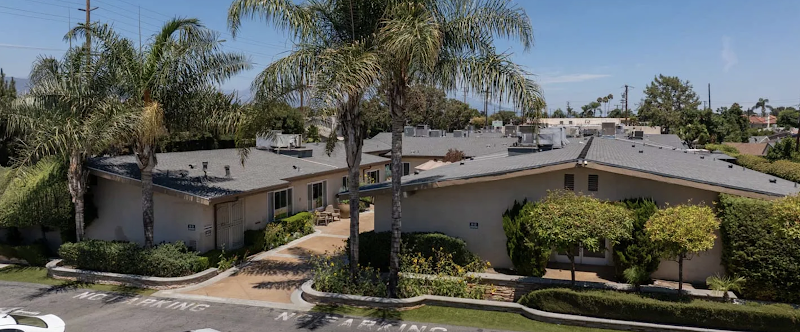
11900 RAMONA BOULEVARD, EL MONTE, CA 91732 (626) 442-5721
For profit - Corporation 148 Beds THE ENSIGN GROUP Data: November 2025 1 Immediate Jeopardy citation
Trust Grade
13/100
#1070 of 1155 in CA
Last Inspection: July 2025

Inspected within the last 6 months. Data reflects current conditions.

Overview

Madera Post Acute Center has received a Trust Grade of F, indicating significant concerns and a poor quality of care. It ranks #1070 out of 1155 facilities in California, placing it in the bottom half of nursing homes in the state, and #325 out of 369 in Los Angeles County, suggesting very few local options are worse. While the facility is improving, having reduced issues from 19 to 17 over a year, it still has many problems, including 60 total deficiencies, with 1 being critical and 2 serious. Staffing is average with a 42% turnover rate, and while the RN coverage is also average, recent fines of $45,512 raise concerns about compliance. Specific incidents include failures to keep smoking materials away from residents who need supervision, inadequate care for a resident with a central venous catheter, and a lack of a proper care plan to prevent falls for a resident who subsequently fractured a hip. Overall, while some areas show improvement, families should weigh these serious weaknesses against the facility's strengths before making a decision.
Trust Score
F
13/100
In California
#1070/1155
Bottom 8%
Safety Record
High Risk
Review needed
Inspections
Getting Better
19 → 17 violations
Staff Stability
○ Average
42% turnover. Near California's 48% average. Typical for the industry.
Penalties
✓ Good
$45,512 in fines. Lower than most California facilities. Relatively clean record.
Skilled Nurses
⚠ Watch
Each resident gets only 20 minutes of Registered Nurse (RN) attention daily — below average for California. Fewer RN minutes means fewer trained eyes watching for problems.
Violations
⚠ Watch
60 deficiencies on record. Higher than average. Multiple issues found across inspections.
★☆☆☆☆
1.0
Overall Rating
★★★☆☆
3.0
Staff Levels
★★★☆☆
3.0
Care Quality
★☆☆☆☆
1.0
Inspection Score
Stable
2024: 19 issues
2025: 17 issues

The Good

  • Full Sprinkler Coverage · Fire safety systems throughout facility
  • No fines on record
  • Staff turnover below average (42%)

    6 points below California average of 48%

Facility shows strength in fire safety.

The Bad

1-Star Overall Rating

Below California average (3.1)

Significant quality concerns identified by CMS

Staff Turnover: 42%

Near California avg (46%)

Typical for the industry

Federal Fines: $45,512

Above median ($33,413)

Moderate penalties - review what triggered them

Chain: THE ENSIGN GROUP

Part of a multi-facility chain

Ask about local staffing decisions and management

The Ugly 60 deficiencies on record

1 life-threatening 2 actual harm
Aug 2025 1 deficiency
CONCERN (E) 📢 Someone Reported This

A family member, employee, or ombudsman was alarmed enough to file a formal complaint

Potential for Harm - no one hurt, but risky conditions existed

Quality of Care (Tag F0684)

Could have caused harm · This affected multiple residents

Based on interview and record review, the facility failed to provide necessary care and services to one of three sampled residents (Resident 1) by failing to:A. Ensure Resident 1's physician's orders ...

Read full inspector narrative →
Based on interview and record review, the facility failed to provide necessary care and services to one of three sampled residents (Resident 1) by failing to:A. Ensure Resident 1's physician's orders were followed when Licensed Vocational Nurse 1 (LVN 1) held administration of Tresiba (a once-daily medication used to manage high blood sugar).B. Ensure accurate medication administration documentation for Resident 1, when LVN 2 did not document the Tresiba administration for Resident 1 on 8/9/2025.These deficient practices had the potential to result in serious health complications for Resident 1.Findings:A. During a review of Resident 1's admission Record (AR), the AR indicated the facility originally admitted Resident 1 on 11/4/2018 and readmitted the resident on 8/12/2025 with a diagnosis including type 2 diabetes mellitus (a chronic [persistent or long-lasting] disease characterized by high blood sugar levels due to insufficient insulin [a hormone which regulates the amount of sugar in the blood] production) and unspecified hypoglycemia (body's blood sugar level goes below the standard range).During a review of Resident 1's Minimum Data Set (MDS- a resident assessment tool) dated 6/25/2025, the MDS indicated Resident1's cognitive (the ability to think and process information) skills for daily decision making were intact.During a review of Resident 1's Order Summary Report (OSR) dated 7/1/2025, the OSR indicated Resident 1 had an order for Tresiba 55 units (a unit of measurement) subcutaneous injection (a method of delivering medication into the fatty tissue layer located just beneath the skin) in the morning related to type 2 diabetes mellitus with a start date of 4/23/2025.During review of Resident 1's Medication Administration Record (MAR) dated 7/1/2025 -7/31/2025 and 8/1/2025 - 8/31/2025, the MAR indicated the 6:30 AM dose for Tresiba 55-unit[s] subcutaneous injection was held on 7/11/2025, 7/12/2025, 7/18/2025, 7/23/2025, 7/29/2025, 7/30/2025, 8/2/2025, and 8/6/2025 by LVN 1.During a review of Resident 1's Care Plan (CP) titled (Resident 1) has diabetes mellitus, initiated 4/29/2025, revised 8/13/2025, cancelled 8/13/2025, the CP's goal indicated Resident 1 will have no complications related to diabetes. The CP's interventions indicated for licensed nursing staff to administer diabetes medication as ordered by the doctor and monitor/document for side effects and effectiveness.During a telephone interview on 8/20/2025 at 3:44 PM with LVN 1, LVN 1 stated LVN 1 would hold Resident 1's 6:30 AM dose of Tresiba 55 units if Resident 1's blood sugar level was below 170 milligrams per deciliter (mg/dL-a unit of measurement). LVN 1 stated Resident 1's Tresiba order did not indicate the Tresiba should be held if Resident 1's blood sugar was below 170 mg/dL. LVN 1 stated LVN 1 notified the Registered Nurse Supervisor (RN1) that LVN 1 held the Tresiba medication.During a telephone interview on 8/20/2025 at 4:30 PM with RN 1, RN 1 stated LVN 1 informed RN 1 that LVN 1 held the Tresiba Medication for Resident 1. RN 1 stated the doctor was not notified when Resident 1's Tresiba was held.During an interview on 8/21/2025 at 12:25 PM with the Director of Nursing (DON), the DON stated if a physician's order does not indicate a medication was to be held, it was the facility's policy to get a doctor's order prior to holding the medication.B. During an interview on 8/20/2025 at 12:53 PM with Resident 1, Resident 1 stated on the morning of 8/9/2025 LVN 2 administered Tresiba 55 units to Resident 1.During a telephone interview on 8/20/2025 at 3:37 PM with LVN 2, LVN 2 stated on 8/9/2025 at 5:40 AM, LVN 2 administered Tresiba 55 units to Resident 1.During a concurrent interview and record review on 8/21/2025 at 12:25 PM with the DON, Resident 1's MAR dated 8/1/2025-8/31/2025 was reviewed. The MAR indicated the 8/9/2025 6:30 AM dose for Tresiba 55-unit[s] subcutaneous injection was not administered. The DON stated LVN 2 should have documented the 6:30 AM dose of Tresiba administered by LVN 2 on 8/9/2025 in Resident 1's MAR.During a review of the facility's undated Policy and Procedure (P&P) titled, Medication Administration, the P&P indicated, medications will be administered as prescribed by the physician. The P&P's administration process indicated that the person administering the medication is to initial the resident's medication sheet in the provided space under the appropriate date and time for that particular dose administered. The P&P's administration process indicated, documentation on the medication sheet is done immediately following administration.
Jul 2025 12 deficiencies 1 IJ (1 affecting multiple)
CRITICAL (K)

Immediate Jeopardy (IJ) - the most serious Medicare violation

Accident Prevention (Tag F0689)

Someone could have died · This affected multiple residents

**NOTE- TERMS IN BRACKETS HAVE BEEN EDITED TO PROTECT CONFIDENTIALITY** Based on observation, interview, and record review, the facility failed to ensure three of seven sampled residents (Residents 48...

Read full inspector narrative →
**NOTE- TERMS IN BRACKETS HAVE BEEN EDITED TO PROTECT CONFIDENTIALITY** Based on observation, interview, and record review, the facility failed to ensure three of seven sampled residents (Residents 48, 50, and 64) who required supervision while smoking (breathing in smoke from cigarettes [tobacco wrapped in paper]) had an environment free of accident hazards (risk) by failing to:1. Implement the facility's Policy and Procedure (P&P) titled, Smoking Policy, which indicated no lighting materials (e.g. matches, lighters), tobacco products, or smoking devices (e.g. tobacco cigarettes, cigars) will be allowed to be kept in the possession of the residents, either on their person or in the facility. 2. Ensure Residents 48, 50, and 64 were not in possession of smoking materials (cigarettes and lighters). 3. Implement Resident 48, 50 and 64's Care Plans (CPs) interventions to keep Resident 48, 50 and 64's smoking materials at the Nurses' Station and ensure for staff to observe Resident 64 while smoking in designated areas (smoking patio).These deficient practices had the potential for Residents 48, 50, and 64 to turn on their lighters, smoke cigarettes unsupervised inside the facility, cause fire that could affect the health, safety, and wellbeing of all 135 residents in the facility, staff, visitors and result in serious harm, injury, hospitalization and or death.On 7/7/2025 at 5:33 pm, while onsite at the facility, the State Survey Agency (SSA) called an Immediate Jeopardy (IJ, a situation in which the facility's non-compliance with one or more requirements of participation has caused, or is likely to cause, serious injury, harm, impairment, or death to a resident). The IJ was called in the presence of the facility's Administrator (ADM) and the Director of Nursing (DON) due to the facility failing to safely secure/store lighters and cigarettes for Residents 48, 50 and 64 to prevent accident hazards such as fire in accordance with the facility's Smoking Policy.On 7/8/2025 at 2:43 pm, the facility submitted an acceptable IJ Removal Plan (IJRP, a detailed plan with interventions to immediately correct the deficient practices in the IJ). While onsite at the facility, the SSA verified and confirmed the facility's implementation of the IJRP through observation, interview, record review, and determined the IJ situation of fire hazard was no longer present. The SSA removed the IJ situation on 7/8/2025 at 6:45 pm in the presence of the ADM and the DON.The facility provided an acceptable IJRP as follows:A. Immediate Corrective Actions:1. On 7/7/2025, lighters and cigarettes were immediately confiscated (removed) by the ADM and the DON from Residents 48, 50 and 64. The confiscated lighters were safely secured in a locked box, located in Station 1 Nurse's Station.2. On 7/7/2025, the ADM met with Residents 48, 50, and 64 to review the facility's smoking policy. During this meeting, it was reinforced that residents (all residents in the facility) were not permitted to keep any lighting materials such as matches or lighters, tobacco products, or smoking devices in their possession or anywhere within the facility. Residents 48, 50, and 64 were reminded that all lighters and smoking paraphernalia (lighters and cigarettes) must be stored in the locked box located at Station 1 Nurse's Station.3. On 7/7/2025, the Assistant Director of Nursing (ADON) immediately completed a change of condition evaluation for Residents 48, 50, and 64. This evaluation assessed any acute injuries or changes in condition of Residents 48, 50 and 64. The ADON also re-educated Residents 48, 50 and 64 regarding the facility's smoking policy and confirmed Residents 48, 50 and 64's understanding of fire safety risks.4. On 7/7/2025, the ADON completed smoking evaluations for Residents 48, 50 and 64. Each resident's care plan was reviewed and updated. These updates reflected the need for increased supervision regarding smoking materials and to ensure adherence to the facility's policy on the proper storage of lighters and other smoking-related items.B. Identification of Other Residents Having the Potential to be Affected:1. All residents in the facility were potentially at risk of being affected.2. On 7/7/2025 at 6 pm, the ADON completed the Smoking Evaluation Assessment of the other four residents (Residents 32, 61, 91 and 123) who smoked cigarettes. These residents did not have the same findings (no lighters or cigarettes were found in Residents 32, 61, 91 and 123's possessions).3. On 7/7/2025, the facility's Department Heads conducted a comprehensive facility wide room rounds for all 135 residents who are residing in the facility. All 135 residents' rooms and bedside areas were thoroughly assessed, and no lighters or smoking materials were found in 135 residents' possessions or stored at the bedside.4. On 7/8/2025, the facility completed the Smoking Assessment Evaluations for all 128 residents, excluding the 7 known smokers (individual who inhales smoke from cigarettes/Residents 32, 48, 50, 61, 64, 91 and 123) who had already been evaluated.5. On 7/8/2025, the facility's Interdisciplinary Team (IDT- group of health care workers who worked together to share information and collaborate the plan of care for the residents) and designees completed rounds to meet with all 135 residents. During these rounds, the facility's smoking policy was discussed with all 135 residents.C. Actions Taken to Prevent Reoccurrence:1. On 7/7/2025 - 7/8/2025, facility's staff received an in-service training from the Clinical Lead Resource regarding the smoking policy.2. Starting 7/7/2025, licensed nurses will monitor/check every shift for smoking paraphernalia at residents' bedsides or their possessions and will be documented in the electronic medication administration record. If smoking paraphernalia is found, the licensed nurses will educate the residents, reinforce the smoking policy and remove the items.3. On 7/7/2025, the Visitor's Log was revised to include acknowledgement and review of the facility's smoking policy with all visitors. The smoking policy will be readily available at the reception desk.4. On 7/7/2025, the Smoking Policy was posted on the consumer board, and the smoking patio code will be updated on a weekly basis.5. Starting 7/8/2025, staff from the Activities Department, Human Resources, Director of Staff Development (DSD) and their designees completed a skills competency assessment to verify facility staff's understanding of the smoking policy. Training emphasized the importance of ensuring that residents who smoke do not possess lighters or any smoking materials outside of supervised use.6. Starting 7/8/2025, every shift. Certified Nursing Assistants (CNAs) will monitor for smoking paraphernalia at residents' bedside or their possessions and report immediately their findings to the Charge Nurse or Registered Nurse (RN) Supervisor for follow up.7. Starting 7/8/25, Department Heads will conduct room rounds three to five times a week for a period of three months to verify that no smoking materials are stored at the residents' bedside or kept in the possession of the residents.8. During the next resident council meetings, the smoking policy will be reviewed, emphasizing safety risks.9. Starting 7/8/2025, for any identified residents who smoke [cigarettes], their care plans will clearly include interventions for monitoring adherence to the smoking policy and proper storage, alongside fire safety education. 10. On 7/8/20255, licensed staff received in-service training by the Clinical Lead resource regarding Out on Pass (Resident has permission to temporarily leave the facility for a short time) Policy and the importance of checking the residents upon the resident's return for any smoking paraphernalia.D. Monitoring to Ensure Ongoing Compliance:1. The DON will insignificantly increase oversight by conducting random room rounds across all shifts, three to five times a week, for the next three months. Any findings or noncompliance issues will be immediately reported to the Quality Assurance (QA, a systematic process focused on ensuring that products or services meet specific requirements and quality standards) Committee for thorough review and development of further recommendations to ensure resident safety and policy compliance.2. The ADM will conduct random unannounced spot checks of all designated smoking areas to verify strict adherence to the facility's smoking policy and safe environment for all. Any findings or noncompliance issues will be immediately reported to the QA,) Committee for thorough review and development of targeted recommendations to maintain policy integrity and resident safety.3. The ADM will regularly report the results of all monitoring activities to the QA Committee. This will include tracking and trending findings from reports and audits to ensure sustained substantial compliance with the facility's policies and standards.Findings: a. During a review of Resident 48’s admission Record (AR), the AR indicated the facility admitted Resident 48 on 3/12/2025 with diagnoses that included anxiety (intense, excessive, and persistent worry and fear about everyday situations), bipolar disorder (a mental illness characterized by extreme shifts in mood, energy, and activity levels, alternating between periods of elevated mood [a state of abnormally elevated mood, energy, and activity] and periods of depression [persistent sadness, loss of interest, and a range of other symptoms that can significantly impair a person's ability to function in everyday life]). During a review of Resident 48’s Smoking Evaluation (SE) dated 6/17/2025, the SE indicated Resident 48 was a smoker. The SE indicated Resident 48 smoked three (3) to four (4) times a day (morning, afternoon, evening and night). The SE indicated for Resident 48’s safety, Resident 48 needed to use adaptive clothing (bibs and aprons are made from flame-retardant materials to prevent burns to clothing and skin)/device/assistance while smoking and required supervised smoking. During a review of Resident 48’s untitled CP, dated 6/17/2025, the CP indicated Resident 48 had a potential for injury related to smoking. The CP interventions included for facility ‘s staff to maintain smoking materials at the nurse’s station or other designated areas and to monitor to assess compliance with the facility’s smoking policy. During a concurrent observation inside Resident 48’s room and interview with Resident 48 and Certified Nurse Assistant 1 (CNA 1) on 7/7/2025 at 11:30 am, Resident 48 was lying in bed. Resident 48’s room was located next to Resident 15. Resident 15 had chronic obstructive pulmonary disease (COPD, lung disease characterized by long-term poor airflow) and was on continuous oxygen use at 2 liters (L, unit of measuring volume of a liquid or gas) via (through) nasal cannula (NC, tube which on one end splits into two prongs which are placed in the nostrils [opening of the nose] to deliver oxygen [colorless/odorless gas]). Resident 48 stated Resident 48 had been smoking for many years. Resident 48 stated Resident 48 kept cigarettes and lighter in Resident 48’s possession. Resident 48 stated Resident 48’s family member brought cigarettes and lighter to Resident 48 during visitation. Resident 48 stated Resident 48 would smoke anytime Resident 48 wanted to smoke. CNA 1 stated CNA 1 did not know Resident 48 had cigarettes and lighter in Resident 48’s possession. During a concurrent observation at Station 1 Nurse’s Station and interview on 7/7/2025 at 11:40 am with Licensed Vocational Nurse 1 (LVN 1), a blue box was seen on the top shelf inside Station 1 Nurse’s Station. The blue box was locked with residents’ smoking materials. LVN 1 stated Resident 48 did not have cigarettes and lighter locked up inside the blue box. During an interview on 7/7/2025 at 11:57 am with the AD, the AD stated Resident 48 was a smoker and Resident 48 needed supervision while smoking. The AD did not know Resident 48 kept cigarettes and lighter in Resident 48’s possession. The AD stated all residents’ cigarettes and lighters should be kept and locked in a box at Station 1 Nurse’s Station for the safety of the residents and prevent potential fire hazard. During an interview on 7/7/2025 at 12:21 pm with the facility’s DON, the DON stated Resident 48 “admitted (confess to be true, typically with reluctance)” that Resident 48 currently had cigarettes and lighter in Resident 48’s possession. The DON stated the DON did not know how Resident 48 had cigarettes and lighter in Resident 48’s possession. The DON stated all residents who smoke were not allowed to keep cigarettes and lighters inside the residents’ room because of fire risks and to ensure the safety of all 135 residents in the facility from fire. During an interview on 7/7/2025 at 12:54 pm with the ADM, the ADM stated the ADM retrieved one (1) functional white lighter and 1 pack of cigarettes (20 sticks) from Resident 48. The ADM stated the ADM did not know Resident 48 had cigarettes and lighter in Resident 48’s possession and did not know how Resident 48 obtained the cigarettes and lighter. The ADM stated that all smokers were not allowed to keep cigarettes and lighters in their possessions inside their rooms to prevent them from lighting the cigarettes up for the safety of all 135 residents in the facility. b. During a review of Resident 50’s AR, the AR indicated the facility admitted Resident 50 on 2/9/2023 and readmitted on [DATE] with diagnoses that included heart failure (condition when the heart is unable to pump sufficiently to maintain blood flow to meet the body's needs) and a pacemaker (a medical device that helps the heartbeat regularly). During a review of Resident 50’s untitled CP, revised 4/25/2025, the CP indicated Resident 50 had the potential for injury related to smoking. The CP interventions included explaining the smoking policy to Resident 50, maintaining smoking materials at the nurses’ station, and monitoring Resident 50 to assess compliance with the facility’s smoking policy and individual plan. The CP goal indicated for Resident 50 to be compliant with smoking protocols, individual smoking plan, and follow the smoking policy. During a review of Resident 50’s SE dated 5/15/2025, the SE indicated, for Resident 50’s safety, Resident 50 needed to use adaptive clothing/device/ assistance while smoking and required supervised smoking. During an interview on 7/7/2025 at 12:13 pm with Resident 50, Resident 50 stated Resident 50 kept Resident 50’s cigarettes and lighter in Resident 50’s possession and smoked in the patio. Resident 50 shouted and refused to answer how long Resident 50 had cigarettes and lighter in Resident 50’s possession. During an interview on 7/7/2025 at 12:58 pm with the facility’s DON, the DON stated the DON was not aware Resident 50 had kept Resident 50’s cigarettes and lighter at Resident 50’s bedside. The DON stated Resident 50 could only smoke with supervision and no residents were allowed to keep cigarettes in their possession according to the facility’s policy on smoking. The DON stated all cigarettes and lighters needed to be kept locked at Station 1 Nurse’s Station. The DON stated residents who smoke (Residents 32, 48, 50, 61, 64, 91 and 123) were not allowed to keep lighters at their bedside for safety. The DON stated, due to oxygen being flammable (easily catch fire), there was a potential risk the whole facility could catch fire when smokers had lighters and cigarettes in their possession. During a concurrent observation in the hallway and interview on 7/7/2025 at 1:25 pm with the ADM, one box of cigarettes and one yellow lighter were in a clear bag with Resident 50’s name on the bag. The ADM stated the items were taken from Resident 50 on 7/7/2025 and the lighter in Resident 50’s possession was functioning (working). c. During a review of Resident 64’s AR, the AR indicated the facility admitted Resident 64 on 5/9/2022 and readmitted on [DATE], with diagnoses that included anxiety disorder (group of mental disorders characterized by feelings of anxiety [an unpleasant state of inner turmoil] and fear) and palliative care (specialized medical care for people living with a serious illness focused on providing relief from the symptoms of the illness). During a review of Resident 64 untitled CP revised 2/21/2025, the CP indicated Resident 64 had the potential for injury related to smoking. The CP goal indicated for Resident 64 to be compliant with the facility’s smoking protocol and individual smoking plan. The CP interventions included maintaining Resident 64’s smoking materials at the nurse’s station or other designated area and monitoring Resident 64 to assess compliance with facility smoking policy/individual plan. The CP interventions also indicated for staff to observe Resident 64 while smoking in designated areas. During a review of Resident 64’s SE dated 2/21/2025, the SE indicated Resident 64 smoked 4 to 5 times per day. The SE indicated for Resident 64’s safety, Resident 64 needed to use adaptive clothing/devices/assistance while smoking and required supervised smoking. During a review of Resident 64’s Minimum Date Set (MDS, a resident assessment tool) dated 5/21/2025, the MDS indicated Resident 64 had short term memory (memory that helps you remember for a short time) problem. During a review of Resident 64’s Interdisciplinary Team (IDT) Brief Interview for Mental Status (BIMS, a screening tool used to assess cognitive function, particularly in long-term care settings) assessment dated [DATE], the IDT BIMS Assessment indicated Resident 64 had severely impaired cognition status (ability to think and process information). During an interview on 7/7/2025 at 12:15 pm with Resident 64, Resident 64 stated Resident 64 had a lighter and cigarettes inside Resident 64’s pocket. During an interview on 7/7/2025 at 12:16 pm with the AD, the AD stated Resident 64 should not have lighters because it would not be safe for Resident 64 to smoke inside Resident 64’s rooms due to fire hazard. The AD stated the only location for smoking would be the facility’s smoking patio. The AD stated no residents could keep cigarettes and lighters at the bedside. During an interview on 7/7/2025 at 1:23 pm with the ADM, the ADM stated there were 40 sticks of cigarettes and a blue lighter retrieved by the ADM from Resident 64’s pocket. The ADM stated Resident 64 could have bought the cigarettes when Resident 64 went out on pass. During an interview on 7/7/2025 at 1:29 pm with Resident 64, Resident 64 stated Resident 64 found the lighter last night (7/6/2025) inside the pocket of Resident 64’s jacket. Resident 64 stated Resident 64 bought the cigarettes when Resident 64 went outside of the facility during an out on pass. During an interview on 7/7/2025 at 2:23 pm, CNA 7 stated Resident 64 was independent and would go anytime to the smoking patio because Resident 64 had access to the pin code (a passcode used in the process of authenticating a user accessing a system or a door) to the smoking patio. CNA 7 stated Resident 64 would go to the smoking patio even if it was not the scheduled smoking time because Resident 64 had access to the pin code to the smoking patio. CNA 7 stated, if Resident 64 would come and go to the smoking patio anytime, facility staff (in general) would not be able to monitor Resident 64 while smoking. During an interview on 7/7/2025 at 5:15 pm, with the facility’s DON and ADM, the DON and ADM stated Resident 64 needed to be monitored and supervised when smoking. During an interview on 7/8/2025 at 4:00 pm, with the ADON, the ADON stated only a designated person (assigned staff) should know the access pin code to the smoking patio to ensure residents who smoke would be supervised when smoking. The ADON stated the residents who smoke should not have the access pin code to the smoking patio. During a review of the facility’s P&P titled, “Smoking Policy,” revised 4/2024, the P&P indicated, “Designated smoking areas outside the building are available for this purpose based on the facility smoking schedule with assigned staff to supervise. No lighting materials (e.g. matches, lighters), tobacco products, or smoking devices will be allowed to be kept in the possession of the residents, either on their person or in the facility. If it is determined that a resident is a safe smoker (someone who smokes in a way that reduces risk to others) all smoking materials will still be retained by nursing staff.”
CONCERN (D)

Potential for Harm - no one hurt, but risky conditions existed

Safe Environment (Tag F0584)

Could have caused harm · This affected 1 resident

**NOTE- TERMS IN BRACKETS HAVE BEEN EDITED TO PROTECT CONFIDENTIALITY** Based on observation, interview, and record review, the facility failed to ensure one of one sampled resident (Resident 109) had...

Read full inspector narrative →
**NOTE- TERMS IN BRACKETS HAVE BEEN EDITED TO PROTECT CONFIDENTIALITY** Based on observation, interview, and record review, the facility failed to ensure one of one sampled resident (Resident 109) had a bedroom wall that was not missing part of the baseboard.This failure had the potential to result in the exposure of Resident 109 and Resident 109's visitors to dust and other unknown contaminants and failed to provide a safe, clean, comfortable, and homelike environment.Findings:During a review of Resident 109's admission Record (AR), the AR indicated Resident 109 was admitted to the facility on [DATE] with diagnoses including sepsis (a life-threatening blood infection), lack of coordination, and dysphagia (difficulty swallowing).During a review of Resident 109's History & Physical (H&P), dated 6/7/2025, the H&P indicated the resident had the capacity to understand and make decisions. During a review of Resident 109's Minimum Data Set (MDS, a resident assessment tool), dated 6/17/2025, the MDS indicated Resident 109 had moderately impaired cognition (ability to understand), used a walker and needed setup or clean-up assistance (helper sets up or cleans up, residents' complete activity. Helper assists only prior to or following the activity) with toileting hygiene.During an observation on 7/8/2025 at 9:15 am, in Resident 109's room, the baseboard behind the resident's bed was missing, exposing the drywall and peeling paint.During a concurrent observation and interview on 7/8/2025 at 9:19 am with the Director of Nursing (DON) in Resident 109's room, the baseboard behind the resident's bed was missing. The DON stated room maintenance was overseen by the maintenance and housekeeping supervisors. The DON stated the wall was broken and the bare wall should be covered and fixed to make it more homelike for Resident 109. During an interview on 7/8/2025 at 9:27 am with the Maintenance Supervisor (MS), the MS stated the bottom of Resident 109's wall was bare and should not be in that condition, as it could expose the resident to dust.During a review of the facility's policy and procedure (P&P) titled, Housekeeping: Rooms, Cleaning Residents, last revised 2001, the P&P indicated the facility would provide a clean, comfortable, homelike and sanitary living area.During a review of the facility's policy and procedure (P&P) titled, Environmental: Maintenance Policy, dated 1/2025, the P&P indicated the maintenance policy ensured the building, equipment, and overall environment remain safe, clean, and functional for residents, staff, and visitors.
CONCERN (D)

Potential for Harm - no one hurt, but risky conditions existed

Quality of Care (Tag F0684)

Could have caused harm · This affected 1 resident

**NOTE- TERMS IN BRACKETS HAVE BEEN EDITED TO PROTECT CONFIDENTIALITY** Based on observation, interview, and record review, the facility failed to ensure a change of condition was developed and the ph...

Read full inspector narrative →
**NOTE- TERMS IN BRACKETS HAVE BEEN EDITED TO PROTECT CONFIDENTIALITY** Based on observation, interview, and record review, the facility failed to ensure a change of condition was developed and the physician was notified for one of one resident (Resident 335) who had an alert notification for no bowel movement for three days.This deficient practice had the potential to lead to a bowel obstruction, bowel rupture and/or death.Findings:During a review of Resident 335's admission Record (AR), the AR indicated the facility admitted the resident on 5/1/2025, with diagnoses that included enterocolitis due to clostridium difficile (is an inflammation of the intestines that is predominantly associated with antibiotic use), irritable bowel syndrome (a condition that causes abdominal discomfort and altered bowel movements).During a review of Resident 335's MDS dated [DATE], the MDS indicated Resident 335 had intact cognition. The MDS indicated Resident 335 was dependent in toileting hygiene, bed mobility; rolling left and right, sit to lying, lying to sitting on the side of the bed, chair/bed-to-chair transfer.During a concurrent observation and interview on 7/7/2025 at 10:54 AM, Resident 335 was lying in bed, awake. Resident 335 stated My stomach hurts and described pain as a level 10/10.During a review of Resident 335's bowel movement task documentation for the month of July, the BM task documentation indicated no BM on 7/6/2025, 7/7/2025, 7/8/2025 and 7/9/2025.During a concurrent record review of Resident 335's bowel movement and interview on 7/9/2025 at 6:34 PM, Resident 335's last bowel movement was on 7/5/2025. The Assistant Director of Nursing (ADON) stated Resident 335 had no BM since 7/6/2025 for a total of four days. The ADON showed the clinical alert for Resident 335's change of condition dated 7/8/2025.During a concurrent record review of Resident 335's change of condition and progress notes on 7/9/2025 at 6:35 PM, the ADON stated there was no change of condition and there were notes to indicate notification of the physician from 7/8/2025 to 7/9/2025. The ADON stated if Resident 335 had no BM for more than three (3) days or more this would be considered a change of condition; Therefore, we needed to make a change of condition and notify the physician, so the problem could be addressed.During an interview on 7/9/2025 at 6:46 PM, with Licensed Vocational Nurse 4 (LVN 4), when asked regarding clinical alerts stated the only clinical alert communication LVN 4 would check, would be the hand-off communication. LVN 4 stated during hand-off report, LVN 4 received report that Resident 335 had poor intake and abdominal pain.During an interview on 7/9/2025 at 7:09 PM, LVN 5 stated LVN 5 did not see any Stop and Watch report from the certified nursing assistant. LVN 5 stated a Stop and Watch is a form that the CNA will fill out if there was an important concern they wanted to communicate to the licensed nurses, such as changes in skin condition or any other resident issues.During a review of the facility's Policy and Procedure (P&P) titled Change in Condition dated 4/2025, the P&P indicated if, at any time, it is recognized by any one of the team members that the condition or care needs of the resident have changed, the Licensed Nurse or Nurse Supervisor should be made aware. Examples would be the following: Change in output (bowel or bladder) including amount, color, consistency, odor, or frequency.The P&P indicated the nurse will perform and document an assessment of the resident and identify the need for additional interventions, considering implementation of existing orders or nursing interventions or through communication with the resident's provider using SBAR or similar process to obtain new orders or interventions.
CONCERN (D)

Potential for Harm - no one hurt, but risky conditions existed

Deficiency F0700 (Tag F0700)

Could have caused harm · This affected 1 resident

**NOTE- TERMS IN BRACKETS HAVE BEEN EDITED TO PROTECT CONFIDENTIALITY** Based on observation, interview, and record review, the facility failed to ensure a physician order and an informed consent (vol...

Read full inspector narrative →
**NOTE- TERMS IN BRACKETS HAVE BEEN EDITED TO PROTECT CONFIDENTIALITY** Based on observation, interview, and record review, the facility failed to ensure a physician order and an informed consent (voluntary agreement to accept treatment and/or procedures after receiving education regarding the risks, benefits, and alternatives offered) were obtained before the installation of side rails for one of two sampled residents (Resident 83).This failure placed Resident 83 at risk for entrapment (an event in which residents were caught, trapped, or entangled in a tight space around the bed) and injury from use of side rails.Findings:During a review of Resident 83's admission Record (AR), the AR indicated Resident 83 was admitted to the facility on [DATE] with diagnoses that included hemiplegia (total paralysis of the arm, leg, and trunk on the same side of the body), hemiparesis (weakness on one side of the body) and dysarthria (a speech disorder that results in slurred, slow, or imprecise speech).During a review of Resident 83's Minimum Data Set (MDS, a resident assessment tool), dated 5/6/2025, the MDS indicated Resident 83 had an intact cognition (ability to understand and process information). The MDS indicated Resident 83 was dependent (helper did all the effort, resident did none of the effort to complete the activity) with oral hygiene, toileting, upper and lower body dressing. During a concurrent observation while inside Resident 83's room and during an interview on 7/8/2025 at 2:55 pm with Licensed Vocational Nurse 1 (LVN 1), Resident 83 was lying in bed and on Resident 83's back with upper side rails up on both sides of the bed. LVN 1 stated Resident 83 had right-sided paralysis.During a concurrent interview and record review on 7/8/2025 at 3:04 pm with the Director of Nursing (DON), Resident 83's medical record (chart) and electronic medical record (EMR) were reviewed. The DON stated Resident 83 did not have a documented record in Resident 83's chart and /or EMR that a physician order and an informed consent for the use of bilateral upper side rails were obtained and signed before the installation of bilateral upper side rails. The DON stated a physician order, and an informed consent needed to be obtained from Resident 83 or Resident 83's responsible party (RP) and a copy retained in the chart to make sure Resident 83 and/or RP understood and were educated on the risks and benefits of using side rails/bed rails for the safety of the resident.During a review of the facility's policy and procedures (P&P) titled, Bedrails, revised 4/2025, the P&P indicated, After the facility has attempted alternatives to bed rails and determines that these alternatives failed to meet the resident's assessed needs, the facility interdisciplinary team (IDT) will assess the resident for risk of entrapment. The risks and benefits regarding the use of bed rails will be considered for each resident. If the use of bed rails is recommended by the IDT, the facility must obtain informed consent from the resident, or if applicable, the resident representative for the use of bed rails prior to installation or use.
CONCERN (D)

Potential for Harm - no one hurt, but risky conditions existed

Deficiency F0810 (Tag F0810)

Could have caused harm · This affected 1 resident

**NOTE- TERMS IN BRACKETS HAVE BEEN EDITED TO PROTECT CONFIDENTIALITY** Based on observation, interview, and record review, the facility failed to provide a resident with a physician order to have a p...

Read full inspector narrative →
**NOTE- TERMS IN BRACKETS HAVE BEEN EDITED TO PROTECT CONFIDENTIALITY** Based on observation, interview, and record review, the facility failed to provide a resident with a physician order to have a plate guard (a dining aid that can help people with limited control, grip, or dexterity eat with one hand and reduce the risk of spills) during meals for one of one sampled resident (Resident 83).This failure had the potential to result in Resident 83's decline in nutritional status and inability to maintain independence during mealtimes.Findings:During a review of Resident 83's admission Record (AR), the AR indicated Resident 83 was admitted to the facility on [DATE], with diagnoses that included hemiplegia (total paralysis of the arm, leg, and trunk on the same side of the body), hemiparesis (weakness on one side of the body), dysarthria (a speech disorder that results in slurred, slow, or imprecise speech) and adult failure to thrive (a decline caused by chronic diseases and functional impairments which can cause weight loss, decreased appetite, poor nutrition, and inactivity).During a review of Resident 83's Minimum Data Set (MDS, a resident assessment tool), dated 5/6/2025, the MDS indicated Resident 83 had an intact cognition (ability to understand and process information). The MDS indicated Resident 83 was dependent (helper did all the effort, resident did none of the effort to complete the activity) with oral hygiene, toileting, upper and lower body dressing. During a review of Resident 83's Order Summary Report (OSR), dated 6/1/2025, the OSR indicated Resident 83 had an order to use a plate guard for all meals to prevent spillage and assist with scooping food.During a concurrent observation while inside Resident 83's room and interview on 7/8/2025 at 6:38 pm with Licensed Vocational Nurse 2 (LVN 2), Resident 83 was in bed, eating dinner with the head of bed elevated. Resident 83 was eating using Resident 83's left hand and food was spilling on Resident 83's blanket and clothes. Resident 83 did not have a plate guard. LVN 2 stated Resident 83 was picking up spilled food from Resident 83's blanket and clothes. LVN 2 stated Resident 83 had an order to use a plate guard for all meals. LVN 2 stated Resident 83's food should be served on a plate guard for Resident 83 to scoop food better and prevent spilling of food on Resident 83's blanket or clothes.During an interview on 7/9/2025 at 10:56 am with the Director of Nursing (DON), the DON stated Resident 83's food should have been served on a plate guard as ordered by the physician to scoop food better and minimize spilling of food on the blanket and clothes, and to maintain the resident's independence during mealtime.During a review of the facility's policy and procedure (P&P) titled, Adaptive Equipment-Plate Guard, revised 5/2007, the P&P indicated, Residents who are recommended to use a plate guard as part of their care plan will have it available and in place during meals to promote independence, safety, and dignity during dining.
CONCERN (D)

Potential for Harm - no one hurt, but risky conditions existed

Room Equipment (Tag F0908)

Could have caused harm · This affected 1 resident

**NOTE- TERMS IN BRACKETS HAVE BEEN EDITED TO PROTECT CONFIDENTIALITY** Based on observation, interview and record review, the facility failed to ensure the bed alarm was functioning properly for one ...

Read full inspector narrative →
**NOTE- TERMS IN BRACKETS HAVE BEEN EDITED TO PROTECT CONFIDENTIALITY** Based on observation, interview and record review, the facility failed to ensure the bed alarm was functioning properly for one of two sampled residents (Resident 10), to alert staff when Resident 10 attempted to get up unassisted.This deficient practice had the potential to result in residents being at risk for further falls.Findings:During a review of Resident 10's admission Record (AR), the AR indicated the facility originally admitted the resident on 3/22/2023, and readmitted the resident on 4/18/2025, with diagnoses that included Parkinson's disease (is a brain condition that causes problems with movement, mental health, sleep, pain and other health issues), encephalopathy (brain disease or brain damage.) and abnormality of gait and mobility, During a review of Resident 10's Minimum Data Set (MDS) dated [DATE], the MDS indicated Resident 10 had intact cognition. The MDS indicated Resident 10 required moderate assistance (helper does less than half the effort) with mobility in chair/bed-to chair transfer, sit to stand, walking 10 feet.During a review of the Order Summary Report (OSR) for July 2025, the OSR indicated that they may have sensor pads in bed and wheelchair to alert staff when resident is getting up unassisted.During an observation on 7/8/2025 at 3:40 PM, there was a yellow-colored box placed on the left top part of the bed. The Assistant Director of Nursing (ADON) when asked how staff would check if the bed alarm was functioning, the ADON stated the facility would use three different kinds of alarms, and to check this alarm the resident had to get up. Resident 10 was assisted to get up from the bed to the wheelchair and the yellow alarm sounded. There was a yellow-colored alarm on the wheelchair, Resident 10 was assisted to stand up from the wheelchair, the wheelchair alarm did not make a sound. The ADON assisted Resident up from the wheelchair and fixed the pad on the wheelchair and assisted Resident 10 to stand again, the wheelchair alarm did not make a sound. The ADON switched the yellow alarm to a white colored alarm, then assisted Resident 10 to get up from the wheelchair, the wheelchair alarm made a sound.During an interview on 7/9/2025 at 4:21 PM, the Director of Nursing (DON) stated there was no monitoring to check functionality of bed and wheelchair alarms. The DON stated there was no Policy and Procedure regarding the use of tab alarms. When asked what policy, or guidance or monitoring the staff would use to check if the alarm was functioning or not, the DON did not answer.During a review of the facility's Policy and Procedure (P&P) titled Physical Environment, Equipment Maintenance dated 4/2025, the P&P indicated it is the policy of the facility to establish procedures for routine and non-routine care of equipment and to ensure that equipment remains in good working order for resident and staff safety.During a review of the facility's P&P titled Environmental, Maintenance Policy dated 1/2025, the P&P indicated the facility ensures that the building, equipment, and overall environment remains safe, clean and functional for resident, staff and visitors.
CONCERN (E)

Potential for Harm - no one hurt, but risky conditions existed

Resident Rights (Tag F0550)

Could have caused harm · This affected multiple residents

**NOTE- TERMS IN BRACKETS HAVE BEEN EDITED TO PROTECT CONFIDENTIALITY** Based on observation, interview, and record review, the facility failed to promote and treat four of four sampled residents (Res...

Read full inspector narrative →
**NOTE- TERMS IN BRACKETS HAVE BEEN EDITED TO PROTECT CONFIDENTIALITY** Based on observation, interview, and record review, the facility failed to promote and treat four of four sampled residents (Residents 10, 34, 61 and 102) with respect, privacy and dignity by failing to ensure:a. The Director of Staff and Development (DSD) close the privacy curtain while checking Resident 102's Gastrostomy tube (G-tube, feeding tube that is surgically placed through an opening into the stomach from the abdominal wall) site. b. Resident 34's nephrostomy (a thin catheter that drains urine from kidney into a bag) drain was covered and provided Resident 34 with privacy. c. Certified Nursing Assistant 8 (CNA 8) and Restorative Nursing Assistant 2 (RNA 2) closed the privacy curtain completely while providing care to Resident 61.d. Resident 10 was offered to get up to go to the bathroom between 7:30 am and 11:02 am on 7/9/2025. As a result, Resident 10 was sitting in Resident 10's urine-soaked brief from 8:13 am to 11:02 am. Resident 10 felt sore, mad, and angry that facility staff did not offer Resident 10 to get up to use the restroom.These deficient practices had the potential to cause a psychosocial (mental and emotional well-being) decline and lowered self-esteem and self-worth for Residents 10, 34, 61 and 102. Findings: a. During a review of Resident 102's admission Record (AR), the AR indicated Resident 102 was admitted to the facility on [DATE], with diagnoses that included encounter for attention to gastrostomy (creation of an artificial external opening into the stomach), dysphagia (difficulty swallowing) and dementia (long term and often gradual decrease in the ability to think and remember severe enough to affect a person's daily functioning). During a review of Resident 102's untitled Care Plan (CP) dated 4/8/2025, the CP indicated Resident 102’s had Activities of Daily Living (ADL) deficit related to dementia. Resident 102’s CP indicated for staff to promote dignity by ensuring privacy to the resident. During a review of Resident 102's Minimum Data Set (MDS - a federally mandated resident assessment tool) dated 4/14/2025, the MDS indicated Resident 30 had severely impaired cognition (mental action or process of acquiring knowledge and understanding) for daily decision making. The MDS indicated Resident 102 was dependent (helper does all of the effort) on staff for toileting, showering/bathing self, lower body dressing, putting on/taking off footwear, and personal hygiene. The MDS indicated Resident 102 needed maximum assistance (helper does more than half the effort) on staff for upper body dressing. During a review of Resident 102's Physician Order (PO) dated 4/29/2025, the PO indicated for staff to administer Jevity 1.5 (liquid formula used for G-tube feeding) at 70 cubic centimeters per hour (cc/hr- unit of measurement) for 20 hours to provide 1,400 cc per 2,100 kilo calories (kcal, unit of energy) in 24 hours via enteral feeding; pump on at 1 pm and pump off at 9 am or until desired volume is reached. During an observation on 7/7/2025 at 9:20 am with the DSD, in Resident 102's room. Resident 102 was awake, lying in bed. The DSD pulled up Resident 102's gown and checked Resident 102's G-tube site. The DSD did not close Resident 102's privacy curtain to provide Resident 102 privacy, exposing Resident 102's abdominal area to the resident’s roommate and the hallway. During an interview on 7/7/2025 at 9:22 am with the DSD, the DSD stated she pulled up Resident 102's gown to check Resident 102's G-tube site and did not close the privacy curtain to provide Resident 102 privacy, exposing Resident 102's abdomen. The DSD stated privacy curtain needed to be closed prior to providing care and treatment to the residents to provide privacy. During a concurrent interview on 7/9/2025 at 12:36 pm with the facility’s Director of Nursing (DON), the DON stated, privacy curtains needed to be closed to provide privacy and dignity to the residents while providing care. The DON stated residents’ body parts should not be exposed during care and treatment. During a review of the facility's Policy and procedure (P&P) titled, Dignity and Respect, reviewed 1/2025, the P&P indicated, residents shall be examined and treated in a manner that maintains privacy of their body. The P&P indicated a closed door or drawn curtain shields the Resident from passers-by. b. During a review of Resident 34's AR, the AR indicated Resident 34 was initially admitted to the facility on [DATE] and readmitted on [DATE], with diagnoses that included Urinary tract infection (UTI- infection that affects part of the urinary tract), and Acute Kidney Injury (AKI - kidneys suddenly stop functioning). During a review of Resident 34's MDS dated [DATE], the MDS indicated Resident 34 had intact cognition for daily decision making. The MDS indicated Resident 34 was dependent on staff for toileting hygiene, showering/bathing self, lower body dressing and putting on/taking off footwear. During a review of Resident 34's PO dated 7/4/2025, the PO indicated for staff to cleanse Resident 34’s left lower back nephrostomy site with normal saline, pat dry then cover with border gauze dressing every shift. During a review of Resident 34's PO dated 7/4/2025, the PO indicated for staff to cleanse Resident 34’s right lower back nephrostomy site with normal saline, pat dry then cover with border gauze dressing every shift. During a concurrent observation and interview on 7/7/2025 at 9:06 am with the DSD, in Resident 34's room, Resident 34 was awake, lying in bed with bilateral nephrostomy bag hanging on the bed frame uncovered without a dignity bag (privacy cover) exposing light yellow colored fluid inside the bag. The DSD stated Resident 34’s nephrostomy drain bag needed to have a privacy bag to cover the drain to provide privacy to Resident 34. During a concurrent interview on 7/7/2025 at 6:43 pm with the DON and record review of the facility’s P&P titled, Indwelling Urinary Catheter Care, revised 1/2025, the P&P indicated to cover the drainage bag with a privacy bag to maintain dignity. The DON stated the P&P was applicable to Resident 34 with nephrostomy bag. The DON stated for all body fluid collection devices such as nephrostomy bag, the device needed to be covered with dignity bag to provide privacy to the resident. c. During a review of Resident 61’s admission Record (AR), the AR indicated the facility admitted Resident 61 on 4/24/2024, with diagnoses that included morbid obesity (which is defined as having a BMI of 40 or greater or weighing in excess of 100 pounds of one’s ideal weight), and urinary tract infection (UTI - common infections that happen when bacteria, often from the skin or rectum, enter the urethra and infect the urinary tract). During a review of Resident 61’s Minimum Data Set (MDS – a federally mandated resident assessment tool) dated 4/25/2025, the MDS indicated Resident 61 had intact cognition. The MDS indicated Resident 61 was dependent in toileting hygiene and required maximal assistance (helper does more than half the effort. Helper lifts or holds trunk or limbs and provides more than half the effort) with toilet transfers, sit to stand, chair/bed-to-chair transfer). During an observation on 7/9/2025 at 8:32 AM, Certified Nursing Assistant 8 and Restorative Nursing Assistant 2 were preparing to go inside Resident 61’s room by donning personal protective equipment (PPE - clothing and equipment that is worn or used to provide protection against hazardous substances and/or environments). RNA 2 closed the door and then closed the curtain, the curtain could not be closed completely. CNA 8 moved Resident 61’s gown upward to expose the lower part of the body. CNA 8 cleaned the abdominal fold with a moistened towel and then proceeded to wipe the front of the perineal area then the groin area. During an interview on 7/9/2025 at 9 AM, RNA 2 stated the privacy curtain could not be closed completely because a few inches of the curtain was folded inward. When someone would open the door, Resident 61 would be exposed. During an interview on 7/9/2025 at 10:29 am, the Maintenance Supervisor stated the curtain was folded inward because there were 3-4 curtain hooks missing. The MS stated MS needed to add 3-4 curtain hooks so the curtain could be fully installed, and the curtain could be closed completely. The curtain needed to be closed completely to provide privacy during care. During a review of the facility’s Policy and Procedure (P&P) titled “Resident Rights” dated 1/2025, the P&P indicated privacy of a resident’s body shall be maintained during toileting, bathing and other activities of personal hygiene, except when staff assistance is needed for the Resident’s safety. d. During a review of Resident 10’s admission Record (AR), the AR indicated the facility admitted Resident 10 on 3/22/2023, and was readmitted on [DATE] with diagnoses that included abnormalities of gait and other mobility (inability to walk normally due to injuries or underlying conditions), need for assistance with personal care, and urinary tract infection (UTI- infection that happen when bacteria enter the urethra, and infect the urinary tract). During a review of Resident 10’s untitled Care Plan Report (CP), the CP indicated Resident 10 had activities of daily living (ADL- the tasks of everyday life fundamental to caring for oneself) self-care performance deficit related to chronic obstructive pulmonary disease (COPD- lung disease causing restricted airflow and chronic breathing problems), diabetes mellitus (a condition that happens because of a problem in the way the body regulates and uses sugar as fuel)… initiated 4/21/2025 and revised 6/26/2025. The CP goals indicated Resident 10 would safely perform…toilet use through the review date. The CP interventions included toilet use (toilet transfers and toilet hygiene. The CP interventions indicated toilet use required staff participation to use toilet. During a review of Resident 10’s Minimum Data Set (MDS- a resident assessment tool) dated 6/18/2025, the MDS indicated Resident 10 had intact cognition (ability think, remember, and reason). The MDS indicated Resident 10 required substantial/maximal assistance (helper does more than half the effort. Helper lifts or holds trunk or limbs and provides more than half effort) with toileting hygiene. The MDS indicated Resident 10 required partial/moderate assistance (helper does less than half the effort and lifts or holds trunk or limbs but provides less than half the effort) with walking 50 feet (ft- unit of measurement). During an interview on 7/72025 at 3:10 pm with Resident 10, while inside Resident 10’s room, Resident 10 pointed towards Resident’s 10’s bathroom and stated, “I want to go…they tell me I have a diaper (brief) on.” Resident 10 stated it made Resident 10 feel sore to go to the bathroom in Resident 10’s brief. During multiple observations on 7/9/2025, timed at 8:13 am, 9:24 am, 9:28 am, 9:32 am, 10:18 am, and 10:30 am, while in Resident 10’s room, certified nurse assistant (CNA) 9 was observed. CNA 9 was not observed offering Resident 10 an opportunity to get up to go to the bathroom. CNA 9 was not observed, asking Resident 10 if Resident 10 needed to be changed. During a concurrent observation and interview on 7/9/2025 at 10:51 am, with Resident 10 and Physical Therapist (PT) 1, while inside Resident 10’s room, Resident 10 was observed. Resident 10 appeared agitated but was redirected by PT 1. Resident 10 stated, “I need to go to the bathroom.” PT 1 stated Resident 10 smelled of urine and Resident 10’s brief looked full. PT 1 stated Resident 10 was able to tell staff when Resident 10 needed to use the restroom. PT 1 assisted Resident 10 to the bathroom. Resident 10 was able to sit on the toilet. PT 1 stated Resident 10 was able to get up with assistance. PT 1 stated (while on the toilet) Resident 10 was able to void and have a bowel movement. During a concurrent observation and interview on 7/9/2025 at 11:02 am, with Restorative Nurse Assistant (RNA) 2, while inside Resident 10’s room, Resident 10 was observed. RNA 2 stated Resident 10 had days when Resident 10 was able to hold Resident 10’s urine and bowel movement and days when Resident 10 was unable to. RNA 2 stated Resident 10 was not always incontinent (inability to control the bladder and bowels partially or entirely) of bowel and bladder. During an interview on 7/9/2025 at 11:43 am, with CNA 9, CNA 9 stated CNA 9 checked Resident 10’s brief between 7:30 am and 8 am on the day of the interview. CNA 9 stated CNA 9 checked Resident 10’s brief between 9:30 am and 10 am, but it was not soiled. CNA 9 stated CNA 9 asked Resident 10 if Resident 10 wanted to be changed at 10:30 am, but stated Resident 10 told CNA 9, “No.” CNA 9 stated CNA 9 did not ask Resident 10 if Resident 10 wanted to get up to go to the bathroom. CNA 9 stated Resident 10 was not always incontinent of bowel and bladder function. CNA 9 stated Resident 10 had times when Resident 10 could hold “it, and times when Resident 10 could not. CNA 9 stated Resident 10 was able to tell CNA 9 if Resident 10 needed to go to the bathroom. CNA 9 stated when Resident 10 needed to go to the bathroom and had not been taken, Resident 10 could get a little mad. During an interview on 7/10/2025 at 8:39 am, with CNA 10, CNA 10 stated (in general) if a resident was wearing a brief, it did not mean they were incontinent. CNA 10 stated, “Sometimes it’s easier for them (resident) to go to the bathroom in the brief so they don’t have to wait for help to the toilet or have to come back to their room to go to the bathroom.” CNA 10 stated Resident 10 could tell CNA 10 when Resident 10 needed to use the restroom and was not always incontinent. CNA 10 stated Resident 10 sometimes got aggressive or agitated when Resident 10 needed to use the restroom. CNA 10 stated it was important to ensure residents were changed as needed, checked frequently, and/or asked if they needed to go to the restroom, so they were not sitting in soiled briefs, so they did not get infections, rashes, or redness on their bottoms. During an interview on 7/10/2025 at 9:18 am, with the Director of Nursing (DON), the DON stated (in general), even if a resident was wearing a brief, staff needed to ask residents if they needed to use the restroom and offer to assist residents up to the restroom, if they required assistance. The DON stated it was the residents’ right to get up to go to the bathroom if they wanted. The DON stated it was a dignity issue for a resident to be left soiled in their brief and could make them feel ashamed or angry. During a review of the facility’s P&P titled, “Resident Rights and Responsibilities, Notice of,” the P&P indicated residents had the right to a dignified existence, self-determination, and communication with and access to persons and service inside and outside the facility. The P&P indicated residents had the right to be treated with respect and dignity, including the right to reside and receive services in the facility with reasonable accommodation of residents’ needs and preferences.
CONCERN (E)

Potential for Harm - no one hurt, but risky conditions existed

Assessment Accuracy (Tag F0641)

Could have caused harm · This affected multiple residents

**NOTE- TERMS IN BRACKETS HAVE BEEN EDITED TO PROTECT CONFIDENTIALITY** Based on observation, interview, and record review, the facility failed to promote continence (ability to control the bladder an...

Read full inspector narrative →
**NOTE- TERMS IN BRACKETS HAVE BEEN EDITED TO PROTECT CONFIDENTIALITY** Based on observation, interview, and record review, the facility failed to promote continence (ability to control the bladder and bowels) for one of two sampled residents (Resident 10), according to the facility's policies and procedures (P&P) titled, Bowel and Bladder Assessment, and Resident Assessment and Associated Processes, by failing to:1. Ensure Resident 10 was placed on a scheduled toileting program (taking resident on a planned schedule to the toilet) after Resident 10 was assessed to not be a candidate for bowel and bladder retraining on 4/18/2025 and 6/18/2025. 2. Ensure Resident 10's bowel and bladder assessments (BBA) dated 6/18/2025 and Minimum Data Set (MDS- a resident assessment too) dated 6/18/2025 provided an accurate assessment of Resident 10's continence level based off the facility staff's observations. Licensed nurses assessed Resident 10 as always incontinent of bowel and bladder.As a result of these failures, Resident 10 was not placed on a scheduled toileting program on 4/18/2025 and 6/18/2025. Consequently, the facility staff were not appropriately assessing Resident 10's bowel and bladder function. These failures had the potential to result in Resident 10 becoming permanently incontinent (inability to control the bladder and bowels). Findings:During a review of Resident 10's admission Record (AR), the AR indicated the facility admitted Resident 10 on 3/22/2023, and was readmitted on [DATE] with diagnoses that included abnormalities of gait and other mobility (inability to walk normally due to injuries or underlying conditions), need for assistance with personal care, and urinary tract infection (UTI- infection that happen when bacteria enter the urethra, and infect the urinary tract).During a review of Resident 10's admission Assessment (AA) dated 4/18/2025, timed at 9:57 pm, the AA indicated Resident 10 was incontinent of bowel and bladder. The AA indicated Resident 10 had inadequate control, incontinent episodes occurring multiple times per day). The AA indicated Resident 10 was not using a toilet, bedside commode (portable toilet at bedside), urinal, bedpan, pads/briefs, or inappropriate receptacles as toileting locations.During a review of Resident 10's BBA dated 4/18/2025, timed at 11:39 pm, the BBA indicated Resident 10 was always incontinent of bowel and bladder. The BBA indicated Resident 10 was indifferent for bowel and bladder retraining and was not a candidate for bowel and bladder retraining.During a review of Resident 10's BBA dated 6/18/2025, timed at 5:17 pm, the BBA indicated Resident 10 was always incontinent of bowel and bladder. The BBA indicated Resident 10 showed willingness for bowel and bladder retraining but was an unlikely candidate.During a review of Resident 10's MDS dated [DATE], the MDS indicated Resident 10 had intact cognition (ability to think, remember, and reason). The MDS indicated Resident 10 required substantial/maximal assistance (helper does more than half the effort. Helper lifts or holds trunk or limbs and provides more than half effort) with toileting hygiene. The MDS indicated Resident 10 required partial/moderate assistance (helper does less than half the effort and lifts or holds trunk or limbs but provides less than half the effort) with walking 50 feet (ft- unit of measurement). The MDS indicated Resident 10 was always incontinent of bowel and bladder. The MDS indicated Resident 10 had not had a trial of toileting program (scheduled toileting, prompted voiding, or bladder training), and was not currently using a toileting program to manage Resident 10's bowel continence.During an interview on 7/72025 at 3:10 pm with Resident 10, while inside Resident 10's room, Resident 10 pointed towards Resident's 10's bathroom and stated, I want to go.they tell me I have a diaper (brief) on. During a concurrent observation and interview on 7/9/2025 at 10:51 a.m., with Resident 10 and Physical Therapist (PT) 1, while inside Resident 10's room, Resident 10 was observed. Resident 10 appeared agitated but was redirected by PT 1. Resident 10 stated, I need to go to the bathroom. PT 1 stated Resident 10 smelled of urine and Resident 10's brief looked full. PT 1 stated Resident 10 was able to tell staff when Resident 10 needed to use the restroom. PT 1 assisted Resident 10 to the bathroom. Resident 10 was able to sit on the toilet. PT 1 stated Resident 10 was able to get up with assistance. PT 1 stated (while on the toilet) Resident 10 was able to void and have a bowel movement.During a concurrent observation and interview on 7/9/2025 at 11:02 am, with Restorative Nurse Assistant (RNA) 2, while inside Resident 10's room, Resident 10 was observed. RNA 2 stated Resident 10 had days when Resident 10 was able to hold Resident 10's urine and bowel movement and days when Resident 10 was unable to. RNA 2 stated Resident 10 was not always incontinent (inability to control the bladder and bowels partially or entirely) of bowel and bladder.During an interview on 7/9/2025 at 11:43 am, with CNA 9, CNA 9 stated CNA 9 did not ask Resident 10 if Resident 10 wanted to get up to go to the bathroom. CNA 9 stated Resident 10 was not always incontinent of bowel and bladder function. CNA 9 stated Resident 10 had times with Resident 10 could hold it, and times when Resident 10 could not. CNA 9 stated Resident 10 was able to tell CNA 9 if Resident 10 needed to go to the bathroom.During a concurrent interview and record review on 7/9/2025 at 12:20 pm, with Licensed Vocational Nurse 4 (LVN 4), Resident 10's BBA dated 4/18/2025 and 6/18/2025, and Documentation Survey Report v2 (CNA activities of daily living [ADL- the tasks of everyday life fundamental to caring for oneself]) for 6/2025 were reviewed. LVN 4 stated (in general) when LVN 4 completed a BBA, LVN 4 reviewed CNA documentation of a resident's ADLs. LVN 4 stated LVN 4 will also talk to the residents, if possible, and ask if they have full function of their bladder or bowels. LVN 4 stated if a resident did not have full function of their bladder or bowels that meant the resident was incontinent. LVN 4 stated (in general) if a resident had periods of continence where they can hold their bladder or bowel and use the restroom, and periods where they cannot, then they are not always incontinent. LVN 4 stated Resident 10 had episodes of incontinence so therefore Resident 10 was always incontinent. LVN 4 stated, according to Resident 10's CNA ADLs, Resident 10 was not always incontinent. LVN 4 stated it was possible that if staff were not getting Resident 10 up to go to the restroom when Resident 10 needed to go and ended up going to the restroom in the brief, it could appear Resident 10 was always incontinent. LVN 4 stated the last time Resident 10 was on a toileting schedule (schedule where a resident is offered to use the restroom every two hours and as needed) was 9/2024. LVN 4 stated LVN 4 did not know why Resident 10 was not on a toileting schedule on 4/18/2025 or 6/18/2025. LVN 4 stated toileting schedules helped to prevent skin breakdown, prevent UTI, promoted hygiene, resident rights and dignity, and helped to maintain and/or prevent the loss of bowel and bladder function. LVN 4 stated because Resident 10 was not placed on a toileting schedule on 4/18/2025 or 6/18/2025 it was possible Resident 10 could have a loss of bowel and bladder function.During an interview on 7/9/2025 at 3:06 pm, with Resident 10, Resident 10 stated, I don't like when they (staff) tell me to go to the bathroom in my brief. Resident 10 stated, I like to get up to go to the bathroom. During an interview on 7/10/2025 at 8:39 am, with CNA 10, CNA 10 stated Resident 10 could tell CNA 10 when Resident 10 needed to use the restroom and was not always incontinent.During a concurrent interview and record review on 7/10/2025 at 8:49 am, with MDS Nurse (MDSN) 1, Resident 10's MDS dated [DATE] was reviewed. MDSN 1 stated (in general) MDSN 1 decided a resident's continence level based off the CNA ADL documentation. MDSN 1 stated if staff were telling residents to go the bathroom in their brief it could appear they were incontinent when they may not be always incontinent. MDSN 1 stated that it would affect a resident's MDS assessment because it could cause MDSN 1 to code (document) the wrong information. MDSN 1 stated if Resident 10 can express the need to use the restroom and can hold it until on the toilet, then that meant Resident 10 was not always incontinent.During an interview on 7/10/2025 at 9:18 am, with the Director of Nursing (DON), the DON stated (in general) licensed nurses were supposed to perform a brief interview for mental status (BIMS- assessment used to determine a resident's level of cognition) and follow the CNA ADL documented to determine if a resident was continent. The DON stated even if a resident was wearing a brief, staff were supposed to offer to assist residents up to the restroom if they required assistance. The DON stated if staff were saying or documenting a resident was always incontinent when they were not, it affects the BBA and the MDS. The DON stated licensed nurses needed to verify documentation/information themselves (when doing assessments). The DON stated if the BBA and MDS did not accurately reflect a resident's continence level it could cause the resident to not receive the care and services needed, such as a toileting schedule or bowel and bladder retraining. The DON stated if a resident was not always incontinent if they were able to make their (bowel and bladder) needs known, tell staff they needed to use the restroom, and/or hold it until they were able to go. The DON stated taking a resident to the restroom helped to prevent infections.During a review of the facility's P&P titled, Bowel and Bladder Assessment, reviewed 1/2025, the P&P indicated a BBA would be completed with the first 14 days of admission and after an elimination pattern had been identified. The P&P indicated the purpose of the BBA was to offer a structured, goal-oriented approach with the intent that the resident attains the highest level of independence in bowel and/or bladder continence. The P&P indicated the program would focus on the resident's ability to improve continence independently. The P&P indicated if a resident was not a candidate for bowel and bladder retraining, they'll be care planned for.scheduled toileting program, a plan to promote continence by habitually taking residents on a planned schedule to the toilet. The P&P indicated this plan may vary from individual patterns noted on residents.During a review of the facility's P&P titled, Resident Assessment and Associated Processes, reviewed 4/2025, the P&P indicated it was the policy of the facility that residents would be assessed, and the findings documented in their clinical health record will be comprehensive and accurate.The P&P indicated accurate comprehensive assessment.would include continence. The P&P indicated the assessment process would include direct observation and communication with residents, as well as with communication with licensed and non-licensed direct care staff members on all shifts.
CONCERN (E)

Potential for Harm - no one hurt, but risky conditions existed

Comprehensive Care Plan (Tag F0656)

Could have caused harm · This affected multiple residents

**NOTE- TERMS IN BRACKETS HAVE BEEN EDITED TO PROTECT CONFIDENTIALITY** Based on observation, interview, and record review, the facility failed to develop and implement a comprehensive care plan (CP) ...

Read full inspector narrative →
**NOTE- TERMS IN BRACKETS HAVE BEEN EDITED TO PROTECT CONFIDENTIALITY** Based on observation, interview, and record review, the facility failed to develop and implement a comprehensive care plan (CP) for four of four sampled residents (Residents 4, 335, 61 and 44).a. Resident 4's CP was not initiated and implemented for the use of Buspirone (anxiolytic - medication used to treat anxiety disorders).b. Resident 335's CP was not initiated and implemented to address chronic abdominal pain.c. Resident 61 CP was not initiated and implemented to address recurrent Urinary Tract Infection (UTI - common infections that happen when bacteria, often from the skin or rectum, enter the urethra and infect the urinary tract).d. Resident 44's CP was not initiated and implemented for the use of Hydrocodone (narcotic pain medication).These deficient practices had the potential to not provide adequate care and services to address specific needs of Residents 4, 335, 61 and 44.Findings: a. During a review of Resident 4’s admission Record (AR), the AR indicated Resident 96 was admitted to the facility on [DATE] with diagnoses that included anxiety disorder and insomnia (trouble with sleeping.) During a review of Resident 4's Order Summary Report (OSR), dated 5/1/2025, the OSR indicated for licensed staff to administer Buspirone Hydrochloride (HCL) tablet 10 milligrams (mg) one tablet by mouth two (2) times a day manifested by verbalization of feeling anxious causing hyperventilation related to Anxiety disorder, hold if resident is sedated. During a review of Resident 4’s Minimum Data Set (MDS – a federally mandated resident assessment tool) dated 6/25/2025, the MDS indicated Resident 4 had intact cognition (mental action or process of acquiring knowledge and understanding) for daily decision making. The MDS indicated Resident 4 was dependent (helper did all the effort and lifted or held trunk or limbs) to staff for putting on/taking off footwear. The MDS indicated Resident 4 needed maximum assistance (helper did more than half the effort and lifted or held trunk or limbs) to staff for shower and lower body dressing. During an interview and concurrent record review on 7/8/2025 at 10:16 am, with the Treatment Nurse (TN) of Resident 4’s medical records (PointClickCare - PCC, a cloud-based software), the TN stated the there was no clinical documentation that a care plan (CP) was initiated and implemented for the management of Buspirone use. The TN stated the purpose of the CP was to ensure Resident 4 received proper and effective interventions while receiving Buspirone. During a concurrent interview and record review of Resident 4’s PCC on 7/8/2024 at 2:17 pm with the facility’s Director of Nursing (DON), the DON stated a comprehensive care plan regarding Buspirone use should be developed and implemented to guide staff on how to provide necessary care and treatment to Resident 4. During a review of the facility's Policy and Procedure (P&P) titled, “Comprehensive Person – Centered Care Planning,” revised 1/2025, the P&P indicated the facility’s interdisciplinary team (IDT) shall develop a comprehensive p[person centered care plan for each resident that includes measurable objectives and timeframes to meet a resident’s medical, nursing, mental and psychosocial needs that are identified in the comprehensive assessment. The P&P indicated the facility will develop and implement a comprehensive person-centered care plan for each resident within seven (7) days of completion of the Resident Minimum Data Set (MDS) and will include residents needs identified in the comprehensive assessment. b. During a review of Resident 335’s admission Record (AR), the AR indicated the facility admitted the resident on 5/1/2025, with diagnoses that included enterocolitis due to clostridium difficile (an inflammation of the intestines that is predominantly associated with antibiotic use), irritable bowel syndrome (a condition that causes abdominal discomfort and altered bowel movements). During a review of Resident 335’s MDS dated [DATE], the MDS indicated Resident 335 had intact cognition. The MDS indicated Resident 335 was dependent in toileting hygiene and bed mobility; rolling left and right, sitting to lying, lying to sitting on the side of the bed, chair/bed-to-chair transfer. During a concurrent observation and interview on 7/7/2025 at 10:54 AM, Resident 335 was lying in bed, awake. Resident 335 stated “My stomach hurts.” Resident 335 described a pain level of 10/10 (A score of 0 means no pain, and 10 means the worst pain you have ever known). During an observation on 7/7/2025 at 10:56 AM, Resident 335 pressed the call light asking for pain medication. Certified Nursing Assistant 9 stated CNA 9 would inform the assigned charge nurse. During a review of Resident 335’s Order Summary Report (OSR), with active orders as of 7/10/2025, the OSR indicated an order for oxycodone hydrochloride (pain medication), to administer one tablet by mouth every eight hours as needed for severe pain (7/10) for 14 days with an order start date of 7/3/2025. During a review of Resident 335’s Medication Administration Record (MAR) dated July 2025, the MAR indicated oxycodone was administered on 7/3/2025, 7/5/2025, 7/7/2025 at 11:06 AM, 7/8/2025 and 7/9/2025. The MAR did not indicate the location of the pain. A review of Resident 335’s Progress Notes was done on the following dates: On 7/3/2025, the Progress Notes indicated Resident 335 complained of pain in the right lower leg On 7/5/2025, the Progress Notes indicated Resident 335 complained of pain located in the abdomen. On 7/7/2025, the Progress Notes did not indicate the location of Resident 335’s pain. On 7/8/2025, the Progress Notes did not indicate the location of Resident 335’s pain On 7/9/2025, the Progress Notes did not indicate the location of Resident 335’s pain. During a review of Resident 335’s care plans, in the presence of and with the Assistant Director of Nursing, there was no plan of care developed for Resident 335’s abdominal pain on 7/9/2025 at 6:04 PM. The ADON stated that when a resident has abdominal pain, a care plan would help provide specific interventions to address abdominal pain. During an interview on 7/9/25 at 6:46 PM, Licensed Vocational Nurse 4 (LVN 4) stated that during hand-off report, LVN 4 received a report that Resident 335 had been having abdominal pain and had a poor appetite. During a review of Resident 335’s care plan for being at risk for acute/chronic pain on 7/9/2025, the care plan indicated the interventions were initiated on 7/9/2025. The interventions did not address abdominal pain. The intervention initiated on 7/9/2025 indicated to report occurrences to the physician. During a review of Resident 335’s care plan for Clostridium Difficile, the care plan did not indicate to monitor symptoms of stomach tenderness or pain. During a review of the Center for Disease Control and Prevention (CDC) topic titled “Clostridium Difficile” (C Diff – is a germ that causes diarrhea and colitis {inflammation of the colon}) which can be life-threatening. The CDC indicated to watch for symptoms of diarrhea, fever, loss of appetite, nausea, and stomach tenderness or pain. c. During a review of Resident 61’s admission Record (AR), the AR indicated the facility originally admitted Resident 61 on 3/12/2024, and readmitted Resident 61 on 5/10/2025, with diagnoses that included morbid obesity (which is defined as having a BMI of 40 or greater or weighing in excess of 100 pounds of one’s ideal weight), and urinary tract infection (UTI - common infections that happen when bacteria, often from the skin or rectum enter the urethra and infect the urinary tract). During a review of Resident 61’s Minimum Data Set (MDS – a federally mandated resident assessment tool) dated 3/28/2025, the MDS indicated an active diagnosis of UTI in the last 30 days. During a review of Resident 61’s MDS dated [DATE], the MDS indicated Resident 61 had intact cognition. The MDS indicated Resident 61 was dependent with toileting hygiene and required maximal assistance (helper does more than half the effort. Helper lifts or holds trunk or limbs and provides more than half the effort) with toilet transfers, sit to stand, and chair/bed-to-chair transfer). The MDS indicated Resident 61 had an active diagnosis of UTI in the last 30 days. During a review of the Resident 61’s MDS dated [DATE], the MDS indicated Resident 61 had an active diagnosis of UTI in the last 30 days. During an interview on 07/07/25 at 10:11 AM with Resident 61, Resident 61 stated Resident 61 had multiple hospitalizations for UTI’s. Resident 61 stated “I was not myself. I was told I had a UTI”. Resident 61 had a Foley catheter with clear, yellow urine. During a review of Resident 61’s MDS, the MDS indicated Resident 61 was discharged to the general acute hospital (GACH) on the following dates: 6/26/2025 5/6/2025 3/28/2025 3/12/2025 During a review of Resident 61’s Change of Condition Note for the following dates, indicated the following: On 3/12/2025, Resident 61 had an altered level of consciousness. On 3/27/2025, Resident 61 was yelling for no reason On 5/6/2025, Resident 61 was lethargic and had an altered level of consciousness. During an interview on 7/9/2025 at 3:23 PM, the Minimum Data Set Nurse (MDS Nurse) and the MDS Coordinator stated they could not find a care plan to address Resident 61’s recurrent UTI’s. They could only find the short-term care plan when Resident 61 came back from hospitalizations dated 4/4/2025, revised on 6/9/2025. The MDS Nurse stated interventions that could be implemented for Resident 61’s recurrent UTI would include: 1) Ensure adequate fluid intake, 2). Consult with the physician to discuss the problem with the recurrent UTI, 3). Provide good peri-care at least every two hours and as needed. The When asked if improper peri care could contribute to a UTI, the MDS Nurse stated “Yes.” During a concurrent interview and review of Resident 61’s care plan for UTI dated 4/4/2024, with the MDS Nurse, when asked if this was a comprehensive plan of care for UTI, the MDS Coordinator stated “No.” When asked if the care plan included interventions to prevent further UTI’s, the MDS Nurse and the MDS Coordinator stated “No.” During a review of the facility’s Policy and Procedure (P&P) titled “Comprehensive Person-Centered Care Planning” dated 4/2025. The P&P indicated It is the policy of this facility that the interdisciplinary team (IDT) shall develop a comprehensive person-centered care plan for each resident that includes measurable objectives and timeframes to meet a resident's medical, nursing, mental and psychosocial needs that are identified in the comprehensive assessment. The resident's comprehensive plan of care will be reviewed and/or revised by the IDT after each assessment, including both the comprehensive and quarterly review assessments. During a review of the facility’s P&P titled “Change in Condition” dated 4/2024, the P&P indicated if at any time it is recognized by any of the team members that the condition or care needs of the resident have changed, the Licensed Nurse or Nurse Supervisor should be made aware. Examples would be the following but not limited to…new complaints of pain or worsening pain, any signs or symptoms of infection. The nurse will transcribe the treatment and plan of care relative to the change of condition on the resident Electronic Medical Record (EMR). The P&P indicated The interdisciplinary team (IDT) shall collaborate with the attending physician, resident, and/or resident representative to review risk indicators and the plan of care. The IDT will document this collaboration in the EMR in the next scheduled Comprehensive Care Plan Meeting or sooner if deemed necessary by the IDT. d. During a review of Resident 44’s admission Record (AR), the AR indicated Resident 44 was admitted to the facility on [DATE] with diagnoses including multiple right-sided rib fractures, dementia (a progressive state of decline in mental abilities), and Parkinson’s disease (a progressive disease of the nervous system marked by tremor, muscular rigidity, and slow, imprecise movements). During a review of Resident 44’s History & Physical (H&P), dated 4/10/2025, the H&P indicated the resident had the capacity to understand and make decisions. During a review of Resident 44’s Minimum Data Set (MDS, a resident assessment tool), dated 6/24/2025, the MDS indicated Resident 44 had moderately impaired cognition (ability to understand) and had experienced pain or hurting frequently. During a review of Resident 44’s Order Summary Report, dated 7/9/2025, the Order Summary indicated Resident 44 had an active order for Hydrocodone-Acetaminophen (a controlled drug used to treat moderate to severe pain with a moderate to low potential for physical and psychological dependence) Oral Tablet 5-325 milligrams (mg) to be given by mouth every four hours as needed for severe pain (7-10), ordered on 4/8/2025. During a review of Resident 44’s Medication Administration Records (MAR) dated 7/1/2025 to 7/31/2025, the MAR indicated Resident 44 received Hydrocodone-Acetaminophen Oral Tablet 5-325 mg on 7/1/2025 at 5:06 pm and on 7/3/2025 at 7:07 pm. During a concurrent interview and record review on 7/9/2025 at 10:34 am with Registered Nurse Supervisor 1 (RN 1), Resident 44’s all care plans were reviewed. The CP indicated a lack of documentation to address Hydrocodone-Acetaminophen usage. RN 1 stated, Hydrocodone-Acetaminophen had a black box warning (a serious warning given by the Food and Drug Administration for drugs or drug classes that may cause serious harm or death), which meant the nurses needed to watch for serious adverse effects from the medication. RN 1 stated, licensed nurses created resident care plans with the purpose of benefitting the residents with interventions and goals for their issues. RN 1 stated there was no CP in place for Resident 44 and this use of Hydrocodone-Acetaminophen. During an interview on 7/9/2025 at 4:30 pm with the Director of Nursing (DON), the DON stated Resident 44 received Hydrocodone-Acetaminophen 5-325 mg for his pain, which was an opioid (class of drugs used to reduce pain) with a black box warning that could cause central nervous system depression (slowed breathing, drowsiness, confusion, lethargy, seizures) and drug dependence. The DON stated care planning was done to evaluate what interventions were beneficial and worked for the resident, ensuring the resident had goals and a person-centered CP. The DON stated Resident 44 should have had a CP in place for Hydrocodone-Acetaminophen to allow them to be aware of the drug’s side effects and monitor its effectiveness. During a review of the facility’s policy and procedure (P&P) titled, “Comprehensive Person-Centered Care Planning,” last revised 4/2025, the P&P indicated to develop a comprehensive person-centered care plan for each resident that included measurable objectives and timeframes to meet a resident's medical, nursing, mental and psychosocial needs that were identified in the comprehensive assessment. The P&P indicated the CP included minimum healthcare information necessary to properly care for each resident and instructions needed to provide effective and person-centered care that met professional standards of quality care, which included physician’s orders.
CONCERN (E)

Potential for Harm - no one hurt, but risky conditions existed

Food Safety (Tag F0812)

Could have caused harm · This affected multiple residents

Based on observation, interview and record review, the facility failed to ensure 20 cups of milk were maintained at temperature of 41 degrees Fahrenheit (41 F) during the meal service (Food Service- M...

Read full inspector narrative →
Based on observation, interview and record review, the facility failed to ensure 20 cups of milk were maintained at temperature of 41 degrees Fahrenheit (41 F) during the meal service (Food Service- Meal service may include, but is not limited to, the steam table where hot prepared foods are held and served, and the chilled area where cold foods are held and served.This deficient practice had the potential to affect microbial (germs) growth that could lead to food poisoning (Food poisoning can happen to anyone who swallows food or water that's contaminated by ‘germs).Findings:During a kitchen observation on 7/7/2025 at 7:59 AM, of the meal service which had already started, there were 20 cups of thickened milk and boxed milk placed on top of the plastic trays at room temperature. The temperature of the thickened milk of a cup was 57. F and the temperature of the boxed milk was 47.8 F.During an interview on 7/7/2025 at 8:01 AM, the Dietary Services Supervisor (DSS) stated the DSS would put the milk cups and boxed milk on ice now during the meal service.During an interview on 7/7/2025 at 8:48 AM, the Kitchen Staff (KS) stated the KS took out the cups of milk and boxed milk from the chiller at 7 AM when the meal service for breakfast would usually start and placed the milk on the plastic tray. The KS stated the KS would not put the milk on ice during the meal service for breakfast because it was not as hot inside the kitchen during breakfast.During an observation on 7/7/2025 at 9 AM, the temperature inside the kitchen was 81.5 degrees Fahrenheit.During a review of the facility's Policy and Procedure (P&P) titled Meal Service the P&P indicated the Food and Nutrition Services staff member will take the food temperatures prior to service of the meal with a thermometer. The temperature of the foods should be periodically monitored throughout the meal service to ensure proper hot or cold holding temperature. Cold foods will be placed on the trays as close to serving time as possible to ensure the temperature was below 41F. To accomplish this, all cold foods will be pre-poured and kept in the refrigerator or freezer and pulled out in small quantities at a time. The cold beverages can be stored up to 1-2 hours prior to service in a freezer and pulled out in quantities sufficient to maintain proper temperature.
CONCERN (E)

Potential for Harm - no one hurt, but risky conditions existed

Infection Control (Tag F0880)

Could have caused harm · This affected multiple residents

**NOTE- TERMS IN BRACKETS HAVE BEEN EDITED TO PROTECT CONFIDENTIALITY** Based on observation, interview, and record review, the facility failed to ensure policies and procedures (P&P) on Infection Pre...

Read full inspector narrative →
**NOTE- TERMS IN BRACKETS HAVE BEEN EDITED TO PROTECT CONFIDENTIALITY** Based on observation, interview, and record review, the facility failed to ensure policies and procedures (P&P) on Infection Prevention and Control were implemented for five of five sampled residents (Residents 105, 122, 61, 53, and 34) by failing to:a. Ensure Resident 105's urinal was stored appropriately and labeled with a resident identifier.b. Ensure staff wore proper personal protective equipment (PPE - clothing and equipment that is worn or used to provide protection against hazardous substances and/or environments) for Enhanced Barrier Precautions (EBP- an infection control intervention designed to reduce transmission of multidrug-resistant organisms [MDROs] that employs targeted gown and glove use during high contact resident care activities and were indicated for residents with infections, wounds, and indwelling medical devices) while providing range of motion (ROM) exercises to Resident 122.c. Ensure staff changed PPE in between Resident 61 and Resident 53's care.d. Ensure staff placed EBP signage and PPE equipment/cart outside of Resident 34's door who had a nephrostomy (artificial opening created between the kidney and the skin which allows for urine drainage).These failures had the potential to transmit infectious microorganisms (pathogens [bacteria, algae, protozoa, fungi] may include viruses that can cause disease in other living organisms) and increase the risk of infection for the residents potentially causing sepsis (a life-threatening emergency that happens when the body has an extreme response to an infection that damages vital organs and can be fatal) and death.Findings: a. During a review of Resident 105’s admission Record (AR), the AR indicated Resident 105 was admitted to the facility on [DATE] with diagnoses including dementia (a progressive state of decline in mental abilities) and osteoarthritis (a progressive disorder of the joints, caused by a gradual loss of cartilage) of the hip. During a review of Resident 105’s Care Plan (CP), revised 8/22/2024, the CP indicated Resident 105 was at risk for decline in bowel and bladder continence related to dementia, disease process, medication side effects and physical limitations. During a review of Resident 105’s History & Physical (H&P), dated 11/1/2024, the H&P indicated the resident had a fluctuating capacity to understand and make decisions. During a review of Resident 105’s Minimum Data Set (MDS, a resident assessment tool), dated 5/28/2025, the MDS indicated Resident 105 used a walker and needed setup or clean-up assistance (helper sets up or cleans up; residents completes activity. Helper assists only prior to or following the activity) with toileting hygiene. During a concurrent observation and interview on 7/7/2025 at 8:55 am with Licensed Vocational Nurse 3 (LVN 3) in Resident 105’s room, Resident 105’s urinal was hanging on the garbage can next to the resident’s bed, unlabeled and filled with urine. LVN 3 stated urinals should be labeled with the room number, patient name and placed at the bedside in a basket to prevent them from being mistaken for another resident’s urinal. LVN 3 stated Resident 105’s urinal was not labeled and it should have been. During an interview on 7/9/2025 at 11:18 am with Registered Nurse Supervisor (RN) RN 1 stated each patient should have their urinal labeled with their room number to prevent cross-contamination. RN 1 stated it was important for infection control, and to prevent the spread of infection from resident-to-resident. RN 1 stated nursing assistants and licensed nurses were responsible for labeling urinals, and they should be stored in the urinal basket that was attached to the bedframe. RN 1 further stated everyone knew that urinals should be labeled. During an interview on 7/9/2025 at 4:37 pm with the Director of Nursing (DON), the DON stated urinals should be labeled for infection control and because they were part of the resident’s personal belongings. The DON stated they should be labeled with the resident’s initials and room number to prevent urinals from becoming mixed up. During a review of the facility’s policy and procedure (P&P) titled, “Infection Prevention and Control Program,” last revised 4/2025, the P&P indicated an element of the program was infection prevention with a goal to decrease the infection risk to residents and personnel. The P&P indicated the facility would provide supplies and equipment with the goal of disposable equipment being safely used. During a review of the facility’s policy and procedure (P&P) titled, “Infection Control: Personal Care Items,” last revised 4/2025, the P&P indicated the facility would ensure proper hygiene and safety for personal care items. The P&P indicated items must be stored in designated personal storage areas and must be labeled with residents’ name. b. During a review of Resident 122’s admission Record (AR), the AR indicated Resident 122 was admitted to the facility on [DATE] with diagnoses that included end stage renal disease (ESRD, irreversible kidney failure), dependence on renal dialysis (a treatment to cleanse the blood of wastes and extra fluids artificially through a machine when the kidney(s) have failed), and stage 2 pressure ulcer (partial-thickness loss of skin, presenting as a shallow open sore or wound) on the left buttock. During a review of Resident 122’s Minimum Data Set (MDS, a resident assessment tool), dated 4/24/2025, the MDS indicated Resident 122 had moderately impaired cognition (ability to understand and process information). The MDS indicated Resident 122 required partial/moderate assistance (helper did less than half the effort) with eating, substantial/maximal assistance (helper did more than half the effort) with oral hygiene and dependent (helper did all the effort and resident did none of the effort to complete the activity) with toileting, shower, upper and lower body dressing and personal hygiene. During a review of Resident 122’s Order Summary Report (OSR), dated 6/29/2025, the OSR indicated Resident 122 was on EBP and personal protective equipment (PPE, clothing and equipment that is worn or used to provide protection against hazardous substances and/or environments) were required for high resident care activities for indwelling medical devices (a device inserted into the body and remains there for a period of time, either temporarily or permanently to serve a specific medical purpose) and history of MDRO. During a concurrent observation inside Resident 122’s room and interview on 7/7/2025 at 10:27 am with the Restorative Nurse Assistant (RNA), Resident 122 was in bed, on Resident 122’s back with the RNA providing range of motion (ROM, a type of physical activity designed to improve capabilities of joints and muscles) exercises. The RNA was not wearing PPE. The RNA stated Resident 122 was on dialysis, with chest Permanent catheter (Permacath, tunneled hemodialysis catheter, a type of central venous catheter used for long-term dialysis access) for dialysis access. The RNA stated she should have worn gowns and gloves while performing ROM exercises on Resident 122 to prevent cross contamination. During an interview on 7/9/2025 at 10:52 am with the Director of Nursing (DON), the DON stated all staff should wear PPE while providing direct contact care activities, like ROM exercises to all EBP residents to prevent cross contamination of infection. During a review of the facility’s policy and procedure (P&P) titled, “Infection Control,” revised 3/2024, the P&P indicated, “Enhanced Barrier Protection (EBP) used in conjunction with standard precautions and expand the use of PPE through the use of gown and gloves during high-contact resident care activities that provide opportunities for indirect transfer of MDROs to staff hands and clothing then indirectly transferred to residents or from resident-to-resident. The use of gowns and gloves for high-contact resident care activities is indicated, when contact precautions do not otherwise apply, for nursing home residents with indwelling medical devices include but are not limited to central lines, peripherally inserted central catheter (PICC) lines, urinary catheters, feeding tubes, and tracheostomies.” c. During a review of Resident 61’s admission Record (AR), the AR indicated Resident 61 was originally admitted on [DATE] and readmitted on [DATE] with diagnoses that included but not limited to urinary tract infection (happens when tiny germs [bacteria] get into the urinary system [is a part of the body that makes and gets rid of pee] and cause irritation and swelling that can make it uncomfortable to pee), unspecified Escherichia coli (E. Coli- a type of bacteria that can make a person sick, causing stomach troubles like diarrhea), sepsis (a serious illness where the body reacts badly to an infection, like a bad cold or a cut, and can cause other parts of your body to get hurt), chronic viral hepatitis C (occurs when the virus persists in the body for more than six months, and can lead to serious liver [cleans the blood, helps digest food, and stores vitamins and sugar] damage if left untreated), bacteremia (when there is bacteria present in the blood), resistance (to fight against) to multiple antibiotics (special medicines that help with bacterial infections). During a review of Resident 61’s History & Physical (H&P), dated 5/11/2025, the H&P indicated Resident 61 had the capacity to understand and make decisions. During a review of Resident 61’s Minimum Date Set (MDS- a resident assessment tool), dated 6/24/2025, the MDS indicated Resident 61 required substantial assistance (helper does more than half the effort) for toileting hygiene, shower/bathing, lower body dressing and putting on/taking off footwear. Resident 61 required partial assistance (helper does less than half the effort) for upper body dressing. During a review of Resident 61’s Physicians Orders dated 6/30/2025, the order indicated, “Enhanced barrier precautions (EBP- a set of infection control measures designed to reduce the spread of multi-drug-resistant organisms [bacteria or other microorganisms that have developed resistance to multiple classes of antibiotics]): PPE (Personal Protective Equipment- refers to items like masks, gowns, and gloves that healthcare workers wear to protect themselves) required for high resident contact are activities, indications: wounds and indwelling device.” During a review of Resident 53’s AR, the AR indicated Resident 53 was originally admitted on [DATE] with a diagnosis that included but not limited to aftercare following joint replacement surgery (pain management, physical therapy, and a gradual return to activity), presence of right artificial hip joint (a person has undergone a surgical procedure to replace the natural right hip joint with an artificial one), elevated white blood cell count (indicates the body is fighting off an infection or inflammation), need for assistance with personal care. During a review of Resident 53’s Physicians Orders dated 6/11/2025, the order indicated, “Enhanced barrier precautions: PPE required for high resident contact are activities, indications: wounds.” During a review of Resident 53’s MDS dated [DATE], the MDS indicated Resident 53 is dependent (helper does all of the effort, Resident does none of the effort to complete the activity) for toileting hygiene, shower/bathing, lower body dressing and required substantial assistance for personal hygiene and upper body dressing. During a review of Resident 53’s Care Plan (CP) initiated 6/12/2025, the CP indicated Resident 53 had altered respiratory status/difficulty breathing related to acute respiratory failure with hypoxia. The listed Interventions indicated to “use Enhance Barrier Precautions”. During a review of Resident 53’s H&P, dated 6/13/2025, the H&P indicated Resident 53 had the capacity to understand and make decisions. During an observation on 7/07/2025 at 8:34 AM, an EBP sign was posted, and a small PPE container was outside Resident 61 and 53’s door. A Call light (a device that allows residents to summon assistance from staff) for Resident 61’s and Resident 53’s room was turned on. During observation on 7/07/2025 at 8:36 AM, CNA3 was observed outside Resident 61 and 53’s room preparing to go inside. CNA3 donned (placed) a gown and gloves and walked inside the room to assist Resident 61 while using her cell phone. Resident 61 asked CNA3 to assist her with getting her dressed for a doctor’s appointment. CNA3 pulled the privacy curtain and began assisting Res 61. During an observation on 7/07/2025 at 8:41 AM, Resident 53 was observed attempting to get out of bed and asked for CNA3’s assistance to go to the bathroom. CNA3 while with Resident 61 pulled the privacy curtain back and told Resident 61 she would be back because she needed to help Resident 53 to the bathroom. CNA3 walked over to Resident 53 ‘s bed, having not removed the PPE’s she was wearing while assisting Resident 61 and proceeded to assist Resident 53 to sit up in bed and up to Resident 53’s walker. During the same observation on 7/07/2025 at 8:47 AM, CNA3 assisted Resident 53 to the bathroom. After CNA3 assisted Resident 53 in the bathroom, CNA3 placed Resident 53 on the toilet. CNA3 did not remove CNA3’s PPEs before or after assisting Resident 53 to the bathroom. Leaving Resident 53 in the bathroom, CNA3 walked back to Resident 61’s closet, opened the closet, and touched multiple clothing items without removing or placing new PPEs. During observation on 7/07/2025 at 8:55 AM, CNA3 continued assisting Resident 61 with dressing without removing PPEs. During an interview with the Director of Nursing (DON) on 7/07/2025 at 12:36 PM, the DON stated that staff need to wear a gown and gloves for EBP and before assisting another resident they must remove PPEs and perform hand hygiene. The DON stated, “It’s considered cross contamination, and it would be harmful to residents since staff would be spreading germs and bacteria. Not removing used PPEs or reusing PPEs is not a safe practice.” Per the DON, it is the staff’s responsibility to protect vulnerable patients on EBP who might have wounds, medical devices, or have been previously colonized (the patient might be a carrier of certain bacteria) or infected with MDROs (a person has a microbial infection [caused by bacteria] that is resistant to multiple classes of antibiotics), because these residents are at a higher risk of transmitting these organisms or higher risk for infection. During an interview with CNA4 on 7/07/2025 at 2:20 PM, CNA4 stated that PPE’s must be worn when assisting and coming into close contact with a resident that is on EBP. Per CNA4, if assisting two residents, PPE must be discarded and there must be new PPE placed before assisting a different resident. CNA4 stated if the same PPE is worn while assisting multiple residents, there can be cross contamination (the transfer of harmful bacteria from one person to another) and it defeats the purpose of infection control. CNA4 stated that gowns and gloves used during high-contact activities and PPEs act as a barrier to prevent the bacteria from transferring onto staff's hands and clothing, which can spread to other patients. During a concurrent interview with the IPN on 7/08/2025 at 3 PM, the IPN stated, “EBP is reverse isolation to protect the resident from the staff providing close contact care.” Per the IP, staff need to wear a gown, gloves and mask when providing close contact care to a resident on EBP to prevent cross contamination or place the resident at risk of an infection by close contact of bacteria or germs. The IP stated, “It is not acceptable for a staff to provide close contact care to one particular resident and then proceed to assist another resident to the bathroom without removing the PPEs. The staff must perform proper hand hygiene and place new PPEs on before assisting a new resident.” The IP stated this is harmful to a resident and can potentially cause harm, and infection to the resident. During a review of the Policy and Procedure (P &P), titled, “Infection Prevention and Control Program, “revised 6.2021; 1.2022; 10.2022; 12.2023; 4.2025, the P&P indicated, “The facility personnel will conduct themselves and provide care in a way that minimizes the spread of infection. (b). Facility personnel will wash their hands after each direct resident contact for which hand washing is indicated by accepted professional practice. During review of the P&P titled, “IPCP Standard and Transmission-Based Precautions”, revised 7.22; 10.2022; 12.2023; 3.2024, the P&P indicated, “Enhanced Barrier Protection (EBP): used in conjunction with standard precautions and expand the use of PPE through the use of gown and gloves during high-contact resident care activities that provide opportunities for indirect transfer of MDROs to staff hands and clothing then indirectly transferred to residents or from resident-to-resident. (Example: residents with wounds and indwelling medical devices are at especially high risk of both acquisition of and colonization with MDRO. Examples of high-contact resident care activities requiring gown and glove use for Enhanced Barrier Precautions include: i. Dressing ii. Transferring iii. Providing Hygiene iv. Changing briefs or assisting with toileting v. Device care or use d. During a review of Resident 34's AR, the AR indicated Resident 34 was initially admitted to the facility on [DATE] and readmitted on [DATE], with diagnoses that included Urinary tract infection (UTI- infection that affects part of the urinary tract), and Acute Kidney Injury (AKI- kidneys suddenly stop working properly.) During a review of Resident 34's MDS dated [DATE], the MDS indicated Resident 34 had intact cognition for daily decision making. The MDS indicated Resident 34 was dependent on staff for toileting hygiene, showering/bathing self, lower body dressing and putting on/taking off footwear. During a review of Resident 34's PO dated 7/4/2025, the PO indicated for licensed staff to cleanse Resident 34’s left lower back nephrostomy site with normal saline, pat dry then cover with border gauze dressing every shift. During a review of Resident 34's PO dated 7/4/2025, the PO indicated for licensed staff to cleanse Resident 34’s right lower back nephrostomy site with normal saline, pat dry then cover with border gauze dressing every shift. During a review of Resident 34's untitled care plan (CP) dated 7/4/2025, the CP indicated Resident 34 had acute renal failure and the CP indicated to implement EBP. During an observation on 7/7/2025 at 9:06 am together with the Director of Staff and Development (DSD), Resident 34 was awake, lying in bed. The facility DSD was not wearing a gown while inside Resident 34's room while checking Resident 34’s nephrostomy site, tubing and bag. During an interview on 7/7/2025 at 9:09 am with the DSD, the DSD stated, Resident 34 had bilateral nephrostomy. The DSD stated Resident 34 needed to be placed on EBP. The DSD stated there was no EBP signage posted and there was no PPE cart outside Resident 34’s room to alert staff or visitors to wear proper PPE before entering Resident 34’s room. The DSD stated she did not wear a gown because she did not know Resident 34 was on EBP and had nephrostomy tube. The DSD stated gown and gloves needed to be worn while providing direct care to Resident 34 to prevent the spread of infection. During an interview on 7/9/2025 at 12:36 pm with the facility’s Director of Nursing (DON), the facility DON stated Resident 34 needed to be placed on EBP due to the presence of indwelling device. The DON stated PPE cart and EBP signage needed to be outside Resident 34’s room to alert staff and visitors what PPE to wear before going inside Resident 34’s room. During a review of the facility’s P&P titled, “Infection Prevention Control Program Standard and Transmission– Based Precautions,” revised on 3/2024, the P&P indicated EBP used in conjunction with the standard precautions and expand the use of PPE through the use of gown and gloves during high-contact resident care activities that provide opportunities for indirect transfer of MDRO’s to staff hands and clothing then indirectly transferred to residents or from resident to resident. The P&P indicated the use of gown and gloves for high-contact resident care activities is indicated for wounds and/or indwelling medical devices regardless of known MDRO infection or colonization. The P&P indicated indwelling medical devices include, but are not limited to central lines, peripherally inserted central catheter lines, urinary catheters, feeding tubes and tracheostomies. The P&P indicated, examples of high contact resident care activities requiring gown and gloves use for EBP include: device care or use: … indwelling urinary catheter.
MINOR (B)

Minor Issue - procedural, no safety impact

Staffing Information (Tag F0732)

Minor procedural issue · This affected multiple residents

Based on observation, interview and record review, the facility failed to post nursing hours in a prominent place readily accessible to residents and visitors.This failure had the potential to result ...

Read full inspector narrative →
Based on observation, interview and record review, the facility failed to post nursing hours in a prominent place readily accessible to residents and visitors.This failure had the potential to result in the residents and visitors not knowing whether there was sufficient staff to provide quality care for the residents and resulted in nurse staffing information being inaccessible to visitors.Findings:During observations on 7/8/2025 at 3:08 pm and 7/9/2025 at 3:06 pm, the staffing sheet was posted on the consumer board in the hallway with no other postings at the facility entrance or nursing stations one through four.During an interview on 7/9/2025 at 5:34 pm with the Director of Staff Development (DSD), the DSD stated she was responsible for the nurse staffing posting and it was displayed in the hallway on the consumer board.During a concurrent observation and interview on 7/10/2025 at 9:30 am with the DSD, the staffing posting was observed on the consumer board in the hallway. The DSD stated it was only posted on the consumer board and was not at any other location. The DSD stated the facility was large and other residents, especially those utilizing wheelchairs, could not view it. The DSD stated the posting should be accessible to residents and visitors to allow them to know how much staffing was available and allow transparency between them and the facility.During a review of the facility Shift Hours Form (SHF), undated, the SHF indicated posted nurse staffing information was posted daily in a prominent place at the beginning of each shift and was accessible to residents and visitors.
Apr 2025 1 deficiency
CONCERN (D) 📢 Someone Reported This

A family member, employee, or ombudsman was alarmed enough to file a formal complaint

Potential for Harm - no one hurt, but risky conditions existed

Quality of Care (Tag F0684)

Could have caused harm · This affected 1 resident

**NOTE- TERMS IN BRACKETS HAVE BEEN EDITED TO PROTECT CONFIDENTIALITY** Based on interview and record review, the facility failed to follow the facility ' s policy and procedure (P&P) titled, Signific...

Read full inspector narrative →
**NOTE- TERMS IN BRACKETS HAVE BEEN EDITED TO PROTECT CONFIDENTIALITY** Based on interview and record review, the facility failed to follow the facility ' s policy and procedure (P&P) titled, Significant Change of Condition, Response, for one of three sampled residents (Resident 1) by failing to: 1. Ensure Certified Nursing Assistant (CNA) 1, reported to a charge nurse or supervisor an incident involving Resident 1 ' s left leg that got caught on the shower chair during 7 am – 3 pm shift. 2. Ensure Resident 1 ' s left leg was assessed by a charge nurse or supervisor during 7 am – 3 pm shift. These deficient practices had the potential to delay the necessary care and services for Resident 1. Findings: During a review of Resident 1 ' s admission Record (AR), the AR indicated the facility originally admitted Resident 1 on 10/27/2023 and recently admitted on [DATE] with diagnoses that included hemiplegia (paralysis that affects only one side of the body) and hemiparesis (one-sided weakness or inability to move) following cerebral infarction (damage to tissues in the brain due to a loss of oxygen to the area) affecting left non-dominant side (left side of the body), type 2 diabetes mellitus (a disease that occurs when the blood sugar is too high), muscle wasting (thinning of muscle tissue) and atrophy (decrease in size or wasting away of a body part). During a review of Resident 1 ' s Minimum Data Set (MDS – a resident assessment tool), dated 3/20/2025, the MDS indicated Resident 1 was usually understood by others and had the ability to usually understand others. The MDS indicated Resident 1 required substantial/maximal assistance (helper does more than half the effort) with oral hygiene, toileting hygiene, showering/bathing self, upper body dressing, lower body dressing, and personal hygiene. The MDS indicated Resident 1 was dependent (helper does all of the effort) with putting on/taking off footwear. During a review of Resident 1 ' s Care Plan Report (CP) for ADL (Activities of Daily Living) Self Care Performance, dated 7/31/2024, the CP indicated the goal for Resident 1 was to safely perform bed mobility, transfers, dressing, grooming, toilet use, and personal hygiene. The CP indicated Resident 1 required skin inspection to observe for redness, open areas, scratches, cuts, bruises, and report changes to the nurse. The CP indicated Resident 1 required total assistance with transfers from chair to bed, bed to chair, and to the toilet. During a review of Resident 1 ' s Progress Notes (PN), dated 3/15/2025 and timed at 9:21 am, the PN indicated Registered Nurse (RN) 1 administered one tablet of Tylenol Extra Strength 500 milligrams (mg) to Resident 1 due to complaints of pain to the left foot. The PN indicated on 3/15/2025 at 10:05 am, RN 1 documented the Tylenol administered to Resident 1 was effective. The PN indicated nothing else was documented about Resident 1 ' s left foot. During a review of Resident 1 ' s eINTERACT Change in Condition Evaluation (CIC), dated 3/15/2025 at 5 pm, the CIC indicated Resident 1 complained of pelvic (bony structure inside the hips, buttocks, and pubic region) pain, left knee pain, and bruising on the left lateral (away from the middle of the body) leg. The CIC indicated Resident 1 was having throbbing pain on the left knee and pelvis. The CIC indicated the physician was notified on 3/15/2025 at 5 pm. The CIC indicated the physician recommended an x-ray (a photographic or digital image of the internal composition of a part of the body) of Resident 1 ' s pelvis, left tibia (shin bone), left fibula (calf bone), and left knee. During a review of Resident 1's General Acute Care Hospital (GACH) 1 records titled, Emergency Department Addendum Note (EDAN), The EDAN indicated Resident 1 sustained a depressed lateral tibial plateau fracture (a fracture where the top part of the tibia [shinbone], specifically the lateral [outer] plateau, is broken and the broken bone fragments are depressed or sunken into the bone. The EDAN indicated the fracture was most likely acute. During an interview on 3/19/2025 at 12:22 pm, with CNA 2, CNA 2 stated CNA 1 was giving Resident 1 a shower on 3/15/2025 during 7 am – 3 pm shift. CNA 2 stated when CNA 1 brought Resident 1 back to the room, CNA 2 heard Resident 1 complaining about the left foot being in pain. CNA 2 stated CNA 2 went to Resident 1 ' s room to see if CNA 1 needed assistance. CNA 1 informed CNA 2 that during transfer, Resident 1 ' s left leg got dragged. CNA 2 stated after CNA 2 assisted CNA 1 with putting socks on Resident 1 and brushing Resident 1 ' s hair, CNA 2 wheeled Resident 1 to the activity room. CNA 2 stated CNA 2 saw RN 1 and informed RN 1 that Resident 1 was having pain on the left foot due to the left foot [being] dragged. During an interview on 3/19/2025 at 2:01 pm, with CNA 1, CNA 1 stated CNA 1 transferred Resident 1 from the shower chair to the bed. CNA 1 stated one side of Resident 1 was paralyzed and Resident 1 ' s left leg got caught on one of the bars at the bottom of the shower chair. CNA 1 stated CNA 1 did not report the incident to a charge nurse or supervisor because Resident 1 did not complain of pain. During an interview on 3/19/2025 at 3:14 pm, with the Assistant Director of Nursing (ADON), the ADON stated if a resident was having new pain, there should have been a change of condition (COC) documented. The ADON stated the COC should have been reported to the physician and to the responsible party to intervene right away and prevent further complications. During an interview on 4/7/2025 at 1:55 pm, with the Director of Nursing (DON), the DON stated CNA 1 should have reported the incident to a charge nurse or supervisor because if there was any change with a resident, the charge nurse would have to monitor. The DON stated if Resident 1 did not usually complain of pain and it was a new pain, it was considered a significant COC and RN 1 should have initiated the COC. The DON stated RN 1 should have assessed Resident 1 and notified the physician and responsible party. During a review of the facility ' s P&P titled, Significant Change of Condition, Response, revised in December 2024, the P&P indicated it is the policy of this facility to ensure each resident receives quality of care and services to attain and maintain the highest practicable physical, mental, and psychosocial well-being in accordance with the interdisciplinary comprehensive assessment and plan of care. If, at any time, it is recognized by any one of the team members that the condition or care needs of the resident have changed, the licensed nurse or nurse supervisor should be made aware. Examples would be the following (but not limited to): change in ability or decline in physical function, fall or other related incident. The nurse will perform and document an assessment of the resident and identify need for additional interventions, considering implementation of existing orders or nursing interventions or through communication with the resident ' s provider using SBAR or similar process to obtain new orders or interventions. The resident will then be placed on the 24-hour report and nursing will provide no less than three days of observation, documentation, and response to any interventions. An attempt to identify the cause for decline, when it occurs, needed assist and resident behavior / acceptance of increased need or assistance will be monitored.
Mar 2025 1 deficiency
CONCERN (D) 📢 Someone Reported This

A family member, employee, or ombudsman was alarmed enough to file a formal complaint

Potential for Harm - no one hurt, but risky conditions existed

Medical Records (Tag F0842)

Could have caused harm · This affected 1 resident

Based on interview and record review, the facility failed to follow the facility ' s policy and procedure (P&P) titled, Charting and Documentation, by failing to have complete documentation for one of...

Read full inspector narrative →
Based on interview and record review, the facility failed to follow the facility ' s policy and procedure (P&P) titled, Charting and Documentation, by failing to have complete documentation for one of three sampled residents (Resident 2). Resident 2 was found with purplish discoloration (any alteration in the skin's color, texture, or pigmentation) on the right great toe. This deficient practice resulted in not providing complete information about how Resident 2 sustained the purplish discoloration on the right great toe which had the potential to put Resident 2 ' s safety at risk. Findings: During a review of Resident 2 ' s admission Record (AR), the AR indicated the facility originally admitted Resident 2 on 2/2/2023, and readmitted Resident 2 on 12/11/2024, with diagnoses that included chronic obstructive pulmonary disease (COPD - a chronic lung disease causing difficulty in breathing), acute kidney failure (when the kidneys suddenly cannot filter waste products from the blood), and chronic systolic (congestive) heart failure (when the heart cannot pump blood well enough to give the body a normal supply). During a review of Resident 2 ' s Minimum Data Set (MDS – a resident assessment tool), dated 3/4/2025, the MDS indicated Resident 2 was usually understood by others and had the ability to usually understand others. The MDS indicated Resident 2 was dependent (helper does all of the effort) on staff for toileting hygiene, shower/bathe self, lower body dressing, and putting on/taking off footwear. During a review of Resident 2 ' s eINTERACT Change in Condition Evaluation (CIC), dated 2/3/2025, timed at 9:30 am, the CIC indicated Resident 2 had purplish discoloration to the right great toe. The CIC indicated there was no documentation about how Resident 2 got the discoloration on the right great toe. During a review of Resident 2 ' s Progress Notes (PN) for the month of February 2025, the PN indicated there was no documentation about how Resident 2 got the discoloration on the right great toe. During an interview on 3/18/2025 at 2:02 pm, with the Licensed Vocational Nurse (LVN) 1, LVN 1 stated Resident 2 hit Resident 2 ' s right foot on something (unknown) during shower day. LVN 1 stated a Certified Nursing Assistant (CNA) (unknown), reported the incident to LVN 1 and LVN 1 did the skin assessment (a comprehensive evaluation of the skin, nails, and hair to identify any abnormalities or signs of disease, infection, or injury) of Resident 2 ' s right foot. During an interview on 3/18/2025 at 2:45 pm, with Registered Nurse (RN) 1, RN 1 stated during Resident 2 ' s shower day, Resident 2 tried to kick the CNA (unknown) but Resident 2 kicked the doorway instead, on the way out of the shower room. RN 1 stated nurses should have documented details of what happened to Resident 2 ' s right great toe. RN 1 stated it was important to have complete documentation to show what happened to Resident 2 and that there was no abuse done to the resident. During an interview on 3/18/2025 at 2:55 pm, with the Director of Nursing (DON), the DON stated it was important to have complete documentation to know what happened to the resident so staff could prevent the incident from happening again. During a review of the facility ' s P&P titled, Charting and Documentation, revised in May 2017, the P&P indicated the resident ' s clinical record is a concise amount of treatment, care, response to care, signs, symptoms, and progress of the resident ' s condition . Importance and use of the record: to the institution it reflects the quality of care given to the resident . In legal defense, it serves as valid information . To the nurse, it provides a multidisciplinary record of the physical and mental status of the resident . Notes are to be written on all long-term residents by day, evening, and night shifts; frequency is determined by the individual nursing service. Daily notes are required as the necessary arises . Continuous nurse ' s notes are required on all residents as the necessary arises.
Feb 2025 2 deficiencies
CONCERN (D) 📢 Someone Reported This

A family member, employee, or ombudsman was alarmed enough to file a formal complaint

Potential for Harm - no one hurt, but risky conditions existed

Notification of Changes (Tag F0580)

Could have caused harm · This affected 1 resident

Based on interview and record review, the facility failed to promptly (quickly/with little or no delay) notify the physician for one of eight sampled residents (Resident 8) who experienced a change of...

Read full inspector narrative →
Based on interview and record review, the facility failed to promptly (quickly/with little or no delay) notify the physician for one of eight sampled residents (Resident 8) who experienced a change of condition (COC- a sudden clinically important deviation from a resident/patient's baseline in physical, behavioral, or functional domains) as indicated in the facility's policy and procedure (P&P) titled, Significant Change of Condition, Response, by failing to: 1. Ensure Licensed Vocational Nurse (LVN) 3 promptly notified Resident 8's Primary Care Provider/Medical Doctor (MD) 2 when LVN 3 observed an increase in swelling in Resident 8's left leg and foot on 1/15/2025. 2. Ensure LVN 3 promptly notified MD 2 on 1/20/2025 when Resident 2's left leg and foot condition did not improve. These deficient practices resulted in a delay in providing the care and treatment for Resident 1 and placed Resident 1 at risk for further skin breakdown. Cross Reference F684 Findings: During a review of Resident 8's admission Record (AR), the AR indicated the facility initially admitted Resident 8 on 6/15/2025, and readmitted Resident 8 on 5/4/2024, with diagnoses that included type 2 diabetes mellitus (DM2- A condition that happens because of a problem in the way the body regulates and uses sugar as fuel) with diabetic neuropathy (condition that involves damage to the peripheral nervous system from injury or disease process) and chronic kidney disease (damage to the kidneys so they cannot filter blood the way they should). During a review of Resident 8's Minimum Data Set (MDS- a resident assessment tool) dated 11/5/2024, the MDS indicated Resident 8 had intact cognition (ability to think, remember, and reason). The MDS indicated Resident 8 required partial/moderate assistance (helper does less than half the effort and lifts or holds trunk or limbs but provides less than half the effort) with showering/bathing self and putting on/taking off footwear. The MDS indicated Resident 8 required supervision or touching assistance (helper provides verbal cues and/or touching/steadying and/or contact guard assistance as resident completes the activity and may be provided throughout the activity or intermittently) with lying to sitting on side of bed, chair/bed-to-chair transfers, and walking 10 feet. The MDS indicated Resident 8 used a wheelchair. The MDS indicated Resident 8 had one venous ulcer (an open sore on the leg caused by poor blood circulation in the veins) and arterial ulcer (an ulcer due to inadequate blood supply to the affected area) present. During a review of Resident 8's untitled care plan (CP) initiated on 12/18/2025, and revised on 1/30/2025, the CP indicated Resident 8 had left lower leg scattered venous ulcer. The CP interventions included for staff to administer treatment as ordered, monitor/document/report to MD as needed for signs and symptoms (s/sx) of infection: green drainage, foul odor, redness, and swelling, and document progress in wound healing on an ongoing basis and notify MD 2 as indicated. During a review of Resident 8's untitled CP initiated on 1/14/2025, the CP indicated Resident 8 had left leg/actual impairment to skin integrity related to scattered skin irritation. The CP interventions included to monitor/document location, size, and treatment of skin injury and report abnormalities, failure to heal, s/sx of infection, maceration etc. to MD. During a concurrent observation and interview on 2/5/2025 at 12:55 pm with LVN 3, Resident 8's left toes were observed. LVN 3 stated LVN 3 had been monitoring Resident 8's edema to the feet since 12/2024. LVN 3 stated Resident 8's left second, and third toes were black and purple. LVN 3 stated the left great toe was swollen with purple discoloration on the inner side that was partially opened. LVN 3 stated Resident 8's left foot had plus 4 pitting edema (severe swelling that leaves a deep indentation in the skin that takes more than 30 seconds to go away). During a concurrent interview and record review on 2/5/2025 at 1:10 pm with LVN 3, Resident 3's COC form dated 1/17/2025 and Progress Notes (PN) dated 1/2025 were reviewed. LVN 3 stated on 1/15/2025, LVN 3 observed an increase in swelling to Resident 8's left foot. LVN 3 stated swelling was an indication of a circulation problem that could lead to complications like ulcers and wounds to the legs, feet, and toes. LVN 3 stated LVN 3 was supposed to complete a COC form and notify Resident 8's physician (MD 2) because it was change in Resident 8's baseline. LVN 3 stated Resident 8 was on monitoring for left foot swelling but LVN 3 was only visually monitoring the swelling. LVN 3 stated on 1/16/2025, the swelling was the same. LVN 3 stated LVN 3 did not complete a COC form or notify MD 2. LVN 3 stated on 1/17/2025, LVN 3 observed the same swelling and observed Resident 8's left second, and third toes had open wounds. LVN 3 stated if Resident 8's physician had been notified and a COC form had been created then it was possible Resident 8's toe wounds may not have ruptured and opened because LVN 3 could have gotten a physician order to monitor and treat the swelling, with all staff monitoring. LVN 3 stated (in general) when a COC form was created, licensed nurses were supposed to monitor a resident's condition for 72 hours to observe for any changes. LVN 3 stated the protocol was to follow up with the physician within 72 hours of a resident's COC if the condition had not improved or had gotten worse. LVN 3 stated on 1/20/2025, the toe wounds had not improved and had gotten worse. LVN 3 stated it was important to reevaluate a COC after 72 hours to ensure the condition was being treated appropriately. LVN 3 stated not notifying Resident 8's physician in a timely manner put Resident 8 at risk for developing further skin breakdown/issues. LVN 3 stated Resident 8's toe wounds could get worse in a matter of days and cause irreversible damage when the wounds were not treated in a timely manner. LVN 3 stated Resident 8's physician should have been notified on 1/20/2025 when the toes were not improving. During an interview on 2/5/2025 at 5:05 pm with the Director of Nursing (DON), the DON stated a COC was any new finding beyond a resident's baseline. The DON stated (in general) when a resident had a COC, the licensed nurses were supposed to notify the physician, call the resident's family (if needed), update the care plan, inform other licensed nurses about the condition, and update the certified nurse assistants. The DON stated licensed nurses were supposed to carry out any new orders and monitor the condition for 72 hours. The DON stated if after 72 hours the condition stayed the same or became worse, the physician was supposed to be notified and the licensed nurses needed to complete another COC if the condition worsened. The DON stated licensed nurses were supposed to notify the physician after 72 hours if the treatment was not working and if any new orders, treatment, tests or further evaluation was needed. The DON stated edema or swelling in the legs was considered a COC if it was newly developed or got worse from baseline. The DON stated the physician needed to evaluate the resident to ensure nothing else cardiovascularly (relating to the heart and blood vessels) was going with the resident. The DON stated edema/swelling was a sign of circulation issues that could lead to wounds in the feet or toes. The DON stated had Resident 8's physician been informed on 1/15/2025 that Resident 8 had an increase in swelling to the left feet and legs, it was possible Resident 8's toe wounds may not have developed and/or opened. The DON stated on 1/20/2025 when Resident 8's toe wounds were getting worse, a new COC form should have completed due to the severity of Resident 8's vascular problems and toes wounds. During a review of the facility's P&P titled, Significant Change of Condition, Response, revised 2/2025, the P&P indicated, .facility to ensure each resident receives quality of care and services to attain and maintain the highest practicable physical mental and psychosocial well-being in accordance with interdisciplinary comprehensive assessment and plan of care. The P&P indicated, If, at any time, it is recognized by any one of the team members that the condition or care needs of the resident have changed, the Licensed Nurse or Nurse Supervisor should be made aware. Examples would be the following (but not limited to) . Change in ability or decline in physical function . Any signs or symptoms of infections . New complaints of pain or worsening pain . The P&P indicated, The nurse will perform and document an assessment of the resident and identify need for additional interventions, considering implementation of existing orders or nursing interventions or through communication with the resident's provider using SBAR or similar process to obtain new orders or interventions. The P&P indicated, The resident will then be placed on the 24 Hour Report and Nursing will provide no less than three (3) days of observation, documentation, and response to any interventions.
CONCERN (D) 📢 Someone Reported This

A family member, employee, or ombudsman was alarmed enough to file a formal complaint

Potential for Harm - no one hurt, but risky conditions existed

Quality of Care (Tag F0684)

Could have caused harm · This affected 1 resident

Based on interview and record review, the facility failed to monitor and document a change of condition for one of eight sampled residents (Resident 8) as indicated in the facility's policy and proced...

Read full inspector narrative →
Based on interview and record review, the facility failed to monitor and document a change of condition for one of eight sampled residents (Resident 8) as indicated in the facility's policy and procedure (P&P) titled, Significant Change of Condition, Response, by failing to: 1. Ensure Licensed Vocational Nurse (LVN) 3 completed a Situation-Background-Assessment-Recommendation (SBAR- a written communication tool that helps provide essential, concise information, usually during crucial situations)/Change of Condition (COC) form when LVN 3 observed an increase in swelling in Resident 8's left leg and foot on 1/15/2025. 2. Ensure LVN 3 completed an SBAR/COC form on 1/20/2025 when Resident 2's left leg and foot condition did not improve after 72 hours. These deficient practices resulted in a delay in providing the care and treatment for Resident 1 and placed Resident 1 at risk for further skin breakdown. Cross Reference F580 Findings: During a review of Resident 8's admission Record (AR), the AR indicated the facility initially admitted Resident 8 on 6/15/2025, and readmitted Resident 8 on 5/4/2024, with diagnoses that included type 2 diabetes mellitus (DM2- A condition that happens because of a problem in the way the body regulates and uses sugar as fuel) with diabetic neuropathy (condition that involves damage to the peripheral nervous system from injury or disease process) and chronic kidney disease (damage to the kidneys so they cannot filter blood the way they should). During a review of Resident 8's Minimum Data Set (MDS- a resident assessment tool) dated 11/5/2024, the MDS indicated Resident 8 had intact cognition (ability to think, remember, and reason). The MDS indicated Resident 8 required partial/moderate assistance (helper does less than half the effort and lifts or holds trunk or limbs but provides less than half the effort) with showering/bathing self and putting on/taking off footwear. The MDS indicated Resident 8 required supervision or touching assistance (helper provides verbal cues and/or touching/steadying and/or contact guard assistance as resident completes the activity and may be provided throughout the activity or intermittently) with lying to sitting on side of bed, chair/bed-to-chair transfers, and walking 10 feet. The MDS indicated Resident 8 used a wheelchair. The MDS indicated Resident 8 had one venous ulcer (an open sore on the leg caused by poor blood circulation in the veins) and arterial ulcer (an ulcer due to inadequate blood supply to the affected area) present. During a review of Resident 8's untitled care plan (CP) initiated on 12/18/2025, and revised on 1/30/2025, the CP indicated Resident 8 had left lower leg scattered venous ulcer. The CP interventions included for staff to administer treatment as ordered, monitor/document/report to MD as needed for signs and symptoms (s/sx) of infection: green drainage, foul odor, redness, and swelling, and document progress in wound healing on an ongoing basis and notify MD 2 as indicated. During a review of Resident 8's untitled CP initiated on 1/14/2025, the CP indicated Resident 8 had left leg/actual impairment to skin integrity related to scattered skin irritation. The CP interventions included to monitor/document location, size, and treatment of skin injury and report abnormalities, failure to heal, s/sx of infection, maceration etc. to MD. During a concurrent observation and interview on 2/5/2025 at 12:55 pm with LVN 3, Resident 8's left toes were observed. LVN 3 stated LVN 3 had been monitoring Resident 8's edema to the feet since 12/2024. LVN 3 stated Resident 8's left second, and third toes were black and purple. LVN 3 stated the left great toe was swollen with purple discoloration on the inner side that was partially opened. LVN 3 stated Resident 8's left foot had plus 4 pitting edema (severe swelling that leaves a deep indentation in the skin that takes more than 30 seconds to go away). During a concurrent interview and record review on 2/5/2025 at 1:10 pm with LVN 3, Resident 3's COC form dated 1/17/2025 and Progress Notes (PN) dated 1/2025 were reviewed. LVN 3 stated on 1/15/2025, LVN 3 observed an increase in swelling to Resident 8's left foot. LVN 3 stated swelling was an indication of a circulation problem that could lead to complications like ulcers and wounds to the legs, feet, and toes. LVN 3 stated LVN 3 was supposed to complete a COC form and notify Resident 8's physician (MD 2) because it was change in Resident 8's baseline. LVN 3 stated Resident 8 was on monitoring for left foot swelling but LVN 3 was only visually monitoring the swelling. LVN 3 stated on 1/16/2025, the swelling was the same. LVN 3 stated LVN 3 did not complete a COC form or notify MD 2. LVN 3 stated on 1/17/2025, LVN 3 observed the same swelling and observed Resident 8's left second, and third toes had open wounds. LVN 3 stated if Resident 8's physician had been notified and a COC form had been created then it was possible Resident 8's toe wounds may not have ruptured and opened because LVN 3 could have gotten a physician order to monitor and treat the swelling, with all staff monitoring. LVN 3 stated (in general) when a COC form was created, licensed nurses were supposed to monitor a resident's condition for 72 hours to observe for any changes. LVN 3 stated the protocol was to follow up with the physician within 72 hours of a resident's COC if the condition had not improved or had gotten worse. LVN 3 stated on 1/20/2025, the toe wounds had not improved and had gotten worse. LVN 3 stated it was important to reevaluate a COC after 72 hours to ensure the condition was being treated appropriately. LVN 3 stated not notifying Resident 8's physician in a timely manner put Resident 8 at risk for developing further skin breakdown/issues. LVN 3 stated Resident 8's toe wounds could get worse in a matter of days and cause irreversible damage when the wounds were not treated in a timely manner. LVN 3 stated Resident 8's physician should have been notified on 1/20/2025 when the toes were not improving. During an interview on 2/5/2025 at 5:05 pm with the Director of Nursing (DON), the DON stated a COC was any new finding beyond a resident's baseline. The DON stated (in general) when a resident had a COC, the licensed nurses were supposed to notify the physician, call the resident's family (if needed), update the care plan, inform other licensed nurses about the condition, and update the certified nurse assistants. The DON stated licensed nurses were supposed to carry out any new orders and monitor the condition for 72 hours. The DON stated if after 72 hours the condition stayed the same or became worse, the physician was supposed to be notified and the licensed nurses needed to complete another COC if the condition worsened. The DON stated licensed nurses were supposed to notify the physician after 72 hours if the treatment was not working and if any new orders, treatment, tests or further evaluation was needed. The DON stated edema or swelling in the legs was considered a COC if it was newly developed or got worse from baseline. The DON stated the physician needed to evaluate the resident to ensure nothing else cardiovascularly (relating to the heart and blood vessels) was going with the resident. The DON stated edema/swelling was a sign of circulation issues that could lead to wounds in the feet or toes. The DON stated had Resident 8's physician been informed on 1/15/2025 that Resident 8 had an increase in swelling to the left feet and legs, it was possible Resident 8's toe wounds may not have developed and/or opened. The DON stated on 1/20/2025 when Resident 8's toe wounds were getting worse, a new COC form should have completed due to the severity of Resident 8's vascular problems and toes wounds. During a review of the facility's P&P titled, Significant Change of Condition, Response, revised 2/2025, the P&P indicated, .facility to ensure each resident receives quality of care and services to attain and maintain the highest practicable physical mental and psychosocial well-being in accordance with interdisciplinary comprehensive assessment and plan of care. The P&P indicated, If, at any time, it is recognized by any one of the team members that the condition or care needs of the resident have changed, the Licensed Nurse or Nurse Supervisor should be made aware. Examples would be the following (but not limited to) . Change in ability or decline in physical function . Any signs or symptoms of infections . New complaints of pain or worsening pain . The P&P indicated, The nurse will perform and document an assessment of the resident and identify need for additional interventions, considering implementation of existing orders or nursing interventions or through communication with the resident's provider using SBAR or similar process to obtain new orders or interventions. The P&P indicated, The resident will then be placed on the24 Hour Report and Nursing will provide no less than three (3) days of observation, documentation, and response to any interventions.
Dec 2024 1 deficiency
CONCERN (D) 📢 Someone Reported This

A family member, employee, or ombudsman was alarmed enough to file a formal complaint

Potential for Harm - no one hurt, but risky conditions existed

Deficiency F0658 (Tag F0658)

Could have caused harm · This affected 1 resident

**NOTE- TERMS IN BRACKETS HAVE BEEN EDITED TO PROTECT CONFIDENTIALITY** Based on observation, interview, and record review, the facility failed to provide skin treatment in accordance with the profess...

Read full inspector narrative →
**NOTE- TERMS IN BRACKETS HAVE BEEN EDITED TO PROTECT CONFIDENTIALITY** Based on observation, interview, and record review, the facility failed to provide skin treatment in accordance with the professional standards of practice for one of three sampled residents (Resident 1) by failing to: a. Ensure a Licensed Vocational Nurse (LVN) instead of a Certified Nursing Assistant (CNA) 1 applied ointments to Resident 1. b. Ensure there was a physician's order for the ointments being applied to Resident 1. These failures had the potential to result in improper use and application of skin treatment for Resident 1. Findings: During a review of Resident 1's admission Record (AR), the AR indicated the facility originally admitted Resident 1 on 10/27/2023 and recently admitted on [DATE] with diagnoses of hemiplegia (total paralysis of the arm, leg, and trunk on the same side of the body) and hemiparesis (weakness or paralysis on one side of the body) following cerebral infarction (a medical condition where blood flow to the brain is interrupted, leading to the death of brain cells) affecting left non-dominant side (the part of the body that is not used as much as the other side of the body), type 2 diabetes mellitus (a disorder characterized by difficulty in blood sugar control and poor wound healing), and epilepsy (a brain condition that causes recurring seizures). During a review of Resident 1's Minimum Data Set (MDS - a resident assessment tool), dated 9/19/2024, the MDS indicated Resident 1 was usually understood by others and had the ability to usually understand others. The MDS indicated Resident 1 required substantial/maximal assistance (helper does more than half the effort) with toileting hygiene, shower/bathe self, upper body dressing, lower body dressing, putting on/taking off footwear, and personal hygiene. The MDS indicated Resident 1 was at risk of developing pressure ulcer/injury (localized, pressure-related damage to the skin and/or underlying tissue usually over a bony prominence). During a review of Resident 1's Care Plan (CP), revised on 10/30/2024, the CP indicated Resident 1 was at risk for further skin breakdown related to history of skin breakdown and immobility (not being able to move around). The CP indicated to administer medications as ordered. The CP indicated to monitor and document for side effects and effectiveness. During a concurrent observation and interview on 12/16/2024 at 1:54 pm, with CNA 1, CNA 1 was observed providing care to Resident 1. CNA 1 was observed with gloves on and applied calmoseptine ointment (medication used to treat and prevent minor skin irritations) and vitamin A&D ointment (medication used as a moisturizer to treat or prevent dry, rough, scaly, itchy skin and minor skin irritations) to Resident 1's bottom. CNA 1 stated Resident 1's family member wanted the ointments to be applied to Resident 1. During an interview on 12/16/2024 at 3:03 pm, with LVN 1, LVN 1 stated calmoseptine ointment was used for skin redness and irritation, and vitamin A&D ointment was used for dry skin. LVN 1 stated if a family member was requesting for the ointments to be applied, nurse had to call the doctor for an order. LVN 1 stated the treatment nurse, charge nurse, and registered nurse could apply the calmoseptine and vitamin A&D ointments to the resident. LVN 1 stated CNAs were not allowed to apply the ointments. LVN 1 stated the importance of having a physician's order was to make sure there were no contraindications (a condition or situation in which a medication should not be used) and so staff could monitor progress of the resident's skin if it was responding well with the treatment. During an interview on 12/16/2024 at 3:25 pm, with the Director of Nursing (DON), the DON stated calmoseptine and vitamin A&D ointments both needed doctor's orders. The DON stated the CNA was not supposed to apply the ointments and only the licensed nurses were supposed to. The DON stated it was not in the CNA's scope of practice. The DON stated for medications, nurses had to assess the resident and obtain a doctor's order. During a review of the facility's policy and procedure (P&P) titled, Policy/Procedure - Nursing Clinical, revised in January 2024, the P&P indicated it was the policy of the facility that drugs shall be administered only upon the written order of a person duly licensed and authorized to prescribe such drugs. No drugs or biologicals shall be administered except upon the order of a person lawfully authorized to prescribe for and treat human illnesses.
Oct 2024 1 deficiency
CONCERN (D) 📢 Someone Reported This

A family member, employee, or ombudsman was alarmed enough to file a formal complaint

Potential for Harm - no one hurt, but risky conditions existed

Report Alleged Abuse (Tag F0609)

Could have caused harm · This affected 1 resident

**NOTE- TERMS IN BRACKETS HAVE BEEN EDITED TO PROTECT CONFIDENTIALITY** Based on observation, interview, and record review, the facility failed to report an allegation of abuse involving one of ten sa...

Read full inspector narrative →
**NOTE- TERMS IN BRACKETS HAVE BEEN EDITED TO PROTECT CONFIDENTIALITY** Based on observation, interview, and record review, the facility failed to report an allegation of abuse involving one of ten sampled residents (Resident 1) and a family member of Resident 2 (FM 1) to the California Department of Public Health (CDPH), the local law enforcement, and the Ombudsman (an official appointed to advocate for residents of nursing homes) within two hours as indicated in the facility's policy and procedure (P&P) titled, Reporting Alleged Violations of Abuse, Neglect, Exploitation or Mistreatment. This deficient practice violated Resident 1's rights, had the potential to compromise Resident 1's safety, and could subject Resident 1 to potential further verbal, mental, and emotional abuse. Findings: 1. During a review of Resident 1's admission Record (AR), the AR indicated Resident 1 was readmitted to the facility on [DATE] with diagnoses that included diabetes (elevated blood sugar in the blood), hypertension (elevated blood pressure), and anemia (low iron levels in the blood). During a review of Resident 1's History and Physical (H&P), dated 7/15/2024, the H&P indicated Resident 1 had the capacity to understand and make decisions. During a record review of Resident 1's Minimum Data Set (MDS, a federally mandated resident assessment tool), dated 8/15/2024, the MDS indicated Resident 1 was cognitively (intellectual activity such as thinking, reasoning, or remembering) intact, had clear speech, had the ability to express ideas and wants and had the ability to understand others. The MDS indicated Resident 1 did not attempt to walk at least 10 feet in a room, corridor or similar space and did not use a wheelchair to get around the facility due to medical condition or safety concerns. During a review of Resident 1's Progress Note (PN) written by Licensed Vocational Nurse LVN 1, dated 9/13/2024, timed at 6:08 pm, the PN indicated on 9/13/2024 at around 5:30 pm, Resident 1 had a verbal confrontation with FM 1. 2. During a review of Resident 2's AR, the AR indicated Resident 2 was admitted to the facility on [DATE], with diagnoses that included hemiplegia (the loss of the ability to move one side of the body) affecting the left side of the body, dementia (a decline in mental ability severe enough to interfere with daily life) and psychosis (abnormal condition of the mind that involves a loss of contact with reality). The AR indicated FM 1 was Resident 2's representative. During a record review of Resident 2's MDS, dated [DATE], the MDS indicated Resident 2 was cognitively impaired, had clear speech, usually had the ability to express ideas and wants and usually had the ability to understand others. The MDS indicated Resident 2 needed maximal assistance (helper does more than half he effort) with upper and lower body dressing, transfers (ability to transfer to and from a bed to a chair or wheelchair, get on and off a toilet, and get in and out of a tub/shower). During a review of Resident 2's H&P, dated 10/27/2023, the H&P indicated Resident 2 had fluctuating (irregular) capacity to understand and make decisions. During an observation and interview on 10/8/2024 at 2:59 pm, at Resident 1's bedside, Resident 1 was on a wheelchair, independently moving around Resident 1's room. Resident 1 stated about three weeks to a month ago, Resident 1 was speaking to Registered Nurse (RN) 1 requesting for pain medications when. FM 1 came out of Resident 2's room and started yelling at Resident 1 and calling Resident 1 inappropriate names. Resident 1 stated, Resident 1 told FM 1 that Resident 1 was not talking to FM 1 and was talking to RN 1. Resident 1 stated FM 1 proceeded to call Resident 1 poor and homeless and F____ (derogatory/disrespectful word) you you fat hippo! Resident 1 stated when Resident 1 passed by Resident 2's room in the hallway to return to Resident 1's room, FM 1 started to taunt Resident 1 by jumping up and down and stated, You can't do this! I bet you can't do this! Resident 1 stated Resident 1 felt verbally abused and the incident really pissed off Resident 1. Resident 1 stated FM 1 or any visitors should not be yelling or speaking to other residents at the facility in that manner. Resident 1 stated RN 1 witnessed the verbal altercation between Resident 1 and FM 1 and told RN 1 to report it. During an interview on 10/8/2024 at 3:32 pm with RN 1, RN 1 stated RN 1 witnessed the verbal altercation between Resident 1 and FM 1 on 9/13/2024. RN 1 stated FM 1 came out of Resident 2's room yelling and started a verbal altercation with Resident 1. RN 1 stated RN 1 informed the Director of Nursing (DON) about the incident on 9/13/2024 but did not document the incident in Resident 1's medical record. RN 1 stated RN 1 needed to document the incident in Resident 1's medical record. RN 1 stated visitors should not be yelling at any residents who live at the facility. RN 1 stated residents needed to be protected from abuse because it was the facility's job to prevent further abuse from happening. During an interview on 10/8/2024 at 4 pm with FM 1, FM 1 stated Resident 2 reported to FM 1 that Resident 1 was mocking Resident 2 two months ago (unknown date). FM 1 stated on 9/13/2024, Resident 1 was yelling in the hallway and Resident 2 started to get upset. FM 1 stated FM 1 exited Resident 2's room and asked Resident 1 to lower his voice. FM 1 stated during the heat of the moment, he (Resident 1) and I (FM 1) got into it. We were yelling at each other. During an interview on 10/8/2024 at 4:33 pm with Resident 6, in the facility's courtyard, Resident 6 stated on 9/13/2024, Resident 6 heard FM 1 stated F____ (derogatory word) you big fat hippo! and Bet you can't do this! I bet you can't do this to Resident 1. During an interview on 10/9/2024 at 11:55 am with the Director of Staff Development (DSD), the DSD stated being called a profanity (obscene or offensive language) or taunting a resident was considered verbal abuse. The DSD stated staff needed to deescalate the individuals involved, intervene, and separate them. The DSD stated it was important for staff to intervene because all emotions could escalate and could lead to physical abuse. During an interview on 10/9/2024 at 1:20 pm with the DON, the DON stated yelling was a type of abuse. The DON stated on 9/13/2024, RN 1 informed the DON of a verbal altercation between Resident 1 and FM 1. The DON stated family members needed to be respectful and could not have a shouting match with other residents. The DON stated the DON should have reported the incident to the CDPH and the police for the safety of the residents. During an interview on 10/9/2024 at 1:47 pm with the Operations Manager (OM), the OM stated family members could not speak to residents in a derogatory way because residents were the facility's responsibility and needed to be protected. The OM stated staff should report and document incidents of any abuse allegations. During a review of the facility's P&P titled, Reporting Alleged Violations of Abuse, Neglect, Exploitation or Mistreatment, revised 11/28/2017, the P&P indicated In response to allegations of abuse, neglect, exploitation or mistreatment, the Facility will: ensure that all alleged violations involving abuse, neglect, exploitation or mistreatment, including injuries of unknown source and mistreatment, including injuries of unknown source and misappropriation of resident property, are reported immediately but: not later than two hours after the allegation is made if the events that cause the allegation involves abuse . The P&P indicated, Ensure that all alleged violations . are reported to: the Administrator of the Facility, the State Survey Agency, and Adult Protective Services (as appropriate).
Oct 2024 1 deficiency
CONCERN (D) 📢 Someone Reported This

A family member, employee, or ombudsman was alarmed enough to file a formal complaint

Potential for Harm - no one hurt, but risky conditions existed

Medication Errors (Tag F0758)

Could have caused harm · This affected 1 resident

**NOTE- TERMS IN BRACKETS HAVE BEEN EDITED TO PROTECT CONFIDENTIALITY** Based on interview and record review, the facility failed to ensure one of two sampled residents (Resident 1) with psychotropic ...

Read full inspector narrative →
**NOTE- TERMS IN BRACKETS HAVE BEEN EDITED TO PROTECT CONFIDENTIALITY** Based on interview and record review, the facility failed to ensure one of two sampled residents (Resident 1) with psychotropic medication (any drug that affects the brain activities associated with mental processes and behavior) order was free from unnecessary drugs, according to the facility's policy and procedure (P&P) titled, Psychotropic Medications, by failing to: Ensure Resident 1 was not ordered Seroquel (medication used to treat symptoms of psychosis [severe mental condition in which thought and emotions are so affected that contact is lost with external reality] and other mental health disorders) 25 milligrams (mg- unit of measurement) for false accusations towards staff for unspecified psychosis not due to a substance (drug) or known psychological condition on 8/23/2024 when Resident 1 was not diagnosed by Psychiatrist/Medical Doctor (MD) 2 with unspecified psychosis. This deficient practice had the potential to result in significant adverse consequences from the use of unnecessary medications. Findings: During a review of Resident 1's admission Record (AR), the AR indicated Resident 1 was admitted to the facility on [DATE], with diagnoses that included malignant neoplasm (cancerous tumor/a disease in which abnormal cells divide uncontrollably and destroy body tissue) of uterus, malignant neoplasm of right kidney, and unspecified psychosis. During a review of Resident 1's Minimum Data Set (MDS- a federally mandated resident assessment tool) dated 8/14/2024, the MDS indicated Resident 1 had intact cognition (ability to think, remember, and reason). The MDS indicated Resident 1 had no evidence of an acute change in mental status. The MDS indicated Resident 1 did not present with inattention (difficult focusing or easy distractible), disorganized thinking (rambling or irrelevant conversation, unclear or illogical flow of ideas, or unpredictable switching form subject to subject), and/or altered level of consciousness (easily startled to any sound or touch, repeatedly dosing of when asked questions but responding to voice or touch, very difficult to arouse and keep aroused during interview, and/or could not be aroused). The MDS indicated Resident 1 did not have delusions (fixed belief that persists despite evidence of the contrary) or hallucinations (false perceptions of things that are not real, involving the senses of sight, sound, smell, taste, or touch). During a review of Resident 1's Change in Condition Evaluation (CICE) dated 8/21/2024 at 11:38 am, the CICE indicated Resident 1 was having behavioral symptoms. The CICE indicated Resident 1 was noted with increased confusion and reports of hallucinations. The CICE indicated Resident 1 had increased confusion manifested by forgetting Resident 1's room and forgetting current location. The CICE indicated Resident 1 had hallucinations reported by, seeing people in room. The CICE indicated Medical Doctor/Primary Care Provider (MD) 1 recommended Resident 1 be transferred to a general acute care hospital (GACH). During a review of Resident 1's physician order (PO) dated 8/21/2024, the PO indicated Resident 1 may have stat (immediately or promptly) psych (psychiatric) consultation for increased confusion and hallucinations. During a review of Resident 1's untitled care plan (CP) initiated 8/21/2024, the CP indicated Resident 1 had episodes of confusion and reports of hallucinations. The CP goal indicated Resident 1 would have no evidence of behavior problems (episodes of confusion and reports of hallucinations) by the review date of 11/10/2024. The CP interventions indicated for staff to administer medications as ordered and monitor for side effects and effectiveness, document behaviors and Resident 1's response to interventions, and to discuss behavior, and explain/reinforce why behavior was inappropriate and/or unacceptable. The CP indicated no specific hallucinations Resident 1 was experiencing. During a review of Resident 1's Psychiatry Evaluation (PE) dated 8/23/2024, the PE indicated Resident 1 was having paranoid delusions that people wanted to harm Resident 1. The PE indicated Resident 1's memory was intact. The PE indicated Resident 1 had a diagnosis of unspecified schizophrenia (serious mental illness in which people interpret reality abnormally) spectrum disorder, and generalized anxiety disorder (GAD- persistent feeling of dread or panic that can interfere with daily life). The PE indicated MD 2 recommended to start Resident 1 on Seroquel 25 mg, by mouth every night at bedtime. During a review of Resident 1's telephone orders (TO) dated 8/23/2024 at 5:57 pm, the TO indicated a physician order for Seroquel 25 mg, give one tablet by mouth at bedtime for false accusation towards staff related to unspecified psychosis not due to a substance or known psychological condition, and hold if Resident 1 was sedated. The TO was electronically signed by Primary Care Provider/MD 1 on 8/26/2024. During a review of Resident 1's TO dated 8/23/2024 at 5:59 pm, the TO indicated MD 1 obtained informed consent from Resident 1's responsible party for anti-psychotic use while on Seroquel. During a review of Resident 1's TO dated 8/23/2024 at 5:59 pm, the TO indicated a physician's order for staff to monitor for episodes of psychotic behavior as evidenced by false accusation towards staff while on Seroquel, every shift. An attempt to interview MD 2 was made on 9/24/2024 at 2:07 pm and 9/25/2024 at 11 am, however MD 2 was not able to be reached. During a telephone interview on 9/24/2024 at 4:18 pm with MD 1, MD 1 stated MD 1 did not have a medical work-up for Resident 1 in terms of mental illness, but that Resident 1 was showing signs of dementia (progressive impaired ability to think, remember or make decisions that interferes with doing everyday activities). MD 1 stated if MD 2 was going to make a mental health disorder diagnosis such as schizophrenia or psychosis for Resident 1, it was important for the psychiatrist (MD 2) to consult with MD 1, a psychologist (medical provider who studies cognitive, emotional, and social processes and behaviors in residents by observing, interpreting, and recording how people relate to one another and to their environments), neurologist (medical doctor who specializes in diagnosing, treating, and managing conditions that affect the brain, spinal cord, and nerves), and other medical specialties before making a diagnosis of schizophrenia or psychosis in an elderly resident. MD 1 stated ordering Seroquel for Resident 1 was a huge risk because an accusation or allegation could not be deemed false until an investigation was completed. MD 1 stated it was possible medical causes such as pain or infection needed to be ruled out that made Resident 1 make accusations. MD 1 stated the order for Seroquel for Resident 1 for making false accusations was not an appropriate medication order because Seroquel was not intended to treat false accusations, but to treat specific behaviors from known psychiatric diagnoses such as agitation or aggression. MD 1 stated in psychotropic medication orders, the specific behaviors needed to be listed for staff to monitor the behaviors and patient safety to ensure effectiveness of the medication. MD 1 stated it was possible that if a psychotropic medication such as Seroquel was given to Resident 1, Resident 1 could become over-sedated and potential abuse could happen to Resident 1 because staff would assume anything Resident 1 said was a false accusation. During an interview on 9/24/2024 at 5:45 pm with the Director of Nursing (DON), the DON stated when psychotropic medications were ordered, the order must include the diagnosis and the behaviors it was targeting to monitor for the effectiveness of the medication. The DON stated Resident 1's Seroquel order for false accusations toward staff was not appropriate because the order was not targeting an appropriate behavior. The DON stated it was important to justify the appropriate medications with an appropriate diagnosis and behaviors. The DON stated appropriate behaviors for Seroquel use were increased agitation or verbal aggression. The DON stated Resident 1 could have been sedated against her will. The DON stated it was possible Resident 1 could be afraid to speak up if something was happening to Resident 1 and could be potentially dangerous. During a review of the facility's P&P titled, Psychotropic Medications, revised 12/2023, the P&P indicated, It is the policy of this facility to ensure that residents who have not used psychotropic drugs are not given these drugs unless the medication is necessary to treat a specific condition as diagnosed and documented the in the clinical record. The P&P indicated, Psychotropic medications shall not be administered for the purpose of discipline or convenience. The P&P indicated, They (psychotropic medications) are to be administered only when required to treat the resident's medical symptoms and will be considered only after non-pharmacological interventions had been attempted and failed.
Jul 2024 12 deficiencies
CONCERN (D)

Potential for Harm - no one hurt, but risky conditions existed

Deficiency F0578 (Tag F0578)

Could have caused harm · This affected 1 resident

**NOTE- TERMS IN BRACKETS HAVE BEEN EDITED TO PROTECT CONFIDENTIALITY** Based on interview and record review, the facility failed to provide information on Advance Directive (AD, a written preferences...

Read full inspector narrative →
**NOTE- TERMS IN BRACKETS HAVE BEEN EDITED TO PROTECT CONFIDENTIALITY** Based on interview and record review, the facility failed to provide information on Advance Directive (AD, a written preferences regarding treatment options, a process of communication between individuals and their healthcare agents to understand, reflect on, discuss, and plan for future healthcare decisions for a time when individuals are not able to make their own healthcare decisions) for one of three sampled residents (Resident 48). This failure had the potential for facility staff to provide treatment and services against the resident's will. Findings: During a review of Resident 48's admission Record (AR), the AR indicated Resident 48 was readmitted to the facility on [DATE] with diagnoses that included dysphagia (difficult swallowing) and dementia (loss of thinking abilities severe enough to interfere with daily life). During a review of Resident 48's Minimum Data Set (MDS, a resident assessment and care screening tool) dated 6/6/2024, the MDS indicated Resident 48 had unclear speech, rarely/never understood others, and rarely/never made self understood. The MDS indicated Resident 48 was dependent (helper does all of the effort) for dressing, personal hygiene, and chair/bed-to-chair transfer. During a review of Resident 48's Medical Record (MR), there was no AD acknowledgement information in Resident 48's MR. During an interview on 7/16/2024 at 1:30 pm, Social Service Director (SSD) stated, SSD did not have documentation that AD information was offered to Resident 48 or Resident 48's responsible party. SSD stated, it was important to have AD information documented in the resident's MR so that staff would know the resident's treatment preferences and not provide treatment against the resident's will. During a review of the facility's Policy and Procedure (P&P) titled, Advance Directives and Associated Documentation, revised 12/2023, the P&P indicated, Prior to, or immediately after admission, a facility staff member shall: provide the resident/family or responsible agent written information, in a manner easily understood by the resident or resident representative, regarding the right to accept or refuse medical or surgical treatment and the right to formulate Advance Directives. Document in the resident health record that, at the time of admission, the resident and/or resident representative have been provided with written information regarding advance directives .
CONCERN (D)

Potential for Harm - no one hurt, but risky conditions existed

Deficiency F0688 (Tag F0688)

Could have caused harm · This affected 1 resident

**NOTE- TERMS IN BRACKETS HAVE BEEN EDITED TO PROTECT CONFIDENTIALITY** Based on observation, interview, and record review, the facility failed to apply elbow splint as ordered by the physician for on...

Read full inspector narrative →
**NOTE- TERMS IN BRACKETS HAVE BEEN EDITED TO PROTECT CONFIDENTIALITY** Based on observation, interview, and record review, the facility failed to apply elbow splint as ordered by the physician for one of four sampled residents (Resident 27) This failure had the potential risk to result in the resident's decline in Range of Motion (ROM, full movement potential of a joint) that cause stiffness (inability to move easily and without pain) and contractures (deformity and joint stiffness). Findings: During a review of Resident 27's admission Record (AR), the AR indicated Resident 27 was readmitted to the facility on [DATE] with diagnoses that included joint contracture and dysphagia (difficult swallowing). During a review of Resident 27's Minimum Data Set (MDS, a resident assessment and care screening tool) dated 4/23/2024, the MDS indicated Resident 27 had unclear speech, rarely/never understood others, and rarely/never made self-understood. Resident 27 was dependent (helper does all of the effort) for personal hygiene, dressing and rolling left and right. During a review of Resident 27's Order Summary Report (OSR) for active orders as of 7/1/2024, the OSR indicated RNA for application of right elbow splint and right hand roll to Resident 27, up to 5 hours per day, daily, five times a week. During an observation on 7/16/2024 at 9:22 am, in Resident 27's room, Resident 27 was lying in bed with eyes closed. Resident 27 had contracture of the right forearm held close to Resident 27's body. There was a splint wrapped on Resident 27's right forearm, not covering Resident 27's elbow. During an interview on 7/16/2024 at 9:33 am, Restorative Nurse Assistant 1 (RNA 1) stated the splint on Resident 27's right elbow was applied incorrectly. RNA 1 stated, the splint should wrap around the forearm and elbow to prevent Resident 27's right elbow from further contracture. RNA 1 stated, if the splint was applied incorrectly, it defeated its purpose and would not help the resident. During an interview on 7/17/2024 at 10:13 am, the Director of Rehabilitation (DOR) stated, RNAs should apply the splint correctly for Resident 27 to ensure Resident 27's joints would retain some degrees of extension to avoid fixed contractures and to prevent alteration in skin integrity. During a review of the facility's Policy and Procedure (P&P) titled Restorative Program, revised 10/2023, the P&P indicated It is the policy of the facility to provide a restorative program designed to restore or maintain a resident's mobility skills to maximum independence and safety and prevent loss of function in existing functional abilities.
CONCERN (D)

Potential for Harm - no one hurt, but risky conditions existed

Respiratory Care (Tag F0695)

Could have caused harm · This affected 1 resident

Based on observation, interview and record review, the facility failed to ensure a resident with breathing problem receive continuous oxygen therapy as ordered by the physician for one of one sampled ...

Read full inspector narrative →
Based on observation, interview and record review, the facility failed to ensure a resident with breathing problem receive continuous oxygen therapy as ordered by the physician for one of one sampled resident (Resident 4) This deficient practice placed Resident 4 at risk for severe difficulty of breathing. Findings: During a review of Resident 4's admission Record (AR), the AR indicated the facility readmitted the resident on 8/7/2023, with diagnoses that included chronic obstructive pulmonary disease ([COPD]a group of lung diseases that block airflow and make it difficult to breathe) and diabetes mellitus (a condition that happens when the blood sugar [glucose] is too high). During a review of Resident 4's untitled Care Plan (CP) for oxygen therapy dated 10/12/23, the CP indicated Resident 4 will not have signs and symptoms of poor oxygen by providing continuous oxygen at two liters per minute through nasal cannula to keep oxygen saturation above 92 percent. During a review of Resident 4's Physician Order Sheet (POS) dated 6/20/2024, the POS indicated an order for licensed staff to provide Resident 4 with two liters (unit of measurement) per minute of oxygen continuously through nasal cannula (a flexible soft tube that delivers extra oxygen through a tube and into the nose) to keep oxygen saturation (amount of oxygen circulating in the blood) above 92 percent (%) every shift for diagnosis of COPD. During an observation and concurrent interview on 7/16/2024 at 10:26 a.m., Resident 4 was on left side lying position in low bed with ongoing oxygen inhalation at two liters per minute through nasal cannula. Resident 4 stated he could not feel the oxygen in his nose. Resident 4's nasal prongs (flexible soft two prongs that go inside the nostrils [two holes in the nose] that deliver oxygen) was on the left side of his nasolabial fold (smile lines). Certified Nursing Assistant 7(CNA 7) was present in Resident 4's room and CNA 7 also observed the nasal prongs was on the left side of the resident's nasolabial fold. CNA 7 stated CNAs and licensed staff are responsible for monitoring the proper placement of the oxygen cannula of Resident 4 every shift. CNA 7 stated Resident 4 would have difficulty of breathing if the oxygen does not enter Resident 4's nose. During a review of the facility's Policy and Procedures (P&P) titled, Oxygen Administration dated 1/2024, the P&P indicated oxygen therapy was to be administered as ordered by the physician to provide sufficient oxygen to the resident. The nasal prongs were to be placed in resident's nostrils and tape the nasal cannula on the nose to prevent pull on nasal cannula.
CONCERN (D)

Potential for Harm - no one hurt, but risky conditions existed

Deficiency F0849 (Tag F0849)

Could have caused harm · This affected 1 resident

**NOTE- TERMS IN BRACKETS HAVE BEEN EDITED TO PROTECT CONFIDENTIALITY** Based on interview and record review, the facility failed to implement a hospice (program that gives special care to residents w...

Read full inspector narrative →
**NOTE- TERMS IN BRACKETS HAVE BEEN EDITED TO PROTECT CONFIDENTIALITY** Based on interview and record review, the facility failed to implement a hospice (program that gives special care to residents who are near the end of life and have stopped treatment to cure or control disease) diet order for one of two sampled residents (Resident 68). Resident 68 had an order of puree diet (food that has been ground, blended, or chopped into a thick paste or liquid for easier swallowing and digestion) with thin liquids from the hospice physician but Resident 68 was currently receiving mechanical soft diet (foods that are soft in texture) with thin liquids. This failure had the potential to result in adverse consequences for Resident 68 including weight loss. Findings: During a review of Resident 68's admission Record (AR), the AR indicated Resident 68 was admitted to the facility on [DATE] and readmitted on [DATE] with diagnoses that included leukemia (cancer that causes large numbers of abnormal blood cells that enter the bloodstream), Alzheimer's disease (progressive disease affecting thought, memory, and language) and dysphagia (difficulty in swallowing). During a review of Resident 68's History and Physical (H&P) dated 8/6/2023, the H&P indicated Resident 68 does not have the capacity to understand and make decisions. During a review of Resident 68's Minimum Data Set (MDS, a standardized assessment and care planning tool) dated 4/30/2024, the MDS indicated Resident 68 required set up or clean up assistance with feeding. During a review of Resident 68's Order Summary Report (OSR) dated 6/5/2023, the OSR indicated Resident 68 had a physician's order for regular diet with mechanical soft texture diet and thin liquids. During a review of Resident 68's untitled care plan (CP) dated 6/15/2023, the CP indicated Resident 68 was admitted to hospice with terminal diagnosis of leukemia. The CP indicated for facility staff to initiate an intervention to work cooperatively with the hospice team to ensure Resident 68's spiritual, emotional, intellectual, physical, and social needs were met. During a concurrent interview and record review on 7/17/2024 at 11:07 AM with the Social Services Director (SSD), Resident 68's Hospice Plan of Care (POC) Summary dated 7/8/2024, was reviewed. The Hospice POC Summary indicated Resident 68 had an order for a puree diet with thin liquids, dated 5/15/2024. The SSD stated the hospice nurse needed to communicate with facility staff if there were new physician's orders. The SSD stated staff needed to follow hospice orders for residents on hospice. The SSD stated Resident 68 was currently on mechanical soft textured diet with thin liquids. The SSD stated if the orders from hospice and the facility were not consistent, the risk was that the resident would experience weight loss. During an interview on 7/17/2024 at 11:52 AM with the facility's Registered Dietician Consultant (RD), the RD Consultant stated if there was a change in diet texture, Speech Language Pathologist (SLP, a speech therapist who diagnoses and treats communication and swallowing problems) needed to do an evaluation of the resident. The RD Consultant stated the purpose of mechanical soft diet was to help the resident chew or swallow by chopping food into smaller pieces for easier swallowing. The RD Consultant stated a puree diet was a downgrade in texture and stated if the resident was unable to tolerate small pieces, then the diet was changed to a puree diet for easier swallowing. During an interview on 7/17/2024 at 1:39 PM with the SLP, the SLP stated if there was a change in diet order, nursing staff would notify the SLP team to do an assessment of the resident. The SLP stated the SLP team was unaware of the hospice diet order for Resident 68 and was not aware why the diet change was not communicated to the SLP team. During an interview on 7/18/2024 at 2:43 PM with the Director of Nursing (DON), the DON stated Resident 68 was currently on a mechanical soft diet. The DON stated the hospice nurse did not notify the facility staff of the new hospice diet order. The DON stated if residents were on hospice, staff would need to follow hospice orders. The DON stated the risk of not following the hospice dietary order was that the resident could have difficulty tolerating the diet. During a review of the facility's Policy and Procedure (P&P) titled End of Life Care; Hospice and or Palliative Care revised 12/2023, the P&P indicated hospice services will be offered and as ordered by the physician.
CONCERN (E)

Potential for Harm - no one hurt, but risky conditions existed

Deficiency F0558 (Tag F0558)

Could have caused harm · This affected multiple residents

**NOTE- TERMS IN BRACKETS HAVE BEEN EDITED TO PROTECT CONFIDENTIALITY** Based on observation, interview and record review, the facility failed to provide reasonable accommodation of need for three of ...

Read full inspector narrative →
**NOTE- TERMS IN BRACKETS HAVE BEEN EDITED TO PROTECT CONFIDENTIALITY** Based on observation, interview and record review, the facility failed to provide reasonable accommodation of need for three of three sampled residents (Residents 32, 84 and 89) who were assessed as at risk for fall, by failing to ensure the residents call light was within reach as indicated in the facility's Policy and Procedure (P&P), titled Call Light and resident's plan of care. These deficient practices had the potential for Residents 32, 84 and 89 not to receive or received delayed care that could result in a fall or accident. Findings: a. During a review of Resident 89's admission Record (AR), the AR indicated the facility admitted Resident 89 on 1/23/2024 with diagnoses that included abnormalities of gait (a person's manner of walking) and mobility (the ability to move), need for assistance with personal care and dementia (long term and often gradual decrease in the ability to think and remember severe enough to affect a person's daily functioning). During a review Resident 89's History and Physical (H&P), dated 1/25/2024, the H&P indicated Resident 89 did not have the capacity to understand and make decisions. During a review of Resident 89's untitled CP dated 1/31/2024, the CP indicated Resident 89 was at risk for falls related to confusion and dementia. The CP interventions indicated for nursing staff ensure Resident 89's call light was within reach and to encourage Resident 89 to use the call light to call for assistance as needed. During a review of Resident 89's Minimum Data Set (MDS, a standardized assessment and care planning tool), dated 4/25/2024, the MDS indicated Resident 89 's cognition (mental action or process of acquiring knowledge and understanding) for daily decision making was severely impaired. The MDS indicated Resident 89 required moderate assistance with shower, upper body dressing and putting on/taking off footwear. During a review of Resident 89's Fall Risk Assessment (FRA- method of assessing a patient's likelihood of falling) dated 4/25/2024, the FRA indicated Resident 89 was assessed as moderately at risk for fall due to disorientation, requiring regular assistance with elimination, balance problem while standing and walking and requiring the use of assistive device such as wheelchair. During an observation on 7/19/2024 at 9:22 am, Resident 89 was sitting in a wheelchair. Resident 89's call light was placed on top of Resident 89's bed and tangled on the left side rail. During a concurrent observation and interview on 7/19/2024 at 9:27 am, with Certified Nurse Assistant 4 (CNA 4), CNA 4 pulled Resident 89's call light with force from the left side rail and untangled the cord. CNA 4 stated, Resident 89's call light needed to be within easy reach for Resident 89 to use to seek assistance from staff, and/or during emergency to maintain Resident 89's safety. b. During a review of Resident 32's AR, the AR indicated Resident 32 was admitted to the facility on [DATE] with diagnoses that included unspecified fracture (a complete or partial break in a bone), muscle weakness (decreased strength in the muscles) and osteoporosis (bone disease that causes bones to become weak). During a review of Resident 32's MDS dated [DATE], the MDS indicated Resident 32 had severely impaired cognition and was totally dependent (helper did all of the effort, resident did none of the effort to complete the activity) with eating, oral and toileting hygiene, upper and lower body dressing and personal hygiene. During a review of Resident 32's CP dated 1/22/2024, the CP indicated Resident 32 was placed on low bed with floor pad due to history of falls and poor safety awareness secondary to dementia (loss of intellectual function) and other behavioral disturbance. The CP interventions included to attach the resident's call light to bed within easy access of the resident. During a concurrent observation and interview on 7/16/2024 at 8:57 am inside Resident 32's room with the Registered Nurse Supervisor (RN 1), Resident 32 was crying. Resident 32's call light was on the floor. RN 1 stated Resident 32's call light was not working. RN 1 stated the call light needed to be clipped on the bed linen close to the resident or resident's clothes to prevent it from getting displaced and prevent the resident from calling when the resident needed help. During an interview on 7/19/2024 at 9:20 am with the Maintenance Supervisor (MS), MS stated all call lights in the residents' rooms were checked every Friday, to ensure the call light was working and fixed immediately if not operational. MS stated an operational call light was important for every resident to be able to call the staff whenever help was needed. During an interview on 7/19/2024 at 9:33 am with the facility's Director of Nursing (DON), the DON stated resident's call light should not be on the floor. The DON stated the resident's call light should be positioned where the resident could access to call for help so that staff would be able to provide care and services the resident needed. During a review of facility's P&P titled, Call Light, reviewed 1/2024, the P&P indicated, Place the call device within resident's reach before leaving the room. If the call light/bell is defective, immediately report this information to the unit supervisor. c. During a review of Resident 84's AR, the AR indicated Resident 84 was readmitted to the facility on [DATE] with diagnoses that included epilepsy (a brain condition that causes recurring involuntarily body movements) and dysphagia (difficulty swallowing). During a review of Resident 84's MDS dated [DATE], the MDS indicated Resident 84 had clear speech, had ability to express ideas and wants and had the ability to understand others. The MDS indicated Resident 84 required substantial/maximal assistance (helper does more than half the effort, helper lifts or holds trunk or limbs and provides more than half the effort) for dressing and personal hygiene and was dependent (helper does all of the effort, resident does none of the effort to complete the activity) for chair/bed-to-chair transfer. During an observation on 7/16/2024 at 10:05 am, in Resident 84's room, Resident 84 was sitting in a wheelchair next to the resident's bed. Resident 84's call light was on the floor under Resident 84's bed. Resident 84 stated she was not able to find the call light and not able to reach it. During a concurrent interview, Certified Nursing Assistant 6 (CNA 6) stated Resident 84's call light was not within reach of the resident. CNA 6 stated, the call light was used to alert the staff whenever the resident needed help. CNA 6 stated, if the resident's call light was not within reach, the resident would reach for it or get up by themselves, which would cause falls and injury. During a review of the facility's P&P titled, Call Light, revised 1/2024, the P&P indicated, Place the all device within resident's reach before leaving the room.
CONCERN (E)

Potential for Harm - no one hurt, but risky conditions existed

Deficiency F0676 (Tag F0676)

Could have caused harm · This affected multiple residents

**NOTE- TERMS IN BRACKETS HAVE BEEN EDITED TO PROTECT CONFIDENTIALITY** Based on observation, interview, and record review, the facility failed to ensure residents were provided with a communication d...

Read full inspector narrative →
**NOTE- TERMS IN BRACKETS HAVE BEEN EDITED TO PROTECT CONFIDENTIALITY** Based on observation, interview, and record review, the facility failed to ensure residents were provided with a communication device with the language that the resident understood for two of three sampled residents (Residents 50 and 80). These deficient practices had the potential to prevent Residents 50 and 80 from communicating with the staff and had the potential to receive delayed care, treatment, and services. Findings: a. During a review of Resident 50's admission Records (AR), the AR indicated, Resident 50 was admitted to the facility on [DATE] with diagnoses that included dementia (loss of cognitive functioning, thinking, remembering, and reasoning that interferes with a person's daily life and activities), and cognitive communication deficit (occurs when someone has difficulty with communication due to impaired cognition). During a review of Resident 50's untitled Care Plan (CP), dated 1/4/2024, the CP indicated Resident 50 was at risk for communication problem related to language barrier. The CP interventions included for Resident 50 to be able to communicate by writing, using communication board, gestures, and translator. During a review of Resident 50's Minimum Data Set (MDS, a standardized assessment and care planning tool), dated 4/4/2024, the MDS indicated Resident 50's preferred language was Mandarin and needed an interpreter to communicate. The MDS indicated Resident 50 had severely impaired cognition (ability to understand) and required supervision or touching assistance (helper provides verbal cues and/or touching/steadying and/or contact guard assistance as resident completes the activity) with oral and toileting hygiene, shower, upper and lower body dressing, and personal hygiene. During a concurrent observation and interview on 7/16/2024 at 9:46 am with Certified Nurse Assistant 4 (CNA 4), CNA 4 stated Resident 50 spoke Mandarin. CNA 4 was communicating through gestures to Resident 50. CNA 4 stated the resident and staff sometimes understood each other. CNA 4 stated Mandarin speaking staff were not always available to interpret for Resident 50. CNA 4 stated Resident 50 had no communication board in the room. CNA 4 stated a good communication method was important to communicate and understand the resident's needs and to ensure the resident's needs were met. b. During a review of Resident 80's AR, the AR indicated, Resident 80 was admitted to the facility on [DATE] with diagnoses that included osteoarthritis (joint disease that causes cartilage to break down over time) and history of falling. During a review of Resident 80's untitled CP dated 4/30/2024, the CP indicated Resident 80 was at risk for communication problem related to language barrier. The CP interventions included to assist with word finding as needed and to provide a translator as necessary to communicate with the resident. During a review of Resident 80's MDS, dated [DATE], the MDS indicated Resident 80's preferred language was Taiwanese and needed an interpreter to communicate. The MDS indicated Resident 80 had moderately impaired cognition and required supervision or touching assistance with eating, oral, upper body dressing, and personal hygiene. The MDS indicated Resident 80 required moderate assistance (helper did less than half the effort) with toileting, shower, and lower body dressing. During a concurrent observation and interview on 7/16/2024 at 9:39 am with the Licensed Vocational Nurse 2 (LVN 2), LVN 2 stated Resident 80 was mostly Chinese speaking. LVN 2 stated she communicated with the resident with the use of an in-person translator, language line and communication board. LVN 2 stated Resident 80 had no communication board at bedside. LVN 2 stated the communication board was important to understand the needs of the resident. During an interview on 7/19/2024 at 8:55 am with the facility's Activity Director (AD), the AD stated, all non-English and alert, non-verbal residents should have a communication board in the room and on the resident's wheelchair as options to meet the resident's needs for communication aside from using the language line and in-person translator. The AD stated non-English speaking residents needed to have a communication board to be able to communicate with the staff and be understood, and for staff to meet the resident's needs. During an interview on 7/19/2024 at 9:15 am with the facility's Director of Nursing (DON), the DON stated all non-English speaking residents should have a communication board to be able to communicate their needs to the staff and for staff to be able to address the resident's needs appropriately. During a review of facility's Policy and Procedure (P&P) titled, Non-English & Aphasic Residents, revised 1/2024, the P&P indicated, Social Services will supply residents and/or family members with the use of a communication board that has universally known drawings. Resident, family, and staff caring for the resident will be familiarized with the communication tool. The tool will be kept at the resident's bedside for use. An additional copy will be attached to the resident's wheelchair if the resident is wheelchair bound.
CONCERN (E)

Potential for Harm - no one hurt, but risky conditions existed

Accident Prevention (Tag F0689)

Could have caused harm · This affected multiple residents

**NOTE- TERMS IN BRACKETS HAVE BEEN EDITED TO PROTECT CONFIDENTIALITY** Based on observation, interview, and record review, the facility failed to ensure the resident's environment was free from accid...

Read full inspector narrative →
**NOTE- TERMS IN BRACKETS HAVE BEEN EDITED TO PROTECT CONFIDENTIALITY** Based on observation, interview, and record review, the facility failed to ensure the resident's environment was free from accidents for two of four sampled residents (Residents 12 and 339) by failing to: a. Implement Resident 12's Medical Doctor (MD) order and care plan to place floor mats at the edge of Resident 12's bed to prevent injury for fall. Implement Resident 12's Care Plan (CP) and Policy and Procedure (P&P) on Seizure Precaution to pad the bed side rails to prevent injury during a seizure (uncontrolled electrical activity in the brain that causes temporary abnormalities in muscle tone or movements) b. Implement the facility's P&P on smoking when Resident 339 was observed to have cigarettes on Resident 339's position on 7/16/2024. These failures had the potential to result in accident and hazard for Residents 12 and 339. Findings: a. During a review of Resident 12's admission Record (AR), the AR indicated Resident 12 was admitted to the facility on [DATE] with diagnoses that included epilepsy (brain disorder in which a person has repeated seizures [convulsions] over time) and abnormalities of gait and mobility. During a review of Resident 12's History and Physical (H&P) dated 3/4/2024, the H&P indicated Resident 12 had fluctuating capacity to understand and make decisions. During a review of Resident 12's Minimum Data Set (MDS, a standardized assessment and care planning tool) dated 6/20/2024, the MDS indicated Resident 12's cognitive abilities (ability to think, learn, and process information) were intact. During a review of Resident 12's Fall Risk Evaluation (FRE) form dated 6/20/2024 at 1:46 PM, the FRE form indicated Resident 12 was high risk for falls. During a review of Resident 12's untitled CP dated 6/2/2023, the CP indicated Resident 12 had epilepsy and the CP interventions included for staff to apply padding for bilateral ¼ side rails for seizure precautions. During a review of Resident 12's untitled CP dated 7/18/2023 indicated Resident 12 required a low bed with floor mat for safety. The CP interventions included for staff to place floor mats at bedside for Resident 12. During a review of Resident 12's Order Summary Report (OSR) as of 7/17/2023, the OSR indicated Resident 12 had an active MD order for low bed with floor pad at bedside due to history of falls and poor safety awareness related to dementia (disease that affects ability to remember, think, or make decisions that interfere with doing everyday activities). During a concurrent observation and interview on 7/16/2024 at 12:20 PM with Licensed Vocational Nurse 1 (LVN 1) in Resident 12's room, there was no floor mat at Resident 12's bedside and a silver star was noted on Resident 12's nameplate. LVN 1 stated Resident 12 had a silver star on Resident 12's nameplate to indicate the resident was high fall risk. LVN 1 stated there were no floor mats at Resident 12's bedside as ordered. LVN 1 stated the risk of not placing the floor mats per MD order was that Resident 12 would fall and sustain a serious fracture. During a concurrent observation and interview on 7/17/2024 at 9:25 AM with LVN 1 in Resident 12's room, Resident 12's bed side rails were not padded. LVN 1 stated Resident 12's bed side rails were not padded and should be padded in accordance with the resident's CP. LVN 1 stated the risk of not padding the side rails was that Resident 12 would get hurt if Resident 12 hit the side rails during a seizure. During an interview on 7/17/2024 at 3:35 PM with the Director of Nursing (DON), the DON stated Resident 12's side rails were not padded in accordance with facility policy and CP. The DON stated the risk of not padding the side rails was that the resident would get hurt during a seizure. During an interview on 7/18/2024 at 10:25 AM with Registered Nurse Supervisor 2 (RN Sup 2), RN Sup 2 stated floor mats should be placed if there was an MD order to prevent a serious injury related to a fall. RN Sup 2 stated padded bedrails prevent injury for residents who have seizures. RN Sup 2 stated staff needed to follow the resident's CP to guide staff on the plan of care and interventions for the resident. During an interview on 7/18/2024 at 2:53 PM with the facility's Director of Nursing (DON), the DON stated the resident would sustain a fracture or serious injury if floor mats were not placed as ordered. During a review of the facility's P&P titled Fall Management System revised 12/2023, the P&P indicated the facility will provide each resident with appropriate assessment and interventions to prevent fall and to minimize complications if a fall occurs. The facility's P&P titled Emergency Procedures dated 1/2024 indicated for seizure management to provide a safe environment and pad side rails. b. During a review of Resident 339's AR, the AR indicated Resident 339 was admitted to the facility on [DATE] with diagnoses that included altered mental status (change in mental condition), major depressive disorder (persistent feeling of sadness and loss of interest) and anxiety disorder (a condition in which a person has excessive worry and feelings of fear, dread, and uneasiness). During a review of Resident 339's MDS dated [DATE], the MDS indicated Resident 339 had moderately impaired cognition (ability to understand) and required maximal assistance (helper did more than half the effort) with oral hygiene, upper and lower body dressing, and personal hygiene. The MDS indicated Resident 339 was totally dependent (helper did all of the effort, resident did none of the effort to complete the activity) with toileting and shower. During a review of Resident 339's untitled CP dated 7/15/2024, the CP indicated Resident 339 had the potential for injury related to smoking. The CP interventions included to maintain smoking materials at nurse's station or other designated area. During a concurrent observation and interview on 7/16/2024 at 12:32 pm with Certified Nurse Assistant 1(CNA 1) in the facility's hallway, Resident 339 showed a pack of cigarette in her possession. CNA 1 stated Resident 339's cigarettes needed to be kept with the charge nurse in the nurse's station, given to the resident during smoking and lighted for the resident, only during smoking hours. Staff will provide supervision to Resident 339 while smoking. During an interview on 7/16/2024 at 1:09 pm with the Activity Director (AD), AD stated designated place for smoking and smoking schedules were explained to the residents upon admission. AD stated cigarettes and lighters were given to the nurses and kept in the nurse's station for safe keeping. During an interview on 7/19/2024 at 9:25 am with the DON, the DON stated smoking materials like cigarettes should be kept with the nurses in the nurse's station for resident's safety in the facility. During a review of the facility's P&P titled, Smoking Policy, revised 3/2008, the P&P indicated, If it is determined that a resident is a safe smoker, smoking materials will still be retained by nursing staff, and they may come and request 1 or 2 cigarettes at the time they desire to go out to smoke unsupervised.
CONCERN (E)

Potential for Harm - no one hurt, but risky conditions existed

Incontinence Care (Tag F0690)

Could have caused harm · This affected multiple residents

**NOTE- TERMS IN BRACKETS HAVE BEEN EDITED TO PROTECT CONFIDENTIALITY** Based on observation, interview and record review, the facility failed to follow the facility's Policy and Procedure (P&P), titl...

Read full inspector narrative →
**NOTE- TERMS IN BRACKETS HAVE BEEN EDITED TO PROTECT CONFIDENTIALITY** Based on observation, interview and record review, the facility failed to follow the facility's Policy and Procedure (P&P), titled Resident with Indwelling Catheter in Placed and the resident's Care Plan (CP) for three of three sampled residents (Residents 30, 106, and 128) by failing to: a. Ensure Resident 30's indwelling catheter (known as foley catheter [FC], a tube that allows urine to drain from the bladder into a bag that is usually attached to the thigh) was assessed and monitored for the presence of white sediments (visible particles in the urine that may contain red or white blood cells, casts, bacteria, fungi, parasites in the urine that could indicate infection or dehydration [fluid deficit]) in the urine. b. Ensure Resident 106's FC was assessed and monitored for the presence of white sediments in the urine and tubing and was not kinked. c. Ensure Resident 128's FC was assessed and monitored for the presence of white sediments in the urine. These deficient practices had the potential for Residents 30, 106, and 128 to receive no care or delayed care and treatment for urinary tract infection (UTI, condition in which bacteria invade and grow in any part the urinary system). Findings: a. During a review of Resident 30's admission Record (AR), the AR indicated the facility admitted Resident 30 on 4/28/2024 with diagnoses that included UTI and encounter for attention to gastrostomy (creation of an artificial external opening into the stomach for nutritional support). During a review of Resident 30's untitled CP initiated on 4/28/2024, the CP indicated Resident 30 required an indwelling catheter related to obstructive uropathy (disorder of the urinary tract that occurs due to obstructed urinary flow and can be either structural or functional). The CP interventions included for staff to monitor/record/report to medical doctor (MD/Physician) for signs and symptoms of UTI such as pain, burning, hematuria (blood-tinged urine), cloudiness, no urine output, deepening of urine color, increased pulse, increase temperature, urinary frequency, foul smelling urine, fever, chills, altered mental status, change in behavior and change in eating patterns. During a review of Resident 30's Physicians Order Notes ([NAME]), dated 4/28/2024, the [NAME] indicated for licensed staff to insert indwelling FC, French (a type of catheter) 16 (size of the catheter) to close drainage system for obstructive neuropathy. During a review of Resident 30's Minimum Data Set (MDS- a resident's assessment and care planning tool) dated 5/3/2024, the MDS indicated Resident 30 had severely impaired cognition (mental action or process of acquiring knowledge and understanding) for daily decision making. The MDS indicated Resident 30 required total dependence (totally dependent with staff for assistance of activities of daily living) with toileting hygiene, shower, lower body dressing and putting on or taking off footwear. During an observation on 7/16/2024 at 9:45 am, Resident 30 was awake, lying in bed. Resident 30 had FC hanging on the right side of the bed. Resident 30's FC tubing and drainage bag contained white sediments and cloudiness of the urine. During a concurrent observation and interview on 7/16/2024 at 9:46 am with the Infection Prevention Nurse (IPN- a nurse who helps prevent and identify the spread of infectious disease in the healthcare environment), the IPN stated, Resident 30's FC tubing and drainage bag had white sediments and cloudiness. IPN stated Resident 30's FC needed to be monitored for signs and symptoms of UTI such as presence of sediments, cloudiness, hematuria, and fever by licensed nurses every eight hours. During an interview on 7/17/2024 at 9:30 am, with Registered Nurse Supervisor 2 (RN Sup 2), RN Sup 2 stated Resident 30's FC needed to be monitored for signs and symptoms of infection such as burning in urination, presence of sediments, hematuria, confusion, and cloudiness in the urine by licensed nurses every 8 hrs. to prevent UTI. b. During a review of Resident 106's AR, the AR indicated the facility admitted Resident 106 on 6/14/2024 with diagnoses that included neuromuscular dysfunction of the bladder (when a person lacks bladder control due to brain, spinal cord, or nerve problems) and paraplegia (paralysis of the legs and lower body). During a review of Resident 106's untitled CP initiated on 6/14/2024, the CP indicated Resident 106 was at risk for infection due to use of FC for neurogenic bladder (impaired bladder function resulting from damage to the nerves that govern the urinary tract). The CP interventions included for staff to monitor/record/report to medical doctor (physician) for signs and symptoms of UTI such as pain, burning, blood-tinged urine, cloudiness, no urine output, deepening of urine color, increased pulse, increase temperature, urinary frequency, foul smelling urine, fever, chills, altered mental status, change in behavior, and change in eating patterns. During a review of Resident 106's [NAME] dated 6/14/2024, the POC indicated for licensed staff to insert indwelling FC, French 16 to close drainage system for neurogenic bladder. During a review of Resident 106's MDS dated [DATE], the MDS indicated Resident 106 had intact cognition for daily decision making. The MDS indicated Resident 106 required maximum assistance with shower, upper/lower body dressing and putting on or taking off footwear. During an observation on 7/16/2024 at 8:52 am, Resident 106 was awake, lying in bed. Resident 106 had foley catheter hanging on the left side of bed. Resident 106's foley catheter tubing contained white sediments. During a concurrent observation and interview on 7/16/2024 at 8:53 am, with IPN, the IPN stated Resident 106's FC tubing was kinked and with white sediments. The IPN stated urine had retained in the kinked FC tubing and would cause UTI to Resident 106. c. During a review of Resident 128's AR, the AR indicated the facility admitted Resident 128 on 6/17/2024 with diagnoses that included dysphagia (difficulty of swallowing) and retention of urine. During a review of Resident 128's untitled CP initiated on 6/17/2024, the CP indicated Resident 128 was at risk for infection due to use of FC for neurogenic bladder. The CP interventions included for staff to monitor/record/report to physician for signs and symptoms of UTI such as pain, burning, blood-tinged urine, cloudiness, no urine output, deepening of urine color, increased pulse, increase temperature, urinary frequency, foul smelling urine, fever, chills, altered mental status, change in behavior, and change in eating patterns. During a review of Resident 128's [NAME] dated 6/17/2024, the [NAME] indicated for licensed staff to insert foley catheter French 16 to close drainage system for urinary retention. During a review of Resident 128's History and Physical (H&P), dated 6/19/2024, the H&P indicated, Resident 128 had fluctuating (continually changing) capacity to understand and make decisions. During a review of Resident 128's MDS dated [DATE], the MDS indicated Resident 128 had severely impaired cognition for daily decision making. The MDS indicated, Resident 128 required total dependence with oral hygiene, toileting hygiene, shower, upper/lower body dressing, putting on or taking off footwear and personal hygiene. During an observation on 7/16/2024 at 9:20 am, Resident 128 was awake, lying in bed. Resident 128 had foley catheter hanging on the left side of bed. Resident 128's foley catheter tubing contained with white sediments. During a concurrent observation and interview on 7/16/2024 at 9:22 am, with IPN, the IPN stated the FC tubing for Resident 128 had white sediments. The IPN stated Resident 128's FC needed to be monitored for signs and symptoms of UTI such as presence of sediments, cloudiness, hematuria, and fever by licensed nurses every shift to prevent UTI. During an interview on 7/18/2024 at 2:14 pm with the facility's Director of Nursing (DON), the DON stated licensed nurses needed to monitor Resident 128 FC for presence of sediments, urine cloudiness, and signs and symptoms of UTI every 8 hours to prevent infection. The DON stated Resident 128's FC needed to be free from kinks and urine should be free flowing to empty the bladder. During a review of the facility's P&P titled, Resident with Indwelling Catheter in Placed, dated 1/2024, the P&P indicated, licensed nurses to assess for signs and symptoms of UTI every shift for a resident with indwelling catheter for gross cloudiness, sediments of urine. The P&P indicated to notify the physician of any signs and symptoms of UTI. During a review of the facility's P&P titled, Catheter Drainage Bag, dated 12/2023, the P&P indicated, to ensure tubing allows for unobstructed drainage of urine.
CONCERN (E)

Potential for Harm - no one hurt, but risky conditions existed

Tube Feeding (Tag F0693)

Could have caused harm · This affected multiple residents

**NOTE- TERMS IN BRACKETS HAVE BEEN EDITED TO PROTECT CONFIDENTIALITY** Based on observation, interview, and record review, the facility failed to ensure two of two sampled residents (Residents 30 and...

Read full inspector narrative →
**NOTE- TERMS IN BRACKETS HAVE BEEN EDITED TO PROTECT CONFIDENTIALITY** Based on observation, interview, and record review, the facility failed to ensure two of two sampled residents (Residents 30 and 128 ) who had gastrostomy tube (GT- a tube inserted through the abdomen that delivers nutrition directly to the stomach) received appropriate treatment and services as indicated in the facility's Policy and Procedure (P&P) titled Enteral Formulas, Administration of Closed System, Gastrostomy Tube Care Management, and the resident's plan of care by: a. Failing to ensure Resident 30's GT formula bottle was labeled with time started. b. Failing to ensure Resident 128 received the recommended amount of GT water flush, as ordered. These deficient practices had the potential to result in adverse consequences for Residents 30 and 128. Findings: a. During a review of Resident 30's admission Record (AR), the AR indicated the facility admitted Resident 30 on 4/28/2024 with diagnoses that included urinary tract infection (UTI, condition in which bacteria invade the urinary system) and encounter for attention to gastrostomy (creation of an artificial external opening into the stomach for nutritional support). During a review of Resident 30's untitled Care Plan (CP) initiated on 4/28/2024, the CP indicated Resident 30 was dependent on GT feeding for nutrition and hydration related to difficulty swallowing and swallowing problems. The CP interventions included for staff to continue to administer Glucerna (formula) 1.2 at 70 milliliters (ml) for 20 hours to provide 1,400 ml/1,680 calories (a standard unit of measuring energy) in 24 hours via (through) enteral feeding pump. During a review of Resident 30's Physicians Order Notes ([NAME]) dated 4/28/2024, the [NAME] indicated for licensed staff to administer to Resident 30, Glucerna 1.2 at 70 ml/hour(hr.) for 20 hours to provide 1,400ml/1,680 calories in 24 hours via enteral feeding pump. The [NAME] indicated to turn on the enteral feeding pump at 12 pm and turn off at 8 am or until desired volume was reach. During a review of Resident 30's Minimum Data Set (MDS- a standardized assessment and care planning tool) dated 5/3/2024, the MDS indicated Resident 30 had severely impaired cognition (mental action or process of acquiring knowledge and understanding) for daily decision making. The MDS indicated Resident 30 required total dependence (totally dependent with staff for assistance of activities of daily living) with toileting hygiene, shower, lower body dressing and putting on or taking off footwear. During a concurrent observation and interview on 7/16/2024 at 10:26 am, with Licensed Vocational Nurse 1 (LVN 1), Resident 30 was awake, lying in bed. Resident 30's GT feeding bottle was not labeled with the start time. LVN 1 stated Resident 30's GT feeding bottle needed to be labeled with the time it was started. During an interview on 7/18/2024 at 2:16 pm, the Director of Nursing (DON) stated GT feeding bottle needed to be labeled with date and time when it was started. b. During a review of Resident 128's AR, the AR indicated the facility admitted Resident 128 on 6/17/2024 with diagnoses that included dysphagia (difficulty of swallowing) and retention of urine. During a review of Resident 128's untitled CP initiated on 6/17/2024, the CP indicated Resident 128 was dependent on GT feeding for nutrition and hydration related to dysphagia. The CP interventions included for staff to flush the GT tubing with 100 ml of water. During a review of Resident 128's [NAME] dated 6/17/2024, the [NAME] indicated for licensed staff to administer to Resident 128 Glucerna 1.2 at 70 ml per hour for 20 hours to provide 1,400 ml/1,680 calories in 24 hours via enteral feeding pump. During a review of Resident 128's [NAME] dated 6/17/2024, the [NAME] indicated for licensed staff to flush Resident 128's GT tubing with 100 ml of water every four (4) hrs. During a review of Resident 128's History and Physical (H&P) dated 6/19/2024, the H&P indicated Resident 128 had fluctuating capacity to understand and make decisions. During a review of Resident 128's MDS dated [DATE], the MDS indicated Resident 128 had severely impaired cognition for daily decision making. The MDS indicated, Resident 128 required total dependence with oral hygiene, toileting hygiene, shower, upper/lower body dressing, putting on or taking off footwear and personal hygiene. During an observation on 7/17/2024 at 4:02 pm, Resident 128 was lying in bed. Resident 128's GT pump water flush was not set to 100 ml every 4 hrs. During a concurrent observation and interview on 7/17/2024 at 4:06 pm, LVN 3 stated Resident 128's GT pump was not set to 100 ml flush every 4 hours. LVN 3 stated, it was important and needed to follow the physician's order for water flush to prevent dehydration (abnormal loss of water from the body) and electrolyte imbalance. During an interview on 7/18/2024 at 2:16 pm, the DON stated GT water flush needed to be accurate to prevent dehydration and electrolyte imbalance and prevent tube clogging. During a review of the facility's P&P titled, Enteral Formulas, Administration of Closed System, dated 1/2024, the P&P indicated to label formula bottle and water flush bag with resident's name, room number, date, starting time, rate at ml/hr and licensed initial. During a review of the facility's P&P titled, Gastrostomy Tube Care Management, dated 12/2023, the P&P indicated to flush feeding tube and adapter, if applicable per physician's order before and after every feeding, and before and after giving any medication by tube. The P&P indicated routine flushing with water remains the best method to prevent tube clogging.
CONCERN (E)

Potential for Harm - no one hurt, but risky conditions existed

Deficiency F0700 (Tag F0700)

Could have caused harm · This affected multiple residents

Based on observation, interview and record review, the facility failed to attempt the use of appropriate alternatives to bed rails before its installation for two of two sampled residents (Residents 2...

Read full inspector narrative →
Based on observation, interview and record review, the facility failed to attempt the use of appropriate alternatives to bed rails before its installation for two of two sampled residents (Residents 26 and 99). These deficient practices placed Residents 26 and 99 at risk for entrapment and injury from the use of bed rails. Findings: a. During a review of Resident 99's admission Record (AR), the AR indicated the facility readmitted the resident on 6/10/2024, with diagnoses that included diabetes mellitus (a condition that happens when the blood sugar [glucose] is too high) and anxiety disorder (a type of mental condition that cause fear, panic and other symptoms that are out of proportion to the situation). During an observation and concurrent interview on 7/18/2024 at 9:10 a.m., Resident 99 was lying on her back in bed with half-length bed rails up on both sides. Resident 99 was watching the television, alert and coherent. Resident 99 stated she did not know why both sides of her bed rails were always up since the first day of readmission to the facility. Resident 99 was able to get out of bed independently and she used the front wheel walker to walk going to the activity room. During an observation and concurrent interview on 7/19/2024 at 9:13 a.m., Resident 99's half-length bed rails were up on both sides while the resident was asleep in bed. Certified Nursing Assistant 7(CNA7) stated CNA 7 was the regular CNA of Resident 99. CNA 7 stated a female Charge Nurse (unidentified) told her that Resident 99's bed rails should be up at all times. CNA 7 stated Resident 99 already had bed rails installed on the first day of readmission to the facility. During a concurrent interview and record review on 7/19/2024 at 9:28 a.m., the Director of Nursing (DON) stated Resident 99's medical record did not contain information that appropriate alternatives to bed rails were attempted before the bed rails were used for Resident 99. The DON stated bed rails were made of metal material that could cause serious injury and/or death of a resident from entrapment of limbs or head in between the gap or open space in between the bed rails and mattress. The DON further stated appropriate alternatives to bed rails such as low bed, non-skid mat, foam bumpers and concave mattress were to be attempted by the staff to evaluate if it did not meet Resident 99's needs before the bed rails were to be installed. b. During a review of Resident 26's AR, the AR indicated the facility readmitted the resident on 6/28/2024, with diagnoses that included dementia (long term and often gradual decrease in the ability to think and remember severe enough to affect a person's daily functioning) and chronic obstructive pulmonary disease ([COPD]a group of lung diseases that block airflow and make it difficult to breathe). During a review of Resident 26's Physician Order Sheet (POS) dated 7/16/2024, the POS indicated for licensed staff to give Olanzapine (antipsychotic drug [a type of drug used to treat symptoms of psychosis]) disintegrating tablet 5 milligram ([mg]unit of measurement) by mouth every 12 hours to Resident 26 for diagnosis of psychosis (a collection of symptoms that happen when a person has trouble telling the difference between what is real and what is not) as manifested by striking out staff during care. During an observation and concurrent interview on 7/16/2024 at 10:14 a.m., Resident 26 was lying on her back in bed with half-length bed rails up on both sides. Resident 26 was alert with periods of confusion. Resident 26 did not know why her bed rails were up when she was in bed. Resident 26 stated her bed rails were up upon readmission to the facility. During a concurrent interview and record review on 7/19/2024 at 9:32 a.m., the DON stated Resident 26's medical record did not have documented evidence of alternatives attempted by the staff before the bed rails were used for Resident 26. The DON stated she thought bed rails could be installed as an enabler for resident's bed mobility without attempting the use of appropriate alternatives to bed rails. The DON stated Resident 26 had behavioral problem of striking out staff during care which could cause serious injury such as fracture of the limb or head when Resident 26 hit her body part on the bed rails. The DON further stated bed rails were an accident hazard for a resident who would attempt to climb over the bed rails or over the foot board by preventing the resident to safely get out of bed. During a review of the facility's Policy and Procedures (P&P) titled, Bedrail Assessment dated 8/2017, the P&P indicated appropriate alternatives to bed rails were to be attempted by the staff before the installation of bed rails for the resident. When the appropriate alternatives to bed rails failed to meet the assessed needs of the resident, the interdisciplinary team (IDT) would assess the resident for risks of entrapment and possible benefits of using the bed rail.
CONCERN (E)

Potential for Harm - no one hurt, but risky conditions existed

Food Safety (Tag F0812)

Could have caused harm · This affected multiple residents

Based on observation, interview, and record review, the facility failed to follow proper food sanitation and safe handling practices by: a. Placing a container of raw meat for thawing next to the cont...

Read full inspector narrative →
Based on observation, interview, and record review, the facility failed to follow proper food sanitation and safe handling practices by: a. Placing a container of raw meat for thawing next to the container of ready to eat carrots, at the lowest shelf inside one of one facility walk-in refrigerator. b. Placing spoons with food particles in one of one clean knife holding rack. These failures had the potential to result in contamination and food borne illnesses (illness caused by consuming contaminated food or beverages) to the residents. Findings: During an observation on 7/16/2024 at 8:32 am, in the facility's kitchen, there was one container with raw meat placed on the lowest shelf inside the facility's walk-in refrigerator. There was a container with ready to eat chopped carrots next to the meat container. During a concurrent interview, Certified Dietary Manager (CDM) stated, the packed meat inside the container was raw ground turkey for defrosting. CDM stated ready-to-eat food should be placed above the thawing meat. The CDM stated, kitchen staff should not place ready to eat food container next to the container containing raw meat for thawing to prevent possible food contamination which might cause food borne illness to the residents. During an observation on 7/16/2024 at 8:55 am, in the facility's kitchen, there were two spoons with food particles placed in the same rack with four clean knifes. The CDM stated, kitchen staff should not place used spoons together with clean knifes. The CDM stated, this practice would cause cross contamination causing food borne illness to the residents. During a review of the facility's Policy and Procedure (P&P) titled, Thawing of Meats, dated 2023, the P&P indicated, Thaw meat on the bottom shelf below prepared, ready-to-eat food. Store cooked or ready-to-eat food above raw meat, poultry, and fish, if these items are stored in the same unit. This will prevent raw-product juices from dripping onto the prepared food causing food borne illness. During a review of the facility's P&P titled, Sanitation, dated 2023, the P&P indicated, All utensils, counters, shelves, and equipment shall be kept clean .
MINOR (B)

Minor Issue - procedural, no safety impact

Staffing Information (Tag F0732)

Minor procedural issue · This affected multiple residents

Based on observation, interview and record review, the facility failed to post actual nursing information in one of one sampled location (Hallway) by failing to: a. Post actual number of nursing staff...

Read full inspector narrative →
Based on observation, interview and record review, the facility failed to post actual nursing information in one of one sampled location (Hallway) by failing to: a. Post actual number of nursing staff at the beginning of each shift on 7/17/2024 and 7/18/2024. b. Post accurate numbers of nursing staff who worked on 7/15/2024 morning shift (7:00 AM to 3:00 PM) and evening shift (3:00 PM to 11:00 PM); on 7/16/2024 morning and evening shift; on 7/17/2024 morning shift and on 7/18/2024 evening shift and night shift (11:00 PM to 7AM). These failures had the potential to result in posting inaccurate staffing information and affect the quality of care for the residents. Findings: During an observation on 7/17/2024 at 10:04 AM in the hallway, the facility's Federal Posting (FP) form was dated 7/16/2024. During a concurrent interview and record review on 7/18/2024 at 10:41 AM with Human Resources (HR), the FP form dated 7/18/2024 was reviewed. The FP form indicated a date of 7/18/2024 and no information indicating actual number of nursing staff working. HR stated the actual number of nursing staff for the morning of 7/18/2024 was not listed in the FP form. During an interview on 7/18/2024 at 2:56 PM with the Director of Nursing (DON), the DON stated the purpose of posting actual nursing staff numbers was to indicate that the facility had enough staff to provide care and services to the residents. During an interview and record review on 7/18/2024 at 3:06 PM with the Director of Staff Development (DSD), the FP form dated 7/15/2024 to 7/18/2024 and staff sign in sheets dated 7/15/2024 to 7/18/2024 were reviewed. The FP forms indicated the following: - On 7/15/2024 morning shift, six Licensed Vocational Nurses (LVN) worked instead of eight and 13 Certified Nursing Assistants (CNA) worked instead of 15 during the evening shift. - On 7/16/2024 morning shift, one Registered Nurse (RN) worked instead of two and eight LVN's worked instead of nine. On 7/16/2024 evening shift, one RN worked instead of two. - On 7/17/2024 morning shift, one RN worked instead of two. - On 7/18/2024 evening shift, 14 CNAs worked instead of 15 and on the night shift, 12 CNAs worked instead of 13. The DSD stated the FP form was not accurate and was not consistent with the actual number of staff who worked. The DSD stated the purpose of posting actual staffing numbers was to inform the residents and resident's family how many staff were working to provide care to the residents. During a review of the facility's Policy and Procedure (P&P) titled, Nursing Services revised 2/2024, the P&P indicated a per patient day (PPD) will be kept and posted daily for proper compliance regarding staffing during each shift accordingly.
May 2024 2 deficiencies 1 Harm
SERIOUS (G) 📢 Someone Reported This

A family member, employee, or ombudsman was alarmed enough to file a formal complaint

Actual Harm - a resident was hurt due to facility failures

Deficiency F0694 (Tag F0694)

A resident was harmed · This affected 1 resident

Based on interview and record review, the facility failed to implement its policies and procedures (P&P) titled, IV (an intravenous [within a vein] line is a soft, flexible tube placed inside a vein, ...

Read full inspector narrative →
Based on interview and record review, the facility failed to implement its policies and procedures (P&P) titled, IV (an intravenous [within a vein] line is a soft, flexible tube placed inside a vein, usually in the hand or arm) Administration (send directly into the vein), and Central Venous (a thin, flexible tube that is inserted into a vein, usually below the right collarbone [a bone at the base of the front of the neck] and Midline Catheter (a catheter inserted in the upper arm with the tip located just below the axilla [armpit]) Care, and follow the manufacturer's instructions for care of the central venous catheter (CVC - an indwelling device inserted into a large, central vein to administer fluid, medication, and/or treatment) for one of one sampled resident (Resident 1) by failing to: 1. Ensure Registered Nurse Supervisor (RNS) 3 flushed (method of clearing intravenous [IV- into or within a vein] line) Resident 1's permanent catheter (Permacath- a type of CVC used for short-term or long-term hemodialysis [a treatment to filter wastes and water from the blood, as the kidneys did when the kidneys were healthy]) with saline (a solution of salt in water) after the completion of the IV infusion (a method of putting fluids into the bloodstream) and documented the procedure in Resident 1's clinical record (chart). 2. Ensure RNS 3 clamped (to hold or press tightly together with a securing device) and capped (covered or closed with a cap) Resident 1's Permacath when the Permacath was not in use. As a result, on 5/10/2024 at 12:45 AM, Resident 1 experienced massive (very large) bleeding from Resident 1's Permacath. Resident 1 was transferred and admitted to the General Acute Care Hospital (GACH) 1's Intensive Care Unit (ICU- unit in hospital providing intensive care for critically ill or injured residents/patients) on 5/10/2024 at 1:14 AM for further evaluation and treatment. Cross Reference F842 Findings: During a review of Resident 1's admission Record (AR), the AR indicated, the facility originally admitted Resident 1 on 4/25/2024, and readmitted Resident 1 on 5/7/2024, with diagnoses that included type 2 diabetes mellitus (a condition in which the body had trouble controlling blood sugar and using it for energy), anxiety disorder (involved persistent and excessive worry that interfered with daily activities), end stage renal disease (ESRD- a medical condition in which a person's kidney ceased functioning on a permanent basis), and dependence on renal (kidney) hemodialysis treatment. During a review of Resident 1's History and Physical (H&P) dated 4/28/2024, the H&P indicated, Resident 1 had the capacity to understand and make decisions. During a review of Resident 1's Physician Order (PO) dated 5/4/2024, the PO indicated, Resident 1 had an order for heparin sodium injection solution (medication used to thin the blood and prevent blood clots) 5000 unit per milliliter (unit/ml- unit of measurement), inject 5000 unit/ml subcutaneously (beneath the skin) every 12 hours for deep vein thrombosis (DVT- blood clot in a deep vein, usually in the legs) prophylaxis (prevention). During a review of Resident 1's PO dated 5/7/2024, the PO indicated, Resident 1 had an order to inspect Resident 1's dialysis site/Permacath to Resident 1's right upper chest for color, warmth, redness, edema (swelling), and/or bleeding every shift and to contact Resident 1's Primary Physician/Medical Doctor 1 (MD 1) if present. During a review of Resident 1's Untitled Care Plan (CP) dated 5/8/2024, the CP indicated, Resident 1 needed hemodialysis related to ESRD. The CP interventions included for staff to monitor, document, and report to MD 1 as needed for any signs and symptoms (s/sx) of infection to access site (Permacath) such as redness, swelling, warmth or drainage, and any s/sx of bleeding. During a review of Resident 1's Nurse's Dialysis Communication Record (NDCR) dated 5/9/2024, timed at 8:20 AM, the NDCR indicated, Resident 1 left the facility for Resident 1's dialysis treatment (on 5/9/2024) at 8:20 AM and returned to the facility (on 5/9/2024) at 12:30 PM. The NDCR indicated, Resident 1 had a CVC (Permacath) to Resident 1's right chest. The NDCR dated 5/9/2024 indicated there was no documentation the facility staff (assigned staff) assessed Resident 1's CVC site for redness, swelling, drainage, and/or bleeding as required on the NDCR. During a review of Resident 1's PO dated 5/9/2024, the PO indicated, Resident 1 had an order to administer Dextrose (a form of glucose [sugar]) IV solution 10 percent (%- unit of proportion) at 100 milliliters per hour (ml/hr- unit of measurement) due to hypoglycemia (low blood sugar) and Resident 1's inability to swallow. During a review of Resident 1's PO dated 5/9/2024, the PO indicated, Resident 1 had an order that staff may use Resident 1's Permacath for intravenous administration of medication. During a review of Resident 1's IV Medication Administration Record (IVMAR) dated 5/9/2024, the IVMAR indicated on 5/9/2024, at 3 PM, RNS 2 started to administer Dextrose IV solution 10% at 100 ml/hr intravenously for Resident 1. During a review of Resident 1's Minimum Data Set (MDS- a standardized assessment and care planning tool) dated 5/10/2024, the MDS indicated Resident 1 had intact cognition (ability to think and process information). The MDS indicated Resident 1 required setup or clean-up assistance (helper assisted only prior to or following the activity) for eating and oral hygiene. The MDS indicated Resident 1 depended (helper provided all the effort or the assistance of two or more helpers was required for the resident to complete the activity) on staff for toileting hygiene, showering/bathing, lower body dressing, rolling left and right, and toilet transfer. During a review of Resident 1's Paramedic (a person trained to give emergency medical care to people who were injured or ill) Report (PR) dated 5/10/2024, timed at 12:25 AM, the PR indicated, paramedics arrived at the facility on 5/10/2024 at 12:29 AM, and at Resident 1's bedside at 12:30 AM for complaint of Resident 1 bleeding. The PR indicated, the paramedics found Resident 1 in bed bleeding from Resident 1's dialysis port (extension tubing that made it easier to access the vein through the Permacath). The PR indicated, facility staff (Licensed Vocational Nurse [LVN] 3) had Resident 1's bleeding controlled with direct pressure and a towel. The PR indicated, facility staff (RNS 1) clamped (closed/fastened) Resident 1's (Permacath) port on Resident 1's right chest near the exit site of Resident 1's Permacath. The PR indicated, Resident 1's bleeding was controlled and Resident 1's vital signs (measurements of the body's most basic functions) were stabilized (to maintain at a given or unfluctuating level or quantity). The PR indicated, Resident 1 was transferred to GACH 1. During a review of Resident 1's Progress Notes (PN) dated 5/10/2024, the PN indicated, (on 5/10/2024) at 12:30 AM, LVN 3 noted massive bleeding from Resident 1's Permacath dialysis site possibly from ruptured (burst/leaked) catheter and missing locks (a device designed to bind or constrict or to press two or more parts together so as to hold them firmly). The PN indicated, staff (LVN 3) applied pressure and ice pack on the (catheter's) site. The PN indicated, Resident 1's oxygen saturation (O2 sat- a measure of how much oxygen is in the blood) was decreasing. The PN indicated, RNS 1 increased Resident 1's supplemental oxygen to 10 to 15 liters per minute (L/min- unit of flow rate) via non-rebreather mask (a device that gives oxygen, usually in an emergency). The PN indicated, staff (CNA 1) called 911 and the paramedics arrived after five to seven minutes and took Resident 1 to GACH 1 on 5/10/2024, at 12:45 AM. During a review of Resident 1's Change in Condition Evaluation (CICE) dated 5/10/2024, timed at 12:45 AM, the CICE indicated, on 5/10/2024, untimed, LVN 3 noticed that Resident 1 was acting slightly abnormal. The CICE indicated, Resident 1's room light was off, and LVN 3 noticed a dark colored spot near Resident 1's right side. The CICE indicated, LVN 3 turned on Resident 1's room light and saw a large amount of blood (location not indicated). The CICE indicated, LVN 3 called Certified Nursing Assistant (CNA) 1 and CNA 1 called 911 (a phone number used to contact the emergency services). The CICE indicated, LVN 3 applied pressure (location not indicated) to stop the bleeding. The CICE indicated, LVN 3 notified MD 1 on 5/10/2024 at 1:18 AM. During a review of Resident 1's GACH 1 Emergency Department Provider Note (EDPN) dated 5/10/2024, timed at 1:14 AM, the EDPN indicated, the ambulance brought in Resident 1 from the facility for bleeding from Resident 1's right chest wall dialysis catheter. The EDPN indicated, per the paramedics, Resident 1 was found in a pool of blood, blood-soaked sheets, with approximately 300 ml of blood on the floor. The EDPN indicated, per the paramedics, it was unclear how long or how Resident 1's Permacath opened. The EDPN indicated, upon Resident 1's arrival to GACH 1 ED, Resident 1 appeared pale, altered, anxious, and hypotensive (having low blood pressure [BP, the pressure of circulating blood against the walls of blood vessels]) with BP of 84/67 millimeters of mercury (mmHg) (Normal BP= 120/80 mm/hg). The EDPN indicated, while in GACH 1 ED, Resident 1 received one (1) unit of packed red blood cells (PRBC- blood transfusions used to improve blood oxygen [the amount of oxygen you have circulating in your blood] carrying capacity and restore blood volume). The EDPN indicated, Resident 1 would be admitted to GACH 1's ICU for further evaluation and treatment. During a review of Resident 1's GACH 1 Renal Consultation Note (RCN) dated 5/10/2024, timed at 7:29 PM, the RCN indicated, Resident 1 presented to GACH 1 with significant (serious/notable) bleeding from Resident 1's Permacath site. The RCN indicated, apparently the clamp (a device designed to constrict and press two or more parts together to hold them firmly) was opened, and the cap (cover) was not on the catheter. During an interview on 5/17/2024 at 7 AM with RNS 1, RNS 1 stated at approximately 12:30 AM on 5/10/2024, Licensed Vocational Nurse (LVN) 3 paged RNS 1 to come to Resident 1's room. RNS 1 stated when RNS 1 entered Resident 1's room, RNS 1 observed LVN 3's hands applying pressure on Resident 1's right upper chest where Resident 1's Permacath was located. RNS 1 inspected Resident 1's Permacath and noticed that blood was coming out from the two (2) extension tubing ports (a form of tubing used to add length to an existing infusion tubing) of Resident 1's Permacath. RNS 1 stated RNS 1 manually clamped the tubing above the 2 ports of Resident 1's Permacath and continued to apply pressure on Resident 1's right upper chest. RNS 1 stated RNS 1 observed the clamps and caps were missing from the 2 ports of Resident 1's Permacath. RNS 1 stated RNS 1 asked LVN 3 to get an ice pack and get a clamp from the dialysis kit (a kit with medical supplies and dialysis equipment) at Resident 1's bedside. RNS 1 stated RNS 1 clamped Resident 1's Permacath tubing above the 2 ports of the Permacath. RNS 1 stated the paramedics came within a few minutes and took Resident 1 to the hospital (GACH 1). RNS 1 stated RNS 1 did not see any caps or clamps on Resident 1's bed and RNS 1 did not know why the caps and clamps were missing from Resident 1's Permacath tubing. RNS 1 stated RNS 1 received training for care of Permacath/CVC in October of 2023. RNS 1 stated Resident 1's Permacath needed to be clamped and capped always when it (the Permcath) was not in use to prevent blood from flowing out of the ports. RNS 1 stated when Resident 1's Permacath was unclamped or uncapped, Resident 1 could be at risk for bleeding from the Permacath ports which could lead to complications such as blood loss and shock (a life-threatening condition that occurred when the body was not getting enough blood flow). During an interview on 5/17/2024 at 9:05 AM with RNS 2, RNS 2 stated on 5/9/2024 at around 2:30 PM, Resident 1 had low blood sugar. RNS 2 stated LVN 4 notified MD 1 and MD 1 ordered to give Dextrose 10 intravenous solution to Resident 1. RNS 2 stated RNS 2 was unable to insert a peripheral (away from the center) IV line on Resident 1. RNS 2 stated LVN 4 notified MD 1 of Resident 1's poor IV access and MD 1 ordered to use Resident 1's Permacath. RNS 2 stated RNS 2 started the Dextrose 10 IV infusion via Resident 1's Permacath (on 5/9/2024) at approximately 3 PM and endorsed (hand over or report) the IV infusion to RNS 3 (on 5/9/2024) at approximately 3:40 PM. During an interview on 5/17/2024 at 9:43 AM with RNS 3, RNS 3 stated RNS 3 received report from RNS 2 on 5/9/2024 (unable to recall time) that Resident 1 was receiving IV fluids via Resident 1's Permacath. RNS 3 stated the IV infusion was completed (on 5/9/2024) at 11:30 PM so RNS 3 disconnected the IV tubing from Resident 1's Permacath and flushed Resident 1's Permacath with 10 ml of saline. RNS 3 stated RNS 3 clamped Resident 1's Permacath extension tubing and capped the ports of Resident 1's Permacath. During an interview on 5/17/2024 at 11:25 AM with LVN 3, LVN 3 stated (on 5/10/2024) at approximately 12:25 AM, LVN 3 was at Resident 1's room door when LVN 3 saw Resident 1's hands on the headboard of Resident 1's bed. LVN 3 stated LVN 3 noticed a dark spot on the right side of Resident 1's gown while Resident 1's room light was off. LVN 3 stated LVN 3 immediately went inside Resident 1's room, turned on the light, and observed a big spot of blood on the right side of Resident 1's body. LVN 3 stated LVN 3 lifted Resident 1's blanket, bedsheet, and gown to see where the blood was coming from. LVN 3 stated Resident 1's Permacath dressing was covered with blood. LVN 3 stated LVN 3 observed drops of blood slowly dripping out from Resident 1's Permacath ports. LVN 3 stated LVN 3 did not see the caps at the end of Resident 1's Permacath extension tubings. LVN 3 stated LVN 3 immediately applied pressure on Resident 1's right chest and yelled out for help. LVN 3 stated CNA 1 came and LVN 3 instructed CNA 1 to call 911. LVN 3 stated RNS 1 came inside Resident 1's room and immediately requested for a bag of ice from another staff (LVN 2) to put on Resident 1's Permacath site. LVN 3 stated RNS 1 continued to apply pressure on Resident 1's Permacath site using RNS 1's hands. LVN 3 stated RNS 1 instructed LVN 3 to get a clamp from the dialysis kit. LVN 3 stated RNS 1 clamped the 2 tubes above the 2 ports of Resident 1's Permacath then the bleeding stopped. LVN 3 stated the paramedics came within a few minutes, assessed Resident 1, and told LVN 3 that Resident 1's Permacath was still intact (unbroken/undamaged). LVN 3 stated the paramedics took Resident 1 to GACH 1. During a follow-up interview on 5/17/2024 at 2:43 PM with RNS 3, RNS 3 stated (on 5/9/2024, unable to recall time) RNS 3 flushed Resident 1's Permacath with saline and clamped Resident 1's Permacath tubing after the IV infusion completed but did not document it. During an interview on 5/17/2024 at 4:07 PM with the Director of Nursing (DON), the DON stated licensed nurses (LVNs and RNs) must inspect and monitor the CVC/Permacath site for signs of redness, swelling, bleeding, pain, or any changes in condition. The DON stated it was important to clamp and cap the Resident 1's CVC/Permacath when it was not in use to prevent bleeding which could cause complications such as hypotension, blood loss, shock, or even death. During a review of Resident 1's GACH 1 Discharge Summary (DS) dated 5/18/2024, timed at 9:03 AM, the DS indicated, Resident 1 was admitted with hypotension (low blood pressure) and anemia (low red blood cells [a type of blood cell that delivered oxygen to the tissues in the body]). The DS indicated, Resident 1 had bleeding from Resident 1's Permacath and received blood transfusion and medication change while in GACH 1. During a review of the facility's P&P titled, IV Administration, revised in 1/2024, the P&P indicated, all central lines were capped or had an extension set applied. The P&P indicated; a closed system (a natural physical system that does not allow transfer of matter in or out of the system) was utilized on all continuous central vascular access lines. During a review of the facility P&P titled, Central Venous and Midline Catheter Care, revised in 1/2024, the P&P indicated, once the administration or infusion was complete, lock the catheter using saline. The P&P indicated, if the catheter was not in use, ensure it remained patent by locking it with saline every 24 hours. The P&P indicated, document date and time of procedure, individual's response to the procedure, signature, and credentials. The P&P indicated, if flushing a CVC, add amount of saline used. During a review of Resident 1's Permacath Patient Information Packet (PPIP- manufacturer's instructions for care), undated, the PPIP indicated, extension clamps should only be open for aspiration (to draw in or out using a sucking motion), flushing, and dialysis treatment. The PPIP indicated, to prevent accidents, assure the security of all caps and bloodline connector prior to and between treatments. The PPIP indicated, never remove the cap at the end of the catheter. The PPIP indicated, cap and clamps of the catheter must be kept closed when not being used for dialysis.
CONCERN (D) 📢 Someone Reported This

A family member, employee, or ombudsman was alarmed enough to file a formal complaint

Potential for Harm - no one hurt, but risky conditions existed

Medical Records (Tag F0842)

Could have caused harm · This affected 1 resident

Based on interview and record review, the facility failed to maintain a complete and accurate clinical record for one of one sampled residents (Resident 1) when Registered Nurse Supervisor (RNS) 3 did...

Read full inspector narrative →
Based on interview and record review, the facility failed to maintain a complete and accurate clinical record for one of one sampled residents (Resident 1) when Registered Nurse Supervisor (RNS) 3 did not document that RNS 3 flushed with saline (a solution of salt in water), clamped, and capped Resident 1's permanent catheter (Permacath- a type of central venous catheter [CVC- an indwelling device inserted into a large, central vein to administer fluid, medication, and/or treatment] used for short-term or long-term hemodialysis [a treatment to filter wastes and water from the blood, as the kidneys did when the kidneys were healthy]) after the completion of Resident 1's intravenous (IV, within a vein) infusion (a method of putting fluids into the bloodstream) on Resident 1's clinical record. This deficient practice had the potential to cause inconsistencies and errors in providing the necessary care and treatment to Resident 1. Cross Reference F694 Findings: During a review of Resident 1's admission Record (AR), the AR indicated, the facility originally admitted Resident 1 on 4/25/2024, and readmitted Resident 1 on 5/7/2024, with diagnoses that included type 2 diabetes mellitus (a condition in which the body had trouble controlling blood sugar and using it for energy), anxiety disorder (involved persistent and excessive worry that interfered with daily activities), end stage renal disease (ESRD- a medical condition in which a person's kidney ceased functioning on a permanent basis), and dependence on renal (kidney) hemodialysis treatment. During a review of Resident 1's History and Physical (H&P) dated 4/28/2024, the H&P indicated, Resident 1 had the capacity to understand and make decisions. During a review of Resident 1's PO dated 5/9/2024, the PO indicated, Resident 1 had an order to administer Dextrose (a form of glucose [sugar]) IV solution 10 percent (%- unit of proportion) at 100 milliliters per hour (ml/hr- unit of measurement) due to hypoglycemia (low blood sugar) and Resident 1's inability to swallow. During a review of Resident 1's PO dated 5/9/2024, the PO indicated, Resident 1 had an order that staff may use Resident 1's Permacath for intravenous administration of medication. During a review of Resident 1's IV Medication Administration Record (IVMAR) dated 5/9/2024, the IVMAR indicated on 5/9/2024, at 3 PM, RNS 2 started to administer Dextrose IV solution 10% at 100 ml/hr intravenously for Resident 1. During a review of Resident 1's Minimum Data Set (MDS- a standardized assessment and care planning tool) dated 5/10/2024, the MDS indicated Resident 1 had intact cognition (ability to think and process information). The MDS indicated Resident 1 required setup or clean-up assistance (helper assisted only prior to or following the activity) for eating and oral hygiene. The MDS indicated Resident 1 depended (helper provided all the effort or the assistance of two or more helpers was required for the resident to complete the activity) on staff for toileting hygiene, showering/bathing, lower body dressing, rolling left and right, and toilet transfer. During a review of Resident 1's Paramedic (a person trained to give emergency medical care to people who were injured or ill) Report (PR) dated 5/10/2024, timed at 12:25 AM, the PR indicated, paramedics arrived at the facility on 5/10/2024 at 12:29 AM, and at Resident 1's bedside at 12:30 AM for complaint of Resident 1 bleeding. The PR indicated, the paramedics found Resident 1 in bed bleeding from Resident 1's dialysis port (extension tubing that made it easier to access the vein through the Permacath). The PR indicated, facility staff (Licensed Vocational Nurse [LVN] 3) had Resident 1's bleeding controlled with direct pressure and a towel. The PR indicated, facility staff (RNS 1) clamped (closed/fastened) Resident 1's (Permacath) port on Resident 1's right chest near the exit site of Resident 1's Permacath. The PR indicated, Resident 1's bleeding was controlled and Resident 1's vital signs (measurements of the body's most basic functions) were stabilized (to maintain at a given or unfluctuating level or quantity). The PR indicated, Resident 1 was transferred to GACH 1. During a review of Resident 1's Progress Notes (PN) dated 5/10/2024, the PN indicated, (on 5/10/2024) at 12:30 AM, LVN 3 noted massive bleeding from Resident 1's Permacath dialysis site possibly from ruptured (burst/leaked) catheter and missing locks (a device designed to bind or constrict or to press two or more parts together so as to hold them firmly). The PN indicated, staff (LVN 3) applied pressure and ice pack on the (catheter's) site. The PN indicated, Resident 1's oxygen saturation (O2 sat- a measure of how much oxygen is in the blood) was decreasing. The PN indicated, RNS 1 increased Resident 1's supplemental oxygen to 10 to 15 liters per minute (L/min- unit of flow rate) via non-rebreather mask (a device that gives oxygen, usually in an emergency). The PN indicated, staff (CNA 1) called 911 and the paramedics arrived after five to seven minutes and took Resident 1 to GACH 1 on 5/10/2024, at 12:45 AM. During a review of Resident 1's Change in Condition Evaluation (CICE) dated 5/10/2024, timed at 12:45 AM, the CICE indicated, on 5/10/2024, untimed, LVN 3 noticed that Resident 1 was acting slightly abnormal. The CICE indicated, Resident 1's room light was off, and LVN 3 noticed a dark colored spot near Resident 1's right side. The CICE indicated, LVN 3 turned on Resident 1's room light and saw a large amount of blood (location not indicated). The CICE indicated, LVN 3 called Certified Nursing Assistant (CNA) 1 and CNA 1 called 911 (a phone number used to contact the emergency services). The CICE indicated, LVN 3 applied pressure (location not indicated) to stop the bleeding. The CICE indicated, LVN 3 notified MD 1 on 5/10/2024 at 1:18 AM. During a review of Resident 1's GACH 1 Emergency Department Provider Note (EDPN) dated 5/10/2024, timed at 1:14 AM, the EDPN indicated, the ambulance brought in Resident 1 from the facility for bleeding from Resident 1's right chest wall dialysis catheter. The EDPN indicated, per the paramedics, Resident 1 was found in a pool of blood, blood-soaked sheets, with approximately 300 ml of blood on the floor. The EDPN indicated, per the paramedics, it was unclear how long or how Resident 1's Permacath opened. The EDPN indicated, upon Resident 1's arrival to GACH 1 ED, Resident 1 appeared pale, altered, anxious, and hypotensive (having low blood pressure [BP, the pressure of circulating blood against the walls of blood vessels]) with BP of 84/67 millimeters of mercury (mmHg) (Normal BP= 120/80 mm/hg). The EDPN indicated, while in GACH 1 ED, Resident 1 received one (1) unit of packed red blood cells (PRBC- blood transfusions used to improve blood oxygen [the amount of oxygen you have circulating in your blood] carrying capacity and restore blood volume). The EDPN indicated, Resident 1 would be admitted to GACH 1's ICU for further evaluation and treatment. During a review of Resident 1's GACH 1 Renal Consultation Note (RCN) dated 5/10/2024, timed at 7:29 PM, the RCN indicated, Resident 1 presented to GACH 1 with significant (serious/notable) bleeding from Resident 1's Permacath site. The RCN indicated, apparently the clamp (a device designed to constrict and press two or more parts together to hold them firmly) was opened, and the cap (cover) was not on the catheter. During an interview on 5/17/2024 at 7 AM with RNS 1, RNS 1 stated at approximately 12:30 AM on 5/10/2024, Licensed Vocational Nurse (LVN) 3 paged RNS 1 to come to Resident 1's room. RNS 1 stated when RNS 1 entered Resident 1's room, RNS 1 observed LVN 3's hands applying pressure on Resident 1's right upper chest where Resident 1's Permacath was located. RNS 1 inspected Resident 1's Permacath and noticed that blood was coming out from the two (2) extension tubing ports (a form of tubing used to add length to an existing infusion tubing) of Resident 1's Permacath. RNS 1 stated RNS 1 manually clamped the tubing above the 2 ports of Resident 1's Permacath and continued to apply pressure on Resident 1's right upper chest. RNS 1 stated RNS 1 observed the clamps and caps were missing from the 2 ports of Resident 1's Permacath. RNS 1 stated RNS 1 asked LVN 3 to get an ice pack and get a clamp from the dialysis kit (a kit with medical supplies and dialysis equipment) at Resident 1's bedside. RNS 1 stated RNS 1 clamped Resident 1's Permacath tubing above the 2 ports of the Permacath. RNS 1 stated the paramedics came within a few minutes and took Resident 1 to the hospital (GACH 1). RNS 1 stated RNS 1 did not see any caps or clamps on Resident 1's bed and RNS 1 did not know why the caps and clamps were missing from Resident 1's Permacath tubing. RNS 1 stated RNS 1 received training for care of Permacath/CVC in October of 2023. RNS 1 stated Resident 1's Permacath needed to be clamped and capped always when it (the Permcath) was not in use to prevent blood from flowing out of the ports. RNS 1 stated when Resident 1's Permacath was unclamped or uncapped, Resident 1 could be at risk for bleeding from the Permacath ports which could lead to complications such as blood loss and shock (a life-threatening condition that occurred when the body was not getting enough blood flow). During an interview on 5/17/2024 at 9:05 AM with RNS 2, RNS 2 stated on 5/9/2024 at around 2:30 PM, Resident 1 had low blood sugar. RNS 2 stated LVN 4 notified MD 1 and MD 1 ordered to give Dextrose 10 intravenous solution to Resident 1. RNS 2 stated RNS 2 was unable to insert a peripheral (away from the center) IV line on Resident 1. RNS 2 stated LVN 4 notified MD 1 of Resident 1's poor IV access and MD 1 ordered to use Resident 1's Permacath. RNS 2 stated RNS 2 started the Dextrose 10 IV infusion via Resident 1's Permacath (on 5/9/2024) at approximately 3 PM and endorsed (hand over or report) the IV infusion to RNS 3 (on 5/9/2024) at approximately 3:40 PM. During an interview on 5/17/2024 at 9:43 AM with RNS 3, RNS 3 stated RNS 3 received report from RNS 2 on 5/9/2024 (unable to recall time) that Resident 1 was receiving IV fluids via Resident 1's Permacath. RNS 3 stated the IV infusion was completed (on 5/9/2024) at 11:30 PM so RNS 3 disconnected the IV tubing from Resident 1's Permacath and flushed Resident 1's Permacath with 10 ml of saline. RNS 3 stated RNS 3 clamped Resident 1's Permacath extension tubing and capped the ports of Resident 1's Permacath. During an interview on 5/17/2024 at 11:25 AM with LVN 3, LVN 3 stated (on 5/10/2024) at approximately 12:25 AM, LVN 3 was at Resident 1's room door when LVN 3 saw Resident 1's hands on the headboard of Resident 1's bed. LVN 3 stated LVN 3 noticed a dark spot on the right side of Resident 1's gown while Resident 1's room light was off. LVN 3 stated LVN 3 immediately went inside Resident 1's room, turned on the light, and observed a big spot of blood on the right side of Resident 1's body. LVN 3 stated LVN 3 lifted Resident 1's blanket, bedsheet, and gown to see where the blood was coming from. LVN 3 stated Resident 1's Permacath dressing was covered with blood. LVN 3 stated LVN 3 observed drops of blood slowly dripping out from Resident 1's Permacath ports. LVN 3 stated LVN 3 did not see the caps at the end of Resident 1's Permacath extension tubings. LVN 3 stated LVN 3 immediately applied pressure on Resident 1's right chest and yelled out for help. LVN 3 stated CNA 1 came and LVN 3 instructed CNA 1 to call 911. LVN 3 stated RNS 1 came inside Resident 1's room and immediately requested for a bag of ice from another staff (LVN 2) to put on Resident 1's Permacath site. LVN 3 stated RNS 1 continued to apply pressure on Resident 1's Permacath site using RNS 1's hands. LVN 3 stated RNS 1 instructed LVN 3 to get a clamp from the dialysis kit. LVN 3 stated RNS 1 clamped the 2 tubes above the 2 ports of Resident 1's Permacath then the bleeding stopped. LVN 3 stated the paramedics came within a few minutes, assessed Resident 1, and told LVN 3 that Resident 1's Permacath was still intact (unbroken/undamaged). LVN 3 stated the paramedics took Resident 1 to GACH 1. During a follow-up interview on 5/17/2024 at 2:43 PM with RNS 3, RNS 3 stated (on 5/9/2024, unable to recall time) RNS 3 flushed Resident 1's Permacath with saline and clamped Resident 1's Permacath tubing after the IV infusion completed but did not document it. During an interview on 5/17/2024 at 4:07 PM with the Director of Nursing (DON), the DON stated licensed nurses (LVNs and RNs) must inspect and monitor the CVC/Permacath site for signs of redness, swelling, bleeding, pain, or any changes in condition. The DON stated it was important to clamp and cap the Resident 1's CVC/Permacath when it was not in use to prevent bleeding which could cause complications such as hypotension, blood loss, shock, or even death. During a review of Resident 1's GACH 1 Discharge Summary (DS) dated 5/18/2024, timed at 9:03 AM, the DS indicated, Resident 1 was admitted with hypotension (low blood pressure) and anemia (low red blood cells [a type of blood cell that delivered oxygen to the tissues in the body]). The DS indicated, Resident 1 had bleeding from Resident 1's Permacath and received blood transfusion and medication change while in GACH 1. During a review of the facility P&P titled, Central Venous and Midline Catheter Care, revised in 1/2024, the P&P indicated, once the administration or infusion was complete, lock the catheter using saline. The P&P indicated, if the catheter was not in use, ensure it remained patent by locking it with saline every 24 hours. The P&P indicated, document date and time of procedure, individual's response to the procedure, signature, and credentials. The P&P indicated, if flushing a CVC, add amount of saline used.
Mar 2024 2 deficiencies
CONCERN (D) 📢 Someone Reported This

A family member, employee, or ombudsman was alarmed enough to file a formal complaint

Potential for Harm - no one hurt, but risky conditions existed

Deficiency F0725 (Tag F0725)

Could have caused harm · This affected 1 resident

**NOTE- TERMS IN BRACKETS HAVE BEEN EDITED TO PROTECT CONFIDENTIALITY** Based on observation, interview, and record review, the facility failed to follow its own policy and procedure to ensure there w...

Read full inspector narrative →
**NOTE- TERMS IN BRACKETS HAVE BEEN EDITED TO PROTECT CONFIDENTIALITY** Based on observation, interview, and record review, the facility failed to follow its own policy and procedure to ensure there was sufficient staff available to assist one of five sampled residents (Resident 1) who required assistance with feeding in a timely manner. Resident 1 had to wait 30 minutes to be fed after his meal tray was placed at the bedside. This failure had the potential to result in the food getting cold and to not be appetizing to the resident and could result in potential risk of weight loss for Resident 1. Findings: During a review of Resident 1's admission record, the admission record indicated Resident 1 was originally admitted to the facility on [DATE] and readmitted on [DATE] with diagnoses that included dysphagia (difficulty swallowing), dementia (impaired ability to remember, think, or make decisions that interferes with doing everyday activities), and schizophrenia (mental illness that affects how a person thinks, feels, and behaves). During a review of Resident 1's Mini Nutritional Assessment (MNA, assessment to identify residents at risk for malnutrition) dated 2/9/2024, at 10:52 AM, the MNA indicated Resident 1 scored a three out of 14 which indicated Resident 1 was malnourished. The MNA indicated a score of zero to seven as malnourished, eight to 11 at risk of malnutrition, and 12 to 14 as normal nutritional status. During a review of Resident 1's untitled care plan (CP) dated 2/9/2024, the CP indicated Resident 1 required cueing assistance to eat due to delirium (mental state in which a person is confused and has reduced awareness of surroundings), cognitive (ability to think, learn, and understand) functions, chronic obstructive pulmonary disease (COPD, group of diseases that cause airflow blockage and breathing related problems), muscle wasting, atrophy (decline), muscle weakness, anemia (body produces few red blood cells), and dementia. The CP indicated Resident 1 had a potential nutritional problem related to, COPD, hypertension (HTN, high blood pressure), hypothyroidism (low levels of thyroid hormone), anemia, hyperlipidemia (high levels of fats in the body) and needed assistance with eating due to dysphagia. During a review of Resident 1's Minimum Data Set (MDS, comprehensive assessment of each resident's functional capabilities and identifies health problems) dated 2/12/2024, the MDS indicated Resident 1 had short and long-term memory problems. The MDS indicated Resident 1 required moderate assistance (Helper does less than half the effort. Helper lifts, holds, or supports trunk or limbs, but provides less than half the effort) with eating. The MDS further indicated Resident 1 holds food in mouth/cheeks in the mouth after meals. During a review of Resident 1's history and physical (H&P, a formal and complete assessment of the resident by a physician) dated 2/15/2024, the H&P indicated Resident 1 did not have the capacity to understand and make decisions. The CP indicated on 2/19/2024 Resident 1 had an unplanned/unexpected weight loss related to poor food intake. During a review of Resident 1's Interdisciplinary Team (IDT, team that comprises of professionals from various disciplines who work in collaboration to address a residents multiple physical and psychological needs) dated 3/1/2024, at 3:57 PM, the IDT indicated Resident 1 had a significant weight loss in one week, likely related to fair to poor intake. During a review of Resident 1's Order Summary Report (OSR) dated 3/8/2024, the OSR indicated Resident 1 had a physician (MD) order for a fortified diet for dysphagia mechanical soft texture (diet designed for residents who have trouble chewing and swallowing foods), thin liquids consistency, extra sauce/moist and a health shake one time a day for additional kilocalories (kcal, calories)/protein for breakfast. During a review of Resident 1's untitled Weight Summary (WS) dated 10/3/2022 to 3/8/2024, the WS indicated Resident 1 weight as: 108 pounds (lbs) on 12/5/2023. 107 lbs on 1/4/2024; 115 lbs on 2/9/2024; 112 lbs on 2/16/2024; and 108 lbs on 3/1/2024. During an interview on 3/8/2024 at 4:45 PM with CNA 1, CNA 1 stated CNA 1 had 12 residents assigned which can be overwhelming and stressful. CNA 1 stated residents on the unit have Alzheimer's (progressive disease beginning with mild memory loss that can result in inability to respond to the environment. Involves parts of the brain that control though, memory, and language) or dementia. CNA 1 stated it sometimes takes CNA 1 30 minutes to respond to another resident and stated CNA 1 cannot give quality care because there is not enough staff. During an observation on 3/8/2024 at 5:15 PM in unit four hallway, dinner trays were passed to residents and placed on Resident 1's bedside table at 5:15 PM. During an interview on 3/8/2024 at 5:28 PM with Licensed Vocational Nurse (LVN) 1, LVN 1 stated three CNAs are staffed on the unit. LVN 1 stated residents get up without assistance and it is difficult to attend to all the residents when there are only three CNAs staffed. During an observation on 3/8/2024 at 5:33 PM in unit four hallway, Resident 1's tray remained on Resident 1's bedside table, covered and untouched. During an observation on 3/8/2024 at 5:45 PM in unit four hallway, CNA 2 is observed to be entering Resident 1's room, setting up Resident 1's dinner tray, and assisting to feed Resident 1. During an observation on 3/8/2024 at 5:46 PM in unit four hallway, a resident across unit four hallway was observed to be calling out Nurse!, CNA 2 stopped assisting Resident 1 with feeding and stepped out to assist the resident across the hallway. During an observation on 3/8/2024 at 5:51 PM in unit four hallway, CNA 2 was observed to return to Resident 1's room to assist Resident 1 with feeding. During an interview on 3/8/2024 at 5:53 PM with CNA 2, CNA 2 stated it took CNA 2 about 30 minutes to assist Resident 1 with feeding because the unit is short staffed. CNA 2 stated CNA 2 was floated (process of reassigning nurses from regular assignments to short-staffed areas) to the unit because there were not enough CNAs. CNA 2 stated CNA 2 should've assisted Resident 1 with feeding earlier but did not have time to set up Resident 1's dinner tray because CNA 2 was busy assisting other residents. CNA 2 stated CNA 2 had to stop midway when assisting Resident 1 with feeding because another resident was calling out for help and other staff are busy attending to other residents. During a concurrent interview and record review on 3/8/2024 at 7:01 PM with the Director of Nurses (DON), the facility's P&P titled, Meal Service, Nursing Responsibilities, revised 11/2007 was reviewed. The P&P indicated trays will be passed in a timely manner and to assist in preparing food after the tray has been delivered to the resident, if necessary. The DON stated timely is immediately and if residents require assistance with feeding the resident should be assisted as soon as possible so the food remains warm. The DON stated if the resident is not going to be assisted within a timely manner the dinner tray should stay in the meal cart until staff is ready to assist the resident. The DON stated it is not acceptable to leave the dinner tray on the bedside table for more than 30 minutes if the resident requires assistance with feeding. The risk would be the food getting cold and would not be appetizing to the resident. The DON stated the delay in assistance in feeding is not acceptable, the facility would need to communicate to other staff for help and stated licensed staff and department heads can assist with feeding.
CONCERN (D) 📢 Someone Reported This

A family member, employee, or ombudsman was alarmed enough to file a formal complaint

Potential for Harm - no one hurt, but risky conditions existed

Deficiency F0919 (Tag F0919)

Could have caused harm · This affected 1 resident

**NOTE- TERMS IN BRACKETS HAVE BEEN EDITED TO PROTECT CONFIDENTIALITY** Based on observation, interview, and record review, the facility failed to ensure the call light was within reach for one of fiv...

Read full inspector narrative →
**NOTE- TERMS IN BRACKETS HAVE BEEN EDITED TO PROTECT CONFIDENTIALITY** Based on observation, interview, and record review, the facility failed to ensure the call light was within reach for one of five sampled residents (Resident 2) by failing to ensure the call light was not wrapped to the top of the left side of Resident 2's bed frame. This failure had the potential to result in Resident 2 being unable to notify staff of Resident 2's needs, and possibly, sustain an injury. Findings: During a review of Resident 2's admission record, the admission record indicated Resident 2 was originally admitted to the facility on [DATE] and readmitted on [DATE] with diagnoses that included hemiplegia (one-sided muscle paralysis or weakness) and hemiparesis (weakness or inability to move one side of body) after a cerebral infarction (occurs as a result of disrupted blood flow to the brain) affecting the right dominant side, muscle wasting and atrophy (decrease in size), and dementia (problems with thinking, remembering, and reasoning to an extent that interferes with a resident's daily life and activities). During a review of Resident 2's untitled care plan dated 4/27/2023, the CP indicated to ensure the call light is within reach as Resident 2 is at a risk for falls as Resident 2 has a history of dementia, anxiety, chronic obstructive pulmonary disease (COPD, group of diseases that cause airflow blockage and breathing related problems), hypertension (HTN, high blood pressure), cerebral vascular accident (CVA, interruption in flow of blood to the brain), restlessness, and attempting to get up unassisted. On 5/8/2023, the CP indicated to ensure to provide a safe environment by placing the call light within reach as Resident 2 is at risk for communication problems due to slurred speech. The CP further indicated to use the call light for assistance as Resident 2 requires assistance with activities of daily living (ADL, basic tasks a resident need to be able to do on own to live independently) tasks, due to poor balance, and gait (manner of walking) instability. During a review of Resident 2's history and physical (H&P, a formal and complete assessment of the resident by a physician) dated 8/20/2023, the history and physical indicated Resident 2 did not have the capacity to understand and to make decisions. During a review of Resident 2's Minimum Data Set (MDS, a comprehensive assessment of each resident's functional capabilities and identification of health problems) dated 11/28/2023, the MDS indicated Resident 2's cognitive (ability to think, learn, and understand) abilities were not intact. The MDS indicated Resident 2 was dependent in oral hygiene, dressing upper and lower body, and chair/bed to chair transfers. The MDS further indicated Resident 2 required maximal assistance in rolling left and right, sitting to lying down, and lying to sitting on the side of the bed. During a concurrent observation and interview on 3/8/2024 at 12:30 PM with Certified Nursing Assistant (CNA) 3 in Resident 2's room, Resident 2's call light was observed to be completely wrapped around the top of the left side of the resident's bed frame. CNA 3 stated the call light is out of Resident 2's reach. CNA 3 stated Resident 2 can use the call light and the call light should be within Resident 2's reach so Resident 2 can notify staff if Resident 2 needs assistance. During an interview on 3/8/2024 at 12:30 PM with Resident 2's roommate (Resident 5), Resident 5 stated Resident 2's call light is always out of reach and Resident 5 calls the nurses for Resident 2. During an interview on 3/8/2024 at 12:30 PM with Resident 2, Resident 2 nodded Yes when asked if the call light is usually out of reach for Resident 2. During an interview on 3/8/2024 at 5:28 PM with Licensed Vocational Nurse (LVN) 1, LVN 1 stated the call light should always be within reach of the resident and should not be tied around the resident's bed frame. LVN 1 stated the risk of not having the call light within reach could result in the resident being unable to notify staff if the resident needs assistance or if the resident is experiencing an emergency. During a concurrent interview and record review on 3/8/2024 at 6:45 PM with the Director of Nurses (DON), the facility's policy and procedure (P&P) titled, Call Light dated 12/2023 was reviewed. The P&P indicated to place the call device within the resident's reach before leaving the room. The DON stated it is not acceptable to have the call light wrapped around the resident's bed frame placing the call light out of reach for the resident. The DON stated the risk of not having the call light within reach can result in the resident being unable to contact staff if the resident requires assistance.
May 2023 1 deficiency
CONCERN (D) 📢 Someone Reported This

A family member, employee, or ombudsman was alarmed enough to file a formal complaint

Potential for Harm - no one hurt, but risky conditions existed

Medical Records (Tag F0842)

Could have caused harm · This affected 1 resident

Based on interview and record review, the facility failed to follow its Charting and Documentation policy and procedure to have complete documentation for one of three sampled residents (Resident 1). ...

Read full inspector narrative →
Based on interview and record review, the facility failed to follow its Charting and Documentation policy and procedure to have complete documentation for one of three sampled residents (Resident 1). This deficient practice had the potential for having an inaccurate record of Resident 1 ' s condition. Findings: A review of Resident 1's admission Record, indicated Resident 1 ' s recent admission to the facility was on 4/11/23. Resident 1's diagnoses included sepsis (a serious condition in which the body responds improperly to an infection), urinary tract infection (a bacterial infection of the bladder and associated structures), and type 2 diabetes mellitus (a medical condition characterized by the body's inability to regulate blood sugar levels). A review of Resident 1's Minimum Data Set (MDS, a standardized assessment and care screening tool), dated 1/25/23, indicated Resident 1 was usually understood by others and sometimes had the ability to understand others. A review of Resident 1 ' s Nursing Home to Hospital Transfer Form indicated Resident 1 was transferred to the hospital on 4/20/23. A review of Resident 1 ' s Notice of Transfer or Discharge, with a notice date of 4/20/23, indicated Resident 1 was transferred to a hospital emergency room (ER) for reason being Resident 1 ' s needs could not be met in the facility. A review of Resident 1 ' s Progress Notes, dated 4/20/23 at 1:46 pm, the last documentation on the progress notes before Resident 1 was transferred to the hospital, indicated staff contacted the hospital ER for bed availability to transfer. The progress note indicated staff will endorse to oncoming staff for follow up. The progress notes did not indicate anything else after that. A review of Resident 1 ' s telephone order, dated 4/26/23 at 3:03 pm, indicated the order for hospital transfer on 4/20/23 was written on 4/26/23, six days after Resident 1 had already been transferred to the hospital. During an interview on 5/23/23 at 4:33 pm, with the Director of Nursing (DON), the DON stated staff (in general) needed to obtain an updated physician ' s order on 4/20/23 and needed to also document about it on the progress notes. A review of the facility ' s policy and procedure titled, Nursing Administration – Change of Condition Reporting, revised on 2/1/23, indicated it is the policy of the facility that all changes in resident condition will be communicated to the physician. All attempts to reach the physician and responsible party will be documented in the nursing progress notes. Documentation will include time and response. A review of the facility's policy and procedure titled, Nursing Clinical – Charting and Documentation, revised in 2/2023, indicated additional charting entries will be made when a resident status reflects unstable condition. The following are examples of conditions which will require documentation every shift: attempted and/or completed communication with physician, responsible party, or family contacts in person or per telephone, and physician ' s visits and orders.
May 2023 3 deficiencies 1 Harm
SERIOUS (G) 📢 Someone Reported This

A family member, employee, or ombudsman was alarmed enough to file a formal complaint

Actual Harm - a resident was hurt due to facility failures

Comprehensive Care Plan (Tag F0656)

A resident was harmed · This affected 1 resident

Based on interview and record review, the facility failed to develop and implement a resident-centered comprehensive care plan to prevent a fall (unintentionally coming to rest on the ground) for one ...

Read full inspector narrative →
Based on interview and record review, the facility failed to develop and implement a resident-centered comprehensive care plan to prevent a fall (unintentionally coming to rest on the ground) for one of two sampled residents (Resident 1), who was assessed as high risk for fall and had a history of falls, by failing to: Develop and implement a plan of care to address Resident 1's behavior of turning off the bed pad alarm (a device with a sensor and monitor to alert staff when a resident attempts to leave the bed), in accordance with the facility's Policy and Procedure titled Comprehensive Resident Centered Care Plan and Fall Management System. This deficient practice resulted in Resident 1's fall on 4/27/2023 at 4:45 am and Resident 1 sustained a right hip fracture (break in the bone). On 4/27/2023 at 7:05 pm, the facility transferred Resident 1 to General Acute Care Hospital 1 (GACH 1) for medical management due to Resident 1's right hip fracture. Cross Reference: F689 Findings: During a review of Resident 1's admission Record, the admission Record indicated the facility admitted Resident 1 on 5/6/2022, with diagnoses including cerebral infarction (stroke, sudden death of brain cells in a localized area due to inadequate blood flow), and generalized muscle weakness. During a review of Resident 1's Physician's Order, dated 10/3/2022, the Physician's Order indicated for staff (in general) to apply a pad alarm when in bed to alert staff if getting out of bed unassisted, due to poor safety awareness. During a review of Resident 1's Fall Risk Assessment, dated 11/10/2022, the Fall Risk Assessment indicated, Resident 1 was assessed as high risk for falls due to intermittent confusion, history of fall on 10/3/2022, and required assistance with bowel/bladder elimination (toileting). During a review of Resident 1's Facility Incident Report, dated 11/19/2022, and timed at 8:25 am, the Facility Incident Report indicated, on 11/19/2022 at 6:40 am, Licensed Vocational Nurse 2 (LVN 2) found Resident 1 lying on the floor on Resident 1's right side, at the end of Resident 1's bed, facing the closet. The report indicated, Resident 1 stated Resident 1 tried to go to the bathroom and lost his balance. During a review of Resident 1's Minimum Data Set (MDS, a standardized assessment and care planning tool), dated 2/15/2023, the MDS indicated, Resident 1 had severely impaired cognition (unable to think and process information). The MDS indicated, Resident 1 required extensive assistance (resident involved in activity while staff provide weight bearing support) with one-person physical assistance for bed mobility (how resident moves to and from lying position, turns to side and positions body while in bed), transfers (how resident moves between surfaces including to and from bed, chair, and wheelchair), toilet use, and personal hygiene. The MDS indicated, Resident 1 required the use of walker and wheelchair for ambulation (walking). During a review of Resident 1's Care Plan titled, Resident at Risk for Fall or Injury due to Generalized Weakness, initiated on 2/15/2023, the care plan indicated interventions including for nursing staff to apply a pad alarm in bed and to check for placement of the bed pad alarm for proper functioning every shift. During a review of Resident 1's Progress Notes, dated 4/27/2023, at 4:45 am, the notes indicated, LVN 1 saw Resident 1 lying on the floor next to Resident 1's bed. LVN 1 reported the incident to Registered Nurse Supervisor 2 (RN2) and RNS 2 assessed Resident 1. The notes indicated Resident 1 stated he turned off the bed pad alarm because he (Resident 1) did not want to hear the noise from the bed pad alarm while getting up to get his wheelchair. During a review of Resident 1's Progress Notes, dated 4/27/2023 at 10:29 am, the notes indicated, LVN 3 notified Resident 1's Medical Doctor 1 (MD 1) regarding Resident 1's complaint of uncontrolled pain (unrated). During a review of Resident 1's Progress Notes, dated 4/27/2023, at 4:21 pm, the notes indicated, LVN 3 observed Resident 1 guarding (protecting) Resident 1's right hip and Resident 1 complained of 10 out of 10 (10/10) pain (a pain scale from 0 to 10; 10 being the worst pain and 0 for no pain) on the right hip. The notes indicated LVN 3 called MD 1 and MD 1 ordered STAT (immediate) X-rays (digital image of an internal part of the body) of the right hip and right knee. During a review of Resident 1's X-ray result of the right hip, dated 4/27/2023, the X-ray result indicated, Resident 1 had a displaced (not aligned) subcapital (fracture occur in the neck of the thighbone) fracture of the right femoral (relating to the thigh bone) neck and the shaft (part of the long bone) of the femur (thigh bone) was displaced laterally (sideways). During a review of Resident 1's Physician's Order, dated 4/27/2023, and timed at 4:59 pm, the Physician's Order indicated, to transfer Resident 1 to GACH 1 due to right hip fracture. During a review of Resident 1's GACH 1's Orthopedic (medical specialty focuses on treating injuries/deformities of the bones or muscles) Consultation Notes, dated 4/27/2023, at 11:14 pm, the notes indicated, MD 2 discussed with the medical team and considered a surgical plan for Resident 1's right hemiarthroplasty (surgical procedure that involves replacing part of the hip). During a review of Resident 1's GACH 1's Computed Tomography (CT- detailed internal images of the body) Scan without contrast (a dye, substance to add color that helped show abnormal areas inside the body) of the pelvis (lower part of the trunk between abdomen and thighs) result, dated 4/27/2023, at 11:35 pm, the CT result indicated, Resident 1 had an acute displaced angulated (end of bone fragments are at an angle of each other) subcapital fracture of the right femoral neck. During an interview on 5/5/2023, at 1:30 pm, with the facility's Director of Nursing (DON), the DON stated, Resident 1 had an order for bed alarm and the alarm needed to be turned on and kept in place for Resident 1's safety. During an interview on 5/5/2023, at 2:01 pm, with Certified Nursing Assistant 2 (CNA 2), CNA 2 stated, Resident 1 was alert and had a history of turning off Resident 1's bed pad alarm from time to time (unspecified dates). CNA 2 stated, this was not a new behavior for Resident 1. CNA 2 stated, she would turn on Resident 1's bed pad alarm, each time she observed Resident 1 turned off the bed pad alarm. During an interview on 5/5/2023, at 2:18 pm, with RNS 1, RNS 1 stated, she worked at the facility once a week as a part time employee. RNS 1 stated, she was aware Resident 1 had a history of disabling the alarm by removing the cord from the bed pad alarm. During an interview on 5/5/2023, at 2:33 pm, with the facility's DON, the DON stated, prior to Resident 1's fall on 4/27/2023, there was one incident (unspecified date) she (DON) saw Resident 1 turned off Resident 1's bed pad alarm. The DON stated, she did not develop a care plan to address Resident 1's behavior of turning off the bed pad alarm. During an interview on 5/5/2023, at 2:43 pm, with LVN 1, LVN 1 stated, on 4/27/2023 at approximately 2 am, she observed Resident 1 held the bed pad alarm on Resident 1's right hand. LVN 1 stated, she took the bed pad alarm away from Resident 1 and instructed Resident 1 not to touch the bed pad alarm. LVN 1 stated, on 4/27/2023 at 4:45 am, she found Resident 1 lying on the floor. During an interview on 5/5/2023, at 3:23 pm, with the facility's DON and a concurrent review of Resident 1's care plans for fall, the DON stated, there was no care plan developed and implemented to address Resident 1's behavior of turning off or removing Resident 1's bed pad alarm. The DON stated, the facility did not have a policy on Bed Pad Alarm. During a phone interview on 5/9/2023, at 7:43 am, with RNS 2, RNS 2 stated, Resident 1 had an order for the bed pad alarm due to Resident 1 had a history of getting out of bed without calling for assistance. RNS 2 stated on 4/27/2023, before 4:45 am (unspecified time), LVN 1 reported to her (RNS 2) Resident 1 turned off Resident 1's bed pad alarm around 2 to 3 am. RNS 2 did not answer when the surveyor asked what were RNS 2's interventions/instructions when LVN 1 reported to her (RNS 2) that Resident 1 turned off Resident 1's bed pad alarm. RNS 2 stated, she was aware Resident 1 always turn the alarm off. During an interview on 5/10/2023, at 6:04 am, with CNA 1, CNA 1 stated, on 4/26/2023 at around 11 pm, she saw Resident 1 lying on Resident 1's bed, and the bed pad alarm was off. CNA 1 stated, she (CNA 1) changed Resident 1's adult brief (disposable underwear), then turned Resident 1's bed pad alarm back on. CNA 1 stated, on 4/27/2023 at around 4:45 am, LVN 1 informed her (CNA 1) Resident 1 was lying on the floor in Resident 1's room. CNA 1 stated, she ran to Resident 1's room and saw Resident 1's bed pad alarm was off. CNA 1 stated, Resident 1 told CNA 1 Resident 1 got up from the bed and Resident 1 turned off his bed pad alarm because the pad alarm would make too much noise. CNA 1 stated, Resident 1 had a history of turning off the bed pad alarm from time to time (unspecified dates). During an interview on 5/16/2023, at 3:16 pm, with the DON, the DON, stated there were no care plans developed nor Interdisciplinary Team (IDT- a group of health care professionals who work together toward the goals of their patients) meeting conducted to address Resident 1's behavior of turning off Resident 1's bed pad alarm. The DON stated Resident 1's behavior of turning off the bed pad alarm needed to be communicated so the issue can be addressed by the IDT. During a review of the facility's Policy and Procedure titled, Fall Management System, dated 6/2021, indicated, Residents with high risk factors identified on the Fall Risk Evaluations will have an individualized care plan developed that includes measurable objectives and timeframes. The care plan interventions will be developed to prevent falls by addressing risk factors and will consider the particular elements of the evaluation that put the resident at risk. Interventions for fall prevention may include but not limited to sensor pads/alarms, low bed, floor mat, toileting program, etc. During a review of the facility's Policy and Procedure titled, Comprehensive Resident Centered Care Plan, revised 2/2023, indicated, The care plan is developed by the IDT which may include, but is not limited to the following professionals: Attending Physician, Registered Nurse responsible for the resident, Nursing Assistants responsible for resident care and others as necessary.
CONCERN (D) 📢 Someone Reported This

A family member, employee, or ombudsman was alarmed enough to file a formal complaint

Potential for Harm - no one hurt, but risky conditions existed

Deficiency F0604 (Tag F0604)

Could have caused harm · This affected 1 resident

Based on observation, interview, and record review, the facility failed to treat one of one resident (Resident 5) with respect and dignity, including being free from any physical restraints (a physica...

Read full inspector narrative →
Based on observation, interview, and record review, the facility failed to treat one of one resident (Resident 5) with respect and dignity, including being free from any physical restraints (a physical or mechanical device, equipment, or material that is attached or adjacent to the resident's body that cannot be removed easily by the resident and restricts the resident's freedom of movement or normal access to the body) by failing to: 1. Ensure that staff did not use a lap buddy (a blue, long, rectangular, soft pad that prevents the resident from rising from the wheelchair) on Resident 5 unless warranted to treat a medical symptom (an indication or characteristic of a physical or psychological condition). 2. Ensure that there was a physician's order for the use of the lap buddy. 3. Develop and implement a plan of care to address Resident 5's use of the lap buddy. These deficient practices had the potential to affect Resident 5's physical and psychosocial well-being. Findings: During a review of Resident 5's admission Record, the admission Record indicated the facility admitted Resident 5 on 2/4/2019, with diagnoses that included dementia (a group of symptoms affecting memory, thinking, and social abilities severe enough to interfere with daily life) and bipolar disorder (a mental illness that causes unusual shifts in a person ' s mood, energy, activity levels, and concentration). During a review of Resident 5's Minimum Data Set (MDS - an assessment and care planning tool) dated 2/17/2023, indicated Resident 5 was totally dependent on the staff for all activities of daily living. The MDS indicated Resident 5 walking in room and corridor did not occur and locomotion on and off unit only occurred once or twice. During an observation on 5/5/2023, at 12:56 pm, Resident 5 was sitting on a wheelchair with a lap buddy placed across Resident 5's lap. The lap buddy was pushed close to Resident 5's abdomen area. During a concurrent observation and interview on 5/5/2023, at 12:57 pm, with Certified Nursing Assistant 3 (CNA 3), CNA 3 was sitting on a chair across Resident 5. CNA 3 stated, she was sitting with Resident 5 while the assigned sitter (Sitter 1) was on lunch break. CNA 3 stated, she was not the one who placed the lap buddy on Resident 5. During an observation on 5/5/2023, at 1:04 pm, RN 1 stated, the staff would use the lap buddy on Resident 5 to prevent falls because Resident 5 would get up from the wheelchair. RN 1 stated, the staff would release the lap buddy every 2 hours. RN 1 asked Resident 5 to remove the lap buddy but Resident 5 was unable to remove the lap buddy. During an interview on 5/5/2023, at 1:09 pm, Sitter 1 stated, she was the one who applied the lap buddy on Resident 5 because the resident tried to get up during lunchtime. Sitter 1 stated, she left the lap buddy on Resident 5 when she left for her break. During an interview on 5/5/2023, at 1:13 pm, the Director of Nursing (DON) stated, the lap buddy was a physical restraint and should not be used on Resident 5. The DON stated, Resident 5 had no medical reason to warrant the use of the physical restraint. During an interview on 5/5/2023, at 1:18 pm, the DON stated, the facility did not have a policy and procedures regarding the use of physical restraints because the facility did not use restraints. The DON stated, the staff (in general) should not be using any physical restraints in the facility. The DON stated, she had no idea where the staff obtain the lap buddy because the facility threw all its physical restraints away. During an interview on 5/25/2023, at 2:20 pm, the DON stated, she reviewed Resident 5's Order Summary Report for May 2023 and did not find a physician's order for the use of the lap buddy.
CONCERN (D) 📢 Someone Reported This

A family member, employee, or ombudsman was alarmed enough to file a formal complaint

Potential for Harm - no one hurt, but risky conditions existed

Accident Prevention (Tag F0689)

Could have caused harm · This affected 1 resident

Based on interview and record review, the facility failed to provide interventions to prevent accidents for one of 2 sampled residents (Resident 1) who was assessed as high risk for fall (unintentiona...

Read full inspector narrative →
Based on interview and record review, the facility failed to provide interventions to prevent accidents for one of 2 sampled residents (Resident 1) who was assessed as high risk for fall (unintentionally coming to rest on the ground), by failing to: Develop and implement a plan of care to address Resident 1's behavior of turning off the bed pad alarm (a device with a sensor and monitor to alert staff when a resident attempts to leave the bed), in accordance with the facility's Policy and Procedure on Fall Management System. This deficient practice resulted in Resident 1's fall on 4/27/2023 at 4:45 am and Resident 1 sustained a right hip fracture (break in the bone). On 4/27/2023 at 7:05 pm, the facility transferred Resident 1 to General Acute Care Hospital 1 (GACH 1) for medical management due to Resident 1's right hip fracture. Cross reference: F656 Findings: During a review of Resident 1's admission Record, the admission Record indicated the facility admitted Resident 1 on 5/6/2022, with diagnoses including cerebral infarction (stroke, sudden death of brain cells in a localized area due to inadequate blood flow), and generalized muscle weakness. During a review of Resident 1's Physician's Order, dated 10/3/2022, the Physician's Order indicated for staff (in general) to apply a pad alarm when in bed to alert staff if getting out of bed unassisted, due to poor safety awareness. During a review of Resident 1's Fall Risk Assessment, dated 11/10/2022, the Fall Risk Assessment indicated, Resident 1 was assessed as high risk for falls due to intermittent confusion, history of fall on 10/3/2022, and required assistance with bowel/bladder elimination (toileting). During a review of Resident 1's Minimum Data Set (MDS, a standardized assessment and care planning tool), dated 2/15/2023, the MDS indicated, Resident 1 had severely impaired cognition (unable to think and process information). The MDS indicated, Resident 1 required extensive assistance (resident involved in activity while staff provide weight bearing support) with one-person physical assistance for bed mobility (how resident moves to and from lying position, turns to side and positions body while in bed), transfers (how resident moves between surfaces including to and from bed, chair, and wheelchair), toilet use, and personal hygiene. The MDS indicated, Resident 1 required the use of walker and wheelchair for ambulation (walking). During a review of Resident 1's Care Plan titled, Resident at Risk for Fall or Injury due to Generalized Weakness, initiated on 2/15/2023, the care plan indicated interventions including for nursing staff to apply a pad alarm in bed and to check for placement of the bed pad alarm for proper functioning every shift. During a review of Resident 1's Progress Notes, dated 4/27/2023, at 4:45 am, the notes indicated, LVN 1 saw Resident 1 lying on the floor next to Resident 1's bed. LVN 1 reported the incident to Registered Nurse Supervisor 2 (RNS 2) and RNS 2 assessed Resident 1. The notes indicated Resident 1 stated he turned off the bed pad alarm because he (Resident 1) did not want to hear the noise from the bed pad alarm while getting up to get his wheelchair. During a review of Resident 1's Progress Notes, dated 4/27/2023, at 4:21 pm, the notes indicated, LVN 3 observed Resident 1 guarding (protecting) Resident 1's right hip and Resident 1 complained of 10 out of 10 (10/10) pain (a pain scale from 0 to 10; 10 being the worst pain and 0 for no pain) on the right hip. The notes indicated LVN 3 called MD 1 and MD 1 ordered STAT (immediate) X-rays (digital image of an internal part of the body) of the right hip and right knee. During a review of Resident 1's X-ray result of the right hip, dated 4/27/2023, the X-ray result indicated, Resident 1 had a displaced (not aligned) subcapital (fracture occur in the neck of the thighbone) fracture of the right femoral (relating to the thigh bone) neck and the shaft (part of the long bone) of the femur (thigh bone) was displaced laterally (sideways). During a review of Resident 1's Physician's Order, dated 4/27/2023, and timed at 4:59 pm, the Physician's Order indicated, to transfer Resident 1 to GACH 1 due to right hip fracture. During a review of Resident 1's GACH 1's Orthopedic (medical specialty focuses on treating injuries/deformities of the bones or muscles) Consultation Notes, dated 4/27/2023, at 11:14 pm, the notes indicated, MD 2 discussed with the medical team and considered a surgical plan for Resident 1's right hemiarthroplasty (surgical procedure that involves replacing part of the hip). During a review of Resident 1's GACH 1's Computed Tomography (CT- detailed internal images of the body) Scan without contrast (a dye, substance to add color that helped show abnormal areas inside the body) of the pelvis (lower part of the trunk between abdomen and thighs) result, dated 4/27/2023, at 11:35 pm, the CT result indicated, Resident 1 had an acute displaced angulated (end of bone fragments are at an angle of each other) subcapital fracture of the right femoral neck. During an interview on 5/5/2023, at 2:01 pm, with Certified Nursing Assistant 2 (CNA 2), CNA 2 stated, Resident 1 was alert and had a history of turning off Resident 1's bed pad alarm from time to time (unspecified dates). CNA 2 stated, this was not a new behavior for Resident 1. CNA 2 stated, she would turn on Resident 1's bed pad alarm, each time she observed Resident 1 turned off the bed pad alarm. During an interview on 5/5/2023, at 2:18 pm, with RNS 1, RNS 1 stated, she worked at the facility once a week as a part time employee. RNS 1 stated, she was aware Resident 1 had a history of disabling the alarm by removing the cord from the bed pad alarm. During an interview on 5/5/2023, at 2:33 pm, with the facility's DON, the DON stated, prior to Resident 1's fall on 4/27/2023, there was one incident (unspecified date) she (DON) saw Resident 1 turned off Resident 1's bed pad alarm. The DON stated, she did not develop a care plan to address Resident 1's behavior of turning off the bed pad alarm. During an interview on 5/5/2023, at 2:43 pm, with LVN 1, LVN 1 stated, on 4/27/2023 at approximately 2 am, she observed Resident 1 held the bed pad alarm on Resident 1's right hand. LVN 1 stated, she took the bed pad alarm away from Resident 1 and instructed Resident 1 not to touch the bed pad alarm. LVN 1 stated, on 4/27/2023 at 4:45 am, she found Resident 1 lying on the floor. During an interview on 5/5/2023, at 3:23 pm, with the facility's DON and a concurrent review of Resident 1's care plans for fall, the DON stated, there was no care plan developed and implemented to address Resident 1's behavior of turning off or removing Resident 1's bed pad alarm. The DON stated, the facility did not have a policy on Bed Pad Alarm. During a phone interview on 5/9/2023, at 7:43 am, with RNS 2, RNS 2 stated, Resident 1 had an order for the bed pad alarm due to Resident 1 had a history of getting out of bed without calling for assistance. RNS 2 stated on 4/27/2023, before 4:45 am (unspecified time), LVN 1 reported to her (RNS 2) Resident 1 turned off Resident 1's bed pad alarm around 2 to 3 am. RNS 2 did not answer when the surveyor asked what were RNS 2's interventions/instructions when LVN 1 reported to her (RNS 2) that Resident 1 turned off Resident 1's bed pad alarm. RNS 2 stated, she was aware Resident 1 always turn the alarm off. During an interview on 5/10/2023, at 6:04 am, with CNA1, CNA 1 stated, on 4/26/2023 at around 11 pm, she saw Resident 1 lying on Resident 1's bed, and the bed pad alarm was off. CNA 1 stated, she (CNA 1) changed Resident 1's adult brief (disposable underwear), then turned Resident 1's bed pad alarm back on. CNA 1 stated, on 4/27/2023 at around 4:45 am, LVN 1 informed her (CNA 1) Resident 1 was lying on the floor in Resident 1's room. CNA 1 stated, she ran to Resident 1's room and saw Resident 1's bed pad alarm was off. CNA 1 stated, Resident 1 told CNA 1 Resident 1 got up from the bed and Resident 1 turned off his bed pad alarm because the pad alarm would make too much noise. CNA 1 stated, Resident 1 had a history of turning off the bed pad alarm from time to time (unspecified dates). During an interview on 5/16/2023, at 3:16 pm, with the DON, the DON, stated there were no care plans developed nor Interdisciplinary Team (IDT- a group of health care professionals who work together toward the goals of their patients) meeting conducted to address Resident 1's behavior of turning off Resident 1's bed pad alarm. The DON stated Resident 1's behavior of turning off the bed pad alarm needed to be communicated so the issue can be addressed by the IDT. During a review of the facility's Policy and Procedure titled, Fall Management System, dated 6/2021, indicated, Residents with high risk factors identified on the Fall Risk Evaluations will have an individualized care plan developed that includes measurable objectives and timeframes. The care plan interventions will be developed to prevent falls by addressing risk factors and will consider the particular elements of the evaluation that put the resident at risk. Interventions for fall prevention may include but not limited to sensor pads/alarms, low bed, floor mat, toileting program, etc.
Apr 2023 2 deficiencies
CONCERN (D) 📢 Someone Reported This

A family member, employee, or ombudsman was alarmed enough to file a formal complaint

Potential for Harm - no one hurt, but risky conditions existed

Deficiency F0886 (Tag F0886)

Could have caused harm · This affected 1 resident

Based on interview and record review, the facility failed to implement interventions to prevent and control the spread of COVID-19 (minor to severe respiratory illness caused by a new virus and spread...

Read full inspector narrative →
Based on interview and record review, the facility failed to implement interventions to prevent and control the spread of COVID-19 (minor to severe respiratory illness caused by a new virus and spread from person to person) in accordance with the local Public Health guidelines by failing to ensure Certified Nursing Assistant 6 (CNA 6) was tested for COVID-19 per local and national public health recommendations during the facility's COVID-19 outbreak (OB- the occurrence of disease cases in excess of normal expectancy). This deficient practice had the potential to increase the risks of COVID-19 transmission within the facility. Findings: On 4/19/2023 at 9:12 a.m., a facility onsite visit was conducted related to a complaint on infection control. A review of local public health department's COVID-19 Outbreak (OB) Notification letter, dated 4/5/2023, indicated there was a COVID-19 OB in the facility and the facility was required by law to comply with the Health Officer Order attached in accordance with the California Health and Safety Code sections 101040, 101085, 120175, and 120295. The letter indicated a recommendation that post-exposure and response testing must be immediately initiated per local public health guidelines. During an interview with the facility's Infection Preventionist Nurse (IPN, a nurse who helps prevent and identify the spread of infectious disease in the healthcare environment) on 4/19/2023 at 9:15 a.m.,the IPN stated Resident 6 was transferred out of the facility on 3/30/2023 and tested positive for COVID-19 at the General Acute Care Hospital (GACH) on 3/31/2023. The IPN stated the facility was not notified by the GACH about Resident 6's COVID result until the local public health department's Public Health Nurse (PHN) informed the IPN of the OB on 4/6/2023 (7 days after potential exposure to Resident 6). The IPN stated the PHN recommended COVID-19 response testing (testing to identify non symptomatic infections in people in high risk settings and /or during outbreak to prevent the spread of infection) be conducted weekly for staff who worked on the weeks of testing. The IPN stated the facility's response testing was initiated on 4/7/2023, and Resident 3 tested positive for COVID-19 on 4/7/2023. During a telephone interview with the IPN and a concurrent review of the COVID-19 Line Listing ( a document in which information is recorded on each person who is ill in an outbreak), COVID-19 testing, and facility Staff Time Sheet of all sampled staff on 4/25/2023 at 11:59 a.m., the IPN stated CNA 6 worked on 3/30/2023, 4/2/2023, 4/3/2023, 4/4/2023, 4/5/2023, 4/6/2023, 4/9/2023, and 4/11/2023 and called in sick on 4/10/2023, 4/16/2023, and 4/17/2023. The IPN stated, the facility did not have any documented evidence CNA 6 was tested for COVID-19 when CNA 6 worked on 4/9/2023 and 4/11/2023. The IPN stated CNA 6 was not included in the COVID Line Listing. The IPN stated prompt COVID testing was important to prevent further transmission of COVID-19 infection in the facility. The IPN stated the facility followed the local and state public health guidelines, because their facility's policy and procedures have not been updated to reflect the current guidelines. A review of the Centers for Disease Control and Prevention (CDC) Guidance, titled Interim Infection Prevention and Control Recommendations for Healthcare Personnel During the Coronavirus Disease 2019 (COVID-19) Pandemic, updated on 9/27/2022, indicated facilities must always defer to the recommendations of the jurisdictions' public health authority when performing an outbreak response to a known case or responding to a newly identified COVID-positive staff or resident. [Source: https://www.cdc.gov/coronavirus/2019-ncov/hcp/infection-control-recommendations.html] A review of the local public health guidelines, titled Coronavirus Disease 2019: Guidelines for Preventing & Managing COVID-19 in Skilled Nursing Facilities, updated on 3/1/2023, indicated the following: a. If a single positive COVID-19 case was identified among either staff or residents, the SNF must immediately conduct contact tracing to identify all residents who may have had close contact with the case(s) and all staff who may have had higher-risk exposures with the case(s). b. Post-exposure and response testing must occur depending on the level of the exposure or ability to contact trace. c. Close contact testing must only be utilized when exposure is known to be limited and contact tracing could be done immediately. d. Facility-wide testing must be performed when there is widespread exposure, when the exposure is unknown, or when it is difficult to perform contact tracing in a complete and timely way. e. Initial testing should occur on days 1, 3, and 5 after potential exposure (day 0). If the initial round of testing yields additional cases among residents, then all residents and staff who test negative must be included in response testing every 3-7 days until there are at least 14 days with no additional infections identified. [Source: http://publichealth.lacounty.gov/acd/ncorona2019/healthfacilities/snf/prevention/#testing]
CONCERN (E) 📢 Someone Reported This

A family member, employee, or ombudsman was alarmed enough to file a formal complaint

Potential for Harm - no one hurt, but risky conditions existed

Infection Control (Tag F0880)

Could have caused harm · This affected multiple residents

Based on interview and record review, the facility failed to implement interventions to prevent and control the spread of COVID-19 (minor to severe respiratory illness caused by a new virus and spread...

Read full inspector narrative →
Based on interview and record review, the facility failed to implement interventions to prevent and control the spread of COVID-19 (minor to severe respiratory illness caused by a new virus and spread from person to person) in accordance with the Public Health guidelines and the facility's policies and procedures on Model Respiratory Protection Program, by failing to: a. Complete and accurately document fit testing for N95 respirator (N95, filtering facepiece respirator that seals to the face and uses a filter to remove at least 95% of airborne particles from the user's breathing air) for all staff, including contractual staff. RNA 1 stated she passed the fit testing for BYD N95, but the facility's Respirator Fit Test Records (RFTR) indicated Honeywell N95. b. Ensure the facility's RFTR indicate the fit testing done for Licensed Vocational Nurse 1 (LVN 1), Certified Nursing Assistant 1 (CNA 1), CNA 4, and Dietary Supervisor (DS). c. Ensure the facility's RFTR indicate the type of fit test performed for all the staff and the date when the fit testing was done. These deficient practices had the potential to increase the risks of COVID-19 transmission within the facility. Findings: On 4/19/2023 at 9:12 a.m., a facility onsite visit was conducted, related to a complaint on infection control. A review of the local public health department's COVID-19 Outbreak (OB-occurrence of disease cases in excess of normal expectancy) Notification letter, dated 4/5/2023, indicated there was a COVID-19 OB in the facility and the facility was required by law to comply with the Health Officer Order attached in accordance with the California Health and Safety Code sections 101040, 101085, 120175, and 120295. During an interview with the facility's Infection Preventionist Nurse (IPN- a nurse who helps prevent and identify the spread of infectious disease in the healthcare environment) on 4/19/2023 at 9:15 a.m., the IPN stated Resident 6 was transferred out of the facility on 3/30/2023 and tested positive for COVID-19 at the General Acute Care Hospital (GACH) on 3/31/2023. The IPN stated the facility was not notified by GACH about Resident 6's COVID result until the local public health department's Public Health Nurse (PHN) informed the IPN of the OB on 4/6/2023 (7 days after potential exposure to Resident 6). During an interview with the facility's DS on 4/19/2023 at 10:44 a.m., DS stated she was fit-tested for an N95 within a year ago, but she could not recall the specific make, model, name of the respirator, and the date of fit-testing. During an interview with RNA 1 on 4/19/2023 at 10:58 a.m., RNA 1 stated she was fit tested for the BYD N95 in February 2023. During an interview with CNA 1 on 4/19/2023 at 11:31 a.m., CNA 1 stated she was fit tested in the facility about 7 or 8 months ago for the Honeywell N95. During an interview with CNA 4 on 4/19/2023 at 12:40 p.m., CNA 4 stated she was fit tested for BYD N95 outside the facility about a month ago. During a telephone interview with LVN 1 on 4/19/2023 at 4:41 p.m., LVN 1 stated she was fit tested for Honeywell N95 outside the facility about three weeks ago. LVN 1 stated the same N95 was available in the facility, but she stated, I like to bring my own, because I like to keep myself protected. During a telephone interview and a concurrent review of the facility's Staff RFTR and fit testing policies and procedures on 4/25/2023 at 11:59 a.m., the IPN stated there was no documented evidence that fit testing was done upon hire and/or annually for LVN 1, CNA 1, and CNA 4. The IPN stated DS was included in the RFTR, but it did not indicate the type of fit test performed, specific make, model, style, and size of the respirator tested, date of test, and the pass/fail results for fit-testing. The IPN stated the RFTR indicated RNA 1 fit-tested and passed for Honeywell N95. The IPN stated the sign-in sheet served as the RFTR, but it did not indicate the type of fit test performed and the date when the fit testing was done for staff. The IPN stated the person conducting the fit-testing would ask the staff member about the questions in the Medical Questionnaire and would also fill out the Medical Questionnaire form for the staff member. A review of the facility's undated Policy and Procedures, titled Model Respiratory Protection Program indicated the following: 1. The facility must implement a respiratory protection program to reduce staff exposure to infectious agents in the workplace through the proper use of respirators during an influenza pandemic or other infectious respiratory disease emergency. 2. A Respiratory Protection Program Administrator (RPPA) might also serve as a supervisor responsible for coordinating the annual retraining and/or fit-testing of staff. 3. A mandatory medical evaluation questionnaire must be used and reviewed by the physician or other licensed healthcare professional (PLHCP) to determine if the staff is physically and psychologically able to perform the assigned work while wearing the respiratory protective equipment. Medical clearance must occur prior to fit testing. A review of the Centers for Disease Control and Prevention (CDC) Guidelines, titled Proper N95 Respirator Use for Respiratory Protection Preparedness, dated 3/16/2020, indicated staff who were required to use respiratory protection must undergo fit testing, medical clearance, and training, which are all required elements of a healthcare facility's written respiratory protection program required by the Occupational Safety and Health Administration (OSHA) Respiratory Protection standard (29 CFR 1910.134). [Source: https://blogs.cdc.gov/niosh-science-blog/2020/03/16/n95-preparedness/] A review of the OSHA's regulations, titled Occupational Safety and Health Standards: Respiratory Protection (29 CFR 1910.134), undated, indicated the following: 1. The employer must provide a respirator that is adequate to protect the health of the employee and ensure compliance with all other OSHA statutory and regulatory requirements, under routine and reasonably foreseeable emergency situations. 2. The employer must provide a medical evaluation to determine the employee's ability to use a respirator, before the employee is fit tested or required to use the respirator in the workplace. The employer must identify a physician or other licensed health care professional to perform medical evaluations using a medical questionnaire or an initial medical examination that obtains the same information as the medical questionnaire. 3. If the respirator is a negative pressure respirator and the PLHCP finds a medical condition that may place an employee's health at increased risk if the respirator is used, the employer must provide a PAPR if the PLHCP's medical evaluation finds that the employee can use such a respirator. 4. Inadequacies in the employee's knowledge or use of the respirator indicate that the employee has not retained the requisite understanding or skill. 5. The employer must establish a record of qualitative and quantitative fit tests administered to an employee, including the name or identification of the employee tested, type of fit test performed, specific make, model, style, and size of the respirator tested, date of test, and pass/fail results for QLFTs or the fit factor and strip chart recording or other recording of the test results for QNFTs. 6. The fit test records must be retained for respirator users until the next fit test is administered. [Source: https://www.osha.gov/laws-regs/regulations/standardnumber/1910/1910.134]
Oct 2021 18 deficiencies
CONCERN (D)

Potential for Harm - no one hurt, but risky conditions existed

Deficiency F0552 (Tag F0552)

Could have caused harm · This affected 1 resident

**NOTE- TERMS IN BRACKETS HAVE BEEN EDITED TO PROTECT CONFIDENTIALITY** Based on interview and record review, the facility failed to ensure informed consent for the use of psychotropic medication (any...

Read full inspector narrative →
**NOTE- TERMS IN BRACKETS HAVE BEEN EDITED TO PROTECT CONFIDENTIALITY** Based on interview and record review, the facility failed to ensure informed consent for the use of psychotropic medication (any medication capable of affecting the mind, emotions, and behavior) was obtained from the resident who had the capacity to make decisions and not from the family member, for one of 23 sampled residents (Resident 167). This failure had the potential to violate the Resident 167 rights to be informed of the adverse effects of taking the psychotropic medication and to choose the type of care or treatment to be received, or alternatives the resident preferred. Findings: A review of the admission Record indicated Resident 167 was admitted to the facility on [DATE], with diagnoses that included chronic obstructive pulmonary disease (a group of lung diseases that block airflow and make it difficult to breath), major depressive disorder (mood disorder that causes a persistent feeling of sadness and loss of interest), anxiety disorder (fear characterized by behavioral disturbances), hypertension (high blood pressure), and history of falling. A review of the History and Physical Examination, dated 10/8/21, indicated Resident 167 had the capacity to understand and make decisions. A review of Resident 167's physician orders indicated the following psychotropic medications: a) Buspirone (medication to treat anxiety) HCl (hydrochloride, most commonly salt used), 10 milligrams (mg, unit of measurement) one tablet by mouth two times a day for restlessness causing distress, ordered on 10/13/2021. b) Clonazepam (medication to treat seizures [sudden, uncontrolled electrical disturbance in the brain which can cause changes in behavior, movements, feelings, and consciousness], panic disorder, and anxiety) 0.5 mg two tablets by mouth two times per day for hyperventilation (rapid or deep breathing), ordered on 10/5/2021 c) Duloxetine (medication to treat depression) HCl capsule delayed release (keeps the drug from dissolving until after it passes through the digestive juices of the stomach) sprinkle 60 mg one capsule by mouth two times a day for verbalization of sadness, ordered on 10/5/2021. d) Lorazepam (medication to treat anxiety) one mg tablet by mouth every three hours as needed for tachycardia (rapid heartbeat) heart rate greater than 100 beats per minute, related to anxiety disorder, ordered on 10/13/2021. A record review of the Informed Consents for Psychotherapeutic Drugs (as indicated above) for Buspirone dated 10/13/21, Clonazepam dated 10/5/21, Duloxetine dated 10/5/21, and Lorazepam 10/5/21, indicated all informed consents were signed by Resident 167's family member. During a concurrent review of Resident 167's informed consents and an interview with Assistant Director of Nursing (ADON) on 10/21/21 at 12:26 pm, ADON stated psychotropic medications require signed informed consents from residents. ADON stated Resident 167's family member signed the consents for the four psychotropic medications. ADON stated Resident 167 can make his own decisions and should have signed the consents. A review of the Informed Consent - Psychotherapeutic Medications and Restraint Devices policy and procedure, revised 12/14/2017, indicated the resident has the right to: make decisions about his/her medical condition, accept or refuse the proposed treatment. The healthcare practitioner ordering psychotherapeutic medication is responsible for: obtaining informed consent, providing risks/benefits and other related information from the resident or representative for the use of such medications, and provide documentation that an informed consent was obtained. The attending physician will be responsible for: determining resident's decision-making capacity and seeking consent of capable residents or resident's representative if the resident does not have the capacity.
CONCERN (D)

Potential for Harm - no one hurt, but risky conditions existed

Deficiency F0558 (Tag F0558)

Could have caused harm · This affected 1 resident

Based on observation, interview, and record review, the facility failed to provide a communication board (a device that displays photos, symbols, or illustrations to help people with limited language ...

Read full inspector narrative →
Based on observation, interview, and record review, the facility failed to provide a communication board (a device that displays photos, symbols, or illustrations to help people with limited language skills express themselves) for one of one sampled residents (Resident 34). Resident 34 had a language barrier, and the facility did not provide the resident with a communication board as indicated in the facility's Language/Communication Barriers policy. This deficient practice had the potential for Resident 34 not to communicate effectively with staff. Findings: A review of Resident 34's admission Record indicated the facility readmitted the resident on 9/23/2021 with diagnoses of Type 2 diabetes mellitus (a chronic condition that affects the way the body processes blood sugar), benign prostatic hyperplasia age-associated prostate gland enlargement that can cause urination difficulty), and unspecified dementia without behavioral disturbance (mental disorder in which a person loses the ability to think, remember, learn, make decisions and solve problems). A review of Resident 34's Minimum Data Set (MDS, a standardized assessment and care planning tool), dated 7/30/2021, indicated he was severely cognitively impaired (hard time remembering things, making decisions, concentrating, or learning), his preferred language is Vietnamese, and he requires extensive assistance with activities of daily living (ADL's) such as dressing, toileting, and personal hygiene. During an observation and concurrent interview on 10/20/2021, at 9:03 am, Registered Nurse (RN1) stated there was no communication board by the resident's bedside, but it was important to have one. A review of the facility's policy and procedure (P&P), dated July 2020, titled, Language/Communication Barriers, indicated it was the intent of the facility to have effective communication with residents who did not communicate in English language, had a speech or hearing impairment to attain or maintain the highest practical, mental, and psychosocial well-being. The policy indicated the facility was sensitive to language barriers of resident, and would evaluate the resident's ability and method of communication, communication board would be provided in the language that resident spoke or understood if resident agreed to use it.
CONCERN (D)

Potential for Harm - no one hurt, but risky conditions existed

Deficiency F0583 (Tag F0583)

Could have caused harm · This affected 1 resident

**NOTE- TERMS IN BRACKETS HAVE BEEN EDITED TO PROTECT CONFIDENTIALITY** Based on observation, interview, and record review, the facility failed to ensure privacy for one of one sampled resident (Resid...

Read full inspector narrative →
**NOTE- TERMS IN BRACKETS HAVE BEEN EDITED TO PROTECT CONFIDENTIALITY** Based on observation, interview, and record review, the facility failed to ensure privacy for one of one sampled resident (Resident 104). Certified Nursing Assistant 3 (CNA) 3 was providing care to Resident 104, and left the room. Resident 104 was left lying on her bed with her gown up to her hip area, and both legs were exposed. This deficient practice has the potential to violate the resident's right for personal privacy. Findings: A review of the admission Record indicated Resident 104 was admitted to the facility on [DATE] with diagnoses that include: urinary tract infection (infection in the urine), heart failure, dysphagia (difficulty swallowing), lack of coordination, dementia (a decline in mental ability), schizophrenia (mental disorder characterized by loss of contact with the environment). A review of the History and Physical Examination, dated 9/24/21, indicates Resident 104 does not have the capacity to understand and make decisions. A review of the Minimum Data Set (MDS, standardized assessment and care screening tool) dated 9/25/21 indicates Resident 104 has an impaired cognition and is sometimes able to understand and sometimes able to be understood by others. During an observation, on 10/18/21 at 12 pm., Resident 104 was lying in bed awake, alert, and unable to answer questions. During an observation and concurrent interview, on 10/19/21 at 9:39 am., CNA 3 was in Resident 104's room providing care and a linen cart was located outside the room. CNA 3 rushed out of the room and walked down the hallway in a fast pace. Resident 104 was left in room with the curtains open and Resident 104's gown was up to her hip area, both legs exposed. CNA 3 stated that she should have covered Resident 104. During an interview, on 10/19/21 at 11:15 am., Director of Nursing (DON) stated that CNA 3 was providing care and had to walk away, she should have left the curtain open but covered Resident 104 to protect privacy. During an interview, on 10/20/21 at 2:48 pm., CNA 3 stated that yesterday she was providing perineal care (involves cleaning private areas) and had to leave the room to go look for socks and a wheelchair. CNA 3 stated that she covered Resident 104 with a blanket, but the resident took it off. A review of the Activities of Daily Living (ADL) care policy and procedure, dated September 2021, indicates the purpose of the procedure is to promote cleanliness, provide comfort to the residents and observe the condition of the resident's skin. General guidelines include staying with residents throughout ADL care and making sure that residents are covered and his or her privacy is maintained by having privacy curtain closed.
CONCERN (D)

Potential for Harm - no one hurt, but risky conditions existed

Comprehensive Care Plan (Tag F0656)

Could have caused harm · This affected 1 resident

**NOTE- TERMS IN BRACKETS HAVE BEEN EDITED TO PROTECT CONFIDENTIALITY** c. A review of the admission Record indicated Resident 417 was admitted on [DATE] with diagnoses of anemia (low blood cell count...

Read full inspector narrative →
**NOTE- TERMS IN BRACKETS HAVE BEEN EDITED TO PROTECT CONFIDENTIALITY** c. A review of the admission Record indicated Resident 417 was admitted on [DATE] with diagnoses of anemia (low blood cell count), muscle weakness, urinary tract infection (any infection of the urinary system), and rheumatoid arthritis (a long term autoimmune disorder that primarily affects joints). A record review of Resident 417's Minimum Data Set (MDS, a resident assessment and care screening tool), dated 10/3/2021, indicated Resident 417 was independent with cognitive (mental action or process of acquiring knowledge and understanding) skills for daily decision making. Resident 417 expressed symptoms of feeling down, depressed, or hopeless for two to six days. During a concurrent observation and interview on 10/19/2021 at 10:53 a.m., Resident 417 was sitting in bed holding her cell phone to her ear with tears streaming down her face. Resident 417 stated they just identified her son's body and she does not want to talk to anybody right now. During an interview on 10/20/2021 at 8:15 a.m., the Director of Nursing (DON) stated Resident 417's son passed away two to three weeks ago, which was reported by family. DON stated Resident 417 has had a psychiatrist consult and the staff were aware of the report. During a concurrent record review of Resident 417's care plan and an interview with the DON on 10/21/2021 at 11:35 a.m., DON stated Resident 417 was seen by a psychiatrist on 9/30/2021 and 10/7/2021 for depressive disorder (mood disorder that causes a persistent feeling of sadness and loss of interest). DON stated was unable to find any care plan for grieving in chart since admission. DON stated it was important to have a care plan in order to take care of Resident 417's needs and condition. DON added depression can affect Resident 417's daily routine, appetite, and participation in activities or rehab. During an interview on 10/21/2021 11:45 a.m., Psychiatrist (PSY) stated he saw Resident 417 last week and was informed of her son's death on their first visit. PSY stated he does not know the exact date but believes Resident 417's son did not die recently. PSY stated Resident 417 was still grieving, has depression, and delusional thinking, such as believing her food has been poisoned. A record review of the facility policy and procedure titled, Care Plans, Comprehensive Person-Centered, revised 12/2016, indicated a comprehensive, person centered care plan that includes measurable objectives and time tables to meet the resident's physical, psychosocial and functional needs is developed and implemented for each resident. P& P also indicated the Interdisciplinary Team (IDT, involving two or more disciplines or fields of study), in conjunction with the resident and his/her family or legal representative, develops and implements a comprehensive, person-centered care plan for each resident. Based on observation, interview, and record review, the facility failed to develop an individualized care plans for three of 23 sampled residents (Residents 109, 6, and 417) as indicated on the facility policy and procedure. a. Resident 109 who had a percutaneous cholecystostomy catheter (tube placement for gallbladder, small organ that helps with digestion, content drainage) with a drainage bag did not have a care plan developed for the care of the catheter. b. Resident 6 did not have a care plan with appropriate interventions to address resident's consistent behavior of hanging his urinal on a trash bin and propelling himself on the wheelchair with no foot rest. c. Resident 417 did not have a care plan upon admission for grieving and emotional distress due to the loss of her son. These deficient practices had the potential to result with Residents 109, 6, and 417 not receiving interventions to address resident specific needs, which can result to decline in well-being. Findings: a. A review of the admission Record indicated Resident 109 was admitted to the facility on [DATE] with diagnoses that included cholecystitis (redness and swelling of the gallbladder), type 2 diabetes mellitus (high blood sugar), end stage kidney disease, dependence on kidney dialysis (process of removing excess water, solutes, and toxins from the blood in people whose kidneys can no longer perform these functions naturally), muscle weakness, and anxiety disorder (fear characterized by behavioral disturbances). A review of the Minimum Data Set (MDS, standardized assessment and care screening tool), dated 9/23/2021 indicated Resident 109's cognition (mental action or process of acquiring knowledge and understanding) was intact. Resident 109 was able to understand and be understood by others. Resident 109 required extensive assistance with bed mobility, transferm dressing and was totally dependent on staff for toileting and bathing. During an observation, on 10/18/2021 at 12:05 pm. inside Resident 109's room, Resident 109 was lying in bed awake and alert. Resident 109 was observed with a percutaneous cholecystostomy catheter. During a concurrent record review of Resident 109's care plans and interview with the Assistant Director of Nursing (ADON), on 10/21/2021 at 1:00 pm., ADON stated there was a care plan for Resident 109's surgical site, but there was no care plan for the care of Resident 109's percutaneous cholecystostomy catheter. ADON stated that there should have been a care plan created for the care of the catheter. A review of the facility policy and procedure titled, Care Plan, Comprehensive Person-Centered, revised December 2016, indicated a comprehensive, person-centered care plan that includes measurable objectives and timetables to meet the resident's physical, psychosocial and functional needs is developed and implemented for each resident. b.A review of the admission Record indicated Resident 6 was originally admitted to the facility on [DATE] and readmitted on [DATE] with diagnoses that included type 2 diabetes (high blood sugar), hypertension (high blood pressure), hemiplegia (paralysis to one side of the body) affecting the left non-dominant side, lack of coordination, abnormal walk, and anxiety disorder (fear characterized by behavioral disturbances). A review of the Minimum Data Set (MDS, standardized assessment and care screening tool), dated 6/25/2021, indicated Resident 6's cognition (mental action or process of acquiring knowledge and understanding) was intact. Resident 6 was able to understand and be understood by others. During an observation and concurrent interview on 10/18/2021 at 10:33 am,. Resident 6 was awake and alert and was sitting on his bed inside his room. One of two of Resident 6's urinals were hung on a trash bin located on the right side of the bed. Resident 6 stated, he fills both urinals by noon time. There were two urinal holders observed, one on the left side of Resident 6's bed's upper side rail and other on the right side foot of the bed. Resident 6 stated that he hangs his urinal on the trash bin because he has left side weakness and cannot put the urinal on the left side where the urinal holder was located. Resident 6 stated he uses the urinal holder to store his cell phone. Resident 6 stated that the holder located on the right by the foot of the bed was too far away and he can't reach it. There were two wheelchair foot rest observed on the floor, one under Resident 6's bed and the other in the corner of the room. Resident 6 stated that he placed the wheelchair foot rest on the floor because he doesn't like to use them so he removes them, and leaves them on the floor. Resident 6 stated that he likes to propel himself on the wheelchair by using his feet. During an interview with Certified Nursing Assistant 4 (CNA 4) on 10/18/2021, at 10:51 am., she stated Resident 6 hangs his urinal on the trash and was determined to put it anywhere he wants. CNA4 stated, He always hangs it on the trash. CNA 4 stated Resident 6 has left sided weakness and a urinal holder should be on the right side of the resident, but Resident 6 wants it on the left side. CNA 4 stated that Resident 6 always takes off his wheelchair foot rest. CNA 4 stated Resident 6 likes to propel himself with his feet. During an observation on 10/18/2021 at 1:15 pm., Resident 6 was wheeling himself down the hallway without foot rest on his wheelchair and was not wearing non-slip socks. During a concurrent record review of Resident 6's care plan and interview with the Assistant Director of Nursing (ADON) on 10/20/2021 at 12:28 pm., she stated if the urinal was hung on the trash bin, it was an infection control concern and would place Resident 6 at risk for a urinary tract infection (infection in the urine). ADON stated Resident 6 did not and should have a care plan to address Resident 6's behaviors of hanging the urinal in the trash bin and wheeling himself without foot rest because they were safety and infection control concerns. A review of the facility policy and procedure titled, Care Plan, Comprehensive Person-Centered, revised December 2016, indicated a comprehensive, person-centered care plan that includes measurable objectives and timetables to meet the resident's physical, psychosocial and functional needs is developed and implemented for each resident.
CONCERN (D)

Potential for Harm - no one hurt, but risky conditions existed

Deficiency F0657 (Tag F0657)

Could have caused harm · This affected 1 resident

**NOTE- TERMS IN BRACKETS HAVE BEEN EDITED TO PROTECT CONFIDENTIALITY** Based on observation, interview and record review, the facility failed to modify the care plan for one of 23 sampled residents (...

Read full inspector narrative →
**NOTE- TERMS IN BRACKETS HAVE BEEN EDITED TO PROTECT CONFIDENTIALITY** Based on observation, interview and record review, the facility failed to modify the care plan for one of 23 sampled residents (Resident 3) to address impaired vision. This deficient practice had the potential for Resident 3 not to receive specific interventions to address needs, which can result in falls and injury and decline in functional ability. Findings: A review of the admission Record indicated Resident 3 was originally admitted to the facility on [DATE] and re-admitted on [DATE] with diagnoses of blindness on the right and left eye and unspecified intellectual disabilities. A review of the History and Physical, dated 8/30/2021, indicated Resident 3 did not have the capacity to understand and make decisions. A review of the Minimum Data Set (MDS, a resident assessment and care-screening tool), dated 6/21/2021, Resident 3 had clear speech, usually understood and had the ability to understand others. MDS also indicated Resident 3 had severely impaired vision (no vision or sees only light colors or shapes) and does not wear any corrective lenses (contacts, glasses). Resident 3 required limited assistance with bed mobility, transfers, walking and eating. Resident 3 required extensive assistance with dressing, toilet use and personal hygiene. During an observation and concurrent interview on 9/19/2021 at 5:27 pm, with Assistant Director of Nursing (ADON), Resident 3 was observed sitting at bedside eating dinner. No glasses were observed on Resident 3 or among her belongings. ADON stated Resident 3 does not wear or have any glasses because she is blind. ADON stated care plans must be individualized to ensure we attend to resident needs and provide the proper care. A record review of Resident 3's care plan titled, Visual Deficit Related to Impaired - Legal Blindness, revised on 12/2/2020, indicated the staff interventions for Resident 3 were to ensure adequate lighting, keep eyeglasses clean and assist as needed for replacement, provide visual aids to maintain orientation example clock, calendar. A record review of Resident 3's Optometric Consultation Report, dated 11/20/2020, indicated did not recommend glasses for Resident 3 due to it being non-beneficial. A record review of the facility's policy and procedure titled, Care Plans, Comprehensive Person-Centered, revised on 12/2016, indicated a comprehensive, person-centered care plan that includes measurable objectives and timetables to meet the resident's physical, psychosocial and functional needs is developed and implemented for each resident. P&P indicated assessments of residents are ongoing and care plans are revised as information about the residents and the residents' condition change.
CONCERN (D)

Potential for Harm - no one hurt, but risky conditions existed

Deficiency F0685 (Tag F0685)

Could have caused harm · This affected 1 resident

Based on observation, interview and record review, the facility failed to assist one of two sampled residents (Resident 98) to obtain an ppointment with an audiologist (a physician who evaluates heari...

Read full inspector narrative →
Based on observation, interview and record review, the facility failed to assist one of two sampled residents (Resident 98) to obtain an ppointment with an audiologist (a physician who evaluates hearing disorders) for the need of a hearing device (a device used to improve hearing). This deficient practice had the potential to result in increased hearing loss, difficulty with communication and decline in Resident 88's quality of life. Findings: A review of Resident 98's admission Record indicated the facility readmitted the resident on 8/23/2021 with diagnoses of metabolic encephalopathy (a problem in the brain caused by chemical imbalance in the blood), benign prostatic hyperplasia age-associated prostate gland enlargement that can cause urination difficulty), and unspecified dementia without behavioral disturbance (mental disorder in which a person loses the ability to think, remember, learn, make decisions and solve problems). A review of Resident 98's Minimum Data Set (MDS, a standardized assessment and care planning tool), dated 9/10/2021, indicated he was moderately cognitively impaired (some impairment in remembering things, making decisions, concentrating, or learning), he had moderate difficulty hearing, and a hearing aid or other hearing appliance was used. A review of Resident 98's Social Service Note dated 8/2/2021, indicated the facility would refer the resident to an audiologist for an evaluation for new hearing aids. A review of Resident 98's Physician Orders, dated 8/23/2021, indicated for the resident to have an audiologist appointment. A review of Resident 98's Care Plan, revised on 8/28/2021, indicated provide audiology services. During an interview on 10/19/2021 at 10 am, the Ombudsman (an official appointed to investigate individuals' complaints against maladministration), stated Resident 98 did not have an appointment with an audiologist. During an interview and concurrent record review, on 10/20/2021, at 12:49 pm, with the social services assistant (SSA) stated Resident 98 had an audiologist referral and Physician Order, dated 8/23/2021 for an audiology evaluation and was not done. SSA stated she did not have documentation of a follow up. The SSA stated it was important to follow up because it was the resident rights to have assistive devices, hearing aids and glasses. During an interview on 10/21/2021, at 12:10 pm, with the Director of Nursing (DON) she stated Resident 98 had a hearing aid and the charger got misplaced and his hearing aid had been missing since 8/2/2021. DON stated it was important for Resident 98 to be seen by audiology because Resident 98 enjoyed listening to music. During an observation, on 10/21/2021, at 4:46 pm, Resident 98 was observed sleeping in bed. Resident 98's right ear was observed with no hearing aid and resident lying on left ear and not able to observe left ear. A review of the facility's policy and procedure (P&P), revised January 2020, titled, Assistive Devices and Equipment, indicated the facility provides the resident with assistance in locating available resources to obtain assistive devices that are not provided by the facility, including (but not limited to): hearing aids, amplifiers, etc.
CONCERN (D)

Potential for Harm - no one hurt, but risky conditions existed

Pressure Ulcer Prevention (Tag F0686)

Could have caused harm · This affected 1 resident

**NOTE- TERMS IN BRACKETS HAVE BEEN EDITED TO PROTECT CONFIDENTIALITY** Based on observation, interview and record review, the facility failed to provide treatment to prevent the development of a pres...

Read full inspector narrative →
**NOTE- TERMS IN BRACKETS HAVE BEEN EDITED TO PROTECT CONFIDENTIALITY** Based on observation, interview and record review, the facility failed to provide treatment to prevent the development of a pressure ulcer (localized injury to the skin and or underlying tissue usually over a bony prominence as a result of pressure or pressure in combination with shear and/or friction) for one of one sampled Residents (Resident 28) by failing to ensure the low air loss mattress (LAL, special type of mattress used for both the prevention and treatment of pressure ulcer) was set on the correct setting as indicated on the facility policy. This deficient practice had the potential to result in the development of new pressure ulcers or result in reoccurrence of pressure ulcer, which could lead to complications and affect Resident 28's total well-being. Findings: A review of the admission Record indicated Resident 28 was initially admitted on [DATE] and readmitted on [DATE] with multiple diagnoses including unspecified dementia without behavioral disturbance (a mental disorder in which a person loses the ability to think, remember, learn, make decisions, and solve problems), diabetes mellitus () with other skin complications, and unstageable sacral pressure ulcer. A review of the Minimum Data Set (MDS, a standardized assessment and care screening tool), dated 7/21/2021, indicated Resident 28 was severely impaired with cognitive skills (ability to think and reason) for daily decision making. Resident 28 required extensive assistance with one person physical assist for bed mobility (how resident moves to and from lying position, turns side to side, and positions body while in bed or alternate sleep furniture) and required extensive assistance with two or more people physical assist for transfer (how resident moves between surfaces including to or from: bed, chair, wheelchair, standing position). Resident 28 was assessed as at risk of developing pressure ulcer/injuries requiring pressure reducing device for bed. A review of Resident 28's Physician Order Summary Report, dated 10/1/2021, indicated Resident 28 may have LAL with bolster mattress for skin maintenance/prevention. A review of Resident 28's Care Plan, revised 7/21/2021 indicated Resident 28 was at risk for skin breakdown and interventions included were to monitor for signs and symptoms of skin breakdown and may have LAL mattress for skin maintenance/prevention. A review of Resident 28's Weights and Vitals Summary, dated 7/2/2021 to 10/1/2021, indicated Resident 28's latest weight was 89 pounds (lbs) on 10/1/2021. Weights and Vitals Summary also indicated Resident 28's weights ranged from 84-90 lbs. from 7/21/2021 10/1/2021. During an observation on 10/18/2021, at 11:05 a.m., inside Resident 28's room, Resident 28 was observed lying on her back on a LAL mattress. The LAL mattress setting was observed to be set at past the 210 pounds (lbs.) mark on the control bar. During a concurrent observation and interview with Treatment Nurse 1 (TN 1) on 10/18/2021 at 11:18 a.m., TN 1 stated, The setting was a little too high, she's 89 pounds. It should go by weight and should be set between 80-120 lbs. TN 1 then adjusted the setting accordingly. TN 1 stated, She has it for skin maintenance and prevention of pressure ulcer. Resident does not have any more ulcers, it was healed. During an interview on 10/21/2021, at 8:22 a.m., Registered Nurse 1 (RN 1) stated, For skin breakdown prevention, the LAL mattress is programmed based on patient's weight. The firmness depends on patient weight because it's supposed to release the pressure. If not set based on weight, the prevention is not there, it defeats the purpose. During a review of the facility's Policy and Procedure (P&P) titled, Support Surface Guidelines-Special Mattress, dated July 2020, it indicated redistributing support surfaces are to promote comfort for all bed- or chair bound residents, prevent skin breakdown, promote circulation and provide pressure relief or reduction. It also indicated any individual at risk for developing pressure ulcers should be placed on a redistribution support surface, such as foam, gel, static air, alternating air, or air-loss or gel when lying in bed. P&P indicated use of air loss mattress with setting according to resident's weight or comfort.
CONCERN (D)

Potential for Harm - no one hurt, but risky conditions existed

Accident Prevention (Tag F0689)

Could have caused harm · This affected 1 resident

**NOTE- TERMS IN BRACKETS HAVE BEEN EDITED TO PROTECT CONFIDENTIALITY** Based on observation, interview, and record review, the facility failed to provide safety measures for one of two sampled reside...

Read full inspector narrative →
**NOTE- TERMS IN BRACKETS HAVE BEEN EDITED TO PROTECT CONFIDENTIALITY** Based on observation, interview, and record review, the facility failed to provide safety measures for one of two sampled residents (Resident 104). On 10/18/2021 at 9:39 am, Certified Nursing Assistant 3 (CNA 3) left Resident 104 unattended in bed during perineal (involves cleaning private areas) care and did not lower Resident 104's bed when she left the room. This deficient practice had the potential for Resident 104 to experience injuries and or a fall. Findings: A review of Resident 104's admission Record indicated Resident 104 was admitted to the facility on [DATE] with diagnoses of urinary tract infection (infection in the urine), heart failure, dysphagia (difficulty swallowing), lack of coordination, dementia (a decline in mental ability), schizophrenia (mental disorder characterized by loss of contact with the environment). A review of Resident 104's Fall Risk Assessment, dated 9/23/2021, indicated Resident 104 was at high risk for falls and had one or more falls in the past three months. A review of Resident 104's Risk for Fall or Injury care plan dated 9/23/2021, indicated the interventions included to apply a pad alarm in bed, during activities keep close observation to minimize potential for falls, and low bed position. A review of Resident 104's History and Physical Examination, dated 9/24/2021, indicated Resident 104 did not have the capacity to understand and make decisions. A review of Resident 104's Minimum Data Set (MDS, standardized assessment and care screening tool) dated 9/25/21 indicates Resident 104 has an impaired cognition and is sometimes able to understand and sometimes able to be understood by others.The MDS indicated Resident 104 was totally dependent (full staff performance every time during the entire 7-day period) and a one person to physically assist with bed mobility, dressing, transfers, and personal hygiene. During an observation on 10/18/2021 at 9:39 am, CNA 3 was in Resident 104's room providing care and a linen cart was outside the room. CNA 3 rushed out of the room and walked down the hallway in a fast pace. Resident 104 was left unattended in her room and the bed was not in a low position and remained between the hip and knee level (5 feet 4 inches height scale), Resident 104 was not wearing socks. During an observation on 10/18/2021 at 12 pm, Resident 104 was lying in bed awake, and confused unable to answer questions. On 10/19/21 at 11:15 am., during an interview, Director of Nursing (DON) stated Resident 104 was at risk for falls and if CNA 3 was providing care and had to walk away, she should lower the bed to the lowest position and leave the call light within reach to help prevent the resident from falling. During an interview on 10/20/2021 at 2:48 pm, CNA 3 stated she left Resident 104's room to go get socks and a wheelchair and she forgot to lower the bed. CNA 3 stated she should have lowered the bed to the lowest position to avoid the resident from falling. A review of the Activities of Daily Living (ADL) care policy and procedure, dated September 2021, indicated general guidelines include staying with residents throughout ADL care.
CONCERN (D)

Potential for Harm - no one hurt, but risky conditions existed

Deficiency F0691 (Tag F0691)

Could have caused harm · This affected 1 resident

**NOTE- TERMS IN BRACKETS HAVE BEEN EDITED TO PROTECT CONFIDENTIALITY** Based on observation, interview and record review, the facility failed to ensure one of one sampled residents (Resident 23) who ...

Read full inspector narrative →
**NOTE- TERMS IN BRACKETS HAVE BEEN EDITED TO PROTECT CONFIDENTIALITY** Based on observation, interview and record review, the facility failed to ensure one of one sampled residents (Resident 23) who required an ileostomy (where the small intestine is diverted through an opening in the tummy to move waste out of the body) received care in accordance with the resident's physician's order by failing to: 1. Address Resident 23's ileostomy defective bag in a timely manner. This deficient practice resulted in Resident 23's emotional well-being to be affected and had the potential to develop breakdown to the resident's skin surrounding the ostomy (or stoma, an artificial opening in the body, created during an operation such as a colostomy or ileostomy). Findings: A review of Resident 23's admission Record, indicated, Resident 23 was initially admitted to the facility on [DATE] and readmitted last on 5/11/2021 with diagnoses of end stage renal disease (the final permanent stage of chronic kidney disease where kidney function has declined to the point that the kidneys can no longer function on their own and must receive dialysis or kidney transplant to survive), dependence on renal dialysis (the process of removing excess water, waste and toxins from the blood in people whose kidneys can no longer perform these functions naturally) and ileostomy status. A review of Resident 23's Minimum Data Set (MDS, a standardized assessment and care screening tool), dated 7/14/2021, indicated Resident 23 had no cognitive skills (ability to think and reason) impairment for daily decision making and had ostomy for bowel continence. A review of Resident 23's Physician Order Summary Report, dated 10/1/2021, indicated orders to change ileostomy bag daily every day shift and change ileostomy bag if leaking or soiled as needed. A review of Resident 23's Care Plan dated 5/11/2021, indicated Resident 23 had an alteration in bowel elimination pattern secondary to ileostomy placement and one of the interventions was for staff to provide ileostomy care as ordered. During a concurrent observation and interview on 10/19/2021, at 11:09 am, Resident 23 was observed resting in bed watching television. Resident 23 stated he was stressed because his ileostomy bag blew off, on 10/18/2021 at 5:20 pm, and did not get the bag replaced until 11 pm, Resident 23 stated he had to wait a long time (approximately six hours) for the bag to be changed because staff (unidentified) could not find any bag. During an interview on 10/20/2021, at 9:58 am, Treatment Nurse 2 (TN 2) stated any staff could empty the Resident 23's colostomy/ileostomy but the licensed nurses were supposed to change the actual bag daily per doctor's order or as needed and documented in the Treatment Administration Record (TAR). TN 2 stated if the bag was leaking or dislodged and not changed in a timely manner, it could excoriate the skin, the smell, of course, could be unpleasant for the patient, everybody and the Resident could get frustrated. During an observation on 10/20/21, at 10:14 am, with TN 2, the Medical Supply room was observed to have a supply of an unopened box of [NAME] 1-piece appliance bag for colostomy/ileostomy. During a concurrent interview and record review on 10/21/2021, at 8:07 a.m, with TN 1, Resident 23's TAR dated October 2021, was reviewed. TN 1 stated ileostomy care was done daily and as needed by treatment nurses. TN 1 stated the resident's TAR indicated on 10/18/21, there was no documentation the ileostomy care was done on the evening shift but indicated ileostomy care was done on the night shift. During a concurrent interview and record review on 10/21/2021, at 9:06 am, the Assistant Director of Nursing (ADON) stated Resident 23's TAR, dated October 2021 indicated there was no documentation for the evening shift on 10/18/21 regarding ileostomy care. ADON stated if not documented, it was not done. A review of the facility's P&P titled, Colostomy/Ileostomy Care, revised October 2010, indicated, The following information should be recorded in the resident's medical record: the date and time the colostomy/ileostomy care was provided.
CONCERN (D)

Potential for Harm - no one hurt, but risky conditions existed

Deficiency F0697 (Tag F0697)

Could have caused harm · This affected 1 resident

**NOTE- TERMS IN BRACKETS HAVE BEEN EDITED TO PROTECT CONFIDENTIALITY** Based on observation, interview, and record review, the facility failed to provide adequate pain management for three of four sa...

Read full inspector narrative →
**NOTE- TERMS IN BRACKETS HAVE BEEN EDITED TO PROTECT CONFIDENTIALITY** Based on observation, interview, and record review, the facility failed to provide adequate pain management for three of four sampled residents (Resident 270, Resident 218, and Resident 267), according to the residents' plan of care. This deficient practice resulted for the residents to experience pain, and had the potential to decline in function. Findings: a. A review of Resident 270's admission Record indicated the facility admitted Resident 270 to the facility on [DATE] with diagnoses of malignant neoplasm (cancerous tumor) of anus, pathological (not cause by force or impact) fracture, and high blood pressure. A reveiw of Resident 270's physician order dated 10/9/2021, indicated for the resident to receive oxycodone (medication to relief pain) tablet, 10 milligrams (mg, a unit of measurement), one tablet by mouth every eight hours as needed for severe pain (7-10). A review of Resident 270's physician order dated 10/9/2021, indicated for the resident to receive acetaminophen (Tylenol) 500mg two tablets by mouth every six hours as needed for moderate level of 4-6. A review of Resdient 270's physician order dated 10/9/2021, indicated for the resident to receive acetaminophen (Tylenol) 325 mg, two tablets by mouth every six hours as needed for mild pain level of 1-3. A review of Resident 270's Care Plan for Pain dated 10/10/2021, indicated Resident 270 was at risk for alteration in comfort/pain secondary to diagnosis of colon cancer and fracture at the T4 level (upper back area), the goal was that Resident 270 would have no pain daily for 90 days.The care plain indicated the interventions included to assess the pain level, frequency, site and factors that trigger the pain, document and notify the physician of increasing and/or unrelieved pain and to administered medication as ordered. A review of Resident 270's History and Physical (H&P) dated, 10/11/2021 indicated Resident 270 had the capacity to understand and make decisions. A review of Resident 270's Medication Administration Record for October 2021, indicated to monitor the resident's pain level every shift, using pain scale 0-10, and to document: 0= No pain; 1-3= Mild pain; 4-7= Moderate pain; 8-10= Severe pain. The pain monitoring for the dates 10/15/2021, 10/16/2021, 10/17/2021, and 10/18/2021, indicated pain level was zero. A review of Resident 270's Medication Administration Record for October 2021, indicated that Resident 270 received oxycodone 10mg per tablet, as needed, for pain level of 8/10. The resident received the pain medication on the following dates: 10/13/2021 at 5:22pm, 10/14/2021 at 5:05 pm, 10/16/2021 at 12am, and on 10/17/2021 at 6:10 pm. The resident's MAR did not indicate Resident 270 received pain medication on 10/18/2021 During an observation on 10/18/2021 at 3:30 pm, inside Resident 270's room, Resident 270 was laying in bed, moaning and grimacing. During a concurrent interview, Resident 270 stated she had back pain of 8/10. Resident 270 stated she received pain relief medication (unidentified) at 3 pm but was not effective. During an interview on 10/18/2021 at 3:39 pm, Certified Nursing Assistant 2 (CNA 2) stated Resident 270 complained of pain sometimes (unidentified times). During an interview on 10/18/21 at 3:42 pm, Responsible Party 1 (RP 1) stated being concerned the facility was not managing Resident 270's pain properly because he would usually find Resident 270 in pain when he visited (unidentifed date and time). During an interview on 10/20/2021 at 3:45 pm, Licensed Vocational Nurse 5 (LVN 5) stated he was the regular nurse for Resident 270, however, he was off on 10/18/2021 and stated the nurse (unidentified) who worked on 10/18/2021 did not administer pain relief medication to Resident 270. b. A review of Resident 218's admission Record indicated Resident 218's admission to the facility was 9/22/2021 with diagnoses of unspecified osteoarthritis (is the most common form of arthritis, affecting. It occurs when the protective cartilage that cushions the ends of the bones wears down over time. Signs and symptoms of osteoarthritis include pain). A review of Resident 218's Physicians Orders dated 9/22/2021, indicated to administer acetaminophen tablet 325 mg two tablets by mouth, every four hours as needed for mild pain. A review of Resident 218's Physicians Orders dated 9/22/2021, indicated for the resident to receive Norco (medication to releive pain) 5-325 mg, one tablet by mouth every six hours as needed for moderate pain (4-6). A review of Resident 218's Physicians Orders dated 9/22/21, indicated Norco tablet 5-325 mg, two tablets by mouth every six hours as needed for severe pain (7-10) A review of Resident 218's Pain Assessment, dated 9/23/21 indicated Resident 218 had chronic back pain. A review of Resident 218's History and Physical (H&P) dated 9/24/2021, indicated Resident 218 had the capacity to understand and make decisions. A review of Resident 218's Physicians Orders dated 10/8/21, indicated to give Ibuprofen (medication to relieve pain) tablet 200 mg three tablets by mouth as needed for arthritis pain three times a day, give with food. A review of Resident 218's Care Plan for Pain dated 10/8/2021, indicated Resident 218 was at risk for alteration in comfort/pain secondary to diagnosis of arthritis, and the goal was for Resident 218 to have resolution of pain within 30 minutes of intervention. The care plan indicated the interventions included to assess the level of pain, frequency, site and factors that trigger the pain, and for the staff to document and notify the physician of increasing and/or unrelieved pain. A review of Resident 218's Physicians Orders dated 10/18/21, indicated to apply Biofreeze Gel 4% (Menthol Analgesic) to the affected area topically for eight hours as needed for pain management, pain level 1-10. A review of Resident 218's Medication Administration Record (MAR) for October 2021 indicated Resident 218 received two tablets of Norco 5-325 mg at 5:34 am for complaint of pain 7/10. Resident 218's medical record did not indicate that Resident 218 was reassessed for the effectiveness of pain medication. During an observation on 10/20/2021 at 8:45 am, in Resident 218's room, Resident 218 was massaging his arms, grimacing and complaining of generalized body ache of 7/10. During a concurrent interview Resident 218 stated he received pain medication at 6 am but it did not relieve his pain. Resident 218 stated no one checked on him after he took the pain medication to make sure the pain medication was effective. During an interview and concurrent record review on 10/20/2021 at 9:06 am, LVN 4 stated after administering pain medication to the residents (in general), licensed nurses (in general) had to follow up with the residents to determine if the pain medication was effective. LVN 4 stated the nurse (unidentified) who administered pain medication to Resident 218 did not follow up with the resident. c. A review of Resident 267's admission Record indicated the facility admitted Resident 218 on 10/15/2021 with diagnoses of lack of coordination and high blood pressure. A review of Resident 267's H&P dated 10/16/2021, indicated Resident 267 had the capacity to understand and make decisions. The H&P indicated Resident 267 had chronic pain, right hip pain and neck pain. A review of Resident 267's Pain Assessment, dated 10/16/2021 indicated no hurt for current pain level. Medications/treatments/modalities indicated tylenol as needed. A review of Resident 267's Care Plan date 10/16/2021 indicated the resident was at risk for alteration in comfort/pain secondary to diagnosis of osteoporosis, left hip pain. The goal was for Resident 267 not to have pain for 90 days. The care plan indicated the interventions included to assess the level of pain, frequency, site and factors that trigger the pain. A review of Resident 267's Order Summary Report, dated 10/16/2021 indicated to monitor and assess level of pain before administration of treatment using pain scales as 0= no pian, 1-3 mild pain, 4-7 moderate pain and 8-10 severe pain. A review of Resident 267's Order Summary Report, dated 10/16/21 indicated pain medication non-pharmacological (no medications) intervention code: 1) Repositioning, 2) Dim light/quiet environment, 3) hot/cold applications, 4) Relaxation tecnique, 5) Distraction, 6) music, 7) massage. A review of Resident 267's Order Summary Report, dated 10/16/21 indicated to give tylenol two tablets by mouth every four hours as needed for pain. The physician order did not indicate the pain level. During an observation on 10/18/2021 at 10:16 am, Resident 267 was moaning and grimacing. During a concurrent interview Resident 267 stated she had pain of 8/10 on her right hip. Resident 267 stated she would receive acetaminophen (Tylenol) but it did not relieve her pain. During an observation on 10/19/2021 at 9:56 am, Resident 267 was laying in bed grimmacing, during a concurrent interview, Resident 67 stated she had pain on her right hip of 7/10. Resident 267 stated she received pain medication earlier and was not sure when she would receive pain medication again. During a concurrent interview on 10/19/2021 at 9:56 am, LVN 6 asked Resident 267 what her pain level was and the resident stated it was a six. LVN 6 informed LVN 5. During an observation on 10/19/2021 at 10 am, LVN 6 entered Resident 267's room with a medication cup. During a concurrent interview, LVN 5 asked resident 267 if she had pain, the resident replied yes and LVN 5 informed her he had her Tylenol medication. During a concurrent record review and interview on 10/20/2021 at 1:04 pm, Registered Nurse 1 (RN 1) stated Resident 267 pain assessment dated [DATE] indicated the resident had no pain. RN 3 stated the pain assessment for Resident 267 was inaccurate because the resident was admitted from the hospital with diagnosis of hip pain without fracture. RN 1 stated since Resident 267 was medicated prior to arriving at the facility, the pain assessment was not accurate. During an interview, on 10/20/21 at 3:18 pm, LVN 5 stated the facility used a numerical pain scale for the residents who were alert and oriented, however it was not appropriate to use specially with the new residents who did not speak English or speak other languages such as Vietnamese, for example, the staff might not be able to communicate with them regarding their pain. During an interview,On 10/20/21 at 3:23pm, LVN 6 stated Resident 267 was alert and oriented however, her primary language was Spanish. LVN 6 stated the facility did not have a communication tool to assess for pain with non-English speaking residents and stated the facility used a numeric scale with the residents who were alert and oriented but it was difficult to use when there was a language barrier. LVN 6 stated that on 10/19/2021 at 10 am, he asked Resident 267 if she had pain and the resident said yes and was pointing at her back. Stated he did not speak Spanish and the resident did not state her pain level. LVN 6 stated it was important to use non-pharmacological interventions prior to administering medications and stated for Resident 267, this was not done. During a record review on 10/20/2021 at 4:47 pm, the Director of Nursing (DON) stated the facility was not managing Resident 270, 218 and 267's pain appropriately. The DON stated not addressing the residents' pain could result in the residents' mobility getting affected by not wanting to get out of bed and not wanting to participate in activities due to the pain. The DON stated the residents could isolate, and this could lead to depression. A review of the facility's Pain-Clinical Protocol policy and procedure with a revised date of March 2018, indicated the physician and staff would identify individuals who have pain or who were at risk for having pain. The policy indicated the staff would use a consistent approach and a standardized pain assessment instrument appropriate to the resident's cognitive level.
CONCERN (D)

Potential for Harm - no one hurt, but risky conditions existed

Pharmacy Services (Tag F0755)

Could have caused harm · This affected 1 resident

**NOTE- TERMS IN BRACKETS HAVE BEEN EDITED TO PROTECT CONFIDENTIALITY** Based on interview and record review, the facility failed to document and account for controlled medications (medications that c...

Read full inspector narrative →
**NOTE- TERMS IN BRACKETS HAVE BEEN EDITED TO PROTECT CONFIDENTIALITY** Based on interview and record review, the facility failed to document and account for controlled medications (medications that can cause physical and mental dependence), as indicated in the facility's Medication Administration policy and procedure, for two of two sampled residents (Resident 57 and Resident 100). This deficient practice had to potential for the loss of controlled medications. Findings: a. A review of Resident 57's admission Record indicated Resident 57 was admitted to the facility on [DATE] with diagnoses of seizures (abnormal behavior, sometimes including loss of consciousness), and narcolepsy (a chronic sleep disorder). A review of Resident 57's Physician's Orders dated 2/8/2019, indicated for the resident to receive Vimpat (a federally controlled anticonvulsant medication used to treat seizures) 100 milligrams (mg, a unit of measurement) daily. A review of Resident 57's History and Physical, dated 2/7/2021, indicated Resident 57 had fluctuating capacity to understand and make decisions. During an inspection of Station 4's medication cart, on 10/20/2021 at 1:12 pm, Licensed Vocational Nurse 8 (LVN 8) stated Resident 57's Vimpat medication bubble pack (medication organized and filled, allowing to take each dose by punching out each bubble) contained seven pills. LVN 8 stated the Medication Count Sheet indicated there should be eight pills. b. A review of Resident 100's admission Record indicated Resident 100 was admitted to the facility on [DATE] with diagnosis of narcolepsy. A review of Resident 100's Physician's Orders, dated 8/11/2020, indicated for the resident to receive Armodafinil (a controlled substance used to sleepiness from narcolepsy that can cause delirium, panic, psychosis). A review of Resident 100's History and Physical, dated 6/1/2021, indicated Resident 100 did not have the capacity to understand and make decisions. During an inspection of Station 4's medication cart with LVN 8, on 10/20/21 at 1:13 pm, LVN 8 stated Resident 100's Armodanifil medication bubble pack contained 11 pills, however, the corresponding Medication Count Sheet indicated there should be 12 pills. During an interview on 10/20/2021 at 1:15 pm, LVN 8 stated it was important to document controlled medications and ensure they were accounted for. A review of the undated facility's Medication Administration policy and procedure indicated the person administering the medication was to initial the resident's medication sheet in the provided space under the appropriate date and time for that particular dose administered.
CONCERN (D)

Potential for Harm - no one hurt, but risky conditions existed

Deficiency F0761 (Tag F0761)

Could have caused harm · This affected 1 resident

Based on observation, interview, and record review, the facility failed to ensure one of one sampled resident (Resident 167) had a self-administration assessment for the use of albuterol inhaler (inha...

Read full inspector narrative →
Based on observation, interview, and record review, the facility failed to ensure one of one sampled resident (Resident 167) had a self-administration assessment for the use of albuterol inhaler (inhaled spray to treat narrowing of the airways). The facility was not aware Resident 167 was self-administering an albuterol inhaler brought from home. This deficient practice had the potential to result with unsafe administration of the inhaler for Resident 167. Findings: A review of Resident 167's admission Record indicated the facility admitted the resident on on 10/5/2021 with diagnoses of chronic obstructive pulmonary disease (a group of lung diseases that block airflow and make it difficult to breath), major depressive disorder, anxiety disorder, hypertension (high blood pressure), and history of falling. A review of Resident 167's History and Physical Examination, dated 10/8/2021, indicated Resident 167 has the capacity to understand and make decisions. During an observation and concurrent interview on 10/18/2021 at 11:40 am, Resident 167 was awake and alert lying in bed and an unlabeled yellow inhaler was located on top of his bedside table. Resident 167 stated he had been at the facility for about 13 days and the inhaler was brought from home. Resident 167 stated he administered the inhaler by himself and used on an as needed basis for chronic obstructive pulmonary disorder (a group of lung disease that block airflow and make it difficult to breath). During an observation and interview on 10/20/2021 at 9:46 am, the Assistant Director of Nursing (ADON) obtained the inhaler located on top of Resident 167's bedside table and stated it was a 90 microgram (mcg, a unit of measurement) albuterol inhaler and it should not be at the resident's bedside. ADON stated that when residents had home medications, they had to be retrieved and ordered through the pharmacy, this would ensure specific instructions on how to administer, frequency, dose, and indication of the medication. ADON stated that if Resident 167 wished to keep the inhaler at his bedside, the physician had to be notified and determination of whether the resident was a candidate. If the physician determined yes, then a self-administration assessment had to be done. Upon review of Resident 167's medical record ADON stated there was no documented evidence that the inter-disciplinary team (IDT) evaluated Resident 167 for the possibility of the albuterol inhaler self-administration. During an interview on 10/20/2021 at 1:15 pm, Licensed Vocational Nurse 3 (LVN 3) stated she cared for Resident 167 yesterday and today and she did not notice the resident had an inhaler on top of his bedside table and was self-administering. A review of the Self-Administration/Bedside Medication Order policy and procedure, dated 10/5/2021, indicates residents may self-administer medications when a desire is expressed and when the center's IDT grants approval. The policy and procedure indicated during initial assessment interviews, the resident was asked as to whether he/she wanted to self-administer medications. The policy indicated for residents who desired to self-administer, the following methods apply the facility's IDT was to evaluate the resident's capability based upon, physical ability, cognitive ability to carry out instructions, and level of complexity of the ordered medication and a self-assessment form would be filled out.
CONCERN (D)

Potential for Harm - no one hurt, but risky conditions existed

Deficiency F0825 (Tag F0825)

Could have caused harm · This affected 1 resident

Based on observation, interview, and record review, the facility failed to provide rehabilitative services (help people return to daily life and live in a normal or near-normal way) to one of one samp...

Read full inspector narrative →
Based on observation, interview, and record review, the facility failed to provide rehabilitative services (help people return to daily life and live in a normal or near-normal way) to one of one sampled residents (Resident 55). Resident 55 did not receive rehabilative services for 13 days (10/9/21 to 10/21/21), while waiting for his insurance company to approve physical therapy (focuses on helping improve your movement, mobility, and function), and occupational therapy (focuses more on how clients perform activities and roles that are most important to their daily lives). This deficient practice had the potential for Resident 55 to decline in functional ability or deterioration of muscle strength. Findings: A review of Resident 55's admission Record indicated the facility admitted admitted the resident on 7/6/2021 with diagnoses of chronic kidney disease (longstanding disease of the kidneys in which waste builds up as the kidneys fail to filter waste and excess fluid from the body), difficulty walking, gout (a form of arthritis characterized by severe pain, redness, and tenderness in the joints especially the first great toe), and peptic ulcer disease (a sore that develops in the lining of the stomach or small intestine as a result of stomach acid commonly caused by bacteria and characterized by pain, bloating and heart burn). A review of Resident 55's History and Physical examination dated 7/6/2021, indicated the resident had the capacity to understand and make decisions. A review of Resident 55's Diagnosis Report dated 10/20/2021 indicated Resident 55 had difficulty in walking and generalized muscle weakness. A review of Resident 55's Minimum Data Set (MDS, an assessment and screening tool), dated 8/15/2021, indicated Resident 55 required extensive assistance (resident involved in activity, staff provide weight-bearing support) to walk in room and corridor. A review of Resident 55's Medical Orders dated 10/1/2021 indicated for the resident to receive Restorative Nurse Assistant (RNA, a non-licensed but trained personnel to assist in providing restorative, therapeutic care to increase one's mobility), daily for three weeks for ambulation (walking) with front wheel walker (FWW, device to assist with walking with wheels located in the front for added stability), and to supervise arm bike exercise daily three times a week. A Review of Resident 55's Medical Orders dated 10/6/2021 indicated to discontinue RNA ambulation one time only until 10/6/2021 at 11:59 pm. Another order dated 10/6/21, indicated to discontinue RNA to supervise arm bike three times a week. A record review of Resident 55's Plan of Care initiated 10/6/2021 indicated Resident 55 required skilled OT and Skilled PT three times a week with the goal towards independence in grooming, dressing, hygiene, and increased mobility. A record review of Resident 55's OT Evaluation & Plan of Treatment dated 10/6/2021 indicated Resident 55 was a good candidate for rehabilitative services, and the risk factors indicated in the Assessment Summary state, .without skilled therapeutic intervention, the patient is at risk for: compromised general health, falls, further decline in function and increased dependency upon caregivers. A record review of Resident 55's PT Evaluation & Plan Treatment dated 10/6/2021 indicated Resident 55 demonstrated good rehab potential, and the risk factors indicated in the Assessment Summary state, .without skilled therapeutic intervention, the patient is at risk for: falls, further decline in function and decreased skin integrity. A Review of the facility's Restorative Ambulation Program treatment log indicated the last day Resident 55 received services was on 10/9/21. During an interview and observation with Resident 55 on 10/19/2021, at 10:57 am inside his room, Resident 55 was awake and alert and stated he used to receive PT services. Resident 55 stated the facility staff (unidentified) stopped (approximately 10 days from the interview), taking him for walks around the hallways. Resident stated he would like to walk with staff more. During an interview on 10/20/2021, at 3:15 pm, the Director of Physical Therapy (DPT), stated the nurses (unidentified) informed her on 10/6/2021 Resident 55 complained of abdominal pain (area around the stomach), and refused his third treatment. The DPT immediately assessed Resident 55. According to DPT, whenever there is a decline in a resident's function, the facility must immediately do an assessment on the resident. After this assessment, it was determined the resident would be a good candidate for PT and OT, so the facility applied for these services for Resident 55. DPT stated the resident had a Health Maintenance Organization (HMO, a type of medical insurance group that provides health services for a fixed annual fee) and is waiting for insurance authorization. The DPT stated usually the social worker would follow up if no authorization had been obtained after two weeks. The DPT stated the Restorative Nursing Services (rehabilitative treatments provided by the RNA), was a bridge to PT. DPT stated the resident did not receive PT and OT services for two week (10/9/21 to 10/21/21), due to waiting on insurance approval for PT and OT services. During an interview on 10/21/2021, at 8:43 am, the Director of Nursing (DON) stated Resident 55's MD orders dated 10/6/2021, indicated to discontinue RNA ambulation and RNA to supervise bike exercise three times a week were only supposed to be stopped for one day. The DON stated the resident was supposed to have treatments three times a day for four weeks per MD order. DON stated the resident could be at risk for developing contractures (a permanent shortening of a muscle or joint usually due to inactivity) and functional decline if he did not receive rehabilitation services. During an interview on 10/21/2021 at 8:54 am, Physical Therapist (PT) stated there was a technical error with the order to discontinue treatments and stated whoever entered the order put in the wrong stop date. PT stated RNA was supposed to start on 10/6/2021 with a follow up every week. PT stated no one had been seeing Resident 55 from 10/6/2021 to 10/21/21 but should have. PT stated the RNA order should have been modified from ambulation (walking) to range of motion to accommodate Resident 55's needs. PT stated it was important to continue treatment while waiting for PT or OT to not put Resident 55 at risk for physical decline and maintain range of motion (refers to one's ability to move or stretch a part of your body such as a joint or muscle).
CONCERN (D)

Potential for Harm - no one hurt, but risky conditions existed

Deficiency F0849 (Tag F0849)

Could have caused harm · This affected 1 resident

**NOTE- TERMS IN BRACKETS HAVE BEEN EDITED TO PROTECT CONFIDENTIALITY** Based on interview and record review, the facility failed to ensure coordination of care between the hospice (care designed to g...

Read full inspector narrative →
**NOTE- TERMS IN BRACKETS HAVE BEEN EDITED TO PROTECT CONFIDENTIALITY** Based on interview and record review, the facility failed to ensure coordination of care between the hospice (care designed to give supportive care to people in the final phase of a terminal illness and focus on comfort and quality of life, rather than cure) team and the facility for one of two sampled residents (Resident 167) by not having a calendar hospice staff sign in sheet and no documented evidence of scheduled Licensed Vocational Nurse (LVN) and Registered Nurse (RN) visits were conducted in accordance with the facility policy and procedure. This failure had the potential for Resident 167 not to receive the hospice services necessary to promote comfort and quality of life. Findings: A review of the admission Record indicated Resident 167 was admitted to the facility on [DATE], with diagnoses that included chronic obstructive pulmonary disease (a group of lung diseases that block airflow and make it difficult to breath), major depressive disorder (mood disorder that causes a persistent feeling of sadness and loss of interest), anxiety disorder (fear characterized by behavioral disturbances), hypertension (high blood pressure), and history of falling. A review of the Physician Order, dated 10/5/2021, indicated Resident 167 was admitted to the facility under hospice services. A review of the History and Physical Examination, dated 10/8/2021, indicated Resident 167 has the capacity to understand and make decisions. During an interview with the Director of Nursing (DON) and concurrent review of Resident 167's hospice binder on 10/21/21 at 2:54 pm., DON stated when residents are on hospice, the hospice binder should include a calendar showing hospice staff who were scheduled, a calendar sheet for hospice staff to sign in to show the staff actually came in, and a flow sheet where the staff document a summary of their visits. A review of Resident 167's hospice binder did not show a hospice staff calendar sign in sheet. The hospice flow sheet only had summary visits for 10/14/2021 and 10/18/2021 and did not indicate the hospice staff who conducted the visit. A review of Resident 167's October 2021 hospice calendar indicated an LVN visit was scheduled on 10/5/2021, 10/7/2021, 10/12/2021, and 10/14/2021. There was no documented evidence of an LVN visit on 10/7/2021, 10/12/2021, and 10/14/2021. The October 2021 hospice calendar also indicated an RN visit was scheduled on 10/11/21, but there was no documented evidence that an RN conducted a visit this day. A review of the undated Hospice policy and procedures, indicated hospice services shall include the following, each of which must be consistent with the Resident's plan of care (POC) and reasonable and necessary for the palliation or management of the Resident's terminal illness or conditions related to terminal illness: nursing care provided by or under the supervision of a registered nurse, social services provided under the direction of a physician, physician services, counseling services, therapy and speech-language pathology services for symptom control, and spiritual services. Nursing services included assessment of patient/family total care needs, participation in interdisciplinary team, and coordinating as needed with the facility staff.
CONCERN (D)

Potential for Harm - no one hurt, but risky conditions existed

Antibiotic Stewardship (Tag F0881)

Could have caused harm · This affected 1 resident

**NOTE- TERMS IN BRACKETS HAVE BEEN EDITED TO PROTECT CONFIDENTIALITY** Based on interview and record review, the facility failed to implement the antibiotic stewardship (refers to a set of commitment...

Read full inspector narrative →
**NOTE- TERMS IN BRACKETS HAVE BEEN EDITED TO PROTECT CONFIDENTIALITY** Based on interview and record review, the facility failed to implement the antibiotic stewardship (refers to a set of commitments and actions designed to optimize the treatment of infections while reducing the adverse events associated with antibiotic use) policy for two of three sampled residents (Resident 22 and Resident 55) for the use of antibiotics (a medication used to treat bacterial infections). a. For Resident 22, regarding the use of Doxcycline Monohydrate (antibiotic) b. For Resident 55, regarding the use of Cephalexin (antibiotic). This deficient practice had the potential to result in the development of antibiotic-resistant organisms (organisms not affected to antibiotics). Findings: a. A review of Resident 22's admission Record indicated Resident 22 was admitted to the facility on [DATE] with diagnoses of dementia (a disorder that affect the brain) and diabetes (blood glucose, or blood sugar, levels are too high). A review of Resident 22's History and Physical dated 4/16/2021, indicated Resident 22 did not have the capacity to understand and make decisions. A review of Resident 22's Minimum Data Set (MDS, a resident assessment and care-screening tool), dated 7/9/2021 indicated Resident 22 needed extensive assistance with two-person assist with bed mobility (how resident moves from side to side) and transfers (to and from bed/chair). A review of Resident 22's Physicians Orders dated 9/29/2021, indicated Doxcycline Monohydrate 75 milligrams (mg, a unit of measurement) two times a day for bullous pemphigoid (a rare skin condition causing large, fluid-filled blisters). During an interview on 10/28/2021 at 3:12 pm, Infection Control Preventionalist (ICP, a nurse who helps prevent and identify the spread of infectious agents like bacteria and viruses in a healthcare environment), stated the facility used the McGreer's criteria (surveillance for antibiotic usage in health facilities) for antibiotic surveillance. ICP stated Resident 22 antibiotic surveillance was completed late; after the resident had already received the antibiotics. ICP did not submit documentation when the Department requested. ICP stated the McGreers criteria should have been implemented prior to the first dose of medication was administered to ensure the appropriateness of the antibiotics. b. A review of Resident 55's admission Record indicated Resident 55 was admitted to the facility on [DATE] with diagnoses of polyneuropathy (damage to the nerves located outside of the brain and spinal cord) and generalized muscle weakness. A review of Resident 55's History and Physical dated 7/6/2021, indicated Resident 55 had the capacity to understand and make decisions. A review of Resident 55's MDS dated [DATE], indicated Resident 55 needed extensive assistance with one-person assist with bed mobility (how resident moves from side to side) and transfers (to and from bed/chair). A review of Resident 55's Physician's Orders dated 10/17/2021, indicated for the resident to receive Cephalexin 500 mg by mouth four times a day for ten days for an abdominal wound infection. A review of Resident 55's Medication Administration Record indicated the resident received Cephalexin 500 mg four times a day from 10/18/2021 to 10/27/2021. During an interview on 10/28/2021 at 2:49 pm, ICP stated on 10/18/2021, she was not able to start and verify with the McGreer's criteria regarding Resident 55, and stated she completed the McGreers form after the resident had already started taking Cephalexin. ICP stated residents (in general) on antibiotics should constantly be monitored to ensure appropriateness of use and did not built a resistance to the medication. A review of the facility's policy titled Antimicrobial Stewardship Policy, with an effective date of 10/16/2017, indicated to implement an Antimicrobial Stewardship Program (ASP) which would promote appropriate use of antimicrobials while optimizing the treatment of infections at the same time reducing the possible adverse events associated with antimicrobial use. The policy indicated it had the potential to limit antimicrobial resistance in the post-acute care setting , while improving treatment efficacy and resident safety and the IP nurse would be responsible for infection surveillance and multidrug resistant organism (MDRO, a germ that is resistant to many antibiotics) tracking.
CONCERN (E)

Potential for Harm - no one hurt, but risky conditions existed

Deficiency F0578 (Tag F0578)

Could have caused harm · This affected multiple residents

**NOTE- TERMS IN BRACKETS HAVE BEEN EDITED TO PROTECT CONFIDENTIALITY** Based on interview and record review, the facility failed to ensure the right to formulate Advance Directives were exercised for...

Read full inspector narrative →
**NOTE- TERMS IN BRACKETS HAVE BEEN EDITED TO PROTECT CONFIDENTIALITY** Based on interview and record review, the facility failed to ensure the right to formulate Advance Directives were exercised for eight of 14 sampled residents (Residents 79, 104, 99, 55, 41, 5, 34, and 217). This deficient practice has the potential for residents future health care decisions or wishes not be determined and identified by the facility staff to implement in the event of medical emergency. Findings: a. A review of Resident 79's admission Record indicated the resident was originally admitted to the facility on [DATE], and readmitted on [DATE] with diagnoses that included: Type 2 diabetes mellitus (high blood sugar), morbid obesity (excessive body fat), hypertension (high blood pressure), muscle weakness, lack of coordination, and heart failure. A review of Resident 79's Minimum Data Set (MDS, standardized assessment and care screening tool) dated 8/2/21 indicated cognition was moderately impaired and was usually able to understand and be understood by others. A review of Resident 79's History and Physical Examination, dated 10/18/21, indicated the resident had no capacity to understand and make decisions. There was no documented evidence of an advanced directive was formulated. During an interview and concurrent record review on 10/21/21 at 10:14 am., Assistant Director of Nursing (ADON) stated Residents 79 does not have the capacity to understand or make decisions. There was no advance directive or acknowledgement forms in the resident's medical records or any documentation to prove that an advance directive was offered or inquiry of whether the resident had legal representatives. b. A review of Resident 104's admission Record indicated the resident was admitted to the facility on [DATE] with diagnoses that included: urinary tract infection (infection in the urine), heart failure, dysphagia (difficulty swallowing), lack of coordination, dementia (a decline in mental ability), schizophrenia (mental disorder characterized by loss of contact with the environment). A review of Resident 104's History and Physical Examination, dated 9/24/21, indicated the resident had no capacity to understand and make decisions. A review of the Minimum Data Set (MDS, standardized assessment and care screening tool) dated 9/25/21 indicated Resident 104 had an impaired cognition and was sometimes able to understand and sometimes able to be understood by others. There was no documented evidence of an advanced directive was formulated. During an interview and concurrent record review on 10/21/21 at 10:14 am., Assistant Director of Nursing (ADON) stated Residents 104, does not have the capacity to understand or make decisions. There was no advance directive or acknowledgement forms in the resident's medical records or any documentation to prove that an advance directive was offered or inquiry of whether this resident had legal representative. c. A review of Resident 99's admission Record indicated the resident was admitted to the facility on [DATE] with diagnoses that include: type 2 diabetes mellitus, dysphagia (difficulty swallowing), muscle weakness, Alzheimer's Disease (irreversible progressive mental deterioration), anxiety disorder, and hypertension. A review of Resident 99's History and Physical Examination, dated 3/2/21, indicated the resident had no capacity to understand and make decisions. A review of Resident 99's Minimum Data Set (MDS, standardized assessment and care screening tool) dated 9/8/21 indicated Resident 99's cognition was impaired and was sometimes able to understand and sometimes able to be understood by others. A review of the Advance Directive Acknowledgement form, dated 3/2/21, indicated Resident 99 had not executed an advance directive. A review of the Social Service Assessment indicated that on 3/2/21, a discussion with RP 1 took place where RP 1 was made aware on how to do an advance directive to involve the Ombudsman. RP 1 stated he was working on becoming Resident 99's legal representative. A review of a General Durable Power of Attorney (DPoA), dated 6/6/21, indicated RP 1 became the DPoA. This DPoA did not indicate RP 1 had the power to make medical treatment decisions. There was no documented evidence in the medical record that the facility followed up on this matter. During an interview and concurrent record review on 10/21/21 at 10:14 am., Assistant Director of Nursing (ADON) stated Resident 99 has legal representative and there was no documented evidence in the resident's medical record that the facility discussed the possibility of formulating an advanced directive. d. A review of Resident 55's admission Record indicated the resident was admitted on [DATE] with the diagnoses that included: chronic kidney disease (longstanding disease of the kidneys in which waste builds up as the kidneys fail to filter waste and excess fluid from the body), difficulty walking, gout (a form of arthritis characterized by severe pain, redness, and tenderness in the joints especially the first great toe), and peptic ulcer disease (a sore that develops in the lining of the stomach or small intestine as a result of stomach acid commonly caused by bacteria and characterized by pain, bloating and heart burn). A review of Resident 55's History and Physical examination dated 7/6/21, indicated Resident 55 had the capacity to understand and make decisions. A review of the Acknowledgement form dated 7/12/21 indicated Resident 55 had an Advance Directive. A copy was requested but Medical Records could not find any Advance Directive or follow up. During an interview and concurrent record review of Resident 55 medical records, on 10/21/21 at 10:14 am., Assistant Director of Nursing (ADON) stated Resident 55 has an advance directive, but a copy could not be found in the medical record, We will follow up with the resident today. ADON stated that when residents are admitted to the facility, it is facility practice for the social service director to look into whether a resident has an existing advance directive, fills out an advance directive acknowledgement form to put in the resident medical record, and if there's an existing advance directive, a copy is placed in the medical record. e. During a review of an admission Record, indicated Resident 41 was admitted to the facility on [DATE] with diagnosis that included urinary track infection (UTI, an infection of the kidneys, bladder, or urethra), and urinary retention (difficulty completely emptying the bladder). During a review of a Minimum Data Set (MDS, a resident assessment and care-screening tool), dated 8/4/21, indicated Resident 41 needed extensive assistance (staff provide weight bearing support) with one person assist with bed mobility (moved to and from lying position, turns side to side), toilet use (how resident uses the toilet), and personal hygiene. During a record review of Resident 41's Advance Directive Acknowledgment, dated 6/13/21 indicated the resident did not have an Advance Directive. There was no documented evidence that the facility inquired about the resident having a legal representative to discuss the possibility of formulating an Advance Directive. During an interview and concurrent record review, on 10/20/21 at 7:47 am, the Assistant Director of Nosing (ADON) stated if the resident did not have the capacity to make decision, the facility needs to ask his/her legal representative regarding medical decisions. The facility needs to show if advance directive options were offered. f. A review of Resident 5's admission Record (Face Sheet) indicated the resident was readmitted on [DATE] with diagnoses that included encephalopathy (a broad term for any brain disease that alters brain function or structure), essential primary hypertension (high blood pressure that does not have a known secondary cause), and unspecified dementia without behavioral disturbance (mental disorder in which a person loses the ability to think, remember, learn, make decisions and solve problems). A review of Resident 5's Minimum Data Set (MDS, a standardized assessment and care planning tool), dated 6/23/21, indicated she was severely cognitively impaired (has a hard time remembering things, making decisions, concentrating, or learning). A review of Resident 5's clinical record indicated there was no documentation of an Advance Directive signed by legal representative. During an interview, on 10/21/21, at 10:14 a.m., with the assistant director of nursing (ADON) she stated there were no Advance Directive forms for Resident 5 and no documentation of an Advance Directive was found in her clinical record. g. A review of Resident 34's admission Record (Face Sheet) indicated he was readmitted on [DATE] with diagnoses that included Type 2 diabetes mellitus (a chronic condition that affects the way the body processes blood sugar), benign prostatic hyperplasia age-associated prostate gland enlargement that can cause urination difficulty), and unspecified dementia without behavioral disturbance (mental disorder in which a person loses the ability to think, remember, learn, make decisions and solve problems). A review of Resident 34's Minimum Data Set (MDS, a standardized assessment and care planning tool), dated 7/30/21, indicated he was severely cognitively impaired (hard time remembering things, making decisions, concentrating, or learning). A review of Resident 34's Advance Directive Acknowledgement, dated 9/26/21, was not signed by responsible party. During an interview, on 10/21/21, at 10:14 a.m., with the ADON she stated Resident 34 does not have the capacity to make decisions, had no documentation in the clinical record an Advance Directive was offered. She stated the next of kin (son) signed the Advance Directive Acknowledgement and not legal representative and there was no documentation the facility asked the son if he was interested in becoming legal representative. h. A review of Resident 217's admission Record (Face Sheet) indicated she was admitted on [DATE] with diagnoses that included Type 2 diabetes mellitus (a chronic condition that affects the way the body processes blood sugar), essential primary hypertension (high blood pressure that does not have a known secondary cause), and paranoid schizophrenia (a severe mental health condition that can involve delusions and paranoia). A review of Resident 217's Minimum Data Set (MDS, a standardized assessment and care planning tool), dated 7/30/21, A record review of the Advance Directive Acknowledgement and Signature indicated it was not signed by Resident 217's legal representative's and the form was not complete. During an interview and concurrent record review, on 10/21/21, at 5:05 p.m., with the assistant director of nursing (ADON) she stated Resident 217's Advance Directive Acknowledgement and Signature form was not complete. The ADON stated the form was not signed by the resident/legal representative, no Advance Directive choice was indicated, and the form had no witness signature and there was no documented evidence the option of an Advance Directive was discussed with legal representative. A review of the Advance Directives policy and procedure, revised in December 2016, indicates that upon admission, the resident will be provided with written information concerning the right to refuse or accept medical or surgical treatment and to formulate an advance directive if he/she chooses to do so. Written information will include a description of the facility's policies to implement advance directives and applicable state law. If the resident is incapacitated and unable to receive information about his/her right to formulate an advance directive, the information may be provided to the resident's legal representative. Information about whether or not the resident has executed and advance directive shall be displayed prominently in the medical record and prior to admission of a resident, the SSD or designee will inquire with the resident, family members, or the legal representative about the existence of any written advance directive. A legal representative is defined as a person designated and authorized by an advance directive or state law to make treatment decisions for another person in the event the other person becomes unable to make necessary health care decisions.
CONCERN (E)

Potential for Harm - no one hurt, but risky conditions existed

Food Safety (Tag F0812)

Could have caused harm · This affected multiple residents

**NOTE- TERMS IN BRACKETS HAVE BEEN EDITED TO PROTECT CONFIDENTIALITY** Based on observation, interview and record review, the facility failed to follow safe food storage and food handling practices i...

Read full inspector narrative →
**NOTE- TERMS IN BRACKETS HAVE BEEN EDITED TO PROTECT CONFIDENTIALITY** Based on observation, interview and record review, the facility failed to follow safe food storage and food handling practices in accordance with professional standards for food service safety and the facility's policy and procedure (P&P) by failing to: 1. Label/date prepared food items in the kitchen's refrigerator. 2. Label opened/used dry food item stored in the kitchen dry storage pantry. 3. Discard opened/used dry food item on the shelf in the kitchen dry storage pantry within the time specified. 4. [NAME] (put on) gloves during food preparation in the kitchen. These deficient practices had the potential for food borne illness (illness caused by the ingestion of contaminated food or beverage) and/or affect the palatability of the meal to the residents. Findings: 1. During an initial tour observation of the kitchen, and interview on 10/18/2021, at 9:12 am, Dietary Supervisor 3 (DS 3), stated there was a tray with two small bowls of cottage cheese, two small bowls of yogurt, and a small bowl of cut up watermelon, individually covered with plastic wrap in the refrigerator unlabeled. DS 3 stated food items should always be labeled. A review of the facility's P&P titled, Storage of Food and Supplies, dated 2018 and 2020, indicated, Food and supplies will be stored properly and in a safe manner. All food will be dated - month, day, year. Labels should be visible. Dry food items which have been opened, such as pudding, gelatin, biscuit mix, pancake mix, dry cereal, spices, coffee, noodles, etc., will be tightly closed, labeled and dated. Use within the time specified in the Dry Food Storage Guidelines. The Dry Food Storage Guidelines indicated, spices (ground and whole) opened on shelf are used within one year. 2. During a concurrent observation and interview on 10/18/2021, at 9:33 am, DS 3 stated there was a signage Non-Disaster, posted on the pantry rack in the dry pantry storage. DS 3 stated there was an opened/used bottle of [NAME] Farms Dark Chili Powder with a Best Buy date of 10/5/2021, and a handwritten label indicating Chili powder (item) and 6/14/2021 (date) and an opened/used bottle of Sysco Imperial Basil Leaves that had about one fourth content remaining, without an expiration date, a date tag of 9/23/2020 and a handwritten indicating open label date that appeared to be 9/23/2020. DS 3 stated, Non-Disaster meant for non-emergency supply. DS 3 stated the handwritten opened date label of the opened/used Sysco Imperial Basil Leaves was 9/23/21 and would have to call the vendor for expiration date. DS 3 stated the supplies were rotated yearly and kept for a year or two or until expiration date. 3.During a concurrent observation and interview on 10/21/2021, at 10:30 am, Dietary Staff, (DS) stated the opened/used bottle of Sysco Imperial Basil Leaves with the questionable handwritten open date of 9/23/20 was observed. DS stated, looks like 9/23/20, because if it is a 1 (referring to year 21) it should just be a line. DS stated he did not know who dated it and stated, the cook dates it. DS stated prepared foods in the refrigerator should always be dated to make sure it was served the same day and if not dated, would not know when it was prepared, I would not let it happen, I would throw it away if not dated. DS stated it was very important to wash hands, use gloves when preparing/cutting up food, to prevent cross contamination. During a concurrent observation and interview on 10/21/2021, at 10:42 am, [NAME] 3 stated the opened/used bottle of Sysco Imperial Basil Leaves with the questionable handwritten open date of 9/23/2020 and an opened/used bottle of Nutmeg Ground (GfN Food Sales brand) with expiration date of 1/2/2023 but there was no open date label. [NAME] 3 stated the staff had to label the open date and check expiration date, if not sure when opened or what the open date label was, staff should throw it away to protect the residents. 4. During a concurrent observation and interview on 10/18/2021, at 9:16 am, [NAME] 1 was observed to be cutting up red bell peppers by the sink without gloves on. [NAME] 2 who was translating for [NAME] 1 stated, [NAME] 1 should be wearing gloves to prevent contamination. During an interview on 10/21/2021, at 8:43 am, Registered Dietician (RD) stated dietary aid in the morning prepared/scoops food for availability and had to put a date on it before placing it inside the refrigerator, so we know it was prepped that day, they have to use it that day. RD stated, kitchen staff needed to use gloves when prepping foods, anything they touch, we don't want cross contamination. During a review of the facility's P&P title, Glove Use Policy, dated 2020, the P&P indicated, The appropriate use of gloves is essential in preventing food borne illness. Wearing disposable gloves is one of the acceptable ways that any food, ready-to-eat food, or otherwise, may be prepared and served.
CONCERN (E)

Potential for Harm - no one hurt, but risky conditions existed

Infection Control (Tag F0880)

Could have caused harm · This affected multiple residents

**NOTE- TERMS IN BRACKETS HAVE BEEN EDITED TO PROTECT CONFIDENTIALITY** e. During a concurrent observation and interview on 10/19/2021, at 2:12 pm, CNA 1 was observed to be sitting at the bedside of R...

Read full inspector narrative →
**NOTE- TERMS IN BRACKETS HAVE BEEN EDITED TO PROTECT CONFIDENTIALITY** e. During a concurrent observation and interview on 10/19/2021, at 2:12 pm, CNA 1 was observed to be sitting at the bedside of Resident 28 with a surgical mask on but no face shield. CNA 1 stated supposed to have mask and face shield on in the [NAME] Zone per policy to be protected from the particles, in case the resident coughed or sneezed. During a concurrent observation and interview on 10/19/2021, at 2:20 pm, CNA 1 touched the resident's bed alarm and attached it to Resident 28's gown without gloves on, then caressed Resident 28's left hand to comfort, did not perform hand hygiene, then touched her surgical mask. CNA 1 stated, I should have sanitized my hands or wash my hands to stop the spread of germs. During an interview on 10/20/2021 at 9:39 am, ICP stated fully vaccinated staff were supposed to wear surgical mask and face shield or eye goggles in the [NAME] Zone to protect the residents and staff, and to keep particles from splashing into the eyes. ICP stated staff were required to perform hand hygiene either with soap and water or hand sanitizer when staff were done with resident care/contact for infection control purposes and to prevent spread of infection. A review of the facility's policy and procedure titled, Policy for personal protective equipment, dated 8/11/2021, indicated protective personal equipment (ppe, protective clothing, gloves, face shields, goggles, facemasks and/or respirators or other equipment designed to protect the wearer from the spread of infection or illness)PPE requirement for green zone including: N95 mask (unvaccinated employees or visitors); surgical mask (vaccinated employees or visitors), may wear N95 mask by choice; face shield. A review of the facility's undated policy and procedure titled, Hand Hygiene, indicated Handwashing is the single most important means of preventing the spread of infection. Alcohol based hand rub can be used to decontaminate hands when soap and running water are not easily available. Wash your hands at the appropriate time, such as: before and after duty; after using the restroom; before eating; before and after use of gloves; after patient contact; when hands are visibly soiled. c. During an observation and interview on 10/20/2021 at 8:47 am, in the clean laundry area, maintenance assistant (MA) stated there were three laundry staff (unidentified) eating food with masks underneath their chin in the clean linen area. MA stated there was another break room where staff could eat and take breaks. During an interview on 10/20/2021 at 3:15 pm, Infection Prevention Nurse (IPN, nurse who helps prevent and identify the spread of infectious agents like bacteria and viruses in a healthcare environment), stated staff should not eat or drink in the clean linen area because it was an infection control issue. IPN stated the clean linen area was where the clean linens were folded and kept and eating or drinking in the same area could cause contamination of the clean linens. IPN stated staff had a separate break room areas where staff could eat and take breaks. A review of the facility's undated policy and procedure titled, Laundry Department, indicated careful precautionary procedures must be followed by laundry personnel to prevent the spread of infectious diseases to other staff members, residents and visitors .no eating, drinking or smoking except in designated areas. d. During an observation and interview on 10/20/2021 at 8:50 am in the soiled laundry area, MA and Laundry Aide 1 (LA 1) stated laundry staff were required to check the water temperatures daily for the washing machines and the temperature required was 150 degrees Fahrenheit (F). MA and LA 1 stated the temperature on the water gauge read 125 degrees F. MA and LA 1 stated the water temperature was too low. During an observation and interview on 10/20/2021 at 10:18 am, in the soiled laundry area, Maintenance Director (MND) stated he was the supervisor for the laundry department. MND stated the facility used high water temperature and bleach methods to commercially clean and disinfect all the linens in the facility. MND stated the water temperature gauge currently read 115 degrees Fahrenheit and it was too low. MND stated that the temperature needed to be at 150 degrees Fahrenheit while in use in order to achieve the water temperature needed to wash linens. During an observation and interview on 10/20/2021 at 2:45 pm, in the soiled laundry area, MND read the water temperature gauge and stated it read 140 degrees F. MND stated that the facility washed and processed all linens in the facility including towels, wash cloths, bed sheets, and residents' personal clothing. During an interview and record review on 10/20/21 at 12:55 p.m., MND stated there were no other facility policies regarding monitoring and maintaining water temperatures for facility washing machines. A review of the facility's undated policy and procedure titled, Laundry Department, indicated careful precautionary procedures must be followed by laundry personnel to prevent the spread of infectious diseases to other staff members, residents and visitors. g. A review of Resident 41's admission Record, indicated Resident 41 was admitted to the facility on [DATE] with diagnoses of urinary track infection (UTI, an infection of the kidneys, bladder, or urethra), and urinary retention (difficulty completely emptying the bladder). A review of Resident 41's MDS dated [DATE], indicated Resident 41 needed extensive assistance (staff provide weight bearing support) with one person assist with bed mobility (moved to and from lying position, turns side to side), toilet use (how resident uses the toilet), and personal hygiene. A review of Resident 41's Physician Orders dated 6/7/2021, indicated for the resident's FC to drained by gravity and to clean with soap and water daily. During an observation and concurrent interview on 9/18/2021 at 9:50 am, LVN 6 stated Resident 41's foley catheter bag (a drainage for urine) was at the bottom of her bed, touching the floor. LVN 6 stated foley catheter bags should not be touching the floor due to infection control issues. A review of the facility's policy and procedure titled Catheter Care, Urinary, revised on 9/2014, indicated to maintain clean technique when handling or manipulating the catheter, tubing, or drainage bag and for staff to ensure the catheter tubing and drainage bag were kept off the floor. f. A review of Resident 271's admission Record indicated the resident's admission date to the facility was 5/3/2021. A review of Resident 271's Physician's Order dated 10/12/2021 indicated isolation precautions for COVID-19, for 14 days per facility protocol due to cough and congestion. A review of Resident 272's admission Record indicated the resident was admitted to the facility on [DATE]. A review of Resident 272's Physician's Order dated 10/16/2021 indicated isolation precautions (precautions taken for residents deemed suspected or under investigation for possible COVID-19, for 14 days per facility protocol due to new admission. A review of Resident 271's MDS indicated resident's cognitive skills was severely impaired. The MDS indicated the resident required extensive assistance with one person physical assist for bed mobility, transfer and dressing. During an observation on 10/18/2021 at 10:16 am, AD was conducting an interview with Resident 272 in the resident's room which was located in the Yellow Zone. AD was wearing a surgical mask (a loose-fitting, disposable device that creates a physical barrier between the mouth and nose). During an interview on 10/18/2021 at 10:15 am, AD staff stated she was aware she was wearing a surgical mask instead of an N95 required by the facility. AD stated that it was her mistake because she was aware that she should be wearing an N95 respirator to prevent the spread of infection with Covid-19. During an observation on 10/18/2021 at 9:44 am, CNA 3 was observed exiting room [ROOM NUMBER] B (Yellow room), wearing an N95 respirator, after providing care to Resident 271. Then CNA 3 entered room [ROOM NUMBER]C (Yellow room) to assist Resident 272. CNA 3 did not change the N95 respirator between residents. During an interview on 10/18/2021 at 9:45 am, CNA 3 stated the facility practice was to change the N95 after four hours, whenever it needed to be removed, and after meals. CNA 3 stated her assignment included residents residing in the Yellow zone and the [NAME] zone. During an interview on 10/21/2021 at 9:29 am, LVN 5 stated he changed his N95 when he went to lunch, when it got soiled, and at the end of his shift. LVN 5 stated he was not aware that the N95 had to be changed after providing care between residents in the Yellow zone. During an interview on 10/20/2021 at 4:47 pm, the DON stated staff should change their N95s masks between residents to prevent the transmission of infection. A review of the Los Angeles County Department of Public Health, Coronavirus Disease 2019 Guidelines for Preventing & Managing COVID-19 in Skilled Nursing Facilities revised 10/1/2021, indicated that Cal-OSHA no longer allows for re-use (over multiple shifts) of N95 respirators or extended use (with multiple residents in the same shift) when used for respiratory protection for confirmed or suspected cases, (e.g., in Yellow and Red Cohorts). However, staff may wear N95 respirators in an extended fashion if they are not interacting with confirmed or suspect cases of COVID-19. http://publichealth.lacounty.gov/acd/ncorona2019/healthfacilities/snf/prevention/ Based on observation, interview, and record review, the facility failed to maintain proper infection control practices when: a. Resident 109's percutaneous cholecystostomy catheter (tube placement for gallbladder, small organ that helps with digestion, content drainage) bag was observed touching the floor. b. During initial tour, there was trash and dark spots on the floor in Resident 6's room. In addition, Resident 6 hung one of two urinals (urine plastic bottle) on the trash bin and his urinals were unlabeled. c. Laundry staff (unidentified) were eating and drinking in the clean linen laundry area. d.Water temperature was not maintained at 150 degrees Fahrenheit for washing linens, the gauge read 115-125 degrees F. e.The facility staff (Certified Nursing Assistant 1 [CNA 1]) failed to wear a face shield while caring for Resident 28 in the [NAME] Zone (area where there are no Coronavirus-19 [COVID-19, a new infectious viral disease that can cause respiratory illness cases]). f. The facility's Activities Director (AD) failed to wear an N95 (a respiratory protective device designed to achieve a very close facial fit and very efficient filtration of airborne particles) when AD entered Resident 272's room in the yellow zone (area where patients under investigation are allocated). Certified Nursing Assistant 3 (CNA 3) and Licensed Vocational Nurse 5 (LVN 5) did not change the N95 masks after providing resident care in the yellow zone. g. Resident 41's urinary indwelling catheter (FC, tube inserted into the bladder to drain urine), bag was observed touching the floor. These deficient practices had the potential to result in the spread of infections including COVID -19 to the facility staff, residents, and visitors. Findings: a. A review of Resident 109's admission Record indicated Resident 109 was admitted to the facility on [DATE] with diagnoses of cholecystitis (redness and swelling of the gallbladder), type 2 diabetes mellitus (high blood sugar), end stage kidney disease, dependence on kidney dialysis (process of removing excess water, solutes, and toxins from the blood in people whose kidneys can no longer perform these functions naturally), muscle weakness, and anxiety disorder. A review of Resident 109's Minimum Data Set (MDS, standardized assessment and care screening tool) dated 9/23/21 indicates Resident 109's cognition is intact, and she was able to understand and be understood by others. A review of Resident 109's Care for Biliary Drainage Tube dated October 2021, indicated the purpose of the procedure was to provide guidelines for the care of biliary drainage tube (T-tube). The care plan indicated infection control measures included, being sure the catheter tubing and drainage bag were kept off the floor. During an observation and concurrent interview on 10/19/2021 at 9:06 am, Resident 109's catheter bag was touching the floor, the catheter bag was inside a dignity bag. Resident 109 stated the catheter is for the gallbladder. During an observation and concurrent interview on 10/19/21 at 9:12 am, Licensed Vocational Nurse 1 (LVN 1) stated Resident 109's catheter drained liquid from the gallbladder and the resident was admitted to facility with the catheter. LVN 1 stated that the dignity bag holding the catheter bag should not be touching the floor because any bacteria could travel up and can result in an infection in the gallbladder. b. A review of Resident 6's admission Record indicated Resident 6 was originally admitted to the facility on [DATE] and readmitted on [DATE] with diagnoses of type 2 diabetes (high blood sugar), hypertension (high blood pressure), hemiplegia (paralysis to one side of the body) affecting the left non-dominant side, lack of coordination, abnormal walk, and anxiety disorder. A review of Resident 6's MDS dated [DATE], indicated Resident 6's cognition was intact and the resident was able to understand and be understood by others. During an observation and concurrent interview on 10/18/2021 at 10:33 am, Resident 6 was sitting on his bed, awake and alert. The floor around Resident 6's bed had black marks and dry residue material (dry food appearance) and one food tray top under the bed. There were two unlabeled urinals, one hung on the right side/foot of bed and the other hung on a trash bin located on the right of the bed. During an observation and concurrent interview on 10/18/2021 at 10:45 am, Housekeeping Staff 1 (HS 1) stated resident rooms were mopped two times a day and stated he saw wheelchair marks on the floor, a little trash, and one breakfast plate top under Resident 6's bed. During an observation and concurrent interview on 10/18/2021 at 10:51 am, CNA 4 stated Resident 6 hung his urinal on the trash and was determined to put it anywhere he wanted, He always hangs it on the trash. CNA 4 stated Resident 6 had left sided weakness and a urinal holder should be on the right side of the resident but stated Resident 6 wanted it on the left side. CNA 4 stated urinals should not be hung on the trash because Resident 6 could get an infection from the urinal. CNA 6 stated that she noticed Resident 6's floors were dirty and notified housekeeping earlier (no time recollection). CNA 4 stated that she had not notified charge nurses of these issues but, I'm sure they're aware. CNA 4 stated that urinals should be labeled with a permanent marker with the resident's name. During an interview on 10/18/2021 at 12:28 pm, Director of Nursing (DON) stated that it was facility practice for all resident urinals to be labeled with the resident's name. During an interview on 10/20/2021 at 12:28 pm, Assistant Director of Nursing (ADON) stated that if the urinal was hung on the trash bin, it was an infection control concern and placed Resident 6 at risk for a urinary tract infection (infection in the urine). A review of the facility's Urinal/Bedpan policy and procedure, dated July 2021, indicated disposable bedpans and urinals were for single use only and discard if damaged or so grossly soiled or upon discharge, store the bedpan and urinal on their designated areas: bedside, nightstand, or use a urinal holder. [NAME] with the resident's name on items if stored in shared bathroom. The policy did not reflect the facility practice of labeling all urinals with residents' names. A review of the Housekeeping Department policy and procedure revised 10/5/2021, indicated that all resident room and bathroom floors were mopped daily. A review of the Control of Infection policy and procedure revised 10/5/2021, indicated that the prevention and control of infections require that all hospital personnel, residents and visitors understand and use hygienic practices on an every day basis. The policy indicated infections could arise from outside sources and objects as well as from the resident's environment. The policy indicated in order to promote and maintain medical asepsis (absence of bacteria, viruses, and other organisms) in the hospital environment, the spread of infection must be controlled by observing precautionary measures.
Understanding Severity Codes (click to expand)
Life-Threatening (Immediate Jeopardy)
J - Isolated K - Pattern L - Widespread
Actual Harm
G - Isolated H - Pattern I - Widespread
Potential for Harm
D - Isolated E - Pattern F - Widespread
No Harm (Minor)
A - Isolated B - Pattern C - Widespread

Questions to Ask on Your Visit

  • "What changes have you made since the serious inspection findings?"
  • "Can I speak with families of current residents?"
  • "What's your RN coverage like on weekends and overnight?"

Our Honest Assessment

Strengths
  • • 42% turnover. Below California's 48% average. Good staff retention means consistent care.
Concerns
  • • Multiple safety concerns identified: 1 life-threatening violation(s), 2 harm violation(s), $45,512 in fines. Review inspection reports carefully.
  • • 60 deficiencies on record, including 1 critical (life-threatening) violation. These warrant careful review before choosing this facility.
  • • $45,512 in fines. Higher than 94% of California facilities, suggesting repeated compliance issues.
  • • Grade F (13/100). Below average facility with significant concerns.
Bottom line: Trust Score of 13/100 indicates significant concerns. Thoroughly evaluate alternatives.

About This Facility

What is Madera Post Acute Center's CMS Rating?

CMS assigns Madera Post Acute Center an overall rating of 1 out of 5 stars, which is considered much below average nationally. Within California, this rating places the facility higher than 0% of the state's 100 nursing homes. A rating at this level reflects concerns identified through health inspections, staffing assessments, or quality measures that families should carefully consider.
How is Madera Post Acute Center Staffed?
CMS rates Madera Post Acute Center's staffing level at 3 out of 5 stars, which is average compared to other nursing homes. Staff turnover is 42%, compared to the California average of 46%. This relatively stable workforce can support continuity of care.

What Have Inspectors Found at Madera Post Acute Center?

State health inspectors documented 60 deficiencies at Madera Post Acute Center during 2021 to 2025. These included: 1 Immediate Jeopardy (the most serious level, indicating potential for serious harm or death), 2 that caused actual resident harm, 55 with potential for harm, and 2 minor or isolated issues. Immediate Jeopardy findings are rare and represent the most serious regulatory concerns. They require immediate corrective action.

Who Owns and Operates Madera Post Acute Center?

Madera Post Acute Center is owned by a for-profit company. For-profit facilities operate as businesses with obligations to shareholders or private owners. The facility is operated by THE ENSIGN GROUP, a chain that manages multiple nursing homes. With 148 certified beds and approximately 136 residents (about 92% occupancy), it is a mid-sized facility located in EL MONTE, California.

How Does Madera Post Acute Center Compare to Other California Nursing Homes?

Compared to the 100 nursing homes in California, Madera Post Acute Center's overall rating (1 stars) is below the state average of 3.1, staff turnover (42%) is near the state average of 46%, and health inspection rating (1 stars) is much below the national benchmark.

What Should Families Ask When Visiting Madera Post Acute Center?

Based on this facility's data, families visiting should ask: "What changes have been made since the serious inspection findings, and how are you preventing similar issues?" "Can I visit during a mealtime to observe dining assistance and food quality?" "How do you handle medical emergencies, and what is your hospital transfer rate?" "Can I speak with family members of current residents about their experience?" These questions are particularly relevant given the facility's Immediate Jeopardy citations.

Is Madera Post Acute Center Safe?

Based on CMS inspection data, Madera Post Acute Center has documented safety concerns. Inspectors have issued 1 Immediate Jeopardy citation (the most serious violation level indicating risk of serious injury or death). The facility has a 1-star overall rating and ranks #100 of 100 nursing homes in California. Families considering this facility should ask detailed questions about what corrective actions have been taken since these incidents.

Do Nurses at Madera Post Acute Center Stick Around?

Madera Post Acute Center has a staff turnover rate of 42%, which is about average for California nursing homes (state average: 46%). Moderate turnover is common in nursing homes, but families should still ask about staff tenure and how the facility maintains care continuity when employees leave.

Was Madera Post Acute Center Ever Fined?

Madera Post Acute Center has been fined $45,512 across 3 penalty actions. The California average is $33,534. While any fine indicates a compliance issue, fines under $50,000 are relatively common and typically reflect isolated problems that were subsequently corrected. Families should ask what specific issues led to these fines and confirm they've been resolved.

Is Madera Post Acute Center on Any Federal Watch List?

Madera Post Acute Center is not on any federal watch list. The most significant is the Special Focus Facility (SFF) program, which identifies the bottom 1% of nursing homes nationally based on persistent, serious quality problems. Not being on this list means the facility has avoided the pattern of deficiencies that triggers enhanced federal oversight. This is a positive indicator, though families should still review the facility's inspection history directly.