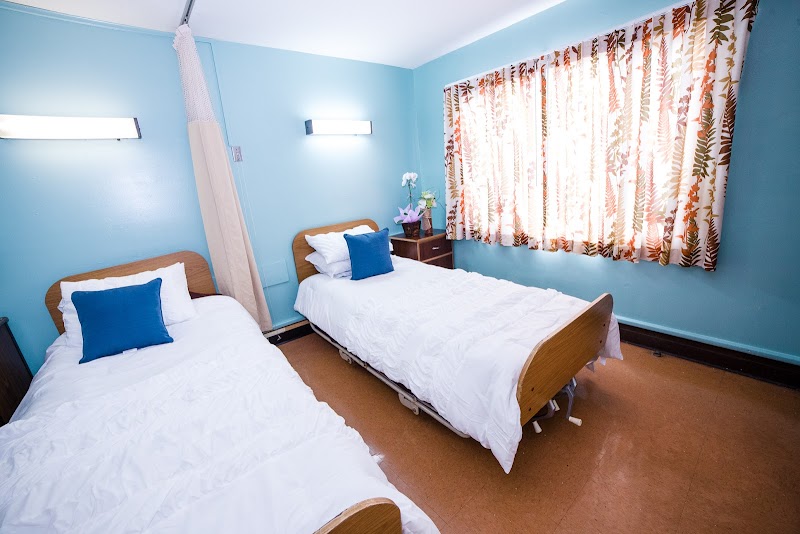
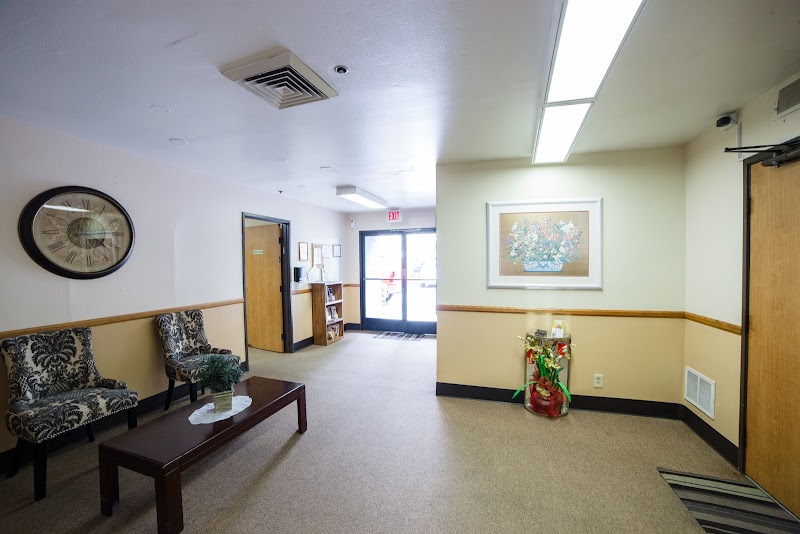
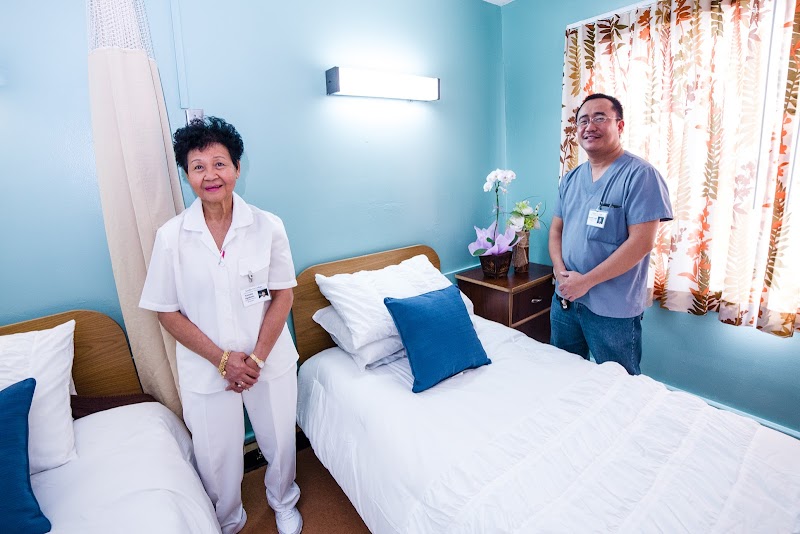
SANTA FE LODGE

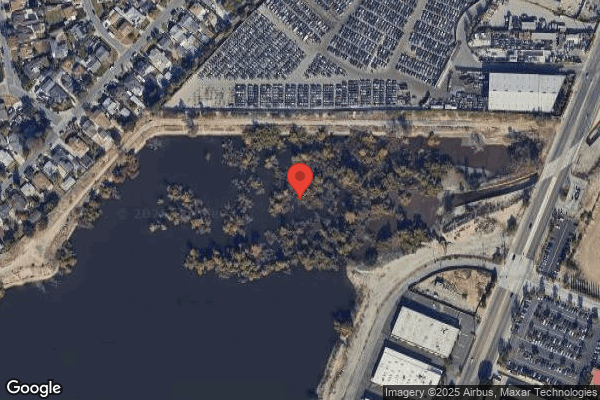
5053 PECK RD., EL MONTE, CA 91732 (626) 448-4248
For profit - Limited Liability company 46 Beds LONGWOOD MANAGEMENT CORPORATION Data: November 2025 2 Immediate Jeopardy citations
Trust Grade
16/100
#903 of 1155 in CA
Last Inspection: March 2025

Within standard 12-15 month inspection cycle. Federal law requires annual inspections.

Overview

Santa Fe Lodge in El Monte, California, has a Trust Grade of F, indicating significant concerns about care quality and safety. Ranked #903 out of 1155 facilities in California, it falls in the bottom half of the state, and at #238 of 369 in Los Angeles County, only a few local options are better. While the facility shows some improvement, reducing issues from 23 in 2024 to 12 in 2025, it still faces serious challenges. Staffing is average with a 3-star rating, but the turnover rate is concerning at 47%, which is higher than the state average. Specific incidents include failing to ensure residents were free from involuntary seclusion and not following a physician's orders for a resident with aspiration pneumonia, highlighting both critical and serious care deficiencies.

Trust Score
F
16/100
In California
#903/1155
Bottom 22%
Safety Record
High Risk
Review needed
Inspections
Getting Better
23 → 12 violations
Staff Stability
⚠ Watch
47% turnover. Above average. Higher turnover means staff may not know residents' routines.
Penalties
○ Average
$35,645 in fines. Higher than 60% of California facilities. Some compliance issues.
Skilled Nurses
⚠ Watch
Each resident gets only 18 minutes of Registered Nurse (RN) attention daily — below average for California. Fewer RN minutes means fewer trained eyes watching for problems.
Violations
⚠ Watch
55 deficiencies on record. Higher than average. Multiple issues found across inspections.
★★☆☆☆
2.0
Overall Rating
★★★☆☆
3.0
Staff Levels
★★★★☆
4.0
Care Quality
★★☆☆☆
2.0
Inspection Score
Stable
2024: 23 issues
2025: 12 issues

The Good

  • 4-Star Quality Measures · Strong clinical quality outcomes
  • Full Sprinkler Coverage · Fire safety systems throughout facility
  • No fines on record

Facility shows strength in quality measures, fire safety.

The Bad

2-Star Overall Rating

Below California average (3.1)

Below average - review inspection findings carefully

Staff Turnover: 47%

Near California avg (46%)

Higher turnover may affect care consistency

Federal Fines: $35,645

Above median ($33,413)

Moderate penalties - review what triggered them

Chain: LONGWOOD MANAGEMENT CORPORATION

Part of a multi-facility chain

Ask about local staffing decisions and management

The Ugly 55 deficiencies on record

2 life-threatening 1 actual harm
Mar 2025 12 deficiencies
CONCERN (D)

Potential for Harm - no one hurt, but risky conditions existed

Resident Rights (Tag F0550)

Could have caused harm · This affected 1 resident

**NOTE- TERMS IN BRACKETS HAVE BEEN EDITED TO PROTECT CONFIDENTIALITY** Based on observation, interview, and record review, the facility failed to ensure one of one sampled resident (Resident 145) was...

Read full inspector narrative →
**NOTE- TERMS IN BRACKETS HAVE BEEN EDITED TO PROTECT CONFIDENTIALITY** Based on observation, interview, and record review, the facility failed to ensure one of one sampled resident (Resident 145) was treated with dignity by failing to provide privacy and failing to cover Resident 145's right flank (the area on the side of the body between the ribs and the hip) while Resident 145 was in the shower chair. This deficient practice resulted in exposure of Resident 145's right flank to Resident 145's right thigh and had the potential to result in a psychosocial decline to Resident 145. Findings: During a review of Resident 145's admission Record (AR), the AR indicated, Resident 145 was originally admitted to the facility on [DATE] and readmitted on [DATE] with multiple diagnoses including anxiety disorder (mental health condition characterized by persistent, excessive fear or worry that significantly interferes with daily life), unspecified and unspecified dementia (a progressive state of decline in mental abilities), unspecified severity, without behavioral disturbance, psychotic disturbance (a mental health condition characterized by a loss of contact with reality, leading to distorted perceptions, thoughts, and behaviors), mood disturbance (a significant change in a person's emotional state that persists for an extended period), and anxiety. During a review of Resident 145's Care Plan (CP), titled, Resident has self-care deficits ., revision date 2/24/2025, the CP indicated, one of the interventions was to maintain resident's privacy and respect Resident 145's rights. During a review of Resident 145's History and Physical (H&P), dated 3/2/2025, the H&P indicated, Resident 145 did not have the capacity to understand and make decisions. During a review of Resident 145's Minimum Data Set (MDS, a federally mandated resident assessment tool), dated 3/6/2025, the MDS indicated, Resident 145's cognition (ability to understand and process information) was severely impaired. During a concurrent observation and interview on 3/18/2025 at 7:57 AM with Certified Nursing Assistant (CNA) 3 and the Registered Nurse Supervisor (RNS), Resident 145 was sitting up in a shower chair at Resident 145's bedside. Resident 145's right flank and right thigh were exposed, and the privacy curtains were partially drawn. The door of Resident 145's shared room was propped open while CNA 3 was donning (putting on) personal protective equipment (PPE, clothing and equipment that is worn or used to provide protection against hazardous substances and/or environments) outside of Resident 145's room. There were a few male residents (unidentified) walking in the hallways. The RNS stated, part of Resident 145's body was exposed and should have been covered for dignity [purposes]. CNA 3 stated, CNA 3 was going to take Resident 145 to the shower and CNA 3 should have closed the curtains for privacy. During a review of the facility's policy and procedure (P&P) titled, Resident Rights Guidelines for All Nursing Procedures, revised date 10/2010, the P&P indicated, one of the steps to follow that involved direct resident care was to close the room entrance door and provide for the resident's privacy. During a review of the facility's P&P titled, Dignity, revised date 2/2021, the P&P indicated, patient rights included considerate and respectful care, and to be made comfortable and residents had the right to respect for their personal values and beliefs. The P&P indicated, residents were treated with dignity and respect at all times. The P&P indicated, for staff to promote, maintain and protect resident privacy, including bodily privacy during assistance with personal care and during treatment procedures.
CONCERN (D)

Potential for Harm - no one hurt, but risky conditions existed

Deficiency F0558 (Tag F0558)

Could have caused harm · This affected 1 resident

**NOTE- TERMS IN BRACKETS HAVE BEEN EDITED TO PROTECT CONFIDENTIALITY** Based on observation, interview, and record review, the facility failed to ensure one of one sampled resident's (Resident 14) ca...

Read full inspector narrative →
**NOTE- TERMS IN BRACKETS HAVE BEEN EDITED TO PROTECT CONFIDENTIALITY** Based on observation, interview, and record review, the facility failed to ensure one of one sampled resident's (Resident 14) call light (a device used by a resident to signal the need for assistance) was within reach. This failure had the potential to result in Resident 14's needs to not be met in a timely manner and/or the potential for Resident 14 to experience harm if Resident 14 was unable to alert staff during an emergency. Findings: During a review of Resident 14's admission Record (AR), the AR indicated, Resident 14 was originally admitted to the facility on [DATE] and readmitted on [DATE] with multiple diagnoses including unspecified dementia (a progressive state of decline in mental abilities), unspecified severity, without behavioral disturbance, psychotic disturbance (a mental health condition characterized by a loss of contact with reality, leading to distorted perceptions, thoughts, and behaviors), mood disturbance (a significant change in a person's emotional state that persists for an extended period), and anxiety (a mental health condition characterized by persistent, excessive fear or worry that significantly interferes with daily life). During a review of Resident 14's History and Physical (H&P), dated 11/23/2024, the H&P indicated, Resident 14 did not have the capacity to understand and make decisions. During a review of Resident 14's Minimum Data Set (MDS, a federally mandated resident assessment tool), dated 2/6/2025, the MDS indicated, Resident 14's cognition (ability to understand and process information) was severely impaired. The MDS indicated, Resident 14 required partial/moderate assistance (helper does less than half the effort), substantial/maximal assistance (helper does more than half the effort), and was dependent (helper does all of the effort) with activities of daily living (ADL, term used in healthcare that refers to self-care activities). During a concurrent observation and interview on 3/17/2024 at 12:10 PM with Certified Nursing Assistant (CNA) 4, Resident 14 was sitting up in a wheelchair positioned in the middle of the room facing away from Resident 14's bed. Resident 14's call light was secured around the right-side grab bar of Resident 14's bed. CNA 4 stated, Resident 14's call light was not within Resident 14's reach. CNA 4 stated, the call light should be within reach in case Resident 14 needed CNA 4's help. During an interview on 3/18/2025 at 3:33 PM with the Registered Nurse Supervisor (RNS), the RNS stated, the call light had to be within reach for residents (in general) so residents, even the confused residents, can press the call light and for residents to call for help. During a review of the facility's undated policy and procedure (P&P) titled, Call Lights, the P&P indicated, to assure residents receive prompt assistance, staff should know how to place the call light for a resident and insured that the call light was within the resident's reach when in his/her room or when on the toilet.
CONCERN (D)

Potential for Harm - no one hurt, but risky conditions existed

Deficiency F0637 (Tag F0637)

Could have caused harm · This affected 1 resident

**NOTE- TERMS IN BRACKETS HAVE BEEN EDITED TO PROTECT CONFIDENTIALITY** Based on interview and record review, the facility failed to complete an assessment after a significant change in condition for ...

Read full inspector narrative →
**NOTE- TERMS IN BRACKETS HAVE BEEN EDITED TO PROTECT CONFIDENTIALITY** Based on interview and record review, the facility failed to complete an assessment after a significant change in condition for one of one sampled resident (Resident 41) to include a bipolar disorder (mental health condition that causes clear shifts in a person's mood, energy, activity levels, and concentration) diagnosis as indicated in Resident 41's physician order for Depakote (medication used to treat certain psychiatric conditions such as bipolar disorder). This deficient practice had the potential to result in unmet needs for Resident 41. Findings: During a review of Resident 41's admission Record (AR), the AR indicated Resident 41 was initially admitted to the facility on [DATE] and readmitted the resident on 12/10/2024 with multiple diagnosis including dementia (a gradual decline in mental ability usually caused by a brain disease) and major depressive disorder (a mental health condition characterized by persistent feelings of sadness, hopelessness, and a loss of interest or pleasure in activities, significantly impacting daily functioning). During a review of Resident 41's Minimum Data Set (MDS - a resident assessment tool) dated 12/17/2024, the MDS indicated Resident 41 had severe impaired cognition (ability to understand and process information) and required maximal assistance (helper does more than half the effort) for bathing and toileting. The MDS did not indicate bipolar disorder as an active diagnosis for Resident 41. During a concurrent interview and record review on 3/20/2025 at 10:40 AM with the Minimum Data Set Coordinator (MDSC), Resident 41's AR and MDS section I: Active were reviewed. The MDSC stated Resident 41's AR and MDS did not indicate a diagnosis of bipolar disorder. The MDSC stated Resident 41 was last hospitalized from [DATE] to 12/10/2024 and upon readmission to the facility, the nursing staff (in general) reviewed the resident's hospital records to find out what the resident was treated for and if the resident experienced a significant change such as a fracture or a new diagnosis. The MDSC stated when a resident returned from the hospital, the resident's MDS had to be updated to include any significant changes and completed within 14 days. The MDSC stated it was important to note any new diagnosis in the AR and MDS because, not doing so, could affect the resident's plan of care. During a concurrent interview and record review on 3/20/2025 at 11:00 AM with the MDSC, Resident 41's Order Summary Report (OSR) with active orders as of 3/19/2025 was reviewed. The OSR indicated Resident 41 had an order for Depakote Sprinkles oral capsule delayed release, 625 mg (milligrams, unit of measurement) taken by mouth two times a day for bipolar disorder manifested by uncontrollable extreme mood swings causing stress with order date of 12/10/2024 (date of readmission). The OSR indicated to monitor episodes of bipolar disorder manifested by uncontrollable extreme mood swings causing stress with order date of 12/10/2024. The MDSC stated the Depakote medication was likely added during Resident 41's hospitalization and Resident 41's AR and MDS should have included a bipolar disorder diagnosis based off the hospital records from where Resident 41 was treated. During a review of Resident 41's physician progress notes, (PPN) dated 1/15/2025. The PPN indicated to continue Depakote Sprinkles 625 mg by mouth twice a day for bipolar. During a review of the facility's policy and procedure (P&P) titled, Record Content: Documentation Principles, dated 1/2004, the P&P indicated the Resident's health record shall be current and kept in detail consistent with good medical and professional practice based on the service provided to each resident.
CONCERN (D)

Potential for Harm - no one hurt, but risky conditions existed

PASARR Coordination (Tag F0644)

Could have caused harm · This affected 1 resident

**NOTE- TERMS IN BRACKETS HAVE BEEN EDITED TO PROTECT CONFIDENTIALITY** Based on interview and record review, the facility failed to complete an evaluation for Level II Pre-admission Screening and Res...

Read full inspector narrative →
**NOTE- TERMS IN BRACKETS HAVE BEEN EDITED TO PROTECT CONFIDENTIALITY** Based on interview and record review, the facility failed to complete an evaluation for Level II Pre-admission Screening and Resident Review (PASARR, a federal assessment requirement to help ensure individuals who have mental disorders or intellectual disabilities are placed in facilities that can provide the appropriate care) for one of one sampled resident (Residents 43). This failure had the potential to result in unmet individualized services to Resident 43. Findings: During a review of Resident 43's admission Record (AR), the AR indicated, Resident 43 was initially admitted to the facility 11/12/2024 and readmitted on [DATE] with diagnoses that included traumatic subdural hemorrhage (a collection of blood that accumulates between the outer and middle layer of the brain's protective membranes after a head injury), seizures (a sudden, uncontrolled electrical disturbance in the brain which can cause uncontrolled jerking, blank stares, and loss of consciousness), and hypertension (HTN, high blood pressure). During a review of Resident 43's PASSAR Level I (a screening process to identify individuals seeking admission to a Medicaid-certified nursing facility who may have a serious mental illness [SMI] or intellectual/developmental disability [ID/DD]) screening, dated 12/5/2025, the PASARR Level I screening indicated, Resident 43 had a positive result for SMI and required a Level II. During a concurrent interview and record review on 3/18/2025 at 11:03 am with the Registered Nurse Supervisor (RNS), Resident 43's medical records (chart) and PointClickRecord (PCC, a healthcare software used for electronic health records) were reviewed. The RNS stated, there were no documented records that Resident 43 was evaluated for PASARR Level II. PASARR Level II screening were completed on residents with positive result on the screening of PASARR Level I within a week of admission to make sure residents receive proper and appropriate care in the facility. During an interview on 3/20/2025 at 11:09 AM with the Director of Nursing (DON), the DON stated all residents with a positive Level I PASARR result should be evaluated for a PASARR Level II to determine if the resident needed specialized care services and referrals. During a review of facility's policy and procedure (P&P) titled, Preadmission Screening and Resident Review (PASRR), revised 6/2024, the P&P indicated, If the DHCS/DDS contractor deems a Level II evaluation is necessary, the facility will assist the DHCS contractor with additional information, face-to-face visit for further evaluation as indicated. The Facility's designated staff will review the available information from the PASARR Online System regularly, follow up with the DHCS/DDS' contractor on Level II determination/recommendation, and document and maintain the records.
CONCERN (D)

Potential for Harm - no one hurt, but risky conditions existed

Comprehensive Care Plan (Tag F0656)

Could have caused harm · This affected 1 resident

**NOTE- TERMS IN BRACKETS HAVE BEEN EDITED TO PROTECT CONFIDENTIALITY** Based on interview and record review, the facility failed to develop a care plan related to bipolar disorder (mental health cond...

Read full inspector narrative →
**NOTE- TERMS IN BRACKETS HAVE BEEN EDITED TO PROTECT CONFIDENTIALITY** Based on interview and record review, the facility failed to develop a care plan related to bipolar disorder (mental health condition that causes clear shifts in a person's mood, energy, activity levels, and concentration) for one of one sampled resident (Resident 41). This deficient practice had the potential to result in Residents 41 not to receive the necessary care and services according to Resident 41's specific needs. Findings: During a review of Resident 41's admission Record (AR), the AR indicated Resident 41 was initially admitted to the facility on [DATE] and readmitted the resident on 12/10/2024 with multiple diagnosis including dementia (a gradual decline in mental ability usually caused by a brain disease) and major depressive disorder (a mental health condition characterized by persistent feelings of sadness, hopelessness, and a loss of interest or pleasure in activities, significantly impacting daily functioning). During a review of Resident 41's Minimum Data Set (MDS - a resident assessment tool) dated 12/17/2024, the MDS indicated Resident 41 had severe impaired cognition (ability to understand and process information) and required maximal assistance (helper does more than half the effort) for bathing and toileting. The MDS did not indicate bipolar disorder as an active diagnosis for Resident 41. During an interview on 3/20/2025 at 11:00 AM with Minimum Data Set Coordinator (MDSC), the MDSC stated Resident 41's current medical record should have included a new bipolar disorder diagnosis based off the hospital records obtained during Resident 41's hospitalization from 11/20/2024 to 12/10/2024. The MDSC stated the MDSC was unsure if a CP needed to be completed for the new diagnosis. During an interview on 3/20/2025 at 11:23 AM with the MDSC, the MDSC stated a CP should have been developed for a new diagnosis like bipolar disorder on admission. The MDSC stated Resident 41 did not have a CP for bipolar disorder and the CP was needed so that all staff (in general) was aware of the diagnosis and relevant interventions. During a review of the facility's policy and procedure (P&P) titled, Care Plans, Comprehensive Person-Centered, dated 3/2023, the P&P indicated the interdisciplinary team reviews and updates the care plan: when there has been a significant change in the resident's condition; when the resident has been readmitted to the facility from a hospital stay.
CONCERN (E)

Potential for Harm - no one hurt, but risky conditions existed

Deficiency F0552 (Tag F0552)

Could have caused harm · This affected multiple residents

**NOTE- TERMS IN BRACKETS HAVE BEEN EDITED TO PROTECT CONFIDENTIALITY** Based on observation, interview, and record review, the facility failed to ensure informed consents were obtained for one of one...

Read full inspector narrative →
**NOTE- TERMS IN BRACKETS HAVE BEEN EDITED TO PROTECT CONFIDENTIALITY** Based on observation, interview, and record review, the facility failed to ensure informed consents were obtained for one of one sampled resident (Resident 94) as indicated in the facility's policy and procedure (P&P), titled, Informed Consent and Alarm Monitor, by failing to: a. Ensure an informed consent was completed prior to the use of the bed/wheelchair alarms (a safety device, often a sensor pad or clip, that alerts caregivers when a patient attempts to leave their bed or chair, helping to prevent falls and injuries) b. Ensure informed consents were completed prior to the use of Lexapro (anti-depressant, medication used to treat depression [serious illness that negatively affects how one feels, thinks and acts]) and Remeron (medication used to treat depression). These failures resulted in violation of Resident 94/responsible party's right to understand Resident 94's treatment, including the risks and benefits of the medications and the purpose of the use of the alarms. Additionally, the failures had the potential to result in distress to Resident 94 related to the sound of the alarms. Findings: a. During a review of Resident 94's admission Records (AR), the AR indicated, Resident 94 was admitted to the facility on [DATE] with diagnoses that included Alzheimer's Disease (a disease characterized by a progressive decline in mental abilities), dementia (a progressive state of decline in mental abilities) and muscle weakness (decreased strength in the muscles). During a review of Resident 94's Minimum Data Sheet (MDS, a resident assessment tool), dated 3/19/2025, the MDS indicated, Resident 94 had severe impaired cognition (ability to understand and process information). During a concurrent observation and interview on 3/17/2025 at 10:31 AM with Certified Nurse Assistant 1 (CNA 1) inside Resident 94's room, Resident 94 was sitting on his wheelchair. CNA 1 stated, Resident 94's bed and wheelchair had pad alarms to alert staff when Resident 94 tried to get up from the bed or the wheelchair. b. During a review of Resident 94's Order Summary report (OSR), dated active as of 3/17/2025, the OSR included the following physician orders, all dated 3/13/2025, 1.wheelchair pad alarm while out of bed and up in the wheelchair to alert staff of resident unassisted transfer. The order indicated an informed consent was to be obtained from the responsible party after explanation of risks and benefits and verification with the physician. 2. Lexapro 10 milligrams (mg, a unit of measurement) by mouth daily for depression (mental health condition characterized by persistent feelings of sadness, hopelessness, and loss of interest or pleasure in activities). 3.Remeron 7.5 mg by mouth at bedtime for depression. During a concurrent interview and record review on 3/17/2025 at 1:51 PM with Licensed Vocational Nurse 1 (LVN 1), Resident 94's medical records (chart) and PointCLickCare (PCC, a healthcare software used for electronic health records) were reviewed. LVN 1 stated, Resident 94 did not have an informed consent signed for the use of the bed and wheelchair pad alarms or for the use of Lexapro and Remeron. LVN 1 stated bed and wheelchair alarm should not be applied; Lexapro and Remeron should not be started until informed consents were signed to make sure the resident and the resident's representative were informed of the risks and benefits for the use of the bed and wheelchair pad alarms and side effects of the medications. During an interview on 3/18/2025 at 3:32 PM with the Registered Nurse Supervisor (RNS), the RNS stated, an informed consent should be obtained before the application of bed and wheelchair pad alarms and before the use of anti-depressants to make sure the resident or her responsible party were informed of the purpose of the use of the alarms and the use of the anti-depressants. During a review of the facility's undated P&P titled, Alarm Monitor, the P&P indicated, The licensed nurse will obtain an informed consent for the alarm. During a review of the facility's P&P, titled, Informed Consent, revised 12/2024, the P&P indicated, To ensure that residents and/or their representatives are fully informed of the benefits, risks, frequency/duration, and alternatives before initiating the administration of psychotherapeutic drugs or physical restraints . Informed consent may be obtained through the following means: In person, By phone, Via fax, and by email . The informed consent form shall be maintained in the resident's clinical record.
CONCERN (E)

Potential for Harm - no one hurt, but risky conditions existed

Deficiency F0578 (Tag F0578)

Could have caused harm · This affected multiple residents

**NOTE- TERMS IN BRACKETS HAVE BEEN EDITED TO PROTECT CONFIDENTIALITY** Based on interview and record review, the facility failed to provide and ensure Advance Directives (AD, a legal document indicat...

Read full inspector narrative →
**NOTE- TERMS IN BRACKETS HAVE BEEN EDITED TO PROTECT CONFIDENTIALITY** Based on interview and record review, the facility failed to provide and ensure Advance Directives (AD, a legal document indicating resident preference on end-of-life treatment decisions) were kept in 3 of 5 sampled resident's (Residents 14, 145, 38) medical records. This failure had the potential to cause confusion among the healthcare providers in the event Residents 14, 145 and 38 required immediate medical care and/treatment and had the potential for the residents to receive inadequate or medically unnecessary care and/or treatment or services regarding life-sustaining treatment. Findings: a. During a review of Resident 14's admission Record (AR), the AR indicated, Resident 14 was originally admitted to the facility on [DATE] and readmitted on [DATE] with multiple diagnoses including unspecified dementia (a progressive state of decline in mental abilities), unspecified severity, without behavioral disturbance, psychotic disturbance (a mental health condition characterized by a loss of contact with reality, leading to distorted perceptions, thoughts, and behaviors), mood disturbance (a significant change in a person's emotional state that persists for an extended period), and anxiety (a mental health condition characterized by persistent, excessive fear or worry that significantly interferes with daily life). During a review of Resident 14's History and Physical (H&P), dated 11/23/2024, the H&P indicated, Resident 14 did not have the capacity to understand and make decisions. During a review of Resident 14's Minimum Data Set (MDS, a federally mandated resident assessment tool), dated 2/6/2025, the MDS indicated, Resident 14's cognition (ability to understand and process information) was severely impaired. During a review of Resident 14's Care Plan (CP,) titled, Advance Directives, date initiated 2/24/2025, the CP's interventions indicated to respect my/legal representative's/DPOA's (Durable Power of Attorney) wishes/decisions as specified in the AD. b. During a review of Resident 145's AR, the AR indicated, Resident 145 was originally admitted to the facility on [DATE] and readmitted on [DATE] with multiple diagnoses including anxiety disorder (mental health condition characterized by persistent, excessive fear or worry that significantly interferes with daily life), unspecified and unspecified dementia (a progressive state of decline in mental abilities), unspecified severity, without behavioral disturbance, psychotic disturbance (a mental health condition characterized by a loss of contact with reality, leading to distorted perceptions, thoughts, and behaviors), mood disturbance (a significant change in a person's emotional state that persists for an extended period), and anxiety. During a review of Resident 145's History and Physical (H&P), dated 3/2/2025, the H&P indicated, Resident 145 did not have the capacity to understand and make decisions. During a review of Resident 145's CP, titled, Advance directive initiated as follows ., revision date 2/24/2025, the CP indicated, one of the interventions was to respect resident's and/or family's wishes. During a review of Resident 145's H&P, dated 3/2/2025, the H&P indicated, Resident 145 did not have the capacity to understand and make decisions. During a review of Resident 145's MDS, dated [DATE], the MDS indicated, Resident 145's cognition (ability to understand and process information) was severely impaired. c. During a review of Resident 38's AR, the AR indicated, Resident 38 was admitted to the facility on [DATE] with multiple diagnoses including major depressive disorder (a mood disorder that causes a persistent feeling of sadness and loss of interest), single episode, unspecified and unspecified psychosis (a severe mental condition in which thought, and emotions are so affected that contact is lost with reality) not due to a substance or known physiological condition. During a review of Resident 38's H&P, dated 1/2/2025, the H&P indicated, Resident 38 had the capacity to understand and make decisions. During a review of Resident 38's MDS, dated [DATE], the MDS indicated, Resident 38's cognition was intact. During a concurrent interview and record review on 3/19/2025 at 8:51 AM with the Social Services Assistant (SSA), Residents 14, 145, and 38's Advance Healthcare Directive Acknowledgement (AHDA), and the Physician Orders for Life-Sustaining Treatment (POLST, a form that contains written medical orders for healthcare professionals regarding specific medical treatments that can or cannot be done at the end-of-life), were reviewed as follows: a.Resident 14's AHDA dated 5/23/2017 indicated, Resident 14 had executed an AD. Resident 14's POLST dated 2/21/2018 indicated, Resident 14 did not have an AD. b.Resident 145'a AHDA dated 8/8/2023 indicated, Resident 145 had executed an AD. Resident 145's POLST dated 8/8/2023 indicated, Resident 145 did not have an AD. c.Resident 38's AHDA dated 1/9/2025 indicated, Resident 38 had executed an AD. Resident 38's POLST dated 1/9/2025, did not indicate if Resident 38 had an AD. The POLST forms indicated, the POLST complemented an AD and was not intended to replace that document (AD). The SSA stated, the SSA was responsible for handling of the AHDA, for completion upon admission, and the facility should obtain a copy of the AD right away. The SSA stated, the SSA could not find an AD on file [in the medical records] for Residents 14, 145, and 38. The SSA stated, the facility should have followed thru and obtained a copy of Residents 14, 145, and 38's AD and the ADs needed to be filed in the residents' medical records so the facility could honor Residents 14, 145 and 38's wishes like their final decision for their treatment and respect their wishes. During a review of the facility's policy and procedure (P&P), titled, Advance Directives, revised date 9/2022, the P&P indicated, the resident has the right to formulate an AD, including the right to accept or refuse medical treatment. The P&P indicated, ADs are honored in accordance with state law and the facility's policy. The P&P indicated a POLST paradigm form was not an advance directive. The P&P indicated, if the resident or the resident's representative had executed one or more advance directive(s), or executed one upon admission, copies of these documents were obtained and maintained in the same section of the resident's medical record and were readily retrievable by any facility staff.
CONCERN (E)

Potential for Harm - no one hurt, but risky conditions existed

Quality of Care (Tag F0684)

Could have caused harm · This affected multiple residents

**NOTE- TERMS IN BRACKETS HAVE BEEN EDITED TO PROTECT CONFIDENTIALITY** B. During a review of Resident 28's AR, the AR indicated, Resident 28 was initially admitted to the facility on [DATE] and readm...

Read full inspector narrative →
**NOTE- TERMS IN BRACKETS HAVE BEEN EDITED TO PROTECT CONFIDENTIALITY** B. During a review of Resident 28's AR, the AR indicated, Resident 28 was initially admitted to the facility on [DATE] and readmitted on [DATE] with diagnoses that included dysphagia (difficulty swallowing), hypertension (HTN, high blood pressure), and acute kidney failure (a condition in which the kidneys suddenly can't filter waste from the blood). During a review of Resident 28's MDS, dated [DATE], the MDS indicated, Resident 28 had severe impaired cognition (ability to understand and process information). The MDS indicated Resident 28 required partial/moderate assistance (helper does less than half the effort) with oral hygiene, toileting, upper and lower body dressing, and personal hygiene. During a review of Resident 28's Change of Condition (COC)/Interact Assessment Form, dated 3/5/2025, the form indicated, Resident 28 had a weight loss of 5.2 percent (%, a specified amount for every hundred). During a review of Resident 28's Weights and Vitals Summary (WVS), dated 3/18/2025, the WVS indicated the last weight recorded for Resident 28 was on 3/3/2025 for 147 pounds (lbs., unit of weight), Resident 28 had an 8-pound weight loss in thirty days. During a review of Resident 28's OSR, dated active as of 3/18/2025, the OSR included a physician's order, dated 3/5/2025, to monitor weight every Tuesday for 4 weeks. During a concurrent interview and record review on 3/18/2025 at 3:17 PM with Licensed Vocational Nurse 3 (LVN 3), Resident 28's medical record (chart) and PointClickCare (PCC, electronic medical record) were reviewed. LVN 3 stated Resident 28 had no weights recorded on 3/11/2025 and 3/18/2025. LVN 3 stated weights should be monitored for residents [who were experiencing] weight loss to address the nutritional status of the resident appropriately. During an interview on 3/18/2025 at 3:32 PM with the Registered Nurse Supervisor (RNS), the RNS stated, residents [who were experiencing] weight loss should be weigh weekly to monitor weight changes for the detection of health issues and medication management. C. During a review of Resident 145's AR, the AR indicated, Resident 145 was originally admitted to the facility on [DATE] and readmitted on [DATE] with multiple diagnoses including anxiety disorder (mental health condition characterized by persistent, excessive fear or worry that significantly interferes with daily life), unspecified and unspecified dementia (a progressive state of decline in mental abilities), unspecified severity, without behavioral disturbance, psychotic disturbance (a mental health condition characterized by a loss of contact with reality, leading to distorted perceptions, thoughts, and behaviors), mood disturbance (a significant change in a person's emotional state that persists for an extended period), and anxiety. During a review of Resident 145's MDS, dated [DATE], the MDS indicated, Resident 145's cognition (ability to understand and process information) was severely impaired. The MDS indicated, Resident 145's proportion of total calories (a unit of measurement that indicate the energy content of food and beverages) received was 25% or less while a resident at the facility. During a review of Resident 145's Care Plan (CP), titled, Resident has alteration in nutritional status ., revision date 2/24/2025, the CP's interventions indicated to monitor weight per policy. During a review of Resident 145's History and Physical (H&P), dated 3/2/2025, the H&P indicated, Resident 145 did not have the capacity to understand and make decisions. During a review of Resident 145's Nutritional Assessment DSS (NA), dated 3/2/2025, timed at 11:16 AM, the NA indicated, Resident 145 had a loss of 5% (percent, a number or ratio expressed as a fraction of 100) or more in the last month and Resident 145 was not on prescribed weight-loss regimen. During a review of Resident 145's COC, dated 3/5/2025 timed at 2:20 PM, the COC indicated, an RD (Registered Dietician) consultation and weekly weight for 4 weeks. During a review of Resident 145's OSR), active orders as of 3/20/2025, the OSR included, a physician's order, dated 3/5/2025, the order indicated to monitor weight every Tuesday for 4 weeks. During a review of Resident 145's CP, titled, Resident weight loss -5.0% change ., date initiated 3/5/2025, the CP indicated, one of the interventions was weekly weight for 4 weeks as per physician's order. During a review of Resident 145's undated WVS, the WVS indicated, Resident 145's last weight documented in PCC (PointClickCare, a healthcare software used for electronic health records) was dated 3/3/2025. During a concurrent interview and record review on 3/19/2024 at 2:45 PM with the RNA, the facility's undated Weekly Weights (WW), was reviewed. The WW indicated, the following weekly dates: Week 1 on 3/11/2025; Week 2 on 3/18/2025; Week 3 on 3/25/2025; Week 4 on 4/1/2025. The RNA stated, the RNA did not enter resident weights in PCC and the DON was the one who entered the weights in PCC. The WW did not indicate any weights for week 2 on 3/18/2025 (Tuesday) for Resident 145. The RNA stated, the RNA was responsible for weighing the residents. The RNA stated, the RNA did the weekly weights on Tuesday or Friday it depends, if [it is a] busy day. During a review of the facility's undated policy and procedure (P&P) titled, Weight Change, the P&P indicated, all residents were to be weighed and measured upon admission and once weekly for four weeks thereafter and a record should be kept in resident's chart. Based on interview and record review, the facility failed to obtain weekly weights for three of three sampled residents (Resident 34, 28, and 145) as indicated in the facility's policy and procedure (P&P) titled, Weight Change, as evidenced by: A. Resident 34's weight was not taken upon readmission to the facility on 3/14/2025 and not taken on 3/18/2025 per the physician order. B. Resident 28 weight was not taken weekly as ordered by the physician. C. Resident 145's weight was not taken on 3/18/2025 as per the physician's order. This deficient practice had the potential to result in physical declines to Residents 34, 28, and 145 due to untreated weight loss. Findings: A. During a review of Resident 34's admission Record (AR), the AR indicated Resident 34 was initially admitted to the facility on [DATE] and the resident was readmitted on [DATE] with multiple diagnosis including heart failure (the inability of the heart to pump blood effectively) and dementia (a gradual decline in mental ability usually caused by a brain disease.) During a review of Resident 34's Minimum Data Set (MDS - a resident assessment tool) dated 1/29/2025, the MDS indicated Resident 34 had severe impaired cognition (ability to understand and process information) and was dependent (helper does all of the effort) on staff for bathing and toileting. During a review of Resident 34's Order Summary Report (OSR) with active orders as of 3/18/2025, the OSR indicated Resident 34 had a physician order to monitor weight every Tuesday for four weeks then monthly with a start date on 3/18/2025. During an interview on 3/19/2025 at 2:20 PM with the Restorative Nurse Assistant (RNA), the RNA stated the RNA was responsible for weighing the residents and the RNA was made aware, by the nursing staff, which residents to weigh. The RNA stated residents were weighed when they returned from the hospital because residents tended to lose weight during a hospitalization. The RNA stated the RNA did not have access to the facility's computer documentation system and typically wrote down resident weights and handed them to either the Director of Nursing (DON) or nursing staff and nursing would input the weights into the computer system right away. The RNA stated Resident 34 was weighed upon return to the facility and the RNA gave the weight to the Infection Preventionist nurse (IP). The RNA stated Resident 34 was not on the RNA's list of weekly weights and the RNA could not recall what Resident 34's weight was upon return to the facility. During an interview on 3/19/2025 at 2:43 PM with the IP, the IP stated the most recent weight recorded for Resident 34 was on 3/3/2025 prior to Resident 34's hospitalization dated from 3/8/2025 to 3/14/2025. The IP stated the RNA may have given the IP Resident 34's weight on a scrap of paper but the IP did not input the weight into the computer system and did not have any documentation to support that Resident 34's weight was taken.
CONCERN (E)

Potential for Harm - no one hurt, but risky conditions existed

Food Safety (Tag F0812)

Could have caused harm · This affected multiple residents

Based on observation, interview, and record review, the facility failed ensure proper food storage, in one of one kitchen walk-in refrigerator (Refrigerator 1), consistent with the facility's policy a...

Read full inspector narrative →
Based on observation, interview, and record review, the facility failed ensure proper food storage, in one of one kitchen walk-in refrigerator (Refrigerator 1), consistent with the facility's policy and procedure (P&P), titled, Refrigerator/Freezer Storage, by failing to: a. Ensure a transparent container with sliced cheese was labeled with an open date (date to indicate when it was opened). b. Ensure a halfway-filled pickle jar was labeled with an open date. c. Ensure two unopened plastics of whipping cream were labeled with a received date. These failures had the potential to result in food-borne illnesses (illness caused by ingesting contaminated food or beverages) to the residents consuming the facility's food. Findings: During a concurrent observation and interview on 3/17/2025 at 8:58 AM with the Certified Dietary Manager (CDM) inside Refrigerator 1, the following items were found, 1. A transparent container that had sliced cheese and the container was not dated or labeled with the date when it was opened. 2. An undated halfway-filled bottle jar with hamburger pickles. 3. Two undated and unopened plastics of whipping cream. CDM stated food items inside the fridge should be labeled with open and receive dates to keep track of the quality and freshness of the food. During an interview on 3/19/2025 at 12:55 PM with the Registered Dietitian (RD), the RD stated all items in Refrigerator 1 should be labeled with an open and receive dates to keep track when food items arrived, to know when to discard food items, and to make sure food served to the residents was at its highest quality. During a review of the facility's P&P titled, Refrigerator/Freezer Storage, revised 2019, the P&P indicated, Leftover food or unused portions of packaged foods should be covered, dated, and labeled to ensure they will be used first. The P&P indicated all items should be properly covered, dated, and labeled. The P&P indicated food items should have the following appropriate dates: Delivery date - upon receipt, Open date - opened containers of PHF and Thaw date - any frozen items.
CONCERN (E)

Potential for Harm - no one hurt, but risky conditions existed

Deficiency F0847 (Tag F0847)

Could have caused harm · This affected multiple residents

**NOTE- TERMS IN BRACKETS HAVE BEEN EDITED TO PROTECT CONFIDENTIALITY** Based on interview and record review, the facility failed to ensure its binding arbitration agreements (AA, a contractual promis...

Read full inspector narrative →
**NOTE- TERMS IN BRACKETS HAVE BEEN EDITED TO PROTECT CONFIDENTIALITY** Based on interview and record review, the facility failed to ensure its binding arbitration agreements (AA, a contractual promise where parties agree to resolve disputes through arbitration instead of litigation) included a selection that allowed the residents or their responsible parties/resident representatives to communicate with federal, state, or local officials for two of two sampled residents (Residents 34 and 38). This failure had the potential to violate Resident 34 and Resident 38's rights and result in unjust arbitration. Findings: a. During a review of Resident 34's admission Record (AR), the AR indicated, Resident 34 was initially admitted to the facility on [DATE] and was readmitted on [DATE] with diagnoses that included schizophrenia (a mental illness that is characterized by disturbances in thought), bipolar disorder (sometimes called manic-depressive disorder; mood swings that range from the lows of depression to elevated periods of emotional highs) and anxiety (intense, excessive, and persistent worry and fear about everyday situations). During a concurrent interview and record review on 3/19/2025 at 8:32 AM with the admission Coordinator (AC), Resident 34's AA, dated 1/29/2025 was reviewed. The AC stated Resident 34's AA was signed by the resident's responsible party on 1/29/2025. The AC stated Resident 34's AA did not have a selection indicating the resident's responsible party could communicate with federal, state, or local officials. b. During a review of Resident 38's AR, the AR indicated, Resident 38 was admitted to the facility on [DATE] with diagnoses that included chronic obstructive pulmonary disease (COPD, a chronic [long standing] lung disease causing difficulty in breathing), major depressive disorder (a mood disorder that causes a persistent feeling of sadness and loss of interest) and psychosis (a severe mental condition in which thought, and emotions are so affected that contact is lost with reality). During a review of Resident 28's Minimum Data Sheet (MDS, a resident assessment tool), dated 1/9/2025, the MDS indicated Resident 28 had intact cognition (ability to understand and process information). The MDS indicated Resident 28 required partial/moderate assistance (helper did less than half the effort) with oral and toileting hygiene, upper and lower body dressing, and with personal hygiene. During a concurrent interview and record review on 3/19/2025 at 8:45 AM with the AC, Resident 38's AA, dated 1/22/2025 was reviewed. The AC indicated Resident 34's AA was signed by the resident's responsible party on 1/22/2025. The AC stated Resident 38's AA did not have a selection indicating the resident's responsible party could communicate with federal, state, or local officials like the Surveyors and the Ombudsman. The AC stated it was important to allow residents and their representatives to communicate with federal, state, and local officials to honor the resident's rights to seek justice and not to discourage the residents to complain against the facility.
CONCERN (E)

Potential for Harm - no one hurt, but risky conditions existed

Infection Control (Tag F0880)

Could have caused harm · This affected multiple residents

**NOTE- TERMS IN BRACKETS HAVE BEEN EDITED TO PROTECT CONFIDENTIALITY** Based on observation, interview, and record review, the facility failed to follow infection (the invasion and growth of germs in...

Read full inspector narrative →
**NOTE- TERMS IN BRACKETS HAVE BEEN EDITED TO PROTECT CONFIDENTIALITY** Based on observation, interview, and record review, the facility failed to follow infection (the invasion and growth of germs in the body) prevention and control practices for 6 of 6 sampled residents (Residents 14, 16, 38, 40, 18 and 34) by failing to ensure: a. personal toiletries and resident care items were labeled and not stored inside the [NAME] and [NAME] restroom (a restroom that has two doors and is sandwiched between two bedrooms and is accessible by both bedrooms) of Residents 14, 16, 38 and 40. b. communal drinks were not accessible for Resident 18 to pour water by himself. c. the lint traps for 2 of 3 sampled dryers (Dryer 1 and Dryer 2) were kept clean and did not have a heavy thick accumulation of lint. d. Resident 34's bed sheets were clean from smeared stool. e. Proper storage/disposal of a used cup set on top of the handrail outside of room [ROOM NUMBER]. These deficient practices had the potential to result in the spread of infection and physical declines to Residents 14, 16, 38, 40, 18, and 34, and amongst the residents residing at the facility. Findings: a. During a review of Resident 14's admission Record (AR), the AR indicated, Resident 14 was originally admitted to the facility on [DATE] and readmitted on [DATE] with multiple diagnoses including unspecified dementia (a progressive state of decline in mental abilities), unspecified severity, without behavioral disturbance, psychotic disturbance (a mental health condition characterized by a loss of contact with reality, leading to distorted perceptions, thoughts, and behaviors), mood disturbance (a significant change in a person's emotional state that persists for an extended period), and anxiety (a mental health condition characterized by persistent, excessive fear or worry that significantly interferes with daily life). During a review of Resident 14's History and Physical (H&P), dated 11/23/2024, the H&P indicated, Resident 14 did not have the capacity to understand and make decisions. During a review of Resident 14's Minimum Data Set (MDS, a federally mandated resident assessment tool), dated 2/6/2025, the MDS indicated, Resident 14's cognition (ability to understand and process information) was severely impaired. During a review of Resident 16's AR, the AR indicated, Resident 16 was originally admitted to the facility on [DATE] and readmitted on [DATE] with multiple diagnoses including unspecified dementia, unspecified severity, without behavioral disturbance, psychotic disturbance, mood disturbance, and anxiety disorder. During a review of Resident 16's H&P, dated 10/19/2024, the H&P indicated, Resident 16 was able to make decisions for activities of daily living. During a review of Resident 16's MDS, dated [DATE], the MDS indicated, Resident 16's cognitive skills for daily decision making were severely impaired. During a review of Resident 38's AR, the AR indicated, Resident 38 was admitted to the facility on [DATE] with multiple diagnoses including major depressive disorder (a mood disorder that causes a persistent feeling of sadness and loss of interest), single episode, unspecified and unspecified psychosis (a severe mental condition in which thought, and emotions are so affected that contact is lost with reality) not due to a substance or known physiological condition. During a review of Resident 38's H&P, dated 1/2/2025, the H&P indicated, Resident 38 had the capacity to understand and make decisions. During a review of Resident 38's MDS, dated [DATE], the MDS indicated, Resident 38's cognition was intact. During a review of Resident 40's AR, the AR indicated, Resident 40 was admitted to the facility on [DATE] with multiple diagnoses including encephalopathy (a medical condition that affects brain function, leading to changes in mental state and behavior), unspecified and Alzheimer's disease (a disease characterized by a progressive decline in mental abilities), unspecified. During a review of Resident 40's H&P, dated 2/28/2025, the H&P indicated, Resident 40 had fluctuating capacity to understand and make decisions. During a review of Resident 40's MDS, dated [DATE], the MDS indicated, Resident 40's cognition was severely impaired. During an observation on 3/17/2025 at 9:14 AM in the [NAME] and [NAME] restroom of Residents 14, 16, 38, and 40, there were an opened, unlabeled 8 Fl oz (fluid ounce, a unit of volume used to measure liquids) of Remedy (name brand) Cleanse Spray Cleanser, an uncapped, unlabeled 1.5 oz can of Midline (brand) Shaving Cream stored on top of the sink and an unlabeled grey colored wash basin stored on the floor under the sink. During a concurrent observation and interview on 3/17/2025 at 12:14 PM with Certified Nursing Assistant (CNA) 4 in the [NAME] and [NAME] restroom of Residents 14, 16, 38, and 40, there was an opened, unlabeled 8 Fl oz (fluid ounce, unit of volume) of Remedy Cleanse Spray Cleanser, an uncapped, unlabeled 1.5 oz can of Midline shaving cream stored on top of the sink, and an unlabeled grey colored wash basin stored on the floor under the sink. CNA 4 stated, the facility didn't usually store them (personal toiletries and resident care items) inside the restroom and [the items] should be locked up in the resident's closets. CNA 4 stated, it was important for personal toiletries and resident care items to be labeled with a resident's name for the safety of the residents. CNA 4 stated, Residents 38 and 40 get up and walked and could potentially use the personal care items that did not belong to Residents 38 and 40, it's contamination. During an interview on 3/19/2025 at 1:08 PM with the Infection Preventionist (IP), the IP stated, residents should have their own toiletries and resident care items to prevent cross contamination (a process by which bacteria can be transferred from one area to another) and should be labeled with a resident's name and kept at the resident's bedside drawer. The IP stated, Residents 14, 16, 38, and 40 shared a restroom and Residents 38 and 40 were, up and about. During a review of the facility's policy and procedure (P&P), titled Accommodation of Needs, date revised 3/2021, the P&P indicated, to label toiletry items with large print so a visually impaired resident can distinguish one from another. b. During a review of Resident 18's AR, the AR indicated, Resident 18 was admitted to the facility on [DATE] with multiple diagnoses including schizoaffective disorder (a mental illness that can affect thoughts, mood, ad behavior), unspecified and unspecified psychosis (a severe mental condition in which thought, and emotions are so affected that contact is lost with reality). During a review of Resident 18's H&P, dated 9/13/2024, the H&P indicated, Resident 18 was able to make decisions for activities of daily living. During a review of Resident 18's MDS, dated [DATE], the MDS indicated, Resident 18's cognition was severely impaired. During a concurrent observation and interview on 3/19/2025 at 8:33 AM with Licensed Vocational Nurse (LVN) 4, Med Cart 2 had a pitcher of water, a pitcher of cranberry juice and a pitcher of lemonade along with a supply of plastic drinking cups. Med Cart 2 was parked in the hallway and Resident 18 was ambulating (walking) in the hallway. Resident 18 stopped, grabbed a plastic cup, poured himself a cup of water from the pitcher of water, walked away, and came back to pour another drink of water from the pitcher on Med (medication) Cart 2. An unidentified staff was outside standing against the wall nearby in the hallway monitoring the activity room located across. LVN 4 stated, residents should not be allowed to pour water by themselves from the pitcher located on the medication cart for infection control [purposes], cross contamination from resident touching the pitcher. During an interview on 3/19/2025 at 1:08 PM with the IP, the IP stated, it was not ok for Resident 18 and residents to pour a cup of water by themselves from the pitcher that was on top of Med Cart 2, for infection control and safety reasons. The IP stated, the resident's hands could be dirty and if the resident did not like the drink, the resident could spit it out and/or put the remaining water back into the pitcher, most of these residents have dementia. During a review of the facility's P&P, titled Infection Prevention and Control Program, dated 2001, the P&P indicated, an infection prevention and control program (IPCP) was established and maintained to provide a safe, sanitary, and comfortable environment and to help prevent the development and transmission of communicable diseases and infections. The P&P indicated, one of the important facets of infection prevention included instituting measures to avoid complications or dissemination. c. During an interview on 3/20/2025 at 8:19 AM with the Laundry (LD) in the laundry room located inside a separate building of a sister facility, there were 3 commercial washers and 3 commercial dryers. The LD stated the laundry room was used by both the facility and the sister facility. During a concurrent observation and interview on 3/20/2025 at 8:33 AM in the laundry room, Dryer 1 and Dryer 2 were not currently used. The lint trap of Dryer 1 and Dryer 2 had a heavy, thick accumulation of lint, including on the door and clumps of lint on the bottom of Dryer 1. The LD stated, the heavy accumulation of lint could cause a fire and that's very dangerous. The LD stated, the LD waited at the end of the LD's shift to clean up for the next shift and empty out the lint traps before the LD left at 2:30 PM. The LD stated, the LD should clean the lint traps more often. During a review of the facility's Lint Cleaning Schedule - Daily (LCS), dated 3/2025, the LCS indicated, lint was to be removed from the lint traps every two hours and frequency of lint cleaning may increase, depending on the usage of the dryer and the presence of lint. The LCS indicated, initials of the individual that performed the lint cleaning task were to be noted. The LCS indicated, no initials on 3/19/2025 at 4:00 AM, 6:00 AM, 8:00 AM, and 10:00 AM and on 3/20/2025 at 4:00 AM, 6:00 AM, and 8:00 AM. During an interview on 3/20/2025 at 2:43 PM with the Maintenance Supervisor (MS), the MS stated, the thick accumulation of lint in the lint trap could affect the temperature of the dryer, it won't have the right temperature [to properly clean items] and could also be a fire hazard. During a review of the facility's undated P&P, titled, Maintenance of the Laundry Room and Laundry Equipment, the P&P indicated, to clean lint filters after each use of washer or dryer every three (3) hours. d. During a review of Resident 34's admission Record (AR), the AR indicated Resident 34 was initially admitted to the facility on [DATE] and the resident was readmitted on [DATE] with multiple diagnosis including heart failure (the inability of the heart to pump blood effectively) and dementia (a gradual decline in mental ability usually caused by a brain disease.) During a review of Resident 34's Minimum Data Set (MDS - a resident assessment tool) dated 1/29/2025, the MDS indicated Resident 34 had severe impaired cognition (ability to understand and process information) and was dependent (helper does all of the effort) on staff for bathing and toileting. During a concurrent observation and interview on 3/17/2025 at 10:20 AM with Certified Nursing Assistant (CNA) 2, Resident 34's bedsheets and room wall were observed with brown streaks. CNA 2 stated Resident 34 had been putting Resident 34's hands in Resident 34's soiled diaper earlier and CNA 2 hoped the brown streaks was not stool. During a concurrent observation and interview on 3/17/2025 at 10:30 AM with CNA 3, CNA 3 stated Resident 34's sheets needed to be changed because Resident 34 likely got the bedsheets dirty with stool from placing his hands in Resident 34's soiled diaper and handling his own feces. CNA 3 stated Resident 34's sheets needed to be changed because Resident 34 could touch the sheets and get other things dirty like the bedrails and staff could get dirty as well. During an interview on 3/20/2025 at 11:17 AM with the Infection Preventionist nurse (IP), the IP stated if a resident's bedsheets had feces on them, it could become an infection control issue. The IP stated, the resident could touch other sheets, bed rails, and spread the feces potentially contaminating the staff as well. The IP stated Resident 34 could not independently clean Resident 34's hands. e. During a concurrent observation and interview on 3/18/2025 at 10:30 AM with CNA 1, a hard plastic reusable cup was observed set on top of the handrail outside of room [ROOM NUMBER]. The cup had leftover white liquid inside. CNA 1 stated the cup was not supposed to be there and sometimes the residents (in general) left their cups wherever. CNA 1 stated staff looked through the hallways after meals to look for any cups left behind, but this cup was missed. During an interview on 3/20/2025 at 11:17 AM with the Infection IP, the IP stated staff (in general) tried to monitor the hallways during meals and cups should not be left on the handrails. The IP stated if a cup was left unattended on the handrails another resident could potentially grab the cup and use it causing a potential for infection control issues because a resident could get sick depending on what is in the cup or how it was used. During a review of the facility's P&P, titled Infection Prevention and Control Program, dated 2001, the P&P indicated, an infection prevention and control program (IPCP) was established and maintained to provide a safe, sanitary, and comfortable environment and to help prevent the development and transmission of communicable diseases and infections. The P&P indicated, one of the important facets of infection prevention included instituting measures to avoid complications or dissemination.
MINOR (B)

Minor Issue - procedural, no safety impact

Deficiency F0912 (Tag F0912)

Minor procedural issue · This affected multiple residents

**NOTE- TERMS IN BRACKETS HAVE BEEN EDITED TO PROTECT CONFIDENTIALITY** Based on observation, interview, and record review, the facility failed to ensure 20 out of 23 resident rooms (Rooms 1, 2, 3, 4,...

Read full inspector narrative →
**NOTE- TERMS IN BRACKETS HAVE BEEN EDITED TO PROTECT CONFIDENTIALITY** Based on observation, interview, and record review, the facility failed to ensure 20 out of 23 resident rooms (Rooms 1, 2, 3, 4, 5, 6,7, 8, 9, 10, 11, 12 ,16, 17, 18, 19, 20, 21, 22, and 24) met the minimum requirement of 80 square feet (sq. ft. - unit of measure) per resident in bedrooms with more than one resident. This deficient practice had the potential to result in the residents not to have enough room or inability to move freely throughout their rooms and limit the space for facility staff to provide necessary services and treatments. Findings: During a review of the facility's Resident Listing Report, (RLR) dated 3/17/2025, the RLR indicated room [ROOM NUMBER] had four residents in one room. During a review of the facility's Client Accommodation Analysis, (CAA), dated 3/17/2025, the CAA indicated the following rooms were less than 80 sq. ft. per resident: Room No. No. of beds: Room Size: Floor Area: 1 2 14 ft. x 10 ft. 140 sq. ft. 2 2 14 ft. x 10 ft. 140 sq. ft. 3 2 14 ft. x 10 ft. 140 sq. ft. 4 2 14 ft. x 10 ft. 140 sq. ft. 5 2 14 ft. x 10 ft. 140 sq. ft. 6 2 14 ft. x 10 ft. 140 sq. ft. 7 2 14 ft. x 10 ft. 140 sq. ft. 8 2 14 ft. x 10 ft. 140 sq. ft. 9 2 14 ft. x 10 ft. 140 sq. ft. 10 2 14 ft. x 10 ft. 140 sq. ft. 11 2 14 ft. x 10 ft. 140 sq. ft. 12 2 14 ft. x 10 ft. 140 sq. ft. 16 2 14 ft. x 10 ft. 140 sq. ft. 17 2 14 ft. x 10 ft. 140 sq. ft. 18 2 14 ft. x 10 ft. 140 sq. ft. 19 2 14 ft. x 10 ft. 140 sq. ft. 20 2 14 ft. x 10 ft. 140 sq. ft. 21 2 14 ft. x 10 ft. 140 sq. ft. 22 2 14 ft. x 10 ft. 140 sq. ft. 24 4 22 ft. x 14 ft. 308 sq. ft. During a review of the facility's room waiver request letter, dated 3/17/2025 the room waiver request letter indicated the facility could provide reasonable privacy, closet, storage space, and had sufficient room to provide nursing care and resident equipment. The letter indicated the rooms were in accordance with the special needs of all the residents [occupying the rooms] as necessary. During a concurrent observation and interview on 3/20/2025 at 10:28 AM, with Certified Nursing Assistant (CNA) 7. There were two wheelchairs inside the room [ROOM NUMBER]. CNA 7 entered room [ROOM NUMBER] and was observed attending to a bed alarm (safety device that contains a sensor to trigger an alarm when change in pressure is detected). CNA 7 was able to move freely throughout the room. CNA 7 stated CNA 7 was able to provide care to the residents without issue from the available space in the resident rooms.
Oct 2024 1 deficiency
CONCERN (D) 📢 Someone Reported This

A family member, employee, or ombudsman was alarmed enough to file a formal complaint

Potential for Harm - no one hurt, but risky conditions existed

Accident Prevention (Tag F0689)

Could have caused harm · This affected 1 resident

**NOTE- TERMS IN BRACKETS HAVE BEEN EDITED TO PROTECT CONFIDENTIALITY** Based on observation, interview, and record review the facility failed to ensure one of three sampled residents (Resident 1) who...

Read full inspector narrative →
**NOTE- TERMS IN BRACKETS HAVE BEEN EDITED TO PROTECT CONFIDENTIALITY** Based on observation, interview, and record review the facility failed to ensure one of three sampled residents (Resident 1) who was at risk for elopement (when a resident leaves the facility without authorization) was monitored in the hallway and re-directed away from the exit door as indicated in the facility's policy and procedure (P&P) titled, Safety of Residents. Resident 1 eloped from the facility on 10/19/2024 without being noticed by staff and was not found until 10/21/2024. Resident 1 sustained a skin abrasion (scrape) above the left elbow. This deficient practice had the potential to result in serious bodily injury and physical decline to Resident 1 during the time Resident 1 was absent from the facility. Findings: During a review of Resident 1's admission Record, (AR), the AR indicated Resident 1 was admitted on [DATE] with diagnoses that included dementia (loss of mental skills that affect daily life and cause problems with memory, thinking and planning) and major depressive disorder (mental health disorder that causes a persistent feeling of sadness and loss of interest in activities causing significant impairment in daily life). During a review of Resident 1's Care Plan (CP) titled, Elopement Risk, dated 5/5/2024, the CP indicated to, Redirect resident [Resident 1] if found standing in the [exit] door, and to, Monitor at frequent intervals. During a review of Resident 1's Minimum Data Set (MDS - a federally mandated resident assessment tool) dated 9/20/2024, the MDS indicated Resident 1 had moderately impaired cognition (ability to think, reason, plan) and required supervision or touching assistance (helper provides verbal cues and/ or touching/steadying as resident completes activity) for toileting and hygiene. During a review of Resident 1's Elopement Risk Evaluation (ERE) dated 9/20/2024, the ERE indicated Resident 1 was at risk for elopement/ wandering and included appropriate interventions to redirect Resident 1 if Resident 1 stayed near the exit door, frequent visual checks, and continuing to monitor Resident 1 for elopement. During a review of Resident 1's Psychiatry Progress Note (PPN), date of service 10/18/2024, the PPN indicated Resident 1 was depressed, confused, and disorganized. The PPN indicated Resident 1 had unpredictable behavior and needed close monitoring and redirection. During an interview on 10/21/2024 at 12:15 PM with the Director of Nursing (DON), the DON stated facility staff were supposed to monitor the doors and hallways but during mealtimes there was no one monitoring in front of the exit door because staff were helping feed residents. During a concurrent interview on 10/21/2024 at 12:52 PM with the DON and a review of the facility's surveillance video dated 10/19/2024 at 4:42 PM. CNA 2 and the Dietary Aide (DA) entered the facility hallway from the exit door and walked away from the door. CNA 2 and the DA did not check if the exit door was closed or locked. Resident 1 was seen in the hallway standing next to the exit door and held the door open with one hand while CNA 2 and the DA walked away. Resident 1 looked through the empty hallways and passed through the door without staff noticing. The DON stated CNA 2 should have made sure the door was closed before walking away to prevent Resident 1 from eloping from the facility. During an interview on 10/21/2024 at 1:46 PM with Registered Nurse 1 (RN 1), RN 1 stated on 10/21/2024 [when Resident 1 was brought back to the facility], Resident 1 had a skin tear on the left arm above the elbow and had some discoloration on both upper arms but Resident 1 denied pain. During an interview on 10/21/2024 at 2 PM with Resident 1, Resident 1 stated while Resident 1 was outside of the facility, Resident 1 was sitting on a concrete porch, lost balance while trying to lay back, and Resident 1 scraped Resident 1's upper left arm. During a review of Resident 1's Skin Progress Report (SPR) dated 10/21/1024, the SPR indicated Resident 1 had a skin tear on the left antecubital (the space inside the crook of the elbow) area that measured 5 centimeters (cm - unit of measure) x 3 cm. During an interview on 10/21/2024 at 2:36 PM with Certified Nurse Assistant (CNA) 1, CNA 1 stated CNA 1 was inside Resident 1's room assisting a resident (unidentified) to eat during the time of Resident 1's elopement. CNA 1 stated Resident 1 ate dinner quickly and left Resident 1's room. CNA 1 stated Resident 1 went to the hallway after dinner and this behavior was usual for Resident 1. CNA 1 further stated [facility practice] before dinner, there were three CNAs (unidentified) that monitored the hallways but during dinner, many CNAs were inside resident rooms assisting them to eat. CNA 1 stated when staff passed [entered] through the exit doors, staff were supposed to physically check the doors were closed by [conducting] a push and pull motion. During an interview on 10/22/2024 at 1:56 PM with the Director of Nursing (DON), the DON stated the CNA (unidentified) that had been monitoring the exit door prior to dinner was inside a resident's room feeding the resident (unidentified) and was not monitoring the door or the hallway. The DON stated a staff member should always be posted in the hallway to monitor the hallway and the exit door. The DON stated the purpose of monitoring was to be able to prevent residents from leaving the facility, to determine if a resident needed help while in the hallway and prevent other adverse (harmful or abnormal) events from occurring. The DON stated if a resident left the facility unnoticed it was dangerous for the resident because the resident could get hit by a car, injured, or become dehydrated. During a phone interview on 10/23/2024 at 10 AM with CNA 2, CNA 2 stated, on 10/19/2024, CNA 2 saw Resident 1 by the exit door but CNA 2 did not check if the exit door was closed after letting in a staff member. CNA 2 further stated it was normal to see Resident 1 standing in the general area by the exit door while waiting for a smoke break after dinner. CNA 2 stated the facility held an in-service (training) about two months ago that instructed the staff to make sure exit doors [remained] were closed, locked, and to redirect residents that were near the doors. CNA 2 stated it was CNA 2 's responsibility to check that the door was closed after letting in dietary staff. CNA 2 stated CNA 2 did not redirect Resident 1 or check if the door was closed/locked because CNA 2 did not think Resident 1 would elope. CNA 2 stated if a resident left the facility they could get physically hurt. During a review of the facility's P&P titled, Safety of Residents, dated 7/2021. The P&P indicated the facility is secure and strives to make an environment as free from accident hazards as possible. The P&P indicated, resident safety and supervision and assistance to prevent accidents/elopements were facility wide priorities. The P&P indicated, Implementing interventions to reduce accident risks and hazards shall include the following: f. Continuous supervision and redirection as needed.
Sept 2024 1 deficiency
CONCERN (E) 📢 Someone Reported This

A family member, employee, or ombudsman was alarmed enough to file a formal complaint

Potential for Harm - no one hurt, but risky conditions existed

Safe Environment (Tag F0584)

Could have caused harm · This affected multiple residents

**NOTE- TERMS IN BRACKETS HAVE BEEN EDITED TO PROTECT CONFIDENTIALITY** Based on observation, interview, and record review, the facility failed to ensure the facility's temperature was in an acceptabl...

Read full inspector narrative →
**NOTE- TERMS IN BRACKETS HAVE BEEN EDITED TO PROTECT CONFIDENTIALITY** Based on observation, interview, and record review, the facility failed to ensure the facility's temperature was in an acceptable range as indicated, in the facility's policy and procedure (P&P), titled, Homelike Environment, for six resident's rooms, one dining room, and one hallway out of 23 resident's rooms, two dining rooms, and two hallways. This deficient practice had the potential to place the residents, visitors, and staff members at risk for serious illness, harm, and/or death. Findings: During an interview on 9/10/2024 at 4:29 PM with the Director of Nursing (DON), the DON stated the facility's air conditioner for the middle part of the nursing unit was broken. The DON stated the air conditioner had malfunctioned since 9/9/2024. The DON stated they started fixing it this morning (9/10/2024) and were providing fans to the residents. During a concurrent observation and interview on 9/10/2024 at 4:40 PM with the Maintenance Director 1 (MD 1), MD 1 stated the facility's acceptable temperature range was 71 to 81 degrees Fahrenheit (F, temperature scale). During an observation, the following temperatures were observed: 1. room [ROOM NUMBER] was 88.2 degrees F 2. room [ROOM NUMBER] was 86.4 degrees F 3. Dining room [ROOM NUMBER] was 84.4 degrees F 4. room [ROOM NUMBER] was 89.1 degrees F 5. Station 1 hallway 91.9 degrees F 6. room [ROOM NUMBER] 94.6 degrees F 7. room [ROOM NUMBER] was 97 degrees F 8. room [ROOM NUMBER] was 94.1 degrees F During the same concurrent observation and interview on 9/10/2024 at 4:40 PM, MD 1 stated the HVAC technician (HVACT 1, Heating, Ventilation and Air Conditioning professional who installs and repairs various home heating and cooling systems), was there and was working on replacing the condenser (the outdoor component of an AC unit that is responsible for the condensation process that releases heat). MD 1 stated if the temperature was high, it meant that the circulating air was not flowing through. MD 1 stated the air conditioner was going to be fixed that same day (9/10/2024) and it malfunctioned on 9/9/2024 around 3 PM to 5 PM. During an interview on 9/10/2024 at 5:36 PM with the HVACT 1, HVACT 1 stated the air conditioner was fixed now. HVACT 1 stated the air conditioner was repaired and was in working condition. During an interview on 9/11/2024 at 9:14 AM with MD 1, MD 1 stated the facility had three air conditioning units. MD 1 stated Rooms 8, 10-19, showers, and closet were connected to the Unit 2 air conditioner. MD 1 stated Unit 2 was the affected air conditioning unit. During an interview on 9/11/2024 at 4:15 PM, with MD 1, MD 1 stated if the facility's air conditioner was not working, residents would be at risk for dehydration, heatstroke, heat exhaustion, and breathing issues. MD 1 stated it was important to have the facility's air conditioner working for the circulation of air and for the well-being of the residents to be in their comfortable zone. During a review of the facility's P&P, titled, Homelike Environment, revised February 2021, the P & P indicated, the facility staff and management maximizes, to the extent possible, the characteristics of the facility that reflect a personalized, homelike setting. These characteristics include comfortable and safe temperatures (71F-81F). During a review of the Maintenance Supervisor's Job Description (JD), dated January 27, 2022, the JD indicated, the Maintenance Supervisor would be responsible for the facility being maintained in good repair at all times, including interior and exterior surfaces, fixtures, and mechanical systems.
Mar 2024 19 deficiencies
CONCERN (D)

Potential for Harm - no one hurt, but risky conditions existed

Deficiency F0553 (Tag F0553)

Could have caused harm · This affected 1 resident

**NOTE- TERMS IN BRACKETS HAVE BEEN EDITED TO PROTECT CONFIDENTIALITY** Based on interviews and record review, the facility failed to follow its policy and procedures (P&P) regarding the role of the i...

Read full inspector narrative →
**NOTE- TERMS IN BRACKETS HAVE BEEN EDITED TO PROTECT CONFIDENTIALITY** Based on interviews and record review, the facility failed to follow its policy and procedures (P&P) regarding the role of the interdisciplinary team (IDT, staff with varied clinical backgrounds-including nursing staff and resident's physician-that combine experience and knowledge when evaluating the resident's strengths, needs, and preferences to attain the best quality of care and life for the resident), for one of 13 sampled residents (Resident 1), who lacked the capacity to make healthcare decisions by failing to: Ensure the IDT consisted of Resident 1's attending physician (MD), registered nurse (RN) responsible for the resident, responsible party (RP), and other appropriate staff in accordance with the facility's P&P. This failure had the potential to cause a decline in Resident 1's physical or psychosocial well-being related to inadequate representation of the different disciplines in the care planning process. Findings: During a review of Resident 1's admission Record (AR), the facility readmitted Resident 1 on [DATE] with multiple diagnoses including Parkinson's disease (progressive disorder affecting the nervous system and the body parts controlled by the nerves), dementia (impaired ability to remember, think, or make decisions that interferes with daily activities), schizophrenia with onset date [DATE] (mental illness that affects the ability to think, feel, and behave clearly, causing thoughts or experiences that seem out of touch with reality), and bipolar disorder with onset date [DATE] (serious mental illness, causing unusual shifts in mood, energy, activity levels, and concentration). The AR did not indicate a RP for Resident 1. During a review of Resident 1's History and Physical (H&P), dated [DATE], the H&P indicated Resident 1 did not have the capacity to understand and make decisions. During a review of Resident 1's IDT MADWORDS form, dated [DATE], [DATE], [DATE], and [DATE], Resident 1's responsible party was the facility's Bioethics Committee (group of healthcare professionals tasked to resolve ethical healthcare-related issues involving the resident). During an interview on [DATE] at 11:58 AM, Social Services Director (SSD 1) stated Resident 1 had a conservator (court-appointed legal decisionmaker), but the conservatorship expired and Resident 1 was ineligible to reapply for conservatorship due to his mental illness diagnoses. During an interview on [DATE] at 1:38 PM, Admissions Coordinator 1 (AC 1) stated Resident 1 was placed under Bioethics Committee of the facility as the legal decisionmaker for Resident 1 since Resident 1's readmission to the facility from the hospital in 2021. AC 1 stated there were no signed documentation regarding Resident 1's legal decisionmaker during the period from 2021 - 2023. During an interview and a concurrent review of Resident 1's records on [DATE] at 3:03 PM with MDS nurse 1 (MDSN 1), Resident 1's IDT notes, AR, and H&P were reviewed. MDSN 1 stated Resident 1 had severe impairment in cognition (ability to understand and process information). MDSN 1 stated Resident 1 was self-responsible per AR. MDSN 1 stated at least 3 department heads must attend the IDT meetings for Resident 18. MDSN 1 stated the following regarding quarterly IDT meetings: 1. On [DATE] - attended by MDSN 1 (licensed vocational nurse), Activity Director 1 (AD 1), and Social Services Director (SSD 1) 2. On [DATE]- attended by MDSN 1 (licensed vocational nurse), SSD 2 3. On [DATE] - attended by MDSN 1 (licensed vocational nurse), SSD 2, Dietary Supervisor (DS) 4. On [DATE] - attended by MDSN 1 (licensed vocational nurse), SSD 2, DS During an interview on [DATE] at 3:14 PM, the Director of Nursing (DON) stated for residents without decision-making capacity and without any resident representative, the IDT must assess and evaluate the resident's medical needs and interventions at least quarterly and as needed, such as whenever there are changes in condition, to determine whether to continue with the plan of care or make changes. The DON stated the IDT must be comprised of the MD, RN responsible for the resident, RP, and other appropriate staff, such as activities staff, social services staff, and/or rehab staff. The DON stated the IDT must have a meeting to discuss the plan of care for the resident. The DON stated the MD and RN must be present to assess the resident. The DON stated it was important to coordinate the plan of care to ensure proper care interventions would be implemented for the resident. During a review of the facility's undated policy and procedures (P&P 1), titled Lack of Capacity: When Medical Intervention(s) Require Informed Consent, P&P 1 indicated the following: 1. An IDT review of prescribed medical intervention(s) must be provided when the resident lacks the capacity and there is no person with legal authority to make healthcare decisions on behalf of the resident. 2. The IDT must include the resident's attending physician, an RN with responsibility for the resident, a resident representative, and other appropriate staff. 3. The resident representative may include a family member, a friend, who is unable to take full responsibility for the health care decisions of the resident, but has agreed to serve on the IDT, or another person authorized by the state or federal law (Ombudsman). 4. The IDT must periodically evaluate the use of the prescribed medical intervention at least quarterly or upon a significant change in the resident's medical condition. 5. The IDT review must include the following: a. Review of the physician's assessment of the resident's condition. b. Reason for the proposed use of the medical intervention. c. Type of medical intervention to be used in the resident's care, including its probable frequency and duration. d. Probable impact on the resident's condition, with and without the use of medical intervention. e. Reasonable alternative medical interventions considered or utilized and reasons for their discontinuance or inappropriateness. During a review of the facility's policy and procedures (P&P 2), titled Bioethics Committee (undated), P&P 2 indicated the following: 1. The Bioethics Committee must assist in resolving conflicts regarding bioethics issues in areas of confusion and uncertainty. 2. The Bioethics Committee has an active duty, as healthcare providers, to proceed based upon the established principles of bioethics and particularly, the foundational principles of autonomy, beneficence, non-maleficence, and justice. 3. The Bioethics Committee may consist of some or all of the following: Administrator, DON or Registered Nurse designee, Medical Director, Attending Physician, Social Services Designee, and any other party deemed necessary or who would be helpful to aid in the discussion of the issue(s) at hand.
CONCERN (D)

Potential for Harm - no one hurt, but risky conditions existed

Notification of Changes (Tag F0580)

Could have caused harm · This affected 1 resident

**NOTE- TERMS IN BRACKETS HAVE BEEN EDITED TO PROTECT CONFIDENTIALITY** Based on observation, interview, and record review the facility failed to ensure one of one sampled resident's (Resident 11) phy...

Read full inspector narrative →
**NOTE- TERMS IN BRACKETS HAVE BEEN EDITED TO PROTECT CONFIDENTIALITY** Based on observation, interview, and record review the facility failed to ensure one of one sampled resident's (Resident 11) physician was notified of the development of a rash on Resident 11's left and right buttocks. This deficient practice had the potential to result in a delay in treatment and/or services and could result in a physical decline to Resident 11. Findings: During a review of Resident 11's admission Record (AR), the AR indicated Resident 11 was admitted to the facility on [DATE] with diagnoses that included generalized muscle weakness and schizophrenia (a mental disorder effecting how a person thinks and feels). During a review of a History and Physical (H&P), dated 1/19/24, the H&P indicated Resident 11 did not have the capacity to understand and make decisions. During a review of a MDS, dated [DATE], indicated Resident 11 was dependent (helper does all the effort) with eating, oral hygiene, toilet hygiene, showers, upper and lower body dressing, personal hygiene, and required substantial to maximal assistance (helper does more than half of the effort) with rolling left to right, sit to lying and lying to sit positions. During a review of Resident 11's care plan (summary of a person's health conditions, specific care needs, and current treatments) titled At Risk for Skin Breakdown secondary to skin incontinence, initiated 3/27/19 and revised 1/2/20, the care plan's interventions indicated to notify physician of significant changes. The care plan's focus or interventions did not indicate or address the skin concerns on Resident 11's left and right buttocks. During an interview with Certified Nursing Assistant 4 (CNA 4) on 3/5/24 at 9:36 a.m., CNA 4 stated Resident 11's butt (left and right buttocks) had a rash for a few days. CNA 4 stated CNA 4 was instructed to put barrier cream during adult brief changes. During an interview with CNA 3 on 3/5/24 at 12:46 p.m., CNA 3 stated Resident 11 had a rash on her butt for a few days. CNA 3 stated CNA 3 did not remember if CNA 3 informed a nurse regarding the rash, but CNA 3 was instructed to apply barrier cream on the area. During an interview and concurrent observation with Licensed Vocational Nurse 1 (LVN 1) on 3/5/24 at 12:49 p.m., LVN 1 stated there were two big patches and generalized small patches on Resident 11's left buttock and one big patch and small scattered patches on Resident 11's right buttock. LVN 1 stated LVN 1 was aware of Resident 11's skin condition for two days. LVN 1 stated LVN 1 did not know if Resident 11's physician was notified of the newly developed skin condition on Resident 11's buttocks. LVN 1 stated it was important to inform the resident's physician [for Resident 11] to get proper treatment to prevent worsening [of the rash] or development of pressure injuries (bed sores, are an injury to the skin and underlying tissue). During an interview and concurrent record review with the Director of Nursing (DON) on 3/5/24 at 1:25 p.m., Resident 11's paper and electronic medical record (chart) was reviewed. The DON stated there was no documentation [that indicated] Resident 11's physician was informed of Resident 11's rash located on Resident 11's left and right buttocks. During an observation and concurrent interview, inside Resident 11's room with the DON on 3/5/24 at 2:06 p.m., the DON stated Resident 11 first layer of skin on the left and right buttocks area were not there. The DON stated Resident 11 had moist non-oozing patches of redness on the left and right buttocks. The DON stated Resident 11's bilateral buttocks were not normal. The DON stated Resident 11's physician should have been informed of Resident 11's possible skin condition and be informed of what was going on with Resident 11. During an interview and concurrent record review of Resident 11's paper and electronic chart on 3/5/24 at 2:49 p.m., LVN 1 stated there was no documentation [that indicated] Resident 11's physician was informed regarding Resident 11's skin condition on Resident 11's buttocks. LVN 1 stated LVN 1 was not aware if the physician was informed and stated, the physician should have been notified for Resident 11 to get proper treatment and prevent the development of pressure injuries. During an interview and concurrent record review of Resident 11's paper and electronic chart with Minimum Data Set Nurse (MDSN 1), on 3/6/24 at 2:17 p.m., MDSN 1 stated there was no documentation prior to 3/5/24 that indicated Resident 11's physician was not informed of Resident 11's skin issues on Resident 11's buttocks. MDSN 1 stated Resident 11's physician should have been notified for orders to be carried out. During an interview with Resident 11's Physician's Assistant for Wounds 1 (PA 1) on 3/6/24 at 4:27 p.m., PA 1 stated the first time PA 1 was informed of Resident 11's skin issues was on 3/5/24. PA 1 stated PA 1 would have liked to have been informed of the newly developed skin issue to prepare a treatment plan specifically for Resident 11. During an interview with the DON on 3/7/24 at 11:12 a.m., the DON stated the DON was not aware of Resident 11's skin condition on Resident 11's bottom area until 3/5/24. The DON stated Resident 11 was dependent with toilet hygiene and skin irritation could occur. The DON stated it was important for Resident 11's physician to be informed for proper treatment to be done. During a review of the facility's undated polity and procedure (P&P) titled Alteration in Skin Integrity, indicated residents with alteration in skin integrity will be assessed, orders for treatment will be obtained and care plans will be developed. Physician will be notified, and appropriate orders obtained.
CONCERN (D)

Potential for Harm - no one hurt, but risky conditions existed

Deficiency F0582 (Tag F0582)

Could have caused harm · This affected 1 resident

**NOTE- TERMS IN BRACKETS HAVE BEEN EDITED TO PROTECT CONFIDENTIALITY** Based on interview and record review, the facility failed to provide Skilled Nursing Facility Advance Beneficiary Notice (SNFABN...

Read full inspector narrative →
**NOTE- TERMS IN BRACKETS HAVE BEEN EDITED TO PROTECT CONFIDENTIALITY** Based on interview and record review, the facility failed to provide Skilled Nursing Facility Advance Beneficiary Notice (SNFABN, notice of liability) and Notice of Medicare Non-Coverage (NOMNC) letters/forms to one of one sampled resident (Resident 196) three days prior to Resident 196's last day covered as indicated in the facility's policy and procedure (P&P), titled, Understanding Medicare Denial Letters,. This deficient practice had the potential to result with Resident 196 to not be aware of possible charges for services rendered that were not covered after the last Medicare coverage day. Findings: During a review of Resident 192's admission Record (AR), the AR indicated Resident 192 was admitted to the facility 6/27/23 and readmitted [DATE] with diagnoses that included lack of coordination, muscle weakness, and abnormalities of gait (walk). During a review of the Minimum Data Set (MDS, an assessment and screening tool), dated 12/28/23 the MDS indicated Resident 192's cognition (ability to understand and process information) was intact. During an interview and concurrent record review of Resident 196's SNFABM with the Business Office Manager (BOM) on 3/6/24 at 10:11a.m., the SNFABM indicated Resident 192's last day of Medicare coverage ended on 9/8/24. The SNFABM indicated starting on 9/9/24, Resident 196 may have to pay out of pocket for skilled services if Resident 196 did not have another insurance to cover the costs. The SNFABM indicated Resident 196 signed the document on 9/8/24. The BOM stated Resident 196 needed to [be given] enough time to appeal and continue with services if they (the resident) did not agree to pay out of pocket. During an interview with the BOM on 3/6/24 at 10:35 p.m., the BOM stated the facility did not have policy regarding beneficiary notices. The BOM stated the facility followed Medicare (a federally ran health insurance agency for people 65 and older) guidelines. The BOM stated Residents (in general) should be given at least a three-day notice prior to the skilled services ending. The BOM stated it was important to give residents a three-day notice because if they did not agree, Resident 196 [could practice] Resident 196's right to appeal. During a review of the facility's untitled P&P, titled Understanding Medicare Denial Letters, the P&P indicated the document was intended as a step-by-step guide to help understand Medicare Denial Letters. Step 2 of the P&P indicated three days prior to discharge from Medicare services, fill out the Skilled Nursing Facility Determination on Continued Stay, in the reason section, explain in language that the resident/responsible party can understand why the resident no longer qualifies for Medicare coverage.
CONCERN (D)

Potential for Harm - no one hurt, but risky conditions existed

Comprehensive Assessments (Tag F0636)

Could have caused harm · This affected 1 resident

Based on interview and record review, the facility failed to ensure a comprehensive assessment of the functional limitation in range of motion (ROM, full movement potential of a joint [where two bones...

Read full inspector narrative →
Based on interview and record review, the facility failed to ensure a comprehensive assessment of the functional limitation in range of motion (ROM, full movement potential of a joint [where two bones meet]) of one of two sampled residents (Resident 18) with mobility and ROM limitations, was complete and accurate. This failure had the potential to lead to Resident 18's worsened contractures and increased risks for pain and skin breakdown related to incorrect treatments and plan of care. Cross reference with F688 and F657 Findings: A. During a review of Resident 18's admission Record (AR), the AR indicated the facility admitted Resident 18 on 10/19/2023 with multiple diagnoses including dementia (impaired ability to remember, think, or make decisions that interferes with daily activities), syncope (fainting) and collapse, anxiety disorder (persistent and excessive worry that interferes with daily activities), and generalized muscle weakness. During a review of Resident 18's History and Physical (H&P), dated 10/21/2023, the H&P indicated Resident 18 did not have the capacity to understand and make decisions. During a review of Resident 18's Minimum Data Set (MDS, a standardized resident screening and care-planning tool), dated 12/6/2023, the MDS indicated Resident 18 had severely impaired cognitive skills (ability to think, pay attention, process information, and remember) for daily decision making. The MDS indicated Resident 18 required substantial/maximal assistance with most self-care activities and mobility. During a review of Resident 18's Physical Therapy (PT, healthcare profession that uses exercises and physical activities to help condition muscles and restore or maintain strength and movement) Evaluation & Plan of Treatment (PTEPT), dated 10/20/2023, the PTEPT indicated both of Resident 18's lower extremities ROM were impaired. During an interview and concurrent review on 3/7/2024 at 2:37 PM with MDS nurse 1 (MDSN 1), Resident 18's MDS assessment, PTEPT, and Resident Assessment Instrument (RAI) User's Manual (official guidelines when conducting MDS assessments) were reviewed. MDSN 1 stated Resident 18's functional limitation in ROM (limited ability to move a joint that interferes with daily functioning, particularly with activities of daily living, or places the resident at risk of injury), MDSN 1 coded no impairment for Resident 18's lower extremities (hip, knee, ankle, and foot). MDSN 1 stated he did not review the rehab notes when he conducted the MDS assessment, dated 12/6/2023. MDSN 1 stated he would submit the MDS correction to accurately reflect Resident 18's condition. MDSN 1 stated an accurate MDS assessment was necessary to ensure an accurate plan of care for the resident. During an interview on 3/7/2024 at 3:42 PM, the Director of Nursing (DON) stated a resident's impairment on both lower extremities must be assessed and documented properly to ensure a consistent plan of care, such as ROM or mobility training of the affected extremities was implemented. During a review of the facility's policy and procedures (P&P), titled Resident Assessment (undated), the P&P indicated the following: 1. Sources of information to complete the MDS include review of resident's record, communication with the resident, family, health provider, and physician, and observation of the resident. 2. The comprehensive assessment must be used to develop a comprehensive care plan to allow the resident to reach his/her highest practicable level of physical, mental, and psychosocial functioning. 3. Health care professionals completing portions of the MDS must certify the accuracy of the section(s) they have completed by entering the signature, title, date completed, and the section(s) completed.
CONCERN (D)

Potential for Harm - no one hurt, but risky conditions existed

Deficiency F0658 (Tag F0658)

Could have caused harm · This affected 1 resident

Based on observation, interviews, and record review, the facility staff failed to administer Simbrinza 1% - 2% (brinzolamide/brimonidine tartrate, eye drops to treat glaucoma [progressive eye disease ...

Read full inspector narrative →
Based on observation, interviews, and record review, the facility staff failed to administer Simbrinza 1% - 2% (brinzolamide/brimonidine tartrate, eye drops to treat glaucoma [progressive eye disease causing vision loss and blindness due to the damage to the optic nerve]), in accordance with the professional standards of practice to one of one sampled resident (Resident 7), who was selected for medication administration observation. This failure had the potential to result in worsened vision to Resident 7 due to decreased medication efficacy (ability of the medication to produce the maximal desired effect) due to the systemic absorption of the eye drops and/or subtherapeutic dose (concentration of a drug lower than what is usually prescribed to treat a disease effectively). Findings: During a review of Resident 7's admission Record (AR), the AR indicated the facility initially admitted Resident 7 on 2/4/2010 with multiple diagnoses including glaucoma, cataract (clouding of the eye lens causing cloudy, blurry, or unclear vision), astigmatism (imperfection of eye curvature causing blurred vision), type 2 diabetes mellitus (chronic condition that affects the way the body processes blood sugar), and hypertension (high blood pressure). During a review of Resident 7's History and Physical (H&P), dated 3/10/23, the H&P indicated Resident 7 did not have the capacity to understand and make decisions. During a review of Resident 7's Minimum Data Set (MDS, a standardized resident screening and care-planning tool), dated 1/4/24, the MDS indicated Resident 7 had severely impaired cognition (ability to understand and process information). During a review of Resident 7's Order Summary Report (OSR), active orders as of 3/6/24, the OSR indicated a physician's order, dated 1/15/2018, the order indicated to administer Simbrinza Suspension 1% - 0.2% 1 eye drop in both eyes three times a day for glaucoma. During the medication administration observation on 3/6/24 at 11:48 a.m., Licensed Vocational Nurse 1 (LVN 1) administered Simbrinza to the middle of the right eye, then immediately to the middle of the left eye. Resident 7 squeezed her eyes shut after the left eye drop administration, causing minimal eye drop solution to come out of the left eye. LVN 1 did not apply pressure to the inner corners of both eyes after eye the drops were administrated. During an interview on 3/6/24 at 11:54 a.m., LVN 1 was unable to state proper eye drop administration technique to ensure maximal absorption of the eye drops. During an interview on 3/7/24 at 3:14 p.m., the Director of Nursing (DON) stated the proper eye drop procedures included administering the eye drop to the lower eyelid sac and applying pressure to the lacrimal ducts (tear duct-tube) to prevent systemic absorption of the eye drops and maximize the effect of the eye drops. The DON stated incorrect eye drop administration could lead to decreased medication efficacy. During a review of the facility's policies and procedures (P&P), titled Installation of Eye Drops, dated 3/2023, the P&P indicated the following eye drop procedures: 1. If the resident is sitting up, tilt his/her head backward slightly. 2. Gently pull the lower eyelid down and instruct the resident to look up. 3. Drop the medication into the mid-lower eyelid and then recap the bottle. 4. Instruct the resident to slowly close his/her eyelid to allow for even distribution of the drops. 5. Gently dry the eyelid with tissue if dripping occurs. During a review of the guidance from the American Academy of Ophthalmology (AAO), titled How to Put in Eye Drops, dated 5/5/23, indicated the following: 1. Whether eye drops are used for glaucoma, dry eye, or eye infection, the eye drops must be used correctly to get the full benefit. 2. Use one hand to pull the lower eyelid down, away from the eye, to form a pocket to catch the drop. 3. Without letting the eye drop bottle to touch the eye or eyelid to prevent contamination, gently squeeze the bottle to let the eye drop fall into the pocket. 4. Apply gentle pressure to the tear ducts, where the eyelids meet the nose for a minute or two-or as long as the ophthalmologist recommends-before opening the eyes to give the eye drop time to be absorbed by the eye, instead of draining into the nose. [Source: https://www.aao.org/eye-health/treatments/how-to-put-in-eye-drops]
CONCERN (D)

Potential for Harm - no one hurt, but risky conditions existed

Deficiency F0676 (Tag F0676)

Could have caused harm · This affected 1 resident

**NOTE- TERMS IN BRACKETS HAVE BEEN EDITED TO PROTECT CONFIDENTIALITY** Based on observation, interview, and record review, the facility failed to ensure one of one sampled resident (Resident 9) was p...

Read full inspector narrative →
**NOTE- TERMS IN BRACKETS HAVE BEEN EDITED TO PROTECT CONFIDENTIALITY** Based on observation, interview, and record review, the facility failed to ensure one of one sampled resident (Resident 9) was provided a communication tool or resources to effectively communicate Resident 9's needs when Resident 9 spoke Cantonese (a Chinese dialect). This deficient practice had the potential to result in Resident 9's needs not effectively conveyed to facility staff which could lead to a decline in Resident 9's physical and psychosocial well-being. Findings: During a review of an admission Record (AR), the AR indicated Resident 9 was re-admitted to the facility on [DATE] with diagnoses that included anemia (a deficiency when the body does not have enough iron) and dementia (a decline in mental ability severe enough to interfere with daily life). During a review of Resident 9's care plan (CP), titled Language Barrier: Vietnamese speaking, non-English speaking, initiated 6/6/16 and revised on 5/24/21, the CP's interventions indicated the facility would provide Vietnamese speaking staff to make sure activities needs were met. During a review of Resident 9's CP titled Inability to understand and utilize call light, initiated 3/9/23, the CP's interventions indicated to utilize a communication board when assisting with Resident 9's needs. During a review of Resident 9's Minimum Data Set (MDS, a resident assessment and care-screening tool), dated 2/9/24, indicated Resident 9's preferred language was Cantonese, and Resident 9 had adequate (no difficulty) hearing and was rarely/never understood. The MDS indicated indicted Resident 9 needed supervision for touching assistance with sit to lying (moves from lying flat to sitting in bed) and sit to standing (sting in a chair to standing). During an observation and an attempted interview with Resident 9 in Resident 9's room on 3/4/24 at 11:31 a.m., Resident 9 smiled, nodded her head, and did not respond to questions asked in English. There was no communication tool or board observed in the Resident 9's room. During a telephone interview with Resident 9's Family Member (FM 1), on 3/4/24 at 4 p.m., FM 1 stated Resident 9 communicated in Cantonese and did not speak English and FM 1 had never seen the facility use a communication board to communicate with Resident 9. FM 1 stated it [the communication board] would be beneficial and FM 1 would like for someone [the facility] to communicate with Resident 9 in Cantonese because that would help her a lot when she understands the staff. During an observation and concurrent interview with Certified Nurse Assistant 3 (CNA 3) on 3/5/24 at 12:34 p.m., CNA 3 stated Resident 9 did not speak English and spoke a Chinese. CNA 3 stated CNA 3 did not speak Chinese and communicated with Resident 9 through gestures. CNA 3 did not attempt to use the newly placed communication tool located at Resident 9's bedside. During an observation and concurrent interview in Resident 9's room with Licensed Vocational Nurse 2 (LVN 2) on 3/6/24 at 12:05 p.m., stated LVN 2 communicated with Resident 9 by gestures and LVN 2 did not speak Chinese. LVN 2 stated it was important to communicate with Resident 9 because the Resident 9 had rights and [the facility] needed to know what Resident 9's needs were. During an interview with the Minimum Data Sheet Nurse (MDSN 1) on 3/6/24 at 2:18 p.m., MDSN 1 stated it was important to communicate with Resident 9 in Resident 9's language [because no communication can lead] to anxiety, comfort and for [the facility] to know what the resident's needs were. During a review of the facility's undated policy and procedure (P&P) titled, Accommodation of Needs Related to Communication, the P&P indicated the facility will take reasonable steps to ensure the staff will communicate with residents to accommodate the need of residents. The P&P indicated to assign staff to residents who speak the same language if possible and provide communication boards with written translation as indicated. A review of the facility's undated P&P titled Accommodation of Needs, indicated residents will receive services in this facility with reasonable accommodation of individual needs are preferences. Efforts will be made to individualize the resident's environment. The staff will assist the resident in maintaining and/or achieving independent functioning, dignity, and well-being to the extent possible in accordance with the resident's own needs and preferences.
CONCERN (D)

Potential for Harm - no one hurt, but risky conditions existed

Deficiency F0688 (Tag F0688)

Could have caused harm · This affected 1 resident

Based on observation, interview, and record review, the facility failed to provide the necessary care and services for one of two sampled residents (Resident 18) with limited mobility or range of moti...

Read full inspector narrative →
Based on observation, interview, and record review, the facility failed to provide the necessary care and services for one of two sampled residents (Resident 18) with limited mobility or range of motion (ROM, full movement potential of a joint [where two bones meet]) by failing to: A. Ensure an accurate assessment of Resident 18's ROM on both upper extremities (BUEs) on 10/20/2023. B. Properly assess Resident 18's tolerance to the right elbow extension splint (R elbow splint, material used to extend or straighten the elbow as much as possible) after the resident readmitted to the facilltiy on 10/19/2023. C. Ensure the order for the Restorative Nursing Aide (RNA, certified nursing aide who helps residents maintain their function and joint mobility) to apply the splints to both knees (B knees) and left ankle (L ankle), dated 12/4/2023, was in accordance with Resident 18's tolerance to splints upon discharge from rehab therapy. These failures had the potential to cause a further decline in Resident 18's mobility and ROM with worsened contractures (chronic joint stiffness) and increased risk for skin breakdown and pain. Cross Reference with F636 and F657 Findings: A. During a review of Resident 18's admission Record (AR), the AR indicated the facility admitted Resident 18 on 10/19/2023 with multiple diagnoses including dementia (impaired ability to remember, think, or make decisions that interferes with daily activities), syncope (fainting) and collapse, anxiety disorder (persistent and excessive worry that interferes with daily activities), and generalized muscle weakness. During a review of Resident 18's History and Physical (H&P), dated 10/21/2023, the H&P indicated Resident 18 did not have the capacity to understand and make decisions. During a review of Resident 18's Minimum Data Set (MDS, a standardized resident screening and care-planning tool), dated 12/6/2023, the MDS indicated Resident 18 had severely impaired cognitive skills (ability to think, pay attention, process information, and remember) for daily decision making. The MDS indicated Resident 18 required substantial/maximal assistance with most self-care activities and mobility. During a review of Resident 18's Order Summary Report (OSR) for 3/2024, the OSR indicated a physician's order, dated 12/4/2023, for RNA to perform passive ROM exercises (PROM, movement of joint through the ROM with no effort from the person) to BUEs daily 7 times per week as tolerated. During a concurrent observation and interview on 3/7/2024 at 9:42 AM with RNA 1, Resident 18 was lying in bed while RNA 1 performed PROM exercises. RNA 1 was unable to bend (flex) the L elbow from an extended position. RNA 1 removed the R elbow splint and stated Resident 18 has more mobility on this side. Resident 18 was able to bend the R elbow up to 90 degrees. During an interview and a concurrent review of Resident 18's records on 3/7/2024 at 10:54 AM with Occupational Therapist 1 (OT 1, healthcare professional who aims to increase or maintain a resident's capability to participate in activities of daily living (ADLs, occupations), Resident 18's OT Evaluation & Plan of Treatment (OTEPT), dated 10/20/2023, and Joint Mobility Screening (JMS), dated 10/20/2023, were reviewed. OT 1 stated Resident 18's OTEP, which OT 1 conducted, indicated Resident 18's right upper extremity (RUE) ROM was normal or within functional limits while Resident 18's left upper extremity (LUE) ROM was impaired. In contrast, OT 1 stated Resident 18's JMS, which OT 1 conducted, indicated Resident 18's left elbow had minimal (less than 25% loss in joint mobility) while Resident 18's right elbow had moderate (26% - 50% loss in joint mobility). OT 1 stated Resident 18's JMS indicated Resident 18's RUE ROM was more severe than the LUE ROM. OT 1 was unable to explain the conflicting assessments of Resident 18's RUE and LUE. OT 1 stated, There was something about the resident's [Resident 18's] left side that made me focus on that side [LUE] more. During a concurrent observation and interview on 3/7/2023 at 11:23 AM with OT 1, Resident 18 was lying in bed when OT 1 assessed the current ROM of BUEs. OT 1 was able to extend Resident 18's L elbow with minimal [loss of joint mobility]. OT 1 was able to extend Resident 18's R elbow with moderate [loss of joint mobility]. Resident 18 was observed with evidence of pain when OT 1 attempted to extend the R elbow for more than 90 degrees. OT 1 stated Resident 18's L elbow has better ROM than the R elbow. During an interview and concurrent review on 3/7/2024 at 12:16 PM with the Director of Rehab (DOR), Resident 18's OTEPT and JMS were reviewed. The DOR stated JMS indicated Resident 18 had a contracture on the right elbow with moderate loss of mobility with Resident 18 able to extend [the right elbow] up to 90 degrees. The DOR stated the discrepancy in the assessments and documentation could lead to an inaccurate treatment plan with the splint potentially not being consistently applied to the affected extremity. During a review of the facility's policies and procedures (P&P 1), titled Occupational Therapy, dated 2/19/2021, P&P 1 indicated the following: 1. OT's principal function is to provide services to those individuals whose abilities to cope with tasks of daily living were impaired by physical injury or illness, aging process, or psychosocial disability to achieve optimum functioning to prevent disability and maintain health. 2. OT furnishes evaluation information and assistance to the physician, as well as plans and carries out resident treatment in the form of exercise and purposeful activity. 3. OT assesses the resident's function and assists him/her in developing the necessary skills through which he/she can accomplish the goals. 4. Some of the OT treatment aims and objectives include reduction of physical disability and contractures management. B. During a review of Resident 18's OSR for 3/2024, the OSR indicated a physician's order, dated 12/4/2023, for RNA to apply the R elbow splint 2-4 hours daily 7 times per week as tolerated by Resident 18. During an interview and record review on 3/7/2024 at 10:15 AM with the DOR, Resident 18's OTEPT, OT Therapy Progress Reports (OT TPRs), OT Recert, Progress Report & Updated Therapy Plan (OT RPR&UTP), and OT Discharge Summary (OT DS) were reviewed. The DOR stated the following: 1. Resident 18's OTPT 1, dated 10/20/2024, indicated Resident 18's LTG was to safely wear a L elbow splint for up to 2 hours with minimal s/s of redness, swelling, discomfort, or pain. 2. Resident 18's OT TPRs, dated 10/26/23, 11/2/2023, 11/9/2023, 11/22/2023, 11/29/2023, 12/4/2023, indicated Resident 18 was able to tolerate the L elbow splint for 30 minutes or less. 3. Resident 18's OT RPR&UTP, dated 11/16/2023, indicated Resident 18 was able to tolerate the L elbow splint for less than 30 minutes. 4. Resident 18's OT DS, dated 12/4/2023, indicated Resident 18's LTG to safely wear a L elbow splint for up to 2 hours was met upon Resident 18's discharge from rehab therapy on 12/4/2023. However, OT DS indicated the discharge recommendations included the referral to the RNA splinting program for the application of the R elbow splint for 2-4 hours a day daily 7 times per week. During an interview and a concurrent review of Resident 18's records on 3/7/2024 at 10:54 AM with OT 1, Resident 18's OTEPT, dated 10/20/2023, was reviewed. OT 1 stated the OTEPT indicated the LTG for Resident 18 was to safely wear the L elbow splint for up to 2 hours to prevent the contractures and pain from getting worse, prevent any skin breakdown, and maintain Resident 18's hygiene. OT 1 stated Resident 18's RUE would have a tone (tension or amount of resistance in the relaxed muscle) such that Resident 18 would hold [her RUE] at that range. OT 1 stated RUE would not need splinting. During another interview and concurrent review on 3/7/2024 at 12:16 PM with the DOR, Resident 18's OT Treatment Encounter Note(s) (OT TENs) were reviewed. The DOR stated the discrepancy in assessments and documentation could lead to an inaccurate treatment plan with the splint potentially not being consistently applied to the affected extremity. The DOR stated this could lead to worsened contractures and skin breakdown. The DOR stated the following: 1. Resident 18's OT TENs indicated Resident 18's L elbow was treated on 10/20/23, 10/24/2023, 10/27/2023, and 11/30/2023. 2. Resident 18's OT TENs indicated Resident 18's R elbow splinting was assessed on 10/30/23, 10/31/2023, 11/1/2023, 11/3/2023, 11/6/2023, 11/8/2023, 11/10/2023, 11/13/2023, 11/14/2023, 11/15/2023, 11/17/2023, 11/20/2023, 11/21/2023, and 11/24/2023. 3. Resident 18's OT TEN, dated 11/28/2023, indicated Resident 18 tolerated the R elbow splint for 2.5 hours without skin irritation. 4. Resident 18's OT TEN, dated 11/30/2023, indicated Resident 18 tolerated the L elbow splint for 2 hours without skin irritation. 5. Resident 18's OT TEN, dated 12/1/2023, indicated Resident 18 tolerated the R elbow splint for 2 hours. During a review of the facility's policies and procedures (P&P 2), titled Provision of Rehab Services, dated 2/19/2021, P&P 2 indicated the following: 1. Organized skilled rehabilitation services must be provided within the facility by adequate, qualified staff under competent medical direction. 2. The rehab services must relate directly and specifically to an active written treatment plan established by the physician after any needed consultation with the qualified therapist and must be reasonable and necessary to the treatment of the individual's illness or injury. 3. The condition of the resident must be such that the services required can be safely and effectively performed only by a qualified therapist or under his/her supervision. 4. Prior level of function must be reported to support the therapist's functional goals for the resident. C. During a review of the Resident 18's PT Evaluation & Plan of Treatment (PTEPT), PT Therapy Progress Reports (PT TPRs), PT Treatment Encounter Note(s) (PT TENs), the PTEPT, PT TPRs, and PT TENs indicated the following: 1. Resident 18 was able to tolerate the extension splints to both knees (B knees) and left ankle (L ankle): a. 10/31/2023 - 1 hour b. 11/1/2023 - 1.5 hours c. 11/2/2023 - 1.5 hours d. 11/3/2023 - 1.5 hours e. 11/6/2023 - 1.5 hours f. 11/7/2023 - 1.5 hours g. 11/8/2023 - 1.5 hours h. 11/9/2023 - 2 hours i. 11/10/2023 - 2 hours j. 11/12/2023 - 3 hours k. 11/13/2023 - 2 hours l. 11/14/2023 - 2 hours m. 11/15/2023 - 3 hours During a review of Resident 18's OSR for 3/2024, the OSR indicated the physician's order, dated 12/4/2023, for the RNA to apply B knees splints and L ankle splint 2-4 hours daily 7 times per week as tolerated. During an interview and concurrent record review on 3/7/2024 at 1:04 PM with Physical Therapist 1 (PT 1), Resident 18's PTEPT and PT Discharge Summary (PT DS) were reviewed. Resident 18's both knees would bend more and more if no splints were applied. PT 1 stated the final safe splinting time frame must be based on Resident 18's overall average performance at least 75% of the time. PT 1 stated the goal was to prevent worsened contractures, skin breakdown due to possible pressure sore (skin injury due to prolonged pressure on the skin) development related to the difficulty repositioning the resident. PT 1 stated Resident 18's PT DS indicated the following: 1. Resident 18's LTG was to tolerate splints to both knees and left ankle 3-4 hours daily without skin breakdown or redness. 2. Resident 18 was able to tolerate B knee splints without skin breakdown or redness up to 3.5 hours upon discharge from rehab therapy on 11/15/2023. 3. PT 1 stated it may be an unsafe practice to leave have RNA assess Resident 18's tolerance to B knee and L ankle splints past 3.5 hours. During an interview on 3/7/2024 at 3:14 PM, the Director of Nursing (DON) stated the rehab team must determine the safe splinting time frame of the resident (in general) prior to the implementation of the RNA orders. The DON stated the licensed nurse must consult with the rehab team if the splinting and/or ROM exercises were tolerated by the resident and would like to consider increasing the splinting time to ensure proper care and safety. During a review of the facility's policies and procedures (P&P 3), titled Physical Therapy, dated 2/19/2021, P&P 3 indicated the following: 1. The purpose of PT is to provide for the relief of pain, develop and/or restore function and to achieve and maintain maximum physical performance. 2. The goal of PT Department is to rehabilitate each resident to his/her maximal functional level. 3. PT responsibilities include assessment of residents and the therapeutic application of physical agents, exercise, and other procedures to maximize functional independence. 4. Services include the assessment and training of orthotic and prosthetic devices and assistive devices.
CONCERN (D)

Potential for Harm - no one hurt, but risky conditions existed

Accident Prevention (Tag F0689)

Could have caused harm · This affected 1 resident

**NOTE- TERMS IN BRACKETS HAVE BEEN EDITED TO PROTECT CONFIDENTIALITY** Based on interview and record review, the facility's interdisciplinary team (IDT, a group of health care professionals with vari...

Read full inspector narrative →
**NOTE- TERMS IN BRACKETS HAVE BEEN EDITED TO PROTECT CONFIDENTIALITY** Based on interview and record review, the facility's interdisciplinary team (IDT, a group of health care professionals with various areas of expertise who work together toward the goals of the resident) failed to accurately assess a resident's fall risk and reassess fall prevention interventions quarterly for one of one sampled resident (Resident 41) who was at high risk of falling, as indicated in the facility's policies and procedures (P&P). These failures had the potential to result in harm and Resident 41 to sustain injury and/or harm due to falls. (Cross reference F657) Findings: During a review of Resident 41's admission Record (AR), the AR indicated Resident 41 was admitted to the facility on [DATE] with multiple diagnoses including Parkinson's Disease (a brain disorder that causes unintended or uncontrollable movements, such as shaking, stiffness, and difficulty with balance and coordination), dementia (a group of thinking and social symptoms that interferes with daily functioning), and colostomy (an operation that creates an opening for the colon, or large intestine, through the abdomen). During a review of Resident 41's Minimum Data Set (MDS, a standardized assessment and care screening tool), dated 11/23/23, the MDS indicated Resident 41 was severely impaired (never/rarely made decisions) in cognitive skills (ability to make daily decisions). The MDS indicated Resident 41 was dependent (helper does all the effort) on staff for bathing. The MDS indicated resident 41 required substantial to maximal assistance (helper does more than half the effort) from staff for toileting and dressing. The MDS indicated Resident 41 had one fall with major injury (bone fractures, joint dislocations, closed head injuries, with altered consciousness, subdural hematoma) at the facility. During a review of Resident 41's COC/Interact Assessment Form (SBAR, Situation, Background, Assessment, Recommendation, communication tool that helps provide essential patient information), dated 8/13/23, the SBAR indicated on 8/13/23 at around 6:00 a.m., Resident 41 stood up from Resident 41's bed without assistance from staff and fell to the floor. The SBAR indicated Resident complained of pain on Resident 41's right knee and right ankle. The SBAR indicated the nurse noted some swelling (did not indicate what body part was swollen). The SBAR indicated the facility received an order for Resident 41 to have a STAT (urgent or rushed) X-ray (a type of diagnostic imaging that creates pictures of the inside of your body) to see if Resident 41 had any fractures. During a review of Resident 41's Radiology Report, date of service 8/13/23, the Radiology Report indicated the X-ray of Resident 41's right ankle showed Resident 41 had an acute (sudden) ankle fracture. During a review of Resident 41's Physical Medicine & Rehabilitation Evaluation, dated 8/21/23, the Evaluation indicated Resident 41 had weakness and functional decline due to a recent fall at the facility where Resident 41 sustained a right ankle fracture. During a concurrent interview and record review on 3/7/24 at 9:04 a.m. with the MDS Nurse (MDSN), Resident 41's Fall Risk Assessment, dated 8/3/23 (10 days before Resident 41 fell), the Fall Risk Assessment inaccurately indicated Resident 41 was at low risk of falling. The MDSN stated the Fall Risk Assessment was inaccurate and should have indicated Resident 41 was at high risk of falling because Resident 41 had a diagnosis of dementia. The MDSN stated if Resident 41's Fall Risk Assessment had been scored accurately to indicate Resident 41 was at high fall risk of falling, then the IDT would have met to determine if Resident 41 was receiving the right interventions to minimize injuries for Resident 41. The MDSN stated residents (in general) received a fall risk assessment every quarter to determine fall risks of the residents. The MDSN stated if the resident was a high fall risk, the IDT discussed interventions to determine if the interventions still applied to the resident. During a concurrent interview and record review on 3/7/24 at 12:50 p.m. with the Director of Nursing (DON), Resident 41's care plan titled, Superstar Star ., initiated 1/21/22, revised 8/14/23, the care plan indicated Resident 41 was at risk of falling and/or injury secondary to, balance deficit, cognitive impairment, and poor safety awareness. The DON stated the care plan was created because Resident 41 was at high risk of falling. The DON stated if the quarterly fall risk assessment indicated Resident 41 was at high risk of falling, then the IDT (a group of healthcare professionals with various areas of expertise who worked together toward the goals of their clients) needed to review the care plan to determine if the interventions were still appropriate to reduce or prevent Resident 41 from falling. The DON stated Resident 41's medical record did not indicate the IDT was meeting quarterly to review Resident 41's fall risk interventions. The DON stated the IDT could have implemented new interventions if they met quarterly and reviewed the current interventions. During a review of the facility's P&P titled, Falling Star Program, undated, the P&P indicated, residents will be assessed for fall risk utilizing the fall risk assessment form and appropriate interventions will be provided. The P&P indicated a quarterly review needed to be done for residents who were at high risk of falling. The P&P indicated the facility needed to evaluate for appropriate useful interventions for fall reduction. During a review of the facility's P&P titled, Initial Fall Risk Assessment, undated, the P&P indicated if a resident was assessed to be a moderate to high risk of fall, a plan of care would be established immediately for implementation of interventions to attempt prevention of a fall. The P&P indicated, The plan of care will be reviewed by the IDT quarterly and as needed for update of the resident's current needs.
CONCERN (D)

Potential for Harm - no one hurt, but risky conditions existed

Incontinence Care (Tag F0690)

Could have caused harm · This affected 1 resident

**NOTE- TERMS IN BRACKETS HAVE BEEN EDITED TO PROTECT CONFIDENTIALITY** Based on interview and record review, the facility failed to provide appropriate treatment to restore continence, to the extent ...

Read full inspector narrative →
**NOTE- TERMS IN BRACKETS HAVE BEEN EDITED TO PROTECT CONFIDENTIALITY** Based on interview and record review, the facility failed to provide appropriate treatment to restore continence, to the extent possible, by failing to implement a prompted toileting program (caregiver prompts the resident to use the toilet) for one of one sampled resident (Resident 15). This failure had the potential to result in incontinence and urinary tract infections (UTIs, an infection in any part of the urinary system [system of organs that makes urine]) to Resident 15. Findings: During a review of Resident 15's admission Record (AR), the AR indicated Resident 22 was admitted to the facility on [DATE] with multiple diagnoses including schizophrenia (a disorder that affects a person's ability to think, feel, and behave clearly), chronic obstructive pulmonary disease (COPD, a group of diseases that cause airflow blockage and breathing-related problems), and dysphagia (difficulty swallowing foods or liquids). During a review of Resident 15's Minimum Data Set (MDS, a standardized assessment and care screening tool), dated 1/18/24, the MDS indicated Resident 15 was moderately impaired in cognitive skills (ability to make daily decisions). The MDS indicated Resident 15 required partial to moderate (helper does less than half the effort) assistance from staff for toileting, dressing, and bathing. The MDS indicated Resident 15 was incontinent of urine. The MDS indicated the facility did not implement a toileting program for Resident 15. During a concurrent interview and record review on 3/6/24 at 9:56 a.m. with the MDS Nurse (MDSN), Resident 15's MDS, dated 1/18/24 was reviewed. The MDS indicated the facility did not implement a trail of a toileting program (scheduled toileting, prompted voiding, or bladder training) for Resident 15. During an interview on 3/6/24 at 10:17 a.m. with Certified Nursing Assistant (CNA) 1, CNA 1 stated Resident 15 was incontinent of urine. CNA 1 stated Resident 15 sometimes went to the bathroom on her own and other times staff had to take Resident 15. During a concurrent interview and record review on 3/6/24 at 1:50 p.m. with the MDSN, Resident 15's Bowel and Bladder Program Screener, dated 1/19/24 was reviewed. The Bowel and Bladder Program Screener indicated 15 was a candidate for scheduled toileting. The MDSN stated the facility did not implement the prompted (scheduled) toileting program as indicated in the Bowel and Bladder Program Screener. The MDSN stated Resident 15 needed a prompted toileting program to prevent falls, UTIs, and to maintain Resident 15's dignity. During a review of the facility's policy and procedure (P&P) titled, Bowel and Bladder Assessment dated 1/2004, the P&P indicated, An assessment shall be completed using the RAP guideline, for each resident who is incontinent .to determine the resident's ability to participate in a bowel and/or bladder retraining program. The P&P indicated, If the resident is a candidate for a retraining program, include the following in the resident's health record: 1. A physician's order for retraining program, 2. An individualized resident re-training program specified on the care plan for the staff to follow, 3. A realistic goal and estimated time period of the retraining program, 4. A flow sheet to reflect the individual plan being followed by the nurse assistant and the daily results of the program followed, 5. Weekly progress notes to be written by a licensed nurse to reflect the resident's progress and response to the program, 6. Re-evaluation of the program, as the resident needs change, 7. A DC note by a licensed nurse that includes the conclusion and maintenance program when the retraining is discontinued. 8. Care plan update to include a maintenance program.
CONCERN (D)

Potential for Harm - no one hurt, but risky conditions existed

Drug Regimen Review (Tag F0756)

Could have caused harm · This affected 1 resident

**NOTE- TERMS IN BRACKETS HAVE BEEN EDITED TO PROTECT CONFIDENTIALITY** Based on interview and record review, the facility failed to ensure pharmacy consultant recommendations were followed for one of...

Read full inspector narrative →
**NOTE- TERMS IN BRACKETS HAVE BEEN EDITED TO PROTECT CONFIDENTIALITY** Based on interview and record review, the facility failed to ensure pharmacy consultant recommendations were followed for one of one sampled resident (Resident 9). The facility did not act upon recommendations to include ferritin/iron panel (a lab test that determines if the body has enough iron in the cells) in Resident 9's routine labs. This deficient practice had the potential to result in a physical decline to Resident 9. Findings: During a review of an admission Record (AR), the AR indicated Resident 9 was re-admitted to the facility on [DATE] with diagnoses that included anemia (a deficiency when the body does not have enough iron) and dementia (a decline in mental ability severe enough to interfere with daily life). During a review of Resident 9's Minimum Data Set (MDS, a resident assessment and care-screening tool), dated 2/9/24, indicated Resident 9 needed supervision for touching assistance with sit to lying (moves from lying flat to sitting in bed) and sit to standing (sting in a chair to standing). During a review of Resident 9's Order Summary Report (OSR), active orders as of 3/5/24, the OSR included a physician's order dated 4/7/21, the order indicated to have labs (blood tests are used to measure or examine cells, chemicals, proteins, or other substances in the blood) drawn for Ferritin and Iron panel every three months: December, March, June, and September for Resident 9. During a record review titled Consultant Pharmacist's Medication Regimen Review (MRR), for recommendations created between 1/1/24 and 1/24/24 and between 2/1/24 and 2/15/24. The reviews were completed by the facility's pharmacist consultant and indicated the, every three months routine lab orders for December 2023 did not include the ferritin/iron panel. The review indicated to verify lab schedule for the ferritin/iron panel. During an interview and concurrent record review on 3/6/24 at 1:23 p.m., the Director of Nursing (DON) stated Resident 9's pharmacy recommendations were not followed for ferritin/iron labs for December 2023 and January 2024. The DON stated it was important to monitor Resident 9's ferritin/iron levels to see if changes were needed or if corrections needed to be made. A review of the facility's undated policy and procedure (P&P) titled Consultant Pharmacist Reports-Medication Regime Review (Monthly Report), the P&P indicated the consultant pharmacist performs a comprehensive medication regimen review (MRR) at least monthly. The MRR includes evaluating the resident's response to medication therapy to determine that the resident maintains the highest practicable level of functioning and prevents or minimizes adverse consequences related to mediation therapy. Recommendations are acted upon and documented by the facility staff and or the prescriber. If irregularities are found, the DON and/or designated licensed nurse will follow up with the prescriber within three working days of receipt of the MRR report.
CONCERN (D)

Potential for Harm - no one hurt, but risky conditions existed

Laboratory Services (Tag F0770)

Could have caused harm · This affected 1 resident

Based on interviews and record review, the facility failed to ensure the Lithium (medication used to treat mood disorders) level (blood drawn to check the Lithium level in the blood and determine if t...

Read full inspector narrative →
Based on interviews and record review, the facility failed to ensure the Lithium (medication used to treat mood disorders) level (blood drawn to check the Lithium level in the blood and determine if the level is within the therapeutic range [quantitative measurement of the relative safety of a drug], subtherapeutic [concentration of a drug lower than what is usually prescribed to treat a disease effectively], or indicating Lithium toxicity[an adverse drug reaction due to increased drug concentration in the blood]) for one of one sampled resident (Resident 6) was obtained as ordered by the physician. This failure had the potential to cause lithium toxicity, worsened behavioral symptoms due to not enough drug in the blood, and a decline in Resident 6's physical and psychological well-being due to a delay in services. Findings: During a review of Resident 6's admission Record (AR), the AR indicated the facility initially admitted Resident 6 on 2/5/10 with multiple diagnoses including Parkinson's disease (progressive disorder affecting the nervous system and the body parts controlled by the nerves), convulsions (uncontrolled shaking of the body), and bipolar disorder (serious mental illness, causing unusual shifts in mood, energy, activity levels, and concentration). During a review of Resident 6's History and Physical (H&P), dated 2/20/24, the H&P indicated Resident 6 did not have the capacity to understand and make decisions. During a review of Resident 6's Minimum Data Set (MDS, a standardized resident assessment and care-planning tool), dated 2/16/24, the MDS indicated Resident 6 had severe impairment in cognition (ability to understand and process information). The MDS indicated Resident 6 required supervision or touching assistance (staff provides verbal cues and/or touching/steadying and/or contact guard assistance as resident completes activity) with mobility. The MDS indicated Resident 6 required partial/moderate assistance to supervision or touching assistance with some self-care activities. During a review of Resident 6's Order Summary Report (OSR), the OSR indicated the active physician's orders as of 3/6/24: 1. Order Date 12/4/14 - Lithium level every month. 2. Order Date 12/4/14 - Administer Lithium Carbonate 300 milligrams (mg. unit of measurement) 1 capsule by mouth at bedtime for bipolar disorder as manifested by constant hyperactivity (extreme restlessness or talking too much). During an interview and concurrent review of Resident 6's records on 3/6/24 at 2:31 p.m., with Licensed Vocational Nurse 1 (LVN 1), Resident 6's AR, physician's orders, evaluations and progress notes, and laboratory results were reviewed. LVN 1 stated the Lithium level was not obtained in 9/2023 as ordered by the physician. LVN 1 stated it was important to obtain the Lithium level monthly to ensure it [the drug] was within the normal range and to inform the physician if the Lithium level was outside the normal range. During an interview on 3/7/24 at 3:14 p.m., the Director of Nursing (DON) stated Resident 6's Lithium level in the blood must be checked monthly to closely monitor the therapeutic level of the Lithium dose. The DON stated if the level was too low, the resident might have worsened behavioral symptoms. The DON stated if toxic levels were identified, the resident could have confusion, go into coma, or have other medical emergencies. During a review of the facility's policy and procedure (P&P), titled Laboratory Tests, undated, the P&P indicated laboratory requests must be completed as ordered or by month-end. The P&P indicated abnormal lab results must be communicated to the attending physician in a timely manner. The P&P indicated other laboratory values, such as normal labs, must be communicated to the attending physician as requested.
CONCERN (D)

Potential for Harm - no one hurt, but risky conditions existed

Food Safety (Tag F0812)

Could have caused harm · This affected 1 resident

**NOTE- TERMS IN BRACKETS HAVE BEEN EDITED TO PROTECT CONFIDENTIALITY** Based on observation, interview, and record review, the facility failed to date one opened bag of egg noodles and two open bags ...

Read full inspector narrative →
**NOTE- TERMS IN BRACKETS HAVE BEEN EDITED TO PROTECT CONFIDENTIALITY** Based on observation, interview, and record review, the facility failed to date one opened bag of egg noodles and two open bags of chips in one of one food storage rooms (Food Storage room [ROOM NUMBER]), according to the facility's policy and procedure (P&P) titled, Labeling: Food. This failure had the potential to result in residents to experience food-borne illnesses (illnesses caused by contaminated food). Findings: During a concurrent observation and interview on 3/4/24 at 10 a.m. with the Certified Dietary Manager (CDM) in Food Storage room [ROOM NUMBER], three bags of opened foods were observed. There was one undated half full bag of egg noodles, one undated opened bag of tortilla chips, and one undated opened bag of potato chips all sitting on a shelf. The CDM stated the bags needed to be dated when opened to ensure kitchen staff used the bag before the food went bad. The CDM stated residents could get sick if served expired food. During a review of the facility's undated P&P titled, Labeling: Food, the P&P indicated, food that is cooked or open will be labeled with name of food item and date opened.
CONCERN (D)

Potential for Harm - no one hurt, but risky conditions existed

Medical Records (Tag F0842)

Could have caused harm · This affected 1 resident

Based on interviews and record review, the facility failed to ensure the medical records for one of one sampled resident (Resident 6) were complete and accurate. This deficient practice had the poten...

Read full inspector narrative →
Based on interviews and record review, the facility failed to ensure the medical records for one of one sampled resident (Resident 6) were complete and accurate. This deficient practice had the potential to lead to inconsistent and/or inaccurate treatments provided. Findings: During a review of Resident 6's admission Record (AR), the AR indicated the facility initially admitted Resident 6 on 2/5/10 with multiple diagnoses including Parkinson's disease (progressive disorder affecting the nervous system and the body parts controlled by the nerves), and convulsions (uncontrolled shaking of the body). During a review of Resident 6's History and Physical (H&P), dated 2/20/24, the H&P indicated Resident 6 did not have the capacity to understand and make decisions. During a review of Resident 6's Minimum Data Set (MDS, a standardized resident assessment and care-planning tool), dated 2/16/24, the MDS indicated Resident 6 had severe impairment in cognition (ability to understand and process information). The MDS indicated Resident 6 required supervision or touching assistance (staff provides verbal cues and/or touching/steadying and/or contact guard assistance as resident completes activity) with mobility. During a review of Resident 6's Order Summary Report (OSR), the OSR indicated the active physician's orders as of 3/6/24: 1. Order Date 12/4/14 - Administer Lithium Carbonate 300 milligrams (mg. unit of measurement) 1 capsule by mouth at bedtime for bipolar disorder (serious mental illness, causing unusual shifts in mood, energy, activity levels, and concentration) as manifested by constant hyperactivity (extreme restlessness or talking too much) During an interview and concurrent review of Resident 6's records on 3/6/24 at 2:31 p.m., with Licensed Vocational Nurse 1 (LVN 1), Resident 6's AR, H&P, and physician's orders were reviewed. LVN 1 stated Lithium Carbonate was ordered by the physician for bipolar disorder, there was no documented evidence when Resident 6 was diagnosed with bipolar disorder. During a interview and concurrent review of Resident 6's records on 3/6/24 at 3:15 p.m., with MDS Nurse 1 (MDSN 1), Resident 6's AR and physician and psychiatric progress notes were reviewed. MDSN 1 stated Resident 6's AR on the chart [found in Resident 6's medical record] did not indicate a diagnosis of bipolar disorder, but Resident 6's Psychiatric Notes, dated 1/31/21, indicated a diagnosis of bipolar disorder. After record review, MDSN 1 provided an updated copy of Resident 6's AR indicating diagnosis of bipolar disorder. During an interview on 3/7/24 at 3:14 p.m., the Director of Nursing (DON) stated the AR consisted of important resident information including the residents' emergency contacts, dates of admission/readmission, basic profile, allergies, and diagnoses. The DON stated the residents' AR must be updated during readmission, after every diagnosis was added, or at least quarterly to ensure complete and accurate information was communicated between healthcare staff members. During a review of the facility's policy and procedure (P&P), titled Record Content: Documentation Principles, dated 1/2004, the P&P indicated the following: 1. All required records, either accurate reproduction thereof, must be maintained in such form as to be legible and readily available upon request by any person authorized by law to make such a request. 2. Resident's health record must be current and kept in detail consistent with good medical and professional practice based on the service provided to each resident. 3. Entries must be complete, accurate, objective, specific, concise, legible, clear, and descriptive.
CONCERN (D)

Potential for Harm - no one hurt, but risky conditions existed

Deficiency F0848 (Tag F0848)

Could have caused harm · This affected 1 resident

**NOTE- TERMS IN BRACKETS HAVE BEEN EDITED TO PROTECT CONFIDENTIALITY** Based on interviews and record review, the facility failed to ensure the signed binding arbitration agreement (BAA, contract bet...

Read full inspector narrative →
**NOTE- TERMS IN BRACKETS HAVE BEEN EDITED TO PROTECT CONFIDENTIALITY** Based on interviews and record review, the facility failed to ensure the signed binding arbitration agreement (BAA, contract between the facility and resident requiring disputes to be resolved by an arbitrator [third party decision-maker] instead of a judge or jury in court) for two of two sampled residents (Residents 40 and 18) provided for following: A. For Resident 40, the signed BAA failed to provide for the selection of a convenient venue (location to carry out arbitration proceedings agreed upon and suitable to both parties) and a neutral arbitrator (impartial or unbiased third-party decision maker, contracted with, and agreed to by both parties to resolve their dispute). B. For Resident 18, the signed BAA failed to provide for the selection of a convenient venue and a neutral arbitrator. These failures had a potential to result in a decline in the residents' physical and/or psychosocial condition due to the possible hardships related to arbitration proceedings. Findings: A. During a review of Resident 40's admission Record (AR), the AR indicated the facility initially admitted Resident 40 on 7/18/23 with multiple diagnoses including dementia (impaired ability to remember, think, or make decisions that interferes with daily activities), bipolar disorder (serious mental illness, causing unusual shifts in mood, energy, activity levels, and concentration), seizures (uncontrolled electrical activity in the brain), and generalized muscle weakness. The AR indicated Resident 40 had Responsible Party 1 (RP 1). During a review of Resident 40's History and Physical (H&P), dated 7/20/23, The H&P indicated Resident 40 did not have the capacity to make decisions due to dementia. During a review of Resident 40's Minimum Data Set (MDS, a standardized resident screening and care-planning tool), dated 7/23/24, the MDS indicated Resident 40 had severely impaired cognitive skills (ability to think, pay attention, process information, and remember) for daily decision making. The MDS indicated Resident 40 required extensive assistance with activities of daily living (ADL). During an interview and a concurrent review of Resident 40's BAA on 3/6/24 at 2:04 p.m., with Admissions Coordinator 1 (AC 1), Resident 40's BAA, dated 4/14/21, was signed by RP 1, AC 1 stated Resident 40's signed BAA did not provide a selection of a venue and a neutral arbitrator. B. During a review of Resident 18's AR, the AR indicated the facility originally admitted Resident 18 on 10/19/23 with multiple diagnoses including dementia, syncope (fainting) and collapse (fall down), anxiety disorder (persistent and excessive worry that interferes with daily activities), and generalized muscle weakness. The AR indicated Resident 18's primary decision maker was Responsible Party 2 (RP 2). During a review of Resident 18's H&P, dated 10/21/23, the H&P indicated Resident 18 did not have the capacity to understand and make decisions. During a review of Resident 18's MDS, dated [DATE], MDS indicated Resident 18 had severely impaired cognitive skills for daily decision making. The MDS indicated Resident 18 required substantial to maximal assistance with most self-care activities and mobility. During an interview and a concurrent review on 3/6/24 at 2:04 p.m., with AC 1, Resident 18's BAA, dated 4/5/2017, signed by RP 2, was reviewed. AC 1 stated Resident 18's signed BAA did not provide for the selection of a venue and a neutral arbitrator. During an interview on 3/6/24 at 2:14 p.m., the Administrator stated the facility did not have any policies and procedures regarding BAA, since it was optional for the residents (in general).
CONCERN (D)

Potential for Harm - no one hurt, but risky conditions existed

Infection Control (Tag F0880)

Could have caused harm · This affected 1 resident

**NOTE- TERMS IN BRACKETS HAVE BEEN EDITED TO PROTECT CONFIDENTIALITY** Based on observation, interview, and record review, the facility failed to maintain and implement its Infection Control Program ...

Read full inspector narrative →
**NOTE- TERMS IN BRACKETS HAVE BEEN EDITED TO PROTECT CONFIDENTIALITY** Based on observation, interview, and record review, the facility failed to maintain and implement its Infection Control Program to prevent the transmission of disease and infection for one of two sampled resident (Resident 41) when CNA 2 failed to wear personal protective equipment (PPE, equipment worn to minimize exposure to hazards that cause serious workplace injuries and illnesses) while CNA 2 provided care to Resident 41 in accordance with the facility's policy and procedure (P&P). This failure had the potential to result in cross contamination (the physical movement or transfer of harmful bacteria and viruses [organisms that cause disease] from one surface to another) and the spread of infection to Resident 41. Findings: During a review of Resident 41's admission Record (AR), the AR indicated Resident 41 was admitted to the facility on [DATE] with multiple diagnoses including Parkinson's Disease (a brain disorder that causes unintended or uncontrollable movements, such as shaking, stiffness, and difficulty with balance and coordination), dementia (a group of thinking and social symptoms that interferes with daily functioning), and colostomy (an operation that creates an opening for the colon, or large intestine, through the abdomen). During a review of Resident 41's Minimum Data Set (MDS, a standardized assessment and care screening tool), dated 11/23/23, the MDS indicated Resident 41 was severely impaired (never/rarely made decisions) in cognitive skills (ability to make daily decisions). The MDS indicated Resident 41 was dependent (helper does all the effort) on staff for bathing. The MDS indicated resident 41 required substantial to maximal assistance (helper does more than half the effort) from staff for toileting and dressing. The MDS indicated Resident 41 had an ostomy (allows bodily waste to pass through a surgically created stoma on the abdomen). During a concurrent observation and interview on 3/4/24 at 2:34 p.m. with Certified Nursing Assistant (CNA) 2, Resident 41 was lying in Resident 41's bed. CNA 2 was changing Resident 41's soiled brief (diaper) and CNA 2 was not wearing a gown (PPE) as indicated on the sign posted on Resident 41's room doorway. CNA 2 stated CNA 2 forgot to put on a gown before changing Resident 41's soiled brief. The sign at the doorway indicated staff were to wear a gown when changing incontinent (wet) briefs. During an interview on 3/5/24 at 12:13 p.m. with the Infection Preventionist (IP), The IP stated Resident 41 was on enhanced standard precautions (ESP, the use of gown and gloves during high-contact resident care activities that provide opportunities for transfer of multidrug-resistant organisms [MDRO] to staff hands and clothing) because Resident 41 had a colostomy. The IP stated any resident who had a medical device (such as a colostomy) was placed on ESP to prevent staff from transmitting a MDRO to the resident (in general) and to protect the integrity of the resident. The IP stated staff needed to wear gowns and gloves whenever providing high contact tasks (such as changing wet briefs) for Resident 41. The IP stated Resident 41 could contract an infection if staff did not follow ESP protocol. During a review of Resident 41's care plan titled Other Contact Isolation: Enhanced Standard Precautions revised 4/13/23, the care plan's interventions indicated, Will observe standard barrier precautions. During a review of the facility's P&P titled, Enhanced Standard Precaution, undated, the P&P indicated, Enhanced Standard Precaution involve gown and glove use during high contact resident activities for residents known to be infected or colonized with a MDRO as well as those at increased risk of MDRO acquisition (e.g., residents with wounds or indwelling medical devices). The P&P indicated, Perform hand hygiene, wear gowns and gloves while performing the following tasks associated with residents who require Enhance [NAME] precaution: o Morning and evening care o Device care, for example, urinary catheter, feeding tube, tracheostomy, vascular catheter, o Any care activity where close contact with the resident is expected to occur such as bathing, peri-care, assisting with toileting, changing incontinence briefs, transferring, respiratory care o Changing bed linens o Any care activity involving contact with environmental surfaces likely contaminated by the resident.
CONCERN (D)

Potential for Harm - no one hurt, but risky conditions existed

Deficiency F0919 (Tag F0919)

Could have caused harm · This affected 1 resident

**NOTE- TERMS IN BRACKETS HAVE BEEN EDITED TO PROTECT CONFIDENTIALITY** Based on observation, interview, and record review, the facility failed to ensure the call light (a device used by a resident to...

Read full inspector narrative →
**NOTE- TERMS IN BRACKETS HAVE BEEN EDITED TO PROTECT CONFIDENTIALITY** Based on observation, interview, and record review, the facility failed to ensure the call light (a device used by a resident to signal the need for assistance) system was within reach for one of one sampled resident (Resident 41) as indicated in the facility's policy and procedure (P&P) titled, Call Lights. This failure had the potential to result in unmet needs for Resident 41 or the potential to result in Resident 41 to experience harm if Resident 41 was unable to alert staff during an emergency. Findings: During a review of Resident 41's admission Record (AR), the AR indicated Resident 41 was admitted to the facility on [DATE] with multiple diagnoses including Parkinson's Disease (a brain disorder that causes unintended or uncontrollable movements, such as shaking, stiffness, and difficulty with balance and coordination), dementia (a group of thinking and social symptoms that interferes with daily functioning), and colostomy (an operation that creates an opening for the colon, or large intestine, through the abdomen). During a review of Resident 41's care plan titled Resident has Self Care Deficits: revised 11/14/22, the care plan's interventions indicated to place the call light within reach of Resident 41. During a review of Resident 41's Minimum Data Set (MDS, a standardized assessment and care screening tool), dated 11/23/23, the MDS indicated Resident 41 was severely impaired (never/rarely made decisions) in cognitive skills (ability to make daily decisions). The MDS indicated Resident 41 was dependent (helper does all the effort) on staff for bathing. The MDS indicated resident 41 required substantial to maximal assistance (helper does more than half the effort) from staff for toileting and dressing. The MDS indicated Resident 41 had one fall with major injury (bone fractures, joint dislocations, closed head injuries, with altered consciousness, subdural hematoma) at the facility. During an observation on 3/4/24 at 2:39 p.m., Resident 41 was asleep in Resident 41's bed. The call light cord was connected to the wall located near the foot of Resident 41's bed. The cord was stretched out and clipped on the blanket located next to Resident 41's left knee and was not within reach of Resident 41. During a concurrent observation and interview on 3/4/24 at 2:45 p.m. with Registered Nurse (RN) 1, Resident 41 was in Resident 41's bed. Resident 41's call light cord was stretched out and clipped on the blanket located next to Resident 41's left knee and out of reach for Resident 41. RN 1 moved the call light cord close to Resident 41's left hand. RN 1 stated Resident 41 was not able to reach the cord because it was clipped near Resident 41's left knee. During a concurrent observation and interview on 3/6/24 at 2:23 p.m. with the Director of Nursing (DON), Resident 41's call light cord was clipped to Resident 41's blanket located next to Resident 41's left knee and was out of reach for Resident 41. The DON stated the DON would instruct maintenance to make the cord longer so Resident 41 could reach the call light cord. The DON stated Resident 41 should have a call light in case Resident 41 needed assistance. The DON stated the call light was the only way residents (in general) could alert staff when they needed help. During a review of the facility's P&P titled, Call Lights, undated, the P&P indicated the purpose of the policy was to ensure residents received prompt assistance. The P&P indicated nursing and care duties included, ensuring that the call light is within the resident's reach when in his/her room or when on the toilet.
CONCERN (E)

Potential for Harm - no one hurt, but risky conditions existed

Comprehensive Care Plan (Tag F0656)

Could have caused harm · This affected multiple residents

**NOTE- TERMS IN BRACKETS HAVE BEEN EDITED TO PROTECT CONFIDENTIALITY** Based on interview and record review, the facility failed to develop comprehensive person-centered care plans for two of two sam...

Read full inspector narrative →
**NOTE- TERMS IN BRACKETS HAVE BEEN EDITED TO PROTECT CONFIDENTIALITY** Based on interview and record review, the facility failed to develop comprehensive person-centered care plans for two of two sampled residents (Residents 15 and 11) when: a. For Resident 15, The facility failed to develop a care plan that included interventions to address Resident 15's urinary incontinence (loss of bladder control). b. For Resident 11, the facility failed to develop a care plan that included goals and interventions to address Resident 11's rash located on Resident 11's left and right buttocks. This failure had the potential to result in unmet individualized needs for Residents 15 and 11 and the potential to affect the resident's physical and psychosocial well-being. (Cross reference F690 and F580) Findings: a. During a review of Resident 15's admission Record (AR), the AR indicated Resident 22 was admitted to the facility on [DATE] with multiple diagnoses including schizophrenia (a disorder that affects a person's ability to think, feel, and behave clearly), chronic obstructive pulmonary disease (COPD, a group of diseases that cause airflow blockage and breathing-related problems), and dysphagia (difficulty swallowing foods or liquids). During a review of Resident 15's Minimum Data Set (MDS, a standardized assessment and care screening tool), dated 1/18/24, the MDS indicated Resident 15 was moderately impaired in cognitive skills (ability to make daily decisions). The MDS indicated Resident 15 required partial to moderate (helper does less than half the effort) assistance from staff for toileting, dressing, and bathing. The MDS indicated Resident 15 was incontinent of urine. During an interview on 3/6/24 at 10:17 a.m. with Certified Nursing Assistant (CNA) 1, CNA 1 stated Resident 15 was incontinent of urine. During a concurrent interview and record review on 3/6/24 at 1:50 p.m. with the MDS Nurse (MDSN), Resident 15's care plans were reviewed. MDSN stated Resident 15 did not have a care plan addressing Resident 15's urinary incontinence. MDSN stated the staff should create a care plan for Resident 15's incontinence so staff knew what interventions were needed. b. During a review of Resident 11's AR, the AR indicated Resident 11 was admitted to the facility on [DATE] with diagnoses that included generalized muscle weakness and schizophrenia (a mental disorder effecting how a person thinks and feels). During a review of a History and Physical (H&P), dated 1/19/24, the H&P indicated Resident 11 did not have the capacity to understand and make decisions. During a review of a MDS, dated [DATE], indicated Resident 11 was dependent (helper does all the effort) with eating, oral hygiene, toilet hygiene, showers, upper and lower body dressing, personal hygiene, and required substantial to maximal assistance (helper does more than half of the effort) with rolling left to right, sit to lying and lying to sit positions. During an interview with Certified Nursing Assistant 4 (CNA 4) on 3/5/24 at 9:36 a.m., CNA 4 stated Resident 11's butt (left and right buttocks) had a rash for a few days. During an interview with CNA 3 on 3/5/24 at 12:46 p.m., CNA 3 stated Resident 11 had a rash on her butt for a few days. During an interview and concurrent observation with Licensed Vocational Nurse 1 (LVN 1) on 3/5/24 at 12:49 p.m., LVN 1 stated there were two big patches and generalized small patches on Resident 11's left buttock and one big patch and small scattered patches on Resident 11's right buttock. LVN 1 stated LVN 1 was aware of Resident 11's skin condition for two days. During an interview and concurrent record review with the Director of Nursing (DON), on 3/5/24 at 1:25 p.m., Resident 11's paper and electronic medical record was reviewed. The DON stated there was no documentation [that indicated a] care plan was developed to address Resident 11's skin condition [rash] on Resident 11's buttocks area. During an interview and concurrent record review of Resident 11's paper and electronic chart on 3/5/24 at 2:49 p.m., LVN 1 stated there was no documentation [that indicated] a care plan [was created] for Resident 11's skin. During an interview and concurrent record review of Resident 11's paper and electronic chart with Minimum Data Set Nurse (MDSN 1), on 3/6/24 at 2:17 p.m., MDSN 1 stated there was no documentation prior to 3/5/24 that indicated a care plan regarding [a rash on] Resident 11's buttocks [was created]. MDSN 1 stated care plans were important to have a continuous plan of the resident's (in general) care. During a review of the facility's policy and procedure (P&P) titled, Care Plans, Comprehensive Person-Centered, revised 3/22, the P&P indicated, A comprehensive, person-centered care plan that includes measurable objectives and timetables to meet the resident's physical, psychosocial, and functional needs is developed and implemented for each resident. The P&P indicated, Care plan interventions are chosen only after data gathering, proper sequencing of events, careful consideration of the relationship between the resident's problem areas and their causes, and relevant clinical decision making. The P&P indicated, Assessments of residents are ongoing and care plans are revised as information about the residents and the residents' conditions change.
CONCERN (E)

Potential for Harm - no one hurt, but risky conditions existed

Deficiency F0657 (Tag F0657)

Could have caused harm · This affected multiple residents

**NOTE- TERMS IN BRACKETS HAVE BEEN EDITED TO PROTECT CONFIDENTIALITY** Based on interview and record review, the facility failed to review and revise comprehensive care plans for two of two sampled r...

Read full inspector narrative →
**NOTE- TERMS IN BRACKETS HAVE BEEN EDITED TO PROTECT CONFIDENTIALITY** Based on interview and record review, the facility failed to review and revise comprehensive care plans for two of two sampled residents (Residents 41 and 18) by failing to: a. For resident 41, the facility failed to review the comprehensive care plan for falls, as indicated in the facility's policy and procedure (P&P), titled, Initial Fall Risk Assessment. b. For Resident 18, the facility failed to ensure bilateral knee extension splints (B knee splints, material used to extend or straighten the knees as much as possible) and left ankle pressure-relieving ankle foot orthosis (L PRAFO, device to maintain foot/ankle stability while in bed) care plans (CPs) for Resident 18, who had range of motion (ROM, full movement potential of a joint [where two bones meet]) and mobility limitations, were in accordance with the physician's orders. This failure had the potential to result in unmet individualized needs for Residents 41 and 18 due to outdated inadequate interventions and had the potential to result in a decline in the residents' physical and psychosocial well-being. (Cross reference with F688, F689, and F636) Findings: a.During a review of Resident 41's admission Record (AR), the AR indicated Resident 41 was admitted to the facility on [DATE] with multiple diagnoses including Parkinson's Disease (a brain disorder that causes unintended or uncontrollable movements, such as shaking, stiffness, and difficulty with balance and coordination), dementia (a group of thinking and social symptoms that interferes with daily functioning), and colostomy (an operation that creates an opening for the colon, or large intestine, through the abdomen). During a review of Resident 41's Minimum Data Set (MDS, a standardized assessment and care screening tool), dated 11/23/23, the MDS indicated Resident 41 was severely impaired (never/rarely made decisions) in cognitive skills (ability to make daily decisions). The MDS indicated Resident 41 was dependent (helper does all the effort) on staff for bathing. The MDS indicated resident 41 required substantial to maximal assistance (helper does more than half the effort) from staff for toileting and dressing. The MDS indicated Resident 41 had one fall with major injury (bone fractures, joint dislocations, closed head injuries, with altered consciousness, subdural hematoma) at the facility. During a concurrent interview and record review on 3/7/24 at 12:50 p.m. with the Director of Nursing (DON), Resident 41's care plan titled, Superstar Star ., initiated 1/21/22, revised 8/14/23, the care plan indicated Resident 41 was at risk of falling and/or injury secondary to, balance deficit, cognitive impairment, and poor safety awareness. The DON stated the care plan was created because Resident 41 was at high risk of falling. The DON stated if the quarterly fall risk assessment indicated Resident 41 was at high risk of falling, then the interdisciplinary team (IDT, a group of health care professionals with various areas of expertise who work together toward the goals of the resident) needed to review the care plan to determine if the interventions were still appropriate to reduce or prevent Resident 41 from falling. The DON stated Resident 41's medical record did not indicate the IDT was meeting quarterly to review Resident 41's fall risk interventions. The DON stated the IDT could have implemented new interventions if they met quarterly and reviewed the current interventions. During a review of the facility's P&P titled, Initial Fall Risk Assessment, undated, the P&P indicated, The plan of care will be reviewed by the IDT quarterly and as needed for update of the resident's current needs. b. During a review of Resident 18's AR, the AR indicated the facility originally admitted Resident 18 on 10/19/23 with multiple diagnoses including dementia (impaired ability to remember, think, or make decisions that interferes with daily activities), syncope (fainting) and collapse (fall down), anxiety disorder (persistent and excessive worry that interferes with daily activities), and generalized muscle weakness. During a review of Resident 18's H&P, dated 10/21/23, the H&P indicated Resident 18 did not have the capacity to understand and make decisions. During a review of Resident 18's MDS, dated [DATE], MDS indicated Resident 18 had severely impaired cognitive skills for daily decision making. The MDS indicated Resident 18 required substantial to maximal assistance with most self-care activities and mobility. During a review of Resident 18's Order Summary Report (OSR) with active orders as of 2/1/24, the OSR indicated the following physician orders: Order dated 12/4/23 - Restorative Nursing Aide (RNA, certified nursing aide who helps residents maintain their function and joint mobility) to apply B knee splints and L ankle splint 2-4 hours daily 7 times per week as tolerated. During a review of Resident 18's CPs, the CPs indicated the following: 1. CP 1 initiated on 1/3/23 - RNA to apply B knee splints for 3-4 hours or as tolerated daily 7 times per week to preserve skin and joint integrity. 2. CP 2 initiated on 1/3/23 - RNA to apply L ankle PRAFO for 3-4 hours daily 7 times per week as tolerated. During an interview and a concurrent record review on 3/7/2024 at 10:15 a.m., with the Director of Rehab (DOR), Resident 18's care plans were reviewed. The DOR indicated Resident 18's care plans were not updated [to reflect] physician's orders. The DOR stated not updating Resident 18's care plans could lead to inconsistent care provided to Resident 18. During a review of the facility's policy and procedures (P&P), titled The Resident Care Plan (undated), the P&P indicated the following: 1. The objective of the care plan is to provide an individualized nursing care plan and to promote continuity of resident care. 2. The nursing care plan acts as a communication instrument between nurses and other disciplines. It contains information of importance for all nurses concerning nursing approach and problem solving. 3. The Director of Nursing (DON) is responsible for ensuring that each professional involved in the care of the resident is aware of the written plan of care, including its location, the current problems of the resident, and the goals or objectives of the plan. 4. The licensed nurse is responsible for ensuring that the plan of care is initiated and evaluated. Reassessment must be conducted, and care plan must be changed as needed to reflect the resident's current status. 5. Meetings shall be held thereafter as often as necessary to keep the plan current and effective. The residents plan of care shall be reviewed at least quarterly.
MINOR (B)

Minor Issue - procedural, no safety impact

Deficiency F0912 (Tag F0912)

Minor procedural issue · This affected multiple residents

**NOTE- TERMS IN BRACKETS HAVE BEEN EDITED TO PROTECT CONFIDENTIALITY** Based on observation, interview, and record review, the facility failed to ensure residents' bedrooms measured at least 80 squar...

Read full inspector narrative →
**NOTE- TERMS IN BRACKETS HAVE BEEN EDITED TO PROTECT CONFIDENTIALITY** Based on observation, interview, and record review, the facility failed to ensure residents' bedrooms measured at least 80 square feet (sq. ft., a unit of measurement) per resident in multiple resident bedrooms for 20 of 23 resident rooms (Rooms 1, 2, 3, 4, 5, 6, 7, 8, 9, 10, 11,12,16, 17, 18, 19, 20, 21, 22, and 24). Nineteen resident rooms: 1, 2, 3, 4, 5, 6, 7, 8, 9, 10, 11,12,16, 17, 18, 19, 20, 21, and 22 had two beds inside each room and one resident room: 24, had four beds inside the room. This deficient practice had the potential to result in the residents not to have enough room or move freely throughout their rooms and limit the space for facility staff to provide services and treatments for the residents residing in the rooms. Findings: During an observation of the initial tour of the facility on 3/4/24, between 11 a.m., to 12:30 p.m., 20 rooms (rooms 1, 2, 3, 4, 5, 6, 7, 8, 9, 10, 11,12,16, 17, 18, 19, 20, 21, 22, and 24) were observed and did not meet the requirement of 80 square feet (sq./ft.) per residents in multiple resident rooms. Residents who resided in these rooms were able to ambulate freely and nursing staff had enough space to provide care to the residents. In these rooms, there was ample space for resident's beds, side tables, and dressers. During a review of the facility's room waiver request letter (RWRL) dated 3/4/24 indicated there was reasonable privacy, closet, and storage space provided in each resident room. The letter indicated there was sufficient room for staff to provide nursing care, enough room for resident equipment. The letter indicated all rooms had windows, no room was below ground level, and the health and safety of each resident would not be jeopardized by the waiver. The RWRL indicated the following total sq. ft. per room: Rm Beds Sq. Ft. 1 2 140 2 2 140 3 2 140 4 2 140 5 2 140 6 2 140 7 2 140 8 2 140 9 2 140 10 2 140 11 2 140 12 2 140 16 2 140 17 2 140 18 2 140 19 2 140 20 2 140 21 2 140 22 2 140 24 4 308 The minimum square footage for a 2-bed room was 140 sq. ft. and for a 4-bed room [ROOM NUMBER] sq. ft. These rooms were below the minimum requirement. During an observation and concurrent interview with Maintenance Supervisor (MS) on 3/7/24 at 8:50 a.m., rooms 1, 2, 3, 4, 5, 6, 7, 8, 9, 10, 11,12,16, 17, 18, 19, 20, 21, 22, and 24 were uncluttered and residents moved throughout their rooms freely. Residents presented no complaints regarding the size of their rooms.
Jan 2024 2 deficiencies 1 IJ (1 affecting multiple)
CRITICAL (K) 📢 Someone Reported This

A family member, employee, or ombudsman was alarmed enough to file a formal complaint

Immediate Jeopardy (IJ) - the most serious Medicare violation

Deficiency F0603 (Tag F0603)

Someone could have died · This affected multiple residents

**NOTE- TERMS IN BRACKETS HAVE BEEN EDITED TO PROTECT CONFIDENTIALITY** Based on observation, interview, and record review, the facility failed to ensure three of 10 sampled residents (Residents 1, 2,...

Read full inspector narrative →
**NOTE- TERMS IN BRACKETS HAVE BEEN EDITED TO PROTECT CONFIDENTIALITY** Based on observation, interview, and record review, the facility failed to ensure three of 10 sampled residents (Residents 1, 2, and 3) were free from involuntary seclusion (separation of a resident from other residents or from her/his room or confinement to her/his room with or without roommates against the resident's will, or the will of the resident representative) by failing to: 1. Ensure Certified Nurse Assistant (CNA) 1 did not use two utility/linen carts (material handling cart used for bedding, linens, and other supplies) to block the entrance/exit (only one entrance and exit) to Resident 1, 2, and 3's Room (RM 1) after CNA 1 witnessed Resident 1 spilling liquid on the floor. As a result, CNA 1 violated Resident 1, 2 and 3's rights and prohibited (not allowed) Residents 1, 2, and 3 from leaving RM [ROOM NUMBER]. These deficient practices had the potential for psychosocial (mental, emotional, social, and spiritual effects) harm, serious injury, serious harm, serious impairment, or death to Residents 1, 2, and 3. On 1/18/2024, at 3:34 pm, while onsite at the facility, an Immediate Jeopardy situation (IJ, a situation in which the facility's noncompliance with one or more requirements of participation has caused, or is likely to cause, serious injury, harm, impairment, or death to a resident) was identified. The surveyor notified the Administrator (ADM) and the Director of Nursing (DON) regarding CNA 1 using trash bags to tie two utility/linen carts to the hallway side rail and the strike plate hole (part of a door lock) to RM [ROOM NUMBER]'s entrance/exit and left Residents 1, 2, and 3 involuntarily secluded in RM [ROOM NUMBER] without staff present. The IJ was called in the presence of the facility's ADM and DON. The ADM and DON were informed of the facility's failure to have a system in place to ensure Residents 1, 2, and 3 were free from involuntary seclusion that could result in serious harm that threatened the health and safety for Residents 1, 2, and 3. On 1/19/2024, at 9:30 am, while onsite at the facility, the surveyor reviewed the Plan of Action (POA, a list of steps taken to correct the deficient practices). The surveyor verified and confirmed the facility removed the IJ situation and implemented the POA through observation, interview, and record review. The surveyor removed the IJ on 1/19/2024 at 5:16 pm in the presence of the ADM, DON, and Nurse Consultant (NC). The IJ Removal Plan, dated 1/18/2024 included the following: 1. On 1/18/2024, staff immediately removed the utility carts that blocked Residents 1, 2, and 3 from leaving RM [ROOM NUMBER]. 2. On 1/18/2024, the DON assessed Residents 1, 2, and 3. All three (3) residents were at their baseline condition without any signs or symptoms (S/S - observed or detectable signs, and experienced symptoms of an illness, injury, or condition) of distress. 3. On 1/18/2024, the psychiatrist evaluated Residents 1, 2, and 3 via telehealth and informed the facility that all three (3) residents did not experience any S/S of psychosocial distress. There were no new orders. 4. On 1/18/2024, the DON notified Residents 1, 2, and 3' s Medical Doctor (MD 1) regarding the involuntary seclusion with no new order. 5. On 1/18/2024, the DON notified the family members of Residents 1, 2, and 3 regarding the incident of involuntary seclusion. 6. On 1/18/2024, the ADM provided an in-service to CNA 1 regarding abuse prevention, including involuntary seclusion. 7. On 1/18/2024, CNA 1 was suspended, followed by further disciplinary action, including termination based on the determination/conclusion of the investigation. 8. On 1/18/2024, the ADM and DON notified the staff of the findings stated in the IJ template, dated 1/18/2024, and gave in-services regarding the abuse policy. During the in-services, the ADM and DON emphasized the importance of not confining any resident to a room or area against his/her will. 9. On 1/19/2024, the maintenance supervisor and the housekeeping supervisor stored all clean linens in the linen storage in different hallways and removed all the clean linen carts from the floor. Any linen carts required to be on the floor were placed against the wall, avoiding blocking the entrances, including all residents' rooms. 10. On 1/19/2024, the DON updated the plan of care for Resident 1 who had episodes of grabbing cups from other resident's rooms. The care plan included the interventions of storing extra clean cups inside Resident 1's room and encouraged Resident 1 to participate in group activities to keep Resident 1 occupied. (Cross reference F656) Findings: 1. During a review of Resident 1's admission Record (AR), the AR indicated Resident 1 was admitted to the facility on [DATE] with diagnoses of paranoid schizophrenia (serious mental illness in which people interpret reality abnormally), unspecified psychosis (severe mental condition in which thought and emotions are so affected that contact is lost with external reality), and obsessive-compulsive personality disorder (a pervasive obsession with order, perfectionism, control, and specific ways of doing things). During a review of Resident 1's History and Physical (H&P), dated 2/19/2023, the H&P indicated Resident 1 did not have the capacity to understand and make decisions. During a review of Resident 1's Minimum Data Set (MDS - a standardized resident assessment and care screening tool), dated 11/17/2023, the MDS indicated Resident 1 had severely impaired cognition (ability to think, remember, and function). The MDS indicated Resident 1 required partial/moderate assistance (helper does less than half the effort and lifts or holds trunk or limbs but provides less than half the effort) with toileting hygiene, showering/bathing self, and personal hygiene. The MDS indicated Resident 1 required supervision or touching assistance (helper provides verbal cues and/or touching/steadying and/or contact guard assistance as resident completes the activity and may be provided throughout the activity or intermittently) with oral hygiene, upper body dressing, lower body dressing, and putting on/taking off footwear. The MDS indicated Resident 1 required setup or clean-up assistance (helper sets up or cleans up while the resident completes the activity and helper assists only prior to or following the activity) with eating and required supervision or touching assistance with sitting to lying, lying to sitting on side of bed, sit to stand, chair/bed-to-chair transfer, toilet transfer, tub/shower transfer, walking 10 feet. 2. During a review of Resident 2's AR, the AR indicated Resident 2 was admitted to the facility on [DATE] with diagnoses of schizophrenia, major depressive disorder (serious illness that negatively affects how one feels, thinks and acts), and anxiety disorder (persistent feeling of dread or panic that can interfere with daily life). During a review of Resident 2's untitled care plan, dated 5/2/2022, the care plan indicated Resident 2 had ineffective coping related to a past traumatic incident, manifested by uncontrollable mood swings causing anger and paranoid thoughts, thinking someone was coming after Resident 2, causing stress. Interventions included to build a trusting relationship during day-to-day activities, encourage group activities, and provide a safe environment and atmosphere of acceptance. During a review of Resident 2's MDS, dated [DATE], the MDS indicated Resident 2 had severely impaired cognition. The MDS indicated Resident 2 required substantial/maximal assistance (helper does more than half the effort. Helper lifts or holds trunk or limbs and provides more than half effort) with showering/bathing self. The MDS indicated Resident 2 required partial/moderate assistance with toileting hygiene, upper body dressing, lower body dressing, putting on/taking off footwear, and personal hygiene. The MDS indicated Resident 2 required supervision or touching assistance with oral hygiene. The MDS indicated Resident 2 required setup or clean up assistance with eating and required supervision or touching assistance with rolling left to right, sitting to lying, lying to sitting on side of bed, sitting to standing, chair/bed-to-chair transfers, toilet transfers, walking 10 feet. 3. During a review of Resident 3's AR, the AR indicated Resident 3 was admitted to the facility on [DATE] with diagnoses of paranoid schizophrenia, anxiety disorder, and major depressive disorder. During a review of Resident 3's H&P, dated 6/10/2023, the H&P indicated Resident 3 had the capacity to make decision for activities of daily living (ADL- the tasks of everyday life fundamental to caring for oneself). During a review of Resident 3's MDS, dated [DATE], the MDS indicated Resident 3 had moderately impaired cognition. The MDS indicated Resident 3 required partial/moderate assistance with showering/bathing self. The MDS indicated Resident 3 required supervision or touching assistance with oral hygiene, toileting hygiene, upper and lower body dressing, putting on/taking off footwear, and personal hygiene. The MDS indicated Resident 3 required setup or clean-up assistance with eating. The MDS indicated Resident 3 required supervision or touching assistance with toilet transfers. The MDS indicated Resident 3 required setup or clean-up assistance with rolling left and right, sitting to lying, lying to sitting on side of bed, sitting to standing, chair/bed-to-chair transfers, and walking 10 feet. During a concurrent observation and interview on 1/18/2024 at 9:50 am, while on a tour with the Social Services Director (SSD), two blue utility/linen carts were tied to the hallway siderail and the strike plate hole in front of RM [ROOM NUMBER]'s doorway. The SSD stated two utility carts were blocking RM [ROOM NUMBER]'s doorway. The SSD stated there was a clear trash bag that tied both utility carts together, a clear trash bag that tied the left utility cart to the inside of RM [ROOM NUMBER]'s strike plate hole, and a clear trash bag that tied the right utility cart to the right siderail in the hallway. The SSD stated the SSD was unclear why there were trash bags tying two utility carts in place to block RM [ROOM NUMBER]'s doorway. During a concurrent observation and interview on 1/18/2024 at 9:52 am, with CNA 1, in front of RM [ROOM NUMBER]'s doorway, there were two utility carts blocking the doorway. CNA 1 stated the utility carts were tied with clear trash bags. CNA 1 stated the Residents in RM [ROOM NUMBER] (Residents 1, 2, and 3) could not get out the room unless CNA 1 or another staff member (in general) untied the three trash bags and moved the two utility carts out of RM [ROOM NUMBER]'s doorway. CNA 1 stated the purpose of blocking RM [ROOM NUMBER]'s doorway was to block Resident 1 from coming out of RM [ROOM NUMBER] due to Resident 1's behavioral issues. CNA 1 stated Resident 1 stole other residents' (unidentified) cups and while walking, Resident 1 spilled water on the floor. During an interview on 1/18/2024 at 10:03 am, with Licensed Vocational Nurse (LVN) 1, in front of Resident 1's doorway, LVN 1 stated CNA 1 informed LVN 1 that CNA 1 barricaded (blocked) Resident 1's doorway with two utility carts and tied the carts with trash bags to keep Resident 1 in the room. LVN 1 stated, CNA 1 needed to keep Resident 1 in the room while housekeeping staff (in general) cleaned the floor because Resident 1 spilled liquid from Resident 1's cups all over the floor. LVN 1 stated blocking RM [ROOM NUMBER]'s doorway could lead to injury to Resident 1 in an emergency. During a concurrent observation and interview on 1/18/2024 at 10:11 am, with LVN 2, in front of RM [ROOM NUMBER]'s doorway, LVN 2 untied three, clear trash bags anchored to two utility carts in RM [ROOM NUMBER]'s doorway. LVN 2 stated Residents 1, 2, and 3 were in RM [ROOM NUMBER] at the time RM [ROOM NUMBER]'s doorway was blocked. LVN 2 stated Residents 2 and 3 were trapped inside RM [ROOM NUMBER] with Resident 1 and could not get out of the room. LVN 2 stated blocking Residents 1, 2, and 3 in their room was a type of abuse used for staff convenience. During an interview on 1/18/2024 at 10:18 am, Resident 2 stated Resident 2 did not know why staff blocked RM [ROOM NUMBER]'s doorway so Resident 2 could not get out of the room. Resident 2 stated Resident 2 did not like it when staff did that. Resident 2 stated staff were not nice, and it made Resident 2 feel terrible when staff blocked the doorway. Resident 2 stated Resident 2 wished staff would stop blocking the doorway because it did not make sense when he was trapped in the room with Resident 1. Resident 2 stated Resident 2 did not know how to ask for help when Resident 2 wanted to get out of the room or needed assistance. During an interview on 1/18/2024 at 11:38 am, with CNA 1, CNA 1 stated Resident 3 would yell and scream to be let out of the room to smoke cigarettes when the doorway was barricaded. During an interview with CNA 3 on 11/18/2024, at 11:56 am, CNA 3 stated CNA 1 barricaded Resident 1's doorway because housekeeping staff (in general) had to spend time cleaning up whatever Resident 1 dropped on the floor. CNA 3 stated this happened every day. CNA 3 stated when CNA 3 saw RM [ROOM NUMBER]'s doorway barricaded, CNA 3 untied the utility carts, but CNA 3 would get yelled at by other nursing staff (unable to identified). CNA 3 stated barricading Resident 1 inside RM [ROOM NUMBER] was abuse in the form of involuntary seclusion. CNA 3 stated Resident 3 liked to smoke cigarettes and when RM [ROOM NUMBER] was blocked by the utility/linen carts, Resident 3 could not go out to smoke. CNA 3 stated Resident 3 had to yell and scream until staff eventually let Resident 3 out of the room to smoke. During an interview on 1/18/2024 at 12:12 pm, with Resident 3, Resident 3 stated Resident 3 liked to smoke. Resident 3 stated it made Resident 3 really mad and upset because Resident 3 had to yell and scream to get someone to let Resident 3 out of RM [ROOM NUMBER] to smoke. Resident 3 stated it generally took over 15 minutes for staff to let Resident 3 out of the room. Resident 3 stated it felt like staff forget about everyone in RM [ROOM NUMBER]. Resident 3 stated it was stupid Resident 3 had to ask for permission to leave the room and Resident 3 hated it. During an interview on 1/18/2024 at 12:31 pm, with the Infection Prevention Nurse (IPN), the IPN stated the IPN had put the utility carts in RM [ROOM NUMBER]'s doorway before, but never tied the carts with trash bags. The IPN stated this practice (blocking RM [ROOM NUMBER]'s doorway) was done by the IPN and other staff (unidentified) to diminish (reduce) Resident 1's traffic around the facility because Resident 1 walked around the facility with cups of water and spilled the water everywhere. The IPN stated the utility carts were generally put in RM [ROOM NUMBER]'s doorway in the morning when staff were busy. During a concurrent observation and interview on 1/18/2024 at 12:47 pm, with the DON and Admissions Director (AD), the facility's security footage of Camera Two was reviewed. The DON stated on 1/18/2024 at 8:29:14 am, Resident 1 went into RM [ROOM NUMBER]. The DON stated on 1/18/2024 at 8:30:11 am, CNA 1 held a trash bag in CNA 1's hands. The DON stated on 1/18/2024 at 8:31:46 am, CNA 1 moved two utility carts into the doorway of RM [ROOM NUMBER]. During a concurrent interview and record review on 1/18/2024 at 2:49 pm, with LVN 2, Residents 1, 2, and 3's AR were reviewed. Residents 1, 2, and 3 had diagnoses of schizophrenia and Residents 2 and 3 had anxiety. LVN 2 stated Residents 1, 2, and 3's schizophrenia could have been exacerbated from being barricaded in RM [ROOM NUMBER]. LVN 2 stated Residents 2 and 3 could have anxiety attacks (intense feeling of dread, fear, or discomfort, with a feeling of losing control or that one's life is in danger when no threat is present) and pass out. LVN 2 stated staff would not know if a medical emergency (illness or injuries that need care right away) was happening in RM [ROOM NUMBER] because the residents (Residents 1, 2, and 3) were barricaded inside. During an interview on 1/16/2024 at 3:18 pm, with the DON, the DON stated the utility carts were supposed to be used for linens, towels, and blankets for the residents. The DON stated utility carts were to be stored in the hallways along the walls. The DON stated the utility carts were not supposed to be used to block RM [ROOM NUMBER]'s doorway and barricade Residents 1, 2, and 3 inside their room. The DON stated doing so was abuse in the form of involuntary seclusion. The DON stated Residents 1, 2, and 3 who were involuntarily secluded to their rooms were at risk for depression, anxiety, and negative behaviors. The DON stated Residents 1, 2, and 3 who had diagnoses such as schizophrenia, depression, and anxiety were at higher risk of having an exacerbation of their illness symptoms by being involuntarily secluded in their room. The DON stated Residents 1, 2, and 3 could become entangled by the barricade and become injured or die when Residents 1, 2, and 3 attempt to get out. During a review of the facility's policy and procedure (PP) titled, Involuntary Seclusion, undated, the PP indicated the goal was to ensure all residents would be free of involuntary seclusion. The PP indicated examples of involuntary seclusion included confining a resident to his or her room as form of punishment or for staff convenience, and any attempt to keep a resident confined to a certain area by blocking the exit with furniture or a closed door. The PP indicated secluding or confining a resident against his or her will was prohibited. During a review of the facility's PP titled, Resident Rights, revised 2/2021, the PP indicated employees shall treat all residents with kindness, respect, and dignity. The PP indicated residents had the right to be free from involuntary seclusion.
CONCERN (D) 📢 Someone Reported This

A family member, employee, or ombudsman was alarmed enough to file a formal complaint

Potential for Harm - no one hurt, but risky conditions existed

Comprehensive Care Plan (Tag F0656)

Could have caused harm · This affected 1 resident

**NOTE- TERMS IN BRACKETS HAVE BEEN EDITED TO PROTECT CONFIDENTIALITY** Based on observation, interview, and record review, the facility failed to develop and implement the care plan (CP) for one of 1...

Read full inspector narrative →
**NOTE- TERMS IN BRACKETS HAVE BEEN EDITED TO PROTECT CONFIDENTIALITY** Based on observation, interview, and record review, the facility failed to develop and implement the care plan (CP) for one of 10 sampled residents (Resident 1) when Resident 1 was walking around the facility, spilling liquid on the floor. This failure resulted in Certified Nurse Assistant (CNA) 1 barricading (improvised barrier erected to prevent or delay of movement of residents getting through) Residents 1 ' s doorway with two utility/linen carts (material handling cart used for bedding, linens, and other supplies) to block the entrance/exit (only one trance and exit). This deficient practice had the potential for Residents 1 to experience further incidents of involuntary seclusion that could lead to psychosocial (mental, emotional, social, and spiritual effects) harm, serious injury, serious harm, serious impairment, or death. (Cross reference F603) Findings: During a review of Resident 1 ' s admission Record (AR), the AR indicated Resident 1 was admitted to the facility on [DATE] with diagnoses of paranoid schizophrenia (serious mental illness in which people interpret reality abnormally), unspecified psychosis (severe mental condition in which thought and emotions are so affected that contact is lost with external reality), and obsessive-compulsive personality disorder (a pervasive obsession with order, perfectionism, control, and specific ways of doing things). During a review of Resident 1 ' s untitled CP, revised on 2/21/2020, the CP indicated Resident 1 had episodes of wandering in co-residents ' rooms. The CP indicated interventions of maximizing Resident 1 ' s abilities to participate in activities of daily living (ADL- the tasks of everyday life fundamental to caring for oneself) by encouraging exercise, movement, social interaction, and arts and crafts; minimizing the effects of environmental stress, safety hazards, and disorientation through creation of calm, reassuring and safe environment; and re-directing resident to Resident 1 ' s room or group activities when Resident 1 was observed attempting to enter co-residents ' room. During a review of Resident 1 ' s untitled CP, revised on 2/21/2020, the CP indicated Resident 1 had non-compliance manifested by grabbing food/drinks from the trays of other residents. The CP indicated interventions to redirect Resident 1; inform Resident 1 of possible alternatives, consequences/needs; document Resident 1 ' s response to specific non-compliance as needed; notify any risk/consequences in result of non-compliance; respect Resident 1 ' s rights; provide explanation/rationale for care for better compliance; and involve Resident 1 ' s significant other to gain cooperation. During a review of Resident 1 ' s History and Physical (H&P), dated 2/19/2023, the H&P indicated Resident 1 did not have the capacity to understand and make decisions. During a review of Resident 1 ' s Minimum Data Set (MDS - a standardized resident assessment and care screening tool), dated 11/17/2023, the MDS indicated Resident 1 had severely impaired cognition (ability to think, remember, and function). The MDS indicated Resident 1 required supervision or touching assistance with sitting to lying, lying to sitting on side of bed, sit to stand, chair/bed-to-chair transfer, toilet transfer, tub/shower transfer, and walking 10 feet. During a concurrent observation and interview on 1/18/2024 at 9:50 am, while on a tour with the Social Services Director (SSD), two blue utility/linen carts were tied to the hallway side rail and the strike plate hole in front of Resident 1 ' s doorway. The SSD stated the two utility carts were blocking Resident 1 ' s doorway. The SSD stated there was a clear trash bag that tied both utility carts together, a clear trash bag that tied the left utility cart to the inside of Resident 1's strike plate hole, and a clear trash bag that tied the right utility cart to the right side rail in the hallway. The SSD stated the SSD was unclear why there were trash bags tying two utility carts in place to block Resident 1 ' s doorway. During a concurrent observation and interview on 1/18/2024 at 9:52 am, with CNA 1, in front of RM [ROOM NUMBER] ' s doorway, there were two utility carts blocking the doorway. CNA 1 stated the utility carts were tied with clear trash bags. CNA 1 stated the Residents in RM [ROOM NUMBER] (Residents 1, 2, and 3) could not get out the room unless CNA 1 or another staff member (in general) untied the three trash bags and moved the two utility carts out of Resident 1 ' s doorway. CNA 1 stated the purpose of blocking Resident 1 ' s doorway was to block Resident 1 from coming out of Resident 1 ' s room due to behavioral issues. CNA 1 stated Resident 1 stole other residents ' (unidentified) cups and while walking, Resident 1 would spill water on the floor. During an interview on 1/18/2024 at 10:03 am, with Licensed Vocational Nurse (LVN) 1, LVN 1 stated Resident 1 ' s care plan interventions were to redirect Resident 1, turn Resident 1 ' s television on to sports, and activities with close supervision. LVN 1 stated Resident 1 ' s care plans interventions were not implemented before Resident 1 was barricaded in the room. During a concurrent interview and record review on 1/18/2024 at 10:39 am, with LVN 2, Resident 1 ' s untitled CPs were reviewed. LVN 2 stated none of Resident 1 ' s CP interventions were used before staff barricaded Resident 1 inside Resident 1 ' s room with utility carts and trash bags. LVN 2 stated the CP interventions should be followed for resident safety. LVN 2 stated if staff and LVN 2 followed Resident 1 ' s CP interventions, they would not have needed to barricade Resident 1 in the room. During an interview on 1/16/2024 at 3:18 pm, with the DON, the DON stated CPs (in general) were made for residents with specific problems and the interventions needed to be followed at all times by the staff (in general). The DON stated if CP interventions were not working, the CP needed to be revised and addressed with upper staff like the Interdisciplinary Team (IDT- team members from different disciplines working collaboratively, with a common purpose, to set goals, make decisions and share resources and responsibilities) so problems could be addressed. The DON stated if staff had followed Resident 1 ' s CP, Resident 1 would not need to be barricaded in the room. The DON stated utility carts were not supposed to be used to block residents ' room doorway and barricade residents inside their rooms. The DON stated doing so was abuse in the form of involuntary seclusion. The DON stated residents who were involuntarily secluded to their rooms were at risk for depression, anxiety, and negative behaviors. The DON stated involuntary secluding residents who had diagnoses such as schizophrenia, depression, and anxiety were at higher risk of having an exacerbation of their illness symptoms. The DON stated residents could become entangled by the barricade and become injured or die while attempting to get out of the room. During a review of the facility ' s policy and procedure (PP) titled, Care Plans, Comprehensive Person-Centered, revised 3/2022, the PP indicated a comprehensive, person-centered CP included measurable objectives and timetables to meet the residents ' physical, psychosocial and functional needs was developed and implemented for each resident. The PP indicated CP interventions were chosen only after data gathering, proper sequencing of events, careful consideration of the relationship between the residents ' problem areas and their causes, and relevant clinical decision making. The PP indicated, when possible, interventions addressed the underlying source(s) of the problem area(s), not just symptoms or triggers. The PP indicated assessments of residents are ongoing and CP are revised as information about the residents and the residents ' conditions change. The PP indicated the IDT reviewed and updated the CP when the desired outcome was not met.
Mar 2023 17 deficiencies 1 IJ
CRITICAL (J)

Immediate Jeopardy (IJ) - the most serious Medicare violation

Quality of Care (Tag F0684)

Someone could have died · This affected 1 resident

**NOTE- TERMS IN BRACKETS HAVE BEEN EDITED TO PROTECT CONFIDENTIALITY** 1. Based on observation, interview, and record review, the facility failed to provide care and services for one of two sampled r...

Read full inspector narrative →
**NOTE- TERMS IN BRACKETS HAVE BEEN EDITED TO PROTECT CONFIDENTIALITY** 1. Based on observation, interview, and record review, the facility failed to provide care and services for one of two sampled residents (Resident 19), who had history of aspiration pneumonia (swelling and infection of the lungs caused when food or liquid is breathed into the airway or lungs instead of being swallowed), by failing to: Ensure Licensed Vocational Nurse 1 (LVN 1) transcribed (put into written or printed form) and followed Medical Doctor 1's (MD 1's) verbal order (spoken orders given by a physician to a person authorized to receive and record the orders in accordance with applicable policies, laws, and regulations) according to the facility's policy and procedure titled, Physician Orders and Telephone Orders. MD 1 gave LVN 1 a verbal order for Resident 19 to remain sitting upright for one to two hours after eating his meals (breakfast, lunch, and dinner) due to Resident 19 had a history of hospitalizations for sepsis (life-threatening complication of an infection) that resulted from aspiration pneumonia. Resident 19 required intubation (a breathing tube placed through the mouth, down the throat, and into the lungs), the use of a ventilator (a life support machine that moves breathable air in and out of the lungs when a person is unable to breath on his/her own), and admission to the Intensive Care Unit (ICU, a unit of a hospital that provides intensive treatment and close monitoring for seriously ill patients). These deficient practices had the potential to result in recurrent (occurring often or repeatedly) aspiration pneumonia, re-hospitalization (being hospitalized again), intubation, and death for Resident 19. On 3/9/2023, at 12:20 PM, during a recertification survey, the California Department of Public Health (CDPH) called an Immediate Jeopardy (IJ, a situation in which the facility's noncompliance with one or more requirements of participation has caused, or is likely to cause serious injury, harm, impairment, or death to a resident) regarding the facility's failure to ensure Resident 19 remained sitting upright for one to two hours after meals, per MD 1's verbal order, in the presence of the Administrator (ADM) and the Director of Nursing (DON). The CDPH informed the ADM and the DON regarding the facility's deficient practice could cause recurrent aspiration pneumonia that could lead to serious harm to Resident 19's health. On 3/10/2023, at 1:05 PM, the facility's ADM submitted an acceptable Plan of Action (POA/IJ removal plan, a detailed plan to address the IJ findings) while onsite, the surveyors verified the implementations of the POA by observation, interview, and record review. The CDPH confirmed the removal of the IJ on 3/10/2023, at 2:37 PM while onsite, in the presence of the ADM and the DON. The acceptable IJ Removal Plan included the followings: A. On 3/9/2023 and 3/10/2023, the DON provided in services to all nurses (licensed nurses and certified nursing assistants) from all shifts regarding aspiration precautions (practices that help prevent food or fluid get into the airway/the passage by which air reaches the lungs). The in-services indicated for all nurses to keep Resident 19 sitting upright in the wheelchair during and after meals. B. On 3/9/2023, the DON called MD 1 and MD 1 ordered for Resident 19 to remain sitting upright in the wheelchair for 30 minutes after each meal. C. On 3/9/2023, the Speech Therapist (ST, also called a speech-language pathologist is a specialist who assesses, diagnoses, and treats people with communication and swallowing problems) completed a speech screening for Resident 19 who was on a puree diet (blended foods that do not need to chew, for people who have trouble chewing or swallowing). Resident 19 tolerated puree diet. D. On 3/9/2023, the DON and the Director of Staff Development (DSD) observed Resident 19 eating dinner while sitting upright in Resident 19's wheelchair and remained sitting upright for 30 minutes after dinner. Cross Reference F711 and F656. 2. Based on observation, interview, and record review, the he facility also failed to provide the necessary care and treatment for one of two sampled residents (Resident 28) in a total resident sample of 42 by failing to apply the Geri-sleeves (a breathable cotton-blend material that protects against skin tears caused by friction and shearing) to Resident 28 as ordered by the physician. This deficient practice had the potential to cause injury to Resident 28's skin. Findings: A review of Resident 19's admission Record indicated Resident 19 was originally admitted to the facility on [DATE], and readmitted on [DATE] with diagnoses that included, pneumonia (infection that swells the air sacs that might be filled with fluid or pus in one or both lungs), sepsis (a life-threatening medical emergency in which the body responds improperly to an infection,) respiratory failure (a serious condition that makes it difficult to breathe), and gastro-esophageal reflux disease (GERD, occurs when stomach acid repeatedly flows back into the tube [esophagus] connecting the mouth and stomach). A review of Resident 19's Change of Condition (COC, a sudden clinically important deviation from a patient's baseline in physical, cognitive [ability to think and process information], behavioral, or functional domains) Assessment Form, dated 12/6/2022, indicated Resident 19 had shortness of breath (difficulty breathing), and trouble breathing when lying flat. The COC indicated at 11 AM, Resident 19 was sitting up in the wheelchair waiting for lunch. At 12:30 PM, Resident 19 was found breathing fast, looked pale with audible congestion (a sign that something blocks the airway), and rhonchi (low-pitched sounds usually indicating secretions [saliva or mucus] in the airway) in both lungs by auscultation (listening by using a stethoscope [an instrument that's used to hear the heart beats or breathings inside the chest]). The COC indicated the facility called 911 (phone number for emergency services) and the paramedics (a healthcare professional who responds to emergency calls for medical help outside of a hospital) transferred Resident 19 to the hospital. A review of Resident 19's General Acute Care Hospital 1 (GACH 1) admission History and Physical Exam, dated 12/6/2022, indicated Resident 19 had shortness of breath, was tachypneic (breathing that is abnormally rapid and shallow) and required intubation. Resident 19 was admitted to GACH 1 for aspiration pneumonia. The GACH record indicated Resident 19 had acute (sudden) respiratory failure and depended on a respirator (depended on a mechanical ventilation/breathing machine to sustain respiration/breathing). A review of Resident 19's GACH 1 Multi-Discipline Progress Notes, dated 12/23/2022, indicated Resident 19 received a Modified Barium Swallow Study (MBSS, speech therapy evaluation with special X-ray [image study that takes pictures of the bones and soft tissues] to find the reason for difficulty swallowing) on 12/17/2022. The MBSS results indicated Resident 19 had moderate dysphagia (difficulty swallowing) characterized by poor base of the tongue retraction (action of drawing something back), and silent laryngeal aspiration (when the residents accidentally inhale food or liquid in the airway, and they do not know it) of thin and mildly thick liquids. The note indicated feeding precautions included for Resident 19 to sit entirely upright, and for staff (in general) to monitor Resident 19 for fever spike (sharp rises in body temperature) after meals, coughing, choking (severe difficulty in breathing because an object or food lodges in the throat or windpipe blocking the flow of air) or throat clearing during meals. A review of Resident 19's GACH 1 Discharge summary, dated [DATE], indicated Resident 1 had sepsis due to aspiration pneumonia, recurrent aspiration pneumonia, acute hypoxemic respiratory failure (low blood oxygen level resulting from sudden impairment of gas exchange between the lungs and the blood which may cause shortness of breath, anxiety [a feeling of worry], confusion, cardiac dysfunction [heart failure], and cardiac arrest [no heartbeat]), and respirator dependence. The discharge summary indicated for Resident 19 to have puree diet with moderately thickened liquid (liquid mixed with thickener to help prevent choking and stop fluid from entering the lungs for safer swallowing), and for staff (in general) to observe strict aspiration precautions during and immediately after meals. A review of Resident 19's Minimum Data Set (MDS, a resident assessment and care screening tool), dated 2/22/2023, indicated Resident 19 had severe impaired cognition (ability to understand and process information). Resident 19 required extensive physical assistance (resident involved in activity, staff provide weight-bearing support) from one-person during bed mobility, transfers (moving a resident from one flat surface to another), eating and personal hygiene. A review of Resident 1's MD 1 Progress Notes, dated 1/4/2023, indicated Resident 19 needed oxygen and completed a seven-day course of Levaquin (medication that treats a wide range of infections) to treat the aspiration pneumonia. The note indicated strict aspiration precautions were to be followed given Resident 19's high-risk for re-aspiration. During an observation on 3/7/2023, at 9:32 AM, Resident 19 was lying flat on Resident 19's bed with his eyes closed. There was a printed signage (any kind of graphic display intended to convey information to an audience) above Resident 19's head of bed indicated, per MD 1, Please have resident up in wheelchair for meals and to remain sitting upright for 1-2 hrs. [hours]. During an observation on 3/7/2023, at 11:40 AM, Resident 19 was sitting up in wheelchair eating his lunch. Resident 19 had puree diet and thicken liquid on Resident 19's meal tray. During an observation and a concurrent interview with Resident 19 on 3/7/2023, at 12:19 PM, Resident 19 was lying in his bed flat. Resident 19 nodded his head when surveyor asked if he wanted to get up. During an interview on 3/7/2023 at 12:22 PM, LVN 2 stated she was aware of MD1's order for Resident 19 to remain sitting upright for one to two hours after meals due to the signage with instruction posted over Resident 19's head of bed. LVN 2 stated Resident 19 had GERD, and history of aspiration pneumonia. LVN 2 stated Resident 19 needed to be sitting upright after meals as aspiration precautions to prevent gastric secretions backflow (a flowing back or returning especially toward a source) to the airway. During a concurrent interview Certified Nursing Assistant 5 (CNA 5), CNA 5 stated she and another staff (unidentified) assisted Resident 19 back to bed after Resident 19 finished his lunch. CNA 5 stated she was aware of MD 1's instruction to have Resident 19 sitting upright in the wheelchair after meals. CNA 5 stated there were two signages with instructions to have Resident 19 up in wheelchair for meals and to remain sitting upright for 1-2 hrs. posted on the wall above Resident 19's head of bed, and at the back of Resident 19's door. During an interview, on 3/8/2023 at 1:33 PM, and a concurrent review of Resident 19's physician orders, care plans, and nurses progress notes, dated from 12/24/2022 to 3/6/2023, the DON stated the posted signages in Resident 19's room were to remind staff (in general) to keep Resident 19 sitting upright in the wheelchair for one to two hours after meals for aspiration precautions. The DON stated not following aspiration precautions could put Resident 19 on a ventilator again and or Resident 19 could die from choking. The DON reviewed Resident 19's physician orders and stated there was no written order for Resident 19 to sit upright in the wheelchair during and after meals. The DON continued to review Resident 19's care plan, nurses notes, and stated there was no documentation in the nurse's progress notes and no care plan interventions corelating with the aspiration precautions. The DON stated LVN 1 who received MD 1's instruction/verbal order needed to document MD 1's instruction/verbal order in Resident 19's progress notes. During a telephone interview on 3/9/2023 at 8:44 AM, MD 1 stated Resident 19 had a history of aspiration pneumonia which required hospitalization. MD 1 stated he gave a verbal order to LVN 1 during an onsite visit shortly after Resident 19 readmitted to the facility from the hospital. MD 1 stated he did not remember the date that he gave the verbal order. MD 1 stated the order was to have Resident 19 sitting upright in the wheelchair during meals and to remain sitting upright for one to two hours after meals. During an interview on 3/9/2023 at 9:12 AM, LVN 1 stated after Resident 19 was readmitted to the facility (on 12/24/2022), MD 1 told her to make sure to keep Resident 19 sitting upright in the wheelchair at least one to two hours after meals. LVN 1 stated she did not remember the date when MD 1 gave her the verbal order. LVN 1 stated she did not enter MD 1's verbal order in Resident 19's physician order summary. LVN 1 stated she did not document MD 1's verbal order in the nurse's notes and did not update Resident 19's care plan interventions for aspiration precautions. LVN 1 stated Resident 19 needed to remain sitting upright after meals due to Resident 19's history of GERD, aspiration pneumonia to prevent recurrent aspiration pneumonia, rehospitalization, sepsis, and death. During an interview on 3/9/2023, at 9:46 AM, the DON stated LVN 1 who received MD 1's verbal order needed to update Resident 19's care plan regarding aspiration precautions. A review of the facility's policy and procedure titled, Aspiration Precaution, undated, indicated Avoid lying down right after feeding. Remain sitting in a upright position for at least 20 to 30 minutes to prevent aspiration. A review of the facility's policy and procedure titled, Physician Orders and Telephone Orders, dated 1/2004, indicated All orders must be specific and complete with necessary details to carry out the prescribed order. The policy indicated All orders shall indicate how the order was received, the name of the prescriber, the name of the attending physician and the name of the nurse taking the order. 2. A review of Resident 28's admission Record indicated the facility admitted Resident 28 on 1/25/2023, with diagnoses that included fracture of the left femur (broken thighbone), dementia (decline in mental ability severe enough to interfere with daily life), and hypertension (high blood pressure). A review of Resident 28's Physician Order dated 1/25/2023, indicated for the staff to apply Geri-sleeves daily for safety and protection of fragile skin due to senile purpura (purplish spots appear on the arms and legs due to the thinness of the skin and frailty of the blood vessels). A review of Resident 28's Minimum Data Set (MDS, a standardized assessment and care planning tool), dated 2/2/2023, indicated the resident rarely/never made herself understood, rarely/never understood others, and had severe impairment of cognitive skills (the mental action or process of acquiring knowledge and understanding through thought, experience, and the senses). The MDS indicated Resident 28 required extensive assistance (resident involved in activity, staff provided weight-bearing support) from the staff for bed mobility transfer, locomotion on and off unit, and toilet use. The MDS indicated Resident 27 was at risk for developing skin injuries. A review of Resident 28's Care Plan dated 2/2/2023, indicated Resident 28 was at risk for skin discoloration, bruising secondary to fragile skin (thin skin that tears easily), aging process, and cognitive impairment (when a person has trouble remembering, learning new things, concentrating, or making decisions that affect their everyday life). The care plan indicated for the staff to apply Geri-sleeves to bilateral upper extremities (BUE) due to senile purpura. During a concurrent observation and interview with Certified Nursing Assistant (CNA 3) on 3/7/2023 at 2:23 PM, Resident 28 was lying in bed without the Geri-sleeves on Resident 28's BUE. CNA 3 stated Resident 28 did not have Geri-sleeves when she received the resident in the morning. CNA 3 stated she was not aware that Resident 28 needed to wear Geri-sleeves. During an interview with Licensed Vocational Nurse 1 (LVN 1) on 3/7/2023 at 2:23 PM, LVN 1 stated Geri-sleeves were used to protect the skin of residents with fragile skin. LVN 1 stated the staff needed to apply the Geri-sleeves on Resident 28 to protect the resident's skin. According to https://www.woundsinternational.com), consideration should be made within the healthcare setting for patients who are at risk of skin tears, in terms of minimizing the risk of potential trauma. This should include factors such as: 1. Avoiding friction and shearing - ensuring to use good manual handling techniques and using products such as hoists and glide sheets where required 2. Ensuring a generally safe environment - e.g. ensuring adequate lighting and removing any manual obstacles - particularly in patients who may have impaired vision or cognition issues 3. Encouraging use of protective clothing/devices where required, such as shin guards, long sleeves and/or tubular bandages/stockinette.
CONCERN (D)

Potential for Harm - no one hurt, but risky conditions existed

Deficiency F0604 (Tag F0604)

Could have caused harm · This affected 1 resident

**NOTE- TERMS IN BRACKETS HAVE BEEN EDITED TO PROTECT CONFIDENTIALITY** Based on observation, interview and record review, the facility failed to ensure one of five sampled residents (Resident 40) was...

Read full inspector narrative →
**NOTE- TERMS IN BRACKETS HAVE BEEN EDITED TO PROTECT CONFIDENTIALITY** Based on observation, interview and record review, the facility failed to ensure one of five sampled residents (Resident 40) was free from the use of physical restraints (any manual method, physical or mechanical device/equipment or material that limits a resident's freedom of movement and cannot be removed by the resident in the same manner as it was applied by staff) in accordance with the facility's policy on Physical Restraint,. The facility did not conduct a restraint assessment nor receive a physician's order before using side rails on Resident 40's bed. This deficient practice had the potential to affect the resident's physical and psychological well-being, safety, and quality of life. (Cross reference F689 and F700) Findings: A review of Resident 40's admission Record indicated, Resident 40 was admitted to the facility on [DATE], and readmitted on [DATE] with diagnoses including Alzheimer's disease (a progressive disease that destroys memory and other important mental functions), adult failure to thrive (a decline in older adults that manifests as a downward spiral of health and ability), and schizophrenia (a disorder that affects a person's ability to think, feel, and behave clearly). A review of Resident 40's Minimum Data Set (MDS, a standardized assessment and care screening tool), dated 12/08/22, indicated Resident 40 had severely impaired cognition (never/rarely made decisions). The MDS indicated Resident 40 required extensive assistance (resident involved in activity, staff provide weight-bearing support) from staff for transfers, dressing, toilet use, and personal hygiene. During an observation of Resident 40's room and interview with Licensed Vocational Nurse 1 (LVN1) on 3/8/23, at 9:10 AM, Resident 40 was lying in bed. Resident 40's bed had 2 upper side rails up. LVN 1 stated the bed was provided by hospice (medical service designed to give supportive care to people in the final phase of a terminal illness) company when she was admitted and that the bed rails were already attached to the bed when it arrived. LVN 1 stated Resident 40 was not assessed for the need of the side rails. LVN 1 stated Resident 40 did not have an order for the use of siderails, assessment of side rails, nor care plan for the use of side rails. During an interview with LVN 1 and record review of Resident 40's clinical record on 3/9/23 at 2:24 PM, LVN 1 stated Resident 40's physician did not order the use of side rails for the resident. A review of Resident 40's Restraint-Physical (Initial Evaluation), dated 11/29/22, did not indicate the use of side rails. A review of the facility's undated policy and procedure titled, Physical Restraint, indicated physical restraints are any manual method or physical or mechanical device, material or equipment attached or adjacent to the residence body that the individual cannot remove easily, and which restrict freedom of movement or normal access to the use of one 's body. The licensed nurse shall be responsible for obtaining an order from the attending physician, which is to include: a. Specific type of restraint. b. Purpose of the restraint. c. Time and place of application. d. Approaches to prevent decrease functioning when applicable. e. Informed consent obtained from resident or from surrogate decision maker.
CONCERN (D)

Potential for Harm - no one hurt, but risky conditions existed

Deficiency F0700 (Tag F0700)

Could have caused harm · This affected 1 resident

**NOTE- TERMS IN BRACKETS HAVE BEEN EDITED TO PROTECT CONFIDENTIALITY** Based on observation, interview, and record review, the facility failed to ensure a bed rail entrapment assessment was completed...

Read full inspector narrative →
**NOTE- TERMS IN BRACKETS HAVE BEEN EDITED TO PROTECT CONFIDENTIALITY** Based on observation, interview, and record review, the facility failed to ensure a bed rail entrapment assessment was completed for one of five sampled residents (Resident 40) who had bed side rails on the bed. This deficient practice had the potential to cause strangulation, entanglement, and/or other serious injuries to the resident. (Cross Reference F604 and F689) Findings: A review of Resident 40's admission Record indicated, Resident 40 was admitted to the facility on [DATE], and readmitted on [DATE] with diagnoses including Alzheimer's disease (a progressive disease that destroys memory and other important mental functions), adult failure to thrive (a decline in older adults that manifests as a downward spiral of health and ability), and schizophrenia (a disorder that affects a person's ability to think, feel, and behave clearly). A review of Resident 40's Minimum Data Set (MDS, a standardized assessment and care screening tool), dated 12/08/22, indicated Resident 40 had severely impaired cognition (never/rarely made decisions). The MDS indicated Resident 40 required extensive assistance (resident involved in activity, staff provide weight-bearing support) from staff for transfers, dressing, toilet use, and personal hygiene. During an observation of Resident 40's room and interview with Licensed Vocational Nurse 1 (LVN 1) on 3/8/23, at 9:10 AM, Resident 40 was lying in bed. Resident 40's bed had two upper side rails up. LVN 1 stated the bed was provided by hospice (medical service designed to give supportive care to people in the final phase of a terminal illness) company when she was admitted and that the bed rails were already attached to the bed when it arrived. LVN 1 stated all residents with bed side rails should get a bed rail safety and entrapment assessment before using the side rails. LVN 1 stated residents could get hurt or stuck if they were not assessed before using the bed side rails. A review of Resident 40's Restraint-Physical (Initial Evaluation), dated 11/29/22, did not indicate the use of side rails. A review of the facility's undated policy and procedure titled, Policy for Resident's Bed Entrapment, indicated the facility will conduct inspections of all bed frames mattresses and bed rails to identify areas of possible entrapment to ensure safety. The facility would complete physical restraint assessment and document the proper medical symptoms that warrant the use of bed rails. The facility will include the residence positioning, movements, or weight in bed safety assessment. The facility would implement useful interventions to reduce the gap between the bed frames, mattresses and bed rails, and the gaps between bed to reduce the risk for entrapment.
CONCERN (D)

Potential for Harm - no one hurt, but risky conditions existed

Deficiency F0711 (Tag F0711)

Could have caused harm · This affected 1 resident

**NOTE- TERMS IN BRACKETS HAVE BEEN EDITED TO PROTECT CONFIDENTIALITY** Based on observation, interview, and record review, Medical Doctor 1 (MD 1) failed to ensure a verbal order that indicated aspir...

Read full inspector narrative →
**NOTE- TERMS IN BRACKETS HAVE BEEN EDITED TO PROTECT CONFIDENTIALITY** Based on observation, interview, and record review, Medical Doctor 1 (MD 1) failed to ensure a verbal order that indicated aspiration precautions was signed, dated, and entered in the Order Summary Report in a timely manner for one of one sampled resident (Resident 19), and as indicated in the facility's policy, titled, Physician Visit. Resident 19 had a history of aspiration pneumonia (swelling and infection of the lungs caused when food or liquid is breathed into the airway or lungs instead of being swallowed) and was identified as high risk for recurrent aspiration pneumonia. This deficient practice had the potential to result in the reoccurrence of aspiration pneumonia and hospitalization for Resident 19. Findings: A review of the facility's admission Record indicated Resident 19 was readmitted to the facility on [DATE] with diagnoses that included, pneumonia (infection that swells the air sacs that might be filled with fluid or pus in one or both lungs), sepsis (life-threatening complication of an infection), respiratory failure (a serious condition that makes it difficult to breathe on your own) and gastro-esophageal reflux disease (GERD, occurs when stomach acid repeatedly flows back into the tube [esophagus] connecting your mouth and stomach). A review of Resident 1's MD 1 Progress Notes, electronically signed on 1/4/2023, at 5:56 PM, indicated strict aspiration precautions were to be followed given Resident 19's high-risk for re-aspiration. A review of Minimum Data Set (MDS, a resident assessment and care screening tool), dated 2/22/2023 indicated, Resident 19 had clear speech, was sometimes understood, and sometimes understood by others. Resident 19 had severe impaired cognition (ability to understand and process information). Resident 19 required extensive physical assistance (resident involved in activity, staff provide wright-bearing support) from one-person during bed mobility, transfers (moving a resident from one flat surface to another), eating and personal hygiene. A review of Resident 19's Order Summary Report, active orders as of 3/1/2023, signed and dated by MD 1 on 2/27/2023, this report did not indicate MD 1's order for Resident 19 to remain sitting upright for 1-2 hours after meals. During an observation on 3/7/2023, at 9:32 AM, Resident 19 was lying flat on Resident 19's bed with his eyes closed. There was a printed signage (any kind of graphic display intended to convey information to an audience) above Resident 19's head of bed indicated, per MD 1, Please have resident up in wheelchair for meals and to remain sitting upright for 1-2 hrs. [hours]. During an observation on 3/7/2023, at 11:40 AM, Resident 19 was sitting up in wheelchair eating his lunch. Resident 19 had puree diet and thicken liquid on Resident 19's meal tray. During a concurrent observation on 3/7/2023, at 12:19 PM, Resident 19 was lying in his bed flat with eyes closed. During an interview on 3/7/2023, at 12:22 PM, Licensed Vocational Nurse 2 (LVN 2) stated she was aware of MD1's order for Resident 19 to remain sitting upright for one to two hours after meals to follow the signage with instructions posted over Resident 19's head of bed. LVN 2 stated Resident 19 had GERD, and history of aspiration pneumonia. LVN 2 stated Resident 19 needed to be sitting upright after meals to follow aspiration precautions and prevent gastric secretion backflow (a flowing back or returning especially toward a source) to the airway. During a concurrent interview, Certified Nursing Assistant 5 (CNA 5) stated she and another staff (unidentified) assisted Resident 19 back to bed after Resident 19 finished his lunch. CNA 5 stated she was aware of MD 1's instruction to have Resident 19 sitting upright in the wheelchair after meals. CNA 5 stated there were two signages with instructions to have Resident 19 up in wheelchair for meals and to remain sitting upright for 1-2 hrs. posted on the wall above Resident 19's head of bed, and at the back of Resident 19's door. During a telephone interview on 3/9/2023, at 8:44 AM, MD 1 stated Resident 19 had a history of aspiration pneumonia which required hospitalization. MD 1 stated he gave a verbal order to LVN 1 during an onsite visit shortly after Resident 19 was readmitted to the facility from the hospital. MD 1 stated the order was to have Resident 19 sitting upright in the wheelchair during meals and to remain sitting upright for one to two hours after meals. During an interview on 3/9/2023, at 9:12 AM, LVN 1 stated, during MD 1's onsite visit to Resident 19 and after Resident 19 was readmitted to the facility, MD 1 told her to keep Resident 19 sitting upright in the wheelchair at least one to two hours after meals. LVN 1 stated she did not remember the date when MD 1 gave her the verbal order. LVN 1 stated she did not enter MD 1's verbal order in Resident 19's physician order summary. During a concurrent interview on 3/9/2023, at 2:35 PM, LVN 1 stated normally after a physician (in general) gave verbal orders, licensed nurses wrote the orders on the physician order sheet or entered the order into the facility's Point Click Care system (PCC, healthcare software used for electronic health record). LVN 1 stated the PCC generated order summary reports for the physician to sign and date during the next facility visit. LVN 1 stated MD 1 visited Resident 19 every month. During a concurrent telephone interview on 3/10/2023, at 11:49 AM, MD 1 stated he gave the verbal order for Resident 19 to remain sitting upright for 1-2 hours after meals to LVN 1 at end of January 2023 or early February 2023. MD 1 stated he could not remember the exact date. MD 1 stated the facility process for verbal orders included the license nurse wrote the order on the telephone order sheet and MD 1 signed during the next facility visit. MD 1 stated he did not remember if he signed the verbal order given to LVN 1. MD 1 stated the order should have been in Resident 19's order summary report. MD 1 stated he reviewed, signed (if no errors), and dated, all orders (in general) in the order summary reports every month. A review of the facility's policy and procedure titled Physician Visit dated 1/2004 indicated, the resident's total program of care, including medications and treatments, is reviewed during the physician's visit in accordance with the appropriate scheduled visit. At this time, all orders shall be signed and dated, and progress notes written, signed and dated.
CONCERN (D)

Potential for Harm - no one hurt, but risky conditions existed

Menu Adequacy (Tag F0803)

Could have caused harm · This affected 1 resident

Based on observation, interview, and record review, the facility failed to ensure to place a tray card (a record card with resident information, diet type and food preferences) on resident's meal tray...

Read full inspector narrative →
Based on observation, interview, and record review, the facility failed to ensure to place a tray card (a record card with resident information, diet type and food preferences) on resident's meal tray for one of five sampled residents (Resident 7). This deficient practice had the potential for Resident 7 to receive the incorrect diet and food which could result in weight loss, malnutrition, or accident. Findings: A review of Resident 7's admission Record indicated the facility readmitted Resident 7 on 1/10/2020, with diagnoses that included schizophrenia (a serious mental condition of a type involving a breakdown in the relation between thought, emotion, and behavior, leading to faulty perception, inappropriate actions and feelings, withdrawal from reality and personal relationships) and epilepsy (a central nervous system disorder in which brain activity becomes abnormal, marked by sudden episodes of sensory disturbance, loss of consciousness). A review of Resident 7's Minimum Data Set (MDS, a standardized assessment and care screening tool) dated 1/18/2023, indicated Resident 7 had clear speech, understood others, and made self-understood. The MDS indicated Resident 7 had cognitive impairment (a person has trouble remembering, learning new things, concentrating, or making decisions that affect their everyday life) and required extensive assistance (resident involved in activity, staff provide weight-bearing support) with one-person physical assist for bed mobility, eating and personal hygiene. During a concurrent dining observation and interview with Certified Nursing assistant 4 (CNA 4) on 3/7/2023 at 11:59 AM, CNA 4 was sitting next to Resident 7 in the dining room assisting Resident 7 to eat. Resident 7's lunch tray did not have a tray card on it. CNA 4 stated there should be a tray card on every resident's tray for each meal. CNA 4 stated she did not know where Resident 7's tray card was. CNA 4 stated the tray card would indicate the resident's name and diet type including food consistency, allergies, likes and dislikes (preferences). CNA 4 stated the staff assisting the resident with eating should double check that the resident's meal matches the diet/food indicated on the residents' tray card before feeding the resident. CNA 4 stated it was important to have the resident's tray card on the resident's tray so the staff would know if the correct diet was provided to the correct resident. CNA 4 stated the staff needed to verify the resident's diet/food against the resident's tray card to ensure accuracy of diet and consistency and prevent the resident from receiving the wrong diet that could cause allergy, malnutrition, and safety concerns. A review of Resident 7's Order Summary Report as of 3/9/2023, indicated for Resident 7 to receive No Added Salt (NAS), Low-fat, Low Cholesterol (a waxy substance in blood) diet, minced and moist texture, and thin consistency. A review of the facility's policy and procedures titled, Meal Service, revised in 2019, indicated tray cards are periodically checked by the dietary service supervisor or consultant dietitian for accuracy. Individual resident trays will have a tray card which identifies the residents name, room number, diet order. Also stated on the card: portion size, food preferences and beverage preferences.
CONCERN (D)

Potential for Harm - no one hurt, but risky conditions existed

Deficiency F0825 (Tag F0825)

Could have caused harm · This affected 1 resident

**NOTE- TERMS IN BRACKETS HAVE BEEN EDITED TO PROTECT CONFIDENTIALITY** Based on interview and record review, the facility failed to perform an annual rehabilitation evaluation by a speech therapist (...

Read full inspector narrative →
**NOTE- TERMS IN BRACKETS HAVE BEEN EDITED TO PROTECT CONFIDENTIALITY** Based on interview and record review, the facility failed to perform an annual rehabilitation evaluation by a speech therapist (ST, a professional who provides support and care for persons who have difficulties with communication, eating, drinking, and swallowing) for one of 42 sampled residents (Resident 19). This deficient practice had the potential for Resident 19 to not receive the necessary care and treatment to meet his needs. Findings: A review of Resident 19's admission Record indicated the facility originally admitted Resident 19 on 9/22/2017, and readmitted on [DATE] with diagnoses that included pneumonia (infection that swells the air sacs that might be filled with fluid or pus in one or both lungs), sepsis (a life-threatening medical emergency in which the body responds improperly to an infection,) respiratory failure (a serious condition that makes it difficult to breathe), and gastro-esophageal reflux disease (GERD, occurs when stomach acid repeatedly flows back into the tube [esophagus] connecting the mouth and stomach). A review of Resident 19's Minimum Data Set (MDS, a standardized assessment and care screening tool), dated 2/22/2023, indicated Resident 19 had clear speech, sometimes made self-understood, and sometimes understood others. The MDS indicated Resident 19 had cognitive impairment (trouble remembering, concentrating, or making decisions that affect everyday life) and required extensive assistance (resident involved in activity, staff provide wright-bearing support) with one-person physical assist for bed mobility, transfer, eating, and personal hygiene. During an observation on 3/7/2023, at 9:32 AM, Resident 19 was lying flat on Resident 19's bed with his eyes closed. There was a printed signage (any kind of graphic display intended to convey information to an audience) above Resident 19's head of bed indicated, per MD 1, Please have resident up in wheelchair for meals and to remain sitting upright for 1-2 hrs. [hours]. During an observation on 3/7/2023 at 11:40 AM, Resident 19 was sitting up in wheelchair eating his lunch. Resident 19 had puree diet (blended foods that do not need to chew, for people who have trouble chewing or swallowing) and thicken liquid (liquid mixed with thickener to help prevent choking and stop fluid from entering the lungs for safer swallowing) on his meal tray. During an interview and concurrent review of Resident 19's medical record on 3/10/2023 at 8:26 AM, the Director of Rehabilitation (DOR) stated the ST performed speech therapy screening and evaluation upon residents' (in general) admission, readmission, annually, and as needed. The DOR stated the ST screened Resident 19 upon his admission on [DATE] and readmission on [DATE]. The DOR confirmed that Resident 19 did not receive a routine annual ST screening in 2022. The DOR stated it was important for the ST to evaluate Resident 19 annually to check for any changes in communication, safe swallowing ability, and any decline in health condition. The DOR stated the ST may adjust the treatment plan based on the resident's screening results. The DOR stated Resident 19's ST annual screening for 2022 was missed. During an interview on 3/10/2023 at 8:48 AM, the Medical Record Director (MR) stated she audited rehabilitation services quarterly and upon admission to check if residents (in general) received the necessary services. The MR stated ST services should be done upon admission, readmission and annually. The MR stated during her audits, she would print out the rehabilitation services that were due and would give them to each department director. The MR stated Resident 19's annual ST screening was due in early 2022 and did not know why the ST screening was missed. A review of the facility's policy and procedures titled, Rehabilitation Services, undated, indicated skilled rehabilitation services shall be made available to residents to promote recovery, improve, and maintain functional independence, and prevent any further decline. Goals of the speech therapy service included: to assist residents in achieving maximum independence in communication and cognition and to assist residents in developing or maintaining a safe swallowing ability. A review of the facility's policy and procedures titled, Standards Expected by rehab Providers, undated, indicated timely evaluations and admissions screenings are to be provided by licensed therapist and quarterly screenings are to be completed by support personnel (assistants). If a change of function is identified, licensed therapists shall reassess. Annual screenings and joint mobility assessment are to be completed by licensed therapist. Speech pathologists (ST) are to screen enteral feeders and residents with communication disorders to assure needs are met and there is no change in condition.
CONCERN (D)

Potential for Harm - no one hurt, but risky conditions existed

Antibiotic Stewardship (Tag F0881)

Could have caused harm · This affected 1 resident

Based on interview and record review, the facility failed to follow its Antibiotic Stewardship Program [a coordinated program designed to improve and measure the appropriate use of antimicrobial agent...

Read full inspector narrative →
Based on interview and record review, the facility failed to follow its Antibiotic Stewardship Program [a coordinated program designed to improve and measure the appropriate use of antimicrobial agents (agents that kill microorganisms or stops their growth) by promoting the selection of optimal antimicrobial drug regimen including dosing, duration of therapy and route of administration] for one of three sampled residents (Resident 32) on an antibiotic (drug used to treat bacterial infection) in a total sample of 42 residents by failing to: 1. Communicate to Resident 32's physician about the results of Resident 32's Surveillance Data Collection Form for Skin, Soft Tissue, and Mucosal Infections that included Resident 32's signs and symptoms of infection not meeting the McGeer Criteria (set of criteria used to determine true infection) before the administration of Clindamycin (an antibiotic used to treat various types of infections). This deficient practice had the potential to result in ineffective antibiotic therapy, increased risk of adverse effects (unwanted or harmful effect of a drug) and antibiotic resistance (the ability of bacteria or other microbes to resist the effects of an antibiotic) for Resident 32. Findings: A review of Resident 32's admission Record indicated the facility admitted Resident 32 on 12/28/2022, with diagnoses that included hypertension (high blood pressure), surgical aftercare following surgery on the genitourinary system (surgery or operation done to the parts of the body that play a role in reproduction, getting rid of waste products in the form of urine, or both), and history of cancer of the endometrium (the layer of tissue that lines the uterus). A review of Resident 32's physician order dated 2/13/2023, indicated for Resident 32 to receive Clindamycin Hydrochloride (HCl) Oral Capsule 300 milligrams (mg, unit of measurement), give one capsule by mouth three times a day for abscess on surgical site for seven days. A review of Resident 32's Minimum Data Set (MDS, a standardized assessment and care planning tool), dated 2/15/2023, indicated the resident had severely impaired cognition (mental action or process of acquiring knowledge and understanding). The MDS indicated Resident 32 required extensive assistance with bed mobility, transfer, walking, dressing and personal hygiene. The MDS indicated Resident 32 received an antibiotic during the last three days. During a concurrent interview and review of Resident 32's Surveillance Data Collection Form (Skin, Soft Tissue, and Mucosal Infections), dated 2/13/2023, on 3/8/2023 at 12:34 PM, the Infection Preventionist (IP, staff responsible for the facility infection prevention and control program designed to provide a safe, sanitary, and comfortable environment and help prevent the development and transmission of infections) stated the following: 1. For cellulitis, soft tissue, or wound infection, at least one of the following criteria must be present: Pus present at wound, skin, or soft tissue site. The IP stated this section was not checked off. 2. New or increasing presence of at least 4 of the following sign or symptom (s/s) sub-criteria: a. Heat at the affected site; b. Redness at the affected site; c. Swelling at the affected site; d. tenderness or pain at the affected site; e. serous drainage at the affected site; and f. one constitutional criterion. The IP stated in this section, only three of four s/s were checked off. The IP stated the charge nurse reported to Resident 32's physician the following, Abnormal abscess forming below previous wound site, feels hard around the abscess and is red, warm to touch. Resident verbalizes there's some discomfort to area as well. The IP confirmed Resident 32's Surveillance Data Collection Form was incomplete or missing some information. The IP stated a completed surveillance data collection form was important to ensure residents meet the criteria for the use of antibiotics to prevent resident from developing resistance to antibiotics. The IP stated if the resident did not meet the criteria for antibiotic use according to the antibiotic surveillance form, the resident's physician must be notified. A review of the facility's policy and procedures titled, Policy for Antimicrobial Stewardship Program, undated, indicated, It is the policy of the facility to implement an Antimicrobial Stewardship Program that will focus on a coordinated interventions designed to improve and measure the appropriate use of antimicrobial agents by promoting the selection of optimal antimicrobial drug regiment including dosing, duration of therapy and route of administration. The program goal indicated: 1. To achieve best clinical outcomes related to antimicrobial use while minimizing the unintended consequences of the antimicrobial use and reducing the treatment related cost. 2. To curb the emergence and spread of antimicrobial resurgent infection.
CONCERN (E)

Potential for Harm - no one hurt, but risky conditions existed

Resident Rights (Tag F0550)

Could have caused harm · This affected multiple residents

**NOTE- TERMS IN BRACKETS HAVE BEEN EDITED TO PROTECT CONFIDENTIALITY** Based on observation, interview and record review, the facility failed to promote and maintain dignity for three of three sample...

Read full inspector narrative →
**NOTE- TERMS IN BRACKETS HAVE BEEN EDITED TO PROTECT CONFIDENTIALITY** Based on observation, interview and record review, the facility failed to promote and maintain dignity for three of three sampled residents (Residents 1, 17, and 26), in accordance with the facility's policy and procedure on Assistance with Meals. a. For Resident 1, Certified Nursing Assistant 2 (CNA) 2 fed Resident 1 while seated on the opposite side of which the resident was facing. Resident 1 could not see CNA 2's face while being fed. b. For Resident 17, CNA 1 fed Resident 17 while seated on the opposite side of which the resident was facing. Resident 17 could not see CNA 1's face. CNA 1 wiped Resident 17's face with a towel that was also used as a bib (a piece of cloth fastened around a person's neck to keep clothes clean while eating). c. For Resident 26, Nurse Aid 1 (NA1) fed Resident 26 while standing next to Resident 26. These deficient practices had the potential to result in the decline of the residents' dignity and psychosocial well-being. Findings: a. A review of Resident 1's admission Record indicated, Resident 1 was admitted to facility on 10/6/11, and readmitted on [DATE] with diagnoses including Parkinson's disease (a brain disorder that causes unintended or uncontrollable movements, such as shaking, stiffness, and difficulty with balance and coordination), schizophrenia (a disorder that affects a person's ability to think, feel, and behave clearly), and encephalopathy (brain disease that alters brain function or structure). A review of Resident 1's Minimum Data Set (MDS, a standardized assessment and care screening tool), dated 12/29/22, indicated the resident had severely impaired cognition (never/rarely made decisions). The DMS indicated Resident 1 required extensive assistance (resident involved in activity, staff provide weight-bearing support) from staff for transfers, dressing, toilet use, eating and personal hygiene. A review of Resident 1's care plan titled, Potential for Injury from Tremors and Involuntary Movements D/T EPS, reviewed 12/29/22, indicated the facility staff would assist Resident 1 with Activities of Daily Living (ADL, a term used to describe the skills required to independently care for oneself) and self-care as needed. b. A review of Resident 17's admission Record indicated, Resident 17 was admitted to facility on 12/21/14, and readmitted on [DATE] with diagnoses including chronic obstructive pulmonary disease (COPD, a group of diseases that cause airflow blockage and breathing-related problems), Alzheimer's disease (a progressive disease that destroys memory and other important mental functions), and schizophrenia. A review of Resident 17's MDS dated [DATE], indicated Resident 17 had severely impaired cognition. The MDS indicated Resident 1 required extensive assistance from staff for transfers, dressing, toilet use, eating and personal hygiene. A review of Resident 26's admission Record indicated, Resident 26 was admitted to facility on 10/2/14, and readmitted on [DATE] with diagnoses of Alzheimer's disease, hypertension (high blood pressure), and schizophrenia. A review of Resident 26's MDS dated [DATE], indicated the resident had severely impaired cognition. The MDS indicated Resident 26 required extensive assistance from staff for transfers, dressing, toilet use, eating and personal hygiene. A review of Resident 26's care plan titled, Resident has Self Care Deficits, reviewed 1/09/23, indicated the facility staff would assist Resident 26 with ADLs as needed. During a dining observation on 3/7/23, at 11:41 AM, Resident 26 was sitting in a Geri chair (a large, padded chair with wheeled base, designed to assist seniors with limited mobility) while in the TV room. NA1 was standing on Resident 26's left side while feeding her. During an interview on 3/7/23, at 11:47 AM, NA1 stated she should sit down next to Resident 26 whenever she feeds the resident because it will make Resident 26 feel more comfortable and relaxed. During a dining observation on 3/7/23, at 11:50 AM, Resident 17 was sitting at the table in the TV room. Resident 17 had a white towel over her chest that was being used as a bib. CNA1 fed Resident 17 while sitting on the resident's right side. Resident 17 was looking towards her left side. Resident 17 was not able to make eye contact with CNA 1. CNA 1 used the white towel to wipe food from Resident 17's face. During an interview on 3/7/23, at 11:59 AM, CNA 1 stated she used the towel to wipe spilled food from Resident 17's mouth. CNA 1 stated she will not use a napkin if the resident was using a towel as a bib. CNA 1 stated she should use a napkin to protect the resident's dignity. CNA 1 stated Resident 17 always look to the left while seated at the table. CNA 1 stated residents might not feel respected if there was no eye contact while being fed. During a dining observation on 3/7/23, at 12:02 PM, Resident 1 was sitting in a Geri chair while in the TV room. CNA 2 fed lunch to Resident 1. CNA 2 sat on Resident 1's right side. Resident 1 was leaning to his left side and could not see CNA 2's face. During an interview on 3/7/23, at 12:18 PM, the Director of Nursing (DON) stated residents should be fed in a respectful manner. The DON stated there is a risk that residents would feel rushed if staff were standing while feeding the residents. During an interview on 3/9/23, at 9:46 AM, CNA 2 stated she sat on the opposite side where Resident 1 was facing. CNA 2 stated she should have sat where the resident could see her face while she fed Resident 1; CNA 2 stated it was important so that the resident will feel respected. A review of the facility's undated policy and procedure titled, Assistance with Meals, indicated residents who could not feed themselves would be fed with attention to safety, comfort, and dignity, for example: a. not standing over residents while assisting them with meals. b. avoiding the use of bibs or clothing protectors instead of napkins unless requested by the resident.
CONCERN (E)

Potential for Harm - no one hurt, but risky conditions existed

Deficiency F0578 (Tag F0578)

Could have caused harm · This affected multiple residents

**NOTE- TERMS IN BRACKETS HAVE BEEN EDITED TO PROTECT CONFIDENTIALITY** Based on interview and record review, the facility failed to offer Advance Directives (AD, a written instruction, such as a livi...

Read full inspector narrative →
**NOTE- TERMS IN BRACKETS HAVE BEEN EDITED TO PROTECT CONFIDENTIALITY** Based on interview and record review, the facility failed to offer Advance Directives (AD, a written instruction, such as a living will or durable power of attorney for health care, recognized under State law, relating to the provision of health care when the individual is incapacitated) to two of two sampled residents (Resident 6 and Resident 41). This deficient practice had the potential to result in lack of knowledge regarding care and treatment decision making for Residents 6 and 41. Findings: 1. A review of the facility's admission Record indicated Resident 6 was admitted to the facility on [DATE] with diagnoses that included, schizoaffective disorder (a mental health problem where you experience psychosis [a severe mental condition in which thought, and emotions are so affected that contact is lost with external reality] as well as mood symptoms) and type 2 diabetes mellitus (a chronic condition that affects the way your body metabolizes sugar). A review of the Minimum Data Set (MDS, a resident assessment and care screening tool), dated 1/6/23, indicated Resident 6 had clear speech, usually understood others, and usually made self-understood. Resident 6 had cognitive impairment (a person has trouble remembering, learning new things, concentrating, or making decisions that affect their everyday life). Resident 6 required supervision with setup only during walking, eating and transfers. 2. A review of the facility's admission Record indicated Resident 41 was readmitted to the facility on [DATE] with diagnoses that included schizophrenia (a serious mental condition of a type involving a breakdown in the relation between thought, emotion, and behavior, leading to faulty perception, inappropriate actions and feelings, withdrawal from reality and personal relationships) and malignant neoplasm of colon (colon cancer). A review of MDS, dated [DATE], indicated Resident 41 had clear speech, sometimes understood others, and sometimes made self-understood. Resident 41 had cognitive impairment. Resident 41 required extensive assistance (resident involved in activity, staff provide weight-bearing support) with one-person physical assistance during bed mobility, toilet use, and personal hygiene. A medical record review indicated there were no AD in Resident 6 and Resident 41's records. During an interview on 3/7/2023, at 2:07 PM, The Social Service Director (SSD) stated there were no AD acknowledgment forms in Resident 6 or Resident 41's medical records. The SSD stated the facility did not offer ADs to Resident 6 or Resident 41. The SSD stated AD acknowledgment forms should be included in the facility's admission package and offered to all residents (in general) upon admission and revised when there were changes. The SSD stated it was a resident's and responsible party's right to be provided with an AD form to make decisions regarding their choice of treatment and care. The SSD stated it was very important for residents to know their rights. A review of the facility's policy and procedure titled Advance Directive Acknowledgement not dated, indicated, it is the policy of this facility to support the rights of residents in making decisions regarding their care and treatment. Advance directives are defined as written instructions to express a person's choice on treatment or to designated someone else to make healthcare decisions when the resident is unable. An Advance Directive acknowledgement will be provided to residents and/or responsible parties upon admission. They will be informed on the availability of option so medical care providers advance directive regarding the resident's health care decisions.
CONCERN (E)

Potential for Harm - no one hurt, but risky conditions existed

Assessment Accuracy (Tag F0641)

Could have caused harm · This affected multiple residents

**NOTE- TERMS IN BRACKETS HAVE BEEN EDITED TO PROTECT CONFIDENTIALITY** Based on interview and record review, the facility failed to code the Minimum Data Set (MDS, a standardized assessment and care ...

Read full inspector narrative →
**NOTE- TERMS IN BRACKETS HAVE BEEN EDITED TO PROTECT CONFIDENTIALITY** Based on interview and record review, the facility failed to code the Minimum Data Set (MDS, a standardized assessment and care planning tool) assessment accurately in the areas of Preadmission Screening and Resident Review (PASRR, screening for individuals with mental disorder and intellectual disability for most appropriate setting for their needs) for three of 42 sampled residents (Resident 5, 27, and 42) identified as PASRR Level II (a comprehensive evaluation for serious mental disorder and/or intellectual disability conducted by the state-designated authority that determines the appropriate setting and services for the resident). This had the potential to place Resident 5, 27, and 42 at risk for unmet care needs and inappropriate placement. Findings: 1. A review of Resident 5's admission Record indicated the facility admitted Resident 5 on 2/5/2010, with diagnoses that included convulsion (an abnormal, involuntary contraction of the muscles most typically seen with certain seizure disorders), paranoid schizophrenia (a type of mental disease in which the person has delusions (false beliefs) that a person or some individuals are plotting against them or their family members) and obsessive compulsive personality disorder (mental condition in which a person is preoccupied with rules, orderliness and control). A review of Resident 5's medical record indicated Resident 5 had a PASRR Level II Determination Report dated 4/6/2022. The report indicated Resident 5 was determined to have a significant medical and/or mental health condition with mental stressors that required skilled nursing care. A review of Resident 5's annual MDS dated [DATE] and quarterly MDS assessment dated [DATE], indicated Resident 5 had a Brief Interview for Mental Status (BIMS) score of 03, indicating that the resident had severely impaired cognitive (ability to think and reason) skills. Both MDS assessments indicated under Section I that Resident 5's active diagnoses included psychiatric/mood disorder such as psychotic disorder (a mental disorder characterized by a disconnection from reality) and schizophrenia. The MDS assessment dated [DATE] and quarterly MDS assessment dated [DATE] indicated No to question A1500 which asked if Resident 5 had been evaluated and considered by the state Level II PASRR process to have serious mental illness and/or intellectual disability or a related condition. During an interview with the MDS Coordinator (nurse in charge of the comprehensive assessment) on 3/8/2023 at 9:54 AM, the MDS Coordinator confirmed that Resident 5 was identified as a Level II PASRR. The MDS Coordinator stated that Resident 5 had a diagnosis of schizophrenia, but did not fit in the category of serious mental illness. The MDS Coordinator stated that the behavior Resident 5 demonstrated was not serious since Resident 5 was not a danger to himself or others. According to https://www.mayoclinic.org/diseases-conditions/schizophrenia/symptoms, schizophrenia is a serious mental disorder in which people interpret reality abnormally. 2. A review of Resident 27's admission record indicated the facility admitted Resident 27 on 11/8/2022, with diagnoses that included major depressive disorder, schizophrenia (a serious mental illness that interferes with a person's ability to think clearly, manage emotions, make decisions, and relate to others), anxiety, and psychosis (severe mental disorder that causes abnormal thinking and perception). A review of Resident 27's most recent Minimum Data Set (MDS, a standardized assessment and care planning tool) dated 11/15/2022, indicated the resident was not coded for PASRR Level II which meant that the resident was not considered by the state Level II PASRR process to have a serious mental illness and/or intellectual disability. A review of Resident 27's quarterly MDS dated [DATE], indicated Resident 27 had a Brief Interview for Mental Status (BIMS) score of 03, indicating that the resident had severely impaired cognitive (ability to think and reason) skills. The MDS assessment indicated under Section I that Resident's 27 active diagnoses included psychiatric/mood disorder such as anxiety, depression, psychotic disorder, and schizophrenia. During an interview with the MDS Coordinator on 3/8/2023 at 9:12 AM, the MDS Coordinator confirmed that Resident 27's last MDS assessment dated [DATE], was not coded for Level II PASRR even though Resident 27 had been evaluated and determined by the state Level II PASRR process as having a significant mental health condition on 12/19/2022. The MDS Coordinator stated that Resident 27's behavior did not present any serious behavior that could be danger to herself and others. 3. A review of Resident 42's admission Record indicated the facility admitted Resident 42 on 3/23/2022, with diagnoses that included schizophrenia (a serious mental illness that interferes with a person's ability to think clearly, manage emotions, make decisions, and relate to others), psychosis (severe mental disorder that causes abnormal thinking and perception) and bipolar disorder[a mental condition that causes extreme mood swings that include emotional highs (mania or hypomania) and lows (depression)]. A review of Resident 42's medical record indicated Resident 42 had a PASRR Level II Determination Report dated 4/28/2022. The report indicated Resident 42 was determined to have a significant medical and/or mental health condition with mental stressors that required skilled nursing care. A review of Resident 42's quarterly Minimum Data Set (MDS, a standardized assessment and care planning tool) dated 12/28/2022, indicated a No to question A1500 which asked if Resident 42 had been evaluated by the state Level II PASRR process to have serious mental illness and/or intellectual disability or a related condition. During a concurrent interview and review of Resident 42's medical record on 3/10/2023 at 1:10 PM, the MDS Coordinator confirmed that Resident 42's admission diagnoses included schizophrenia and bipolar disorder. The MDS Coordinator stated that he did not code MDS Section A1500 because Resident 42's schizophrenia diagnosis was not considered as serious mental illness. A review of the Resident Assessment Instrument (RAI) Version 3.0 Manual dated October 2019, page A-23, indicated, Code 1, yes: if PASRR Level II screening determined that the resident has a serious mental illness and/or intellectual/developmental disability (ID/DD) or related condition, and continue to A1510, Level II Preadmission Screening and Resident Review (PASRR) Conditions.
CONCERN (E)

Potential for Harm - no one hurt, but risky conditions existed

Comprehensive Care Plan (Tag F0656)

Could have caused harm · This affected multiple residents

**NOTE- TERMS IN BRACKETS HAVE BEEN EDITED TO PROTECT CONFIDENTIALITY** Based on observation, interview, and record review, the facility failed to ensure four of 16 sampled residents (Residents 19, 26...

Read full inspector narrative →
**NOTE- TERMS IN BRACKETS HAVE BEEN EDITED TO PROTECT CONFIDENTIALITY** Based on observation, interview, and record review, the facility failed to ensure four of 16 sampled residents (Residents 19, 26, 36, and 40) had a comprehensive care plan to address specific resident needs, and in accordance with the facility's care plan policy and procedures, by failing to, a. Ensure Resident 26 had a care plan that indicated specific interventions to prevent aspiration (when something you swallow enters your lungs). b. Create a care plan that addressed Resident 36's inability to understand how to use the call light. c. Create a care plan that addressed Resident 40's inability to understand how to use the call light. d. Ensure Resident 19's care plan indicated interventions with specific instructions to prevent the reoccurrence of aspiration and based on Medical Doctor 1's (MD 1) order. These deficient practices had the potential to result in Residents 26, 36, 40, and 19 not to receive the necessary care and services in accordance with their specific needs. Findings: a. A review of Resident 26's admission Record indicated, Resident 26 was admitted to the facility on [DATE], and readmitted on [DATE] with Alzheimer's disease (a progressive disease that destroys memory and other important mental functions), hypertension (high blood pressure), and schizophrenia (a disorder that affects a person's ability to think, feel, and behave clearly). A review of Resident 26's Minimum Data Set (MDS, a standardized assessment and care screening tool), dated 1/4/2023, indicated Resident 26 had severe impaired cognition (ability to understand and process information). Resident 26 required extensive assistance (resident involved in activity, staff provide weight-bearing support) from staff during transfers, dressing, toilet use, eating and personal hygiene. During an interview and concurrent record review on 03/10/23, on 9:08 AM, the Director of Nursing (DON) stated Resident 26's care plan titled, Aspiration. Resident is at risk for aspiration of food and liquid secondary to: Edentulous [lacking teeth], revised on 3/09/2023, did not include specific interventions for Resident 26. The DON stated she had called the doctor, received further instruction, and updated the care plan to include aspiration precautions for Resident 26. The DON stated there was a risk Resident 26 would aspirate if the care plan interventions were not specific. A review of Resident 26's care plan titled, Aspiration. Resident is at risk for aspiration of food and liquid secondary to: Edentulous, revised on 3/09/2023, indicated nursing interventions to keep Resident 26's head elevated at least 30 degrees during meals, and the head to remain elevated 30 to 45 degrees for at least 15 minutes after meals if tolerated. b. A review of Resident 36's admission Record indicated, Resident 36 was admitted to facility on 03/20/2020, and readmitted on [DATE] with multiple diagnoses including urinary tract infection (UTI, an infection in any part of the urinary system, including the kidneys, bladder, or urethra), schizophrenia, and hypertension. A review of Resident 36's MDS, dated [DATE], indicated the resident had severe impaired cognition and required extensive assistance from staff during transfers, dressing, toilet use, eating and personal hygiene During an observation and interview on 3/07/2023, at 2:54 PM, Resident 36 was lying in bed and his call light cord was at the foot of his bed. Certified Nursing Assistant (CNA) 7 stated Resident 36 was too confused to use his call light. During an interview and concurrent record review on 3/09/2023, at 8:44 AM, Licensed Vocational Nurse (LVN) 1 confirmed Resident 36 did not have a care plan that addressed his inability to use a call light. LVN 1 stated Resident 36 did not use his call light. c. A review of Resident 40's admission Record indicated, Resident 40 was admitted to the facility on [DATE], and readmitted on [DATE] with multiple diagnoses including Alzheimer's disease, adult failure to thrive (a decline in older adults that manifests as a downward spiral of health and ability), and schizophrenia. A review of Resident 40's MDS, dated [DATE], indicated the Resident 40 had severe impaired cognition and required extensive assistance from staff for transfers, dressing, toilet use, and personal hygiene. During an observation and concurrent interview on 3/08/2023, at 9:10 AM, Resident 40 was lying bed and the call light was not within Resident 40's reach. LVN 1 stated Resident 40 did not use the call light and LVN 1 came to the door to check if Resident 40 needed assistance. During an interview on 3/09/2023, at 2:57 PM, the DON confirmed Resident 40 did not use the call light. The DON stated a care plan should have been created that addressed that issue. The DON stated residents (in general) who do not use their call lights should have care plans with resident specific interventions. The DON stated the potential negative outcome, when care plans are not created, include resident's needs might not be met. A review of the facility's policy and procedure titled, The Care Plan, undated, indicated the care plan would provide an individualized nursing care plan and promote continuity of resident care. The care plan acts as a communication instrument between nurses and other disciplines. It contains information of importance for all nurses concerning nursing approach and problem solving. The nursing section of the care plan must indicate long and short-term goals with plans for restorative and rehabilitation nursing care. The care plan includes care necessitated by the residents' individual needs.d. A review of the facility's admission Record indicated Resident 19 was readmitted to the facility on [DATE] with diagnoses that included, pneumonia (infection that swells the air sacs that might be filled with fluid or pus in one or both lungs), sepsis (life-threatening complication of an infection), respiratory failure (a serious condition that makes it difficult to breathe on your own) and gastro-esophageal reflux disease (GERD, occurs when stomach acid repeatedly flows back into the tube [esophagus] connecting your mouth and stomach). A review of MDS, dated [DATE] indicated, Resident 19 had clear speech, was sometimes understood, and sometimes understood by others. Resident 19 had severe impaired cognition. Resident 19 required extensive physical assistance from one-person during bed mobility, transfers, eating and personal hygiene. During an observation on 3/7/2023, at 9:32 AM, Resident 19 was lying flat on Resident 19's bed with his eyes closed. There was a printed signage (any kind of graphic display intended to convey information to an audience) above Resident 19's head of bed indicated, per MD 1, Please have resident up in wheelchair for meals and to remain sitting upright for 1-2 hrs. [hours]. During a concurrent observation on 3/7/2023, at 12:19 PM, Resident 19 was lying flat in his bed with eyes closed. During an interview and concurrent record review on 3/9/2023, at 9:46 AM, the DON stated MD 1 gave a verbal order to have Resident 19 up in the wheelchair during meals and to remain sitting upright for 1-2 hours was not transcribed into Resident 19's order summary report and there was no care plan that included interventions to reflect this order. The DON stated Resident 19 was at high risk for recurrent aspiration pneumonia and the purpose of MD 1's order was to prevent aspiration pneumonia for Resident 19. The DON stated MD 1's order should be reflected as an intervention in Resident 19's care plan. The DON stated care plans should be resident-centered to meet resident's medical, nursing, mental and psychosocial needs that were identified during assessments. A review of Resident 19's care plan indicated Resident 19 was at risk for aspiration of food and liquids secondary to dementia (impaired ability to remember, think, or make decisions that interferes with doing everyday activities) and dysphagia (difficulty swallowing). Resident 19's care plan's interventions did not include Resident 19 had to be up in the wheelchair during meals and had to remain sitting upright for 1-2 hours after meals. A review of the facility's policy and procedure titled The Resident Care Plan undated, indicated professionals from each discipline write the portion of the plan that pertains to their field, including their approach to the resident's current problems. Care plans are considered comprehensive in nature and should be reviewed in its entirety. Problems, goals, and approaches can be addressed in more than one or different areas of the plan of care. The care plan generally includes identification or medical, nursing, and psychosocial needs; goals stated in measurable/observable terms; approaches (staff action) to meet the above goats; discipline/staff responsible for approaches; reassessment and change as needed to reflect current status. Steps included record care necessitated by the resident's individual needs. The nursing care plan acts as a communication instrument between nurses and other disciplines, it contains information of importance for all nurses concerning nursing approach and problem solving.
CONCERN (E)

Potential for Harm - no one hurt, but risky conditions existed

Accident Prevention (Tag F0689)

Could have caused harm · This affected multiple residents

**NOTE- TERMS IN BRACKETS HAVE BEEN EDITED TO PROTECT CONFIDENTIALITY** 3. A review of Resident 40's admission Record indicated, Resident 40 was admitted to the facility on [DATE], and readmitted on [...

Read full inspector narrative →
**NOTE- TERMS IN BRACKETS HAVE BEEN EDITED TO PROTECT CONFIDENTIALITY** 3. A review of Resident 40's admission Record indicated, Resident 40 was admitted to the facility on [DATE], and readmitted on [DATE] with diagnoses including Alzheimer's disease (a progressive disease that destroys memory and other important mental functions), adult failure to thrive (a decline in older adults that manifests as a downward spiral of health and ability), and schizophrenia (a disorder that affects a person's ability to think, feel, and behave clearly). A review of Resident 40's Minimum Data Set (MDS, a standardized assessment and care screening tool), dated 12/08/22, indicated Resident 40 had severely impaired cognition (never/rarely made decisions). The MDS indicated Resident 40 required extensive assistance (resident involved in activity, staff provide weight-bearing support) from staff for transfers, dressing, toilet use, and personal hygiene. During an observation of Resident 40's room and interview with Licensed Vocational Nurse 1 (LVN 1) on 3/8/23, at 9:10 AM, Resident 40 was lying in bed. Resident 40's bed had 2 upper side rails up. A bed pad alarm (device to alert staff to respond quickly and intervene to assist the resident) was observed hanging at the head part of Resident 40's bed. LVN 1 stated the bed alarm was turned off. A review of Resident 40's Restraint-Physical (Initial Evaluation), dated 11/29/22, indicated for Resident 40 to use a bed pad alarm when in bed. A review of Resident 40's Order Summary Report, for March 2023, indicated for staff to apply bed pad alarm when the resident is in bed for safety. A review of Resident 40's care plan, titled Sensor Pad Alarm, reviewed 12/13/22, indicated for staff to apply bed pad alarm as ordered and to monitor the bed pad alarm for good working condition and proper placement as needed. A review of the facility's undated policy and procedure titled, Personal Alarm, indicated the facility would use, as indicated, a sensor pad that conveniently sounds an audible alarm when the sensor detects a patient rising out of the bed/wheelchair reminding the resident to return to a safe position while alerting staff to a potential fall. Nursing will monitor proper functioning and positioning of personal alarm. Based on observation, interview, and record review, the facility failed to provide an environment that was free from accident hazards (refers to any unexpected or unintentional incident, which results or may result in injury or illness to a resident) for 3 of 42 sampled residents (Resident 35, 42, and 40) by failing to: 1. Provide a smoking apron to Resident 35 while smoking a cigarette as indicated in the resident's care plan and ensure that ashtrays were available in the smoking areas as indicated in the facility's Smoking Policy & Procedure. 2. Provide a smoking apron to Resident 42 while smoking a cigarette as indicated in the resident's care plan and ensure that ashtrays were available in the smoking areas as indicated in the facility's Smoking Policy & Procedure. 3. Ensure that Resident 40's bed alarm was turned on while the resident was lying in her bed. These deficient practices had the potential to cause injuries to Resident 35 and 42 and had the potential to cause a fall which could result in injuries for Resident 40. Findings: 1. A review of Resident 35's admission Record indicated the facility admitted Resident 35 on 6/18/2021, with diagnoses that included dementia (a group of thinking and social symptoms that interferes with daily functioning), psychotic disturbance (severe mental disorder that causes abnormal thinking and perception), schizophrenia (a type of mental disease in which the person has delusions or false beliefs), and anxiety disorder. A review of Resident 35's Minimum Data Set (MDS, a standardized resident assessment and care-screening tool), dated 12/21/2022, indicated the resident had moderately impaired cognition (the mental action or process of acquiring knowledge and understanding through thought, experience, and the senses) and required supervision with activities of daily living (ADLs). A review of Resident 35's Care Plan dated 12/27/2022, indicated Resident 35 was a smoker and required supervision while smoking. The care plan goal indicated Resident 35 will be able to smoke according to the facility policy with precautions taken for the resident's safety and will have no smoke-related incidents in the facility. The nursing interventions included for Resident 35 to use a smoking apron. During an observation on 3/8/2023 at 11:30 AM, Resident 35 was observed out in the designated smoking area. Resident 35 was observed smoking a cigarette and shaking the ashes onto the grass. Resident 35 was not wearing a smoking apron. There was no ashtray observed next to the resident. A facility staff was observed supervising other residents sitting at another table, approximately 10 feet away from Resident 35, and was not aware if Resident 35 properly disposed his ashes and cigarette butts. Resident 35 refused to be interviewed. During a concurrent interview and review of Resident 35's care plan on 3/9/23 at 2:06 PM, the Director of Staff Development (DSD) stated that ashtrays must be provided in the smoking areas due to risk for fire on the resident's clothes and the grass. The DSD looked around and found one metal ashtray located behind one of the chairs. The DSD stated Resident 35's care plan dated 12/27/2022, indicated the resident was a smoker and needed to use a smoking apron. 2. A review of Resident 42's admission Record indicated the facility admitted Resident 42 on 3/23/2022, with diagnoses that included schizophrenia (a serious mental illness that interferes with a person's ability to think clearly, manage emotions, make decisions, and relate to others), psychosis (severe mental disorder that causes abnormal thinking and perception) and bipolar disorder (a mental condition that causes extreme mood swings that include emotional highs (mania or hypomania) and lows (depression)). A review of Resident 42's Minimum Data Set (MDS, a standardized assessment and care planning tool), dated 12/28/2022, indicated the resident had moderately impaired cognition (the mental action or process of acquiring knowledge and understanding through thought, experience, and the senses) and required supervision with activities of daily living (ADLs). A review of Resident 42's Care Plan dated 12/28/2022, indicated Resident 42 was a smoker and required supervision while smoking. The care plan goal indicated Resident 42 will be able to smoke according to the facility policy with precautions taken for the resident's safety and will have no smoke-related incidents in the facility. The nursing interventions included for Resident 35 to use a smoking apron. During a concurrent interview and observation on 3/7/23, at 10:55 AM, Resident 42 was observed in the smoking area. Resident 42 stated that he smoked three times a day, mostly after meals, and the staff were in the smoking area to watch them. Resident 42 was observed not wearing a smoking apron. There was no ashtray near Resident 42. A facility staff was observed about 10 feet away from Resident 42 and did not monitor if the resident properly disposed his ashes and cigarette butts. During an interview with the Activity Assistant (AA) on 3/9/2023, at 10:09 AM, the AA stated that there was only one ashtray available in the smoking area. The AA stated that the ashtray needed to be close to the residents when they smoke. The AA stated that the facility only had one smoking apron available for the residents and she would tell the facility to buy more. A review of the facility's policy and procedures titled, Smoking Policy & Procedure, undated, indicated the designated smoking areas will be under supervision, as needed per Smoking Assessment, by facility staff. Ashtrays will be of non-combustible material and will be provided in smoking areas.
CONCERN (E)

Potential for Harm - no one hurt, but risky conditions existed

Food Safety (Tag F0812)

Could have caused harm · This affected multiple residents

Based on observation, interview, and record review, the facility failed to follow proper food sanitation and handling practices by failing to label one container with mixed fruit cocktail, one contain...

Read full inspector narrative →
Based on observation, interview, and record review, the facility failed to follow proper food sanitation and handling practices by failing to label one container with mixed fruit cocktail, one container with apple sauce and three opened plastic bags of tortillas with the open date or expiration date. These deficient practices had the potential to result in food-borne illnesses to the residents. Findings: During a tour observation of the facility's kitchen with the Certified Dietary Manager (CDM) on 3/7/2023 at 8:16 AM, one square container of mixed fruit cocktail, one square container of apple sauce, and three opened bags of tortillas were observed on the shelves inside the facility's walk-in refrigerator. The CDM stated food items should be labeled with the open date or expiration date after the food items have been removed from its original packaging for resident food safety and to prevent food borne illnesses. The CDM stated residents could get sick if they eat spoiled food and cause decline of their health conditions. During an interview on 3/7/2023 at 8:35 AM, the Kitchen Aid (KA) stated she mixed the fruit and apple sauce this morning and forgot to label the container. The KA stated she should label the container with the open date or expiration date for all food taken out from its original packaging to make sure they were still safe to eat and to prevent food borne illnesses. A review of the facility's policy and procedures titled, Refrigerator/Freezer Storage, revised in 2019, indicated all items should be properly covered, dated, and labeled, food items should have the following appropriate dates: delivery date, open date, and thaw date. Frozen food that taken from the original packaging should be labeled and dated. A review of the facility's policy and procedures titled, Storage of Canned and Dry Goods, revised in 2019, indicated plastic or metal containers, or re-sealable plastic bags will be used for staples and opened packages. Food items will be dated and labeled when placed in the containers.
CONCERN (F)

Potential for Harm - no one hurt, but risky conditions existed

QAPI Program (Tag F0867)

Could have caused harm · This affected most or all residents

Based on interview and record review, the facility's Quality Assurance Performance Improvement (QAPI) team failed to: a. Identify, develop, and implement Performance Improvement Projects (PIP) based o...

Read full inspector narrative →
Based on interview and record review, the facility's Quality Assurance Performance Improvement (QAPI) team failed to: a. Identify, develop, and implement Performance Improvement Projects (PIP) based on high-risk and/or high-volume and or/ problem-prone areas affecting the health and safety of residents when they did not have a PIP for psychotropic medication reduction. b. Include quantifiable data (data that can be counted or measured) collection in its PIP related to falls. This deficient practice had the potential for the residents not to receive appropriate care and safety interventions. Findings: a. During an interview on 3/10/23, at 2:39 PM, the facility Administrator (ADM) stated the facility had a population with a high psychotropic medication use rate. ADM stated the QAPI team's only PIP was for fall prevention. A review of the facility's Resident Census and Conditions of Residents, dated 3/7/23, indicated the facility had 38 residents who took psychotropic medications. b. During an interview on 3/10/23, at 2:39 PM, the Administrator (ADM) stated the QAPI team had identified falls as being an issue to address with a PIP. The ADM stated a resident (unidentified) had fallen recently. The resident was agitated and had a diagnosis of dementia. The ADM stated the facility staff need a buddy system to prevent similar falls in the future. The ADM stated the only data the team was tracking was the number of resident falls and that the team was not collecting any data identifying risks or effects contributing to residents' falls. A review of the facility's Performance Improvement Project Worksheet, dated 1/18/23, indicated the PIP team was not collecting any quantifiable data related to interventions addressing identified risks contributing to resident falls.
MINOR (B)

Minor Issue - procedural, no safety impact

Deficiency F0638 (Tag F0638)

Minor procedural issue · This affected multiple residents

**NOTE- TERMS IN BRACKETS HAVE BEEN EDITED TO PROTECT CONFIDENTIALITY** Based on interview and record review, the facility failed to conduct a quarterly Minimum Data Set (MDS, a standardized assessmen...

Read full inspector narrative →
**NOTE- TERMS IN BRACKETS HAVE BEEN EDITED TO PROTECT CONFIDENTIALITY** Based on interview and record review, the facility failed to conduct a quarterly Minimum Data Set (MDS, a standardized assessment and care screening tool) assessment for one of two sampled residents (Resident 39) selected for Resident Assessment review. This deficient practice had the potential to negatively affect Resident 39's plan of care and delivery of necessary care and services. Findings: A review of Resident 39's admission Record indicated the facility admitted Resident 39 on 4/29/2022, with diagnoses that included unspecified dementia (loss of memory and other mental abilities severe enough to interfere with daily life) without behavioral disturbance and schizophrenia (a serious mental illness that interferes with a person's ability to think clearly, manage emotions, make decisions, and relate to others). A review of Resident 39's MDS assessments indicated the last quarterly assessment was completed on 11/16/2022. There were no other MDS assessments completed since 11/16/2022. During an interview and concurrent review of Resident 39's medical record with the MDS Coordinator on 3/10/2023 8:44 AM, the MDS Coordinator stated he missed the target completion date of the quarterly assessment for Resident 39 on 2/16/2023. The MDS Coordinator verified that Resident 39's quarterly MDS was submitted more than 14 days late. The MDS Coordinator stated Resident 39's MDS dated [DATE] was submitted on 3/7/2023. The MDS Coordinator stated the submission was late due to personal reasons. A review of the facility-provided CMS Resident Assessment Instrument (RAI) User's Manual Version 3.0 dated 10/2019, indicated: Assuming the resident did not experience a significant change in status, was not discharged , and did not have a Significant Correction to Prior Comprehensive assessment (SCPA) completed, assessment scheduling would then move through a cycle of three followed by an Annual (comprehensive) assessment. The next Quarterly assessment would be scheduled within 92 days after the ARD of the SCSA or SCPA, and the next comprehensive assessment would be scheduled within 366 days after the Assessment Reference Date (ARD) of the SCSA or SCPA.
MINOR (B)

Minor Issue - procedural, no safety impact

Staffing Information (Tag F0732)

Minor procedural issue · This affected multiple residents

Based on observation, interview, and record review, the facility failed to ensure that the posting of the nurse staffing information was current and updated on a daily basis. This deficient practice h...

Read full inspector narrative →
Based on observation, interview, and record review, the facility failed to ensure that the posting of the nurse staffing information was current and updated on a daily basis. This deficient practice had the potential to inaccurately reflect the total number and the actual hours worked by licensed and unlicensed nursing staff directly responsible for resident care per shift which could misinform the residents and the visitors of the facility. Findings: During the initial tour observation on 3/7/2023 at 8:09 AM, the Census and Direct Care Service Hours Per Patient Day (DHPPD) dated 3/3/2023 (four days old), was observed posted in a bulletin board located in the facility lobby. During an interview with the admission Coordinator (AC) on 3/10/2023 at 2:37 PM, the AC stated that the Daily Nurse Staffing Information should be updated at the start of each shift per day. The AC stated that during the weekday, it was his responsibility to update the staffing information. The AC stated that on the weekends, the Registered Nurse or Charge Nurses on duty were responsible to update the staffing information. The AC stated that it should be updated at the start of each shift and posted daily.
MINOR (C)

Minor Issue - procedural, no safety impact

Deficiency F0912 (Tag F0912)

Minor procedural issue · This affected most or all residents

**NOTE- TERMS IN BRACKETS HAVE BEEN EDITED TO PROTECT CONFIDENTIALITY** Based on observation, interview, and record review, the facility failed to ensure residents' bedrooms measured at least 80 squar...

Read full inspector narrative →
**NOTE- TERMS IN BRACKETS HAVE BEEN EDITED TO PROTECT CONFIDENTIALITY** Based on observation, interview, and record review, the facility failed to ensure residents' bedrooms measured at least 80 square feet (sq. ft., a unit of measurement) per resident in multiple resident bedrooms (Rooms 1, 2, 3, 4, 5, 6, 7, 8, 9, 10, 11, 12, 16, 17, 18, 19, 20, 21, 22, and 24). This deficient practice had the potential to cause the residents not to have enough room and limit the space for the staff to provide services for the residents. Findings: During an observation on 3/10/23, at 10:55AM, Maintenance Manager (MM) was asked to measure three of 20 random rooms in the facility. room [ROOM NUMBER] measured 14 feet (ft) 6 inches (in) by(x) 10 ft., room [ROOM NUMBER] measured 14 ft 6 in. x 10 ft., and room [ROOM NUMBER] measured 14 ft x 10 ft. During an interview with Resident 9 on 3/10/23, at 12:05 PM, Resident 9 stated he had plenty of room to move around in his room while using his wheelchair. During an interview with Licensed Vocational Nurse 2 (LVN 2) on 3/10/23, at 12:13 PM, LVN 2 stated there was enough space for staff to care for the residents in their rooms. A review of the facility's undated room waiver request letter indicated the facility requested a room waiver for the following rooms that provided less than 80 square feet per resident: Room # # of beds Sq. ft. Required Sq. ft. 1 2 140 160 2 2 140 160 3 2 140 160 4 2 140 160 5 2 140 160 6 2 140 160 7 2 140 160 8 2 140 160 9 2 140 160 10 2 140 160 11 2 140 160 12 2 140 160 16 2 140 160 17 2 140 160 18 2 140 160 19 2 140 160 20 2 140 160 21 2 140 160 22 2 140 160 24 4 308 320 The room waiver request letter indicated there was reasonable privacy, closet, and storage space provided in each resident's room and enough room for staff to provide nursing care. The letter indicated all the rooms had windows and no rooms below ground level and that the health and safety of each resident would not be jeopardized by the waiver. The department is recommending approval of the room waiver request.
Mar 2023 3 deficiencies 1 Harm
SERIOUS (G) 📢 Someone Reported This

A family member, employee, or ombudsman was alarmed enough to file a formal complaint

Actual Harm - a resident was hurt due to facility failures

Deficiency F0744 (Tag F0744)

A resident was harmed · This affected 1 resident

**NOTE- TERMS IN BRACKETS HAVE BEEN EDITED TO PROTECT CONFIDENTIALITY** Based on observation, interview, and record review, the facility failed to ensure one of three sampled residents (Resident 1) wh...

Read full inspector narrative →
**NOTE- TERMS IN BRACKETS HAVE BEEN EDITED TO PROTECT CONFIDENTIALITY** Based on observation, interview, and record review, the facility failed to ensure one of three sampled residents (Resident 1) who had a diagnosis of dementia (loss of memory and other mental abilities severe enough to interfere with daily life) and history of falling, received care and services to prevent a fall (unintentionally coming to rest on a lower-level surface) by failing to: 1. Ensure Certified Nursing Assistant 1 (CNA 1) redirected (changed direction or focus) Resident 1 to stay calm and remain by Resident 1's bedside when Resident 1 was confused (unable to think clearly), restless (inability to rest or relax), and tried to fight/hit CNA 1 on 1/17/2023 as indicated on Resident 1's care plan titled, Falling Star Program, and policies titled, Falling Star Program, Resident Care Plan, Dementia Care. 2. Ensure CNA 1 provided two-person physical assistance (help from two persons) during dressing (putting on and changing pajamas and housedresses) and personal hygiene (combing hair, brushing teeth, washing, and drying face and hands) for Resident 1 as indicated in Resident 1's care plan titled Protect our Patient (POP), and Resident 1's Minimum Data Set (MDS, a standardized comprehensive assessment and care screening tool). As a result, on 1/17/2023, at 12 pm, Resident 1 fell out of her bed, Resident 1 experienced severe left leg pain (pain that interferes with some or all activities of daily living), and a left hip fracture (complete or partial bone break). The facility transferred Resident 1 to General Acute Care Hospital 1's (GACH 1) Emergency Department (ED) via ambulance (911, phone number to call for emergency services). Resident 1 had a surgery on 1/19/2023 to repair the left hip fracture. Cross reference F689 and F656. Findings: A review of Resident 1's admission Record indicated the facility originally admitted Resident 1 on 9/28/2017 and readmitted the resident to the facility on 1/25/2023. Resident 1's medical diagnoses included history of falling with a displaced fracture (a fracture with the end of the bone has come out of alignment) of the neck of the left femur (thigh bone), osteoporosis (condition where bones become weak and brittle), and dementia. A review of Resident 1's care plan titled, Falling Star Program, revised on 6/23/2022, indicated Resident 1 was at risk for falls and injuries secondary to cognitive (ability to understand and process information) impairment, poor safety awareness, a history of falls, balance deficit (loss/absence), and impaired mobility (ability to move freely). The goal was for Resident 1 to have no falls or injuries. The nursing interventions included to observe Resident 1 for restlessness and redirect the resident as needed/indicated. A review of Resident 1's untitled Care Plan, revised on 6/23/2022, indicated Resident 1 had self-care deficits related to cognitive deficits and poor safety awareness. The goal was for Resident 1 to be clean, and well-groomed daily. The nursing interventions included to assist Resident 1 with activities of daily living (ADLs, activities related to personal care such dressing, eating and personal hygiene), and if the resident resisted (avoid/repel) care, nursing staff (in general) should try to provide care again later or have another staff approach the resident. A review of Resident 1's care plan titled, Protect our Patient/POP, revised on 6/23/2022, indicated the goal was to prevent Resident 1 from sustaining bone fractures. The nursing interventions included for staff (in general) to provide Resident 1 with assistance from two persons during bed mobility, transfers, and ADL care. A review of Resident 1's History and Physical (H&P), dated 7/19/2022, indicated Resident 1 did not have the capacity to make decisions due to dementia. A review of Resident 1's MDS, dated [DATE], indicated Resident 1 had severe impaired cognition (when a person has very hard time remembering things, making decisions, concentrating, or learning). The MDS indicated Resident 1 required extensive physical assistance (resident involved in activity, staff provide weight bearing support) from two-persons with dressing and personal hygiene. A review of Resident 1's Fall Risk Assessment, dated 12/2/2022, indicated Resident 1 was assessed at high risk for falls due to Resident 1 being disoriented (lost sense of direction), unable to stand without assistance, had unsteady gait, and poor sitting or standing balance. Resident 1 scored 18 on the fall risk assessment (a score of 18 or more represents high risk for fall). The assessment indicated to initiate a falling star program and implement useful interventions to reduce falls and injuries for Resident 1. A review of Resident 1's Change of Condition (COC, a sudden clinically important deviation from the resident's baseline in physical, cognitive, behavioral, or functional domains) Note, dated 1/17/2023, at 12:04 pm, indicated at 7 am, Resident 1 was confused and disoriented, and at 12 pm, Resident 1 fell from the resident's bed. Licensed Vocational Nurse (LVN) 1 heard Resident 1 yells and went into Resident 1's room. The note indicated Resident 1 showed signs of pain (level not rated) with grimacing, crying out, and guarding of the left leg. A review of Resident 1's Licensed Nurse Note, dated 1/17/2023, indicated CNA 1 tried to get Resident 1 up for lunch, then CNA 1 left Resident 1's bedside to get clean linen. The note indicated CNA 1 returned a few seconds later and saw Resident 1 lost balance and fell onto the residents' knees. The note indicated CNA 1 ran over to Resident 1 and called for help. LVN 1 went into Resident 1's room and found Resident 1 on her knees, continued to strike out, hit, spit, and cursed at CNA 1. LVN 1 and CNA 1 attempted to lift Resident 1 off the floor but Resident 1 cried out in pain (level not listed) and guarded her left leg. The note indicated Resident 1's physician (MD 1, Medical Doctor) ordered STAT (urgent or rush) X-rays (a photographic or digital image of the inside of the body) of the left hip, femur, tibia (shin bone), and fibula (calf bone) due to pain. The note indicated at 2:35 pm, the X-ray results showed Resident 1 sustained a left hip fracture. MD 1 ordered to transfer Resident 1 to GACH 1's ED. A review of Resident 1's GACH 1 H&P, dated 1/18/2023, at 3:20 pm, indicated Resident 1 had a fall and sustained a left hip fracture. The H&P indicated Resident 1 complained of bilateral (both) hip and left leg pain (level not rated). A review of Resident 1's GACH 1 X-Rays Report, dated 1/18/2023, timed 6:46 pm, indicated Resident 1 had an acute (sudden) left intertrochanteric (bony protrusions of the thighbone) hip fracture. A review of Resident 1's GACH 1 Progress Note, dated 1/22/2023, indicated Resident 1 had a hip surgery on 1/19/2023. A review of Resident 1's GACH 1 Progress Note, dated 1/25/2023, indicated Resident 1 had an intramedullary nailing (IM nailing, a surgery done to repair a broken bone) of left intertrochanteric hip fracture. During an observation of Resident 1 in Resident 1's room on 2/7/2023, at 11:57 am, Resident 1 was lying in bed awake. Resident 1 had an abductor pillow (a foam pillow placed between the thighs and strapped onto the resident's leg to keep the leg stable and prevent pain or further injury after a hip surgery) between Resident 1's legs and the resident was not able to move her legs. During an interview on 2/7/2023, at 12:12 pm, CNA 1 stated Resident 1 did not like when staff (in general) changed the resident's clothes or incontinent pads. CNA 1 stated Resident 1 fought/hit (violent struggle involving the exchange of physical blows) staff when staff changed Resident 1's clothes or incontinent pads. CNA 1 stated, Resident 1 bit, kicked, and said bad words when staff provided ADL care to the resident. CNA 1 stated, Resident 1 was confused and would try to roll out of the resident's bed. CNA 1 stated Resident 1's behavior was the reason nursing staff had to keep their eyes on Resident 1 and monitor Resident 1 closely. CNA 1 stated, she (CNA 1) had to kneel on the floor mat when changing Resident 1's clothes and incontinent pads because Resident 1 would get combative (ready or eager to fight) during care. CNA 1 stated Resident 1 was a fighter. CNA 1 stated on the day that Resident 1 fell (1/17/2023), she (CNA 1) attempted to change Resident 1's incontinent pad. CNA 1 stated she removed Resident 1's gown but Resident 1 got combative and hit CNA 1. CNA 1 stated she left Resident 1's bedside, walked out of Resident 1's room to get clean linen from the linen cart that was located outside of Resident 1's room. CNA 1 stated as she got the linen, she heard a noise, turned around, and saw Resident 1 lying on the floor. During an interview on 2/7/2023, at 1:17 pm, CNA 1 stated on 1/17/2023, when she removed Resident 1's gown, Resident 1 fought/hit CNA 1. CNA 1 stated Resident 1 did not have a POP sign (a sign to remind staff to provide two-person physical assistance) on the wall by the resident's bed. CNA 1 stated she was not aware that Resident 1 required assistance from two-persons during ADL care. CNA 1 stated she knew how to change Resident 1 by herself. During an interview on 2/7/2023, at 1:34 pm, the Director of Nursing (DON) stated the POP program was for residents (in general) who required assistance from two persons during ADL care. The DON stated residents who had diagnosis of osteoporosis or were combative during care would be placed on the POP program. The DON stated Resident 1 was on the POP program and the resident had a POP sign posted on the wall above Resident 1's bed. During an interview with the Director of Staff Development (DSD) on 2/7/2023, at 1:48 pm, and a concurrent review of the POP sign, the DSD stated, POP meant Protect our Patients from Pathological (caused by the nature of a physical or mental disease) Fractures. The POP sign indicated to provide two-person physical assistance, gentle handling of the residents, and following the residents' plan of care. During an observation of Resident 1's room on 2/7/2023, at 1:53 pm, and a concurrent interview with the DON, there was no POP sign posted on Resident 1's wall. The DON stated Resident 1 probably had a room change, that was why the POP sign was not posted on the wall inside Resident 1's room. During an interview on 2/7/2023, at 2:01 pm, CNA 2 stated Resident 1 was in the POP program before the resident's fall (1/17/2023). CNA 2 stated Resident 1 did not have a POP sign posted on Resident 1's bedroom wall on 1/17/2023. CNA 2 stated the POP sign indicated Resident 1 required assistance from two-persons during ADL care. CNA 2 stated Resident 1 did not have the POP sign posted on Resident 1's wall, and nursing staff (in general) could miss Resident 1 required assistance from two-persons during ADL care. During an interview on 2/7/2023, at 2:06 pm, LVN 2 stated Resident 1's ADL care should be provided by two-persons due to Resident 1's combative behavior during ADL care. During an interview on 2/7/2023, at 2:32 pm, the DON stated the POP program was an intervention in Resident 1's POP Care Plan. The DON stated it was important to have the POP sign in Resident 1's room for nursing staff (in general) to know Resident 1 required two-person assistance during ADL care. The DON stated Resident 1 was assessed as being high risk for falls, pathological fractures due to osteoporosis, and the resident needed the assistance from two-persons during ADL care. The DON stated nursing staff (in general) needed to follow Resident 1's plan of care. A review of the facility's undated policy and procedure titled, Dementia Care, indicated the facility would develop and implement person-centered care plans with useful interventions to include and support the care needed identified in the comprehensive assessment for residents with dementia. A review of the facility's undated policy and procedure titled, The Resident Care Plan, indicated the residents' care plan shall be implemented for each resident on admission and developed throughout the assessment process. The policy indicated the care plan included facility's staff responsible to implement nursing interventions to meet the resident's care plan goals. A review of the facility's undated policy and procedure titled, Falling Star Program, indicated facility's staff would utilize the residents' Fall Risk Assessment form and provide appropriate nursing interventions to the residents. A review of the facility's undated POP sign, indicated to protect the residents from pathological fractures by: 1. Providing physical assistance from two persons to the residents. 2. Handle the residents gently. 3. Follow the residents' plan of care.
CONCERN (D) 📢 Someone Reported This

A family member, employee, or ombudsman was alarmed enough to file a formal complaint

Potential for Harm - no one hurt, but risky conditions existed

Comprehensive Care Plan (Tag F0656)

Could have caused harm · This affected 1 resident

**NOTE- TERMS IN BRACKETS HAVE BEEN EDITED TO PROTECT CONFIDENTIALITY** Based on interview and record review, the facility failed to ensure CNA 1 provided two-person physical assistance (help from two...

Read full inspector narrative →
**NOTE- TERMS IN BRACKETS HAVE BEEN EDITED TO PROTECT CONFIDENTIALITY** Based on interview and record review, the facility failed to ensure CNA 1 provided two-person physical assistance (help from two persons) during dressing (putting on and changing pajamas and housedresses) and personal hygiene (combing hair, brushing teeth, washing, and drying face and hands) for Resident 1 as indicated in Resident 1's care plan titled Protect our Patient (POP). As a result, on 1/17/2023, at 12 pm, Resident 1 fell out of her bed, Resident 1 experienced severe left leg pain (pain that interferes with some or all activities of daily living), and a left hip fracture (complete or partial bone break). The facility transferred Resident 1 to General Acute Care Hospital 1's (GACH 1) Emergency Department (ED) via ambulance (911, phone number to call for emergency services). Resident 1 had a surgery on 1/19/2023 to repair the left hip fracture. Cross reference F689 and F744. Findings: A review of Resident 1's admission Record indicated the facility originally admitted Resident 1 on 9/28/2017 and readmitted the resident to the facility on 1/25/2023. Resident 1's medical diagnoses included history of falling with a displaced fracture (a fracture with the end of the bone has come out of alignment) of the neck of the left femur (thigh bone), and osteoporosis (condition where bones become weak and brittle). A review of Resident 1's care plan titled, Protect our Patient/POP, revised on 6/23/2022, indicated the goal was to prevent Resident 1 from sustaining bone fractures. The nursing interventions included for staff (in general) to provide Resident 1 with assistance from two persons during bed mobility, transfers, and ADL care. A review of Resident 1's History and Physical (H&P), dated 7/19/2022, indicated Resident 1 did not have the capacity to make decisions due to dementia. A review of Resident 1's MDS, dated [DATE], indicated Resident 1 had severe impaired cognition (when a person has very hard time remembering things, making decisions, concentrating, or learning). The MDS indicated Resident 1 required extensive physical assistance (resident involved in activity, staff provide weight bearing support) from two-persons with dressing and personal hygiene. A review of Resident 1's Change of Condition (COC, a sudden clinically important deviation from the resident's baseline in physical, cognitive, behavioral, or functional domains) Note, dated 1/17/2023, at 12:04 pm, indicated at 7 am, Resident 1 was confused and disoriented, and at 12 pm, Resident 1 fell from the resident's bed. During an observation of Resident 1 in Resident 1's room on 2/7/2023, at 11:57 am, Resident 1 was lying in bed awake. Resident 1 had an abductor pillow (a foam pillow placed between the thighs and trapped onto the resident's leg to keep the leg stable and prevent pain or further injury after a hip surgery) between Resident 1's legs and the resident was not able to move her legs. During an interview on 2/7/2023, at 12:12 pm, CNA 1 stated Resident 1 CNA 1 stated she removed Resident 1's gown but Resident 1 got combative and hit CNA 1. CNA 1 stated she left Resident 1's bedside, walked out of Resident 1's room to get clean linen from the linen cart that was located outside of Resident 1's room. CNA 1 stated as she got the linen, she heard a noise, turned around, and saw Resident 1 lying on the floor. During an interview on 2/7/2023, at 1:17 pm, CNA 1 stated on 1/17/2023, when she removed Resident 1's gown, Resident 1 fought/hit CNA 1. CNA 1 stated Resident 1 did not have a POP sign (a sign to remind staff to provide two-person physical assistance) on the wall by the resident's bed. CNA 1 stated she was not aware that Resident 1 required assistance from two-persons during ADL care. CNA 1 stated she knew how to change Resident 1 by herself. During an interview with the Director of Staff Development (DSD) on 2/7/2023, at 1:48 pm, and a concurrent review of the POP sign, the DSD stated, POP meant Protect our Patients from Pathological (caused by the nature of a physical or mental disease) Fractures. The POP sign indicated to provide two-person physical assistance, gentle handling of the residents, and following the residents' plan of care. During an observation of Resident 1's room on 2/7/2023, at 1:53 pm, and a concurrent interview with the DON, there was no POP sign posted on Resident 1's wall. The DON stated Resident 1 probably had a room change, that was why the POP sign was not posted on the wall inside Resident 1's room. During an interview on 2/7/2023, at 2:06 pm, LVN 2 stated Resident 1's ADL care should be provided by two-persons due to Resident 1's combative behavior during ADL care. During an interview on 2/7/2023, at 2:32 pm, the DON stated the POP program was an intervention in Resident 1's POP Care Plan. The DON stated it was important to have the POP sign in Resident 1's room for nursing staff (in general) to know Resident 1 required two-person assistance during ADL care. The DON stated Resident 1 was assessed as being high risk for falls, pathological fractures due to osteoporosis, and the resident needed the assistance from two-persons during ADL care. The DON stated nursing staff (in general) needed to follow Resident 1's plan of care. A review of the facility's undated policy and procedure titled, The Resident Care Plan, indicated it is the responsibility of the Director of Nursing (DON) that each professional involved in the care of the resident is aware of the written plan of care, including its location, the current problems of the resident, and the goals or objectives of the plan.
CONCERN (D) 📢 Someone Reported This

A family member, employee, or ombudsman was alarmed enough to file a formal complaint

Potential for Harm - no one hurt, but risky conditions existed

Accident Prevention (Tag F0689)

Could have caused harm · This affected 1 resident

**NOTE- TERMS IN BRACKETS HAVE BEEN EDITED TO PROTECT CONFIDENTIALITY** Based on interview and record review, the facility failed to prevent a fall for one of three sampled residents (Resident 1) by f...

Read full inspector narrative →
**NOTE- TERMS IN BRACKETS HAVE BEEN EDITED TO PROTECT CONFIDENTIALITY** Based on interview and record review, the facility failed to prevent a fall for one of three sampled residents (Resident 1) by failing to: 1. Ensure Certified Nursing Assistant 1 (CNA 1) redirected (changed direction or focus) Resident 1 to stay calm and remain by Resident 1's bedside when Resident 1 was confused (unable to think clearly), restless (inability to rest or relax), and tried to fight/hit CNA 1 on 1/17/2023 as indicated in the policy titled, Falling Star Program. 2. Ensure CNA 1 provided two-person physical assistance (help from two persons) during dressing (putting on and changing pajamas and housedresses) and personal hygiene (combing hair, brushing teeth, washing, and drying face and hands) for Resident 1 in Resident 1's Minimum Data Set (MDS, a standardized comprehensive assessment and care screening tool). As a result, on 1/17/2023, at 12 pm, Resident 1 fell out of her bed, Resident 1 experienced severe left leg pain (pain that interferes with some or all activities of daily living), and a left hip fracture (complete or partial bone break). The facility transferred Resident 1 to General Acute Care Hospital 1's (GACH 1) Emergency Department (ED) via ambulance (911, phone number to call for emergency services). Resident 1 had a surgery on 1/19/2023 to repair the left hip fracture. Cross reference F744 and F656. Findings: A review of Resident 1's admission Record indicated the facility originally admitted Resident 1 on 9/28/2017 and readmitted the resident to the facility on 1/25/2023. Resident 1's medical diagnoses included history of falling with a displaced fracture (a fracture with the end of the bone has come out of alignment) of the neck of the left femur (thigh bone), osteoporosis (condition where bones become weak and brittle), and dementia. A review of Resident 1's care plan titled, Falling Star Program, revised on 6/23/2022, indicated Resident 1 was at risk for falls and injuries secondary to cognitive (ability to understand and process information) impairment, poor safety awareness, a history of falls, balance deficit (loss/absence), and impaired mobility (ability to move freely). The goal was for Resident 1 to have no falls or injuries. The nursing interventions included to observe Resident 1 for restlessness and redirect the resident as needed/indicated. A review of Resident 1's MDS, dated [DATE], indicated Resident 1 had severe impaired cognition (when a person has very hard time remembering things, making decisions, concentrating, or learning). The MDS indicated Resident 1 required extensive physical assistance (resident involved in activity, staff provide weight bearing support) from two-persons with dressing and personal hygiene. A review of Resident 1's Fall Risk Assessment, dated 12/2/2022, indicated Resident 1 was assessed at high risk for falls due to Resident 1 being disoriented (lost sense of direction), unable to stand without assistance, had unsteady gait, and poor sitting or standing balance. Resident 1 scored 18 on the fall risk assessment (a score of 18 or more represents high risk for fall). The assessment indicated to initiate a falling star program and implement useful interventions to reduce falls and injuries for Resident 1. A review of Resident 1's Change of Condition (COC, a sudden clinically important deviation from the resident's baseline in physical, cognitive, behavioral, or functional domains) Note, dated 1/17/2023, at 12:04 pm, indicated at 7 am, Resident 1 was confused and disoriented, and at 12 pm, Resident 1 fell from the resident's bed. A review of Resident 1's Licensed Nurse Note, dated 1/17/2023, indicated Resident 1's physician (MD 1, Medical Doctor) ordered STAT (urgent or rush) X-rays (a photographic or digital image of the inside of the body) of the left hip, femur, tibia (shin bone), and fibula (calf bone) due to pain. The note indicated at 2:35 pm, the X-ray results showed Resident 1 sustained a left hip fracture. MD 1 ordered to transfer Resident 1 to GACH 1's ED. During an interview on 2/7/2023, at 12:12 pm, CNA 1 stated Resident 1 CNA 1 stated she removed Resident 1's gown but Resident 1 got combative and hit CNA 1. CNA 1 stated she left Resident 1's bedside, walked out of Resident 1's room to get clean linen from the linen cart that was located outside of Resident 1's room. CNA 1 stated as she got the linen, she heard a noise, turned around, and saw Resident 1 lying on the floor. During an interview on 2/7/2023, at 1:17 pm, CNA 1 stated she was not aware that Resident 1 required assistance from two-persons during ADL care. CNA 1 stated she knew how to change Resident 1 by herself. During an interview on 2/7/2023, at 2:06 pm, LVN 2 stated Resident 1's ADL care should be provided by two-persons due to Resident 1's combative behavior during ADL care. A review of the facility's undated policy and procedure titled, Falling Star Program, indicated facility's staff would utilize the residents' Fall Risk Assessment form and provide appropriate nursing interventions to the residents.
Understanding Severity Codes (click to expand)
Life-Threatening (Immediate Jeopardy)
J - Isolated K - Pattern L - Widespread
Actual Harm
G - Isolated H - Pattern I - Widespread
Potential for Harm
D - Isolated E - Pattern F - Widespread
No Harm (Minor)
A - Isolated B - Pattern C - Widespread

Questions to Ask on Your Visit

  • "What changes have you made since the serious inspection findings?"
  • "Can I speak with families of current residents?"
  • "What's your RN coverage like on weekends and overnight?"

Our Honest Assessment

Strengths
  • • Licensed and certified facility. Meets minimum state requirements.
Concerns
  • • Multiple safety concerns identified: 2 life-threatening violation(s), 1 harm violation(s), $35,645 in fines. Review inspection reports carefully.
  • • 55 deficiencies on record, including 2 critical (life-threatening) violations. These warrant careful review before choosing this facility.
  • • $35,645 in fines. Higher than 94% of California facilities, suggesting repeated compliance issues.
  • • Grade F (16/100). Below average facility with significant concerns.
Bottom line: Trust Score of 16/100 indicates significant concerns. Thoroughly evaluate alternatives.

About This Facility

What is Santa Fe Lodge's CMS Rating?

CMS assigns SANTA FE LODGE an overall rating of 2 out of 5 stars, which is considered below average nationally. Within California, this rating places the facility higher than 0% of the state's 100 nursing homes. A rating at this level reflects concerns identified through health inspections, staffing assessments, or quality measures that families should carefully consider.

How is Santa Fe Lodge Staffed?

CMS rates SANTA FE LODGE's staffing level at 3 out of 5 stars, which is average compared to other nursing homes. Staff turnover is 47%, compared to the California average of 46%.

What Have Inspectors Found at Santa Fe Lodge?

State health inspectors documented 55 deficiencies at SANTA FE LODGE during 2023 to 2025. These included: 2 Immediate Jeopardy (the most serious level, indicating potential for serious harm or death), 1 that caused actual resident harm, 47 with potential for harm, and 5 minor or isolated issues. Immediate Jeopardy findings are rare and represent the most serious regulatory concerns. They require immediate corrective action.

Who Owns and Operates Santa Fe Lodge?

SANTA FE LODGE is owned by a for-profit company. For-profit facilities operate as businesses with obligations to shareholders or private owners. The facility is operated by LONGWOOD MANAGEMENT CORPORATION, a chain that manages multiple nursing homes. With 46 certified beds and approximately 43 residents (about 93% occupancy), it is a smaller facility located in EL MONTE, California.

How Does Santa Fe Lodge Compare to Other California Nursing Homes?

Compared to the 100 nursing homes in California, SANTA FE LODGE's overall rating (2 stars) is below the state average of 3.1, staff turnover (47%) is near the state average of 46%, and health inspection rating (2 stars) is below the national benchmark.

What Should Families Ask When Visiting Santa Fe Lodge?

Based on this facility's data, families visiting should ask: "What changes have been made since the serious inspection findings, and how are you preventing similar issues?" "Can I visit during a mealtime to observe dining assistance and food quality?" "How do you handle medical emergencies, and what is your hospital transfer rate?" "Can I speak with family members of current residents about their experience?" These questions are particularly relevant given the facility's Immediate Jeopardy citations.

Is Santa Fe Lodge Safe?

Based on CMS inspection data, SANTA FE LODGE has documented safety concerns. Inspectors have issued 2 Immediate Jeopardy citations (the most serious violation level indicating risk of serious injury or death). The facility has a 2-star overall rating and ranks #100 of 100 nursing homes in California. Families considering this facility should ask detailed questions about what corrective actions have been taken since these incidents.

Do Nurses at Santa Fe Lodge Stick Around?

SANTA FE LODGE has a staff turnover rate of 47%, which is about average for California nursing homes (state average: 46%). Moderate turnover is common in nursing homes, but families should still ask about staff tenure and how the facility maintains care continuity when employees leave.

Was Santa Fe Lodge Ever Fined?

SANTA FE LODGE has been fined $35,645 across 1 penalty action. The California average is $33,435. While any fine indicates a compliance issue, fines under $50,000 are relatively common and typically reflect isolated problems that were subsequently corrected. Families should ask what specific issues led to these fines and confirm they've been resolved.

Is Santa Fe Lodge on Any Federal Watch List?

SANTA FE LODGE is not on any federal watch list. The most significant is the Special Focus Facility (SFF) program, which identifies the bottom 1% of nursing homes nationally based on persistent, serious quality problems. Not being on this list means the facility has avoided the pattern of deficiencies that triggers enhanced federal oversight. This is a positive indicator, though families should still review the facility's inspection history directly.