BROADWAY MANOR CARE CENTER
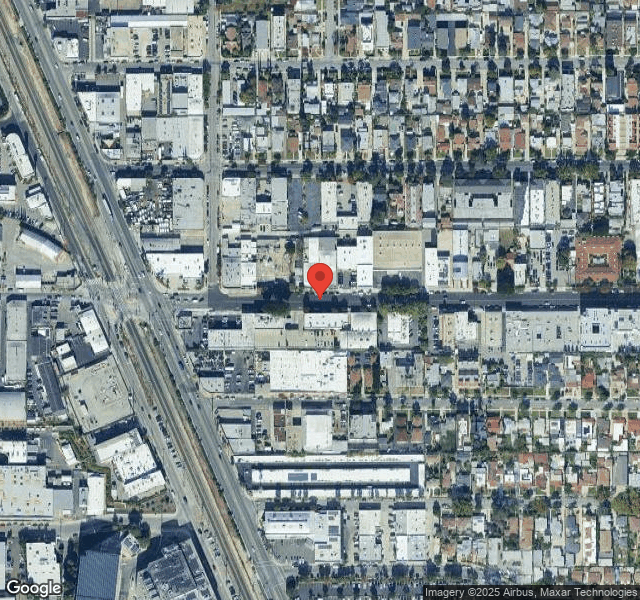
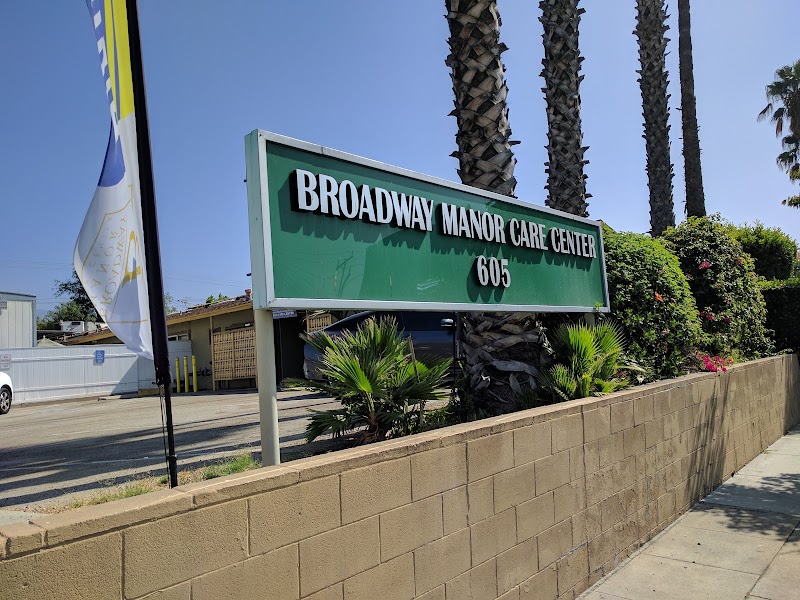
605 WEST BROADWAY, GLENDALE, CA 91204 (818) 246-7174
For profit - Limited Liability company 78 Beds LONGWOOD MANAGEMENT CORPORATION Data: November 2025 1 Immediate Jeopardy citation
Trust Grade
28/100
#757 of 1155 in CA
Last Inspection: December 2024

Within standard 12-15 month inspection cycle. Federal law requires annual inspections.

Overview

Broadway Manor Care Center has received a Trust Grade of F, indicating significant concerns about the quality of care provided at this facility. With a state rank of #757 out of 1155, they are in the bottom half of nursing homes in California, and #165 out of 369 in Los Angeles County means there are only a few local options that are worse. While the facility is improving, reducing issues from 18 in 2024 to just 2 in 2025, there are still serious problems; for example, staff failed to notify a physician about a resident's significant decline in health and did not properly assess a resident for serious medical conditions following a hospital stay. Staffing is a relative strength here, rated at 4 out of 5 stars, with a turnover rate of 40%, which is average for California. However, the facility has incurred fines totaling $36,090, which is higher than 80% of other facilities in the state, raising concerns about compliance with care standards.

Trust Score
F
28/100
In California
#757/1155
Bottom 35%
Safety Record
High Risk
Review needed
Inspections
Getting Better
18 → 2 violations
Staff Stability
○ Average
40% turnover. Near California's 48% average. Typical for the industry.
Penalties
✓ Good
$36,090 in fines. Lower than most California facilities. Relatively clean record.
Skilled Nurses
○ Average
Each resident gets 31 minutes of Registered Nurse (RN) attention daily — about average for California. RNs are the most trained staff who monitor for health changes.
Violations
⚠ Watch
60 deficiencies on record. Higher than average. Multiple issues found across inspections.
★★☆☆☆
2.0
Overall Rating
★★★★☆
4.0
Staff Levels
★★★☆☆
3.0
Care Quality
★★☆☆☆
2.0
Inspection Score
Stable
2024: 18 issues
2025: 2 issues

The Good

  • 4-Star Staffing Rating · Above-average nurse staffing levels
  • Full Sprinkler Coverage · Fire safety systems throughout facility
  • No fines on record
  • Staff turnover below average (40%)

    8 points below California average of 48%

Facility shows strength in staffing levels, fire safety.

The Bad

2-Star Overall Rating

Below California average (3.1)

Below average - review inspection findings carefully

Staff Turnover: 40%

Near California avg (46%)

Typical for the industry

Federal Fines: $36,090

Above median ($33,413)

Moderate penalties - review what triggered them

Chain: LONGWOOD MANAGEMENT CORPORATION

Part of a multi-facility chain

Ask about local staffing decisions and management

The Ugly 60 deficiencies on record

1 life-threatening 1 actual harm
Apr 2025 1 deficiency 1 IJ
CRITICAL (J) 📢 Someone Reported This

A family member, employee, or ombudsman was alarmed enough to file a formal complaint

Immediate Jeopardy (IJ) - the most serious Medicare violation

Notification of Changes (Tag F0580)

Someone could have died · This affected 1 resident

**NOTE- TERMS IN BRACKETS HAVE BEEN EDITED TO PROTECT CONFIDENTIALITY** Based on interviews and record reviews, the facility failed to ensure Licensed Vocational Nurse [LVN] 1 and Registered Nurse Sup...

Read full inspector narrative →
**NOTE- TERMS IN BRACKETS HAVE BEEN EDITED TO PROTECT CONFIDENTIALITY** Based on interviews and record reviews, the facility failed to ensure Licensed Vocational Nurse [LVN] 1 and Registered Nurse Supervisor (RNS) 1 consulted and notified the attending physician (Physician 1) and/or Physician Assistant (PA) 1 of a resident's significant change in condition (refers to a major decline in a resident's health status that requires a comprehensive reassessment that is not expected to resolve on its own or through standard medical interventions) for one of two sampled residents (Resident 1) in accordance with Resident 1's physician's order and care plan developed to monitor Resident 1 and notify the physician for adverse reaction (unwanted, unexpected, or harmful effect resulting from a medication or other treatment), while receiving Eliquis (a brand of anticoagulant [blood thinner] medication that prevents or reduces blood clots) from 9/3/2024 to 2/25/2025. Facility licensed staff that included RNS 1 and LVN 1 failed to promptly notify Physician 1 or PA 1 for Resident 1's significant change in mental status, shortness of breath, vomiting and bleeding in resident's orifice (an opening through which something may pass) on 2/25/2025, as indicated in the physician's order. On 2/25/2025, Resident 1 experienced altered level of consciousness (ALOC - refers to a change in a person's mental status) and three episodes of coffee-ground (a vomit that contains bits of food of what looks like coffee grounds due to presence of old blood, that may be coming from the stomach and may be a sign of a serious problem) emesis (forceful expulsion of stomach contents through the mouth) at 9 AM, 11:30 AM, and 1:25 PM. As a result of this deficient practice, RNS 1 called 9-1-1 emergency medical services (EMS - a system that responds to emergencies in need of highly skilled pre-hospital clinicians) on 2/25/2025 at 1:25 PM and Resident 1 was transferred to the General Acute Care Hospital (GACH 1), after developing shortness of breath, hypotension (abnormally low blood pressure [BP] level, below 90/60 millimeters of mercury [mm/Hg - a unit that measures pressure]) with a BP of 68/78 mm/Hg, oxygen saturation (amount of oxygen circulating in the blood; [normal levels between 95% to 100%]) of 86% in room air (the normal air a person breathes). Additionally, this failure resulted in a delay of Resident 1's diagnosis, care, and immediate/emergency interventions on 2/25/2025 from 9 AM to 1:25 PM (4.25 hours), when EMS arrived at the facility around 1:38 PM. The EMS report indicated Resident 1 had coffee ground emesis prior to EMS arrival at the facility and was in respiratory failure (a serious condition that makes it difficult to breathe on your own) upon EMS arrival to the facility, suctioned multiple times and performed cardiopulmonary resuscitation (CPR- an emergency treatment that's done when someone's breathing or heartbeat has stopped) by EMS during transport to GACH 1. On 2/25/2025, at 1:55 PM, upon EMS arrival at GACH 1, resuscitation efforts (procedures aimed at reviving someone after their heart and/or breathing has stopped) continued, but Resident 1 passed away and pronounced dead at GACH 1 on 2/25/2025 at 2:44 PM. The EMS report indicated Presumed Etiology (the cause of a disease) of Resident 1's cardiac arrest (when heart stopped beating) was Respiratory/Asphyxia (a condition where the body doesn't get enough oxygen due to a problem with breathing or inhaling). On 4/3/2025 at 5:33 PM, while onsite at the facility, the California Department of Public Health (CDPH) identified an Immediate Jeopardy situation (IJ, a situation in which the provider's noncompliance with one or more requirements of participation has caused or is likely to cause serious injury, harm, impairment, or death of a resident) in the presence of the Administrator (ADM) and Director of Nursing (DON) regarding the facility's failure to notify Physician 1 or PA 1 of Resident 1's significant change of condition, in accordance with the facility's policy & procedure (P&P) on Change of Condition Notification and physician order to notify the physician for adverse reactions as a result from the use of Eliquis. The surveyor notified the ADM of the IJ situation on 4/3/2025 at 5:33 PM, due to LVN 1 and RNS 1 failures to consult and notify Physician 1 or PA 1 of a resident's significant change in condition on 2/25/2025. On 4/4/2025 at 1:49 PM, the ADM provided CDPH with an acceptable IJ Removal Plan (a detailed plan to address the IJ findings). On 4/4/2025 at 3:18 PM, the surveyor notified the ADM and the DON that the IJ was removed based on onsite verification/confirmation of the facility's full implementation of the IJ Removal Plan (a detailed plan to address the IJ findings) through observations, interviews, and record reviews. Following the removal of the IJ, the facility's noncompliance remained at a scope (refers to how widespread a deficiency is) and severity (level of harm) of G (isolated [one or a very limited number of residents are affected], actual harm, that is not immediate jeopardy). The acceptable IJ Removal Plan included the following: 1. On 4/3/2025, the DON and Assistant DON (ADON) notified the nursing staff (all licensed nurses) of findings outlined in the IJ dated 4/3/2025 and conducted in-services for all nursing staff (21 licensed nurses and 42 certified nursing assistants (CNAs) regarding the Change of Condition policy. The training covered: a. Utilizing the Interact (electronic records software) early warning toll-stop and watch technique to report any possible resident's changes in condition. b. Utilizing the SBAR [Situation, Background, Assessment, Recommendation] form to record the change of condition to ensure accuracy and completeness that included current vital signs ((measurable indicators that reflect a person's basic physiological functions and overall health status), detailed description of the identified situation, any drainage observed, interventions provided including physician notification. c. The anticoagulant monitoring which includes but not limited to: discolored urine, black tarry stools (dark, sticky, and foul-smelling stools that are a result of digested blood in the digestive tract), nausea/vomiting or diarrhea, bruising/bleeding, abnormal vital signs, shortness of breath, and change in mental status. d. Timely physician notification for the onset of changes in condition, including the identified signs related to anticoagulant adverse reaction monitoring. During the in-service, the DON emphasized the importance of notifying the physician upon identification of the situation to avoid any possible delay. 2. On 4/4/2025, the facility pharmacist was contacted and will complete in-service today to licensed nurses regarding black box warning. During the in-service, the pharmacist will educate the following areas: a. Following physician's orders/instructions for residents with medications labeled black box (most serious warning label, indicating a medication carries a serious risk of adverse effects, including death) warning, such as specific monitoring, laboratory tests, etc., b. Creating and implementing the care plan c. Notifying the physician if any identified signs of adverse reaction 3. On 4/3/2025, the DON notified the staff who could not complete the in-services must receive an in-service upon their return before their shift. 4. On 4/3/2025, the facility notified the facility Medical Director of the IJ and the IJ Removal Plan. The Medical Director reviewed and approved the IJ removal plan. 5. On 4/3/2025, the ADM completed the Quality Assurance and Performance Improvement (QAPI -a structured framework that helps healthcare organizations continuously improve the quality of care and patient safety) Plan for identifying and notifying the physician of resident change of condition. The Medical Director will review the QAPI program for change of condition/physician notification every month and assist the facility in adjusting the measures as necessary. 6. On 4/3/2025, LVN [1] assigned to Resident 1 received disciplinary action pending investigation. The DON provided one-to-one in-service with LVN 1 regarding physician notification prior to the suspension. 7. As of 4/3/2025, a total of 28 current residents are receiving anticoagulant therapy. All 28 residents who have anticoagulant orders have monitoring for adverse reactions in the electronic medication administration record. 8. Effective 4/3/2025, the DON will conduct a monthly in-service for nursing staff (licensed nurses and CNAS) regarding change in condition for three months. 9. Effective 4/3/2025, the DON and/or ADON will review the change of condition daily, to ensure timely physician notification of any onset signs or symptoms. 10. On 4/3/2025, the DON created a change of condition monitoring log, which includes the physician notification of any changes. The DON notified nursing staff of the monitoring process and will document the findings and corrective action in the monitoring log for three months. If any issues are identified, the DON will extend the monitoring period for an addition of three months. 11. The DON/RNS will make daily rounds (a planned visit by facility staff, to assess a resident's condition and check what type of care/assistance is needed) to ensure that any resident changes in condition is being reported and addressed. The DON/RNS would provide a one-to-one inservice if any issues identified. 12. On 4/3/2025, the facility initiated a QAPI for physician notification of changes in condition to address the findings outlined in the IJ template. The facility will review the progress every month for 3 months and adjust the measures as needed to ensure an effective and consistent plan. Findings: During a review of Resident 1's admission Record (AR), the AR indicated the facility admitted the resident on 5/1/2024, with diagnoses that included Parkinsonism (a term used to describe a collection of movement symptoms associated with several conditions), dysphagia (difficulty swallowing), and long-term use of anticoagulants (the ongoing and indefinite use of medication to prevent blood clots). During a review of Resident 1's History & Physical (H&P) assessment dated [DATE] signed by PA 1, the H&P indicated Resident 1 did not have the capacity to understand and make decisions. The H&P indicated Resident 1 had the following present illnesses: orthostatic hypotension (a form of low blood pressure that happens when standing up from sitting or lying down), hypertension (high blood pressure), chronic kidney disease (progressive damage and loss of function in the kidneys), and seizures (a sudden, temporary alteration of behavior, movement, or consciousness caused by abnormal electrical activity in the brain). During a review of Resident 1's Minimum Data Set (MDS, a federally required assessment and screening tool) dated 2/13/2025, the MDS indicated Resident 1 had severely impaired (significantly limits one person's physical or mental ability to do basic work activities) cognition (thought process). The MDS indicated Resident 1 required substantial/maximal assistance (a helper provides more than half of the effort required for a patient or resident to complete an activity) for chair/bed-to-chair transfer, sit to stand position, and bathing. The MDS indicated Resident 1 required partial/moderate assistance for personal hygiene, eating, toileting hygiene, rolling left and right, and sit to lying position. During a review of Resident 1's care plan titled Apixaban (generic name for Eliquis): At risk for adverse effect from black box medication dated 8/13/2024, the care plan indicated Resident 1's risk for the use of a black box medication and would be monitored/identified by the licensed nurse. The care plan indicated the physician would be notified promptly of any adverse reactions. During a review of Resident 1's Order Summary Report, the Order Summary Report indicated the following physician orders: a. A physician's order dated 9/3/2024, to administer Eliquis Oral Tablet 2.5 milligrams (mg, unit of measure) give 1 tablet by mouth two times a day for deep vein thrombosis (DVT -a condition where a blood clot forms in a deep vein, typically in the lower legs or thighs) prophylaxis (action taken to prevent disease). b. A physician's order dated 9/28/2024, to monitor anticoagulation medication (Eliquis) for discolored urine, black tarry stools, sudden severe headache, nausea and vomiting, diarrhea, muscle/joint pain, lethargy (lack of mental alertness, sleepy), bruising, sudden changes in mental status and/or vital signs, shortness of breath, bleeding in any orifice, and abnormal labs; to document 'N' (No), if monitored and none of the above observed. Document 'Y' (Yes), if monitored and any of the above observed. The order indicated to notify physician and document in nurses' progress notes, every shift. During a review of Resident 1's Change of Condition (COC) Form - Situation Background Assessment Recommendation (SBAR) dated 2/25/2025 timed at 1:25 PM, written by LVN 1, the SBAR indicated on 2/25/2025 at 7:10 AM, Resident 1 was seen in bed by LVN 1 with chest rising up and down, responsive to verbal and tactile stimuli (any form of touch or physical contact that is perceived by the skin), resident was provided breakfast and ate 20% of breakfast . The SBAR indicated at 8:42 AM, Resident 1's vital signs obtained during medication administration indicated a BP at 108/84, pulse at 76 beats per minute (normal rate between 60 to 100 beats per minute), respiratory rate (normal rate between 12 to 20 breaths per minute) of 18 breaths per minute, oxygen saturation of 97% on room air, no pain, temperature of 97.8 degrees Fahrenheit (F, unit of measurement - normal range of temperature between 96 to 99 degrees Fahrenheit). Resident 1 received all due medication administered as ordered by the physician with no ASE (adverse side effects) noted. The SBAR indicated that at 9 AM, Resident 1 remained in bed awake and was assisted with activities of daily living (ADLs - basic tasks individuals perform daily for self-care and personal independence, such as bathing, dressing, toileting, and eating) by the CNA. The SBAR indicated Resident 1 had one episode of emesis. The SBAR indicated that at 11 AM, Resident 1 was in bed with nonlabored (easy, effortless, and comfortable) breathing, awaken to administer due medication. No ASE noted. resident kept clean and dry and comfortable. The SBAR further indicated that at 11:30 AM, Resident 1 had another episode of emesis, no shortness of breath (SOB) or distress noted. The SBAR further indicated that at 12:40 AM, Resident 1 was in bed sitting up and awake, the CNA (unknown) tried to assist with lunch and Resident 1 did not eat. The SBAR noted Resident 1 was left in bed with the head of bed (HOB) elevated with bed in the lowest position, call light within reach. The SBAR further indicated that at 1 PM, During rounds, [Resident 1] was in bed, no SOB or pain or discomfort noted. The SBAR further indicated that at 1:25 PM, during [RNS 1] rounds, Resident 1 was noted with SOB and pale skin color. Vitals signs obtained with BP at 98/72 mm/Hg, pulse was 81 beats per minute, respiratory rate at 17 breaths per minute, oxygen saturation was 87% on room air and 92% with non-rebreather mask (an oxygen mask that delivers high concentrations of oxygen) at 15 liters (L, unit of measure) per minute . The SBAR indicated 911 emergency services was called due to Resident 1's desaturation (abnormal drop in blood oxygen levels) and hypotension. The SBAR further indicated that EMS arrived (no time indicated) and took over. The SBAR indicated, during EMS assessment the resident had one more episode of emesis. The SBAR Note indicated Resident 1's Physician Assistant (PA 1) was made aware and Family member (FM) 1 was notified. The SBAR indicated that at 1:36 PM, Resident 1 was transferred to GACH 1 via 911 EMS. During a review of Resident 1's Transfer Record dated 2/25/2025 timed at 1:30 PM, handwritten by RNS 1, the Transfer Record indicated Resident 1's reason for transfer were ALOC, desaturation, and three episodes of emesis. The record indicated Resident 1's vital signs were temperature of 97.4 F, pulse 118 beats per minute, respiratory rate was at 17 breaths per minute, BP was at 68/78 mm/Hg, and oxygen saturation of 86%. The Transfer Record indicated Resident 1's additional reason for transfer was altered mental status (a general term referring to a change to your average mental function), weakness, and shortness of breath. During a review of Resident 1's EMS Report dated 2/25/2025, the EMS Report indicated upon EMS arrival to the facility at 1:32 PM, Resident 1 was lying in bed. The EMS report indicated a facility staff (unknown staff) stated they contacted EMS due to resident being altered (any condition which is significantly different from a normal waking state) approximately one hour prior to EMS arrival. The EMS report indicated Resident 1 was found in respiratory failure and ventilated (to force air in and out of the lungs of a person who cannot breathe easily on their own), with bag-valve-mask (BVM, a medical device used to provide air and oxygen to person who are not breathing or breathing adequately). The EMS report indicated Resident 1 was hypotensive and apneic (breathing is interrupted by the airway blocking the flow of air) and lifted onto the gurney (wheeled stretcher) and loaded into the ambulance. The EMS report indicated [Resident 1] had coffee ground emesis prior to EMS arrival (at the facility) and was suctioned multiple times throughout treatment and transport. During a review of Resident 1's GACH 1 record titled Emergency Documentation dated 2/25/2025 documented at 3:12 PM, the GACH 1 record indicated Resident 1 was presented in by EMS to GACH 1 for cardiac arrest. The GACH 1 record indicated that according to EMS verbal report, the facility reported to EMS that [Resident 1] was altered from this (2/25/2025) morning and was also noted to have coffee-ground emesis around his mouth. The GACH 1 record indicated upon EMS arrival to GACH 1, [Resident 1] was found to be in respiratory arrest (a state in which a patient stops breathing but maintains a pulse) and shortly thereafter, went into cardiac arrest. During a telephone interview with Family (FM) 1 on 4/2/2025 at 2:07 PM, Family 1 stated she received a call from RNS 1 on 2/25/2025 at around 1:27 PM to inform FM 1 that EMS was called for Resident 1 due to low oxygen saturation and blood pressure. Family 1 stated she was informed by RNS 1 that Resident 1 was fine the morning of 2/25/2025, until staff noticed Resident 1's BP and oxygen saturation were low. FM 1 stated RNS 1 did not mention any other symptoms from Resident 1. FM 1 stated she requested for a verbal report of what happened to Resident 1, from the facility and was told later by the former Director of Nursing (DON 2) that Resident 1 had vomited. FM 1 stated when FM 1 was cleaning out Resident 1's belongings, Resident 1's roommate at that time (on 2/25/2025) told FM 1 that the CNAs got Resident 1 out of bed to use the bathroom. Family 1 stated that facility staff have never taken Resident 1 to the bathroom. FM 1 stated she was unsure if the facility gave FM 1 a reliable report about what happened to Resident 1 on 2/25/2025. FM 1 stated she received a copy of Resident 1's EMS report and was questioning what really happened that day. Family 1 stated if the facility noticed the coffee ground emesis, why would the facility's licensed nurses not act upon Resident 1's change in condition right away? Family 1 stated she felt the facility's licensed nurses should have done something to help Resident 1 sooner. During a concurrent interview on 4/2/2024 at 3:17 PM with LVN 1 and record review of Resident 1's COC and SBAR notes dated 2/25/2025 documented at 1:25 PM, LVN 1 stated she documented Resident 1's SBAR on 2/25/2025. LVN 1 stated Resident 1 had an episode of emesis at 9 AM and 11:30 AM, however, LVN 1 stated she could not recall the color and consistency of Resident 1's emesis. LVN 1 stated after lunch on 2/25/2025, RNS 1 was doing her rounds and saw Resident 1's oxygen saturation was under 90%. LVN 1 stated she could not recall the exact time RNS 1 found Resident 1 and stated Resident 1 was given oxygen supplement via non-rebreather mask and was effective because Resident 1's oxygen saturation level was going back up. LVN 1 stated she could not recall what Resident 1's vital signs were. LVN 1 stated she could not recall who called the EMS on 2/25/2025. LVN 1 stated Resident 1 was confused most of the time and was alert and oriented to only his name. LVN 1 stated she was in Resident 1's room when EMS arrived, and they took over care Resident 1. LVN 1 stated Resident 1 had vomited but could not recall what the vomit looked like, including the color of Resident 1's vomit. LVN 1 stated Resident 1's vomiting occurred during the time the EMS was in the facility and LVN 1 stated she could not recall if Resident 1 had any other episodes of emesis earlier that day. LVN 1 stated if a resident would have 2 to 3 episodes of emesis, the licensed staff would monitor the resident and report to the physician. LVN 1 stated she did not remember calling Resident 1's physician or PA 1. LVN 1 stated she could not recall much of what happen to Resident 1 on 2/25/2025. LVN 1 stated Resident 1 could not recall if Resident 1 had other symptoms earlier that morning of 2/25/2025. During an interview with RNS 1 on 4/2/2025 at 3:31 PM, RNS 1 stated she arrived at the facility for work at 12:30 PM on 2/25/2025. RNS 1 stated she conducted her resident rounds and noticed Resident 1's skin was pale and had shortness of breath. RNS 1 stated she took Resident 1's vital signs and Resident 1's BP was low. RNS 1 stated Resident 1's systolic pressure (the top number in blood pressure) was below 90 mm/Hg and could not recall if she documented Resident 1's low BP in the resident's record. RNS 1 stated that on 2/25/2025 when RNS 1 saw Resident 1, Resident 1 was not alert or talking. RNS 1 stated she placed Resident 1 on oxygen via a non-rebreather mask. RNS 1 stated when the EMS arrived at the facility, Resident 1 had an episode of emesis that appeared dark. RNS 1 stated she could not recall if Resident 1 had an episode of emesis earlier that day, on 2/25/2025. RNS 1 stated if resident had an episode of emesis, per protocol she would notify the physician. RNS 1 stated she remembered notifying Resident 1's family and PA 1 after 911 EMS took Resident 1 to GACH 1. During an interview with LVN 1 on 4/2/2025 at 4:03 PM, LVN 1 stated she recalled seeing emesis on the gurney Resident 1 was transferred onto by EMS but could not recall what Resident 1's emesis looked like. LVN 1 stated she still could not recall Resident 1's episodes of emesis as documented in Resident 1's SBAR note on 2/25/2025. LVN 1 stated that if Resident 1 had episodes of emesis earlier that day, on 2/25/2025, LVN 1 acknowledged that she would have notified the physician. LVN 1 stated Resident 1 could have an underlying condition, and she should have documented Resident 1's vital signs and a description of the emesis episodes at the time. During a telephone interview with CNA 1 on 4/2/2025 at 5:48 PM, CNA 1 stated when he came to work during the morning shift (7AM to 3 PM) on 2/25/2025 and conducted resident rounds he noticed Resident 1 looked off (something is not quite right or that someone is not functioning or appearing as expected). CNA 1 stated Resident 1 was looking off for a while during that morning (2/25/2025). CNA 1 stated Resident 1 did not look too well, Resident 1 was pale in color, confused and not talking. CNA 1 stated that on the same day, he was instructed by LVN 1 to take Resident 1 to the bathroom. CNA 1 stated prior to taking Resident 1 to the bathroom, Resident 1 appeared pale and weak, but CNA 1 still assisted Resident 1 to the bathroom. CNA 1 stated he could not recall if Resident 1 had an episode of emesis that day, but CNA 1 was accompanied by CNA 2. CNA 1 stated after taking Resident 1 to the bathroom, that is when RNS 1 saw Resident 1's condition and called 911. CNA 1 stated EMS arrived and since there were so many staff he backed away. During a telephone interview with CNA 2 on 4/2/2025 at 6 PM, CNA 2 stated he remembered Resident 1 did not have a bowel movement so together with CNA 1, they brought Resident 1 to the bathroom. CNA 2 stated after Resident 1 had a bowel movement, RNS 1 stated Resident 1 did not look well, so RNS 1 called 911. CNA 2 stated Resident 1 was puking (vomiting), but could not recall how many times Resident 1 puked. CNA 2 stated Resident 1's puking occurred before the 911 EMS arrived at the facility. CNA 2 stated when Resident 1 was brought back to bed he saw puke at the side of Resident 1's bed and it was Black, it was something dark. CNA 2 stated when CNAs see something unusual, CNAs would notify the nurse. CNA 2 stated he recalled They (licensed nurses) were saying he [Resident 1] was puking something dark during the day. CNA 2 stated [LVN 1] said he [Resident 1] was puking something like that (dark) during the day. During a telephone interview with PA 1 on 4/3/2025 at 1:18 PM, PA 1 stated she manages Resident 1's care while residing at the facility. PA 1 stated she was notified by the facility of Resident 1 being transferred to GACH 1 via text message on 2/25/2025, after 911 EMS took Resident 1. PA 1 stated she looked back at her text messages, but that was the only time she was notified what happened to Resident 1 on 2/25/2025. PA 1 stated she was not notified by LVN 1 or RNS 1 about any episodes of emesis prior to Resident 1 being transferred by 911 EMS to GACH 1. PA 1 stated if Resident 1 had any episodes of emesis earlier that day (2/25/2025) PA 1 would have expected the licensed staff to notify her, and PA 1 would have ordered the licensed nurses to call 911 EMS immediately or earlier that day. PA 1 stated she spoke with Resident 1's family (FM 1) (unknown date) and FM 1 mentioned Resident 1 had vomited that day (2/25/2025) prior to 911 arriving at the facility. PA 1 stated In hindsight (refers to the ability to understand or judge an event or situation only after it has happened), they did tell me the resident had coffee ground emesis earlier that day (2/25/2025). PA 1 stated the licensed nurses were even pretty good at reporting when Resident 1 vomits once before. PA 1 stated Yes, I did not find out about [Resident 1's] coffee ground emesis until a week later. When asked, PA 1 stated it was the ADM that told her Resident 1 had coffee ground emesis. PA 1 stated having coffee ground emesis could mean something was obviously going on internally in Resident 1 like bleeding. During a review of the facility's policy and procedure (P&P) titled Anticoagulation-Clinical Protocol dated 3/2023 indicated to assess for any signs or symptoms related to adverse drug reactions due to medication alone in combination with other medications. The P&P indicated the staff and physician will monitor for possible complications in individuals who are being anticoagulated and will manage related problems. The P&P indicated if an individual on anticoagulation therapy shows signs of excessive bruising hematuria, hemoptysis, or other evidence of bleeding, the nurse will discuss the situation with the physician before giving the next scheduled dose of anticoagulant. During a review of the facility's policy and procedure (P&P) titled First Aid Treatment-Crash Cart/Emergency Response dated 3/2023, the P&P indicated to contact the EMS immediately for the following situations: unconsciousness or altered consciousness, difficulty or absence of breathing, severe bleeding, vomiting blood or blood in stool, condition is not clear or is worsening. The P&P indicated regardless of the nature or severity, any resident's injury/situation shall be reported to the resident's attending physician and family and documented in the resident's medical record. During a review of the facility's P&P titled Change in a Resident's Condition or Status dated 3/2023, the P&P indicated the nurse will notify the resident's attending physician or physician on call when there has been a (an): significant change in the resident's physical/emotional/mental condition; need to transfer the resident to a hospital/treatment center; specific instruction to notify the physician of changes in the resident's condition. The P&P indicated prior to notifying the physician or healthcare provider, the nurse will make detailed observations and gather relevant and pertinent information for the provider, including information prompted by the SBAR Communication form.
Mar 2025 1 deficiency 1 Harm
SERIOUS (G) 📢 Someone Reported This

A family member, employee, or ombudsman was alarmed enough to file a formal complaint

Actual Harm - a resident was hurt due to facility failures

Quality of Care (Tag F0684)

A resident was harmed · This affected 1 resident

**NOTE- TERMS IN BRACKETS HAVE BEEN EDITED TO PROTECT CONFIDENTIALITY** Amended Copy - 4/1/25 Based on interview and record review the facility failed to assess, monitor for the signs and symptoms of ...

Read full inspector narrative →
**NOTE- TERMS IN BRACKETS HAVE BEEN EDITED TO PROTECT CONFIDENTIALITY** Amended Copy - 4/1/25 Based on interview and record review the facility failed to assess, monitor for the signs and symptoms of Peripheral Arterial Disease (PAD- also known as peripheral vascular disease [PVD], a circulatory problem where narrowed arteries reduce blood flow to the legs, arms, or other parts of the body, often due to plaque buildup), and follow the general acute care hospital (GACH 1) physician and facility ' s attending physician ' s recommendations for one of three sampled residents (Resident 1), who was recently hospitalized for an acute cerebrovascular accident (CVA – a type of stroke [occurred when blood flow to the brain was interrupted], loss of blood flow to a part of the brain), right internal carotid artery stenosis ([NAME]- a condition that happens when the carotid artery, which is the large artery on either side of the neck, becomes blocked), and PAD, by failing to: Ensure the facility ' s licensed staff and the attending physician, identified and addressed Resident 1 ' s diagnoses of PAD and Atherosclerosis (the buildup of fats, cholesterol and other substances in and on the artery walls. This buildup is called plaque) and include in the resident ' s cumulative diagnoses list (a compilation of all diagnoses a patient has received, including past and present conditions, to provide a comprehensive overview of their medical history) upon readmission to the facility on 3/10/2022, to establish the resident ' s diagnoses while in the facility to maximize the resident ' s treatment benefits and ensure resident outcome and safety. Ensure the facility ' s licensed staff referred Resident 1 for an elective (a procedure that was chosen [elected] by the patient or physician that was advantageous to the patient but was not urgent) bilateral lower extremity (legs) arteriogram (a medical imaging procedure to visualize and assess blood flow in the arteries [blood vessels] and detect blockages to plan for surgical interventions) and endovascular intervention (a surgical procedure used to treat a wide range of vascular conditions including PAD and stenosis [narrowing of a passageway in the body]), in accordance with the GACH 1 Discharge Summary orders made by the GACH 1 Physician on 3/10/2022. Ensure the facility ' s licensed staff develop a PAD/PVD and Atherosclerosis comprehensive and individualized care plans, in accordance with the facility ' s policy & procedures titled Care Area Assessments. Ensure the facility ' s licensed staff monitor Resident 1 ' s bilateral (both) pedal pulses (palpable pulse wave in the arteries of the foot. It is a clinical sign used to assess the circulation in the lower extremities) as indicated in the resident ' s Physician ' s Order dated 3/10/2022. The licensed nurses documented monitoring and assessment of Resident 1 ' s left pedal pulses from 3/11/2022 to 3/21/2022 and did not have documentation of monitoring and assessment of Resident 1 ' s right pedal pulses from 3/11/2022 to 3/21/2022. The order for bilateral pedal pulses monitoring was discontinued without a reason on 3/21/2022. As a result of these deficient practices Resident 1 did not receive the care, services, and interventions to ensure the resident ' s PAD/PVD were addressed during the resident ' s stay in the facility from 3/10/2022 to 12/26/2023. These deficient practices resulted in a change in Resident 1 ' s condition on 12/26/2023, when Resident 1 developed altered level of consciousness (ALOC), and fluctuating oxygen saturation (indicated how much oxygen the blood was carrying, [normal ranges from 95% to 100%) of 86 to 90%. Resident 1 was transferred to GACH 2 via 911 emergency services on 12/26/2023. Resident 1 ' s GACH 2 physician notes indicated Resident 1 had a suspected right lower extremity superficial femoral artery occlusion (refers to a partial or complete blockage of the femoral artery [a large blood vessel located in the upper thigh], which can lead to reduced blood flow and oxygen supply to the lower leg and foot). Resident 1 died at GACH 2, two days after the GACH 2 admission, on 12/28/2023, with diagnoses that included but not limited to cellulitis of the leg (a bacterial infection of the skin and the tissues beneath the skin), right lower extremity gangrenous (when lack of blood flow causes tissues in the body to die) changes, PAD and septic shock (a subset of sepsis [a serious condition in which the body responds improperly to an infection] in which particularly profound circulatory (the system that contains the heart and the blood vessels and moves blood throughout the body) and metabolic abnormalities [disruptions in the body's chemical processes that convert food into energy and building blocks] substantially increase death). Findings: During a review of Resident 1 ' s GACH 1 record, the resident ' s Duplex Ultrasound ([US] a test to see how blood moves/flows through the arteries and vein) dated 2/28/2022 was reviewed. The US indicated that Resident 1 ' s Right Lower Extremity Arterial (a blood vessel that carried blood from the heart to the tissues and organs in the body) US indicated 50 to 75% stenosis in the mid superficial (on the surface) femoral artery (the main blood vessel that delivered oxygen-rich blood from the heart to your lower body, specifically the thigh and leg), 30 to 49% stenosis in the right external iliac artery (a major blood vessel that carried oxygenated blood from the pelvis [bone that connects spine to the legs] to the legs) . During a review of Resident 1 ' s GACH 1 Left Lower Extremity Arterial Duplex (sound waves used to create images of blood vessels and assess blood flow) dated 3/1/2022, the Ultrasound indicated Severe diffuse calcific (buildup of calcium deposits that could lead to hardening of tissues, blood vessels, or organs) atherosclerotic disease identified throughout the left lower extremity with at least moderate stenosis left external iliac (brings blood to the legs) and common femoral arteries with severe stenosis within the proximal (center of the body) and mid superficial (located on or near the surface of the body) femoral artery of at least 50 to 75% narrowing . During a review of Resident 1 ' s GACH 1 Interventional Radiologist ' s (IR, a medical specialty that used imaging techniques to guide tiny instruments through the body to diagnose and treat diseases) Consultation dated 3/1/2022, the IR Consultation indicated Resident 1 would benefit from an elective bilateral lower extremity arteriogram and endovascular intervention when the resident is stable . During a review of Resident 1 ' s GACH 1 DC Summary dated 3/10/2022, authored by the GACH 1 physician, the DC Summary indicated one of Resident 1 ' s problems included PAD. The DC Summary indicated Resident 1 ' s reason for admission to GACH 1 was Left Upper Extremity and Left Lower Extremity (LLE) numbness and weakness. The DC Summary indicated Resident 1 was deemed stable for discharge back to the facility. The DC Summary included the following problems for Resident 1: 1. Acute CVA 2. Stenosis of right internal carotid artery ([NAME]). 3. PAD – Doppler Ultrasound (used sound waves to visualize and measure blood flow in vessels, arteries, and veins, helping doctors assess blood flow speed and direction, and detect conditions like clots or blockages) showed LLE arterial stenosis and bilateral AT/PT stenosis. IR consulted for further recommendation indicated elective bilateral lower extremity arteriogram and endovascular intervention when resident was stable. Any dual antiplatelet (medications that prevent platelets from clumping together and forming blood clots) therapy would be beneficial for the resident ' s PAD. 4. Diabetes . During a review of Resident 1 ' s admission Record (AR), the AR indicated the resident was readmitted to the facility on [DATE], with diagnoses that included but not limited to the following: Atherosclerosis of native arteries (a natural, un-altered blood vessel that carried oxygen-rich blood from the heart to the body ' s tissues and organs) of extremities with intermittent claudication (most common symptom of PAD which is pain and numbness in the lower extremities) of bilateral legs. Type 2 diabetes mellitus (DM, a disorder characterized by difficulty in blood sugar control and poor wound healing). Cerebral Infarction (or CVA). During a review of a facility record titled Cumulative Diagnosis List dated 3/10/2022, the Cumulative Diagnosis List indicated Resident ' s diagnoses in the facility as provided by the facility ' s Medical Records Director. The Cumulative Diagnosis List indicated Include active diagnoses and conditions that are part of the resident ' s current plan. Enter the date resolved/discontinued when the condition is no longer active. A physician is legally accountable for establishing resident ' s diagnosis. The Cumulative Diagnosis List indicated a column for the physician ' s signature designated next to each of the indicated resident ' s diagnosis. The column for the physician ' s signature indicated a handwritten signature of Physician 1 and was dated 4/28/2023. The Cumulative Diagnosis List indicated the following handwritten diagnoses for Resident 1: Cerebral Infarction. Carotid Artery Stenosis (a narrowing of the carotid arteries in the neck). Chronic Obstructive Pulmonary Disease (COPD, a chronic lung disease causing difficulty in breathing). Diabetes Mellitus Coronary Artery Disease (CAD, a condition where plaque builds up inside the arteries that supply blood to the heart, potentially leading to reduced blood flow and heart problems). Congestive Heart Failure (CHF, a heart disorder which causes the heart to not pump the blood efficiently, sometimes resulting in leg swelling). Anemia (a condition where the body did not have enough healthy red blood cells). Osteoarthritis (a progressive disorder of the joints, caused by a gradual loss of cartilage). Hypertension (HTN, high blood pressure). Hyperlipidemia (HLD, a condition characterized by abnormally high levels of fats [lipids] like cholesterol in the blood). Major Depressive Disorder (MDD, a mood disorder that causes a persistent feeling of sadness and loss of interest). During a review Resident 1 ' s Telephone Physician ' s Order dated 3/10/2022, the Physician's Order indicated to monitor Resident 1 ' s bilateral pedal pulses, every day shift. During a review of Resident 1 ' s Treatment Administration Record (TAR) for the month of March 2022, the TAR indicated from 3/11/2022 to 3/20/2022 the resident ' s left pedal pulse was documented and monitored in accordance with the resident ' s Physician ' s Order to monitor bilateral (both) pedal pulses every day shift, instead of both (right and left) pedal pulses. During a review of Resident 1 ' s Facility Active Order Summary Report signed by the physician and dated 3/11/2022, the Summary Report did not include the resident ' s diagnosis of PAD in accordance with the GACH 1 DC summary. During a review of Resident 1 ' s History and Physical (H&P) dated 3/11/2022, the H&P indicated Resident 1 had the capacity to understand and make decisions. The H&P indicated diagnoses including right carotid stenosis and CVA. During a review of Resident 1 ' s Minimum Data Set (MDS – a federally mandated resident assessment tool) dated 3/17/2022, the MDS indicated the resident had severe cognitive impairment (problems with a person ' s ability to think, learn, remember, use judgement, and make decisions). The MDS did not indicate Resident 1 had PAD. The MDS indicated the resident had zero number of venous (relating to or involving veins, the blood vessels that carry blood back to the heart, and the blood into those vessels) and arterial (relating to an artery) ulcers present and had no other ulcers (a small open sore [a break in the skin where the skin ' s surface was damaged, missing, or exposing the tissues beneath] or wound generally found in the stomach or on the skin), wounds, and skin problems. During a review of Resident 1 ' s Telephone Physician ' s Order dated 3/22/2022 at 4:18 PM, the Physician ' s Order indicated to discontinue Resident 1 ' s monitor bilateral pedal pulses, everyday shift on 3/21/2022 at 11:17 PM. The Physician ' s Order did not indicate a discontinue reason. During a review of Resident 1 ' s Physician ' s Progress Note dated 5/24/2022, the handwritten Progress Note indicated the attending physician (Physician 1) added a diagnosis of PAD in the resident ' s record. During a review of Resident 1 ' s Physician ' s Progress Note dated 1/30/2023, the handwritten Progress Note continued to indicate the resident had a diagnosis of PAD. During a review of Resident 1 ' s Physician ' s Progress Note dated 10/24/2023, the handwritten Progress Note continued to indicate the resident had a diagnosis of PAD. During a review of Resident 1 ' s TAR for the month of December 2023, the TAR indicated Resident 1 received treatments as ordered, to the right knee open scratch wound and right lateral knee extending to posterior aspect open scratch wound from 12/22/2023 to 12/26/2023. During a review of Resident 1 ' s Physician ' s Order dated 12/22/2023 at 8:55 AM, the Physician ' s Order indicated treatment – right knee open scratch wound – cleanse with normal saline (NS, a saltwater solution), pat dry, apply medihoney (a wound dressing containing 100% active Leptospermum honey [a type of honey produced by bees that feed on the nectar of the Manuka bush] that helps remove dead tissue, promotes wound healing, and could be used on various types of wounds) and cover with border gauze (a wound dressing with a soft, absorbent gauze pad and an adhesive border) every day (QD) for 14 days every day shift. During a review of Resident 1 ' s Physician ' s Order dated 12/22/2023 at 8:55 AM, the Physician ' s Order indicated treatment – right lateral (to the side of, or away from, the middle of the body) knee extending to posterior (the backside or rear part of the body) aspect open scratch wound – cleansed with NS, pat dry, apply medihoney, cover with Abdominal [ABD] pad (a highly absorbent, sterile dressing used to absorb wound discharge, cushion the wound area, and protect against further harm) and wrap with roll gauze (a long, soft, absorbent, and usually non-sterile fabric that was rolled up and used to hold dressings in place) daily for 14 days every day shift. During a review of Resident 1 ' s Interdisciplinary Team (IDT) Wound Management Care Plan Note dated 12/22/2023 timed at 10 AM, the Note indicated Resident noted with episodes of scratching skin leading to open wounds. re-oriented, re-direction, and frequent reminder to not scratch skin. The Note indicated the altered skin integrity was a right knee open scratch wound. During a review of Resident 1 ' s Change of Condition (COC) form dated 12/22/2023 timed at 11:55 AM, the COC indicated the resident was noted with an open scratch wound on the right knee and right lateral knee extending to posterior area. The COC indicated Resident had periods of scratching skin resulting in an open wound. The COC indicated initial treatment included cleansing with NS, pat dry, apply medihoney, and cover with border gauze. The COC indicated the physician and responsible party (RP) were notified. During a review of Resident 1 ' s Skin Progress Report dated 12/22/2023 timed at 3 PM, the Progress Report indicated the resident had a right lateral knee open wound measuring five (5) by six (6) centimeters (cm, used to measure the unit of length). The Progress Report indicated the wound bed description with epithelial tissue (the lining and covering tissue of your body, forming a protective barrier and performing functions) with tan and reddened areas. The Progress Note indicated there was no drainage or odor and the wound care specialist (WCS) was notified. During a review of the same Skin Progress Report dated 12/22/2023 timed at 3 PM, the weekly progress report indicated Resident 1 had a right lateral knee vascular wound (a sore or ulcer that developed due to problems with blood circulation, particularly in the legs and feet) measuring eight (8) by 13 cm with epithelial tissue. The Progress Report indicated Resident 1 ' s wound increased in size and had areas of tan wound bed with dark discoloration around scratch marks. The Progress Report indicated the WCS was notified and WCS had clarified Resident 1 ' s wound from an open scratch wound to a PVD on 12/26/2023. The same Progress Report indicated a weekly progress report section with an added date of 12/26/2023 that further indicated WCS recommended to do a doppler ultrasound on Resident 1. During a review of Resident 1 ' s Non-Pressure Sore Skin Problem Report dated 12/22/2023 timed at 2:57 PM, the Skin Problem Report indicated the Resident 1 had a right knee open scratch wound measuring 3 x 3 cm. The Skin Problem Report indicated to keep the right knee open scratch wound clean and dry, handle gently and slow, and to remind the resident not to scratch. During a review of the same Non-Pressure Sore Skin Problem Report dated 12/22/2023 timed at 2:57 PM, the Skin Problem Report also included a weekly progress report section dated 12/26/2023. The weekly progress report indicated the resident had a right knee open scratch wound that measured 3 x 3 cm. The weekly progress report indicated the wound bed was red in color, but no changes were identified and to continue with the current treatment. During a review of Resident 1 ' s Wound Care Note dated 12/22/2023, and authored by WCS, the Wound Care Note indicated Resident 1 had a right knee extending to posterior knee (back of the knee joint) self-inflicted (caused by one ' s own actions) scratches and excoriations (a scrape or scratch to the skin). The Wound Care Note indicated the tissue was 100% superficial with scant (barely or scarcely enough) serosanguineous (a fluid, often from a wound that contains both blood and the clear, watery part of blood) drainage and did not have an odor, was not infected, and the resident was not in pain. The Wound Care Note indicated the wound was fragile (easily damaged), scar, and discolored. The Wound Care Note indicated to apply medihoney daily. During a review of Resident 1 ' s PVD Ulcer Behavior Problem Care Plan dated 12/22/2023, the Behavior Care Plan indicated a goal for the resident ' s PVD Ulcer to decrease in size one cm per month, would heal without complications, and be free from infection. The Care Plan interventions indicated to keep skin clean, dry, and provide skin care maintenance, provide behavior management techniques, and report any unusual drainage or order to the physician. During a review of Resident 1 ' s Wound Care Note dated 12/26/2023 (no time), authored by WCS, the Wound Care Note indicated The resident did have a history of peripheral vascular disease (PVD or PAD) and the resident was on a low air loss mattress (a medical-grade mattress designed to prevent and treat pressure sores by maintaining a cool, dry environment through constant airflow). The Wound Care Note indicated the resident had a right knee extending to posterior knee self-inflicted excoriations to right lower extremity peripheral vascular wound with multiple superficial openings. The Wound Care Note indicated the tissue was 100% superficial with scant serosanguineous drainage and did not have an odor, was not infected, and the resident was not in pain. The Wound Care Note indicated the wound was fragile, scar, and discolored and to apply medihoney daily. During a review of Resident 1 ' s Right Knee Open Scratch Wound Care Plan dated 12/26/2023, the Care Plan indicated a goal for the resident ' s wound to decrease in size one (1) cm per month, would heal without complications, and be free from infection. The Care Plan interventions indicated to keep skin clean, dry, and provide skin maintenance, provide behavior management techniques, and provide treatment per physician order. During a review of Resident 1 ' s Right Lateral Knee Extending to Posterior PVD Ulcer Care Plan dated 12/26/2023, the Care Plan indicated a goal for the resident ' s PVD ulcer to decrease in size one cm per month, would heal without complications, and be free from infection. The Care Plan interventions indicated to keep skin clean, dry, and provide skin care maintenance, provide behavior management techniques, and to report any unusual drainage or order to the physician. During a review of Resident 1 ' s COC dated 12/26/2023 timed at 8 AM, the COC indicated the resident was noted to be weak in appearance with ALOC. oxygen saturation of 86 to 90% with oxygen at three liters per minute (LPM). The COC indicated the resident was also noted with an open scratch wound on the right knee and right lateral knee extending to posterior aspect. The COC indicated emergency services was requested and Resident 1 was transferred to the GACH 2 for further management and treatment. During a review of Resident 1 ' s Physician ' s Order dated 12/26/2023 timed at 9:58 AM, the Physician ' s Order indicated to transfer Resident 1 via emergency services to the GACH 2 for further management and treatment of ALOC, decreased oxygen saturation, bradycardia (a heart rate that was slower than normal, generally under 60 beats per minute), and right lateral knee wound. During a review of Resident 1 ' s Nursing Note dated 12/26/2023 timed at 10:42 AM, the Nursing Note indicated the resident was transferred via ambulance to GACH 2 for ALOC, oxygen desaturation, and hyperglycemia (a condition characterized by high blood sugar levels). During a review of Resident 1 ' s GACH 2 Emergency Department (ED) Department Summary dated 12/26/2023 documented at 5:42 PM, the Report indicated Resident 1 arrived at the ED on 12/26/2023 at 10:14 AM and admitted as inpatient on 12/26/2023 at 5:42 PM. During a review of Resident 1 ' s GACH 2 ED Physician Notes dated 12/26/2023, the Physician ' s Note indicated the resident presented with weakness and poor responsiveness. The Physician ' s Note indicated Likely severe sepsis (a life-threatening condition that occurred when your body ' s response to an infection damages vital organs, often leading to death) given additional lactate (a substance produced in the body during intense physical activity or when oxygen levels were low) of 3.1 (lactate level was high if between two and four millimoles per liter [mmol/L, a unit used to measure the concentration of a substance]) but unclear source at this time. The GACH 2 ED Physician Notes indicated Suspect right lower extremity healing pressure ulcer (a localized injury to the skin and underlying tissue caused by prolonged pressure, often over body areas, leading to reduced blood flow and potential tissue damage or death) given presence of granulation tissue (a type of new connective tissue that formed in response to an injury or wound) but with central scattered punctate (characterized by or marked with small, pinpoint dots or depressions, like small, scattered spots or lesions [an area of abnormal or damaged tissue caused by injury, infection, or disease]) black discoloration . During a review of Resident 1 ' s Blood Culture Final Report dated 12/26/2023 timed at 12:06 PM, the Report indicated the Blood Culture was growing streptococcus pyogenes (Group A strep, a common bacterium that caused a range of infections including serious, potentially life-threatening illnesses). During a review of Resident 1 ' s GACH 2 Photo #1 image dated 12/26/2023 timed at 5:29 PM, the resident ' s right lateral lower leg had bright red discoloration lining the wound with yellow and blackish discoloration inside the wound bed and burgundy discoloration surrounding the wound. During a review of Resident 1 ' s GACH 2 Photo #2 image dated 12/26/2023 at 5:30 PM, the resident ' s posterior right calf had bright red discoloration lining the wound with yellow and blackish discoloration inside the wound bed and burgundy discoloration surrounding the wound. During a review of Resident 1 ' s GACH 2 Photo #5 image dated 12/26/2023 at 5:35 PM, the resident ' s right knee had broken skin with burgundy discoloration surrounding the wound. During a review of Resident 1 ' s Bilateral Lower Extremity Arterial Duplex US dated 12/27/2023 at 5:28 PM, the US indicated Suspicion for right superficial femoral artery occlusion with poor visualization of the distal vessels (tubes or canals that carried fluid, most commonly blood) . During a review of Resident 1 ' s GACH 2 Discharge (DC) Summaries Note with documentation date of 1/1/2024, the DC Note indicated Resident 1 was admitted on [DATE] and died at GACH 2 on 12/28/2023 timed at 1:03 PM. The DC Summaries Note indicated the following information as indicated for Resident 1 ' s GACH 2 admission Diagnoses: 1. Acute Kidney Injury 2. Cellulitis of the leg 3. Hyperglycemia 4. Septic Shock 5. Right lower extremity gangrenous changes 6. PAD The DC Summaries Note further indicated Resident 1 ' s discharge diagnoses were consistent with admission diagnoses, in addition to failure of thrive (a syndrome of unexplained weight loss, malnutrition, and disability) and complication by death. During a review of Resident 1 ' s Certificate of Death, the Certificate indicated Resident 1 ' s date of death was 12/28/2023 (two days after Resident 1 ' s transfer from the facility to GACH 2). The Certificate indicated Resident 1 ' s cause of death included cardiopulmonary failure (when the heart suddenly stops pumping blood, and the lungs stop breathing effectively, leading to a loss of consciousness and potentially death if not treated immediately), septic shock, and CVA. During a telephone interview on 3/11/2025 at 2:06 PM, Resident 1 ' s responsible party (RP) stated the GACH 2 ED nurse called her and stated GACH 2 were going to admit Resident 1 on 12/26/2023. The GACH 2 ED nurse stated to the RP that Resident 1 was pointing to his leg and mentioned there was a bad wound on his leg. The ED nurse stated to the RP that the GACH 2 medical staff stated there was gangrene (a serious condition where tissues died due to a lack of blood supply) on the resident ' s legs and Resident 1 had sepsis. The RP stated the GACH 2 ED Nurse informed her that GACH 2 had to run more tests to confirm what was going on with Resident 1 on 12/26/2023. During an interview on 3/12/025 at 2:44 PM, the Treatment Nurse (TN) stated he did not observe any signs of gangrene on Resident 1's right leg prior to the resident transferring to GACH 2 on 12/26/2023. The TN stated there were bruised areas because of deep scratches to the right leg and the WCS ordered a doppler on 12/26/2023, but Resident 1 was transferred to the GACH 2 before the doppler test could be performed. The TN stated on 12/26/2023, Resident 1 ' s wound got bigger and that was the reason why she reported the change in the condition of the wounds to the WCS who came to re-assess the resident ' s wound. During a telephone interview on 3/13/2025 at 12:29 PM, the WCS stated Resident 1 had self-inflicted scratches from 12/22/2023 but did not have gangrene. The WCS stated the resident had PVD and had discolored skin because Resident 1 would keep scratching and agitating the leg wounds. The WCS stated the resident ' s wound was superficial and was not a deep wound. During an interview on 3/18/2025 at 9:14 AM, the TN stated Resident 1 had a history of intermittent claudication on bilateral lower extremities and based off that, the resident had PVD which the WCS clarified her diagnosis of the wounds on 12/26/2023, prior to Resident 1 ' s transfer to GACH 2. During a concurrent interview and record review of Resident 1 ' s PVD Ulcer Behavior Problem Care Plan dated 12/22/2023, on 3/18/2025 at 9:25 AM, the TN stated he knew Resident 1 had an issue with scratching and the facility treated the scratching as a behavioral problem because he would just do it (scratch). The TN stated the facility would offer the resident activities as a distraction to the behavior. The TN stated there was no other care plans developed for Resident 1 ' s PAD/PVD prior to 12/22/2023. During the same concurrent interview and record review of Resident 1 ' s Right Knee Open Scratch Wound Care Plan dated 12/26/2023, on 3/18/2025 at 9:25 AM, the TN stated the resident ' s right knee wound could have been prevented if the facility communicated better and if the facility asked Resident 1 why he was scratching, if something was bothering him, or if his knee was painful. The TN stated there was no documented evidence that the facility conducted a root cause analysis or IDT prior to the incident as to why the resident was scratching. The TN stated the resident would scratch his forehead, arms and legs, and Resident 1 ' s scratching went down to his lower extremities – knees. During a concurrent interview and record review of Resident 1 ' s PVD Ulcer Behavior Problem Care Plan dated 12/22/2023, on 3/18/2025 at 10:54 AM, the Assistant Director of Nursing (ADON) stated the resident ' s scratching could be a behavioral problem because he had a diagnosis of behavior issues prior to admission and was being followed by a psychiatrist (a medical doctor who specialized in mental health, trained to diagnose, treat, and prevent mental, emotional, and behavioral disorders, often prescribing medication and offering therapy). The ADON stated if the interventions were not documented, then the interventions were not done. The ADON stated if the interventions were not provided the facility was unable to address the resident ' s behavior properly which could lead to a change of condition and if the scratch were severe, Resident 1 could have an open wound or infection. The ADON stated there was no documented evidence that the facility conducted a root cause analysis or IDT prior to the incident as to why the resident was scratching. During an interview on 3/18/2025 at 10:10 AM, the Assistant Director of Nursing (ADON) stated the facility checks the GACH 1 DC Summary and hospital records to determine the diagnoses for the facility. Once a list was generated the physician checks all the diagnoses, would co-sign the form, and help categorize the diagnoses on the facility ' s Cumulative Diagnoses List. During a concurrent interview with the ADON and record review of Resident 1 ' s GACH 1 DC Summary dated 3/10/2022, on 3/18/2025 at 10:15 AM, the GACH 1 DC Summary indicated one of the resident ' s problems included PAD. The ADON stated she was unsure why the facility ' s admission records and diagnoses did not include PAD. The ADON stated PAD should have been included as a diagnosis because PAD was written on the GACH 1 DC Summary. During a concurrent interview with the ADON, and record review of Resident 1 ' s facility Cumulative Diagnosis List dated 3/10/2022, on 3/18/2025 at 10:26 AM, the Cumulative Diagnosis List did not include PAD as one of the resident ' s diagnoses upon admission and while residing at the facility. The ADON stated the PAD diagnosis should have been on the Cumulative Diagnosis List to have a better understanding of the resident ' s background for the physicians and nurses to monitor and watch Resident 1 closely. The ADON stated if the resident ' s PAD diagnosis was unknown there could have been a delay in treatment or symptom management to Resident 1 and the resident could have a change in condition. During a concurrent interview and record review of Resident 1 ' s developed Comprehensive Care Plans from readmission dated 3/10/2022 to 12/22/2023, on 3/18/2025 at 11:05 AM, the[TRUNCATED]
Dec 2024 15 deficiencies
CONCERN (D)

Potential for Harm - no one hurt, but risky conditions existed

Deficiency F0558 (Tag F0558)

Could have caused harm · This affected 1 resident

**NOTE- TERMS IN BRACKETS HAVE BEEN EDITED TO PROTECT CONFIDENTIALITY** Based on observation, interview and record review, the facility failed to accommodate the needs of one of two sampled residents ...

Read full inspector narrative →
**NOTE- TERMS IN BRACKETS HAVE BEEN EDITED TO PROTECT CONFIDENTIALITY** Based on observation, interview and record review, the facility failed to accommodate the needs of one of two sampled residents (Resident 14) in accordance with the facility's policy and procedure by failing to ensure the call light (a device used by residents to signal his or her needs for assistance) was within reach. This deficient practice had the potential for Resident 14 not able to call the facility staff to ask for help or assistance especially during emergency. Findings: During a review of Resident 14's admission Record, indicated the facility originally admitted Resident 14 on 7/31/2024 and readmitted on [DATE] with diagnoses that included generalized anxiety disorder (worry that are difficult to control and interfere with day-to-day activities), difficulty walking, and generalized muscle weakness. During a review of Resident 14's, Minimum Data Set (MDS-a federally mandated resident assessment tool), dated 11/7/2024, indicated Resident 14 required supervision or touching assistance (helper provides verbal cues and/or touching/steadying and or contact guar assistance as resident completes activity) with eating, partial/moderate assistance (helper does less than half the effort) with personal hygiene, dependent (helper does all the effort) with bathing and toileting. During a review of Resident 14's care plan (CP) for self-care deficits with bed mobility, eating, toileting, personal hygiene, related to muscular weakness, poor balance and unsteady gait dated 10/6/2024, included to keep call light within reach and attend needs promptly. During a concurrent observation and interview on 12/16/2024 at 9:40 AM with Licensed Vocational Nurse (LVN) 1 in Resident 14's room, Resident 14 was in bed verbalizing incomprehensible words, call light was on top of the bedside table unreachable to Resident 14. LVN 1 stated, Resident 14 cannot reach the call light on top of that side table. LVN 1 stated, Resident 1 can use the call light if he needs assistance such as diaper change, so it should always be accessible as per facility's policy. During an interview on 12/17/2024 at 11:35 AM with Assistant Director of Nursing (ADON), ADON stated, Resident 14's call lights should always be accessible as per facility's policy, and not on the bedside table since he is not able to get up and get it. ADON stated, Resident 14 is able to use the call light, so it should always be within reach in case he needs assistance with his ADLs or any complains, especially during emergency During a review of the facility's policy and procedure (P&P) titled, Answering the Call Light, (undated), indicated; a) the purpose of this procedure is to ensure timely responses to the resident's requests and needs, b) ensure that the call light is accessible to the resident when in bed or wheelchair in the room, and c) answer the resident call system in timely manner. During a review of the facility's policy and procedure (P&P) titled, Accommodation of Needs, dated 3/2021, indicated; the facility's environment and staff behaviors are directed toward assisting the resident in maintaining and/or achieving safe independent functioning, dignity, and well-being.
CONCERN (D)

Potential for Harm - no one hurt, but risky conditions existed

Safe Environment (Tag F0584)

Could have caused harm · This affected 1 resident

**NOTE- TERMS IN BRACKETS HAVE BEEN EDITED TO PROTECT CONFIDENTIALITY** Based on observation, interview and record review, the facility failed provide a safe and homelike environment for one of two sa...

Read full inspector narrative →
**NOTE- TERMS IN BRACKETS HAVE BEEN EDITED TO PROTECT CONFIDENTIALITY** Based on observation, interview and record review, the facility failed provide a safe and homelike environment for one of two sampled residents (Resident 50) with five plastic bags tied together and used as an extension to pull as a string to turn on and turn off the overhead light above the bed. This deficient practice had the potential to cause accident and created a non homelike environment and frustration to Resident 50 when pulling the string. Findings: During a review of Resident 50's admission Record, indicated the facility originally admitted Resident 50 on 10/27/2023 and readmitted on [DATE] with diagnoses that included Dementia (a group of related symptoms associated with an ongoing decline of the brain and its abilities), anxiety disorder (excessive worry and feelings of fear, dread, and uneasiness), depression (a constant feeling of sadness and loss of interest), and psychosis (loss of contact with reality). During a review of Resident 50's Minimum Data Set (MDS - a resident assessment tool), dated 11/5/2024, indicated Resident 50's cognitive status (ability to think and reason) was moderately impaired. The MDS indicated Resident 50 required setup or clean-up assistance (helper sets up or cleans up; resident completes activity) with eating, personal hygiene and dressing, required supervision or touching assistance (helper provides verbal cues and/or touching/steadying and or contact guar assistance as resident completes activity) with toileting and sit to stand. During a concurrent observation and interview on 12/16/2024 at 9:50 AM with Licensed Vocational Nurse (LVN) 1 in Resident 50's room, Resident 50 was on his wheelchair next to his bed, the overhead light pull-string over Resident 50's bed had five clear plastic bags tied together to create a an extension to the pull-string. LVN 1 stated, it is not appropriate, and she will call the maintenance right away to fix it. During an interview on 12/17/2024 at 11:12 AM with LVN 1, LVN 1 stated, using plastic bags as an extension to the overhead light pull-string could potentially cause an accident or injury, and did not promote a home like environment for Resident 50. During an interview on 12/17/2024 at 1:30 PM with Resident 50, Resident 50 stated, using plastic for bags as a string for his overhead light, frustrated him, it bothers him, it looked bad, and it is just not right. During an interview on 12/17/2024 at 2:35 PM with Maintenance Supervisor (MS), MS stated, using plastic bags as an extension for a pull-string for the overhead light was not appropriate, that's not how he would repair it. MS stated, it does not look good, and was difficult to clean. The MS stated it was not good for Resident 50. During an interview on 12/18/2024 at 11:30 PM with Assistant Director of Nurses (ADON), ADON stated, it is not appropriate to use plastic bags as a pull string to the overhead lighting, it does not look good, it is not home-like, and it could be hazardous to Resident 50. A review of the facility's policy and procedure (P&P) titled, Maintenance and Plant Operations, (undated), indicated; a) maintenance purpose was to provide a functional, comfortable environment, and ensuring all equipment's are kept in operable condition, and b) properly maintain the building fixtures, in good repair and safe operating condition at all times. A review of the facility's policy and procedure (P&P) titled, Homelike Environment, revised 3/2023, indicated; a) Residents are provided with safe, clean, comfortable, and homelike environment, and b) homelike setting includes: clean, sanitary, and orderly environment.
CONCERN (D)

Potential for Harm - no one hurt, but risky conditions existed

Transfer Notice (Tag F0623)

Could have caused harm · This affected 1 resident

**NOTE- TERMS IN BRACKETS HAVE BEEN EDITED TO PROTECT CONFIDENTIALITY** Based on interview, and closed record review, the facility failed to ensure that one of three sampled residents (Resident 58), i...

Read full inspector narrative →
**NOTE- TERMS IN BRACKETS HAVE BEEN EDITED TO PROTECT CONFIDENTIALITY** Based on interview, and closed record review, the facility failed to ensure that one of three sampled residents (Resident 58), indicated the reason of discharge or transfer in the Notice of Proposed Transfer/Discharge form (a written notification to the resident or responsible party that included the reason for the transfer or discharge, where the resident will be transferred or discharged to, how to contact the State Long Term Care Ombudsman, and how to appeal the transfer or discharge if necessary) was not completed in accordance with the facility's policy and procedure. This deficient practice violated the residents right and the facility's policy procudere that had the potential for Resident 38 not to be informed about the reasons of his transfer/discharge. Findings: During a review of Resident 58 ' s admission Record (Face Sheet), indicated the facility admitted Resident 58 on 3/20/2023, and readmitted on [DATE] with diagnoses including Alzheimer's disease (progressive brain disorder that affects the person memory, thinking and reasoning), and diabetes mellitus (DM: long-term metabolic disorder that is characterized by high blood sugar) . insulin resistance, and relative lack of insulin). During a review of Resident 58's Minimum Data Set (MDS-a federally mandated resident assessment tool), dated 11/19/2024, indicated the cognitive (the ability to think and process information) skills for daily decisions making was severely impaired, and needed supervision to extensive assistance from the staff for the activities of daily living. During a review of Resident 58 ' s Change in Condition (COC) Evaluation form, dated 12/13/2024, indicated that the resident started having a cough, lung congestion (accumulation of fluids), and diarrhea (loose stool). During a review of the Discharge summary dated [DATE], indicated Resident 58 was transferred to General Acute Care Hospital (GACH) on 12/13/2024. During an interview on 12/18/2024 at 8:20 AM with the Director of Nursing (DON), the DON stated for Resident 58 the Notice of Transfer or Discharge Form was not done and completed. During a review of the facility's policy and procedure (P&P) titled, Transfer or Discharge, indicated Residents and/or representatives are notified in writing, and in a language and format they understand, at least thirty (30) days prior to a transfer or discharge. It also indicated under the following circumstances, the notice is given as soon as it is practicable but before the transfer or discharge: if an immediate transfer or discharge is required by the resident ' s urgent medical needs.
CONCERN (D)

Potential for Harm - no one hurt, but risky conditions existed

Deficiency F0625 (Tag F0625)

Could have caused harm · This affected 1 resident

**NOTE- TERMS IN BRACKETS HAVE BEEN EDITED TO PROTECT CONFIDENTIALITY** Based on interview and record review, the facility failed to complete the Notification of bed-hold and Return form (a form that ...

Read full inspector narrative →
**NOTE- TERMS IN BRACKETS HAVE BEEN EDITED TO PROTECT CONFIDENTIALITY** Based on interview and record review, the facility failed to complete the Notification of bed-hold and Return form (a form that indicates the resident's rights to return to the facility after hospitalization) in accordance with the facility's policy and procedures, for two of three sampled residents (Resident 38 and 58) who were transferred to the General Acute Care Hospital (GACH) as ordered by the physician. This deficient practice resulted in the violation of the resident's rights to be informed about the Notification of bed-hold and Return policy and to be aware that he/she can return to the facility after hospitalization as ordered by the physician. Findings: 1. During a review of Resident 38's admission Record (Face Sheet), the facility admitted Resident 38 on 1/14/2023, and readmitted on [DATE] with diagnoses including Alzheimer's disease (end stage renal disease (ESRD- a medical condition in which a person's kidneys cease functioning on a permanent basis), heart failure (a condition in which the heart can't pump enough blood to meet the body's needs). During a review of Resident 38's History and Physical (H&P), dated 6/27/2024 indicated, Resident 38 had the mental capacity to make medical decisions. During a review of Resident 38's Minimum Data Set (MDS-a federally mandated resident assessment tool), dated 8/26/2024, indicated the resident's cognitive (the ability to think and process information) skills for daily decisions making) was intact, and was not dependent from the staff for the activities of daily living. During a review of Resident 38's Change in Condition (COC) Evaluation form, dated 6/21/2024, indicated that the resident started had chills, and low-grade fever. During a review of Resident 38's Nurses' Note, dated 6/21/2024, the Nurses' note indicated, nursing staff informed the physician of a change in Resident 38's condition and transferred the resident to the GACH on 6/21/2024 for evaluation. A review of Resident 38's clinical record on 12/18/2024 at 8:20 AM with the Director or Nursing (DON) had no indication that the facility staff discussed with the resident and the resident's responsible party about Notification of bed-hold and Return when the resident transferred to GACH on 6/21/2024. During a review of the Discharge summary, dated [DATE], indicated Resident 38 was transferred to GACH on 6/21/2024. During a record review of Resident 38's Notification of Bed Hold form indicated that a seven-day bed hold notification form was not completed and was left blank at the time of transfer. 2. During a review of Resident 58's admission Record (Face Sheet), the facility admitted Resident 58 on 3/20/2023, and readmitted on [DATE] with diagnoses including Alzheimer's disease, and diabetes mellitus (DM: elevated sugar in the blood). During a review of Resident 58's History and Physical (H&P), dated 11/15/2024 indicated, Resident 58 does not have the mental capacity to make medical decisions. During a review of Resident 58's Minimum Data Set (MDS-a federally mandated resident assessment tool), dated 11/19/2024, indicated the cognitive (the ability to think and process information) skills for daily decisions making was severely impaired, and needed supervision to extensive assistance from the staff for the activities of daily living. During a review of Resident 58's Change in Condition (COC) Evaluation form, dated 12/13/2024, indicated that the resident started having a cough, lung congestion (accumulation of fluids), and diarrhea (loose stool). During a review of Resident 58's Nurses' Note, dated 12/13/2024, indicated, the nursing staff informed the physician of a change in Resident 58's condition and transferred the resident to the GACH on 12/13/2024 for evaluation. A review of Resident 58's clinical record had no indication that the facility staff discussed with the resident and the resident's responsible party about Notification of bed-hold and Return when the resident transferred to GACH on 6/21/2024. During a record review of Resident 58's Notification of Bed Hold form indicated that a seven-day bed hold notification form was not completed and was left blank at the time of transfer. During a review of the Discharge summary dated [DATE], indicated Resident 58 was transferred to GACH on 12/13/2024. During an interview on 12/18/2024 at 8:20 AM with the Director of Nursing (DON), the DON stated Resident 58's and Resident 38's bed hold notification form should have been acknowledged, signed by either the resident or responsible party, and the bed hold was good for seven days. During a review of the facility's policy and procedure (P&P) titled, Bed-Holds and Returns, indicated Residents and/or representatives are informed (in writing) of the facility and state (if applicable) bed-hold policies.
CONCERN (D)

Potential for Harm - no one hurt, but risky conditions existed

Deficiency F0645 (Tag F0645)

Could have caused harm · This affected 1 resident

**NOTE- TERMS IN BRACKETS HAVE BEEN EDITED TO PROTECT CONFIDENTIALITY** Based on observation, interview and record review, the facility failed to follow up a Preadmission Screening and Resident Review...

Read full inspector narrative →
**NOTE- TERMS IN BRACKETS HAVE BEEN EDITED TO PROTECT CONFIDENTIALITY** Based on observation, interview and record review, the facility failed to follow up a Preadmission Screening and Resident Review (PASRR - a federally required screening for mental health; PASRR Level I identify suspected mental illness, intellectual/developmental disability, or related condition; Level II screening determines if the individual would benefit from specialized mental health services) evaluation for two of two sampled residents (Residents 49 and 69): 1. For Resident 49 who assessed as having positive level 1 screening on 4/29/2022, indicated required a level II mental health screening. 2) for Resident 69 who assessed as having negative level 1 screening on 6/3/2024, indicated to resubmit a PASRR level 1 screening if the resident remained at the facility longer than 30 days. (Resident 69 remained in the facility for more than six months and still in the facility. This failure had the potential to result in Resident 49 and Resident 69 not to receive care and services in the most integrated setting appropriate to their needs, which can negatively affect their quality of life. Findings: 1. During a review of Resident 49's face sheet indicated the resident was admitted to the facility on [DATE] with diagnoses that included Schizophrenia (a serious mental illness that affects a person's thoughts, feelings, and behaviors), anxiety disorder (a feeling of unease, such as worry or fear, that can be mild or severe) and major depressive disorder (a persistent feeling of sadness and loss of interest). During a review of Resident 49's History and Physical Examination, dated 6/16/2024, indicated Resident 49 did not have the capacity to understand and make decisions. During a review of Resident 9's Minimum Data Set (MDS - a standardized resident assessment care screening tool), dated 11/10/2024, indicated Resident 49's cognitive status (ability to think remember, and reason) was severely impaired. The MDS indicated Resident 49 required setup or clean-up assistance (helper sets up or cleans up; resident completes activity) with eating, supervision or touching assistance (helper provides verbal cues and/or touching/steadying and or contact guar assistance as resident completes activity) with toileting, personal hygiene, and dressing, and partial/moderate assistance (helper does less than half the effort) with bathing. During a review of Resident 49's letter from Department of Health Care Services (DHCS) - PASRR Section, dated 4/29/2022, indicated, Resident 49 had positive PASRR Level 1 Screening and required a PASRR Level II mental health evaluation. During a review of Resident 49's Order Summary Report (OSR), dated 12/17/2024, indicated to give Risperdal (medication used to treat certain mental/mood disorders) 3 mg (a unit of mass measurement) one tablet every eight hours for schizophrenia manifested by uncontrollable extreme mood swings causing anger. During a concurrent observation and interview on 12/17/2024 at 12:00 PM with Certified Nurse Assistant (CNA) 1 in Resident 49's room, Resident 49 with episodes of yelling and using profanity, and episodes of talking to himself. CNA 1 stated, Resident 1 do have episodes of yelling and screaming profanity, the staff just monitor the behavior, and we approach Resident 49 calmly and redirect his attention. During an interview on 12/17/2024 at 2:30 PM with Assistant Director of Nurses (ADON), ADON stated, she missed following up PASRR level II screening for Resident 49, and Resident 49 continue to have episodes of yelling and screaming profanity. ADON stated, in general, it is important for residents to have a PASRR evaluation to ensure they receive appropriate care and services they need. 2. During a review of Resident 69's face sheet indicated the resident was admitted to the facility on [DATE] with diagnoses that included depression (a constant feeling of sadness and loss of interest, which stops you doing your normal activities). During a review of Resident 49's History and Physical Examination, dated 6/5/2024, indicated Resident 69 did not have the capacity to understand and make decisions. During a review of Resident 69's MDS, dated [DATE], indicated Resident 69's cognitive status (ability to think remember, and reason) was moderately impaired. The MDS indicated Resident 69 dependent (helper does all the effort) with eating, bathing, toileting, dressing, and personal hygiene. During a review of Resident 69's letter from Department of Health Care Services (DHCS) - PASRR Section, dated 6/3/2024, indicated, Resident 69 had a negative PASRR Level 1 Screening with instruction to resubmit a new level 1 screening if Resident 69 remained at the facility longer than 30 days (Resident 69 had been in the facility for more than six months) . During a review of Resident 69's OSR, dated 12/17/2024, indicated to give Venlafaxine (medication used for depression) 37.5 mg one capsule one time a day for depression manifested by feelings of hopelessness/helplessness. During an observation on 12/17/2024 at 8:15 AM in Resident 69's room, Resident in bed fed by staff with a sad look. During an interview on 12/17/2024 at 2:30 PM with ADON, ADON stated, Resident 69 had been in the facility for more than 30 days and had been monitored for depression and she should have resubmitted a new level 1 screening as a resident review as per instructions on the 31st day. ADON stated, in general, it is important for residents to have a PASRR evaluation to ensure they receive appropriate care and services they need. During a review of the facility's policy and procedure (P&P) titled, Policy: Preadmission Screening and Resident Review (PASRR), dated 7/1/2023, indicated; a) the purpose is to ensure resident with serious mental illness (SMI) and/or intellectual/developmental disability/related conditions (ID/DD/RC) will have the appropriate setting, as well as if any specialized services and/or rehabilitative would be needed, b) the facility designated staff will complete and submit a level 1 PASRR for all admitted residents except for residents transferred from GACHs until further notice, c) If the DHCS/DDS contractor deems Level II evaluation is necessary, the facility will assist the DHCS contractor with additional information, face-to-face visit for further evaluation as indicated, and d) the facility designated staff will follow up on the DHCS/DDS contractor level II determination/recommendation and document and maintain the records.
CONCERN (D)

Potential for Harm - no one hurt, but risky conditions existed

Pressure Ulcer Prevention (Tag F0686)

Could have caused harm · This affected 1 resident

Based on observation, interview, and record review, the facility failed to ensure one of one sampled resident (Resident 20) who had a right heel blood filled blister, had an air loss mattress ( LAL- m...

Read full inspector narrative →
Based on observation, interview, and record review, the facility failed to ensure one of one sampled resident (Resident 20) who had a right heel blood filled blister, had an air loss mattress ( LAL- mattress designed to prevent and treat pressure sore [a skin breakdown due to unrelieved pressure and friction to the skin]) setting was not set according to residents weight, the manufacturer's guidelines was set based on the resident's weight to prevent and/or minimize skin pressure on the bony prominences of the body. This deficient practice had the potential to delay healing, worsened pressure sore and that negatively affect Resident 20's quality of life. Findings: A review of Residents 20's admission Record indicated the resident was admitted , on 11/6/2024 with diagnoses that included atherosclerosis on native arteries of extremities, bilateral legs (cause long-term poor blood flow in your legs), peripheral vascular disease (PVD-a condition where blood vessels in your arms or legs become narrowed, preventing enough blood from reaching those areas), diabetes mellitus (lifelong condition that causes a person's blood sugar level to become too high), difficulty walking and muscle weakness. A review of Resident 20's History and Physical (H&P) dated 12/10/2024 indicated Resident 20 is able to make decisions for activities of daily living. A review of Resident 20's Minimum Data Set (MDS, a resident assessment tool), dated 11/13/2024, indicated Resident 20 mental status was moderately impaired. The MDS indicated Resident 20 required setup or clean-up assistance (helper sets up or cleans up; resident completes activity) with eating, substantial/maximal assist (helper does more than half the effort) with personal hygiene, dressing, toileting, and roll left and right. A review of Resident 20's care plan (CP) for risk of developing pressure sore and other types of skin breakdown related to the aging process and diabetes, revised 12/2/2024, intervention included to use a pressure relieving devices as needed. A review of Resident 20's facility document titled Braden Scale for Predicting Pressure Sore Risk, dated 12/10/2024, indicated Resident 20 was at risk of developing pressure sore. During a concurrent observation and interview on 12/16/2024 at 8:40 AM with Licensed Vocational Nurse (LVN) 1 in Resident 20's room, Resident in bed laying straight on his back noted LAL mattress was set at 240 pounds. LVN 1 stated, the LAL mattress setting was incorrect, Resident 20 ' s current weight was 184 pounds, and the LAL mattress was not set according to the Resident ' s weight. LVN 1 stated, it was important that LAL mattress was at the correct setting for pressure sore management especially for Resident 20 who has right heel blister. A review of Resident 20's facility document titled Order Summary Report (OSR), dated 12/17/2024, the document indicated, to use Low Air Loss Mattress for wound care and management. During an interview on 12/17/2024 at 12:48 PM with Assistant Director of Nurses (ADON), ADON stated, it was the practice of the facility to set the LAL mattress according to the Residents weight, otherwise it defeats the purpose of using it. ADON stated, Resident 20 has PVD, that affects his wound healing especially in his lower extremity. ADON stated, it was important to set the LAL mattress on the right setting and especially important for wound care and management of Resident 20 ' s right heel, if set incorrectly, the wound may delay healing. A review of Resident 20's facility document titled Monthly Weight Report, dated 12/18/2024, The document indicated Resident 20 ' s December 2024 weight was 184 ponds. During a concurrent observation and interview on 12/19/2024 at 3:00 PM with Treatment Nurse (TN) 1 in Resident 20 ' s room, observed a dark colored blister on Resident 20 ' s right heel, while TN 1 was doing the wound treatment. TN 1 stated, it is important LAL mattress to be set according to the resident ' s weight, otherwise it may delay the process of wound healing of Resident 20 ' s right heel wound. A review of manufactures guidelines for the LAL mattress (Protekt Aire 4000DX/5000DX), (undated), indicated, users can adjust air mattress to desired firmness according to patient ' s weight or the suggestion from a healthcare professional. A review of the facility ' s policy and procedure (P&P) titled, Policy Pressure Reducing Mattress, (undated), indicated, the facility to provide mattresses that will prevent and/or minimize pressure on the skin. A review of the facility ' s policy and procedure (P&P) titled, Pressure Ulcer/Skin Breakdown - Clinical Protocol, revised 4/2018, indicated; a) the physician will order pertinent wound treatments, including pressure reduction surfaces, b) the physician will help identify medical interventions related to wound management, and c) the physician will guide the care plan as appropriate, especially when wounds are not healing as anticipated.
CONCERN (D)

Potential for Harm - no one hurt, but risky conditions existed

Incontinence Care (Tag F0690)

Could have caused harm · This affected 1 resident

Based on observation, interview, and record review, the facility failed to ensure one of three sample residents (Resident 70) who was incontinent (no control) of bladder receives appropriate treatment...

Read full inspector narrative →
Based on observation, interview, and record review, the facility failed to ensure one of three sample residents (Resident 70) who was incontinent (no control) of bladder receives appropriate treatment and services for the urinary indwelling catheter (or Foley Catheter is a flexible plastic tube inserted into the bladder that remains there to provide continuous urinary drainage) to prevent urinary tract infection (UTI - an infection that can occur in any area of the urinary tract, including the ureters, bladder, kidneys, or urethra) by failing to: 1. Assess and document presence of sediments (visible solid particles in the urine containing blood, crystals and bacteria, including sloughing of tissue (debris), or cells) in the urine which commonly due to urinary tract infection (UTI). 2. Notify the physician presence of sediments in Resident 70's urine. 3. Securely anchor Resident 70's indwelling urinary catheter (a flexible plastic tube inserted into the bladder that remains there to provide continuous urinary drainage) to prevent from pulling tractions and dislodgement of the catheter that may result in urethral (a muscular structure that helps keep urine in the bladder until voiding can occur). These deficient practices had the potential to result in accidental dislodgement of the indwelling cathter and result in urethral and bladder trauma, pain and infection that was not treated which could result in urosepsis (severe infection in the blood due to UTI). Findings: During a review of Resident 70 ' s admission Record (Face Sheet), the facility admitted Resident 70 on 11/ 17/2024, with diagnoses including muscle weakness, and chronic kidney disease (the gradual loss of kidney function), with indwelling catheter for benign prostate hyperplasia (BPH - enlarge prostate gland that can cause uncomfortable urinary symptoms). During a review of Resident 70 ' s History and Physical (H&P), dated 11/18/2024 indicated, Resident 70 does not have the mental capacity to make medical decisions. During a review of Resident 70's Minimum Data Set (MDS-a federally mandated resident assessment tool), dated 11/24/2024, indicated the cognitive (the ability to think and process information) skills for daily decisions making was severely impaired, and required extensive assistance from the staff for the activities of daily living. The MDS also indicated Resident 2 had an indwelling urinary catheter. During a review of Resident 70's Care Plan indicated the resident had an alteration in urinary elimination and at risk for UTI secondary to use of Foley Catheter due to: BPH initiated 11/17/2024, indicated. The goal indicated reduce the risk of infection daily through next assessment. One of the interventions was to monitor urine for sediment, cloudiness, odor, blood, and amount of urine output. During a review of the Treatment Administration Record (TAR) indicated Resident 70's urine had no sediments, cloudiness, or foul odor on 12/17/2024 and 12/18/2024. During an observation on 12/17/2024 at 11:07 AM, in Resident ' s 70 room, Resident 70's indwelling urinary catheter tubing was observed with cloudy urine and sediments. During a concurrent observation and interview on 12/18/2024 at 12:45 PM, in the presence of the Infection Prevention Nurse (IPN), Resident 70's indwelling urinary catheter was observed with sediments in the urine and Resident 70's indwelling urinary catheter tubing was not anchored. IP nurse stated the resident's urinary catheter tubing should be anchored securely to Resident 70's leg to prevent pulling or dislodgement of the catheter. During a review of Resident 70's Order Summary Report, dated 12/17/2024, the Order Summary Report indicated an order on 11/18/2024, indicated the following: 1. Indwelling urinary catheter care every shift 2. Catheter: Monitor Foley Catheter urinary drainage bag and document the following: Color, consistency, odor, hematuria, bladder distention, burning sensation (+) = presence of S/S of UTI, (0)= absence of S/S (signs and symptoms) of UTI and document 'Y' if monitored and any of the above observed, Notify MD (medical doctor/physician) and document in nurses' progress notes. every shift 3. Secure the urinary indwelling catheter tubing with anchor everyday shift to minimize dislodging of catheter. During an interview on 12/19/2024 at 8:25 AM with the Director of Nursing (DON), stated that the TAR did not accurately reflect Resident 70's urine characteristics from the urinary indwelling catheter. DON stated that nursing staff are responsible for monitoring residents' urine daily, reporting any abnormal findings to the physician, and completing a Change of Condition (COC) assessment to document and address such findings. DON stated the urinary indwelling catheter should be anchored securely to prevent dislodgment and decrease the risk of infection or trauma. During a review of the facility's undated policy of Foley Catheter Maintenance indicated to secure Foley tubing with anchor. During a review of the facility's policy and procedure (P&P) titled, Urinary Tract Infections/Bacteriuria- Clinical Protocol, indicated the staff will identify individual with a history of symptomatic urinary tract infections, and those who have risk factors (for example, an indwelling urinary catheter, kidney stones, urinary outflow obstruction etc.) for UTI.
CONCERN (D)

Potential for Harm - no one hurt, but risky conditions existed

Pharmacy Services (Tag F0755)

Could have caused harm · This affected 1 resident

**NOTE- TERMS IN BRACKETS HAVE BEEN EDITED TO PROTECT CONFIDENTIALITY** Based on observation, interview, and record review, the facility failed to ensure a supply of Norco (a medication used to treat ...

Read full inspector narrative →
**NOTE- TERMS IN BRACKETS HAVE BEEN EDITED TO PROTECT CONFIDENTIALITY** Based on observation, interview, and record review, the facility failed to ensure a supply of Norco (a medication used to treat pain) was available pursuant to an active physician order for one of five residents (Resident 44) observed for medication administration. The deficient practice of failing to maintain an adequate supply of Resident 44 ' s pain medication increased the risk for the resident to experience pain at a higher level for longer than necessary due to the unavailability of his medication that could lead to a decline in his quality of life. Findings: A review of Resident 44 ' s admission Record (a document containing a resident ' s demographic and diagnostic information), dated 12/18/24, indicated he was admitted to the facility on [DATE] and most recently readmitted on [DATE] with diagnoses including osteoarthritis of the knee (a medical condition caused by a gradual wearing down of protective cartilage between the bones in the knee joints causing stiffness, swelling, and pain.) A review of Resident 44 ' s History and Physical (H&P - a record of a comprehensive physician ' s assessment), dated 11/15/24, indicated he had the capacity to understand and make decisions. A review of Resident 44 ' s Medication Administration Record (MAR - a summary of all medications administered to a resident), for December 2024, indicated on 11/14/24, Resident 44 ' s attending physician prescribed Norco 5/325 milligrams (mg - a unit of measure for mass) by mouth every four hours as needed for severe pain - pain score 7-10 (a subjective scale for a resident to rate their pain with 0 being no pain and 10 being the worst possible pain.) During an observation and concurrent interview on 12/17/24 at 9:42 AM, Resident 44 was observed with pain, and in an interview Resident 44 rated his pain as 7/10 in both knees and his left shoulder. During an observation on 12/17/24 at 9:54 AM, the Licensed Vocational Nurse (LVN 1) was observed preparing medications for Resident 44 which did not include Norco or any other medication to treat pain. Further observation of the medication cart indicated Resident 44 ' s supply of Norco 5/325 mg was unavailable. During a concurrent interview, LVN 1 stated, according to the physician ' s order, for 7/10 pain, Resident 44 is supposed to receive a dose of the Norco 5/325 mg. LVN 1 stated Resident 44 ' s Norco is unavailable because the resident rarely requests it and typically requests acetaminophen (APAP - a medication used to treat mild pain) instead. LVN 1 stated she will not administer any pain medication until she can call his physician to obtain an order for a higher dose of APAP than is currently available. LVN 1 stated if the resident does not have Norco available, he could experience pain at a higher level or longer than necessary. LVN 1 stated the facility is required to have available all medications for residents for which there is a current, active physician order. LVN 1 stated if Resident 44 uses Norco infrequently, the physician should be contacted to clarify the orders for APAP and discontinue the Norco if necessary. A review of the facility ' s policy Administering Medications, revised 3/2023, indicated Medications are administered in a safe and timely manner, and as prescribed . Medications are administered in accordance with prescriber orders, including any time frame . A review of the facility ' s policy Ordering and Receiving Medications from the Dispensing Pharmacy, dated April 2008, indicated Medications and related products are received from the dispensing pharmacy on a timely basis reorder medications five days in advance of need to assure an adequate supply is on hand.
CONCERN (D)

Potential for Harm - no one hurt, but risky conditions existed

Deficiency F0760 (Tag F0760)

Could have caused harm · This affected 1 resident

**NOTE- TERMS IN BRACKETS HAVE BEEN EDITED TO PROTECT CONFIDENTIALITY** Based on observation, interview, and record review the facility failed to ensure the entire dose of warfarin (a blood-thinning m...

Read full inspector narrative →
**NOTE- TERMS IN BRACKETS HAVE BEEN EDITED TO PROTECT CONFIDENTIALITY** Based on observation, interview, and record review the facility failed to ensure the entire dose of warfarin (a blood-thinning medication used to prevent life-threatening blood clots from forming) 2.5 milligrams (mg - a unit of measure for mass) was administered via gastrostomy tube (g-tube - a tube surgically implanted in the stomach for feeding and medication administration) in accordance with the physician ' s order on 12/17/24 for one of five residents (Resident 279) who observed during medication administration. The deficient practice of failing to administer Resident 279's entire dose of warfarin 2.5 mg could increase the risk of the resident to develop blood clot and result in a stroke (interruption of blood flow to the brain) or heart attack (lack of or interruption of blood flow to the heart) due to blood clot and/ or other complications resulting from blood clots that could lead to hospitalization or death. Findings: A review of Resident 279 ' s admission Record (a document containing a resident ' s demographic and diagnostic information), dated 12/18/24, indicated she was admitted to the facility on [DATE] with diagnoses including paroxysmal atrial fibrillation (an irregular heartbeat that comes and goes caused by the formation of blood clots in the heart ' s upper chambers.) A review of Resident 279 ' s History and Physical (H&P - a record of a comprehensive physician ' s assessment), dated 5/22/24, indicated she was able to make decisions for activities of daily living. A review of Resident 279 ' s Order Summary Report (a summary of all active physician orders), dated 12/18/24, indicated on 12/14/24, Resident 279 ' s attending physician prescribed warfarin 2.5 mg via g-tube once daily for afib (atrial fibrillation) for two weeks. During an observation on 12/17/24 at 8:53 AM, the Licensed Vocational Nurse (LVN) 1 was observed preparing Resident 279 ' s dose of warfarin 2.5 mg by crushing the blue/green colored tablet and mixing the resulting powder with approximately 10 milliliters (ml - a unit of measure for volume) of water. During an observation on 12/17/24 at 9:15 AM, LVN 1 was observed administering a portion of the dose of warfarin to Resident 279 via the g-tube. Further observation indicated a significant amount of blue/green residue in the medication dosage cup remained after the administration of warfarin. During an interview on 12/17/24 at 9:22 AM, LVN 1 stated she failed to administer the complete dose of warfarin for Resident 279. LVN 1 stated she estimated she administered approximately half of the dose based on the amount of blue/green residual left in the medication cup. LVN 1 stated warfarin was used as a blood thinner to prevent blood clots from forming and not administering the full dose could put the resident at increased risk for strokes or other medical complications which could be life-threatening. A review of Resident 279 ' s Medication Administration Record (MAR - a record of all medications administered to a resident), for December 2024, indicated on 12/17/24 the administration of warfarin indicated other/see progress notes. A review of the LVN 1 ' s progress note entry for warfarin, dated 12/17/24 at 10:56 AM, indicated During med pass for 9AM meds, approximately 50% was administered. MD made aware, Awaiting for new orders. A review of the facility ' s policy Administering Medications, revised March 2023, indicated Medications are administered in a safe and timely manner, and as prescribed . Medications are administered in accordance with prescriber orders, including any time frame .
CONCERN (D)

Potential for Harm - no one hurt, but risky conditions existed

Menu Adequacy (Tag F0803)

Could have caused harm · This affected 1 resident

**NOTE- TERMS IN BRACKETS HAVE BEEN EDITED TO PROTECT CONFIDENTIALITY** Based on observation, interview, and record review, the facility failed to prepare and served food and menus that meet resident ...

Read full inspector narrative →
**NOTE- TERMS IN BRACKETS HAVE BEEN EDITED TO PROTECT CONFIDENTIALITY** Based on observation, interview, and record review, the facility failed to prepare and served food and menus that meet resident choices including their nutritional needs by failing to: 1. Ensure [NAME] 1 and [NAME] Assistant uses and have access to preparation guides and recipes during food preparation or puree diet (blended until they reach a smooth consistency) and thickened liquids for 18 of 18 residents receiving puree diet. 2. Ensure one of three sampled residents ( Resident 17) received double portion of meat as specified in the physician's order. This had the potential for residents to not receive the nutrition they need that could lead to food dissatisfaction and weight loss. Findings: 1.During a tray line observation on 12/17/2024 at 11:45 AM, [NAME] 1 was observed preparing a puree diet by scooping a powder of thickener (products used to modify the consistency of drinks, helping people with dysphagia (difficulty swallowing to control the way they swallow ) directly from the jar and adding it to the mixture using a 4-ounce cup. This process was repeated three additional times, resulting in a total of four full cups of thickener into the liquid. During a tray line observation on 12/17/2024 at 11:49 AM, the cook assistant was observed preparing puree vegetables without referencing from the facility's recipe or procedure guide. During an interview on 12/17/2024 at 11:49 AM with the Dietary Supervisor (DS), DS stated that [NAME] 1 did not have a preparation guide or recipe available during the process, DS stated that food preparation guide should be readily available when preparing food. DS stated that using a food preparation guide ensures that the correct ingredients, portions, and preparation methods are followed to meet these dietary restrictions and provide safe, nutritious meals. DS stated that incorrect proportions of food ingredients can affect the texture and taste, causing liquids to be too thick or too thin. DS stated that following the food preparation guide ensures the right consistency and safety when consumed by the residents with problems with swallowing. DS stated there were currently 18 residents receiving pureed diets. During a review of the Recipe: Pureed Meats, indicated to add stabilizer (an agent added to food products to help maintain or enhance their original texture, physical and chemical characteristics) to increase the density of the pureed food if needed. If using commercial food thickener, check can for directions on usage, otherwise see above for recommendation amount of stabilizer. Recommendations for a 24 serving amount required 12 to 24 Tablespoon (Tbsp) an equivalent to ¾ -1 ¼ cups of instant food thickener. During a review of the facility's policy and procedure (P&P) titled, Food Preparation, indicated that all recipes in use shall be standardized and will be maintained in a file or book accessible to the dietary staff. Recipes used are consistent with what is on the menu. 2. uring a review of Resident 17 ' s admission Record (Face Sheet), the facility admitted Resident 17 on 11/09/2024 , and readmitted on [DATE] with diagnoses including end stage renal disease (ESRD- a medical condition in which a person's kidneys cease functioning on a permanent basis), and diabetes mellitus (DM: long-term metabolic disorder that is characterized by high blood sugar, insulin resistance, and relative lack of insulin). During a review of Resident 17 ' s History and Physical (H&P), dated 7/9/2024 indicated, Resident 17 does not have the mental capacity to make medical decisions. During a review of Resident 17's Minimum Data Set (MDS-a federally mandated resident assessment tool), dated 10/14/2024, indicated the cognitive (the ability to think and process information) skills for daily decisions making was moderately impaired, and needed moderate assistance from the staff for the activities of daily living. During a review of Resident 17's Order Summary Report, dated 11/25/2024, the Order Summary Report indicated an order on 7/9/2024 to give Resident 17 a Renal 80g (grams a unit of measurement), controlled carbohydrate (CCHO), No Added Salt (NAS) diet, regular texture, and thin consistency, with a specific instruction to provide a double portion of protein at all meals. During dining observation on 12/16/2024 12:15 PM, in the dining room, Resident 17 was not provided double portion of protein diet. The meal ticket did not indicate to provide the resident double portion of protein at all meals and one slice of fish was served in the resident ' s plate. During the tray line observation on 12/17/2024 11:55 PM, Resident 17 ' s meal ticket did not indicate the need to provide a double portion of protein, as specified in the resident's diet ordered by the physician. During a dining observation on 12/17/2024 12:25 PM, in the dining room, Treatment Nurse (TN) was assisting in the dining room and passing meal trays. TN verified using the diet order form listed that Resident 17 ' s diet did not indicate double portion of protein. TN stated that following the correct dietary order is essential to ensure residents receive the proper nutrition necessary for their health and well-being. During an interview on 12/17/2024 12:25 PM, with the DS, the DS stated that nursing staff provided her with updated dietary orders, and she was responsible for updating the meal tickets accordingly.DS stated that she must have missed the order specifying the double portion of protein for the Resident 17. DS stated that as a result, the resident did not receive the correct meal as prescribed in their dietary order. During an interview on 12/17/2024 at 1:35PM, the Assistant Director of Nursing (ADON), stated that new dietary orders are placed in a binder and provided to the dietary department for updates. During a review of the binder with the ADON, the ADON stated there was no order update found for Resident 17 indicating a double portion of protein. During a review of the facilities policy Diet Orders, indicated that upon admission, Nursing will transcribe the diet order as it is written by the physician on the Diet Order Communication form. Forms are sent to the Dietary Department prior to meal services.
CONCERN (E)

Potential for Harm - no one hurt, but risky conditions existed

MDS Data Transmission (Tag F0640)

Could have caused harm · This affected multiple residents

**NOTE- TERMS IN BRACKETS HAVE BEEN EDITED TO PROTECT CONFIDENTIALITY** 9. During a review of Resident 14's admission Record indicated the facility originally admitted Resident 14 on 7/31/2024 and rea...

Read full inspector narrative →
**NOTE- TERMS IN BRACKETS HAVE BEEN EDITED TO PROTECT CONFIDENTIALITY** 9. During a review of Resident 14's admission Record indicated the facility originally admitted Resident 14 on 7/31/2024 and readmitted on [DATE] with diagnoses that included dementia (a general term for the impaired ability to remember, think, or make decisions that interferes with doing everyday activities), diabetes (a disease that occurs when your blood glucose, also called blood sugar, is too high), and atherosclerotic heart disease (a condition that occurs when plaque builds up in the arteries that supply blood to the heart). During a concurrent interview and record review, on 12/18/2024, at 1 PM, with MDS Nurse (MDSN), indicated Resident 14's Electronic Health Records (EHR) of the Quarterly MDS was completed on 11/21/2024 and was transmitted to CMS by 12/5/2024. MDSN stated, the submission of the MDS was late, it should have been submitted 14 days after completion date on 11/21/2024. The MDSN stated, she was not able to submit the MDS timely, since she was just busy with my other responsibilities as an MDS Nurse. 10. During a review of Resident 49's admission Record indicated the facility admitted Resident 49 on 4/29/2024 with diagnoses that included schizophrenia (a serious mental illness that affects a person's thoughts, feelings, and behaviors), Chronic Obstructive Pulmonary Disease (COPD- a common lung disease that makes it difficult to breathe), and anemia (a condition that develops when your blood produces a lower-than-normal amount of healthy red blood cells). During a concurrent interview and record review, on 12/18/2024, at 1:30 PM with MDSN, Resident 49's EHR indicated, the Quarterly MDS was completed on 11/24/2024 and was transmitted to CMS on 12/18/2024. MDSN stated, the submission of the MDS was late, it should have been submitted by 12/8/2024, which was 14 days after completion date on 11/24/2024. 11. During a review of Resident 71's admission Record indicated the facility admitted Resident 71 on 9/3/2024 with diagnoses that included dementia (the loss of cognitive functioning - thinking, remembering, and reasoning to such an extent that it interferes with a person's daily life and activities), kidney failure (a condition in which the kidneys stop working and are not able to remove waste and extra water from the blood or keep body chemicals in balance), and gastroparesis (paralysis of the stomach). During a concurrent interview and record review, on 12/18/2024, at 3:47 PM with MDSN, Resident 71's EHR indicated the admission MDS was completed on 9/16/2024, and was transmitted to CMS on 10/7/2024. MDSN stated, the submission of the MDS was late, it should have been submitted by 9/30/2024, which was 14 days after completion date. During an interview on 12/19/2024 at 2:30 PM with Director of Nurses (DON), DON stated, it was important to complete and transmit MDS timely so that the facility would know if the resident had any significant changes in condition that needed to be addressed and a plan of care that could be developed based on the residents' status. During a review of the facility's Policy and Procedure (P&P), titled Resident Assessment, dated 3/2022, indicated the facility to follow the RAI (Resident Assessment Instrument) User's Manual on timing and submission of assessments. During a review of CMS Long-Term Care Facility MDS 3.0 RAI User's Manual, updated 10/2024, indicated MDS assessment must be submitted to the CMS system within 14 days of the MDS completion date. Based on interview and record review, the facility failed to ensure the Minimum Data Set (MDS-a federally mandated resident assessment tool) transmitted timely to the Centers for Medicare and Medicaid Services (CMS) system for 11 of 13 sampled residents (Resident 2, 14, 24, 25, 26, 48, 49, 61, 71 55 and 67). This deficient practice had the potential to result in confusion regarding the care and services provided to the residents, and a potential to affect the facility's quality of care monitoring system that measures the effective, safe, efficient, patient-centered, equitable (fair), and timely care. Findings: 1.During a review of Resident 2's admission Record indicated the facility admitted Resident 2 on 4/30/2024 with diagnoses that included dementia (a general term for the impaired ability to remember, think, or make decisions that interferes with doing everyday activities) and hyperlipidemia (a condition where there are high levels of fat in the blood). During a review of Resident 2's MDS summary indicated the Quarterly MDS with Assessment Reference Date (ARD) of 11/12/2024, was completed on 11/26/2024, was due for submission by 12/10/2024. During a review of Resident 2's MDS 3.0 [NAME] (a form that indicated when the MDS was transmotetd to CMS), indicated the status for Quarterly Assessment, dated 11/12/2024, was ready to be exported but no indication that it was transmitted to the CMS system (nine days late for submission as 12/19/2024). 2. During a review of Resident 24's admission Record indicated the facility admitted Resident 24 on 8/9/2021 and readmitted on [DATE] with diagnoses that included dementia and heart failure (a serious condition that occurs when the heart is unable to pump enough blood to meet the body's needs). During a review of resident 24's MDS Summary, indicated the Quarterly MDS with ARD date was 9/11/2024, was completed on 9/25/2024, and was submitted to CMS system on 11/6/2024 (28 days late for submission). 3. During a review of Resident 25's admission Record indicated the facility admitted Resident 25 on 6/18/2019 and readmitted on [DATE] with diagnoses that included bipolar disorder (a mental illness that causes extreme mood shifts, affecting a person's energy, thinking, behavior, and sleep) and diabetes mellitus (a group of diseases that result in too much sugar in the blood). During a review of resident 25's MDS Summary, indicated the Quarterly MDS with ARD of 9/127/2024, which was completed on 10/11/2024, was accepted by CMS on 12/18/2024 (68 days late for submission). 4. During a review of Resident 26's admission Record indicated the facility admitted Resident 26 on 5/1/2024 with diagnoses that included Parkinson's disease (a chronic brain disorder that causes movement problems, mental health issues, and other health concerns) and seizure (a temporary, abnormal burst of electrical activity in the brain that can cause a sudden change in behavior, movement, or consciousness). During a review of Resident 26's MDS Summary, indicated the Quarterly MDS with ARD of 11/13/2024, which was completed on 11/13/2024, was due for submission to CMS by 11/27/2024. During a review of Resident 26's MDS 3.0 [NAME], indicated the status for Quarterly Assessment, dated 11/12/2024, was ready to be exported but no indication that it was transmitted to CMS timely (22 days late for submission as 12/19/2024). 5. During a review of Resident 48's admission Record indicated the facility admitted Resident 48 on 4/25/2022 with diagnoses that included dementia and seizure. During a review of Resident 48's MDS Summary, indicated the Quarterly MDS with ARD of 11/9/2024, which was completed on 11/23/2024, was due for submission by 12/7/2024. During a review of Resident 48's MDS 3.0 [NAME], indicated the status for Quarterly Assessment, dated 11/9/2024, was ready to be exported but no indication that it was transmitted to CMS timely (12 days late for submission as 12/19/2024). 6. During a review of Resident 61's admission Record indicated the facility admitted Resident 61 on 1/29/2024 and readmitted on [DATE] with diagnoses that included dementia and heart failure. During a review of Resident 61's MDS Summary, indicated the Quarterly MDS with ARD of 11/12/2024, which was completed on 11/26/2024, was due for submission by 12/10/2024. During a review of Resident 61's MDS 3.0 [NAME], indicated the status for Quarterly Assessment, dated 11/12/2024, was ready to be exported but no indication that it was transmitted to CMS timely (nine days late for submission as 12/19/2024). 7. During a review of Resident 55's admission Record indicated the facility admitted Resident 55 on 8/3/2024 with diagnoses that included dementia and diabetes mellitus. During a review of Resident 55's MDS Summary, indicated the Discharge-return not anticipated MDS with ARD of 9/4/2024, which was completed on 9/18/2024, was accepted by CMS 12/18/2024 (91 days late for submission). 8. During a review of Resident 67's admission Record indicated the facility admitted Resident 67 on 7/17/2024 with diagnoses that included dementia and diabetes mellitus. During a review of Resident 67's MDS Summary, indicated the Discharge-return not anticipated MDS with ARD of 9/7/2024, which was completed on 9/21/2024, was accepted by CMS on 12/18/2024 (88 days late for submission). During an interview on 12/18/2024 at 11:16 AM with the MDS Nurse (MDSN), the MDSN stated she was responsible to make sure all the residents' MDS assessments were completed and transmitted to the Centers for Medicare and Medicaid Services (CMS) system timely. The MDSN stated once the MDS assessment was completed, the facility has 14 days to transmit the MDS to the CMS system. The MDSN stated she was aware that the facility had not ensure all the MDS assessments were transmitted timely, even with the extra help of a part time MDSN who was hired in October this year. The MDSN stated she was busy with other tasks and did not have time to transmit the MDS timely and she was not 100 percent doing her job. The MDSN stated the late submission of the MDS would delay the accuracy of the resident's assessment and affect resident's care negatively. During an interview on 12/19/2024 at 2:35 PM, with the Administrator (ADM), the ADM stated she was aware that some of the MDS assessments were transmitted late to the CMS system. The ADM stated all the MDS assessment should be transmitted in a timely manner to ensure quality of care for the residents by conducting proper assessment on the resident was conducted and developing and implementing the plan of care accordingly.
CONCERN (E)

Potential for Harm - no one hurt, but risky conditions existed

Food Safety (Tag F0812)

Could have caused harm · This affected multiple residents

Based on observation, interview and record review, the facility failed to follow proper sanitation and food handling practices in accordance with the facility ' s policy and procedure by failing to en...

Read full inspector narrative →
Based on observation, interview and record review, the facility failed to follow proper sanitation and food handling practices in accordance with the facility ' s policy and procedure by failing to ensure the scoop was not left inside the thickener (products used to modify the consistency of drinks, helping people with dysphagia [difficulty swallowing to control the way they swallow]) container/bin after each use. This deficient practice had the potential to result in foodborne illnesses (also called food poisoning caused by eating contaminated (transfer of disease-causing organism the process by which bacteria or other microorganisms are unintentionally transferred from one substance or object to another, with harmful effect) food. Findings: During a kitchen observation on 12/17/24 12:30 PM, in the presence of the Dietary Supervisor (DS), a scoop was found inside the thickener container with its handle touching the contents. DS stated that the scoop should not have been left inside the container because the handle could introduce bacteria or other contaminants, leading to cross-contamination (transfer of disease-causing organism the process by which bacteria or other microorganisms are unintentionally transferred from one substance or object to another, with harmful effect). During a review of the facility's policy and procedure (P&P) titled, Storage of Canned and Dry Goods indicated food, and supplies will be stored properly in a safe manner. In addition, the scoops should not be left in the container and will be cleaned after each use.
CONCERN (E)

Potential for Harm - no one hurt, but risky conditions existed

Deficiency F0865 (Tag F0865)

Could have caused harm · This affected multiple residents

**NOTE- TERMS IN BRACKETS HAVE BEEN EDITED TO PROTECT CONFIDENTIALITY** Based on interview, and record review the facility's Quality Assurance Performance Improvement (QAPI-a systematic, interdiscipli...

Read full inspector narrative →
**NOTE- TERMS IN BRACKETS HAVE BEEN EDITED TO PROTECT CONFIDENTIALITY** Based on interview, and record review the facility's Quality Assurance Performance Improvement (QAPI-a systematic, interdisciplinary, comprehensive, and data-driven approach to maintain and improve quality in nursing homes) committee failed to develop and evaluate a QAPI plan to ensure the Minimum Data Set (MDS-a federally mandated resident assessment tool) were transmitted timely to the Centers for Medicare and Medicaid Services (CMS) system for 11 of 13 sampled residents (Resident 2, 14, 24, 25, 26, 48, 49, 61, 71 55 and 67) which was an identified care area concern from the last annual recertification survey conducted from 12/18/2023 to 12/21/2023. These deficient practices had resulted in the late MDS transmission to the CMS data system that affects the care planning, quality of care and quality of life of the residents. Findings: 1. During a review of Resident 2 ' s admission Record indicated the facility admitted Resident 2 on 4/30/2024 with diagnoses that included dementia (a general term for the impaired ability to remember, think, or make decisions that interferes with doing everyday activities) and hyperlipidemia (a condition where there are high levels of fat in the blood). During a review of Resident 2 ' s MDS summary indicated the Quarterly MDS with Assessment Reference Date (ARD) of 11/12/2024, was completed on 11/26/2024, was due for submission by 12/10/2024. During a review of Resident 2 ' s MDS 3.0 [NAME], indicated the status for Quarterly Assessment, dated 11/12/2024, was ready to be exported but no indication that it was transmitted to the CMS system (nine days late for submission as 12/19/2024). 2. During a review of Resident 24 ' s admission Record indicated the facility admitted Resident 24 on 8/9/2021 and readmitted on [DATE] with diagnoses that included dementia and heart failure (a serious condition that occurs when the heart is unable to pump enough blood to meet the body's needs). During a review of resident 24 ' s MDS Summary, indicated the Quarterly MDS with ARD date of 9/11/2024, was completed on 9/25/2024, and was submitted to CMS on 11/6/2024 (28 days late for submission). 3. During a review of Resident 25 ' s admission Record indicated the facility admitted Resident 25 on 6/18/2019 and readmitted on [DATE] with diagnoses that included bipolar disorder (a mental illness that causes extreme mood shifts, affecting a person's energy, thinking, behavior, and sleep) and diabetes mellitus (a group of diseases that result in too much sugar in the blood). During a review of resident 25 ' s MDS Summary, indicated the Quarterly MDS with ARD of 9/127/2024, which was completed on 10/11/2024, was accepted by CMS on 12/18/2024 (68 days late for submission). 4. During a review of Resident 26 ' s admission Record indicated the facility admitted Resident 26 on 5/1/2024 with diagnoses that included Parkinson ' s disease (a chronic brain disorder that causes movement problems, mental health issues, and other health concerns) and seizure (a temporary, abnormal burst of electrical activity in the brain that can cause a sudden change in behavior, movement, or consciousness). During a review of Resident 26 ' s MDS Summary, indicated the Quarterly MDS with ARD of 11/13/2024, which was completed on 11/13/2024, was due for submission to CMS by 11/27/2024. During a review of Resident 26 ' s MDS 3.0 [NAME], indicated the status for Quarterly Assessment, dated 11/12/2024, was ready to be exported but no indication that it was transmitted to CMS timely (22 days late for submission as 12/19/2024). 5. During a review of Resident 48 ' s admission Record indicated the facility admitted Resident 48 on 4/25/2022 with diagnoses that included dementia and seizure. During a review of Resident 48 ' s MDS Summary, indicated the Quarterly MDS with ARD of 11/9/2024, which was completed on 11/23/2024, was due for submission by 12/7/2024. During a review of Resident 48 ' s MDS 3.0 [NAME], indicated the status for Quarterly Assessment, dated 11/9/2024, was ready to be exported but no indication that it was transmitted to CMS timely (12 days late for submission as 12/19/2024). 6. During a review of Resident 61 ' s admission Record indicated the facility admitted Resident 61 on 1/29/2024 and readmitted on [DATE] with diagnoses that included dementia and heart failure. During a review of Resident 61 ' s MDS Summary, indicated the Quarterly MDS with ARD of 11/12/2024, which was completed on 11/26/2024, was due for submission by 12/10/2024. During a review of Resident 61 ' s MDS 3.0 [NAME], indicated the status for Quarterly Assessment, dated 11/12/2024, was ready to be exported but no indication that it was transmitted to CMS timely (nine days late for submission as 12/19/2024). 7. During a review of Resident 55 ' s admission Record indicated the facility admitted Resident 55 on 8/3/2024 with diagnoses that included dementia and diabetes mellitus. During a review of Resident 55 ' s MDS Summary, indicated the Discharge-return not anticipated MDS with ARD of 9/4/2024, which was completed on 9/18/2024, was accepted by CMS 12/18/2024 (91 days late for submission). 8. During a review of Resident 67 ' s admission Record indicated the facility admitted Resident 67 on 7/17/2024 with diagnoses that included dementia and diabetes mellitus. During a review of Resident 67 ' s MDS Summary, indicated the Discharge-return not anticipated MDS with ARD of 9/7/2024, which was completed on 9/21/2024, was accepted by CMS on 12/18/2024 (88 days late for submission). During an interview on 12/18/2024 at 11:16 AM with the MDS Nurse (MDSN), the MDSN stated she was responsible to make sure all the residents ' MDS assessments were completed and transmitted to the Centers for Medicare and Medicaid Services (CMS) system timely. The MDSN stated once the MDS assessment was completed, the facility has 14 days to transmit the MDS to the CMS system. The MDSN stated she was aware that the facility had not ensure all the MDS assessments were transmitted timely, even with the extra help of a part time MDSN who was hired in October this year. The MDSN stated she was busy with other tasks and did not have time to transmit the MDS timely and she was not 100 percent doing her job. The MDSN stated the late submission of the MDS would delay the accuracy of the resident ' s assessment and affect resident ' s care negatively. 9. During a review of Resident 14's admission Record indicated the facility originally admitted Resident 14 on 7/31/2024 and readmitted on [DATE] with diagnoses that included dementia (a general term for the impaired ability to remember, think, or make decisions that interferes with doing everyday activities), diabetes (a disease that occurs when your blood glucose, also called blood sugar, is too high), and atherosclerotic heart disease (a condition that occurs when plaque builds up in the arteries that supply blood to the heart). During a concurrent interview and record review, on 12/18/2024, at 1 PM, with MDS Nurse (MDSN), indicated Resident 14's Electronic Health Records (EHR) of the Quarterly MDS was completed on 11/21/2024 and was transmitted to CMS by 12/5/2024. MDSN stated, the submission of the MDS was late, it should have been submitted 14 days after completion date on 11/21/2024. The MDSN stated, she was not able to submit the MDS timely, since she was just busy with my other responsibilities as an MDS Nurse. 10. During a review of Resident 49's admission Record indicated the facility admitted Resident 49 on 4/29/2024 with diagnoses that included schizophrenia (a serious mental illness that affects a person's thoughts, feelings, and behaviors), Chronic Obstructive Pulmonary Disease (COPD- a common lung disease that makes it difficult to breathe), and anemia (a condition that develops when your blood produces a lower-than-normal amount of healthy red blood cells). During a concurrent interview and record review, on 12/18/2024, at 1:30 PM with MDSN, Resident 49's EHR indicated, the Quarterly MDS was completed on 11/24/2024 and was transmitted to CMS on 12/18/2024. MDSN stated, the submission of the MDS was late, it should have been submitted by 12/8/2024, which was 14 days after completion date on 11/24/2024. 11. During a review of Resident 71's admission Record indicated the facility admitted Resident 71 on 9/3/2024 with diagnoses that included dementia (the loss of cognitive functioning - thinking, remembering, and reasoning to such an extent that it interferes with a person's daily life and activities), kidney failure (a condition in which the kidneys stop working and are not able to remove waste and extra water from the blood or keep body chemicals in balance), and gastroparesis (paralysis of the stomach). During a concurrent interview and record review, on 12/18/2024, at 3:47 PM with MDSN, Resident 71's EHR indicated the admission MDS was completed on 9/16/2024, and was transmitted to CMS on 10/7/2024. MDSN stated, the submission of the MDS was late, it should have been submitted by 9/30/2024, which was 14 days after completion date. During an interview on 12/19/2024 at 2:30 PM with Director of Nurses (DON), DON stated, it was important to complete and transmit MDS timely so that the facility would know if the resident had any significant changes in condition that needed to be addressed and a plan of care that could be developed based on the residents' status. During an interview on 12/19/2024 at 2:30 PM, with the Administrator (ADM), the ADM stated she and the Director of Nursing (DON) were overseeing the completion and submission of the MDS assessment, and they were aware that the facility had the deficiency of late submission of the MDS assessment during the previous recertification survey. The ADM stated they noticed some of the MDS assessments were submitted late in September this year, so they verbally communicated the issue and hired a part-time MDS Nurse to assist the current full time MDSN on 10/2/2024 to try to complete and transmit the MDS assessment timely. The ADM stated the late submission of the MDS assessment was still an ongoing issue, but they did not have any documentation of addressing this issue and developing a plan to resolve this issue in the facility ' s QAPI until now. The ADM stated there was no excuse for the facility to transmit the MDS assessment late and they would monitor the MDS assessment on a weekly basis and working with the corporate MDS consultant and the staff to ensure timely submission. During a review of the facility ' s policy and procedure (P&P) titled Quality Assurance and Performance Improvement (QAPI) Program, revised on 2/2020, the P&P indicated the facility shall develop, implement, and maintain an ongoing, facility-wide, data-driven QAPI Program that is focused on indicators of the outcomes of care and quality of life for their residents. The QAPI committee oversees implementation of the QAPI plan, a written component, which describes the process for identifying and correcting quality deficiencies. Key components of this process include: A. tracking and measuring performance. b. Establishing goals and thresholds for performance measurement. c. Identifying and prioritizing deficiencies, d. systematically analyzing underlying causes of systematic quality deficiencies. e. Developing and implementing corrective action or performance improvement activities. f. monitor or evaluating the effectiveness of corrective action/performance improvement activities and revising as needed.
MINOR (B)

Minor Issue - procedural, no safety impact

Deficiency F0912 (Tag F0912)

Minor procedural issue · This affected multiple residents

Based on observation, interview and record review, the facility failed to ensure resident's bedroom measured at least 80 square feet (sq. ft.-a unit of measurement) per resident in multiple resident b...

Read full inspector narrative →
Based on observation, interview and record review, the facility failed to ensure resident's bedroom measured at least 80 square feet (sq. ft.-a unit of measurement) per resident in multiple resident bedrooms for 30 out of 31 rooms. Rooms 1, 2, 3, 4, 6, 7, 8, 9, 10, 11, 12, 14, 15, 16, 17, 18, 19, 20, 21, 22, 23, 24, 25 ,26, 27, 28, 29, 30, 31, and 32 that measured less than 80 sq. ft. per resident. This deficient practice had the potential to affect the delivery of care and services of the staffs the residents which can affect the privacy to the residents. Findings: During a concurrent interview and record review on 12/17/2024 at 10:30 AM, with the Administrator (ADM), the Client Accommodations Analysis (CAA- a form used to identify the room sizes and number of beds in the room), dated 12/17/2024, indicated there were 30 resident bedrooms in the facility that measured less than 80 sq. ft. per resident care area. The CAA indicated 30 resident bedrooms did not measure 80 sq. ft. per resident as listed below: Rooms - Sq. Ft Number Beds/Resident 1 151.2 2/2 2 144.88 2/1 3 134.88 2/2 4 156.76 2/2 6 159.18 2/2 7 141.47 2/ 2 8 149.54 2/2 9 141.47 2/2 10 149.66 2/2 11 141.47 2/2 12 141.64 2/2 14 314.27 4/4 15 291.48 4/4 16 291.48 4/4 17 291.48 4/4 18 144.42 2/2 19 144.51 2/2 20 291.48 4/4 21 291.48 4/4 22 144.54 2/2 23 291.48 4/4 24 144.58 2/2 25 291.48 4/4 26 149.85 2/2 27 148.01 2/2 28 138.99 2/2 29 145.91 2/2 30 138.99 2/2 31 145.91 2/2 32 138.92 2/2 During a concurrent observation and interview on 12/18/2024 at 1:16 PM, with Resident 38. Resident 38 was wheeling himself in the hallway to his room. Resident 38 stated he shared a room with a roommate and the current room size was enough for him to transfer from bed to the wheelchair and move in and out the room. Resident 38 stated the room size did not affect his comfort and care. During an interview on 12/19/2024 at 8:54 AM, with Resident 24. Resident 24 stated he did not have any issue with the current size of the room. During an interview on 12/19/2024 at 10:20 AM, with Certified Nursing Assistant (CNA) 2, CNA 2 stated some of the rooms were smaller in size, but they were able to move around the bedside tables, the bed or equipment around to provide safe and necessary care to the residents. During an interview on 12/19/2024 at 10:31 AM, with Licensed Vocational Nurse (LVN) 2, LVN 2 stated there was no issue with the current room size of the rooms in the facility. LVN 2 stated they could maneuver wheelchair, shower chair and Hoyer lift (a device used to transfer residents from bed to chair and chair to bed) in the room, and provided care to the residents safely. During the re-certification survey observations, and interviews with residents and facility staff between 12/18/2024 and 12/19/2024, the above listed rooms had sufficient space for the residents ' freedom of movement. The rooms had adequate space to provide nursing care, privacy during care, and the ability to maneuver resident care equipment with the room. The room size did not present any adverse effect on the residents ' personal space, nursing care, and comfort. During the review of the facility ' s Variance request, dated 12/17/2024, indicated that granting the variance will not adversely affect the residents ' health and safety or impede the ability of any residents to obtain their highest level of partible wellbeing.
MINOR (C)

Minor Issue - procedural, no safety impact

Staffing Information (Tag F0732)

Minor procedural issue · This affected most or all residents

Based on interview and record review, the facility failed to post an accurate nurse staffing information of actual hours worked by Registered Nurses (RN), License Vocational Nurse (LVN)/ License Pract...

Read full inspector narrative →
Based on interview and record review, the facility failed to post an accurate nurse staffing information of actual hours worked by Registered Nurses (RN), License Vocational Nurse (LVN)/ License Practical Nurse (LPN) per shift on 11/17/2024 up to 12/17/2024 (one month) accordance with the facility ' s policy and procedure titled Posting Direct Care Daily Staffing Numbers. This deficient practice of posting inaccurate nurse staffing information had the potential to cause misleading information to the residents and the visitors of the nursing care provided to the residents. Findings: During a review of the facility documents titled Nursing Hours Projection Staffing Report, dated 11/17/2024 up to 12/17/2024 (one month), the document indicated, the posting nursing hours showed hours worked by License Nurses per shift (not specific to hours worked by RN and/or LVN/LPN). During a concurrent interview and record review, on 12/17/2024, at 3:41 PM, with Director of Nurses (DON), the facility document titled Nursing Hours Projection Staffing Report, dated 12/17/2024 was reviewed. The document indicated the posting nursing hours showed hours worked by License Nurses per shift (not specific to hours worked by RN and/or LVN/LPN). DON stated, the daily nursing posting did not indicate specific hours worked by an RN and/or LVN/LPN as per nursing posting policy. DON stated, the daily nursing postings are to inform the residents and the visitors of the type of nursing care provided to the residents in the facility, so an inaccurate posting may cause misinformation of nursing care. During an interview on 12/17/2024 at 4:15 PM with the Administrator (ADM), stated, she was not aware that the facility ' s daily nursing posting was inaccurate, and she had been using the format for a while. ADM stated, she will make changes right away to adhere to the regulations and the facility ' s policy. During a review of the facility ' s policy and procedure (P&P) titled, Posting Direct Care Daily Staffing Numbers, revised 8/2022, indicated; a)the facility will post on a daily basis for each shift nurse staffing data, including the number of nursing personnel responsible for providing direct care to resident, b) within two hours of the beginning of each shift the number of licensed nurses (RNs, LPNs, and LVNs) directly responsible for resident care is posted in a prominent location (accessible to residents and visitors) and in clear and readable format, and c) the information recorded on the form shall include, type (RN, LPN, LVN, or CNA) and category (licensed or non-licensed) of nursing staff working during that shift who are paid by the facility, and the actual time worked during that shift for each category and type of nursing staff.
Jul 2024 2 deficiencies
CONCERN (D) 📢 Someone Reported This

A family member, employee, or ombudsman was alarmed enough to file a formal complaint

Potential for Harm - no one hurt, but risky conditions existed

Deficiency F0760 (Tag F0760)

Could have caused harm · This affected 1 resident

**NOTE- TERMS IN BRACKETS HAVE BEEN EDITED TO PROTECT CONFIDENTIALITY** Based on interview and record review the facility failed to ensure a resident was free from significant medication error by fail...

Read full inspector narrative →
**NOTE- TERMS IN BRACKETS HAVE BEEN EDITED TO PROTECT CONFIDENTIALITY** Based on interview and record review the facility failed to ensure a resident was free from significant medication error by failing to administer insulin as ordered by the physician for one of three sampled residents (Resident 1), who receives dialysis (a procedure to remove waste products and excess fluid from the blood when the kidneys stop working properly. It often involves diverting blood to a machine to be cleaned) treatments three times a week outside the facility. This deficient practice had the potential for Resident 1 to have high blood sugar and complication such as Diabetic ketoacidosis (condition develops when body does not have enough insulin and glucose can't enter cells for energy, blood sugar level rises, and body begins to break down fat for energy which produces toxic acids called ketones. Ketones accumulate in the blood and eventually spill into the urine. Diabetic ketoacidosis can lead to a diabetic coma that can be life-threatening. Findings: During a review of Resident 1's Face Sheet (admission record) indicated the resident was admitted to the facility on [DATE] with diagnoses including end stage renal disease (a condition in which the kidneys lose the ability to remove waste and balance fluids), dependence on renal dialysis, hyperglycemia (high blood sugar), hypertension (high blood pressure). During a review of Resident 1's History and Physical (H&P) dated 3/27/2024, indicated Resident 1 had the capacity to understand and make decisions. During a review of Resident 1's Minimum Data Set MDS, a standardized resident assessment and care screening tool) dated 5/2/2024, indicated the resident ' s cognition was moderately impaired. During a review of Resident 1's Order Summary Report Active Orders as of: 7/19/2024, indicated the following physician order, order date 3/17/2024 indicated the following physician orders: -Resident 1 to have dialysis treatments on Mondays, Wednesdays and Fridays to the dialysis center via gurney through van transportation, at 7:45 AM. -Insulin Aspart Solution 100 UNIT/ML inject 12 unit,, subcutaneously with meals for Diabetes with meals , HOLD FOR Blood Sugar(BS) less than 70. During a review of Resident 1's Medication Administration Record (MAR) for the month of July 2024 7 AM medications, showed the following information: 7/2/2024 indicated a code number 2 (Drug Refused) 7/5/2024 indicated a code number 9 (Other/See Progress Notes) 7/7/2024 indicated a code number 14 (Other/See Progress Notes) 7/11/2024 indicated a code number 2 (Drug Refused) 7/17/2024 indicated the code number 5 (Hold/See Progress Notes) During a review of Resident 1's Progress Notes for the month of July 2024 indicated : 7/2/2024 and timed 6:26AM documented Resident refused insulin due to BS being 90 7/5/2024 and timed 6:14AM documented Held insulin BS is 72 7/5/2024 and times 6:58AM documented Resident left the facility at 0658am, assisted by 2 transporters. Paperwork and Sack lunch provided for resident. 7/7/2024 and timed 6:18AM documented Held insulin BS is 75 7/7/2024 and times 6:50AM documented Resident left the facility at 06:50 AM, assisted by 2 transporters. Paperwork and Sack lunch provided for resident. 7/11/2024 and timed 6:11 AM documented Explained risk and benefits .Offered x3 .Resident still refused. 7/17/2024 and timed 6:44 AM documented BS is 75 During a review of Resident ' s 1 care plan indicated MULTIPLE MEDICATIONS. Resident is on multiple medications. At risk for ill effects from multiple drug use. As intervention indicated : verify all medications to physician on admission and ask physician to review all medications every visit. Monitor for any signs and symptoms of adverse reaction. During a review of Resident ' s 1 care plan indicated Resident on Hemodialysis due to diagnosis of ESRD and at Risk for: adverse effect of dialysis, compromise of dialysis access port, alteration in fluid volume: risk: edema, alteration in Skin integrity; as intervention indicated: Explain to the resident the schedule of dialysis treatment , why is it important. prior to dialysis make sure the following is done: Resident to have breakfast prior to dialysis and pack lunch, meds and communications properly relayed to dialysis clinic. During an interview and record review of Resident 1's MAR for the month of July 2024, on 7/19/2024 at 10:53 AM, Licensed Vocational Nurse (LVN) 2 stated Resident 1 did not receive insulin on 7/5/2024 , 7/7/2024, and 7/17/2024 .LVN 2 was unable to explain why Resident 1 did not receive insulin stated if BS less than 70 staff should held the insulin. Stated potential outcome of not getting insulin is Resident blood sugar will be high which can lead to confusion and coma. LVN 2 stated there is no communication with the physician about if insulin should have be administered or not during dialysis days. During a concurrent interview and record review of Resident 1's MAR for the month of July 2024, on 7/19/2024 at 11:41 AM, the Director of Nursing (DON) stated there is no documented evidence that Resident 1 received the 7 AM insulin on 7/5/2024, 7/7/2024, and 7/17/2024. The DON stated if Resident 1 received the medications it would reflect in the MAR. The DON stated code number 5 in the MAR means hold/see progress note and code number 9 and 14 indicated other/see progress note. During an interview and record review of Resident 1's Nurses Progress Note for the month of July 2024 on 7/19/2024 at 11:47 AM, the DON stated the licensed staff documented that Resident 1 was on dialysis treatments on 7/5/2024, 7/7/2024, and 7/17/2024. The DON stated licensed staff should have clarified with the physician insulin should be administered or held while Resident was out on dialysis. The DON stated there was no physician orders found from the physician that indicated to hold Resident 1 ' s insulin while out of the facility for dialysis treatments. During a review of the facility ' s policy and procedure, revised in March 2023 and titled, Administering Medication, indicated: Medications are administered in a safe and timely manner, and as prescribed. The director of nursing services supervises and directs all personnel who administer medications and/or have related functions. Staffing schedules are arranged to ensure that medications are administered without unnecessary interruptions. Medications are administered in accordance with prescriber orders, including any required time frame. Medication administration times are determined by resident need and benefit, not staff convenience. Factors that are considered include: a. enhancing optimal therapeutic effect of the medication; b. preventing potential medication or food interactions; and c. honoring resident choices and preferences, consistent with his or her care plan. For residents not in their rooms or otherwise unavailable to receive medication on the pass, the MAR may be ''flagged. After completing the medication pass, the nurse will return to the missed resident to administer the medication. During a review of the facility ' s policy and procedure, revised in February 2022 and titled, The Resident Care Plan, indicated: The Resident care plan shall be implemented for each resident on admission , and developed throughout the assessment process. Identification of medical, nursing, and psychosocial needs; Goals stated in measurable/observable terms; Approaches (staff action) to meet the above goals; Discipline/staff responsible for approaches; It is the responsibility of the Director of Nursing to ensure that each professional involved in the care of the resident is aware of the written plan of care, including its location, the current problems of the resident, and the goals or objectives of the plan. It is the responsibility of the Licensed Nurse to ensure that the plan of care is initiated and evaluated. If a resident requires the services of a professional not currently involved in the resident's care, the assigned staff shall arrange for the appropriate services, and request the professional. visit the resident; that the professional chart observations, treatment, and opinions; and that the professional contribute to the resident care plan.
CONCERN (E) 📢 Someone Reported This

A family member, employee, or ombudsman was alarmed enough to file a formal complaint

Potential for Harm - no one hurt, but risky conditions existed

Quality of Care (Tag F0684)

Could have caused harm · This affected multiple residents

**NOTE- TERMS IN BRACKETS HAVE BEEN EDITED TO PROTECT CONFIDENTIALITY** Based on interview, and record review, the facility failed to ensure to administer the morning medications as ordered by the phy...

Read full inspector narrative →
**NOTE- TERMS IN BRACKETS HAVE BEEN EDITED TO PROTECT CONFIDENTIALITY** Based on interview, and record review, the facility failed to ensure to administer the morning medications as ordered by the physician for one of three sampled residents (Resident 1), who receives dialysis (a procedure to remove waste products and excess fluid from the blood when the kidneys stop working properly. It often involves diverting blood to a machine to be cleaned) treatments three times a week outside the facility, at 7:45 AM as ordered by the physician. This deficient practice had the potential for worsening Resident 1 ' s medical condition such as fluid overload, high blood pressure, and heart complications. Findings: During a review of Resident 1's Face Sheet (admission record) indicated the resident was admitted to the facility on [DATE] with diagnoses including end stage renal disease (a condition in which the kidneys lose the ability to remove waste and balance fluids), dependence on renal dialysis, hyperglycemia (high blood sugar), hypertension (high blood pressure). During a review of Resident 1's History and Physical (H&P) dated 3/27/2024, indicated Resident 1 had the capacity to understand and make decisions. During a review of Resident 1's Minimum Data Set MDS, a standardized resident assessment and care screening tool) dated 5/2/2024, indicated the resident ' s cognition was moderately impaired. During a review of Resident 1's Order Summary Report Active Orders as of: 7/19/2024, indicated the following physician order, order date 3/16/2024 indicated the following physician orders: Resident 1 to have dialysis treatments on Mondays, Wednesdays and Fridays to the dialysis center via gurney through van transportation, at 7:45 AM. The Order Summary Report indicated medications ordered by the attending physician included: -Amlodipine oral Tablet 5 mg, give one tablet by mouth one time a day for Hypertension -Clopidogrel oral Tablet 75 mg, give one tablet by mouth one time a day for CVA Prophylaxis -Cranberry Capsule 425 mg, give one tablet by mouth one time a day for UTI Prophylaxis -Docusate Sodium 100 mg tablet, give one tablet by mouth one time a day for stool softener -Lasix 20 mg oral tablet, give one tablet by mouth one time a day for bilateral Edema -Magnesium Oxide 400 mg, give one tablet by mouth one time a day for low magnesium -Namenda XR oral capsule Extended Release 21 mg, give one capsule by mouth one time a day for Dementia -[NAME]-[NAME] Oral Tablet one tablet, by mouth one time a day for Supplement -Vitamin B6 oral tablet 100 mg, give one tablet by mouth one time a day for Supplement for Vitamin B Deficiency -Carvedilol oral tablet 3.125 mg, give one tablet by mouth two times a day for Hypertension -Hydralazine HCL oral tablet 100 mg, give one tablet by mouth two times a day for Hypertension During a review of Resident 1's Medication Administration Record (MAR) for the month of July 2024 9 AM (morning) medications, showed that on 7/1/2024, 7/3/2024, 7/8/2024, 7/10/24, 7/15/24, and 7/17/2024 indicated the code number 5 (Hold/See Progress Notes) and on 7/5/2024 and 7/12/2024 indicated a code number 9 (Other/See Progress Notes). The 9 AM medications were -Amlodipine oral Tablet 5 mg -Clopidogrel oral Tablet 75 mg -Cranberry Capsule 425 mg -Docusate Sodium 100 mg -Lasix 20 mg -Magnesium Oxide 400 mg -Namenda XR oral capsule Extended Release 21 mg -[NAME]-[NAME] Oral Tablet -Vitamin B6 oral tablet 100 mg -Carvedilol oral tablet 3.125 mg -Hydralazine HCL oral tablet 100 mg During an interview on 7/19/2024 at 10:30 AM, Licensed Vocational Nurse (LVN) 1 stated the facility ' s morning medication administration time is 9 AM. LVN 1 stated medications can be administered one hour early and one hour after. LVN 1 stated Resident 1 was on her regular daily resident assignments and goes to the Dialysis center three times a week. LVN 1 stated Resident 1 usually leaves around 6:30 AM to 7:00 AM on dialysis days (Mondays, Wednesdays and Fridays) and comes back around 11:30 to 12 noon. LVN 1 stated when Resident 1 is out of the facility for dialysis treatments, she does not administer the 9 AM medications to Resident 1 since the time for administering the 9 AM medications had already passed. LVN 1 stated she did not contact the attending physician to clarify if the licensed nurses could administer the morning medications or hold Resident 1 ' s 9 AM medications. During an interview and record review of Resident 1's MAR for the month of July 2024, on 7/19/2024 at 10:40 AM, LVN 1 stated Resident 1 did not receive her 9 AM medications on 7/1/2024, 7/3/2024, 7/5/2024, 7/8/2024, 7/10/24, 7/12/2024, 7/15/24 and 7/17/2024. During a concurrent interview and record review of Resident 1's MAR for the month of July 2024, on 7/19/2024 at 11:41 AM, the Director of Nursing (DON) stated Resident 1 ' s morning medications (9 AM) are the following: -Amlodipine oral Tablet 5 mg -Clopidogrel oral Tablet 75 mg -Cranberry Capsule 425 mg -Docusate Sodium 100 mg -Lasix 20 mg -Magnesium Oxide 400 mg -Namenda XR oral capsule Extended Release 21 mg -[NAME]-[NAME] Oral Tablet -Vitamin B6 oral tablet 100 mg -Carvedilol oral tablet 3.125 mg -Hydralazine HCL oral tablet 100 mg During the same interview, the DON stated there is no documented evidence that Resident 1 received the 9 AM medications on 7/1/2024, 7/3/2024, 7/5/2024, 7/8/2024, 7/10/24, 7/12/2024, 7/15/24 and 7/17/2024. The DON stated if Resident 1 received the medications it would reflect in the MAR. The DON stated code number 5 in the MAR means hold/see progress note and code number 9 indicated other/see progress note. During an interview and record review of Resident 1's Nurses Progress Note for the month of July 2024 on 7/19/2024 at 11:45 AM, the DON stated the licensed staff documented that Resident 1 was on dialysis treatments on 7/1/2024, 7/3/2024, 7/5/2024, 7/8/2024, 7/10/24, 7/12/2024, 7/15/24 and 7/17/2024 but did not add any other information. The DON stated licensed staff should have clarified with the physician if the 9 AM medications should be administered or held while Resident was out on dialysis. The DON stated there was no physician orders found from the physician that indicated to hold Resident 1 ' s morning medications while out of the facility for dialysis treatments. During an interview on 7/19/2024 at 1:10 PM, Registered Nurse (RN )1 stated if a resident is out of the facility during the time of medication administration due to dialysis treatments, the licensed staff should have clarified with the attending physician if the medications should be administered or held for the day. RN 1 stated the potential outcome of not administering the medications to Resident 1 is fluid overload, high blood pressure, and heart complications. During a review of the facility ' s policy and procedure, revised in March 2023 and titled, Administering Medication, indicated: Medications are administered in a safe and timely manner, and as prescribed. The director of nursing services supervises and directs all personnel who administer medications and/or have related functions. Staffing schedules are arranged to ensure that medications are administered without unnecessary interruptions. Medications are administered in accordance with prescriber orders, including any required time frame. Medication administration times are determined by resident need and benefit, not staff convenience. Factors that are considered include: a. enhancing optimal therapeutic effect of the medication; b. preventing potential medication or food interactions; and c. honoring resident choices and preferences, consistent with his or her care plan. For residents not in their rooms or otherwise unavailable to receive medication on the pass, the MAR may be ''flagged. After completing the medication pass, the nurse will return to the missed resident to administer the medication.
Jul 2024 1 deficiency
CONCERN (D) 📢 Someone Reported This

A family member, employee, or ombudsman was alarmed enough to file a formal complaint

Potential for Harm - no one hurt, but risky conditions existed

Deficiency F0557 (Tag F0557)

Could have caused harm · This affected 1 resident

**NOTE- TERMS IN BRACKETS HAVE BEEN EDITED TO PROTECT CONFIDENTIALITY** Based on interview and record review, the facility failed to treat one of four sampled residents (Resident 4) with respect and d...

Read full inspector narrative →
**NOTE- TERMS IN BRACKETS HAVE BEEN EDITED TO PROTECT CONFIDENTIALITY** Based on interview and record review, the facility failed to treat one of four sampled residents (Resident 4) with respect and dignity by failing to ensure to maintain Resident 4 ' s bodily privacy during an inspection of her G-Tube (a tube inserted through the belly that brings nutrition directly to the stomach) by LVN 1, which resulted in the resident's gastrointestinal tube being exposed in the resident ' s common Dining Area. This deficient practice had the potential to negatively impact residents leading to shame, depression, and embarrassment, diminishing the importance of emotional and psychological health. Findings: 1. A review of Resident 4 ' s admission Record indicated the resident was admitted on [DATE], with diagnoses that included dysphagia (difficulty swallowing or not able to swallow) and gastro-esophageal reflux (a condition which the stomach contents move up into the throat) disease. A review of Resident ' 4 History and Physical dated 5/21/24, indicated the resident dis not have the capacity to understand and make decisions but is able to make decisions for activities of daily living. A review of Resident 4 ' s Minimum data Set (MDS – a comprehensive assessment used as a care- planning tool) dated 5/28/2024, indicated resident requires maximum assistance for all self-care tasks such as, oral hygiene, toileting, showering, and dressing. A review of Resident 4 ' s Care Plan initiated on 5/28/2024 and revised on 7/5/2024 indicated Enteral feeding through g-tube interventions are to maintain resident ' privacy and respect their rights. 2. A review of Resident 1 ' s admission record indicated the resident was admitted on [DATE], with diagnoses that included obesity (having too much body fat) and gout (pain and swelling of the joints). A review of Resident 1 ' s History and Physical dated 9/25/23, indicated the resident has the capacity to understand and make decisions. A review of Resident 1 ' s Psychiatric Progress Note dated 4/26/2024 indicated Resident has a BIM (Brief interview for mental status) score of 15. A review of Resident 1's MDS dated [DATE], indicated resident mental status was intact without deficit in ability to recall. During a telephone interview with Resident 1 on 7/11/2024 at 7:35 am, Resident 1 stated while in the common resident Dining Area RN 1 entered and began to feed Resident 4 through a G-tube. Resident 1 stated she informed RN 1 that feeding Resident 4 via gtube in the main Dining Room was not appropriate and should be done in privacy. Resident 1 stated RN1 wheeled Resident 4 out of room after Resident 1 made a comment about it. During an interview with RN 1 on 7/11/2024 at 10 am, RN 1 stated if a resident has a G-tube the facility practice is to use enhanced PPE when providing care through g-tube and to provide enteral nutrition and medications in the privacy of the resident ' s room. RN 1 stated the purpose of feeding a resident only in their room, is to implement enhanced precautions, provide privacy and to provide respect for the resident. RN 1 stated she did not feed Resident 1 in the Dining Area but was checking the G-Tube to ensure the valve was clamped and not leaking and went on to state that she did not have on enhanced PPE during that time. During an interview with the ADM on 7/11/2024 at 11:24 am, she stated the incident was brought to her attention by the DON who had interviewed RN1 stating she had visualized the G-Tube valve to ensure it was closed in dinning room only exposing the tip of G-Tube. The ADM stated she had spoken with Resident 1 and provided reassurance that what she observed with RN 1 and Resident 1 was taken seriously and have provided in-service to the nurses. During an interview with the DON on 7/11/2024 at 12:41 pm, she stated Resident 1 had come to her and complained that RN1 was feeding Resident 4 throug her g-tube in the Dining Room. The DON stated RN 1 denies feeding Resident 4 through the g-tube and was only checking the valve to ensure it was closed. During an interview with Resident 1 on 7/11/2024 at 1 PM, she stated what made her think that Resident 4 was being fed through the gtube was because she saw a plastic round can that had a pour spout, and saw RN 1 was scooping out liquid. Resident 1 stated she was able to visualize the tube of Resident 4 while RN 1 was feeding Resident 4. Resident 1 stated this made her mad that the RN would do this Infront of everyone. Resident 1 stated We should not have to watch this .This resident should have her privacy respected. During an interview with the DON on 7/11/2024 at 2:27 pm, she stated the facility have a responsibility to make sure that every resident is treated with respect, dignity, and privacy. A review of the facility ' s policy and procedure revised on February 2021, titled Dignity indicated each resident shall be cared for in a manner that promotes and enhances his or her sense of well- being, level of satisfaction with life, and feelings of self-worth and self-esteem. Policy interpretation and intervention include residents are to be treated with dignity and respect at all times. Staff is to promote, maintain and protect resident privacy, including bodily privacy during assistance with personal care and during treatment procedures.
Dec 2023 21 deficiencies
CONCERN (D)

Potential for Harm - no one hurt, but risky conditions existed

Resident Rights (Tag F0550)

Could have caused harm · This affected 1 resident

Based on observation, interview, and record review, the facility failed to treat one of one resident (Resident 2) with respect and dignity by ensuring the facility staff who assisted Resident 2 to eat...

Read full inspector narrative →
Based on observation, interview, and record review, the facility failed to treat one of one resident (Resident 2) with respect and dignity by ensuring the facility staff who assisted Resident 2 to eat was not standing next to the resident who was sitting, did not take the spoon from the resident without permission and, the staff had an eye contact with Resident 2 while assisting the resident to eat. These deficient practices had the potential for Resident 2 to have decreased feeling of self-worth, lower self-esteem and a decline in psychosocial (social and emotional being) wellbeing. Findings: During a review of Resident 2's admission Record indicated the facility originally admitted Resident 2 on 6/11/21 and readmitted her on 12/20/21 with diagnoses that included dementia (a general term for the impaired ability to remember, think, or make decisions that interferes with doing everyday activities) and hypertension (high blood pressure). During a review of Resident 2's Minimum Data Set (MDS, a standardized assessment and care planning tool), dated 10/6/23, indicated Resident 2 had severely impaired memory and cognition (ability to think and reasonably) impairment. The MDS indicated Resident 2 required setup or clean up assistance with eating, and partial/moderate assistance with oral hygiene, personal hygiene, lower body dressing, toilet hygiene, and chair/bed-to-chair transfer. During an observation on 12/18/23 at 12:40 PM, Resident 2 was sitting on a wheelchair by a table in the dining room. One bowl of pureed (grounded or blended) sweet corn salad and one bowl of pureed fruit Bavarian cream were on the table in front of Resident 2. Resident 2 used a spoon to scoop the pureed sweet corn salad, but she was not able to hold the spoon to deliver to her mouth. The Infection Preventionist Nurse (IPN) walked towards Resident 2 and stood at the right side of the resident. IPN took the spoon from Resident 2's without asking the resident for permission if he could assist the resident to eat. The IPN proceeded to assist Resident 2 to eat without making an eye contact with Resident 2 while assisting the resident to eat. During an observation on 12/18/23 at 12:43 PM, IPN was feeding Resident 2, while looking at other residents in the dining room. During an interview on 12/18/23 at 12:51 PM with IPN. IPN stated he usually helped and monitored residents during mealtime in the dining room. IPN stated he should respect Resident 2's rights to be treated with respect and dignity by sitting down next to the resident when assisting her with eating and not while standing. During a review of the facility's policy and procedure titled, Assistance with Meals, revised 3/22, indicated Residents who cannot feed themselves will be fed with attention to safety, comfort and dignity, for example: a. not standing over residents while assisting them with meals.
CONCERN (D) 📢 Someone Reported This

A family member, employee, or ombudsman was alarmed enough to file a formal complaint

Potential for Harm - no one hurt, but risky conditions existed

Abuse Prevention Policies (Tag F0607)

Could have caused harm · This affected 1 resident

**NOTE- TERMS IN BRACKETS HAVE BEEN EDITED TO PROTECT CONFIDENTIALITY** Based on observation, interview, and record review, the facility did not implement its policy and procedures titled, Theft and L...

Read full inspector narrative →
**NOTE- TERMS IN BRACKETS HAVE BEEN EDITED TO PROTECT CONFIDENTIALITY** Based on observation, interview, and record review, the facility did not implement its policy and procedures titled, Theft and Loss Policy and Procedures and Abuse Prevention and Prohibition Program by not thoroughly investigating an alleged misappropriation of property (he deliberate misplacement, exploitation, or wrongful, temporary, permanent use of a resident's belongings or money without the resident's consent) for one of three sampled residents (Resident 45). Resident 45 reported missing $1500 on 12/11/23 to the Administrator (the Abuse Coordinator) and the ADM Designee (ADMD) that was not thoroughly investigated by the facility. This deficient practice had resulted in Resident 45's verbalization of feeling sadness for not being able to share money to his family, and a potential to negatively affect Resident 45s quality of life, such as sadness and mistrust to facility staff. Findings: A review of Resident 45s admission record indicated the resident was originally admitted to the facility on [DATE] and readmitted on [DATE] with diagnoses that included respiratory failure (a condition in which the lungs have a hard time loading the blood with oxygen and result in difficulty breathing), kidney failure (failure of the kidney to remove toxins and excess fluid in the body) and heart failure (condition that develops when your heart doesn't pump enough blood for your body's needs). A review of Resident 45s History and Physical Examination, dated 11/7/2023, indicated Resident 45 has the capacity to understand and make decisions. A review of Minimum Data Set (MDS, a standardized assessment and care screening tool), date 11/17/2023, indicated Resident 45s cognitive skills (ability to make daily decisions) was intact. The MDS indicated Resident 45 required partial/moderate assistance (helper does less than half the effort) with eating, required substantial/maximal assist (helper does more than half the effort) wit oral hygiene, dressing, and dependent (helper does all the effort) with toileting, bathing, roll left and right, and sit to lying, lying to sitting on side of bed. A review of facility document titled CONCERN RECORD -Theft/Loss and Grievance Report, dated 12/11/2023, indicated Resident 45 reported he was missing money in the amount of $1500 to ADMD. During a concurrent observation and interview on 12/18/2023 at 9:55 AM with Resident 45 in Resident 45s room, Resident was sitting in his wheelchair frowning (expression of disapproval, displeasure). Resident 45 stated, last week he reported to the Administrator (ADM) and the ADM Assistant (ADMD) that he was missing $1500, but no one had investigated his claim. Resident 45 stated, he was sad because it was almost Christmas and he wanted to share his money to his family (FAM 1). During an interview on 12/18/2023 at 1:31 PM with ADM, the ADM stated, she knew about Resident 45's allegation regarding missing money since last week. The ADM stated, she informed the Administrator Designee (ADMD) investigate Resident 45's allegation of missing money. The ADM stated, she did not report Resident 45's allegation of missing money to CDPH (California Department of Public Health), the police or any other agency because she was not sure if Resident 45 had the money or not. During an interview on 12/20/2023 at 8:49 AM, Resident 45 stated, he gets money from the from the pension plan and directly deposited to his bank. Resident 45 stated, he authorized his FAM 2 to take money from his account monthly, and he keeps around $300 a month and put it in his wallet and keep it in his side table drawer. Resident 45 stated he reported that he was missing $1500 to ADMD on 12/11/2023. Resident 45 stated, the facility staff did not believe he was missing $1500. Resident 45 stated, I feel terrible, and it is almost Christmas and he wanted to give money to the FAM 1. During an interview on 12/20/2023 at 9:04 AM, FAM 2 stated, it was possible for Resident 45 to have $1500 in his possession, because she gives the resident $500 to $600 a month from Resident 45s bank account. FAM 2 stated, the day after Resident 45 went to the hospital on [DATE], and she picked up Resident 45s empty wallet from his room in the facility. FAM 2 stated that was when Resident 45 told her that his money in the amount of $1500 was missing. FAM 2 stated, she and Resident 45 reported to the facility that Resident 45 was missing money on 12/11/2023 (Resident 45 was hospitalized on [DATE] and readmitted to the facility on [DATE]). During an interview on 12/18/2023 at 1:31 PM with ADM, stated, she knew about Resident 45s alleged missing money since last week. The ADM stated, she informed the Administrator Designee (ADMD) to investigate Resident 45's allegation of missing money and a grievance report was initiated. During an interview on 12/20/2023 at 8:49 AM, Resident 45 stated, he gets money from the from the pension plan and directly deposited to his bank. Resident 45 stated, he authorized his FAM 2 to take money from his account monthly, and he keeps around $300 a month and put it in his wallet and keep it in his side table drawer. Resident 45 stated he reported that he was missing $1500 to ADMD on 12/11/2023. Resident 45 stated, the facility staff did not believe he was missing $1500. Resident 45 stated, I feel terrible, and it is almost Christmas and he wanted to give money to the FAM 1 During an interview on 12/20/2023 at 9:04 AM, FAM 2 stated, it was possible for Resident 45 to have $1500 in his possession, because she gives the resident $500 to $600 a month from Resident 45s bank account. FAM 2 stated, the day after Resident 45 went to the hospital on [DATE], she picked up Resident 45s wallet in his drawer at the facility without money. FAM 2 stated that was when Resident 45 told her that his money in the amount of $1500 was missing. FAM 2 stated, she reported that Resident 45 was missing money on 12/10/2023 to the facility. During an interview on 12/20/2023 at 11:36 AM, the ADM stated, the ADM stated, the ADMD (assigned to do the investigation) did not thoroughly investigate Resident 45's alleged missing money because the ADMD only interviewed Resident 45 and FAM 2 on 12/11/23. The ADM stated, Resident 45's allegation of missing money should have been thoroughly investigated by the ADMD per facility policy and procedure. The ADM stated, It was a human error. During a concurrent interview and record review on 12/20/2023, at 11:40 AM, with ADMD, Resident 45s electronic medical records (EMR) was reviewed from 11/10/2023 to 12/20/23, the ADMD stated there were no interdisciplinary team (IDT-a group of health care professionals with various areas of expertise who work together toward the goals of the residents) notes, nurses notes, social service notes, care plans documented to indicate the allegation of Resident 45's missing money was thoroughly investigated. The ADMD stated, he only interviewed Resident 45 and FAM 2 when he investigated the alleged missing money. The ADMD stated, It should have been investigated thoroughly. During a record review of Resident 45's on 12/20/2023, there was documented evidence that the facility and/or nursing staff diligently look for reported lost or stolen items throughout the facility on 12/11/23 when the resident reported he was missing $1500. A review of the facility's policy and procedure (P&P) titled Theft and Loss Policy and Procedures, (undated), indicated, the social service designee and/or nursing staff will diligently look for reported lost or stolen items throughout the facility. The P&P indicated a report will be filed with the local law enforcement agency within 36 hours when the administrator has reason to believe the patient's stolen property is worth $100 or more. A review of the facility's policy and procedure (P&P) titled Abuse Prevention and Prohibition Program, (undated), indicated, each resident has the right to be free from misappropriation of property. The P&P indicated, facility should promptly and thoroughly investigate reports of resident abuse, mistreatment or criminal acts.
CONCERN (D) 📢 Someone Reported This

A family member, employee, or ombudsman was alarmed enough to file a formal complaint

Potential for Harm - no one hurt, but risky conditions existed

Report Alleged Abuse (Tag F0609)

Could have caused harm · This affected 1 resident

**NOTE- TERMS IN BRACKETS HAVE BEEN EDITED TO PROTECT CONFIDENTIALITY** Based on observation, interview, and record review, the facility failed to implement the facility's policy and procedure titled ...

Read full inspector narrative →
**NOTE- TERMS IN BRACKETS HAVE BEEN EDITED TO PROTECT CONFIDENTIALITY** Based on observation, interview, and record review, the facility failed to implement the facility's policy and procedure titled Theft and Loss Policy and Procedures by not reporting to the California Department of Public Health, Ombudsman (state agency that advocates for the residents and the Police Department) within 24 hours, the allegation of misappropriation of property (he deliberate misplacement, exploitation, or wrongful, temporary, permanent use of a resident's belongings or money without the resident's consent) for one of three sampled residents (Resident 45) who reported missing $1500.00 to the Administrator (ADM) and Administrator Designee (ADMD) on 12/11/23. As a result of this deficient practice Resident 45 felt sad that he could not give money to his family during the Christmas time. This deficiency could also result in other potential residents to be a subject for theft or loss that could lead to a psychosocial decline and mistrust with the facility staffs. Findings: A review of Resident 45s admission record indicated the resident was originally admitted to the facility on [DATE] and readmitted on [DATE] with diagnoses that included respiratory failure (a condition in which the lungs have a hard time loading the blood with oxygen or removing carbon dioxide), kidney failure (one or both of your kidneys no longer function well on their own), and heart failure (condition that develops when your heart doesn't pump enough blood for your body's needs). A review of Resident 45s History and Physical Examination, dated 11/7/2023, indicated Resident 45 had the capacity to understand and make decisions. A review of Minimum Data Set (MDS, a standardized assessment and care screening tool), date 11/17/2023, indicated Resident 45s cognitive skills (ability to make daily decisions) was intact. The MDS indicated Resident 45 required partial/moderate assistance (helper does less than half the effort) with eating, required substantial/maximal assist (helper does more than half the effort) wit oral hygiene, dressing, and dependent (helper does all the effort) with toileting, bathing, roll left and right, and sit to lying, lying to sitting on side of bed. A review of facility document titled CONCERN RECORD -Theft/Loss and Grievance Report, dated 12/11/2023, indicated Resident 45 reported he was missing money in the amount of $1500 to ADMD. During a concurrent observation and interview on 12/18/2023 at 9:55 AM with Resident 45 in Resident 45s room, Resident was sitting in his wheelchair frowning (expression of disapproval, displeasure). Resident 45 stated, he reported that his money was missing to the Administrator (ADM) last week, but no one had investigated his claim. Resident 45 stated, he was sad because it was almost Christmas and he wanted to share his money to his family (FAM1). During an interview on 12/18/2023 at 1:31 PM with ADM, stated, she knew about Resident 45s alleged missing money since last week. The ADM stated, she informed the Administrator Designee (ADMD) to investigate Resident 45's allegation of missing money and a grievance report was initiated. The ADM stated, she did not report Resident 45's allegation of missing money to CDPH (California Department of Public Health), the police or any other agency because she was not sure if Resident 45 had the money or not. During an interview on 12/20/2023 at 8:49 AM, Resident 45 stated, he gets money from the from his pension plan that directly deposited to his bank. Resident 45 stated, he authorized FAM 2 to withdraw money from his account monthly, and he keeps around $300 a month and put it in his wallet that he keeps in his side table drawer at the facility. Resident 45 stated he reported that he was missing $1500 to ADMD on 12/11/2023. Resident 45 stated, the facility staff did not believe he was missing $1500. Resident 45 stated, I feel terrible, and it is almost Christmas and he wanted to give money to the FAM 1 During an interview on 12/20/2023 at 9:04 AM, FAM 2 stated, it was possible for Resident 45 to have $1500 in his possession, because she gives the resident $500 to $600 a month from Resident 45s bank account. FAM 2 stated, the day after Resident 45 went to the hospital on [DATE], she picked up Resident 45s wallet without money. FAM 2 stated, she and the resident reported that Resident 45 was missing money on 12/10/2023 to the ADM. During an interview on 12/20/2023 at 11:36 AM, the ADM stated, she and the DON, or the ADMD did not document on Resident 45 medical records when the resident reported the incident on 12/11/23 to the ADMD. The ADM stated, the ADMD (assigned to do the investigation) did not thoroughly investigate Resident 45's alleged missing money because the ADMD only interviewed Resident 45 and FAM 2 on 12/11/23. The ADM stated, she reported the alleged missing money to CDPH on 12/18/23 (day survey team arrived and informed ADM) and started interviewing staff on 12/19/2023 (eight days after the alleged missing money was reported). The ADM stated, she should have reported Resident 45's allegation of missing money to the three agencies (CDPH, Ombudsman, Police Department) on 12/11/23 and it should have been thoroughly investigated by the ADMD per facility policy and procedure. The ADM stated, It was a human error. During a concurrent interview and record review on 12/20/2023, at 11:40 AM, with ADMD, Resident 45s electronic medical records (EMR) was reviewed from 11/10/2023 to 12/20/23, the ADMD stated there were no interdisciplinary team (IDT-a group of health care professionals with various areas of expertise who work together toward the goals of the residents) notes, nurses notes, social service notes, care plans documented regarding Resident 45's alleged missing money. The ADMD stated, he only interviewed Resident 45 and FAM 2 when he investigated the alleged missing money. During a record review of Resident 45's on 12/20/2023, there was documented evidence that the facility and/or nursing staff diligently look for reported lost or stolen items throughout the facility on 12/11/23 when the resident reported he was missing $1500. During an interview on 12/20/2023 at 1:07 PM, the Director of Nurses (DON) stated, the facility should have reported Resident 45's alleged missing money to the State agency immediately even though the facility initiated the investigation internally. The DON stated, no one documented on Residents 45 medical records about the alleged missing money and there were initially only two interviews regarding the investigation until the survey team mentioned it to the ADM on 12/18/2023. DON stated, the facility did not thoroughly investigate the alleged missing money or reported to the State agency within 24 hours as per facility's policy. A review of the facility's policy and procedure (P&P) titled Theft and Loss Policy and Procedures, (undated), indicated, the social service designee and/or nursing staff will diligently look for reported lost or stolen items throughout the facility. The P&P indicated a report will be filed with the local law enforcement agency within 36 hours when the administrator has reason to believe the patient's stolen property is worth $100 or more. A review of the facility's policy and procedure (P&P) titled Abuse Prevention and Prohibition Program, (undated), indicated, each resident has the right to be free from mistreatment , neglect abuse, involuntary seclusion., and misappropriation of property. The P&P indicated, the facility will report allegations of abuse, misappropriation of resident property, or other incident that qualify as a crime, no later than 24 hours after forming the suspicion- if alleged violation (misappropriation of property, neglect) does not involve abuse and does not result in serious bodily injury to the state survey agency, adult protective services, law enforcement, and the ombudsman. The P&P indicated, the administrator will provide the state survey agency and the ombudsman with a copy of the investigative report within 5 days of the incident.
CONCERN (D)

Potential for Harm - no one hurt, but risky conditions existed

Comprehensive Assessments (Tag F0636)

Could have caused harm · This affected 1 resident

Based on interview and record review, the facility failed to ensure the comprehensive Minimum Data Sets (MDS - a comprehensive standardized assessment and screening tool) were completed and submitted ...

Read full inspector narrative →
Based on interview and record review, the facility failed to ensure the comprehensive Minimum Data Sets (MDS - a comprehensive standardized assessment and screening tool) were completed and submitted in the CMS (Centers for Medicare and Medicaid Services- Long-Term Care) data base within the required time frame for two of 14 selected residents (Resident 42 and Resident 62). This deficient practice had the potential to negatively affect the provision of necessary care and services for Resident 42 and Resident 62. Findings: 1.A review of Resident 42's admission Record dated 12/20/23 indicated, Resident 42's most recent admission date to the facility was 8/23/19, with diagnosis that included dementia [the loss of cognitive functioning (thinking, remembering, and reasoning) to such an extent that it interferes with a person's daily life and activities], hypertension (high blood pressure), and anxiety disorder (a group of mental disorders characterized by significant feelings of fear) A review of Resident 42's annual comprehensive MDS indicated October 19, 2023, as the assessment reference date (ARD- last day of the observation period that the assessment covers for the resident). During a concurrent interview and record review on 12/19/23 at 3:18 PM with MDS Coordinator, the MDS Coordinator stated, Resident 42's annual comprehensive MDS should had been completed and submitted to the CMS data base on 10/19/23. The MDS Coordinator stated completed the review of completion of the MDS on 12/16/23 and submitted on the MDS on 12/19/23 (57 calendar days late). During an interview on 12/20/23 at 11:28 AM with the Director of Nursing (DON), the DON stated the MDS Nurse was in charge for updating and transmitting the MDS quarterly and annually, and there should not be any reason why he did not complete and transmit the MDS to the CMS data base timely. The DON stated it was important to complete and transmit MDS timely so that the facility would know if the resident had any significant changes in condition that needed to be addressed and a care plan could be developed based on the residents' status. 2. A review of Resident 62's admission Record dated 12/20/23 indicated, Resident 62's most recent admission date to the facility was 6/13/23, with diagnosis that included hypertension (high blood pressure), hyperlipidemia (an abnormally high concentration of fat particles in the blood), depression (mood disorder that causes a persistent feeling of sadness and loss of interest in life), and type 2 diabetes mellitus (condition that results in too much sugar circulating in the blood). A review of Resident 62's comprehensive Minimum Data Set (MDS - a comprehensive standardized assessment and screening tool) indicated October 22, 2023, as the assessment reference date (ARD- last day of the observation period that the assessment covers for the resident) following a significant change in status. During a concurrent interview and record review on 12/19/23 at 3:18 PM with MDS Coordinator stated, Resident 62's comprehensive MDS should had been completed and submitted to the CMS data base on 10/22/23 due to the resident's signification change in condition of admission to hospice (an end-of-life care) on 10/9/23. The MDS Coordinator stated he completed the comprehensive MDS review on 12/17/23 and submitted the MDS on 12/19/23 (69 calendar days late). A review of the facility's Centers for Medicare and Medicaid Services (CMS) Long-Term Care Facility Resident Assessment Instrument (RAI) User's Manual Version 3.0, dated April 2012, indicated for the comprehensive MDS completion date must be no later than 14 calendar day after determination that significant change in resident's status occurred. A review of the facility's policy and procedure titled, Resident Assessment, undated, indicated Assessment including admission, quarterly, annual, significant change will be completed as per RAI instructions/guidelines.
CONCERN (D)

Potential for Harm - no one hurt, but risky conditions existed

MDS Data Transmission (Tag F0640)

Could have caused harm · This affected 1 resident

Based on interview and record review, the facility failed to ensure the Minimum Data Set (MDS-a resident assessment and care-screening tool) was transmitted timely to the Centers for Medicare and Medi...

Read full inspector narrative →
Based on interview and record review, the facility failed to ensure the Minimum Data Set (MDS-a resident assessment and care-screening tool) was transmitted timely to the Centers for Medicare and Medicaid Services (CMS) system for one of 14 sampled residents (Resident 68). This deficient practice had the potential to result in confusion regarding the care and services provided to Resident 41, and a potential to affect the facility's quality of care monitoring system that measures the effective, safe, efficient, patient-centered, equitable (fair), and timely care. Findings: During a review of Resident 68's admission Record indicated the facility admitted Resident 68 on 4/15/23 with diagnoses that included dementia (a general term for the impaired ability to remember, think, or make decisions that interferes with doing everyday activities) and end stage renal disease [a condition in which the kidneys (human organ) lose the ability to remove waste and balance fluids. During a review of Resident 68's Minimum Data Set (MDS, a standardized assessment and care planning tool), dated 10/23/23, indicated Resident 68 had severely impaired memory and cognition (ability to think and reasonably). The MDS indicated Resident 68 required setup or clean-up assistance with eating and supervision or touching assistance with personal hygiene, dressing, toilet hygiene, shower/bath self, and chair/bed-to-chair transfer. The MDS indicated the completion date of Resident 68's Quarterly MDS Assessment was 11/6/23. During a record review and interview on 12/19/23 at 11:27 AM with the MDS nurse, the MDS nurse stated he was supposed to transmit (transfer the information to the CMS system) Resident 68's quarterly MDS scheduled on 10/23/23 that was completed on 11/6/23. The MDS Nurse stated he had 14 days to transmit the MDS after it was completed, which was supposed to be transmitted on 11/20/23. The MDS Nurse stated he transmitted the quarterly MDS for Resident 68 on 12/18/23 (28 days late) late because he was busy with other tasks. During an interview on 12/20/23 at 11:28 AM with the Director of Nursing (DON), the DON stated the MDS Nurse was in charge for updating and transmitting the MDS quarterly and annually, and there should not be any reason why he did not complete and transmit MDS timely. The DON stated it was important to complete and transmit MDS timely so that the facility would know if the resident had any significant changes in condition that needed to be addressed and a care plan could be developed based on the residents' status. During a review of CMS's Resident Assessment Instrument (RAI) Version 3.0 Manual, dated 4/12, indicated quarterly MDS Assessment should be transmitted no later than 14 calendar days from the MDS completion date.
CONCERN (D)

Potential for Harm - no one hurt, but risky conditions existed

Deficiency F0645 (Tag F0645)

Could have caused harm · This affected 1 resident

**NOTE- TERMS IN BRACKETS HAVE BEEN EDITED TO PROTECT CONFIDENTIALITY** Based on observation, interview and record review, the facility failed to obtain a Preadmission Screening and Resident Review (P...

Read full inspector narrative →
**NOTE- TERMS IN BRACKETS HAVE BEEN EDITED TO PROTECT CONFIDENTIALITY** Based on observation, interview and record review, the facility failed to obtain a Preadmission Screening and Resident Review (PASRR - a federally required screening for mental health; PASRR Level I identify suspected mental illness, intellectual/developmental disability, or related condition; Level II screening determines if the individual would benefit from specialized mental health services) Level II evaluation for two of three sampled residents (Residents 9 and 66). This failure had the potential to result in Resident 9 and Resident 66 not to receive the necessary mental health services which can negatively affect their quality of life. Findings: 1. A review of Resident 9's face sheet indicated the resident was initially admitted to the facility on [DATE], and readmitted on [DATE] with diagnoses of dementia (a syndrome (a group of related symptoms) associated with an ongoing decline of the brain and its abilities), anxiety disorder (a feeling of unease, such as worry or fear, that can be mild or severe) and psychosis (a mental health problem that causes people to perceive or interpret things differently from those around them, this might involve hallucinations or delusions). A review of Resident 9s History and Physical Examination, dated 5/11/2023, indicated Resident 9 did not have the capacity to understand and make decisions. A review of Resident 9's Minimum Data Set (MDS - a standardized resident assessment care screening tool), dated 9/24/2023, indicated Resident 9's had severely impaired cognitive status (ability to think remember, and reason). The MDS indicated Resident 9 required supervision (helper provides verbal cues and/or touching/steadying and or contact guar assistance as resident completes activity) with bed mobility, transfer, locomotion, eating, required limited assistance (resident highly involved in activity; staff provide guided maneuvering of limbs or other non-weight-bearing assistance) with personal hygiene, and required extensive assistance(resident involved in activity, staff provide weight bearing support) with dressing and toilet use. A review of Resident 9's letter from Department of Health Care Services (DHCS) - PASRR Section, dated 2/24/2022, indicated, Resident 9 had positive PASRR Level 1 Screening and required a PASRR Level II mental health evaluation. A review of Resident 9's Order Summary Report (OSR), dated 12/1/2023, indicated to give Depakote sprinkles (medication used to treat mood disorder) 125 mg (a unit of mass measurement) 2 capsules by mouth three times a day for uncontrollable mood swings. During a review of Resident 9's care plan (CP) revised 10/26/2023, indicated the resident had Altered behavior patterns related to psychosis and anxiety, indicated Resident 9 had episodes of yelling through the night. During an observation on 12/18/2023 at 11 AM in Resident 9's room, Resident 9 was in bed staring at the ceiling and unable to be interviewed (non-verbal). 2. A review of Resident 66's face sheet indicated the resident was initially admitted to the facility on [DATE], and readmitted on [DATE] with diagnoses of dementia, anxiety disorder, and psychosis (causes people to perceive or interpret things differently from those around them. it involves hallucinations or delusions). A review of Resident 66's History and Physical Examination, dated 11/29/2023, indicated Resident 66 did not have the capacity to understand and make decisions. A review of Resident 66's Minimum Data Set (MDS - a standardized resident assessment care screening tool), dated 12/3/2023, indicated Resident 66's had severely impaired cognitive status. The MDS indicated Resident 66 required substantial/maximal assist (helper does more than half the effort) with eating, and dependent (helper does all the effort) with roll left to right, sit to lying, lying to sitting, sit to stand, chair to bed transfer, toilet transfer, toileting hygiene, oral hygiene, and dressing. A review of the Resident 66's letter from Department of Health Care Services (DHCS) - PASRR Section, dated 9/12/2023, indicated, Resident 66 had positive PASRR Level 1 Screening and required a PASRR Level II mental health evaluation. A review of Resident 66's Order Summary Report (OSR), dated 12/1/2023, indicated to give Divalproex (medication used to treat manic-depressive illness) 250 mg every 8 hours for bipolar disorder, Donepezil ( medication used to treat confusion) 5 mg daily for dementia, Memantine (medication used to slow the neurotoxicity) 10 mg two times a day for dementia, and Risperidone ( medication used for irritability related to psychosis) 0.25 mg two times a day for psychosis. During a review of Resident 66's care plan (CP) revised 10/13/2023, indicated the resident had Major depressive disorder manifested by mood swings causing stress, indicated Resident 66 had episodes of screaming and yelling for no apparent reason despite needs being met. During an observation on 12/18/2023 at 10:30 AM in Resident 66's room, Resident 66 was in bed screaming and mumbling on and off. During an interview on 12/18/2023 at 4:22 PM, RN 1 stated, the facility does not have a system in place to log or follow up those residents who needed a Level 2 PASRR. RN 1 stated, PASRR level 2 evaluation is important for the residents' mental health. During an interview on 12/19/2023 at 11:08 AM, the DON stated, the facility just started a log the previous day (12/18/2023) to have a system to follow up the residents who required a Level 2 PASRR. The DON stated but the facility did not have one prior. DON stated, PASRR 2 evaluation is important for the resident's mental health. A review of the facility's policy and procedure titled, Pre-admission Screening and Resident Review (PASSR), release date 7/1/2023, indicated the following information: Purpose: to ensure each resident with serious mental illness (SMI) and/or intellectual/development disability/related conditions (ID/DD/RC) will have the appropriate setting as well as if any specialized services and/or rehabilitative services would be needed . If the DHCS/DDS contractor deems a Level II evaluation is necessary, the facility will assist the DHCS contractor with additional information, face-to-face visit for further evaluation as needed . The facility designated staff will follow up on the DHCS/DDS contractor Level II determination/recommendation and document and maintain the records .
CONCERN (D)

Potential for Harm - no one hurt, but risky conditions existed

Quality of Care (Tag F0684)

Could have caused harm · This affected 1 resident

**NOTE- TERMS IN BRACKETS HAVE BEEN EDITED TO PROTECT CONFIDENTIALITY** Based on observation, interview, and record review, the facility failed to provide necessary care and services to one of one sam...

Read full inspector narrative →
**NOTE- TERMS IN BRACKETS HAVE BEEN EDITED TO PROTECT CONFIDENTIALITY** Based on observation, interview, and record review, the facility failed to provide necessary care and services to one of one sampled resident (Resident 27) by ensuring the resident was assisted immediately when calling for help to change a soaking wet brief from urine incontinence (no control) and to ensure the call light was within reach to be used by the resident who needed assistance with ADL (Activities of Daily Living) as indicated in the residents plan of care and facility's policy and procedures. This failure resulted in Resident 27's developing skin damaged from prolonged sitting on a wet incontinent brief and a high risk for resident to fall and sustain injuries when unable to use a call light for assistance. Findings: A review of Resident 27's admission Record, dated 12/19/23, the record indicated, Resident 27 was admitted to the facility on [DATE] and readmitted on [DATE] with diagnoses that included generalized weakness, gastrostomy (a surgical procedure in which a tube is inserted in the stomach used to deliver fluids and medications), dementia (a progressive brain disorder that results in a decline in memory, change in thought process and ability to reason). A review of Resident 27's History and Physical, dated 9/22/23, the record indicated, Resident 27 did not have the capacity to understand and make decisions. A review of Resident 27's Minimum Data Set (MDS- a comprehensive assessment and screening tool) dated 10/13/23, the MDS indicated, Resident 27 was severely impaired with cognitive (ability to think and reason) patterns for daily decision making and required subtaintial to maximal assistance (helper does more than [NAME] of the effort, helper lifts or holds trunk or limbs and provides more than half the effort) in activity of daily livings such as toileting hygiene, and personal hygiene. The record also indicated, Resident 27 was always incontinent (no control) for urination and bowel movement and at risk of developing pressure ulcers (a skin damage resulting from prolonged unrelieved pressure and skin friction). A review of Resident 27's care plan, dated 10/2/23, the record indicated, Resident 27 had alteration in elimination patterns related to bowel always incontinent and unable to identify urgency to void with cognitive and ADL. The interventions included: monitor for bowel incontinence, monitor for incontinent episodes, change brief promptly when soiled/soaked, keep clean, dry and odor free, keep call light within reach and encourage to use for assistance. During an observation on 12/18/23 at 12:20 p.m., in Resident 27's room, Resident 27 was observed sitting on a wheelchair with her back facing her bed. The wheelchair was observed on the left side toward the end of the bed. Resident 27 was observed calling Please help me! multiple times. During an interview on 12/18/23 at 12:25 p.m., with Resident 27, Resident 27 stated, she usually used the call light to get help from being wet but could not find the call light anywhere close to her wheelchair at this time. During an observation on 12/18/23 from 12:30 p.m. to 12:45 p.m., in the hallway just outside of Resident 27's room, six staff's members were observed walking by when Resident 27 was calling Help! Please help me! multiple times and the staffs did not stop to by the resident's room to assist and/or ask what the resident needed help on. During a concurrent observation and interview on 12/18/23 at 12:45 p.m. with Certified Nurse Assistant (CNA) 2 in Resident 27's room, Resident 27 was observed anxious, and irritated. A call light was observed laying on the floor on the other side of Resident 27's bed that the resident could not reach. Resident 27 stated, she was wet and needed help to be cleaned up. CNA 2 stated, the call light should not be on the floor and the resident should not be on the wheelchair far away from the bed because it could cause harm to the resident's safety. CNA 2 also added, they were busy passing out the lunch trays at this hour, so she was not aware that Resident 27 was wet and needed help. During a concurrent observation and interview on 12/18/23 at 12:50 p.m. with CNA 2, CNA 2 was assisting Resident 27's with incontinent brief, the brief was observed soaked with urine Resident 27's perineal skin area (groin area) was red. CNA 2 stated, Resident 27 probably had been sitting on it for a while. During an interview on 12/21/23 at 3:57 p.m. with Licensed Vocational Nurse (LVN) 1, LVN 1 stated, CNAs are supposed to check incontinent residents at least every two hours and the call light must always be kept within a resident' reach because if not, the staff would not be able to attend to the resident's needs timely and accidents or falls. During an interview on 12/21/23 at 4 p.m. with Registered Nurse Supervisor (RNS), RNS stated, incontinent residents are at high risk for skin break down, rashes, and moisture associated skin problem due to sitting on the wet diaper for too long. RNS stated, all staffs are responsible to help the resident when the resident verbally calling for help and the call light should always be placed close to the resident at all times. A review of the facility's protocol and procedure (P&P) titled, Certified Nursing Assistant Job Description, dated 8/18/11, indicated, CNAs must leave the resident room with call light accessible and maintain incontinent residents clean, dry, free of odor. A review of the facility's P&P titled, Incontinent Care, undated, indicated, incontinent care is given to keep incontinent residents clean, dry and free of odor, and to prevent skin breakdown.
CONCERN (D)

Potential for Harm - no one hurt, but risky conditions existed

Deficiency F0688 (Tag F0688)

Could have caused harm · This affected 1 resident

**NOTE- TERMS IN BRACKETS HAVE BEEN EDITED TO PROTECT CONFIDENTIALITY** Based on observation, interview, and record review, the facility failed to ensure residents with limited range of motion (limite...

Read full inspector narrative →
**NOTE- TERMS IN BRACKETS HAVE BEEN EDITED TO PROTECT CONFIDENTIALITY** Based on observation, interview, and record review, the facility failed to ensure residents with limited range of motion (limited ROM-joint that has a reduction in its ability to move) to receive Restorative Nursing Assistant (RNA) assisted active range of motion (AAROM) exercises followed by application and removal of left elbow splint (a plastic device used to immobilize elbow to support healing and to prevent further damage) to increase, prevent, or maintain the ROM mobility as ordered by the physician's for one of two residents (Resident 15). Residents 15 did not receive RNA assisted exercises on 12/18/23, left elbow splint application and removal with wear time of at least four hours a day on 12/12/23, 12/13/23, 12/15/23, 12/19/23 was not placed. As a result of these deficient practices Resident 15 verbalized being upset and angry and concerned of further risk for increasing left arm contractures (a condition that results in muscles, tendons, joints, or other tissues to tighten or shorten causing a deformity, pain and permanent loss of movement in the joint). Findings: A review of Resident 15's admission Record, dated 12/19/23, the record indicated, Resident 15 was admitted to the facility on [DATE] and readmitted on [DATE] with diagnoses that included cerebral infarction (or a stroke, occurs as a result of disrupted blood flow to the brain due to problems with the blood vessels that supply it), Type 2 diabetes (disease that occurs when blood sugar is too high), heart failure (a chronic condition in which the heart does not provide adequate blood flow to meet the body's needs), hypertension (high blood sugar), hyperlipidemia (an abnormally high concentration of fat particles in the blood), and depression (mood disorder that causes a persistent feeling of sadness and loss of interest in life). A review of Resident 15's Minimum Data Set (MDS- a comprehensive assessment and screening tool) dated 10/11/23, the MDS indicated, Resident 15 was cognitively intact, able to express ideas/wants and understand others. The MDS also indicated, Resident 15 had impairment on upper extremity, dependent (helper does all of the effort) in eating, needs partial or moderate assistance (helper does less than half the effort) in oral hygiene, upper body dressing, and personal hygiene. A review of Resident 15's History and Physical, dated 4/28/23, the record indicated, Resident 15 had the capacity to understand and make decisions. A review of Resident 15's Occupational Therapy (OT) Evaluation and Plan of Treatment, dated 9/14/23, indicated, Resident 15 had a new onset of decrease in strength with impaired left upper extremity range of motion and shoulder joint, and was referred to OT for recommendations to increase bilateral upper extremities strength. The record also indicated, Resident 15 had left elbow flexion stiffness with risk of developing left flexion contracture. A review of Resident 15's Order Summary Report, dated 12/19/23, the record indicated, the physician ordered Resident 15 to receive RNA assisted bilateral (both sides) upper extremities AAROM exercises daily for five days a week followed by application and removal of left elbow splint with wear time of at least four hours a day. A review of Resident 15's Care Plan, dated 12/19/23, the record indicated, Resident 15 had limitation in range of motion and contractures related to fracture with the goal was to minimize decreased mobility or contracture complications. The interventions included for the RNA to assist resident daily with bilateral upper extremities five days a week followed by application and removal of left elbow splint with wear time of at least four hours a day. During a concurrent observation and interview on 12/18/23 at 9:12 a.m. with Resident 15, Resident 15 was observed with left arm contracture without a splint on the left elbow. Resident 15 stated he had a splint on his left arm, which helped prevent his arm contracted, but his splint had been missing which made him very upset and angry. During an interview on 12/18/23 at 2 p.m. with Resident 15, Resident 15 stated his splint had been missing all week last week, which caused his left arm to be more irritated, and contracted. During a concurrent observation and interview on 12/19/23 at 12:32 a.m. with RNA 1 in Resident 15's room, Resident 15 was observed with contracted left arm and without a splint on the left elbow. The RNA 1 stated, the splint should be next to Resident 15's bed but she could not find the splint anywhere in Resident 15's room. During a concurrent interview and record review on 12/19/23 at 12:37 p.m. with Director of Rehabilitation (DOR), Resident 15's Occupational Therapy Discharge Summary, dated 10/10/23, was reviewed. The DOR stated, Resident 15 was discharged from OT with recommendation for RNA to assist the resident on upper extremities bilateral AAROM exercises and left elbow splint application for contracture prevention and management. The DOR also stated, it was important to have the splint on Resident 15's left elbow as ordered to prevent further contracture, joint pain, muscle pain and further decrease in range of motion. A review of Resident 15's Documentation Survey Report, dated 12/19/23, indicated, no RNA exercise and application of splint on 12/18/23 was provided. During a concurrent interview and record review on 12/20/23 at 6:54 a.m. with RNA 2, Resident 15's Documentation Survey Report, dated 12/19/23, was reviewed. RNA 2 stated, he did not provide splint application on 12/12/23, 12/13/23, 12/15/23, 12/19/23. RNA 2 stated, he documented on those dates but overlooked the order, he provided RNA exercises to Resident 15's bilateral upper extremities but did not apply the left elbow splint to the resident. A review of the facility's policy and procedure (P&P) titled, Job Description, dated 1/27/22, the P&P indicated, RNAs are responsible to monitors placement of restorative devices/equipment to ensure proper utilization, assist with cones/splints/contracture care and provide residents with routine restorative nursing care and services in accordance with the resident's assessment, care plan and as directed by supervisors. A review of the facility's policy and procedure (P&P) titled, Restorative Nursing Program, no dated, the P&P indicated, The Restorative Nursing Program is to include residents with limited mobility due to physical impairments, musculature deterioration, contractures and other physical and cognitive limitations. Each resident shall be given care to prevent formation of decubiti, contracture, deformities, and decline in functional activities. Such care shall include using adaptive equipment to enhance functional independence in ADLs. Restorative services nursing staff shall follow the directions of the physical therapist as noted in Care Plan.
CONCERN (D)

Potential for Harm - no one hurt, but risky conditions existed

Accident Prevention (Tag F0689)

Could have caused harm · This affected 1 resident

Based on observation, interview, and record review, the facility failed to provide a hazard free environment by ensuring one of one sampled resident (Resident 47) who smokes did not possess a pack of ...

Read full inspector narrative →
Based on observation, interview, and record review, the facility failed to provide a hazard free environment by ensuring one of one sampled resident (Resident 47) who smokes did not possess a pack of cigarettes and a lighter in his pocket while in the facility as indicated in the resident's plan of care. This deficient practice had the potential to result in an accidental fire in the facility and can lead to injury to the residents. Findings: During a review of Resident 47's admission Record indicated the facility initially admitted Resident 47 on 9/7/22 and readmitted him on 10/4/22 with diagnoses that included anxiety disorder (a mental health disorder characterized by feelings of worry, anxiety, or fear that are strong enough to interfere with one's daily activities) and suicidal ideations (thinking or planning to kill or hurt himself) During a review of Resident 47's Interdisciplinary Team (IDT- a team of staffs from different disciplines that develops the plan of care for the residents) Education Regarding Smoking Policy and Need for Supervision, dated 4/25/23, indicated the possibility of limiting the accessibility of matches and lighters was discussed with Resident 47. During a review of Resident 47's Minimum Data Set (MDS, a standardized assessment and care planning tool), dated 9/15/23, indicated Resident 47 had intact memory and cognition (ability to think and reasonably). During a review of Resident 47's Smoker Risk Assessment, dated 3/15/23, indicated Resident 47 required supervision while smoking. During a review of Resident 47's Care Plan, dated 10/5/23, indicated Resident 47 needed supervision while smoking and will have no access to matches and lighters. During an observation on 12/19/23 at 8:40 AM, in the designated smoking area, Resident 47 was sitting on a wheelchair and wearing the safety apron. The Activity Aid (AA) was standing at his left side. Resident 47 took out a pack of cigarettes and a lighter from the pocket of his jacket. Resident 47 lighted a cigarette with the lighter to smoke, then, he put the pack of cigarettes and the lighter back to his jacket pocket. During an interview on 12/19/23 at 8:41 AM with Resident 47, Resident 47 stated he keeps his own cigarettes and lighter in his jacket clothes. During an interview on 12/19/23 at 8:45 AM with the AA, the AA stated Resident 47 was alert and it was fine to let him keep his own lighter and cigarettes in his possession. During an interview on 12/19/23 at 10:15 AM with the Director of Activity (DA), the DA stated they were aware of Resident 47 having a lighter in his possession. The DA stated it was dangerous that Resident 47 had access to a lighter and cigarettes. The DA stated the staff tried to remove lighters from him in the past, but when the family came to visit, and they would give him a new lighter. The DA stated they had not told the family to stop giving Resident 47 lighters. The DA stated they should tell the family not to give a lighter to Resident 47. The DA stated Resident 47 should not have a lighter in his possession to prevent an accidental fire and ensure safety for all residents in the facility. During an interview on 12/19/23 at 12 PM with Resident 47, Resident 47 stated the staff did not take away his lighter before and they did not tell his family members that he should not have a lighter or cigarettes in his possession. During a review of the undated facility's policy and procedure (P&P) titled, Smoking indicated the facility recognized the resident's right to smoke and ensure the safety. The P&P indicated the Care Plan would be completed related to smoking, based on Smoking Assessment and IDT.
CONCERN (D)

Potential for Harm - no one hurt, but risky conditions existed

Tube Feeding (Tag F0693)

Could have caused harm · This affected 1 resident

**NOTE- TERMS IN BRACKETS HAVE BEEN EDITED TO PROTECT CONFIDENTIALITY** Based on observation, interview, and record review, the facility failed to ensure one of two sampled residents (Resident 55), re...

Read full inspector narrative →
**NOTE- TERMS IN BRACKETS HAVE BEEN EDITED TO PROTECT CONFIDENTIALITY** Based on observation, interview, and record review, the facility failed to ensure one of two sampled residents (Resident 55), received the Jevity 1.5 (feeding formula) as ordered by the physician, and was not administered Glucerna 1.5 (a feeding formula). This failure had a potential to result in Resident 55's unplanned weight loss/weight gain and/or an allergic reaction to the formula. Findings: A review of Resident 55's admission Record, dated 12/19/23, the record indicated, Resident 55 was admitted to the facility on [DATE] and readmitted on [DATE] with diagnoses that included gastrostomy (a surgical procedure used to insert a tube, often referred to as a G-tube, through the abdomen and into the stomach), cerebral infarction (or a stroke, occurs as a result of disrupted blood flow to the brain due to narrowing of the blood vessels, blood clot and bleeding), hypertension (high blood pressure), hyperlipidemia (an abnormally high concentration of fat particles in the blood), adult failure to thrive (syndrome of weight loss, decreased appetite and poor nutrition, which may cause memory loss, trouble thinking, and trouble with daily activities). A review of Resident 55's Minimum Data Set (MDS- a comprehensive assessment and screening tool) dated 11/15/23, the MDS indicated, Resident 55 severely impaired with cognitive patterns for daily decision making and was dependent (helper does all of the effort, resident does none of the effort to complete the activity) in activity of daily livings. A review of Resident 55's Order Summary Report, dated 12/19/23, the record indicated, Resident 55 had an active doctor's order for Jevity1.5 (a type of tube feeding formula) to run at 70 cc (centimeter-a unit of measurement) per hour for 20 hours via pump (machine used to regulate the amount of the feeding formula to be delivered to the resident) daily since 11/15/23. A review of Resident 55's Nutrition/Dietary Note, dated 11/14/23, the record indicated, the Registered Dietician (person in charge of the nutritional need of the residents) recommendation Resident 54 to receive Jevity 1.5 to run at 70 cc per hour for 20 hours to provide 2100 kcal per day due to weight loss trend. A review of Resident 55's Care Plan, dated 8/14/23, the record indicated, Resident 55 had a G-tube feeding related to dysphagia (swallowing difficulties), with the goal to maintain adequate nutrition and hydration for weight and height daily, and the interventions included to administer enteral feeding as ordered by the physician. A review of Resident 55's Care Plan, dated 11/15/23, the record indicated, Resident 55 had alteration in nutritional status, and at risk for malnutrition due to G-tube feeding, with the goals to minimize any unplanned weight changes and reduce the risk of dehydration (a condition of having fluid deficit in the body) daily by providing diet as ordered. During a concurrent observation and interview on 12/19/23 at 9:21 a.m. with Licensed Vocational Nurse (LVN) 1 and LVN 4 in Resident 55's room, Resident 55's G-tube feeding was pump was set and delivering with Glucerna 1.5 (a type of tube feeding formula) and not Jevity 1.5 as ordered by the physician for the resident. LVN 1 stated, this is a wrong tube feeding formula. LVN 4 stated, the night shift LVN took the wrong feeding bottle without checking if it was the correct formula. During a concurrent interview and record review on 12/21/23 at 2:30 p.m. with Registered Nurse (RN), the facility's tube feeding guideline titled, Tube Feeding Formulas Cross References or Equivalent, undated, was reviewed. The guideline indicated, Glucerna 1.5 cannot be used to substitute for Jevity 1.5. The RN stated, if the wrong tube feeding was used, there could be a potential harm to the residents for weight loss and allergic reaction. During a review of the facility's policy and procedure (P&P) titled, Enteral Feeding Monitoring, undated, the P&P indicated, the facility will ensure that the total enteral feeding prescribed is administered as ordered. Licensed nurse will check physician's order for formula type, rate, hours and total cc's that are to be delivered.
CONCERN (D)

Potential for Harm - no one hurt, but risky conditions existed

Deficiency F0726 (Tag F0726)

Could have caused harm · This affected 1 resident

Based on interview and record review, the facility failed to ensure the Minimal Date Set (MDS- a comprehensive standardized assessment and screening tool) (MDS) Coordinator had necessary skill sets an...

Read full inspector narrative →
Based on interview and record review, the facility failed to ensure the Minimal Date Set (MDS- a comprehensive standardized assessment and screening tool) (MDS) Coordinator had necessary skill sets and competency to complete and transmit to CMS (Centers for Medicare and Medical Services) data base the MDS assessments for all the facility residents in accordance with the facility's policy and procedure. This failure had a potential to result in inaccurate MDS assessment, documentation, late or missed completion and submission of MDS assessment to the CMS data base, and a potential to affect the facility's quality of care monitoring system that measures the effective, safe, efficient, patient-centered, equitable (fair), and timely care. Findings: During an interview on 12/19/23 at 3:18 PM with the MDS Coordinator, MDS coordinator stated, he did not have certification for MDS and admitted he did not have any proof that he attended the MDS trainings for completion and transmission of the MDS assessments. During an interview on 12/20/23 at 10:32 AM, with the Administrator (ADM), the ADM stated, according to the MDS Coordinator job description, the MDS certificate was required to be qualified for the position. If the MDS coordinator did not have an MDS certificate, the facility will make sure to enroll the new hired MDS coordinator in the training program to become certified. The ADM stated, she could not find any certificate in the MDS Nurse's employee file. ADM stated, the Director of Staff Development (DSD) was the one to make sure the employee's qualifications were verified and will keep the record in the file. The ADM stated, the previous DSD was no longer with the facility, and so the MDS coordinator was not followed up for competency to ensure the MDS Coordinator received certification or trainings. The ADM stated, it was important to follow up on the competencies to make sure the MDS Coordinator had the knowledge to complete and transmit the MDS assessment to the CMS data base and to be competent in the job. During an interview on 12/10/23 at 11:28 AM with the Director of Nursing (DON), the DON stated, it was important to have competent MDS Coordinator because the MDS assessment information was used to develop the residents' plan of care by the IDT (Interdisciplinary Team- team of facility staffs from different disciplines that assesses and develops the plan of care for the residents). The MDS Nurse needed to have the required knowledge to be responsible for timely completing and submitting the quarterly, annually and after a significant change in resident's status MDS. A review of the facility's MDS Coordinator job description, dated 8/23/11, indicated that certificates, licenses, and registrations are required for the facility's MDS Coordinator including the MDS Coordinator in-house facility certificate. A review of the facility's MDS Coordinator job description, dated 8/23/11, indicated MDS Nurse's responsibilities included the completion of MDS for all residents according to Centers for Medicare and Medicaid Services (CMS) Long-Term Care Facility Resident Assessment Instrument (RAI) guidelines. MDS Nurse is also responsible to timely complete and audit all MDS, CAAs and Care Plan to accurately reflect resident's condition, update care plans as needed. A review of the facility's policy and procedure titled Resident Assessment, undated, indicated, the comprehensive assessment shall be used to develop a comprehensive care plan to allow the resident to reach his/her highest practicable level of physical, mental, and psychosocial functioning. A review of the facility's Centers for Medicare and Medicaid Services (CMS) Long-Term Care Facility RAI User's Manual Version 3.0, dated April 2012, indicated the comprehensive assessment information is used to identify problem, causes, contributing factors, and risk factors related to the problems. Subsequently, the care team must evaluate the information to develop a care plan that address those findings in the context of the resident's strengths, problems, and needs.
CONCERN (D)

Potential for Harm - no one hurt, but risky conditions existed

Deficiency F0806 (Tag F0806)

Could have caused harm · This affected 1 resident

Based on observation, interview and record review, the facility failed to ensure one of five sampled residents (Resident 54) who was assessed by the facility as allergic to fish, was not served fish w...

Read full inspector narrative →
Based on observation, interview and record review, the facility failed to ensure one of five sampled residents (Resident 54) who was assessed by the facility as allergic to fish, was not served fish with the meal as indicated in Resident 54's plan of care and the facility's policy and procedure. This deficient practice had the potential to result in Resident 54 to experience an allergic reaction and anaphylactic shock (a severe, potentially life-threatening allergic reaction that can develop rapidly) which could lead to death. Findings: During a review of Resident 54's admission Record indicated the facility initially admitted Resident 54 on 1/19/23 and readmitted him on 11/10/23 with diagnoses that included anxiety disorder (a mental health disorder characterized by feelings of worry, anxiety, or fear that are strong enough to interfere with one's daily activities) and dementia (a general term for the impaired ability to remember, think, or make decisions that interferes with doing everyday activities). During a review of Resident 54's Minimum Data Set (MDS, a standardized assessment and care planning tool), dated 9/15/23, indicated Resident 54 had severely impaired memory and cognitive (ability to think and reasonably) impairment. The MDS indicated Resident 54 required partial/moderate assistance with eating and dependent with toileting hygiene and shower/bath self. During a review of Resident 54's Care Plan, dated 2/2/23, indicated Resident 54 was allergic to fish and would not receive any food that contains allergen daily. During a review of Resident 54's Order Summary Report, dated 11/10/23, indicated Resident 54 diet order indicated the resident was not to be served fish due to an allergy. During a review of Resident 54's History and Physical (H&P), dated 11/13/23, indicated Resident 54 did not have the capacity to understand and make decisions. During a record review of Resident 54's Tray Ticket, dated 12/18/23, indicated Resident 54 was allergic to fish and nuts. During an observation and concurrent record review of the meal ticket on 12/18/23 at 12:55 PM, in Resident 54's room, Resident 54 was sitting up on her bed eating by herself. A meal tray for lunch was on a bedside tray table in front of her. Resident 54 scooped a piece of fish from the plate and ate it. A review of the tray Ticket, dated 12/18/23, with Resident 54's picture, name, diet order that Resident 54 was allergic to fish. The Surveyor immediately stopped Resident 54 from eating the fish and informed Licensed Vocational Nurse (LVN 4). During a concurrent observation, interview, and record review on 12/18/23 at 12:56 PM, with LVN 4, Resident 54 had a half-eaten piece of fish on the plate with a Tray Ticket that indicated Resident 54 was allergic to fish. LVN 4 stated fish should not be had been served to Resident 54's meal tray. During a concurrent observation, interview and record review on 12/18/23 at 12:58 PM with Registered Nurse (RN), Resident 54 had a half-eaten piece of fish on the plate with a Tray Ticket that indicated Resident 54 was allergic to fish. The RN stated Resident 54 could have had an allergic reaction or anaphylactic shock. During an interview on 12/18/23 at 1:25 PM, with Certified Nursing Assistant (CNA) 3. CNA 3 stated she passed the lunch meal tray to Resident 54 today and she did not check Resident 54's Tray Ticket that indicated Resident 54 was allergic to fish and she did not realize there was fish was on Resident 54's plate. CNA 3 stated she should have checked the tray ticket and what was on the plate to make sure resident receive appropriate food to prevent harms. During an interview on 12/19/23 at 12:35 PM, with the Infection Preventionist Nurse (IPN). The IPN stated he checked every resident's meal tray against Tray Card and the weekly menu, and diet report to make sure residents receive food that was consistent with the physician's diet orders, likes and dislikes and allergies, before CNAs passed the meal trays to the residents. The IPN stated he did not know how he missed to check Resident 54's meal tray yesterday and Resident 54 ate fish while the Tray Card indicated allergic to fish. The IPN stated he should have checked more carefully to make sure everything matched with the physician's order and the Tray Ticket to ensure safety to all residents. During an interview on 12/19/23 at 3:32 PM, with Dietary [NAME] (DC). The DC stated yesterday at lunch (12/18/23) she was responsible in reading the tray cards to the cook, receiving the plates with food from the cook, and placing the plates to the resident's meal trays containing resident's Tray Card. The DC stated she was aware of Resident 54 was allergic to fish and she misplaced the wrong plate which had fish on Resident 54's meal tray because she was so busy. The DC stated she should double check the plate and the tray card to prevent harms to Resident 54. During a review of the facility's policy and procedure titled, Menu, dated 2019, indicated the Dietary Services Supervisor and cooks are trained and responsible for the preparation and service of therapeutic diets prescribed. During a review of the facility's policy and procedure titled, Diet Order, dated 2019, indicated The resident's name, diet order, food likes and dislikes, allergies will be noted on the resident's Profile Card and tray card for staff reference. During a review of the facility's policy and procedure titled, Job Description for Dietary Cook, dated 10/12/11, indicated dietary cook's essential duties and responsibilities included Reads orders on color coded cards or posted board to assure residents' dietary orders and restrictions are followed. During a review of the facility's policy and procedure titled, Job Description for Certified Nursing Assistant, dated 8/23/11, indicated CNA's essential duties and responsibilities included to assist residents with tray pass and appropriate diet as indicated/ordered.
CONCERN (D)

Potential for Harm - no one hurt, but risky conditions existed

Deficiency F0865 (Tag F0865)

Could have caused harm · This affected 1 resident

**NOTE- TERMS IN BRACKETS HAVE BEEN EDITED TO PROTECT CONFIDENTIALITY** Based on interview, and record review the facility's Quality Assurance Performance Improvement ([QAPI] performed a systematic, i...

Read full inspector narrative →
**NOTE- TERMS IN BRACKETS HAVE BEEN EDITED TO PROTECT CONFIDENTIALITY** Based on interview, and record review the facility's Quality Assurance Performance Improvement ([QAPI] performed a systematic, interdisciplinary, comprehensive, and data-driven approach to maintain and improve quality in nursing homes) committee failed to identify facility and resident care issues, develop, and implement appropriate plans of action, in accordance with the facility's policy and procedures on Continuous Quality Improvement Program (QAPI), by failing to: 1a. Ensure the QAPI committee identified and developed measures to ensure the Minimum Data Set-a resident assessment and care planning tool (MDS) were completed and transmitted timely to the CMS data System timely by the MDS Coordinator after reviewed by the DON for eight of eight residents (Residents 42, 62, 26, 65, 58, 28, 40 and 41). 1b. Ensure the QAPI committee evaluated that competency of the MDS coordinator to ensure timely completion and submission of the MDS assessments to the Center for Medicaid and Medicare System (CMS). These deficient practices had resulted in incomplete and/or late MDS transmission to the CMS data system that affects the care planning and quality of care and quality of life of the residents. 2. Ensure the QAPI committee systematically implemented and evaluated measures related to water safety in the facility by testing the water for Legionella (a bacteria that can cause serious type of pneumonia ([lung infection] that is contracted by breathing in small droplets of water or accidently swallow water containing Legionella into the lungs). This deficient practice could result in widespread infection of the Legionella in the facility that affects the lives of the residents, visitors and staffs. Cross reference to F636, F638 And F640. Findings: 1a. A review of Resident 42's admission Record dated 12/20/23 indicated, Resident 42's most recent admission date to the facility was 8/23/19, with diagnosis that included dementia [the loss of cognitive functioning (thinking, remembering, and reasoning) to such an extent that it interferes with a person's daily life and activities], hypertension (high blood pressure), and anxiety disorder (a group of mental disorders characterized by significant feelings of fear) A review of Resident 42's annual comprehensive MDS indicated October 19, 2023, as the assessment reference date (ARD- last day of the observation period that the assessment covers for the resident). During a concurrent interview and record review on 12/19/23 at 3:18 PM with MDS Coordinator, the MDS Coordinator stated, Resident 42's annual comprehensive MDS should had been completed and submitted to the CMS data base on 10/19/23. The MDS Coordinator stated completed the review of completion of the MDS on 12/16/23 and submitted on the MDS on 12/19/23 (57 calendar days late). During an interview on 12/20/23 at 11:28 AM with the Director of Nursing (DON), the DON stated the MDS Nurse was in charge for updating and transmitting the MDS quarterly and annually, and there should not be any reason why he did not complete and transmit the MDS to the CMS data base timely. The DON stated it was important to complete and transmit MDS timely so that the facility would know if the resident had any significant changes in condition that needed to be addressed and a care plan could be developed based on the residents' status. 1b. A review of Resident 26's admission Record, dated 12/20/23 indicated, Resident 26's was admitted on [DATE], with diagnosis that included dementia [the loss of cognitive functioning (thinking, remembering, and reasoning) to such an extent that it interferes with a person's daily life and activities]. A review of Resident 26's quarterly MDS, dated [DATE], as the assessment reference date (ARD- last day of the observation period that the assessment covers for the resident). During a concurrent interview and record review on 12/19/23 at 3:18 PM the MDS Coordinator stated, Resident 26's quarterly MDS should have been completed and submitted on 11/3/23. MDS Coordinator stated, he had not completed the MDS yet and was already more than 14 calendar late for quarterly MDS completion. 1c. A review of Resident 65's admission Record dated 12/20/23 indicated, Resident 65's most recent admission date to the facility was 8/1/23 with diagnosis that included depression (mood disorder that causes a persistent feeling of sadness and loss of interest in life). A review of Resident 65's quarterly MDS indicated November 10, 2023, as the assessment reference date (ARD- last day of the observation period that the assessment covers for the resident). During a concurrent interview and record review on 12/19/23 at 3:18 PM with MDS Coordinator, MDS Coordinator stated, Resident 65's quarterly MDS should have been completed and submitted on 11/10/23. The MDS Coordinator explained, he completed and submitted the MDS to the CMS data base on 12/19/23 (which was 39 calendar days past due) for the quarterly MDS completion. 1d. A review of Resident 58's admission Record dated 12/20/23 indicated, Resident 58's most recent admission date to the facility was 4/25/23 with diagnosis that included dementia [the loss of cognitive functioning (thinking, remembering, and reasoning) to such an extent that it interferes with a person's daily life and activities]. A review of Resident 58's quarterly MDS indicated November 9, 2023, as the assessment reference date (ARD- last day of the observation period that the assessment covers for the resident). During a concurrent interview and record review on 12/19/23 at 3:18 PM with MDS Coordinator, MDS Coordinator stated, Resident 58's quarterly MDS should have been completed and submitted the MDS assessment to the CMS data base on 11/9/23. The MDS Coordinator stated, he had not completed transmitting the MDS assessment in the CMS data base (which was already 40 calendar days late) for quarterly MDS completion. 1e. A review of Resident 28's admission Record dated 12/20/23 indicated, Resident 28's most recent admission date to the facility was 3/24/23 with diagnosis that included Alzheimer's disease (a brain disorder that slowly destroys memory and thinking skills, and eventually, the ability to carry out the simplest tasks). A review of Resident 28's quarterly MDS indicated October 18, 2023, as the assessment reference date (ARD- last day of the observation period that the assessment covers for the resident). During a concurrent interview and record review on 12/19/23 at 3:18 PM with MDS Coordinator, MDS Coordinator stated, Resident 28's quarterly MDS should have been completed and submitted on 10/18/23 (which was 51 calendar days late). The MDS Coordinator stated, the MDS assessment was completed on 12/15/23, and submitted to the CMS data base on 12/19/23 (which was 4 calendar days late). During an interview on 12/20/23 at 11:28 AM with the Director of Nursing (DON), the DON stated the MDS Coordinator was in charge for updating and transmitting the MDS quarterly and annually, and there should not be any reason why he did not complete and transmit MDS timely. The DON stated it was important to complete and transmit MDS timely so that the facility would know if the resident had any significant changes in condition that needed to be addressed and a care plan could be developed based on the residents' status. 1f. A review of Resident 40's admission Record dated 12/20/23 indicated, Resident 40's most recent admission date to the facility was 5/6/23 with diagnosis that included dementia [the loss of cognitive functioning (thinking, remembering, and reasoning) to such an extent that it interferes with a person's daily life and activities]. A review of Resident 40's quarterly MDS indicated November 13, 2023, as the assessment reference date (ARD- last day of the observation period that the assessment covers for the resident). During a concurrent interview and record review on 12/19/23 at 3:18 PM with MDS Coordinator, MDS Coordinator stated, Resident 40's quarterly MDS should have been completed and submitted to the CMS data base on 11/13/23. MDS Coordinator stated, he did not check if the MDS assessment was completed, and he did not transmit the MDS to the CMS data base on 11/13/23 (which was 36 days calendar late) for quarterly MDS completion. During an interview on 12/20/23 at 11:28 AM with the Director of Nursing (DON), the DON stated the MDS Coordinator was in charge for updating and transmitting the MDS quarterly and annually, and there should no reason why he did not complete and transmit the MDS in the CMS data base timely. The DON stated it was important to complete and transmit the MDS timely so that the facility would know if the resident had any significant changes in condition that needed to be addressed and a care plan could be developed based on the residents' status. 1g. A review of Resident 62's admission Record dated 12/20/23 indicated, Resident 62's most recent admission date to the facility was 6/13/23, with diagnosis that included hypertension (high blood pressure), hyperlipidemia (an abnormally high concentration of fat particles in the blood), depression (mood disorder that causes a persistent feeling of sadness and loss of interest in life), and type 2 diabetes mellitus (condition that results in too much sugar circulating in the blood). A review of Resident 62's comprehensive Minimum Data Set (MDS - a comprehensive standardized assessment and screening tool) indicated October 22, 2023, as the assessment reference date (ARD- last day of the observation period that the assessment covers for the resident) following a significant change in status. During a concurrent interview and record review on 12/19/23 at 3:18 PM with MDS Coordinator stated, Resident 62's comprehensive MDS should had been completed and submitted to the CMS data base on 10/22/23 due to the resident's signification change in condition of admission to hospice (an end-of-life care) on 10/9/23. The MDS Coordinator stated he completed the comprehensive MDS review on 12/17/23 and submitted the MDS on 12/19/23 (69 calendar days late). 1h. During a review of Resident 68's admission Record indicated the facility transmission admitted Resident 68 on 4/15/23 with diagnoses that included dementia (a general term for the impaired ability to remember, think, or make decisions that interferes with doing everyday activities) and end stage renal disease [a condition in which the kidneys (human organ) lose the ability to remove waste and balance fluids. During a review of Resident 68's Minimum Data Set (MDS, a standardized assessment and care planning tool), dated 10/23/23, indicated Resident 68 had severely impaired memory and cognitive (ability to think and reasonably) impairment. The MDS indicated Resident 68 required setup or clean-up assistance with eating and supervision or touching assistance with personal hygiene, dressing, toilet hygiene, shower/bath self, and chair/bed-to-chair transfer. The MDS indicated the completion date of Resident 68's Quarterly MDS Assessment was 11/6/23. During a review of MDS Assessment, dated 12/20/23, indicated Resident 68's quarterly Assessment for 10/23/23 was accepted on 12/19/23. During an interview on 12/19/23 at 11:27 AM with the MDS nurse, the MDS nurse stated he transmitted Resident 68's quarterly MDS for 10/23/23 after the recertification survey started on 12/18/23. The MDS nurse stated he transmitted the MDS late and he should transmit it in 11/23. During an interview on 12/20/2 at 11:28 AM with the Director of Nursing (DON), the DON stated the MDS nurse was in charge for updating MDS quarterly and annually and it should not be any reason why he did not complete and transmit MDS timely. The DON stated it was important to complete and transmit MDS timely because the facility could know if the resident had any significant changes or condition to develop the plan of care based on the residents' status. 2. During an interview on 12/21/23 at 10:45 AM with the Maintenance Supervisor (MS), the MS stated he was not aware of the facility conducting water testing for legionella. During a concurrent interview and record review on 12/21/23 at 11:30 AM with the MS, the MS stated they could not find any records of water being tested for legionella in the facility and they did not know for how long the facility had not tested water for legionella. The MS stated if the water was not tested, they would not know if the water had legionella and they were not able to monitor the water safety. The MS stated it was important to test the water for legionella to prevent resident form contracting legionella disease. During an interview on 12/21/2023, at 1:41 PM, with the ADM, the ADM stated the facility did not identify and addressed concerns on any of their QAPI meeting in the past 6 months regarding the water testing for legionella in the facility and the timely completion and submission of MDS. During a record review of the undated facility's policy and procedure (P&P) titled, Continuous Quality Improvement Program (QAPI), indicated the facility should establish and maintain the development, implementation, monitoring and follow-up of the QAPI that was designed to improve resident care and to correct any adverse problems.
CONCERN (D)

Potential for Harm - no one hurt, but risky conditions existed

Deficiency F0883 (Tag F0883)

Could have caused harm · This affected 1 resident

**NOTE- TERMS IN BRACKETS HAVE BEEN EDITED TO PROTECT CONFIDENTIALITY** Based on interview, and record review, the facility failed to ensure one of five sampled residents (Resident 62), was informed o...

Read full inspector narrative →
**NOTE- TERMS IN BRACKETS HAVE BEEN EDITED TO PROTECT CONFIDENTIALITY** Based on interview, and record review, the facility failed to ensure one of five sampled residents (Resident 62), was informed of the benefits and potential side effects (undesired effect) of Influenza (Flu- a type of respiratory infection due to virus) vaccine (a substance injected into the muscle with the use of a needle to stimulate immunity [defense against fight infection] to a particular infectious disease) prior to administration. As a result of this failure Resident 62 was not able to exercise his right to have informed consent prior to accepting to receive or not receive the annual influenza vaccine. Findings: A review of Resident 62's admission Record, dated 12/19/23, the record indicated, Resident 62 was admitted to the facility on [DATE] and readmitted on [DATE] with diagnoses that included cerebral infarction (or a stroke, occurs as a result of disrupted blood flow to the brain due to problems with the blood vessels that supply it), Type 2 diabetes (disease that occurs when blood sugar is too high), hypertension (high blood pressure), hyperlipidemia (an abnormally high concentration of fat particles in the blood), and depression (mood disorder that causes a persistent feeling of sadness and loss of interest in life). A review of Resident 62's Minimum Data Set (MDS- a comprehensive assessment and screening tool) dated 8/2/23, the MDS indicated, Resident 62 needs extensive assistance (resident involved in activity, staff provide weight-bearing support) in dressing, toilet use, personal hygiene, and limited assistance (resident highly involved in activity, staff provide guided maneuvering of limbs or other non-weight bearing assistance) in bed mobility. A review of Resident 62's History and Physical, dated 6/15/23, the record indicated, Resident 62 was able to make decision for activities of daily livings. A review of Resident 62's Order Summary Report, dated 12/19/23, the record indicated, Resident 62 was to receive seasonal influenza vaccine to be given annually between October and March for immunization (vaccination). A review of Resident 62's Resident Flu Vaccine Record, dated 10/7/23, the record indicated, Resident 62 consented and was given the influenza vaccine without being informed of the benefits and potential side effects of the vaccine. During an interview on 12/21/23 at 12:11 p.m. with Resident 62, Resident 62 stated, the facility staffs did not inform him of the risks and benefits of Influenza vaccine prior to the administration of the vaccine. Resident 62 added, the facility just brought him a paper and did not explain what he was signing, then the staff asked him to sign the paper. Resident 62 stated he did not know anything about the side effects of Influenza vaccine. During a concurrent interview and record review on 12/21/23 at 12:16 p.m. with Infection Control Nurse (IPN), Resident 62's Update Immunization, dated 10/10/23 indicated, there was no documented evidence that Resident 62 or his representative was informed about the side effects of Influenza vaccine of prior to administration of Flu vaccine. The IPN stated, it was not acceptable to administer Flu vaccine without informing the residents of the risks and benefits of Flu vaccine and because it was the resident's right to accept or refuse Flu vaccine after the resident was informed. A review of the facility's policy and procedure (P&P) titled, Influenza Immunization, undated, the P&P indicated, before offering the influenza immunization, each resident or the resident's legal representative will receive education regarding the benefits and potential side effects of the immunization. The medical record of the resident will include documentation that indicates: The resident or resident's legal representative was provided education regarding the benefits and potential side effects of influenza immunization.
CONCERN (E)

Potential for Harm - no one hurt, but risky conditions existed

Deficiency F0638 (Tag F0638)

Could have caused harm · This affected multiple residents

**NOTE- TERMS IN BRACKETS HAVE BEEN EDITED TO PROTECT CONFIDENTIALITY** Based on interview and record review, the facility failed to ensure the quarterly Minimum Data Sets (MDS - a standardized assess...

Read full inspector narrative →
**NOTE- TERMS IN BRACKETS HAVE BEEN EDITED TO PROTECT CONFIDENTIALITY** Based on interview and record review, the facility failed to ensure the quarterly Minimum Data Sets (MDS - a standardized assessment and screening tool) were completed and transmitted to the Centers for Medicare and Medicaid Services (CMS) data base within the required time frame for 5 of 14 sampled residents (Residents 26, 65, 58, 28, 40). This deficient practice had the potential to negatively affect the provision of necessary care and services and care planning to ensure they meet their highest potentials for Residents 26, 65, 58, 28, 40). Findings: 1. A review of Resident 26's admission Record, dated 12/20/23 indicated, Resident 26's was admitted on [DATE], with diagnosis that included dementia [the loss of cognitive functioning (thinking, remembering, and reasoning) to such an extent that it interferes with a person's daily life and activities]. A review of Resident 26's quarterly MDS, dated [DATE], as the assessment reference date (ARD- last day of the observation period that the assessment covers for the resident). During a concurrent interview and record review on 12/19/23 at 3:18 PM the MDS Coordinator stated, Resident 26's quarterly MDS should have been completed and submitted on 11/3/23. MDS Coordinator stated, he had not completed the MDS yet and was already more than 14 calendar late for quarterly MDS completion. 2. A review of Resident 65's admission Record dated 12/20/23 indicated, Resident 65's most recent admission date to the facility was 8/1/23 with diagnosis that included depression (mood disorder that causes a persistent feeling of sadness and loss of interest in life). A review of Resident 65's quarterly MDS indicated November 10, 2023, as the assessment reference date (ARD- last day of the observation period that the assessment covers for the resident). During a concurrent interview and record review on 12/19/23 at 3:18 PM with MDS Coordinator, MDS Coordinator stated, Resident 65's quarterly MDS should have been completed and submitted on 11/10/23. The MDS Coordinator explained, he completed and submitted the MDS to the CMS data base on 12/19/23 (which was 39 calendar days past due) for the quarterly MDS completion. 3. A review of Resident 58's admission Record dated 12/20/23 indicated, Resident 58's most recent admission date to the facility was 4/25/23 with diagnosis that included dementia [the loss of cognitive functioning (thinking, remembering, and reasoning) to such an extent that it interferes with a person's daily life and activities]. A review of Resident 58's quarterly MDS indicated November 9, 2023, as the assessment reference date (ARD- last day of the observation period that the assessment covers for the resident). During a concurrent interview and record review on 12/19/23 at 3:18 PM with MDS Coordinator, MDS Coordinator stated, Resident 58's quarterly MDS should have been completed and submitted the MDS assessment to the CMS data base on 11/9/23. The MDS Coordinator stated, he had not completed transmitting the MDS assessment in the CMS data base (which was already 40 calendar days late) for quarterly MDS completion. 4. A review of Resident 28's admission Record dated 12/20/23 indicated, Resident 28's most recent admission date to the facility was 3/24/23 with diagnosis that included Alzheimer's disease (a brain disorder that slowly destroys memory and thinking skills, and eventually, the ability to carry out the simplest tasks). A review of Resident 28's quarterly MDS indicated October 18, 2023, as the assessment reference date (ARD- last day of the observation period that the assessment covers for the resident). During a concurrent interview and record review on 12/19/23 at 3:18 PM with MDS Coordinator, MDS Coordinator stated, Resident 28's quarterly MDS should have been completed and submitted on 10/18/23 (which was 51 calendar days late). The MDS Coordinator stated, the MDS assessment was completed on 12/15/23, and submitted to the CMS data base on 12/19/23 (which was 4 calendar days late). During an interview on 12/20/23 at 11:28 AM with the Director of Nursing (DON), the DON stated the MDS Coordinator was in charge for updating and transmitting the MDS quarterly and annually, and there should not be any reason why he did not complete and transmit MDS timely. The DON stated it was important to complete and transmit MDS timely so that the facility would know if the resident had any significant changes in condition that needed to be addressed and a care plan could be developed based on the residents' status. A review of the facility's Centers for Medicare and Medicaid Services (CMS) Long-Term Care Facility Resident Assessment Instrument (RAI) User's Manual Version 3.0, dated April 2012, indicated for the non-comprehensive quarterly MDS assessment, the MDS completion date must be no later than 14 calendar days following the ARD. A review of the facility's policy and procedure titled, Resident Assessment, undated, indicated Assessment including admission, quarterly, annual, significant change will be completed as per RAI instructions/guidelines. 5. A review of Resident 40's admission Record dated 12/20/23 indicated, Resident 40's most recent admission date to the facility was 5/6/23 with diagnosis that included dementia [the loss of cognitive functioning (thinking, remembering, and reasoning) to such an extent that it interferes with a person's daily life and activities]. A review of Resident 40's quarterly MDS indicated November 13, 2023, as the assessment reference date (ARD- last day of the observation period that the assessment covers for the resident). During a concurrent interview and record review on 12/19/23 at 3:18 PM with MDS Coordinator, MDS Coordinator stated, Resident 40's quarterly MDS should have been completed and submitted to the CMS data base on 11/13/23. MDS Coordinator stated, he did not check if the MDS assessment was completed, and he did not transmit the MDS to the CMS data base on 11/13/23 (which was 36 days calendar late) for quarterly MDS completion. During an interview on 12/20/23 at 11:28 AM with the Director of Nursing (DON), the DON stated the MDS Coordinator was in charge for updating and transmitting the MDS quarterly and annually, and there should no reason why he did not complete and transmit the MDS in the CMS data base timely. The DON stated it was important to complete and transmit the MDS timely so that the facility would know if the resident had any significant changes in condition that needed to be addressed and a care plan could be developed based on the residents' status. A review of the facility's Centers for Medicare and Medicaid Services (CMS) Long-Term Care Facility Resident Assessment Instrument (RAI) User's Manual Version 3.0, dated April 2012, indicated for the non-comprehensive quarterly MDS assessment, the MDS completion date must be no later than 14 calendar days following the ARD. A review of the facility's policy and procedure titled, Resident Assessment, undated, indicated Assessment including admission, quarterly, annual, significant change will be completed as per RAI instructions/guidelines.
CONCERN (E)

Potential for Harm - no one hurt, but risky conditions existed

Unnecessary Medications (Tag F0759)

Could have caused harm · This affected multiple residents

**NOTE- TERMS IN BRACKETS HAVE BEEN EDITED TO PROTECT CONFIDENTIALITY** Based on observation and record reviews, the facility failed to ensure the medication error rate of less than five (5) percent, ...

Read full inspector narrative →
**NOTE- TERMS IN BRACKETS HAVE BEEN EDITED TO PROTECT CONFIDENTIALITY** Based on observation and record reviews, the facility failed to ensure the medication error rate of less than five (5) percent, due to failure of the licensed staffs to follow the facility's policy and procedure on medication administration for three of four selected residents (Residents 26, 13 and 28) during medication administration observation. These deficient practices resulted in four (4) medication errors out of twenty-seven opportunities (medications observed administered or attempted to administer) which resulted in a medication administration error rate of fifteen percent (15%), that exceeded the five (5) percent threshold. Cross reference to F760 Findings: During an observation of the medication pass, on 12/20/23, there were three medication errors, which included: 1. A review of Resident 26's admission Record, dated 12/19/23, the record indicated, Resident 26 was admitted to the facility on [DATE] and readmitted on [DATE] with diagnoses that included dementia (the loss of cognitive functioning [thinking, remembering, and reasoning] to such an extent that it interferes with a person's daily life and activities), gastrostomy (a surgical procedure used to insert a tube, often referred to as a G-tube, through the abdomen and into the stomach used to deliver medication and food in fluid form), and dysphagia (difficult swallowing) A review of Resident 26's Order Summary Report, dated 12/21/23, indicated, Resident 26 had a physician's order for Morphine Sulfate (MS, a pain control medication) solution to give via G-tube route started on 11/8/23. During an observation on 12/20/23 at 9 a.m., Licensed Vocational Nurse (LVN) 1 attempted to administer Morphine Sulfate (MS-a medication used to relieve sever pain) solution via mouth instead of via the gastrostomy tube (G-tube, a tube that is surgically inserted into the resident's stomach to allow access for food fluids and medications) as ordered by the physician. 2. A review of Resident 13's admission Record, dated 12/21/23, indicated, Resident 13 was admitted to the facility on [DATE] and readmitted on [DATE] with diagnoses that included heart failure, atrial fibrillation (a-fib, an irregular and often very rapid heart rhythm), hypertension (high blood pressure), and hyperlipidemia (an abnormally high concentration of fat particles in the blood). A review of Resident 28's admission Record, dated 12/21/23, indicated, Resident 28 was admitted to the facility on [DATE] and readmitted on [DATE] with diagnoses that included Alzheimer's disease (a brain disorder that slowly destroys memory and thinking skills, and eventually, the ability to carry out the simplest tasks), dysphagia (difficult swallowing), dementia [the loss of cognitive functioning (thinking, remembering, and reasoning) to such an extent that it interferes with a person's daily life and activities), and gastronomy with a GT. A review of Resident 28's Order Summary Report, dated 12/1/23, indicated, Resident 28 had physician's orders for Vitamin C tablet 500 mg to give one tablet by month one time a day for supplement and Zinc Sulfate Capsule 220 mg to give one capsule by mouth one time a day for wound healing. During an observation on 12/21/23 at 8:55 a.m. in Resident 28's room, Licensed Vocational Nurse (LVN) 3 was observed crushing Vitamin C tablet and Zinc Sulfate Capsule and administered both medications via GT route, not by mouth as ordered by the physician. On 12/20/24 at 9:39 a.m., Resident 13 the LVN 2 failed to check the resident's apical pulse (a pulse site on the left side of the chest over the pointed end of the heart) before administering Digoxin (a heart medication used to decreased heart rate) as ordered by the physician. 3. A review of Resident 28's admission Record, dated 12/21/23, indicated, Resident 28 was admitted to the facility on [DATE] and readmitted on [DATE] with diagnoses that included Alzheimer's disease (a brain disorder that slowly destroys memory and thinking skills, and eventually, the ability to carry out the simplest tasks), dysphagia (difficult swallowing), dementia [the loss of cognitive functioning (thinking, remembering, and reasoning) to such an extent that it interferes with a person's daily life and activities), and gastronomy with a GT. A review of Resident 28's Order Summary Report, dated 12/1/23, indicated, Resident 28 had physician's orders for Vitamin C tablet 500 mg to give one tablet by month one time a day for supplement and Zinc Sulfate Capsule 220 mg to give one capsule by mouth one time a day for wound healing. During an observation on 12/21/23 at 8:55 a.m. in Resident 28's room, Licensed Vocational Nurse (LVN) 3 was observed crushing Vitamin C tablet and Zinc Sulfate Capsule and administered both medications via GT route, not by mouth as ordered by the physician. For Resident 28, the licensed nurse did not verify the physician's orders for Vitamin C tablet (vitamin supplement) and Zinc Sulfate (mineral supplement used for wound healing) capsule by mouth to Resident 28, who had difficulty swallowing. A review of facility's policy and procedure titled, Administering Medications, dated March 2023, indicated Medications are administered in accordance with prescriber orders.
CONCERN (E)

Potential for Harm - no one hurt, but risky conditions existed

Deficiency F0760 (Tag F0760)

Could have caused harm · This affected multiple residents

**NOTE- TERMS IN BRACKETS HAVE BEEN EDITED TO PROTECT CONFIDENTIALITY** Based on observation, interview and record review the facility failed to ensure its residents were free from significant medicat...

Read full inspector narrative →
**NOTE- TERMS IN BRACKETS HAVE BEEN EDITED TO PROTECT CONFIDENTIALITY** Based on observation, interview and record review the facility failed to ensure its residents were free from significant medication error as indicated in the facility's policy and procedure related to medication administration by failing to: 1. For Resident 26, the licensed nurse attempted to administer Morphine Sulfate (MS-a medication used to relieve sever pain) solution via mouth instead of via the gastrostomy tube (G-tube, a tube that is surgically inserted into the resident's stomach to allow access for food fluids and medications) as ordered by the physician. 2. For Resident 13, the licensed nurse failed to check the resident's apical pulse (a pulse site on the left side of the chest over the pointed end of the heart) before administering Digoxin (a heart medication) as ordered by the physician. 3. For Resident 28, the licensed nurse did not verify the physician's orders for Vitamin C tablet (vitamin supplement) and Zinc Sulfate (mineral supplement used for wound healing) capsule by mouth to Resident 28, who had difficulty swallowing. These deficiency practices had the potential to put the facility's residents at risk for significant medication errors, aspiration (choking) and/or result in adverse reaction (undesired effect) to medications and lead to complications and/or death. Findings: 1. A review of Resident 26's admission Record, dated 12/19/23, the record indicated, Resident 26 was admitted to the facility on [DATE] and readmitted on [DATE] with diagnoses that included dementia (the loss of cognitive functioning [thinking, remembering, and reasoning] to such an extent that it interferes with a person's daily life and activities), gastrostomy (a surgical procedure used to insert a tube, often referred to as a G-tube, through the abdomen and into the stomach used to deliver medication and food in fluid form), and dysphagia (difficult swallowing). A review of Resident 26's Minimum Data Set (MDS- a comprehensive assessment and screening tool) dated 11/15/23, the MDS indicated, Resident 26 had severely impaired cognitive (ability to think, reason and remember) patterns for daily decision making, and was dependent (helper does all the effort, resident does none of the effort to complete the activity) in all activities of daily living. A review of Resident 26's Order Summary Report, dated 12/21/23, indicated, Resident 26 had a physician's order for Morphine Sulfate (MS, a pain control medication) solution to give via G-tube route started on 11/8/23. During a concurrent observation and interview on 12/20/23 at 9 a.m. in Resident 26's room, Licensed Vocational Nurse (LVN) 1 was observed preparing to give 0.25 ml (milliliter, a measure unit) MS solution in a syringe and attempted to administer to Resident 26 by mouth. Resident 26 observed moving her head from side to side to avoid the syringe. LVN 1 stated, she did not check the physician's order to check what route the MS was ordered to be administered. LVN 1 stated, she tried to give sublingually (under the tongue) because it was how Morphine Sulfate solution was usually ordered. During an interview on 12/20/23 at 11:45 a.m., with the Director of Nursing (DON), the DON stated, it was important for all LVNs to administer the prescribed medications via the right route as ordered by the physician because if a resident had trouble swallowing and the medications were administered by mouth, there would be a high risk for the resident to aspirate (choke). 2. A review of Resident 13's admission Record, dated 12/21/23, indicated, Resident 13 was admitted to the facility on [DATE] and readmitted on [DATE] with diagnoses that included heart failure, atrial fibrillation (Afib, an irregular and often very rapid heart rhythm), hypertension (high blood pressure), and hyperlipidemia (an abnormally high concentration of fat particles in the blood). A review of Resident 13's History and Physical, dated 5/19/23, the record indicated, Resident 13 had the capacity to understand and make decisions. A review of Resident 13's MDS, dated [DATE], the MDS indicated, Resident 13 needed partial to moderate assistance (helper does less than half the effort. Helper lifts holds, or supports trunk or limbs, but provides less than half the effort) in oral hygiene, upper body dressing, and personal hygiene. A review of Resident 13's Order Summary Report, dated 12/1/23, indicated, Resident 13 had a physician's order for Digoxin oral (given by mouth) tablet 125 mcg (microgram, a weight measure unit) to give one tablet one time a day for Afib and to hold if apical pulse below was 60 beats per minute. During an observation on 12/20/23 at 9:39 a.m. in Resident 13's room, LVN 2 was observed checking the blood pressure manually for Resident 13 without checking for the resident's pulse before administering Digoxin. During an interview on 12/20/23 at 9:50 a.m. with LVN 2, LVN 2 stated she briefly checked the Resident 13's pulse in the wrist area (radial pulse), which was not the apical pulse. LVN 2 stated, she forgot that the apical pulse should be checked in the chest area. During an interview on 12/20/23 at 10:05 a.m. with Registered Nurse Supervisor (RNS), RNS stated, apical pulse was different than the pulse on the wrist pulse, it was very important to follow the physician order to make sure the apical pulse was within the acceptable range before administering Digoxin because the medication could drop the heart rate and cause harm to the resident. During an interview on 12/20/23 at 11:45 a.m. with the DON, the DON stated Digoxin could drop the heart rate to a dangerous range that could lead to dead. 3. A review of Resident 28's admission Record, dated 12/21/23, indicated, Resident 28 was admitted to the facility on [DATE] and readmitted on [DATE] with diagnoses that included Alzheimer's disease (a brain disorder that slowly destroys memory and thinking skills, and eventually, the ability to carry out the simplest tasks), dysphagia (difficult swallowing), dementia [the loss of cognitive functioning (thinking, remembering, and reasoning) to such an extent that it interferes with a person's daily life and activities), and gastronomy with a GT. A review of Resident 28's History and Physical, dated 3/27/23, the record indicated, Resident 28 did not have the capacity to understand and make decisions. A review of Resident 28's MDS, dated [DATE], indicated, Resident 28 was dependent (helper dose all of the effort. Resident does none of the effort to complete the activity or the assistance of 2 or more helpers is required for the resident to complete the activity) in oral hygiene, toileting, shower and personal hygiene. A review of Resident 28's Order Summary Report, dated 12/1/23, indicated, Resident 28 had physician's orders for Vitamin C tablet 500 mg to give one tablet by month one time a day for supplement and Zinc Sulfate Capsule 220 mg to give one capsule by mouth one time a day for wound healing. During an observation on 12/21/23 at 8:55 a.m. in Resident 28's room, Licensed Vocational Nurse (LVN) 3 was observed crushing Vitamin C tablet and Zinc Sulfate Capsule and administered both medications via GT route, not by mouth as ordered by the physician. During an interview on 12/21/23 at 9:25 a.m. with Minimum Date Set (MDS) Coordinator, the MDS Coordinator stated, LVNs were responsible to review the physician's orders before preparing and administering them to the residents. If there were any orders that the LVN suspected to be incorrect, or not a usual route, the LVN should clarify with the physician right away and reorder if needed before continuing their medication administration. During an interview on 12/21/23 at 10 a.m., LVN 2 stated she did not see that the physician's orders for Vitamin C and Zinc was to be given via oral and not via GT. LVN 2 stated, all licensed nurses were responsible to review the orders and clarify if the orders were for the wrong route. A review of facility's policy and procedure (P&P) titled, Administering Medications, dated March 2023, indicated Medications are administered in a safe and timely manner, and as prescribed. Medications are administered in accordance with prescriber orders. A review of facility's P&P titled, Physician Orders and Telephone Orders, dated 1/04, indicated, the new month's orders are to be compared with the previous month's orders, a qualified person, preferable by a licensed nurse, shall review all orders for accuracy, completeness, and clarity, and include signature and date the computer orders to indicate that these have been reviewed, corrected, and are accurate. A review of facility's P&P titled, LVN Job Description, dated 8/23/11, indicated LVNs are responsible to prepare and pass medications as indicated, administer medication following regulatory guidelines.
CONCERN (E)

Potential for Harm - no one hurt, but risky conditions existed

Food Safety (Tag F0812)

Could have caused harm · This affected multiple residents

Based on observation interview and record review the facility failed to follow professional standards for food service safety, in accordance with the facility's policy and procedure on Refrigerator / ...

Read full inspector narrative →
Based on observation interview and record review the facility failed to follow professional standards for food service safety, in accordance with the facility's policy and procedure on Refrigerator / Freezer Storage, by failing to: 1. Label and date 31 covered glasses of milk in the refrigerator. 2. Label and date an open bag of hashbrown in the freezer. These deficient practices had the potential to result in food contamination, growth of microorganisms (disease causing organism) that could cause foodborne illness (food poisoning or food illness due to pathogens (harmful organism that cause illness such as bacteria, viruses, or parasites) and toxins that contaminate food. Findings: During an initial kitchen observation conducted with the Dietary Service Supervisor (DSS) on 12/18/2023 at 8:30 AM, the facility's refrigerator had 31 covered glasses of milk without a label or date. In a concurrent interview, the DSS stated, the glasses of milk should be dated to ensure it is used first and the milk is still fresh, not spoiled for the residents to consume. The DSS stated, spoiled milk can harbor bacteria and cause foodborne illnesses. During a concurrent observation and interview on 12/18/2023 at 8:35 AM, with the DSS, the refrigerator had five pieces of hashbrown in an open bag without a label or date. The DSS stated, the bag of hashbrown should have been dated to ensure that it is used first and not too old for residents' consumption. The DSS stated, an old bag of hashbrown may have bacteria buildup and cause foodborne illnesses. During a review of the facility's policy and procedure titled, Refrigerator / Freezer Storage, revised 2019, indicated left over food or unused portion of packaged food should be covered, dated, and labeled to ensure the will be used first. A review of the Food Code 2022, indicated 3-501.17 Ready-to-Eat, Time/Temperature Control for Safety Food, Date Marking. The Food Code indicated READY-TO-EAT, TIME/TEMPERATURE CONTROL FOR SAFETY FOOD prepared and held in a FOOD ESTABLISHMENT for more than 24 hours shall be clearly marked to indicate the date or day by which the FOOD shall be consumed on the PREMISES, sold, or discarded when held at a temperature of 5ºC (41ºF) or less for a maximum of 7 days. The day of preparation shall be counted as Day 1. READY-TO-EAT TIME/TEMPERATURE CONTROL FOR SAFETY FOOD prepared and PACKAGED by a FOOD PROCESSING PLANT shall be clearly marked, at the time the original container is opened in a FOOD ESTABLISHMENT and if the FOOD is held for more than 24 hours, to indicate the date or day by which the FOOD shall be consumed on the PREMISES.
CONCERN (E)

Potential for Harm - no one hurt, but risky conditions existed

Garbage Disposal (Tag F0814)

Could have caused harm · This affected multiple residents

Based on observation, interview, and record review, the facility did not dispose garbage and refuse properly by not covering two of two metal dumpsters (large trash container designed to be emptied in...

Read full inspector narrative →
Based on observation, interview, and record review, the facility did not dispose garbage and refuse properly by not covering two of two metal dumpsters (large trash container designed to be emptied into a truck) due to overflowing garbage bags, leaving 10 trash bags on the ground next to the dumpster, while waiting for trash to be picked up by the garbage truck. This deficient practice had a potential to attract birds, flies, insects, pest and possibly spread infection to 70 of 70 facility residents and affect including staff and visitors. Findings: During an observation of the dumpster area outside of the facility side entrance on 12/18/2023 at 8 AM, two out of two metal dumpsters were not covered due to overflowing trash bags leaving 10 trash bags on the ground next to the dumpster. During a concurrent observation of the dumpster area outside the facility side entrance and interview with Dietary Service Supervisor (DSS) dated 12/18/2023 at 8:40 AM, the DSS stated that the two-metal dumpsters were overflowing with trash bags and 10 trash bags were found on the ground. The DSS stated, everyone in the facility uses the metal dumpster for trash. The DSS stated, overflowing dumpster could attract pest and be a source of infection. During a concurrent observation of the dumpster area outside the facility side entrance and interview with the Housekeeping Supervisor (HKSS) on 12/18/2023 at 8:50 AM. The HKS stated the two-metal dumpster were overflowing with trash bags. The HKS stated, the two-metal dumpster should not be left open with overflowing trash bags, and the trash bags should not be left on the ground because it could attract animals and pest. During an interview on 12/18/2023 at 9 AM with the Administrator (ADM), the ADM stated the two-garbage bins outside the facility should be kept always closed. The ADM stated, if the two-garbage bins are full, she should have been called so she could have called the garbage company for immediate pick up. The ADM stated, leaving the two-garbage bins open due to overflowing trash bags could not only attract animals and pest, but it could also be a source of infection that could affect the residents and staff of the facility. A review of the facility's policies and procedures (P&P) titled Waste Control and Disposal, revised 2019, indicated, outside garbage bin should be kept closed at all times and surrounding area should be kept clean.
CONCERN (E)

Potential for Harm - no one hurt, but risky conditions existed

Infection Control (Tag F0880)

Could have caused harm · This affected multiple residents

**NOTE- TERMS IN BRACKETS HAVE BEEN EDITED TO PROTECT CONFIDENTIALITY** Findings: 1. a. During a review of Resident 60s admission Record dated 12/19/2023, indicated Resident 60 was admitted to the fa...

Read full inspector narrative →
**NOTE- TERMS IN BRACKETS HAVE BEEN EDITED TO PROTECT CONFIDENTIALITY** Findings: 1. a. During a review of Resident 60s admission Record dated 12/19/2023, indicated Resident 60 was admitted to the facility on [DATE], with diagnoses that included chronic obstructive pulmonary disease (COPD-a disease that cause airflow blockage in the lungs and difficulty breathing). During a review of Resident 60s Minimum Data Set (MDS) -a standardized assessment and screening tool dated 11/03/23, the MDS indicated Resident 60 had moderately impaired cognitive (ability to think, remember and reason). The MDS indicated Resident 60 required substantial/maximal assistance (helper does more than half the effort) with roll left to right, sit to lying, lying to sitting on side of the bed, chair/bed to chair transfer, toilet transfer, dressing, and required partial/moderate assistance (helper does more than half the effort) with personal hygiene. During a concurrent observation and interview on 12/18/2023, at 10:05 AM with Licensed Vocational Nurse (LVN) 5 in Resident 60s room, Resident 60 was using NC labeled with the date 12/5/2023. LVN 5 stated, the NC tubing was old and could have bacteria and cause diseases that could affect the residents and staff. LVN 5 explained, the NC should have been changed weekly. During a review of Resident 60s Order Summary Report (a physician's order), dated 11/1/2023, indicated to administer oxygen at two liters (unit of capacity) per minute via NC continuously. And to change the NC/mask every Sunday. During an interview on 12/19/23 at 2:25 PM with the infection Preventionist Nurse (IPN), the IPN stated, the NC should be changed once a week and as needed, because it could harbor bacteria and can be a cause of infection to residents and staff. A review of the policy and procedure (P&P) titled, Oxygen Administration, (undated), the P&P indicated, the oxygen tubing should be changed weekly and as needed, including changing the mask, cannula sand nebulizer equipment. The P&P indicated, the date, time and initials should be noted on oxygen equipment when it is initially used and when changed. A review of the facility's policy and procedure (P&P) titled, Infection Prevention and Control Program, dated 4/2023, the P&P indicated, an infection prevention and control program (IPCP) were established and maintained to provide safe, sanitary, and comfortable environment and to help prevent the development and transmission of communicable diseases and infections. The P&P indicated, prevention of infection incudes; identifying possible infections or potential complications of existing infections, instituting measures to avoid complications or dissemination (to spread), educating staff and ensuring that they adhere to proper techniques and procedures. 2. a. During a review of Resident 37s admission Record, dated 12/19/2023, indicated Resident 37 was admitted to the facility on [DATE], and was readmitted on [DATE], with diagnoses that included respiratory failure (a condition in which the lungs fail to meet the body's oxygen demand and cause difficulty breathing), hypertensive heart disease (the presence of elevated blood pressure for a long time),diabetes mellitus (a condition of having high blood sugar), and dysphagia (difficulty swallowing). During a review of Resident 37s MDS, dated [DATE], the MDS indicated Resident 37s cognitive status was severely impaired. The MDS indicated Resident 37 required extensive assistance(resident involved in activity, staff provide weight bearing support) with bed mobility, transfer, locomotion in the unit, and required total dependence (full staff performance every time during entire 7-day period) with locomotion off unit, dressing, eating, toilet use, personal hygiene. During a concurrent observation and interview on 12/18/2023, at 11 AM with LVN 5 in Resident 37s room, Resident 37 had GT without a label that indicated the date the GT was changed or to be changed. LVN 5 stated, the GT should have been dated. LVN 5 stated, GT could be old and an infection control issue because no one could tell when it was changed. LVN 5 stated, old tubing could cause bacteria build up, and a potential for infection. During an interview on 10/19/23 at 2:25 PM with the infection Preventionist Nurse (IPN), IPN stated, the GT should be change daily and should be dated when it was changed. The IPN stated the GT could be old and a source of infection that could negatively affect residents and staff health. 2.b. During a review of Resident 28s admission Record, dated 12/20/2023, indicated, Resident 28 was admitted on [DATE], and readmitted on [DATE], with diagnoses that included pneumonia (an infection that affects one or both lungs), hyperlipidemia (abnormally high levels of fats (lipids) in the blood), and dementia (a syndrome (a group of related symptoms associated with an ongoing decline of the brain and its abilities). During a review of Resident 28s, MDS, dated [DATE], the MDS indicated Resident 28 cognitive status was severely impaired. The MDS indicated Resident 28 required extensive assistance with bed mobility, transfer, locomotion on/off unit, dressing, toilet use, and personal hygiene, and required total dependence (full staff performance every time during entire 7-day period) with eating. During a concurrent observation and interview on 12/18/2023, at 11:10 AM with LVN 5 in Resident 28s room, Resident 28 had a GT without a label of the date it was changed and when to be changed. LVN 5 stated, GT should have been labeled with the date. LVN 5 stated, the GT should have been dated. LVN 5 stated, GT could be old and an infection control issue because no one could tell when it was changed. LVN 5 stated, old tubing could cause bacteria build up, and a potential for infection. A review of the policy and procedure (P&P) titled, Enteral Feeding Monitoring, (undated), the P&P indicated, enteral tubing will be labeled with time and date with initials. A review of the facility's policy and procedure (P&P) titled, Infection Prevention and Control Program, dated 4/2023, the P&P indicated, an infection prevention and control program (IPCP) were established and maintained to provide safe, sanitary, and comfortable environment and to help prevent the development and transmission of communicable diseases and infections. The P&P indicated, prevention of infection incudes; identifying possible infections or potential complications of existing infections, instituting measures to avoid complications or dissemination (to spread), educating staff, and ensuring that they adhere to proper techniques and procedures. Findings: 3. A review of Resident 26's admission Record, dated 12/19/23, the record indicated, Resident 26 was admitted to the facility on [DATE] and readmitted on [DATE] with diagnoses that included dementia [the loss of cognitive functioning (thinking, remembering, and reasoning) to such an extent that it interferes with a person's daily life and activities), gastrostomy (a surgical procedure used to insert a tube, often referred to as a G-tube, through the abdomen and into the stomach used to deliver medication and food in fluid form), bacteremia (the presence of bacteria in the blood). A review of Resident 26's Minimum Data Set (MDS- a comprehensive assessment and screening tool) dated 11/15/23, the MDS indicated, Resident 26 had severely impaired cognitive (ability to think, reason and remember) patterns for daily decision making, and was dependent (helper does all of the effort, resident does none of the effort to complete the activity) in all activities of daily living. A review of Resident 26's History and Physical, dated 10/25/22, Resident 26 had history of MRSA bacteremia (presence of multidrug-resistant bacteria in the blood). A review of Resident 26's Care Plan, dated 5/3/23, the record indicated, Resident 26 was at moderate risk for infection related to G-tube placement. To reduce the risk for multidrug-resistant organisms (MDRO, bacteria that resist treatment with more than one antibiotic) transmission, the interventions included, the staff will perform hand hygiene, wear gowns and gloves while performing high contact activities such as morning and evening care, changing linens, providing hygiene, incontinence care and provide enhanced standard precaution as indicated. During a concurrent observation and interview on 12/18/23 at 9:55 a.m. with Certified Nursing Assistant (CNA) 1 in Resident 26's room, an Enhanced Standard Precaution (ESP) signage was observed on the wall next to the entrance of the room with a Personal Protective Equipment (PPE, specialized clothing or equipment, worn by an employee for protection against infectious materials) storage cart. CNA 1 was observed walking into the room without washing hands, wearing gowns or gloves. Then, CNA 1 was observed lifting Resident 26's gown and touching the G-tube feeding. CNA 1 stated, he was about to give Resident 26 a bed bath. During an observation on 12/18/23 at 9:56 a.m. in Resident 26's room, Infection Prevention (IP) Nurse was observed walking in the room and reminded CNA 1 to come out of the room to wear gloves and gown because Resident 26 was a high risk for infection due to the presence of G-tube feeding. During an interview on 12/18/23 at 9:56 a.m. with CNA 1, CNA 1 stated, he always made sure to wear PPE but he forgot to do it this time. CNA added, it was important to wear gown and gloves to protect high risk residents and prevent the spread of infection. During an observation on 12/18/23 at 9:57 a.m. outside of Resident 26's room, CNA 1 was observed preparing to enter Resident 26's room and put on a gown and put on gloves without washing his hands. CNA 1 stated, I'm sorry, I forgot to wash my hands. During an interview on 12/18/23 at 10 a.m., the IP Nurse stated, Resident 26 had G-tube feeding and a history of MRSA ( Methicillin-resistant Staphylococcus aureus (MRSA)infection caused by a type of staph bacteria that's become resistant to many of the antibiotics-medication used to treat infection), so all staffs were supposed to wash hands, wear gloves and gown before providing direct care to Resident 26. The IP Nurse also stated, without washing hands, gown up and wear gloves, there was a high chance that Resident 26 could get an or transmit infection to other residents and health care providers. During a review of the facility's policy and procedure (P&P) titled, Enhanced Standard Precaution, undated, the P&P indicated, ESP is an infection control intervention designed to reduce transmission of MDRO. ESP involve gown and glove use during high contact resident care activities for resident known to be colonized or infected with a MDRO as well as those at increased risk of MDRO acquisition. All residents will be assessed for the need of ESP upon admission and quarterly: Presence of feeding tube. Perform hand hygiene, wear gowns and gloves while performing the following tasks associated with the greatest risk for MDRO contamination of health care providers' hands, clothes and the environment: any care activity where close contact with the resident is expected to occur such as bathing, peri-care (perineal care), assisting with toileting, changing incontinence (no control urine and bowel movement) briefs, transferring. Based on observation, interview, and record review, the facility failed implement the facility's policy and procedure on infection control to prevent spread of infection by failing to 1. ensure the nasal cannula (NC-a device used to deliver supplemental oxygen to people) tubing was changed weekly for Resident 60 and Resident 61. 2. ensure to date the gastrostomy (a creation of an artificial external opening into the stomach for nutritional support) feeding tubing for Resident 28 and Resident 37. 3. ensure the facility staff to perform hand hygiene and wear proper personal protective equipment before providing care to Resident 26. 4. ensure the facility to conduct water testing for legionella (bacteria most found in water, including groundwater, fresh and [NAME] surface waters that causes severe pneumonia [severe infection in the lungs]) These deficient practices had the potential to result in the infection (a process when a microorganism, such as bacteria, fungi, or a virus, enters a person's body and causes harm) and a widespread infection in the facility. Findings: 1b. During a review of Resident 61's admission Record indicated the facility initially admitted Resident 61 on 5/22/22 and readmitted on [DATE] with diagnoses that included dementia (a general term for the impaired ability to remember, think, or make decisions that interferes with doing everyday activities) and hypertension (high blood pressure). During a review of Resident 61's Minimum Data Set (MDS, a standardized assessment and care planning tool), dated 10/14/23, indicated Resident 61 had severely impaired memory and cognitive (ability to think and reasonably) impairment. The MDS indicated Resident 61 required partial/moderate assistance with eating, shower/bathe self, and chair/bed-to-chair transfer. During a review of Resident 61's Order Summary Report, dated 12/14/23, indicated Resident 61 to receive oxygen at two liter per minute (l/min, a measurement unit) via nasal cannula (NC-a device used to deliver supplemental oxygen to people), and to change NC and oxygen tubing every night shift every Sunday. During an observation on 12/18/23 at 10:48 AM, with Licensed Vocational Nurse (LVN) 4, in Resident 61's room, next to Resident 61's bed was an oxygen concentrator connected to a NC tubing with a label dated 12/5/23. LVN 4 stated Resident 61 was on oxygen and the NC tubing should be changed weekly. LVN 4 stated the NC tubing for Resident 61 was dated 12/5/23 and it should be discarded and replaced with a new NC tubing by 12/12/23. LVN 4 stated she was not sure why the NC tubing was not changed. LVN 4 stated if the NC tubing was not changed weekly, and it might cause infection to the residents. During a review of the facility's undated policy and procedure titled, Oxygen Administration, indicated Oxygen tubing should be changed weekly and as needed and the date, time and initials should be noted on oxygen equipment when it is initially used and when changed. 4. During an interview on 12/21/23 at 10:45 AM with the Maintenance Supervisor (MS), the MS stated he was not aware of the facility conducting water testing for Legionella. During a concurrent interview and record review on 12/21/23 at 11:30 AM with the MS, the MS stated they could not find any records of water being tested for Legionella in the facility and they did not know for how long the facility had not tested water for Legionella. The MS stated if the water was not tested, they would not know if the water had Legionella bacteria and they were not able to monitor the water safety. The MS stated it was important to test the water for Legionella to prevent resident form contracting Legionella disease. During a review of the facility's policy and procedure (P&P) titled, Legionella Water Management Program, revised on 7/2017, indicated the water management program included Specific measures used to control the introduction and/or spread of legionella; The control limits or parameters that are acceptable and that are monitored; a diagram of where control measures are applied; and a system to monitor control limits and the effectiveness of control measures.
MINOR (B)

Minor Issue - procedural, no safety impact

Deficiency F0912 (Tag F0912)

Minor procedural issue · This affected multiple residents

Based on observation, interview and record review, the facility failed to ensure resident's bedroom measured at least 80 square feet (sq. ft.-a unit of measurement) per resident in multiple resident b...

Read full inspector narrative →
Based on observation, interview and record review, the facility failed to ensure resident's bedroom measured at least 80 square feet (sq. ft.-a unit of measurement) per resident in multiple resident bedrooms for 33 out of 44 rooms. Rooms 1, 2, 3, 4, 6, 7, 8, 9, 10, 11, 12, 14, 15, 16, 17, 18, 19, 20, 21, 22, 23, 24, 25 ,26, 27, 28, 29, 30, 31, and 32 measured less than 80 sq. ft. per resident. This deficient practice had the potential to impact the ability to provide safe nursing care and privacy to the residents. Findings: During a concurrent interview and record review on 12/20/23 at 3:30 PM, with the Administrator (ADM), the Client Accommodations Analysis (CAA- a form used to identify the room sizes and number of beds in the room), dated 12/20/23, indicated there were 42 resident's bedrooms in the facility that measured less than 80 sq. ft. per resident care area. The CAA indicated 42 resident's bedrooms did not measure 80 sq. ft. per resident as listed below: Rooms Required Square Footage Square Footage Number of Beds Number of Resident 1 160 151.2 2 2 2 160 144.88 2 2 3 160 134.88 2 1 4 160 156.76 2 2 6 160 159.18 2 2 7 160 141.47 2 2 8 160 149.54 2 2 9 160 141.47 2 2 10 160 149.66 2 1 11 160 141.47 2 2 12 160 141.69 2 2 14 320 314.27 4 4 15 320 291.48 4 4 16 320 291.48 4 4 17 320 291.48 4 4 18 160 144.42 2 2 19 160 144.54 2 2 20 320 291.48 4 2 21 320 291.48 4 4 22 160 144.54 2 2 23 320 291.48 4 3 24 160 144.58 2 2 25 320 291.48 4 4 26 160 149.85 2 2 27 160 148.01 2 2 28 160 138.99 2 1 29 160 145.91 2 2 30 160 138.99 2 0 31 160 145.91 2 1 32 160 138.92 2 0 During an interview on 12/19/23 at 12:05 PM, with Resident 47. Resident 47 stated he and his roommate shared a room and the current room size was enough to ambulate and move around. Resident 47 stated the current room size did not affect his comfort and care. During an interview on 12/20/23 at 4:12 PM, with Resident 66's responsible party (RP 1). RP 1 stated he stated he visited Resident 66 every day and he did not see any issue with the current size of the room. RP 1 stated Resident 66 uses a wheelchair, and the current room space was sufficient to transfer her from bed to the wheelchair and get in and out of the room. During an interview on 12/20/23 at 5:50 PM, with Restorative Nursing Assistant (RNA) 1, RNA 1 stated there was no space issue for all the rooms and they were able to use move different equipment into the room to provide exercise for resident without restriction. RNA 1 stated they were able to work with current room size and safely transfer residents. During an interview on 12/20/23 at 5:54 PM, with Licensed Vocational Nurse (LVN) 2, LVN 2 stated there was no problem with the current room size and they could move around the bed or nightstand to make space to allow other equipment to go in and out of the room if needed. LVN 2 stated the current room size did not affect the staff providing care to the residents. During the re-certification survey observations, and interviews with residents and facility staff between 12/18/23 and 12/21/23, the above listed rooms had sufficient space for the residents' freedom of movement. The rooms had adequate space to provide nursing care, privacy during care, and the ability to maneuver resident care equipment with the room. The room size did not present any adverse effect on the residents' personal space, nursing care, and comfort. During the review of the facility's Variance request, dated 12/20/23, indicated that granting the variance will not adversely affect the residents' health and safety or impede the ability of any residents to obtain their highest level of partible wellbeing.
Dec 2022 2 deficiencies
CONCERN (D) 📢 Someone Reported This

A family member, employee, or ombudsman was alarmed enough to file a formal complaint

Potential for Harm - no one hurt, but risky conditions existed

Abuse Prevention Policies (Tag F0607)

Could have caused harm · This affected 1 resident

**NOTE- TERMS IN BRACKETS HAVE BEEN EDITED TO PROTECT CONFIDENTIALITY** Based on interview and record review, the facility failed to implement its policy and procedures to protect and ensure accurate ...

Read full inspector narrative →
**NOTE- TERMS IN BRACKETS HAVE BEEN EDITED TO PROTECT CONFIDENTIALITY** Based on interview and record review, the facility failed to implement its policy and procedures to protect and ensure accurate accounting and safe keeping one of three sampled residents personal belongings (Resident 1) to prevent possible misappropriation, lost, and theft. This deficient practice had the potential to cause anxiety and hardship to the resident. Findings: A review of Resident 1's admission Record indicated the facility admitted the resident on 10/08/2022 with diagnoses including congestive heart failure (a chronic condition in which the heart does not pump or fill adequately), presence of implantable cardiac defibrillator (an implantable cardioverter-defibrillator [ICD] -a small battery-powered device placed in the chest to detect and stop irregular heartbeats. An ICD continuously monitors the heartbeat and delivers electric shocks, when needed, to restore a regular heart rhythm). A review of an electronic print out of Resident 1 ' s facility admission profile provided by the facility ' s Director of Nurses (DON) indicated the resident ' s following admission/readmissions and discharges from the facility: 1-Original admission date -10/08/2022 2-Hospital transfer -11/12/2022 3-readmission to the facility - 11/18/2022 4-Hospital Transfer -11/28/2022 5-readmission to the facility 12/2/2022 A review of Resident 1's Minimum Data Set (MDS), a standardized care screening and assessment tool, dated 10/15/2022 indicated Resident 1 cognition(thought process) for daily decision-making is moderately impaired. The MDS indicated Resident 1 had no impairment in communication such as speech, hearing, and understanding and being understood. The MDS indicated Resident 1 required extensive assistance for all activities of daily living (ADLs, such as dressing, personal hygiene, toilet use, transfer, and bed mobility. A review of Resident 1 ' s History and Physical (H&P) dated 11/22/2022, indicated Resident 1 had the capacity to understand and make decision. A review of Resident 1 ' s Inventory List (Resident Clothing and Possessions), dated 11/19/2022, indicated Resident 1 was readmitted [11/18 readmission to the facility] with the following belongings: 1-One Blouse 2-Two Jackets 3-One Nightgown (pants) 4- Ten T-shirts 5-Four Slacks Blouses 6-Two Sweaters 7-One Pillowcase 8-One AICD A review of Resident 1 ' s Inventory List dated 11/28/2022, indicated Resident 1 ' s belongings at discharge [discharge to acute hospital on [DATE]] indicated Per Registered Nurse (RN) 1, one AICD machine was sent with patient. The Inventory List indicated a signature with no title and a handwritten documentation that indicated all belongings with SSD for storage. The Inventory List did not indicate a signature from the resident or Resident 1 ' s representative. This portion remained blank. A review of Resident 1 ' s Inventory List dated 12/2/2022 and signed by CNA 1, indicated Resident 1 ' s belongings during readmission [readmitted back from acute hospital on [DATE]]: 1-Two socks 2- One sweater 3- 1 AICD machine The Inventory List indicated no signature of Resident 1 or Representative. This portion remained blank. The Inventory List indicated If resident is unable to sign state the reason. This portion remained blank. A review of a facility document titled Monthly concern and grievance for the month of November and December 2022, indicated Resident 1 reported the missing monitor for pacemaker on 11/25/22 (prior to Resident 1 ' s discharge to acute hospital on [DATE]). A review of Resident 1 ' s Progress Notes indicated the following information: -On 11/27/22 timed at 3 P.M., the progress note authored by a licensed nurse indicated FAM 1 had come to the facility looking for Resident 1 ' s AICD monitoring device. The progress note indicated that ADM and DON was made aware of the missing AICD monitoring device. On 11/30/22 timed at 4:32 P.M., the progress note authored by the SSD indicated the SSD called FAM 1 to notify FAM 1 that the facility still had not found Resident 1 ' s AICD monitoring device. The progress note indicated that SSD informed FAM 1 that it could had been lost at the acute hospital. During a telephone interview on 12/6/2022, and timed at 12:30 P.M., with Residents 1 ' s, family member (FAM 1). FAM 1 stated that Resident 1 was readmitted to the facility on [DATE] with the AICD monitoring device (the AICD monitor sends signals on a regular basis to a company and the company informs the electrophysiologist in case of any arrhythmia or atrial fibrillation). FAM 1 stated Resident 1 had the AICD monitoring device since 2015. FAM 1 stated that on 11/25/22, FAM 1 was informed by the AICD company (company that monitors the signals transmitted by the AICD monitoring device attached to the resident) that they were not receiving signals from the AICD monitoring device. FAM 1 stated he informed the administrator (ADM) on 11/25/2022 and reported the incident. FAM 1 stated that the ADM informed him that the facility could not find Resident 1 ' s AICD monitoring device. FAM 1 stated the facility staff informed him that they send the AICD monitoring device with Resident 1 to the acute hospital on [DATE]. During an interview on 12/6/2022 at 12:40 P.M. with Resident 1, Resident 1 stated the facility lost all her belongings, clothing and AICD monitoring device. Resident 1 stated the AICD monitor was not transferred with her when she went to the acute hospital on [DATE]. During an interview on 12/6/2022, at 11:40 A.M., with CNA 1, CNA 1 stated the inventory log should be completed upon admission, when the resident is transferred to the acute hospital, upon readmission, and discharge. CNA 1 stated the resident and staff should sign the inventory log and if the resident is unable to sign, the staff member should get a witness. CNA 1 stated that during the time when a resident is at the hospital, the facility staff would label the resident ' s belongings and keep it in the facility storage. CNA 1 stated that if a resident notifies staff of an item missing, the facility staff should look for it and inform the social worker and supervisor. During an interview on 12/6/2022 at 12:15 A.M. with SSD, the SSD stated that on 12/2/2022, LVN 2 had found Resident 1 ' s belongings including the AICD monitoring device. During an interview and record review on 12/7/2022 at 1:19 P.M. with LVN 1, LVN 1 stated that on 12/2/2022, LVN 1 found a bag with Resident 1 ' s information inside another resident ' s closet. LVN 1 stated he gave Resident 1 ' s found personal belongings to the SSD. During the concurrent record review of Resident 1 ' s Inventory Lists, LVN 1 stated Resident 1 was readmitted on [DATE] and the Inventory List was completed on 11/19/2022 (one day after admission). LVN 1 stated based on facility policy, the Inventory List should have been completed on the day of the resident ' s readmission back to the facility. LVN 1 stated the facility did not follow its own policy. During concurrent interview and record review on 12/07/2022, and timed 1:45 P.M., with LVN 1stated, Resident 1 inventory list Resident Clothing and Possessions, discharge date [DATE] missing signature of resident and a signature of the staff does not include the title. It is not clear who signed it. LVN 1 stated inventory list is not complete. During interview and record review on 12/07/2022, and timed 1:54 P.M., with ADM stated that he recalled FAM 1 had informed him on 11/25/22 that Resident 1 ' s AICD monitoring company were not receiving any signals from Resident 1 ' s AICD monitoring device from the past few days. The ADM stated that he asked SSD to look for the items (AICD and Resident 1 ' s clothing). The ADM stated that SSD had checked outside the facility and into the storage and several room changes of Resident 1 that she was in while readmitted back and forth from the facility. The ADM stated the SSD could not find it. The ADM stated if an item is missing, the facility would put it in the grievance form, and if it is on inventory list, the facility will replace or reimburse. The ADM stated he does not know who signed Resident 1 ' s Inventory List on 11/28/22. The ADM stated based on the form the title of the person who signed the documented should have been included. During an interview on 12/7/2022 at 2:32 P.M. with the DON, the DON stated the resident ' s inventory list should be updated when family bring new items. The DON stated that staff and resident or the family should sign the inventory list when completed to protect the resident ' s belonging. The DON stated based on facility policy, the inventory list should have been completed on the day of readmissions and the form should have completed all the required information necessary as indicated in the form. The DON stated the facility ' s policy was not followed on 11/18/22 and 11/28/22 readmission dates. The DON stated the inventory list should not have missing signature of resident and the staff. The staff should also include the title. The DON stated it is not clear who signed it. The DON stated if the resident is unable to sign, the staff should get a witness. The DON stated Resident 1 ' s Inventory lists was not complete. During an interview on 12/7/2022 at 3:42 P.M., Registered Nurse (RN) 1 stated he was the licensed nurse that received the transfer orders of Resident 1 to the acute hospital on [DATE]. RN 1 stated he did not know if Resident 1 was sent to the acute hospital on [DATE] with the AICD monitoring device or not. RN 1 stated he did not inform any facility staff to document in the Inventory List dated 11/28/22 that the AICD monitoring device was sent with the resident to the acute hospital. RN 1 stated he did not notice Resident 1 had the AICD monitoring device at bedside on 11/28/22. On 12/7/2022 at 3:42 P.M., during an interview and concurrent review of Resident 1 ' s Inventory List dated 12/2/22, CNA 1 stated she was the one who completed and signed Resident 1 ' s Inventory List on 12/2/2022 upon Resident 1 ' s readmission back to the facility. CNA1 stated she did not document the presence of the AICD monitoring device in the Inventory List because she did not see any AICD monitor upon Resident 1 ' s return or at bedside. CNA1 stated when she signed the Inventory List on 12/21/22 upon Resident 1 ' s return from the acute hospital, the AICD monitoring device was not listed. CNA1 stated maybe the AICD was added later. A review of the facility's policy and procedures titled, Inventory of Resident ' s Personal Valuables and Property, reviewed and approved dated 3/22/2022, indicated, under Policy this facility will maintain an inventory list to protect Resident ' s personal valuables and property. Indicated, under Procedure Upon admission, an inventory of personal valuables and property will be prepared by the Admitting C.N.A. that includes the number of each item and, as appropriate, a description. The date and signature of the resident/resident responsible party/interested party as well as the C.N.A./facility representative taking the inventory, will be provided on the inventory form on the AT admission portion of the inventory list. Upon discharge, the resident and a facility representative will document clothing/possessions present and both will acknowledge on the AT DISCHARGE portion of the inventory list.
CONCERN (D) 📢 Someone Reported This

A family member, employee, or ombudsman was alarmed enough to file a formal complaint

Potential for Harm - no one hurt, but risky conditions existed

Comprehensive Care Plan (Tag F0656)

Could have caused harm · This affected 1 resident

**NOTE- TERMS IN BRACKETS HAVE BEEN EDITED TO PROTECT CONFIDENTIALITY** Based on interview and record review, the facility failed to develop and implement an individualized and comprehensive care plan...

Read full inspector narrative →
**NOTE- TERMS IN BRACKETS HAVE BEEN EDITED TO PROTECT CONFIDENTIALITY** Based on interview and record review, the facility failed to develop and implement an individualized and comprehensive care plan for one of three sampled residents (Resident 1) that was using an automated implantable defibrillator (AICD monitoring device; a portable device, keeps pacemaker and implantable cardioverterdefibrillator (ICD) wearers connected to their physician by providing fully automatic transmission of vital information from a patient ' s cardiac implant to their physician). This deficient practice had the potential for facility staff to not meet and address Resident 1 ' s medical, physical, mental, and psychological needs according to the resident ' s assessed needs, preferences, and desired outcome. Findings: A review of Resident 1's admission Record indicated the facility admitted the resident on 10/08/2022 with diagnoses including congestive heart failure (a chronic condition in which the heart does not pump or fill adequately), presence of implantable cardiac defibrillator (an implantable cardioverter-defibrillator [ICD] -a small battery-powered device placed in the chest to detect and stop irregular heartbeats. An ICD continuously monitors the heartbeat and delivers electric shocks, when needed, to restore a regular heart rhythm). A review of an electronic print out of Resident 1 ' s facility admission profile provided by the facility ' s Director of Nurses (DON) indicated the resident ' s following admission/readmissions and discharges from the facility: 1-Original admission date -10/08/2022 2-Hospital transfer -11/12/2022 3-readmission to the facility - 11/18/2022 4-Hospital Transfer -11/28/2022 5-readmission to the facility 12/2/2022 A review of Resident 1's Minimum Data Set (MDS), a standardized care screening and assessment tool, dated 10/15/2022 indicated Resident 1 cognition(thought process) for daily decision-making is moderately impaired. The MDS indicated Resident 1 had no impairment in communication such as speech, hearing, and understanding and being understood. The MDS indicated Resident 1 required extensive assistance for all activities of daily living (ADLs, such as dressing, personal hygiene, toilet use, transfer, and bed mobility. A review of Resident 1 ' s History and Physical (H&P) dated 11/22/2022, indicated Resident 1 had the capacity to understand and make decision. A review of Resident 1 ' s Inventory List (Resident Clothing and Possessions), dated 11/19/2022, indicated Resident 1 was readmitted [11/18 readmission to the facility] with the following belongings: 1-One Blouse 2-Two Jackets 3-One Nightgown (pants) 4- Ten T-shirts 5-Four Slacks Blouses 6-Two Sweaters 7-One Pillowcase 8-One AICD A review of Resident 1 ' s Inventory List dated 11/28/2022, indicated Resident 1 ' s belongings at discharge [discharge to acute hospital on [DATE]] indicated Per Registered Nurse (RN) 1, one AICD machine was sent with patient. The Inventory List indicated a signature with no title and a handwritten documentation that indicated all belongings with SSD for storage. The Inventory List did not indicate a signature from the resident or Resident 1 ' s representative. This portion remained blank. A review of Resident 1 ' s Inventory List dated 12/2/2022 and signed by CNA 1, indicated Resident 1 ' s belongings during readmission [readmitted back from acute hospital on [DATE]]: 1-Two socks 2- One sweater 3- 1 AICD machine The Inventory List indicated no signature of Resident 1 or Representative. This portion remained blank. The Inventory List indicated If resident is unable to sign state the reason. This portion remained blank. A review of a facility document titled Monthly concern and grievance for the month of November and December 2022, indicated Resident 1 reported the missing monitor for pacemaker on 11/25/22 (prior to Resident 1 ' s discharge to acute hospital on [DATE]). A review of Resident 1 ' s Progress Notes indicated the following information: -On 11/27/22 timed at 3 P.M., the progress note authored by a licensed nurse indicated FAM 1 had come to the facility looking for Resident 1 ' s AICD monitoring device. The progress note indicated that ADM and DON were made aware of the missing AICD monitoring device. On 11/30/22 timed at 4:32 P.M., the progress note authored by the SSD indicated the SSD called FAM 1 to notify FAM 1 that the facility still had not found Resident 1 ' s AICD monitoring device. The progress note indicated that SSD informed FAM 1 that it could had been lost at the acute hospital. During a telephone interview on 12/6/2022, and timed at 12:30 P.M., with Residents 1 ' s family member (FAM 1). FAM 1 stated that Resident 1 was readmitted to the facility on [DATE] with the AICD monitoring device (the AICD monitor sends signals on a regular basis to a company and the company informs the electrophysiologist in case of any arrhythmia or atrial fibrillation). FAM 1 stated Resident 1 had the AICD monitoring device since 2015. FAM 1 stated that on 11/25/22, FAM 1 was informed by the AICD company (company that monitors the signals transmitted by the AICD monitoring device attached to the resident) that they were not receiving signals from the AICD monitoring device. FAM 1 stated he informed the administrator (ADM) on 11/25/2022 and reported the incident. FAM 1 stated that the ADM informed him that the facility could not find Resident 1 ' s AICD monitoring device. FAM 1 stated the facility staff informed him that they send the AICD monitoring device with Resident 1 to the acute hospital on [DATE]. During an interview on 12/6/2022 at 12:40 P.M. with Resident 1, Resident 1 stated the facility lost all her belongings, clothing and AICD monitoring device. Resident 1 stated the AICD monitor was not transferred with her when she went to the acute hospital on [DATE]. During an interview on 12/6/2022, at 11:40 A.M., with CNA 1, CNA 1 stated the inventory log should be completed upon admission, when the resident is transferred to the acute hospital, upon readmission, and discharge. During an interview on 12/6/2022, at 11:55 A.M. with CNA 2, CNA 2 stated he was familiar with Resident 1 and FAM 1 and was informed about themissing device. CNA 2 stated he did not know what the monitor does for the resident or if it was important. During an interview on 12/6/2022 at 12:15 A.M. with SSD, the SSD stated that on 12/2/2022, LVN 2 had found Resident 1 ' s belongings including the AICD monitoring device. During an interview on 12/6/2022, at 2:55 P.M. with LVN 2, LVN 2 stated Resident 1 is alert and oriented. LVN 2 stated he had not been informed that the AICD monitoring device went missing. LVN 2 stated the AICD monitoring device send signals to Resident 1 ' s physician, and it can help to identify any abnormal heart rhythm. LVN 2 stated he does not know what would happen if AICD monitor is not with the resident. During an interview and record review of Resident 1 ' s Care Plans on 12/7/2022, and timed at 1:50 P.M. with LVN 1, LVN 1 stated that the AICD monitoring device is there to monitor the cardiac rhythm of Resident 1 and send it to the cardiologist in case there is any abnormal heart rhythms. LVN 1 stated it was important for the resident to have the monitoring device close to her so her cardiologist can be informed about abnormal heart rhythms. A concurrent record review of Resident 1 ' s care plans with LVN 1 was conducted and LVN 1 stated he could not find a care plan related to Resident 1 ' s AICD monitoring device. LVN 1 stated there should be a care plan so the facility staff know it is important to have the AICD monitoring device at bedside. During an interview and record review on 12/7/2022 at 1:19 P.M. with LVN 1, LVN 1 stated that on 12/2/2022, LVN 1 found a bag with Resident 1 ' s information inside another resident ' s closet. LVN 1 stated he gave Resident 1 ' s found personal belongings to the SSD. During the concurrent record review of Resident 1 ' s Inventory Lists, LVN 1 stated Resident 1 was readmitted on [DATE] and the Inventory List was completed on 11/19/2022 (one day after admission). LVN 1 stated based on facility policy, the Inventory List should have been completed on the day of the resident ' s readmission back to the facility. LVN 1 stated the facility did not follow its own policy. During interview on 12/7/2022, at 2:40 P.M., the DON stated that the AICD monitor is remote monitoring of how the resident ' s pacemaker is functioning, it is important for the resident to have AICD monitor to know if pacemaker is functioning properly or not. The DON stated Resident 1 has AICD monitoring device because it is a preference from FAM 1. The DON stated Resident 1 ' s records did not indicate a physician ' s order. The DON stated there was no IDT meeting or discussion about Resident 1 ' s AICD monitor. The DON stated the facility cannot monitor the resident ' s heart rhythm. The DON stated the facility checks the sign and symptoms on AICD malfunction such as dizziness, abnormal heart rate, and confusion. During an interview on 12/7/2022 at 3:42 P.M., Registered Nurse (RN) 1 stated he was the licensed nurse that received the transfer orders of Resident 1 to the acute hospital on [DATE]. RN 1 stated he did not know if Resident 1 was sent to the acute hospital on [DATE] with the AICD monitoring device or not . RN 1 stated he did not notice Resident 1 had the AICD monitoring device at bedside on 11/28/22. RN 1 stated if there was a specific care plan for Resident 1 ' s AICD monitor, he would know the appropriate interventions such as to keep the AICD monitor at bedside. On 12/7/2022 at 3:42 P.M., during an interview and concurrent review of Resident 1 ' s Inventory List dated 12/2/22, CNA 1 stated she was the one who completed and signed Resident 1 ' s Inventory List on 12/2/2022 upon Resident 1 ' s readmission back to the facility. CNA1 stated she did not document the presence of the AICD monitoring device in the Inventory List because she did not see any AICD monitor upon Resident 1 ' s return or at bedside. CNA1 stated when she signed the Inventory List on 12/21/22 upon Resident 1 ' s return from the acute hospital, the AICD monitoring device was not listed. CNA1 stated maybe the AICD was added later. During interview on 12/19/2022 at 12:14 P.M. with the AICD company technical support staff, the AICD support staff stated the AICD monitor should be with the resident because it collects cardiac rhythm. The AICD support staff stated that if there is any abnormal rhythm the report will be send to cardiologist office and based on that report, the cardiologist will call or schedule an appointment for the resident. The AICD support staff stated that if the monitoring device is not with the resident at bedside, the abnormal heart rhythms will not be sent to the resident ' s cardiologist. During an interview on 12/19/2022 at 12:30 P.M. with the Cardiologist Office Staff, the Cardiologist Office Staff stated the AICD monitoring device must be at the Resident 1 ' s bedside so any abnormal heart rhythms can be sent from the AICD company to the cardiologist. The Cardiologist Office Staff stated that based on the report sent to the cardiologist, their office would decide when the resident needed to be evaluated. A review of the facility's policy and procedures titled, The Resident Care Plan, with no date indicated, under Policy The resident care plan shall be implemented for each resident on admission and developed throughout the assessment process. Healthcare professional involved in the care of the resident shall contribute to the resident ' s written care plan. The care plan includes identifiable of medical, nursing, and psychosocial needs; Reassessment and challenge as needed to reflect current status. It is the responsibility of the Director of Nursing to ensure that each professional involved in the care of the resident is aware or the written plan or care. including its location, the current problems of the resident, and the goals or objectives of the plan. It ' s the responsibly of the Licensed Nurse to ensure that the plan of care is initiated and evaluated. In addition, under Key Points indicated an interdisciplinary care plan will be completed within 14 days or admission. Interview resident and relatives on admission to identify resident needs and obtain information about clinical condition.
Dec 2022 1 deficiency
CONCERN (D) 📢 Someone Reported This

A family member, employee, or ombudsman was alarmed enough to file a formal complaint

Potential for Harm - no one hurt, but risky conditions existed

Deficiency F0883 (Tag F0883)

Could have caused harm · This affected 1 resident

**NOTE- TERMS IN BRACKETS HAVE BEEN EDITED TO PROTECT CONFIDENTIALITY** Based on interview and record review, the licensed nursing staff failed to offer the pneumonia vaccine (protect against pneumoco...

Read full inspector narrative →
**NOTE- TERMS IN BRACKETS HAVE BEEN EDITED TO PROTECT CONFIDENTIALITY** Based on interview and record review, the licensed nursing staff failed to offer the pneumonia vaccine (protect against pneumococcal infections [the bacteria that cause these infections spread through person-to-person contact]) timely (within 5 years) to one of 5 sampled residents (Resident 2). This deficient practice placed Resident 2 at a higher risk of acquiring pneumonia (an infection of the lungs and can lead to many symptoms) and lead to serious complications in the elderly population. Findings: A review of the facility's current Covid-19 status on 12/06/2022, indicated the facility had a total of 3 confirmed Covid-19 positive residents in the Red Zone, 0 residents in the Yellow Zone, 65 residents in the [NAME] Zone. The facility currently has an open outbreak case. A review of the admission record indicated Resident 2 was admitted to the facility initially on 9/9/2021 and then readmitted on [DATE], with diagnoses of anemia (a condition in which you lack enough healthy red blood cells to carry adequate oxygen to your body's tissues), chronic kidney disease (condition in which the kidneys are damaged and cannot filter blood as well as they should). A review of Resident 2's History and Physical Examination indicated Resident 1 had the capacity to understand and make decisions. A review of Resident 2's Minimum Data Set (MDS - a comprehensive standardized assessment and screening tool), dated 10/05/22 indicated Resident 1 was cognitively intact. A review of Resident 2's Pneumonia Vaccination Record Sheets indicated; Resident 1 received 1 dose of Pneumococcal conjugate PCV13 on 05/14/15. On 12/6/2022 at 12:13 p.m., during an interview, Infection Prevention Nurse (IP) stated the flu and pneumonia vaccines were usually offered by the facility upon admission of the resident. IP nurse 1 stated Resident 2 should have received another dose of the pneumococcal vaccine in year 2020, after receiving the pneumococcal dose PCV13 in 2015. IP nurse could not provide documented evidence the facility offered Resident 2 the pneumonia vaccine after 5 years. IP nurse stated it meant the pneumonia vaccine was not offered or refused or contraindicated. IP nurse 1 stated she was not aware why the other dose of the pneumonia vaccine was missed for Resident 1. IP nurse stated it is important to the residents' health that they were up to date with their vaccines to prevent any health complications. A review of the facility's policy (not dated) titled, Pneumococcal Immunization indicated pneumococcal immunization will be offered to all residents. As alternative, based on an assessment and practitioner recommendations, as second pneumococcal immunization may be given after 5 years following the first pneumococcal immunization, unless medically contraindicated or the resident or the resident's legal representative refuses the second immunization.
Oct 2021 16 deficiencies
CONCERN (D)

Potential for Harm - no one hurt, but risky conditions existed

Deficiency F0558 (Tag F0558)

Could have caused harm · This affected 1 resident

**NOTE- TERMS IN BRACKETS HAVE BEEN EDITED TO PROTECT CONFIDENTIALITY** 2.A review of Resident 11's Face Sheet (admission record), indicated the facility initially admitted the resident on 01/09/19, w...

Read full inspector narrative →
**NOTE- TERMS IN BRACKETS HAVE BEEN EDITED TO PROTECT CONFIDENTIALITY** 2.A review of Resident 11's Face Sheet (admission record), indicated the facility initially admitted the resident on 01/09/19, with diagnoses of essential hypertension (high blood pressure that does not have a known secondary cause), claustrophobia (fear of confined spaces) and chronic kidney disease (gradual loss of kidney function). A review of Resident 11's History and Physical dated 06/03/21 indicated Resident 11 did not have the capacity to understand and make decisions. A review of Resident 11's Minimum Data Set (MDS, a standardized assessment and care screening tool) dated 7/20/21, indicated the resident required extensive assistance (resident involved in activity, staff provide weight-bearing support) with bed mobility, transfer, dressing, eating, toilet use, personal hygiene and totally dependent (full staff performance every time during entire 7-day period) with transfer. A review of Resident 11's Care Plan dated 08/23/19 indicated Resident 11 had impaired visual functioning related to aging and cataract (clouding of the normally clear lens of the eye) with a goal to meet Resident 23's needs daily with the following (ff) interventions: 1. Maintain adequate room lighting 2. Encourage independence with Activities of Daily Living (ADLs-refer to people's daily self-care activities). A review of Resident 23's Face Sheet, indicated the facility admitted the resident on 09/09/14, with diagnoses including hearing loss, glaucoma (eye condition that can cause blindness), essential hypertension and polyneuropathy (when multiple peripheral nerves [nerves outside the brain and spinal cord] become damaged). A review of Resident 23's History and Physical dated 10/31/21 indicated Resident 23 did not have the capacity to understand and make decisions. A review of Resident 23's Care Plan dated 10/29/19 indicated Resident 23 had impaired visual functioning related to aging, glaucoma, macular degeneration (eye disease that causes vision loss) and resident wears visual appliances with a goal to meet Resident 23's needs daily with the ff interventions: 1. Maintain adequate room lighting 2. Encourage independence with ADLs. A review of Resident 23's MDS dated [DATE] indicated the resident required limited assistance (resident highly involved in activity, staff provide guided maneuvering of limbs or other non-weight bearing assistance) during eating and required extensive assistance with bed mobility, transfer, dressing, toilet use and personal hygiene. A review of Resident 36's Face Sheet indicated the facility admitted the resident on 5/24/21 with diagnoses including type 2 diabetes mellitus (long term condition that affects the way the body processes blood sugar), essential hypertension and schizophrenia (serious mental disorder in which people interpret reality abnormally). A review of Resident 36's History and Physical dated 5/25/21 indicated Resident 36 did not have the capacity to understand and make decisions. A review of Resident 36's MDS dated [DATE], indicated the resident required limited assistance during transfer and required extensive assistance with bed mobility, eating, dressing, toilet use and personal hygiene. During an observation in Resident 11, 23 and 36's room on 10/26/21at 10:20 AM, Resident's 11, 23 and 36's over bed lights with pull chain switches attached to turn on the lights on and off were too short (approximately 2.5 to 3 inches long) and not within reach by the residents while on the bed and/or chair. During an interview on 10/26/21 at 10:35 AM, Resident 11 stated she was not able to turn the over bed lights on and off independently. Resident 11 stated she prefers if she can switch the lights on and off anytime, independently. During a concurrent observation of Resident 11, 23 and 36's over bed lights and interview with Maintenance Supervisor (MS) on 10/28/21 at 12:42 PM, a long yellow string ribbons were attached to Resident 11, 23 and 36's over bed lights. MS stated Resident's 11, 23 and 36's over bed lights were fixed. MS stated they attached a temporary yellow ribbon to the short pull chain so that the Residents 11, 23 and 36 can switch the lights on and off independently when needed. MS stated the pull chains were broken for several days and they just ordered on 10/27/21 for a pull chain replacement. MS stated he was responsible for checking the facility's equipment if functioning properly and he does it every week. MS stated staff can complete a repair request in the maintenance binder book, located in all nurses' station or staff can directly call him if any equipment needs repair. During an interview on 10/29/21 at 11:27 AM with Registered Nurse 1 (RN1), RN1 stated lights should be within reach by residents so that they can turn the light on and off independently especially at night. RN 1 stated that the over bed lights' pull chain switch in Residents 11, 23 and 36's room were too short, and residents were not able to reach them by themselves when needed. During an interview on 10/29/21 at 12:04 AM, the Director of Nursing (DON) stated residents should be able to access the lights switch (pertaining to the pull chain) independently to promote and increase residents' independence. The DON stated if the lights switch were not within reach, residents must call and wait for the staff to turn the lights on and off for them. A review of facility's Maintenance Concern Log from 08/21 to 10/21, there was no record that the problem and issues with Residents 11, 23 and 36's light switch were reported and/or acknowledged. Based on observation, interview and record review, the facility failed to ensure to reasonably accommodate the needs of four of four sampled residents (Residents 11, 23, 25 and 36) as indicated in the facility's policy by failing to: 1. Ensure Resident 25's call light (device used by a resident to signal his or her need for assistance from professional staff) was within the resident's reach. 2. Ensure Resident 11, 23 and 36's over bed lights (lights mounted to the wall above the beds) can be access independently by residents. These deficient practices had the potential to result in delay of care. Findings: 1. A review of Resident 25's admission Record indicated the facility admitted resident on 5/15/2018 with diagnoses of anemia (condition in which you lack enough healthy red blood cells to carry adequate oxygen to your body's tissues), endometriosis (disorder in which tissue that normally lines the uterus grows outside the uterus), and hypothyroidism (condition where the thyroid doesn't create and release enough thyroid hormone into your bloodstream). A review of Resident 25's initial History and Physical dated 3/29/2021 indicated the resident did not have the capacity to understand or make decisions. A review of Resident 25's Minimum Data Set (MDS- a care area screening and assessment tool), dated 09/23/2021, indicated Resident 25 had severe cognitive impairment. The MDS indicated Resident 25 required extensive assistance (staff provide weight bearing support) with one-person physical assist for bed mobility, dressing, eating, and personal hygiene. Resident 25 was totally dependent requiring one-person physical assist for transfers and toilet use. During an observation in Resident 25's room on 10/26/2021 at 11:34 AM, Resident 25 was observed sleeping. Resident 25's call light was observed on the floor, to Resident 25's left side, on top of Resident 25's landing mat (used to reduce fall?related trauma if a patient gets up from bed, loses balance, and falls to the floor). Resident 25's call light was not within reach of Resident 25. During a concurrent observation and interview in Resident 25's room on 10/26/2021 at 11:36 AM, Licensed Vocational Nurse 1 (LVN 1) stated, Resident 25 was confused, and that a landing mat was placed on the side or Resident 25's bed since she was considered an at risk for fall resident. LVN 1 stated, a call light was required for each resident, so residents were able to call for assistance. LVN 1 stated call lights are placed within reach of all residents, and that Resident 25's call light should not be on the floor. LVN 1 stated, Resident 1's call light on the floor could lead to Resident 25 falling from reaching for the call light, and if Resident 25 needed assistance, Resident 25 could not call and there was a potential for delay in care. During an interview on 10/29/2021 at 12:34 PM, the Director of Nursing (DON) stated placement of call lights must be within the reach of all residents to ensure when assistance was needed, residents can get the attention of facility staff. The DON stated the expectations from Certified Nursing Assistants (CNA) and LVNs was to observe call lights were within reach of residents when CNA's and LVN's were conducting rounds. The DON stated if call light were out of reach of residents, the resident could not call for assistance to tend to resident's needs. A review of the facility's undated Policy and Procedure, titled, Call Lights, indicated the purpose was to ensure residents receive prompt assistance. The policy indicated the nursing care and duties were to ensure that the call light was within the resident's reach when in his or her room or when on the toilet.
CONCERN (D)

Potential for Harm - no one hurt, but risky conditions existed

Deficiency F0578 (Tag F0578)

Could have caused harm · This affected 1 resident

**NOTE- TERMS IN BRACKETS HAVE BEEN EDITED TO PROTECT CONFIDENTIALITY** 2. During a concurrent interview and record review with Social Services Director (SSD) on 10/27/21 at 12:10 PM, SSD stated, Resi...

Read full inspector narrative →
**NOTE- TERMS IN BRACKETS HAVE BEEN EDITED TO PROTECT CONFIDENTIALITY** 2. During a concurrent interview and record review with Social Services Director (SSD) on 10/27/21 at 12:10 PM, SSD stated, Residents 12,15,19,41 and 51 have no advanced directives on the chart and no documentation or any evidence showing that the resident and/or resident's representative was given an option to formulate advance directive. SSD stated she will start completing the advance directives acknowledgement form that day (10/27/21) as a correction by calling the resident's families to obtain advance directives document from the resident's representative if available, if not, SSD will provide the resident and the resident's representative advance directives information on how to obtain and formulate advance directives. SSD stated she should have completed the advance directives acknowledgement form during resident's admission date/day but failed to do it for Residents 12,15, 19, 41 and 51. A review of Resident 12's Face Sheet (admission record) indicated the facility initially admitted the resident on 09/12/06 with diagnoses including anemia (lack of blood; blood does not carry enough oxygen to the rest of the person's body) , osteoporosis (condition in which bones become weak and brittle) and chronic obstructive pulmonary disease (COPD-group of lung diseases that block airflow and make it difficult to breathe). A review of Resident 12's History and Physical dated 02/28/21 indicated Resident 12 had the capacity to understand and make decisions. A review of Resident 15's Face Sheet indicated the facility initially admitted the resident on 10/08/15 with diagnoses including anemia, essential hypertension (high blood pressure that doesn't have a known secondary cause) and type 2 diabetes mellitus (long term condition that affects the way the body processes blood sugar). A review of Resident 15''s History and Physical dated 02/28/21 indicated Resident 15 had fluctuating capacity (changes frequently or occasionally) to understand and make decisions. A review of Resident 19's Face Sheet indicated the facility initially admitted the resident on 10/27/20 with diagnoses including chronic pain syndrome (occurs when pain remains long after an illness or injury has healed), essential hypertension and peripheral vascular disease (circulatory condition in which narrowed blood vessels reduce blood flow to the limbs). A review of Resident 19's History and Physical dated 01/14/21 indicated Resident 19 had the capacity to understand and make decisions. A review of Resident 41's Face sheet indicated the facility initially admitted the resident on 02/07/01 with diagnoses including type 2 diabetes mellitus, atrial fibrillation (irregular heart rate) and COPD. A review of Resident 41's Minimum Data Set (MDS, a standardized assessment and care screening tool) dated 9/16/21, indicated the resident has severely impaired cognitive skills (how the brain remembers, thinks and learns) but sometimes able to communicate. A review of Resident 51's Face sheet indicated the facility initially admitted the resident on 08/13/21 with diagnoses including essential hypertension and Alzheimer's disease (progressive disease that destroys memory and other important mental functions). A review of Resident 51's MDS dated [DATE], indicated the resident had severely impaired cognitive skills. Based on interview and record review, the facility failed to complete an advance directive (a written instruction, such as a living will or durable power of attorney for health care recognized under state law) to 11 of 11 sampled residents (Residents 4, 12, 15,19, 31, 41, 44, 51, 270, 271, and 273). This deficient practice had the potential to delay emergency treatment or had the potential to execute emergency, life sustaining procedures against the resident's personal preferences. Findings: 1. A review of Resident 4's admission Record indicated an initial admission on [DATE] with diagnoses of sepsis (a life-threatening complication of an infection), hematuria (the presence of blood or blood cells in the urine), and hypertension (high blood pressure). A review of Resident 4's History and Physical dated 4/17/2021 indicated the capacity to understand and make decisions. A review of Resident 31's admission Record indicated an initial admission to the facility on [DATE], and readmission date of 8/26/2021 with medical diagnoses of epilepsy (neurological disorder causing recurrent seizures), Alzheimer's Disease A (a progressive disease that destroys memory and other important mental functions), and hemiplegia (muscle weakness or partial paralysis on one side of the body affecting right dominant side. A review of Resident 31's initial History and Physical dated 8/27/2021 indicated Resident 31 did not have the capacity to understand and make decisions. A review of Resident 44's admission Record indicated an initial admission to the facility on 9/6/202, and a readmission date of 10/22/2021 with medical diagnoses including cerebral infarction (damage to tissues in the brain due to a loss of oxygen to the area), bipolar disorder (a mental health condition that causes extreme mood swings) and recurrent urinary tract infection (an infection in any part of the urinary system, the kidneys, bladder, or urethra). A review of Resident 44's History and Physical dated 10/22/2021 indicated Resident 44 did not have the capacity to understand and make decisions. A review of Resident 270's admission Record indicated an admission to the facility on [DATE] with diagnoses including recurrent urinary tract infection (UTI- infection in the urinary system), hypertension, (high blood pressure), and anemia (condition in which the blood doesn't have enough healthy red blood cells) A review of Resident 270's History and Physical dated 10/11/2021 indicated Resident 270 had the capacity to understand and make decisions. A review of Resident 271's admission record indicated an admission to the facility on [DATE] with diagnoses including dependence on renal dialysis (a treatment for kidney failure that rids your body of unwanted toxins, waste products and excess fluids by filtering your blood) , type 2 diabetes (a chronic condition that affects the way the body processes blood sugar), and chronic kidney disease (gradual loss of kidney function over time). A review of Resident 271's History and Physical dated 10/25/2021 indicated resident had the capacity to understand and make decisions. A review of Resident 273's admission Record indicated an admission to the facility on [DATE] with a diagnoses of adult failure to thrive (an older adult has a loss of appetite, eats and drinks less than usual, loses weight, and is less active than normal), type 2 diabetes, and chronic obstructive pulmonary disorder (COPD- a group of lung diseases that block airflow and make it difficult to breathe). A review of Resident 273's History and Physical dated 10/25/2021 indicated Resident 273 had the capacity to understand and make decisions. During an concurrent interview and record review of a blank Advanced Directive Acknowledgement Form on 10/29/2021 at 9:59 AM, Social Service Designee (SSD) stated the following resident did not have a completed Advanced Directive Acknowledgment Form in their medical record: Resident 4, Resident 31, Resident 44, Resident 270, Resident 271, and Resident 273. During an interview on 10/29/2021 at 11:28 AM, Registered Nurse (RN) 1 stated Advanced Directive Acknowledgment form was required for all residents of the facility, and needed to be filled out. RN 1 could not state exact timeframe for the form to be completed but stated should be done close to admission date. During an interview on 10/29/2021 at 11:52 AM, SSD stated an Advanced Directive Acknowledgment Form was required for all residents of the facility. The SSD stated the form was completed by the SSD in the presence of the resident and/or responsible representative, either in person or via telephone. The SSD stated the form indicated the SSD informed the resident and/or RP regarding the resident's wishes in cases of emergency and information regarding a resident's advanced directive (a legal form that describes the kinds of medical care you want to receive if something happens to you and you can't speak for yourself). The SSD stated a completed advanced directive acknowledgement form was done immediately upon admission. The SSD stated the Form should not be blank and that a blank form indicated the Form was not done and/or discussed with the resident and/or RP. During an interview on 10/29/2021 at 12:28 PM, the Director of Nursing (DON) stated an advanced directive was a resident's choice during medical emergencies, and that a completed Advanced Directive Acknowledgement Form is placed in the residents chart. The DON stated the SSD was responsible in ensuring the completion of the Form and must be done no later than 5 days upon a resident's admission to the facility. A review of the facility's undated Policy and Procedure, titled, Resident's Rights- Patient Self-Determination in Medical Decision Making indicated the purpose was to ensure that each patient's ability and right to participate in medical decision-making was maximized and not compromised as a result of admission for care through the facility. The policy indicated under procedure for Advanced Directives was to inquire as soon as reasonably possible during the admission process, and directed to the adult patient, or if the patient is incapacitated, to the patient surrogate decision-maker as to whether or not the patient has completed an advanced directive. The policy indicated, as part of the admission process, information will be given regarding an individual's right to make decisions concerning medical care, including the right to accept or refuse medical or surgical treatment even if that treatment is life-threatening. The policy indicated the patients' medical record must reflect whether the patient had completed an advanced directive and should reflect the fact that written information as above was provided to the person signing admission documents.
CONCERN (D)

Potential for Harm - no one hurt, but risky conditions existed

Deficiency F0655 (Tag F0655)

Could have caused harm · This affected 1 resident

Based on observation, interview and record review, facility failed to develop a baseline person-centered care plan (a document that specifies resident's unique individual needs and outlines what type ...

Read full inspector narrative →
Based on observation, interview and record review, facility failed to develop a baseline person-centered care plan (a document that specifies resident's unique individual needs and outlines what type of support resident should get, how the support will be given, as well as who should provide it) for one of two sampled residents (Resident 41). The facility did not initiate baseline care plan for the resident's right foot diabetic ulcer (open wounds or sores particularly common in those who have diabetes) within 48 hours from admission. This deficient practice of not identifying individualized goals and care plan had the potential to negatively affect Resident 41's ability to achieve their highest practicable physical, mental and psychosocial well-being and Resident 41's continuity of care. Findings: A review of Resident 41's Face Sheet (admission record) indicated the facility admitted the resident on 09/13/21 with diagnoses of type 2 diabetes mellitus (long term condition that affects the way the body processes blood sugar), atrial fibrillation (irregular heart rate) and chronic obstructive pulmonary disease (COPD-group of lung diseases that block airflow and make it difficult to breathe). A review of Resident 41's Minimum Data Set (MDS, a standardized assessment and care screening tool) dated 9/16/21, indicated the resident had severely impaired cognitive skills (how the brain remembers, thinks and learns) but sometimes able to communicate. The MDS indicated, Resident 41 required extensive assistance (resident involved in the activity, staff provide weight-bearing support) with bed mobility, dressing, eating, and personal hygiene and totally dependent with transfer and eating. A review of Resident 41's admission Reassessment dated 09/14/21 indicated Resident 41 was admitted and assessed for skin condition by the treatment nurse. The admission Reassessment stated Resident 41 had diabetic ulcer on her right lateral (outer side) foot measuring 0.5 centimeters (cm, unit of measurement ) in length, 0.3 cm in width ,0.2 cm in depth and right 5th metatarsal (long bone on the outside of the foot that connects to the little one) during admission. A review of Resident 41's Physician and Telephone Order dated 09/17/21 indicated a wound care treatment for right lateral foot and 5th metatarsal diabetic ulcer were ordered by the Physician. A review of Resident 41's Treatment Administration Record dated from 10/01/21 to 10/28/21 indicated that treatment nurses were regularly treating Resident 41's right lateral foot and right 5th metatarsal diabetic ulcer. During a concurrent record review of Resident 41's electronic and paper health record and interview with Treatment Nurse (TXN1) 1 on 10/28/21 at 10:30 AM, TXN 1 stated Resident 41 was admitted with right lateral foot and right 5th metatarsal diabetic ulcer on 9/14/21, but there was no baseline care plan initiated. TXN 1 stated it was the treatment nurse's responsibility to initiate wound care plan during admission, when needed, quarterly and when wound resolved. TXN 1 further stated, treatment nurse should also review, revise and update the resident's wound and skin condition and management care plans. During a concurrent record review of Resident 41's care plan and interview with TXN 1 on 10/28/21 at 1:11 PM, TXN 1 stated she initiated the right lateral foot and right 5th metatarsal care plan that day (10/28/21) after the surveyor noted there was no care plan for right lateral foot and right 5th metatarsal. TXN 1 showed a copy of the new initiated care plan and stated that it was her plan of correction. During an interview on 10/29/21 at 9:47 AM, Licensed Vocational Nurse (LVN 5) 5 stated all licensed nurses can develop, update and revise care plan. LVN 5 stated during resident admission, admitting nurse initiates baseline care plan then registered nurse reviews the care plan the following day. LVN 5 stated it was treatment nurses' responsibility to initiate, develop, review and revise care plans for wound and skin conditions. During an interview on 10/29/21 at 12:04 PM, the Director of Nursing (DON) stated baseline care plan should be initiated by licensed nurses. The DON stated care plan should be initiated and develop during admission, change of condition and needed to be reviewed and updated by licensed nurses. The DON stated it was the treatment nurse's responsibility to make sure there a care plan for wound and skin conditions. The DON stated it was important to have a baseline care plan, in order to identify the problem, set goals and plan interventions. The DON further stated baseline care plan was important promote continuity of care and communication among the staff. A review of undated facility's policies and procedures (P and P) titled Pressure Sore Management indicated, for residents admitted with an existing pressure sore(s), an individualized care plans for management of skin condition will be developed. A review of undated P and P titled The Resident Care Plan indicated an objective to provide an individualized nursing care plan and to promote continuity of resident care and step one (1) was to have an initial care plan developed timely to provide immediate needs will be developed timely.
CONCERN (D)

Potential for Harm - no one hurt, but risky conditions existed

Comprehensive Care Plan (Tag F0656)

Could have caused harm · This affected 1 resident

**NOTE- TERMS IN BRACKETS HAVE BEEN EDITED TO PROTECT CONFIDENTIALITY** Based on observation, interview, and record review the facility failed to ensure two of three sampled Residents (Resident 31 and...

Read full inspector narrative →
**NOTE- TERMS IN BRACKETS HAVE BEEN EDITED TO PROTECT CONFIDENTIALITY** Based on observation, interview, and record review the facility failed to ensure two of three sampled Residents (Resident 31 and Resident 44) care plan was initiated and/or updated after a change in condition (COC) This deficient practice had the potential to not provide specific person-centered care and monitoring for the identified COC. Findings: 1.A review of Resident 31's admission Record indicated an initial admission to the facility on [DATE], and readmission date of 8/26/2021 with medical diagnoses of epilepsy (neurological disorder causing recurrent seizures), Alzheimer's disease (a progressive disease that destroys memory and other important mental functions), and hemiplegia (muscle weakness or partial paralysis on one side of the body affecting right dominant side. A review of Resident 31's initial History and Physical dated 8/27/2021 indicated Resident 31 did not have the capacity to understand and make decisions. A review of Resident 31's Minimum Data Set (MDS- A care area screening and assessment tool) dated 8/31/2021 indicated Resident 31 had no speech ( absence of spoken word) and did not have the ability to make self understood, and did not have the ability to understand others. The MDS indicated Resident 31 was totally dependent with one-person physical assist for bed mobility, dressing, eating, toilet use, and personal hygiene. Resident 31 was totally dependent, requiring two person physical assist for transfers. A review of Resident 31's Physician Orders dated 10/1/2021 at 6:33 PM indicated an order for reglan (medication used to treat certain conditions of the stomach and intestines) tablet 10 milligrams (mg-unit of mass), Give 1 tablet via gastrostomy tube (G-tube [A tube inserted through the wall of the abdomen directly into the stomach]) every 8 hours for nausea and vomiting. A review of Resident 31's Physician Orders dated 10/1/2021 at 6:46 PM, indicated an order for normal saline (a mixture of salt and water) at 50 milliliters (mL, unit of measurement) per hour times one liter. A review of Resident 31's COC/ Interact Assessment Form dated 10/1/2021 indicated Resident 31 had approximately 150 mL of brown emesis (vomiting) and large amount of brown loose stool. A review of Resident 31's COC/Interact Assessment Form dated 10/8/2021 indicated Resident 31 had an unstagable pressure injury (an ulcer that has full thickness tissue loss but is either covered by extensive necrotic tissue or by an eschar [dead tissue that eventually sloughs off healthy skin after an injury]) to sacrococcyx (tailbone). During a concurrent interview and review of Resident 31's Care Plan on 10/29/2021 at 12:14 PM, Registered Nurse (RN) 1 stated there was no care plan initiated to address Resident 31's COC for vomiting enteral feedings (intake of food via the gastrointestinal (GI) tract) on 10/17/2021 and to address his acquired unstageable pressure injury to the saccrococcyx which was noted on 10/8/2021. RN 1 stated the Interdisciplinary (IDT) Wound Management dated 10/11/2021 was an IDT meeting conference and was not Resident 31's wound care plan. RN 1 stated with any COC, an IDT meeting was held to discuss the necessary care and services for a resident to addresses the specific problem identified. RN 1 stated a nursing care plan must still be initiated once the IDT meeting ends to reflect interventions and goals discussed. RN 1 stated with any COC, a care plan must be initiated so that interventions could be implemented. RN 1 stated evaluating must be done with care plan to ensure efficacy, and if interventions are not effective, reassessment must be done with new intervention. RN 1 stated a care plan was individualized for each resident and the plan provides direction to the type of care required for that specific resident. 2. A review of Resident 44's admission Record indicated an initial admission to the facility on 9/6/202, and a readmission date of 10/22/2021 with medical diagnoses including cerebral infarction (damage to tissues in the brain due to a loss of oxygen to the area), bipolar disorder (a mental health condition that causes extreme mood swings) and recurrent urinary tract infection (an infection in any part of the urinary system, the kidneys, bladder, or urethra). A review of Resident 44's History and Physical dated 10/22/2021 indicated Resident 44 did not have the capacity to understand and make decisions. A review of Resident 44's MDS indicated severe cognitive impairment. The MDS indicated Resident 44 required extensive assistance (staff provide weight bearing support) with one-person physical assist for bed mobility, transfers, dressing, toilet use and personal hygiene. The MDS indicated Resident 44 required limited assistance with one-person physical assist with eating. A review of Resident 44's COC/Interact Assessment Form dated 8/19/2021 indicated Resident 44 had pinkish red stains on diaper upon urination. A review of Resident 44's COC/ Interact Assessment Form dated 8/27/2021 indicated Resident 44 complained of burning sensation upon urination. A review of Resident 44's Nursing Progress Note dated 9/29/2021 at 3:09 PM, indicated Resident 44 had vaginal bleeding assessed by RN 1. Resident 44 refused transfer to the general acute care hospital (GACH). A review of Resident 44's Nursing Progress note dated 10/11/2021 at 1:12 PM indicated an unnamed CNA reported findings to RN 1 what appeared to be a blood clot while changing Resident 44's diaper. A review of Resident 44's Notice of Proposed Transfer/ Discharge indicated a transfer to GACH for abnormal vaginal bleeding. A review of Resident 44's Interdisciplinary Team (IDT) Infection prevention form dated 9/4/2021 indicated Resident 44 had gross vaginal bleeding. The form indicated notification of the physician with an urinalysis (UA- a test of your urine to check for a urinary tract infections, kidney problems, or diabetes) ordered and performed on 8/22/2021. The form indicated the UA had few bacteria, three or more organism present and that the urine culture (test to find germs (such as bacteria) in the urine that can cause an infection) was considered mixed and would not be processed further. The form indicated physician awareness, with another UA ordered on 8/25/2021 and presenting the same outcome. The form indicated antibiotics initiated on 8/22/2021. During a concurrent interview and record review of Resident 44's Change of Condition on 10/29/2021 at 9: 10 AM, RN 1 stated Resident 44 had a history of vaginal bleeding since July 2021. RN 1 stated Resident 44 frequently refused to be assessed. RN 1stated there was no COC completed on the day Resident 44 was transferred to the GACH for abnormal vaginal bleeding. RN 1 stated that no care plan had been initiated for Resident 44's vaginal bleeding. During an interview on 10/28/2021 at 3:34 PM, the Director of Nursing (DON) stated, with any change in condition of a resident, the expectation of the licensed nurses was to fill out a change in condition, notify the physician, initiate a care plan for the identified issue, and to monitor the identified change of condition. The DON stated a care plan was necessary and important since it guides the individualized care of each resident that indicates a goal and/or precautions to help prevent incidents or issues from occurring again. A review of the facility's undated Policy and Procedure, titled The Resident Care Plan indicated to provide an individualized nursing care plan and to promote continuity of resident care. The policy indicated the care plan acts as a communication instrument between nurses and other disciplines. The policy indicated that a care plan contained information of importance for all nurses concerning nursing approach and problem solving. A review of the facility's undated policy and procedure titled, Change of Condition indicated to ensure proper assessment and follow-through for any resident with a change of condition. The policy indicated licensed nurses (LN) shall perform COC accordingly and must be care plan evident. A review of the facility undated policy and procedure, titled Pressure Sore Management indicated individual care plans for management of skin conditions would be developed as indicated. A review of the facility's undated Policy and Procedure, titled Recommendation for Nutritional Intervention for a pressure sore indicated residents care plan is to reflect interventions.
CONCERN (D)

Potential for Harm - no one hurt, but risky conditions existed

Deficiency F0657 (Tag F0657)

Could have caused harm · This affected 1 resident

**NOTE- TERMS IN BRACKETS HAVE BEEN EDITED TO PROTECT CONFIDENTIALITY** 3. A review of the Face Sheet for Resident 63 indicated an admission to the facility on [DATE] with diagnoses of complete intest...

Read full inspector narrative →
**NOTE- TERMS IN BRACKETS HAVE BEEN EDITED TO PROTECT CONFIDENTIALITY** 3. A review of the Face Sheet for Resident 63 indicated an admission to the facility on [DATE] with diagnoses of complete intestinal obstruction (a blockage that keeps food or liquid from passing through your small intestine or large intestine), dysphagia (swallowing difficulties) and cerebral infarction (occurs as a result of disrupted blood flow to the brain due to problems with the blood vessels that supply it). A review of Resident 63's History and Physical dated 10/15/21 indicated the resident did not have the capacity to understand or make decisions. A review of Resident 63's Minimum Data Set (MDS, a care area screening and assessment tool) dated 7/3/2021 indicated the resident required full assistance for bed mobility, transferring, eating, and walking. A review of Resident 63's Monthly Weight Report dated 10/29/21, indicated a progressive weight loss of 12 lbs., starting the month of August 2021, another 9 lbs. weight loss on the month of September 2021 and 7 lbs. more weight loss in the month of October 2021, for a total of 28 lbs. weight loss in a 3-month period. A review of Resident 63's Progress Notes dated 10/22/21, indicated and written by the Dietary Assistant that on 10/7/21, Resident 1's weight was 114 lbs., with a 28 lbs. (19.7%) weight loss in 3 months. The Progress Note indicated the Dietary Assistant to revisit resident to address weight change noted. The Progress Note indicated that Resident 63's weight change was unavoidable, ideal body weight (the optimal weight associated with maximum life expectancy for a given height). A review of Resident 63's Patient Care Plan, titled Nutritional Status dated 7/30/21, showed no entry to address the resident's nutritional status and or weight loss of 12 pounds (lbs. [unit of measurement]), starting the month of August 2021, another 9 lbs. weight loss on the month of September 2021 and 7 lbs. more weight loss in the month of October 2021, for a total of 28 lbs. weight loss in a 3-month period. . During an observation and interview, inside Resident 63's room, on 10/29/21 at 7:30 AM, Resident 63 stated he did not want to eat his breakfast. The resident's family member as at the bedside encouraging him to eat but he was not interested. During an interview and record review on 10/29/21 at 9:30 AM, reviewed Resident 63's care plan with the Director of Nursing (DON). The DON stated that Resident 63's care plan indicated no nutrition care plan was developed for Resident 63. The DON stated the facility should update the care plan of Resident 63 to address the issue of weight loss. A review of the facility's policy and procedure titled The Residents Care Plan (no date), to provide an individualized nursing care plan and to promote continuity of resident care. Based on observation, interview, and record review, the facility failed to revise the care plans for three of five sampled residents (Residents 31, 44, and 63). 1. Resident 31's care plan for his gastrostomy tube (g-tube, a tube inserted through the belly that brings nutrition directly to the stomach) was not updated 2. Resident 44 did not have a care plan initiated for her history of vaginal bleeding and recurrent urinary tract infection (UTI, an infection in any part of the urinary system, the kidneys, bladder, or urethra) 3. Resident 63 did not have a revised care plan to address the continuing weight loss of a total of 28 pounds (lbs. [unit of measurement]), in a three-month period. This deficient practice had the potential to delay in care and result in worsening in reisdent's condition. Findings: 1. A review of Resident 31's admission Record indicated an initial admission to the facility on [DATE], and readmission date of 8/26/2021 with medical diagnoses of epilepsy (neurological disorder causing recurrent seizures), alzheimer's disease (a progressive disease that destroys memory and other important mental functions), and hemiplegia (muscle weakness or partial paralysis on one side of the body affecting right dominant side. A review of Resident 31's initial History and Physical dated 8/27/2021 indicated Resident 31 did not have the capacity to understand and make decisions. A review of Resident 31's Minimum Data Set (MDS- A care area screening and assessment tool) dated 8/31/2021 indicated Resident 31 had no speech (absence of spoken word) and did not have the ability to make himself understood and did not have the ability to understand others. The MDS indicated Resident 31 was totally dependent with one-person physical assist for bed mobility, dressing, eating, toilet use, and personal hygiene. Resident 31 was totally dependent, requiring two- person physical assist for transfers. During a concurrent interview with Registered Nurse (RN) 1 on 10/29/2021 at 8:59 AM and review of Resident 31's Care Plan, RN 1 stated Resident 31's Care Plan for gastrostomy tube (g-tube: a tube inserted through the belly that brings nutrition directly to the stomach) had not been revised since 4/30/2020. RN 1 stated care plans must be reevaluated for effectiveness every three months or as needed with any change in condition and must indicate a reassessment date which indicated specific interventions were being monitored and evaluated. RN 1 stated it was important to reevaluate and revise resident's care plans to see if goals were met, and if the goals were evaluated as not met, reevaluation and changes in resident's interventions was to be done to prevent the situation or decline in a resident condition. 2. A review of Resident 44's admission Record indicated an initial admission to the facility on 9/6/202, and a readmission date of 10/22/2021 with medical diagnoses including cerebral infarction (damage to tissues in the brain due to a loss of oxygen to the area), bipolar disorder (a mental health condition that causes extreme mood swings) and recurrent urinary tract infection (UTI, an infection in any part of the urinary system, the kidneys, bladder, or urethra). A review of Resident 44's History and Physical dated 10/22/2021 indicated Resident 44 did not have the capacity to understand and make decisions. A review of Resident 44's MDS indicated severe cognitive impairment. The MDS indicated Resident 44 required extensive assistance (staff provide weight bearing support) with one-person physical assist for bed mobility, transfers, dressing, toilet use and personal hygiene. The MDS indicated Resident 44 required limited assistance with one-person physical assist with eating. During a concurrent interview with Registered Nurse 1 (RN 1) on 10/29/2021 at 8:05 AM and review of Resident 44's Care Plan, RN 1 stated there was no care plan or reassessment of Resident 44's history of vaginal bleeding. RN 1 stated, a care plan for Resident 44's unavoidable recurrent urinary tract infection was present but had not been evaluated for effectiveness and has not been revised. During this same interview, RN 1 stated Resident 44 was non-complaint with staff and refused to be assessed regarding Resident 44's continued vaginal bleeding. RN 1 stated on 10/11/2021 Resident 44 agreed to be transferred to the general acute care hospital (GACH) for vaginal bleeding, and while in the GACH Resident 44 required blood transfusion (the process of transferring blood products into one's circulation intravenously). During an interview on 10/29/2021 at 12:14 PM, the Director of Nursing (DON) stated resident care plans must be updated quarterly or as needed with any change in condition of the resident. The DON stated care plan revision must reflect revision dates on the goal and interventions since it was a reassessment of the resident's condition. The DON stated after residents had a change in condition (COC) it was important that the care plan was individualized to the resident and that goals and interventions reflected the immediate change in condition. The DON stated prior interventions could not be used to target the new resident COC and new interventions must be updated to ensure the new issue was being addressed. A review of the facility's undated policy and procedure, titled, The Resident Care Plan, indicated the objective was provide an individualized nursing care plan and to promote continuity of care. The policy indicated the nursing care plan acts as a communication instrument between nurses and other disciplines and indicating personnel on all tours of duty were responsible for developing and updating the care plan every three months, or more often if necessary, with new entries dated. A review of the facility's undated policy and procedure, titled, Resident Assessment indicated, the components of a resident's care plan must include the problem identified, measurable resident centered goals, and a plan of action. The policy indicated that the care plan must be reevaluated quarterly or shall be updated more often, as the resident's condition or needs changes. The policy indicated care plans shall include periodic re-evaluation and revisions.
CONCERN (D)

Potential for Harm - no one hurt, but risky conditions existed

Deficiency F0658 (Tag F0658)

Could have caused harm · This affected 1 resident

**NOTE- TERMS IN BRACKETS HAVE BEEN EDITED TO PROTECT CONFIDENTIALITY** 2.A review of Resident 66's Face Sheet (admission record) indicated the facility initially admitted the resident on 04/07/21 wit...

Read full inspector narrative →
**NOTE- TERMS IN BRACKETS HAVE BEEN EDITED TO PROTECT CONFIDENTIALITY** 2.A review of Resident 66's Face Sheet (admission record) indicated the facility initially admitted the resident on 04/07/21 with diagnoses of severe intellectual disabilities, cerebral palsy (group of disorders that affect person's ability to move and maintain balance and posture) and dysphagia (difficulty swallowing). A review of Resident 66's History and Physical dated 6/23/21 indicated Resident 66 did not have the capacity to understand and make decisions. A review of Resident 66's Physician Order from 9/01/21 to 10/28/21 indicated Resident 66's medication and enteral formula should be given via Gastrostomy tube (G-tube, tube inserted through the wall of the abdomen directly into the stomach; can be used to give medication and liquid food). During a medication administration observation and interview with LVN 2 on 10/27/21 at 9:46 AM, LVN 2 was observed going to another resident's room after giving medication to Resident 66. LVN 2 stated she was completely done with her medication administration. LVN 2 stated when asked by surveyor if she was done signing and documenting medications that she administered in the eMAR, LVN 2 stated she signed the eMAR same time when she prepared it prior to giving the medication to Resident 66. LVN 2 stated if resident not able to take the medication and enteral formula for any reasons, she would notify the Director of Nursing (DON). During a concurrent record review of Resident 66's eMAR and interview with LVN 2 on 10/27/21 at 9:48 AM, Resident 66's seven morning medications were already signed at 10/27/21 at 9 AM. The seven medications were Amiodarone (to treat irregular heart rate), Digoxin (to treat irregular heart rate), Divalproex DR (mood stabilizer) Seroquel (to treat Schizophrenia-disorder that affects a person's ability to think, feel, and behave clearly), daily vitamin, vitamin C, Senna (stool softener) and Peptamen 1.5 enteral formula. LVN 2 stated if the medication were checked and green in color, it means that it was already documented and given. During an interview with LVN 5 on 10/29/21 at 9:50 AM, LVN 5 stated medication administration documentation should be done after giving the medication. LVN 5 stated licensed nurses should make sure that the medication was given first before documenting and signing that it was given, if refused, licensed nurse can document as refused or not given for whatever reason. During an interview with Registered Nurse 1 (RN1) on 10/29/21 at 11:27 AM, RN 1 stated licensed nurses cannot document prior to giving medication to residents since they did not know if the resident for sure will take it or not. RN 1 stated resident can refuse or sometimes medication and enteral formula cannot be administered for different reasons such as change of condition or resident is out of the facility. During an interview on 10/29/21 at 12:04 PM, the DON stated licensed nurses should not document or sign medication administration prior to giving the medication to the residents. The DON stated some residents refuse medication, it can be accidentally spilled, dropped, or some other reasons that might cause resident not to take it same with the enteral formula. The DON stated medication administration should be accurate, so licensed nurses must sign after the medication was given to the resident. 3. A review of Resident 220's Face Sheet indicated the facility initially admitted the resident on 03/27/21 with diagnoses including Parkinson's disease, essential hypertension (high blood pressure that does not have a known secondary cause), and polyneuropathy when multiple peripheral nerves [nerves outside the brain and spinal cord] become damaged). A review of Resident 220's History and Physical dated 10/28/21 indicated Resident 220 had the ability to make decisions for activities of daily living. During an interview on 10/28/21 at 8:28 AM, LVN 3 when asked how many medications scheduled for Resident 220 to take in the morning, LVN 3 stated she needs to verify the Physician's order first since this is her first-time taking care of Resident 220. During a medication administration observation on 10/28/21 at 8:33 AM, LVN 3 was interrupted by surveyor when LVN 3 attempted to administer seven oral medications to Resident 220 without first checking Resident 220's identification. The seven medications were Carbidopa-Levodopa (to treat Parkinson's disease), Colace (stool softener), Dicyclomine Hydrochloride (helps reduce the symptoms of stomach and intestinal cramping), Duloxetine Hydrochloride (major depressive disorder-mental health disorder characterized by persistently depressed mood or loss of interest in activities causing significant impairment of life)), Gabapentin (to treat neuropathy-weakness, numbness and pain from nerve damage), Losartan Hydrochlorothiazide (treat high blood pressure), and multivitamins. During an interview on 10/28/21 at 8:40 AM, LVN 3 stated that the outgoing nurse introduced her to Resident 220 earlier that day, so she did not verify Resident 220's identification by asking or checking Resident 220's identification (wrist) band (ID band) before attempting to administer his medication. LVN 3 admitted she should have check first Resident 220's identification prior to giving medication to make sure she was giving the medication to right resident. LVN 3 further stated she must always check resident's identification either by asking their name if resident was alert or checking ID band or photo even if she was already familiar with the residents to prevent medication error. During an interview on 10/29/21 at 9:50 AM, LVN 5 stated residents' identification should be verified all the time prior to administering medication. LVN 5 stated in checking resident's identification, licensed nurses must ask residents their name if they are alert, check ID band, photo or have another witness identify the resident. LVN 5 stated some residents move to a different resident's room, and in order to make sure licensed nurses were giving the medication to right resident, they must check resident's identification at all times prior to giving the medications. During an interview on 10/29/21 at 11:27 AM, RN 1 stated residents' identification should be verified prior to administering medication to prevent from giving medications to a different resident. RN 1 stated it important to check resident's identification first prior to medication administration since residents move into different resident's rooms, sometimes they got a new hair cut or sometimes residents look different. During an interview on 10/29/21 at 11:04 AM, the DON stated that licensed nurses must check resident's identification prior to medication administration even though they were familiar with the residents they were taking care of. The DON stated sometimes licensed nurse gets busy, distracted, and because of resident's room changes it was important to always check resident's identification to prevent errors. A review of facility's policy and procedure titled Specific Medication Administration Procedures dated 8/2008 indicated the ff: To administer medication in a safe and effective manner 1. Identify resident before administering medication 2. After administration, return to cart and document administration on the MAR or TAR (Treatment Administration Record). Based on observation, interview, and record review the facility failed to ensure services provided were in coordination of nursing professional standards of practice for three of three sampled residents (Residents 65, 66 and 220) when: 1.Licensed Vocational Nurse (LVN) 1 failed to keep five (5) medications secured by leaving the medicines unattended on top of Resident 65's bedside table. 2. LVN 2 signed and documented the eMAR (electronic Medication Administration Record) prior to administering (give) seven medications and a bolus (given all at once) of enteral formula (liquid food) to Resident 66. 3.LVN 3 did not check Resident 220's identification prior to administering seven oral (taken by mouth) medications. These deficient practices had the potential to result in unaccounted medications for Resident 65, inaccurate documentation of medication administration for Resident 66 and high risk of giving medication to a wrong individual. Findings: 1. A review of Resident 65's admission Record indicated an admission to the facility on [DATE] with diagnoses including dementia (term for loss of memory, language, problem-solving and other thinking abilities), hypertension (high blood pressure), and cataracts (clouding of the normally clear lens of the eye). A review of Resident 65's History and Physical dated 10/2/2021 indicated Resident 65 had the capacity to understand and make decisions. During a medication administration observation on 10/27/2021 at 9:12 AM, Licensed Vocational Nurse 1 (LVN 1) placed five prepared medication in a medication cup on Resident 65's bedside table. LVN 1 was observed leaving the five (5) medications on resident's bedside table unattended as LVN 1 went back to MC1 located outside of Resident 65's room. The five medications were: a. Amiodarone (treat and prevent an irregular heartbeat) 100 milligrams (mg [unit of measurement of mass]) tablet b. Stool softener (prevent constipation and straining or discomfort associated with hard or dry stools) 100 mg tablet c. Eliquis (helps prevent blood clots, stroke, and embolism [when a blood clot blocks a blood vessel]) 2.5 mg tablet d. Losartan (used to treat high blood pressure) 25mg tablet e. Tamsulosin Hydrochloride (HCL) (treat the symptoms of an enlarged prostate) 0.4mg capsule During an interview with LVN 1 on 10/27/2021 at 9:18 AM, LVN 1 stated it was not facility practice to leave medications unattended at resident's bedside, and that LVN 1 should have brought the medication placed on Resident 65's bedside table back with LVN 1 to the MC 1. LVN 1 stated Resident 65 could have taken the medication without supervision, or Resident 65's roommate could have consumed the medication intended for Resident 65 During an interview with Director of Nursing (DON) on 10/29/2021 at 12:05 PM, DON stated once medications were prepared, the medications must always be in the presence of the licensed nurse administering the medication, and never unattended. The DON stated when it was determined that prior to medication administration something is forgotten, or other needs need to be tended to, the licensed nurse must write on the medication cup the name, room number and medication and must always keep within the licensed nurse possession or locked in the medication cart. The DON stated even if the medications were unattended even for a second; the licensed nurse must bring the medications with them to prevent any sort of accidents, such as consuming medications that were not intended for the resident.
CONCERN (D)

Potential for Harm - no one hurt, but risky conditions existed

Incontinence Care (Tag F0690)

Could have caused harm · This affected 1 resident

Based on observation, interview, and record review the facility failed to provide appropriate urinary incontinence (loss of bladder control, varying from a slight loss of urine after sneezing, coughin...

Read full inspector narrative →
Based on observation, interview, and record review the facility failed to provide appropriate urinary incontinence (loss of bladder control, varying from a slight loss of urine after sneezing, coughing, or laughing to complete inability to control urination) services for one of two sampled residents (Resident 4) by failing to secure his/ her urinary catheter tubing (tube placed in the body to drain and collect urine from the bladder). This deficient practice had the potential to result in trauma to the insertion site (urethra- duct that transmits urine from the bladder to the exterior of the body during urination) of the urinary catheter due to tugging of the freely moving urinary catheter tubing. Findings: A review of Resident 4's admission Record indicated an initial admission on 4/14/, 2021 with diagnoses of sepsis (a life-threatening complication of an infection), hematuria (the presence of blood or blood cells in the urine), and hypertension (high blood pressure). A review of Resident 4's History and Physical dated 4/17/2021 indicated the resident had the capacity to understand and make decisions. A review of Resident 4's Care Plan for Urinary Catheter , revised on 7/22/2021, indicated under interventions was to anchor catheter tubing correctly with the use of stat lock (helps keep the catheter in place by reducing the risk of urine backflow, and pain caused due to the movement of the catheter). During an observation in Resident 4's room on 10/26/2021 at 9:53 AM, in the presence of Registered Nurse 1 (RN 1), Resident 4's urinary catheter (a thin, flexible tube placed in your bladder to drain your urine) tubing was observed not anchored or securely taped on the resident's thigh/ upper leg to prevent tubing from being tugged. During an interview with RN 1 on 10/26/2021 at 9:54 AM, RN 1 stated the urinary catheter must be secured to Resident 4 with a leg band or leg tape. RN 1 stated urinary catheter tubing must be securely taped with a leg band or leg tape on resident's thigh or upper leg if they have a urinary catheter tubing, should be secured so that it would not be accidentally pulled out or and cause trauma around the insertion site. During an interview with the Director of Nurses (DON) on 10/29/2021 at 12:42 PM, the Director of Nurses (DON) stated urinary catheter tubing must always be secured by a leg band to prevent it from being dislodged or moved which can cause trauma to the insertion site. The DON stated if it certified nurse assistants or licensed nurses identified that the urinary catheter tubing was not secured, a leg band must immediately be applied to secure the urinary catheter tubing. A review of the facility's undated procedure titled Closed Urinary Drainage, indicated to secure Foley tubing and anchor. A review of Facility's undated policy titled Foley Catheter Maintenance indicated to secure Foley tubing with anchor.
CONCERN (D)

Potential for Harm - no one hurt, but risky conditions existed

Tube Feeding (Tag F0693)

Could have caused harm · This affected 1 resident

**NOTE- TERMS IN BRACKETS HAVE BEEN EDITED TO PROTECT CONFIDENTIALITY** A review of Resident 38's Face Sheet (admission record) indicated the facility initially admitted the resident on 05/14/21 with ...

Read full inspector narrative →
**NOTE- TERMS IN BRACKETS HAVE BEEN EDITED TO PROTECT CONFIDENTIALITY** A review of Resident 38's Face Sheet (admission record) indicated the facility initially admitted the resident on 05/14/21 with diagnoses including type 2 diabetes mellitus long term condition that affects the way the body processes blood sugar), dementia (group of thinking and social symptoms that interferes with daily functioning) and dysphagia (difficulty swallowing) A review of Resident 38's History and Physical dated on 10/26/21 indicated Resident 38 did not have the capacity to understand and make decisions. A review of Resident 38's MDS dated [DATE], indicated the resident was totally dependent (full staff performance every time during entire 7-day period) with bed mobility, transfer, dressing, eating, toilet use, and personal hygiene. A review of Resident 38's Order Recap Report dated 10/01/21 indicated Resident 38's Physician ordered for an enteral feeding Glucerna 1.2 (nutritional formula designed to support absorption and tolerance in individuals with a gastrointestinal [tract from the mouth to the anus which includes all the organs of digestive system] disorder) to run at 60 cc/hr (cubic centimeters per hour) for 20 hours via enteral pump to provide 1200 cc/1440 kcal (cubic centimeters per kilocalorie) per day. During an observation in Resident 38's room with Infection Preventionist (IP) on 10/28/21 at 1:35 PM, Resident 38's enteral feeding pump with 1000 ml (milliliter/ 1 cc is equivalent to 1 ml) of m Glucerna 1.2 was running at 60 cc/hr and the feeding bag was started at 10/28/01 at 1 AM with a remaining volume of 650 ml. IP validated the surveyor's observation. IP stated, the Glucerna was running at 60 cc/hr. During an interview on 10/28/21 at 1:42 PM, Licensed Vocational Nurse (LVN2) 2 stated most of the resident's enteral feeding were to run for 20 hours, turning off the enteral feeding pump between 8 AM to 12 PM and during shower, cleaning, and changing of diapers. LVN 2 stated only licensed nurses could turn the enteral feeding pump on and off. During a concurrent observation in Resident's 38 room and interview with LVN 5 on 10/29/21 at 7:31 AM, enteral feeding pump was running at 60 cc/hr, 1000 ml of Glucerna 1.5 was started on 10/29/21 at 2:30 AM with a remaining volume of 830 ml. LVN 5 validated the observation and stated she does not know what happened why the feeding remaining volume was higher than it should be, meaning Resident 38 was not getting the prescribed calories. LVN 5 stated even when the Certified Nurse Assistant (CNA) changed and cleaned Resident 38 earlier that day it should not be that off. During an interview on 10/29/21 at 12:04 PM, the DON stated enteral feedings were usually off between 8 AM to 12 PM. The DON stated it was licensed nurses' responsibilities to check the enteral feeding for volume and if running properly when they were making rounds checking the residents, doing assessment, resident care and when licensed nurses giving report to the incoming nurse during change of shift (8-hour shift per day). A review of Resident 38's care plan dated 10/22/20 indicated Resident 38 was at risk for aspiration, dehydration, weight fluctuation, weight gain and weight loss with intervention to check the feeding bag prior to end of shift to ensure adequacy and accuracy of volume. A review of Resident 38's Interdisciplinary Weight Management Care Plan dated 08/09/21 indicated a plan approach to provide diet as ordered and provide G- Tube feedings as ordered. During a concurrent observation and interview with Registered Nurse (RN1) 1 on 10/29/21 at 7:30 AM, RN 1 validated the observation and stated licensed nurses turned the enteral feeding pump off between 8 AM or until the dose is complete to 12 PM and during shower and diaper change. RN 1 stated Resident 38's enteral feeding was not being administered properly and as ordered. A review of the facility's undated policy and procedure, titled Enteral Feeding Monitoring indicated that the facility would ensure that the total enteral feeding prescribed is administered as ordered. The policy indicated licensed nurse's (LN) would check physician orders for formula type, rate, hours, and total milliliters (mL) that are to be delivered. The policy indicated LN's would write the time, date, and rate on the formula bottle including initials. A review of the facility's policy and procedure dated April 2008 titled, Medication Orders, indicated medications are administered only upon the clear, complete, and signed order of a person lawfully authorized to prescribe. The policy indicated the prescriber is contacted to verify or clarify an order. 2.A review of Resident 66's Face Sheet (admission record) indicated the facility initially admitted the resident on 04/07/21 with diagnoses including severe intellectual disabilities, cerebral palsy (group of disorders that affect person's ability to move and maintain balance and posture) and dysphagia (difficulty swallowing). A review of Resident 66's History and Physical dated on 6/23/21 indicated Resident 66 did not have the capacity to understand and make decisions. A review of Resident 66's MDS dated [DATE], indicated the resident required extensive assistance (resident involved in activity, staff provide weight-bearing support) with bed mobility and totally dependent (full staff performance every time during entire 7-day period) with transfer, dressing, eating, toilet use, and personal hygiene. A review of Resident 66's Order Recap Report dated 10/2021 indicated Resident 66's medication should be given via G- Tube. The Order Recap Report indicated Peptamen 1.5 (nutritional formula designed to support absorption and tolerance in individuals with a gastrointestinal [tract from the mouth to the anus which includes all the organs of digestive system] disorder) should be given every four hours via G-tube. During a medication administration observation and interview with LVN 2 on 10/27/21 at 9:20 AM, LVN 2 was interrupted by the surveyor when LVN 2 was observed attempting to start flushing the G-tube with water. LVN 2 when asked if she checked if the G-tube in right placement and if G-tube was patent (unobstructed), stated she checked it prior to preparing seven medications and liquid nourishment. LVN 2 stated Resident 66 usually needs 2 licensed nurses to administer medication and nourishment via G- tube since Resident 66 was constantly moving and sometimes agitated. During a concurrent record review of eMAR (electronic Medication Administration Record) and interview with LVN 2 on 10/27/21 at 10:20 AM, G-tube placement check was documented on 10/27/21 at 9 AM. LVN 2 stated she checked the G-tube placement on the same day at 9 AM prior to preparing Resident 66's medication and liquid nourishment. During an interview on 10/27/21 at 9:50 AM, LVN 5 stated licensed nurses must check G-tube placement and patency right before giving medications and nourishment/liquid food. LVN 5 stated within few seconds or minutes, G-tube can be dislodged (displaced) or pullet out. LVN 5 stated if G-tube was not in the right location residents can aspirate. During an interview on 10/27/21 at 11:27 AM, Registered Nurse (RN1) 1 stated G-tube must be checked for placement and patency right before giving and not before preparing medication and/or nourishments to prevent aspiration. During an interview on 10/27/21 at 12:04 PM, the Director of Nursing (DON) stated licensed nurses must check G-tube placement and patency immediately before giving medication and/or nourishment. The DON stated G-tube can be pulled out especially if Resident was agitated or constantly moving like Resident 66. A review of Resident 66's Care Plan dated on 6/2/21 indicated Resident 66 was at risk for aspiration with the following intervention: Check and maintain placement and patency of GT. A review of facility's policy and procedure titled Specific Medication Administration Procedures dated 8/2014 indicated to administer oral medications safely and accurately through an enteral tube (involving or passing through the intestine, either naturally via the mouth and esophagus, or through an artificial opening): Verify tube placement. Based on observation, interview, and record review the facility failed to provide appropriate care and services for three of three sample residents (Resident 31, 66 and 38) by failing to: 1. Ensure Resident 31 and Resident 38's enteral pump (device used to deliver liquid nutrients and medications to a patient's stomach) was infusing the correct rate as per physician order 2. Ensure Licensed Vocational Nurse 2 (LVN 2) checked the patency (correct position and placement) of Resident 66's gastrostomy tube (G-tube: a tube inserted through the belly that brings nutrition directly to the stomach) prior to administering medications and liquid food. This deficient practice had the potential to result in Resident 31 and 38 not receiving required calories and nutrition that can result to malnutrition or significant weight loss and placing Resident 66 at risk for aspiration and may lead to serious complication. 1. A review of Resident 31's Face Sheet (admission record) indicated an initial admission to the facility on [DATE], and readmission date of 8/26/2021 with medical diagnoses of epilepsy (neurological disorder causing recurrent seizures), alzheimer's disease (a progressive disease that destroys memory and other important mental functions), and hemiplegia (muscle weakness or partial paralysis on one side of the body affecting right dominant side. A review of Resident 31's initial History and Physical dated 8/27/2021 indicated Resident 31 did not have the capacity to understand and make decisions. A review of Resident 31's Minimum Data Set (MDS- a care area screening and assessment tool) dated 8/31/2021 indicated Resident 31 had no speech (absence of spoken word) and did not have the ability to make self-understood and did not have the ability to understand others. The MDS indicated Resident 31 was totally dependent with one-person physical assist for bed mobility, dressing, eating, toilet use, and personal hygiene. Resident 31 was totally dependent, requiring two- person physical assist for transfers. A review of Resident 31's physician order dated 10/1/2021 at 6:31 PM indicated to an order for a Chest x-ray, kidney, ureter, and bladder (KUB- study is an X-ray study that allows your doctor to assess the organs of your urinary and gastrointestinal systems), and to hold tube feeding for now. A review of Resident 31's physician orders dated 10/1/2021 at 7:04 PM indicated for enteral feeding of Jevity at infuse/ run at 55 milliliter per hour (ml, unit of measurement. Total amount to be given in an hour), for twenty (20) hours via pump to provide 1,100 ml per 1230 kilo calories (kcal) per day via enteral feeding pump. A review of Resident 31's physician orders dated 10/1/2021 at 7:06 PM indicated an order for enteral feeding for Jevity 1.5 at 40 mL/hr for 20 hours via pump to provide 800 mL of 1200 kilo calories (Kcal) per day. A review of Resident 31's Nutrition/Dietary Note dated 10/21/2021 at 12:58 PM indicated the Registered Dietician (RD) recommendation was for enteral feeding of Fiber source HN to infuse/ run at 55ml/hr for 20 hours via enteral pump to provide 1100ml/ 1320 kcal per day. The note indicated every shift for elevated blood urea nitrogen (BUN- test measures the amount of nitrogen in your blood that comes from the waste product urea), flush enteral tube with 35ml/hr time 20 hours of water. A Review of Resident 31's physician orders dated 10/21/2021 indicated an order for Fiber source HN to infuse/ run at 55ml/hr for 20 hours to provide 1100 ml per 1320 kcal via enteral pump. A review of Resident 31's Physician's order dated 10/26/2021 at 2:35 PM indicated for g-tube feeding not to exceed 40ml/hr. During an observation in Resident 31's room on 10/26/2021 at 12:29 PM, Resident 31's enteral feeding pump was infusing Fiber source High- Nitrogen (HN) at 20 milliliters an hour (mL/hr). The Fiber source HN bag indicated in black handwritten words: Resident 31's first and last name, Resident 31's room number and bed letter, the date the Fiber source HN was hung, and the tube feeding order, which indicated 35mL/hr. The bag did not indicate a time the Fiber source HN was hung. During an interview in Resident 31's room on 10/26/2021 at 12:30 PM, licensed vocational nurse (LVN) 1 stated Resident 31's feeding should be infusing at the rate of 35mL/hr but due to Resident 31 having episodes of not tolerating feedings on 10/23/2021, the enteral feeding pump was set to infuse at 20mL/hr. During a concurrent interview and record review on 10/26/2021 at 12:35 PM, Resident 31's physician orders for October 2021, the physician order did not indicate an order for Resident 31's feeding to infuse at 2ml/ hr. LVN 1 stated she/ he was not able to find any order for Resident 31's enteral feeding to run at 20ml/hr. During a concurrent interview and record review of Resident 31's physician orders on 10/29/2021 at 8:04 AM, registered nurse (RN) 1 stated Resident 31 was readmitted to the facility on [DATE] due to episodes of vomiting and had stayed in the general acute care hospital (GACH) for approximately five days. RN 1 stated the Resident 31's enteral feeding should be infusing at 40ml/ hr of Fiber source HN. RN 1 stated Resident 31's responsible party RP was involved in Resident 31's care and requested the enteral feeding be infusing at 35ml/hr. RN 1 stated that a physician's orders was required before making changes in enteral feeding rate. RN 1 stated there was no order to infuse Resident 31's enteral feeding at 40 ml/hr. RN 1 stated the recommendation of the RD and the physician order for the amount of calorie per day was individualized per each resident, and if the rate of the enteral feeding was not running at the ordered rate, Resident 31 would not get proper calories per day, and could lead to weight loss, and that nutritional status was necessary for wound healing. RN 1 stated the identified rate that an enteral feeding was infusing was strategically calculated for a resident's individual nutritional need and goal, and that it must be followed. During an interview on 10/29/2021 at 10:09 AM, the Director of Nursing (DON) stated direct care staff such as certified nurse assistants (CNA) and all licensed nurses (LN) were expected to follow the physician's order. The DON stated when clarification was needed; the LN should call the physician and clarify the order. The DON stated enteral tube feedings were based on the discretion of the doctor, the resident's tolerance and the dietary recommendation. The DON stated it was important to follow the rate of enteral feedings to ensure Resident 31 had adequate nutrition.
CONCERN (D)

Potential for Harm - no one hurt, but risky conditions existed

Deficiency F0698 (Tag F0698)

Could have caused harm · This affected 1 resident

**NOTE- TERMS IN BRACKETS HAVE BEEN EDITED TO PROTECT CONFIDENTIALITY** Based on interview and record review the facility failed to collaborate and follow up dialysis care and services for one of two ...

Read full inspector narrative →
**NOTE- TERMS IN BRACKETS HAVE BEEN EDITED TO PROTECT CONFIDENTIALITY** Based on interview and record review the facility failed to collaborate and follow up dialysis care and services for one of two sampled residents (Resident 271) by failing to confirm and reschedule transportation prior to Resident 271's scheduled dialysis date. This deficient practice resulted in Resident 271 missing one day of dialysis and putting Resident 1 at risk for building up high levels of these 2 minerals: High potassium, which can lead to heart problems including arrhythmia and heart attack. Findings: A review of Resident 271's admission Record indicated an admission to the facility on [DATE], with diagnoses including dependence on renal dialysis (a treatment for kidney failure that rids your body of unwanted toxins, waste products and excess fluids by filtering your blood), Type 2 diabetes (a chronic condition that affects the way the body processes blood sugar), and chronic kidney disease (gradual loss of kidney function over time). A review of Resident 271's History and Physical dated 10/25/2021 indicated the resident had the capacity to understand and make decisions. A Review of Resident 271's Physician's Order dated 10/26/2021 at 12:38 PM indicated dialysis schedule Tuesday, Thursday, and Saturday at 5:30 AM. A review of Resident 271's Care Plan for Hemodialysis for diagnoses of Acute Renal Failure initiated on 11/2/2021, indicated interventions that included explaining to the resident the schedule of dialysis treatment and why it was important. The care plan indicated prior to dialysis make sure the following were done: arrange transportation on time. During an interview on 10/26/2021 at 11:44 AM, Resident 271 was observed seated at the side of his bed wearing a hospital gown. Resident 271 stated he was new to the facility, and had come from the general acute care hospital (GACH) where Resident stayed for approximately one month. Resident 271 stated he was supposed to go to dialysis today, 10/26/2021, but did not go due to miscommunication with the dialysis transportation. Resident 271 stated it was supposed to be his first dialysis treatment and had never had dialysis before. During an interview on 10/28/2021 at 10:51 AM, Registered Nurse (RN) 1 stated Resident 271 had dialysis scheduled every Tuesdays, Thursdays, and Saturdays. RN 1 stated Resident 271 had missed 10/26/2021 appointment, because Resident 271 was a new admission to the facility, the prior weekend, and there were some issues with the transportation that had not been followed up since Resident 271 came to the facility. RN 1 stated she was not aware of the miscommunication until the day of Resident 271's dialysis appointment day (10/26/2021). RN 1 stated there was no communication to the licensed nurses or RN 1 regarding issues with Resident 271's transportation. RN 1 stated dialysis transportation must be followed up for new admission to ensure they get to their dialysis appointment. RN 1 stated it was important for Resident 271 to go to dialysis and to follow the dialysis schedule. During an interview on 10/28/2021 at 11:04 AM, the social service designee (SSD) stated transportation arrangement was coordinated by the SSD. The SSD stated Resident 271's dialysis appointment was followed up on 10/25/2021. On 10/25/2021, SSD stated she identified that Resident 271 did not have a dialysis appointment scheduled for 10/26/2021. SSD stated no documentation or notification to the licensed nurses was done by the SSD alerting them about Resident 271's 10/26/2021 dialysis appointment. The SSD stated she should have let the licensed nurses know that Resident 271 did not have a dialysis appointment scheduled so that follow up scheduling could be done to avoid missed dialysis days. The SSD stated it was necessary to follow up the dialysis treatment schedule, so the Resident 271 was given appropriate dialysis care. A review of the facility's undated Policy and Procedure titled, Care of Resident Receiving Renal Dialysis, indicated the objective was to ensure that nursing staff are aware of special needs of residents receiving renal dialysis, and provide care accordingly.
CONCERN (D)

Potential for Harm - no one hurt, but risky conditions existed

Pharmacy Services (Tag F0755)

Could have caused harm · This affected 1 resident

Based on observation, interview, and record review the facility failed to completely document medication destruction of non-controlled medication on the facility's Medication Disposition Log (form to ...

Read full inspector narrative →
Based on observation, interview, and record review the facility failed to completely document medication destruction of non-controlled medication on the facility's Medication Disposition Log (form to record the disposition of medication upon a resident's discharge from the facility). This deficient practice had the potential for unsafe medication destruction practices, leaving medication unaccounted for and potentially leading to facility staff and/or community drug misuse and diversion. Findings: A review of the facility's Medication Disposition Log Form dated 10/20/2021 indicated for facility staff to indicate the prescription of the medication, the medication name, strength, quantity, method of disposition, date of disposition, disposed by licensed nurse, witness by licensed nurse, and the pass medication. The log did not did not indicate a witness signature for medication destruction. A review of the facility's Medication Disposition Log Form dated 10/21/2021 did not indicate the quantity of medications to be destroyed, the method of destruction, the date of destruction, and two signatures of licensed nurses. A review of the facility's Medication Disposition Log dated 10/24/2021 indicated for facility staff to indicate the prescription of the medication, the medication name, strength, quantity, method of disposition, date of disposition, disposed by licensed nurse, witness by licensed nurse, and the pass medication. The log did not indicate a witness signature A review of the facility's Medication Disposition log dated 10/25/2021 indicated for facility staff to indicate the prescription of the medication, the medication name, strength, quantity, method of disposition, date of disposition, disposed by licensed nurse, witness by licensed nurse, and the pass medication. The log did not indicate a witness signature upon medication destruction. A review of the facility's Medication Disposition Log dated 10/26/2021 indicated for facility staff to indicate the prescription of the medication, the medication name, strength, quantity, method of disposition, date of disposition, disposed by licensed nurse, witness by licensed nurse, and the pass medication. The log did not indicate the quantity of medication to be destroyed nor were there two signatures indicating medication destruction and/or who witnessed of the medication destruction. During an observation and inspection of Nursing Station 1 Medication Storage Room on 10/28/2021 at 8 AM, in the presence of the Director of Nursing (DON), the locked cabinet which were used to keep the non-controlled (over-the-counter medications and medications that are prescribed to treat medical conditions) medications awaiting destruction, did not have the following medications: a. Metoclopramide (used to treat certain conditions of the stomach and intestines) 10 milligram (mg-a unit of mass) tablet. b. Divalproex (used to treat certain types of seizures) delayed release (DR) 125 mg capsule. During a concurrent interview and record review of the facility's Medication Disposition Log Forms on 10/28/2021 at 8:02 AM, the DON stated medication destruction was done by the night shift (11 PM -7AM) charge nurse. The DON stated once a medication was discontinued, the medication would be removed from the medication cart, placed in the medication rooms locked cabinet, and then disposed into the medication disposal bin located in the medication room. The DON stated if the medication disposition record log did not indicate a method of disposition or a witness signature, it would be assumed that the medication was still in the locked cabinet. The DON could not find documented evidence and could not explain where the two medications' (Metoclopramide and Divalproex DR) disposition. The DON stated that the licensed staff might have forgotten to sign off or document the medications in the Medication Disposition Log Form during the destruction of the medications. The DON stated the expectation of licensed nurses (LN) was to complete the Medication Disposition Log in its entirety, including the two LN's signatures. The DON validated the facility's Medication Disposition Log Forms were not complete and had missing information. The DON stated it was important to ensure completion of the log so that all medications were accounted for and destroyed appropriately.
CONCERN (D)

Potential for Harm - no one hurt, but risky conditions existed

Unnecessary Medications (Tag F0759)

Could have caused harm · This affected 1 resident

Based on observation, interview, and record review, the facility failed to ensure that its medication error rate was not 5% or greater. During the medication pass observation, there were 3 medication ...

Read full inspector narrative →
Based on observation, interview, and record review, the facility failed to ensure that its medication error rate was not 5% or greater. During the medication pass observation, there were 3 medication errors observed out of 25 opportunities, which yielded a 12% medication error rate when Licensed Vocational Nurse (LVN2) 2 left a significant amount (residue) of Resident 66's three medications (two crushed and one sprinkle) in the medicine cups, failing to administer the medication's full dosage. This deficient practice had the potential to provide ineffective treatment, worsen Resident 66's current medical condition that may lead to serious complications. Findings: A review of Resident 66's Face Sheet (admission record) indicated the facility initially admitted the resident on 04/07/21 with diagnoses including severe intellectual disabilities, bipolar disorder (disorder associated with episodes of mood swings ranging from depressive lows to manic highs) cerebral palsy (group of disorders that affect person's ability to move and maintain balance and posture) and dysphagia (difficulty swallowing). A review of Resident 66's History and Physical dated on 6/23/21 indicated Resident 66 did not have the capacity to understand and make decisions. A review of Resident 66's Minimum Data Set (MDS, a standardized assessment and care screening tool) dated 7/20/21, indicated the resident required extensive assistance (resident involved in activity, staff provide weight-bearing support) with bed mobility and totally dependent (full staff performance every time during entire 7-day period) with transfer, dressing, eating, toilet use, and personal hygiene. A review of Resident 66's Order Recap Report dated 10/2021 indicated Resident 66's medications should all be given via Gastrostomy tube (G-tube, tube inserted through the wall of the abdomen directly into the stomach; can be used to give medication and liquid food). The Order Recap Report indicated a Physician order for Vitamin C tablet 500 mg as supplement Amiodarone Hydrochloride (HCL) tablet 200 mg for atrial fibrillation (irregular heart rate) and Depakote Sprinkles Capsule Delayed Release Sprinkle 125 mg, 2 capsules for bipolar disorder. During a medication administration observation and interview with LVN 2 on 10/27/21 at 9:38 AM, LVN 2 stated there were significant amounts of vitamin C, Amiodarone and Depakote Sprinkles remaining in Resident 66's medicine cups. LVN 2 stated, she usually pours an additional small amount of water in the medicine cup, stir the remaining medication with a small spoon, then administer the remaining medication making sure all medications were given/administered but she forgot to do it during that time. LVN 2 further stated it was important to administer all the medication without leaving a significant amount of any medications in the medicine cup to make sure residents receive the full medication dosage as ordered by the Physician and for the medication to be effective. During an interview on 10/29/21 at 9:50 AM, LVN 5 stated licensed nurses should make sure to empty medicine cups and administer all the medication to the residents without leaving a significant amount of residues. LVN 5 stated, her practice was to stir the crushed medication and or sprinkles in the medicine cup with small amount of water then pour in the feeding tube syringe (used to give medication and formula through the G-tube). LVN 5 stated it was important for residents to receive the full medication dosage for the medication to be effective. During an interview on 10/29/21 at 11:27 AM, Registered Nurse (RN1) 1 stated entire amount of medications as ordered by the Physician should be given to the residents making sure residents receive the full medication dosage and the therapeutic amount. RN 1 stated licensed nurses should make sure to empty the medicine cup and making sure not to leave a significant amount of medication residue in the medicine cup. During the exit conference on 10/29/21 at 10:56 AM with the Administrator (ADM), the DON and department heads, the DON stated they already receive an order from Resident 66's physician to change Divalproex Sodium DR from sprinkle capsules to liquid form.
CONCERN (D)

Potential for Harm - no one hurt, but risky conditions existed

Deficiency F0761 (Tag F0761)

Could have caused harm · This affected 1 resident

**NOTE- TERMS IN BRACKETS HAVE BEEN EDITED TO PROTECT CONFIDENTIALITY** Based on observation, interview, and record review the facility failed to ensure medical supplies (biologicals) were not outdate...

Read full inspector narrative →
**NOTE- TERMS IN BRACKETS HAVE BEEN EDITED TO PROTECT CONFIDENTIALITY** Based on observation, interview, and record review the facility failed to ensure medical supplies (biologicals) were not outdated. This deficient practice had the potential to result in usage of outdated medical supplies that have been compromised, affecting the stability and/or sterility leading to ineffective treatment. Findings: During an inspection of Station A's Medication Room on [DATE] at 7:49 AM, in the presence of the Director of Nursing (DON), two medical devices were observed expired: a. Foley Insertion Tray Kit (required supplies for safely inserting a Foley catheter [FC- a sterile tube that is inserted into your bladder to drain urine]), with an expiration date of [DATE]. b. Enteral Extension Kit (intended to extend Enteral feeding [a method of supplying nutrients directly into the gastrointestinal tract]) with an expiration date of [DATE]. During an interview on [DATE] at 7:50 AM, the DON stated expired medical supplies should be disposed of according to the manufacturer's expiration date. The DON stated when medical supplies were not used before the manufacturer's expiration date; these medical supplies would not be effective and should not be used. The DON stated she would immediately discard the outdated Foley insertion tray kit and enteral extension kit. The DON stated licensed nurses (LN) were responsible for ensuring expired medication and medical supplies were discarded appropriately. A review of the facility's Policy and Procedure titled, Medication Storage in the Facility, dated [DATE], indicated medication and biologicals are stored safely, securely and properly, following manufacturer's recommendations or supplier's information. The policy indicated outdated, contaminated, or deteriorated medications are immediately removed from stock. The policy indicated medication storage conditions re monitored on a routine basis and corrective action taken if problems are identified.
CONCERN (D)

Potential for Harm - no one hurt, but risky conditions existed

Food Safety (Tag F0812)

Could have caused harm · This affected 1 resident

Based on observation, interview, and record review the facility failed to ensure expired items were discarded in the facility's one of one kitchen inspected. 1. Hydrion Chlorine paper strip used to t...

Read full inspector narrative →
Based on observation, interview, and record review the facility failed to ensure expired items were discarded in the facility's one of one kitchen inspected. 1. Hydrion Chlorine paper strip used to test the low temperature dishwasher's sanitization process was expired. 2. One brown bag for a dialysis resident was observed in the refrigerator 2 with a date of 10/23/2021. 3. One box of expired sugar cookies located in the facility's emergency dry storage was expired. These deficient practices had the potential to result in the risk for the spread of infection and increasing the risk for food borne illnesses or food related diseases due to unsafe food storage and unsafe sanitary conditions. Findings: 1. During an initial tour of the facility's kitchen on 10/26/2021 at 8:24 AM, the dietary aide (DA) 1 was observed checking the low temperature dishwasher ( low temperature commercial dishwashers have wash and rinse cycles that run between 120- and 150-degrees Fahrenheit [°F]. This temperature range does not achieve sanitation alone so the low-temp dish machines require chemical sanitizers) concentration with the hydrion chlorine paper (a simple, reliable, and economical means to measure the concentration of free available chlorine in sanitizing solutions). During an interview on 10/26/2021 at 8:29 AM, DA 1 stated that the dishwasher was checked three times a day usually by the cooks prior to each dishwashing to ensure the correct concentration is achieved. DA 1 stated it was important to check the concentration of the dishwasher to adequately sanitize dishes. During this same interview, the hydrion chlorine paper used by DA 1 to check the low temperature dishwasher at 8:24 AM, was observed with an expiration date of 9/1/2021. DA 1 stated the hydrion chlorine paper he used to check the low temperature dishwasher earlier that day was expired dated 9/1/2021. DA 1 stated it was important to check expiration dates on the hydrion chlorine paper because the paper had chemicals in them, and when the paper was expired, the paper goes bad and would not work correctly. DA 1 was observed discarding the hydrion chlorine papers and stated would obtain a new hydrion chlorine paper. 2. During an observation of the kitchen refrigerator 2 on 10/26/2021 at 8:36 AM, in the presence of DA 1, a brown paper bag dated 10/23/2021 for a dialysis resident was found in the Refrigerator. DA 1 was observed pulling out the brown paper bag and discarding the bag into the trash bin. During an interview on 10/26/2021 at 9 AM, the dietary supervisor (DS) stated dishwasher machines were tested three times a day and whoever is checking the dishwasher with the hydrion chlorine paper strips must always check the expiration date prior to using the paper strips. The DS stated when the paper strip was expired, the test would not be accurate and may produce a false reading. The DS stated the purpose of the paper testing was to ensure appropriate sanitization was achieved in which microbes are effectively killed. The DS stated when staff identifies an expired paper strip, the staff must immediately discard the entire paper strip and obtain a new, unopened paper strip and test the dishwashing system to ensure correct sanitization. During the same interview, on 10/26/2021 at 9 AM, the DS stated dialysis meals were prepared the day before and was only to remain in the facility's refrigerator for 24 hours. The DS stated after 24 hours from the date indicated on the brown bag, the meal in the brown bag should be discarded. 3. During a concurrent observation and interview of the facility's dry storage room on 10/26/2021 at 9:14 AM, in the presence of the dietary supervisor (DS), one box of sugar cookies, with black handwritten note indicated Delivery (D) 2/15/2021 and Expiration (E) 8/15/2021 was observed in the facility's emergency food supply room by the third shelf. The DS stated that the box of cookies should have been rotated out for consumption before the expiration date. The DS stated rotation of emergency food supply occured every six months. The DS stated the box of cookies would be discarded and was the responsibility of the cooks to follow the first in, first out (FIFO) rule to ensure that food items would be used accordingly and to prevent foods from expiring. A review of the facility's policy and procedure, titled Dishwashing Procedures- Dish Machine, revised in Year 2019 indicated, dishes would be properly sanitized through the dishwashing machine. The policy indicated the dishwasher would run the dishwashing machine before washing of dishes until temperature levels and chlorine levels is within manufactures guidelines. A review of the facility's policy and procedure titled, Refrigerator/Freezer Storage revised in Year 2019 indicated all items should be properly covered, dated and labeled. A review of the facility's undated policy and procedure titled Storage of canned and dry goods, indicated food and supplies will be properly stored and in a safe manner. A review of the facility's undated policy and procedure, titled Emergency and Disaster Procedures, indicated emergency food supply would be rotated every six months.
CONCERN (D)

Potential for Harm - no one hurt, but risky conditions existed

Deficiency F0868 (Tag F0868)

Could have caused harm · This affected 1 resident

Based on record review and interview, facility failed to meet the required Quality Assessment and Assurance (QAA) committee meeting required frequency. The facility did not meet at least quarterly as ...

Read full inspector narrative →
Based on record review and interview, facility failed to meet the required Quality Assessment and Assurance (QAA) committee meeting required frequency. The facility did not meet at least quarterly as required. This deficient practice had the potential not to identify and implement corrective actions to facility's quality deficiencies and irregularities which may result to poor quality of care. Findings: During the facility's QAA review on 10/29/21 at 1:12 PM, in the presence of the Administrator (ADM) and the Director of Nursing (DON) stated the facility's QAA committee meets every fourth Tuesday of the month. The ADM stated the facility's QAA committee consisted of one medical director, two Physicians, and the ADM, the DON, Infection Preventionist (IP), Minimum Data Set Coordinator (MDS), Activities Director (AD), Rehabilitation Director, Social Services Designee (SSD), Dietary Supervisor (DS) and the Director of Staff Development (DSD). During an interview on 10/29/21 at 1:17, the Administrator stated the facility have a monthly QAPI (Quality Assurance Improvement Plan) meeting and the last QAPI meeting was on 08/23/21. The ADM stated she was out of the facility starting July 2020 and came back on August 2021. The ADM stated someone took as over as an administrator while she was on leave of absence, but the ADM could not find the QAA meetings committee binder including the meeting minutes and attendance sheet. The ADM stated since she came back to the facility on August 2020, she could not remember attending the QAA meeting. During an interview on 10/29/21 at 1:39 PM, the DON stated she started working as a DON in the facility on 10/2020 and could not remember attending a QAA meeting in the facility. During an interview on 10/29/21 at 1:43 PM, the ADM and the DON stated there was no QAA meeting since a year ago, in the facility. A review of undated facility's policies and procedures titled Quality Assurance Improvement Plan indicated QAPI activities are reported to the governing body at every Board meeting which is held quarterly.
CONCERN (D)

Potential for Harm - no one hurt, but risky conditions existed

Infection Control (Tag F0880)

Could have caused harm · This affected 1 resident

**NOTE- TERMS IN BRACKETS HAVE BEEN EDITED TO PROTECT CONFIDENTIALITY** 2. A review of Resident 46's admission Record indicated an initial admission on [DATE] with diagnoses of sepsis (a life-threaten...

Read full inspector narrative →
**NOTE- TERMS IN BRACKETS HAVE BEEN EDITED TO PROTECT CONFIDENTIALITY** 2. A review of Resident 46's admission Record indicated an initial admission on [DATE] with diagnoses of sepsis (a life-threatening complication of an infection) and end stage renal disease (is a medical condition in which a person's kidneys cease functioning on a permanent basis leading to the need for a regular course of long-term dialysis or a kidney transplant to maintain life). A review of Resident 46's History and Physical indicated a moderate capacity to understand and make decisions. During an observation on 10/27/21 at 7:52 AM, transportation personnel arrived at the facility to pick up Resident 46 for dialysis. They entered the yellow zone without performing hand hygiene and donning (put on) and doffing (take off) PPE prior to entering resident's 46 room. During an interview on 10/27/21 at 8:10 AM, Licensed Vocational Nurse 3 (LVN 3) stated, the transportation staff must be screened by the facility screener when entering the facility. They must check in with the staff first before picking up the resident for dialysis. LVN 3 stated, in yellow zone must wear the full PPE and wash their hands before entering the room. During an interview on 10/27/21 at 8:15 AM, the Infection Preventionist nurse (IP nurse who helps prevent and identify the spread of infectious agents like bacteria and viruses in a healthcare environment), stated when transportation enters the facility they need to be screened and speak with licensed nurse before picking up the residents for any appointments. The IP nurse stated, the facility had signs posted in front of every room in the yellow zone for donning and doffing PPE. During an interview on 10/27/21 at 10:00 AM, the IP nurse spoke transportation staff has to speak with a licensed nurse before picking up the resident for appointment and they must wash their hands and follow the protocol for donning and doffing in the yellow zone resident. 3. During an observation and an interview on 10/27/21 at 3:30 PM, while signing out the visitor screening for Corona Virus (COVID19, is an illness caused by a virus that spread through close contact from person to person) logbook, a temperature had been logged on each of the surveyors without taken the temperature. CSR could not answer when asked who placed or wrote the temperature. The DON stated the action of the CSR was not acceptable. A review of the facility's policy and procedure title Infection Control unknown date, it's the policy of the facility to implement infection control measures to prevent the spread of communicable diseases and conditions. Based on observation, interviews, and record review, the facility failed to maintain infection control practices: 1. Resident 4's indwelling catheter (flexible plastic tube (a catheter) inserted into the bladder to drain urine) inside a gray basin on the floor, underneath Resident 4's bed 2. Transportation personnel did not perform hand hygiene by not washing their hands and when donning (put on) & doffing (remove) Personal Protective Equipment (PPE, refers to protective clothing, helmets, gloves, face shields, goggles, facemasks and/or respirators or other equipment designed to protect the wearer from injury or the spread of infection or illness) prior to entering a Resident 46's room in the yellow zone (quarantine and person under investigation area ). 3. The Customer Service Representative (CSR) did not filled out the screening log accurately with the correct temperatures. These deficient practices had the potential for the spread of infection to residents, staff, and visitors. Findings: 1. A review of Resident 4's admission Record indicated an initial admission on 4/14/, 2021 with diagnoses of sepsis (a life-threatening complication of an infection), hematuria (the presence of blood or blood cells in the urine), and hypertension (high blood pressure). A review of Resident 4's History and Physical indicated the capacity to understand and make decisions. A review of Resident 4's Care Plan for Catheter indicated under interventions was check and maintain patency of tubing and maintain drainage by gravity. During an observation on 10/26/2021 at 9:53 AM, and in the presence of registered nurse (RN) 1, Resident 4's indwelling catheter drainage bag was observed placed inside a grey basin that was wrapped in clear plastic. During an interview on 10/26/2021 at 9:55 AM, RN 1 stated Resident 4's indwelling drainage bag should not be placed in the grey basin and has to be hung on Resident 4's bed frame, with urine flowing by gravity. RN 1 stated the indwelling catheter bag placed in the gray basin and was on the floor was not the practice of the facility and was an infection control issue.
MINOR (B)

Minor Issue - procedural, no safety impact

Deficiency F0912 (Tag F0912)

Minor procedural issue · This affected multiple residents

**NOTE- TERMS IN BRACKETS HAVE BEEN EDITED TO PROTECT CONFIDENTIALITY** Based on observation, interview and record review, the facility failed to ensure 30 out of 31 residents' rooms (Rooms # 1, 2, 3,...

Read full inspector narrative →
**NOTE- TERMS IN BRACKETS HAVE BEEN EDITED TO PROTECT CONFIDENTIALITY** Based on observation, interview and record review, the facility failed to ensure 30 out of 31 residents' rooms (Rooms # 1, 2, 3, 4, 6, 7, 8, 9, 10, 11, 12, 14, 15, 16, 17, 18, 19, 20, 21, 22, 23, 24, 25, 26, 27, 28, 29, 30, 31, and 32) met the requirements of 80 square feet for each resident in multiple resident bedrooms. These 30 beds consisted of twenty-two (22) two beds per room and eight (8) four beds per room. This deficient practice had the potential to result to inadequate space to provide safe nursing care, and privacy for residents. Findings: A review of the facility's Room Waiver Request dated 10/26/21, submitted by the Administrator (ADM), indicated 31 multiple resident rooms, were less than the minimum square footage requirement. According to the Client Accommodations Analysis form dated 10/26/21, indicated the facility had several rooms that measured less than the required 80 square footages per resident in multiple bedrooms. The letter indicated the waiver on room size will not compromise the health, welfare and safety of the residents. The following resident bedrooms were: room [ROOM NUMBER] (2 beds) 146.6 sq. ft room [ROOM NUMBER] (2 beds) 146.6 sq. ft room [ROOM NUMBER] (2 beds)149.5 sq. ft room [ROOM NUMBER] (2 beds) 149.5 sq. ft room [ROOM NUMBER] (2 beds) 150.44 sq. ft room [ROOM NUMBER] (2 beds) 140.25 sq. ft room [ROOM NUMBER] (2 beds) 150.44 sq. ft room [ROOM NUMBER] (2 beds) 140.25 sq. ft room [ROOM NUMBER] (2 beds) 150.44 sq. ft room [ROOM NUMBER] (2 beds) 140.25 sq. ft room [ROOM NUMBER] (2 beds) 140.25 sq. ft room [ROOM NUMBER] (4 beds) 294.95 sq. ft room [ROOM NUMBER] (4 beds) 294.95 sq. ft room [ROOM NUMBER] (4 beds) 294.95 sq. ft room [ROOM NUMBER] (4 beds) 294.95 sq. ft room [ROOM NUMBER] (2 beds) 146.35 sq. ft room [ROOM NUMBER] (4 beds) 294.95 sq. ft room [ROOM NUMBER] (4 beds) 294.95 sq. ft room [ROOM NUMBER] (2 beds) 146.35 sq. ft room [ROOM NUMBER] (4 beds) 294.95 sq. ft room [ROOM NUMBER] (2 beds) 146.35 sq. ft room [ROOM NUMBER] (4 beds) 294.95 sq. ft room [ROOM NUMBER] (2 beds) 141.25 sq. ft room [ROOM NUMBER] (2 beds) 152.82 sq. ft room [ROOM NUMBER] (2 beds) 141.25 sq. ft room [ROOM NUMBER] (2 beds) 152.82 sq. ft room [ROOM NUMBER] (2 beds) 152.82 sq. ft room [ROOM NUMBER] (2 beds) 141.25 sq. ft During the Resident Council meeting on 10/27/21 at 7:20 AM, there were no concerns brought up regarding the residents' room size. During an observation of the facility and resident's rooms from 10/26/21 to 10/29//21, the residents residing in the rooms with an application for variance were observed to have enough space to move freely inside the rooms. Each resident inside the affected rooms had beds and side tables with drawers. There is an adequate room for the operation and use of wheelchairs, walkers, or canes. The room variance did not affect the care and services provided to the residents when nursing staff were observed providing care to these residents.
Understanding Severity Codes (click to expand)
Life-Threatening (Immediate Jeopardy)
J - Isolated K - Pattern L - Widespread
Actual Harm
G - Isolated H - Pattern I - Widespread
Potential for Harm
D - Isolated E - Pattern F - Widespread
No Harm (Minor)
A - Isolated B - Pattern C - Widespread

Questions to Ask on Your Visit

  • "What changes have you made since the serious inspection findings?"
  • "Can I speak with families of current residents?"
  • "What's your RN coverage like on weekends and overnight?"

Our Honest Assessment

Strengths
  • • 40% turnover. Below California's 48% average. Good staff retention means consistent care.
Concerns
  • • Multiple safety concerns identified: 1 life-threatening violation(s), 1 harm violation(s), $36,090 in fines, Payment denial on record. Review inspection reports carefully.
  • • 60 deficiencies on record, including 1 critical (life-threatening) violation. These warrant careful review before choosing this facility.
  • • $36,090 in fines. Higher than 94% of California facilities, suggesting repeated compliance issues.
  • • Grade F (28/100). Below average facility with significant concerns.
Bottom line: Trust Score of 28/100 indicates significant concerns. Thoroughly evaluate alternatives.

About This Facility

What is Broadway Manor's CMS Rating?

CMS assigns BROADWAY MANOR CARE CENTER an overall rating of 2 out of 5 stars, which is considered below average nationally. Within California, this rating places the facility higher than 0% of the state's 100 nursing homes. A rating at this level reflects concerns identified through health inspections, staffing assessments, or quality measures that families should carefully consider.
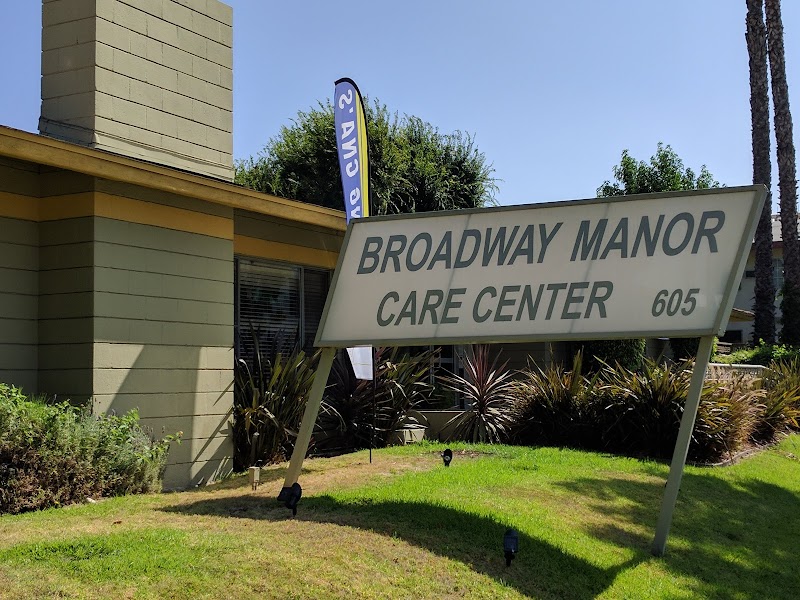
How is Broadway Manor Staffed?

CMS rates BROADWAY MANOR CARE CENTER's staffing level at 4 out of 5 stars, which is above average compared to other nursing homes. Staff turnover is 40%, compared to the California average of 46%. This relatively stable workforce can support continuity of care.

What Have Inspectors Found at Broadway Manor?

State health inspectors documented 60 deficiencies at BROADWAY MANOR CARE CENTER during 2021 to 2025. These included: 1 Immediate Jeopardy (the most serious level, indicating potential for serious harm or death), 1 that caused actual resident harm, 54 with potential for harm, and 4 minor or isolated issues. Immediate Jeopardy findings are rare and represent the most serious regulatory concerns. They require immediate corrective action.

Who Owns and Operates Broadway Manor?

BROADWAY MANOR CARE CENTER is owned by a for-profit company. For-profit facilities operate as businesses with obligations to shareholders or private owners. The facility is operated by LONGWOOD MANAGEMENT CORPORATION, a chain that manages multiple nursing homes. With 78 certified beds and approximately 73 residents (about 94% occupancy), it is a smaller facility located in GLENDALE, California.
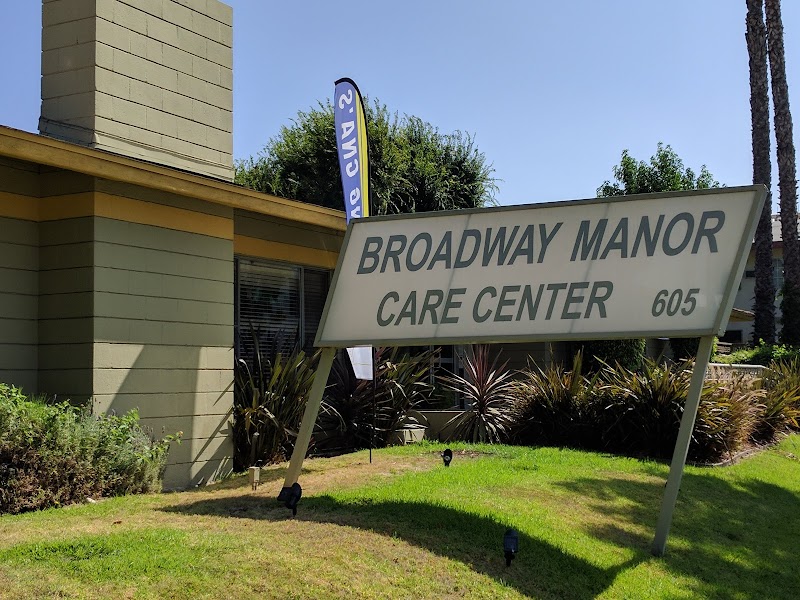
How Does Broadway Manor Compare to Other California Nursing Homes?

Compared to the 100 nursing homes in California, BROADWAY MANOR CARE CENTER's overall rating (2 stars) is below the state average of 3.1, staff turnover (40%) is near the state average of 46%, and health inspection rating (2 stars) is below the national benchmark.

What Should Families Ask When Visiting Broadway Manor?

Based on this facility's data, families visiting should ask: "What changes have been made since the serious inspection findings, and how are you preventing similar issues?" "Can I visit during a mealtime to observe dining assistance and food quality?" "How do you handle medical emergencies, and what is your hospital transfer rate?" "Can I speak with family members of current residents about their experience?" These questions are particularly relevant given the facility's Immediate Jeopardy citations.

Is Broadway Manor Safe?

Based on CMS inspection data, BROADWAY MANOR CARE CENTER has documented safety concerns. Inspectors have issued 1 Immediate Jeopardy citation (the most serious violation level indicating risk of serious injury or death). The facility has a 2-star overall rating and ranks #100 of 100 nursing homes in California. Families considering this facility should ask detailed questions about what corrective actions have been taken since these incidents.

Do Nurses at Broadway Manor Stick Around?

BROADWAY MANOR CARE CENTER has a staff turnover rate of 40%, which is about average for California nursing homes (state average: 46%). Moderate turnover is common in nursing homes, but families should still ask about staff tenure and how the facility maintains care continuity when employees leave.

Was Broadway Manor Ever Fined?

BROADWAY MANOR CARE CENTER has been fined $36,090 across 1 penalty action. The California average is $33,440. While any fine indicates a compliance issue, fines under $50,000 are relatively common and typically reflect isolated problems that were subsequently corrected. Families should ask what specific issues led to these fines and confirm they've been resolved.

Is Broadway Manor on Any Federal Watch List?

BROADWAY MANOR CARE CENTER is not on any federal watch list. The most significant is the Special Focus Facility (SFF) program, which identifies the bottom 1% of nursing homes nationally based on persistent, serious quality problems. Not being on this list means the facility has avoided the pattern of deficiencies that triggers enhanced federal oversight. This is a positive indicator, though families should still review the facility's inspection history directly.