GLENDALE POST ACUTE CENTER
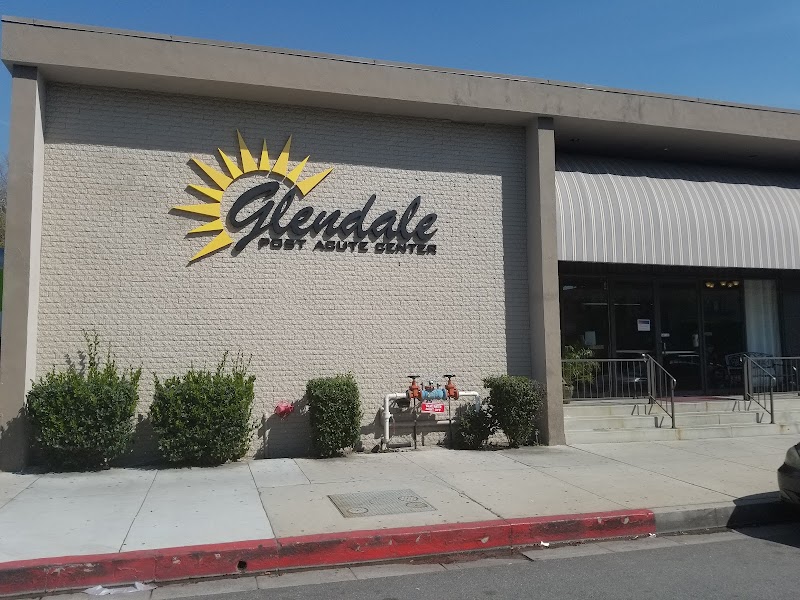
250 N. VERDUGO ROAD, GLENDALE, CA 91206 (818) 244-1133
For profit - Corporation 136 Beds CAMBRIDGE HEALTHCARE SERVICES Data: November 2025 3 Immediate Jeopardy citations
Trust Grade
0/100
#1025 of 1155 in CA
Last Inspection: October 2024

Within standard 12-15 month inspection cycle. Federal law requires annual inspections.

Overview

Glendale Post Acute Center has received a Trust Grade of F, indicating poor performance with significant concerns about care quality. It ranks #1025 out of 1155 facilities in California, placing it in the bottom half of all nursing homes in the state, and #301 out of 369 in Los Angeles County. While the facility is reportedly improving, with issues decreasing from 41 in 2024 to 14 in 2025, it still has a concerning history, including $161,982 in fines, which is higher than 93% of facilities in California. Staffing is average with a 3/5 star rating and a turnover rate of 42%, which is close to the state average. However, there have been critical incidents, such as failing to protect residents from sexual abuse and a significant outbreak of gastrointestinal illness due to inadequate infection control measures, raising serious red flags for families considering this facility.

Trust Score
F
0/100
In California
#1025/1155
Bottom 12%
Safety Record
High Risk
Review needed
Inspections
Getting Better
41 → 14 violations
Staff Stability
○ Average
42% turnover. Near California's 48% average. Typical for the industry.
Penalties
✓ Good
$161,982 in fines. Lower than most California facilities. Relatively clean record.
Skilled Nurses
⚠ Watch
Each resident gets only 24 minutes of Registered Nurse (RN) attention daily — below average for California. Fewer RN minutes means fewer trained eyes watching for problems.
Violations
⚠ Watch
93 deficiencies on record. Higher than average. Multiple issues found across inspections.
★☆☆☆☆
1.0
Overall Rating
★★★☆☆
3.0
Staff Levels
★★★☆☆
3.0
Care Quality
★☆☆☆☆
1.0
Inspection Score
Stable
2024: 41 issues
2025: 14 issues

The Good

  • Full Sprinkler Coverage · Fire safety systems throughout facility
  • No fines on record
  • Staff turnover below average (42%)

    6 points below California average of 48%

Facility shows strength in fire safety.

The Bad

1-Star Overall Rating

Below California average (3.1)

Significant quality concerns identified by CMS

Staff Turnover: 42%

Near California avg (46%)

Typical for the industry

Federal Fines: $161,982

Well above median ($33,413)

Significant penalties indicating serious issues

Chain: CAMBRIDGE HEALTHCARE SERVICES

Part of a multi-facility chain

Ask about local staffing decisions and management

The Ugly 93 deficiencies on record

3 life-threatening 1 actual harm
Sept 2025 1 deficiency
CONCERN (D) 📢 Someone Reported This

A family member, employee, or ombudsman was alarmed enough to file a formal complaint

Potential for Harm - no one hurt, but risky conditions existed

Comprehensive Care Plan (Tag F0656)

Could have caused harm · This affected 1 resident

**NOTE- TERMS IN BRACKETS HAVE BEEN EDITED TO PROTECT CONFIDENTIALITY** Based on observation, interview, and record review, the facility failed to ensure a resident specific care plan was initiated fo...

Read full inspector narrative →
**NOTE- TERMS IN BRACKETS HAVE BEEN EDITED TO PROTECT CONFIDENTIALITY** Based on observation, interview, and record review, the facility failed to ensure a resident specific care plan was initiated for one of three sampled resident (Resident 1), when Resident 1 verbalized feelings of being upset, angry and threatened during an incident that occurred on 9/7/25 after Responsible Party 1 told Resident 1 to lower the telephone volume. This deficient practice had the potential to result in Resident 1 not being monitored adequately by facility staff and not meeting Resident 1's specific needs.During a review of Resident 1's admission Record (AR), the AR indicated Resident 1 was originally admitted to the facility on [DATE] and readmitted on [DATE] , with a diagnosis of End Stage Renal Disease (ESRD - the kidneys can no longer filter waste and extra fluid from the blood the way they should) and dependence on renal dialysis (a process that uses a machine to clean the blood and remove extra fluid in order to stay alive). During a review of Resident 1's History and Physical (H&P), dated 3/21/2025, the H&P indicated Resident 1 had the capacity to understand and make decisions. During a review of Resident 1's Minimum Data Set ( MDS - a resident assessment tool), dated 07/10/2025, indicated the resident is cognitively intact ( fully alert, oriented, and able to make decisions and participate in care planning) requiring verbal cues and /or touching/ steadying and/ or contact guard assistance for most activities of daily living such as personal hygiene and dressing. During a review of Resident 2's AR, the AR indicated the resident was admitted on [DATE] with diagnoses that included but not limited to Acute systolic congestive heart failure ( the heart is weaker than normal and can't pump blood as well as the body needs, because the heart isn't pumping strongly, blood and fluid can back up into the lungs, feet, ankles, or abdomen). During a review of Resident 2's MDS, dated [DATE], the MDS indicated the resident has sever cognitive impairment (having sever loss of ability to think, remember, and may not be able to recall words, or answer basic questions) and requires moderate assistance - helper does more than half the effort with personal hygiene activities. During a review of the facility provided document titled Grievance/Complaint Report Form, dated 9/8/25, the Form indicated that Resident 1 felt threatened and intimidated from Resident 2's Responsible Party (RP) 1, after Resident 1 did not lower the volume on her phone. During a review of Resident 1's Social Service Note, dated 9/10/2025 at 6 PM, the Note indicated facility staff would conduct frequent observations in Resident 1's room to ensure Resident 1's comfort and reinforce Resident 1's sense of safety. There was not indication on how frequent staff would perform the observations. During an interview on 9/22/2025 at 9:07AM with Resident 1, Resident 1 stated RP 1 had complained about her personal phone being too loud , and RP 1 demanded Resident 1 to lower the phone volume, or RP 1 would call the police. Resident 1 stated RP 1's voice was loud and threatening which made Resident 1 feel scared . Resident 1 stated the incident left her feeling upset, mad, and uncomfortable. Resident 1 stated I feel like I have no privacy since RP 1 was always in the room. During an interview on 9/22/25 at 9:57 AM with the Social Worker (SW), SW stated after Resident 1 verbalized the incident to the SW, the interventions that were implemented was that a wellness check was provided for three days. The SW stated facility staff were to conduct ongoing checks to ensure Resident 1 felt safe. During a concurrent interview and record review on 9/22/2025 at 12:51PM with the Director of Nursing (DON), Resident 1's care plans were reviewed. DON stated, there was no care plan that was initiated for Resident 1 regarding the incident of RP 1 telling Resident 1 to lower the phone volume. The DON stated a care plan should have been initiated for the incident, however the DON stated that this incident was different, and we were not sure how to handle this. The DON stated creating a care plan would ensure interventions were followed, so facility staff knew to monitor Resident 1 when RP 1 was visiting Resident 2. During a review of the facility's policy and procedure ( P&P) titled, Care Plans, Comprehensive Person-Centered, revised 2002, indicates a comprehensive , person-centered care plan that includes measurable objectives and timetables to meet the resident's physical, psychosocial and functional need is developed and implemented for each resident . A comprehensive, person-centered care plan is developed within seven (7) days after a significant change in status with care plan interventions chosen only after data gathering, proper sequencing of events, careful consideration of the relationship between the resident's problem areas and their causes, and relevant clinical decision making. Assessments of residents are ongoing, and care plans are revised as information about the residents and the residents' conditions change.
Aug 2025 2 deficiencies
CONCERN (D) 📢 Someone Reported This

A family member, employee, or ombudsman was alarmed enough to file a formal complaint

Potential for Harm - no one hurt, but risky conditions existed

Accident Prevention (Tag F0689)

Could have caused harm · This affected 1 resident

**NOTE- TERMS IN BRACKETS HAVE BEEN EDITED TO PROTECT CONFIDENTIALITY** Based on interview and record review, the facility failed to ensure two of four sampled residents (Resident 1 and Resident 2) wh...

Read full inspector narrative →
**NOTE- TERMS IN BRACKETS HAVE BEEN EDITED TO PROTECT CONFIDENTIALITY** Based on interview and record review, the facility failed to ensure two of four sampled residents (Resident 1 and Resident 2) who were at risk for falls, were provided supervision to prevent further fall instances, by failing to: 1. Ensure Resident 1, who had severely impaired cognition (thought process) was frequently monitored as indicated on Resident 1's Care Plan.2. Accurately document and assess Resident 2's Fall Risk Assessment after Resident 2 fell on 5/25/25 and 7/27/25.This deficient practice resulted in Resident 1 sustaining a fall on 7/27/2025.This deficient practice resulted in Resident 2 sustaining a fall on 5/25/2025 and 7/27/2025 and Resident 2 not receiving appropriate preventative measures to prevent future falls. During a review of Resident 1's admission Record (AR), the AR indicated that resident 1 was admitted to the facility on [DATE] and readmitted on [DATE] with diagnoses including hypertension ( high blood pressure), Traumatic Subdural Hemorrhage without loss of consciousness (a serious injury where blood collects between the brain and its outer covering), and mood disorder due to known physiological condition (general emotional state or mood is distorted or inconsistent with circumstances and interferes with ability to function).During a review of Resident 1's History and Physical (H&P) dated 4/18/2025, the H& P indicated Resident 1 does not have a capacity to make medical decision.During a review of Resident 1's Minimum Data Set (MDS, a resident assessment tool) dated 7/18/2025, the MDS indicated Resident 1's brief interview of mental status (BIMS, brief screener that aids in detecting cognitive impairment) score was 2 (a score of 0-7 indicated cognitive skills for daily decision was severely impaired ).The MDS indicated Resident 1's tub/shower transfer and toilet transfer was not attempted due to medical condition or safety concern. The MDS indicated Resident 1 required maximal assistant (helper dose more than half of the effort. Helper lifts or holds trunk or limbs and provide more than half the effort ) for personal hygiene, upper lower body dressing, toileting hygiene, oral hygiene, chair/bed to-chair transfer. The MDS indicated Resident 1 required partial moderate assistant (helper dose less than half the effort. Helper lifts, holds, or supports trunk or limb but provides less than half of the effort )During a Review of Resident 1 Change in Condition Evaluation dated 7/27/2025, at 8:15 AM, the Evaluation indicated Resident 1 sustained a fall at 8:15 AM and was found lying down on the floor on Resident 1's Left side.During a Review of Resident 1's Fall Risk assessment dated [DATE] indicated Resident 1 was at risk for falls.During a Review of Resident 1's Care plan for [Resident 1] is at risk for unavoidable falls with injury related to limited mobility , confusing , dec conditioning , gait balance problem incontinent , paralysis , unaware of safety needs , vison hearing problem recurrent falls attempting to get out of bed without assistance, revised on 6/11/25, the care plan indicated a goal for Resident 1 to be free of falls. The Care Plan intervention indicated to anticipate and meet the resident needs, be sure the resident call light is within reach and encourage the resident to use it as needed and frequent visual monitoring. During a review of Resident 2's AR, the AR indicated the Resident 2 was admitted to the facility on [DATE] with diagnoses including dependent on renal dialysis (Kidney dialysis is the process of removing excess water, solutes, and toxins from the blood in people whose kidneys can no longer perform these functions naturally), type 2 Diabetes (high blood sugar) , Depression (metal illness constant feeling of sadness).A review of Resident 2's History and Physical (H&P) encounter date 12/1/2024, the H&P indicated Resident 2 has the capacity to understand and make decision.During a review of Resident 2's MDS, dated [DATE], the MDS indicated Resident 2's BIMS, score was 13 (a score of 13-15 indicated cognitive skills for daily decision making is intact ). The MDS indicated Resident 1 required supervisor and touching assistant (helper provide verbal clues and/or touching steadying and /or contact guard assistance as Resident completes activity. Assistant may be provided throughout the activity or intermittently.) for sit to stand, chair/bed-to chair transfer toilet transfer, walk 10 feetDuring a Review of Resident 2 Change in Condition Evaluation dated 3/09/2025 at 00:40 AM, the Evaluation indicated Fall , and indicated Resident 2 reported that he fell in the front lobby when he attempting to stand up from his wheelchair, the strap from his boot got caught on his wheelchair and Resident 2 loss his balance and fell. The evaluation indicated that Resident 2 sustained two small cuts noted on his right shin.During a Review of Resident 2 Change in Condition Evaluation dated 5/25/2025 at 6:08 PM, the Evaluation indicated Fall , and indicated Resident 2 reported that he fell in the room, after losing balance. The Evaluation indicated Resident 2 fell knees first onto the floor. During a Review of Resident 2's Change in Condition Evaluation dated 7/27/2025 at 4:44 PM, the Evaluation indicated Fall and indicated Resident 2 was seen falling in front of his room by the door, holding his breakfast tray and suddenly lost his balance. The Resident quickly sat on the floor before nurses could stop the fall.During a Review of Resident 2's Fall Risk assessment dated [DATE] at 6:08 PM, the Assessment indicated the Reason for the assessment request was due to a Recent Fall. The Assessment indicated the number two (2) input for the history of falls within the last six (6) months, which indicated Resident had no history of falls. The Assessment indicated Resident 2 was not at risk for falls. During a review of Resident 2's Fall Risk assessment dated [DATE] at 5:05 PM, the Assessment indicated the Reason for the assessment request was due to a Recent Fall. The Assessment indicated the number two (2) input for the history of falls within the last six (6) months, which indicated Resident had no history of falls. The Assessment indicated Resident 2 was not at risk for falls.During an interview on 8/6/2025, at 11:25 AM, Resident 2 stated on 7/27/2025 around 8:10 AM, Resident 2 pressed his call light (a device in healthcare settings that allows patients to remotely request assistance from nurses or other staff members) so staff could take his empty breakfast tray away. Resident 2 stated waiting approximately 30 minutes, and that facility staff did not come to assist Resident 2 with his breakfast tray. Resident 2 stated he then decided to bring the empty breakfast tray to the staff, but then fell in front of his room. During an interview on 8/7/2025 at 11:02 AM with registered nurse supervisor (RNS), RNS stated Resident 1 was alert and oriented times 1(A/O x1: resident is alert and oriented to person only), and was a fall risk due to recurrent history of falls and was noncompliant with the use of his call light. RNS stated Resident 1 was forgetful and confused and that staff places Resident 1 in front of the facility nursing station to monitor and supervise Resident 1 to prevent a fall. RNS stated Resident 1 was placed in front of the nursing station for supervision, since there was not enough staff, and that when there was not enough staff, such a certified nurse assistant (CNA), residents were at risk for fall. During a concurrent interview and record review of Resident 1's Care plan for at high risk for unavoidable falls with injury related to limited mobility , confusion, deconditioning , gait balance problem incontinent , paralysis , unaware of safety needs , vison hearing problem recurrent falls attempting to get out of bed without assistance , revised on 1/16/2025, on 8/7/2025 at 1:58 PM with the Director of Nursing (DON), the DON stated care plan goal indicated Resident 1 would be free from falls DON stated Resident 1 was confused resident and did not follow directions, so facility staff placed Resident 1 in front of the nursing station to prevent falls. The DON stated since resident 1 had a fall the care plan intervention were not effective and that the care plan should be more specific to Resident 1's needs to indicate the frequency of visual monitoring to prevent falls or accidents. During an interview on 8/7/2025 at 1:58 PM with the DON, the DON stated Resident 2 had a fall on 3/9/2025, 5/25/2025 ,and 7/27/2025. The DON stated after each fall it was protocol for the licensed nurse (LN) to conduct a fall risk assessment and based on the fall risk assessment a care plan was initiated. The DON stated when a resident was assessed for risk for falls, facility staff would need to implement interventions to prevent the resident for a fall.During a concurrent interview and record review on 8/7/2025 at 1:58 PM with the DON, Resident 2's Fall Risk Assessments dated 5/25/2025 and 7/27/25 were reviewed. The DON stated the two Assessments were not accurate since both Assessments indicated Resident 2 did not have a history of falls within the last six (6) months. The DON stated the 5/25/25 Assessment should indicate a fall since Resident 2 fell on 3/9/2025. The DON stated the 7/27/25 Assessment should indicate a fall since Resident 2 fell on 5/25/25. The DON stated it was essential to accurately assess and document on the fall risk assessment so facility staff would know if a resident was at risk for falls to provide interventions based on the assessment. During a review of the facility's Policy and Procedure titled, Falls and Fall Risk, Managing, revised March 2018, indicated Based on previous evaluations and current data, the staff will identify interventions related to the resident's specific risks and causes to try to prevent the resident from falling and to try to minimize complications from falling. Fall is defined as unintentionally coming to rest on the ground, floor or other lower level, but not as a result of an overwhelming external force (e.g., a resident pushes another resident). An episode where a resident lost his/her balance and would have fallen, if not for another person or if he or she had not caught him/herself, is considered a fall. A fall without injury is still a fall. Unless there is evidence suggesting otherwise, when a resident is found on the floor, a fall is considered to have occurred. The staff, with the input of the attending physician, will implement a resident-centered fall prevention plan to reduce the specific risk factor(s) of falls for each resident at risk or with a history of falls. If the resident continues to fall, staff will re-evaluate the situation and whether it is appropriate to continue or change current interventions. As needed, the attending physician will help the staff reconsider possible causes that may not previously have been identified. The staff and/or physician will document the basis for conclusions that specific irreversible risk factors exist that continue to present a risk for falling or injury due to falls.During a review of the facility's Policy and Procedure titled, Fall Risk Assessment, with no date, indicated The nursing staff, in conjunction with the attending physician. consultant pharmacists, therapy staff, and others, will seek to identify and document resident risk factors for falls and establish a resident-centered falls prevention plan based on relevant assessment information. The staff will seek to identify environmental factors that may contribute to falling, such as lighting and room layout. The staff and attending physician will collaborate to identify and address modifiable fall risk factors and interventions to try to minimize the consequences of risk factors that are not modifiableDuring a review of the facility's Policy and Procedure titled, Certified Nursing Assistant , with no date, indicated Position summary :The purpose of your job position is to provide each resident with routine daily nursing care in accordance with the resident's assessment plan along with current federal, state, and local standards that govern the facility, and as directed by your supervisions. essential duties and responsibilities :answering call lights ,ensure that all nursing care is provided in privacy, making residents comfortable (putting them in bed, bringing them water, etc.), assisting in feeding residents (by cutting their food and spoon feeding if needed), helping residents with their daily grooming, shower or sponge bath, proper lifting and transitioning residents from wheelchair to bed, bed to chair, etc, helping residents, sit, stand and walk, transporting residents to dining area (for meals and activities) and returning them to their room, timely reporting of change in resident's condition to the Nurse Supervisor.
CONCERN (F) 📢 Someone Reported This

A family member, employee, or ombudsman was alarmed enough to file a formal complaint

Potential for Harm - no one hurt, but risky conditions existed

Deficiency F0725 (Tag F0725)

Could have caused harm · This affected most or all residents

**NOTE- TERMS IN BRACKETS HAVE BEEN EDITED TO PROTECT CONFIDENTIALITY** Based on interview and record review, the facility failed to :1-Provide adequate Certified Nursing Assistant (CNA) staff to resp...

Read full inspector narrative →
**NOTE- TERMS IN BRACKETS HAVE BEEN EDITED TO PROTECT CONFIDENTIALITY** Based on interview and record review, the facility failed to :1-Provide adequate Certified Nursing Assistant (CNA) staff to respond to requests for assistance with toileting and activities of daily living (ADL) in a timely manner , for three of four sampled residents (Resident 2, Resident 3,and Resident 4).2- Implement the Facility Assessment and All facility Letter (AFL) 21-11 to meet requirement Direct Care Service Hours Per Patient Day (DHPPD) for CNA for minimum of 2.4 hours.This deficient practice resulted in Resident 2 sustaining a fall on 7/27/25 in the facility hallway, Resident 4 stated feeling helpless after facility staff did not address the call light timely to assist Resident 4 with his wheelchair, and Resident 3 waiting for two hours to assist with ADL's.This deficient practice resulted in not meeting the minimum requirements for CNA's to provide adequate care and necessary services needed for each resident in the facility.During a review of Resident 2's admission Record (AR), the AR indicated the Resident 2 was admitted to the facility on [DATE] with diagnoses including dependent on renal dialysis (Kidney dialysis is the process of removing excess water, solutes, and toxins from the blood in people whose kidneys can no longer perform these functions naturally), type 2 Diabetes (high blood sugar) , Depression (metal illness constant feeling of sadness).During a review of Resident 2's History and Physical (H&P) encounter date 12/1/2024, the H&P indicated Resident 2 has the capacity to understand and make decision.During a review of Resident 2's Minimum Data Set (MDS, a resident assessment tool) dated 6/3/2025, the MDS indicated Resident 2's brief interview of mental status (BIMS, brief screener that aids in detecting cognitive impairment) score was 13 (a score of 13-15 indicated cognitive skills for daily decision making is intact ). The MDS indicated Resident 1 required supervisor and touching assistant (helper provide verbal clues and/or touching steadying and /or contact guard assistance as Resident completes activity. Assistant may be provided throughout the activity or intermittently.) for sit to stand, chair/bed-to chair transfer toilet transfer, walk 10 feet.During a Review of Resident 2 Change in Condition Evaluation dated 7/27/2025 and timed at 4:44 PM, the Evaluation indicated the date and time Resident 2's responsible party (RP) was notified of Resident 2's fall was 7/27/2025 at 8:47 AM. The Evaluation indicated Resident was seen falling in front of his room by the door holding his breakfast tray and suddenly lost his balance. The Resident quickly sat on the floor before nurses can stop the fall.During a review of Resident 3's AR , the AR indicated Resident 3 was admitted to the facility on [DATE] with diagnoses including hearth failure (high blood pressure), pressure ulcer of sacral region (pressure ulcer of sacral region), and atherosclerosis of Aorta (a progressive buildup of plaque in the largest artery in your body, called your aorta).During a review of Resident 3's H&P encounter date 7/11/2025, the H&P indicated Resident 3 has the capacity to understand and make decision.During a review of Resident 3's MDS, dated [DATE], the MDS indicated Resident 3's BIMS score was 15 (a score of 13-15 indicated cognitive skills for daily decision making is intact).The MDS indicated Resident 3 is dependent (helper dose all of the effort . Resident done none of the effort to complete the activity or assistance of 2 or more helpers is required for the resident to complete the activity) on toileting , hygiene shower/bath self, personal hygiene, roll left and right . The MDS indicated sit to lying, lying to sitting , sit to stand toilet transfer did not attempt due to medical condition or safety concerns.During a review of Resident 4's AR, the AR indicated the Resident 4 was admitted to the facility on [DATE] with diagnoses including Diabetes (high blood sugar) , hypertension (high blood pressure) , and Syncope and collapse (sudden and temporary loss of consciousness and fall).During a review of Resident 4's H&P encounter date 4/23/2025, Resident 4 has the capacity to understand and make decision.During a review of Resident 4's MDS, dated [DATE], the MDS indicated Resident 4's BIMS score was 13 (a score of 13-15 indicated cognitive skills for daily decision making is intact ). The MDS indicated Resident 1 required supervisor and touching assistant (helper provide verbal clues and/or touching steadying and /or contact guard assistance as Resident completes activity .Assistant may be provided throughout the activity or intermittently) for sit to stand, chair/bed-to chair transfer , toilet transfer. The MDS indicated Resident 4 required partial moderate assistant (helper dose less than half the effort. Helper lifts, holds, or supports trunk or limb but provides less than half of the effort) for walking 10 feet.During an interview on 8/6/2025 at 11:25 AM with Resident 2, Resident 2 stated on 7/27/2025 between 7:30 AM to 8 AM he pressed the call light so staff could take his empty breakfast tray, however no one showed up. Resident 2 stated he waited approximately 30 min then he decided to take the tray away himself but had a fall in front of his room.During an interview on 8/6/2025 at 11:40 AM with Resident 3, Resident 3 stated on 8/4/2025 around 1 AM she was wet and had bowel movement so she pressed the call light and screamed out the door, but no one came to change her until 3:00 PM (2 hours later). Resident stated no one came to provide care.During an interview on 8/6/2025 at 11:45 AM with Resident 4, Resident 4 stated on 8/4/2025 around 4 PM he needed help to be transferred to his wheelchair, however the wheelchair was not in the room, so he pressed to call light for help, but no one answered the call light. Resident 4 stated around 5 PM (an hour later) one of license nurses answered the call light and found the wheelchair. Resident 4 stated not getting helped and being stuck in the bed made him feel helpless.During an interview on 8/6/2025 at 12:13 PM with the Director of Staff Development (DSD) 1, DSD 1 stated based on the facility census (the total number of patients or residents currently residing in that facility) DSD 1 scheduled CNA's and that each shift was different. DSD 1 stated she followed the Nursing Hours Per Patient Day (NHPPD) for scheduling CNA's to meet 2.4 hours required hours by state. DSD 1 stated facility does not have waiver for staffing and the facility was not in compliance with the required hours for CNA which was 2.4 for direct care hours. DSD stated she reported to the DON and ADM about the staffing issue . DSD 1 stated using the registry would help with staffing. DSD 1 stated not having enough CNA's would result in poor quality of care and poor quality of life for Resident. In addition, residents ADL will not be met and there is potential for harm.During an interview and record review of Direct Care Services Hours Per Day (DHPPD), on 8/6/2025 , at 12:13 PM with DSD 1, DSD 1 stated:On 7/27/2025, the projected CNA staffing was 2.3 and the actual was 2.06 , Census inhouse116+ bed hold 5=121 (less than the required 2.4)On 7/28/2025, the projected CNA staffing was 2.09 and the actual was 2.08 , Census in house120+bed hold 4=124 (less than the required 2.4)On 7/30/2025, the projected CNA staffing was 2.05 and the actual was 2.06 , Census in house 119+bed hold 3= 122 (less than the required 2.4)On 7/31/2025, the projected CNA staffing was 2.33 and the actual was 2.09, Census in house 119+bed hold 5 =124 (less than the required 2.4)On 8/3/2025, the projected CNA staffing was 2.27 and the actual was 2.15 , Census in house 117+bed hold 3= 120 (less than the required 2.4)On 8/4/2025, the projected CNA staffing was 2.12 and the actual was 2.05 , Census in house 117+ bed hold 3= 120 (less than the required 2.4)During an interview on 8/6/2025, at 12:36 PM with Certified Nursing Assistant (CNA) 1, CNA 1 stated she does not want to talk about whether the facility has staffing issue for CNA's since CNA 1 was scared that the facility would retaliate.During an interview on 8/6/2025 at 12:38 PM, CNA 2 stated she will get into trouble if she told the facility is under staff .During an interview on 8/6/2025, at 2:38 PM with Administrator (ADM), ADM stated he was aware of the staffing issue for 7/27/2025 however it got missed. The ADM stated facility was following All Facilities Letter (AFL) 21 -11 and the plan was for the facility to meet the required standard of direct care for staffing requirement of 2.4 hours for CNAs.During an interview and record review of Direct Care Services Hours Per Patient Day (DHPPD), on 8/6/2025 , at 2:40 PM with the ADM, ADM stated:On 7/27/2025, the projected CNA staffing was 2.3 and the actual was 2.06 , Census inhouse116+ bed hold 5=121 (less than the required 2.4)On 7/28/2025, the projected CNA staffing was 2.09 and the actual was 2.08 , Census in house120+bed hold 4=124 (less than the required 2.4)On 7/30/2025, the projected CNA staffing was 2.05 and the actual was 2.06 , Census in house 119+bed hold 3= 122 (less than the required 2.4)On 7/31/2025, the projected CNA staffing was 2.33 and the actual was 2.09, Census in house 119+bed hold 5 =124 (less than the required 2.4)On 8/3/2025, the projected CNA staffing was 2.27 and the actual was 2.15 , Census in house 117+bed hold 3= 120 (less than the required 2.4)On 8/4/2025, the projected CNA staffing was 2.12 and the actual was 2.05 , Census in house 117+ bed hold 3= 120 (less than the required 2.4)ADM stated the facility was not in compliance with the required hours for CNA which is 2.4 for direct care hours.During an interview on 8/7/2025 at 10:55AM with Registered Nurse (RN) supervisor, RN supervisor stated Resident 2 had a fall on 7/27/2025 around 8:50 AM when he was carrying his empty breakfast tray out from room, and fell in front of his room. RN Supervisor stated the job description of CNA are assisting with ADL, feeding, showering, changing, answering call light. RN supervisor stated CNA pick up breakfast tray because they document how much the patient ate. RN supervisor stated the potential outcome of not having enough CNA's on floor was that the shortage could lead to safety issues, call light not answered timely , potential for harm and accidents.During a an interview on 8/7/2025 at 3:47 PM, CNA 3 stated that she was assigned to care for twelve residents more than one time in the last two weeks. CNA 3 stated she rushed care and could not provide proper care for residents. During a review of the Facility Assessment provided by facility updated date 7/6/2025 , indicated The Facility Assessment is a complete review of internal human and physical resources required by the facility to care for residents competently during day to day and emergency operations. The facility assessment identifies your capabilities as a skilled nursing services provider. The Facility Assessment will be the basis for surveyors to ascertain whether you are prepared to competently take care of the population you have identified that you serve. The facility will maintain a minimum of 3.50 hours PPD and will staff according to the needs of the residents. Will strive towards reaching 2.4 CNA PPD. Action already taken/on-going.During a review of the California Department of Public Health AFL 21-11 subject Guidelines for 3.5 Direct Care Service Hours Per Patient Day (DHPPD) Staffing Audits dated 3/17/2021, provided by facility indicated In accordance with HSC sections 1276.5 and 1276.65, and W&I section 14126.022, this notice provides updated guidelines for facility requirements during state audits for compliance with the 3.5 DHPPD staffing requirements, of which a minimum of 2.4 DHPPD shall be performed by certified nurse assistants (CNAs).The California Department of Public Health (CDPH) is replacing AFL 19-16 with AFL 21-11 to clarify the requirements and guidelines for the 3.5 and/or 2.4 (CNA) DHPPD staffing requirements in skilled nursing facilities (SNFs). The guidelines in this AFL are applicable to the audit period beginning July 1, 2020, and shall remain in effect until superseded.During a review of the facility's Policy and Procedure titled, Facility Assessment with no date indicated , A facility assessment is conducted annually to determine and update our capacity to meet the needs of and competently care for our residents during day-to-day operations. Determining our capacity to meet the needs of and care for our residents during emergencies is included in this assessment. Once a year, and as needed, a designated team conducts a facility-wide assessment to ensure that the resources are available to meet the specific needs of our residents. The facility assessment is intended to help our facility plan for and respond to changes in the needs of our resident population and helps to determine budget, staffing. training. equipment and supplies needed. It is separate from the quality assurance and performance improvement evaluation.During a review of the facility's Policy and Procedure titled, Staffing, Sufficient and Competent Nursing, revised August 2022 , indicated Our facility provides sufficient numbers of nursing staff with the appropriate skills and competency necessary to provide nursing and related care and services for all residents in accordance with resident care plans and the facility assessment. 1.Licensed nurses and certified nursing assistants are available 24 hours a day, seven (7) days a week to provide competent resident care services including:a. assuring resident safety; b. attaining or maintaining the highest practicable physical, mental and psychosocial well-being of each resident; c. assessing, evaluating, planning and implementing resident care plans; and d. responding to resident needs.During a review of the facility's Policy and Procedure titled, Accommodation of Needs, revised March 2021, indicated Our facility's environment and staff behaviors are directed toward assisting the resident in maintaining and/or achieving safe independent functioning, dignity and, well-being.1.The resident's individual needs and preferences are accommodated to the extent possible, except when the health and safety of the individual or other residents would be endangered.2.The resident's individual needs and preferences, including the need for adaptive devices and modifications to the physical environment, are evaluated upon admission and reviewed on an ongoing basis.4.ln order to accommodate individual needs and preferences, staff attitudes and behaviors are directed towards assisting the residents in maintaining independence, dignity and well-being to the extent possible and in accordance with the residents' wishes. For example:a. interacting with the residents in ways that accommodate the physical or sensory limitations of the residents, promote communication, and maintain dignity;b. arranging toiletries and personal items so that they are in easy reach of the resident.During a review of the facility's Policy and Procedure titled, Certified Nursing Assistant , with no date, indicated Position summary :The purpose of your job position is to provide each resident with routine daily nursing care in accordance with the resident's assessment plan along with current federal, state, and local standards that govern the facility, and as directed by your supervisions. essential duties and responsibilities :answering call lights ,ensure that all nursing care is provided in privacy, making residents comfortable (putting them in bed, bringing them water, etc.), assisting in feeding residents (by cutting their food and spoon feeding if needed), helping residents with their daily grooming, shower or sponge bath, proper lifting and transitioning residents from wheelchair to bed, bed to chair, etc, helping residents, sit, stand and walk, transporting residents to dining area (for meals and activities) and returning them to their room, timely reporting of change in resident's condition to the Nurse Supervisor.During a review of the facility's Policy and Procedure titled, Dignity, revised October 2017 , indicated Each resident shall be cared for in a manner that promotes and enhances his or her sense of well-being, level of satisfaction with life, and feelings of self-worth and self-esteem.1. Residents are treated with dignity and respect at all times. 2. The facility culture supports dignity and respect for residents by honoring resident goals, choices,preferences, values and beliefs. This begins with the initial admission and continues throughout the residents facility stay.3. Individual needs and preferences of the resident are identified through the assessment process
Jul 2025 4 deficiencies
CONCERN (D) 📢 Someone Reported This

A family member, employee, or ombudsman was alarmed enough to file a formal complaint

Potential for Harm - no one hurt, but risky conditions existed

Notification of Changes (Tag F0580)

Could have caused harm · This affected 1 resident

Based on interview and record review, the facility failed to notify the physician and the responsible party (RP) for one of five sampled residents (Resident 1) when Resident 1 had a change of conditio...

Read full inspector narrative →
Based on interview and record review, the facility failed to notify the physician and the responsible party (RP) for one of five sampled residents (Resident 1) when Resident 1 had a change of condition of new skin redness between the skin folds of the lower abdomen (belly). This deficient practice had the potential to result in worsening of Resident 1's skin condition and delayed provision of necessary care and services to maintain skin integrity and prevention of infection. During a review of Resident 1's admission Record (AR), the AR indicated the facility originally admitted Resident 1 on 5/15/2023 and readmitted her on 7/3/2023 with diagnoses that include dementia (A group of thinking and social symptoms that interferes with daily functioning) and difficulty in walking. During a review of a Minimum Data Set (MDS, a resident assessment tool), dated 4/24/2025, indicated Resident 1 had severely impaired cognition (ability to understand and make decisions) and memory. The MDS indicated Resident 1 required setup or clean-up assistance with eating, partial/moderate assistance with oral hygiene and personal hygiene, substantial/maximal assistance with chair/bed-to-chair transfer and was dependent with toileting hygiene and shower/bathe self. During a review of the undated facility's Shower Schedule, the Schedule indicated Resident 1 was scheduled to receive showers every Mondays and Thursdays. During an interview on 7/3/2025 at 9:35 AM with RP 1, RP 1 stated Resident 1 had multiple skin peeling spots on her lower abdominal area, extending to her vaginal area, but the staff did not inform RP 1 about Resident 1's skin peeling until RP 1requested an unnamed staff to assess Resident 1 and show him Resident 1's peeling skin. RP 1 stated the staff did not address Resident 1's skin issue properly and did not communicate the skin issue with the RP timely. RP 1 stated he was very concerned about the inadequate care Resident 1 received from the facility. During an interview on 7/3/2025 at 11:05 AM with Certified Nursing Assistant (CNA) 1, CNA 1 stated she noticed Resident 1's skin breakdown while showering Resident 1 on 6/26/25. CNA1 stated Resident 1's lower abdomen and between the skin folds, looked like wrinkled skin. CNA 1 stated she reported the abnormal skin condition to the Treatment Nurse (TXN) on 6/26/25 and the TXN applied a cream to help healing on 6/26/2025. CNA 1 stated she did not know if the TXN reported Resident 1's abnormal skin condition to RP 1 on 6/26/2025. During an interview on 7/3/2025 at 11:47 AM with Licensed Vocational Nurse (LVN) 1, LVN 1 stated he was not informed about any skin issues regarding Resident 1. During a concurrent interview and record review on 7/3/2025 at 12:13 PM with the TXN, Resident 1's Progress Notes, dated from 5/5/2025 to 6/30/2025, and Resident 1's Change in Condition Evaluation (COC), dated from 6/25/2025 to 6/30/2025, were reviewed. The TXN stated CNA 1 informed her and when TXN assessed Resident 1 on 6/26/25, there were two redness spots on Resident 1 abdomen, between the skin folds. The TXN stated she applied Zinc Oxide cream (treats or prevents skin irritation) to the reddened area on Resident 1 to promote healing on 6/26/2025 and 6/27/2025. The TXN stated she did not document the redness of skin on the COC or Progress Notes, and she did not report Resident 1's skin redness to the physician and RP 1 on 6/26/2025. The TXN stated she did not document the redness because she thought the redness was caused by the heat due to the hot weather recently and and that the skin redness would go away in one to two days. The TXN stated there was no order obtained to apply Zinc Oxide to Resident 1. During an interview on 7/3/2025 at 1:11 AM with CNA 2, CNA 2 stated she noticed there was a discoloration on Resident 1's skin on the lower abdomen between the skin folds and Resident 1 complained of itchiness to that area on 6/27/2025. CNA 2 stated she did not know when Resident 1 developed the discoloration. CNA 2 stated she reported the skin condition to LVN 1 and the TXN, then, the TXN applied a cream to the discoloration area. CNA 2 stated she was not sure if RP 1 was aware of the discoloration. During an interview on 7/3/2025 at 3:05 PM with the Director of Nursing (DON), the DON stated the nurses should document the redness of Resident 1's skin, and report to the changes to the physician and the RP. The DON stated the physician must be notified so that Resident 1's skin condition could be identified, and to promote an early intervention to prevent Resident 1's skin condition from becoming worse. The DON stated it was important to communicate with the RP, so the RP was informed about the residents' condition. During a review of the undated facility's policy and procedure (P&P) titled, Change in a Resident's Condition or Status, the P&P indicated Our facility promptly notifies the resident, his or her attending physician, and the resident's medical/mental condition and/or status. The P&P also indicated The nurse will record in the resident's medical record information relative to changes in the resident's medical/mental condition or status.
CONCERN (D) 📢 Someone Reported This

A family member, employee, or ombudsman was alarmed enough to file a formal complaint

Potential for Harm - no one hurt, but risky conditions existed

Accident Prevention (Tag F0689)

Could have caused harm · This affected 1 resident

Based on observation, interview and record review, the facility failed to ensure one of five sampled residents (Resident 1)'s was provided with a safe and functional wheelchair with brakes that preven...

Read full inspector narrative →
Based on observation, interview and record review, the facility failed to ensure one of five sampled residents (Resident 1)'s was provided with a safe and functional wheelchair with brakes that prevented the wheelchair from moving when activated. This deficient practice had the potential to result in falls or injuries for Resident 1 f during transfers and while stationary. During a review of Resident 1's admission Record (AR), the AR indicated the facility originally admitted Resident 1 on 5/15/2023 and readmitted her on 7/3/2023 with diagnoses that include dementia (A group of thinking and social symptoms that interferes with daily functioning) and difficulty in walking. During a review of a Minimum Data Set (MDS, a resident assessment tool), dated 4/24/2025, indicated Resident 1 had severely impaired cognition (ability to understand and make decisions) and memory. The MDS indicated Resident 1 required setup or clean-up assistance with eating, partial/moderate assistance with oral hygiene and personal hygiene, substantial/maximal assistance with chair/bed-to-chair transfer and was dependent with toileting hygiene and shower/bathe self. During an interview on 7/3/2025 at 9:30 AM with the Responsible Party (RP) 1, RP 1 stated the brakes on Resident 1's wheelchair had not been working for a long time and that facility staff never fixed Resident 1's wheelchair brakes. During a concurrent observation and interview on 7/3/2025 at 10:43 AM with Restorative Nursing Assistant (RNA) 1, a wheelchair labeled with Resident 1's name was next to Resident 1's bed. When RNA 1 pushed down both brake handles of the wheelchair to lock the wheelchair, the left brake became loose and was unable to lock the left wheel tightly. RNA 1 stated this wheelchair belonged to Resident 1 and Resident 1 used this wheelchair everyday for her activities and transfers. RNA 1 stated the left brake of Resident 1's wheelchair was not working properly, and she did not know for how long the brake had been malfunctioning. RNA 1 stated if the wheelchair brakes could not stop Resident 1 wheelchair securely, the brake malfunction could lead to a fall while Resident 1 was seated in the wheelchair and/or an injury during transfers since Resident 1's wheelchair could not be locked in place. During an interview on 7/3/2025 at 11 AM with Certified Nursing Assistant (CNA) 1, CNA 1 stated she noticed the left brake of Resident 1's brake could not lock the wheel, and that CNA1 reported Resident 1's wheelchair brakes to the Maintenance Supervisor (MS) and Maintenance Supervisor Assistant (MSA) on 6/26/2025. CNA 1 stated Resident 1 used the wheelchair for transfers to move around the facility, and that Resident 1 would sit in the wheelchair everyday. CNA 1 stated it was important to have a functional brake for the wheelchair to prevent falls and injury to the resident. During a concurrent interview and record review on 7/3/2025 11:36 AM with the MSA, Maintenance Request Log, dated from 4/12/2025 to 7/3/2025, was reviewed. The MSA stated he did not know the brake of Resident 1's wheelchair was not functioning properly until today and that the staff did not inform MSA about it last week, and there was no documentation indicating any request to repair Resident 1's wheelchair for the past three months. During an interview on 7/3/2025 at 3:07 PM with the Director of Nursing (DON), the DON stated he was not informed that the brake of Resident 1's wheelchair was not working properly, and that a nonfunctioning wheelchair break could place the resident at risk for fall and injuries during transfers around the facility, and when Resident 1 was sitting in the wheelchair. The DON stated the staff should notify the maintenance staff immediately for any malfunction of the equipment to prevent accidents. During an interview on 7/3/2025 at 4:03 PM with the MS, the MS stated he had not received any report on Resident 1's wheelchair was not working properly until today. During a review of the undated facility's policy and procedure (P&P) titled, Assistvie Device and Equipment, the P&P indicated devices and equipment are maintained on schedule and according to manufacturer's instructions, and defective or worn devices are discarded or repaired.
CONCERN (D) 📢 Someone Reported This

A family member, employee, or ombudsman was alarmed enough to file a formal complaint

Potential for Harm - no one hurt, but risky conditions existed

Medical Records (Tag F0842)

Could have caused harm · This affected 1 resident

**NOTE- TERMS IN BRACKETS HAVE BEEN EDITED TO PROTECT CONFIDENTIALITY** Based on interview and record review, the facility failed to document medications administered for three of five sampled residen...

Read full inspector narrative →
**NOTE- TERMS IN BRACKETS HAVE BEEN EDITED TO PROTECT CONFIDENTIALITY** Based on interview and record review, the facility failed to document medications administered for three of five sampled residents (Resident 1, 3, and 4) onto the Medication Administration Record (MAR) on 6/15/2025 during the 3 PM to 11 PM. This deficient practice had the potential to result in medication errors for Resident 1, 3 and 4 and negatively impact the delivery of services for the residents. 1.During a review of Resident 1's admission Record (AR), the AR indicated the facility originally admitted Resident 1 on 5/15/2023 and readmitted her on 7/3/2023 with diagnoses that include dementia (A group of thinking and social symptoms that interferes with daily functioning) and seizure (a sudden, uncontrolled surge of electrical activity in the brain that can cause changes in behavior, movements, sensations, or levels of awareness). During a review of Resident 1's Minimum Data Set (MDS, a resident assessment tool), dated 4/24/2025, indicated Resident 1 had severely impaired cognition (ability to understand and make decisions) and memory. The MDS indicated Resident 1 required setup or clean-up assistance with eating, partial/moderate assistance with oral hygiene and personal hygiene, substantial/maximal assistance with chair/bed-to-chair transfer, and was dependent with toileting hygiene and shower/bathe self. During a review of Resident 1's Order Summary Report, dated 7/3/2025, the Report indicated the following physician's orders: a. Atorvastatin Calcium (a medication to treat high cholesterol [fatty particles in the blood]) Oral Tablet 80 milligram (MG, a unit of measurement) one tablet by mouth at bedtime, starting on 10/27/2025 b. Gabapentin (a medication to treat seizure and nerve pain) Oral Capsule 100 MG one capsule by mouth two times a day, starting on 10/28/2025 c. Levetiracetam (a medication to treat seizure) 500 MG two tablet by mouth two times a day, starting on 10/28/2025 d. Lactulose 20 gram (GM, a unit of measurement)/milliliter (ML, a unit of measurement) 30 ML by mouth three times a day, starting on 6/12/2025 2.During a review of Resident 3's AR, the AR indicated the facility originally admitted Resident 3 on 6/10/2015 and readmitted on [DATE] with diagnoses that include hypertension (high blood pressure) and hyperlipidemia (high fatty particles in the blood). During a review of Resident 3's MDS, dated [DATE], the MDS indicated Resident 3 had intact cognition and memory. The MDS indicated Resident 3 required setup or clean-up assistance with eating and oral hygiene, supervision or touching assistance with toileting hygiene, shower/bathe self and personal hygiene, and partial/moderate assistance with chair/bed-to-chair transfer. During a review of Resident 3's Order Summary Report, dated 7/3/2025, the Report indicated the following physician's orders: a. Atorvastatin Calcium 20 MG one tablet by mouth at bedtime, starting on 11/18/2020 b. Latanoprost (a medication used to treat high pressure inside the eye) Solution 0.005% instill one drop in both eyes at bedtime, starting on 4/22/2021 c. Timolol Maleate (a medication used to treat high pressure inside the eye) Solution 0.5% instill one drop in both eyes at bedtime, starting on 4/22/2021 d. Carvedilol (a medication to treat high blood pressure) 25 MG one tablet by mouth two times a day, starting on 10/28/2021 e. Calcium Acetate (a medication to lower high phosphate (a chemical) level in body) 667 MG one tablet by mouth with meals, starting on 3/6/2024 f. Renvela (a medication used to manage high blood phosphate levels in the body) 800 MG one tablet by mouth with meals, starting on 11/3/2023 g. Retaine Carboxymethylcelliulose (a medication to relieve dry, scratchy and irritated eyes) Solution 0.5% instill one drop in both eyes four times a day, starting on 9/26/2022 3.During a review of Resident 4's AR, the AR indicated the facility originally admitted Resident 4 on 1/4/2025 and readmitted on [DATE] with diagnoses that include hyperlipidemia and cerebral infarction (a condition where part of the brain tissue dies due to a lack of blood supply). During a review of Resident 4's MDS, dated [DATE], the MDS indicated Resident 4 had moderately impaired cognition and memory. The MDS indicated Resident 4 required setup or clean-up assistance with eating, partial/moderate assistance with oral hygiene, toileting hygiene, personal hygiene and chair/bed-to-chair transfer, and substantial/maximal assistance with shower/bathe self. During a review of Resident 4's Order Summary Report, dated 7/3/2025, the report indicated the following physician's orders: a.Atorvastatin Calcium 40 MG one tablet by mouth at bedtime, starting on 1/4/2025 b.PreserVision AREDS (a medication promote eye health) one capsule by mouth at bedtime, starting on 5/24/2025 c. Senna (a medication used to promote bowel movement) 8.6 MG one tablet by mouth at bedtime, starting on 1/27/2025 d. Amantadine hydrochloric acid (a medication to help manage symptoms like stiffness, tremors, shaking, and repetitive muscle movements) 100 MG one capsule by mouth two times a day, starting on 1/5/2025 e. Chlorhexidine Gluconate (a mouthwash commonly used to treat red and swollen gums) mouth/throat solution 0.12% 15 ML by mouth, do not swallow, rinse and spit, two times a day, starting on 1/4/2025 f. Docusate Sodium (a medication used to promote bowel movement) 100 MG one capsule by mouth two times a day, starting on 1/4/2025 g. Topiramate (a medication used to treat headache) 25 MG one tablet by mouth two times a day, starting on 1/4/2025 h. Bethanechol Chloride (a medication used to help with urination) 25 MG two tablet by mouth three times a day, starting on 5/22/2025 During a concurrent interview and record review on 7/3/2025 at 2:08 PM with Licensed Vocational Nurse (LVN) 2, Resident 1, 3 and 4's MAR, dated 6/15/2025, were reviewed. LVN 2 stated being the assigned medication nurse on 6/15/2025 from 3 PM to 11 PM for Resident's 1, 3, and 4 LVN 2 stated he had not signed the MAR for Resident's 1,3, and 4 after administering the medications. LVN 2 stated there was no documentation of the administration of medications for: 1. Resident 1: a.Atorvastatin Calsium Oral Tablet 80 MG Give one tablet at bedtime due at 9 PM. b. Gabapetin Oral Capsule 100 MG give one capsule by mouth two times a day due at 5 PM. c. Levetiracetam 500 MG two tablet by mouth two times a day due at 5 PM. d.Lactulose 20 GM/ML 30 ML by mouth three times a day due at 5 PM. 2. Resident 3: a. Atorvastatin Calcium 20 MG one tablet by mouth at bedtime due at 9 PM. b. Latanoprost Solution 0.005% instill one drop in both eyes at bedtime due at 9 PM. c. Timolol Maleate Solution 0.5% instill one drop in both eyes at bedtime due at 9 PM. d. Carvedilol 25 MG one tablet by mouth two times a day due at 5 PM. e. Calcium Acetate 667 MG one tablet by mouth with meals due at 5 PM. f. Renvela 800 MG one tablet by mouth with meals due at 5 PM. g. Retaine Carboxymethylcelliulose Solution 0.5% instill one drop in both eyes four times a day due at 5 PM and 9 PM. 3. Resident 4: a. Atorvastatin Calcium 40 MG one tablet by mouth at bedtime due at 9 PM. b. PreserVision AREDS one capsule by mouth at bedtime due at 8 PM. c. Senna 8.6 MG one tablet by mouth at bedtime due at 9 PM. d. Amantadine hydrochloric acid 100 MG one capsule by mouth two times a day due to 5 PM. e. Chlorhexidine Gluconate mouth/throat solution 0.12% 15 ML by mouth, do not swallow, rinse and spit, two times a day due at 5 PM. f. Docusate Sodium 100 MG one capsule by mouth two times a day due at 5 PM. g.Topiramate 25 MG one tablet by mouth two times a day due at 5 PM. h. Bethanechol Chloride 25 MG two tablets by mouth three times a day due at 9 PM. During an interview on 7/3/2025 at 2:11 PM with LVN 2, LVN 2 stated since there was no documentation of medication administration for Resident's 1,3, and 4, there was no proof the residents received that medication, which could lead to medication errors, resulting in the possibility of overdose or underdose the residents. During an interview on 7/3/2025 at 3:03 PM with the Director of Nursing (DON), the DON stated the nurse should document the administration of medication on the MAR after the medication was administered. The DON stated if there was no documentation on the MAR, that meant the task of administering medications was not done. The DON stated by not documenting on the MAR after a medication was administered could place the residents at risk for medication errors and potentially overdose and underdose the residents. During a review of the facility's P&P titled, Medication Administration-General Guidelines, dated 10/2017, the P&P indicated The individual who administers the medication dose records the administration on the resident's MAR directly after the medication is given. At the end of each medication pass, the person administering the medications reviews the MAR to ensure necessary doses were administered and documented.
CONCERN (D) 📢 Someone Reported This

A family member, employee, or ombudsman was alarmed enough to file a formal complaint

Potential for Harm - no one hurt, but risky conditions existed

Safe Environment (Tag F0921)

Could have caused harm · This affected 1 resident

Based on observation, interview and record review, the facility failed to provide a sanitary environment for one of the five sampled residents (Resident 2) by not ensuring the wheelchair for Resident ...

Read full inspector narrative →
Based on observation, interview and record review, the facility failed to provide a sanitary environment for one of the five sampled residents (Resident 2) by not ensuring the wheelchair for Resident 2 was clean. This deficient practice had the potential to result in Resident 2' discomfort and the spread of infection. During a review of Resident 2's admission Record (AR), the AR indicated the facility originally admitted Resident 2 on 12/17/2018 and readmitted her on 1/15/2019 with diagnoses that include Alzheimer's Disease (a progressive brain disorder that gradually destroys memory and thinking skills) and hypertension (high blood pressure). During a review of a Minimum Data Set (MDS, a resident assessment tool), dated 6/3/2025, indicated Resident 2 had severely impaired cognitive (ability to understand and make decisions) skills for daily decision making. The MDS indicated Resident 2 required supervision or touching assistance with eating, substantial/maximal assistance with oral hygiene and personal hygiene, was dependent with chair/bed-to-chair transfer, toileting hygiene and shower/bathe self. During a concurrent observation and interview on 7/3/2025 at 10:41 AM with Restorative Nursing Assistant (RNA) 1, in Resident 2's room, a wheelchair was observed next to Resident 2's bed. RNA 1 stated there were food particles to the right side of Resident 2's wheelchair. RNA 1 stated Resident 2 did not have her own wheelchair, so the facility used the shared wheelchair for residents to move Resident 2 from the room to the activity room. RNA 1 stated the staff who used the same wheelchair to transfer another resident had not cleaned or disinfect the wheelchair after use. RNA 1 stated the staff should clean and disinfect the wheelchair before and after each use to ensure the equipment was clean for the residents. During an interview on 7/3/2025 at 3:54 PM with the Infection Preventionist (IP), the IP stated the staff should clean and disinfect the wheelchair with the disinfectant wipes before and after each use to provide a sanitary environment for the residents and to prevent infection. During a review of the undated facility's policy and procedure (P&P) titled, Cleaning and Disinfection of Resident-Care Items and Equipment, the P&P indicated reusable items are cleaned and disinfected or sterilized between residents (e.g. stethoscopes, durable medical equipment) and single resident-use items are cleaned/disinfected between uses by a single resident.
Jun 2025 2 deficiencies 1 Harm
SERIOUS (G) 📢 Someone Reported This

A family member, employee, or ombudsman was alarmed enough to file a formal complaint

Actual Harm - a resident was hurt due to facility failures

Accident Prevention (Tag F0689)

A resident was harmed · This affected 1 resident

**NOTE- TERMS IN BRACKETS HAVE BEEN EDITED TO PROTECT CONFIDENTIALITY** Based on interview and record review, the facility failed to identify the provision of monitoring and supervision to prevent abu...

Read full inspector narrative →
**NOTE- TERMS IN BRACKETS HAVE BEEN EDITED TO PROTECT CONFIDENTIALITY** Based on interview and record review, the facility failed to identify the provision of monitoring and supervision to prevent abuse and intoxication of illicit/recreational drugs ([street drugs] refers to the use and misuse of illegal and controlled drugs) for one of two sampled residents (Resident 1) reviewed for substance abuse, and with a recent history of taking recreational drugs by failing to: 1. Accurately assess, monitor, and develop interventions to provide additional monitoring and ensure the safety of Resident 1 who had a history of methamphetamine (meth - a powerful synthetic stimulant drug with a high potential for addiction) use for potential of continued meth use when Resident 1 tested positive for amphetamine as indicated in the General Acute Care Hospital (GACH 1) Toxicology Report (details the analysis of biological samples to identify and quantify the presence of drugs, poisons, or other chemicals in a person's system), on 4/25/2024. 2. Secure and prevent Resident 1 from keeping smoking items (cigarettes, glass pipe, and lighters) in his possession, when Resident 1 was assessed by the facility and documented as a non-smoker on 10/8/2024. 3. Develop and implement interventions to ensure the safety of Resident 1 and other residents when lighters were found present in Resident 1's room on 6/4/2025, who had orders to receive continuous oxygen daily. 4. Ensure the facility has a plan of action in place on how to care for residents who does not comply with the facility's smoking policy titled Smoking Policy - Residents that indicated oxygen use is prohibited in smoking areas and independent smoking privileges may not have or keep any smoking items, except under direct supervision. These failures resulted in Resident 1 experiencing tachycardia (rapid heart rate, defined as a heart rate exceeding 100 beats per minute [bpm]), oxygen (O2) desaturation (oxygen levels in the blood drop below normal for an extended period, normal blood oxygen level is 95 percent [%] to 100% ), shortness of breath (SOB, difficulty breathing) and being transported by emergency medical services (EMS or 911) to General Acute Care Hospital (GACH) 2 on 6/4/2025 at 5:54 p.m. GACH 2 toxicology dated 6/4/2025, indicated Resident 1 tested positive for amphetamines (a synthetic, addictive, mood altering drug, used illegally as a stimulant and legally as a prescription drug) and methamphetamines upon arrival to GACH 2, requiring intubation (a way to secure the airway and support breathing, often in critical or emergency situations). On 6/5/2025, the police report indicated police officer (PO) 1 was dispatched on 6/5/2025, regarding Resident 1's found property. The Report indicated narcotics, and a meth pipe were found in one of the resident's rooms (Resident 1). The Report further indicated under drug information that PO 1 found meth in clear baggie and candy dispenser, and was documented as amphetamines/ methamphetamines with quantity documented as 1 (one) gram (gm, unit of measurement by weight). Findings: During a review of Resident 1's admission Record (AR, contains demographic and medical information), the AR indicated the facility admitted Resident 1 on 7/12/2021 and readmitted on [DATE] with diagnoses that include paraplegia (the inability to voluntarily move the lower parts of the body), incomplete (some degree of movement and sensation may be retained below the injury site), Emphysema is a type of chronic obstructive pulmonary disease (COPD, a lung disease characterized by long-term poor airflow), Atrial fibrillation (Afib, irregular heart beat), Hypertensive heart disease (a group of heart conditions that develop as a result of prolonged high blood pressure) with heart failure (when the heart cannot pump enough blood and oxygen), and depression (a constant feeling of sadness and loss of interest). During a review of Resident 1's GACH 1 Toxicology Report, dated 4/25/2024, timed at 3:01PM, the Report indicated, Resident 1 tested positive for Amphetamine during a drug screen, urine test. During a review of Resident 1's History and Physical (H&P, a comprehensive physician ' s note regarding the assessment of the resident ' s health status), dated 5/1/2024, the H&P indicated, Resident 1 have the capacity to understand and make decisions. During a review of Resident 1's Interdisciplinary team (IDT- a group of professionals from different fields in the nursing facility that work together to address a patient's needs) note, dated 5/2/2024, at 11:15 a.m., the IDT note indicated, IDT spoke to resident regarding result of his urine drug screen that was completed while he was in the hospital. Urine drug screen read that he was positive for amphetamine . Explained to resident that taking recreational drugs is not tolerated in the facility. Provided education on risks and effects of taking recreational drugs, while taking other prescribed medications and resident's current health status. Informed resident that further investigation will be conducted regarding this matter .IDT met to discuss resident urine drug screen result of positive for amphetamine. IDT recommends continuing to educate resident on effect of recreational drug use while on prescribed medications, continue to provide education on the effects of recreational drug use based on his health status, remind resident that recreational drug use is not tolerated in the facility. There was no documented evidence to indicate that the facility staff had monitored Resident 1 for illegal substance use after Resident 1's urine tested positive for amphetamine in GACH 1. During a review of Resident 1's Minimum Data Set (MDS, a federally mandated resident assessment tool), dated 3/19/2025, the MDS indicated Resident 1 ' s cognition (ability to think, remember, and reason) was intact. The MDS indicated Resident 1 needed supervision for eating and oral hygiene, partial assistance for personal hygiene, and substantial/maximal assistance to dependent on physical assistance by staff for toileting, bathing, dressing, and transfer from bed to wheelchair. During a review of Resident 1's GACH 1 History and Physical (H&P) dated 6/30/2024, at 1:41 p.m., the H&P indicated, Social History .He does have a history of methamphetamine (a man-made [synthetic], highly addictive stimulant that speeds up brain and body functions and is illegal without a prescription) use. During a review of Resident 1 ' s Smoking Assessment, dated 10/8/2024, the form indicated Resident 1 does not smoke. During a review of Resident 1's Change of Condition [COC] Evaluation (details significant deviations from a resident's baseline status, including physical, cognitive, behavioral, or functional changes), dated 4/16/2025, at 1 p.m., Resident 1's COC indicated, Resident [1] noted with tachycardia and desaturation. Gave 15 L (liter, unit of measure by volume) of oxygen with his head elevated 90 degrees. Called paramedics immediately. Assessed by paramedics and recommended to transfer patient to hospital but resident strongly refused. MD notified . During a review of an Order Requisition for laboratory tests with collection date of 4/24/2025, the Requisition indicated Resident 1 refused laboratory draw and again on 4/28/2025. During a review of Resident 1's Nursing Progress Note, dated 4/30/2025, at 8:25 a.m., Resident 1's Nursing Progress indicated, Resident [1] refused laboratory (test) 3x (three times). Explained risk and benefits but still strongly refused. During a review of Resident 1's COC Evaluation, dated 6/4/2025, at 5:35 p.m., Resident 1's COC indicated, Resident [1] noted with SOB, desaturation 88% O2 at 2 LPM via NC, and tachycardia with a HR of 174 bpm. HOB (head of bed) elevated for comfort and for easily breathing. O2 given at 15 LPM via nonrebreather mask (NRB, a type of oxygen delivery device used in emergency situations to provide a high concentration of oxygen to a patient who can breathe on their own but has low blood oxygen levels). MD made aware with an order to transfer resident to GACH 2 via 911 for further evaluation. During a review of Resident 1's EMS Runsheet (a medical record for ambulance services), dated 6/4/2025, timed at 5:32 p.m., the EMS Runsheet indicated, Facility called EMS for a patient with respiratory distress. Facility stated patient pulse oximetry was 85 % on room air. Upon arrival, patient was sating at 88 % with NRB (non-rebreather mask) at 15 L per minute. Staff denied any recent illness or injury. Patient [Resident 1] complained of SOB for the past 10 minutes .history of methamphetamine use. They stated they found a lighter on the patient. During a review of Resident 1's GACH 2 ED (Emergency Department) Report, dated 6/4/2025, at 5:54 p.m., the GACH 2 ED Report indicated, Resident 1 arrived by ambulance .was having hypotension (low blood pressure) and shortness of breath at a nursing facility and was sent for further evaluation. Resident 1's ED Report indicated, Individual has a history of methamphetamine use. Patient arrived hypotensive. He is speaking gibberish .Diagnostics .methamphetamines - Presumptive Positive, Abnormal, dated 6/4/2025, at 8:25 p.m.Re-evaluation and Summary .admitted patient [Resident 1]. The patient's [Resident 1] condition required additional management, and care was escalated to admission .sepsis (a life-threatening condition that occurs when the body's immune system overreacts to an infection) protocol was initiated. During a review of Resident 1's Nursing Progress Note, dated 6/4/2025, timed at 9:09 p.m., Resident 1's Nursing Progress indicated, It was observed that resident has a long lighter on his table. This was identified as a fire hazard because the resident is using an oxygen concentrator, which increases the risk of fire in the presence of open flames or ignition sources. During a review of Resident 1's Case Management/ Social Worker (CM/SW) Screening, dated 6/5/2025, at 2:19 p.m., the Screening indicated, SW reviewed Pt's chart and noted that Pt (Resident 1) admitted to (GACH 2) on 6/4/2025 with initial dx (diagnosis) of Sepsis (the body's extreme reaction to an infection), per Facesheet .Per MD (physician), Pt [Resident 1] tested positive for Meth . Pt [Resident 1] is now intubated, unsure where Pt [Resident 1] received the drugs. During a review of Resident 1' s Order Summary Report (OSR), the OSR indicated active orders as of 6/6/2025, Resident 1 OSR included the following: 1. Admit to Skilled Nursing from general acute care hospital (GACH) 1, dated 4/30/2024 under the service of primary care physician (MD) 1 with the following diagnosis: Amphetamine abuse, septic shock, acute renal failure, multiple infected wounds and pressure sore. 2. Administer Oxygen at 2 (two) liters per minute (LPM) via nasal cannula continuously to keep the oxygen (O2) saturation at 92 percent (%), every shift for shortness of breath (SOB), with order dated 4/16/2025. 3. OK to go out on pass for 6 hours with responsible party, with order dated 4/30/2025. During a review of Resident 1's Care Plan (CP- a document that outlines a resident's needs, treatment, and expected outcomes), dated 6/5/2025, the care plan focus indicated, The resident tested positive for Methamphetamine in the hospital after being transferred by 911 for tachycardia, tachypnea (rapid and shallow breathing), SOB, and desaturation. During an interview on 6/6/2025, at 12:35 p.m., the facility Administrator (ADM) reported on 6/4/2025 Resident 1 had a fast heartbeat (tachycardia) and was moved to the hospital (GACH 2) via a 911 call (emergency service phone call). ADM stated the hospital informed the facility on 6/5/2025, that a drug test (toxicology screening) showed Resident 1 tested positive for amphetamine (a synthetic, addictive, mood-altering drug). The ADM noted that Resident 1 was not being monitored for the use of amphetamines or methamphetamines. ADM stated that after being notified of Resident 1's positive test result, staff found an open black bag in Resident 1's room. ADM stated that he took possession of the bag and discovered a glass meth (methamphetamine) pipe inside (a smoking device used for meth). ADM stated the local police were called, and an officer arrived on June 5, 2025, at 5 p.m. to remove the glass pipe for proper disposal (safe removal and discard). ADM stated Resident 1 shares a room with two other residents. The ADM added that Resident 1 is usually very quiet and private, which made this discovery surprising to the staff. During an interview on 6/6/2025, at 5:13 p.m., the Director of Staff Development (DSD) stated that the charge nurse, Licensed Vocational Nurse (LVN) 3, notified her that Resident 1 was experiencing tachycardia, with a fluctuating heart rate (HR) of 174 beats per minute (normal HR: 60-100 bpm) on 6/4/2025. The DSD stated that Resident 1 initially refused to go to the hospital. The DSD stated before Resident 1's change in condition (COC), the resident was playing games in his room. Additionally, the DSD stated she observed that Resident 1 had a lighter in his room and the DSD could not explain why Resident 1 would keep a lighter in his room. During a telephone interview on 6/6/2025, at 5:28 p.m., with the Director of Staff Development (DSD) present, LVN 3 was contacted. LVN 3 stated while was delivering evening medications to other residents in Resident 1's room, LVN 3 observed that Resident 1 was having difficulty breathing (shortness of breath, SOB). LVN 3 stated Resident 1 was receiving oxygen, looked pale, and was sweaty. LVN 3 stated she informed DSD and the Director of Nursing (DON) to reassess Resident 1. LVN 3 stated when Resident 1 began having trouble talking, 911 was called. LVN 3 stated, no evening medications were given to Resident 1. LVN 3 noted that this was the worst episode of breathing difficulty she had seen in Resident 1, even while on oxygen. She was not aware if Resident 1 was taking any medication from outside. LVN 3 stated Resident 1 orders food delivered to the facility and has a friend who brings groceries. LVN 3 stated that on Wednesday, June 4, 2025, she saw a long, orange and black lighter in Resident 1's room, and Resident 1 does not leave the room to smoke. During a review of the police report dated 6/5/2025, at 3:02 p.m., the police report indicated PO 1 was dispatched regarding found property. Report indicated upon arrival PO 1 spoke with the facility's ADM that stated he found narcotics and a meth pipe in one of his patient's (Resident 1) room. Report indicated, I collected the meth pipe and narcotics. I booked the narcotics for destruction and placed the meth pipe in the disposal bin property room. Police report indicated under drug information, found meth in clear baggie and candy dispenser, type was documented as amphetamines/ methamphetamines and quantity documented was 1 (one) gram (gm, unit of measurement by weight). During a telephone interview on 6/6/2025, at 5:45 p.m., with LVN 4 in the presence of the DSD, LVN 4 stated that Resident 1 watches TV and uses his iPad. LVN 4 stated that during the morning shift (7 a.m. to 3 p.m.) on June 4, 2025, Resident 1 was fine. LVN 4 stated, Resident 1 did not complain of SOB and took all of his morning medications. During a telephone interview 6/11/2025, at 3:11 p.m., with Resident 1 present and GACH 2's Case Manager/Social Worker (CM/SW) present, Resident 1 was asked about the glass pipe found in a black bag identified as his. Resident 1 said, The meth pipe has been in my bag for a long time. I got depressed and could not handle my situation. I am paralyzed and felt hopeless in my life. I try really hard to be strong. I just don't know. I meant to throw it (meth pipe) away. Resident 1 explained that he used methamphetamines in the past to help him cope with his depression. Resident 1 did not say when he last used the meth pipe or who provided him with methamphetamine or the meth pipe. During an interview on 6/12/2025, at 2:09 p.m., LVN 4 reported that Resident 1 used to smoked and that facility staff would assist the resident with a wheelchair to go outside to smoke. LVN 4 stated on 6/4/2025, during the day shift (7 a.m. - 3 p.m.), Resident 1 showed no signs of breathing difficulty. LVN 4 stated Resident 1 moves both arms, remained alert and oriented x4 (fully aware of person, place, time, and situation), and could use a lighter independently. LVN 4 stated Resident 1 used oxygen continuously. LVN 4 stated that the facility required visitors to bring any items for Resident 1 to the nursing station so staff could add them to Resident 1's personal belongings inventory (a record of resident possessions) list. LVN 4 stated without this process, the facility could not track when Resident 1 received new items, such as lighters, alcohol, or cigarettes. LVN 4 stated that Resident 1's room contained clutter, including food, bags, and containers, and that staff had not added the items to the resident's inventory, which left the staff unaware of what was inside of Resident 1's bags. During another interview on 6/12/2025, at 3:30 p.m., with LVN 4, LVN 4 stated he was unaware that Resident 1 had tested positive for amphetamines/methamphetamines in 2024. LVN 4 stated that the facility should have informed staff about any past positive tests so they could monitor Resident 1 for potential repeated use. LVN 4 stated that the facility has not provided any training on methamphetamine use or on recognizing its signs and symptoms. LVN 4 stated, If I knew about the positive urine test for amphetamine in 2024, I would have checked his (Resident 1) inventory, monitored the resident for amphetamine use, and educated the CNAs (Certified Nurse Assistants) on signs and symptoms to watch for and when to notify the charge nurse. LVN 4 stated that a resident using amphetamines may show symptoms such as rapid breathing, hallucinations, tachycardia (rapid heart rate), rapid pulse, and shortness of breath. During an interview and record review on 6/12/2025, at 3:39 p.m., with Medical Records Director (MRD), MRD provided Resident 1's personal belongings inventory list dated 2/7/2023. MRD stated there was no new or updated personal belongings inventory list for Resident 1. During an interview on 6/12/2025, at 4:26 p.m., with a Registered Nurse (RN) 1 stated that Resident 1 used to smoke in the patio area. RN 1 stated that on June 4, 2025, Resident 1 was transferred to the hospital (GACH 2) for breathing problems, low oxygen saturation, and tachycardia (fast, irregular heart rate). RN 1 stated that the facility did not monitor Resident 1 for illegal drug use or behavior issues related to drug use. RN 1 described signs of amphetamine/methamphetamine use as including altered mental status, confusion, trouble breathing, and tachycardia. She noted that Resident 1 had difficulty breathing on June 4, 2025, and earlier in April 2025. RN 1 stated she was not informed that Resident 1 had tested positive for methamphetamines in April 2024. RN1 said that if she had known Resident 1 had a history of methamphetamine use, she would have closely monitored the resident, reported signs of drug use to the DON and Administrator, and set up a care plan for a history of methamphetamine use. RN 1 stated a lighter was found in Resident 1 room on his table at 5:30 p.m., on June 4, 2025, during the resident's transfer to the hospital (GACH 2). RN 1 emphasized that it is illegal for Resident 1, who receives oxygen, to have a lighter in his room because the combination could cause a fire or explosion. RN 1 added that the facility should check Resident 1's belongings to prevent such risks. During an interview on 6/12/2025, at 5:01 p.m., the ADM stated that the facility did not file an incident report because Resident 1 had been transferred to the hospital on June 4, 2025, for tachycardia. ADM stated when the facility received a call from the hospital reporting that Resident 1 tested positive for methamphetamine, the facility called the police. ADM explained that Resident 1 left behind inside of the resident's room an opened black bag containing a meth pipe, three lighters, and an opened pack of cigarettes. During an interview on 6/12/2025, at 5:09 p.m., with the DON, DON stated, he did not know Resident 1 had three lighters inside of his room. DON stated that he and other licensed staff do rounds in the morning and look for anything visible. DON stated he did not ask Resident 1 if he could check the belongings inside of the resident's room. DON stated he did not know Resident 1 had a history of methamphetamine use. During an interview on 6/12/2025, at 5:37 p.m., with the Administrator, the ADM stated that no personal belongings inventory list had been maintained for Resident 1 since February 7, 2023. ADM admitted he did not know Resident 1 had ever tested positive for methamphetamine and found no record of monitoring the resident for meth use. ADM stated had he known of Resident 1's history of methamphetamine use, he would have placed Resident 1 on supervised visits due to the risk to others. ADM stated he discovered the resident's meth history on June 12, 2025, and noted there was no smoking safety assessment (a check to ensure it was safe for a resident receiving oxygen to smoke), so Resident 1 was removed from the resident smoking list. ADM acknowledged that he should have reviewed a May 2, 2024, IDT note, which confirmed a positive amphetamine urine test and reminded Resident 1 that recreational drug use is not tolerated in the facility. During a concurrent interview and record review on 6/12/2025, at 6:24 p.m., the Director of Nursing (DON) and Administrator (ADM) reviewed Resident 1's admission Record, Care Plans, Physician Orders, and IDT notes from April 2024 through June 2025. They found that no care plan for amphetamine use had been created when Resident 1 was readmitted on [DATE], after a positive test was reported by GACH 1. The DON noted that methamphetamine use can cause tachycardia, tachypnea, oxygen desaturation, and shortness of breath, and recalled observing these symptoms on April 16, 2025, when paramedics were called, although the resident refused hospital transport. He also observed that there was no documentation of the resident's physician being notified about his refusal to complete laboratory orders on April 30, 2025. The ADM could not find an investigation report from the May 2, 2024, IDT meeting and noted that the facility did not monitor Resident 1's methamphetamine use; the May 17, 2025, IDT meeting did not address his drug history, and no updated personal belongings inventory was completed after his readmission in June 2024. On June 5, 2025, the facility took possession of Resident 1's lighters, baggies with white residue, and glass pipe, and turned these items over to the police. During a review of the facility's undated Policy and Procedure (P&P) titled, Hazardous Areas, Devices and Equipment, indicated, All hazardous areas, devices and equipment in the facility will be identified and addressed appropriately to ensure resident safety and mitigate accident hazards to the extent possible . 1. As part of the facility's overall safety and accident prevention program, hazardous areas and objects in the resident environment will be identified and addressed by the safety committee. 2. The safety committee will consist of members from the interdisciplinary team, which will include a representative from the clinical, leadership, maintenance, and environmental services teams . A hazard is defined as anything in the environment that has the potential to cause injury or illness . Assessment and analysis of hazardous areas and equipment will include resident-specific information including identification of vulnerable residents . Resident vulnerability to hazards may change over time. Ongoing assessment helps identify when elements in the environment pose hazards to a particular resident . Improper or inappropriate use of equipment and devices will be identified as part of the hazards assessment and analysis . Interventions will address the specific hazards identified and may be facility-specific or resident-specific . Resident-specific interventions may include changes to the plan of care and/or increased supervision . Interventions will be accompanied by communication with staff and leadership, residents, family and visitors. The administrator is responsible for communicating all safety recommendations adopted by the safety committee to the appropriate departments within the facility. During a review of the facility's undated Policy and Procedure (P&P) titled, Smoking Policy - Residents, indicated, Oxygen use is prohibited in smoking areas .Residents who have independent smoking privileges are permitted to keep cigarettes, electronic-cigarettes, pipes, tobacco, and other smoking items in their possession .Residents without independent smoking privileges may not have or keep any smoking items, including cigarettes, tobacco, etc., except under direct supervision .The facility maintains the right to confiscate smoking items found in violation of our smoking policies. Confiscated resident property is itemized . The P&P further indicated that Prior to and upon admission, residents are informed of the facility's smoking policy, including designated smoking areas, and the extent to which the facility can accommodate their smoking or non-smoking preferences. During a review of the facility's undated P&P titled, Personal Property, indicated, Residents are permitted to retain and use personal possessions, including furniture and clothing, as space permits, unless doing so would infringe on the rights or health and safety of other residents . If it is determined through observation of the resident that he or she may have brought an illegal substance(s) into the facility, it is immediately reported to the charge nurse or supervisor. The supervisor and the DNS determine whether the situation warrants a referral to law enforcement .If items or illegal substances that belong to the resident are in plain view, and these pose a risk to the residents' health and safety, the items may be confiscated by facility staff. The circumstances, description of the item(s), and rationale for confiscating are documented in the resident's record .The resident's personal belongings and clothing are inventoried and documented upon admission and updated as necessary. During a review of the facility's undated P&P titled, Care Planning - Interdisciplinary Team, indicated, The interdisciplinary team is responsible for the development of resident care plans . Comprehensive, person-centered care plans are based on resident assessments and developed by an interdisciplinary team (IDT). During a review of the facility's undated P&P titled, Visitation, indicated, Some visitation may be subject to reasonable clinical and safety restrictions that protect the health, safety, security and/or rights of the facility's residents such as . denying access or providing supervised visitation to individuals who have a history of bringing illegal substances into the facility which places residents' health and safety at risk . If it is determined that an illegal substance(s) has been brought into the facility by a visitor, it is immediately reported to the charge nurse or supervisor. The supervisor and the DNS determine whether the situation warrants a referral to law enforcement. a. If the supervisor notifies law enforcement, in accordance with state laws, he or she immediately implements measures to protect the health and safety of all residents, visitors and staff. This may include supervising the visitation until the situation is addressed or law enforcement arrives. b. If items or illegal substances are in plain view, and these pose a risk to the residents' health and safety, the items may be confiscated by facility staff. The circumstances, description of the item(s), and rationale for confiscating are documented in the resident's record.
CONCERN (E) 📢 Someone Reported This

A family member, employee, or ombudsman was alarmed enough to file a formal complaint

Potential for Harm - no one hurt, but risky conditions existed

Pharmacy Services (Tag F0755)

Could have caused harm · This affected multiple residents

**NOTE- TERMS IN BRACKETS HAVE BEEN EDITED TO PROTECT CONFIDENTIALITY** Based on observation, interview, and record review, the facility failed to accurately account for controlled medications (medica...

Read full inspector narrative →
**NOTE- TERMS IN BRACKETS HAVE BEEN EDITED TO PROTECT CONFIDENTIALITY** Based on observation, interview, and record review, the facility failed to accurately account for controlled medications (medications with a high potential for abuse) affecting six out of seven residents (Residents 2, 3, 4, 5, 6 and 7) in one of two inspected medication carts (Station 2 Cart 3) in accordance with the facility's policy and procedures for controlled medications by failing to: 1. Document in the Controlled Medication Count Sheet (CMCS, a log signed by the nurse with the date and time each time a controlled substance was administered to a resident) when the medication was removed from the medication supply of the residents and administered to Residents 2, 3, 4, 5, 6 and 7. 2. Remove and securely store the medications in the medication cart of Resident 3 who was transferred to the hospital and Resident 7 who had expired. This deficient practices increased the risk loss of controlled medication, medication errors for current residents (Residents 2, 4, 5, and 6), accidental administration of controlled medications belonging to discharged residents (Residents 3 and 7), and potential diversion (any use other than that intended by the prescriber), potentially affecting up to 54 residents on Station 2 out of a census of 110 (census dated [DATE]) possibly leading to adverse drug reaction (untoward reaction to a medication), serious health complications and hospitalization. Findings: During an observation of Station 2 Cart 3 and concurrent interview with the Licensed Vocational Nurse (LVN) 1, on [DATE], at 1:13 PM, the following discrepancies were found between the CMCS and the medication card (a bubble pack from the dispensing pharmacy labeled with the resident's information that contains the individual doses of the medication): 1. During a review of Resident 2's admission Record (AR, contains demographic and medical information), the AR indicated the facility admitted Resident 2 on [DATE] and readmitted on [DATE] with diagnoses that include, Multiple sclerosis (is a condition that affects the brain and spinal cord), and Major Depressive Disorder ( a behavior condition of having severe sadness and hopelessness). During a review of Resident 2' s Minimum Data Set (MDS, a federally mandated resident assessment tool), dated [DATE], the MDS indicated Resident 2' s cognition (ability to think, remember, and reason) was intact. During a review of Resident 2' s Medication Administration Record the (MAR), included an order for Amphetamine/Dextroamphetamine (combination of two stimulant medications used to improve attention and focus,) 20 milligrams (mg - a unit of measure for mass), instructions to administer one tablet by mouth two times a day for attention deficit hyperactivity disorder (ADHD, lifelong brain disorder that makes it hard for a person to pay attention), scheduled administrations at 9 a.m., and 6 p.m. daily. Resident 2's MAR documented resident was administered one tablet at 9 a.m. on [DATE]. Resident 2's CMCS for Amphetamine/Dextroamphetamine (combination of two stimulant medications used to improve attention and focus,) 20 milligrams (mg - a unit of measure for mass) indicated there were 33 tablets left. LVN 1 counted the tablets inside of the prescription bottle and stated the bottle contained 32 tablets (one tablet less). LVN 1 reviewed Resident 2's CMCS for Amphetamine/Dextroamphetamine and started to write on the resident's CMCS to indicate she removed a dose of Amphetamine/Dextroamphetamine from the prescription bottle. LVN 1 stated she was not sure if she had administered Resident 2's Amphetamine/Dextroamphetamine today, but she wrote down on the CMCS that she did. LVN 1 stated, I thought I gave the medication (Amphetamine/Dextroamphetamine) this morning at 9 a.m. LVN 1 acknowledged the current time was 1:29 p.m., on [DATE] (four hours and 29 minutes later) when she documented the removal and administration of Resident 2's Amphetamine/Dextroamphetamine in the resident's CMCS form. LVN 1 stated she was supposed to document in the CMCS form when she removed and administered Amphetamine/Dextroamphetamine to the resident which was scheduled for 9 a.m. on [DATE]. 2a. During a review of Resident 4's AR, the AR indicated the facility admitted Resident 4 on [DATE] and readmitted on [DATE] with diagnoses that include, Polyneuropathy (nerve damage) and personal history of healed traumatic fracture (broken bone) During a review of Resident 4' s MDS, dated [DATE], the MDS indicated Resident 4' s cognition was intact. During a review of Resident 4' s Order Summary Report (OSR), the OSR indicated active orders as of [DATE], Resident 4 OSR included the following orders: i. Pregabalin Capsule 50 mg, instructions indicated to give 1 (one) capsule by mouth two times a day for neuropathic pain, order date [DATE]. Ii. Percocet (Oxycodone/Acetaminophen, a medication used to treat pain) 5 mg/ 325 mg, instructions indicated to give one tablet by mouth every 8 (eight) hours as needed (PRN) for severe pain (7-10, pain scale with 0, zero indicating no pain and 10 indicating unbearable pain). The physician's order indicated not to exceed 3 (three) grams (gm - unit of measure) of Acetaminophen in 24 hours, with an order date of [DATE]. Resident 4's CMCS for Pregabalin (a medication used to treat pain) 50 mg indicated there were 13 tablets left, however, the medication card contained 14 tablet (one tablet extra). LVN 1 stated, I did not write the dose (one tablet of Pregabalin 50 mg) given down (on the CMCS form). LVN 1 stated she was supposed to document in the CMCS form when she removed Pregabalin for administration to the resident which was scheduled for 9 a.m. on [DATE] 2b. Resident 4's CMCS for Oxycodone/Acetaminophen (a medication used to treat pain) 5 mg/ 325 mg indicated there were 12 tablets left, however, the medication card contained 11 tablets (one tablet less). LVN 1 stated she administered one tablet of Oxycodone/Acetaminophen 5 mg/325 mg to the Resident 4 on [DATE], and did not document in the CMCS form when she removed the medication for administration to the resident. 3. During a review of Resident 6's AR, the AR indicated the facility admitted Resident 6 on [DATE] and readmitted on [DATE] with diagnoses that include low back pain, chronic pain syndrome, and age-related osteoporosis with current pathological fracture. During a review of Resident 6' s MDS, dated [DATE], the MDS indicated Resident 6' s cognition was intact. During a review of Resident 6' s OSR, the OSR indicated active orders as of [DATE], Resident 6 OSR included an order for OxyContin (Oxycodone, a powerful opioid painkiller used to treat severe pain) ER (Extended release) 12 Hour Abuse Deterrent 20 mg, instructions indicated to give 1 (one) tablet by mouth every 12 hours for chronic pain syndrome. Hold if drowsy or RR (respiration rate, the number of breaths a person takes per minute, normal range 12 and 20 breaths per minute) is less than 12, order date [DATE] Resident 6's CMCS for OxyContin (a powerful opioid painkiller used to treat severe pain) CR (controlled release) 20 mg indicated there were 28 tablets left; however, the medication card contained 27 tablets (one tablet less). LVN 1 stated on [DATE], I gave and did not document. 4. During a review of Resident 5's AR, the AR indicated the facility admitted Resident 5 on [DATE] with diagnoses that include acute pain due to trauma. During a review of Resident 5' s MDS, dated [DATE], the MDS indicated Resident 5' s cognition was intact. During a review of Resident 5' s OSR, the OSR indicated active orders as of [DATE], Resident 5 OSR included an order for Norco (Hydrocodone/Acetaminophen, used to relieve moderate to severe pain) 5 mg/ 325 mg, instructions indicated to give 1 (one) tablet by mouth every 6 (six) hours as needed for severe pain (7-10). Not to exceed 3 gm/day of Acetaminophen. Hold if drowsy or RR less than 12, order date [DATE] Resident 5's CMCS for Hydrocodone/Acetaminophen 5 mg/ 325 mg indicated there were 53 tablets, however, there were two medication cards labeled to contain a total of 52 tablets (one tablet less) of Hydrocodone/Acetaminophen 5 mg/ 325 mg for Resident 5. 5. During a review of Resident 3's AR, the AR indicated the facility admitted Resident 3 on [DATE] and readmitted on [DATE] with diagnoses that include Alzheimer's Disease with Early Onset (brain disorder that causes a slow decline in memory, thinking, and reasoning skills) and Hypertensive Heart Disease (heart problems that arise from long-term, uncontrolled high blood pressure). During a review of Resident 3's Transfer Form, dated [DATE], the Transfer Form indicated Resident 3 was transferred out of the facility to the hospital on [DATE] at 10:35 a.m., due to a low oxygen saturation. During a review of Resident 3' s MDS, dated [DATE], the MDS indicated Resident 3's cognition was severely impaired, rarely or never understood by others and rarely or never able to express ideas or wants. During a review of Resident 3' s OSR, the OSR indicated active orders as of [DATE], Resident 3 OSR included an order for Hydrocodone/Acetaminophen, 5 mg/ 325 mg, instructions indicated to give 1 (one) tablet by mouth every 4 (four) hours as needed for moderate to severe pain (4-10), order date [DATE] Resident 3's (who was not in the facility) had Hydrocodone/Acetaminophen 5 mg/ 325 mg was observed inside of Station 2 Cart 3 mixed with controlled medications that belongs to the current residents in the facility. Resident 3's CMCS and the medication card indicated 32 doses were available. LVN 1 stated Resident 3 was out of the facility in the hospital, but his medications were still available in the medication cart. LVN 1 could not explain why Resident 3's medication was available inside of the medication cart and not removed after the resident was no longer in the facility. 6. During a review of Resident 7's AR, the AR indicated the facility admitted Resident 7 on [DATE] and readmitted on [DATE] with diagnoses that include encounter for palliative care (specialized medical care that focuses on providing relief from pain and other symptoms of a serious illness), diseases of pancreas (a large gland behind the stomach), and adult failure to thrive. During a review of Resident 7's Record of Death dated [DATE], indicated Resident 7 date of death at the facility was [DATE] and timed at 8:30 p.m. During a review of Resident 7' s MDS, dated [DATE], the MDS indicated Resident 7's cognition was severely impaired, rarely or never understood by others and rarely or never able to express ideas or wants. During a review of Resident 7' s OSR, the OSR indicated active orders as of [DATE], Resident 7 OSR included the following orders: i. Morphine (a powerful opioid analgesic used to treat moderate to severe pain) 100 mg/ 5 ml, one 20 milliliters (ml - unit of measure), instructions indicated to give 0.25 ml by mouth every 4 (four) hours as needed for pain or shortness of breath (difficulty breathing), order date [DATE]. Ii. Lorazepam (used to treat anxiety disorders, a feeling of fear, dread, and uneasiness) 1 (one) mg, instructions indicated to give 1 (one) mg by mouth every 6 (six) hours as needed for anxiety (a feeling of unease, worry, or fear) or agitation (restlessness), with an order date of [DATE]. Resident 7's Morphine (a powerful opioid analgesic used to treat moderate to severe pain) 100 mg/ 5 ml, one 20 milliliter (ml - unit of measure) bottle and a medication card for Lorazepam (used to treat anxiety disorders, a feeling of fear, dread, and uneasiness) 1 mg tablet with a quantity of 14 tablets were observed inside of Station 2 Cart 3. LVN 1 stated Resident 7 expired at the facility a week ago. During a concurrent interview and record review on [DATE] at 2:03 p.m., with the Director of Nursing (DON), Resident 3's transfer and discharge record was reviewed. The DON stated Resident 3 was transferred to the hospital on [DATE] for low oxygen saturation (low blood oxygen) of 88 percent (%) (Normal oxygen saturation is 95% - 100%). DON stated when residents are not in the facility their medications should be removed from the medication cart to prevent medication errors. During a concurrent interview and record review on [DATE] at 2:14 p.m., with the DON, Resident 7's transfer and discharge record was reviewed. The DON stated Resident 7 passed away on [DATE]. DON stated controlled medications should have been given to him (DON) for residents that have passed away, discontinued medications, and medications left at the facility after resident transfer or discharge. DON stated he would store the discontinued controlled medications separately in a locked storage until the they can be destroyed together with the facility's consultant pharmacist. During a continued interview on [DATE] at 2:18 p.m., with the DON, the DON stated the licensed nurses should document on the CMCS once the controlled medication was removed from the medication card and must sign the MAR (Medication Administration Record) after medication was administered to the resident. DON stated the importance of accurately documenting controlled medications was to ensure that residents are getting their medications as ordered, to make sure there are accurate counts, and prevent misuse of controlled medications. A review of the facility's policy and procedure (P&P), titled, Controlled Medications, dated 4/2008, indicated, When a controlled medication is administered, the licensed nurse administering the medication immediately enters the following information on the accountability record and the medication administration record (MAR): l) Date and time of administration. 2) Amount administered. 3) Signature of the nurse administering the dose on the accountability record at the time the medication is removed from the supply. 4) Initials of the nurse administering the dose on the MAR after the medication is administered. A review of the facility's P&P, titled Controlled Medication Storage, dated, 8/2014, indicated, The director of nursing and the consultant pharmacist maintain the facility's compliance with federal and state laws and regulations in the handling of controlled medications .Controlled medications remaining in the facility after the order has been discontinued are retained in the facility in a securely double locked area with restricted access until destroyed by the facility's director of nursing or a registered nurse employed by the facility and a pharmacist. The director of nursing in conjunction with consultant pharmacist or designee routinely monitors controlled medication storage, records, and expiration dates during medication storage inspection.
Mar 2025 2 deficiencies
CONCERN (D) 📢 Someone Reported This

A family member, employee, or ombudsman was alarmed enough to file a formal complaint

Potential for Harm - no one hurt, but risky conditions existed

Deficiency F0688 (Tag F0688)

Could have caused harm · This affected 1 resident

Based on observation, interview, and record review the facility failed to ensure one of three sampled residents (Resident 1) received Restorative Nursing Assistant (RNA) services to increase, maintain...

Read full inspector narrative →
Based on observation, interview, and record review the facility failed to ensure one of three sampled residents (Resident 1) received Restorative Nursing Assistant (RNA) services to increase, maintain, or prevent a decline in range of motion (ROM – the extent of movement of a joint) mobility per physician ' s orders, by failing to: 1. Initiate RNA services until 1/26/2025 (16 days after RNA services were ordered) as indicated on the physician ' s order dated 1/10/2025 for Resident 1 ' s left upper extremity (UE) elbow extension (a device, like a brace or splint, that helped extend or straighten the elbow joint after an injury, surgery, or to assist with recovery or rehabilitation) and left hand-roll. 2. Initiate RNA services until 1/27/25 (17 days after RNA services were ordered) as indicated on the physician ' s order dated 1/10/2025 for Resident 1 ' s left UE passive range of motion (PROM, exercises where a physical therapist or equipment moved a patient ' s joint through range of motion [ROM], helping to maintain or regain movement after injury or surgery, without the patient actively using their muscles) 3. Initiate RNA services until 1/29/2025 (19 days after RNA services were ordered) as indicated on the physician ' s order dated 1/10/2025 for Resident 1 ' s right UE active assisted ROM (AAROM, moving a body part with some help from an outside source [like a person or a machine] but you were still actively trying to move yourself) 4. Ensure the facility ' s staff implemented a care plan for Resident 1 ' s RNA services, in accordance with the facility ' s policy and procedure (P&P) titled, Care Plans, Comprehensive Person-Centered. These deficient practices resulted in a delay of care and not receiving the needed exercises placing Resident 1 at risk for further ROM decline and contractures (a permanent tightening or shortening of muscles, tendons, skin, and nearby tissues that caused joints to become stiff and limits movement). Findings: During a review of Resident 1 ' s admission Record (AR), the AR indicated the facility admitted the resident on 10/29/2024, with diagnoses including cerebral infarction (stroke - a stroke happens when there was a loss of blood flow to part of the brain) hemiplegia and hemiparesis (neurological conditions that caused weakness or paralysis on one side of the body) affecting left non-dominant side, adult failure to thrive (a decline caused by chronic diseases and functional impairments which could cause weight loss, decreased appetite, poor nutrition, and inactivity), and muscle wasting and atrophy (muscle wasting, also known as muscle atrophy, was the loss of muscle and strength, which could occur due to various factors like inactivity, injury, illness, or aging). During a review of Resident 1 ' s History and Physical (H&P) dated 11/21/2024, the H&P indicated Resident 1 did not have the capacity to understand and make decisions. During a review of Resident 1 ' s Minimum Data Set (MDS – a federally mandated resident assessment tool) dated 2/4/2025, the MDS indicated the resident had severe cognitive impairment (problems with a person ' s ability to think, learn, remember, use judgement, and make decisions). The MDS indicated the resident was dependent (helper did all of the effort and the resident did none of the effort to complete the activity) on facility staff for all self-care and mobility. The MDS indicated the resident had the following Restorative Nursing Programs for at least 15 minutes a day in the last seven calendar days: two days of passive range of motion, zero days of active ROM (AROM, you were moving a joint yourself using your own muscles, without any external help, to improve flexibility and strength), and zero days of splint or brace assistance. During a review of Resident 1 ' s Telephone Order dated 1/10/2025 at 9:48 AM, the Telephone Order indicated Restorative Nursing Assistant (RNA, where specialized nursing assistants help residents regain or maintain their ability to perform daily activities and improve their physical function after an illness or injury) program: daily every day (QD) seven times a week as tolerated. Apply left upper extremity (UE) elbow extension and left hand-roll. Wear time: four to six hours every day shift every Monday, Tuesday, Wednesday, Thursday, Friday, Saturday, Sunday. During a review of Resident 1 ' s Telephone Order dated 1/10/2025 at 9:49 AM, the Telephone Order indicated RNA program: daily QD five times a week as tolerated. Left UE PROM, right UE active assisted ROM every evening shift every Monday, Tuesday, Wednesday, Thursday, Friday. During a review of Resident 1 ' s Telephone Order dated 1/10/2025 at 11:23 AM, the Telephone Order indicated RNA program on both lower extremities (LE) for QD five times a week or as tolerated one time a day. During a review of Resident 1 ' s Documentation Survey Report (DSR) dated January 2025, the DSR indicated the RNA program for left UE elbow extension and left-hand roll, wear time 4-6 hours daily QD seven times a week as tolerated was started on 1/26/2025 and not on 1/10/2025 as ordered by the therapist. The DSR indicated for the month of January 2025 Resident 1 only received treatment for four days: 1/26/2025, 1/27/2025, 1/29/2025, and 1/30/2025. During a review of Resident 1 ' s DSR dated January 2025, the DSR indicated the RNA program for left UE PROM daily QD five times a week as tolerated was started on 1/27/2025 and not on 1/10/2025 as ordered by the therapist. The DSR indicated for the month of January 2025 Resident 1 only received treatment for five days: 1/27/2025, 1/28/2025, 1/29/2025, 1/30/2025, and 1/31/2025. During a review of Resident 1 ' s DSR dated January 2025, the DSR indicated the RNA program for right UE AAROM daily QD five times a week as tolerated was started on 1/29/2025 and not on 1/10/2025 as ordered by the therapist. The DSR indicated the for month of January 2025 Resident 1 only received treatment for two days: 1/29/2025 and 1/30/2025. During a review of Resident 1 ' s DSR dated February 2025, the DSR indicated the RNA program for left UE elbow extension and left-hand roll, wear time 4-6 hours daily QD seven times a week as tolerated did not have documentation on 2/1/2025 and 2/6/2025. During a review of Resident 1 ' s DSR dated March 2025, the DSR indicated the RNA program for left UE elbow extension and left-hand roll, wear time 4-6 hours daily QD seven times a week as tolerated did not have documentation on 3/15/2025, 3/16/2025, 3/17/2025, and 3/24/2025. During an interview on 3/26/2025 at 12:40 PM, Resident 1 ' s Responsible Party (RP) indicated the resident was supposed to be getting RNA five times a week for 15 minutes but the facility did not provide treatment since last week Thursday. The RP stated he (Resident 1) receives RNA services maybe twice a week. During an observation and interview with Resident 1 ' s Emergency Contact (EC) in Resident 1 ' s room on 3/27/2025 at 10:25 AM, the EC was at the resident ' s bedside and observed Resident 1 without a left arm elbow extension or a left hand-roll. The EC stated the resident had not declined but he (Resident 1) had not improved. During an interview and record review of Resident 1 ' s DSR for January 2025 on 3/28/2025 at 10:45 AM, the Restorative Nursing Assistant (RNA) 1 stated the treatment should have started on 1/11/2025 and the facility staff were not following the physician ' s orders. The RNA stated if the treatment was not started when ordered Resident 1 could decline and have a contracture. During an interview and record review of Resident 1 ' s DSR for January 2025 on 3/28/2025 at 1:05 PM, the Director of Nursing (DON) stated the facility staff were not following the physician ' s order because the treatment did not start when ordered. The DON stated the physician ' s orders should have been followed and if the physician ' s orders were not followed the resident would decline, could lost physical mobility and have contractures. During a concurrent interview and record review of Resident 1 ' s Comprehensive Care Plan on 3/28/2025 at 1:15 PM, the DON stated there was no care plan for the resident ' s RNA services but there should have been. The DON stated if there was no care plan for the resident, there was nothing for the facility staff to refer to for RNA services and Resident 1 ' s condition could get worse and the resident ' s left hand could have contractures. During a concurrent interview and record review of the facility ' s undatedP&P titled, Care Plans, Comprehensive Person-Centered, the P&P indicated, The comprehensive, person-centered care plan describes the services that were to be furnished to attain or maintain the resident ' s highest practicable physical, mental, and psychosocial well-being. The P&P indicated, Assessments of resident ' s were ongoing and care plans were revised as information about the resident ' s and the resident ' s condition change. The DON stated the facility was not following the policy and Resident 1 could decline and have contractures. During a review of the facility ' s undated P&P titled, Restorative Nursing Services, the P&P indicated, Resident would receive restorative nursing care as needed to help promote optimal safety and independence. The P&P indicated, Residents may be started on a restorative nursing program upon admission, during the course of stay or when discharged from rehabilitative care. Restorative goals and objectives were individualized and resident-centered and were outlined in the resident ' s plan of care. The P&P indicated, Restorative goals may include, but were not limited to supporting and assisting the resident in adjusting or adapting to changing abilities; developing, maintaining, or strengthening physiological and psychological resources; maintaining dignity, independence, and self-esteem; and participating in the development and implementation of the plan of care.
CONCERN (D) 📢 Someone Reported This

A family member, employee, or ombudsman was alarmed enough to file a formal complaint

Potential for Harm - no one hurt, but risky conditions existed

Deficiency F0692 (Tag F0692)

Could have caused harm · This affected 1 resident

**NOTE- TERMS IN BRACKETS HAVE BEEN EDITED TO PROTECT CONFIDENTIALITY** Based on interview and record review the facility failed to prevent weight loss for one of three sampled residents (Resident 1) ...

Read full inspector narrative →
**NOTE- TERMS IN BRACKETS HAVE BEEN EDITED TO PROTECT CONFIDENTIALITY** Based on interview and record review the facility failed to prevent weight loss for one of three sampled residents (Resident 1) who was fed via gastrostomy tube (G-tube, a surgically placed feeding tube that delivers nutrition directly into the stomach through a small opening in the abdomen, used when someone could not eat or swallow safely or adequately) by failing to: 1. Perform weekly weights upon admission and on 1/18/2025 when recommended on Resident 1 ' s Registered Dietician (RD) Nutrition Care Recommendation. 2. Follow RD recommendations from 12/20/2025 and 1/18/2025 for the physician to consider new complete blood count (CBC – a common blood test that provided information about the different components of the blood)/basic metabolic panel (BMP, measures eight different substances in your blood), increase free water (FWF, the amount of water in an enteral formula [tube feeding] that was not part of the nutritional components, but rather was the actual water used as an ingredient) to 300 milliliters (ml, a unit of volume in the metric system) every shift, and add probiotic (supplement containing live bacteria [good bacteria] that was intended to help improve gut health and potentially other aspects of your well-being) tablet every day for 14 days, when recommended on Resident 1 ' s Nutrition Assessment. 3. Ensure the facility ' s staff notified the physician of Resident 1 ' s RD recommendations and weight loss in accordance with the facility ' s policy & procedures (P&P) titled Nutrition (Impaired)/Unplanned Weight Loss – Clinical Protocol. 4. Ensure the facility ' s staff implemented a Situation, Background, Assessment, and Recommendation (SBAR, communication tool that helped provide essential, concise information, usually during crucial situations) for Resident 1 ' s weight loss, in accordance with the facility ' s P&P titled, Change in a Resident ' s Condition or Status. 5. Ensure the facility ' s staff implemented a care plan for Resident 1 ' s weight loss, in accordance with the facility ' s P&P titled, Care Plans, Comprehensive Person-Centered. These deficient practices resulted in Resident 1 losing 10 pounds (lbs.) in five months and potentially placing the resident at risk for further weight loss that could result in harm. Findings: During a review of Resident 1 ' s admission Record (AR), the AR indicated the facility admitted the resident on 10/29/2024, with diagnoses including cerebral infarction (stroke - a stroke happens when there was a loss of blood flow to part of the brain) hemiplegia and hemiparesis (neurological conditions that caused weakness or paralysis on one side of the body) affecting left non-dominant side, adult failure to thrive (a decline caused by chronic diseases and functional impairments which could cause weight loss, decreased appetite, poor nutrition, and inactivity), and gastrostomy status (a surgical opening fitted with a device to allow feedings to be administered directly to the stomach common for people with swallowing problems). During a review of Resident 1 ' s Telephone Physician ' s Order dated 10/29/2024 at 8 PM,the Physician ' s Order indicated hydrochlorothiazide (a thiazide diuretic [water pill] used to help reduce the amount of water in the body by increasing the flow of urine, also used to treat high blood pressure) oral tablet 25 milligram (mg, unit of mass), give one tablet via G-tube one time a day for hypertension (HTN [high blood pressure], a condition where the force of blood against the walls of the blood vessels was consistently too high). During a review of Resident 1 ' s Telephone Physician ' s Order dated 10/29/2024 at 8 PM, the Physician ' s Order indicated enteral feed (tube feeding, delivers nutrients directly into the digestive system through a tube, by passing the mouth and throat, when someone could not eat normally) order every eight hours flush feeding tube (gently pushing water through the tube to keep the tube clean and prevent blockages, especially after feedings or medications) with 240 cubic centimeter (cm³, a unit of volume that corresponds to a volume of one ml) of water every eight hours. During a review of Resident 1 ' s Telephone Physician ' s Order dated 10/29/2024 at 8 PM, the Physician ' s Order indicated enteral feed order every shift (formula) Isosource 1.5 (a food for special medical purposes specifically formulated for the dietary management of malnutrition and other medical conditions with increased nutritional needs that could not be met through diet modification alone) via G-tube for a total of 1300 cc/1950 kilocalorie (kcal, a unit of measurement for energy, specifically the energy content of food) at a rate of 65 cc/hour for 20 hours or until dose met. During a review of Resident 1 ' s Telephone Physician ' s Order dated 10/29/2024 at 11 PM, the Physician ' s Order indicated enteral feed order every shift (formula) Isosource 1.5 via G-tube for a total of 1200 cc/1800 kcal at a rate of 60 cc/hour for 20 hours or until dose met. During a review of Resident 1 ' s History and Physical (H&P) dated 11/21/2024, the H&P indicated Resident 1 did not have the capacity to understand and make decisions. During a review of Resident 1 ' s Weights Summary since admission, the Weights Summary indicated: 1. 10/30/2024 – 209 pounds (lbs.) 2. 11/4/2024 – 206 lbs. 3. 11/25/2024 – 203 lbs. 4. 12/3/2024 – 203 lbs. 5. 1/3/2025 – 193 lbs. 6. 2/5/2025 – 188 lbs. 7. 3/5/2025 – 188 lbs. During a review of Resident 1 ' s Nutrition assessment dated [DATE] at 11:55 AM, the Nutrition Assessment indicated the resident ' s most recent weight was 203 lbs., and the resident ' s body mass index (BMI, a simple calculation that estimated a person ' s body fat percentage based on their height and weight) was 26.8 (Overweight BMI 25-29.9) indicating the resident was overweight. The Nutrition Assessment indicated the resident ' s tube feeding was Isosource 1.5 at 60 ml/hour for 20 hours, free water (FWF, the amount of water in an enteral formula [tube feeding] that was not part of the nutritional components, but rather was the actual water used as an ingredient) was at 240 ml every eight hours, and Resident 1 presented with diarrhea (a condition characterized by frequent, loose, and watery bowel movements). The Nutrition Assessment indicated recommendations for the physician to consider new CBC/BMP, increase FWF to 300 milliliters (ml, a unit of volume in the metric system) every shift, and add probiotic tablet every day for 14 days. During a review of Resident 1 ' s Registered Dietician (RD) Nutrition Care Recommendation dated 12/20/2024,the RD Recommendation indicated for the physician to consider new CBC/BMP, increase free water to 300 ml every shift, and add probiotic tablet every day for 14 days. The RD Recommendation indicated the responsibility of the RD recommendations was Nursing and Dietary. During a review of Resident 1 ' s Nutrition assessment dated [DATE] at 12:40 AM, the Nutrition Assessment indicated the resident ' s most recent weight was 193 lbs., the resident ' s ideal body weight range was 184 =/- 10%, and no new labs were available. The Nutrition Assessment indicated the resident ' s tube feeding was Isosource 1.5 at 60 ml/hour for 20 hours and FWF was at 240 ml every eight hours. The Nutrition Assessment indicated Resident 1 was noted with a 10 lbs., 4.9 % weight loss with possible causative factors to include fluid shifts related to loose stools last month and diuretic (medications that increased urine output by promoting the excretion of water and electrolytes (such as sodium, potassium, and chloride) through the kidneys) treatment. The Nutrition Assessment indicated recommendations for the physician to consider new CBC/BMP, increase FWF to 300 milliliters every shift, and add probiotic tablet every day for 14 days. During a review of Resident 1 ' s RD Nutrition Care Recommendation dated 1/18/2025, the RD Recommendation indicated for the physician to consider new CBC/BMP, increase free water to 300 milliliters every shift, add probiotic tablet every day for 14 days, and weekly weights times four. The RD Recommendation indicated the responsibility of the RD recommendations was Nursing. During a review of the facility ' s Weekly Weights Form for January 2025, the Weekly Weights Form did not have any documentation that Resident 1 ' s weight was taken. During a review of Resident 1 ' s Medication Administration Record (MAR) dated January 2025, the MAR indicated the resident received hydrochlorothiazide oral tablet 25 mg, one tablet via G-tube one time a day for HTN. During a review of Resident 1 ' s Medication Administration Record (MAR) dated February 2025, the MAR indicated the resident received hydrochlorothiazide oral tablet 25 mg, one tablet via G-tube one time a day for HTN. During a review of Resident 1 ' s Nutrition assessment dated [DATE] at 3:47 PM, the Nutrition Assessment indicated the resident ' s most recent weight was 193 lbs., the resident ' s BMI was 25.5 indicating the resident was overweight, and no new labs were available. The Nutrition Assessment indicated the resident ' s tube feeding was Isosource 1.5 at 60 ml/hour for 20 hours and FWF was at 240 ml every eight hours. The Nutrition Assessment indicated the resident presented with weight loss in one month but Resident 1 ' s BMI was overweight which was acceptable for age and condition and would monitor the resident ' s next weight for indication to increase tube feeding as needed. The Nutrition Assessment indicated weight fluctuations were expected due to diuretic treatment. During a review of Resident 1 ' s Minimum Data Set (MDS – a federally mandated resident assessment tool) dated 2/4/2025, the MDS indicated the resident had severe cognitive impairment (problems with a person ' s ability to think, learn, remember, use judgement, and make decisions). The MDS indicated the resident was dependent (helper did all of the effort and the resident did none of the effort to complete the activity) on facility staff for all self-care and mobility. The MDS indicated the resident did not have weight loss of 5% or more in the last month or loss of 10% or more in the last six months. During a review of Resident 1 ' s Weight Note dated 2/13/2025 at 11:10 AM, the Weight Note indicated the resident had weight loss in one month and continued weight loss since admission. The Weight Note indicated the resident ' s BMI classified as WNL (within normal limits) due to tall stature but recommended increasing tube feeding to Isosource 1.5 at 65 ml/hour for 20 hours and changing FWF to 175 ml every four hours. During a review of Resident 1 ' s Telephone Physician ' s Order dated 2/14/2025 at 1:23 PM, the Physician ' s Order indicated enteral feed order every shift (formula) Isosource 1.5 via G-tube for a total of 1300 cc/1950 kcal at a rate of 65 cc/hour for 20 hours or until dose met. During a review of Resident 1 ' s Telephone Physician ' s Order dated 2/14/2025 at 1:35 PM, the Physician ' s Order indicated enteral feed order every eight hours flush feeding tube with 350 cm³ of water every eight hours for a total of 1050 ml/day. During a concurrent interview and record review with the Weights Summary on 3/28/2025 at 11 AM, the Restorative Nursing Assistant (RNA) 1 stated weekly weights were not done for Resident 1 upon admission but should have been. RNA 1 stated for new admissions the RNA checks the resident ' s weight for four weeks and then monthly. The RNA stated if weights were not being done the resident could lose weight without the facility staff knowing about the weight loss and could affect him (Resident 1) especially because the resident was on tube feedings. During an interview on 3/28/2025 at 11:23 AM, the RD stated if recommendations from the RD were not implemented, the resident could have been at risk for further weight loss and malnutrition (a state of poor nutrition that occurred when the body did not receive enough essential nutrients, such as calories, protein, vitamins, and minerals) which could make the resident sick and have to go to the hospital. The RD stated she was not an employee of the facility when the resident was identified with weight loss and was unaware if the physician was notified. The RD stated the physician should have been notified to communicate the recommendations made because the RD was unable to make that order, the RD was only able to provide recommendations and the physician must approve. During a concurrent interview and record review of Resident 1 ' s Comprehensive Care Plan on 3/28/2025 at 11:45 AM, the RD stated there was not a weight loss care plan for Resident 1 but there should have been one. The RD stated the reason to initiate a care plan was to make everyone know what the goals and interventions were and if there was not a weight loss care plan the facility staff would not know that the weight loss even happened. The RD stated if a weight loss care plan was not the facility staff would not be aware the resident needed special focus and to monitor for signs or symptoms of malnutrition. During a concurrent interview and record review of all of Resident 1 ' s Change of Condition (COC), the Registered Nurse Supervisor (RNS) 1 stated there was no documented evidence that a COC was done for Resident 1 ' s weight loss but there should have been. The RNS 1 stated without a COC the resident could have further weight loss and could cause dehydration which could affect the resident. During a concurrent interview and record review of Resident 1 ' s RD Nutrition Care Recommendation dated 1/18/2025 at 12:18 PM, the RNS stated upon admission residents were weighed weekly for four weeks and then monthly. The RNS stated because the RD recommended weekly weights for four weeks the facility should have followed those recommendations. The RNS stated if the RD recommendations were not followed the facility staff would not know if the recommendations were working or if Resident 1 was losing more weight especially since the resident was having diarrhea. During an interview on 3/28/2025 at 12:48 PM, the Director of Nursing (DON) stated when there was weight loss, the expectation of the facility staff was to do a SBAR and carry out recommendations. The DON stated he remembers the resident had weight loss and started an Interdisciplinary Team (IDT, a group of healthcare professionals from different fields working together) but never completed the task. The DON stated if recommendations were not implemented the resident could lose more weight and could ultimately harm the resident ' s wellbeing and nutrition. During a concurrent interview and record review of Resident 1 ' s Comprehensive Care Plan on 3/28/2025 at 1:10 PM, the DON stated there was no care plan for weight loss but there should have been. The DON stated the care plan was the Nurses Bible on how to care for the resident and if there was not a care plan there could be a negative impact on the resident and could harm them. During a concurrent interview and record review on 3/28/2025 at 11:45 AMwith the RD of the facility ' s undated policy and procedure (P&P) titled, Nutritional Assessment, the P&P indicated As part of the comprehensive assessment, the nutritional assessment with be a systematic, multidisciplinary process that included gathering and interpreting data and using that data to help define meaningful interventions for the resident at risk for or with impaired nutrition. The P&P indicated Once current conditions and risk factors for impaired nutrition were assessed and analyzed, individual care plans would be developed that addressed or minimized to the extent possible the resident ' s risks for nutritional complications. The RD stated the facility was not following the P&P because the resident did not have a care plan for the weight loss but the facility should have been. The RD stated if the P&P was not followed the resident could be at risk for significant weight changes or malnutrition which could be detrimental to the resident ' s health and overall wellbeing. During a concurrent interview and record review on 3/28/2025 at 11:51 AMwith the RD of the facility ' s undated P&P titled, Nutrition (Impaired)/Unplanned Weight Loss – Clinical Protocol, the P&P indicated The staff would report to the physician significant weight gains or losses or any abrupt or persistent change from baseline appetite or food intake. The physician would review for medical causes of weight gain, anorexia, and weight loss before ordering interventions. The Physician would help identify medical conditions and medications that may be causing weight gain or loss or increasing risk for either gaining or losing weight. The P&P indicated The staff and physician would identify pertinent interventions based on identified causes and overall resident condition, prognosis, and wishes. The physician would authorize appropriate interventions, as indicated. The RD stated the facility was not following the P&P because the physician was not notified. The RD stated if the P&P was not followed the resident could be at risk for significant weight changes or malnutrition which could be detrimental to the resident ' s health and overall wellbeing. During a concurrent interview and record review on 3/28/2025 at 12:36 PMwith the RNS 1 of the facility ' s undated P&P titled, Change in a Resident ' s Condition or Status, the P&P indicated, The nurse would notify the resident ' s attending physician when there had been a significant change in the resident ' s physical, emotional, mental, condition. The P&P indicated Prior to notifying the physician or healthcare provider, the nurse would make detailed observations and gather relevant and pertinent information for the provider, including information prompted by the Interact SBAR Communication Form. The P&P indicated The nurse would record in the resident ' s medical record information relative to changes in the resident ' s medical/mental condition or status. The RNS 1 stated the P&P provides guidance on what to do in case something happens and the facility was not following the P&P but should have. The RNS 1 stated if the facility did not follow the policy the resident would not be monitored and could continue losing weight which was a safety concern for the resident and could physically affect Resident 1 because of the weight loss. The RNS 1 stated the physician was not notified because nothing was done. During a concurrent interview and record review on 3/28/2025 at 1:20 PM with the DON of the facility ' s undated P&P titled, Care Plans, Comprehensive Person-Centered, the P&P indicated, The comprehensive, person-centered care plan describes the services that were to be furnished to attain or maintain the resident ' s highest practicable physical, mental, and psychosocial well-being. The P&P indicated, Assessments of resident ' s were ongoing and care plans were revised as information about the resident ' s and the resident ' s condition change. The DON stated the facility was not following the policy which could harm the resident and Resident 1 could continue losing weight and affect him physically and mentally.
Mar 2025 1 deficiency
CONCERN (E) 📢 Someone Reported This

A family member, employee, or ombudsman was alarmed enough to file a formal complaint

Potential for Harm - no one hurt, but risky conditions existed

Quality of Care (Tag F0684)

Could have caused harm · This affected multiple residents

**NOTE- TERMS IN BRACKETS HAVE BEEN EDITED TO PROTECT CONFIDENTIALITY** Based on interview and record review, the facility failed to follow physician orders for Laboratory Services and implemented fal...

Read full inspector narrative →
**NOTE- TERMS IN BRACKETS HAVE BEEN EDITED TO PROTECT CONFIDENTIALITY** Based on interview and record review, the facility failed to follow physician orders for Laboratory Services and implemented fall care plan interventions for one of three sampled residents (Resident 1), who has a diagnosis of dementia (mental decline of memory, thinking and reasoning) and assessed at high risk for falls, by failing to: 1. Ensure to have a Fall Protocol (a system of rules that explain the correct conduct and procedures to be followed in formal situations) and Fall Prevention Program in place, as indicated in the facility ' s Fall Care Plan Interventions developed for Resident 1 on 2/4/2025 and 2/15/2025, and physician orders on 2/17/2025 and 2/18/2025. In an interview, the Assistant Director of Nurses (ADON) stated the facility did not have a fall protocol or fall prevention program in place. 2. Follow up with the facility ' s Laboratory Services, when the facility ' s Laboratory (Lab) Technician (LT) could not obtain Resident 1 ' s blood sample on 2/5/2025, as indicated with physician orders for complete blood count (CBC - blood test for overall health and infection) and comprehensive metabolic panel (CMP – blood test that checks the bodies fluid levels, liver and kidney function), due to too much bruising. 3. Follow physician orders to collect urine on 2/12/2025, due to a probable contamination of Resident 1 ' s previously collected urine sample for culture and sensitivity (C/S - checks for bacteria in a urine sample to determine which antibiotics [medications that are used to treat bacterial infections] are effective against bacteria found in urine). The above deficient practices resulted in Resident 1 having four unwitnessed falls, two episodes of falls that occurred on 2/6/2025, one fall occurred on 2/16/2025, and another fall occurred on 2/19/2025. Resident 1 experienced acute pain due to multiple traumas from falls. Resident 1 did not receive antibiotic medications timely to treat urinary tract infection and did not receive timely medical/nursing interventions for abnormal blood values detected through laboratory blood tests. On 2/24/2025, the facility transferred Resident 1 to the General Acute Care Hospital (GACH 2) for lethargy (deep unresponsiveness and inactivity). In GACH 2, Resident 1 was diagnosed with hypernatremia (a condition of high sodium levels in the blood, is most commonly caused by dehydration due to reduced fluid intake or increased fluid loss), dehydration (harmful reduction in the amount of water in the body), urinary tract infection with severe sepsis (life threatening infection), UTI (infection in the urine), thrombocytopenia (abnormally low blood platelets [helps blood to clot] count). While in GACH 2, Resident 1 received intravenous (IV) fluids for hydration, antibiotic medications that included vancomycin (antibiotic medication that treats several bacterial infections) for UTI and sepsis. On 3/4/2025, Resident 1 was discharged to another facility as requested by family members. Findings: During a review of GACH 1 emergency room (ER) Records dated 1/28/2025, the GACH 1 ER Records indicated that prior to admission to the facility, Resident 1 was brought to the GACH 1 ER Record on 1/28/2025, due to a fall at home resulting in a left leg femur (largest bone in the body) fracture (broken bone). The GACH 1 ER Record indicated Resident 1 had an open reduction internal fixation ([ORIF] - a surgery to repair a severely broken bone) surgery on 1/29/2025. The GACH 1 ER Record further indicated Resident 1 had a history of a right hip fracture with ORIF repair on 12/2024. During further review of Resident 1 ' s GACH 1 laboratory blood tests dated 1/28/2025, the GACH 1 record indicated that prior to admission to the facility, Resident 1 ' s urinalysis (test to detect infection in the urine) test result indicated the following information: 1. Urine character was yellow in color. 2. [NAME] Blood Cells (WBC - protect the body from infections) count was between 0 –5/Hpf (unit of measurement – normal WBC range should be less than 5/Hpf). 3. Blood was 2+ abnormal (reference range should be negative). 4. Protein level 1+ abnormal (reference range should be negative). 5. Bacteria was negative (reference range should be negative). 6. Leukoesterase (an enzyme produced by WBC, and its presence in urine, can indicate infection [reference range should be negative]) was negative. During a review of Resident 1 ' s admission Record [AR], the AR indicated Resident 1 was admitted to the facility on [DATE], with diagnoses that included history of falling, dementia with agitation (restlessness), psychosis (a mental health condition characterized by a loss of touch with reality), fracture of left femur, anemia (a condition in which there is a lower-than-normal number of red blood cells), and diabetes mellitus (a chronic disease characterized by high blood sugar levels). During a review of Resident 1 ' s Care Plan titled Resident 1 was at High Risk for Unavoidable Falls with Injury dated 2/4/2025, the care plan indicated the resident ' s risk factors for being at high risk for falls were related to limited mobility, gait/balance problems, incontinence (unable to control the flow of urine and the escape of stool), psychoactive drug use, unaware of safety needs, and vision hearing problems. The care plan interventions included anticipating and meeting the resident ' s needs, reminders to staff that resident needed prompt response to all request for assistance, and to follow facility fall protocol. The care plan further indicated that the facility would review Resident 1 ' s past falls and attempt to determine the possible root causes of the falls to alter and remove any potential causes. During a review of Resident 1 ' s Telephone Orders (TO) dated 2/4/2025 timed at 8:25 PM, the TO indicated orders for CBC and CMP, Urinalysis (test to detect infection in the urine) and urine culture (lab test that checks for bacteria and other germs in the urine). During a review of Resident 1 ' s History and Physical Examination (HPE, a comprehensive physician ' s note regarding the assessment of the Patient ' s health status) signed by the resident ' s attending physician on 2/5/2025, the HPE indicated Resident 1 did not have the capacity to understand and make decisions. During a review of Resident 1 ' s Laboratory (Lab) Services Order Requisition dated 2/5/2025 timed at 12 PM, indicated Blood specimen not collected. The Lab Order indicated a handwritten comment that showed UTO [unable to obtain), lots of bruises. The Lab Order further indicated the tests ordered for Resident 1 indicated the following information: 1. CBC with diff ([differential] refers to a test that measures the percentage of white blood cell (WBC) present to identify potential infection)– STAT – Please call the Lab 2. CMP with diff – STAT – Please call the Lab. During a review of Resident 1 ' s Lab Results Report dated 2/5/2025, the lab report indicated the following information regarding Resident 1 ' s urinalysis: 1. Urine character was cloudy. 2. WBC count elevated at 428/Hpf (unit of measurement – normal WBC range should be less than 5/Hpf). 3. Blood with Large amount (reference range should be negative). 4. Protein level at 50 (reference range should be negative). 5. Bacteria was Few (reference range should be negative). 6. Leukoesterase was Large (reference range should be negative) in amount. During a review of Resident 1 ' s Lab Results Report with collection date 2/5/2025 and reported date of 2/10/2025, the lab report indicated Culture, Urine. The Lab Report indicated Multiple organisms isolated probable contaminant, repeat culture if indicated. During a review of Resident 1 ' s Nursing Progress Note dated 2/6/2025 timed at 10:44 AM, the Note indicated that at 10:10 AM the CNA called the RN to inform that Resident 1 was found on the floor. The Progress Note further indicated Resident 1 was observed by the RN in a sitting position on the floor on the right side of her bed holding on to the bedrail. The Progress Note indicated Resident 1 verbalized she wanted to go to the bathroom by herself but slide. The Progress Note indicated Resident 1 denied pain at the time. During a review of Resident 1 ' s Nursing Progress Note dated 2/6/2025 timed at 1:07 PM, the Progress Note indicated the Primary Medical Doctor (PMD) was notified that Resident 1 was complaining of pain at the surgical site and PMD ordered a stat (urgent) x-ray of the left hip and femur. During a review of Resident 1 ' s Nursing Progress Note dated 2/6/2025 timed at 4:19 PM, indicated at 3:30 PM (5 hours after the first fall incident at 10:44 AM) Resident 1 had another unwitnessed fall and was found kneeling on the floor. During a review of Resident 1 ' s Nursing Progress Note dated 2/6/2025 at 6:19 PM, the Note indicated the urinalysis report was faxed to the PMD office and indicated No new orders as of yet. During a review of Resident 1 ' s Radiology Result Report with examination date of 2/6/2025 and report date of 2/7/2025, the Radiology Report indicated Resident 1 had a left hip Xray on 2/6/2025 secondary to acute (severe or sudden onset) pain due to trauma (physical injury). During a review of Resident 1 ' s Radiology Result Report with examination date of 2/6/2025 and indicated for acute pain due to trauma. The Radiology Report indicated Non-specific soft tissue swelling, and intramedullary nail and interlocking screws for mildly displaced left proximal femoral fracture. No evidence for hardware complication. During a review of Resident 1 ' s Minimum Data Set (MDS, a comprehensive standardized assessment and screening tool) dated 2/7/2025, the MDS indicated Resident 1 had a severely impaired cognition (thought process). The MDS indicated Resident 1 was dependent to staff during care needed for toileting, showering, dressing, sit to stand, chair to bed transfer and rolling left to right in bed. The MDS indicated that Resident 1 had a history of falling. The MDS indicated Resident 1 had a fall any time in the last month and had fracture related to a fall. During a review of Resident 1 ' s Nursing Progress Notes dated 2/10/2025 timed at 1:20 PM, the Note indicated urine C/S results in, multiple organisms isolated probable contaminant, repeat culture as indicated. The Note indicated the C/S result was sent to the PMD ' s office and informed PMD. The Note indicated NNO (No new orders) at this time. During a review of Resident 1 ' s physician orders indicated another order dated 2/12/2025 to collect urine via in and out catheter (a temporary urinary catheter that is inserted into the bladder to drain urine and then removed). During a review of Resident 1 ' s Care Plan titled Falls were Affecting Resident 1 Safety due to a History of Recurrent Falls, dated 2/15/2025, the care plan indicated the resident ' s fall risk issues were related to impaired mobility and cognitive impairment, increasing the risk for injury. The care plan indicated nursing would implement a fall prevention program which includes frequent safety checks and environmental modifications to minimize risks. The care plan further indicated staff would educate fall prevention strategies and encourage participation in structured activities to improve safety awareness. During a review of Resident 1 ' s Nursing Progress Note dated 2/16/2025 timed at 10:15 AM, indicated Resident 1 was found lying on the floor mat, had facial grimacing (facial expression when experiencing pain), moaning (sound made when in pain) and pain medication was offered. During a review of Resident 1 ' s Radiology Result Report with examination date of 2/17/2025 and report date of 2/17/2025, the Radiology Report indicated Resident 1 had a bilateral (two views) hip Xray on 2/17/2025 which indicated Resident 1 ' s old hip fracture on the right with hardware (surgical screws) and the left hip was transfixed (unable to move) with nails and screws. The report indicated that Resident 1 had a left shoulder Xray with two views and no obvious osteopenia (loss of bone density), no acute fracture and no dislocation. During a review of Resident 1 ' s PMD Progress Note dated 2/17/2025, the PMD Progress Note indicated Resident 1 was sitting at the nursing station disoriented (confused not knowing where you are), agitated (upset), anxious, keeps hitting her legs on the floor and knees on the drawers. The PMD Progress Note indicated Resident 1 needed fall precautions. During a review of Resident 1 ' s Nursing Progress Note dated 2/18/2025 time at 4:03 PM, the Nursing Progress Note indicated Resident 1 was seen by PMD with orders to enforce fall precautions with bilateral (involving two sides) floormats and bed in lowest position. During a review of Resident 1 ' s Nursing Progress Note dated 2/19/2025, the Nursing Progress Note indicated at around 12 PM Resident 1 ' s roommate called for help because Resident 1 was in her room lying on the floor on her left side. During a review of Resident 1 ' s COC dated 2/19/2025 timed at 12:02 PM, the COC indicated Resident 1 had another fall and was found sitting in front of her bed with back against the bed board. During a review of Resident 1 ' s Care Plan titled Unwitnessed Fall dated 2/19/2025, the care plan interventions indicated the facility would anticipate needs of Resident 1. During a review of Resident 1 ' s Telephone Orders (TO) dated 2/24/2025, the TO indicated to transfer Resident 1 to the GACH 2 via 911 (emergency services) due to lethargy. During a review of Resident 1 ' s Nursing Progress Note dated 2/24/2025 at 1:55 PM, the Note indicated at 12:30 PM, Resident 1 was found lethargic (feeling tired and sluggish), eyes fixed open (to look at someone or something steadily), awake but non-verbal and slow to arouse (awaken). The Note indicated at 12:40 PM, Resident 1 was transferred to the GACH 2. During a review of GACH 2 records, the GACH 2 Emergency Department (ED) Reports dated 2/24/2025 timed at 4:54 PM indicated Resident 1 arrived at the GACH 2 ED with hypoxia (low oxygen level) and oxygen saturation (amount of oxygen in the blood with normal levels of 95 %to 100%) of 91% on room air (the normal air one breathes). The GACH 2 ED Reports indicated the facility staff reported that Resident 1 appeared lethargic than normal. During the same review of the GACH 2 ED Report dated 2/24/2025, the Report indicated abnormal laboratory values for Resident 1 ' s CMP obtained on 2/24/2025. The CMP indicated Resident 1 was significant for hypernatremia with elevated sodium levels of 155 mEq/L (unit of measurement – normal ranges between 135 – 145 mEq/L), elevated Blood Urea Nitrogen (BUN – measures waste in the blood stream – normal ranges between 6 – 20mg/dL) level of 60 mg/dL and elevated ammonia levels (measures waste in the blood stream – normal levels between 15 – 45 µmol/L (unit of measurement) of 147 µmol/L. The GACH 2 ED report further indicated that Resident 1 ' s abnormal CMP contributed to Resident 1 ' s altered mental status (a change in mental function). Furthermore, the GACH 2 ED Reports indicated Resident received IV antibiotics and IV fluids while in the GACH 2 ED. During a review of Resident 1 ' s GACH 2 Records indicated another urinalysis and C/S was obtained for Resident 1 at GACH 2 on 2/24/2025. The GACH 2 Records titled Urinalysis & Stools dated 2/24/2025 indicated Resident 1 ' s urine color was now light orange, urine appearance was extra turbid (cloudy), urine had blood 3 + mg/dL (unit of measurement which indicates blood in the urine) and leukoesterase level was further elevated to 500 hpf (unit of measurement – normal range is 0 to 5 hpf). During a review of Resident 1 ' s GACH 2 Records C/S results, titled Microbiology dated 2/25/2025, the C/S result indicated the urine culture had > 100,000 cfu/ml (unit of measurement) of enterococcus faecium (bacteria that is commonly found in UTI – normal range between 1.001 - 1.035 cfu/ml). The C/S result indicated the enterococcus faecium bacteria was susceptible (means that the specified antibiotic would effectively stop the specific bacterial growth, making the specified antibiotic a good choice for treatment) to Vancomycin. During a review of Resident 1 ' s GACH 2 Records titled Patient Information Sheet dated 3/5/2025, indicated Resident 1 ' s final diagnoses included hypernatremia, dehydration, severe sepsis (life threatening infection), UTI, altered mental status and acute kidney failure. During a review of Resident 1 ' s GACH 2 Records titled Discharge Summaries Notes dated 3/4/2025 indicated Resident 1 Discharge diagnoses was hypernatremia, UTI with severe sepsis, lactic acidosis (occurs when tissues are deprived oxygen) and urine was growing enterococcus, Enterococcus Faecium UTI treated with Vancomycin as per urine C & S, Thrombocytopenia (low blood platelets [helps blood form a clot] count). Resident 1 prognosis (the outcome from illness) was poor and was transferred to the transitional care unit (short stay area). During a concurrent interview on 3/11/2025 at 3:30 PM and record review of Resident 1 ' s Lab Results Report dated 2/5/2025 and physician orders, the Assistant Director of Nursing (ADON) stated on 2/5/2025, the lab results indicated that Resident 1 ' s urine character was cloudy and had high levels of white blood cells. The ADON stated the urinalysis results were faxed to PMD, and no new orders were given. The ADON stated the lab results indicated that Resident 1 probably had a urinary tract infection (UTI – infection in the urine). The ADON stated she could not find documented evidence that PMD was made aware of the Lab result that indicated to repeat urine culture dated 2/10/2025, and if a urine was collected from Resident 1 via in and out catheter for the physician order dated 2/12/2025. During a concurrent interview on 3/11/2025 at 3:50 PM and record review of Resident 1 ' s Laboratory Services Order Requisition dated 2/5/2025 timed at 12 PM, the ADON stated the lab report indicated the lab technician was unable to obtain the blood sample for the CBC and CMP ordered by PMD on 2/3/2025. The ADON stated that the lab report indicated for the facility to call the laboratory. The ADON stated that the licensed nurses did not follow up and call the laboratory to get another blood draw from Resident 1 for the physician orders of CBC and CMP. The ADON stated that the licensed nurses did not follow up and contact the PMD regarding the lab orders not being done The ADON stated the CBC and CMP should have been done as ordered by the physician because the blood tests would have indicated that Resident 1 had UTI and other changes in condition. During an interview on 3/11/2025 at 4:15 PM, Licensed Vocational Nurse (LVN) 1 stated that when Resident 1 was admitted on [DATE], the resident had been moving around in and out of bed and having frequent falls. LVN 1 stated Resident 1 ' s room was changed after the first two falls on 2/6/2025 to a room right in front of the Nursing Station so staff can provide more frequent observations. LVN 1 stated that on 2/24/2025 at around 12 PM Resident 1 had a change of condition and became lethargic and was not moving around or trying to get out of bed. LVN stated she noticed Resident 1 was just starring and not responding then she notified her supervisor, 911 was called and Resident 1 was transferred to the GACH 2. During a telephone interview on 3/12/2025 at 9:39 AM, Family Member (FM 1) stated that the facility staff called and informed her about Resident 1 ' s fall on 2/6/2025 at 10 AM. FM 1 stated that when she went to visit Resident 1 at the facility on 2/6/2025, she found Resident 1 lying on the floor at around 3 PM inside her room and FM 1 had to go get help. FM 1 stated that on 2/24/2025 the charge nurse called her about Resident 1 being lethargic and was not responding and was transferred to the GACH (2). FM 1 stated that PMD contacted her after Resident 1 was admitted to the GACH and stated that it was a common thing for Resident 1 to have a UTI. During a concurrent interview on 3/12/2025 at 11:45 AM and record review of Resident 1 ' s care plan titled Resident 1 was at high risk for unavoidable falls with injury dated 2/4/2025, the ADON stated the licensed nurses did not implement a fall protocol and follow the care plan interventions to review Resident 1 ' s past falls to determine the cause of Resident 1 ' s falls. The ADON stated that during a record review of Resident 1 ' s Nursing progress notes for February 2025, the notes indicated that Resident 1 had two unwitnessed falls on 2/6/2025 in her room. During the same interview on 3/12/2025 at 11:45 AM, the ADON stated that Resident 1 ' s care plans was not updated to reflect that Resident 1 had two unwitnessed falls and that there were no additional and revised interventions put in place to prevent furthers falls. The ADON stated by not updating Resident 1 ' s care plan after having two falls on 2/6/2025, the facility placed Resident 1 at further risks for falls and injuries related from recurrent falls. The ADON stated she could not find documented evidence that an Interdisciplinary Team Meeting (IDT) was conducted to address the two falls that happened to Resident 1 on the same day of 2/6/2025. The ADON further stated that Resident 1 had another unwitnessed fall in the resident ' s room on 2/16/2025, when Resident 1 was found lying down on her back with facial grimacing. The ADON stated Resident 1 had another fall on 2/19/2025 at 12 PM, and Resident 1 ' s roommate called for help while Resident 1 was on the floor inside their room. The ADON stated the resident was found on the left in a side lying position at the backside of the bed. The ADON stated she could not find documented evidence from 2/19/2025 up to present to indicate Resident 1 was being frequently monitored by facility staff. During the same interview on 3/12/2025 at 11:45 AM, the ADON reviewed Resident 1 ' s fall care plans developed on 2/4/25 and 2/15/25, the ADON stated the fall care plans included under care plan interventions that the facility would implement fall protocol or fall prevention program for Resident 1. The ADON stated the facility did not have fall prevention program. The ADON stated the nurses should have been monitoring Resident 1 for frequent safety checks according to the indicated care plan interventions. The ADON stated if the facility revised the resident ' s fall care plan to indicate that Resident 1 had multiple falls and had conducted an IDT care plan meeting to address the underlying medical issues of Resident 1 ' s multiple falls, then it would have prevented or minimized the number of falls of Resident 1 the facility During a phone interview on 3/13/2025 at 9:53 AM, the PMD stated she was not notified by the facility staff about Resident 1 ' s CBC and CMP blood tests not being done by the facility laboratory services. The PMD stated, the blood tests should have been done and followed up on by the facility. The PMD stated the facility had faxed the urinalysis lab results on 2/6/2025 to her office but Resident 1 had received antibiotic at GACH 1 prior to admission to the facility which should have covered Resident 1 for the UTI. The PMD stated that Resident 1 and other residents in the facility of the same age would all have abnormal urine lab results. However, the PMD stated the facility did not notify her that Resident 1 ' s urine C/S indicated possible contaminant and repeat culture, if indicated. The PMD stated the urine should had been collected again and urine C/S should had been repeated. During the same phone interview on 3/13/2025 at 9:53 AM, the PMD stated that Resident 1 had a history of frequent falls at home that is why Resident 1 was transferred to the facility but Resident 1 was having frequent falls at the facility. The PMD stated when she went to visit Resident 1 at the facility on 2/17/2025, her expectations and discussion with the facility nursing staff was to ensure that Resident 1 had increased monitoring and supervision because of Resident 1 ' s diagnosis of dementia and repeated falls. The PMD stated when Resident 1 was in her wheelchair, (Resident 1) was always looking down on the floor as if she were looking to fall. The PMD stated that FM 1 found Resident 1 on the floor inside her room. During a concurrent interview on 3/24/2025 at 11:38 AM and record review of Resident 1 ' s Nursing Progress Notes dated 2/10/2025 timed at 1:20 PM, the Director of Nursing (DON) stated that Resident 1 ' s urine C/S indicated to repeat the urine culture as indicated. The DON stated the urine sample was not collected from Resident 1, as ordered by the PMD on 2/12/2025. During the same concurrent record review of Resident 1 ' s TO dated 2/12/2025 timed at 11:47 AM, the DON stated that PMD ' s order indicated in and out catheter (method for collecting a urine sample) for urine collection was discontinued in the system and completed, however, the urine sample was not collected. The DON stated that the urine culture would have indicated Resident 1 ' s UTI treatments and other changes in condition. During a review of the facility ' s P&P titled Lab and Diagnostic Test Results – Clinical Protocol revised March 2018, indicated the staff will process test requisitions and arrange for tests and the laboratory, diagnostic radiology provider, or other testing source will report test results to the facility. The P&P indicated when test results are reported to the facility, a nurse will first review the results, if staff who first receive or review lab and diagnostic test results cannot follow the remainder of this procedure for reporting and documenting the results and their implications, another nurse in the facility (supervisor, charge nurse, etc.) should follow or coordinate the procedure. The P&P indicated the nurse will identify the urgency of communicating with the Attending Physician based on physician request. the seriousness of any abnormality, and the individual's current condition. During a review of the facility ' s P&P titled Fall Risk Assessment revised March 2018, indicated the nursing staff, in conjunction with the attending physician, consultant pharmacist, therapy staff, and others, will seek to identify and document resident risk factors for falls and establish a resident-centered falls prevention plan based on relevant assessment information. The P&P indicated upon admission, the nursing staff and the physician will review a resident's record for a history of falls especially falls in the last 90 days and recurrent or periodic bouts of falling over time. The P&P indicated the staff, with the support of the attending physician, will evaluate functional and psychological factors that may increase fall risk, including ambulation, mobility, gait, balance, excessive motor activity, activities of daily living (ADL) capabilities, activity tolerance, continence, and cognition. During a review of the facility ' s P&P titled Falls and Fall Risk, managing revised 2/7/2024, indicated based on previous evaluations and current data, the nursing staff will identify interventions related to the resident's specific risks and causes to try to prevent the resident from falling and to try to minimize complications from falling. The P&P indicated resident conditions that may contribute to the risk of falls include infection, delirium and other cognitive impairments, pain and incontinence. The P&P indicated the IDT team with the input of the attending physician, will implement a resident-centered fall prevention plan to reduce the specific risk factor(s) of falls for each resident at risk or with a history of falls.
Feb 2025 1 deficiency 1 IJ
CRITICAL (J) 📢 Someone Reported This

A family member, employee, or ombudsman was alarmed enough to file a formal complaint

Immediate Jeopardy (IJ) - the most serious Medicare violation

Free from Abuse/Neglect (Tag F0600)

Someone could have died · This affected 1 resident

Based on observation, interview, and record review the facility failed to protect the resident's right to be free from sexual abuse (a non-consensual sexual contact of any type with a resident) by Cer...

Read full inspector narrative →
Based on observation, interview, and record review the facility failed to protect the resident's right to be free from sexual abuse (a non-consensual sexual contact of any type with a resident) by Certified Nurse Assistant (CNA) 1 on 2/21/2025, as evidenced by a video recording showing, CNA 1 pull his penis out and used Resident 1's hand, stroke his (CNA 1) penis. CNA 1 stated he stroked Resident 1's penis until he (Resident 1) ejaculated (the release of semen through the penis during orgasm [the height or peak of sexual arousal]) then used Resident 1's blanket to clean the resident. This deficient practice resulted in Resident 1 being sexually abused by CNA 1 on 2/21/2025. CNA 1's identified non-compliance resulting from the sexual abuse incident against Resident 1 on 2/21/2025, had a negative psychosocial (refers to the combined influence of psychological factors and the surrounding social environment on physical, emotional, and/or mental wellness) impact on Resident 1, as verbalized by Licensed Vocational Nurse (LVN) 2 that Resident 1 had been having a hard time sleeping after the sexual abuse incident. The Social Services Director (SSD) documented in Resident 1's records Resident 1's facial expression of disgust (a strong sense of dislike) was clearly defined (evident), as a result of the sexual abuse incident by CNA 1, during an SSD visit in Resident 1's room on 2/25/2025. Psychologist 1 wrote on his progress note dated 2/26/2025, Resident 1 displayed hopelessness, frustration, inconsistent sleep patterns, along with a noticeable lack of energy and difficulty concentrating, which have persisted for more than two weeks . which represented a clear departure from Resident 1's baseline (starting point) functioning. On 2/25/2025 at 4:33 PM, while onsite at the facility, the California Department of Public Health (CDPH) identified an Immediate Jeopardy situation [IJ, a situation in which the provider's noncompliance (not following rules) with one or more requirements of participation had caused or was likely to cause serious injury, harm, impairment, or death of a resident] regarding the facility's failure to ensure Resident 1 was free from non-consensual sexual contact. The surveyor notified the Administrator (ADM) of the IJ situation on 2/25/2025 at 4:33 PM, due to the facility's failure to protect Resident 1 against non-consensual sexual contact. On 2/26/2025 at 4:25 PM, the ADM provided an acceptable IJ Removal Plan (a detailed plan to address the IJ findings). On 2/26/2025 at 4:46 PM, while onsite and after the surveyor verified/confirmed the facility's full implementation of the IJ Removal Plan through observation, interview, and record review, and determined the IJ situation was no longer present, the IJ was removed onsite, in the presence of the ADM. After the IJ was removed, the surveyor verified that the facility's non-compliance remained at the lower scope and severity of isolated, actual harm, that is not immediate jeopardy. The IJ Removal Plan included the following information: o On 2/21/25 at around 1:30 to 3:30 AM, Resident 1 was assigned a different Certified Nurse Assistant (CNA 2). At around 5 AM, the ADM arrived at the facility and interviewed staff on duty. According to the Registered Nurse (RN) Supervisor, the police officers did not disclose any information surrounding the arrest of CNA 1. At around 5 AM, the ADM spoke with Emergency Contact (EC) 1, who informed the ADM of the allegation of sexual abuse towards Resident 1 by CNA 1. EC 1 indicated that this allegation was triggered by an installed hidden camera with audio and video recording capabilities. EC 1 recognized that she did not request permission nor made facility staff aware prior to installation of a hidden camera. o The ADM reported the incident to the California Department of Public Health (CDPH) and Ombudsman (an advocate for residents that act as an independent, fair mediator [bridge between two parties] to investigate complaints against organizations or government agencies) on 2/21/25. o The ADM reported initiation of sexual abuse allegation investigation to the Medical Director on 02/21/2025. o A change of condition documentation for sexual abuse allegation was completed on 2/21/25 by a licensed nurse on Resident 1 notifying his primary physician and responsible parties. A head-to-toe body assessment was conducted by a licensed nurse. No new skin discoloration or impairments noted. o Resident 1 was placed on 72 hour every shift monitoring for a change of condition related to sexual abuse allegation. Plan of care (POC) was updated by licensed nurses to provide resident with 2 CNAs when providing care. o Resident 1 was placed under a one-to-one supervision and monitoring for 72 hours utilizing the one-to-one observation daily monitoring form to document supervision and monitoring effective 2/21/25, 3 to 11 shift to provide safe environment. o Resident 1 was seen by primary physician on 2/25/25 with no new orders. o The Psychiatrist (a medical doctor who specializes in mental health) assessed and evaluated Resident 1 on 2/25/25 and was found with no signs of agitation. Succeeding psychiatrist visits would be scheduled monthly for 3 months and as needed and would be coordinated with Resident 1's responsible party. o The SSD conducted visits to Resident 1 on 2/21/25, 2/24/25 and 2/25/25 to provide psychosocial (having to do with the mental, emotional, social, and spiritual needs of a residents) support. o Resident 1's POC was reviewed and updated on 2/24/25 by a licensed nurse to reflect current needs and monitoring: 1.Providing one-to-one supervision and monitoring as needed 2. Body check assessment for unusual skin discoloration, cuts, abrasions 3. Psychology and psychiatry consult as needed 4. Psychosocial wellness visits (a healthcare visit focused on assessing and discussing an individual's mental, emotional, and social well-being) o A Quality Assurance Performance Improvement (QAPI, a data driven proactive approach to improvement used to ensure services were meeting quality standards) plan was developed surrounding Abuse Management and was discussed by the ADM, Director of Nursing (DON) and Medical Director on 2/21/25. This would be presented during the Quality Assurance Meeting (QAA- a process that ensures healthcare activities and products meet the required standards of excellence and compliance) on 2/26/25 at 1 PM . with emphasis on sexual abuse on male staff towards cognitively (anything related to thinking, learning, and understanding) impaired resident, with the following attendees: Medical director, ADM, Interdisciplinary team (IDT - a group of health care professionals from different specialties who work together to provide care). o CNA 1 was terminated by the ADM on 2/21/25 and reported to the CNA licensing body for gross misconduct (extremely serious and unacceptable behavior by an employee that could lead to immediate termination). o DON, Activities Director and EC 1 met on 2/21/25 and discussed recent alleged abuse event. IDT recommended one-to-one supervision, body check, psychiatry consult, and SSD to provide psychosocial wellness visit. o On 2/21 /25, the IDT members conducted an interview and observation to all other 120 residents and 44 cognitively impaired and 77 cognitively intact residents, utilizing the Sexual Screening Assessment tool regarding potential concerns surrounding sexual abuse with emphasis on sexual inappropriateness of staff/caregiver towards residents. No other residents were affected. o The Director of Staff Development (DSD) provided the initial in-service education to Department Manager, nursing staff (CNAs and Licensed Nurses) on 2/21/25 regarding Abuse prohibition and Management with emphasis on the following: a. Sexual abuse, with emphasis on sexual contact without consent towards cognitively impaired residents b. Identifying signs and symptoms of abuse to non-verbal residents such as moaning, grimacing, refusal of care, unexplained skin injuries and any unknown in origin incident. c. One-to-one supervision management maintaining resident psychosocial needs. d. Reporting and investigation of abuse allegations and providing a safe environment for all residents. e. Developing interventions to mitigate risk towards abuse incidents. f. Behavior observation and monitoring. g. Utilization of Sexual Screening Assessment tool for incidents involving sexual abuse allegations. h. Utilization of Sexual Capacity Assessment tool for residents done during new admission and/or re-admissions. o As of 2/26/25, a total of 119 out of 153 actively employed facility staff were provided an in-service. The Inservice re-education would continue until 100% was achieved by 3/1/25. Any facility staff that were not re-educated due to vacation and or leave of absence would be provided re-education on abuse prevention and management before the start of their next shift by the DSD and/or designee. o Beginning 2/26/2025, the DSD and/or designee would facilitate background checks and at least two reference checks prior to hire and quarterly background checks thereafter. o Beginning 2/26/2025, the DSD and/or designee would conduct abuse training to facility staff upon hire and quarterly thereafter. o Beginning 2/26/25, the Sexual Screening Assessment tool would be utilized by licensed nurses for incidents involving sexual abuse allegations and as needed, as part of initial interventions. o Beginning 2/26/25, the IDT would conduct an abuse risk assessment during the scheduled quarterly care conference meetings to review any potential and/or risk of abuse, particularly sexual abuse. o Beginning 2/26/25, the Sexual Capacity Assessment tool for residents would be completed as part of the admission assessments for new admissions and/or re-admissions. o The Department Managers and other staff assigned would continue to complete daily Resident Care Room Rounds effective 02/21/2025 utilizing the Resident Care Room Rounds form, with emphasis on inquiring if residents may have been touched by residents or staff without their permission, daily Monday to Friday and would discuss findings during daily stand-up meeting for further review and interventions. o Beginning 2/26/25, licensed nurses would conduct verbal endorsement daily at the start of each shift with licensed nurses and CNAs and as needed to discuss and identify any potential concerns surrounding abuse prohibition that may potentially affect cognitively impaired residents. Any identified findings that need further investigation would be reported immediately to the facility ADM and/or Designee for immediate follow up. o The ADM and/or Designee would conduct random observation rounds weekly beginning 2/26/2025 and as needed to validate compliance on abuse prevention and management. Any findings would be discussed during the daily stand-up meeting for further recommendations and interventions. o Beginning 2/26/25, Social Service and/or Designee, would conduct a resident council meeting twice within the next (30) days. The first meeting would be offered on 02/27/2025 and the subsequent offering would be held on 03/13/2025, then monthly and as needed to validate and identify further opportunities surrounding abuse prohibition. An invite would be provided to all Residents and any/all families acting as responsible parties willing to attend pending approval by the resident council president. Additionally, the Ombudsman Office would be notified of these and future scheduled meetings. o The ADM and/or designee would discuss any pattern of findings related to any alleged abuse investigation and conclusions with emphasis on sexual abuse allegations manifested by staff's inappropriate and unwelcome touching towards cognitively i mpaired to Medical Director and QAA committee monthly for further interventions and recommendations and or until the deficient practice was resolved. Findings: During a review of Resident 1's admission Record (AR), the AR indicated the facility admitted the resident on 10/29/2024, with diagnoses including cerebral infarction (stroke - a stroke happens when there is a loss of blood flow to part of the brain) encephalopathy (a disease, disorder, or damage that affects the brain's structure or function), adult failure to thrive (a decline caused by chronic diseases and functional impairments which could cause weight loss, decreased appetite, poor nutrition, and inactivity), and gastrostomy status (a surgical opening fitted with a device to allow feedings to be administered directly to the stomach common for people with swallowing problems). The AR indicated Resident 1 had two family members named as the responsible party (RP) as (RP 1) and emergency contact (EC) as (EC 1). During a review of Resident 1's History and Physical (H&P) dated 11/21/2024, the H&P indicated Resident 1 did not have the capacity to understand and make decisions. During a review of Resident 1's Minimum Data Set (MDS - a federally mandated resident assessment tool) dated 2/4/2025, the MDS indicated the resident had severe cognitive impairment (problems with a person's ability to think, learn, remember, use judgement, and make decisions). The MDS indicated the resident was dependent (helper did all of the effort and the resident did none of the effort to complete the activity) on facility staff for all self-care and mobility. During a review of Resident 1's Communication Difficulties due to Neurological Impairments Care Plan (CP) dated 2/21/2025, the CP indicated a goal to improve the resident's ability to convey needs and understand instructions to promote safety and engagement in ADLs. During a review of Resident 1's Nursing Progress Note dated 2/21/2025 timed at 9:25 AM, the Progress Note indicated that on 2/21/2025 at around 1:30 AM the resident's EC (EC 1) called the facility and asked who the nurse for Resident 1 was. The Progress Note indicated the Registered Nurse Supervisor (RNS 1) responded to EC 1's phone call and informed EC 1 that CNA 1 was assigned to Resident 1 during the 11 PM to 7 AM shift dated 2/21/25 timed at 1:30 AM. The Progress Note indicated that around 2 AM, six (6) police officers entered the facility looking for CNA 1 and questioned CNA 1. The Progress Note indicated the DON was notified, and the resident was assigned a new CNA. The Progress Note further indicated that at 3:30 AM, EC 1 arrived at the facility and stayed at Resident 1's bedside. The Progress Note indicated at 3:35 AM, the police officers left the facility with CNA 1. The Progress Note further indicated that at 4:15 AM, more police officers gathered Resident 1's personal belongings. The Progress Note indicated the ADM was notified at this time. The Progress Note indicated on the same day, 2/21/2025 at 6:30 AM, the ADM arrived at the facility and met with EC 1. The Progress Note indicated the ADM conducted an in-service (training that take place while someone was employed) regarding abuse and proper care with the residents to the staff in the facility and Resident 1's physician was notified. At 7:30 AM, the police forensics team (a group that examine and analyze evidence from a crime [an act that was against the law and harmful to society] scenes to develop objective findings that could assist in the investigation and prosecution of perpetrators of crime) continued their investigation. During a review of the Video Footage date-stamped dated 2/21/2025, from the hidden camera installed by family members in Resident 1's room on 2/25/2025 at 1:15 PM, the video footage showed Resident 1 in bed with CNA 1 wearing black scrub suit (a loose-fitting, usually two-piece garment clothing worn by healthcare personnel) holding a mobile phone on his right hand with the phone facing towards Resident 1's body. The video footage showed CNA 1 used his left hand to lift up his (CNA 1) shirt and pull down his (CNA 1) pants. The video footage showed CNA 1's penis was quickly displayed. The video footage showed CNA 1 took Resident 1's hand to stroke his (CNA 1) penis. The video footage showed after 11 seconds, CNA 1 used his left hand and typed on his phone and then pulled his (CNA 1) pants up. The video footage showed CNA 1 held Resident 1's hand and pushed Resident 1's hand and then placed a bed sheet and a personal blanket over Resident 1. The video footage showed the CNA 1 opened the bedside curtain and walked away. During a review of the local Police Department's (PD) Initial Report dated 2/21/2025 documented and timed at 12:20 AM, the Initial Report indicated on 2/21/2025 at Approximately 0200 (2 AM) hours, I (PD) responded to a radio call regarding a suspicious circumstance at the facility. The Initial Report indicated Officers arrived on scene, spoke to (EC 1), observed video footage (a section of recorded video or film, usually captured by a camera) of the crime as it (crime) occurred, and took the suspect (a person thought to be guilty of a crime) (CNA 1) into custody (a person was under arrest or being held by the police in a secure location). The Initial Report indicated the offense information included sexual battery (a crime that involves unwanted sexual contact with another person) on a medically institutionalized person (someone placed in a specialized institution for long-term care) and sexual battery involving unconscious person (someone who was not aware of their surroundings and could not respond to stimuli). During a review of the same PD Initial Report dated 2/21/2025 documented and timed at 12:20 AM, the Initial Report indicated EC 1 noted Resident 1 seemed to shut off and not his usual self which caused EC 1 to install a hidden camera (in Resident 1's room) to capture any abuse or reason that caused the change in his (Resident 1) behavior. The Report indicated EC 1 stated at approximately 2 AM (2/21/2025), the video footage from the hidden camera showed a male nurse (CNA 1) sexually abusing Resident 1. The suspect was dressed in black scrubs with a ring to the left hand and a tattoo to the right wrist and showed CNA 1 pull his penis out and use Resident 1's hand to stroke his penis. The Initial Report indicated the video footage then showed Resident 1 move his hand away from CNA 1's penis then purposely reaching for Resident 1's hand and putting it around his penis once again to stroke himself. The video then showed CNA 1 grab Resident 1's penis and begin to stroke him (Resident 1). During a review of the same PD Initial Report dated 2/21/2025 documented and timed at 12:20 AM, the Initial Report indicated Officer 1 and Officer 2 observed the suspect (CNA 1) walking out of the facility lobby to the door and based on CNA 1's behavior and matching description, the police officers detained (to force someone officially to stay in a place) CNA 1. Officer 1 told CNA 1 they were conducting an investigation and to be honest and CNA 1 stated Resident 1 grabbed his (CNA 1) penis. CNA 1 stated he initially approached Resident 1 to check on him and noticed he had an erect penis (when a person's penis becomes hard and enlarged from an increase in blood flow) and felt sorry for Resident 1's physical condition and wanted to manipulate his penis sexually. The PD Initial Report indicated CNA 1 at first grabbed Resident 1's hand and used his hand to stroke his penis and when CNA 1 noted Resident 1 moved his hand away, CNA 1 grabbed Resident 1's hand and placed his hand back on his penis. The PD Initial Report indicated Officer 1 asked CNA 1 if he understood that Resident 1 was physically unable to move, fight back, or give consent and CNA 1 stated he was aware of the resident's condition and knew what he was doing was wrong but kept going. CNA 1 stated he stroked Resident 1's penis until he (Resident 1) ejaculated (the release of semen through the penis during orgasm [the height or peak of sexual arousal]) and then used Resident 1's blanket to clean the resident. During a review of the same PD Initial Report dated 2/21/2025 documented and timed at 12:20 AM, the Initial Report indicated evidence collected from Resident 1's room included: digital clock hidden camera with charging cable, a hot spot [from a wireless network operator] with charging cable, keys belonging to suspect's (CNA 1) vehicle (car), medical gown, blanket, wedge pillow (special triangle-shaped pillows that raise the top half of the body while lying in bed) case from the right side of Resident 1's body, bed sheet (over Resident 1), bed sheet (under Resident 1), soiled diaper, small blanket, a black back brace (a device worn to support the back), cloth from trash, paper towel from trash, plastic gloves, two possible DNA (an abbreviation for deoxyribonucleic acid - a molecule inside the body's cells that could be used to identify suspects and victims of crimes) swabs (a DNA sample from a person with a known connection to the crime scene) from left and right hands of CNA 1, two reference swabs from CNA 1, black jacket from CNA 1, blue scrub shirt from CNA 1, blue scrub pants from CNA 1, left and right shoe from CNA 1, two reference swabs from Resident 1, and two possible DNA from left and right hands of Resident 1. During a review of the same PD Initial Report dated 2/21/2025 documented and timed at 12:20 AM, the Initial Report indicated based on the video footage and statements from CNA 1, Officer 1 arrested CNA 1 for sexual battery on a medically institutionalized person and sexual battery involving an unconscious person. The PD Initial Report indicated CNA 1's mobile phone was given to assault detectives (officers who oversee crime scenes) for further investigation. During a review of Resident 1's Change of Condition (COC) dated 2/21/2025 at 2:17 AM, the COC indicated the resident had an alleged abuse. The COC indicated at 2 AM, a police officer interviewed LVN 1 regarding Resident 1's cognitive and physical abilities. The COC indicated at 3:30 AM the police officers took all of Resident 1's linen. The COC indicated at 7:30 AM a forensics team interviewed LVN 1 and swabbed the resident's skin. During a review of Resident 1's IDT Meeting Notes dated 2/21/2025 at 7:13 PM, the IDT Note indicated the meeting consisted of EC 1, the DON, the MDS Coordinator, a CNA (CNA 2), and the Social Services Director (SSD). The IDT Note indicated EC 1 stated she lost faith in everything after the incident between CNA 1 and Resident 1. The IDT Note indicated CNA 1 admitted to the police that the incident in question (sexual abuse) had happened more than once. The IDT Note indicated EC 1 stated the resident was acting strange on Tuesday (2/18/25) and was requesting to transfer the resident to another facility closer to family. During a review of Resident 1's Nursing Progress Note (PN) dated 2/21/2025 at 11:16 PM, the PN indicated the resident was on monitoring for alleged sexual abuse and was provided a one-to-one sitter (a person who takes care of someone side by side). The PN indicated the resident was noted to be having a hard time sleeping and the facility staff member (LVN 2) ensured Resident 1 was safe and provided a calm environment. During a review of Resident 1's Risk for Safety Concerns related to Alleged Physical/Sexual Abuse CP dated 2/21/2025, the CP indicated a goal for the resident to remain safe. The CP interventions included assigning two (2) CNA's when providing care, monitor for any changes of condition, and to provide privacy to the resident when doing perineal care (cleaning the area between the genitals and anus, essentially washing your private parts). During a review of Resident 1's Physician's Order (PO) dated 2/24/2025 at 10:02 AM, the PO indicated a Psychiatric (a mental health assessment that could help diagnose and treat emotional, behavioral, or developmental disorders) and Psychology Evaluation (a process that assess a person's mental health and behavior). During a review of Resident 1's Social Service (SS) Note dated 2/25/2025 at 5:44 PM, the SS Note indicated the SSD conducted a psychosocial intervention visit. The SS Note indicated as the resident was nonverbal and SSD wanted to capture the resident's vocal tone, facial expressions, and bodily movements as communication regarding the events on the evening of 2/21/2025. The SS Note indicated the resident's facial expression for disgust was clearly defined. The SS Note further indicated Perhaps as a feeling of revulsion (a strong feeling of dislike) and disapproval around something unpleasant or offensive. The muscles of his face contracted, indicating the need to remove thoughts of the experience. The expression was in the form of a raised upper and lower lip, wrinkled nose, and lowered eyebrows, representing the emotional state of disgust of his experience. The SS Note indicated the resident closed his eyes and was still, as if the resident was sleeping. During a review of Resident 1's Psychological Evaluation (PE) dated 2/27/2025 at 12:20 PM, authored by a Psychologist (Psychologist 1), the PE indicated Resident 1's cognitive functioning was severely impaired. The PE indicated Resident 1's behavior was guarded/irritable, was bed bound (confined to bed), and affect (a general term for feelings or emotions) observed was sad/agitated. The PE indicated communication with Resident 1 was difficult, challenging, and time-consuming as he is nonverbal and has difficulty with speech communication. The PE indicated Resident 1 was too cognitively impaired to participate or benefit from psychotherapy treatment at this time and psychological services were not recommended. The PE indicated Resident 1 displayed hopelessness, frustration, inconsistent sleep patterns, along with a noticeable lack of energy and difficulty concentrating, which have persisted for more than two weeks. The PE indicated These symptoms are not attributable (it is likely that it was caused by that event, situation or person) to the direct physiological effects of the (Resident 1's previously medical history) stroke or another medical condition and represent a clear departure from (Resident 1's) baseline (starting point) functioning. During an interview on 2/25/2025 at 7:36 AM, RNS 1 stated the police found a clock (hidden camera in the clock) that the resident's family (EC 1) placed in Resident 1's room. RNS 1 stated on 2/21/2025 at 1:30 AM, (EC 1) called the facility asking who Resident 1's nurses were and RNS 1 stated the nurses taking care of Resident 1 were CNA 1 and LVN 1. After a few minutes six (6) police officers entered the facility looking for CNA 1 and arrested CNA 1 right away. RNS 1 stated she was unaware what was going on and the police officers would not disclose any information. RNS 1 stated when the ADM arrived at the facility, he did not informed facility staff exactly what happened but did an in-service on physical/sexual abuse. RNS 1 stated Resident 1 could not talk or move and was a totally dependent resident. RNS 1 stated at 7:30 AM, the forensics came with the police and after they left the facility staff were able to enter Resident 1's room and completed a total body skin assessment. RNS 1 stated the resident's body was okay and had no bruising or bleeding including the resident's genitals (a person's external organs of reproduction). During a telephone interview on 2/25/2025 at 8:30 AM, EC 1 stated that Responsible Party (RP) 1 had the video clip on the cloud (a network of remote servers accessible through the internet where users could store data) and released the video to the police. EC 1 stated she did not want to continue with the telephone interview anymore and did not want to elaborate more on Resident 1's sexual abuse incident with CNA 1. During an observation in Resident 1's room on 2/25/2025 at 8:58 AM, Resident 1 was sitting up in bed with his face turned to the right side and a blanket covering the resident's body. The resident did not respond verbally or acknowledge a presence during the introduction, including eye contact. During an interview on 2/25/2025 at 9:17 AM, the ADM stated EC 1 sent the ADM a text message (an electronic communication sent and received by mobile phone) on 2/21/2025 at 4 AM to discuss an urgent matter and he (ADM) informed (EC 1) he (ADM) would be at the facility in one hour. The ADM stated he (ADM) contacted RNS 1 who informed him (ADM) that the police were in the facility and arrested CNA 1. The ADM stated the police interviewed LVN 1 to ask about Resident 1's cognitive status and photographed a 360 view (to capture a complete, panoramic image of a person from all angles, essentially allowing the viewer to see them as if they were rotating around the subject giving a full perspective of their appearance from every direction) of LVN 1. The ADM stated after concluding the interview with LVN 1, the police arrested CNA 1 around 1:30 AM to 2 AM. During the same interview on 2/25/2025 at 9:17 AM, the ADM stated he arrived at the facility on 2/21/2025 to meet with EC 1 at 5 AM. The ADM stated EC 1 was woken up at midnight due to an activity notification on the hidden camera she installed in Resident 1's room that the facility was unaware of. The ADM stated EC 1 stated the video footage showed a nurse fondling (stroke or caress lovingly or erotically) or engaging in sexual activity with Resident 1. The ADM stated he did not have a recorded copy of the video because the PD told EC 1 not to give the video footage to anyone. The ADM stated he was unable to have any conversations with the PD or verify what was on the video because the event was still under investigation. During the same interview on 2/25/2025 at 9:17 AM, the ADM stated the SSD, MDS Coordinator (MDSC), and the DON created a tool to screen interviewable and non-verbal/cognitively impaired (someone had difficulty with thinking, learning, remembering, understanding, or making decisions, often due to a problem with their brain function) residents for physical/sexual abuse. The ADM stated they screened all the residents in the entire building to check if any other residents may be affected by the alleged sexual abuse. The ADM stated CNA 1 was terminated on 2/21/2025. During an interview on 2/25/2025 at 10:48 AM, LVN 1 stated due to Resident 1's history of stroke (when blood flow to the brain was blocked or a blood vessel in the brain bursts) the resident could not really move his left side and only had right-handed strength and could only grip with his right hand. LVN 1 stated Resident 1 was unable to defend himself because he could not talk, yell, or move fast. During a telephone interview, conducted on 2/25/2025 timed at 11:41 AM, the detective (Detective 1) in charge of Resident 1's sexual abuse police investigation stated she was unable to disclose any information at this date and time, because the investigation was ongoing, and CNA 1 was still in custody. During another attempt for a telephone interview conducted on 2/25/2025 timed at 12:30 PM with EC 1, EC 1 declined to be interviewed and would not respond to any more questions with regards to the sexual abuse incident against Resident 1. During a concurrent observation and interview in Resident 1's room in the presence of LVN 2 on 2/25/2025 at 3:16 PM, Resident 1 did not look at LVN 2 upon introduction but when LVN 2 held Resident 1's hand, Resident 1 gripped LVN 2's hand tightly. LVN 2 stated Resident 1 was not able to speak and would not be able to verbally express if something was bothering him. During an electronic mail (e-mail) exchange with EC 1's attorney, another attempt was made to contact EC 1 on 2/25/2025 at 4:35 PM. The Attorney wrote that EC 1 declined further interviews from CDPH. During a telephone interview on 3/6/2025 at 9:11 AM, a clarification of the PD Initial Report documented with date and time of 2/21/2025 at 12:20 AM was clarified with Detective 1. Detective 1
Jan 2025 1 deficiency
CONCERN (D) 📢 Someone Reported This

A family member, employee, or ombudsman was alarmed enough to file a formal complaint

Potential for Harm - no one hurt, but risky conditions existed

Medication Errors (Tag F0758)

Could have caused harm · This affected 1 resident

**NOTE- TERMS IN BRACKETS HAVE BEEN EDITED TO PROTECT CONFIDENTIALITY** Based on interview and record review, the facility failed to ensure the management of Resident 1 ' s psychotropic medications me...

Read full inspector narrative →
**NOTE- TERMS IN BRACKETS HAVE BEEN EDITED TO PROTECT CONFIDENTIALITY** Based on interview and record review, the facility failed to ensure the management of Resident 1 ' s psychotropic medications met the psychotropic medication requirements, in accordance with the facility ' s policy and procedures (P&P) titled Medication Utilization and Prescribing - Clinical Protocol, Psychotropic Medication use, and Appendix 3: Medication Issues Of Particular, Relevance In Older Adults by failing to: 1. Ensure Resident 1 ' s Depakote (brand name as divalproex sodium, used to treat epilepsy and bipolar disorder, medication works by affecting chemicals in the brain) use from 12/11/2024 to 12/18/2024 was given only when necessary to treat a specific diagnosed and documented clinical condition, that was based upon a clinical assessment of the resident ' s condition and consistent with clinical standards of practice. Resident 1 was administered Depakote from 12/11/2024 to 12/18/2024 for the treatment of seizures, despite the resident not having a seizure disorder or diagnosis. Resident 1 ' s diagnosis for Depakote use was later changed to Mood swings on 12/18/2024, without adequate clinical assessment and/or a comprehensive review of the resident that included an evaluation of the resident's signs and symptoms to identify underlying causes. 2. Ensure the facility ' s licensed nurses adequately monitor and document the Depakote for efficacy and adverse consequences (side effects) from 12/11/2024 to 12/28/2024. 3. Prevent, identify, and respond to adverse consequences for the use of Depakote from 12/11/2024 to 12/27/2024, when Resident 1 was observed by LVN 1 and communicated by Responsible Party (RP) 1 to the facility staff as quiet, drowsy, sedated and with poor oral intake. 4. Licensed Vocational Nurse (LVN) 1 did not arrange a follow-up visit with the Psychiatrist to reevaluate Resident 1 ' s psychotropic medication/s, as ordered by Resident 1 ' s attending physician (MD)1 on 12/12/2024, until 12/27/2024. 5. Facility did not develop a comprehensive care plan for administration of Depakote from 12/11/2024 to 12/18/2024 that includes clear guidelines for medication management, such as ensuring proper dosage, schedule, and purpose (seizure control, mood stabilization, or migraine prevention). Document episodes of agitation, aggression, irritability, outburst of anger or unusual behavior. Also note any changes in the patient's typical behavior patterns. Regular monitoring for both common side effects (like drowsiness and weight loss, dehydration) and serious ones (such as liver damage and pancreatitis) is essential, along with routine lab tests for liver function, CBC, and renal health. These failures resulted to a delay in Resident 1 ' s management of Depakote adverse consequences that included abdominal pain, drowsiness, poor oral intake. Resident 1 was transferred to the General Acute Care Hospital (GACH) 2 on 12/29/2024, with diagnoses that included lower gastrointestinal (GI) bleed, hypernatremia, and dehydration. Findings: During a review of Resident 1 ' s Face Sheet (admission record) indicated the resident was admitted to Facility 1 on 10/31/2024 with diagnoses of unspecified Dementia, unspecified severity, without behavior disturbances , psychotic disturbance , mood disturbance , and anxiety(Memory loss, difficulty with problem-solving or planning, confusion about time or place, and problems with speaking or writing without psychosis (loss from reality ), anxiety disorder unspecified(a diagnosis given to people who have symptoms of anxiety panic attack, inability to stay still and anxiety significant enough to be distressing but does not meet the criteria for another anxiety disorder), insomnia(persistent problems falling and staying asleep). During a review of Resident 1 ' s History and Physical, dated 11/05/2024, the History and Physical indicated Resident 1 has fluctuating capacity to understand and make decisions. The H&P did not indicate Resident 1 had a history or diagnosis of seizures. During a review of Resident 1's Minimum Data Set (MDS, a federally mandated resident assessment tool), dated 11/04//2024, the MDS indicated Resident 1 cognition severely impaired (significant loss or reduction in a person ' s cognitive abilities, such as memory, reasoning, problem-solving, attention, and language, which severely interfere with the individual ' s ability to function normally in everyday life, including performing basic tasks, making decisions, or communicating effectively. During a review of Resident 1 ' s Change of Condition (COC), dated 12/08/2024 timed at 4:07 PM, the COC indicated Resident 1 complained of abdominal pain, noted with distended abdomen, with active peristalsis heard using the stethoscope. The COC indicated the resident complained of pain when defecating. The COC indicated Resident 1 was on monitoring for dysuria and recent urinalysis result, did not indicate an infection. The COC indicated a recommendation transfer to the acute hospital (GACH 1). The COC indicated Resident 1 was transferred to GACH 1 on 12/8/2024. During a review of Resident 1 ' s GACH 1 record titled History and Physicals dated 12/9/2024 electronically signed by MD 1 at 11:18 PM, the GACH 1 record under Diagnoses, indicated to admit Resident 1 to GACH 1 for chest pain, constipation, elevated troponin and under Plan for cardiac work up, milk of magnesia, dulcolax suppository, enema and Depakote for her psychosis. During a review of Resident 1 ' s GACH 1 record titled Orders-Medication- Inpatient medications, the GACH 1 record indicated Resident 1 last received divalproex sodium (Depakote) on 12/10/2024 at 9:03 AM, 12/10/2024 at 3:10 PM, and 12/10/2024 at 8:19 PM, as ordered by MD 1 on 12/09/2024 timed at 11:13 PM. During a review of Resident 1 ' s GACH 1 record titled Discharge summary electronically signed on 12/13/2024, the GACH 1 record indicated Resident 1 was transferred to the GACH on 12/08/2024 with an admitting diagnosis of chest pain. The GACH Discharge Summary indicated Resident 1 was discharged back to the facility on [DATE], with GACH 1 discharge medications that included Depakote EC 250 mg 1 tablet daily three times a day. During a review of Resident ' s 1 Facility 1 ' s Telephone Order Summary dated 12/18/2024 and timed at 12:36 PM, authored by the ADON, the order indicated the Depakote oral tablet delayed release was changed (decreased) to 125 mg, one tablet by mouth every 12 hours for mood swings manifested by sudden outbursts of anger related to unspecified dementia, unspecified severity, without behavioral disturbance, psychotic disturbance, mood disturbance and anxiety. During a review of Resident ' s 1 Facility 1 Telephone Order Summary dated 12/26/2024 and timed at 12:39 PM, authored by LVN 1, the order indicated the Depakote oral tablet delayed release 125 mg, one tablet by mouth every 12 hours for mood swings was discontinued Per (Responsible Party [RP] 1) request. During a review of Resident 1 ' s Medication Administration Records (MAR), dated 12/1/2024 to 12/31/2024, the MAR indicated the resident received: -Divalproex Sodium (Depakote) 250 mg 1 tablet oral tablet 3 times a day for seizure that started from 12/11/2024 to 12/17/2024 and 1 tablet on 12/18/2024 at 9:00 AM. The MAR order indicated the Divalproex Sodium or Depakote was discontinued on 12/18/2024 timed at 12:36 PM. There was no documented evidence Resident 1 was monitored for side effects of Depakote and was monitored for any seizures from 12/11/2024 to 12/18/2024. - Divalproex Sodium (Depakote) 125 mg 1 tablet oral every 12 hours times a day for mood swings M/B sudden outbursts of anger related to unspecified dementia. Unspecified severity, without behavioral disturbance, psychotic disturbance that started from 12/19/2024 to 12/25/2024 and 1 tablet was received on 12/26/2024 at 9:00 AM. The MAR order indicated the Divalproex Sodium or Depakote was discontinued on 12/26/2024 timed at 12:38 PM. The MAR indicated an order to monitor Resident 1 for mood swings manifested by sudden anger outbursts every shift for the use of Depakote. The MAR indicated Resident 1 had episodes of anger outbursts on 12/19/2024 during the AM shift (7 am to 3 pm), no episodes of anger outbursts on 12/20/2024, 12/21/2024, 12/22/2024, 12/23/2024, 12/24/2024. The MAR further indicated Resident 1 had episodes of anger outbursts on 12/25/2024 during the AM shift, PM shift (3 pm to 11 pm) and night shift (11 pm to 7 am). The MAR indicated Resident 1 had episodes of anger outburst on 12/26/2024 during the AM shift and no episodes on 12/27/2024 and 12/28/2024. During a review of Resident 1 ' s Nurses Note, dated 12/12/2024 at 2:04 PM, as authored by MD 1, the Nurses Note indicated visited by MD 1 in the facility with the following order: Follow up with Psych (Psychiatrist). The resident ' s records did not indicate there was an actual physician order transcribed that indicated Resident 1 was referred back to the Psychiatrist for an evaluation or reevaluation during Resident 1 ' s readmission back to the facility from 12/11/2024 to 12/28/2024. During a review of Resident 1 Change of Condition (COC), dated 12/26/2024 and timed 11:55 PM, the COC indicated Poor PO intake. The COC indicated Patient (Resident 1) not consuming any of her meals on her own or by being fed. The COC indicated MD 1 was notified by leaving a voicemail message but Awaiting reply. The resident ' s records did not indicate an actual physician order or documented evidence of MD 1 ' s response to Resident 1 ' s COC for 12/26/2024. During a review of Resident 1 ' s Nurses Note, dated 12/26/2024 at 12:39 PM, the Nurses Note indicated MD 1 replied with new orders to stop Depakote. There was no documented evidence that indicated a physician order on 12/26/2024 was transcribed to discontinue Resident 1 ' s Depakote due to drowsiness. During a review of Resident 1 ' s Psychiatric Progress Note dated, 12/27/2024, the Psychiatric Progress Note indicated, Depakote was discontinued because patient has been having poor oral intake and drowsier. During a review of Resident 1 Change of Condition (COC), dated 12/28/2024 and timed 11:55 PM, the COC indicated Resident has increased confusion during the shift. During a review of Resident 1 ' s GACH 2 records, titled Discharge Summary dated 1/12/2024 at 3:05 PM indicated Resident 1 was admitted to GACH 2 on 12/29/2024 with admitting diagnoses of dehydration, hypernatremia, and lower GI bleed and was discharged to another facility (Facility 2) on 1/03/2025. During an interview on 1/10/2025 at 2:10 PM with Resident 1 ' s Responsible Party (RP) 1, RP 1 stated Resident 1 does not have a diagnosis of seizure. RP 1 stated the Assistant Director of Nursing (ADON) informed him that Depakote was ordered at GACH 1 on 12/10/2024 and it has to be continued. RP 1 stated when he visited Resident 1 at the facility from 12/11/2024 to 12/26/2024, he had observed Resident 1 drowsy, poor intake, and sedated. RP 1 stated he asked MD 1, ADON, and LVN 1 continuously since 12/11/2024, to discontinue the Depakote but the facility staff did not evaluate Resident 1 after informing them many times that Resident 1 looks sedated from the new medication ordered from GACH 1 (Depakote). RP 1 stated the facility only decreased the dose and finally discontinued the Depakote on 12/26/2024. During an interview and record review of Resident 1 ' s MAR for the month of December 2024 on 1/10/2025 at 2:50 PM, with LVN 1, LVN 1 stated since Resident 1 was readmitted back to the facility from GACH 1 on 12/11/2024, LVN 1 stated he observed Resident 1 was quiet, drowsy and with poor oral intake. LVN 1 stated RP 1 had requested him and the Assistant Director of Nursing (ADON) to stop the Depakote. LVN 1 stated that according to the MAR, Resident 1, received Depakote 250 mg 1 tablet oral, 3 times a day for diagnosis of seizure from 12/11/2024 to 12/17/2024 and 1 tablet on 12/18/2024 at 9:00 AM and the Psych MD decreased the Depakote dose on 12/18/2024, to Depakote 125 mg, 1 tablet orally every 12 hours and changed the indication from a diagnosis of seizures to an indication of Mood swings, manifested by sudden outbursts of anger related to unspecified dementia, however, Resident 1 continued to be drowsy . LVN 1 stated the MAR indicated Resident 1 received Depakote 12 mg tablet, every 12 hours from 12/19/2024 to 12/25/2024 and 1 tablet on 12/26/2024 at 9:00 AM for unspecified dementia without behavioral disturbance. LVN 1 stated that it was MD 1 (not Psych MD) who discontinued the Depakote order (125 mg) on 12/26/2024. LVN 1stated since Resident readmitted from hospital on [DATE], LVN 1 stated he observed Resident 1 was quiet, drowsy with poor intake stated RP requested him and Assistant Director of Nursing (ADON) to stop the Depakote. LVN 1 stated the Psych MD decreased the Depakote dose on 12/18/2024, however, Resident 1 continued to be drowsy. LVN 1 stated MD 1 discontinued the Depakote order on 12/26/2024. LVN 1 stated he could not find documentation and could not recall the date that MD 1 was informed about Resident 1 being drowsy and sedated. During a concurrent interview and record review on 1/10/2025 at 3:01 PM with LVN 1, Resident 1 admitting Diagnosis, nurses note, MD order, and MAR for the month of December 2024, was reviewed. LVN 1 stated Resident 1 does not have diagnosis of seizure, stated he is unable to find documented evidence the indication of the use of medication from 12/11/2024 to 12/18/2024 also unable to find documented evidence to monitor side effect of Depakote from 12/11/2024 to 12/26/2024. LVN 1 stated it is important to know what kind of behavior to monitor to track resident ' s progress to know if medication is effective or even the resident needs that medication. LVN 1 stated it is important to monitor Medication side effects to inform MD. During an interview and record review on 1/10/2025 at 3:49 PM with ADON, Resident 1 ' s Interdisciplinary Team (IDT) Behavior Management, dated 12/18/2025 at 12:29, reviewed. The IDT Behavior Managment indicated Resident has no episodes of inability to sit still. Only issues with anger outbursts but rarely. Psychiatrist ordered to decrease Depakote to 125mg by mouth every 12 hours. The ADON stated based on his observation Resident 1 was calm from 12/11/2024 to 12/18/2024 but still experience outburst of anger, so he reports the symptoms by phone to Psychiatrist and the psychiatrist placed a telephone order to decrease the dose of Depakote to 125 mg by mouth every 12 hours. and discontinued on 12/26/2024 by MD 1 per and per son request During the interview on 1/10/2024 at 5:36 PM with the Psychiatric Mental Health Nurse Practitioner (PMHNP), the PMHNP stated the Depakote was used as both mood stabilizer or anti-seizure medication for Resident 1. The PHMNP stated she did not visit Resident 1 from 12/11/2024 to 12/27/2024 (readmission) and did not receive the facility referral to follow up and visit Resident 1 back at Facility 1 on 12/10/2024 and initiation of Depakote by the GACH. The PHMNP stated the Depakote level may be higher or low in some patients depending on age, the medication they are taking, liver and kidney functions are important to monitor. The PHMNP stated that the facility staff should monitor specific behavior to justify the use of Depakote and also the side effects such as drowsiness, diarrhea, abdominal pain, nausea and dehydration. The PHMNP stated if the facility staff informed her of Resident 1 ' s drowsiness and poor oral intake, she would have discontinued the Depakote and ordered to check the resident ' s Depakote levels. The PHMNP stated the facility staff did not communicate these symptoms (drowsiness and poor oral intake) to her immediately and these symptoms may have led to dehydration, liver damage and eventually hospitalization and coma. During an interview and record review on 1/10/2025 at 6:02 PM with the DON, Resident ' s 1 MAR for the month of December 2024, was reviewed. The DON stated Resident ' s 1 MAR for the month of December 2024, the DON stated that Resident 1 received Depakote from 12/11/2024 to 12/18/2024 for seizure management despite Resident 1 did not have a diagnosis of seizure. The DON stated he could not find documentation to justify the use of Depakote for mood swings and behavioral monitoring for episodes outburst of anger, from 12/11/2024 to 12/18/2024. In addition. the DON stated he could not find documented evidence that staff monitor the side effects of Depakote, such as drowsiness, nausea, or dehydration from 12/11/2024 to 12/26/2024. The DON also stated no laboratory orders was drawn for Depakote levels while Resident was receiving Depakote at the facility. During a concurrent interview and record review on 1/10/2025 at 6:10 PM, with the DON, all care plan for Resident 1 was reviewed. The DON stated no care plan was developed for Resident 1 ' s use of Depakote. The DON stated care plan is necessary to provide directions for the staff on how to care for the resident who is receiving Depakote. During a concurrent interview and record review on 1/10/2025 at 6:15 PM, with the DON a review of Resident 1 ' s Nurses Note, dated 12/12/2024 at 2:04 PM, the Nurses Note indicated MD 1 ordered to follow up with a psychiatrist visit. The DON stated Resident 1 was not visited or reassessed by a psychiatrist (Psych MD or NP) while residing at the facility from 12/11/2024 (readmission to Facility 1) and up to 12/28/2024 (discharged to GACH 2). During a review of the facility ' s Policy and Procedure (P&P) titled Medication Utilization and Prescribing - Clinical Protocol, revised 2018 , indicated When a medication is prescribed for any reason, the physician and staff will identify the indications (condition or problem for which it is being given, or what the medication is supposed to do or prevent), considering the resident's age, medical and psychiatric conditions risk health status and existing medication regimen. Symptoms should be characterized in sufficient detail (onset, duration, frequency, intensity, location, etc.) to help identify whether a problem exists or whether a symptom is just a variation of normal. The physician will provide and/or document a rationale when the indication, dose, duration, or frequency of a prescribed medication is greater than commonly accepted practice or the manufacturer's recommendations or the medication is considered high-risk compared to other available, relevant alternatives. A symptom (confusion, pain, etc.) may have diverse causes so it is usually relevant to try to identify likely causes and pe1iinent non-pharmocological interventions. A diagnosis by itself may not be sufficient justification for prescribing a medication. The existence of a condition or risk does not necessarily require a treatment and the treatment may be something besides, or in addition to, medication. The staff and physician will periodically re-evaluate the conditions and symptoms for which each resident is receiving medications to determine if the medication and doses are still relevant and are not causing undesired complications. The staff and physician will monitor the progress of anyone with a probable adverse drug reaction and anyone for whom medications have been adjusted because of the possibility of an adverse drug reaction. If the physician has stopped, tapered, or changed an existing medication, the staff will monitor for, document, and report any return of symptoms. During a review of the facility ' s P&P titled Psychotropic Medication use, with no date, indicated Residents will not receive medications that are not clinically indicated to treat a specific condition, a psychotropic medication is any mediation that affects brain activity associated with mental processes and behavior. Categories of medication which affect brain activity such as antihistamine. anti-cholinergic medications, and central nervous system in medication that arc prescribed as a substitute for or an adjunct to a psychotropic medication are monitored and managed as psychotropic medications. Consideration of the use of any psychotropic medication is based on comprehensive review of the resident. This includes evaluation of the resident's signs and symptoms in order to identify underlying causes. Residents receiving psychotropic medications are monitored for adverse consequences, including: a. anticholinergics effects - flushing, blurred vision, dry mouth, altered mental status, difficulty urinating, falls, excessive sedation and constipation; metabolic effects increased cholesterol poorly controlled or unstable blood sugar, weight gain; neurologic effects - agitation, distress, extrapyramidal symptoms, neuroleptic malignant syndrome, Parkinsonism, tardive dyskinesia, cerebrovascular . If psychotropic medications are identified as possibly causing or contributing to adverse consequences, the prescriber will determine whether the medication(s) should be continued, and document the rationale for this decision. Residents (and/or representatives) have the right to decline treatment with psychotropic medications. The staff and physician will review with the resident/representative the risks related to not taking the medication as well as appropriate alternatives. During a review of the facility ' s P&P titled Appendix 3: Medication Issues Of Particular, Relevance In Older Adults, with no date, the P&P indicated, All anticonvulsants, example phenytoin, primidone, (divalproex sodium) valproic acid, may also be used to treat other disorders . in addition to seizures, such as bipolar disorder, schizoaffective disorder, chronic neuropathic pain, and for prophylaxis of migraine headaches. Need for indefinite continuation should be based on confirmation of the condition (for example, distinguish epilepsy from isolated seizure due to medical cause or distinguish migraine from other causes of headaches) and its potential causes (medications, electrolyte imbalance). The P&P further indicated If used to manage behavior, stabilize mood, or treat a psychiatric disorder, refer to Section V - Tapering of a Medication Dose/Gradual Dose Reduction (GDR) in the guidance .The P&P further indicated the medication that should be monitored with periodic serum concentrations were phenytoin, phenobarbital, primidone, divalproex sodium, and carbamazepine. During a review of the same facility P&P titled Appendix 3: Medication Issues Of Particular, Relevance In Older Adults, with no date, the P&P indicated, under Monitoring: Serum medication concentrations may help identify toxicity, but significant signs and symptoms of toxicity can occur even at normal or low serum concentrations. When anticonvulsants are used for conditions other than seizure disorders (e.g., as mood stabilizers), the same concerns exist regarding the need for monitoring for effectiveness and side effects; but evaluation of symptoms-not serum concentrations-should be used to adjust doses. Toxic serum concentrations should, however, evaluated and considered for dosage adjustments. Symptom control for seizures or behavior can occur with subtherapeutic serum medication concentrations. The P&P further indicated under Adverse Consequences: May cause liver dysfunction, blood dyscrasias, and serious skin rashes requiring discontinuation of treatment may cause nausea/vomiting, dizziness, ataxia, somnolence/lethargy, incoordination, blurred or double vision, restlessness, toxic encephalopathy, anorexia, headaches .
Dec 2024 2 deficiencies 1 IJ (1 affecting multiple)
CRITICAL (K) 📢 Someone Reported This

A family member, employee, or ombudsman was alarmed enough to file a formal complaint

Immediate Jeopardy (IJ) - the most serious Medicare violation

Infection Control (Tag F0880)

Someone could have died · This affected multiple residents

**NOTE- TERMS IN BRACKETS HAVE BEEN EDITED TO PROTECT CONFIDENTIALITY** During observations, interviews, and record reviews, the facility failed to implement an ongoing infection prevention and contro...

Read full inspector narrative →
**NOTE- TERMS IN BRACKETS HAVE BEEN EDITED TO PROTECT CONFIDENTIALITY** During observations, interviews, and record reviews, the facility failed to implement an ongoing infection prevention and control program (IPCP) to prevent, control the onset and spread of gastrointestinal (GI, the organs of the body that play a part in food digestion) infection, for 26 of 106 sampled residents (Residents 1, 2, 3, 4, 5, 6, 7, 8, 9, 10 ,11, 12, 13, 14, 15, 16, 17, 18, 19, 20, 21, 22, 23, 24, 25, and 26),and 16 of 150 facility staff (CNAs 1, 2, 3, 4, 5, 6, 7, 8, 9, 10, 11, 12, LVNs 1, 3, 4, and Ancillary Staff 1, who presented with GI illness (conditions affecting the digestive system) from 12/5/2024 to 12/18/2024 (14 days) by failing to: 1. Implement preventative measures to address the outbreak (a greater number of disease cases than expected in a specific area or group of people over a given time) of GI illness among residents and staff in the facility that included but not limited to placing affected residents on transmission based precautions, prohibiting staff from working and not come back to work at the facility until symptom free for at least 48 hours, collect stool specimens of affected residents. 2. Ensure the facility placed 26 residents (Residents 1 to 26) on transmission-based precautions (precautions used to stop the spread of germs in a healthcare setting) when these residents had signs and symptoms of vomiting and diarrhea (loose, watery, stools [bowel movement]), from 12/5/24 to 12/18/24. 3. Ensure facility staff that included CNA 1 and CNA 2 who had active diarrhea and vomiting were prohibited from providing care to the residents to control further spread of infection and made aware of the current surveillance (the analysis of health information to look for problems that may be occurring in the workplace that require targeted prevention) of residents having GI illness. 4. Investigate an outbreak of GI illness (nausea, emesis and/or diarrhea) among residents and staff to address and identify both individual cases and trends (changes in direction) to provide appropriate preventative interventions. 5. Ensure the Infection Preventionist (IP) nurse started the facility's surveillance tracking tool to monitor residents and staff with GI illness after the occurrence of three or more cases of the same GI infection over a specified period of time and included accurate information, necessary to identify infections and trends among facility staff and residents, in accordance with the facility's policy and procedure (P&P) on Outbreaks of Communicable Diseases. 6. Notify the local health department between 12/5/24 to 12/15/24, of the possible outbreak of GI illness among residents and staff, after the occurrence of three or more residents with GI symptoms in accordance with the facility's P&P on Outbreak of Communicable Diseases. 7. Ensure the facility staff follow hand hygiene procedures consistent with accepted standards of practice and infection control procedure which had the potential to cross contaminate the ice served for the residents and cause food borne illness in residents, staff and visitors who consume the ice in the facility, when: a. There was no properly installed handwashing sink near the Ice dispensing room, located in the facility's dirty utility room. b. One CNA did not wash hands after entering the utility room and before putting ice in the water pitcher that belongs to a resident. As a result of these deficient practices, the facility placed 26 residents (Residents 1 to 26) and 16 staff (CNAs, LVNs and Ancillary Staff) at risk for complications from vomiting and diarrhea included dehydration (a condition that occurs when the body loses more fluids than it takes in) that could lead to hospitalization, and possible death. The facility also placed 80 remaining residents and 134 remaining staff at risk for GI infection. Residents 1 and 25's Laboratory (Lab) Results Report for Norovirus 2 [a contagious virus that causes severe vomiting, diarrhea by Polymerase Chain Reaction (PCR, a test that checks for material in a specimen sample to diagnose certain infectious diseases)] came back positive for Norovirus 2 upon collection/testing on 12/18/24. On 12/17/2024 at 5:52 PM, while onsite at the facility, the California Department of Public Health (CDPH) identified an Immediate Jeopardy situation [IJ, a situation in which the provider's noncompliance (not following rules) with one or more requirements of participation has caused or is likely to cause serious injury, harm, impairment, or death of a resident] regarding the facility's failure to implement an ongoing IPCP to prevent, recognize, and control the onset and spread of infection to the extent possible under 42 Code of Federal Regulation, §483.80 Infection Control. The surveyor notified the Administrator (ADM) and the Assistant Director of Nursing (ADON) of the IJ situation on 12/17/2024 at 5:52 AM, due to the facility's failure to implement an ongoing IPCP to prevent, recognize, control the onset and spread of GI infection. On 12/19/2024 at 5:56 PM, the ADM provided an acceptable IJ Removal Plan (a detailed plan to address the IJ findings). On 12/19/2024 at 6:32 PM, while onsite and after the surveyor verified/confirmed the facility's full implementation of the IJ Removal Plan through observation, interview, and record review, and determined the IJ situation was no longer present, the IJ was removed onsite, in the presence of the ADM and the Director of Nursing (DON). The IJ Removal Plan included the following information: 1. The facility initiated preventative measures to address an outbreak of GI illness among residents and staff in the facility. The following actions have been activated: A. Notification to the local health department that an outbreak investigation had been initiated on 12/16/2024. B. The facility's IP nurse completed and updated the cumulative (the total sum of data as it grows with time) line listing (table containing a list of people with a specific disease or exposures) of Residents with GI symptoms with onset dates (the day a sick person first had a symptom or condition) of 12/05/2024 through 12/19/2024, reporting 28 cases (1) case has been excluded by the Public Health officer due to having a community acquired origin, (17) resolved cases and (10) active. C. The facility will send the updated line listing/contract tracing to the local health department daily before the end of day from 12/05/2024 until further notice from the Public Health Department. 2. The facility has posted a Notice to all visitors of a declared outbreak for the investigation of GI related illness on all facility entrances on 12/17/2024. The notice informs all visitors, including all medical professionals and healthcare workers of the symptomatology that is present within the premises and provided educational precautions to help mitigate the spread of infection to oneself and others. The notice discouraged anyone who is exhibiting symptoms indicated within the notice to refrain from visiting unless symptoms resolve. A. All visitors are subject to registration before entering the premises. Reception personnel provided notification of the outbreak status notice are requesting visitors to complete a questionnaire screening to detect and defer only those with similar symptomatology. 3. The DON and the IP nurse completed an evaluation and assessment of 109 total residents on 12/17/2024 to ensure no other residents have been identified with GI symptoms outside of those indicated with the Infection control line listing provided to the local health department for infection surveillance. The resident assessments were documented and indicated in a log form. Isolations precautions (safety barriers put in place to create a barrier between people and germs) had been activated for all identified symptomatic cases. A. Symptomatic Residents identified had the following action plans initiated: -Change of condition (COC) completion. -Developed care plans specific to resident's symptoms (nausea/ vomiting and /or diarrhea). -Notification to each resident's attending physician. -Physicians orders obtained for laboratory testing. -Residents responsible agents have been contacted and informed of the Residents health condition. -Environmental cleaning and sanitation. B. Nursing personnel are conducting clinical assessments of all symptomatic Residents to manage symptoms and prevent fluid deficits and discomfort, including Medical Doctor (MD) reporting. The licensee had provided additional disinfectant products at the Nursing Stations, medication/treatment carts, as well as corridors to be used on high touch surfaces. C. The contracted Registered Dietitian (RD) Resources made a service visit on 12/17/2024 to assess active cases and subsequent visit 12/19/2024 to monitor affected Residents as well as any new reported cases. The DON and the Dietary Services Supervisor (DSS) will report any new cases to the RD daily for follow-up. Nursing staff will continue to follow up with the RD's recommendations in collaboration with the facility's attending physician. D. Current symptomatic nursing employees had been removed from work schedules pending resolution of symptoms and deemed free of symptoms. E. An educational in-service training was initiated and completed by the Regional IP- Director of Staff Development (DSD 2) Resource with all Dietary on the following topics: Foodborne illness (any sickness caused by eating contaminated food or beverages), prevention of the spread of foodborne illness, handwashing, appropriate dress code to prevent unsanitary conditions. F. An all-staff educational in-service was initiated on 12/18/2024 for all Nursing and Non-Nursing personnel to address the following topics: Identification, prevention and management of GI related illness or symptom like conditions. The in-service stressed the urgency to have employees self-report illness and not report to duty when experiencing illness. The in-service stressed hand hygiene before and after deliver of care and services, disinfection of equipment before and after resident use. This educational in-service offered to approximately 150 active employees and will be ongoing to be completed by 12/20/2024. Any employees off schedules for vacation/leave will be in serviced by the DSD/IP prior to their return. 4. The Nursing Department will continue to complete shift huddle/handoff to identify any changes of condition related to GI symptoms. Such cases will be reported to the DON, the IP and Administration staff. These cases will be reviewed daily during clinical standup to determine reporting status with the assistance of Medical Records. 5. For the facility's Ice Process: The Dietary and Nursing personnel will complete handwashing hygiene with soap and water before handling ice. A. Nursing personnel will continue to maintain its ice source within the existing utility room and require employees to handwash with soap and water before handling ice. 6. Food service workers were in-serviced by the Regional IP-DSD Resource on 12/18/2024 with emphasis on the following topics: Foodborne illness and hand hygiene. 7. The food service workers were screened prior to commencement of duties to ensure they are free of gastrointestinal symptoms. 8. The IP nurse included Environmental services (a department within an organization that focuses on protecting the environment) personnel within the offered in-service on 12/18/2024 previously mentioned and have been directed by Administrator to increase disinfection of high touch surfaces throughout the facility and affected resident rooms and general common areas. 9. Laundry personnel will continue to monitor linen handling, washing, and drying to ensure proper processing temperatures and sanitizing is maintained by the following measures implemented: -Separate soiled linen/clothing receptacles for active isolations rooms. -wash all affected linens/ clothing separately. -dry washed linens/ clothes on high heat. -clean and disinfect washer and dryer between use with unaffected linens/clothing. -laundry staff will wear appropriate PPE (gowns and gloves). -Avoid unnecessary agitation of affected linens/clothing. 10. The IP and the DON will continue to monitor the above measures in a collaboration with the local health department to mitigate (make something less severe, serious) additional spread of possible illness transmission until all cases have been resolved. 11. The facility regional consultant provided an in-service for the facility leaders (Admin, DON, ADON, IP nurse, DSD) on 12/19/2024 regarding reportable diseases and conditions with the emphasis on reporting occurrence of any unusual diseases. 12. The facility regional consultant provided a one-on-one in-service to the facility IP nurse on 12/18/2024 regarding proper identification of health illnesses that constitute a reportable condition, proper investigation and tracking of such conditions and the development and dissemination (distribution) of educational information to all relevant employee to mitigate (lighten/relieve) and control the spread of contagion (a disease spread by close contact). Findings: 1. During a review of Resident 1's admission Record (AR), the AR indicated the facility admitted the resident on 1/26/2024, with a primary diagnosis of chronic pancreatitis [a progressive disorder associated with destruction of the pancreas (an organ in the abdomen that aids in digestion)], osteoarthritis (a joint disease that affects the joints causing pain). During a review of Resident 1's History and Physical Examination (H&P) dated 1/31/2024, the H&P indicated the resident had the capacity to understand and make decisions. During a review of Resident 1's Change in Condition (COC, a medical document used to record any significant alterations in a patient's health status) Evaluation dated 12/16/2024 timed at 3:35 PM, the COC indicated Resident 1 noted (on 12/16/24) with loose bowel movement for two times. Medication (did not indicate the name of the medication) given/offered. The COC indicated MD 1 was made aware on 12/16/2024 at 3:00 PM. The COC indicated there were no new orders received. During a review of Resident 1's untiled care plan, initiated on 12/16/2024, the care plan indicated Resident 1 has diarrhea. The care plan interventions included educate Resident 1 on the causes of diarrhea and steps to take in avoiding diarrhea and its complications, monitor intake, output (a medical procedure that measures the amount of fluids that enter and leave the body), and laboratory test as ordered by the physician, administer medications as ordered by the physician, report to the physician as needed for sign and symptoms of dehydration, dry skin, and mucous membranes (the moist, inner lining of some organs and body cavities), poor skin turgor (elasticity of the skin), weight loss, anorexia (a disorder characterized by restriction of food intake), malaise (a general feeling of being unwell or discomfort), hypotension (abnormally low blood pressure), increased heart rate, fever, abnormal electrolyte (are minerals in the blood and other body fluids that carry an electric charge and affect how the body functions) levels. During a review of Resident 1's Order Summary Report with active orders date of 12/17/2024, the Report indicated on 12/17/2024, MD 1 ordered for Resident 1 to be on Contact Isolation Precaution [Contact precautions are required when interacting with people known or suspected to have infections or diseases that can be transmitted through either direct or indirect contact with people, objects or environmental surfaces that have infectious matter on them. Contact precautions are used when Standard Precautions (the basic level of infection control that should be used in the care of all patients all of the time) might not be enough to stop the spread of infection and to prevent the spread of germs that are transmitted by touching a person or an object they have touched] at all times (due to diarrhea episodes). During a review of Resident 1's Laboratory (Lab) Results Report for Norovirus 2 [a contagious virus that causes severe vomiting, diarrhea by PCR with collection date of 12/18/24 and report date of 12/26/24, the Lab Report indicated Norovirus 2 was detected (found). 2. During a review of Resident 2's AR, the AR indicated the facility re-admitted the resident on 12/12/2024, with a primary diagnosis of pressure ulcer (localized damage to the skin and/or underlying tissue that usually occurs over a bony prominence of sacral region (region located at the base of spine just above the buttocks), and Type 2 Diabetes mellitus (a condition that results from insufficient production of insulin, causing high blood sugar). During a review of Resident 2's untitled care plan initiated on 12/13/2024 with a revision date of 12/16/2024, the care plan indicated Resident 2 has Clostridium Difficile (C-Diff., a bacterium known for causing serous diarrheal infections) with active symptoms. The care plan interventions included for Resident 2 to receive diet as ordered by the physician, and Registered Dietician consult as needed. The interventions also included for staff to educate the residents, family members, visitors, and caregivers regarding C-Difficile and how C-Difficile spread, monitor the labs diagnostic testing as ordered by physician, and administer medications as ordered by the physician. During a review of Resident 2's COC Evaluation dated 12/14/2024 timed at 6:54 AM, the COC indicated Resident 2 was noted (on 12/14/24) with episodes of vomiting and diarrhea before shift change (time was not indicated). During a review of a facility document titled, Gastrointestinal illness/Norovirus (a highly contagious viral disease that causes vomiting, diarrhea and stomach pain) Outbreak Line List for Healthcare Facilities-Patient/Residents, dated 12/16/2024, provided by the facility's IP nurse on 12/16/2024 at 5:11 PM and a concurrent review of the resident's records, the List included the 20 residents (Residents 2, 3, 4, 5, 6, 7, 8, 9, 10, 11, 12, 13, 14, 15, 16, 17, 18, 19, 20, and 21) with their corresponding illness descriptions that included symptoms such as vomiting or diarrhea and onset dates. During the concurrent resident's (Residents 2, 3, 4, 5, 6, 7, 8, 9, 10, 11, 12, 13, 14, 15, 16, 17, 18, 19, 20, and 21) record reviews, the following Line List indicated 13 residents had vomiting, six residents had diarrhea, and one resident had vomiting and diarrhea. The Line List indicated 10 of the 20 residents had unresolved vomiting and diarrhea as indicated below: Resident 2 (vomiting=Yes) (diarrhea=Yes) with onset date of 12/14/24 and resolved date indicated blank. Resident 3 (vomiting=Yes) (diarrhea =No) with onset date of 12/12/24 and resolved date indicated blank. Resident 4 (vomiting = Yes) (diarrhea = No) with onset date 12/13/24 and resolved date indicated blank. Resident 5 (vomiting = No) (diarrhea = Yes) with onset date 12/13/24 and resolved date indicated blank. Resident 6 (vomiting = No) (diarrhea = Yes) with onset date 12/14/24 and resolved date indicated blank Resident 7 (vomiting = No) (diarrhea = Yes) with onset date 12/13/24 and resolved date indicated blank Resident 8 (vomiting = Yes) (diarrhea = No) with onset date 12/15/24 and resolved date indicated blank Resident 9 (vomiting = No) (diarrhea = Yes) with onset date 12/15/24 and resolved date indicated blank Resident 10 (vomiting = No) (diarrhea = Yes) with onset date 12/15/24 and resolved date indicated blank Resident 11 (vomiting = Yes) (diarrhea = No) with onset date 12/08/24 and resolved date indicated blank Resident 12 (vomiting = No) (diarrhea = Yes) with onset date of 12/8/24 and resolved date of 12/16/24. Resident 13 (vomiting = Yes) (diarrhea =No) with onset date of 12/12/24 and resolved date of 12/15/24. Resident 14 (vomiting = Yes) (diarrhea = No) with onset date 12/12/24 and resolved date of 12/15/24. Resident 15 (vomiting = Yes) (diarrhea = No) with onset date 12/12/24 and resolved date of 12/15/24. Resident 16 (vomiting = Yes) (diarrhea = No) with onset date 12/13/24 and resolved date of 12/14/24. Resident 17 (vomiting = No) (diarrhea = Yes) with onset date 12/09/24 and resolved date of 12/13/24. Resident 18 (vomiting = Yes) (diarrhea = No) with onset date 12/10/24 and resolved date of 12/12/24. Resident 19 (vomiting = Yes) (diarrhea = No) with onset date 12/07/24 and resolved date of 12/09/24. Resident 20 (vomiting = Yes) (diarrhea = No) with onset date 12/06/24 and resolved date of 12/7/24. Resident 21 (vomiting = Yes) (diarrhea = No) with onset date 12/05/24 and resolved date of 12/7/24. During a concurrent interview with the IP nurse and review of a facility provided document titled, Gastrointestinal illness/Norovirus Outbreak Line List for Healthcare Facilities-Staff, on 12/16/2024 at 5:11 PM. The List included seven (7) facility staff written on a pre-made template with the staff's Demographics, Location [date last worked/returned to work], Illness Descriptions [vomiting or diarrhea, onset dates, and date symptoms resolved]. The Line List for Staff indicated 4 staff had vomiting, watery diarrhea, with date of symptoms resolved. However, the rest of the 3 staff (CNAs 5 and 6 and LVN 3) on the list remained blank on their illness descriptions, date of onset and date symptoms resolved. The IP nurse stated the Line List included six CNAs (CNAs 1, 2, 3, 4, 5, 6) and one LVN (LVN 3) with date of GI illness onset as follows: -CNA 1 - Date of Illness onset (12/11/24); Date symptoms resolved (12/13/24) -CNA 2 - Date of Illness onset (12/9/24); Date symptoms resolved (12/14/24) -CNA 3 - Date of Illness onset (12/14/24); Date symptoms resolved (12/15/24) -CNA 4 - Date of Illness onset (12/11/24); Date symptoms resolved (12/14/24) -CNA 5 - Date of Illness onset (blank) -CNA 6 - Date of Illness onset (blank) -LVN 3 - Date of Illness onset (blank) During a review of an email communication forwarded by the IP nurse received by the facility from the local health officer with jurisdiction to the facility, the email response dated 12/16/24 timed at 10:51 PM, indicated Thank you for reaching out to us for support for your outbreak of diarrhea and vomiting at the facility. The email communication indicated a link to an educational material regarding norovirus and an instruction to collect information about staff and residents who are sick including name, date of birth , date of illness onset, and symptoms. The email communication further indicated Los Angeles Department of Public Health (LACDPH) will reach out to you in the morning to assist with the outbreak. Please also report this outbreak to the Health Facilities Inspection Division: http://publichealth.lacounty.gov/hfd/. The email communication indicated the IP nurse wrote that the facility' IP nurse reported the facility's outbreak of diarrhea and vomiting to the local health department via a phone call at night (no time) before (12/16/2024). During a review of a letter issued by the local health officer to the facility titled, Gastrointestinal Outbreak Notification Letter, dated 12/17/2024, the Outbreak Notification Letter indicated Based on the preliminary investigation, we [local health department (LADPH)] are recommending the following actions: -Close the facility to new admissions and transfers . -Staff, including kitchen and/or housekeeping staff, and visitors who are showing any of the symptom described above should stay home until they are symptom free for at least 48 hours. -Maintain the same staff-to-resident assignments. -Thoroughly clean and disinfect surfaces immediately after an episode of illness such as vomiting and diarrhea, by using a bleach solution . -Enforce strict handwashing procedures for all residents/staff, especially washing hands with warm water and soap before meals and after visiting the toilet. -Discontinue all group activities, including group dining . -Collect stool specimens as instructed by the Public Health Nurse. -Notify Public Health immediately about newly symptomatic residents and/or staff. During a review of an updated resident's line list dated 12/18/24, titled Gastrointestinal illness/Norovirus Outbreak Line List for Healthcare Facilities-Patients/Residents, provided by the IP nurse on 12/18/24. The List included an updated/revised residents information affected by GI illness from 12/5/24 to 12/18/24. The List indicated six (6) more residents (Residents 1, 22, 23, 24, 25, and 26) were added to the Outbreak Line List for Healthcare Facilities-Patients/Residents. The List dated 12/18/24 included a total of 26 residents (Residents 1, 2, 3, 4, 5, 6, 7, 8, 9, 10 ,11, 12, 13, 14, 15, 16, 17, 18, 19, 20, 21, 22, 23, 24, 25, and 26), when the Line List for residents were revised on 12/18/24. Residents 1, 22, 23, 24, 25, and 26 illness description indicated the following information: Resident 1 (vomiting=No) (diarrhea=Yes) with onset date of 12/16/24 and resolved date indicated blank. Resident 22 (vomiting=No) (diarrhea =Yes) with onset date of 12/17/24 and resolved date indicated blank. Resident 23 (vomiting = No) (diarrhea = Yes) with onset date 12/17/24 and resolved date indicated blank. Resident 24 (vomiting = No) (diarrhea = Yes) with onset date 12/18/24 and resolved date indicated blank. Resident 25 (vomiting = No) (diarrhea = Yes) with onset date 12/18/24 and resolved date indicated blank Resident 26 (vomiting = No) (diarrhea = Yes) with onset date 12/18/24 and resolved date indicated blank During a review of Resident 25's Norovirus Lab Results Report which was another resident added to the facility's most updated Resident Line listing dated 12/18/2024, Resident 26's Lab Results Report for Norovirus 2 by PCR with collection date of 12/18/24 and report date of 12/26/24, indicated Norovirus 2 was also detected (found) on Resident 25. During a review of an updated staff line list dated 12/19/24, titled Gastrointestinal illness/Norovirus Outbreak Line List for Healthcare Facilities-Staff provided by the IP nurse and the DSD on 12/19/24 at 5:30 PM. The List included an updated/revised facility staff information affected by GI illness from 12/6/24 to 12/18/24. The List indicated six (6) more CNAs (CNAs 7, 8, 9, 10, 11, 12), two (2) more LVNs (LVNs 1 and 4), and one (1) ancillary staff (Ancillary Staff 1) were added to the Outbreak Line List for Healthcare Facilities-Staff. The List dated 12/19/24 included a total of 16 facility staff members when the Line List for staff were revised. The following staff information with date of illness onset and dates GI symptoms resolved indicated as follows: -CNA 1 - Date of Illness onset (12/11/24); Date symptoms resolved (12/13/24) -CNA 2 - Date of Illness onset (12/9/24); Date symptoms resolved (12/14/24) -CNA 3 - Date of Illness onset (12/14/24); Date symptoms resolved (12/15/24) -CNA 4 - Date of Illness onset (12/11/24); Date symptoms resolved (12/14/24) -CNA 5 - Date of Illness onset (12/12/24); Date symptoms resolved (12/15/24) -CNA 6 - Date of Illness onset (12/13/24); Date symptoms resolve (blank) -CNA 7 - Date of Illness onset (12/6/24); Date symptoms resolved (12/7/24) -CNA 8 - Date of Illness onset (12/6/24); Date symptoms resolved (12/7/24) -CNA 9 - Date of Illness onset (12/9/24); Date symptoms resolved (12/10/24) -CNA 10 - Date of Illness onset (12/11/24); Date symptoms resolved (12/13/24) -CNA 11 - Date of Illness onset (12/12/24); Date symptoms resolved (12/14/24) -CNA 12 - Date of Illness onset (12/17/24); Date symptoms resolved (blank) -LVN 1 - Date of Illness onset (12/18/24); Date symptoms resolved (blank) -LVN 3 - Date of Illness onset (12/11/24); Date symptoms resolved (12/13/24) -LVN 4 - Date of Illness onset (12/11/24); Date symptoms resolved (12/14/24) -Ancillary Staff 1 - Date of Illness onset (12/18/24); Date symptoms resolved (blank) During an interview on 12/16/2024 at 12:04 PM, with the ADM, the ADM stated he was aware the facility had a few residents who presented with GI symptoms/illness, but the residents were random. The ADM stated random means the residents presenting with GI illness was not like a mass issue coming through the building and that there was nothing indicative of a larger problem. The ADM stated that things like this usually happen to some residents this time of the year (winter season) because of a cold or something like that. The ADM stated he checked the local health department's Reportable Diseases and Conditions printout list and Norovirus disease was not included in the reportable conditions that is why the facility did not notify the local health department. During an interview on 12/16/2024 at 12:25 PM, with the IP nurse, the IP nurse stated the facility had a total of seven (7) residents (Residents 11, 12, 17, 18, 19, 20, 21) sick within a week (from 12/05/24 to 12/11/24) from having GI symptoms/illness, but no residents were put on contact isolation or transmission-based precautions due to their GI symptoms/illness. The IP nurse stated only one resident (Resident 12) whose test result came back positive for C-Diff. was put on contact isolation but had been discontinued earlier today (12/16/24) due to the resident had a formed stool. The IP nurse stated he (IP nurse) suspected the residents with GI symptoms in the facility might have Norovirus based on the residents and staff' GI symptoms but there was no residents or staff had been tested for Norovirus as of today (12/16/24). During an interview on 12/16/24 at 1:45 PM, with Certified Nursing Assistant (CNA 2), CNA 2 stated she worked on 12/08/2024 (7 AM to 3 PM) and in the morning of 12/09/24. CNA 2 stated she developed strong, sharp stomach aches that were on and off prior to coming to the facility on [DATE]. CNA 2 stated she came to work on 12/09/2024 and informed the Registered Nurse Supervisor (RNS) and the DSD in the morning (unable to recall the time) on 12/9/24 that she (CNA 2) was not feeling well and had strong, sharp stomach aches. CNA 2 stated she was instructed by the DSD on 12/9/2024, to let her know how she was feeling throughout the day and continued working, however, CNA 2 stated her stomach pain became so severe throughout the morning of 12/9/2024 and she started to have diarrhea. CNA 2 stated she had to ask the DSD and the RNS if she can go home early on 12/9/2024. CNA 2 stated she left the facility some time before noon (on 12/9/24). During an interview on 12/16/2024 at 2:06 PM with CNA 1, CNA 1 stated she began having GI symptoms (vomiting and stomach pain) on 12/10/2024 during the morning shift (7 AM to 3 PM). CNA 1 stated prior to 12/10/2024, she had worked in the facility from 12/4/2024 to 12/7/2024 and was not made aware or informed by the IP nurse or the DSD that there were residents with GI in the facility or to self-monitor for GI symptoms. CNA 1 stated she continued to work in the facility on 12/11/2024 during the morning shift while having nausea and diarrhea. CNA 1 stated she informed the RNS and the DSD that she had had vomiting on 12/11/2024 but still worked through the end of her shift. CNA 1 stated that on 12/11/2024, after completing her shift on 12/11/2024 she had to call off from work the next day because her GI symptoms got worst. CNA 1 stated upon her return to work on 12/13/2024, she was given an in-service by the IP nurse and the DSD about handwashing and disinfecting because a lot of facility staff were sick, but she was not interviewed regarding who were the residents she had cared for or when her GI symptoms started. During an observation of Residents 1, 11 and 12's rooms on 12/16/2024 between the hours of 3:00 PM to 4 PM, Residents 1, 11 and 12's rooms were not placed on transmission-based precautions. There was no signage outside nor i[TRUNCATED]
CONCERN (D) 📢 Someone Reported This

A family member, employee, or ombudsman was alarmed enough to file a formal complaint

Potential for Harm - no one hurt, but risky conditions existed

Deficiency F0865 (Tag F0865)

Could have caused harm · This affected 1 resident

Based on interview, and record review the facility failed to ensure the facility ' s Quality Assurance Performance Improvement ([QAPI] takes a systematic, interdisciplinary, comprehensive, and data-dr...

Read full inspector narrative →
Based on interview, and record review the facility failed to ensure the facility ' s Quality Assurance Performance Improvement ([QAPI] takes a systematic, interdisciplinary, comprehensive, and data-driven approach to maintaining and improving safety and quality in nursing homes) committee failed to identify facility and resident care issues, develop, and implement appropriate plans of action to implement the facility ' s infection prevention and control program (IPCP), in accordance with the facility ' s policy and procedures on Continuous Quality Improvement Program (QAPI), by failing to: 1. Ensure the QAPI committee systematically implemented and evaluated preventative measures to address an outbreak (a greater number of disease cases than expected in a specific area or group of people over a given time period) of gastrointestinal (GI) illness (conditions affecting your digestive system) among residents and staff in the facility. 2. Ensure the QAPI Commitee conducted appropriate follow through in placing for 26 of 106 sampled residents (Residents 1, 2, 3, 4, 5, 6, 7, 8, 9, 10 ,11, 12, 13, 14, 15, 16, 17, 18, 19, 20, 21, 22, 23, 24, 25, and 26), and 16 of 150 facility staff (CNAs 1, 2, 3, 4, 5, 6, 7, 8, 9, 10, 11, 12, LVNs 1, 3, 4, and Ancillary Staff 1, who presented with GI illness (conditions affecting the digestive system) from 12/5/2024 to 12/18/2024 (14 days) on transmission-based precautions (precautions used to stop the spread of germs in a healthcare setting) who had signs and symptoms of vomiting and diarrhea (loose, watery, stools three or ore times a day), from 12/5/24 to 12/18/24 (14 days). 3. Ensure the QAPI Commitee conducted appropriate follow through to ensure appropriate notification was conducted to the local health department between 12/5/24 to 12/15/24, of the possible outbreak of GI illness among residents and staff, after the occurrence of three or more residents with GI symptoms in accordance with the facility ' s P&P on Outbreak of Communicable Diseases. As a result of these deficient practices, the facility placed 26 residents (Residents 1 to 26) and 16 staff (CNAs, LVNs and Ancillary Staff) at risk for complications from vomiting and diarrhea included dehydration (a condition that occurs when the body loses more fluids than it takes in) that could lead to hospitalization, and possible death. The facility also placed 80 remaining residents and 134 remaining staff at risk for GI infection. Findings: During a review of a facility document titled, Gastrointestinal illness/Norovirus (a highly contagious viral disease that causes vomiting, diarrhea and stomach pain) Outbreak Line List for Healthcare Facilities-Patient/Residents, dated 12/16/2024, provided by the facility ' s IP nurse on 12/16/2024 at 5:11 PM, the List included 20 residents (Residents 2, 3, 4, 5, 6, 7, 8, 9, 10, 11, 12, 13, 14, 15, 16, 17, 18, 19, 20, and 21) with their corresponding illness descriptions that included symptoms such as vomiting or diarrhea and onset dates. The following Line List indicated 13 residents had vomiting, six residents had diarrhea, and one resident had vomiting and diarrhea. The Line List indicated 10 of the 20 residents had unresolved vomiting and diarrhea as indicated below: Resident 2 (vomiting=Yes) (diarrhea=Yes) with onset date of 12/14/24 and resolved date indicated blank. Resident 3 (vomiting=Yes) (diarrhea =No) with onset date of 12/12/24 and resolved date indicated blank. Resident 4 (vomiting = Yes) (diarrhea = No) with onset date 12/13/24 and resolved date indicated blank. Resident 5 (vomiting = No) (diarrhea = Yes) with onset date 12/13/24 and resolved date indicated blank. Resident 6 (vomiting = No) (diarrhea = Yes) with onset date 12/14/24 and resolved date indicated blank Resident 7 (vomiting = No) (diarrhea = Yes) with onset date 12/13/24 and resolved date indicated blank Resident 8 (vomiting = Yes) (diarrhea = No) with onset date 12/15/24 and resolved date indicated blank Resident 9 (vomiting = No) (diarrhea = Yes) with onset date 12/15/24 and resolved date indicated blank Resident 10 (vomiting = No) (diarrhea = Yes) with onset date 12/15/24 and resolved date indicated blank Resident 11 (vomiting = Yes) (diarrhea = No) with onset date 12/08/24 and resolved date indicated blank Resident 12 (vomiting = No) (diarrhea = Yes) with onset date of 12/8/24 and resolved date of 12/16/24. Resident 13 (vomiting = Yes) (diarrhea =No) with onset date of 12/12/24 and resolved date of 12/15/24. Resident 14 (vomiting = Yes) (diarrhea = No) with onset date 12/12/24 and resolved date of 12/15/24. Resident 15 (vomiting = Yes) (diarrhea = No) with onset date 12/12/24 and resolved date of 12/15/24. Resident 16 (vomiting = Yes) (diarrhea = No) with onset date 12/13/24 and resolved date of 12/14/24. Resident 17 (vomiting = No) (diarrhea = Yes) with onset date 12/09/24 and resolved date of 12/13/24. Resident 18 (vomiting = Yes) (diarrhea = No) with onset date 12/10/24 and resolved date of 12/12/24. Resident 19 (vomiting = Yes) (diarrhea = No) with onset date 12/07/24 and resolved date of 12/09/24. Resident 20 (vomiting = Yes) (diarrhea = No) with onset date 12/06/24 and resolved date of 12/7/24. Resident 21 (vomiting = Yes) (diarrhea = No) with onset date 12/05/24 and resolved date of 12/7/24. During a concurrent interview with the IP nurse and review of a facility provided document titled, Gastrointestinal illness/Norovirus Outbreak Line List for Healthcare Facilities-Staff, on 12/16/2024 at 5:11 PM. The List included seven (7) facility staff written on a pre-made template with the staff ' s Demographics, Location [date last worked/returned to work], Illness Descriptions [vomiting or diarrhea, onset dates, and date symptoms resolved]. The Line List for Staff indicated 4 staff had vomiting, watery diarrhea, with date of symptoms resolved. However, the rest of the 3 staff (CNAs 5 and 6 and LVN 3) on the list remained blank on their illness descriptions, date of onset and date symptoms resolved. The IP nurse stated the Line List included six CNAs (CNAs 1, 2, 3, 4, 5, 6) and one LVN (LVN 3) with date of GI illness onset as follows: -CNA 1 - Date of Illness onset (12/11/24); Date symptoms resolved (12/13/24) -CNA 2 - Date of Illness onset (12/9/24); Date symptoms resolved (12/14/24) -CNA 3 - Date of Illness onset (12/14/24); Date symptoms resolved (12/15/24) -CNA 4 - Date of Illness onset (12/11/24); Date symptoms resolved (12/14/24) -CNA 5 - Date of Illness onset (blank) -CNA 6 - Date of Illness onset (blank) -LVN 3 - Date of Illness onset (blank) During a review of an email communication forwarded by the IP nurse received by the facility from the local health officer with jurisdiction to the facility, the email response dated 12/16/24 timed at 10:51 PM, indicated Thank you for reaching out to us for support for your outbreak of diarrhea and vomiting at the facility. The email communication indicated a link to an educational material regarding norovirus and an instruction to collect information about staff and residents who are sick including name, date of birth , date of illness onset, and symptoms. The email communication further indicated Los Angeles Department of Public Health (LACDPH) will reach out to you in the morning to assist with the outbreak. Please also report this outbreak to the Health Facilities Inspection Division: http://publichealth.lacounty.gov/hfd/. The email communication indicated the IP nurse wrote that the facility ' IP nurse reported the facility ' s outbreak of diarrhea and vomiting to the local health department via a phone call at night (no time) before (12/16/2024). During a review of a letter issued by the local health officer to the facility titled, Gastrointestinal Outbreak Notification Letter, dated 12/17/2024, the Outbreak Notification Letter indicated Based on the preliminary investigation, we [local health department (LADPH)] are recommending the following actions: -Close the facility to new admissions and transfers . -Staff, including kitchen and/or housekeeping staff, and visitors who are showing any of the symptom described above should stay home until they are symptom free for at least 48 hours. -Maintain the same staff-to-resident assignments. -Thoroughly clean and disinfect surfaces immediately after an episode of illness such as vomiting and diarrhea, by using a bleach solution . -Enforce strict handwashing procedures for all residents/staff, especially washing hands with warm water and soap before meals and after visiting the toilet. -Discontinue all group activities, including group dining . -Collect stool specimens as instructed by the Public Health Nurse. -Notify Public Health immediately about newly symptomatic residents and/or staff. During a review of an updated resident ' s line list dated 12/18/24, titled Gastrointestinal illness/Norovirus Outbreak Line List for Healthcare Facilities-Patients/Residents, provided by the IP nurse on 12/18/24. The List included an updated/revised residents information affected by GI illness from 12/5/24 to 12/18/24. The List indicated six (6) more residents (Residents 1, 22, 23, 24, 25, and 26) were added to the Outbreak Line List for Healthcare Facilities-Patients/Residents. The List dated 12/18/24 included a total of 26 residents (Residents 1, 2, 3, 4, 5, 6, 7, 8, 9, 10 ,11, 12, 13, 14, 15, 16, 17, 18, 19, 20, 21, 22, 23, 24, 25, and 26),when the Line List for residents were revised on 12/18/24. Residents 1, 22, 23, 24, 25, and 26 illness description indicated the following information: Resident 1 (vomiting=No) (diarrhea=Yes) with onset date of 12/16/24 and resolved date indicated blank. Resident 22 (vomiting=No) (diarrhea =Yes) with onset date of 12/17/24 and resolved date indicated blank. Resident 23 (vomiting = No) (diarrhea = Yes) with onset date 12/17/24 and resolved date indicated blank. Resident 24 (vomiting = No) (diarrhea = Yes) with onset date 12/18/24 and resolved date indicated blank. Resident 25 (vomiting = No) (diarrhea = Yes) with onset date 12/18/24 and resolved date indicated blank Resident 26 (vomiting = No) (diarrhea = Yes) with onset date 12/18/24 and resolved date indicated blank During a review of an updated staff line list dated 12/19/24, titled Gastrointestinal illness/Norovirus Outbreak Line List for Healthcare Facilities-Staff provided by the IP nurse and the DSD on 12/19/24 at 5:30 PM. The List included an updated/revised facility staff information affected by GI illness from 12/6/24 to 12/18/24. The List indicated six (6) more CNAs (CNAs 7, 8, 9, 10, 11, 12), two (2) more LVNs (LVNs 1 and 4), and one (1) ancillary staff (Ancillary Staff 1) were added to the Outbreak Line List for Healthcare Facilities-Staff. The List dated 12/19/24 included a total of 16 facility staff members when the Line List for staff were revised. The following staff information with date of illness onset and dates GI symptoms resolved indicated as follows: -CNA 1 - Date of Illness onset (12/11/24); Date symptoms resolved (12/13/24) -CNA 2 - Date of Illness onset (12/9/24); Date symptoms resolved (12/14/24) -CNA 3 - Date of Illness onset (12/14/24); Date symptoms resolved (12/15/24) -CNA 4 - Date of Illness onset (12/11/24); Date symptoms resolved (12/14/24) -CNA 5 - Date of Illness onset (12/12/24); Date symptoms resolved (12/15/24) -CNA 6 - Date of Illness onset (12/13/24); Date symptoms resolve (blank) -CNA 7 - Date of Illness onset (12/6/24); Date symptoms resolved (12/7/24) -CNA 8 - Date of Illness onset (12/6/24); Date symptoms resolved (12/7/24) -CNA 9 - Date of Illness onset (12/9/24); Date symptoms resolved (12/10/24) -CNA 10 - Date of Illness onset (12/11/24); Date symptoms resolved (12/13/24) -CNA 11 - Date of Illness onset (12/12/24); Date symptoms resolved (12/14/24) -CNA 12 - Date of Illness onset (12/17/24); Date symptoms resolved (blank) -LVN 1 - Date of Illness onset (12/18/24); Date symptoms resolved (blank) -LVN 3 - Date of Illness onset (12/11/24); Date symptoms resolved (12/13/24) -LVN 4 - Date of Illness onset (12/11/24); Date symptoms resolved (12/14/24) -Ancillary Staff 1 - Date of Illness onset (12/18/24); Date symptoms resolved (blank) During an interview and record review on 12/19/24 at 4:50 PM with the ADM), the ADM stated he is responsible person to coordinate and conduct the facility ' s QAPI meeting. The ADM stated the facility ' s QAPI meetings were conducted monthly and ongoing to improve quality. The ADM stated each department head brings in the topic to be discussed during QAPI meeting. The ADM stated the last QAPI was conducted on 11/21/2024. The ADM stated the facility's QAPI commitee did not meet in December 2024 and the IP nurse did not bring up the topic of increasing numbers of residents and staff who have symptoms of nausea, vomiting and diarrhea to the QAPI commitee . The ADM stated QAPI meetings should had been conducted to find solutions to prevent outbreaks. During an interview on 12/19/2024 at 6:50 PM with the Director of Nursing (DON), the DON stated each department head brings the issue/topic that they want to discuss to the QAPI committee. The ADON stated for the last QAPI meeting conducted on 11/21/2024.There was no agenda presented by the ADM during the QAPI. During an interview and record review of the facility ' s QAPI dated 11/21/2024 with the ADM, on 12/19/24 at 6:58 PM, the ADM stated there was no agenda for QAPI conducted on 11/21/2024 since he relies on each department head such which included the IP nurse to bring the topics to be discussed during the meeting. A review of the Facility's policy titled, Quality Assurance and Performance Improvement (QAPI) Program revised February 2020, indicated, this facility shall develop, implement, and maintain an ongoing, facility-wide, data-driven QAPI Program that is focused on indicators of the outcomes of care and quality of life for our residents. The objectives of the QAPI Program are to: I. Provide a means to measure current and potential indicators for outcomes of care and quality of life. 2.Provide a means to establish and implement performance improvement projects to correct identified negative or problematic indicators.3. Reinforce and build upon effective systems and processes related to the delivery of quality care and services.4. Establish systems through which to monitor and evaluate corrective actions. The Administrator is responsible for assuring that this facility's QAPI Program complies with federal, state, and local regulatory agency requirements. The QAPI plan describes the process for identifying and correcting quality deficiencies. Key components of this process include: a. Tracking and measuring performance. Establishing goals and thresholds for performance measurement; c. Identifying and prioritizing quality deficiencies; d. Systematically analyzing underlying causes of systemic quality deficiencies; e. Developing and implementing corrective action or performance improvement activities; and. Monitoring or evaluating the effectiveness of corrective action/performance improvement activities and revising as needed. The QAPI Coordinator assists other committees, individuals, departments, and/or services in developing quality indicators, monitoring tools, assessment methodologies and documentation, and in making adjustments to the plan. The QAPI Coordinator serves as a liaison between the QAPI Committee and individuals, services, and/or departments regarding QAPI activities.
Nov 2024 1 deficiency
CONCERN (D) 📢 Someone Reported This

A family member, employee, or ombudsman was alarmed enough to file a formal complaint

Potential for Harm - no one hurt, but risky conditions existed

Comprehensive Care Plan (Tag F0656)

Could have caused harm · This affected 1 resident

**NOTE- TERMS IN BRACKETS HAVE BEEN EDITED TO PROTECT CONFIDENTIALITY** Based on observation, interview, and record review, the facility failed to ensure a comprehensive care plan was specific for one...

Read full inspector narrative →
**NOTE- TERMS IN BRACKETS HAVE BEEN EDITED TO PROTECT CONFIDENTIALITY** Based on observation, interview, and record review, the facility failed to ensure a comprehensive care plan was specific for one of two sampled residents (Resident 1) who had diagnosis of anxiety. This failure had a potential to result in Resident 1 ' s inadequate and incomplete provision of care. Findings: During a review of Resident 1 ' s admission Record, the admission Record indicated Resident 1 was admitted to the facility on [DATE] with diagnoses that included bipolar bipolar disorder (a serious mental illness that causes extreme shifts in mood, energy, and activity levels), anxiety disorder (a condition that causes excessive worry and fear that interferes with daily life), and malignant neoplasm (a cancerous tumor, or abnormal tissue growth that spreads to other parts of the body) of unspecified kidney (one of a pair of organs in the abdomen that take waste out of the blood and make urine). During a review of Resident 1 ' s History and Physical (H&P), dated 1/10/2024, the H&P indicated Resident 2 had diagnosis of anxiety disorder. During a review of Resident 1's Minimum Data Set (MDS, a resident assessment tool), dated 8/27/2024, the MDS indicated Resident 1 ' s cognition (ability to think, remember, and reason with no difficulty) was intact, needed set up assistance in eating and moderate assistance in personal hygiene. During a concurrent interview and record review on 11/26/2024 at 3:15 PM with the MDS Nurse (MDSN), Resident 1 ' s care plan was reviewed. The MDSN stated, the care plan was based on the resident ' s H&P, diagnosis, and progress notes. The MDSN stated, all diagnosis needed to have a care plan so that the staffs knew how to take care of the resident. The MDSN stated, based on the review of Resident 1 ' s care plan, there was no care plan to address Resident 1 ' s anxiety. During an interview on 11/26/2024 at 4:15 PM with the Director of Nurses (DON), the DON stated, Resident 1 should have a care plan for her anxiety. The DON stated, it was important to have a care plan for her anxiety disorder because the staff needed to understand the resident to provide proper care. During a review of the facility ' s Policy and Procedure (P&P) titled, Care Plans, Comprehensive Person-Centered, revised March 2022, indicated a comprehensive, person-centered care plan that includes measurable objectives and timetables to meet the resident ' s physical, psychosocial and functional needs is developed and implemented for each resident.
Nov 2024 1 deficiency
CONCERN (D) 📢 Someone Reported This

A family member, employee, or ombudsman was alarmed enough to file a formal complaint

Potential for Harm - no one hurt, but risky conditions existed

Pharmacy Services (Tag F0755)

Could have caused harm · This affected 1 resident

Based on observation, interview, and record review, the facility failed to provide pharmaceutical services to meet the needs of one of three sampled residents (Resident 1) in accordance with the facil...

Read full inspector narrative →
Based on observation, interview, and record review, the facility failed to provide pharmaceutical services to meet the needs of one of three sampled residents (Resident 1) in accordance with the facility's policy and procedure by failing to administer Resident 1 ' s medications on 11/4/24, 11/5/24, and 11/12/2024 at 9am as ordered by the physician. This deficient practice had the potential for Resident 1 to experience high blood pressure (when your blood pressure is consistently higher than normal), high blood sugar and decline in overall health status. Findings: During a review of Resident 1 ' s admission Record, dated 11/13/2024, the face sheet indicated the facility admitted Resident 1 on 7/3/2024 with diagnoses including diabetes mellitus (elevated sugar in the blood), and hypertension (a long-term medical condition in which the blood pressure in the arteries is persistently elevated). During a review of Resident 1's Minimum Data Set (MDS-a federally mandated resident assessment tool), dated 11/1/2024, indicated the cognitive (the ability to think and process information) skills for daily decisions making was severely impaired, and needed supervision to extensive assistance from the staff for the activities of daily living. During a record review of Resident 1 ' s Medication Administration Record (MAR - a daily documentation record used by a licensed nurse to document medications and treatments given to a resident), for the month of November 2024, the MAR was not initial to indicate medication was administered for 11/4/24, 11/5/24, and 11/12/2024 for medications due at 9 AM. 1. Amlodipine Besylate (a medication used to treat high blood pressure) Oral Tablet 10 mg (mg-milligram) Give 1 tablet by mouth one time a day for Hypertension. Hold if systolic blood pressure (SBP - measures the pressure the blood is exerting against the artery walls when the heart beats) less than 110 mm Hg (millimeter mercury) ordered on 10/27/2024. 2. Anoro Ellipta Inhalation Aerosol Powder Breath (help maintain airway opening in adults with chronic obstructive pulmonary disease (COPD- a lung disease characterized by chronic obstruction of lung airflow that interferes with normal breathing and is not fully reversible) activated 62.5-25 mcg (strength in micrograms)/ACT (a combination of two or more drugs) ordered on 10/27/2024. 3. Arnuity Ellipta Inhalation Aerosol Powder Breath Activated (medication use to treat asthma) 100 mcg/ACT (Fluticasone Furoate (Inhalation)) 1 puff inhale orally one time a day for Shortness of breath (SOB)/wheezing (a high-pitched whistling sound made while breathing). Rinse mouth after use. 1 puff inhale orally one time a day for SOB/WHEEZING. Rinse mouth after work. Ordered on 10/27/2024. 4. Aspirin (a medication that reduces pain, fever, inflammation, and blood clotting) Oral Tablet Chewable 81 mg. Give 1 tablet by mouth one time a day for CVA (a medical condition that occurs when blood flow to the brain is suddenly interrupted) PROPHYLAXIS (to prevent disease or to preserve health). Ordered on 10/27/2024. 5. Ferrous Sulfate (medication to manage anemia) Oral Tablet Delayed Release 325 mg Give 1 tablet by mouth one time a day for Anemia (a condition that develops when your blood produces a lower-than-normal amount of healthy red blood cells). Ordered on 10/27/2024. 6. Folic Acid (a B vitamin that helps the body produce new cells and red blood cells) Oral Tablet 1 mg Give 1 tablet by mouth one time a day for Anemia. Ordered on 10/27/2024. 7. Furosemide (for treatment of high blood pressure) Oral Tablet Give 80 mg by mouth one time a day for CHF (congestive heart failure) EXACERBATION (a sudden worsening of COPD symptoms) Ordered on 10/27/2024. 8. Januvia (medication use to lower blood sugar) Oral Tablet 25 mg) Give 1 tablet by mouth one time a day for diabetes mellitus (DM-a group of diseases that result in too much sugar in the blood) Ordered on 10/27/2024. 9. Losartan Potassium (medication to treat elevated blood pressure) Oral Tablet 50 mg Give 1 tablet by mouth one time a day for HOLD IF SBP <110. Ordered on 10/27/2024. 10. Multivitamin-Minerals Oral Tablet (Multiple Vitamins w/ Minerals) Give 1 tablet by mouth one time a day for SUPPLEMENT. Ordered on 10/27/2024. 11. Potassium (mineral that is important for many body functions) Chloride (for the treatment of low blood levels of potassium) ER Oral Tablet Extended Release 8 milliequivalents (MEQ) Give 1 tablet by mouth one time a day for SUPPLEMENT. Ordered on 10/27/2024. 12. Vitamin D Oral Tablet (Cholecalciferol) Give 1000 IU (IU-strength in International Units) by mouth one time a day for SUPPLEMENT. GIVE 25MCG=1000IU. Ordered on 10/27/2024. 13. Gabapentin (a medication used to treat certain types of nerve pain) Oral Capsule 100 MG Give 1 capsule by mouth two times a day for PERIPHERAL NEUROPATHY (any condition that affects the nerves outside your brain or spinal cord) (Hold med if drowsy or RR [respiratory rate] < 12, and inform MD) Ordered on 10/27/2024. 14. Lactulose (a synthetic sugar used to treat constipation) Oral Solution 20 gm(grams)/30ml(milliliters) Give 30 ml by mouth two times a day for HIGH AMMONIA (a waste product that's normally processed in the liver and removed in urine) LEVEL. 15. Levetiracetam solution (used in combination with other medications to treat certain types of seizures-convulsions) Oral Tablet 500 mg Give 2 tablet by mouth two times a day for SEIZURE DISORDER (sudden surge of electrical activity in the brain when a person experiences abnormal behavior, symptoms, and sensations, sometimes including loss of consciousness) During a concurrent interview and record review on 11/13/2024 at 3:30 PM with the Director of Nursing (DON), Resident 1 ' s MAR, for the month of November 2024, was reviewed. The MAR indicated Resident 1 did not received medications on 11/4/24, 11/5/24, and 11/12/2024 as ordered by the physician. DON stated that licensed nurses must document the residents' MAR after they administered medication to the residents. The DON stated that no documentation meant the medication was not given; this is the basic nursing standard of practice. During an interview on 11/13/2024 at 4:00 PM with the Licensed Vocational Nurse 1 (LVN 1), the LVN 1 stated he administered the medication as ordered but forgot to document it. LVN 1 stated that once the medication is administered, it should be documented in the MAR as proof it was given. LVN 1 said if it was not documented, then it was not done. During a review of the facility's policy and procedure (P&P) titled, Documentation of Medication Administration, revised 2022, indicated: 1. A nurse or certified medication aide (where applicable) documents all medications administered to each resident on the resident ' s medication administration record (MAR). 2. Administration of medication of medication is documented immediately after it is given.
Oct 2024 1 deficiency
CONCERN (D) 📢 Someone Reported This

A family member, employee, or ombudsman was alarmed enough to file a formal complaint

Potential for Harm - no one hurt, but risky conditions existed

Safe Transfer (Tag F0626)

Could have caused harm · This affected 1 resident

**NOTE- TERMS IN BRACKETS HAVE BEEN EDITED TO PROTECT CONFIDENTIALITY** Based on interview and record review, the facility failed to ensure Resident 1 who was transferred to a General Acute Care Hospi...

Read full inspector narrative →
**NOTE- TERMS IN BRACKETS HAVE BEEN EDITED TO PROTECT CONFIDENTIALITY** Based on interview and record review, the facility failed to ensure Resident 1 who was transferred to a General Acute Care Hospital (GACH) via 911 emergency services for a change in condition, was provided written information regarding the facility ' s bed-hold policies and permitted to be readmitted back to the facility on the first available bed, in accordance with the facility ' s policy and procedure titled Bed-Holds and Return, and the California Standard admission Agreement for Skilled Nursing Facilities and Intermediate Care Facilities for one of three sampled residents (Resident 1). Resident 1, who was transferred to the GACH from Skilled Nursing Facility (SNF) 1 on 10/17/2024 due to a change in condition and was medically stable to be discharged back to SNF 1 on 10/22/2024, had to stay in the GACH setting for six additional days (from 10/22/24 to 10/28/24) when Resident 1 was transferred and admitted to SNF 2 due to SNF 1 refusing to readmit Resident 1 back. This deficient practice had the potential to cause psychosocial harm to Resident 1 and incurred unnecessary hospital days (6 days) at the GACH, from 10/22/2024 to 10/28/2024. Findings: During a review of Resident 1's admission record, the record indicated SNF 1 admitted the resident on 3/01/2024 and readmitted on [DATE] with diagnoses including metabolic encephalopathy (an brain disorder caused by a chemical imbalance in the blood that affects brain function), unspecified psychosis not due to a substance or known psychological condition (a condition that cause a person to lose touch with reality , making it difficult to distinguish what is real and what is not) , Type 2 diabetes (high blood sugar). During a review of Resident 1's History and Physical (H&P) dated 3/4/2024, the H&P indicated Resident 1 does not have capacity to understand and make decision. During a review of Resident 1's Minimum Data Set (MDS, a federally mandated resident assessment tool) dated 9/03/2024, the MDS indicated Resident 1 ' s cognition (thought process) was moderately impaired. During a review of Resident 1 ' s Change of Condition (COC) dated 10/17/2024, the COC indicated Resident 1 was transferred by SNF 1 to the GACH at 6:50 PM via 911 emergency services due to altered mental status (AMS). During a review of a facility document titled Daily Census Recap, dated 10/17/2024, the Daily Census Recap indicated Resident 1 was discharged to the GACH timed at 7:36 PM. The Daily Census Recap indicated in Resident 1 ' s status Return not anticipated. During a review of a facility document titled Daily Census Recap, dated 10/18/2024 to 10/28/2024, Resident 1 ' s name did not indicate the resident ' s status was not placed on the bed hold list. During a review of the GACH record provided by the facility titled Final Report, dated 10/25/2024 and timed at 9:10 AM, the GACH record indicated Patient [1] is able to go back to her facility [SNF 1] when bed is available after medically cleared. During an interview on 10/29/2024 at 9:02 AM, SNF 1 ' s Registered Nurse (RN 1) stated, when Resident 1 was transferred to the GACH, Resident 1 was placed on a seven-day bed hold and facility staff notified the resident ' s family. During a telephone interview on 10/29/2024 at 9:30 AM, GACH Social Service Director (SSD) 1 stated she was the assigned SSD and works at the GACH where Resident 1 was admitted from SNF 1. GACH SSD 1 stated Resident 1 was admitted to the GACH on 10/17/2024 due to AMS. GACH SSD 1 stated that on 10/22/2024, she called SNF 1 and spoke with the Administrator (ADM) inform the ADM that Resident 1 was ready to be readmitted back to SNF 1. The ADM stated Resident 1 was aggressive and an elopement risk (the potential danger that a resident may leave a healthcare facility without authorization, which could put their health or safety at risk) and requiring a locked facility (a facility secured with locked doors to prevent residents from exiting the premises at will). The ADM informed GACH SSD 1 that Resident 1 was not appropriate to return back to SNF 1. GACH SSD 1 stated the ADM requested Resident 1 ' s psychiatric evaluation and clearance and GACH SSD 1 was able to provide the clearance to SNF 1 on 10/24/2024. GACH SSD 1 stated she called the ADM on 10/24/2024 and informed the ADM that Resident 1 was stable and on adjusted psychotropic medications. GACH SSD 1 stated Resident 1 was appropriate to return back to the facility. GACH SSD 1 stated that on 10/25/24, she called back the ADM to follow up on Resident 1 ' s readmission to SNF 1, however, the ADM stated Resident 1 was not placed on bed hold, since SNF 1 did not want to take Resident 1 back. GACH SSD 1 stated Resident 1 was transferred to another facility [SNF 2] on 10/28/2024, since SNF 1 delayed the resident ' s GACH discharge and readmission back to a SNF. During an interview on 10/29/2024 at 10:04 AM, SNF 1 ' s SSD [SSD 2] stated that Resident 1 was exhibiting aggressive behavior and was at risk for elopement. SSD 2 stated when Resident 1 was transferred to the GACH on 10/17/2024, the ADM asked the GACH ' s assistance to help find a placement for Resident 1. SSD 2 further stated that it was the facility ' s [SNF 1] responsibility to find appropriate placements for its own residents. During an interview and record review of Resident 1's active care plans and IDTs, on 10/29/2024 at 11:42 AM, SNF 1 ' s Director of Nursing (DON) stated that according to the facility ' s policy, when a resident is transferred to the GACH, the residents are placed on a seven-day bed hold. However, the DON stated that the ADM instructed the DON not to place Resident 1 on bed hold when the resident was transferred to the GACH, because the ADM believed Resident 1 required a higher level of care and the GACH can help SNF 1 find placement. The DON clarified that there was no prior IDT meeting or discharge care planning involving Resident 1 that included the resident ' s family [FAM 1] to discuss the need for another level of care, prior to 10/17/2024. The DON stated, because Resident 1 was not placed on bed hold, the facility did not notify FAM 1 about the seven-day bed hold. During an interview on 10/29/2024 at 12:16 AM, SNF 1 ' s Licensed Vocational Nurse (LVN 1) stated that he transferred Resident 1 to the GACH on 10/17/2024, and did not place Resident 1 on bed hold or provided the family [FAM 1] with written information regarding the facility and state bed-hold policies. During an interview on 10/29/2024 at 12:30 AM, FAM 1 stated that the facility did not inform her or provided her with written information regarding the facility and the state bed-hold policies upon Resident 1 ' s transfer to the GACH on 10/17/2024. FAM 1 stated they preferred for Resident 1 to be readmitted back to SNF 1 but was told by GACH SSD 1 that SNF 1 did not want to readmit Resident 1 back. During an interview on 10/29/2024 at 12:39 PM, the ADM stated that Resident 1 was aggressive and at high risk for elopement. The ADM stated that when Resident 1 was transferred to the GACH on 10/17/2024, the transfer presented an opportunity to collaborate with the GACH in finding a placement for the resident. The ADM stated that he did not place Resident 1 on a bed hold status on 10/17/2024 because, according to state and federal regulations, the facility would be obligated to readmit the resident if the resident was placed on bed hold. The ADM further stated that on 10/22/2024, he received a call from SSD 1 at the GACH and was informed that Resident 1 was ready to return to the facility [SNF 1]. The ADM stated he requested both psychiatric and medical clearances and received the documents on 10/24/2024 but believed that additional paperwork was needed to confirm that Resident 1 was fully cleared. The ADM stated that it was the responsibility of the DON to confirm the resident ' s medical clearance for return. The ADM also stated that no IDT meeting or care planning had been conducted prior to Resident 1's transfer to GACH on 10/17/2024 to assess the need for a locked facility or a higher level of care. During a review of a facility document titled California Standard admission Agreement for Skilled Nursing Facilities and Intermediate Care Facilities signed by FAM 1 and a Representative of SNF 1 dated 3/4/2024, the document indicated, Bed Holds and readmission: If you must be transferred to an acute hospital for seven days or less, we will notify you or your or representative that we are willing to hold your bed. You or your representative has 24 hours after receiving this notice to let us know whether you want us to hold your bed for you. If Medi-Cal is paying for your care, then Medi-Cal will pay for up to seven days for us to hold the bed for you. If we do not follow the notification procedure described above, we are required by law (Title 22 California Code of Regulations Sections 72520(c) and 73504(c)) to offer you the next available appropriate bed in our Facility. You should also note that, if our Facility participates in Medi-Cal and you are eligible for Medical, if you are away from our Facility for more than seven days due to hospitalization or other medical treatment, we will readmit you to the first available bed in a semi-private room if you need the care provided by our Facility and wish to be readmitted . During a review of the facility ' s policy and procedure (P&P) titled Bed-Holds and Return, revised October 2022, indicated All residents/representatives are provided written information regarding the facility and state bed-hold policies, which address holding or reserving a resident's bed during periods of absence (hospitalization or therapeutic leave). Residents, regardless of payer source, are provided written notice about these policies at least twice: notice I: well in advance of any transfer (e.g., in the admission packet); and notice 2: at the time of transfer (or, if the transfer was an emergency, within 24 hours Reissuance of notice I must occur if either the bed-hold policy under the state plan or facility policy changes after the notice is issued. Multiple attempts to provide the resident representative with notice 2 should be documented in cases where staff were unable to reach and notify the representative timely. The written bed-hold notices provided to the residents/representatives explain in detail the duration of the state bed-hold policy, if any, during which the resident is permitted to return and resume residence in the facility; the reserve bed payment policy as indicated by the state plan (for Medicaid residents); the facility policy regarding bed-hold periods , the facility per-diem rate required to hold a bed (for non-Medicaid residents), or to hold a bed beyond the state bed-hold period (for Medicaid residents); and e. the facility return policy. The requirement that residents be permitted to return to the facility following hospitalization or therapeutic leave applies to all residents regardless of payer source. During a review of the facility ' s P&P titled admission Criteria, revised October 2022, indicated Residents are admitted to this facility as long as their needs can be met adequately by the facility. Examples of conditions that can be treated adequately in this facility include: a. diabetes; b. COPD; c. Neuromuscular disorders; dementia. The interdisciplinary team determines whether the facility is capable of meeting the needs and services of the potential resident that are outlined in the evaluation.
Oct 2024 16 deficiencies
CONCERN (D)

Potential for Harm - no one hurt, but risky conditions existed

Resident Rights (Tag F0550)

Could have caused harm · This affected 1 resident

**NOTE- TERMS IN BRACKETS HAVE BEEN EDITED TO PROTECT CONFIDENTIALITY** Based on observation, interview, and record review, the facility failed to ensure one of one sampled resident (Resident 103) wa...

Read full inspector narrative →
**NOTE- TERMS IN BRACKETS HAVE BEEN EDITED TO PROTECT CONFIDENTIALITY** Based on observation, interview, and record review, the facility failed to ensure one of one sampled resident (Resident 103) was treated in a dignified and respectful manner when a certified nursing assistant (CNA 2) did not provide body coverage when transporting Resident 103 through the hallway in a shower chair, in accordance with the facility ' s policy and procedure titled Dignity. This deficient practice had the potential to cause psychosocial (mental and emotional well-being) decline, resident ' s individuality, self-esteem, and self-worth. Findings: A review of Resident 103 ' s Face Sheet (front page of the chart that contains a summary of basic information about the resident) indicated Resident 103 was admitted to the facility on [DATE], with diagnoses that included Parkinson ' s disease (a progressive disease of the nervous system marked by tremor, muscular rigidity, and slow, imprecise movements), depression (a mental health disorder characterized by persistently depressed mood or loss of interest in activities, causing significant impairment in daily life), and hypothyroidism (condition in which the thyroid gland [makes hormones that control the way the body uses energy] doesn ' t produce enough thyroid hormone). A review of Resident 103 ' s History and Physical dated 7/5/2024, indicated Resident 103 had the capacity to understand and make decisions. During an observation of the facility hallway near Shower room [ROOM NUMBER] on 10/14/2024 at 10:50 AM, Resident 103 was observed being transported via shower chair to the shower room by CNA 2. Resident 103 ' s buttocks were not covered and exposed. During an interview with CNA 2 on 10/14/2024 at 12:18 PM, CNA 2 stated she was unaware that Resident 103 ' s buttocks were exposed and will make sure next time to cover resident entirely. CNA 2 stated it was important for the resident ' s body to be fully covered to protect their privacy. During an interview with the Director of Staff Development (DSD) on 10/14/2024 at 12:37 PM, the DSD stated she will have a 1:1 with CNA 2. The DSD stated the importance for residents to be fully covered during transportation to the shower room is for resident dignity. During an interview with the Director of Nursing (DON) on 10/14/2024 at 12:56 PM, the DON stated the importance of making sure resident ' s body are fully covered was to provide dignity because there are still people in the hallway. A review of the facility ' s policy and procedure titled Dignity, dated 02/2021 indicated staff promote, maintain and protect resident privacy, including bodily privacy during assistance with personal care and during treatment procedures.
CONCERN (D)

Potential for Harm - no one hurt, but risky conditions existed

Deficiency F0554 (Tag F0554)

Could have caused harm · This affected 1 resident

**NOTE- TERMS IN BRACKETS HAVE BEEN EDITED TO PROTECT CONFIDENTIALITY** Based on observation, interview, and record review, the facility IDT (Interdisciplinary Team- team of facility staff that plans ...

Read full inspector narrative →
**NOTE- TERMS IN BRACKETS HAVE BEEN EDITED TO PROTECT CONFIDENTIALITY** Based on observation, interview, and record review, the facility IDT (Interdisciplinary Team- team of facility staff that plans the care for the residents) did not accurately assess on of one resident (Resident 90) to ensure safely self-administer 17 bottles of medications that were stored the bedside which were not prescribed or ordered by the physician to self administer by failing to: Conduct an Interdisciplinary Team (IDT) meeting to assess if Resident 90 had the cognitive and physical abilities to self-administer medications. Review if any of the medications were expired, discontinued, or recalled. Document time when Resident 90 self-administered her medications. Ensure the medications were stored in a secure place, and not easily accessible to other residents besides Resident 90. This deficient practice put Resident 90 and other residents in the facility that could access the medications to be at risk for potentially harmful side effects (undesirable effect of medication) and adverse reaction (an untoward reaction to a medication) of the drug to the current drug regimen of the resident that could result in hospitalization and death. Findings: During a review of Resident 90 ' s admission Record indicated the resident was admitted on [DATE] with diagnoses that included leg fracture (break in the bone), malignant neoplasm (cancerous tumor that develops when cells grow and divide abnormally) of the kidney and the bone. During a review of Resident 90 ' s History and Physical (H&P), dated [DATE], indicated the resident has fluctuating capacity to understand and make decisions. During a review of Resident 90 ' s Minimum Data Set (MDS - a federally mandated resident assessment tool), dated [DATE], indicated the resident has intact cognition (ability to reason and thought process). During a review of Resident 90 ' s entire medical records did not indicate any evidence that Resident 90 was assessed by the facility if the resident was safe to self-administer medications at the bedside or if the medications were safe to be taken by Resident 90. The records also did not indicate any evidence that Resident 90 was being monitored by the facility for self-administering medications at the bedside. During a review of Resident 90 ' s Medication Administration Record (MAR) for September and [DATE] did not have documented evidence that Resident 90 was being monitored for the administration of her bedside medications or of any side effects associated with taking them. During an observation and interview on [DATE] at 12:16 PM inside Resident 90 ' s room, Resident 90 ' s bedside table and bedside nightstands were observed with multiple bottles of medications. Resident 90 stated the bottles are herbal medications and oils that she consumes for her illness. Resident 90 stated she has not talked to facility staff regarding the medications that she was taking. Resident 90 stated she takes the medications at least once a day and at any time she feels necessary. During a concurrent interview and observation on [DATE] at 2:16 PM with Registered Nurse (RN) 1, inside Resident 90 ' s room, Resident 90 ' s bedside medications were inspected. RN 1 stated the medications are easily accessible for Resident 90 and anyone who would walk into the room because they are just on top of the tables. RN 1 stated the resident has multiple bottles of medications that include: Lion's Mane Mushroom (medication derived from a mushroom that might improve nerve development and function) Castor Oil (made from the beans (seeds) of the castor plant and is used for constipation, dry eye, childbirth, and to empty the colon) [NAME] Digest (blend of herbs) Cordyceps Eleuthero Root loose leaves (used to stimulate the body's resistance to physical, environmental, and emotional stressors) Mushroom powder (made of dried mushroom) [NAME] Root (made from a root and is often used for some skin conditions) Passionflower loose leaves (a type of herb that can be used for difficulty sleeping and anxiety [feelings of intense, excessive, and persistent worry and fear]) Guduchi powder (herbal powder that may be used to boost the immune system) Turmeric powder (herbal powder from turmeric that may be used to relieve pain and inflammation) Broc Elite Plus (herbal powder from broccoli that may be used to relieve inflammation) Oxy powder capsule (used to relieve constipation and bloating) Ultimate Enzyme capsule (used to support the digestive system) B17 capsule (a vitamin) Oregano oil (used to relieve inflammation) [NAME] ' s oil (used to relieve inflammation) Chaga oil (used to boost the immune system) Brain and body 7% solution (a supplement) During a concurrent interview and record review on [DATE] at 2:20 PM with RN 1, Resident 90 ' s entire medical records, including the nurses ' progress notes and IDT notes, were reviewed. RN 1 stated there was no evidence that Resident 90 was assessed if she was safe to take medications by herself. RN 1 stated before a resident can take medications, the resident must be assessed if they have the capacity to self-administer medications. RN 1 also stated there was no documented evidence that Resident 90 was being monitored by staff whenever she takes her bedside medications or if Resident 90 had any side effects from taking any of the bedside medications. RN 1 also stated there is no order from Resident 90 ' s doctor that Resident 90 may self-administer her bedside medications. During an interview on [DATE] at 3:53 PM with Pharmacist (PH), PH stated if there are no orders in the resident ' s chart, she would not be able to review Resident 90 ' s bedside medications. PH stated if the medications were not reviewed by the pharmacist prior to allowing the resident to taking them, the resident could be at risk for side effects. PH stated reviewing each medication is the only way of knowing if the bedside medications are safe for the resident to take. During an interview on [DATE] at 11:12 AM with Director of Nursing (DON), DON stated when a resident wishes to self-administer their own medications, they should be assessed first and the assessment documented on the form, Self-Administration of Medications. DON stated the resident ' s safety could be compromised when they self-administer bedside medications because there could be side effects for each medication. DON stated the facility should have verified with the pharmacist before allowing Resident 90 to take her bedside medications. DON stated all medications could have potential side effects and could pose a risk to Resident 90 ' s safety. DON stated he was not aware that Resident 90 was self-administering medications at her bedside. DON stated if he had known, the medications would have been brought to the attention of the pharmacist. During a concurrent interview and record review on [DATE] at 2:26 PM with DON, the facility ' s MRR for July, August, and September were reviewed. DON stated Resident 90 ' s bedside medications were not addressed in the MRR. DON stated the pharmacist was not aware of the medications the resident was taking because the resident did not have an order that she could self-administer medications. During a review of the facility ' s policy and procedure (P&P) titled, Administering Medications, revised 4/2019, indicated only persons licensed or permitted by this state to prepare, administer, and document the administration of medications may do so. The P&P also indicated residents may self-administer their own medications only if the attending physician, in conjunction with the interdisciplinary care planning team, has determined that they have the decision-making capacity to do so safely. During a review of the facility ' s P&P titled, Self-administration of Medications, revised 2/2021, indicated the following: The interdisciplinary team (IDT) assesses each resident ' s cognitive and physical abilities to determine whether self-administration of medications is safe and appropriate for the resident. Nursing staff must determine who is responsible (the resident or nursing staff) for documenting that medications are taken. Self-administered medications are stored in a safe and secure place, which is not accessible by other residents. Nursing staff routinely checks self-administered medications and removes expired, discontinued, or recalled medications. Nursing staff reviews the self-administered medication record for each nursing shift, and transfers pertinent information to the Medication Administration Record (MAR) kept at the nursing station, appropriately noting that the doses were self-administered.
CONCERN (D)

Potential for Harm - no one hurt, but risky conditions existed

Deficiency F0558 (Tag F0558)

Could have caused harm · This affected 1 resident

**NOTE- TERMS IN BRACKETS HAVE BEEN EDITED TO PROTECT CONFIDENTIALITY** Based on observation, interview, and record review, the facility failed to accommodate the needs of three sampled residents (Res...

Read full inspector narrative →
**NOTE- TERMS IN BRACKETS HAVE BEEN EDITED TO PROTECT CONFIDENTIALITY** Based on observation, interview, and record review, the facility failed to accommodate the needs of three sampled residents (Residents 26, 83, and 314) by ensuring the residents call light (a device used to alert staff to the resident ' s room) within their reach (within arm ' s reach). This deficient practice had the potential for the residents not to receive or receive delayed care and services that could result in accidents and falls. Findings: 1. During a review of Resident 83 ' s admission Record indicated the resident was admitted on [DATE] with diagnoses that included muscle wasting, cerebral infarction (stroke, loss of blood flow to a part of the brain), and contracture (a stiffening/shortening at any joint, that reduces the joint's range of motion). During a review of Resident 83 ' s History and Physical (H&P), dated 2/21/2023, indicated the resident does not have the capacity to understand and make decisions. During a review of Resident 83 ' s Minimum Data Set (MDS - a federally mandated resident assessment tool), dated 7/16/2024, indicated the resident has severely impaired. cognition (ability to reason and thought process). The MDS also indicated the resident is dependent (helper does all of the effort) for activities such as dressing, toileting, and personal hygiene. The MDS also indicated the resident requires supervision (helper provides verbal cues and/or touching/steadying and/or contact guard assistance as resident completes activity) for eating. During a review of r83 ' s care plan for falls, initiated on 7/19/2024, indicated r83 is at risk for falls. The care plan included interventions for staff to ensure the resident ' s call light is within reach and encourage (the resident to use if for assistance as needed. The resident needs prompt response to all requests for assistance. During a review of Resident 83 ' s care plan for Visual Function, initiated on 8/2/2023, indicated Resident 83 was at risk for injuries related to impaired visual function. Interventions included to ensure Resident 83 ' s call light [is] within reach. During a concurrent observation and interview on 10/11/2024 at 1:53 PM with Registered Nurse (RN) 2, r83 ' s call light was observed on the floor and not within Resident 83 ' s reach. RN 2 stated Resident 83 ' s call light is not within the resident ' s reach because it is on the floor. RN 2 stated accidents, such as falls, could happen if call lights are not within reach of the resident. 2. During a review of Resident 314 ' s admission Record indicated the resident was originally admitted to the facility on [DATE] and readmitted on [DATE] with diagnoses that included Diabetes Mellitus (DM-a disorder characterized by difficulty in blood sugar control and poor wound healing) and pancreatitis (a condition that causes inflammation of the pancreas, a large organ that produces digestive enzymes and hormones). During a review of Resident 314 ' s H&P, dated 7/1/2022, did not indicate if the resident has or does not have the capacity to understand and make decisions. During a review of Resident 314 ' s MDS, dated [DATE], indicated the resident has intact cognition. The MDS indicated the resident requires supervision on activities such as oral hygiene, dressing, and personal hygiene. The MDS also indicated the resident requires moderate assistance (Helper lifts, holds, or supports trunk or limbs, but provides less than half the effort) on activities such as toileting, bathing, and managing footwear. During a review of r314 ' s care plan for falls, initiated on 9/10/2024, indicated Resident 83 is at risk for falls related to limited mobility. The care plan included interventions for staff to ensure the resident ' s call light is within reach and encourage (the resident to use if for assistance as needed. The resident needs prompt response to all requests for assistance. During a concurrent observation and interview on 10/11/2024 at 11:42 AM with Licensed Vocational Nurse (LVN) 2 inside Resident 314 s room, Resident 314 ' s call light was observed on the floor and not within Resident 314 ' s reach. LVN 2 stated the resident ' s call light should be within the resident ' s reach. LVN 2 stated the resident could try to reach for the call light and potentially fall and get injured. During an interview on 10/14/2024 at 11:12 AM with Director of Nursing (DON), DON stated the resident ' s call light must be kept within arm ' s reach or within the resident ' s reach. DON stated if the resident does not have immediate access to the call light, there could be a delay in response by staff to the resident ' s needs. DON also stated accidents could happen when residents try to reach for the call light or if they cannot the help they need and get up by themselves. During a review of the facility ' s policy and procedure (P&P) titled, Call System, Residents, revised 9/2022, indicated each resident is provided with a means to call staff directly for assistance from his/her bed. The P&P also indicated calls for assistance are answered as soon as possible, but no later than 5 minutes. During a review of the facility ' s P&P titled, Answering the Call Light, revised on 9/2022, indicated for staff to ensure that the call light is accessible to the resident when in bed.
CONCERN (D)

Potential for Harm - no one hurt, but risky conditions existed

Deficiency F0578 (Tag F0578)

Could have caused harm · This affected 1 resident

**NOTE- TERMS IN BRACKETS HAVE BEEN EDITED TO PROTECT CONFIDENTIALITY** Based on interview and record review the facility failed to ensure that a current copy of a resident ' s advance directive was i...

Read full inspector narrative →
**NOTE- TERMS IN BRACKETS HAVE BEEN EDITED TO PROTECT CONFIDENTIALITY** Based on interview and record review the facility failed to ensure that a current copy of a resident ' s advance directive was in the resident ' s medical record for two of three sampled residents (Resident 21 and 53). This deficient practice had the potential to result in misinformation of medical care and treatment and not honoring resident ' s wishes in cases where the resident and/or responsible party was unable to participate in making healthcare decisions. Findings: 1. During a review of Resident 53 ' s Face Sheet (front page of the chart that contains a summary of basic information about the resident) indicated an admission to the facility on [DATE] with diagnoses that included of metabolic encephalopathy (brain disease that alters brain function or structure), end stage renal disease (ESRD-irreversible kidney failure), and lobar pneumonia (an infection/inflammation in the lungs). A review of Resident 53 ' s History and Physical [H&P] dated 09/02/2024, the H&P did not indicate if Resident 53 had the capacity to understand and make decisions. The H&P Assessment indicated Resident 53 ' s decision maker was his family member (Family 1). A review of Resident 53 ' s Multidisciplinary Care Conference Note dated 06/12/2024, the note indicated the resident had an Advance Healthcare Directive (AHCD) and the facility requested a copy for file. A review of Resident 53 ' s Advance Healthcare Directive (AHCD) Acknowledgement form dated 09/01/2024 indicated Resident 53 did not have an Advance Directive. During a concurrent interview and record review of Resident 53 ' s Multidisciplinary Care Conference Note and AHCD Acknowledgment form with the Social Services Director (SSD) on 10/14/2024 at 10:31 AM, the SSD stated a copy of Resident 53 ' s Advance Directive was requested by the facility on 06/10/2024 and there was no follow up from facility staff since then. The SSD stated it was important to have Advance Directive readily available in the resident ' s medical chart, in case of emergency if any decisions need to be made. 2. During a review of Resident 21 ' s Face Sheet indicated an admission to the facility on [DATE], with diagnoses that included ESRD, pneumonia, and Vitamin B12 deficiency (a condition where the body does not have enough health red blood cells). During a review of Resident 21 ' s H&P dated 07/02/2023, the H&P indicated Resident 21 had the capacity to understand and make decisions. A review of Resident 21's AHCD Acknowledgment form dated 03/15/2023 indicated Resident 21 did not have an Advance Directive. A review of Resident 21 ' s Acknowledgment of Decisions dated 07/21/2023, indicated Resident 21 had completed an Advance Directive. During a review of Resident 21 ' s medical records on 10/13/2024 at 6:45 PM, Resident 21 did not have a copy of an Advance Directive readily available in the medical records. During a concurrent interview and record review of Resident 21 ' s AHCD Acknowledgment form and Acknowledgment of Decisions with the SSD on 10/14/2024 at 10:35 AM, the SSD stated she did not know if Resident 21 had an Advance Directive, she did not follow up with family. During an interview with the Director of Nursing (DON) on 10/14/2024 at 12:55 PM, the DON stated it was important to obtain a copy of resident ' s Advance Directive to know how to take care of residents when that time comes, to know what resident wishes are and the interventions to provide case of emergency. A review of the facility ' s policy and procedure titled Advance Directives, dated 7/2018 indicated upon admission, the admission staff or designee will obtain a copy of resident ' s advance directive. The policy indicated a copy of the resident ' s advance directive will be included in the resident ' s medical record.
CONCERN (D)

Potential for Harm - no one hurt, but risky conditions existed

Notification of Changes (Tag F0580)

Could have caused harm · This affected 1 resident

**NOTE- TERMS IN BRACKETS HAVE BEEN EDITED TO PROTECT CONFIDENTIALITY** Based on interview and record review the facility failed to notify the resident ' s physician and resident representative(s) for...

Read full inspector narrative →
**NOTE- TERMS IN BRACKETS HAVE BEEN EDITED TO PROTECT CONFIDENTIALITY** Based on interview and record review the facility failed to notify the resident ' s physician and resident representative(s) for one of two sampled residents (Resident 21) with significant weight loss (when you lose more than 5% of your body weight over a period of six to 12 months) of 23 pounds (lbs.) in a period of 15 days. These deficient practices had the potential for the resident not to receive the necessary interventions to prevent further weight loss and negatively affect the provision of necessary care and services. Findings: A review of Resident 21 ' s admission Record indicated the facility admitted the resident on 7/1/2021, with diagnoses including Parkinson ' s disease (a progressive disease of the nervous system marked by tremor, muscular rigidity, and slow, imprecise movements), cognitive communication deficit (difficulty with communication that was caused by a disruption in cognition), and heart failure (a heart disorder which causes the heart to not pump the blood efficiently, sometimes resulting in leg swelling). A review of Resident 21 ' s History & Physical (H&P) dated 5/11/2024, indicated the resident did not have the capacity to understand and make decisions. A review of Resident 21 ' s Minimum Data Set (MDS - a federally mandated resident assessment tool) dated 9/11/2024, indicated the resident had moderate cognitive impairment (could not navigate to new places, and they have significant difficulty completing complex tasks such as managing finances). The MDS indicated the Resident 21 weighed 126 pounds and had no weight loss or weight gain of 5% or more in the last month or 10% or more in the last six (6) months. The MDS indicated the resident was receiving mechanically altered diet (a diet that alters the texture of food to make the food easier to chew and swallow) and a therapeutic diet (a meal plan that was prescribed by a doctor and designed by a dietician to treat a medical condition). A review of Resident 21 ' s Nutrition assessment dated [DATE], indicated the resident ' s most recent weight was 148 lbs. The Nutrition Assessment indicated the resident was noted with significant weight gain and after re-weighing the resident, the new weight was showing a weight loss. The Nutrition Assessment indicated the residents Body Mass Index (BMI - a calculation that estimates body fat based on a person ' s weight and height) was overweight. The Nutrition Assessment indicated nutritional risks included variable oral intake, disease process, and psychotropic medications (a class of drugs that affect the brain, emotions, and behaviors) which may alter the resident ' s appetite. The Nutrition Assessment indicated nutritional interventions for weekly weights times four (4) to monitor for weight changes. A review of Resident 21 ' s Weights and Vitals Summary indicated the following: -On 6/10/2024 the resident weighed 148 lbs. -On 6/25/2024 the resident weighed 125 lbs. A total of 23 pounds and 15.54% weight loss in 15 days. A review of Resident 21 ' s Medical Records, indicated the resident did not have a COC completed on 6/25/2024 for the resident ' s 23 lb. weight loss. A review of Resident 21 ' s Comprehensive Care Plan, indicated the resident did not have a care plan created on 6/25/2024 for the resident ' s 23 lb. weight loss. A review of Resident 21 ' s Nutrition Progress Note dated 7/1/2024 six (6) days after the weight loss, indicated the resident had a significant weight loss of 23 lbs. in two (2) weeks. The Progress Note indicated the resident was eating good. The Progress Note indicated prior to the resident ' s weight loss, resident did not have edema (swelling caused by a buildup of fluid in the spaces around the body ' s tissues and organs) or was receiving diuretics (a medication that increases the amount of urine produced by the kidneys, helping the body get rid of excess fluid and salt). The Progress Note indicated for the resident to be weighed times one (1), monitor weight changes, and adjust the residents plan as needed. A review of Resident 21 ' s Nutrition Progress Note dated 7/8/2024, indicated the resident ' s oral intake varies was between 51% to 100 %. The Progress Note indicated recommendations to provide snacks three (3) times a day between meals for weight management. During a dining observation in Resident 21 ' s room on 10/13/2024 at 12:35 PM, the resident was being assisted with feeding by a facility staff and was able to inform the staff what she wanted to eat first from the food tray. During an interview on 10/14/2024 at 9:24 AM, The DON stated there was not a COC or Care Plan completed for the resident ' s weight loss on 6/25/2024 but there should have been. The DON stated if a COC or Care Plan was not completed for the resident, the weight loss could lead to harm and physical or emotional distress. During a review of the facility ' s policy & procedure (P&P) titled Charting and Documentation revised 7/2017, indicated The following information was to be documented in the resident medical record: changes in the resident ' s condition. During a review of the facility ' s P&P titled Change in a Resident ' s Condition or Status revised 2/2021, indicated Prior to notifying the physician or healthcare provider, the nurse would make detailed observations and gather relevant and pertinent information for the provider. The nurse would notify the resident ' s attending physician or physician on call when there had been a significant change in the resident ' s physical/emotional/mental condition. The P&P indicated The nurse would record in the resident ' s medical record information relative to changes in the resident ' s medical/mental condition or status. During a review of the facility ' s P&P titled Weight Assessment and Intervention revised 4/2017, indicated Individualized care plans shall address to the extent possible the identified causes of weight change, goals and benchmarks for improvements, and time frames and parameters for monitoring and reassessment.
CONCERN (D)

Potential for Harm - no one hurt, but risky conditions existed

Transfer Requirements (Tag F0622)

Could have caused harm · This affected 1 resident

**NOTE- TERMS IN BRACKETS HAVE BEEN EDITED TO PROTECT CONFIDENTIALITY** Based on interview and record review, the facility initiated facility initiated discharges on two of four sampled residents (Res...

Read full inspector narrative →
**NOTE- TERMS IN BRACKETS HAVE BEEN EDITED TO PROTECT CONFIDENTIALITY** Based on interview and record review, the facility initiated facility initiated discharges on two of four sampled residents (Resident 320 and 111) when: 1. Resident 320 was informed by the Social Services Director [SSD] that she did not meet the criteria to stay admitted at the facility on 7/25/2024, after being admitted to the facility on [DATE]. Resident 320 was provided an option to pay out of pocket for Rehabilitation Services or sign the Against Medical Advice [AMA] on 7/25/2024. The facility did not provide adequate discharge planning for Resident 320, resulting in an unsafe discharge against medical advice [AMA] on 7/25/2024. Resident 320 was not provided with the information of the resident's rights to appeal and stay at the facility while an appeal is pending. 2. Resident 111, who had moderately impaired cognition (ability to reason and thought process), was not allowed to remain in the facility after the resident went out-on-pass on 7/27/2024 (OOP, a temporary permission of a resident to leave the facility in a specified time). On 7/28/2024, Licensed Vocational Nurse (LVN) 4 informed Resident 111 that she could no longer come back to the facility despite Resident 111 verbally informing LVN 4 of her desire to return to the facility. The facility did not provide adequate discharge planning for Resident 111, resulting in an unsafe discharge against medical advice [AMA] on 7/28/2024. As a result of these deficient practices, Resident 320 signed the AMA form as instructed by the SSD and pre-emptively left the faciity on 7/25/2024 and Resident 111 did not return to the facility. Both Resident 320 and Resident 111 did not receive further discharge planning and resources such as medications and treatments from the facility. Both residents had the potential to suffer the negative health effects of not receiving their medications or home health services. Findings: 1. During a review of Resident 320 ' s admission Record (AR), the AR indicated the resident was admitted to the facility on [DATE] with diagnoses that included gender identity disorder and chronic obstructive pulmonary disease (COPD-a chronic lung disease causing difficulty in breathing). During a review of Resident 320 ' s History and Physical (H&P, a comprehensive physician ' s note regarding the assessment of the resident ' s health status), dated 7/25/2024, indicated the resident have the capacity to understand and make decisions. In the H&P is a hand-written note that indicated the resident after arriving to the facility, she decided to leave AMA to [Family Member (FM) 2] ' s house in Orange County. During a review of Resident 320 ' s medical records inquiry from the General Acute Care Hospital [GACH], signed on 6/20/2024, that was sent by the GACH to the facility on 7/19/2024 at 4:49 PM, indicated the Resident 320 will need to be in a nursing home post-operatively. During a review of Resident 320 ' s Patient Medical Information from the GACH, dated 7/23/2024, timed at 3:39 PM, that was sent to the facility, indicated the resident will need Morphine (a pain medication) for pain as needed as well as Zofran (a medication that helps to relieve nausea and vomiting) 4 mg (milligrams, a unit of measure) every 6 hrs. Please start [resident] on IV (Intravenous, given into a person ' s veins) when she arrives to the facility. During a review of Resident 320 ' s Order Summary Report (a set of physician ' s order) for 7/2024, included an order entered on 7/24/2024 that indicated admit to Skilled Nursing [Facility name] from [General Acute Care Hospital (GACH)]. Another order entered on 7/24/2024 indicated admitted to custodial 7/24/2024. During a review of the Resident 320 ' s form titled, California Standard admission Agreement for Skilled Nursing Facilities and Intermediate Care Facilities and Intermediate Care Facilities, included the sections titled Consent to Treatment, Your Rights as a Resident, and Financial Agreement. The form indicated Financial Arrangements were discussed with Resident 320. The form was electronically signed by Admissions Coordinator (AC) on dated 7/25/2024 at 11:32 AM, and Resident 320 on 7/25/2024 at 11:17 AM. During a review of the Resident 320 ' s Progress Notes, from date ranges 7/13/2024 to 8/13/2024, included a Social Service Entry Note authored by the Social Services Director (SSD) on 7/25/2024 at timed 11:38 AM that indicated Resident 320 does not meet the criteria for rehab therapy and had not been stably housed for some time. [Resident] requests to be discharged to family. The Progress Notes did not indicate Resident 320 was provided an option to apply for insurance coverage or appeal the insurance ' s decision. The Progress Notes did not indicate the resident received any post discharge assistance or resources such as home health services (medical care delivered in the patient's home), medications, or medication prescription (a written order for the preparation and use of a medicine). During a review of the Resident 320 ' s Notice of Proposed Discharge/Transfer, dated 7/25/2024, indicated the resident ' s reason for discharge as against medical advice. The document indicated the resident has a right to appeal the discharge and the facility may permit the resident to remain until the decision is rendered if the facility chooses to. The Notice indicated Resident 320 is self-responsible. The Notice did not include a signature of the resident or a representative in the section for Signature & Date- Resident or Resident ' s Representative. During a phone interview on 10/13/2024 at 4:16 PM with Resident 320, Resident 320 stated she did not leave the facility against medical advice (AMA- when a resident chooses to leave the facility before the doctor recommends discharge). Resident 320 stated the facility informed her that she did not have insurance coverage because she did not qualify for physical therapy (therapy that is used to preserve, enhance, or restore movement and physical function) and would have to pay for her stay at the facility. Resident 320 stated she did not have the financial capabilities to pay for the stay in the facility. During the same phone interview with Resident 320, Resident 320 stated the facility did not inform her that she could appeal the insurance ' s decision nor that she could apply for emergency insurance coverage. Resident 320 stated the facility did not inform her that she could stay in the facility when an appeal is being processed and a decision from the insurance company is pending. Resident 320 stated she did not want to leave the facility because she wanted to recover from her surgery in the facility. Resident 320 stated she was not provided a form titled, Notice of Proposed Transfer/Discharge that indicated her appeal rights. Resident 320 also stated she signed a form titled, Leave Hospital Against Advice, but did not understand what the form was about because he did not have any other options. Resident 320 stated she would have appealed the discharge if she was made aware, instead of leaving the facility. During the concurrent phone interview and record review on 10/13/2024 at 4:24 PM with Resident 320, the document titled, Leave Hospital Against Advice, was reviewed. Resident 320 stated she did not understand the AMA form that he signed. Resident 320 stated the AMA form was not explained by any of the facility ' s staff, he was just informed to sign it if he cannot pay for his stay to do physical therapy at the facility. During an interview on 10/13/2024 at 5:36 PM with Director of Nursing (DON), the DON stated Resident 320 was admitted to the facility after the resident underwent facial surgery. The DON stated the resident was admitted to the facility to recover from the surgery. During an interview on 10/13/2024 at 5:43 PM with Business Office Manager (BM), the BM stated before admitting residents into the facility, it is the facility ' s process to review the resident ' s financial documents, including the insurance, prior to accepting residents. The BM stated it is the facility ' s process to request for authorization (approval from a health plan that may be required before a person receives services in order for the service be covered) before admitting residents. During a concurrent interview and record review on 10/13/2024 at 6:12 PM with the BM, Resident 320 ' s financial documents were reviewed. The BM stated the GACH that transferred Resident 320 into the facility did not provide an insurance authorization to the facility. The BM stated the facility had to submit the request to Resident 320 ' s insurance for an authorization. During a review of Resident 320 ' s Notice of Authorization Services, dated 8/12/2024 [18 days after resident was discharged to the facility], indicated Resident 320 ' s stay at the facility was approved by the insurance. The BM stated because it was approved, the resident ' s stay at the facility was pre-authorized, or paid by the insurance. During another interview on 10/13/2024 at 6:32 PM with the DON, the DON stated that on 7/25/2024, the morning after Resident 320 was admitted to the facility, the facility conducted a meeting which discusses newly admitted residents to the facility. The DON stated that during the meeting, the facility identified that Resident 320 did not have insurance coverage for the resident ' s facility stay due to not qualify for physical therapy services. The DON stated that after the meeting, the SSD informed Resident 320 that the resident ' s stay will not be covered by the insurance. The DON stated before admitting a resident, the facility must ensure that all financial documents have been reviewed. The DON stated the BM is responsible for verifying all financial documents prior to a resident ' s admission. During a phone interview on 10/14/2024 at 9:56 AM with the SSD, the SSD stated if a resident does not have a health insurance, the facility could apply for an emergency insurance for the resident ' s behalf. The SSD stated he was not sure if he assisted the resident in applying for emergency insurance. During a record review of the resident ' s Progress Notes, from date ranges 7/13/2024 to 8/13/2024, did not indicate documented evidence that Resident 320 was assisted in applying for emergency insurance. During a concurrent interview and record review on 10/14/2024 at 2:53 PM with the DON, Resident 320 ' s Notice of Proposed Discharge/Transfer document was reviewed. The DON stated the document did not have Resident 320 ' s signature, which could mean the resident and/or representative did not receive the document during the stay/discharge from the facility. The DON stated the Notice indicated that the resident had an option to appeal the decision of the insurance to not approve the resident ' s stay at the facility. The DON stated Resident 320 would have remained in the facility if the insurance was going to pay for the resident ' s stay at the facility. During a concurrent interview and record review on 10/14/2024 at 2:53 PM with the DON, Resident 320 ' s entire medical records was reviewed. The DON stated the records did not indicate documented evidence that the resident received other services, such as home health services, when the resident left the facility. The DON stated the records did not indicate documented evidence that the resident received any medication or medication prescription when the resident left the facility. During a review of the facility ' s policy and procedure (P&P) titled, Transfer or Discharge, Facility-Initiated, revised 10/2022, indicated the following: The resident and his or her representative are given a thirty (30)-day advance written notice of an impending transfer or discharge from the facility. The resident is notified in writing of an explanation of the resident ' s rights to appeal the transfer or discharge. Notices are provided in a form and manner that the resident can understand, taking into account the resident ' s educational level, language, communication barriers, and physical or mental impairment. Upon notice of transfer or discharge, the resident will be provided with a statement of his or her right to appeal the transfer or discharge, including: The name, address, email and telephone number of the entity which receives such requests; Information about how to obtain, complete and submit an appeal form; How to get assistance completing the appeal process; and The facility bed-hold policy. During a review of the facility ' s P&P titled, admission Criteria, revised 3/2019, indicated the facility is to ensure the facility receives appropriate medical and financial records prior to or upon the resident ' s admission. The P&P indicated prior to the admission, the resident or representative is informed of any service limitations or special characteristics of the facility. During a review of the facility ' s P&P titled, Resident Rights, revised 2/2021, indicated residents ' rights include the right to equal access to quality care, regardless of source of payment. 2. During a review of Resident 111 ' s admission Record [AR], the AR indicated the resident was admitted to the facility on [DATE], with diagnoses that included difficulty walking, muscle wasting, hypertension (HTN-high blood pressure) and anemia (a condition where the body does not have enough healthy red blood cells). During a review of Resident 111 ' s History and Physical (H&P, a comprehensive physician ' s note regarding the assessment of the resident ' s health status), dated 5/25/2024, the H&P indicated the resident have the capacity to understand and make decisions. During a review of Resident 111 ' s Minimum Data Set (MDS – a federally mandated resident assessment tool), dated 5/24/2024, indicated the resident had moderately impaired cognition. The MDS also indicated the resident required touching assistance (helper provide verbal cues and/or touching/steadying as resident completes the activity) to walk 10 feet. The MDS also indicated the resident was not assessed to walk more than 50 feet due to the resident ' s medical condition or safety concerns. During a review of Resident 111 ' s Order Summary Report, dated 10/13/2024, the Order Summary Report included a physician order, entered on 7/27/2024, that indicated the resident may go out on pass [OOP] with responsible party only for 4 hours max. Another physician order was entered the next day, on 7/28/2024 that indicated Resident 111 may discharge against medical advice (AMA, when a resident chooses to leave the facility before a doctor recommends discharge). During a review of Resident 111 ' s care plans from 5/20/2024 to 7/27/2024, did not indicate a care plan was developed for Resident 111 ' s out on pass order and/or issues/concerns the resident ' s OOP. The care plans further indicated the following information: A care plan initiated on 5/24/2024 indicated the resident uses antidepressant medication [related to] depression: Cymbalta. Interventions for the care plan included for staff to give antidepressant medications ordered by the physician. A care plan initiated on 5/21/2024 indicated the resident is at risk for cardiac distress [due to] HTN. Interventions for the care plan included for staff to monitor the blood pressure and administer medications as ordered. Interventions also included for staff to provide a calm and non stressful environment. During a review of Resident 111 ' s Order Summary Report, dated 7/1/2024, indicated Resident 111 was receiving the following medications while in the facility: Amlodipine besylate [medication to control the blood pressure] oral tablet 10 MG Give 1 tablet by mouth one time a day for hypertension, ordered on 5/20/2024. Cymbalta [medication used to treat depression] oral capsule delayed release particles 60 MG Give 1 capsule by mouth at bedtime for depression [manifested by] excessive verbalization of sadness, ordered on 6/26/2024. During a review of a facility document titled Temporary Leave of Absence, the document indicated one entry with a date out date of 7/27 (no year), a Time out time of 4:40 [PM] and Time exp. [expected] to return indicated 8:40 [PM]. The document indicated the destination of Resident 111 as home. The document also indicated two handwritten signatures- one under Signature of person taking [the] resident and one under nurse. The document indicated under the sections date return, time return, and signed in by remained blank. During a review of Resident 111 ' s Progress Notes dated 7/27/2024, timed at 4:40 PM, the Progress Notes indicated Resident 111 went out on pass with [Family Member, FM] at 4:40 PM. During a review of Resident 111 ' s Progress Notes dated 7/28/2024, timed at 1:44 PM, indicated the facility called resident to ask where she was and when will she come back, resident stated that she will come back tomorrow. During a review of Resident 111 ' s Progress Notes dated 7/28/2024, timed at 1:52 PM, indicated the facility called Resident 111 and LVN 4 explained to the resident that Resident 111 exceeded the 4 hours OOP. The Progress Notes further indicated that LVN 4 explained that starting that day [7/28/2024], Resident 111 was AMA. The Progress Notes indicated Resident [111] verbalized that she did not understand why she is AMA. The Progress Notes did not indicate the reason why Resident 111 could not come back timely to the facility and an attempt to reach out to the resident ' s physician to notify/ask if Resident 111 could come back to the facility after missing the 4 hours OOP. The Progress Notes indicated the resident ' s physician agreed to Resident 111 ' s AMA. During a review of Resident 111 ' s Progress Notes from May 2024 to July 2024 did not indicate the resident had previous history or issues with not following the facility ' s policy and procedure for temporarily going out on pass prior to 7/27/2024. During a concurrent interview and record review on 10/13/2024 at 7:53 PM with the Director of Nursing (DON), Resident 111 ' s Progress Notes were reviewed. The DON stated the Progress Notes indicated Resident 111 went OOP on 7/27/2024. The DON stated according to the notes entered on 7/28/2024, Resident 111 did not want to be discharged from the facility because the notes indicated the resident planned to come back the next day. The DON stated he could not find documented evidence of other reasons why Resident 111 was discharged to the facility. The DON stated the only reason for Resident 111 ' s discharge was failing to return back to the facility after 4 hours of OOP. During a concurrent interview and record review on 10/13/2024 at 8:17 PM with the DON, the facility ' s policy and procedure (P&P) titled, Signing Residents Out, revised on 8/2006, was reviewed. The DON stated the facility ' s P&P did not indicate there was a 4 hour a time limit for OOP. The DON stated the P&P did not indicate a resident who exceeds the time limit of an OOP could be considered as leaving the facility AMA. The DON stated Resident 111 should have been permitted to come back to the facility on 7/28/2024. During a concurrent interview and record review on 10/14/2024 at 2:26 PM with the DON, Resident 111 ' s entire medical records were reviewed, including the care plans, progress notes, and Temporary Leave of Absence log was reviewed. The DON stated Resident 111 ' s Progress Notes indicated the resident did not have prior incidents of leaving the facility AMA. The DON added the resident ' s care plans do not have an entry that addresses non-compliance to the OOP policy or attempts to leave the facility. The DON stated Resident 111 ' s Temporary Leave of Absence log indicated the resident only exercised her OOP for one time, on 7/27/2024. During a review of Resident 111 ' s Progress Notes did not show documented evidence that Resident 111 received any discharge paperwork or prescriptions for her medications. During a review of the facility ' s P&P titled, Transfer or Discharge, Facility-Initiated, revised 10/2022, indicated the following: 1.Each resident will be permitted to remain in the facility, and not be transferred or discharged unless: a. The transfer or discharge is necessary for the resident ' s welfare and resident ' s needs cannot be met in the facility; b. The transfer or discharge is appropriate because the resident ' s health had improved sufficiently so the resident no longer needs the services provided by the facility; c. The safety of the individuals in the facility is endangered due to the clinical or behavioral status of the resident; d. The health of individuals in the facility would otherwise be endangered; e. The resident has failed, after reasonable and appropriate notice, to pay for (or to have pain under Medicare or Medicaid) a stay in the facility. f. The facility ceases to operate. During a review of the facility ' s P&P titled, Transfer or Discharge, Resident-Initiated, revised 10/2022, indicated the following: 1. ' Resident-initiated transfer or discharge ' means the resident or, if appropriate, the resident representative has provided verbal or written notice of intent to leave the facility. 2.A resident ' s lack of objection to a facility-initiated transfer or discharge is not considered resident-initiated. 3.A resident ' s declination of treatment is no considered a resident-initiated discharge. 4.A resident ' s verbal or written notice of intent to leave against medical advice is considered a resident-initiated discharge.
CONCERN (D)

Potential for Harm - no one hurt, but risky conditions existed

Deficiency F0657 (Tag F0657)

Could have caused harm · This affected 1 resident

Based on interview and record review the facility failed to develop and revise the resident ' s care plan for one (1) of 3 residents, (Resident 38) by failing to revise Resident 38 ' s care plan for p...

Read full inspector narrative →
Based on interview and record review the facility failed to develop and revise the resident ' s care plan for one (1) of 3 residents, (Resident 38) by failing to revise Resident 38 ' s care plan for pain management when the resident continued to complain of pain everyday to indicate alternative interventions to relieve the resident ' s pain experience. This deficient practice resulted in Resident 38 to continue experiencing pain everyday that affected her quality of life. Findings: A review of Resident 38 ' s admission Record indicated the facility initially admitted the resident on 3/6/2018 and readmitted the resident on 10/31/2023, with diagnoses including chronic congestive heart failure (CHF - a heart disorder which causes the heart to not pump the blood efficiently, sometimes resulting in leg swelling), hypothyroidism (when the thyroid [a small, butterfly-shaped gland in the neck that produces hormones that regulate the body ' s metabolism, growth, and development] gland did not produce enough thyroid hormones), and anemia (a condition where the body did not have enough healthy red blood cells). A review of Resident 38 ' s Minimum Data Set (MDS - a federally mandated resident assessment tool) dated 8/21/2024, indicated the resident ' s cognition was intact (sufficient judgement and self-control to manage the normal demands of the environment). The MDS indicated the resident received scheduled and as needed (PRN) pain medication and had experienced pain occasionally in the last five days. The MDS indicated the residents numeric pain rating scale was a nine from a zero to 10 scale (zero being no pain and 10 as the worst pain you could imagine). A review of Resident 38 ' s Pain Care Plan updated on 3/13/2024, indicated the resident ' s pain was related to advanced rheumatoid arthritis (a chronic progressive disease-causing inflammation in the joints and resulting in painful deformity and immobility), deformed fingers, and osteoporosis (weak and brittle bones due to lack of calcium and Vitamin D). The Care plan indicated a goal for the resident to sleep through the night and have no decline in functional activity or mobility related to pain. The Care Plan interventions included to evaluate the resident for breakthrough pain and establish pain relief interventions, and implement nonpharmacological interventions of repositioning, quiet environment, and reassuring words or gestures. A review of Resident 38 ' s Physician ' s Order dated 9/27/2024, indicated to administer Norco (opioid pain reliever [hydrocodone] and a non-opioid pain reliever [acetaminophen]) oral tablet 7.5-325 milligram (mg - unit of measurement), one (1) tablet by mouth every six (6) hours to the resident as needed for severe pain (7-10). A review of Resident 38 ' s Medication Administration Record (MAR) dated 10/1/2024 to 10/31/2024, indicated the resident received Norco oral tablet 7.5-325 mg ten times with a pain level ranging from seven (7) to 10 on the pain scale from 10/3/2024 to 10/13/2024. During an interview on 10/12/2024 at 10:48 AM, Resident 38 stated she had pain every day and pain medication was provided to her when requested. Resident 38 stated Norco was the pain medication that helped to relieve the pain. During an interview on 10/14/2024 at 9:57 AM, the Director of Nursing (DON) stated Resident 38 ' s Pain Care Plan interventions were not revised. The DON stated the care plan should have been revised to reflect the resident continued to have pain and alternative interventions should had been identified because Resident 38 was still having pain. The DON stated although the medication was helping the resident ' s pain after given pain medication everyday, the facility should have been finding different ways to help alleviate Resident 38 ' s pain which should reflect in the care plan. During an interview on 10/14/2024 at 11:20 AM, the MDS Coordinator (MDSC) stated Resident 38 ' s Pain Care Plan was not revised since 3/13/2024. The MDSC stated if the care plan was not revised, the care plan would not reflect the resident ' s actual pain status, and the resident might experience worsening pain. The MDSC stated the care plan should have been revised because the resident ' s pain could affect her overall functional level. During a review of the facility ' s policy & procedure (P&P) titled Care Plans, Comprehensive Person-Centered dated 3/2022, indicated A comprehensive, person-centered care plan included measurable objectives and timetables to meet the resident ' s physical, psychosocial, and functional needs was developed and implemented for each resident. The comprehensive, person-centered care plan included measurable objectives and timeframes and describe the services that were to be furnished to attain or maintain the resident ' s practicable physical, mental, and psychosocial well-being. Assessments of resident were ongoing, and care plans were revised as information about the residents and the resident ' s conditions changed.
CONCERN (D)

Potential for Harm - no one hurt, but risky conditions existed

Deficiency F0685 (Tag F0685)

Could have caused harm · This affected 1 resident

**NOTE- TERMS IN BRACKETS HAVE BEEN EDITED TO PROTECT CONFIDENTIALITY** Based on observations, interviews, and record reviews the facility failed to assist Resident 72 in receiving proper treatment an...

Read full inspector narrative →
**NOTE- TERMS IN BRACKETS HAVE BEEN EDITED TO PROTECT CONFIDENTIALITY** Based on observations, interviews, and record reviews the facility failed to assist Resident 72 in receiving proper treatment and assistive devices to maintain vision when Resident 72 reported his prescription glasses (glasses prescribed by a doctor based on the resident ' s ability to see or vision) were broken by facility Certified Nursing Assistant (CNA). This deficient practice could lead to Resident 72 experiencing a decline in his everyday quality of life while at the facility. Findings: A review of Resident 72 ' s Face Sheet (front page of the chart that contains a summary of basic information about the resident) indicated the resident was admitted to the facility on [DATE] with diagnoses that included cellulitis ( a bacterial infection that affects the skin and underlying tissue) of upper limb, major depressive disorder (a mental health condition that causes a low mood and loss of interest in activities). A review of Resident 72 ' s History and Physical assessment dated [DATE], indicated Resident has the capacity to understand and make decisions. A review of Resident 72 ' s Minimum Data Set (a federally mandated resident assessment tool) dated 7/22/2024, indicated under the Hearing, Speech and Vision section Resident 72 uses corrective lenses. A review of Resident 72 ' s Care Plan for Visual Function dated 1/3/2023 indicated Resident 72 was at risk for injuries related to impaired visual function, further deterioration in visual activity. The CP interventions for Resident 72 included: call light within reach, clean eyeglasses, instruct resident to use eyeglasses/ visual appliance routinely, Ophthalmology consult/Optometry consult (a physician specializes in eye diseases and vision) During an interview and observation on 10/11/2024 at 2:49 PM of Resident 72 ' s room, Resident 72 ' s glasses wear observed on top of his bedside table. Resident 72 ' s glasses were observed broken and missing a glass lens. Resident 72 stated his prescription glasses had broken over a month ago when a CNA grabbed them from the side and the glasses dropped on the floor and broke, and the glass lens fell out. Resident 72 stated he had informed multiple facility staff that his eyeglasses broke. Resident 72 stated one of the social services staffs had told him they would help schedule an appointment with the doctor (Optometrist) but he had not heard anything or seen any doctors. Resident 72 stated his prescription glasses are very important to him as he needs them to see, read every day. Resident 72 stated he was making do by wearing his broken glasses and at times wearing non-prescription reading glasses one of his friends had bought for him while he waits for an update from the facility staff. During an interview and concurrent record review on 10/13/2024 at 12:08 PM of Resident 72 ' s medical record with Social Service Assistant (SSA), SSA stated Resident 72 had notified her his glasses were broken over 3 weeks ago. SSA stated she had not reached out to facility ' s Optometrist when Resident 72 informed her about his broken glasses as she was waiting for the facility Optometrist to do their routine visit so she could inform him. SSA stated she had seen Resident 72 holding his glasses to his face and thought he was managing without prescription glasses, that was why she did not reach out to optometrist. SSA stated she had not documented on Resident 72 ' s records any communication to facility optometrist regarding Resident 72 ' s broken eyeglasses. During an interview on 10/13/2024 at 8:31 PM with Director of Nursing (DON), DON stated he became aware of Resident 72 ' s broken glasses a week ago when he saw Resident 72 ' s broken glasses. DON stated he informed Social Services to help make an appointment and assist Resident 72 in obtaining a new pair of glasses. DON stated he was not aware Resident 72 ' s glasses had been broken for over a month. DON stated Social Services should have contacted facility optometrist as soon as they were aware of Resident 72 ' s broken glasses and helped schedule an appointment or obtain a prescription for new glasses and not wait until the facility Optometrist conducted their routine facility visits as Resident 72 needs his glasses to see every day. During an interview on 10/14/2024 at 5:00 PM with DON, DON stated the facility did not have a policy for Ancillary eyeglasses services but it was facility practice to assist all Residents in by arranging appointments and obtaining necessary personal assistive devices such as prescription glasses as soon as possible when the Resident notifies the facility of an issue.
CONCERN (D)

Potential for Harm - no one hurt, but risky conditions existed

Respiratory Care (Tag F0695)

Could have caused harm · This affected 1 resident

**NOTE- TERMS IN BRACKETS HAVE BEEN EDITED TO PROTECT CONFIDENTIALITY** Based on observation, interview, and record review, the facility failed to administer oxygen therapy (treatment that provides su...

Read full inspector narrative →
**NOTE- TERMS IN BRACKETS HAVE BEEN EDITED TO PROTECT CONFIDENTIALITY** Based on observation, interview, and record review, the facility failed to administer oxygen therapy (treatment that provides supplemental, or extra, oxygen) with a physician order of the amount of oxygen and with the parameter to when or when not to administer oxygen in accordance to acceptable standards of clinical practice and accordance with the facility ' s policy and procedure for one of two sampled residents (Resident 47). This deficient practice could result in Resident 47 to receive too much or not sufficient oxygen to meet the body ' s demand and place the resident at risk for shortness of breath and/or hypoxia (low levels of oxygen in the body tissues) which can lead into serious injury or death. Findings: A review of Resident 47 ' s Face Sheet (front page of the chart that contains a summary of basic information about the resident) indicated the resident was admitted to the facility on [DATE] with diagnoses that included Type 2 Diabetes mellitus (a condition when the body doesn ' t produce enough insulin or use it properly) with diabetic chronic kidney (progressive failure of the kidney to remove toxins and excess body fluid) disease and heart failure (a condition where the heart has difficulty pumping blood thought out the body). A review of Resident 47 ' s History and Physical assessment dated [DATE], indicated Resident 47 did not have the capacity to understand and make decisions. A review of Resident 47 ' s Order Summary Report indicated on 8/25/2024, a physician order was made to administer Oxygen at 2 Liters (L- unit of measurement) per minute. A review of Resident 47 ' s Care plan for Risk of Respiratory Distress (difficulty breathing) indicated to administer Oxygen 2-3 liters per minute via nasal canula (a small plastic tube, which fits into the person ' s nostrils for providing supplemental oxygen) to keep Oxygen saturation above 92%. During an observation in Resident 47 ' s room on 10/14/2024 at 1:30 PM, Resident 47 ' s responsible party was observed asking Licensed Vocational Nurse 3 (LVN 3) to put on Resident ' s 47 ' s oxygen nasal cannula because the resident ' s oxygen saturation was at 89% (normal range 90%-100%). LVN 3 was observed entering Resident 47 ' s room and turning on oxygen tank dial to 3L and placing nasal cannula on Resident 47. LVN 3 then was observed putting on facility oxygen saturation monitor on Resident 47 ' s finger to measure Resident 47 ' s Oxygen level with a reading of 98%) During a concurrent interview and record review of Resident 47 ' s active Physician orders on 10/14/2024 at 1:35 PM with LVN 3, LVN 3 stated Resident 47 had a current oxygen order indicating to administer to administer Oxygen at 2 Liters (L- unit of measurement) per minute. LVN 3 stated Resident 47 ' s order did not have any parameters to when to and when not to administer oxygen, and she would normally administer oxygen when Resident 47 ' s oxygen saturation level dropped below 90% or as needed when Resident 47 was observed having shortness of breath. LVN 3 stated she had not noticed Resident 47 ' s oxygen administration order did not have any parameter indicating when to administer the oxygen and would call Resident 47 ' s Primary Physician to clarify when Resident 47 ' s should receive Oxygen. During an interview with the Director of Nursing (DON) on 10/14/2024 at 3:42 PM, the DON stated all oxygen orders should have parameters so that the staff knows when they should administer the oxygen to residents. DON stated the licensed nurses should have called the doctor to clarify the order before administering to Resident 47 to make sure the oxygen was being used for the proper indication of use. A review of the facility ' s policy and procedure titled Oxygen Administration, with revision date of October 2010, indicated The purpose of this procedure is to provide guidelines for safe oxygen administration. 1. Verify that there is a physician ' s order for this procedure. Review the physician ' s order or facility protocol for proper oxygen administration.
CONCERN (D)

Potential for Harm - no one hurt, but risky conditions existed

Drug Regimen Review (Tag F0756)

Could have caused harm · This affected 1 resident

**NOTE- TERMS IN BRACKETS HAVE BEEN EDITED TO PROTECT CONFIDENTIALITY** Based on observation, interview, and record review, the facility failed to conduct a Medication Regimen Review (MRR- a thorough ...

Read full inspector narrative →
**NOTE- TERMS IN BRACKETS HAVE BEEN EDITED TO PROTECT CONFIDENTIALITY** Based on observation, interview, and record review, the facility failed to conduct a Medication Regimen Review (MRR- a thorough evaluation of a patient's medications to identify and resolve issues, and to promote positive outcomes) to one of three sample residents (Resident 90) who consumed 17 bottles of medications kept at bedside that were not prescribed by the physician. This deficient practice put Resident 90 and other residents in the facility that could access the medications to be at risk for potentially harmful side effects (undesirable effect of medication) and adverse reaction (an untoward reaction to a medication) of the drug to the current drug regimen of the resident that could result in hospitalization and death. Findings: During a review of Resident 90 ' s admission Record indicated the resident was admitted to the facility on [DATE] with diagnoses that included leg fracture (break in the bone), malignant neoplasm (cancerous tumor that develops when cells grow and divide abnormally) of the kidney and the bone. During a review of Resident 90 ' s History and Physical (H&P), dated 1/10/2024, indicated the resident has fluctuating capacity to understand and make decisions. During a review of Resident 90 ' s Minimum Data Set (MDS – a federally mandated resident assessment tool), dated 8/27/2024, indicated the resident had no cognitive impairment (ability to reason and thought process). During a review of Resident 90 ' s Medication Administration Record (MAR) for September and October 2024, indicated no documented evidence that Resident 90 was being monitored keeping and taking medications kept at bedside and was not monitored for the side effects, adverse effect due to the interactions of the medications that the resident was consuming. During an observation and interview on 10/11/2024 at 12:16 PM inside Resident 90 ' s room, Resident 90 ' s bedside table and bedside nightstands were observed with multiple bottles of with medications. Resident 90 stated the bottles contained herbal medications and oils that she consumes for her illness. Resident 90 stated none of the facility staff has spoken to her about taking the medications that was stored in her bedside. Resident 90 stated she takes the medications that was not prescribed by the physician at least once a day and at any time she feels necessary. During an interview on 10/11/2024 at 12:42 PM with Licensed Vocational Nurse (LVN) 2, LVN 2 stated she was not aware that Resident 90 was self-administering medications. LVN 2 stated she only administers medications that were prescribed by the resident ' s physicians. During a concurrent interview and observation on 10/11/2024 at 2:16 PM with Registered Nurse (RN) 1, inside Resident 90 ' s room, Resident 90 ' s bedside medications were inspected. RN 1 stated the resident had the medications for a few months. RN 1 stated the resident has multiple bottles of medications that include: Lion's Mane Mushroom (medication derived from a mushroom that might improve nerve development and function) Castor Oil (made from the beans (seeds) of the castor plant and is used for constipation, dry eye, childbirth, and to empty the colon) [NAME] Digest (blend of herbs) Cordyceps Eleuthero Root loose leaves (used to stimulate the body's resistance to physical, environmental, and emotional stressors) Mushroom powder (made of dried mushroom) [NAME] Root (made from a root and is often used for some skin conditions) Passionflower loose leaves (a type of herb that can be used for difficulty sleeping and anxiety [feelings of intense, excessive, and persistent worry and fear]) Guduchi powder (herbal powder that may be used to boost the immune system) Turmeric powder (herbal powder from turmeric that may be used to relieve pain and inflammation) Broc Elite Plus (herbal powder from broccoli that may be used to relieve inflammation) Oxy powder capsule (used to relieve constipation and bloating) Ultimate Enzyme capsule (used to support the digestive system) B17 capsule (a vitamin) Oregano oil (used to relieve inflammation) [NAME] ' s oil (used to relieve inflammation) Chaga oil (used to boost the immune system) Brain and body 7% solution (a supplement) During a concurrent interview and record review on 10/11/2024 at 2:20 PM with RN 1, Resident 90 ' s entire medical records, including the nurses ' progress notes, were reviewed. RN 1 stated there was no order from Resident 90 ' s physician that Resident 90 was allowed to self-administer medications that were kept at bedside. RN 1 also stated there was no documented evidence that Resident 90 was being monitored by staff whenever she takes her bedside medications or if Resident 90 had any side effects or adverse reaction from taking any of the bedside medications. During another interview on 10/11/2024 at 3:40 PM with Resident 90, Resident 90 stated none of the nurses or the pharmacist has spoken to her about the possible side effects of her medications. Resident 90 stated none of the facility staff have examined the medications kept at her bedside. During an interview on 10/11/2024 at 3:53 PM with Pharmacist Consultant (PH), PH Consultant stated if there are no physician ' s orders of medications in the resident ' s chart, she would not be able to review Resident 90 ' s bedside medications. PH Consultant stated if the medications were not reviewed by the pharmacist prior to allowing the resident to taking them, the resident could be at risk for side effects. PH Consultant stated reviewing each medication is the only way of knowing if the bedside medications are safe for the resident to take. During an interview on 10/14/2024 at 11:12 AM with Director of Nursing (DON), DON stated the facility should have verified with the pharmacist before allowing Resident 90 to take her bedside medications. DON stated all medications could have potential side effects and could pose a risk to Resident 90 ' s safety. DON stated he was not aware that Resident 90 was self-administering medications at her bedside. DON stated if he had known, the medications would have been brought to the attention of the pharmacist. During a concurrent interview and record review on 10/14/2024 at 2:26 PM with DON, the facility ' s MRR for July, August, and September were reviewed. DON stated Resident 90 ' s bedside medications were not addressed in the MRR. DON stated the pharmacist was not aware of the medications the resident was taking because the resident did not have an order that she could self-administer medications. During a review of the facility ' s policy and procedure (P&P) titled, Reconciliation of Medications on Admission, revised 7/2017, indicated information from the medication history should include herbal or dietary supplements, including vitamins and minerals. During a review of the facility ' s policy and procedure (P&P) titled, Consultant Pharmacist Reports, indicated the Medication Regimen Review (MRR) includes evaluation the resident ' s response to medication therapy to determine that the resident maintains the highest practicable level of functioning and prevents or minimizes adverse consequences related to medication therapy.
CONCERN (D)

Potential for Harm - no one hurt, but risky conditions existed

Medical Records (Tag F0842)

Could have caused harm · This affected 1 resident

Based on interview and record review the facility failed to maintain complete and accurate documentation of medical records for one (1) of 11 sampled residents (Resident 80) by failing to update the c...

Read full inspector narrative →
Based on interview and record review the facility failed to maintain complete and accurate documentation of medical records for one (1) of 11 sampled residents (Resident 80) by failing to update the contact phone number of the representative of Resident 80 in the admission Record. The contact number listed in Resident 80 ' s chart was out of service. This deficient practice had the potential to interrupt provision of care and services for Resident 80 that could lead to delayed interventions to the resident especially during an emergency. Findings: A review of Resident 80 ' s admission Record indicated the facility admitted the resident on 8/3/2023, with diagnoses including palliative care (a specialized medical care that helps people with serious illnesses feel better and improve their quality of life), anemia (a condition where the body did not have enough healthy red blood cells), and end stage renal disease (ESRD – irreversible kidney failure). The admission Record indicated the resident ' s representative Family 1 (FAM) 1 was the responsible party for Resident 80 but the contact phone number listed was not updated and no other means indicated on how to contact and/or communicate with the resident ' s representative. A review of Resident 80 ' s History & Physical (H&P) dated 8/8/2023, indicated the resident did not have the capacity to understand and make decisions. A review of Resident 80 ' s Minimum Data Set (MDS – a federally mandated resident assessment tool) dated 7/25/2024, indicated the resident had moderate cognitive impairment (could not navigate to new places, and they have significant difficulty completing complex tasks such as managing finances). The MDS indicated the resident was receiving Hospice care (compassionate care for people who are near the end of life provided at the person ' s home or within a health care facility). The MDS indicated the resident and family participate in assessment and goal setting. During an attempt to contact the resident ' s responsible party on 10/12/2024 at 9:59 AM, the contact phone number listed on the admission Record was out of service. During an interview on 10/13/2024 at 8 PM, the Infection Preventionist (IP) stated the receptionist obtained the resident representatives new contact number on 10/4/2024 but did not update the admission Record on that day. The IP stated the receptionist should have updated the contact information otherwise the facility would not have the right number and would not know who to contact in case of an emergency. During an interview on 10/13/2024 at 8:45 PM, the Director of Nursing (DON) stated he was unaware that Resident 80 ' s representatives contact information was incorrect and out of order. The DON stated the resident representative ' s contact information should have been updated. The DON stated if the contact information was not updated the facility would not know who to contact and that would delay the care because the facility was unable to make decisions for the resident. During a review of the facility ' s policy & procedure (P&P) titled Resident Identification System revised 12/2007, indicated A resident identification system was used to help facility personnel provide medical and nursing care. Nursing staff will review and update resident identification information as necessary, in conjunction with the business office.
CONCERN (D)

Potential for Harm - no one hurt, but risky conditions existed

Safe Environment (Tag F0921)

Could have caused harm · This affected 1 resident

**NOTE- TERMS IN BRACKETS HAVE BEEN EDITED TO PROTECT CONFIDENTIALITY** Based on observation, interview and record review the facility failed to maintain to keep the electric wheelchair of one of one ...

Read full inspector narrative →
**NOTE- TERMS IN BRACKETS HAVE BEEN EDITED TO PROTECT CONFIDENTIALITY** Based on observation, interview and record review the facility failed to maintain to keep the electric wheelchair of one of one sampled resident (Resident 40) in safe and functional condition. Resident 40 stated her electric wheelchair (a battery-powered device that helps people with mobility challenges move around) had been broken for two years and was waiting for the facility to fix the electric wheelchair. Resident 40 stated she was very frustrated that the electric wheelchair was broken and needs the electric wheelchair to go outside and be able to do things. This deficient practice resulted in the resident ' s feeling frustration that limits her ability to mobilize in and out of the room to socialize and do outside activities which negatively affected her quality of life that could affect her mental/emotional/psychological state. Findings: During a review of Resident 40 ' s admission Record indicated the facility initially admitted the resident on 6/12/2018 and readmitted the resident on 8/26/2023, with diagnoses including morbid (severe) obesity (a severe and dangerous level of obesity that significantly increases the risk of health problems and shortens lifespan), anemia (a condition where the body did not have enough healthy red blood cells), and paraplegia (loss of movement and/or sensation, to some degree of the legs). During a review of Resident 40 ' s History & Physical (H&P) dated 5/8/2024, indicated the resident had the capacity to understand and make decisions. During a review of Resident 40 ' s MDS dated [DATE], indicated the resident ' s cognition was intact. The MDS indicated the resident ' s functional limitation in range of motion (ROM) were impaired on both sides of the resident ' s lower extremities (hip, knee, ankle, and foot). A review of Resident 40 ' s Care Plan dated 9/25/2024, indicated the resident used an electric wheelchair. The care plan ' s goal was for the resident to avoid hazards during immobility and to prevent dependent disabilities. The Care Plan interventions included the facility to check electric wheelchair for function before used, evaluate resident ' s ability to perform activities of daily living efficiently and safely on a daily basis, and will observe and monitor the resident maneuvering the electric wheelchair. The Care Plan did not mention the electric wheelchair was broken or any goals or interventions on the repair of the electric wheelchair. A review of Resident 40 ' s undated Medicare Drop Repair Assessment, indicated the chair (electric wheelchair) did not turn on and the right-side joystick was broken. The Repair Assessment indicated no repairs were done on the day of the assessment and parts to be ordered included two (2) batteries and a joystick mounting hardware. The Repair Assessment had a space for a signature and a date for the assessment, but the form was blank. During an interview on 10/11/2024 at 2:17 PM, Resident 40 stated her electric wheelchair had been broken for two years and was awaiting on the facility to fix the electric wheelchair. Resident 40 stated she was very frustrated that the electric wheelchair was broken and needs the electric wheelchair to go outside and be able to do things. During an interview on 10/13/2024 at 2:30 PM, the Social Services Assistant (SSA) stated she spoke with the resident on Monday 10/7/2024 to discuss the type of battery needed for the electric wheelchair to be fixed. The SSA stated Resident 40 ' s family was to purchase the battery, and the facility would change the battery out because the company for the electric wheelchair stated they would not be able to fix the electric wheelchair. During a concurrent interview and record review of Resident 40 ' s Electric Wheelchair Care Plan dated 9/25/2024 was reviewed on 10/14/2024 at 10:35 AM with the DON, the DON stated the resident ' s wheelchair should after two (2) years of trying to find a solution to fix the electric wheelchair, the facility attempted to have the Maintenance Supervisor try but that was beyond his scope and the electric wheelchair was still broken. The DON stated not having the electric wheelchair affects Resident 40 ' s quality of life negatively because the resident was unable to get out of her room and socialize, and that could have an effect on her mental/emotional/psychological state. During a review of the facility ' s policy & procedure (P&P) titled Care Plans, Comprehensive Person-Centered dated 3/2022, indicated A comprehensive, person-centered care plan included measurable objectives and timetables to meet the resident ' s physical, psychosocial, and functional needs was developed and implemented for each resident. The comprehensive, person-centered care plan included measurable objectives and timeframes and describe the services that were to be furnished to attain or maintain the resident ' s practicable physical, mental, and psychosocial well-being. Assessments of resident were ongoing, and care plans were revised as information about the residents and the resident ' s conditions changed. During a review of the facility ' s P&P titled Activities of Daily Living (ADL), Supporting dated 3/2018, indicated Appropriate care and services would be provided for residents who were unable to carry out ADLs independently, with the consent of the resident and in accordance with the plan of care, including appropriate support and assistance with mobility (transfer and ambulation).
CONCERN (E)

Potential for Harm - no one hurt, but risky conditions existed

Deficiency F0726 (Tag F0726)

Could have caused harm · This affected multiple residents

Based on interview and record review, the facility failed to ensure two out of two licensed nurses (Registered Nurse [RN] 3 and Licensed Vocational Nurse [LVN] 3) in the facility completed their annua...

Read full inspector narrative →
Based on interview and record review, the facility failed to ensure two out of two licensed nurses (Registered Nurse [RN] 3 and Licensed Vocational Nurse [LVN] 3) in the facility completed their annual competency assessment and evaluation (a process that assess and evaluates an employees skills, knowledge and performance) for the appropriate job category, in accordance with the facility ' s policy and procedure. This deficient practice placed the residents at risk for receiving care and services that was not within the standard of practice appropriate and safe which could result in abuse and decline in the resident's quality of life and care. Findings: A review of RN 3 ' s employee file records indicated the facility hired RN 3 on 1/16/2023. RN 3 ' s employee records included a Skills Check List dated 1/16/2023 signed by employee and the Director of Nursing (DON). A review of LVN 3 ' s employee file records indicated the facility hired LVN 3 on 3/27/2023. LVN 3 ' s employee records included a Skills Check List dated 03/27/2024 signed by employee and the DON. During an interview and concurrent record review of employee file records with the DON on 10/14/2024 at 12:47 PM, the DON confirmed RN 3 and LVN 3 did not have documented evidence that a skills competency evaluation was completed since they were hired. The DON stated the facility holds a Skills Competency and Evalution fair yearly so everyone would have skills check at the same time. The DON stated there has not yet been a skills fair for this year. The DON stated the purpose of updating licensed nurses' skills competency was to make sure the nurses meet the standards and the qualifications of taking care of resident and whatever is in the skills competency to make sure nurses are up to date to keep residents safe. A review of the facility ' s policy and procedure titled Staffing, Sufficient and Competent Nursing, dated 08/2022 indicated competency is a measurable pattern of knowledge, skills, abilities, behaviors, and other characteristics that an individual needs to perform work roles or occupational functions successfully. The policy indicated licensed nurses and nursing assistants are trained and must demonstrate competency in identifying, documenting, and reporting resident changes of condition consistent with their scope of practice and responsibilities. The policy indicated competency requirements and training for nursing staff are established and monitored by nursing leadership.
CONCERN (E)

Potential for Harm - no one hurt, but risky conditions existed

Food Safety (Tag F0812)

Could have caused harm · This affected multiple residents

Based on observation, interview and record review, the facility failed to follow their policy and procedure guidelines to prevent food contamination and the spread of foodborne illness for one of one ...

Read full inspector narrative →
Based on observation, interview and record review, the facility failed to follow their policy and procedure guidelines to prevent food contamination and the spread of foodborne illness for one of one kitchen when: 1.Multiple opened dry food items in the kitchen ' s dry goods storage area were not sealed and labeled. 2.Two boxes containing 229 unpasteurized eggs were found in the kitchen and were being used as ingredients to foods served to residents. These deficient practices had the potential to result in pathogen (germ) exposure to residents and placed residents at risk for developing foodborne illness (food poisoning) with symptoms including upset stomach, stomach cramps, nausea, vomiting, diarrhea, and fever and can lead hospitalization. Findings: 1. During an observation on 10/11/2024 at 8:55 AM in the facility ' s kitchen, the following opened food items were observed wrapped inside a transparent plastic wrap that were unlabeled: 4 Pasta bags 1 Gelatin Powder bag 4 [NAME] gravy bags During a concurrent observation and interview on 10/11/2024 at 9:10 AM in the facility ' s kitchen with Dietary Supervisor (DS), DS stated opened food items must be stored in plastic bags. DS also stated the bags must be labeled with the date the items were opened and the expiration date of the items. During an interview on 10/11/2024 at 1:57 PM with Registered Nurse (RN) 2, RN 2 stated food items must be labeled with open date and expiration date then stored in proper containers to prevent food contamination and use of expired food items. RN 2 stated using expired food items can cause foodborne illnesses. During a follow up interview on 10/14/2024 at 12:45 PM with DS, DS stated opened food items must be stored in plastic bags that are sealable. DS stated opened items must have a label that indicates the product name, opened date, and the expiration date. DS stated not following the facility ' s policy could cause food contamination and food-borne illnesses if staff use expired food items. A review of the facility ' s policy and procedure (P&P) titled, Food Storage, revised 2017, indicated all opened and partially used foods shall be dated, labeled, and sealed before being returned to the storage area. 2. During an observation on 10/11/2024 at 8:52 AM inside the facility ' s kitchen ' s walk-in refrigerator, two (2) boxes of eggs were observed. The two boxes were examined and did not indicate whether the eggs were pasteurized. One box was unopened and contained 180 eggs. Another box was opened and contained 49 eggs. During a concurrent observation and interview on 10/11/2024 at 9:35 AM with Kitchen Staff (KS), the two boxes of eggs were examined. KS stated the boxes do not have any labels that indicate the eggs were pasteurized. KS also stated each individual eggs do not have a stamp of P (indication of eggs were pasteurized). During a concurrent interview and record review on 10/11/2024 at 9:44 AM with DS, the facility ' s delivery invoice, with delivery date of 10/9/2024, was reviewed. DS stated the invoice indicated pasteurized eggs were out of stock. DS further stated the invoice indicated the facility received a substitute that did not indicate whether the eggs were pasteurized. DS stated she did not notice that the facility received unpasteurized eggs because the facility only orders pasteurized eggs. DS stated she did not know that the pasteurized eggs that were originally ordered were out of stock and the facility received unpasteurized eggs. During an interview on 10/11/2024 at 1:57 PM with RN 2, RN 2 stated pasteurized eggs are used to prevent foodborne illnesses. RN 2 stated residents could potentially get sick if they consume unpasteurized eggs. A review of the facility ' s delivery invoice, with delivery date of 10/9/2024, indicated the following: Egg Shell Lg Past CF Out/Stock Egg Shell Lg Wht AA CA CGFR EGG Prop 12 Compliant Substitute A review of the facility ' s P&P titled, Egg Preparation, revised 2017, indicated the following: Pasteurized eggs must be used for residents requesting soft cooked, over-easy, and soft poached eggs. Fried Eggs- Pasteurized in-shell eggs must be used. Boiled Egg- Pasteurized in-shell eggs must be used.
CONCERN (E)

Potential for Harm - no one hurt, but risky conditions existed

Infection Control (Tag F0880)

Could have caused harm · This affected multiple residents

**NOTE- TERMS IN BRACKETS HAVE BEEN EDITED TO PROTECT CONFIDENTIALITY** Based on observation, interview, and record review, the facility failed to implement the facility ' s policy and procedure for i...

Read full inspector narrative →
**NOTE- TERMS IN BRACKETS HAVE BEEN EDITED TO PROTECT CONFIDENTIALITY** Based on observation, interview, and record review, the facility failed to implement the facility ' s policy and procedure for infection control related to Enhanced Barrier Precautions (EBP, an infection control intervention designed to reduce transmission of multidrug-resistant organisms [MDROs, Bacteria that resist treatment with more than one antibiotic]) due to presence of multiple wounds and use of a foley catheter (an indwelling medical device that consists of a hollow tube inserted into the bladder to drain or collect urine) for one of eight sampled residents (Resident 13). Certified Nursing Assistant (CNA) 1 was observed providing care to Resident 13 without wearing the proper personal protective equipment (PPE). This failure placed Resident 13 and other residents to contract and or transmit the infectious organisms to other vulnerable residents and result in the spread of infection in the facility. Findings: A review of Resident 13 ' s admission Record indicated the resident was originally admitted on [DATE] and readmitted on [DATE] with diagnoses that included urinary tract infection (UTI- an infection in the bladder/urinary tract) and pressure ulcer (localized, pressure-related damage to the skin and/or underlying tissue usually over a bony prominence). A review of Resident 13 ' s History and Physical (H&P, a comprehensive physician ' s note regarding the assessment of the resident ' s health status), dated 9/16/2024, indicated the resident does not have the capacity to understand and make decisions. A review of Resident 13 ' s Minimum Data Set (MDS – a federally mandated resident assessment tool), dated 9/20/2024, indicated the resident has severely impaired cognition (thought process and/or ability to think and reason). A review of Resident 13 ' s Order Summary Report (a set of physician ' s order) dated 10/2024, included the following orders: Enhanced Barrier Precautions (due to presence of wound), ordered on 9/14/2024. Sacrum Pressure Injury cleanse with ns (Normal Saline, a saltwater solution), pat dry, apply Santyl (a medication to help in wound healing), then cover with island border dressing, ordered on 10/7/2024. Left Heel Pressure Injury, cleanse with ns, pat dry, apply betadine (a cleaning solution) cover with roll gauze, ordered on 10/6/2024. Right Heel Pressure Injury, cleanse with ns, pat dry, apply betadine cover with roll gauze, ordered on 10/6/2024. F/C [Foley catheter] FR# (Fr, French gauge, a unit of measure) 16/10cc (cc, milliliter, a unit of measure), ordered on 9/14/2024. A review of Resident 13 ' s care plan (a document that outlines the facility ' s plan to provide personalized care to a resident based on the resident ' s needs) initiated on 9/3/2024, indicated the resident requires Enhanced Barrier Precautions (EBP) due to presence of multiple wounds. The care plan included interventions that included for the facility to provide gowns and gloves at door entry and for staff to use gown and gloves during high contact resident care activities (dressing, bathing, transfers, hygiene, toileting, brief changes, changing linens, device care, wound care). During an observation on 10/11/2024 at 11:15 AM inside Resident 13 ' s room, Certified Nursing Assistant (CNA) 1 was observed providing care to Resident 13 without wearing an isolation gown (a type of PPE, a disposable gown made of paper-like material or plastic that helps in protecting the user ' s clothes). CNA 1 was within arm ' s length of Resident 13 and CNA 1 was handling a basin filled with soapy water. During a concurrent observation and interview on 10/11/2024 at 11:22 AM with CNA 1, CNA 1 provided a bed bath to Resident 13. When interviewed, CNA 1 stated she forgot to put on a gown while providing care to Resident 13 who required EBP. CNA 1 stated she should have worn a gown to protect her clothes and to prevent the spread of infections. During an interview on 10/11/2024 at 11:42 AM with Licensed Vocational Nurse (LVN) 2, LVN 2 stated residents who have wounds or catheters such as Resident 13 are placed on EBP. LVN 2 stated the purpose of EBP is to prevent the spread of infections from resident to resident. LVN 2 stated staff should wear a gown and gloves when providing care such as providing bed baths. During an interview on 10/14/2024 at 11:12 AM with Director of Nursing (DON), DON stated not following EBP instructions could cause a spread of infection from resident to resident. DON stated staff should use the appropriate pro equipment when providing high contact resident care such as bathing and showering. A review of the facility ' s policy and procedure (P&P) titled, Enhanced Barrier Precautions, revised 4/2024, indicated the following: Enhanced barrier precautions (EBP) is utilized to prevent the spread of multidrug-resistant organism (MDRO). EBP employs targeted gown and glove use during high contact resident care activities. High-contact resident care activities include bathing/showering, providing hygiene, and changing linens. EBP is indicated for residents with wounds and/or indwelling medical devices. PPE (Personal protective equipment) will be made available near or outside the resident rooms.
MINOR (B)

Minor Issue - procedural, no safety impact

Deficiency F0912 (Tag F0912)

Minor procedural issue · This affected multiple residents

**NOTE- TERMS IN BRACKETS HAVE BEEN EDITED TO PROTECT CONFIDENTIALITY** Based on observation, interview and record review, the facility failed to provide a minimum of 80 square feet (sq. ft., unit of ...

Read full inspector narrative →
**NOTE- TERMS IN BRACKETS HAVE BEEN EDITED TO PROTECT CONFIDENTIALITY** Based on observation, interview and record review, the facility failed to provide a minimum of 80 square feet (sq. ft., unit of measurement) per resident for 33 out of 44 resident ' s rooms (Rooms 2, 3, 4, 5, 6, 7, 8, 9, 10, 11, 12, 14, 15, 16, 18, 19, 23, 24, 25, 26, 28, 29, 30, 31, 32, 33, 34, 41, 42, 43, 44, 45, 46). The 33 resident rooms consisted of 31- three (3) bed capacity rooms and two (2)- 2 bed capacity rooms. This deficient practice had the potential to impact the ability to provide safe nursing care and privacy to the residents. Findings: During an interview with the Administrator (ADM) on 10/11/2024 at 8:53 AM, the ADM stated the facility would like to request for a room waiver this year. During a review of the Client Accommodations Analysis form dated 10/11/2024, indicated the facility had 33 rooms (room [ROOM NUMBER], 3, 4, 5, 6, 7, 8, 9, 10, 11, 12, 14, 15, 16, 18, 19, 23, 24, 25, 26, 28, 29, 30, 31, 32, 33, 34, 41, 42, 43, 44, 45, 46) that did not meet the federal requirements with more than 4 residents and measured less than the required 80 square(sq) feet (ft) per bed. During a review of the facility ' s request for additional room waiver dated 10/11/2024 indicated the granting of the variance will not compromise the health, welfare, and safety of the residents. The request indicated the following resident bedrooms were: room [ROOM NUMBER] (3 beds) 2 residents 220 sq. ft. 73.3 sq. ft. room [ROOM NUMBER] (3 beds) 3 residents 220 sq. ft. 73.3 sq. ft. room [ROOM NUMBER] (3 beds) 3 residents 220 sq. ft. 73.3 sq. ft. room [ROOM NUMBER] (3 beds) 3 residents 220 sq. ft. 73.3 sq. ft. room [ROOM NUMBER] (3 beds) 3 residents 220 sq. ft. 73.3 sq. ft. room [ROOM NUMBER] (3 beds) 1 resident 220 sq. ft. 73.3 sq. ft. room [ROOM NUMBER] (3 beds) 3 residents 220 sq. ft. 73.3 sq. ft. room [ROOM NUMBER] (3 beds) 2 residents 220 sq. ft. 73.3 sq. ft. room [ROOM NUMBER] (3 beds) 3 residents 220 sq. ft. 73.3 sq. ft. room [ROOM NUMBER] (3 beds) 3 residents 220 sq. ft. 73.3 sq. ft. room [ROOM NUMBER] (3 beds) 3 residents 220 sq. ft. 73.3 sq. ft. room [ROOM NUMBER] (3 beds) 3 residents 220 sq. ft. 73.3 sq. ft. room [ROOM NUMBER] (3 beds) 3 residents 220 sq. ft. 73.3 sq. ft. room [ROOM NUMBER] (3 beds) 2 residents 220 sq. ft. 73.3 sq. ft. room [ROOM NUMBER] (3 beds) 2 residents 220 sq. ft. 73.3 sq. ft. room [ROOM NUMBER] (3 beds) 3 residents 220 sq. ft. 73.3 sq. ft. room [ROOM NUMBER] (3 beds) 3 residents 220 sq. ft. 73.3 sq. ft. room [ROOM NUMBER] (3 beds) 3 residents 220 sq. ft. 73.3 sq. ft. room [ROOM NUMBER] (3 beds) 3 residents 220 sq. ft. 73.3 sq. ft. room [ROOM NUMBER] (3 beds) 3 residents 220 sq. ft. 73.3 sq. ft. room [ROOM NUMBER] (3 beds) 2 residents 220 sq. ft. 73.3 sq. ft. room [ROOM NUMBER] (3 beds) 3 residents 220 sq. ft. 73.3 sq. ft. room [ROOM NUMBER] (3 beds) 3 residents 220 sq. ft. 73.3 sq. ft. room [ROOM NUMBER] (3 beds) 2 residents 220 sq. ft. 73.3 sq. ft. room [ROOM NUMBER] (3 beds) 3 residents 220 sq. ft. 73.3 sq. ft. room [ROOM NUMBER] (3 beds) 3 residents 220 sq. ft. 73.3 sq. ft. room [ROOM NUMBER] (3 beds) 3 residents 220 sq. ft. 73.3 sq. ft. room [ROOM NUMBER] (3 beds) 3 residents 220 sq. ft. 73.3 sq. ft. room [ROOM NUMBER] (3 beds) 3 residents 220 sq. ft. 73.3 sq. ft. room [ROOM NUMBER] (2 beds) 1 resident 143 sq. ft. 71.5 sq. ft. room [ROOM NUMBER] (3 beds) 3 residents 220 sq. ft. 73.3 sq. ft. room [ROOM NUMBER] (2 beds) 2 residents 143 sq. ft. 71.5 sq. ft. room [ROOM NUMBER] (3 beds) 3 residents 220 sq. ft. 73.3 sq. ft. During an interview with the ADM on 10/14/2024 at 11:49 AM, the ADM stated there have been no complaints from residents, resident families, and staff about the room size. During an observation from 10/11/2024 to 10/14/2024, Rooms 2, 3, 4, 5, 6, 7, 8, 9, 10, 11, 12, 14, 15, 16, 18, 19, 23, 24, 25, 26, 28, 29, 30, 31, 32, 33, 34, 41, 42, 43, 44, 45, and 46 had adequate space, nursing care, comfort, and privacy to the residents. The residents residing in the affected rooms with an application for variance were observed to have enough space for the residents to move freely inside the rooms. Each resident inside the affected rooms had beds and bedside tables with drawers. There was adequate room for the operation and use of the wheelchairs (a chair fitted with wheels for use as a means of transport by a person who is unable to walk as a result of illness, injury, or disability), walkers (is a device that gives additional support to maintain balance or stability while walking,), or canes. The room variance did not affect the care and services provided to the residents when nursing staff were observed providing care to the residents. During a review of the facility ' s policy and procedure titled Bedrooms, dated 5/2017 indicated bedrooms accommodate no more than two residents at a time. The policy indicated the bedrooms measure at least 80 square feet of space per resident in double rooms and at least 100 square feet of space in single rooms.
Sept 2024 1 deficiency
CONCERN (D) 📢 Someone Reported This

A family member, employee, or ombudsman was alarmed enough to file a formal complaint

Potential for Harm - no one hurt, but risky conditions existed

Deficiency F0624 (Tag F0624)

Could have caused harm · This affected 1 resident

**NOTE- TERMS IN BRACKETS HAVE BEEN EDITED TO PROTECT CONFIDENTIALITY** Based on interviews and record reviews, the facility failed to ensure a sufficient preparation and orientation (sufficient prepa...

Read full inspector narrative →
**NOTE- TERMS IN BRACKETS HAVE BEEN EDITED TO PROTECT CONFIDENTIALITY** Based on interviews and record reviews, the facility failed to ensure a sufficient preparation and orientation (sufficient preparation and orientation means the facility informs the resident where he or she is going and takes steps under its control to minimize anxiety) to a safe and orderly discharge was conducted for one of four sampled residents (Resident 1), who had fluctuating capacity to understand and make decisions and required continuous use of oxygen due to chronic obstructive pulmonary disease (COPD- lung disease causing restricted airflow and breathing problems). The facility did not provide adequate discharge planning for Resident 1, resulting in an unsafe discharge against medical advice on 9/25/2024. On 9/27/2024 (two days after the resident was discharged home), Resident 1 was transferred to the General Acute Care Hospital [GACH] due to severe shortness of breath, acute COPD exacerbation and acute hypercapnic [a life-threatening emergency of having too much carbon dioxide in the blood respiratory failure. In the GACH Emergency Department [ED], the GACH report indicated Resident 1 ' s oxygen saturation was 56% (normal range above 90%, [oxygen level 56% is life threatening and require immediate medical attention]) upon arrival at the GACH ED. The GACH ED Report indicated Resident 1 had been out of medications for the past three days and reported chest tightness, severe shortness of breath and wheezing. Resident 1 was subsequently transferred to the Intensive Care Unit [ICU] due to acute hypoxia. Resident 1 stayed in the GACH from 9/27/2024 to 9/30/2024. Findings: During a review of Resident 1's admission record indicated the facility admitted the resident on 12/08/2023 and readmitted on [DATE] with diagnoses including COPD, pneumonia (a lung infection that causes the air sacs in the lungs to fill with fluid or pus, making breathing difficult), and heart failure (occurs when the heart muscle doesn't pump blood as well as it should. When this happens, blood often backs up and fluid can build up in the lungs, causing shortness of breath). Resident 1's admission record indicated Resident 1 is self responsible and his primary language as [foreign language]. During a review of Resident 1 ' s care plan dated 12/09/2023, indicated Resident 1 was at risk for respiratory distress related to COPD and Asthma as manifested by shortness of breath and low oxygen saturation. The care plan interventions included to monitor for shortness of breath [SOB], irregular respiration, wheezing, crackles, rhonchi, excessive secretion, cough, and inform the MD promptly. During a review of Resident 1 ' s care plan dated 7/29/2024 indicated the resident was risk for elopement due to diagnosis of dementia, resident paces and wanders outside of the facility. The care plan goal indicated Resident 1 will have no incident of elopement on a daily basis, including the resident will have no incident of wandering outside of facility property on daily basis. The care plan interventions included frequent visual checks of resident ' s whereabouts, giving reminders regularly and as needed, encouraging to be involve in activity of choice. During a review of Resident 1's History and Physical (H&P) dated 8/24/2024, indicated Resident 1 has fluctuating capacity to understand and make decision. During a review of Resident 1's Minimum Data Set (MDS, a federally mandated resident assessment tool) dated 8/18/2024, the MDS indicated Resident 1 ' s cognition (thought process) was intact. The MDS indicated the resident ' s preferred language is a [foreign language]. The MDS also indicated Resident 1 need and want an interpreter to communicate with the doctor or the health care staff. The MDS indicated Resident 1 was on oxygen and ambulate using a wheelchair. The MDS indicated Resident 1 required supervision or touching assistance (helper provides verbal cues and or touching/steadying and/or contact guard assistance as a resident completes activity) for eating, oral hygiene, toileting hygiene, and toilet transfer (an ability to get on and off the toilet). During a review of Resident 1 ' s Social Service Supervisor (SSS) record, dated 7/18/2024, the SSS record indicated Scheduled phone call with Ombudsman was made at 10:00 AM with Administrator and SSD. A number of concerns were discussed for the purpose of gaining feedback and guidance from the Ombudsman to best serve this resident's needs. Resident 1 was granted Out on Pass (OOP) (temporary permission of a Resident from a facility granted by medical director or physician), the Medical Director in May 2024 for 8 hours. It was stated that the Medical Director also revoked the OOP and suggested the resident should be seen by the Psychiatrist. Resident has the right to a second opinion of another physician. Resident has the right to refuse or ignore any written order or document, but the facility should make sure it is acting within its written/stated policy. Schedule IDT/Care Plan meeting with the resident, family, dietary, activities, rehab director, psychologist, psychiatrist and/or Medical Director, and SSD to address concerns that may lead to constructive discharge planning and purposeful goals for Resident 1. During a review of Resident 1 ' s Order Summary Report, the report indicated an order dated 8/22/2024, for the resident to receive oxygen at 1 to 2 liter per minute via nasal canula continuously for the diagnosis of COPD. During a review of Resident 1 ' s nurses notes dated 9/18/2024 and timed at 4:10 PM, the nurses ' notes indicated Resident left facility for OOP against medical advice in wheelchair and oxygen tank in stable condition. During a review of Resident 1 ' s nurses notes dated 9/19/2024 and timed at 4:30 PM documented Resident left facility for OOP against medical advice in wheelchair and oxygen tank in stable condition. During a review of Resident 1 ' s nurses notes dated 9/20/2024 and timed at 4:11 PM, the nurses ' notes indicated Resident left facility for OOP [out on pass] against medical advice in wheelchair and oxygen tank in stable condition. During a review of Resident 1 ' s nurses notes dated 9/22/2024 and timed at 10:49 AM, the nurses ' notes indicated Resident OOP in stable condition. During a review of Resident 1 ' s nurses notes dated 9/23/2024 and timed at 4:15 PM, the nurses ' notes indicated Resident left facility for OOP against medical advice in wheelchair and oxygen tank in stable condition. During a review of Resident 1 ' s nurses notes dated 9/24/2024 and timed at 10:35 AM, the nurses ' notes indicated Resident went out on OOP in stable condition. During a review of the facility document titled Temporary leave of absence from 6/18/2024 to 9/26/2024 indicated Resident 1 was out of the facility almost every day for more than 3 hours. The facility document titled Temporary leave of absence, indicated Resident 1 ' s information for signing in and out of the facility from 9/18/2024 to 9/26/2024: -Date out 9/18/2024, Time out 2:30 PM- Date Return 9/18/2024, time return was 8:00 PM. -Date out 9/19/2024, Time out 3:00 PM- Date Return and time return was blank. -Date out 9/20/2024, time out 2:00 PM- Date Return and time return was blank. -Date out 9/21/2024, time out 3:00 PM- Date Return9/21/2024, time return was 9:00 PM. -Date out 9/22/2024, time out 10:30 AM- Date Return9/22/2024, time return was 9:00 PM. -Date out 9/23/2024, time out 4:00 PM- Date Return 9/23/2024, time return was 10:30 PM. -Date out 9/24/2024, time out 10:00 AM- Date Return9/24/2024, time return was 8:00 PM. -Date out 9/25/2024, time out 9:30 AM- Date Return9/25/2024, time return was 7:30 PM. -Date out 9/26/2024, time out 8AM- Date Return and time return was blank. During a review of the facility document titled Leave Hospital Against Advice, dated 9/25/2024, signed by Resident 1 and witnessed by RN 1 and RN 2 indicated, and information typed in English, This is to clarify that I, Resident 1, a resident in the facility am leaving the hospital against the advice of attending physician and hospital administration. I acknowledge and I have been informed of the risk involved and hereby release the attending physician, and the hospital from all responsibility and any ill effects which may result from this action. During a review of Resident 1 ' s nurses notes dated 9/25/2024 and timed at 8:26 AM, authored by RN 1, indicated the resident does not have a standing order (written protocols that authorize designated members of the health care team to complete certain tasks) for therapeutic leave (period of time away from facility that is specifically intended to promote mental, emotional, or physical well-being which required physician order) The primary care provider (PCP) was notified and denied Resident 1's therapeutic leave. The nurses note further indicated that RN 1 explained to Resident 1 that he could go against medical advice (facility and employees will not be responsible for his decisions and actions outside the facility). The nurses note indicated that Resident 1 agreed and signed the AMA form. During a review of the Police Report dated 9/25/2024 and timed at 7:46 PM indicated, On 9/25/2024 at approximately 8 PM. When we arrived, we spoke with RN 3, who told us that Resident 1 had been asked to leave because he had signed against medical advisement [AMA] form earlier and was no longer under the care of their facility. Resident 1 speaks foreign language only, so Resident 1 family member (FAM) 1, arrived to translate for us and explain the situation. [FAM 1] told us that Resident 1 lives at the facility because he has medical conditions such as heart failure and pneumonia and cannot care for himself. Every day, Resident 1 leaves the facility in the morning and returns in the evening. There is a sign-out log documenting that this is his routine. On 9/25/2024 at approximately 7 AM, Resident 1 was leaving the facility and signed out in the log like he always does. When he signed out, RN 1 had him sign an additional paper. Resident 1 did not understand English well and signed the leave against medical advisement form without fully understanding it. The form released him from the facility's care so he could no longer stay there. When he returned at approximately 7:30 PM, he was not allowed to enter the building. They told him he was not allowed in the building and needed to leave. Resident 1 was running low on oxygen and went to the front of the building, asking to be let in. The staff at the front desk would not let him in, so he began kicking the door and asking for oxygen. The staff let Resident 1 back in and called the [local] Police Department to have Resident 1 removed from the building. Resident 1 said he did not know what he was signing, and FAM 1 believes the nurses knowingly had him sign the paper because he did not understand English well. When I asked [RN 3] about Resident 1 being released from their care, she said he was self-sufficient. After seeing Resident 1 ' s condition, I do not believe he can properly care for himself and needs to be in a medical facility. Resident 1 also has difficulty understanding English, and I do not think he was properly advised about what he was signing. No Foreign language translators were present when he signed the release form, and there was a clear language barrier. During a review of the General Acute Care Hospital (GACH) records dated 9/27/2024 and timed at 11:51 PM, the GACH record indicated Resident 1 arrived at the GACH Emergency Department [ED] due to severe shortness of breath. The GACH ED report indicated a resident history of COPD and daily oxygen use at 4 Liters. Resident 1 oxygen saturation in triage was 56% (normal range above 90%, [oxygen level 56% is life threatening and require immediate medical attention]) on home oxygen tank at 4 Liter. FAM 1 reports patient unknowingly signed out AMA from the facility, three days ago and has not been receiving his daily medications since. Resident 1 was cyanotic (a bluish-purple color of the skin that may indicate decreased oxygen in the bloodstream that may suggest a problem with the lungs or heart) in triage. The GACH ED Report indicated Resident 1 had been out of medications for the past three days and reported chest tightness, severe shortness of breath and wheezing. The GACH ED Report indicated Resident 1 was admitted to the Intensive Care Unit [ICU] for respiratory monitoring due to acute hypoxia. During a review of Resident 1 ' s GACH records titled After visit summary indicated Resident 1 was discharged from the GACH to home on 9/30/2024. During a review of Resident 1 ' s nurses notes dated 9/25/2024 and timed at 7:42 PM, documented by RN 3, indicated that Staff call my attention that Resident 1 is already outside the parking lot, doorbell the door to tried to get inside the facility and kept banging the exit door with his wheelchair. We open the exit door and resident is very agitated, yelling and screaming to the staff and stated that his not an animal. I explained to him nicely the risk and benefits that he cannot get inside the facility due to he already signed the discharge against medical advice form. Resident was still very agitated and kept shouting that his not an animal and force his wheelchair to get into the dining area. Tried to call the [physician]. The DON was also notified regarding the situation and advice to call the police. Call the [local] Police and reported that resident is very agitated and trying to explain to him that he is no longer a patient here due to him signing AMA. [Local] Police did their investigation and call the family. [FAM 1] came and demanded right away a copy of the AMA papers that his father signed. One of the police ask me if the resident could stay the facility for tonight so FAM 1 could figure out tomorrow for the place to stay and said that they will also call the Ombudsman to ask if they will agree to stay the resident for tonight. The DON was notified again and said that ' s okay to let him stay tonight and they will have an IDT team meeting tomorrow for the discharge plan. Resident was readmitted again to the facility and to resume all the orders. Will continue to monitor the resident's behavior [sic]. During an interview on 9/27/2024 at 8:32 AM, FAM 1 stated Resident 1 does not fully understand and speak English. FAM 1 stated for the past 3 to 4 months, Resident 1 was leaving the facility everyday morning and returning back to the facility at nighttime. FAM 1 stated Resident 1 is on continuous oxygen and using a wheelchair. FAM 1 stated that on 9/25/2024, at around 2 PM, FAM 1 received a call from RN 1 informing her that Resident 1 signed documents and left the facility. FAM 1 stated RN 1 did not inform her that Resident 1 signed the AMA form. FAM 1 stated that on 9/25/2024 at around 7:30 PM, FAM 1 received a call from Resident 1 that he was in front of the facility, and the facility staff would not let him back inside the facility. FAM 1 stated she went to the facility and observed Resident 1 in distress, inside the facility and the police was interviewing him. During an interview on 9/27/2024 at 8:51 AM, Resident 1 stated he understand very limited English and requested a translator to communicate with staff and providers. Resident 1 stated for more than 3 months everyday he was leaving the facility wheel himself while on oxygen 2 L nasal cannula continuously to coffee place and come back to facility few hours later. Resident 1 stated everyday he would sign a log when he leaves and sign again when he gets back to facility. Stated on 9/25/2024 around 8 AM request to leave the facility, a nurse ask him to sign a document. Stated he signed the document and left the facility. Stated the nurse did not explain what he was signing, and he was speaking English. Stated when he came back on 9/25/2024 around 7:30 PM the facility door was closed and he had to bang on the door, but staff refused to take him in, stated he was having shortness of breath and difficulty breathing since his oxygen tank was empty. Stated he was yelling and begging staff to let him in while he was on wheelchair, a nurse let him in and few minute later police and FAM 1 came. Resident 1 stated that FAM 1 had informed him that the paper he signed on 9/25/2024 was AMA that meant he would not be allowed to return to the facility. During an interview on 9/27/2024 at 9:46 AM, LVN 1 stated he was familiar with Resident 1, able to verbalize his needs in English and foreign language. LVN 1 stated if a resident request to sign AMA, the licensed nurse needs to notify the physician, explain the risks and benefits and have the resident sign the AMA form in the resident ' s preferred language. LVN 1 stated that if the resident requested to have the information explained to him in his foreign native langue, the document should be in his native foreign language, or the facility staff should get an interpreter to explain the AMA process to the resident. LVN 1 stated if a resident wants to leave a facility on a therapeutic leave, the staff should obtain an Out on Pass order with the resident ' s physician. During an interview and record review of Resident 1 ' s Social Service Supervisor Note dated 8/14/2024 and timed at 9:46 AM, on 9/27/2024 at 11:15 AM, the Social Service Supervisor stated the discharge plan was to discharge Resident 1 to home, however Resident 1 was transferred to the acute hospital on 8/22/2024, due to chest pain. The SSS stated he did not have any other discharge plans or IDT note for Resident 1 ' s current discharge plans or issues with going out of the facility, after 8/14/2024. During an interview on 9/27/2024 at 11:42 AM, the DON stated Resident 1 had been going out of the facility almost every day, in the morning and come back to the facility in the afternoon or evening, for more than 3 months, without having an out on pass order from the physician. The DON stated, Resident 1 ' s PCP discontinued the resident ' s out of pass order on 5/5/2024 and the facility ' s Medical Director revoked the resident ' s out on pass order on 7/18/2024. The DON stated Resident 1 continued to go out of the facility. The DON stated Resident 1 receives oxygen continuously with 1 to 2 liters via NC. The DON stated that on 9/25/2024 at around 8 AM, Resident 1 requested to go out and since he did not have an out on pass order, RN 1 asked him to sign the AMA form. The DON stated that Resident 1 signed the AMA form, which was in English, and then he left the facility. The DON stated RN 1 did not use a translator to explain to Resident 1 what he was signing. The DON stated he does not have any documented evidence that RN 1 used a translator. The DON stated that on Resident 1 ' s Face Sheet, it indicated that Resident 1 primary language was a foreign language other than English, however he was able to communicate with English. The DON stated RN 1 should have used a translator to translate the AMA form for Resident 1 the AMA. The DON stated if a resident requests to go OOP there should be a physician ' s order. During an interview on 10/02/2024 at 7:46 AM, FAM 1 stated Resident 1 was discharged to home from the GACH on 9/30/2024, however, the GACH 1 physician nor the ICU physician did not refill/gave prescriptions for Resident 1 ' s ordered routine medications and advised the resident to get his medications from his own primary care provider. FAM 1 stated Resident 1 missed all his GACH discharge medications for a few more days. FAM 1 stated she had to find a new primary care provider that could provide the prescriptions for Resident 1 ' s GACH discharge medications because Resident 1 ' s previous primary physician was the attending physician at his previous skilled nursing facility. During an interview and record review of Resident 1 nurses Note from 9/1/2024 to 9/26/2024 on 9/27/2024 at 11:55 AM, the DON stated that according to the nurses ' notes, Resident 1 had been going OOP every day for a few hours against medical advice. The DON stated Resident 1 did not have the AMA form signed when Resident 1 would leave the facility previously. The DON stated the only AMA form that Resident 1 had signed was the form dated 9/25/2024, signed by Resident 1 and witnessed by RN 1 and RN 2. During an interview and record review of Resident 1 ' s active care plans on 9/27/2024 at 12:03 PM, the DON stated the facility staff failed to develop a care plan to address Resident 1 ' s concerns of leaving the facility every day for the last three months with no order for Out on Pass and leaving the facility against medical advice. The DON stated the plan was to discharge the patient to home with family or find a different placement. The DON stated he could not provide documented evidence of Resident 1 ' s Discharge Plan, after Resident 1 was readmitted to the facility on [DATE]. The DON stated the facility did not conduct any IDT meeting or care plan conference with the patient and family about Resident 1 ' s issues/concerns of frequently leaving the facility OOP with no physician orders. The DON stated a safe discharge for Resident 1 would be to provide the patient with supplemental oxygen, arrange for home health services, and provide his prescription medications. During an interview on 10/02/2024 at 11:14 AM RN 3 stated she had received a report that Resident 1 had signed the AMA form and no longer a resident at the facility. RN 3 stated that on 9/25/2024, at around 7:30 PM, he was upset and requesting to come into the facility and does not feel good. RN 3 stated Resident 1 went inside the facility and stayed in the Dining Room, RN 3 notified the DON, then called the police. RN 3 stated the police and FAM 1 came to the facility. According to FAM 1, Resident 1 speaks a foreign language. The police asked if Resident 1 could stay for the night and the DON agreed for the resident to stay for the night. RN 3 stated the resident was readmitted to the facility for the night. RN 3 stated she did not check if the resident ' s oxygen tank to see if it was empty or not that night and did not check Resident 1 ' s vital signs. RN 3 stated, that Resident 1 did not have an order for OOP, but the facility staff would always let him go out on pass prior to that night [9/25/2024]. During a review of the facility ' s policy and procedure (P&P) titled Discharge Summary and Plan, revised October 2022, the P&P indicated As part of the discharge summary, the nurse reconciles all pre-discharge medication with the resident's post-discharge medications. The medication reconciliation is documented. The post-discharge plan is developed by the care planning/interdisciplinary team with the assistance of the resident and his or her family and includes: where the individual plans to reside; arrangements that have been made for follow-up care and services; a description of the resident's stated discharge goals; the degree of caregiver/support person availability, capacity and capability to perform required care; how the IDT will support the resident or representative in the transition to post-discharge care; what factors may make the resident vulnerable to preventable readmission how those factors will be addressed. During a review of the facility ' s P&P titled Discharging a Resident without a Physician ' s Approval, revised October 2012, indicated A physician's order should be obtained for all discharges, unless a resident or representative is discharging himself or herself against medical advice. If the resident or representative (sponsor) insists upon being discharged without the approval of the attending physician, the resident and/or representative (sponsor) must sign a release of responsibility form. Should either party refuse to sign the release, such refusal must be documented in the resident's medical record and witnessed by two staff members. The director of nursing services, or charge nurse, shall inform the resident, and/or representative (sponsor) of the potential hazards involved in the early discharge of the resident and shall request that the resident remain in the facility until such time as the isolation/precautionary period has ended. During a review of the facility ' s P&P titled Care Plan, Comprehensive Person-Centered, dated revised Year 2022, indicated A comprehensive, person-centered care plan that includes measurable objectives and timetables to meet the resident's physical, psychosocial and functional needs is developed and implemented for each resident. The interdisciplinary team (IDT), in conjunction with the resident and his/her family or legal representative, develops and implements a comprehensive, person-centered care plan for each resident. The care plan interventions are derived from a thorough analysis of the information gathered as part of the comprehensive assessment. Each resident's comprehensive person-centered care plan is consistent with the resident's rights to participate in the development and implementation of his or her plan of care, including the right to: participate in the planning process; identify individuals or roles to be included; request meetings; request revisions to the plan of care; participate in establishing the expected goals and outcomes of care; participate in determining the type, amount, frequency and duration of care; receive the services and/or items included in the plan of care; and see the care plan and sign it after significant changes are made. If the participation of the resident and his/her resident representative in developing the resident's care plan is determined to not be practicable, an explanation is documented in the resident's medical record. The explanation should include what steps were taken to include the resident or representative in the process.
Aug 2024 4 deficiencies 1 IJ (1 affecting multiple)
CRITICAL (K) 📢 Someone Reported This

A family member, employee, or ombudsman was alarmed enough to file a formal complaint

Immediate Jeopardy (IJ) - the most serious Medicare violation

Free from Abuse/Neglect (Tag F0600)

Someone could have died · This affected multiple residents

**NOTE- TERMS IN BRACKETS HAVE BEEN EDITED TO PROTECT CONFIDENTIALITY** Based on interview and record review, the facility failed to ensure 3 of 3 sampled residents (Residents 2, 6, and 7) residing at...

Read full inspector narrative →
**NOTE- TERMS IN BRACKETS HAVE BEEN EDITED TO PROTECT CONFIDENTIALITY** Based on interview and record review, the facility failed to ensure 3 of 3 sampled residents (Residents 2, 6, and 7) residing at the facility were free from sexual abuse (non- consensual [something is not agreed to by one or more of the people involved] sexual contact) from Resident 1, who had a diagnosis of Alzheimer ' s disease ((a brain condition that causes a progressive decline in memory, thinking, learning and organizing skills), by failing to: 1. Protect Resident 6 from nonconsensual sexual contact (any physical contact with another person of a sexual nature without effective consent) when Resident 1 grabbed Resident 6 ' s left arm and pulled down Resident 6 ' s sleeve on [DATE]. 2. Protect Resident 7 from nonconsensual sexual contact, in accordance with the facility ' s policy and procedures (P&P) on Abuse Prevention Program, when Resident 1 swiped his open palms across Resident 7 ' s breasts on [DATE], as witnessed by an unknown group of residents in the facility ' s Activity Room. 3. Protect Resident 2 from nonconsensual sexual contact when Resident 1 grabbed/cupped Resident 2 ' s left arm tightly and left breast with both hands, as witnessed by Housekeeper (HK) 1, on [DATE]. Resident 2 complained of pain when Resident 1 grabbed her left breast with both hands. 4. Protect and prevent further nonconsensual sexual contact of Resident 1 to other residents when the facility failed to develop a comprehensive, resident specific care plan on [DATE], in accordance with the physician order dated [DATE], to monitor Resident 1 ' s behavior episodes of mood disorder (a mental health condition that affects a person ' s emotional state of long periods of extreme feelings) of inappropriately touching females (residents and staff) in a sexual manner. 5. Ensure the Interdisciplinary Team (IDT - of professionals plan, coordinate and deliver you personalized health care) implement safeguards to prevent further potential sexual abuse, in accordance with the facility ' s policy and procedure on Abuse Prevention Program, when female facility staff reported having knowledge of Resident 1 ' s sexually inappropriate behaviors (for an unknown period of time) among female residents and staff such as grabbing arms, breasts, kissing, and asking for oral sex. 6. Ensure to have a system in place to implement care plan interventions that are relevant to Resident 1 ' s behavioral needs, diagnosis and sufficient staff assigned to manage behaviors and effectively monitor/supervise the resident ' s whereabouts throughout the shifts to protect other female residents from non-consensual sexual contact, in accordance with the facility ' s P&P titled Behavioral Health Services. As a result, Resident 7 verbalized being in a state of shock after Resident 1 swiped his open palms across her breast on [DATE], and Resident 2 reported pain to the left arm and breast after Resident 1 grabbed her left breast with both hands on [DATE]. Resident 2 expressed feeling of sadness, embarrassed, upset, worried, and afraid that the incident of Resident 1 grabbing her by the arm and breast may happen again. Resident 6 verbalized being upset when Resident 1 grabbed her left arm and pulled her (gown) sleeve down. These deficient practices placed other female residents at risk for sexual abuse or non-consensual sexual contact from Resident 1 and cause psychosocial (covers a person's mental, emotional, social, and spiritual health) distress, physical injuries, hospitalization, and death. On [DATE] at 6:25 PM, while onsite at the facility, the California Department of Public Health (CDPH) identified an Immediate Jeopardy situation (IJ, a situation in which the provider ' s noncompliance [not following rules] with one or more requirements of participation has caused or is likely to cause serious injury, harm, impairment, or death of a resident) regarding the facility ' s failure to ensure Residents 2, 6, and 7 were free from non-consensual sexual contact against Resident 1. The survey team notified the Administrator (ADM) and the Director of Nursing (DON) of the IJ situation on [DATE] at 6:25 PM, due to the facility ' s failure to protect Residents 2, 6, and 7 against non-consensual sexual contact against Resident 1. On [DATE] at 1:40 PM, the Administrator (ADM) provided an acceptable IJ Removal Plan (a detailed plan to address the IJ findings). On [DATE] at 5:02 PM, while onsite and after the surveyor verified/confirmed the facility ' s full implementation of the IJ Removal Plan through observation, interview, and record review, and determined the IJ situation was no longer present, the IJ was removed onsite, in the presence of the ADM and the DON. The IJ Removal Plan included the following information: -On [DATE] at 9 AM, the facility ADM reported to CDPH an allegation of sexual abuse by Resident l towards Resident 2 manifested by inappropriate touching. -A changed of condition form was completed on [DATE], by a licensed nurse on Resident l and Resident 2 ' s records notifying their respective physician and responsible parties. -Resident 2 was evaluated by her primary physician on [DATE] with no new orders made. -Resident l and 2 were seen and evaluated by the psychiatrist (a medical practitioner specializing in the diagnosis and treatment of mental illness) on [DATE]. -Resident 2 and 6 ' s psychology (the scientific study of the human mind and its functions, especially those affecting behavior) consult referral was made on [DATE], by the ADM and scheduled on [DATE] at 10 AM. -Resident l was placed under a one-to-one supervision and monitoring on [DATE] utilizing the one-to-one Observation daily monitoring form to document supervision and monitoring effective [DATE], to provide a safe environment for Resident 1 and other residents, indefinitely for two shifts (7 AM to 3 PM and 3 PM to 11 PM) while residents are awake and modified into 3 shifts (7AM to 3PM, 3 PM to 11 PM and 11 PM to 7 AM) on [DATE], until an appropriate placement is identified for the resident. -The one-to-one sitter [staff that are immediately at hand can help prevent a fall or redirect a patient from engaging in a harmful act] was written in the physician order on [DATE] indicating the one-to-one sitter for behavior monitoring and clarified physician order on [DATE] to reflect one-to-one sitter for monitoring and supervision for all shifts. The one-to-one sitter was indicated in the assignment sheet each shift and Resident l ' s care plan revision on [DATE]. -An in-service education was provided by the Director of Staff Development [DSD] on [DATE], surrounding one-to-one sitter as intervention for Resident 1 to nursing staff. -The Social Service Director [SSD] conducted a visit to Resident l on [DATE], to provide psychosocial support (a type of support that helps people meet their mental, emotional, social, and spiritual needs). -The SSD conducted a visit to Resident 2 and 6 on [DATE], to provide psychosocial support and identify any psychosocial distress (unpleasant emotions) or concerns with no other findings noted. - The SSD completed a wellness visit with Resident 2 at bedside noting resident resting in bed with appropriate affect and a clearer thought content and direct eye contact than previous day and offered psychological support. -Resident 6 was reassessed by a licensed nurse on [DATE], for any signs of psychosocial distress from an incident that happened on [DATE], and noted resident feel safe, happy and no other concerns identified at this time. -Resident 6 ' s allegation of physical altercation towards Resident l on [DATE], was reported to CDPH, ombudsman (serves as an advocate for patients and help settle complaints within an organization/facility) and law enforcement by the facility ADM. -Resident 6 and 1 ' s allegation of physical altercation reported on [DATE], was again reviewed by the new facility ADM on [DATE] surrounding interviews, investigations and conclusions. -Resident 7 is no longer a resident of the facility and expired on [DATE]. The facility ADM initiated review of the previous investigation records on [DATE], and unable to locate written facility interviews and summaries. -Resident l ' s plan of care was reviewed and updated on [DATE], by a licensed nurse to reflect current needs and action plan surrounding the resident ' s behavior. -The IDT met with Resident 1 ' s responsible party with the following attendees: Interim Director of Nurses (DON), ADM, SSD, DSD to discussed resident ' s plan of care with emphasis on the on-to-one sitter for supervision and monitoring in all shifts and family agrees with the resident ' s plan of care. An in-service education was provided by the DSD to nursing staff regarding Resident l ' s plan of care. -Resident 2 and 6 ' s plan of care was reviewed and updated by a licensed nurse on [DATE] to reflect current needs and plan surrounding previous allegation of abuse incidents on [DATE] and [DATE]. -A Quality Performance Improvement (QAPI) was developed surrounding Abuse Management on [DATE] at 1 PM that will include the IJ received on [DATE], with emphasis on inappropriate touching towards female residents by a male resident. -The IDT members conducted an interview and observation to all 57 female residents on [DATE] to [DATE], utilizing the Resident Centered Care Room Rounds tool regarding potential concerns surrounding abuse with emphasis on inappropriate touching and or sexual inappropriateness from a male resident and no other concerns identified. -The ADM and the DSD conducted an interview with the facility staff to identify any information surrounding potential residents affected by Resident l ' s behavior of inappropriate touching with no identified concerns noted on [DATE] to [DATE]. - A Resident Council Meeting was conducted and attended by 12 residents including the resident council president by the Regional Nurse Resource on [DATE] at 2:15 PM, with no concerns identified surrounding abuse with emphasis on inappropriate touching. -The DSD provided the initial in-service education to nursing staff (Certified Nurse Assistants and Licensed Nurses) on [DATE] and [DATE] regarding Abuse prohibition and Management. The ln-service re-education will continue until 100% is achieved by [DATE]. The IDT with the involvement of the Medical Director reviewed the abuse investigation process to include internal guideline procedures ensuring that the Residents are free from any type of abuse such as sexual, mental, financial, isolation, neglect and misappropriation of properties on [DATE] to be effective immediately. -The IDT and the Medical Director discussed the abuse investigation process to include internal guideline procedures ensuring that the Residents are free from any type of abuse such as sexual, mental, financial, isolation, neglect and misappropriation of properties during the Emergency Quality Assurance Committee meeting on [DATE]. -The Abuse investigation process Internal guideline in-service was provided by the DSD on [DATE] to the nursing staff to be made aware of such procedure -The IDT will review all residents upon admission/re-admission during clinical meetings Mondays to Fridays to identify any existing behaviors/conditions that may affect other residents and develop plan of care interventions surrounding supervision, monitoring and medication management that provides resident psychosocial needs and wellbeing. -The Department Managers will conduct a Resident Care Room Rounds utilizing the Resident Care Room Rounds form daily Monday to Friday and will discuss findings during daily stand-up meeting. - The licensed nurses will conduct verbal huddle endorsement daily at the start of each shift with licensed nurses and Certified Nurse Assistants (CNAs) and as needed to discuss and identify any potential concerns surrounding abuse prohibition that may potentially affect other Residents. -The ADM and/or Designee will conduct random observation rounds weekly and as needed to validate compliance on abuse prevention and management. -The SSD and or Social Service Assistant [SSA] will conduct resident council meeting monthly and as needed replacing the current Activity department presiding the meeting in-order that the SSD will have a direct engagement and communication to the resident on any feedback being gathered during the meeting and to validate and identify further opportunities surrounding abuse prohibition and signs of being affected by other residents' behaviors. An invite will be provided to any families acting as responsible parties willing to attend pending approval by the Resident council president. Any findings during resident council meetings will be shared with the facility administrator and/or Designee for further follow-up. -The SSD is made aware of the new expectations of conducting the Resident Council meeting monthly and as needed on [DATE], provided by the Regional Resource Nurse. Monitoring was put in place to sustain compliance. Findings: 1. During a review of Resident 1 ' s admission Record [AR] indicated the facility admitted the resident on [DATE], with a diagnosis of Alzheimer ' s Disease. During a review of Resident 1 ' s Change of Condition [COC] evaluation dated [DATE], indicated Resident 1 was having episodes of Inappropriate sexual behavior towards the staff. During a review of Resident 1 ' s Care Plan dated [DATE], indicated a care plan was developed on Resident 1 ' s episodes of inappropriate sexual behavior (did not indicate specific sexual behavior) toward staff. The care plan interventions included was to assign a male CNA to reduce behavior episodes, monitor for episodes of inappropriate sexual behavior towards staff. During a review of Resident 1 ' s Order Summary Report dated [DATE], indicated to monitor behavior episodes of grabbing random things and staff every shift. During a review of Resident 1 ' s History and Physical [H&P - a comprehensive physician ' s note regarding the assessment of the patient ' s health status) dated [DATE], indicated the resident did not have the capacity to understand and make decisions. During a review of Resident 1 ' s Minimum Data Set (MDS; a care assessment screening tool) dated [DATE], indicated the resident had severely impaired cognition (when a person has trouble remembering, learning new things, concentrating, or making decisions that affect their everyday life). The MDS indicated the resident required supervision or touching assistance providing verbal cues while assisting resident to complete activities of daily living (eating, oral hygiene, toileting hygiene, showering and bathing). During a review of Resident 1 ' s COC evaluation dated [DATE], indicated Resident 1 had altercation becoming verbally and physically aggressive pulling at the sleeves of a female resident [Resident 6]. During a review of Resident 1 ' s care plans dated [DATE], the care plan indicated the resident ' s physical behavior and poor impulse control (difficulty controlling actions or reactions) as evidenced by Resident 1 grabbing sweater sleeve of female resident and pulling it down. The care plan interventions included to intervene prior to agitation escalating (increasing rapidly) and to walk calmly away. During a review of Resident 1 ' s COC evaluation dated [DATE], the COC evaluation indicated Resident [1] brushed his arm against another resident ' s chest. The COC evaluation indicated the physician recommended for the resident to be followed by social service, Psychologist and Psychiatrist. During a review of Resident 1 ' s care plan dated [DATE], the care plan indicated Resident 1 brushing his arm against another resident ' s chest, with interventions included, for staff to closely monitor Resident 1 for inappropriate behaviors such as inappropriate grabbing, touching, brushing, kissing, hugging and other behaviors that may be deemed inappropriate. During a review of Resident 1 ' s Psychiatric Follow up note dated [DATE], the Psychiatric Follow up note indicated Resident 1 had an adjustment disorder [a recognized short-term health condition that occurs when one goes through a change in life and has difficulty adjusting to it], with disturbance of conduct - inappropriate sexual advances towards women. During a review of Resident 1 ' s Order Summary Report for [DATE], indicated a physician order dated [DATE], to monitor Resident 1 ' s behavior episodes of mood disorder (a mental health condition that affects a person ' s emotional state of long periods of extreme feelings) which indicated touching females sexually inappropriately and count/document every shift for Trileptal (mood stabilizer medication) usage. During a review of Resident 1 ' s COC evaluation dated [DATE], the COC evaluation indicated Resident 1 had episodes of inappropriate behavior of touching another resident's hand and breast. The COC Evaluation findings suggested that the resident had the ability to understand and follow simple instructions but due to Alzheimer ' s disease shows unpredictable behavior. During a review of Resident 1 ' s care plan dated [DATE], the care plan indicated Resident 1 had episodes of inappropriate physical behavior of touching left hand and breast of another resident. The care plan interventions included to inform the responsible party of Resident 1 ' s behavior, monitor behavior every shift, and report to the physician, if persistent. During a review of Resident 1 ' s Order Summary Report for [DATE], indicated a physician order dated [DATE], to monitor behavior episodes of mood disorder which included touching females sexually inappropriately, every shift. 2. During a review of Resident 7 ' s AR indicated the facility admitted the resident on [DATE], with diagnoses that included radiculopathy (pinched nerves which cause pain, weakness and numbness). During a review of Resident 7 ' s H&P dated [DATE], the H&P indicated the resident had the capacity to understand and make decisions. During a review of Resident 7 ' s MDS dated [DATE], the MDS indicated the resident was cognitively intact. During a review of Resident 7 ' s Police Report dated [DATE], the Police Report indicated the police officer ' s interview with Resident 7 while in the facility, on [DATE]. The Police Report indicated that according to Resident 7, Resident 1 was known to be touchy-feely (touching and holding people more than usual, often in a way that makes other people uncomfortable), explaining that Resident 1 grabs female residents by the hand, including herself (Resident 7), and tells them he loves them. The Police Report indicated Resident 7 verbalized Resident 1 has Alzheimer ' s disease but has periods of reality. The Police Report indicated Resident 7 stated that on [DATE], while she was in the Activity group, Resident 1 swiped his open palm across her breasts. The Police Report indicated Resident 7 verbalized being in shock, including the other residents who were present in the Activity group and witnessed Resident 1 swiping his open palm across Resident 7 ' s breasts. The Police Report further indicated, Resident 7 stated she was in the facility for her Physical disability [any physical limitations or disabilities that inhibit the physical function] and is in complete control and awareness of her mental faculty [the abilities or capacities of the mind, including the ability to think clearly, reason, and understand]. 3. During a review of Resident 2 ' s AR indicated the facility admitted the Resident on [DATE], with diagnoses that included cerebral infarction (blood flow to brain is blocked causing tissue death). During a review of Resident 2 ' s H&P dated [DATE], indicated the resident had the capacity to understand and make decisions. During a review of Residents 2 ' s MDS, dated [DATE], indicated the resident was cognitively intact (has sufficient judgment, planning, organization, self control and able to manage the normal demands of environment). During a review of Resident 2 ' s Social Service [SS] Note dated [DATE], timed at 6:58 PM, the SS note indicated the resident appeared to still be upset regarding the incident with Resident 1. The SS Note indicated while Resident 2 was on her way to a smoke break, Resident 1 followed her in his wheelchair, took her by the arm and grabbed/cupped her left breast. The SS Note indicated Resident 2 stated he should not have done that and that she told him Please don't do that. During a review of the facility ' s written Final Investigation Report regarding Resident 1 and Resident 2 ' s sexual abuse allegation, (undated), signed by the facility ' s ADM. The Report indicated that on [DATE], HK 1 witnessed Resident 1 touched [Resident 2 ' s] left breast while in the facility ' s hallway. The Report indicated HK 1 told Resident 1 to stop. The Report indicated HK 1 reported the incident to the charge nurse. The Report indicated Resident 1 denied Resident 2 ' s allegations and instead stated that Resident 2 was the one who put Resident 1 ' s hand on Resident 2 ' s breast. The Report indicated a one-to-one sitter was assigned to Resident 1 on [DATE] (two days after Resident 2 ' s allegation of inappropriate touching was made against Resident 1). The Report indicated the facility would continue to monitor Resident 1 ' s behaviors. During a review of Resident 2 ' s SS Note dated [DATE] timed at 10:32 AM, the SS Note indicated a Follow up wellness visit [a visit from a professional to detect potential concerns early] to Resident 2 indicated the resident was doing well but the incident left her feeling embarrassed. 4. During a review of Resident 6 ' s AR, the AR indicated the facility admitted the resident on [DATE], with diagnoses that included history of ischemic attack (mini stroke) and cerebral infarction (a stroke that results in death of brain tissue). During a review of Resident 6 ' s Health Status Note dated [DATE], the Note indicated that at around 11:50 AM, Resident 1 was witnessed roaming around the facility in his wheelchair in the Activity Room, then engaged in a verbal and physical altercation with Resident 6 and suddenly grabbed the left arm and pulled Resident 6 ' s sleeve down. During a review of Resident 6 ' s COC evaluation dated [DATE], the COC evaluation indicated Resident 1 was witnessed grabbing Residents 6 ' s arm and pulling her (gown) sleeve down. Resident 6 was encouraged to verbalize feelings at that time. The COC evaluation indicated Resident 6 stated she was upset at this time. During a review of a facility document titled Incident Summary dated [DATE], the incident summary indicated Resident 1 admitted to pulling down the sleeve of Resident 6 and acknowledged the inappropriateness of his actions. During a review of Resident 6 ' s MDS dated [DATE], the MDS indicated the resident had moderate cognitive impairment (a condition where a person ' s intellectual functioning is significantly below average, along with significant deficits in behavior) requiring moderate assistance with transfers from chair to bed, shower to chair. During an interview with Resident 2 on [DATE] at 11:30 AM, Resident 2 stated than on [DATE] while she was rolling her wheelchair down the facility hallway going to the Smoking Area, Resident 1 came out of his room and started rolling in his chair towards her. Resident 1 stated that when Resident 1 was closer to her, Resident 1 grabbed her left arm tightly and said, I love you. Resident 2 stated she had told Resident 1 No! Please let go of me! Resident 2 stated after that Resident 1 grabbed her left breast with both hands. Resident 2 stated It was painful and i was embarrassed. I feel afraid and worried because I think it might happen again. Resident 2 stated We are supposed to feel safe in a place like this, I should not worry. Resident 2 stated that after the incident with Resident 1, the facility did not tell her anything about what the facility was going to do to keep her safe or how the facility staff would make sure Resident 1 does not hurt her again. During an interview with the ADM on [DATE] at 11:45 AM, the ADM stated Resident 1 had a history of grabbing and inappropriate touching to others. The ADM stated the facility staff are monitoring Resident 1 more frequently, however, the facility did not have specific set of times or frequency of monitoring Resident 1. The ADM stated that Resident 1 ' s monitoring was being documented in the progress notes once a shift by the Licensed Vocational Nurses [LVN]. During an interview with the SSD on [DATE] at 11: 59 AM, the SSD stated he assessed Resident 2, and the resident stated she felt embarrassed and was not feeling well. The SSD stated he offered Resident 2 a psychiatric consultation to be able to discuss her feelings. During an interview with LVN 1 on [DATE], at 12:18 PM, LVN 1 stated she was aware of Resident 1 ' s history of inappropriate behaviors (grabbing, touching women inappropriately). LVN 1 stated the facility staff tried to assign Resident 1 to male CNAs and remind the CNAs of Resident 1 ' s behavior (touching women inappropriately, grabbing). LVN 1 stated the facility staff would monitor Resident 1 and check on the resident ' s whereabouts for 72 hours. LVN 1 stated the facility staff does not have a set time or frequency in which the staff monitors the resident ' s behaviors and whereabouts and document. LVN 1 stated the facility would document Resident 1 ' s status once, every shift. During an interview with CNA 1 on [DATE] at 12:40 PM, CNA 1 stated she was usually the assigned primary CNA for Resident 1. CNA 1 stated Resident 1 had episodes of hostile (being ready for a fight, angry, or stubborn) behaviors and touching women inappropriately. CNA 1 stated Resident 1 would sometimes attempt to kiss her. During an interview with Registered Nurse (RN) 2 on [DATE] at 9:15 AM, RN 2 stated after each Resident 1 ' s incident of behaviors such as inappropriate touching, the facility staff would have an Inservice, and notify all staff that included CNAs, LVNs, and Activity staff to monitor Resident 1. RN 2 stated the LVNs assigned to Resident 1 would document the resident ' s status in the progress notes once a shift. RN 2 stated there was no specific/assigned person responsible to ensure Resident 1 are monitored or supervised to ensure incidents of inappropriate touching/grabbing were prevented. During an interview with MDS LVN 3 on [DATE] at 9:30 AM, MDS LVN3 stated she was in charge of developing and revising the residents ' care plans. MDS LVN3 stated the licensed nurses monitor Resident 1's behavior every shift and document once a shift in Resident 1 ' s progress notes. MDS LVN 3 stated that monitoring and documentation of Resident 1 ' s behaviors and whereabouts, once a shift was not adequate and should be conducted more frequently than once a shift. During an interview with CNA 5 on [DATE] at 1:29 PM, CNA 5 stated she witnessed Resident 1 pull other female residents by the arm and ask the residents to go inside his room. CNA 5 stated she witnessed this type of behavior several times and had reported Resident 1 ' s behaviors to the charge nurse. CNA 5 stated she was unable to recall which residents, in particular. During an interview with CNA 6 on [DATE] at 1:50 PM, CNA 6 stated Resident 1 was very hypersexual (extremely or excessively sexual or given to sexual activities) and has grabbed CNA 6 on multiple occasions. Resident 1 stated the resident had grabbed her head down to his lap during the times that she was assisting Resident 1 in the shower. CNA 6 stated Resident 1 asked her for oral sex in the past, but she did notify the charge nurse. During an interview with the SSD on [DATE] at 2:40 PM, the SSD stated that the current interventions in place for Resident 1 ' s behaviors to prevent Resident 1 from touching other residents are not working. The SSD stated the interventions the facility currently had in placed, were to provide constant education and try to redirect Resident 1 from his inappropriate behaviors (inappropriate touching other female residents). During a telephone interview with Family Member 2 (F2 [ Resident 6 ' s family member]) on [DATE] at 9:16 AM, F2 stated she was notified by the facility over the phone that there was a verbal and physical altercation between another resident and Resident 6. F2 stated the facility staff said another resident had grabbed Resident 6 by the arm and the facility staff had made a police report. F2 stated the facility did not mention anything about inappropriate behavior was made towards Resident 6. F2 stated Resident 6 had several strokes in the past, making it difficult for Resident 6 to communicate. F2 stated Resident 6 was able to understand simple phrases or words but struggled to verbally respond to questions or to make all needs and feelings known. During a random resident interview with another resident [Resident 8] on [DATE] at 3:18 PM, Resident 8 stated he was familiar with Resident 1 ' s behavior of reaching out to touch female staff and residents from the behind. Resident 8 stated he had witnessed Resident 1 speaking rudely to female staff and residents as well. Resident 8 stated he witnessed Resident 1 swinging (to try to hit someone or something by moving something, such as a fist) at Resident 7 in the past. During a concurrent interview and record review on [DATE] at 3:46 PM, with the DON, Resident 1 ' s care plan dated [DATE] was reviewed. The DON stated no care plan had been developed for Resident 1 ' s mood behaviors which included touching females sexually on [DATE] and [DATE]. The DON stated the facility should have developed a comprehensive resident centered care plan for Resident 1 ' s behavior that was geared towards females in general that included female residents and not just female staff to manage the resident ' s behaviors and protect the residents and staff. During a concurrent interview and record review on [DATE] at 3:50 PM with the ADM, Resident 1 ' s IDT meetings dated [DATE], was reviewed. The ADM stated she was unable to find documented evidence that the IDT, developed interventions specific to safeguard and protect female residents from potential further sexual non-consensual contact from Resident 1. When sked what did the facility do on [DATE] at 9 AM, to ensure not only was Resident 2 safe but all female residents were free from further non-consensual sexual contact from Resident 1, the ADM stated frequent monitoring was initiated to be documented once a shift, by the LVN in the resident ' s progress notes. The ADM stated the SSD was to visit Resident 2 for five days and stated the facility staff separated Residents 1 and 2. The ADM stated there was no physician order, IDT interventions or developed care plan to indicate the frequency or duration of Resident 1 ' s additional interventions that included frequent monitoring. During a concurrent interview and record review on [DATE] at 3:50 PM, Resident 1 ' s care plans dated [DATE], of inappropriate physical behavior of touching left hand/breast of another resident and Resident 1 ' s care plan dated [DATE], when the resident brushed his arm against another resident ' s chest were reviewed with the ADM. The ADM stated the care plans did not indicate resident specific interventions how facility staff would monitor or managed Resident 1 ' s behaviors specified in the care plans ([DATE] and [DATE]). During a telephone interview with another family member [(F1) - Family member of Resi[TRUNCATED]
CONCERN (D) 📢 Someone Reported This

A family member, employee, or ombudsman was alarmed enough to file a formal complaint

Potential for Harm - no one hurt, but risky conditions existed

Deficiency F0602 (Tag F0602)

Could have caused harm · This affected 1 resident

Based on interview and record review the facility failed toensure one of three sampled residents (Resident 3) was free from misappropriation of property (the unauthorized, improper, or unlawful use of...

Read full inspector narrative →
Based on interview and record review the facility failed toensure one of three sampled residents (Resident 3) was free from misappropriation of property (the unauthorized, improper, or unlawful use of funds or other property for purposes other than for which intended) by failing to: 1. Protect Resident 3 ' s personal belonging/ valuables. Resident 3 ' s wallet was not accounted for on the Residents ' Clothing and Possession Form (inventory list), and Resident 3 was missing debit cards, two hundred dollars cash and a watch. 2. Accurately document on Resident 3 ' s Clothing and Possession Form personal belongings and valuables brought into the facility by Resident 3 and revise the form upon readmission and as needed. 3. Immediately report and investigate Familymember2 ' s (FM2) allegation of abuse of Resident 3 ' s missing personal belongings/valuables. 4. Implement the facility ' s Policy and Procedure on Investigating Incidents of theft and /or Misappropriation of Resident Property. These deficient practices resulted in the misplacement of Resident 3 ' s wallet, two hundred dollars cash, debit cards, and watch and placed other residents at risk for misappropriation of property. Findings: During a review of Resident 3 ' s admission Record indicatedthe facility admitted the resident on 06/10/2024 with diagnoses of Malignant Neoplasm (Cancerous tumor) of lung. During a review of Resident 3 ' s Minimum data Set (MDS, a standardized resident assessment and care screening tool) dated 6/17/2024, indicated Resident 3 had severe cognitive impairment (problems with ability to think, learn, remember, and use judgment) and was not able to complete the staff assessment for mental status. During a review of Resident 3 ' s Clothing and Possession form, dated 6/10/24, the form indicatedResident 3 had following in his possession upon admission to the facility: a. one pair of glasses b. one nightgown c. one pajama d. one shirt e. one slipper f. one sock g. one t-shirt h. one yellow watch. There was no documentation on Resident 3 ' s Clothing and Possession form indicating facility staff accounted for Resident 3 ' s wallet, debit card, or two hundred dollars cash. There was no other Clothing and Possession form completed or revised upon Resident 3 ' s readmission to the facility on 6/25/24. During a review of Resident 3 ' s Nursing Progress Notes, dated 6/27/2024 at 2:15 PM, the Note indicated Family Member (FM) 2 could not locate Resident 3 ' s wallet and watch after Resident 3 passed away. The Note indicatedfor F2 to follow up with social services in the morning. There was no indicationon the progress notes indicating Resident 3 ' s missing belongings (wallet and watch) were located. During an interview on 8/26/2024 at 1:02PM, with the Business Office Manager (BOM), the BOM stated when a resident had belongings or valuables, it was the responsibility of the social service department to ensure residents belonging were safeguarded and secured. During an interview on 8/26/2024 At 1:47PM with SocialService Director (SSD), SSD stated certified nursing assistants (CNA) were responsible forcompleting residents Clothing and Possessions form upon admission and discharge. During an interview on 8/26/2024 at 2:10PM, with FM2, FM2 stated Resident 3 ' s personal belongings were requested from the facility after Resident 3 passed away. FM2 stated receiving from the facility Resident 3 ' s wallet, however FM2 stated Resident 3 ' s wallet was missing two hundred dollars cash, debit cards, and Resident 3 ' s watch. During an interview on 8/26/2024 at 3:08PM, with the Administrator (ADM), the ADM stated when a resident was admitted to the facility it was the responsibility of the Licensed Vocational Nurse (LVN) or Registered Nurse (RN) for ensuing that residents Clothing and Possession form was completed and documented by the CNA. The ADM further stated when a resident had valuable personal propertyin the facility, licensed nurses (LN) should keep residents ' valuables locked up for safekeeping in the absence of the SSD. The ADM stated LN ' swould then give the residents valuables to the SSD who was ultimately responsible for securing and locking up residents ' valuables for safeguarding. The ADM stated FM2 notified the facility that Resident 3 ' s gold watch and two hundred dollars cash and debit cards were missing. The ADM stated the facility could not locate Resident 3 ' s watch or two hundred dollars cash/debit cards and statedthe facility should have secured and protected Resident 3 valuables. During a follow up interview on 8/26/24 at 3:08 PM with the ADM, the ADM statedResident 3 ' s watch was worn on Resident 3 when Resident 3 was transferred to the GACH 6/19/24, however upon Resident 3 ' s return from the GACH, Resident 3 was no longer wearing the watch. The ADM statedreaching out to the GACH and the transport team, however Resident 3 ' s watch could not be located. During a concurrent interview and record review on 8/26/2024 at 3:45PM with ADM, the facility's policy and procedure (P&P) titled, Investigating Incidents of Theft and /or Misappropriation of Resident Property Revised August 2021 was reviewed. The Policy indicatedwhen an incident of theft and / or misappropriation of resident property was reported, the administrator was to investigate the incident, review the residents ' personal inventory record to determineif the missing items were recorded on the report. The policy indicatedto interview staff member on all shifts having contact with the resident during the past 48 hours, interviewing resident ' s roommate, family members, and visitors, and perform a search of general useareas for the missing item including the resident's room for missing items. The ADM statedafter FM2 informed the ADM of Resident 3 ' s missing wallet, debit card, two hundred dollars cash and missing watch, the ADM initially statedthat Resident 3 ' s wallet was locked inside the medication cart, however, was unsure the actual location of Resident 3 ' s items. The ADM statedafter being informed of the allegation from FM2, the ADM did report the allegation to the Department of Public Health, nor did the ADM file a report to the police department or investigate regardingResident 3 ' s missing personal property/ valuables. During an interview on 8/26/24 at 4PM with CNA 2, CNA 2 stated completing Resident 3 ' s Clothing and Possession form, however, could not recall if Resident 3 had a wallet, cash/ debit card. During an interview on 8/26/2024 at 5:10PM with the Director of Staff Development (DSD), the DSD stated upon admission to the facility, residents ' belongings were documented by the CNA on the Resident ' s Clothing and Possessions form. The DSD stated when a resident had valuables, the SSD would secure the valuables locked away, however if the SSD was not there at the time, the nursing supervisor would lock up residents ' valuables until the SSD was returned to the facility. During an interview on 6/26/2024 at 6:00PM with Social Service Director Assistant (SSDA), SSDA stated an unnamed CNA gave Resident 3 ' s personal belongings/valuables to SSDA after Resident 3 was transferred to the general acute care hospital (GACH). SSDA stated placing Resident 3 ' s personal belongings/valuables in an unlocked drawer in the SSD ' s office. SSDA stated not documenting the belongings on Resident 3 ' s Clothing and Possession form, nor could statewhat items for Resident 3 were placed in the unlocked drawer, nor had the SSDA notified the SSD of Resident 3 ' s personal belongings/valuables stored in the SSD ' s unlocked drawer. During an interview on 8/26/2024 at 6:15PM with the ADM, the ADM stated SSDA should have documented the belonging of Resident 3 on the Clothing and Possessions form once received by the unnamed CNA. The ADM statedproper documentation was necessary to ensure Resident 3 ' s valuables were safeguarded, and to ensure accountability for facility staff receiving residents ' personal belongings/valuables to ensure Residents ' belonging are safeguarded. During an interview on 8/27/2024 at 1:38PM with Activity Director (AD), AD statedonly being informed of Resident 3 ' s missing wallet during a morning huddle (a short meeting, where a team of nurses and other healthcare professionals share and discuss important information). AD statedcalling for the maintenance supervisor to unlock the SSD ' s office, since typically that was where residents ' valuables were stored. AD statedResident 3 ' s wallet was found in the SSD ' s office in an unlocked drawer. During a review of the facility ' s undated policy and procedures, titled investigating Incidents of theft and /or Misappropriation of Resident Property, dated 8/2021, indicatedall reports of exploitation, theft or misappropriation of resident property are promptly and thoroughly investigated. The policy interpretation and implementation indicateresidents have the right to be free from exploitation, theft and / or misappropriation personal property. Furthermore, indicating the facility shall exercises reasonable care to protect the resident from property loss or theft including: Implementing policies that strictly prohibit, and pursue to the full extent of the law, staff or employee theft or misappropriation of resident property; providing measures to safeguard resident valuables from easy public access; inventorying resident belongings upon admission; promptly responding to and investigating complaints of theft or misappropriation of property. A review of the facility ' s policy and procedure (P&P) titled, Abuse investigation and reporting revised 8/2021, indicated all reports of resident abuse, neglect, exploitation, misappropriation of residents property, mistreatment and /or injuries of unknow source( ' abuse) shall be promptly reported to local, state and federal agencies (as defined by current regulations) and thoroughly investigated by facility management. Further indicating An alleged violation of abuse, neglect, exploitation or mistreatment (including injuries of Unknown source and misappropriation of resident property) will be reported immediately, but not later that two hours if the alleged violation involves abuse or has resulted in serious bodily injury; or twenty – four hours if the alleged violation does not involve abuse and has not resulted in serious bodily injury.
CONCERN (D) 📢 Someone Reported This

A family member, employee, or ombudsman was alarmed enough to file a formal complaint

Potential for Harm - no one hurt, but risky conditions existed

Report Alleged Abuse (Tag F0609)

Could have caused harm · This affected 1 resident

Based on observation, interview and record review, the facility failed to report an allegation of misappropriation of property ( the illegal use of the property or funds of another person for one ' s ...

Read full inspector narrative →
Based on observation, interview and record review, the facility failed to report an allegation of misappropriation of property ( the illegal use of the property or funds of another person for one ' s own use unauthorized purpose) for one of three sampled residents (Resident 3) to the California Department of Public Health (CDPH), within two hours by telephone and written report, in accordance with the facility ' s Policy and procedure titled Abuse investigation and reporting - Investigation Incidents of theft and or misappropriation of resident Property. This deficient practice had the potential to result in unidentified abuse in the facility and the risk of further abuse to residents. Findings: A review of Resident 3 ' s admission Record indicated the facility admitted the resident on 6/19/2024, with diagnoses that included but not limited to Malignant neoplasm (Cancerous tumors) of lung. A review of Resident 3 ' s Minimum Data Set (MDS, a standardized assessment and care screening tool) dated 6/17/2024, indicated Resident 3 had serve cognitive impairment (severe issues with thinking, communication, understanding or memory). During an interview on 8/26/2024 at 2 PM with Family member (F2), F2 stated on the day her father passed away (6/26/2024), F2 called the facility and spoke to the administrator (ADM) to request his personal belongings, which included Resident 3 ' s wallet, watch, debit card, and two hundred dollars cash. F2 stated the facility could not locate Resident 3 ' s personal belongings/valuables. During a review of Resident 3 ' s Nursing Progress Notes, dated 6/27/2024 at 2:15 PM, the Note indicated F2 could not locate Resident 3 ' s wallet and watch after Resident 3 passed away. The Note indicated for F2 to follow up with social services in the morning. There was no indication on the progress notes indicating Resident 3 ' s missing belongings were located. During an interview on 8/26/2024 at 3:45PM with the ADM, the ADM stated she was informed by F2, after Resident 3 passed away on 6/26/24, that Resident 3 ' s wallet, debit card, and two-hundred-dollars cash was missing. The ADM stated Resident 3 ' s personal items could not be located. During a concurrent interview and record review on 8/26/ 2024 at 3:45PM with the Administrator, the policy and procedure (P&P) titled, Investigating incidents of Theft and /or Misappropriation of Residents Property dated August 2021 was reviewed. The P&P indicated, if an alleged or suspected case of theft, exploitation or misappropriation of resident property is reported, the facility administrator, or his/ her designee, notifies the following persons or agencies with twenty – four hours of such incident, as appropriate: a. state licensing and certification agency (CDPH); b. Ombudsman; c. Resident representative; d. Adult protective services; e. law enforcement officials. The Administrator stated on 6/26/2024, Resident 3 ' s F2 notified the facility regarding Resident 3 ' s missing gold watch and other personal belongings/valuables. The ADM stated not notifying CDPH after F2 reported the missing belongings of Resident 3, nor filing a report to the police department, nor had the facility conducted an investigation to locate Resident 3 ' s belongings. A review of the facility ' s policy and procedure (P&P) titled, Investigating Incidents of the Theft and /or Misappropriation of Resident Property revised August 2021, indicated all reports of exploitation of misappropriation of resident property are promptly and thoroughly investigated. Policy interpretation and implementation indicated residents have the right to be free from exploitation, theft and / or misappropriation of personal property. Further indicating if an alleged or suspected case of theft, exploitation or misappropriation of resident property is reported, the facility administrator, or his /her designee, notifies the following persons or agencies within twenty-four (24) hours of such incident, as appropriate: a. State licensing and certification agency; b. Ombudsman; c. Resident representative; d. Adult protective services; e. Law enforcement officials. A review of the facility ' s policy and procedure (P&P) titled, Abuse investigation and reporting revised 8/2021, indicated all reports of resident abuse, neglect, exploitation, misappropriation of residents property, mistreatment and /or injuries of unknow source ( ' abuse) shall be promptly reported to local, state and federal agencies ( as defined by current regulations) and thoroughly investigated by facility management. Further indicating An alleged violation of abuse, neglect, exploitation or mistreatment (including injuries of Unknown source and misappropriation of resident property) will be reported immediately, but not later that two hours if the alleged violation involves abuse or has resulted in serious bodily injury; or twenty – four hours if the alleged violation does not involve abuse and has not resulted in serious bodily injury.
CONCERN (D) 📢 Someone Reported This

A family member, employee, or ombudsman was alarmed enough to file a formal complaint

Potential for Harm - no one hurt, but risky conditions existed

Accident Prevention (Tag F0689)

Could have caused harm · This affected 1 resident

**NOTE- TERMS IN BRACKETS HAVE BEEN EDITED TO PROTECT CONFIDENTIALITY** Based on observation, interview, and record review, the facility failed to provide safety to one of two sample residents (Reside...

Read full inspector narrative →
**NOTE- TERMS IN BRACKETS HAVE BEEN EDITED TO PROTECT CONFIDENTIALITY** Based on observation, interview, and record review, the facility failed to provide safety to one of two sample residents (Resident 1) who was at high risk for injury as indicated in the facility ' s policy and procedure titled Falls and Fall Risk, Managing and resident ' s care plan by failing to: 1. Ensure Resident 1 was assisted by two persons while performing activities of daily living (ADL). While Certified Nursing Assistant (CNA) 3 assisted Resident 1 to change clothes, Resident 1 turned to scratch the back and started to slide down the bed. CNA 1 grabbed Resident 1 under the neck and back and eased Resident 1 to the floor. 2. Implement fall precautions immediately by monitoring the resident for low bed position and safety after Resident 1 ' s fall on 8/20/24. These deficient practices resulted in Resident 1 ' s all with injuries which included a left distal tibia-fibula fracture (a serious injury that occurs when the tibia and fibula, the two long bones in the lower leg, break due to too much pressure) during an assisted fall (when a patient begins to fall and is helped to the ground by another person, such as a medical professional), and the potential for Resident 1 to have a repeat fall with serious injury that could require another hospitalization and resident to experience pain and discomfort. Findings: A review of Resident 1 ' s admission Record indicated the facility admitted the resident on 2/12/2019 and re-admitted on [DATE], with diagnoses including dementia (loss of cognitive functioning – thinking, remembering, and reasoning interferes with a person ' s daily life and activities), hemiplegia (one-sided muscle paralysis or weakness) affecting left side, and abnormal posture (when the body was in a rigid position or moves in an abnormal way for a long time). A review of Resident 1 ' s admission Fall Assessment, dated 2/12/2024 timed at 9:45 PM, indicated the Resident 1 did not have a history of falls within the last six months, had total incontinence (no control) of bowel (long, tube-shaped organ in the abdomen that completes the process of digestion) movement and bladder (a hollow organ in the lower abdomen that stores urine) for urination, and the assessment determined the resident was at risk for falls. A review of Resident 1 ' s History & Physical (H&P) dated 4/22/2024, indicated the resident did not have the capacity to understand and make decisions. A review of Resident 1 ' s Minimum Data Set (MDS – a standardized resident assessment and care screening tool) dated 6/19/2024, indicated the resident had severe cognitive impairment (problems with a person ' s ability to think, learn, remember, use judgement, and make decisions). The MDS indicated the resident was dependent (helper did all the effort and resident did none of the effort to complete the activity. Or the assistance of two or more helpers was required for the resident to complete the activity) on facility staff with oral/toileting/personal hygiene, showering, dressing, rolling to the left and right side, and transfers. The MDS indicated Resident 1 was always incontinent of bowel and bladder and had zero falls since admission/re-admission. The MDS indicated Resident 1 ' s active diagnoses included dementia and hemiplegia. A review of Resident 1 ' s Change of Condition (COC) dated 8/20/2024 at 5:27 AM, indicated the resident had an assisted fall while the Certified Nursing Assistant (CNA) was dressing the resident. The COC indicated vital signs (measurements of the body ' s basic functions, such as breathing rate, body temperature, pulse rate, and blood pressure) were checked, skin assessment was done by the Registered Nurse Supervisor (RNS) with no redness or skin discoloration noted, and the resident denied pain. The COC indicated the Resident ' s Representative, and the Physician were notified with no new orders. A review of Resident 1 ' s Post Fall Review dated 8/20/2024 at 7:37 AM, indicated Resident 1 had a witnessed fall in the resident ' s room. The Post Fall Review indicated the Interdisciplinary Team (IDT-a team of facility staff responsible in care planning for the residents) discussed recommendations for rehabilitation (the action of restoring someone to health through training and therapy a) to screen the resident and for the Social Services Director (SSD) to provide psychosocial visits as needed. A review of Resident 1 ' s Fall Risk assessment dated [DATE] at 8:06 AM, indicated Resident 1 was at was at risk for falls due to total incontinence of bowel and bladder, did not have a history of falls within the last six months. A review of Resident 1 ' s care plan titled Actual Fall Care Plan dated 8/20/2024, indicated a care plan goal ensure the resident was free from fall and injury and resume usual activities without further incident. The Care Plan interventions included to place the bed in a low position while the resident was in bed, ensure resident ' s call light was always within reach, and to monitor/document/report to the doctor for signs or symptoms of pain, bruises, change in mental status or new onset of confusion or sleepiness. A review of Resident 1 ' s IDT Review Progress Note dated 8/23/2024 at 10:22 AM, indicated reassessing safety precautions with bed positioning and utilization of side rails. The IDT Review Progress Note indicated re-education with nurses regarding safe handling of resident including needs in level of assistance. A review of Resident 1 ' s Physician ' s Order dated 8/25/2024 (5 days after the resident ' s fall), indicated fall precautions that included to keep bed on low position, monitor bed position for patient ' s safety every shift. A review of the General Acute Care Hospital (GACH) Orthopedic Progress Note dated 8/25/2024 at 7:41 AM, indicated the Resident 1 had a left distal tibia-fibula fracture and surgical treatment was not recommended. The progress note indicated to convert resident ' s splint was to a CAM (Controlled Ankle Motion boot – orthopedic device that limits ankle and foot movement to help treat and stabilize injuries) boot when available. A review of Resident 1 ' s Medication Administration Record (MAR) dated 8/1/2024 to 8/31/2024, indicated the fall precautions included to put bed on low position, monitor bed position for patient ' s safety every shift was first documented on 8/26/2024. The progress notes had no documented evidence that Resident 1 ' s bed position for safety was observed on 8/1/24 to 8/25/24. During an observation on 8/26/2024 at 9:50 AM, Resident 1 was lying in bed with bilateral upper side rails raised and had a bolster (long pillow to offer support or strengthen) to the resident ' s upper left and right side. Resident 1 ' s bed was in a low position. During an interview on 8/26/2024 at 11:10 AM, the Administrator (ADM) stated CNA 1 was getting the resident ready for an appointment and when CNA 1 turned to get the resident ' s clothes, Resident 1 turned to scratch the residents back and started to slide down the bed. CNA 1 grabbed the resident under the neck and back and eased Resident 1 to the floor. During an interview on 8/26/2024 at 12:24 PM, CNA 1 stated all of Resident 1 ' s clothes were on the bedside table and when the resident turned and started to fall off the bed, CNA 1 dropped everything and tried to save Resident 1 by holding the resident ' s neck and back before the resident fell. CNA 1 stated the resident was heavy and was unable to hold Resident 1 with CNA 1 alone. CNA 1 stated Resident 1 required two persons assist when providing care, and even if Resident 1 needed two persons assistance with care, CNA 1 prepared Resident 1 to be in time for dialysis (a medical procedure with the use of a machine to remove excess fluid and toxins in the body) without calling for another staff member to help. CNA 1 stated the fall could have been prevented if there had been another staff member to assist the resident. During an interview on 8/26/2024 at 12:57 PM, Registered Nurse Supervisor (RNS) 1 stated Resident 1 required two persons assist because the resident had contractures (when muscles, tendons, joints, or other tissues tighten or shorten) and unable to turn without assistance. RNS 1 stated Resident 1 was heavy, and one staff member would not be able to catch the resident if a fall were to occur. RNS 1 stated the situation (regarding the fall) could have been prevented if there were two staff members that assisted Resident 1 during the fall incident. During an interview on 8/26/2024 at 3:16 PM, the Director of Nursing (DON) stated if a resident required two persons assist and was not provided two people, there was potential for an accident to occur. The DON stated the outcome of not providing two-person assist could affect the resident ' s safety and could potentially injure the resident. During an interview on 8/26/2024 at 3:40 PM, the DON stated every resident in the facility had a fall risk assessment done upon admission, quarterly, and after every fall. During a concurrent record review of Resident 1 ' s MAR, the DON reviewed the fall precautions that indicated to place the bed in low position, monitor bed position for patients ' safety every shift. The MAR indicated the order date was on 8/25/2024 and the first documentation was done on 8/26/2024. The DON stated the order was to monitor Resident 1 and should have been initiated right after the residents fall on 8/20/2024. The DON stated if the facility was not monitoring for safety the patient there was potential to cause another fall incident. A review of the facility ' s policy and procedure (P&P) titled Falls and Fall Risk, Managing dated 2/7/2024, indicated Based on previous evaluations and current data, the nursing staff would identify interventions related to the resident ' s specific risks and causes to try to prevent the resident from falling and to try to minimize complications from falling. The P&P indicated Resident conditions that may contribute to the risk of falls include delirium and other cognitive impairments, lower extremity weakness, poor grip strength, functional impairments, and incontinence. A review of the facility ' s P&P titled Activities of Daily Living (ADL), Supporting dated March 2018, indicated Appropriate care and services would be provided for residents who were unable to carry out ADLs independently, with the consent of the resident and in accordance with the plan of care, including appropriate support and assistance with: hygiene (bathing, dressing, grooming, and oral care). The P&P indicated A resident ' s ability to perform ADLs would be measured using clinical tools, including the MDS. Functional decline or improvement would be evaluated in reference to the assessment reference date (ARD) and the following MDS definitions: Total Dependence – Full staff performance of an activity with no participation by resident for any aspect of the ADL activity.
Aug 2024 2 deficiencies
CONCERN (E) 📢 Someone Reported This

A family member, employee, or ombudsman was alarmed enough to file a formal complaint

Potential for Harm - no one hurt, but risky conditions existed

ADL Care (Tag F0677)

Could have caused harm · This affected multiple residents

**NOTE- TERMS IN BRACKETS HAVE BEEN EDITED TO PROTECT CONFIDENTIALITY** Based on observation, interview and record review, the facility failed to ensure that residents were kept clean and assisted wit...

Read full inspector narrative →
**NOTE- TERMS IN BRACKETS HAVE BEEN EDITED TO PROTECT CONFIDENTIALITY** Based on observation, interview and record review, the facility failed to ensure that residents were kept clean and assisted with activities of daily living, when the facility failed to provide incontinent care and ADL assistance for 5 of 6 sampled residents (Resident 1, 2, 3, 4 and 5). These deficient practices resulted in the residents feeling frustrated, embarrassed, and angry due to lack of or delay in receiving sufficient services to maintain incontinent care and had the potential to lead to skin breakdown and psychosocial distress. Findings: During a review of Resident 1 ' s admission Record indicated the facility admitted the resident on 8/30/23, with diagnoses pathological fracture (broken bone done by direct or indirect force) and anxiety disorder (excessive worry and feelings of fear). During a review of Resident 1 ' s History and Physical Examination (HPE, a comprehensive physician ' s note regarding the assessment of the resident ' s health status) signed by the attending physician dated 1/10/24, indicated Resident 1 had a fluctuating (constantly changing) capacity to understand and make decisions. During a review of Resident 1 ' s Minimum Data Set (MDS, a comprehensive standardized assessment and screening tool) dated 5/28/24, indicated the resident cognition (thought process) was intact. During a review of Resident 1 ' s Care Plan titled The resident has limited physical mobility related to pathological fracture dated on 6/17/24, indicate Resident will remain free of complication related to immobility and skin breakdown. During a review of Resident 1 ' Care Plan titled The resident has a psychosocial well-being problem related to little interest or pleasure in doing things because of kidney cancer dated 9/12/23. During a review of Resident 2 ' s admission Record indicated the facility admitted the resident on 7/1/24, with diagnoses muscle atrophy (thinning or loss of muscle tissue) and type 2 diabetes mellitus (disease that causes high blood sugar levels). During a review of Resident 2 ' s HPE signed by the attending physician dated 7/22/24, indicated Resident 2 does not have the capacity to understand and make decisions. During a review of Resident 2 ' s MDS dated [DATE] , indicated the Resident 2 had a severely impaired cognition. The MDS indicated Resident 2 required substantial/maximal assistance with upper body dressing, oral hygiene, sit to stand, chair transfers, and personal hygiene while Resident 2 required dependent care for lower body dressing, toileting hygiene, putting on/taking off footwear, and sit to lying position During a review of Resident 2 ' s Care Plan titled Postural Alignment Skin Integrity relate to decreased functional mobility dated 7/2/24, indicated Resident 2 will not develop complication to decrease mobility. During a review of Resident 3 ' s admission Record indicated the facility admitted the resident on 7/22/22, with diagnoses major depressive disorder (a persistent feeling of sadness) and type 2 diabetes mellitus (disease that causes high blood sugar levels). During a review of Resident 3 ' s HPE signed by the attending physician dated 7/22/24, indicated Resident 3 does not have the capacity to understand and make decisions. The MDS indicated Resident 3 required substantial/maximal assistance with upper body dressing, oral hygiene, sit to stand, chair transfers, and personal hygiene while Resident 3 required dependent care for lower body dressing, toileting hygiene, putting on/taking off footwear, and sit to lying position During a review of Resident 3 ' s MDS dated [DATE], indicated that Resident 3 had a moderately impaired cognition. During a review of Resident 3 ' s Care Plan titled Bowel Incontinence at risk for skin breakdown resident requires extensive assistance on toileting dated on 8/3/22. During a review of Resident 3 ' s Care Plan titled The resident uses antidepressant medication related to depression manifested by poor oral intake dated 2/6/23. During a review of Resident 4 ' s admission Record indicated the facility admitted the resident on 1/13/24, with diagnoses major depressive disorder and type 2 diabetes mellitus. During a review of Resident 4 ' s HPE signed by the attending physician dated 7/22/24, indicated Resident 4 does not have the capacity to understand and make decisions. During a review of Resident 4 ' s MDS dated [DATE] , indicated the resident had a moderately impaired cognition. The MDS indicated Resident 4 required supervision or touching assistance (helper does less than half the effort) with upper body dressing, oral hygiene, sit to stand, chair transfers, and personal hygiene while Resident 4 required substantial/maximal assistance (helper does more than half the effort) for lower body dressing, toileting hygiene, putting on/taking off footwear, and sit to lying position. During a review of Resident 4 ' s Care Plan titled The resident has mixed bladder incontinence relate to activity intolerance, disease process and impaired mobility dated 1/14/24. During a review of Resident 4 ' s Care Plan titled The resident has a psychosocial well-being problem related to current illness dated 5/6/24. During a review of Resident 5 ' s admission Record indicated the facility admitted the resident on 6/25/18, with diagnoses major depressive disorder (a persistent feeling of sadness) and type 2 diabetes mellitus (disease that causes high blood sugar levels). During a review of Resident 5 ' s HPE signed by the attending physician dated 6/30/24, indicated Resident 5 does not have the capacity to understand and make decisions. During a review of Resident 5 ' s MDS dated [DATE] , indicated that Resident 5 had a moderately impaired cognition. The MDS indicated Resident 5 required supervision or touching assistance with upper body dressing, oral hygiene, sit to stand, chair transfers, and personal hygiene while Resident 4 required substantial/maximal assistance for lower body dressing, toileting hygiene, putting on/taking off footwear, and sit to lying position. During a review of Resident 5 ' s Care Plan titled The resident is High risk for falls related to history of multiple falls revised 6/23/20 indicated the resident will be free of falls and free of minor injuries. During a review of Resident 5 ' s Change of Condition (COC) dated 8/4/24, indicated Resident 5 was found on the floor of the bathroom in a sitting position with her back against the wall. The COC indicated Resident 5 had lost her balance and fell backwards, sliding down the wall. The COC indicated the fall was unwitnessed and only found after roommate called for help. During a review of Resident 5 ' s Radiology Report dated 8/5/24 indicated that Resident 5 left forearm was negative for a fracture. The report indicated Resident 5 left humerus (bone in the upper arm) was negative for a fracture. During an interview on 8/5/24 at 2:50 PM with Resident 1, Resident 1 stated she was recovering from fractures to her left femur and lower back and was bed bound. Resident 1 stated because of her current physical state she needs assistance with daily care from incontinence. Resident 1 stated that on 7/21/24 at 3 PM she had waited 3.5 hours to be changed. Resident 1 stated she had laid on her urine and stool for several hours. Resident 1 stated she felt worthless and not important because she was dependent to others. Resident 1 stated she also felt upset and frustrated because she used her call light and the nurses never came to her room to provide care. Resident 1 stated she called the front desk for help and nobody picked up the phone so she could get assistance. Resident 1 stated that was the longest time she had to wait to be changed while resding at the facility, on 7/21/24. During an interview on 8/5/24 at 3:45PM, Resident 2's Family Member– (FM 1) stated that on 7/21/24, the facility did not have enough CNAs during the 3 PM to 11 PM shift. FM 1 stated that it took about two hours for the CNA to come assist Resident 2 with incontinence. FM 1 stated she comes to the facility every day because she wanted to make sure Resident 2 gets the ADL care he needed. FM 1 stated she noticed that during the 3 PM to 11 PM shift there were not enough CNAs for the months of July and August 2024. During an observation and interview on 8/5/24 at 4:15 PM with Resident 3, in his room, Resident 3 stated that on 7/21/24 in the afternoon shift , Resident 3 pressed his call light to request asistance to be cleaned up after an incontinent episode, but he had waited for more than two hours and was laying down on soiled diaper until a CNA finally arrived [unable to recall the time]. Resident 3 stated that he was very upset and frustrated he had to wait for hours to be changed. Resident 3 stated he began crying and stated He felt less than human. During an observation and interview on 8/6/24 at 10 AM, with Resident 4 in his room, Resident 4 stated that during the afternoon shifts and night shifts, there were not enough nurses to answer the call lights for help/assistance especially during the months of July and August. Resident 4 stated he needs assistance to go to the bathroom and two weeks ago some-time in the middle of July 2024 [unable to recall the eaxact date] during the afternoon shift [3 PM to 11 PM], he had waited for more than two hours for a CNA to come to his room and assist him to change his soiled diaper. Resident 4 stated he began crying and stated that he felt very helpless and embarrassed that time. Resident 4 stated he felt like there are not enough nurses to adequately care for all the residents. During an observation and interview on 8/6/24 at 11 AM, with Resident 5 in the dining area/activity area while sitting up in her wheelchair, Resident 5 stated that two days ago in the afternoon shift she was in the bathroom and lost her balance. Resident 5 stated her shoulder hit the bathroom wall and there was no CNA to assist her right away, when she called for help, so she decided to do her own care. Resident 5 stated that an x-ray was done and there was no injury. During an observation and interview on 8/6/24 at 11:15 AM, Resident 6 was in the dining area/activity area in her wheelchair. Resident 6 was not interviewable and repeats a simple phrase over and over. During an interview on 8/5/24 at 3:10 PM, CNA 1 stated she worked on 7/2124 during the 7 AM to 3 PM shift and was caring for 9 residents. CNA 1 stated that the 3 PM to 11 PM shifts was short of CNAs and they were caring for 16 to 18 residents. CNA 1 stated that the facility had been short staffing the evening and night shifts CNAs. CNA 1 stated that resident care is being affected from the short staffing and residents are not being cleaning in a timely manner. CNA 1 stated they had to wait for a few hours to be cleaned and residents tends to had falls in the months of July. During an interview on 8/5/24 at 3:24 PM, LVN 1 stated that on 7/21/24, one CNA had called off sick and the CNAs working that day had to care for 16 to 18 during the evening shift because the CNA that called off did not get coverage. LVN 1 stated that ADL care was delay at least one to two hours that shift. LVN 1 stated that Resident 1 had to wait for two hrs to be changed and Resident 1 was very upset. LVN 1 stated that the facility had been sending CNAs and LVN ' s home early in the months of July and August 2024, and it was affecting resident care. During an interview on 8/6/24 at 9:23 AM, LVN 2 stated that CNAs and licensed nurses preassignedduring the evening shift, and night shift are being cancelled to work. LVN 2 stated that on 7/21/24, the CNAs were short and resident care was being compromised and assistance were being delayed. LVN 2 stated that with delayed resident care, residents had the potential to get skin breakdown and residents would be very upset. LVN 2 stated that there had been multiple resident falls lately for July and August. During an interview 8/6/24 at 1:10 PM, with the Director of Nursing (DON) stated that during the afternoon and night shift for the month of July they have been short CNA. The DON stated a few CNAs have either call of sick, resigned or switch to part-time. The DON stated the facility does not use registry. The DON stated the facility is trying to hire more CNAs.The DON stated because of the CNA not being staffed adequately during the afternoon and night shifts, CNAs are taking care of more residents that they normally would and care had been affected.
CONCERN (E) 📢 Someone Reported This

A family member, employee, or ombudsman was alarmed enough to file a formal complaint

Potential for Harm - no one hurt, but risky conditions existed

Deficiency F0725 (Tag F0725)

Could have caused harm · This affected multiple residents

**NOTE- TERMS IN BRACKETS HAVE BEEN EDITED TO PROTECT CONFIDENTIALITY** Based on observation, interview, and record review the facility failed to provide sufficient nursing staff to provide nursing ca...

Read full inspector narrative →
**NOTE- TERMS IN BRACKETS HAVE BEEN EDITED TO PROTECT CONFIDENTIALITY** Based on observation, interview, and record review the facility failed to provide sufficient nursing staff to provide nursing care and related services to assure resident safety, assist residents in activities of daily living (ADL) and prevent falls for 6 out of 6 sampled residents (Residents 1, 2, 3, 4, 5, and 6) who required staff assistance for ADLs. This deficient practice resulted in a delay in response to resident needs and resulted in the increased of fall in the facility for the month of July 2024. The facility had a total of 11 falls for July 2024. Three residents falls resulted with injuries. Findings: During a review of Resident 1 ' s admission Record indicated the facility admitted the resident on 8/30/23, with diagnoses pathological fracture (broken bone done by direct or indirect force) and anxiety disorder (excessive worry and feelings of fear). During a review of Resident 1 ' s History and Physical Examination (HPE, a comprehensive physician ' s note regarding the assessment of the resident ' s health status) signed by the attending physician dated 1/10/24, indicated Resident 1 had a fluctuating (constantly changing) capacity to understand and make decisions. During a review of Resident 1 ' s Minimum Data Set (MDS, a comprehensive standardized assessment and screening tool) dated 5/28/24, indicated the resident cognition (thought process) was intact. During a review of Resident 1 ' s Care Plan titled The resident has limited physical mobility related to pathological fracture dated on 6/17/24, indicate Resident will remain free of complication related to immobility and skin breakdown. During a review of Resident 2 ' s admission Record indicated the facility admitted the resident on 7/1/24, with diagnoses muscle atrophy (thinning or loss of muscle tissue) and type 2 diabetes mellitus (disease that causes high blood sugar levels). During a review of Resident 2 ' s HPE signed by the attending physician dated 7/22/24, indicated Resident 2 does not have the capacity to understand and make decisions. During a review of Resident 2 ' s MDS dated [DATE] , indicated the Resident 2 had a severely impaired cognition. The MDS indicated Resident 2 required substantial/maximal assistance with upper body dressing, oral hygiene, sit to stand, chair transfers, and personal hygiene while Resident 2 required dependent care for lower body dressing, toileting hygiene, putting on/taking off footwear, and sit to lying position During a review of Resident 2 ' s Care Plan titled Postural Alignment Skin Integrity relate to decreased functional mobility dated 7/2/24, indicated Resident 2 will not develop complication to decrease mobility. During a review of Resident 3 ' s admission Record indicated the facility admitted the resident on 7/22/22, with diagnoses major depressive disorder (a persistent feeling of sadness) and type 2 diabetes mellitus (disease that causes high blood sugar levels). During a review of Resident 3 ' s HPE signed by the attending physician dated 7/22/24, indicated Resident 3 does not have the capacity to understand and make decisions. The MDS indicated Resident 3 required substantial/maximal assistance with upper body dressing, oral hygiene, sit to stand, chair transfers, and personal hygiene while Resident 3 required dependent care for lower body dressing, toileting hygiene, putting on/taking off footwear, and sit to lying position During a review of Resident 3 ' s MDS dated [DATE], indicated that Resident 3 had a moderately impaired cognition. During a review of Resident 3 ' s Care Plan titled Bowel Incontinence at risk for skin breakdown resident requires extensive assistance on toileting dated on 8/3/22. During a review of Resident 4 ' s admission Record indicated the facility admitted the resident on 1/13/24, with diagnoses major depressive disorder and type 2 diabetes mellitus. During a review of Resident 4 ' s History and Physical Examination, signed by the attending physician dated 7/22/24, indicated Resident 4 does not have the capacity to understand and make decisions. During a review of Resident 4 ' s MDS dated [DATE] , indicated the resident had a moderately impaired cognition. The MDS indicated Resident 4 required supervision or touching assistance (helper does less than half the effort) with upper body dressing, oral hygiene, sit to stand, chair transfers, and personal hygiene while Resident 4 required substantial/maximal assistance (helper does more than half the effort) for lower body dressing, toileting hygiene, putting on/taking off footwear, and sit to lying position. During a review of Resident 4 ' s Care Plan titled Fall Without Injury dated 1/14/24, indicated Resident 4 will have no falls in the facility. During a review of Resident 4 ' s Change of Condition (COC) dated 7/19/24, indicated Resident 4 attempted to move the pedals on his wheelchair and fell out of his chair when he leaned forward. The COC indicated Resident 4 stated he hit his face when he fell. The COC indicated no other injury was noted. During a review of Resident 5 ' s admission Record indicated the facility admitted the resident on 6/25/18, with diagnoses major depressive disorder (a persistent feeling of sadness) and type 2 diabetes mellitus (disease that causes high blood sugar levels). During a review of Resident 5 ' s HPE signed by the attending physician dated 6/30/24, indicated Resident 5 does not have the capacity to understand and make decisions. During a review of Resident 5 ' s MDS dated [DATE] , indicated that Resident 5 had a moderately impaired cognition. The MDS indicated Resident 5 required supervision or touching assistance with upper body dressing, oral hygiene, sit to stand, chair transfers, and personal hygiene while Resident 4 required substantial/maximal assistance for lower body dressing, toileting hygiene, putting on/taking off footwear, and sit to lying position. During a review of Resident 5 ' s Care Plan titled The resident is High risk for falls related to history of multiple falls revised 6/23/20 indicated the resident will be free of falls and free of minor injuries. During a review of Resident 5 ' s Change of Condition (COC) dated 8/4/24, indicated Resident 5 was found on the floor of the bathroom in a sitting position with her back against the wall. The COC indicated Resident 5 had lost her balance and fell backwards, sliding down the wall. The COC indicated the fall was unwitnessed and only found after roommate called for help. During a review of Resident 5 ' s Radiology Report dated 8/5/24 indicated that Resident 5 left forearm was negative for a fracture. The report indicated Resident 5 left humerus (bone in the upper arm) was negative for a fracture. During a review of Resident 6 ' s admission Record indicated the facility admitted the resident on 12/17/18, with the diagnosis of dementia (the loss of cognitive functioning; thinking, remembering, and reasoning that it interferes with a person's daily life and activities) and left knee contracture (permanent tightening of muscles that causes shorting of the joints). During a review of Resident 6 ' s HPE signed by the attending physician dated 6/5/24, indicated Resident 6 does not have the capacity to understand and make decisions. During a review of Resident 6 ' s MDS dated [DATE] , indicated the Resident 6 had a severely impaired cognition. The MDS indicated Resident 6 required substantial/maximal assistance with upper body dressing, oral hygiene, sit to stand, chair transfers, and personal hygiene while Resident 6 required dependent care for lower body dressing, toileting hygiene, putting on/taking off footwear, and sit to lying position During a review of Resident 6 ' s Care Plan titled The resident is at risk for falls related generalized weakness and hypertension (high blood pressure) revised 6/30/20 indicated the staff will assess and observe for any sudden change in mental status. During a review of Resident 6 ' s Change of Condition (COC) dated 7/30/24 indicated that Resident 6 was found on the floor by another resident who shouted that Resident 6 was on the floor. The COC indicated Resident 6 fell asleep on the chair and leaned forward and fell. The COC indicated Resident 6 was lying on her left side with her left shoulder on the ground and her head hit the floor. The COC indicated Resident 6 denied pain and had a small skin cut on the left frontal part of the head. During a review of the Nursing Staffing Assignment and Sign-In Sheet dated 7/21/24 for the 3:00 PM to 11:00 PM shift on Station 2, the Nursing Staffing Assignment indicated there were only one CNA for 13 residents for the entire shift. During a review of the Nursing Staffing Assignment and Sign-In Sheet dated 7/30/24 for the 11:00 PM to 7:00 AM shift on Stations 1 and 2, the Nursing Staffing Assignment indicated there were only one CNA for 18 residents for the entire shift. During a review of the Nursing Staffing Assignment and Sign-In Sheet dated 8/4/24 for the 3:00 PM to 11:00 PM shift on Stations 1 and 2, the Nursing Staffing Assignment indicated there were only one CNA for 18 residents for the entire shift. During a review of the Facility Fall List dated 7/2024 to 8/2024, indicated that the facility had a total of 11 residents fall in the month of July and a total of 1 resident fall for the month of August. During an interview on 8/5/24 at 2:50 PM with Resident 1, Resident 1 stated she was recovering from fractures to her left femur and lower back and was bed bound. Resident 1 stated because of her current physical state she needs assistance with daily care from incontinence. Resident 1 stated that on 7/21/24 at 3 PM she had waited 3.5 hours to be changed. Resident 1 stated she had laid on her urine and stool for several hours. Resident 1 stated she felt worthless and not important because she was dependent to others. Resident 1 stated she also felt upset and frustrated because she used her call light and the nurses never came to her room to provide care. Resident 1 stated she called the front desk for help and nobody picked up the phone so she could get assistance. Resident 1 stated that was the longest time she had to wait to be changed while resding at the facility, on 7/21/24. During an interview on 8/5/24 at 3:10 PM, CNA 1 stated she worked on 7/21/24 from 7 AM to 3 PM shift and was caring for nine residents. CNA 1 stated that the 3 PM to 11 PM shift was short of CNAs and they were caring for 16 to 18 residents. CNA 1 stated the facility had been short staffing the 3 PM to 11 PM and 11 PM to 7 AM shift CNA staffing. CNA 1 stated that resident care is being affected from the short staffing. CNA 1 stated that residents are not being cleaned and call lights were not answered in a timely manner and they had to wait for a few hours to be cleaned. LVN 1 stated that on 7/21/24, one CNA had called off sick and the CNAs working that day had to care for 16 to 18 residents, during the 3 PM to 11 PM shift. LVN 1 stated that ADL care was delay at least one to two hours. LVN 1 stated that Resident 1 had to wait for two hours to be changend and Resident 1 was very upset that day. During an interview on 8/5/24 at 3:45 PM, Resident 2's Family Member– (FM 1) stated that on 7/21/24, the facility did not have enough CNAs during the 3 PM to 11 PM shift. FM 1 stated that it took about two hours for the CNA to come assist Resident 2 with incontinence. FM 1 stated she comes to the facility every day because she wanted to make sure Resident 2 gets the ADL care he needed. FM 1 stated she noticed that during the 3 PM to 11 PM shift there were not enough CNAs for the months of July and August 2024. During an observation and interview on 8/5/24 at 4:15 PM with Resident 3, in his room, Resident 3 stated that on 7/21/24 in the afternoon shift , Resident 3 pressed his call light to request asistance to be cleaned up after an incontinent episode, but he had waited for more than two hours and was laying down on soiled diaper until a CNA finally arrived [unable to recall the time]. Resident 3 stated that he was very upset and frustrated he had to wait for hours to be changed. Resident 3 stated he began crying and stated He felt less than human. During an interview on 8/6/24 at 10 AM with Resident 4 stated he had a fall about two weeks ago. Resident 4 stated he was sitting on his wheelchair in the hallway in front of the nurse ' s station and had drop a piece of paper he was holding then reached for it and slid of his wheelchair and landed on the floor with no injury. Resident 4 stated that during the afternoon to night shift that are not enough nurses to answer the call light for help during the month of July. During an observation and interview on 8/6/24 at 10 AM, with Resident 4 in his room, Resident 4 stated that during the afternoon shifts and night shifts, there were not enough nurses to answer the call lights for help/assistance especially during the months of July and August. Resident 4 stated he needs assistance to go to the bathroom and two weeks ago some-time in the middle of July 2024 [unable to recall the eaxact date] during the afternoon shift [3 PM to 11 PM], he had waited for more than two hours for a CNA to come to his room and assist him to change his soiled diaper. Resident 4 stated he began crying and stated that he felt very helpless and embarrassed that time. Resident 4 stated he felt like there are not enough nurses to adequately care for all the residents. During an observation and interview on 8/6/24 at 11 AM, with Resident 5 in the dining area/activity area while sitting up in her wheelchair, Resident 5 stated that two days ago in the afternoon shift she was in the bathroom and lost her balance. Resident 5 stated her shoulder hit the bathroom wall and there was no CNA to assist her right away, when she called for help, so she decided to do her own care. Resident 5 stated that an x-ray was done and there was no injury. During an observation and interview on 8/6/24 at 11:15 AM, Resident 6 was in the dining area/activity area in her wheelchair. Resident 6 was not interviewable and repeats a simple phrase over and over. During an interview on 8/6/24 at 9:23 AM, LVN 2 stated that CNAs and licensed nurses preassigned during the evening shift, and night shift are being cancelled to work. LVN 2 stated that on 7/21/24, the CNAs were short and resident care was being compromised and assistance were being delayed. LVN 2 stated that with delayed resident care, residents had the potential to get skin breakdown and residents would be very upset. LVN 2 stated that there had been multiple resident falls lately for July and August. During an interview 8/6/24 at 1:10PM, with the Director of Nursing (DON) stated that during the afternoon and night shift for the month of July they have been short CNA. The DON stated a few CNAs have either call of sick, resigned or switch to part-time. The DON stated the facility does not use registry. The DON stated the facility is trying to hire more CNAs.The DON stated because of the CNA not being staffed adequately during the afternoon and night shifts, CNAs are taking care of more residents that they normally would and care had been affected as evidence by an increase in the number of falls for the month of July. There were 11 falls for July 2024 and one fall in August. The DON stated by not having adequate CNA staffing, resident care is affected and had the potential to cause more falls with injuries. During an interview, on 8/6/24 at 1:45 PM, the ADM stated she has been with the facility since June 2024, and had been short staffing during the afternoon and night shift .The ADM stated there had been a few CNAs that have resigned, switched to part-time and have been calling off sick during the afternoon and night shifts. The ADM stated the facility does not use registry and they are trying to hire more CNAs. During a review of the facility ' s policy and procedure titled, Staffing, Sufficient and Competent Nursing revised 8/2022 indicated the facility provides sufficient numbers of nursing staff with the appropriate skills and competency necessary to provide nursing and related care and services for all residents in accordance with resident care plans and the facility assessment. The policy indicated certified nursing assistants are available 24 hours a day, seven (7) days a week to provide competent resident care services including: assuring resident safety, attaining, or maintaining the highest practicable physical, mental, and psychosocial well-being of each resident and responding to resident needs.
Jul 2024 1 deficiency
CONCERN (D) 📢 Someone Reported This

A family member, employee, or ombudsman was alarmed enough to file a formal complaint

Potential for Harm - no one hurt, but risky conditions existed

Accident Prevention (Tag F0689)

Could have caused harm · This affected 1 resident

**NOTE- TERMS IN BRACKETS HAVE BEEN EDITED TO PROTECT CONFIDENTIALITY** Based on observation, interview, and record review, the facility failed to ensure a safe environment free of environmental hazar...

Read full inspector narrative →
**NOTE- TERMS IN BRACKETS HAVE BEEN EDITED TO PROTECT CONFIDENTIALITY** Based on observation, interview, and record review, the facility failed to ensure a safe environment free of environmental hazards and provide adequate supervision to prevent accidents for one of three sampled residents (Resident 1). These deficient practices resulted in Resident 1 sustaining repeated falls, a total of two falls from 3/30/2024 to 7/10/2024 and was identified with injuries on one fall as follows: On 7/10/2024, Resident 1 fell in Shower room [ROOM NUMBER] and sustained 2 centimeters (cm) vertically X 0.5 cm head wound laceration (a deep cut or tear in skin or flesh). Resident 1 was transferred to the General Acute Care Hospital (GACH) via 911 emergency services on 7/10/2-24 and came back on the same day with five staples in the head. Findings: A review of Resident 1 ' s admission Record indicated the facility admitted the resident on 1/21/2020 with diagnoses including dementia (impaired ability to think and remember interfering with doing everyday activities), wandering (to go from place to place usually without a plan or purpose), cervical disc disorder (age related wear and tear affecting the spine and neck). A review of Resident 1 ' s History and Physical dated 3/1/204, indicated Resident 1 lacked the capacity to understand and make decisions. A review of Resident 1 ' s Morse Fall Scale form (a rapid and simple method of assessing a patient ' s likelihood of falling) dated: 1/01/2023, 3/30/20224, and 7/10/2024, indicated Resident 1 had a history of multiple falls within the last six months and based on the answers to fall risk assessment is a high risk for falls. A review of Resident 1 ' s Minimum Data Set (MDS – an assessment and screening tool) dated 5/4/2024, indicated the resident was able to make self-understood but able to do so with prompting. The MDS indicated the resident required supervision and contact guard assistance as resident completes activity with bed mobility, transfer, walking in the room, dressing, toilet use, and personal hygiene. The MDS further indicated Resident 1 has had falls since admission/entry or reentry to the facility. A review of Resident 1 ' s Interdisciplinary Resident Screen dated 7/12/2024, indicated Resident 1 required constant assistance for all functional mobility. A review of Resident 1 ' s care plan initiated on 1/31/2020 and re-evaluated on 04/03/2024, indicated Resident 1 was at risk for fall related to unsteady balance, weakness, impaired cognition, and use of antidepressant medication. The care plan goals indicated Resident 1 will not have any fall incident. The care plan interventions indicated to assist with ambulation and transfer as needed. A review of Resident 1 ' s Progress nursing note, dated 7/10/2024 at timed at 10:30 am, indicated Resident 1 had an incident of fall while in the Shower Room when the CNA (CNA1) assigned quickly went to the resident ' s room. Resident was found lying flat on the floor, crying, bleeding from back of head. A review of Resident 1 ' s Progress nursing note, dated 7/10/2024 timed at 1:14 pm, indicated Resident 1 had an incident of fall while in Shower room [ROOM NUMBER] when the CNA (CNA1) assigned quickly turned her back to get something in the linen cart. Resident 1 was found lying flat on the floor, crying, bleeding from back of head. A review of Resident 1 ' s emergency room notes from the GACH dated 7/10/2024, indicated Resident 1 presented to the Emergency Department (ED) after an apparent fall in the shower. Resident 1 was discovered in the facility's shower room after she had fell. The GACH ED clinical impression indicated the resident sustained a 6 cm laceration, requiring 5 staples. During an interview on 7/12/2024 at 4:05 pm with Quality Assurance (QA) Nurse, the QA nurse stated the incident occurred on 7/10/2024 at approximately 10:00AM. QA Nurse stated Resident 1 fell in Shower room [ROOM NUMBER] and was found lying on her back with her head towards shower. The QA Nurse stated CNA1 had turned her back from Resident 1 to get a towel from the linen cart. When CNA 1 turned her back, this is when Resident 1 fell to the ground. The QA Nurse stated staff should never turn their back to a resident who was assessed at high risk for falls. The QA Nurse stated Resident 1 had behaviors such as trying to stand on her own and staff turning their back on residents could lead to accidents and falls. During an interview on 7/12/2024 at 5:16 pm with CNA 3, CNA 3 stated Resident 1 was unsteady when walking and required her arm to be held and stand by assistance. During an interview on 7/15/2024 at 11:53 am with CNA 2, CNA 2 stated if she was assigned to a resident who was at high-risk for falls, CNA 2 would not leave the resident to get a towel. CNA 2 stated she would call for assistance and have some one else get the towel. CNA 2 stated that was the facility protocol for showering residents. CNA 2 stated the facility staff should not leave the resident alone because one never knows if the residents are going to get up and could lead to falls and injury. During an interview on 7/15/2024 at 12:03 pm with RN 2, RN 2 stated when showering a resident, the CNA should bring everything they need prior to taking the residents to the shower room. RN 2 stated the CNA should have their needed items within reach and should not leave residents unattended. RN 2 stated if the resident is left unattended the resident could fall and injure themselves. During an interview on 7/15/2024 at 12:15 pm with RN1 supervisor, stated Resident 1 had an unsteady gait and was at high risk for falls. RN 1 supervisor stated CNA 1 was trying to get a towel from the linen cart. RN 1 supervisor stated when showering a high- risk resident, the CNAs must never leave the resident unattended. During an interview on 7/15/2024 at 1:25 pm with LVN 1, LVN 1 stated knowing Resident 1, and that Resident 1 was a highly impulsive resident and high risk for falls. LVN 1 stated all staff were taught to not leave a resident unattended for safety and to prevent injuries during showers. During an interview on 7/16/2024 at 10 am, CNA1 stated Resident 1 stood up and fell on the floor of Shower room [ROOM NUMBER] when she turned her back to get a towel. CNA 1 stated she tried to prevent the fall, but Shower room [ROOM NUMBER] ' s floor was very slippery. CNA 1 stated she believed Resident 1 fell due to the floor of Shower room [ROOM NUMBER] being very slippery. CNA 1 stated she fears falling in Shower room [ROOM NUMBER] whenever she uses Showe room [ROOM NUMBER] for residents. During a concurrent observation of Shower room [ROOM NUMBER] and interview with CNA 1 on 7/16/2024 at 10:01 am, CNA 1, stated the whole floor and pathway to the exit in Shower room [ROOM NUMBER] was wet and slippery. During an interview on 7/16/2024 at 10:25 am, the current Maintenance Supervisor (MS 2) stated that he was not aware of the slipperiness of Shower room [ROOM NUMBER] floor tiles. MS 2 stated the tiles installed in this shower room were designed for showers. MS 2 stated that the previous maintenance supervisor (MS 1) had not brought this issue to his attention. During another interview on 7/16/2024 at 11 am, CNA 1 stated she had informed the maintenance supervisor of Shower room [ROOM NUMBER] being very slippery when wet. CNA 1 stated sometime in June 2024, she informed the maintenance supervisor of the hazard she noticed in Shower room [ROOM NUMBER]. CNA 1 stated she had almost slipped and fell herself in Shower room [ROOM NUMBER]. CNA 1 stated the maintenance supervisor informed her he would fix the issue. A review of the facility ' s current policy and procedure titled, Hazardous Areas, Devices and Equipment, revised July 2017, indicated it was the policy of the facility to ensure resident safety and reduce the risk of accidents hazards to the extent possible. The following identification of Hazards shall include but are not limited to Irregular floor surfaces. Assessment and analysis of hazardous areas and equipment will include resident – specific information including identification of vulnerable residents. Any element of the resident environment that has the potential to cause injury and that is accessible to vulnerable resident is considered hazardous. Interventions once identified will address the specific hazards identified and may be facility – specific or resident – specific with monitoring to ensure recommendation are implemented consistently and correctly. A review of the facility ' s current policy and procedure titled, Safety and Supervision of Residents revised July 2017, indicated it was the policy of the facility to ensure that the facility strives to make the environment as free from accidents and hazards as possible. Providing supervision and assistance to prevent accidents and resident safety are facility wide priority. Systems approach to safety indicated the facility – oriented and resident – oriented approaches to safety are used together to implement a systems approach to safety, which considers the hazards identified in the environment and individual resident risk factors, and then adjusts interventions accordingly. A review of the facility ' s current policy and procedure titled, Bath, Shower/Tub revised February 2018, indicated it was the policy of the facility to promote cleanliness, and provide comfort to the resident. Guidelines including but not limited to staying with the resident throughout the bath/ shower and to never leave the resident unattended in the tub or shower. To use the emergency call signal for assistance, if needed.
Jun 2024 1 deficiency
CONCERN (D) 📢 Someone Reported This

A family member, employee, or ombudsman was alarmed enough to file a formal complaint

Potential for Harm - no one hurt, but risky conditions existed

Deficiency F0551 (Tag F0551)

Could have caused harm · This affected 1 resident

**NOTE- TERMS IN BRACKETS HAVE BEEN EDITED TO PROTECT CONFIDENTIALITY** Based on interview and record review, the facility failed to ensure one of two sampled resident ' s representative (Resident Rep...

Read full inspector narrative →
**NOTE- TERMS IN BRACKETS HAVE BEEN EDITED TO PROTECT CONFIDENTIALITY** Based on interview and record review, the facility failed to ensure one of two sampled resident ' s representative (Resident Representative 1 [RP 1]) whose a family member of Resident 1, that did not have capacity to understand and make decisions, was informed and involved during Resident 1 ' s admission in the facility, including review and signing of facility required admission paperwork, that included consents for the following: -MDS Transmission Notification -Consent to Treat -Advanced Healthcare Directive Acknowledgement form This deficient practice had the potential for Resident 1 ' s rights to be violated and not have sufficient knowledge of documents before signing, and RP 1 not to be informed of Resident 1 ' s care and documents signed in the facility. Findings: A review of Resident 1 ' s admission Record indicated the facility was last readmitted to the facility on [DATE], with diagnoses that included Unspecified Dementia (the loss of memory, language, problem-solving and other thinking abilities that are severe enough to interfere with daily), unspecified severity, with other behavioral disturbances. A review of Resident 1 ' s History and Physical assessment dated [DATE], indicated Resident 1 does not have the capacity to understand and make decisions. A review of Resident 1 ' s Minimum Data Set (MDS, a comprehensive standardized assessment and screening tool) with assessment reference date of 5/22/2024, indicated the resident had moderate cognitive (thought process) impairment. The MDS indicated Resident 1 required partial/moderate assistance (helper does more less than half the effort) on task such upper body dressing. The MDS indicated Resident 1 required substantial /maximal assistance (helper does more than half) on task such as toileting/hygiene, shower, lower body dressing. A review of a facility document titled MDS Transmission Notification with no date had a line titled Resident Name the documentation was blank, and another line indicated Resident Signature the document indicated a handwritten signature from Resident 1. A review of a facility document titled Consent to treat with no date had a line titled Resident Name the documentation was blank and another line indicating a title Resident Signature the documentation indicated a handwritten signature from Resident 1. A review of a facility document titled Advanced Healthcare Directive Acknowledgement form with line titled Resident Name: indicated Resident 1 ' s name was printed, and Relationship indicated handwritten Self. There was a line indicating Resident Representative Name this line indicated blank. Another line titled Resident Representative signature indicated blank, Facility staff section indicated the Social Service Assistant signed the form on 5/22/2024 without discussing with RP 1. A review of a California Advance Health Care Directive form indicated Resident 1 ' s name written on the firs page of the form. The form indicated Section Part 1: titled Choose your medical decision maker indicated a handwritten note of RP 1 ' s name, phone number and street address. An X was marked under the statement My medical decision maker can make decisions for me right after I sign this form. During an interview on 6/13/2024 at 12:30 PM with RP1, RP 1 stated Resident 1 had been readmitted to the facility on [DATE]. RP 1 stated he went to visit Resident 1 on 5/28/2024 and during the visit he stepped out of the facility for a bit but when he returned to Resident 1 ' s room at around 11 pm, he could not locate Resident 1. RP 1 stated with facility staff assistance he was able to locate Resident 1 who was with LVN 1 in the facility ' s small Dining Room. RP 1 stated LVN 1 was having Resident 1 sign documents that she was not capable of understanding, due to her cognitive status. RP 1 stated the facility was aware Resident 1 was unable to understand or make medical decisions due to her dementia. RP 1 stated when he asked LVN 1 why she was having Resident 1 sign those documents with out consulting with RP 1, LVN1 could not respond. During an interview with Social Service Assistant (SSA) on 6/18/2024 at 10:26 AM, SSA stated admission paperwork were placed in Resident 1 ' s chart on admission but were left blank due to the fact that SSA had not been able to speak to RP 1 to go over the consents and admission paperwork. SSA stated she had signed Resident 1 ' s Advance Healthcare Directive and dated 5/22/2024, the day she prepared the documents and placed them on Resident 1 ' s paper medical chart waiting to be able to go over with RP1 and get signatures due to the fact that Resident 1 did not have the capacity to make or understand medical decisions. During an interview on 6/18/2024 at 10:45 PM with LVN 1, LVN 1 stated she knew Resident 1 from her previous admission to the facility in January 2024 and thought Resident 1 had the capacity to make her own medical decisions. LVN 1 stated she was checking Residents 1 ' s paper medical chart and noticed there were a few admission documents that had not been signed in Resident 1 ' s chart, she then pulled out the documents and proceeded to ask Resident 1 to sign the documents with out reviewing Resident 1 ' s H&P, MDS or assessing Resident 1 ' s current cognition level. LVN 1 stated if she knew Resident 1 was unable to make medical decision, she would have asked Resident 1 ' s RP to sign the admission paperwork on Resident 1 ' s behalf. During an interview on 6/18/2024 with the Director of Nursing (DON), the DON stated if a resident has been deemed by her primary physician to be unable to make or understand medical decisions, the facility will go over all documentation, care planning and resident care with the resident representative. The DON stated it was not the facility practice what LVN 1 did and asked Resident 1 to sign the required admission paperwork at 11 pm at night, several days after the resident ' s admission. The DON stated LVN 1 should have checked Resident 1 ' s medical chart prior for her cognitions status before asking the resident to sign any documents. A review of the facility policy and procedure titled Resident Representative with revision date of February 2021 indicated The facility treats the decision of the Resident Representative as the decisions of the resident to the extent delegated by the resident or to the extent required by the court, in accordance with the applicable law.
Jun 2024 1 deficiency
CONCERN (D) 📢 Someone Reported This

A family member, employee, or ombudsman was alarmed enough to file a formal complaint

Potential for Harm - no one hurt, but risky conditions existed

Abuse Prevention Policies (Tag F0607)

Could have caused harm · This affected 1 resident

**NOTE- TERMS IN BRACKETS HAVE BEEN EDITED TO PROTECT CONFIDENTIALITY** Based on interview and record review, the facility failed to implement the facility ' s policy and procedure titled Abuse Preven...

Read full inspector narrative →
**NOTE- TERMS IN BRACKETS HAVE BEEN EDITED TO PROTECT CONFIDENTIALITY** Based on interview and record review, the facility failed to implement the facility ' s policy and procedure titled Abuse Prevention Program and Abuse Investigation and Reporting by failing to protect Resident 1 during an abuse investigation when Certified Nursing Assistant (CNA) 1, who matched the description of an alleged abuser as described by one of three sampled residents (Resident 1), was not prevented from coming in physical contact with Resident 1 after Licensed Vocational Nurse (LVN) 1 was already informed of the allegation of abuse on 5/31/24 at 7:30 PM. This deficient practice had the potential to cause further abuse and negatively affect the psychosocial well-being of Resident 1. Findings: A review of Resident 1 ' s admission record indicated the resident was admitted to the facility on [DATE] with diagnoses that included Parkinson ' s Disease (brain disorder in which there is a lack of the chemical messenger dopamine, which helps control muscle movement; leads to muscle stiffness, weakness, and trembling), abnormal gait and mobility, and lack of coordination. A review of Resident 1 ' s History and Physical (H&P), dated 5/25/2024, indicated the resident has the capacity to understand and make decisions. A review of Resident 1 ' s Minimum Data Set (MDS, a comprehensive standardized assessment and screening tool), dated 5/29/2024, indicated the resident has intact cognition. A review of Resident 1 ' s Change in Condition Evaluation (CIC), dated 6/1/2024, timed at 9:58 AM, signed by Licensed Vocational Nurse (LVN) 1, indicated Resident 1 ' s Family Member (FM) 1, stated Resident 1 did not feel safe and FM 1 wanted to stay the night with Resident 1. The CIC also indicated FM 1 stated Resident 1 said a dark-skinned man with a baseball cap came into [Resident 1 ' s] room and rolled [Resident 1] over and started sticking something into [Resident 1 ' s] butt. During a phone interview on 6/4/2024 at 1:31 PM with FM 1, FM 1 stated at around 7:30 PM on 5/31/2024, Resident 1 stated that on 5/29/2024 at approximately 3:30 AM, a man who was dark-skinned and was wearing a baseball cap, assaulted him when the CNA inserted a plastic thing in his anus, grabbed his penis, and masturbated him. FM 1 stated she immediately informed LVN 1 on 5/31/2024, of what Resident 1 reported to her, including the description of the man. During the same phone interview on 6/4/2024 at 1:31 PM with FM 1, FM 1 stated about 30 minutes after she informed LVN 1 on 5/31/2024, CNA 1 went inside Resident 1 ' s room and started cleaning Resident 1. FM 1 stated when CNA 1 went out of the room and Resident 1 informed her that CNA 1 was the alleged CNA that assaulted him. FM 1 stated CNA 1 was wearing a baseball cap. FM 1 stated she immediately ran out of the room and informed LVN 1. During an interview on 6/5/2024 at 9 AM with LVN 1, LVN 1 stated on 5/31/24 at around 7:30 PM, FM 1 informed him that Resident 1 stated he did not feel safe in the facility and that a dark-skinned person in a baseball cap came into his room and turned him over and began sticking something inside of his butt. LVN 1 stated upon hearing FM 1 ' s statement, he immediately called the Administrator (ADM), the Director of Nursing (DON), and the physician. LVN 1 stated 30 minutes after he was informed by FM 1, FM 1 came back to the Nursing Station and informed him that Resident 1 ' s current CNA is the person that Resident 1 was reporting. LVN 1 stated he immediately went to Resident 1 ' s room and he saw CNA 1 coming into Resident 1 ' s room with a urinary catheter (tube inserted through the urinary tract to drain urine into a bag) strap in his hands. LVN 1 stated he informed CNA 1 to not go back inside Resident 1 ' s room. During an interview on 6/5/2024 at 10:46 AM with CNA 1, CNA 1 stated he was assigned to Resident 1 when he worked on 5/29/24 during the 11PM to 7AM shift and on 5/31/24 during the 3PM to 11PM shift. CNA 1 stated on 5/31/24 at 8 PM, he went inside Resident 1 ' s room to clean Resident 1. CNA 1 stated he went out of the room to get some supplies, including a strap for Resident 1 ' s catheter, and as he was coming back to the room, LVN 1 stopped him and instructed him not to go back into the room. CNA 1 stated he wears a baseball hat when he works. During another interview on 6/5/2024 at 3:35 PM with LVN 1, LVN 1 stated he did not investigate and find out who the person that FM 1 and Resident 1 was pertaining to because the alleged incident occurred two nights ago. LVN 1 stated when he spoke to the ADM, he was not given instructions to investigate the alleged abuse. LVN 1 stated only the ADM investigates allegations of abuse. During an interview on 6/5/2024 at 4:24 PM with the ADM, the ADM stated the nursing staff are usually the first to hear the reporting of an alleged abuse and it is important for the nursing staff to conduct initial interviews and investigations of an alleged abuse to prevent reoccurrence. The ADM stated staff must immediately separate the resident from the alleged abuser. The ADM stated on 5/31/2024, CNA 1 was wearing a baseball cap when he was interviewed regarding the allegation of abuse. A review of the facility ' s Summary of Investigation, undated, indicated CNA 1 was wearing a baseball cap before being interviewed by ADM. During a separate interview on 6/5/2024 at 6:24 PM with the ADM, the ADM stated LVN 1 should have conducted the initial investigation of the allegation of abuse on 5/31/2024 at 7:30 PM. The ADM stated LVN 1 could have prevented CNA 1 from coming in physical contact again with Resident 1 after LVN 1 was informed of the allegation of abuse. The ADM stated Resident 1 could become traumatized if they come in contact again with an alleged abuser. A review of the facility ' s Policy and Procedure (P&P) titled, Abuse Prevention Program, revised 8/2021, indicated a part of the facility ' s abuse prevention is to protect residents during abuse investigations. The P&P also indicated the facility will protect residents from abuse by anyone, including facility staff. A review of the facility ' s P&P titled, Abuse Investigation and Reporting, revised 7/2017, indicated the administrator will ensure that any further potential abuse, neglect exploitation or mistreatment is prevented. The P&P also indicated the administrator will assign the investigation to an appropriate individual. The P&P also indicated the administrator will suspend immediately any employee who has been accused of resident abuse.
May 2024 3 deficiencies
CONCERN (E) 📢 Someone Reported This

A family member, employee, or ombudsman was alarmed enough to file a formal complaint

Potential for Harm - no one hurt, but risky conditions existed

Deficiency F0573 (Tag F0573)

Could have caused harm · This affected multiple residents

**NOTE- TERMS IN BRACKETS HAVE BEEN EDITED TO PROTECT CONFIDENTIALITY** Based on interview and record review, the facility failed to provide Resident 1 ' s responsible party/representative (RP 1) acce...

Read full inspector narrative →
**NOTE- TERMS IN BRACKETS HAVE BEEN EDITED TO PROTECT CONFIDENTIALITY** Based on interview and record review, the facility failed to provide Resident 1 ' s responsible party/representative (RP 1) access to Resident 1 ' s records within 48 hours (excluding weekends and holidays) of the initial request for one of two sampled residents (Resident 1), in accordance with the facility ' s policy and procedure titled Release of Information dated November 2009. This deficient practice caused a delay in releasing Resident 1 ' s records in a timely manner. Findings: A review of Resident 1 ' s admission Record indicated the facility originally admitted the resident on 1/5/2024, and was readmitted on [DATE], with diagnoses that included hypertensive chronic kidney disease, Gastro -esophageal reflux disease without esophagitis (inflammation of your esophagus). The admission Record indicated RP 1 is Resident 1 ' s designated Responsible Party. A review of Resident 1 ' s History and Physical (H&P) dated 3/7/2024, indicated Resident 1 did not have the capacity to understand and make decisions. A review of Resident 1 ' s Minimum Data Set (MDS, a comprehensive standardized assessment and screening tool) with assessment reference date of 4/4/2024, indicated the resident had moderate cognitive (thought process) impairment. A review of Resident 1 ' s Social Service Progress notes dated 4/16/2024, indicated Received an extensive email from Resident 1 ' s Representative (RP 1) regarding Medical Record Request and concerns about Resident 1 ' s wound/staging for right heel, and concerns with transitioning to lower-level of care via Assisted living waiver- Social Service Director , and copied the Administrator, Director of Nursing and Medical Records Director. A review of Resident 1 ' s Authorization for the Release of Medical Information signed by RP 1 and dated 4/29/2024, indicated RP 1 requested Resident 1 ' s medical records for the period of 1/5/2024 to present. During an interview on 5/13/2024 at 10:27 AM with the facility ' s Case Manager (CS), the Case Manager stated RP 1 requested Resident 1 ' s Medical Records verbally on 4/11/2024. The CS stated she (CS) verbally informed Medical Records Director and Treatment Nurse 1 of RP 1 ' s request. The CS stated she also received the written email of RP 1 requesting Resident 1 ' s records on 4/16/2024, following up on the recent request for Resident 1 ' s medical records. The CS stated that the Medical Records Director stated that she would follow up with RP 1. The CS stated that the administrator, the DON, and the medical records director was all included in the email when the SSD responded to acknowledge RP 1 ' s email and medical records request on 4/16/2024. During an interview with the SSD on 5/13/2024 at 10:42 AM, the SSD stated that RP 1 is Resident 1 ' s medical decision maker. Int/RR- Per SSD her son emailed us on I replied on the 16th , he emailed asking about a few things I repled because [NAME] was off, he was asking about medical records I repleied to him I did not know the statues but would CC the DON and Medical Records which I did to that email so they could help him with his medical records request that was the last email I was ccd on regarding to medical records request. During an interview on 5/13/2024 at 11:07 AM, RP 1 stated he had requested Resident 1 ' s medical records since early April 2024 (4/11/2024). RP 1 stated he requested for all of Resident 1 ' s medical records. RP 1 stated that he went to talk to the administrator on 4/23/2024 because he had not been getting a response and the medical records. RP 1 stated he received a form from the facility that needed to be filled out on 4/29/2024. However, RP 1 stated he did not get the complete medical records he requested. RP 1 stated he asked the administrator where Resident 1 ' s Physical Therapy (PT) Notes and the administrator stated that i had to speak to the PT director. RP 1 stated he also requested if he could look at Resident 1 ' s records and if a facility staff can supervise him to go over the medical records with him. RP 1 stated that the administrator refused and informed him that he needs to come back to talk to someone else and was not given a clear answer, even though the requested for medical records had been completed. During an interview on 5/14/2024 at 1:55 PM with the Director of Nursing (DON), the DON stated anyone can request medical records, residents and responsible party or the family can request as long as their name is listed on the resident ' s face sheet (a document that gives a patient ' s information at a quick glance). The DON stated when someone requests medical records, the medical records director (MRD) will call and speak with the requester. The DON stated it is usually the MRD who is in charge of communication and handing medical records and requests. The DON stated he did not remember if RP 1 had requested medical records on 4/16/2024, however, the MRD should have responded to RP 1 ' s medical records request within 48 hours as indicated in the facility ' s policy. A review of facility ' s policy and procedure titled Release of Information dated November 2009 indicated 9. A resident may have access to his or her records within 48 hours (excluding weekends or holidays) of the resident ' s written or oral request. 10. A resident may obtain photocopies of his or her records by providing the facility with at least a forty-eight (48) hour (excluding weekends and holidays) advance notice of such request. A fee may be charged for copying services. 11. The facility may recommend that the resident or representative review the active chart in the presence of a knowledgeable staff person who can discuss the information and answer questions capably. A review of the State Operations Manual Appendix PP - Guidance to Surveyors for Long Term Care Facilities revised 2/3/2023 indicated 483.10(g)(2) The resident has the right to access personal and medical records pertaining to him or herself. (i) The facility must provide the resident with access to personal and medical records pertaining to him or herself, upon an oral or written request, in the form and format requested by the individual, if it is readily producible in such form and format (including in an electronic form or format when such records are maintained electronically), or, if not, in a readable hard copy form or such other form and format as agreed to by the facility and the individual, within 24 hours (excluding weekends and holidays); and (ii) The facility must allow the resident to obtain a copy of the records or any portions thereof (including in an electronic form or format when such records are maintained electronically) upon request and 2 working days advance notice to the facility.
CONCERN (E) 📢 Someone Reported This

A family member, employee, or ombudsman was alarmed enough to file a formal complaint

Potential for Harm - no one hurt, but risky conditions existed

Comprehensive Care Plan (Tag F0656)

Could have caused harm · This affected multiple residents

**NOTE- TERMS IN BRACKETS HAVE BEEN EDITED TO PROTECT CONFIDENTIALITY** Based on observation, interview, and record review the facility failed to develop and implement individualized person-centered c...

Read full inspector narrative →
**NOTE- TERMS IN BRACKETS HAVE BEEN EDITED TO PROTECT CONFIDENTIALITY** Based on observation, interview, and record review the facility failed to develop and implement individualized person-centered care plans with measurable objectives, timeframes and interventions for one of two sampled residents (Resident 1) by failing to: 1. Develop a comprehensive, resident centered care plan for Resident 1 when a DTI was found by Treatment Nurse 2 on 1/9/2024. On 2/17/2024, Physician Assistant (PA) 1 indicated DTI to Resident 1 ' s right heel. There was no documented evidence that care plan was developed for Resident 1 ' s right heel skin concern. 2. Develop care plan interventions for peripheral vascular disease (PVD - a circulatory condition characterized by the narrowing or blockage of blood vessels outside the heart and brain. It primarily affects the arteries and veins in the arms, legs, and organs, leading to reduced blood flow and potential tissue damage), timely on 2/27/2024, when Wound Physician 1 indicated in the wound assessment that the wound type for Resident 1 ' s right heel was classified as a PVD. The care plan for PVD was developed on 4/9/2024, (40 days from 2/27/2024). 3. Develop and implement care plan interventions for Resident 1 ' s identified concerns/issues that affects wound healing to the right heel that included offloading and non-weight bearing of the right heel, heel protector, and Resident 1 ' s continued poor compliance with offloading, as indicated in the wound physician ' s assessment notes and treatment plans. There was no documented evidence that a care plan was developed for the treatment interventions, factors affecting wound healing and interventions for the duration of Resident 1 ' s right heel wound. These deficient practices had the potential for Resident 1 to not receive appropriate care, treatments and/or services while in the facility. Findings: A review of Resident 1 ' s admission Record indicated the facility originally admitted the resident on 1/5/2024, and was readmitted on [DATE], with diagnoses that included hypertensive chronic kidney disease, Gastro -esophageal reflux disease (a condition in which stomach acid repeatedly flows back up into the tube connecting the mouth and stomach) without esophagitis. A review of Resident 1 ' s History and Physical (H&P) dated 3/7/2024, indicated Resident 1 did not have the capacity to understand and make decisions. A review of Resident 1 ' s Minimum Data Set (MDS, a comprehensive standardized assessment and screening tool) with assessment reference date of 4/4/2024, indicated the resident had moderate cognitive (thought process) impairment. The MDS indicated Resident 1 required supervision (helper provides verbal cues) on task such as oral hygiene. A review of Resident I ' s Multidisciplinary Care Conference dated 1/08/2024, that included another treatment nurse (TN 2) indicated Resident 1 ' s skin was reassessed, and a DTI was found on Resident 1 ' s right heel. The IDT recommendations included to cleanse the resident ' s right heel with normal saline (NS) pat dry and paint with betadine, then cover with roll gauze and secure with tape every day. At risk of skin breakdown and pressure ulcer formation . A review of Resident 1 ' s IDT Wound Management assessment dated [DATE] indicated Resident 1 had a Right heel DTI. A review of Resident 1 ' s physician order dated 1/15/2024, indicated a telephone order for Treatment- DTI right heel cleanse with normal saline paint betadine then cover with roll gauze and secure with tape everyday shift for 30 days. A review Resident 1 ' s Wound Assessment notes and treatment plans conducted with a group of wound specialists, indicated the following: 1. On 1/17/2024, Physician Assistant (PA) 1 indicated Consult on a patient with DTI to right heel. The wound type indicated pressure and treatment plans included to continue offloading, pressure reduction and treatment of betadine. The right heel wound measurements included 2.4 cm (length) X 1.7 cm (width). 2. On 1/23/2024, Physician Assistant (PA) 2 indicated the resident was asked by facility staff to be seen today due to the right heel DTI. The wound type indicated pressure and treatment plans included to offload heel, keep dry and apply protectors, continue treatment with betadine. The right heel wound measurements included 2.8 cm (length) X 2.6 cm (width). 3. On 1/30/2024, PA 2 indicated Resident 1 was seen again for the continued treatment of the right heel DTI. The right heel wound measurements included 2.4 cm (length) X 1.7 cm (width). The treatment plan and interventions remained the same to offload heel, keep dry, protector to heel, and treatment of betadine. 4. On 2/6/2024, PA 2 indicated a wound assessment to the right heel DTI wound with measurements that included 2.1 cm (length) X 1.8 cm (width). The wound type indicated a handwritten note Unstageable. PA 2 added Peripheral Artery Disease (PAD- a circulatory condition in which narrowed blood vessels reduce blood flow to the arms or legs) diagnosis under the factors affecting wound healing. The treatment plan and interventions remained the same to offload heel, keep dry, protector to heel, and treatment of betadine. 5. On 2/13/2024, PA 2 indicated a wound assessment to the right heel DTI wound with measurements that included 2.4 cm (length) X 1.8 cm (width). The wound type indicated a handwritten note Unstageable and no infection. The treatment plan and interventions remained the same to offload heel, keep dry, protector to heel, and treatment of betadine. 6. On 2/20/2024, PA 2 indicated a wound assessment to the right heel DTI wound with measurements that included 2.2 cm (length) X 1.8 cm (width). The wound type indicated a handwritten note Unstageable. The treatment plan and interventions remained the same to offload heel, keep dry, protector to heel, and treatment of betadine. 7. On 2/27/2024, Wound Physician 1 indicated in the wound assessment that the wound type was PVD, venous, arterial, and mixed. The wound assessment indicated additional factors that affects wound healing included hypertension and weakness. The right heel wound did not indicate DTI anymore, with measurements that included 2.1 cm (length) X 1.7 cm (width) and a depth of 0.1 cm. The wound assessment indicated to continue debridement and would follow up in a week. 8. On 3/5/2024, Wound Physician 1 indicated an additional factor affecting Resident 1 ' s wound healing. Wound Physician 1 added Patient non-compliant behavior . Wound Physician 1 wrote Poor compliance with offloading, impaired healing. Continue current treatment, patient reeducated on offloading/non-weight bearing to right heel. The wound measurements indicated 2.3 cm (length) X 1.8 cm (width) and a depth of 0.1 cm. 9. On 3/12/2024, Wound Physician 1 indicated a follow up assessment on Resident 1 ' s PVD ulcer. The wound measurements indicated 2.1 cm (length) X 1.5 cm (width) and a depth of 0.1 to 0.3 cm. Wound Physician 1 wrote that Resident 1 continued poor compliance with offloading. 10. On 3/19/2024, Wound Physician 1 indicated to continue current treatment. 11. On 3/26/2024, Wound Physician 1 indicated Peripheral Arterial Disease (PAD) in the factors that affects the resident ' s wound healing. The wound measurements indicated 1.5 cm (length) X 1.1 cm (width) and a depth of 0.2 to 0.3 cm. Wound Physician 1 wrote to switch treatments to Silvadene (a topical antibiotic that help prevent and treat wound infections), as most of the eschar (dead tissue that sheds or falls off from the skin) was removed. 12. On 4/2/2024, 4/9/2024, and 4/16/2024, the wound assessments indicated continue current treatment plans as indicated by Wound Physician 1. 13. On 4/30/2024, Wound Physician 1 indicated Resident 1 was started on Levaquin (antibiotic) and wound was improved with decreased drainage. 14. On 5/17/2024, Wound Physician 1 wrote Patient notes no pain today. The wound measurements indicated 1.0 cm (length) X 0.9 cm (width) and a depth of 0.2 to 0.3 cm. Wound Physician 1 wrote Offloading boot, good improvement, and continue current treatment. Wound Physician 1 wrote that Resident 1 ' s wound improvement was discussed with Resident 1 ' s responsible party. A review of Resident 1 ' s Treatment Administration Records (TAR) for the month of 1/1/2024 through 1/31/2024 indicated an order for treatment for DTI right heel cleanse with normal saline pat dry paint betadine then cover with roll gauze and secure with tape everyday shift for 30 days. The TAR indicated the first treatment to the right heel was administered to Resident 1 on 1/15/2024 (6 days after IDT recommendations dated 1/9/2024). A review of Resident 1 ' s Care Plans included the following care plans developed for Resident 1: -Alteration in skin integrity related to PVD right heel with an initiation date of 4/09/2024 (40 days from 2/27/2024, when Wound Physician 1 added PVD in his wound assessment) and revision date of 4/29/2024. The goals included the right heel wound would resolve without signs and symptoms of infection. The interventions included assessing the progress of skin weekly, keeping the skin clean and well lubricated, observe and report any skin irritation, eruption, rashes, and redness. During a review of Resident 1 ' s care plans, the care plans did not indicate care plans for DTI and unstageable right heel pressure ulcer, and specific resident centered care plans that should had been developed for Resident 1 ' s right heel treatment plans that included right heel protector, non-weight bearing to right heel, offloading boot, offloading the right heel, and Resident 1 ' s non-compliance with offloading. The care plans also did not indicate Resident 1 ' s treatment orders to the right heel that started from betadine application, Silvadene treatment, and hydrogel application. During an interview and concurrent record review of Resident 1 ' s care plans on 5/13/2024 at 5:29 PM, with the Director of Nursing (DON), the DON stated Resident 1 did not have a care plan developed that included comprehensive and resident centered interventions for Resident 1 ' s diagnoses of DTI that started on 1/9/2024 and PVD that was reclassified by Wound Physician 1 on 2/27/24. The DON stated the interventions were not developed to Resident 1 ' s care plan specific to the treatment plans and recommendations made by the wound specialists (PAs 1 and 2, Wound Physician 1). The DON stated that care plans should be developed as soon as concerns/issues are identified. A review of the facility ' s policy and procedure titled Wound Care revised in February 2024, indicated the purpose of the policy and procedure is to provide guideline for the care of wounds to promote healing. The policy and procedure indicated to review the resident ' s care plan to assess any special needs of the resident and to document if a resident refused a treatment and why. A review of the facility ' s policy and procedure titled Care plan – Comprehensive Person Centered revised in March 2022, indicated a comprehensive, person-centered care plan that includes measurable objectives and timetables to meet the resident ' s physical, psychosocial, and functional needs is developed and implemented for each resident.
CONCERN (E) 📢 Someone Reported This

A family member, employee, or ombudsman was alarmed enough to file a formal complaint

Potential for Harm - no one hurt, but risky conditions existed

Quality of Care (Tag F0684)

Could have caused harm · This affected multiple residents

**NOTE- TERMS IN BRACKETS HAVE BEEN EDITED TO PROTECT CONFIDENTIALITY** Based on interview, observation and record review the facility failed to: 1. Ensure Resident 1 ' s skin was reassessed by the tr...

Read full inspector narrative →
**NOTE- TERMS IN BRACKETS HAVE BEEN EDITED TO PROTECT CONFIDENTIALITY** Based on interview, observation and record review the facility failed to: 1. Ensure Resident 1 ' s skin was reassessed by the treatment nurse 24 to 48 hours after being newly admitted to the facility on [DATE]. Resident 1 ' s skin was reassessed by the treatment nurse on 1/9/2024 and found a right heel deep tissue injury (DTI- a pressure-related injury to subcutaneous tissues under intact skin), six days after admission. 2. Develop a comprehensive, resident centered care plan for Resident 1 when a DTI was found by Treatment Nurse 2 on 1/9/2024. 3. Follow and notify the physician of the interdisciplinary team (IDT) treatment recommendations made on 1/9/2024 to put in physician order to treat Resident 1 ' s DTI to the right heel with betadine everyday. The treatment order to apply betadine daily to the right heel was not started, until 1/15/2024 (6 days after IDT recommendation). 4. Develop care plan interventions for peripheral vascular disease (PVD - a circulatory condition characterized by the narrowing or blockage of blood vessels outside the heart and brain. It primarily affects the arteries and veins in the arms, legs, and organs, leading to reduced blood flow and potential tissue damage), timely on 2/27/2024, when Wound Physician 1 indicated in the wound assessment that the wound type for Resident 1 ' s right heel was classified as a PVD. The care plan for PVD was developed on 4/9/2024, (40 days from 2/27/2024). 5. Communicate with Resident 1 ' s physician the timely administration of Levaquin tablet 500 milligrams daily for the right heel wound infection, ordered by the attending physician on 4/23/2024. Resident 1 received the first dose of Levaquin 500 mg on 4/29/2024, five days after it was ordered on 4/23/2024. 6. Develop and implement care plan interventions for Resident 1 ' s identified concerns/issues that affects wound healing to the right heel that included offloading and non-weight bearing of the right heel, heel protector, and Resident 1 ' s continued poor compliance with offloading, as indicated in the wound physician ' s assessment notes and treatment plans. There was no documented evidence that a care plan was developed for the treatment interventions, factors affecting wound healing and interventions for the duration of Resident 1 ' s right heel wound. Findings: A review of Resident 1 ' s admission Record indicated the facility originally admitted the resident on 1/5/2024, and was readmitted on [DATE], with diagnoses that included hypertensive chronic kidney disease, Gastro -esophageal reflux disease without esophagitis (inflammation of your esophagus) A review of Resident 1 ' s History and Physical (H&P) dated 3/7/2024, indicated Resident 1 did not have the capacity to understand and make decisions. A review of Resident 1 ' s Minimum Data Set (MDS, a comprehensive standardized assessment and screening tool) with assessment reference date of 4/4/2024, indicated the resident had moderate cognitive (thought process) impairment. The MDS indicated Resident 1 required supervision (helper provides verbal cues) on task such as oral hygiene. A review of Resident 1 ' s Progress Notes under admission summary, dated [DATE] timed at 8 PM, indicated the resident was admitted to the facility. The admission Summary indicated the admitting licensed nurse noted Resident 1 with Right heel dry skin and left heel dry skin, including redness to the sacrum area. A review of Resident I ' s Multidisciplinary Care Conference dated 1/08/2024, that included another treatment nurse (TN 2) indicated Resident 1 ' s skin was reassessed, and a DTI was found on Resident 1 ' s right heel. The IDT recommendations included to cleanse the resident ' s right heel with normal saline (NS) pat dry and paint with betadine, then cover with roll gauze and secure with tape every day. At risk of skin breakdown and pressure ulcer formation . A review of Resident 1 ' s IDT Wound Management assessment dated [DATE] indicated Resident 1 had a Right heel DTI. A review of Resident 1 ' s physician order dated 1/15/2024, indicated a telephone order for Treatment- DTI right heel cleanse with normal saline paint betadine then cover with roll gauze and secure with tape everyday shift for 30 days. A review of Resident 1 ' s Treatment Administration Records (TAR) for the month of 1/1/2024 through 1/31/2024 indicated an order for treatment for DTI right heel cleanse with normal saline pat dry paint betadine then cover with roll gauze and secure with tape everyday shift for 30 days. The TAR indicated the first treatment to the right heel was administered to Resident 1 on 1/15/2024 (6 days after IDT recommendations dated 1/9/2024). A review Resident 1 ' s Wound Assessment notes and treatment plans conducted with a group of wound specialists, indicated the following: 1. On 1/17/2024, Physician Assistant (PA) 1 indicated Consult on a patient with DTI to right heel. The wound type indicated pressure and treatment plans included to continue offloading, pressure reduction and treatment of betadine. The right heel wound measurements included 2.4 cm (length) X 1.7 cm (width). 2. On 1/23/2024, Physician Assistant (PA) 2 indicated the resident was asked by facility staff to be seen today due to the right heel DTI. The wound type indicated pressure and treatment plans included to offload heel, keep dry and apply protectors, continue treatment with betadine. The right heel wound measurements included 2.8 cm (length) X 2.6 cm (width). 3. On 1/30/2024, PA 2 indicated Resident 1 was seen again for the continued treatment of the right heel DTI. The right heel wound measurements included 2.4 cm (length) X 1.7 cm (width). The treatment plan and interventions remained the same to offload heel, keep dry, protector to heel, and treatment of betadine. 4. On 2/6/2024, PA 2 indicated a wound assessment to the right heel DTI wound with measurements that included 2.1 cm (length) X 1.8 cm (width). The wound type indicated a handwritten note Unstageable. PA 2 added Peripheral Artery Disease (PAD- a circulatory condition in which narrowed blood vessels reduce blood flow to the arms or legs) diagnosis under the factors affecting wound healing. The treatment plan and interventions remained the same to offload heel, keep dry, protector to heel, and treatment of betadine. 5. On 2/13/2024, PA 2 indicated a wound assessment to the right heel DTI wound with measurements that included 2.4 cm (length) X 1.8 cm (width). The wound type indicated a handwritten note Unstageable and no infection. The treatment plan and interventions remained the same to offload heel, keep dry, protector to heel, and treatment of betadine. 6. On 2/20/2024, PA 2 indicated a wound assessment to the right heel DTI wound with measurements that included 2.2 cm (length) X 1.8 cm (width). The wound type indicated a handwritten note Unstageable. The treatment plan and interventions remained the same to offload heel, keep dry, protector to heel, and treatment of betadine. 7. On 2/27/2024, Wound Physician 1 indicated in the wound assessment that the wound type was PVD, venous, arterial, and mixed. The wound assessment indicated additional factors that affects wound healing included hypertension and weakness. The right heel wound did not indicate DTI anymore, with measurements that included 2.1 cm (length) X 1.7 cm (width) and a depth of 0.1 cm. The wound assessment indicated to continue debridement and would follow up in a week. 8. On 3/5/2024, Wound Physician 1 indicated an additional factor affecting Resident 1 ' s wound healing. Wound Physician 1 added Patient non-compliant behavior . Wound Physician 1 wrote Poor compliance with offloading, impaired healing. Continue current treatment, patient reeducated on offloading/non-weight bearing to right heel. The wound measurements indicated 2.3 cm (length) X 1.8 cm (width) and a depth of 0.1 cm. 9. On 3/12/2024, Wound Physician 1 indicated a follow up assessment on Resident 1 ' s PVD ulcer. The wound measurements indicated 2.1 cm (length) X 1.5 cm (width) and a depth of 0.1 to 0.3 cm. Wound Physician 1 wrote that Resident 1 continued poor compliance with offloading. 10. On 3/19/2024, Wound Physician 1 indicated to continue current treatment. 11. On 3/26/2024, Wound Physician 1 indicated Peripheral Arterial Disease (PAD) in the factors that affects the resident ' s wound healing. The wound measurements indicated 1.5 cm (length) X 1.1 cm (width) and a depth of 0.2 to 0.3 cm. Wound Physician 1 wrote to switch treatments to Silvadene (a topical antibiotic that help prevent and treat wound infections), as most of the eschar (dead tissue that sheds or falls off from the skin) was removed. 12. On 4/2/2024, 4/9/2024, and 4/16/2024, the wound assessments indicated continue current treatment plans as indicated by Wound Physician 1. 13. On 4/30/2024, Wound Physician 1 indicated Resident 1 was started on Levaquin (antibiotic) and wound was improved with decreased drainage. 14. On 5/17/2024, Wound Physician 1 wrote Patient notes no pain today. The wound measurements indicated 1.0 cm (length) X 0.9 cm (width) and a depth of 0.2 to 0.3 cm. Wound Physician 1 wrote Offloading boot, good improvement, and continue current treatment. Wound Physician 1 wrote that Resident 1 ' s wound improvement was discussed with Resident 1 ' s responsible party. A review of Resident 1 ' s IDT Wound Management assessment dated [DATE] indicated Resident 1 ' s current treatment to the right heel was to apply hydrogel (provides moisture which enables painless debridement of necrotic and infected tissue, promotes granulation and encourages complete healing), then cover with roll gauze. A review of Resident 1 ' s Progress Notes under Physician ' s Order Note, dated 4/23/2024 timed at 10:06 AM, indicated the resident was seen (evaluated) by the Attending Physician (AP) 1 and ordered Levaquin oral tablet, 500 milligrams (mg) for right heel infection for 10 days. The Physician ' s Order Note indicated a Start Date of 4/24/2024 and End Date of 5/4/2024. A review of Resident 1 ' s IDT Wound Management assessment dated [DATE], indicated Interdisciplinary Team Recommendations: Other: Keep dressing dry and clean at all times, change dressing when soiled or dislodged. Attending Physician (AP) 1 ordered Levaquin 500 mg daily for 10 days for right heel infection due to green (wound) discharge. A review of Resident 1 ' s Progress Notes under Nursing Progress Note, dated 4/23/2024 timed at 4:33 PM, indicated Resident 1 was transferred to the acute hospital via 911 per family member ' s request. A review of Resident 1 ' s Progress Notes under Nursing Progress Note, dated 4/24/2024 timed at 5:10 AM, indicated Resident 1 came back from the acute hospital emergency room for evaluation of the right heel pressure sore. The Nursing Progress Note indicated that the physician was made aware and there were no new orders. A review of Resident 1 ' s Progress Notes under Skin/Wound Note dated 4/29/2024 (5 days after Resident 1 came back from an overnight visit from the acute hospital) at 1:27 PM, indicated the licensed nurse called and informed Wound Physician 1 if he wanted to continue the order for Levaquin oral tablet 500 mg for 10 days (initially ordered on 4/23/2024). The Skin/Wound Note indicated the Levaquin tablet was not given because Resident 1 went to the acute hospital (4/23/24 and came back on 4/24/2024). A review of Resident 1 ' s physician order dated 4/29/2024, indicated a telephone order entered from AP 1 to administer Levaquin Oral Tablet 500 mg (Levofloxacin), give 500 milligrams by mouth one time a day for right heel infection for 10 days. A review of the Medication Administration Record (MAR) Note dated 4/29/2024 timed at 2:28 PM, indicated the first dose of Levaquin was administered to the resident (4/29/2024) and taken from the emergency kit. During a review of Resident 1 ' s IDT notes and IDT Wound Management Assessments, there were no documented evidence that the IDT had discussed the underlying factors and possible interventions to do with Resident 1 ' s continued poor compliance with offloading as indicated in the wound physician ' s wound assessment notes. A review of Resident 1 ' s Care Plans included the following care plans developed for Resident 1: -Alteration in skin integrity related to PVD right heel with an initiation date of 4/09/2024 (40 days from 2/27/2024, when Wound Physician 1 added PVD in his wound assessment) and revision date of 4/29/2024. The goals included the right heel wound would resolve without signs and symptoms of infection. The interventions included assessing the progress of skin weekly, keeping the skin clean and well lubricated, observe and report any skin irritation, eruption, rashes, and redness. During a review of Resident 1 ' s care plans, the care plans did not indicate care plans for DTI and unstageable right heel pressure ulcer, and specific resident centered care plans that should had been developed for Resident 1 ' s right heel treatment plans that included right heel protector, non-weight bearing to right heel, offloading boot, offloading the right heel, and Resident 1 ' s non-compliance with offloading. The care plans also did not indicate Resident 1 ' s treatment orders to the right heel that started from betadine application, Silvadene treatment, and hydrogel application. During a concurrent observation and interview on 5/13/2024 at 1:34 PM, inside the resident ' s room, Resident 1 was observed lying in bed with heel protectors. During the observation, Resident 1 was removing the heel protector. Resident 1 stated that her right heel was open and around it was A fungus that eats away her shoes and anything that it touches. During an interview and concurrent record review on 5/13/2024, at 2:54 PM with Treatment Nurse 1 (TN1), TN 1 stated it is the facility ' s practice for all newly admitted residents who have identified skin issues on admissions to be seen by the facility ' s Treatment Nurse for skin assessment, within 24 hours and no more than 48 hours from the facility ' s admission date. TN 1 stated Resident 1 ' s records did not indicate that the facility ' s treatment nurse conducted a skin assessment with 24 to 48 hours after being admitted to the facility on [DATE]. TN 1 stated that Resident 1 was reassessed by the Treatment Nurse 2 on 1/9/2024, which was six days after admission from the facility. During the same interview, on 5/13/2024 at 2:54 PM, TN 1 stated that Resident 1 ' s IDT recommendations did not include the treatment recommendations conducted by the facility ' s IDT team on 1/09/2024. TN 1 stated that the physician treatment orders for the IDT recommendations were not ordered and started until 1/15/2024 (6 days) after the IDT recommendations were made. During an interview on 5/13/2024 at 5 PM with Wound Physician 1, Wound Physician 1 stated he first saw Resident 1 sometime in February 2024. Wound Physician 1 stated once he completed his assessment of Resident 1, Wound Physician 1 was able to determine Resident 1 ' s problem, and it was due to poor circulation. Wound Physician 1 stated that was why he reclassified Resident 1 ' s DTI to a PVD. During an interview and concurrent record review of Resident 1 ' s care plans on 5/13/2024 at 5:29 PM, with the Director of Nursing (DON), the DON stated Resident 1 did not have a care plan developed that included comprehensive and resident centered interventions for Resident 1 ' s diagnoses of DTI that started on 1/9/2024 and PVD that was reclassified by Wound Physician 1 on 2/27/24. The DON stated the interventions were not developed to Resident 1 ' s care plan specific to the treatment plans and recommendations made by the wound specialists (PAs 1 and 2, Wound Physician 1). The DON stated that care plans should be developed as soon as concerns/issues are identified. A review of the facility ' s policy and procedure titled Prevention of Pressure Injuries revised on February 2024, indicated to review the resident ' s care plan and identify the risk factors as well as the interventions designed to reduce or eliminate those considered modifiable. The policy and procedure indicated to evaluate new admissions for existing pressure injury risk factors. The policy indicated to conduct a comprehensive skin evaluation for each admission and review the interventions and strategies for effectiveness on an ongoing basis. A review of the facility ' s policy and procedure titled Wound Care revised in February 2024, indicated the purpose of the policy and procedure is to provide guideline for the care of wounds to promote healing. The policy and procedure indicated to review the resident ' s care plan to assess any special needs of the resident and to document if a resident refused a treatment and why. A review of the facility ' s policy and procedure titled Pressure Ulcers/Skin Breakdown – Clinical Protocol, revised in April 2018, indicated the staff will examine the skin of newly admitted residents for evidence of existing pressure ulcers or other skin conditions.
Apr 2024 3 deficiencies
CONCERN (D) 📢 Someone Reported This

A family member, employee, or ombudsman was alarmed enough to file a formal complaint

Potential for Harm - no one hurt, but risky conditions existed

Resident Rights (Tag F0550)

Could have caused harm · This affected 1 resident

**NOTE- TERMS IN BRACKETS HAVE BEEN EDITED TO PROTECT CONFIDENTIALITY** Based on observation, interview, and record review, the facility failed to provide privacy for one of three sampled residents (R...

Read full inspector narrative →
**NOTE- TERMS IN BRACKETS HAVE BEEN EDITED TO PROTECT CONFIDENTIALITY** Based on observation, interview, and record review, the facility failed to provide privacy for one of three sampled residents (Resident 1) while treatment nurse (TN)1 provided wound care treatment. This failure had the potential for Resident 1 to be in view of passerby ' s in the facility hallway and affecting Resident 1 ' s self-worth and dignity. Findings: A review of the admission Record indicated Resident 1 was re-admitted to the facility on [DATE] with diagnoses including but not limited to, history of falling, difficulty walking, lack of coordination, chronic kidney disease (a condition in which the kidneys are damaged and cannot filter blood as well as they should), gastroesophageal reflux disease (a condition that occurs when stomach acid repeatedly flows back into the tube connecting your mouth and stomach), and a right femur fracture (a break in the thighbone). A review of Resident 1's Minimum Data Set (MDS, a comprehensive standardized assessment and screening tool), dated 4/4/24, indicated Resident 1 had mild impaired cognitive function. During an observation on 4/29/24, at 10:56 a.m., Resident 1 was in her wheelchair at her bedside while TN 1 was rendering wound care treatment. Resident 1 ' s bedside curtain was not pulled to block Resident 1 from sight for passersby ' s who were walking by in the facility hallway. During an interview on 4/29/24, at 2:17 p.m., TN 1 stated that she forgot to close the curtain while she was providing wound care treatment. TN 1 stated she was aware of the importance of pulling Resident 1 ' s curtain closed to protect the self-esteem and dignity of Resident 1, especially since Resident 1 ' s bed was within sight of the unit hallway. During an interview on 4/29/24 at 04:14 p.m., with the Director of Nursing (DON), the DON stated to always protect residents ' privacy and dignity during any type of procedures or treatments. The DON stated when failing to protect a resident ' s dignity, the resident would feel embarrassed or could cause distress to the resident. During a review of the facility ' s policy & procedures titled, Dignity dated 2/2021, the P&P indicated, residents are to be always treated with dignity and respect. The policy indicated staff promote, maintain, and protect resident privacy, including bodily privacy during assistance with personal care and during treatment procedures.
CONCERN (D) 📢 Someone Reported This

A family member, employee, or ombudsman was alarmed enough to file a formal complaint

Potential for Harm - no one hurt, but risky conditions existed

Deficiency F0697 (Tag F0697)

Could have caused harm · This affected 1 resident

**NOTE- TERMS IN BRACKETS HAVE BEEN EDITED TO PROTECT CONFIDENTIALITY** Based on observation, interview and record review, the facility failed to ensure a resident was assessed for pain before, during...

Read full inspector narrative →
**NOTE- TERMS IN BRACKETS HAVE BEEN EDITED TO PROTECT CONFIDENTIALITY** Based on observation, interview and record review, the facility failed to ensure a resident was assessed for pain before, during, and after wound care treatment for one of 3 sampled residents (Resident 1). This deficient practice resulted to Resident 1 experiencing unnecessary pain during wound care treatment. Findings: A review of the admission record indicated Resident 1 was re-admitted to the facility on [DATE], with diagnoses including but not limited to, history of falling, difficulty walking, lack of coordination, chronic kidney disease (a condition in which the kidneys are damaged and cannot filter blood as well as they should), gastroesophageal reflux disease (a condition that occurs when stomach acid repeatedly flows back into the tube connecting your mouth and stomach), and a right femur fracture (a break in the thighbone). A review of Resident 1's Minimum Data Set (MDS, a comprehensive standardized assessment and screening tool), dated 4/4/24, indicated the resident had mildly impaired cognitive function. A review of the Medication Administration Record (MAR) dated 4/24/24, indicated Resident 1 had Norco (used to relieve moderate to severe pain) tablet 5-325 mg - one tablet by mouth every 4 hours as needed for severe pain, with a start date of 4/24/24, at 03:28 a.m. A review of the Physician's Orders, dated 4/3/24, indicated Resident 1 had the following skin treatments: 1. Peripheral Vascular Disease (the reduced circulation of blood to a body part other than the brain or heart) for the Right Heel - cleanse with normal saline (NS - a mixture of sodium chloride in water, which can be applied to clean wounds), pat dry, apply Santyl (is a sterile enzymatic debriding ointment which contains 250 collagenase units per gram of white petrolatum used to remove necrotic tissue), collagen particles (a protein in the body), calcium alginate (an insoluble form of alginate that is commonly used as a thickening agent and stabilizer in food and beverage applications), then cover with roll gauze and secure with tape. During an observation on 4/29/24, at 10:56 a.m., Treatment nurse (TN) 1 initiated wound care with without assessing Resident 1 ' s pain using a numeric pain scale (a tool that doctors use to help assess a person's pain. 0-3 is mild pain, 4-6 is moderate pain, and 7-10 is severe pain) During wound care, TN 1 nurse applied NS and resident yelled ouch! TN 1 did not stop treatment to assess Resident 1 pain. Upon completion of wound care treatment, TN 1 did not assess resident 1 ' s pain. During an interview on 4/29/24, at 2:17 p.m., TN 1 stated the resident was not administered any pain medications for pain and TN1 stated not assessing Resident 1 ' s pain prior to starting wound care treatment. TN1 stated she should have assessed Resident 1 ' s pain and if Resident 1 stated she was in pain, pain medications should have been administered prior to wound treatment for comfort. TN1 stated when Resident 1 yelled, Ouch, TN1 should have stopped providing wound care treatment and assessed Resident 1 ' s pain. TN1 stated upon completion of wound care treatment to Resident 1, Resident 1 should have been assessed for pain to make sure Resident 1 was comfortable and not in pain. During an interview on 4/29/24, at 4:14 p.m., the Director of Nursing (DON) stated residents should be premedicated (to medicate beforehand) before any treatment if they have orders for pain and were complaining of pain. The DON stated If there is no order for pain medication, assessment of pain before, during and after wound care treatment was necessary to ensure the patient was comfortable with wound care treatment. The DON stated assessment of pain was necessary for effective pain management. A review of Resident 1's Care Plan dated 3/27/24, indicated that Resident 1 was at risk for acute/chronic pain. The intervention included to administer analgesia (pain reliever) Norco (used to relieve moderate to severe pain) as per orders. The care plan indicated to give Norco half an hour before treatments or care and to anticipate the resident ' s needs for pain relief and respond immediately to any complaint of pain. During a review of the facility ' s policy & procedures titled, Pain dated 10/2022, the P&P indicated, that the nursing staff will identify any situations or interventions where an increase in the resident ' s pain may be anticipated, for example, wound care, ambulation, or repositioning.
CONCERN (D) 📢 Someone Reported This

A family member, employee, or ombudsman was alarmed enough to file a formal complaint

Potential for Harm - no one hurt, but risky conditions existed

Infection Control (Tag F0880)

Could have caused harm · This affected 1 resident

**NOTE- TERMS IN BRACKETS HAVE BEEN EDITED TO PROTECT CONFIDENTIALITY** Based on observation, interview, and record review, the facility failed to protect one out of nine residents (Resident 1) from p...

Read full inspector narrative →
**NOTE- TERMS IN BRACKETS HAVE BEEN EDITED TO PROTECT CONFIDENTIALITY** Based on observation, interview, and record review, the facility failed to protect one out of nine residents (Resident 1) from potentially developing a wound infection when Treatment Nurse (TN) 1 failed to stop and restart a wound treatment after Resident 1 ' s right heel deep tissue injury (a serious form of pressure injuries [localized damage to the skin as well as underlying soft tissue, usually occurring over a bony prominence or related to medical devices]) wound touched her wheelchair ' s footrest. This failure placed Resident 1 at risk of developing an infection on her right heel wound. Findings: A review of Resident 1 ' s admission Record indicated the resident was originally admitted to the facility on [DATE] and was recently re-admitted again on 3/3/24 with diagnoses that included history of falling, difficulty walking, and right leg fracture (break in the bone). A review of Resident 1 ' s History and Physical (H&P), dated 1/6/24, indicated the resident had the capacity to understand and make decisions. A review of Resident 1 ' s Minimum Data Set (MDS, a comprehensive standardized assessment and screening tool), dated 4/4/24, indicated the resident hadmoderately impaired cognition. A review of Resident 1 ' s Order Summary Report, dated 5/2/24, indicated staff were to perform wound care treatment on Resident 1 ' s wound to the right heel. The order instructed staff to cleanse with ns, pat dry, apply Santyl [wound medication to help remove dead skin], collagen particles [wound medication that speeds up healing], and calcium alginate [wound dressing that helps maintain wound moisture] then cover with roll gauze and secure with tape, every day shift for 30 days. During an observation on 4/29/24 at 10:50 AM inside Resident 1 ' s room, TN 1 was observed performing a dressing change to Resident 1 ' s wound on right heel. Resident 1 was sitting on the wheelchair with both her feet, including her right foot that was already uncovered, resting on an incontinence pad (absorbent pads that help people manage incontinence [difficulty controlling your bladder or bowels]) placed on the bed. While Resident 1 ' s right foot was uncovered, TN 1 stated she forgot something in my cart and left Resident 1 ' s room, leaving Resident 1 ' s right heel wound uncovered and resting on top of the bed. While TN 1 was out of the room, Resident 1 moved her right foot and placed her foot on the footrest of the wheelchair, and her uncovered right heel wound touched the footrest of the wheelchair. When TN 1 went back to the room, TN 1 assisted Resident 1 to place her right foot back on the bed. TN 1 stated she would continue the wound dressing and proceeded to hold Resident 1 ' s right foot to place a bandage. TN 1 was notified by the surveyor that the right heel touched the footrest of the wheelchair while she was not in the room. TN 1 stated she should have stopped because the wound could be contaminated because it touched the footrest. During an interview on 4/29/24 at 2:17 PM with TN 1, TN 1 stated since Resident 1 ' s uncovered right heel wound touched the footrest of the wheelchair, Resident 1 ' s wound was contaminated, and if TN1 continued with covering Resident 1 ' s wound with rolled gauze, the wound could become infected. During an interview on 4/29/24 at 2:27 PM with TN 2, TN 2 stated a treatment nurse should be prepared with all equipment needed to perform the wound care treatment prior to initiating wound care. TN 2 stated the nurse should not leave a resident when the wound was open and uncovered. TN 2 stated if a wound touches an unclean surface, such as a footrest, that wound should be cleaned again because it was contaminated. TN 2 stated if a wound that was contaminated was covered by a wound dressing, the wound could become infected. During an interview on 4/29/24 at 3:02 PM with Registered Nurse (RN) 1, RN 1 stated if the treatment nurses leaves the residents bedside after uncovering a wound by removing the dressing, the treatment nurse could not know if the wound touched a contaminated surface. RN1 stated, the treatment nurse must restart the treatment to ensure the wound was to avoid contamination and the risk for infection of the wound. During an interview on 4/29/24 at 4:14 PM with Director of Nursing (DON), the DON stated nurses should be prepared with all equipment and should never leave residents unattended while performing wound care treatment and dressing changes, especially when the wound was already uncovered. The DON stated if the nurse was unsure if the wound was contaminated by touching an unclean surface, the nurse should restart the dressing change and should not continue covering the wound. The DON stated continuing to cover a potentially contaminated wound could lead to wound infection and could harm the resident. A review of the facility ' s policy and procedure (P&P) titled, Wound Care, revised 2/24, indicated staff are to arrange supplies so they can be easily reached. The P&P also indicated staff are to prepare and assemble the equipment and supplies as needed.
Apr 2024 1 deficiency
CONCERN (D) 📢 Someone Reported This

A family member, employee, or ombudsman was alarmed enough to file a formal complaint

Potential for Harm - no one hurt, but risky conditions existed

Investigate Abuse (Tag F0610)

Could have caused harm · This affected 1 resident

**NOTE- TERMS IN BRACKETS HAVE BEEN EDITED TO PROTECT CONFIDENTIALITY** Based on interview and record review, the facility failed to thoroughly investigate an allegation of sexual abuse made by the re...

Read full inspector narrative →
**NOTE- TERMS IN BRACKETS HAVE BEEN EDITED TO PROTECT CONFIDENTIALITY** Based on interview and record review, the facility failed to thoroughly investigate an allegation of sexual abuse made by the resident ' s family member (FM 1) on 3/31/24, that alleged two men, came during the night shift of 3/30/24 and rubbed the resident ' s private part that caused bleeding for one of four sampled residents, in accordance with the facility ' s policy and procedure titled, Abuse Investigation and Reporting. In addition, the facility failed to suspend Certified Nurse Assistant (CNA) 2 and Licensed Vocational Nurse (LVN) 2, who performed perineal care to Resident 1 during the night shift of 3/30/24, when the facility administrator and the director of nurses (DON) was notified of the sexual abuse allegation on 3/31/2024, pending the completion of the investigation. These deficient practices had the potential to place Resident 1 at risk for further abuse. Findings: A review of Resident 1 ' s admission Record indicated Resident 1 was admitted to the facility on [DATE], with diagnoses that included sepsis (severe infection of the entire body) and pressure ulcer (wound caused when an area of skin is placed under pressure) of the right buttock. A review of Resident 1 ' s History and Physical (H&P), dated 3/31/24, indicated Resident 1 has the capacity to understand and make decisions. The H&P indicated Resident 1 has a right buttock wound status post multiple debridement (the removal of damaged tissue or unhealthy tissue from a wound) and to continue using the wound vacuum assisted closure (VAC) (a device decreases air pressure on the wound). A review of Resident 1 ' s Change in Condition (COC) Evaluation report, dated 3/31/24, timed at 4:25 PM, signed by LVN 3, indicated FM 1 approached the station and reported to RN Supervisor that two men came to her from night shift (11 pm to 7 am) and did perineal (area extending from the anus to the vulva in the female; also, private parts) care. The resident claimed that the men rubbed her private part that caused bleeding. The report also indicated the administrator (ADM), and Director of Nursing (DON) were notified. A review of the facility ' s documents titled, Nursing Staffing Assignment and Sign-In Sheet, dated 3/30/24, 3/31/24, and 4/1/24, indicated CNA 2 worked on 3/30/24, 3/31/24, and 4/1/24 during the 11 PM to 7 AM shifts (night shift). The Staffing Assignment and Sign-In sheet dated 3/30/24 (11 PM to 7 AM), indicated CNA 2 was assigned to Resident 1. During an interview on 4/2/24 at 12:15 PM, with FM 1, FM 1 stated Resident 1 verbalized to her that during the night of 3/30/24, two men rubbed her private parts and caused bleeding. FM 1 stated she and FM 2 reported the allegation of abuse to the facility staff (LVN 1). FM 1 stated none of the facility staff had talked to her or Resident 1 regarding their reported abuse allegation. FM 1 stated the ADM or the DON had not talked to her. During an interview on 4/2/24 at 12:38 PM, with FM 2, FM 2 stated she and FM 1 reported the allegation of abuse to CNA 1, Registered Nurse (RN) 1, and LVN 1. FM 2 stated none of the facility staff (CNA1, RN 1, or LVN 1, LVN 3) had talked to her or Resident 1 to investigate the incident. FM 2 stated the ADM or the DON had not called her to discuss the incident they reported to LVN 1 on 3/31/24. During an interview on 4/2/24 at 2:07 PM with CNA 1, CNA 1 stated FM 1, FM 2, and Resident 1 reported the abuse allegation to her when she was attending to Resident 1 on 3/31/24. CNA 1 stated she noted that there was slight bleeding in Resident 1 ' s private parts when she wiped Resident 1 ' s perineal area. CNA 1 stated FM 1 and FM 2 went with her to immediately report the allegation to LVN 1 and RN 1. During an interview on 4/2/24 at 5:18 PM with LVN 1, LVN 1 stated she worked in the morning shift (7 AM to 3 PM) of 3/31/24. LVN 1 stated she was notified by CNA 1, FM 1, and FM 2 about the allegation of abuse on 3/31/24. LVN 1 stated LVN 1 and LVN 3 reported the abuse allegation to RN 1, RN 2, the ADM, and the DON on 3/31/24. LVN 1 stated the ADM is the facility ' s abuse coordinator. LVN 1 stated that the ADM instructed her to monitor and update. LVN 1 stated she did not investigate further after reporting to the ADM and the DON. LVN 1 stated the abuse allegation was sexual abuse in nature and must be investigated to prevent reoccurrence. During an interview on 4/2/24 at 1:39 PM with RN 1, RN 1 stated she worked during the morning shift (7 AM to 3 PM) on 3/31/24. RN 1 stated she was notified of the allegation of abuse incident on 3/31/24. RN 1 stated CNA 2 worked with Resident 1 during the night of 3/30/24. RN 1 stated staff members that have allegedly committed acts of abuse must be suspended until an investigation has been completed. RN 1 stated no facility staff were put on suspension on 3/31/24. RN 1 stated she did not investigate because she was notified of the incident close to the end of the shift and RN 2 was taking over the shift. RN 1 stated allegations of abuse must be investigated right away to protect the residents. During an interview on 4/2/24 at 5:32 PM with CNA 2, CNA 2 stated she was the CNA assigned and that took care of Resident 1 during the nightshift (11 PM to 7 AM) of 3/30/24. CNA 2 stated she asked the help from another facility staff, LVN 2, a male nurse, during incontinence care of Resident 1. CNA 2 stated CNA 2 and LVN 2 provided perineal care to Resident 1 twice during the nightshift of 3/30/24. CNA 2 stated she was made aware of the abuse allegation by RN 2 when she went back to work the following day, on the nightshift of 3/31/24. CNA 2 stated she went back to work during the following nights of 3/31/24 and 4/1/24. CNA 2 stated she was not interviewed by the ADM or any facility staff regarding Resident 1 ' s abuse allegation. During an interview on 4/2/24 at 6:03 PM with RN 2, RN 2 stated she worked in the afternoon shift on 3/31/24. RN 2 stated she was made aware of Resident 1 ' s abuse allegation by LVN 1 and RN 1. RN 2 stated she never spoke to the ADM on 3/31/24. RN 2 stated she did not interview any staff from the night shift but informed CNA 2 of the abuse allegation. During a concurrent interview and record review of the facility ' s abuse policy and procedure (P&P) titled, Abuse Investigation and Reporting, revised on 7/17, on 4/2/24 at 3 PM, the Director of Staffing and Development (DSD), stated staff who are accused of committing abuse should be put on suspension. The DSD stated the P&P indicated the administrator will suspend immediately any employee who has been accused of resident abuse, pending the outcome of the investigation. The DSD stated the ADM was the one responsible to suspend staff and investigate, but the licensed nurses can also do the preliminary investigation. During a concurrent interview and record review on 4/2/24 at 4 PM with the DON, the Nursing Staffing Assignment and Sign-In Sheet, were reviewed. The DON stated CNA 2 worked on 3/31/24 and 4/1/24, shifts after the allegation of abuse were made aware to the ADM and the DON. The DON stated the staff involved should have been suspended and not permitted to work until the investigated was completed. The DON stated abuse allegations should be investigated right away to protect all residents, not just the victim. The DON stated if the investigation and the suspension of accused staff are not done right away, further abuse could happen to the resident or other residents. During a concurrent interview and record review on 4/2/24 at 7:17 PM with the ADM, the facility ' s abuse P&P titled, Abuse Investigation and Reporting, revised 7/17, was reviewed. The ADM stated she was aware of the allegation of abuse on Resident 1. The ADM stated she did not interview any staff, male or female, that might have been involved in the allegation. The ADM stated she did not interview Resident 1, FM 1, or FM 2 about the abuse allegation. The ADM stated she should have interviewed all of them. The ADM stated she did not put any of the involved staff on suspension nor told those staff to go home or not come in to work. The ADM stated the involved staff should have been suspended. The ADM stated she did not conduct a thorough investigation of Resident 1 ' s abuse allegation. The ADM stated it is her responsibility to suspend staff and investigate all allegations of abuse. The ADM stated the facility ' s abuse P&P indicated all reports of abuse shall be thoroughly investigated by facility management. A review of the facility ' s P&P titled, Abuse Investigation and Reporting, revised 7/17, indicated the Administrator will suspend immediately any employee who has been accused of resident abuse, pending the outcome of the investigation. The P&P also indicated the individual conducting the investigation will, as a minimum, review the resident ' s medical record to determine events leading up to the incident, interview the person(s) reporting the incident, interview the resident, interview staff members (on all shifts), and interview the roommate, family members, and visitors.
Mar 2024 2 deficiencies
CONCERN (D) 📢 Someone Reported This

A family member, employee, or ombudsman was alarmed enough to file a formal complaint

Potential for Harm - no one hurt, but risky conditions existed

Safe Transfer (Tag F0626)

Could have caused harm · This affected 1 resident

Based on interviews and record reviews, the facility failed to allow one sampled resident (Resident 1) to return to the facility after hospitalization leave as outlined in the facility ' s policy and ...

Read full inspector narrative →
Based on interviews and record reviews, the facility failed to allow one sampled resident (Resident 1) to return to the facility after hospitalization leave as outlined in the facility ' s policy and procedure. In addition, the facility failed to show evidence that the facility made efforts to provide reason of what services they are not be able to provide Resident 1. As a result, Resident 1 remained at the General Acute Care Hospital (GACH) Emergency Department from 3/9/24 to 3/18/24, for nine days while waiting for acceptance from Recuperative Care Center (facility that provides short-term residential care for individuals who need to heal from injury or illness). Findings: A review of Resident 1 ' s Face sheet (admission record) indicated Resident 1 was admitted to the facility from GACH 1 on 3/8/2024 with diagnosis of chronic obstructive pulmonary disease (inflammation of the lungs), asthma (condition that inflames and narrows the airways in the lungs), hypertension (high blood pressure) and unspecified malignant neoplasm of the breast (cancerous tumor) and unilateral osteoarthritis (breakdown of tissues in the joint causing pain). A review of the GACH 1 Narrative Note dated 3/8/24 timed at 10:11 pm, indicated GACH 1 received a call from the facility inquiring about Resident 1 ' s prescriptions upon discharge, and indicated the prescription of Albuterol and Prednisone had been faxed to the facility. A review of Resident 1 ' s Order Summary Report dated 3/9/24 at 11:24 pm, indicated Resident 1 was to be transferred to the GACH with a 7-day bed hold. A review of Resident 1 ' s Progress Notes dated 3/9/24 at 08:25 am, indicated Resident 1 was alert and responsive. The Progress Notes indicated that the night shift licensed nurse endorsed that Resident 1 is going to be transferred out to the GACH for further evaluation of hip pain. The Progress Note indicated Resident 1 was transferred out to GACH on 3/9/24 at 08:20 am via an ambulance. A review of GACH 1 ' s Case Management Discharge Planning Note dated 3/9/2024 at 4:15 pm, indicated the facility had been contacted for clarity about Resident 1 ' s plan for returning to the facility and indicated that the facility ' s Medical Doctor had declined to readmit Resident 1 for lack of the medication list. The GACH 1 Note indicated the discharge planner informed the facility that a medication list was sent and faxed to the facility. The GACH 1 note indicated that the facility declined to take Resident 1 back. During a telephone interview with the GACH 1 Case Manager (CM) on 3/27/2024 at 9:30 am, the GACH 1 CM stated that the GACH complaint is that the facility initially admitted Resident 1 to the facility for placement on 3/8/24, but then transferred Resident 1 back to GACH 1 on 3/9/24 for Lack of documentation. The GACH 1 CM stated the facility did not honor the 7-day bed hold. The GACH 1 CM stated Resident 1 remained at the GACH ER from 3/9/24 to 3/18/24 (9 days), until placement could be found. During an interview on 3/27/24 at 2:47 pm with the facility ' s Registered Nurse (RN) 1, RN 1 stated the reason for Resident 1 ' s transfer back to GACH 1 was due to Resident 1 having hip pain. During an interview on 3/27/2024 at 5:18 pm with the facility ' s Director of Nursing (DON), the DON stated, she did not know why the facility ' s Marketing Director of Business Development stated the MD (Resident 1 ' s attending physician) refused to readmit Resident 1 because the resident had a 7-day bed hold, and an alternative Medical Doctor could have been assigned. During a telephone interview on 3/28/24 at 5:23 pm with the facility ' s Marketing Director of Business Development stated she spoke with the Case Manger from GACH 1 on 3/9/2024, who had called to follow up for Resident 1 ' readmission to the facility and stated she told GACH 1 that the facility had determined Resident 1 was not appropriate for the facility and that the facility did not feel they could take care of Resident 1 ' s needs. The Marketing Director of Business Development stated she informed GACH 1 that they would not be accepting Resident 1 back. When asked who made the final decision from the facility for Resident 1 to not return to the facility, Marketing Director of Business Development could not provide an answer and stated, We made a mistake, we did not accept the resident back. During a review of the facility ' s policy and procedure titled Bed Holds and Returns revised in March 2017, indicated residents may return to and resume residence in the facility after hospitalization or therapeutic leave. Current bed-hold policy established by the state will apply to Medicaid residents in the facility and the resident will be permitted to return to an available bed in the location of the facility that he or she previously resided.
CONCERN (D) 📢 Someone Reported This

A family member, employee, or ombudsman was alarmed enough to file a formal complaint

Potential for Harm - no one hurt, but risky conditions existed

Deficiency F0700 (Tag F0700)

Could have caused harm · This affected 1 resident

**NOTE- TERMS IN BRACKETS HAVE BEEN EDITED TO PROTECT CONFIDENTIALITY** Based on observation, interview, and record review, the facility failed to ensure proper use of bed side rails (adjustable metal...

Read full inspector narrative →
**NOTE- TERMS IN BRACKETS HAVE BEEN EDITED TO PROTECT CONFIDENTIALITY** Based on observation, interview, and record review, the facility failed to ensure proper use of bed side rails (adjustable metal or rigid plastic bars that attach to the sides of the bed) for one of six sampled residents (Resident 4), as indicated in the facility's policy and procedure titled Bed Safety and Bed Rails, by failing to: -Assess Resident 4 for risk of entrapment (an event in which a resident is caught, trapped, or entangled in the space in or about the bed rail). -Obtain an informed consent from Resident 4 or Resident 4 ' s representative and review the risks and benefits prior to installing bed rails. These deficient practices had the potential to result in inappropriate use of bed rails for Resident 4 and can lead to accidents such as strangulation. Findings: A review of Resident 4 ' s admission Record, indicated Resident 4 was admitted to the facility on [DATE], with diagnoses that included left femur (bone in the leg) fracture (broken bone) and history of falling. A review of Resident 4 ' s History and Physical, dated 3/12/24, indicated Resident 4 has the capacity to understand and make decisions. A review of Resident 4 ' s Minimum Data Set (MDS, a comprehensive standardized assessment and screening tool), dated 3/15/24, indicated Resident 4 has moderate cognitive impairment. The MDS also indicated Resident 4 requires maximal assistance (helper does more than half the effort) for bed mobility, including rolling left to right, sit to lying, and lying to sitting. During an observation and interview on 3/28/24 at 1:15 PM inside room Resident 4's room, Resident 4 ' s bed had bilateral 3/4 length bedside rails installed and were observed to be up. Resident 4 stated the side rails have been there since she got into the facility. Resident 4 stated no one has talked to her about the risks and benefits of using the side rails. During a concurrent observation and interview on 3/28/24 at 1:21 PM with the Director of Staff Development (DSD), the DSD stated Resident 4 was lying in bed and both upper bed side rails were up. The DSD stated side rails may be used only if there is a doctor ' s order, an informed consent, and a side rail entrapment risk assessment conducted by the licensed nurses. During a concurrent interview and record review on 3/28/24 at 1:29 PM, with Registered Nurse (RN) 2, Resident 4 ' s medical records were reviewed. RN 2 stated Resident 4 ' s Order Summary Report, dated 3/28/24, did not have an order to use bed side rails. RN 2 also stated there was no consent anywhere in Resident 4 ' s medical records for the use of bed side rails. And RN 2 stated there was no side rail risk for entrapment assessment found anywhere in Resident 4 ' s medical records. RN 2 stated because of the missing documents and assessments, the bed side rail of Resident 4 could be unsafe and potentially lead to an accident such as strangulation or entrapment. During a concurrent interview and record review on 3/28/24 at 3:42 PM with Director of Nursing (DON), the facility ' s policy and procedure (P&P) titled, Bed Safety and Bed Rails, revised 8/22, was reviewed. The DON stated the P&P stated the use of bed rails is prohibited unless the criteria for use of bed rails have been met. The DON stated the use of the bed side rails for Resident 4 is inappropriate without the required assessments and documents. A review of the facility ' s P&P titled, Bed Safety and Bed Rails, revised 8/22, indicated the use of bed rails is prohibited unless the criteria for use of bed rails have been met. The P&P indicated before using bed rails, staff shall inform the resident or representative about the benefits and potential hazards associated with bed rails and obtain informed consent. The P&P also indicated the resident may be evaluated for the use of bed rails and the assessment is to determine risk of entrapment and potential risks to the resident associated with the use of bed rails, including accidents such as a resident ' s body getting caught between rails. A review of the facility ' s P&P titled, Assessing Falls and Their Causes, revised 12/21, indicated falling may be related to environmental risk factors. A review of the facility ' s P&P titled, Safety and Supervision of Residents, revised 7/17, indicated risks factors and environmental hazards include bed safety.
Feb 2024 1 deficiency
CONCERN (E) 📢 Someone Reported This

A family member, employee, or ombudsman was alarmed enough to file a formal complaint

Potential for Harm - no one hurt, but risky conditions existed

Accident Prevention (Tag F0689)

Could have caused harm · This affected multiple residents

**NOTE- TERMS IN BRACKETS HAVE BEEN EDITED TO PROTECT CONFIDENTIALITY** Based on observation, interview, and record review, the facility failed to ensure that a system was in place to provide a safe r...

Read full inspector narrative →
**NOTE- TERMS IN BRACKETS HAVE BEEN EDITED TO PROTECT CONFIDENTIALITY** Based on observation, interview, and record review, the facility failed to ensure that a system was in place to provide a safe resident environment for one of three sampled residents in the facility, identified as active smokers (Resident 1, 2, and 3), and to ensure non-smoking residents of the facility were kept safe, comfortable and free from the hazards of second hand smoke, as indicated in the resident ' s written plans of care and the facility ' s policy and procedure on Smoking. These deficient practices had the potential for residents to acquire unexpected burns, fire hazard and /or injuries caused by unsafe smoking and exposed non-smoking residents and visitors to secondhand smoke. Findings: During an interview on [DATE] at 10:10 AM, Resident 1 stated since it had been raining, Resident 1 smoked inside the courtyard patio in the early morning of [DATE] or [DATE] around 6 AM. During an interview on [DATE] at 10:16 AM, Housekeeping Staff stated she observed Resident 1 and Resident 3 smoke early in the morning in the facility ' s courtyard patio between 5:30AM to 6:30 AM when it was raining on [DATE]. During an observation on [DATE] at 10:19 AM, in the facility ' s courtyard patio, the courtyard patio indicated No Smoking signage labeled on the wall of the patio. There were six (6) residents rooms connected to the courtyard patio through exit sliding doors from resident rooms. During this same observation the following was observed in the facility ' s courtyard patio: a. an uncovered metal receptable lined with a plastic bag with contents in the receptable that included four (4) cigarette butts, a plastic spoon, and a napkin. b. a plastic plant pot that had two (2) cigarette butts, a plastic spoon, and Christmas lights. 1. A review of Resident 1 ' s admission Record indicated Resident 1 was initially admitted to the facility on [DATE] with the diagnosis of psychotic disorder (a mental disorder characterized by a disconnection from reality), hypertension (high blood pressure), and anxiety (Intense, excessive, and persistent worry and fear about everyday situations). A review of Resident 1 ' s History and Physical, dated [DATE] indicated that the resident had fluctuating capacity to understand and make decisions. A review of Resident 1 ' s Minimum Data Set (MDS – a standardize assessment and care screening tool) dated [DATE] indicated that the resident had intact cognition (the ability or mental action or process of acquiring knowledge and understanding). A review of Resident 1 ' s Care Plan, dated [DATE] indicated at risk for injury related to smoking, intervention indicated to provide supervision while resident was smoking if resident was not able to smoke independently, to place Resident in proper position to assure visual location of ashtray. 2. A review of Resident 2 ' s admission Record, indicated Resident 2 was initially admitted to the facility on [DATE] with a diagnoses of congestive heart failure (heart failure), asthma (a condition in which a person's airways become inflamed, narrow, and swell, and produce extra mucus, which makes it difficult to breathe), and psychosis (a collection of symptoms that affect the mind, where there has been some loss of contact with reality). A review of Resident 2 ' s History and Physical, dated [DATE], indicated Resident 2 had the capacity to understand and make decisions. A review of Resident 2 ' s MDS dated [DATE], indicated Resident 2 had intact cognition. A review of Resident 2 ' s Care plan for at risk for accidentally burning of self/property, revised initiated [DATE], and revised [DATE] indicated to smoke in designated areas only, and to explain to Resident 2 the policy and procedures of smoking. 3. A review of Resident 3 ' s admission Record, indicated Resident 3 was initially admitted to the facility on [DATE], and readmitted on [DATE], with a diagnoses of end stage renal failure (kidney failure), depression, and heart failure. A review of Resident 3 ' s History and Physical, dated [DATE], indicated Resident 3 had the capacity to understand and make decisions. A review of Resident 3 ' s MDS dated [DATE], indicated Resident 2 had intact cognition. A review of Resident 3 ' s Care plan for smoking, initiated on [DATE], and revised on [DATE], indicated to smoke in designated areas only, and to explain the policy and procedures of smoking. A review of the facility provided smoking schedule, dated [DATE], indicated smoking times of 9:15 AM to 9:30 AM, 1PM to 1:15 PM, and 4:30 PM to 4:50 PM. During a concurrent observation and interview on [DATE] at 10:22 AM in the facility ' s courtyard patio with Activity Assistant (AA), the uncovered metal receptacle and plastic plant pot was observed. AA stated there were 4 cigarette butts in the metal receptacle, lined with a plastic bag with contents that include a plastic spoon and a napkin. The AA stated the plant pot had two cigarette butts, a spoon and Christmas lights. AA stated cigarette butts should only be disposed in designated receptacles, and that it was inappropriate to dispose cigarette buds into an undesignated receptacle and a plant pot. AA stated improperly discarded cigarettes could start a fire. During a concurrent interview and record review on [DATE] at 11:08AM, with the Activity Director, a facility provided document titled Smokers was reviewed. AD stated, the facility had seven (7) Resident who smoke, and three of the seven were active smokers. AD stated the facility did not use the facility ' s courtyard patio for smoking since residents ' rooms sliding doors were near the patio, and because of that, Residents could be exposed to secondhand smoking. AD stated Resident smoke outside the building. The AD stated cigarette butts should be dispose only in receptacles to prevent fire hazard. During a concurrent observation and interview on [DATE] at 11:14 AM, in the facility ' s courtyard patio with AD, AD stated there were four (4) cigarette butts in the metal receptacle and two (2) cigarette butts in the plastic plant pot that had Christmas light and a plastic spoon in it .AD stated since there were cigarette butts observed in the metal receptable and plastic plant pot, it was likely that someone (either a resident or staff) were smoking in the courtyard patio. AD stated cigarette butts should only be disposed in designated receptacles to prevent any smoking hazard. During an observation and interview on [DATE] at 12:39 PM with Director of Nursing (DON), stated Residents smoked outside the facility and that facility ' s courtyard patio should not be used as a designated smoking area, since six (6) residents ' rooms were connected to the courtyard patio. The DON stated cigarette butts should be disposed only in designated receptacles to prevent any smoking hazards. During an interview on [DATE] at 12:53 PM with Maintenance Assistance (MA), MA stated Resident 1 and Resident 3 were observed smoking the facility ' s courtyard patio. A review of the facility ' s policy titled, Smoking revised 12/2022, indicated, facility shall establish and maintain safe resident smoking practices. Smoking is only permitted in designated resident smoking areas, which are located outside of the building. Smoking is not allowed inside the facility under any circumstances. Ashtrays are emptied only into designated receptacles. A review of The Centers for Medicare & Medicaid Services Guideline Ref: S&C: 12-04-NH, dated [DATE], indicated The Centers for Medicare & Medicaid Services is revisiting smoking safety in long term care facilities. A resident death related to smoking was reported to us recently. In this situation, a resident was smoking outside the building without supervision and accidentally ignited her clothing. Staff members who were inside the building attempted to assist but could not reach the resident in time and she died as a result of her injuries. The resident was not wearing a smoking apron and her wheelchair was blocking the fire extinguisher in the vicinity. The resident had been deemed appropriate to smoke unsupervised. This case prompted our review of current regulations and Guidance to Surveyors (Interpretive Guidelines) at 42 CFR, Part 483.25(h), F323, Accidents and Supervision. This Guidance describes appropriate precautions such as smoking only in designated areas, supervising residents whose assessment and plans of care indicate a need for supervised smoking, and limiting the accessibility of matches and lighters by residents who need supervision when smoking. The facility is obligated to ensure the safety of designated smoking areas which includes protection of residents from weather conditions and non-smoking residents from secondhand smoke. The facility is also required to provide portable fire extinguishers in all facilities (NFPA 101, 2000 ed., 18/19.3.5.6). The Life Safety Code (NFPA 101, 2000 ed., 19.7.4) requires each smoking area be provided with ashtrays made of noncombustible material and safe design. Metal containers with self-closing covers into which ashtrays can be emptied must be readily available. Oxygen use is prohibited in smoking areas for the safety of residents (NFPA 101, 2000 ed., 19.7.4). An oxygen-enriched environment facilitates ignition and combustion of any material, especially smoking products such as matches and cigarettes. Facilities should ensure resident safety by such efforts as informing visitors of smoking policies and hazards to prevent smoking related incidents and/or injuries.
Nov 2023 1 deficiency
CONCERN (D) 📢 Someone Reported This

A family member, employee, or ombudsman was alarmed enough to file a formal complaint

Potential for Harm - no one hurt, but risky conditions existed

Resident Rights (Tag F0550)

Could have caused harm · This affected 1 resident

**NOTE- TERMS IN BRACKETS HAVE BEEN EDITED TO PROTECT CONFIDENTIALITY** Based on observation, interview, and record review, the facility failed to respect the resident's choice and preference for one ...

Read full inspector narrative →
**NOTE- TERMS IN BRACKETS HAVE BEEN EDITED TO PROTECT CONFIDENTIALITY** Based on observation, interview, and record review, the facility failed to respect the resident's choice and preference for one of three sampled residents (Resident 1) rights by assigning a male CNA and having a male CNA assist Resident 1 after Resident 1 and Resident 1's Family Member (FAM) 1 requested a female CNA to be assigned to Resident 1, in accordance with the facility's policy on Dignity. This deficient practice violated Resident 1's rights to have a female CNA care for her and has the potential to negatively affect Resident 1's psychosocial well-being, self worth and self-esteem. Findings: A review of Resident 1's Face Sheet (admission record) indicated the resident was admitted to the facility on [DATE], with diagnoses including encephalopathy (brain disease that alters brain function or structure. Result in declining ability to reason and concentrate, memory loss, personality change, seizures, and twitching are common symptoms), hypertension (high blood pressure), and Type II Diabetes (a condition of having high blood sugars). A review of Resident 1's Minimum Data Set (MDS, a standardized resident assessment and care screening tool) dated 11/13/2023, indicated the resident ' s cognition was severely impaired. The MDS indicated Resident 1 required substantial/maximum assistance (helper does more than half the effort. Helper lifts, holds, or supports trunk or limbs and provides more than half the effort) during roll left and right on the bed, sit to lying, sit to stand, lying to sitting on side of bed, chair/bed-to chair transfer, walk 10 feet. Resident 1 Dependent (helper does all of the effort) during toilet transfer, tub/shower transfer. A review of a facility document titled Nursing Staffing Assignment and Sign in Sheet, for shift start time 3 PM to 11 PM, indicated CNA 1 was assigned to Resident 1 on 11/17/2023. Certified Nurse Assistant (CNA) 1 was a male CNA. During an interview on 11/21/2023 at 9:35 AM, Resident 1's Family member (FAM 1) stated, he requested the facility to have only female CNA assist Resident 1, as per resident's request. During an observation on 11/21/2023 at 11:48 AM, Resident 1 was observed in a wheelchair, by the hallway, Resident 1 requested to go to bed. The Director of Staff Development (DSD) asked CNA 2, a male CNA, to transfer and assist Resident 1 to bed. During the observation, CNA 2 approached Resident 1 to transfer Resident 1. Resident 1 nodded her head and spoke in a foreign language. CNA 2 asked LVN 2 to translate for Resident 1. LVN 2 stated Resident 1 was requesting for a female CNA to assist her. LVN 2 informed CNA 2 not to touch Resident 1 because FAM 1 will get mad. During an interview on 11/21/2023 at 12:21 PM, CNA 2 stated Resident 1 requires moderate to maximum assist for transfer. CNA 2 stated he did not receive any report that Resident 1 requested to have a female CNA to assist her at all times. CNA 2 stated he helped Resident 1 one week ago to transfer from bed to wheelchair. CNA 2 stated if he knew Resident 1 requested only female CNAs, CNA 2 would have never touched Resident 1. During an interview and record review of Resident 1's care plans, on 11/21/2023 at 12:39 PM, LVN 1 stated she is assigned to Resident 1. LVN 1 stated she was not informed Resident 1 requested only female CNAs. LVN 1 stated there should be a care plan to indicate Resident 1 requested only female CNAs, so facility staff are aware of the resident's request. LVN 2 stated there was no care plan indicating Resident 1 requested only female CNAs to care for her. During an interview on 11/21/2023 at 12:45 PM, CNA 3 stated Resident 1 reported to her all the time that she does not like to be taken cared of by a male CNA and requested only female CNAs. CNA 3 stated she informed LVN 2 about Resident 1's request. During an interview and record review of the facility's Nursing Staffing Assignment and Sign in sheet dated 11/17/2023 for 3 PM to 11 PM, on 11/21/2023 at 12:56 PM, LVN 2 stated FAM 1 did not want a male staff help and touch Resident 1. LVN 2 stated FAM 1 had been upset a few times when Resident 1 was assigned to a male CNA. LVN 2 stated Resident 1 was assigned to CNA 1, a male CNA, on 11/17/2023 during the 3 PM to 11 PM shift. LVN 2 stated Resident 1 has the right to be assigned to a female CNA only and the resient's rights had been violated. LVN 2 stated there should be a care plan indicating Resident 1 and FAM 1 requested female CNA. LVN 2 stated she could not find a care plan indicating Resident 1 and FAM 1's request for female CNAs only. LVN 2 stated that the care plan should have been initiated so staff are familiar with Resident 1's request/wishes. During an interview on 11/21/2023 at 1:24 PM, the DSD stated she was not informed that Resident 1 and FAM 1 requested only female CNAs for Resident 1. During an interview on 11/21/2023 at 2:14 PM, RN (Registered Nurse) 1 stated Resident 1 and FAM 1 requested only female CNAs. RN 1 stated there was no care plan indicating Resident 1's request. RN 1 stated care plans should have been developed to meet Resident 1's request and wishes. During an interview on 11/21/2023 at 3:01 PM, Resident 1 stated she requested the facilirty staff to have only female nurses to take care of her. A review of the facility ' s policy and procedure titled Dignity, revised February 2021, indicated Each resident shall be cared for in a manner that promotes and enhances his or her sense of well-being, level of satisfaction with life, and feelings of self-worth and self-esteem. The facility culture supports dignity and respect for residents by honoring resident goals, choices, preferences, values and beliefs. This begins with the initial admission and continues throughout the resident's facility stay. When assisting with care, residents are supported in exercising their rights. For example, residents are groomed as they wish to be groomed (hair styles, nails, facial hair, etc.); Staff are expected to treat cognitively impaired residents with dignity and sensitivity; for example: addressing the underlying motives or root causes for behavior; and not challenging or contradicting the resident's beliefs or statements. A review of the facility ' s policy and procedure titled Care Plans, Comprehensive Person-Centered, revised February 2021, indicated A comprehensive, person-centered care plan that includes measurable objectives and timetables to meet the resident's physical, psychosocial and functional needs is developed and implemented for each resident. The interdisciplinary team (IDT), in conjunction with the resident and his/her family or legal representative, develops and implements a comprehensive, person-centered care plan for each resident. The care plan interventions are derived from a thorough analysis of the information gathered as part of the comprehensive assessment. If the participation of the resident and his/her resident representative in developing the resident's care plan is determined to not be practicable, an explanation is documented in the resident's medical record. The explanation should include what steps were taken to include the resident or representative in the process.
Nov 2023 1 deficiency
CONCERN (D) 📢 Someone Reported This

A family member, employee, or ombudsman was alarmed enough to file a formal complaint

Potential for Harm - no one hurt, but risky conditions existed

Accident Prevention (Tag F0689)

Could have caused harm · This affected 1 resident

**NOTE- TERMS IN BRACKETS HAVE BEEN EDITED TO PROTECT CONFIDENTIALITY** Based on observation, interview and record review the facility failed to put measures in place to ensure the safety of two of tw...

Read full inspector narrative →
**NOTE- TERMS IN BRACKETS HAVE BEEN EDITED TO PROTECT CONFIDENTIALITY** Based on observation, interview and record review the facility failed to put measures in place to ensure the safety of two of two sampled residents (Residents 1 and 2) who were assessed as elopement (an act or instance of leaving a safe area or safe premises, done by a person with a mental disorder or cognitive impairment) risk. The facility staff failed to supervise Resident 1 who eloped from the facility on 10/21/2023, by failing to ensure: 1. Resident 1 who had a diagnosis of dementia (loss of memory, language, problem-solving and other thinking abilities) and was assessed to be at risk for elopement had an order to place a wander guard (purpose of keeping wanderers safe, preventing them from straying too far) on the resident ' s wrist left lower extremity to alert the staff when resident is attempting to leave the facility without supervision and an order to monitor proper placement and function of the wander guard every shift on 6/23/2023. 2. The facility monitored the maintenance of the wander guard door alarm systems daily as indicated in the facility policy, for Tab Alarms, Bed Alarms, Wander guard system. 3. The facility ' s wander guard system was consistent in triggering the facility ' s wander guard alarm system that alerts staff when at risk for wandering/elopement residents pass by or through the facility front doors. On 11/07/2023, during the testing of the facility ' s wander guard system, a newly opened wander guard transmitter bracelet did not consistently alarm and trigger the facility ' s wander guard system. 4. Resident 1 ' s 1:1 Observation (Sitter) Daily Monitoring indicated incomplete information for dates 10/28/23, 10/29/23, 11/06/23 and 11/07/23. These deficient practices resulted in Resident 1 ' s elopement from the facility on 10/21/2023 and the potential for other residents residing at the facility (Resident 2) assessed at risk for elopement, including newly admitted residents that would be assessed as elopement risk, to elope from the facility. Resident 1 was found in the General Acute Care Hospital (GACH) 1 and returned to the facility on the same day, 10/21/23, without injuries. This failure had the potential to result in lack of access to medications, hydration, food, shelter, and exposed the residents to serious injuries/harm from accidents if left out in the community. Findings: A review of Resident 1 ' s admission Record indicated the resident was admitted to the facility on [DATE] with diagnoses that included dementia and acute respiratory failure (a condition in which the lungs have a hard time loading the blood with oxygen or removing carbon dioxide). A review of Resident 1 ' s History and Physical Examination (HPE), dated 06/25/23, indicated Resident 1 did not have the capacity to understand and make decisions. A review of Resident 1 ' sMinimum Data Set (MDS – a standardized resident assessment care screening tool), dated 09/06/23, indicated Resident 1 cognitive status (ability to think, remember, and reason) was severely impaired. The MDS indicated Resident 1 required extensive assistance (resident involve in activity, staff provide weight bearing support) with dressing and personal hygiene, and limited assistance (resident highly involved in activity, staff provide guided maneuvering of limbs or other non-weightbearing assistance) with bed mobility, transfer, walk in room, walk in corridor, locomotion on unit, locomotion off unit, eating and toilet use. A review of Resident 1 ' s Order Summary Report dated 06/23/23, indicated Always apply wander guard to the left lower extremity to alert the staff when resident attempting to leave the facility without supervision. A review of Resident 1 ' s Order Summary Report dated 06/23/23, indicated Monitor proper placement left lower extremity and function of wander guard every shift. During a review of Resident 1 ' s care plan, dated 06/23/23, indicated the resident was at risk for elopement related to impaired safety awareness, resident wanders aimlessly, episode of pacing near front door of facility, and attempting to leave through the front door of the facility. The interventions includedthe use of wander alert device. During a review of Resident 1 ' s Elopement Risk Assessment, dated 06/23/23, indicated Resident 1 was at risk for elopement. During a review of Resident 1 ' s care plan dated 10/21/23, indicated Resident 1 had an elopement episode x 1. The care plan indicated interventions included assessingthe resident for the presence of wandering behavior and install a wander guard device. During a review of Resident 1 ' s progress notes, dated 10/21/23 timed at 9:25 PM, the progress notes indicated at 6:30 PM, Resident 1 could notbe found in the facility. The progress notes indicated nurses checked room to room and the vicinity around the facility but were unable to find Resident 1. The progress notes indicated theAdministrator, Director of Nurses (DON) and Director of Staff Development (DSD), Medical Doctor (M.D.), police department was notified. The progress notes indicated, the facility received a call from Resident 1 ' s family, stating Resident 1 was admitted at the General Acute Care Hospital (GACH) 1. The progress notes indicated GACH 1 called, and Resident 1 was in their emergency department (ED) and would monitor the residentprior to discharge. The progress note indicated at 9:45 PM Resident 1 came back from GACH 1 accompanied by the DON. During a review of Resident 1 ' s document titled Post Event Review under IDT summary review and recommendations, dated 10/25/23, indicated Resident 1 allegedly exited the facility by following one of the family members who was leaving the facility. The Post Event Review indicated; Resident 1 was picked up by the DON from GACH 1 unharmed, the day of elopement (10/21/23). The Post Event Review indicated; Resident 1 would need a sitter for behavior as facility do not have 24-hr security. A review of Resident 2 ' s admission record indicated the resident was admitted to the facility on [DATE] with diagnoses that included dementia, psychotic disorder with delusions (a person has an unshakeable belief in something implausible, bizarre, or obviously untrue), and hypertension (elevated blood pressure). A review of Resident 2 ' s History and Physical Examination (HPE), dated 12/29/22, indicated Resident 2 did not have the capacity to understand and make decisions. A review of Resident 2 ' s MDSdated 09/16/23, indicated Resident 2 ' s cognitive status was severely impaired. The MDS indicated Resident 2 required limited assistance with transfer, dressing and toilet use and independent with bed mobility, walk in room, walk in corridor, locomotion on unit, locomotion off unit, eating and personal hygiene. During a review of Resident 2 ' s Order Summary Report dated 03/16/23, indicated may always apply wander guard to the right arm to alert staff when resident attempting to leave the facility without supervision. During a concurrent observation and interview on 11/07/23 at 8:43 AM with Resident 1 while in the Dining Room, Resident 1 was observed with a sitter and a wander guard bracelet on the left foot. Resident 1 stated, she did not remember eloping from the facility and did not know where she went. During an interview on 11/07/23 at 8:49 AM with Certified Nurse Assistant (CNA) 1, who was thesitter for Resident 1, CNA 1 stated she is currently watching Resident 1 from 7 AM to 3 PM. CNA 1 stated, she was not sure who watches Resident 1 for the 3pm to 11 pm and 11 pm to 7 am shifts. CNA 1 stated, she documents Resident 1 ' s behavior on the sitter ' s log in the Nurse ' s Station. CNA 1 stated, Resident 1 ' s wander guard bracelet supposed to make a sound when it is near the censor by the facility ' s front door. During an interview on 11/07/23 at 8:57 AM with Licensed Vocational Nurse (LVN) 1, LVN 1 stated, she sees Resident 1 with a one-on-one sitter in the morning, but she was not sure who watches Resident 1 during the 3 pm to 11 pm and 11 pm to 7 am shifts. LVN 1 stated, a sitter ' s log for Resident 1 should be in the Nurse ' s Station. LVN 1 stated, she was not sure how to check the functionality of Resident ' s 1 wander guard bracelet. LVN 1 stated, she thinks she was supposed to take Resident 1 to the front entrance to trigger the wander guard censor. When asked how to check the wander guard bracelet for functionality, if Resident 1 was sleeping or did not want to go to the front, LVN 1 had no answer. LVN 1 stated, she had not checked Resident 1 ' s wander guard bracelet ' s functionality. During an interview on 11/07/23 at 9:15 AM with LVN 2, LVN 2 stated We do not really check the functioning of the wander guard bracelet, we just check the expiration date. LVN 2 stated, I am not sure if the wander guard sensor in the front door is working, the maintenance usually checks it. On 11/07/23, at 9:22 AM, during a concurrent interview and record review of Resident 1 ' s 1:1 Observation (Sitter) Daily Monitoring logs dated 10/26/23, 10/27/23/, 10/30/23, 10/31/23, 11/01/23, 11/02/23, 11/03/23, 11/04/23, and 11/05/23, Registered Nurse (RN) 1, stated the logs had missing information (blanks) on the hour of monitoring and no observation daily monitoring logs for dates 10/28/23, 10/29/23, 11/06/23 and 11/07/23 (4 days). RN 1 stated, he did not know when the logs was initiated, and he did not have an answer as to why the logs had missing hours of monitoring and missing days of monitoring. During an interview on 11/07/23 at 9:20 AM with RN 1, RN 1 stated to check the functionality of the wander guard bracelet, the resident had to be close to the wander guard censor in the facility ' s front door. When asked how to check the functionality of the wander guard bracelet, if the resident was sleeping or unable to go to the front, RN 1 could not answer. During a concurrent observation and interview on 11/07/23 at 9:39 AM, with the Maintenance Supervisor (MS) by the facility ' s front entrance where the wander guard censor was installed, the MS placed a random wander guard bracelet next to the front entrance wander guard censor, and the wander guard censor did not alarm. The MS stated, he usually brings a random wander guard bracelet to the front censor to check if it was working. The MS stated the last time he checked the wander guard sensor was one month ago. The MS stated, he should have checked the wander guard censor at least every week. During an interview on 11/07/23 at 10:08 AM with the DON, the DON stated, he did not know that the front door wander guard censor was not working. The DON stated an outside technician is coming to fix the wander guard censor that day. During an interview on 11/07/23 at 12:58 PM with LVN 3 (worked during the 3 PM to 11 PM the day of the elopement, 10/21/23), LVN 3 stated that on 10 /21/23, around 6 PM, Resident 1 was just walking around the facility and sitting on the couch without supervision. During an interview on 11/07/23 at 1:40 PM with LVN 4 (worked during the 3 PM to 11 PM day of the elopement, 10/21/23), LVN 4 stated that Resident 1 normally just walks around the facility without supervision. LVN 4 stated thaton 10/21/23, Resident 1 probably followed one of resident ' sfamilies on their way outside the facility. LVN 4 stated, Resident 1 had the wander guard bracelet, but she did not remember hearing any alarm. During a concurrent observation and interview on 11/07/23 at 3 PM with the MS by the front entrance wherethe wander guard censor was installed, the wander guard censor was observed working and alarming after a technician had come and fixed it. The MS stated, he will start checking the system more often. On 11/07/23, at 3:30 PM, during a concurrent interview and record review of the Alarm Door System and Wander Guard Monitoring log dated September 2023, October 2023, and [DATE] with theMS, the log indicated the last time the wander guard system was checked was on 10/26/23 (5 days after Resident 1 ' s elopement on 10/21/23) and prior to that date wander guard system was checked on 10/15/23 (6 days before Resident 1 eloped). The MS stated, he was just too busy to check the wander guard system. The MS stated, he should have checked the system more often, and he would start checking the wander guard system daily. On 11/07/23, at 4:20 PM, during a concurrent interview and record review of the facility ' s Alarm Door System and Wander Guard Monitoring log, dated September 2023, October 2023, and [DATE], the DON stated, the wander guard system should be checked twice a day by the MS. The DON stated, the wander guard bracelet functionality, should be checked by the nurses every shift with a wander guard tester. The DON stated, it is not necessary to take the resident to the front censor to check the wander guard bracelet functionality because if the Resident is sleeping, they cannot drag the resident to the front entrance to test. The DON stated, the facility does not have a wander guard tester but will get one as soon as possible and upgrade the system. During a concurrent interview and record review, on 11/07/23, at 4:20 PM, the DON stated, the Observation Daily Monitoring Log of the sitters should be filled out daily and completely. The DON stated the facility ' s intervention to prevent elopement for Resident 1 should be completely implemented to prevent another elopement. During a review of the Wander Guard (SMT Advantage 1000DE System) Manual, dated 10/03/23, indicated a recommended weekly testing of the perimeter access control which included testing the patient escort and anti-tailgating features. During a review of the facility ' s policy and procedure (P&P) titled, Tab Alarms, Bed Alarms, Wander guard system, dated 12/2008, indicated the wander guard bracelets are checked daily during the night shifts by the licensed nurse and are documented in the resident ' s record. During a review of the facility ' s policy and procedure (P&P) titled, Wandering and Elopements, (undated), the P&P indicated, if identified as at risk for wandering, elopement or other safety issues, the resident ' s care plan would include strategies and interventions to maintain the resident ' s safety. During a review of the facility ' s policy and procedure (P&P) titled, Safety and Supervisions of Residents (undated) indicated, resident-oriented approach to safety included; staff shall use various sources to identify risk factors for residents, including the information obtained from the medical history, physical exam observation of the resident, and the MDS; implementing interventions to reduce accident risks and hazards including: communicating intervention to all relevant staff during huddle, assigning responsibility for carrying out interventions, ensuring that interventions are implemented and documenting intervention.
Nov 2023 2 deficiencies
CONCERN (D) 📢 Someone Reported This

A family member, employee, or ombudsman was alarmed enough to file a formal complaint

Potential for Harm - no one hurt, but risky conditions existed

Free from Abuse/Neglect (Tag F0600)

Could have caused harm · This affected 1 resident

**NOTE- TERMS IN BRACKETS HAVE BEEN EDITED TO PROTECT CONFIDENTIALITY** Based on observation, interview, and record review, the facility failed to ensure residents were free from abuse when Resident 1...

Read full inspector narrative →
**NOTE- TERMS IN BRACKETS HAVE BEEN EDITED TO PROTECT CONFIDENTIALITY** Based on observation, interview, and record review, the facility failed to ensure residents were free from abuse when Resident 1, who had a behavior of randomly grabbing things and staff was not monitored for behavior to identify risk factors for abuse for one of two sampled Residents (Resident 1). This deficient practice resulted in Resident 1 being physically abused by Resident 2 during a resident -to-resident altercation on 10/22/23. Resident 1 sustained a bruising (bluish-dark discoloration) under the left eye, when Resident 2 (Resident 1's roommate) hit Resident 1, after Resident 1 grabbed Resident 2's jacket, as he walked away. Findings: A review of Resident 1's admission Record indicated the resident was initially admitted to the facility on [DATE], with diagnoses that included Alzheimer's disease (brain disorder that gets worse over time), mental disorders (disorders that affect the mood, thinking and behavior) due to known physical disorders and metabolic encephalopathy (condition in which brain function is disturbed either temporarily or permanently due to different diseases or toxins in the body). A review of Resident 1's History and Physical Examination (HPE), dated 09/18/23, indicated Resident 1 did not have the capacity to understand and make decisions. A review of Resident 1's Minimum Data Set (MDS - a standardized resident assessment care screening tool), dated 09/22/23, indicated Resident 1's cognitive status (ability to think, remember, and reason) was severely impaired. The MDS indicated Resident 1 required extensive assistance (resident involved in activity, staff provide weight-bearing support) with bed mobility, transfer, dressing, eating and personal hygiene and totally dependent (full staff performance every time during entire 7-day period) with toilet use. A review of Resident 1's Care Plan (CP) for altered thought process related to dementia (the loss of cognitive functioning - thinking, remembering, and reasoning), initiated on 09/16/23, indicated concerns and issues that included altered ability to make self-understood, altered ability to understand others, episodes of pulling and grabbing random things and staff. The interventions included observing the resident for signs of frustration, anxiety and change in activity, monitoring for change in conditions/decline in function . confusion, agitation .hallucinations and delusion and report findings to the attending physician. A review of Resident 1's Post-event Review under IDT (interdisciplinary team [a group of health care professionals with various areas of expertise who work together toward the goals of their clients]) review, dated 10/22/23 timed at 1:30 PM, indicated Resident 1 had a history of grabbing random things including staff which maybe a behavior due to medical diagnosis of Dementia/Alzheimer's. The Post Event Review indicated IDT recommendations that included psych eval treatment as indicated, medication review, and frequent visual checks and visits. A review of Resident 1's Care Plan (CP) for alleged resident to resident altercation, initiated on 10/22/23, indicated concerns and issues on physical aggression with interventions that included monitoring emotional distress, monitor for self-infliction episodes behavior, psych consults as indicated for history of confabulating stories, and monitor/document/report to the physician of danger to self and others. The care plan interventions did not include to monitor Resident 1's current behaviors of pulling and grabbing random things that may be a risk factor for abuse, as indicated in the facility's policy. A review of Resident 1's Progress Note (PN), dated 10/22/23, timed at 1:30 PM, indicated the charge nurse was informed by Resident 1's family (Family 1) that Resident 1 had a left eye discoloration. The Progress Note indicated upon investigation Resident 1 claimed he was hit by his roommate, Resident 2. A review of Resident 1's Medication Administration Record (MAR), for the months of September, October, and November of 2023, did not indicate documented evidence that the facility staff monitored and observed Resident 1's behavior of pulling and grabbing, including signs of frustration and anxiety as indicated in the resident's care plan to find out if the resident's behavioral issues were increasing and needed to be reported to the physician. A review of Resident 1's Treatment Administration Record (TAR), for the months of September, October, and November of 2023, did not indicate documented evidence that the facility staff monitored and observed Resident 1's behavior of pulling and grabbing, including signs of frustration and anxiety as indicated in the resident's care plan to find out if the resident's behavioral issues were increasing and needed to be reported to the physician. A review of Resident 1's Progress Note dated 10/23/23 timed at 5:11 PM, indicated, the resident was on monitoring for left lateral eye discoloration and remained visible. A review of Resident 2's admission Record indicated the resident was initially admitted to the facility on [DATE], with diagnoses of dementia, depressive episodes (mood disorder that causes a persistent feeling of sadness and loss of interest) and hypertension (elevated blood pressure). A review of Resident 2's History and Physical Examination (HPE), dated 10/01/23, indicated Resident 2 had the capacity to understand and make decisions. A review of Resident 2's MDS dated [DATE], indicated Resident 2's cognitive status (ability to think, remember, and reason) was moderately impaired. The MDS indicated Resident 2 was independent with self-care (bathing, dressing, toilet use, eating), indoor mobility (ambulation), and functional cognition (planning regular task, shopping, remembering to take medications). A review of Resident 2's Progress Note, dated 10/22/23 timed at 1:30 PM, indicated that according to Resident 2, Resident 2 was removing his cellphone from the outlet between Bed A and Bed B, when Resident 1 grabbed Resident 2's jacket. As Resident 2 quickly removed Resident 1's hand from his jacket, Resident 2 accidentally hit Resident 1's left eye. A review of Resident 2's record titled Clinical Notes Behavioral Health, dated 10/23/23. The clinical notes indicated psych evaluation was requested by the facility for behavioral issues for hitting his roommate. The clinical notes indicated Resident 2 stated, Resident 1 had a very bad attitude and that they pushed each other, and Resident 2 hit Resident 1. During a concurrent observation and interview of Resident 1 (non-English speaker) on 11/01/23 at 8:55 AM, and the facility receptionist as the translator, in Resident 1's room, Resident 1 was observed with a bluish-dark discoloration under the left eye. Resident 1 stated his roommate was crazy and hit him. Resident 1 stated, his roommate started yelling and punched him on the face after he grabbed his jacket as he walked away. During a concurrent observation and interview on 11/01/23 at 9:29 AM, with Resident 2 (non-English speaker) and the facility receptionist as the translator, in Resident 2's room, Resident 2 was observed awake, sitting in bed. Resident 2 stated, Resident 1 had bad language and accused him of stealing Resident 1's razor. Resident 2 stated, he told me my whole family are robbers and he said motherf- - -ers. Resident 2 stated, he decided to go out the door then Resident 1 grabbed his jacket. Resident 2 stated, he pulled Resident 1's hand away from his jacket and it hit Resident 1's face. During an interview on 11/01/23 at 9:55 AM with the SSD, the SSD stated, he learned about the altercation between Resident 1 and Resident 2 the next day 10/23/23. The SSD stated, the alleged resident to resident altercation happened when Resident 1 pulled/grabbed Resident 2's jacket as Resident 2 was leaving the room during a verbal argument. During an interview on 11/01/23 at 11:24 AM, with LVN 1 who worked the day of the incident (10/22/23 at 7 AM to 3 PM shift), LVN 1 stated, around 10 to 10:30 AM, she saw the discoloration on Resident 1's left eye and reported it to the charge nurse. LVN 1 stated, Resident 1 informed her that Resident 2 hit him on the face. LVN 1 stated, Resident 2 just shrugged his shoulder. During an interview on 11/01/23 at 11:56 AM, Registered Nurse (RN) 2 stated during her interview with Resident 1 about what happen to his left eye, RN 2 stated that Resident 1 did not give her good information. RN 2 stated Resident 1 Just pointed to Resident 2. RN 2 stated Resident 1 was moved to another room for safety. On 11/01/23, at 2:55 PM, during a concurrent interview and record review of Resident 1's medical records, with the SSD, the IDT (interdisciplinary team) (a group of health care professionals with various areas of expertise who work together toward the goals of their clients) record (Post Event Review) dated 10/22/23, indicated, Resident 1 had a history of grabbing random things including staff. The SSD stated, during the IDT conference, it was discussed that resident's behavior (grabbing/pulling random things) was a reoccurring behavior. The SSD stated, the IDT recommendations should have been care planned to use a more resident centered intervention. The SSD stated, with appropriate intervention, the facility could have prevented the resident-to-resident altercation between Residents 1 and 2. During an interview on 11/01/23 at 3:57 PM, with the DSD, the DSD stated, Resident 1 had episodes of grabbing things and pulling staff. The DSD stated observation of Resident 1's behavior of frustration or anxiety and monitoring should had been in the physician's order and behavior monitoring documented in the MAR. The DSD stated, the resident's care plan should had been more patient-centered and should have updated Resident 1's care plan interventions with his behavior of pulling/grabbing things to prevent any type of resident-to-resident altercation. A review of the facility's policy, and procedure (P&P) titled, Abuse and Neglect - Clinical Protocol, (undated)The P&P indicated, indicated the physician and staff will help identify risk factors for abuse within the facility: for example, numbers of residents/patients with unmanaged problematic behavior. On 11/01/23 at 4:10 PM, during a concurrent interview and record review of the facility's policy, and procedure (P&P) titled, Abuse and Neglect - Clinical Protocol, the ADM stated, Resident 1's behavior should have been monitored and the care plan needs to have been patient centered and interventions more specific to Resident 1's behaviors, as indicated in the facility's policy. A review of the facility's policy and procedure titled, Abuse and Neglect - Clinical Protocol, (undated), the P&P indicated Abuse is defined the willful infliction of injury, unreasonable confinement, intimidation, or punishment with resulting physical harm, pain, and mental anguish. The policy indicated under assessment and recognition, the nurse will assess the individual and document related findings, data includes injury assessment such as bruising, current behavior, and behavior over the last 24 hours. The policy indicated the physician and staff will help identify risk factors for abuse . The policy indicated under treatment/management, the facility management and staff will institute measures to address the needs of residents and minimize the possibility of abuse and neglect, and the physician and staff will address appropriately, the causes of problematic resident behavior where possible .
CONCERN (D) 📢 Someone Reported This

A family member, employee, or ombudsman was alarmed enough to file a formal complaint

Potential for Harm - no one hurt, but risky conditions existed

Report Alleged Abuse (Tag F0609)

Could have caused harm · This affected 1 resident

**NOTE- TERMS IN BRACKETS HAVE BEEN EDITED TO PROTECT CONFIDENTIALITY** Based on interview, observation, record review, the facility failed to report immediately within two hours, in accordance with t...

Read full inspector narrative →
**NOTE- TERMS IN BRACKETS HAVE BEEN EDITED TO PROTECT CONFIDENTIALITY** Based on interview, observation, record review, the facility failed to report immediately within two hours, in accordance with the facility's policy on abuse reporting, a suspicion of physical abuse for one of two sampled residents (Resident 1). Resident 1 was physically abused by Resident 2 during a resident -to-resident altercation on 10/22/23. Resident 1 sustained a bruising (bluish-dark discoloration) under the left eye, when Resident 2 (Resident 1's roommate) hit Resident 1, after Resident 1 grabbed Resident 2's jacket, as he walked away. Certified Nurse Assistant (CNA) 1 observed Resident 1's left eye discoloration on 10/22/23 at around 8 AM and did not report it immediately to the Abuse Coordinator. Licensed Vocational Nurse (LVN) 1 observed Resident 1's left eye discoloration on 10/22/23 at around 10: 30 AM and did not report it immediately to the Abuse Coordinator. Registered Nurse (RN) 2, reported it to the State Agency and other appropriate agencies The police were notified on 10/22/23 at 1:30 PM (5.5 hours after CNA 1 first observed Resident 1's left eye discoloration). The Ombudsman and the State Agency (California Department of Public Health) was notified on 10/22/23 at 2:58 PM (7 hours after CNA 1 first observed Resident 1's left eye discoloration). Findings: A review of Resident 1's admission Record indicated the resident was initially admitted to the facility on [DATE], with diagnoses that included Alzheimer's disease (brain disorder that gets worse over time), mental disorders (disorders that affect the mood, thinking and behavior) due to known physical disorders and metabolic encephalopathy (condition in which brain function is disturbed either temporarily or permanently due to different diseases or toxins in the body). A review of Resident 1's History and Physical Examination (HPE), dated 09/18/23, indicated Resident 1 did not have the capacity to understand and make decisions. A review of Resident 1's Minimum Data Set (MDS - a standardized resident assessment care screening tool), dated 09/22/23, indicated the Resident 1's cognitive status (ability to think, remember, and reason) was severely impaired. The MDS indicated Resident 1 required extensive assistance (resident involved in activity, staff provide weight-bearing support) with bed mobility, transfer, dressing, eating and personal hygiene and totally dependent (full staff performance every time during entire 7-day period) with toilet use. A review of Resident 1's Care Plan (CP) for altered thought process related to dementia (the loss of cognitive functioning - thinking, remembering, and reasoning), initiated on 09/16/23, indicated concerns and issues that included altered ability to make self-understood, altered ability to understand others, episodes of pulling and grabbing random things and staff. The interventions included observing the resident for signs of frustration, anxiety and change in activity, monitoring for change in conditions/decline in function . confusion, agitation .hallucinations and delusion and report findings to the attending physician. A review of Resident 1's Post-event Review under IDT (interdisciplinary team [a group of health care professionals with various areas of expertise who work together toward the goals of their clients]) review, dated 10/22/23 timed at 1:30 PM, indicated Resident 1 had a history of grabbing random things including staff which maybe a behavior due to medical diagnosis of Dementia/Alzheimer's. The Post Event Review indicated IDT recommendations that included psych eval treatment as indicated, medication review, and frequent visual checks and visits. A review of Resident 1's Care Plan (CP) for alleged resident to resident altercation, initiated on 10/22/23, indicated concerns and issues on physical aggression with interventions that included monitoring emotional distress, monitor for self-infliction episodes behavior, psych consults as indicated for history of confabulating stories, and monitor/document/report to the physician of danger to self and others. The care plan interventions did not include to monitor Resident 1's current behaviors of pulling and grabbing random things that may be a risk factor for abuse, as indicated in the facility's policy. A review of Resident 2's admission Record indicated the resident was initially admitted to the facility on [DATE] with diagnoses of dementia, depressive episodes (mood disorder that causes a persistent feeling of sadness and loss of interest) and hypertension (elevated blood pressure). A review of Resident 2's History and Physical Examination (HPE), dated 10/01/23, indicated Resident 2 had the capacity to understand and make decisions. A review of Resident 2's Minimum Data Set (MDS - a standardized resident assessment care screening tool), dated 10/05/23, indicated the Resident 2's cognitively status (ability to think, remember, and reason) moderately impaired. The MDS indicated Resident 2 was independent with self-care (bathing, dressing, toilet use, eating), indoor mobility (ambulation), and functional cognition (planning regular task, shopping, remembering to take medications). During a concurrent observation and interview of Resident 1 (non-English speaker) on 11/01/23 at 8:55 AM, and the facility receptionist as the translator, in Resident 1's room, Resident 1 was observed with a bluish-dark discoloration under the left eye. Resident 1 stated his roommate was crazy and hit him. Resident 1 stated, his roommate started yelling and punched him on the face after he grabbed his jacket as he walked away. During a concurrent observation and interview on 11/01/23 at 9:29 AM, with Resident 2 (non-English speaker) and the facility receptionist as the translator, in Resident 2's room, Resident 2 was observed awake, sitting in bed. Resident 2 stated, Resident 1 had bad language and accused him of stealing Resident 1's razor. Resident 2 stated, he told me my whole family are robbers and he said motherf- - -ers. Resident 2 stated, he decided to go out the door then Resident 1 grabbed his jacket. Resident 2 stated, he pulled Resident 1's hand away from his jacket and it hit Resident 1's face. During an interview on 11/01/23 at 11:09 AM with CNA 1 (worked day of incident 10/22/23 7am to 3 pm shift), CNA 1 stated, she noticed the discoloration under Resident 1's left eye on 10/22/23 around 8 AM. CNA 1 stated, she did not tell anyone because, she thought it was just normal for Resident 1's eye. CNA 1 stated, Resident 1 pointed at Resident 2 but did not know what it means. CNA 1 stated, she should have reported it right away when she saw Resident 1's left undereye discoloration. CNA 1 stated, reporting of alleged abuse should be immediate, within 2 hours. During an interview on 11/01/23 at 11:24 AM, with LVN 1 who worked the day of the incident (10/22/23 at 7 AM to 3 PM shift), LVN 1 stated, around 10 to 10:30 AM, she saw the discoloration on Resident 1's left eye and reported it to the charge nurse. LVN 1 stated, Resident 1 informed her that Resident 2 hit him on the face. LVN 1 stated, Resident 2 just shrugged his shoulder . During an interview on 11/01/23 at 11:24 AM, with RN 2 who worked the day of the incident (10/22/23 at 7 AM to 3 PM shift), RN 2 stated, she remembered seeing the left eye discoloration after lunch. RN 2 stated, she did not remember the nurse and the time Resident 1's left eye discoloration was reported to her. RN 2 stated, she reported to the police and fax the alleged abuse incident to California Department of Public Health and the Ombudsman, around after lunch. During a review of the facility reported incident for Resident 1 and 2's altercation on 10/22/23, indicated a SOC report (State of California Document to REPORT OF SUSPECTED DEPENDENT ADULT/ELDER ABUSE) was sent to the Ombudsman's office and CDPH via fax on 10/22/23 timestamped at 2:58 PM. A review of Resident 2's record titled Clinical Notes Behavioral Health, dated 10/23/23. The clinical notes indicated psych evaluation was requested by the facility for behavioral issues for hitting his roommate. The clinical notes indicated Resident 2 stated, Resident 1 had a very bad attitude and that they pushed each other, and Resident 2 hit Resident 1. During a review of Resident 1's Progress Notes (PN), dated 10/22/23 timed at 1:30 PM, the police was notified to investigate Resident 1's left eye discoloration. During a review of the facility's policy and procedure (P&P) titled, Abuse, Neglect, Exploitation or Misappropriation- Reporting and Investigating revised on March 2018, the P&P indicated if resident abuse, neglect, exploitation, misappropriation of resident property or injury of unknown source is suspected, the suspicion must be reported immediately to the administrator and to other officials according to the law. The P&P indicated the administrator or the individual making the allegation immediately reports his or her suspicion to the following persons or agencies: a) state licensing/certification agency responsible for surveying/licensing the facility: b) the local/state ombudsman; c) Law enforcement officials. The P&P indicated immediately is defined as: a) within two hours of an allegation involving abuse or result in serious bodily injury. The P&P indicated Verbal written notices to agencies are submitted via special carrier, fax, email, or by phone. On 11/01/23, at 4:10 PM, during a concurrent interview and record review of the facility's policy and procedure (P&P) titled, Abuse, Neglect, Exploitation or Misappropriation- Reporting and Investigating, (undated), the Administrator (ADM) stated that the facility's policy indicated that if resident abuse, neglect, exploitation, misappropriation of resident property or injury of unknown source is suspected, the suspicion must be reported immediately to the administrator and to other officials . The ADM stated, CNA 1 should have reported after seeing Resident 1's left eye discoloration immediately within 2 hours according to the regulations, and it should have been documented in the resident's records.
Oct 2023 12 deficiencies
CONCERN (D)

Potential for Harm - no one hurt, but risky conditions existed

Deficiency F0578 (Tag F0578)

Could have caused harm · This affected 1 resident

**NOTE- TERMS IN BRACKETS HAVE BEEN EDITED TO PROTECT CONFIDENTIALITY** Based on interview and record review, the facility failed to ensure the resident's clinical records were updated for one out of ...

Read full inspector narrative →
**NOTE- TERMS IN BRACKETS HAVE BEEN EDITED TO PROTECT CONFIDENTIALITY** Based on interview and record review, the facility failed to ensure the resident's clinical records were updated for one out of 2 sampled residents (Resident 66) by failing to maintain a current copy of the resident's advance directives (written statement of a person's wishes regarding medical treatment made to ensure those wishes are carried out should the person be unable to communicate them to a doctor) in Resident 66's clinical record. This deficient practice had the potential to cause conflict with Resident 66's wishes regarding health care treatment. Findings: A review of Resident 66's admission Record, dated 10/19/23, the admission Record indicated, Resident 66 was admitted to the facility on [DATE], with diagnoses of, but not limited to, acute respiratory failure (sudden onset of condition that not enough oxygen passes from the lungs into the blood), dementia (a severe decline in mental ability that can interfere with daily functioning/life), hypertension (HTN - elevated blood pressure), and hemiplegia (paralysis of one side of the body) and hemiparesis (inability to move one side of the body) following cerebral infarction (also known as a stroke; refers to damage to the tissues in the brain due to a loss of oxygen to the area). A review of Resident 66's Minimum Data Set (MDS- a standardized assessment and screening tool), dated August 2023, the MDS indicated, Resident 66 had severe cognitive impairment in making decisions regarding tasks of daily life. The MDS also indicated, Resident 66 needed extensive assistance with bed mobility, toilet use, and total dependence with transfer, dressing, eating, and personal hygiene. During a concurrent interview and record review of Resident 66's advance directive forms, on 10/18/12 at 11:45 a.m. with Registered Nurse (RN) 3, RN 3 stated there was a blank advance directive was found in the resident's paper records but no other advance directive form was found in the resident's records. During an interview and record review of Resident 66's medical records on 10/18/23 at 11:33 a.m., with the Social Service Worker (SSW). The SSW stated, there was no completed advance directive form in Resident 66's paper records. The SSW also stated, she could not find any follow-up notes on why Resident 66's advance directive form was incomplete or not offered to Resident 66's family member. During an interview on 10/19/23 at 12:43 p.m. with the SSW, the SSW stated the advance directive form should already be completed and followed up right upon a resident's admission. The SSW stated, it was very important in case the resident has no capability to make decisions, we need to find out from the family member. If the resident had advance directive and the staff did not know upon admission, the staff might provide treatments against the resident's wishes. A review of the facility's policy and procedure (P&P) titled, Advance Directive, dated 2022, the P&P indicated, the resident has the right to formulate an advance directive, including the right to accept or refuse medical or surgical treatment, and prior to or upon admission of a resident, the social service director, or designee inquires of the resident, his/her family members and/or his or her legal representative, about the existence of any written advance directives. A review of the facility's policy and procedure (P&P) titled, Advance Directive, dated 2022, the P&P indicated, information about whether or not the resident has executed an advance directive is displayed prominently in the medical record in a section of the record that is retrievable by any staff.
CONCERN (D)

Potential for Harm - no one hurt, but risky conditions existed

Deficiency F0645 (Tag F0645)

Could have caused harm · This affected 1 resident

**NOTE- TERMS IN BRACKETS HAVE BEEN EDITED TO PROTECT CONFIDENTIALITY** Based on observation, interview, and record review, the facility failed to follow through with the Preadmission Screening and Re...

Read full inspector narrative →
**NOTE- TERMS IN BRACKETS HAVE BEEN EDITED TO PROTECT CONFIDENTIALITY** Based on observation, interview, and record review, the facility failed to follow through with the Preadmission Screening and Resident Review (PASARR- The State is required to ensure that every person entering a Medicaid Certified Nursing Facility (NF) receives a Level I Screening and if necessary a Level II Evaluation to ensure that their NF residence is appropriate and to identify what specialized services they may need) recommendation to obtain a PASARR Level II Evaluation for one of 2 residents (Resident 81). This deficient practice had the potential to result in inappropriate placement and unidentified specialized services for Resident 81. Findings: A review of Resident 81's admission Record, dated 10/18/23, the admission Record indicated, Resident 81 was initially admitted to the facility on [DATE] with diagnoses of, but not limited to, dementia (a severe decline in mental ability that can interfere with daily functioning/life), psychotic disorder (a severe mental disorder) with delusions (false or unrealistic beliefs) due to known physiological condition, other specified depressive episodes (feelings of sadness, tearfulness, emptiness or hopelessness; angry outbursts, irritability or frustration, even over small matters), and hypertension (high blood pressure). A review of Resident 81's Minimum Data Set (MDS- a standardized assessment and screening tool), dated 9/23/23, the MDS indicated, Resident 81 is cognitively intact. The MDS also indicated, Resident 81 had symptoms of little interest or pleasure in doing things, feeling down, depressed, or hopelessness, trouble falling or staying asleep, or sleeping too much, feeling tired or having little energy with the frequency of 2-6 days in the last 2 weeks. A review of Resident 81's Order Summary Report, dated 10/18/23, indicated Resident 81 had been receiving antipsychotic and antidepression medications. The report also indicated, Resident 81 had been monitored for episodes of depression related to verbalization of feeling hopelessness, for episodes of bipolar disorder related to uncontrollable extreme mood swing causing anger, and for episodes of mood disorder related to sudden anger outburst. During a concurrent interview and record review on 10/17/23 at 3:59 PM of Resident 81's Preadmission Screening and Resident Review (PASARR) Level I Screening, with the Medical Record Director (MRD), the PASARR indicated Resident 81 was positive for Level I with a result of suspected Mental Illness on 12/6/22. The MRD stated, this was the only PASARR form that could be found in Resident 81's medical record. During a review of Resident 81's Unable to complete Level II Evaluation letter from Department of Health Care Services, dated 12/13/22, the letter indicated, Level II Evaluation was not completed due to the individual was discharged from the facility. During a review of Resident 81's medical record indicated, Resident 81 was admitted on [DATE], discharged to the acute hospital from [DATE] to 12/21/22 and readmitted to the facility on [DATE]. The record also indicated; Resident 81's latest admission to the facility was 1/31/23 with no reassessment for PASARR level I nor any follow up notes for PASARR level II. During a concurrent interview and record review on 10/18/23 at 3:55 p.m. with the Director of Nursing DON), Resident 81's medical record was reviewed. The DON stated she did not know why Resident 81's PASARR was incomplete and not followed up. The DON stated, PASARR I should be reassessed, especially because Resident 81 was positive for Level I and required PASARR Level II unless there was any changes or reason why the resident did not need it anymore. The DON stated she could not find any documented evidence or notes on why there was no follow up. The DON stated, it is very important to follow up to make sure the resident has the right placement, because if not, the resident would not have the right care and potentially cause harm to the resident. A review of the facility's policy and procedure (P&P) titled, admission Criteria, dated March 2019, the P&P indicated, All new admissions and readmissions are screened for mental disorders, intellectual disabilities or related disorder per Medicaid Pre-admission Screening and Resident Review (PASARR) process.
CONCERN (D)

Potential for Harm - no one hurt, but risky conditions existed

Accident Prevention (Tag F0689)

Could have caused harm · This affected 1 resident

**NOTE- TERMS IN BRACKETS HAVE BEEN EDITED TO PROTECT CONFIDENTIALITY** Based on observation, interview and record review, the facility failed to assess comprehensively, develop a care plan and evalua...

Read full inspector narrative →
**NOTE- TERMS IN BRACKETS HAVE BEEN EDITED TO PROTECT CONFIDENTIALITY** Based on observation, interview and record review, the facility failed to assess comprehensively, develop a care plan and evaluate one or two residents (Resident 64) with the ability to smoke cigarette safely with or without supervision when smoking in the facility premises. This deficient practice had the potential to result in accidental burn or injuries and fire hazard or harm in the facility that affects Resident 64, other residents, staffs and visitors. Findings: A review of Resident 64's admission record indicated the resident was admitted to the facility on [DATE] with diagnoses that included diabetes mellitus (high blood sugar), hypertension (high blood pressure and acute kidney failure (kidneys fails to filter out dangerous accumulation of fluids and waste or toxin in the body). A review of Resident 64's Minimum Data Set (MDS, a standardized assessment and care planning screening tool), dated 8/23/23, indicated Resident 1 had the capacity to make needs known and understand others with intact cognition (ability to understand and make decisions). A review of Smoker List indicated Resident 64's was on the list of smoker provided by facility on 10/16/23 during the first day of the recertification survey. During an observation on 10/18/23 at 1:55 PM, Resident 64 was smoking at designated smoking area outside the parking lot of the facility under a tent accompanied by a staff and two other residents. During a interview on 10/18/23 at 1:55 PM, Resident 64 stated that she smokes at the facility regularly during smoke break three times a day. Resident 64 stated the facility provided the cigarettes to the residents which were kept with by the Activity Staff. A review of Resident 64's admission assessment dated [DATE], indicated that Resident 64 was not identified as a smoker. A review of Resident 64's Interdisciplinary Team (IDT- a team of staff responsible in planning care for the residents based on their assessment) meeting on 8/23/23, no documented evidence that Resident 64 was a smoker. A review of Resident 64's activity participation record, dated 8/31/23, indicated no record that showed Resident 64 was a smoker. A review of Social Service Designee's notes, dated 9/13/23, indicated no evidence that showed Resident 64 was a smoker. A review of Resident 64's care plans, dated 8/16/23, indicated no evidence that a plan of care was developed to ensure Resident 64 could safely smoke alone or required safety supervision or safety measures to prevent accidental burn or injuries while smoking. During an interview on 10/19/23 at 10:02 PM, the Director of Nursing (DON) verbalized he observed Resident 64 who had been outside smoking cigarette in the parking lot. The DON stated there was no documented evidence the facility assessed and evaluated Resident 64 during admission to determine if resident was capable to smoke alone or with supervision. The DON explained, the staff should have interviewed and explained the facility's Smoking Policy and Procedure to Resident 64 and to ensure Resident 64 was supervised according to the smoking assessment by observing the resident for unsafe smoking behaviors/practices, and explain risks involved with smoking and smoking safety measures to Resident 64 or the responsible party. The DON stated the staff failed to assess Resident 64 comprehensively which could potential be harmful for the safety and risk for accidental hazard for the residents, the staffs and visitors. A review of the facility's smoking policy and procedure dated August 2022, titled Smoking by Residents indicated prior to, and upon admission, residents are informed of the facility smoking policy, including designated smoking areas, and the extent to which the facility can accommodate their smoking or non-smoking preferences. The facility indicated the resident's smoking status is evaluated upon admission. If a resident is a smoker, the evaluation included the ability to smoke safely with or without supervision (per a completed Safe Smoking Evaluation). The staff then consults with the attending physician and the director of nursing services (DNS) to determine if safety restrictions need to be placed on a resident's smoking privileges based on the Safe Smoking Evaluation. A resident's ability to smoke safely is re-evaluated quarterly, upon a significant change (physical or cognitive) and as determined by the staff. Any smoking-related privileges, restrictions, and concerns (for example, need for close monitoring) are noted on the care plan, and all personnel caring for the resident shall be alerted to these issues.
CONCERN (D)

Potential for Harm - no one hurt, but risky conditions existed

Deficiency F0697 (Tag F0697)

Could have caused harm · This affected 1 resident

**NOTE- TERMS IN BRACKETS HAVE BEEN EDITED TO PROTECT CONFIDENTIALITY** Based on observation, interview, and record review, the facility failed to implement the facility's policy and procedure for pai...

Read full inspector narrative →
**NOTE- TERMS IN BRACKETS HAVE BEEN EDITED TO PROTECT CONFIDENTIALITY** Based on observation, interview, and record review, the facility failed to implement the facility's policy and procedure for pain management titled Pain Assessment and Management and Pain-Clinical Protocol, to ensure one of two residents (Resident 52), was assessed for pain and provided interventions for pain relief or control in a timely manner. This failure resulted in Resident 52 experiencing delayed pain management and control of pain that could affect the inability to maintain the highest practicable level of well-being and healing process. Findings: During a review of Resident 52's admission Record, indicated, Resident 52 was admitted to the facility on [DATE] with diagnoses that included stage 4 pressure ulcer (a skin injury due to unrelieved pressure and being in one position for prolonged period of time that resulted in full thickness skin and tissue loss with exposed bone, tendon, or muscle.) of sacral region (bone at the end of the spine), peripheral autonomic neuropathy (nerve damage), peripheral vascular disease (a circulatory condition in which narrowed blood vessels reduce blood flow to the limbs), type 2 diabetes mellitus (condition that results in too much sugar circulating in the blood). During a review of Wound Evaluation and Management Summary, dated 10/12/23, indicated, Resident 52 had a stage 4 pressure ulcer of the left heel. During a review of Minimum Data Set (MDS, a standardized assessment and care planning tool), dated 8/15/2023, the MDS indicated Resident 52 had intact memory and cognition (ability to think and reason), and required extensive assistance (staff provide weight-bearing support) with bed mobility, dressing, toilet use and personal hygiene, and total dependance (full staff performance every time during entire 7-day period) in transferring. During a review of an Order Summary Report (a physician's order) for October 2023 indicated the physician ordered since 5/5/23 to monitor Resident 52 for the highest pain level 0-10 every shift. During a review of Resident 52's Care plan, initiated on 1/11/2019, and updated on 9/5/23 indicated, Resident 52 was at risk for pain and discomfort related to multiple wounds, venous ulcer (a wound that takes longer than usual to heal due to vein and blood flow issues and often occurs on the legs near the ankle), and neuropathy. The interventions included to assess and monitor Resident 52 for the level of pain using pain rating scale and to administer pain medications as ordered. During a review of Resident 52's Care plan, initiated on 6/1/23 and updated on 9/5/23 indicated, Resident 52 had altered skin integrity related to stage 4 pressure wound of the left heel. The interventions included to assess Resident 52 for pain and intervene accordingly. During an interview on 10/18/23 at 1:00 p.m. with Licensed Vocational Nurse 4 (LVN 4), LVN 4 stated, Today, I haven't assessed the resident for pain yet. LVN 4 stated, should have seen and assessed the resident including pain already since LVN 4's shift started in the morning. LVN 4 stated, LVN 4 couldn't assess and offer any pain medications because it had been very busy since the start of the shift. During a concurrent observation and interview on 10/18/23 at 1:10 p.m. with Resident 52 and Treatment Nurse 1 (TXN 1), in the hallway outside of Resident 52's room, Resident 52 was observed sitting in the wheelchair with restlessness. Resident 52 stated, he had been having left leg pain all morning since the staffs put him in his wheelchair but none of the staff came to assess his pain. Resident 52 stated, the current pain level on his left leg was about 6/10 severity (on the pain scale). Resident 52 stated, because of pain, he felt like his blood pressure had elevated. During an interview on 10/18/23 at 1:20 p.m. with Director of Nursing (DON), DON stated, the charge nurses were supposed to do facility round and assess all the residents assigned to them for pain already since it was already passed noon. The DON stated assessing residents for pain assessment is very important because pain can affect resident's well-being. During an interview on 10/18/23 at 2:19 p.m. with Certified Nursing Assistant 5 (CNA 5), CNA 5 helped lift Resident 52 up in the morning with a lifting machine (a device that used for transferring the resident from the bed to the wheelchair) and heard Resident 52 moan briefly. CNA 5 stated, CNA 5 did not ask if Resident 52 was in pain or needed any pain medication because it was very usual for him to always have pain in his legs especially when the staff moved or lifted him. CNA 5 stated, CNA 5 should have asked if Resident 52 was in pain because it's a part of our vitals in the morning and reported it to the Charge Nurse so that Resident 52 could have his pain medication if needed. During a concurrent interview and record review on 10/19/23 at 11:02 a.m. with Registered Nurse 1 (RN 1), Resident 52's Medical Administration Record (MAR), dated October 2023 was reviewed. The MAR indicated; Resident 52 had pain medications ordered by the physician as needed. RN 1 stated, when giving morning medications, LVN 4 should have assessed Resident 52 and offered pain medications as ordered by the physician. During a review of the facility's policy and procedure (P&P) titled, Pain - Clinical Protocol, dated 2022, the P&P indicated, the staff will identify the characteristics of pain such as location, intensity, frequency, pattern, and severity. Staff will use a consistent approach and a standardized pain assessment instrument appropriate to the resident's cognitive level. The nursing staff will identify any situations or interventions where an increase in the resident's pain may be anticipated, for example, wound care, ambulation, or repositioning. During a review of the facility's policy and procedure (P&P) titled, Pain Assessment and Management, dated 2022, the P&P indicated, pain should be recognized by asking the resident if he/she is experiencing pain, and assessed pain by assessing the resident at admission and during ongoing assessments to help identify the resident who is experiencing pain or for whom pain may be anticipated during specific procedures, care, or treatment. P&P also indicated, causes of pain includes common procedures such as moving the resident and predispose factors included neuropathy, peripheral vascular disease, and pressure wound.
CONCERN (D)

Potential for Harm - no one hurt, but risky conditions existed

Deficiency F0698 (Tag F0698)

Could have caused harm · This affected 1 resident

**NOTE- TERMS IN BRACKETS HAVE BEEN EDITED TO PROTECT CONFIDENTIALITY** Based on observation, interview and record review, the facility failed to provide the hemodialysis (a process of removing toxins...

Read full inspector narrative →
**NOTE- TERMS IN BRACKETS HAVE BEEN EDITED TO PROTECT CONFIDENTIALITY** Based on observation, interview and record review, the facility failed to provide the hemodialysis (a process of removing toxins and excess fluid in the blood using a machine) emergency kit (kit used in the event bleeding was observed in the hemodialysis site) for two of three residents (Residents 53 and 64 who received hemodialysis. This deficient practice had the potential to delay or unable to immediately provide interventions in an event of emergency to Resident 53 and Resident 64 for complications such as trauma, and bleeding on the dialysis access site (a surgically created vein used to remove and return blood to the body during hemodialysis) that could lead to a significant blood loss and decline in the resident's wellbeing. Findings: 1.A review of Resident 53's admission record indicated the resident was originally admitted to the facility on [DATE] with diagnoses that included subdural hematoma (collection of blood that forms on the surface of the brain), end stage renal disease (failure of the kidney to filter waste/toxins and excess fluids in the blood) and dependence on renal hemodialysis. A review of a Minimum Data Set (MDS, a standardized assessment and care planning screening tool), dated 7/5/23, indicated Resident 53 had severely impaired cognitive (ability to understand and make decisions) skills for daily decision making. A review of Resident 53's Care Plan (CP) initiated on 2/13/19 focus indicated, Resident 53 needed hemodialysis and the intervention that included to provide dialysis emergency kit at bedside. During an observation on 10/16/23 at 3:30 PM, Resident 53's left forearm had a dialysis access site covered with dry dressing, while a family member (FAM1) 1 was at Resident 53's bedside. Resident 53's family stated the resident goes to the Dialysis Center every Tuesday, Thursday, and Saturday. During an observation there was no dialysis emergency kit at Resident 53's bedside. During an observation on 10/18/23 at 9:17 AM in Resident 53's room, there was no dialysis emergency kit at bedside. During an observation and interview on 10/18/23 at 11AM, with Registered Nurse (RN1), Resident 53 did not have a dialysis emergency kit at the bedside. In an interview RN1 stated residents who goes to dialysis should have an emergency kit at bedside for precaution in an event of emergency such as bleeding at the dialysis access site. 2. A review of Resident 64's admission record indicated the resident was admitted to the facility on [DATE] with diagnoses that included diabetes mellitus (high blood sugar), hypertension (high blood pressure and acute kidney failure (kidneys lose their filtering ability, dangerous levels of wastes may accumulate, and your blood's chemical makeup may get out of balance. A review of Resident 64's Minimum Data Set (MDS, a standardized assessment and care planning screening tool), dated 8/23/23, indicated Resident 1 had the capacity to make needs known and understand others with intact cognition [ability to understand and make decisions]. A review of Resident 64's Care Plan (CP) initiated dated 8/21/23, focus The resident needs Hemodialysis related to renal failure. The plan of care did not indicate that a hemodialysis emergency kit should provide at kept at bedside. During an observation and interview on 10/16/23 at 2:09 PM, Resident 64's had a permanent catheter (a catheter is placed into the blood vessel in your neck or upper chest and is threaded to the right side of the heart) on her right upper chest, dressing was clean and intact. Resident 64 stated she has been having hemodialysis for about one month. Resident 64 stated she goes to the Dialysis Center every Tuesday, Thursday, and Saturday. Resident 64's was not observed with dialysis emergency kit at bedside. During an observation on 10/18/23 at 9:19 AM in Resident 64's room, no dialysis emergency kit was kept at bedside. During an observation and interview on 10/18/23 at 11AM with the Registered Nurse (RN1), RN 1 stated there was no dialysis emergency kit was kept at Resident 64's bedside. In an interview RN1 stated that all dialysis resident's should have an emergency kit at bedside for precaution emergency use bleeding at the dialysis access site. During an interview with Director of Nursing (DON) on 10/19/23 at 12:02 PM, DONS stated it is important to have emergency kit for dialysis residents for safety preventive for dialysis access complication such as bleeding or infection.
CONCERN (D)

Potential for Harm - no one hurt, but risky conditions existed

Deficiency F0790 (Tag F0790)

Could have caused harm · This affected 1 resident

Based on observation, interview and record review, the facility failed to provide a dental follow up appointment for one of two sampled residents (Resident 39) as per doctor's order. This failure had ...

Read full inspector narrative →
Based on observation, interview and record review, the facility failed to provide a dental follow up appointment for one of two sampled residents (Resident 39) as per doctor's order. This failure had the potential to result in Resident 39 developing an infection from not receiving a dental assessment after being diagnosed from the hospital with dental caries (permanently damaged areas in teeth that develop into tiny holes cause by bacteria, snacking, sipping sugary drinks and poor teeth cleaning). Findings: During a concurrent observation and interview on 10/16/23 at 10:09 AM with Resident 39 in his room, Resident 39 was observed to have full upper dentures and his bottom teeth appeared to be broken and missing. Resident 39 stated that his teeth aren't what they used to be and the last time he saw a dentist was four months after he arrived at the facility. During a record review of Resident 39's ongoing orders dated 8/25/22, the order indicated the facility to provide a dental consultation for treatment as needed. During a record review of Resident 39's progress note dated 7/16/23 at 6:00 PM, the progress note indicated to readmit Resident 39 from General Acute Care Hospital (GACH) with a diagnosis of dental caries and facial abscess (a swollen area within the body tissue containing a collection of pus). During an interview on 10/18/23 at 1:17 PM with the Social Services Director (SSD), SSD stated that social services is responsible for contacting the dentist for any dental referrals, making appointments and setting up any needed transportation for appointments. He also stated that he called the dental company and confirmed that the last time Resident 39 saw a dentist was on 3/20/23 and that there was no documentation that could be found regarding any dental follow-ups since then. During a concurrent interview and record review on 10/19/23 at 10:47 AM with the Registered Nurse (RN4), Resident 39's discharge summary from GACH dated 7/16/23 was reviewed. The discharge summary indicated for Resident 39 to follow up with a dentist in one week. RN4 stated that the discharge summary is a document they would use during readmission of a resident to the facility and states that if she saw the instruction for the resident to follow up with a dentist, she would input a communication note into the computer to inform other staff that the resident needs a dental follow up and notify social services. During an interview 10/19/23 at 10:57 AM with the Director of Nursing (DON), DON stated that an order should have been put in for Resident 39 to follow up with a dentist in one week after readmission and stated that the risk for Resident 39 not following up could possibly result in an infection and affect his dignity. During a record review of the facility's admission Check List (undated) , the check list indicated that the nurse should check for any doctor's appointments. During a review of the facility's policy and procedure titled, Dental Examination/Assessment, revised December 2013, it indicated under Policy Interpretation and Implementation: 1. Resident shall be offered dental services as needed. 2. Dental examination will be made by the resident's personal dentist or by the facility's consultant dentist. 3. Records of dental care provided shall be made a part of the resident's medical record. 4. Upon conducting a dental examination, a resident needing dental services will be promptly referred to a dentist.
CONCERN (D)

Potential for Harm - no one hurt, but risky conditions existed

Garbage Disposal (Tag F0814)

Could have caused harm · This affected 1 resident

Based on observation, interview and record review, the facility failed to ensure one of two outside garbage dumpster lids were fully closed per facility policy and procedure (P&P), titled Food-Related...

Read full inspector narrative →
Based on observation, interview and record review, the facility failed to ensure one of two outside garbage dumpster lids were fully closed per facility policy and procedure (P&P), titled Food-Related Garbage and Refuse Disposal . This failure had the potential to attract pests and insects to the facility and cause a wide spread of diseases and infection to the faciltity that affects the residents, staffs and visitors. Findings: During an observation on 10/16/23 at 11:55 p.m., in the facility's parking lot, one of the dumpster's lids was open because of it was overflowing with trash bags. During an observation on 10/17/23 at 04:55 p.m., in the facility's parking lot, one of the dumpster's lids was wide open and not closed. During a concurrent observation and interview on 10/18/23 at 12:05 p.m. with the Director of Food Service (DFS) in the kitchen, through the window the outside dumpster's lid was observed propped open with a wooden stick. DFS stated that, it should not be propped. During a review of the facility's P&P titled, Food-Related Garbage and Refuse Disposal dated 2001, revised in October 2017, the policy and procedure indicated: All garbage and refuse containers are provided with tight-fitting lids or covers and must be kept covered when stored or not in continuous use. Garbage and refuse containing food wastes will be stored in a manner that is inaccessible to pests. Outside dumpsters provided by garbage pickup services will be kept closed and free of surrounding litter.
CONCERN (D)

Potential for Harm - no one hurt, but risky conditions existed

Deficiency F0849 (Tag F0849)

Could have caused harm · This affected 1 resident

**NOTE- TERMS IN BRACKETS HAVE BEEN EDITED TO PROTECT CONFIDENTIALITY** Based on interview, and record review, the facility failed to ensure the hospice agency documented and coordinated with the faci...

Read full inspector narrative →
**NOTE- TERMS IN BRACKETS HAVE BEEN EDITED TO PROTECT CONFIDENTIALITY** Based on interview, and record review, the facility failed to ensure the hospice agency documented and coordinated with the facility staffs regarding the plan of care, the interventions implemented and if the interventions were effective to meet the care needed by one of two residents (Resident 112) under hospice care (a specialized care for people whose prognosis is poor and reaching end of life with the focus on providing comfort care). Resident 112 had a fall incident and noted with discoloration on the forehead on [DATE], after three days Resident 112 expired on [DATE] without a documentation from the hospice care agency the plan of care provided after the resident fall. This deficient practice resulted in Resident 112 not to receive the care and interventions necessary under hospice care and services related to the residents change of health conditions after a fall. Findings: A review of Resident 112's admission Record indicated the resident was admitted to the facility on [DATE] with the diagnoses that included malignant neoplasm (abnormal cell growth or cancerous tumor) of sigmoid colon (part of the large intestines), hemorrhagic disorder (a bleeding disorder that manifests in the first few weeks of life after delivery), kidney failure (kidney become unable to filter waste products from your blood), and hospice care (focuses on the care, comfort, and quality of life of a person with a serious illness who is approaching the end of life). A review of Resident 112's Minimum Data Set (MDS, a standardize assessment and care screening tool), dated [DATE], indicated Resident 112 had severe impaired cognition (ability to think and reason). A review of Resident's 112's Hospice Comprehensive Nursing Assessment (HCNA) dated [DATE], HCNA indicated Resident 112 was bedbound (stays in bed all the time). A review of Resident's 112's Order Summary Report (OSR), dated [DATE], indicated the physician ordered to admit Resident 112 to the facility under the care of hospice care. A review of Resident's 112's Physician Order for Life-Sustaining Treatment (POLST) (a form that gives seriously ill patients more control over their end-of-life care), dated [DATE], indicated the following: a) Do not attempt Resuscitation/DNR (an order or a legal document that means a person has decided not to have cardiopulmonary resuscitation (CPR) attempted on them if their heart or breathing stops). Allow Natural Death. b) Comfort -focus treatment - primary goal of maximizing comfort. c) Request transfer to hospital only if comfort needs cannot be met in current location. A review of Hospice 1 document staff sign-in sheet (undated), indicated the nurses from the hospice agency visited Resident 112 on [DATE] and [DATE]. A concurrent interview and record review of Resident 112's clinical record and the Hospice binder (a book where the nurses from the hospice agency documents the assessments and interventions completed during the hospice care visits) [DATE] at 11:32 AM with Director of Nurses (DON) indicated, Resident 112's physician orders and the signed in sheet by the nurses from the hospice agency. The DON stated there was no documented evidence in the Hospice binder that the nurses from the hospice agency documented the assessment, and the plan of care they developed and implemented during the visits on [DATE] and [DATE]. The DON stated there was no documentation that a follow up assessment and interventions were implemented by the hospice nurses after Resident 112 fell on [DATE] and when the resident expired on [DATE]. The DON stated, the facility nurse should have documented every time the hospice nurse visits and evaluate Resident 112's condition. The DON stated, the fall incident should had been followed up immediately by the hospice nurse. DON stated, the facility nurse should document every time the hospice nurse visits Resident 112 to have a better coordination for residents end of life care. A review of Resident 112's Progress notes (PN), dated [DATE] at 6 AM, indicated Resident 112 was found on the floor and noted with slight bump and redness on the forehead after a fall. The PN indicated the hospice agency was informed by the facility and the hospice agency indicated they will send a nurse to assess the resident. A review of Resident 112's PN, dated [DATE] at 11:49 PM, the PN indicated Resident 112 was alert and oriented and responsive to verbal or tactile stimuli (there was no documentation of hospice nurse visiting). A review of Resident 112's progress notes (PN) dated [DATE] at 6:39 AM, the PN indicated Resident 112 was responsive to verbal and tactile stimuli. PN indicated Resident 112 had episode of restlessness and was given due meds (there was no documentation of hospice nurse visiting the resident). A review of Resident 112's PN, dated [DATE] at 1:30 AM, the PN indicated at 11:45 PM rounds Resident 112 was not breathing, no chest rise, no pulse, and no signs of life. The PN indicated hospice was called and hospice nurse came to the facility at 12:20 AM and pronounced Resident 112 expired. A record review on [DATE] at 12:00 PM with HDON (Hospice Director of Nurses) Resident 112's Hospice binder was reviewed. In a concurrent interview the HDON stated, every time a hospice nurse visits the Resident 112, the nurse should have signed on the sign in sheet (there were only 2 dates on the sign in sheet [DATE] and [DATE]. The HDON stated there was no documentation of the assessments and the plan of care implemented during the hospice care visits by the nursed in the Hospice binder to indicate the communication and coordination of care for Resident 112 with the facility. When asked about why there are no hospice notes in the HB binder, the HDON stated, I just brought all Resident 112's documents now. A review of the facility's policy and procedure (P&P) titled, Hospice Program revised 7/2017, indicated in general, it is the responsibility of the hospice to manage the resident's care as it relates to the terminal illness and related conditions, including: determining the appropriate hospice plan of care, changing the level of services provided when it is deemed appropriate, providing medical direction, nursing and clinical management of the terminal illness and providing spiritual, bereavement and/or psychosocial counseling and social services as needed. The policy further indicated, it is the responsibility of the facility to meet the residents personal care and nursing needs in coordination with the hospice representative and ensure that the level of care provided is appropriately based on the individual resident's needs which includes communicating with the hospice provider (and documenting such communication) to ensure that the needs of the resident are addressed and met 24 hours per day.
CONCERN (E)

Potential for Harm - no one hurt, but risky conditions existed

Pharmacy Services (Tag F0755)

Could have caused harm · This affected multiple residents

**NOTE- TERMS IN BRACKETS HAVE BEEN EDITED TO PROTECT CONFIDENTIALITY** Based on observation, interview, and record review, the facility failed to implement the facility's policy and procedure titled ...

Read full inspector narrative →
**NOTE- TERMS IN BRACKETS HAVE BEEN EDITED TO PROTECT CONFIDENTIALITY** Based on observation, interview, and record review, the facility failed to implement the facility's policy and procedure titled Preparation and General Guidelines to ensure the systems of records in disposing expired medications and accurate accounting of controlled drugs (drugs that are subject to high levels of regulation because of government decisions about those drugs that are especially addictive and harmful) for four of four residents (Resident 16, 29, 30 and 80). The facility failed to ensure: 1. The medication cart drawer for controlled drugs did contain Morphine Sulfate (a controlled drug used for pain relief) belonging to Resident 16, who passed away on 10/14/23. 2. Resident 80's-controlled drugs count did not match the Controlled Drug Record for Percocet tablet (a drug given to relieve pain) 5-325 mg Oxycodone-acetaminophen (a controlled drug given to relieve moderate to severe pain) give 1 tablet by mouth every 8 hours as needed, and Pregabalin capsule (a drug used given to relieve nerve pain and anxiety) 50 mg give 1 capsule by mouth every 12 hours. 3. Resident 29 and Resident 30's with prescribed medication Hydrocodone/APAP (a controlled drug used for moderate level pain) did not keep the expired mediations in the medication cart and was disposed and/or destroyed per facility's policy and procedure. This failure had the potential for drug error and /or drug diversion (the illegal distribution or abuse of prescription drugs or their use for purposes not intended by the prescriber). In addition the residents could receive the expired medication with less effectiveness or result in an undesired effect of medications. Findings: 1. A review of an admission Record indicated Resident 16's was admitted to the facility on [DATE] and was readmitted on [DATE] with diagnoses that included acute respiratory failure (a condition in which the lungs have a hard time loading the blood with oxygen or removing carbon dioxide), Alzheimer's disease (a brain disorder that slowly destroys memory and thinking skills and, eventually, the ability to carry out the simplest tasks), and cyst of kidney (round pouches of fluid that form on or in the kidneys). A review of Minimum Data Set (MDS, a standardized assessment and care screening tool), dated 8/9/23, indicated Resident 16's cognitive (thought process or ability to think and reason) status was severely impaired The MDS indicated Resident 16 required, extensive assistance (resident involved in activity and staff provide weight bearing support) with bed mobility, and total dependence with dressing, eating, toilet use and personal hygiene. A review of the Order Summary Report, (a physician's order), dated 10/13/23, indicated the physician ordered Resident 16 to receive Morphine Sulfate (a controlled drug that helps relieve pain) oral (by mouth) solution 100 mg (milligrams a unit of measurement) in 5ml (milliliter-a unit of measurement) 0.125 ml by mouth every 2 hours as needed for mild pain. A review of a facility form titled, Progress Notes, under Health Status Notes dated 10/14/23 timed at 5:21 PM, indicated Resident 16 expired at 4:30 PM on 10/14/23. During an observation of the medication cart on the hallway of the nurse's station with Licensed Vocational Nurse 2 (LVN) 2 on 10/17/23 at 8:30 AM, , the medication cart drawer was observed with a vial of Morphine Sulfate liquid (a Schedule II controlled substance) label belonging to Resident 16. In a concurrent interview, LVN 2 stated, vial of Morphine Sulfate liquid should had been taken out of the medication drawer when Resident 16 expired a few days ago. LVN 2 stated, controlled drugs of residents who were discharged or residents who expired should be given directly to the Director of Nurses (DON) to be destroyed. During an interview with the DON on 10/19/23 at 2:25 PM, the DON stated, the controlled drugs belonging to the residents that had been discharged or expired should not be kept in the medication cart, The DON stated controlled drugs should had been given to him immediately to be destroyed and disposed because of the potential for drug error, loss or drug diversion. During a review of the (undated) facility's policy and procedure (P&P) titled, Disposal of Medications and Medication-Related Supplies, indicated: a) Controlled substances remaining in the facility after a resident has been discharged , or the order discontinued, are disposed of in the facility by the director of nursing or designated facility registered nurse in conjunction with the pharmacist. b) The nurse(s) and/or pharmacist witnessing the destruction ensure that the following information is entered on the medication disposition record: date of destruction, Resident's name, name and strength of medication prescription number, amount of medication destroyed and signatures of witnesses. 2. A review of Resident 80's admission Record indicated resident was admitted to the facility on [DATE] and was readmitted on [DATE], with diagnoses that included fracture of metatarsal (bones of the foot) bone(s) (a break or a thin, hairline crack to one of the metatarsal bones of the foot), atrial fibrillation (an irregular heart rhythm), and presence of cardiac pacemaker (electronic devices that stimulate the heart with electrical impulses to maintain or restore a normal heartbeat). A review of Resident 80's Minimum Data Set (MDS, a standardized assessment and care screening tool), dated 07/24/23, indicated Resident 80 cognitive (ability to think and reason) status was intact. The MDS indicated Resident 80 was independent with eating, and required extensive assistance with bed mobility, transfer, dressing, toilet use and personal hygiene. A review of a facility form titled, Order Summary Report, dated 10/17/23, indicated Resident 20 was to receive Percocet tablet 5-325 mg, Oxycodone-Acetaminophen give one tablet by mouth every 8 hours as needed, and Pregabalin capsule 50 mg give 1 capsule by mouth every 12 hours. During an observation of the medication cart drawer in the nursing station hallway with LVN 2 on 10/17/23 at 8:45 AM, the medication cart drawer was observed with the following medications: 1. Percocet 22 tablets with label belonging to Resident 80. In a concurrent record review and interview, LVN 2 stated the Controlled Drug Record sheet indicated there were 23 tablets of Percocet. 2. Pregabalin capsule count was 27 with label belonging to Residents 80's, the Controlled Drug Record sheet showed 28 tablets. In a concurrent record review and interview LVN 2 stated, he already gave the medications earlier but forgot to sign the controlled drug record sheet. LVN 2 stated, it was an error on his part, he should have signed it right away after giving the controlled substance to Resident 80. LVN 2 stated, not signing the controlled drug record sheet right away had the potential for an error such as double dosing. During an interview with the Director of Nurses (DON) on 10/19/23 at 2:25 PM, DON stated, controlled drugs should be documented on the Controlled Drug Record sheet right away after it was given. The DON stated, if the controlled drugs were not charted right away it had the potential for an error or drug diversion. During a review of the facility's policy and procedure (P&P) titled, Preparation and General Guidelines under Controlled Medications, (undated), the P&P indicated; medications included in the Drug Enforcement Administration (DEA) classification substances are subject to special handling, storage, disposal, and recordkeeping in the facility, in accordance with federal state laws and regulations. The P&P indicated, when controlled medication is administered, the licensed nurse administering the medication immediately enters the following information on the accountability record and the medication administration record (MAR): a) Date and time of administration, b) Amount administered, c) Signature of nurse administering the dose on the accountability record at the time the medication is removed from the supply, d) Initials of the nurse administering the dose on the MAR after the medication is administered. During a review of the facility's policy and procedure (P&P) titled, Preparation and General Guidelines under Medication Administration-General Guidelines, (undated), the P&P indicated, the individual who administers the medication dose records the administration on the resident's MAR directly after the medication is given. 3. A review of an admission record indicated Resident 29 was admitted to the facility on [DATE] with diagnoses that included Guillain-Barré syndrome (a rare condition in which a person's immune system attacks the peripheral nerves). A review of the MDS, dated [DATE] indicated Resident 29 had moderate memory and cognitive (ability to think and reason) impairment. A review of an admission record indicated Resident 30 was admitted to the facility on [DATE] and readmitted on [DATE] with diagnoses that included end stage renal disease (ESRD-failure of the kidney to filter out excess fluids and toxins in the body). A review of the MDS, dated [DATE] indicated Resident 30 had no memory and cognitive impairment. During medication administration observation on 10/17/23 at 8:14 AM with LVN 1, the Medication Cart for Nursing Station 2's drawer contained 22 tablets of bubble packaged Hydrocodone/APAP (a medication used for moderate level pain) 5-325 milligram (mg-a unit of measurement) tablet labeled expired date 7/21/23 with Resident 29's name. The medication drawer also contained three packages of Hydrocodone/APAP 5-325 milligram tablets with labeled expired date 4/1/23 and Resident 30's name. The three bubble packages included: package 1 contained 2:5 tablets; another package 2 contained 25 tablets left; package 3 contained 25 tablets, a total 85 tablets. In a concurrent interview LVN 1 stated, the expired controlled drugs should not be in the medication cart. All expired controlled drugs should be handed to the Director of Nursing (DON) for discarding the controlled drug. During an interview with the DON on 10/19/23 at 12:02 PM, stated the charge nurse should count the controlled drugs each shift and should be aware of what were inside the medication cart including the expired medications. The expired controlled medication should be given to the nursing supervisor or the DON. The DON explained there was a possible harmful outcome to the residents if given the expired medication. The facility's dated March 2019 policy and procedure titled Disposal of medications and mediation related supplies - Controlled Medication Disposal indicated medication included in the Drug Enforcement Administration ([NAME]) classification as controlled substances are subject to special handling, storage, disposal, and recordkeeping in the facility in accordance with federal and state laws and regulations. ns will be disposed of in accordance with federal, state, and local regulations governing management of non-hazardous pharmaceuticals, hazardous waste, and controlled substances.
CONCERN (E)

Potential for Harm - no one hurt, but risky conditions existed

Food Safety (Tag F0812)

Could have caused harm · This affected multiple residents

Based on observation, interview and record review, the facility failed to follow the facility's policies & procedures on food storage by: 1. Not unpacking the contents of 24 of 24 corrugated (a materi...

Read full inspector narrative →
Based on observation, interview and record review, the facility failed to follow the facility's policies & procedures on food storage by: 1. Not unpacking the contents of 24 of 24 corrugated (a material shaped into alternate ridges and grooves) shipping boxes and placing those boxes directly onto the shelf in the dry storage room. This failure had the potential to introduce insects such as cockroaches (small insects that cause spread of bacterial infection) into the food storage environment from the corrugated cardboard shipping boxes, which may result in vector-borne diseases (diseases that result from an infection transmitted to human by insects and cockroaches). 2. Not labeling and covering food items in two of two cool storage areas (freezer and walk-in refrigerator). This failure had the potential for residents to be at risk of a food-borne illness (illness caused by food contaminated with bacteria). Findings: During an observation on 10/16/23 at 8:30 AM in the dry storage room, 24 corrugated cardboard shipping boxes, filled with dry goods were not unpacked and stored on the shelves. During an observation on 10/16/23 at 8:35 AM in the walk-in refrigerator, two uncovered and unlabeled trays of yellowish-brown colored cake were sitting on the third shelf on the left side of the walk-in refrigerator to cool. During an observation on 10/16/23 at 8:40 AM in the kitchen, next to the coffee machine there was an unlabeled and uncovered eight-ounce foam cup filled with coffee. During a concurrent observation and interview on 10/16/23 at 8:50 AM with Director of Food Services (DFS) in the kitchen, a bag of corn kernels was found unlabeled in the freezer. DFS stated that if there's no label on the stored food, they will not know the expiration date and if it is used, it could lead to a resident having an upset stomach or diarrhea. During a concurrent observation and interview on 10/16/23 at 9:00 AM with DFS in the dry storage room, DFS stated, those boxes shouldn't be opened on top of shelves as insects can get to them. During an observation on 10/16/23 at 9:05 AM, on the kitchen's spice shelf on top of the toaster and next to the kitchen window, there were three out of 12 spices boxes with no opening dates indicated on the boxes. During a record review of the facility's policy and procedure titled, Recommended Storage Practices, revised on 12/14/2017, the policy and procedure indicated: A. Dry All cases shall be opened, boxes broken down and discarded. Label and seal all opened packages. B. Frozen Cover all food containers. Date all merchandise upon receipt and rotate on a first-in, first-out basis (FIFO). C. Refrigerated Enclose all cooked food or other products removed from original containers in clean, sanitized, covered containers with proper label and date. No food should be stored in opened cans. Recommendation: use covered containers that are NSF approved. Label all cooked and opened items with open and use by dates (00/00/00).
CONCERN (E)

Potential for Harm - no one hurt, but risky conditions existed

Infection Control (Tag F0880)

Could have caused harm · This affected multiple residents

**NOTE- TERMS IN BRACKETS HAVE BEEN EDITED TO PROTECT CONFIDENTIALITY** 3. During a review of Resident 43's admission Record, dated 10/17/23, indicated Resident 43 was admitted on [DATE], and readmitt...

Read full inspector narrative →
**NOTE- TERMS IN BRACKETS HAVE BEEN EDITED TO PROTECT CONFIDENTIALITY** 3. During a review of Resident 43's admission Record, dated 10/17/23, indicated Resident 43 was admitted on [DATE], and readmitted on [DATE], with diagnoses including chronic obstructive pulmonary disease (COPD) (a group of diseases that cause airflow blockage and breathing-related problems), chronic respiratory failure (a condition in which the lungs have a hard time loading the blood with oxygen or removing carbon dioxide). During a review of Resident 43's Minimum Data Set (MDS) -a standardized assessment and screening tool dated 9/14/23, the MDS indicated Resident 43 was cognitively intact. The MDS indicated Resident 43 required supervision with eating and required extensive assistance (staff provide weight bearing support) with bed mobility, dressing, toilet use, and personal hygiene. During a concurrent observation and interview on 10/16/23, at 9:32 AM with Licensed Vocational Nurse (LVN) 3 in Resident 43's room, the nasal cannula (NC) inserted into the nares (nose opening) of Resident 43 and a hand-held nebulizer (HHN) set up at bedside had no date of when it was first used. LVN 3 stated, both the NC tubing and the HHN set up should have been dated of when it was first used because there was no way of knowing the last time it was changed. LVN stated, if the NC and the HHN setup was not change for a long time, it could harbor bacteria and cause diseases that can spread and affect the residents and staff. During an interview on 10/19/23 at 2:25 PM with the Director of Nurses (DON), DON stated, the oxygen NC and the HHN tubing set up needs to be dated, if not it needs to be replaced right away. DON stated, without the date, no one would know the last time it was change, it could be an old tubing. DON stated, tubing's should be changed at least every 7 days. The DON stated, having an old NC or HHN tubing set up had the potential to cause infection and spread diseases. During a review of Resident 43's care plan for Risk for respiratory distress related to COPD, date initiated 10/18/19, Indicated intervention included to administer oxygen at 2 liter per minute via nasal cannula continuously, and breathing treatment as ordered. During a review of the undated, facility's policy and procedure (P&P) titled, Departmental (Respiratory Therapy) Prevention of Infection infection control consideration related to oxygen administration and medication nebulizers, the P&P indicated; change the oxygen cannula and tubing every seven (7) days, or as needed, and discard the medication nebulizer administration set up every seven (7) days. During a review of the undated, facility's policy and procedure titled, Policies and Practices - Infection Control indicated, the objective of the infection control policies practices is to prevent, detect, investigate, and control infections in the facility. 4. During a review of Resident 45's admission Record, dated 10/17/23, indicated Resident 45 was admitted on [DATE], and readmitted on [DATE], with diagnoses that included respiratory failure (a condition in which the lungs have a hard time loading the blood with oxygen or removing carbon dioxide), cerebral infarction (area of brain tissue that dies as a result of localized hypoxia/ischemia due to cessation of blood flow), and gastrostomy placement. During a review of Resident 45's, MDS, dated [DATE], indicated Resident 45's cognitive status was severely impaired. The MDS indicated Resident 45 required extensive assistance with bed mobility, dressing, and personal hygiene, and required total dependence (full staff performance every time during entire 7-day period) with eating (resident fed via gastrostomy tube) and toilet use. During a concurrent observation and interview on 10/16/23, at 10:30 AM with Registered Nurse (RN) 3 in Resident 45's room, Resident 45's GT from the feeding pump was not dated of when it was first used. RN 3 stated, the GT should have been dated of when it was first used. RN 3 stated since the GT was not dated could be an infection control issue because no one could tell when it was changed. RN 3 stated, old tubing could cause bacteria build up, and potential for infection. During an interview on 10/19/23 at 2:25 PM the DON stated, the facility does not have the policy when to change GT and label with the date the GT was changed, but it should have been changed every time the gastrostomy formula was changed or every 24 hours. DON stated, if the tubing did not have a date, it should be change right away. DON stated, old tubing can harbor bacteria and cause infection. During a review of the untitled, facility's policy and procedure titled, Policies and Practices - Infection Control indicated, the objective of the infection control policies practices is to prevent, detect, investigate, and control infections in the facility. 5. During a review of Resident 58's admission Record, dated 10/17/23, indicated Resident 58 was admitted on [DATE], and readmitted on [DATE], with diagnoses including COPD, chronic respiratory failure and anemia (a problem of not having enough healthy red blood cells or hemoglobin to carry oxygen to the body's tissues). During a review of Resident 58's MDS, dated [DATE], indicated Resident 58's cognitive status was intact. The MDS indicated Resident 58 required limited assistance with bed mobility and personal hygiene, and required extensive assistance with transfer, dressing and toilet use. During a concurrent observation and interview on 10/16/23, at 10:40 AM with Licensed Vocational Nurse (LVN) 3 in Resident 58's room, the BiPap machine at bedside had circuit/tubing without a date of when it was first used. LVN 3 stated, BiPap circuit should have a date to determine the last time it was changed. LVN 3 stated, the BiPap circuit could be old and could harbor bacteria and may cause infection. During an interview on 10/19/23 at 2:25 PM with the DON stated, the BiPap machine circuit should have a date to determine the last time it was changed. DON stated, the circuit could be old, and it could cause infection. DON stated, as far as he knows, BiPap circuit are changed every 2 days. During a review of Resident 58's care plan (CP) for Risk for respiratory distress related to COPD, date initiated 10/18/19, and revised on 9/28/20, indicated intervention included Resident 58 was to use BiPap at night. During a review of the facility's policy and procedure (P&P) titled, Departmental (Respiratory Therapy) - Prevention of Infection infection control considerations related to mechanical ventilators, (Undated), the P&P indicated; change the ventilator circuits and cascades every forty-eight (48) hours. During a review of the facility's policy and procedure (P&P) titled, Policies and Practices - Infection Control, (Undated), the P&P indicated, the objective of the infection control policies practices is to prevent, detect, investigate, and control infections in the facility. Based on observation, interview, and record review, the facility failed to implement the facility's policy and procedure for infection control for five of five sampled residents (Residents 43, 45, 58, 165 and 264) by failing to ensure: 1. The Certified Nursing Assistant 2 (CNA 2) followed the Enhanced Standard Precautions guideline (precautions that require the use of PPE [equipment such as isolation gown, gloves, face mask and/or shield worn to minimize exposure to hazardous fluids that cause serious illnesses] and hand washing or use Alcohol Based Hand Rub (ABHR) during high-contact resident care activities) when providing care to Resident 264 with wound and Foley Catheter (Foley catheter [brand name] for urinary indwelling catheter a flexible tube inserted into the bladder that remains there to provide continuous urinary drainage) 2. The Treatment Nurse 2 (TXN 2) and Licensed Vocational Nurse 1 (LVN 1) followed the Novel Respiratory Precautions (an isolation that requires health care providers to don (put on) PPE: gown, gloves, and a N-95 mask [a simple filtering respirator worn over the nose and mouth, which can filter out 95% of very small particles from the air, including viruses and bacteria] before entering the room and providing care to Resident 165 with COVID 19 virus [Corona Virus 19-a disease that causes severe lung infection and result in difficulty breathing) infection. 3. Resident 43's nasal cannula (medical device to provide supplemental oxygen therapy to people) and handheld nebulizer (a machine to compressed air to vaporize medication) tubing set up was observed without a date of when it was first used. 4. Resident 45's gastrostomy tube (GT-a tube surgically inserted through the stomach that delivers nutrition directly to the stomach) tubing observed without a date of when it was first used. 5. Resident 58's BiPAP machine (mechanical breathing device with a mask) circuit observed without a date of when it was first used. These deficient practices had the potential to result in the wide spread of infection in the facility that affects the residents, staffs, and visitors. Findings: 1. A review of an admission Record, dated 10/19/23 indicated, Resident 264 was admitted to the facility on [DATE] with diagnoses that included urinary tract infection (UTI, an infection in any part of the urinary system), stage 4 pressure ulcer (full thickness skin and tissue loss with exposed or directly palpable fascia, muscle, tendon, ligament, cartilage or bone in the ulcer) of sacral region (bone at the end of the spine) and right buttock. A review of Resident 264's History and Physical (H&P), dated 7/25/23, the H&P indicated, Resident 264's did not have the capacity to understand and make decisions and was diagnosed with, but not limited to, sepsis (a body's overwhelming and life-threatening response to infection), and UTI. A review of Resident 264's Minimum Data Set (MDS - a comprehensive standardized assessment and care-screening tool), dated 10/4/23 indicated, Resident 264 needed substantial/maximal assistance (Helper does more than half the effort. Helper lifts or holds trunk or limbs and provides more than half the effort) in toileting hygiene or the ability to maintain perineal hygiene, adjust clothes before and after voiding or having a bowel movement. A review of Resident 264's Order Summary Report dated 10/19/23, indicated, on 10/16/23 the physician ordered Resident 264 to be placed on Enhanced Standard Precaution at all times due to presence of wounds, Foley catheter since 10/16/2023. A review of Resident 264's Infection Note dated 10/16/23, indicated, Resident 264 has wounds in the right ischium, coccyx, left and right medial ankle, right heel pressure injuries and the recommendation was to put the resident under Enhanced Stand Precautions due to these wounds - to wear gowns and gloves to prevent infection. During an observation on 10/17/23 at 10 a.m. right outside Resident 264's room, the Certified Nursing Assistant (CNA) 2 was observed walking in Resident 264's room with the towels on the hands and put the towels on a bedside table, without washing or disinfecting hands. Then, CNA 2 put on a pair of gloves and pulled the privacy curtain to cover Resident 264's bed. During a concurrent observation on 10/17/23 at 10:12 a.m. with Licensed Vocational Nurse (LVN) 2, outside of Resident 264's door before entrance of the room, a Stop signage that indicated Enhanced Standard Precautions with guidelines was observed on the wall with Resident 264's bed number. In the interview, LVN 2 stated, the Stop signage was specifically used for Resident 264 because the resident had wound and a Foley catheter. LVN 2 stated, the Enhanced Standard Precautions were implemented to protect Resident 264's wound from getting infected During an observation on 10/17/23 at 10:13 a.m. in Resident 264's room, CNA 2 was observed starting to clean up Resident 264 without wearing an isolation gown. During an interview on 10/17/23 at 10:22 a.m., CNA 2 stated, CNA 2 should have washed hands before entering Resident 264's room and put on an isolation gown as directed by the guidelines on the Enhanced Standard Precautions signage before providing care to Resident 264. CNA 2 stated, it was a very busy shift in the morning, so CNA 2 forgot to put the gown on. 2.A review of admission Record, dated 10/19/23 indicated, Resident 165 was admitted to the facility on [DATE] with diagnoses that included active Covid-19, chronic obstructive pulmonary disease (COPD - a lung disease characterized by long-term poor airflow), chronic respiratory failure (condition in which not enough oxygen passes from the lungs into the blood), pneumonia (lung inflammation), chronic viral Hepatitis C (highly contagious [able to spread the disease quickly to other people] infection of the liver), chronic bronchitis (lung infection), and dependence on supplement oxygen. A review of an Order Summary Report, dated 10/19/23 indicated, the physician ordered Resident 165 to be on active precautions for NOVEL RESPIRATORY ISOLATION at all times due being positive of COVID 19 virus from hospital since 10/15/23. During an observation outside of Resident 165's room on 10/19/23 at 10:09 a.m., the Treatment Nurse (TXN) 2 was observed walking into the room without wearing any isolation gown and protective eyewear, communicating with LVN 1 regarding Resident 165's foley catheter while keeping the door more than halfway opened. During an observation on 10/19/23 at 10:11 a.m. outside Resident 165's room, the TXN 2 was observed walking outside and LVN 1 was observed entering the room without wearing an isolation gown while Resident 165's door was still more than halfway opened. During a concurrent observation on 10/19/23 at 10:12 a.m., outside of Resident 165's room, a signage indicated Novel Respiratory Isolation Precautions was observed at the wall of Resident 165's room entry. LVN 1 was observed inside the Resident 165's room without wearing an isolation gown while providing care to the resident. TXN 2 reminded LVN 1 to wear protective PPE and stated, because it's Covid-19 precaution. During an interview on 10/19/23 at 10:30 a.m. with LVN 1, LVN 1 stated, Resident 165 was positive for Covid-19 so there was a signage to remind everyone to wear a gown, N-95 mask, face shield, and gloves on room entry. LVN 1 stated, it's important to wear all needed PPE per guideline because the resident was contagious due to active Covid-19. If we don't follow the guideline, it can lead to an outbreak and potentially cause harm to ourselves and other residents. During an interview on 10/19/23 at 10:40 a.m., the TXN 2 stated, I'm so sorry, I was in the hurry cause the resident was very upset, so I forgot to have my PPE on. TXN 2 stated, The resident was upset because he wanted to move up his foley catheter. TXN 2 stated, it's important to don PPE because we don't want to spread the infection and cause harm to other residents. During an interview on 10/19/23 at 12:00 p.m. with Infection Prevention nurse (IP), stated, all staffs must follow the facility protocol to prevent infection. The IP nurse stated Enhanced Standard Precaution is usually used for residents with wounds. The IP nurse stated, before providing resident care, staffs need to make sure they wash their hands, wear gloves and gown to protect the resident's wounds from infections. IP stated, Novel Respiratory Precautions was implemented for resident with Covid-19. Before entering the resident's room, staffs need to wash their hands, wear a gown, N-95, face shield gloves and wash their hands again when leaving the room. The signages were posted right outside the residents' rooms to make sure the guidelines were followed. IP stated, failure to follow the guidelines can lead to spreading of infection and cause harm to other residents such as respiratory failure hospital transfer and even death. A review of the facility's policy and procedure (P&P) titled, Handwashing/Hand hygiene, dated August 2019, the P&P indicated, The facility considers hand hygiene the primary means to prevent the spread of infection. All personnel shall follow the handwashing/hand hygiene procedures to help prevent the spread of infections to other personnel, residents, and visitors. Use an alcohol-based hand rub containing at least 62 % alcohol; or, alternatively, soap (antimicrobial or non-antimicrobial) and water for the following situations: before and after direct contact with residents. The use of gloves does not replace hand washing/hand hygiene. Integration of gloves use along with routine had hygiene is recognized as the best practice for preventing healthcare-associated infections. A review of the facility's policy and procedure (P&P) titled, Personal Protective Equipment - Using Gowns, dated September 2020, indicated, when use of a gown is indicated all personnel must put on the gown before treating or touching the resident. A review of the facility's policy and procedure (P&P) titled, Coronavirus Disease (COVID-19) Using Personal Protective Equipment, September 2022, indicated, Personnel who enter the room of a resident with suspected or confirmed SAR-CoV-2 infection adhere to standard precautions and use a NIOSH-approved N95 or equivalent or higher-level respirator, gown, gloves, and eye protection. Eye protection (i.e., goggles or a face shield that covers the front and sides of the face) is applied upon entry to the resident room or care area. A clean isolation gown is donned upon entry into the resident room or area.
MINOR (B)

Minor Issue - procedural, no safety impact

Deficiency F0912 (Tag F0912)

Minor procedural issue · This affected multiple residents

Based on observation, interview and record review, the facility failed to ensure resident's bedroom measured at least 80 square feet (sq. ft.-a unit of measurement) per resident in multiple resident b...

Read full inspector narrative →
Based on observation, interview and record review, the facility failed to ensure resident's bedroom measured at least 80 square feet (sq. ft.-a unit of measurement) per resident in multiple resident bedrooms for 33 out of 44 rooms. Rooms 2, 3, 4, 5, 6, 7, 8, 9,10,11,12,14,15,16,17,18,19, 20,21 23,24,25,26,27,28,29,30,31,33, 34, 41, 42, 46 and 48 measured less than 80 sq. ft. per resident. This deficient practice had the potential to impact the ability to provide safe nursing care and privacy to the residents. Findings: During a concurrent interview and record review on 10/17/2023, at 2:30 PM, with the Administrator (ADM), the Client Accommodations Analysis (CAA- a form used to identify the room sizes and number of beds in the room), dated 10/17/2023, indicated there were 33 resident's bedrooms in the facility that measured less than 80 sq.ft. per resident care area. The CAA indicated 33 resident's bedrooms did not measure 80 sq.ft. per resident as listed below: Rooms Required Square Footage Square Footage Number of Beds Number of Resident 2 240 223.32 3 3 3 240 223.32 3 3 4 240 223.32 3 3 5 240 223.32 3 3 6 240 223.32 3 2 7 240 223.32 3 3 8 240 223.32 3 3 9 240 223.32 3 3 10 240 223.32 3 3 11 240 223.32 3 3 12 240 223.32 3 3 14 240 223.32 3 3 15 240 223.32 3 2 16 240 223.32 3 3 17 240 223.32 3 3 18 240 223.32 3 3 19 240 223.32 3 3 21 180 169 2 2 23 240 223.32 3 3 24 240 223.32 3 3 25 240 223.32 3 3 26 240 223.32 3 3 27 320 300 4 4 28 240 223.32 3 3 29 240 223.32 3 3 30 240 223.32 3 2 31 240 223.32 3 3 33 240 223.32 3 3 34 240 223.32 3 3 41 240 223.32 3 3 42 240 228.088 3 3 46 240 223.34 3 3 48 320 306.642 4 4 During an interview on 10/16/2023, at 10:16 AM, with Family Member (FM) 1, FM 1 stated the room size was sufficient for Resident 69 to transfer from the bed to the wheelchair and get in and out of the room. FM 1 stated the current room size did not affect the care of Resident 69. During an interview on 10/16/2023, at 10:19 AM, with Resident 90, Resident 90 stated she used a wheelchair, and she had enough space to transfer herself to the wheelchair and wheel herself in and out of room. Resident 90 stated never noticed the room size was an issue. During an observation on 10/18/2023, at 10:01 AM, LVN 5 moved Resident 90's bedside tray table away from the bed to make more room for Resident 90 to transfer from the bed to the wheelchair. Resident 90 was able to transfer to the wheelchair safely and wheel herself out of her room. During an interview on 10/18/2023, at 11:45 AM, with Certified Nursing Assistant (CNA) 6, CNA 6 stated they were able to work around with the current room size. CNA 6 stated they could move the bed and the bedside tray table to the side and made room to allow other equipment, like a Hoyer lifts (a device to safely transport residents that are immobile from place to place with the help of their caregivers) or a Sit-to-Stand lift (a lift device used to help people who can sit up in bed or a chair pull themselves up to a standing position) into the room for the residents' care. During an interview on 10/18/2023, at 2:40 PM, with Licensed Vocational Nurse (LVN) 5, LVN 5 stated the current room size was manageable to provide care to the residents and meet their needs effectively and safely. During the re-certification survey between 10/16/2023 and 10/19/2023, the above listed rooms had sufficient space for the residents' freedom of movement. The rooms had adequate space to provide nursing care, privacy during care, and the ability to maneuver resident care equipment with the room. The room size did not present any adverse effect on the residents' personal space, nursing care, and comfort. The facility's Variance request, dated 10/19/2023, indicated that granting the variance will not adversely affect the residents' health and safety or impede the ability of any residents to obtain their highest level of partible wellbeing.
Aug 2023 2 deficiencies
CONCERN (E) 📢 Someone Reported This

A family member, employee, or ombudsman was alarmed enough to file a formal complaint

Potential for Harm - no one hurt, but risky conditions existed

Deficiency F0557 (Tag F0557)

Could have caused harm · This affected multiple residents

**NOTE- TERMS IN BRACKETS HAVE BEEN EDITED TO PROTECT CONFIDENTIALITY** Based on interview, and record review, the facility failed to respond to requests for assistance with toileting, transfer, and a...

Read full inspector narrative →
**NOTE- TERMS IN BRACKETS HAVE BEEN EDITED TO PROTECT CONFIDENTIALITY** Based on interview, and record review, the facility failed to respond to requests for assistance with toileting, transfer, and activities of daily living (ADL) in a timely manner which resulted for three of three sampled residents (Resident 1, Resident 2, and Resident 3) to feel negatively about self and their situations. Findings: A review of Resident 1's Face Sheet (admission record) indicated the resident 1 was admitted to the facility on [DATE] and readmitted on [DATE] with diagnoses including pressure ulcer sacral region (skin injuries that occur in the sacral region of the body, near the lower back and spine)stage 4 (muscles, bones, and/or tendons may also be visible at the bottom ) ,paraplegia (loss of muscle function in the lower half of the body, including both legs ),and mood disorder due to known physiological condition (general emotional state or mood is distorted or inconsistent with circumstances and interferes with ability to function). A review of Resident 1's History and Physical (H&P) dated 7/18/2023, indicated Resident 1 has capacity to understand and make decision. A review of Resident 1's Minimum Data Set (MDS, a standardized resident assessment and care screening tool) dated 6/14/2023, indicated Resident 1 ' s cognitive skills for daily decision making is intact. The MDS indicated Resident 1 required extensive (means when a resident is totally dependent or requires weight - bearing support while performing part of an activity), two plus persons physical assistance during bed mobility. Resident 1 required extensive, one-person physical assistance for dressing, toilet use, and personal hygiene. A review of Resident 2's Face Sheet (admission record) indicated the resident 2 was admitted to the facility on [DATE] with diagnoses including encephalopathy (disease, damage, or malfunction of the brain, manifested by an altered mental state that is accompanied by physical changes)pressure ulcer other site (skin injuries that occur in other site of the body)stage 4 (Muscles, bones, and/or tendons may also be visible at the bottom ), and dependent on renal dialysis (Kidney dialysis is the process of removing excess water, solutes, and toxins from the blood in people whose kidneys can no longer perform these functions naturally). A review of Resident 2's History and Physical (H&P) encounter date 8/3/2023, indicated Resident 2 is alert and awake. A review of Resident 3's Face Sheet indicated the resident was admitted to the facility on [DATE] with diagnoses of pressure ulcer sacral region (skin injuries that occur in the sacral region of the body, near the lower back and spine) Stage 4, Type 2 Diabetes (high blood sugar), and thrombocytopenia (a condition that occurs when the platelet count in your blood is too low). A review of Resident 3's MDSdated 5/18/2023, indicated Resident 3 ' s cognitive skills for daily decision is intact. The MDS indicated Resident 3 required extensive, one-person physical assistanceduring bed mobility, locomotion in unit, dressing, and personal hygiene. The MDS indicated Resident 3 required extensive, two plus persons physical assistance during toileting. During an interview on 8/8/2023, at 10:20 AM, Resident 1 stated on 8/6/2023 around 4 PM she was wet and had bowel movement. Resident 1 stated she pressed the call light, screamed out the door from her room andno one came to change her until 11:30 PM (6 hours later). Resident 1 stated no one care to provide quality of care in the facility. During an interview on 8/8/2023, at 10:30 AM, Resident 2 stated on 8/6/2023 around 3 PM she was wet and requested assistance for her incontinence briefs bechanged. Resident 1 stated she was changed around 7 PM (after 4 hours). Resident 2 stated that not getting helped right away to be changed made her feel helpless. During an interview on 8/8/2023, at 10:50 AM, Resident 2 ' s Family Member (FAM 1) stated on 8/6/2023 at around 3 PM, FAM 1 asked a facility staff to change Resident 2 since she was wet. FAM 1 stated the facility staff (unable to recall name) report to her there are only two nurses at the facility and Resident 1 would be assisted when they can. FAM 1 stated Resident 2 was changed four hours later around 7 PM by one of the nurse supervisors. During an interview on 8/8/2023, at 11:18 AM, Resident 3 stated since last week of 8/1/2023 up to the present, Resident 3 had to wait for more than an hour and a half when asking for water, requesting for incontinence briefs to be changed, or transferred from bed to the gurney. Resident 3 stated the nurses were always in a rush and when doing daily care like changing incontinence briefs or transferring him from bed to wheelchair using the Hoyer lift (a machine operated device used for transferring). Resident 3 stated in the afternoon of 8/6/2023 (Sunday), between 4 to 5 PM, Resident 3 asked for help and had to wait for twohours to transfer from wheelchair to chair. Resident 3 stated he was wheelchair bound and staff uses the Hoyer lift for transfers. Resident 3 stated that having to wait for two hours to be assisted fortransferring make him feel ignored and helpless. During an interview on 8/8/2023, at 9:18 AM, CNA 1 stated staffing in the facility was really bad. CNA 1 sometimes she would receive 14 residents in the morning shift. CNA 1 stated the workload was not manageable and they could not provide quality of care to the residents. CNA 1 stated they could not answer call lights right away because of the staffing. During an interview on 8/8/2023, at 9:22 AM, CNA 2 stated the CNA schedule was changed since 8/1/2023 by the facility ' s new management and since then, the facility ' s staffing washorrible. CNA 2 stated sometimes they would have 25 residents each. CNA 2 stated they could not provide quality of care for the residents. CNA 2 stated it is not safe for the residents and the residents get angry and yell. CNA 2 stated there wasno time to change the residents and the residents had to wait for 2 to 3 hours be assisted/changed. During an interview on 8/8/2023, at 9:35 AM, CNA 4 stated the previous 10 days of the facility ' s staffing was horrible. CNA 4 stated that one of those days she was assigned to 26 residents, and she was able to provide bare minimum care to the residents that were assigned to her. CNA 4 stated she assisted one resident to change diaper within 8 hours and could not do it twice for one resident because there was not enough time with 26 residents assigned per CNA. CNA 4 stated residents do not get the right care and there is a possibility that the residents were being neglected. CNA 4 stated the residents, and their families get frustrated. During an interview on 8/8/2023, at 9:53 AM, CNA 5 stated she was working on 8/6/2023 (Sunday), during the 3 PM to 11 PM shift. CNA 5 stated there was only two CNAs working that time assigned to the residentswith 111 residents in the facility census. CNA 5 stated that each CNA had more than 50 residents, before 6 PM when another CNA came to work. CNA 5 stated it was impossible to provide quality of care for that many residents. CNA 5 stated Resident 2 was waiting to be changed for more than four hours. Resident 2 and the resident ' s family was very upset. CNA 5 stated the resident ' s safety may be at risk because fall may happen at any time. During an interview on 8/8/2023, at 10:43 AM, CNA 6 stated that she was assigned to 25 residents many times during the past week of August. CNA 6 stated she could not provide quality of care to the residents since she was always on a rush. CNA 6 statedresidents may have been neglected. During an interview on 8/8/2023, at 12:06 PM, Licensed Vocational Nurse (LVN) 1 stated staffing for CNAs werereally bad which means each CNA was assigned to more than 20 residents each shift since 8/1/2023. LVN 1 stated that the possible outcome of not having enough CNA in the facility would be not meeting the ADL of the residents, residents were not safe, fall may happen specially when using the Hoyer lift which required two people, including skin breakdown to resident who were not able to turn independently. LVN 1 stated residents had the potential to get angry and feel neglected. On 8/8/2023 at 1:30 PM, during an interview with DSD 1 and Payroll Clerk and concurrent record review of the facility ' s Nursing Staffing Assignment, Sign in sheets, and Timecard reports, DSD 1 stated the following information: On Friday, 8/4/2023, the facility ' s census was 111, no RN on duty on night shift (11 PM to 7 AM). On Friday, 8/4/2023, the facility ' s census was 111, there were fourCNAs on duty for the evening shift. On Saturday, 8/5/2023, the facility ' s census was 110, no RN on duty on evening shift (3 PM to 11 PM) and night shift 11 PM to 7 AM). On Saturday, 8/5/2023, the facility ' s census was 110, there were four CNAs on duty for the evening shift. On Sunday, 8/6/2023, the facility ' s census was 109, there were three CNAs on duty during the evening shift and one CNAcame at 6 PM. On Monday, 8/7/2023, the facility ' s census was 109, there was no RN on duty on night shift (11 PM to 7 AM). On Monday, 8/7/2023, the facility ' s census was 109, there were fiveCNAs on duty during the evening shift. During an interview on 8/8/2023, at 2:56 PM, LVN 2 stated not having sufficient CNA couldnegatively affect the quality of care and quality of life of the residents; delay in care such as changing diaper, turning, getting food, feeding resident, and resident showers. During an interview on 8/8/2023, at 3:25 PM, the Administrator (ADM) stated the plan is for the facility to meet therequired standard of direct care for staffing requirement of 2.4 hours for CNAs. On 8/10/2023 at 1:10 PM, during an interview with Administrator (ADM) and record review of Census and Direct Care Services Hours Per Patient Day (DHPPD), ADM stated the facility was not compliant with the required hours for CNA which is 2.4 for actual direct care. On 8/10/2023 at 1:20 PM, during an interview, DSD 2 stated the facility was not compliant with the required hours for CNA which is 2.4 actual direct care. A review of the Facility Assessment provided by the facility on 8/10/2023 titled Staffing Plan, indicated based on the resident population and their needs for care and support, the plan for general approach is to have sufficient staff to meet the needs of the residents at any given time . A review of the facility ' s Policy and Procedure titled, Facility Assessment, revised October 2018, indicated A facility assessment is conducted annually to determine and update our capacity to meet the needs of and competently care for our residents during day-to-day operations. Determining our capacity to meet the needs of and care for our residents during emergencies is included in this assessment. Once a year, and as needed, a designated team conducts a facility-wide assessment to ensure that the resources are available to meet the specific needs of our residents. The facility assessment is intended to help our facility plan for and respond to changes in the needs of our resident population and helps to determine budget, staffing. training. equipment and supplies needed. It is separate from the quality assurance and performance improvement evaluation. A review of the facility ' s Policy and Procedure titled, Accommodation of Needs, revised March 2021, indicated Our facility's environment and staff behaviors are directed toward assisting the resident in maintaining and/or achieving safe independent functioning, dignity and well-being . The policy indicated, ln order to accommodate individual needs and preferences, staff attitudes and behaviors are directed towards assisting the residents in maintaining independence, dignity and well-being to the extent possible and in accordance with the residents' wishes. For example: a. Interacting with the residents in ways that accommodate the physical or sensory limitations of the residents, promote communication, and maintain dignity . A review of the facility ' s Policy and Procedure titled, Dignity, revised February 2021, Each resident shall be cared for in a manner that promotes and enhances his or her sense of well-being. level of satisfaction with life. and feelings of self-worth and self-esteem. Residents are treated with dignity and respect at all times . Staff are expected to promote dignity and assist residents: for example: promptly responding to a resident ' s request for toileting assistance.
CONCERN (E) 📢 Someone Reported This

A family member, employee, or ombudsman was alarmed enough to file a formal complaint

Potential for Harm - no one hurt, but risky conditions existed

Deficiency F0725 (Tag F0725)

Could have caused harm · This affected multiple residents

**NOTE- TERMS IN BRACKETS HAVE BEEN EDITED TO PROTECT CONFIDENTIALITY** Based on interview and record review, the facility failed to provide adequate staffing to provide quality of care that meets the...

Read full inspector narrative →
**NOTE- TERMS IN BRACKETS HAVE BEEN EDITED TO PROTECT CONFIDENTIALITY** Based on interview and record review, the facility failed to provide adequate staffing to provide quality of care that meets the individualized needs of the facility ' s resident population. The facility failed to ensure: 1. To meet the 2.4 Certified Nursing Assistant (CNA) direct care hours as required in the Direct Care Services Hours Per Patient Day (DHPPD) staffing requirement. 2. A Registered Nurse (RN) was consistently assigned to work for night shift (11 PM to 7 AM), to meet the resident ' s needs, in accordance with the facility ' s Facility Assessment. These deficient practices resulted to inadequate staffing assigned to respond to requests for assistance with toileting and activities of daily living (ADL) in a timely manner for three of three sampled residents interviewed on 8/8/23(Resident 1, Resident 2, and Resident 3) and had the potential to further result in affecting other residents ' quality of life and feeling of self-worth. Findings: A review of Resident 1's Face Sheet (admission record) indicated the resident was admitted to the facility on [DATE] and readmitted on [DATE] with diagnoses including pressure ulcer sacral region (skin injuries that occur in the sacral region of the body, near the lower back and spine)stage 4 (muscles, bones, and/or tendons may also be visible at the bottom), paraplegia (loss of muscle function in the lower half of the body, including both legs ), and mood disorder due to known physiological condition (general emotional state or mood is distorted or inconsistent with circumstances and interferes with ability to function). A review of Resident 1's History and Physical (H&P) dated 7/18/2023, indicated Resident 1 had thecapacity to understand and make decision. A review of Resident 1's Minimum Data Set (MDS, a standardized resident assessment and care screening tool) dated 6/14/2023, indicated Resident 1 ' s cognitiveskills for daily decision making is intact. The MDS indicated Resident 1 required extensive (means when a resident is totally dependent or requires weight - bearing support while performing part of an activity), two plus persons physical assistance during bed mobility. Resident 1 required extensive, one-person physical assistance for dressing, toilet use, and personal hygiene. A review of Resident 2's Face Sheet (admission record) indicated the resident was admitted to the facility on [DATE] with diagnoses including encephalopathy (disease, damage, or malfunction of the brain, manifested by an altered mental state that is accompanied by physical changes) pressure ulcer other site (skin injuries that occur in other site of the body) Stage 4 (muscles, bones, and/or tendons may also be visible at the bottom), and dependent on renal dialysis (the process of removing excess water, solutes, and toxins from the blood in people whose kidneys can no longer perform these functions naturally). A review of Resident 2's History and Physical (H&P) encounter date 8/3/2023, indicated Resident 2 is alert and awake. A review of Resident 3's Face Sheet indicated the resident was admitted to the facility on [DATE] with diagnoses of pressure ulcer sacral region (skin injuries that occur in the sacral region of the body, near the lower back and spine) Stage 4, Type 2 Diabetes (high blood sugar), and thrombocytopenia (a condition that occurs when the platelet count in your blood is too low). A review of Resident 3's MDS dated [DATE], indicated Resident 3 ' s cognitive skills for daily decision is intact. The MDS indicated Resident 3 required extensive, one-person physical assistance during bed mobility, locomotion in unit, dressing, and personal hygiene. The MDS indicated Resident 3 required extensive, two plus persons physical assistanceduring toileting. During an interview on 8/8/2023, at 10:20 AM, Resident 1 stated on 8/6/2023 around 4 PM she was wet and had bowel movement. Resident 1 stated she pressed the call light, screamedout the door from her room and no one came to change her until 11:30 PM (6 hours later). Resident 1 stated no one care to provide quality of care in the facility. During an interview on 8/8/2023, at 10:30 AM, Resident 2 stated on 8/6/2023 around 3 PM she was wet and requested assistance for her incontinence briefs be changed. Resident 1 stated she was changed around 7 PM (after 4 hours). Resident 2 stated that not getting helped right away to be changed made her feel helpless. During an interview on 8/8/2023, at 10:50 AM, Resident 2 ' s Family Member (FAM 1) stated on 8/6/2023 at around 3 PM, FAM 1 asked a facility staff to change Resident 2 since she was wet. FAM 1 stated the facility staff (unable to recall name) report to her there are only two nurses at the facility and Resident 1 would be assisted when they can. FAM 1 stated Resident 2 was changed four hours later around 7 PM by one of the nurse supervisors. During an interview on 8/8/2023, at 11:18 AM, Resident 3 stated since last week of8/1/2023 up to the present, Resident 3 had to wait for more than an hour and a half when asking for water, requesting for incontinence briefs to be changed, or transferred from bed to the gurney. Resident 3 stated the nurses werealways in a rush and when doing daily care like changing incontinence briefs or transferring him from bed to wheelchair using the Hoyer lift (a machine operated device used for transferring). Resident 3 stated in the afternoon of 8/6/2023 (Sunday), between 4 to 5 PM, Resident 3 asked for help and had to wait for twohours to transfer from wheelchair to chair. Resident 3 stated he was wheelchair bound and staff uses the Hoyer lift for transfers. Resident 3 stated that having to wait for two hours to be assisted fortransferring make him feel ignored and helpless. During an interview on 8/8/2023, at 9:18 AM, CNA 1 stated staffing in the facility wasreally bad. CNA 1 sometimes she would receive 14 residents in the morning shift. CNA 1 stated the workload was not manageable and they could not provide quality of care to the residents. CNA 1 stated they could not answer call lights right away because of the staffing. During an interview on 8/8/2023, at 9:22 AM, CNA 2 stated the CNA schedule was changed since 8/1/2023 by the facility ' s new management and since then, the facility ' s staffing was horrible. CNA 2 statedsometimes they would have 25 residents each. CNA 2 stated they could not provide quality of care for the residents. CNA 2 stated it is not safe for the residents and theresidents get angry and yell. CNA 2 stated there was no time to change the residents and the residents had to wait for 2 to 3 hours be assisted/changed. During an interview on 8/8/2023, at 9:35 AM, CNA 4 stated the previous 10 days of the facility ' s staffing washorrible. CNA 4 stated that one of those days she was assigned to 26 residents, and she was able to provide bare minimum care to the residents that were assigned to her. CNA 4 stated she assisted one resident to change diaper within 8 hours and could not do it twice for one resident because there wasnot enough time with 26 residents assigned per CNA. CNA 4 stated residents do not get the right care and there is a possibility that the residents were being neglected. CNA 4 stated the residents, and their families get frustrated. During an interview on 8/8/2023, at 9:53 AM, CNA 5 stated she was working on 8/6/2023 (Sunday), during the 3 PM to 11 PM shift. CNA 5 stated there was only two CNAs working that time assigned to the residents with 111 residents in the facility census. CNA 5 stated that each CNA had more than 50 residents, before 6 PM when another CNA came to work. CNA 5 stated it was impossible to provide quality of care for that many residents. CNA 5 stated Resident 2 was waiting to be changed for more than four hours. Resident 2 and the resident ' s family was very upset. CNA 5 stated the resident ' s safety may be at risk because fall may happen at any time. During an interview on 8/8/2023, at 10:43 AM, CNA 6 stated that she was assigned to 25 residents many times during the past week of August. CNA 6 stated she could not provide quality of care to the residents since she was always on a rush. CNA 6 statedresidents may have been neglected. During an interview on 8/8/2023, at 12:06 PM, Licensed Vocational Nurse (LVN) 1 stated staffing for CNAs were really bad which means each CNA was assigned to more than 20 residents each shift since 8/1/2023. LVN 1 stated that the possible outcome of not having enough CNA in the facility would be not meeting the ADL of the residents, residents were not safe, fall may happen specially whenusing the Hoyer lift which required two people, includingskin breakdown to resident who were not able to turn independently. On 8/8/2023 at 12:30PM, during aninterview with LVN 1 and record review of Nursing Staffing Assignment and Sign in sheet, LVN 1 stated the following: On a Friday, 8/4/2023, during the night shift, there was no RN on duty in the facility since no one signed the sign in sheetand indicated the RN called in sick. On Saturday, 8/5/2023, during the evening shift, there was no RN on duty and the Staffing assignment for the RN was left blank. On a Saturday, 8/5/2023, during the night shift, there was no RN on duty since the sign in sheet indicated the RN called in sick. On Monday, 8/7/2023, during the night shift there was no RN on duty since the Staffing assignment for the RN was left blank. During an interview on 8/8/2023, at 12:20 PM, LVN 2 stated the facility should have a Registered Nurse at the facility for every shift because not having an RN on duty can lead to potential harm to residents who may need RN assessment. LVN 2 stated it may delay the care for residents needing intravenous antibiotics. LVN 2 stated if there is change in condition for a resident, the RN would be the one to make that assessment to decide if resident needed to be sent to the acute hospital. During an interview on 8/8/2023, at 12:41 PM, Director of Staff Development (DSD) 1 stated based on the facility ' s census she scheduled the CNAs and each shift would be different. DSD 1 stated she followed the Nursing Staffing ladder per patient per day for scheduling the CNA to meet the 2.4 hour required hours by the State. DSD 1 stated the facility didnot have a Staffing Waiver and the facility was not able to meet the staffing requirements. DSD 1 stated the facility ' s company decided to change the working schedule of the CNAs to work fourdays and have twodays off since 8/1/2023. DSD 1 stated that the facility does not use Nursing Registry. DSD 1 stated using Nursing Registry wouldhelp with the facility ' s staffing. DSD 1 stated not having enough CNAs wouldresult in poor quality of care and poor quality of life for the residents. On 8/8/2023 at 1:30 PM, during an interview with DSD 1 and Payroll Clerk and concurrent record review of the facility ' s Nursing Staffing Assignment, Sign in sheets, and Timecard reports, DSD 1 stated the following information: On Friday, 8/4/2023, the facility ' s census was 111, no RN on duty on night shift (11 PM to 7 AM). On Friday, 8/4/2023, the facility ' s census was 111, there were four CNAs on duty for the evening shift. On Saturday, 8/5/2023, the facility ' s census was 110, no RN on duty on evening shift (3 PM to 11 PM) and night shift 11 PM to 7 AM). On Saturday, 8/5/2023, the facility ' s census was 110, there were four CNAs on duty for the evening shift. On Sunday, 8/6/2023, the facility ' s census was 109, there were three CNAson duty during the evening shift and one CNA came at 6 PM. On Monday, 8/7/2023, the facility ' s census was 109, there was no RN on duty on night shift (11 PM to 7 AM). On Monday, 8/7/2023, the facility ' s census was 109, there were five CNAs on duty during the evening shift. During another interview on 8/8/2023, at 12:55 PM, DSD 1 stated it was indicated in the Facility Assessment that the facility would staff the facility with two RN for the morning shift (7 AM to 3PM), one RN for the evening shift (3 PM to 11 PM), and one RN for the night shift (11PM to 7AM). DSD 1 stated based on the facility ' sPPD ladder, the facility required 14 CNAs in the morning shift, 10 CNAs in the evening shift, and 8 CNAs in the night shift for a census between 109 to 111 residents. During an interview on 8/8/2023, at 2:56 PM, LVN 2 stated the facility should have an RNsupervisor every shift because the RN are the resource for the LVNs, assists with accurate assessment, and if there is an emergency in the facility such as resident ' s change incondition. During an interview on 8/8/2023, at 3:25 PM, the Administrator (ADM) stated the plan is for the facility to meet the required standard of direct care for staffing requirement of 2.4 hours for CNAs. On 8/10/2023 at 1:10PM, during aninterview with the ADM and record review of the facility ' s Census and Direct Care Services Hours Per Patient Day (DHPPD) for August 2023. The ADM stated the facility was not compliant with required hours for CNA which is 2.4 for actual direct care for CNAs. The ADM stated while reviewing the following DHPPD information: On 8/1/2023, the projected CNA staffing was 2.4 and the actual was 2.39 (less than the required 2.4) On 8/2/2023, the projected CNA staffing was 2.4 and the actual was 2.02 (less than the required 2.4) On 8/3/2023, the projected CNA staffing was 2.4 and the actual was 2.17 (less than the required 2.4) On 8/4/2023, the projected CNA staffing was 2.4 and the actual was 2.04 (less than the required 2.4) On 8/5/2023, the projected CNA staffing was 2.34 and the actual was 2.22 (less than the required 2.4) On 8/6/2023, the projected CNA staffing was 2.38 and the actual was 1.25 (less than the required 2.4) On 8/7/2023, the projected CNA staffing was 2.4 and the actual was 1.76 (less than the required 2.4) On 8/8/2023, the projected CNA staffing was 2.4 and the actual was 2.01 (less than the required 2.4) On 8/9/2023, the projected CNA staffing was 2.4 and the actual was 1.6 (less than the required 2.4) On 8/10/2023 at 1:20PM, during an interview with DSD 2 and record review of Census and Direct Care Services Hours Per Patient Day (DHPPD) DSD 2 stated the facility was not in compliance with the required hours for CNA which is 2.4 for direct care hours. A review of the Facility Assessment provided by facility on 8/10/2023 title Staffing Plan, indicated that based on resident population and their needs for care and support, the plan for general approach to have sufficient staff to meet the needs of the residents at any given time includes as following: - DON: 1 DON RN full-time Days - 1 ADON equal one FTE - Day Shift = Nurse Supervisor= 2 RN - Day Shift= 2 RN & 6 LVN & 12-16 CNA, 3 RNA - Evening Shift= 1 RN & 4 LVN & 11 CNA - Night shift= 1 RN & 3 LVN & 8 CNA A review of the facility ' s policy and procedure titled, Facility Assessment, revised October 2018, indicated A facility assessment is conducted annually to determine and update our capacity to meet the needs of and competently care for our residents during day-to-day operations. Determining our capacity to meet the needs of and care for our residents during emergencies is included in this assessment. Once a year, and as needed, a designated team conducts a facility-wide assessment to ensure that the resources are available to meet the specific needs of our residents. The facility assessment is intended to help our facility plan for and respond to changes in the needs of our resident population and helps to determine budget, staffing. training. equipment and supplies needed. It is separate from the quality assurance and performance improvement evaluation. A review of the facility ' s Policy and Procedure titled, Staffing, Sufficient and Competent Nursing, revised August 2022, indicated Our facility provides sufficient numbers of nursing staff with the appropriate skills and competency necessary to provide nursing and related care and services for all residents in accordance with resident care plans and the facility assessment. 1.Licensed nurses and certified nursing assistants are available 24 hours a day, seven (7) days a week to provide competent resident care services including: a. Assuring resident safety; b. Attaining or maintaining the highest practicable physical, mental and psychosocial well-being of each resident; c. Assessing, evaluating, planning and implementing resident care plans; and d. Responding to resident needs. 3. A Registered Nurse provides services at least eight (8) consecutive hours every 24 hours, seven (7) days a week. RNs may be scheduled more than eight (8) hours depending on the acuity needs of the resident. 4. Licensed nurses are required to supervise nurse aides/nursing assistants and are scheduled in such a way that permits adequate time to do so. 6. Staffing numbers and the skill requirements of direct care staff are determined by the needs of the residents based on each resident's plan of care, the resident assessments and the facility assessment. 7. Factors considered in determining appropriate staffing ratios and skill s include an evaluation of the diseases, conditions, physical or cognitive limitations of the resident population, and acuity. 8. Minimum staffing requirements imposed by the state, if applicable, are adhered to when determining staff ratios but are not necessarily considered a determination of sufficient and competent staffing. A review of the facility ' s Policy and Procedure titled, Accommodation of Needs, revised March 2021, indicated Our facility's environment and staff behaviors are directed toward assisting the resident in maintaining and/or achieving safe independent functioning, dignity and, well-being. 1. The resident's individual needs and preferences are accommodated to the extent possible, except when the health and safety of the individual or other residents would be endangered. 2.The resident's individual needs and preferences, including the need for adaptive devices and modifications to the physical environment, are evaluated upon admission and reviewed on an ongoing basis. 4.ln order to accommodate individual needs and preferences, staff attitudes and behaviors are directed towards assisting the residents in maintaining independence, dignity and well-being to the extent possible and in accordance with the residents' wishes. For example: a. interacting with the residents in ways that accommodate the physical or sensory limitations of the residents, promote communication, and maintain dignity; b. arranging toiletries and personal items so that they are in easy reach of the resident. A review of a job description titled, Certified Nursing Assistant, with no date, indicated Position summary: The purpose of your job position is to provide each resident with routine daily nursing care in accordance with the resident's assessment plan along with current federal, state, and local standards that govern the facility, and as directed by your supervisions. essential duties and responsibilities :answering call lights ,ensure that all nursing care is provided in privacy, making residents comfortable (putting them in bed, bringing them water, etc.), assisting in feeding residents (by cutting their food and spoon feeding if needed), helping residents with their daily grooming, shower or sponge bath, proper lifting and transitioning residents from wheelchair to bed, bed to chair, etc, helping residents, sit, stand and walk, transporting residents to dining area (for meals and activities) and returning them to their room, timely reporting of change in resident's condition to the Nurse Supervisor.
Jun 2023 1 deficiency
CONCERN (D) 📢 Someone Reported This

A family member, employee, or ombudsman was alarmed enough to file a formal complaint

Potential for Harm - no one hurt, but risky conditions existed

Grievances (Tag F0585)

Could have caused harm · This affected 1 resident

**NOTE- TERMS IN BRACKETS HAVE BEEN EDITED TO PROTECT CONFIDENTIALITY** Based on interview, and record review, the facility failed to ensure neurological assessments were completed correctly after a r...

Read full inspector narrative →
**NOTE- TERMS IN BRACKETS HAVE BEEN EDITED TO PROTECT CONFIDENTIALITY** Based on interview, and record review, the facility failed to ensure neurological assessments were completed correctly after a resident ' s fall for one of three sampled residents (Resident 1) in accordance with the facility ' s policy and the professional standards of practice by failing to: 1. The licensed nurses did not complete Resident 1 ' s 72-hour neuro check (a physical examination to determine a patient's neurologic function)list after sustaining a fall on 4/30/23 at the facility. 2. The licensed nurses did not complete Resident 1 ' s 72 hour neurocheck list accurately, after sustaining an unwitnessed fall on 5/13/23. This deficient practice had the potential to not alert facility staff immediately for any acute neurological changes that may occur to Resident 1 due to his unwitnessed fall. Findings: A review of Resident 1 ' s Face Sheet indicated Resident 1 was admitted to the facility on [DATE] with diagnoses including metabolic encephalopathy (damage or loss of brain function that is caused by an illness or condition unrelated to the brain), muscle wasting and atrophy (a loss of muscle mass due to the muscles weakening and shrinking), and dementia (a group of thinking and social symptoms that interferes with daily functioning). A review of Resident 1 ' s Minimum Data Set (MDS, a standardized assessment and care planning screening tool) dated 5/05/23, indicated Resident 1 had severe impaired cognition. The MDS indicated Resident 1 required extensive assistance (staff provide weight bearing support) with two person physical assist with bed mobility, transfers (moves from surfaces, including to or from bed, chair, wheelchair [WC], standing position). The MDS indicated Resident 1 required extensive one person assist with dressing, toilet use, and personal hygiene. A review of Resident 1 ' s Nurse Progress Note dated 4/30/23 timed at 2:54 AM, indicated Resident 1 was found in the resident ' s room lying in his stomach next to his wheelchair. The Progress Note indicated the physician was notified and a 72 -hour neurocheck list was initiated for Resident 1. A review of Resident 1 ' s Nurse Progress Note dated 5/13/23 timed at 10:55 PM, indicated at 8 PM Resident 1 had another unwitnessed fall. The Progress Note indicated Resident 1 ' s physician was notified and a 72 -hour neurocheck list was started for Resident 1. A review of Resident 1 ' s 72-hour neuro-check list dated 5/13/23 to 5/16/23, indicated the following information: 1. The facility ' s 72-hour neurocheck list guidelines for assessment included assessing for the resident ' s level of Consciousness, pupil signs, hand grip, and speech. 2. The facility ' s neurocheck list indicated that for the first 24 hours, neurochecks should be completed every: 15 minutes for two times, 30 minutes for three times, every hour for two times, every two hours for 2 times, and every 4 hours for 4 times 3. The facility ' s neurocheck list indicated that for the next 48 hours, neurochecks should be completed every 8 hours for six times. During the record review of the facility ' s 72 hour neurocheck list for Resident 1, the licensed nurse ' s handwritten assessments for the first 24 hours to check every 15 minutes for two times indicated the neurocheck assessment was conducted every 30 minutes for two times, on 5/13/23. The neurocheck list dated 5/13/23 indicated: -1st assessment dated [DATE] timed at 8 PM -2nd assessment dated [DATE] timed at 8:30 PM On 6/21/23 at 1:08 PM, during a concurrent interview and record review of Resident 1 ' s 72 hours neuro-check list dated 4/30/23, the Director of Nurses (DON) stated it is the facility ' spractice to initiate and complete neuro-check list after a resident ' s fall. The DON stated the facility did not have a record of Resident 1 ' s 72-hour neuro check list being completed after a fall incident on 4/30/23. On 6/21/23 at 1:10 PM, during a concurrent interview and record review of Resident 1 ' s 72 hours neuro-check list dated 5/13/23, the DON stated 72-hour neuro check list should be completed as indicated on the instructions of the facility ' s neurocheck list form. The DON stated that the first neurocheck should be conducted and documented every 15 minutes, for two times. The DON stated that the first neuro check was completed incorrectly by the facility ' s nursing staff. The DON stated it was very important for the neuro check list to be completed correctly and completely as indicated in the instructions to assess if there were any acute changes in a resident ' s neurological status after a fall because it could lead to a medical emergency. The DON stated the facility ' s policy didnot include the completion of the 72-hour check list specifically, but it is the facility ' s practice to complete the 72-hour neuro check list accurately after a resident had a fall. A review of the facility ' s policy titled Fall-Clinical Protocol,with a revision date of March 2018, indicated, In addition, the nurses shall assess and document/report the following: E. Neurological status.
May 2019 19 deficiencies
CONCERN (D)

Potential for Harm - no one hurt, but risky conditions existed

Deficiency F0552 (Tag F0552)

Could have caused harm · This affected 1 resident

**NOTE- TERMS IN BRACKETS HAVE BEEN EDITED TO PROTECT CONFIDENTIALITY** 2. A review of Resident 66's admission Record (Face Sheet) indicated she was readmitted to the facility 1/25/18, with diagnoses ...

Read full inspector narrative →
**NOTE- TERMS IN BRACKETS HAVE BEEN EDITED TO PROTECT CONFIDENTIALITY** 2. A review of Resident 66's admission Record (Face Sheet) indicated she was readmitted to the facility 1/25/18, with diagnoses that included schizophrenia (a disorder that affects a person's ability to think, feel, and behave clearly), malignant neoplasm of colon (a cancer of the colon or rectum, located at the digestive tract's lower end), unspecified dementia without behavioral disturbance (a group of thinking and social symptoms that interferes with daily functioning with an unknown exact cause). A review of Resident 66's Minimum Data Set (MDS), a standardized assessment and screening tool, dated 3/12/19, indicated the resident's Brief Interview for Mental Status (BIMS) score was 14. This indicates the resident was cognitively intact (an individual's ability to process thoughts).The resident was being administered an antipsychotic medication. A record review indicated the informed consent for Risperdal 2 mg was not signed or dated by the physician. During an interview on 5/03/19, at 2:48 p.m., the director of nursing (DON) stated the informed consents for Risperdal 0.5 milligrams (mg) and Risperdal 2 mg were not dated. Risperdal 2 mg was not signed by the physician. She stated it is the physician's responsibility to obtain the informed consent. It is the responsibility of the licensed nurses to ensure the informed consent is complete. Based on interview and record review, the facility failed to ensure informed consents were obtained for two of 24 sampled residents (Residents 14 and 66). 1. Resident 14, had a physician's order for Seroquel (an antipsychotic medication used to treat certain mental/mood conditions), without an informed consent. 2. Resident 66, had an order to increased the dose of a psychotropic (any drug capable of affecting the mind, emotions, and behavior) medication (Risperdal), without an informed consent. These deficient practices violated the resident's rights to be informed about their treatment. Findings: 1. A review of Resident 14's admission Record, indicated the resident was admitted to the facility on [DATE], with diagnoses that included dementia (is the name for a group of symptoms caused by disorders that affect the brain) and psychotic disorder. A review of Resident 14's Minimum Data Set (MDS, a standardized assessment and care-screening tool), dated 1/29/19, indicated the resident made self-understood and understands others. The resident had moderate impairment in cognitive skills. Resident 14 required extensive assistance (resident involved in activity, staff provided weight-bearing support) from staff for transferring, dressing, toileting, and personal hygiene. During an interview and record review, on 5/3/19 at 9:04 a.m., the director of nursing (DON) stated Resident 14's initial physician's order, dated on 3/22/19, was to take Seroquel 25 milligrams (mg) by mouth (PO), at bedtime (QHS), for psychosis manifested by (m/b) hallucinations. The DON stated the Seroquel dose was increased to 100 mg, on 4/26/19, but there was no new consent obtained for the increase in dosage, but should have been. A review of the facility's policy and procedure titled, Behavioral Assessment, Intervention and Monitoring, dated 12/16, indicated the resident and family/representatives would be informed of the resident's condition, as well as, the potential risks and benefits of proposed interventions. The DON stated the facility did not have a policy for informed consents.
CONCERN (D)

Potential for Harm - no one hurt, but risky conditions existed

Deficiency F0582 (Tag F0582)

Could have caused harm · This affected 1 resident

**NOTE- TERMS IN BRACKETS HAVE BEEN EDITED TO PROTECT CONFIDENTIALITY** Based on interview and record review, the facility failed to ensure two of three residents (Residents 55 and 117) had sufficient...

Read full inspector narrative →
**NOTE- TERMS IN BRACKETS HAVE BEEN EDITED TO PROTECT CONFIDENTIALITY** Based on interview and record review, the facility failed to ensure two of three residents (Residents 55 and 117) had sufficient notice prior to the last coverage day for Medicare Part A services. These deficient practices had the potential to cause stress to the residents that may not be able to make payments, if charges incur. Findings: 1. A review of Resident 117's admission Record, indicated the resident was admitted to the facility on [DATE], with diagnoses that included muscle weakness and diabetes (disease in which your blood glucose, or blood sugar, levels are too high). A review of Resident 117's Minimum Data Set (MDS, a standardized assessment and care-screening tool), dated 10/3/18, indicated the resident made self-understood and understands others. The resident had no impairment in cognitive skills. Resident 117 required extensive assistance (resident involved in activity, staff provided weight-bearing support), from staff, for transferring, toileting, and bathing. A review of Resident 117's Notice of Medicare Non-coverage indicated the resident's current skilled and rehabilitation services would end on 10/22/18. A review of Resident 117's Skilled Nursing Facility Advance Beneficiary Notice of Non-coverage (SNFABN) indicated the resident would be responsible for out of pocket care costs, beginning on 10/23/18, if there was no other insurance that would cover the costs. No estimated cost was not provided to the resident if charges incurred. 2. A review of Resident 55's admission Record, indicated the resident was admitted to the facility on [DATE], with diagnoses that included dementia (is the name for a group of symptoms caused by disorders that affect the brain. It is not a specific disease) and hypertension (high blood pressure). A review of Resident 55's MDS, dated [DATE], indicated the resident made self-understood and understands others. The resident had no impairment in cognitive skills. Resident 55 required limited assistance (resident highly involved in activity; staff provide guided maneuvering of limbs or other non-weight bearing assistance) from staff for transferring, toileting, and personal hygiene. A review of Resident 55's Notice of Medicare Non-coverage (NOMNC) indicated the resident's current skilled and rehabilitation services would end on 12/24/18. A review of Resident 55's Skilled Nursing Facility Advance Beneficiary Notice of Non-coverage (SNFABN) indicated beginning on 12/24/18, if there was no other insurance that would cover the costs. No estimated cost was not provided to the resident if charges incurred. During an interview and record review, on 4/30/19 at 12:09 p.m., the Business Office Manager (BOM) stated the facility had to give the resident and/or resident representative at least 72-hour notice prior to the last day of coverage. The BOM also stated she did not know she had to include the estimated cost in the SNFABN. The BOM stated there was no documentation the resident and/or resident's representative were given a 72-hour notice, prior to the last coverage day. A review of the facility's adopted guideline titled, Form Instructions for the NOMNC Centers of Medicare and Medicaid Services (CMS)-10123, dated 12/31/11, indicated Medicare provider or health plan must give an advance, completed copy of the NOMNC to beneficiaries/enrollees receiving skilled nursing services, home health, comprehensive outpatient rehabilitation facility, and hospice services, not later than two days before the termination of services. If the provider was unable to personally deliver a notice on non-coverage, then the provider should telephone the representative to advise him or her when the beneficiary's services were no longer covered. The date of the conversation was the date of the receipt of the notice. When direct phone contact cannot be made, send the notice to the representative by certified mail, return receipt requested. A review of the facility's adopted guidelines titled, Form Instructions SNFABN Form CMS-1055 (2018), indicated the facility must use the SNFABN when applicable for SNF Prospective Payment System services (Medicare Part A). Under the Estimated Cost section, the facility should enter an estimated total cost or a daily, per item, or per service cost estimate. The facility must make a good faith effort to insert a reasonable cost estimate for the care.
CONCERN (D)

Potential for Harm - no one hurt, but risky conditions existed

Safe Environment (Tag F0584)

Could have caused harm · This affected 1 resident

**NOTE- TERMS IN BRACKETS HAVE BEEN EDITED TO PROTECT CONFIDENTIALITY** Based on observation, interview, and record review, the facility failed to provide a comfortable room temperature to one of 24 s...

Read full inspector narrative →
**NOTE- TERMS IN BRACKETS HAVE BEEN EDITED TO PROTECT CONFIDENTIALITY** Based on observation, interview, and record review, the facility failed to provide a comfortable room temperature to one of 24 sampled residents (Resident 26). This deficient practice had the susceptibility for the resident to loss of body heat and risk of being cold or becoming hypothermia (having a low body temperature). Findings: A review of admission record indicated Resident 26 was initially admitted to the facility on [DATE] and readmitted on [DATE], with diagnoses that included hemiplegia (total or partial paralysis of one side of the body), difficulty walking and type 2 diabetes mellitus (a chronic condition that elevates the blood sugar level). A review of the latest Minimum Data Set (MDS), a resident assessment and screening tool, dated 2/7/19 indicated Resident 26 had the ability to make self understood and understands others. Resident 26 required extensive assistance from staff (resident involved in activity, staff provide weight-bearing support) for bed mobility, transferring, and dressing. During an initial tour on 4/30/19 on 10:34 a.m., Resident 26 was laying in bed with three blankets covering her body. When asked, Resident 26 complained the room temperature was very cold. A thermometer placed on top of bedside table, at the resident's bed level, to check the room temperature. The temperature reading was 68.4 Fahrenheit (F). Licensed Vocational Nurse (LVN) 2 and the Maintenance Supervisor (MS) were present when the thermometer was read. In an interview, the MS stated the room feels cold. The room temperature should be between 71-81. A review of the facility's policy and procedure titled, Quality of Life-Homelike Environment, revised 5/17, indicated the facility staff and management shall maximize, to the extent possible, the characteristics of the facility that reflect a personalized, homelike setting which include comfortable and safe temperature (71F-81F).
CONCERN (D)

Potential for Harm - no one hurt, but risky conditions existed

Employment Screening (Tag F0606)

Could have caused harm · This affected 1 resident

Based on interview and record review, the facility failed to ensure one of five selected Employee (Employee 1) was screened prior to hiring. This deficient practice had the potential for the facility ...

Read full inspector narrative →
Based on interview and record review, the facility failed to ensure one of five selected Employee (Employee 1) was screened prior to hiring. This deficient practice had the potential for the facility to hire a prospective employee who may be suited for the position. Findings: During an interview and record review, on 5/3/19 at 11:05 a.m., the director of staff development (DSD) stated prior to hiring new staff the facility should call the prospective employee's references for pre-screening and conduct a background check to ensure resident safety. The DSD stated she did not know why Employee 1's references were not checked prior to hiring. The DSD stated Employee 1 was hired on 10/23/18, for the position of DSD assistant position, but did not meet the criteria. The employee's position was changed to a certified nursing assistant (CNA) or rehabilitative nursing assistant (RNA), as needed. A review of the facility's undated policy and procedure titled, Abuse Prevention and Mandated Reporting, indicated employees to be hired, other than certified nursing assistants, would have their previous employment and references verified prior to hiring.
CONCERN (D)

Potential for Harm - no one hurt, but risky conditions existed

Report Alleged Abuse (Tag F0609)

Could have caused harm · This affected 1 resident

**NOTE- TERMS IN BRACKETS HAVE BEEN EDITED TO PROTECT CONFIDENTIALITY** Based on interview and record review, the facility failed to report and investigate an allegation of abuse for one of one sample...

Read full inspector narrative →
**NOTE- TERMS IN BRACKETS HAVE BEEN EDITED TO PROTECT CONFIDENTIALITY** Based on interview and record review, the facility failed to report and investigate an allegation of abuse for one of one sampled resident (Resident 71). This deficient practice had the potential to put residents at risk for being abused. Findings: A review of Resident 71's admission Record (Face Sheet) indicated an admission to the facility on [DATE], with diagnoses that included hypothyroidism (a condition in which the thyroid gland doesn't produce enough thyroid hormone), Parkinson's disease (a disorder of the central nervous system that affects movement, often including tremors), and major depressive disorder (a mental health disorder characterized by persistently depressed mood). A review of Resident 71's Minimum Data Set (MDS), a standardized assessment and screening tool, dated 3/14/19, indicated the resident's Brief Interview for Mental Status (BIMS) score was 9. This indicated moderately impaired cognition (an individual's ability to process thoughts and the ability to perform the various mental activities most closely associated with learning and problem solving). The resident required extensive assistance with bed mobility and transfers and supervision with eating. During an interview on 4/29/19, at 2:25 p.m., Resident 71 stated she calls for help using the call light around 1:00 a.m. and again around 4:00 a.m. A male staff grabbed the call light from her hand and told her, You don't need this. The resident stated she was not injured and recalled this happened in January or February 2019. The resident stated she reported the incident to the Director of Nursing (DON), but did not know what action was taken. The resident's daughter attended a meeting and told staff about it. Resident 71 stated she did not remember the DON's name and she did not know the male staff's name, but stated he hasn't take care of her after that incident. During an interview, on 5/03/19, at 1:56 p.m., the administrator (ADM) and director of nursing (DON) they stated they were not made aware of any allegations of abuse, since they were hired. The DON's was hired on 2/1/19 and the administrator's hire date of 2/4/19. The administrator stated there weren't any previous allegations of abuse or investigations left by the previous administrator. During an interview, on 5/03/19, at 3:09 p.m., the DON stated the social services director (SSD) did not report the allegation of abuse to her until today. She stated the SSD interviewed Resident 71 and filed out a grievance, but did not report as an allegation of abuse to the administrator. During an interview, on 5/03/19, at 3:15 p.m., the SSD stated she worked at facility since June 2018. She received training about abuse and how to handle abuse allegations, at another facility. The SSD stated she watched the video about abuse during orientation at this facility. The SSD stated forms of abuse are mental, verbal, physical and neglect and thought Resident 71's situation was abuse, but the resident was more concerned about the way the staff talked to her. The SSD stated she didn't take it as verbal abuse, because Resident 71 was emphasizing that staff spoke to her in an inappropriate way. The SSD stated Resident 71 was unsure if the person was a Certified Nurses' Aide (CNA) or a charge nurse, but knew they were male. A review of the facility's policy and procedure, revision date 12/2016, titled, Abuse Investigation and Reporting, indicated all alleged violations involving abuse, neglect, exploitation, or mistreatment, including injuries of an unknown source and misappropriation of property will be reported by the facility Administrator, or his/her designee, to the following persons or agencies: a. The State licensing certification agency responsible for surveying/licensing facility; b. The local/State Ombudsman; c. The Resident's Representative (Sponsor) of Record; d. Adult Protective Services (where state law provides jurisdiction in long-term care); e. Law enforcement officials; f. The resident's Attending Physician; and g. The facility Medical Director. Suspected abuse, neglect, exploitation, mistreatment (including injuries of unknown source and misappropriation of property will be reported within two hours. If the events that cause the allegation do not involve abuse or not resulted in serious bodily injury, the report must be made within twenty-four hours.
CONCERN (D)

Potential for Harm - no one hurt, but risky conditions existed

Deficiency F0655 (Tag F0655)

Could have caused harm · This affected 1 resident

**NOTE- TERMS IN BRACKETS HAVE BEEN EDITED TO PROTECT CONFIDENTIALITY** Based on interview and record review, the facility failed to develop a baseline care plan that includes respiratory care for one...

Read full inspector narrative →
**NOTE- TERMS IN BRACKETS HAVE BEEN EDITED TO PROTECT CONFIDENTIALITY** Based on interview and record review, the facility failed to develop a baseline care plan that includes respiratory care for one of 24 total sampled residents (Resident 13) who was receiving oxygen therapy. This deficient practice had the potential for the resident's oxygen level not to be monitored, which could lead to hypoxia (low oxygen in body that can cause tissue and organ damage) or hyperoxia (too much oxygen in body that can cause oxygen toxicity). Findings: A review of the admission record indicated Resident 13 was initially admitted on [DATE] and readmitted on [DATE], with diagnoses included difficulty in walking, hypertension (increased blood pressure) and cerebral infarction (narrowing or blockage in the blood vessels supplying blood and oxygen to the brain). A review of the latest Minimum Data Set (MDS), a resident assessment and screening tool, indicated Resident 13's cognitive (ability to think and reasoning) status was intact. Resident 13 had the ability to understand others and make self-understood. Resident 13 required extensive assistance (resident involved in activity, staff provide weight-bearing support) from staff for bed mobility, transferring, and personal hygiene. Resident 13 required one staff support for activities of daily living (ADLs). A review of Resident, 13's Order Summary Report dated 4/19/19, indicated to administer oxygen at 2 liters/minute via nasal cannula (a plastic tube inserted into the nose) continuously for chronic obstructive pulmonary disease (COPD- a lung disease characterized by chronic obstruction of lung airflow that interferes with normal breathing and is not fully reversible), every shift and to monitor the oxygen saturation (oxygen level in the blood) every shift. Notify the physician if the oxygen level was less than (<) 92 % (percent). A review of Resident 13's baseline care plan on admission, (4/19/19), did not include a care plan for respiratory care that included oxygen therapy and monitoring. During an interview and concurrent record review, on 5/2/19 at 9:45 a.m., registered nurse (RN) supervisor 1 confirmed Resident 13's care plan should cover respiratory care. RN 1 stated oxygen level monitoring is very important for COPD patients and the physician specifically gave orders for respiratory care. A review of the facility's policy and procedure titled, Care Plan, Comprehensive Person-Centered, revised 12/16, indicated the care planning process will include an assessment of the resident's strengths and needs; incorporate identified problem areas and incorporate risk factors associated with identified problems.
CONCERN (D)

Potential for Harm - no one hurt, but risky conditions existed

Deficiency F0657 (Tag F0657)

Could have caused harm · This affected 1 resident

**NOTE- TERMS IN BRACKETS HAVE BEEN EDITED TO PROTECT CONFIDENTIALITY** Based on interview and record review, the facility failed to ensure care plans were updated to reflect current treatment and/or ...

Read full inspector narrative →
**NOTE- TERMS IN BRACKETS HAVE BEEN EDITED TO PROTECT CONFIDENTIALITY** Based on interview and record review, the facility failed to ensure care plans were updated to reflect current treatment and/or services for two of 24 sampled residents (Residents 14 and 112). 1. Resident 14's care plan for Seroquel (an antipsychotic medication to treat certain mental/mood conditions) was not revised from initial dose of 25 milligrams (mg) to the current dose of 100 mg. 2. Resident 112's care plan was not updated from the medication Remeron (a medication used to treat depression) to Zoloft (a medication used to treat depression) to manage depression. These deficient practices had the potential for the residents to not receive appropriate care and/or treatment services. Findings: 1. A review of Resident 14's admission Record, indicated the resident was admitted to the facility on [DATE], with diagnoses that included dementia (is the name for a group of symptoms caused by disorders that affect the brain) and psychotic disorder. A review of Resident 14's Minimum Data Set (MDS, a standardized assessment and care-screening tool), dated 1/29/19, indicated the resident made self-understood and understands others. The resident has moderate impairment in cognitive skills. Resident 14 required extensive assistance (resident involved in activity, staff provided weight-bearing support) from staff for transferring, dressing, toileting, and personal hygiene. During an interview and record review, on 5/3/19 at 9:04 a.m., the Director of Nursing (DON) stated Resident 14 was initially ordered on 3/22/19, to start Seroquel 25 mg by mouth (PO) at bedtime (QHS) for hallucinations (perception of something not present) for seven days. The Seroquel was increased to 100 mg PO QHS. The DON stated the care plan titled Quetiapine fumarate (Seroquel) 25 mg one tablet by mouth at bedtime, was not revised to reflect the current dose, Seroquel 100 mg, the resident was receiving. The DON stated it should have been revised. 2. A review of Resident 112's admission Record, indicated the resident was admitted to the facility on [DATE], with diagnoses that included major depressive disorder and weakness. A review of Resident 112's MDS, dated [DATE], indicated the resident made self-understood and understands others and had no impairment in cognitive skills. Resident 112 required limited assistance (resident highly involved in activity; staff provide guided maneuvering of limbs or other non-weight bearing assistance) from staff for transferring, toileting, and personal hygiene. During an interview and record review, on 5/3/19 at 8:44 a.m., the DON stated Resident 112 was to start Remeron 7.5 mg, on 4/9/19, for seven days, then discontinue the medication. The DON stated on 4/10/19, Resident 112's physician then ordered Zoloft 50 mg PO every day for depression. The DON stated the resident's care plan titled, At risk for adverse side effects (ASE) related to use of antidepressant, was not revised to reflect the change from Remeron to Zoloft. The DON stated the care plans should be revised and/or updated to reflect current treatment because care plans direct the resident's care. A review of the facility's policy and procedure titled, Care Plans, Comprehensive Person-Centered, dated 12/2016, indicated assessments of residents were ongoing and care plans were revised as information about the residents and the residents' conditions change.
CONCERN (D)

Potential for Harm - no one hurt, but risky conditions existed

ADL Care (Tag F0677)

Could have caused harm · This affected 1 resident

Based on observation, interview, and record review, the facility failed to ensure that one of one-sample residents (Resident 17) was provided oral care. As a result, the resident had food particles on...

Read full inspector narrative →
Based on observation, interview, and record review, the facility failed to ensure that one of one-sample residents (Resident 17) was provided oral care. As a result, the resident had food particles on the teeth and white substance on her tongue. Findings: A review of Resident 17's admission Record indicated an admission to the facility on 7/23/14. Resident 17's medical diagnoses included cerebral infarction (stroke) and dementia (memory loss). A review of the Minimum Data Set (MDS- a standardized assessment and care planning tool) dated 6/25/18, indicated Resident 17 had moderate cognitive impairment (the mental action or process of acquiring knowledge and understanding through thought, experience, and the senses) and required extensive assistance with one-person assist from staff for bed mobility, dressing, and personal hygiene. During observation and concurrent interview, on 4/30/19 at 12 p.m., licensed vocational nurse (LVN) 1 stated the resident's lips appeared dry and there were food particles on the resident's teeth, and white substance on the resident's tongue. According to LVN 1, the resident should have mouth care to make sure her teeth and tongue are clean. LVN 1 stated the resident could get an infection in the mouth, if oral care is not provided. A review of the record titled, Activities of Daily Living (ADL) Maintenance, updated 1/25/19, indicated the resident would be assisted to wash her face, comb her hair, and brush her teeth.
CONCERN (D)

Potential for Harm - no one hurt, but risky conditions existed

Deficiency F0679 (Tag F0679)

Could have caused harm · This affected 1 resident

Based on observation, interview, and record review, the facility failed to provide one of one residents (Resident 57) with activities to meet the resident's interest. The resident stated he liked list...

Read full inspector narrative →
Based on observation, interview, and record review, the facility failed to provide one of one residents (Resident 57) with activities to meet the resident's interest. The resident stated he liked listening to music and watching TV, but did not have a radio or TV in his room. This deficient practice had the potential for the resident experience isolation and depression. Findings: On 4/30/19 at 10:30 a.m., during an observation, Resident 57 was awake and lying in bed. The resident stated he enjoyed listening to music and watch TV. There was no device to listen to music or watch TV in his room. The resident stated he is not able to get out of bed and does not have access to a TV or radio, which he enjoys. The resident states, without these, he feels isolated. During observations on 4/30/19 and 5/1/19, the resident was in his room, lying in bed without music or a TV. On 5/2/19 at 8:21 a.m., during record interview, the activities director (AD) stated the resident is bedbound and the activities department provides room visits. A review of the activities log, from 4/1/19 to 4/30/19, indicated the activity staff provided room visits. The AD stated the resident does independent activities such as watching TV in the room, during that month. On 5/2/19 at 8:30 a.m., during an observation, the AD acknowledged that there was no TV in Resident 57's room. During a concurrent interview, the AD stated the resident should have a radio or TV to help stimulate him, since he does not get up and could become isolated. According to AD, listening to music helps stimulate the resident's mind and this might help him not feel isolated. A review of Resident 57's Recreation Activities Care Plan, updated 4/8/19, indicated the resident preferred independent self-directed activities in his room, such as listening to music and watching television. The proposed interventions included to monitor the resident's interest and participation in activities of choice. A review of Resident 57's Activity Participation Review dated 6/1/18 indicated the resident preferred to watch TV in room while in bed. A review of Resident 57's admission Record indicated an admission to the facility on 6/1/18. Resident 57's medical diagnoses included human immunodeficiency virus (HIV) disease and depressive disorder depressive disorder (a mental health disorder characterized by persistently depressed mood or loss of interest in activities, causing significant impairment in daily life). A review of the Minimum Data Set (MDS- a standardized assessment and care planning tool), dated 3/6/19, indicated Resident 57 was cognitively intact (the mental action or process of acquiring knowledge and understanding through thought, experience, and the senses). The resident required extensive assistance with one-person assist from staff for bed mobility, dressing, and eating.
CONCERN (D)

Potential for Harm - no one hurt, but risky conditions existed

Quality of Care (Tag F0684)

Could have caused harm · This affected 1 resident

**NOTE- TERMS IN BRACKETS HAVE BEEN EDITED TO PROTECT CONFIDENTIALITY** Based on observation, interview, and record review the facility failed to provide alternative interventions for pain comfort pri...

Read full inspector narrative →
**NOTE- TERMS IN BRACKETS HAVE BEEN EDITED TO PROTECT CONFIDENTIALITY** Based on observation, interview, and record review the facility failed to provide alternative interventions for pain comfort prior to administration of pain medication for one of one sampled resident (Resident 102) with pain. This deficient practice had the potential for Resident 102 not to receive pain relieving protocols. Findings: A review of Resident 102's admission Record indicated the resident was admitted to the facility on [DATE] and readmitted on [DATE], with diagnoses that included pressure injury (skin damage cause by prolong pressure to one skin area) and dementia (brain diseases that cause a long-term and often gradual decrease in the ability to think and remember). A review of Resident 102's Minimum Data Set (MDS), a standardized assessment and care-screening tool, dated 4/2/19, indicated the resident had cognitive impairment (the mental action or process of acquiring knowledge and understanding through thought, experience, and the senses) and required extensive to total dependence (full staff performance every time) from staff for activities of daily living ([ADLs] such as dressing, toileting, personal hygiene, and bed mobility). During an observation on 5/1/19 at 10:45 p.m., Resident 102 was heard moaning from the hallway. During an observation and concurrent interview, on 5/1/19 at 10:46 p.m., Licensed Vocation Nurse (LVN) 5 stated the charge nurse assigned to Resident 102 left the facility at 10 p.m. When asked why Resident 102 was moaning, LVN 5 stated it was the resident's behavior. Upon record review, LVN 5 stated the last pain medication Resident 102 received was on 4/12/19 at 3:08 a.m. During an interview on 5/1/19 at 11 p.m., LVN 5 stated Resident 102 was grunting with sad affect and had facial grimacing of 4 out of 10 level of pain (level of 10 means worst pain). During an interview on 5/1/19 at 11:01 p.m., Certified Nursing Assistant (CNA) 6 stated Resident 102 was changed at 9 p.m. Upon removal of Resident 102's blanket there was a strong urine smell. Prior to giving the pain medication, LVN 5 was asked about the facility's pain protocol. LVN 5 stated Resident 102 should be provided with alternative interventions, prior to administering pain medication, such as turning on the television or providing music. LVN 5 verified staff had not attempted any alternative interventions to relieve discomfort to Resident 102 prior to administering pain medication. During an interview on 5/1/19 at 11:06 p.m., LVN 5 stated Resident 102's charge nurse left the facility without giving her report about Resident 102's condition or care. At the same time, both CNA 6 and CNA 7 changed Resident 102's brief. Resident 102 stop moaning, became calm, and closed her eyes.
CONCERN (D)

Potential for Harm - no one hurt, but risky conditions existed

Respiratory Care (Tag F0695)

Could have caused harm · This affected 1 resident

**NOTE- TERMS IN BRACKETS HAVE BEEN EDITED TO PROTECT CONFIDENTIALITY** Based on observation, interview, and record review, the facility failed to provide oxygen therapy as ordered by the physician an...

Read full inspector narrative →
**NOTE- TERMS IN BRACKETS HAVE BEEN EDITED TO PROTECT CONFIDENTIALITY** Based on observation, interview, and record review, the facility failed to provide oxygen therapy as ordered by the physician and failed to change the nasal cannula tubing (a plastic tube inserted in to the nose to administer oxygen) per facility policy. This deficient practice had the potential for the resident not received necessary respiratory care and services in accordance with professional standards of practice. Findings: A review of the admission record indicated Resident 13 was initially admitted to the facility on [DATE] and readmitted on [DATE], with diagnoses included difficulty in walking, hypertension (increased blood pressure) and cerebral infarction (narrowing or blockage in the blood vessels supplying blood and oxygen to the brain). A review of the latest Minimum Data Set (MDS), a resident assessment and screening tool, indicated Resident 13's cognitive (ability to think and reasoning) status was intact. Resident 13 had the ability to understand others and make self-understood. Resident 13 required extensive assistance (resident involved in activity, staff provide weight-bearing support) from staff for bed mobility, transferring and personal hygiene. Resident 13 required one-staff support for Activities of Daily Livings (ADLs). During an observation and concurrent interview on 4/29/19 at 2:47 p.m., Resident 13 was lying in bed sleeping, wearing a nasal cannula. On further observation, the oxygen gauge setting was delivering 5 liters of oxygen and the nasal cannula tubing did not have a labeled with date changed. Licensed Vocational Nurse (LVN) 3 stated, O2 should be 2 liters, I don't know who put it on 5 liters. The nasal cannula should be labeled with date for infection control purpose. During an interview on 5/2/19 at 9:25 a.m., the Director of Nursing (DON) stated the nasal cannula is changed every week. The oxygen tubing should have a label with the date, for identification and infection control purposes. The oxygen therapy should follow the physician's orders. A review of Resident 13's Order Summary Report dated 4/19/19, indicated oxygen at 2 liters/min via nasal cannula continuously for Chronic Obstructive Pulmonary Disease (COPD)- a lung disease characterized by chronic obstruction of lung airflow that interferes with normal breathing), every shift. Monitor the resident's O2 saturation (blood oxygen level) every shift and notify the physician if the oxygen (O2) is less than (<) 92% (percent). Change the oxygen nasal cannula tubing, every week, on Monday, and as needed (PRN) with the resident's name and a label with the date applied on the resident. A review of the facility's policy and procedure titled, Oxygen Administration revised 10/2010 indicated: To verify there is a physician's order for this procedure, review the physician's order or facility protocol for oxygen administration and adjust the oxygen delivery device, so it is comfortable for the resident and at the proper flow of oxygen.
CONCERN (D)

Potential for Harm - no one hurt, but risky conditions existed

Deficiency F0698 (Tag F0698)

Could have caused harm · This affected 1 resident

**NOTE- TERMS IN BRACKETS HAVE BEEN EDITED TO PROTECT CONFIDENTIALITY** Based on observation, interview, and record review, the facility failed to provide an emergency kit (a package with supplies nee...

Read full inspector narrative →
**NOTE- TERMS IN BRACKETS HAVE BEEN EDITED TO PROTECT CONFIDENTIALITY** Based on observation, interview, and record review, the facility failed to provide an emergency kit (a package with supplies needed to stop bleeding at a hemodialysis access site (a surgical site used for hemodialysis; a life-support treatment by a special machine to filter harmful wastes from the blood), for two of four sampled residents (Residents 76 and 105) receiving hemodialysis This deficient practice had the potential for serious complications such as unexpected and excessive bleeding from the resident's hemodialysis site. Findings: a. A review of the facility admission record indicated Resident 105 was initially admitted on [DATE] and readmitted on [DATE], with diagnoses included chronic respiratory failure (lack for oxygen exchange to and from blood), hypertension (increased blood pressure) and dependence on renal dialysis (a life-support treatment that uses a special machine to filter harmful wastes, salt and excess fluid from your blood). A review of the latest Minimum Data Set (MDS), a resident assessment and screening tool, dated 3/29/19, indicated Resident 105 had severe cognition (ability to think and reasoning) impairment. Resident 105 rarely understood others and rarely made self-understood. Resident 105 required total dependence (full staff performance every time during entire 7-day period) from staff for transfer, dressing and personal hygiene. During an observation and concurrent interview on 4/29/19 at 2:31p.m., Resident 105 was in bed sleeping. Licensed Vocational Nurse (LVN) 3 stated Resident 105 had hemodialysis every Monday, Wednesday and Friday. When asked about the emergency kit for dialysis resident, LVN 3 stated that she cannot find it in the resident's room. LVN 3 stated there should be an e-kit for each resident on hemodialysis if dialysis site is bleeding. A review of Resident 105's care plan for dialysis dated 4/10/19 indicated provide dialysis emergency kit at bedside. b. A review of the facility admission record indicated Resident 76 was admitted on [DATE], with diagnoses included type 2 diabetes mellitus (a chronic condition that affects the way your body metabolizes sugar), hypertension (increased blood pressure) and anemia (a decrease in the total amount of red blood cells in the blood). A review of the latest Minimum Data Set (MDS), a resident assessment and screening tool, date 3/18/19 indicated Resident 76 had contact cognitive status, had ability to understand others and make self-understood. Resident 76 required limited assistance (resident highly involved in activity, staff provide guided maneuvering of limbs or other non-weight-bearing assistance) from staff for bed mobility, toilet use and personal hygiene. During an observation and concurrent interview on 4/29/19 at 2:31 p.m., Licensed Vocational Nurse (LVN) 3 stated that she cannot find the emergency kit in Resident 76's room. LVN 3 stated there should be an e-kit for each resident on hemodialysis for bleeding precautions from dialysis site. A review of the care plan for dialysis shunt (an implanted tube to which an artery and vein in your arm is attached) on left upper arm dated 3/29/19 indicated Resident 76 had dialysis schedule on Tuesday, Thursday and Saturday. The care plan interventions included: provide dialysis emergency kit at bedside. During an interview on 5/2/19 at 9:17 a.m., the director of nursing (DON) stated: We supposed to have e-kit at bedside in case shunt is bleeding, we can use it for quickly stop bleeding.
CONCERN (D)

Potential for Harm - no one hurt, but risky conditions existed

Drug Regimen Review (Tag F0756)

Could have caused harm · This affected 1 resident

**NOTE- TERMS IN BRACKETS HAVE BEEN EDITED TO PROTECT CONFIDENTIALITY** Based on interview and record review, the facility failed to ensure the pharmacy recommendations for one of 24 sampled residents...

Read full inspector narrative →
**NOTE- TERMS IN BRACKETS HAVE BEEN EDITED TO PROTECT CONFIDENTIALITY** Based on interview and record review, the facility failed to ensure the pharmacy recommendations for one of 24 sampled residents (Resident 98) was communicated to the resident's physician for documentation about the risks versus the benefits of taking Abilify (a medication used to treat depression). This deficient practice had the potential for the resident to take medication that could cause harm. Findings: A review of Resident 98's admission Record, indicated the resident was admitted to the facility on [DATE] with diagnoses that included psychosis (a mental disorder characterized by disconnection from reality which results in strange behavior) and dementia (is the name for a group of symptoms caused by disorders that affect the brain. It is not a specific disease). A review of Resident 98's Minimum Data Set (MDS, a standardized assessment and care-screening tool), dated 4/3/19, indicated the resident usually made self-understood and understands others. The resident had severe impairment in cognitive skills. Resident 98 required extensive assistance (resident involved in activity, staff provided weight-bearing support) from staff for transferring, dressing, toileting, and personal hygiene. During an interview and record review, on 5/3/19 at 8:16 a.m., the director of nursing (DON) stated that Resident 98 physician's order, on 3/28/19, was to receive Citalopram (Abilify) 40 milligram (mg) by mouth (PO) one time a day, for depression. The DON stated the facility's pharmacy consultant's medication regimen review (MRR) dated 4/29/19, titled Note to Attending Physician/Prescriber indicating Resident 98 had dementia and was taking Abilify. There was a FDA (Food and Drug Administration) warning that antipsychotic medications appears to be associated with increased mortality risk when used in individuals with dementia related behavioral disorders. The pharmacy indicated to please re-evaluate the antipsychotic order and indicated to document the risks versus the benefits. The DON stated upon review of Resident 98's clinical records, there was no documentation that the resident's physician was notified and made aware of the pharmacy's recommendation. The DON stated the resident's physician should be notified as soon as staff received the recommendation. A review of the facility's policy and procedure titled, Acute Condition Changes - Clinical Protocol, dated 12/2015, indicated the nursing staff would contact the physician based on urgency of the situation. The attending physician would respond in a timely manner to notification of problems or changes in condition and status.
CONCERN (D)

Potential for Harm - no one hurt, but risky conditions existed

Medication Errors (Tag F0758)

Could have caused harm · This affected 1 resident

Based on interview and record review, the facility failed to attempt a gradual dose reduction (GDR) for a psychotropic medication, Seroquel, for one of 5 sampled residents (Resident 9), reviewed for u...

Read full inspector narrative →
Based on interview and record review, the facility failed to attempt a gradual dose reduction (GDR) for a psychotropic medication, Seroquel, for one of 5 sampled residents (Resident 9), reviewed for unnecessary medications. This deficient practice put the resident for experiencing adverse consequences from the medications. Findings: A review of Resident 9's admission Record (Face Sheet) indicated she was admitted to the facility 7/12/18, with diagnoses that included cholelithiasis (the formation of gallstones), unspecified dementia with behavioral disturbance (a group of symptoms affecting memory, thinking and social abilities severely enough to interfere with your daily life, psychotic disorder with delusions due to known psychological condition. A review of Resident 9's Minimum Data Set (MDS), a standardized assessment and screening tool, dated 4/22/19, indicated she had severely impaired cognition (an individual's ability to process thoughts and the ability to perform the various mental activities most closely associated with learning and problem solving), she required extensive assistance with bed mobility and activities of daily living (ADL's). A record review of the Physician's Order, dated 7/16/18, indicated Resident 9 was given Seroquel 12.5 milligrams (mg), at bedtime, for psychotic disorder manifested by yelling and screaming. A record review of the Physician's Order, dated 9/14/18, indicated Resident 9 was given Seroquel 25 mg, by mouth, at bedtime, for psychotic disorder manifested by yelling and screaming. A record review of the Medication Regimen Review (MRR), dated 3/1/19 through 3/14/19, indicated there was a GDR recommendation for Seroquel 25 mg QHS (at hours of sleep). A record review indicated a psychiatric evaluation was completed on 2/5/19 and no GDR was attempted for Resident 9 for Seroquel 25 mg. A review of the Medication Administration Record, dated 4/1/19 through 4/30/19 and 5/1/19 through 5/31/19, indicated Resident 9 received Seroquel 25 mg, by mouth, at bedtime, for psychotic disorder manifested by yelling and screaming. A record review indicated a Behavior IDT (interdisciplinary- relating to more than one branch of knowledge) meeting was done 3/26/19 and 4/24/19. An interview and concurrent record review, on 5/03/19, at 12:19 p.m., with the director of nursing (DON) indicated Resident 9 was given Seroquel 25 mg, by mouth, at bedtime, starting 9/14/18 and is currently taking Seroquel 25 mg. The DON stated the physician did not document a clinical rationale to continue Seroquel 25 mg and no GDR attempt was found in Resident 9's clinical record. A review of the facility's policy and procedure, revised on 12/2016, titled, Antipsychotic Medication Use, indicated antipsychotic medications will be prescribed at the lowest possible dosage for the shortest period of time and are subject to gradual dose reductions and re-review. Residents will only receive antipsychotic medications when necessary to treat specific conditions for which they are indicated and effective.
CONCERN (E)

Potential for Harm - no one hurt, but risky conditions existed

Pressure Ulcer Prevention (Tag F0686)

Could have caused harm · This affected multiple residents

**NOTE- TERMS IN BRACKETS HAVE BEEN EDITED TO PROTECT CONFIDENTIALITY** Based on observation, interview, record review, the facility failed to reposition the resident to protect his skin, while in bed...

Read full inspector narrative →
**NOTE- TERMS IN BRACKETS HAVE BEEN EDITED TO PROTECT CONFIDENTIALITY** Based on observation, interview, record review, the facility failed to reposition the resident to protect his skin, while in bed, due to the resident's contractions (joint stiffness that can happen in any joint from limited movement) for one of two residents (Resident 28). The facility also failed to ensure a resident lying on a low air loss (LAL/are used for residents who may be in the bed to prevent skin damage) mattress was not set on static mode (no alternating pressure on the mattress) for one of two residents (Resident 105). These deficient practices had to potential to damage the resident's skin. Findings: A review of Resident 28's admission record indicated the resident was admitted to the facility on [DATE]. Resident's medical diagnoses included dementia (a long-term and often gradual decrease in the ability to think and remember that is great enough to affect a person's daily functioning), high blood pressure, contractures of right and left knees and right and left arm. A review of Resident 28's Minimum Data Set (MDS), a standardized assessment and care-screening tool, dated 2/11/19, indicated the resident was rarely or never able to understand or make herself understood. The resident's cognitive skills for decision-making were severely impaired. According to the MDS, Resident 28 was total dependent on the staff with two-person physical assist for bed mobility, transfers, - how the resident moves between surfaces including to or from: bed, chair, wheelchair, standing position. The MDS indicated the resident had impairment on both sides of upper extremities and lower extremities. According to the MDS, the resident was at risk of developing pressure ulcers/injuries; however, the resident did not have any pressure ulcer/injury at this time. Record review indicated the last Annual Joint Mobility Assessment was done on 8/8/17, indicating the resident had moderate and moderate to severe limitations on the arms and legs joints. There was no annual joint mobility assessment after this one. An additional care plan for Resident 28, titled Potential for skin integrity impairment, dated 3/13/17, and revised on 8/28/18 and 4/29/19, indicated the resident had potential for impairment to skin integrity related to fragile skin, immobility, incontinence to bowel and bladder function, requiring total assistance with bed mobility, etc. The proposed interventions included turn and reposition the resident every two hours and as needed when the resident was in bed/wheelchair, providing the resident with a pressure-relieving mattress, pillows, to protect the skin while in bed. On 4/29/19 at 2 p.m., during the initial tour of the facility, Resident 28 was in bed, turned to the right side. A pillow was in the bend of her knees and her legs touched against each other. Her feet were touching each other, with her heels touching the bed. During a concurrent observation and interview, licensed vocational nurse (LVN) 2 stated the resident had contractions of the arms and legs and pillows should be between the resident's legs and feet to prevent any skin damage related to pressure of her legs and feet against each other. During a further observation, a skin discoloration was observed on the resident's right metatarsal (bone in the foot) , which LVN 2 described as appearing dark in color and measuring approximately 1 inch long x 1 inch wide. No pillows were between the resident's legs or the resident's feet to prevent shearing and skin-to-skin contact and pressure. The feet were not off-loaded (raised off the bed). A review of the resident's Change in Condition Evaluation, dated 4/29/19, at 4:28 p.m., indicated the resident had a skin wound ulcer that started in the afternoon. The resident's skin evaluation indicated a pressure ulcer, described as right first metatarsal deep tissue pressure injury (DTPI), measuring 1 x 0.8 with depth unable to determine. The primary physician recommended to cleanse the area with normal saline and pat dry, apply betadine, and cover with dry dressing for 14 days and to apply heel protectors, at all times. A review of the resident's Interdisciplinary (IDT) Wound Management Assessment, dated 4/29/19 at 5:46 p.m., indicated the resident had a facility acquired pressure ulcer on the right first metatarsal DTPI, measuring 1 x 0.8 and unable to determine depth, with 100% dark discoloration with no drainage noted. According to the assessment, factors and conditions leading to the development of the pressure ulcer included, impaired mobility, joint contractures, and anemia among others. On 5/2/19 at 10:30 a.m., during an interview, certified nursing assistant (CNA) 1 stated when working with a resident who has contractions of the legs, the feet should not be touching skin to skin with no protection. If they do, the resident might get a pressure sore. CNA 1 also stated the feet should not be touching the bed, especially the heels. CNA 1 stated the resident did not have heel protectors and the charge nurses knew and did nothing about it. CNA 1 further stated it is important that the resident have heel protectors to prevent pressure injuries. On 5/2/19, at 10:50 a.m., during an interview, certified nursing assistant (CNA) 2 stated she has been working at the facility for about five months and does not have a permanent resident assignment. CNA 2 said she previously informed a restorative nursing assistant (RNA) staff regarding the resident's need for heel protectors due to the resident's contractions; however, the RNA informed her the resident needed a physician's order. According to CNA 2, the treatment nurses/licensed vocational nurse (LVN 3) knew the resident needed heel protectors, but nothing was done. CNA 2 said it was very difficult for her to reposition the resident with only pillows, because the resident's heel/feet were touching each other. CNA 2 was concerned that without heel protectors or other positional devices, the resident was at risk for developing pressure sores on the feet/legs. On 5/2/19, at 12 p.m., during an interview, licensed vocational nurse (LVN) 3 stated she works at the facility only two days a week. LVN 3 stated when a CNA reports that a resident has contractions; they have to see if the resident has an order for physical therapy or the RNA program. LVN 3 claimed not being aware that Resident 28 had contractions. LVN 3 stated if a resident has contractions on the legs and arms, the resident should be positioned with pillows between the legs. LVN 3 said that there should be some type of positioning devices for a resident with contractions, besides pillows. 2. During an observation on 5/1/19 at 7:20 a.m., Licensed Vocational Nurse (LVN) 1 verified Resident 105's was lying on a low air loss (LAL/are used for residents who may be in the bed for long periods, to prevent skin damage) mattress set on static mode (no alternating pressure on the mattress). LVN 1 further stated staff were inservice on placing the LAL on static mode, all the time, when the resident was in bed. A review of Resident 105's admission Record indicated the resident was admitted to the facility on [DATE] and readmitted on [DATE], with diagnoses that included hypertension (high blood pressure) and anemia (low red blood cells). A review of Resident 105's Minimum Data Set (MDS), a standardized assessment and care-screening tool, dated 3/29/19, indicated the resident had cognitive impairment (the mental action or process of /acquiring knowledge and understanding through thought, experience, and the senses) and required extensive to total dependence (full staff performance every time) from staff for activities of daily living ([ADLs] such as dressing, toileting, personal hygiene, and bed mobility). During an interview and concurrent record review on 5/1/19 at 9 a.m., LVN 1 stated Resident 105 had a low back and sacrum pressure injury (skin damage cause by constant pressure to the area) that were slow healing since admission on [DATE]. During an interview on 5/1/19 at 9:20 a.m., the Director of Nursing (DON) verified there was no manual for Resident 105's air mattress and the staff received an inservice on 3/15/19. The DON was asked if she had knowledge of the meaning when the mattress was on static mode, she stated no and will call the company for the manual. During a wound observation treatment on 5/2/19 at 9:17 a.m., the Wound Consultant verified Resident 105's mattress was on static mode and stated static mode should not be used continuously while the resident was in bed. The Wound Consultant further stated static mode should only be used when turning and repositioning because static mode makes the LAL firm like a regular mattress and provides no alternating therapy to the resident.
CONCERN (E)

Potential for Harm - no one hurt, but risky conditions existed

Infection Control (Tag F0880)

Could have caused harm · This affected multiple residents

Based on interview and record review, the facility failed to have an established surveillance plan of tracking and monitoring of infections to ensure that the facility could adequately assess data col...

Read full inspector narrative →
Based on interview and record review, the facility failed to have an established surveillance plan of tracking and monitoring of infections to ensure that the facility could adequately assess data collected to prevent the spread of infection. There was an increase in infections from February to April 2019. The surveillance log only identified residents receiving antibiotics and not residents, who have symptoms of infections, but were not receiving antibiotics. This deficient practice had the potential for the spread of infections and/or an outbreak within the facility. Findings: During an interview and record review, on 5/1/19 at 11:06 a.m., the director of staff development (DSD) stated for February 2019 there were 21 residents who had infections and who were receiving antibiotics. Only 16 residents were identified on the surveillance map of the facility for trends or patterns of infections. In March 2019, there were 23 residents identified with infections and receiving antibiotics. Only 19 resident were identified for trends. In April 2019, there were 33 residents with infections and receiving antibiotics. Only 14 residents were identified for trends. The DSD stated the facility's Infection Prevention and Control Surveillance Logs were not complete to include all the residents identified with infections and other residents, who have symptoms of infections, but were not receiving antibiotics. The DSD stated based on the review, she can see there was an increase in infections within the facility from February to April 2019. The DSD also stated they have not been able to identify the patterns or trends for the increase in infections. During another interview, on 5/1/19 at 2:38 p.m., a Licensed Vocational Nurse (LVN) 4 stated the previous DSD did not leave any surveillance logs, before January 2019. The DSD stated he was helping the current DSD in back tracking infections in the facility. A review of the facility's policy and procedure titled, Infection Control Surveillance, dated 3/1/14, indicated the facility would conduct ongoing surveillance for healthcare associated infections and epidemiologically significant infections that have substantial impact on potential resident outcome, and that require transmission-based precautions, and other preventative interventions. The facility's licensed staff monitors residents for signs and symptoms that suggest infection, according to current criteria and definitions of infections, and documents and reports suspected infections to the charge nurse as soon as possible. The data is to be analyzed to identify trends.
CONCERN (E)

Potential for Harm - no one hurt, but risky conditions existed

Deficiency F0907 (Tag F0907)

Could have caused harm · This affected multiple residents

Based on observation, interview and record review, the facility failed to provide adequate space for the necessary equipment needed to provide physical therapy. The combined square footage for both th...

Read full inspector narrative →
Based on observation, interview and record review, the facility failed to provide adequate space for the necessary equipment needed to provide physical therapy. The combined square footage for both the Physical Therapy (PT) and the Occupational Therapy (OT) services did not meet the minimum requirement of 300 square feet (sq. ft.), for each service in the same room (which would equal 600 sq. ft.). Findings: On 4/30/19, at 9:00 a.m., during an observation, the evaluator observed the facility's license posted near the administrator's office, near the lobby. Upon closer observation, it was noticed the license indicated the facility offered other services, which included physical therapy and occupational therapy. On 4/30/19, at 1:45 p.m., the evaluator observed the room behind the small dining room was used for rehabilitation services and it was noticed there were PT and OT equipment inside this room. On 4/30/19, at 1:54 p.m., the evaluator asked the maintenance supervisor (MS) to measure the Rehabilitation room. After measuring the length and the width of this room, it was determined the area was 430 sq. ft. (The minimum square footage requirement for the PT and OT services, in the same room, should be at least 600 sq. ft.). During an interview, on 5/02/19 10:10 a.m., with the administrator (ADM) she stated it was her understanding if the facility's license indicated rehab services are provided and physical therapy (PT) and occupational therapy (OT) is indicated on their license, there has to be adequate space provided for these services and she is unsure if that is 280 or 300 sq. ft.
MINOR (B)

Minor Issue - procedural, no safety impact

Staffing Information (Tag F0732)

Minor procedural issue · This affected multiple residents

Based on observation, interview, and record review, the facility failed to follow its policy to post actual nursing hours at the start of each shift. During a general observation, the facility posted ...

Read full inspector narrative →
Based on observation, interview, and record review, the facility failed to follow its policy to post actual nursing hours at the start of each shift. During a general observation, the facility posted at the nursing station the projected nursing hours for the day. This deficient practice had the potential to inaccurately reflect the actual nurses providing direct care to the residents. Findings: During a general observation and interview, on 5/1/19 at 10:30 p.m., a Registered Nurse 2 (RN) 2 stated the director of staff development (DSD) was the one who posted the nursing hours for the day. RN 2 stated she did not know that she was supposed to make corrections to the projections, if they had more or had less staff than expected during that shift. RN 2 also stated she did not know the timeframe in which to indicate actual hours for her shift. The facility's Today's Starting Census, dated 5/1/19, indicated there should be 10 certified nursing assistants (CNAs). RN 2 stated they were not short during their shift, because they had 12 CNAs. During a follow up interview, on 5/3/19 at 11:50 a.m., the DSD stated she was not aware the posted nursing hours needed updating at the start of each shift. A review of the facility's policy and procedure titled, Posting Direct Care Daily Staffing Numbers, dated 7/2016, indicated within two hours of the beginning of each shift, the number of licensed nurses and number of unlicensed nursing personnel, directly responsible for resident care, would be posted in a prominent location and in a clear and readable format.
MINOR (B)

Minor Issue - procedural, no safety impact

Deficiency F0912 (Tag F0912)

Minor procedural issue · This affected multiple residents

Based on observation and record review, the facility failed to ensure resident's bedroom measured at least 80 square feet (sq. ft.) per resident in multiple resident bedrooms for 35 out of 45 rooms. R...

Read full inspector narrative →
Based on observation and record review, the facility failed to ensure resident's bedroom measured at least 80 square feet (sq. ft.) per resident in multiple resident bedrooms for 35 out of 45 rooms. Rooms 2, 3, 4, 5, 6, 7, 8, 9, 10, 11, 12, 14, 15, 16, 17, 18, 19, 21, 23, 24, 25, 26, 27, 28, 29, 30, 31, 42, 46, and 48 measured less than 80 sq. ft. per resident. Findings: On 4/29/19 at 11:00 p.m., during the entrance conference with the administrator (ADMIN), and according to the facility's variance request, dated 5/10/18, 24 residents' bedrooms did not measure 80 sq. ft. per resident. Rooms: No. of Beds: Square Feet: Required Square Footage: 2 3 223.32 240 3 3 223.32 240 4 3 223.32 240 5 3 223.32 240 6 3 223.32 240 7 3 223.32 240 8 3 223.32 240 9 3 223.32 240 10 3 223.32 240 11 3 223.32 240 12 3 223.32 240 14 3 223.32 240 15 3 223.32 240 16 3 223.32 240 17 3 223.32 240 18 3 223.32 240 19 3 223.32 240 21 2 169 180 23 3 223.32 240 24 3 223.32 240 25 3 223.32 240 26 3 223.32 240 27 4 300 320 28 3 223.32 240 29 3 223.32 240 30 3 223.32 240 31 3 223.32 240 42 3 228.088 240 46 3 223.32 240 48 4 306.642 320 During the course of the re-certification survey between 4/29/19 and 5/3/19, the above listed rooms had sufficient space for the residents' freedom of movement due to the empty beds. The rooms had adequate space to provide nursing care, privacy during care, and the ability to maneuver resident care equipment within the room. The room size did not present any adverse effect on the residents' personal space, nursing care, and comfort. The facility indicated in its request that granting the variance will not adversely affect the residents' health and safety and was in accordance with the special needs of the residents.
Understanding Severity Codes (click to expand)
Life-Threatening (Immediate Jeopardy)
J - Isolated K - Pattern L - Widespread
Actual Harm
G - Isolated H - Pattern I - Widespread
Potential for Harm
D - Isolated E - Pattern F - Widespread
No Harm (Minor)
A - Isolated B - Pattern C - Widespread

Questions to Ask on Your Visit

  • "What changes have you made since the serious inspection findings?"
  • "Can I speak with families of current residents?"
  • "What's your RN coverage like on weekends and overnight?"

Our Honest Assessment

Strengths
  • • 42% turnover. Below California's 48% average. Good staff retention means consistent care.
Concerns
  • • Multiple safety concerns identified: 3 life-threatening violation(s), 1 harm violation(s), $161,982 in fines, Payment denial on record. Review inspection reports carefully.
  • • 93 deficiencies on record, including 3 critical (life-threatening) violations. These warrant careful review before choosing this facility.
  • • $161,982 in fines. Extremely high, among the most fined facilities in California. Major compliance failures.
  • • Grade F (0/100). Below average facility with significant concerns.
Bottom line: This facility has 3 Immediate Jeopardy findings. Serious concerns require careful evaluation.

About This Facility

What is Glendale Post Acute Center's CMS Rating?

CMS assigns GLENDALE POST ACUTE CENTER an overall rating of 1 out of 5 stars, which is considered much below average nationally. Within California, this rating places the facility higher than 0% of the state's 100 nursing homes. A rating at this level reflects concerns identified through health inspections, staffing assessments, or quality measures that families should carefully consider.

How is Glendale Post Acute Center Staffed?

CMS rates GLENDALE POST ACUTE CENTER's staffing level at 3 out of 5 stars, which is average compared to other nursing homes. Staff turnover is 42%, compared to the California average of 46%. This relatively stable workforce can support continuity of care.

What Have Inspectors Found at Glendale Post Acute Center?

State health inspectors documented 93 deficiencies at GLENDALE POST ACUTE CENTER during 2019 to 2025. These included: 3 Immediate Jeopardy (the most serious level, indicating potential for serious harm or death), 1 that caused actual resident harm, 85 with potential for harm, and 4 minor or isolated issues. Immediate Jeopardy findings are rare and represent the most serious regulatory concerns. They require immediate corrective action.
Who Owns and Operates Glendale Post Acute Center?

GLENDALE POST ACUTE CENTER is owned by a for-profit company. For-profit facilities operate as businesses with obligations to shareholders or private owners. The facility is operated by CAMBRIDGE HEALTHCARE SERVICES, a chain that manages multiple nursing homes. With 136 certified beds and approximately 113 residents (about 83% occupancy), it is a mid-sized facility located in GLENDALE, California.
How Does Glendale Post Acute Center Compare to Other California Nursing Homes?

Compared to the 100 nursing homes in California, GLENDALE POST ACUTE CENTER's overall rating (1 stars) is below the state average of 3.1, staff turnover (42%) is near the state average of 46%, and health inspection rating (1 stars) is much below the national benchmark.

What Should Families Ask When Visiting Glendale Post Acute Center?

Based on this facility's data, families visiting should ask: "What changes have been made since the serious inspection findings, and how are you preventing similar issues?" "Can I visit during a mealtime to observe dining assistance and food quality?" "How do you handle medical emergencies, and what is your hospital transfer rate?" "Can I speak with family members of current residents about their experience?" These questions are particularly relevant given the facility's Immediate Jeopardy citations.

Is Glendale Post Acute Center Safe?

Based on CMS inspection data, GLENDALE POST ACUTE CENTER has documented safety concerns. Inspectors have issued 3 Immediate Jeopardy citations (the most serious violation level indicating risk of serious injury or death). The facility has a 1-star overall rating and ranks #100 of 100 nursing homes in California. Families considering this facility should ask detailed questions about what corrective actions have been taken since these incidents.

Do Nurses at Glendale Post Acute Center Stick Around?

GLENDALE POST ACUTE CENTER has a staff turnover rate of 42%, which is about average for California nursing homes (state average: 46%). Moderate turnover is common in nursing homes, but families should still ask about staff tenure and how the facility maintains care continuity when employees leave.

Was Glendale Post Acute Center Ever Fined?

GLENDALE POST ACUTE CENTER has been fined $161,982 across 4 penalty actions. This is 4.7x the California average of $34,699. Fines at this level are uncommon and typically indicate a pattern of serious deficiencies, repeated violations, or failure to correct problems promptly. CMS reserves penalties of this magnitude for facilities that pose significant, documented risk to resident health or safety. Families should request specific documentation of what issues led to these fines and what systemic changes have been implemented.

Is Glendale Post Acute Center on Any Federal Watch List?

GLENDALE POST ACUTE CENTER is not on any federal watch list. The most significant is the Special Focus Facility (SFF) program, which identifies the bottom 1% of nursing homes nationally based on persistent, serious quality problems. Not being on this list means the facility has avoided the pattern of deficiencies that triggers enhanced federal oversight. This is a positive indicator, though families should still review the facility's inspection history directly.