GLADSTONE SUB-ACUTE AND REHAB CENTER
435 E. GLADSTONE ST, GLENDORA, CA 91740 (626) 963-5955
For profit - Limited Liability company 118 Beds Independent Data: November 2025
Trust Grade
35/100
#1024 of 1155 in CA
Last Inspection: June 2024

Within standard 12-15 month inspection cycle. Federal law requires annual inspections.

Overview

Gladstone Sub-Acute and Rehab Center has a Trust Grade of F, indicating significant concerns about its overall quality. It ranks #1024 out of 1155 facilities in California, placing it in the bottom half and at #300 out of 369 in Los Angeles County, meaning there are many better options nearby. The facility is worsening, with the number of issues increasing from 15 in 2024 to 22 in 2025. Staffing is a concern, with a rating of 2 out of 5 and a turnover rate of 53%, which is notably higher than the state average. Although there have been no fines recorded, recent inspections revealed serious shortcomings, such as failing to provide proper assistance for residents at risk of falls and neglecting hygiene needs for several residents, impacting their dignity and well-being. While there is a moderate level of RN coverage, the overall picture suggests families should carefully consider other options.

Trust Score
F
35/100
In California
#1024/1155
Bottom 12%
Safety Record
Moderate
Needs review
Inspections
Getting Worse
15 → 22 violations
Staff Stability
⚠ Watch
53% turnover. Above average. Higher turnover means staff may not know residents' routines.
Penalties
✓ Good
No fines on record. Clean compliance history, better than most California facilities.
Skilled Nurses
✓ Good
Each resident gets 42 minutes of Registered Nurse (RN) attention daily — more than average for California. RNs are trained to catch health problems early.
Violations
⚠ Watch
93 deficiencies on record. Higher than average. Multiple issues found across inspections.
★☆☆☆☆
1.0
Overall Rating
★★☆☆☆
2.0
Staff Levels
★★☆☆☆
2.0
Care Quality
★☆☆☆☆
1.0
Inspection Score
Stable
2024: 15 issues
2025: 22 issues

The Good

  • Full Sprinkler Coverage · Fire safety systems throughout facility
  • No fines on record

Facility shows strength in fire safety.

The Bad

1-Star Overall Rating

Below California average (3.1)

Significant quality concerns identified by CMS

Staff Turnover: 53%

Near California avg (46%)

Higher turnover may affect care consistency

The Ugly 93 deficiencies on record

1 actual harm
Sept 2025 1 deficiency
CONCERN (E) 📢 Someone Reported This

A family member, employee, or ombudsman was alarmed enough to file a formal complaint

Potential for Harm - no one hurt, but risky conditions existed

ADL Care (Tag F0677)

Could have caused harm · This affected multiple residents

**NOTE- TERMS IN BRACKETS HAVE BEEN EDITED TO PROTECT CONFIDENTIALITY** Based on interviews and record reviews, the facility failed to provide activities of daily living (ADLs) related to hygiene and ...

Read full inspector narrative →
**NOTE- TERMS IN BRACKETS HAVE BEEN EDITED TO PROTECT CONFIDENTIALITY** Based on interviews and record reviews, the facility failed to provide activities of daily living (ADLs) related to hygiene and bathing in accordance with residents' needs and preferences to 4 out of 5 sampled residents.These deficient practices resulted in residents not receiving showers as preferred, substitution of bed baths for showers, delays in morning care routines, late arrival to activities, and negative impact on residents' dignity and psychosocial well-being.Findings: a. During a review of Resident 1's admission Record, the admission record indicated the facility admitted Resident 1 on 4/18/2025, with diagnoses including paraplegia (paralysis of the lower part of the body, including legs), hemiplegia, and hemiparesis (weakness and paralysis on one side of the body) following a cerebral infarction affecting the right dominant side. During a review of Resident 1's History and Physical (H&P), dated 4/19/2025 the H&P indicated Resident 1 had the mental capacity to make medical decisions. During a review of Resident 1's Minimum Data Set (MDS-a resident assessment tool), dated 7/24/2025, the MDS indicated the resident's cognitive skills (ability to think and process information) for daily decision making was intact. The MDS indicated the resident was dependent on nurses for toilet use and transfers, was not able to walk, and needed extensive assistance with bed mobility, personal hygiene, and dressing. The MDS indicated Resident 1 had one side upper extremity impairment, and both lower extremity impairment. During an interview on 9/16/2025 at 10 AM, Resident 1 stated that she preferred showers instead of bed baths because showers made her feel cleaner. Resident 1 stated staff informed her she could not receive showers due to the unavailability of the Hoyer lift. Resident 1 stated, I'm getting bed baths instead, but I feel cleaner with a shower. b. During a review of Resident 2's admission Record, the admission record indicated the resident was admitted to the facility on [DATE] with diagnoses including morbid (severe) obesity, and Parkinson's disease (progressive disease of the nervous system marked by tremor, muscular rigidity, and slow, imprecise movement). During a review of Resident 2's H&P, dated 2/10/2025, the H&P indicated Resident 2 had the mental capacity to make medical decisions. During a review of Resident 2's MDS, dated [DATE], the MDS indicated Resident 2's cognitive skills for daily decisions making were intact. The MDS indicated the resident was dependent on nurses for toilet use and transfers, was not able to walk, and needed extensive assistance with bed mobility, personal hygiene, and dressing. The MDS indicated Resident 2 had one side lower extremity impairment, and both upper extremity impairment. During an interview on 9/16/2025 at 10:15 AM, Resident 2 stated she received more bed baths than preferred because the Hoyer lift was in use for another resident. Resident 2 stated, The bed baths are okay, but nothing is better than an actual shower. c. During a review of Resident 4's admission Record, the admission record indicated Resident 4 was admitted to the facility on [DATE] and readmitted on [DATE] with diagnoses including quadriplegia (paralysis caused by illness or injury that results in the partial or total loss of use of all four limbs and torso), and bed confinement status. During a review of Resident 4's H&P, dated 5/31/2025, the H&P indicated Resident 4 had the mental capacity to make medical decisions. During a review of Resident 4's MDS, dated [DATE], the MDS indicated the resident's cognitive skills for daily decisions making were intact. The MDS indicated Resident 4 was dependent on nurses for toilet use and transfers, was not able to walk, and needed extensive assistance with bed mobility, personal hygiene, and dressing. The MDS indicated the resident had both lower extremity impairment. During an interview on 9/16/2025 at 11 AM, Resident 4 stated he was frustrated about being unable to get out of bed when desired and had been spending more time in bed because staff could not always use the lift to transfer him to the specialized chair. d. During a review of Resident 5's admission Record, the admission record indicated Resident 5 was admitted to the facility on [DATE] and readmitted on [DATE] with diagnoses including Alzheimer's disease (progressive mental deterioration), and osteoarthritis (chronic breakdown of cartilage in the joints leading to pain, stiffness, and swelling). During a review of Resident 5's H&P, dated 7/1/2025, the H&P indicated Resident 5 could make needs known but could not make medical decisions. During a review of Resident 5's MDS, dated [DATE], the MDS indicated the residents' cognitive skills for daily decisions making were intact. The MDS indicated Resident 5 was dependent on nurses for toilet use and transfers, was not able to walk, and needed extensive assistance with bed mobility, personal hygiene, and dressing. During an interview on 9/16/2025 at 11:15 AM, Resident 5 stated she received more bed baths than she would like and preferred showers because showers made her feel cleaner. Resident 5 stated the lift was not always available to transfer her to the shower chair. During an interview on 9/16/2025 at 12:15 PM, CNA 1 stated that during the past week when only one Hoyer lift was operational across three nursing units, residents experienced delays in getting out of bed in the mornings and some residents had to receive bed baths instead of showers. CNA 1 stated, Residents still attend activities but arrive later than usual. During an interview on 9/16/2025 at 12:30 PM, CNA 2 stated that residents who normally would be up earlier for showers and activities were being transferred later in the day. CNA 2 stated, We often have to give bed baths instead of showers because the lift isn't available. During an interview on 9/16/2025 at 12:50 PM, CNA 3 stated that with one lift available, multiple staff must wait their turn, which slowed morning care routines. CNA 3 stated, Residents are cared for but are getting up later and sometimes miss the start of activities. During an interview on 9/16/2025 at 1 PM, the Activities Director stated that residents continue to attend group activities; however, they have been arriving later than the scheduled start times. Activities usually begin around 7 AM, but in the past month residents have been arriving closer to 10-10:30 AM. The Activities Director attributed the delay to residents not being transferred out of bed on time. During an interview on 9/16/2025 at 3 PM, the Maintenance Supervisor stated that for the past week the facility had one working Hoyer lift because the remote for the second lift was not functioning. He stated that a replacement remote was ordered and a new Hoyer lift had been received but could not be used for weighing residents until calibrated. The Maintenance Supervisor stated that once the new remote arrived, the facility would have three operational Hoyer lifts. During a review of the facility's policy and procedure titled, Showering a Resident, dated November 1, 2017, the policy indicated, Residents are offered a shower at a minimum of once weekly and given per resident request.
Jul 2025 1 deficiency
CONCERN (E) 📢 Someone Reported This

A family member, employee, or ombudsman was alarmed enough to file a formal complaint

Potential for Harm - no one hurt, but risky conditions existed

Respiratory Care (Tag F0695)

Could have caused harm · This affected multiple residents

Based on interview and record review, the facility failed to ensure adequate respiratory supply in the facility for 14 of 14 sampled residents (Resident 1, Resident 2, Resident 3, Resident 4, Resident...

Read full inspector narrative →
Based on interview and record review, the facility failed to ensure adequate respiratory supply in the facility for 14 of 14 sampled residents (Resident 1, Resident 2, Resident 3, Resident 4, Resident 5, Resident 6, Resident 7, Resident 8, Resident 9, Resident 10, Resident 11, Resident 12, Resident 13, and Resident 14) who had a tracheostomy tube (a tube inserted in a surgically created hole in the windpipe to provide an alternative airway for breathing) and on a mechanical ventilator (a form of life support that helps a person breathe (ventilate) when they can't breathe on their own) in accordance with the facility's policy and procedure (P&P) titled, Heat and Moisture Exchange (HME-a device that helps maintain the temperature and humidity of exhaled air, preventing it from becoming too dry and irritating to the airways) when there were 8 HMEs left in the facility for 14 residents on 6/29/2025 and the HME supply was not replenished until 7/2/2025.This failure resulted in Resident 1, Resident 2, Resident 3, Resident 4, Resident 5, Resident 6, Resident 7, Resident 8, Resident 9, Resident 10, Resident 11, Resident 12, Resident 13, and Resident 14 not having their HME changed every 24 hours per policy and procedure and had the potential for the residents to develop respiratory complications. During a review of Resident 1's, Resident 2's, Resident 3's, Resident 4's, Resident 5's, Resident 6's, Resident 7's, Resident 8's, Resident 9's, Resident 10's, Resident 11's, Resident 12's, Resident 13's, and Resident 14's admission Record (AR), the AR indicated the facility admitted the residents with diagnoses which included respiratory failure (when the lungs cannot get enough oxygen into the blood or remove carbon dioxide [waste gas made in the body's cells] from the blood). The AR indicated Resident 1, Resident 2, Resident 3, Resident 4, Resident 5, Resident 6, Resident 7, Resident 8, Resident 9, Resident 10, Resident 11, Resident 12, Resident 13, and Resident 14 had a tracheostomy tube and were on a mechanical ventilator.During a review of Resident 1's, Resident 2's, Resident 3's, Resident 4's, Resident 5's, Resident 6's, Resident 7's, Resident 8's, Resident 9's, Resident 10's, Resident 11's, Resident 12's, Resident 13's, and Resident 14's Minimum Data Set (MDS, a resident assessment tool), the MDS indicated the residents were dependent (helper does all the effort) on others for most activities of daily living (ADLs- activities such as bathing, dressing and toileting a person performs daily). The MDS indicated the residents were dependent on oxygen therapy, suctioning, tracheostomy care, and were ventilator dependent.During a concurrent interview and record review on 7/16/2025 at 10:28 am with the Respiratory Therapist Lead (RTL), the RTL reviewed the June 2025 and July 2025 invoices (lists of supplies sent) of respiratory supplies sent to the facility by the respiratory supply vendor. RTL stated the invoice indicated HMEs were delivered to the facility on 6/4/2025 and on 6/24/2025, and RTL picked up a shipment of 2 boxes of HMEs on 7/1/2025 which RTL delivered to the facility on 7/2/2025. The invoices also indicated there were only 8 HME's left in the facility for 14 residents on 6/29/2025, 6/30/2025, and 7/1/2025. The RTL stated, I do not believe the eight (8) HME's were enough for our 14 residents from 6/29/2025, 6/30/2025, and 7/1/2025. RTL stated RTL found out that there were only 8 HMEs left in the facility through text message from Respiratory Therapist (RT) 1 and RTL picked up HME supplies. RTL stated RTL ordered the respiratory supplies timely from the vendor, but the vendor did not deliver. RTL reviewed the facility P&P titled, Heat and Moisture Exchange (HME), dated 5/1/2024, and stated the purpose of the HME according to the P&P was To provide a source of humidity to the inspired gas on a mechanical ventilator dependent resident. The P&P indicated, A Licensed Nurse or Respiratory Therapist may apply heat and moisture exchange (HME) to tracheostomy tubes for activities of daily living and external transports on mechanically ventilated residents.HME should be discarded twenty-four hours after opening packaging or when excessively soiled with secretions and shall be changed each day shift.During a concurrent interview and record review on 7/16/2025 at 3:52 pm with Assistant Director of Nursing (ADON), ADON stated 8 HME's were not enough for fourteen ventilator dependent residents. ADON reviewed the facility P&P titled, Heat and Moisture Exchange (HME), dated 5/1/2024, and stated the purpose of the HME according to the P&P was To provide a source of humidity to the inspired gas on a mechanical ventilator dependent resident. The P&P indicated, A Licensed Nurse or Respiratory Therapist may apply heat and moisture exchange (HME) to tracheostomy tubes for activities of daily living and external transports on mechanically ventilated residents.HME should be discarded twenty-four hours after opening packaging or when excessively soiled with secretions and shall be changed each day shift.
Jun 2025 3 deficiencies
CONCERN (D) 📢 Someone Reported This

A family member, employee, or ombudsman was alarmed enough to file a formal complaint

Potential for Harm - no one hurt, but risky conditions existed

Deficiency F0757 (Tag F0757)

Could have caused harm · This affected 1 resident

**NOTE- TERMS IN BRACKETS HAVE BEEN EDITED TO PROTECT CONFIDENTIALITY** Based on interview and record review, the facility failed to adequately monitor one of two sampled residents (Resident 1) psycho...

Read full inspector narrative →
**NOTE- TERMS IN BRACKETS HAVE BEEN EDITED TO PROTECT CONFIDENTIALITY** Based on interview and record review, the facility failed to adequately monitor one of two sampled residents (Resident 1) psychotropic (drug or substance that affects how the brain works and causes changes in mood, awareness, thoughts, feelings, or behavior) medication by failing to monitor Resident 1's anxious behavior and side effects of Ativan (brand name psychotropic drug used for anxiety) from 5/9/2025 to 5/23/2025. This deficient practice had the potential for Resident 1 to experience adverse (unwanted) effects from Ativan. Findings: During a review of Resident 1's admission Record, (AR) the AR indicated Resident 1 was admitted to the facility on [DATE] with multiple diagnoses including chronic respiratory failure (lungs can't get enough oxygen into the blood) and quadriplegia (a condition where a person experiences paralysis in both arms and legs.) During a review of Resident 1's Minimum Data Set (MDS - a federally mandated resident assessment tool) dated 3/20/2025, the MDS indicated Resident 1 had intact cognition (ability to understand and process information) and was dependent (helper does all the work) on staff for bathing and toileting. During a review of Resident 1's Medication Administration Record (MAR) dated as 5/31/2025, the MAR indicated Resident 1 received thirteen 1 milligram (mg - unit of weight) doses of Ativan for anxiety manifested by screaming and yelling due to being overly concerned about health condition from 5/9/2025 to 5/23/2025. During a concurrent interview and record review on 6/4/2025 at 4:18 PM with Registered Nurse Supervisor (RNS), Resident 1's MAR with active orders as of 5/31/2025 was reviewed. The RNS stated Resident 1's MAR did not indicate Resident 1 was monitored for side effects from Ativan when it was administered from 5/11/2025 to 5/23/2025. The RNS stated the MAR also did not indicate Resident 1's anxious behavior was monitored during the same timeframe. The RNS stated the side effects of Ativan needed to be monitored because any person taking the medication had potential to experience adverse effects from the medication. The RNS further stated Resident 1's anxious behavior needed to be monitored so the doctor could know whether the medication was effective or still needed. During an interview on 6/4/2025 at 4:45 PM with the Director of Nursing (DON), the DON stated Resident 1 had a previous order for Ativan from 4/26/2025 to 5/10/2025 and the nursing staff monitored for episodes of overly concern of health condition tallied by hashmark and also monitored for potential side effects of Ativan. The DON stated the orders were only in effect for 14 days and the nursing staff must have forgot to renew the orders for behavior monitoring and side effect monitoring when Resident 1's doctor wrote a new order for Ativan beginning 5/8/2025. The DON stated monitoring for potential side effects of Ativan and monitoring Resident 1's anxious behavior was necessary for the staff and doctor so they would know whether the medication was working as intended and should be continued or if the resident potentially experienced adverse side effects. During a review of the facility's policy and procedure (P&P) titled, Psychotherapeutic Drug Management, dated 5/17/2024, the P&P indicated nursing will monitor psychotropic drug use daily noting any adverse effects and will monitor the presence of target behaviors on a daily basis charting by exception (i.e. charting only when the behaviors are present).
CONCERN (D) 📢 Someone Reported This

A family member, employee, or ombudsman was alarmed enough to file a formal complaint

Potential for Harm - no one hurt, but risky conditions existed

Medical Records (Tag F0842)

Could have caused harm · This affected 1 resident

**NOTE- TERMS IN BRACKETS HAVE BEEN EDITED TO PROTECT CONFIDENTIALITY** Based on interview and record review, the facility failed to document one of one sampled resident's (Resident 1) diagnosis of mo...

Read full inspector narrative →
**NOTE- TERMS IN BRACKETS HAVE BEEN EDITED TO PROTECT CONFIDENTIALITY** Based on interview and record review, the facility failed to document one of one sampled resident's (Resident 1) diagnosis of mood disorder in Resident 1's admission Record (AR). This failure had the potential to result in Resident 1 to not receive medication and services related to a mood disorder. Findings: During a review of Resident 1's admission Record (AR), the AR indicated Resident 1 was admitted to the facility on [DATE] with multiple diagnoses including chronic respiratory failure (lungs can't get enough oxygen into the blood) and quadriplegia (a condition where a person experiences paralysis in both arms and legs). The AR did not indicate a diagnosis of mood disorder. During a review of Resident 1's Minimum Data Set (MDS - a federally mandated resident assessment tool) dated 3/20/2025, the MDS indicated Resident 1 had intact cognition (ability to understand and process information) and was dependent (helper does all the work) on staff for bathing and toileting. During a review of Resident 1's Order Summary Report (OSR) with active orders as of 5/24/2025, the OSR indicated Resident 1 had a physician order for Depakote Sprinkles (medication used to treat seizure disorders, and mental/ mood conditions) oral capsule delayed release 125 milligrams (mg - unit of weight), to administer four capsules via jejunostomy tube (J-Tube, feeding tube inserted directly into the small intestine through the abdominal wall) every 12 hours for poor impulse manifested by inconsolable screaming and yelling with a start date of 5/10/2025. During a review of Resident 1's Medical Professional Progress Notes (MPPN), dated 5/8/2025, the MPPN indicated Resident 1's Psychiatrist's planned to begin a medication regimen of Depakote 500mg via J-tube twice a day for mood disorder. During an interview on 6/4/2025 at 4:45 PM with the Director of Nursing (DON), the DON stated Resident 1's Depakote was for a diagnosis of mood disorder manifested by screaming and yelling. The DON stated the physician order for Depakote did not include the diagnosis of mood disorder. The DON further stated Resident 1's AR should have been updated to show the new diagnosis and give justification for Resident 1's Depakote and ensure all staff was aware of Resident 1's current condition. The DON further stated the physician's order should have included the diagnosis along with the indication for the medication. During a review of the facility's policy and procedure (P&P) titled, Psychotherapeutic Drug Management, dated 5/17/2024, the P&P indicated the psychotherapeutic medication (drug that affects how the brain works and used to treat mental health conditions) order will include the following information: drug and dosage, diagnosis for the medication, indications and manifestations of the disorder treated.
CONCERN (E) 📢 Someone Reported This

A family member, employee, or ombudsman was alarmed enough to file a formal complaint

Potential for Harm - no one hurt, but risky conditions existed

Infection Control (Tag F0880)

Could have caused harm · This affected multiple residents

**NOTE- TERMS IN BRACKETS HAVE BEEN EDITED TO PROTECT CONFIDENTIALITY** Based on observation, interview and record review, the facility failed to follow the public health nurse (PHN) guidance intended...

Read full inspector narrative →
**NOTE- TERMS IN BRACKETS HAVE BEEN EDITED TO PROTECT CONFIDENTIALITY** Based on observation, interview and record review, the facility failed to follow the public health nurse (PHN) guidance intended to reduce the transmission of Covid-19 (infectious disease caused by the SARS-CoV-2 virus) in the facility during a Covid-19 outbreak by failing to: a. Ensure the proper signage was displayed in front of the rooms with residents presumed to be infected with Covid-19 for 4 of 4 sampled residents (Resident's 8,7,5 and 4). b. Test newly admitted and re-admitted residents to the facility for Covid-19 on day 0, 3, and 5 per the PHN guidance for 4 of 4 sampled residents (Residents 8, 7, 9, 5 and 4) c. Ensure one of eleven facility staff (LVN 2) ensured their Covid-19 rapid antigen test (RAT -quick test done to find out if one has Covid-19) was negative prior to entering patient care areas at the beginning of the 3-11PM shift on 6/3/2025. This deficiency had the potential to spread Covid-19 to patients and other staff throughout the facility. Findings: a. During a review of Resident 8's admission Record (AR), the AR indicated Resident 8 was admitted to the facility on [DATE] and readmitted on [DATE] with multiple diagnoses including chronic obstructive pulmonary disease (long-term lung condition caused by damage to the airways and air sacs in the lungs that makes it hard to breathe.) During a review of Resident 8's Minimum Data Set (MDS - a federally mandated resident assessment tool) dated 2/19/2025, the MDS indicated Resident 8 had moderately impaired cognition (ability to understand and process information) and required moderate assistance (helper does less than half the effort) for bathing and personal hygiene. During a review of Resident 8's Order Summary Report (OSR) with active orders as of 6/4/2025, the OSR indicated Resident 8 had a physician order for novel precautions due to being a readmit per California Department of Public Health (CDPH) recommendations every shift for 10 days dated 6/2/2025. b. During a review of Resident 7's AR, the AR indicated Resident 7 was admitted to the facility on [DATE] and readmitted on [DATE] with multiple diagnoses including Alzheimer's disease (condition that occurs late in life and worsens with time in which brain cells degenerate; it is accompanied by memory loss, physical decline, and confusion.) During a review of Resident 7's MDS dated [DATE], the MDS indicated Resident 7 had intact cognition and was dependent (helper does all of the effort) on staff for bathing and toileting. During a review of Resident 7's OSR with active orders as of 6/4/2025, the OSR indicated Resident 7 had a physician order for novel precautions due to readmit per CDPH recommendations every shift for 10 days dated 6/1/2025. c. During a review of Resident 9's AR, the AR indicated Resident 9 was admitted to the facility on [DATE] and readmitted on [DATE] with multiple diagnoses including hemiplegia (condition characterized by weakness or paralysis on one side of the body) and hemiparesis (weakness on one side of the body) following cerebral infarction (type of stroke that results in death of brain tissue due to lack of blood flow) affecting the left non-dominant side. During a review of Resident 9's MDS dated [DATE], the MDS indicated Resident 9 had moderately intact cognition and was dependent on staff for bathing and toileting hygiene. During a review of Resident 9's OSR with active orders as of 6/4/2025, the OSR indicated Resident 9 had a physician order for novel precautions due to readmit per CDPH recommendations every shift for 10 days dated 5/30/2025. d. During a review of Resident 5's AR, the AR indicated Resident 5 was admitted to the facility on [DATE] and readmitted on [DATE] with multiple diagnoses including paraplegia (the inability to voluntarily move the lower parts of the body). During a review of Resident 5's MDS dated [DATE], the MDS indicated Resident 5 had intact cognition and was dependent on staff for bathing and toileting. During a review of Resident 5's OSR with active orders as of 6/4/2025, the OSR indicated Resident 5 had a physician order for novel precautions due to readmit per CDPH recommendations every shift for 10 days dated 5/27/2025. e. During a review of Resident 4's AR, the AR indicated Resident 4 was admitted to the facility on [DATE] and readmitted on [DATE] with multiple diagnoses including dependence on ventilator status (a person connected to a machine that assists the lungs to breathe) with tracheostomy (surgical procedure that creates an opening in the neck to help a person breathe.) During a review of Resident 4's MDS dated [DATE], the MDS indicated Resident 4 and severely impaired cognition and was dependent on staff for bathing and personal hygiene. During a review of Resident 4's OSR with active orders as of 6/4/2025, the OSR indicated Resident 4 had a physician order for novel precautions due to readmit per CDPH recommendations every shift for 10 days dated 6/3/2025. During an interview on 6/3/2025 at 10:14 AM with the Assistant Director of Nursing (ADON), the ADON stated the facility did not have any residents who were positive with Covid-19 and the only residents currently under isolation were newly or re-admitted residents. The ADON stated the department of health directed the facility to treat all newly admitted residents and re-admitted residents as though they are potentially infected with Covid-19. The ADON further stated the residents were placed under enhanced barrier precautions (EBP). During a telephone interview on 6/3/2025 at 12:12 PM with the Public Health Nurse (PHN), the PHN stated all residents exposed to Covid-19, newly admitted residents and re-admitted residents should be under novel respiratory precautions. The PHN stated it was necessary to place them under these precautions because the facility must presume, the residents are infected with Covid-19 until it is proven that they're not. During a concurrent observation and interview on 6/3/2025 at 12:36 PM with the Infection Preventionist Nurse (IPN), the signage posted in front of Residents 8, 7, 9, 5 and 4's room were viewed. The IPN stated Residents 8, 7, 9, 5, and 4 needed to have signage for novel respiratory precautions in front of their room. The IPN stated Resident 9's room was the only room with the correct signage at this time and Residents 8, 7, 5 and 4 had signage for EBP. The IPN stated under novel respiratory precautions, staff must wear all personal protective equipment (PPE) including face mask, face shield or goggles, gown and gloves every time staff entered the room. The IPN stated under EBP, staff was only required to wear gown and gloves if there was direct patient contact. The IPN stated Covid-19 could still be spread under EBP. During an interview on 6/3/2025 at 1:42 PM with Registered Nurse (RN) 1, RN 1 stated the facility's former Infection Preventionist Nurse would place residents exposed to Covid-19 under EBP and novel respiratory precautions were not implemented for Residents 8, 7, 9, 5, and 4 until 6/3/2025. During a review of the facility's policy and procedure (P&P) titled, Covid-19 Mitigation Plan, undated, the P&P indicated the recommended signage for those confirmed or suspected to be infected with a contagious disease was novel respiratory precautions. The P&P further indicated signs should be posted immediately outside of resident rooms indicating appropriate infection control and prevent precautions and required PPE in accordance with CDPH guidelines. f. During a review of the facility's PHN instructions for Covid-19 dated 5/15/2025, the PHN instructions indicated all new or re-admitted residents should be tested on days 0, 3, and 5 and quarantine for 10 days upon arrival to the facility. During an interview on 6/3/2025 at 10:14 AM with the ADON, the ADON stated all residents, including Residents 8, 7, 9 and 5 were tested twice weekly for Covid-19 on Mondays and Thursdays. During a telephone interview on 6/3/2025 at 12:12 PM with the PHN, the PHN stated the PHN had assumed the facility was performing serial testing per the instructions in the email. During a review of the facility's undated policy and procedure (P&P) titled, Covid-19 Mitigation Plan, the P&P indicated new admissions and readmissions who are asymptomatic without a current diagnosis of Covid-19 at the time of admission and without known close contacts, serial test a total of three times on days 0, 3, and 5. g. During an observation on 6/3/2025 at 3:10 PM in the front entrance of the facility, Licensed Vocational Nurse (LVN) 2 was observed entering the facility and self-performed a Covid-19 RAT. LVN 2 then placed the test labeled with name and date on a table near the entrance of the facility. During a concurrent observation and interview on 6/3/2025 at 3:14 PM with the Receptionist (RCP), LVN 2's RAT was reviewed. The RCP stated the results of the RAT were not fully developed. During a concurrent observation and interview on 6/3/2025 at 3:50 PM with LVN 2, LVN 2's RAT was reviewed. LVN 2 stated when each staff begins their shift, staff will perform a Covid RAT and wait until they see a negative result and show the receptionist their test. LVN 2 stated a RAT is complete when a solid line shows under the C (control line). LVN 2 stated one line indicates a negative result and two lines indicates a positive result. LVN 2 stated LVN 2 believed their test was negative, but the result was not clearly indicated in the picture of their RAT. LVN 2 stated LVN 2's test was not fully developed and did not indicate a clear negative result. LVN 2 stated LVN 2 should have waited for a longer period of time to ensure the test was negative before starting the shift because one never knows if the test will result positive. LVN 2 stated a positive test could expose other residents and staff and potentially get them sick. During a review of the facility's PHN instructions for Covid-19 dated 5/15/2025, the PHN instructions indicated all staff should test before each shift. During a review of the facility's policy and procedure (P&P) titled, Covid-19 Testing & Quarantine, dated 6/5/2023, the P&P indicated all Covid-19 testing will be conducted in a manner that is consistent with current standards of practice. The P&P further indicates facility staff will be restricted from work pending results of Covid-19 testing.
May 2025 7 deficiencies
CONCERN (D) 📢 Someone Reported This

A family member, employee, or ombudsman was alarmed enough to file a formal complaint

Potential for Harm - no one hurt, but risky conditions existed

Deficiency F0726 (Tag F0726)

Could have caused harm · This affected 1 resident

Based on observation, interview, and record review, the facility failed to ensure certified nursing assistant (CNA) 3 worked within their scope of practice (the legal and ethical boundaries within whi...

Read full inspector narrative →
Based on observation, interview, and record review, the facility failed to ensure certified nursing assistant (CNA) 3 worked within their scope of practice (the legal and ethical boundaries within which a health care professional is permitted to practice) by not handing one of 12 sampled residents (Resident 12) gastrostomy tube (G-tube- tube inserted through the belly that brings nutrition directly to the stomach) (medical device used to deliver liquid nutrition, medications, or special formulas to residents who cannot eat by mouth). This failure had the potential to place Resident 12 at risk for G-tube dislodgement (accidental removal, a serious issue that can lead to several complications) and pump malfunction. Findings: During a review of Resident 12's admission Record (AR), the AR indicated the facility admitted Resident 12 on 3/14/2025 with diagnoses that included quadriplegia (form of paralysis that affects all four limbs and torso), and encounter for attention to G-tube. During a review of Resident 12's Minimum Data Set (MDS- a resident assessment tool) dated 3/20/2025, the MDS indicated Resident 12 had intact cognition (ability to think, remember, and reason). The MDS indicated Resident 12 had a feeding tube (g-tube). During a review of Resident 12's Order Summary Report (OSR), the OSR indicated on 3/25/2025 Resident 12 had an enteral [formula] (liquid food products that are specially formulated and designed to increase the amount of various food elements and nutrients that will maintain proper physiological function of the body) feed order in the afternoon, use an enteral pump and infuse at 74 milliliters (mL- unit of liquid measurement) per hour over 20 hours. The order indicated to run the pump from 12 pm until the dose limit is met. During an observation on 5/22/2025 at 1:23 PM, while in Resident 12's room Resident 12 was observed in bed. Resident 12's g-tube feed pump was on and was running at 74 mL per hour. During a concurrent observation and interview on 5/22/2025 at 1:35 PM, while in Resident 12's room, with CNA 3, CNA 3 turned off Resident 12's G-tube feed pump. CNA 3 stated, I turned off the G-tube feed pump, the nurse is supposed to do it, but I did it anyway. During an interview on 5/22/2025 at 2 PM, with licensed vocational nurse (LVN) 3, LVN 3 stated CNAs were not supposed to turn off G-tube feeds because it was not within their scope of practice. LVN 3 stated if CNAs were not trained on the pumps, and the machine could malfunction, or the G-tube itself could get dislodged. During an interview on 5/22/2025 at 2:06 PM, with LVN 4, LVN 4 stated CNAs were not supposed to stop G-tube feeds or touch the pumps because they were not licensed. During an interview on 5/22/2025 at 3:19 PM with the Director of Nursing (DON), the DON stated CNAs were not supposed to stop G-tube feeds or touch the pump before changing or repositioning a resident because it was not within their scope of practice. The DON stated CNAs could put residents at risk for G-tube pump malfunctioning or the G-tube itself becoming dislodged which would cause them to need a replacement and radiograph (XRAY- type of medical imaging that creates pictures of bones and soft tissue).
CONCERN (D) 📢 Someone Reported This

A family member, employee, or ombudsman was alarmed enough to file a formal complaint

Potential for Harm - no one hurt, but risky conditions existed

Deficiency F0882 (Tag F0882)

Could have caused harm · This affected 1 resident

Based on interview and record review, the facility failed to designate an individual as the infection preventionist nurse (IPN- oversees the facility Infection Prevention and Control program) on 5/21/...

Read full inspector narrative →
Based on interview and record review, the facility failed to designate an individual as the infection preventionist nurse (IPN- oversees the facility Infection Prevention and Control program) on 5/21/2025 and while the facility was having a COVID-19 (an infectious disease caused by the SARS-CoV-2 virus) outbreak (at least three COVID-19 positive cases in the facility within a seven-day period among residents and/or staff). This failure had the potential for the facility ' s Infection Prevention and Control program to not be implemented which could result in residents (in general), staff, and visitors contracting and spreading COVID-19. Findings: During a review of the IPN ' s Time Card Report (TCR) for 5/2025, the TCR indicated the last date the (former) IPN worked was 5/20/2025. During an interview on 5/22/2025 at 9:58 AM with the Director of Nursing (DON), the DON stated on 5/21/2025, the DON was covering as the IPN in the facility because, There was no one here. The DON stated the DON did not have IPN certification. The DON stated the last date the (former) IPN worked was 5/20/2025. The DON stated the COVID-19 outbreak was declared at the facility on 5/12/2025. During an interview on 5/22/2025 at 3:19 PM with the DON, the DON stated the facility needed to have a certified IPN to help monitor and prevent infections. The DON stated the facility had a COVID-19 outbreak and not having a certified IPN put the residents and staff at risk for COVID-19 to spread. During a review of the facility ' s undated job description titled, Infection Control Coordinator (ICC- also known as IPN), the job description indicated the ICC promoted and maintained infection control guidelines and standards. The job description indicated the ICC ensured all infection control documentation is maintained according to federal (Center for Disease Control [CDC] and state requirements and company infection control standards.
CONCERN (E) 📢 Someone Reported This

A family member, employee, or ombudsman was alarmed enough to file a formal complaint

Potential for Harm - no one hurt, but risky conditions existed

Comprehensive Care Plan (Tag F0656)

Could have caused harm · This affected multiple residents

**NOTE- TERMS IN BRACKETS HAVE BEEN EDITED TO PROTECT CONFIDENTIALITY** Based on observation, interview, and record review, the facility failed to implement Care Plan (CP, a form where one can summari...

Read full inspector narrative →
**NOTE- TERMS IN BRACKETS HAVE BEEN EDITED TO PROTECT CONFIDENTIALITY** Based on observation, interview, and record review, the facility failed to implement Care Plan (CP, a form where one can summarize a person's health conditions, specific care need, and current treatments) interventions for two of 12 sampled residents (Residents 1 and 5), in accordance with the facility's policy and procedure (P&P) titled, Care Planning, by failing to: 1. Obtain an order for Resident 1's left heel splint (medical device used to support and protect an injured part of the body) and failing to assess pedal pulses every shift as indicated in the CP. 2. Ensure the Restorative Nursing Aides (RNA) provided restorative nursing services (RNS- specialized nursing interventions provided by a RNA focused on helping to maintain or regain functional abilities to achieve the highest level of well-being, often after rehabilitation or to prevent decline) to Resident 5 for the month of 4/2025. This deficient practice had the potential to inflict further injury to Resident 1. As a result of these failures, Resident 5 did not receive any Restorative Nursing Services for the month of 4/2025. These failures have the potential to result in Resident 5 developing further physical decline, loss of function and mobility, and the inability to walk. Cross Reference: F825 and F842 Findings: a. During a review of Resident 1's admission Record (AR), the AR indicated Resident 1 was initially admitted to the facility on [DATE] and readmitted on [DATE] with multiple diagnoses including osteoporosis, (condition where bones become weak and fragile, making them more susceptible to fractures) osteoarthritis, (degenerative joint disease where the protective layer that cushions the ends of bones, breaks down over time) and dementia (a gradual decline in mental ability usually caused by a brain disease.) During a review of Resident 1's History and Physical (H&P), dated 5/29/2024, the H&P indicated Resident 1 had the capacity to understand and make decisions. During a review of Resident 1's Minimum Data Set (MDS - a federally mandated resident assessment tool) dated 3/19/2025, the MDS indicated Resident 1 used a manual wheelchair with supervision or touching assistance (helper provides verbal cues and/or touching/ steadying and/or contact guard assistance as resident completes the activity) and required maximal assistance (helper does more than half the effort) for toileting and bathing. The MDS further indicated Resident 1 required maximal assistance to walk 10 feet. During a review of Resident 1's SBAR Communication Form and progress note - V2 (SBAR), dated 5/6/2025 at 7:30 AM, the SBAR indicated Resident 1 was noted with swelling and discoloration to the left ankle on 5/3/2025 and X-ray (type of electromagnetic radiation used to create images of internal structures) was done to rule out a fracture. The SBAR further indicated that on 5/6/2025 Resident 1 experienced increased discoloration and Resident 1's Medical Doctor (MD) was informed and gave order to transfer Resident 1 to a general acute care hospital (GACH). During a review of Resident 1's Progress Notes (PN) dated 5/6/2025 at 8:38 PM, the PN indicated Resident 1 returned from the (GACH) with an X-ray and computed tomography (CT - medical imaging technique that uses X-rays to create detailed cross - sectional images of the body) result of left calcaneus fracture (break in the heel of the foot.) The PN indicated Resident 1 was noted with a splint on the left leg and the Medical Doctor (MD) was made aware of Resident 1's return. During a review of Resident 1's CP titled, She has injury of unknown cause; Xray result fracture to left heel, dated 5/6/2025, the interventions indicated to, Apply splint as ordered, and Monitor limb for swelling and skin changes. Take pedal pulses every shift. During a review of Resident 1's Order Summary Report (OSR) with active orders dated as of 5/20/2025, the OSR did not indicate an order for a splint to the left leg. During an interview on 5/20/2025 at 11:10 AM with Certified Nursing Assistant (CNA) 1, CNA 1 stated Resident 1 wears a splint all the time since the fracture, but Resident 1 is sometimes confused and attempts to remove the splint. CNA 1 stated CNA 1 did not know who was responsible for removing and placing the splint. During an interview on 5/20/2025 at 11:35 AM with CNA 2, CNA 2 stated Resident 1 wore a splint on the left foot, but CNA 2 did not know if it was worn all the time. CNA 2 further stated Resident 1 was not currently wearing the splint and did not wear it all the time. CNA 2 stated Resident 1 usually wore the splint when Resident 1 was up in a wheelchair. During an interview on 5/20/2025 at 12:30 PM with the Treatment Nurse (TN), the TN stated Resident 1 was not currently wearing a splint, but Resident 1 had worn it before. The TN further stated the TN would most likely be responsible for placing and removing the splint, but Resident 1 did not have a current order for the splint. The TN stated the TN was primarily responsible for monitoring Resident 1's skin and swelling. During an interview on 5/20/2025 at 3:58 PM with Licensed Vocational Nurse (LVN) 2, LVN 2 stated Resident 1 was supposed to wear the splint until Resident 1's doctor instructed it could be removed. LVN 2 further stated pedal pulses needed to be checked any time a resident's circulation could be affected such as with Resident 1. During an interview on 5/20/2025 at 4:05 PM with the Assistant Director of Nursing (ADON), the ADON stated the ADON may have returned to the facility with a splint from the hospital. The ADON further stated when Resident 1 returned, an order for Resident 1's splint should have been clarified with Resident 1's doctor to ensure staff was aware of when and how long the splint should be used and to prevent any further injury to Resident 1. The ADON also stated there was no documentation to indicate if Resident 1's pedal pulses were being checked every shift as indicated in the CP. The ADON stated the purpose of the CP is to ensure Resident 1 receives the appropriate care needed. b. During a review of Resident 5's admission Record (AR), the AR indicated the facility admitted Resident 5 on 9/10/2022 with diagnoses that included other abnormalities of gait and mobility (inability to walk normally due to injuries or underlying conditions) and unspecified dementia (progressive states of decline in mental abilities). During a review of Resident 5's Minimum Data Set (MDS- a resident assessment tool) dated 3/18/2025, the MDS indicated Resident 5 had intact cognition. The MDS indicated Resident 5 required supervision or touching assistance (helper provides verbal cues and/or touching/steadying and/or contact guard assistance as resident completes the activity and may be provided throughout the activity or intermittently) with walking 50 feet (ft- unit of measurement). During a review of Resident 5's Order Summary Report (OSR), the OSR indicated Resident 5 had an order for (the) RNA to assist with ambulation (the act of walking) using a front wheel walker (FWW- mobility aid designed to assist with walking) three times per week, up to 100 feet (ft- unit of measurement) or up to patient's limits to maintain functional mobility skills, active as of 3/31/2025. During a review of Resident 5's untitled Care Plan (CP) initiated 3/31/2025, the CP indicated Resident 5 was receiving ambulation using FWW three times per week, up to 100 ft or up to [Resident 5's] limit to maintain functional mobility skills. The CP goals indicated Resident 5 would maintain functional abilities through the RNA [program as ordered through the next review period]. The CP goals indicated to monitor and observe Resident 5 for tolerance, pain, and skin integrity, and to notify licensed nurses (LN), rehabilitation (services) and physician if Resident 5 showed a decline in function. During an interview on 5/21/2025, at 12:21 PM, with RNA 3, RNA 3 stated on 4/30/2025 in the afternoon, MR printed out the RNR for residents receiving RNS for the month of 5/2025 (for RNAs to sign/initial as treatment is given for 5/2025). RNA 3 stated in the morning on 5/1/2025, RNA 3 realized Resident 5 had RNS orders for the month of 4/2025, but did not receive any RNS for 4/2025. RNA 3 stated RNA 3 realized Resident 5's RNS orders were placed on 3/31/2025. RNA 3 stated RNA 3 informed the Assistant Director of Nursing (ADON), who informed the DON. RNA 3 stated the DON informed RNA 3 to start Resident 5's RNS orders on 5/2/2025. RNA 3 stated Resident 5 was first ambulated on 5/2/2025 since the RNS orders were placed on 3/31/2025. During an interview on 5/21/2025 at 1:33 PM, with the ADON, the ADON stated the ADON did know what dates in April when Resident 5 did not receive RNS. The ADON stated the ADON did not remember when the missed RNS was brought to the DON's attention, and did not remember what the DON instructed the ADON to do about Resident 5's missed RNS dates. The ADON stated Resident 5 could develop a decline in activities of daily living (ADL- the tasks of everyday life fundamental to caring for oneself), loss of muscle mass (amount of muscle in the body) and the ability to walk from not receiving RNS. The ADON stated Resident 5 could become weaker and put Resident 5 at risk for complications from not receiving the ordered RNS. During a concurrent interview and record review on 5/21/2025 at 1:46 PM, with the DON, Resident 5's RNR for 4/2025 was reviewed. The DON stated, in regard to Resident 5's RNS, there was a miscommunication between nursing, RNA, and rehabilitation staff. The DON stated on 5/1/2025 or 5/2/2025 (exact date unknown), the ADON informed the DON that Resident 5's RNR for 4/2025 was missing. The DON stated the DON informed the RNAs (unidentified) to continue Resident 5's RNS orders. The DON stated the first week of 5/2025 (exact date unknown) RNA 3 informed the DON that Resident 5 had not been ambulated (as ordered) for 4/2025. The DON stated the DON did not know how many dates Resident 5 was not ambulated. During an interview on 5/21/2025 at 4:05 PM with Resident 5, Resident 5 stated they (exact staff unknown) had been walking Resident 5 for about a month, but did not remember when facility staff began walking Resident 5. During an interview on 5/22/2025 at 3:19 PM, with the DON, the DON stated Resident 5 was supposed to receive 14 RNS treatments for 4/2025. The DON stated if a resident had a CP for RNS, then it needed to be followed it because it was how [staff] were supposed to guide the resident's care. The DON stated if the CP is not followed, then the resident would not get the care they're supposed to be getting. The DON stated by not receiving RNS as ordered, Resident 5 could have a decline in health and ability to ambulate, and a decline in function and suffer muscle wasting that could lead to a negative effect on Resident 5's quality of life. During a review of the facility's policy and P&P titled, Care Planning, revised 10/24/2022, the P&P indicated the resident has the right to receive the services and/or items included in the plan of care.
CONCERN (E) 📢 Someone Reported This

A family member, employee, or ombudsman was alarmed enough to file a formal complaint

Potential for Harm - no one hurt, but risky conditions existed

Pressure Ulcer Prevention (Tag F0686)

Could have caused harm · This affected multiple residents

Based on observation, interview and record review, the facility failed to provide care and services for one of 12 sampled residents (Resident 12), to prevent the develop of new pressure injury (PI- lo...

Read full inspector narrative →
Based on observation, interview and record review, the facility failed to provide care and services for one of 12 sampled residents (Resident 12), to prevent the develop of new pressure injury (PI- localized injury to the skin and/or underlying tissue usually over bone prominence as result of pressure or pressure in combination with shear [mechanical force that cause the skin to break off] and/or friction [movement of one surface of the skin against others]) by failing to: 1. Ensure licensed nurses (LN) and certified nursing assistants (CNA) changed Resident 12's position in bed every two hours as indicated in the facility's policy and procedure (P&P) titled, Positioning and Body Alignment. 2. Ensure Resident 12 was not double briefed (the layering of two briefs [disposable, tab-style under garments designed to provide protection against urinary and fecal incontinence [lack of control over urination or defecation]) when changing Resident 12. These failures had the potential to place Resident 12 at risk for skin breakdown and moisture associated skin damage (MASD- inflammation or skin erosion caused by prolonged exposure to moisture such as urine, stool, or sweat) and had the potential for Resident 12 to develop a PI. Findings: During a review of Resident 12's admission Record (AR), the AR indicated the facility admitted Resident 12 on 3/14/2025 with diagnoses that included morbid chronic disease characterized by excessive accumulation of body fat, defined as a Body Mass Index [BMI- calculation used to estimate body fat percentage based on a resident's height and weight] of 40 or higher), quadriplegia (form of paralysis that affects all four limbs and torso), and chronic respiratory failure (serious condition that makes it breathe on one's own). During a review of Resident 12's untitled Care Plan (CP) initiated 3/14/2025, the CP indicated Resident 12 was at risk for impaired skin integrity such as easy skin bruising/skin discoloration, skin tear/abrasions (cut in the skin) including PI due to thin/fragile skin, friction and shearing, and requiring assistance with activities of daily living (ADL- the tasks of everyday life fundamental to caring for oneself) and functional mobilities. The CP goals indicated Resident 12 would not have unusual skin injury, daily. The CP interventions indicated to keep Resident 12 dry and clean and reposition Resident 12 at least every two hours as needed. During a review of Resident 12's Minimum Data Set (MDS- a resident assessment tool) dated 3/20/2025, the MDS indicated Resident 12 had intact cognition. The MDS indicated Resident 12 was dependent (helper does ALL the effort. Resident does none of the effort to completely the activity, or the assistance of 2 or more helpers is required for the resident to complete the activity) toileting and personal hygiene and rolling left and right (in bed). The MDS indicated Resident 12 was always incontinent with bowel and bladder. During an observation on 5/22/2025 at 1:23 pm, in Resident 12's room, Resident 12 was observed. Resident 12 was in bed, lying in high fowlers position (positioning technique where the head of the bed is elevated to an angle between 60 and 90 degrees, while knees may be straight or bent). Resident 12 was lying on Resident 12's back. During a concurrent observation and interview on 5/22/2025 at 1:35 PM, with CNA 3, while in Resident 12's room CNA 3 changed Resident 12's briefs. CNA 3 stated Resident 12 was lying on Resident 12's back. CNA 3 stated Resident 12 was double briefed and the brief touching Resident 12's skin was full or urine. CNA 3 stated Resident 12 was not supposed to be double briefed because Resident 12's brief was supposed to be changed every two hours as needed. During a concurrent observation and interview on 5/22/2025 at 1:52 PM, with CNA 3 and licensed vocational nurse (LVN) 3, while in Resident 12's room, CNA 3 and LVN 3 pulled Resident 12 up so Resident 12 was closer to the head of the bed. CNA 3 and LVN 3 did not reposition Resident 12 to either the left or right side. Resident 12 continued to lay on Resident 12's back. CNA 3 stated Resident 12 was supposed to be repositioned to one of Resident 12's sides to relieve pressure. During an interview on 5/22/2025 at 2:06 PM, with LVN 4, LVN 4 stated LVN 4 and another CNA (unable to identify) changed Resident 12's briefs between 12 PM and 12:30 PM the day of the interview. LVN 4 stated LVN 4 positioned Resident 12 on Resident 12's back. LVN 4 stated if Resident 12 just repositioned, Resident 12 should have been positioned to one of Resident 12's side to avoid too much prolonged pressure to one side. LVN 4 stated Resident 12 was at risk for PI and repositioning Resident 12 helped prevent PI. LVN 4 stated Resident 12 was not supposed to be double briefed because it could cause skin issues. LVN 4 stated double briefing Resident 12 made Resident 12's [skin] hotter, creating more moisture that could lead to skin breakdown. During an interview on 5/22/2025 at 3:19 PM, with the Director of Nursing (DON), the DON stated (in general) staff were not supposed to double brief residents because it made residents hot. The DON stated it was highly discouraged because it could cause rashes, skin breakdown, and was a safety concern. The DON stated total care (dependent) residents had to be repositioned every two hours to prevent PI, otherwise residents could develop skin breakdown. The DON stated residents could develop infections if skin breakdown occurred from being double briefed and not being repositioned every two hours. During a review of the facility's P&P titled, Positioning and Body Alignment, revised 11/1/2017, the P&P indicated the purpose was to improve or maintain the resident's self-performance in moving and from a laying position, turning side to side, and positioning while in bed. The P&P indicated to change the resident's position every two hours, or as otherwise indicated or ordered by the physician. During a review of the facility's P&P titled, Perineal Care, revised 11/1/2017, the P&P indicated the purpose was to maintain cleanliness to the genital area, reduce odor, and to prevent infection or skin breakdown. The P&P did not indicate to double brief residents when cleaning and changing briefs. The facility did not provide a P&P on changing briefs.
CONCERN (E) 📢 Someone Reported This

A family member, employee, or ombudsman was alarmed enough to file a formal complaint

Potential for Harm - no one hurt, but risky conditions existed

Deficiency F0825 (Tag F0825)

Could have caused harm · This affected multiple residents

**NOTE- TERMS IN BRACKETS HAVE BEEN EDITED TO PROTECT CONFIDENTIALITY** Based on interview and record review, the facility failed to accurately document restorative nursing services (RNS- specialized ...

Read full inspector narrative →
**NOTE- TERMS IN BRACKETS HAVE BEEN EDITED TO PROTECT CONFIDENTIALITY** Based on interview and record review, the facility failed to accurately document restorative nursing services (RNS- specialized nursing interventions provided by a restorative nursing aide [RNA] focused on helping to maintain or regain functional abilities to achieve the highest level of well-being, often after rehabilitation or to prevent decline) on the Restorative Nursing Record (RNR) for four out of 12 sampled residents (Residents 5, 7, 8, and 10), in accordance with to the facility's policy and procedure (P&P) titled, Documentation- Nursing Manual- Restorative Nursing Program, by failing to: 1. Ensure Restorative Nursing Assistant 3 (RNA- a specialized Certified Nursing Assistant [CNA] 3 with additional training in rehabilitation techniques) did not willfully falsify in Resident 5's RNR that RNA 3 had provided ambulation (the act of walking) RNS as ordered by the physician for the month of 4/2025. 2. Ensure RNA 3 did sign/initial Residents 7 and 10's RNR on 4/4/2025, indicating RNA 3 had performed Residents 7 and 10's RNS when RNA 3 was not clocked in for work on 4/4/2025. 3. Ensure RNA 3, RNA 6, and RNA 7 did not sign and initial Resident 8's RNR to indicate RNS was provided to Resident 8 on 4/19/2025, 4/25/2025, and 4/26/2025 when RNA 3, RNA 6, and RNA 7 were not clocked in for work on those dates. These failures resulted in Resident 5 not receiving any RNS for the month of 4/2025 and for Resident 5, 8, and 10's medical records to contain inaccurate information that could affect Residents 5, 8, and 10's care and result in a decline in range of motion (ROM- exercises and/or movements designed to improve the flexibility and mobility of joints) and lead to an inability to ambulate. Cross Reference: F842 Findings: a. During a review of Resident 5's admission Record (AR), the AR indicated the facility admitted Resident 5 on 9/10/2022 with diagnoses that included other abnormalities of gait and mobility (inability to walk normally due to injuries or underlying conditions) and unspecified dementia (progressive states of decline in mental abilities). During a review of Resident 5's Minimum Data Set (MDS- a resident assessment tool) dated 3/18/2025, the MDS indicated Resident 5 had intact cognition (ability to think, remember, and reason). The MDS indicated Resident 5 required supervision or touching assistance (helper provides verbal cues and/or touching/steadying and/or contact guard assistance as resident completes the activity and may be provided throughout the activity or intermittently) with walking 50 feet (ft- unit of measurement). During a review of Resident 5's Order Summary Report (OSR), the OSR indicated Resident 5 had an order for the RNA to assist with ambulation (the act of walking) using a front wheel walker (FWW- mobility aid designed to assist with walking) three times per week, up to 100 feet (ft- unit of measurement) or up to the resident's limits to maintain functional mobility skills, active as of 3/31/2025. During a review of Resident 5's untitled Care Plan (CP) initiated 3/31/2025, the CP indicated Resident 5 was receiving ambulation using FWW three times per week, up to 100 ft or up to Resident 5's limit to maintain functional mobility skills. The CP goals indicated Resident 5 would maintain functional abilities through the RNA program as ordered through the next review period. The CP goals indicated to monitor and observe Resident 5 for tolerance, pain, and skin integrity, and to notify the licensed nurses (LN), rehabilitation (services) and physician, if Resident 5 showed a decline in function. During a review of Resident 5's Restorative Nursing Record (RNR- record kept indicating when RNS is provided) for 4/2025, the RNR indicated Resident 5 received RNS on 4/1/2025, 4/3/2025, 4/5/2025, 4/7/2025, 4/9/2025, 4/11/2025, 4/14/2025, 4/16/2025, 4/18/2025, 4/21/2025, 4/23/2025, 4/25/2025, 4/28/2025, and 4/29/2025. During an interview on 5/21/2025, at 12:21 pm, with RNA 3, RNA 3 stated on 4/30/2025 in the afternoon, MR printed out the RNR for residents receiving RNS for the month of 5/2025 (for RNAs to sign/initial as treatment is given for 5/2025). RNA 3 stated in the morning on 5/1/2025, RNA 3 realized Resident 5 had RNS orders for the month of 4/2025, but did not receive any RNS for 4/2025. RNA 3 stated RNA 3 realized Resident 5's RNS orders were placed on 3/31/2025. RNA 3 stated RNA 3 informed the Assistant Director of Nursing (ADON), who informed the DON. RNA 3 stated the DON informed RNA 3 to start Resident 5's RNS orders on 5/2/2025. RNA 3 stated Resident 5 was first ambulated on 5/2/2025 since the RNS orders were placed on 3/31/2025. RNA 3 stated on 5/5/2025, while California Department of Public Health (CDPH) was onsite investigating Resident 5's RNS, CDPH asked for Resident 5's RNR for 4/2025 and [the facility] needed to provide it. RNA 3 stated the DON asked RNA 3 to sign Resident 5's treatment record for 4/2025 because the facility had to, Correct and do something about Resident 5's RNR. RNA 3 stated the DON asked RNA 3 to sign Resident 5's RNR for 4/2025, So I did. RNA 3 stated, The DON didn't tell me I was falsifying [Resident 5's] record, the DON just told me I needed to fix the mistake for Resident 5. RNA 3 stated, Because the DON is my boss, I felt like I had to listen to the DON. During an interview on 5/21/2025 at 1:33 PM, with the ADON, the ADON stated the ADON did know what dates in April Resident 5 did not receive RNS. The ADON stated the ADON did not know why Resident 5's RNR for 4/2025 was signed and initialed, indicating RNS was provided to Resident 5. The ADON stated the ADON did not remember when the missed RNS was brought to the DON's attention, and did not remember what the DON instructed the ADON to do about Resident 5's missed RNS dates. The ADON stated Resident 5 could develop a decline in activities of daily living (ADL- the tasks of everyday life fundamental to caring for oneself), loss of muscle mass (amount of muscle in the body) and the ability to walk from not receiving RNS. The ADON stated Resident 5 could become weaker and put Resident 5 at risk for complications from not receiving the ordered RNS. During a concurrent interview and record review on 5/21/2025 at 1:46 PM, with the DON, Resident 5's RNR for 4/2025 was reviewed. The DON stated (in general) the physical therapist (PT) put in the RNS orders for residents, and it was the rehabilitation staffs' responsibility to communicate with the RNAs when a RNS order was placed for residents. The DON stated MR will print out the RNR for each resident for the month ahead so RNAs can fill out the RNR as RNS is provided. The DON stated, regarding Resident 5's RNS, there was a miscommunication between nursing, RNA, and rehabilitation staff. The DON stated on 5/1/2025 or 5/2/2025 (exact date unknown), the ADON informed the DON that Resident 5's RNR for 4/2025 was missing. The DON stated the DON informed the RNAs (unidentified) to continue Resident 5's RNS orders. The DON stated the first week of 5/2025 (exact date unknown) RNA 3 informed the DON that Resident 5 had not been ambulated (as ordered) for 4/2025. The DON stated the DON did not know how many dates Resident 5 was not ambulated. The DON stated on 5/5/2025, while CDPH was onsite, the DON asked RNA 3 to find Resident 5's RNR for 4/2025 but RNA 3 could not find it. The DON stated the DON did not know why Resident 5's RNR for 4/2025 was provided to CDPH because the RNR was never printed. During an interview on 5/21/2025 at 3:33 PM, with the Rehabilitation Program Manager (RPM), the RPM stated on 5/1/2025, the DON informed the RPM there was a Discrepancy, with Resident 5's RNS order but did not go into detail because the RPM was not working on 5/1/2025. The RPM stated the RPM returned to work on 5/9/2025 and was not updated on Resident 5's RNS order from the ADON, DON, or rehabilitation staff, So I assumed everything was fine. The RPM stated the RPM was not informed Resident 5 did not receive any RNS for 4/2025. During an interview on 5/21/2025 at 4:05 PM with Resident 5, Resident 5 stated they (exact staff unknown) had been walking Resident 5 for about a month, but did not remember when facility staff began walking Resident 5. During an interview on 5/22/2025 at 3:19 PM, with the DON, the DON stated on 5/1/2025 the DON informed the RPM there was a Discrepancy, with Resident 5's RNS orders for 4/2025. The DON stated the DON Looked into it, and discovered that Resident 5's RNS orders were not communicated to the RNAs. The DON stated the DON asked an unidentified rehabilitation staff what happened with Resident 5's RNS orders for 4/2025, but Did not get an answer so I let it go. The DON stated when CDPH was onsite on 5/5/2025 and provided Resident 5's RNR for 4/2025 the DON did not check the RNR. The DON stated Resident 5's RNR for 4/2025 was missing and should not have been provided to CDPH. The DON stated Resident 5 was supposed to receive 14 RNS treatments for 4/2025. The DON stated by not receiving RNS as ordered, Resident 5 could have a decline in health and ability to ambulate, and a decline in function and suffer muscle wasting that could lead to a negative effect on Resident 5's quality of life. b. During a review of Resident 7's AR, the AR indicated the facility admitted Resident 7 on 1/16/2023 and was readmitted on [DATE] with diagnoses that included a history of falling and chronic kidney disease (damage to the kidneys so they cannot filter blood the way they should) stage three. During a review of Resident 10's AR, the AR indicated the facility admitted Resident 10 on 3/6/2024 and was readmitted on [DATE] with diagnoses that included essential (primary) hypertension (condition where the force of blood against artery walls is consistently too high and blood pressure [BP- the pressure circulating blood against the walls of blood vessels; abnormal BP was less than 120/80 millimeters of mercury [mmHg- unit of measurement] and above 140/90 mmHg considered high blood pressure] is consistently high) and epilepsy (disorder in which nerves in the brain are disrupted, causing seizures [burst of uncontrolled electrical activity between brain cells that causes temporary abnormalities in muscle tone and stiffness, twitching, or limpness movements]). During a review of Resident 10's MDS dated [DATE], the MDS indicated Resident 10 had severely impaired cognition. The MDS indicated Resident 10 was dependent (helper does ALL the effort. Resident does none of the effort to completely the activity, or the assistance of 2 or more helpers is required for the resident to complete the activity) with eating, oral, toileting, and personal hygiene, showering/bathing self, upper and lower body dressing, rolling left and right (in bed), and chair/bed-to-chair transfers. The MDS indicated lying to sitting on side of the bed, sitting to standing, and walking 10 ft were not attempted and the resident did not perform this activity prior to the current illness, exacerbation or injury. During a review of Resident 7's RNR for 4/2025, the RN indicated Resident 7 had a Physicians order to provide RNA ambulation using FWW three times per week, up to 300 ft or up to Resident 7's limits to maintain functional mobility skills. The RNR indicated the order date was dated 2/28/2025 at 7:33 PM. The RNR indicated on 4/4/2025, RNA 3 completed Resident 7's RNS. During a review of Resident 10's RNR for 4/2025, the RNR indicated Resident 10 had a Physicians order for RNS for the RNA to apply a right hand roll (device or technique used to assist with hand and finger positioning, particularly in patients with limited ROM) after splint (medical device that supports and/or immobilizes the hand and fingers to help prevent or correct contractures [abnormal tightening or shortening of muscles and tissues, leading to reduced joint movement]), and may remove during nursing care. The RNR indicated the order date was 4/1/2025 at 9:21 AM. The RNR indicated RNA 3 completed Resident 10's RNS on 4/4/2025. During a review of RNA 3's Timecard Report (TCR) for 4/2025, the TCR did not indicate RNA 3 clocked in for work on 4/4/2025. During a review of Resident 7's MDS, the MDS indicated Resident 7 had intact cognition. The MDS indicated Resident 7 required supervision or touching assistance with sitting to standing, chair/bed-to-chair transfers, toilet transfers, and walking 150 ft. During a concurrent interview and record review on 5/21/2025 at 12:21 PM, with RNA 3, Residents 7 and Resident 10's RNR for 4/2025 was reviewed. RNA 3 stated the RNA did not work on 4/4/2025 but accidently signed and initialed that RNA 3 completed Residents 7 and Resident 10's RNS. c. During a review of Resident 8's AR, the AR indicated the facility admitted Resident 8 on 9/16/2024 and was readmitted on [DATE] with diagnoses that included pain in the right and left lower legs. During a review of Resident 8's MDS dated [DATE], the MDS indicated Resident 8 had intact cognition. The MDS indicated Resident 8 required partial to moderate assistance (helper does less than half the effort and lifts or holds trunk or limbs, but provides less than half the effort) with oral and personal hygiene, upper body dressing, rolling left and right, sitting to lying, lying to sitting on side of bed, sitting to standing, chair/bed-to-chair transfers, toilet transfers and walking 50 ft. During a review of RNA 6's TCR for 4/2025, the TCR indicated RNA 6 was not clocked in for work on 4/19/2025. During a review of RNA 7's TCR for 4/2025, the TCR indicated RNA 7 was not clocked in for work on 4/25/2025. During a review of RNA 3's TCR for 4/2025, the TCR indicated RNA 3 was not clocked in for work on 4/26/2025. During a review of Resident 8's RNR dated 4/2025, the RNR indicated on 4/19/2025 RNA 6 completed Resident 8's RNS. The RNR indicated on 4/25/2025, RNA 7 completed Resident 8's RNS. The RNR indicated on 4/26/2025, RNA 3 completed Resident 8's RNS. During a concurrent interview and record review on 5/21/2025 with RNA 3, Resident 8's RNR for 4/2025 was reviewed. RNA 3 stated RNA 3 did not work on 4/26/2025 but accidentally signed and initialed Resident 8's RNR indicating RNA 3 completed the RNS. During a concurrent interview and record review on 5/21/2025 at 3:16 PM with RNA 7, Resident 8's RNR for 4/2025 was reviewed. RNA 7 stated it was a mistake to document that RNA 7 completed Resident 8's RNR on 4/25/2025 because, I didn't work. RNA 7 stated RNA 7 was unsure if Resident 8 received RNS on 4/25/2025. During a telephone interview on 5/21/2025 at 3:28 PM, with RNA 6, RNA 6 stated RNA 6 did not work on 4/19/2025. RNA 6 stated it was possible RNA 6 made a mistake by signing and initialing Resident 8's RNR on 4/19/2025. During an interview on 5/22/2025 at 3:19 PM, with the DON, the DON stated by signing and initialing a resident's RNR, RNAs were indicating the RNS was completed. The DON stated if the RNAs were unable to complete the RNS, staff were supposed to initial the record, circle the initial and write a note on the back of the RNR indicating why the RNS was not completed. The DON stated if RNS was not provided to residents who had orders for it, then those residents could develop a decline in function, suffer muscle wasting and affect their quality of life. During a review of the facility's P&P titled, Documentation- Nursing Manual- Restorative Nursing Program (RNP), revised 11/1/2017, the P&P indicated the purpose was to ensure that resident progress in the RNP was documented accurately and timely. The P&P indicated that each resident would be given the appropriate treatment and services to maintain or improve his or her abilities, as indicated by the resident's comprehensive assessment, to achieve and maintain the highest practicable outcome. The P&P indicated the RNA will document and communicate any significant resident problems or changes to the charge nurse promptly.
CONCERN (E) 📢 Someone Reported This

A family member, employee, or ombudsman was alarmed enough to file a formal complaint

Potential for Harm - no one hurt, but risky conditions existed

Medical Records (Tag F0842)

Could have caused harm · This affected multiple residents

**NOTE- TERMS IN BRACKETS HAVE BEEN EDITED TO PROTECT CONFIDENTIALITY** Based on interview and record review, the facility failed to accurately document restorative nursing services (RNS- specialized ...

Read full inspector narrative →
**NOTE- TERMS IN BRACKETS HAVE BEEN EDITED TO PROTECT CONFIDENTIALITY** Based on interview and record review, the facility failed to accurately document restorative nursing services (RNS- specialized nursing interventions provided by a restorative nursing aide [RNA] focused on helping to maintain or regain functional abilities to achieve the highest level of well-being, often after rehabilitation or to prevent decline) on the Restorative Nursing Record (RNR) for four out of 12 sampled residents (Residents 5, 7, 8, and 10), in accordance with the facility's policy and procedure (P&P) titled, Documentation- Nursing Manual- Restorative Nursing Program, by failing to: 1. Ensure Restorative Nursing Assistant 3 (RNA- a specialized Certified Nursing Assistant [CNA] 3 with additional training in rehabilitation techniques) did not willfully falsify in Resident 5's RNR that RNA 3 had provided ambulation (the act of walking) RNS as ordered by the physician for the month of 4/2025. 2. Ensure RNA 3 did not sign and initial Residents 7 and 10's RNR on 4/4/2025, indicating RNA 3 had performed Residents 7 and 10's RNS when RNA 3 was not clocked in for work on 4/4/2025. 3. Ensure RNA 6 and RNA 7 did not sign and initial Resident 8's RNR to indicate RNS was provided to Resident 8 on 4/19/2025, 4/25/2025, and 4/26/2025 when RNA 6 and RNA 7 were not clocked in for work on those dates. These failures resulted in Resident 5 not receiving any RNS for the month of 4/2025 and Resident 5, 8, and 10's medical records to contain inaccurate information that could affect Residents 5, 8, and 10's care and result in a decline in range of motion (ROM- exercises and/or movements designed to improve the flexibility and mobility of joints) decline and lead to an inability to ambulate. Cross Reference F825 Findings: 1. During a review of Resident 5's admission Record (AR), the AR indicated the facility admitted Resident 5 on 9/10/2022 with diagnoses that included other abnormalities of gait and mobility (inability to walk normally due to injuries or underlying conditions) and unspecified dementia (progressive states of decline in mental abilities). During a review of Resident 5's Minimum Data Set (MDS- a resident assessment tool) dated 3/18/2025, the MDS indicated Resident 5 had intact cognition (ability to think, remember, and reason). The MDS indicated Resident 5 required supervision or touching assistance (helper provides verbal cues and/or touching/steadying and/or contact guard assistance as resident completes the activity and may be provided throughout the activity or intermittently) with walking 50 feet (ft- unit of measurement). During a review of Resident 5's Order Summary Report (OSR), the OSR indicated Resident 5 had an order for the RNA to assist with ambulation (the act of walking) using a front wheel walker (FWW- mobility aid designed to assist with walking) three times per week, up to 100 feet (ft- unit of measurement) or up to the resident's limits to maintain functional mobility skills, active as of 3/31/2025. During a review of Resident 5's untitled Care Plan (CP) initiated 3/31/2025, the CP indicated Resident 5 was receiving ambulation using FWW three times per week, up to 100 ft or up to [Resident 5's] limit to maintain functional mobility skills. The CP goals indicated Resident 5 would maintain functional abilities through the RNA [program as ordered through the next review period]. The CP goals indicated to monitor and observe Resident 5 for tolerance, pain, and skin integrity, and to notify the licensed nurses (LN), rehabilitation (services) and physician if Resident 5 showed a decline in function. During a review of Resident 5's Restorative Nursing Record (RNR- record kept indicating when RNS is provided) for 4/2025, the RNR indicated Resident 5 received RNS on 4/1/2025, 4/3/2025, 4/5/2025, 4/7/2025, 4/9/2025, 4/11/2025, 4/14/2025, 4/16/2025, 4/18/2025, 4/21/2025, 4/23/2025, 4/25/2025, 4/28/2025, and 4/29/2025. During an interview on 5/21/2025, at 12:21 PM with RNA 3, RNA 3 stated on 4/30/2025 in the afternoon, MR printed out the RNR for residents receiving RNS for the month of 5/2025 (for RNAs to sign/initial as treatment is given for 5/2025). RNA 3 stated in the morning on 5/1/2025, RNA 3 realized Resident 5 had RNS orders for the month of 4/2025, but did not receive any RNS for 4/2025. RNA 3 stated RNA 3 realized Resident 5's RNS orders were placed on 3/31/2025. RNA 3 stated RNA 3 informed the Assistant Director of Nursing (ADON), who informed the DON. RNA 3 stated the DON informed RNA 3 to start Resident 5's RNS orders on 5/2/2025. RNA 3 stated Resident 5 was first ambulated on 5/2/2025 since the RNS orders were placed on 3/31/2025. RNA 3 stated on 5/5/2025, while California Department of Public Health (CDPH) was onsite investigating Resident 5's RNS, CDPH asked for Resident 5's RNR for 4/2025 and [the facility] needed to provide it. RNA 3 stated the DON asked RNA 3 to sign Resident 5's treatment record for 4/2025 because the facility had to, Correct and do something about Resident 5's RNR. RNA 3 stated the DON asked RNA 3 to sign Resident 5's RNR for 4/2025, So I did. RNA 3 stated, The DON didn't tell me I was falsifying [Resident 5's] record, the DON just told me I needed to fix the mistake for Resident 5. RNA 3 stated, Because the DON is my boss, I felt like I had to listen to the DON. During an interview on 5/21/2025 at 1:33 PM, with the ADON, the ADON stated the ADON did know what dates in April Resident 5 did not receive RNS. The ADON stated the ADON did not know why Resident 5's RNR for 4/2025 was signed and initialed, indicating RNS was provided to Resident 5. The ADON stated the ADON did not remember when the missed RNS was brought to the DON's attention, and did not remember what the DON instructed the ADON to do about Resident 5's missed RNS dates. The ADON stated Resident 5 could develop a decline in activities of daily living (ADL- the tasks of everyday life fundamental to caring for oneself), loss of muscle mass (amount of muscle in the body) and the ability to walk from not receiving RNS. The ADON stated Resident 5 could become weaker and put Resident 5 at risk for complications from not receiving the ordered RNS. During a concurrent interview and record review on 5/21/2025 at 1:46 PM, with the DON, Resident 5's RNR for 4/2025 was reviewed. The DON stated (in general) the physical therapist (PT) put in the RNS orders for residents and was the rehabilitation staffs' responsibility to communicate with RNAs when a RNS order was placed for residents. The DON stated MR will print out the RNR for each resident for the month ahead so RNAs can fill out the RNR as RNS is provided. The DON stated, regarding Resident 5's RNS, there was a miscommunication between nursing, RNA, and rehabilitation staff. The DON stated on 5/1/2025 or 5/2/2025 (exact date unknown), the ADON informed the DON that Resident 5's RNR for 4/2025 was missing. The DON stated the DON informed the RNAs (unidentified) to continue Resident 5's RNS orders. The DON stated the first week of 5/2025 (exact date unknown) RNA 3 informed the DON that Resident 5 had not been ambulated (as ordered) for 4/2025. The DON stated the DON did not know how many dates Resident 5 was not ambulated. The DON stated on 5/5/2025, while CDPH was onsite, the DON asked RNA 3 to find Resident 5's RNR for 4/2025 but RNA 3 could not find it. The DON stated the DON did not know why Resident 5's RNR for 4/2025 was provided to CDPH because the RNR was never printed. During an interview on 5/21/2025 at 3:33 PM, with the Rehabilitation Program Manager (RPM), the RPM stated on 5/1/2025, the DON informed the RPM there was a Discrepancy, with Resident 5's RNS order but did not go into detail because the RPM was not working on 5/1/2025. The RPM stated the RPM returned to work on 5/9/2025 and was not updated on Resident 5's RNS order from the ADON, DON, or rehabilitation staff, So I assumed everything was fine. The RPM stated the RPM was not informed Resident 5 did not receive any RNS for 4/2025. During an interview on 5/21/2025 at 4:05 PM with Resident 5, Resident 5 stated they (exact staff unknown) had been walking Resident 5 for about a month, but did not remember when facility staff began walking Resident 5. During an interview on 5/22/2025 at 3:19 PM with the DON, the DON stated on 5/1/2025 the DON informed the RPM there was a Discrepancy, with Resident 5's RNS orders for 4/2025. The DON stated the DON Looked into it, and discovered that Resident 5's RNS orders were not communicated to the RNAs. The DON stated the DON asked an unidentified rehabilitation staff what happened with Resident 5's RNS orders for 4/2025, but Did not get an answer so I let it go. The DON stated when CDPH was onsite on 5/5/2025 and provided Resident 5's RNR for 4/2025 the DON did not check the RNR. The DON stated Resident 5's RNR for 4/2025 was missing and should not have been provided to CDPH. The DON stated Resident 5 was supposed to receive 14 RNS treatments for 4/2025. The DON stated by not receiving RNS as ordered, Resident 5 could have a decline in health and ability to ambulate, and a decline in function and suffer muscle wasting that could lead to a negative effect on Resident 5's quality of life. 2a. During a review of Resident 7's AR, the AR indicated the facility admitted Resident 7 on 1/16/2023 and was readmitted on [DATE] with diagnoses that included a history of falling and chronic kidney disease (damage to the kidneys so they cannot filter blood the way they should) stage three. During a review of Resident 7's MDS dated [DATE], the MDS indicated Resident 7 had intact cognition. The MDS indicated Resident 7 required supervision or touching assistance with sitting to standing, chair/bed-to-chair transfers, toilet transfers, and walking 150 ft. During a review of Resident 7's RNR for 4/2025, the RN indicated Resident 7 had a Physicians order to provide RNA ambulation using FWW three times per week, up to 300 ft or up to Resident 7's limits to maintain functional mobility skills. The RNR indicated the order date was dated 2/28/2025 at 7:33 PM. The RNR indicated on RNR indicated on 4/4/2025, RNA 3 completed Resident 7's RNS. 2b. During a review of Resident 10's AR, the AR indicated the facility admitted Resident 10 on 3/6/2024 and was readmitted on [DATE] with diagnoses that included essential (primary) hypertension (condition where the force of blood against artery walls is consistently too high and blood pressure [BP- the pressure circulating blood against the walls of blood vessels; abnormal BP was [HD1] [DLZ2] less than 120/80 millimeters of mercury [mmHg- unit of measurement] and above 140/90 mmHg considered high blood pressure] is consistently high) and epilepsy (disorder in which nerves in the brain are disrupted, causing seizures [burst of uncontrolled electrical activity between brain cells that causes temporary abnormalities in muscle tone and stiffness, twitching, or limpness movements]). During a review of Resident 10's MDS dated [DATE], the MDS indicated Resident 10 had severely impaired cognition. The MDS indicated Resident 10 was dependent (helper does ALL the effort. Resident does none of the effort to completely the activity, or the assistance of 2 or more helpers is required for the resident to complete the activity) with eating, oral, toileting, and personal hygiene, showering/bathing self, upper and lower body dressing, rolling left and right (in bed), and chair/bed-to-chair transfers. The MDS indicated lying to sitting on side of the bed, sitting to standing, and walking 10 ft were not attempted and the resident did not perform this activity prior to the current illness, exacerbation or injury. During a review of Resident 10's RNR for 4/2025, the RNR indicated Resident 10 had a Physicians order for RNS for the RNA to apply a right hand roll (device or technique used to assist with hand and finger positioning, particularly in patients with limited ROM) after splint (medical device that supports and/or immobilizes the hand and fingers to help prevent or correct contractures [abnormal tightening or shortening of muscles and tissues, leading to reduced joint movement]), and may remove during nursing care. The RNR indicated the order date was 4/1/2025 at 9:21 AM. The RNR indicated RNA 3 completed Resident 10's RNS on 4/4/2025. During a review of RNA 3's Timecard Report (TCR) for 4/2025, the TCR did not indicate RNA 3 clocked in for work on 4/4/2025. During a concurrent interview and record review on 5/21/2025 at 12:21 pm, with RNA 3, Residents 7 and Resident 10's RNR for 4/2025 was reviewed. RNA 3 stated the RNA did not work on 4/4/2025 but accidently signed/initialed that RNA 3 completed Residents 7 and Resident 10's RNS. 3. During a review of Resident 8's AR, the AR indicated the facility admitted Resident 8 on 9/16/2024 and was readmitted on [DATE] with diagnoses that included pain in the right and left lower legs. During a review of Resident 8's MDS dated [DATE], the MDS indicated Resident 8 had intact cognition. The MDS indicated Resident 8 required partial to moderate assistance (helper does less than half the effort and lifts or holds trunk or limbs, but provides less than half the effort) with oral and personal hygiene, upper body dressing, rolling left and right, sitting to lying, lying to sitting on side of bed, sitting to standing, chair/bed-to-chair transfers, toilet transfers and walking 50 ft. During a review of RNA 6's TCR for 4/2025, the TCR indicated RNA 6 was not clocked in for work on 4/19/2025. During a review of RNA 7's TCR for 4/2025, the TCR indicated RNA 7 was not clocked in for work on 4/25/2025 and 4/26/2025. During a review of Resident 8's RNR for 4/2025, Resident 8's RNR indicated RNA 6 completed Resident 8's RNS on 4/19/2025. Resident 8's RNR indicated RNA 7 completed Resident 8's RNS on 4/25/2025 and 4/26/2025. During a review of the facility's P&P titled, Documentation- Nursing Manual- Restorative Nursing Program (RNP), revised 11/1/2017, the P&P indicated the purpose was to ensure that resident progress in the RNP was documented accurately and timely. The P&P indicated that each resident would be given the appropriate treatment and services to maintain or improve his or her abilities, as indicated by the resident's comprehensive assessment, to achieve and maintain the highest practicable outcome. The P&P indicated the RNA will document and communicate any significant resident problems or changes to the charge nurse promptly.
CONCERN (E) 📢 Someone Reported This

A family member, employee, or ombudsman was alarmed enough to file a formal complaint

Potential for Harm - no one hurt, but risky conditions existed

Infection Control (Tag F0880)

Could have caused harm · This affected multiple residents

**NOTE- TERMS IN BRACKETS HAVE BEEN EDITED TO PROTECT CONFIDENTIALITY** Based on observations, interview, and record review, the facility failed to ensure all staff had updated N95 respirator (N95 mas...

Read full inspector narrative →
**NOTE- TERMS IN BRACKETS HAVE BEEN EDITED TO PROTECT CONFIDENTIALITY** Based on observations, interview, and record review, the facility failed to ensure all staff had updated N95 respirator (N95 mask- filtering face mask designed to protect the wearer from breathing in airborne [transmitted by air] particles such as viruses) fit test (verifies that a respirator creates a tight seal with the wearer's face, ensuring proper protection from airborne particles), according to the Centers for Disease Control (CDC) and the National Institute of Occupational Safety and Health (NIOSH). As a result of this failure, 101 staff had expired fit tests, 37 of which were working at the facility on [DATE] between 7 am and 3 pm. This failure had the potential to result in staff spreading infectious agents throughout the facility. Findings: During a review of the facility's titled Fit Test Log (FTL), the FTL indicated 101 staff had expired N95 fit tests. During a concurrent interview and record review on [DATE] at 11:20 am, with the Director of Nursing (DON), the facility's FTL was reviewed. the DON stated the DON was not fit tested for a N95 mask this year (2025). The DON stated according to the FTL the last time the DON was fit tested for a N95 mask was [DATE]. The DON stated the log was last updated on [DATE] and was provided to the Public Health Nurse (PHN- focuses on the health of populations within a community, rather than individual patients, and works to promote health and prevent disease) because of the COVID-19 (infectious disease caused by SARS-CoV-2 virus) outbreak (sudden increase in the occurrence of a disease or other health-related event in a specific geographic area or population over a short period). During a concurrent interview and record review on [DATE] at 11:28 am, with the Assistant Director of Nursing (ADON), the facility's FTL and staffing assignment (SA) dated [DATE] for the 7 am to 3 pm shift was reviewed. The ADON stated there were 37 staff currently working at the facility at the time of the interview who were wearing N95 masks with expired fit tests. During an interview on [DATE] at 2:36 pm, with the (covering) Infection Prevention Nurse (IPN), the IPN stated N95 mask fit testing had to be completed yearly to ensure the appropriate mask was being worn and fitted for the staff. The IPN stated there could be changes to the face such as losing or gaining weight and the mask needed to fit properly to ensure the staff were not inhaling infectious agents or particles. The IPN stated if staff were working with expired fit tests, they could be inhaling infectious particles such as COVID-19 because the facility was currently experiencing an outbreak. The IPN stated staff could get infected with COVID-19 and pass the infections to residents who could become sick with COVID-19. During a review of the CDC website for National Institute (NIOSH) for personal protective equipment (PPE- equipment worn to minimize exposure to a variety of hazards), Fit Testing guidelines, dated [DATE], the guidelines indicated before using a tight-fitting respirator in the workplace, the Occupational Safety and Health Administration (OSHA) required users to pass a fit test to confirm proper fit and tight seal against the user's face. The guidelines indicated OSHA requires an annual (yearly) fit test to confirm the fit of any respirator that forms a tight seal to the face before being used in the workplace. The guidelines indicated because each brand, model, and sizes of respirators will fit slightly different, and if there are any changes to [the employee's] weight or dental alterations, a fit test should be done again to ensure the respirator remains effective. https://www.cdc.gov/niosh/ppe/respirators/fit-testing.html The facility did not provide a policy and procedure on annual N95 mask fit testing.
May 2025 3 deficiencies
CONCERN (D) 📢 Someone Reported This

A family member, employee, or ombudsman was alarmed enough to file a formal complaint

Potential for Harm - no one hurt, but risky conditions existed

Comprehensive Care Plan (Tag F0656)

Could have caused harm · This affected 1 resident

Based on observation, interview, and record review facility failed to follow its policy and procedure (P&P) titled, Care Planning, by failing to: Ensure licensed nurses (LN- registered nurses [RNs] an...

Read full inspector narrative →
Based on observation, interview, and record review facility failed to follow its policy and procedure (P&P) titled, Care Planning, by failing to: Ensure licensed nurses (LN- registered nurses [RNs] and licensed vocational nurses [LVNs]) implemented Resident 5's untitled care plan (CP) for the potential for fluid volume overload (occurs when there is an excessive accumulation of fluid in the body) related to left and right lower extremities (limb) pitting edema, plus four [+ 4, severity of edema, the edema grading scale measures how quickly the dimple goes back to normal (rebound) after a pitting test. The scale includes grade +4: 8-millimeter (mm) of depression, rebounding in 2-3 minutes], and left upper extremity pitting edema plus one [+1, the edema grading scale measures how quickly the dimple goes back to normal (rebound) after a pitting test. The scale includes grade 1: Immediate rebound with 2 mm pit]. As a result of this failure, facility staff were not applying Thrombo-Embolic Deterrent (TED) hose stockings (specially designed knee-high, thigh-high or waist-high stockings that help prevent blood clots and swelling in the legs) to Resident 5's left and right legs as indicating in Resident 5's CP. Facility staff did not know when Resident 5 last wore the TED hose. LNs were not appropriately assessing and documenting Resident 5's pitting edema to the lower legs. Resident 5 experienced 6 out of 10 pain score (pain score indicating level of pain with zero being no pain and 10 being the worst pain) to Resident 5's toes. These failures put Resident 5 risk for increased edema to the lower legs and complications such as decreased circulation (blood flow through the body) and infection. Cross Reference: F684 and F842 Findings: During a review of Resident 5's admission Record (AR), the AR indicated the facility admitted Resident 5 on 2/16/2024 with diagnoses that included chronic obstructive pulmonary disease (COPD- lung disease causing restricted airflow and breathing problems), heart failure (occurs when the heart can't pump enough blood to meet the body's needs, leading to symptoms like shortness of breath, fatigue, and swelling), and type II diabetes mellitus (DM2- A condition that happens because of a problem in the way the body regulates and uses sugar as fuel). During a review of Resident 5's untitled care plan (CP), initiated 6/12/2024, the CP indicated Resident 5 had the potential for fluid volume overload related to left and right lower extremities (limb) pitting edema +4, and left upper extremity pitting edema +1. The CP goals indicated that Resident 5 would remain free of signs and symptoms of fluid overload as evidence by a decrease in or absence of edema. The CP interventions included for Resident 5 to (wear) TED hose stockings as ordered and may remove (them) during patient care. During a review of Resident 5 Physician Telephone Order (TO), dated 11/14/2024, the TO indicated Resident 5 had an order to wear TED hose stocking to bilateral (both) lower extremities for leg swelling/edema. May remove during patient care. During a review of Resident 5's medication administration record (MAR- a report that serves as a legal record of the medications and monitoring administered to a resident) dated 11/2024-5/2025, the MAR did not indicate TED hose were applied to Resident 5's bilateral lower extremities. During a review of Resident 5's Minimum Data Set (MDS- a resident assessment tool) dated 2/21/2025, the MDS indicated Resident 5 had intact cognition (ability to think, remember, and reason). The MDS indicated Resident 5 required substantial/maximal assistance (helper does more than half the effort. Helper lifts or holds trunk or limbs and provides more than half effort) with upper and lower body dressing. The MDS indicated Resident 5 was taking diuretic medication (medications that promote the excretion of excess water and electrolytes [minerals] through the kidneys and out the body). During a concurrent observation and interview on 5/5/2025 at 12:46 pm, with Resident 5, in Resident 5's room, Resident 5's legs were observed. Resident 5 stated Resident 5 was supposed to be wearing TED hose but did not have them on. Resident 5 stated facility staff (unspecified) were not putting TED hose on him, and did not understand why. During an interview on 5/5/2025 at 1:26 pm, with LVN 2, LVN 2 stated compression socks (TED hose) were for the treatment of edema. LVN 2 stated when Resident 5 was not wearing the TED hose and LNs were not keeping track of the edema in Resident 5's feet and legs, Resident 5's edema could get worse and make Resident 5 sick. During a concurrent observation and interview on 5/5/2025 at 1:30 pm, with LVN 2, in Resident 5's room, Resident 5's legs were observed. LVN 2 stated Resident 5 was not currently wearing TED hose. LVN 2 stated Resident 5 had pitting edema to the lower legs. During a concurrent observation and interview on 5/5/2025 at 1:20 pm, with RN 1 and LVN 2, in Resident 5's room, Resident 5's legs were observed. RN 1 stated Resident 5 had +4 pitting edema in the left leg, and the right leg had the +3 pitting edema [the edema grading scale measures how quickly the dimple goes back to normal (rebound) after a pitting test. The scale includes grade 3: The pressure leaves an indentation of 5-6 mm that takes up to 60 seconds to rebound]. RN 1 stated Resident 5 was not wearing the TED hose. During a concurrent interview and record review on 5/16/2025 at 3:39 pm, with the Director of Nursing (DON), the DON stated (in general) it was important to follow CP interventions because it was essentially following physician orders. The DON stated that when LNs were not following CP interventions then the resident's condition could get worse by affecting breathing if fluid got into the lungs, causing the resident to weigh more, and could lead to hospitalization. A review of the facility's P&P titled, Care Planning, dated 10/24/2022, indicated for the facility To ensure that a comprehensive person-centered Care Plan is developed for each resident based on tire individual assessed need. The P&P indicated the resident has the right to receive the services and/or items included in the plan of care.
CONCERN (D) 📢 Someone Reported This

A family member, employee, or ombudsman was alarmed enough to file a formal complaint

Potential for Harm - no one hurt, but risky conditions existed

Medical Records (Tag F0842)

Could have caused harm · This affected 1 resident

Based on observation, interview, and record review, the facility failed to provide documentation of resident status and care given by nursing staff for one of five sampled residents (Resident 5), acco...

Read full inspector narrative →
Based on observation, interview, and record review, the facility failed to provide documentation of resident status and care given by nursing staff for one of five sampled residents (Resident 5), according to the facility's policy and procedure (P&P) titled, Documentation- Nursing, by failing to: Ensure the licensed nurses (LN- registered nurses [RNs] and licensed vocational nurses [LVNs]) documented when Resident 5 wearing the Thrombo-Embolic Deterrent (TED) hose stockings (specially designed knee-high, thigh-high or waist-high stockings that help prevent blood clots and swelling in the legs) when Resident 5 had a physician order, dated 11/14/2024 for Resident 5 to wear TED hose to bilateral (both) lower extremities for leg swelling/edema. As a result of this failure, facility staff were not applying TED hose to Resident 5's left and right legs. Facility staff did not know when Resident 5 last wore the TED hose. LNs were not documenting Resident 5's TED hose application. These failures put Resident 5 risk for increased edema to the lower legs and complications such as decreased circulation (blood flow through the body), and infection. Findings: During a review of Resident 5's admission Record (AR), the AR indicated the facility admitted Resident 5 on 2/16/2024 with diagnoses that included chronic obstructive pulmonary disease (COPD- lung disease causing restricted airflow and breathing problems), heart failure (occurs when the heart can't pump enough blood to meet the body's needs, leading to symptoms like shortness of breath, fatigue, and swelling), and type II diabetes mellitus (DM2- A condition that happens because of a problem in the way the body regulates and uses sugar as fuel). During a review of Resident 5 Physician Telephone Order (TO), dated 11/14/2024the TO indicated Resident 5 had an order to wear TED hose stocking to bilateral lower extremities for leg swelling/edema. May remove during patient care. During a review of Resident 5's medication administration record (MAR- a report that serves as a legal record of the medications and monitoring administered to a resident) and treatment administration record (MAR- a report that serves as a legal record of the treatments and monitoring administered to a resident) dated 11/2024-5/2025, the MAR did not indicate TED hose were applied to Resident 5's bilateral lower extremities. During a review of Resident 5's Minimum Data Set (MDS- a resident assessment tool) dated 2/21/2025, the MDS indicated Resident 5 had intact cognition (ability to think, remember, and reason). The MDS indicated Resident 5 required substantial/maximal assistance (helper does more than half the effort. Helper lifts or holds trunk or limbs and provides more than half effort) with upper and lower body dressing. The MDS indicated Resident 5 was taking diuretic medication (medications that promote the excretion of excess water and electrolytes [minerals] through the kidneys and out the body). During a concurrent interview and record review on 5/5/2025 at 1:26 pm, with LVN 2, Resident 5's TO was reviewed. LVN 2 stated because of the way Resident 5's order was transcribed (converting a spoken or handwritten order into a typed or digital format), LNs did not have to document if Resident 5 was wearing the TED hose. LVN 2 stated compression socks (TED hose) were for the treatment of edema. LVN 2 stated when Resident 5 was not wearing the TED hose and LNs were not keeping track of the edema in Resident 5's feet and legs, Resident 5's edema could get worse and make Resident 5 sick. During a concurrent observation and interview on 5/5/2025 at 1:30 pm, with LVN 2, in Resident 5's room, Resident 5's legs were observed. LVN 2 stated Resident 5 was not currently wearing TED hose. During a concurrent interview and record review on 5/5/2025 at 1:36 pm, with RN 1, Resident 5's TO was reviewed. RN 1 stated the way Resident 5's order (for TED hose) was transcribed, LNs were not required to monitor or document when Resident 5 was or was not wearing the TED hose. RN 1 stated RN 1 did not know when the last time TED hose were applied to Resident 5 legs. RN 1 stated Resident 5 should be wearing the TED hose all the time, except during patient care, such as cleaning or changing Resident 5. RN 5 stated without keeping track of when and how long Resident 5 was wearing the TED hose, Resident 5's edema could get worse because RN 1 did not know the last time the TED hose were applied to Resident 5's legs. RN 1 stated TED hose are used to treat edema and help prevent the edema from getting worse. During an interview on 5/16/2025 at 3:39 pm, with the Director of Nursing (DON), the DON stated TED hose were compression stockings that helped with circulation in residents who had edema by aiding in taking the fluid out of the residents' legs. The DON stated LNs were not accurately documenting or monitoring when Resident 5's TED hose were applied. The DON stated inaccurate documentation could interfere with treatment and orders. During a review of the facility's P&P titled, Documentation- Nursing, revised 11/1/2027, the P&P indicated the purpose was to provide documentation of resident status and care given by nursing staff. The P&P indicated nursing documentation would be concise, clear, pertinent, and accurate. The P&P indicated MAR and TAR were completed with each medication or treatment completed. The P&P indicated nursing documentation included treatments completed and documented as per physician order.
CONCERN (E) 📢 Someone Reported This

A family member, employee, or ombudsman was alarmed enough to file a formal complaint

Potential for Harm - no one hurt, but risky conditions existed

Quality of Care (Tag F0684)

Could have caused harm · This affected multiple residents

Based on observation, interview, and record, review facility failed to follow its policy and procedure (P&P) titled, Physician Orders, and Care Planning (CP), for one of five sampled residents (Reside...

Read full inspector narrative →
Based on observation, interview, and record, review facility failed to follow its policy and procedure (P&P) titled, Physician Orders, and Care Planning (CP), for one of five sampled residents (Resident 5) by failing to: 1. Ensure licensed nurses (LN- registered nurses [RNs] and licensed vocational nurses [LVNs] followed Resident 5's physician order, dated 11/14/2024 for Resident 5 to wear Thrombo-Embolic Deterrent (TED) hose stockings (specially designed knee-high, thigh-high or waist-high stockings that help prevent blood clots and swelling in the legs). 2. Ensure licensed nurses implemented Resident 5's untitled CP, dated 6/12/2024. 3.Ensure Licensed Nurses were monitoring and documenting Resident 5 wearing the TED hose. As a result of these failures, facility staff were not applying TED hose to Resident 5's left and right legs. Facility staff did not know when Resident 5 last wore the TED hose. Resident 5 experienced 6 out of 10 pain score (pain score indicating level of pain with zero being no pain and 10 being the worst pain) to Resident 5's toes. These failures put Resident 5 risk for increased edema to the lower legs and complications such as decreased circulation (blood flow through the body) and infection. Cross Reference: F656 and F842 Findings: During a review of Resident 5's admission Record (AR), the AR indicated the facility admitted Resident 5 on 2/16/2024 with diagnoses that included chronic obstructive pulmonary disease (COPD- lung disease causing restricted airflow and breathing problems), heart failure (occurs when the heart cannot pump enough blood to meet the body's needs, leading to symptoms like shortness of breath, fatigue, and swelling), and type II diabetes mellitus (DM2- A condition that happens because of a problem in the way the body regulates and uses sugar as fuel). During a review of Resident 5's untitled care plan (CP), initiated 6/12/2024, the CP indicated Resident 5 had the potential for fluid volume overload related to left and right lower extremities (limb) pitting edema, plus four [+ 4, severity of edema, the edema grading scale measures how quickly the dimple goes back to normal (rebound) after a pitting test. The scale includes grade +4: 8-millimeter (mm) of depression, rebounding in 2-3 minutes] and left upper extremity pitting edema, plus one [+1, the edema grading scale measures how quickly the dimple goes back to normal (rebound) after a pitting test. The scale includes grade 1: Immediate rebound with 2 mm pit]. The CP goals indicated that Resident 5 would remain free of signs and symptoms of fluid overload as evidence by a decrease in or absence of edema. The CP interventions included for Resident 5 to (wear) TED hose stockings as ordered and may remove (them) during patient care. During a review of Resident 5 Physician Telephone Order (TO), dated 11/14/2024, the TO indicated Resident 5 had an order to wear TED hose stocking to bilateral (both) lower extremities for leg swelling/edema. May remove during patient care. During a review of Resident 5's medication administration record (MAR- a report that serves as a legal record of the medications and monitoring administered to a resident) dated 11/2024-5/2025, the MAR did not indicate TED hose were applied to Resident 5's bilateral lower extremities. During a review of Resident 5's Minimum Data Set (MDS- a resident assessment tool) dated 2/21/2025, the MDS indicated Resident 5 had intact cognition (ability to think, remember, and reason). The MDS indicated Resident 5 required substantial/maximal assistance (helper does more than half the effort. Helper lifts or holds trunk or limbs and provides more than half effort) with upper and lower body dressing. The MDS indicated Resident 5 was taking diuretic medication (medications that promote the excretion of excess water and electrolytes [minerals] through the kidneys and out the body). During a concurrent observation and interview on 5/5/2025 at 12:46 pm, with Resident 5, in Resident 5's room, Resident 5's legs were observed. Resident 5 pulled up Resident 5's flat sheet to show Resident 5's lower legs. Resident 5 appeared to have 4+ pitting edema to both lower extremities. Resident 5 was not wearing the TED hose. Resident 5 stated Resident 5 was supposed to be wearing TED hose but did not have them on. Resident 5 stated facility staff (unspecified) were not putting TED hose on him, and Resident 5 did not understand why. Resident 5 stated it had been more than three weeks since facility staff applied the TED hose to both of Resident 5's legs. Resident 5 stated, I don ' t know if it's helping the edema because I do not get to wear them. Resident stated, I can't build up a tolerance to wear them because no one is consistently putting them on me. Resident 5 stated Resident 5 had told facility staff (unspecified) Resident 5 was supposed to be wearing TED hose, but no one listened to Resident 5. During a concurrent interview and record review on 5/5/2025 at 1:26 pm, with LVN 2, Resident 5's TO, dated 11/14/2024 was reviewed. LVN 2 stated that because of the way Resident 5's physician order was transcribed (converting a spoken or handwritten order into a typed or digital format), LNs did not have to document if Resident 5 was wearing the TED hose. LVN 2 stated compression socks (TED hose) were for the treatment of edema. LVN 2 stated when Resident 5 was not wearing the TED hose and LNs were not keeping track of the edema in Resident 5's feet and legs, Resident 5's edema could get worse and make Resident 5 sick. LVN 2 stated LVN 2 had to document how much edema Resident 5 had in the MAR. During a concurrent observation and interview on 5/5/2025 at 1:30 pm, with LVN 2, in Resident 5's room, Resident 5's legs were observed. LVN 2 stated Resident 5 was not currently wearing TED hose. LVN 2 stated Resident 5 had pitting edema to the lower legs. LVN 2 stated LVN 2 needed to get an RN to determine how much edema Resident 2 had. LVN 2 stated LVN 2 was not sure how to assess the edema. LVN 2 stated LVN 2 wanted an RN's opinion for stating what Resident 5's edema status was. LVN 2 stated LVN 2 documented Resident 5's edema earlier in the morning on the day of the interview but did not remember what LVN 2 documented. During a concurrent observation and interview on 5/5/2025 at 1:20 pm, with RN 1 and LVN 2, in Resident 5's room, Resident 5's legs were observed. RN 1 stated Resident 5 had 4+ pitting edema in the left leg, and the right leg had plus three pitting edema [+3, the edema grading scale measures how quickly the dimple goes back to normal (rebound) after a pitting test. The scale includes grade 3: The pressure leaves an indentation of 5-6 mm that takes up to 60 seconds to rebound]. RN 1 stated Resident 5 was not wearing TED hose. During a concurrent interview and record review on 5/5/2025 at 1:36 pm, with RN 1, Resident 5's TO, dated 11/14/2024 was reviewed. RN 1 stated the way Resident 5's order (for TED hose) was transcribed, LNs were not required to monitor or document when Resident 5 was or was not wearing the TED hose. RN 1 stated RN 1 did not know when the last time TED hose were applied to Resident 5 legs. RN 1 stated Resident 5 should be wearing the TED hose all the time, except during patient care, such as cleaning or changing Resident 5. RN 5 stated without keeping track of when and how long Resident 5 was wearing the TED hose, Resident 5's edema could get worse because RN 1 did not know the last time the TED hose were applied to Resident 5's legs. RN 1 stated TED hose are used to treat edema and help prevent it from getting worse. During an interview on 5/5/2025 at 2:04 pm, with Resident 5, Resident 5 stated Resident 5 felt pissed off because they (staff) were not doing what the doctor told them (staff) to do. Resident 5 stated, I feel like I'm never going to leave the facility because the staff do not do what they are told. Resident 5 stated Resident 5 was experiencing 6 out of 10 pain to Resident 5's toes. During a concurrent observation of Resident 5 and interview on 5/5/2025 at 2:13 pm, with Certified Nurse Assistant (CNA) 1, inside Resident 5's room. CNA 1 was observed applying TED to Resident 5's legs. CNA 5 stated CNA 5 took care of Resident 5, all the time. CNA 1 stated CNA 1 never put TED hose on Resident 5 before, and this was the first time CNA 1 was instructed to do so. During a concurrent interview and record review on 5/16/2025 at 3:39 pm, with the Director of Nursing (DON). The DON stated TED hose were compression stockings that helped with circulation in residents who had edema by aiding in taking the fluid out of the residents' legs. The DON stated when TED hose were being applied as ordered, TED hose were supposed to reduce edema, swelling and blood clots (a semi-solid mass of blood that forms within a blood vessel). The DON stated that when TED hose were not being used as ordered, then (in general) the residents could develop more swelling and the edema could get worse. The DON stated increased edema could cause discomfort and difficulty breathing due to fluid in the lungs, put the resident at risk for infections, and could lead to hospitalization. The DON stated it was important for LNs to follow the physicians' orders for relief of the resident's symptoms and patient safety. The DON stated the DON did not know the last time LNs were in-serviced on assessing for edema. During a review of the facility's P&P titled, Physician Orders, revised 5/1/2019, the P&P indicated the facility will ensure that all physician orders were complete and accurate. The P&P indicated treatment orders would include a description of the treatment, including the site, if applicable, the frequency and duration of the order (when appropriate). The P&P indicated whenever possible, the LN receiving the order will be responsible for documenting and implementing the order. The P&P indicated medication/treatment orders would be transcribed onto the appropriate resident administration record. The P&P indicated supplies/medications for the required to carry out the physician order would be ordered. A review of the facility's P&P titled, Care Planning, dated 10/24/2022, indicated for the facility To ensure that a comprehensive person-centered Care Plan is developed for each resident based on tire individual assessed need. The P&P indicated the resident has the right to receive the services and/or items included in the plan of care.
Apr 2025 2 deficiencies
CONCERN (E) 📢 Someone Reported This

A family member, employee, or ombudsman was alarmed enough to file a formal complaint

Potential for Harm - no one hurt, but risky conditions existed

Quality of Care (Tag F0684)

Could have caused harm · This affected multiple residents

**NOTE- TERMS IN BRACKETS HAVE BEEN EDITED TO PROTECT CONFIDENTIALITY** Based on interview and record review, the facility failed to ensure physician's orders were timed and carried out or noted timel...

Read full inspector narrative →
**NOTE- TERMS IN BRACKETS HAVE BEEN EDITED TO PROTECT CONFIDENTIALITY** Based on interview and record review, the facility failed to ensure physician's orders were timed and carried out or noted timely for three of nine sampled residents (Resident 6, Resident 8, and Resident 9) when: 1. An Optometrist (eye care specialist who diagnose and treat injuries and health conditions that affect the eyes and vision) ordered to administer antibiotic (medication used to prevent and treat infections) eye ointment to Resident 6 on 3/31/25, the order was carried out on 4/3/25, but the antibiotic eye ointment was not administered to Resident 6 until 4/4/25. This failure resulted in delay in providing medication to Resident 6 and had the potential to delay Resident 6's relief from eye discomfort due to blepharitis (inflammation of the eyelids). 2. A physician's order to administer ropinirole (medication used to treat restless leg syndrome which is a condition characterized by an irresistible urge to move the legs due to uncomfortable sensations) to Resident 8, dated 3/28/25 and untimed, was carried out on 3/29/25, one day after the original physician's order was written. This failure resulted in delay in providing medication to Resident 8 and had the potential to delay Resident 8's relief from pain in both legs. 3. A physician's order to check Resident 8's magnesium, Vitamin D, and iron blood levels, dated 3/28/25 and untimed, was carried out on 3/29/25, but Resident 8's blood was not drawn until 3/31/25, 3 days after the original physician's order was written. The physician was not informed of the delay in performing laboratory services. This failure resulted in delay in diagnostic blood draw and had the potential for Resident 8 to not receive appropriate care and services. 4. A physician's order to administer methocarbamol (medication used to treat muscle spasms and pain) to Resident 9, dated 3/28/25 and untimed, was carried out on 3/29/25, one day after the original physician's order was written. This failure resulted in delay in availability of medication for Resident 9 and had the potential to delay relief from pain for Resident 9. Findings: 1. During a review of Resident 6's Face Sheet (FS - front page of the chart that contains a summary of basic information about the resident), the FS indicated Resident 6 was admitted to the facility on [DATE] with diagnoses which included Diabetes Mellitus (DM-a disorder characterized by difficulty in blood sugar control and poor wound healing). During a review of Resident 6's History and Physical (H&P, physician's clinical evaluation and examination of the resident), dated 3/29/25, the H&P indicated Resident 6 had fluctuating capacity to understand and make decisions. During a review of Resident 6's Minimum Data Set (MDS - a resident assessment tool), dated 3/25/25, the MDS indicated Resident 6 required supervision or touching assistance (helper provides verbal cues and/or touching/steadying and/or contact guard assistance as resident completes activity) with oral hygiene, toileting hygiene, upper and lower body dressing, personal hygiene, and putting on/taking off footwear. Resident 6 required substantial/maximal assistance (helper does more than half the effort) to shower/bathe. During a review of a Progress Note (PN) created by Licensed Vocational Nurse 10 (LVN 10), dated 3/31/25 and timed 2 pm, the PN indicated Resident 6 left the facility to go to an Optometry appointment. During a review of Resident 6's After-Visit Summary (AVS - a document given to patients after a medical visit, summarizing information discussed and actions needed), dated 3/31/25 and timed 2:55 pm, the AVS indicated the Optometrist (eye care specialist who diagnose and treat injuries and health conditions that affect the eyes and vision) ordered bacitracin 500 units per gram eye ointment to be applied to Resident 6's eyes two times a day for blepharitis of both upper and lower eyelids. During a review of a PN, created by LVN 11, dated 3/31/25 and timed 4:45 pm, the PN indicated Resident 6 came back to the facility from an appointment. During a review of a Telephone Order (TO) from Resident 6's primary physician (Medical Doctor 1 [MD 1]), dated 4/1/25 and timed 1:58 am, the TO indicated to instill 0.5 inch of bacitracin 500 units per gram eye ointment in both eyes of Resident 6 two times a day for 7 days for blepharitis. The TO indicated it was confirmed by Registered Nurse 5 (RN 5). During a review of a document titled, Need Clarification, dated 4/1/25, the document indicated Pharmacy 1 faxed the document to the facility's Skilled Nursing Unit on 4/1/25 and was received by the facility on 4/1/25 at 12:19 pm. The document indicated bacitracin 500 units per gram eye ointment ordered by MD 1 for Resident 6 was not available in the market. The pharmacist recommended to change bacitracin 500 units per gram to erythromycin 0.5% eye ointment or to neo-polycin eye ointment. The document also indicated a Pharmacy 1 representative spoke to LVN 1 over the phone and relayed the information to LVN 1. During a review of a TO from MD 1, dated 4/3/25 and timed 4:23 pm, the TO indicated to instill 0.5 inch of erythromycin eye ointment in both eyes of Resident 6 two times a day for 7 days for blepharitis. The TO indicated it was confirmed by LVN 4. During a review of Resident 6's Medication Administration Record (MAR), dated 4/1/25 - 4/30/25, the MAR indicated the first dose of erythromycin 5 mg/gm (equivalent to 0.5%) was administered to Resident 6 on 4/4/25 at 9 am. During an interview on 4/17/25 at 2:10 pm with RN 2, RN 2 reviewed TOs from Resident 6's physician and the Need Clarification document faxed by Pharmacy 1 to the facility. RN 2 stated Resident 6's primary physician ordered antibiotic eye ointment for Resident 6 on 4/1/25 and on 4/1/25, Pharmacy 1 faxed a communication to the facility regarding antibiotic eye ointment recommendations because the antibiotic eye ointment ordered by MD 1 was not available in the market. On 4/3/25, RN 2 came to work and found the faxed Need Clarification document, dated 4/1/25, which indicated to change the antibiotic eye ointment ordered by MD 1 to another antibiotic eye ointment that was available in the market. RN 2 asked LVN 4 to call MD 1 to get an order for a different antibiotic eye ointment which was available in the market. RN 2 stated RN 2 informed the Infection Prevention Nurse (IPN) Resident 6's antibiotic eye ointment was not carried out until after 3 days. During an interview on 4/18/25 at 7:43 am with LVN 1, LVN 1 stated LVN 1 was sitting in the Nurses' Station and picked up the phone on 4/1/25 when a pharmacy representative called about Resident 6's medication (antibiotic eye ointment). The pharmacy representative informed LVN 1 the medication was not available in the market and gave the names of two other medications which could replace the original antibiotic eye ointment ordered by the physician. The pharmacy representative told LVN 1 the facility will receive a clarification document from the pharmacy via fax. LVN 1 reported to LVN 4, who was Resident 6's nurse on that shift, what the pharmacy representative told LVN 1 over the phone. LVN 1 stated LVN 1 expected LVN 4 to call Resident 6's physician and get a new order as soon as LVN 4 received the faxed clarification from the pharmacy. LVN 1 stated it was important to note and carry out physician's orders right away so the resident's medication could be started right away. 2. During a review of Resident 8's Face Sheet (FS), the FS indicated Resident 8 was admitted to the facility on [DATE] with diagnoses which included DM with diabetic neuropathy (a type of nerve damage that can occur with diabetes and most often affects the legs and feet). During a review of Resident 8's H&P, dated 7/16/24, the H&P indicated Resident 8 did not have the capacity to understand and make decisions. During a review of Resident 8's MDS, dated [DATE], the MDS indicated Resident 8 required partial/moderate assistance (helper does less than half the effort) with toileting hygiene, lower body dressing, putting on/taking off footwear, and to shower/bathe. Resident 8 required supervision or touching assistance (helper provides verbal cues and/or touching/steadying and/or contact guard assistance as resident completes activity) with oral hygiene, upper body dressing, and personal hygiene. During a review of a physician's order (PO) written by MD 2, dated 3/28/25 and untimed, the PO indicated to administer ropinirole 0.25 mg to Resident 8 at bedtime for restless leg syndrome and to check Resident 8's magnesium, Vitamin D, and iron blood levels. The PO was initialed by RN 3 as noted (carried out). During a review of a TO from MD 3, dated 3/29/25 and timed 8:29 am, the TO indicated to administer ropinirole 0.25 mg to Resident 8 at bedtime for restless leg syndrome. The TO did not include an order for any blood test. The TO indicated it was confirmed by RN 3. During a review of Resident 8's MAR, dated 3/1/25 - 3/31/25, the MAR indicated the first dose of ropinirole 0.25 mg was administered to Resident 8 on 3/29/25 at 9 pm. During a review of a laboratory service requisition form (LSR - a document used by healthcare professionals to request specific medical tests or procedures from a laboratory), undated and untimed, the LSR indicated RN 3 documented for Resident 8's blood to be drawn on 3/31/25 to test for magnesium, Vitamin D, and iron levels. The LSR indicated Resident 8's blood was drawn on 3/31/25 at 5:07 am. During a review of Resident 8's medical records, there was no documented evidence that the physician was informed Resident 8's blood test for magnesium, Vitamin D, and iron was drawn 3 days after the original physician's order. During an interview on 4/17/25 at 2:44 pm with RN 3, RN 3 reviewed the records for Resident 2. RN 3 stated when RN 3 came to work on 3/29/25, RN 3 checked the PO written by MD 2, dated 3/28/25, and found out the order was not carried out. RN 3 obtained a TO from MD 2 on 3/29/25 at 8:29 am for ropinirole and for blood tests and carried out the TO. During an interview on 4/18/25 at 5:36 am with RN 4, RN 4 stated when a Physician's Order form was flagged from a resident's paper chart, it meant there were new orders to be carried out, and LVNs would usually carry those orders out. RN 4 reviewed the (PO) written by MD 2, dated 3/28/25 and untimed, which indicated to administer ropinirole 0.25 mg to Resident 8 at bedtime for restless leg syndrome and to check Resident 8's magnesium, Vitamin D, and iron blood levels. RN 4 stated RN 4 worked on 3/28/25 from 7 pm - 7 am and RN 3 worked on 3/28/25 from 7 am - 7 pm. RN 3 told RN 4 there were flagged POs which needed to be carried out and if RN 4 was busy, to have the new LVNs carry out the orders so they can practice doing that. RN 4 stated RN 4 did not remember which LVN worked on 3/28/25, but the LVN stayed until 2 am of 3/29/25. RN 4 stated the Director of Nursing asked RN 4 the morning of 3/29/25 why the POs were not carried out. RN 4 told the DON the LVN stayed until 2 am of 3/29/25 and RN 4 assumed the LVN carried out all the POs. RN 4 asked the LVN if the LVN needed help and the LVN repeatedly said no. RN 4 stated RN 4 should have checked to make sure all the orders were carried out and was also RN 4's responsibility. RN 4 stated it was important to carry out orders on time so that the residents can get what they need and get better on time, and for laboratory tests to be done timely so that healthcare providers would know right away if something was going on with the residents. 3. During a review of Resident 9's FS, the FS indicated Resident 9 was admitted to the facility on [DATE] with diagnoses which included chronic obstructive pulmonary disease (COPD-a chronic lung disease causing difficulty in breathing) and anxiety disorder (a mental health disorder characterized by feelings of worry, anxiety, or fear that are strong enough to interfere with one's daily activities). During a review of Resident 9's MDS, dated [DATE], the MDS indicated Resident 9's Brief Interview for Mental Status (BIMS - an assessment tool used by facilities to screen and identify memory, orientation, and judgement status of the resident) was 15 out of 15. The MDS indicated Resident 9 required setup or clean-up assistance (helper sets up or cleans up and resident completes activity) with eating and oral hygiene, partial/moderate assistance with personal hygiene, substantial/maximal assistance with upper body dressing, and dependent (helper does all of the effort) on others for toileting hygiene, lower body dressing, putting on/taking off footwear, and to shower/bathe. During a review of a PO written by MD 2, dated 3/28/25 and untimed, the PO indicated to administer the following medications to Resident 9: alprazolam (medication used to treat anxiety) 0.5 mg every 8 hours as needed for anxiety, quetiapine (antipsychotic medication - used to treat symptoms of psychosis, such as hallucinations, delusions, and disorganized thinking) 25 mg every bedtime, acetaminophen (medication used to treat pain) 325 mg 2 tablets every 6 hours as needed for pain, and methocarbamol 500 mg three times a day as needed for muscle spasms. The PO was initialed by RN 3 as noted (carried out). During a review of Resident 9's PN, dated 3/28/25 and timed 5:12 pm, the PN indicated LVN 4 was the one who carried out the PO for alprazolam 0.5 mg every 8 hours as needed for anxiety. During a review of Resident 9's PN, dated 3/28/25 and timed 5:18 pm, the PN indicated LVN 4 was the one who carried out the PO for quetiapine 25 mg every bedtime and the acetaminophen 325 mg 2 tablets every 6 hours as needed for pain. During a review of a TO from MD 2, dated 3/29/25 and timed 8:54 am, the TO indicated to give Resident 9 methocarbamol 500 mg three times a day as needed for muscle spasms. The TO indicated RN 3 confirmed the TO. During a review of Resident 9's MAR, dated 3/1/25 - 3/31/25, the MAR indicated methocarbamol 500 mg was not available for Resident 9 to take until 3/29/25. The MAR indicated the first dose of methocarbamol 500 mg was administered to Resident 9 on 3/29/25 at 4:30 pm. During an interview on 4/17/25 at 2:44 pm with RN 3, RN 3 reviewed Resident 9's records and stated when RN 3 came to work on 3/29/25, RN 3 checked Resident 9's MAR and PO, dated 3/28/25, and found out the order for alprazolam, quetiapine, and acetaminophen were carried out, but the order for methocarbamol was not carried out. RN 3 obtained a TO from MD 2 on 3/29/25 at 8:54 am for methocarbamol 500 mg and carried out the TO. During an interview on 4/18/25 at 6:56 am with RN 4, RN 4 reviewed Resident 9's records and stated, the missed order for Resident 9's methocarbamol happened on the same day Resident 8's ropinirole and blood test order was missed. RN 4 stated it was the same LVN who was supposed to carry out the order. RN 4 stated the LVN carried out the order for Resident 9's alprazolam, quetiapine, and acetaminophen but the order for methocarbamol was not carried out. RN 4 stated RN should have checked that all the orders were carried out. During an interview on 4/18/25 at 7:26 am with the Assistant Director of Nursing (ADON), the ADON reviewed the records for Resident 6, Resident 8, and Resident 9. The ADON stated all licensed nurses were responsible for ensuring all physician's orders were carried out and LVNs and RNs should communicate with each other. The ADON stated after the nurse received the pharmacy communication regarding Resident 6's antibiotic eye ointment, the nurse should have reached out to Resident 6's physician to change the order. The ADON stated laboratory orders should be drawn right away. During an interview on 4/18/25 at 9:56 am with the Director of Nursing (DON), the DON stated blood test orders should be drawn the day after the physician wrote the order. The DON expected licensed nurses to carry out all the physician's orders written on their shift and expected licensed nurses to carry out the whole order instead of only carrying out part of the order. The DON stated antibiotics should be started within 4 hours and the physician should be informed when laboratory orders were not drawn on time and/or when medications were delayed, especially antibiotics. The DON also stated LVNs and RNs were responsible for carrying out physician's orders. A review of the facility's policy and procedure (P&P) titled, Physician Orders, dated 5/1/2019, indicated, the order is transcribed onto the Physician's Order Form at the time the order is taken .physician orders will include the name of the prescriber, the name of the resident, the date and time the order was received, and the signature of the licensed nurse receiving and documenting the order .Whenever possible, the licensed nurse receiving the order will be responsible for documenting and implementing the order . A review of the facility's P&P titled, Laboratory, Diagnostic and Radiology Services, dated 11/1/2017, indicated the facility is responsible for the quality and timeliness of services provided by the laboratory, diagnostic, or radiology provider .
CONCERN (E) 📢 Someone Reported This

A family member, employee, or ombudsman was alarmed enough to file a formal complaint

Potential for Harm - no one hurt, but risky conditions existed

Infection Control (Tag F0880)

Could have caused harm · This affected multiple residents

Based on observation, interview, and record review, the facility failed to prevent the spread of infections for 4 of 6 sampled residents (Resident 1, Resident 2, Resident 3, and Resident 4) when faili...

Read full inspector narrative →
Based on observation, interview, and record review, the facility failed to prevent the spread of infections for 4 of 6 sampled residents (Resident 1, Resident 2, Resident 3, and Resident 4) when failing to ensure hand hygiene was performed appropriately. This failure had the potential to increase the risk of healthcare-associated infections, including the transmission of multidrug-resistant organisms for Resident 1, Resident 2, Resident 3, and Resident 4. Findings: 1. During observation on 04/16/2025 at 12:08 PM in the dining room, Certified Nursing Assistant (CNA) 1 prepared Resident 1's lunch tray and Resident 2's liquid drinks and lunch tray without handwashing or hand hygiene using alcohol-based hand rub (ABHR). CNA 1 assisted in feeding Resident 1 without handwashing or hand hygiene. During an interview on 04/16/2025 at 12:36 PM with CNA 1, CNA 1 stated that staff must use ABHR before and after patient care. CNA 1 stated it is important to sanitize hands before and after contact with a resident to prevent the spread of infection. 2. During observation on 04/16/2025 at 12:14 PM, Licensed Vocational Nurse (LVN) 1 patted the back of Resident 3 and then Resident 4 while saying hello and walked away. LVN 1 did not perform handwashing before and after facility Residents' interactions. During an interview on 04/16/2025 at 12:28 PM with LVN 1, LVN 1 stated that staff supposed to sanitize hands between contact with residents for infection prevention and did not realize that the ABHR was nearby. 3. During an observation on 04/16/2025 at 12:22 PM, LVN 2 held the handle of Resident 3's wheelchair while saying hello then wheeled Resident 4 out of the dining area without handwashing or using ABHR before and after assisting Resident 4. During an interview on 04/16/2025 at 12:44 PM, LVN 2 stated it is important for the facility staff to disinfect hands before and after touching residents for infection control. During an interview with the Director of Nursing (DON), the DON stated the expectation is for staff to sanitize their hands between contact with residents, and ABHR is placed throughout the facility. The DON stated it is important to have good hand hygiene to keep the residents and staff safe and for infection control. A review of the facility's Policy and Procedure (P&P) titled, Hand Hygiene, dated 11/1/2017 indicated Facility Staff, visitors, and volunteers must perform hand hygiene procedure in the following circumstances: Hand wash with soap and water . Before and after assisting residents with dining if direct contact with food is anticipated or occurs. Alcohol-based hand hygiene products can and should be used to decontaminate hands: Before moving from one resident to another in a multiple-bed room or procedure area regardless of glove use.
Apr 2025 1 deficiency
CONCERN (D) 📢 Someone Reported This

A family member, employee, or ombudsman was alarmed enough to file a formal complaint

Potential for Harm - no one hurt, but risky conditions existed

Infection Control (Tag F0880)

Could have caused harm · This affected 1 resident

Based on observation, interview, and record review, the facility failed to ensure the Sub-Acute unit medication room refrigerator was free from unauthorized and unlabeled items preventing a safe and s...

Read full inspector narrative →
Based on observation, interview, and record review, the facility failed to ensure the Sub-Acute unit medication room refrigerator was free from unauthorized and unlabeled items preventing a safe and sanitary environment. This deficient practice had the potential to cause cross-contamination that could lead to the spread of infections to residents of the facility. Findings: During an observation and record review on 4/4/2025 at 2:00 PM, the Sub-Acute unit and facility Census was reviewed. The Sub-Acute unit had ten isolation (specialized rooms designed to separate patients with contagious illnesses or those with compromised immune systems from others) rooms. During an observation on 4/4/2025 at 7:30 PM, with Registered Nurse (RN) 2, the Sub-Acute medication room, designated for residents was observed of having one Coca-Cola can with no name or date, one-pint sized Oatmeal Extra Thick with no name or date, and one eight ounce Ensure with no name or date. Concurrently, while in the medication room, Licensed Vocational Nurse (LVN) 1 walked into the medication room and grabbed a bag of food and stated that bag of food was LVN 1 ' s dinner. During an interview on 4/4/2025 at 7:45 PM with LVN 1, LVN 1 stated LVN 1 placed LVN 1 ' s dinner in the Sub-Acute medication room because LVN 1 lost her food before when it was placed in the employee refrigerator. LVN 1 stated employees are not supposed to put their food in resident ' s refrigerator. During an interview on 4/4/2025 at 8:30 PM with the Administrator (Admin), the Admin stated the Admin confirmed there was one can of Coca-Cola, one-pint sized Oatmeal Extra Thick, and one eight ounce Ensure all with no name and date labeled on the items. The Admins stated employees cannot place food in resident ' s refrigerator. The Admin stated resident ' s refrigerators are only to store resident ' s food that are properly labeled with name and date, and for three days. A review of the facility ' s revised P&P titled, Infection Prevention and Control Program, dated 10/24/2022, indicated the facility's infection control policies and procedures are intended to facilitate maintaining a safe, sanitary, and comfortable environment and to help prevent and manage transmission of diseases and infections.
Jan 2025 3 deficiencies
CONCERN (D) 📢 Someone Reported This

A family member, employee, or ombudsman was alarmed enough to file a formal complaint

Potential for Harm - no one hurt, but risky conditions existed

Notification of Changes (Tag F0580)

Could have caused harm · This affected 1 resident

Based on interview and record review, the facility failed to notify the physician of one of five sampled residents (Resident 1) regarding Resident 1's missed hemodialysis (HD, a process of filtering t...

Read full inspector narrative →
Based on interview and record review, the facility failed to notify the physician of one of five sampled residents (Resident 1) regarding Resident 1's missed hemodialysis (HD, a process of filtering the blood of a person whose kidneys are not working normally) on 1/15/2025 and 1/16/2025. This failure had the potential for Resident 1 to not receive HD treatment and to experience a decline in Resident 1's health and well-being. Cross Reference F684 and F776 Findings: During a review of Resident 1's admission Record (AR), the AR indicated the facility admitted Resident on 1/7/2025 (no diagnoses documented in AR). The AR indicated Resident 1's responsible party (RP) was RP 1. During a review of Resident 1's History and Physical (H&P), the H&P indicated Resident 1 had diagnoses including congestive heart failure (CHF, the heart doesn't pump blood as well as it should), end stage renal disease (ESRD, a condition in which a person's kidneys cease functioning), and required hemodialysis. During a review of Resident 1's Minimum Data Set (MDS, a resident assessment tool), dated 10/24/2025, the MDS indicated Resident 1 was moderately impaired in cognitive skills (ability to make daily decisions). The MDS indicated Resident 1 was dependent (helper does all the effort) on staff for toileting hygiene. The MDS indicated Resident 1 required partial/moderate (helper does less than half the effort) assistance from staff for dressing and personal and oral hygiene. During a review of Resident 1's Progress Notes (PN), dated 1/15/2025, timed at 3 pm, the PN indicated transportation for Resident 1's HD did not show up to pick up Resident 1. The PN indicated HD for today (1/15/2025) was canceled and rescheduled for 1/16/2025 at 2 pm. The PN indicated RP 1 was notified. The PN indicated no documentation Resident 1's physician was notified of the missed HD. During a review of Resident 1's PN, dated 1/16/2025, timed at 2:08 pm, the PN indicated Resident 1's dialysis was rescheduled for tomorrow (1/17/2025) due to transportation. The PN indicated RP 1 was notified. The PN indicated no documentation Resident 1's physician was notified of the missed HD. During a telephone interview on 1/30/2025 with RP 1, RP 1 stated facility staff (unidentified) informed RP 1 Resident 1 had missed her HD (on 1/15/2025) and would reschedule the HD for 1/16/2025. RP 1 stated Resident 1 also missed HD on 1/16/2025. During a concurrent interview and record review on 1/31/2025 at 11:34 a.m. with the Assistant Director of Nursing (ADON), Resident 1's PN, dated 1/15/2025 to 1/17/2025 were reviewed. The PN indicated on 1/15/2025 at 3 p.m., Resident 1's scheduled transportation did not show up to take Resident 1 to HD. The PN indicated the HD appointment was canceled and rescheduled for 1/16/2025. The 'PN did not indicate Resident 1's physician was notified of the missed HD. The ADON confirmed Resident 1 missed her HD on 1/15/2025. During a review of the facility's policy and procedure (P&P) titled, Change of Condition Notification, dated 11/1/2017, the P&P indicated, the purpose of the P&P was, To ensure residents, family, legal representatives, and physicians are informed of changes in the resident's condition in a timely manner. The P&P indicated, The Facility will promptly .consult with the resident's Attending Physician when the resident endures a significant change in their condition caused by, but not limited to: . A significant change in treatment . The P&P indicated, Notification to the Attending Physician will include a summary of the condition change and an assessment of the resident's vital signs and system review focusing on the condition and/or signs and symptoms for which the notification is required. The P&P indicated, .A Licensed Nurse will document the following: i. Date, time, and pertinent details of the incident and the subsequent assessment in the Nursing Notes. ii. The time the Attending Physician was contacted, the method by which he was contacted, the response time, and whether or not orders were received .
CONCERN (D) 📢 Someone Reported This

A family member, employee, or ombudsman was alarmed enough to file a formal complaint

Potential for Harm - no one hurt, but risky conditions existed

Quality of Care (Tag F0684)

Could have caused harm · This affected 1 resident

Based on interview and record review, the facility failed to monitor one of five sampled resident's (Resident 1) condition following an acute change of condition (ACOC- a sudden, clinically important ...

Read full inspector narrative →
Based on interview and record review, the facility failed to monitor one of five sampled resident's (Resident 1) condition following an acute change of condition (ACOC- a sudden, clinically important deviation from a resident's baseline in physical, cognitive [relating to or involving the processes of thinking and reasoning], behavioral, or functional domains) on 1/16/2025. This failure had the potential for Resident 1 to not receive the necessary care and treatment which could result in a decline of Resident 1's health. Cross Reference F580 and F776 Findings: During a review of Resident 1's admission Record (AR), the AR indicated the facility admitted Resident on 1/7/2025 (no diagnoses documented in AR). The AR indicated Resident 1's responsible party (RP) was RP 1. During a review of Resident 1's History and Physical (H&P), the H&P indicated Resident 1 had diagnoses including congestive heart failure (CHF, the heart doesn't pump blood as well as it should), end stage renal disease (ESRD, a condition in which a person's kidneys cease functioning), and required hemodialysis ( a process of filtering the blood of a person whose kidneys are not working normally). During a review of Resident 1's Minimum Data Set (MDS, a resident assessment tool), dated 10/24/2025, the MDS indicated Resident 1 was moderately impaired in cognitive skills. The MDS indicated Resident 1 was dependent (helper does all the effort) on staff for toileting hygiene. The MDS indicated Resident 1 required partial/moderate (helper does less than half the effort) assistance from staff for dressing and personal and oral hygiene. During a review of Resident 1's SBAR (Situation-Background-Assessment-Request) Communication Form (SBAR), dated 1/16/2025, timed at 11:06 pm., the SBAR indicated on 1/16/2025, untimed, Resident 1 had episodes of low oxygen, congestion (an abnormal accumulation of fluid), nausea and vomiting. The SBAR indicated Resident 1 was noted with low oxygen (O2) saturation (O2 saturation- refers to the percentage of oxygen carried by red blood cells in the bloodstream) level of 85 percent (%) (normal O2 sat is 95% to 100%) on room air. The SBAR indicated Resident 2 was placed on two (2) liters per minute (LPM) of oxygen via nasal cannula (NC- a thin, flexible tube that delivers oxygen through the nose) and still noted with 89% O2 sat. The SBAR indicated oxygen was increased to four (4) LPM via NC and Resident 1's O2 saturation increased to 96%. The SBAR indicated MD was made aware and ordered chest x-ray (CXR- a quick noninvasive imaging test that uses radiation to create pictures of the body) and Zofran (anti-nausea medication) as needed. During a telephone interview on 1/30/2025 with RP 1, RP 1 stated RP 1 visited Resident 1 at the facility on 1/16/2025. RP 1 stated the facility staff called RP 1 in the morning of 1/17/2025 to inform RP 1 the facility sent Resident 1 to the hospital for low oxygen (O2) saturation (O2 saturation- refers to the percentage of oxygen carried by red blood cells in the bloodstream). RP 1 stated while RP 1 was at the facility with Resident 1 on 1/16/2025 at around 5 p.m., Resident 1's O2 saturation had dropped to 85 percent (%) (normal range 95-100%). RP 1 stated RP 1 was able to calm Resident 1 and Resident 1's O2 saturation was then better at 95%. RP 1 stated when RP 1 left the facility at 9 p.m. on 1/16/2025, Resident 1 was fine. RP 1 stated a facility staff (unidentified) called RP 1 at around 11 p.m. on 1/16/2025 to inform RP 1 that Resident 1 was doing better, and that the facility staff would monitor Resident 1 during the night. During a concurrent interview and record review on 1/31/2025 at 6:39 a.m. with Registered Nurse (RN) 1, Resident 1's SBAR, dated 1/16/2025, timed at 11:06 pm, and Resident 1's Progress Notes, dated 1/16/2025 and 1/17/2025 were reviewed. The SBAR indicated Resident 1 had an episode of low O2 saturation and congestion on 1/16/2025. The Progress Notes dated 1/17/2025, timed at 8:15 am, indicated on 1/17/2025 at 8:15 a.m., the facility staff called 911 and Resident 1 was transferred to the hospital for low O2 saturations, low blood pressure, and altered level of consciousness. RN 1 stated RN 1 was working overnight from 1/16/2025 to 1/17/2025. RN 1 stated since Resident 1 had a change of condition (COC) by having low O2 saturations, Resident 1's charge nurse (Licensed Vocational Nurse [LVN] 1) needed to monitor Resident 1's vital signs including Resident 1's O2 saturation every 2 hours. RN 1 stated LVN 1 needed to check Resident 1's O2 saturation every 2 hours and document the results of the monitoring at least once during the shift. The Progress Notes failed to indicate LVN 1 monitored Resident 1's O2 saturation during the shift. RN 1 confirmed LVN 1 did not document any monitoring of Resident 1's O2 saturations and condition in Resident 1's medical records. During a telephone interview on 1/31/2025 at 9:05 a.m. with LVN 1, LVN 1 stated LVN 1 worked overnight from 1/16/2025 to 1/17/2025. LVN 1 stated LVN 1 was assigned to care for Resident 1 during that time. LVN 1 stated LVN 1 did not document the monitoring of Resident 1's O2 saturation during LVN 1's shift. LVN 1 stated LVN 1 did not know if LVN 1 needed to document each shift regarding the monitoring of a residents' change in condition. During a concurrent interview and record review on 1/31/2025 at 12:28 p.m. with the Assistant Director of Nursing (ADON), Resident 1's Progress Notes, dated 1/16/2025 and 1/17/2025 were reviewed. The Progress Notes failed to indicate LVN 1 monitored Resident 1's O2 saturation during the 11 pm to 7 am shift on 1/16/2025. The ADON stated nurses (in general) should have monitored Resident 1's COC each shift following Resident 1's COC for 72 hours. The ADON stated LVN 1 needed to document about Resident 1's breathing on LVN 1's shift. The ADON stated LVN 1 should monitor Resident 1's O2 saturation at least every two hours and document. The ADON stated whenever there is a COC, nurse (in general needed to complete Alert charting for 72 hours following the COC. The ADON stated if the monitoring was not documented then it did not happen. The ADON confirmed LVN 1 did not document anywhere in Resident 1's medical record the monitoring of Resident 1's COC. During a review of the facility's policy and procedure (P&P) titled, Change of Condition Notification, dated 11/1/2017, the P&P indicated, An acute change of condition (ACOC) is a sudden, clinically important deviation from a patient's baseline in physical, cognitive, behavioral, or functional domains. The P&P indicated, .A Licensed Nurse will document each shift for at least seventy-two (72) hours. During a review of the facility's P&P titled, Documentation - Nursing, dated 11/1/2017, the P&P indicated: A. Alert charting is documentation done to track a medical event for a period of 72 hours or longer. B. Alert charting is completed by professional staff rather than non-professional staff. C. Events may include but are not necessarily limited to: (a) New physician orders; (b) Suspected or actual change in condition; (c) Initiation of new medical treatment; (d) Fall with or without injury; and/or (e) Resident-to-resident event. D. Alert charted describes what is going on. (a) Describe the resident's condition, include what you see, hear, smell, feel, etc. (b) Use the resident's own words if needed. (c) Describe what you have done in response to what is going on with the resident. (d) Describe how the resident responded to the actions.
CONCERN (D) 📢 Someone Reported This

A family member, employee, or ombudsman was alarmed enough to file a formal complaint

Potential for Harm - no one hurt, but risky conditions existed

Deficiency F0776 (Tag F0776)

Could have caused harm · This affected 1 resident

Based on interview and record review, the facility failed to ensure a chest X-ray (an imaging test that uses X-rays to create detailed pictures of the organs) was completed for one of five sampled Res...

Read full inspector narrative →
Based on interview and record review, the facility failed to ensure a chest X-ray (an imaging test that uses X-rays to create detailed pictures of the organs) was completed for one of five sampled Residents (Resident 1) as ordered by Resident 1's physician on 1/16/2025. This failure had the potential for Resident 1 to not receive the necessary services to meet the medical needs of Resident 1. Cross Reference F580 and F684 Findings: During a review of Resident 1's admission Record (AR), the AR indicated the facility admitted Resident on 1/7/2025 (no diagnoses documented in AR). The AR indicated Resident 1's responsible party (RP) was RP 1. During a review of Resident 1's History and Physical (H&P), the H&P indicated Resident 1 had diagnoses including congestive heart failure (CHF, the heart doesn't pump blood as well as it should), end stage renal disease (ESRD, a condition in which a person's kidneys cease functioning), and required hemodialysis ( a process of filtering the blood of a person whose kidneys are not working normally). During a review of Resident 1's Minimum Data Set (MDS, a resident assessment tool), dated 10/24/2025, the MDS indicated Resident 1 was moderately impaired in cognitive skills (ability to make daily decisions). The MDS indicated Resident 1 was dependent (helper does all the effort) on staff for toileting hygiene. The MDS indicated Resident 1 required partial/moderate (helper does less than half the effort) assistance from staff for dressing and personal and oral hygiene. A review of Resident 1's physicians orders (PO), dated 1/16/2025, timed at 7:19 pm, the PO indicated Resident 1 had an order for a STAT (immediately) chest X-ray due to increased congestion (an abnormal accumulation of fluid) and desaturation (a condition where oxygen levels in the blood drop). During a telephone interview on 1/30/2025 with RP 1, RP 1 stated RP 1 visited Resident 1 at the facility on 1/16/2025. RP 1 stated while RP 1 was at the facility with Resident 1 on 1/16/2025 at around 5 p.m., Resident 1's O2 saturation (O2 saturation refers to the percentage of oxygen carried by red blood cells in the bloodstream) had dropped to 85% (normal range 95-100%). RP 1 stated the facility was going to order a chest X-ray because Resident 1's O2 saturation had dropped. During a concurrent interview and record review on 1/31/2025 at 6:39 a.m. with Registered Nurse (RN) 1, Resident 1's SBAR (Situation-Background-Assessment-Request) Communication Form (SBAR), dated 1/16/2025 and Resident 1's Progress Notes, dated 1/16/2025 and 1/17/2025 were reviewed. The SBAR indicated Resident 1 had an episode of low O2 saturation and congestion on 1/16/2025. The SBAR indicated Resident 1's doctor ordered a chest X-ray for Resident 1. The Progress Notes indicated a STAT (meaning immediately) chest X-ray was ordered for Resident 1 on 1/16/2025 at 7:22 p.m. for increased congestion and desaturation (low O2 saturation). RN 1 stated RN 1 was working overnight from 1/16 /2025- 1/17/2025 (11 pm to 7 am shift). RN 1 stated a STAT chest X-ray had been ordered for Resident 1 on 1/16/2025. RN 1 stated STAT X-rays needed to be obtained within 4 hours. RN 1 stated RN 1 called the contracted radiology company three times during RN 1's shift but company never arrived to do the X-ray for Resident 1. During a review of the facility's policy and procedure (P&P) titled, Laboratory, Diagnostic and Radiology Services, dated 11/1/2017, the P&P indicated, .Laboratory, diagnostic and radiology services ordered will be documented on the 24-Hour Report or electronic health record, to ensure that services are coordinated and results are received timely Any orders labeled STAT will be followed up on during the same shift.
Jan 2025 1 deficiency
CONCERN (D) 📢 Someone Reported This

A family member, employee, or ombudsman was alarmed enough to file a formal complaint

Potential for Harm - no one hurt, but risky conditions existed

Assessment Accuracy (Tag F0641)

Could have caused harm · This affected 1 resident

**NOTE- TERMS IN BRACKETS HAVE BEEN EDITED TO PROTECT CONFIDENTIALITY** Based on interview and record, the facility failed to accurately assess one of three sampled residents (Resident 3) health statu...

Read full inspector narrative →
**NOTE- TERMS IN BRACKETS HAVE BEEN EDITED TO PROTECT CONFIDENTIALITY** Based on interview and record, the facility failed to accurately assess one of three sampled residents (Resident 3) health status according to the facility's policy and procedure (P&P) titled, Resident Assessment Instrument [RAI] Process, by failing to ensure Resident 3's Minimum Data Sets (MDS- a resident assessment tool) dated 2/28/2022, 7/7/2023, and 10/7/2024, did not include a diagnosis of seizure (sudden, controlled electrical disturbance in the brain that can cause temporary changes in behavior, movement, consciousness, or sensation) disorder or epilepsy (disorder in which nerves in the brain are disrupted, causing seizures). This deficient practice placed Resident 3 at risk for receiving unnecessary medication and services from an incorrect diagnosis. Findings: During a review of Resident 3's admission Record (AR), the AR indicated Resident 3 was initially admitted to the facility on [DATE], and readmitted on [DATE], with diagnoses that included epilepsy, chronic respiratory failure (serious condition that makes it breathe on one's own), and chronic obstructive pulmonary disease (COPD- lung disease causing restricted airflow and breathing problems). During a review of Resident 3's General Surgery Discharge Summary (GSDS- transfer/discharge records) from General Acute Care Hospital (GACH) 1 dated 2/21/2022, the GSDS indicated Resident 3's diagnoses did not include a diagnosis of seizure disorder or epilepsy. During a review of Resident 3's Long-Term Care (LTC) Skilled admission History and Physical (LTCAHP) dated 2/23/2022, the LTCAHP indicated Resident 3's past medical history (PMH) did not include a seizure disorder or epilepsy. During a review of Resident 3's MDS dated [DATE], the MDS indicated Resident 3's active diagnoses included seizure disorder or epilepsy. During a review of Resident 3's Custodial Visit Progress Note (CVPN) by Resident 3's Primary Physician/Medical Doctor (MD) 1 dated 6/12/2023, the CVPN indicated Resident 3's diagnoses did not include seizure disorder or epilepsy. During a review of Resident 3's MDS dated [DATE], the MDS indicated Resident's active diagnoses included seizure disorder or epilepsy. During a review of Resident 3's Annual History and Physical (AHP) dated 1/22/2024, the AHP indicated Resident 3's current diagnoses did not include an active and/or history of seizure disorder or epilepsy. During a review of Resident 3's MDS dated [DATE], the MDS indicated Resident 3 had intact cognition (ability to think, remember, and reason). The MDS indicated Resident 3 was dependent (helper does all the effort or the assistance of 2 or more helpers is required for the resident to complete the activity) on the staff for toileting hygiene, showering/bathing self, lower body dressing, putting on/taking off footwear, sitting to lying (in bed), lying to sitting on side of bed, sitting to standing, and chair/bed-to-chair transfers. The MDS indicated Resident 3 required partial/moderate assistance (helper does less than half the effort and lifts or holds trunk or limbs but provides less than half the effort) with personal hygiene and rolling left and right (in bed). The MDS indicated Resident 3 required setup or clean-up assistance (helper sets up or cleans up while the resident completes the activity and helper assists only prior to or following the activity) with eating and oral hygiene. The MDS indicated Resident 3 had seizure disorder or epilepsy. During a concurrent interview and record review on 1/8/2025 at 2:49 pm with Licensed Vocational Nurse/Treatment Nurse/Desk Nurse (LVN 3), Resident 3's transfer/discharge records from GACH 1 for 2/21/2022 admission to the facility were reviewed including Resident 3's GACH 1 admission History and Physical (admission H&P) dated 1/10/2022. LVN 3 stated Resident 3's history of present illness (HPI) or PMH from GACH 1 did not include a seizure disorder or epilepsy diagnosis for Resident 3. LVN 3 stated Resident 3 was taking Keppra (a drug used to treat seizures caused by epilepsy) for anoxic encephalopathy (condition where the brain does not receive enough oxygen, leading to brain damage. During the same concurrent interview and record review on 1/8/2025 at 2:49 pm with LVN 3, Resident 3's Order Summary Report (OSR) dated 1/8/2025 was reviewed. LVN 3 stated Resident 3 had an order for Keppra dated 2/21/2022 that was discontinued on 3/24/2022. LVN 3 stated it was important to ensure Resident 3's MDS correctly reflected all diagnoses otherwise Resident 3 could be potentially treated for a condition Resident 3 did not have. During a concurrent interview and record review on 1/10/2025 with the Director of Nursing (DON), Resident 3's GACH 1 records, MDS', diagnoses list, and OSR were reviewed. The DON stated there was no documentation in Resident 3's GACH 1 records indicating Resident 3 had a seizure disorder or epilepsy. The DON stated Resident 3 was most likely on Keppra prophylactically (to prevent or protect against disease) at the time (2/21/2022 to 3/24/2022) due to anoxic encephalopathy, but that did not mean Resident 3 had a seizure disorder or epilepsy. The DON stated it was important for Resident 3's MDS and diagnosis list to accurately reflect Resident 3's diagnoses because the MDS and diagnosis list should be personalized. The DON stated being diagnosed with epilepsy when Resident 3 did not have epilepsy could be dangerous. The DON stated Resident 3 could be at risk for being given medication or treatment that Resident 3 did not need. The DON stated it was all licensed nurses' responsibility to ensure the appropriate diagnoses were documented on residents' records. During a review of the facility's P&P titled, RAI Process, revised 10/1/2019, the P&P indicated the purpose was To ensure that the Resident Assessment Instrument (RAI) is used, in accordance with specified format and timeframes, in conducting comprehensive assessments as part of an ongoing process through which the facility identifies each resident's preferences and goals of care, functional and health status, strengths and needs, as well as offering guidance for further assessment once problems have been identified. The P&P indicated, The facility will utilize the RAI process as the basis for accurate assessment of each resident's functional capacity and health status, as outlined in the CMS RAI Manual. The P&P indicated, All information recorded within the MDS Assessment must reflect the resident's status at the time of the assessment reference date (ARD). During a review of the facility's P&P titled, Documentation- Nursing, revised 11/1/2017, the P&P indicated, Nursing documentation will be concise, clear, pertinent, and accurate. The P&P indicated that nursing documentation included Minimum data set (MDS) completion as per CMS and Medicare guidelines.
Dec 2024 2 deficiencies
CONCERN (D) 📢 Someone Reported This

A family member, employee, or ombudsman was alarmed enough to file a formal complaint

Potential for Harm - no one hurt, but risky conditions existed

Deficiency F0657 (Tag F0657)

Could have caused harm · This affected 1 resident

**NOTE- TERMS IN BRACKETS HAVE BEEN EDITED TO PROTECT CONFIDENTIALITY** Based on interview and record review, the facility failed to develop a resident-centered comprehensive care plan (CP-a document ...

Read full inspector narrative →
**NOTE- TERMS IN BRACKETS HAVE BEEN EDITED TO PROTECT CONFIDENTIALITY** Based on interview and record review, the facility failed to develop a resident-centered comprehensive care plan (CP-a document that describes a resident's needs and how the nursing home will meet them) for one of three Residents (Resident 1) as indicated in the facility's policy and procedure titled, Care Planning. This failure resulted in Resident 1 was not provided with a timely care plan for the administration Trazodone (antidepressant medication). Findings: During a review of admission Record (AR), , the AR indicated Resident 1 was admitted to the facility on [DATE] with diagnoses including infection of internal right knee prosthesis (a bacterial infection that occurs around or within the artificial components of a knee replacement joint, causing pain, swelling, redness, warmth, and limited range of motion in knee, type 2 Diabetes Mellitus (a health condition that affects how your body turns food into energy), Diabetic Chronic Kidney Disease ( a condition that occurs when diabetes damages the kidneys' ability to filter waste), and Chronic Kidney Disease, Stage 3 (a condition in which the kidneys are damaged and cannot filter waste and fluid out of blood). During a review of History & Physical (H&P), dated 10/18/2024, the H&P indicated Resident 1 had the capacity to understand and make decisions. During a review of Resident 1's Physician's Order, dated 10/19/2024 indicated Resident 1 had an order for Trazodone HCL, Oral table, give 25 milligrams (mg) by mouth at bedtime for depression manifested by inability to sleep. During a review of Resident 1's Care Plan for Antidepressant medication, initiated on 10/21/2024, indicated the goal for Resident 1 to show less than three episodes of depression daily. The interventions were for staff to refocus behavior to something positive, educate the resident/family/caregivers about he risks and side effects and/or toxic symptoms of anti-depressants, and encourage family participation in care. During a review of Resident 1's Minimum Data Set (MDS, a standardized assessment and care planning tool), dated, 10/23/2024, the MDS indicated Resident 1 had intact cognition (ability to think and process information). The MDS indicated Resident 1 required substantial/maximal assistance (helper lifted or held trunk or limbs and provided more than half the effort) for lower body dressing and Resident 1 was dependent (helper does all the effort. Resident does none of the effort to complete the activity. Or the assistance of 2 or more helpers is required for the resident to complete the activity) on staff for toileting hygiene. During an interview on 12/2/2024 at 2:10 p.m. with Registered Nurse 1 (RN 1), RN 1 stated a care plan should be created when a change has occurred in doctor orders or resident condition per policy and procedure. During an interview on 12/2/2024 at 3:00 p.m. with the Director of Staff Development, the DSD stated the care plan should have been updated on the day the physician's order was written on 10/19/2024. The DSD stated the care plan was not created until 2 days later, on 10/21/2024. During a review of facility's policy and procedure (P&P) titled, Care Planning, dated October 24, 2022, indicated, the facility ensure that a comprehensive person-centered care plan is developed for each resident based on their individual assessed needs. The P&P indicated a licensed nurse will initiate the care plan, and the plan will be finalized in accordance with [NAME]/MDS guidelines and updated as indicated for change in condition, onset of new problems, resolution of current problems, and as deemed appropriate by clinical assessment and judgment on as needed bases.
CONCERN (D) 📢 Someone Reported This

A family member, employee, or ombudsman was alarmed enough to file a formal complaint

Potential for Harm - no one hurt, but risky conditions existed

Medical Records (Tag F0842)

Could have caused harm · This affected 1 resident

**NOTE- TERMS IN BRACKETS HAVE BEEN EDITED TO PROTECT CONFIDENTIALITY** Based on interview and record review, the facility failed to ensure complete and accurate documentation for one of three sampled...

Read full inspector narrative →
**NOTE- TERMS IN BRACKETS HAVE BEEN EDITED TO PROTECT CONFIDENTIALITY** Based on interview and record review, the facility failed to ensure complete and accurate documentation for one of three sampled residents (Resident 1). This failure had the potential for Resident 1 to not get the appropriate care and treatment. Findings: During a review of admission Record (AR), the AR indicated Resident 1 was admitted to the facility on [DATE] with diagnoses including infection of internal right knee prosthesis (a bacterial infection that occurs around or within the artificial components of a knee replacement joint, causing pain, swelling, redness, warmth, and limited range of motion in knee, type 2 Diabetes Mellitus (a health condition that affects how your body turns food into energy), Diabetic Chronic Kidney Disease ( a condition that occurs when diabetes damages the kidneys' ability to filter waste), and Chronic Kidney Disease, Stage 3 (a condition in which the kidneys are damaged and cannot filter waste and fluid out of blood). During a review of History & Physical (H&P), dated 10/18/2024, the H&P indicated Resident 1 had the capacity to understand and make decisions. During a review of Resident 1's Minimum Data Set (MDS, a standardized assessment and care planning tool), dated, 10/23/2024, the MDS indicated Resident 1 required substantial/maximal assistance (helper lifted or held trunk or limbs and provided more than half the effort) for lower body dressing. Resident 1 was dependent (helper does all the effort. Resident does none of the effort to complete the activity. Or the assistance of 2 or more helpers is required for the resident to complete the activity) for putting on or taking off footwear. During a concurrent interview and record review on 12/2/2024 at 2:10 p.m. with Registered Nurse (RN) 1, RN 1 stated Resident 1's SCSO dated 10/19/2024 indicated Resident 1 had a bed bath and with right lower extremity immobilizer. RN 1 stated Resident 1's SCSO dated 10/22/2024 indicated Resident 1 had a bed bath, right lower extremity with cast, room number, and does not indicate Resident 1's name. RN 1 stated Resident 1's SCSO dated 10/24/2024 indicated Resident 1 had a bed bath, right lower extremity with cast, room number, and does not indicate Resident 1's name. RN 1 stated Resident 1's SCSO indicated Resident 1 had a shower, room number, does not indicate Resident 1's name, and no indication of body marks. RN 1 stated Resident 1's SCSO indicated Resident 1 had a bed bath, room number, redness to mons pubis and sacrum area (skin above buttocks) marked, no cast or immobilizer marked on right lower extremity. RN 1 stated Resident 1's SCSO indicated Resident 1 had a bed bath, with no other areas on body marked, room number, and does not indicate Resident 1 name. RN 1 stated, Resident 1's SCSO's were not consistent per the facility's policy and procedure (P&P), the documentation should be consistent, and it was not. During a concurrent interview and record review on 12/2/2024 at 2:40 p.m. with the Administrator (Admin), the Admin stated, the SCSO's should be complete and all nursing documentation should be consistent per the P&P and it was not. During a concurrent interview and record review on 12/2/2024 at 3:00 p.m. with the Director of Staff Development (DSD), the facility's P&P titled, Documentation - Nursing, dated 11/1/2017, was reviewed. The P&P indicated nursing documentation will be concise, clear, pertinent, and accurate. The P&P indicated, The CNA will document the care provided on the facility's method of documentation, manually or electronic. The DSD stated the facility staff should have followed the P&P on documentation but did not.
Nov 2024 1 deficiency
CONCERN (D) 📢 Someone Reported This

A family member, employee, or ombudsman was alarmed enough to file a formal complaint

Potential for Harm - no one hurt, but risky conditions existed

Safe Environment (Tag F0584)

Could have caused harm · This affected 1 resident

**NOTE- TERMS IN BRACKETS HAVE BEEN EDITED TO PROTECT CONFIDENTIALITY** Based on observation, interview, and record review, the facility failed to ensure a comfortable temperature level in the room of...

Read full inspector narrative →
**NOTE- TERMS IN BRACKETS HAVE BEEN EDITED TO PROTECT CONFIDENTIALITY** Based on observation, interview, and record review, the facility failed to ensure a comfortable temperature level in the room of one of nine sampled residents (Resident 1). The room temperature was 87 degrees Fahrenheit (F-Unit of temperature measurement). This failure resulted in Resident 1 feeling uncomfortable and hot and had the potential to result in hyperthermia (dangerously overheated body, usually in response to prolonged, hot, humid weather). Findings: During a concurrent observation and interview on 11/15/2024 at 11 a.m. with Maintenance Supervisor (MS) in the sub-acute unit, the MS stated the normal Resident room temperature should be 71 to 75 degrees F. The MS took the temperature inside of room [ROOM NUMBER] and 223. The MS stated the temperature of the room was 87 degrees F. TheMS continued to the next room [ROOM NUMBER] and 227 and stated the temperature of the room was 84 degrees F. The MS stated we placed fans in the rooms to help with the heat because he knew the air conditioner was not working but did not know the temperature was out of the acceptable range. The MS stated the temperature in rooms 221, 223, 225, and 227 is not within an acceptable range. During a concurrent interview, observation, and record review on 11/15/2023 at 2 p.m. with the Director of Nursing (DON- a registered nurse (RN) who is responsible for overseeing the care of patients at a healthcare facility) in the sub-acute unit, the DON stated I was aware of the rooms with no air conditioning but not residents being hot. The DON stated per our policy Resident Rooms and Environment , dated November 01, 2017, The facility provides residents with a safe, clean, comfortable, and homelike environment. Facility staff aim to create a personalized, homelike atmosphere, paying close attention to the following: Comfortable temperatures. The DON stated the only Resident who speaks is Resident 1 and she just asked to open the window because she is hot. During a review of Residents 1's admission Record indicated Resident 1 was admitted to the facility on [DATE], with diagnoses that included acute respiratory failure with hypoxia (the inability to effectively exchange carbon dioxide and oxygen, and induces chronically low oxygen levels or chronically high carbon dioxide levels), dependence on respiratory ventilator (patient requiring mechanical ventilation unable to breathe independently), and tracheostomy (procedure to help air and oxygen reach the lungs). During a review of Resident 1's Minimum Data Set (MDS-a standardized resident assessment and care screening tool), dated 8/28/2024, indicated Resident 1 had intact cognition (ability to think, remember, and reason), required extensive assistance (resident involved activity, staff provide weight-bearing support) with bed mobility, transfers, locomotion, toilet use, and personal hygiene. During an interview on 11/15/2024 at 10:30 a.m., Resident 1 stated the past 2 weeks have been hot, and the ventilator makes it hotter. At night I sweat, and it is uncomfortable, and the heat keeps me from sleeping. Resident 1 stated the fans put in room do not help it is still hot. During a review of the facility's policy and procedure titled, Resident Rooms and Environment dated November 01, 2017, indicated, The facility provides residents with a safe, clean, comfortable, and homelike environment. Facility staff aim to create a personalized, homelike atmosphere, paying close attention to the following: Comfortable temperatures. During a review of the facility's policy and procedure titled, Maintenance Services Operational Manual - Physical Environment dated November 01, 2017, indicated its purpose is to protect the health and safety of residents, visitors, and facility staff. The Maintenance Department maintains all areas of the building, grounds, and equipment. Maintaining the heat/cooling system, plumbing fixtures, wiring, etc., in good working order.
Nov 2024 1 deficiency
CONCERN (E) 📢 Someone Reported This

A family member, employee, or ombudsman was alarmed enough to file a formal complaint

Potential for Harm - no one hurt, but risky conditions existed

Infection Control (Tag F0880)

Could have caused harm · This affected multiple residents

**NOTE- TERMS IN BRACKETS HAVE BEEN EDITED TO PROTECT CONFIDENTIALITY** Based on observation, interview, and record review, the facility failed to provide a sanitary (clean) environment to prevent the...

Read full inspector narrative →
**NOTE- TERMS IN BRACKETS HAVE BEEN EDITED TO PROTECT CONFIDENTIALITY** Based on observation, interview, and record review, the facility failed to provide a sanitary (clean) environment to prevent the spread of infections for six of eight sampled residents (Residents 2, 3, 5, 6, 7, and 8) by failing to: 1. Ensure Hospitality Aide 1 (HA 1 - staff who accompanies residents to appointments and assists in answering call lights and monitoring residents) performed hand hygiene (cleaning hands by either washing hands with soap and water, or by using an alcohol-based hand sanitizer) according to the facility's policy and procedure (P&P) titled, Hand Hygiene, when HA 1 went inside Resident 3's, Resident 7's, and Resident 8's room. 2. Ensure Certified Nursing Assistant 5 (CNA 5) removed CNA 5's soiled gloves and performed hand hygiene in between residents and before touching clean linens. 3. Ensure flies and mosquitoes did not enter Resident 2's, Resident 5's, and Resident 6's rooms. These failures had the potential to spread infection to all residents, staff, and visitors in the facility. Findings: 1a. During a review of Resident 3's admission Record (AR), the AR indicated Resident 3 was admitted to the facility on [DATE], with diagnoses which included respiratory failure (when the lungs cannot get enough oxygen into the blood or remove carbon dioxide [waste gas made in the body's cells] from the blood). The AR indicated Resident 3 had a tracheostomy tube (a tube inserted in a surgically created hole in the windpipe to provide an alternative airway for breathing) and a gastrostomy tube (G-tube, a tube surgically placed through the abdomen and into the stomach, and used to administer nutrition, liquids, or medications). During a review of Resident 3's History and Physical (H&P, physician's clinical evaluation and examination of the resident), dated 10/28/24, the H&P indicated Resident 3 did not have the capacity to understand and make decisions. During a review of Resident 3's Minimum Data Set (MDS - a resident assessment tool), dated 11/1/24, the MDS indicated Resident 3 was dependent (helper does all the effort) on staff for oral hygiene, toileting hygiene, showering/bathing, upper and lower body dressing, personal hygiene, and for putting on/taking off footwear. 1b. During a review of Resident 7's AR, the AR indicated Resident 7 was admitted to the facility on [DATE], with diagnoses which included respiratory failure and dysphagia. The AR indicated Resident 7 had a tracheostomy tube and a G-tube. During a review of Resident 7's H&P, dated 10/2/24, the H&P indicated Resident 7 had decision-making capacity. During a review of Resident 7's MDS, dated [DATE], the MDS indicated Resident 7 required partial/moderate assistance (helper does less than half the effort) with oral hygiene and personal hygiene, required substantial/maximal assistance (helper does less than half the effort) for upper body dressing, and was dependent on others for toileting hygiene, showering/bathing, lower body dressing, and putting on/taking off footwear. 1c. During a review of Resident 8's AR, the AR indicated Resident 8 was admitted to the facility on [DATE], with diagnoses which included respiratory failure and dysphagia. The AR indicated Resident 8 had a tracheostomy tube and a G-tube. During a review of Resident 8's H&P, dated 10/1/24, the H&P indicated Resident 8 did not have the capacity to understand and make decisions. During a review of Resident 8's MDS, dated [DATE], the MDS indicated Resident 8 was dependent on staff for oral hygiene, toileting hygiene, upper and lower body dressing, putting on/taking off footwear, and for personal hygiene. During an observation on 11/13/24 at 12:35 pm, HA 1 went inside Resident 7's and Resident 8's room without performing hand hygiene. HA 1 exited Resident 7's and Resident 8's room and did not perform hand hygiene. After HA 1 exited Resident 7's and Resident 8's room, HA 1 went inside Resident 3's room without performing hand hygiene. HA 1 grabbed Resident 3's bed control, which was hanging on the footboard of Resident 3's bed, used the bed control to lower Resident 3's bed, hung the bed control back on Resident 3's bed, and exited Resident 3's room without performing hand hygiene. During an interview on 11/13/24 at 12:38 pm with HA 1, HA 1 stated HA 1 must use hand sanitizer before going inside a resident's room and after exiting a resident's room. HA 1 stated HA 1 should have used hand sanitizer after touching Resident 3's bed control. HA 1 stated it was important to use hand sanitizer and to wash hands to prevent contamination and to prevent the spread of infection. 2. During a review of Resident 6's AR, the AR indicated Resident 6 was admitted to the facility on [DATE], with diagnoses which included osteoarthritis (a progressive disorder of the joints, caused by a gradual loss of cartilage). During a review of Resident 6's MDS, dated [DATE], the MDS indicated Resident 6's cognition was intact. The MDS indicated Resident 6 required supervision or touching assistance with oral hygiene and personal hygiene, required substantial/maximal assistance (helper does more than half the effort) with upper body dressing, and was dependent on others for toileting hygiene, showering/bathing, lower body dressing, and putting on/taking off footwear. During a review of Resident 6's H&P, dated 9/18/24, the H&P indicated Resident 6 had the capacity to understand and make decisions. During an interview on 11/13/24 at 3:02 pm with Resident 6, Resident 6 stated Resident 6 previously told CNA 5 to change gloves after CNA 5 took care of another resident and before CNA 5 touched Resident 6. Resident 6 stated Resident 6 had seen CNA 5 not removing CNA 5's soiled gloves after taking care of a resident (unidentified) and touching clean linens with the soiled gloves. 3a. During a review of Resident 2's admission Record (AR), the AR indicated Resident 2 was originally admitted to the facility on [DATE], and was readmitted on [DATE], with diagnoses which included respiratory failure and dysphagia. The AR indicated Resident 2 had a tracheostomy tube and a G-tube. During a review of Resident 2's History and Physical, dated 12/10/23, the H&P indicated Resident 2 did not have the capacity to understand and make decisions. During a review of Resident 2's Minimum Data Set (MDS - a resident assessment tool), dated 10/23/24, the MDS indicated Resident 2 was dependent on others for oral hygiene, toileting hygiene, showering/bathing, upper and lower body dressing, and personal hygiene. 3b. During a review of Resident 5's AR, the AR indicated Resident 5 was readmitted to the facility on [DATE], after left hip surgery and with diagnoses which included diabetes mellitus (disease that results in too much sugar in the blood due to the body's inability to process carbohydrates [one of the basic food groups]). During a review of Resident 5's H&P, dated 7/19/24, the H&P indicated Resident 5 had the capacity to understand and make decisions. During a review of Resident 5's MDS, dated [DATE], the MDS indicated Resident 5's cognition was intact. The MDS indicated Resident 5 required partial/moderate assistance (helper does less than half the effort) with showering/bathing and required supervision or touching assistance with oral hygiene, toileting hygiene, upper and lower body dressing, putting on/taking off footwear, and personal hygiene. During an interview on 11/13/24 at 2:38 pm with Resident 5, Resident 5 stated Resident 5 saw a fly in Resident 5's room while Resident 5 ate breakfast on 11/13/24. Resident 5 stated Resident 5 would see flies in the facility at least two times a week. During an interview on 11/13/24 at 3:02 pm with Resident 6, Resident 6 stated during the summertime there were flies that came in through the facility doors when doors were opened. Resident 6 stated Resident 6 had seen flies in resident rooms in the past 2 months and the flies would sit on everything inside the rooms. During an interview on 11/13/24 at 3:17 pm with CNA 4, CNA 4 stated CNA 4 saw flies came into the facility when CNA 4 came in through the front door on 11/11/24. CNA 4 stated on 11/11/24, CNA 4 told the staff (unidentified) in the front lobby that flies came in when CNA 4 opened the door. CNA 4 stated it was not healthy for flies to come inside the facility especially for residents with wounds and tubes. CNA 4 stated staff (in general) must use hand sanitizer before entering and after exiting resident's room and must wash hands then use hand sanitizer in between residents. During an interview on 11/13/24 at 3:25 pm with the Infection Prevention Nurse (IPN), the IPN stated pest control was part of infection control and discussed by the infection control committee monthly and quarterly. The IPN stated pest control was part of keeping the residents' environment safe, clean, and organized, and to ensure nothing harmed residents and staff. The IPN stated handwashing and/or hand sanitizer use must be performed before entering and after exiting a resident's room, before and after providing care to a resident, and in between residents. The IPN stated soiled gloves must be removed before handling clean equipment and/or linens. During an interview on 11/13/24 at 4:36 pm with CNA 1, CNA 1 stated CNA 1 sometimes saw flies in resident's rooms in the sub-acute unit (area in the facility where residents who do not require hospital acute care but require more intensive licensed skilled nursing care that is provided to most of the residents in a skilled nursing facility i.e. tracheostomy care). CNA 1 stated Resident 2's responsible party (RP, a person who is responsible for guiding, informing, assisting, and advocating for residents in the healthcare system) saw a mosquito inside Resident 2's room on 11/12/24. CNA 1 stated the window in Resident 2's room was open, and the window screen was ripped. During an interview on 11/13/24 at 5:16 pm with the Director of Nursing (DON) and the IPN, the DON stated on 11/12/24, Resident 2's RP informed the DON a window screen on an open window was ripped. The DON stated the facility got the window screen fixed on the same day (11/12/24). The DON stated it was important to not have flies, insects, and pests in the facility because they were sources of infection, and the facility addressed any concerns regarding pests. The DON and the IPN stated CNAs must let Department Heads know as soon as they see pests in the facility so it could be addressed. During a review of the facility's P&P titled, Hand Hygiene, dated 11/1/17, the P&P indicated facility staff must follow the hand hygiene procedures to help prevent the spread of infection to staff, residents, and visitors. The P&P indicated, Facility staff, visitors, and volunteers must perform hand hygiene procedures in the following circumstances. Wash hands with soap and water: before eating; after using the bathroom; when soiled with visible dirt and debris; after unprotected (ungloved and damaged gloves) contact with blood, other body fluids, secretions, excretions, mucous membranes, non-intact skin, intact skin soiled with blood and other body fluids, wound drainage and soiled dressings; after contact with intact and non-intact skin, clothing and environmental surfaces of resident with active diarrhea even if gloves are worn; before and after food preparation; before and after assisting residents with dining if direct contact with food is anticipated or occurs; in between glove changes. The P&P indicated, Alcohol-based hand hygiene products can and should be used to decontaminate hands: immediately upon entering a resident occupied area; immediately upon exiting a resident occupied area; before moving from one resident to another in a multiple-bed room; before putting on sterile gloves; and after removing personal protective equipment PPE (personal protective equipment) and before moving to another resident in the same room or exiting the room . During a review of the facility's P&P titled, Pest Control, dated 11/1/17, the P&P indicated, The facility maintains an ongoing pest control program to ensure the building and grounds are kept free of insects, rodents, and other pests and windows are screened at all times. The P&P indicated, Facility Staff will report to the Housekeeping Supervisor any sign of rodents or insects, including ants, in the Facility . The Housekeeping Supervisor takes immediate action to remove the pests from the Facility . If necessary, after informing the Administrator, the Housekeeping Supervisor will call the extermination company for assistance.
Sept 2024 2 deficiencies 1 Harm
SERIOUS (G) 📢 Someone Reported This

A family member, employee, or ombudsman was alarmed enough to file a formal complaint

Actual Harm - a resident was hurt due to facility failures

Accident Prevention (Tag F0689)

A resident was harmed · This affected 1 resident

**NOTE- TERMS IN BRACKETS HAVE BEEN EDITED TO PROTECT CONFIDENTIALITY** Based on interview and record review, the facility failed to provide care and services to prevent a fall (move downward, typical...

Read full inspector narrative →
**NOTE- TERMS IN BRACKETS HAVE BEEN EDITED TO PROTECT CONFIDENTIALITY** Based on interview and record review, the facility failed to provide care and services to prevent a fall (move downward, typically rapidly and freely without control, from a higher to a lower level) for one of two sampled residents, (Resident 1) who was assessed as needing contact guard assistance (CGA, place one or two hands on the resident's body to help with balance) with ambulation, by failing to: 1. Ensure Certified Nursing Assistant 1 (CNA) 1, CNA 2, Licensed Vocational Nurse (LVN) 1, and LVN 2, who were assigned to take care of Resident 1, were made aware by Physical Therapist 1 (PT 1, a licensed medical professional who helps patients/residents improve their ability to move and function) that Resident 1 required touching assistance (helper provides verbal cues and/or tactile [touch] cues or contact guard assistance while the resident completes activity) with ambulation on level surfaces and walking ten feet. 2. Provide touching assistance to Resident 1 while Resident 1 walked in the room, from the closet to Resident 1's bed. As a result, on 8/23/24 at around 9 pm, Resident 1 fell while walking from the closet to Resident 1's bed. Resident 1 experienced 10/10 pain (on a scale of 0 to 10 [0 representing no pain and 10 representing the worst pain imaginable]) on the right groin area (area where the lower abdomen meets the inner thigh). The facility transferred Resident 1 to General Acute Hospital 1 (GACH 1) for further evaluation. At GACH 1, Resident 1 was found to have a fracture (a break in a bone) through the transcervical region (the middle portion) of the right femoral neck (the part of the thigh bone that connects the femoral head [the top of the thigh bone] to the femoral shaft [the long, straight part of the thigh bone]). Resident 1 was hospitalized at the GACH 1 for 20 days (from 8/23/24 to 9/12/24). On 8/26/24, Resident 1 underwent a partial right hip arthroplasty (a surgical procedure to replace part of the hip joint with a prosthetic [artificial] implant). Cross reference F656 Findings: During a review of Resident 1's admission Record, the admission record indicated the facility admitted Resident 1 on 7/19/24, with diagnoses that included hemiplegia (weakness and paralysis of one side of the body) affecting the right dominant side, gout [a type of arthritis (joint inflammation) that causes pain and swelling in the joints), difficulty in walking, generalized muscle weakness, and epilepsy (brain disorder in which a person has repeated seizures [a sudden, uncontrolled episode of abnormal electrical activity in the brain that can cause physical changes in behavior and movement] over time). During a review of Resident 1's Physical Therapy (PT) Evaluation and Plan of Treatment, dated 7/20/24, the PT Evaluation and Plan of Treatment indicated Resident 1 was assessed as feeling unsteady when walking and Resident 1 was worried about falling. The PT Evaluation and Plan of Treatment indicated Resident 1 had impaired right and left lower extremity strength and required contact guard assistance with transfers and gait (manner of walking or moving on foot) on level surfaces. The PT Evaluation and Plan of Treatment indicated Resident 1 presented with impaired mobility (ability to move) and impaired coordination (a condition that makes it difficult to control your body's movements), due to the documented physical impairments, and Resident 1 was at risk for falls. During a review of Resident 1's History and Physical (H&P) dated 7/22/24, the H&P indicated Resident 1 had the capacity to understand and make decisions. During a review of Resident 1's untitled care plan (CP), initiated on 7/22/24, the CP indicated Resident 1 was at risk for falls due to hemiplegia. The CP interventions included for staff to anticipate Resident 1's needs, explain the call system if appropriate, and assess ability to use the call light. During a review of Resident 1's Minimum Data Set (MDS, a standardized assessment and care planning tool) dated 7/25/24, the MDS indicated Resident 1 had intact cognition (ability to think and process information). The MDS indicated Resident 1 required touching assistance with toilet transfer and to walk 10 feet. During a review of Resident 1's Physical Therapy Encounter Notes (PT EN) dated 8/21/24, the PT EN indicated Resident 1 had compromised [unable to function optimally (in the best way)] balance, coordination, functional activity tolerance, postural support/control (appliance or device used to achieve proper body position and balance, to improve a resident's mobility and independent functioning), safety awareness and strength. The PT EN indicated Resident 1 required contact guard assistance with gait on level surfaces and standby assistance (when someone is present to help prevent injury or falls but does not provide physical assistance or touch the person they are helping) with transfers. During a review of Resident 1's Physical Therapy Discharge Summary (PT DS), dated 8/21/24, the PT DS indicated Resident 1 required contact guard assistance with ambulation on level surfaces using a two-wheeled walker (a rolling walker that has wheels on the front two legs and rubber tips on the back two legs). The PT DS indicated Resident 1 required standby assistance with functional (having a special purpose or task) transfers. During a review or Resident 1's Situation, Background, Assessment and Recommendation (SBAR, a structured communication framework to share information about the condition of a resident) dated 8/23/24, timed at 10:01 pm, the SBAR indicated on 8/23/24, at around 9 pm, Resident 1 was found lying on the floor on Resident 1's back and Resident 1 complained of discomfort in the right groin area. The SBAR indicated Resident 1 stated Resident 1 tripped over the wheelchair footrest while the resident was walking back to her bed from the closet. The SBAR indicated there was a bone protruding (location was not indicated). The SBAR indicated LVN 2 notified Resident 1's Attending Physician/Medical Doctor 1 (MD 1) of the fall and MD 1 ordered to transfer Resident 1 to GACH 1 for further evaluation. During a review of Resident 1's Physician Order (PO) dated 8/24/24, timed at 12:15 am, the PO indicated to transfer Resident 1 to GACH 1's emergency room for further evaluation. During a review of Resident 1's GACH 1 Emergency Department (ED) Narrative dated 8/24/24, timed at 12:41 am, the ED Narrative indicated Resident 1 reported a mechanical fall (an external force that caused the resident to fall) resulting in Resident 1 hitting her head on the door. The ED Narrative indicated Resident 1experienced an onset of right groin pain radiating down Resident 1's right leg which began immediately after the fall. During a review of Resident 1's GACH 1 Computed Tomography Scan (CT scan, an imaging test that uses X-ray techniques to create detailed images of the body) Report dated 8/24/24, timed at 3:53 am, the CT scan report indicated a fracture through the transcervical region of the right femoral neck. During a review of Resident 1's Operative Report (OR) dated 8/27/24, the OR Report indicated on 8/26/24, Resident 1 had an Open treatment of right femoral neck fracture using partial hip arthroplasty. During an interview on 9/4/24 at 2:27 pm with CNA 1, CNA 1 stated when assigned to Resident 1 (unable to recall date and time) CNA 1 had observed Resident 1 get up and walk by herself to the bathroom. CNA 1 stated CNA 1 was not aware Resident 1 needed assistance with ambulation. During an interview on 9/4/24 at 3:20 pm with LVN 1, LVN 1 stated Resident 1 was alert, and oriented to person, place, and time. LVN 1 stated Resident 1 did not use the call light. LVN 1 stated Resident 1 was very independent and would like to do things on her own. LVN 1 stated Resident 1 had been getting up and walking independently (by oneself/all alone) to the bathroom since admission to the facility. During a concurrent interview with the Director of Rehabilitation (DOR) and record review on 9/4/24 at 3:31 pm, Resident 1's PT EN, dated 8/21/24 was reviewed. The PT EN indicated Resident 1 required CGA with gait on level surfaces and standby assistance with transfers. The DOR stated there were different levels of functions, starting with independent, set-up, supervised assist, standby assist, CGA, and dependent. The DOR stated CGA required a little contact with the resident to keep the resident steady during the activity. The DOR stated Resident 1 required CGA for safety. During a phone interview on 9/4/24 at 4:07 pm with CNA 2, CNA 2 stated she was assigned to Resident 1 the night the resident fell (8/23/24 at). CNA 2 stated Resident 1 would get up every morning independently. CNA 2 stated CNA 2 would see Resident 1 get up while CNA 2 assisted Resident 1's roommate with incontinent (having no or no voluntary control over urination or defecation [discharge of feces from the body]) care. CNA 2 stated Resident 1 would walk slowly, would hold the bed and the table, and Resident 1would hold the wall towards the bathroom. CNA 2 stated Resident 1 was able to walk independently. During an interview on 9/4/24 at 5:25 pm with LVN 2, LVN 2 stated LVN 2 had observed Resident 1 walk by herself and was steady. LVN 2 stated Resident 1 was able to ambulate independently. LVN 2 stated Resident 1 never pressed the call light when Resident 1 went to the bathroom. LVN 2 stated during the night of the fall (8/23/24 at 9 pm), LVN 2 heard a thud while LVN 2 was passing medications and LVN 2 immediately checked Resident 1. LVN 2 stated LVN 2 found Resident 1 lying on the floor. LVN 2 stated Resident 1 told LVN 2 Resident 1 tripped on the footrest of the wheelchair while Resident 1 was walking from the closet to Resident 1's bed LVN 2 stated it was not the nurses' practice to refer to the PT EN. LVN 2 stated LVN 2 did not know Resident 1 required contact guard assistance with ambulation. During an interview on 9/5/24 at 11:20 am with CNA 3, CNA 3 stated the licensed nurses (in general) need to communicate to the CNA (assigned CNA) whether Resident 1 would need assistance or not with ambulation. During a concurrent interview with PT 1 and a record review on 9/5/24 at 12:20 pm, the PT EN dated 8/21/24 was reviewed. The PT EN indicated Resident 1 required contact guard assistance with gait on level surfaces and standby assistance with transfers. PT 1 stated Resident 1 had slight weakness to both lower extremities (legs). PT 1 stated the PT EN dated 8/21/24, indicated Resident 1 was unsteady with transfers and gait, and had decreased safety awareness. PT 1 stated PT 1 would not consider Resident 1 independent (able to ambulate by oneself). During a follow-up interview on 9/5/24 at 12:39 pm, the DOR stated when licensed nurses (all licensed nurses) or CNAs (all CNAs) asked regarding Resident 1's mobility, the DOR would verbally inform them (licensed nurses and CNAs) if the resident required assistant from staff or an assistive device. The DOR stated the safety report and any changes in the resident's condition would be discussed during huddle meeting (a short meeting where a team comes together to address residents' goals and challenges). The DOR stated the PT EN were available in Resident 1's chart (medical record) for the nurses' reference. During an interview on 9/5/24 at 12:50 pm with LVN 1, LVN 1 stated Resident 1 was not considered at risk for fall. LVN 1 stated Resident 1 had a slight limp and would take small, steady steps while walking inside the room and the resident would use the wheelchair to move around the facility. LVN 1 stated LVN 1 did not refer to the PT notes/assessments in Resident 1's medical record. LVN 1 stated CGA meant staff needed to be close to Resident 1 to guide and redirect Resident 1 when the resident was unsteady. During a concurrent interview and record review on 9/5/24 at 1 pm with RN 1, Resident 1's care plan for fall dated 7/22/24 was reviewed. The care plan did not indicate Resident 1 required contact guard assistance with ambulation. RN 1 stated RN 1 did not speak to PT 1 about Resident 1 requiring CGA. RN 1 stated CGA required staff to be close to Resident 1 so staff could grab or guide Resident 1 when Resident 1 was unsteady. RN 1 stated Resident 1's fall risk care plan indicated no documentation that Resident 1 required CGA with ambulation. During a concurrent record review and interview with the Director of Nursing (DON) on 9/5/24 at 3:07 pm, the MDS dated [DATE], PT DS dated 8/21/24, and Resident 1's fall care plan dated 7/22/24, were reviewed. The MDS indicated Resident 1 required CGA with toilet transfer and to walk 10 feet. The PT DS indicated Resident 1 required CGA with ambulation on level surfaces using a two-wheeled walker. The DON stated Resident 1 required CGA with ambulation. The DON stated Resident 1 told staff Resident 1 could do things by herself. The DON stated, this resident (Resident 1) will do whatever she wants to do. The DON stated the care plan did not indicate any interventions based on the PT assessments of Resident 1's level of functional mobility and level of assistance required. During a review of the facility's Policy and Procedure (P&P) titled, Fall Management Program, dated 11/1/2017, the P&P indicated, it is the policy of this facility to provide the highest quality of care in the safest environment for the residents residing in the facility. The P&P indicated, based on the information gathered from the history and assessment of the resident, the nursing staff, and Interdisciplinary Team (IDT, a group of health care professionals working collaboratively to accomplish a common goal), with input from the Attending Physician, will identify and implement interventions to reduce the risk of falls.
CONCERN (D) 📢 Someone Reported This

A family member, employee, or ombudsman was alarmed enough to file a formal complaint

Potential for Harm - no one hurt, but risky conditions existed

Comprehensive Care Plan (Tag F0656)

Could have caused harm · This affected 1 resident

**NOTE- TERMS IN BRACKETS HAVE BEEN EDITED TO PROTECT CONFIDENTIALITY** Based on observation, interview, and record review, the facility failed to develop and implement a care plan (CP) that addressed...

Read full inspector narrative →
**NOTE- TERMS IN BRACKETS HAVE BEEN EDITED TO PROTECT CONFIDENTIALITY** Based on observation, interview, and record review, the facility failed to develop and implement a care plan (CP) that addressed individual assessed needs for one of two sampled resident (Resident 1) by failing to include Physical Therapy 1's (PT 1) assessments and recommendation and Resident 1's behavior of getting up (from wheelchair or from Resident 1's bed) without calling for assistance from staff as indicated in the facility's Policy and Procedure (P&P) titled Care Planning. This deficient practice had the potential to result in unmet individualized needs, inconsistent provision of treatment and services for Resident 1, and the potential to affect Resident 1's physical and psychosocial well-being. Findings: During a review of Resident 1's admission Record (AR), the AR indicated the facility admitted Resident 1 on 7/19/24, with diagnoses that included hemiplegia (weakness and paralysis of one side of the body) affecting the right dominant side, gout [a type of arthritis (joint inflammation) that causes pain and swelling in the joints), difficulty in walking, generalized muscle weakness, and epilepsy [brain disorder in which a person has repeated seizures (a sudden, uncontrolled episode of abnormal electrical activity in the brain that can cause physical changes in behavior and movement) over time]). During a review of Resident 1's document titled Physical Therapy Evaluation & Plan of Treatment, start of care dated 7/20/24, the document's fall risk assessment indicated Resident 1 felt unsteady when standing, walking, and worried about falling. The evaluation indicated Resident 1 had impaired right and left lower extremity (legs) strength and required contact guard assistance (CGA, the caregiver places one or two hands on the resident's body to help with balance but provides no other assistance to perform the functional mobility task) with transfers and gait (pattern of a person's walk) on level surfaces. The document's Assessment Summary indicated Resident 1 presented with impaired mobility and impaired coordination and Resident 1 was at risk for falls. During a review of Resident 1's History and Physical (H&P) dated 7/22/24, the H&P indicated Resident 1 had the capacity to understand and make decisions. During a review of Resident 1's untitled CP for fall risk, initiated on 7/22/24, the CP indicated a goal for Resident 1's risk of falls to be decreased by the next CP review. The CP's interventions included for staff to anticipate Resident 1's needs, explain the call system if appropriate, assess ability to use the call light, and keeping an environment well-lit and hazard free. During a review of Resident 1's Minimum Data Set (MDS, a standardized assessment and care planning tool) dated 7/25/24, the MDS indicated Resident 1 had intact cognition (ability to think and process information). The MDS indicated Resident 1 required touching assistance with toilet transfer and to walk 10 feet. During a review of Resident 1's Physical Therapy Treatment Encounter Notes dated 8/21/24, the notes indicated Resident 1 had compromised balance, coordination, functional activity tolerance, postural support/control, safety awareness and strength. The notes indicated Resident 1 required CGA with gait on level surfaces and standby assistance with transfers. During an interview on 9/4/24 at 3:20 pm, Licensed Vocational Nurse 1 (LVN 1) stated Resident 1 was alert, and oriented to person, place and time. LVN 1 stated Resident 1 did not use the call light, Resident 1 was very independent and liked to do things on Resident 1's own. LVN 1 stated Resident 1 had been getting up independently to the bathroom since Resident 1's admission. During a concurrent interview and record review on 9/4/24 at 3:31 pm, Resident 1's PT Encounter Notes were reviewed with the Director of the Rehabilitation (DOR). The DOR stated there were different levels of function, starting with independent, set-up, supervised assist, standby assist, CGA, and being dependent. The DOR stated CGA required a little contact from staff to resident to keep the resident steady during the activity. The DOR stated Resident 1 required CGA for safety [reasons]. During a phone interview on 9/4/24 at 4:07 pm, Certified Nursing Assistant 2 (CNA 2) stated CNA 2 was occasionally assigned to care for Resident 1 and Resident 1 got up every morning independently. CNA 2 stated Resident 1 never used the call light. During a concurrent record review and interview on 9/5/24 at 1 pm, with Registered Nurse 1 (RN 1), Resident 1's CP for risk for falls initiated on 7/22/24 was reviewed. RN 1 verified and stated Resident 1's CP was not updated to include Resident 1 getting up without calling for staff assistance. RN 1 verified and confirmed Resident 1's CP did not include PT 1's evaluation indicating Resident 1 required CGA during ambulation. RN 1 stated the PT assessment regarding Resident 1 requiring CGA and Resident 1's refusal to use the call light to ask for assistance [prior to getting up] had to be included in Resident 1's CP. RN 1 stated appropriate interventions to add to Resident 1's CP included providing education and explaining to Resident 1 the risk and benefits of calling for staff assistance, involving Resident 1's family in the education, and implementation of a toileting program. During a concurrent record review and interview on 9/5/24 at 3:07 pm with the Director of Nursing (DON), Resident 1's PT Evaluation and Plan of Treatment dated 7/20/24, Resident 1's MDS dated [DATE], and Resident 1's fall risk CP dated 7/22/24 were reviewed with the DON. The DON verified Resident 1 required CGA during ambulation. The DON stated other interventions that needed to be included and implemented in Resident 1's the CP included a room change close to the nurse's station, education of the resident and involvement of Resident 1's the family. During a review of the facility's P&P titled Care Planning dated 10/24/2022, the P&P indicated the purpose for care planning was to ensure that a comprehensive person-centered care plan was developed for each resident based on their individual assessed needs. The P&P indicated a licensed nurse will initiate the care plan, and the plan will be finalized in accordance with OBRA/MDS guidelines and updated as indicated for change of condition, onset of new problems, resolution of current problems, and as deemed appropriate by clinical assessment and judgement on as needed basis. The P&P indicated each resident's comprehensive care plan will describe any services that were required, but not provided due to the resident's exercise of rights, which includes the right to refuse treatment.
Jun 2024 8 deficiencies
CONCERN (D)

Potential for Harm - no one hurt, but risky conditions existed

Resident Rights (Tag F0550)

Could have caused harm · This affected 1 resident

**NOTE- TERMS IN BRACKETS HAVE BEEN EDITED TO PROTECT CONFIDENTIALITY** Based on observation, interview, and record review, the facility failed to ensure the right to a dignified existence for one of ...

Read full inspector narrative →
**NOTE- TERMS IN BRACKETS HAVE BEEN EDITED TO PROTECT CONFIDENTIALITY** Based on observation, interview, and record review, the facility failed to ensure the right to a dignified existence for one of one sampled resident (Resident 95) by failing to accommodate Resident 95's needs. On 6/10/2024, Resident 95 requested incontinence (having no voluntary control over urination or defecation [discharge of feces from the body]) care and Certified Nursing Assistant (CNA) 1 did not attend to Resident 95's needs timely due to Resident 95's roommate having a meal. This deficient practice resulted with Resident 95 feeling confused and uninformed and had the potential to result in Resident 95 feeling unsupported with Resident 95's care and had the potential to affect Resident 95's psychosocial well-being. Findings: During a review of Resident 95's admission Record (AR), the AR, indicated Resident 95 was admitted to the facility on [DATE] with multiple diagnoses including heart failure (condition that develops when the heart doesn't pump enough blood for the body's needs), morbid obesity (body weight that is more than 80 to 100 pounds above a person's ideal body weight), and anxiety disorder (condition in which a person has excessive worry and feelings of fear, dread, and uneasiness). During a review of Resident 95's History and Physical, (H&P) dated 2/12/2024, the H&P indicated Resident 95 had the capacity to understand and make decisions. During a review of Resident 95's Minimum Data Set, (MDS - a standardized assessment and care planning tool) dated 5/23/2024, the MDS indicated Resident 95 was dependent (helper does all the effort to complete the activity) for toileting and bathing. The MDS indicated Resident 95 was always incontinent (having no voluntary control over urination) of urine. During a review of Resident 95's Care Plan, (CP) titled, Impaired functional abilities, dated 5/23/2024, the CP indicated Resident 95 required dependent assistance with toileting hygiene. Resident 95's CP indicated an intervention to explain all procedures and purpose before carrying out each one. During a review of Resident 95's CP, titled Bladder and Bowel Function: Incontinent, dated 5/23/2024, the CP indicated Resident 95 was at risk for bladder discomfort/ urinary tract infections (UTI, an infection in any part of the urinary system: kidneys, bladder, or urethra [tube through which the urine leaves the body]). The CP indicated an intervention to provide timely incontinent care as needed to keep the resident clean and dry at all times. The CPs goal indicated to keep resident, dry, clean, and odor free from incontinence daily. During an observation on 6/10/2024 at 1:12 PM in Resident 95's room, Certified Nursing Assistant (CNA) 1 was observed answering Resident 95's call light. Resident 95 requested to be changed (adult brief) in bed. CNA 1 stated CNA 1 would go get and gather supplies and return [to Resident 95's room]. Resident 95 specified that Resident 95 had only urinated on the adult brief and there were some supplies in Resident 95's room. CNA 1 left Resident 95's room. During an observation on 6/10/2024 at 1:30 PM in Resident 95's room, Resident 95 pressed the call light a second time and stated CNA 1 may have forgotten to return, and Resident 95 did not know why it took so long for CNA 1 to gather supplies. Licensed Vocational Nurse 2 (LVN 2) entered Resident 95's room to answer the call light and stated LVN 2 would call CNA 1 to Resident 95's room to provide incontinence care. During an interview on 6/10/2024 at 1:32 PM with CNA 1 in Resident 95's room, CNA 1 stated CNA 1 had not returned to Resident 95's room because CNA 1 were waiting for Resident 95's roommate to finish eating their meal before CNA 1 performed incontinence care to Resident 95. When asked, Resident 95 stated Resident 95 did not understand what the roommate had to do with Resident 95 getting changed and [CNA 1 did] not explain this because Resident 95 believed CNA 1 would get supplies and return [confused and uninformed]. CNA 1 stated to maintain infection control practices and to protect the dignity of the other residents in the shared room, CNA 1 was waiting until Resident 95's roommate was done with their meal before performing incontinence care. CNA 1 further stated CNA 1 should have explained to Resident 95 the reason for the delayed care. During an interview on 6/13/2024 at 12:01 PM with CNA 2, CNA 2 stated residents (in general) were usually not changed during mealtimes if the other residents (roommate) in the shared room were eating but if the resident was incontinent of urine, then it was possible to provide incontinence care sooner. CNA 2 further stated if a resident was not changed, or it was not explained to them why they were not getting changed right away, this could cause harm to the resident's dignity because the expectation of care was to have dignity and respect and the delay in care may make the residents feel unsupported. During an interview on 6/13/2024 at 1:26 PM with Director of Staff Development (DSD), the DSD stated the facility avoided changing soiled diapers (adult briefs) during mealtimes when there were multiple residents in one room. The DSD stated it was a courtesy to the residents who were still eating and for those residents not to lose their appetite. The DSD further stated urine incontinence care could be accommodated in this situation (urine incontinence) and it should be well communicated with the resident [explain] what is going on and give the resident an idea of how long it would take until the resident was changed. The DSD stated it was important to explain this for the resident to be aware they would be attended to, and staff was not ignoring their requests. The DSD stated the resident could feel bad that no one attended to them. During a review of the facility's policy and procedure (P&P) titled, Resident Rights - Quality of Life, dated 5/1/2023, the P&P indicated for the facility staff to explain procedures to the residents before they are performed. The P&P further indicated Demeaning practices and standards of care that compromise dignity are prohibited. Facility Staff will promote dignity and assist residents as needed by: B. Promptly responding to the resident's request for toileting assistance.
CONCERN (D)

Potential for Harm - no one hurt, but risky conditions existed

Comprehensive Care Plan (Tag F0656)

Could have caused harm · This affected 1 resident

**NOTE- TERMS IN BRACKETS HAVE BEEN EDITED TO PROTECT CONFIDENTIALITY** Based on observation, interview, and record review, the facility failed to ensure one of one sampled resident (Resident 40) had ...

Read full inspector narrative →
**NOTE- TERMS IN BRACKETS HAVE BEEN EDITED TO PROTECT CONFIDENTIALITY** Based on observation, interview, and record review, the facility failed to ensure one of one sampled resident (Resident 40) had a resident-centered comprehensive care plan (CP, provides direction on the type of nursing care an individual needs that include goals of treatment, specific nursing interventions [actions, treatments, procedures, or activities designed to meet an objective and an evaluation plan]) developed to address Resident 40's progressive weight loss in accordance with the facility's policy and procedure (P&P), titled, Care Planning. This deficient practice had the potential to result in Resident 40 not to receive the necessary care and services in accordance with Resident 40's specific needs and the potential for continued weight loss and a physical decline to Resident 40. Cross Reference F580 and F803 Findings: During a review of Resident 40's AR, the AR indicated Resident 40 was admitted to the facility on [DATE] with multiple diagnoses including type 2 diabetes mellitus (an adult-onset long-term condition in which the body has trouble controlling blood sugar) with diabetic neuropathy (a type of nerve damage that can occur when you have diabetes), unspecified, heart failure, unspecified and gastro-esophageal reflux disease (GERD, a digestive disorder that occurs when acidic stomach juices, or food and fluids back up from the stomach into the esophagus [muscular tube through which food passes from the throat to the stomach]). During a review of Resident 40's History and Physical Examination (H&P), dated 12/16/2023, the H&P indicated Resident 40 had the capacity to understand and make decisions. During a review of Resident 40's Minimum Data Set (MDS, an assessment and screening tool), dated 3/22/2024, the MDS indicated, Resident 40's cognitive (ability to think and process information) skills for daily decision making were intact. The MDS indicated, Resident 40 required supervision or touching assistance (helper provides verbal cues and/or touching/steadying and/or contact guard assistance as resident completes activity. Assistance may be provided throughout the activity or intermittently.) with eating. During a review of Resident 40's Order Summary Report (OSR), active orders as of 6/11/2024, the OSR indicated, a physician's order dated 4/15/2024 for CCHO (consistent, constant, or controlled carbohydrate, diet to manage carbohydrate [basic food group broken into sugars in the body] consumption), NAS (no added salt) diet regular texture, regular consistency, Low Fat/Chol (cholesterol, type of fat), chopped meats (no milk), double protein with meals. The OSR indicated a physician's order, dated 12/17/2022 for Diuretics - monitor for the following: decreased po (oral) intake . every shift. During a review of Resident 40's Medication Administration Record (MAR), dated June 2024, the MAR indicated, Diuretics - Monitor for the following: decreased po intake .and/or sunken eyes. The MAR indicated, staff documented 0 and indicated Resident 40 did no have decreased po intake or sunken eyes. During a review of Resident 40's Weights and Vitals Summary (WVS), effective date range 11/1/2023 to 6/30/2024, the WVS indicated, the following weights: 6/3/2024 123.8 lbs (pounds, a unit of weight) 5/1/2024 125.4 lbs 4/25/2024 127.6 lbs 3/4/2024 130.2 lbs 2/5/2024 133.6 lbs 1/2/2024 134.4 lbs 12/4/2023 138.6 lbs 11/8/2023 142.6 lbs The WVS indicated, Resident 40 progressively lost weight in the last six (6) months. During an interview on 6/10/2024 at 11:42 PM with Resident 40, Resident 40 stated, Resident 40 could have (eat) a hamburger but only a bite. Resident 40 stated, Resident 40 could eat anything but no fat, butter, or grease. Resident 40 stated, Resident 40 got diarrhea if Resident 40 ate [anything with] grease. Resident 40 stated, Resident 40 was blind and did not remember which staff Resident 40 had spoken to regarding food dislikes. Resident 40 stated Resident 40 was tired of arguing [regarding food preferences] Resident 40 felt like no [staff] were listening to Resident 40. During a concurrent observation and interview on 6/12/2024 at 12:43 PM with Resident 40, Resident 40 was sitting at the side of Resident 40's bed on a wheelchair, there was a lunch tray that had a hamburger with about 2 bites eaten from the patty, Resident 40 stated, I ate as much as I can. Resident 40 stated, Resident 40 ate the canned fruit and drank the juice, that's all I can eat. Resident 40 stated, the hamburger meat was oily. During an interview and concurrent record review on 6/13/2024 at 1:55 PM with the Assistant Director of Nursing (ADON), the ADON stated there was no completed CP that addressed weight loss for Resident 40. The ADON stated, Resident 40 should have had a weight loss CP for staff to know what interventions that were realistic for Resident 40 could be done. During a review of the facility's P&P titled, Care Planning, date revised 10/24/2022, the P&P indicated, to ensure that a comprehensive person-centered CP was developed for each resident based on their individual assessed needs. The P&P indicated, the CP served as a course of action where the resident (resident's family and/or guardian or other legally authorized representative), resident's attending physician, and Interdisciplinary Team (IDT, a team of health care professions who work together to establish plans of care for residents) work [together] to help the resident move toward resident-specific goals that address the resident's medical, nursing, mental and psychosocial needs.
CONCERN (D)

Potential for Harm - no one hurt, but risky conditions existed

Quality of Care (Tag F0684)

Could have caused harm · This affected 1 resident

**NOTE- TERMS IN BRACKETS HAVE BEEN EDITED TO PROTECT CONFIDENTIALITY** Based on observation, interview, and record review, the facility failed to ensure one of one sampled resident (Residents 17) was...

Read full inspector narrative →
**NOTE- TERMS IN BRACKETS HAVE BEEN EDITED TO PROTECT CONFIDENTIALITY** Based on observation, interview, and record review, the facility failed to ensure one of one sampled resident (Residents 17) was provided proper interventions for edema (swelling caused by too much fluid trapped in the body's tissues) when the facility failed to elevate Resident 17's upper extremities (shoulders, elbows, wrists, or hands) to decrease edema as indicated in Resident 17's care plan (CP), titled, [Resident 17] is at Risk for Impaired Skin Integrity as evidenced by edema . This failure had the potential to result in worsening or unresolved edema for Resident 17 and placed Resident 17 at an increased risk of developing blood clots and/or skin injuries, additionally, the failure had the potential to result in a physical decline to Resident 17. Findings: During a review of Resident 17's admission Record (AR), the AR indicated Resident 22 was admitted to the facility on [DATE] and readmitted on [DATE] with diagnoses including chronic respiratory failure (when the lungs can't get enough oxygen into the blood), type 2 diabetes mellitus (a chronic, long standing, condition that affects the way the body processes blood sugar), and heart failure (condition in which the heart cannot pump enough blood to all parts of the body). During a review of Resident 17's CP titled, [Resident 17] is at Risk for Impaired Skin Integrity as evidenced by edema to: right and left upper extremities, initiated 5/11/2024, the care plan's interventions indicated to elevate (allows the blood to circulate back to the heart without fighting gravity) Resident 17's arms and legs. During a review of Resident 17's Minimum Data Set (MDS, a standardized assessment and care screening tool), dated 5/17/2024, the MDS indicated Resident 17 was severely impaired (never/rarely made decisions) in cognitive skills (ability to make daily decisions). The MDS indicated Resident 17 was dependent (helper does all the effort) on staff for toileting, dressing, and bathing. During an observation on 6/10/2024 at 10:55 AM, Resident 17 was asleep in bed, lying on Resident 17's back with the head of the bed (HOB) elevated. Resident 17's arms were at Resident 17's side and were flat on the mattress and not elevated on pillows. Resident 17's fingers and forearms were swollen. During an interview on 6/11/2024 at 2 PM with Licensed Vocational Nurse (LVN) 1, LVN 1 stated Resident 17 had edema. LVN 1 stated interventions to treat Resident 17's edema included keeping Resident 17's arms and legs elevated with pillows to lessen the edema on Resident 17's legs and arms. LVN 1 stated if the facility staff did not keep Resident 17's arms and legs elevated then Resident 17 would be at an increased risk of getting blood clots. During an interview on 6/11/2024 at 2:02 PM with Treatment Nurse (TN) 1, TN 1 stated if facility staff did not elevate Resident 17's arms then there was an increased risk for Resident 17 to develop blood clots in her arms and there was increased risk of skin breakdown. TN 1 stated Resident 17 should have a pillow under Resident 17's arms to keep Resident 17's arms elevated (facility practice to use pillows to elevate extremities). During a review of the facility's policy and procedure (P&P) titled, Care Standards, revised 11/1/2017, the P&P indicated, All residents shall receive necessary care and services to assist them in attaining or maintaining the highest practicable level of physical, mental, and psychosocial well-being in accordance with a comprehensive assessment and plan of care.
CONCERN (E)

Potential for Harm - no one hurt, but risky conditions existed

Deficiency F0578 (Tag F0578)

Could have caused harm · This affected multiple residents

**NOTE- TERMS IN BRACKETS HAVE BEEN EDITED TO PROTECT CONFIDENTIALITY** Based on interview and record review, the facility failed to protect the rights of four of four sampled residents (Residents 18,...

Read full inspector narrative →
**NOTE- TERMS IN BRACKETS HAVE BEEN EDITED TO PROTECT CONFIDENTIALITY** Based on interview and record review, the facility failed to protect the rights of four of four sampled residents (Residents 18, 29, 36, and 49) or inform the resident's representatives (RPs), of their right to formulate an advanced directive (AD) when: a. For Resident 18, The Social Service Director (SSD) failed to provide information regarding AD to Resident 18's RP. b. For Resident 29, the SSD failed to document in Resident 29's medical record that the SSD discussed with Resident 29's RP about the right to formulate an AD for Resident 29. c. For Resident 36, the SSD failed to provide information regarding the right to formulate an AD to Resident 36's RP. d. Resident 49's AD was not kept in Resident 49's Medical Chart (medical record). These failures had the potential to result in lack of knowledge regarding decision making for care and treatment for Resident's 18, 29, 36, and 49 and for the resident's wishes regarding medical treatment to not be followed. Findings: a. During a review of Resident 18's admission Record (AR), the AR indicated Resident 18 was admitted to the facility 10/18/2023 and readmitted on [DATE] with diagnoses including chronic respiratory failure (when the lungs can't get enough oxygen into the blood), type 2 diabetes mellitus (a chronic [long standing] condition that affects the way the body processes blood sugar), and dependence on respiratory ventilator (a type of breathing apparatus that moves air into and out of the lungs). The AR indicated Resident 18's niece was Resident 18's Responsible Party. During a review of Resident 18's Minimum Data Set (MDS, a standardized assessment and care screening tool), dated 4/26/2024, the MDS indicated Resident 18 was severely impaired (never/rarely made decisions) in cognitive skills (ability to make daily decisions). The MDS indicated Resident 18 was dependent (helper does all the effort) on staff for toileting, dressing, and bathing. During a concurrent interview and record review on 6/12/2024 at 10:13 PM with Social Service Director (SSD), Resident 18's Acknowledgement of Signatures (AOS), dated 10/25/2023, was reviewed. The AOS indicated Resident 18 had not executed an AD. The AOS contained an unmarked box next to the statement, I have received information on my right to formulate an Advanced Directive. The SSD stated Resident 18's RP was attempting to get conservatorship for Resident 18. The SSD stated the SSD did not provide Resident 18's RP with information about making an AD. b. During a review of Resident 29's AR, the AR indicated Resident 29 was admitted to the facility on [DATE] with diagnoses including Parkinson's disease (a brain disorder, progressive disease of the nervous system, that causes unintended or uncontrollable movements, such as shaking, stiffness, and difficulty with balance and coordination), schizophrenia (a disorder that affects a person's ability to think, feel, and behave clearly), and bipolar disorder (a mental illness that causes unusual shifts in a person's mood). The AR indicated Resident 29's daughter was Resident 29's Responsible Party. During a review of Resident 29's MDS, dated 3/23/2024, the MDS indicated Resident 29 had no impaired in cognitive skills. The MDS indicated Resident 29 required supervision from staff for toileting, dressing, and personal hygiene. During a concurrent interview and record review on 6/12/2024 at 10:43 PM with the SSD, Resident 29's AOS, dated 9/11/2023, was reviewed. The AOS contained an unmarked box next to the statement, I have received information on my right to formulate an Advanced Directive. The SSD stated the SSD did not document in Resident 29's medical record the discussion the SSD had with Resident 29's RP regarding information about making an AD. c. During a review of Resident 36's AR, the AR indicated Resident 36 was admitted to the facility on [DATE] with diagnoses including Chronic Respiratory failure, dependence on respiratory ventilator, and Parkinson's disease. The AR indicated Resident 36's Conservator (a court-appointed person responsible for managing the financial and personal affairs of a person who is incapacitated) was Resident 36's RP. During a review of Resident 36's MDS, dated 3/13/2024, the MDS indicated Resident 36 was severely impaired in cognitive skills. The MDS indicated Resident 36 was dependent on staff for toileting, dressing, and bathing. During a concurrent interview and record review on 6/12/2024 at 10:29 AM with the SSD, Resident 36's AOS, dated 5/24/2024, was reviewed. The AOS indicated Resident 36 had not executed an AD. The AOS contained an unmarked box next to the statement, I have received information on my right to formulate an Advanced Directive. The SSD stated the SSD did not provide information about formulating an AD to Resident 36's Conservator. The SSD stated the information pamphlet given to residents (in general) about ADs did not include information regarding the facility's policies on implementing ADs. d. During a review of Resident 49's AR, the AR indicated Resident 49 was admitted to the facility on [DATE] and readmitted on [DATE] with diagnoses including Chronic Respiratory failure, chronic obstructive pulmonary disease (COPD, long standing group of diseases that cause airflow blockage and breathing-related problems, make it difficult to breathe), and heart failure (condition in which the heart cannot pump enough blood to all parts of the body). The AR indicated Resident 49 was self-responsible. During a review of Resident 49's MDS, dated 4/10/2024, the MDS indicated Resident 49 was moderately impaired in cognitive skills. The MDS indicated Resident 49 required set up or clean-up assistance from staff for toileting, dressing, and personal hygiene. During a review of Resident 49's AOS, dated 1/11/2024, the AOS had unchecked boxes next to the statements, I have executed an Advanced Directive and I have not executed an Advanced Directive. During a concurrent interview and record review on 6/11/2024 at 3:27 PM with the SSD, Resident 49's Medical Chart was reviewed. The Medical Chart did not include Resident 49's AD. The SSD stated Resident 49 had an AD. The SSD stated the SSD did not know why Resident 49's AD was not in Resident 49's Medical Chart. During an interview on 6/12/2024 at 10:45 AM, the SSD stated resident's (in general) ADs should be kept in the resident's Medical Charts. During a review of the facility's policy and procedure (P&P) titled, Advance Directives, revised 9/1/2023, the P&P indicated, A copy of the resident's advance directive will be included in the resident's medical record. The P&P indicated: A. Upon admission, the Admissions Staff or designee will provide written information to the resident concerning his or her right to make decisions concerning medical care, including the right to accept or refuse medical or surgical treatment, and the right to formulate advance directives. B. Each resident will also be informed that completing an advance directive is not a condition of admission to the Facility. C. During the Social Services Assessment process, the Director of Social Services or designee will also ask the resident whether he or she has a written advance directive, including whether the resident has requested or is in possession of an aid-in-dying drug. E. If the resident does not have an advance directive, the Admissions Staff or designee will inform the resident that the Facility can provide the resident with a copy of the Advance Directive form.
CONCERN (E)

Potential for Harm - no one hurt, but risky conditions existed

Notification of Changes (Tag F0580)

Could have caused harm · This affected multiple residents

**NOTE- TERMS IN BRACKETS HAVE BEEN EDITED TO PROTECT CONFIDENTIALITY** Based on interview and record review, the facility failed to ensure the physician was notified of a change in condition for two ...

Read full inspector narrative →
**NOTE- TERMS IN BRACKETS HAVE BEEN EDITED TO PROTECT CONFIDENTIALITY** Based on interview and record review, the facility failed to ensure the physician was notified of a change in condition for two of two sampled residents (Resident 19 and 40) when: a. Resident 19 was noted to have mild work of breathing (working harder to breathe, the amount of energy required to overcome the elastic and resistive elements of the respiratory system and move gas into and out of the lungs during spontaneous breathing) on 2/24/2024 and Resident 19 was hospitalized the next day on 2/25/2024 for shortness of breath. b. For Resident 40, the facility failed to inform Resident 40's physician regarding Resident 40's significant weight loss of 12.06% within six months. These failures had the potential to result in physical declines for Residents 19 and Resident 40. Cross Reference F656 and F803 Findings: a.During a review of Resident 19's admission Record (AR), the AR indicated Resident 19 was admitted on [DATE] and readmitted on [DATE] with multiple diagnoses including chronic respiratory failure with hypoxia (condition that results in the inability to adequately provide oxygen to the body and results in an inadequate amount of oxygen in the blood), tracheostomy (a surgically created hole in the windpipe that provides an alternate airway for breathing) and dependence on respiratory ventilator (a type of breathing apparatus that moves oxygen-rich air into and out of the lungs through a tube). During a review of Resident 19's History and Physical (H&P) dated 12/11/2023, the H&P indicated Resident 19 did not have the capacity to understand and make decisions. During a review of Resident 19's Minimum Data Set, (MDS - a standardized assessment and care planning tool) dated 4/23/2024, indicated Resident 19 was dependent (helper does all the effort to complete the activity) for toileting and bathing. During an interview on 6/13/2024 at 5:02 PM with the Assistant Director of Nursing (ADON), the ADON stated normal vital sign range included: oxygen saturation above 92%, respiratory rate between 12 and 20, and heart rate between 60 and 100 [beats per minute]. The ADON stated the physician should be notified immediately when a resident showed work of breathing. During a concurrent interview and record review on 6/13/2024 at 5:28 PM with the Director of Nursing (DON), Resident 19's Progress Notes (PN) dated 2/1/2024 to 2/29/2024 were reviewed. The PN indicated on 2/24/2024 Resident 19 was given medication [to treat] mild work of breathing noted by the Respiratory Therapist (RT) and included Resident 19's vital signs (measured basic functions of the body including body temperature, blood pressure, pulse and respiratory [breathing] rate.) The PN indicated Resident 19's breathing rate was 22, heart rate was 105 and oxygen saturation (measurement that indicates what percentage of blood saturated with oxygen) was 89%. The DON stated the PN indicated a change of condition for Resident 19 and Resident 19's physician should have been notified of the change. The DON further stated the DON could not find documentation to indicate the physician was made aware of Resident 19's change of condition and stated if this wasn't documented then it wasn't done. The DON stated the physician was the one who directed care and Resident 19 could have experienced [greater] respiratory distress since the physician was not notified at the time of the change of condition. During a review of the facility's policy and procedure (P&P) titled, Change of Condition Notification, dated 11/1/2017, indicated under Procedure, I. The licensed nurse will notify the resident's Attending Physician when there is C. A significant change in the resident's physical, mental, or psychosocial status, e.g., deterioration in health, mental or psychosocial status, life-threatening conditions, or clinical complications. The P&P further indicated under III. Notifying the Attending Physician, The Attending Physician will be notified timely with a resident's change of condition. b.During a review of Resident 40's AR, the AR indicated Resident 40 was admitted to the facility on [DATE] with multiple diagnoses including type 2 diabetes mellitus (an adult-onset long-term condition in which the body has trouble controlling blood sugar) with diabetic neuropathy (a type of nerve damage that can occur when you have diabetes), unspecified, heart failure, unspecified and gastro-esophageal reflux disease (GERD, a digestive disorder that occurs when acidic stomach juices, or food and fluids back up from the stomach into the esophagus [muscular tube through which food passes from the throat to the stomach]). During a review of Resident 40's History and Physical Examination (H&P), dated 12/16/2023, the H&P indicated Resident 40 had the capacity to understand and make decisions. During a review of Resident 40's MDS, dated 3/22/2024, the MDS indicated, Resident 40's cognitive (ability to think and process information) skills for daily decision making were intact. The MDS indicated, Resident 40 required supervision or touching assistance (helper provides verbal cues and/or touching/steadying and/or contact guard assistance as resident completes activity. Assistance may be provided throughout the activity or intermittently.) with eating. During a review of Resident 40's Weights and Vitals Summary (WVS), effective date range 11/1/2023 to 6/30/2024, the WVS indicated Resident 40 weighed 141.2 pounds (lbs., unit of weight) on 12/5/2023 and 134.4 lbs. on 1/2/2024; the WVS indicated a one-month weight loss of seven lbs. The WVS indicated Resident 40 weighed 142.6 lbs. on 11/8/2023 and 125.4 lbs. on 5/1/2024, a total of 17 lbs. in six months and 12.06% weight loss in six months. During a review of Resident 40's Progress Note (PN), dated 4/14/2024, titled Interdisciplinary Team [IDT] Monthly Weight Variance the IDT indicated Resident 40's current body weigh was 127.6 lbs., and Resident 40 had a weight loss trend in months and weight loss was anticipated related to inadequate energy intake. The IDT recommended for Resident 40's physician to review (order) pancreatic enzyme replacement therapy (replaces enzymes [proteins that help speed up chemical reactions in the body] that the pancreas [organ of the digestive system and of the endocrine system] normally makes, enzymes that come in a capsule and taken with food). During a review of Resident 40's PN, dated 5/19/2024, note text: consult + monthly weight review, indicated Resident 40 current body weight was 125.4 lbs. The PN recommended for a physician inquiry for pancreatic enzyme replacement therapy. During an interview with Resident 40, on 6/10/24 at 11:42 AM, Resident 40 stated Resident 40 had digestive (breakdown of food) issues and Resident 40 could not eat anything with butter or grease, or Resident 40 got diarrhea (frequent loose, water stools) or gas accumulated around Resident 40's crotch (between the legs). Resident 40 stated Resident 40 ate as much as Resident 40 could. Resident 40 stated, if I lose weight, I lose weight. During an interview and concurrent record review of Resident 40's electronic and paper medical record (chart) with the ADON, on 6/13/2024 at 3:06 PM. The ADON stated Resident 40's physician was informed of Resident 40's significant weigh loss yesterday, 6/12/2024, after the survey team brought it to the facility's attention. The ADON stated Resident 40's physician should have been informed of Resident 40's weight loss to provide recommendations and prevent further weight loss that could cause more damage to Resident 40. During a review of the facility's policy and procedure, dated 11/1/2017, titled Change of Condition Notification, the P&P indicated to ensure residents, family, legal representatives, and physicians are informed of changes in the resident's condition in a timely manner, change in weight of five pounds or more within a 30-day period . The attending physician will be notified timely when there is a resident's change in condition. During a review of the facility's P&P titled Assessment and Management of Resident Weights, dated 11/1/2017, the P&P indicated significant weight change will be reviewed by the DNS (Director of Nursing Services) or designated licensed nurse. The P&P indicated significant weight changes are: 10% in six (6) months and the licensed nurse will notify the physician of the dietician's recommendation and notify the family/heath care decision maker of the weight changes as indicated.
CONCERN (E)

Potential for Harm - no one hurt, but risky conditions existed

Medication Errors (Tag F0758)

Could have caused harm · This affected multiple residents

**NOTE- TERMS IN BRACKETS HAVE BEEN EDITED TO PROTECT CONFIDENTIALITY** d. During a review of Resident 69's AR, the AR indicated Resident 69 was admitted to the facility on [DATE] and readmitted on [D...

Read full inspector narrative →
**NOTE- TERMS IN BRACKETS HAVE BEEN EDITED TO PROTECT CONFIDENTIALITY** d. During a review of Resident 69's AR, the AR indicated Resident 69 was admitted to the facility on [DATE] and readmitted on [DATE] with multiple diagnoses including dementia with psychotic disturbance (loss of memory, language, problem-solving and other thinking abilities that are severe enough to interfere with daily life), psychosis (abnormal behaviors that can be seen as symptoms of dementia that can include delusions, hallucinations, aggression and paranoia), and impulse disorder. During a review of Resident 69's History and Physical, (H&P) dated 9/4/2023, the H&P indicated Resident 69 did not have the capacity to understand or make decisions. During a review of Resident 69's MDS, dated 5/25/2024, the MDS indicated Resident 69 had behavior symptoms not directed towards others (physical symptoms such as hitting or scratching self, pacing, or verbal/ vocal symptoms like screaming, disruptive sounds) and behavior of this type occurred one to three days. The MDS indicated Resident 69 was dependent for toileting and bathing. During a review of Resident 69's Order Summary Report, (OSR), active orders dated as of 6/1/2024, the OSR indicated a physician's order for Depakote 500 MG delayed release oral tablet taken by mouth every 12 hours for impulse control disorder manifested by screaming and yelling. The order had a start date of 8/28/2023. During a review of Resident 69's Note to Attending Physician/Prescriber ([NAME]) dated 4/11/2024, the [NAME] indicated, the pharmacist recommended a GDR attempt for Resident 69's prescribed Depakote. The [NAME] indicated the prescriber disagreed with the pharmacist's recommendation and indicated No change to current order, risk less than benefits of continued use. During a review of Resident 69's Psychotherapeutic Drug Summary Sheet, (PDSS) last dated 4/30/2024, the PDSS for Depakote, indicated a summary of behavioral manifestation: screaming and yelling for Resident 69 from 8/27/2023 to 4/30/2024. The PDSS indicated Resident 69 had two documented behaviors during this time frame. During a concurrent interview and record review on 6/13/2024 at 4 PM with the ADON, Resident 69's IDT Other Notes - V2 (IDTN) dated 4/23/2024 were reviewed. The IDTN, electronically signed by Resident 69's psychiatrist indicated Resident 69 was not a candidate for GDR at the time due to behaviors including outbursts of yelling and screaming and periods of hitting self on the head when agitated. The ADON was asked why a GDR was not clinically indicated since Resident 69 did not have any documented behaviors since 9/2023, the ADON stated the facility was transitioning to another psychiatrist and the new psychiatrist wanted to get to know the residents more before changing the medications. The facility's policy and procedure (P&P) titled Psychotherapeutic Drug Management dated 5/17/2024 was reviewed. The P&P indicated under Guidelines for gradual dose reduction: A. During the first year of receiving antipsychotic medication or other psychopharmacologic medication, at least one attempt at GDR or dose tampering is attempted. The ADON stated per facility policy, a GDR should have been attempted. e. During a review of Resident 69's Order Summary Report, (OSR), active orders dated as of 6/1/2024, the OSR indicated a physician's order for Seroquel 100 MG oral tablet taken by mouth two times a day for dementia with behavioral disturbances manifested by self-injurious behavior of hitting self on the head several times repeatedly. The order indicated a start date of 8/28/2023. During a review of Resident 69's PDSS, last dated 3/1/2024, the PDSS, for Seroquel, indicated a summary of behavioral manifestation from 10/1/2023 to 2/29/2024. The PDSS indicated Resident 69 had two documented behaviors during this time frame. During a concurrent interview and record review on 6/13/2024 at 4 PM with the ADON, Resident 69's IDTN dated 4/23/2024 and the facility's P&P titled Psychotherapeutic Drug Management dated 5/17/2024 were reviewed. The IDTN, electronically signed by Resident 69's psychiatrist indicated Resident 69 was not a candidate for GDR at the time due to behaviors including outbursts of yelling and screaming and periods of hitting self on the head when agitated. The ADON was asked why a GDR was not clinically indicated since Resident 69 did not have any documented behaviors since 10/2023, the ADON stated the facility was transitioning to another psychiatrist and the new psychiatrist wanted to get to know residents (in general) more before changing the medications. The ADON stated per facility policy, a GDR should have been attempted [for Resident 69]. During a review of the facility's P&P, dated 5/17/2024, the P&P indicated under Guidelines for gradual dose reduction: A. During the first year of receiving antipsychotic medication or other psychopharmacologic medication, at least one attempt at GDR or dose tampering is attempted. The P&P also indicated under Tapering and Gradual Dose Reduction: A. Gradual dose reduction is indicated when the resident's clinical condition has improved or stabilized, or the underlying causes of symptoms have resolved, and the type of medication requires gradual dose reduction of the dosage in order to avoid adverse consequences that could occur if the medication is stopped abruptly. Based on interviews and record review, the facility failed to ensure four of five sampled residents (Residents 90, 49, 84, & 69) did not receive unnecessary psychotropic medications (drugs used to treat mental health disorders that alter neurotransmitters [transmit messages from neurons to muscles] in the brain) by failing to: a. Limit Resident 90's as needed (PRN) Alprazolam (a psychotropic medication used for the treatment of anxiety [a feeling of fear, dread, and uneasiness]) order to 14 days as indicated the facility's policy and procedure (P&P) titled, Psychotherapeutic Drug Management. b. Ensure Resident 49's physician documented a rationale to indicate the reason why a Gradual Dose Reduction (GDR, the stepwise tapering [to reduce dose over time] of a dose to determine if symptoms, conditions, or risks can be managed by use of a lower dose or determination of whether the dose or medication can be discontinued) was not attempted for Resident 49's Trazodone (a psychotropic medication used to treat depression) was personalized to Resident 49. c. Attempt a GDR for Resident 84's Risperdal (a psychotropic medication used to treat certain mental/mood disorders). The facility also failed to attempt non-pharmacological interventions (non-chemical interventions, not primarily based on the use of medications, e.g., deep breathing, activities) to address Resident 84's behaviors of hallucinations (for which Risperdal was prescribed). d-e. Attempt GDRs for Resident 69's Depakote (medication used to treat seizure disorders [a sudden, uncontrolled burst of electrical activity in the brain] and Seroquel (medication used to treat several kinds of mental health conditions) medications. These failures had the potential to cause adverse effects (unwanted, uncomfortable, or dangerous effects that a resident may have due to medication use) to Residents 90, 49, 84, & 69 related to the possible administration of unnecessary psychotropic medications. Findings: a. During a review of Resident 90's admission Record (AR), the AR indicated Resident 96 was admitted to the facility on [DATE] and readmitted on [DATE] with diagnoses including hemiplegia (paralysis of one side of the body) and hemiparesis (muscle weakness or partial paralysis on one side of the body) following intracerebral hemorrhage (an emergency condition in which a ruptured blood vessel causes bleeding inside the brain), dysphagia (difficulty swallowing foods or liquids), and anxiety disorder (mental health disorder characterized by feelings of worry, anxiety, or fear that are strong enough to interfere with one's daily activities). During a review of Resident 90's Minimum Data Set (MDS, a standardized assessment and care screening tool), dated 6/4/2024, the MDS indicated Resident 90 was moderately impaired with cognitive skills (ability to make daily decisions) The MDS indicated Resident 90 was dependent (helper does all of the effort to complete the activity) on staff for toileting, bathing, and dressing. The MDS indicated Resident 90 received psychotropic medications while at the facility. During a concurrent interview and record review on 6/13/2024 at 9:18 AM with the Assistant Director of Nursing (ADON), Resident 90's Order Summary Report active orders dated 6/11/2024, was reviewed. The Order Summary Report indicated Resident 90 had a medication order for Alprazolam oral tablet 0.5 MG (milligrams, unit of measurement) via gastrostomy tube (G-tube, a tube inserted through the belly that brings nutrition directly to the stomach) every 8 hours PRN for anxiety manifested by (m/b) irritability. The medication was ordered on 5/24/2024 and had an end date of 6/23/2024 (longer than 14 days). The ADON stated Resident 90's doctor wanted Resident 90's order for PRN Alprazolam to last for 30 days. The ADON stated Resident 90's doctor did not document why Resident 90 needed the PRN Alprazolam for longer than 14 days. b. During a review of Resident 49's AR, the AR indicated Resident 49 was admitted to the facility on [DATE] and readmitted on [DATE] with diagnoses including Chronic (long standing) Respiratory failure, chronic obstructive pulmonary disease (COPD, a group of diseases that cause airflow blockage and breathing-related problems), and heart failure (condition in which the heart cannot pump enough blood to all parts of the body). The AR indicated Resident 49 was self-responsible. During a review of Resident 49's MDS, dated 4/10/2024, the MDS indicated Resident 49 was moderately impaired in cognitive skills. The MDS indicated Resident 49 required set up or clean-up assistance from staff for toileting, dressing, and personal hygiene. The MDS indicated Resident 49 took psychotropic medications while at the facility. During a review of Resident 49's Order Summary Report active orders dated 6/13/2024, the Order Summary Report indicated Resident 49 had a medication order for Trazodone HCl oral tablet 50 MG taken by mouth (PO) at bedtime for depression manifested by (m/b) inability to sleep at night. During a concurrent interview and record review on 6/13/2024 at 2:58 PM with the ADON, Resident 49's Note to Attending Physician/Prescriber signed 4/4/2024, was reviewed. The Note to Attending Physician/Prescriber indicated the pharmacist recommended a GDR attempt for Resident 49's prescribed Trazadone. The Note to Attending Physician/Prescriber indicated the prescriber disagreed with the pharmacist's recommendation and indicated as one of the reasons to not attempt a GDR was, The behavioral symptoms present a danger to the resident or others. The ADON stated the reason documented for not attempting the GDR was not personalized to Resident 49. The ADON stated Resident 49 was never a danger to himself or others. c. During a review of Resident 84's AR, the AR indicated Resident 84 was admitted to the facility on [DATE] and readmitted on [DATE] with diagnoses including acute kidney failure (a condition in which the kidneys suddenly cannot filter waste from the blood), anxiety disorder (mental health disorder characterized by feelings of worry, anxiety, or fear that are strong enough to interfere with one's daily activities), and impulse disorder (a group of behavioral conditions that make it difficult to control your actions or reactions). During a review of Resident 84's MDS, dated 4/30/2024, the MDS indicated Resident 84 was moderately impaired in cognitive skills. The MDS indicated Resident 84 was dependent on staff for toileting, dressing, and bathing. The MDS indicated Resident 84 took psychotropic medications while at the facility. During a concurrent interview and record review on 6/13/2024 at 3:21 PM with the ADON, Resident 84's Note to Attending Physician/Prescriber signed 4/8/2024, was reviewed. The Note to Attending Physician/Prescriber indicated the pharmacist recommended a GDR attempt for Resident 84's prescribed Risperdal. The Note to Attending Physician/Prescriber indicated Resident 84's physician disagreed with the Pharmacist's recommendation. The Note to Attending Physician/Prescriber did not indicate why a GDR attempt was likely to impair the resident's function or cause Resident 84's psychiatric disorder to worsen. The ADON stated a GDR was never attempted for Resident 84's Risperdal. The ADON stated the facility had recently changed Physiatrists services because the facility was not satisfied with how many GDR recommendations were not being attempted. The ADON stated it was important to attempt GDRs because of the risks associated with long term use of psychotropic medications. The ADON stated the facility did not attempt nonpharmacological interventions for Resident 84's hallucinations (the reason Risperdal was ordered for Resident 84). The ADON stated the facility should have attempted nonpharmacological interventions to see if the interventions were an effective treatment instead of Resident 84 needing to take psychotropic medications. During a review of the facility's P&P, titled, Psychotherapeutic Drug Management, revised 5/17/2024, the P&P indicated, PRN orders for psychotropic drugs are limited to 14 days. If the Attending Physician/LHP believes that it is appropriate for the PRN order to be extended beyond 14 days, he or she should document their rationale in the resident's medical record and indicate the duration for the PRN order. The P&P indicated, During the first year of receiving an anti-psychotic or other psychopharmacologic medication, at least one attempt at GDR or dose tapering is attempted . A second attempt, in a subsequent quarter the same year (12-month period) unless the first attempt demonstrated that GDR or tapering was clinically contraindicated. The attempts should be at least a month apart .After the first year, GDR or tapering should be attempted once a year .GDR or tapering may be considered clinically contraindicated if the resident's targeted symptoms worsened or returned during the reduction . If this occurs, the Attending Physician/LHP must document the clinical rationale why further GDR attempts should not be done (further attempts may cause impairment of resident function, increase distressed behavior(s), cause psychiatric instability by exacerbating an underlying medical or psychiatric disorder.
CONCERN (E)

Potential for Harm - no one hurt, but risky conditions existed

Menu Adequacy (Tag F0803)

Could have caused harm · This affected multiple residents

**NOTE- TERMS IN BRACKETS HAVE BEEN EDITED TO PROTECT CONFIDENTIALITY** Based on observation, interview, and record review, the facility failed to ensure food preferences, such as nuts and foods that ...

Read full inspector narrative →
**NOTE- TERMS IN BRACKETS HAVE BEEN EDITED TO PROTECT CONFIDENTIALITY** Based on observation, interview, and record review, the facility failed to ensure food preferences, such as nuts and foods that did not contain oil, were served and followed for one of one sampled resident (Resident 40) as indicated in the facility's policy and procedures (P&P). This failure resulted in further weight loss to Resident 40 and had the potential to result in a physical decline to Resident 40. Cross Reference F656 and F580 Findings: During a review of Resident 40's admission Record (AR), the AR indicated Resident 40 was admitted to the facility on [DATE] with multiple diagnoses including type 2 diabetes mellitus (an adult-onset long-term condition in which the body has trouble controlling blood sugar) with diabetic neuropathy (a type of nerve damage that can occur when you have diabetes), unspecified, heart failure, unspecified and gastro-esophageal reflux disease (GERD, a digestive disorder that occurs when acidic stomach juices, or food and fluids back up from the stomach into the esophagus [muscular tube through which food passes from the throat to the stomach]). During a review of Resident 40's Dietary Nutritional Assessment/Progress Note (DNAPN), dated 6/23/2023, the DNAPN indicated Resident 40 requested to have a hamburger for lunch and no grease on Resident 40's food. During a review of Resident 40's History and Physical Examination (H&P), dated 12/16/2023, the H&P indicated Resident 40 had the capacity to understand and make decisions. During a review of Resident 40's Minimum Data Set (MDS, an assessment and screening tool), dated 3/22/2024, the MDS indicated, Resident 40's cognitive (ability to think and process information) skills for daily decision making were intact. The MDS indicated, Resident 40 required supervision or touching assistance (helper provides verbal cues and/or touching/steadying and/or contact guard assistance as resident completes activity. Assistance may be provided throughout the activity or intermittently.) with eating. During a review of Resident 40's untitled and undated food preference ticket (FPT), the FPT indicated Resident 40 disliked milk, mild products, gravy, fried foods, mayonnaise, tuna sandwich and orange juice and liked hamburgers, peanut butter, apple slices, and small salads. During a review of Resident 40's DNAPN, dated 3/22/2024, the DNAPN indicated Resident 40 requested to have burgers for lunch and dinner, no mayonnaise, and requested to have fried eggs for breakfast cooked on a non-stick pan (no grease). The DNAPN indicated Resident 40 had stomach issues and could not have any kind of grease. During a review of Resident 40's Progress Note (PN), dated 3/24/2024, titled Interdisciplinary Team [IDT] Monthly Weight Variance [MWV] the notes indicated Resident 40 weight 130.2 lbs. The notes indicated; the RD met with Resident 40 who reported did not want to lose further weight. The notes indicated Resident 40 was a very selective eater and wanted foods with little to no oil due to Resident 40 experiencing diarrhea. During a review of Resident 40's PN-IDTMWV, dated 4/14/2024, the notes indicated Resident 40's current body weight was 127.6 lbs., and Resident 40 was below Resident 40's goal weight of 130 to 140 lbs. The notes indicated Resident 40 declined nutritional alternative options (unspecified), wanted fried eggs cooked without cooking spray or oil, and reported having episodes of diarrhea when eating fats due to Resident 40 missing Resident 40's gallbladder (body organ that breakdown oil or fat). During a review of Resident 40's PN, dated 5/19/2024, note text: consult + monthly weight review, the notes indicated Resident 40's current body weight was 125.4 lbs. and was below Resident 40's goal weight. The notes indicated Resident 40 wanted nuts, the RD explained to Resident 40 that the facility did not carry nuts and Resident 40 confirmed Resident 40 was not interested in buying his own nuts. During a review of Resident 40's Order Summary Report (OSR), active orders as of 6/11/2024, the OSR indicated, a physician's order dated 4/15/2024 for CCHO (consistent, constant, or controlled carbohydrate, diet to manage carbohydrate [basic food group broken into sugars in the body] consumption), NAS (no added salt) diet regular texture, regular consistency, Low Fat/Chol (cholesterol, type of fat), chopped meats (no milk), double protein with meals. During a review of Resident 40's Weights and Vitals Summary (WVS), effective date range 11/1/2023 to 6/30/2024, the WVS indicated, the following weights: 5/1/2024 125.4 lbs (pounds, a unit of weight) 4/25/2024 127.6 lbs 3/4/2024 130.2 lbs 2/5/2024 133.6 lbs 1/2/2024 134.4 lbs 12/4/2023 138.6 lbs 11/8/2023 142.6 lbs The WVS indicated, Resident 40 progressively lost weight in the last six (6) months. During an interview on 6/10/2024 at 11:42 PM with Resident 40, Resident 40 stated, Resident 40 could have [eat] a hamburger but only a bite. Resident 40 stated, Resident 40 could eat anything but no fat, butter, or grease. Resident 40 stated, Resident 40 got diarrhea if Resident 40 ate [anything with] grease and gas accumulated around Resident 40's crotch (between the legs). Resident 40 stated Resident 40 was tired of arguing [regarding food preferences] Resident 40 felt like no [staff] were listening to Resident 40. Resident 40 stated, I eat as much as I could and if I lose weight, I lose weight. During a concurrent observation and interview on 6/12/2024 at 12:43 PM with Resident 40, Resident 40 was sitting at the side of Resident 40's bed on a wheelchair, there was a lunch tray that had a hamburger with about 2 bites eaten from the patty, an empty fruit bowl, and an empty glass of juice. Resident 40 stated, I ate as much as I can, I cannot eat anything on here [pointing to the lunch tray]. Resident 40 stated, Resident 40 ate the canned fruit and drank the juice, that's all I can eat. Resident 40 stated, the hamburger meat was oily and stated he liked the hamburger patty well done without any oil. Resident 40 stated Resident 40 did not have a gallbladder and anything Resident 40 ate that had oil went right through Resident 40. Resident 40 stated, I shit oil and it stinks. Resident 40 stated, I am blind, and I don't have a leg, so I need someone to clean me. Resident 40 stated Resident 40 got pain in Resident 40's stomach because the gas [due to greasy food] went up Resident 40's stomach and Resident 40 felt so uncomfortable. Resident 40 stated he avoided the whole thing [eating greasy foods] and stated Resident 40 ate what Resident 40 could from served meals or, I just don't eat. Resident 40 stated Resident 40 has told them (unidentified staff members) so many times and stated he talked to everyone here [at the facility] that would listen - but you know what?, I'm tired of arguing, I just don't have the strength to argue anymore [and] I just eat what is given to me. During an interview and concurrent record review of Resident 40's Dietary Nutritional Screening Assessment (DNSA) and chart, dated 12/21/2023, with the Registered Dietician (RD), on 6/12/2024 at 12:57 PM, the DNSA indicated Resident 40 disliked greasy foods, liked fried eggs (no oil or butter) for breakfast, and burgers for lunch and dinner. The RD stated Resident 40 experienced a weigh loss of 12.6% in six months. The RD stated Resident 40 was offered nutritional alternative options, however, the RD could not remember the kinds of alternative foods offered to Resident 40. The RD was unable to provide or locate documentation that indicated the types of food alternatives offered to Resident 40. The RD stated food alternative options and accommodating residents was important to help them be happy with what they were eating and to stay in compliance with the ordered diet. During an observation and concurrent interview with the cook (CK), on 6/12/2024 at 1:15 PM, the CK stated Resident 40 was the only resident at the facility who received a fried hamburger for lunch and dinner. The CK stated the CK fried [with oil] Resident 40's hamburger patty in a regular pan. A regular pan was observed with grease on the base of the pan. A non-stick pan was observed on top of the preparation table, clean, and unused. During an interview with the Dietary Supervisor (DS), on 6/12/2024 at 1:19 PM, the Dietary Services Supervisor (DSS) stated Resident 40 had requested (date unidentified) a fried egg to be cooked in a non-stick-pan without oil or fat. The DSS stated the DSS informed Resident 40 that even on non-stick pans, oil was needed to cook eggs. The DSS stated I cannot cook eggs without oil. The DSS stated the DSS gave Resident 40 a food alternative [well-done patty] and Resident 40 received a fried hamburger every day for lunch and dinner. The DSS stated Resident 40 had requested a well-done hamburger patty to minimize oil content. The DSS stated there were other ways to cook a hamburger patty such as grilling or steaming the patty. The DSS stated it was important for the facility to respect the dietary preferences of the residents because that was a resident's right as long as it was compliant with the doctor's order. During an interview with the Assistant Director of Nursing (ADON) and Resident 40 at Resident 40's bedside, on 6/12/2024 at 4:09 PM, Resident 40 stated, I wanted nuts such as cashews or almonds. They [the facility] no longer provided meals that I wanted, like big salads and fresh fruits. I love fruits and salads! I don't want anything fried or sauces on my food. During an interview with the ADON on 6/12/2024 at 4:20 PM, the ADON stated Resident 40 was awake, alert, and oriented. The ADON stated Resident 40's food wishes were ordinary, manageable, and could easily be provided by the facility. The ADON stated food preferences were not followed [for Resident 40] by the kitchen [staff] and stated this was a factor that could contribute to [further] weight loss and unwanted weight loss could affect Resident 40's health due to the lack of nutrition for Resident 40's body. During an interview and concurrent record review of Resident 40's FPT with the DSS, on 6/12/2024 at 4:36 pm, the DSS stated the FPT did not indicate Resident 40 could not tolerate oil, preferred the hamburger patties well done, and liked fried eggs [cooked on a non-stick pan]. The DSS stated specifics indicated in the FPT were important because the kitchen cooks based [meal preparation] on resident likes and dislikes indicated on the FPT. During a review of the facility's P&P titled, Unplanned Weight Loss,' release date 4/2018, indicated the purpose of the procedure is to provide appropriate interventions for any unplanned weight loss. The P&P included fundamental information that indicated, 6 months - 10% weight loss is significant; greater than 10% is severe weight loss. During a review of the facility's P&P titled, Nutrition & Weight Variance Committee), dated 11/1/2017, the P&P indicated to ensure that each resident maintains acceptable parameters of weight and nutritional status, such as body weight and protein levels . Objectives of the P&P may include but not limited to assessing changes in diet, food preferences and increased caloric intake. During a review of the facility's policy titled Resident Rights - Accommodation of Needs, dated 5/1/2023, the P&P indicated to ensure that the facility provides an environment and services that meet the resident's individual needs. The P&P indicated residents' individual needs and preferences are accommodated to the extent possible . and to accommodate a resident's individual needs and preferences, facility staff will assist the resident in maintaining independence, dignity, and well-being to the extent possible according to their wishes. During a review of the facility's undated document titled, Department of Food and Nutrition Services Consultant (Consultant Dietician) Job Description, indicated the registered dietician (RD) provides consultation to the facility for the purpose of providing nutrition care and oversight of the operations of the Department of Food and Nutrition Services, which will result in optimal health of the resident/patient. The RD evaluates the nutritional needs of resident/patients and documents in the nutritional record, evaluates and monitors the food service department to assure that the department is providing adequate acceptable quality food. During a review of a facility undated document titled, Dietary Manager [DM] Job Description, the document indicated the DM's principal responsibilities were to ensure the meals were served according to expressed resident preferences, implements and revises menus to meet resident's needs.
CONCERN (E)

Potential for Harm - no one hurt, but risky conditions existed

Food Safety (Tag F0812)

Could have caused harm · This affected multiple residents

Based on observation, interview, and record review, the facility failed to remove one unopened expired milk carton and 22 apples, received 4/18/2024, from one of one walk-in refrigerator (Refrigerator...

Read full inspector narrative →
Based on observation, interview, and record review, the facility failed to remove one unopened expired milk carton and 22 apples, received 4/18/2024, from one of one walk-in refrigerator (Refrigerator 1). This failure had the potential to result in food poisoning (illness caused by food contaminated with bacteria [living organism that can cause an infection]) from serving spoiled foods to the residents who were able to consume the food items. Findings: During a concurrent observation and interview on 6/10/2024 at 9:45 AM with the Dietary Services Supervisor (DSS) in the facility's Refrigerator 1, there was a clear plastic bin that contained 22 red apples labeled received on 4/18/2024 and opened on 4/18/2024. The DSS stated the label was correct and the fruit was received on 4/18/2024. During a concurrent interview and record review on 6/10/2024 at 9:49 AM with the DSS, the facility's Suggested Refrigerated Storage Guideline, dated 2018, was reviewed. The Suggested Refrigerated Storage Guideline, indicated to store apples for one month. The DSS stated the DSS would throw out the apples because even though they looked good, the apples could be bad on the inside. The DSS further stated the DSS would not serve the apples to the residents (in general) because it could make them sick. During a concurrent observation and interview on 6/10/2024 at 9:53 AM with the DSS in the facility's Refrigerator 1, there was one of three unopened 1-gallon whole milk containers dated 6/8/2024. The DSS stated the unopened milk dated 6/8/2024 expired 6/8/2024 and should not be in Refrigerator 1. The DSS further stated the milk would be thrown out immediately so it was not accidentally served to the residents because the residents could get sick if the milk was consumed. During a review of the facility's policy and procedure (P&P) titled, Food Receiving and Storage of Cold Foods, dated 2018, the P&P indicated older perishable foods should be rotated to use the first in-first out method.
Jan 2024 1 deficiency
CONCERN (E) 📢 Someone Reported This

A family member, employee, or ombudsman was alarmed enough to file a formal complaint

Potential for Harm - no one hurt, but risky conditions existed

Deficiency F0883 (Tag F0883)

Could have caused harm · This affected multiple residents

**NOTE- TERMS IN BRACKETS HAVE BEEN EDITED TO PROTECT CONFIDENTIALITY** Based on interview and record review, the licensed nursing staff failed to offer the pneumococcal vaccine (vaccination against p...

Read full inspector narrative →
**NOTE- TERMS IN BRACKETS HAVE BEEN EDITED TO PROTECT CONFIDENTIALITY** Based on interview and record review, the licensed nursing staff failed to offer the pneumococcal vaccine (vaccination against pneumonia [inflammation of the lungs]) to five of ten sampled residents (Residents 5, 6, 7, 8, and 9). This failure placed Residents 5, 6, 7, 8, and 9 at high risk of acquiring and transmitting pneumonia to other residents in the facility. Findings: a. During a review of Resident 5's admission Record (AR), the AR indicated Resident 5 was admitted to facility on 05/17/2017 with diagnoses included but not limited to chronic respiratory failure (results in the inability to effectively exchange carbon dioxide and oxygen in lungs) and diabetes (chronic long lasting health condition that affects how your body turns food into energy). During a review of History and Physical (H&P) Examination, dated 11/27/2023, the H&P indicated Resident 5 did not have the capacity to understand and make decisions. During a review of Resident 5's Minimum Data Set (MDS - a comprehensive standardized assessment and screening tool), dated 12/03/2023, the MDS indicated Resident 5 had severe cognitive impairment. The MDS indicated Resident 5 was not offered pneumococcal vaccine. b. During a review of Resident 6's AR, the AR indicated Resident 6 was admitted to facility on 09/02/2019 with diagnoses included but not limited to chronic kidney disease ( a condition in which the kidneys are damaged and cannot filter blood as well as they should) and Alzheimer ' s disease (a type of dementia that affects memory, thinking and behavior). During a review of H&P dated 02/01/2023, The H&P indicated Resident 6 does not have the capacity to understand and make decisions. During a review of Resident 6's MDS, dated [DATE], the MDS indicated Resident 6 had severe cognitive impairment. The MDS indicated Resident 6 was not offered the pneumococcal vaccine. c. During a review of Resident 7's AR, the AR indicated Resident 7 was admitted to facility on 01/29/2018 with diagnoses included but not limited to chronic respiratory failure and heart failure ( a condition that develops when your heart doesn't pump enough blood for your body's needs). During a review of Resident 7's H&P, dated 03/07/2023, the H&P indicated Resident 7 did not have the capacity to understand and make decisions. During a review of the Resident 7's MDS, dated [DATE], the MDS indicated Resident 7 had severe cognitive impairment. The MDS indicated Resident 7 was not offered the pneumococcal vaccine. d. During a review of Resident 8's AR, the AR indicated Resident 8 was admitted to facility on 11/19/2018 with diagnoses included but not limited to cerebral infarction (A blocked artery or a ruptured artery) and diabetes. During a review of Resident 8 H&P, dated 08/04/2023, the H&P indicated Resident 8 did not have the capacity to understand and make decisions. During a review of Resident 8's MDS, dated [DATE], the MDS indicated Resident 8 had severe cognitive impairment. The MDS indicated Resident 8's pneumococcal vaccine was not up to date and did not list a reason for why Resident 8 did not receive the vaccination. e. During a review of Resident 9' s AR, the AR indicated Resident 9 was admitted to facility on 02/23/2018 with diagnoses included but not limited to chronic respiratory failure and diabetes. During a review of Resident 9's H&P, dated 10/22/2023, the H&P indicated Resident 9 was able to make needs known but could not make medical decisions. During a review of Resident 9's MDS, dated [DATE], The MDS indicated Resident 9 had cognitive impairment, The MDS indicate Resident 9 was not offered the pneumococcal vaccine. During a concurrent interview and record review on 01/17/2024 at 12:15 p.m., with Assistant Director of Nursing (ADON), the ADON stated, ADON cannot provide documented evidence the pneumonia vaccine was offered for Resident 5, 6, 7, 8, and 9. The ADON stated the purpose of the vaccine was to protect the residents, especially high-risk residents like Residents 5, 6, 7, 8, and 9 who were in the sub-acute unit (inpatient care and rehabilitation for patients with an acute illness, injury or disease or complex health problems). The ADON stated whenvaccines are not given on time, it increases the risk of acquiring pneumonia in residents with low immunity (weak immune system). During an interview on 01/17/2024 at 12:54 a.m., with Director of Nursing (DON), DON stated the pneumococcal vaccine was not offered to Residents 5, 6, 7, 8, and 9. The DON stated the importance of residents receiving the pneumococcal vaccine was to prevent respiratory infection and respiratory distress (a life-threatening lung injury that allows fluid to leak into the lungs). The DON stated residents ' pneumococcal vaccine was not followed through per the facility's policy and procedure (P&P). During an interview on 01/17/2024 at 5:45 p.m., with the IP, the IP stated the vaccines were not offered. The IP stated the pneumococcal vaccine lessened the chance of residents getting pneumonia. The IP stated the outcome of not receiving the pneumococcal vaccine was the residents would become more sick. The IP stated, per our policy and procedure (P&P), all residents need to be up to date with vaccination and it should be documented. During a review of the facility ' s P&P titled, Pneumococcal Disease Prevention Infection Control Manual, dated 09/01/2023, the P&P indicated, the facility will provide education and offer the pneumococcal vaccine to residents to prevent and control the spread of pneumococcal disease in the facility.
Dec 2023 2 deficiencies
CONCERN (E) 📢 Someone Reported This

A family member, employee, or ombudsman was alarmed enough to file a formal complaint

Potential for Harm - no one hurt, but risky conditions existed

Deficiency F0604 (Tag F0604)

Could have caused harm · This affected multiple residents

**NOTE- TERMS IN BRACKETS HAVE BEEN EDITED TO PROTECT CONFIDENTIALITY** Based on interview and record review, the facility failed to ensure one of six sampled residents (Resident 3) remained free from...

Read full inspector narrative →
**NOTE- TERMS IN BRACKETS HAVE BEEN EDITED TO PROTECT CONFIDENTIALITY** Based on interview and record review, the facility failed to ensure one of six sampled residents (Resident 3) remained free from physical restraints (any manual method, physical or mechanical device, equipment, or material that is attached or adjacent to a resident ' s body, cannot be easily removed by a resident, and restricts the resident ' s freedom of movement or access to their body) for use of convenience (the result of any action that has the effect of altering a resident ' s behavior and requires a lesser amount of care or effort, and is not in a resident ' s best interest) by failing to: 1. Ensure Certified Nurse Assistant (CNA) 1 did not restrain Resident 3 during patient care (prevention, treatment, and management if illness and preservation of physical and mental well-being through services offered by health professionals) witnessed by CNA 3 (unable to recall specific date). 2. Ensure CNA 1 did not restrain Resident 3 during patient care, witnessed by Licensed Vocational Nurse (LVN) 2 (unable to recall specific date). 3. Ensure CNA 1 did not restrain Resident 3 during patient care, witnessed by CNA 4 (unable to recall specific dates). As a result of these failures, Resident 3 was restrained by CNA 1 during patient care over a period of 6 months. These failures had the potential for Resident 3 to suffer psychosocial (mental, emotional, social, and spiritual effects) harm, physical injury, and/or death. Cross Reference: F609 Findings: 1. During a review of Resident 3 ' s admission Record (AR), the AR indicated Resident 3 was admitted to the facility on [DATE], with diagnoses of tracheostomy (incision made in the windpipe to relieve an obstruction to breathing) and unspecified psychosis (severe mental condition in which thought and emotions are so affected that contact is lost with external reality). During a review of Resident 3 ' s Minimum data Set (MDS- a standardized resident assessment and care screening tool), dated 10/10/2023, the MDS indicated Resident 3 had severe cognitive (ability to think, reason, and function) impairment. The MDS indicated Resident 3 had physical behavioral symptoms directed towards others (hitting, kicking, pushing, scratching, grabbing, abuse others sexually). The MDS indicated Resident 3 was dependent (helper does ALL of the effort and Resident does none of the effort to complete the activity, or the assistance of 2 or more helpers is required for the resident to complete the activity) for eating, oral hygiene, toileting hygiene, showering/bathing, upper body dressing, lower body dressing, putting on/taking off footwear, and personal hygiene. The activity did not occur for walking in room or corridor (hall) or locomotion on or off unit. During a review of Resident 3 ' s care plan (CP), dated 10/10/2023, the CP indicated Resident 3 was physically aggressive towards staff (during care) related to poor impulse control, hitting and pinching staff, chronic respiratory failure (serious condition that makes it breathe on one ' s own), functional quadriplegia (the complete inability to move due to sever disability frailty caused by another medical condition without physical injury or damage to the spinal cord), and psychosis. Interventions included communication, provide physical and verbal cues to alleviate anxiety; give positive feedback, assist in verbalization of the source of agitation, assist to set goals for more pleasant behavior, and psychiatric consult as indicated. The CP indicated Resident 3 ' s triggers for physical aggression were activities of daily living (ADL- the tasks of everyday life fundamental to caring for oneself) care. During an interview on 12/21/2023 at 6:30 am with CNA 1, CNA 1 stated all residents who live in the sub-acute unit (level of care needed by a resident who does not require acute hospital care but requires more intensive licensed skilled nursing care) were dead weight. CNA 1 stated dead weight meant residents (in general) were incapable of activities of daily living (ADL- the tasks of everyday life fundamental to caring for oneself) such as changing an incontinent brief, changing bedding, and repositioning themselves. CNA 1 stated CNA 1 had to exert all (CNA 1 ' s) power and strength when providing patient care. CNA 1 stated CNA 1 did not need to ask other staff for assistance with patient care because CNA 1 was strong. During an interview on 12/21/2023 at 6:54 am with CNA 3, CNA 3 stated CNA 3 worked with CNA 1 two shifts a week for the past two years. CNA 3 stated CNA 1 did not ask CNA 3 for help when giving patient care to dependent residents (in general). During a telephone interview on 12/21/2023 at 1:02 pm with CNA 3, CNA 3 stated two to three months ago (unable to recall specific date), CNA 3 witnessed Resident 3 tied up with two socks while Resident 3 was in bed. CNA 3 stated CNA 1 used one sock to tie around Resident 3 ' s wrists and used a second sock to anchor the first sock to Resident 3 ' s bedrail. 2. During a telephone interview on 12/21/2023 at 3:11 pm, with LVN 2, LVN 2 stated during the last six months (unable to recall specific dates), LVN 2 witnessed Resident 3 lying in bed tied up during incontinence care, with a flat sheet wrapped around Resident 3 ' s arms and wrists. LVN 2 stated Resident 3 ' s sheet was tucked between Resident 3 ' s mattress and bedframe so Resident 3 ' s upper body and arms could not move. LVN 2 stated this was a form of restraint. LVN 2 stated CNA 1 admitted every time that CNA 1 provided incontinence care, CNA 1 tied up Resident 3. LVN 2 stated CNA 1 explained that CNA 1 tied the sheet around Resident 3 so Resident 3 could not move or punch (hit) CNA 1. LVN 2 stated LVN 2 told CNA 1 that CNA 1 could not tie up Resident 3. LVN 2 stated LVN 2 told CNA 1 that it was a form of restraint and abuse. 3. During an interview on 12/21/2023 at 11:58 am with CNA 4, CNA 4 stated during one incident about two to three months ago (unable to recall specific date), CNA 4 witnessed Resident 3 lying in bed on Resident 3 ' s right side, and tied up to the bedrail so Resident 3 could not move Resident 3 ' s upper body while CNA 1 provided incontinence care. CNA 4 stated if CNA 4 explained what CNA 4 was doing to Resident 3 and was gentle, Resident 3 never tried to punch CNA 4. CNA 4 stated CNA 4 told CNA 1 it was not okay to tie up Resident 3 because it was abuse in the form of restraints. During an interview on 12/21/2023 at 1:45 pm, with CNA 4, CNA 4 stated when CNA 4 witnessed CNA 1 tie up Resident 3 during another incident two to three months ago (unable to recall specific date), CNA 1 rolled a flat sheet around Resident 3 ' s arms once, then wrapped the sheet around Resident 3 ' s bedrail and tied a knot. CNA 4 stated the knot was so tight there was no wiggle room for Resident 3. During an interview on 12/21/2023 at 4:16 pm with the DON, the DON stated socks or bed sheets were not allowed to be used in the facility to restrain residents (in general). The DON stated restraining or tying up residents (in general) with socks or bed sheets could affect a resident ' s ability to move. The DON stated a physician ' s order and consent (permission for something to happen or agreement to do something) from the resident and/or responsible party were necessary for the use of restraints. The DON stated tying up residents with socks or bed sheets to restrain residents (in general) could cause residents to become emotionally upset and afraid all staff were going to restrain them when providing patient care. The DON stated this could lead to psychological harm. The DON stated the safety implication of restraining without a physician order was that a resident could get injured or die. During a review of the facility ' s PP titled, Restraints, revised 11/1/2017, the PP indicated a physical restraint is defined as any manual method or physical or mechanical device, material, or equipment attached or adjacent to the resident ' s body that the individual cannot remove easily which restricts freedom of movement or normal access to one ' s body. The facility will ensure that restraints will not be imposed for purposes of discipline or convenience. The PP indicated there must be a physician ' s order for the use of the restraint which includes medical symptoms for use, frequency of use, type of restraint, release protocols, and plan for reduction, when applicable. During a review of the facility ' s policy and procedure (PP) titled, Resident Rights, revised 5/1/2023, the PP indicated the purpose was to promote and protect the rights of all residents at the facility. The PP indicate the facility must treat each resident with respect and dignity and care for each resident in a manner that promotes maintenance or enhancement of his or her quality of life, recognizing each resident ' s individuality.
CONCERN (E) 📢 Someone Reported This

A family member, employee, or ombudsman was alarmed enough to file a formal complaint

Potential for Harm - no one hurt, but risky conditions existed

Report Alleged Abuse (Tag F0609)

Could have caused harm · This affected multiple residents

**NOTE- TERMS IN BRACKETS HAVE BEEN EDITED TO PROTECT CONFIDENTIALITY** Based on interview and record review the facility failed to implement the facility's policy and procedures (PP) titled, Abuse Pr...

Read full inspector narrative →
**NOTE- TERMS IN BRACKETS HAVE BEEN EDITED TO PROTECT CONFIDENTIALITY** Based on interview and record review the facility failed to implement the facility's policy and procedures (PP) titled, Abuse Prevention and Prohibition Program, by failing to: 1. Ensure Licensed Vocational Nurse (LVN) 2 reported Resident 3 restrained with a bed sheet by CNA 1 when providing patient care (prevention, treatment, and management of illness and preservation of physical and mental well-being through services offered by a health professionals), to the administrator (ADM/abuse coordinator, designated staff within a skilled nursing facility [SNF] responsible for coordinating efforts to prevent resident abuse) (unable to recall specific date). 2. Ensure CNA 4 reported Resident 3 restrained with a bed sheet by CNA 1 to the ADM (unable to recall specific date). As a result of these failures, Resident 3 was restrained by CNA 1 during patient care over a period of 6 months. These failures had the potential for Resident 3 to suffer psychosocial (mental, emotional, social, and spiritual effects) harm, physical injury, and/or death. Cross Reference: F604 Findings: 1. During a review of Resident 3 ' s admission Record (AR), the AR indicated Resident 3 was admitted to the facility on [DATE], with diagnoses of tracheostomy (incision made in the windpipe to relieve an obstruction to breathing) and unspecified psychosis (severe mental condition in which thought and emotions are so affected that contact is lost with external reality). During a review of Resident 3 ' s Minimum data Set (MDS- a standardized resident assessment and care screening tool), dated 10/10/2023, the MDS indicated Resident 3 had severe cognitive (ability to think, reason, and function) impairment. The MDS indicated Resident 3 had physical behavioral symptoms directed towards others (hitting, kicking, pushing, scratching, grabbing, abuse others sexually). The MDS indicated Resident 3 was dependent (helper does ALL of the effort and Resident does none of the effort to complete the activity, or the assistance of 2 or more helpers is required for the resident to complete the activity) for eating, oral hygiene, toileting hygiene, showering/bathing, upper body dressing, lower body dressing, putting on/taking off footwear, and personal hygiene. The activity did not occur for walking in room or corridor (hall) or locomotion on or off unit. During a review of Resident 3 ' s care plan (CP), dated 10/10/2023, the CP indicated Resident 3 was physically aggressive towards staff (during care) related to poor impulse control, hitting and pinching staff, chronic respiratory failure (serious condition that makes it breathe on one ' s own), functional quadriplegia (the complete inability to move due to sever disability frailty caused by another medical condition without physical injury or damage to the spinal cord), and psychosis. Interventions included communication, provide physical and verbal cues to alleviate anxiety; give positive feedback, assist in verbalization of the source of agitation, assist to set goals for more pleasant behavior, and psychiatric consult as indicated. The care plan indicated Resident 3 ' s triggers for physical aggression were activities of daily living (ADL- the tasks of everyday life fundamental to caring for oneself) care. During an interview on 12/21/2023 at 7:18 am, with LVN 2, LVN 2 stated CNA 3 had reported that CNA 3 witnessed CNA 1 tying up Resident 3 about three months ago (unable to recall date) and told CNA 3 LVN 2 would take care of it myself. During a telephone interview on 12/21/2023 at 3:11 pm, with LVN 2, LVN 2 stated during the last six months (unable to recall specific date), LVN 2 witnessed Resident 3 lying in bed tied up during incontinence care, with a flat sheet wrapped around Resident 3 ' s arms and wrists. LVN 2 stated Resident 3 ' s sheet was tucked between Resident 3 ' s mattress and bedframe so Resident 3 ' s upper body and arms could not move. LVN 2 stated this was a form of restraint. LVN 2 stated this was not reported to anyone. LVN 2 stated LVN 2 would rather deal with CNA 1 tying up Resident 3 than report it to the Director of Staffing Development (DSD) or Director of Nursing (DON). 2. During an interview on 12/21/2023 at 11:58 am with CNA 4, CNA 4 stated during one incident about two to three months ago (unable to recall specific date), CNA 4 witnessed Resident 3 lying in bed on Resident 3 ' s right side, and tied up to the bedrail so Resident 3 could not move Resident 3 ' s upper body while CNA 1 provided incontinence care. CNA 4 stated if CNA 4 explained what CNA 4 was doing to Resident 3 and was gentle, Resident 3 never tried to punch CNA 4. CNA 4 stated CNA 4 told CNA 1 it was not okay to tie up Resident 3 because it was abuse in the form of restraints. During an interview on 12/21/2023 at 1:45 pm, with CNA 4, CNA 4 stated when CNA 4 witnessed CNA 1 tie up Resident 3 during another incident two to three months ago (unable to recall specific date), CNA 1 rolled a flat sheet around Resident 3 ' s arms once, then wrapped the sheet around Resident 3 ' s bedrail and tied a knot. CNA 4 stated the knot was so tight there was no wiggle room for Resident 3. CNA 4 stated CNA 4 did not report the abuse allegations to the anyone. During an interview on 12/21/2023 at 2:38 pm with the DSD, the DSD stated restraining a resident with socks or bed sheets while providing incontinence care was abuse. The DSD stated all staff were mandated reporters (people required by law to report suspected or known instances of abuse) and were required to report any sort of unauthorized restraints or tying up of residents to their Registered Nurse Supervisor (RNS), DSD, DON, or the ADM. The DSD stated residents (in general) remained in danger of abuse when allegations were not reported. The DSD stated being restrained or tied up could negatively affect residents mentally, physically, and emotionally. During an interview on 12/21/2023 at 4:16 pm with the DON, the DON stated socks or bed sheets were not allowed to be used in the facility to restrain residents (in general). The DON stated restraining or tying up residents (in general) with socks or bed sheets could affect a resident ' s ability to move. The DON stated a physician ' s order and consent (permission for something to happen or agreement to do something) from the resident and/or responsible party was necessary for the use of restraints. The DON stated tying up residents with socks or bed sheets to restrain residents (in general) could cause residents to become emotionally upset and afraid all staff were going to restrain them when providing patient care. The DON stated this could lead to psychological harm. The DON stated the safety implication of restraining without a physician order was that a resident could get injured or die. The DON stated all staff were mandated reporters and the staff (in general) had the responsibility to protect the residents (in general). The DON stated restraining or tying up residents was a form of abuse that required reporting. The DON stated if there was a suspicion of abuse or witnessed abuse and was not reported, then the abuse could continue, and the resident would continue to be negatively affected. During a review of the facility's PP titled, Abuse Prevention and Prohibition Program, revised 8/1/2023, the PP indicated the purpose was to ensure the facility established, operationalized, and maintained an abuse prevention and prohibition program designed to screen and train employees, protect residents, and ensure a standardized method for the prevention, identification, and reporting of abuse, neglect, mistreatment, misappropriation of property, and crime in accordance with federal and state requirements. The PP indicated each resident had the right to be free from abuse, neglect, mistreatment, and/or misappropriation of property, and staff must not permit anyone to engage in verbal, mental, sexual, or physical abuse, neglect, mistreatment, or misappropriation of resident property. The PP indicated the facility was committed to protecting residents from abuse by anyone, including but not limited to facility staff. The PP indicated improper restraints as a form of physical abuse. The PP indicated facility staff were mandated reporters and were obligated by the Elder Justice Act and the California Elder Abuse and Dependent Adult Civil Protection Act to report known or suspected instances of abuse of elder or dependent adults. During a review of the facility's PP titled, Restraints, revised 11/1/2017, the PP indicated a physical restraint is defined as any manual method or physical or mechanical device, material, or equipment attached or adjacent to the resident ' s body that the individual cannot remove easily which restricts freedom of movement or normal access to one ' s body. The facility will ensure that restraints will not be imposed for purposes of discipline or convenience. The PP indicated there must be a physician ' s order for the use of the restraint which includes medical symptoms for use, frequency of use, type of restraint, release protocols, and plan for reduction, when applicable.
Nov 2023 2 deficiencies
CONCERN (D) 📢 Someone Reported This

A family member, employee, or ombudsman was alarmed enough to file a formal complaint

Potential for Harm - no one hurt, but risky conditions existed

Comprehensive Care Plan (Tag F0656)

Could have caused harm · This affected 1 resident

Based on interview and record review the facility failed to ensure one of two residents sampled residents (resident 1) had a person-centered comprehensive care plan developed and implemented to addres...

Read full inspector narrative →
Based on interview and record review the facility failed to ensure one of two residents sampled residents (resident 1) had a person-centered comprehensive care plan developed and implemented to address the resident ' s medical, physical, mental and psychosocial needs. This failure had the potential to negatively impact Resident 1 ' s quality of life as well as the quality of care and services received. Cross Reference: F742 Findings: During a review of Resident 1 ' s admission Record (AR), the AR indicated the facility admitted Resident 1 on 08/16/2023 with diagnoses which included depression (a common and serious medical illnesses that negatively affects how you feel, the way you think and how you act) and aftercare following joint replacement surgery (physical therapy to strengthen new joint after surgery). During a review of Resident 1 ' s Minimum Data Set (MDS, a standardized assessment and care planning tool), dated 08/23/2023, indicated Resident 1 ' s cognitive (ability to think and reason) skills for decision making was intact and Resident 1 verbalized Resident 1 ' s needs. The MDS indicated Resident 1 required extensive assistance (resident involved in activity, staff provide weight-bearing support) for bed mobility, transfer, walk in room, walk in corridor, locomotion on/off unit, dressing, toilet use, and personal hygiene. During a review of Resident 1 ' s Order Details, dated 08/20/2023, the Order Details indicated psychological evaluation (psych eval - a method to assess an individual's behavior, personality, cognitive abilities, and several other domains by a mental health professional, including a psychologist, psychiatrists, or family doctor) for being socially withdrawn. During a review of Resident ' s 1 ' s Situation, Background, Assessment, Recommendation (SBAR, communication tool that helps provide essential, concise information, usually focused and brief) Communication form and progress note, dated 08/20/2023 at 1:56 pm, the note indicated Resident 1 was observed to be socially withdrawn by Registered Nurse (RN) and family. Resident 1 refused to see any friends who came to visit. During a review of Resident 1 ' s care plan, dated 08/20/2023 indicated Resident 1 was observed to be socially withdrawn (avoiding people and activities you would usually enjoy). The care plan indicated the nursing interventions included: to encourage to verbalize feelings, involve with activities in activity room, and monitor psychosocial status. The care plan did not indicate a for being socially withdrawn. During a concurrent interview and record review on 11/02/2023 at 3:58 pm., with Case Manager (CM)/Licensed Vocational Nurse (LVN), Resident 1 ' s care plan was reviewed. CM/LVN stated Resident 1 ' s psych eval was not care planned. CM/LVN stated a psych eval should have been included in the care plan when the Social Service Designee (SSD) initiated Resident 1 ' s psych eval order. CM/LVN stated because Resident 1 ' s physician ' s order was not carried out by SSD, Resident 1 ' s psych eval was not implemented in Resident 1 ' s care plan. CM/LVN stated the potential outcome for not including the Resident 1 ' s psych eval was that Resident 1 could have become more withdrawn, depressed, decreased appetite, which could lead to malnutrition, decreased movement, and weakness. During a review of the facility ' s policy and procedure (P&P), Care Planning, dated October 24, 2022, the P&P indicated Purpose: To ensure that a comprehensive person-centered Care Plan is developed for each resident based on their individual assessed needs. The Care Plan serves as a course of action where the resident (resident ' s family and/or guardian or other legally authorized representative), resident ' s Attending Physician, and IDT work to help the resident move toward resident-specific goals that address the resident ' s medical, nursing and mental and psychosocial needs.
CONCERN (D) 📢 Someone Reported This

A family member, employee, or ombudsman was alarmed enough to file a formal complaint

Potential for Harm - no one hurt, but risky conditions existed

Deficiency F0742 (Tag F0742)

Could have caused harm · This affected 1 resident

Based on interview and record review, the facility failed to ensure one of two residents (Resident 1) received a psychological evaluation (psych eval - a method to assess an individual's behavior, per...

Read full inspector narrative →
Based on interview and record review, the facility failed to ensure one of two residents (Resident 1) received a psychological evaluation (psych eval - a method to assess an individual's behavior, personality, cognitive abilities, and several other domains by a mental health professional, including a psychologist, psychiatrists, or family doctor) service per Resident 1 ' s physician order. This failure had the potential to negatively affect Resident 1 ' s psychosocial well-being. Cross Reference: F656 Findings: During a review of Resident 1 ' s admission Record (AR), the AR indicated facility admitted Resident 1 on 08/16/2023 with diagnoses which included depression (a common and serious medical illnesses that negatively affects how you feel, the way you think and how you act), and aftercare following joint replacement surgery (physical therapy to strengthen new joint after surgery). During a review of Resident 1 ' s Minimum Data Set (MDS, a standardized assessment and care planning tool), dated 08/23/2023, indicated Resident 1 ' s cognitive (ability to think and reason) skills for decision making was intact and Resident 1 verbalized Resident 1 ' s needs. The MDS indicated Resident 1 required extensive assistance (resident involved in activity, staff provide weight-bearing support) for bed mobility, transfer, walk in room, walk in corridor, locomotion on/off unit, dressing, toilet use, and personal hygiene. During a review of Resident ' s 1 ' s Situation, Background, Assessment, Recommendation (SBAR, communication tool that helps provide essential, concise information, usually focused and brief) Communication form and progress note, dated 08/20/2023 at 1:56 pm, the note indicated Resident 1 was observed to be socially withdrawn by Registered Nurse (RN) and family. Resident 1 refused to see any friends who came to visit. The note indicated, Resident 1 ' s physician was notified with a new order for a psychological evaluation (psych eval - a method to assess an individual's behavior, personality, cognitive abilities, and several other domains by a mental health professional, including a psychologist, psychiatrists, or family doctor). During a review of Resident 1 ' s Order Details, dated 08/20/2023, the Order Details indicated psych eval for being socially withdrawn. During a concurrent interview and record review on 11/03/2023 at 9:00 am., with Social Service Designee (SSD), Resident 1 ' s psych eval order was reviewed. The SSD stated the process of orders being carried out are they are received by licensed nurses (in general) and the licensed nurses would alert the SSD. The SSD stated SSD would receive the orders the same day and be reviewed to see if authorizations are required for insurance coverage. If authorization is required, SSD would re-route to the CM/LVN, but in this case it did not occur. The purpose of the psych eval order was for Resident 1 ' s social withdrawal. The SSD stated the possible outcome of Resident 1 not receiving physician ordered psych eval for Resident 1, would increase Resident 1's depression and social isolation behaviors. During a concurrent interview and record review on 11/03/2023 at 4:30 pm., with the Director of Nursing (DON), the DON reviewed Resident 1 ' s Order Details for Resident 1's psych eval, dated 08/20/2023. The DON stated the order indicated the order was carried out. The DON stated there were no notes indicating the psych doctor was notified to see Resident 1. The DON stated if the facility had a new order for a psych eval, the SSD would be notified by an RN Supervisor (in general) in order for the SSD to contact the psychologist or psychiatrist. The DON stated if further authorizations are needed, it is given to the CM/LVN. DON stated the licensed nurses (in general) did not document Resident 1's physician order was carried out and because it was not documented, it did not happen. The purpose of the psych eval order was for Resident 1 ' s social withdrawal. The outcome of Resident 1 not receiving psych eval is further decline in social interaction. During a review of the facility ' s policy and procedure (P&P) titled, Physician Orders, dated May 01, 2019, the P&P indicated Purpose: This will ensure that all physician orders are complete and accurate. Whenever possible, the Licensed Nurse receiving the order will be responsible for documenting and implementing the order.
Oct 2023 1 deficiency
CONCERN (D) 📢 Someone Reported This

A family member, employee, or ombudsman was alarmed enough to file a formal complaint

Potential for Harm - no one hurt, but risky conditions existed

Safe Transfer (Tag F0626)

Could have caused harm · This affected 1 resident

**NOTE- TERMS IN BRACKETS HAVE BEEN EDITED TO PROTECT CONFIDENTIALITY** Based on interview and record review, the facility failed to expediate the readmission of Resident 1 by failing to readmit Resid...

Read full inspector narrative →
**NOTE- TERMS IN BRACKETS HAVE BEEN EDITED TO PROTECT CONFIDENTIALITY** Based on interview and record review, the facility failed to expediate the readmission of Resident 1 by failing to readmit Resident 1 on [DATE] when the facility had a room available for Resident 1. This failure had the potential for Resident 1 to suffer psychosocial (mental, emotional, social, and spiritual effects) harm and deny Resident 1's rights. Findings: During a review of Resident 1 ' s admission Record indicated Resident 1 was originally admitted to the facility on [DATE] and again [DATE], with diagnoses that included type II diabetes mellitus (DM 2- A condition that happens because of a problem in the way the body regulates and uses sugar as fuel), autism (developmental disability caused by differences in the brain), and osteomyelitis (serious infection of the bone that be either be acute or chronic). During a review of Resident 1 ' s Minimum Data Set (MDS- a standardized resident assessment and care screening tool) dated [DATE], indicated Resident 1 had moderately impaired cognition (ability to think, reason, and function), was independent (no help or staff oversight at any time) with eating, required extensive assistance (resident involved activity, staff provide weight-bearing support) with bed mobility, transfers, dressing, toilet use, and personal hygiene. During a review of Resident 1 ' s Physician Phone Orders, dated [DATE], indicated Resident 1 was ordered to be transferred to the hospital via 911 (phone number used for emergency medical services) due complaint of leg pain and pitting edema (excess fluid built up in the body, causing swelling. When pressure is applied to the swollen area, a pit or indentation will remain). During a review of Resident 1 ' s Notice of Transfer or Discharge, dated [DATE], the Notice of Transfer or Discharge indicted Resident 1 will be admitted to General Acute Care Hospital 1 (GACH 1) on [DATE]. During a review of Resident 1 ' s GACH 2 Referral Packet, dated [DATE], the Referral Packet indicated Resident 1 was ready for readmission to the facility on [DATE]. During a review of the facility ' s daily census, dated [DATE], the daily census indicated room [ROOM NUMBER] was open for two male residents. During a review of Resident 1 ' s Department of Health Care Services, Office of Administrative Hearings and Appeals- Decision and Order, dated [DATE], the Decision and Order indicated Resident 1 ' s appeal was granted, and the facility should immediately readmit Resident 1 to the facility. During an interview on [DATE] at 9:05 am, GACH 2 Case Manager (CM) stated, he had attempted for three weeks to get Resident 1 readmitted back to the facility starting on [DATE]. CM stated, he was told by the facility there was a SARS-CoV-2 (COVID-19- infectious disease caused by SARS-CoV-2 virus) outbreak in the facility, and that there was no room for Resident 1. The CM stated Resident 1 died on [DATE] at GACH 2. During a concurrent interview and record review on [DATE] at 12:01 pm, the facility's Infection Prevention Nurse (IPN, nurse who helps prevent and identify the spread of infectious agents like bacteria and viruses in a healthcare environment) reviewed the facility ' s daily census from [DATE] to [DATE]. The IPN stated, on [DATE], eight beds were available for admission or readmission in the facility ' s skilled nursing (SN) section. During a concurrent interview and record review on [DATE] at 12:34 pm, the facilty's Admissions Director (AD) reviewed the facility ' s daily census from [DATE] to [DATE]. The AD stated, there were four male beds open in the facility ' s SN section. AD stated, the facility was open to admission and readmission of residents on [DATE]. During a concurrent interview and record review on [DATE] at 1:37 pm, the AD reviewed Resident 1 ' s GACH 2 Referral Packet dated [DATE]. The AD stated, receiving Resident 1 ' s GACH 2 Referral Packet meant Resident 1 was ready to be readmitted back to the facility. The AD stated, she did not record the documentation regarding Resident 1 ' s readmission request from GACH 2. During a concurrent interview and record review on [DATE] at 2:15 pm, the IPN and AD reviewed the facility ' s daily census dated [DATE]. The IPN stated room [ROOM NUMBER] was unoccupied. The IPN stated, it was possible Resident 1 could have been readmitted back to the facility on [DATE] to room [ROOM NUMBER]. During an interview on [DATE] at 4:32 pm, the Administrator (ADM) stated, it was possible Resident 1 could have been readmitted to the facility on [DATE] into room [ROOM NUMBER]. The ADM stated, it was Resident 1 ' s right to be readmitted back to the facility because it was Resident 1 ' s home. The ADM stated, Resident 1 could have been negatively impacted psychosocially by not being readmitted to the facility. During a review of the facility ' s policy and procedure (PP) titled, Readmission, revised [DATE], indicated the purpose was for the facility expedite the readmission process of residents to the facility. The PP indicated when a bed hold (holding a resident ' s bed for seven days after transfer) expired, resident would be permitted to return to their previous room, if available, or to the next available bed in a semi-private room, assuming the resident still required services offered by the facility. During a review of the facility ' s PP titled, Resident Rights, revised [DATE], indicated the facility would promote and protect the rights of all residents at the facility. The facility protect and promote the rights of the resident and provide equal access to quality of care regardless of diagnosis, severity of condition, or payment source. The PP indicated residents could exercise their rights without interference, coercion, discrimination, or reprisal form the facility.
Aug 2023 1 deficiency
CONCERN (D) 📢 Someone Reported This

A family member, employee, or ombudsman was alarmed enough to file a formal complaint

Potential for Harm - no one hurt, but risky conditions existed

Free from Abuse/Neglect (Tag F0600)

Could have caused harm · This affected 1 resident

**NOTE- TERMS IN BRACKETS HAVE BEEN EDITED TO PROTECT CONFIDENTIALITY** Based on observation, interview, and record review, the facility failed to ensure two of five sampled residents (Resident 1 and ...

Read full inspector narrative →
**NOTE- TERMS IN BRACKETS HAVE BEEN EDITED TO PROTECT CONFIDENTIALITY** Based on observation, interview, and record review, the facility failed to ensure two of five sampled residents (Resident 1 and Resident 2) were free from physical abuse (willful infliction of injury, unreasonable confinement, intimidation, or punishment with resulting physical harm, pain, or mental anguish) by failing to: a. Protect Resident 1 from Certified Nursing Assistant 1 (CNA 1) when CNA 1 handled Resident 1 roughly and hit Resident 1's shoulder. b. Protect Resident 2 from CNA 1 when CNA 1 tossed Resident 2's legs and pinned Resident 2 on the bed to prevent Resident 2 from moving. These deficient practices resulted in Residents 1 and 2 to experience physical abuse, and Resident 1 feeling afraid. Findings: a. During a review of Resident 1's admission Record indicated, Resident 1 was admitted to facility on 4/9/2010, and readmitted on [DATE] with multiple diagnoses including chronic obstructive pulmonary disease (COPD, a group of diseases that cause airflow blockage and breathing-related problems), hemiplegia (paralysis that affects one side of your body), hemiparesis (muscle weakness or partial paralysis on one side of the body) following cerebral infarction (also called ischemic stroke, occurs as a result of disrupted blood flow to the brain), and heart failure (condition in which the heart cannot pump enough blood to all parts of the body). The admission Record indicated Resident 1 stayed in Room A. During a review of Resident 1's Minimum Data Set (MDS, a standardized assessment and care screening tool) dated 6/29/2023, indicated Resident 1 had moderately impaired cognition (poor decisions, required cuing and supervision) and was totally dependent on staff for transfers, dressing, and toilet use. During a of the facility's Staff Assignment dated 8/4/2023, 11 pm to 7 am shift, the Staff Assignment indicated CNA 1 was assigned to care for Residents 1 and 2. During a Review of Resident 1's Progress Note dated 8/5/2023, the Progress Note indicated at 5:10 am, the charge nurse informed [Registered Nurse, RN 1] that Resident 1 alleged CNA 1 was being very rough, told Resident 1 to shut up, tossing her legs together, and hit Resident 1 on the chest/shoulder area. The notes indicated, RN 1 immediately got up and went into the Resident 1's room and witnessed CNA 1 being rough with another resident (Resident 2) who's room was located [next to] Resident 1's room. RN 1 witnessed CNA 1 tossing Resident 2's legs and CNA 1 putting her body weight on top Resident 2 to prevent Resident 2 from moving. The notes indicated, RN 1 told CNA 1 to stop what CNA 1 was doing, CNA 1 approached RN 1 very defensively, RN 1 asked CNA to step outside of the resident's room. b. A review of Resident 2's admission Record indicated, Resident 2 was admitted to facility on 9/15/2022 and readmitted on [DATE] with multiple diagnoses including epilepsy (a disorder in which nerve cell activity in the brain is disturbed, causing seizures), dementia (a group of thinking and social symptoms that interferes with daily functioning), and a history of cerebral infarction (also called ischemic stroke, occurs as a result of disrupted blood flow to the brain). The admission Record indicated Resident 2 stayed in Room B. A review of Resident 2's MDS dated [DATE], indicated Resident 2 had severe impaired cognition (ability to understand and process information) and required extensive assistance (resident involved in activity, staff provide weight-bearing support) from staff for transfers, dressing, toilet use, and personal hygiene. During a review of Resident 2's SBAR (Situation Background Assessment and Recommendation, communication record between members of the health care team) Communication Form and Progress Note dated 8/5/23, the form indicated, RN 1 witnessed CNA 1 being rough with Resident 2 and RN 1 witnessed CNA 1 tossing Resident 2's legs and putting CNA 1's body weight on Resident 2 to prevent Resident 2 from moving. During a review of CNA 1's Notice of Disciplinary Action dated 8/5/23, the Notice of Disciplinary Action indicated, CNA 1 was suspended for alleged abuse on 8/5/23. During a review of CNA 1's Employee Separation Report dated 8/7/23, the Employee Separation Report indicated, CNA 1 was terminated on 8/7/2023 for violating facility rules and for misconduct and CNA 1 had prior disciplinary action. During an interview on 8/7/2023 at 12:36 pm, the Director of Nursing (DON) stated Resident 1 complained to Licensed Vocational Nurse (LVN) 1 that CNA 1 had been too rough when CNA 1 was changing Resident 1. The DON stated Resident 1 alleged CNA 1 had tossed her legs and had hit Resident 1 on her chest and shoulder area. The DON stated LVN 1 informed RN 1 who immediately went to Resident 1's room and saw CNA 1 with Resident 2. The DON stated RN 1 saw CNA 1 pinning Resident 2 down onto Resident 2's bed and tossing Resident 2's legs. The DON stated RN 1 called the DON right away and the DON instructed RN 1 to send CNA 1 home. During an interview on 8/7/2023 at 2:19 pm, Resident 1 stated CNA 1 came into Resident 1's room and jerked Resident 1's covers off. Resident 1 stated Resident 1 told CNA 1, CNA 1 hurt Resident 1's legs when CNA 1 jerked off the covers. Resident 1 stated CNA 1 replied Resident 1 was not hurt. Resident 1 stated CNA 1 hit Resident 1 on Resident 1's left shoulder with CNA 1's open hand. Resident 1 stated LVN 1 heard CNA 1 and Resident 1 talking and came in to check on Resident 1. Resident 1 stated Resident 1 informed LVN 1 what CNA 1 had done and CNA 1 [left and] came back to Resident 1's room and CNA 1 pointed CNA 1's finger in Resident 1's face and said, you are a liar. Resident 1 stated the incident made her feel afraid to be alone. During an observation of Rooms A and B on 8/7/2023 at 2:30 pm, Rooms A and B were one big room and separated by a partial wall, Resident 1's bed was located on one side of the partial wall and Resident 2's bed was located on the other side. The two rooms share one bathroom and both residents (rooms) sides a share a single doorway into the hallway. During an interview on 8/8/2023 at 6:04 am, RN 1 stated on 5/5/2023 at 5:10 am, LVN 1 approached RN 1 and informed RN 1, CNA 1 was rough and hit Resident 1. RN 1 stated RN 1 immediately went to Resident 1's room and saw CNA 1 was with Resident 2, trying to remove Resident 2's diaper. RN 1 stated CNA 1 held both of Resident 2's hands with one of CNA 1's hands. RN 1 stated Resident 2 was lifting Resident 2's legs up while CNA 1 changed Resident 2 and CNA 1 slammed Resident 2's legs back down onto the bed. RN 1 stated CNA 1 was lying on top of Resident 2 and placing her bodyweight to make Resident 2 hold still while CNA 1 changed Resident 2's diaper. RN 1 stated Resident 1 was in distress from the earlier incident that occurred with CNA 1. RN 1 stated what RN 1 witnessed CNA 1 doing to Resident 2 was [physical] abuse. RN 1 stated CNA 1 was being too rough and was pinning Resident 2 down on Resident 2's bed. RN 1 stated she did not witness CNA 1's mistreatment toward Resident 1 but Resident 1's allegation of mistreatment by CNA 1 was the same as what RN 1 witnessed CNA 1 doing to Resident 2. During a telephone interview on 8/8/2023 at 8:48 am, LVN 1 stated on 5/5/23, early in the morning, LVN 1 heard Resident 1 yelling. LVN 1 stated she went in Resident 1's room to check what was going on. LVN 1 stated Resident 1 told her that CNA 1 was rough when changing Resident 1. LVN 1 stated CNA 1 was on the other side of the room getting things ready to help another resident. LVN 1 stated LVN 1 immediately went to RN 1 and told her of Resident 1's allegation against CNA 1. LVN 1 stated Resident was nice and was able to make Resident 1's needs known. LVN 1 stated about one month ago, a resident (no name recall) who was no longer at the facility had complained about CNA 1 being rude and the resident did not want CNA 1 taking care of them. During an interview on 8/9/2023 at 10:45 am, the DON stated RN 1 notified the DON on 5/5/23 around 5:20 am of the incident involving CNA 1, Resident 1, and Resident 2. The DON stated after the incident, Resident 1 was scared and got anxious at night. The DON stated the facility terminated CNA 1 and no one [staff] can treat a resident that way. During a review of the facility's Policy and Procedure (P&P) titled Abuse and Neglect Prohibition Policy updated 6/30/2022, the P&P indicated, it was the facility's policy to prohibit abuse that included physical abuse.
Jul 2023 1 deficiency
CONCERN (D) 📢 Someone Reported This

A family member, employee, or ombudsman was alarmed enough to file a formal complaint

Potential for Harm - no one hurt, but risky conditions existed

Deficiency F0697 (Tag F0697)

Could have caused harm · This affected 1 resident

Based on observation, interview, and record review, the facility failed to provide the necessary care and services to attain or maintain the highest practical physical well-being for one of two sample...

Read full inspector narrative →
Based on observation, interview, and record review, the facility failed to provide the necessary care and services to attain or maintain the highest practical physical well-being for one of two sampled residents (Resident 1) by failing to properly assess and recognize Resident 1 ' s pain. This deficient practice led to Resident 1 experiencing untreated pain and discomfort, placing the resident at risk for insomnia, impaired healing, and physical and emotional harm. Findings: A review of Resident 1 ' s admission Record indicated the facility admitted Resident 1 on 06/23/2023, with diagnosis that included peripheral venous insufficiency (inadequate blood flow to extremities) and gastro-esophageal reflux disease (condition in which stomach contents leak backwards from the stomach causing heartburn and indigestion). A review of Resident 1 ' s physician's order recap for 06/01/2023 through 07/31/2023, indicated the only pain medication ordered for Resident 1 was Tylenol 325 milligrams (mg) every 6 hours for mild pain (pain level 1-3 on pain scale of 0-no pain to 10 extreme pain). A review of Resident 1 ' s Minimum Data Set (MDS- standardized data collection tool used to assess cognitive and functional status) dated 06/29/2023, indicated the resident cognitively intact (able to think and reason). A review of Resident 1 ' s, Pain Risk Assessment, dated 07/19/2023 at 8:32 PM, indicated the resident was at high risk for pain. A review of Resident 1 ' s care plan for, Alteration in comfort secondary to bodily pains and discomfort, no creation date, indicated intervention for nursing staff included administering pain medications and monitoring and assessing pain. During an interview on 07/25/2023 at 2:10 PM, Resident 1 stated, she had 6 out 10 pain level to the left shin. Resident 1 stated, she reported the pain to the Certified Nursing Assistants (CNAs) and, They just say they ' ll tell the charge nurse, but she never comes. Resident 1 also stated, she had arthritis pain to the left hip and had been requesting, Bio-Freeze, (ointment used to provide temporary relief of minor arthritis pain, backache, muscles or joint pain, or painful bruises) for days with no response. Resident 1 stated, the left hip pain was 5 out of 10 during the interview and would jump up to 8 out of 10 with any movement. Resident 1 stated, Tylenol did not help the pain and that she would ask everyone that entered the room for pain medication and, Bio-Freeze, but everyone would ignore her. Resident 1 stated, it would hurt when having to work with physical therapy, but the resident would suffer through physical therapy. Resident 1 began to cry and stated she could not get the help she needed and was fearful she would deteriorate in the facility because she was not being listened to by facility staff and requests to see a doctor had been ignored. During an interview on 07/25/2023 at 2:12 PM, CNA1 stated, Resident 1 would occasionally complain of pain in the legs and hip. CNA1 stated, earlier that day (07/25/2023) Resident 1 complained of pain to the left hip during the shower. CNA1 stated, the pain was not reported to the charge nurse after the shower because, she was fine. During an interview on 07/25/2023 at 3:05 PM, Licensed Vocational Nurse 1 (LVN 1) stated, she had assessed Resident 1 during morning medication administration around 8 AM. LVN1 denied Resident 1 reporting any pain and stated, the CNA had not reported any issues. LVN 1 stated, she had not gone in to see Resident 1 since the morning medication administration. During an interview on 07/27/2023 at 3:50 PM, the Assistant Director of Nurses (ADON) stated, pain prevents healing and should be addressed. The ADON stated, she was not aware of Resident 1 ' s pain. A review of a facility policy and procedures titled, Pain Screening & Assessment, dated January 2019 indicated, the purpose of the policy was, To establish a policy for the provision of pain management care within the long-term setting. It defines a standard of care for pain management that is observed by all long-term care health care members for the purpose of reducing pain and related suffering among long term residents experiencing both acute and chronic pain. The policy also indicated, a. Resident should be monitored for the presence of pain and be evaluated when there is a change in condition and whenever new pain or an exacerbation of pain is suspected. b. Evaluate different expressions of pain which may be verbal or nonverbal and/or are subjective.
Mar 2023 1 deficiency
CONCERN (E) 📢 Someone Reported This

A family member, employee, or ombudsman was alarmed enough to file a formal complaint

Potential for Harm - no one hurt, but risky conditions existed

Deficiency F0773 (Tag F0773)

Could have caused harm · This affected multiple residents

**NOTE- TERMS IN BRACKETS HAVE BEEN EDITED TO PROTECT CONFIDENTIALITY** Based on interview and record review, the facility failed to notify the physician of laboratory (lab) blood test (an examination...

Read full inspector narrative →
**NOTE- TERMS IN BRACKETS HAVE BEEN EDITED TO PROTECT CONFIDENTIALITY** Based on interview and record review, the facility failed to notify the physician of laboratory (lab) blood test (an examination of a blood sample used to check for a variety of things affecting a person's health) results for one of three sampled residents (Resident 1). In addition, the facility failed to document communication with the physician regarding lab test results in the progress notes for three of three sampled residents (Residents 1, 2, and 3) and as indicated in the facility's policy and procedure titled, Lab and Diagnostic Test Results - Clinical Protocol and Test Results. These deficient practices had the potential to result in health decline and harm to Residents 1, 2, and 3. Findings: a. A review of Resident 1's admission Record indicated, Resident 1 was admitted to facility on 2/18/22 with multiple diagnoses including type 2 diabetes mellitus (a long-standing condition that affects the way the body processes blood sugar), functional quadriplegia (complete immobility due to severe physical disability or frailty), and epilepsy (a disorder in which nerve cell activity in the brain is disturbed, causing seizures). A review of Resident 1's Minimum Data Set (MDS, a standardized assessment and care screening tool), dated 11/22/22, indicated the Resident 1 had severe impaired cognition (never/rarely made decisions) and was totally dependent on staff for assistance with transfers (moving a resident from one flat surface to another), dressing, toilet use, and personal hygiene. A review of Resident 1's Laboratory and Pathology (study of the causes and effects of a disease or injury) Services Test Results, collection date 12/29/22, indicated Resident 1 had a sodium level of 158 mmol/L (unit of measurement) and the level was abnormally high (reference range between 136 -145). During a concurrent interview and record review on 2/13/23, at 12:21 pm, with Registered Nurse (RN) 1, Resident 1's test results, collected on 12/29/22, were reviewed. RN 1 confirmed Resident 1's sodium blood level was 158 mmol/L (unit of measurement) and was abnormally high (reference range 136 -145). RN 1 stated Resident 1's electronic medical record did not contain a progress note to indicate Resident 1's physician was notified of the abnormal blood test result. A review of Resident 1's care plan, titled, Impaired Skin Integrity as Evidenced by Stage 4 Pressure Skin Injury, initiated 2/2/23, indicated the facility will report abnormal lab results to the physician. During an interview on 3/22/23, at 11:47 am, the Medical Record Designee (MRD) stated Resident 1's medical records did not include a progress note to indicate there was communication with the physician regarding Resident 1's abnormal blood test result collected on 12/29/22. b. A review of Resident 2's admission Record indicated, Resident 2 was admitted to facility on 3/17/22 with multiple diagnoses including chronic respiratory failure (a condition that occurs when the lungs do not receive enough oxygen into the blood or eliminate enough carbon dioxide from the body), chronic kidney disease (a condition in which the kidneys are damaged and cannot filter blood as well as they should), and dysphagia (difficulty swallowing foods or liquids). A review of Resident 2's MDS, dated [DATE], indicated Resident 2 had no impairment with cognitive skills (ability to make daily decisions). Resident 2 required extensive assistance (resident involved in activity, staff provide weight-bearing support) from staff for dressing, toilet use, and personal hygiene. A review of Resident 2's Laboratory and Pathology Services Test Results, dated 2/2/23, indicated no ectoparasites (pathogen [organism that can cause disease] that usually infect the superficial layers of the skin, lice, fleas, or ticks) were seen. During a concurrent interview and record review on 3/22/23, at 11:47 am, with the MRD, Resident 2's test results, collected on 2/2/23, were reviewed. The MRD stated Resident 2's medical records did not include progress notes that indicated communication with the physician regarding Resident 2's blood test results collected on 2/2/23. c. A review of Resident 3's admission Record indicated, Resident 3 was admitted to facility on 9/30/22 with multiple diagnoses including type 2 diabetes mellitus, chronic kidney disease, and acquired absence of the right leg and below the knee amputation (surgical removal of part of the body). A review of Resident 3's MDS, dated [DATE], indicated Resident 3 had no impairment in cognitive skills (ability to make daily decisions). Resident 3 required extensive assistance from staff for dressing, toilet use, and personal hygiene. During a concurrent interview and record review on 3/22/23, at 11:47 am, with the MRD, Resident 3's blood test results, untitled, collected on 1/23/23, were reviewed. The MRD stated Resident 3's medical records did not include progress notes that indicated communication with the physician regarding Resident 3's blood test results. During an interview on 3/22/23, at 10:20 am, Licensed Vocational Nurse (LVN) 1 stated she did not always document resident (in general) blood test result communication with the physician in the progress notes. During an interview on 3/22/23, at 11:30 am, Director of Nursing (DON) 1 stated staff must document the lab result communication with the physician in resident progress notes. DON 1 stated this was important so that staff on the next shift could follow up by reaching out to physician when the physician was not contacted. DON 1 stated if staff did not notify the physician of abnormal lab results, residents (in general) could be harmed. DON 1 stated the physician would not be able to order the correct treatment for residents if they were not notified of the abnormal lab results. A review of the facility's policy and procedure titled, Lab and Diagnostic Test Results - Clinical Protocol, revised November 2018, indicated the facility staff should document information about when, how, and to whom the information was provided and the response. This should be done in the Progress Notes section of the medical record and not on the lab results report, because test results should be correlated with other relevant information such as the individual's overall situation, current symptoms, advance directives, prognosis, etc. A review of the facility's policy and procedure titled, Test Results, revised April 2007, indicated: 1. Results of laboratory, radiological, and diagnostic tests shall be reported in writing to the resident's attending physician or to the facility. 2. Should the test results be provided to the facility, the attending physician shall be promptly notified of the results. 3. The director of nursing services, or charge nurse receiving the test results, shall be responsible for notifying the physician of such test results. 4. Signed and dated reports of all diagnostic services shall be made a part of the resident's medical record.
Feb 2023 1 deficiency
CONCERN (D) 📢 Someone Reported This

A family member, employee, or ombudsman was alarmed enough to file a formal complaint

Potential for Harm - no one hurt, but risky conditions existed

Quality of Care (Tag F0684)

Could have caused harm · This affected 1 resident

**NOTE- TERMS IN BRACKETS HAVE BEEN EDITED TO PROTECT CONFIDENTIALITY** Based on interview and record review, the facility failed to reassess one of three sampled residents (Resident 1). Resident 1 ha...

Read full inspector narrative →
**NOTE- TERMS IN BRACKETS HAVE BEEN EDITED TO PROTECT CONFIDENTIALITY** Based on interview and record review, the facility failed to reassess one of three sampled residents (Resident 1). Resident 1 had a change in condition and was noted to be confused and wandering around the hallway. The facility's failed to reassess Resident 1 for wandering and elopement risk., as indicated in the facility's policy and procedure titled, Wandering (mean to go about from place to place usually without a plan or definite purpose) and Elopement (a resident who is incapable of adequately protecting himself, and departs the health care facility unsupervised and undetected). This deficient practice had the potential to affect Resident 1's physical well-being. Findings: A review of Resident 1's admission Record indicated Resident 1 was admitted to the facility on [DATE]. Resident 1's diagnoses included drug induced subacute dyskinesia (an involuntary movement disorder caused by long-term use of some psychiatric drugs), major depressive disorder (a mental condition characterized by a persistently depressed mood and long-term loss of pleasure or interest in life), and repeated falls. A review of Resident 1's Minimum Data Set (MDS - a standardized assessment and care screening tool), dated 1/10/23, indicated Resident 1 had the ability to understand and be understood by others. A review of Resident 1's General Acute Care Hospital (GACH) record from the Emergency Department (ED), prior to Resident 1's admission to the facility, dated 12/26/22, indicated Resident 1 was in the ED with a chief complaint of status post (condition after) fall with possible dementia (loss of memory, language, problem-solving and other thinking abilities that are severe enough to interfere with daily life). The ED note also indicated Resident 1 had hit her head and that Resident 1 stated her memory was poor. A review of Resident 1's Wandering Risk Scale, dated 1/3/23, upon admission, indicated Resident 1's score on the wandering risk scale was a 6, which indicated Resident 1 was a low risk for wandering. A review of Resident 1's SBAR (Situation, Background, Assessment, Request-provides a framework for communication between members of the health care team about a resident's condition) Communication Form and progress notes, dated 1/7/23 at 10 p.m., indicated Resident 1 was found lying on the floor. The SBAR indicated Resident 1 was confused and wandering around the hallway. According to the SBAR, prior to the unwitnessed fall incident, Resident 1 was found standing at the door of her room, appeared confused, and stated she was looking for her daughters inside the shower room. A review of Resident 1's Progress Note, dated 1/8/23 at 3:55 p.m., indicated Resident 1 was being monitored for status post unwitnessed fall and was noted to be walking around in the hallway pushing her wheelchair. The progress note indicated Resident 1 did not want to go back to her room, so a staff member was informed to keep watch on Resident 1. During an interview on 2/27/23 at 10:46 a.m., Registered Nurse 1 (RN 1) stated, on 1/7/23, Resident 1 was just pacing and walking in the hallway. Resident 1 did not want to go back to bed and expressed to RN 1 that she was missing her family, was feeling lonely, and was looking for her daughter. During an interview on 2/27/23 at 11:27 a.m., the Director of Nursing (DON) stated, if a resident was having behaviors of wandering and wanting to leave, resident should have been reassessed again for wandering. A review of the facility's policy and procedure titled, Wandering and Elopement, revised in April 2022, indicated, the facility will identify residents who are at risk of unsafe wandering and strive to prevent harm while maintaining the least restrictive environment for residents. All newly admitted residents will be assessed for risk of wandering or elopement upon admissions. Then reassessed quarterly, annually, and after any change in condition. If identified as at risk for wandering, elopement, or other safety issues, the resident's care plan will include strategies and interventions to maintain the resident's safety.
Nov 2022 1 deficiency
CONCERN (D) 📢 Someone Reported This

A family member, employee, or ombudsman was alarmed enough to file a formal complaint

Potential for Harm - no one hurt, but risky conditions existed

Deficiency F0773 (Tag F0773)

Could have caused harm · This affected 1 resident

**NOTE- TERMS IN BRACKETS HAVE BEEN EDITED TO PROTECT CONFIDENTIALITY** Based on interview and record review, the facility failed to ensure one of two sampled residents (Resident 1), abnormal stat (ur...

Read full inspector narrative →
**NOTE- TERMS IN BRACKETS HAVE BEEN EDITED TO PROTECT CONFIDENTIALITY** Based on interview and record review, the facility failed to ensure one of two sampled residents (Resident 1), abnormal stat (urgent or rush) laboratory tests results failed to notify the resident's physician in consistent with professional standards of practice and in accordance with the facility ' s policy and procedure (P&P). This failure resulted in Resident 1 in a delay in treatment and transfer to a General Acute Care Hospital (GACH) for a higher level of care. Findings: A review of Resident 1 ' s admission Record indicated, Resident 1 was admitted on [DATE] with multiple diagnoses including paroxysmal atrial fibrillation (an irregular, often rapid heart rate that commonly causes poor blood flow), chronic obstructive pulmonary disease, unspecified (COPD, a group of lung diseases that block airflow and make it difficult to breathe), heart failure with presence of cardiac pacemaker (a small medical device that's placed in the chest to help control the heartbeat) and dementia (a general term for loss of memory, language, problem-solving and other thinking abilities that are severe enough to interfere with daily life). A review of Resident 1 ' s Minimum Data Set (MDS, a standardized assessment and care screening tool), dated 11/29/21, indicated, Resident 1 had moderately impaired cognitive skills (ability to think and reason) for daily decision making and was always incontinent of bladder and bowel. A review of Resident 1 ' s History and Physical Examination dated 11/21/21 timed at 11:30 a.m., indicated, Resident 1's medical history included CKD Stage 3 (Chronic Kidney Disease, a gradual loss of kidney function over time leading to failure), a history of UTI (urinary tract infection, an infection in any part of the urinary system, the kidneys, bladder, or urethra), and sepsis (a life-threatening complication of an infection) due to UTI. A review of Resident 1 ' s Care Plan titled, Nutrition and Hydration Risk(s), dated 11/20/21, indicated,: Lab test(s) as ordered with abnormal results reported to the physician. A review of Resident 1 ' s Laboratory Result Notification (LRN), dated 11/21/21, at 7:39 p.m., indicated, ***STAT*** and **ABNORMAL**. The laboratory results indicated high levels of BUN (blood, urea, nitrogen-a higher than normal BUN level may be a sign that your kidneys are not working well)=24 mg/dL (reference range=less than 18 mg/dL [milligrams per decilitre]) and creatinine (a waste product made by your muscles, an increased level of creatinine may be a sign of poor kidney function) 1.82 mg/dL (reference range=less than 1.30 mg/dL). The LRN indicated, NOTED 11/22/21, with initials. A review of Resident 1 ' s Progress Notes, dated 11/22/21, at 4:11 p.m., indicated, Physician 1 was notified of laboratory results of 11/21/21 and gave new orders including intravenous fluid (IVF) of normal saline (a mixture of sodium chloride and water) at 100 milliliters (ml) per hour for a total of one liter (one thousand ml) and to repeat a blood draw for BUN, creatinine and electrolytes (essential salts and minerals, such as sodium, calcium, potassium, chloride and bicarbonate that are vital to many key functions in the body) levels on 11/29/21. A review of Resident 1 ' s Order Summary Report for active orders as of 11/29/21, indicated, an order on 11/22/21 for repeat BUN, creatinine and electrolyte levels on Monday 11/29/21. A review of Resident 1 ' s Physician 1 phone order, dated 11/28/2021, timed at 4:18 p.m., indicated, a stat laboratory order for CBC with Diff, (complete blood count with differential), Electrolytes, BUN, creatinine, U/A (urinalysis, a test of your urine) C+S (culture and sensitivity, testing done to help diagnose an infection) one time only. A review of Resident 1 ' s SBAR, (Situation, Background, Assessment, Recommedation, provides a framework for communication between members of the health care team about a resident's condition), dated, 11/28/21, at 5:04 p.m., indicated, Resident 1 was noted with poor oral intake at all meals for three days and increased confusion and lethargy (a state of tiredness, sleepiness, weariness, fatigue, sluggishness or lack of energy). The SBAR, indicated Physician 2 was notified on 11/28/21, at 5 p.m., and new orders for stat laboratory including CBC, electrolytes, BUN, creatinine and U/A C+S. A review of Resident 1 ' s LRN, dated 11/28/21, at 8 p.m., indicated, ***STAT*** and **ABNORMAL**. The laboratory results collected on 11/28/21 at 4:30 p.m., indicated, abnormal high levels of sodium=150 mEq/L [(reference range=135-145 mEq/L (milliequivalents per liter)], BUN=124, creatinine=6.69 and WBC=15.8 (white blood count, reference range=4.0-11.0). The LRN did not indicate any documentation it was noted with initials. A review of Resident 1 ' s Progress Notes dated 11/28/21, did not indicate any documentation that Physician 2 was notified of the stat laboratory abnormal results. A review of Resident 1 ' s LRN, dated 11/29/21, at 12:48 p.m., indicated, ***STAT*** and **ABNORMAL**. The laboratory results collected on 11/29/21 at 11:20 a.m. indicated, abnormally high levels of sodium=156 BUN=134 and creatinine=6.90. A review of Resident 1 ' s Progress Notes, dated 11/29/21, timed at 12:39 p.m., indicated the Social Service Designee (SSD) arranged transportation for Resident 1 to be transferred to the GACH as ordered by Physician 1. A review of Resident 1 ' s Progress Notes, dated 11/29/21, timed at 1:01 p.m., indicated, a Licensed Vocational nurse spoke with a staff at the GACH to transfer Resident 1 to the emergency room as ordered by Physician 1 related to abnormal lab results. A review of Resident 1 ' s, Emergency Department to Hospital Admission, indicated, Resident 1 arrived at the emergency room on [DATE] at 2:35 p.m., and was diagnosed with acute renal failure (ARF, a sudden episode of kidney failure or kidney damage that develops rapidly within a few hours or days and your kidneys suddenly become unable to filter waste products from your blood that could be fatal) and altered mental status (AMS). In the emergency room, a bladder scan was done and showed 800 ml of urine in the bladder. A Foley catheter (a thin, flexible tube placed in your bladder to drain your urine) was placed and resulted in one liter output. Resident 1 was started on IVF and antibiotics (medications used to treat infection) for possible infiltrate/aspiration (accumulation of foreign substances) in the lungs as seen on chest X-ray. Resident 1 was discharged from the GACH on 12/7/21 to home with hospice care (a specialized medical care that focuses on the quality of life for people who are nearing the end of life). During a concurrent interview and record review on 11/23/22 at 10:10 a.m., with Registered Nurse 1 (RN 1), Resident 1 ' s Progress Notes dated 11/28/21 no documentation was found that indicated a physician was notified of the abnormal laboratory results. RN stated, there ' s a possibility that they didn ' t notify the doctor of the lab. RN stated, laboratory results has to be checked and the physician notified, that ' s protocol. RN stated, it was important for the physician to be notified of abnormal or critical laboratory results, so the physician could give orders as needed. RN stated, notification documentation was noted on the laboratory result fax, like, relayed to the doctor so and so and date, and do an SBAR or in the Progress Notes. During an interview on 11/23/22, at 10:54 a.m., the Director of Nursing (DON) stated, it was important to notify the physician of abnormal or critical laboratory results. During an interview on 11/23/22, at 2:25 p.m., with Laboratory Manager (LM) at GACH, LM stated, GACH processes facility ' s laboratory orders. During an interview on 11/28/22, at 8:36 a.m., with POCT (Point of Care Testing) Manager at GACH, POCTM stated, once all laboratory results whether normal, abnormal or stat are finalized by Clinical Laboratory Specialist (CLS), the results are automatically faxed to the facility. During an interview on 11/30/22, at 3:06 p.m., the Licensed Vocational Nurse/Infection Preventionist (LVN/IP-nurse who helps prevent and identify the spread of infectious agents like bacteria and viruses in a healthcare environment) stated, abnormal labs would be reported to the physician right away because the resident needs to be treated right away. The LVN/IP stated, reporting was documented in the SBAR, change of condition, or in the Progress Notes section. A review of Resident 1 ' s Care Plan (CP), titled, Nutrition and Hydration Risk(s), dated 11/20/21, indicated, one of the approaches and interventions was: Lab test(s) as ordered with abnormal results reported to MD. A review of the facility ' s undated policy and procedures titled, Test Results, indicated: Results of laboratory, radiological, and diagnostic tests shall be reported in writing to the resident ' s attending physician or to the facility. Should the test results be provided to the facility, the attending physician shall be promptly notified of the results.
Dec 2021 25 deficiencies
CONCERN (D)

Potential for Harm - no one hurt, but risky conditions existed

Resident Rights (Tag F0550)

Could have caused harm · This affected 1 resident

**NOTE- TERMS IN BRACKETS HAVE BEEN EDITED TO PROTECT CONFIDENTIALITY** Based on observation, interview, and record review, the facility failed to ensure a dignified environment for one of two sampled...

Read full inspector narrative →
**NOTE- TERMS IN BRACKETS HAVE BEEN EDITED TO PROTECT CONFIDENTIALITY** Based on observation, interview, and record review, the facility failed to ensure a dignified environment for one of two sampled residents (Resident 57) as indicated on the facility policy. Resident 57 was not able to sleep at night due to loud noises at the facility. This deficient practice resulted with Resident 57 feeling horrible. Findings: A review of the admission Record indicated Resident 57 was originally admitted to the facility on [DATE] and readmitted on [DATE] with diagnoses that included end stage kidney disease (), type 2 diabetes (high blood sugar), dependence on kidney dialysis (process of purifying the blood of a person whose kidneys are not working normally), schizophrenia (mental disorder characterized by loss of contact with the environment), and Parkinson's disease (disorder that affects movement). During an observation and interview on 12/7/2021 at 10:40 am, Resident 57 was observed lying in bed awake, alert, eating a sandwich, and watching television. Resident 57 stated last night the resident next door (Resident 288) was so loud. Resident 57 stated she told Certified Nursing Assistant 1 (CNA 1) and he said the resident had down syndrome and closed Resident 57's door. Resident 57 did not see CNA 1 again and was not offered a room change. Resident 57 stated she is sensitive to loud sounds and she couldn't sleep all night. Resident 57 stated, I feel terrible and feel like if I suffered trauma, I want a different quiet room. During an observation on 12/7/2021 at 11:15 am, Resident 288 was in her room making continuous loud throat noises that were heard throughout the hallway. During an observation on 12/7/2021 at 11:32 am, Resident 288 continued making loud noises, Resident 57 was in her room and screamed, Nurse can you shut my door! Registered Nurse (RN) 1 passed by the room and did not act upon Resident 57's petition. During an observation on 12/7/2021 at 11:34 am, Director of Nursing (DON) entered Resident 57's room and Resident 57 yelled, I can't tolerate this woman, and no one is doing anything, she sounds like an animal, move me away from her, I got no sleep last night! During an interview, On 12/9/21 at 2:32 pm., Assistant Director of Nursing (ADON) stated that if a resident complains of inability to sleep due to a loud neighbor, the staff should report the situation to the charge nurse and try to arrange for a room change. The situation should also be documented in the progress notes (upon review of Resident 57's medical record, the facility could not provide any documentation of this incident). On 12/9/21 at 2:17 pm., during a telephone interview, CNA 1 stated that he worked 12/6/21 at night, from 11 pm to 7 am. CNA 1 stated that during that night, Resident 57 was complaining about Resident 288 (stays in room next to Resident 57) who hollers a lot at night. Resident 57 asked CNA 1 to open her door and then asked to close the door because Resident 288 was making loud noises. Resident 57 asked CNA 1, what was wrong with Resident 288 why is she doing that? Resident 57 told CNA 1, doesn't she know that people are sleeping. Resident 57 made CNA 1 aware that she was having a hard time sleeping and asked him to close her door, CNA 1 went about his rounds and did not notify the charge nurse. Resident 288 was loud on and off for about 2 hours. On 12/10/21 at 11:12 am., during an interview, Social Service Director (SSD) stated that DON reported to her yesterday evening that Resident 57 stated she did not sleep because Resident 288 kept her up all night. SSD stated that this was the first time she heard about this incident and the night shift staff did not relay anything to her. A review of the Resident Rights policy and procedure, revised on December 2016, indicates employees shall treat all residents with kindness, respect, and dignity. Federal and state laws guarantee certain basic rights to all residents of the facility. These rights include: a dignified existence.
CONCERN (D)

Potential for Harm - no one hurt, but risky conditions existed

Deficiency F0554 (Tag F0554)

Could have caused harm · This affected 1 resident

**NOTE- TERMS IN BRACKETS HAVE BEEN EDITED TO PROTECT CONFIDENTIALITY** Based on observation, interview and record review, the facility failed to ensure one of 26 sampled residents (Resident 46), was ...

Read full inspector narrative →
**NOTE- TERMS IN BRACKETS HAVE BEEN EDITED TO PROTECT CONFIDENTIALITY** Based on observation, interview and record review, the facility failed to ensure one of 26 sampled residents (Resident 46), was assessed and had an order to self-administer medications. Resident 46 was observed with four plastic tubes of Ipratropium-Albuterol Solution (used to prevent and treat wheezing and shortness of breath) and two plastic tubes of DuoNeb Solution (an inhaled steroid used to can treat asthma) at the bedside. This deficient practice had the potential for Resident 46 not to have the right to self-administer medications. Findings: A review of an admission Record indicated Resident 46 was admitted to the facility on [DATE] with diagnosis that included chronic respiratory failure (airways that carry air to your lungs become narrow and damaged) with hypoxia (not enough oxygen reaching tissues). A review of a Minimum Data Set (MDS, a resident assessment and care-screening tool), dated 10/11/21, indicated Resident 46 was cognitively intact, had clear speech and had to ability to understand others and be understood. During an observation and concurrent interview, on 12/8/21 at 11:43 am, Resident 46 was observed sitting in his bed, watching television and four plastic tubes of Ipratropium-Albuterol Solution and two plastic tubes of DuoNeb Solution was observed on the resident's nightstand, next to a hand held nebulizer (HHN, deliver medicines in the form of aerosols to add moisture and help control your respiratory symptoms) at the bedside. Resident 46 stated he independently administered both medications via his HHN up to five times a day, unattended. During an observation, interview, and concurrent record review, on 12/8/21 at 12:02 pm, the Assistant Director of Nursing (ADON) stated there were six plastic tubes of medications on Resident 4's nightstand. ADON stated Resident 46's lasted assessment for self-administration for medications was dated 1/10/20. ADON stated updated self-administration of medication assessments was part of the comprehensive assessment done annually and was required for safety and to ensure that the resident was able and correctly administer his medication to avoid complications. A review of a facility policy titled, Self-Administration of Medications, revised on 2/2021, indicated as part of the evaluation comprehensive assessment, the interdisciplinary team (IDT, interdisciplinary team) assess each resident's cognitive and physical abilities to determine whether self-administering medications is safe and clinically appropriate for the resident. A review of the facility policy titled Comprehensive Assessments and the Care Delivery Process, revised on 12/2016, indicated completed assessments (baseline, comprehensive, MDS, etc.) are maintatied in the resident's active record for a minimum of 15 months. These assessments are used to develop, review and revise the resident's comprehensive care plans.
CONCERN (D)

Potential for Harm - no one hurt, but risky conditions existed

Deficiency F0578 (Tag F0578)

Could have caused harm · This affected 1 resident

**NOTE- TERMS IN BRACKETS HAVE BEEN EDITED TO PROTECT CONFIDENTIALITY** c. A review of an admission Record indicated Resident 66 was admitted to the facility on [DATE] with diagnoses that included spi...

Read full inspector narrative →
**NOTE- TERMS IN BRACKETS HAVE BEEN EDITED TO PROTECT CONFIDENTIALITY** c. A review of an admission Record indicated Resident 66 was admitted to the facility on [DATE] with diagnoses that included spinal bifida (spinal cord fails to develop properly) and paraplegia (paralysis of the legs and lower body). A review of a Minimum Data Set (MDS, a resident assessment and care-screening tool), dated 11/2/2021, indicated Resident 66 was cognitively intact, had clear speech and had the ability to understand and be understood by others. A review of a History and Physical, dated 12/15/2020, indicated Resident 66 had the capacity to understand and make decisions. During an interview and concurrent record review, on 12/8/2021 at 12:43 pm, the Assistant Director of Nursing (ADON), reviewed Resident 66's electronic and paper records and stated the resident did not have an advance directive documented. During an interview and concurrent record review, on 12/10/2021 at 2:59 pm, Social Services Director (SSD) stated the facility did not have documentation of Resident 66's advance directive. SSD stated residents should be given the option of an advance directive in order for them to be aware and delegate their own care. A review of the facility's policy titled Advance Directive, revised on 12/2016, indicated prior to or upon admission of a resident, the social services director or designee will inquire of the resident, his/her family members and/or his or her legal representative, about the existence of any written advance directive. Information about whether or not the resident has executed an advance directive shall be displayed prominently in the medical record. d. A review of an admission Record indicted Resident 49 was admitted to the facility on [DATE] with diagnosis that included chronic respiratory failure (airways that carry air to your lungs become narrow and damaged), tracheostomy (an incision in the windpipe made to relieve an obstruction to breathing). A review of Resident 49's MDS, dated [DATE], indicated Resident 49 was totally dependent with one-person assist with bed mobility (turns from lying to sitting position), dressing, eating, toilet use, and personal hygiene. A review of a History and Physical, dated 11/9/2021, indicated Resident 49 did not have the capacity to understand and make decision. During an interview and concurrent record review, on 12/8/21 at 12:43 pm, the Assistance Director of Nursing stated Resident 49 did not have an advance directive in her computer and paper records. During an interview and concurrent record review, the Social Services Director (SSD) stated Resident 66 was unable to make her own decisions and did not have an advance directive. SSD also stated the facility was unable to inform the resident's family regarding her advance directive and that legal representative should be informed and represent the residents rights. A review of the facility's policy titled Advance Directive, revised on 12/2016, indicated prior to or upon admission of a resident, the social services director or designee will inquire of the resident, his/her family members and/or his or her legal representative, about the existence of any written advance directive. Information about whether or not the resident has executed an advance directive shall be displayed prominently in the medical record. Based on interview and record review, the facility failed to ensure the right to formulate advanced directives was exercised for four of 26 sampled residents (Residents 136, 10, 66, and 49). This deficient practice had the potential to result with inability to make medical decisions for residents. Findings: a. A review of the admission Record indicated Resident 136 was admitted to the facility on [DATE] with diagnoses that included: pneumonia (infection in the lungs), long term respiratory failure, heart failure, difficulty walking, dysphagia (difficulty swallowing), epilepsy (neurological disorder marked by sudden recurrent episodes of sensory disturbance, loss of consciousness, or convulsions, associated with abnormal electrical activity in the brain), and pressure ulcer (injuries to the skin and underlying tissue, primarily caused by prolonged pressure on the skin). A review of the Acknowledgement of Signatures, dated 12/3/21, indicated the form was to acknowledge the residents were informed of resident rights to make decisions concerning medical care including the right to formulate and advance directive that should be followed when a resident becomes incapacitated. This form was blank and only had an electronic signature of Resident 136's emergency contact. A review of the Surgical Consult, dated 12/3/21, indicated Resident 136 was alert and oriented times three (knows who she is, where she is, and the approximate time). b. A review of the admission Record indicated Resident 10 was admitted to the facility on [DATE] with diagnoses that included: long term respiratory failure, epilepsy, tracheostomy (a hole made through the front of the neck to allow breathing), and encephalopathy (damage or disease that affects the brain). A review of the History and Physical examination dated 5/26/21, indicated Resident 10 did not have the capacity to understand and make decisions. A review of the Acknowledgement of Signatures, undated, indicated the form was to acknowledge that residents have been informed of resident rights to make decisions concerning medical care including the right to formulate and advance directive that should be followed when a resident became incapacitated. This form is blank and only has Resident 10's name. During an interview on 12/10/21 at 11:12 am, SSD stated when a resident did not have the capacity to make decisions, the family members were asked if they were interested in becoming legal representatives. SSD stated if the family said no, the facility revisited the matter annually to check if they changed their minds. SSD stated the acknowledgement of signatures was filled regardless upon admission, SSD would inquire on whether they have an advance directive and offer it if they did not have one. During a follow up interview and concurrent record review on 12/10/21 at 1:53 am, SSD stated Resident 10 did not have a legal representative, and the acknowledgment signature form was left blank and not placed in the resident's chart. SSD stated she missed following up on Resident 10's advance directive status because the form was not placed in the chart. SSD stated Resident 136 was able to make her own decisions and upon admission, an acknowledgement form was filled by the admission coordinator. A review of the form indicated had electronic signature from Resident 136's emergency contact, the resident's name, and the rest of the form was blank. SSD stated she would revisit the matter with the resident herself and ask her if she has an existing advance directive. SSD stated that she did not know the advance directive status for either resident. A review of the Advance Directive policy and procedure, revised December 2016, indicates that advance directives will be respected in accordance with state law. Upon admission, the resident will be provided with written information concerning the right to refuse or accept medical or surgical treatment and to formulate an advance directive if he/she chooses to do so. Written information will include a description of the facility's policies to implement advance directives. If the resident is incapacitated and unable to receive information about his/her right to formulate an advance directive, the information may be provided to the resident's legal representative.
CONCERN (D)

Potential for Harm - no one hurt, but risky conditions existed

Assessment Accuracy (Tag F0641)

Could have caused harm · This affected 1 resident

**NOTE- TERMS IN BRACKETS HAVE BEEN EDITED TO PROTECT CONFIDENTIALITY** b. A review of Resident 41's admission Record indicated Resident 41 was admitted to the facility on [DATE] with diagnoses that i...

Read full inspector narrative →
**NOTE- TERMS IN BRACKETS HAVE BEEN EDITED TO PROTECT CONFIDENTIALITY** b. A review of Resident 41's admission Record indicated Resident 41 was admitted to the facility on [DATE] with diagnoses that included Chronic Obstructive Pulmonary Disease (COPD, refers to a group of diseases that cause airflow blockage and breathing-related problems), Type 2 Diabetes Mellitus (an impairment in the way the body regulates and uses sugar as a fuel), and Muscle Weakness. A review of Resident 41's History and Physical (H&P, admission record), dated 9/25/2021, the H&P indicated the resident had the capacity to understand and make her own decisions. A review of Resident 41's MDS dated [DATE], indicated Resident 41 was independent with cognitive skills (mental action or process of acquiring knowledge and understanding) for daily decision-making. Resident 41 required limited assistance on staff for personal hygiene (practices conducive to maintaining health and preventing disease, especially through cleanliness), bed mobility, and transfers (moving a patient from one flat surface to another). Resident 41 required extensive assistance for dressing and toilet use. A review of Resident 41's care plan, dated 10/1/2021, indicated Resident 41 was incontinent of bowel and bladder. During an interview, on 12/07/2021, at 10:20 am, Resident 41 stated that she was incontinent of urine sometimes. During a concurrent interview and record review on 12/13/2021, at 10:04 am, with MDS coordinator (MDS 1), Resident 41's CNA-ADL Tracker Form, dated September 2021 was reviewed. The CNA-ADL Tracker Form indicated that Resident 41 had episodes of urinary incontinent daily from 9/25 - 9/30/2021. MDS 1 stated he reviewed the CNA-ADL Tracker Form to screen residents for bladder and bowel continence and to complete the MDS Assessment. During a concurrent interview and record review on 12/13/2021, at 11 am, with MDS 1, Resident 41's MDS, dated [DATE] was reviewed. The MDS indicated Resident 41 was always continent of urine. MDS 1 stated the MDS assessment on urinary incontinence was wrong. MDS 1 stated that he should have documented in the MDS that Resident 41 is incontinent of urine. MDS 1 stated the facility should have initiated a toileting program for the resident. MDS 1 stated that a toileting program would be beneficial for Resident 41 because it would decrease the risks for skin breakdown and UTI to her. A review of the facility's policy and procedure (P&P) titled Comprehensive Assessments and the Care Delivery Process, dated December 2016, the P&P indicated, that the MDS is used to develop, review, and revise the resident's comprehensive care plan. A review of the facility's policy and procedure (P&P) titled Bowel & Bladder Assessment, dated December 2016, the P&P indicated, that a retraining program would be considered if appropriate for the resident. A review of the facility's policy and procedure (P&P) titled MDS Assessment Coordinator, dated November 2019, the P&P indicated, each person who completes a portion of the assessment (MDS) must certify the accuracy of that assessment. During a review of the facility's Job Description for MDS Coordinator, undated, the Job Description indicated that the MDS Coordinator is responsible to complete and maintain accuracy of all nursing assessments. Based on observation, interview, and record review, the facility failed to ensure the assessment accurately reflected the status of two of 26 sampled residents (Residents 41 and 71). a. For Resident 71, the facility dietary staff failed to accurately assess the resident's food preferences and indicate the resident was a vegetarian (a person who does not eat meat). b. For Resident 41, the Minimum Data Set Nurse failed to accurately assess the resident as being incontinent of urine (urinary incontinence, leaks urine by accident). These deficient practices resulted in Resident 71's dietary assessment not being tailored to reflect the resident's dietary restrictions to make sure the resident received the adequate amount of calories needed to avoid weight loss and resulted in Resident 41 not receiving appropriate treatment and services to prevent urinary tract infections (UTI, an infection in any part of your urinary system, which includes your kidneys, ureters, bladder, and urethra) and to restore continence (the ability to control movements of the bladder) to the extent possible. Findings: a. A review of Resident 71's admission Record indicated that the facility admitted the resident on 7/30/2018 with diagnoses that included monoplegia (paralysis restricted to one limb or region of the body) of lower limb affecting right dominant side and hypothyroidism (a condition in which the thyroid gland doesn't produce enough thyroid hormone). A review of Resident 71's History and Physical (H&P) dated 10/7/2021 indicated the resident had a diagnosis of malnutrition (lack of proper nutrition, caused by not having enough to eat, not eating enough of the right things, or being unable to use the food that one does eat). A review of Resident 71's Minimum Data Set (MDS, a standardized assessment and care screening tool) dated 11/10/2021 indicated the resident's cognitive skills (mental action or process of acquiring knowledge and understanding) were intact. The MDS indicated the resident required supervision with set up help only, extensive assistance with one-person physical assist for bed mobility and dressing. A review of Resident 71's Dietary Note dated 11/09/2021 indicated the resident's current diet was a fortified mechanical soft finely chopped diet with large portions, side of gravy and nutritional treat at meals. The resident had many food dislikes that included of no meat or milk. The resident had a weight loss of 5.3% in the past 90 days. A review of Resident 71's weights indicated the resident's weight was fluctuating, on 10/13/2021 the resident weighed 89 pounds, on 11/10/2021 Resident 71 weighted 88.8 pounds, and on 12/8/2021 Resident 71 weighed 90.8 pounds. A review of Resident 71's Dietary Nutritional Assessment/Progress Note, dated 11/22/2021 indicated that Resident 71 was on a Fortified Mechanical Soft diet, nutritional treat (juice) with meals, whole milk okay, side of gravy with meals, all ground meat, large portion. A review of Resident 71's Order Summary Report for December 2021, indicated an order for fortified diet (a fortified diet describes meals, snacks and drinks to which additional nutrients have been added through foods such as cream, butter, milk and milk powder. The aim was to provide a diet which has a higher nutrient density without increasing portion size) mechanical soft texture (foods that have been blended, chopped, pureed, ground, or finely chopped), thin consistency, nutritional treats with meals; may have whole milk per patient and family request. All ground diet; include side of gravy with every meal to add moisture. Give large portions with all meals. Feeding assistance with all meals. A review of Resident 71's dietary card (a card indicating the type of diet, allergies, foods likes and dislikes) indicated the resident's dislikes included milk and milk products, beef and chicken. During an observation and concurrent interview on 12/7/2021 at 12:19 pm, Resident 71 was eating lunch in bed, on her plate there was a portion of rice, vegetables and gravy. During a concurrent interview, Resident 71 stated that she was a vegetarian. During an interview on 12/13/2021 at 11:02 am, the Dietary Supervisor (DS) stated Resident 71 was a vegetarian and did not eat meat, milk or milk products. During a concurrent record review and interview on 12/13/2021 at 11:14 am, with the Registered Dietitian (RD), the RD stated she wrote the Dietary Nutritional Assessment/Progress Note dated 11/22/2021 that indicated Resident 71's diet included whole milk and all ground beef. The RD stated she did not remember talking to the resident when she did the Dietary Nutritional Assessment and she was not aware Resident 71 is vegetarian. The RD stated she would speak to Resident 71 and would ask about her food preferences and would update her plan of care to reflect her needs and meet her nutritional needs. A review of the Facility's Policy and Procedures titled Nutritional Assessment revised October 2017 indicated that the dietician in conjunction with the nursing staff and healthcare practitioners, will conduct a nutritional assessment for each resident upon admission (within current baseline assessment timeframes) and as indicated by a change in condition that places the resident at risk for impaired nutrition. As part of the comprehensive assessment, nutritional assessment will be a systematic, multidisciplinary process that includes gathering and interpreting data and using that data to help define meaningful interventions for the resident at risk for or with impaired nutrition. The nutritional assessment will be conducted by the multidisciplinary team and shall identify components that include food preferences and dislikes (including flavors, textures, and forms) and food restrictions, food allergies or religious practices affecting food choices.
CONCERN (D)

Potential for Harm - no one hurt, but risky conditions existed

Deficiency F0655 (Tag F0655)

Could have caused harm · This affected 1 resident

**NOTE- TERMS IN BRACKETS HAVE BEEN EDITED TO PROTECT CONFIDENTIALITY** Based on interview and record review, the facility failed to create an admission baseline care plans for one of one sampled resi...

Read full inspector narrative →
**NOTE- TERMS IN BRACKETS HAVE BEEN EDITED TO PROTECT CONFIDENTIALITY** Based on interview and record review, the facility failed to create an admission baseline care plans for one of one sampled resident (Resident 87). This deficient practice had the potential to result with a delay of individualized care for Resident 87. Findings: A review of the admission Record indicated Resident 87 was admitted to the facility 11/12/21 with diagnoses that included atrial fibrillation (two upper chambers of the heart beat chaotic and irregular), aftercare following surgery, and hyperlipidemia (abnormally high concentration of fat in the blood). A review of the Baseline Care Plan sheet, dated 11/15/21, indicates Resident 87 was a new admission and had the following: uncontrolled high blood pressure, bradycardia (a slower than normal heart rate), medication for (a disease that thins and weakens the bones), atrial fibrillation, hyperlipidemia, bowel movement concern, took supplements, had eye inflammation, on soft texture/low fat/sodium diet, uses grab bars to both sides of bed, had a pacemaker (device placed in the chest to help control abnormal heart rhythm) on left chest, requires physical and occupational therapy, had discoloration on left arm and right hand, and swelling to left inner forearm. A review of the Progress Notes-Discharge summary, dated [DATE], indicated Resident 87 was discharged to another facility per family request. Resident 87 was alert, oriented, and could make her needs known. During an interview and concurrent record review on 12/13/21 at 2:06 pm, Minimum Data Set Nurse (MDS) stated all the baseline care plans in Resident 87 were blank. MDS stated baseline care plans were developed within three days after admission and they were developed based on the problems on the baseline care plan sheet. A review of the Care Plans-Baseline policy and procedure, revised December 2016, indicated a baseline care plan of care to meet the resident's immediate needs shall be developed for each resident within forty-eight hours of admission. The interdisciplinary team will review the healthcare practitioner's orders (e.g., dietary needs, medications, routine treatments, etc.) and implement a baseline care plan to meet the resident's immediate care needs including, but not limited to the following: initial goals based on admission orders, physician orders, dietary orders, therapy services, social services. The baseline care plan will be used until the staff can conduct the comprehensive assessment and develop an interdisciplinary person-centered care plan.
CONCERN (D)

Potential for Harm - no one hurt, but risky conditions existed

Deficiency F0657 (Tag F0657)

Could have caused harm · This affected 1 resident

**NOTE- TERMS IN BRACKETS HAVE BEEN EDITED TO PROTECT CONFIDENTIALITY** Based on observation, interview, and record review, the facility failed to revise the care plan for one of 26 sampled residents ...

Read full inspector narrative →
**NOTE- TERMS IN BRACKETS HAVE BEEN EDITED TO PROTECT CONFIDENTIALITY** Based on observation, interview, and record review, the facility failed to revise the care plan for one of 26 sampled residents (Resident 48), as indicated on the facility's policy. Resident 48's care plan for pain was not revised to include pain in his left great toe (big toe). This deficient practice had the potential for Resident 48 to not receive specific interventions to address his pain, which could result in harm and injury and could lead to a decline in functional well-being. Findings: During a review of Resident 48's face sheet (F/S, admission record), the face sheet indicted Resident 48 was admitted to the facility on [DATE] with diagnoses that included Dementia (loss of memory, language, problem-solving and other thinking abilities), Urinary tract infection (UTI, an infection in any part of your urinary system, which includes your kidneys, ureters, bladder, and urethra), and Polyneuropathy (a disease of, or damage to nerves). During a review of Resident 48's History and Physical (H&P), dated 8/14/2021, the H&P indicated that the resident has the capacity to understand and make decisions. During a review of the MDS (MDS, standardized assessment and care screening tool), dated 9/22/2021, the MDS indicated Resident 48 was moderately impaired with cognitive skills (mental action or process of acquiring knowledge and understanding) for daily decision-making. Resident 48 required extensive assistance from staff for personal hygiene (practices conducive to maintaining health and preventing disease, especially through cleanliness), dressing, and toilet use. Resident 48 required limited assistance from staff for transfers (moving a patient from one flat surface to another) and walking. During a concurrent observation and interview, on 12/07/2021, at 10:30 am, with Resident 48, Resident 48's left foot was swollen. There was no open skin. Resident 48 is sitting in his wheelchair. Resident 48 stated that he is experiencing pain from gout in his left big toe. Resident 48 stated that no one listens to him about the pain he is experiencing. He stated his pain is at 9 out of 10. Resident 48 stated that the nurses did not give him any answers about what the doctor is going to do about his pain. Resident 48 stated that he wants the nurses to tell a doctor about his pain in his toe. During an interview, on 12/7/2021, at 10:37 am, Licensed Vocational Nurse 4 (LVN 4) stated that Resident 48 started complaining this week about pain due to gout. LVN 4 stated she assessed the resident's foot and the left foot was swollen compared to the right foot. During an interview, at 12/7/2021, at 10:42 am, Resident 48 stated he is feeling frustrated because the nurses are not helping him and stated that he is in pain. During an interview on 12/08/2021, at 12:37 pm, Registered Nurse 2 (RN 2) stated that she notified the doctor about Resident 48's complaint of pain to his left great toe. RN 2 stated the doctor ordered uric acid labs (used to detect high levels uric acid in the blood to help diagnose gout) to be drawn and that the labs should be drawn later today. During a concurrent interview and record review on 12/13/2021, at 9:57 am, with Director of Nursing (DON), Resident 48's care plan titled At risk of pain, dated 8/26/2021, was reviewed. The care plan did not indicate that the resident had pain in his left great toe. The DON stated the staff should have updated the care plan to include Resident 48's pain in his left great toe. During a review of the facility's policy and procedure (P&P) titled Pain-Clinical Protocol, dated March 2018, the P&P indicated, the facility will assess each individual for pain when there is onset of new pain. During a review of the facility's policy and procedure (P&P) titled Care Plans, Comprehensive Person-Centered, dated December 2016, the P&P indicated, the facility must review and update the care plan when there has been a significant change in the resident's condition.
CONCERN (D)

Potential for Harm - no one hurt, but risky conditions existed

Deficiency F0679 (Tag F0679)

Could have caused harm · This affected 1 resident

**NOTE- TERMS IN BRACKETS HAVE BEEN EDITED TO PROTECT CONFIDENTIALITY** Based on observation, interview and record review, the facility failed to provide ongoing sensory stimulating activities program...

Read full inspector narrative →
**NOTE- TERMS IN BRACKETS HAVE BEEN EDITED TO PROTECT CONFIDENTIALITY** Based on observation, interview and record review, the facility failed to provide ongoing sensory stimulating activities program designed to meet the interest for one of one sampled resident (Resident 236). Resident 236 who preferred to stay in his room, listen to music or watch television. This deficient practice had the potential to decreased Resident 236's quality of life; cause boredom, loneliness, and frustrations resulting in distress and agitation. Findings: A review of an admission record indicated Resident 236 was admitted to the facility on [DATE] with diagnosis that included chronic respiratory failure (airways that carry air to your lungs become narrow and damaged), and diabetes (elevated blood sugar). A review of Resident 236's minimum data set (MDS, a resident assessment and care screening tool) dated 11/30/21, indicated Resident 236 was cognitively intact meaning Resident 236 had the ability to understand and be understood by others. A review of a care plan indicated Resident 236 was at risk for decline in psychosocial well being due to staying in his room more often than not. The facility's interventions were to have the TV on during the day or off and on as needed. During an observation, on 12/7/21 at 9:53 am, during initial tour, Resident 236 was sitting on his bed, head leaning forward, attempting to peek through the half-drawn curtains in order to watch his roommate's TV mounted in front of his roommates bed. The wall in front of Resident 236's bed was empty, no TV noted. During an observation on 12/8/21 at 3:46 pm and at 12/9/21 at 3:18 pm, Resident 236 was observed lying in bed, starring at the wall, no radio, no TV or stimulating activity was on. A record review of an Activities Assessment, dated 11/29/21, indicated primary responses by Resident 236 for Daily and Activity Preferences was to watch TV/movies, and it was very important for the resident to listen to music he liked. During an observation and concurrent interview, on 12/9/21 at 3:18 pm, the Activities Director (AD) stated she was unaware that Resident 236 did not have a TV. The AD stated it was important to assess and monitor Resident 236's needs were met to stimulate his mind and prevent further decline and possible depression. A review of the facility's policy titled Activity Program, revised on 6/2018, indicated activity programs were designed to meet the interest of and support the physical, mental, and psychosocial well-being of each resident. Individualized and group activities are provided that: reflects the schedules, choices, and right of the residents. Adequate space and equipment are provided to ensure that the needed services identified in the resident's plan of care are meet. A review of the facility's policy titled Accommodation of Needs, revised on 3/2021, indicated in order to accommodate individuals needs and preferences, adaptations may be made to the physical environment, including the resident's bedroom.
CONCERN (D)

Potential for Harm - no one hurt, but risky conditions existed

Deficiency F0688 (Tag F0688)

Could have caused harm · This affected 1 resident

**NOTE- TERMS IN BRACKETS HAVE BEEN EDITED TO PROTECT CONFIDENTIALITY** Based on observation, interview, and record review, the facility failed to provide one of 42 sampled residents (Resident 21) wit...

Read full inspector narrative →
**NOTE- TERMS IN BRACKETS HAVE BEEN EDITED TO PROTECT CONFIDENTIALITY** Based on observation, interview, and record review, the facility failed to provide one of 42 sampled residents (Resident 21) with appropriate services for active assistive range of motion (AAROM, use of muscles surrounding the joint to perform the exercise but requires some help from the therapist or equipment) to both arms and legs. This deficient practice had the potential for Resident 21 to experience a decline in ROM in both legs and mobility. Findings: A review of Resident 21's admission Record indicated Resident 21 was admitted to the facility on [DATE] with diagnoses including chronic respiratory failure (airways carrying air to lungs become narrow and damaged, limiting air movement in the body), presence of cardiac pacemaker (electronic device that is implanted in the body to monitor heart rate and rhythm), osteoarthritis (bone disease that progresses over time, resulting in joint pain and stiffness), and history of falling. A review of Resident 21's Minimum Data Set (MDS, a comprehensive assessment used as a care planning tool), dated 9/13/21, indicated Resident 21 had clear speech, clearly expressed ideas and wants, clearly understood others, and was cognitively (ability to think, understand, learn, and remember) intact. The MDS indicated Resident 21 required extensive assistance with one-person physical assistance for bed mobility, dressing, and eating but did not have any functional range of motion limitations in both arms and legs. A review of Resident 21's Physician Order, dated 9/20/21, indicated for a Restorative Nursing Aide (RNA, nursing aide program that helps residents to maintain their function and joint mobility) to provide right leg and left leg AAROM every day. Another physician's order, dated 9/20/21, indicated for an RNA to provide Resident 21 with right arm and left arm AAROM every day, five times per week as tolerated. A review of Resident 21's RNA flowsheets (records of RNA sessions) from 9/2021 to 11/2021 indicated Resident 21 received AAROM to both arms and legs consistently, five times per week, without any missed RNA sessions. A review of the RNA flowsheet for 12/2021 indicated Resident 21 received AAROM to both arms and legs on 12/1/21, 12/2/21, and 12/7/21. During an observation and interview on 12/7/21, at 11:23 AM, in the resident's room, Resident 21 denied receiving any assistance with range of motion exercises. Resident 21 grimaced when attempting to lift both legs. During a follow-up observation and interview on 12/8/21, at 1:06 PM, in the resident's room, Resident 21 was lying in bed and very conversational. Resident 21 had functional range of motion in both arms and limited motion in both legs. Resident 21 continued to deny receiving assistance with range of motion to both arms and legs. Resident 21 was informed of the physician's orders for range of motion since 9/2021. Resident 21 responded, They lie, and stated exercises would be beneficial to get out of the bed. During an interview on 12/9/21, at 7:10 AM, Restorative Nursing Aide 1 (RNA 1) checked with the licensed nurse to ensure Resident 21 was already administered with pain medication. RNA 1 stated that Resident 21 was usually seen at the end of the day due to pain. During an observation on 12/9/21, at 7:14 AM, RNA 1 provided AAROM to both of Resident 21's arms and legs. During an interview on 12/9/21, at 7:33 AM, in the resident's room, Resident 21 stated RNA 1 came to provide exercises whenever RNA 1 had time. Resident 21 stated that RNA 1 assisted with exercises a couple time per week but denied receiving range of motion exercises five times per week. During an interview and record review on 12/9/21, at 8:51 AM, RNA 1 stated Resident 21 received RNA services three of five times per week because the RNA staff get pulled to perform certified nursing assistant duties. During an interview on 12/9/21, at 9:14 AM, the Director of Rehabilitation (DOR 1) stated RNA was a restorative program to maintain to prevent decline of function in range of motion and mobility. DOR 1 stated that residents would have an increased potential to decline in range of motion and mobility if residents did not receive RNA services. A review of the facility's policy titled, Restorative Nursing Services, revised 7/2017 indicated Resident will receive restorative nursing care as needed to help promote optimal safety and independence.
CONCERN (D)

Potential for Harm - no one hurt, but risky conditions existed

Incontinence Care (Tag F0690)

Could have caused harm · This affected 1 resident

**NOTE- TERMS IN BRACKETS HAVE BEEN EDITED TO PROTECT CONFIDENTIALITY** Based on observation, interview, and record review, the facility failed to ensure one of 26 sampled residents (Resident 41), who...

Read full inspector narrative →
**NOTE- TERMS IN BRACKETS HAVE BEEN EDITED TO PROTECT CONFIDENTIALITY** Based on observation, interview, and record review, the facility failed to ensure one of 26 sampled residents (Resident 41), who is incontinent of bladder (urinary incontinence, leaks urine by accident), received appropriate treatment and services to prevent urinary tract infections (UTI, an infection in any part of your urinary system, which includes your kidneys, ureters, bladder and urethra) and to restore continence (the ability to control movements of the bladder) to the extent possible when they failed to trial her on a toileting program (scheduled regular bathroom trips to facilitate bladder training and to avoid bladder accidents). This deficient practice had the potential to negatively impact Resident 41's psychosocial well-being and increase the potential for the resident to develop a UTI or to experience skin breakdown. Findings: During a review of Resident 41's face sheet (F/S, admission record), the face sheet indicted Resident 41 was admitted to the facility on [DATE] with diagnoses that included Chronic Obstructive Pulmonary Disease (COPD, refers to a group of diseases that cause airflow blockage and breathing-related problems), Type 2 Diabetes Mellitus (an impairment in the way the body regulates and uses sugar as a fuel), and Muscle Weakness. During a review of Resident 41's History and Physical (H&P, admission record), dated 9/25/2021, the H&P indicated that the resident has the capacity to understand and make her own decisions. During a review of the MDS (MDS, standardized assessment and care screening tool), dated 10/1/2021, the MDS indicated Resident 41 was independent with cognitive skills (mental action or process of acquiring knowledge and understanding) for daily decision-making. Resident 41 required limited assistance on staff for personal hygiene (practices conducive to maintaining health and preventing disease, especially through cleanliness), bed mobility, and transfers (moving a patient from one flat surface to another). Resident 41 required extensive assistance for dressing and toilet use. During an interview, on 12/07/2021, at 10:20 am, Resident 41 stated that she is incontinent of urine sometimes. During an interview, on 12/9/2021, at 10:10 am, Resident 41 stated that she has been having urine accidents (urinary incontinence) for the last couple months. Resident 41 stated she doesn't know why it is happening. Resident 41 stated the facility has not done anything to address her urinary incontinence. Resident 41 stated that the facility has not trialed a toileting program for her. During an interview, on 12/9/2021, at 10:15 am, Certified Nursing Assistant (CNA) 4 stated he had never seen Resident 41 use the toilet on her own. CNA 4 stated that Resident 41 does not initiate self-care. CNA 4 stated that Resident 41 is compliant if she is directed to do things such as changing her cloths or taking a shower. CNA 4 stated that he had never tried a toileting program for Resident 41. During an interview, on 12/9/2021, at 10:35 am, Director of Staff Development (DSD) stated that incontinent residents should be trialed on a toileting training program. During a concurrent interview and record review on 12/13/2021, at 11:00 am, with MDS 1, Resident 41's MDS, dated [DATE] was reviewed. The MDS indicated that Resident 41 is always continent of urine. MDS 1 stated that the MDS assessment on urinary incontinence is wrong. MDS 1 stated that he should have documented in the MDS that Resident 41 is incontinent of urine. MDS 1 stated that the facility should have initiated a toileting program for the resident. MDS 1 stated that a toileting program would be beneficial for Resident 41 because it would decrease the risks for skin breakdown and UTI for her. During a review of Resident 41's care plan, dated 10/1/2021, the care plan indicated Resident 41 was incontinent of bowel and bladder. The care plan did not indicate that a toileting program would be trialed for the resident. During a review of the facility's policy and procedure (P&P) titled Bowel & Bladder Assessment, dated December 2016, the P&P indicated, that a retraining program would be considered if appropriate for the resident.
CONCERN (D)

Potential for Harm - no one hurt, but risky conditions existed

Tube Feeding (Tag F0693)

Could have caused harm · This affected 1 resident

**NOTE- TERMS IN BRACKETS HAVE BEEN EDITED TO PROTECT CONFIDENTIALITY** Based on observation, interview, and record review, the facility failed to ensure that nutritional care and services were provid...

Read full inspector narrative →
**NOTE- TERMS IN BRACKETS HAVE BEEN EDITED TO PROTECT CONFIDENTIALITY** Based on observation, interview, and record review, the facility failed to ensure that nutritional care and services were provided for one of two sampled residents (Resident 21). Resident 21 was observed with gastrostomy tube (G-tube, a tube inserted through the abdomen that delivers nutrition directly to the stomach) feeding running. The G-tube formula label did not have the resident's name, date, time hung, and G-tube feeding rate, as indicated on the facility policy. This deficient practice had the potential for G-tube administration error. Findings: During a review of Resident 21's face sheet (F/S, admission record), the face sheet indicted Resident 21 was readmitted to the facility on [DATE] with diagnoses that included Type 2 Diabetes Mellitus (an impairment in the way the body regulates and uses sugar as a fuel), Chronic Respiratory Failure (a syndrome in which not enough oxygen travels from the lungs into the blood), and Atrial Fibrillation (an irregular and often very rapid heart rhythm). During a review of Resident 21's History and Physical (H&P, admission record), dated 8/4/2021, the H&P indicated that the resident can make needs known but cannot make medical decisions. During a review of the MDS (MDS, standardized assessment and care screening tool), dated 9/13/2021, the MDS indicated Resident 21 was independent with cognitive skills (mental action or process of acquiring knowledge and understanding) for daily decision-making. Resident 21 required extensive assistance from staff for personal hygiene (practices conducive to maintaining health and preventing disease, especially through cleanliness), dressing, and eating. Resident 21 was totally dependent on staff for toilet use. During an observation, on 12/07/2021, at 11:16 am, Resident 21 was observed in bed with G-tube feeding running at 70 mls/hr. Resident 21's gastrostomy tube feeding (GTF) bottle label did not have a name, rate, date, and time started. During a concurrent observation and interview, on 12/07/2021, at 11:18 am, with Treatment Nurse (TN) 1, The GTF bottle label did not have a name, rate, date, and time started. TN 1 stated the formula bottle should be dated and timed to indicate when the formula was administered. During a review of Resident 21's Order Summary Report (Physician Order), Dated 12/7/21, the Physician Order indicated that Resident 21 was to receive Jevity 1.5 by G-tube daily. During a review of Resident 21's care plan, dated 9/13/2021, indicated Resident 21 was at risk for poor nutrition. The carte plan indicated that Resident 21 was to receive GTF of Jevity 1.5 in the amount of 1400cc per day. During a review of the facility's policy and procedure (P&P) titled Enteral Tube Feeding via Continuous Pump, revised March 2015, the P&P indicated, On the formula label document initials, date and time the formula was hung/administered, and initial that the label was checked against the order.
CONCERN (D)

Potential for Harm - no one hurt, but risky conditions existed

Drug Regimen Review (Tag F0756)

Could have caused harm · This affected 1 resident

**NOTE- TERMS IN BRACKETS HAVE BEEN EDITED TO PROTECT CONFIDENTIALITY** Based on interview and record review, the facility failed to ensure the consultant pharmacist medication regimen review recommen...

Read full inspector narrative →
**NOTE- TERMS IN BRACKETS HAVE BEEN EDITED TO PROTECT CONFIDENTIALITY** Based on interview and record review, the facility failed to ensure the consultant pharmacist medication regimen review recommendations for one of five residents (Resident 70) with recommendation for a blood test to assess for magnesium levels in the blood. This deficient practice had the potential for Resident 70 to have low blood magnesium levels that do not increase even with the use of magnesium supplements. Findings: A review of Resident 70's admission Record indicated the resident was admitted on [DATE] with diagnoses that included diabetes (imbalance blood sugar levels in the blood) with chronic kidney disease (gradual loss of kidneys function to meet the body's needs) and chronic systolic heart failure (the left ventricle of the heart, which pumps most of the blood, has become weak which could lead to heart failure). A review of Resident 70's Minimum Data Set (MDS- an assessment and care planning tool) dated 9/10/2021, indicated the resident was able to express ideas and wants and was able to understand and make himself understood. The MDS indicated the resident required extensive assistance with one-person physical assist for transfers, locomotion on unit (how resident moves between locations in his room and adjacent corridor on same floor. If in wheelchair, self-sufficient once in the chair). During a review of Resident 70's Note to Attending Physician/Prescriber form, indicated a consultant pharmacist recommendation for laboratory tests A1C (An A1C test result reflects your average blood sugar level for the past two to three months), TSH (TSH test is a common blood test used to evaluate how well the thyroid gland is working), lipid panel (these group of tests measures the amount of cholesterol and other fats in the blood), magnesium level (test used to measure the level of magnesium in the blood, the body needs magnesium to help the muscles, nerves, and heart work properly, magnesium also helps control blood pressure and blood sugar). The note indicated that the attending physician agreed with the pharmacist recommendation and asked facility to implement the consultant pharmacist's recommendations. During an interview and review of Resident 70's consultant pharmacist recommendations, Note to Attending Physician/Prescriber dated 11/9/21 with the Director of Nursing (DON) on 12/13/2021 at 3:42 pm, the DON stated she could not find the lab tests results in the resident's medical record. The DON stated that the lab tests were ordered but the laboratory did not draw the lab tests and the facility did not follow up to make sure the labs were drawn. The DON stated she would make sure the labs were drawn as soon as possible. The DON stated that it was important to act on the pharmacist recommendations to monitor lab tests to make sure they are within the required range. A review of the Facility's Policy and Procedures, titled Medication Therapy, revised April 2007, indicated that all decisions related to medications shall include appropriate elements of the care process, such as consideration of the clinical relevance of symptoms and abnormal diagnostic test results.
CONCERN (D)

Potential for Harm - no one hurt, but risky conditions existed

Safe Environment (Tag F0921)

Could have caused harm · This affected 1 resident

Based on observation, interview, and record review, the facility failed to ensure three of four dryers were cleaned for lint in the laundry room. This deficient practice had the potential to place re...

Read full inspector narrative →
Based on observation, interview, and record review, the facility failed to ensure three of four dryers were cleaned for lint in the laundry room. This deficient practice had the potential to place residents, staff, and outpatients, at risk for fires. Findings: During an observation on 12/7/2021, at 10:12 am, the facility's laundry area was located directly next to the outpatient rehabilitation area. A review of the laundry's Lint Removal Log dated from 12/5/2021 to 12/11/2021, there were check marks and initials on the log for 12/7/2021 at 6 am, 8 am, and 10 am. During an observation and interview on 12/7/2021, at 10:29 am, the Laundry Aide 2 (LA 2) stated Laundry Aide 1 (LA 1) cleaned the dryer lint every two hours. LA 2 reviewed the log and stated the lint traps were last cleaned on 12/7/2021 at 10 am. LA 2 opened the lint traps for dryers #2, #3, and #4 which were all full of lint. During an interview on 12/8/2021, at 12:47pm, in the laundry area, the Laundry Supervisor stated it was important to clean the lint traps every two hours to prevent fire hazards. A review of the facility's policy titled, Laundry Equipment Maintenance, dated 11/2017, indicated Laundry equipment maintenance is an essential function of preventive maintenance program to assure employee and resident safety. The policy indicated to Clean dryer lint traps several times each day to help limit fires.
CONCERN (E)

Potential for Harm - no one hurt, but risky conditions existed

Comprehensive Care Plan (Tag F0656)

Could have caused harm · This affected multiple residents

**NOTE- TERMS IN BRACKETS HAVE BEEN EDITED TO PROTECT CONFIDENTIALITY** c. During a review of Resident 31's admission Record indicted Resident 31 was readmitted to the facility on [DATE] with diagnose...

Read full inspector narrative →
**NOTE- TERMS IN BRACKETS HAVE BEEN EDITED TO PROTECT CONFIDENTIALITY** c. During a review of Resident 31's admission Record indicted Resident 31 was readmitted to the facility on [DATE] with diagnoses that included Dementia (loss of memory, language, problem-solving and other thinking abilities), Type 2 Diabetes Mellitus (an impairment in the way the body regulates and uses sugar as a fuel), and Fracture of Pelvis (a break of the ring of bones that connect your spine to the hips). During a review of Resident 31's History and Physical (H&P, admission record), dated 4/13/2021, the H&P indicated that the resident was able to make her needs known, but cannot make medical decisions. During a review of the MDS (MDS, standardized assessment and care screening tool), dated 9/22/2021, the MDS indicated Resident 31 was independent with cognitive skills (mental action or process of acquiring knowledge and understanding) for daily decision-making. Resident 31 required extensive assistance from staff for personal hygiene (practices conducive to maintaining health and preventing disease, especially through cleanliness), and transfers (moving a patient from one flat surface to another), and toilet use. During a concurrent interview and record review on 12/10/2021, at 10:47 am, with Director of Staff Development (DSD), Resident 31's care plan titled History of repeated falls, dated 9/14/2021 was reviewed. The care plan indicated Resident 31 had unsteady balance and needed staff assistance with balance and ambulation (the ability to walk from place to place). DSD stated that Resident 31 was assessed for risk of falls and that she was documented as being a high risk for falls. DSD stated that for residents assessed as a high fall risk, the facility would monitor closely and use alarms is necessary. DSD stated that Resident 31 fell on 9/14/2021. The care plan indicated that a bed alarm (a device that alerts the staff when a resident gets out of bed) was to be used when Resident 31 was in bed. During a concurrent observation and interview on 12/10/2021, at 11:09 am, with Registered Nurse (RN) 3, Resident 31 was observed asleep in her bed. A tab alarm (a pull-string that attaches magnetically to the alarm with garment clip to the resident) was observed hanging on the left siderail of the bed. The tab alarm was not clipped to Resident 31. RN 3 stated that the tab alarm should be attached to Resident 31 when she is in bed. RN 3 stated there is a physician order to use the tab alarm when Resident 31 is in bed. RN 3 stated the alarm is used to prevent Resident 31 from walking unassisted and to prevent another fall. A review of Resident 31's Order Summary Report (Physician Orders), dated 12/10/2021, the Physician Orders indicated Resident 31 was to have a bed alarm while in bed to alert staff of attempts of unassisted transfers. A review of the facility's policy and procedure (P&P) titled Fall and Fall Risk, Managing, dated March 2018, the P&P indicated, The use of alarms will be monitored for efficacy and staff will respond to alarms in a timely manner. A review of the facility's policy and procedure (P&P) titled Care Plans, Comprehensive Person-Centered, dated December 2016, the P&P indicated, that a comprehensive, person-centered care plan is developed and implemented for each resident. d. A review of an admission record indicated Resident 46 was admitted to the facility on [DATE] with diagnosis that included chronic respiratory failure (airways that carry air to your lungs become narrow and damaged) with hypoxia (not enough oxygen reaching tissues). A review of a minimum data set (MDS, a resident assessment and care-screening tool), dated 10/11/21, indicated Resident 46 was cognitively intact, had clear speech and had to ability to understand others and be understood. During an observation and concurrent interview, on 12/8/21, at 11:43 am, Resident 46 was observed sitting in his bed, watching tv. Four plastic tubes of Ipratropium-Albuterol Solution and two plastic tubes of DuoNeb Solution was observed on the resident's nightstand, next to a hand held nebulizer (HHN, deliver medicines in the form of aerosols to add moisture and help control your respiratory symptoms) at the bedside. Resident 46 stated he independently administered both medications via his HHN up to five times a day, unattended. A review of a physician's order, dated 4/5/2019, indicated DuoNeb Solution 0.5-2.5 (3) milligrams (mg)/ 3 milliliter(ml) 1 vial inhale orally via nebulizer (HHN, deliver medicines in the form of aerosols) every two hours as needed for shortness of breath (SOB) and Ipratropium-Albuterol Solution 0.5-2.5 (3) mg/3ml inhale orally via hand nebulizer every six hours was ordered for Resident 46. During an interview and concurrent record review, on 12/8/21, at 12:02 pm, on Resident 46's paper and computer records, the Assistant Director of Nursing (ADON) stated the resident did not have a care plan pertaining to the resident's self-administering and receiving DuoNeb Solution and Ipratropium-Albuterol Solution via HHN. A review of a facility policy titled, Care Plans, Comprehensive Person-Centered, revised on 12/2016, indicated a comprehensive, person-centered care plan that includes measurable objectives and timetables to meet the resident's physical, psychosocial and functional needs is developed and implemented foreach resident. Assessments of resident are ongoing and care plans are revised as information about the residents and the resident's conditions change. Based on observation, interview, and record review, the facility failed to develop and implement a comprehensive person-centered care plan for six of 26 sampled residents (Residents 71, 13, 31, 46, 31, and 21) by failing to: a. For Resident 71, the facility failed to develop a care plan to reflect the resident's vegetarian (a person who does not eat meat) preferences. b. For Resident 13, the facility failed to implement a care plan to address edema (swelling caused by excess fluid). c. For Resident 31, the facility failed to implement a comprehensive person-center care plan when the resident was not wearing the tab alarm (a pull-string that attaches magnetically to the alarm with garment clip to the resident). d. For Resident 46, the facility failed to have a care plan pertaining to self-administering medications. e. For Resident 21, the facility did not create a care plan to address range of motion exercises (activity aimed at improving movement of a specific joint) timely. These deficient practices had the potential to result in inconsistent implementation of care, lack of interventions to help address the resident's medical needs and not being able to measure if the interventions implemented were working or if they needed to be revised. Findings: a. A review of Resident 71's admission Record indicated the facility admitted the resident on 7/30/2018 with diagnosis included monoplegia (paralysis restricted to one limb or region of the body) of lower limb affecting right dominant side and hypothyroidism (a condition in which the thyroid gland doesn't produce enough thyroid hormone). A review of Resident 71's History and Physical (H&P) dated 10/7/2021 indicated the resident had a diagnosis of malnutrition (lack of proper nutrition, caused by not having enough to eat, not eating enough of the right things, or being unable to use the food that one does eat). A review of Resident 71's weights indicated the resident's weight is fluctuating, on 10/13/2021 the resident weighed 89 pounds, on 11/10/2021 Resident 71 weighted 88.8 pounds, and on 12/8/2021 Resident 71 weighed 90.8 pounds. A review of Resident 71's Dietary Note dated 11/9/2021 indicated the resident's current diet is a fortified mechanical soft finely chopped diet with large portions, side of gravy and nutritional treat at meals. The resident has many food dislikes that includes of no meat or milk. The resident had a weight loss of 5.3% in the past 90 days. Dietary will continue to monitor the resident and will refer to the Registered Dietician (RD) as needed. A review of Resident 71's Minimum Data Set (MDS, a standardized assessment and care screening tool) dated 11/10/2021 indicated the resident's cognitive skills (mental action or process of acquiring knowledge and understanding) were intact. The MDS indicated the resident required supervision with set up help only, extensive assistance with one-person physical assist for bed mobility and dressing. A review of Resident 71's dietary card (a card indicating the type of diet, allergies, foods likes and dislikes) indicated the resident's dislikes included milk and milk products, beef and chicken. A review of Resident 71's Dietary Nutritional Assessment/Progress Note, dated 11/22/2021 indicated that Resident 71 is on a Fortified Mechanical Soft diet, nutritional treat (juice) with meals, whole milk okay, side of gravy with meals, all ground meat, large portion. During an interview on 12/13/2021 at 11:02 am, the Dietary Supervisor (DS) stated that Resident 71 is vegetarian and does not eat meat, milk or milk products. During an observation and concurrent interview on 12/7/2021 at 12:19 pm, Resident 71 was eating lunch in bed, on her plate there was a portion of rice, vegetables and gravy. During a concurrent interview, Resident 71 stated the facility serves her a vegetarian diet because she is vegetarian. During a concurrent record review and interview on 12/13/2021 at 11:14 am, with the Registered Dietitian (RD), the RD stated she wrote the Dietary Nutritional Assessment/Progress Note dated 11/22/2021 indicated Resident 71's diet included whole milk and all ground beef. The RD stated that she looked at the physician's dietary order when she wrote the note. The RD stated she did not remember talking to the resident when she wrote the note and she was not aware Resident 71 was vegetarian. The RD stated her job duties included to assess the residents and their dietary preferences to meet their nutritional needs. The RD stated that it was important to talk to the residents to find out their diet preferences. The RD stated in the future she would speak to Resident 71 and find out her food preferences and would develop and update the plan of care to reflect her needs and meet her nutritional needs. The RD stated nursing was in charge of developing the resident's dietary care plans. During an interview on 12/13/2021 at 3:30 pm, the Medical Records Director (MRD) stated she could not find a care plan in the resident's medical records that would indicate interventions to meet the Resident 71's nutritional needs regarding the resident's diet. During an interview on 12/13/21 at 4:43 pm, the Director of Nursing (DON) stated residents whose weights were unstable and were referred to the RD for evaluation and recommendations. The Interdisciplinary team would discuss the resident's weight and would follow the RD recommendations. The RD and the dietary supervisor would develop a care plan with interventions to address the resident's weights. However, a dietary care plan was not developed for Resident 71. A review of the Facility's Policy and Procedures titled Nutritional Assessment, revised October 2017, indicated that once conditions and risk factors for impaired nutrition are assessed and analyzed, individual care plans will be developed that address or minimize to the extend possible the resident's risks for nutritional complications. Such interventions will be developed within the context of the resident's prognosis and personal preferences. Individualized care plans shall address, to the extent possible, the identified causes of impaired nutrition, the resident's personal preferences, goals and benchmarks for improvement and time frames and parameters for monitoring and reassessment. b. A review of Resident 13's admission Record indicated the facility re-admitted the resident on 11/24/2018. Resident 13 medical diagnoses included acute and chronic respiratory failure (a condition in which the blood does not have enough oxygen or has too much carbon dioxide. Having too much dioxide in the blood can harm the organs. Sometimes both problems at the same time. When ones breathe, the lungs take in oxygen. The oxygen passes into the blood, which carries it to the organs. The organs, such as the heart and brain, need this oxygen-rich blood to work well). A review of Resident 13's History and Physical (H&P) dated 7/20/2021 indicated Resident 13 had the capacity to understand and make decisions. A review of Resident 13's MDS, dated [DATE] indicated Resident 13 was cognitively intact (mental capacity to understand and make decisions). Resident 13 required supervision and help with set up only for bed mobility, transfers, and dressing. During an observation and concurrent interview with Resident 13 on 12/7/2021, Resident 13 was in her room, sitting up in bed with the fan on, during an interview, Resident 13 stated that she was concerns because both of her feet were swollen. During an observation, Resident 13 pressed her right index finger over her left foot and right foot and there was an indentation where she pressed her finger. Resident 13 stated she was not aware if she was taking any medications for her swollen feet and ankles, although she has had the swelling for a while (could not remember how long). During an observation and concurrent interview with Resident 13 on 12/9/2021 at 2:09 pm, Resident 13 was sitting in the wheelchair, in her room and her bilateral feet were swollen. During the interview, Resident 13 stated that sometimes the nurse (did not know the name) massages her legs but no one has examined her swollen legs. During an interview on 12/9/2021 at 2:18 pm, with Certified Nursing Assistant 7 (CNA 7) stated she was assigned to Resident 13 today, however she is not the regular nurse for Resident 13, and she is not aware if the resident's feet were swollen. CNA 7 stated the CNAs used to do a body check and would fill out a form with any findings or no findings, but the practice was discontinued about four months ago. CNA 7 stated the resident told her that her legs were tired. During an interview and concurrent record review with the facility's treatment nurse (TN 1) on 12/9/2021 at 2:24 pm, TN 1 stated that during showers days, Certified Nursing Assistants (CNAs) do body checks. TN 1 stated she did weekly assessments and looked at the resident's skin and informed the doctor when she observed anything unusual such as wounds or any discolorations on the skin. For Resident 13, TN 1 stated that she did a visual assessment to Resident 13 when she provided care to the resident's tracheostomy (a surgical procedure which consists of making an incision on the anterior aspect of the neck and opening a direct airway through an incision in the trachea. A tube is usually placed through this opening to provide an airway and to remove secretions from the lung). During a concurrent record review, TN 1 stated that there was no documentation indicating that the visual skin assessment was done for Resident 13 for December. TN1 stated she did the visual check but did not document it anywhere and that she was not aware that Resident 13 had edema. During an interview on 12/9/21 at 2:34 pm, Certified Nursing Assistant 8 (CNA 8) stated she assisted Resident 13 with shower on 12/7/2021. CNA 8 stated that she did not fill out a body check form for Resident 13. CNA 8 stated that Resident 13 complaints that her legs are swollen, and in fact she is aware they are. CNA 8 stated that Resident 13's legs have been swollen for about two weeks or more. CNA 8 stated that she informed TN 1 and also the medication nurse (no name provided). During an interview and concurrent record review of Resident 13 with the Director of Nursing (DON) on 12/9/2021 at 2:45 pm, the DON stated that a weekly skin assessment was conducted with the wound consultant and the treatment nurse for the resident who had skin problems, such as pressure sores. For all other residents, the CNAs were responsible to monitor the resident's skin for any bruising or other new skin issues. The CNAs had to fill out the Shower Skin Check Form, the form was to be filled out even if the residents do not have any skin issues. The DON was not able to find documentation indicating that the Shower Skin Check Form was done for Resident 13 for December 2021 or any documentation indicating that Resident 13 had been assessed for swelling on bilateral feet. During an observation of Resident 13 and concurrent interview with the DON on 12/9/2021 at 2:57 pm, Resident 13 was sitting down in a chair in her room and the DON assessed the resident's both feet. The DON stated Resident 13 had pitting edema (is when a swollen part of the body has a dimple (or pit) after pressing it for a few seconds. It can be a sign of a serious health issue) on the right foot an ankle of 3+ (6 millimeters (mm) deep and 10-12 seconds to rebound) and on the left foot of +2 (4mm deep and few seconds to rebound). During a record review and concurrent interview with the DON on 12/9/21 at 2:57 pm, the DON stated Resident 13's edema was not identified on the weekly summary skin assessment done on 12/9/21 and there was no documentation in Resident 13's medical record indicating the resident's physician was informed about the edema. The DON stated that it was important that the nurses identify Resident 13's edema and notify the physician to obtain pertinent orders. The DON stated that the facility failed to assess the resident for edema and failed to identify the presence of edema, failed to implement the care plan for HTN to assess for edema and failed to notify the doctor. A review of the Facility's Policy and Procedures, titled Care Plans, Comprehensive Person-Centered, revised December 2016 indicated that the interdisciplinary team (IDT), in conjunction with the resident and his/her family or legal representative, develops and implements a comprehensive, person-centered care plan for each resident. e. A review of Resident 21's admission Record indicated Resident 21 was admitted to the facility on [DATE] with diagnoses including chronic (long term) respiratory failure (airways carrying air to lungs become narrow and damaged, limiting air movement in the body), presence of cardiac pacemaker (electronic device that is implanted in the body to monitor heart rate and rhythm), osteoarthritis (bone disease that progresses over time, resulting in joint pain and stiffness), and history of falling. A review of Resident 21's physician's order, dated 9/20/21, indicated for a Restorative Nursing Aide (RNA, nursing aide program that helps residents to maintain their function and joint mobility) to provide right leg and left leg active assistive range of motion (AAROM, of muscles surrounding the joint to perform the exercise but requires some help from the therapist or equipment) every day, five times per week as tolerated. Another physician's order, dated 9/20/21, indicated for Resident 21 to receive RNA for right arm and left arm AAROM every day, five times per week as tolerated. A review of Resident 21's care plans indicated the care plan for RNA AAROM exercises to both arms and both legs was created on 12/8/21. During an interview and record review on 12/9/21, at 2:58 PM, the Minimum Data Set (MDS, a comprehensive assessment used as a care planning tool) staff (MDS 2) stated care plans were important to indicate a resident's goals and interventions to ensure the facility was proving quality care. The MDS Coordinator (MDS 1) and MDS 2 reviewed Resident 21's care plans. MDS 1 confirmed that Resident 21's care plan was created on 12/8/21 but should have been created on 9/20/21 when the physician's order for RNA was added to Resident 21's care. A review of the facility's policy titled, Care plans, Comprehensive Person-Centered, revised December 2016, indicated the comprehensive, person-centered care plan will .describe the services that are to be furnished to attain or maintain the resident's highest practicable physical, mental, and psychosocial well-being.
CONCERN (E)

Potential for Harm - no one hurt, but risky conditions existed

Deficiency F0676 (Tag F0676)

Could have caused harm · This affected multiple residents

**NOTE- TERMS IN BRACKETS HAVE BEEN EDITED TO PROTECT CONFIDENTIALITY** Based on observation, interview, and record review, the facility failed to provide treatment and services to maintain or improve...

Read full inspector narrative →
**NOTE- TERMS IN BRACKETS HAVE BEEN EDITED TO PROTECT CONFIDENTIALITY** Based on observation, interview, and record review, the facility failed to provide treatment and services to maintain or improve the ability to perform activities of daily living for two of 42 sampled residents (Residents 70 and 288). a. For Resident 70, the facility did not perform sit-to-stand exercises per physician's order and did not report Resident 70's improvement in the ability to perform sit-to-stand exercises to the therapy department. This deficient practice prevented Resident 70 from receiving intervention in preparation for walking with a prosthetic (device designed to replace a missing part of the body) leg. b. For Resident 288, the facility did not assist the resident out-of-bed daily and did not dress Resident 288 in appropriate clothing. Resident 288, who was used to sitting up in a wheelchair daily, yelled multiple times per day in the bedroom without redirection. Resident 288 also unintentionally removed a hospital gown, exposing Resident 288's body to anyone walking down the hallway. This deficient practice had the potential to put Resident 288 at risk for a decline in function and abuse, which would negatively affect Resident 288's quality of life. Findings: a. A review of Resident 70's admission Record indicated Resident 70 was admitted to the facility on [DATE]. Resident 70's diagnoses included but was not limited to diabetes mellitus (high blood sugar) with diabetic chronic (long term) kidney disease and neuropathy (nerve damage causing numbness or weakness), long term use of insulin, and acquired absence of the left leg below the knee. A review of Resident 70's Minimum Data Set (MDS, a comprehensive assessment used as a care planning tool), dated 11/10/21, indicated Resident 70 had clear speech, clearly expressed ideas and wants, clearly understood others, and was cognitively (ability to think, understand, learn, and remember) intact. The MDS indicated Resident 70 required limited assistance with one-person physical assist for bed mobility and extensive assist with one-person physical assist for dressing, toileting, and locomotion (movement between locations) in the room and in the hallways. The MDS indicated Resident 70 had functional range of motion limitations in one leg. A review of the Physical Therapy (PT, profession aimed in the restoration, maintenance, and promotion of optimal physical function) Discharge summary, dated [DATE], indicated Resident 70 required moderate assist (26-50 percent assistance to perform the task) for functional transfers and maximum assist (51-75 percent assistance to perform the task) for ambulation (walking) on level surfaces for five feet. The PT Discharge Summary indicated Resident 70 achieved the maximum potential and was referred to the Restorative Nursing (RNA, nursing aide program that helps residents to maintain their function and joint mobility) Program for sit to stand exercises, every day, five times per week as tolerated. A review of Resident 70's physician's orders, dated 8/18/21, indicated for Resident 70 to receive RNA for sit to stand exercises, every day, five times per week as tolerated. A physician's order, dated 10/27/21, indicated Resident 70 had a history of a left below knee amputation (loss or surgical removal of a body part) and needed a prosthetic leg. A review of Resident 70's RNA flowsheets (records of RNA sessions) from 8/2021 to 11/2021 indicated Resident 70 received RNA for sit to stand exercises consistently, five times per week, without any missed RNA sessions. Resident 70's RNA flowsheet for 12/2021 indicated RNA provided sit to stand exercises on 12/2/21, 12/7/21, and 12/8/21. A review of Resident 70's Restorative Nursing Weekly Summary, dated 9/23/21, indicated Resident 70 was very stable requiring supervision for sit to stand exercises. A Restorative Nursing Weekly Summary, dated 9/30/21, indicated Resident 70 required minimal assist (less than 25 percent physical assistance) for sit to stand exercises. During an observation and interview on 12/8/21, at 3:40 PM, Resident 70 was sitting up in a wheelchair and maneuvering the wheelchair down the hallway without assistance. Resident 70 had a left leg amputation below the knee. Resident 70 stated he performed sit to stand exercises himself with a walker (assistive device for balance and mobility). Resident 70 stated nobody assisted him with sit to stand exercises for the past couple of months. Resident 70 stated he was measured for a prosthesis three weeks prior and wanted to start walking. During an observation on 12/9/21, at 8:06 AM, Restorative Nursing Aide 1 (RNA 1) arrived at Resident 70's bedside for sit to stand exercises. Resident 70 transferred from a lying in bed to sitting at the edge of the bed without any assistance at a typical speed. RNA 1 placed a gait belt around Resident 70's waist and placed the walker, which was already in the room next to the bed, in front of Resident 70. Resident 70 performed sit to stand exercises, five times, with very minimal assistance from RNA 1. Resident 70 then proceeded to perform additional exercises, bending the right knee while bending both elbows, then extending the knee and elbows together while holding onto the walker. During an interview on 12/9/21, at 8:35 AM, in the resident's room, Resident 70 continued to deny that any facility staff assisted him with sit to stand exercises for quite some time and it was just me performing the exercises. During an interview on 12/9/21, at 8:51 AM, RNA 1 stated Resident 70 did exercises on his own and did not want to do the exercises again with the RNA staff. RNA 1 stated the RNA staff should have documented on the back of the RNA flowsheet if Resident 70 completed sit to stand exercises independently. During an interview on 12/9/21, at 2:17 PM, the Director of Rehabilitation (DOR 1) stated Resident 70's prior level of function was independent with bed mobility and transfers and modified independent (requiring more time or an assistive device) for walking community distances. DOR 1 stated Resident 70 was discharged from therapy due to reaching the maximum potential. DOR 1 stated Resident 70 was referred to RNA for sit to stand exercises only, which was the best recommendation since Resident 70 could only walk for five feet with maximum assistance. During an observation and interview on 12/9/21, at 2:38 PM, in the resident's room, DOR 1 arrived at the bedside to screen (brief assessment) Resident 70's mobility while Occupational Therapy staff (OT 1) provided the physical assistance. Resident 70 transferred from lying in bed to sitting at the edge of bed without assistance and then stood with the front wheeled walker. DOR 1 stated Resident 70 performed the supine to sit transfer with standby assistance (presence of another person within arm's reach but no physical assistance provided) and performed the sit to stand transfer with contact guard assistance (physical assistance provided for steadying but no physical assistance to perform the task was provided). DOR 1 stated Resident 70's improvement was not reported to the therapy department. DOR 1 stated Resident 70 would benefit from standing, weight-shifting with a walker, and arm strengthening in preparation for walking with a prosthesis. A review of the facility's policy titled, Activities of Daily Living (ADLs), Supporting, revised March 2018, indicated Residents will be provided with care, treatment and services as appropriate to maintain or improve their ability to carry out activities of daily living (ADLs). The policy indicated the resident's response to interventions will be monitored, evaluated and revised as appropriate. b. A review of Resident 288's admission Record indicated Resident 288 was admitted to the facility on [DATE]. Resident 288's diagnoses included but was not limited to a displaced spiral fracture (fracture that encircles the bone) of the shaft (long part) of the right femur (thigh bone), presence of right artificial hip joint, muscle weakness, and Down syndrome (condition present at birth with distinctive physical characteristics including a flattened skull, pronounced folds of skin in the inner corners of the eyes, large tongue, and short stature, and some degree of limitation of intellectual ability and social and practical skills). A review of Resident 288's Minimum Data Set (MDS, a comprehensive assessment used as a care planning tool), dated 11/30/21, indicated Resident 288 had clear speech, usually expressed ideas and wants, usually understood others, and was severely impaired for cognition (ability to think, understand, learn, and remember). The MDS indicated Resident 288 was totally dependent for bed mobility with one-person physical assistance and totally dependent for transfers between surfaces with at least two-persons physical assistance. A review of Resident 288's care plan for impaired activities of daily living (ADL) functions, dated 11/26/21, indicated interventions included out of bed daily as tolerated and to provide a wheelchair if needed. A review of Resident 288's care plan for at risk for social isolation due to staying in the room most of the time indicated interventions to provide room visits 2 to 3 times per week such as reality awareness, conversation, reading and soothing music. A review of Resident 288's Daily Activities Attendance, dated 12/2021, indicated Resident 288 had in room visits on 12/1/21, 12/3/21, 12/4/21, 12/5/21, 12/6/21, 12/7/21, 12/8/21, and 12/9/21. During an observation on 12/7/21, at 10:29 AM, in the laundry room, there were shelves of clothing, including shirts, pants, shoes, and blankets folded against the wall. Laundry Aide 1 stated those were donated clothes to give to residents if needed. During an observation on 12/7/21, at 10:34 AM, Resident 288 was lying awake in bed. On 12/7/21, at 11:32 AM, Resident 288 was lying in bed with consistent and continuous loud verbalizations. Resident 288 was observed on 12/7/21, 12/8/21, and 12/9/21 wearing a hospital gown while lying in bed and screamed loudly and randomly throughout the day. During an observation on 12/10/21, at 8:52 AM, Resident 288 was observed lying in bed with the hospital gown off, exposing the upper body, legs, and incontinence brief. Certified Nursing Assistant 5 (CNA 5) walked into Resident 288's room and pulled the curtains to attend to the resident. CNA 5 left room and returned with clean sheets and a clean hospital gown. Resident 288 spoke to CNA 5 using simple sentences, including That's fun! .That's a lot of water .I feel good. During an interview on 12/10/21, at 9:26 AM, the Activity Director (ACT 1) and Activity staff (ACT 2) stated Resident 288 was seen for all activities in the resident's room. ACT 1 stated Resident 288 was capable of attending activities outside of the room. During an interview on 12/10/21, at 9:33 AM, the Director of Nursing (DON) stated Resident 288 should be getting out of bed daily as tolerated. In a concurrent interview, the Social Services Director (SSD) stated Resident 288 should be dressed appropriately according to the weather. SSD stated Resident 288 used to live in a board and care facility and would participate in typical daily activities while seated in a wheelchair. DON and SSD acknowledged the facility had clothes available in the laundry area but stated the facility did not provide Resident 288 with any clothes. DON, SSD, and ACT 1 stated that the facility did not provide the highest possible services to meet Resident 288's needs. During a telephone interview on 12/10/21, at 1:54 PM, Resident 288's Responsible Party (RP 1) stated Resident 288 was never bed bound, required total assistance to transfer to the wheelchair, and sat up in the wheelchair for most of the day to attend an activity program five days per week for three hours a day. RP 1 stated Resident 288 had screaming and yelling spells throughout the day but could be redirected. A review of the facility's policy titled, Activities of Daily Living (ADLs), Supporting, revised March 2018, indicated Residents will be provided with care, treatment and services to ensure that their activities of daily living (ADLs) do not diminish unless the circumstances of their clinical condition(s) demonstrate that diminishing ADLs are unavoidable.
CONCERN (E)

Potential for Harm - no one hurt, but risky conditions existed

Quality of Care (Tag F0684)

Could have caused harm · This affected multiple residents

**NOTE- TERMS IN BRACKETS HAVE BEEN EDITED TO PROTECT CONFIDENTIALITY** c. A review of Resident 13's admission Record indicated that the facility re-admitted the resident on 11/24/2018. Resident 13 me...

Read full inspector narrative →
**NOTE- TERMS IN BRACKETS HAVE BEEN EDITED TO PROTECT CONFIDENTIALITY** c. A review of Resident 13's admission Record indicated that the facility re-admitted the resident on 11/24/2018. Resident 13 medical diagnoses included acute and chronic respiratory failure (a condition in which the blood does not have enough oxygen or has too much carbon dioxide. Having too much dioxide in the blood can harm the organs. Sometimes both problems at the same time. When ones breathe, the lungs take in oxygen. The oxygen passes into the blood, which carries it to the organs. The organs, such as the heart and brain, need this oxygen-rich blood to work well). A review of Resident 13's History and Physical (H&P) dated 7/20/2021, indicated that Resident 13 has the capacity to understand and make decisions. A review of Resident 13's MDS, dated [DATE], indicated Resident 13 is cognitively intact (mental capacity to understand and make decisions). Resident 13 required supervision and help with set up only for bed mobility, transfers, and dressing. During an observation and concurrent interview with Resident 13 on 12/7/2021, Resident 13 was in her room, sitting up in bed with the fan on, during an interview, Resident 13 stated that she was concerns because both of her feet were swollen. During an observation, Resident 13 pressed her right index finger over her left foot and right foot and there was an indentation where she pressed her finger. Resident 13 stated she was not aware if she was taking any medications for her swollen feet and ankles, although she has had the swelling for a while (could not remember how long). During an observation and concurrent interview with Resident 13 on 12/9/2021 at 2:09 pm, Resident 13 was sitting in the wheelchair, in her room and her bilateral feet were swollen. During the interview, Resident 13 stated that sometimes the nurse (did not know the name) massages her legs but no one has examined her swollen legs. During an interview on 12/9/2021 at 2:18 pm, Certified Nursing Assistant 7 (CNA 7) stated that she is taking care of Resident 13 today; however, she is not the regular nurse for Resident 13, and she is not aware if the resident's feet are swollen. CNA 7 stated that the CNAs used to do a body check and would fill out a form with any findings but the practice was discontinued about four months ago. CNA 7 stated from time to time Resident 13 told me that her legs are tired. During an interview and concurrent record review with the facility's Treatment Nurse 1 (TN 1) on 12/9/2021 at 2:24 pm, TN 1 stated during showers days, Certified Nursing Assistants (CNAs) complete body checks. TN 1 stated she does weekly assessments and looks at the resident's skin and informs the doctor when she observes anything unusual findings such as wounds or any discolorations on the skin. TN 1 stated, for Resident 13, she does a visual assessment when she provides care to the resident's tracheostomy (a surgical procedure which consists of making an incision on the anterior aspect of the neck and opening a direct airway through an incision in the trachea. A tube is usually placed through this opening to provide an airway and to remove secretions from the lung). During a concurrent record review, TN 1 stated that there was no documentation indicating that the visual skin assessment was done for Resident 13 for December, 2021. TN 1 stated that she did the visual check but did not document her findings anywhere and that she was not aware that Resident 13 had edema (swollen) on her feet. During an interview on 12/9/21 at 2:34 pm, Certified Nursing Assistant 8 (CNA 8) stated she assisted Resident 13 with shower on 12/7/2021. CNA 8 stated that she did not fill out a body check form for Resident 13. CNA 8 stated that Resident 13 complaints that her legs are swollen, and in fact she is aware they are. CNA 8 stated that Resident 13's legs have been swollen for about two weeks or more. CNA 8 stated that she informed TN 1 and also the medication nurse (no name provided). During an interview and concurrent record review of Resident 13 with the Director of Nursing (DON) on 12/9/2021 at 2:45 pm, the DON stated that a weekly skin assessment is conducted with the wound consultant and the treatment nurse for the resident who have skin problems, such as pressure sores. For all other residents, the CNAs are responsible to monitor the resident's skin for any bruising or other new skin issues. The DON stated the CNAs have to fill out the Shower Skin Check Form, the form is to be filled out even if the residents do not have any skin issues. The DON was not able to find documentation indicating that the Shower Skin Check Form was done for Resident 13 for December 2021 or any documentation indicating that Resident 13 had been assessed for swelling on bilateral feet. During an observation of Resident 13 and concurrent interview with the DON on 12/9/2021 at 2:57 pm, Resident 13 was sitting down in a chair in her room and the DON assessed the resident's bilateral feet. The DON stated that Resident 13 had pitting edema (when a swollen part of the body has a dimple (or pit) after pressing it for a few seconds. It can be a sign of a serious health issue) on the right foot an ankle of 3+ (6 millimeters (mm) deep and 10-12 seconds to rebound) and on the left foot of +2 (4 mm deep and few seconds to rebound). During a record review and concurrent interview with the DON on 12/9/21 at 2:57 pm, the DON stated that Resident 13's edema was not identified on the weekly summary skin assessment done on 12/9/21 and there was no documentation in Resident 13's medical record indicating the resident's physician was informed about the edema. The DON stated that it was important that the nurses identify Resident 13's edema and notify the physician to obtain pertinent orders. During a review of Resident 13's Care Plan for hypertension (high blood pressure) dated 6/3/2021, indicated that Resident 13 had impaired cardiovascular function related to advanced age and high cholesterol. Resident 13's medications included simvastatin (for high cholesterol), amlodipine (for high blood pressure), and lisinopril (for high blood pressure). Interventions included to assess for the presence of edema. The DON stated that the facility failed to assess the resident for edema and failed to identify the presence of edema, failed to implement the care plan for HTN to assess for edema and failed to notify the doctor. Based on observation, interview, and record review, the facility failed to ensure three of three sampled residents (Residents 57, 136 and 13) receive quality of care. a. For Resident 57, the facility could not provide documented evidence that various medications were restarted upon the resident's readmission on [DATE]. b. For Resident 136, there was no documented evidence that the lidoderm (medication for pain) patch was removed at 11 pm and reapplied at 9 am, the next day. c. For Resident 13, the facility failed to identify the presence of edema on bilateral lower extremities. These deficient practices had the potential to result in Residents 57, 136 and 13 not receiving the care necessary to thrive at their highest practical level. Findings: a. A review of the admission Record indicated Resident 57 was originally admitted to the facility on [DATE] and readmitted on [DATE] with diagnoses that included end stage kidney disease, type 2 diabetes (high blood sugar), dependence on kidney dialysis (process of purifying the blood of a person whose kidneys are not working normally), schizophrenia (mental disorder characterized by loss of contact with the environment), and Parkinson's Disease (disorder that affects movement). A review of the physician's orders indicated the following medications for Resident 57: -dated: 8/4/21, anbesol (medication that relieves pain from minor mouth problems) gel 10 %, apply to mouth sore topically (medication applied on the body), two times a day. -dated 8/4/21, apixaban (blood thinner) tablet 2.5 milligrams (mg, unit of measure) one tablet by mouth, two times a day, to prevent deep vein thrombosis (clots). -dated 8/4/21, ferrousSul (iron supplement) tablet 325 mg, give one tablet by mouth, three times a day, for anemia (condition in which the blood does not have enough healthy red blood cells). -dated 8/24/21, lactobacillus tablet (helps restore normal balance of intestinal bacteria) to give one tablet by mouth, one time a day, to prevent gastrointestinal issues. -dated 8/4/21, nephro-vite (combination of B vitamins used to treat or prevent vitamin deficiency) to give one tablet, by mouth, one time a day as a supplement. -dated 11/5/21, ocean nasal spray (treats dryness inside nose) solution, two sprays in both nostrils, one time a day, for nasal dryness. -dated 10/12/21, rocaltrol capsule (used in patients with kidney disease who cant' make enough of the active form of vitamin D) 0.25 micrograms (mcg, unit of measure), one capsule by mouth, one time a day as a supplement. -dated 11/29/21, senna (medication used to treat constipation) 8.6 mg, one tablet by mouth, one time a day, for bowel management, hold for loose stools. -dated 82621, sensipar (used to treat increased amounts of a certain hormone in people with long term kidney disease who are on dialysis) 60 mg to give one tablet, by mouth, one time a day for chronic kidney disease (CKD, longstanding disease of the kidneys leading to kidney failure). -dated 11/3/21, seroquel (antipsychotic medication used to treat certain mental illnesses) 50 mg to give one tablet, by mouth, two times a day for psychosis (disconnection from reality) manifested by refusing care and striking out towards staff. -dated 8/4/21, vitamin C one tablet, by mouth, one time a day for iron absorption. A review of the December 2021 Medication Administration Record (MAR) indicated the following medications (reflect physician's order) were due daily at 9 am, these medications were not signed off as given on 12/7/21: one lactobacillus tablet, one Nephro-Vite tablet, ocean nasal spray two sprays in each nostril, one rocaltrol capsule, one senna tablet, one sensipar tablet, one vitamin C tablet, anbesol gel application to mouth, one apixaban tablet, one seroquel tablet, one ferrousSul tablet. On 12/7/21 at 10:40 am., During an observation and interview, Resident 57 stated she had not received her nasal spray that helped relieve congestion. Resident 57 sounded congested with a stuffy nose. On 12/9/21 at 2:32 pm., during an interview and concurrent record review of Resident 57's December MAR, Assistant Director of Nursing (ADON) stated that Resident 57 was readmitted to facility on 12/6/21 and her medications should have been administered by 12/7/21 the latest. ADON stated that when a resident is readmitted from the hospital and expected to return, the facility practice is for the resident's medications to be placed in a bin with a resident label and taken out when the resident returns to the facility. The staff administers the medications within four hours of readmission. ADON states that Resident 57's MAR indicated multiple medications were not signed off on 12/7/21 and the facility could not provide documentation to prove the medications were administered. A review of the Progress Notes, late entry by Director of Nursing (DON) for 12/7/21 at 10:40 am, indicated Resident 57 stated she came back from the hospital last night and she had not received any medications yet. Resident 57 stated I need my Norco (pain medication), my breathing treatment and my nasal congestion medication. Resident 57 was noted with nasal congestion. b. A review of the admission Record indicated Resident 136 was admitted to the facility on [DATE] with diagnoses that included pneumonia (infection in the lungs), long term respiratory failure, heart failure, difficulty walking, dysphagia (difficulty swallowing), epilepsy (neurological disorder marked by sudden recurrent episodes of sensory disturbance, loss of consciousness, or convulsions, associated with abnormal electrical activity in the brain), and pressure ulcer (injuries to the skin and underlying tissue, primarily caused by prolonged pressure on the skin). A review of the physician's order, dated 12/1/21, indicated for a lidoderm patch 5% (lidocaine) to be applied to lower back topically one time a day for pain management and to be removed per schedule. A review of the December 2021 MAR indicated the Lidoderm patch was to be applied at 9 am and removed at 9 pm. On 12/12/21, the patch was not signed off as applied at 9 am (no nurse initial and left blank). At 9 pm, there was a nurse initial with a circle around it. On 12/13/21, Licensed Vocational Nurse 1 (LVN 1) signed his initial to indicate the patch was applied on Resident 136's lower back. On 12/13/21 at 10:45 am, during an observation with Treatment Nurse 1 (TN 1), Resident 136 was calm and lying in bed. Resident 136 was turned to her side and there was a patch on her lower back, the patch was wrinkled and had a worn appearance. On 12/13/21 at 11:09 am, during an interview, LVN 1 stated that he was going to apply the lidoderm patch at 9 am., but Resident 136 was on the phone and LVN 1 was going to go back to apply it. LVN 1 stated that Resident 136 seemed busy but did not refuse the application of the patch. LVN 1 stated that the Lidoderm patch was to treat Resident 136's pain and it should stay on for twelve hours, It doesn't look like they took it off last night. On 12/13/21 at 2:32 pm., during an interview, Director of Nursing (DON) stated that a Lidoderm patch had to stay on for twelve hours only because residents can develop tolerability and become used to it, in addition, the medication will be less effective. The DON stated when the medication stays on for longer there is risk of excessive dosing and adverse reactions for the resident. DON stated that this situation with Resident 136 was a medication error, a change of condition form would be filled out, and the patch would be held for now. On 12/13/21 at 2:43 pm., during an interview, LVN 2 stated that she was familiar with Resident 136 and she cared for this resident on Sunday 12/12/21 during the day. LVN 2 stated that she was certain that she applied her the Lidoderm patch at 9 am, on Resident 136's lower back for pain. LVN 2 stated that the patch should stay on for twelve hours and if it stayed on for longer, there was a risk of medication overdose. A review of an email provided by DON for a facility pharmacy inquiry, titled Lidocaine Patch, dated 12/13/21, indicated dosage and administration, apply the prescribed number of patches for up to 12 hours within a 24-hour period. Excessive dosing by applying the patch to larger areas or for longer than the recommended wearing time could result in increased absorption of lidocaine and high blood concentrations, leading to serious adverse effects. Systemic adverse effects of lidocaine include: light-headedness, nervousness, apprehension, euphoria, confusion, dizziness, drowsiness, tinnitus (ringing of one or both ears), blurred or double vision, vomiting, sensations of heat, cold or numbness, twitching, tremors, convulsions, unconsciousness, respiratory depression and arrest. A review of the Administering Medications policy and procedure, revised 2019, indicated medications are administered in a safe and timely manner, and as prescribed. The director of nursing services supervises and directs all personnel who administer medications and/or have related functions. Medications are administered in accordance with prescriber orders, including any required time frame. If a drug is withheld, refused, or given at a time other than the scheduled time, the individual administering the medication shall initial and circle the MAR space provided for that drug and dose. The individual administering the medication initials the resident's MAR on the appropriate line after giving each medication and before administering the next ones.
CONCERN (E)

Potential for Harm - no one hurt, but risky conditions existed

Pressure Ulcer Prevention (Tag F0686)

Could have caused harm · This affected multiple residents

**NOTE- TERMS IN BRACKETS HAVE BEEN EDITED TO PROTECT CONFIDENTIALITY** Based on observation, interview, and record review, the facility failed to ensure correct weights were programmed on mattress se...

Read full inspector narrative →
**NOTE- TERMS IN BRACKETS HAVE BEEN EDITED TO PROTECT CONFIDENTIALITY** Based on observation, interview, and record review, the facility failed to ensure correct weights were programmed on mattress settings for three of four sampled residents (Residentz 137, 136, and 53). These deficient practices had the potential to result in reoccurrence of pressure sores for Resident 137 and delayed wound healing and worsening of pressure sores for Residents 136 and 53. Findings: a. A review of the admission Record indicates Resident 137 was admitted to the facility on [DATE] with diagnoses that included fibromyalgia (a condition that causes pain all over the body), hyperlipidemia (high levels of fat particles in the blood), muscle weakness, and pressure ulcer (injuries to the skin and underlying tissue, primarily caused by prolonged pressure on the skin) of the left buttock and sacral (bottom of the spine) region. A review of the Norton Pressure Ulcer Scale, dated 11/25/21, indicated Resident 137 is at high risk for pressure sores (injuries to the skin and underlying tissue, primarily caused by prolonged pressure on the skin). A review of the physician order, dated 11/25/21, indicated for a low air loss mattress for pressure reducing device while in bed for wound management for Resident 137. This order included monitoring placement every shift. A review of the Minimum Data Set (MDS, standardized assessment and care screening tool), dated 12/2/21, indicated Resident 137's cognition is intact and is understood and able to understand others. Resident 137 required extensive assistance from one person for bed mobility and transfers, walking and movement between locations does not occur. A review of the December 2021 Treatment Administration Record indicated Resident 137 was receiving treatment for the following pressure sores: left gluteal fold, coccyx, left buttock, and right buttock. On 12/7/21 at 9:37 am, during an observation, Resident 137 was lying in bed and her mattress pressure was set at 250 pounds. The mattress setting options were the following: 50, 100, 150, 200, 250, 300, 350, and 450. A review of the Weights and Vitals Summary, dated 12/8/21, indicates Resident 137 was 208 pounds. b. A review of the admission Record indicated Resident 136 was admitted to the facility on [DATE] with diagnoses that included pneumonia (infection in the lungs), long term respiratory failure, heart failure, difficulty walking, dysphagia (difficulty swallowing), epilepsy (neurological disorder marked by sudden recurrent episodes of sensory disturbance, loss of consciousness, or convulsions, associated with abnormal electrical activity in the brain), and pressure ulcer (injuries to the skin and underlying tissue, primarily caused by prolonged pressure on the skin). A review of the Norton Pressure Ulcer Scale, dated 12/01/21, indicated Resident 136 is at high risk for pressure sores. A review of the physician order, dated 12/2/21, indicated a low air loss mattress for pressure reducing device while in bed for Resident 136. This order included monitoring placement every shift. A review of the December 2021 Weekly Pressure Sore Report indicated Resident 136 received treatment to the sacrococcyx, right back of the heel, and the left back of the heel areas. On 12/7/21 at 10:01 am, during an observation, Resident 136 was lying in bed and her mattress pressure was set at 450 pounds. The mattress setting options were the following: 50, 100, 150, 200, 250, 300, 350, and 450. On 12/7/21 at 10:13 am, during a follow observation and concurrent interview, Registered Nurse 1 (RN 1) stated Resident 136's mattress pressure was set at 200 pounds and stated, I doubt she's 200 pounds.RN 1 did not change the setting. A review of the Weights and Vitals Summary, dated 12/8/21, indicated Resident 136 was 145.2 pounds. c. A review of the admission Record indicated Resident 53 was admitted to the facility on [DATE] with diagnoses that included local infection of the skin, pressure ulcer of the sacral region, left hip, and left buttock, pressure-induced deep tissue damage of the right heel, chronic (long standing) respiratory failure, muscle weakness, type 2 diabetes (increase blood sugar), protein-calorie malnutrition, dementia (a decline in mental ability), and adult failure to thrive. A review of the Minimum Data Set (MDS, standardized assessment and care screening tool) dated 10/17/21 indicates Resident 53's cognition is severely impaired and is rarely/never understood or rarely/never understood by others. Resident 53 is totally dependent with bed mobility, toilet use, and personal hygiene. Other activities like walking do not occur. A review of the Norton Pressure Ulcer Scale, dated 11/19/21, indicated Resident 53 is at low risk to develop pressure sores. A review of the physician order, dated 11/20/21, indicated a low air loss mattress for pressure reducing device while in bed for wound management. This order included monitoring placement every shift for Resident 53. A review of the December and November 2021 Weekly Pressure Sore Report indicated Resident 53 received treatment to the sacral coccox, left lateral knee, right lateral knee, left trochanter (a large prominence on the side of the femur bone), and the right heel. On 12/7/21 at 11:16 am, during an observation, Resident 53 was lying in bed and her mattress pressure was set at 230 pounds. The mattress setting options were the following: 80, 130, 180, 230, 280, 340, 400, and 450 pounds. On 12/9/21 at 2:49 pm, during an interview, Treatment Nurse 1 (TN 1) stated that some special mattresses required resident weight settings. TN 1 stated that the staff had to program the weight closest to the resident's weight and that if the mattress was too low it won't hold their weight properly and could result in prolonged wound healing. TN 1 stated that if the resident's weight was 100 pounds and the mattress was set at 200 pounds, it would be too hard, like sleeping on bricks, and this would affect a resident as well by causing wounds in bony prominences (back of head, shoulders, elbows, sacral/low back, coccyx/tail bone, and back of heals. A review of the Skin Breakdown, Prevention and Management policy and procedure, updated December 2016, indicated that it is the goal of the nursing staff with the assistance of the interdisciplinary team using the nursing process to identify, assess, plan, prevent, intervene, and monitor progress of care for all residents at risks of developing and/or developed any type of pressure or non-pressure skin discoloration or breakdown. Care plan interventions should include support surfaces and pressure redistribution.
CONCERN (E)

Potential for Harm - no one hurt, but risky conditions existed

Accident Prevention (Tag F0689)

Could have caused harm · This affected multiple residents

**NOTE- TERMS IN BRACKETS HAVE BEEN EDITED TO PROTECT CONFIDENTIALITY** Based on observation, interview, and record review, the facility failed to ensure the residential environment remained free of a...

Read full inspector narrative →
**NOTE- TERMS IN BRACKETS HAVE BEEN EDITED TO PROTECT CONFIDENTIALITY** Based on observation, interview, and record review, the facility failed to ensure the residential environment remained free of accident hazards for three of three sampled residents (Residents 31, 72, and 288). a. For Resident 31, the facility failed to ensure the environment remained free of accident hazards when the resident was not wearing the tab alarm as ordered. b. For Resident 72, the facility failed to ensure the right floor mat was in place and that a chair was not positioned next to the resident's bed instead of the floor mat. This could result in injuries to the resident if he fell out of bed. c. For Resident 288, the facility performed an unsafe transfer from the bed to the wheelchair. These deficient practices had the potential to result in injury and harm to Residents 31, 72, and 288 in the event of a fall. Findings: a. During a review of Resident 31's face sheet (admission record), the face sheet indicted Resident 31 was readmitted to the facility on [DATE] with diagnoses that included Dementia (loss of memory, language, problem-solving and other thinking abilities), Type 2 Diabetes Mellitus (an impairment in the way the body regulates and uses sugar as a fuel), and Fracture of Pelvis (a break of the ring of bones that connect your spine to the hips). During a review of Resident 31's History and Physical (H&P, admission record), dated 4/13/2021, the H&P indicated that the resident is able to make her needs known, but cannot make medical decisions. During a review of the MDS (MDS, standardized assessment and care screening tool), dated 9/22/2021, the MDS indicated Resident 31 was independent with cognitive skills (mental action or process of acquiring knowledge and understanding) for daily decision-making. Resident 31 required extensive assistance from staff for personal hygiene (practices conducive to maintaining health and preventing disease, especially through cleanliness), and transfers (moving a patient from one flat surface to another), and toilet use. During an interview, on 12/07/2021, at 12:31 pm, Resident 31 stated that she fell a while ago and fractured her arm. Resident 31 stated that she could not remember exactly when this fall happened. During a concurrent interview and record review on 12/10/2021, at 10:47 am, with Director of Staff Development (DSD), Resident 31's care plan titled History of repeated falls, dated 9/14/2021 was reviewed. The care plan indicated that Resident 31 had unsteady balance and needed staff assistance with balance and ambulation (the ability to walk from place to place). The DSD stated that Resident 31 was assessed for risk of falls and that she was documented as being a high risk for falls. The DSD stated that for residents assessed as a high fall risk, the facility would monitor closely and use alarms is necessary. The DSD stated that Resident 31 fell on 9/14/2021. The care plan indicated that a bed alarm (a device that alerts the staff when a resident gets out of bed) was to be used when Resident 31 was in bed. During a concurrent observation and interview on 12/10/2021, at 11:09 am, with Registered Nurse (RN) 3, Resident 31 was observed asleep in her bed. A tab alarm (a pull-string that attaches magnetically to the alarm with garment clip to the resident) was observed hanging on the left siderail of the bed. The tab alarm was not clipped to Resident 31. RN 3 stated that the tab alarm should be attached to Resident 31 when she is in bed. RN 3 stated there is a physician order to use the tab alarm when Resident 31 is in bed. RN 3 stated the alarm is used to prevent Resident 31 from walking unassisted and to prevent another fall. During a review of Resident 31's Order Summary Report (Physician Orders), dated 12/10/2021, the Physician Orders indicated that Resident 31 was to have a bed alarm while in bed to alert staff of attempts of unassisted transfers. During a review of Resident 31's Fall Risk Assessment, dated 8/19/2021, the Fall Risk Assessment indicated that Resident 31 is at high risk of falling. During a review of the facility's policy and procedure (P&P) titled Fall and Fall Risk, Managing, dated March 2018, the P&P indicated, The use of alarms will be monitored for efficacy and staff will respond to alarms in a timely manner. b. During a review of Resident 72's admission Record indicates that the facility admitted Resident 72 on 11/04/2020. A review of Resident 72's medical diagnosis includes history of falling and high blood pressure. During a review of Resident 72's Minimum Data Set (MDS- a standardized assessment and screening tool) dated 11/11/2021, indicated that Resident 72 was severely cognitively impaired (mental action or process of acquiring knowledge and understanding) and required extensive assistance with one-person physical assist for bed mobility, dressing and personal hygiene. During a review of Resident 72's Fall Risk assessment dated [DATE], indicated that Resident 72 was at a High Risk for falls. A review of Resident 72's physicians orders dated 11/10/2020 indicated to have a low bed with bilateral floor mats for fall precautions, every shift. During review of Resident 72's Care Plan for impaired cognition, lack of coordination, dated 11/10/2021, indicated that Resident 72 has episodes of getting out of bed and wheelchair unassisted. Interventions included to keep the environment well-lit and hazard free and to provide a safe environment at all times. During an observation and concurrent interview on 12/07/2021 at 12:45 pm, with CNA 6, Resident 72 was in his room, lying in a low bed, a floor mat was observed pulled away from Resident 72's bed on the right side and a chair was placed next to the resident's bed. During a concurrent interview, CNA 6 verified the floor mat was pulled away from the resident's bed and a chair was in its place. CNA 6 stated that the resident should have two floor mats on each side of the bed. Failure to place the floor mats on each side of the resident's bed and having a chair placed next to his bed could result in greater injuries to the resident if the resident had a fall. During an interview on 12/10/21 at 3:13 pm, with the Minimum Data Set Nurse (MDS 1), the MDS 1 stated that the purpose of having floor mats in place was to minimize the impact of injury if Resident 72 falls out of bed. Having a chair in place of the floor mat defeats the purpose of the floor mat. A review of the Facility's Policy and Procedures titled Falls and Fall Risk Managing, revised March 2018, indicated that environmental factors that contribute to the risk of falls include, wet floors, poor lighting, and obstacles in the footpath. The staff, in conjunction with the attending physician, will implement a resident-centered fall prevention plan to reduce the specific risk factors of falls for each resident at risk or with a history of falls. c. A review of Resident 288's admission Record indicated Resident 288 was admitted to the facility on [DATE]. Resident 288's diagnoses included but was not limited to a displaced spiral fracture (fracture that encircles the bone) of the shaft (long part) of the right femur (thigh bone), presence of right artificial hip joint, muscle weakness, and Down syndrome (condition present at birth with distinctive physical characteristics including a flattened skull, pronounced folds of skin in the inner corners of the eyes, large tongue, and short stature, and some degree of limitation of intellectual ability and social and practical skills). A review of Resident 288's Minimum Data Set (MDS, a comprehensive assessment used as a care planning tool), dated 11/30/21, indicated Resident 288 had clear speech, usually expressed ideas and wants, usually understood others, and was severely impaired for cognition (ability to think, understand, learn, and remember). The MDS indicated Resident 288 was totally dependent for bed mobility with one-person physical assistance and totally dependent for transfers between surfaces with at least two-persons physical assistance. A review of Resident 288's Occupational Therapy (OT, profession aimed to increase or maintain a person's capability of participating in everyday life activities [occupations]) Evaluation, dated 11/26/21, indicated medical precautions included non-weightbearing on the right leg until clarified by the physician. A review of Resident 288's Physical Therapy (PT, profession aimed in the restoration, maintenance, and promotion of optimal physical function) Evaluation, dated 11/26/21, indicated Resident 288 has impaired strength in both legs. The PT Evaluation did not test Resident 288's standing balance and transfers but indicated Patient is dependent in transfers. During a telephone interview on 12/10/21, at 1:54 PM, Resident 288's Responsible Party (RP 1) stated Resident 288 required full assistance to transfer from the bed to Resident 288's customized wheelchair using a Hoyer lift (mechanical lift used by caregivers to safely transfer patients) with a sling (flexible material used to support a person during a mechanical lift transfer). During an observation on 12/10/21, at 2:18 PM, in the resident's room, the Physical Therapy staff (PT 2) and Occupational Therapy staff (OT 1) were on either side of Resident 288, who sat at the edge of the bed with a gait belt around Resident 288's waist. PT 2 and OT 1 lifted Resident 288 vertically in a standing position at the edge of the bed and then transferred Resident 288 toward the left side into the customized wheelchair. During an interview on 12/10/21, at 2:27 PM, OT 1 stated the Certified Nursing Assistant 5 (CNA 5) requested for assistance to transfer Resident 288 from the bed to the wheelchair. OT 1 stated Resident 288 tried to place weight onto both legs during the transfer but was totally assisted for the stand pivot transfer (person bears at least some weight on one or both legs and spins to move their bottom from one surface to another) to the wheelchair. During an interview on 12/10/21, at 2:56 PM, the Director of Rehabilitation (DOR 1) stated Resident 288 required a Hoyer lift for transfers due to weakness in both legs. DOR 1 stated performing a stand pivot transfer with Resident 288 was unsafe.
CONCERN (E)

Potential for Harm - no one hurt, but risky conditions existed

Deficiency F0697 (Tag F0697)

Could have caused harm · This affected multiple residents

**NOTE- TERMS IN BRACKETS HAVE BEEN EDITED TO PROTECT CONFIDENTIALITY** b. A review of Resident 48's face sheet indicted Resident 48 was admitted to the facility on [DATE] with diagnoses that included...

Read full inspector narrative →
**NOTE- TERMS IN BRACKETS HAVE BEEN EDITED TO PROTECT CONFIDENTIALITY** b. A review of Resident 48's face sheet indicted Resident 48 was admitted to the facility on [DATE] with diagnoses that included Dementia (loss of memory, language, problem-solving and other thinking abilities), Urinary tract infection (UTI, an infection in any part of your urinary system, which includes your kidneys, ureters, bladder, and urethra), and Polyneuropathy (a disease of, or damage to nerves). During a review of Resident 48's History and Physical (H&P), dated 8/14/2021, the H&P indicated that the resident has the capacity to understand and make decisions. During a review of the MDS, dated [DATE], the MDS indicated Resident 48 was moderately impaired with cognitive skills (mental action or process of acquiring knowledge and understanding) for daily decision-making. Resident 48 required extensive assistance from staff for personal hygiene (practices conducive to maintaining health and preventing disease, especially through cleanliness), dressing, and toilet use. Resident 48 required limited assistance from staff for transfers (moving a patient from one flat surface to another) and walking. During a concurrent observation and interview, on 12/07/2021, at 10:30 am, with Resident 48, Resident 48's left foot was swollen. There was no open skin. Resident 48 was sitting in his wheelchair. Resident 48 stated that he was experiencing pain from gout in his left big toe. Resident 48 stated that no one listens to him about the pain he is experiencing. He rated his pain at 9 out of 10. Resident 48 stated that the nurses did not give him any answers about what the doctor is going to do about his pain. Resident 48 stated that he wanted the nurses to tell a doctor about his pain in his toe. During an interview, on 12/7/2021, at 10:37 am, Licensed Vocational Nurse 4 (LVN 4) stated that Resident 48 started complaining this week about pain due to gout. LVN 4 stated she assessed his foot and that his left foot was swollen compared to the right foot. LVN 4 stated that she informed her supervisor about Resident 48 experiencing pain but that her supervisor did not tell LVN 4 what was done to address the pain. LVN 4 stated that her supervisor is not in the facility today. LVN 4 stated that she should have called the doctor herself because sometimes things do not get followed through. LVN 4 stated she will call the doctor now and request an order. During an interview on 12/08/2021, at 12:00 pm, Resident 48 stated he still has pain in his left great toe. Resident 48 stated the pain feels the same as the pain he experienced from gout (a type of arthritis that causes pain and swelling in your joints) 20 years ago. During an interview on 12/08/2021, at 12:05 pm, Registered Nurse 2 (RN 2) stated that she will notify the doctor of Resident 48's complaint of pain. RN 2 stated that the medical records do not indicate that the doctor was notified on 12/7/21, or any other time, about Resident 48's complaint of pain to his left great toe. During an interview on 12/08/2021, at 12:37 pm, RN 2 stated that she notified the doctor about Resident 48's complaint of pain to his left great toe. RN 2 stated the doctor ordered uric acid labs (used to detect high levels uric acid in the blood to help diagnose gout) to be drawn and that the labs should be drawn later today. During a review of Resident 48's Progress Notes, dated 12/8/2021, the Progress Notes indicated that the doctor was notified of Residents 48's pain and that the doctor ordered uric acid labs. During a review of the facility's policy and procedure (P&P) titled Pain-Clinical Protocol, dated March 2018, the P&P indicated, the facility will assess each individual for pain when there is onset of new pain. Based on observation, interview, and record review, the facility failed to provide adequate pain management for two of three sampled residents (Resident 32 and Resident 48). As a result, Resident 32 and Resident 48 experienced severe pain, placing them at risk for decreased mobility, isolation, and possible depression. Findings: a. During an observation of Resident 32 and concurrent interview on 12/8/2021 at 11:51 am, the resident was in bed, laying on her back. During the interview, Resident 32 stated that she had back pain of 8/10. Resident 32 stated that she gets pain medications as needed but hoped that she had pain medications administered around the clock to prevent the pain A review of Resident 32's Face sheet (admission Record) indicated the facility admitted Resident 32 on 9/16/2021. Resident 32's medical diagnoses included pressure ulcer of sacral region (part of the body that lies between the end of the lumbar spine and the tailbone), stage 4 (open wound that is very deep, reaching into muscle and bone and causing extensive damage. Damage to deeper tissues, tendons, and joints may occur) and malignant neoplasm (cancerous tumor) of rectum. A review of Resident 32's Minimum Data Set (MDS- a standardized assessment and screening tool), dated 9/23/2021, indicated Resident 32 was moderately cognitively impaired (mental action or process of acquiring knowledge and understanding, skills for daily decision making) and required extensive assistance with one-person physical assist for bed mobility, transfers and eating. During an interview and concurrent review of Resident 32's medical records with the Assistant Director of Nursing (ADON), a review of Resident 32's Pain Risk assessment dated [DATE] indicated a score of 5. Review of Resident 32's Pain Risk assessment dated [DATE] indicated a score of 7. The ADON stated that a score of 5 and 7 indicated that the resident was at moderate risk of pain. During a review of Resident 32's Care Plan for pain, initiated on 9/22/21, indicated Resident 32 was at risk for pain/bodily discomfort related to pain risk assessment of seven. Interventions included to assess location, severity, quality, and characteristics of pain, monitor pain relief after interventions and to notify the resident's physician if pain medication is ineffective and to provide non-pharmacological interventions as needed. A review of Resident 32's Order Summary Report for 12/2021, indicated the following: Tramadol HCL (pain medication) 50 milligrams (mg), give one tablet, by mouth, one time a day for pain management, give 30 minutes prior to wound care. Tramadol HCL tablet, 50 mg, by mouth, every six hours as needed for moderate to severe pain (4-10), hold if resident is sedated. Tylenol tablet 325 mg, give 650 mg, by mouth, every four hours as needed for mild pain. A review of Resident 32's Medication Administration Record (MAR) for 12/2021 indicated that Resident 32 was being assessed for pain in the morning 30 minutes prior to wound care. The MAR indicated that Resident 32 was reporting a pain level of 7/10 for 12/1/21 to 12/7/21 at 9 am when it was assessed. The MAR indicated that the resident was not being reassessed for effectiveness of pain medication afterwards. A review of Resident 32's Pain Management Flowsheet for 12/7/21 at 9 am, indicated that Resident 32 was assessed for pain and had a pain level of 7/10 and at 8 pm, Resident 32 was assessed for pain and her pain level was 7/10. A review of the Facility's Pain Policy and Procedures revised March 2018, indicated staff will reassess the individual's pain and related consequences at regular intervals; at least each shift for acute pain or significant changes in levels of chronic pain and at least weekly in stable chronic pain. Review should include frequency, duration and intense of pain, ability to perform activities of daily living (ADLs), sleep pattern, mood, behavior, and participation in activities.
CONCERN (E)

Potential for Harm - no one hurt, but risky conditions existed

Unnecessary Medications (Tag F0759)

Could have caused harm · This affected multiple residents

**NOTE- TERMS IN BRACKETS HAVE BEEN EDITED TO PROTECT CONFIDENTIALITY** Based on observation, interview and record review, the facility failed to ensure it was free of medication error rate of five pe...

Read full inspector narrative →
**NOTE- TERMS IN BRACKETS HAVE BEEN EDITED TO PROTECT CONFIDENTIALITY** Based on observation, interview and record review, the facility failed to ensure it was free of medication error rate of five percent or greater, as evidence by the identification of two medication errors out of 30 opportunities, to yield a facility error rate of ten percent. 1. For Resident 50, Lisinopril (a blood pressure medication) was administered to the resident prior to checking her blood pressure. Resident 50's physician's order indicated to hold if her systolic blood pressure was below 110. 2. For Resident 17, two of two medications were observed crushed and administered together. These deficient practices increased the risk for Resident 50 and Resident 17 to experience adverse effects (unwanted, uncomfortable, or dangerous effects that a medication may have) related to their medication therapy. Findings: 1. A review of an admission Record indicated Resident 50 was admitted to the facility on [DATE] with diagnosis that included hypertensive heart disease (heart problems that occur because of high blood pressure) with heart failure (heart muscle is unable to pump enough blood to meet the body's needs), and gastro-esophageal reflux disease (GERD, stomach acid or bile irritates the food pipe lining). A review of a Minimum Data Set (MDS, a resident assessment and care-screening tool), dated 8/15/2021, indicated Resident 50 was cognitively intact and needed extensive assistance (staff to provide weight-bearing support) with one person assist with transfers, walk in room and toilet use. During medication administration observation, on 12/9/21 at 10:20 am, Licensed Vocational Nurse 6 (LVN 6) preparing Resident 50's morning medication at the narcotic cart. LVN 6 was observed walking to Resident 50's bedside, administered the resident's morning medication including Lisinopril 10 mg by mouth. LVN 1 did not take the residents blood pressure prior to administrating the medication. A review of an Order Summary indicated Lisinopril 10 milligrams (mg) by mouth daily for hypertensive heart disease and hold if the SBP was less than 110 units of millimeters of mercury (mm Hg) was ordered for Resident 50 on 6/29/2021. A review of a Medication Administration Record (MAR), for December 2021, indicated Lisinopril 10mg was given on 12/9/2021, however, there no documentation that indicated Resident 50's blood pressure. During an observation and concurrent interview, on 12/9/21 at 11:07, LVN 6 was asked what Resident 50's blood pressure was. LVN 6 search the resident computer and paper documents and stated he did not know what Resident 50's blood pressure was. LVN 6 stated for the safety of the resident, he should have taken Resident 50's blood pressure prior to administrating Lisinopril. During an interview, on 12/10/21 at 8:19 am, the Assistant Director of Nursing (ADON) stated it was important to check the resident's blood pressure prior to given mediations to ensure safety and correct parameters set by the physician. A review of the facility's policy titled Administering Medications, revised on 4/2019, indicated medications are administered in a safe and timely manner, and as prescribed. Medications are administered in accordance with prescriber ordrs, including any required time frame. The following information is checked/verified for each resident prior to administering medications: vital signs, if necessary. 2. A review of an admission Record indicated Resident 17 was admitted to the facility [NAME] 9/2/2019 with diagnosis that included chronic kidney disease (involves a gradual loss of kidney function), and Alzheimer's Disease (progressive disease that destroys memory and other important mental function). A review of a Minimum Data Set (MDS, a resident assessment and care-screening tool), dated 9/9/2021, indicated Resident 17 was cognitively impaired and needed extensive assistance (staff provide weight-bearing support) with one-person assist with transfers, dressing and personal hygiene. A review of Resident 17's physician's orders indicated Multi-vitamins with minerals one tablet by mouth daily and Vitamin C 500 milligrams (mg) by mouth daily was ordered on 12/22/2021. During an observation on 12/9/2021 at 8:04 am, Licensed Vocational Nurse 6 (LVN 6) was observed placing one multi-vitamin with mineral tablet and one Vitamin C tablet in a plastic sleeve and crushed both medications together. LVN 6 mixed both medication with apple sauce and administered them together to the resident. During an interview on 12/9/21 at 11:07 am, LVN 6 stated he should have crushed and administered Resident 17's medications separately to identify exacty which medications were given. During an interview on 12/10/21 at 10:08 am, the Assistant Director of Nursing stated (ADON) medications should no be crushed and administered together for safety reasons. ADON stated if Resident 17 was to have a negative reaction, how would the facility know which medication cause reaction. A review of the facility's titled Crushing Medications, revised on 4/2018, indicated crushing each medication separately and administering each with food is considered best practice.
CONCERN (E)

Potential for Harm - no one hurt, but risky conditions existed

Deficiency F0761 (Tag F0761)

Could have caused harm · This affected multiple residents

**NOTE- TERMS IN BRACKETS HAVE BEEN EDITED TO PROTECT CONFIDENTIALITY** d. A review of Resident 286's admission Record indicated Resident 286 was admitted to the facility on [DATE] with diagnoses that...

Read full inspector narrative →
**NOTE- TERMS IN BRACKETS HAVE BEEN EDITED TO PROTECT CONFIDENTIALITY** d. A review of Resident 286's admission Record indicated Resident 286 was admitted to the facility on [DATE] with diagnoses that included Chronic Obstructive Pulmonary Disease (COPD, refers to a group of diseases that cause airflow blockage and breathing-related problems) and Pneumonia (an infection that inflames the air sacs in one or both lungs). A review of Resident 286's History and Physical, dated 12/3/2021, indicated the resident had the capacity to understand and make decisions. A review of Resident 286's Order Summary Report (Physician Order), dated 12/7/21, indicated Resident 286 could use an Albuterol Sulfate inhaler every four hours as needed for shortness of breath or wheezing. During a concurrent observation and interview, on 12/07/2021, at 10:31 am, with Resident 286, an Albuterol inhaler was observed on Resident 286's bedside table. There was no label or resident name on the inhaler. Resident 286 stated that she did not know how often she used the inhaler. During an interview on 12/7/2021, at 10:35 am, Licensed Vocational Nurse (LVN) 4 stated there should be a physician order before a resident could self-administer medication or keep medication at the bedside. During a concurrent interview and record review on 12/9/2021, at 2:26 pm, with Registered Nurse (RN) 2, Resident 286's medical record was reviewed. The medical record indicated Resident 286 was not assessed by the interdisciplinary team (IDT) to determine that she was safe to self-administer or store the medication at her bedside. RN 2 stated the albuterol inhaler at Resident 286's bedside was not allowed unless the resident was assessed to self-administer, and a physician order was in place. The medical records indicated that there was no physician order for Resident 286 to self-administer or store the albuterol inhaler at her bedside. During a concurrent observation and interview, on 12/07/2021, at 10:31 am, with Resident 286, the albuterol inhaler was observed at the bedside. Resident 286 stated the staff from the facility gave her the inhaler to keep at her bedside. RN 2 stated the inhaler came from the facility. A review of the facility's policy and procedure (P&P) titled Pharmacy Services Overview, dated April 2019, the P&P indicated, Pharmaceutical services consisted of the provision, monitoring and /or use of medication-related devices. The P&P indicated that the facility is responsible for the receipt, labeling and storage of medications. The P&P indicated that medications are labeled and stored according to applicable state and federal laws and consistent with standards of practice. A review of the facility's policy and procedure (P&P) titled Self-Administration of Medications, dated February 2021, the P&P indicated, that the resident has the right to self-administer medications if the IDT has determined that it is clinically appropriate and safe for the resident to do so. The P&P indicated the IDT assessed each residents cognitive and physical abilities to determine whether self-administrating medications is safe and appropriate. Based on observation and interview, the facility failed to provide safe and secure storage of medication for four of 26 sampled residents (Residents 46, 136, 57 and 286). a. Resident 46 had four plastic tubes of Ipratropium-Albuterol Solution (used to prevent and treat wheezing and shortness of breath), and two plastic tubes of DuoNeb Solution (an inhaled steroid used to can treat asthma) were observed unlabeled and unattended on the resident's bedside table. b. Resident 136 had an unlabeled medication patch on the left lower back. c. Resident 57 had one unlabeled sore throat Lozenges in her room. d. Resident 286's unlabeled medication (albuterol inhaler) was observed at the resident's bedside. These deficient practices had the potential for the residents to receive medications not intended for them. Findings: a. A review of an admission record indicated Resident 46 was admitted to the facility on [DATE] with diagnosis that included chronic respiratory failure (airways that carry air to your lungs become narrow and damaged) with hypoxia (not enough oxygen reaching tissues). A review of a minimum data set (MDS, a resident assessment and care-screening tool), dated 10/11/21, indicated Resident 46 was cognitively intact, had clear speech and had to ability to understand others and be understood. During an observation and concurrent interview, on 12/8/21 at 11:43 am, Resident 46 was observed sitting in his bed, watching television and Four plastic tubes of Ipratropium-Albuterol Solution and two plastic tubes of DuoNeb Solution was observed on the resident's nightstand, next to a hand held nebulizer (HHN, deliver medicines in the form of aerosols to add moisture and help control your respiratory symptoms) at the bedside. Resident 46 stated he independently administered both medications via his HHN up to five times a day, unattended. During an observation and concurrent interview, on 12/8/21 at 12:02 pm, the Assistant Director of Nursing (ADON) stated there were six plastic tubes of medications on Resident 4's night stand. ADON stated medications should not be at a resident's rooms if it had not been determined if the resident is able to self-administer their own medications. Medications should always be stored in the medication cart or the nurse's station to avoid diversion or misuse. A review of the facility's policy titled Pharmacy Services Overview, revised 4/2019, indicated medications are received, labeled, stored, administered, and disposed of according to all applicable state and federal laws and consistent with standards of practice. A review of the facility's policy titled Storage of Medications, revised on 11/2020, indicted the facility stores all drugs and biologicals in a safe, secure, and orderly manner. Drugs and biologicals used in the facility are stored in locked compartments under proper temperature, light and humidity controls. Only persons authorized to prepare and administer medications have access to locked medications. b. A review of the admission Record indicated Resident 136 was admitted to the facility on [DATE] with diagnoses that included: pneumonia (infection in the lungs), long term respiratory failure, heart failure, difficulty walking, dysphagia (difficulty swallowing), epilepsy (neurological disorder marked by sudden recurrent episodes of sensory disturbance, loss of consciousness, or convulsions, associated with abnormal electrical activity in the brain), and pressure ulcer (injuries to the skin and underlying tissue, primarily caused by prolonged pressure on the skin). A review of Resident 136's physician's order, dated 12/1/21, indicated a Lidoderm patch 5% (lidocaine to treat pain ) to be applied to lower back topically one time a day for pain management and to be removed per schedule. During an observation on 12/7/21 at 10:01 am, Resident 136 was lying in bed and Registered Nurse 1 (RN 1) was applying a Lidoderm (medication to treat pain) patch on the left lower back. RN 1 did not label the patch with a date or nurse initials. During a wound treatment observation on 12/13/21 at 10:45 am, with Treatment Nurse 1 (TN 1), Resident 136 was lying in bed and had an unlabeled patch on her lower back. The patch was wrinkled and had a worn appearance. During an interview on 12/13/21 at 11:09 am., Licensed Vocational Nurse 1 (LVN 1) stated Lidoderm patches had to have the nurse's initials and the date of application written on it so that the staff knew when it was applied. During an interview on 12/9/21 at 2:55 pm, Assistant Director of Nursing (ADON) stated transdermal (typically a patch, application of medication where active ingredients are delivery through the skin) patches should be labeled with a date and time, and a nurse initial to help to know when to take off the patch. A review of the Administering Medications policy and procedure, revised 2019, indicates Medications are administered in a safe and timely manner, and as prescribed. This policy does not include medication patches. c. A review of the admission Record indicated Resident 57 was originally admitted to the facility on [DATE] and readmitted on [DATE] with diagnoses that included: end stage kidney disease, type 2 diabetes (high blood sugar), dependence on kidney dialysis (process of purifying the blood of a person whose kidneys are not working normally), schizophrenia (mental disorder characterized by loss of contact with the environment), and Parkinson's Disease (disorder that affects movement). During an observation and concurrent interview on 12/7/21 at 11:05 am, Nurse 1 (RN 1) opened Resident 57's nightstand drawer and one unlabeled sore throat Lozenges medication box was inside. Resident 57 stated, that's from home. RN 1 pulled out the box and the box contained 12 tablets. RN 1 stated she did not know those were there, put the tablets inside the box and placed the box back in the drawer. During an interview on 12/9/21 at 2:32 pm, Assistant Director of Nursing (ADON) stated the sore throat medication should not be in Resident 57's drawer. ADON stated Resident 57 was admitted from the hospital and the facility should have done an inventory and have the medication sent home. ADON stated that RN 1 should have removed the medication from Resident 57's bedside for safety reasons. During an observation on 12/9/21 at 2:35 pm, with ADON, the resident's sore throat medication was still in Resident 57's drawer. A review of the Medications Brought to the Facility by the Resident/Family, revised April 2007, indicates the facility shall ordinarily not permit residents and families to bring medications into the facility. Medications brought into the facility that are not approved for the resident's use shall be returned to the family. If the family does not pick up those medications within thirty days, the facility may destroy them.
CONCERN (E)

Potential for Harm - no one hurt, but risky conditions existed

Deficiency F0808 (Tag F0808)

Could have caused harm · This affected multiple residents

Based on observation, interview, and record review, the facility failed to compare meal trays in three carts (carts 1, 2, and 3) with the physician's orders prior to serving meals to the residents. T...

Read full inspector narrative →
Based on observation, interview, and record review, the facility failed to compare meal trays in three carts (carts 1, 2, and 3) with the physician's orders prior to serving meals to the residents. This deficient practice had the potential for the residents to receive meals inconsistent with physician's orders for therapeutic diets (meal plan that controls the intake of certain foods or nutrients). Findings: During a lunch observation on 12/7/2021, at 12:28 pm, Treatment Nurse 1 (TN 1) checked the diet card on each tray from cart 1 and visually inspected the meals prior to serving the meals to the residents. During a lunch observation on 12/7/2021, at 12:33 pm, a facility staff (unidentified) served the meal trays from cart 2 to the residents prior to having a licensed nurse check each meal tray. During an observation and interview on 12/7/2021, at 12:35 pm, Dietary Staff (DS 2) rolled cart 3 with meal trays and stated the cart came directly from the kitchen. Hospitality Aide 1 took a meal tray from the cart to a resident (unidentified). On 12/7/21, at 12:38 PM, TN 1 checked the diet card on each tray from cart 3 and visually inspected the meals prior to serving the meal trays. During an interview on 12/7/2021, at 12:40 pm, the Director of Staff Development (DSD) stated the meal tray for the resident (unidentified) was checked. DSD stated she lifted the plate's lid to ensure the food matched the diet card. During an interview on 12/7/2021, at 12:40 pm, TN 1 explained the process of checking the trays. TN 1 looked at the diet card on the tray, checked the name, and checked the content on the plate to ensure the resident (unidentified) was getting the correct diet. During an interview on 12/7/2021, at 12:46 pm, the Director of Nursing (DON) explained the process of checking the trays. DON stated a diet list should be physically attached to each cart. DON stated the licensed nurse should compare the physician's order on the diet list to the diet card and tray. DON stated it was important to compare the tray to the physician's order to ensure the facility was serving the correct tray and correct diet to the correct resident. A review of the facility's policy titled, Tray Identification, revised April 2007, indicated the Nursing staff shall check each food tray for the correct diet before serving the residents.
CONCERN (E)

Potential for Harm - no one hurt, but risky conditions existed

Deficiency F0809 (Tag F0809)

Could have caused harm · This affected multiple residents

Based on observation, interview, and record review, the facility failed to provide adequate snacks for residents at night after the kitchen was closed. This deficient practice had the potential for r...

Read full inspector narrative →
Based on observation, interview, and record review, the facility failed to provide adequate snacks for residents at night after the kitchen was closed. This deficient practice had the potential for residents to feel hungry at nighttime. Findings: During a group interview on 12/8/2021, at 11:02 am, with alert and oriented residents, four of the 10 residents stated the kitchen was closed at 7 pm, and were unable to get any snacks once the kitchen was closed. The residents stated they needed to take a snack when offered, just in case they get hungry later, because they were unable to get anything else once all the snacks were gone. During an interview on 12/10/2021, at 3:01 pm, Dietary Staff 3 (DS 3) stated snacks were offered at 10 am, 2 pm, and 8 pm to residents with specific snack requests and extra snacks, a minimum of 10, were provided for any resident who wanted a snack. DS 3 stated the charge nurse usually had a spare key to the kitchen because the kitchen staff leaves at 8 pm. During an interview on 12/10/2021, at 3:13 pm, Certified Nursing Assistant 2 (CNA 2), who worked the evening shift, stated the kitchen staff usually provided a cart with a bunch of snacks before the kitchen closed. Some snacks were labeled with specific resident names and the rest were extra snacks. CNA 2 stated if a resident wanted a snack after the kitchen closed and there were no more snacks, then CNA 2 would explain to the resident the kitchen was closed. If the resident continued to ask for a snack, then CNA 2 would speak with the charge nurse. During an interview on 12/10/2021, at 3:16 pm, Licensed Vocational Nurse 3 (LVN 3), who worked the evening shift, stated she did not know what to do if a resident wanted a snack after the kitchen was closed and there were no snacks available. During an interview on 12/10/2021, at 3:19 pm, CNA 3, who worked the evening shift, stated the kitchen staff brought out a cart with a cooler and snacks. CNA 3 stated some residents had specific snacks and there were extra snacks for other residents. CNA 3 stated if a resident wanted a snack at nighttime but there were no more snacks, then CNA 3 would inform the resident there were no more snacks. During an interview on 12/10/2021, at 3:23 pm, the Director of Nursing (DON) stated the kitchen staff left snacks at the station after the kitchen closed. DON stated the residents usually used the vending machine if there were no remaining snacks after the kitchen closed. DON stated the kitchen staff would be alerted the next day that the resident wanted a snack. A review of the facility's policy titled, Frequency of Meals, revised 7/2017, indicated Alternative meals will be offered to residents who choose to eat at non-traditional or outside of scheduled mealtimes, consistent with the plan of care.
CONCERN (E)

Potential for Harm - no one hurt, but risky conditions existed

Food Safety (Tag F0812)

Could have caused harm · This affected multiple residents

Based on observation and interview, the facility failed to ensure no expired foods were stored in one of two refrigerators (Refrigerator 1) and in the walking freezer. This deficient practice could pl...

Read full inspector narrative →
Based on observation and interview, the facility failed to ensure no expired foods were stored in one of two refrigerators (Refrigerator 1) and in the walking freezer. This deficient practice could place the residents at risk for ingesting contaminated food and could result in illness to the residents. Findings: During an interview and initial tour observation on 12/7/2021 at 8:15 am with the dietary supervisor (DS 1), during inspection of the Refrigerator 1, there was one glass containing orange juice with no expiration date. During a concurrent interview, DS 1 stated all prepared food items should have an expiration date. During the inspection of the walking freezer, on 12/7/2021 at 8:30 am, with DS 1, there was a five pounds bag with diced turkey with expiration date 11/15/2021 and a bag containing egg rolls with an expiration date 11/28/2021. During a concurrent interview, DS 1 stated that no expired food should be kept in the freezer.
CONCERN (E)

Potential for Harm - no one hurt, but risky conditions existed

Medical Records (Tag F0842)

Could have caused harm · This affected multiple residents

**NOTE- TERMS IN BRACKETS HAVE BEEN EDITED TO PROTECT CONFIDENTIALITY** Findings: 1. A review of the RNA flowsheets for 12/2021 indicated 22 residents in Station 1 had blank entries on 12/1/2021, 12/...

Read full inspector narrative →
**NOTE- TERMS IN BRACKETS HAVE BEEN EDITED TO PROTECT CONFIDENTIALITY** Findings: 1. A review of the RNA flowsheets for 12/2021 indicated 22 residents in Station 1 had blank entries on 12/1/2021, 12/3/2021, 12/4/2021, 12/5/2021, and 12/6/2021. A review of the RNA flow sheets for 12/2021 indicated 22 residents in Station two, had blank entries on 12/3/2021, 12/4/2021, 12/5/2021, and 12/6/2021. During an interview and record review on 12/7/2021, at 2:40 pm, Restorative Nursing Aide 1 (RNA 1) and RNA 2 reviewed the RNA flow sheets and were aware of the blank entry dates. RNA 1 and RNA 2 stated the residents were seen for the RNA sessions but both did not have time to complete the RNA flowsheets. Both RNA 1 and RNA 2 stated they were going to chart, (document) on the RNA flowsheets when they had time but did not know the process of entering late documentation in the clinical record. During an interview and record review on 12/07/21, at 3:17 pm, the Director of Staff Development (DSD) reviewed the RNA flowsheets for 12/2021 and stated the RNA staff needed to document when the work was completed. The DSD did not know the process if a resident was seen for RNA but the session was not documented promptly. A review of the facility's policy titled, Charting Errors and/or Omissions, revised 12/2006, indicated Late entries in the medical record shall be dated at the time of entry and noted as a 'late entry.' 2. A review of Resident 21's Restorative Nursing Flowsheet for 11/2021 indicated RNA 1 provided active assistive range of motion (AAROM, use of muscles surrounding the joint to perform the exercise but requires some help from the therapist or equipment) for both arms and both legs on 11/30/21. A review of the Nursing Staffing Assignment and Sign-in Sheet for 11/30/21 indicated RNA 1 called off and did not work on 11/30/2021. During an interview on 12/9/21, at 8:51 am, RNA 1 stated the RNA (in general) staff provided services on the weekend to make up for any missed RNA sessions during the week. RNA 1 stated the weekend RNA services were documented as completed for the date missed instead of the day the RNA session was completed. RNA 1 also initialed the RNA flowsheet as completed if another RNA performed the RNA session. During an interview on 12/9/2021, at 9:17 am, the Director of Staff Development (DSD) stated the RNA staff should document on the day the treatment was completed. On 12/10/2021, at 8:18 am, DSD stated the RNA who provided the services should document on the RNA flowsheet. DSD stated it was important the RNA who performed the session should complete the RNA flowsheet for accuracy of the clinical record and so the facility can refer to the correct RNA. DSD stated inaccurate documentation would not alert the facility of any services requiring improvement. A review of the facility's policy titled, Charting and Documentation, revised 7/2017, indicated Documentation in the medical record will be objective (not opinionated or speculative), completed, and accurate. Based on interview and record review, the facility failed to ensure accuracy of medical records Residents 75 and 136, and failed to have accurate documentation for Restorative Nursing (RNA, nursing aide program that helps residents to maintain their function and joint mobility), on the flowsheets (record of RNA sessions). 1. The RNA flowsheets for 44 residents were blank from 12/1/2021 to 12/6/2021. 2. The RNA flowsheet for Resident 21's documentation did not match the RNA performing the range of motion or RNA sessions were performed on a different day. These deficient practices resulted in incomplete and inaccurate documentation of RNA sessions and had the potential to result in wrong level of oxygen administration for Resident 75 and uncontrolled pain for Resident 136. Findings: a. A review of the admission Record indicates Resident 75 was admitted to the facility on [DATE] with diagnoses that include: chronic (long standing) respiratory failure, tracheostomy (a hole made through the front of the neck to allow breathing), gastrostomy (a surgical opening into the stomach for the introduction of food), and dysphagia (difficulty swallowing). A review of the Minimum Data Set (MDS, standardized assessment and care screening tool), dated 11/13/21, indicated Resident 75 was in a persistent vegetative state and was totally dependent on staff assistance. A review of the Hospice Medication Profile for Resident 75, start date 11/9/21, indicated two (2) Liters (unit of measure) of oxygen via a nasal cannula (tubing) as needed for shortness of breath. A review of the physician order (found in Resident 75's chart), dated 11/9/21, indicates Resident 75 may have oxygen LPM (liters per minute) via the T-bar (airway stent shaped like a T) cannula as needed for shortness of breath. The order did not indicate the number of liters. During an interview on 12/13/21 at 2:32 pm, the Director of Nursing (DON) stated Resident 75's oxygen physician order did not match the hospice order. DON stated the nurses transcribed hospice orders into resident charts and the orders should reflect one another. A review of the Charting and Documentation policy and procedure, revised July 2017, indicates the medical record should facilitate communication between the interdisciplinary team regarding the resident's condition and response to care. Documentation in the medical record will be objective (not opinionated or speculative), complete, and accurate. b. A review of the admission Record indicated Resident 136 was admitted to the facility on [DATE] with diagnoses that included: pneumonia (infection in the lungs), long term respiratory failure, heart failure, difficulty walking, and dysphagia (difficulty swallowing). A review of the physician's order, dated 12/1/21, indicates a Lidoderm patch 5% (lidocaine to treat pain) to be applied to lower back topically one time a day for pain management and to be removed per schedule. A review of the December 2021 Medication Administration Record (MAR) indicates the Lidoderm patch was signed off as applied on 12/13/21 by Licensed Vocational Nurse 1 (LVN 1). On 12/13/21 at 11:09 am., during an interview, Licensed Vocational Nurse 1 (LVN 1) stated that he documented on Medication Administration Record (MAR) that he applied Resident 136's Lidoderm patch but he had not applied it yet and was going to get to it. A review of the Administering Medications policy and procedure, revised 2019, indicates Medications are administered in a safe and timely manner, and as prescribed. If a drug is withheld, refused, or given at a time other than the scheduled time, the individual administering the medication shall initial and circle the MAR space provided for that drug and dose. The individual administering the medication initials the resident's MAR on the appropriate line after giving each medication and before administering the next ones.
CONCERN (E)

Potential for Harm - no one hurt, but risky conditions existed

Infection Control (Tag F0880)

Could have caused harm · This affected multiple residents

**NOTE- TERMS IN BRACKETS HAVE BEEN EDITED TO PROTECT CONFIDENTIALITY** Based on observation, interview and record review, the facility failed to follow infection control practices as indicated in the...

Read full inspector narrative →
**NOTE- TERMS IN BRACKETS HAVE BEEN EDITED TO PROTECT CONFIDENTIALITY** Based on observation, interview and record review, the facility failed to follow infection control practices as indicated in the facility's policy and procedure for five of 26 sampled residents (Residents 63, 30, 75, 53, and 136) out of 26 by failing to: a. Ensure to label Resident 63's intravenous help-lock (IV, a catheter inserted into a vein to administer fluids or medications) to indicate the date of insertion or dressing change. b. Ensure to change Resident 30's peripheral intravenous central catheter (PICC, a flexible tube inserted to a vein to administer fluids or medications) and the resident's suction machine (used to remove liquids) filter. c. Ensure to label Resident 75's tracheostomy (is a surgically created hole in the windpipe that provides an alternative airway for breathing) tubing. d. Ensure to label Resident 53's intravenous fluid tubbing and intravenous site dressing. e. Ensure to label Resident 136's oxygen tubbing and intravenous access site dressing, and ensure Resident 136's oxygen tubing was not touching the floor. These deficient practices had the potential to spread infection to an already compromised resident population. Findings: a. A review of an admission record indicated Resident 63 was admitted to the facility on [DATE] with diagnosis that included chronic respiratory failure (airways that carry air to your lungs become narrow and damaged), urinary tract infection (an infection in any part of your urinary system - your kidneys, ureters, bladder, and urethra) and dependence on respiratory ventilator (a machine that helps a patient breath). A review of a minimum Data Set (MDS, a resident assessment and care-screening tool), dated 10/29/2021, indicated Resident 63 was totally dependent with one-person assist with bed mobility (moves to and from lying position), dressing, eating, toilet use and personal hygiene. A review of Resident 63's physician's orders, dated 12/3/21, indicated for IV therapy of normal saline (sodium chloride in water) at 70 cubic centimeter per hour (cc/hr.) for two days. A review of Resident 63's care plan titled IV Therapy Hydration and Medication, dated 12/3/2021, indicated Resident 63 required IV therapy of normal saline (sodium chloride in water) at 70 cubic centimeter per hour (cc/hr.) for two days and to change continuous tubing every 48 hours and intermitted tubing's every 24 hours. During an observation on 12/7/2021 at 9:20 am, Resident 63 was observed laying in bed, a 24 gauge iv hep-lock was observed on the resident's right hand, unlabeled and undated. During an observation and concurrent interview, on 12/7/2021 at 10:32 am, Registered Nurse Supervisor 4 (RN 4) stated Resident 63's IV hep-lock should be dated and labeled every 24 hours in order to know when the IV hep-lock was inserted, and change the dressing to prevent infection. A review of the facility's policy titled Peripheral IV Dressing Changes, revised 4/2016, indicated the purpose of this procedure is to prevent catheter-related infections associated with contamination, loosened or soiled catheter-site dressings and to label dressing with date, time and initials. b. A review of an admission record indicated Resident 30 was originally admitted on [DATE] and readmitted on [DATE] with diagnosis that included chronic respiratory failure (airways that carry air to your lungs become narrow and damaged), resistance to multiple antibiotics (a drug used to treat bacterial infections), and dependence on respiratory ventilator (a machine that helps a patient breath). A review of a Minimum Data Set (MDS. a resident assessment and care-screening tool), dated 11/6/2021, indicated Resident 30 was total dependent with bed mobility (moves to and from lying position), transfers, dressing, eating, toilet use, and personal hygiene. A review of Resident 30's physician's orders dated 11/24/2021, indicated for the resident to receive Diflucan (an antibiotic) 200 milligrams (mg) every 24 hours for four days, to changed transparent dressing and injection cap set every seven days and as needed (PRN) if integrity is compromised and to change gauze dressing every 24 hours and as needed (PRN) if integrity was compromised. A review of Resident 30's care plan titled IV Therapy Hydration and Medication, dated 11/24/2021, indicted Resident 30 required IV therapy of Diflucan (an antibiotic) 200 milligrams (mg) every 24 hours for four days and for PICC line, change the dressing and cap every seven days and as needed (PRN) using a transparent dressing. During an observation on 12/7/2021 at 9:25 am, Resident 30 was observed in bed, a PICC line noted on his right arm, dressing dated 11/23/2021. During an observation and concurrent interview, on 12/7/2021 at 10:29 am, Registered Nurse Supervisor 4 (RN 4) stated Resident 30's PICC line dressings should be changed weekly to prevent infections. A review of the facility's policy titled Midline Dressing Changes, revised on 4/2016, indicted the purpose of this procedure is to prevent catheter-related infections associated with contamination, loosened or soiled catheter-site dressings. General guidelines were to change midline catheter dressing 24 hours after catheter insertion, every five to seven days, or if it is wet, dirty, not intact, or compromised in any way. During an observation on 12/7/2021 at 9:25 am, with Respiratory Therapist 1 (RT 1), Resident 30 was observed in bed, his suction machine filter attached to his used suction machine was dated 10/27/2021. RT 1 stated the suction filter should have been changed monthly and upon admission. During an interview on 12/8/21 at 11:33 am, Respiratory Therapist 2 (RT 2) stated suction machine filters should be changed on the first of every month and upon every admission for infection control purposes whether airborne or not. During an interview on 12/13/21 at 10:19 am, RT 1 stated she was unsure if the suction filter was part of a closed system, but the suction control filter should be changed every month to prevent and infections. A review of the facility policy titled Ventilator Management General Policy Guidelines, released on 8/2017, indicated equipment cleaning and change-out schedule: all parts of the disposable ventilator circuit system will be replaced on a weekly basis. c. A review of the admission Record indicated Resident 75 was admitted to the facility on [DATE] with diagnoses that include: chronic (long standing) respiratory failure, tracheostomy (a hole made through the front of the neck to allow breathing), gastrostomy (a surgical opening into the stomach for the introduction of food), and dysphagia (difficulty swallowing). A review of the Minimum Data Set (MDS, standardized assessment and care screening tool), dated 11/13/21, indicates Resident 75 is in a persistent vegetative state and is totally dependent on staff assistance. During an observation on 12/7/21 at 11:08 am., Resident 75 was lying in bed asleep, and her tracheostomy tubing (T-piece) was not labeled. During an interview on 12/10/21 at 10:32 am, Respiratory Therapist 1 (RT 1) stated that when a resident was taken off the ventilator (machine that blows air into the lungs), a T-piece was placed. RT 1 stated that the piece attached to the tracheostomy is to be changed two times per week and dated per change to prevent infections like ventilator acquired pneumonia (infection in the lungs). A review of the Changing Aerosol Set Up policy and procedure, release date: August 2017, indicates that it is the policy of the facility to change all aerosol (fine solid particles or liquid droplets) set ups (aerosol tubing that connects to a nebulizer to deliver respiratory medication in the form of a mist) at least once per week. The purpose of the policy is to minimize the risk of infections and the procedure includes all corrugated tubing (a pipe with a series of ridges and grooves running parallel to each other on its surface). The set ups are to be labeled with a date, time, and the initials of the staff member performing the change. d. A review of the admission Record indicates Resident 53 was admitted to the facility on [DATE] with the following diagnoses of local infection of the skin, pressure ulcer of the sacral region, left hip, and left buttock, pressure-induced deep tissue damage of the right heel, chronic (long standing) respiratory failure, muscle weakness, type 2 diabetes (increase blood sugar), protein-calorie malnutrition, dementia (a decline in mental ability), and adult failure to thrive. A review of the Minimum Data Set (MDS, standardized assessment and care screening tool) dated 10/17/21 indicates Resident 53's cognition was severely impaired and was rarely/never understood or rarely/never understood by others. Resident 53 was totally dependent with bed mobility, toilet use, and personal hygiene. A review of the physician order, dated 11/27/21, indicated intravenous (in the vein) fluid to run at 50 milliliters (unit of measure) per hour for hydration for Resident 53. During an observation on 12/7/21 at 11:16 am, Resident 53 was lying in bed asleep, intravenous fluids were running at 50 milliliters per minute. Resident 53's intravenous fluid tubbing and intravenous site dressing were not labeled. During a follow up observation on 12/7/21 at 11:46 am, Registered Nurse 1 (RN 1) verified that Resident 53's intravenous fluid tubbing and dressing were not labeled and stated they should both be labeled with a date. e. A review of the admission Record indicated Resident 136 was admitted to the facility on [DATE] with diagnoses that included: pneumonia (infection in the lungs), long term respiratory failure, heart failure, difficulty walking, and dysphagia (difficulty swallowing). During an observation on 12/7/21 at 10:01 am, Resident 136 was lying in bed and her oxygen tubbing was touching the floor and unlabeled. In addition, the intravenous access site's dressing was not labeled. On 12/7/21 at 10:13 am., during an interview, RN 1 verified that the dressing on the intravenous access was not labeled and stated it should be labeled so that staff could know when to remove it. RN 1 stated that the oxygen tubing should not touch the floor to prevent infection because the floor was dirty and stated that the tubing should be labeled so that the staff know when to change it. On 12/9/21 at 2:55 pm., during an interview, Assistant Director of Nursing (ADON) stated that oxygen/intravenous tubing and dressings should be labeled so that staff know when to changed them. A review of the Peripheral IV (intravenous) Dressing Changes policy and procedure, revised April 2016), indicates its purpose is to prevent catheter-related infections associated with contaminated, loosened, or soiled catheter-sit dressings. The dressings should be labeled with a date, time, and initials. A review of the facility's policy Changing Aerosol Set Up with a release [NAME] of August 2017, indicated it is the policy of this facility to change all aerosol set ups at least once per week. A review of the facility's policy titled Peripheral IV Dressing Changes, revised 4/2016, indicated the purpose of this procedure is to prevent catheter-related infections associated with contamination, loosened or soiled catheter-site dressings and to label dressing with date, time and initials.
Sept 2019 21 deficiencies
CONCERN (D)

Potential for Harm - no one hurt, but risky conditions existed

Deficiency F0582 (Tag F0582)

Could have caused harm · This affected 1 resident

**NOTE- TERMS IN BRACKETS HAVE BEEN EDITED TO PROTECT CONFIDENTIALITY** Based on interview and record review, the facility failed to give in advance, a complete copy of the Notice of Medicare Non-Cove...

Read full inspector narrative →
**NOTE- TERMS IN BRACKETS HAVE BEEN EDITED TO PROTECT CONFIDENTIALITY** Based on interview and record review, the facility failed to give in advance, a complete copy of the Notice of Medicare Non-Coverage (NOMNC) and Skilled Nursing Facility Advance Beneficiary Notice of Non-Coverage (SNFABN) to one of 23 sampled residents (Resident 34) or his representative. This deficient practice resulted in the resident or the resident's representative not being informed of the services not covered by Medicare and the inability to file an appeal or make other arrangements. Findings: On 9/18/19 at 2:54 pm, during an interview and record review, of Resident 34's Notice of Medicare Non-Coverage (NOMNC) and Skilled Nursing Facility Advance Beneficiary Notice of Non-coverage (SNFABN), the business office manager (BM) confirmed the resident's Medicare's last day of coverage was on 7/8/19 and stated Resident 34's son was informed of the NONMC and the SNFABN notice on 8/5/19 (28 days after coverage expiration). A review of a face sheet indicted Resident 34 was admitted on [DATE] with diagnoses that included generalized muscle weakness, diabetes (elevated blood sugar) and major depressive disorder (a mood disorder that causes a persistent feeling of sadness and loss of interest). A review of a History and Physical, dated 4/7/19, indicated Resident 34 did not have the capacity to understand and make decision. On 9/20/19 at 11:10 am, during an interview with the facility's medical biller (MB) stated the NOMNC and SNFABN were usually given to the social services director (SSD) one week prior to exhaustion date. On 9/20/19 at 11:14 am, during an interview, the social services director (SSD) stated she did not remember why Resident 34's NOMCN and SNFABN notice of coverage exhaustion was given to Resident 34's responsible party so late. SSD further stated NOMCN and SNFABN should be given at least three days in advance before the resident's last day of coverage in order to give the resident's responsible party enough time to file an appeal or make other arrangements. A review of a facility's policy, titled Health Information/Record Manual, revised on 6/23/18, indicated the SNFABN will be delivered far enough in advance that the beneficiary or representative has time to consider the options and make informed choices by an employee or subcontractor.
CONCERN (D)

Potential for Harm - no one hurt, but risky conditions existed

Deficiency F0657 (Tag F0657)

Could have caused harm · This affected 1 resident

**NOTE- TERMS IN BRACKETS HAVE BEEN EDITED TO PROTECT CONFIDENTIALITY** b. A review of Resident 97's admission record indicated the resident was admitted on [DATE], with diagnoses that included end st...

Read full inspector narrative →
**NOTE- TERMS IN BRACKETS HAVE BEEN EDITED TO PROTECT CONFIDENTIALITY** b. A review of Resident 97's admission record indicated the resident was admitted on [DATE], with diagnoses that included end stage heart failure (the heart does not pump blood effectively, the blood backs up in areas of the body and causes fluid congestion in various tissues and compartments in the body), chronic obstructive pulmonary disease (COPD - chronic inflammatory lung disease that causes obstructed airflow from the lungs). A review of Resident 97's Minimum Data Set, dated [DATE], indicated the resident had no cognitive impairment and required limited assistance (staff provide guided maneuvering of limbs) with one person physical assist for bed mobility, transfers, toilet use and activities of daily living. On 9/18/19 at 9:36 a.m., during an observation and interview, Resident 97 was observed with a bandage to his left arm. Resident 97 stated he hurt his arm a week ago when he fell. He stated that he was in a hurry to go to the restroom but there was a little bit of water on the floor and he fell. He stated he had been using the bedside commode (BSC - an adult potty chair and is made up of a frame with a toilet seat and a removable bucket) instead of to go to the restroom. The BSC was observed on the right side of Resident 97's bed, positioned close to the head part of the bed with the back of the BSC pushed against the wall. The wheelchair where the resident was sitting was on the right side of the bed facing the foot part of the bed. A review of a fall investigation indicated Resident 97 had 4 fall incidents that all occurred inside the resident's room. 1. On 6/15/19 at 11:40 p.m., - Resident 97 placed rugs on the floor where he would always stand on because he had constantly oozing leg wounds. Resident 97 sustained a small abrasion on the right side of the forehead. 2. On 6/17/19 at 10 AM. - Resident 97 was unable to recall what happened, the resident sustained an abrasion to the forehead. 3. On 9/9/19 at 3:35 a.m., - Resident 97 was sitting on the side of the bed, slipped his hand, tipped over and fell on the floor. A review of the Rehabilitation Fall Risk assessment dated [DATE] indicated the resident was in bed and wanted to get up to use the BSC. Resident fell during transfer to the commode. Resident 97 sustained a skin tear to his left upper arm as a result of the fall. 4. On 9/11/19 at 10:15 a.m., Resident 97 slid down to the floor on his knees and required the general acute care hospital (GACH) visit. Resident 97 stated he was attempting to walk over to his urinal next to his bed and the floor was slippery and he fell on his left knee and sustained an abrasion. On 9/18/19 at 2:02 p.m., during an interview, registered nurse 4 (RN 4) stated the care plan did not indicate what is frequent monitoring to prevent further falls. On 9/18/19 at 2:02 p.m., during an interview and a review of Resident 97's care plan for repeat fall dated 9/10/10. A review of the care plan for repeat fall identified Resident 97 a high risk for further fall due to poor safety awareness, unsteady gait/poor balance control and resident had the tendency to get out of bed or wheelchair without calling for assistance. Registered Nurse (RN 4) stated that the common factor leading to the resident's fall was the resident was out of bed, he was inside his room and he was going to use the BSC/urinal for toileting. On the same interview and a review of the physician orders indicated Resident 97 was on lactulose solution 30 milliliter (ml) one time a day and on Lasix 40 milligram (mg) by mouth in the morning. RN 4 stated these medications would make the resident at risk for fall due to frequent toileting. RN 4 stated that Resident 97's care plan did not address resident's toileting needs. A review of the facility's policy and procedure (P & P)titled Care Plans, Comprehensive Person-Centered dated December 2016, indicated the comprehensive, person-centered care plan would have the interventions that address the underlying source of the problem area, not just addressing only symptoms or triggers. Based on interview and record review, the facility failed to review and revise the care plan for two of 23 sampled residents (Resident 28 and 97). a. Resident 28's care plan was not modified to reflect resident's current restorative nursing assistant (RNA) treatment for range of motion (ROM) and ambulation exercises. b. Resident 97's care plan for fall was not modified to reflect interventions and preventative measures to address the cause of falls. This deficient practice had the potential for the residents not to receive specific interventions to address needs, which can result to harm and injury in an event of repeated fall and the development of contractures (deformity from permanent shortening of muscle, tendon, or scar tissue) that can lead to a decline in functional well-being. Findings: a. A review of the admission Record indicated that Resident 28 was readmitted to the facility on [DATE] with diagnoses that included depression (mood disorder that causes a persistent feeling of sadness and loss of interest) and polyneuropathy (damage or disease affecting peripheral nerves in roughly the same areas on both sides of the body, featuring weakness, numbness, and burning pain). A review of the Minimum Data Set (standardized assessment and care screening tool), dated 7/11/19 indicated that Resident 28 was severely impaired with cognitive skills (mental action or process of acquiring knowledge and understanding) for daily decision-making. Resident 28 required limited assistance with bed mobility, transfer, walking, locomotion, dressing, toileting, and personal hygiene. Resident 28 did not have an impairment on the functional limitation in range of motion on the upper and lower extremities. A review of Resident 28's physician order, dated 1/19/19, indicated for restorative nursing assistant (RNA) to provide active range of motion (AROM)/active assisted range of motion (AAROM) to bilateral upper extremities five times a week as tolerated. A review of a short term care plan titled, Physical Therapy (PT), reevaluated on 6/27/19, indicated that Resident 28 was discharged from PT services and started on RNA service for ambulation. A review of Resident 28's care plan, initiated 10/19/18, indicated Resident 28 has an ADL self-care performance deficit. It indicated that Resident 28 required limited assistance with bed mobility, personal hygiene, dressing, transfer, toileting and extensive assistance in bathing. This care plan was not being reviewed and revised to include the specific staff interventions by RNA to provide ROM and ambulation after the resident was discharged from PT on 6/27/19. On 9/20/19 at 9:36 a.m., during concurrent record review and interview with Registered Nurse 3 (RN 3), she stated that Resident 28 has an order for RNA for ambulation with front wheel walker (FWW) five times a week and AROM/AAROM to both upper extremities as tolerated. RN 3 stated that the care plan did not and should have reflected Resident 28's RNA services for AROM/AAROM. RN 3 stated that this was important because the care plan guides the nurses to provide the appropriate care for the resident. A review of the facility's policy and procedure titled, Comprehensive Person- Centered Care Plans, revised 12/2016, indicated that assessments of residents are ongoing and care plans are revised as information about the residents and the resident's conditions change.
CONCERN (D)

Potential for Harm - no one hurt, but risky conditions existed

Quality of Care (Tag F0684)

Could have caused harm · This affected 1 resident

**NOTE- TERMS IN BRACKETS HAVE BEEN EDITED TO PROTECT CONFIDENTIALITY** Based on observation, interview and record review, the facility failed to administer Omeprazole (medication to decrease acid in ...

Read full inspector narrative →
**NOTE- TERMS IN BRACKETS HAVE BEEN EDITED TO PROTECT CONFIDENTIALITY** Based on observation, interview and record review, the facility failed to administer Omeprazole (medication to decrease acid in the stomach to prevent bleeding) to one of one resident (Resident 78) who had repeated episodes of GI/bleeding and hemorrhage (severe bleeding in the stomach and intestines) as recommended by the physician upon discharged from the general acute care hospital. This deficient practice resulted in the resident not receiving the needed medication with the potential to repeat GI bleeding. Cross reference to F656 Findings: A review of an admission record indicated Resident 78 admitted to the facility on [DATE], and was readmitted on [DATE], with diagnoses that included dysphagia (difficulty swallowing) with gastrostomy tube (GT, a tube surgically inserted into the stomach) and recurrent GI hemorrhage/bleeding. A review of the Minimum Data Set (MDS) a resident assessment and care-screening tool, dated 8/26/19, indicated Resident 78 had severe impairment in cognitive (ability to think and reason) skills and daily decision making, and required total physical assist with one person for bed mobility, transfer, and personal hygiene. A review of the SNF (Skilled Nursing Facility) Summary and Transfer Orders from the General Acute Care Hospital (GACH) dated 9/6/19 indicated the following: a. On 5/13/19, Resident 78 had diverticulosis (formation of numerous tiny pockets, or diverticula, in the lining of the intestines or colon) of the colon with hemorrhage and large blood clot and vessel inside the diverticulum (a small bulging sac pushing outward from the colon). b. On 5/22/19, Resident 78 had diverticulum brisk bleeding cauterized (a procedure to burn the skin or flesh of (a wound) with a heated instrument or caustic typically to stop bleeding or prevent the wound from becoming infected). c. On 9/4/19, Resident 78 admitted to the hospital due to GI hemorrhage (severe bleeding) with history of recurrent GI bleeding and presented with melena (black tarry stool associated with upper GI bleeding) and anemia (low count of oxygenated blood) due to presumed GI bleed. Resident 78 received two units of PRBC (packed red blood cells) transfusion (a procedure to replace blood loss with a needle into the veins). d. On 9/6/19, Resident 78 transferred back to the facility. The physician from the GACH recommended monitoring resident conservatively, and administering Omeprazole 40 milligrams taken (by mouth) via GT every morning. On 9/18/19 at 12:04 p.m., Resident 78 observed lying in bed asleep, receiving Fibersource HN (a nutritional formula) via GT at 65 milliliter per hour. On 9/20/19 at 10:17 a.m., during a record review and concurrent interview, the Director of Nursing (DON) stated Resident 78 was at risk for bleeding due to history of GI bleed. The DON stated there was no documented evidence in Resident 78's clinical record that the resident was being assessed and monitored for bleeding. The DON stated Resident 78 should have been monitored for abnormal laboratory test, unusual bruises, blood in the vomit, stool and urine. The DON also stated it was important for Resident 78 to receive Omeprazole to prevent GI bleeding. On 9/20/19 at 10:55 a.m., in an interview and concurrent record review, the Registered Nurse Supervisor (RN 2) stated Resident 78 had multiple incidents of GI bleeding and he just returned from the hospital due to GI bleed. RN 2 explained, there was no documentation in the nursing progress notes and the Medication Administration Record (MAR) and Treatment Administration Record (TAR) that the recommendation by the physician from the GACH was implemented. On 9/20/19 at 12:02 p.m., during a record review and concurrent interview, the DON stated there was no documented evidence that the facility staff followed up with the primary physician to ensure Resident 78 received Omeprazole as recommended by the physician from the GACH. According to the facility's policy and procedure, dated 12/2016, titled Comprehensive Person-Centered Care Plan the IDT (Interdisciplinary Team, a team of staff responsible in developing the plan of care for the residents), in conjunction with the resident and his/her legal representative, develops and implements a comprehensive, person centered care plan for each resident. The plan of care will describe services that will furnished to attain or maintain the resident's highest practicable physical well-being. According to the facility's policy and procedure, dated 11/2018, titled Clinical Protocol for Acute and Chronic Gastrointestinal Bleeding the staff and the physician will monitor the individual with gastrointestinal bleeding, including response to interventions, status of bleeding, and progress in revolving underlying cause.
CONCERN (D)

Potential for Harm - no one hurt, but risky conditions existed

Incontinence Care (Tag F0690)

Could have caused harm · This affected 1 resident

**NOTE- TERMS IN BRACKETS HAVE BEEN EDITED TO PROTECT CONFIDENTIALITY** Based on observation, interview, and record review, the facility failed to ensure one of two sampled residents (Resident 5) rece...

Read full inspector narrative →
**NOTE- TERMS IN BRACKETS HAVE BEEN EDITED TO PROTECT CONFIDENTIALITY** Based on observation, interview, and record review, the facility failed to ensure one of two sampled residents (Resident 5) receive appropriate care by failing to secure or anchor Resident 5's urinary indwelling catheter (tube inserted into the bladder to drain urine to a collection bag). This deficient practice had the potential to result in catheter related complications such as urethral tear (injury to the urethra [tube-like organ that carries urine from the bladder out of the body] or catheter dislodgement and resident's discomfort. Findings: A review of the admission Record indicated that Resident 5 was readmitted to the facility on [DATE] with diagnoses that included hemiplegia (loss of muscle movement on one side of the body) and hemiparesis (weakness of one side of the body) following cerebral infarction (area of dead tissue in the brain resulting from blockage of blood supply) affecting right dominant side and dementia (long term and often gradual decrease in the ability to think and remember severe enough to affect a person's daily functioning). A review of Resident 5's physician's order, dated 9/12/19, indicated indwelling catheter (tube inserted into the bladder to drain urine to a collection bag) care every shift. A review of the Care Plan Conference Summary, dated 9/13/19, indicated that Resident 5 was non-verbal and require maximum assistance from the staff for all activities of daily living (ADL). A review of a care plan, dated 9/16/19, indicated that Resident 5 has an indwelling urinary catheter due to urinary retention. It indicated that staff interventions included to assess urine output and foley catheter care per facility's policy. On 9/17/19 at 3:53 p.m., during concurrent observation and interview with Licensed Vocational Nurse 4 (LVN 4), she stated that Resident 5 required the use of urinary indwelling catheter due to urinary retention. Resident 5 was observed awake in bed. LVN 4 stated that Resident 5's indwelling urinary catheter tubing was unsecured. LVN 4 added that tubing should have been secured with a leg strap to prevent pulling, which can cause possible trauma and irritation to the resident. There was a leg strap observed underneath Resident 5's right leg. LVN 4 stated the leg strap should be tied around the leg holding on the urinary catheter tubing to secure it. On 9/20/19 at 11:52 a.m., during a concurrent facility policy and procedure (P&P) review and interview with the MDS Nurse, she stated that according to facility policy, it indicated to follow foley catheter care and protocol. MDS nurse stated that according to P&P, to secure placement using strap to prevent dislodgment and discomfort A review of the facility policy and procedure titled, Urinary Catheter Care, revised 9/2014, indicated to secure catheter utilizing a leg band.
CONCERN (D)

Potential for Harm - no one hurt, but risky conditions existed

Deficiency F0700 (Tag F0700)

Could have caused harm · This affected 1 resident

**NOTE- TERMS IN BRACKETS HAVE BEEN EDITED TO PROTECT CONFIDENTIALITY** Based on observation, interview and record review, the facility failed to ensure four of 23 sampled residents (Residents 14, 38,...

Read full inspector narrative →
**NOTE- TERMS IN BRACKETS HAVE BEEN EDITED TO PROTECT CONFIDENTIALITY** Based on observation, interview and record review, the facility failed to ensure four of 23 sampled residents (Residents 14, 38, 53 and 205) were assessed for the risk of entrapment (an event in which a resident is caught, trapped, or entangled in the space in or about) prior to the installation of bed side rails (adjustable metal or rigid plastic bars that attach to the bed), as indicated on the facility policy. This deficient practice had the potential to put the Residents at risk for injury and harm. Findings: a. A review of the admission Record indicated that Resident 53 was readmitted to the facility on [DATE] with diagnoses that included dementia (long term and often gradual decrease in the ability to think and remember severe enough to affect a person's daily functioning) and Parkinson's disease (disease that affects the nerve cells in the brain that produces symptoms that include muscle rigidity, tremors, and changes in speech and gait). A review of the Minimum Data Set (standardized assessment and care screening tool), dated 8/3/19 indicated that Resident 53 was independent with cognitive skills (mental action or process of acquiring knowledge and understanding) for daily decision-making. Resident 53 required extensive assistance with bed mobility, transfer, walking, locomotion, dressing, and toileting. A review of Resident 53's physician order, dated 9/10/19, indicated bilateral grab bar (type of bed side rail) to use as mobility aid and to improve functional ability when in bed and monitor placement every shift. On 9/17/19 at 2:54 p.m., Resident 53 was observed awake in bed with bilateral side rails up. On 9/17/19 at 2:56 p.m., during a concurrent observation and interview with certified nurse assistant 4 (CNA 4), Resident 53 was observed in bed with side rails up. CNA 4 stated side rails were for safety and mobility. On 9/20/19 at 11:28 a.m., during a concurrent record review and interview with MDS Nurse, she stated that it was the facility policy that a risk of entrapment assessment was completed prior to use of side rails. MDS Nurse stated that Resident 53's side rail evaluation, dated 9/10/19, did not indicate a risk of entrapment assessment. MDS nurse stated that assessing the risk of entrapment was important to prevent injury from the use of side rails. b. A review of the admission Record indicated that Resident 14 was admitted to the facility on [DATE] with diagnoses that included hemiplegia (loss of muscle movement on one side of the body) and hemiparesis (weakness of one side of the body) following nontraumatic intracerebral hemorrhage (when blood suddenly bursts into brain tissue, causing damage to the brain) affecting right dominant side, dementia (long term and often gradual decrease in the ability to think and remember severe enough to affect a person's daily functioning), and epilepsy (brain disorder marked by sudden recurrent episodes of sensory disturbance, loss of consciousness, or convulsions, associated with abnormal electrical activity in the brain). A review of the Minimum Data Set, dated [DATE], indicated that Resident 14 was severely impaired with cognitive skills (mental action or process of acquiring knowledge and understanding) for daily decision-making. Resident 14 required extensive assistance with bed mobility and dressing. Resident 14 was totally dependent on staff for transfer, eating, toilet use, personal hygiene, and bathing. A review of Resident 14's physician order, dated 9/13/19, indicated bilateral ½ assist rails when in bed for seizure (sudden, uncontrolled electrical disturbance in the brain which can cause changes in behavior, movements, feelings, and consciousness) precaution and to aid in mobility and improve in functional ability when in bed. On 9/18/19 at 12:20 p.m., Resident 14 was observed in her room sitting on the bed eating. Resident 14's bilateral upper side rails were observed to be up. On 9/19/19 at 9:52 a.m., during a concurrent observation, interview, and record review with certified nurse assistant 1 (CNA 1), Resident 14 was in bed with bilateral side rails up. CNA 1 stated the side rails were used for resident's safety due to seizure disorder. A review of Resident 14's care plan titled, At Risk for Injuries Related to Use of Side Rails Indicated for Seizure Precaution, dated 9/19/19, indicated staff interventions included to reassess use of side rails, ensure side rails are installed properly, and place call light within reach. On 9/20/19 at 12:14 p.m., during a concurrent record review and interview with Registered Nurse 3 (RN 3), she acknowledged that Resident 14 has an order for side rail. RN 3 stated Resident 14's side rail evaluation, dated 9/19/19, did not indicate an assessment for risk of entrapment. RN 3 stated that it was important to have a side rail assessment to prevent injury to the resident as a result of side rail use. c. A review of the admission Record indicated that Resident 38 was admitted to the facility on [DATE] with diagnoses that included Parkinson's disease (degenerative disorder affecting the motor system with symptoms that included shaking, rigidity, slowness of movement and difficulty with walking and gait) and bipolar disorder (extreme mood swings that include mania [emotional highs] and depression which may lead to impaired functioning). A review of the Minimum Data Set, dated [DATE], indicated that Resident 38 was moderately impaired with cognitive skills (mental action or process of acquiring knowledge and understanding) for daily decision-making. Resident 38 required extensive assistance with bed mobility, transfer, locomotion, dressing, toilet use, and personal hygiene. A review of Resident 38's physician order, dated 9/10/19, indicated bilateral grab bar (type of bed side rail) to use as mobility aid and to improve functional ability when in bed. Monitor placement every shift. On 9/18/19 at 8:06 a.m., Resident 38 was observed asleep in bed with bilateral upper side rails up. On 9/20/19 at 11:21 a.m., during concurrent record review and interview with MDS Nurse, she stated that it was the facility policy that a risk of entrapment assessment was completed prior to use of side rails. MDS Nurse stated that Resident 38's side rail evaluation, dated 9/10/19, did not have an assessment for risk of entrapment. MDS Nurse stated that assessing risk for entrapment was important to prevent resident injury due to use of side rails. A review of the facility's policy and procedure (P&P) titled, Proper Use of Side Rails, revised on 12/2016, indicated that an assessment will be made to determine the resident's symptoms, risk of entrapment and reason for using side rails. d. A review of an admission record indicated Resident 205 admitted to the facility on [DATE], with diagnoses that included sepsis (a life threatening condition due to severe infection in the blood), unsteady on feet and dementia (a progressive brain disorder that results in memory loss and impairs thought process). A review of the Minimum Data Set, dated [DATE], indicated Resident 205 was unable to express his ideas and wants and unable to understand others. The MDS indicated Resident 205 had severe impairment in cognitive (ability to think and reason) skills and daily decision-making, and required total physical assistance with one person on bed mobility, transfer, and personal hygiene. On 9/19/19 at 9:11 a.m., during a wound care observation, Resident 205 observed lying in bed with two full side tails up. In a concurrent interview, Resident 205 was non-verbal and confused. A review of Resident 205's clinical record indicated no documented evidence Resident 205's side rails was assessed for risk of entrapment and injury related to the use of
CONCERN (D)

Potential for Harm - no one hurt, but risky conditions existed

Deficiency F0726 (Tag F0726)

Could have caused harm · This affected 1 resident

Based on observation, interview and record review, the facility failed to ensure two of five facility staff had specific competencies (a measurable pattern of knowledge, skills, abilities, behaviors, ...

Read full inspector narrative →
Based on observation, interview and record review, the facility failed to ensure two of five facility staff had specific competencies (a measurable pattern of knowledge, skills, abilities, behaviors, and other characteristics that an individual needs to perform work roles or occupational functions successfully) and skill sets necessary to care for residents' needs. Certified Nursing Assistant 1 (CNA 1) and CNA 2 did not have the competency to identify the signs and symptoms of residents with dementia (a disorder that affect the brain) and falls. These deficient practices had the potential for the residents with dementia and at risk for falls not receiving the necessary care and services to treat the disorder and to prevent possible falls. Findings: a. A record review titled, CNA Updates, given by the Director of Staff Development (DSD) indicted CNA 1 were hired to the facility on 7/26/19. A record review of a document titled In Service Education Profile Individual Course Attendance Record, under the mandatory in-services for all staff column indicated CNA 1 received dementia training on 8/10/19, but did not receive any training for falls; the accident prevention and safety measures were observed blank. On 9/18/19 at 11:21 am, during an interview and record review with the DSD indicated CNA 1 competency records stated CNA 1 has received dementia care training on 7/26/19 but did not take the competency test to ensure she was qualified to take care of dementia residents. DSD also stated CNA 1 did not receive any in-services regarding falls. DSD further stated it was important to provide an in-service for dementia and fall and to ensure the staff is competent to prevent falls and to provide better resident care. A record review titled CNA Updates, given by the Director of Staff Development (DSD) indicted CNA 2 were hired to the facility on 2/14/19. b. A record review of a document titled In Service Education Profile Individual Course Attendance Record, under the mandatory in-services for all staff column indicated CNA 2 received dementia training on 5/14/19; 3 months after her hire date. On 9/20/19 at 11:36 am, during an interview and record review with the DSD, the DSD stated CNA 2 received in-service training on dementia, however, no posttest were done to assess competency. DSD also stated CNA 2 was trained for fall prevention on 9/17/19, 7 months after her hire dated. DSD further stated the majority of the facility's residents were diagnosed with dementia and high risk for falls and that it was important for the staff to be aware and how to prevent falls. A review of the facility's policy, titled Competency of Nursing Staff, revised on 10/2017, indicated licensed nurses and nursing assistants employed by the facility will participate in a facility-specified competency-based staff development and training program; and demonstrate specific competencies and skill sets deemed necessary to care for the needs of residents. Competency in skills and techniques necessary to care for resident's needs includes but is not limited to competencies in areas such as: dementia management. A review of the facility's policy, titled In-Service Training Program, Nurse Aide, revised on 10/2017, indicated all training classes attended by the employee shall be entered on the respective employee's Record of In-Service by the department supervisor or other persons as designated by the supervisor.
CONCERN (D)

Potential for Harm - no one hurt, but risky conditions existed

Pharmacy Services (Tag F0755)

Could have caused harm · This affected 1 resident

**NOTE- TERMS IN BRACKETS HAVE BEEN EDITED TO PROTECT CONFIDENTIALITY** Based on observation, interview and record review, the facility failed to ensure the disposition of an opened bottle of medicati...

Read full inspector narrative →
**NOTE- TERMS IN BRACKETS HAVE BEEN EDITED TO PROTECT CONFIDENTIALITY** Based on observation, interview and record review, the facility failed to ensure the disposition of an opened bottle of medication lorazepam (a controlled medication used to treat anxiety) after 90 days of the open date. This deficient practice had the potential of a controlled medication to be administered and increase the potential of loss or diversion of the medications. Findings: A review of a face sheet indicated Resident 39 was admitted to the facility on [DATE] with diagnosis that included dementia (a disorder that affect the brain) and hypertension (elevated blood pressure). A review of a History and Physical, dated 7/30/19. Indicated Resident 39 can make needs known but cannot make medical decisions. A review of a physician's orders, dated 9/10/19, indicated lorazepam 0.25 milliliters (ml) sublingually every 8 hours (Q8H) as needed for anxiety was discontinued. On 9/18/19 at 11:50 am, during an observation of Station 1's medication room, an opened 30 ml bottle of lorazepam was observed in an unlocked metal box in the medication refrigerator. The sticker on the bottle indicating the open date for the medication was left blank, not indicating the date the medication was opened. On 9/18/19 at 11:51 am, during an interview with Registered Nurse 4 (RN 4) verified there was 22 ml of medication left in the bottle and stated the date the medication was dispensed was on 10/27/18 and the open date was not filled out. RN 1 also stated it was very important to mark the open date of a medication because once a bottle of medication is opened; it can lose its potency and to ensure that the medication is still good or not. A review of the manufactures recommendation printed on the lorazepam packaging indicated the medication was dispensed on 10/7/18 and to discard opened bottle after 90 days. A review of the facility's policy, titled Storage of Medications, revised on 4/2019, indicated the facility stores all drug and biologicals in a safe, secure, and orderly manner and discontinued, outdated or deteriorated drugs or biological re to be destroyed. A review of the facility's policy, titled Disposal of Medication, dated 1/2019, indicated dispose of discontinued medications within 90 days of the date the medication was discontinued, unless it is reordered within that time.
CONCERN (D)

Potential for Harm - no one hurt, but risky conditions existed

Drug Regimen Review (Tag F0756)

Could have caused harm · This affected 1 resident

**NOTE- TERMS IN BRACKETS HAVE BEEN EDITED TO PROTECT CONFIDENTIALITY** Based on observation, interview and record review, the physician failed to document in one of two sampled residents (Resident 99...

Read full inspector narrative →
**NOTE- TERMS IN BRACKETS HAVE BEEN EDITED TO PROTECT CONFIDENTIALITY** Based on observation, interview and record review, the physician failed to document in one of two sampled residents (Resident 99) medical record that the identified irregularity has been reviewed and action taken to the pharmacist recommendation to clarify the order for long term use of Lovenox (receiving Lovenox (an anticoagulant or medication that prevents blood clot). This deficient practice had the potential for the resident to develop adverse effect (unexpected or dangerous reaction to drug) such as bleeding and to experience unnecessary discomfort from skin injection daily. Findings: A review of an admission record indicated Resident 99 was admitted to the facility on [DATE] and readmitted on [DATE] with diagnoses that included atrial fibrillation ( a heart condition that results in irregular heart beat) and dysphagia (difficulty swallowing) with gastronomy tube (a tube inserted into the stomach used to deliver medications, food formula and fluids). A review of the Minimum Data Set (MDS), a resident assessment and care-screening tool, dated 9/9/19, indicated Resident 99 usually able to express her ideas and wants and usually able to understand others, that required total assistance with one person physical assistance with eating, toilet use and personal hygiene. A review of the Consultant Pharmacist Medication Regimen Review, dated from 8/1/19 to 8/23/19, the pharmacist documented to clarify the length of use for Lovenox used for DVT (deep vein thrombosis, a life threatening condition of having a blood clot in the large veins, usually the leg) prophylaxis (prevention). The pharmacist indicated Resident 99 had been receiving Lovenox since admission on [DATE], and Lovenox is not indicated for indefinite use (usual duration 10 days for prophylaxis [prevention] to 6-12 weeks maximum for treatment of DVT and PE (pulmonary embolus, a life threatening condition on having a blood clot in the lungs). A review of the physician order, recapitulated ( summarized) on 9/2/19, indicated Resident 99 was to receive Lovenox solution 30 milligrams (mgs) in 0.3 milliliter (ml) injected subcutaneous (given with a needle under the skin) one time a day for atrial fibrillation. On 9/18/19 at 9:22 a.m., during an observation Resident 99 observed calm, lying on her back, with bruises on the back of the left hand and upper arm. On 9/19/19 at 2:47 p.m., during an interview, the Director of Nursing (DON) stated there was no documented evidence the physician addressed the pharmacist recommendation to clarify the order for long term use of Lovenox. On 9/19/19 at 4:47 p.m. the DON stated, she spoke to Resident 99s physician who agreed to change the Lovenox to Eliquist (a medication in pill form given by mouth to prevent prevents the blood to clot used to treat atrial fibrillation). According to Drug.com the pharmaceutical specification for use of Lovenox included treatment for DVT and PE and did not include long term use of Lovenox to treat atrial fibrillation. https://www.drugs.com/lovenox.html, updated 8/1/19 According to the facility's policy and procedure, dated 9/2012, titled Clinical Protocol-Anticoagulation the physician will help review the progress of individuals who are being anticoagulated and periodically identify individuals whose anticoagulant can be discontinued or reduced and will document rationale for continuing anticoagulation overtime, including the medication and current dose.
CONCERN (D)

Potential for Harm - no one hurt, but risky conditions existed

Deficiency F0757 (Tag F0757)

Could have caused harm · This affected 1 resident

**NOTE- TERMS IN BRACKETS HAVE BEEN EDITED TO PROTECT CONFIDENTIALITY** Based on observation, interview and record review the facility failed to ensure one of two sampled residents (Resident 99) was n...

Read full inspector narrative →
**NOTE- TERMS IN BRACKETS HAVE BEEN EDITED TO PROTECT CONFIDENTIALITY** Based on observation, interview and record review the facility failed to ensure one of two sampled residents (Resident 99) was not receiving Lovenox (an anticoagulant or medication injected under the skin used to prevent blood clot formation) in excessive duration. This deficient practice had the potential for the resident to develop severe side effects to the medication that included bleeding and unnecessary discomfort from skin injection daily. Findings: A review of an admission record indicated Resident 99 was admitted to the facility on [DATE] and readmitted on [DATE] with diagnoses that included atrial fibrillation ( a heart condition that results in irregular heart beat) and dysphagia ( difficulty swallowing) with gastronomy tube (a tube inserted into the stomach used to deliver medications, food formula and fluids). A review of the Minimum Data Set (MDS), a resident assessment and care-screening tool, dated 9/9/19, indicated Resident 99 usually able to express her ideas and wants and usually able to understand others, that required total assistance with one person physical assistance with eating, toilet use and personal hygiene. A review of the Consultant Pharmacist Medication Regimen Review, dated from 8/1/19 to 8/23/19, the pharmacist documented to clarify the length of use for Lovenox as used for DVT (deep vein thrombosis, a life threatening condition of having a blood clot in the large veins, usually the leg) prophylaxis (prevention). The pharmacist indicated Resident 99 had been receiving Lovenox since admission on [DATE], and Lovenox is not indicated for indefinite use (usual duration 10 days for prophylaxis [prevention] to 6-12 weeks maximum for treatment of DVT and PE (pulmonary embolus, a life threatening condition on having a blood clot in the lungs). A review of the physician order, recapitulated ( summarized) on 9/2/19, indicated Resident 99 was to receive Lovenox solution 30 milligrams (mgs) in 0.3 milliliter (ml) injected subcutaneous (given with a needle under the skin) one time a day for atrial fibrillation. On 9/18/19 at 9:22 a.m., during an observation Resident 99 observed calm, lying on her back, with bruises on the back of the left hand and upper arm. On 9/19/19 at 2:47 p.m., during an interview the Director of Nursing (DON) stated, the DON stated, The staff should have followed up with the physician to clarify the order and document the rational for continued use of Lovenox to prevent unnecessary use of the medication and to request if the medication could be changed to another form of anticoagulant to treat atrial fibrillation. On 9/19/19 at 4:47 p.m., in an interview the DON stated, she spoke to Resident 99s physician who changed the Lovenox to Eliquist (a medication in pill form given by mouth to prevent prevents the blood to clot used to treat atrial fibrillation). According to Drug.com the pharmaceutical specification for use of Lovenox included treatment for DVT and PE and did not include long term use of Lovenox to treat atrial fibrillation. https://www.drugs.com/lovenox.html, updated 8/1/19 According to the facility's policy and procedure, dated 9/2012, titled Clinical Protocol-Anticoagulation the physician will help review the progress of individuals who are being anticoagulated and periodically identify individuals whose anticoagulant can be discontinued or reduced and will document rationale for continuing anticoagulation overtime, including the medication and current dose.
CONCERN (D)

Potential for Harm - no one hurt, but risky conditions existed

Deficiency F0849 (Tag F0849)

Could have caused harm · This affected 1 resident

**NOTE- TERMS IN BRACKETS HAVE BEEN EDITED TO PROTECT CONFIDENTIALITY** Based on interview and record review, the facility failed to obtain Physician Recertification of the terminal illness, and maint...

Read full inspector narrative →
**NOTE- TERMS IN BRACKETS HAVE BEEN EDITED TO PROTECT CONFIDENTIALITY** Based on interview and record review, the facility failed to obtain Physician Recertification of the terminal illness, and maintain communication between hospice and the facility licensed staff for one of two hospice sampled residents (Resident 44). This deficient practice resulted in no current recertification of the terminal illness in the resident's chart and no communication between the facility's staff and hospice services addressing the needs of the resident. Findings: A review Record of admission indicated, Resident 44 was admitted to the facility on [DATE], with diagnoses that included arteriosclerotic heart disease (is a thickening and hardening of the walls of the coronary arteries), ischemic cardiomyopathy (is a condition when your heart muscle is weakened as a result of a heart attack or coronary artery disease. In coronary artery disease, the arteries that supply blood to your heart muscle become narrowed). A review of the Minimum Data Set (MDS), a resident assessment and care screening tool, date 7/23/19, and 4/23/19 indicated Resident 44 cognitive skills was intact, required limited assistant with one person physical assistance in bed mobility, transfers and personal hygiene. Section O, indicated Resident 44 under Hospice care. A review the hospice monthly calendar dated December 2018 to September 2019, indicated Licensed staff visit Resident 44 twice a week, and Certified Home Health Agency (CHHA) visit Resident 44 three times a week. On 9/18/19, at 4:29 p.m., during an interview and record review, Registered Nurse 1 (RN 1) reviewed the resident's record and stated there were Hospice Certificate Benefit dated on 6/19/18 to 9/16/18 (initial certification), 9/17/18 to 12/15/18, and 6/14/19 to 8/12/19. RN 1 stated recertification of the terminal illness were missing on 12/16/18 to 6/13/19, and 8/13/19 to present. There were no hospice Licensed staff documentation in Resident 44's chart. On 9/18/19, at 4:42 p.m., during an interview and record review, medical record director (MRD) stated she did not thin the hospice chart. There were no 2019 nurses note communication in the chart or flow chart. On 9/18/19, at 12:43 p.m., during an interview and record review, social service designee (SSD) stated I am hospice co-ordination, and relationship between hospice and facility, manage interdisciplinary team (IDT) meeting. The SSD stated the hospice have not put any document in the chart of Resident 44. On 9/19/19, at 10:27 a.m., during an interview and record review of Resident 44, LVN 3 stated I have one hospice resident that was Resident 44. I saw hospice LVN came last week on Tuesday 9/17/19 in the morning. The hospice Certified Home Health Agency (CHHA) came bath resident twice a week for this month. I usually phone called hospice nurse. I don't see any hospice nurses on 2019. There were missing recertification period from 12/16/18 to 6/13/18, and 8/13/19 thereafter. On 9/19/19, at 10:58 a.m., during an interview, director of nursing (DON) stated there was no nurses notes in the chart of Resident 44, according to the hospice administrator, they do not file in the nurses note because too much. The DON stated there were no care communication between hospice and facility staff and no re-certification of the terminal illness from 12/16/18 to 6/13/2019, and no re-certification from 8/13/19 to present. The facility's policy and procedure, titled Hospice Program Revised dated July 2017, indicated resident to qualify for the hospice benefit under Medicare, he or she must be certified as being terminally ill. Communicating with the hospice provider (and documenting such communication) to ensure that the needs of the resident are addressed and met 24 hours per day.
CONCERN (D)

Potential for Harm - no one hurt, but risky conditions existed

Antibiotic Stewardship (Tag F0881)

Could have caused harm · This affected 1 resident

**NOTE- TERMS IN BRACKETS HAVE BEEN EDITED TO PROTECT CONFIDENTIALITY** Based on observation, interview and record review, the facility failed to ensure one of three sampled residents ( Resident 205) ...

Read full inspector narrative →
**NOTE- TERMS IN BRACKETS HAVE BEEN EDITED TO PROTECT CONFIDENTIALITY** Based on observation, interview and record review, the facility failed to ensure one of three sampled residents ( Resident 205) who received antibiotics (a medication used to treat infection) meet the criteria according to the facility's Antibiotic Stewardship Program (a program used by the facility that included antibiotic use protocols and a system to monitor antibiotic use). Resident 205's admitting records were not reviewed timely to ensure resident met the criteria for the use of Vancomycin (an antibiotic) according to the Surveillance Data Collection Form (a form used by the facility to screen the residents receiving antibiotics) to treat ESBL (Extended Spectrum Beta-Lactamase is an enzyme made by some bacteria. The enzyme prevents certain antibiotics from being able to kill the bacteria. The bacteria then become resistant to the antibiotics). This deficient practice had the potential to result in unnecessary use of antibiotics and result in the development of MDRO (Multi Drug Resistant Organism) that could lead to worsened infection. Findings: A review of an admission record indicated Resident 205 admitted to the facility on [DATE], with diagnoses that included sepsis (a life threatening condition due to severe infection in the blood), urinary tract infection (infection of the kidney, ureters, urethra and bladder) and dementia (a progressive brain disorder that results in memory loss and impairs thought process). A review of the Minimum Data Set (MDS), a resident assessment and care screening tool, dated 9/19/19, indicated Resident 205 was unable to express his ideas and wants and unable to understand others. The MDS indicated Resident 205 had severe impairment in cognitive (ability to think and reason) skills and daily decision-making, and required total physical assistance with one person on bed mobility, transfer, and personal hygiene. On 9/19/19 at 8:10 a.m., during a record review and concurrent interview, the Infection Preventionist (IP - a facility staff responsible in the prevention or spread of infection at the facility) stated Resident 205 was receiving Vancomycin ( an antibiotic) due to presence of ESBL in the urine when admitted from the hospital, On 9/19/19 at 08:35 a.m., a concurrent interview and record review, the IP stated the requirement for the use of antibiotic included the presence of at least one of the following: 1. Fever, rigors (cold and shivering), hypotension ( condition of having low blood pressure), without alternate infection site. 2. Acute change in mental status or functional decline 3. New onset supra pubic (lower abdominal area) pain or costovertebral (back pain on the area of the kidney) angle pain or tenderness 4. Purulent discharge (green, yellow, brown or white in color thick liquid) from around the catheter and acute swelling or tenderness of the genital area. 5. Urinary culture of at least 10scfu/milliliter (colony forming units) of any organism In a concurrent interview, the IP explained, the facility staffs did not review Resident 205 clinical record from the GACH (General Acute Care Hospital) upon admission to the facility to ensure there were appropriate documentation for the use of Vancomycin. The IP stated, upon review of the Surveillance Data Collection Form, Resident 205 did not meet the criteria for the Vancomycin since the resident did not have the indicated sign and symptoms and did not have a sensitivity test of the blood or urine to indicate that Vancomycin was the appropriate antibiotic to treat infection if any. According to the facility's policy and procedure, titled Antibiotic Stewardship dated 12/2016, the residents will be monitored for the use of antibiotics and when the resident is admitted to the facility the admitting nurse will review the transfer paperwork for current antibiotic or anti-infective orders.
CONCERN (D)

Potential for Harm - no one hurt, but risky conditions existed

Deficiency F0883 (Tag F0883)

Could have caused harm · This affected 1 resident

**NOTE- TERMS IN BRACKETS HAVE BEEN EDITED TO PROTECT CONFIDENTIALITY** Based on interview, and record review, the facility failed to offer Pneumococcal Vaccine (vaccine against the bacterium streptoc...

Read full inspector narrative →
**NOTE- TERMS IN BRACKETS HAVE BEEN EDITED TO PROTECT CONFIDENTIALITY** Based on interview, and record review, the facility failed to offer Pneumococcal Vaccine (vaccine against the bacterium streptococcus pneumoniae) for one of 23 sampled residents (Resident 22). This deficient practice placed the resident at high risk for pneumococcal infection. Findings: A review Record of admission indicated, Resident 22 was admitted to the facility on [DATE], with diagnoses that included chronic respiratory failure (is a condition that results in the inability to effectively exchange carbon dioxide and oxygen, and induces chronically low oxygen levels or chronically high carbon dioxide levels), and hypertension (high blood pressure). A review of the Minimum Data Set (MDS), a resident assessment and care screening tool, date 7/8/19, indicated Resident 22 cognitive skills was severely impaired, required total dependent with one to two person physical assistance in bed mobility, transfer and personal hygiene. Section O, indicated pneumococcal Vaccine was not received. A review the facility Immunization Record Tracking Log, no date, indicated Resident 22 did not receive pneumococcal vaccine. On 9/19/19, at 9:34 a.m., during a record review and interview, Resident 22, registered nurse 2 (RN 2) stated the Resident 22's Pneumococcal Immunization Informed Consent date on 9/6/18 which indicated the responsible party gave the facility permission to administer a pneumococcal vaccination to the resident. RN 2 stated we have to ask doctor after the consent given by the family. RN 2 couldn't find any nurses notes or physician order to give pneumococcal vaccine to Resident 22. On 9/19/19, at 11:34 a.m., during an interview and record review, director of nursing (DON) stated after consent signed for pneumococcal vaccine in the chart, we call physician immediately to obtain an order. The DON stated there was no nurses note to indicate the follow up with physician. The facility policy and procedure, titled Pneumococcal Vaccine revised dated August 2016, indicated all residents will be offered pneumococcal vaccines to aid in preventing pneumonia/pneumococcal infections.
CONCERN (D)

Potential for Harm - no one hurt, but risky conditions existed

Deficiency F0925 (Tag F0925)

Could have caused harm · This affected 1 resident

Based on observation, interview, and record review, the facility failed to maintain an effective pest control prevention program by failing to ensure no flies were on top of the food preparation table...

Read full inspector narrative →
Based on observation, interview, and record review, the facility failed to maintain an effective pest control prevention program by failing to ensure no flies were on top of the food preparation table. This deficient practice had the potential for the transmission or spread of disease by insects. Findings: On 9/20/19, at 11:26 a.m., during a follow up inspection of the kitchen with Dietary Supervisor (DS). Two flies were observed on top of the food preparation table. On 9/20/19, at 12:30 p.m., during an interview with DS, she stated we don't have flies trap program. The DS stated flies came in when the door opened. The facility policy and procedure, titled Pest Control dated 2018, indicated Pest control is designed to maintain a sanitary environment, which prevents contamination, transmission or spread of disease, by insects or rodents. The kitchen will be kept clean, free from litter and rubbish, protected from rodents, roaches, flies and other insects. It is recommended that a pest control company be retained on a monthly basis, or more often if necessary.
CONCERN (E)

Potential for Harm - no one hurt, but risky conditions existed

Resident Rights (Tag F0550)

Could have caused harm · This affected multiple residents

**NOTE- TERMS IN BRACKETS HAVE BEEN EDITED TO PROTECT CONFIDENTIALITY** Based on observation, interview, and record review, the facility staff failed to treat the residents with respect and dignity by...

Read full inspector narrative →
**NOTE- TERMS IN BRACKETS HAVE BEEN EDITED TO PROTECT CONFIDENTIALITY** Based on observation, interview, and record review, the facility staff failed to treat the residents with respect and dignity by failing to introduce their names prior to provide the residents care for three out of seven in Group Residents Council meeting/interview and one of 23 sampled residents (Residents 19). This deficient practice resulted in the resident not knowing who were providing their cares. Findings: a. On 9/18/19, at 10:31 a.m., during a Resident Council meeting/interview, three out of seven residents stated the staff were not introduced themselves when they came in to answer the call lights. A review the Resident Council Minutes dated 8/15/19, at 2:00 p.m., indicated under nursing department, the residents would like the certified nurse assistants (CNAs) to introduce themselves at each shift so they will be familiar with who is caring for them. b. A review of a Face Sheet indicated, Resident 19 was admitted to the facility on [DATE], with diagnosis that included major depressive disorder (is a mood disorder that causes a persistent feeling of sadness and loss of interest). A review of the Minimum Data Set (MDS), a resident assessment and care screening tool, dated 7/4/19, indicated Resident 19's cognitive skill was intact, the resident required limited to extensive assistant with one person physical assistance in bed mobility, transfers and personal hygiene. On 9/19/19, at 3:07 p.m., observed CNA 2 came in Resident 19's room without introduce her name. A concurrent interview, Resident 19 said CNA 2 did not know the CNA's name. On 9/19/19, at 3:09 p.m., during an interview, CNA 2 said sorry that she did not introduce her name to Resident 19 when she answered the call light. On 9/19/19, at 3:26 p.m., during an interview, the director of staff development (DSD) stated she gave CNA inservice on 8/20/19 regarding introduce self prior care, and they forgot again. The facility's policy and procedure, titled Call System no dated, indicated answer call bells promptly and introduce yourself when entering the resident's room.
CONCERN (E)

Potential for Harm - no one hurt, but risky conditions existed

Comprehensive Care Plan (Tag F0656)

Could have caused harm · This affected multiple residents

**NOTE- TERMS IN BRACKETS HAVE BEEN EDITED TO PROTECT CONFIDENTIALITY** Based on observation, interview, and record review, the facility failed to develop an individualized plan of care for three of 2...

Read full inspector narrative →
**NOTE- TERMS IN BRACKETS HAVE BEEN EDITED TO PROTECT CONFIDENTIALITY** Based on observation, interview, and record review, the facility failed to develop an individualized plan of care for three of 23 sampled residents (Resident 28, 16 and 78) that included measurable objectives and timeframes to meet a resident's medical, nursing, and mental and psychosocial needs that are identified in the comprehensive assessment. a. Resident 28 did not have a care plan for the use of Ativan (drug used to treat anxiety [fear characterized by behavioral disturbances) manifested by overly concern with health. b. Resident 16 did not have a care plan to address the healed pressure ulcers on the resident's left and right buttocks. c. Resident 78 did not have a plan of care to assess and monitor for the signs and symptoms of gastrointestinal (GI, abdominal organs such as stomach and intestine) bleeding. This deficient practice had the potential to result in the resident not to receive immediate care and intervention to prevent further bleeding for Resident 78, not to receive interventions to address resident specific needs for Resident 28 and 16, which can contribute to decline in well-being. Findings: a. A review of the admission Record indicated that Resident 28 was readmitted to the facility on [DATE] with diagnoses that included depression (mood disorder that causes a persistent feeling of sadness and loss of interest) and polyneuropathy (damage or disease affecting peripheral nerves in roughly the same areas on both sides of the body, featuring weakness, numbness, and burning pain). A review of the Minimum Data Set (standardized assessment and care screening tool), dated 7/11/19 indicated that Resident 28 was severely impaired with cognitive skills (mental action or process of acquiring knowledge and understanding) for daily decision-making. Resident 28 did not have any behavioral or mood symptoms. Resident 28 required limited assistance with bed mobility, transfer, walking, locomotion, dressing, toileting, and personal hygiene. Resident 28 received three days of antianxiety medication. On 9/18/19 at 9 a.m., Resident 28 was observed smiling and calm in bed. Resident 28 was alert and conversant. A review of Resident 28's physician order, dated 10/16/18, indicated Ativan 0.5 milligrams (mg) one tablet by mouth every Monday, Wednesday and Friday for anxiety (fear characterized by behavioral disturbances) manifested by overly concern with health, give 30 minutes prior to dialysis (process of removing waste products and excess fluid from the body). On 9/20/19 at 10:07 a.m., during concurrent record review and interview with Registered Nurse 2 (RN 2), she acknowledged that Resident 28 had a physician's order for Ativan to be given for anxiety. RN 2 stated that it was important to have a care plan for the use of Ativan and anxiety because this will help the nurses provide the proper care for Resident 28. RN 2 stated that Resident 28 did not and should have a care plan for the use of Ativan or for anxiety. On 9/20/19 at 10:29 a.m., during an interview, MDS Nurse 1 (MDS 1) stated that according to dialysis nurse verbal report, Resident 28 has episodes of acting up at the dialysis center. A review of the facility policy and procedure titled, Comprehensive Person- Centered Care Plans, revised 12/2016, indicated that the interdisciplinary team (IDT) , in conjunction with the resident and his/her family or legal representative, develops and implements a comprehensive, person-centered care plan for each resident. It also indicated that areas of concern that are identified during the resident assessment will be evaluated before interventions are added to the care plan. b. A review of a face sheet indicated Resident 16 was admitted to the facility on [DATE] with diagnoses that included chronic respiratory failure (is unable to remove enough carbon dioxide from the blood, causing it to build up in your body. Chronic), and type II diabetes mellitus (high blood sugar). A review of a Minimum Data Set, dated [DATE], indicated Resident 16 's cognitively was severely impaired and required totally dependent from the staff with activities of daily living. A review Resident 16's Physician Ordered, dated 9/11/19 indicated left buttock pressure sore stage 2 healed: apply zinc oxide every shift for maintenance, and right buttock pressure sore stage 2 healed: apply zinc oxide for maintenance every shift. A review Resident 16's Treatment Administration Record (MAR) for 9/1/19 to 9/30/19, indicated left buttock stage 2 healed: Apply zinc oxide every shift for maintenance every shift, and Right buttock stage 2 healed: Apply zinc oxide every shift for maintenance every shift. The treatment were given from 9/12/19 to 9/20/19 without care plan. On 9/20/19, at 10:47 a.m., during an interview and record review, licensed vocational nurse 2 (LVN 2) stated I did not have care plan for pressure ulcer stage 2 for left and right buttocks, I did not realized to develop a long term care plan maintenance for stage 2 pressure ulcer. The facility policy and procedure, titled Prevention of Pressure Ulcers/Injuries Revised dated July 2017, indicated conduct a comprehensive skin assessment upon admission, including: skin integrity any evidence of existing or developing pressure ulcers or injuries. c. A review of an admission record indicated Resident 78 was admitted to the facility on [DATE] and readmitted on [DATE], with diagnoses that included dysphagia (difficulty swallowing) with gastrostomy tube (GT, a tube surgically inserted into the stomach) and recurrent GI bleeding/hemorrhage (severe bleeding). A review of the Minimum Data Set, dated [DATE], indicated Resident 78 had severe impairment in cognitive (ability to think and reason) skills and daily decision making, and required total physical assistance with one person on bed mobility, transfer, and personal hygiene. On 9/18/19 at 12:04 p.m., Resident 78 observed lying bed asleep, receiving Fibersource HN (a nutritional formula) via GT at 65 milliliter per hour. On 9/20/19 at 10:17 a.m., during an interview and concurrent interview the Director of Nursing (DON), stated Resident 78 was at risk for bleeding due to history of GI bleed but there was no documented evidence in Resident 78's clinical record that a plan of care developed to assess and monitor for bleeding. The DON stated, Resident 78 should have been monitored for abnormal laboratory test, unusual bruises, blood in the vomit, stool and urine. The DON stated it was important to develop a plan of care for Resident 78 to prevent complication related to GI bleed that could lead to death. On 9/20/19 at 10:39 a.m., during a record review and concurrent interview, the MDS Nurse (MDS 1) stated she was part of the IDT (Interdisciplinary Team) who develops the plan of care for the residents. The MDS Nurse stated, the IDT failed to develop a plan of care for Resident 78 who had multiple episodes of GI bleeding that required hospitalization and blood transfusion (blood given into the veins to replace blood loss). According to the facility's policy and procedure, dated 12/2016, titled Comprehensive Person-Centered Care Plan the IDT ( Interdisciplinary Team, a team of staff responsible in developing the plan of care for the residents), in conjunction with the resident and his/her legal representative, develops and implements a comprehensive, person centered care plan for each resident. The plan of care will describe services to be furnish to attain or maintain the resident's highest practicable physical well-being.
CONCERN (E)

Potential for Harm - no one hurt, but risky conditions existed

Deficiency F0688 (Tag F0688)

Could have caused harm · This affected multiple residents

**NOTE- TERMS IN BRACKETS HAVE BEEN EDITED TO PROTECT CONFIDENTIALITY** Based on observation, interview, and record review, the facility failed to ensure three of five sampled residents (Resident 11, ...

Read full inspector narrative →
**NOTE- TERMS IN BRACKETS HAVE BEEN EDITED TO PROTECT CONFIDENTIALITY** Based on observation, interview, and record review, the facility failed to ensure three of five sampled residents (Resident 11, 28 and 57), with limited range of motion (ROM) received appropriate treatment, care and services to maintain or improve joint mobility. Residents 11 and 28's joint mobility reassessment was not completed. The assessment did not reflect the residents' problem summary, effectiveness of the current Restorative Nursing Assistant (RNA) program, tolerance and any changes in the resident's range of motion. Resident 57 was not evaluated by OT (Occupational Therapist) for the splint (device used to immobilize area of the body) used by the resident at the another facility. This deficient practice had the potential to not be able to monitor decline or improvement in residents' range of motion, which can delay services and treatment necessary to maintain joint mobility function and prevent the development of contractures (deformity from permanent shortening of muscle, tendon, or scar tissue). Findings: a. A review of the Face Sheet indicated that Resident 11 was readmitted to the facility on [DATE] with diagnoses that included hemiplegia (loss of muscle movement on one side of the body) and hemiparesis (weakness of one side of the body) following cerebral infarction (area of dead tissue in the brain resulting from blockage of blood supply) affecting right dominant side, dysphagia (difficulty swallowing) and generalized muscle weakness. A review of the Minimum Data Set (standardized assessment and care screening tool), dated 6/28/19, indicated that Resident 11 was severely impaired with cognitive skills (mental action or process of acquiring knowledge and understanding) for daily decision-making. Resident 11 was totally dependent on staff for bed mobility, transfer, locomotion, dressing, eating, toilet use, personal hygiene, and bathing. Resident 11 had an impairment on one side of the upper extremity and impairment on bilateral lower extremities in functional limitation in range of motion. A review of a care plan, initiated on 12/26/18, indicated that Resident 11 needed RNA maintenance and was at risk to develop contracture (deformity from permanent shortening of muscle, tendon, or scar tissue). Staff interventions included to document progress in RNA flow sheets and notify rehab if resident shows decline in function. A review of Resident 11's physician order, dated 2/15/19, indicated the following: 1. Restorative Nursing Assistant (RNA) for passive range of motion (PROM) to bilateral lower extremities five times a week as tolerated 2. RNA for PROM to bilateral upper extremities five times a week as tolerated On 9/17/19 at 4:06 p.m., Resident 11 was observed in bed awake with limitations on the right arm. On 9/19/19 at 3:21 p.m., Resident 11 was observed awake in bed. Resident was able to respond adequately to simple, direct communication only. Resident 11 was able to make simple needs known. When Resident 11 was asked to move her arm, she had difficulty moving it. A review of a facility form titled, Joint Mobility Assessment (JMA), initially completed 2/14/19 indicated limitations in Resident 11's right shoulder and right elbow. JMA was re-assessed on 3/29/19, 6/28/19, and 9/18/19. JMAs were not completed and they did not indicate the problem summary, effectiveness to the current RNA program, resident's tolerance and any changes in the resident's range of motion. On 9/19/19 at 12:09 p.m., during concurrent record review and interview with the Director of Rehabilitation (DOR), she stated that Resident 11's JMA was not completed on reassessment. DOR stated that the problem summary, effectiveness to the current program, and resident's tolerance were not completed. DOR stated that it was important to complete the JMA reassessment to take note of improvement or decline in joint mobility function, activities of daily living (ADL) capacity and participation. A review of the facility's policy and procedure titled, Resident Mobility and Range of Motion, revised on 7/2017, indicated that part of resident's comprehensive assessment, the nurse will identify the resident's current ROM of his/her joints, limitation in movement or mobility, opportunities for improvement, and previous treatment and services for mobility. It indicated that interventions may include therapies, the provision of necessary equipment, and or exercises. It also indicated that the documentation of the resident's progress toward the goals and objectives will include attempts to address any changes or decline in the resident's condition or needs. b. A review of the admission Record indicated that Resident 28 was readmitted to the facility on [DATE] with diagnoses that included polyneuropathy (damage or disease affecting peripheral nerves in roughly the same areas on both sides of the body, featuring weakness, numbness, and burning pain) and depression (mood disorder that causes a persistent feeling of sadness and loss of interest). A review of the Minimum Data Set, dated [DATE] indicated that Resident 28 was severely impaired with cognitive skills (mental action or process of acquiring knowledge and understanding) for daily decision-making. Resident 28 was able to make self- understood and understand others. Resident 28 required limited assistance with bed mobility, transfer, walking, locomotion, dressing, toileting, and personal hygiene. Resident 28 did not have a functional limitation in range of motion of the upper and lower extremities. A review of a care plan, initiated on 10/19/18, indicated that Resident 28 ambulates with RNA. Staff interventions included to monitor/document/report as needed for any changes, any potential for improvement, expected course and declines in function. A review of Resident 28's physician order indicated the following: 1. Restorative Nursing Assistant (RNA) for active range of motion (AROM)/active assisted ROM (AAROM) to upper extremities five times a week as tolerated 2. RNA/Licensed Nurse to ambulate resident using front wheel walker (FWW) five times a week On 9/18/19 at 8:20 a.m., Resident 28 was observed in bed awake, alert and oriented. On 9/18/19 at 9 a.m., during an interview, Certified Nurse Assistant 3 (CNA 3) stated Resident 28 requires limited assistance with activities of daily living (ADL). A review of a facility form titled, Joint Mobility Assessment (JMA), initially completed 5/25/19, indicated within functional limitations in Resident 28's upper and lower extremities. JMA was reassessed on 8/22/19 and was not completed. It did not indicate the problem summary, effectiveness to the current RNA program, resident's tolerance and any changes in the resident's range of motion. On 9/19/19 at 11:03 a.m., during concurrent record review and interview with the Director of Rehabilitation (DOR), she stated that Resident 28's JMA was not completed on reassessment, dated 8/22/19. DOR stated that the problem summary, effectiveness to the current program, and resident's tolerance were not completed. DOR stated that it was important to document the problem summary so will be able to evaluate if current program was effective or not. DOR added that if there was an improvement in the resident's joint mobility, the treatment regimen could be continued. DOR stated that if there was a deterioration, the physician could be notified to check other treatment options to assist resident to be able to go back to previous functional level. c. A review of an admission record indicated Resident 57 admitted to the facility on [DATE] with diagnoses that included chronic respiratory failure (failure of the lungs to meet the oxygen demand of the body), dysphagia (difficulty swallowing) with gastronomy tube (a tube inserted into the stomach used to deliver medications, food formula and fluids). A review of the Minimum Data Set, dated [DATE], indicated Resident 57 was unable to express her ideas and wants or understand others. The MDS indicated Resident 57 required total physical assistance from one person with bed mobility, eating, and personal hygiene. A review of the plan of care, dated 8/14/19, indicated Resident 57 was at risk for decline in the physical functioning and contractures. The plan of care was to continue with the RNA program five times a week and document Resident 57's progress in the RNA flow sheets. On 9/19/19 at 11:06 a.m. during an observation conducted with the Director of Rehabilitation (DOR), Resident 57 observed with contractures of the upper and lower extremities. On 9/20/19 at 11:10 a.m., during a record review of the Joint Mobility Assessments completed by the Rehabilitation Department conducted on 1/30/19, the Rehabilitation Services recommended to verify the use of splint which came with the resident from other facility, and refer to OT for evaluation of the splint. On 9/20/19 at 11:20 a.m., in concurrent record review and interview, the DOR explained there was no record in Resident 57's clinical record that OT evaluation and assessment of the splint from the outside facility were done as recommended by the Rehabilitation Services. The DOR explained it was important for OT to assess if the splint was the right fit for the resident to prevent injury related to the device and to obtain a baseline assessment to identity a possible decline during the quarterly assessment. On 9/20/19 at 11:25 a.m., the DOR stated, there should had been documentation in the Joint Mobility Assessment of how Resident 57 tolerated the procedure and if there were opportunities for improvement, or if previous treatment and services for mobility was effective when used.
CONCERN (E)

Potential for Harm - no one hurt, but risky conditions existed

Accident Prevention (Tag F0689)

Could have caused harm · This affected multiple residents

**NOTE- TERMS IN BRACKETS HAVE BEEN EDITED TO PROTECT CONFIDENTIALITY** d. A review of Resident 97's admission record indicated the resident was admitted on [DATE], with diagnoses that included end st...

Read full inspector narrative →
**NOTE- TERMS IN BRACKETS HAVE BEEN EDITED TO PROTECT CONFIDENTIALITY** d. A review of Resident 97's admission record indicated the resident was admitted on [DATE], with diagnoses that included end stage heart failure (the heart does not pump blood effectively, the blood backs up in areas of the body and causes fluid congestion in various tissues and compartments in the body), chronic obstructive pulmonary disease (COPD - chronic inflammatory lung disease that causes obstructed airflow from the lungs). A review of Resident 97's Minimum Data Set, dated [DATE], indicated the resident had no cognitive impairment and required limited assistance (staff provide guided maneuvering of limbs) with one person physical assist for bed mobility, transfers, toilet use and activities of daily living. The MDS indicated the resident required one person physical assist for walking in between locations in the room. On 9/18/19 at 9:36 a.m., during an observation and interview, Resident 97 was observed with a bandage to his left arm. Resident 97 stated he hurt his arm a week ago when he fell. He stated that he was in a hurry to go to the restroom but there was a little bit of water on the floor and he fell. He stated he had been using the bedside commode (BSC - an adult potty chair and is made up of a frame with a toilet seat and a removable bucket) instead of to go to the restroom. The BSC was observed on the right side of Resident 97's bed, positioned close to the head part of the bed) with the back of the BSC pushed against the wall. The wheelchair where the resident was sitting was on the right side of the bed facing the foot part of the bed. A review of a Fall Investigation Worksheet dated 9/11/19 at 10:15 a.m., Resident 97 slid down to the floor on his knees. A review of the general acute care hospital (GACH) records indicated that Resident 97 stated he was attempting to walk over to his urinal next to his bed and the floor was slippery and he fell on his left knee and sustained an abrasion. The Fall Investigation Worksheet dated 9/9/19 at 3:35 a.m., indicated Resident 97 was sitting on the side of the bed, slipped his hand, tipped over and fell on the floor. A review of the Rehabilitation Fall Risk assessment dated [DATE] indicated the resident was in bed and wanted to get up to use the BSC. The resident fell during transfer to the commode. Resident 97 sustained a skin tear to his left upper arm as a result of the fall. A review of the Rehabilitation Fall Risk assessment dated [DATE], indicated the resident required supervision with transfers and ambulation. The assessment indicated that the resident did not demonstrate proper safety techniques during transfers and that Resident 97 did not show proper safe sitting/standing balance. A review of the care plan for repeat fall dated 9/10/19, indicated to assist resident with activities of daily living especially in transfer and positioning. On 9/18/19 at 2:02 p.m., during an interview and a review of Resident 97's care plan for repeat fall dated 9/10/10. A review of the care plan for repeat fall identified Resident 97 a high risk for further fall due to poor safety awareness, unsteady gait/poor balance control and resident had the tendency to get out of bed or wheelchair without calling for assistance. Registered Nurse (RN 4) stated that the common factor leading to the resident's fall was the resident was out of bed, he was inside his room and he was going to use the BSC/urinal for toileting. On 9/20/19 at 2:33 p.m., during an observation, the director of nursing (DON) went to Resident 97's room and Resident 97 was observed sitting on the bedside commode. The DON left the room to provide privacy. There was no staff came to assist of supervise Resident 97 while using the bedside commode. On 9/20/19 at 2:49 p.m., Resident 97 was observed sitting on the wheelchair, positioned on the foot part of the resident's bed. A review of the facility's policy and procedure titled Fall - Clinical Protocol, dated March 2018, indicated that while many falls are isolated individual incidents, a few individuals fall repeatedly. Those individuals often have identifiable underlying cause. If underlying causes cannot be readily identified or corrected, staff will try various relevant interventions, based on assessment of the nature of category of falling, until falling reduces or stops or until a reason is identified for its continuation (for example, if the individual continues to try to get up and walk without waiting for assistance. Based on observation, interview, and record review, the facility failed to ensure the resident environment remained free of accident hazards and prevent injury for four of five sampled residents (Residents 14, 38, 81, and 97). a. Resident 14's bilateral upper side rails were observed not padded, as indicated on the physician order and care plan. b. Resident 38 was observed without a wheelchair alarm (electronic device that monitors resident movement and alerts the staff when movement is detected), as indicated on the physician order. c. Resident 81 observed with portable stand fan on top a chair beside the resident's bed. d. Resident 97 was not provided supervision to prevent further falls during transfers, walking inside the room and during toileting. This deficient practice had the potential to result in an injury and harm to the residents. Findings: a. A review of the admission Record indicated that Resident 14 was admitted to the facility on [DATE] with diagnoses that included hemiplegia (loss of muscle movement on one side of the body) and hemiparesis (weakness of one side of the body) following nontraumatic intracerebral hemorrhage (when blood suddenly bursts into brain tissue, causing damage to the brain) affecting right dominant side, dementia (long term and often gradual decrease in the ability to think and remember severe enough to affect a person's daily functioning), and epilepsy (brain disorder marked by sudden recurrent episodes of sensory disturbance, loss of consciousness, or convulsions, associated with abnormal electrical activity in the brain). A review of the Minimum Data Set (standardized assessment and care screening tool), dated 6/27/19, indicated that Resident 14 was severely impaired with cognitive skills (mental action or process of acquiring knowledge and understanding) for daily decision-making. Resident 14 required extensive assistance with bed mobility and dressing. Resident 14 was totally dependent on staff for transfer, eating, toilet use, personal hygiene, and bathing. A review of Resident 14's physician order, dated 6/20/19, indicated piperail covers to bed due to seizure disorder (sudden, uncontrolled electrical disturbance in the brain, which can cause changes in behavior, movements, feelings, and consciousness) and monitor placement every shift. On 9/18/19 at 12:20 p.m., Resident 14 was observed in her room sitting on the bed eating. Resident 14's bilateral upper side rails were observed to be up and unpadded. On 9/19/19 at 9:52 a.m., during a concurrent observation, interview, and record review with certified nurse assistant 1 (CNA 1), Resident 14 was in bed with bilateral side rails up. CNA 1 acknowledged that Resident 14 had a physician order for piperail covers to bed due to seizure disorder. CNA 1 stated that the side rail should have been covered to prevent injury. A review of Resident 14's care plan titled, At Risk for Injuries Related to Use of Side Rails Indicated for Seizure Precaution, dated 9/19/19, indicated staff interventions included to reassess use of side rails, ensure side rails are installed properly, and place call light within reach. A review of the facility's policy and procedure (P&P) titled, Proper Use of Side Rails, revised on 12/2016, indicated that side rails with padding may be used to prevent resident injury in situations of uncontrollable movement disorders. b. A review of the admission Record indicated that Resident 38 was admitted to the facility on [DATE] with diagnoses that included Parkinson's disease (degenerative disorder affecting the motor system with symptoms that included shaking, rigidity, slowness of movement and difficulty with walking and gait), depression (mood disorder that causes a persistent feeling of sadness and loss of interest), and bipolar disorder (extreme mood swings that include mania [emotional highs] and depression which may lead to impaired functioning). A review of the Minimum Data Set, dated [DATE], indicated that Resident 38 was moderately impaired with cognitive skills (mental action or process of acquiring knowledge and understanding) for daily decision-making. Resident 38 required extensive assistance with bed mobility, transfer, locomotion, dressing, toilet use, and personal hygiene. MDS reflected Resident 38's use of chair alarm (electronic device that monitors resident movement and alerts the staff when movement is detected). A review of Resident 38's physician order, dated 10/4/17, indicated wheelchair alarm while on wheelchair to alert staff of unassisted transfers and monitor placement every shift. On 9/19/19 at 3:01 p.m., during a concurrent observation and interview with Licensed Vocational Nurse 1 (LVN 1), Resident 38 was observed at the activity room sitting on his wheelchair. LVN 1 stated Resident 38 did not have his wheelchair alarm as ordered. LVN 1 stated that it was important for Resident 38 to have a wheelchair alarm. A review of a care plan, initiated on 10/16/18, indicated that Resident 38 will continue to use a wheelchair alarm for him to remember to call for help when getting out of bed or transferring as resident does not always call for help. It indicated staff interventions included were to provide alarm as ordered by the physician, check placement of all alarms every shift, and reality orientation during care. A review of the facility's policy and procedure (P&P) titled, Falls revised on 3/2018, indicated that the staff and physician will identify pertinent interventions to try to prevent subsequent falls and to address the risks of clinically significant consequences of falling. It also indicated that if interventions have been successful in fall prevention, the staff will continue with current approaches. c. A review of a Face Sheet indicated, Resident 81 was admitted to the facility on [DATE], with diagnoses that included hypertension (high blood pressure), and osteoporosis (is bones become brittle and fragile from loss of tissue, typically as a result of hormonal changes, or deficiency of calcium or vitamin D). A review of the Minimum Data Set, dated [DATE], indicated Resident 81 cognitive skills was intact, and extensive assistant by one person physical assistance in bed mobility, transfers and personal hygiene. On 9/18/19, at 7:57 a.m., during an initial tour, there was a stand portable fan on top a chair moveable in Resident 81's room. A concurrent interview, Resident 81 stated the electric cord did not work and lose all the time. On 9/18/19, at 8:58 a.m., during an inspection with director of staff development (DSD), she observed a stand portable fan on top a chair. DSD questioned Resident 81, and the resident stated she put the fan on the chair so she can get it to fan. On 9/18/19, at 9:02 a.m., during an inspection in Resident 81's room with maintenance supervisor, he stated it was not safe to have the stand portable fan was on a chair and moveable. The maintenance supervisor stated electric outlet was lose, the outlet needed to be replaced. The facility policy and procedure, titled Resident Room and Equipment no date, indicated Resident room and equipment Inspection Procedures rotate weekly inspections of resident room and equipment so that each room is inspected at least monthly. Repair as necessary.
CONCERN (E)

Potential for Harm - no one hurt, but risky conditions existed

Tube Feeding (Tag F0693)

Could have caused harm · This affected multiple residents

**NOTE- TERMS IN BRACKETS HAVE BEEN EDITED TO PROTECT CONFIDENTIALITY** c. A review of an admission Record indicated Resident 36 was readmitted to the facility on [DATE] with diagnoses that included g...

Read full inspector narrative →
**NOTE- TERMS IN BRACKETS HAVE BEEN EDITED TO PROTECT CONFIDENTIALITY** c. A review of an admission Record indicated Resident 36 was readmitted to the facility on [DATE] with diagnoses that included gastrostomy (surgical creation of external opening into the stomach for administration of food, fluids, and medications) and dysphagia (difficulty in swallowing). A review of the Minimum Data Set, dated [DATE], indicated Resident 36's cognitive skills for daily decision making was severely impaired. The MDS indicated Resident 36 was totally dependent on staff for dressing, eating, toilet use, personal hygiene, and bathing, and had a feeding tube. A review of Resident 36's care plan, initiated on 4/22/19, indicated the resident at risk for aspiration. The goal indicated the resident will have no episodes of aspiration. One of the interventions included to elevate HOB at least 30-45 degrees during feeding. A review of Resident 36's physician order, dated 9/14/19, indicated enteral feeding of Diabetisource (TF formula) infuse at 50 milliliter per hour (ml/hr) over 20 hours. On 9/20/19 at 8:29 a.m., during an observation and concurrent interview with Licensed Vocational Nurse 5 (LVN 5), observed the Certified Nursing Assistant 2 (CNA 2) cleaning Resident 36 and was lying flat in bed while the TF was running at 50 ml/hr. LVN 5 stated CNA 2 should inform her to turn off the TF prior to providing the bed bath, and Resident 36 should not be lying flat in bed while TF is running to prevent aspiration. On 9/20/19 at 1:48 p.m., during an interview, the Director of Nursing (DON) stated HOB should be elevated at least 30-45 degrees during tube feeding and should be turned off prior to providing bed bath for aspiration precaution. According to the facility's policy and procedure titled, Enteral Feeding-Safety Precautions, dated November 2018, indicated the purpose is to ensure safe administration of enteral nutrition. Preventing aspiration included to elevate the HOB at least 30 degree during tube feeding. Based on observation, interview, and record review, the facility failed to ensure that nutritional care and services were provided for three of four sampled residents (Resident 11, 36, and 57). a. Resident 11 observed with gastrostomy tube (G-tube, a tube inserted through the abdomen that delivers nutrition directly to the stomach) feeding running. The G-tube feeding (GTF) label did not have the resident's name, date, time hung and G-tube rate, as indicated on the facility policy. This deficient practice had the potential for GT administration error. b. The facility failed to ensure Resident 36's head of bed (HOB) was above 30-45 degrees while the enteral feeding (delivery of nutrients through a feeding tube directly into the stomach) was running, as indicated in the plan of care c. Resident 57 who was at risk for aspiration (inhalation of food or fluids into the lungs) was observed lying with the HOB up less than 10 degrees angle while receiving continuous nutritional formula via GT. This deficient practice had the potential for the residents to develop aspiration when food, liquids, saliva, or vomit was breathed into the airways) that could lead to lung infection. Findings: a. A review of the Face Sheet indicated that Resident 11 was readmitted to the facility on [DATE] with diagnoses that included hemiplegia (loss of muscle movement on one side of the body) and hemiparesis (weakness of one side of the body) following cerebral infarction (area of dead tissue in the brain resulting from blockage of blood supply) affecting right dominant side, dysphagia (difficulty swallowing) and generalized muscle weakness. A review of the Minimum Data Set (standardized assessment and care screening tool), dated 6/28/19, indicated that Resident 11 was severely impaired with cognitive skills (mental action or process of acquiring knowledge and understanding) for daily decision-making. Resident 11 was totally dependent on staff for bed mobility, transfer, locomotion, dressing, eating, toilet use, personal hygiene, and bathing. A review of a care plan, initiated 12/26/18, indicated that Resident 11 has a feeding tube and was at risk for aspiration and dehydration (condition that occurs when the loss of body fluids, mostly water, exceeds the amount that is taken in). Staff interventions included to administer GTF as ordered, monitor for tube feeding tolerance, and registered dietitian to assess nutritional status as needed. A review of Resident 11's physician order, dated 2/18/19, indicated Fibersource HN 1.2 to provide 1320 calories/1100 cubic centimeters (cc)/day via gastrostomy tube, use an enteral pump and infuse at 55 cc/hr over 20 hours. Pump to run from 12 p.m. to 8 a.m. or until dose limit is met. On 9/17/19 at 4:06 p.m., Resident 11 was observed in bed with G-tube feeding running at 55 cc/ hr. Resident 11 gastrostomy tube feeding (GTF) bottle label did not have the resident's name, rate, date and time started. On 9/17/19 at 4:08 p.m., during concurrent observation and interview with licensed vocational nurse 4 (LVN 4), she stated that Resident 11's GTF label was not completed. LVN 4 stated that the bottle label should have the resident's name, rate, date and time hung. LVN 4 stated that this was important to ensure that the right resident receiving the right rate and right GTF. A review of the facility's policy and procedure titled, Enteral Feeding, revised 11/2018, indicated that in preventing errors in feeding administration included to check the enteral nutrition label against the order before administration. It indicated to check the following information: Resident name, ID, room number, type of formula, date and time of formula was prepared, and rate of administration. b. A review of an admission record indicated Resident 57 admitted to the facility on [DATE] with diagnoses that included chronic respiratory failure (failure of the lungs to meet the oxygen demand of the body), dysphagia (difficulty swallowing) with gastronomy tube (a tube inserted into the stomach used to deliver medications, food formula and fluids). A review of the Minimum Data Set, dated [DATE], indicated Resident 57 had severe impairment in cognitive (ability to think and reason) skills and daily decision making, and required total physical assist with one person on bed mobility, transfer, and personal hygiene. A review of the physician's order for Resident 57, dated 9/3/19, indicated to administer Fiber source (nutritional formula) at 50 milliliter (ml) per hour over 20 hours using enteral pump ( feeding pump) from 12 p.m. to 8 a.m. or until dose limit is met. On 9/18/19 at 3:16 p.m., during an observation with the Respiratory Therapist (RT), Resident 57 was lying in bed awake, unable to follow commands with the head of the bed elevated at 10-15 degrees angle while the nutritional formula was continuously infusing into the GT at 50 ml per hour. In a concurrent interview, the RT stated, Resident 57's head of the bed should be at 30-40 degrees angle to prevent aspiration pneumonia. A review of the plan of care, dated 2/8/19, indicated Resident 57 was at risk for aspiration and GI (gastrointestinal-the stomach and intestines) discomfort. One of the intervention to prevent Resident 57 from aspiration, included the resident's HOB be elevated to at least 30-45 degrees angle during feeding and one hour after feeding completed.
CONCERN (E)

Potential for Harm - no one hurt, but risky conditions existed

Medication Errors (Tag F0758)

Could have caused harm · This affected multiple residents

**NOTE- TERMS IN BRACKETS HAVE BEEN EDITED TO PROTECT CONFIDENTIALITY** Based on observation, interview, and record review, the facility failed to ensure that the psychotropic (any medication capable ...

Read full inspector narrative →
**NOTE- TERMS IN BRACKETS HAVE BEEN EDITED TO PROTECT CONFIDENTIALITY** Based on observation, interview, and record review, the facility failed to ensure that the psychotropic (any medication capable of affecting the mind, emotions, and behavior) drug regimen for four of five sampled residents (Residents 28, 53, 155, and 46) included indication for use, as indicated on the facility policy. a. There was no gradual dose reduction (GDR) attempted for Resident 28's use of Ativan (antianxiety) and Lexapro (antidepressant) which were ordered since 10/2018. b. Resident 53 was not monitored for behavior and medication side effects for the use of Lexapro and Wellbutrin (antidepressant). There was no monthly behavior summary completed for the use of both medications for 7/2019 and 8/2019. c. Resident 155 did not have a specific target behavior for the use of Ativan d. Resident 46 did not have an adequate indication and no adequate behavior monitoring of targeted behavior symptom for the increase dose of Lexapro (antidepressant drug) from 10 milligram (mg) to 15 mg on 8/22/19. This deficient practice had the potential to result in the use of unnecessary psychotropic drug, which may result in significant adverse (harmful) consequences to the residents. Findings: a. A review of the admission Record indicated that Resident 28 was readmitted to the facility on [DATE] with diagnoses that included depression (mood disorder that causes a persistent feeling of sadness and loss of interest) and polyneuropathy (damage or disease affecting peripheral nerves in roughly the same areas on both sides of the body, featuring weakness, numbness, and burning pain). A review of the Minimum Data Set (standardized assessment and care screening tool), dated 7/11/19 indicated that Resident 28 was severely impaired with cognitive skills (mental action or process of acquiring knowledge and understanding) for daily decision-making. Resident 28 did not have any behavioral or mood symptoms. Resident 28 required limited assistance with bed mobility, transfer, walking, locomotion, dressing, toileting, and personal hygiene. Resident 28 received three days of antianxiety medication. A review of the care plan titled, On Antidepressant Medication Lexapro Related to Depression, initiated on 10/19/18, indicated staff interventions were to administer antidepressant as ordered by physician, monitor for side effects and effectiveness every shift, and to monitor or report adverse reactions. A review of Resident 28's physician order, dated 10/16/18, indicated the following: 1. Ativan (antianxiety) 0.5 milligrams (mg) one tablet by mouth every Monday, Wednesday and Friday for anxiety (fear characterized by behavioral disturbances) manifested by overly concern with health. Give 30 minutes prior to dialysis (process of removing waste products and excess fluid from the body). 2. Lexapro (antidepressant) five mg give one tablet by mouth one time a day for depression manifested by verbalization to go home A review of a facility form titled, Psychotherapeutic Drug Summary Sheet, indicated that Resident 28 was on Lexapro for depression with behavioral manifestation of verbalization of desire to go home. Resident 28 did not have any episodes of behavior from 10/17/18 to 8/31/2019 except for the month of 6/2019 wherein Resident 28 had one episode of behavior. A review of the Psychotherapeutic Drug Summary Sheet indicated that Resident 28 was on Ativan for anxiety with behavioral manifestation of overly concern with health. Resident 28 did not have any episodes of behavior from 10/17/18 to 8/31/2019 except for the month of 12/2018 and 6/2019 wherein Resident had seven and one episode of behavior respectively. On 9/18/19 at 9 a.m., Resident 28 was observed in bed, smiling and calm. Resident 28 was alert and conversant. On 9/20/19 at 10:29 a.m., during concurrent record review and interview with the MDS Nurse 1, she stated that the Psychotherapeutic Drug Summary indicated Resident 28's general absence of behavior for the use of Ativan and Lexapro. MDS Nurse 1 stated a gradual dose reduction (GDR) should have been attempted. MDS Nurse 1 stated that this was important to know if both medications were effective and if they were necessary. A review of the facility's policy and procedure (P&P) titled, Tapering Medications and Gradual Drug Dose Reduction, revised on 4/2007, indicated that the attending physician and staff will identify target symptoms for which a resident is receiving medications. The staff will monitor for improvement in those target symptoms, and provide the physician with that information. The physician will order appropriate tapering of medications, as indicated. The P&P also indicated that attempted tapering shall be considered as a way to demonstrate whether the resident is benefiting from a medication might benefit from a lower or less frequent dose. Tapering shall be done consistent with the following: during the first year in which a resident is admitted on a psychopharmacological medications, or after the facility has initiated such medication, the facility will attempt to taper the medication during the least two separate quarters (with at least one month between the attempts), unless clinically contraindicated. b. A review of the admission Record indicated that Resident 53 was readmitted to the facility on [DATE] with diagnoses that included dementia (long term and often gradual decrease in the ability to think and remember severe enough to affect a person's daily functioning), depression (mood disorder that causes a persistent feeling of sadness and loss of interest) and Parkinson's disease (disease that affects the nerve cells in the brain that produces symptoms that include muscle rigidity, tremors, and changes in speech and gait). A review of the Minimum Data Set (standardized assessment and care screening tool), dated 8/3/19 indicated that Resident 53 was independent with cognitive skills (mental action or process of acquiring knowledge and understanding) for daily decision-making. Resident 53 did not have any behavioral or mood symptoms. Resident 53 required extensive assistance with bed mobility, transfer, walking, locomotion, dressing, and toileting. Resident 53 received five days of antidepressant medication. A review of Resident 53's physician order, dated 7/29/19, indicated the following: 1. Wellbutrin SR tablet extended release 12 hour 100 milligrams (mg) one tablet by mouth in the morning for depression manifested by sleep disturbance 2. Lexapro (antidepressant) 10 mg one tablet by mouth two times a day for depression manifested by poor oral intake. A review of the care plan titled, On Antidepressant Medication Related to Depression, initiated on 8/7/19, indicated staff interventions were to administer antidepressant medication as ordered by physician, monitor for side effects and effectiveness every shift, and to monitor or report adverse reactions. On 9/17/19 at 2:54 p.m., Resident 53 was observed in bed. Resident 53 was alert and oriented. Resident 53 was teary eyes when he started talking about his wife and children. On 9/20/19 at 1:51 p.m., during a concurrent record review and interview with Registered Nurse 3 (RN 3), she stated that Resident 53's medication administration record (MAR) did not indicate a monitoring for sleep disturbance for the use of Wellbutrin, not until 9/20/19. RN 3 stated there was no documented evidence that the behavior was monitored since it was ordered on 7/29/19. RN 3 added that Resident 53's MAR also did not indicate a monitoring for poor oral intake for the use of Lexapro not till 9/20/19. RN 3 stated there was no documented evidence that the behavior was monitored since it was ordered on 7/29/19. RN 3 stated that the monthly behavior summary was not completed for the use of Wellbutrin and Lexapro. On 9/20/19 at 1:58 p.m., during interview, RN 3 stated it was important to have a monthly behavior summary, monitor the side effects of the psychotropic medications and the behaviors they were being indicated for in order to know if medications were effective or not. RN 3 also stated that monitoring the side effects was important so it can be reported to the physician if observed and medication can be reevaluated. A review of the clinical record did not reflect a monthly behavior summary for the use of Lexapro and Wellbutrin. A review of the facility's policy and procedure (P&P) titled, Medication Monitoring, revised on 1/2019, indicated that all residents being treated for depression with any antidepressant should be monitored for worsening of depression and/or thinking, especially during initiation of therapy and during any change in dosage. P&P also indicated that the residents will be monitored for interactions and adverse consequences. c. A review of the admission Record indicated that Resident 155 was admitted to the facility on [DATE] with diagnoses that included acute respiratory failure (loss of the ability to ventilate adequately or to provide sufficient oxygen to the blood and systemic organs) and fibromyalgia (chronic disorder characterized by widespread pain, tenderness, and stiffness of muscles). A review of the Resident Initial Assessment, dated 9/9/19, indicated that Resident 155 was disoriented to time, place and person. Resident 155 was totally dependent on staff for activities of daily living (ADL). A review of Resident 155's physician order, dated 9/9/19, indicated the following: 1. Lorazepam (antianxiety) 0.5 milligrams (mg) one tablet via percutaneous endoscopic gastrostomy (PEG tube, plastic tube that is put into the stomach through the skin, which is used to give food or liquids because of the inability to eat or drink) every eight hours as needed for anxiety (emotion characterized by feelings of tension, worried thoughts and physical changes) for 14 days. 2. Monitor anxious behavior (for Ativan) manifested by restlessness leading to shortness of breath every shift On 9/20/19 at 8:45 a.m., Resident 155 was observed in bed. Resident 155 was alert and communicated through writing and gestures. Resident 155 wrote ok when asked how she was doing. On 9/20/19 at 2:27 p.m., during concurrent record review and interview with the Registered Nurse 2 (RN 2), she stated that Resident 155 has an order dated 9/9/19 for Ativan 0.5 mg one tablet via PEG tube every eight hours as needed for anxiety. RN 2 stated that Resident 155 was being monitored for restlessness for the use of Ativan. RN 2 stated that the behavior was not and should be specific in order for the staff to monitor the same behavior manifestation. RN 2 added that this will help the staff evaluate if Resident needed the medication or not. A review of the facility's policy and procedure (P&P) titled, Tapering Medications and Gradual Drug Dose Reduction, revised on 4/2007, indicated that the attending physician and staff will identify target symptoms for which a resident is receiving medications. The staff will monitor for improvement in those target symptoms, and provide the physician with that information. d. A review of the admission Record (face sheet) indicated Resident 46 was admitted on [DATE], with diagnoses that included left sided weakness and aphasia (loss of ability to understand or express speech) due to cerebral infarction (stroke). A review of the Physician Order Sheet dated 5/13/19, indicated an order to give Resident 46 Lexapro 10 mg through gastrostomy tube (a tube inserted through the belly that brings nutrition directly to the abdomen) once a day for depression as manifested by persistent sleeping poorly. Further review of the Physician Order Sheet indicated an order on 8/22/19, to increase the dose of Lexapro to 15 mg to be given at bedtime for same behavior manifestation (sleeping poorly). During an observation on 9/20/19 at 9 a.m., Resident 46 was observed in bed awake and aphasic. Resident 46 can only utter yes or no word. During an interview and concurrent record review with the Director of Nursing (DON) on 9/20/19 at 2:48 p.m., she stated there was no documented evidence of adequate indication for the increase dose of Lexapro from 10 mg to 15 mg on 8/22/19. In addition, the medication administration record (MAR) dated 9/1/19-9/20/19, indicated Resident 46's total hours of sleep was not monitored by the licensed staff on all shifts. The DON stated there was no adequate behavior monitoring of targeted behavior symptom of sleeping poorly to justify the increase dose of Lexapro for Resident 46.
CONCERN (E)

Potential for Harm - no one hurt, but risky conditions existed

Food Safety (Tag F0812)

Could have caused harm · This affected multiple residents

Based on observation, interview, and record review, the facility failed to ensure safe and sanitary storage of foods in the kitchen. During an inspection of the kitchen, there were multiple food items...

Read full inspector narrative →
Based on observation, interview, and record review, the facility failed to ensure safe and sanitary storage of foods in the kitchen. During an inspection of the kitchen, there were multiple food items in the walk in refrigerator with no date when it was opened, expired, and/or when to use by. There was food items that were expired in the dry food storage room. There were two flies on top of the food preparation table. The ice machine was stained with yellow substance. The Quat Sanitizer Bucket PPM Log was missing for 3 days. This deficient practice had the potential for foodborne illness. Findings: On 9/17/19, at 2:01 p.m. during a general inspection the facility kitchen with dietary supervisor (DS), the following food items was observed: a. Multiple individual items were opened and not dated in the refrigerator including creamy Italian dressing , BBQ sauce, pickle chip, coleslaw dressing, and lemon juice. There were two pamazone cheese opened 9/10 to 9/12 were out dated. DS removed the pamazone cheese and stated we supposed to date after opened the items. b. Three loafs of French bread in the dry food storage room were expired on 9/12/19. c. The Quat Sanitizer Bucket PPM Log was missing entries 3 days (9/1/19 all days, 9/2/19 in the afternoon, and 9/12/19 in the morning). d. Two flies were landed on top of preparation table. e. The hood inside the ice machine was stained with yellow substance. The DS stated it was supposed to be cleaned daily. The DS stated that the Cleaning of Ice Machine Checklist was missing entries for May and June 2019. f. Ground cinnamon in cabinet was opened and unlabeled with dated. On 9/20/19, at 12:30 p.m., during an interview, the DS stated we don't have fly trap program, and we supposed to date food items after opened them. The facility's policy and procedure, titled Ice Handling dated 2018, indicated the ice machine should be emptied and sanitized on a monthly basis or per manufacturer recommendations. The inside gaskets or seals will be wiped down weekly be Department of Food and Nutrition Services to remove any potential mold/calcium buildup. The facility's policy and procedure, titled Food Receiving and Storage of Cold Foods dated 2018, indicated all open food items will have an open date and use-by-date per manufacturer's guidelines. The facility policy and procedure, titled Pest Control dated 2018, indicated Pest control is designed to maintain a sanitary environment, which prevents contamination, transmission or spread of disease, by insects or rodents. The kitchen will be kept clean, free from litter and rubbish, protected from rodents, roaches, flies and other insects. It is recommended that a pest control company be retained on a monthly basis, or more often if necessary.
CONCERN (E)

Potential for Harm - no one hurt, but risky conditions existed

Infection Control (Tag F0880)

Could have caused harm · This affected multiple residents

Based on observation, interview and record review, the facility failed to conduct an ongoing surveillance of the Healthcare Associated Infection (HAI) for six of six sampled residents (Residents 16, 1...

Read full inspector narrative →
Based on observation, interview and record review, the facility failed to conduct an ongoing surveillance of the Healthcare Associated Infection (HAI) for six of six sampled residents (Residents 16, 17, 23, 37, 89, and 99) identified with skin rashes. This deficient practice had the potential to result in outbreak or wide spread of infection at the facility, delayed or lack of care and treatments for residents with rashes. Findings: According to the Resident Census and Accommodation of Residents report dated 9/18/19, there were six residents with skin rashes. On 9/19/19 at 11:05 a.m., during an interview, the Director of Staff Development (DSD) stated she had never done a surveillance that reports and tracts the residents with rashes and identifies the onset of the rash, diagnosis and the treatment provided. The DSD confirmed the facility had no tracking system in place to monitor the residents with rashes. The DSD stated the Infection Preventionist (a facility staff responsible in the prevention or spread of infection at the facility) was supposed to do the tracking but he had not done it. On 9/19/19 at 4:45 p.m., during an interview, the Director of Nursing stated, the facility had no system in place to tract the incidence of residents with rashes at the facility, which indicated the onset, diagnosis and the treatment provided. The DON stated, she obtained record from the treatment nurse to identify the residents being treated with rashes. The DON also explained tracking the residents with rashes was important to ensure the residents received treatment and to identify a possible skin infection outbreak. On 9/19/19 at 2:10 p.m., the Director of Nursing (DON) stated, a skin sweep was completed and identified the following residents, Residents 16, 17, 37, 23, 42, 89 and 99 with rashes, including the onset, diagnosis and the treatments provided. According to the facility's policy and procedure, dated 8/2014, titled Surveillance for Infection the Infection Preventionist will conduct an ongoing surveillance for HAI to identify both individual cases and trends of HAI to guide appropriate interventions and prevent future infection.
Understanding Severity Codes (click to expand)
Life-Threatening (Immediate Jeopardy)
J - Isolated K - Pattern L - Widespread
Actual Harm
G - Isolated H - Pattern I - Widespread
Potential for Harm
D - Isolated E - Pattern F - Widespread
No Harm (Minor)
A - Isolated B - Pattern C - Widespread

Questions to Ask on Your Visit

  • "Can I speak with families of current residents?"
  • "What's your RN coverage like on weekends and overnight?"

Our Honest Assessment

Strengths
  • • No fines on record. Clean compliance history, better than most California facilities.
Concerns
  • • 93 deficiencies on record, including 1 serious (caused harm) violation. Ask about corrective actions taken.
  • • Grade F (35/100). Below average facility with significant concerns.
Bottom line: Trust Score of 35/100 indicates significant concerns. Thoroughly evaluate alternatives.

About This Facility

What is Gladstone Sub-Acute And Rehab Center's CMS Rating?

CMS assigns GLADSTONE SUB-ACUTE AND REHAB CENTER an overall rating of 1 out of 5 stars, which is considered much below average nationally. Within California, this rating places the facility higher than 0% of the state's 100 nursing homes. A rating at this level reflects concerns identified through health inspections, staffing assessments, or quality measures that families should carefully consider.

How is Gladstone Sub-Acute And Rehab Center Staffed?

CMS rates GLADSTONE SUB-ACUTE AND REHAB CENTER's staffing level at 2 out of 5 stars, which is below average compared to other nursing homes. Staff turnover is 53%, compared to the California average of 46%. RN turnover specifically is 57%, which is notably high. RNs provide skilled clinical oversight, so turnover in this role can affect medical care quality.

What Have Inspectors Found at Gladstone Sub-Acute And Rehab Center?

State health inspectors documented 93 deficiencies at GLADSTONE SUB-ACUTE AND REHAB CENTER during 2019 to 2025. These included: 1 that caused actual resident harm and 92 with potential for harm. Deficiencies causing actual harm indicate documented cases where residents experienced negative health consequences.
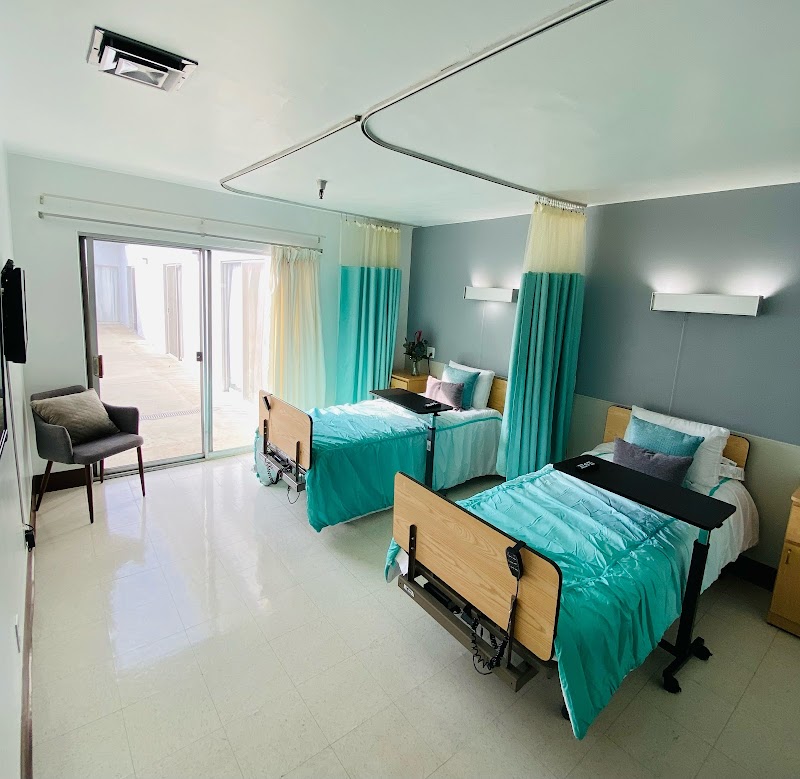
Who Owns and Operates Gladstone Sub-Acute And Rehab Center?

GLADSTONE SUB-ACUTE AND REHAB CENTER is owned by a for-profit company. For-profit facilities operate as businesses with obligations to shareholders or private owners. The facility operates independently rather than as part of a larger chain. With 118 certified beds and approximately 99 residents (about 84% occupancy), it is a mid-sized facility located in GLENDORA, California.
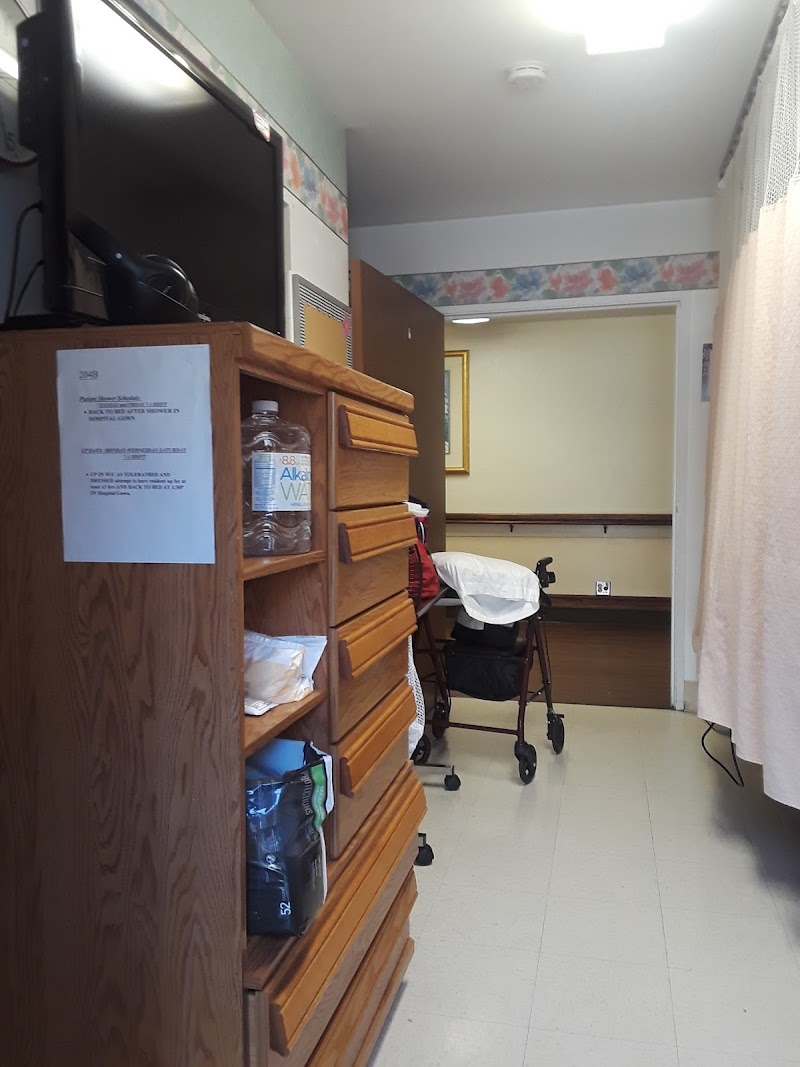
How Does Gladstone Sub-Acute And Rehab Center Compare to Other California Nursing Homes?

Compared to the 100 nursing homes in California, GLADSTONE SUB-ACUTE AND REHAB CENTER's overall rating (1 stars) is below the state average of 3.1, staff turnover (53%) is near the state average of 46%, and health inspection rating (1 stars) is much below the national benchmark.

What Should Families Ask When Visiting Gladstone Sub-Acute And Rehab Center?

Based on this facility's data, families visiting should ask: "Can you walk me through typical staffing levels on day, evening, and night shifts?" "Can I visit during a mealtime to observe dining assistance and food quality?" "How do you handle medical emergencies, and what is your hospital transfer rate?" "Can I speak with family members of current residents about their experience?" These questions are particularly relevant given the below-average staffing rating.

Is Gladstone Sub-Acute And Rehab Center Safe?

Based on CMS inspection data, GLADSTONE SUB-ACUTE AND REHAB CENTER has a clean safety record: no substantiated abuse findings (meaning no confirmed cases of resident harm), no Immediate Jeopardy citations (the most serious violation level indicating risk of serious injury or death), and is not on the Special Focus Facility watch list (a federal program monitoring the lowest-performing 1% of nursing homes). The facility has a 1-star overall rating and ranks #100 of 100 nursing homes in California. While no facility is perfect, families should still ask about staff-to-resident ratios and recent inspection results during their visit.

Do Nurses at Gladstone Sub-Acute And Rehab Center Stick Around?

GLADSTONE SUB-ACUTE AND REHAB CENTER has a staff turnover rate of 53%, which is 7 percentage points above the California average of 46%. Moderate turnover is common in nursing homes, but families should still ask about staff tenure and how the facility maintains care continuity when employees leave.

Was Gladstone Sub-Acute And Rehab Center Ever Fined?

GLADSTONE SUB-ACUTE AND REHAB CENTER has no federal fines on record. CMS issues fines when nursing homes fail to meet care standards or don't correct problems found during inspections. The absence of fines suggests the facility has either maintained compliance or corrected any issues before penalties were assessed. This is a positive indicator, though families should still review recent inspection reports for the full picture.

Is Gladstone Sub-Acute And Rehab Center on Any Federal Watch List?

GLADSTONE SUB-ACUTE AND REHAB CENTER is not on any federal watch list. The most significant is the Special Focus Facility (SFF) program, which identifies the bottom 1% of nursing homes nationally based on persistent, serious quality problems. Not being on this list means the facility has avoided the pattern of deficiencies that triggers enhanced federal oversight. This is a positive indicator, though families should still review the facility's inspection history directly.