RINALDI CONVALESCENT HOSPITAL
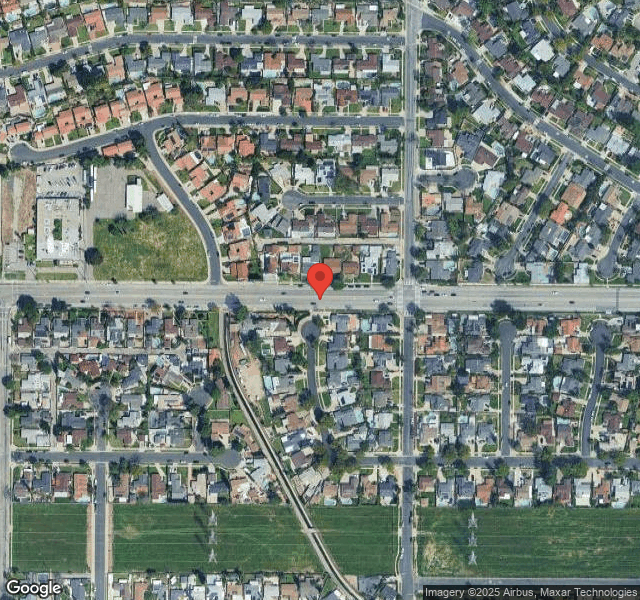
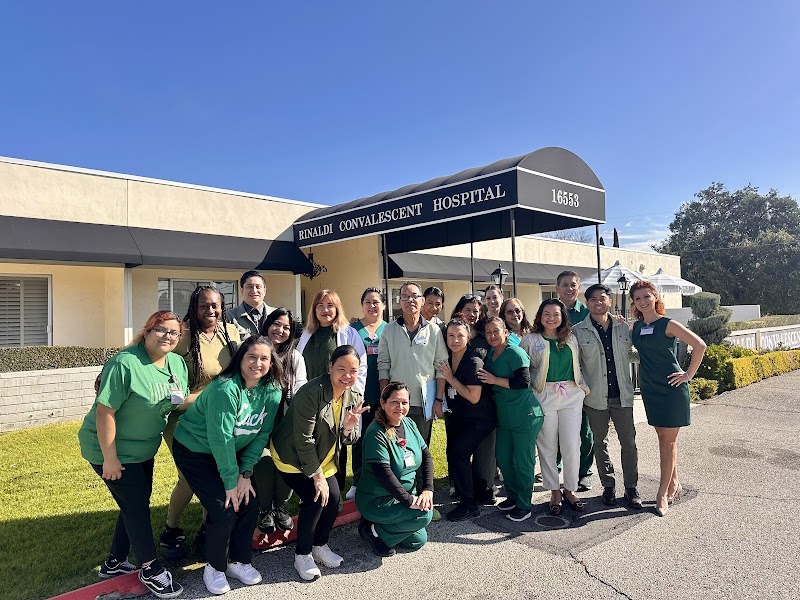
16553 RINALDI ST, GRANADA HILLS, CA 91344 (818) 360-1003
For profit - Individual 99 Beds CAMBRIDGE HEALTHCARE SERVICES Data: November 2025 1 Immediate Jeopardy citation
Trust Grade
18/100
#890 of 1155 in CA
Last Inspection: February 2025

Within standard 12-15 month inspection cycle. Federal law requires annual inspections.

Overview

Rinaldi Convalescent Hospital has received a Trust Grade of F, indicating significant concerns about the facility's overall quality and care. Ranking #890 out of 1155 in California places it in the bottom half of nursing homes in the state, and #232 out of 369 in Los Angeles County means that there are better local options available. While the facility is showing signs of improvement, reducing the number of issues from 19 to 16 over the past year is still concerning given the total of 58 issues found, including critical concerns about resident safety and instances of physical abuse. Staffing is somewhat stable, with a 37% turnover rate that is slightly below the state average, but RN coverage is only average, which may limit the level of oversight for residents. Although there have been no fines reported, the serious incidents noted-including failure to provide a safe environment and a case of physical abuse-highlight significant weaknesses that families should consider.

Trust Score
F
18/100
In California
#890/1155
Bottom 23%
Safety Record
High Risk
Review needed
Inspections
Getting Better
19 → 16 violations
Staff Stability
○ Average
37% turnover. Near California's 48% average. Typical for the industry.
Penalties
✓ Good
No fines on record. Clean compliance history, better than most California facilities.
Skilled Nurses
⚠ Watch
Each resident gets only 25 minutes of Registered Nurse (RN) attention daily — below average for California. Fewer RN minutes means fewer trained eyes watching for problems.
Violations
⚠ Watch
58 deficiencies on record. Higher than average. Multiple issues found across inspections.
★★☆☆☆
2.0
Overall Rating
★★☆☆☆
2.0
Staff Levels
★★★★☆
4.0
Care Quality
★★☆☆☆
2.0
Inspection Score
Stable
2024: 19 issues
2025: 16 issues

The Good

  • 4-Star Quality Measures · Strong clinical quality outcomes
  • Full Sprinkler Coverage · Fire safety systems throughout facility
  • No fines on record
  • Staff turnover below average (37%)

    11 points below California average of 48%

Facility shows strength in quality measures, fire safety.

The Bad

2-Star Overall Rating

Below California average (3.1)

Below average - review inspection findings carefully

Staff Turnover: 37%

Near California avg (46%)

Typical for the industry

Chain: CAMBRIDGE HEALTHCARE SERVICES

Part of a multi-facility chain

Ask about local staffing decisions and management

The Ugly 58 deficiencies on record

1 life-threatening 1 actual harm
Apr 2025 1 deficiency
CONCERN (D) 📢 Someone Reported This

A family member, employee, or ombudsman was alarmed enough to file a formal complaint

Potential for Harm - no one hurt, but risky conditions existed

Deficiency F0947 (Tag F0947)

Could have caused harm · This affected 1 resident

**NOTE- TERMS IN BRACKETS HAVE BEEN EDITED TO PROTECT CONFIDENTIALITY** Based on interview and record review, the facility failed to provide in-service training (training intended for those actively e...

Read full inspector narrative →
**NOTE- TERMS IN BRACKETS HAVE BEEN EDITED TO PROTECT CONFIDENTIALITY** Based on interview and record review, the facility failed to provide in-service training (training intended for those actively engaged in a profession or activity) as indicated by the facility's in-service calendar for Certified Nursing Assistants (CNA) regarding behavioral health for two of two sampled CNAs (CNA 2 and CNA 3). This deficient practice has the potential to place residents who have a behavioral health diagnosis at risk for improper care and avoidable incidences. Findings: During a review of the facility's Facility assessment dated [DATE], the Facility Assessment indicated under Common Diagnosis/Conditions: Psychiatric (branch of medicine concerned with the study, diagnosis, and treatment of mental illness)/Mood Disorders (mental health condition that primarily affects your emotional state). Common diagnosis: Psychosis (severe mental disorder in which thought and emotions are so impaired that contact is lost with external reality), impaired cognition (the process of acquiring knowledge and understanding through thought, experience, and the senses), mental disorder (referred to as a mental illness or mental health condition, is a pattern of behavioral or mental symptoms that cause significant distress or impair an individual's ability to function in daily life), depression (mood disorder that causes a persistent feeling of sadness and loss of interest), bipolar disorder (mental disorder that causes unusual shifts in mood, energy, activity levels, concentration, and the ability to carry out day-to-day tasks), schizophrenia (a mental illness that is characterized by disturbances in thought), post-traumatic stress disorder (PTSD - a disorder in which a person has difficulty recovering after experiencing or witnessing a traumatic event), anxiety disorder (intense, excessive, and persistent worry and fear about everyday situations), behavior that needs interventions Services Provided Based on Resident Need: Mental health and behavior. Under specific Care or Practices: Manage the medical conditions and medication related issues causing psychiatric symptoms and behavior identify and implement interventions to help support individuals with issues such as dealing with anxiety, care of someone with cognitive impairment, care of individuals with depression, trauma/PTSD, other psychiatric diagnosis, intellectual or developmental disabilities. During a review of the facility's Annual In-service Calendar 2025, the facility's Annual In-service Calendar 2025 indicated under March: Behavioral Health Training: Care of Resident with Dementia (decline in memory or other thinking skills severe enough to reduce a person's ability to perform everyday activities), Mental, Psychosocial and Substance Abuse Disorder (chronic brain disease characterized by compulsive drug seeking and use, despite harmful consequences), PTSD, Trauma, and Trigger Management (All Staff). During an interview on 4/29/2025 at 4:10 p.m., with Certified Nursing Assistant 2 (CNA 2), CNA 2 stated that no formal in-service or training was given to him for behavior management. During an interview on 4/30/2025 at 9:38 a.m., with CNA 3, CNA 3 stated that CNA 3 was not given a formal in-service, education, or training for behavior management. CNA 3 stated that she would like formal education for behavior management, so she knows how to deal with residents' behaviors. During a concurrent interview and record review on 4/30/2025 at 10:30 a.m., with the Director of Staff Development (DSD), reviewed the facility's Annual In-service Calendar 2025. The DSD stated that she did not provide the scheduled March 2025 in-service for Behavioral Health Training: Care of Resident with Dementia, Mental, Psychosocial and Substance Abuse Disorder, PTSD, Trauma, and Trigger Management. The DSD further stated that she was recently employed by the facility (started March 2025), and was not sure if the in-services for Behavioral Health Training: Care of Resident with Dementia, Mental, Psychosocial and Substance Abuse Disorder, PTSD (Post Traumatic Stress Disorder), Trauma, and Trigger Management were provided to the facility's CNAs in March 2025 by the previous DSD. The DSD stated that Behavioral Health Training is important to provide to CNA staff because CNA staff are on the front line of providing care for residents and should be aware of behavioral health. During a concurrent interview and record review on 4/30/2025 at 10:36 a.m., with the DSD, reviewed the personal files of CNA 2 and CNA 3. The DSD stated that there was no documented evidence of behavioral health training found in the CNA 2 and CNA 3's file. During a review of the facility's policy and procedure titled, In-Service Training, Nurse Aide, revised date 8/2022, the policy indicated annual in-services: d. address the special needs of the residents, as determined by the facility assessment. Required training topics for all staff (including nurse aides) include: g. behavioral health. Training curricula includes learning objectives, performance standards and evaluation criteria. Nurse aides are evaluated based on individual performance when appropriate. Competency may also be demonstrated through written exam or by consistently applying the interventions necessary to meet the needs of the residents as identified in the facility assessment. During a review of the facility's policy and procedure titled, In-Service Training, All Staff, revised date 8/2022, the policy indicated required training topics include the following: d. Behavioral Health. Training requirements are met prior to staff providing services to residents, annually, and as necessary based on the facility assessment. During a review of the facility's policy and procedure titled, On-the-Job Training, revised date 1/2008, the policy indicated on-the-job training programs will be conducted when necessary to assist employee in performing their assigned tasks.
Feb 2025 15 deficiencies
CONCERN (D)

Potential for Harm - no one hurt, but risky conditions existed

Resident Rights (Tag F0550)

Could have caused harm · This affected 1 resident

**NOTE- TERMS IN BRACKETS HAVE BEEN EDITED TO PROTECT CONFIDENTIALITY** Based on interview and record review, the facility failed to ensure a facility staff knocked and requested permission prior to e...

Read full inspector narrative →
**NOTE- TERMS IN BRACKETS HAVE BEEN EDITED TO PROTECT CONFIDENTIALITY** Based on interview and record review, the facility failed to ensure a facility staff knocked and requested permission prior to entering a resident`s room for two of two residents (Resident 40 and 188) reviewed under the care area of dignity. This deficient practice violated the resident`s rights to be treated with respect and dignity which had the potential to affect the resident`s sense of self-worth and self-esteem. Findings: a. During a review of Resident 40's admission Record, the admission Record indicated the resident was originally admitted to the facility on [DATE] and readmitted on [DATE], with diagnoses including, hypertension (high blood pressure) and type 2 diabetes mellitus (a long-term condition in which the body has trouble controlling blood sugar and using it for energy.). During a review of Resident 40`s Minimum Data Set (MDS - a standardized assessment and care screening tool), dated 01/27/2025, the MDS indicated the resident`s cognitive (the mental action or process of acquiring knowledge and understanding through thought, experience, and the senses) skills for daily decision making was intact and required partial/moderate assistance with toileting hygiene, shower, and dressing. During a concurrent observation and interview on 02/10/25 at 11:01 a.m., observed Certified Nurse Assistant 1 (CNA 1) enter Resident 40`s room without knocking and asking permission from Resident 40. During an interview, CNA 1 stated that she should have knocked and asked permission from Resident 40 before entering the room to show respect for the resident's privacy. CNA 1 stated she was disrespectful to Resident 40 when she entered the resident's room without knocking or asking for permission. During an interview on 02/12/25 at 08:27 a.m., with the Minimum Data Set Coordinator 1 (MDSC 1), MDSC1 stated staff must knock and ask the resident`s permission prior to entering their rooms. MDSC1 stated that the residents have the right to say no if they do not want any staff to enter their room at a particular time and it is an invasion of their privacy when staff just enter their room without requesting permission from the residents. During a review of the facility`s policy and procedures titled Dignity, last reviewed on 01/30/2025, the policy indicated that Each resident shall be cared for in a manner that promotes and enhances his or her sense of well -being, level of satisfaction with life, and feeling of self-worth and self-esteem .staff are to knock and request permission before entering resident`s rooms b. During a review of Resident 188's admission Record, the admission Record indicated the resident was admitted to the facility on [DATE], with diagnoses including, hypertension and depression (a common mental health condition characterized by persistent feelings of sadness, hopelessness, and loss of interest in activities). During a review of Resident 188`s Minimum Data Set (MDS - a standardized assessment and care screening tool), dated 01/22/2025, the MDS indicated the resident`s cognitive (the mental action or process of acquiring knowledge and understanding through thought, experience, and the senses) skills for daily decision making was intact and required substantial assistance from staff for toileting hygiene, shower, dressing and personal hygiene. During a concurrent observation and interview on 02/10/25 at 11:01 a.m., observed Certified Nurse Assistant 1 (CNA1) enter Resident 188`s room without knocking and asking permission from Resident 188. During an interview, CNA 1 stated that she should have knocked and asked permission from Resident 188 before entering the room to show respect for the resident's privacy. CNA1 stated she was disrespectful to Resident 188 when she entered the resident's room without knocking or asking for permission. During an interview on 02/12/25 at 08:27 a.m., with the Minimum Data Set Coordinator 1 (MDSC 1), MDSC1 stated staff must knock and ask the resident`s permission prior to entering their rooms. MDSC1 stated that the residents have the right to say no if they do not want any staff to enter their room at a particular time and it is an invasion of their privacy when staff just enter their room without requesting permission from the residents. During a review of the facility`s policy and procedures titled Dignity, last reviewed on 01/30/2025, the policy indicated that Each resident shall be cared for in a manner that promotes and enhances his or her sense of well -being, level of satisfaction with life, and feeling of self-worth and self-esteem .staff are to knock and request permission before entering resident`s rooms
CONCERN (D)

Potential for Harm - no one hurt, but risky conditions existed

Deficiency F0578 (Tag F0578)

Could have caused harm · This affected 1 resident

Based on interview and record review, the facility failed to follow the facility's policy and procedure titled, Advance Directives (written statement of a person's wishes regarding medical treatment m...

Read full inspector narrative →
Based on interview and record review, the facility failed to follow the facility's policy and procedure titled, Advance Directives (written statement of a person's wishes regarding medical treatment made to ensure those wishes are carried out should the person be unable to communicate them to a doctor), for one out of the five sampled residents (Resident 16) reviewed under Advance Directives care area, by failing to maintain a current copy of the resident's advance directives in the resident's clinical record. This deficient practice had the potential for the facility to not honor the resident's medical decisions regarding end-of-life treatment and had the potential to cause conflict with Resident 16's wishes regarding health care. Findings: During a review of Resident 16's admission Record, the admission Record indicated that the facility initially admitted Resident 16 on 1/9/2024 and readmitted the resident on 1/23/2024 with diagnoses including hemiplegia and hemiparesis (weakness or the inability to move on one side of the body, making it had to perform everyday activities like eating or dressing), gastrostomy (G-Tube- a tube inserted through the abdomen that delivers nutrition directly to the stomach), and encephalopathy (the group of condition that cause brain dysfunction and can appear as confusion, memory loss and personality change). During a review of Resident 16's Minimum Data Set (MDS - a federally mandated resident assessment tool), dated 1/13/2025, the MDS indicated that the resident had severely impaired cognition (a severely damaged mental abilities, including remembering things, making decisions, concentrating, or learning). The MDS further indicated that Resident 16 and was totally dependent on staff with all activities of daily living (ADLs - basic tasks that must be accomplished every day for an individual to thrive). During a review of Resident 16's History and Physical (H&P), dated 2/11/2025, the H&P indicated Resident 16 did not have the capacity to understand and make decisions. During a concurrent interview and record interview with the Director of Social Services (DSS), on 2/11/2025 at 1:27 p.m., Resident 16's clinical records were reviewed. The DSS stated that the resident's Advance Directive acknowledgement form indicated that Resident 16 had an advance directive. The DSS stated that the advance directive was not in the resident's chart. The DSS stated that a copy of Resident 16's advance directive should have been kept in the resident's chart to provide guidance to the facility staff about the resident's wishes. During an interview with the Director of Nursing (DON) on 1/12/2025 at 4:46 p.m., the DON stated that a copy of Resident 16's advance directive should have been kept in the resident's chart to ensure the staff honor the resident's wishes regarding their care and to provide clear guidance for the staff. During a review of the facility's policies and procedures titled Advance Directives, revised 1/30/2025, the policy and procedure indicated If resident or resident representative has executed one or more advance directive(s), or executes one upon admission, copies of these documents are obtained and maintained in the same section of the residents medical record and are readily retrievable by any facility staff.
CONCERN (D)

Potential for Harm - no one hurt, but risky conditions existed

ADL Care (Tag F0677)

Could have caused harm · This affected 1 resident

Based on observation, interview, and record review, the facility failed to ensure a resident who required assistance with nail trimming was provided care and services to maintain good personal hygiene...

Read full inspector narrative →
Based on observation, interview, and record review, the facility failed to ensure a resident who required assistance with nail trimming was provided care and services to maintain good personal hygiene for one of one sampled resident (Resident 19) reviewed under Activities of Daily Living (ADLs- is a term used to collectively describe fundamental skills required to independently care for oneself, such as eating, bathing, and mobility). This deficient practice had the potential to result in a negative impact on the resident's self- esteem and self-worth due to an unkempt appearance. Findings: During a review of Resident 19's admission Record (AR), the admission Record indicated the facility originally admitted the resident on 12/10/2018 and readmitted the resident on 2/07/2025, with diagnoses including hypertension (high blood pressure [the force of the blood pushing on the blood vessel walls is too high]) and type two (2) diabetes mellitus (a chronic condition that affects the way the body processes blood glucose [sugar]). During a review of Resident 19's Minimum Data Set (MDS - a standardized assessment and care screening tool), dated 11/07/2024, the MDS indicated that the resident`s cognitive (the mental action or process of acquiring knowledge and understanding through thought, experience, and the senses) skills for daily decision making was intact and is dependent on staff for toileting, shower, dressing and moderate assistance for personal hygiene. During a review of Resident 19's Care Plan (CP-a written document that summarizes a resident's needs, goals, and care/treatment) for Activities of Daily Living revised on 11/19/2024, the CP indicated that the resident has ADL Self-Care Deficit related to the resident's medical comorbidities and aging process. The CP indicated that the resident required moderate assistance with personal hygiene care. During an observation on 02/10/2025 at 9:13 a.m., observed Resident 19 in bed, awake and able to respond to interview. Observed Resident 19 with long and curvy fingernails. Asked Resident 19 when was the last time she had her nails trimmed, Resident 19 stated she does not remember and stated she wants her fingernails short so it will look good and will not break. During a concurrent observation and interview on 02/12/25 at 02:11 p.m., with Minimum Data Set Coordinator 1 (MDSC 1), observed MDSC 1 asked Resident 19 to show her hands and asked the resident if the resident wanted her fingernails trimmed. Resident 19 stated nobody has offered to trim her fingernails. MDSC 1 stated if Resident 19 scratched herself it can potentially cause a skin tear because her fingernails are long. During a review of the facility`s policy and procedure titled Activities of Daily Living, Supporting, last reviewed on 1/30/2025, the policy indicated that Residents will be provided with care, treatment and services as appropriate to maintain or improve their ability to carry out activities of daily living .residents who are unable to carry out activities of daily living independently will receive the services necessary to maintain good nutrition, grooming, and personal and oral hygiene.
CONCERN (D)

Potential for Harm - no one hurt, but risky conditions existed

Deficiency F0679 (Tag F0679)

Could have caused harm · This affected 1 resident

**NOTE- TERMS IN BRACKETS HAVE BEEN EDITED TO PROTECT CONFIDENTIALITY** Based on interview and record review, the facility failed to implement a resident centered activities program by failing to prov...

Read full inspector narrative →
**NOTE- TERMS IN BRACKETS HAVE BEEN EDITED TO PROTECT CONFIDENTIALITY** Based on interview and record review, the facility failed to implement a resident centered activities program by failing to provide activities that meet the resident's spiritual or religious needs for one of one sampled resident (Resident 70) reviewed under the Activities care area. This deficient practice violated the resident`s right to receive religious services which has the potential to affect the resident`s sense of self-esteem and self-worth. Findings: During a review of Resident 70's admission Record, the admission Record indicated the resident was originally admitted on [DATE] and readmitted to the facility on [DATE], with diagnoses including dementia (a group of thinking and social symptoms that interferes with daily functioning) and schizophrenia (a chronic mental illness characterized by disruptions in thought process, perceptions, emotions, and social interactions). During a review of Resident 70`s admission Minimum Data Set (MDS - a standardized assessment and care screening tool), dated 06/26/2024, the MDS indicated the resident`s cognitive (the mental action or process of acquiring knowledge and understanding through thought, experience, and the senses) skills for daily decision making was severely impaired and was totally dependent on staff for eating, oral hygiene, toileting hygiene, shower, dressing and personal hygiene. The MDS also indicated in Section F that it is important to the resident to participate in religious services. During an interview and record review on 02/11/2025 at 4:04 p.m., with the Activity Director (AD), reviewed the following Resident 70`s records: a. MDS Section F (Activities) dated 06/26/2024, indicated that participating in religious services is important to Resident 70. b. Care Plan (a care plan is a form where you can summarize a person's health conditions, specific care needs, and current treatments) for Activity Preferences, initiated on 06/25/2024 and revised on 01/04/2025. The care plan did not indicate an intervention to provide religious services. c. Communion List for the months of November 2024, December 2024 and January 2025, did not indicate Resident 70 as having participated in a religious activity or was provided a room visitation by the religious organization`s representative. The AD stated that Resident 70's care plan should have included an intervention that addressed the resident's activity preference to receive religious services. The AD stated during admission the resident, or their representative is asked regarding the resident's religious affiliation so the facility can arrange for religious services to meet the resident's spiritual needs. The AD stated the facility failed to invite or arrange for Resident 70 to be visited by a religious provider. During a review of the facility`s policy and procedure titled Spiritual and Religious Activities, last reviewed on 01/30/2025, the policy and procedure indicated that Spiritual and religious activities are provided to the resident population .and are programmed in accordance with the residents` preferences and religious affiliation .
CONCERN (D)

Potential for Harm - no one hurt, but risky conditions existed

Deficiency F0688 (Tag F0688)

Could have caused harm · This affected 1 resident

Based on interview, and record review, the facility failed to ensure one of one sampled resident (Resident 27) received treatment and services to prevent decrease in range of motion (ROM- full movemen...

Read full inspector narrative →
Based on interview, and record review, the facility failed to ensure one of one sampled resident (Resident 27) received treatment and services to prevent decrease in range of motion (ROM- full movement potential of a joint) by failing to clarify Resident 27`s physician order for Restorative Nursing Assistant (RNA- nursing aide program that helps residents to maintain their function and joint mobility) exercise program. This deficient practice had the potential to place the resident at risk for further range of motion (ROM- full movement potential of a joint) decline. Findings: During a review of Resident 27's admission Record (face sheet), the admission Record indicated that the facility admitted the resident on 8/23/2023, with diagnoses including dysphasia (swallowing difficulties), unspecified dementia (impaired ability to remember, think, or make decisions that interferes with doing everyday activities), seizure (a sudden, uncontrolled electrical disturbance in the brain which can cause uncontrolled jerking, blank stares, and loss of consciousness), severe protein-calorie malnutrition (when someone loses weight, because of not eating enough proteins and calories to meet nutritional needs) and repeated falls. During a review of Resident 27's Minimum Data Set (MDS - a resident assessment tool) dated 1/24/2025, the MDS indicated that the resident`s cognitive skills (brain's ability to think, read, learn, remember, reason, express thoughts, and make decisions) for daily decision making was severely impaired (never/rarely made decisions). The MDS indicated that Resident 27 required substantial/maximal staff assistance (helper does more than half the effort) for toileting hygiene, showering/bathing, upper and lower body dressing, putting on/taking off footwear, and personal hygiene. During a review of Resident 27's Physician Order Summary Report dated 10/30/2023, the order summary report indicated the following: RNA exercise program, partial weight bearing (a small amount of weight is allowed on the affected area), resident may be up in the wheelchair daily as tolerated. During a review of Resident 27's Restorative Treatment Record dated 2/1/2025 through 2/12/2025, the record did not indicate any treatment entries. During an interview on 2/12/2025 at 10:36 a.m., with Certified Nursing Assistant 2 (CNA 2), CNA 2 stated that she sometimes works as an RNA. CNA 2 stated Resident 27 normally wants to stay in her bed and agrees to be transferred on her wheelchair mostly in the afternoons. CNA 2 stated she has never provided RNA exercises to Resident 27. During a concurrent interview and record review on 2/12/2025 at 1:37 p.m., with MDS Coordinator 1 (MDSN 1), Resident 27`s physician orders, and restorative treatment records were reviewed. MDSC 1 stated Resident 27`s physician ordered for RNA exercise program, partial weight bearing on 10/30/2023, when Resident 27 was enrolled in a hospice program (compassionate care for people who are near the end of life). MDSC 1 stated residents who are enrolled in hospice do not receive RNA exercises. MDSC 1 further stated Resident 27`s physician order for RNA exercise program required clarification. MDSC 1 stated this order did not specify the type of exercises to be performed, and the location of affected area for partial weight bearing. MDSC 1 stated licensed staff did not clarify this order since 10/30/2023. MDSC 1 stated Resident 27`s restorative treatment records for the months of 01/2025 and 02/2025 did not indicate any treatment entries. MDSC 1 stated that she (MDSC 1) is unsure if staff provided RNA exercises to Resident 27. During a concurrent interview and record review on 2/13/2025 at 1:55 p.m. with the Director of Rehabilitation (DOR), Resident 27`s physician orders were reviewed. The DOR stated that Resident 27 was never evaluated by the rehabilitation department because she was on a hospice program. The DOR stated Resident 27`s physician ordered RNA exercise program, partial weight bearing, on 10/30/2023, while the resident was enrolled in a hospice program. The DOR stated Resident 27`s physician order for RNA exercise program required clarification. The DOR stated that the order did not specify the type of exercises to be performed, the frequency, and the location of affected area for partial weight bearing. The DOR stated Resident 27`s RNA exercise order was never clarified or implemented by facility staff. The DOR stated the licensed staff should have contacted resident 27`s physician and clarified the RNA exercise program order. The DOR stated the potential outcome of not clarifying and providing RNA treatment as ordered by the physician is a decline in Activities of Daily Living (ADLs- activities such as bathing, dressing and toileting a person performs daily), and muscle weakness. During review of the facility's Policy and Procedure (P&P) titled, Restorative Nursing Services, last reviewed 1/15/2025, the P&P indicated that residents would receive restorative nursing care as needed to help promote optimal safety and independence. Restorative nursing care consists of nursing interventions that may or may not be accompanied by formalized rehabilitative services. Residents may be started on a restorative nursing program upon admission, during the course of stay or when discharged from rehabilitative care. Restorative goals and objectives are individualized and resident-centered and are outlines in the resident`s plan of care. During review of the facility's Policy and Procedure (P&P) titled, Resident Mobility and Range of Motion, last reviewed 1/15/2025, the P&P indicated that residents with limited range of motion will receive treatment and services to increase and/or prevent a further decrease in ROM. The care plan will be developed by the interdisciplinary team based on the comprehensive assessment and will be revised as needed. The care plan will include specific interventions, exercises and therapies to maintain, prevent avoidable decline in, and/or improve mobility and ROM. The care plan will include the type, frequency and duration of the interventions, as well as measurable goals and objectives. The resident and representative will be included in determining these goals and objectives.
CONCERN (D)

Potential for Harm - no one hurt, but risky conditions existed

Deficiency F0692 (Tag F0692)

Could have caused harm · This affected 1 resident

**NOTE- TERMS IN BRACKETS HAVE BEEN EDITED TO PROTECT CONFIDENTIALITY** Based on interview and record review, the facility failed to provide appropriate care and services to maintain acceptable parame...

Read full inspector narrative →
**NOTE- TERMS IN BRACKETS HAVE BEEN EDITED TO PROTECT CONFIDENTIALITY** Based on interview and record review, the facility failed to provide appropriate care and services to maintain acceptable parameters of nutritional status for one of one sampled resident (Resident 27) by failing to: 1. Communicate Resident 27's nutritional intake (the amount of food a person eats) percentage with the facility`s Registered Dietician (RD-a health professional who has special training in diet and nutrition). 2. Inform Resident 27`s physician regarding resident`s refusal to eat as indicated in her care plan (written guide that organizes information about the resident's care). This deficient practice had the potential to place Resident 27 at risk for weight loss. Findings: During a review of Resident 27's admission Record (face sheet), the admission Record indicated that the facility admitted the resident on 8/23/2023, with diagnoses including dysphasia (swallowing difficulties), unspecified dementia (impaired ability to remember, think, or make decisions that interferes with doing everyday activities), seizure (a sudden, uncontrolled electrical disturbance in the brain which can cause uncontrolled jerking, blank stares, and loss of consciousness), and severe protein-calorie malnutrition (when someone loses weight, because of not eating enough proteins and calories to meet nutritional needs). During a review of Resident 27's Minimum Data Set (MDS - a resident assessment tool) dated 1/24/2025, the MDS indicated that the resident`s cognitive skills (brain's ability to think, read, learn, remember, reason, express thoughts, and make decisions) for daily decision making was severely impaired (never/rarely made decisions). The MDS indicated that Resident 27 required staff supervision or touching assistance (helper provides verbal cues) when eating. The MDS further indicated that Resident 27 did not have a weight loss in the last six months. During a review of Resident 27's Physician Order Summary Report dated 10/16/2023, the order indicated that the resident should be provided with a fortified (a food that has extra nutrients added to it), high protein, mechanical soft texture diet (a soft food diet focuses on easy digestion and easy chewing) with a thin consistency fluid (regular fluid). During a review of Resident 27`s Nutrition assessment dated [DATE], the assessment indicated that the resident`s weight has been stable. The assessment indicated that Resident 27`s diet was changed to fortified, high calorie diet to prevent a weight loss. The assessment further indicated that Resident 27 required feeding assistance during meals. During a review of Resident 27's Nutritional Problem care plan (written guide that organizes information about the resident's care) initiated on 8/29/2023 and last revised on 11/5/2024, the care plan indicated a goal that the resident will not experience significant weight changes and will consume at least 50 percent of all meals daily through the review date. The care plan interventions were to provide a fortified/high protein, mechanical soft texture diet, monitor/document and report to the physician sign and symptoms of dysphagia (difficulty swallowing) such as choking, refusing to eat, holding food in mouth, several attempts to swallow, monitor food intake, and record per meal and to provide feeding assistance to the resident. During a concurrent observation and interview on 2/10/2025 at 12:20 p.m., inside Resident 27`s room, Resident 27 was observed lying in bed with her eyes closed. Certified Nursing Assistant 3 (CNA 3) present at the resident`s bedside stated that Resident 27 refused to eat lunch. CNA 3 stated that today Resident 27 did not eat her breakfast either. CNA 3 stated Resident 27 normally refuses to eat. CNA 3 stated if the staff ask Resident 27 to eat more than one time, she will scream and get angry. During an interview on 2/11/2025 at 12:36 p.m. with CNA 2, CNA 2 stated that Resident 27 refused to eat lunch today. During a concurrent interview and record review on 2/12/2025 at 11:37 a.m., with the facility`s Registered Dietician (RD), Resident 27`s weights, meal intake log, and care plans were reviewed. RD stated that Resident 27`s weight has been stable. RD stated that Resident 27`s meal intake log for 1/14/2025-2/12/2025 indicated that the resident`s meal intake percentage was consistently between 0-25%. RD stated based on the log, Resident 27 refused to eat lunch and breakfast on 2/7/2025 and 2/10/2025, and refused to eat breakfast on 2/9/2025, 2/11/2025, and 2/12/2025. RD stated Resident 27`s meal intake percentage is concerning, and staff did not notify her regarding Resident 27`s refusal to eat and low meal intake percentage. RD stated the potential outcome is a delay in conducting assessment and adding appropriate interventions to prevent weight loss. During a concurrent interview and record review on 2/12/2025 at 1:15 p.m., with MDS Coordinator 1 (MDSC1), Resident 27`s care plans and nursing progress notes were reviewed. The MDSC 1 stated that she (MDSC 1) was aware that Resident 27 has been refusing to eat her breakfast and lunch. The MDSC 1 stated licensed staff did not initiate any care plan addressing Resident 27`s refusal to eat. MDSC 1 stated one of Resident 27`s nutritional care plan intervention is to report to her physician if the resident refuses to eat. MDSC 1 stated based on Resident 27`s meal intake log, Resident 27 refused to eat lunch and breakfast on 2/7/2025 and 2/10/2025, and refused to eat breakfast on 2/9/2025, 2/11/2025, and 2/12/2025. MDSC 1 stated that there is no documentation in the resident`s nursing progress notes regarding notifying physician of her refusal to eat. MDSC 1 stated that the potential outcome of not notifying a resident`s physician regarding her/his refusal to eat is a weight loss due to lack of appropriate care and interventions. During a review of the facility`s Policy and Procedure (P&P) titled Food and Nutrition Services, last reviewed 1/15/2025, the P&P indicated that the multidisciplinary staff, including nursing staff, the attending physician and the dietician will assess each resident`s nutritional needs, food likes, dislikes and eating habits, as well as physical, functional and psychosocial factors that affect eating and nutritional intake and utilization. Nursing personnel, with the assistance of food and nutrition services staff, will evaluate and document as indicated food and fluid intake of residents with, or at risk for significant nutritional problems. Variation from usual eating or intake patterns will be recorded in the resident`s medical record and brought to the attention of the nurse. A nurse will evaluate the significance of such information and report it, as indicated, to the attending physician and dietician.
CONCERN (D)

Potential for Harm - no one hurt, but risky conditions existed

Staffing Information (Tag F0732)

Could have caused harm · This affected 1 resident

Based on observation, interview, and record review, the facility failed ensure staffing information of the actual hours worked by licensed and unlicensed nursing staffing directly responsible for resi...

Read full inspector narrative →
Based on observation, interview, and record review, the facility failed ensure staffing information of the actual hours worked by licensed and unlicensed nursing staffing directly responsible for resident care pers shift was posted daily on 2/11/2025 and on 2/13/2025 as indicated in the facility's policy and procedure (P&P) on Staffing, Sufficient and Competent Nursing. This deficient practice had the potential to keep residents and visitors unaware of the total number of staff and the actual hours worked by staff in the facility. Findings: During an observation, interview, and concurrent record review with the Director of Staff Development (DSD) on 2/11/2025 at 2:50 p.m., observed the facility's document California Department of Public Health (CDPH) form titled Census and Direct Care Service Hours Per Patient Day (DHPPD) dated 2/11/2025, posted prominently in the facility's Nursing Station 1 counter. The DSD stated that the posted document is the facility's nursing projected hours. The DSD stated the hours are projected, not actual. The DSD stated they will not have the actual hours until the payroll department calculates the hours the following day. During an observation, interview, and concurrent record review with the Director of Staff Development (DSD) on 2/12/2025 at 2:45 p.m., observed the facility's document titled Census and Direct Care Service Hours Per Patient Day (DHPPD) dated 2/12/2025, posted prominently in the facility's Nursing Station 1 counter. The document contained a typed number for Projected hours and a number written in for Actual Hours. The document indicated a decrease in the number in the census for the 7 a.m. to 3 p.m. shift. The DSD stated they wrote in the number for Actual Hours after the shift had started because there was an adjustment in staffing. During an observation, interview, and concurrent record review with the Director of Staff Development (DSD) on 2/13/2025 at 10:15 a.m., the DSD observed the facility's document titled Census and Direct Care Service Hours Per Patient Day (DHPPD) dated 2/13/2025. There was a blank by the space for Actual Hours. The DSD stated they thought that they only had to post the projected hours because the CDPH Form 612 indicated the Actual Direct Care Service Hours must be completed at the end of each 24-hour patient day. During a concurrent interview and record review with the Director of Nurses (DON) on 2/13/2025 at 11:05 a.m., reviewed Form 612, dated 2/11/2025. The DON stated that the actual posting numbers are documented on Actual Hours after the stand-up meeting and the DSD knows which staff is present in the facility. The DON stated this should be posted by 11 a.m. The DON stated there should be the actual hours indicated on the form. During a review of the facility's policy and procedure titled, Staffing, Sufficient and Competent Nursing, last reviewed 1/30/2025, indicated direct care daily staffing numbers (the number of nursing personnel responsible for providing direct care to residents) are posted in the facility for every shift.
CONCERN (D)

Potential for Harm - no one hurt, but risky conditions existed

Medication Errors (Tag F0758)

Could have caused harm · This affected 1 resident

Based on interview and record review, the facility failed to monitor a resident for side effects of Trazadone (an antidepressant medication) and Xanax (an antianxiety medication) for one (Resident 72)...

Read full inspector narrative →
Based on interview and record review, the facility failed to monitor a resident for side effects of Trazadone (an antidepressant medication) and Xanax (an antianxiety medication) for one (Resident 72) out of five sampled residents investigated under the care area of unnecessary medications. This deficient practice had the potential to place Resident 72 t at increased risk of taking an unnecessary medication and experiencing adverse side effects. Findings: During a review of Resident 72's admission Record, the admission Record indicated that the facility initially admitted Resident 72 on 5/7/2024 and readmitted the resident on 1/17/2025 with diagnoses including infection and inflammatory reaction to prosthetic devices (bacteria have entered the body around a surgical implanted device, causing the body's immune system to react with swelling, pain redness at the implant site), acute hematogenous osteomyelitis (a bacterial infection of the bone that spreads through the bloodstream), cellulitis (a deep skin infection that can be painful and cause swelling). During a review of Resident 72's Minimum Data Set (MDS - a federally mandated resident assessment tool), dated 1/27/2025, the MDS indicated that the resident had mildly impaired cognition (a slight decline in mental abilities, memory and completing complex tasks). The MDS further indicated that Resident 72 required maximal assistance from staff with most activities of daily living (ADLs - basic tasks that must be accomplished every day for an individual to thrive). And clean -up assistance with eating and oral hygiene. During a review of Resident 72 History and Physical (H&P), dated 1/20/2025, the H&P indicated Resident 72 had the capacity to understand and make decisions. During the review of Resident 72's Physician Order Report, dated 2/1/2025, the Physician Order Report indicated the following physician orders for: 1. Trazadone 50 milligram (mg - unit of measurement) at bedtime for depression manifested by inability to sleep, dated 1/25/2025. 2. Xanax 0.5 milligram (mg - unit of measurement) every 8 hours as needed for anxiety as needed, dated 1/23/2025. 3. Monitor for side effects for antianxiety medication Xanax every shift dated, 1/23/2025. 4. Monitor for side effects for antidepressant medication Trazadone per shift dated, 1/23/2025. During a concurrent interview and record review on 12/11/2024 at 4:19 p.m., reviewed Resident 72's Medication Administration Record (MAR - a report detailing the drugs administered to a patient by a healthcare professional at a treatment facility) with the Minimum Data Set Nurse (MDSN). The MDSN stated the resident received Trazadone 50 mg on 01/31/2025, at 9 PM and Xanax 0.5 mg on 02/01/2025, at 5:30 AM. When asked to provide documentation that the licensed nurses were monitoring for side effects for Trazadone and Xanax, MDSN stated she could not find any documentation indicating that the nurses were monitoring for side effects on 2/1/2025 from 7 AM to 3 PM . On 2/12/2025 at 4:46 p.m., during an interview, the Director of Nursing (DON) stated it was important to monitor for side effects of psychotropic medications to determine if the dosage needed to be adjusted. The DON stated nurses needed to monitor for adverse side effects so it could be reported to the physician and necessary changes could be made to the dosage. The DON stated if the nurses did not monitor for either of these, then the resident may possibly be receiving an unnecessary medication. During a review of the facility's policy and procedure titled, Psychotherapeutic Medication Use last reviewed on 1/30/2025, the policy indicated: Resident receiving psychotropic medications are monitored for adverse consequences . If psychotropic medications are identified as possibly causing or contributing to adverse consequences, the prescriber will determine the medication should be continued, and document the rationale for this decision.
CONCERN (E)

Potential for Harm - no one hurt, but risky conditions existed

Comprehensive Care Plan (Tag F0656)

Could have caused harm · This affected multiple residents

2. During a review of Resident 12's admission Record, the admission Record indicated the facility admitted Resident 12 on 11/18/2024 with diagnoses including, but not limited to unspecified dementia (...

Read full inspector narrative →
2. During a review of Resident 12's admission Record, the admission Record indicated the facility admitted Resident 12 on 11/18/2024 with diagnoses including, but not limited to unspecified dementia (general term for a progressive state of decline in mental abilities), lack of coordination, a displaced (moved from proper or usual place) subtrochanteric (area below the trochanter [area below the neck of the femur located near the hip]) fracture of the right femur (longest and strongest bone in the body located from the hip to knee), subsequent (following) encounter for closed fracture (a broken bone that doesn't break the skin), and a history of falling During a review of Resident 12's Physician's Progress Note, dated 11/20/2024, the Physician's Progress Note indicated Resident 12 did not have the capacity to understand and make decisions and required skilled nursing services after surgery to his right femur on 11/16/2024. During a review of Resident 12's Minimum Data Set (MDS - an assessment and care screening tool) dated 11/22/2024, the MDS indicated the resident was not able to understand others or make himself understood. The MDS indicated Resident 12 needed maximal assistance and/or dependence on staff for bathing, dressing, and toileting. The MDS indicated Resident 12 was dependent on staff to roll left to right, sit to lying and maximal assistance for sit to stand with no attempts to walk due to medical condition and safety concerns. The MDS further indicated Resident 12 had a fall in the last month prior to admission with a fracture that required surgery. During a review of Resident 12's Care Plans (CP), the CPs did not indicate documented evidence of a comprehensive care plan addressing the floor mat found next to the resident's bed. During an observation on 2/10/2025 at 9:47 a.m., in Resident 12's room, Resident 12 was lying in bed with a floor mat the length of the bed on the right side of the bed. During a concurrent observation and interview on 2/10/2025 at 9:53 a.m., with Licensed Vocational Nurse (LVN) 3, in Resident 12's room, LVN 3 confirmed there was a floor mat next to Resident 12's bed. LVN 3 stated Resident 12 has the floor mat next to his bed because he moves around a lot in bed and was a fall risk. LVN 3 stated he was not aware if the floor mat was care planned, but that care planning interventions such as a floor mat was necessary for all staff to consistently provide the floor mat and prevent injury. During a concurrent interview and record review on 2/10/2025 at 11:45 a.m., reviewed Resident 12's CPs with Assistant Director of Nursing (ADON). The ADON verified there was not documented evidence the comprehensive care plan was initiated addressing the floor mat next to Resident 12's bed. The ADON further stated the floor mat should have been care planned as it serves as a guide for all members of the staff to properly care for the resident and without the CP, they are unable to reassess the effectiveness of the floor mat. During a review of the facility provided Policy and Procedure (P&P) titled, Care Planning - Interdisciplinary Team, last reviewed 1/30/2025, indicated the interdisciplinary team is responsible for the development of resident care plans based on resident assessment. During a review of the facility provided P&P titled, Care Plans, Comprehensive Person-Centered, last reviewed 1/30/2025, indicated a comprehensive, person-centered care plan that includes measurable objectives and timetables to meet the resident's physical, psychosocial and functional needs is developed and implemented for each resident. The care plan interventions are derived from a thorough analysis of the information gathered as part of the comprehensive assessment. The comprehensive care plan describes the services that are furnished to attain or maintain the resident's highest practicable physical, mental, and psychosocial well-being. The care plan reflects currently recognized standards of practice for problem areas and conditions. Assessments of resident's are ongoing, and care plans are revised as information about the resident and the residents' conditions change. During a review of the facility provided P&P titled, Falls and Fall Risk, Managing, last reviewed 1/30/2025, indicated the IDT team will implement a resident-centered fall prevention plan to reduce the specific risk factor(s) of falls for each resident at risk. The P&P further indicated the staff will monitor and document each resident's response to interventions intended to reduce falling or the risk of falling. Based on interview, and record review, the facility failed to develop and implement a comprehensive person-centered care plan (a plan of care that summarizes a resident's health conditions, specific care and services facility staff need to provide a resident to promote healing and prevent a worsening of a condition, and current treatments) to meet the resident`s needs for two of three sampled residents (Resident 27 and Resident 12) by failing to: 1. Develop and implement a comprehensive person-centered care plan addressing Resident 27`s Restorative Nursing Assistant exercise program (RNA-nursing aide program that helps residents to maintain their function and joint mobility). This deficient practice had the potential to result in Resident 27`s inadequate care. 2. Develop and implement a comprehensive person-centered care plan addressing Resident 12's use of a floor mat (a cushioned floor pad designed to help prevent injury should a person fall). This deficient practice placed Resident 12 at risk for injury by failing to provide ongoing assessment, monitoring, and re-evaluation of the resident's use of the floor mat. Findings: 1. During a review of Resident 27's admission Record (face sheet), the admission Record indicated that the facility admitted the resident on 8/23/2023, with diagnoses including dysphasia (swallowing difficulties), unspecified dementia (impaired ability to remember, think, or make decisions that interferes with doing everyday activities), seizure (a sudden, uncontrolled electrical disturbance in the brain which can cause uncontrolled jerking, blank stares, and loss of consciousness), and severe protein-calorie malnutrition (when someone loses weight, because of not eating enough proteins and calories to meet nutritional needs) and repeated falls. During a review of Resident 27's Minimum Data Set (MDS - a resident assessment tool) dated 1/24/2025, the MDS indicated that the resident`s cognitive skills (brain's ability to think, read, learn, remember, reason, express thoughts, and make decisions) for daily decision making was severely impaired (never/rarely made decisions). The MDS indicated that Resident 27 required substantial/maximal staff assistance (helper does more than half the effort) for toileting hygiene, showering/bathing, upper and lower body dressing and personal hygiene. During a review of Resident 27's Physician Order Summary Report dated 10/30/2023, the order summary report indicated the following: RNA exercise program, partial weight bearing (a small amount of weight is allowed on the affected area), resident may be up in the wheelchair daily as tolerated. During a concurrent interview and record review on 2/12/2025 at 1:37 p.m., with MDS Coordinator 1(MDSN 1), Resident 27`s physician orders, care plans, and restorative treatment records were reviewed. MDSC 1 stated licensed staff did not develop a comprehensive care plan with person-centered interventions for the resident`s RNA exercise program. MDSC 1 stated the potential outcome of not developing a person-centered care plan with goal and intervention for a resident who has weakness is the lack of care and the inability to implement the specific services and monitoring that resident requires. During an interview on 12/13/2025 at 2:00 p.m., with the facility`s Director of Nursing (DON), the DON stated licensed staff are required to develop a person-centered care plan based on the residents` needs and identified problems. The DON stated licensed staff did not develop a care plan with goal and interventions for Resident 27`s RNA treatment. The DON stated that the potential outcome of not developing a care plan with goal and interventions is the inability to monitor to see if there are any decline/improvement in the resident`s condition and consequently providing inadequate care to the resident. During review of the facility's Policy and Procedure (P&P) titled, Care Plan-Comprehensive, last reviewed 1/15/2025, the P&P indicated that the Interdisciplinary Team, in conjunction with the resident, his/her family or legal representative, develops and implements a comprehensive, person-centered care plan for each resident. The care pan interventions are derived from a thorough analysis of the information gathered as part of the comprehensive assessment. The comprehensive, person-centered care plan includes measurable objectives and timeframes, describes the services that are to be furnished to attain or maintain the resident's highest practicable physical, mental, and psychological well-being. Assessments of residents are ongoing, and care plans are revised as information about the residents and the residents` conditions change. During review of the facility's Policy and Procedure (P&P) titled, Resident Mobility and Range of Motion, last reviewed 1/15/2025, the P&P indicated that residents with limited range of motion will receive treatment and services to increase and/or prevent a further decrease in ROM. The care plan will be developed by the interdisciplinary team based on the comprehensive assessment and will be revised as needed. The care plan will include specific interventions, exercises and therapies to maintain, prevent avoidable decline in, and/or improve mobility and ROM. The care plan will include the type, frequency and duration of the interventions, as well as measurable goals and objectives. The resident and representative will be included in determining these goals and objectives. Documentation of the resident`s progress toward the goals and objectives will include attempts to address any changes or decline in the resident`s condition or needs.
CONCERN (E)

Potential for Harm - no one hurt, but risky conditions existed

Deficiency F0657 (Tag F0657)

Could have caused harm · This affected multiple residents

**NOTE- TERMS IN BRACKETS HAVE BEEN EDITED TO PROTECT CONFIDENTIALITY** 3. During a review of Resident 12's admission Record, the admission Record indicated the facility admitted Resident 12 on 11/18/...

Read full inspector narrative →
**NOTE- TERMS IN BRACKETS HAVE BEEN EDITED TO PROTECT CONFIDENTIALITY** 3. During a review of Resident 12's admission Record, the admission Record indicated the facility admitted Resident 12 on 11/18/2024 with diagnoses that included, but not limited to unspecified dementia (general term for a progressive state of decline in mental abilities), lack of coordination, a displaced (moved from proper or usual place) subtrochanteric (area below the trochanter [area below the neck of the femur located near the hip]) fracture of the right femur (longest and strongest bone in the body located from the hip to knee), subsequent (following) encounter for closed fracture (a broken bone that doesn't break the skin), and a history of falling. During a review of Resident 12's Physician's Progress Note, dated 11/20/2024, the Physician's Progress Note indicated Resident 12 did not have the capacity to understand and make decisions and required skilled nursing services after surgery to his right femur on 11/16/2024. During a review of Resident 12's Minimum Data Set (MDS - an assessment and care screening tool) dated 11/22/2024, the MDS indicated the resident was not able to understand others or make himself understood. The MDS indicated Resident 12 needed maximal assistance and/or dependence on staff for bathing, dressing, and toileting. The MDS indicated Resident 12 was dependent on staff to roll left to right, sit to lying and maximal assistance for sit to stand with no attempts to walk due to medical condition and safety concerns. The MDS further indicated Resident 12 had a fall in the last month prior to admission with a fracture that required surgery. During a review of Resident 12's Physician's Orders, on 12/16/2024 Resident 12 physician ordered Xanax (medication used to reduce anxiety) 1 mg (unit of measurement) to be given as 1 tablet by mouth as needed for anxiety up to two times a day for 14 days. During a review of Resident 12's Electronic Medical Administration Record (EMAR - online charting system) on 2/12/2025 at 11:35 a.m., the EMAR indicated Xanax was completed and discontinued on 12/30/2024. During a review of Resident 12's Anti-Anxiety CP on 2/12/2025, last revised on 12/18/2024, the CP indicated Resident 12 uses Xanax 1 mg. During a concurrent interview and record review on 2/12/2025 at 12:15 p.m., reviewed Resident 12's CPs and physician orders with the Assistant Director of Nursing (ADON). The ADON verified Xanax was completed and discontinued on 12/30/2025 and Xanax was not reordered since then. The ADON further confirmed Resident 12's anti-anxiety CP incorrectly reflects Resident 12 is still taking Xanax. The ADON stated not updating the care plan can cause confusion among the staff members directly involved in Resident 12's care. During a review of the facility provided Policy and Procedure (P&P) titled, Charting and Documentation, last reviewed 1/30/2025, the P&P indicated the documentation in the medical record will be objective, complete and accurate. The P&P also indicated progress or changes in the care plan goals and objectives should be documented in the resident's, medical record During a review of the facility provided P&P titled, Care Plans, Comprehensive Person-Centered, last reviewed 1/30/2025, indicated a comprehensive, person-centered care plan that includes measurable objectives and timetables to meet the resident's physical, psychosocial and functional needs is developed and implemented for each resident. Assessments of resident's are ongoing, and care plans are revised as information about the resident and the residents' conditions change. Based on interview, and record review, the facility failed to: 1. Review and update a care plan (a document outlining a detailed approach to care customized to an individual resident's need) addressing a resident`s anticoagulation therapy (the use of medications to prevent blood clots) after the physician made changes to the prescribed medications for one of two sampled residents (Resident 29) reviewed under dialysis (a treatment to cleanse the blood of wastes and extra fluids artificially through a machine when the kidney(s) have failed). This deficient practice had the potential to result in Resident 29 not receiving the necessary services and treatment related to anticoagulant therapy. 2. Indicate specific interventions in the care plan related to a resident's Activities of Daily Living (a term used to collectively describe fundamental skills required to independently care for oneself, such as eating, bathing, and mobility) needs for one of two (Resident 70) residents reviewed under Care Planning. This deficient practice had the potential for the residents to not receive the necessary care and services related to Resident 70's ADL Self-Care Deficit. 3. Update a resident's care plan addressing use of an anti-anxiety (reduction of the feelings of fear, dread, and uneasiness) medication for one of two sampled residents (Resident 12) reviewed under the unnecessary medication care area. This deficient practice had the potential to confuse staff and allow for Resident 12 to receive unnecessary anti-anxiety medication interventions. Findings: 1. During a review of Resident 29's admission Record (face sheet), the admission Record indicated that the facility originally admitted the resident on 10/13/2021, and readmitted on [DATE], with diagnoses including end stage renal disease (ESRD-irreversible kidney failure), dependence on renal dialysis (a treatment to cleanse the blood of wastes and extra fluids artificially through a machine when the kidney(s) have failed), and paroxysmal atrial fibrillation (A-Fib: an irregular and often very rapid heart rhythm). During a review of Resident 29's Minimum Data Set (MDS- a resident assessment tool) dated 1/17/2027, the MDS indicated that the resident`s cognitive skills (the brain's ability to think, read, learn, remember, reason, express thoughts, and make decisions) for daily decision making was moderately impaired (decisions poor, cues/supervision required). The MDS indicated that Resident 29 required substantial/maximal staff assistance (helper does more than half the effort) for showering/bathing, lower body dressing, and putting on/taking off footwear. The MDS further indicated that Resident 29 was taking anticoagulant (blood thinner-a family of medications that stop your blood from clotting too easily). During a review of Resident 29`s General Acute Care Hospital 1 (GACH 1) Physician Transfer Orders dated 12/27/2024, the transfer orders indicated that the resident`s physician discontinued the following orders: -Plavix (a blood thinner) 75 milligrams (mg-a unit of measure of mass) give one tablet by mouth one time a day for Deep Vein Thrombosis (DVT- occurs when a blood clot forms in one or more of the deep veins in the body, usually in the legs) prophylaxis (PPX- preventative treatment against disease). - Aspirin (a blood thinner) 81 mg give one tablet by mouth one time a day for Cerebrovascular Accident (CVA- a stroke happens when there is a loss of blood flow to part of the brain) PPX. During a review of Resident 29`s Physician`s Order Summary Report dated 12/27/2024, the order summary report indicated that Resident 29`s physician ordered Eliquis (a blood thinner) 2.5 mg, one tablet by mouth two times a day for A-Fib with start date of 12/28/2024. During a review of Resident 29's care plan titled Anticoagulant and antiplatelet therapy (a type of blood thinner) Aspirin and Plavix related to CVA/DVT PPX initiated on 11/17/2021, and last revised on 12/4/2024, the care plan indicated a goal that the resident will be free from discomfort or adverse reactions (an undesired effect of a drug or other type of treatment) related to anticoagulant and aspirin therapy use through the review date. The care plan interventions were to perform daily skin inspection, review medication list for adverse effects, and to monitor/document and report to the physician any sign and symptoms of anticoagulant therapy complications. During a concurrent interview and record review on 2/12/2025 at 2:16 p.m., with MDS Coordinator 1 (MDSC 1), Resident 29`s physician orders and care plans were reviewed. MDSC 1 stated Resident 29 was readmitted from GACH 1 to the facility on [DATE]. MDSC 1 stated on 12/27/2024, Resident 29`s physician discontinued aspirin and Plavix orders and prescribed Eliquis 2.5 mg two times a day instead. MDSC 1 stated Resident 29`s anticoagulant therapy care plan was not revised/updated after discontinuation of aspirin and Plavix and the care plan does not reflect the current prescribed medication Eliquis. MDSC 1 stated resident care plans are required to be updated and revised as their medications are changing. MDSC 1 stated the potential outcome of not revising/updating residents care plans is inaccurate medical record and insufficient care for the resident. During an interview on 2/13/2025 at 1:45 p.m., with the Director of Nursing (DON), the DON stated the purpose of reviewing and re-evaluating the care plans is to check the effectiveness of the care plan interventions and make sure all the pertinent information and intervention regarding residents` care are included in the care plan. The DON stated Resident 29`s anticoagulation therapy care plan was not revised after the physician made changes to the medications on 12/27/2024. The DON stated residents` care plans are required to be updated with the current medications they are taking. The DON stated the potential outcome of not reviewing and revising a resident`s care plan is inadequate care and monitoring of the resident. During review of the facility's Policy and Procedure (P&P) titled, Care Plan-Comprehensive, last reviewed 1/15/2025, the P&P indicated that the Interdisciplinary Team, in con junction with the resident, his/her family or legal representative, develops and implements a comprehensive, person-centered care plan for each resident. The care pan interventions are derived from a thorough analysis of the information gathered as part of the comprehensive assessment. The comprehensive, person-centered care plan includes measurable objectives and timeframes, describes the services that are to be furnished to attain or maintain the resident's highest practicable physical, mental, and psychological well-being. Assessments of residents are ongoing, and care plans are revised as information about the residents and the residents` conditions change. The Interdisciplinary team reviews and update the care plan when there is has been a significant change in the resident`s condition, when the desired outcome is not met, when the resident has been readmitted to the facility from a hospital stay and at least quarterly. 2. During a review of Resident 70's admission Record, the admission Record indicated the resident was admitted to the facility on [DATE], with diagnoses including dementia (a group of thinking and social symptoms that interferes with daily functioning) and schizophrenia (a chronic mental illness characterized by disruptions in thought process, perceptions, emotions, and social interactions). During a review of Resident 70`s Minimum Data Set (MDS - a standardized assessment and care screening tool), dated 12/26/2024, the MDS indicated the resident`s cognitive (the mental action or process of acquiring knowledge and understanding through thought, experience, and the senses) skills for daily decision making was severely impaired and was totally dependent on staff for eating, oral hygiene, toileting hygiene, shower, dressing and personal hygiene. During a concurrent interview and record review on 02/11/25 at 01:38 p.m., with Minimum Data Set Coordinator 1 (MDSC 1), Resident 70`s Care Plan for ADL Self-Care Deficit, initiated on 6/21/2024 and revised on 01/04/2025 was reviewed. The care plan did not indicate specific interventions on how to provide the resident`s grooming, oral hygiene, toileting hygiene, shower and personal hygiene needs. MDSC 1 stated that the CP should have specific interventions regarding the resident's ADL care. MDSC 1 if the interventions are not specific, there is a potential for staff to not provide Resident 70`s ADL care specific to the resident's needs. During a review of the facility`s policy and procedures titled Care Plans, Comprehensive Person-Centered, last reviewed on 01/30/2025, indicated that A comprehensive, person-centered care plan that includes measurable objectives and timetable to meet the resident`s physical, psychosocial and functional needs is developed and implemented for each resident .describes the services that are to be furnished to attain or maintain the resident`s highest practicable physical, mental, and psychosocial well-being .
CONCERN (E)

Potential for Harm - no one hurt, but risky conditions existed

Deficiency F0697 (Tag F0697)

Could have caused harm · This affected multiple residents

**NOTE- TERMS IN BRACKETS HAVE BEEN EDITED TO PROTECT CONFIDENTIALITY** 2. During a review of Resident 10's admission Record (front page of the chart that contains a summary of basic information about...

Read full inspector narrative →
**NOTE- TERMS IN BRACKETS HAVE BEEN EDITED TO PROTECT CONFIDENTIALITY** 2. During a review of Resident 10's admission Record (front page of the chart that contains a summary of basic information about the resident), the admission Record indicated the resident was admitted to the facility on [DATE] and re-admitted on [DATE] with diagnoses including chronic pain syndrome (a condition characterized by persistent or recurring pain that lasts for more than 3 months). During a review of Resident 10' s Minimum Data Set (MDS, a federally mandated resident assessment tool), dated 1/15/2025, the MDS indicated Resident 10 was cognitively (the process of acquiring knowledge and understanding through thought, experience, and the senses) intact with skills required for daily decision making. The MDS indicated Resident 10 required setup or clean-up assistance for eating and moderate assistance (helper does less than half the effort) for oral hygiene and personal hygiene. During a review of Resident 10's Physician's Orders, the orders indicated the following orders: oxycodone with acetaminophen tablet (brand name is Percocet, a narcotic pain medication) 5-325 milligrams (mg, metric unit of measurement, used for medication dosage and/or amount), give one tablet by mouth every six hours as needed (PRN, or pro re nata, Latin for as needed) for pain 4-10, (numeric pain scale in which a resident's pain is indicated with zero being no pain and 10 for the worst pain imaginable), dated 9/15/2024. During a review of Resident 10's Care Plan for Chronic Pain, initiated 3/16/2023, the care plan indicated the resident will not have an interruption in normal activities due to pain through the review date. The care plan indicated the following: - Administer analgesia (pain medication) as per orders. - Evaluate the effectiveness of pain intervention. During a review of Resident 10's CDR, the document indicated the medication Percocet was removed from the blister pack (or called bubble pack, a card that packages doses of medication within small, clear, plastic bubbles [or blisters] that is punched out to administer to a resident) on the following dates: 1/21/2025 1:10 a.m. 1/31/2025 1:45 a.m. 2/01/2025 2 a.m. During a review of Resident 10's MAR for the month of 1/2025 and 2/2025, the MAR did not indicate Resident 10 was given Percocet on the above dates. There was no documentation on Resident 10's MAR that their pain had been assessed prior to giving the Percocet for the above dates. During a medication cart observation and concurrent record review with Licensed Vocational Nurse 5 (LVN 5) on 2/12/2025 at 2:04 p.m., observed the contents of Medication Cart 2. Reviewed Resident 10's CDR for Percocet which indicated Percocet was signed out to be given to Resident 10 on 1/21/20025 at 1:10 a.m., 1/31/2025 at 1:45 a.m., and 2/01/2025 at 2 a.m. However, there was no corresponding entry in Resident 10's 1/2025 and 2/2025 MARs. LVN 5 stated the process is that when a controlled drug is removed from the bubble pack, the licensed nurse is to sign the controlled drug record, give the medication to the resident, and then sign the MAR. LVN 5 stated the licensed nurse should have signed the MAR after giving the medication. LVN 5 stated this process is important so that a resident's physician knows how much medication is being given and will indicate whether a resident's pain relief is achieved. During a concurrent interview and record review with the Director of Nurses (DON) on 2/12/2025 at 4:34 p.m., reviewed Resident 10's Percocet CDR and Resident 10's 1/2025 and 2/2025 MARs. The DON confirmed the entries on the CDR for 1/21/2025 at 1:10 a.m., 1/31/2025 at 1:45 a.m. and 2/01/2025 at 2 a.m. had no corresponding entries in Resident 10's 1/2025 and 2/2025 MARs. The DON stated the licensed nurses need to sign both the CDR and MAR to ensure the licensed nurses know when the next dose is due, to prevent medication error, and to provide pain relief. During a concurrent interview and record review with LVN 7 on 2/13/2025 at 7:17 a.m., reviewed Resident 10's Percocet CDR, 1/2025 MAR, and 2/2025 MAR. LVN 7 confirmed that they signed Resident 10's Percocet CDR for 1/21/2025, 1/31/2025, and 2/01/2025. LVN 7 stated there may have been an emergency that interrupted them from signing the MAR and forgot to return later to sign the MAR. LVN 7 stated if the MAR is not signed the licensed nursing staff will know not know what level the resident's pain is or if it was relieved by the medication. LVN 7 stated if the MAR is not signed then the next licensed nurse may give the pain medication too soon. During a review of the facility's policy and procedure titled, Controlled Medications, last reviewed 1/30/2025, the document indicated the following: When a controlled medication is administered, the licensed nurse administering the medication immediately enters the following information on the accountability record and the medication administration record (MAR): 1) Date and time of administration. 2) Amount administered. 3) Signature of the nurse administering the dose on the accountability record at the time the medication is removed from the supply. 4) Initials of the nurse administering the dose on the MAR after the medication is administered. Based on interview and record review, the facility failed to ensure that pain management was provided, consistent with professional standards of practice for two of two sampled residents (Resident 22 and 10) being investigated under the pain care area when: a. Resident 22 was not assessed before and after tramadol (a controlled [a medication's use and distribution are tightly controlled because of their abuse potential or risk] medication given for pain) was administered on 2/9/2025 at 8:30am. b. Resident 10 was not assessed before and after oxycodone with acetaminophen tablet (brand name is Percocet, a narcotic pain medication) was administered on 1/21/2025 at 1:10 a.m., 1/31/2025 at 1:45 a.m., and 2/01/2025 at 2 a.m. This deficient practice resulted in Resident 10 and Resident 22's pain not being assessed and placed the residents at risk for having unmanaged pain that may diminish the residents' quality of life. Findings: a. During a review of Resident 22's admission Record, the admission Record indicated the facility admitted Resident 22 on 6/15/2024 with diagnoses that included, but not limited to repeated falls, depression (persistent feelings of sadness and hopelessness) and anxiety disorder. During a review of Resident 22's Physician's Progress Note, dated 1/17/2024, the Physician's Progress Note indicated Resident 22 does have the capacity to understand and make decisions. During a review of Resident 22's Minimum Data Set (MDS - an assessment and care screening tool) dated 1/21/2025, indicated the resident was able to understand others and make himself understood. The MDS indicated Resident 22 needed partial assistance from staff for bathing, dressing, and toileting. The MDS further indicated Resident 22 was on a scheduled pain medication regimen and received as needed (PRN) pain medication. During a review of Resident 22's Physician's Orders, on 2/11/2025 at 10:40 a.m., the Physician's Orders indicated an order for tramadol 50 milligrams (mg, metric unit of measurement, used for medication dosage and/or amount), give 1 tablet by mouth every 12 hours PRN pain level 6-10 (numeric pain scale in which a resident's pain is indicated with zero being no pain and 10 for the worst pain imaginable) was ordered on 1/16/2025 During a review of Resident 22's Care Plan for Chronic Pain, initiated 1/27/2025, the care plan indicated the resident will not have an interruption in normal activities due to pain through the review date. The care plan indicated the following: -Administer analgesia (pain medication) as per orders. -Evaluate the effectiveness of pain intervention. During a review of Resident 22's Controlled Drug Record (CDR - record of all resident's controlled medications; the licensed nurse must sign once medication is removed from supply) the document indicated Tramadol was removed from the blister pack (or called bubble pack, a card that packages doses of medication within small, clear, plastic bubbles [or blisters] that is punched out to administer to a resident) on 2/9/2025 at 8:20 a.m. During a review of Resident 22's MAR for the month of 1/2025 and 2/2025, the MAR did not indicate Resident 22 was given tramadol on 2/9/2025 or assessed for pain prior to tramadol administration. During a concurrent interview and review of the Nursing Staffing Assignment and Sign-In Sheet at 2/11/2025 at 11:10 a.m. with the Director of Staff Development (DSD), the DSD confirmed Licensed Vocational Nurse (LVN) 2 used medication cart (Cart 1) on 2/9/2025 from 7:00 a.m. - 3:30 p.m. The DSD further stated the initials in the CDR for Tramadol on 2/9/2025 at 8:30 a.m. belonged to LVN 2. The DSD stated LVN 2 would not be into work until the upcoming weekend and provided his phone number. During a phone interview on 2/12/2025 at 2:44 p.m. with LVN 2, LVN 2 stated when a resident is requesting a medication for pain, pain must be assed first. LVN 2 further stated when controlled drug is removed from the bubble pack, the licensed nurse is to sign the controlled drug record, give the medication to the resident, and then sign the MAR. LVN 2 stated once the medication is signed in the MAR, the MAR prompts a pain re-evaluation task 1 hour from when the medication is given. LVN 2 stated he was unsure why the medications were not signed in the MAR, that he must have forgotten to but that it is very important to prevent extra doses and to re-evaluate the resident's pain. During a concurrent interview and record review with the Assistant Director of Nurses (ADON) on 2/11/2025 at 11:34 a.m., reviewed Resident 22's Tramadol CDR and 2/2025 MARs. The ADON confirmed the entries on the CDR for Tramadol 2/9/2025 at 8:30 a.m. had no corresponding entries in Resident 22's 2/2025 MAR. The ADON stated the licensed nurses need to sign both the CDR and MAR to ensure all the licensed nurses know when the next dose is due, the initial pain assessment, reassess the effectiveness of the medications, and to prevent medication error. During a review of the facility's policy and procedure titled, Controlled Medications, last reviewed 1/30/2025, the document indicated the following: When a controlled medication is administered, the licensed nurse administering the medication immediately enters the following information on the accountability record and the medication administration record (MAR): 1) Date and time of administration. 2) Amount administered. 3) Signature of the nurse administering the dose on the accountability record at the time the medication is removed from the supply. 4) Initials of the nurse administering the dose on the MAR after the medication is administered. During a review of the facility provided Policy and Procedure (P&P) titled, Pain - Clinical Protocol, last reviewed 1/30/2025, indicated staff will reassess the individual's pain and will evaluate and report the resident's use of standing and PRN analgesics. During a review of the facility provided P&P titled, Charting Errors and/or Omissions, last reviewed 1/30/2025, indicated accurate medical records shall be maintained by this facility.
CONCERN (E)

Potential for Harm - no one hurt, but risky conditions existed

Pharmacy Services (Tag F0755)

Could have caused harm · This affected multiple residents

**NOTE- TERMS IN BRACKETS HAVE BEEN EDITED TO PROTECT CONFIDENTIALITY** b. During a review of Resident 10's admission Record (front page of the chart that contains a summary of basic information about...

Read full inspector narrative →
**NOTE- TERMS IN BRACKETS HAVE BEEN EDITED TO PROTECT CONFIDENTIALITY** b. During a review of Resident 10's admission Record (front page of the chart that contains a summary of basic information about the resident), the document indicated the resident was admitted to the facility on [DATE] and re-admitted [DATE] with diagnoses that included chronic pain syndrome (a condition characterized by persistent or recurring pain that lasts for more than 3 months). During a review of Resident 10' s Minimum Data Set (MDS, a federally mandated resident assessment tool), dated 1/15/2025, the MDS indicated Resident 10 was cognitively (the process of acquiring knowledge and understanding through thought, experience, and the senses) intact with skills required for daily decision making. The MDS indicated Resident 10 required setup or clean-up assistance for eating and moderate assistance (helper does less than half the effort) for oral hygiene and personal hygiene. During a review of Resident 10's Physician's Orders, the Physician Orders indicated the following orders: oxycodone with acetaminophen tablet (brand name is Percocet, a narcotic pain medication) 5-325 milligrams (mg, metric unit of measurement, used for medication dosage and/or amount), give one tablet by mouth every six hours as needed (PRN, or pro re nata, Latin for as needed) for pain 4-10, (numeric pain scale in which a resident's pain is indicated with zero being no pain and 10 for the worst pain imaginable), dated 9/15/2024. During a review of Resident 10's Care Plan for Chronic Pain, initiated 3/16/2023, the care plan indicated the resident will not have an interruption in normal activities due to pain through the review date. The care plan indicated the following: - Administer analgesia (pain medication) as per orders. - Evaluate the effectiveness of pain intervention. During a review of Resident 10's CDR, the document indicated the medication Percocet was removed from the blister pack (or called bubble pack, a card that packages doses of medication within small, clear, plastic bubbles [or blisters] that is punched out to administer to a resident) on the following dates: 1/21/2025 1:10 a.m. 1/31/2025 1:45 a.m. 2/01/2025 2 a.m. During a review of Resident 10's MAR for the month of 1/2025 and 2/2025, the MAR did not indicate Resident 10 was given Percocet on the above dates. During a medication cart observation and concurrent record review with Licensed Vocational Nurse 5 (LVN 5) on 2/12/2025 at 2:04 p.m., observed the contents of Medication Cart 2. Reviewed Resident 10's CDR for Percocet which indicated Percocet was signed out to be given to Resident 10 on 1/21/20025 at 1:10 a.m., 1/31/2025 at 1:45 a.m., and 2/01/2025 at 2 a.m. However, there was no corresponding entry in Resident 10's 1/2025 and 2/2025 MARs. LVN 5 stated the process is that when a controlled drug is removed from the bubble pack, the licensed nurse is to sign the controlled drug record, give the medication to the resident, and then sign the MAR. LVN 5 stated the licensed nurse should have signed the MAR after giving the medication. LVN 5 stated this process is important so that a resident's physician knows how much medication is being given and will indicate whether a resident's pain relief is achieved. During a concurrent interview and record review with the Director of Nurses (DON) on 2/12/2025 at 4:34 p.m., reviewed Resident 10's Percocet CDR and Resident 10's 1/2025 and 2/2025 MARs. The DON confirmed the entries on the CDR for 1/21/2025 at 1:10 a.m., 1/31/2025 at 1:45 a.m. and 2/01/2025 at 2 a.m. had no corresponding entries in Resident 10's 1/2025 and 2/2025 MARs. The DON stated the licensed nurses need to sign both the CDR and MAR to ensure the licensed nurses know when the next dose is due, to prevent medication error, to provide pain relief and ensure licensed nurses gave the medication and there was no possibility of drug diversion. During a concurrent interview and record review with LVN 7 on 2/13/2025 at 7:17 a.m., reviewed Resident 10's Percocet CDR, 1/2025 MAR, and 2/2025 MAR. LVN 7 confirmed that they signed Resident 10's Percocet CDR for 1/21/2025, 1/31/2025, and 2/01/2025. LVN 7 stated there may have been an emergency that interrupted them from signing the MAR and forgot to return later to sign the MAR. LVN 7 stated if the MAR is not signed the licensed nursing staff will know not know what level the resident's pain is or if it was relieved by the medication. LVN 7 stated if the MAR is not signed then the next licensed nurse may give the pain medication too soon. During a review of the facility's policy and procedure titled, Controlled Medications, last reviewed 1/30/2025, the document indicated the following: When a controlled medication is administered, the licensed nurse administering the medication immediately enters the following information on the accountability record and the medication administration record (MAR): 1) Date and time of administration. 2) Amount administered. 3) Signature of the nurse administering the dose on the accountability record at the time the medication is removed from the supply. 4) Initials of the nurse administering the dose on the MAR after the medication is administered. Based on interview and record review, the facility failed to maintain accurate clinical records in accordance with accepted professional standards and practices by failing to ensure all medications administered to residents were documented in their medication administration record (MAR, a daily documentation record used by a licensed nurse to document medications and treatments given to a resident) for two of five sampled residents (Resident 22, 10) being investigated under the care area of unnecessary medications for: a. Resident 22's Xanax (controlled [a medication's use and distribution are tightly controlled because of their abuse potential or risk] medication for anxiety [feelings of fear, dread, and uneasiness]) and tramadol (controlled medication used for pain). b. Resident 10's Percocet (narcotic, controlled medication used for pain). This deficient practice had the potential to result in medication error and/or drug diversion (illegal distribution or abuse of prescription drugs). Findings: a. During a review of Resident 22's admission Record, the admission Record indicated the facility admitted Resident 22 on 6/15/2024 with diagnoses that included, but not limited to repeated falls, depression (persistent feelings of sadness and hopelessness) and anxiety disorder. During a review of Resident 22's Physician's Progress Note, dated 1/17/2024, the Physician's Progress Note indicated Resident 22 does have the capacity to understand and make decisions. During a review of Resident 22's Minimum Data Set (MDS - an assessment and care screening tool) dated 1/21/2025, the MDS indicated the resident was able to understand others and make himself understood. The MDS indicated Resident 22 needed partial assistance from staff for bathing, dressing, and toileting. The MDS further indicated Resident 22 was on a scheduled pain medication regimen and received as needed (PRN) pain medication. During a review of Resident 22's Physician's Orders, the Physician's Orders indicated the following orders: 1. Alprazolam (generic name for Xanax) 0.5 milligrams (mg, metric unit of measurement, used for medication dosage and/or amount), give one tablet by mouth every 12 hours as needed (PRN, or pro re nata, Latin for as needed) for anxiety ordered on 2/16/2025. 2. Tramadol 50 mg, give 1 tablet by mouth every 12 hours PRN pain level 6-10 (numeric pain scale in which a resident's pain is indicated with zero being no pain and 10 for the worst pain imaginable) ordered on 1/16/2025 During a review of Resident 22's Care Plan for Chronic Pain, initiated 1/27/2025, the care plan indicated the resident will not have an interruption in normal activities due to pain through the review date. The care plan indicated the following: - Administer analgesia (pain medication) as per orders. - Evaluate the effectiveness of pain intervention. During a review of Resident 22's Care Plan for use of anti-anxiety medications, initiated 1/27/2025, the care plan indicated the resident will be free from discomfort or adverse reactions (unwanted or undesirable effects) through the review date. The care plan indicated the following: -Give anti-anxiety medications as per orders. -Monitor/document side effects and effectiveness. During a review of Resident 22's Controlled Drug Record (CDR - record of all resident's controlled medications; the licensed nurse must sign once medication is removed from supply) the document indicated: 1. Xanax was removed from the blister pack (or called bubble pack, a card that packages doses of medication within small, clear, plastic bubbles [or blisters] that is punched out to administer to a resident) on 2/9/2025 at 8:20 a.m. 2. Tramadol was removed from blister pack on 2/9/2025 at 8:30 a.m. During a review of Resident 22's MAR for the month of 1/2025 and 2/2025, the MAR did not indicate Resident 22 was given Xanax or tramadol on 2/9/2025. During a concurrent interview and review of the Nursing Staffing Assignment and Sign-In Sheet on 2/11/2025 at 11:10 a.m. with the Director of Staff Development (DSD), the DSD confirmed Licensed Vocational Nurse (LVN) 2 used the medication cart (Cart 1) on 2/9/2025 from 7:00 a.m. - 3:30 p.m. The DSD further stated the initials in the CDR for Xanax and Tramadol on 2/9/2025 at 8:20 a.m. and then 8:30 a.m. belonged to LVN 2. The DSD stated LVN 2 would not be into work until the upcoming weekend and provided his phone number. During a phone interview on 2/12/2025 at 2:44 p.m. with LVN 2, LVN 2 stated when a controlled drug is removed from the bubble pack, the licensed nurse is to sign the controlled drug record, give the medication to the resident, and then sign the MAR. LVN 2 explained once the medication is signed in the MAR, the MAR prompts a re-evaluation task 1 hour from when the medication is given. LVN 2 stated he was unsure why the medications were not signed in the MAR but that it is very important to prevent extra doses and important for re-evaluation of anxiety and pain. During a concurrent interview and record review with the Assistant Director of Nurses (ADON) on 2/11/2025 at 11:34 a.m., reviewed Resident 22's Xanax and Tramadol CDR and 2/2025 MARs. The ADON confirmed the entries on the CDR for Xanax on 2/9/2025 at 8:20 a.m., and Tramadol 2/9/2025 at 8:30 a.m. had no corresponding entries in Resident 22's 2/2025 MAR. The ADON stated the licensed nurses need to sign both the CDR and MAR to ensure all the licensed nurses know when the next dose is due, to prevent medication error, and to reassess the effectiveness of the medications. During a review of the facility provided Policy and Procedure (P&P) titled, Preparation and General Guidelines: Controlled Medications, last reviewed 1/30/2025, indicated when a controlled medication is administered, the licensed nurse administering the medication must immediately enter in the medication administration record (MAR): 1. Date and time of administration 2. Amount administered 3. Signature of the nurse administering the dose on the accountability record at the time the medication is removed from the supply 4. Initials of the nurse administering the dose on the MAR after the medication is administered. During a review of the facility provided P&P titled, Charting Errors and/or Omissions, last reviewed 1/30/2025, indicated accurate medical records shall be maintained by this facility.
CONCERN (E)

Potential for Harm - no one hurt, but risky conditions existed

Deficiency F0760 (Tag F0760)

Could have caused harm · This affected multiple residents

**NOTE- TERMS IN BRACKETS HAVE BEEN EDITED TO PROTECT CONFIDENTIALITY** 2.a. During a review of Resident 83's admission Record (front page of the chart that contains a summary of basic information abo...

Read full inspector narrative →
**NOTE- TERMS IN BRACKETS HAVE BEEN EDITED TO PROTECT CONFIDENTIALITY** 2.a. During a review of Resident 83's admission Record (front page of the chart that contains a summary of basic information about the resident), the admission Record indicated the resident was admitted to the facility on [DATE] with diagnoses that included hypertension (HTN, high blood pressure) and systolic and diastolic heart failure (systolic heart failure occurs when the heart can't contract effectively, while diastolic heart failure occurs when the heart can't relax properly). During a review of Resident 83's Minimum Data Set (MDS, a federally mandated resident assessment tool), dated 1/17/2025, the MDS indicated Resident 83 was severely impaired in cognition (the process of acquiring knowledge and understanding through thought, experience, and the senses) with skills required for daily decision making. The MDS indicated Resident 83 needed setup or clean-up assistance (helper sets up or cleans us) with eating and moderate assistance (helper does less than half the effort) for oral hygiene. During a review of Resident 83's Physician's Orders, it indicated an order for midodrine oral tablet 10 milligrams (mg- metric unit of measurement, used for medication dosage and/or amount) give one tablet by mouth three times a day for hypotension, hold if systolic blood pressure (SBP - the pressure in the arteries when the heart contracts and pumps blood throughout the body, normal reference range is less than or equal to 120 millimeters of mercury [mm Hg]) is greater than (>) 120 mm Hg. During a review of Resident 83's Care Plan for Altered Cardiovascular Status, initiated 1/23/2025, it indicated a goal that the resident will be free from signs or symptoms of complications of cardiac problems through the review date. The care plan indicated an intervention to take vital signs every shift and to notify physician of any abnormal findings. During a review of Resident 83's 1/2025 MAR, the document indicated Resident 70 was given midodrine when the SBP was > 120 mm Hg for the following dates: 1/11/2025 5 p.m. 122/60 mm Hg. 1/13/2025 5 p.m. 132/68 mm Hg. 1/16/2025 5 p.m. 137/77 mm Hg. 1/19/2025 9 a.m. 132/78 mm Hg. 1/19/2025 1 p.m. 128/76 mm Hg. 1/24/2025 9 a.m. 126/71 mm Hg. 1/24/2025 1 p.m. 126/71 mm Hg. 1/25/2025 5 p.m. 126/71 mm Hg. 1/29/2025 5 p.m. 126/70 mm Hg. 1/31/2025 5 p.m. 137/62 mm Hg. During a review of Resident 83's 2/2025 MAR, covering the dates 2/01/2025 through 2/12/2025, the document indicated Resident 70 was given midodrine when the SBP was > 120 mm Hg for the following dates: 2/01/2025 9 a.m. 123/77 mm Hg. 2/02/2025 9 a.m. 127/72 mm Hg. 2/02/2025 1 p.m. 123/72 mm Hg. 2/02/2025 5 p.m. 126/62 mm Hg. 2/03/2025 5 p.m. 124/60 mm Hg. 2/04/2025 5 p.m. 134/70 mm Hg. 2/07/2025 1 p.m. 124/68 mm Hg. During a concurrent interview and record review with Licensed Vocational Nurse 4 (LVN 4) on 2/11/2025 at 5:06 p.m., reviewed Resident 83's 1/2025 and 2/2025 MARS. LVN 4 confirmed that LVN 4 signed that the midodrine was given to Resident 83 on the following dates and times: 1/11/2025 5 p.m. 122/60 mm Hg. 1/13/2025 5 p.m. 132/68 mm Hg. 1/16/2025 5 p.m. 137/77 mm Hg. 1/29/2025 5 p.m. 126/70 mm Hg. 2/02/2025 5 p.m. 126/62 mm Hg. 2/03/2025 5 p.m. 124/60 mm Hg. 2/04/2025 5 p.m. 134/70 mm Hg. LVN 4 stated LVN 4 could not remember for the January dates if LVN 4 gave the medication or not. LVN 4 stated LVN 4 held the medication for the February dates but marked as given by mistake. LVN 4 stated when Resident 83's blood pressure is above 120 mm Hg., midodrine should be held. LVN 4 stated this is important to follow the blood pressure parameters so Resident 83's blood pressure will not be too high. During a concurrent interview and record review with LVN 3 on 2/11/2025 at 5:18 p.m., reviewed Resident 83's 1/2025 and 2/2025 MARs. LVN 3 confirmed that LVN 3 signed that the midodrine was given to Resident 83 on the following dates and times: 1/19/2025 9 a.m. 132/78 mm Hg. 1/24/2025 9 a.m. 126/71 mm Hg. 1/24/2025 1 p.m. 126/71 mm Hg. 1/25/2025 5 p.m. 126/71 mm Hg. 2/02/2025 1 p.m. 132/72 mm Hg. 2/07/2025 1 p.m. 124/68 mm Hg. LVN 3 verified they signed Resident 83's 1/2025 and 2/2025 MARS for the above dates. LVN 3 stated they could not remember if they gave Resident 83 the midodrine on the above dates or not. LVN 3 stated it is important to follow the blood pressure parameters so that Resident 83's blood pressure will not be elevated. During a concurrent interview and record review with the Director of Nursing (DON) on 2/12/2025 at 4:10 p.m., reviewed Resident 83's 1/2025 MAR and 2/2025 MAR covering the dates 2/01/2025 through 2/11/2025. The DON stated midodrine should not have been given on the above dates and times. The DON stated Resident 83 could be at risk for elevated blood pressure and resulting complications. 2.b. During a review of Resident 70's admission Record, the document indicated the resident was admitted to the facility on [DATE] with diagnoses that included HTN and hypotension (low blood pressure). During a review of Resident 70's MDS, dated [DATE], the MDS indicated Resident 70 was severely impaired in cognition (the process of acquiring knowledge and understanding through thought, experience, and the senses) with skills required for daily decision making. The MDS indicated Resident 70 was dependent on staff for oral hygiene, toileting, dressing, and personal hygiene. The MDS indicated Resident 70 had a diagnosis of hypertension, orthostatic hypotension (a condition where blood pressure drops significantly upon standing up from a sitting or lying position) and syncope (fainting). During a review of Resident 70's Physician's Orders, the document indicated an order for midodrine oral tablet 10 mg, give one tablet via gastrostomy tube (G-Tube, a plastic tube to allow feedings to be administered directly to the stomach for those with swallowing problems) every eight hours for hypotension, hold if SBP is greater than (>) 120 mm Hg. During a review of Resident 70's Care Plan for Altered Cardiovascular Status, initiated 6/21/2024, indicated a goal that the resident will be free from signs or symptoms of complications of cardiac problems through the review date. The care plan indicated an intervention to take vital signs every shift and to notify physician of any abnormal findings. During a review of Resident 70's 1/2025 MAR, the document indicated Resident 70 was given midodrine when the SBP was > 120 mm Hg for the following dates: 1/03/2025 10 p.m. 132/67 mm Hg. 1/09/2025 6 a.m. 126/78 mm Hg. 1/15/2025 6 a.m. 136/67 mm Hg. 1/18/2025 10 p.m. 122/67 mm Hg. 1/19/2025 2 p.m. 122/76 mm Hg. 1/22/2025 2 p.m. 133/65 mm Hg. During a concurrent interview and record review with the DON on 2/13/2025 at 1:36 p.m., reviewed Resident 70's 1/2025 MAR. The DON stated the midodrine should not have been given on the above dates and times. The DON stated Resident 70 could be at risk for elevated blood pressure and resulting complications. During a review of the facility's policy and procedure titled, Medication Administration - General Guidelines, last reviewed 1/30/2025, the policy indicated medications are administered in accordance with written orders of the attending physician. Based on observation, interview, and record review, the facility failed to ensure residents were free from any significant med errors for three of six sampled residents (Resident 72, Resident 70, and Resident 83) reviewed for unnecessary medications by failing to: 1. Administer Resident 72's Morphine Sulfate Contin (a medication used to control pain) 30 milligrams (mg- metric unit of measurement, used for medication dosage and/or amount) on 2/1/2025 as ordered by the physician. This deficient practice resulted in the resident not receiving the medication as scheduled, which can potentially lead to increased pain. 2. Hold parameters for midodrine (a medication to elevate blood pressure for those with low blood pressure) as ordered by the physician for Resident 70 and Resident 83. This deficient practice had the potential to cause complications such as high blood pressure that could require hospitalization. Findings: 1. During a review of Resident 72's admission Record, the admission Record indicated that the facility initially admitted Resident 72 on 5/7/2024 and readmitted the resident on 1/17/2025 with diagnoses including infection and inflammatory reaction to prosthetic devices (bacteria have entered the body around a surgical implanted device , causing the body's immune system to react with swelling , pain redness at the implant site), acute hematogenous osteomyelitis (a bacterial infection of the bone that spreads through the bloodstream), cellulitis (a deep skin infection that can be painful and cause swelling), and chronic pain syndrome() During a review of Resident 72's Minimum Data Set (MDS - a federally mandated resident assessment tool), dated 1/27/2025, the MDS indicated that the resident had mildly impaired cognition (a slight decline in mental abilities, memory and completing complex tasks). The MDS further indicated that Resident 72 required maximal assistance from staff with most activities of daily living (ADLs - basic tasks that must be accomplished every day for an individual to thrive). And clean -up assistance with eating and oral hygiene. During a review of Resident 72 History and Physical (H&P), dated 1/20/2025, the H&P indicated Resident 72 had the capacity to understand and make decisions. During a review of Resident 72's Physician's Orders Summary, it indicated an order for Morphine Sulfate Contin oral tablet 30 mg, give one tablet by mouth one time a day for pain, dated 01/23/2025. During a concurrent interview and record review on 02/11/25 at 4:19 p.m., with Minimum Data Set Nurse (MDSN), Resident 72's Medication Administration Record (MAR) was reviewed. The MDSN stated the MAR indicated that on 2/1/2025 at 9 a.m. Morphine Sulfate Contin was not administered to Resident 72. The MDSN reviewed the nursing assignment for Resident 72 on 2/1/2025 and stated that it was Licensed Vocational Nurse (LVN) from the registry who was assigned to Resident 72 on 2/1/2925. The MDSN stated the LVN from the registry is on vacation right now and could not be reached at this time. The MDSN stated that medication should have been administered to Resident 72 according to the physician order. During a concurrent record review and interview on 2/13/2025 at 2:05 p.m. with Licensed Vocational Nurse 6 (LVN 6), Resident 72's antibiotic or controlled drug record was reviewed. LVN reviewed controlled drug record from 1/30/2025 to 2/13/2025 and stated the record indicated than Morphine Sulfate Contin was not given to Resident 72 on February 1, 2025. During an interview with the DON on 2/13/2025 at 2:36 p.m., the DON stated the Morphine Sulphate Contin should be administered according to physician order. The DON stated not giving Resident 72 the medication as ordered by the physician placed the resident at risk for increased pain.
CONCERN (E)

Potential for Harm - no one hurt, but risky conditions existed

Food Safety (Tag F0812)

Could have caused harm · This affected multiple residents

Based on observation, interview, and record review, the facility failed to ensure safe and sanitary food storage and food preparation practices in the kitchen when a steel scoop was left inside a bin ...

Read full inspector narrative →
Based on observation, interview, and record review, the facility failed to ensure safe and sanitary food storage and food preparation practices in the kitchen when a steel scoop was left inside a bin containing a thickener powder used for residents` pureed diet (a pureed diet is needed for people who have trouble chewing or swallowing). This deficient practice had the potential to place five residents who are receiving pureed diet, out of 91 residents at risk for foodborne illnesses (refers to illness caused by the ingestion of contaminated food or beverages). Findings: During a concurrent kitchen observation and interview on 2/10/2025 at 08:00 a.m., with Dietary Supervisor 1 (DS 1) in the facility`s kitchen, observed a container bin with transparent cover containing whitish powder. DS 1 stated the powder is a thickener used for pureed diets. Observed a stainless scoop inside the container bin with the handle buried in the thickener powder. DS 1 stated the scoop should not have been left inside the bin per facility`s policy and to avoid contaminating the contents of the container bin. DS 1 stated that contaminating the thickener powder can place the residents on pureed diet at risk for foodborne illnesses. During a review of the facility`s policy and procedure, titled Recommended Storage Practices, last reviewed on 1/30/2025, the policy indicated in the procedure to Do not store scoops in food containers .
CONCERN (E)

Potential for Harm - no one hurt, but risky conditions existed

Infection Control (Tag F0880)

Could have caused harm · This affected multiple residents

**NOTE- TERMS IN BRACKETS HAVE BEEN EDITED TO PROTECT CONFIDENTIALITY** 3. During a review of Resident 40's admission Record, the admission Record indicated the resident was originally admitted to the...

Read full inspector narrative →
**NOTE- TERMS IN BRACKETS HAVE BEEN EDITED TO PROTECT CONFIDENTIALITY** 3. During a review of Resident 40's admission Record, the admission Record indicated the resident was originally admitted to the facility on [DATE] and readmitted on [DATE], with diagnoses that included but not limited to, hypertension (high blood pressure) and type 2 diabetes mellitus (a long-term condition in which the body has trouble controlling blood sugar and using it for energy.). During a review of Resident 40`s Minimum Data Set (MDS - a standardized assessment and care screening tool), dated 01/27/2025, the MDS indicated the resident`s cognitive (the mental action or process of acquiring knowledge and understanding through thought, experience, and the senses) skills for daily decision making was intact and required partial/moderate assistance with toileting hygiene, shower, and dressing. During an observation on 02/10/2025 at 9:34 a.m., in Resident 40`s room, observed an unlabeled plastic urinal placed in the urinal holder hanging on the bed side rail. During a concurrent observation and interview on 02/10/2025 at 9:56 a.m., with the Director of Nursing (DON), in Resident 40s' room, the DON stated that Resident's 40s urinal did not have a label. The DON stated that urinals should be labeled with the resident`s name and room number to prevent inadvertent use by another resident. The DON stated that if the urinal is unlabeled there is a chance that it can be used by another resident which can result in cross contamination and place the residents at risk for infection. During a review of Resident 188's admission Record, the admission Record indicated the resident was admitted to the facility on [DATE], with diagnoses that included but not limited to, hypertension and depression (a common mental health condition characterized by persistent feelings of sadness, hopelessness, and loss of interest in activities). During a review of Resident 188`s Minimum Data Set (MDS - a standardized assessment and care screening tool), dated 01/22/2025, the MDS indicated the resident`s cognitive (the mental action or process of acquiring knowledge and understanding through thought, experience, and the senses) skills for daily decision making was intact and required substantial assistance from staff for toileting hygiene, shower, dressing and personal hygiene. During an observation and interview on 02/10/2025 at 09:34 a.m., in Resident 188's observed a plastic urinal without a label hanging on the trash bin next to the resident's bed. Resident 188 stated he does not know who placed the urinal in the trash bin. During a concurrent observation and interview on 02/10/2025 at 09:52 a.m., with the Director of Nursing (DON) in Resident 188's room, the DON stated Resident 188's unlabeled urinal was hanging on the trash bin. The DON stated urinals should be labeled with the resident`s name and room number to prevent inadvertent use by another resident. The DON stated urinals should be labeled and should not be hanging on the trash bins to prevent risk of cross contamination and spread of infection During a review of the facility`s policy and procedure titled Disinfection of Bedpans and Urinals, last reviewed on 1/30/2025, the policy and procedure indicated that the policy provide guidelines for disinfection of bedpans and urinals .disposable bedpans and urinals are for single use only. [NAME] with the resident`s name and discard upon discharge . 4. During a review of Resident 54's admission Record (face sheet), the admission Record indicated that the facility originally admitted the resident on 6/17/2022, and readmitted on [DATE], with diagnoses including seizure (a sudden, uncontrolled electrical disturbance in the brain which can cause uncontrolled jerking, blank stares, and loss of consciousness), unspecified dementia (a progressive state of decline in mental abilities), and muscle weakness. During a review of Resident 54's Minimum Data Set (MDS - a resident assessment tool) dated 2/4/2025, the MDS indicated that the resident`s cognitive skills (brain's ability to think, read, learn, remember, reason, express thoughts, and make decisions) for daily decision making was severely impaired (never/rarely made decisions). The MDS indicated that Resident 54 was dependent to staff (helper does all the effort) for toileting hygiene, showering/bathing, lower body dressing, and putting on /taking off the footwear. During a review of Resident 54's physician order dated 1/31/2024, the order indicated that the resident was tested positive for Extended-Spectrum Beta-Lactamase (ESBL- enzymes produced by some bacteria that may make them resistant to some antibiotics) of urine. The physician order further indicated that Resident 54 was on contact isolation. During an observation on 2/10/2025 at 12:10 p.m., inside Resident 54`s room, surveyor was inside the resident`s room wearing a gown and gloves and was attempting to doff and exit the room. However, there was no trash can inside Resident 54 to discard the PPE. During a concurrent observation and interview on 2/10/2025 at 12:12 p.m., with the Administrator (ADM), observed a surveyor inside Resident 54`s room wearing a gown and gloves and unable to doff because there was no trash can available. The ADM stated that there is a sign for contact precaution at Resident 54`s door, and a closed lid trash can is required to be present inside the room for staff to be able to doff their PPE. The ADM stated the potential outcome of not providing trash can inside a resident`s room under contact isolation is the possibility of the staff exiting the room while having their gown and gloves on and spreading infection to other staff members and residents. During a review of the facility Policy and Procedure (P&P) titled Isolation- Categories of Transmission-Based Precautions (TBS-a set of infection control measures used to prevent the spread infections that are transmitted through contact with infected person, their bodily fluids, or contaminated surfaces or objects), last reviewed on 1/30/2025, the P&P indicated that contact precautions are implemented for residents known or suspected to be infected with microorganisms that can be transmitted by direct contact with the resident or indirect contact with environment surfaces or resident-care items in the resident`s environment. Staff and visitors wear a disposable gown upon entering the gown and remove before leaving the room and avoid touching potentially contaminated surfaces with clothing after gown is removed. During a review of the facility Policy and Procedure (P&P) titled Infection Control, last reviewed on 1/30/2025, the P&P indicated that the facility`s infection control policies and procedures are intended to facilitate maintaining a safe, sanitary and comfortable environment and to help prevent and manage transmission of diseases and infections. The objectives our infection control policies and procedures are to establish guidelines for the availability and accessibility of supplies, and equipment necessary for standard and transmission-based precautions. 5.During a concurrent observation and interview on 2/11/2025 at 8:15 a.m., with the Assistant Director of Nursing (ADON) inside Medication room [ROOM NUMBER], a black jacket was observed hanging on the storage shelf. The ADON stated that the black jacket belongs to one of the staff members and should not be present inside the medication room. During a concurrent observation and interview on 2/11/2025 at 8:20 p.m., inside Medication room [ROOM NUMBER] with Licensed Vocational Nurse 6 (LVN 6), LVN 6 stated that the black jacket belongs to her, and she should have not hung it inside the medication room. LVN 6 stated personal belongings are not allowed inside medication rooms because of infection control concerns. During a review of the facility Policy and Procedure (P&P) titled Isolation- Categories of Transmission-Based Precautions (TBS-a set of infection control measures used to prevent the spread infections that are transmitted through contact with infected person, their bodily fluids, or contaminated surfaces or objects), last reviewed on 1/30/2025, the P&P indicated that contact precautions are implemented for residents known or suspected to be infected with microorganisms that can be transmitted by direct contact with the resident or indirect contact with environment surfaces or resident-care items in the resident`s environment. Staff and visitors wear a disposable gown upon entering the gown and remove before leaving the room and avoid touching potentially contaminated surfaces with clothing after gown is removed. During a review of the facility Policy and Procedure (P&P) titled Infection Control, last reviewed on 1/30/2025, the P&P indicated that the facility`s infection control policies and procedures are intended to facilitate maintaining a safe, sanitary and comfortable environment and to help prevent and manage transmission of diseases and infections. The objectives our infection control policies and procedures are to establish guidelines for the availability and accessibility of supplies, and equipment necessary for standard and transmission-based precautions. Based on observation, interview, and record review, the facility failed to: 1. Implement policies on transmission based precautions (TBP-a set of infection control measures used to prevent the spread infections that are transmitted through contact with infected person, their bodily fluids, or contaminated surfaces or objects) by failing to provide trash cans inside resident's rooms for used Personal Protective Equipment (PPE - clothing and equipment that is worn or used to provide protection against hazardous substances and/or environments) for one of five (5) sampled residents (Resident 72) reviewed for infection control. 2. Observe infection control guidelines when LVN 6 was observed leaving a resident's room during a medication pass observation while still wearing an isolation gown and gloves for one (Resident 16) of five residents who were placed on enhanced barrier precautions (EBP - an infection control method that uses targeted gown and gloves to reduce the spread of multidrug-resistant organisms [MDROs - microorganisms, mainly bacteria, that are resistant to one or more classes of antimicrobial [a substance that kills microorganisms such as bacteria or mold, or stops them from growing and causing disease agents). This deficient practice had the potential to increase the risk of spreading infection to other residents. 3. Label with resident identifier (room and bed number) two (Resident 40 and Resident 188) plastic urinal (bottle for urination) and, ensure Resident 40's urinal was not hung on the trash bin for two of two sampled residents. These deficient practices had the potential to result in contamination of the resident's care equipment and risk of transmission of bacteria. 4. Provide a trash can inside a resident's room under contact isolation (used when a resident has an infectious disease that may be spread by touching either the resident or other objects the resident has handled) to doff (take off) Personal Protective Equipment (PPE-clothing and equipment that is worn or used to provide protection against hazardous substances and/or environments) for one of one sampled resident (Resident 54). 5. Ensure Medication room [ROOM NUMBER] was free from personal belongings. These deficient practices had the potential to increase the risk of spreading infection to other residents and staff members. Findings: 1. During a review of Resident 72's admission Record, the admission Record indicated that the facility initially admitted Resident 72 on 5/7/2024 and readmitted the resident on 1/17/2025 with diagnoses including infection and inflammatory reaction to prosthetic devices (bacteria have entered the body around a surgical implanted device , causing the body's immune system to react with swelling , pain redness at the implant site), acute hematogenous osteomyelitis (a bacterial infection of the bone that spreads through the bloodstream), cellulitis (a deep skin infection that can be painful and cause swelling). During a review of Resident 72's Minimum Data Set (MDS - a federally mandated resident assessment tool), dated 1/27/2025, the MDS indicated that the resident had mildly impaired cognition (a slight decline in mental abilities, memory and completing complex tasks). The MDS further indicated that Resident 72 required maximal assistance from staff with most activities of daily living (ADLs - basic tasks that must be accomplished every day for an individual to thrive). And clean -up assistance with eating and oral hygiene. During a review of Resident 72 History and Physical (H&P), dated 1/20/2025, the H&P indicated Resident 72 had the capacity to understand and make decisions. During concurrent observation and interview on 2/10/1025 at 10:10 a.m., in Resident 72 room with the Assistant Director of Nursing (ADON), observed resident in her bed. The room had a signage which indicated Resident 72 was on contact precautions (steps taken to prevent the spread of germs from patient to other). The signage indicated to don a gown and gloves when entering the resident's room. There was no trash can observe in the resident's room for the staff to dispose of their used PPEs. The ADON stated there should have been a trash can in the resident's room for the staff to use when they discard their PPE's prior to exiting Resident 72's room. The ADON stated this deficient practice had the potential to spread infection to other residents. 2.During a review of Resident 16's admission Record, the admission Record indicated that the facility initially admitted Resident 16 on 1/9/2024 and readmitted the resident on 1/23/2024 with diagnoses including hemiplegia and hemiparesis (weakness or the inability to move on one side of the body, making it had to perform everyday activities like eating or dressing), gastrostomy (G-Tube- a tube inserted through the abdomen that delivers nutrition directly to the stomach), encephalopathy (the group of condition that cause brain dysfunction[can appear as confusion, memory loss and personality change). During a review of Resident 16's Minimum Data Set (MDS - a federally mandated resident assessment tool), dated 1/13/2025, the MDS indicated that the resident had severely impaired cognition (a severely damaged mental abilities, including remembering things, making decisions, concentrating, or learning). The MDS further indicated that Resident 16 was totally dependent on staff with all activities of daily living (ADLs - basic tasks that must be accomplished every day for an individual to thrive). During a review of Resident 16 History and Physical (H&P), dated 2/11/2025, the H&P indicated Resident 16 did not have the capacity to understand and make decisions. During a review of Resident 16's Order Summary Report dated February 2025, the Order Summary Report indicated physician orders for: 1.Eliquis (a medication used) 5 milligrams (mg-unit of measurement) via G-tube two times a day, dated 1/7/2025. 2. Vitamin C (supplement) 500 milligrams (mg- unit of measurement) via G-tube two times a day dated 7/8/2024. 3.Arginaid powder (nutritional supplement) give 1 packed via G-tube wo times a day with 6 ounces (oz-30 milliliters) of water, dated 11/15/2024. During a medication pass observation with LVN 6 on 2/12/2025 at 8:14 a.m., observed Resident 6's room with a signage which indicated Resident 6 was on EBP. The signage indicated to don (put on) a gown and gloves when performing high contact activity and use of G-tube. Observed the following medication administered to Resident 6 via g-tube: 1.Eliquis 5 mg 2. Vitamin C 500 mg 3.Arginaid powder After LVN 6 gave the medications to Resident 6, LVN 6 exited Resident 16's room while still wearing an isolation gown. One of LVN 6's gowned arms touched the medication cart. When asked why LVN 6 was still wearing the isolation gown after exiting a resident's room on EBP precautions, LVN 6 stated she should have removed the isolation gown before exiting the room. LVN 6 then removed the isolation gown. LVN 6 stated it is important to follow EBP guidelines to prevent the spread of infection. During an interview on 2/12/2025 at 1:10 p.m., the Infection Preventionist (IP) stated staff providing care for residents who are on EBP and TBS should remove the isolation gown and gloves before leaving a resident's room. The IP stated that rooms with TBS and EBP should have trash cans for used PPE. The IP stated LVN 6 should have removed the gown before exiting Resident 16's room. The IP stated this was important to prevent the spread of infection. During a review of the facility policy named Isolation- Categories of Transmission-Based Precautions, last reviewed on 1/30/2025, the policy indicated: Staff and visitors wear a disposable gown upon entering the room and remove leaving the room and avoid touching potentially contaminated surfaces with clothing after gown is removed. During a review of the facility policy named Enhanced Barrier Precautions, last reviewed on 1/30/2025, the policy indicated: EBPs employ targeted gown and glove use during high contact resident care activities when contact precautions do not otherwise apply. Gloves and gown are applied prior to performing the high contact resident care activity. Personal protective equipment (PPE)is changed before caring for another resident .Examples of high-contact resident care activities requiring the use of gown and gloves for EBPs include .device use or care (central line, urinary catheter, feeding tube, tracheostomy/ventilator. etc.).
Nov 2024 1 deficiency
CONCERN (D) 📢 Someone Reported This

A family member, employee, or ombudsman was alarmed enough to file a formal complaint

Potential for Harm - no one hurt, but risky conditions existed

Free from Abuse/Neglect (Tag F0600)

Could have caused harm · This affected 1 resident

**NOTE- TERMS IN BRACKETS HAVE BEEN EDITED TO PROTECT CONFIDENTIALITY** Based on interview and record review, the facility failed to protect the resident's right to be free from physical abuse (delibe...

Read full inspector narrative →
**NOTE- TERMS IN BRACKETS HAVE BEEN EDITED TO PROTECT CONFIDENTIALITY** Based on interview and record review, the facility failed to protect the resident's right to be free from physical abuse (deliberately aggressive or violent behavior by one resident towards another) for one (1) of four (4) sampled residents (Resident 2) on 10/20/2024, when Resident 1 threw water at Resident 2, wetting Resident 2's face, chest, and clothes. This deficient practice resulted in Resident 2 being subjected to physical abuse by Resident 1 while under the care of the facility and had the potential to cause Resident 2 emotional harm which could result to a feeling of embarrassment, low self-esteem, and self-worth. Findings: During a review of Resident 1's admission Record, the document indicated the facility originally admitted the resident on 2/25/2023, and re-admitted the resident on 12/30/2023, with diagnoses that included congestive heart failure (a weakness of the heart that leads to a buildup of fluid in the lungs and surrounding body tissues), ventricular tachycardia (a fast, abnormal heart rhythm), and hypertension (high blood pressure [the force of the blood pushing on the blood vessel walls is too high]). During a review of Resident 1's History and Physical (H&P- a formal assessment by a healthcare provider that involves a resident interview, physical exam, and documentation of findings) Examination dated 2/3/2024, the document indicated Resident 1 had the capacity to understand and make decisions. During a review of Resident 1's Minimum Data Set (MDS- a federally mandated resident assessment tool) dated 8/23/2024, the MDS indicated Resident 1 had fully intact cognition (ability to think and make decisions). Resident 1's MDS further indicated Resident 1 had the ability to express ideas and wants and had the ability to understand others. During a review of Resident 1's Change in Condition (COC - a sudden clinically important deviation from a resident's baseline in physical, cognitive, behavioral, or functional domains) Evaluation dated 10/20/2024, the document indicated that on 10/20/2024, Resident 1 threw water on Resident 2 because she was asked to turn down her television. During a review of Resident 1's Post-Event Review dated 10/22/2024, the document indicated on 10/20/2024 there was a resident-to-resident altercation in which Resident 1 grew frustrated with Resident 2 and decided to throw water at Resident 2. Resident 1's Post-Event Review also indicated Resident 1 was alert and oriented (refers to a person's mental status and level of consciousness) to person, place, and time (knows who they are, where they are, and the time/date). During a review of Resident 2's admission Record, the document indicated the facility originally admitted the resident on 12/10/2014 and re-admitted the resident on 9/25/2024, with diagnoses that included metabolic encephalopathy (brain damage or loss of brain function that is caused by an illness or condition), major depressive disorder (a mood disorder that causes a persistent feeling of sadness and loss of interest), and generalized anxiety disorder (a condition where you worry constantly about everyday issues and situations). During a review of Resident 2's MDS dated [DATE], the MDS indicated Resident 2 had moderately intact cognition. During a review of Resident 2's Change in Condition Evaluation dated 10/20/2024, the document indicated that on 10/20/2024, Resident 2 was splashed with water by Resident 1. During a review of the facility's Conclusion Letter of Resident-to Resident Altercation between Resident 1 and Resident 2 dated 10/24/2024, the document indicated the allegation of abuse was substantiated (to establish something to be true through proof and evidence) based on Resident 1 admitting to throwing water at Resident 2 and the water making contact with Resident 2. During an interview on 11/4/2024 at 11:00 a.m., with Resident 1, Resident 1 stated she remembered the altercation she had with her old roommate, Resident 2. Resident 1 stated Resident 2 asked her to turn down her TV, so she did, but then Resident 2 started playing something very loudly on her phone. Resident 1 stated that pissed [her] off so she threw her water at Resident 2. Resident 1 stated the water made contact with Resident 2's face, chest and clothes. Resident 1 stated she was angry and frustrated with Resident 2 and intended for the water to make contact with Resident 2. During an interview on 11/4/2024 at 1:10 p.m., with Resident 2, Resident 2 stated she remembered the altercation with her old roommate, Resident 1. Resident 2 stated Resident 1 splashed her with water and pointed to her face and chest to indicate where the water went. During an interview on 11/4/2024 at 2:25 p.m., with the Administrator (ADM), the ADM stated he substantiated the altercation between Resident 1 and Resident 2 but feels that there was nothing the facility could have done to prevent the altercation from happening since it was a spontaneous action from Resident 1. When asked if Resident 1's actions were intentional, the ADM stated yes. During a review of the facility's policy and procedure titled, Abuse, Neglect, Exploitation and Misappropriation Prevention Program, last revised 4/2023, the policy indicated it is the policy of the facility to uphold a resident's right to be free from abuse, neglect, misappropriation of property and exploitation.
Sept 2024 1 deficiency
CONCERN (D) 📢 Someone Reported This

A family member, employee, or ombudsman was alarmed enough to file a formal complaint

Potential for Harm - no one hurt, but risky conditions existed

Quality of Care (Tag F0684)

Could have caused harm · This affected 1 resident

Based on interview and record review, the facility failed to implement their policy on acute (sudden onset) condition changes by failing to monitor a resident with hematuria (blood in the urine) for o...

Read full inspector narrative →
Based on interview and record review, the facility failed to implement their policy on acute (sudden onset) condition changes by failing to monitor a resident with hematuria (blood in the urine) for one of three sampled residents (Resident 1). This deficient practice had the potential to result in confusion in the care and services for Resident 1, which could have placed the resident at risk for not receiving appropriate care due to incomplete resident medical care information. Findings: During a review of Resident 1's admission Record, the document indicated the facility admitted the resident on 2/27/2023 with diagnoses that included metabolic encephalopathy (a broad term for any brain disease that alters brain function or structure), hereditary (passing of genetic information from parent to child) deficiency of other clotting factors, unspecified dementia (a group of thinking and social symptoms that interferes with daily functioning), paroxysmal atrial fibrillation (an irregular, often rapid heart rate that commonly causes poor blood flow), and heart failure (a condition in which the heart doesn't pump blood as well as it should). During a review of Resident 1's Minimum Data Set (MDS- a standardized assessment and screening tool) dated 3/3/2023, the document indicated Resident 1 had clear speech, was able to make herself understood, and had the ability to understand others. The MDS indicated Resident 1's cognition (the mental action or process of acquiring knowledge and understanding through thought, experience, and the senses) was moderately impaired. The MDS indicated Resident 1 required extensive assistance with bed mobility, dressing, eating, toilet use, and personal hygiene. During a review of Resident 1's Order Summary Report, the document indicated the following orders: - Xarelto (a blood thinner medication used to treat and prevent blood clots [gel-like clumps of blood]) oral tablet, give 20 milligram (mg- unit of measurement) by mouth in the evening for paroxysmal atrial fibrillation, ordered 2/28/2023 with a start date of 3/1/2023. - Monitor for signs and symptoms of bleeding every shift, ordered 2/27/2024. During a concurrent interview and record review on 9/20/2024 at 11:29 a.m., with the MDS Nurse (MDSN), reviewed Resident 1's Situation, Background, Assessment, Recommendation (SBAR- a verbal or written communication tool that helps provide essential, concise information about a resident's condition) Communication Form dated 3/9/2023 and Resident 1's nursing progress notes from 3/9/2023 to 3/13/2023. The MDSN stated that after a change in condition, facility staff are to monitor the resident based on the change of condition every shift for 72 hours. The MDSN stated that on 3/9/2023, Resident 1 had a change of condition (COC- a sudden clinically important deviation from a resident's baseline in physical, cognitive, behavioral, or functional domains) and was assessed to have blood in her urine. Resident 1's physician was made aware with a new order to hold (do not administer) Resident 1's Xarelto for three (3) days. The MDSN reviewed Resident 1's nursing progress notes from 3/9/2023-3/13/2024 and stated there was no specific note monitoring hematuria on the following dates and shifts, 3/10/2024: 11 p.m. -7 a.m. shift, 7 a.m. -3 p.m. shift, 3 p.m. -11 p.m. shift; 3/11/2024: 11 p.m. -7 shift a.m., 7 a.m. -3 p.m. shift, 3 p.m. -11 p.m. shift. When asked what the importance of monitoring after a COC was, the MDSN stated that monitoring a resident after a COC is important so that staff can identify any other changes related to the specific COC. The MDSN stated if additional changes arise, staff will be able to inform the resident's physician to obtain further orders and provide additional interventions. During a review of the facility's policy and procedure titled, Acute Condition Changes - Clinical Protocol, reviewed 9/20/2024, the policy indicated direct care staff, including nursing assistants will be trained in recognizing subtle but significant changes in the resident and how to communicate these changes of the nurse. Under monitoring and follow-up: The staff will monitor and document the resident/patient's progress and responses to treatment, and the physician will adjust treatment accordingly. The physician will help the staff monitor a resident/patient with recent acute change of condition until the problem or condition has resolved or stabilized. During a review of the facility's policy and procedure titled, Charting and Documentation, reviewed 9/20/20024, the policy indicated all services provided to the resident, progress toward the care plan goals, or any changes in the resident's medical, physical, functional, or psychosocial condition, shall be documented in the resident's medical record. The medical record should facilitate communication between the interdisciplinary team regarding the resident's condition and response to care.
May 2024 2 deficiencies
CONCERN (D) 📢 Someone Reported This

A family member, employee, or ombudsman was alarmed enough to file a formal complaint

Potential for Harm - no one hurt, but risky conditions existed

Comprehensive Care Plan (Tag F0656)

Could have caused harm · This affected 1 resident

**NOTE- TERMS IN BRACKETS HAVE BEEN EDITED TO PROTECT CONFIDENTIALITY** Based on interview and record review, the facility failed to develop a comprehensive person-centered care plan (a plan for an in...

Read full inspector narrative →
**NOTE- TERMS IN BRACKETS HAVE BEEN EDITED TO PROTECT CONFIDENTIALITY** Based on interview and record review, the facility failed to develop a comprehensive person-centered care plan (a plan for an individual's specific health needs and desired health outcomes) for one of three sampled residents (Resident 1) with a diagnosis of dermatitis (a skin condition that causes swelling and irritation) consistent with scabies (a contagious skin condition characterized by a rash [an area of the skin that has changes in texture or color and may look inflamed or irritated] and intense itching). This deficient practice had the potential to result in a delay or lack of delivery of necessary care and services. Findings: A review of Resident 1's admission Record indicated the facility originally admitted Resident 1 on 12/22/2023 and readmitted on [DATE] with diagnoses that included cervical spondylosis (CS - age-related wear and tear affecting the backbones of your neck) and actinic keratosis (AK - a skin disorder that causes rough, scaly patches of skin). A review of Resident 1's Minimum Data Set (MDS - a standardized assessment and care-planning tool) dated 3/28/2024, indicated Resident 1 had intact cognition (ability to think and make decisions) and was dependent on staff for lying to sitting on side of bed, sitting to standing, toileting hygiene, shower, and lower body dressing. A review of Resident 1's Transfer Form dated 5/26/2024, indicated the facility transferred Resident 1 to General Acute Care Hospital 1 (GACH 1) for skin wound or ulcers (open sore or wound caused by continuous pressure or friction on a specific area of the skin). Resident 1's Transfer Form further indicated Resident 1 had generalized rash and itching. A review of Resident 1's GACH 1 Emergency Department (ED) Patient Discharge Instructions dated 5/26/2024, indicated as follows: 1. Reason for Visit: Rash 2. Discharge Diagnosis: Dermatitis consistent with scabies 3. Medications included, to apply permethrin (a medication used to treat scabies) topical (any medication applied to a body surface, including the skin) 5 percent (%- unit of measure) cream once to skin, from head to feet, remove by washing after eight (8) to 14 hours, then apply again eight (8) days later. 4. Education Materials indicated, Scabies is contagious, which means it can spread from person to person. If you get scabies, it is common for others in your household to get scabies too. During a concurrent observation and interview with Resident 1 on 5/31/2024 at 1:59 p.m., in Resident 1's room, observed that there was no contact precaution (used for infections, diseases or germs that are spread by touching the resident or items in the resident's room) signage posted before entering Resident 1's room. Resident 1 stated that he was sent to GACH 1 last Sunday (5/26/2024) for evaluation of his skin rashes with itchiness. Resident 1 further stated that months ago, he had on and off skin itchiness and was diagnosed by his physician with scabies. During a concurrent interview and record review with the Director of Nursing (DON) and the Infection Preventionist (IP) on 5/31/2024 at 5:40 p.m., the IP reviewed Resident 1's care plans from 5/26/2024 to 5/31/2024. The IP stated that Resident 1 received permethrin cream as ordered for Resident 1's dermatitis consistent with scabies. The DON stated that the facility should have developed a comprehensive care plan upon identification of Resident 1's skin rashes and disgnosis of dermatitis consistent with scabies, including specific interventions to be implemented upon Resident 1's return to the facility. A review of the facility's policy and procedures (P&P) titled, Care Plans, Comprehensive Person-Centered, last reviewed on 8/13/2023, indicated, The comprehensive, person-centered care plan reflects currently recognized standards of practice for problem areas and conditions Assessments of residents are ongoing and care plans are revised as information about the residents and the residents' condition change. A review of the facility's P&P titled, Scabies Identification, Treatment and Environmental Cleaning, last reviewed on 8/13/2023, indicated, The purpose of this procedure is to treat residents infected with and desensitized to Sarcoptes scabiei (mites [very tiny creatures that live on plants or in animals' fur] found in skin and causes scabies) and to prevent the spread of scabies to other residents and staff Review the resident's care plan to assess for any special needs of the resident.
CONCERN (E) 📢 Someone Reported This

A family member, employee, or ombudsman was alarmed enough to file a formal complaint

Potential for Harm - no one hurt, but risky conditions existed

Infection Control (Tag F0880)

Could have caused harm · This affected multiple residents

**NOTE- TERMS IN BRACKETS HAVE BEEN EDITED TO PROTECT CONFIDENTIALITY** Based on observation, interview and record review, the facility failed to implement infection control practices by failing to en...

Read full inspector narrative →
**NOTE- TERMS IN BRACKETS HAVE BEEN EDITED TO PROTECT CONFIDENTIALITY** Based on observation, interview and record review, the facility failed to implement infection control practices by failing to ensure contact precautions (measures that are intended to prevent transmission of germs which are spread by direct or indirect contact with the resident or the resident's environment) were implemented for one of three sampled residents (Resident 1), upon Resident 1's return to the facility on 5/26/2024 and was diagnosed with dermatitis (a skin condition that causes swelling and irritation) consistent with scabies (a contagious skin condition characterized by a rash [an area of the skin that has changes in texture or color and may look inflamed or irritated] and intense itching). This deficient practice had the potential to result in the spread of scabies and cross contamination (the physical movement or transfer of harmful bacteria [germs] from one person, object, or place to another) among staff and other residents. Findings: A review of Resident 1's admission Record indicated the facility originally admitted Resident 1 on 12/22/2023 and readmitted on [DATE] with diagnoses that included cervical spondylosis (CS - age-related wear and tear affecting the backbones of your neck) and actinic keratosis (AK - a skin disorder that causes rough, scaly patches of skin). A review of Resident 1's Minimum Data Set (MDS - a standardized assessment and care-planning tool) dated 3/28/2024, indicated Resident 1 had intact cognition (ability to think and make decisions) and was dependent on staff for lying to sitting on side of bed, sitting to standing, toileting hygiene, shower, and lower body dressing. A review of Resident 1's Transfer Form dated 5/26/2024, indicated the facility transferred Resident 1 to General Acute Care Hospital 1 (GACH 1) for skin wound or ulcers (open sore or wound caused by continuous pressure or friction on a specific area of the skin). Resident 1's Transfer Form further indicated Resident 1 had generalized rash and itching. A review of Resident 1's GACH 1 Emergency Department (ED) Patient Discharge Instructions dated 5/26/2024, indicated as follows: 1. Reason for Visit: Rash 2. Discharge Diagnosis: Dermatitis consistent with scabies 3. Medications included, to apply permethrin (a medication used to treat scabies) topical (any medication applied to a body surface, including the skin) 5 percent (%- unit of measure) cream once to skin, from head to feet, remove by washing after eight (8) to 14 hours, then apply again eight (8) days later. 4. Education Materials indicated, Scabies is contagious, which means it can spread from person to person. If you get scabies, it is common for others in your household to get scabies too. During a concurrent observation and interview with Resident 1 on 5/31/2024 at 1:59 p.m., in Resident 1's room, observed that there was no contact precaution signage posted before entering Resident 1's room. Resident 1 stated that he was sent to GACH 1 last Sunday (5/26/2024) for evaluation of his skin rashes with itchiness. Resident 1 further stated that months ago, he had on and off skin itchiness and was diagnosed by his physician with scabies. During an interview with Certified Nursing Assistant 1 (CNA 1) on 5/31/2024 at 2:16 p.m., CNA 1 stated that she was assigned to Resident 1 for two days (5/30/2024 and 5/31/2024) and had gloves only while providing morning care or services for Resident 1. CNA 1 stated she was not aware Resident 1 was on contact precautions because there was no signage posted outside Resident 1's door to wear isolation gowns (intended to protect the health care personnel from the transfer of germs and body fluids). During a concurrent interview and record review with the Director of Nursing (DON) on 5/31/2024 at 4:56 p.m., the DON reviewed Resident 1's GACH 1 ED Patient Discharge Instructions dated 5/26/2024. The DON stated the facility should have placed Resident 1 on contact precautions on the day (5/26/2024) when the permethrin cream was first applied to Resident 1's skin. The DON further stated Resident 1 was not placed on contact precautions until 5/31/2024. A review of the facility's policy and procedures (P&P) titled, Infection Control, last reviewed on 8/13/2023, indicated, The facility's infection control P&Ps are intended to facilitate maintaining a safe, sanitary, and comfortable environment and to help prevent and manage transmission of diseases and infections. A review of the facility's P&P titled, Scabies Identification, Treatment and Environmental Cleaning, last reviewed on 8/13/2023, indicated, Scabies is spread by skin-to-skin contact with the infected area, or through contact with the bedding, clothing, privacy curtains and some furniture Place residents with typical scabies on contact precautions during the treatment period; 24 hours after application of 5% permethrin cream or 24 hours after last application of scabicides requiring more than one application.
Feb 2024 13 deficiencies
CONCERN (D)

Potential for Harm - no one hurt, but risky conditions existed

Resident Rights (Tag F0550)

Could have caused harm · This affected 1 resident

**NOTE- TERMS IN BRACKETS HAVE BEEN EDITED TO PROTECT CONFIDENTIALITY** Based on observation, interview, and record review, the facility failed to provide dignity and respect for one of eight sampled ...

Read full inspector narrative →
**NOTE- TERMS IN BRACKETS HAVE BEEN EDITED TO PROTECT CONFIDENTIALITY** Based on observation, interview, and record review, the facility failed to provide dignity and respect for one of eight sampled residents (Resident 134) when Certified Nursing Assistant 4 (CNA 4) was observed standing over Resident 134 while assisting him with his meal. This deficient practice had the potential to affect a resident's self-worth and self- esteem. Findings: A review of Resident 134's admission Record indicated the facility admitted the resident on 11/11/2022 and re-admitted on [DATE] with diagnoses that included pneumonia (lung infection). A review of Resident 134's Minimum Data Set (MDS, a standardized assessment and care screening tool), dated 2/1/2024, indicated Resident 134 was severely impaired in cognition (the process of acquiring knowledge and understanding through thought, experience, and the senses) with skills required for daily decision making. The MDS indicated Resident 134 was dependent (helper does all the effort) on staff for eating. A review of Resident 134's Care Plan for Nutritional Problem or Potential Nutritional Problem, initiated 11/24/2023 and revised on 2/11/2024, indicated an intervention to provide feeding assistance every meal. During a concurrent observation and interview on 2/20/2024 at 12:49 p.m., observed Resident 134 sitting in bed with Certified Nurse Assistant 4 (CNA 4) standing over the resident while feeding him. There was no chair observed in Resident 134's room. CNA 4 stated there were no available chairs. CNA 4 stated she should sit down while feeding residents so they do not feel rushed when eating. During an interview on 2/22/2024 at 2:42 p.m., with the Director of Nursing (DON), the DON stated CNA 4 should have been sitting when feeding Resident 134. The DON stated it is best practice to not stand over a resident and had the potential for residents' to be at risk for loss of dignity. A review of the facility's policy and procedure titled, Assistance with Meals, last reviewed 8/18/2023, indicated facility staff will serve resident trays and will help residents who require assistance with eating. The policy and procedure indicated residents who cannot feed themselves will be fed with attention to safety, comfort and dignity, for example: not standing over residents while assisting them with meals.
CONCERN (D)

Potential for Harm - no one hurt, but risky conditions existed

Comprehensive Care Plan (Tag F0656)

Could have caused harm · This affected 1 resident

Based on interview and record review, the facility failed to develop and implement a person-centered care plan (a written document that summarizes a patient's needs, goals, and care) for a resident wh...

Read full inspector narrative →
Based on interview and record review, the facility failed to develop and implement a person-centered care plan (a written document that summarizes a patient's needs, goals, and care) for a resident who required scheduled and as needed pain medication for one of one sampled resident (Resident 46) investigated under the care area Pain Management. This deficient practice had the potential to result in failure to deliver necessary care and services. Findings: A review of Resident 46's admission Record indicated the facility admitted the resident on 12/22/2023 with diagnoses that included cerebral infarction (loss of blood flow to part of the brain which damages brain tissue), acute respiratory failure (a serious condition that occurs suddenly when the lungs cannot get enough oxygen), and osteoarthritis (degenerative [progressive, often irreversible deterioration] disorder of the joint resulting in pain) of the hip. A review of Resident 46's Minimum Data Set (MDS- an assessment and care screening tool) dated 12/28/2023, indicated Resident 46 had the ability to make herself-understood and had the ability to understand others. The MDS further indicated the resident required supervision or touching assistance with eating, personal hygiene, dressing, and transfers. A review of resident 46's physician orders indicated the following orders: -Acetaminophen (a medication to treat mild pain) oral tablet 325 milligrams (mg, a unit of measurement), give two tablets by mouth every six hours as needed for pain 1-10 (numerical scale used to measure pain with 0 being no pain and 10 being the worst pain), dated 12/26/2023. -Acetaminophen tablet 500 mg, give two tablets by mouth three times a day for pain management, dated 12/27/2023. During a concurrent interview and record review on 2/22/2024 at 12:23 p.m., with Licensed Vocational Nurse 3 (LVN 3), reviewed Resident 46's physician orders, care plans from 12/22/2023 to 2/22/2024, and Medication Administration Record (MAR) dated 12/2023 to 2/2024. LVN 3 stated Resident 46 has a history of pain in the lower back and legs and receives scheduled and as needed doses of acetaminophen. LVN 3 stated if a resident receives medication to treat pain, then there should be a care plan for pain. LVN 3 stated there was no documented evidence that Resident 46 had a care plan for pain. LVN 3 stated care plans are completed at admission and as needed to communicate to the whole team any issues that require interventions. During an interview on 2/22/2024 at 12:36 p.m., with Resident 46, Resident 46 stated she had pain in her hips and takes acetaminophen daily. During a concurrent interview and record review on 2/22/2024 at 2 p.m., with the Director of Nursing (DON), reviewed the facility's policy and procedure titled, Care Plans - Comprehensive Person-Centered, last reviewed 8/13/2023. The DON stated if a resident has pain and is receiving medication to treat pain, then they should have a care plan regarding pain. The DON stated the care plan is a tool to communicate to all the staff the specific concern, the goal, and the interventions for what to do. The DON stated a care plan should have been made when Resident 46 reported pain. The DON stated without a care plan interventions may be omitted or interventions will not be evaluated. The DON stated the facility's policy and procedure was not followed because a care plan for pain was not initiated timely. A review of the facility's policy and procedure titled, Care Plans - Comprehensive Person-Centered, last reviewed 8/18/2023, indicated a comprehensive, person-centered care plan that includes measurable objectives and timetables to meet the resident's physical, psychosocial and functional needs is developed and implemented for each resident. The interdisciplinary team (IDT, a group of health care professionals with various areas of expertise who work together toward the goals of the residents' care plan), in conjunction with the resident and his/her family or legal representative, develops and implements a comprehensive, person-centered care plan for each resident. The comprehensive, person-centered care plan is developed within seven days of the completion of the required MDS assessment and no more than 21 days after admission. The care plan interventions are derived from a thorough analysis of the information gathered as part of the comprehensive assessment. The comprehensive person-centered care plan: -includes measurable objectives and time frames. -describes the service that are to be furnished. -includes the resident's stated goals upon admission and desired outcomes -builds on the resident's strengths. -reflects currently recognized standards of practice for problem areas and conditions. Care plan interventions are chosen only after data gathering proper sequencing of events, careful consideration of the relationship between the resident's problem areas and their causes, and relevant clinical decision making. Assessments of residents are ongoing and care plans are revised as information about the residents and the resident's condition changes.
CONCERN (D)

Potential for Harm - no one hurt, but risky conditions existed

Pressure Ulcer Prevention (Tag F0686)

Could have caused harm · This affected 1 resident

Based on observation, interview, and record review, the facility failed to ensure that the low air loss mattress (LAL - a medical-grade mattress designed to prevent and treat skin breakdown) was set c...

Read full inspector narrative →
Based on observation, interview, and record review, the facility failed to ensure that the low air loss mattress (LAL - a medical-grade mattress designed to prevent and treat skin breakdown) was set correctly in accordance with the physician's orders and manufacturer's instructions for one of four sampled residents (Resident 13) investigated under the care area Pressure Ulcer (a wound that develops when skin is damaged by constant pressure or fiction)/Injury. This deficient practice placed the resident at risk of discomfort and development of new pressure ulcers. Findings: A review of Resident 13's admission Record indicated the facility admitted the resident on 12/26/2022 and readmitted the resident on 2/14/2024 with diagnoses that included osteomyelitis (infection of the bone) of vertebra (small bones that form the spine [back]), sacral and sacrococcygeal region (lower part of the spine), pressure ulcer of right buttock stage four (a category indicating full thickness skin loss with exposed bone, tendon, or muscle), and muscle weakness. A review of Resident 13's Minimum Data Set (MDS- an assessment and care screening tool) dated 2/8/2024, indicated Resident 13 had the ability to make himself-understood and had the ability to understand others. The MDS further indicated the resident received skin and ulcer/injury treatment including a pressure reducing device for the bed. A review of Resident 13's physician orders indicated an order for a LALM for wound management with setting of 168 pounds, every shift, dated 1/12/2024. A review of resident 13's Care Plan titled, Low air loss mattress for skin maintenance and pressure ulcer prevention with setting of 168 pounds, initiated 1/12/2024, indicated to follow the LALM setting to weight and comfort of resident and may adjust to max setting during activities of daily living and return to normal setting after. During an observation on 2/20/2024 at 9:51 a.m., observed Resident 13 lying in bed on top of a LALM and no staff present in the room. The LALM pump was turned on and had the dial set to indicate a maximum setting of 400 pounds (lbs., a unit of weight). Observed the LALM pump labeled, Keep mattress set to resident weight and comfortability, comfortability is 240 lbs. During a concurrent observation and interview on 2/20/2024 at 11 a.m., with Certified Nursing Assistant 5 (CNA 5), CNA 5 observed Resident 13's LALM pump and stated the arrow on the dial was set to a maximum 400 lbs. CNA 5 stated she does not touch the LALM settings and will call the nurse if there is an issue. During a concurrent observation, interview, and record review on 2/20/2024 at 2:31 p.m., with Licensed Vocational Nurse 4 (LVN 4), reviewed Resident 13's physician orders. LVN 4 stated Resident 13 had a history of pressure ulcers and was on a LALM. LVN 4 observed Resident 13's LALM pump and stated it was set to the maximum setting 400 lbs. LVN 4 stated the pump was labeled to indicate the resident comfortability was 240 lbs. LVN 4 stated he did not know why Resident 13's LALM was set to maximum, but the Treatment Nurse (TN) should know. During a concurrent observation, interview, and record review on 2/20/2024 at 2:36 p.m., with the TN, reviewed Resident 13's physician orders. The TN stated Resident 13 was on a LALM for pressure ulcer management with a high risk for reopening of healed pressure ulcers. The TN stated the LALM was set depending on the resident's weight and the pump should be labeled. The TN stated the physician order indicated to set Resident 13's LALM to 168 lbs. The TN stated the LALM may be set to the maximum setting when staff is assisting the resident with changing or turning, but it should be returned to the ordered setting when finished with assisting the resident. The TN observed Resident 13's LALM and stated it was mislabeled with the wrong weight and it was set to maximum 400 lbs. The TN stated the importance of setting the LALM to the correct weight was to help healing and prevention of pressure ulcers. The TN stated if the mattress was set to maximum, it would be too firm and could cause more damage because the surface the resident was lying on would be too hard. During an interview on 2/22/2024 at 8:51 a.m., with the Director of Nursing (DON), the DON stated Resident 13 had a LALM for prevention of skin breakdown and pressure ulcers. The DON stated a LALM set to maximum would be firmer. The DON stated if there is an order to set a LALM to 168 lbs., then the LALM should be set to that weight. The DON stated it was a standard of practice to carry out physician orders as they are written and if the resident wanted a different weight setting, then the order should be clarified with the physician. The DON stated when the LALM was set to maximum it could have resulted in the worsening of pressure ulcers and defeated the purpose of the LALM. A review of the Medline MDT24A20 Mattress (type of LALM) Instructions for Use, undated, indicated once the mattress is fully inflated it is ready for the resident. Turn the dial to the correct weight of the resident. A review of the facility's policy and procedure titled, Support Surface Guidelines, last reviewed 8/13/2023, indicated the purpose of the procedure is to provide guidelines for the assessment of appropriate pressure reducing and relieving devices for residents at risk of skin breakdown. Review the care plan to assess for any special needs of the resident. Redistributing support surfaces are to promote comfort for all in bed, prevent skin breakdown, promote circulation, and provide pressure relief or reduction. Support surfaces are modifiable. Individual resident needs differ. A review of the facility's policy and procedure titled, Pressure Ulcers/Skin Breakdown- Clinical Protocol, last reviewed 8/13/2023, indicated the physician will order pertinent wound treatments, including pressure reduction surfaces.
CONCERN (D)

Potential for Harm - no one hurt, but risky conditions existed

Accident Prevention (Tag F0689)

Could have caused harm · This affected 1 resident

Based on observation, interview, and record review, the facility failed to provide an environment free from accidents and hazards by failing to ensure a resident did not have albuterol (medication to ...

Read full inspector narrative →
Based on observation, interview, and record review, the facility failed to provide an environment free from accidents and hazards by failing to ensure a resident did not have albuterol (medication to treat lung conditions) inhalers (a device that administers medication by breathing in) readily available for self-administration at bedside for one of five sampled residents (Resident 46) investigated under the care area Accidents. This deficient practice had the potential to result in the resident self-administering medications without staff knowledge potentially resulting in overdose (an excessive and dangerous dose of a drug) with accompanying symptoms of increased heart rate, nervousness, shakiness, tremors, or chest pain. Findings: A review of Resident 46's admission Record indicated the facility admitted the resident on 12/22/2023 with diagnoses that included cerebral infarction (a stroke, loss of blood flow to part of the brain which damages brain tissue), acute respiratory failure (a serious condition that occurs suddenly when the lungs cannot get enough oxygen), and severe sepsis (a serious condition in which the body responds improperly to an infection). A review of Resident 46's Minimum Data Set (MDS- an assessment and care screening tool) dated 12/28/2023, indicated Resident 46 had the ability to make herself-understood and had the ability to understand others. The MDS further indicated the resident required supervision or touching assistance with eating, personal hygiene, dressing, and transfers. During a concurrent observation and interview on 2/20/2024 at 9:02 a.m. with Resident 46, observed Resident 46 lying in bed with a yellow inhaler labeled albuterol sitting in a grey tray resting on Resident 46's nightstand. Resident 46 stated she brought the inhaler to the facility when she was admitted from the hospital. Resident 46 stated she had been in the facility about two months and gets congested and uses the yellow albuterol inhaler every day. Resident 46 stated she always keeps the yellow inhaler on the nightstand. Resident 46 stated she had a second inhaler. Observed Resident 46 remove a blue inhaler labeled albuterol from inside the nightstand. During a concurrent observation and interview on 2/20/2024 at 9:37 a.m. with Licensed Vocational Nurse 3 (LVN 3), observed LVN 3 enter Resident 46's room and stated the resident had two albuterol inhalers at bedside that he was not aware of. LVN 3 stated the resident should not have medications at bedside. Resident 46 stated to LVN 3 that she uses the yellow inhaler. Observed LVN 3 exit the room without removing the inhalers. During a concurrent interview and record review on 2/20/2024 at 9:37 a.m. with LVN 3, reviewed Resident 46's physician's orders, care plans dated 12/22/2023 to 2/20/2024, Medication Administration Record (MAR) dated 12/2023 to 2/2024, and assessments dated 12/22/2023 to 2/20/2024. LVN 3 stated Resident 46 had a physician's order for albuterol inhaler as needed, but there was no documentation on the MAR that it was administered. LVN 3 stated a resident can only keep inhalers at bedside if they are care planned to self-administer medications. LVN 3 stated Resident 46 did not have a care plan for self-administration, there was no documentation Resident 46 was assessed for self-administration, and there was no physician's order for self-administration. LVN 3 stated when a medication is left at bedside there is a safety risk that residents would take the medication more often than was ordered. LVN 3 stated when the resident was admitted from the hospital the admitting nurse should have asked her if she had medications in her possession. During a concurrent observation and interview on 2/21/2024 at 12:10 p.m. with LVN 3 and Resident 46, the surveyor asked LVN 3 if Resident 46 still had the inhalers at bedside. Observed LVN 3 enter Resident 46's room and opened the nightstand drawers. LVN 3 stated he did not see the inhalers, but he did not remove them. Resident 46 stated somebody else removed the inhalers. During an interview on 2/21/2024 at 1:08 p.m., with the Administrator (Adm), the Adm stated during the morning on 2/20/2024 at an unknown time he entered Resident 46's room during environmental rounds, saw the inhalers at bedside, and removed them. During a concurrent interview and record review on 2/22/2024 at 8:51 a.m. with the DON, reviewed the facility's policy and procedure titled, Self-Administration of Medication, last reviewed 8/18/2023. The DON stated all staff are responsible for making rounds and should know if a resident has medication left at bedside. The DON stated it was important to know if residents were self-administering medications at bedside because there was a risk for overdose and a risk that other residents could take a medication not intended for them. The DON stated the Adm saw Resident 46's inhalers at bedside and removed them, but LVN 3 should have removed the inhalers and not left them for the Adm to find and remove. The DON stated the facility's policy and procedure was not followed because when a resident has a medication at bedside staff should identify it and remove it immediately. The DON stated if a medication is needed and used, it should be documented to ensure there are no excessive doses given and if the resident needs the medication too often then the physician can be notified with a possible change in the resident's treatment. A review of the facility's policy and procedure titled, Self-Administration of Medication, last reviewed 8/18/2023, indicated residents have the right to self-administer medications if the interdisciplinary team (IDT, a group of health care professionals with various areas of expertise who work together toward the goals of the residents' care plan), has determined that it is clinically appropriate and safe for the resident to do so. If it is determined safe and appropriate for a resident to self-administer, this is documented in the medical record and care plan. Self-administration medications are stored in a safe and secure place, which is not accessible to other residents. Any medications that are found at bedside that are not authorized for self-administration are turned over to the nurse in charge. A review of the facility's policy and procedure titled, Safety and Supervision of Residents, last reviewed 8/18/2023, indicated the facility strives to make the environment as free from accident hazards as possible. Resident safety and supervision and assistance to prevent accidents are facility-wide priorities. Safety risks and environmental hazards are identified on an ongoing basis through a combination of employee training, employee monitoring, and reporting process. Employees shall be trained on potential accident hazards and demonstrate competency on how to identify and report accident hazards and try to prevent avoidable accidents.
CONCERN (D)

Potential for Harm - no one hurt, but risky conditions existed

Incontinence Care (Tag F0690)

Could have caused harm · This affected 1 resident

Based on interview and record review, the facility failed to ensure there was evidence documented in one of three sampled resident's (Resident 21) medical records of the toileting trial program (or bl...

Read full inspector narrative →
Based on interview and record review, the facility failed to ensure there was evidence documented in one of three sampled resident's (Resident 21) medical records of the toileting trial program (or bladder training, which can involve assisting a resident to the restroom at specific timed intervals) results as per the facility policy and procedure. This deficient practice has the potential for Resident 1 to not to achieve or restore normal bowel and bladder function. Findings: A review of Resident 21's admission Record indicated the facility admitted the resident on 12/10/2018 and re-admitted the resident on 10/22/2023 with diagnoses that included diabetes mellitus (a disease in which the body does not control the amount of glucose [a type of sugar] in the blood and the kidneys make a large amount of urine). A review of Resident 21's Minimum Data Set (MDS, a standardized assessment and care screening tool), dated 3/24/2023, indicated Resident 21 was cognitively (the process of acquiring knowledge and understanding through thought, experience, and the senses) intact with skills required for daily decision making. The MDS indicated Resident 21 was required extensive assistance (resident involved in activity, staff provide weight-bearing support) with toileting. The MDS indicated Resident 21 was occasionally incontinent (less than seven episodes of incontinence in a seven-day assessment period) of urine. A review of Resident 21's Bowel and Bladder Program Screener, dated 4/05/2023, indicated Resident 21 was continent (able to control) of bowel and bladder. The Screener indicated Resident 21 was at risk for bowel and or bladder incontinence. A review of Resident 21's Care Plan for Frequent Incontinence of bowel and bladder, initiated 4/05/2023, indicated Resident 21 was on an individualized scheduled toileting plan. The care plan indicated a goal that Resident 21 will decrease frequency of urinary and bowel incontinence per shift. The care plan indicated an intervention to toilet Resident 21 at a scheduled time schedule whether in the bathroom, or bedpan, whether wet or dry. The care plan indicated the following toileting times: 4 a.m., 6 a.m., 8 a.m., 10:00 a.m., 1 p.m., 4 p.m., 7 p.m., and 10 p.m. During an interview with Certified Nursing Assistant 2 (CNA 2) on 2/22/2024 at 7:56 a.m., CNA 2 stated that if a resident is on a toileting trial program, CNA 2 would take the resident to the bathroom every two hours. During an interview with Certified Nursing Assistant 3 (CNA 3) on 2/22/2024 at 8:16 a.m., CNA 3 stated that Resident 21 is continent of bowel, but not for bladder. CNA 3 stated that to CNA 3's knowledge, Resident 21 is not currently on a toileting program. During a concurrent record review and interview with Minimum Data Set Registered Nurse 1 (MDS RN 1) on 2/22/2024 at 11:21 a.m., reviewed Resident 21's Care Plan for Frequent Incontinence of Bowel and Bladder, initiated 4/05/2023. MDS RN 1 stated that an intervention for the care plan indicated that staff would take Resident 21 to be toileted at the following toileting times: 4 a.m., 6 a.m., 8 a.m., 10:00 a.m., 1 p.m., 4 p.m., 7 p.m., and 10 p.m. MDS RN 1 reviewed Resident 21's progress notes from 4/5/2023 to 2/22/2024, MDS RN 1 stated that there was no documented evidence found of Resident 21's toileting trial program. MDS RN 1 reviewed Resident 21's Bowel and Bladder Program Screener from 4/5/2023 to 2/22/2024, MDS RN 1 stated that there was no documented evidence found of Resident 21's toileting trial program. MDS RN 1 stated that the results of Resident 21's toileting trial program should be in the resident's medical records so that staff is able to determine if the toileting training program was effective. During a concurrent record review and interview with the Director of Nursing (DON) on 2/22/2024 at 12 p.m., reviewed Resident 21's Interdisciplinary Team (different disciplines such as nursing, dietary, social services, etc. who meet to plan residents' care) Notes from 4/5/2023 to 2/22/2024. The DON stated there were no documentation of the results of Resident 21's toileting program. The DON stated that the results of Resident 21's toileting trial program should be documented in the medical records so that staff know if the program improved Resident 21's incontinence. A review of the facility's policy and procedure titled, Urinary Continence and Incontinence - Assessment and Management last reviewed 8/18/2023, indicated the following: The staff will document the results of the toileting trial in the resident's medical record. If the resident responds well, the toileting program will be continued. If the resident does not respond and does not try to toilet, staff will use a check and change strategy. A check and change strategy involves checking the resident's continence status at regular intervals. The primary goals are to maintain dignity and comfort and to protect the skin.
CONCERN (D)

Potential for Harm - no one hurt, but risky conditions existed

Deficiency F0757 (Tag F0757)

Could have caused harm · This affected 1 resident

Based on interview, and record review, the facility failed to monitor a resident's valproic acid (used to treat certain types of seizures [sudden, uncontrolled body movements that occur because of abn...

Read full inspector narrative →
Based on interview, and record review, the facility failed to monitor a resident's valproic acid (used to treat certain types of seizures [sudden, uncontrolled body movements that occur because of abnormal electrical activity in the brain] level (measures the amount of valproic acid in the blood) for a resident who was prescribed Depakote (medication used to prevent seizures) for one of six residents (Resident 31) investigated for unnecessary medications. This had the potential to place a resident at risk for having a seizure by having a subtherapeutic level (abnormally low amount which could indicate there is not enough medication in the body to be effective) or a toxic serum concentration (having too much medication in the body which can have unwanted and harmful side effects [a secondary, typically undesirable effect of a drug or medical treatment]). Findings: A review of Resident 31's admission Record indicated the facility admitted the resident on 12/19/2023 with diagnoses that included bipolar disorder (a mental health condition that affects your moods, which can swing from one extreme to another). A review of Resident 31's Minimum Data Set (MDS, a standardized assessment and care screening tool), dated 12/23/2024, indicated Resident 31 was cognitively (the process of acquiring knowledge and understanding through thought, experience, and the senses) intact with skills required for daily decision making. The MDS indicated Resident 31 was dependent (helper does all the effort) with toileting and set-up assistance with eating. A review of Resident 31's physician's orders indicated an order for Depakote oral tablet delayed release 500 milligrams (mg, a unit of measurement), give two tablets by mouth two times a day for seizures, dated 12/19/2023. A review of Resident 31's Medication Administration Records (MAR, a legal record of drugs given to a resident each day in the facility) for 12/2023, 1/2024, and 2/2024, indicated Resident 31 was given Depakote each day since 12/20/2023. During an interview on 2/22/2024 at 2:21 p.m., with the Director of Nursing (DON), the DON stated a resident's physician would order a valproic acid level. The DON stated she would expect for there to be a baseline (an initial measurement that is taken at an early point to be used for comparison over time) valproic acid level either drawn at the facility or in the general acute care hospital (GACH, or simply hospital) where Resident 31 was before admission to the facility. The DON stated she would check to see if there was a baseline valproic acid blood level obtained. During an interview on 2/22/2024 at 4 p.m., with the DON, the DON stated a valproic acid level was not drawn for Resident 31 in the facility or in the GACH before admission to the facility. The DON stated there should be a baseline valproic acid level drawn to make sure there is enough medication in the blood to be effective and not put the resident at risk for having a seizure. The DON stated there should not be too high of a level in the blood because the medication can have unwanted side effects. During an interview on 2/22/2024 at 4:30 p.m., with the Assistant Director of Nursing (ADON), the ADON stated she searched Resident 31's medical records for a valproic acid level, but there was not one drawn in the facility or in the GACH before admission to the facility. A review of the facility's policy and procedure titled, Appendix 3: Medication Issues of Particular Relevance in Older Adults, reviewed 8/18/2023, indicated serum concentration monitoring is required for divalproex sodium when used to treat seizure disorders. The policy and procedure indicated toxic serum concentrations should be evaluated and considered for dosage adjustments and can cause harmful side effects such as liver dysfunction.
CONCERN (D)

Potential for Harm - no one hurt, but risky conditions existed

Medication Errors (Tag F0758)

Could have caused harm · This affected 1 resident

Based on interview and record review, the facility failed to ensure a resident who was prescribed an antipsychotic medication (a medication used to treat psychosis [a mental condition in which thought...

Read full inspector narrative →
Based on interview and record review, the facility failed to ensure a resident who was prescribed an antipsychotic medication (a medication used to treat psychosis [a mental condition in which thought and emotions are so affected that contact is lost with external reality]) was being monitored for a specific behavior for one of six sampled residents (Resident 31) investigated for unnecessary medications. This deficient practice had the potential to result in adverse reaction (undesired harmful effect resulting from a medication or other intervention) or impairment in the resident's mental or physical condition. Findings: A review of Resident 31's admission Record indicated the facility admitted the resident on 12/19/2023 with diagnoses that included bipolar disorder (a mental health condition that affects your moods, which can swing from one extreme to another). A review of Resident 31's Minimum Data Set (MDS, a standardized assessment and care screening tool), dated 12/23/2024, indicated Resident 31 was cognitively (the process of acquiring knowledge and understanding through thought, experience, and the senses) intact with skills required for daily decision making. The MDS indicated Resident 31 was dependent (helper does all of the effort) with toileting and set-up assistance with eating. A review of Resident 31's physician's orders indicated the following: - Aripiprazole (brand name is Abilify, an antipsychotic medication) 20 milligrams (mg, a unit of measurement), give one tablet by mouth one time a day for schizoaffective disorder (a combination of symptoms of schizophrenia [a serious mental illness that affects how a person thinks, feels, and behaves] and mood disorder [mental health condition that primarily affects your emotional state]) manifested by calm to hostile behavior, dated 12/19/2023 and discontinued 1/5/2024. - Abilify 20 mg, give one tablet by mouth one time a day for schizoaffective disorder manifested by anger outburst, dated 1/5/2024. - Risperidone (brand name is Risperdal, an antipsychotic medication) one (1) mg, give one tablet by mouth one time a day for behavior manifested by calm to hostile behavior, dated 12/19/2023 and discontinued 1/5/2024. - Risperdal two (2) mg, give one tablet by mouth at bedtime for schizoaffective disorder manifested by calm to hostile behavior, dated 12/19/2023 and discontinued 1/5/2024. - Risperdal 1 mg, give one tablet by mouth one time a day for bipolar disorder manifested by mood swings from calm to hostile behavior, dated 1/5/2024. - Risperdal 2 mg, give one tablet by mouth at bedtime for bipolar disorder manifested by mood swings from calm to hostile behavior, dated 1/5/2024. A review of Resident 31's Care Plan for Psychotropic (medications capable of affecting the mind, emotions, and behavior) Medications, initiated 12/19/2023 and revised on 1/31/2024, indicated Resident 31 was taking Risperdal and Abilify related to schizoaffedtive disorder manifested by calm to hostile behavior. The care plan indicated a goal that Resident 31 will be free from drug related complications. The care plan indicated an intervention to administer medications as ordered and to document for side effects and effectiveness. The care plan indicated an intervention to record occurrences of target behavior symptoms (specific behaviors that can be seen) and to document the specific symptom(s). A review of Resident 31's Psychiatric Evaluation, dated 1/4/2024, indicated Resident 31 had episodes of paranoia (an unrealistic distrust of others or a feeling of being persecuted). During an interview on 2/22/2024 at 9:14 a.m., with Resident 31, Resident 31 stated she had schizoaffective disorder and bipolar disorder and takes antipsychotic medication. Resident 31 stated she has anxiety (intense, excessive, and persistent worry and fear about everyday situations) and paranoia. Resident 31 stated she can be hostile expressed verbally towards others, stating it is related to what is happening to her at the time. During an interview on 2/22/2024 at 4 p.m., with the Director of Nursing (DON), the DON stated Resident 31's behaviors being monitored for antipsychotics should be more specific symptoms than what is indicated in the physician's orders so the licensed nurses and physician knows if the medication is effective and if not, then the medication dosage can be adjusted. A review of the facility's policy and procedure titled, Antipsychotic Medication Use, last reviewed 8/18/2023, indicated residents will only receive antipsychotic medications when necessary to treat specific conditions for which they are indicated and effective. The policy and procedure indicated the attending physician and other staff will gather and document information to clarify a resident's behavior, mood, function, medical condition, specific symptoms and risks to the resident and others.
CONCERN (D)

Potential for Harm - no one hurt, but risky conditions existed

Menu Adequacy (Tag F0803)

Could have caused harm · This affected 1 resident

**NOTE- TERMS IN BRACKETS HAVE BEEN EDITED TO PROTECT CONFIDENTIALITY** Based on observation, interview, and record review, the facility failed to follow the established menu to meet nutritional needs...

Read full inspector narrative →
**NOTE- TERMS IN BRACKETS HAVE BEEN EDITED TO PROTECT CONFIDENTIALITY** Based on observation, interview, and record review, the facility failed to follow the established menu to meet nutritional needs by failing to provide a roll (bread) for the noon meal on 2/20/2024 for two of eight sampled residents (Resident 46 and 39) investigated under the Dining Task. This deficient practice had the potential to result in unwanted resident weight loss and had the potential for residents getting disappointed with the meal experience they look forward to. Findings: a. A review of Resident 46's admission Record indicated the facility admitted the resident on 12/22/2023 with diagnoses that included cerebral infarction (loss of blood flow to part of the brain which damages brain tissue), acute respiratory failure (a serious condition that occurs suddenly when the lungs cannot get enough oxygen), and severe sepsis (a serious condition in which the body responds improperly to an infection). A review of Resident 46's Minimum Data Set (MDS- an assessment and care screening tool) dated 12/28/2023, indicated Resident 46 had the ability to make herself-understood and had the ability to understand others. The MDS further indicated the resident required supervision or touching assistance with eating, personal hygiene, dressing, and transfers. A review of Resident 46's noon meal ticket (slip of paper listing provided food and drink items), dated 2/20/2024 indicated one roll/margarine included on noon meal tray. During an observation on 2/20/2024 at 1:10 p.m., with Resident 46, observed the noon meal tray on Resident 46's bedside table. Observed the noon meal tray and noon meal ticket and observed no roll or margarine provided as indicated on the meal ticket. During a concurrent observation, interview, and record review on 2/20/2024 at 1:25 p.m. with Licensed Vocational Nurse 3 (LVN 3), reviewed Resident 46's noon meal ticket. LVN 3 stated the meal ticket indicated to serve a roll and margarine, but they were not on Resident 46's tray. LVN 3 stated everything listed on the meal ticket should be served on the tray, but it was not. During an interview on 2/20/2024 at 1:25 p.m., with the Dietary Supervisor (DS), the DS stated everything listed on the meal ticket should be served on the resident's tray. The DS stated it was important to follow the menu and the meal ticket to meet the expectations of the residents. The DS stated the meals are the most important part of the day for many residents and when they see something is missing that they are expecting it can lead to disappointment. During a concurrent interview and record review on 2/22/2024 at 10:17 a.m., with the DS, reviewed the facility's menu titled, Week 3 Tuesday dated 2/20/2024. The DS stated based on the menu, Resident 46 should have been served a roll. The DS stated when a roll is included on the menu and meal ticket it should be served and it was not. The DS stated when the roll was not served it could have potentially led to unwanted weight loss from not consuming enough calories which are very important for proper healing. A review of the facility's policy and procedure titled, Menus, last reviewed 8/18/2023, indicated menus are developed and prepared to meet the resident choices including religious, cultural, and ethnic needs while following established national guidelines for nutritional adequacy. Menus meet the nutritional needs of residents in accordance with the recommended dietary allowances of the Food and Nutrition Board. b. A review of Resident 39's admission Record indicated the facility admitted the resident on 9/22/2023 with diagnoses that included urinary tract infection (an infection of the urinary system) and type two (2) diabetes mellitus (a chronic condition that affects the way the body processes blood glucose [sugar]). A review of Resident 39's MDS dated [DATE], indicated that the resident's cognitive (thought processes) skills for daily decision making was intact. The MDS further indicated the resident required moderate assistance with oral hygiene, toileting hygiene, upper body dressing, and personal hygiene. During a lunch meal observation and concurrent interview on 2/20/2024 at 12:09 p.m., with Resident 39, observed Resident 39 in bed with his lunch meal tray on top of an overbed table. Upon observing the content of the meal tray with the meal ticket, Resident 39 stated that they did not include the roll. Resident 39 stated that he loves rolls. The lunch meal ticket on 2/20/24 listed the following: Roll/Margarine- (missing from the tray). During a concurrent interview and record review on 2/22/2024 at 10:08 a.m., with Infection Preventionist (IP) and DS, reviewed the lunch meal ticket of Resident 39 on 2/20/2024. The DS stated that there was no roll on the resident's lunch tray on 2/20/2024. The DS stated that residents would be disappointed if they do not get the food they are expecting since it is listed on the meal ticket. The DS stated that mealtime is one of the things that residents look forward to and supposed to be an enjoyable experience. The IP stated that the facility accommodates food preferences and residents will be unhappy if they do not honor the preferences provided it is within the resident diet order. A review of the facility's policy and procedures titled, Menus, last revised on 8/18/2023, indicated that menus are developed and prepared to meet resident choices including religious, cultural and ethnic needs while following established national guidelines for nutritional adequacy.
CONCERN (D)

Potential for Harm - no one hurt, but risky conditions existed

Deficiency F0806 (Tag F0806)

Could have caused harm · This affected 1 resident

Based on observation, interview, and record review, the facility failed to honor a resident's preferences by failing to ensure the resident was served their ordered preference for low-fat milk (a type...

Read full inspector narrative →
Based on observation, interview, and record review, the facility failed to honor a resident's preferences by failing to ensure the resident was served their ordered preference for low-fat milk (a type of milk that has some or all the fat content removed) for one of eight sampled residents (Resident 46) investigated under the Dining Task. This deficient practice had the potential to result in the resident having a decreased meal intake which could lead to unintentional weight loss and malnutrition (lack of sufficient nutrients in the body). Findings: A review of Resident 46's admission Record indicated the facility admitted the resident on 12/22/2023 with diagnoses that included cerebral infarction (loss of blood flow to part of the brain which damages brain tissue), acute respiratory failure (a serious condition that occurs suddenly when the lungs cannot get enough oxygen), and osteoarthritis (degenerative [progressive, often irreversible deterioration] disorder of the joint resulting in pain) of the hip. A review of Resident 46's Minimum Data Set (MDS- an assessment and care screening tool) dated 12/28/2023, indicated Resident 46 had the ability to make herself-understood and had the ability to understand others. The MDS further indicated the resident required supervision or touching assistance with eating, personal hygiene, dressing, and transfers. A review of resident 46's physician orders indicated an order to replace milk with low-fat milk at all meals, dated 12/29/2023. A review of Resident 46's meal tickets (slip of paper listing the food and drink provided at the meal) indicated: 1. For breakfast on 2/21/2024, whole milk (a type of milk with no fat content removed). 2. For the noon meal on 2/21/2024, whole milk. During a concurrent observation and interview on 2/21/2024 at 12:10 p.m., with Resident 46, observed the breakfast tray at Resident 46's bedside with two empty cartons of whole milk. Resident 46 stated she drank both milk cartons this morning, but she did not have her glasses and did not know what type of milk she was served. Resident 46 stated she prefers low-fat milk. During a concurrent observation, interview, and record review on 2/21/2024 at 12:10 p.m. with Licensed Vocational Nurse 3 (LVN 3), reviewed Resident 46's physician orders. LVN 3 observed and confirmed by stating Resident 46 was served whole milk on the breakfast tray. LVN 3 stated there was a physician order to replace whole milk with low-fat milk and low-fat milk should have been served per Resident 46's preference. LVN 3 stated it was important to honor a resident's preference because they had a right to feel satisfied. During an observation on 2/21/2024 at 12:30 p.m., with Resident 46, observed the lunch tray sitting on Resident 46's bedside table. Observed a glass of milk covered with plastic wrap and the meal ticket indicated whole milk. During a concurrent observation, interview, and record review on 2/21/2024 at 12:35 p.m., with the Director of Nursing (DON), LVN 3, and Resident 46, reviewed Resident 46's noon meal ticket and physician orders. The DON stood at Resident 46's bedside and stated the meal ticket indicated whole milk was served and whole milk was in the cup with a plastic cover. Resident 46 stated she did not like whole milk. LVN 3 entered Resident 46's room, observed and confirmed by stating Resident 46 was served whole milk, but had a physician order for low-fat milk. The DON stated if the resident had an order for low-fat milk the kitchen staff should have been notified, but it appeared they were not notified because the meal ticket indicated whole milk. During a concurrent interview and record review on 2/21/2024 at 12:40 p.m., with the Dietary Supervisor (DS) and DON, reviewed Resident 46's physician orders. The DS stated the order to replace whole milk with low-fat milk was entered incorrectly into the computer by nursing staff and consequently did not update Resident 46's diet in the system. The DS stated he was not aware of Resident 46's preference for low-fat milk. The DON stated when the nurse entered the order for low-fat milk, she should have completed a Diet Communication slip and submitted it to the kitchen. The DS stated the kitchen never received a Diet Communication slip indicating Resident 46's preference. The DON stated it was important to serve Resident 46 their preference for low-fat milk for their health and comfort. The DON stated it was the resident's right to have their preferences honored. During a concurrent interview and record review on 2/22/2024 at 8:51 a.m., with the DON, reviewed the facility's policy and procedures titled, Resident Food Preferences and Resident Rights, last reviewed 8/18/2023. The DON stated the facility's policy and procedures were not followed for the resident's right to be treated with respect for their food preferences. The DON stated it could potentially have led to emotional outbursts and frustration. A review of the facility's policy and procedure titled, Resident Food Preferences, last reviewed 8/18/2023, indicated individual food preferences will be assessed upon admission and communicated to the interdisciplinary team. Modifications to diets will only be ordered with the resident or representative's consent. When possible, staff will interview the resident directly to determine current food preferences based on history and life patterns related to food and mealtimes. A review of the facility's policy and procedure titled, Resident Rights, last reviewed 8/18/2023, indicated employees shall treat all residents with kindness, respect, and dignity. Federal and state laws guarantee certain basic rights to all residents of the facility. These rights include to be treated with respect, kindness, and dignity and the right to self-determination.
CONCERN (E)

Potential for Harm - no one hurt, but risky conditions existed

Deficiency F0657 (Tag F0657)

Could have caused harm · This affected multiple residents

**NOTE- TERMS IN BRACKETS HAVE BEEN EDITED TO PROTECT CONFIDENTIALITY** Based on interview and record review, the facility failed to ensure the comprehensive care plan (a care plan is a form where you...

Read full inspector narrative →
**NOTE- TERMS IN BRACKETS HAVE BEEN EDITED TO PROTECT CONFIDENTIALITY** Based on interview and record review, the facility failed to ensure the comprehensive care plan (a care plan is a form where you can summarize a person's health conditions, specific care needs, and current treatments) were evaluated, revised, and renewed for three of six sampled residents investigated for Comprehensive Care Plans by failing to: 1. Ensure Resident 68's care plan for risk for fall was evaluated, revised, and renewed. 2. Ensure Resident 54's care plan for impaired visual function was evaluated, revised, and renewed. 3. Ensure Resident 7's care plan for potential to impairment to skin integrity was evaluated, revised, and renewed. This deficient practice had the potential to result in residents not receiving the necessary care and services to prevent falls and further decline in visual function and skin integrity. Findings: a. A review of Resident 68's admission Record indicated the facility admitted the resident on 5/26/2023 with diagnoses that included muscle weakness and fracture (broken bone) of right lower leg. A review of Resident 68's Minimum Data Set (MDS - a standardized assessment and care screening tool), dated 11/30/2023, indicated that the resident's cognitive (thought processes) skills for daily decision making was intact and required partial assistance from staff for oral hygiene, toileting hygiene, shower, and personal hygiene. During a concurrent interview and record review on 2/22/2024 at 9:27 a.m., with the Infection Preventionist (IP), reviewed Resident 68's Care Plan titled, Risk for Fall, with a target date of 8/31/2023. The IP stated that the next review date in conjunction with the MDS assessment should have been on 12/23/2023. The IP stated that it is important that the care plans are reviewed and evaluated to ensure the goal had been met and updated if the problem had not been resolved. The IP stated that care plans must be current to ensure the right care and interventions are provided to the resident to prevent any fall that could result to injury. A review of Resident 68's Fall Risk assessment dated [DATE], indicated that the resident is at risk for fall. A review of the facility's policy and procedure titled, Care Plans, Comprehensive Person-Centered, revised on 3/2022, indicated, A comprehensive, person-centered care plan that includes measurable objectives and timetables to meet the resident's physical, psychosocial and functional needs is developed and implemented for each resident .the interdisciplinary team (IDT, a group of health care professionals with various areas of expertise who work together toward the goals of the residents' care plan), reviews and updates the care plan, when the desired outcome has not been met and at least quarterly, in conjunction with the required quarterly MDS assessment . b. A review of Resident 54's admission Record indicated the facility originally admitted the resident on 5/14/2021 and readmitted on [DATE] with diagnoses that included end stage renal disease (when your kidneys can no longer support your body's needs) and type two (2) diabetes mellitus (a chronic condition that affects the way the body processes blood glucose [sugar]). A review of Resident 54's MDS dated [DATE], indicated that the resident's cognitive skills for daily decision making was intact. The MDS indicated that the resident's ability to see in adequate light was moderately impaired. During an interview on 2/20/2024 at 10:43 a.m., with Resident 54, Resident 54 stated that his vision is blurry and that his vision has been a problem for him. During a concurrent interview and record review on 2/21/2024 at 9:04 a.m., with the IP, reviewed Resident 54's Care Plan titled, Impaired Visual Function, with a target or evaluation date of 2/17/2024. The IP stated that this care plan was no longer current and there is no care plan for impaired visual function in place at this time. The IP stated Resident 54's problem had not been resolved so the goals need to be updated with interventions on how it will be met. The IP stated that without a care plan, the nurses would not know what interventions to provide for the resident's visual impairment which could lead to failure on the part of the facility to provide for the necessary care and services to this resident. A review of the facility's policy and procedure titled, Care Plans, Comprehensive Person-Centered, revised on 3/2022, indicated, A comprehensive, person-centered care plan that includes measurable objectives and timetables to meet the resident's physical, psychosocial and functional needs is developed and implemented for each resident .the interdisciplinary team reviews and updates the care plan, when the desired outcome has not been met and at least quarterly, in conjunction with the required quarterly MDS assessment . c. A review of Resident 7's admission Record indicated the facility originally admitted the resident on 11/18/2023 and readmitted on [DATE] with diagnoses that included acute kidney failure (a condition in which the kidneys suddenly can't filter waste from the blood) and type 2 diabetes mellitus. A review of Resident 7's MDS dated [DATE], indicated that the resident's cognitive skills for daily decision making was intact. The MDS indicated that Resident 7 was totally dependent on staff for shower, upper body dressing, and lower body dressing. During a concurrent interview and record review on 2/21/2024 at 3:14 p.m., with the IP, reviewed Resident 7's Care Plan titled, Potential for Impairment to Skin Integrity, with a target or evaluation date of 2/16/2024. The IP stated that this care plan was no longer current and there is no care plan for potential for impairment to skin integrity in place at this time. The IP stated Resident 7's problem had not been resolved so the goals need to be updated with interventions on how it will be met. The IP stated that without a care plan, the nurses would not know what interventions to provide for the resident's potential for skin impairment which could lead to failure on the part of the facility to provide for the necessary care and services to this resident. A review of the facility's policy and procedure titled, Care Plans, Comprehensive Person-Centered, revised on 3/2022, indicated, A comprehensive, person-centered care plan that includes measurable objectives and timetables to meet the resident's physical, psychosocial and functional needs is developed and implemented for each resident .the interdisciplinary team reviews and updates the care plan, when the desired outcome has not been met and at least quarterly, in conjunction with the required quarterly MDS assessment .
CONCERN (E)

Potential for Harm - no one hurt, but risky conditions existed

Deficiency F0698 (Tag F0698)

Could have caused harm · This affected multiple residents

**NOTE- TERMS IN BRACKETS HAVE BEEN EDITED TO PROTECT CONFIDENTIALITY** Based on interview and record review, the facility failed to complete a post-hemodialysis (HD, the removing of waste and excess ...

Read full inspector narrative →
**NOTE- TERMS IN BRACKETS HAVE BEEN EDITED TO PROTECT CONFIDENTIALITY** Based on interview and record review, the facility failed to complete a post-hemodialysis (HD, the removing of waste and excess fluid to prevent build up in the body for residents who have loss of kidney [organs that remove waste products from the blood and produce urine] function) assessment for one of one sampled resident (Resident 54) investigated under the Dialysis care area. This deficient practice placed the resident at risk for a delay in detecting complications resulting from HD. Findings: A review of Resident 54's admission Record indicated the facility originally admitted the resident on 5/14/2021 and readmitted on [DATE] with diagnoses that included end stage renal disease (when your kidneys can no longer support your body's needs) and type two (2) diabetes mellitus (a chronic condition that affects the way the body processes blood glucose [sugar]). A review of Resident 54's Minimum Data Set (MDS - a standardized assessment and care screening tool), dated 11/17/2023, indicated that the resident's cognitive (thought processes) skills for daily decision making was intact. The MDS further indicated the resident was on hemodialysis while a resident in the facility. A review of Resident 54's Physician Orders, indicated an order for hemodialysis once a day on Monday, Wednesday, Friday at 12:45 p.m., dated 5/4/2023. A review of Resident 54's Dialysis Communication Record dated 11/27/2023, 12/22/2023, 12/27/2023, 2/5/2024, and 2/14/2024 indicated there was no documentation for post-hemodialysis monitoring (cognitive status, vital signs [clinical measurements that indicate the state of a patient's essential body functions], and access site [way to reach the blood for hemodialysis] assessment). During a concurrent interview and record review and concurrent interview on 2/21/2024 at 9:04 a.m., with the Infection Preventionist (IP), reviewed Resident 54's physician orders and Dialysis Communication Record forms dated 11/27/2023, 12/22/2023, 12/27/2023, 2/5/2024, and 2/14/2024. The IP stated Resident 54 goes to an outside HD center three days a week. The IP stated residents on HD take a communication form with them to the HD center that is completed with an assessment by the facility nurse before they leave the facility and after the resident returns to the facility. The IP reviewed Resident 54's Dialysis Communication Records and noted the following: -On 11/27/2023, 12/22/2023, 12/27/2023, 2/5/2024, and 2/14/2024, the post HD monitoring was missing. The IP stated the importance of monitoring post HD and completing the communication form was to ensure the resident did not have a change of condition (a sudden clinically important deviation from a resident's baseline in physical, cognitive, behavioral, or functional domains) after HD. The IP stated residents that were post HD could potentially have fatigue, hypotension (low blood pressure) from too much fluid being removed, and their mentation (mental activity) could also be affected. A review of the facility's policy and procedure titled, End-Stage Renal Disease, Care of a Resident, last reviewed on 8/18/2023, indicated the type of assessment data that is to be gathered about the resident's condition on a daily or per shift basis. A review of the facility's policy and procedure titled, Hemodialysis Catheters-Access and Care of, last reviewed on 8/18/2023, indicated that the nurse should document in the resident's medical record every shift as follows .observations post-dialysis.
CONCERN (E)

Potential for Harm - no one hurt, but risky conditions existed

Deficiency F0761 (Tag F0761)

Could have caused harm · This affected multiple residents

**NOTE- TERMS IN BRACKETS HAVE BEEN EDITED TO PROTECT CONFIDENTIALITY** Based on observation, interview, and record review the facility failed to: 1. Remove and discard from use one discontinued medic...

Read full inspector narrative →
**NOTE- TERMS IN BRACKETS HAVE BEEN EDITED TO PROTECT CONFIDENTIALITY** Based on observation, interview, and record review the facility failed to: 1. Remove and discard from use one discontinued medication for Resident 26 in one of two inspected medication rooms (Medication room [ROOM NUMBER]). 2. Remove two expired medications from facility stock in one of two inspected medication rooms (Medication room [ROOM NUMBER].) 3. Remove and discard from use one discontinued medication for Resident 77 in one of two inspected medication carts (Medication Cart 1). 4. Remove and discard one discontinued medication for Resident 183 in one of two inspected medication carts (Medication Cart 1.) 5. Label five inhalation (a form of a medication to be inhaled as a vapor or spray) solutions with an open date for Residents 12, 24, 62, 133 and 333 in one of two inspected medication carts (Medication Cart 2). These deficient practices had the potential to compromise the therapeutic effectiveness of medications and placed Residents 12, 24, 26, 62, 77, 133, 183, 333 and other residents in the facility at risk for receiving medication that had become ineffective or toxic due to improper storage or labeling possibly leading to health complications. Findings: 1. A review of Resident 26's Physician Order Summary indicated Resident 26 was prescribed lorazepam (medication used to treat anxiety [intense, excessive, and persistent worry and fear about everyday situations]) starting on 1/2/2024 and discontinued on 1/8/2024. During a concurrent observation and interview on 2/20/2024 at 11:25 am with Licensed Vocational Nurse 4 (LVN 4), observed Medication room [ROOM NUMBER]. Observed inside the drawer beneath the freezer compartment in the refrigerator inside Medication room [ROOM NUMBER] was one unopened lorazepam vial (small glass container) belonging to Resident 26. LVN 4 stated that Resident 26's lorazepam vial should have been removed from Medication room [ROOM NUMBER] on 1/8/2024 when the resident was discharged from the facility and given directly to the Director of Nursing (DON). During an interview on 2/22/2024 at 11:38 am, with DON, the DON stated that when a resident is discharged from the facility, or medications are discontinued, the resident's medications should be immediately removed from medication carts and/or refrigerators. The DON stated that expired and or discontinued medications are then placed in containers indicated for disposal. DON stated it is the responsibility of the licensed nurses to check that all discontinued and expired medications are remove immediately from circulation. The DON stated that several licensed nurses failed to remove discontinued medications from circulation. The DON stated that by failing to remove discontinued or expired medications from circulation, it can lead to accidental usage of these medications for other residents. 2. During a concurrent observation and interview on 2/20/2024 at 12:10 pm with LVN 4, observed Medication room [ROOM NUMBER]. Observed inside Medication room [ROOM NUMBER] were the following expired medications: - One unopened bottle of ferrous sulfate (an iron supplement used to treat or prevent low blood levels of iron ) with a manufacturer label that indicated that the medication should be used or discarded by 1/31/2024. - One unopened box of famotidine (a medication used to reduce acid and relieve heartburn) with a manufacturer labeled that indicated that the medication should be used or discarded by 1/31/2024. LVN 4 stated that the ferrous sulfate bottle and famotidine tablet box both expired on 1/31/2024. LVN 4 stated that expired medications remaining in storage by the facility may lead to accidental usage, which could then lead to ineffective management of low levels of iron in the body, and or heart burn. During an interview on 2/22/2024 at 11:38 am, with DON, the DON stated that expired medications become ineffective and may not work as intended. The DON stated that several licensed nurses failed to remove expired medications from facility stock which can potentially lead to the accidental usage of the expired medications by residents which would then not be effective in treating the resident's conditions and may harm the resident. 3. A review of Resident 77's Physician Order Summary indicated Resident 77 was prescribed ipratropium with albuterol inhalation solution (medication that is used to treat and prevent symptoms caused by ongoing lung disease), starting 1/18/2024 and discontinued on 2/7/2024. During a concurrent observation and interview on 2/21/2024 at 10:32 am, with Licensed Vocational Nurse 3 (LVN 3), observed Medication Cart 1. Observed inside Medication Cart 1 was the following medication: - One opened ipratropium with albuterol inhalation solution foil pack for Resident 77 LVN 3 stated that the Ipratropium with albuterol inhalation solution for Resident 77 was discontinued on 2/7/2024 when the resident was discharged from the facility. LVN 3 stated that discontinued medications should be removed from medication carts and placed in the designated bin for disposal. LVN 3 stated per facility policy, discontinued medications are to be removed from circulation to prevent accidental use and harm to other residents. During an interview on 2/22/2024 at 11:38 am, with DON, the DON stated that when a resident is discharged from the facility, or medications are discontinued, the resident's medications should be immediately removed from medication carts and/or refrigerators. The DON stated that expired and or discontinued medications are then placed in containers indicated for disposal. DON stated it is the responsibility of the licensed nurses to check that all discontinued and expired medications are remove immediately from circulation. The DON stated that several licensed nurses failed to remove discontinued medications from circulation. The DON stated that by failing to remove discontinued or expired medications from circulation, it can lead to accidental usage of these medications for other residents. 4. A review of Resident 183's Physician Order Summary indicated Resident 183 was prescribed ipratropium with albuterol inhalation solution starting 1/18/2024 and discontinued on 2/12/2024. During a concurrent observation and interview on 2/21/2024 at 10:32 am, with Licensed Vocational Nurse 3 (LVN 3), observed Medication Cart 1. Observed inside Medication Cart 1 was the following medication: - One opened ipratropium with albuterol inhalation solution foil pack for Resident 183 LVN 3 stated that the Ipratropium with albuterol inhalation solution for Resident 183 was discontinued on 2/12/2024 when the resident was discharged from the facility. LVN 3 stated that discontinued medications should be removed from medication carts and placed in the designated bin for disposal. LVN 3 stated per facility policy discontinued medications are to be removed from use to prevent accidental use and harm to other residents. During an interview on 2/22/2024 at 11:38 am, with DON, the DON stated that when a resident is discharged from the facility, or medications are discontinued, the resident's medications should be immediately removed from medication carts and/or refrigerators. The DON stated that expired and or discontinued medications are then placed in containers indicated for disposal. DON stated it is the responsibility of the licensed nurses to check that all discontinued and expired medications are remove immediately from circulation. The DON stated that several licensed nurses failed to remove discontinued medications from circulation. The DON stated that by failing to remove discontinued or expired medications from circulation, it can lead to accidental usage of these medications for other residents. A review of facility's policy and procedure titled, Storage of Medications, dated April 2008, indicated that Medications and biologicals ae stored safely, and properly, following manufacturer's recommendations or those of the supplier. Outdated, contaminated, or deteriorated medications .are immediately removed from stock, disposed of according to procedures for medication disposal, and reordered from the pharmacy if a current order exists. A review of facility's policy and procedure titled, Discontinued Medications, dated April 2008, indicated that When medication are expired, discontinued by a prescriber .the medications are marked as discontinued or stored in a separate location and later destroyed. Medications are removed from the medication cart or storage area prior to expiration, and immediately upon receipt of an order to discontinue. 5. During a concurrent observation and interview on 2/20/2024 at 11:25 am with LVN 4, observed Medication Cart 2. The following medications were found not labeled with an open date (when a licensed nurse write the date the medication was first used on the label) as per facility policy: - One opened ipratropium with albuterol inhalation solution foil pack for Resident 12 - One opened ipratropium with albuterol inhalation solution foil pack for Resident 62. - One opened albuterol inhalation solution foil pack for Resident 24. - One opened albuterol inhalation solution foil pack for Resident 133. - One opened albuterol inhalation solution foil pack for Resident 333. A review of the facility policy and procedure titled Administering Medications dated April 2017, indicated that opened multi-use medications should be labeled with the date indicating when the medication was first used.
MINOR (B)

Minor Issue - procedural, no safety impact

Deficiency F0912 (Tag F0912)

Minor procedural issue · This affected multiple residents

**NOTE- TERMS IN BRACKETS HAVE BEEN EDITED TO PROTECT CONFIDENTIALITY** Based on observation, interview, and record review, the facility failed to provide at least 80 square (sq.) feet (ft.) per resid...

Read full inspector narrative →
**NOTE- TERMS IN BRACKETS HAVE BEEN EDITED TO PROTECT CONFIDENTIALITY** Based on observation, interview, and record review, the facility failed to provide at least 80 square (sq.) feet (ft.) per resident for five of 36 resident rooms (room [ROOM NUMBER], 102, 104, 105, and 107). The room size for these rooms had the potential to have inadequate space for resident care and mobility. Findings: During the recertification survey from 2/20/2024 to 2/22/2024, the residents residing in the rooms with an application for room variance were observed with sufficient amount of space for residents to move freely inside the rooms. There was adequate room for the operation and use of wheelchairs, walkers, or canes. The room variance did not affect the care and services provided by nursing staff for the residents. The Administrator submitted an application for the Room Variance Waiver, dated 7/15/2023, for five resident rooms. The room waiver request showed the following: Room # Square Footage (sq ft) Bed Capacity Sq Ft per Resident 101 149.6 2 74.8 102 149.6 2 74.8 104 214.5 3 71.5 105 220 3 73.3 107 220 3 73.3 The minimum requirement for a 2-bed room should be at least 160 sq. ft. The minimum requirement for a 3-bed room should be at least 240 sq. ft. A review of the room waiver letter dated 7/15/2023, indicated that, Each room listed on the Client Accommodation Analysis has no projections or other obstruction which may interfere with free movement of wheelchairs and/or sitting devices. There is enough space to provide for each resident's care, dignity, and privacy, and the rooms are in accordance with the special needs of the residents and would not have an adverse effect on the residents' health and safety or impede the ability of any resident in the rooms to attain his or her highest practicable well-being. During a resident council group interview on 2/21/2024 at 9:47 a.m., residents stated they do not have any problem physically getting around their room. The residents stated their nurses were able to provide them with good care and privacy. A review of the facility's policy and procedure titled, Bedrooms, last reviewed on 8/18/2023, indicated that all residents are provided with clean, comfortable, and safe bedrooms that meet federal and state requirements. Bedrooms measure at least 80 square feet of space per resident in double rooms, and at least 100 square feet of space in single rooms.
Feb 2024 1 deficiency 1 IJ (1 affecting multiple)
CRITICAL (K) 📢 Someone Reported This

A family member, employee, or ombudsman was alarmed enough to file a formal complaint

Immediate Jeopardy (IJ) - the most serious Medicare violation

Safe Environment (Tag F0921)

Someone could have died · This affected multiple residents

**NOTE- TERMS IN BRACKETS HAVE BEEN EDITED TO PROTECT CONFIDENTIALITY** Based on observation, interview, and record review, the facility failed to provide a safe environment for 95 of 95 residents (Re...

Read full inspector narrative →
**NOTE- TERMS IN BRACKETS HAVE BEEN EDITED TO PROTECT CONFIDENTIALITY** Based on observation, interview, and record review, the facility failed to provide a safe environment for 95 of 95 residents (Residents 1, 2, 3, 4, 5, 6, 7, 8, 9, 10, 11, 12, 13, 14, 15, 16, 17, 18, 19, 20, 21, 22, 23, 24, 25, 26, 27, 28, 29, 30, 31, 32, 33, 34, 35, 36, 37, 38, 39, 40, 41, 42, 43, 44, 45, 46, 47, 48, 49, 50, 51, 52, 53, 54, 55, 56, 57, 58, 59, 60, 61, 62, 63, 64, 65, 66, 67, 68, 69, 70, 71, 72, 73, 74, 75, 76, 77, 78, 79, 80, 81, 82, 83, 84, 85, 86, 87, 88, 89, 90, 91, 92, 93, 94, and 95), staff, and visitors, by: 1. Failing to ensure that the facility's roof was free from cracks, holes and other damage that allowed water from rain to penetrate through and drip into the space between the roof and ceiling. 2. Failing to ensure that the ceiling structure inside the building did not become damaged from rainwater leaking in through holes, cracks, and other damage to the roof. 3. Failing to maintain the ceiling structure free from moisture, water damage, active leaking, and degradation due to rainwater penetrating through cracks, holes, or other damaged areas of the roof. These deficient practices resulted in an outburst of 13 water leaks throughout the facility on 2/5/2024 during a rainstorm resulting in Resident 20, 23, and 90 being displaced (being forced to leave their home) and endangering the lives of the remaining 92 of 95 residents remaining in the facility by placing them at risk for electrical shocks, electrical fires, and subjecting the residents to possible serious structural damage. On 2/5/2024 at 9:06 p.m., the State Survey Agency (SSA) called an Immediate Jeopardy (IJ-a situation in which the facility's non-compliance with one or more requirements of participation has caused, or is likely to cause, serious injury, harm, impairment, or death of a resident) situation for the facility's failure to ensure that the facility's roof was well maintained and in working order in order to provide a safe and comfortable environment for the residents in the presences of the Administrator, the Director of Nursing (DON), the Infection Preventionist (IP), and the Maintenance Supervisor (MS). On 2/7/2024 at 7:00 p.m., the SSA notified the Administrator and the Senior Director of Clinical Operations that the IJ situation was not removed, while onsite, after the facility submitted an IJ Removal Plan that was not accepted. On 2/9/2024 at 5:23 p.m., the Department accepted the IJ Removal Plan (IJ Removal Plan #5). On 2/10/2024 at 2:00 p.m., after confirming the facility's implementation of the accepted IJ Removal Plan, the Department removed the IJ while onsite, in the presence of Administrator and DON. The acceptable IJ Removal Plan for F921 included the following: On 2/5/2024 at approximately 2:00PM facility personnel (IP and Restorative Nursing Assistant [RNA]) initiated 15 to 30 min rounding to log (using facility floorplan) and monitor any water damage within the facility caused by severe rain. Through the course of several hours, nine areas of the facility were identified with leakage from the ceiling (resident rooms [ROOM NUMBERS], four hallways, family room, dining room and facility kitchen) Upon discovery, the residents in rooms [ROOM NUMBERS] were relocated for safety purposes. Ambulatory residents remaining in the facility will be monitored every (Q) shift by assigned licensed nurse for feeling safe, dry, and comfortable. On 2/5/2024 at approximately 6:30PM the facility's contracted roofing company arrived at the facility to assist in the temporary repair of the affected locations on the roof identified by the facility during rounds. On 2/7/2024 the facility's contracted drywall company made rounds to the facility to review ceiling patches due to water leaks. The facility Administrator obtained a contractual agreement on 2/7/2024 with the contracted roofing company pertaining to the detailed immediate repairs. On 2/5/2024 at approximately 9:30PM the facility's contracted electric company arrived at the facility and conducted rounds to ensure electrical areas and equipment were functioning properly and did not pose a safety hazard. All facility residents were checked for safety and comfort and received updates to their plans of care on 2/5/2024 to 2/6/2024 by the DON, Assistant Director of Nursing (ADON) and IP. The updates included at risk for emotional and psychological distress due to potential or actual displacement in or out of the facility caused by water leakage. The facility Administrator/Designee secured a contract the facility's contracted roofing company on 2/7/2024 agreeing to conduct a quarterly, full roofing assessment (and as needed) to identify any new or existing areas in need of repair and complete the repairs in full as recommended. The facility Maintenance Director/Designee will conduct monthly visual inspections of the roof and internal ceilings to identify and monitor any issues of concern. All visual inspection reports will be documented using facility roof inspection log/form and maintained in a binder in the maintenance office. The Dietary Supervisor provided an in-service education to the kitchen staff on 2/7/2024 regarding the three (3) identified locations of water leaks inside the kitchen; and infection control management to prevent cross contamination of food items and food preparation areas. The facility will complete a full roof replacement project by 1/1/2025. Any issues identified during the monthly roof inspection will be brought to the attention of the facility's contracted roofing company for repair or consultation. All findings will be brought to Quality Assessment and Assurance committee (QAA- committee that identifies quality deficiencies) for three months for further recommendations and interventions or until the committee determines resolution. Findings: During the review of the facility record titled Inspection Report 6602 dated 9/29/2022 the report's findings indicated the following for the facility's roof assessment: 1. Lifting roof along all edge metal [NAME] and South edges 2. Cracked mastic (high-grade construction adhesive) at all flashings (water resistant layers, metals, plastics, or other durable materials installed inside walls during construction) and platform corners 3. Exposed nails at platform 4. Lifting torch repair (when an area of the roof is heated so that the materials adhere to the surface) 5. Exposed nails at top of parapet walls (heavy railing around the edge of a roof) 6. Large low areas at torch repair where water pools 7. Cracks in sheet at low areas 8. Needs new platform where sheet metal was used 9. Loose slash (accumulation of debris) 10. One missing heat stack cap (allow air and fumes to exit the duct freely) eight (8) inches 11. Exposed coping metal over cap sheet at East and [NAME] wall 12. Hole and parapet wall 13. Cracked and peeling repair 14. Lifting cap sheet (covers and protects the layers below it, helping to extend the life of the roof) along entire South wall 15. Torn cap sheet at base of Air Conditioning platform During a review of the facility's record titled Maintenance Request dated 12/16/2022 to 1/2/2023 the log indicated there was a maintenance request submitted for a hole in the ceiling 6A - dripping on 12/31/2022 at 9:00 PM. During a concurrent observation and interview on 2/5/2024 at 2:05 PM with the Maintenance Assistant 1 (MA 1), observed MA 1 checking a water leak from the ceiling lamp inside the lobby. MA 1 stated that a roofing company was called to assess the status of the facility's roof. When MA1 was asked when the last check of the roof was before starting a current storm, MA 1 stated that that MS was responsible for checking the status of the facility's roof. During a concurrent observation and interview on 2/5/2024 at 2:10 PM with the MS, observed water leaking from the uncovered ceiling lamp in the lobby and observed a bucket on the floor in the hallway between room [ROOM NUMBER] and room [ROOM NUMBER] with water leaking into the bucket from the ceiling. Observed MS tell MA 1 to turn off the light for the affected ceiling lamp in the lobby. MS stated that the ceiling in the hallway between room [ROOM NUMBER] and room [ROOM NUMBER] was wet and swelling from the water dripping onto the ceiling. When the MS was asked when was the last time he or his staff checked the condition of the roof, MS stated he was unable to recall the last time the facility roof was assessed. When MS was asked to provide the log of the date and times the facility staff assessed the condition of the roof, MS stated that he does not have any documented logs. MS stated that he checks the facility roof monthly or on an as needed basis, but MS stated that he does not document his assessment. When MS was asked if he checked the facility roof prior to the current ongoing rainstorm, MS stated he did check the roof but was unable to recall the date and stated that there is no documented evidence that he conducted a roof assessment. During a concurrent observation and interview on 2/5/2024 at 3:13 PM with the MS and the IP, the IP stated that the water was dripping from the ceiling in the hallway between room [ROOM NUMBER] and 112. The IP stated that the ceiling seemed to have been previously patched. During an interview on 2/5/2024 at 3:13 PM with the DON, the DON stated that the ceiling inside room [ROOM NUMBER] had started to leak water. The DON stated that they will begin to move the residents (Resident 36, Resident 37, and Resident 38) out of room [ROOM NUMBER]. During a concurrent observation and interview on 2/5/2024 at 3:15 PM with the MS and the IP, the IP stated that the water was dripping from the curtain rail inside room [ROOM NUMBER] between Bed-B (middle bed) and Bed-C (by the window). Observed a bucket placed on the floor collecting the water leaking from the ceiling. During a concurrent observation and interview on 2/5/2024 at 3:18 PM with the IP, observed the hallway between the Central Supply (CS) Room and room [ROOM NUMBER]. IP stated that there was water leaking from the ceiling lamp. IP stated that the water leaking from the ceiling lamp is being collected by the bucket that was placed on the floor. During a concurrent observation and interview on 2/5/2024 at 3:30 PM with the IP, observed water leaks from the ceiling dripping into a bucket placed on the floor in the hallway between room [ROOM NUMBER] and room [ROOM NUMBER]. IP stated that there was an active water leak from the ceiling in the hallway between room [ROOM NUMBER] and room [ROOM NUMBER]. During a concurrent observation and interview on 2/5/2024 at 3:30 PM with the IP and Dietary Aide 1 (DA 1), observed the facility kitchen with three ongoing water leaks. DA 1 stated that the three areas of the water leaks in the kitchen are as follows: a. There is a water leak in the kitchen's small storage room. DA 1 stated that water was dripping from the ceiling ventilation and dripping into a bucket placed on the floor. b. There is a water leak from the ventilation opening near the walk-in refrigerator. DA 1 stated that water is leaking directly onto the floor. DA 1 stated that the leaking water had just started and that he was going to place a bucket on the floor. c. There is a water leak from the ventilation opening near the kitchen's plate warming station. The water leaking from the ceiling was being collected in a bucket that was placed on the floor next to the plate warming station. DA 1 stated that the leak by the plate warming station had started the previous night on 2/4/2024. During a concurrent observation and interview on 2/5/2024 at 3:47 PM with the IP and Activity Assistant 1 (AA 1), observed three areas of water leaking from the ceiling in the Dining/Activity Room. The IP stated that there were three spots of the water leaks from the ceiling: one spot from the corner of left side of the ceiling and two spots of water leaks at the end of the room to the opposite side of the door next to the fireplace. AA 1 stated that the water leaks had started the morning of 2/5/2024. During a concurrent observation and interview on 2/5/2024 at 3:50 PM with the IP, observed the water leak in the facility's Family Room. The IP stated that there was water dripping from the hole of the ceiling into a bucket placed on the floor in the Family Room. During an interview on 2/5/2024 at 6:20 PM with the Maintenance Supervisor (MS), the MS stated that the facility had active leaks inside at 2:15 PM when he arrived at the facility for the day. The MS stated that he verified that the water leaks were coming from the rain because the leaking from the ceiling started happening when the rains started happening. During an interview on 2/5/2024 at 6:51 PM with the Roofing Company Employee (RCE), the RCE stated that he was there to look at the roof. The RCE stated that the roof was an old gravel (small stones applied on top of the final coating of asphalt to protect the roof) roof and that they were looking for holes that they would temporarily fix it that night. During an interview on 2/5/2024 at 6:57 PM with the DON, the DON stated Resident 20, Resident 23 and Resident 90 had to be transferred to other facilities to protect the residents due to the on-going water leaks in the building. A review of Resident 90's physician order dated 2/5/2024, timed at 6:33 PM, indicated, temporary transfer of resident to skilled nursing facility 1 (SNF 1) due to environmental hazard (substance, state or event which has the potential to threaten the surrounding environment or adversely affect the resident's health including pollution and disasters such as storms and earthquakes). A review of Resident 20's physician order dated 2/5/2024, timed at 6:41 PM, indicated, temporary transfer of resident to skilled nursing facility 1 (SNF 1) due to environmental hazard. A review of Resident 23's physician order dated 2/5/2024, timed at 7:08 PM, indicated, temporary transfer of resident to skilled nursing facility 2 (SNF 2) due to environmental hazard. During an interview on 2/5/2024 at 6:58 PM with Resident 90, Resident 90 stated that she became aware of the leaks out in the hallway when she overheard the facility staff discussing the leaking from the ceiling outside of her room. During a concurrent observation and interview on 2/5/2024 at 7:17 PM with the Administrator in the Family Room, a hole in the ceiling to the left of the television mounted on the wall was observed with an active leak dripping from the open hole. The Administrator stated he was not sure if the ceiling material had fallen by itself or if somebody had taken it down. The Administrator stated that he did not think that it was likely that somebody would have opened a hole in the ceiling purposefully. During a concurrent observation and interview on 2/5/2024 at 8:05 PM with the Administrator in the hallway outside of room [ROOM NUMBER], evidence of a previous patch work (a repair job that involves the repair or replacement of the drywall, usually for the purposes of repairing damage) job on the ceiling was observed with an active water leak dripping from the center of the patched area of the ceiling. The Administrator stated that there was an active leak and stated that the ceiling appeared to have had previous patchwork done in the area where the leak was occurring. During a concurrent observation and interview on 2/5/2024 at 8:10 PM with the Administrator in the hallway outside of the Central Supply Closet, evidence of a previous patchwork along with discoloration was observed on the ceiling. A water leak dripping from the center of the old patchworked area was observed to be actively dripping. Pieces from the ceiling were observed to have fallen on to the floor below where the active leak was dripping into a trash can. The Administrator stated that the patchwork on the ceiling appeared to have been from repair work that had been done previously and stated that the ceiling material that was on the floor had likely fallen directly from the area where the leak was occurring. During a concurrent interview and record review on 2/5/2024 at 8:30 PM with the IP, the IP reviewed the facility's list of ambulatory (ability to move) residents. The IP stated that the facility homed a total of 22 ambulatory residents, eight walking residents (Resident 9, 11, 20, 26, 27, 73, 80, and 84) out of the total 22, and 14 wheelchair bound residents (Resident 8, 10, 12, 15, 16, 18, 24, 35, 58, 62, 65, 72, 83, and 87) out of the total 22. The IP stated that these residents have a potential risk of compromised safety while walking or moving around in the hallways which could lead to residents falling on the floor, or residents being hit by falling debris from the ceiling caused by the ongoing water leaking. During an interview on 2/6/2024 at 1:34 PM with the facility's Director of Environmental Services (DES), the DES stated that the roof had been temporarily repaired last night (2/5/2024). During a concurrent observation and interview on 2/6/2024 at 3:03 PM with the DS, observed in the kitchen that there was water around the ventilation opening still actively leaking into a bucket placed on the floor. The DS stated that the leak above the ventilation opening by the plate warming station was still ongoing. During a concurrent observation and interview on 2/6/2024 at 3:22 PM with the Administrator in Training (AIT) in the Family Room, the previously observed hole in the ceiling, to the left of the television mounted on the wall, appeared to have increased in area. The hole measured at 11 inches at its widest point, by six (6) inches at its narrowest point. An active water leak was dripping from the open hole. Pieces of drywall were observed to have fallen from the open hole to the floor, beneath the active leak. The AIT stated after measuring the size of the hole with a measuring tape that the hole measured 11 inches by six inches. The AIT stated that the material on the floor appeared to be from the ceiling above, and further stated that there was still an active water leak ongoing. During a concurrent observation and interview on 2/6/2024 at 3:23 PM with the IP, observed two newly identified areas affected by water leaks, one leak observed in the ceiling near room [ROOM NUMBER], and a second leak observed near the Therapy room [ROOM NUMBER]. IP stated that there were two newly identified ceiling water leaks; one by room [ROOM NUMBER], and a second by Therapy room [ROOM NUMBER]. During a concurrent observation and interview on 2/6/2024 at 3:31 PM with the AIT in the Dining/Activity Room, a crack in a previous patch job was observed by the doors closest to the kitchen. The AIT measured the crack to be one inch long. The AIT stated that water had been leaking from this area the day before. During a concurrent observation and interview on 2/6/2024 at 3:33 PM with the AIT in the Dining/Activity Room, brown discoloration around a crack on the ceiling in the middle of a previous patch job by the fireplace was observed with an active water leak pouring from the area. The AIT measured the crack to be 22 inches long and measured the brown discoloration (change in color) to be seven inches in diameter. The AIT stated that the ceiling area appeared to have an old patch job and that there was an active leak coming from the crack. During a concurrent observation and interview on 2/6/2024 at 3:44 PM with the AIT in the Kitchen, an active water leak was observed dripping from the ventilation in the kitchen ceiling, to the left of the ventilation hood. The AIT stated that there was an active water leak coming from the ventilation. During a concurrent observation and interview on 2/6/2024 at 3:58 PM in the hallway by room [ROOM NUMBER], a crack and discoloration was observed in the ceiling with an active water leak dripping from the area. A piece of ceiling material, measured to be 17 by 20 inches by the AIT was observed to be missing from the ceiling around the leaking area. The AIT stated that there was a piece of the ceiling that had fallen and stated that there was an active leak. During a concurrent observation and interview on 2/6/2024 at 4:03 PM with the AIT in the hallway by Central Supply Room, a discolored and damp area measuring nine (9) inches by nine (9) inches was observed on the ceiling with an active leak dripping from a light fixture. The AIT stated that the discolored area on the ceiling was damp by touching it with his hand and stated that there was an active leak dripping from the light fixture. During a concurrent observation and interview on 2/6/2024 at 4:04 PM with the AIT in the hallway outside of room [ROOM NUMBER], a damp discolored area was observed on the ceiling. The AIT stated the area was damp after checking it with his hand and measured the discolored area to be 1.5 inches by two (2) inches. During a concurrent observation and interview on 2/6/2024 at 4:11 PM with the AIT inside of room [ROOM NUMBER], an active leak was observed dripping from a crack over the television mounted on the wall. The AIT measured the crack to be 10 inches long and stated that the crack was in an area where there was a previous patch job. Discoloration on the ceiling was observed and the AIT stated that the area of the discoloration was at the previous patch job. During a concurrent observation and interview on 2/6/2024 at 4:16 PM with the AIT inside of room [ROOM NUMBER], an active water leak from a hole was observed to be dripping into a trash can on Bed B. The AIT measured the hole to be ¼ inch in diameter and stated that it was actively leaking. A second water leak dripping from the ceiling was observed to be dripping onto the mattress of Bed B. The AIT stated the dripping from the ceiling was an active water leak. A third water leak was observed to be dripping from the bed curtain rails next to Bed B. The AIT stated that the water was dripping from the bed rail from an active water leak. During a concurrent observation and interview on 2/6/2024 at 4:20 PM with the AIT in the hallway by room [ROOM NUMBER], a damp, discolored area was observed along a cracked ceiling in the hallway. The AIT stated that the discolored area was damp by checking it with his hand and measured the missing ceiling piece to be 20 by 9.5 inches. During a concurrent observation and interview on 2/7/2024 at 8:38 AM with the Construction Manager, inside room [ROOM NUMBER], observed water draining from the ceiling in the middle of the room over Bed B. When the Construction Manager made a hole to the ceiling from where the water was draining, observed water drain out from the ceiling hole totaling 3400 milliliters (mL-unit of measure) once measured. During a concurrent observation and interview on 2/7/2024 at 12:30 PM with the facility's Inspector on Record (IOR) in the Dining/Activity Room, moisture was observed on the wooden joists (structure to provide support to the building) inside of the ceiling space visible through an open hole in the ceiling. The IOR stated that the moisture had likely penetrated through the roof and leaked into the space between the roof and ceiling from the rain. During an interview on 2/7/2024 at 4:21 PM with the Administrator, a second request for written evidence of communication to the Department on the re-roofing progress, the permit for the re-roofing project, and re-roofing approval, and weekly roof inspection log was requested. The Administrator stated that he did not have any written evidence of progress updates sent to the Department of Public Health and did not have an application for a permit to re-roof the facility. During an interview on 2/7/2024 at 6:55 PM with the Administrator, the Administrator stated that the facility did not have any weekly inspection logs for visual inspections of the roof. During a review of the facility's policy and procedure titled Reopening the Facility after Wind or Water Damage last revised on 5/2011, last reviewed on 8/18/2023, the policy indicated Prior to opening a healthcare facility that has undergone extensive water and wind damage, inspections will be conducted to determine if the building is salvageable. During a review of the facility's policy and procedure titled Safety Precautions, Electrical last revised on 1/2011, last reviewed on 8/18/2023, the policy indicated Do not use any electrical device that has been dropped or abused or liquid has spilled into it wait until it has been checked and declared safe for use. During a review of the facility's policy and procedure titled Homelike Environment last revised on 2/2021, last reviewed on 8/18/2023, the policy indicated The facility staff and management maximizes, to the extent possible the characteristics of the facility that reflect a personalized, home like setting. These characteristics include clean, sanitary, and orderly environment. During a review of the facility's policy and procedure titled Maintenance Service last revised on 12/2009, last reviewed on 8/18/2023, the policy indicated The maintenance department is responsible for maintaining the buildings, grounds, and equipment in a safe and operable manner at all times, Functions of maintenance personnel include but are not limited to maintaining the building in compliance with current federal, state, and local laws, regulations and guidelines and maintaining the building in good repair and free from hazards, and Maintenance personnel shall follow established safety regulations to ensure the safety and well-being of all concerned.
Feb 2024 1 deficiency 1 Harm
SERIOUS (G) 📢 Someone Reported This

A family member, employee, or ombudsman was alarmed enough to file a formal complaint

Actual Harm - a resident was hurt due to facility failures

Free from Abuse/Neglect (Tag F0600)

A resident was harmed · This affected 1 resident

**NOTE- TERMS IN BRACKETS HAVE BEEN EDITED TO PROTECT CONFIDENTIALITY** Based on interview and record review, the facility failed to protect a resident's right to be free from physical abuse (delibera...

Read full inspector narrative →
**NOTE- TERMS IN BRACKETS HAVE BEEN EDITED TO PROTECT CONFIDENTIALITY** Based on interview and record review, the facility failed to protect a resident's right to be free from physical abuse (deliberately aggressive or violent behavior with the intention to cause harm) for one of five sampled residents (Resident 1) when on 1/21/2024, Certified Nurse Assistant 1 (CNA 1) witnessed Resident 2 punch Resident 1's right side of the face. This deficient practice resulted in Resident 1 being subjected to physical abuse by Resident 2 while under the care of the facility. Based on the reasonable person concept (hypothetical [suggested], average person's reaction to the actual circumstances) due to Resident 1's moderately impaired cognition (ability of think and make decisions), an individual subjected to physical abuse can have lifetime physical pain and or psychological (mental or emotional) effects including feelings of embarrassment and humiliation. Findings: A review of Resident 1's admission Record indicated the facility admitted Resident 1 on 11/16/2023 and readmitted the resident on 1/12/2024 with diagnoses that included heart failure (a condition that develops when your heart doesn't pump enough blood for your body's needs) and psychotic disorder (mental disorders that cause abnormal thinking and perceptions). A review of Resident 1's Minimum Data Set (MDS - a standardized assessment and care planning tool) dated 12/8/2023 indicated Resident 1 was able to be understood by others and was able to understand others. The MDS further indicated that Resident 1 had moderately impaired cognition and required moderate assistance from staff with mobility (the ability to move freely). A review of Resident 1's Situation, Background, Assessment, Recommendation (SBAR- a tool used by medical professionals to communicate with one another regarding a resident's medical condition), Communication Form dated 1/21/2024, timed at 8 a.m., indicated that at around 7 a.m., Resident 1 was yelling and screaming about his cigarettes at the Nursing Station (NS) near Resident 2's room. The form further indicated that Resident 2 then came out of his room and punched Resident 1's right side of the face. A review of Resident 1's care plan for at risk for emotional distress dated 1/21/2024, indicated that Resident 1 was at risk for emotional distress due to Resident 1 being attacked by another resident (Resident 2). The goal for Resident 1 is to not have any episodes of emotional distress. A review of Resident 1's Progress Note dated 1/22/2024, timed at 3:29 p.m., indicated that on 1/21/2024, Resident 2 abruptly came out of his room and physically hit Resident 1's right temple (side of the head). The progress notes further indicated that Resident 1 was noted minor abrasions (a wound to the epidermis [thin outer layer of the skin]) to the right temple. A review of Resident 2's admission Record indicated the facility admitted Resident 2 on 9/21/2018 and readmitted the resident on 1/6/2024 with diagnoses that included congestive heart failure (CHF-a condition that develops when a heart doesn't pump enough blood for the body needs that cause fluid buildup in the feet, arms, lungs, and other organs), and major depressive disorder (a mental health condition that causes a persistently low or depressed mood and a loss of interest in activities). A review of Resident 2's MDS dated [DATE] indicated Resident 2 was able to be understood by others and was able to understand others. The MDS further indicated that Resident 2 had intact cognition and required supervision and assistance from staff with mobility. A review of Resident 2's SBAR Communication Form dated 1/21/2024, timed at 8:00 a.m., indicated that there was concern that Resident 2 had right hand discomfort with mild pain. A review of Resident 2's physician order dated 1/21/2024, timed at 3:04 p.m., indicated that the physician ordered for X-radiation (X-ray - creation of pictures of the inside of the body) of Resident 2's right hand and wrist. A review of Resident 2's Progress Note dated 1/22/2024, timed at 2:35 p.m., indicated that on 1/21/2024, Resident 2 had physically hit another resident (Resident 1). The Progress Note further indicated that Resident 2 right hand was x-rayed due to pain after Resident 2 hit Resident 1. During an interview with Resident 2 on 2/5/2024 at 11 a.m., Resident 2 stated that on 1/21/2024, Resident 2 hit Resident 1 because Resident 1 disturbed Resident 2's sleep. Resident 2 stated that he did not understand why facility staff allows Resident 1 to yell in the middle of night or in the early morning. Resident 2 further stated that he was so upset that on 1/21/2024, after Resident 1 was yelling and screaming in the hallway, Resident 2 went out into the hallway and hit Resident 1. During an interview with Licensed Vocational Nurse 1 (LVN 1) on 2/5/2024 at 12:49 p.m., LVN 1 stated that on 1/21/2024, Resident 2 should not have hit Resident 1. LVN 1 stated that unfortunately the incident that occurred on 1/21/2024 where Resident 2 hit Resident 1 was resident to resident physical abuse. During an interview with the Director of Nursing (DON) on 2/6/2024 at 12:05 p.m., the DON stated that on 1/21/2024 Resident 2 came out of his room and hit Resident 1's right temple area. The DON further stated that Resident 2 then complained of pain to his right wrist and hand (the hand used to hit Resident 1). The DON stated that unfortunately the facility staff were not able to stop the resident-to-resident physical abuse that happened when Resident 2 hit Resident 1 on 1/21/2024. The DON stated that physical abuse should not happen in the facility. A review of the facility's P&P titled, Abuse, Neglect, Exploitation and Misappropriation Prevention Program revised April 2021 and last reviewed on 8/18/2023, indicated, Protect residents from abuse .by anyone including, but not necessarily limited to facility staff, other residents Any other individual.
Jul 2023 1 deficiency
CONCERN (D) 📢 Someone Reported This

A family member, employee, or ombudsman was alarmed enough to file a formal complaint

Potential for Harm - no one hurt, but risky conditions existed

Free from Abuse/Neglect (Tag F0600)

Could have caused harm · This affected 1 resident

**NOTE- TERMS IN BRACKETS HAVE BEEN EDITED TO PROTECT CONFIDENTIALITY** Based on interview and record review, the facility failed to protect the resident ' s rights to be free from verbal abuse (harsh...

Read full inspector narrative →
**NOTE- TERMS IN BRACKETS HAVE BEEN EDITED TO PROTECT CONFIDENTIALITY** Based on interview and record review, the facility failed to protect the resident ' s rights to be free from verbal abuse (harsh and insulting language directed at a person) by a visitor (Visitor 1) towards one of three sampled residents (Resident 2). On 7/13/2023, Visitor 1 hurled (to utter) an obscene word ( a curse word that is a socially offensive use of language) at Resident 2. This deficient practice resulted in Resident 2 being subjected to verbal abuse while under the care of the facility and had the potential to cause emotional harm which could result to a feeling of low self-esteem and self-worth. Findings: A review of Resident 2`s admission Record indicated that the facility originally admitted the resident on 08/24/2022 and readmitted on [DATE], with diagnoses that included major depressive disorder (persistently depressed mood or loss of interest in activities, causing significant impairment in daily life) and Type 2 Diabetes Mellitus (a chronic condition that affects the way the body processes sugar in the blood). A review of Resident 2's Minimum Data Set (MDS- a standardized assessment and screening tool), dated 06/30/2023, indicated the resident has the ability to make self understood and the ability to understand other. The MDS indicated Resident 2 required extensive assistance from staff for bed mobility, transfer, dressing, toilet use, personal hygiene, and total dependence on staff for bathing. A review of Resident 2`s Situation, Background, Assessment and Recommendation (SBAR- a technique that can be used to facilitate prompt and appropriate communication) dated 07/13/2023, indicated that Resident 2 stated that his left foot was ran over by a co-resident wheelchair. The form indicated that no injuries or discoloration was noted on Resident 2 ' s left foot at present time. On 7/18/2023 at 2:10 p.m., during a phone interview, Licensed Vocational Nurse 1 (LVN1) stated that on 07/13/2023 at around 5:50 p.m., LNV 1 heard Visitor 1 tell Resident 2 that she(Visitor 1) did not ran over Resident 2 ' s left foot. LVN 1 stated she then heard Visitor 1 [NAME] an obscene curse word at Resident 2. LVN 1 stated that she then informed Visitor 1 that hey, that ' s a patient referring to Resident 2. LVN 2 then stated she approached Resident 2 and asked what happened. LVN 2 stated that using curse words towards a resident is not appropriate. On 7/18/2023 at 2:30 p.m., during an interview, Social Services Director (SSD) stated that the use of curse words towards a resident is a form of verbal abuse. SSD stated that she called and spoke with Visitor 1 regarding the incident on 7/13/2023. SSD stated that Visitor 1 admitted to saying a curse word to Resident 2 after Resident 2 had accused Visitor 1 of running over Visitor 1 ' s left food. SSD stated that if someone was to [NAME] curse words at her, she would feel bad and stated no resident deserved to be spoken to in that manner. On 7/19/23 at 11:38 p.m., during a follow up in-person interview, LVN1 s stated that facility staff will have to speak to Visitor 1 and remind Visitor 1 on the expected appropriate behavior and how to conduct themselves while in the facility which include not saying obscene words to residents. A review of the facility`s policy and procedure titled Policy on Abuse Prevention and Mandated Reporting, last reviewed on 08/18/2022 ., indicated that Verbal abuse is defined as the use of oral, written or gestured language that willfully includes disparaging (belittling) and derogatory (disrespectful) terms to residents or their families, or within their hearing distance, regardless of their age, ability to comprehend or disability.
Jun 2023 1 deficiency
CONCERN (D) 📢 Someone Reported This

A family member, employee, or ombudsman was alarmed enough to file a formal complaint

Potential for Harm - no one hurt, but risky conditions existed

Deficiency F0776 (Tag F0776)

Could have caused harm · This affected 1 resident

Based on interview and record review, the facility failed to provide the needed care and services, as evidenced by failing to timely request and obtain insurance authorization and schedule an echocard...

Read full inspector narrative →
Based on interview and record review, the facility failed to provide the needed care and services, as evidenced by failing to timely request and obtain insurance authorization and schedule an echocardiogram (uses sound waves to show how blood flows through the heart and heart valves) for one of two sampled residents (Resident 1). These deficient practices had the potential to result in confusion in the care and services for Residents 1, which could place the resident at risk of not receiving appropriate care due to inaccurate and incomplete resident medical care information. Findings: A review of Resident 1's admission Record indicated the facility admitted the resident on 2/25/2023 with diagnoses that included cardiomyopathies (a disease of the heart muscle that makes it harder for the heart to pump blood to the rest of the body), acute (recent onset) on chronic (long-lasting) congestive heart failure (a long-term condition that happens when your heart can't pump blood well enough to give your body a normal supply), ventricular tachycardia (condition in which the lower chambers of the heart beat very quickly), and presence of heart assist device. A review of Resident 1's Minimum Data Set (MDS- a standardized assessment and screening tool) dated 3/1/2023, indicated Resident 1 has intact cognitive (refers to conscious mental activities including thinking, reasoning, understanding, learning, and remembering) skills for daily decision making. The MDS indicated Resident 1 requires extensive assistance with bed mobility, transfer, walk in room, dressing, toilet use, and personal hygiene. A review of Resident 1's Order Summary Report indicated echo (echocardiogram) in 5/2023, ordered on 4/12/2023. During a concurrent interview and record review on 6/5/2023 at 11:18 a.m., with the Case Manager (CM), reviewed Resident 1's medical record. The CM stated she is responsible for requesting authorizations from insurance companies to allow residents to go to diagnostic (using the methods of or yielding a diagnosis) appointments such as echocardiograms. The CM stated that an authorization is needed first before the facility can make an appointment. The CM stated to request an authorization, the CM first needs a physician's order and then sends an authorization request to the insurance company for approval. The CM stated it may take 7-14 days to receive an approval or denial. The CM stated this will determine if the resident's insurance approves his/her appointment. The CM stated she received Resident 1's echocardiogram order, however she does not remember when she received it. Reviewed Resident 1's insurance authorization form and the CM stated she requested an authorization from Resident 1's insurance on 5/22/2023 (40 days after the facility received the echocardiogram order) and the authorization was received on 5/30/2023 (48 days after receiving the echocardiogram order). When asked why there was a delay in requesting insurance authorization, the CM stated that she only works part time in the facility and there is no one else requesting insurance authorizations. The CM stated that she should have prioritized Resident 1's authorization request so that Resident 1's echocardiogram could have been done as ordered. During an interview on 6/5/2023 at 12:18 p.m., with Registered Nurse 2 (RN 2), RN 2 stated the CM should have requested an authorization as soon as she received the order and should have followed up accordingly so that the facility could have made an appointment. A review of the facility-provided document titled Case Manager, undated, indicated the purpose of the job position is to coordinate delivery of services to managed care and Medicare residents in collaboration with the Administer, Director of Marketing, and other facility staff. The Case manager monitors and documents the effectiveness of treatment provided, coordinates the admission and discharge process, serves as the resident/family advocate, and acts as liaison to insurance and medical management professionals .They will work cooperatively with all departments and multidisciplinary teams. They will be committed to always doing the right thing .Meeting with facility interdisciplinary team to coordinate services and ensure total regimen of resident care is achieved .Daily review of medical records to confirm compliance with medical necessity.
Apr 2023 1 deficiency
CONCERN (D) 📢 Someone Reported This

A family member, employee, or ombudsman was alarmed enough to file a formal complaint

Potential for Harm - no one hurt, but risky conditions existed

Free from Abuse/Neglect (Tag F0600)

Could have caused harm · This affected 1 resident

**NOTE- TERMS IN BRACKETS HAVE BEEN EDITED TO PROTECT CONFIDENTIALITY** Based on observation, interview, and record review, the facility failed to protect one of four sampled resident ' s (Resident 1)...

Read full inspector narrative →
**NOTE- TERMS IN BRACKETS HAVE BEEN EDITED TO PROTECT CONFIDENTIALITY** Based on observation, interview, and record review, the facility failed to protect one of four sampled resident ' s (Resident 1) right to be free from physical abuse by Resident 2 punching Resident 1 in the face. As a result, Resident 2 punched Resident 1 in the face. Both residents were placed at risk for physical injury. Findings: A review of Resident 1 ' s Facesheet (admission record) indicated the facility admitted the resident on 12/31/2021 and re-admitted on [DATE], with diagnoses that included bipolar disorder (a mental illness that causes unusual shifts in a person's mood, energy, activity levels, and concentration). A review of Resident 1 ' s Minimum Data Set (MDS, a standardized assessment and care screening tool), dated 4/05/2023, indicated Resident 1 was severely impaired in cognition (the process of acquiring knowledge and understanding through thought, experience, and the senses) with skills required for daily decision making. The MDS indicated Resident 1 required one-person extensive assistance (resident involved in activity, staff provide weight-bearing support) with bed mobility, dressing, eating and personal hygiene. A review of Resident 1 ' s Situation, Background, Assessment, Recommendation (SBAR- a tool used by medical professionals to communicate with one another regarding a resident ' s medical condition), dated 4/07/2023, indicated that on 4/07/2023 at approximately 3:25 p.m., that Resident 1 kicked Resident 2 with his left leg, and Resident 2 reacted and punched Resident 1 on his left facial area. A review of Resident 1 ' s Post Event Review Note, dated 4/10/2023, indicated on 4/07/2023, approximately 3:30 p.m., Resident 1 was hit by Resident 2 on his face and noted with skin discoloration on the left side of his face. A review of the facility ' s Resident to Resident Narrative Note, dated 4/14/2023, indicated on 4/07/2023, Resident 1 was hit on the left side of the face by Resident 2, sustaining a bruise (discoloration of skin due to injury). A review of Resident 2 ' s Facesheet indicated the facility admitted the resident on 4/29/2021 with diagnoses that included heart failure (a condition in which a person ' s heart is unable to effectively pump blood to other parts of the body, which can result in shortness of breath). A review of Resident 2 ' s Minimum Data Set, dated [DATE], indicated Resident 2 was cognitively intact with skills required for daily decision making. The MDS indicated Resident 2 required one-person supervision (oversight, encouragement, or cueing) with transfer, walking and eating. A review of Resident 2 ' s SBAR, dated 4/07/2023, indicated, on 4/07/2023, Resident 2 punched Resident 1 on the left side of the face. The SBAR indicated staff conducted a body check (a close observation and inspection of a resident ' s entire body)on Resident 2 with right hand noted with slight redness and left hip with no redness or skin discoloration. During an interview with Certified Nursing Assistant 1 (CNA 1) on 4/18/23 at 12:52 pm, CNA 1 stated that on 4/7/2023, she observed Resident 1 reach out with his foot which touched Resident 2. CNA 1 stated Resident 2 then appeared upset. CNA 1 stated that Resident 2 then asked Resident 1 why the resident had hit him, after which Resident 2 then hit Resident 1 to the left side of the resident ' s face. During an interview with Resident 2 on 4/21/2023 at 3:23 p.m., Resident 2 stated that on 4/7/2023 Resident 1 kicked him and in response, Resident 2 stated he swung back and hit him referring to Resident 1. During an interview with the Administrator (ADM) on 4/21/23 at 5:15 p.m., ADM stated Resident 2 deliberately hit Resident 1 in response to Resident 1 ' s kick. The DON stated Resident 1 and Resident 2 hitting each other was an act of physical abuse and that all residents should be free of abuse. A review of the facility ' s policy and procedure titled, Abuse and Neglect - Clinical Protocol, reviewed 8/22/2022, indicated abuse is defined as the willful infliction of injury, unreasonable confinement, intimidation, or punishment with resulting physical harm, pain or mental anguish. The policy and procedure indicated the term, willful means the individual must have acted deliberately, not that the individual must have intended to inflict injury or harm.
Apr 2023 1 deficiency
CONCERN (E) 📢 Someone Reported This

A family member, employee, or ombudsman was alarmed enough to file a formal complaint

Potential for Harm - no one hurt, but risky conditions existed

Pharmacy Services (Tag F0755)

Could have caused harm · This affected multiple residents

**NOTE- TERMS IN BRACKETS HAVE BEEN EDITED TO PROTECT CONFIDENTIALITY** Based on interview and record review, the facility failed to ensure licensed nurses did not administer blood pressure (BP - the ...

Read full inspector narrative →
**NOTE- TERMS IN BRACKETS HAVE BEEN EDITED TO PROTECT CONFIDENTIALITY** Based on interview and record review, the facility failed to ensure licensed nurses did not administer blood pressure (BP - the pressure of blood against the walls of your arteries) medication outside of prescribed parameters (specific instructions for when a medication should be given or not) for four out of six sampled residents (Residents 1, 2, 3, and 4). This deficient practice had the potential to place the residents at increased risk of experiencing adverse side effects (unwanted and undesirable effects related to a medication). Findings: a. A review of Resident 1 ' s admission Record indicated the facility admitted the resident on 3/8/2023 with diagnoses including a history of falling, hypertension (high blood pressure), and paroxysmal atrial fibrillation (intermittent episodes of irregular, often rapid heart rate). A review of Resident 1 ' s Minimum Data Set (MDS - a standardized assessment and care screening tool), dated 3/14/2023, indicated the resident had intact cognition (the mental action or process of acquiring knowledge and understanding through thought, experience, and the senses) and required extensive assistance from staff for bed mobility, transfers, dressing, and toilet use. A review of Resident 1 ' s Order Summary Report (a summary of physician ' s orders) indicated the following orders: 1. Cardizem CD (diltiazem hydrochloride [generic name] - used to treat high blood pressure and prevent chest pain) 120 milligrams (mg - unit of measurement) by mouth at bedtime for hypertension. Hold for systolic blood pressure (SBP - indicates how much pressure your blood is exerting against your artery walls when the heart beats) less than 110 millimeters of mercury (mmHg - unit of measurement for blood pressure) or pulse rate (PR - the number of times each minute that your heart beats) less than 60 beats per minute (BPM - unit of measurement for pulse rate), ordered on 3/8/2023. 2. Metoprolol tartrate (treats high blood pressure) 50 mg by mouth two times a day for hypertension. Hold for SBP less than 110 mmHg or PR less than 60 BPM, ordered on 3/9/2023. A review of Resident 1 ' s care plan (contains relevant information about a resident ' s diagnosis, the goals of treatment, the specific nursing orders, and an evaluation plan) for hypertension, initiated on 3/10/2023, indicated to give antihypertensive medications as ordered. During a concurrent interview and record review on 4/10/2023 at 12:47 p.m., with Registered Nurse 1 (RN 1), reviewed Resident 1 ' s 3/2023 Medication Administration Record (MAR - report that serves as a legal record of the drugs administered to a resident at a facility by a health care professional). RN 1 stated that on 3/26/2023, Resident 1 ' s blood pressure was 106/65 mmHg. RN 1 stated that, according to the documentation, the nurse administered Cardizem on 3/26/2023. RN 1 stated it should not have been administered. RN 1 stated that, on 3/12/2023 and 3/13/2023, the nurse administered metoprolol for the 5:30 p.m. dose, but there was no documented evidence that the nurse took Resident 1 ' s blood pressure and heart rate. RN 1 stated it was important not to administer blood pressure medications outside of the physician ' s prescribed parameters because it could further lower the resident ' s blood pressure. During a concurrent interview and record review on 4/10/2023 at 3:14 p.m., with Licensed Vocational Nurse 1 (LVN 1), reviewed Resident 1 ' s 3/2023 MAR. LVN 1 verified his signature on the MAR. LVN 1 confirmed that a check mark indicated that the medication had been administered. LVN 1 was unable to explain the missing blood pressure and heart rate on 3/12/2023 and 3/13/2023 for the 5:30 p.m. metoprolol administration. LVN 1 stated it was possible he made a documentation error on 3/26/2023 for the Cardizem administration but could not provide evidence that he withheld the medication. LVN 1 stated the potential outcome for a resident who is given blood pressure medication outside of parameters is that their blood pressure can be lowered even further, which can lead to dizziness, fatigue, shortness of breath, and an increased risk for falls. During an interview on 4/10/2023 at 3:41 p.m., with the Director of Nursing (DON), the DON stated it was important for licensed nurses to administer blood pressure medications as prescribed by the physician so that residents do not experience adverse side effects, such as hypotension (low blood pressure). A review of the facility ' s policy and procedure titled Administering Medications, last reviewed on 2/14/2023, indicated that medications are administered in a safe and timely manner, and as prescribed. Medications are administered in accordance with prescriber orders, including any required time frames. b. A review of Resident 2 ' s admission Record indicated the facility originally admitted the resident on 2/15/2022 and readmitted the resident on 2/20/2023 with diagnoses including congestive heart failure (when the heart can ' t pump enough blood) and hypertension. A review of Resident 2 ' s MDS, dated [DATE], indicated the resident had moderately impaired cognition and required limited assistance with bed mobility, transfers, toilet use, and personal hygiene. During a concurrent interview and record review on 4/10/2023 at 1:15 p.m., with RN 1, reviewed Resident 2 ' s physician ' s orders. RN 1 stated Resident 2 had an order for losartan (treats high blood pressure) 100 mg by mouth one time a day for hypertension, hold for SBP less than 110 mmHg or PR less than 60 BPM, ordered on 2/20/2023. Reviewed Resident 2 ' s 3/2023 MAR with RN 1. RN 1 confirmed that, on 3/11/2023, the licensed nurse documented that he/she administered losartan 100 mg when Resident 2 ' s BP was 105/69 mmHg. RN 1 stated the nurse should not have administered the medication because it could potentially drop the resident ' s blood pressure even lower. During an interview on 4/10/2023 at 3:41 p.m., with the Director of Nursing (DON), the DON stated it was important for licensed nurses to administer blood pressure medications as prescribed by the physician so that residents do not experience adverse side effects, such as hypotension (low blood pressure). A review of the facility ' s policy and procedure titled Administering Medications, last reviewed on 2/14/2023, indicated that medications are administered in a safe and timely manner, and as prescribed. Medications are administered in accordance with prescriber orders, including any required time frames. c. A review of Resident 3 ' s admission Record indicated the facility admitted the resident on 10/9/2021 with diagnoses including hypertension, atrial fibrillation, and cardiomyopathy (disease that affects the heart muscle). A review of Resident 3 ' s MDS, dated [DATE], indicated the resident had severely impaired cognition and required extensive assistance from staff for locomotion off the unit, dressing, toilet use, and personal hygiene. During a concurrent interview and record review on 4/10/2023 at 1:15 p.m., with RN 1, reviewed Resident 3 ' s physician ' s orders. RN 1 stated Resident 3 had an order for metoprolol tartrate 100 mg by mouth two times a day for hypertension, hold for SBP less than 110 mmHg or PR less than 60 BPM, ordered on 5/9/2022. Reviewed Resident 3 ' s 3/2023 MAR with RN 1. RN 1 stated that, on 3/16/2023 for the 5:30 p.m. dose, the licensed nurse documented that he/she administered metoprolol when Resident 3 ' s heart rate was 56 BPM. RN 1 stated it should not have been given because it could potentially further decrease the resident ' s heart rate. During an interview on 4/10/2023 at 3:41 p.m., with the Director of Nursing (DON), the DON stated it was important for licensed nurses to administer blood pressure medications as prescribed by the physician so that residents do not experience adverse side effects, such as hypotension (low blood pressure). A review of the facility ' s policy and procedure titled Administering Medications, last reviewed on 2/14/2023, indicated that medications are administered in a safe and timely manner, and as prescribed. Medications are administered in accordance with prescriber orders, including any required time frames. d. A review of Resident 4 ' s admission Record indicated the facility originally admitted the resident on 5/14/2021 and readmitted the resident on 6/16/2021 with diagnoses including hypertension. A review of Resident 4 ' s MDS, dated [DATE], indicated the resident had intact cognition and required extensive assistance from staff for bed mobility, transfers, locomotion on and off the unit, dressing, toilet use, and personal hygiene. A review of Resident 4 ' s Order Summary Report indicated an order for Coreg (carvedilol [generic name] - blood pressure medication) 6.25 mg by mouth in the evening related to hypertension. Hold for SBP less than 110 mmHg or PR less than 60 BPM, ordered on 8/14/2021. During a concurrent interview and record review on 4/10/2023 at 1:15 p.m., with RN 1, reviewed Resident 4 ' s 3/2023 MAR. RN 1 stated that, on 3/10/2023, Resident 4 ' s blood pressure was 109/64 mmHg. RN 1 stated that carvedilol was administered and stated it should not have been administered. RN 1 stated it was important not to administer blood pressure medications outside of the physician ' s prescribed parameters because it could further lower the resident ' s blood pressure. During a concurrent interview and record review on 4/10/2023 at 1:36 p.m., with Licensed Vocational Nurse 2 (LVN 2), reviewed Resident 4 ' s 3/2023 MAR. LVN 2 verified her signature on the MAR. LVN 2 confirmed that the check mark indicated that carvedilol was administered on 3/10/2023. LVN 2 stated if she had held the medication, she would have documented 13, which indicates that the resident ' s vital signs (VS - measurements of the body ' s most basic functions) were outside of parameters. LVN 2 stated if blood pressure medication is given outside of the parameters, it can cause the resident to be hypotensive. During an interview on 4/10/2023 at 3:41 p.m., with the Director of Nursing (DON), the DON stated it was important for licensed nurses to administer blood pressure medications as prescribed by the physician so that residents do not experience adverse side effects, such as hypotension (low blood pressure). A review of the facility ' s policy and procedure titled Administering Medications, last reviewed on 2/14/2023, indicated that medications are administered in a safe and timely manner, and as prescribed. Medications are administered in accordance with prescriber orders, including any required time frames.
Mar 2023 18 deficiencies
CONCERN (D)

Potential for Harm - no one hurt, but risky conditions existed

Resident Rights (Tag F0550)

Could have caused harm · This affected 1 resident

Based on observation, interview, and record review, the facility failed to ensure Certified Nursing Assistant 1 (CNA 1) sat at eye level to a resident while assisting the resident with eating for one ...

Read full inspector narrative →
Based on observation, interview, and record review, the facility failed to ensure Certified Nursing Assistant 1 (CNA 1) sat at eye level to a resident while assisting the resident with eating for one (Resident 145) of one resident investigated for dignity. This deficient practice had the potential to affect the resident's sense of self-worth and self-esteem. Findings: A review of Resident 145's admission Record indicated the facility originally admitted the resident on 1/12/2023 with diagnoses that included difficulty walking and heart failure (a chronic condition in which the heart muscle is unable to pump enough blood to meet the body's needs for blood and oxygen). A review of Resident 145's Minimum Data Set (MDS, a standardized assessment and care screening tool), dated 1/17/2023, indicated Resident 145 had severely impaired cognition (the process of acquiring knowledge and understanding through thought, experience, and the senses) with skills required for daily decision making. The MDS indicated Resident 145 required extensive assistance from staff with eating. During an observation on 2/27/2023 at 12:28 p.m., observed CNA 1 standing up beside Resident 145 while holding the spoon and assisting the resident with eating. During an interview on 2/27/2023 at 12:30 p.m., CNA 1 stated she was assisting Resident 145 while eating, stating she had been with Resident 145 for ten minutes. CNA 1 stated she should have been sitting with Resident 145 instead of standing. CNA 1 stated she usually sits when assisting residents while eating but did not sit today. During an interview concurrent record review on 3/2/2023 at 4:13 p.m., with the Director of Nursing (DON), reviewed the facility's policy and procedure titled, Assisting the Resident with In-Room Meals, dated 2/14/2023. The DON stated the policy did not indicate feeding a resident at eye level. The DON stated it is the facility's practice for staff to assist residents with eating at eye level.
CONCERN (D)

Potential for Harm - no one hurt, but risky conditions existed

Deficiency F0558 (Tag F0558)

Could have caused harm · This affected 1 resident

b. A review of Resident 53's admission Record indicated the facility admitted the resident on 4/16/2020 and readmitted the resident on 11/29/2022 with diagnoses that included hemiplegia and hemiparesi...

Read full inspector narrative →
b. A review of Resident 53's admission Record indicated the facility admitted the resident on 4/16/2020 and readmitted the resident on 11/29/2022 with diagnoses that included hemiplegia and hemiparesis (mild to severe loss of strength or paralysis on one side of the body) following nontraumatic intracerebral (in the brain) hemorrhage (bleeding) affecting the right dominant side, and lack of coordination. A review of Resident 53's Minimum Data Set (MDS - an assessment and screening too) dated 1/18/2023, indicated the resident usually had the ability to understand others and usually had the ability to make self-understood. The MDS indicated the resident required supervision with bed mobility, transfer, dressing, toilet use, and personal hygiene. A review of Resident 53's Care Plan (CP) titled, resident is at risk for falls, initiated 4/17/2020, indicated a goal that the resident would be free from falls through the review target date of 4/19/2023. The CP indicated interventions to achieve the goal to include to be sure the call light is within reach and encourage the resident to use to use it for assistance as needed, the resident needs prompt response to all requests for assistance. A review of Resident 53's CP titled, the resident has an activities of daily living performance deficit, initiated 4/17/2020, indicated the call light should be within reach and answered promptly. During an observation and interview on 2/27/2023 at 10:05 a.m., Resident 53 lay in bed and stated he was wet and did not know where the call light was. Resident 53's roommate pressed their call light. Observed Certified Nursing Assistant 3 (CNA 3) enter Resident 53's room and stated she did not see the call light, but the resident throws it. CNA 3 donned (put on) gloves and attempted to retrieve the call light from behind the resident's bed and stated the call light fell to the back of the bed and was caught on the bedframe. CNA 3 walked to the other side of the bed and retrieved the call light. CNA 3 clipped the call light cord to Resident 53's sheet and handed it to him. During an interview on 2/27/2023 at 10:15 a.m., CNA 3 should have the call light within reach in case he needed immediate help. During an interview and record review on 3/1/2023 at 3:45 p.m., the DON reviewed Resident 53's CPs and stated if the resident had a history of behavior for throwing the call light out of reach, there should be a CP with appropriate interventions. The DON stated the resident did not have a CP for throwing the call light and she was not aware of this behavior. The DON stated the resident was able to move in bed and had a history of a fall in the facility. The DON stated the resident was a high fall risk. The DON stated call lights should be within reach and easily accessible to the resident if they need anything from staff. The DON stated if the call light was not within reach of the resident, they could potentially feel ignored, have to yell and cause a disturbance, or become a safety risk if they attempted to get up by themselves. A review of the facility policy and procedure titled, Answering the Call Light, last reviewed 2/14/2023, indicated the purpose of the procedure was to ensure timely responses to the resident's requests and needs. Ensure the call light is accessible to the resident when in bed, from the toilet, from the shower or bathing facility and from the floor. Based on observation, interview, and record review, the facility failed to ensure the residents right to reside and receive services in the facility with reasonable accommodation of resident needs and preferences by failing to ensure the call light was within reach for two of two sampled residents (Residents 8 and 53). This deficient practice had the potential to result in resident falls and residents not being able to summon health care workers for assistance when needed. Findings: a. A review of Resident 8's admission Record indicated the facility admitted the resident on 1/21/2022 with diagnoses of dementia (impaired ability to remember, think, or make decisions that interferes with doing everyday activities), osteoarthritis (degenerative joint disease in which the tissues in the joint break down over time), and failure to thrive. A review of Resident 8's Minimum Data Set (MDS, a standardized assessment and care screening tool), dated 1/10/2023, indicated the resident had the ability to make self sometimes understood and had the ability to sometimes understand others. The MDS further indicated Resident 8 required one-person extensive assistance from staff with dressing, toilet use, and personal hygiene and required limited assistance with bed mobility (moving to and from lying positions, turning side to side, and positioning body while in bed) and transfers (moving to or from bed, chair, wheelchair, standing position). A review of Resident 8's care plan, revised on 1/16/2023, indicated the resident is at risk for falls and included interventions to be sure the resident's call light is within reach and encourage the resident to use it for assistance as needed since the resident needs prompt response to all requests for assistance. During a concurrent observation and interview, on 2/27/2023 at 12:58 p.m., observed Resident 8 eating her lunch sitting on right side of her bed. Resident 8 stated she did not know where her call light was. Observed call light on the floor behind the head of the bed and out of reach of the resident. During a concurrent observation and interview, on 2/27/2023 at 1:01 p.m., Certified Nursing Assistant 2 (CNA 2) observed and verified the call light was on the floor and out of reach from Resident 8. CNA 2 stated the call light should have been placed next to the resident within reach so that she could press the call button if she needed any help. CNA 2 further stated the resident could fall from trying to get up and pick up the call light herself. Observed CNA 2 pick up call light from the floor and place it within reach of Resident 8. During an interview, on 2/27/2023 at 1:07 p.m., Licensed Vocational Nurse 4 (LVN 4) stated Resident 8 is able to use her call light. LVN 4 stated call lights should be reachable for residents to call for assistance and have their needs attended to and addressed right away. LVN 4 stated the CNAs round every two hours and should have made sure the call light was within reach of the resident. During an interview, on 3/2/2023 at 4:38 p.m., the Director of Nursing (DON) stated residents should have easy access to the call light to be able to request for assistance from staff. The DON stated Resident 8 is a high fall risk and confirmed the call light should have been placed within the resident's reach for her safety and further stated the resident can potentially try to do things on her own if the resident cannot reach her call light which can lead to falls. A review of the facility's policy and procedure titled, Answering the Call Light, last reviewed on 2/14/2023, indicated the purpose of the procedure is to ensure timely responses to the resident's request and needs. The policy and procedure further indicated to ensure that the call light is accessible to the resident when in bed, from the toilet, from the shower, or bathing facility and from the floor.
CONCERN (D)

Potential for Harm - no one hurt, but risky conditions existed

Comprehensive Care Plan (Tag F0656)

Could have caused harm · This affected 1 resident

Based on interview and record review, the facility failed to develop a care plan (contains relevant information about a resident's diagnosis, the goals of treatment, the specific nursing orders, and a...

Read full inspector narrative →
Based on interview and record review, the facility failed to develop a care plan (contains relevant information about a resident's diagnosis, the goals of treatment, the specific nursing orders, and an evaluation plan) addressing a resident's use of apixaban (Eliquis - a medication used to prevent serious blood clots from forming due to a certain irregular heartbeat) for one (Resident 59) of one sampled resident investigated for anticoagulants (medications that help prevent blood clots). This deficient practice had the potential to result in failure to deliver necessary care and services. Findings: A review of Resident 59's admission Record indicated the facility admitted the resident on 4/29/2021 with diagnoses including heart failure (a chronic, progressive condition in which the heart muscle is unable to pump enough blood to meet the body's needs for blood and oxygen), atrial fibrillation (an irregular and often very rapid heart rhythm that can lead to blood clots in the heart), and presence of a cardiac pacemaker (a small device that's placed in the chest to help control the heartbeat). A review of Resident 59's Minimum Data Set (MDS - a standardized assessment and care screening tool), dated 2/16/2023, indicated the resident had intact cognition (the mental action or processes of acquiring knowledge and understanding through thought, experience, and the senses) and required supervision from staff for bed mobility, transfers, walking in the room and corridor, eating, and toilet use. The MDS indicated the resident received an anticoagulant for seven days. On 3/2/2023 at 9:09 a.m., during a concurrent interview and record review, reviewed Resident 59's Order Summary Report (summary of physician's orders) with Minimum Data Set Nurse 1 (MDSN 1). MDSN 1 stated the resident had a physician's order for apixaban 2.5 milligrams (mg - unit of measurement) by mouth two times a day for atrial fibrillation, ordered on 12/6/2022. MDSN 1 stated she could not find a care plan addressing the resident's use of apixaban. MDSN 1 stated when a resident is receiving an anticoagulant, there should be a care plan for it. MDSN 1 stated a care plan should have been developed at the time the medication was ordered. On 3/3/2023 at 10:32 a.m., during an interview, the Director of Nursing (DON) stated that apixaban was an anticoagulant, and there should be a care plan if a resident was receiving an anticoagulant medication. The DON stated it was important to have a care plan specific to the use of an anticoagulant so that staff knew what interventions to implement in the event the resident experienced side effects or had an adverse reaction to the medication. A review of the facility's policy and procedure titled Care Plans, Comprehensive Person-Centered, last reviewed on 2/14/2023, indicated that a comprehensive, person-centered care plan that includes measurable objectives and timetables to meet the resident's physical, psychosocial, and functional needs is developed and implemented for each resident. The care plan interventions are derived from a thorough analysis of the information gathered as part of the comprehensive assessment.
CONCERN (D)

Potential for Harm - no one hurt, but risky conditions existed

Deficiency F0657 (Tag F0657)

Could have caused harm · This affected 1 resident

Based on interview and record review the facility failed to ensure the comprehensive care plan (CP, a plan that includes measurable objectives and timetables to meet the resident's physical, psychosoc...

Read full inspector narrative →
Based on interview and record review the facility failed to ensure the comprehensive care plan (CP, a plan that includes measurable objectives and timetables to meet the resident's physical, psychosocial and functional needs) was revised after each assessment, including both the comprehensive and quarterly review assessments, by failing to update the psychotropic (any drug that affects behavior, mood, or thoughts) medication care plan to include risperidone (an antipsychotic [medication used to treat the symptoms of schizophrenia - a mental condition that that affects a person's ability to think, feel, and behave clearly]) for one of one sampled residents (Resident 53). This deficient practice had the potential to result in miscommunication among interdisciplinary staff, Resident 53, and resident representatives. Findings: A review of Resident 53's admission Record indicated the facility admitted the resident on 4/16/2020 and readmitted the resident on 11/29/2022 with diagnoses that included schizoaffective disorder (a mental health condition with symptoms of schizophrenia and bipolar disorder - extreme mood swings). A review of Resident 53's Minimum Data Set (MDS - an assessment and care screening tool) dated 1/18/2023, indicated the resident usually had the ability to understand others and usually had the ability to make self-understood. The MDS indicated the resident required supervision with bed mobility, transfer, dressing, toilet use, and personal hygiene. A review of Resident 53's Physician Orders indicated an order for the following: - Risperidone 1 milligram (mg, a unit of measurement), give one tablet by mouth two times a day for schizophrenia with bipolar disorder manifested by mood swings, dated 11/29/2022. A review of Resident 53's CP titled, the resident uses psychotropic medications, initiated 6/17/2020 and last revised 1/27/2023, indicated the resident's psychotropic medications included quetiapine (an antipsychotic) and divalproex sodium (an anticonvulsant [a medication used to treat seizures] that may also be prescribed to treat bipolar disorder). The goal of the CP was the resident would remain free of drug related complications. The CP indicated interventions to administer medications as ordered, monitor for side effects, consult with the pharmacy and physician to consider dose reductions and ongoing need for the medication. During an interview and record review on 3/2/2023 at 1:25 p.m., Minimum Data Set Nurse 2 (MDSN 2) stated when a resident takes an antipsychotic medication, CPs are created for the specific medication. The MDSN 2 stated CPs are updated as needed and quarterly. MDSN 2 reviewed Resident 53's physician's orders and care plans and stated risperidone was ordered on 11/29/2022 and there was no documented evidence of a care plan that included risperidone. MDSN 2 stated the psychotropic medication CP was last revised on 1/27/2023 but did not include the risperidone. MDSN 2 stated the CP should have been updated by any licensed nurse when the risperidone was ordered, but it was not. MDSN 2 stated the facility process is the licensed nurse that received the order should update the CP. MDSN 2 stated the importance of updating CPs is so everyone (staff) can have information regarding the resident, the goals, and the appropriate interventions. MDSN 2 stated the purpose of the CP is to ensure there is continuity of care for the resident amongst staff. During an interview on 3/3/2023 at 8:22 a.m., the Director of Nursing (DON) stated risperidone is a psychotropic medication and is considered high risk because of the potential side effects like confusion, dizziness, and falls. The DON stated if a resident is taking a psychotropic medication, then there should be a CP for the behavior and side effect monitoring for the specific medication ordered. The DON stated it was important to have the specific medication to know what medication is being given. The DON stated Resident 53's CP should have been updated when the risperidone was ordered to ensure good communication with staff and ensure everyone is on the same page with the plan of care. The DON stated if the CP was not updated, it could potentially cause miscommunication leading to possible misunderstanding of monitoring for side effects, for example. A review of the facility policy and procedure titled, Care Plans, Comprehensive Person - Centered last reviewed 2/14/2023, indicated a comprehensive, person-centered care plan that includes measurable objectives and timetables to meet the resident's physical, psychosocial and functional needs is developed and implemented for each resident. The comprehensive care plan is developed within seven days of the completion of the MDS assessment (admission, annual or significant change in status), and no more than 21 days after admission. The comprehensive care plan: includes measurable objectives and timeframes; describes the services that are to be furnished to attain or maintain the resident's highest practicable physical, mental, and psychosocial well-being; includes the resident's stated goals upon admission and desired outcomes; builds on the resident's strengths; reflects currently recognized standards of practice. Assessments of residents are ongoing and care plans are revised as information about the resident and the resident's conditions change. A review of the facility policy and procedure titled, Behavioral Assessment, Intervention and Monitoring last reviewed 2/14/2023, indicated the facility will provide and residents will receive behavioral health services as needed to attain or maintain the highest practicable physical, mental and psychosocial well-being in accordance with the comprehensive assessment and plan of care. The facility will comply with regulatory requirements related to the use of medications to manage behavior changes. The care plan will incorporate findings from the comprehensive assessment and be consistent with current standards of practice. The care plan will include targeted and individualized interventions for the behavior.
CONCERN (D)

Potential for Harm - no one hurt, but risky conditions existed

Accident Prevention (Tag F0689)

Could have caused harm · This affected 1 resident

Based on observation, interview, and record review the facility failed to ensure the residents' environment remained free of accident hazards and residents received adequate supervision to prevent acc...

Read full inspector narrative →
Based on observation, interview, and record review the facility failed to ensure the residents' environment remained free of accident hazards and residents received adequate supervision to prevent accidents by failing to ensure the licensed vocational nurse did not leave the resident's bed in the high position for one of three sampled residents (Resident 36) observed during the Medication Administration facility task. This deficient practice had the potential to result in injury from falls to Resident 36. Findings: A review of Resident 36's admission Record indicated the facility admitted the resident on 11/16/2022 and readmitted the resident on 2/16/2023 with diagnoses that included metabolic encephalopathy (a condition in which the brain function is disturbed), muscle weakness, lack of coordination, and gastrostomy (g-tube [GT], a flexible tube place in the stomach and used to deliver medication and feedings). A review of Resident 36's Minimum Data Set (MDS - an assessment and screening too) dated 2/20/2023, indicated the resident sometimes had the ability to understand others and sometimes had the ability to make self-understood. The MDS indicated the resident required extensive assistance with bed mobility, dressing, toilet use, and personal hygiene. A review of Resident 36's Care Plan (CP) titled, Risk for unavoidable falls with injury related to limited mobility, deconditioning, gait/balance problems, weakness, and status post (S/P) fall, initiated 2/16/2023, indicated the resident needed a safe environment with the bed in low position. During a Medication Pass Observation on 3/1/2023 at 9:17 a.m., with Licensed Vocation Nurse 7 (LVN 7), LVN 7 completed Resident 36's medication administration pass and left the room with the resident on their bed in the high position. During an observation on 3/1/2023 at 10:05 a.m., observed Certified Nursing Assistant 4 (CNA 4) enter Resident 36's room, walk past Resident 36, who was on their bed in the high position, attend to Resident 36's roommate, and then exit the room. During an observation and interview on 3/1/2023 at 10:40 a.m., CNA 4 observed Resident 36's bed from the hallway and stated the bed was in the high position and the nurse left it like that. CNA 4 stated the bed should not be left in the high position to prevent injury in case of falls. During an interview on 3/1/2023 at 10:50 p.m., with LVN 7, LVN 7 stated he forgot to lower Resident 36's bed after the medication pass. LVN 7 stated Resident 36 is getting stronger and had the potential for falls. LVN 7 stated if Resident 36 had a fall from the bed in the high position there was a potential for fractures, and it could even be fatal. During a concurrent interview and record review on 3/1/2023 at 3:45 p.m., with the Director of Nurses (DON), the DON stated Resident 36 was a high fall risk and she was gaining strength. The DON stated the bed should have been lowered to the lowest position because the resident may move and fall off the bed, potentially resulting in a major injury from hitting her head or breaking bones. The DON reviewed the facility's policy and procedure titled, Falls and Fall Risk, Managing, and stated fall prevention includes keeping the bed in the low position. A review of the facility's policy and procedure titled, Falls and Fall Risk, Managing, last reviewed 2/14/2023, indicated based on previous evaluations and current data, the staff will identify interventions related to the resident's specific risks and causes to try to prevent the resident from falling and to try to minimize complications from falling. Fall risk environmental factors that contribute to the risk of falls include an incorrect bed height. Resident conditions that may contribute to the risk of falls include cognitive impairment, lower extremity weakness, functional impairments, incontinence medical factors that may contribute to falls include balance and gait disorders. The staff, with the input from the physician, will implement a resident centered fall prevention plan to reduce the specific risk factors of falls for each resident at risk or with a history of falls.
CONCERN (D)

Potential for Harm - no one hurt, but risky conditions existed

Tube Feeding (Tag F0693)

Could have caused harm · This affected 1 resident

Based on observation, interview, and record review, the facility failed to ensure enteral tube feeding (TF, nutrition delivered using a flexible tube inserted directly into the stomach) pump (a device...

Read full inspector narrative →
Based on observation, interview, and record review, the facility failed to ensure enteral tube feeding (TF, nutrition delivered using a flexible tube inserted directly into the stomach) pump (a device used to administer TF continuously at a set rate for a set time) was set to the correct rate for one of two sampled residents (Resident 36) investigated under the Tube Feeding care area. This deficient practice had the potential to result in malnutrition and unintended weight loss. Findings: A review of Resident 36's admission Record indicated the facility admitted the resident on 11/16/2020 and readmitted the resident on 2/16/2023 with diagnoses that included failure to thrive (a state of decline due to underlying physical, mental, or psychosocial conditions), unspecified protein calorie malnutrition (poor nutrition as a result of inadequate intake of calories from protein sources), dysphagia (difficulty swallowing), and gastrostomy (g-tube [GT], a flexible tube placed in the stomach and used to deliver medication and feedings). A review of Resident 36's Minimum Data Set (MDS - an assessment and screening tool) dated 2/20/2023, indicated the resident sometimes had the ability to understand others and sometimes had the ability to make self-understood. The MDS indicated the resident required extensive assistance with bed mobility, dressing, toilet use, and personal hygiene. A review of Resident 36's Physician Orders indicated an order for the following: -Enteral feed order: every day shift enteral feeding, Fibersource (type of tube feeding formula) via GT for a total of 1100 cubic centimeters (cc, a measure of volume) at rate of 55 cc/hour (hr.) for 20 hrs., 1320 kilocalories (kcal, a unit of measurement of calories), 59 gram (gm, a unit of measurement of weight), 889 cc free water, pump to start at 12 noon and off at 8 a.m. or until dose is met, ordered on 2/21/2023. A review of Resident 36's Care Plan (CP) titled, Resident requires TF related to dysphagia, swallowing problems, malnutrition, initiated 2/17/2023, indicated the resident had a GT placed on 2/16/2023 with a goal to maintain adequate nutrition and hydration status. The CP interventions included the registered dietician would evaluate as needed, monitor caloric intake, estimate needs, and make recommendations for changes to the TF as needed. The CP further indicated to see the physician's orders for current feeding orders. During an observation on 2/27/2023 at 10:30 a.m., observed Resident 36 lying in bed and connected to TF pump via GT with TF pump infusing a bag of Fibersource. Observed the pump set to an infusion rate of 50 milliliters (mL, a unit of measurement equal to cc)/hr with a volume delivered of 808 mL. Observed TF bag label indicating the TF rate of 55 cc/hr for 20 hrs. The TF bag label further indicated the start date/time was 2/26/2023 at 12 noon. During an observation, interview, and record review on 2/27/2023 at 10:35 a.m., with Licensed Vocational Nurse 5 (LVN 5), reviewed Resident 36's physician orders. LVN 5 stated Resident 36's TF pump should be set at a rate of 55 cc/hr. for 20 hrs. on and four hrs. turned off (between 8 a.m. and 12 p.m.). LVN 5 assessed Resident 36's TF pump rate and stated it was set to run at 50 cc/hr. with a total of 811 cc administered. LVN 5 stated the TF should have been set to 55cc/hr. and should have finished at 8 a.m. LVN 5 stated the TF was still running because the pump was set to the wrong rate because the rate had recently been increased. Observed LVN 5 change the pump rate to 55 cc/hr. and stated the TF would finish at approximately 2 p.m. LVN 5 stated he was not sure how long the pump had been set to the wrong rate, but it could potentially lead to the full volume not being administered and not meeting the resident's nutritional needs to prevent weight loss. LVN 5 stated it was also important to give the resident a few hours off the TF in order to complete the activities of daily living, like a shower. During an interview on 3/1/2023 at 3:45 p.m., with the Director of Nurses (DON), the DON stated she was made aware that Resident 36's TF pump was set to the wrong rate on 2/27/2023. The DON stated the nurse that carried out the order for the rate change from 50cc/hr. to 55cc/hr. should have changed the rate on the pump. The DON stated the nurse that hung the TF bag should have seen the pump was set to the wrong rate because they filled out the label on the TF bag. The DON stated the administering nurse should always check the orders, pump, and label to ensure they are correct. The DON stated a TF should run for 20 hrs. on and four hrs. off so a resident can get up, get showered, and have family visits without disrupting the TF. The DON stated the resident did not get four hours off the TF pump (on 2/27/2023). The DON stated the potential outcome of having the TF set to the incorrect rate could result in the resident not having four hours off the feeding and not being administered the full dose. A review of the facility's policy and procedure titled, Enteral Tube Feeding via Continuous Pump, last reviewed 2/14/2023, indicated the purpose of the procedure was to provide a guideline for the use of a pump for enteral feedings. The guidelines indicated to check the enteral nutrition label against the order before administration and to check for the following information: resident name, type of formula, date and time prepared, route of delivery, access site, method (pump), and rate of administration. Attach the enteral tube and unclamp the tube. Hang the feeding bag on IV pole, connect the infusion pump, set rate, and press start. On the formula label document initials, date and time the formula was hung/administered, and initial that the label was checked against the order. A review of the facility's policy and procedure titled, Enteral Feedings - Safety Precautions, last reviewed 2/14/2023, indicated the purpose of the policy was to ensure safety. The general guidelines indicated to promote feeding tolerance slow, continuous, pump-regulated feedings are generally better tolerated than gravity or syringe feedings. However, the resident's freedom of movement must be considered when determining the best method of administering enteral feedings. To prevent errors in administration, check the enteral nutrition label against the order before administration including the rate of administration.
CONCERN (D)

Potential for Harm - no one hurt, but risky conditions existed

Drug Regimen Review (Tag F0756)

Could have caused harm · This affected 1 resident

Based on interview and record review, the facility failed to ensure the consultant pharmacist's recommendations regarding the use of erythromycin (an antibiotic [a medicine that inhibits the growth of...

Read full inspector narrative →
Based on interview and record review, the facility failed to ensure the consultant pharmacist's recommendations regarding the use of erythromycin (an antibiotic [a medicine that inhibits the growth of or destroys microorganisms] medication used to treat a wide variety of bacterial infections) ointment were acted upon for one of six sampled residents (Resident 15) investigated under the care area of unnecessary medications. This deficient practice had the potential for Resident 15 to develop antibiotic resistance (occurs when bacteria develop defenses against the antibiotics designed to kill them) from unnecessary or inappropriate antibiotic use. Findings: A review of Resident 15's admission Record indicated the facility admitted the resident on 11/5/2019 with diagnoses of glaucoma (a condition of increased pressure within the eyeball, causing gradual loss of sight), peripheral vascular disease (blood circulation disorder in which narrowed arteries reduce blood flow to the arms or legs), and essential hypertension (abnormally high blood pressure). A review of Resident 15's Minimum Data Set (MDS, a standardized assessment and care screening tool), dated 2/7/2023, indicated the resident had the ability to make self-understood and had the ability to understand others. The MDS further indicated Resident 15 required limited assistance from staff with bed mobility, transfer, dressing, toilet use, and personal hygiene. A review of Resident 15's physician's order dated 12/5/2022, indicated an order for erythromycin ointment 5 milligrams per gram (mg/gm - unit of measurement). Instill one strip in left eye at bedtime for redness. Apply to lower eyelid. A review of the Consultant Pharmacist's Medication Regimen Review (MRR - a thorough evaluation of the drug regimen of a resident with the goal of promoting positive outcomes and minimizing adverse consequences and potential risks associated with medication), dated 12/20/2022, indicated the following recommendation for Resident 15: - Resident is taking the following antibiotic medication: erythromycin ointment 5 mg/gm. Instill one strip in left eye at bedtime fore redness. Apply to lower eyelid. Please clarify the diagnosis and include a stop date in order to be in compliance with the antibiotic stewardship program (effort to measure and improve how antibiotics are prescribed and used). Redness is not an acceptable diagnosis. During a concurrent interview and record review, on 3/2/2023 at 11:57 a.m., with Licensed Vocational Nurse 4 (LVN 4), reviewed Resident 15's physician's order and confirmed the order for erythromycin did not have a specific indication of use. LVN 4 stated redness, for which the erythromycin is indicated for in the order, is a symptom and not a diagnosis. LVN 4 verified there was no follow up with the physician regarding the indication for the antibiotic, stating that she had called the physician on 12/22/2022 to clarify the stop date but did not clarify the specific indication for the antibiotic. LVN 4 stated an order for antibiotics should include a specific indication or diagnosis to ensure antibiotics are not given unnecessarily which can lead to antibiotic resistance. During a concurrent interview and record review, on 3/2/2023 at 5:30 p.m., with the Director of Nursing (DON), reviewed Resident 15's physician's order and verified the order for erythromycin specified redness as an indication for the antibiotic. The DON further reviewed Resident 15's MRR, dated 12/20/2022, and confirmed the pharmacy recommendation to clarify the diagnosis of redness was not followed up. The DON stated redness is just a symptom and verified it is not an acceptable diagnosis. The DON stated LVN 4 should have followed up and clarified the diagnosis with the physician for licensed staff to know the specific indication of what they are treating and allow them to assess the resident for any changes that will require notifying the physician. The DON stated the importance of following up on pharmacy recommendations timely to ensure residents do not receive unnecessary medications and further stated there was potential for residents to develop resistance to antibiotics and emergence of multidrug resistant organism (MDRO - organisms that are resistant to multiple antibiotics) from unnecessary antibiotic use. A review of the facility's policy and procedure titled, Medication Regimen Review (Monthly Report), last reviewed on 2/14/2023, indicated resident-specific irregularities and/or clinically significant risks resulting from or associated with medications are documented and reported to the Director of Nursing, and/or prescriber as appropriate. The policy and procedure further indicated recommendations are acted upon and documented by the facility staff and or prescriber.
CONCERN (D)

Potential for Harm - no one hurt, but risky conditions existed

Deficiency F0757 (Tag F0757)

Could have caused harm · This affected 1 resident

Based on interview and record review, the facility failed to ensure the residents' drug regimen was free of unnecessary medications by failing to indicate a specific indication or diagnosis for the or...

Read full inspector narrative →
Based on interview and record review, the facility failed to ensure the residents' drug regimen was free of unnecessary medications by failing to indicate a specific indication or diagnosis for the ordered antibiotics (medications used to prevent and treat bacterial infections) for two of six sampled residents (Residents 15 and 75). This deficient practice had the potential to result in Residents 15 and 75 receiving unnecessary medications and placed the residents at risk for adverse consequences from prolonged use of antibiotics including antibiotic resistance (occurs when bacteria develop defenses against the antibiotics designed to kill them). Findings: a. A review of Resident 15's admission Record indicated the facility admitted the resident on 11/5/2019 with diagnoses of glaucoma (a condition of increased pressure within the eyeball, causing gradual loss of sight), peripheral vascular disease (blood circulation disorder in which narrowed arteries reduce blood flow to the arms or legs), and essential hypertension (abnormally high blood pressure). A review of Resident 15's Minimum Data Set (MDS, a standardized assessment and care screening tool), dated 2/7/2023, indicated the resident had the ability to make self understood and had the ability to understand others. The MDS further indicated Resident 15 required limited assistance from staff with bed mobility, transfer, dressing, toilet use, and personal hygiene. A review of Resident 15's physician's order, ordered on 12/5/2022, indicated an order for erythromycin (an antibiotic medication used to treat a wide variety of bacterial infections) ointment 5 milligrams per gram (mg/gm - unit of measurement). Instill one strip in left eye at bedtime for redness. Apply to lower eyelid. During a concurrent interview and record review, on 3/2/2023 at 11:57 a.m., Licensed Vocational Nurse 4 (LVN 4) reviewed Resident 15's physician's order and confirmed the order for erythromycin did not have a specific indication for use. LVN 4 stated redness, for which the erythromycin is indicated for in the order, is a symptom and not a diagnosis. LVN 4 verified there was no follow up with the physician regarding the indication for the antibiotic, stating that she had called the physician on 12/22/2022 to clarify the stop date but did not clarify the specific indication for the antibiotic. LVN 4 stated an order for antibiotics should include a specific indication or diagnosis to ensure antibiotics are not given unnecessarily which can lead to antibiotic resistance. During a concurrent interview and record review, on 3/2/2023 at 1:31 p.m., the Infection Preventionist (IP) reviewed Resident 15's physician's order for erythromycin and verified redness is a symptom and is not an adequate indication for antibiotic use. The IP explained an order for antibiotics should include a specific diagnosis of type of infection as well as the dose, duration or length of treatment, frequency, and route. The IP stated antibiotic orders should have a specific indication or diagnosis for staff to know why the resident is on antibiotics and what is being treated. The IP stated the licensed nurse should have reviewed the order and called the physician to clarify once they noticed the indication for the antibiotic was not specific. The IP further stated there is potential outcome for antibiotic resistance if antibiotics do not have a specific indication and are used inappropriately. A review of the facility's policy and procedure titled, Antibiotic Stewardship - Orders for Antibiotics, last reviewed on 2/14/2023, indicated if an antibiotic is indicated, prescribers will provide complete antibiotic orders including the following: drug name, dose, frequency, duration of treatment, route of administration, and indications for use. The policy and procedure further indicated appropriate indications for use of antibiotics include criteria met for clinical definition of active infection or suspected sepsis and pathogen susceptibility based on culture and sensitivity to antimicrobial (or therapy begun while culture is pending). b. A review of Resident 75's admission Record indicated the facility admitted the resident on 8/25/2022, and most recently readmitted the resident on 12/20/2022, with diagnoses of respiratory failure (a serious condition that happens when your lungs cannot get enough oxygen into your blood), pneumonia (an infection that affects one or both lungs), and sepsis (a serious condition that is caused by the body's extreme response to an infection injuring its own tissues and organs). A review of Resident 75's Minimum Data Set (MDS - an assessment and care screening tool), dated 12/21/2022, indicated the resident had the ability to make self understood and had the ability to understand others. A review of Resident 75's physician's order indicated the following orders: - azithromycin (antibiotic used to treat a wide variety of bacterial infections) oral tablet 500 milligram (mg - unit of measure). Give one tablet by mouth one time only for cough or congestion until 2/16/2023, ordered on 2/16/2023. - azithromycin oral tablet 250 mg. Give one tablet by mouth one time a day for cough or congestion for four days, ordered on 2/16/2023. During a concurrent interview and record review, on 3/2/2023 at 12:20 p.m. with LVN 4, reviewed Resident 75's physician's order and confirmed the indication for azithromycin was for cough and congestion. LVN 4 stated cough and congestion are symptoms and are not an adequate indication for an antibiotic. LVN 4 further stated an order for antibiotics should include a specific indication or diagnosis to ensure antibiotics are not given unnecessarily which can lead to antibiotic resistance. During a concurrent interview and record review, on 3/2/2023 at 12:52 p.m., the IP reviewed Resident 75's physician's order and stated Resident 75 had received azithromycin for cough and congestion. The IP stated an order for antibiotics should include a specific indication or diagnosis, dose, frequency, length of therapy or stop date, and route. The IP verified cough and congestion are symptoms and are not diagnoses or specific indications for antibiotic use. The IP stated the importance of ensuring antibiotic orders have a specific indication for its use to make sure residents are receiving the appropriate antibiotic. The IP further stated there is potential outcome for antibiotic resistance if antibiotics are used inappropriately. A review of the facility's policy and procedure titled, Antibiotic Stewardship - Orders for Antibiotics, last reviewed on 2/14/2023, indicated if an antibiotic is indicated, prescribers will provide complete antibiotic orders including the following: drug name, dose, frequency, duration of treatment, route of administration, and indications for use. The policy and procedure further indicated appropriate indications for use of antibiotics include criteria met for clinical definition of active infection or suspected sepsis and pathogen susceptibility based on culture and sensitivity to antimicrobial (or therapy begun while culture is pending).
CONCERN (D)

Potential for Harm - no one hurt, but risky conditions existed

Medication Errors (Tag F0758)

Could have caused harm · This affected 1 resident

Based on interview, and record review the facility failed to ensure a resident receiving a psychotropic (any drug that affects behavior, mood, or thoughts) drug was not given this drug unless the medi...

Read full inspector narrative →
Based on interview, and record review the facility failed to ensure a resident receiving a psychotropic (any drug that affects behavior, mood, or thoughts) drug was not given this drug unless the medication was necessary to treat a specific condition as diagnosed and documented in the clinical record by failing to ensure risperidone (an antipsychotic [medication used to treat the symptoms of schizophrenia) was ordered with specific behavioral manifestations to monitor for one of one sampled residents (Resident 53). This deficient practice had the potential to result in unnecessary medication being administered to Resident 53 with a risk for adverse side effects including confusion, dizziness, and falls. Findings: A review of Resident 53's admission Record indicated the facility admitted the resident on 4/16/2020 and readmitted the resident on 11/29/2022 with diagnoses that included schizoaffective disorder (a mental health condition with symptoms of schizophrenia [delusions, hallucinations, disorganized thinking]) bipolar type (extreme mood swings). A review of Resident 53's Minimum Data Set (MDS - an assessment and screening tool) dated 1/18/2023, indicated the resident usually had the ability to understand others and usually had the ability to make self-understood. The MDS indicated the resident required supervision with bed mobility, transfer, dressing, toilet use, and personal hygiene. A review of Resident 53's Physician Orders indicated an order for the following: - risperidone tablet 1 milligram (gm, a unit of measurement), give 1 tablet by mouth two times a day for schizophrenia with bipolar disorder manifested by mood swings, dated 11/29/2022. During an interview and record review on 3/2/2023 at 1:25 p.m., Minimum Data Set Nurse 2 (MDSN 2) stated psychotropic medication should be ordered with a specific behavior to monitor. MDSN 2 stated it was important to monitor a specific behavior with tally marks (a tool used in the medication administration record [MAR] to record the number of times a behavior occurred) to ensure the medication was appropriate. MDSN 2 reviewed Resident 53's physician orders and stated the risperidone order included the behavior manifestation mood swings. MDSN 2 stated mood swings was not a specific behavior that could be monitored. MDSN 2 stated a specific behavior would be a measurable action like screaming or trying to hurt himself. MDSN 2 stated if a behavior is not specific, it could potentially result in nurses monitoring for different behaviors. The MDSN 2 stated it was important for the information (tally marks in the MAR) to be correct to ensure the psychotropic medication was appropriate. During a concurrent interview and record review of Resident 53's order for risperidone on 3/2/2023 at 2:12 p.m., with Licensed Vocational Nurse 7 (LVN 7), LVN 7 stated he monitored the resident for episodes of verbally aggressive behavior because he knew the resident and his past behavior was verbal aggression. LVN 7 stated mood swings was very general and different nurses could be monitoring for different behaviors. LVN 7 stated it was important to tally Resident 53's verbal episodes of aggression because it could affect the gradual dose reduction (GDR) attempt to lower the medication in an effort to reduce the risk of side effects. During an interview on 3/3/2023 at 8:22 a.m., the Director of Nursing stated Risperdal (risperidone) is a psychotropic medication and is considered high risk because of side effects like confusion, dizziness, and falls. The DON stated psychotropic medication needs to be ordered by the physician with a specific behavior to monitor. The DON stated for Resident 53, the specific behavior was aggressive behavior. The DON stated the order for risperidone that indicated the behavior manifestation of mood swings should have included as evidenced by the resident's specific behavior of agitation resulting in hitting. The DON stated mood swings was not specific and could mean anything. The DON stated the importance of monitoring a specific behavior was to determine if the behavior was getting better and then they could suggest a GDR for the resident and discontinue the medication if the GDR was successful. The DON stated if a specific behavior was not monitored it could lead to the medication continuing (unnecessarily) with a high risk for adverse reactions and side effects. A review of the facility policy and procedure titled, Psychotropic Medication Use, last reviewed 2/14/2023, indicated residents will not receive medications that are not clinically indicated to treat a specific condition. A psychotropic medication is any medication that affects brain activity associated with mental processes and behavior. Drugs in the following categories are considered psychotropic medications and are subject to prescribing, monitoring, and review requirements specific to psychotropic medications: anti-psychotics, anti-depressants, anti-anxiety medications, and hypnotics. Psychotropic medication management includes: an indication for use, dose, duration, adequate monitoring for efficacy and adverse consequences, and preventing, identifying, and responding to adverse consequences. Residents on psychotropic medications receive gradual dose reductions, unless clinically contraindicated, in an effort to discontinue these medications. When determining whether to initiate, modify, or discontinue medication therapy, the interdisciplinary team conducts an evaluation of the resident. The evaluation will attempt to clarify whether signs and symptoms are clinically significant enough to warrant medication therapy. A review of the facility policy and procedure titled, Antipsychotic Medication Use, last reviewed 2/14/2023, indicated residents will not receive medications that are not clinically indicated to treat a specific condition. Antipsychotic medications will be prescribed at the lowest possible dosage for the shortest period of time and are subject to gradual dose reduction and re-review. Residents will only receive antipsychotic medications when necessary to treat a specific condition for which they are indicated and effective. The attending physician and other staff will gather and document information to clarify a resident's behavior, mood, function, medical condition, specific symptoms, and risks to the resident and others. The attending physician will identify, evaluate and document, with input from the other disciplines and consultants as needed, symptoms that may warrant the use of antipsychotic medications. A review of the facility policy and procedure titled, Behavioral Assessment, Intervention and Monitoring last reviewed 2/14/2023, indicated the facility will provide and residents will receive behavioral health services as needed to attain or maintain the highest practicable physical, mental and psychosocial well-being in accordance with the comprehensive assessment and plan of care. The facility will comply with regulatory requirements related to the use of medications to manage behavior changes. When medications are prescribed for behavioral symptoms, documentation will include: the rational for use, specific target behaviors, monitoring for efficacy and adverse consequences.
CONCERN (D)

Potential for Harm - no one hurt, but risky conditions existed

Antibiotic Stewardship (Tag F0881)

Could have caused harm · This affected 1 resident

**NOTE- TERMS IN BRACKETS HAVE BEEN EDITED TO PROTECT CONFIDENTIALITY** Based on interview and record review, the facility failed to implement its antibiotic stewardship (set of commitments and action...

Read full inspector narrative →
**NOTE- TERMS IN BRACKETS HAVE BEEN EDITED TO PROTECT CONFIDENTIALITY** Based on interview and record review, the facility failed to implement its antibiotic stewardship (set of commitments and actions designed to optimized treatment of infections while reducing the adverse events associated with antibiotic [medication used to treat bacterial infection] use) interventions by failing to notify the physician when the resident did not meet the criteria for a respiratory tract infection (invasion and growth of germs of parts of the body involved in breathing, such as the sinuses, throat, airways or lungs) based on McGeer's criteria (standard used for defining infections for surveillance purposes) for one of three sampled residents (Resident 75) investigated for antibiotic use. This deficient practice had the potential for Resident 75 to develop antibiotic resistance from unnecessary or inappropriate antibiotic use. Findings: A review of Resident 75's admission Record indicated the facility admitted the resident on 8/25/2022 and readmitted on [DATE], with diagnoses of respiratory failure (a serious condition that happens when your lungs cannot get enough oxygen into your blood), pneumonia (an infection that affects one or both lungs), and sepsis (a serious condition that is caused by the body's extreme response to an infection injuring its own tissues and organs). A review of Resident 75's Minimum Data Set (MDS - an assessment and care screening tool), dated 12/21/2022, indicated the resident had the ability to make self-understood and had the ability to understand others. A review of Resident 75's physician's order indicated the following orders: - Azithromycin (antibiotic used to treat a wide variety of bacterial infections) oral tablet 500 milligram (mg - unit of measure). Give one tablet by mouth one time only for cough/congestion until 2/16/2023, ordered on 2/16/2023. - Azithromycin oral tablet 250 mg. Give one tablet by mouth one time a day for cough/congestion for four days, ordered on 2/16/2023. A review of Resident 75's Surveillance Data Collection Infection Control form, dated 2/16/2023, indicated Resident 75 met only two of three necessary criteria for pneumonia. The form further indicated a suspected diagnosis of pneumonia although the resident did not meet the third criteria which consists of at least one of the following: fever, leukocytosis (elevated white blood cell count), acute change in mental status from baseline, or acute functional decline. A review of Resident 75's Medication Administration Record (MAR) indicated the resident had received azithromycin daily for five days from 2/16/2023 to 2/20/2023. During a concurrent interview and record review, on 3/2/2023 at 12:52 p.m., with the Infection Preventionist (IP), reviewed Resident 75's physician's orders. The IP verified Resident 75 received azithromycin for cough and congestion. The IP stated the facility uses the McGeer's criteria and explained that the licensed nurses complete the Surveillance Data Collection form upon receiving a new antibiotic order from the physician. The IP stated the licensed nurses would notify the physician if the resident does not meet the criteria for antibiotics. The IP reviewed Resident 75's Surveillance Data Collection form, dated 2/16/2023, and verified Resident 75 met only two of the three criteria possible for pneumonia, explaining the resident did not exhibit fever, leukocytosis, acute changes in mental status, and acute functional decline to meet the third criteria. The IP further reviewed Resident 75's Change of Condition Evaluation form, dated 2/16/2023, and stated that the COC indicated Resident 75 had a cough with no other symptoms, confirming the resident did not meet the criteria for suspected infection of pneumonia. The IP reviewed Resident 75's progress notes from 2/16/2023 to 3/2/2023 and stated the physician was not notified Resident 75 did not meet the McGeer's criteria. The IP further stated the licensed nurse should have contacted the physician to ask if it is possible to discontinue the ordered antibiotic therapy. The IP stated she reviews and audits the surveillance data collection forms daily and confirmed it was missed. The IP further stated inappropriate use of antibiotics can lead to antibiotic resistance which can be more difficult to treat. A review of the facility's policy and procedure titled, Antibiotic Stewardship - Review and Surveillance of Antibiotic Use and Outcomes, last reviewed on 2/14/2023, indicated all resident antibiotic regimens will be documented on the facility approved antibiotic surveillance tracking form. The policy and procedure further indicated the IP or designee will review antibiotic utilization as part of the antibiotic stewardship program and identify specific situations that are not consistent with the appropriate use of antibiotics and that the provider will be notified of the review findings at the conclusion of the review.
CONCERN (E)

Potential for Harm - no one hurt, but risky conditions existed

Deficiency F0658 (Tag F0658)

Could have caused harm · This affected multiple residents

b. A review of Resident 40's admission Record indicated the facility admitted the resident on 8/24/2018 and readmitted the resident on 11/5/2022, with diagnoses of type two diabetes mellitus (an impai...

Read full inspector narrative →
b. A review of Resident 40's admission Record indicated the facility admitted the resident on 8/24/2018 and readmitted the resident on 11/5/2022, with diagnoses of type two diabetes mellitus (an impairment in the way the body regulates and uses sugar as a fuel), chronic kidney disease stage three (moderate kidney damage involving gradual loss of function to filter wastes and excess fluids from the blood), and essential hypertension (abnormally high blood pressure that's not the result of a medical condition). A review of Resident 40's Minimum Data Set (MDS - an assessment and care screening tool), dated 11/24/2023, indicated the resident had the ability to make self-understood and had the ability to understand others. The MDS further indicated Resident 40 required one-person limited assistance with bed mobility, transfer, dressing, toilet use, and personal hygiene. A review of Resident 40's physician's order, ordered on 8/16/2022, indicated an order for Novolog mix 70/30 (a fast-acting insulin used to control high blood sugar) flexpen suspension pen-injector (an injection device with a needle that delivers insulin) 100 unit per milliliter (unit/ml, a unit of measure). Inject 34 unit subcutaneously in the morning for diabetes mellitus. A review of Resident 40's Location of Administration Report from February 2023 indicated Novolog was administered subcutaneously on the following dates and locations: 2/21/2023 at 7:30 a.m. - abdomen left upper quadrant 2/22/2023 at 7:30 a.m. - abdomen left upper quadrant 2/23/2023 at 7:30 a.m. - abdomen left upper quadrant 2/24/2023 at 7:30 a.m. - abdomen left upper quadrant 2/25/2023 at 7:30 a.m. - abdomen left upper quadrant During a concurrent interview and record review, on 3/2/2023 at 11:36 a.m., with Licensed Vocational Nurse 1 (LVN 1), reviewed Resident 40's Medication Administration Record (MAR) from February 2023. LVN 1 confirmed the insulin administration sites for Novolog injections were not rotated and were given on the left upper quadrant of the abdomen in consecutive doses from 2/21/2023 to 2/25/2023. LVN 1 verified she administered Novolog for Resident 40 on the specified dates and stated it should have been rotated. LVN 1 further stated the importance of rotating injection sites for insulin administration is to prevent hardening of the tissue. During an interview on 3/2/2023 at 4:42 p.m., with the Director of Nurses (DON), the DON stated insulin administration sites should be rotated each time the licensed nurses administer insulin subcutaneously per facility policy. The DON further stated administering insulin repeatedly at the same site can cause skin irritation, pain, and can potentially affect absorption of insulin. A review of the facility's policy and procedure titled, Insulin Administration, last reviewed on 2/14/2023, indicated insulin may be injected into the subcutaneous tissue of the upper arm, and the anterior or lateral areas of the thighs and abdomen. The policy and procedure further indicated injection sites should be rotated preferably within the same general area (abdomen, thigh, upper arm). Based on interview and record review, the facility failed to ensure licensed nurses rotated insulin (a hormone that regulates the amount of sugar [glucose] in the blood) injection sites when administering insulin for two of two sampled residents (Resident 40 and Resident 3) investigated for insulin administration. This deficient practice had the potential to place the resident at increased risk of developing lipodystrophy (a group of conditions characterized by a complete or partial loss of fat tissue) and amyloidosis (when an abnormal protein called amyloid builds up in the tissues and organs). Findings: a. A review of Resident 3's admission Record indicated the facility originally admitted the resident on 6/8/2017 and readmitted the resident on 6/10/2021 with diagnoses including type 2 diabetes mellitus (an impairment in the way the body regulates and uses sugar as fuel) with diabetic chronic kidney disease (a decrease in kidney function that occurs in some people with diabetes). A review of Resident 3's Minimum Data Set (MDS - a standardized assessment and care screening tool), dated 12/14/2022, indicated the resident had severely impaired cognition (the mental action or process of acquiring knowledge and understanding through thought, experience, and the senses) and required extensive assistance from staff for bed mobility, dressing, eating, toilet use, and personal hygiene. The MDS indicated the resident received insulin injections for seven days. On 3/2/2023 at 10:03 a.m., during a concurrent interview and record review, reviewed Resident 3's Order Summary Report (summary of physician's orders) with Minimum Data Set Nurse 1 (MDSN 1). MDSN 1 stated the resident had a physician's order for lispro (a fast-acting insulin used to control high blood sugar) 10 units (unit of measurement for insulin) subcutaneously (fatty tissue just beneath the skin) with meals related to type 2 diabetes mellitus with diabetic chronic kidney disease, ordered on 6/16/2021. MDSN 1 stated there was also a physician's order for lispro to be administered on a sliding scale (varies the dose of insulin based on blood glucose level) before meals for diabetes mellitus, ordered on 2/27/2023. The order indicated to rotate injection sites. A review of Resident 3's care plan (contains relevant information about a resident's diagnosis, the goals of treatment, the specific nursing orders, and an evaluation plan) for diabetes mellitus, initiated on 5/17/2019, indicated to rotate insulin injection sites. A review of Resident 3's Location of Administration Report (document detailing the date, time, and site of injection administration) dated 12/1/2022-12/31/2022 indicated the following: On 12/1/2022 at 8:41 a.m., the licensed nurse injected lispro into the resident's left upper quadrant (LUQ) of the abdomen. On 12/1/2022 at 12:18 p.m., the licensed nurse injected lispro into the resident's LUQ of the abdomen. On 12/1/2022 at 5:34 p.m., the licensed nurse injected lispro into the resident's LUQ of the abdomen. On 12/2/2022 at 5:03 p.m., the licensed nurse injected lispro into the resident's right upper quadrant (RUQ) of the abdomen. On 12/2/2022 at 6:04 p.m., the licensed nurse injected lispro into the resident's RUQ of the abdomen. On 12/7/2022 at 7:48 a.m., the licensed nurse injected lispro into the resident's LUQ of the abdomen. On 12/7/2022 at 12:25 p.m., the licensed nurse injected lispro into the resident's LUQ of the abdomen. On 12/8/2022 at 10:14 a.m., the licensed nurse injected lispro into the resident's LUQ of the abdomen. On 12/8/2022 at 12:27 p.m., the licensed nurse injected lispro into the resident's LUQ of the abdomen. On 12/8/2022 at 4:49 p.m., the licensed nurse injected lispro into the resident's RUQ of the abdomen. On 12/8/2022 at 5:50 p.m., the licensed nurse injected lispro into the resident's RUQ of the abdomen. On 12/12/2022 at 7:42 a.m., the licensed nurse injected lispro into the resident's left lower quadrant (LLQ) of the abdomen. On 12/12/2022 at 12:17 p.m., the licensed nurse injected lispro into the resident's LLQ of the abdomen. On 12/15/2022 at 7:44 a.m., the licensed nurse injected lispro into the resident's LLQ of the abdomen. On 12/15/2022 at 12:18 p.m., the licensed nurse injected lispro into the resident's LLQ of the abdomen. On 12/22/2022 at 7:52 a.m., the licensed nurse injected lispro into the resident's LUQ of the abdomen. On 12/22/2022 at 12:45 p.m., the licensed nurse injected lispro into the resident's LUQ of the abdomen. On 12/26/2022 at 7:38 a.m., the licensed nurse injected lispro into the resident's LUQ of the abdomen. On 12/26/2022 at 1:44 p.m., the licensed nurse injected lispro into the resident's LUQ of the abdomen. On 12/27/2022 at 7:07 a.m., the licensed nurse injected lispro into the resident's RUQ of the abdomen. On 12/27/2022 at 7:46 a.m., the licensed nurse injected lispro into the resident's RUQ of the abdomen. A review of Resident 3's Location of Administration Report dated 1/1/2023-1/31/2023 indicated the following: On 1/5/2023 at 7:45 a.m., the licensed nurse injected lispro into the resident's LLQ of the abdomen. On 1/5/2023 at 12:37 p.m., the licensed nurse injected lispro into the resident's LLQ of the abdomen. On 1/6/2023 at 7:45 a.m., the licensed nurse injected lispro into the resident's LUQ of the abdomen. On 1/6/2023 at 12:33 p.m., the licensed nurse injected lispro into the resident's LUQ of the abdomen. On 1/9/2023 at 7:46 a.m., the licensed nurse injected lispro into the resident's LUQ of the abdomen. On 1/9/2023 at 12:28 p.m., the licensed nurse injected lispro into the resident's LUQ of the abdomen. On 1/11/2023 at 7:35 a.m., the licensed nurse injected lispro into the resident's LUQ of the abdomen. On 1/11/2023 at 12:24 p.m., the licensed nurse injected lispro into the resident's LUQ of the abdomen. On 1/11/2023 at 5:27 p.m., the licensed nurse injected lispro into the resident's LUQ of the abdomen. On 1/16/2023 at 7:18 a.m., the licensed nurse injected lispro into the resident's LUQ of the abdomen. On 1/16/2023 at 12:29 p.m., the licensed nurse injected lispro into the resident's LUQ of the abdomen. On 1/18/2023 at 7:42 a.m., the licensed nurse injected lispro into the resident's LUQ of the abdomen. On 1/18/2023 at 12:26 p.m., the licensed nurse injected lispro into the resident's LUQ of the abdomen. On 1/21/2023 at 12:17 p.m., the licensed nurse injected lispro into the resident's LUQ of the abdomen. On 1/21/2023 at 12:22 p.m., the licensed nurse injected lispro into the resident's LUQ of the abdomen. On 1/25/2023 at 8:38 a.m., the licensed nurse injected lispro into the resident's LUQ of the abdomen. On 1/25/2023 at 12:48 p.m., the licensed nurse injected lispro into the resident's LUQ of the abdomen. On 1/30/2023 at 7:21 a.m., the licensed nurse injected lispro into the resident's LUQ of the abdomen. On 1/30/2023 at 12:29 p.m., the licensed nurse injected lispro into the resident's LUQ of the abdomen. A review of Resident 3's Location of Administration Report dated 2/1/2023-2/28/2023 indicated the following: On 2/1/2023 at 8:40 a.m., the licensed nurse injected lispro into the resident's LUQ of the abdomen. On 2/1/2023 at 12:27 p.m., the licensed nurse injected lispro into the resident's LUQ of the abdomen. On 2/2/2023 at 7:52 a.m., the licensed nurse injected lispro into the resident's LUQ of the abdomen. On 2/2/2023 at 12:27 p.m., the licensed nurse injected lispro into the resident's LUQ of the abdomen. On 2/7/2023 at 6:18 a.m., the licensed nurse injected lispro into the resident's LUQ of the abdomen. On 2/7/2023 at 7:54 a.m., the licensed nurse injected lispro into the resident's LUQ of the abdomen. On 2/7/2023 at 12:45 p.m., the licensed nurse injected lispro into the resident's LUQ of the abdomen. On 2/14/2023 at 7:25 a.m., the licensed nurse injected lispro into the resident's LUQ of the abdomen. On 2/14/2023 at 12:39 p.m., the licensed nurse injected lispro into the resident's LUQ of the abdomen. On 2/17/2023 at 7:23 a.m., the licensed nurse injected lispro into the resident's LUQ of the abdomen. On 2/17/2023 at 12:35 p.m., the licensed nurse injected lispro into the resident's LUQ of the abdomen. On 2/21/2023 at 7:48 a.m., the licensed nurse injected lispro into the resident's LUQ of the abdomen. On 2/21/2023 at 12:22 p.m., the licensed nurse injected lispro into the resident's LUQ of the abdomen. On 2/23/2023 at 9:20 a.m., the licensed nurse injected lispro into the resident's LUQ of the abdomen. On 2/23/2023 at 12:28 p.m., the licensed nurse injected lispro into the resident's LUQ of the abdomen. On 2/24/2023 at 7:19 a.m., the licensed nurse injected lispro into the resident's LUQ of the abdomen. On 2/24/2023 at 1:18 p.m., the licensed nurse injected lispro into the resident's LUQ of the abdomen. On 2/25/2023 at 7:47 a.m., the licensed nurse injected lispro into the resident's LUQ of the abdomen. On 2/25/2023 at 12:25 p.m., the licensed nurse injected lispro into the resident's LUQ of the abdomen. On 3/2/2023 at 2:27 p.m., during a concurrent interview and record review, reviewed the 12/2022, 1/2023, and 2/2023 Location Administration Reports with Licensed Vocational Nurse 1 (LVN 1). LVN 1 confirmed her signatures on the report and stated she should have rotated the resident's insulin injection sites. LVN 1 stated if not rotated, there was a potential for the resident's fat tissue to harden in that area as a result. On 3/3/2023 at 10:32 a.m., during an interview, the Director of Nursing (DON) stated it was important to rotate insulin injections sites to avoid skin irritation. The DON stated that not rotating sites can cause the fat cells underneath the skin to harden, which can affect the absorption of the medication. A review of the facility's policy and procedure titled Insulin Administration, last reviewed on 2/14/2023, indicated the purpose of the policy was to provide guidelines for the safe administration of insulin to residents with diabetes. The policy indicated that injection sites should be rotated, preferably within the same general area (abdomen, thigh, and upper arm).
CONCERN (E)

Potential for Harm - no one hurt, but risky conditions existed

Pressure Ulcer Prevention (Tag F0686)

Could have caused harm · This affected multiple residents

Based on interview and record review, the facility failed to provide the necessary services consistent with professional standards of practice for wound care for one of two sampled residents (Resident...

Read full inspector narrative →
Based on interview and record review, the facility failed to provide the necessary services consistent with professional standards of practice for wound care for one of two sampled residents (Resident 75) by failing to: 1. Assess and document wound assessments weekly for Resident 75's pressure ulcers (an injury to skin and underlying tissue due to prolonged pressure over a bony structure) to the right buttocks, left heel, and right heel. 2. Ensure Resident 75's right buttocks pressure ulcer was measured in the weekly wound assessments. These deficient practices had the potential for Resident 75's pressure ulcers to worsen or result in a delay in wound healing from the inability to readily identify changes in Resident 75's pressure ulcers. Findings: A review of Resident 75's admission Record indicated the facility admitted the resident on 8/25/2022, and most recently readmitted the resident on 12/20/2022, with diagnoses including functional quadriplegia (paralysis below the neck, including both arms and legs), unstageable pressure ulcer (full thickness tissue loss in which the base of the ulcer is covered by slough [yellow, tan, gray, green, or brown colored dead tissue separating from living tissue] and/or eschar [collection of dry, dead tissue within a wound that appears tan, brown, or black] in the wound bed) of right heel, and unstageable pressure ulcer of left heel. A review of Resident 75's Minimum Data Set (MDS - an assessment and care screening tool), dated 12/21/2022, indicated the resident had the ability to make self-understood and had the ability to understand others. The MDS further indicated resident required one-person physical assistance from staff with bed mobility and two-person physical assistance with transfers. A review of Resident 75's Admission/readmission Data Tool, dated 8/26/2022, indicated resident was admitted with the following pressure ulcers: - left heel unstageable pressure injury - right heel stage one pressure injury (intact skin with localized area of non-blanchable redness) -right buttocks stage two pressure injury (partial thickness loss of skin presenting as a shallow open wound) A review of Resident 75's Care Plan, revised on 3/1/2023, indicated the resident is at risk for unavoidable pressure ulcer or potential for pressure ulcer development and included the following interventions: Assess/record/monitor wound healing. Measure length, width, and dept where possible. Assess and document status of wound perimeter, wound bed, and healing progress. Report improvements and declines to the medical doctor (MD). During a concurrent interview and record review on 3/1/2023 at 2:40 p.m., with Treatment Nurse 1 (TN 1), reviewed Resident 75's IDT Wound Management Updates with TN 1. TN stated Resident 75 was admitted to the facility with unstageable wounds to bilateral heels and right buttocks stage two pressure ulcer. TN 1 stated the IDT Wound Management Updates from 10/11/2022 to 11/18/2022 indicated there were four wound assessments that were missing and not documented on the electronic health record. TN 1 stated the assessments should include the overall size of the wound indicating the length, width, and depth of the wound in centimeters (cm), characteristics of the wound such as the color, odor, exudate, the periwound area, signs and symptoms of infection, and the presence of granulation tissue, eschar, slough, etc. TN 1 stated pressure ulcers should be assessed weekly and documented on the IDT Wound Management Updates to monitor the progress of the resident's wounds and determine if the wounds are improving or deteriorating. TN 1 stated it is important to monitor the wounds so they can notify the physician if the wounds are worsening and/or if there is a need to change the treatment. TN 1 also verified the IDT Wound Management Updates dated 11/18/2022, 11/22/2022, 11/29/2022, 12/6/2022, and 12/12/2022 did not indicate measurements for Resident 75's right buttocks stage two pressure ulcer. TN 1 stated she should have measured Resident 75's right buttocks wound weekly and documented the measurements on the IDT Wound Management Updates. TN 1 stated the importance of measuring wounds to compare with the previous assessments to determine if the wound has improved or worsened. During a concurrent interview and record review, on 3/2/2023 at 4:57 p.m., reviewed Resident 75's IDT Wound Management Updates with the Director of Nursing (DON). The DON stated the last weekly wound assessment completed in October 2022 was on 10/11/2022 and was not resumed until 11/18/2022. The DON stated the treatment nurse should be conducting wound assessments weekly to determine if the wounds are getting better or worse since the treatment nurse would have to notify the physician for deteriorating wounds and determine if a change in treatment is needed. The DON stated it was her responsibility to review and ensure the wound assessments were conducted weekly and confirmed it was missed. The DON further reviewed the IDT Wound Management Update assessments dated 11/18/2022, 11/22/2022, 11/29/2022, 12/6/2022, and 12/12/2022 and verified no measurements were documented for Resident 75's right buttocks pressure ulcer. The DON stated pressure ulcers should be measured weekly and explained the length, width, and depth of the wound, including any tunneling (passageways extending from the wound underneath the surface of the skin) if present, should be measured. The DON stated the pressure ulcers are measured with the wound doctor every week. However, the DON stated the facility should have their own measurements for the treatment nurse to monitor the size of the wound and notify the physician if the wound is deteriorating and growing larger. The DON further stated the deficient practice of failing to complete weekly wound assessments, including measurements of the wounds, can potentially result in failure to identify a worsening wound from not having a previous wound assessment to use as reference to compare with the current state of the wound. During an interview, on 3/3/2023 at 9:30 a.m., the DON stated the facility is following the Pressure Ulcers/Skin Breakdown - Clinical Protocol policy and procedure which does not indicate how often the wound assessment should be conducted but stated the facility is conducting weekly wound assessments. A review of the facility's policy and procedure titled, Pressure Ulcers/Skin Breakdown - Clinical Protocol, last reviewed on 2/14/2023, indicated the nurse shall describe and document/report full assessment of pressure sore including location, stage, length, width, and depth, presence of exudates or necrotic tissue.
CONCERN (E)

Potential for Harm - no one hurt, but risky conditions existed

Pharmacy Services (Tag F0755)

Could have caused harm · This affected multiple residents

Based on observation, interview, and record review the facility failed to accurately acquire, receive, dispense, and administer drugs and biologicals to meet the needs of residents by failing to: 1. A...

Read full inspector narrative →
Based on observation, interview, and record review the facility failed to accurately acquire, receive, dispense, and administer drugs and biologicals to meet the needs of residents by failing to: 1. Administer a Medrol pack (Methylprednisolone, a corticosteroid [medication used to treat inflammation in the lungs] administered in a tapered dose [a gradual decrease in the total daily amount administered]) per physician's orders for one of two sampled residents (Resident 18) identified in Station 1 Medication Cart 1 during the Medication Storage task. This deficient practice had the potential to result in worsening shortness of breath and hospitalization of Resident 18. 2. Ensure the licensed vocational nurse did not leave an enoxaparin sodium (an anticoagulant [medication that helps prevent the formation of blood clots]) syringe (needle used to administer medication) at bedside, out of site and unattended, while the licensed vocational nurse went into the bathroom to wash his hands for one of three sampled residents (Resident 36) observed during the Medication Administration task. This deficient practice had the potential to result in theft and loss of medication with the potential to harm residents by needle stick or accidental administration of medications. 3. Ensure Midodrine (medication used to treat low blood pressure) was held per set parameters ordered by the physician for one of one sampled resident (Resident 75). This deficient practice had the potential to result in unintended complications related to the management of blood pressure such as hypertension (high blood pressure) for Resident 75. 4. Ensure insulin lispro (fast acting insulin [a hormone that lowers the level of sugar in the blood]) was administered per sliding scale (varies dose of insulin based on blood glucose level) for one of two sampled residents (Resident 40). This deficient practice placed Resident 40 at risk for inadequate blood sugar management, leading to hyperglycemia (elevated blood sugar level)/hypoglycemia (low blood sugar level). 5. Failed to ensure that licensed nurses did not administer metoprolol (medication used to treat high blood pressure) outside of the physician's prescribed parameters (specific instructions for when a medication should be given or not) for one (Resident 55) out of four sampled residents investigated for medication administration. This deficient practice had the potential to place the resident at increased risk of experiencing adverse side effects (unwanted and undesirable effects related to a medication). Findings: a. A review of Resident 18's admission Record indicated the facility admitted the resident on 6/1/2022 and readmitted the resident on 12/27/2022 with diagnoses that included interstitial pulmonary disease (scarring of the lung tissue) and chronic obstructive pulmonary disease (COPD, a chronic inflammatory lung disease that causes obstructed airflow from the lungs). A review of Resident 18's Minimum Data Set (MDS - an assessment and screening too) dated 12/30/2022, indicated the resident sometimes had the ability to understand others and sometimes had the ability to make self-understood. The MDS indicated the resident required extensive assistance with bed mobility, transfer, dressing, toilet use, and personal hygiene. A review of Resident 18's Care Plan (CP) titled, (Resident 18) has COPD related to exposure to industrial pollutants, initiated 12/28/2022, indicated a CP goal that the resident would display optimal breathing patterns daily. A review of Resident 18's CP titled, (Resident 18) has altered respiratory status/difficulty breathing related to COPD, initiated 12/28/2022, indicate a CP goal that the resident would have no complications related to shortness of breath. The CP interventions included to administer medication as ordered. A review of Resident 18's Physician Phone Orders indicated an order for the following: -Medrol Pack (for COPD), dated 2/22/2023 at 11 a.m. During a concurrent Medication Storage observation, interview, and record review on 2/28/2023 at 2:32 p.m., with Licensed Vocational Nurse 6, observed in the top right drawer of Station 1 Medication Cart 1 an unopened Medrol pack labeled for Resident 18 with a fill date of 2/22/2023. LVN 6 reviewed Resident 18's physician orders and medication administration record (MAR) and stated there was no documented evidence Medrol was administered. LVN 6 stated he was caring for Resident 18, but he was not sure why the medication was in the cart. During a concurrent observation, interview, and record review on 2/28/2023 at 2:55 p.m., Registered Nurse 1 (RN 1) reviewed Resident 18's clinical record and stated there was a physician's order on 2/22/2023 for the Medrol pack. RN 1 stated the medication arrived on 2/22/2023 as indicated by the fill date and should have been administered starting the morning of 2/23/2023, but it was not. RN 1 stated the facility process was when the medication arrived at the facility, the receiving nurse should enter a new order with the pharmacy provided schedule for the tapered dose. RN 1 stated once the order and schedule were entered, it would have appeared on the MAR to administer. RN 1 stated this process was not followed and the medication was not administered per physician's order. RN 1 stated the medication was received and placed in the medication cart and was now 6 days late. Observed RN 1 enter an order for Resident 18's Medrol pack to include the dose schedule. RN 1 stated the importance of ensuring Resident 18 received the medication was to ensure the resident received additional medication to help with breathing. RN 1 stated the potential result of Resident 18 not receiving the medication as ordered was the resident's condition could have gotten worse resulting in hospitalization. During a concurrent interview and record review on 3/1/2023 at 3:45 p.m., the Director of Nursing (DON) stated she was made aware that Resident 18's Medrol pack was not administered per physician's orders, and it should not have happened. The DON stated if the physician ordered a medication for pharmacy to dose, the nurse receiving the order should have called the pharmacy to get specific directions for dosing to immediately enter the order and ensure it appeared on the MAR. The DON stated the nurse did not follow the facility process for receiving a physician's order by taking an order for pharmacy to dose and not following up with the pharmacy. The DON stated the nurse that received the medication from the pharmacy should have checked that the medication had an order and was scheduled in the MAR, but they did not. The DON stated the physician was made aware that the medication was not administered per physician's order, and they were monitoring the resident for shortness of breath. The DON stated the importance of the medication for Resident 18 was to help with her respirations and breathing. The DON stated because the resident did not receive the medication as ordered, it could have resulted in a COPD exacerbation and possible transfer to the hospital. The DON reviewed the facility policy and procedures, and stated medication should be administered timely and as prescribed. A review of the facility policy and procedure titled, Medication Orders, last reviewed 2/14/2023, indicated the purpose of the procedure was to establish uniform guidelines in the receiving and recording of medication orders. When recording orders for medication, specify the type, route, dosage, frequency, and strength of the medication ordered. A review of the facility policy and procedure titled, Administering Medications, last reviewed 2/14/2023, indicated medications are administered in a safe and timely manner, and as prescribed. Staffing schedules are arranged to ensure that medications are administered without unnecessary interruptions. Medications are administered in accordance with prescriber orders, including any required time frame. b. A review of Resident 36's admission Record indicated the facility admitted the resident on 11/16/2022 and readmitted the resident on 2/16/2023 with diagnoses that included metabolic encephalopathy (a condition in which the brain function is disturbed), muscle weakness, lack of coordination, and gastrostomy (g-tube [GT], a flexible tube place in the stomach and used to deliver medication and feedings). A review of Resident 36's Minimum Data Set (MDS - an assessment and screening too) dated 2/20/2023, indicated the resident sometimes had the ability to understand others and sometimes had the ability to make self-understood. The MDS indicated the resident required extensive assistance with bed mobility, dressing, toilet use, and personal hygiene. A review of Resident 36's Physician Orders indicated an order for the following: -Enoxaparin sodium solution prefilled syringe, 40 milligrams (mg, a unit of measurement of weight)/0.4 milliliters (mL, a unit of measurement of volume), inject 0.4 mL subcutaneously (SQ, under the skin) one time a day for deep vein thrombosis (blood clot) prevention, ordered 2/16/2023. During a medication pass observation on 3/1/2023 at 9:17 a.m., with Licensed Vocation Nurse 7 (LVN 7), LVN 7 removed Resident 36's medications for GT route administration and an enoxaparin sodium syringe from Medication Cart 2. LVN 7 administered Resident 36's GT route medications, then stated he would go to the bathroom to wash his hands. Observed LVN 7 walk into Resident 36's restroom and the enoxaparin sodium syringe remained on the bedside table, out of sight and unattended. During an interview on 3/1/2023 at 10:15 a.m., with LVN 7, LVN 7 stated he left the enoxaparin sodium syringe at bedside while he went to wash his hands in the resident's bathroom and the medications were not visible. LVN 7 stated medications should not be left at bedside, especially sharps, because of safety. LVN 7 stated if medications are left at bedside and not visible, the resident, other residents, or coworkers could take the medication resulting in harm from a needle stick. During an interview on 3/1/2023 at 3:45 p.m., with the Director of Nurses (DON), the DON stated medication should always be visible during medication pass. The DON stated it was professionally not appropriate to leave enoxaparin sodium, or any medication, at bedside for safety reasons. The DON stated any resident could grab the medication and it could be administered or thrown away with a potential for loss of the medication. During a concurrent interview and record review on 3/2/2023 at 9:25 a.m., with the DON, the DON stated the facility policy and procedure did not specifically indicate medication was not to be left unattended and out of site, but it was the standard of practice. The DON stated the policy indicated the medication cart was not have medication left on it or accessible to anyone passing by which included leaving medication at bedside. A review of the facility's policy and procedure titled, Administering Medications, last reviewed 2/14/2023, indicated medications are administered in a safe and timely manner, and as prescribed. During the administration of medication, the cart may be kept in the doorway of the resident's room, with open drawers facing inward and all other sides closed. The cart must be clearly visible to the personnel administering medication, and all outward sides must be inaccessible to residents or others passing by. c. A review of Resident 75's admission Record indicated the facility admitted the resident on 8/25/2022, and most recently readmitted the resident on 12/20/2022, with diagnoses including functional quadriplegia (paralysis below the neck, including both arms and legs), essential hypertension (abnormally high blood pressure that's not the result of a medical condition), and anemia (condition in which the body does not have enough healthy red blood cells to provide adequate oxygen to body tissues). A review of Resident 75's Minimum Data Set (MDS - an assessment and care screening tool), dated 12/21/2022, indicated the resident had the ability to make self-understood and had the ability to understand others. A review of Resident 75's physician's orders indicated the following: - Midodrine Hydrochloride tablet 10 milligrams (mg - unit of measure). Give one tablet by mouth three times a day for postural orthostatic tachycardia syndrome (a condition that causes the heart to beat faster than normal when a person transitions from sitting or lying down to standing up). Hold if systolic blood pressure (SBP - the top number, measures the force your heart exerts on the walls of your arteries each time it beats) is greater than 120, ordered on 12/20/2022. During a concurrent interview and record review, on 3/1/2023 at 4:43 p.m., reviewed Resident 75's physician's order with Licensed Vocational 2 (LVN 2). LVN 2 stated the resident is receiving midodrine for postural orthostatic tachycardia syndrome with ordered parameters to hold the medication for SBP greater than 120 millimeters of mercury (mmHg - unit of measurement for pressure). LVN 2 stated vital signs including blood pressure are checked prior to administering the midodrine and explained that the medication is held if SBP is greater than 120. LVN 2 reviewed Resident 75's Medication Administration Record (MAR) for February 2023 and confirmed that the resident had received midodrine on the following dates per administration history and as indicated by a check mark: - 2/5/2023 at 9 a.m. for documented blood pressure of 128/78 - 2/10/2023 at 5 p.m. for documented blood pressure of 124/68 - 2/11/2023 at 5 p.m. for documented blood pressure of 121/82 - 2/12/2023 at 5 p.m. for documented blood pressure of 125/62 - 2/27/2023 at 9 a.m. for documented blood pressure of 122/80 LVN 2 stated the licensed nurses should not have given the medication on the specified dates since Resident 75's blood pressure was above 120 mmHg. LVN 2 stated she had administered the medication on one of the dates on 2/11/2023 when it should have been held. LVN 2 stated the ordered parameters by the physician were not followed and further stated that there was potential to raise Resident 75's blood pressure further which can lead to the side effects that include dizziness, headache, and feeling flushed. During a concurrent interview and record review, on 3/2/2023 at 4:51 p.m., with the Director of Nursing (DON), the DON reviewed Resident 75's MAR for February 2023 and verified midodrine was administered on 2/5/2023, 2/10/2023, 2/11/2023, 2/12/2023, and 2/27/2023. The DON stated the medication should have been held for SBP above 120 following the ordered parameters and further stated that administering midodrine above the ordered SBP parameters can cause Resident 75's blood pressure to go higher, potentially leading to dizziness, nausea/vomiting, and altered mental status. A review of the facility's policy and procedure titled, Administering Medications, last reviewed on 2/14/2023, indicated medications are administered in accordance with prescriber orders. d. A review of Resident 40's admission Record indicated the facility admitted the resident on 8/24/2018, and most recently readmitted the resident on 11/5/2022, with diagnoses including type two diabetes mellitus (an impairment in the way the body regulates and uses sugar as a fuel), chronic kidney disease stage three (moderate kidney damage involving gradual loss of function to filter wastes and excess fluids from the blood), and essential hypertension (abnormally high blood pressure that's not the result of a medical condition). A review of Resident 40's Minimum Data Set (MDS - an assessment and care screening tool), dated 11/24/2023, indicated the resident had the ability to make self-understood and had the ability to understand others. The MDS further indicated Resident 40 required one-person limited assistance with bed mobility, transfer, dressing, toilet use, and personal hygiene. A review of Resident 40's physician's order, ordered on 2/8/2022, indicated an order for Humalog (brand name for insulin lispro) Kwikpen Solution Pen-injector 100 unit per milliliter (unit/ml, an arbitrary unit of substance concentration). Insulin Lispro (one unit dial). Inject as per sliding scale: if 151 - 200 give (=) 2 units; 201 - 250 = 4 units; 251 - 300 = 6 units; 301 - 350 = 8 units; 351 - 400 = 10 units; above 400 give 12 units and call Medical Doctor (MD), blood sugar less than 70 may give orange juice if conscious and call MD, subcutaneously (under the layer of the skin) before meals and at bedtime for type 2 diabetes mellitus without complications. A review of Resident 40's blood glucose monitoring from February 2023, indicated no insulin coverage was given on 2/22/2023 at 4:30 p.m. for blood sugar of 170. During a concurrent interview and record review, on 3/2/2023 at 11:36 a.m., Licensed Vocational Nurse 1 (LVN 1) reviewed Resident 40's physician's orders and verified an order for insulin lispro to be administered per sliding scale. LVN 1 stated the licensed nurses check the resident's blood sugar before meals and at bedtime and determine how many units of insulin should be given using the sliding scale. LVN 1 reviewed Resident 40's blood glucose monitoring from February 2023 and stated Resident 40 did not receive insulin coverage on 2/22/2023 at 4:30 p.m. for blood sugar reading of 170. LVN 1 stated two units of insulin lispro should have been given according to the ordered sliding scale and confirmed it was missed. LVN 1 stated Resident 40's blood sugar can get high from missed insulin coverages that can cause headache, dizziness, and elevated blood pressure and potentially lead to increased risk for infection. During an interview, the Director of Nursing reviewed Resident 40's blood glucose monitoring from February 2023 and verified the resident did not receive any coverage with insulin lispro on 2/22/2023 at 4:30 p.m. The DON stated the licensed nurse should have given two units of insulin lispro for blood sugar of 170 according to the sliding scale. The DON explained the blood sugar can increase higher if insulin coverage is missed that can potentially lead to the resident experiencing dizziness, nausea, and confusion and further stated the importance of administering insulin per sliding scale to help maintain blood sugar under control. A review of the facility's policy and procedure titled, Administering Medications, last reviewed on 2/14/2023, indicated medications are administered in accordance with prescriber orders. A review of the facility's policy and procedure titled, Insulin Administration, last reviewed on 2/14/2023, indicated the type of insulin, dosage requirements, strength, and method of administration must be verified before administration to assure that it corresponds with the order on the medication sheet and the physician's order. e. A review of Resident 55's admission Record indicated the facility originally admitted the resident on 11/19/2020 and readmitted the resident on 1/11/2021 with diagnoses including atherosclerosis of the aorta (when plaque [fat and calcium] has built up on the inside wall of a large blood vessel called the aorta) and essential (primary) hypertension (high blood pressure). A review of Resident 55's Minimum Data Set (MDS - a standardized assessment and care screening tool), dated 11/23/2022, indicated the resident required extensive assistance from staff for transfers, walking in the room and corridor, locomotion on and off the unit, dressing, toilet use, and personal hygiene. On 3/2/2023 at 9:47 a.m., during a concurrent interview and record review, reviewed Resident 55's Order Summary Report (summary of the resident's physician's orders) with Minimum Data Set Nurse 1 (MDSN 1). MDSN 1 stated there was a physician's order for metoprolol 25 milligrams (mg - unit of measurement) 0.5 tablet by mouth two times a day related to essential (primary) hypertension, hold for systolic blood pressure (SBP - indicates how much pressure blood is exerting against the artery walls when the heart beats) less than 110 millimeters of mercury (mmHg - unit of measurement for pressure) or pulse rate (PR - the number of times each minute that the heart beats) less than 60 beats per minute (BPM), ordered on 1/11/2021. A review of Resident 55's care plan (contains relevant information about a resident's diagnosis, the goals of treatment, the specific nursing orders, and an evaluation plan) for hypertension indicated that the resident will remain free of complications related to hypertension through the review date. Among some of the interventions listed was to give antihypertensive medications (medicines that bring blood pressure down) as ordered. A review of Resident 55's Medication Administration Record (MAR - report that serves as a legal record of the drugs administered to a resident at a facility by a health care professional) dated 12/1/2022-12/31/2022 indicated the following: 1. On 12/22/2022, during the 3 p.m. to 11 p.m. shift, the resident's blood pressure was 108/82 mmHg. The nurse documented that metoprolol was administered. 2. On 12/27/2022, during the 3 p.m. to 11 p.m. shift, the resident's blood pressure was 108/76 mmHg. The nurse documented that metoprolol was administered. 3. On 12/29/2022, during the 3 p.m. to 11 p.m. shift, the resident's blood pressure was 109/68 mmHg. The nurse documented that metoprolol was administered. 4. On 12/30/2022, during the 3 p.m. to 11 p.m. shift, the resident's blood pressure was 107/78 mmHg. The nurse documented that metoprolol was administered. A review of Resident 55's MAR dated 1/1/2023-1/31/2023 indicated the following: 1. On 1/3/2023, during the 7 a.m. to 3 p.m. shift, the resident's blood pressure was 104/77 mmHg. The nurse documented that metoprolol was administered. 2. On 1/6/2023, during the 7 a.m. to 3 p.m. shift, the resident's blood pressure was 108/88 mmHg. The nurse documented that metoprolol was administered. A review of Resident 55's MAR dated 2/1/2023-2/28/2023 indicated the following: 1. On 2/1/2023, during the 3 p.m. to 11 p.m. shift, the resident's blood pressure was 108/79 mmHg. The nurse documented that metoprolol was administered. 2. On 2/2/2023, during the 3 p.m. to 11 p.m. shift, the resident's blood pressure was 109/80 mmHg. The nurse documented that metoprolol was administered. 3. On 2/9/2023, during the 3 p.m. to 11 p.m. shift, the resident's blood pressure was 108/89 mmHg. The nurse documented that metoprolol was administered. 4. On 2/11/2023, during the 3 p.m. to 11 p.m. shift, the resident's blood pressure was 105/82 mmHg. The nurse documented that metoprolol was administered. 5. On 2/15.2023, during the 3 p.m. to 11 p.m. shift, the resident's blood pressure was 108/77 mmHg. The nurse documented that metoprolol was administered. On 3/3/2023 at 3:14 p.m., during a concurrent interview and record review, reviewed the 12/2022, 1/2023, and 2/2023 MARs with Licensed Vocational Nurse 2 (LVN 2). LVN 2 confirmed her signatures on the MARs and stated she always tried to follow the physician's order but could not recall if she administered the metoprolol on the dates she documented that metoprolol was given. LVN 2 stated that a checkmark on the MAR indicated that the medication was administered. LVN 2 stated that, on the dates when the resident's systolic blood pressure was below 110 mmHg, she should not have administered metoprolol because it could potentially cause the resident's blood pressure to drop even further. LVN 2 stated the potential side effects the resident could have experienced as a result were dizziness, headache, and weakness. On 3/3/2023 at 10:32 a.m., during an interview, the Director of Nursing (DON) stated that, for residents on blood pressure medication, it was important for nurses to follow the physician's order because, if not, the resident can experience adverse side effects. The DON stated the resident's blood pressure can further be lowered, which can lead to symptoms of dizziness, nausea and vomiting, headaches, falls, and weakness. A review of the facility's policy and procedure titled Administering Medications, last reviewed on 2/14/2023, indicated that medications are administered in a safe and timely manner, and as prescribed. Medications are administered in accordance with prescriber orders, including any required time frames.
CONCERN (E)

Potential for Harm - no one hurt, but risky conditions existed

Deficiency F0761 (Tag F0761)

Could have caused harm · This affected multiple residents

**NOTE- TERMS IN BRACKETS HAVE BEEN EDITED TO PROTECT CONFIDENTIALITY** Based on observation, interview, and record review, the facility failed to properly store drugs and biologicals under proper tem...

Read full inspector narrative →
**NOTE- TERMS IN BRACKETS HAVE BEEN EDITED TO PROTECT CONFIDENTIALITY** Based on observation, interview, and record review, the facility failed to properly store drugs and biologicals under proper temperature controls by failing to ensure open insulin (a medication used to lower blood glucose [sugar]) pens (an injection device with a needle that delivers insulin) were stored per manufacture guidelines at room temperature for eight of eight sampled residents (Residents 296, 297, 82, 298, 45, 2, 146, and 41) reviewed during the Medication Storage and Labeling facility task. These deficient practices had the potential to compromise the therapeutic effect of the stored insulin pen medication. Findings: a. A review of Resident 296's admission Record indicated the facility admitted the resident on 2/21/2023 with diagnoses including type 2 diabetes mellitus (DM a chronic condition that affects the way the body processes glucose) with diabetic chronic kidney disease (CKD, a gradual condition in which the kidneys are damaged and do not function properly). A review of Resident 296's Minimum Data Set (MDS - an assessment and screening tool), dated 2/1/2023, indicated the resident sometimes was able to understand others and sometimes was able to make herself understood. The MDS indicated the resident required extensive staff assistance with bed mobility, transfer (moving from location to location), dressing, toilet use, and personal hygiene. The MDS further indicated the resident required insulin injections. A review of Resident 296's Physician Orders indicted an order for Humalog (lispro [generic name], a fast-acting insulin with an onset of action [when it begins working] within 15 minutes of injection) pen, inject per sliding scale (a progressive insulin regimen that bases the dosage on blood sugar levels), subcutaneously (SQ, under the skin) before meals for DM, ordered 2/21/2023. b. A review of Resident 297's admission Record indicated the facility admitted the resident on 2/24/2023 with diagnoses including type 2 DM and fusion of the spine (surgery that connects bones of the spine) cervical region (neck area). A review of Resident 297's MDS, dated [DATE], indicated the resident was able to understand others and make self-understood. The MDS indicated the resident required extensive staff assistance with bed mobility, transfer, dressing, and toilet use. The MDS further indicated the resident required insulin injections. A review of Resident 297's Physician Orders indicated orders for: - Insulin aspart (Novolog [brand name], a fast-acting insulin) pen, inject 4 units (U- unit of measure), SQ with meals for DM, ordered 2/24/2023. -Insulin glargine (Lantus [brand name], a long-acting insulin that has an onset of action of 1.5 to 2 hours [hrs.]) SQ solution pen injector, inject 18 units at bedtime for DM, dated 2/24/2023. c. A review of Resident 82's admission Record indicated the facility admitted the resident on 12/12/2022 and readmitted the resident on 1/1/2023 with diagnoses including type 2 DM and synovial cyst (a fluid filled sack that develops in the joint) of popliteal space (behind the knee). A review of Resident 82's MDS, dated [DATE], indicated the resident was able to understand others and make self-understood. The MDS indicated the resident required extensive staff assistance with bed mobility, transfer, dressing, toilet use, and personal hygiene. The MDS further indicated the resident required insulin injections. A review of the Resident 82's Physician Orders indicted orders for: - Insulin lispro injection solution, inject 7 units SQ with meals for DM, ordered 2/5/2023. -Insulin glargine solution pen-injector, inject 14 units SQ one time a day at bedtime for DM, ordered 1/19/2023. d. A review of Resident 298's admission Record indicated the facility admitted the resident on 12/12/2022 and readmitted the resident on 2/17/2023 with diagnoses including type 2 DM and metabolic encephalopathy (damage or disease of the brain that alters brain function or structure). A review of Resident 298's MDS, dated [DATE], indicated the resident usually was able to understand others and usually able to make self-understood. The MDS indicated the resident required extensive staff assistance with bed mobility, transfer, dressing, toilet use, and personal hygiene. The MDS further indicated the resident required insulin injections. A review of the Resident 298's Physician Orders indicted orders for: - Insulin lispro injection solution, inject 7 units SQ with meals for DM, ordered 2/17/2023. -Insulin glargine solution pen-injector, inject 30 units SQ every 12 hrs. for DM, ordered 2/17/2023. e. A review of Resident 45's admission Record indicated the facility admitted the resident on 2/15/2022 and readmitted the resident on 2/20/2023 with diagnoses including type 2 DM and acute on chronic respiratory failure (a serious condition that occurs suddenly when the lungs cannot get enough oxygen) A review of Resident 45's MDS, dated [DATE], indicated the resident was able to understand others and make self-understood. The MDS indicated the resident required limited staff assistance with bed mobility, transfer, dressing, toilet use, and personal hygiene. The MDS further indicated the resident required insulin injections. A review of the Resident 45's Physician Orders indicted orders for: - Insulin lispro injection solution, inject SQ per sliding scale before meals and at bedtime for DM, ordered 2/22/2023. -Insulin glargine, inject 16 units SQ at bedtime for DM, ordered 2/20/2023. f. A review of Resident 2's admission Record indicated the facility admitted the resident on 9/29/2022 with diagnoses including type 2 DM and Coronavirus disease -2019 (COVID-19, a highly contagious viral infection that can trigger respiratory tract infection). A review of Resident 2's MDS, dated [DATE], indicated the resident was able to understand others and make self-understood. The MDS indicated the resident required extensive staff assistance with bed mobility, transfer, dressing, toilet use, and personal hygiene. The MDS further indicated the resident required insulin injections. A review of the Resident 2's Physician Orders indicted orders for: - Insulin lispro solution pen-injector, SQ per sliding scale before meals and at bedtime for DM, ordered 10/3/2023. -Insulin glargine, inject 25 units SQ at bedtime for DM, ordered 2/17/2023. g. A review of Resident 146's admission Record indicated the facility admitted the resident on 2/10/2023 with diagnoses including type 2 DM and orthopedic aftercare following surgical amputation (loss or removal of a body part). A review of Resident 146's MDS, dated [DATE], indicated the resident was able to understand others and make self-understood. The MDS indicated the resident required limited staff assistance with bed mobility, transfer, dressing, toilet use, and personal hygiene. The MDS further indicated the resident required insulin injections. A review of the Resident 146's Physician Orders indicted an order for insulin Levemir (a long-acting insulin) SQ pen injector, inject 20 units SQ at bedtime for DM, ordered 2/10/2023. During a concurrent observation and interview on 2/28/2023 at 3:25 p.m., with Registered Nurse 1 (RN 1), observed the Station 1 Medication Storage Room refrigerator. Observed two blue bins placed inside the refrigerator. RN 1 stated the blue bins contained opened insulin pens that the facility stores in the refrigerator between use. RN 1 stated the facility process was to write the date of opening (DO) on the pen and/or label when the pen was opened. RN 1 stated the insulin pens are discarded 28 days after the DO. RN 1 removed the bins from the refrigerator, opened the bins, and verified they contained the following: -For Resident 296, one 3 milliliters (mL, a unit of measurement) lispro pen marked with the DO 2/22/2023 and one 3 mL glargine pen marked with the DO 2/7/2023. -For Resident 297, one 3 mL aspart pen marked with DO 2/25/2023 and one 3 mL glargine pen marked with DO 2/25/2023. -For Resident 82, one 3 mL lispro marked with the DO 2/22/2023 and one 1.5 mL glargine (Toujeo Solo [brand name]) pen marked with the DO 2/25/2023. -For Resident 298, one 3 mL lispro pen marked with the DO 2/25/2023 and one 3 mL glargine pen marked with the DO 2/19/2023. -For Resident 45, one 3 mL lispro pen marked with the DO 2/26/2023 and one 3mL glargine pen marked with the DO 2/20/2023. -For Resident 2, one 3 mL lispro pen marked with the DO 2/28/2023 and one 3 mL glargine pen marked with the DO 2/7/2023. - For Resident 146, one 3 mL Levemir pen marked with the DO 2/11/2023. RN 1 reviewed the pharmacy prescription labels (labels attached to the medication that provides prescription information) for the insulin pens and stated there was a Caution Read Warning on the labels that indicated to refrigerate unopened insulin, once in-use (opened) do not refrigerate, and store the pens in-use at room temperature. RN 1 stated the opened insulin pens should not have been stored in the refrigerator. During an interview on 3/1/2023 at 3:45 p.m., with the Director of Nursing (DON), the DON stated the insulin pens should not have been stored in the refrigerator after opening and should have been stored in the medication carts. The DON stated the insulin pens should be kept in the carts to maintain stability of the medication pens, to ensure the correct temperature before administering, and to ensure when administered there were not any air bubbles formed (from the temperature change). During a concurrent interview and record review on 3/2/2023 at 9:25 a.m., with the DON, the DON stated the facility policy was to follow the manufacture guidelines for medication. The DON reviewed the insulin manufacture guidelines (instructions for use) for lispro, glargine, Levemir, and aspart and stated the guidelines indicated to store opened pens at room temperature. The DON stated the potential outcome of using cold insulin from the refrigerator was it could cause discomfort in the resident from skin irritation. A review of the facility policy and procedure titled, Storage of Medication, last reviewed 2/14/2023, indicated the facility stores all drugs and biologicals in a safe, secure, and orderly manner. Drugs and biologicals used in the facility are stored in locked compartments under proper temperature, light, and humidity controls. A review of the facility-provided document, Practical Aspects of Insulin Pen Devices, dated 5/2010, indicated prior to first use, the insulin pen should be stored in the refrigerator. The pen should be warmed to room temperature for most insulins before use. After use, the pen should remain at room temperature in order to avoid producing air bubbles, which can form when the pen mechanism and the insulin expand/contract during a temperature change. As with all types of insulin, pens in use, should be kept from extremes in temperature, keeping them as close as possible to room temperature at all times. A review of the facility-provided Manufacturer's Instructions for Use titled, Novolog, insulin aspart injection, last revised 3/2021, indicated to store opened 3 mL pens at room temperature, do not refrigerate. A review of the facility-provided Manufacturer's Instructions for Use, untitled, regarding Lantus, insulin glargine injection, last revised 6/2022, indicated to store opened 3 mL pens at room temperature only, do not refrigerate. Store the Solostar pen (Toujeo Solo) at room temperature, do not put back in the refrigerator. A review of the facility-provided Manufacturer's Instructions for Use, untitled, regarding Levemir, insulin detemir injection, last revised 7/2022, indicated to store opened 3 mL pens at room temperature only, do not refrigerate. A review of the facility-provided Manufacturer's Instructions for Use, untitled, regarding insulin lispro injection, last revised 12/2018, indicated to store opened 3 mL pens at room temperature only, do not refrigerate. h. A review of Resident 41's admission Record indicated the facility admitted the resident on 5/24/2019 with diagnoses that included diabetes mellitus. A review of Resident 41's MDS, dated [DATE], indicated Resident 41 was severely impaired in cognition (the process of acquiring knowledge and understanding through thought, experience, and the senses) skills required for daily decision making. The MDS indicated Resident 104 required one-person extensive assistance (resident involved in activity, staff provide weight-bearing support) with bed mobility, dressing, and personal hygiene. A review of Resident 41's Physician's Order, dated 9/08/2022, indicated an order for Lantus Insulin (brand name for glargine insulin, a long-acting insulin that helps maintain control of your blood sugar levels throughout the day) Solostar Injector Pen (a device to inject insulin)100 Units per milliliter (U/ml, a unit of measure for insulin) inject subcutaneously (into the fat underneath the skin) at bedtime for diabetes mellitus; hold if blood sugar is less than 70 milligrams per deciliter (mg/dL, a unit of measure for blood sugar). During a concurrent observation and interview on 2/28/2023 at 3:54 p.m., with the Infection Preventionist (IP), observed Station Two Medication Room. Opened the medication room refrigerator and observed Resident 41's opened Lantus injection device, dated 2/22/2023. The IP stated, if insulin has been used, it should be stored in the medication cart instead of the medication room temperature. During an interview on 2/28/2023 at 4:10 p.m., with Licensed Vocational Nurse 3 (LVN 3), LVN 3 stated he accidentally put the Lantus insulin back in the Station Two Medication Room refrigerator after he administered Resident 41's insulin on 2/27/2023. LVN 3 stated the practice is to store any type of insulin in the medication cart after opening it. LVN 3 stated the importance of storing it in the proper storage place was to keep the insulin effective in keeping a resident's blood sugar at a normal level. During an interview on 3/2/2023 at 4:17 p.m., with the DON, the DON stated the Lantus insulin's manufacturer's instructions must be followed and to store opened insulin in the medication cart. The DON stated this was important to prevent hyperglycemia (high blood sugar) in a resident. A review of the Lantus Manufacturer's Instructions, revised 1/2021 indicated, in-use (opened) 3mL single-patient-use SoloStar prefilled pen should be stored for 28 days in room temperature only (do not refrigerate).
CONCERN (E)

Potential for Harm - no one hurt, but risky conditions existed

Deficiency F0804 (Tag F0804)

Could have caused harm · This affected multiple residents

Based on observation, interview, and record review the facility failed to ensure the puree texture (food that is prepared in a way that is smooth with no lumps and has a texture like pudding, which is...

Read full inspector narrative →
Based on observation, interview, and record review the facility failed to ensure the puree texture (food that is prepared in a way that is smooth with no lumps and has a texture like pudding, which is prescribed for those with swallowing problems) food recipes were being followed for 10 of 10 residents that were prescribed a puree diet. This had the potential for residents to not eat the food and to have weight loss. Findings: During a kitchen observation on 2/28/2023 at 11:31 a.m., observed [NAME] 1 pouring a container of food thickener (agent that can be added to other food ingredients in order to change the viscosity [the state of being thick] to create a stiffer or a more dense food mixture) to pureed ham, peas, sweet potato, and bread without measuring with a spoon or scoop. During an interview on 2/28/23 at 12:00 p.m., with [NAME] 1, [NAME] 1 stated she should have measured the amount of thickener in each puree dish. [NAME] 1 stated she did not follow the puree food menu that day. During an observation on 2/28/2023 at 12:15 p.m., tasted the lunch pureed food with the Dietary Supervisor (DS). The DS stated that the bread and sweet potatoes were thick and that was due to too much thickener added to the food. During a concurrent interview and record review on 3/01/2023 at 10 a.m., with the DS, reviewed food recipes. The DS did not have a puree food policy but stated he adhered to the facility's food recipes. According to the pureed bread recipe, no thickener is to be added but 1 cup of warm milk or water. According to the peas recipe, the food preparation indicated the cook was to add three tablespoons (a unit of measure in cooking) thickener and 1/4 cup hot liquid for every 5 portions. According to the baked ham recipe, the cook is to add 3 1/2 tablespoons thickener and 1/2 cup hot liquid. According to the sweet potato casserole recipe, the cook is to add no thickener during food preparation. During an observation on 3/02/23 at 12:30, tasted the lunch pureed food with the DS. The DS stated, although there were different foods which included turkey pot pie but included the bread, and peas, they tasted better than the previous day on 2/28/23 because the menu was followed. During an interview on 3/02/2023 at 4:13 p.m., with the Director of Nurses (DON), the DON stated the food recipes need to be followed so that residents will want to eat the food and not have weight loss.
CONCERN (E)

Potential for Harm - no one hurt, but risky conditions existed

Food Safety (Tag F0812)

Could have caused harm · This affected multiple residents

Based on observation, interview, and record review, the facility failed to ensure proper food storage practices by failing to label and date opened food items and containers and discard food items pas...

Read full inspector narrative →
Based on observation, interview, and record review, the facility failed to ensure proper food storage practices by failing to label and date opened food items and containers and discard food items past its use-by date in the kitchen refrigerator and dry storage for 83 out of 88 residents who receive and consume food from the facility kitchen. This deficient practice placed residents at risk for developing foodborne illnesses (food poisoning caused by consuming contaminated food). Findings: During an initial kitchen tour on 2/27/2023 at 7:52 a.m., with the Dietary Supervisor (DS), observed and verified the following: - Opened container of country French dressing in the refrigerator unlabeled with no open or use by date. - Two bags of hamburger buns in the refrigerator labeled with use-by date of 2/24/2023. - Opened bag of cereal oats in dry storage unlabeled with no open or use by date. - Opened bag of elbow macaroni pasta in dry storage unlabeled with no open or use by date. During an interview on 2/27/2023 at 7:52 a.m., with the DS, the DS stated the country French dressing, cereal oats, and elbow macaroni pasta should have been labeled with a use-by date once they were opened so staff know when they should be discarded. The DS stated the hamburgers buns should have been discarded since it is past the use by date. The DS stated it is important for kitchen staff to label and discard food by their use by date to prevent growth of bacteria that can cause foodborne illnesses and further stated there is potential for residents who consume the food to get sick. A review of the facility's policy and procedure titled, Food Receiving and Storage, last reviewed and updated on 2/14/2023, indicated refrigerated foods are labeled, dated and monitored so they are used by their use-by date, frozen, or discarded. The policy and procedure further indicated dry foods that are stored in bins are removed from original packaging, labeled and dated with use by date.
CONCERN (E)

Potential for Harm - no one hurt, but risky conditions existed

Infection Control (Tag F0880)

Could have caused harm · This affected multiple residents

b. A review of Resident 51's admission Record indicated the facility admitted the resident on 2/12/2020 and readmitted the resident on 2/10/2023 with diagnoses that included Coronavirus disease -2019 ...

Read full inspector narrative →
b. A review of Resident 51's admission Record indicated the facility admitted the resident on 2/12/2020 and readmitted the resident on 2/10/2023 with diagnoses that included Coronavirus disease -2019 (COVID-19, a highly contagious viral infection that can trigger respiratory tract infection), respiratory failure (a serious condition that develops when the lungs cannot get enough oxygen into the blood) with hypoxia (low level of oxygen in the body), pneumonitis (a general term for lung inflammation), and dependence on supplemental oxygen. A review of Resident 51's Minimum Data Set (MDS - an assessment and screening too) dated 2/15/2023, indicated the resident sometimes had the ability to understand others and sometimes had the ability to make self-understood. The MDS indicated the resident required extensive assistance with bed mobility, dressing, toilet use, and personal hygiene. The MDS further indicated the resident required oxygen therapy while a resident. A review of Resident 51's Physician Orders indicated an order for the following: - Oxygen (O2) at 1 liter per minute (LPM, a unit of measurement) via NC continuously, may titrate O2 if O2 saturation (a measurement of oxygen in the blood) is less than 92 percent (%, a measurement of saturation), every shift, diagnosis chronic respiratory failure with hypoxia, ordered 1/23/2023. A review of Resident 51's Care Plan (CP) titled, The resident has altered respiratory status/difficulty breathing, initiated 2/15/2023, indicated the resident may have O2 as ordered and to monitor for signs and symptoms of respiratory distress. A review of Resident 51's Care Plan (CP) titled, Patient noted with unresolving cough and more phlegm production, initiated 2/21/2023, indicated to administer O2 as ordered and monitor for adverse changes. During an observation on 2/27/2023 at 9:32 a.m., observed Resident 51 lying in bed with the NC on and tubing connected to the O2 concentrator set at 1 LPM. Observed the oxygen tubing touching the ground. Observed Licensed Vocational Nurse 5 (LVN 5) enter the room, picked the tubing up off the ground, coiled the excess tubing, and placed it in a bag hanging from the concentrator. LVN 5 exited the room. During an interview on 2/27/2023 at 9:37 a.m., with LVN 5, LVN 5 stated Resident 51's O2 tubing was on the ground, and he picked it up and placed it in the clean bag hanging from the concentrator. LVN 5 stated the O2 tubing should not be on the ground because the ground is dirty. LVN 5 stated the concern with dirty tubing is that it could lead to respiratory infection. LVN 5 stated he would replace the O2 tubing and bag right away. During an interview on 3/2/2023 at 9:25 a.m., with the Director of Nurses (DON), the DON stated O2 tubing should not be on the floor and then placed in the clean bag because the floor is dirty and there is a high risk for cross contamination leading to respiratory infection. The DON stated Resident 51 is a high risk for recurrent respiratory infections and the O2 tubing on the ground could potentially lead to a recurrence of infection. The DON reviewed the facility policy and procedure titled, Department (Respiratory Therapy) - Prevention of Infection, and stated even if the policy did not indicate specifically that the tubing should not be on the ground, it is their standard of practice to prevent infections. A review of the facility policy and procedure titled, Department (Respiratory Therapy) - Prevention of Infection, last reviewed 2/14/2023, indicated the purpose of the procedure was to guide prevention of infection associated with respiratory therapy tasks and equipment among residents and staff. Change the oxygen cannula and tubing every 7 days, or as needed. Keep the oxygen cannula and tubing in a plastic bag when not in use. Based on observation, interview, and record review, the facility failed to maintain an infection prevention and control program and failed to implement its infection control policy and procedures by failing to: 1. Ensure the Legionella (a type of bacteria spread through small droplets of water that can cause legionellosis [Legionnaires' disease, a serious and potentially deadly lung infection]) Water Management Program was fully implemented, and the water management team was knowledgeable about the program, investigated during the Infection Control task. This deficient practice had the potential to spread waterborne pathogens (microscopic organisms such viruses and bacteria, that are ingested through contaminated water and causing infection and illness) in the facility which may result in deadly lung infections in residents. 2. Ensure the nasal cannula tubing (NC, thin, flexible tube containing two open prongs used to deliver oxygen) was not on the ground and then placed in a clean bag hanging from the oxygen concentrator (a device that separates oxygen from the air and delivers it to a patient) for one of one sampled residents (Resident 51) investigated under the Respiratory Care care area. This deficient practice had the potential to transmit infectious microorganisms and placed the residents at risk for infection. Findings: a. During an interview and concurrent record review on 3/01/2023 at 1:31 p.m., with the Infection Preventionist (IP) and the Maintenance Supervisor (MS), reviewed the facility's Legionella Water Management Program. Under the section titled, Interventions When Control Limits (the maximum value, minimum value, or range of values that are acceptable for the control measures [things done in the building water systems to limit growth and spread of Legionella] that are monitored to reduce the risk for Legionella growth and spread) Are Not Met, the program document indicated when the water temperature does not meet 118 degrees (°) Fahrenheit (F, a unit of measure for temperature), the corrective action is to adjust the water setting to ensure the temperature remains at 118 °F. The MS verified the daily water temperature log he had been taking, ranged from 105 to 115 °F. When asked if there was an intervention performed since none of the log temperatures were 118 °F, the MS stated 118 °F was too hot for the residents' sinks when washing hands, and the temperature was not adjusted to 118 °F. The IP was unable to explain why the control limit temperature value indicated in the facility water management program was 118 °F. When asked if there were any other control limits, neither the IP nor MS were able to provide an answer. The IP stated having an effective water management program was essential so that residents do not get Legionella which could result in pneumonia (lung infection) and hospitalization. During a concurrent interview and record review on 3/02/2023 at 8:45 a.m., with the IP and the MS, reviewed the facility's policy and procedure titled, Legionella Water Management Program, revised 9/2022. The IP stated the facility received the policy and procedure from their facility corporate office in 9/2022. The IP stated the facility's Legionella water management program was started 11/22/2022. The IP was unable to state why the program was started over a month after receiving the policy. The IP presented the document titled, Control Measures and Corrective Actions, which indicated the facility's control measure is to check for stagnant water (water does not flow well, usually water in a pipe for a faucet not being used) for shower room four. The IP and the MS stated the control measure the facility follows is checking for stagnant water. The MS presented a log titled, Stagnant Water: Legionella Water Log. The MS and the IP stated they revised the control measure used, since the temperature of 118 degrees was too hot for the residents skin. The MS stated he started the log on 1/23/2023, which was when he first started checking for stagnant water after he returned from vacation. The MS stated he checked shower room four since that was not in use and had the potential for there to be stagnant water. The IP was unable to state why stagnant water was starting to be checked on 1/23/2023, even though the facility's Legionella water management program was started on 11/22/2022. During a concurrent interview and record review on 3/02/2023 at 9 a.m., with the Administrator (ADM), the IP, and the MS, the ADM stated the Legionella water management program had a control measure of checking for stagnant water in the facility. The ADM was unable to explain why the control measure was being monitored starting 1/23/2023 when the facility's water management program was started on 11/22/2022. The ADM presented a Lab Report dated 1/26/2023, which indicated free chlorine levels (chemical placed in the water to kill germs) in the water tested at nursing station two and the men's restroom across from the kitchen. The lab report indicated the heterotrophic plate count (a measure of the number and variety of bacteria that are common in water; a high count may indicate a high microbial count and need for corrective action) for nursing station two was less than two Colony Forming Units per milliliter (CFU/ml- a unit of measure) and the men's restroom was eight CFU/ml. Neither the ADM, the IP, or the MS were able to explain what a heterotrophic plate count was or the normal reference range (less than 500 CFU/ml, the number of active and alive microorganisms in the water). During an interview on 3/02/2023 at 4:13 p.m., with the Director of Nurses (DON), the DON stated the importance of having an effective water management program was to prevent pathogens (bacteria or other microorganisms that can cause disease) in water that can cause illness and hospitalization of residents. A review of the facility's policy and procedure titled, Legionella Water Management Program, revised 9/2022, indicated the identification of situations that can lead to Legionella growth included water stagnation. The policy and procedure indicated the water management system has specific measures used to control the introduction and/or spread of Legionella; control limits or parameters that are acceptable and that are monitored; a diagram where control measures are applied; a system to monitor control limits and the effectiveness of control measures; a plan for when control limits are not met and/or control measures are not effective.
MINOR (B)

Minor Issue - procedural, no safety impact

Deficiency F0912 (Tag F0912)

Minor procedural issue · This affected multiple residents

**NOTE- TERMS IN BRACKETS HAVE BEEN EDITED TO PROTECT CONFIDENTIALITY** Based on observation, interview, and record review, the facility failed to provide at least 80 square (sq.) feet (ft.) per resid...

Read full inspector narrative →
**NOTE- TERMS IN BRACKETS HAVE BEEN EDITED TO PROTECT CONFIDENTIALITY** Based on observation, interview, and record review, the facility failed to provide at least 80 square (sq.) feet (ft.) per resident in 5 of 36 resident rooms (room [ROOM NUMBER], 102, 104, 105, and 107). The room size for these rooms had the potential to have inadequate space for resident care and mobility. Findings: During the recertification survey from 2/27/2023 to 3/3/2023, the residents residing in the rooms with an application for variance were observed with sufficient amount of space for residents to move freely inside the rooms. There was adequate room for the operation and use of wheelchairs, walkers, or canes. The room variance did not affect the care and services provided by nursing staff for the residents. The Administrator submitted an application for the Room Variance Waiver, dated 8/22/2022, for five resident rooms. The room waiver request showed the following: Room # Square Footage (sq ft) Bed Capacity Sq Ft per Resident 101 149.6 2 74.8 102 149.6 2 74.8 104 214.5 3 71.5 105 220 3 73.3 107 220 3 73.3 The minimum requirement for a 2-bed room should be at least 160 sq. ft. The minimum requirement for a 3-bed room should be at least 240 sq. ft. A review of the room waiver letter dated 8/22/2022 indicated, Each room listed on the Client Accommodation Analysis has no projections or other obstruction which may interfere with free movement of wheelchairs and/or sitting devices. There is enough space to provide for each resident's care, dignity, and privacy, and the rooms are in accordance with the special needs of the residents and would not have an adverse effect on the residents' health and safety or impede the ability of any resident in the rooms to attain his or her highest practicable well-being. During an interview on 3/3/2023 at 9:13 a.m., Resident 297 stated her room was a bit small, but she did not have any problem physically getting around her room. The resident stated her nurses were still able to provide her good care. During an interview on 3/3/2023 at 9:44 a.m., Certified Nursing Assistant 1 (CNA 1) stated she was assigned to room [ROOM NUMBER]. CNA 1 stated she had no concerns with the size of the room in terms of being able to provide good resident care. CNA 1 stated there was ample space for her and the residents to move around the room and get to the bathroom. A review of the facility's policy and procedure titled, Bedrooms, last reviewed on 2/14/2023, indicated that all residents are provided with clean, comfortable, and safe bedrooms that meet federal and state requirements. Bedrooms measure at least 80 square feet of space per resident in double rooms, and at least 100 square feet of space in single rooms.
Feb 2023 1 deficiency
CONCERN (D) 📢 Someone Reported This

A family member, employee, or ombudsman was alarmed enough to file a formal complaint

Potential for Harm - no one hurt, but risky conditions existed

Accident Prevention (Tag F0689)

Could have caused harm · This affected 1 resident

**NOTE- TERMS IN BRACKETS HAVE BEEN EDITED TO PROTECT CONFIDENTIALITY** Based on interview and record review, the facility failed to prevent one of two sampled residents (Resident 1) from falling from...

Read full inspector narrative →
**NOTE- TERMS IN BRACKETS HAVE BEEN EDITED TO PROTECT CONFIDENTIALITY** Based on interview and record review, the facility failed to prevent one of two sampled residents (Resident 1) from falling from a commode when there was only one, instead of two people to assisting the resident during transfer/toileting. As a result, Resident 1 sustained bruising and pain on his left ribs. Findings: A review of Resident 1 ' s admission Record, the resident was initially admitted on [DATE] and readmitted on [DATE] with diagnoses including diabetes mellitus type II (DM type II- a disorder that affect how the body uses blood sugar), hypertension (high blood pressure), and hemiplegia (paralysis of one side of body) due to cerebrovascular accident [CVA- stroke (blood flow to a part of your brain is blocked)]. A review of Resident 1 ' s Minimum Data Set (MDS- a standardized assessment tool), dated 11/30/2022, indicated that the resident had moderate cognitive impairment. Resident 1 ' s functional status indicated that the resident needed extensive assistance and needed two-person assist in bed mobility, transfer, dressing, toilet use, and personal hygiene. A review of Resident 1 ' s care plan on limited physical mobility, revised on 12/15/2022, indicated that the resident will remain free of complications related to immobility. The care plan indicated interventions of using 1-2 person assist on all activities of daily living (ADL), provide supportive care, assistance with mobility as needed. A review of Resident 1 ' s Occupational Therapy, Summary of Daily Skilled Services notes, dated 12/20/2022, indicated that two-person assist was required due to safety concerns. On 2/17/2023 at 10:39 a.m., during an interview, Resident 1 stated that two weeks prior, he fell off the commode and hit his left side of head and left side of body because a certified nurse assistant (CNA) left him after sitting him on the commode. On 1/17/2023 at 1:37 p.m., during an interview, Licensed Vocational Nurse 1 (LVN 1) stated that Resident 1 needed assistance when he was in a commode because of his paralysis. LVN 1 stated that it was not appropriate to leave the resident in a commode by himself due to risk for fall. On 1/17/2023 at 3:46 p.m., during an interview, the Director of Nursing (DON) stated that there was no apparent injury but had to send Resident 1 to GACH for evaluation because he was taking anticoagulant (blood thinner) and he could potentially bleed from injury. On 1/19/2023 at 2;28 p.m., during a follow up interview, the DON stated that on 12/20/2023, there was only one Certified Nurse Assisting Resident 1 at the time. The DON stated there should have been two people assisting Resident 1, during toileting, for safety. A review of the facility ' s policy and procedure titled, Fall-Clinical Protocol, dated 3/2018, Based on the preceding assessment, the staff and physician will identify pertinent interventions to try to prevent subsequent falls and to address the risks of clinically significant consequences of falling. A review of the facility ' s policy and procedure titled, Safety and Supervision of Residents, dated 7/2017, indicated that the facility strives to make the environment as free from accident hazards as possible. Resident safety and supervision and assistance to prevent accidents are facility-wide priorities; The interdisciplinary care team shall analyze information obtained from assessments and observations to identify any specific accident hazards or risks for individual residents; The care team shall target interventions to reduce individual risks related to hazards in the environment, including adequate supervision and assistive devices; Resident supervision is a core component of the systems approach to safety. The type and frequency of resident supervision is determined by the individual resident's assessed needs and identified hazards in the environment.
Understanding Severity Codes (click to expand)
Life-Threatening (Immediate Jeopardy)
J - Isolated K - Pattern L - Widespread
Actual Harm
G - Isolated H - Pattern I - Widespread
Potential for Harm
D - Isolated E - Pattern F - Widespread
No Harm (Minor)
A - Isolated B - Pattern C - Widespread

Questions to Ask on Your Visit

  • "What changes have you made since the serious inspection findings?"
  • "What safeguards are in place to prevent abuse and neglect?"
  • "Can I speak with families of current residents?"
  • "What's your RN coverage like on weekends and overnight?"

Our Honest Assessment

Strengths
  • • No fines on record. Clean compliance history, better than most California facilities.
  • • 37% turnover. Below California's 48% average. Good staff retention means consistent care.
Concerns
  • • Multiple safety concerns identified: Federal abuse finding, 1 life-threatening violation(s), 1 harm violation(s), Payment denial on record. Review inspection reports carefully.
  • • 58 deficiencies on record, including 1 critical (life-threatening) violation. These warrant careful review before choosing this facility.
  • • Grade F (18/100). Below average facility with significant concerns.
Bottom line: This facility has a substantiated abuse finding. Extreme caution advised. Explore alternatives.

About This Facility

What is Rinaldi Convalescent Hospital's CMS Rating?

CMS assigns RINALDI CONVALESCENT HOSPITAL an overall rating of 2 out of 5 stars, which is considered below average nationally. Within California, this rating places the facility higher than 0% of the state's 100 nursing homes. A rating at this level reflects concerns identified through health inspections, staffing assessments, or quality measures that families should carefully consider.
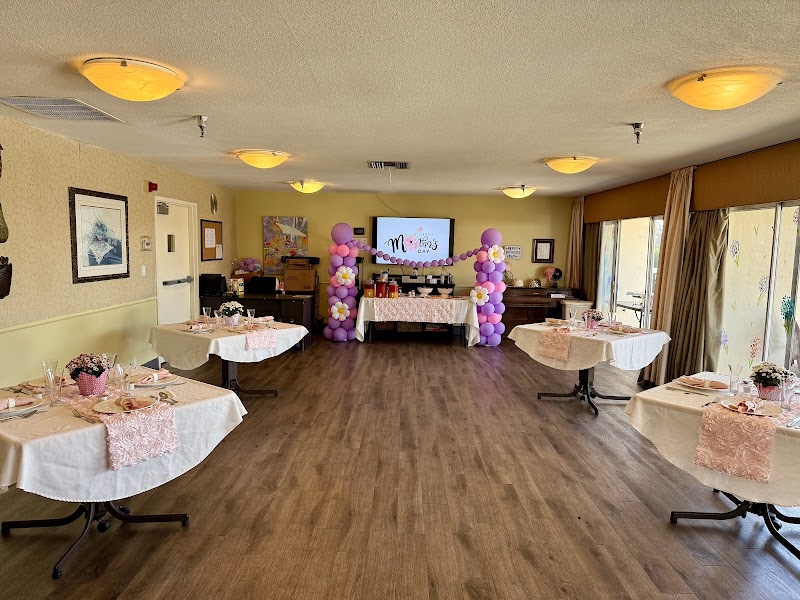
How is Rinaldi Convalescent Hospital Staffed?

CMS rates RINALDI CONVALESCENT HOSPITAL's staffing level at 2 out of 5 stars, which is below average compared to other nursing homes. Staff turnover is 37%, compared to the California average of 46%. This relatively stable workforce can support continuity of care. RN turnover specifically is 58%, which is notably high. RNs provide skilled clinical oversight, so turnover in this role can affect medical care quality.

What Have Inspectors Found at Rinaldi Convalescent Hospital?

State health inspectors documented 58 deficiencies at RINALDI CONVALESCENT HOSPITAL during 2023 to 2025. These included: 1 Immediate Jeopardy (the most serious level, indicating potential for serious harm or death), 1 that caused actual resident harm, 54 with potential for harm, and 2 minor or isolated issues. Immediate Jeopardy findings are rare and represent the most serious regulatory concerns. They require immediate corrective action.
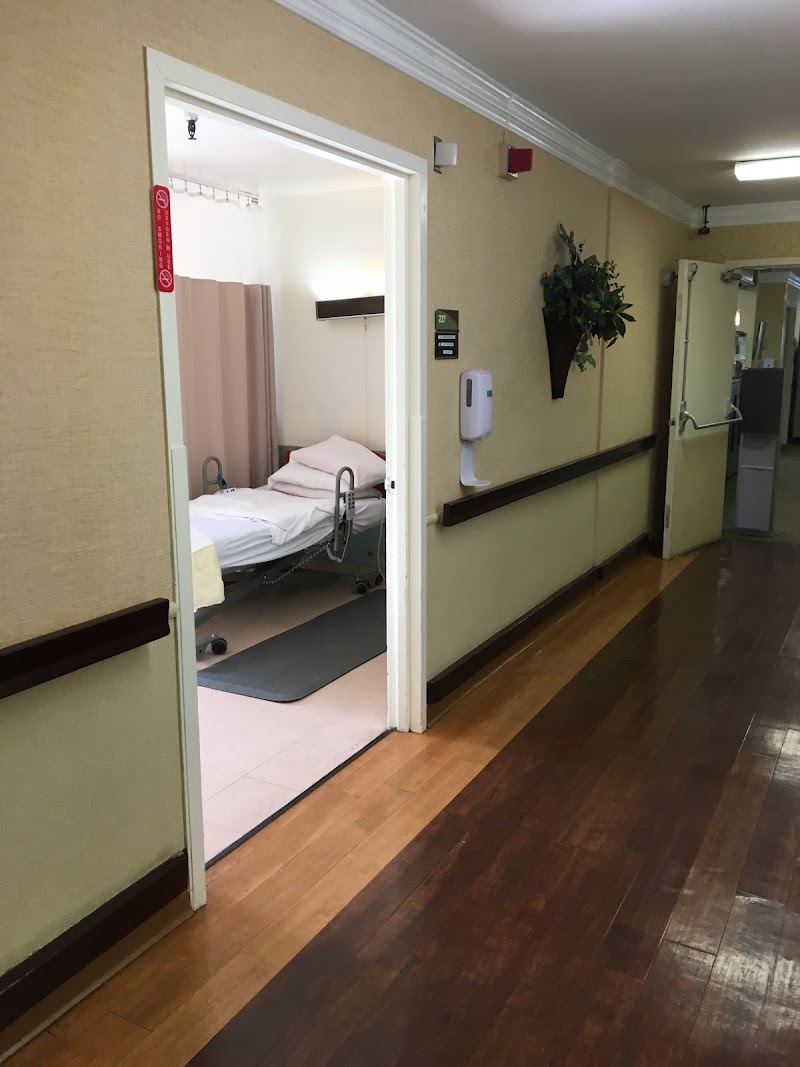
Who Owns and Operates Rinaldi Convalescent Hospital?

RINALDI CONVALESCENT HOSPITAL is owned by a for-profit company. For-profit facilities operate as businesses with obligations to shareholders or private owners. The facility is operated by CAMBRIDGE HEALTHCARE SERVICES, a chain that manages multiple nursing homes. With 99 certified beds and approximately 91 residents (about 92% occupancy), it is a smaller facility located in GRANADA HILLS, California.
How Does Rinaldi Convalescent Hospital Compare to Other California Nursing Homes?

Compared to the 100 nursing homes in California, RINALDI CONVALESCENT HOSPITAL's overall rating (2 stars) is below the state average of 3.1, staff turnover (37%) is near the state average of 46%, and health inspection rating (2 stars) is below the national benchmark.

What Should Families Ask When Visiting Rinaldi Convalescent Hospital?

Based on this facility's data, families visiting should ask: "What changes have been made since the serious inspection findings, and how are you preventing similar issues?" "What safeguards and monitoring systems are in place to protect residents from abuse or neglect?" "Can you walk me through typical staffing levels on day, evening, and night shifts?" "Can I visit during a mealtime to observe dining assistance and food quality?" These questions are particularly relevant given the facility's Immediate Jeopardy citations, the substantiated abuse finding on record, and the below-average staffing rating.

Is Rinaldi Convalescent Hospital Safe?

Based on CMS inspection data, RINALDI CONVALESCENT HOSPITAL has documented safety concerns. The facility has 1 substantiated abuse finding (meaning confirmed case of resident harm by staff or other residents). Inspectors have issued 1 Immediate Jeopardy citation (the most serious violation level indicating risk of serious injury or death). The facility has a 2-star overall rating and ranks #100 of 100 nursing homes in California. Families considering this facility should ask detailed questions about what corrective actions have been taken since these incidents.

Do Nurses at Rinaldi Convalescent Hospital Stick Around?

RINALDI CONVALESCENT HOSPITAL has a staff turnover rate of 37%, which is about average for California nursing homes (state average: 46%). Moderate turnover is common in nursing homes, but families should still ask about staff tenure and how the facility maintains care continuity when employees leave.

Was Rinaldi Convalescent Hospital Ever Fined?

RINALDI CONVALESCENT HOSPITAL has no federal fines on record. CMS issues fines when nursing homes fail to meet care standards or don't correct problems found during inspections. The absence of fines suggests the facility has either maintained compliance or corrected any issues before penalties were assessed. This is a positive indicator, though families should still review recent inspection reports for the full picture.

Is Rinaldi Convalescent Hospital on Any Federal Watch List?

RINALDI CONVALESCENT HOSPITAL is not on any federal watch list. The most significant is the Special Focus Facility (SFF) program, which identifies the bottom 1% of nursing homes nationally based on persistent, serious quality problems. Not being on this list means the facility has avoided the pattern of deficiencies that triggers enhanced federal oversight. This is a positive indicator, though families should still review the facility's inspection history directly.