IMPERIAL CREST HEALTH CARE CENTER
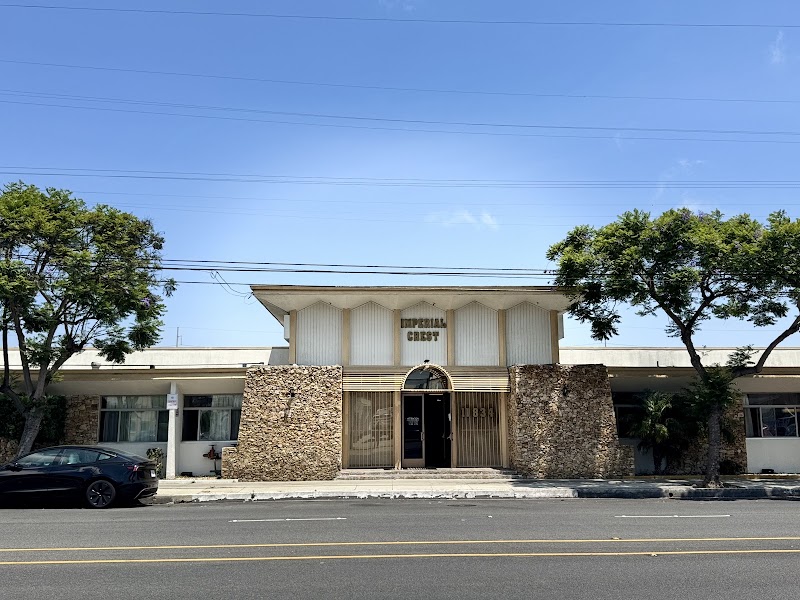
11834 INGLEWOOD AVENUE, HAWTHORNE, CA 90250 (310) 679-1461
For profit - Corporation 105 Beds LONGWOOD MANAGEMENT CORPORATION Data: November 2025
Trust Grade
58/100
#603 of 1155 in CA
Last Inspection: April 2025

Within standard 12-15 month inspection cycle. Federal law requires annual inspections.

Overview

Imperial Crest Health Care Center has a Trust Grade of C, which means it is average-middle of the pack, not great but not terrible. It ranks #603 out of 1155 facilities in California, placing it in the bottom half, and #113 out of 369 in Los Angeles County, indicating that only a few local options are better. The facility is improving, with a reduction in issues from 19 in 2024 to 18 in 2025. Staffing is a strength here, with a 3/5 star rating and a 35% turnover rate, which is below the state average, suggesting that staff members tend to stay longer and build relationships with residents. However, the facility has faced some concerns, including the risk of administering expired medications and issues with cleanliness in the kitchen, which could lead to cross-contamination. Overall, while there are strengths in staffing, families should weigh these concerns when considering this facility for their loved ones.

Trust Score
C
58/100
In California
#603/1155
Bottom 48%
Safety Record
Low Risk
No red flags
Inspections
Getting Better
19 → 18 violations
Staff Stability
○ Average
35% turnover. Near California's 48% average. Typical for the industry.
Penalties
⚠ Watch
$9,174 in fines. Higher than 86% of California facilities, suggesting repeated compliance issues.
Skilled Nurses
○ Average
Each resident gets 32 minutes of Registered Nurse (RN) attention daily — about average for California. RNs are the most trained staff who monitor for health changes.
Violations
⚠ Watch
48 deficiencies on record. Higher than average. Multiple issues found across inspections.
★★★☆☆
3.0
Overall Rating
★★★☆☆
3.0
Staff Levels
★★★☆☆
3.0
Care Quality
★★★☆☆
3.0
Inspection Score
Stable
2024: 19 issues
2025: 18 issues

The Good

  • Full Sprinkler Coverage · Fire safety systems throughout facility
  • No fines on record
  • Staff turnover below average (35%)

    13 points below California average of 48%

Facility shows strength in fire safety.

The Bad

3-Star Overall Rating

Near California average (3.1)

Meets federal standards, typical of most facilities

Staff Turnover: 35%

11pts below California avg (46%)

Typical for the industry

Federal Fines: $9,174

Below median ($33,413)

Minor penalties assessed

Chain: LONGWOOD MANAGEMENT CORPORATION

Part of a multi-facility chain

Ask about local staffing decisions and management

The Ugly 48 deficiencies on record

May 2025 2 deficiencies
CONCERN (D) 📢 Someone Reported This

A family member, employee, or ombudsman was alarmed enough to file a formal complaint

Potential for Harm - no one hurt, but risky conditions existed

Report Alleged Abuse (Tag F0609)

Could have caused harm · This affected 1 resident

**NOTE- TERMS IN BRACKETS HAVE BEEN EDITED TO PROTECT CONFIDENTIALITY** Based on interview and record review the facility failed to ensure one out of three sampled residents (Resident 4) an accusation...

Read full inspector narrative →
**NOTE- TERMS IN BRACKETS HAVE BEEN EDITED TO PROTECT CONFIDENTIALITY** Based on interview and record review the facility failed to ensure one out of three sampled residents (Resident 4) an accusation of sexual abuse was reported within two hours. This deficient practice of not reporting the accusation of sexual abuse by Resident 4 had the potential to cause psychosocial harm (factors that could harm someone ' s mental health). Findings: During a review of Resident 4 ' s admission Record, the admission Record indicated Resident 1 was admitted to the facility on [DATE] and was readmitted on [DATE]. Resident 4 diagnoses dementia (a progressive state of decline in mental abilities), depressive disorder (a mental condition characterized by persistent feelings of sadness, loss of interest, and other symptoms that can significantly impair daily functioning), and transient cerebral ischemic attack (a lack of blood flow to the brain). During a review of Resident 4 ' s History and Physical (H&P), dated 6/4/2024, the H&P indicated Resident 4 did not have the capacity to understand and make decisions. During a review of Resident 4 ' s Minimum Data Set ([MDS]- a resident assessment tool), dated 5/9/2025 the MDS indicated Resident 4 ' s cognition (ability to learn, reason, remember, understand, and make decisions) had the ability to understand. The MDS indicated Resident 4 was dependent (helper does all of the effort. Residents do none of the effort to complete the activity) on staff for showering, toileting hygiene, and dressing. During a review of facility ' s Social Services Notes, dated 5/16/2025, the Social Services Notes indicated Centinela Hospital Social Worker called to notify that resident reported she had been sexually assaulted at the facility. During a concurrent interview and record review on 5/21/25 at 1:49 p.m. with Social Service Director (SSD), Resident 4 ' s Social Services Notes were reviewed. The Social Services Notes indicated Centinela Hospital Social Worker called to notify that resident reported she had been sexually assaulted at the facility. The SSD stated the Social Worker from Centinela Hospital Social Worker had called and told her Resident 4 had stated she was sexually assaulted at the facility. The SSD stated when Resident 4 had returned on 5/20/2025 I had asked her was she sexually abused and she had said Yes,. The SSD stated accusation of sexual assault is considered abuse. The SSD stated she was a mandated reporter when there was an accusation of sexual abuse. The SSD stated she did not notify the Administrator when she had received the call from Centinela Hospital about the sexual allegation. The SSD stated that when there is an abuse allegation we are to report within two hours even if the resident is confused, start the investigation, and take care of Resident 4 as fast as possible. The SSD stated not initiating the investigation sooner could make Resident 4 feel dismissed and cause psychological harm. During an interview on 5/21/2025 at 4:00 p.m. with the Administrator (ADM), the ADM stated the staff is to report Abuse of any kind. The ADM stated the process is to report anytime the staff suspects, hears anything, and they are to report within 2 hours. The ADM stated it was important to report within 2 hours to prevent the behavior from continuing which could cause more abuse. During a review of the facility ' s policy and procedure (P&P) titled, Abuse, Neglect, Exploitation or Misappropriation-Reporting and Investigating, dated 3/2023, the P&P indicated all reports of resident abuse findings of all investigations are documented and reported. The P&P indicated abuse was suspected it must be reported immediately to the administrator and to other officials. The P&P indicated immediately is defined as within two hours of an allegation involving abuse.
CONCERN (D) 📢 Someone Reported This

A family member, employee, or ombudsman was alarmed enough to file a formal complaint

Potential for Harm - no one hurt, but risky conditions existed

Deficiency F0841 (Tag F0841)

Could have caused harm · This affected 1 resident

**NOTE- TERMS IN BRACKETS HAVE BEEN EDITED TO PROTECT CONFIDENTIALITY** Based on record review and interview, facility licensed staff failed to ensure the Medical Director (a licensed physician who ov...

Read full inspector narrative →
**NOTE- TERMS IN BRACKETS HAVE BEEN EDITED TO PROTECT CONFIDENTIALITY** Based on record review and interview, facility licensed staff failed to ensure the Medical Director (a licensed physician who oversees and manages the medical aspects of a healthcare organization or facility) was notified after licensed staff could not reach the primary physician for one out of three sampled residents (Resident 1). This deficient practice resulted in facility staff had to call 911 to transport the resident to the General Acute Care Hospital (GACH) . Findings: During a review of Resident 1 ' s admission Record, the admission Record indicated Resident 1 was admitted to the facility on [DATE] with diagnoses including chronic respiratory failure (COPD, a chronic lung disease causing difficulty in breathing), obstructive uropathy (refers to any condition where the normal flow of urine is blocked or impeded within the urinary tract), and anemia (a condition where the body doesn ' t have enough healthy red blood cells). During a review of Resident 1 ' s History and Physical (H&P), dated 4/22/2025, the H&P indicated Resident 1 did not follow commands, was non-responsive (a patient who is not reacting or responding to external stimuli, such as verbal commands, touch or pian, and non-verbal (communication that conveys messages without using spoken or written words and involves facial expression). During a review of Resident 1 ' s change of conditions (COC) interact assessment form, dated 4/26/2025, the COC indicated at 8:00 p.m. Resident 1 had no significant urine output and to transfer the resident tothe GACH. The COC indicated GACH had no available beds. The COC indicated at 10:00 p.m. the physician was made aware with no reply. The COC indicated Resident 1 blood pressure ([BP] -the force of circulating blood on the walls of the arteries) was 118/72 millimeters of mercury ([mm/hg] -a unit of pressure commonly used to measure blood pressure). During a review of Resident 1 ' s COC, dated 4/27/2025, the COC indicated Resident 1 had hematuria (the presence of blood in the urine) with reduced urine output and an order from the physician to transfer resident to the GACH. The COC indicated Resident 1 could not be transferred to GACH and 911 was called at 8:27 a.m. The COC indicated at 8:38 a.m. the physician was informed of the changes in the transfer plans but no response. The COC indicated the BP was 103/60mmhg. During a review of Resident 1 ' s Minimum Data Set (MDS] a resident assessment tool), dated 5/12/2025 the MDS indicated Resident 1's cognition (ability to learn, reason, remember, understand, and make decisions) rarely/never understands. The MDS indicated Resident 1 was dependent (helper does all of the effort. Residents do none of the effort to complete the activity) on staff for showering, toileting hygiene, and dressing. The MDS indicated Resident 1 had an indwelling catheter (a medical device used to drain urine from the bladder and allow it to flow into a collection bag). During a concurrent interview and record review on 5/19/2025 at 4:14 p.m. with Director of Nursing (DON), Resident 1's COC, dated 4/26/2025 and 4/27/2025 was reviewed. The COC dated 4/26/2025 indicated the COC indicated at 8:00 p.m. Resident 1 had no significant urine output and transferred the resident to the GACH. The COC form indicated the GACH had no available beds. The COC indicated at 10:00 p.m. the physician was made aware with no reply. The COC dated 4/27/2025 indicated Resident 1 had hematuria with reduced urinary output and an order from the physician to transfer resident to the GACH. The COC indicated Resident 1 could not be transferred to the GACH and 911 was called at 8:27 a.m. The COC indicated at 8:38 a.m. the physician was informed of the changes in the transfer plans but no response. The DON stated Resident 1 had hematuria in the urine and it was considered a change of condition. The DON stated the physician did not return the licensed staff call on 4/26/2025 p.m. and on 4/27/2025. The DON stated that when the physician did not return our calls the next step was to call the Medical Director. The DON stated the Medical Director was not called from 10:00 p.m. to 8:27 a.m. and there was a lot that could have happened; the resident could have been bleeding from somewhere in the body. The DON stated 911 was called because the physician did not return our call, and the blood pressure had dropped from 118/72 mm/hg to 103/60 mm/hg. During a telephone interview on 5/20/2025 at 2:25 p.m. with the Medical Director, the Medical Director stated staff should have called him if the primary physician did not return their call. The Medical Director stated the facility can call anytime of the day or night if the physician does not call back. The Medical Director stated the facility needed to have followed the protocol once the physician had not returned their call and the resident is not doing well. During a review of facility ' s policy and procedures (P&P) titled, Change of Condition, date unknown, the P&P indicated the facility is to ensure proper assessment and follow through for any resident with change of condition. The P&P indicated upon a change of condition for any reason, nursing staff members are to take the following if for some reason physician cannot be reached, alternative physician shall be contacted. The P&P indicated if alternate cannot be reached, the Medical Director is to be contacted.
Apr 2025 15 deficiencies
CONCERN (D)

Potential for Harm - no one hurt, but risky conditions existed

Deficiency F0558 (Tag F0558)

Could have caused harm · This affected 1 resident

Based on observation, interview, and record review, the facility failed to ensure one of two residents (Resident 52) had a call light (call bell) device within easy reach. This deficient practice had ...

Read full inspector narrative →
Based on observation, interview, and record review, the facility failed to ensure one of two residents (Resident 52) had a call light (call bell) device within easy reach. This deficient practice had the potential to result in the resident being unable to alert health care workers for assistance for activities of daily living and care needs. Findings: During a review of Resident 52's admission Record (Face Sheet), indicated the facility re-admitted the resident on 3/29/2025 with diagnoses including functional quadriplegia (paralysis from the neck down, including legs, and arms, usually due to a spinal cord injury) and unspecified dementia (a progressive state of decline in mental abilities). During a review of the Minimum Data Set (MDS - (a resident assessment tool), dated 2/7/2025 indicated Resident 52 had functional limitation in range of motion in both upper extremities. During a review of Resident 52's care plan report, initiated on 3/31/2025 indicated the following goals: assistance in calling for help, in being kept clean, dry, and odor free by placing the call light device within easy reach. The care plan report indicated interventions including: call light should be within easy reach of the resident for staff to know when to assist the resident with activities of daily living/self-care and to notify staff of hygienic needs. During an observation on 4/1/2025 at 10:24 a.m., Resident 52 was not able to access the call light device, which had fallen between the bed mattress and the upper left side rail. During a concurrent observation and interview, on 4/1/2025 at 10:31 a.m., there was no visible call light device within the resident's reach. The Director of Nursing (DON) and Licensed Vocational Nurse (LVN) 4 entered Resident 52' room and found the call bell device between the bed mattress and the upper left side rail. During an observation on 4/2/2025 at 2:21 p.m., in Resident 52's room, the call light device was pinned to the upper right side of the resident's pillow. Resident 52 stated the call light device was not within reach. During a concurrent interview and observation on 4/2/2025 at 2:27 p.m., Licensed Vocational Nurse (LVN) 2 stated Resident 52 could not reach the call light device. LVN 2 stated when the call light was not within reach, the resident will not be able to contact staff for help when needed. During a review of the facility's policy and procedure (P&P), Answering the Call Light, undated, indicated Ensure that the call light is accessible to the resident when in bed or wheelchair in room, from the toilet or shower room if necessary.
CONCERN (D)

Potential for Harm - no one hurt, but risky conditions existed

Assessment Accuracy (Tag F0641)

Could have caused harm · This affected 1 resident

**NOTE- TERMS IN BRACKETS HAVE BEEN EDITED TO PROTECT CONFIDENTIALITY** Based on interview and record review, the facility failed to ensure the use of an anti-psychotic (a class of drug used to treat ...

Read full inspector narrative →
**NOTE- TERMS IN BRACKETS HAVE BEEN EDITED TO PROTECT CONFIDENTIALITY** Based on interview and record review, the facility failed to ensure the use of an anti-psychotic (a class of drug used to treat mental health conditions) medication was accurately documented in the Minimum Data Set ([MDS] a resident assessment tool) for one of eight sampled residents (Resident 38). This deficient practice resulted in Resident 38's inaccurate medical condition submitted to the Centers for Medicare/Medicaid Services (CMS). Findings: During a review of Resident 38's admission Record, the admission Record indicated Resident 38 was originally admitted to the facility on [DATE] and readmitted on [DATE]. Resident 38's diagnoses included bipolar disorder (mood swings that range from the lows of depression to elevated periods of emotional highs), schizoaffective disorder (a mental illness that can affect thoughts, mood, and behavior), and heart failure (a heart disorder which causes the heart to not pump the blood efficiently). During a review of Resident 38's History and Physical (H&P), dated 1/10/2025, the H&P indicated Resident 38 had the capacity to make decisions for activities of daily living. During a review of Resident 38's MDS, dated [DATE], the MDS indicated Resident 38 was dependent on staff for toileting and bathing. The MDS indicated Resident 38 was not taking any anti-psychotic medication. During a review of Resident 38's Order Summary Report for April 2025, the order summary report dated 11/15/2024, indicated Risperdal (an anti-psychotic medication) to be given for schizoaffective disorder. During a concurrent interview and record review on 4/3/2025 at 12:26 p.m. with the Minimum Data Set Nurse (MDSN), Resident 38's MDS was reviewed. The MDSN stated the MDS did not indicate Resident 38 was taking any anti-psychotic medication. The MDSN stated Risperdal is an anti-psychotic. The MDSN stated it was important to document an accurate MDS assessments because this information goes to CMS and the MDS assessment drives the resident's plan of care and quality of care.
CONCERN (D)

Potential for Harm - no one hurt, but risky conditions existed

Deficiency F0658 (Tag F0658)

Could have caused harm · This affected 1 resident

**NOTE- TERMS IN BRACKETS HAVE BEEN EDITED TO PROTECT CONFIDENTIALITY** Based on interview and record review, the facility failed to ensure weekly weight order was conducted weekly for one of 4 sample...

Read full inspector narrative →
**NOTE- TERMS IN BRACKETS HAVE BEEN EDITED TO PROTECT CONFIDENTIALITY** Based on interview and record review, the facility failed to ensure weekly weight order was conducted weekly for one of 4 sampled residents (Resident 149). This deficient practice had the potential to result in the facility not knowing the resident had excessive weight loss or weight gain which could lead to delay in providing interventions needed for the resident. Findings: During a review of Resident 149's admission Record, the admission Record indicated Resident 149 was admitted on [DATE] with diagnoses including dysphagia (difficulty swallowing), type 2 diabetes (a disorder characterized by difficulty in blood sugar control and poor wound healing), schizophrenia (a mental illness that is characterized by disturbances in thought) and hyperlipidemia (a condition characterized by elevated levels of fats in the blood). During a review of Resident 149's history and physical (H&P), dated 3/14/2025, the H&P indicated Resident 149 did not have the capacity to make decisions . During a review of Resident 149's Minimum Data Set (MDS- a resident assessment tool), dated 3/17/2025, the MDS also indicated Resident 149 was dependent on staff with Activities of Daily Living (ADLs- routine tasks/activities such as bathing, dressing and toileting a person performs daily to care for themselves). During a record review of Resident 149's physician orders, dated 4/3/2025, the physician order indicated to weigh Resident 149 every Saturday until 4/11/2025. During a concurrent interview and record review, on 4/3/2025, at 11:30 a.m., with Certified Nurse Assistant 2 (CNA 2), CNA 2 stated the CNAs were responsible for weighing residents. CNA 2 stated Resident 149 was only weighed on 3/17/2025. CNA 2 stated Resident 149 was missing weekly weights as per order. CNA 2 stated the risk of not monitoring the resident's weight as ordered could result in not knowing if the resident lost or gained too much weight. During a concurrent interview and record review, on 4/3/2025, at 11:40 a.m., with Registered Nurse 2 (RN 2), RN 2 stated newly admitted residents should be weighed weekly for 30 days then monthly. RN 2 stated Resident 149 had a physician order for monitoring weights weekly until 4/11/2025. RN 2 stated Resident 149 was not weighed weekly as ordered. RN 2 stated the risk of not monitoring a resident's weight could result in weight loss or weight gain and/or ineffectiveness of medications. During a review of the facility's policy and procedures (P&P), titled Weight Assessment and Intervention, dated 3/2022, the P&P indicated residents should be weighed at intervals established by the interdisciplinary team.
CONCERN (D)

Potential for Harm - no one hurt, but risky conditions existed

Pressure Ulcer Prevention (Tag F0686)

Could have caused harm · This affected 1 resident

**NOTE- TERMS IN BRACKETS HAVE BEEN EDITED TO PROTECT CONFIDENTIALITY** Based on observation, interview and record review the facility failed to place the low air loss mattress (LALM- a pressure relie...

Read full inspector narrative →
**NOTE- TERMS IN BRACKETS HAVE BEEN EDITED TO PROTECT CONFIDENTIALITY** Based on observation, interview and record review the facility failed to place the low air loss mattress (LALM- a pressure relieving mattress for the management of pressure ulcers [localized damage to the skin and/or underlying tissue usually over a bony prominence]) at the proper setting, according to the manufacturer's recommendation, for one of five sampled residents (Resident 58). This deficient practice had the potential to cause discomfort, new pressure injuries, poor wound healing and deterioration of the current pressure ulcers for Resident 58. Findings: During a review of Resident 58's admission Record, the admission Record indicated Resident 58 was originally admitted to the facility on [DATE] and readmitted on [DATE]. Resident 58's diagnoses included pressure ulcer of the sacrum (a large, triangular bone at the base of the spine), left and right buttock, and cellulitis (a skin infection that causes swelling and redness). During a review of Resident 58's History and Physical (H&P) dated 12/14/2024, the H&P indicated Resident 58 had the ability to understand and make decisions. During a review of Resident 58's Minimum Data Set (MDS - a resident assessment tool), dated 2/20/2025, the MDS indicated Resident 58 was cognitively intact (ability to think and reason). The MDS indicated Resident 58 was dependent on staff for Activities of Daily Living (ADLs) such as toileting and bathing. The MDS indicated Resident 58 was at risk for developing pressure ulcers and used a pressure reducing device in bed. During a review of Resident 58's Monthly Weight Report dated 3/6/2025, the Weight Report indicated Resident 58 weighed 214 pounds (lbs.). During a review of Resident 58's Wound Management Care Plan dated 3/10/2025, the Wound Management Care Plan intervention included to provide a LALM for Resident 58 to maximize the outcome and enhance the wound healing process. During an observation on 4/3/2025 at 1:12 p.m., in Resident 58's room, Resident 58 was observed lying in bed on a LALM with a setting of 340 pounds. During a concurrent observation and interview on 4/3/2025 at 1:35 p.m. with the Treatment Nurse (TN), TN stated the LALM should be set at the appropriate setting according to the weight of the resident. TN stated it was important to ensure the LALM was at the correct weight setting for the LALM to be at the appropriate level of firmness to effectively offload (reduce pressure) the resident's bony prominences (areas where bones are close to the skin's surface, with minimal cushioning, making them more likely to develop pressure ulcers). TN stated Resident 58's LALM was set at 340 lbs., however the resident weighed 214 pounds. TN stated the appropriate setting for Resident 58 should have been 200 or 240 pounds for optimal pressure relief and was unsure why the LALM was set at 340 lbs. During a review of the undated manufacturer's operation manual for the LALM, the manual indicated the user adjusts the air mattress to a desired firmness according to the resident's weight or the suggestion from a health care professional. During a review of the facility's policy and procedure (P&P), titled Support Surface Guidelines, dated 9/2023, the P&P indicated any individual at risk for developing pressure ulcers should be placed on a redistribution support surface and the support surfaces are modifiable and individual needs differ.
CONCERN (D)

Potential for Harm - no one hurt, but risky conditions existed

Tube Feeding (Tag F0693)

Could have caused harm · This affected 1 resident

**NOTE- TERMS IN BRACKETS HAVE BEEN EDITED TO PROTECT CONFIDENTIALITY** Based on observation, interview, and record review, the facility failed to ensure residents on tube feeding received treatment a...

Read full inspector narrative →
**NOTE- TERMS IN BRACKETS HAVE BEEN EDITED TO PROTECT CONFIDENTIALITY** Based on observation, interview, and record review, the facility failed to ensure residents on tube feeding received treatment and care in accordance with professional standards of practice, by failing to: 1. Ensure the head part of Geri-chair (a fully reclining chair designed for individuals with limited mobility, offering multiple positions for comfort and support) was elevated while one of three residents, (Resident 10), was lying in and received gastrostomy tube ([GT] - a surgical opening fitted with a device to allow feedings to be administered directly to the stomach common for people with swallowing problems) feedings. This deficient practice placed the resident at risk of aspiration (inhalation of foreign materials) that can lead to pneumonia (lung infection), hospitalization and death. Findings: During a review of Resident 10's admission Record, the admission Record indicated, Resident 10 was originally admitted to the facility on [DATE] and readmitted on [DATE]. Resident 10's diagnoses included anemia (a condition where the body does not have enough healthy red blood cells), GT placement, and chronic obstructive pulmonary disease ([COPD] - a chronic lung disease causing difficulty in breathing). During a review of Resident 10's History and Physical (H&P), dated 2/18/2025, the H&P indicated, Resident 10 did not have the capacity to understand and make decisions. During a review of Resident 10's Minimum Data Set ([MDS] - a resident assessment tool), dated 2/28/2025, the MDS indicated, Resident 10's cognitive (ability to think and reason) skills for daily decision making was severely impaired (never/rarely made decisions). The MDS indicated Resident 10 was totally dependent (helper does all of the effort) from staff with oral hygiene, lower body dressing, and personal hygiene. During a review of Resident 10's Order Summary Report, dated 4/3/2025, the Order Summary Report indicated a tube feeding order of Jevity (type of tube feeding formula) 1.2 kilocalorie (]kcal] - unit of measurement) at 65 cubic centimeter ([cc] - unit of volume) per hour for 20 hours (turn on at 12 p.m., off at 8:00 a.m.) to provide 1300 cc/1560 kcal per day. The Order Summary Report indicated to observe aspiration precaution and elevate head of bed 30 to 45 degrees at all times during GT feeding. During a concurrent observation and interview on 4/1/2025 at 12:49 p.m., with Licensed Vocational Nurse 3 (LVN 3), in Resident 10's room, Resident 10 was observed lying on Geri-chair receiving continuous GT feeding of Jevity 1.2 at 65 cc/hour. LVN 3 stated Resident 10 was not sitting in upright position and the head of Ger-chair was approximately 10 degrees. LVN 3 stated the head of Geri-chair should be elevated at least 30 to 45 degrees to prevent aspiration. LVN 3 stated Resident 10 was at risk for aspiration pneumonia, shortness of breath, vomiting, and choking since the head of Ger-chair was at lowest position. During a review of the facility's policy and procedure (P&P), titled Enteral Feedings - Safety Precautions, dated 3/2023, the P&P indicated, the facility should remain current and follow accepted best practices in enteral nutrition.
CONCERN (D)

Potential for Harm - no one hurt, but risky conditions existed

Deficiency F0712 (Tag F0712)

Could have caused harm · This affected 1 resident

**NOTE- TERMS IN BRACKETS HAVE BEEN EDITED TO PROTECT CONFIDENTIALITY** Based on interview and record review, the facility failed to ensure one of one sampled resident (Resident 42) was evaluated by a...

Read full inspector narrative →
**NOTE- TERMS IN BRACKETS HAVE BEEN EDITED TO PROTECT CONFIDENTIALITY** Based on interview and record review, the facility failed to ensure one of one sampled resident (Resident 42) was evaluated by a physician every 60 days and document his visit in resident's clinical records. This deficient practice had the potential for Resident 42's current medical condition not timely assessed by a physician that can lead to delay in necessary care and treatment. Findings: During a review of Resident 42's admission Record, the admission Record indicated, Resident 42 was admitted to the facility on [DATE]. Resident 42's diagnoses included liver cirrhosis (a condition in which the liver is scarred and permanently damaged), hypertension ([HTN] - high blood pressure), and anemia (a condition where the body does not have enough healthy red blood cells). During a review of Resident 42's Minimum Data Set ([MDS] - a resident assessment tool), dated 3/20/2025, the MDS indicated, Resident 42's cognitive (ability to think and reason) skills for daily decision making was consistent and reasonable. The MDS indicated Resident 42 was independent (Resident completes the activity by himself with no assistance from a helper) with oral hygiene, toileting hygiene, and personal hygiene. During an interview on 4/1/2025 at 9:51 a.m., with Resident 42, Resident 42 stated he had not met and seen his physician in the facility since he was admitted . Resident 42 stated he would be happy to see his physician so he could ask questions about his medical conditions. During a concurrent interview and record review on 4/2/2025 at 12:45 p.m., with the Director of Nursing (DON), Resident 42's clinical records were reviewed. The DON stated Resident 42 was visited by a Nurse Practitioner ([NP] - a nurse who has advanced clinical education and training,) on 3/22/2024, 4/18/2024, 5/7/2024, 6/6/2024, 7/31/2024, 8/15/2024, 9/13/2024, 10/24/2024, 11/14/2024, 12//11/2024, 1/25/2025, 2/14/2025, and 3/13/2025. The DON stated Resident 42 was not visited by his physician in the facility for over a year. The DON stated residents in the facility should be visited by a physician and document his finding in the progress notes at least once a month to comply with the regulation and to assess and evaluate treatment plan. During a review of the facility's policy and procedure (P&P), titled Physician Visits, dated 4/2013, the P&P indicated, the attending physician must visit his/her patients at least once every 30 days for the first 90 days, following the resident's admission, and then at least every 60 days thereafter.
CONCERN (D)

Potential for Harm - no one hurt, but risky conditions existed

Deficiency F0745 (Tag F0745)

Could have caused harm · This affected 1 resident

**NOTE- TERMS IN BRACKETS HAVE BEEN EDITED TO PROTECT CONFIDENTIALITY** Based on interview and record review, the facility failed to ensure one of one sampled resident (Resident 42) was evaluated by a...

Read full inspector narrative →
**NOTE- TERMS IN BRACKETS HAVE BEEN EDITED TO PROTECT CONFIDENTIALITY** Based on interview and record review, the facility failed to ensure one of one sampled resident (Resident 42) was evaluated by a physician every 60 days and document his visit in resident's clinical records. This deficient practice had the potential for Resident 42's current medical condition not timely assessed by a physician that can lead to delay in necessary care and treatment. Findings: During a review of Resident 42's admission Record, the admission Record indicated, Resident 42 was admitted to the facility on [DATE]. Resident 42's diagnoses included liver cirrhosis (a condition in which the liver is scarred and permanently damaged), hypertension ([HTN] - high blood pressure), and anemia (a condition where the body does not have enough healthy red blood cells). During a review of Resident 42's Minimum Data Set ([MDS] - a resident assessment tool), dated [DATE], the MDS indicated, Resident 42's cognitive (ability to think and reason) skills for daily decision making was consistent and reasonable. The MDS indicated Resident 42 was independent (Resident completes the activity by himself with no assistance from a helper) with oral hygiene, toileting hygiene, and personal hygiene. During an interview on [DATE] at 9:51 a.m., with Resident 42, Resident 42 stated he had not met and seen his physician in the facility since he was admitted . Resident 42 stated he would be happy to see his physician so he could ask questions about his medical conditions. During a concurrent interview and record review on [DATE] at 12:45 p.m., with the Director of Nursing (DON), Resident 42's clinical records were reviewed. The DON stated Resident 42 was visited by a Nurse Practitioner ([NP] - a nurse who has advanced clinical education and training,) on [DATE], [DATE], [DATE], [DATE], [DATE], [DATE], [DATE], [DATE], [DATE], 12//11/2024, [DATE], [DATE], and [DATE]. The DON stated Resident 42 was not visited by his physician in the facility for over a year. The DON stated residents in the facility should be visited by a physician and document his finding in the progress notes at least once a month to comply with the regulation and to assess and evaluate treatment plan. During a review of the facility's policy and procedure (P&P), titled Physician Visits, dated 4/2013, the P&P indicated, the attending physician must visit his/her patients at least once every 30 days for the first 90 days, following the resident's admission, and then at least every 60 days thereafter. 2). During a review of Resident 57's admission Record, the admission record indicated Resident 57 was originally admitted to the facility [DATE] and readmitted on [DATE] with diagnoses including spinal stenosis (a condition where the spinal canal becomes narrow), quadriplegia (paralysis from the neck down, including legs, and arms, usually due to a spinal cord injury), cervicalgia (neck pain), and major depressive disorder (a mood disorder that causes a persistent feeling of sadness and loss of interest). During a review of Resident 57's History and Physical (H&P), dated [DATE], the H&P indicated Resident 57 had the capacity to make his own decisions . During a review of Resident 57's Minimum Data Set (MDS- a resident assessment tool), dated [DATE], the MDS indicated Resident 57 was dependent on staff with Activities of Daily Living (ADLs- routine tasks/activities such as bathing, dressing and toileting a person performs daily to care for themselves). During an interview, on [DATE], at 10:06 a.m., with Resident 57, Resident 57 stated his driver's license had expired in 2022. Resident 57 stated he informed the Social Services Director (SSD) 2-3 weeks ago that he would like to renew his driver's license. Resident 57 stated he needed an unexpired driver's license for identification to his medical appointments. Resident 57 stated he felt frustrated for not having his driver's license renewed. During an interview, on [DATE], at 9:30 a.m., with the SSD, the SSD stated the protocol for renewing a resident's driver license was to escort the resident to the Department of Motor Vehicles (DMV) or if a resident was bedbound, the DMV would report to the facility. The SSD stated she had been aware for 2 weeks that Resident 57 needed assistance to renew his driver's license. The SSD stated she did not have documentation to show she attempted to contact the DMV for Resident 57. The SSD stated the risk of not following up with DMV to get the resident's driver's license renewed could result in long delay causing the resident to feel frustrated. During a review of facility's Social Worker Job Description, dated [DATE], the Social Worker job description indicated, the Social Worker was to assist in the provision of the medically related social services to attain or maintain the highest practicable physical, mental and psychosocial well-being of each resident. The Social Worker job description also indicated to work with the patient, family and other team members to outline goals of stay at admission and the plan to meet those goals and discharge as appropriate. The Social Worker job description indicated, social services should assist residents or responsible parties in processing forms or applications in the effort to obtain outside services. The P&P indicated, the outside services included but is not limited to Social Security, Medi-aid, SSI or any other services to which the resident may be entitled.
CONCERN (D)

Potential for Harm - no one hurt, but risky conditions existed

Pharmacy Services (Tag F0755)

Could have caused harm · This affected 1 resident

**NOTE- TERMS IN BRACKETS HAVE BEEN EDITED TO PROTECT CONFIDENTIALITY** Based on observation, interview and record review, the facility failed to administer accurate amount of medication, to one of 29...

Read full inspector narrative →
**NOTE- TERMS IN BRACKETS HAVE BEEN EDITED TO PROTECT CONFIDENTIALITY** Based on observation, interview and record review, the facility failed to administer accurate amount of medication, to one of 29 residents (Resident 10), according to the physician's order. This failure had the potential for the medication to provide ineffective effect to the resident. Findings: During a review of Resident 10's admission Record, the admission Record indicated, Resident 10 was originally admitted to the facility on [DATE] and readmitted on [DATE]. Resident 10's diagnoses included anemia (a condition where the body does not have enough healthy red blood cells), gastrostomy ([GT] - a surgical opening fitted with a device to allow feedings to be administered directly to the stomach common for people with swallowing problems), and chronic obstructive pulmonary disease ([COPD] - a chronic lung disease causing difficulty in breathing). During a review of Resident 10's History and Physical (H&P), dated 2/18/2025, the H&P indicated, Resident 10 did not have the capacity to understand and make decisions. During a review of Resident 10's Minimum Data Set ([MDS] - a resident assessment tool), dated 2/28/2025, the MDS indicated, Resident 10's cognitive (ability to think and reason) skills for daily decision making was severely impaired (never/rarely made decisions). The MDS indicated Resident 10 was totally dependent (helper does all of the effort) from staff with oral hygiene, lower body dressing, and personal hygiene. During a review of Resident 10's Order Summary Report, dated 4/3/2025, the Order Summary Report indicated an order of ferrous sulfate ([FeSo4] - a drug supplement used to prevent and treat anemia) 220 milligrams ([mg] - metric unit of measurement, used for medication dosage and/or amount)/5 milliliter ([ml] - unit of volume), to give 7.5 ml (330 mg) via GT daily (9 a.m.) for anemia. During morning medication administration (med pass) observation, at station two on 4/3/2025 from 9:17 a.m. to 10:00 a.m., for Resident 10, Licensed Vocational Nurse 3 (LVN 3), administered FeSo4 5 ml via GT to Resident 10. During an interview on 4/3/2025 at 10:06 a.m., with LVN 3, LVN 3 stated she did not administer the correct dose of FeSo4 to Resident 10. LVN 3 stated the physician order was to give FeSo4 7.5 ml (330 mg), but she administered only 5 ml (220 mg) to Resident 10. LVN 3 stated it was an oversight on her part for not giving the correct dose of FeSo4 to Resident 10. LVN 3 stated the risk for not administering the correct dose of FeSo4 to Resident 10 could lead to her anemia getting worst and might have serious complication on her medical condition. During a review of the facility's policy and procedure (P&P), titled Administering Medication, dated 3/2023, the P&P indicated, medications should be administered in accordance with prescriber orders.
CONCERN (D)

Potential for Harm - no one hurt, but risky conditions existed

Laboratory Services (Tag F0770)

Could have caused harm · This affected 1 resident

**NOTE- TERMS IN BRACKETS HAVE BEEN EDITED TO PROTECT CONFIDENTIALITY** Based on interview and record review, the facility failed to ensure, one of eight sampled residents' (Resident 16), Complete Blo...

Read full inspector narrative →
**NOTE- TERMS IN BRACKETS HAVE BEEN EDITED TO PROTECT CONFIDENTIALITY** Based on interview and record review, the facility failed to ensure, one of eight sampled residents' (Resident 16), Complete Blood Count ([CBC]- a blood test that measures the number and type of cells in your blood) and Albumin (a blood test to check the level of protein in the blood) orders were implemented, as ordered by the physician on 12/11/2024. This deficient practice resulted in inadequate monitoring of Resident 16's health status. Findings: During a review of Resident 16's admission Record, the admission Record indicated Resident 16 was originally admitted to the facility on [DATE] and readmitted on [DATE]. Resident 16's diagnoses included diabetes (DM-a disorder characterized by difficulty in blood sugar control, dysphagia (difficulty swallowing) and quadriplegia (the loss of muscle function in all limbs). During a review of Resident 16's History and Physical (H&P), dated 1/9/2025, the H&P indicated Resident 16 did not have the capacity to understand and make decisions. During a review of Resident 16's Minimum Data Set ([MDS] a resident assessment tool), dated 1/8/2025, the MDS indicated Resident 16 was dependent on staff for toileting, bathing, and dressing. During a review of Resident 16's Order Summary Report, for 4/2025, the report indicated a physician order for CBC/Albumin due to resident with pressure ulcer, dated 12/11/2024. During a concurrent interview and record review on 4/3/2025 at 11:35 a.m. with Registered Nurse (RN) 1, Resident 16's lab results were reviewed. There was no laboratory result for the CBC/Albumin ordered on 12/11/2024. RN 1 stated Resident 16's CBC/Albumin lab tests orders was not done on 12/11/2024. RN 1 stated, if the laboratory tests were not done, the facility won't know why Resident 16 was getting pressure ulcers (localized damage to the skin and/or underlying tissue usually over a bony prominence). During a review of the facility's policy and procedure (P&P) titled, Lab and Diagnostic Test Results, dated 3/2023, the P&P indicated staff should process test requisitions and arrange for tests.
CONCERN (D)

Potential for Harm - no one hurt, but risky conditions existed

Medical Records (Tag F0842)

Could have caused harm · This affected 1 resident

**NOTE- TERMS IN BRACKETS HAVE BEEN EDITED TO PROTECT CONFIDENTIALITY** Based on interview and record review, the facility failed to ensure the foley catheter (a thin, flexible tube inserted into the ...

Read full inspector narrative →
**NOTE- TERMS IN BRACKETS HAVE BEEN EDITED TO PROTECT CONFIDENTIALITY** Based on interview and record review, the facility failed to ensure the foley catheter (a thin, flexible tube inserted into the bladder to drain urine) removal for one of one sampled resident (Resident 85) was documented, according to the facility's policy and procedure (P&P). This deficient practice had the potential to result in the lack of communication between staff and a delay in the provision of care or interventions for Resident 85. Findings: During a review of Resident 58's admission Record, the admission Record indicated Resident 58 was originally admitted to the facility on [DATE] and readmitted on [DATE]. Resident 58's diagnoses included pressure ulcer (localized damage to the skin and/or underlying tissue usually over a bony prominence) of the sacrum (a large, triangular bone at the base of the spine), left and right buttock, and cellulitis (a skin infection that causes swelling and redness). During a review of Resident 58's History and Physical (H&P), dated 12/14/2024, the H&P indicated Resident 58 had the ability to understand and make decisions. During a review of Resident 58's Minimum Data Set (MDS - a resident assessment tool), dated 2/20/2025, the MDS indicated Resident 58 was cognitively intact (ability to reason, understand, remember, judge, and learn) and was dependent on staff for Activities of Daily Living (ADLs) such toileting and bathing. The MDS indicated Resident 58 had an indwelling (foley) catheter. During a review of Resident 58's Progress Notes dated 3/26/2025, the Progress Notes indicated Resident 58 requested to have her foley catheter removed and the physician's order was obtained to remove the resident's foley catheter. The Progress notes did not indicate when the resident's foley catheter was removed, what happened during the removal process and how the resident tolerated the procedure. During a review of Resident 58's Order Summary Report dated 3/2025, the Order Summary indicated on 3/26/2025, the physician ordered to remove Resident 58's foley catheter. During an interview on 4/1/2025 at 9:33 a.m. with Resident 58, Resident 58 stated she recently (date unknown) had her foley catheter removed because it was bothering her. During an interview on 4/3/2025 at 2:54 p.m. with the Treatment Nurse (TN), TN stated she removed Resident 58's foley catheter on 3/26/2025. TN stated she did not document notes about the removal of the foley catheter because she felt it was not necessary because nothing eventful happened during the removal. TN stated it was important to document notes about the removal of the foley catheter to communicate with other staff members what happened during the procedure. During a review of the facility's P&P titled Charting and Documentation, dated 7/2017, the P&P indicated all services provided to the resident, progress toward the care plan goals or changes in the resident's medical, or physical condition should be documented in the resident's medical record. The P&P also indicated treatments or services performed, and changes in the resident's condition should be documented on and should be objective, complete, and accurate. The P&P further indicated documentation of procedures and treatments should include how the resident tolerated the procedure/treatment, and assessment data and/or any unusual findings obtained during the procedure/treatment. During a review of the facility's P&P titled, Indwelling (Foley) Catheter Removal, dated 8/2022, the P&P indicated to document the date and time the foley catheter removal was performed, any abnormal findings from the removal, if they refused the procedure and the name title of the person who performed the procedure in the resident's medical record after the foley catheter was removed.
CONCERN (D)

Potential for Harm - no one hurt, but risky conditions existed

Infection Control (Tag F0880)

Could have caused harm · This affected 1 resident

Based on observation, interview, and record review, the facility failed to follow appropriate infection control practices for one of two residents (Resident 52) who was on enhanced barrier precautions...

Read full inspector narrative →
Based on observation, interview, and record review, the facility failed to follow appropriate infection control practices for one of two residents (Resident 52) who was on enhanced barrier precautions [EBP, an infection control intervention designed to reduce the transmission of multidrug-resistant organisms (MDROs)]. This deficient practice had the potential to result in spread of infectious disease. Findings: During an observation on 4/1/2025 at 10:31 a.m., The Director of Nursing (DON) and Licensed Vocational Nurse (LVN) 4 entered Resident 52's room from the hallway, and were observed not performing hand hygiene before entering the resident's room, before touching the resident's linen, after assisting the resident, and before leaving the resident's room. During an interview on 4/1/2025 at 10:39 a.m. with the DON, the DON stated hand hygiene should be performed before touching the residents. During an interview on 4/1/2025 at 12:05 p.m., at the nurse's station, Licensed Vocational Nurse (LVN) 4 stated staff were to wash hands between each resident especially when transitioning from resident to resident who are on EBP. LVN 4 stated staff should wear a gown and gloves and immediately wash hands before and after care, because infections can arise if hand hygiene was not performed, and to prevent spread of disease as much as possible. During a review of Resident 52's care plan report indicated Resident 52 was at high risk for infection based on a medical history of previous infections. The goal of the care plan was to reduce the risk for active infection by using interventions including hand hygiene during care to reduce the potential for the resident acquiring an infection. During a review of the facility policy and procedure (P&P) titled Handwashing/Hand Hygiene, dated 4/2023 indicated to use an alcohol-based hand rub before and after direct contact with residents, and after contact with objects (e.g., medical equipment) in the immediate vicinity of the resident.
CONCERN (E)

Potential for Harm - no one hurt, but risky conditions existed

Deficiency F0761 (Tag F0761)

Could have caused harm · This affected multiple residents

**NOTE- TERMS IN BRACKETS HAVE BEEN EDITED TO PROTECT CONFIDENTIALITY** Based on observation, interview, and record review, the facility failed to: 1). Ensure expired one opened bottle of vitamin B1 (...

Read full inspector narrative →
**NOTE- TERMS IN BRACKETS HAVE BEEN EDITED TO PROTECT CONFIDENTIALITY** Based on observation, interview, and record review, the facility failed to: 1). Ensure expired one opened bottle of vitamin B1 (one of the B vitamins) medication was not kept in the medication cart 1. This deficient practice had the potential to result in administering expired medication to the residents with orders. 2). Label with an opened date, the Ipratropium with Albuterol Solution (a combined inhalation solution to treat and prevent shortness of breath) pouch in medication cart 1 for Resident 33, that had a pharmacy fill date of 7/3/2024. 3). Ensure expired one pouch of Ipratropium with Albuterol Solution for Resident 83 was not kept in medication cart 1. These failures had the potential for the affected residents to receive expired medications. These failures placed the medications at risk of bacterial growth and less potent, which can fail to treat shortness of breath and chest congestion for Resident 33 and Resident 83's shortness of breath or wheezing, when needed. Findings: 1). During a concurrent observation and interview on 4/2/2025 at 11:08 a.m., of the medication cart one with Licensed Vocational Nurse 2 (LVN 2), found one opened bottle of expired vitamin B1. LVN 2 stated the vitamin B1 was labeled with an opened date on 3/23/2025 and the expiration date printed on the bottle was 2/25/2025. LVN 2 stated it was the responsibility of the licensed nursing staff to check the expiration date of all the medications in medication cart 1. LVN 2 stated giving expired medication to residents could cause poison and untoward side-effects (an effect of the drug beyond its desired effect). 2). During a review of Resident 33's admission Record, the admission Record indicated, Resident 33 was originally admitted to the facility on [DATE] and readmitted on [DATE]. Resident 33's diagnoses included respiratory failure (a medical condition that makes it difficult to breathe on your own), dysphagia (difficulty of swallowing), and gastrostomy tube (a surgical opening fitted with a device to allow feedings to be administered directly to the stomach common for people with swallowing problems) placement. During a review of Resident 33's Minimum Data Set ([MDS] - a resident assessment tool), dated 1/23/2025, the MDS indicated, Resident 33's cognitive (ability to think and reason) skills for daily decision making was severely impaired (never/rarely made decisions). The MDS indicated Resident 33 was totally dependent (helper does all of the effort) from staff with toileting hygiene, upper/lower body dressing, and personal hygiene. During a review of Resident 33's Order Summary Report, dated 4/2/2025, the Order Summary Report indicated an order of Ipratropium with Albuterol Solution 0.5-2.5 milligrams ([mg] - metric unit of measurement, used for medication dosage and/or amount)/ 3 milliliter ([ml] - unit of volume), inhale orally every 4 hours as needed for shortness of breath and chest congestion. During a concurrent observation and interview on 4/2/2025 at 11:09 a.m., of the medication cart 1 with LVN 2, observed one opened and expired ipratropium with albuterol inhalation foil pack for Resident 33 stored at room temperature. The opened foil pack was not labeled with a date. LVN 2 stated the ipratropium with albuterol solution for Resident 33 indicated a pharmacy fill date of 7/3/2024. LVN 2 stated it was unknown at this time when the ipratropium with albuterol solution foil pack for Resident 33 was opened since it was unlabeled. LVN 2 stated each medication has a specific date on how long it would be effective. LVN 2 stated she will dispose immediately the unlabeled ipratropium with albuterol solution for Resident 33. 3). During a review of Resident 83's admission Record, the admission Record indicated, Resident 83 was admitted to the facility on [DATE]. Resident 83's diagnoses included chronic obstructive pulmonary disease ([COPD] - a chronic lung disease causing difficulty in breathing), hypertension ([HTN] - high blood pressure) obstructive sleep apnea (a sleep disorder where the airway collapses during sleep, leading to pauses in breathing), and muscle weakness. During a review of Resident 83's MDS, dated [DATE], the MDS indicated, Resident 83's cognitive (ability to think and reason) skills for daily decision making was moderately impaired (decisions poor, cues/supervision required). The MDS indicated Resident 83 required substantial assistance (helper does more than half the effort) from staff with oral hygiene and personal hygiene. During a review of Resident 83's Order Summary Report, dated 4/2/2025, the Order Summary Report indicated an order of Ipratropium with Albuterol Solution 0.5-2.5 mg/3 ml to inhale orally every 6 hours as needed for shortness of breath or wheezing (a high-pitched sound made when breathing is restricted/obstructed in the lungs). During a concurrent observation and interview on 4/2/2025 at 11:14 a.m., of the medication cart 1 with LVN 2, observed one opened and expired ipratropium with albuterol inhalation foil pack for Resident 83 stored at room temperature. LVN 2 stated the ipratropium with albuterol solution for Resident 83 indicated a pharmacy fill date of 1/17/2025. LVN 2 stated the ipratropium with albuterol inhalation foil pack for Resident 83 was opened on 2/25/2025. LVN 2 stated giving expired medication would affect the potency of the medication and no longer be effective to the resident. During a review of the facility's policy and procedure (P&P), titled Labeling of Medication Containers, dated 4/2019, the P&P indicated, all medications maintained in the facility should be properly labeled in accordance with current and federal guidelines and regulations. During a review of the facility's P&P, titled Storage of Medications, dated 3/2023, the P&P indicated, the facility should store all drugs and biologicals in a safe, secure, and orderly manner. The P&P indicated, discontinued, outdated, or deteriorated drugs or biologicals should be returned to the dispensing pharmacy or destructed as indicated. During a review of the ipratropium with albuterol inhalation solutions manufacturer's instructions for storage and labeling, indicated that opened foil packs of ipratropium with albuterol inhalation solutions should be stored at room temperature between 36 and 77 degrees Fahrenheit and used or discarded within two weeks of opening the foil cover.
CONCERN (E)

Potential for Harm - no one hurt, but risky conditions existed

Food Safety (Tag F0812)

Could have caused harm · This affected multiple residents

Based on observation and interview, the facility failed to ensure the juice connectors for the apple, grape, and pineapple juice was free of sticky residue. This deficient practice had the potential t...

Read full inspector narrative →
Based on observation and interview, the facility failed to ensure the juice connectors for the apple, grape, and pineapple juice was free of sticky residue. This deficient practice had the potential to result in cross contamination (movement of bacteria from one place to another) in the kitchen. Findings: During a concurrent observation and interview on 4/2/2025 at 9:20 a.m. with the Dietary Supervisor (DS), the connectors for the apple, grape, and pineapple juice was observed with a sticky substance. The DS stated the connectors contained dust and sticky residue that can cause cross contamination resulting in infection. During a review of the facility's policy and procedure (P&P) titled, Food Receiving and Storage, dated 11/2022, the P&P indicated food services staff should maintain clean food storage areas. Non-refrigerated foods should be kept clean.
CONCERN (E)

Potential for Harm - no one hurt, but risky conditions existed

Garbage Disposal (Tag F0814)

Could have caused harm · This affected multiple residents

Based on observation and interview, the facility failed to ensure three dumpsters (trash container) were kept closed. This deficient practice had the potential to result in rodents and insects being a...

Read full inspector narrative →
Based on observation and interview, the facility failed to ensure three dumpsters (trash container) were kept closed. This deficient practice had the potential to result in rodents and insects being attracted to the facility and cause contaminations and infections. Findings: During a concurrent observation and interview on 4/1/2025 at 8:41 a.m. with the [NAME] in the parking lot, three dumpsters were noted with the lids off. The [NAME] stated the dumpsters should be closed to prevent possible contamination. The [NAME] stated if there were food inside it could attract animals. During a review of the facility's policy and procedure (P&P) titled, Food-Related Garbage and Refuse Disposal, dated 10/2017, the P&P indicated dumpsters should be kept closed and free of surrounding litter. Dumpsters must be kept covered when stored or not in continuous use.
MINOR (B)

Minor Issue - procedural, no safety impact

Deficiency F0912 (Tag F0912)

Minor procedural issue · This affected multiple residents

**NOTE- TERMS IN BRACKETS HAVE BEEN EDITED TO PROTECT CONFIDENTIALITY** Based on observation and record review, the facility failed to meet the required 80 square feet for each resident in rooms [ROOM...

Read full inspector narrative →
**NOTE- TERMS IN BRACKETS HAVE BEEN EDITED TO PROTECT CONFIDENTIALITY** Based on observation and record review, the facility failed to meet the required 80 square feet for each resident in rooms [ROOM NUMBER]. This deficient practice had the potential to result in inadequate space to provide safe nursing care and privacy for residents in rooms [ROOM NUMBER]. Findings: A review of the Request for Waiver Variation Letter completed by the facility, on 4/2/2024 at 9:30 a.m., dated on 4/1/2025, indicated room [ROOM NUMBER], 111 and 117 did not meet the requirement of 80 square feet (sq ft) per resident as follows: a. room [ROOM NUMBER] had three resident beds, which measured 236.4 square feet; b. room [ROOM NUMBER] had three resident beds, which measured 236.4 square feet; c. room [ROOM NUMBER] had three resident beds, which measured 231.6 square feet; During an interview, on 4/4/2024 at 9:40 a.m., with the Administrator (ADMIN), the ADMIN stated residents had not complained of inadequate nursing care due to lack of required square footage. The ADMIN stated the inadequate square footage did not affect the ability of the staff members to provide care. During a multiple observations made to Rooms 109, 111 and 117 through 4/1/2025 to 4/4/2025, the room sizes of the above rooms did not adversely affect the residents' health and or safety. Recommend room waiver.
Mar 2025 1 deficiency
CONCERN (D) 📢 Someone Reported This

A family member, employee, or ombudsman was alarmed enough to file a formal complaint

Potential for Harm - no one hurt, but risky conditions existed

Report Alleged Abuse (Tag F0609)

Could have caused harm · This affected 1 resident

**NOTE- TERMS IN BRACKETS HAVE BEEN EDITED TO PROTECT CONFIDENTIALITY** Based on interview and record review, the facility failed to report an allegation of abuse to the California Department of Publi...

Read full inspector narrative →
**NOTE- TERMS IN BRACKETS HAVE BEEN EDITED TO PROTECT CONFIDENTIALITY** Based on interview and record review, the facility failed to report an allegation of abuse to the California Department of Public Health (CDPH), within two hours, when one out of three residents, Resident 1, alleged a Registered Nurse (RN) hit her on the right side of the face on 3/1/2025. This deficient practice had the potential to place Resident 1 at risk for further abuse and resulted in a delay in investigation of alleged abuse. Findings: During a review of Resident 1 ' s admission Record, the admission Record indicated Resident 1 was admitted to the facility on [DATE]. Resident 1 ' s diagnoses included muscle weakness and anxiety disorder (mental health condition characterized by excessive, persistent, and often irrational worry, fear, and unease that can interfere with daily life). During a review of Resident 1 ' s History and Physical (H&P) dated 2/19/2025, the H&P indicated Resident 1 did not have the capacity to understand and make decisions. During a review of Resident 1 ' s admission Reassessment document dated 2/19/2025, the reassessment indicated Resident 1 had a puffy face and the peri-orbital (around eyes) area. During a review of Resident 1 ' s Minimum Data Set ([MDS] a federally mandated resident assessment tool) dated 2/24/2025, the MDS indicated Resident could sometimes make herself understood and was understood by others. The MDS indicated Resident 1 was dependent for oral hygiene, toileting hygiene, shower/bath, dressing, putting on/taking off footwear and for personal hygiene. During an interview on 3/13/2025 at 12:27 p.m., with Family Member 2 (FM 2), FM 2 stated on 3/1/2025 around 2 p.m., when FM 2 visited Resident 1, RN entered the room and Resident 1 covered her face. FM 2 stated Resident 1 told FM 2 the RN hit her (Resident 1). FM2 stated the RN told her (FM 2) that Resident 1 was confused and hitting Resident 1 did not happen. During an observation and interview on 3/13/2025 at 1:00 p.m., with Resident 1, Resident 1 had a puffy periorbital area of both eyes (as also indicated in the reassessment dated [DATE]), no swelling or bruising observed. Resident 1 had dark skin discoloration on the face. Resident 1 stated RN hit her on the face, pointing to her right eye and could not remember the date it happened. Resident 1 stated RN was handling her g-tube (gastrostomy tube, a tube surgically inserted through the abdomen into the stomach, used to deliver food, liquids, and medications) when RN hit her. Resident 1 stated she had a black eye. Resident 1 stated FM 2 saw her eye, but no one saw when RN hit her. During an interview on 3/13/2025 at 1:55 p.m., with Licensed Vocational (LVN 1), LVN 1 stated on 3/1/2025, FM2 was very hateful towards RN. LVN1 stated FM2 seemed drunk or drugged. LVN 1 stated RN remained calm when FM 2 told RN that she hit Resident 1. LVN 1 stated RN did not enter Resident 1 ' s room on the morning of 3/1/2025 because RN was doing the assignment that morning from 10:00 a.m. to 11:30 a.m. LVN 1 stated he thought RN would not report the incident because FM2 seemed intoxicated and believed it was an outburst due to her state. LVN 1 stated he went inside Resident 1 ' s room, and did not observe any signs of abuse. LVN 1 stated he did not see any bruising, swelling when he entered Resident 1 ' s room. During an interview on 3/13/2025 at 2:14 p.m., with RN, RN stated on 3/1/2025, Resident 1 was very agitated and confused. RN stated Resident 1 was pulling her g-tube and went to assess Resident 1 while FM 2 was visiting. RN stated she could not hear what Resident 1 was saying. RN stated FM 2 told her that Resident 1 stated RN hit Resident 1. RN stated that she told FM 2 she did not hit Resident 1. RN stated she did not report the incident to Administrator because she was going through personal issues. RN 1 stated she forgot and was shocked to be accused of hitting a resident. RN stated that according to the facility ' s policy, staff was supposed to report any suspicion or allegation of abuse. RN 1 stated she did not report the allegation within two hours so it could be investigated, because she did not know. RN stated she reported the incident the following day 3/2/2025 around 10:00 a.m. when Family Member 1 (FM 1) showed up at the facility alleging RN had hit Resident 1. During an interview on 3/13/2025 at 3:30 p.m. with the Administrator (ADM), the ADM stated he was informed on 3/2/2025 about the alleged abuse that happened on 3/1/2025, reason why it was only reported to the SA on 3/2/2025 around 10:30 a.m. The ADM stated the facility was supposed to report allegation of abuse to the SA within two hours, to investigate promptly and to safeguard the safety of the residents. During a review of the policy and procedure (P&P) titled, Abuse, Neglect, Exploitation or Misappropriation - Reporting and Investigating, dated 9/2022, the P&P indicated all reports of resident abuse (including injuries of unknown origin), neglect, exploitation, or theft/misappropriation of resident property are reported to local, state and federal agencies (as required by current regulations) and thoroughly investigated by facility management. Findings of all investigations are documented and reported immediately is defined as within two hours of an allegation involving abuse or result in serious bodily injury.
Dec 2024 2 deficiencies
CONCERN (D) 📢 Someone Reported This

A family member, employee, or ombudsman was alarmed enough to file a formal complaint

Potential for Harm - no one hurt, but risky conditions existed

Quality of Care (Tag F0684)

Could have caused harm · This affected 1 resident

**NOTE- TERMS IN BRACKETS HAVE BEEN EDITED TO PROTECT CONFIDENTIALITY** Based on observation, interview and record review, the facility failed to ensure residents received treatment and care in accord...

Read full inspector narrative →
**NOTE- TERMS IN BRACKETS HAVE BEEN EDITED TO PROTECT CONFIDENTIALITY** Based on observation, interview and record review, the facility failed to ensure residents received treatment and care in accordance with professional standards of practice, by failing to ensure: 1). Oral care was provided for one of three sampled residents, (Resident 3). 2). Restorative Nurse Assistants (RNAs) staff were assigned to provide exercises per resident-centered care plan to two out of three residents, (Residents 2 and 3). This failure had the potential to cause tooth decay and oral infections. This failure had the potential for all residents with ROM plan of care/ orders to not receive the services and could affect in maintaining the highest practicable physical, mental, and psychosocial well-being of the affected residents. Findings: 1). During a review of Resident 3 ' s admission Record, the admission Record indicated Resident 3 was admitted to the facility on [DATE], with diagnoses including hemiplegia (severe or complete loss of strength) and hemiparesis (mild loss of strength) following cerebral infarction (lack of oxygen due to disruption in blood flow in an area of the brain) affecting left non-dominant side and adult failure to thrive (a state of overall decline that may be caused by chronic diseases and functional impairments). During a review of Resident 3 ' s Minimum Data Set ([MDS], a standardized assessment and care screening tool), dated 11/15/24, the MDS indicated Resident 3 was able to understand and be understood by others. The MDS indicated Resident 3 required set up assistance with eating, moderate assistance with oral hygiene, dependent with, toileting hygiene, shower, dressing, and putting on/taking off footwear and maximal assistance with personal hygiene. During a review of Resident 3 ' s care plan, titled ADL (Activities of Daily Living)/ Self Care Deficit, dated 9/13/2024, the interventions indicated facility would assist Resident 3 with dental/oral care. During a concurrent observation and interview on 12/23/2024 at 3:15 p.m., Resident 3 ' s mouth was dirty, with layers of grime (dirt), brownish color on teeth and off-white material stucked from bottom teeth to the top, at the corner part of Resident 3 ' s mouth. Resident 3 stated, the facility staff had never assisted her or had not brushed her teeth for about three days. During a concurrent observation, and interview on 12/23/2024 at 3:18 p.m. with RNA 1, the Documentation Survey Report v2, dated 12/24/2024 for 7:00 a.m. to 3:00 p.m. shift was reviewed. The section for personal hygiene was left blank. RNA 1 stated personal hygiene included grooming, such as brushing hair and teeth. RNA 1 stated if it was left blank, not documented, it would mean it was not done. RNA 1 stated the Resident 3 ' s teeth looked like it had not been brushed in days. RNA 1 stated not assisting residents with oral hygiene was a type of neglect. RNA 1 stated the dayshift Certified Nurse Assistant (CNA) had left and she would call the current shift CNA to assist Resident 3 with brushing her teeth. 2). During a review of Resident 3 ' s care plan, titled At Risk for Decline in bilateral [both] lower extremities (BLE) ROM, dated 4/11/2024, the interventions indicated RNA to render active range of motion ([AROM] a movement where when residents use own muscles to move a joint through its full range of motion, without any external assistance) to right lower extremity, passive range of motion exercises ([PROM] a joint movement where a person's limb is moved by another person or a device, with the individual not actively contracting any muscles to create the movement) to left lower extremity and to apply Ankle-foot orthosis (AFO, brace that's worn around the foot, ankle, and lower leg to help stabilize and support the area) up to 4 hours as tolerated by the resident, every day, five times a week. During an interview on 12/23/2024 at 3:15 p.m. with Resident 3, Resident 3 stated she had not received RNA services in a couple of months. Resident 3 stated she was not getting the exercises and the splint on her feet. During a concurrent interview on 12/23/2024 at 3:18 p.m. with RNA 1 and Resident 3, RNA 1 stated she was not familiar with Resident 3. Resident 3 stated she had not seen RNA 1 before, and she had not received any services from her. During an interview on 12/26/2024 at 1:25 p.m. with Resident 3, Resident 3 stated today was the first day in long time they provided her exercises. Resident 3 stated the RNA did not place the splint on her foot. Resident 3 stated if RNA services were provided every day, she would have gotten better already. During a concurrent observation, interview and record review on 12/26/2024 at 4:32 p.m. with RNA 1, Resident 3 ' s Documentation Survey Report v2 (document), dated 12/2024 was reviewed. RNA 1 stated the box in the document dated 12/13/2024 and 12/20/2024 for every shift (Qshift) were blank. RNA 1 stated she was off on those days (12/13/2024 and 12/20/2024) and did not know if an RNA had worked. RNA 1 stated if it was not documented it was not done. RNA 1 stated she had not placed Resident 3 ' s AFO for about a week. RNA 1 stated not using the AFO could lead to worsening of foot drop (condition that makes it difficult to lift the front of the foot). RNA 1 stated she was the only RNA assigned today 12/26/2024 and did not know how many residents were assigned for RNA services. RNA 1 stated she could not get to every single resident because there were too many to see in one day. 3). During a review of Resident 2 ' s admission Record, the admission Record indicated Resident 2 had diagnoses including cerebral infarction (lack of oxygen due to disruption in blood flow in an area of the brain) affecting left non-dominant side and muscle weakness. During a review of Resident 2 ' s MDS dated [DATE], the MDS indicated Resident 2 usually understands and be understood by others. The MDS indicated Resident 2 required moderate assistance with eating, and was dependent with oral hygiene, toileting hygiene, shower/bathing, dressing and personal hygiene. During a review of Resident 2 ' s care plan, titled At Risk for Decline with ROM on right upper (RUE) extremity, dated 8/6/2024, the interventions indicated for RNA to do RUE PROM exercises every day five times a week, as tolerated by resident; apply right elbow and right resting hand splint up to 4 hours or as tolerated. During an interview on 12/23/2024 at 2:55 p.m., Resident 2 stated he did not receive RNA exercises 5 times a week. Resident 2 stated he only received RNA services about three times a week. During a review of the facility ' s policy and procedure (P&P) titled, Activities of Daily Living (ADLs), Supporting, dated 3/2023, the P&P indicated the facility should provide residents ' services necessary to maintain good personal and oral hygiene to residents who were unable to carry out ADL. During a review of the facility ' s P&P titled Restorative Nursing Programs, undated, the P&P indicated the facility shall ensure residents receive appropriate restorative programs. The P&P indicated the restorative nurse assistant shall be scheduled for specific restorative and rehabilitative duties by the Director of Nursing, or designee.
CONCERN (D) 📢 Someone Reported This

A family member, employee, or ombudsman was alarmed enough to file a formal complaint

Potential for Harm - no one hurt, but risky conditions existed

Deficiency F0761 (Tag F0761)

Could have caused harm · This affected 1 resident

**NOTE- TERMS IN BRACKETS HAVE BEEN EDITED TO PROTECT CONFIDENTIALITY** Based on observation, interview and record review, the facility failed to ensure safe storage of two tube feeding formula bottle...

Read full inspector narrative →
**NOTE- TERMS IN BRACKETS HAVE BEEN EDITED TO PROTECT CONFIDENTIALITY** Based on observation, interview and record review, the facility failed to ensure safe storage of two tube feeding formula bottles for one of three sampled residents (Resident 3.) This deficient practice had the potential for other residents to access and drink the formula and cause adverse reactions like diarrhea or upset stomach. Findings: During a review of Resident 3 ' s admission Record, the admission Record indicated Resident 3 was admitted to the facility on [DATE], with diagnoses including hemiplegia (severe or complete loss of strength) and hemiparesis (mild loss of strength) following cerebral infarction (lack of oxygen due to disruption in blood flow in an area of the brain) affecting left non-dominant side and adult failure to thrive (a state of overall decline that may be caused by chronic diseases and functional impairments). During a reviewof Resident 3 ' s Minimum Data Set ([MDS], a standardized assessment and care screening tool), dated 11/15/24, the MDS indicated Resident 3 was able to understand and be understood by others. The MDS indicated Resident 3 required set up assistance with eating, moderate assistance with oral hygiene, dependent with, toileting hygiene, shower, dressing, and putting on/taking off footwear and maximal assistance with personal hygiene. During a reviewof Resident 3 ' s care plan, titled On Gastric Tube (a tube surgically inserted into the stomach through the abdomen to administer food, liquids, and medicine) feeding ., dated 6/19/2023, the interventions indicated the facility would administer enteral feedings as ordered. During a concurrent observation and interview on 12/26/2024 at 4:30 p.m. with Licensed Vocational Nurse (LVN 1), LVN 1 noted two (2) bottles of Jevity (brand name of tube feeding formula) on top of Resident 3 ' s bedside table. LVN 1 stated the tube feeding bottles should not have been left at the resident ' s bedside table as other residents could drink them and cause diarrhea or upset stomach. LVN 1 stated tube feedings were prescribed by the physician and should be treated as medication. LVN 1 stated, the tube feeding bottles should have been stored in an area where temperature and lights were in controlled condition. During a review of the facility ' s policy and procedure (P&P) titled, Enteral Feedings - Safety Precautions, dated 11/2018, the P&P indicated the facility should store unopened liquid enteral formulas in temperature and light-controlled conditions (cool, away from direct sunlight).
Dec 2024 1 deficiency
CONCERN (D) 📢 Someone Reported This

A family member, employee, or ombudsman was alarmed enough to file a formal complaint

Potential for Harm - no one hurt, but risky conditions existed

Safe Transfer (Tag F0626)

Could have caused harm · This affected 1 resident

**NOTE- TERMS IN BRACKETS HAVE BEEN EDITED TO PROTECT CONFIDENTIALITY** Based on observation, interview, and record review, the facility failed to readmit Resident 1 to the facility after being cleare...

Read full inspector narrative →
**NOTE- TERMS IN BRACKETS HAVE BEEN EDITED TO PROTECT CONFIDENTIALITY** Based on observation, interview, and record review, the facility failed to readmit Resident 1 to the facility after being cleared by the general acute care hospital (GACH) to return to the facility. This deficient practice of not allowing Resident 1 to be readmitted to the facility had the potential to displace the resident. Findings: During a review of Resident 1's admission Record (Face Sheet), the Face Sheet indicated Resident 1 was admitted to the facility on [DATE]. Resident 1's diagnoses included chronic obstructive pulmonary disease ([COPD] a chronic lung disease causing difficulty in breathing), encephalopathy (a brain disorder or disease that affects the brain's function), and heart failure (a condition where the heart is unable to pump enough blood to meet the body's needs resulting in inadequate oxygen delivery to organs and tissues). During a review of Resident 1's History and Physical (H&P), dated [DATE], the H&P indicated, Resident 1 had the capacity to make medical decisions. During a review of Resident 1's Minimum Data Set ([MDS] a resident assessment tool), dated [DATE], the MDS indicated Resident 1's cognition (ability to learn, reason, remember, understand, and make decisions) was moderately impaired. The MDS indicated Resident 1 was dependent on staff for showering, dressing, and personal hygiene. The MDS indicated Resident 1 had a feeding tube (flexible plastic tube that delivers nutrition, fluids, and medications directly into the digestive system), tracheostomy (an opening surgically created through the neck into the trachea to allow air to fill the lungs) and was receiving oxygen therapy (a medical treatment that involves administering extra oxygen to patients with breathing problems). During a review of Resident 1's Discharge Summary Report, dated [DATE], the Discharge Summary Report indicated Resident 1 was to be discharged to an acute care hospital due to altered mental status. During a review of Resident 1's general acute care hospital (GACH) records titled, Consultation Notes, dated [DATE], the Consultation Notes indicated Resident 1 was no longer restrained. The Consultation Notes indicated the GACH notified the facility on [DATE]. During a review of the facility's Census, dated [DATE], the Census indicated there were three male rooms available. During a review of Resident 1's GACH records titled, Discharge Planning Progress Notes, dated [DATE], the Discharge Planning Progress Notes indicated the facility had no open beds available. During a review of the facility's Census, dated [DATE], the Census indicated there were three male rooms available. During a telephone interview on [DATE] at 4:10 p.m. with the GACH's Clinical Social Worker (CSW), the CSW stated the facility did not want to take Resident 1 back. The CSW stated Resident 1 was transferred to the GACH on [DATE] due to mental changes. The CSW stated Resident 1 had to be placed in restraints and was medically cleared to returned to the facility on [DATE] (2 days later). The CSW stated the facility denied Resident 1's readmission due to the resident being restrained. The CSW stated once Resident 1's restraints were discontinued on [DATE], the GACH called the facility on [DATE] and [DATE] and was told there were no beds available on [DATE] and [DATE]. During a concurrent interview and record review on [DATE] at 11:00 a.m. with the facility's admission Coordinator (AC), the Census, dated [DATE] and [DATE] was reviewed. The Census indicated there were three male beds available. The AC stated Resident 1 was in the Sub-Acute (a specialized nursing specialty that provides care for patients who need more intensive care) unit of the facility and was transferred to GACH. The AC stated the facility was not able to readmit Resident 1 if he was restrained. The AC stated the GACH contacted her on [DATE] to arrange Resident 1's readmission to the facility and the AC informed the Administrator (ADM) and Director of Nursing (DON). The AC stated she was not sure if the Administrator and DON followed up with the GACH about readmitting Resident 1. During an interview on [DATE] at 11:15 a.m. with the ADM, the ADM stated Resident 1 was in the Sub-Acute unit of the facility and were able to manage the resident. The ADM stated Resident 1 was sent to the GACH did not readmit the resident due the restraints. The ADM stated the facility would readmit Resident 1 if the resident was clinically cleared and if there was a bed available. The ADM stated there was a bed available for Resident 1. During a concurrent interview and record review on [DATE] at 12:34 p.m. with the DON, the Census, dated [DATE] to [DATE] was reviewed. The Census indicated there were male beds available from [DATE] to [DATE]. The DON stated Resident 1 was transferred to the GACH on [DATE] due to altered mental behavior changes. The DON stated Resident 1 was in the Sub-Acute, unit of the facility and was pulling on his tracheostomy and required close supervision. The DON stated in order for Resident 1 to be readmitted to the facility, the resident would have to be restraint free for 48 hours straight. The DON stated there were male beds available from [DATE] to [DATE]. The DON stated when Resident 1's restraints were discontinued on [DATE] for 48 hours straight and a bed was available the facility could readmit the resident. During a review of the facility's policy and procedure (P&P) titled, readmission to the facility, dated 3/2017, the P&P indicated, residents who have been discharged to the hospital or for therapeutic leave will be given priority in readmission to the facility. During a review of the facility's policy and procedure (P&P) titled, Bed-Holds and Returns, dated 10/2022, the P&P indicated, residents who were to return to the facility after the state bed-hold period has expired are allowed to return to their previous room if available or immediately to the first available bed.
Sept 2024 2 deficiencies
CONCERN (D) 📢 Someone Reported This

A family member, employee, or ombudsman was alarmed enough to file a formal complaint

Potential for Harm - no one hurt, but risky conditions existed

Report Alleged Abuse (Tag F0609)

Could have caused harm · This affected 1 resident

**NOTE- TERMS IN BRACKETS HAVE BEEN EDITED TO PROTECT CONFIDENTIALITY** Based on interview and record review, the facility failed to implement its policy and procedure (P&P) titled, Abuse, Neglect, Ex...

Read full inspector narrative →
**NOTE- TERMS IN BRACKETS HAVE BEEN EDITED TO PROTECT CONFIDENTIALITY** Based on interview and record review, the facility failed to implement its policy and procedure (P&P) titled, Abuse, Neglect, Exploitation or Misappropriation – Reporting and Investigating, which indicated the facility should report allegations of abuse immediately to the State licensing/certification agency responsible for surveying/licensing the facility (California Department of Public Health [CDPH]). This failure delayed the investigation by the CDPH. Findings: During a review of Resident 1 ' s admission Record, the admission Record indicated Resident 1 was admitted to the facility on [DATE] with diagnoses including respiratory failure (a serious condition that occurs when the lungs are unable to provide enough oxygen to the blood or remove enough carbon dioxide), unspecified (unknown), unspecified whether with hypoxia (low levels of oxygen in the body ' s tissues) or hypercapnia (too much carbon dioxide in the blood). During a review of Resident 1 ' s History and Physical (H&P), dated 9/11/2024, the H&P indicated Resident 1 had the capacity for medical decision making. During an interview on 9/19/2024 at 2:46 p.m. with Respiratory Therapist (RT) 1, RT 1 stated Resident 1 ' s family member (FM) had notified RT 1 of an allegation that RT 2 slapped Resident 1 on the face on 9/12/2024. RT 1 stated the Administrator (Admin) was notified regarding the allegation on 9/12/2024, however, RT 1 was unable to provide documentation the Admin was notified. During a review of Resident 1 ' s progress notes dated 9/12/2024, the progress notes did not indicate documented evidence the allegation of RT 2 slapped Resident 1 on the face on 9/12/2024 was reported to CDPH. During a concurrent interview and record review on 9/20/2024 at 1:13 p.m. with Administrator (Admin), the facility P&P titled, Abuse, Neglect, Exploitation or Misappropriation – Reporting and Investigating, dated 9/2022, was reviewed. The Admin stated he was not notified by RT 1 on 9/12/2024 regarding the abuse allegation until 9/18/2024. The Admin stated they would have sent a report to CDPH and conducted an investigation. The Admin stated if abuse was not reported in a timely manner, there was a chance for more abuse to take place. During a review of facility ' s P&P titled, Abuse, Neglect, Exploitation or Misappropriation – Reporting and Investigating, dated 9/2022, the P&P indicated, if resident abuse is suspected, the suspicion must be reported immediately to the Administrator and to the State licensing/certification agency responsible for surveying/licensing the facility.
CONCERN (D) 📢 Someone Reported This

A family member, employee, or ombudsman was alarmed enough to file a formal complaint

Potential for Harm - no one hurt, but risky conditions existed

Investigate Abuse (Tag F0610)

Could have caused harm · This affected 1 resident

**NOTE- TERMS IN BRACKETS HAVE BEEN EDITED TO PROTECT CONFIDENTIALITY** Based on interview and record review, the facility failed to implement its policy and procedure (P&P) titled, Abuse, Neglect, Ex...

Read full inspector narrative →
**NOTE- TERMS IN BRACKETS HAVE BEEN EDITED TO PROTECT CONFIDENTIALITY** Based on interview and record review, the facility failed to implement its policy and procedure (P&P) titled, Abuse, Neglect, Exploitation or Misappropriation – Reporting and Investigating, for one of 3 sampled residents (Resident 1), which indicated, all reports of resident abuse (including injuries of unknown origin), neglect, exploitation, or theft/misappropriation of resident property, are thoroughly investigated by facility management. This failure had the potential for Resident 1 to receive continued abuse and placed Resident 1 at risk for further physical and psychosocial harm. Findings: During a review of Resident 1 ' s admission Record, dated 9/20/2024, the admission Record indicated Resident 1 was admitted to the facility on [DATE] with diagnoses including respiratory failure (a serious condition that occurs when the lungs are unable to provide enough oxygen to the blood or remove enough carbon dioxide), unspecified (unknown), unspecified whether with hypoxia (low levels of oxygen in the body ' s tissues) or hypercapnia (too much carbon dioxide in the blood). During a review of Resident 1 ' s History and Physical (H&P), dated 9/11/2024, the H&P indicated Resident 1 had the capacity for medical decision making. During an interview on 9/19/2024 at 2:46 p.m. with Respiratory Therapist (RT) 1, RT 1 stated Resident 1 ' s family member (FM) had notified RT 1 of an allegation that RT 2 slapped Resident 1 on the face on 9/12/2024. RT 1 stated the Administrator (Admin) was notified about the allegation on 9/12/2024, however, RT 1 was unable to provide documentation the Admin was notified. During an interview on 9/19/2024 at 3:50 p.m. with Licensed Vocational Nurse (LVN) 1, LVN 1 stated that if there was any allegation of abuse, staff should assess the affected resident and notify the Registered Nurse (RN) Supervisor and the Admin to ensure whatever process needed to be done, were started. During a review of Resident 1 ' s progress notes dated 9/12/2024, the progress notes did not indicate documentation that the allegation when RT 2 slapped Resident 1 on the face on 9/12/2024, was investigated and interventions provided by the facility. During an interview on 9/19/2024 at 4:24 p.m. with the Director of Nursing (DON), the DON stated the facility must investigate any allegation of abuse and provide interventions if the abuse had occurred. During an interview on 9/20/2024 at 10:58 a.m. with RN Supervisor 1, RN Supervisor 1 stated the Admin must be notified right away if there were any allegations of abuse. RN Supervisor 1 stated abuse needs to be further investigated and investigation must be documented in the clinical records. During a concurrent interview and record review on 9/20/2024 at 1:13 p.m., the facility P&P titled, Abuse, Neglect, Exploitation or Misappropriation – Reporting and Investigating, dated 9/2022, was reviewed with the Admin. The Admin stated any allegations of abuse needs to be investigated. During a review of facility ' s P&P titled, Abuse, Neglect, Exploitation or Misappropriation – Reporting and Investigating, dated 9/2022, the P&P indicated, upon receiving any allegations of abuse, neglect, exploitation, misappropriation of resident property or injury of unknown source, the Administrator is responsible for determining what actions (if any) are needed for the protection of residents. The P&P also indicated that, all abuse allegations should be thoroughly investigated. The P&P indicated, the Administrator should initiate the investigation and the Administrator is responsible for keeping the resident and his/her representative (sponsor) informed of the progress of investigation.
May 2024 1 deficiency
CONCERN (D) 📢 Someone Reported This

A family member, employee, or ombudsman was alarmed enough to file a formal complaint

Potential for Harm - no one hurt, but risky conditions existed

Resident Rights (Tag F0550)

Could have caused harm · This affected 1 resident

**NOTE- TERMS IN BRACKETS HAVE BEEN EDITED TO PROTECT CONFIDENTIALITY** Based on interview and record review, the facility failed to provide care in a manner that maintained or enhanced resident's dig...

Read full inspector narrative →
**NOTE- TERMS IN BRACKETS HAVE BEEN EDITED TO PROTECT CONFIDENTIALITY** Based on interview and record review, the facility failed to provide care in a manner that maintained or enhanced resident's dignity and respect in full recognition of his individuality for one of three sampled residents (Resident 1) when LVN 1 verbally threatened Resident 1. This deficient practice resulted in Resident 1 feeling upset and had the potential to negatively affect his psychosocial well-being. Findings: A review of Resident 1's admission Record, indicated Resident 1 was admitted to the facility on [DATE] with diagnoses of nontraumatic intracerebral hemorrhage (bleeding in the brain caused by the rupture of a damaged blood vessel in the head), type 2 diabetes mellitus ([DM] a chronic condition that affects the way the body processes blood sugar) and epilepsy (a brain condition that causes recurring seizures). A review of Resident 1's History and Physical (H&P), dated 5/1/2024, indicated Resident 1 had the capacity to understand and make decisions. A review of Resident 1's Minimum Data Set ([MDS], an assessment and care screening tool), dated 5/6/2024, indicated Resident 1 required total assistance in toileting hygiene and lower and upper body dressing. A review of Grievance Report, dated 5/8/2024, the Grievance Report indicated, Resident 1 reported that Licensed Vocational Nurse 1 (LVN 1) verbally threatened him on 5/7/2024. During an interview on 5/15/2024 at 12:30 p.m., with Resident 1 in his room, Resident 1 stated LVN 1 went to his room and offered his medicine and stated, no matter what, I still get paid, whether you take your medicine or not. Resident 1 stated he felt terrified and upset hearing that comment made by LVN 1. Resident 1 stated he deserved to be respected as an individual and considering as resident in this facility. LVN 1 stated he did not say anything to LVN 1 that would made him upset. During an interview on 5/15/2024 at 1:20 p.m., with the Social Service Director (SSD), SSD stated LVN 1's behavior was unprofessional, unacceptable, and violated Resident 1's dignity. During an interview on 5/15/2024 at 4:35 p.m., with the Director of Nursing (DON), the DON stated LVN 1 did not have any right to say anything that could hurt Resident 1 feelings whether direct or indirect. During an interview on 5/16/2024 at 10 a.m., with the Administrator (ADM), the ADM stated he spoke with LVN 1 and confirmed that LVN 1 told Resident 1 No matter what, I still get paid, whether you take your medicine or not outside the room. The ADM stated it was a non-professional comment and certainly not a professional etiquette. The ADM stated it was facility's policy to treat all residents with respect and dignity. A review of the facility's Policy and Procedure (P&P) titled Dignity, dated 2/202, indicated, Each resident shall be cared for in a manner that promotes and enhances his or her sense of well-being, level of satisfaction with life, and feelings of self-worth and self-esteem. A review of facility's undated P&P titled, Residents Rights, indicated, The facility shall treat each resident with consideration, respect, and full recognition of his/her dignity and individuality.
Apr 2024 1 deficiency
CONCERN (D) 📢 Someone Reported This

A family member, employee, or ombudsman was alarmed enough to file a formal complaint

Potential for Harm - no one hurt, but risky conditions existed

Infection Control (Tag F0880)

Could have caused harm · This affected 1 resident

**NOTE- TERMS IN BRACKETS HAVE BEEN EDITED TO PROTECT CONFIDENTIALITY** Based on observation, interview, and record review, the facility failed to ensure, the undressed, cleaned wounds for the two of ...

Read full inspector narrative →
**NOTE- TERMS IN BRACKETS HAVE BEEN EDITED TO PROTECT CONFIDENTIALITY** Based on observation, interview, and record review, the facility failed to ensure, the undressed, cleaned wounds for the two of 2 residents (Residents 1 and 2), did not touch the bed's mattress after the wound care was done. This deficient practice placed the residents ' wounds at increased risk for wound infection. Findings: a). A review of Resident 1 ' s admission record indicated Resident 1 was originally admitted to the facility on [DATE] and readmitted on [DATE], with a diagnosis of muscle weakness (physical weakness or a lack of energy), type 2 diabetes mellitus (abnormal sugar levels), and acute osteomyelitis, left ankle and foot (bacterial or fungal infection of the bones, leading to inflammation and potential complication). A review of Resident 1 ' s history and physical (H&P) dated 4/12/2024 indicated Resident 1 was awake, not alert, unresponsive, nonverbal. A review of Resident 1 ' s minimum data set ([MDS] a standardized care assessment and care screening tool), dated 1/24/2024, indicated Resident 1 ' s cognitive skills (thought process) was rarely/never understood by others. The MDS indicated Resident 1 required dependent assistance with activities of daily living (ADL) such as dressing, toilet use, personal hygiene, transfer (moving between surfaces to and from bed, chair, and wheelchair) and bed mobility (how resident moves from lying to turning side to side). A review of Resident 1 ' s physician orders dated 4/12/2024, indicated Resident 1 had an order for Povidone-Iodine (antiseptic used for skin disinfection) external solution, to apply to left (L) plantar below 5th toe, (L) 5th toe, (L) big toe, (L) 2nd toe, (L) lateral foot, topically every day shift for diabetic ulcer for 30 days, cleanse with normal saline (NS, a solution), pat dry, apply treatment and cover with dry dressing, abdominal pads, wrap with kerlix (uncompressed gauze roll). During an observation on 4/19/2024 at 9:50 a.m., in Resident 1 room, Licensed Vocational Nurse 2 (LVN2) applied iodine gauze on the left below, (L) 5th toe, without cleaning the wound with NS as ordered. The LVN2 picked up another iodine gauze and realized that he needed to clean the wound first with NS. The LVN2 stated, I forgot to clean. After the LVN2 cleansed and applied betadine on the (L) 5th toe, the treatment nurse left the foot wound uncovered. The (L) 5th toe touched the mattress. b). A review of Resident 2 ' s admission record, indicated Resident 2 was originally admitted to the facility on [DATE] and readmitted on [DATE], with type 2 diabetes mellitus, muscle weakness, and acute osteomyelitis, left ankle and foot. A review of Resident 2 ' s history and physical (H&P) dated 4/1/2024, indicated Resident 2 was awake and alert, responsive, verbal. A review of Resident 2 ' s MDS indicated Resident 2 ' s had intact cognitive skills. The MDS indicated Resident 2 required substantial/maximal assistance with activities of daily living (ADL) such as dressing, toilet use, personal hygiene, transfer (moving between surfaces to and from bed, chair, and wheelchair) and bed mobility (how resident moves from lying to turning side to side). A review of Resident 2 ' s physician orders dated 4/12/2024, indicated Resident 2 had an order for Povidone-Iodine external solution, to cleanse (L) 2nd toe surgical wound with NS pat dry apply treatment and cover with dry dressing, every shift for 30 days. Another physician order for Resident 2 dated 3/25/2024, indicated to cleanse (L) plantar foot surgical wound with NS, pat dry, loosely pack with iodoform packing strips and cover with dry dressing, abdominal pads wrap with kerlix, every day for 30 days. During an observation on 4/19/2024 at 10:43 a.m., in Resident 2 ' room, the LVN2 removed Resident 2 ' socks. LVN 2 placed socks in the front of Resident 2 ' s left 2nd toe surgical wound. LVN2 cleaned the 2nd toe wound with NS and when to washed hands. LVN2 the 2nd toe wound uncovered and touched the mattress. During an interview on 4/19/2024 at 12:30 p.m., with LVN2, LVN2 stated, it was important to keep the environment clean when providing wound care to prevent infections. LVN2 stated, after the wounds were cleaned, it was not acceptable for the wound to touch the mattress as it can cause infection. LVN2 stated, that he forgot to clean Resident 1 ' s wound first with NS before applying iodine as ordered. LVN2 stated, keeping the wound clean could prevent possible infections and wound complications. During an interview on 4/19/2024 at 3:06 p.m., with Director of Nursing (DON), the DON stated, all wound care should be done in a clean environment to prevent wound infections. The DON stated, usually, the mattress can be padded with a disposable linen so if wounds touch the mattress, it ' s in a clean area. A review of the facility ' s undated policy and procedures (P&P) titled, Treatment Procedure, indicated, the facility will ensure a clean field by lining the table with paper towels or disposable liners or place linen-saver or towel under resident, then proceed with treatment order.
Apr 2024 12 deficiencies
CONCERN (D)

Potential for Harm - no one hurt, but risky conditions existed

Deficiency F0552 (Tag F0552)

Could have caused harm · This affected 1 resident

**NOTE- TERMS IN BRACKETS HAVE BEEN EDITED TO PROTECT CONFIDENTIALITY** Based on interview and record review the facility failed to ensure resident and/or responsible party (RP) was informed in advanc...

Read full inspector narrative →
**NOTE- TERMS IN BRACKETS HAVE BEEN EDITED TO PROTECT CONFIDENTIALITY** Based on interview and record review the facility failed to ensure resident and/or responsible party (RP) was informed in advance, of the risks and benefits of psychoactive medication (a drug that changes brain function and results in altercations in perception, mood, consciousness, or behavior) for one of three sampled residents (Resident 25). This deficient practice violated the residents' right to make an informed decision regarding the use of psychoactive medications. Findings: During a review of Resident 25's admission Record, the admission Record indicated Resident 25 was initially admitted to the facility on [DATE] and last readmitted on [DATE]. Resident 25's diagnoses included major depressive disorder (a mental health condition that causes a persistently low or depressed mood and a loss of interest in activities that once brought joy), schizophrenia (a mental disorder that affects a person's ability to think, feel and behave clearly), and anxiety disorder (persistent and excessive worry that interferes with daily activities). During a review of Resident 25's Minimum Data Set ([MDS], a standardized assessment and care planning tool), dated 2/7/2024, the MDS indicated Resident 25 had a BIMS - (brief interview for mental status) of 12 which suggests moderate cognitive impairment. The MDS indicated Resident 25 dependent on staff for activities of daily living (ADLs) such as oral hygiene, toileting, dressing, showering, and positioning. During a review of Resident 25's Order Summary Report (physician orders), dated 04/05/2024, the physician orders indicated, the physician placed a phone order on 3/22/2024 for Resident 25 to start Risperdal (a medication used to treat certain mental disorders, such as schizophrenia and bipolar disease) 1milligram (mg - a unit of measure for mass). During a review of Resident 25's Medication Administration Record (MAR), dated 3/1/3024 through 3/31/2024, the MAR indicated, Resident 25 started to take Risperdal 1mg in the morning on 3/23/2024. During a concurrent interview and record review on 4/4/2024 at 3:45 p.m. with Licensed Vocational Nurse (LVN) 8, Resident 25's Informed Consent, dated 3/28/2024 was reviewed. The informed consent indicated, indicated the Registered Nurse signed that informed consent was given on 3/28/2024. LVN 8 stated Resident 25's informed consent for Risperdal 1mg was dated 3/28/2024. LVN 8 stated the Risperdal 1mg was started on 3/23/3024. LVN 8 stated the informed consent should be done before the medication was given. LVN 8 stated when the resident and/or resident representative agrees to the medication, then the medication is started. LVN 8 stated there was not a note in the chart stated informed consent was obtained by the resident/resident representative. LVN 8 stated the staff should be an advocate for the residents. LVN 8 stated the residents should be informed and educated on the benefits and risks of the medication they were taking. During an interview on 4/4/2024 at 4:00 p.m. with Registered Nurse (RN) 7, RN 7 stated the informed consent was for giving authorization for the resident to take the medication. RN 7 stated if not signed the resident my not want to give medication to the Resident. During an interview on 4/5/2024 at 11:00 a.m., with the Director of Nursing (DON), the DON stated an informed consent was for psychotropic medications and restraints. The DON stated that an informed consent should be completed before the medication was started. The DON stated the doctor gives the informed consent to resident/resident representative. The DON stated there could be an adverse reaction and the resident/resident representative did not agree to this medication. DON stated it was the resident's right to refuse a medication. During a review of the facility's policy and procedure (P&P) titled, Psychotropic Medication Use, dated July 2022, the P&P indicated, an informed consent will be obtained from physician prior to administering psychotherapeutic drugs. Residents and/or representatives have the right to decline treatment with psychotropic medications. The staff and physician will review with the resident/representative the risks related to not taking the medication as well as appropriate alternatives.
CONCERN (D)

Potential for Harm - no one hurt, but risky conditions existed

Deficiency F0657 (Tag F0657)

Could have caused harm · This affected 1 resident

**NOTE- TERMS IN BRACKETS HAVE BEEN EDITED TO PROTECT CONFIDENTIALITY** Based on interview and record review, the facility failed to revise a care plan for one out five Residents (Resident 11). This d...

Read full inspector narrative →
**NOTE- TERMS IN BRACKETS HAVE BEEN EDITED TO PROTECT CONFIDENTIALITY** Based on interview and record review, the facility failed to revise a care plan for one out five Residents (Resident 11). This deficient practice of not having a revised care plan placed Resident 11 at risk of not having the appropriate interventions for a contracted (a tightening of the muscles that causes the joint to shorten and become stiff) neck. Findings: During a review of Resident 11's admission Record (Face Sheet), the admission Record indicated Resident 11 was initially admitted to the facility on [DATE] and readmitted on [DATE] with diagnoses that included contractures (a condition of shortening and hardening of muscles, tendons, and rigidity of joints), chronic obstructive pulmonary disease (COPD, a group of diseases that cause airflow blockage and breathing related problems), and encephalopathy (damage or disease that affects the brain). During a review of Resident 11's Minimum Data set ([MDS] a standardized care screening and assessment tool), dated 3/13/2024, the MDS indicated, Resident 11's cognition (ability to learn reason, remember, understand, and make decisions) was severely impaired. The MDS indicated Resident 11 was dependent with toileting hygiene, and showering. During an observation on 4/2/2024 at 9:20 a.m., in Resident 11's room, Resident 11 was observed lying in bed. Resident 11's was contracted and leaning to the left side. A pillow was placed on Resident 11's back. Resident 11's neck was unsupported. During a concurrent interview and record review on 4/3/2024 at 4:09 p.m., with Infection Preventionist (IP) 1, Resident 11's Care Plan, dated 3/13/2024 was reviewed. The Care Plan indicated, on 3/13/2024 the focus was Resident 11's contractures to both the upper and lower extremities (arms, legs) with interventions including Restorative Nursing Assistant ([RNA] nursing interventions that promotes the resident ability to adapt to living independently and safely as possible) services. IP 1 stated the Care Plan focus was on Resident 11's contractures but did not specify the interventions for the neck. IP 1 stated Resident 11's neck had been in that abnormal position. IP 1 stated the Care Plan did not address the interventions for Resident 11's neck. IP 1 stated the Care Plan needed to be revised to reflect interventions for Resident 11's contracted neck to possibly add to the resident's comfort. During a concurrent interview and record review on 4/4/2024 at 11:13 a.m., with MDS Coordinator (MDS) 1, Resident 11's Care Plan, dated 3/13/2024 was reviewed. The Care Plan indicated, on 3/13/2024 the focus contractures to both upper and lower extremities with interventions including RNA services. MDS 1 stated Resident 11 had a contracture to the left side of the neck. MDS 1 stated the Care Plan did not address the left neck contracture. MDS 1 stated the Care Plan should have had interventions to care for Resident 11's contracted neck. MDS 1 stated the care plan should have been revised. MDS 1 stated the Care Plan was a tool used to monitor Resident 11's decline and improvement of his contractures. During a review of the facility's policy and procedure (P&P) titled, The Resident Care Plan, date unknown, the P&P indicated, To provide an individualized nursing care plan and to promote continuity of resident care .the nursing section of the care plan must indicate long and short term goals with plans for restorative and rehabilitative nursing care .it is the responsibility of the Licensed Nurse to ensure that the plan of care is initiated and evaluated.
CONCERN (D)

Potential for Harm - no one hurt, but risky conditions existed

Deficiency F0676 (Tag F0676)

Could have caused harm · This affected 1 resident

**NOTE- TERMS IN BRACKETS HAVE BEEN EDITED TO PROTECT CONFIDENTIALITY** Based on observation, interview, and record review, the facility failed to ensure one out five Residents (Resident 11) had a com...

Read full inspector narrative →
**NOTE- TERMS IN BRACKETS HAVE BEEN EDITED TO PROTECT CONFIDENTIALITY** Based on observation, interview, and record review, the facility failed to ensure one out five Residents (Resident 11) had a comprehensive assessment completed. This deficient practice of not having a comprehensive assessment completed for Resident 11's contracted neck placed the resident at risk for worsening condition. Findings: During a review of Resident 11's admission Record (Face Sheet), the admission Record indicated Resident 11 was initially admitted to the facility on [DATE] and readmitted on [DATE] with diagnoses that included contractures (a condition of shortening and hardening of muscles, tendons, and rigidity of joints), chronic obstructive pulmonary disease (COPD, a group of diseases that cause airflow blockage and breathing related problems), and encephalopathy (damage or disease that affects the brain). During a review of Resident 11's Minimum Data set ([MDS] a standardized care screening and assessment tool), dated 3/13/2024, the MDS indicated Resident 11's cognition (ability to learn reason, remember, understand, and make decisions) was severely impaired. The MDS indicated Resident 11 was dependent with toileting hygiene, and showering. During an observation on 4/2/2024 at 9:20 a.m. in Resident 11's room, Resident 11 was observed lying in bed. Resident 11 had a contracture to the neck. Resident 11's neck was leaning to the left side with a pillow placed on Resident 11's back. Resident 11's neck was unsupported. During a concurrent interview and record review on 4/2/2024 at 2:43 p.m., with Physical Therapist (PT) 1, Resident 11's Joint Mobility Screening, dated 2/20/2024 was reviewed. The Joint Mobility Screening did not address Resident 11 neck. PT 1 stated Resident 11's neck was in a fixed position to the left side. PT 1 stated she did the body screening for Resident 11. PT 1 stated the Joint Mobility Screening did not address Resident 11's neck. PT 1 stated the neck was considered a joint (the place where two or more bones are connected). PT 1 stated it was important to screen the whole body of the resident including the neck. PT 1 stated Resident 11's neck should have been included in the Joint Mobility Screening. PT 1 stated after the screening the recommendations would be put in place and a plan of care developed to include proper body positioning. PT 1 stated by not including the neck in the screening Resident 11 was at risk for worsening of the joint in the neck. During a concurrent interview and record review on 4/2/2024 at 2:43 p.m., with Infection Preventionist Nurse (IPN) 1, Resident 11's Joint Mobility Screening, dated 2/20/2024 was reviewed. The Joint Mobility Screening did not address Resident 11 neck. IPN 1 stated 1 the neck was a joint connected to the cervical spine. IPN 1 stated Resident 11's neck was in an abnormal position. IPN 1 stated the Joint Mobility Screening should have addressed if Resident 11's neck was in a declining condition. IPN 1 stated PT 1 did the screening and presented a plan for Resident 11. IPN 1 stated it was not clear if the left side of Resident 11's neck was improving or declining. During a review of the facility's policy and procedure (P&P) titled, Accommodation of Needs, dated 3/2021, the P&P indicated, Our facility's environment and staff behaviors are directed toward assisting the resident in maintaining and/or achieving safe independent functioning, dignity and well-being .staff are to accommodate dignity and well-being to the extent possible and in accordance with the resident.
CONCERN (D)

Potential for Harm - no one hurt, but risky conditions existed

ADL Care (Tag F0677)

Could have caused harm · This affected 1 resident

**NOTE- TERMS IN BRACKETS HAVE BEEN EDITED TO PROTECT CONFIDENTIALITY** Based on observation, interview, and record review, the facility failed to groom one out five Residents (Resident 139). This def...

Read full inspector narrative →
**NOTE- TERMS IN BRACKETS HAVE BEEN EDITED TO PROTECT CONFIDENTIALITY** Based on observation, interview, and record review, the facility failed to groom one out five Residents (Resident 139). This deficient practice of not grooming Resident 139 had the potential of not receiving the necessary goods and services. Findings: During a review of Resident 139's admission Record (Face Sheet), the Face Sheet indicated Resident 139 was admitted to the facility on [DATE]. Resident 139's diagnoses included aphasia (a language disorder that affects a person's ability to communicate), chronic kidney disease (the kidneys fail to filter waste out the body), and metabolic encephalopathy (an alteration in consciousness caused due to brain dysfunction). During a review of Resident 139's Minimum Data Set ([MDS] a comprehensive assessment and care-screening tool), dated 3/26/2024, the MDS indicated Resident 139 was not able to cognitively (ability to learn, reason, remember, understand, and make decisions) recall information when asked to repeat information. The MDS indicated Resident 139 was dependent on staff for personal hygiene including combing the hair and shaving. During an observation on 4/2/2024 at 10:00 a.m. Resident 139 was observed lying in the bed. Resident 139 was not groomed. During an observation on 4/2/2024 at 1:30 p.m. Resident 139 was observed lying in the bed. Resident 139 was not groomed. During an observation on 4/3/2024 at 9:30 a.m. Resident 139 was observed in the hallway seat on a wheelchair. Resident 139 was not groomed. During a concurrent observation and interview on 4/3/2024 at 3:23 p.m., with Social Worker (SS) 1, SS 1 stated Resident 139 was not shaved. SS 1 was not able to locate any documentation of refusal to be shaved by Resident 139. SS 1 stated it was important to shave and groom Resident 139 because it would help the resident feel good. SS 1 stated if Resident 139 was shaved the resident's family could see the resident looking clean and shaved. During a concurrent observation and interview on 4/4/2024 at 10:24 a.m., with Director of Nursing (DON) 1, DON 1 stated Resident 139 was not completely shaved. DON 1 stated Resident 139 refused to be shaved. DON 1 stated there was no documentation Resident 139 was refusing to be shaved. DON 1 stated upon admission Resident 139 had longer hair and was not shaved. DON 1 stated it was important to shave Resident 139 because it was a part of activities of daily living (ADLs, selfcare activities performed daily such as grooming, personal hygiene, and dressing). DON 1 stated it would help Resident 139 to feel better by looking clean shaven and by having a well-kept appearance. DON 1 stated the goal was to keep Resident 139's appearance well-kept and the goal was for the resident to get better. During a concurrent observation and interview on 4/4/2024 at 10:40 a.m., with MDS 1 Coordinator, MDS 1 stated Resident 139 did not look well groomed. MDS 1 stated Resident 139 had behavioral issues. MDS 1 stated there was no documentation Resident 139 was refusing to be shaved. MDS 1 stated Resident 139 was a new admission [DATE]) and it had been noticeable that Resident 139 was not shaved since 3/31/2024. MDS 1 sated Resident 139 needed to be groomed. MDS 1 stated Resident 139 should have been shaved. MDS 1 stated when Resident 139 refused care, the facility needed to create a plan to make sure Resident 139's ADLs were performed daily. During a review of the facility's policy and procedure (P&P) titled, Activities of Daily Living (ADLs), Supporting, dated 3/2023, the P&P indicated, Residents will be provided with care, treatment and services as appropriate to maintain or improve their ability to carry out activities of daily living (ADLs) .refuses care and treatment to retore or maintain functional abilities and the refusal is documented and the resident and the representative has been informed of the risk and benefits of the proposed care or treatment.
CONCERN (D)

Potential for Harm - no one hurt, but risky conditions existed

Deficiency F0694 (Tag F0694)

Could have caused harm · This affected 1 resident

**NOTE- TERMS IN BRACKETS HAVE BEEN EDITED TO PROTECT CONFIDENTIALITY** Based on observation, interview, and record review, the facility did not ensure a PICC line dressing was changed every 7 days an...

Read full inspector narrative →
**NOTE- TERMS IN BRACKETS HAVE BEEN EDITED TO PROTECT CONFIDENTIALITY** Based on observation, interview, and record review, the facility did not ensure a PICC line dressing was changed every 7 days and as needed if the dressing is soiled or lifting at the edges for 1 of 2 sampled residents (Resident 86). This deficient practice had the potential to cause an infection in Resident 86. Findings: During a review of the admission Record, Resident 86 was admitted to the facility on [DATE], with diagnoses that included discitis (an infection of the intervertebral disc space [the area between each individual part of the spine]), and acute respiratory failure (disease or injury that affects breathing). During a review of Resident 86's Minimum Data Set [MDS- a comprehensive assessment and screening tool] dated 3/15/2024, it indicated the resident was cognitively intact (ability to reason, understand, remember, judge, and learn). During a review of Resident 86's Care Plan dated 3/13/24 for Intravenous therapy (medication delivered into the vein) of Vancomycin (a strong antibiotic), the interventions included changing the PICC line dressing and securement device every 7 days and as needed. During an observation on 4/2/24 at 11:30 am, Resident 86 has a PICC line to the right upper arm. The dressing was lifting at the edges and was dated for 3/24 with the day illegible (not clear enough to read). During a concurrent observation and interview on 4/3/24 at 1:56 pm, in Resident 86's room with Registered Nurse (RN) 6, RN 6 looked at the PICC line on the right upper arm. RN 6 states the dressing is lifting at the edges most likely due to perspiration (sweating) and states it is dated for either 3/26/24 or 3/28/24. After RN 6 reviewed resident chart, she states it is dated for 3/26/24. During an interview on 4/3/24 at 2:10 pm, with RN 6, RN 6 stated that PICC line dressing should be changed every 7 days and as needed. As needed means they change it more frequently than 7 days if the dressing is dirty, if the dressing is coming off, blood underneath dressing, and if it is damaged. Once they change the dressing, the dressing needs to have the date that it was changed. During an interview on 4/5/24 at 11:30 am, with the Director of Nursing (DON), the DON states that PICC line dressing is changed every 7 days and more frequent if the dressing is lifting, dirty, has blood or water gets in it. The DON further states that PICC line dressing change is important because it prevents infection. During a review of the policy and procedure, titled Peripheral and Midline IV Dressing Changes, revised 3/24, it indicated to change the dressing if it becomes damp, loosened, or visibly soiled and at least every 7 days. It also indicated that after placing a new dressing on, to label the dressing with date and time of dressing change and initials.
CONCERN (D)

Potential for Harm - no one hurt, but risky conditions existed

Deficiency F0711 (Tag F0711)

Could have caused harm · This affected 1 resident

**NOTE- TERMS IN BRACKETS HAVE BEEN EDITED TO PROTECT CONFIDENTIALITY** Based on observation, interview and record review, the facility failed to ensure there was a physician order for one out of five...

Read full inspector narrative →
**NOTE- TERMS IN BRACKETS HAVE BEEN EDITED TO PROTECT CONFIDENTIALITY** Based on observation, interview and record review, the facility failed to ensure there was a physician order for one out of five Residents (Resident 81) to wear an Aspen collar (a device to help the neck to heal by supporting the bones in the neck). This deficient practice of not having a physician order placed Resident 81 at risk for inadequate monitoring. Findings: During a review of Resident 81's admission Record (Face Sheet), the admission Record indicated Resident 81 was admitted to the facility on [DATE] with diagnoses that included spinal stenosis (narrowing of the spinal column that causes pressure on the spinal cord), hydrocephalus (a condition in which excess cerebrospinal fluid buildup), and ataxia (a lack of balance coordination and trouble walking). During a review of Resident 81's History and Physical (H&P), dated 1/19/2024, the H&P indicated Resident 81 had the capacity for medical decision making. During a review of Resident 81's Minimum Data set ([MDS] a standardized care screening and assessment tool), dated 1/24/2024, the MDS indicated Resident 81's cognition (ability to learn, reason, remember, understand, and make decisions) was intact. The MDS indicated Resident 81 required maximal assistance with toileting hygiene, showering, and sit to stand. During an observation on 4/2/2024 at 9:47 a.m., in Resident 81's room, Resident 81 was observed wearing an ASPEN collar. The Aspen collar was loose around Resident 81's neck. During a concurrent observation and interview on 4/3/2024 at 8:54 a.m., with Resident 81, in the activity room, Resident 81's Aspen collar was loose around the neck area. Resident 81 stated he was not told how long he would need to wear the Aspen Collar. Resident 81 stated no one told him how to use the Aspen collar. During an interview on 4/4/2024 at 11:36 a.m., with Director of Nursing (DON) 1, DON 1 stated Resident 81 did not have the Aspen collar on properly. DON 1 stated Resident 81 was admitted to the facility with an Aspen collar on 1/18/2024. DON 1 stated the Aspen collar should be better fitted around Resident 81's neck. DON 1 stated there was no physician order for the Aspen collar. DON 1 stated a physician order was needed to monitor the effects of the resident wearing the Aspen collar. During a concurrent observation and interview on 4/4/2024 at 12:19 p.m., with MDS (Coordinator) 1, MDS 1 stated Resident 81 did not have physician orders for an Aspen collar. MDS 1 stated a physician order was needed to monitor Resident 81. MDS 1 stated the physician order would indicate how to take care of the Aspen collar. MDS 1 stated the Aspen collar should have a tighter fit around Resident 81's neck. MDS 1 stated the Aspen collar was not fitted correctly and prevented Resident 81 from healing. During a review of the facility's policy and procedure (P&P) titled, Physician orders and Telephone Orders, dated 1/2004, the P&P indicated, Physician's orders shall be obtained prior to the initiation of any medication or treatment from a person lawfully authorized to prescribe for and treat human illness .A resident shall be admitted or accepted for care on the order of a physician .Treatment (specific treatment, frequency, and site).
CONCERN (D)

Potential for Harm - no one hurt, but risky conditions existed

Pharmacy Services (Tag F0755)

Could have caused harm · This affected 1 resident

**NOTE- TERMS IN BRACKETS HAVE BEEN EDITED TO PROTECT CONFIDENTIALITY** Based on observation, interview, and record review, the facility did not ensure an enteric coated (a coating on a medication to ...

Read full inspector narrative →
**NOTE- TERMS IN BRACKETS HAVE BEEN EDITED TO PROTECT CONFIDENTIALITY** Based on observation, interview, and record review, the facility did not ensure an enteric coated (a coating on a medication to prevent it from dissolving in the stomach) medication was not crushed for 1 of 4 residents (Resident 57). This deficient practice had the potential for Resident 57 to experience adverse drug reactions from the medication being administered differently from how they were ordered. Findings: During a review of Resident 57's admission Record, it indicated Resident 57 was readmitted on [DATE] with diagnoses that included cerebral infarction (disrupted blood flow to the brain), and atrial fibrillation (irregular heart rhythm). During a review of Resident 57's History and Physical, dated 5/22, it indicated Resident 57 does not have the capacity to understand and make decisions. During a review of Resident 57's Medication Administration Record, dated 5/11/23, it indicated Resident 57 is receiving Aspirin Enteric Coated ([EC]- a coating on a medicine to prevent absorption in the stomach) Tablet Delayed Release 81 milligrams ([mg]- unit of measurement) one time per day to be taken by mouth. During an observation on 4/4/24 at 8:10 am, outside of Resident 57's room, with Licensed Vocational Nurse (LVN) 6, LVN 6 was preparing Resident 57's morning medications. LVN 6 stated Resident 57 received a pureed diet and so the medications need to be crushed and placed in apple sauce to be given. During a concurrent interview and record review on 4/4/24 at 8:30 am, the surveyor interrupted the medication pass and LVN 6 was asked to pull out bottle of aspirin and look at Resident 57's order for aspirin. LVN 6 read Resident 57's order for aspirin which states it is enteric coated, and looked at the bottle for aspirin which also states it is enteric coated. LVN 6 stated enteric coated means it is a delayed release medication and if it is crushed and given to the resident, it will alter the effect the medication will have in the body. The resident should be taking a different form of aspirin that can be crushed and given to the resident. During an interview on 4/5/24 AT 11:23 am, with the Director of Nursing (DON), the DON stated enteric coated aspirin has a coating on it that prevents it from dissolving in the stomach to prevent acidity and stomach ulcers, if it is crushed, the purpose of the medication having the enteric coating will be defeated and the medication will be absorbed in the stomach. During a review of the policy and procedure titled, Administering Medications, dated 4/19, it indicated medications are administered in a safe and timely manner, and in accordance with prescriber orders.
CONCERN (D)

Potential for Harm - no one hurt, but risky conditions existed

Drug Regimen Review (Tag F0756)

Could have caused harm · This affected 1 resident

**NOTE- TERMS IN BRACKETS HAVE BEEN EDITED TO PROTECT CONFIDENTIALITY** Based on interview and record review the facility failed to follow up with the Pharmacist's Medication Regiment Review ([MRR] an...

Read full inspector narrative →
**NOTE- TERMS IN BRACKETS HAVE BEEN EDITED TO PROTECT CONFIDENTIALITY** Based on interview and record review the facility failed to follow up with the Pharmacist's Medication Regiment Review ([MRR] an evaluation of the medication regimen of a resident, with the goal of promoting positive outcomes and minimizing adverse consequences associated with medication) for one out of five Residents (Resident 8). This deficient practice of not following the MRR recommendations had the potential for Resident 8 to have an adverse effect from not reviewing the insulin sliding scale (varies the dose of insulin based on blood glucose level). Findings: During a review of Resident 8's admission Record (Face Sheet), the admission Record indicated Resident 8 was initially admitted to the facility on [DATE] and readmitted on [DATE] with diagnoses that included type 2 diabetes mellitus (a condition the body in which the body has trouble controlling blood sugar), chronic obstructive pulmonary disease (a group of diseases that cause airflow blockage and breathing related problems), and heart failure (a condition in which the heart does not pump enough oxygen rich blood to meet the body's needs). During a review of Resident 8's History and Physical (H&P), dated 1/20/2024, the H&P indicated, Resident 8 has the capacity to understand and make decisions. During a review of Resident 8's Minimum Data set ([MDS] a standardized care screening and assessment tool), dated 1/5/2024, the MDS indicated, Resident 1's cognition (ability to learn reason, remember, understand, and make decisions) was oriented and able to recall information. The MDS indicated, Resident 8 activities of daily living ([ADL] activities related to personal care) required moderate assistance with toileting hygiene, and showering. During a concurrent interview and record review on 4/4/2024 at 3:38 p.m. with Registered Nurse (RN) 8, Resident 8's Pharmacist's Medication Regimen (MRR), dated 3/2024 was reviewed. The MRR indicated, Resident 8 was to have a follow up with Medical Doctor (MD) regarding pattern of recorded blood glucose values with Insulin Lispro sliding scale. RN 8 stated the process is to notify the MD of the pharmacist findings. RN 8 stated if the MD makes changes from the recommendation; it will go into the nursing progress notes that changes are made to the medication order. RN 8 stated we would write done on the MRR if someone notified the MD and make a nurse progress note. RN 8 stated there was no documentation that the MD was notified of the recommendations. RN 8 stated Resident 8 had become hypoglycemic (a condition when the blood sugar is abnormal) in February 2024. RN 8 stated it was important to follow up with the MD because Resident 8 had the potential to become hypoglycemic. During a concurrent interview and record review on 4/4/2024 at 3:38 p.m. with Registered Nurse (RN) 5, Resident 8's Pharmacist's Medication Regimen (MRR), dated 3/2024 was reviewed. The MRR indicated, Resident 8 was to have a follow up with Medical Doctor (MD) regarding pattern of recorded blood glucose values with Insulin Lispro sliding scale. RN 5 stated the process is to check the MRR and follow up with the MD. RN 5 stated she is the one that told the MD about the pharmacist recommendations. RN 5 stated she was not able to locate any documentation that she followed up with the MD. RN 5 stated it was important to follow up with the recommendations for Resident 8 to prevent an adverse reaction to the insulin medication. RN 5 stated the Resident 8 had the potential of having hypoglycemic (too low blood sugar) or hyperglycemic (too high blood sugar). During an interview on 4/5/2024 at 1:53 p.m. with Pharmacist (Rx) 1, the Rx 1 stated a MRR was done in the month of March. Rx 1 stated the recommendation was done due to Resident 8 elevation of blood sugar in the 200s. Rx 1 stated no one notified him for clarification of his recommendation of the insulin sliding scale. Rx 1 stated once I put in the recommendations the RNs are to notify the MD. Rx 1 stated he was not aware Resident 8 had become hypoglycemic in the month of February. Rx 1 stated its important for the MRR to be reviewed and the follow ups to prevent an adverse effect for the Residents. During a review of the facility's policy and procedure (P&P) titled, Medication Regimen Reviews, dated 5/2019, the P&P indicated, The consultant pharmacist reviews the medication regimen of each resident at least monthly .potentially significant medication-related adverse consequences or actual signs and symptoms that could represent adverse consequences. During a review of the facility's policy and procedure (P&P) titled, Registered Nurse Job Description, dated 8/2011, the P&P indicated, The Registered Nurse is responsible for assuring physicians' orders are followed and quality care is provided .Documentation and follow-up with timely notification of physician and family.
CONCERN (D)

Potential for Harm - no one hurt, but risky conditions existed

Deficiency F0761 (Tag F0761)

Could have caused harm · This affected 1 resident

Based on observation, interview, and record review, the facility did not ensure an expired and discontinued bottle of Pro-Stat (Concentrated Liquid Protein Medical food) was discarded from medication ...

Read full inspector narrative →
Based on observation, interview, and record review, the facility did not ensure an expired and discontinued bottle of Pro-Stat (Concentrated Liquid Protein Medical food) was discarded from medication cart #3. This deficient practice had the potential for unintentional administration of the expired and discontinued medication which can result in adverse drug effects. Findings: During a concurrent observation and interview on 4/4/24 at 1:15 pm, with Licensed Vocational Nurse (LVN) 4, medication cart #3 was inspected. A bottle of expired Nutricia Pro-Stat Concentrated Liquid Protein Medical Food was found with an expiration date of 3/30/24. LVN 4 stated it is not okay to have expired medication in the cart because if a resident receives an expired medication, it will not have the appropriate effect. During an interview on 4/5/25 at 11:26 am, the Director of Nursing (DON), stated the medication carts should be inspected on their shift by the LVN and if it is expired, they need to properly dispose of it and get a new bottle, and if the medication is discontinued, they need to properly dispose of it. During a review of the policy and procedure titled, Storage of Medications, dated 11/20, it indicated discontinued, outdated, or deteriorated drugs or biologicals are returned to the dispensing pharmacy or destroyed.
CONCERN (E)

Potential for Harm - no one hurt, but risky conditions existed

Comprehensive Care Plan (Tag F0656)

Could have caused harm · This affected multiple residents

**NOTE- TERMS IN BRACKETS HAVE BEEN EDITED TO PROTECT CONFIDENTIALITY** c. During a review of the admission Record, Resident 86 was admitted to the facility on [DATE], with diagnoses that included dis...

Read full inspector narrative →
**NOTE- TERMS IN BRACKETS HAVE BEEN EDITED TO PROTECT CONFIDENTIALITY** c. During a review of the admission Record, Resident 86 was admitted to the facility on [DATE], with diagnoses that included discitis (an infection of the intervertebral disc space [the area between each individual part of the spine]), and acute respiratory failure (disease or injury that affects breathing). During a review of Resident 86's Minimum Data Set [MDS- a comprehensive assessment and screening tool] dated 3/15/2024, it indicated the resident was cognitively intact (ability to reason, understand, remember, judge, and learn). During a concurrent interview and record review on 4/4/24 at 4:04 pm, with Registered Nurse (RN) 7, Resident 86's care plan for intravenous therapy (medication delivered into the vein) of Vancomycin (a strong antibiotic) was reviewed. The interventions for this area included measuring the external catheter length of the PICC line upon admission and with each dressing change and to measure the arm circumference upon admission. RN 7 stated she does not know where any of these measurements are being documented and is unable to find any documentation of these measurement in Resident 86's medical record. RN 7 stated it is important to have these measurements charted because if the arm circumference is increasing, it can mean the resident has an infection or a deep vein thrombosis (a blood clot that forms in a deep vein). During an interview on 4/5/24 at 10:36 am, with RN 6, RN 6 states it is important to measure the external length of a PICC line so you can see if it is being pulled out more which can mean the PICC line is dislodged (out of place). RN 6 also states it is important to measure the arm circumference because that is how you can identify swelling which can mean the resident has an infection. RN 6 states she does not currently see any charting on the external catheter length or the arm circumference in the medical record but if the measurements were taken, it would have been documented in the resident's progress notes. During an interview on 4/5/24 at 11:01 am, with the Director of Nursing (DON), the DON stated it is important to measure the external catheter length, so staff knows if the catheter is coming out more, and if there is a large change, they need to notify the doctor immediately. The DON also stated is it important to measure the arm circumference because a big change can indicate the resident has an infection. During a review of the policy and procedure (P&P) titled, The Resident Care Plan, (undated), the P&P indicated, the resident care plan shall be implemented for each resident on admission, and developed throughout the assessment process. It is the responsibility of the Licensed Nurse to ensure that the plan of care is initiated and evaluated. Based on interview and record review the facility failed to: 1. Ensure a care plan (the process of identifying a patient's needs and facilitating holistic care and ensures collaboration among nurses, patients, and other healthcare providers) was formulated for two of 15 sampled residents (Residents 54 and Resident 81). This deficient practice had the potential for the affected residents not to receive the care and services needed and the provision of a poor-quality care. 2. Ensure they implemented the care plan to measure the arm circumference and the external catheter (a flexible tube inserted into an opening in the body for various medical reasons) length of a peripherally inserted central catheter ([PICC]- a long thin tube inserted into the upper arm to give medication) line for one of two sampled residents (Resident 86). This deficient practice had the potential for staff to be unaware of complications associated with the PICC line. Findings: a. During a review of Resident 54's admission Record, the admission Record indicated Resident 54 was initially admitted to the facility on [DATE] and last readmitted on [DATE]. Resident 54's diagnoses included type 2 diabetes mellitus (abnormal blood sugar), epilepsy (a chronic disorder of the brain characterized by recurrent brief episodes of involuntary movement that may involve a part of the body or the entire body), and acute respiratory failure (a serious condition that makes it difficult to breathe on your own). During a review of Resident 54's History and Physical (H&P), dated 1/3/2024, the H&P indicated Resident 54 did not have the capacity to understand and make decisions. A review of Resident 54's Minimum Data Set ([MDS], a standardized assessment and care planning tool), dated 1/8/2024, the MDS indicated the resident was assessed to have a severe cognitive (difficulty with thinking) impairment in daily decision making. The MDS indicated Resident 54 required dependent assistance from staff for activities of daily living (ADLs) such as oral hygiene, toileting, showering, and positioning. During an interview on 4/5/2024 at 9:45 a.m. with Licensed Vocational Nurse (LVN) 7, LVN 7 stated a care plan was for the plan of care for the resident. LVN 7 stated this would cover specific diagnoses, to show interventions for the residents. LVN 7 stated it would affect the resident if there was not a care plan. LVN 7 stated without a care plan there would not be a way to know what to look for or what interventions we have done with the resident. During a concurrent interview and record review on 4/5/2024 at 9:33 a.m. with Registered Nurse (RN) 6, Resident 54's Care Plans were reviewed. There was no care plan regarding diabetes for resident 54. RN 6 stated there was not a specific care plan for diabetes for Resident 54. RN 6 stated one should have been implemented. During an interview on 4/5/2024 at 11:00 a.m., with the Director of Nursing (DON), the DON stated a care plan was for the specific plan of care regarding the resident. The DON stated care plans are very important so the staff can monitor the patient. The DON stated when there was a diagnosis there should be a care plan to watch for problems, signs and symptoms, and interventions for the residents. b. During a review of Resident 81's admission Record (Face Sheet), the admission Record indicated Resident 81 was admitted to the facility on [DATE] with diagnoses that included spinal stenosis (narrowing of the spinal column that causes pressure on the spinal cord) motor system that manifest as rigidity and tremors of the body), hydrocephalus (a condition in which excess cerebrospinal fluid buildup), and ataxia (a lack of balance coordination and trouble walking). During a review of Resident 81's History and Physical (H&P), dated 1/19/2024, the H&P indicated, Resident 81 has the capacity for medical decision making. During a review of Resident 81's Minimum Data set ([MDS] a standardized care screening and assessment tool), dated 1/24/2024, the MDS indicated, Resident 81's cognition (ability to learn reason, remember, understand, and make decisions) was oriented and able to recall information. The MDS indicated, Resident 81 activities of daily living ([ADL] activities related to personal care) Resident 81 required maximal assistance with toileting hygiene, showering, and sit to stand. During an interview on 4/4/2024 at 11:36 a.m. with Director of Nursing (DON) 1, the DON 1 stated Resident 81 was admitted to the facility on [DATE] wearing an Aspen collar. the DON 1 stated there was not care plan developed for the Aspen collar. The DON 1 stated Resident 81 should have had a care plan for the Aspen collar. The DON 1 stated the purpose of the care plan is to set goals and interventions for the Aspen collar being worn by Resident 81. The DON 1 stated having a care plan will guide the nurses on the interventions for the Aspen collar. During an interview on 4/4/2024 at 12:19 p.m. with Minimum Data Set Coordinator (MDS)1, the MDS 1 stated there was no care plan for Resident 81 in regard to the Aspen collar. MDS 1 stated a care plan for the Aspen collar should have been developed to formulate on the goals and interventions. MDS 1 stated a care plan was needed to guide the nurses and interventions to provide better care for Resident 81.
CONCERN (F)

Potential for Harm - no one hurt, but risky conditions existed

Infection Control (Tag F0880)

Could have caused harm · This affected most or all residents

b. During an interview on 4/3/24 at 8:41 am with Infection Prevention Nurse (IPN), IPN was asked for policies and procedures and other documents related to their water management program and Legionell...

Read full inspector narrative →
b. During an interview on 4/3/24 at 8:41 am with Infection Prevention Nurse (IPN), IPN was asked for policies and procedures and other documents related to their water management program and Legionella. IPN stated he could not find any of those specific documents. During an interview on 4/3/24 at 9:16 am with the Administrator (ADM) and IPN, the administrator states they are not using an outside company contracted with the facility to test their water for Legionella. ADM states their maintenance supervisor is currently working on mapping out the piping on how water is distributed through the facility but needs assistance from their corporate office to help complete the task. They are currently in the works to have an outside company called King-Pak to test their water for Legionella but currently do not have any testing in place. ADM and IPN was asked if they have any documents related to their water management program and/or prevention of legionella and other waterborne pathogens. During an interview on 4/3/24 at 10:50 am with the Maintenance Supervisor (MS) and IPN, the MS stated they are in the works to have an outside company, King-Pak, come in to perform water testing for Legionella. They have a packet from King-Park that outlines what the water management program will look like and states this has been in the works since December 2023. The MS and IPN acknowledged they currently do not have a water management program in place and states they do not have any current measures or assessment plan to prevent waterborne pathogens. IPN stated it is important to have a system in place to ensure the residents and staff do not acquire any illnesses. During a concurrent interview and record review on 4/4/24 at 11:41 am with the IPN, regarding their infection prevention control plan (IPCP), a binder containing policies and procedures related to their IPCP was reviewed. The binder contained a policy and procedure titled Legionella Water Management Program, dated 4/2023. The policy and procedure indicated that as part of the IPCP, the facility has a water management program which is overseen by the water management team. IPN stated they just started putting together a water management team after the last conversation with the ADM, but do not have any of the other components as indicated on the policy and procedure. They also do not have a detailed description and diagram of the water system in the facility, identification of areas in the water system that could encourage growth and spread of waterborne pathogens, identification of situations that can lead to Legionella growth, or measures to control the introduction and/or spread of Legionella as indicated in the policy and procedure. Based on observation, interview, and record review the facility failed to: 1. Ensure laundry rubber gloves were properly cleaned and stored after use. This deficient practice of not having the laundry rubber gloves cleaned stored placed the Residents at risk for the spread of infection. 2. Ensure there is a comprehensive water management program in place to prevent Legionella (a bacteria that causes Legionnaires [a severe form of pneumonia - lung infection/inflammation usually caused by infection] and other waterborne pathogens (any organisms or agent that can cause disease) to grow and spread in the facility. This deficient practice had the potential for residents of the facility to contract a waterborne pathogen including Legionella. Findings: a. During an observation on 4/5/2024 at 10:20 a.m. there were blue rubber gloves placed on the sink where the staff washes their hands. During a concurrent observation and interview on 4/5/2024 at 10:21 a.m. with Maintenance Supervisor (MS) 1. MS 1 stated the blue rubber gloves should not be hanging on the sink. MS 1 stated the process is to wear the blue rubber gloves when washing the linen while. MS 1 stated the staff are to remove the blue rubber gloves and clean the blue rubber gloves with bleach wipes. MS 1 stated after the blue rubber gloves are cleaned, they are to be hung on the hooks. MS 1 stated the sink is used for the staff to wash their hands. MS 1 stated by not having gloves in the correct area had the potential to spread germs. During an interview on 4/5/2024 at 10:30 a.m. with Laundry Aide (LA) 1, LA 1 stated the blue rubber gloves are used to separate the clothes or linen. LA 1 stated after the linen is separated, I am to remove the blue rubber gloves and disinfect with bleach wipes. LA 1 stated the blue rubber are not to left on the sink. LA 1 stated the blue rubber gloves are hung on a hook after wiping with bleach wipes. LA 1 stated leaving the blue rubber gloves on the sink is putting the Residents at risk for the spread of germs. During a review of the facility's policy and procedure titled, Sorting, Washing, and Drying, date unknown, the P&P indicated, Wear rubber gloves and gown to empty hampers/barrels containing soiled linens into containers used for sorting linens in laundry; sort linens as hampers are emptied .Remove and disinfect rubber gloves; remove gown and laundry after each individual use and wash hands.
MINOR (B)

Minor Issue - procedural, no safety impact

Deficiency F0912 (Tag F0912)

Minor procedural issue · This affected multiple residents

**NOTE- TERMS IN BRACKETS HAVE BEEN EDITED TO PROTECT CONFIDENTIALITY** Based on observation, interview, and record review, the facility failed to ensure each resident had 80 square feet of living spa...

Read full inspector narrative →
**NOTE- TERMS IN BRACKETS HAVE BEEN EDITED TO PROTECT CONFIDENTIALITY** Based on observation, interview, and record review, the facility failed to ensure each resident had 80 square feet of living space. This deficient practice had the potential to interfere with residents being able to move around freely or store their personal items. Findings: During an observation on 4/4/24 at 12:30 p.m. in resident room [ROOM NUMBER], 111, 117, 129, and 131, there were three occupied beds noted. During an interview on 4/5/24 at 1:10 p.m. with ADM, ADM stated a resident may feel claustrophobic (fear of tight spaces) due to the room being smaller. An issue can present depending on how many belongings each resident has. During a review of the Client Accommodations Analysis, dated 4/2/24, the analysis indicated resident room [ROOM NUMBER] measured 236.4 square feet. The analysis indicated room [ROOM NUMBER] is for a capacity of three residents.
Mar 2023 1 deficiency
CONCERN (D) 📢 Someone Reported This

A family member, employee, or ombudsman was alarmed enough to file a formal complaint

Potential for Harm - no one hurt, but risky conditions existed

Deficiency F0563 (Tag F0563)

Could have caused harm · This affected 1 resident

**NOTE- TERMS IN BRACKETS HAVE BEEN EDITED TO PROTECT CONFIDENTIALITY** Based on observation, interview and record review, the facility failed to follow its policy and procedures (P/P) on visitation b...

Read full inspector narrative →
**NOTE- TERMS IN BRACKETS HAVE BEEN EDITED TO PROTECT CONFIDENTIALITY** Based on observation, interview and record review, the facility failed to follow its policy and procedures (P/P) on visitation by failing to allow a family member (FM ) 1 to visit one of four sampled residents (Resident 1) . This deficient practice had the potential to cause Resident 1 to feel insecure, stressed, and abandoned. Findings: During a review of Residents 1's Face Sheet (admission record), the face sheet indicated Resident 1 was originally admitted to the facility on [DATE] and readmitted on [DATE], with diagnoses including history of adult failure to thrive (a declining state with loss of appetite and mobility) and severe protein calorie malnutrition (not enough protein and energy [measured by calories] to meet nutritional needs.) A review of Resident 1's history of physical (H&P) dated on 2/3/2023 indicated Resident 1 did not have the capacity to understand and make decisions. A review of Resident 1's Minimum Data Set ([MDS] a standardized care assessment and screening tool) dated on 2/27/2023 indicated Resident did not have ability to understand and be understood by others. During a phone interview with FM 1 on 3/2/2023 at 9:43 a.m., FM 1 stated the facility would tell him there were no open slots to schedule visits for Resident 1. FM 1 stated he did not want Resident 1 to feel abandoned by the family. FM 1 stated he called facility and was notified by the Activities Assistant (AA) 1 that there were no available slots for him to visit Resident 1 the morning of 3/2/2023. FM 1 stated he was told by AA 1 that there were no available schedules for visitations. During an interview with AA 1 on 3/2/2023 at 11:00 a.m., AA 1 stated the facility only allowed 2 visitors at a time, and they could only visit for half an hour. AA 1 stated the facility only allowed visitors with schedule appointments between 11:00 a.m., to 6:00 p.m. AA 1 stated she did not offer to accommodate FM 1 that morning for visitation because she needed permission from the Social Services Director (SSD) for additional visitors outside the scheduled visits. During an interview with the Director of Nursing (DON) on 3/2/2023 at 1:50 p.m., the DON stated FM 1 should not have been denied visitation in the morning because the patio was empty per according to the Facility's policy and current PHD guidelines. During a review of the facility's policy and P/P undated, titled Visitation, the P/P indicated the facility encouraged visitors while providing a safe environment for residents. The P/P indicated visiting hours included 24 hours access with consent of the resident. The P/P indicated visiting hours were from 10 a.m. to 8 p.m. but were flexible to meet the needs of families and residents.
Jan 2022 10 deficiencies
CONCERN (D)

Potential for Harm - no one hurt, but risky conditions existed

Comprehensive Care Plan (Tag F0656)

Could have caused harm · This affected 1 resident

**NOTE- TERMS IN BRACKETS HAVE BEEN EDITED TO PROTECT CONFIDENTIALITY** Based on observation, interview and record review, the facility failed to develop a care plan to address the depression (Residen...

Read full inspector narrative →
**NOTE- TERMS IN BRACKETS HAVE BEEN EDITED TO PROTECT CONFIDENTIALITY** Based on observation, interview and record review, the facility failed to develop a care plan to address the depression (Resident 46) and risk for developing pressure injury (Resident 54) for two of 21 sampled residents. This deficient practice had the potential to result in increased sadness and isolation for Resident 46, and the development of pressure injury for Resident 54. Findings: 1. A review of the admission record for Resident 46, indicated Resident 46 was originally admitted to the facility on [DATE], and readmitted on [DATE], with diagnosis that included chronic obstructive pulmonary disease (A chronic inflammatory lung disease that causes obstructed airflow from the lungs), type II diabetes mellitus, (Results from insufficient production of insulin, causing high blood sugar), major depressive disorder (Mental disorder having episodes of psychological depression), and phantom limb disorder (The ability to feel sensations and even pain in a limb that no longer exists). A review of resident's 46 Psychotherapy Progress Note, dated 10/12/2021, indicated Resident 46 had feelings of sadness and anxiety due to depression and anxiety, which had caused a negative impact on his emotional functioning. A review of resident's care plan dated 11/21/2021, indicated that no care plan was developed or initiated to address resident's 46 depression. No care plan was developed to implement approaches to care that are both clinically appropriate and person-centered. A review of the Minimum Data Sheet ([MDS], a standardized assessment and care planning tool) for Resident 46 dated 1/5/2021, indicated Resident 46's cognitive skills for daily decision making were intact, and Resident 46 required limited assistance to extensive assistance from staff for his activities of daily living. The MDS further indicated Resident 46 had an active diagnosis of depression on admission and received antidepressants medications during the last 6 days of admission/entry. On 1/7/2022 at 1:39 p.m., during an interview and record review, Licensed Vocational Nurse (LVN 1) stated that Resident 46 did not suffer from depression and that he was prescribed Cymbalta not for depression but for chronic pain. She stated that he has never had depression and no interventions are performed to address depression. During the concurrent record review, it was documented the resident had been diagnosed with major depressive disorder since his admission date. ON 1/7/2022 at 2:11 p.m., during an interview with the activity director, she stated that resident 46 liked to stay in his room, and he doesn't like crowds. His activity is reading. Activity director stated that she hands out reading material to resident 46 and he tells her just leave it there, I will read it later. She stated it's hard to get him in group activities. On record review, no activities were planned or initiated to address resident 46 depression. On 1/7/2022 at 3:14 p.m., during an observation and interview, resident 46 had just woken up from a nap. He was sitting upright on his bed. Resident 46 stated he is aware of his diagnosis of depression and that he doesn't think it's getting better. During a record review of the facility's policy and procedure (P&P) titled, Resident Assessment dated 4/2014, the P&P indicated that the Care Plan will be initiated on admission and is developed throughout the assessment process. The Care Plan is to include the problem identified, measurable resident centered goals, and the plan of action. 2. A review of the admission record for Resident 54, indicated Resident 54 was originally admitted to facility on 10/18/2005, and readmitted on [DATE], with diagnosis that included chronic obstructive pulmonary disease (A chronic inflammatory lung disease that causes obstructed airflow from the lungs), hemiplegia (a severe or complete loss of strength or paralysis on one side of the body) and hemiparesis (a mild or partial weakness or loss of strength on one side of the body), and muscle weakness generalized (when full effort does not produce a normal muscle contraction or movement). A review of Resident 54's MDS dated [DATE], the MDS indicated Resident 54's cognitive skills for daily decision making were intact and Resident 54 required extensive assistance to total dependence. The MDS indicated that Resident 54 had an active diagnosis of hemiplegia or hemiparesis on admission. Additionally, the MDS further indicated Resident 54's skin was at risk for pressure ulcer/injuries. A review of Resident's 54 Interdisciplinary Notes ([IDT] a group of people with different functions working towards a common goal) dated 10/13/2021, the IDT indicated, Resident 54 was at risk for skin breakdown due to his overall medical condition and ADL dependency. No plan for repositioning resident 54 was identified. A review of resident's 54 Care Plan dated 10/28/2021, indicated that no care plan was developed or initiated to implement approaches to prevent pressure ulcers/injuries. On 1/7/2022 at 12:07 p.m., during an interview, Certified Nurse Assistant 2 (CNA) stated that repositioning residents every two hours is part of her job description. She stated that she wasn't aware that she had to reposition Resident 54. CNA 2 stated that she has not repositioned Resident 54 because no one had told her she had to reposition her. CNA 2 stated that what she did was provide a pillow under Resident's 54 knees. On 1/7/2022 at 1:41 p.m., during an interview, LVN 1 stated that she was not aware that Resident 54 was not repositioned all day. She stated that that job duty is assigned to the CNA's. LVN 1 stated that a doctor order is not required to reposition a resident. On 1/7/2022 at 3:24 p.m., LVN 1 stated that she spoke to CNA 2 about not repositioning Resident 54. She stated that she told her that she has to reposition Resident 54. LVN 1 and CNA 2 both repositioned Resident 54 together. LVN 1 stated that CNAs should know their residents and there's no need to be told what resident to position. During a record review of the facility's policy and procedure (P&P) titled, Resident Assessment dated 4/2014, the P&P indicated that the Care Plan will be initiated on admission and is developed throughout the assessment process. The Care Plan is to include the problem identified, measurable resident centered goals, and the plan of action.
CONCERN (D)

Potential for Harm - no one hurt, but risky conditions existed

Deficiency F0679 (Tag F0679)

Could have caused harm · This affected 1 resident

**NOTE- TERMS IN BRACKETS HAVE BEEN EDITED TO PROTECT CONFIDENTIALITY** Based on observation, interview and record review, the facility failed to provide out of room activities for two of two sampled ...

Read full inspector narrative →
**NOTE- TERMS IN BRACKETS HAVE BEEN EDITED TO PROTECT CONFIDENTIALITY** Based on observation, interview and record review, the facility failed to provide out of room activities for two of two sampled residents (Residents 28 and 71). This deficient practice caused the Residents 28 and 71 to feel sad and isolated. It also had the potential to cause a decrease in physical, cognitive, and emotional health of the residents. Findings A. A review of the admission Record (face sheet) indicated Resident 71 was admitted to the facility on [DATE] and readmitted on [DATE] with diagnoses including Guillain-Barre Syndrome (a condition that causes tingling and weakness starting in your feet and legs and spreading to the upper body), muscle weakness, and lack of coordination. A review of Resident 71's Minimum Data Set ([MDS], a standardized assessment and care screening tool), dated 10/29/2021, indicated Resident 71 could understand and be understood by others. The MDS indicated Resident 71 required assistance from staff with activities of daily living (dressing and toileting), moving from bed to wheelchair or chair, locomotion on unit (how resident moves between locations in her room) and locomotion off unit (how the resident moves to and from areas outside her room, e.g., dining areas, activity room, patio). During a concurrent observation and interview on 1/4/2022 at 12:20 p.m., in Resident 71's room, Resident 71 was sitting in bed and stated she would like to attend activities in the dining room. Resident 71 stated she would like to go play bingo in the dining room, but staff do not get her up when she asks to go. Resident 71 stated, That happens often. They just don't come. Resident 71 also stated this makes me feel sad. During a concurrent interview and observation on 1/6/2022 at 11:00 a.m., in resident 71's room, Resident 71 was in bed and stated she was not offered to attend any group activities that day. During an interview on 1/7/2022 at 8:18 am, in Resident 71's room, Resident 71 stated she was not asked what activities she would like to do. Resident 71 stated she would like to get out of bed, sit in a wheelchair, and attend activities in the dining room such as coloring, watching television, and playing bingo. Resident 71 stated she felt sad not to be able to participate in group activities more often. During an observation on 1/7/2022 at 9:00 am, Resident 71 was in bed while other residents were in the activity room, coloring. During an interview on 1/7/2022 at 9:44 am with Activities Director (AD), AD stated Resident 71 attended bingo and watched movies in the dining room [sic]. A review of the Room Visit Report (report of room activities provided) and Group Activity Report (report of group activities attended) dated 1/7/2022 indicated Resident 71 attended only two group activities in the month of October, one group activity in the month of November and three group activities in the month of December 2021. During an interview on 1/7/2022 at 10:59 am with Certified Nurse Assistant (CNA) 1, in the hallway, CNA 1 stated Resident 71 did not get out of bed and did not attend any group activities on 1/5/2022. CNA 1 stated Resident 71 was accompanied to the activity room for to bingo a few weeks ago. During an interview on 1/7/2022 at 11:29 a.m., in Resident 71's room, the resident stated she was not offered to get up out of bed and was not offered to go to activities today. A review of Resident 71's care plan initiated on 7/30/2021 and revised on 12/12/2021 indicated Resident 71 required assistance and encouragement in attending and/or participating in planned activities and preferred activities related to functional ability including wheelchair use (dependent), locomotion and mobility on and off unit. The care plan's goal indicated Resident 71 was to participate in activities at least three times per week. The care plan's interventions included to invite and assist resident to activities daily, remind resident of activities she particularly enjoys such as bingo. B. During a review of Resident 28's facesheet indicated Resident 28 was admitted to the facility on [DATE] and readmitted on [DATE]. Resident 28's diagnoses included respiratory failure (when the lungs cannot get enough oxygen into the blood), chronic obstructive pulmonary disease ([COPD] a group of diseases that cause airflow blockage and breathing problems), and tracheostomy (surgically created opening through the neck into the trachea [windpipe] to allow direct access to the breathing tube). A review of Resident 28's MDS dated [DATE], indicated Resident 28 could understand and be understood by others. The MDS indicated Resident 28 required assistance from staff with activities of daily living (dressing and toileting), moving from her bed to wheelchair or chair, locomotion on unit (how resident moves between locations in her room) and locomotion off unit (how resident moves to and returns from areas outside her room, e.g. dining areas, activity room, patio). The MDS also indicated it was important for Resident 28 to participate in her favorite activities and to be around other people During a concurrent observation and interview on 1/4/2022, at 12:50 p.m., with Resident 28, in Resident 28's room, the resident was sitting up in bed watching television. Resident 28 stated she would like to participate in activities in the activity room but was not asked by staff if she would like to participate. Resident 28 stated she felt sad because she could not participate in activities. During a review of Resident 28's care plan (CP), revised on 12/30/2021, the CP indicated Resident 28 was at risk for self-isolation and lack of environment stimulation related to immobility. The goals included Resident will have out-of-room and out of bed activities to provide environmental stimulation 2x/week, as able. The interventions included that staff would provide out-of-bed activities 2x/week. During a concurrent interview and record review of Resident 28's Room Visit Report, dated 1/7/2022, on 1/7/2022, at 11:00 a.m., with Activities Director (AD), the room visit report indicated from 10/2021 to 12/31/2021, no group activities or out of room activities were provided to the resident. During an interview on 1/7/2022, at 11:15 a.m., with Certified Nursing Assistant (CNA) 1, CNA 1 stated Resident 28 did not go out of her room for activities. CNA 1 stated she does not ask Resident 28 if she wanted to go out of her room because in the past, Resident 28 would refuse leaving her room. CNA 1 stated, Resident 28 was offered in room activities. During an interview on 1/7/2022, at 12:15 p.m., with Registered Nurse (RN) 1, RN 1 stated Resident 28 did not go out of her room for activities due to refusal. RN 1 stated the reason why Resident 28 refused going out of her room to activities was not investigated and not care planned. RN 1 stated Resident 28 was dependent on staff for mobility and had a fear of falling out of bed if a Hoyer lift (assistive medical devices that help securely transfer a resident from a bed to a chair, wheelchair, and commode) was not used. RN 1 stated Resident 28 dis not refuse getting out of bed when a Hoyer lift was offered and that a Hoyer lift had not been offered to Resident 28, whenever the resident was asked to participate in out of room activities. During a record review of the facility's policy and procedure (P&P) titled, Activity program, undated, the P&P indicated the purpose of the activity program was to contribute to the resident's rehabilitation to prevent further deterioration, provide a planned schedule of recreational, social, educational, and therapeutic activities, encourage motivation for activities of daily living and the resumption of functioning as was reasonably possible. The P&P indicated the Activity Director shall interview residents and develop an individual activity plan based on each resident's needs and interests.
CONCERN (D)

Potential for Harm - no one hurt, but risky conditions existed

Quality of Care (Tag F0684)

Could have caused harm · This affected 1 resident

**NOTE- TERMS IN BRACKETS HAVE BEEN EDITED TO PROTECT CONFIDENTIALITY** Based on observation, interview and record review, the facility failed to develop a care plan for two of 21 sampled residents (R...

Read full inspector narrative →
**NOTE- TERMS IN BRACKETS HAVE BEEN EDITED TO PROTECT CONFIDENTIALITY** Based on observation, interview and record review, the facility failed to develop a care plan for two of 21 sampled residents (Residents 42 and 54) by: a. not consulting with the attending physician after the Resident 42's family member (FM) and the resident informed the facility that Resident 42 could not hear and had experienced a of change hearing. b. not ensuring Resident 54 was turned every two hours and not kept lying on his back in the same position. These deficienct practices caused a five-month delay in the delivery of the needed hearing services for Resident 42, and had the potential to negatively affect Resident 42 and 54's emotional, physical, and mental health. Findings: a. Review of the admission record (face sheet) for Resident 54, indicated Resident 54 was originally admitted to the facility on [DATE], and readmitted on [DATE], with diagnosis that include chronic obstructive pulmonary disease (A chronic inflammatory lung disease that causes obstructed airflow from the lungs), hemiplegia (a severe or complete loss of strength or paralysis on one side of the body) and hemiparesis (a mild or partial weakness or loss of strength on one side of the body), and muscle weakness generalized (when full effort does not produce a normal muscle contraction or movement). A review of the Minimum Data Sheet (MDS, a standardized assessment and care planning tool) for Resident 54 dated 1/13/2021, indicated Resident 54's cognitive skills for daily decision making were intact and required extensive assistance to total dependence. The MDS indicated Resident 54 had an active diagnosis of hemiplegia or hemiparesis on admission and was at risk for pressure ulcer/injuries. A review of Resident's 54 Interdisciplinary Notes (IDT) dated 10/13/2021, indicated Resident 54 was at risk for skin breakdown due to his overall medical condition and ADL dependency. No plan for repositioning resident 54 was identified. A review of resident's 54 Care Plan dated 10/28/2021, indicated that no care plan was developed or initiated to implement approaches to prevent pressure ulcers/injuries. On 1/4/2022 at 12:01 p.m., during an observation and interview, Resident 54 was laying on her back and Resident 54 stated she was comfortable. On 1/6/2022 at 9:10 a.m., during an observation and interview, resident 54 was observed laying on her back. Resident 54 said she was comfortable, and staff never move her. She stated that she is always laying on her back. She also stated that she doesn't have any pain in her back, buttocks, or legs. On 1/7/2022 at 12:07 p.m., during an interview, Certified Nurse Assistant 2 (CNA) stated that repositioning residents every two hours is part of her job description. She stated that she wasn't aware that she had to reposition Resident 54. CNA 2 stated that she has not repositioned Resident 54 because no one had told her she had to reposition her. CNA 2 stated that she provided a pillow under Resident's 54 knees. On 1/7/2022 at 1:41 p.m., during an interview, LVN 1 stated that she was not aware that Resident 54 was not repositioned all day. She stated that that job duty is assigned to the CNA's. LVN 1 stated that a doctor order is not required to reposition a resident. On 1/7/2022 at 3:24 p.m., LVN 1 stated that she spoke to CNA 2 about not repositioning Resident 54. She stated that she instructed CNA 2 to reposition resident 54. LVN 1 and CNA 2 both reposition Resident 54 together. LVN 1 stated that CNAs should know their residents and there's no need to be told what residents need to be repositioned. A record review of the facility's undated policy and procedure (P&P) titled, Positioning/Repositioning Residents, failed to instruct how often to reposition residents and which residents should be repositioned. b. During a review of Resident 42's admission Record (facesheet), the facesheet indicated Resident 42 was admitted to the facility on [DATE] and readmitted on [DATE]. Resident 42's diagnoses included respiratory failure (a serious condition that develops when the lungs cannot get enough oxygen [gas needed for survival] into the blood), dependence on a ventilator (machine that help to move oxygen into the body), quadriplegia (unable to permanently move both arms and both legs) and tracheostomy (a surgical opening made through the front of the neck and into the windpipe (trachea) to assist with breathing). A review of Resident 42's Minimum Data Set (MDS, a standardized resident assessment and care screening tool), dated 9/24/2021, indicated the resident could be understood, understands others, and required full assistance from staff to assist with activities of daily living in eating, personal hygiene, bathing, dressing and toileting. During a review of Resident 42's Communication care plan (CCP), revised on 10/2/2021, the CCP indicated Resident 42 was at risk for communication impairment related to the presence of a tracheostomy and verbalize his needs. The CCP indicated the goal that Resident 42 will be able to relate to others effectively daily. During a concurrent interview and observation on 1/4/2022, at 12:20 p.m., with Resident 42, in Resident 42's room, Resident 42 was observed to be lying in bed with his eyes open. Resident 42's right and left hands were contracted (loss of joint movement due to damages in muscles, tendons, or ligaments). Resident 42 stated, I cannot hear you when responding to surveyor's questions. During a phone interview on 1/5/22, at 1:30 p.m., with mother of Resident ([NAME]) 42, [NAME] stated during the last in person visit with Resident 42 on 12/19/21, Resident 42 stated to her, I cannot hear you. [NAME] stated she had to repeat herself several times before Resident 42 could respond. [NAME] stated this was a recent change to Resident 42's hearing. [NAME] informed the Social Worker (SW) that there was a change in Resident 42 's ability to hear. [NAME] stated she had not received an update from the SW. [NAME] stated Resident 42 feels upset because he could not hear. [NAME] stated she is frustrated with the facility. During a concurrent interview and record review on 1/7/22, at 2:30 p.m., with Registered Nurse (RN) 3. Resident 42's ENT (doctor specializing in conditions affecting the ears, nose and throat) visit report (EVR) , dated 9/16/2021 was reviewed. The EVR indicated that ear wax (yellowish brown waxy substance produced in the ears) was removed from resident 42's ears. RN 3 stated that Resident 42 says I do not hear you when he does not want to listen. RN 3 stated that Resident 42 was not assessed after 9/16/22 for a change in hearing. RN 3 stated failure to reassess Resident 42 hearing could cause delay in needed services and decrease quality of life. During an interview on 1/7/22, at 3:30p.m., with the Social worker (SW), SW stated the last ENT visit Resident 42 received was in September 2021. SW stated Resident 42 does not have any future appointments with ENT. SW stated that staff did not request an ENT visit because Resident 42 can hear fine. SW stated Resident 42 will say, I can't hear you when he does not want to talk or listen. SW stated it is her role to make ENT appointments for the residents in the facility. SW stated she is not a doctor and will request an ENT visit for Resident 42 as the family requested one. SW stated that failure to notify an ENT can negatively affect resident's quality of life. During an interview on 1/7/22, at 5:30p.m., with the Director of Nursing (DON), DON stated it is the SW's role to address hearing issues and make necessary appointments with the ENT. DON stated that if there is a concern regarding a change in a resident's hearing, a change of condition (COC, a notification of changes in the resident's condition to the doctor, family, or legal representative of the resident) would be completed, and the ENT would be notified. Failure to complete a COC and notify the ENT would delay care and could be harmful to the health of the resident. During a review of Resident 42's physician Order Summary Report (OSP), dated 1/7/2022, the OSP indicated, ENT consult and follow up treatment PRN (as needed). During a review of the facility's undated policy and procedure (P&P) titled, Resident Rights, the facility shall provide service to each resident with respect, courtesy, and consideration of resident's needs and feelings.
CONCERN (D)

Potential for Harm - no one hurt, but risky conditions existed

Respiratory Care (Tag F0695)

Could have caused harm · This affected 1 resident

**NOTE- TERMS IN BRACKETS HAVE BEEN EDITED TO PROTECT CONFIDENTIALITY** Based on observation, interview, and record review, the facility failed to ensure one of one sampled resident (Resident 62) rece...

Read full inspector narrative →
**NOTE- TERMS IN BRACKETS HAVE BEEN EDITED TO PROTECT CONFIDENTIALITY** Based on observation, interview, and record review, the facility failed to ensure one of one sampled resident (Resident 62) received the correct oxygen therapy (treatment that delivers oxygen [ a gas needed for survival] to be administered at a certain amount) as ordered by the resident's physician. This deficient practice caused Resident 62 to receive an incorrect amount of oxygen and had the potential to cause complications associated with oxygen therapy such as trouble breathing and death. Findings: During a review of Resident 62's admission Record (facesheet), the facesheet indicated Resident 62 was admitted to the facility on [DATE] and readmitted on [DATE]. Resident 62's diagnoses included diabetes mellitus type 2 (high blood sugar), hypertension (high blood pressure), end stage renal disease (kidneys no longer work as they should to meet the body's needs) and obesity (being 100 pounds [unit of measurement] or more above ideal [healthiest weight for a person's height] body weight. During a review of Resident 62's physician Order Summary Report dated 1/3/2022, the order summary report indicated, administer oxygen at 2 L/min via NC, may titrate (adjust) up to 3-4 L/min for oxygen saturation (levels) less than 90%. During a review of Resident 62's Oxygen care plan dated 12/19/2021, the care plan's intervention indicated to provide oxygen as ordered. A review of Resident 62's Minimum Data Set ([MDS], a standardized resident assessment and care screening tool), dated 11/24/2021, indicated Resident 62 could understand and be understood by others. The MDS indicated Resident 62 required extensive staff assistance with activities of daily living (dressing and toileting) and moving from her bed to wheelchair or chair. During an observation on 1/4/2022 at 12:00p.m., in Resident 62's room, the resident was lying in bed with a nasal cannula ([NC] -flexible tube that intended to sit inside each nostril and attaches to oxygen source to deliver a steady stream of oxygen) connected to an oxygen machine delivering 5 Liters ([L] unit of measurement) of oxygen per minute to the resident. During a concurrent observation and interview on 1/5/2022 at 9:26 a.m., in Resident 62's room, with a Registered Nurse (RN) 1, RN 1 stated Resident 62 was receiving 5L per minute (5L/min) of oxygen. RN 1 stated, the oxygen is being delivered at 5L per minute and I am not sure what the doctor's order is, I will check on that. RN 1 stated that administering the incorrect amount of oxygen could be harmful to the resident. During a review of the facility's policy titled Oxygen Administration, undated, the policy indicated oxygen will be administered to residents as needed, per attending physician's orders.
CONCERN (D)

Potential for Harm - no one hurt, but risky conditions existed

Deficiency F0742 (Tag F0742)

Could have caused harm · This affected 1 resident

**NOTE- TERMS IN BRACKETS HAVE BEEN EDITED TO PROTECT CONFIDENTIALITY** Based on observation, interview and record review, the facility failed to develop a plan of care to address the depression of on...

Read full inspector narrative →
**NOTE- TERMS IN BRACKETS HAVE BEEN EDITED TO PROTECT CONFIDENTIALITY** Based on observation, interview and record review, the facility failed to develop a plan of care to address the depression of one of 21 sampled residents (Resident 46), who was identified since admission as having major depression. This deficient practice had the potential to negatively impact the resident's quality of life, as well as the quality of care and services received. Findings: 1. A review of the admission record (face sheet) for Resident 46, indicated resident was originally admitted to facility on 8/5/2011, and readmitted on [DATE], with diagnoses including chronic obstructive pulmonary disease (a chronic inflammatory lung disease that causes difficulty breathing), type II diabetes mellitus (high blood sugar), major depressive disorder (mental disorder that negatively affects how you feel, think and behave), and phantom limb disorder ( the ability to feel sensations and even pain in a limb that no longer exists). A review of the Minimum Data Sheet ([MDS], a standardized assessment and care planning tool) for Resident 46 dated 1/5/2021, indicated Resident 46's cognitive skills for daily decision making were intact and required limited assistance to extensive assistance from staff for his activities of daily living. The MDS indicated that Resident 46 had an active diagnosis of depression on admission. MDS stated that Resident 46 was a readmission on [DATE] and received antidepressants medications during the last six days of admission/entry. A review of Resident 46's Physician orders dated on 1/25/2021, indicated to administer Cymbalta 60 MG ([milligram] unit of measurement) per mouth daily for pain management related to chronic pain management. A review of resident's 46 Psychotherapy Progress Note, dated 10/12/2021, indicated Resident 46 had feelings of sadness and anxiety due to depression and anxiety, which caused a negative impact on resident's emotional functioning. A review of Resident 46's care plan dated 11/21/2021, indicated there were no goals or interventions to address the resident's diagnosis of depression. On 1/6/22 at 1:16 p.m., during an interview and observation, resident 46 was lying in bed and food tray was at the bedside, untouched. Resident 46 stated he did not want to eat and wanted to stay in bed a little bit longer. He stated that he was bored and would only go out to smoke, and back to bed. On 1/7/2022 at 1:39 p.m., during an interview and record review, Licensed Vocational Nurse (LVN) 1 of Resident 46's face sheet, LVN 1 stated the resident had been diagnosed with major depressive disorder since admission on [DATE]. LVN 1 stated Resident 46 did not suffer from depression and was prescribed Cymbalta for chronic pain and not for depression. LVN 1 stated Resident 46 had never had depression and no interventions or care plan were was made to address the resident's depression. During a record review of the facility's policy and procedure (P&P) titled, Resident Assessment dated 4/2014, the P&P indicated a care plan will be initiated on admission and would be developed throughout the assessment process. The p&p indicated care plans must include medical, nursing, and psychosocial needs identified in the MDS and will include problems identified, measurable resident centered goals, and the plan of action.
CONCERN (D)

Potential for Harm - no one hurt, but risky conditions existed

Pharmacy Services (Tag F0755)

Could have caused harm · This affected 1 resident

Based on observation, interview and record review, the facility failed to implement their policies and procedures for controlled (prescription medication that is controlled and monitored by the govern...

Read full inspector narrative →
Based on observation, interview and record review, the facility failed to implement their policies and procedures for controlled (prescription medication that is controlled and monitored by the government) medication storage by failing to: 1. Ensure LVN 2 did not count and pre-cosign her signature on the narcotic control form for Medication Cart two (2) in advance. 2. Ensure there were no missing co-signatures on the narcotic log sheet for Medication Cart two (2) on four different occasions. These deficient practices had the potential to result in an inaccurate counting and monitoring of controlled medications and a potential for drug diversion. Findings: 1. During a concurrent record review and interview with LVN 2 on 1/6/2022 at 2:40 p.m., the controlled medication reconciliation form (form used to log accurate counting and monitoring for narcotic medications) for Medication Cart 2 located in the facility's subacute unit (designated area for residents with acute illness) was reviewed with LVN 2. A review of the facilities-controlled medication reconciliation form for Medication Cart 2 indicated that LVN 2 had pre-signed the controlled medication reconciliation form with a date of 1/6/2022 at 3:00 p.m. LVN 2 stated that she had counted the narcotics with LVN 3. LVN 2 stated that she should not have counted and pre-cosigned her signature on the form because it is not 3:00 p.m. and the oncoming nurse is still not in the facility. During an interview with LVN 3 on 1/6/2022 at 2:53 p.m., LVN 3 stated that the process for narcotic reconciliation is to count with the oncoming nurse and hand over the keys to the narcotics drawer to the oncoming nurse after you reconcile the narcotic medications. LVN 3 stated when you hand over, the keys to the oncoming nurse you are no longer responsible for the narcotics. This is why it is important to count with the oncoming nurse and to handover the responsibility. LVN 3 stated he did not conduct any narcotic count for Medication Cart 2 with LVN 2. During an interview with Director of Nursing (DON) on 1/6/2022 at 3:00 p.m. DON stated that the process for narcotic medication reconciliation is that the incoming license nurse and the outgoing license nurse should count the narcotics together and once the count is accurate and complete, the outgoing nurse hands over the key to the incoming nurse. DON stated, if the license nurse must leave early, then the incoming nurse will count the narcotics with the Registered Nurse Supervisor (RN Supervisor). 2. During a concurrent record review and interview on 1/6/2022 at 12:00 p.m., controlled medication reconciliation form for medication cart 2 in the facility's subacute unit was reviewed with Registered Nurse Supervisor (RN Supervisor 2). The controlled medication reconciliation form for medication cart 2 was observed with 4 (four) missing license nurse initials for the following dates: 1. 12/29/2021 at 11:00 p.m., 2. 12/30/2022 at 11:00 p.m., 3. 12/31/2022 at 3:00 p.m., 4. 1/1/2022 at 11:00 p.m. RN Supervisor 2 stated that it is important to co-sign with a second license nurse to show two people are accountable for the narcotic reconciliation to make sure it is accurate and to track any missing medications right away. During an interview with DON on 1/6/2022 at 3:00 p.m., DON stated that narcotic medication reconciliation is important because it is a narcotic and that is why it is controlled. DON stated if the narcotic reconciliation is not conducted accurately, she will have to in-service the staff on the correct process of narcotic reconciliation. DON stated she conducts monthly audits on the narcotic reconciliation. A review of the facilities policies and procedures (P&P) titled Medication Storage in the Facility: Controlled Medication Storage with a date of April 2008, indicated at each shift change, a physical inventory of all controlled medications, including the emergency supply is conducted by two licensed nurses and is documented on the controlled medication accountability record.
CONCERN (D)

Potential for Harm - no one hurt, but risky conditions existed

Deficiency F0761 (Tag F0761)

Could have caused harm · This affected 1 resident

**NOTE- TERMS IN BRACKETS HAVE BEEN EDITED TO PROTECT CONFIDENTIALITY** Based on observation, interview, and record review the facility failed to implement their policies and procedures by failing to:...

Read full inspector narrative →
**NOTE- TERMS IN BRACKETS HAVE BEEN EDITED TO PROTECT CONFIDENTIALITY** Based on observation, interview, and record review the facility failed to implement their policies and procedures by failing to: 1. ensure there were no expired medications in Medication Room one (1) for Resident 25. 2. ensure discontinued medications were disposed of properly. These deficient practices had the potential for expired and discontinued medications to be administered to residents and negatively impacting their health. Findings: 1. A review of Resident 25's admission record (Face sheet) dated on 1/7/2022 at 11:50 a.m., indicated Resident 25 was admitted to the facility on [DATE] with diagnosis that included chronic obstructive pulmonary disease (COPD-a condition involving constriction of airways and difficulty breathing), dependent on oxygen, end stage renal disease (ESRD- kidney failure) requiring hemodialysis (cleaning the blood of a person who's kidneys no longer function), diabetes (high blood sugar), hypertension (high blood pressure), anemia (lack of red blood cells), and major depression (mental health disorder characterized by the loss of interest in activities). A review of Resident 25's Order Summary Report dated 1/7/2022 at 12:23 p.m. indicated Resident 25 had an active order to apply an Exelon Patch (medication used to treat confusion) transdermally one time a day for Dementia (condition characterized by loss of memory and judgment). Resident 25's Order Summary Report indicated Resident 25 had an active order to administer Sevelamer (medication used to lower the amount of phosphorus in the blood) tablets, by mouth three (3) times a day every Tuesday, Thursday, and Saturday for ESRD with meals. During an observation in Medication Room one (1) on 1/6/2022 at 10:07 a.m., there was an Exelon patch with an expiration date of 3/2021, and Renvela (Brand name for Sevelamer) tablets, with an expiration date of 9/2021 for Resident 25. During an interview with Registered Nurse Supervisor 1 (RN Supervisor 1) on 1/6/2022 at 10:20 a.m., RN Supervisor 1 verified Resident 25's medications, Exelon patch and Renvela were expired. RN Supervisor 1 stated that the risk of having expired medications easily accessible can cause harm to the resident. A review of the facilities policies and procedures (P&P) titled Medication Storage in the Facility: Storage of Medications with a date of April 2008, states outdated, contaminated, or deteriorated medications are those in containers that are cracked, soiled, or without secure closures are immediately removed from stock, disposed of according to procedures for medication disposal, and reordered from the pharmacy if a current order exists. A review of the facilities policy and procedures (P&P) titled Disposal of Medications and Medication-Related Supplies: Discontinued Medications dated October 2017 indicated if a medication expires, or a prescriber discontinues a medication, the discontinued drug container shall be marked or otherwise identified and shall be stored in a separate location designated solely for this purpose. The date of the medication was discontinued shall be indicated on the medication container. 2. During an observation in Medication room [ROOM NUMBER] on 1/6/2022 at 10:10 a.m. with the Director of Nursing (DON), discontinued medications and medications of residents who were discharged from the facility, were observed inside a clear plastic container in their original bubble pack, overflowing and not destroyed and easily accessible. Discontinued medications and medications of residents who were discharged from the facility were also observed inside cardboard boxes, opened, and easily accessible. During an interview with DON on 1/6/2022 at 10:30 a.m., DON stated that medications are kept in the clear plastic container so when the pharmacist comes to the facility, the pharmacist destroys the medication with a license nurse. DON stated that Medication room [ROOM NUMBER] is checked monthly for expired medications and medications that need to be refilled by the supervisor. DON stated there is no log to indicate that the medication room is checked. DON stated that the way the medications are stored in their original packets can be harmful because the medications are easily accessible and can be diverted. DON stated it is important to dispose of medications in a way that is not easily accessible to prevent diversion of medications because it may cause harm to a resident. A review of the facilities policies and procedures (P&P) titled Medication Storage in the Facility: Storage of Medications with a date of April 2008, states outdated, contaminated, or deteriorated medications are those in containers that are cracked, soiled, or without secure closures are immediately removed from stock, disposed of according to procedures for medication disposal, and reordered from the pharmacy if a current order exists. P&P states medication storage areas are kept clean, well-lit, and free of clutter and extreme temperatures. Furthermore, P&P states medication storage conditions are monitored on a routine bases and corrective actions taken if problems are identified. A review of the facilities policies and procedures (P&P) titled Disposal of Medications and Medication-Related Supplies: Discontinued Medications with a date of October 2017 indicated medications awaiting disposal or return are stored in a locked secure area designated for that purpose until destroyed or picked up by pharmacy. Internal and External medications shall be stored separately. Medications are removed from the medication cart or storage area prior to expiration, and immediately upon receipt of an order to discontinue.
CONCERN (E)

Potential for Harm - no one hurt, but risky conditions existed

Deficiency F0638 (Tag F0638)

Could have caused harm · This affected multiple residents

Based on interview and record review, the facility failed to complete a comprehensive Minimum Data Set ([MDS] an assessment and care screening tool ) within the regulatory timeframe for 13 of 13 sampl...

Read full inspector narrative →
Based on interview and record review, the facility failed to complete a comprehensive Minimum Data Set ([MDS] an assessment and care screening tool ) within the regulatory timeframe for 13 of 13 sampled residents. This deficiency had the potential to negatively affect the provision of necessary care and services. This deficient practice had the potential to delay care and treatment for the residents. Findings: During an interview on 1/7/2022, at 10:55 a.m., with the MDS coordinator (MDS), MDS stated she was behind on completing the MDS assessments due to Covid illnesses affecting staffing. MDS stated the Director of Nursing (DON) was aware of the delay. MDS stated that not completing the MDS assessments timely had the potential to delay the needed services the residents' required. During a concurrent interview and record review on 1/7/22, at 11:00 a.m., with MDS. The facility's MDS 3.0 File Submission Report (MFSR) dated 1/4/2022 was reviewed. During a concurrent interview and record review on 1/7/22, at 11:10 a.m., with MDS consultant (MDS-C), the facility's MDS 3.0 File Submission Report (MFSR), dated 10/7/2021, 10/27/2021 and 12/23/2021 were reviewed. The reports indicated the following: Resident 63's ARD date was 7/31/2021 and the submission date was 9/15/2021. MDS assessment was late and was completed more than 14 days after the ARD. Resident 64's ARD date was 8/2/2021 and the submission date was 10/4/2021. MDS assessment was late and was completed more than 14 days after the ARD. Resident 65's ARD date was 8/3/2021 and the submission date was 9/27/2021. MDS assessment was late and was completed more than 14 days after the ARD. Resident 67's ARD date was 11/4/2021 and the submission date was 1/3/2022. MDS assessment was late and was completed more than 14 days after the ARD. Resident 68's ARD date was 11/8/2021 and the submission date was 1/3/2022. MDS assessment was late and was completed more than 14 days after the ARD. Resident 69's ARD date was 8/23/2021 and the submission date was 10/19/2021. MDS assessment was late and was completed more than 14 days after the ARD. Resident 70's ARD date was 11/11/2021 and the submission date was 1/4//2022. MDS assessment was late and was completed more than 14 days after the ARD. Resident 71's ARD date was 11/12/2021 and the submission date was 1/3/2022. MDS assessment was late and was completed more than 14 days after the ARD. Resident 75's ARD date was 8/10/2021 and the submission date was 10/11/2021. MDS assessment was late and was completed more than 14 days after the ARD. Resident 77's ARD date was 8/19/2021 and the submission date was 10/15/2021. MDS assessment was late and was completed more than 14 days after the ARD. Resident 76's ARD date was 8/16/2021 and the submission date was 10/13/2021. MDS assessment was late and was completed more than 14 days after the ARD. Resident 78's ARD date was 8/23/2021 and the submission date was 10/19/2021. MDS assessment was late and was completed more than 14 days after the ARD. Resident 83's ARD date was 8/13/2021 and the submission date was 10/11/2021. MDS assessment was late and was completed more than 14 days after the ARD. During an interview on 1/7/22, at 3:22 p.m., with the Director of Nursing (DON) , DON stated that the MDS must be initiated when a resident is admitted and as needed for a change of condition and for readmissions. The DON stated that the MDS coordinator oversees the completion of the MDS. The DON stated that the MDS assessments on several residents are late and the facility had notified corporate regarding the delay issue. The DON stated the facility had a part time nurse assisting the MDS with her duties but was on Covid leave for several months causing further delay. The DON stated that failure to complete the comprehensive (complete) MDS within the required 14 days has the potential to negatively affect the health of the residents by delaying needed assessments that would indicate the needed services for each resident. A review of the Centers for Medicare & Medicaid Services public document titled, Long-Term Care Facility Resident Assessment Instrument (RAI-a manual to offer clear guidance about how to complete the Resident Assessment Instrument [RAI -an assessment and planning tool] correctly) 3.0 User's Manual , dated October 2019, indicated the MDS completion date must be no later than 14 days after the Assessment Reference Date (ARD- refers to the last day of the observation [ process of observing resident in order to gain information] period that the assessment covers for the resident). During a review of the facility's policy and procedure (P&P) titled, Resident Assessment, dated 4/2014, the P&P indicated the Minimum Data Set (MDS) shall be completed for each resident regardless of payer status in facilities certified by the Medicare/Medicaid programs. Schedule and Completion of the MDS assessment (admission, quarterly, annual, significant change, pps) will be completed as per the RAI instructions/guidelines.
CONCERN (E)

Potential for Harm - no one hurt, but risky conditions existed

Food Safety (Tag F0812)

Could have caused harm · This affected multiple residents

Based on observation, interview, and record review, the facility failed to store food in a sanitary manner to prevent growth of microorganisms that could lead to foodborne illness (illness caused by f...

Read full inspector narrative →
Based on observation, interview, and record review, the facility failed to store food in a sanitary manner to prevent growth of microorganisms that could lead to foodborne illness (illness caused by food contaminated with bacteria, viruses, parasites, or toxins) by failing to: 1. Label perishable foods with an open date. 2. Cover food stored in the refrigerator. 3. Discard food products on or before the expiration date. These deficient practices had the potential to place facility residents at risk for foodborne illness. Findings: During an initial kitchen tour conducted on 1/4/22 at 9:00 a.m., with the Dietary Supervisor (DS), the following were observed: 1. A loaf of bread was not labeled with a received date and an opened date label 2. Two loaves of wheat bread with an expiration date of 12/31/21. During an observation on 1/4/22 at 9:03 am of the refrigerator, the following were observed: 1. Two undated bags of oranges. 2. Cabbage was stored uncovered and not labeled with a date. 3. A bag of green peppers dated 12/17/21. 4. A bag of lemons dated 12/1/21. 5. A bag of parsley dated 12/14/21. 6. Two moldy green bell peppers. 7. One moldy zucchini was stored uncovered and undated. During an interview on 1/4/22 at 9:16 am, with the DS, the DS stated the bread should be labeled and that the two loaves of wheat bread were expired. DS threw away the expired and unlabeled loaves of bread. DS stated perishable items were discarded seven days from the date written on the date received label to avoid using expired food items. DS threw away the expired produce. During an observation on 1/4/22 at 9:34 a.m., there were unlabeled sandwiches in the refrigerator. The sandwiches were stored on top of a tray labeled 12/31/21. During an interview on 1/4/22 at 9:40 am, Dietary Aide 1 (DA 1) stated she made sandwiches every day and that the sandwiches were good for two days. DA 1 stated sandwiches were not labeled with a date. DA 1 also stated another person does not know when a sandwich was prepared if it is not labeled with a date. DA 1 stated it is important to label each sandwich with a date to determine if the sandwich is still good. DA 1 stated the policy is to label each sandwich with the date it was prepared. A review of facility's policy titled Refrigerator/Freezer Storage, dated 2019 indicated all food items should be properly covered, dated, and labeled. The policy indicated food items should have the delivery date- upon receipt and open date.
CONCERN (E)

Potential for Harm - no one hurt, but risky conditions existed

Infection Control (Tag F0880)

Could have caused harm · This affected multiple residents

Based on observation, interview, and record review, the facility failed to wash hands with soap and water before handling food bowl and touching food work area and failed to wear face mask covering th...

Read full inspector narrative →
Based on observation, interview, and record review, the facility failed to wash hands with soap and water before handling food bowl and touching food work area and failed to wear face mask covering the mouth and nose while preparing food for residents. These deficient practices had the potential to transmit infectious microorganisms and increase the risk of infection for facility residents. Findings: During an observation on 1/6/22 at 3:38 p.m. in the kitchen, Dietary Aide 2 (DA 2) did not wash his hands with soap and water after he handled a bag of hand soap. DA 2 rinsed his hands with just water and dried hands with a paper towel. DA 2 proceeded to touch, with bare hands, the bowl of mandarin oranges he was preparing to scoop into small bowls, and he touched the counter area he was working on with bare hands. During a concurrent interview and observation on 1/6/22 at 3:42 p.m. in the kitchen, DA 2 stated hands should be washed with soap and water before and after removing gloves, when gloves look dirty, and when moving from one task to another. DA 2 stated it was important to wash hands with soap and water to prevent the spread of bacteria. DA 2 observed wearing surgical mask below his nose. Based on observation, interview, and record review, the facility's dietary staff failed to wash their hands with soap and water before handling a food bowl and touching the food work area and failed to properly wear a face mask covering over the mouth and nose while preparing food for residents. These deficient practices had the potential to transmit infectious microorganisms and increase the risk of infection for facility residents. Findings: During an observation on 1/6/22 at 3:38 p.m. in the kitchen, Dietary Aide 2 (DA 2) did not wash his hands with soap and water after he handled a bag of hand soap. DA 2 rinsed his hands with water only and then dried his hands with a paper towel. DA 2 proceeded to touch, with bare hands, a bowl of mandarin oranges that he was preparing to scoop into small bowls. DA 2 also touched the counter area he was working on with his bare hands. During a concurrent interview and observation on 1/6/22 at 3:42 p.m. in the kitchen, DA 2 stated hands should be washed with soap and water before and after removing gloves, when gloves look dirty, and when moving from one task to another. DA 2 stated it was important to wash hands with soap and water to prevent the spread of bacteria. DA 2 was also observed wearing a surgical mask below his nose. During an observation on 1/6/22 at 3:46 p.m. in the kitchen, [NAME] 1 was wearing a surgical mask below her nose while cutting meat. During an interview on 1/6/22 at 3:58 p.m., Dietary Supervisor (DS) stated dietary staff are required to wear a face mask and gloves in the kitchen. DS stated a face mask should cover the nose and mouth to control the spread of bacteria and for the purpose of infection control. DS stated it defeats the purpose of wearing a mask if it is not worn correctly. DS stated hand washing was to be done with soap and water before and after any kitchen task, before placing gloves and after removing gloves. DS stated proper handwashing was important to prevent the spread of bacteria and for infection control. A review of the facility's undated policy titled Hand Washing indicated thorough hand washing is performed with soap and water. The Policy indicated the procedure for hand washing was to: 1. Wet hands. 2. Apply the appropriate amount of soap solution. 3. Scrub hands for at least 15 seconds using friction. A review of the facility's undated policy titled Sequence for Putting on Personal Protective Equipment (PPE) indicated the flexible band of the face mask should fit to the nose bridge and snugly to the face and below the chin.
Understanding Severity Codes (click to expand)
Life-Threatening (Immediate Jeopardy)
J - Isolated K - Pattern L - Widespread
Actual Harm
G - Isolated H - Pattern I - Widespread
Potential for Harm
D - Isolated E - Pattern F - Widespread
No Harm (Minor)
A - Isolated B - Pattern C - Widespread

Questions to Ask on Your Visit

  • "Can I speak with families of current residents?"
  • "What's your RN coverage like on weekends and overnight?"

Our Honest Assessment

Strengths
  • • No major safety red flags. No abuse findings, life-threatening violations, or SFF status.
  • • 35% turnover. Below California's 48% average. Good staff retention means consistent care.
Concerns
  • • 48 deficiencies on record. Higher than average. Multiple issues found across inspections.
  • • Grade C (58/100). Below average facility with significant concerns.
Bottom line: Mixed indicators with Trust Score of 58/100. Visit in person and ask pointed questions.

About This Facility

What is Imperial Crest Health's CMS Rating?

CMS assigns IMPERIAL CREST HEALTH CARE CENTER an overall rating of 3 out of 5 stars, which is considered average nationally. Within California, this rating places the facility higher than 0% of the state's 100 nursing homes. This mid-range rating indicates the facility meets federal standards but may have areas for improvement.

How is Imperial Crest Health Staffed?

CMS rates IMPERIAL CREST HEALTH CARE CENTER's staffing level at 3 out of 5 stars, which is average compared to other nursing homes. Staff turnover is 35%, compared to the California average of 46%. This relatively stable workforce can support continuity of care.

What Have Inspectors Found at Imperial Crest Health?

State health inspectors documented 48 deficiencies at IMPERIAL CREST HEALTH CARE CENTER during 2022 to 2025. These included: 46 with potential for harm and 2 minor or isolated issues.

Who Owns and Operates Imperial Crest Health?

IMPERIAL CREST HEALTH CARE CENTER is owned by a for-profit company. For-profit facilities operate as businesses with obligations to shareholders or private owners. The facility is operated by LONGWOOD MANAGEMENT CORPORATION, a chain that manages multiple nursing homes. With 105 certified beds and approximately 90 residents (about 86% occupancy), it is a mid-sized facility located in HAWTHORNE, California.

How Does Imperial Crest Health Compare to Other California Nursing Homes?

Compared to the 100 nursing homes in California, IMPERIAL CREST HEALTH CARE CENTER's overall rating (3 stars) is below the state average of 3.1, staff turnover (35%) is significantly lower than the state average of 46%, and health inspection rating (3 stars) is at the national benchmark.

What Should Families Ask When Visiting Imperial Crest Health?

Based on this facility's data, families visiting should ask: "Can I visit during a mealtime to observe dining assistance and food quality?" "How do you handle medical emergencies, and what is your hospital transfer rate?" "Can I speak with family members of current residents about their experience?"

Is Imperial Crest Health Safe?

Based on CMS inspection data, IMPERIAL CREST HEALTH CARE CENTER has a clean safety record: no substantiated abuse findings (meaning no confirmed cases of resident harm), no Immediate Jeopardy citations (the most serious violation level indicating risk of serious injury or death), and is not on the Special Focus Facility watch list (a federal program monitoring the lowest-performing 1% of nursing homes). The facility has a 3-star overall rating and ranks #100 of 100 nursing homes in California. While no facility is perfect, families should still ask about staff-to-resident ratios and recent inspection results during their visit.

Do Nurses at Imperial Crest Health Stick Around?

IMPERIAL CREST HEALTH CARE CENTER has a staff turnover rate of 35%, which is about average for California nursing homes (state average: 46%). Moderate turnover is common in nursing homes, but families should still ask about staff tenure and how the facility maintains care continuity when employees leave.

Was Imperial Crest Health Ever Fined?

IMPERIAL CREST HEALTH CARE CENTER has been fined $9,174 across 2 penalty actions. This is below the California average of $33,171. While any fine indicates a compliance issue, fines under $50,000 are relatively common and typically reflect isolated problems that were subsequently corrected. Families should ask what specific issues led to these fines and confirm they've been resolved.

Is Imperial Crest Health on Any Federal Watch List?

IMPERIAL CREST HEALTH CARE CENTER is not on any federal watch list. The most significant is the Special Focus Facility (SFF) program, which identifies the bottom 1% of nursing homes nationally based on persistent, serious quality problems. Not being on this list means the facility has avoided the pattern of deficiencies that triggers enhanced federal oversight. This is a positive indicator, though families should still review the facility's inspection history directly.