EMMANUEL POST ACUTE CARE - HAYWARD

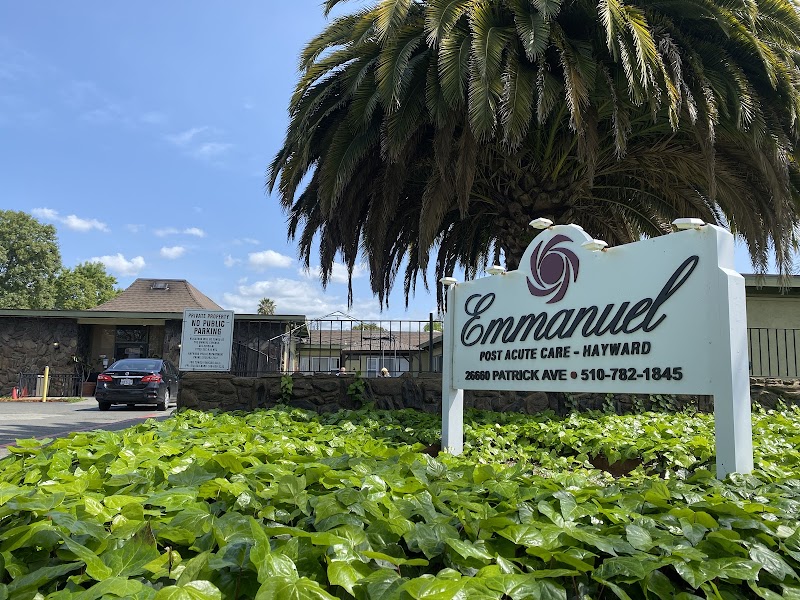
26660 PATRICK AVENUE, HAYWARD, CA 94544 (510) 782-1845
For profit - Individual 99 Beds Independent Data: November 2025
Trust Grade
55/100
#574 of 1155 in CA
Last Inspection: February 2024

Within standard 12-15 month inspection cycle. Federal law requires annual inspections.

Overview

Emmanuel Post Acute Care in Hayward, California, has a Trust Grade of C, which means it is average compared to other nursing homes, falling in the middle of the pack. It ranks #574 out of 1,155 facilities statewide, indicating it is in the top half of California nursing homes but still has room for improvement. The facility is on an improving trend, with issues decreasing from 13 in 2024 to only 2 in 2025, but it still has a concerning staff turnover rate of 55%, which is higher than the state average of 38%. While there have been no fines reported, which is a positive sign, the facility has faced serious issues, such as failing to provide adequate care for a resident's pressure ulcer, which worsened significantly over nine days, and lacking sufficient RN coverage on certain days, potentially leading to inaccurate assessments of residents' needs. Overall, while there are strengths in terms of no fines and improvements in issues, families should weigh these against the staffing challenges and past care deficiencies.

Trust Score
C
55/100
In California
#574/1155
Top 49%
Safety Record
Moderate
Needs review
Inspections
Getting Better
13 → 2 violations
Staff Stability
⚠ Watch
55% turnover. Above average. Higher turnover means staff may not know residents' routines.
Penalties
✓ Good
No fines on record. Clean compliance history, better than most California facilities.
Skilled Nurses
○ Average
Each resident gets 34 minutes of Registered Nurse (RN) attention daily — about average for California. RNs are the most trained staff who monitor for health changes.
Violations
⚠ Watch
28 deficiencies on record. Higher than average. Multiple issues found across inspections.
★★★☆☆
3.0
Overall Rating
★★★☆☆
3.0
Staff Levels
★★★☆☆
3.0
Care Quality
★★★☆☆
3.0
Inspection Score
Stable
2024: 13 issues
2025: 2 issues

The Good

  • Full Sprinkler Coverage · Fire safety systems throughout facility
  • No fines on record

Facility shows strength in fire safety.

The Bad

3-Star Overall Rating

Near California average (3.1)

Meets federal standards, typical of most facilities

Staff Turnover: 55%

Near California avg (46%)

Higher turnover may affect care consistency

The Ugly 28 deficiencies on record

1 actual harm
May 2025 1 deficiency
CONCERN (D) 📢 Someone Reported This

A family member, employee, or ombudsman was alarmed enough to file a formal complaint

Potential for Harm - no one hurt, but risky conditions existed

Deficiency F0761 (Tag F0761)

Could have caused harm · This affected 1 resident

Based on observation and interview the facility failed to store all drugs and biologicals in locked compartments when one medication cart and one treatment cart located in hallways were not locked. Th...

Read full inspector narrative →
Based on observation and interview the facility failed to store all drugs and biologicals in locked compartments when one medication cart and one treatment cart located in hallways were not locked. This finding had the potential for errors , missing medication and create an unsafe environment for residents. Findings: During an observation on 5/13/25, at 9:25 a.m., in hallways of station 2, there was one unlocked, unattended treatment cart and medication cart. The medication and treatment carts contained resident ' s medications. During an interview on 5/13/25, at 9:27 a.m., with Licensed Vocational Nurse (LVN) 1, LVN 1 stated medication cart was left unattended because LVN 1 was called to attend to another issue. LVN 1 stated medication cart should be always locked when LVN 1 is not in attendance. During a concurrent observation and interview on 5/13/25, at 9:28 a.m., with LVN 2, one treatment cart was found unlocked and unattended in station 2 hallway. LVN 2 stated maybe the wound consultant left the cart unlocked. LVN 2 stated treatment cart should be locked when not in use because the treatment carts contained medications used for wound care. During an interview on 5/13/25, at 9:32 a.m., with Director of Staff Development (DSD), DSD stated facility expectation was that medication and treatment carts should be locked when not in use. During an interview on 5/13/25, at 10:00 a.m., with Director of Nursing (DON), DON stated facility expectation was for medication and treatment carts to be locked when not in use and in reach.
Feb 2025 1 deficiency 1 Harm
SERIOUS (G) 📢 Someone Reported This

A family member, employee, or ombudsman was alarmed enough to file a formal complaint

Actual Harm - a resident was hurt due to facility failures

Pressure Ulcer Prevention (Tag F0686)

A resident was harmed · This affected 1 resident

**NOTE- TERMS IN BRACKETS HAVE BEEN EDITED TO PROTECT CONFIDENTIALITY** Based on interview and record review, the facility failed to provide pressure ulcer (localized damage to the skin and/or underly...

Read full inspector narrative →
**NOTE- TERMS IN BRACKETS HAVE BEEN EDITED TO PROTECT CONFIDENTIALITY** Based on interview and record review, the facility failed to provide pressure ulcer (localized damage to the skin and/or underlying soft tissue usually over a bony prominence) care for one of three sampled residents (Resident 1), when staff: 1. did not notify the provider to obtain wound treatments for nine days, 2. did not provide Resident 1 with a low air loss mattress (LAL mattress, pressure relieving device to prevent skin and tissue breakdown) for four days and, 3. did not complete a care plan for Resident 1 ' s sacral pressure ulcer. This failure resulted in Resident 1 ' s sacral pressure ulcer growing from one by 1.5 centimeters (cm, a unit of measurement) to seven by six cm over nine days. Findings: A review of Resident 1 ' s admission record indicated Resident 1 was admitted on [DATE] to the facility for stroke (death of an area of brain tissue when a blocked blood vessel prevents delivery of an adequate blood and oxygen supply to the brain), hemiplegia (the loss of muscle function on one side of the body), hemiparesis (a relatively mild loss of strength in the arm, leg, and sometimes face on one side of the body), type 2 diabetes (chronic disease in which the body cannot regulate the amount of sugar in the blood) and dysphagia (difficulty swallowing). During a record review of Resident 1 ' s admission minimum data set (MDS, an assessment tool to guide resident care), dated 10/20/24, the MDS indicated Resident 1 had upper and lower extremity impairment and was completely dependent on staff for bed mobility (turning and repositioning in bed) and activities of daily living such as toileting, eating and transferring out of bed. The MDS also indicated Resident 1 was at high risk of developing pressure ulcers and did not have any pressure ulcers. During a record review of Resident 1 ' s skin assessment record titled, Braden Scale (assessment score to predict risk of pressure sore development with a score of 13-14 indicating moderate risk for pressure ulcers) for Predicting Pressure Sore Risk, dated 10/16/24, the record indicated Resident 1 had a Braden Score of 13. During a record review of Resident 1 ' s physician order set titled, Order Summary Report, dated 12/30/24, the order set indicated Resident 1 had wound care orders for: Low air loss mattress, check for functionality every shift, dated 11/7/24, and Sacral-coccyx-cleanse with wound cleaner, pat dry, apply triad paste, leave it open to air every shift for 14 days, dated 11/12/24. The order set also indicated Resident 1 had an order to be transferred to another facility dated 11/13/24. During an interview on 12/24/24, at 8:15 a.m., with resident representative (RP), RP stated Resident 1 did not have a sacral wound on admission to the facility. RP stated, on 11/4/24, Registered Nurse 1 (RN 1) reported to her that Resident 1 had a wound on the tail bone. RP stated the facility did not perform sacral wound treatments until 11/12/24. RP stated when Medical Doctor 1 (MD 1) assessed Resident 1 on 11/11/24, MD 1 was upset because Resident 1 was not on a low air loss mattress. RP stated MD 1 had ordered a low air loss mattress the previous week, but the facility did not have one available. During a record review on 12/30/24, at 10:19 a.m., Resident 1 ' s progress note titled, Change of Condition, dated 11/3/24, by RN 1, the progress note indicated RN 1 assessed open wound as superficial stage 2 [pressure ulcer]. Wound measure 1.5 x 1.0 cm. During a concurrent interview and record review on 12/30/24, at 11:05 a.m., with treatment nurse (TR), a wound assessment note titled, Wound Assessment, dated 11/12/24, and a progress note, dated 11/3/24, by RN 1 was reviewed. TR stated on 11/12/24, Resident 1 had a sacral wound which TR measured seven by six cm. TR stated she was first aware of the pressure ulcer on 11/12/24 and communicated the findings to MD 1 who then ordered a sacral-coccyx wound treatment for Resident 1. After review of the progress note by RN 1, TR stated she was not informed by other nursing staff about the presence of the sacral wound prior to 11/12/24. After reviewing Resident 1 ' s order history and progress notes, TR was not able to find sacral wound treatment orders between 11/3/24 to 11/12/24. TR stated any residents with a wound would have provider assessment and treatments for the wound. During a concurrent phone interview and record review on 12/30/24, at 1:03 p.m., with Licensed Vocational Nurse 1 (LVN 1), LVN 1 ' s progress note titled, Nurses Note, dated 11/10/24, was reviewed. LVN 1 stated Resident 1 had a recently developed sacral wound but did not recall any treatments ordered for the sacral wound. LVN 1 stated a LAL mattress was not available for Resident 1 and had endorsed to the next shift to obtain one. The progress note indicated resident ' s [family] are requesting LAL mattress at 8pm. They mentioned it has already been a week, and they are concerned because the resident has an open wound on his coccyx. The writer checked all rooms for an available [LAL mattress], but none were found. During a concurrent interview and record review on 12/30/24, at 1:20 p.m., with the Director of Nursing (DON), a record of a LAL mattress order ticket titled, [Vendor] Delivery Ticket, dated 11/11/24 was reviewed. The DON stated the ticket indicated an outside company had delivered the LAL mattress on 11/11/24. During a phone interview on 12/30/24, at 1:28 p.m., with RN 1, RN 1 stated he had completed a change of condition documentation for Resident 1 ' s sacral wound on 11/3/24. RN 1 could not recall if he had notified the provider about the wound or created a care plan for the wound. RN 1 did not recall starting any orders for Resident 1 regarding the sacral wound. During a concurrent interview and record review on 12/30/24, at 1:45 p.m., with MD 1, Resident 1 ' s physician note titled, SNF Rounding Note, dated 11/11/24, by MD 1 was reviewed. MD 1 could not recall if she was notified of the sacral wound before 11/11/24. After review of the physician note, MD 1 stated she had documented Resident 1 was still not on a LAL mattress for the open area over the sacrum, and she may have given a verbal order for the LAL mattress. MD 1 did not find any records of facility staff notifying any provider about Resident 1 ' s sacral wound between 11/3/24 and 11/11/24. During a concurrent interview and record review on 12/30/24, at 2:40 p.m., with the DON, Resident 1 ' s physician orders, care plans and RN 1 ' s change of condition progress note, dated 11/3/24, were reviewed. The DON stated after review of Resident 1 ' s physician orders for November 2024, orders for sacral wound treatment prior to 11/12/24 were not found. The DON stated after a review of Resident 1 ' s care plans, a care plan for the sacral wound was not completed. The DON stated the progress note by RN 1 did not indicate the provider was notified about the sacral wound. The DON stated provider notification was expected to be carried out and documented by the nurse who found the change of condition. During a concurrent interview and record review on 12/30/24, at 3:20 p.m., with RN 2 and the DON, a progress note titled, Nurses Note, dated 11/7/24, by RN 2 was reviewed. The progress note indicated, This note is a follow up to 11/3/24 9:05:00 Change of Condition [Author: [RN1]]. RN 2 stated she had measured and documented the size of Resident 1 ' s sacral wound at four by four cm. RN 2 did not recall updating the provider about the size of the sacral wound. RN 2 clarified she had corrected the documented location of the wound from the perineum to the sacrum. RN 2 recalled Resident 1 was not on a low-air loss mattress for that day and did not recall when the low- air loss mattress arrived. The DON stated the mattress would not be delivered during the weekend. During a record review of Resident 1 ' s transfer record titled, Admission/Discharge To/From Report, dated 12/30/24, the record indicated Resident 1 was transferred to another facility on 11/13/24. During a record review of receiving facility ' s admission skin assessment for Resident 1 titled, Skin Assessment, dated 11/13/24, the skin assessment indicated Resident 1 was admitted to the second facility with a sacral pressure ulcer and was placed on a LAL mattress. During a review of facility policy and procedure (P&P) titled, Policy and Procedure on Pressure Sore Risk Assessment, dated 5/2023, the P&P indicated, It shall be this facility ' s policy to assess .and provide necessary care and services that will meet patient needs and promote skin integrity .plans of care shall be developed to address risk factors to development or further development of pressure ulcer. During a review of facility P&P titled, Change in a Resident ' s Condition or Status, dated 5/2017, the P&P indicated, the nurse will notify the resident ' s Attending Physician or physician on call when there has been a .discovery of injuries of an unknown source .notifications will be made within twenty-four hours of a change occurring in the resident ' s medical/mental condition or status.
Sept 2024 1 deficiency
CONCERN (D) 📢 Someone Reported This

A family member, employee, or ombudsman was alarmed enough to file a formal complaint

Potential for Harm - no one hurt, but risky conditions existed

Pharmacy Services (Tag F0755)

Could have caused harm · This affected 1 resident

**NOTE- TERMS IN BRACKETS HAVE BEEN EDITED TO PROTECT CONFIDENTIALITY** Based on interview and record review, the facility failed to have the ordered medication Levetiracetam or Keppra (used to preven...

Read full inspector narrative →
**NOTE- TERMS IN BRACKETS HAVE BEEN EDITED TO PROTECT CONFIDENTIALITY** Based on interview and record review, the facility failed to have the ordered medication Levetiracetam or Keppra (used to prevent and control seizures [a sudden, uncontrolled electrical disturbance in the brain which can cause uncontrolled jerking, blank stares, and loss of consciousness]) for one resident (Resident 1). This failure of Resident 1 not receiving Keppra on 8/14/24 resulted in Resident 1 ' s delayed treatment which had the potential to result in seizure episodes. Resident 1 subsequently had two seizure episodes in the morning of 8/15/24. Findings: During a review of Resident 1 ' s face sheet, undated, the face sheet indicated Resident 1 was admitted to the facility on [DATE] at 2:55 p.m., with a diagnosis of seizures. During a review of Resident 1 ' s Order Details, the Order Details indicated a physician order on 8/14/24 at 1531 (3:31 p.m.) for Levetiracetam Oral Tablet 500 mg, give 1 tablet by mouth two times a day for seizure precautions. During a review of Resident 1 ' s Medication Administration Record (MAR) for August 2024, the MAR indicated Resident 1 did not receive Levetiracetam Oral Tablet 500 mg scheduled for 8/14/24 at 1700 (5:00 p.m.). During a review of the pharmacy ' s Consolidated Delivery Sheets, the Consolidated Delivery Sheets indicated Levetiracetam 500 mg tablet for Resident 1 was delivered to the facility on 8/15/24 at 1200 a.m. (midnight). During an interview on 9/11/24, at 10:50 a.m., with Registered Nurse (RN) 1, RN 1 stated when Keppra was not available for the 1700 medication pass, the situation should have been elevated to the Administrator especially since Resident 1 had a significant history of seizures. The medication could have been ordered for delivery ASAP (as soon as possible). During an interview on 9/30/24, at 11:55 a.m., with Registered Nurse (RN) 2, RN 2 stated Keppra was a seizure medication. RN 2 stated when a dose is missed, patient could have a seizure. RN 2 also stated when Keppra was not available for the evening dose, the Director of Nursing (DON) should have been involved. During an interview on 9/30/24, at 1:00 p.m., with the DON, the DON stated Keppra needed to be administered on time otherwise it could trigger a seizure episode. The DON stated the facility should have informed the physician Keppra was not available and also followed up with the pharmacy to make the order stat (immediate). DON also stated the situation was a system failure and the issue was not elevated. During a review of the facility ' s policy and procedure (P&P) titled, Pharmacy Services Overview, undated, the P&P indicated, . the facility assure that medications are requested, received, and administered in a timely manner as ordered by authorized prescribers.
Feb 2024 11 deficiencies
CONCERN (D)

Potential for Harm - no one hurt, but risky conditions existed

Assessment Accuracy (Tag F0641)

Could have caused harm · This affected 1 resident

**NOTE- TERMS IN BRACKETS HAVE BEEN EDITED TO PROTECT CONFIDENTIALITY** Based on observation, interview, and record review, the facility failed to ensure the Minimum Data Set (MDS-an assessment and ca...

Read full inspector narrative →
**NOTE- TERMS IN BRACKETS HAVE BEEN EDITED TO PROTECT CONFIDENTIALITY** Based on observation, interview, and record review, the facility failed to ensure the Minimum Data Set (MDS-an assessment and care screening tool used to guide care), was accurate for one of one sampled resident (Resident 9) when Resident 9's annual MDS was not coded accurately to reflect a functional impairment of the left hand. This failure resulted in the potential for Resident 9 to not receive appropriate care and treatment for identified conditions. Findings: During a review of Resident 9's admission Record, dated 2/28/24, the record indicated Resident 9 was admitted to the facility on 11/2018 with diagnoses of unspecified dementia (a group of symptoms affecting memory, thinking and social abilities), muscle weakness, and acquired absence of right and left leg below the knee. A review of the MDS section C-cognitive patterns, dated 12/9/23, indicated that Resident 9 had a Brief Interview of Mental Status (BIMS-a screening measure that evaluates memory and orientation) score of 10, indicating a moderate cognitive impairment. During a concurrent observation and interview, on 2/27/24, at 9:16 a.m., with Resident 9, in his room, the resident's left hand was clenched in a tightly closed position. Resident 9 stated he injured his left hand while moving from his bed to his wheelchair several months ago. Resident 9 was unable to extend his fingers and stated this sometimes hurt him, but the pain was usually relieved with Tylenol. Resident 9 also stated although he used to receive physical therapy services for his left hand, it had been many months since he had received it. During an observation on 2/29/24, at 11:00 a.m., in Resident 9's room, Resident 9 showed a splint for his left hand was on the bedside table next to his bed. Resident 9 stated that no staff had come to assist him to put the splint on yet, and that he needed help applying and removing it. During a review of Resident 9's Occupational Therapy (OT) Evaluation & Plan of Treatment, signed and dated 12/4/23, the OT evaluation and treatment plan indicated Resident 9 had a contracture of the left hand requiring treatment with application of an orthotic (a device designed to support an injured or badly formed part of the body). During a review of the annual MDS Section GG - Functional Abilities and Goals, dated 12/8/23, the facility marked Resident 9 as having no impairment of the upper extremities (the shoulders, elbows, wrists and hands). During a concurrent interview and record review on 2/29/24, at 11:30 a.m., with the MDS coordinator (MDSC), at nursing station 2, the annual MDS, dated [DATE], was reviewed. The MDSC stated the annual MDS should have been coded to reflect an upper extremity impairment on one side. The MDSC also stated that the failure to code the MDS correctly could reflect the care the residents receive in a negative way. A review of the facility policy and procedure (P&P), titled, Comprehensive Assessments and the Care Delivery Process, updated 5/2023, the P&P indicated the facility must determine care areas that have been triggered during completion of the MDS ., and the facility must use this information to make decisions about care and treatment.
CONCERN (D)

Potential for Harm - no one hurt, but risky conditions existed

ADL Care (Tag F0677)

Could have caused harm · This affected 1 resident

Based on observation, interview, and record review, the facility failed to ensure one of 38 sampled residents (Resident 25) received fingernail trimming as needed. This failure had the potential to re...

Read full inspector narrative →
Based on observation, interview, and record review, the facility failed to ensure one of 38 sampled residents (Resident 25) received fingernail trimming as needed. This failure had the potential to result in skin scratches, wounds, and infections from the long fingernails. Findings: A review of Resident 25's admission Record indicated Resident 25 was admitted to the facility in January 2024, with diagnoses of Diabetes Mellitus (high blood sugar) and dementia (loss of thinking, remembering, and reasoning). A review of Resident 25's Minimum Data Set (MDS, an assessment tool used to guide care), dated 1/31/24, indicated Resident 25 had severely impaired cognition. The MDS also indicated Resident 25 was dependent (helper does all the effort. Resident does none of the effort to complete the activity. The assistance of two or more helpers is required for the resident to complete the activity) on functional abilities and goals (eating, oral hygiene, toileting hygiene, shower/bathe self, dressing, putting on/taking off footwear, and personal hygiene). A review of Resident 25's care plan dated 1/30/24, indicated, .The resident has Activities of Daily Living (ADL) self-care performance deficit related to (r/t) Dementia, Limited Mobility .PERSONAL HYGIENE: The resident requires (substantial/maximal assistance) by one (1) staff with personal hygiene and oral care . A review of Resident 25's active Physician Orders, printed on 2/27/24, indicated, Left under-breast open area: cleanse with normal saline, pat dry, apply Medi-honey and cover with dry gauze . During a concurrent observation and interview on 2/27/24, at 10:51 a.m., with Licensed Vocational Nurse 1 (LVN 1), in Resident 25's room, Resident 25 lay in bed on her back, with the head of the bed slightly elevated. Resident 25 was noted with her right-hand scratching self to her dry (with white flaky matter) left ear, both eyes (already reddened lower eyelids), then to her dry chest underneath her gown, with resident's unevenly trimmed, sharp, long fingernails to both right and left hand. LVN 1 stated Resident 25's right hand thumbnail and left-hand thumb, middle, and ring fingernails were between 1/8 to 2/8 inches long from the tip of resident's fingers. LVN 1 also stated there was random brown/yellow matter underneath the right- and left-hand fingernails. LVN 1 stated it was the licensed nurses' responsibility to trim Resident 25's fingernails and had missed trimming some of the resident's fingernails which could further harm the resident's raw skin. During an interview on 2/29/24, at 11:31 a.m., with the Director of Staff Development (DSD), DSD stated diabetic resident fingernails are trimmed by the licensed nurses. DSD also stated fingernails should be clipped short to prevent residents from harming themselves with long, sharp nails. A review of the facility's policy and procedure (P&P) titled, Care of Fingernails/Toenails, dated 5/2023, indicated, The purpose of this procedure are to clean the nail bed, or keep nails trimmed, and to prevent infections .Nail care includes daily cleaning and regular trimming. Proper nail care can aid in the prevention of skin problems .Trimmed and smooth nails prevent the resident from accidentally scratching and injuring his or her skin .
CONCERN (D)

Potential for Harm - no one hurt, but risky conditions existed

Deficiency F0688 (Tag F0688)

Could have caused harm · This affected 1 resident

Based on observation, interview, and record review, the facility failed to ensure range of motion (ROM) exercises were provided for one of two sampled residents (Resident 34) reviewed for limited ROM....

Read full inspector narrative →
Based on observation, interview, and record review, the facility failed to ensure range of motion (ROM) exercises were provided for one of two sampled residents (Resident 34) reviewed for limited ROM. This failure had the potential to result in decline in the Resident 34's ROM. Findings: During a review of Resident 34's admission record, dated 2/28/24, the admission record indicated Resident 34 was admitted to the facility in 2023. According to Resident 34's Minimum Data Set (MDS, an assessment tool used to guide care), dated 1/16/24, Resident 34 had a Brief Interview for Mental Status (BIMS) score of 15/15, meaning Resident 34 had intact cognition. The MDS also indicated, Resident 34 had multiple diagnoses which included muscle weakness, acquired absence of right leg above knee, paralytic gait (loss of muscle strength), and encounter for orthopedic aftercare following surgical amputation. During an interview on 2/26/24, at 10:57 a.m., with Resident 34, Resident 34 stated he was supposed to be receiving ROM exercises because he was no longer getting physical therapy. Resident 34 added, the ROM exercises were supposed to help in preparation because he will be getting new leg soon. During a concurrent interview and record review on 2/28/24, at 2:59 p.m., with Restorative Nurse Assistant (RNA) 1, the Restorative Nursing Program Referral Form was reviewed. RNA 1 stated, Resident 34 had a referral to be in the RNA program. RNA 1 further added, Resident 34 did not receive the RNA services because he was not put into the system. During a concurrent interview and record review on 2/29/24, at 10:25 a.m., with Regional Manager Physical Therapist (RMPT), the Restorative Nursing Program Referral Form and Physical Therapy Discharge Summary were reviewed. The RMPT stated, once RNA program was established, the expectation was for the nursing team to follow through what was on the Restorative Nursing Program Referral Form. RMPT further added, Resident 34 was discharged from physical therapy on 1/31/24 to RNA program for mobility, strengthening, and for prosthetic training. RMPT also added, there was potential for Resident 34 to decline in functioning if he did not receive RNA services. During an interview on 2/29/24, at 10:58 a.m., with the Director Of Nursing (DON), DON stated Resident 34's RNA referral was not carried out by the nursing team. DON added, Resident 34 did not receive RNA services because she did not follow up after delegating task to add Resident 34 to the program. DON further added, it was important for Resident 34 to receive RNA services so that he will be able to maintain a good physical status since he only has one leg, RNA will help him with maintaining strength and prevent decline. During a review of Resident 34's Restorative Nursing Program Referral Form, dated 1/31/24, revealed a diagnosis of right above knee amputation and the program goal was Active ROM UE (upper extremity) + LE (lower extremity) bilateral in all planes of motion as tolerated. Sit - stand in bars - SBA (stand by assist)-use gait belt. During a review of Resident 34's Physical Therapy (PT) Discharge Summary, dated 1/31/24, the PT discharge summary indicated under discharge recommendations and status, Discharge recommendations: RNA program. Under Restorative Programs revealed, Restorative Program Established/Trained=Restorative Range of Motion Program, Restorative Transfer Program. ROM Program established/trained: ROM, sit to stand . Under prognosis, .Excellent with participation in RNP (Restorative Nursing Program). During a review of facility's policy and procedures (P&P) titled, POLICY AND PROCEDURE ON RESTORATIVE NURSING CARE, dated 5/2023, the P&P indicated, .2. Active Range of Motion - refers to exercises performed by a resident, with cueing or supervision by staff that are planned, scheduled, and documented in the clinical record . 4. Training and Skill Practice - .b. Transfer - activities used to improve or maintain the resident's self performance in moving between surfaces or planes either with or without assistive devices. During a review of facility's P&P titled, Rehabilitative Nursing Care, dated 2001, the P&P indicated, .4. d. Assisting residents to adjust to their disabilities, to use their prosthetic devices, and to redirect their interests if necessary.f. Assisting residents with their routine range of motion exercises.
CONCERN (D)

Potential for Harm - no one hurt, but risky conditions existed

Pharmacy Services (Tag F0755)

Could have caused harm · This affected 1 resident

**NOTE- TERMS IN BRACKETS HAVE BEEN EDITED TO PROTECT CONFIDENTIALITY** Based on observation, interview, and record review the facility failed to provide pharmaceutical services for two of 10 sampled ...

Read full inspector narrative →
**NOTE- TERMS IN BRACKETS HAVE BEEN EDITED TO PROTECT CONFIDENTIALITY** Based on observation, interview, and record review the facility failed to provide pharmaceutical services for two of 10 sampled residents (Resident 143 and Resident 144) when: 1. For Resident 143, eye medication was unavailable for administration three consecutive times. 2. Resident 144 was not given instructions to rinse mouth after administered a powdered inhaler. These failures resulted in medication not given in accordance with the prescriber's orders, which may negatively affect Resident 143 and Resident 144's health conditions. Findings: 1. A review of Resident 143's admission Record, printed 2/28/24, indicated Resident 143 was admitted to the facility in 2022 with diagnoses of Alzheimer's Disease (a progressive disease that destroys memory and other important mental functions) and Glaucoma (a group of eye conditions that causes blindness). A review of Resident 143's Minimum Data Set (MDS, an assessment tool used to guide care), dated 7/9/23, indicated Resident 143 had severely impaired cognition. A review of Resident 143's Physician Orders, printed on 2/27/24, indicated an order with start date 7/2/22, Cosopt Solution .Instill one drop in both eyes two times a day for Glaucoma . A review of Resident 143's care plan dated 7/13/2022, indicated, The resident has an alteration in visual function related to (r/t) Cataracts (clouding of normally clear lens of the eye), Glaucoma . During a concurrent interview and record review on 2/27/24, at 11:40 a.m., in Station 2A, with Licensed Vocational Nurse 1 (LVN 1), Resident 143's Physician Orders were reviewed. The February 2024 Electronic Medication Administration Record (eMAR), dated 7/1/22, indicated Cosopt eye drop scheduled to be given two times a day at 1200 and 2100. LVN 1 stated she could not administer Resident 143's Cosopt because the facility did not have the eye drop. During a concurrent interview and record review, on 2/27/24, at 11:50 a.m., with Registered Nurse 1 (RN 1), RN 1 stated Resident 143's medication was not delivered by the pharmacy last night. RN 1 stated Resident 143 will have three missed doses, two on 2/27/24 and one on 2/28/24 because pharmacy informed facility that Cosopt was out of stock and will not be delivered until 2 p.m. on 2/28/24. RN 1 stated medication should have been ordered 5 days before the facility ran out and not wait until the last dose was finished. A review of the facility's policy and procedure (P&P) titled, Medication Ordering and Receiving from Pharmacy, dated 2022, indicated, Medications and related products are received from the dispensing pharmacy on a timely basis .Reorder medication (three to four) days in advance of need to assure an adequate supply is on hand . 2. A review of Resident 144's admission Record, printed 2/28/24, indicated resident was admitted to the facility on [DATE] with diagnoses of asthma (a condition in which airways narrow and swell) and chronic obstructive pulmonary disease (COPD, a lung disease that block airflow and make it difficult to breathe). A review of Resident 144's Minimum Data Set (MDS, an assessment tool used to guide care), dated 2/27/24, indicated resident had intact cognition, could make self-understood, and had the ability to understand others. A review of Resident 144's Physician Orders, printed on 2/28/24, indicated an order with start date 2/22/24, Wixela Inhub Inhalation Aerosol Powder Breath Activated 250-50 microgram (MGC)/ACT (Fluticasone-Salmeterol, medication used to treat asthma and COPD) one puff inhale orally two times a day for COPD. Rinse mouth well after use. A review of Resident 144's care plan dated 2/28/24, indicated, The resident has COPD .Give aerosol or bronchodilators as ordered. Monitor/document any side effects and effectiveness . During medication administration observation on 2/28/24, at 08:49 a.m., in Station 1A, LVN 3 was observed preparing morning medications for Resident 144. A review of one of resident's Physician Orders, dated 2/21/24 and February 2024 eMAR indicated Wixela Inhub Inhalation. Rinse mouth well after use. During medication administration to Resident 144, LVN 3 administered Fluticasone/Salmeterol Inhalation Powder last. LVN 3 did not instruct the resident to rinse mouth after inhaler use. During an interview on 2/28/24, at 10:54 a.m., with the Director of Nursing (DON), DON stated licensed nurses should administer medications in accordance with doctor's orders, including reminding residents to rinse mouth after inhaler use to wash away bitter taste and to prevent side effects such as oral thrush. A review of facility's P&P titled, Inhalers, dated 5/2023, indicated, Follow the directions supplied with the device being used .Have the resident rinse his/her mouth and gargle with normal saline solution or water to remove the drug from his/her mouth and the back of the throat .
CONCERN (E)

Potential for Harm - no one hurt, but risky conditions existed

Deficiency F0638 (Tag F0638)

Could have caused harm · This affected multiple residents

Based on interview and record review, the facility failed to ensure the quarterly Minimum Data Sets (MDS, an assessment tool used to guide resident care) were completed within 14 days of the Assessmen...

Read full inspector narrative →
Based on interview and record review, the facility failed to ensure the quarterly Minimum Data Sets (MDS, an assessment tool used to guide resident care) were completed within 14 days of the Assessment Reference Date (ARD, a date set to establish a uniform look-back period for all the responses to MDS coding items) for two of 4 sampled residents (Resident 61 and Resident 143). This deficient practice had the potential to result in Residents 61 and 143 not receiving the appropriate care and services needed based on their current health status. Findings: During a review of Resident 61's admission Record, dated 2/28/24, the record indicated Resident 61 was admitted 9/2023 with multiple diagnoses including an admission diagnosis of Tinea Corporis (a superficial fungal infection of the skin that can affect any part of the body, excluding the hands and feet, scalp, face and beard, groin, and nails). During a review of Resident 143's admission Record, dated 2/28/24, the record indicated Resident 143 was admitted 7/2022 with multiple diagnoses including an admission diagnosis of Alzheimer's Disease, unspecified (a brain disorder that slowly destroys memory and thinking skills and, eventually, the ability to carry out the simplest tasks). During a concurrent interview and record review on 2/28/24, at 2:38 p.m., with Minimum Data Set Coordinator (MDSC), Residents 61 and 143's MDS Assessments were reviewed. Resident 61's quarterly MDS indicated an ARD of 12/23/23 and was 53 days overdue. Resident 143's quarterly MDS indicated an ARD of 10/9/23 and was 128 days overdue. MDSC stated Resident 61 and 143's quarterly MDS' were not done and were late. MDSC stated the Quarterly MDS was important because it could have affected the quality of care because they won't be able to accurately assess the residents. Also, MDSC stated the Quarterly MDS was important because they affected care plans and when they were not done, could have caused care plans to be missed. During an interview on 2/28/24, at 3:39 p.m., with Director of Nursing (DON), DON stated it was important to complete MDS assessments on time to address all resident needs based on their health status. During an interview on 2/29/24, at 12:55 p.m., with MDSC, MDSC stated quarterly MDS' should have been done every 3 months with up to 14 days to complete and submit. MDSC stated they did not have a policy for MDS completion and submission timeframes. MDSC stated they followed the RAI (Resident Assessment Instrument) Manual for MDS completion and submission timeframes. A review of the MDS Manual, Centers of Medicare and Medicaid Services (CMS) Chapter 2: Assessments for the Resident Assessment Instrument (RAI), dated October 2023, indicated for, Discharge Assessment-return not anticipated (Non-Comprehensive) .MDS completion date .no later than .discharge date + 14 calendar days. The Manual also indicated for, Discharge Assessment-return not anticipated (Non-Comprehensive) .Transmission date no later than .MDS completion date + 14 calendar days. The Manual also indicated for, Discharge Assessment-return anticipated (Non-Comprehensive) .MDS completion date .no later than .discharge date + 14 calendar days. The Manual also indicated for, Discharge Assessment-return anticipated (Non-Comprehensive) .Transmission date no later than .MDS completion date + 14 calendar days.
CONCERN (E)

Potential for Harm - no one hurt, but risky conditions existed

MDS Data Transmission (Tag F0640)

Could have caused harm · This affected multiple residents

Based on interview and record review, the facility failed to ensure the Minimum Data Sets (MDS, an assessment tool used to guide resident care) were completed and submitted to the Centers for Medicare...

Read full inspector narrative →
Based on interview and record review, the facility failed to ensure the Minimum Data Sets (MDS, an assessment tool used to guide resident care) were completed and submitted to the Centers for Medicare and Medicaid Services (CMS) within the required time frames determined by the Assessment Reference Date (ARD, a date set to establish a uniform look-back period for all the responses to MDS coding items) when two out of 4 Resident's (Resident 31 and 83) Discharge MDS' were not completed and transmitted within 14 days of the ARD. This deficient practice had the potential to result in Residents 31 and 83, not receiving the appropriate care and services needed based on their current health status and to be billed incorrectly. Findings: During a review of Resident 31's admission Record, dated 2/28/24, the record indicated Resident 83 was admitted 10/2023 with multiple diagnoses including an admission diagnosis of Acute Pancreatitis with infected Necrosis, unspecified (a condition where the pancreas becomes swollen over a short period of time with tissue death). During a review of Resident 83's admission Record, dated 2/28/24, the record indicated Resident 83 was admitted 7/2023 with multiple diagnoses including an admission diagnosis of Unspecified Dementia (a loss of brain function that occurs with certain diseases, affecting one or more brain functions such as memory, thinking, language, judgment, or behavior). During a concurrent interview and record review on 2/28/24, at 2:38 p.m., with Minimum Data Set Coordinator (MDSC), Residents 31 and 83's MDS Assessments were reviewed. Resident 31's Discharge MDS indicated an ARD of 11/1/23 and was 105 days overdue. Resident 83's Discharge MDS indicated an ARD of 8/10/23 and was 188 days overdue. MDSC stated Residents 31 and 83's discharge MDS were not done on time. MDSC stated the Discharge MDS was important because it could affect resident's insurance billing and they could be billed incorrectly. During an interview on 2/28/24, at 3:39 p.m., with Director of Nursing (DON), DON stated it was important to complete MDS assessments on time to properly address all resident needs based on their health status. During an interview on 2/29/24, at 12:55 p.m., with MDSC, MDSC stated resident's discharge MDS should have been done on Resident's discharge date with up to 14 days to complete and submit it. MDSC stated they did not have a policy for MDS completion and submission timeframes. MDSC stated they followed the RAI (Resident Assessment Instrument) Manual for MDS completion and submission timeframes. A review of the MDS Manual, Centers of Medicare and Medicaid Services (CMS) Chapter 2: Assessments for the Resident Assessment Instrument (RAI), dated October 2023, indicated for, Discharge Assessment - return not anticipated (Non-Comprehensive) . MDS completion date . no later than . discharge date + 14 calendar days. The Manual also indicated for, Discharge Assessment - return not anticipated (Non-Comprehensive) . Transmission date no later than . MDS completion date + 14 calendar days. The Manual also indicated for, Discharge Assessment - return anticipated (Non-Comprehensive) . MDS completion date . no later than . discharge date + 14 calendar days. The Manual also indicated for, Discharge Assessment - return anticipated (Non-Comprehensive) . Transmission date no later than . MDS completion date + 14 calendar days.
CONCERN (E)

Potential for Harm - no one hurt, but risky conditions existed

Unnecessary Medications (Tag F0759)

Could have caused harm · This affected multiple residents

Based on observation, interview and record review, the facility had a 5.71% error rate when two medication errors out of 35 opportunities were observed during the medication pass for two of 10 sampled...

Read full inspector narrative →
Based on observation, interview and record review, the facility had a 5.71% error rate when two medication errors out of 35 opportunities were observed during the medication pass for two of 10 sampled residents (Resident 143 and Resident 144). Resident 143 did not receive Cosopt (eye drop medication used to treat Glaucoma (an eye condition that causes blindness) as ordered and Resident 144 was not given instructions to rinse mouth after administered a Wixela (Fluticasone/Salmeterol) Inhub Inhalation (medication used to treat asthma [a condition in which airways narrow and swell] and chronic obstructive pulmonary disease COPD, a lung disease that block airflow and make it difficult to breathe]). These failures resulted in medication not given in accordance with the prescriber's orders, which may negatively affect Resident 143 and Resident 144's health conditions. Findings: 1. During a concurrent medication administration observation, interview, and record review on 2/27/24, at 11:30 a.m., in Station 2A, Licensed Vocational Nurse 1 (LVN 1) was observed preparing medication for Resident 143. A review of Resident 143's Physician Orders, dated 7/1/22 and February 2024 Electronic Medication Administration Record (eMAR) indicated Cosopt eye drop was scheduled to be given two times a day at 1200 and 2100. LVN 1 checked the medication cart drawer three times and could not find the Cosopt eye drop from the med cart. When LVN 1 left to check the med room once and returned to the med cart to check for Resident 143's eye drop another time, LVN 1 stated Resident 143's Cosopt was unavailable and she will not be able to receive her 12 noon dose of the eye drop and LVN 1 will notify the doctor. 2. During medication administration observation on 2/28/24, at 08:49 a.m., in Station 1A, LVN 3 was observed preparing medications for Resident 144. A review of Resident 144's Physician Orders, dated 2/21/24 and February 2024 eMAR indicated Wixela Inhub Inhalation (Fluticasone/Salmeterol) one puff inhale orally. Rinse mouth well after use. During medication administration to Resident 144, LVN 3 administered Fluticasone/Salmeterol Inhalation Powder last. LVN 3 did not instruct the resident to rinse mouth after inhaler use. A review of the facility's policy and procedure (P&P) titled, Inhalers, dated 5/2023, indicated, Follow the directions supplied with the device being used .Have the resident rinse his/her mouth and gargle with normal saline solution or water to remove the drug from his/her mouth and the back of the throat. Remind resident not to swallow after gargling but rather spit out the liquid .
CONCERN (E)

Potential for Harm - no one hurt, but risky conditions existed

Infection Control (Tag F0880)

Could have caused harm · This affected multiple residents

**NOTE- TERMS IN BRACKETS HAVE BEEN EDITED TO PROTECT CONFIDENTIALITY** 5. During a concurrent observation and interview on 2/26/24, at 10:22 a.m., Certified Nurse Assistant (CNA) 1 and CNA 2 exited a...

Read full inspector narrative →
**NOTE- TERMS IN BRACKETS HAVE BEEN EDITED TO PROTECT CONFIDENTIALITY** 5. During a concurrent observation and interview on 2/26/24, at 10:22 a.m., Certified Nurse Assistant (CNA) 1 and CNA 2 exited a resident room with their masks covering the mouth only. CNA 1 stated she did not like the mask to cover her nose. CNA 2 placed her surgical mask over nose and mouth, then apologized for not wearing the mask properly. During a concurrent observation and interview on 2/27/24, at 12:20 p.m., CNA 3 exited a resident room with her mask tucked under her chin, and the mask did not cover her mouth and nose. CNA 3 stated she was supposed to cover her mouth and nose when wearing a mask especially while in resident rooms. CNA 3 also stated it was important to wear a mask because of the risk to spread infection and residents could get sick. During an interview on 2/28/24, at 10:03 a.m., with the Infection Preventionist (IP), IP stated all direct care staff must wear masks in resident care areas. IP stated resident rooms, hallways and activity room are considered care areas. IP also stated masking in resident care areas are requirements by local health department and per facility policy and procedures. During a review of the facility provided document titled, HEALTH OFFICER ORDER NO. 23-03 ORDER OF THE HEALTH OFFICER OF THE COUNTY OF ALAMEDA - MANDATORY MASKING OF STAFF IN HEALTHCARE FACILITIES: SUSPENSION AND RESCISSION OR PRIOR HEALTH OFFICER MASKING ORDERS, dated November 2023, indicated, Summary: To combat the spread of COVID-19, Influenza (flu), and Respiratory Syncytial Virus (RSV) to vulnerable patients and residents, and to minimize the associated risk of severe illness and death among these persons, this Order requires operators of specified Health Care Facilities in the County of Alameda to implement a program to ensure that Staff wear high-quality, well fitting masks whenever they are in patient care areas in the facility, regardless of vaccination status. This order will go into effect on November 1, 2023, and end on April 30, 2024 .A. Masking order 1. All Health Care Facilities must, by November 1, 2023, implement a program to ensure that all Staff wear high-quality, well-fitting masks whenever they are in patient care areas .2. c. Patient care areas mean any rooms or workspaces where patient care is routinely delivered to inpatients or residents . Based on observation, interview, and record review, the facility failed to implement infection prevention and control practices when: 1. For one of 38 sampled residents (Resident 85), Licensed Vocational Nurse 1 (LVN 1) did not wear gloves prior to nasogastric tube (NGT, a tube inserted through the nose, down the throat and esophagus, and into the stomach used to administer nutrition or medication to patients who are unable to tolerate oral intake) feeding administration. 2. LVN 1 did not perform hand washing or hand hygiene after removing gloves from sanitizing used blood glucose machine. 3. One pill cutter (a medical device with stainless steel blade used to cut pills and tablets) at Nurses Station 2A medication cart and three pill cutters at Nurses Station 2B medication carts were stored unclean after use. 4. For one of four sampled residents (Resident 85) with indwelling urinary catheters (drains urine from the bladder into a bag outside the body), urinary drainage bag was laying on the floor. 5. Three direct care staff did not wear their face masks properly to fully cover their nose and mouth while in the resident care area. These failures created a risk for cross-contamination (transfer of bacteria or other microorganisms from one substance to another) that could result in infection or spread of infection. Findings: 1. A review of Resident 85's admission Record, printed 2/28/24, indicated Resident 85 was admitted to the facility in 2023 with diagnoses of dementia (loss of thinking, remembering, and reasoning) and sepsis (a serious condition in which the body responds improperly to an infection). During a concurrent medication administration observation, interview, and record review, on 2/27/24, at 11:52 a.m., with LVN 1, Resident 85's February 2024 Electronic Medication Administration Record (eMAR) was reviewed. Resident's tube feeding order with a start date of 12/23/23, indicated NGT DiabetiSource 325 ml every four hours by gravity (tendency to downward motion). LVN 1 connected the resident's feeding tube and administered the ordered formula without wearing gloves. LVN 1 stated she only touched the outside part of the tubing and did not touch the formula. During an interview on 2/27/24, at 12:00 p.m., with Registered Nurse 1 (RN 1), RN 1 stated licensed nurses should wear gloves during NGT feeding administration to prevent contamination. During a review of the facility's policy and procedure (P&P) titled, Enteral Feedings - Safety Precautions, dated 5/2023, the P&P indicated, To ensure the safe administration of enteral nutrition .The facility will remain current in and follow accepted best practices in enteral nutrition .Preventing contamination .Use disposable gloves when handling or administering enteral formulas . 2. During a concurrent observation and interview on 2/27/24, at 12:44 p.m., in front of Nurses Station 2, LVN 1 sanitized a used blood glucose machine with her gloved hands and without performing handwashing or hand hygiene after the removal of her gloves, LVN 1 proceeded to do another task. LVN 1 stated she should have performed hand hygiene after she sanitized the contaminated blood glucose machine. During an interview on 2/29/24, at 11:31 a.m., with the Director of Staff Development (DSD), DSD stated handwashing and hand hygiene before and after contact with residents and/or medical equipment and devices was important to minimize or prevent spread of infection. Review of the facility's P&P titled, Handwashing/Hand Hygiene, undated, indicated, The facility considers hand hygiene the primary means to prevent the spread of infections. All personnel shall be trained and regularly in-serviced on the importance of hand hygiene in preventing the transmission of healthcare-associated infections. All personnel shall follow the handwashing/hand hygiene procedures to help prevent the spread of infections to other personnel, residents, and visitors .Use an alcohol-based hand rub containing at least 62% alcohol; or, alternatively, soap (antimicrobial or non-antimicrobial) and water for the following situations .after handling used dressings, contaminated equipment, etc .Hand hygiene is the final step after removing and disposing of personal protective equipment. 3. During a concurrent medication cart observation and interview on 2/28/24, at 1 p.m., with LVN 1, Station 2A med cart was checked. Stored in the med cart top drawer was an unclean pill cutter that contained white powdery substances. LVN 1 stated unclean pill cutters can contaminate other medications. During a concurrent medication cart observation and interview on 2/28/24, at 1:10 p.m., with LVN 2, Station 2B med cart was checked. Stored in the med cart top drawer were three unclean pill cutters that contained white powdery substances. LVN 2 stated unclean and contaminated pill cutters could get mixed with other medications. During an interview on 2/29/24, at 11:31 a.m., with the DSD, DSD stated pill cutters needed to be washed before and after use especially if it is a shared resident equipment/device. Some medications might be contraindicated with other medications [NAME] were left on the used pill cutters. A review of the facility's P&P titled, Cleaning and Disinfection of Resident-Care Items and Equipment, dated 5/2023, indicated, Resident-care equipment, including reusable items and durable medical equipment will be cleaned and disinfected according to current CDC recommendations for disinfection and the OSHA Bloodborne Pathogens Standard .Durable medical equipment (DME) must be cleaned and disinfected bfore reuse by another resident. Reusable resident care equipment will be decontaminated and or sterilized between residents according to manufacturer's instructions . 4. During an observation on 2/27/24, at 11:52 a.m., Resident 85's urinary drainage bag kept inside a privacy bag was laying on the floor. During a concurrent observation and interview on 2/27/24, at 12:05 p.m., with RN 1, RN 1 stated Resident 85's indwelling catheter drainage bag inside the privacy bag should hang on the side of the bed below the resident's bladder and should not be touching the floor to prevent infection. Review of the facility's P&P titled, Foley/Indwelling Catheter Care, undated, indicated, It shall be this facility's policy to provide necessary services relating to use of foley/indwelling catheter to prevent resident from developing related infection .Catheter drainage bag should be monitored continuously to ensure it does not drag onto the floor .
CONCERN (F)

Potential for Harm - no one hurt, but risky conditions existed

Deficiency F0727 (Tag F0727)

Could have caused harm · This affected most or all residents

Based on interview and record review the facility failed to schedule a registered nurse (RN) for 8 hours a day, 7 days a week. This failure had the potential to place residents at risk to receive inac...

Read full inspector narrative →
Based on interview and record review the facility failed to schedule a registered nurse (RN) for 8 hours a day, 7 days a week. This failure had the potential to place residents at risk to receive inaccurate assessments and incorrect care. Findings: During a concurrent interview and record review on 2/28/24, at 1:38 p.m., with Payroll Director (PD), Payroll Based Staffing (PBJ) Reports for quarter 2 2023 (January 1 - March 31) were reviewed. The PBJ Report indicated there was no RN hours on 2/20/23 and on 3/4/23. PD stated there was no RN on duty on 2/20/23 and 3/4/23. During an interview on 2/28/24, at 3:36 p.m., with Director of Nursing (DON), DON stated it was important to have an RN on duty to confirm licensed vocational nurse (LVN) assessments. During a concurrent interview and record review on 2/29/24, at 12:52 p.m., with the Administrator (ADM), CMS (Centers of Medicare and Medicaid Services) Manual System Pub. 100-07 State Operations Provider Certification, dated December 13, 2013, was reviewed. ADM stated they did not have a policy for RN coverage. ADM stated they followed the CMS Manual. The CMS Manual indicated, The requirements for long-term care facilities require that a skilled nursing facility provide 24-hour licensed nursing services, an RN for 8 consecutive hours a day, 7 days a week .
CONCERN (F)

Potential for Harm - no one hurt, but risky conditions existed

Food Safety (Tag F0812)

Could have caused harm · This affected most or all residents

Based on observation, staff interview, and record review, the facility failed to store and prepare food in accordance with professional standards for safety when: 1. A dry food bin lid was unclean; 2...

Read full inspector narrative →
Based on observation, staff interview, and record review, the facility failed to store and prepare food in accordance with professional standards for safety when: 1. A dry food bin lid was unclean; 2. A frozen food bag was open to air; 3. A can with a large dent was available for use These failures had the potential for contamination of food resulting in food-borne illness for 88 residents who received food from the kitchen. 1. During an initial walkthrough observation of the kitchen on 2/26/24, at 10:00 a.m., there were bins stored on shelves in the dry food storage area. A bin containing flour had a fine dusting of white powder all over the top of the lid. During an interview on 2/28/24, at 12:29 p.m., with the Dietary Manager (DM), the DM stated bin lids covered with food debris can attract pests, and bin lids should always be kept clean. During a phone interview on 2/29/24, at 11:00 a.m., with the Registered Dietician (RD), the RD stated dirty bins attract vermin and pests. During a review of facility policy and procedure (P&P) titled, Storage of Food and Supplies, dated 2023, the P&P indicated, food and supplies will be stored properly and in a safe manner .the storeroom should be well-lighted, well-ventilated, cool, dry, and clean at all times .routine cleaning and pest control procedures should be developed and followed. During a review of The United States Department of Agriculture (USDA) Food Code (2022), the Food Code indicated, Spillage from these containers soils receptacles and storage areas, and becomes an attractant for insects, rodents, and other pests. 2. During an initial walkthrough observation of the walk-in freezer on 2/26/24, at 10:00 a.m., there was a cardboard box containing a plastic bag of individual pre-baked cookies on a wire-rack shelf. The bag was not sealed and open to air. During an interview on 2/28/24, at 12:30 p.m., with the DM, the DM stated open freezer bags could promote freezer burn and make food taste bad. During a phone interview on 2/29/24, at 11:32 a.m., with the RD, the RD stated facility policy dictated that frozen bags should be sealed. During a review of facility P&P titled, Procedure for Freezer Storage, dated 2023, the P&P stated, store frozen foods in an airtight moisture-resistant wrapper such as a plastic bag or freezer paper to prevent freezer burn. During a review of the USDA Food Code (2022), the Food Code indicated, Food that is inadequately packaged or contained in damaged packaging could become contaminated by microbes, dust, or chemicals introduced by products or equipment stored in close proximity or by persons delivering, stocking, or opening packages or overwraps. Packaging must be appropriate for preventing the entry of microbes and other contaminants such as chemicals. These contaminants may be present on the outside of containers and may contaminate food if the packaging is inadequate or damaged, or when the packaging is opened. The removal of food product overwraps may also damage the package integrity of foods under the overwraps if proper care is not taken. 3.During an observation of the kitchen and dry food storage area on 2/27/24, at 11:30 a.m., there was a can of tomato soup with a large dent stored with other cans, ready for resident consumption. During a review of the facility's P&P titled, Food Storage-Dented Cans, dated 2023, the P&P indicated, All dented cans (defined as side seam or rim dents) and rusty cans are to be separated from remaining stock and placed in a specified labeled area for return to purveyor for refund. During an interview on 12/28/24, at 12:31 p.m., with the DM, the DM stated that dented cans could be dangerous for residents because the food inside could become contaminated and damaged. During an interview on 12/29/24, at 11:34 a.m., with the RD, the RD stated that dented cans should be separated and returned to food vendor. During a review of the USDA Food Code (2022), the Food Code indicated the FDA considers food in hermetically sealed containers that are swelled or leaking to be adulterated and actionable under the Federal Food, Drug, and Cosmetic Act. Depending on the circumstances, rusted and pitted or dented cans may also present a serious potential hazard .damaged or incorrectly applied packaging may allow the entry of bacteria or other contaminants into the contained food. If the integrity of the packaging has been compromised, contaminants such as Clostridium botulinum may find their way into the food. In anaerobic conditions (lack of oxygen), botulism toxin may be formed . because botulism is potentially deadly, foods held in anaerobic conditions merit regulatory concern and vigilance.
CONCERN (F)

Potential for Harm - no one hurt, but risky conditions existed

Staffing Data (Tag F0851)

Could have caused harm · This affected most or all residents

Based on Interview and record review the facility failed to electronically submit complete and accurate direct care staffing information based on payroll data to Centers for Medicare and Medicaid (CMS...

Read full inspector narrative →
Based on Interview and record review the facility failed to electronically submit complete and accurate direct care staffing information based on payroll data to Centers for Medicare and Medicaid (CMS). This failure had the potential to result in the facility's staffing to be unavailable for audit by CMS. Findings: During a concurrent interview and record review on 2/28/24, at 12:39 p.m., with Payroll Director (PD), Payroll Based Staffing (PBJ) Reports for quarter 4 2022 (July 1 - September 30) and quarter 1 2023 (October 1 - December 31) were reviewed. PBJ Report for quarter 4 2022 indicated it was not submitted. PBJ Report for quarter 1 2023 indicated it was not submitted. PD stated PBJ Reports for quarters 4 2022 and 1 2023 were not submitted. PD stated submitting PBJ reports were important for facility rating and so their staffing could have been auditable. During a concurrent interview and record review on 2/29/24, at 1:05 p.m., with PD, the Centers for Medicare and Medicaid Services Electronic Staffing Data Submission Payroll-Based Journal Long-Term Care Facility Policy Manual was reviewed. PD stated they did not have a policy for staffing submission to CMS. PD stated they followed the CMS Manual and staffing information should have been submitted to CMS every quarter. The manual indicated, Submissions must be received by the end of the 45th calendar day (11:59 PM Eastern Time) after the last day in each fiscal quarter in order to be considered timely. The manual indicated, Fiscal Quarter 1 . Date Range . October 1 - December 31. The manual indicated, Fiscal Quarter 4 . Date Range . July 1 - September 30.
Feb 2024 1 deficiency
CONCERN (D) 📢 Someone Reported This

A family member, employee, or ombudsman was alarmed enough to file a formal complaint

Potential for Harm - no one hurt, but risky conditions existed

Pressure Ulcer Prevention (Tag F0686)

Could have caused harm · This affected 1 resident

**NOTE- TERMS IN BRACKETS HAVE BEEN EDITED TO PROTECT CONFIDENTIALITY** Based on interview and record review, the facility failed to ensure skin integrity nursing assessment was done weekly for one of...

Read full inspector narrative →
**NOTE- TERMS IN BRACKETS HAVE BEEN EDITED TO PROTECT CONFIDENTIALITY** Based on interview and record review, the facility failed to ensure skin integrity nursing assessment was done weekly for one of three residents (Resident 1). This failure resulted in the potential delay in prevention and treatment of a Stage 2 (shallow open sore) pressure ulcer. Findings: A review of Resident 1 ' s face sheet, undated, indicated Resident 1 was admitted to the facility on [DATE] with diagnoses of nontraumatic subdural hemorrhage (pool of blood between the brain and outermost covering), Type 2 diabetes mellitus (elevated blood glucose), and muscle weakness. A review of Resident 1 ' s facility document Braden Scale For Predicting Pressure Risk, dated 6/9/23, Braden Scale For Predicting Pressure Risk indicated Resident 1 ' s Braden score was 15 (score of 15-18 = At Risk). During a concurrent interview and record review on 2/16/24, at 11:34 a.m., with Director of Nursing (DON), the facility document admission Record Data Collection, dated 11/30/22, was reviewed. The admission Record Data Collection indicated Resident 1 had right buttock skin discoloration. DON stated resident did not have any pressure ulcers upon admission. A review of Resident 1 ' s Wound/Skin Healing Records, dated 5/13/23, 5/19/23, and 5/26/23, indicated right buttock redness. During an interview on 2/16/24, at 1:15 p.m., with Licensed Vocational Nurse (LVN) 1, LVN 1 stated Resident 1 had redness on buttock area. During an interview on 2/21/24, at 9:20 a.m., with the DON, DON stated skin assessment was not done between 5/26/23 and 6/12/23. DON further stated skin assessments must be done weekly to see if skin condition got worse or if it was healed. DON stated licensed nurses missed monitoring of skin discoloration. A review of Resident 1 ' s Progress Note, dated 6/12/23, by LVN 2, the Progress Note indicated LVN 2 noted a skin tear on Resident 1 ' s right buttock area measuring 2.5 cm x 1.0 cm, with reddened wound bed (open area of a wound). A review of Resident 1 ' s Skin Integrity Sheet, dated 6/13/23, by Registered Nurse (RN) 1, the Skin Integrity Sheet indicated RN 1 noted a Stage 2 right buttock pressure sore measuring 2.5 cm x 1.0 cm. A review of Resident 1 ' s Care Plan, dated 6/13/23, by LVN 2, the Care Plan indicated right buttock area was reassessed and clarified as open area and not skin tear. A review of the facility ' s policy and procedure (P&P) titled, Policy and Procedure on Weekly Body Check, dated 05/23, the P&P indicated, 1) Licensed charge nurse must conduct weekly body assessment / body check of resident . 2) Skin assessment shall be done from head to toe and shall address monitoring of skin color, moisture, temperature, integrity and turgor.
Feb 2023 2 deficiencies
CONCERN (D) 📢 Someone Reported This

A family member, employee, or ombudsman was alarmed enough to file a formal complaint

Potential for Harm - no one hurt, but risky conditions existed

Deficiency F0558 (Tag F0558)

Could have caused harm · This affected 1 resident

Based on interview and record review the facility failed to ensure one of three sample selected residents (Resident 1) received services in the facility with reasonable accommodation of resident needs...

Read full inspector narrative →
Based on interview and record review the facility failed to ensure one of three sample selected residents (Resident 1) received services in the facility with reasonable accommodation of resident needs and preferences when Resident 1 was evaluated by the Rehabilitation Director (RD) and had an order from RD to have bedside rails and the facility did not implement the RD's order. This failure practice resulted in Resident 1 not having a bedside rail to be able to move his body in his bed. Findings: A review of Resident 1's admission Record indicated Resident 1 was admitted to the facility with multiple diagnosis included muscle weakness and difficulty in walking. A review of Resident 1's MDS (Minimum Data Set, an assessment tool) section G (Functional status), dated 5/23/22, indicted Resident 1 needed extensive assistance for mobility. During an interview on 12/27/22 at 12:00 p.m., with the complainant, complainant stated Resident 1 needed bedside rail to be able to change his position in bed and Resident 1's family requested the facility to install the bedside rail a few times. The facility did not install the bedside rail and Resident 1 developed pressure ulcer at the facility due to not being able to turn himself During an interview on 12/27/22 at 1:50 p.m. with RD, RD stated Resident 1 was evaluated and the bedside rail was ordered by RD and the Director of Nursing (DON) was suppose to follow up with the physician and implement the order for Resident 1. A review of Resident 1's Rehab Note dated 5/11/22 by RD indicated OT (Occupational Therapist) bed rail assessment completed. Patient (Resident 1) will benefit from bed rails on L (left) and R (right) sides assist with bed mobility . During an interview on 12/27/22 at 1:55 p.m. with DON, DON stated she was responsible to follow up with the RD order for bed rail for Resident 1 and she did not follow up with that. A review of the facility's policy and procedure (Bed Safety), undated, indicated . 7. After appropriate review and consent as specified above, side rails may be used at the resident's request to increase the resident's sense of security .
CONCERN (D) 📢 Someone Reported This

A family member, employee, or ombudsman was alarmed enough to file a formal complaint

Potential for Harm - no one hurt, but risky conditions existed

Pressure Ulcer Prevention (Tag F0686)

Could have caused harm · This affected 1 resident

Based on interview and record review, the facility failed to ensure one of three sampled residents (Resident 1) received care, consistent with professional standards of practice, to prevent pressure u...

Read full inspector narrative →
Based on interview and record review, the facility failed to ensure one of three sampled residents (Resident 1) received care, consistent with professional standards of practice, to prevent pressure ulcers (damage to an area of the skin caused by constant pressure) when Resident 1 was admitted to the facility with multiple wounds and staff did not create a care plan for the wound care and prevention of pressure ulcers. Resident 1 was not evaluated for skin check on a weekly basis per the facility ' s policy. This failure resulted in Resident 1 developing new wounds. Findings: A review of Resident 1 ' s admission Record indicated Resident 1 was admitted to the facility with multiple diagnosis to include muscle weakness and difficulty in walking. During an interview on 12/27/22 at 12:00 p.m., with the complainant, complainant stated Resident 1 had developed pressure ulcers at the facility due to not being able to move his body. A review of Resident 1 ' s admission Braden scale (a standardized, evidence-based assessment tool commonly used in health care to assess and document a patient's risk for developing pressure injuries), dated 5/22/22, indicated Resident 1 ' s risk for developing pressure injury ' s score was 13 (moderate risk). A review of Resident 1 ' s Resident Data Collection, skin integrity, dated 5/9/22, indicated Resident 1 had multiple wounds on his body upon admission. A review of Resident 1 ' s care plan, dated 5/9/22, did not have a care plan for pressure injury prevention or wound treatment. A review of Resident 1's skin assessment at the hospital dated 5/23/22 indicated Resident 1 was admitted to the hospital with .Wound #1 Type/Etiology: Moist Associated Skin Damage, history of incontinent + rectal bleeding. Site: left, right, medial, intergluteal cleft (the groove between the buttocks that runs from just below the sacrum to the perineum.), groins, buttocks (either of the two round fleshy parts that form the lower rear area of a human trunk.), scrotal . During an interview and record ' s review on 12/27/22 at 1:30 p.m., with Director of Nursing (DON), DON stated the facility ' s treatment nurse is doing skin assessment once a week for all the residents for pressure injury prevention and the nurses should do skin assessment when they transfer the residents to any other facility. DON reviewed Resident 1 ' s skin assessment and confirmed Resident 1 just had one time skin assessment in 14 days and confirmed the facility did not make a care plan for Resident 1's wounds and pressure injury prevention upon admission. She confirmed that the facility did not do the skin assessment when Resident 1 was transferred to the hospital which they needed to do that. A review of the facility ' s policy and procedure Care Plan-Comprehensive, undated, indicated . 2. The interdisciplinary team documents in the RAP (Rapid Assessment Procedure) summary sheet/or records in the clinical record: . c. Evidence that the team considered the development of care planning interventions for all RAPs triggered by the MDS (Minimum Data Base) . A review of the facility ' s policy and procedure Pressure Injury Prevention, revised 9/1/20, indicated . A risk assessment for developing pressure injury will be completed upon admission, weekly for four consecutive weeks after admission . Regardless of the risk score, the licensed nurse will develop an individualized care plan for the resident .
Mar 2022 6 deficiencies
CONCERN (D)

Potential for Harm - no one hurt, but risky conditions existed

Comprehensive Assessments (Tag F0636)

Could have caused harm · This affected 1 resident

Based on interview and record review, the facility failed to ensure the Minimum Data Set (MDS, an assessment tool used to guide care) was completed within 14 calendar days for three of three sampled r...

Read full inspector narrative →
Based on interview and record review, the facility failed to ensure the Minimum Data Set (MDS, an assessment tool used to guide care) was completed within 14 calendar days for three of three sampled residents (Residents 1, 2 and 3). This failure resulted in delayed completion and submission of Residents 1, 2, and 3's MDS assessments and had the potential to result in delayed care plan development and implementation for Residents 1, 2, and 3. Findings: During an interview and record review on 3/2/22, at 1:45 p.m., with the Director of Nursing (DON), Resident 1's Annual MDS with an assessment reference date (ARD, a date set to establish a uniform look-back period for all responses to MDS coding items) of 1/17/22 was reviewed. Resident 1's last Annual MDS was dated 1/17/21 and the next Annual MDS was due on 1/17/22. The DON confirmed Resident 1's annual assessment was still open, was not completed, and was more than 120 days overdue. During an interview and record review on 3/2/22, at 1:48 p.m., with the DON, Resident 2's Quarterly MDS with an ARD of 1/20/22 was reviewed. Resident 2's last Quarterly MDS was dated 10/20/21 and the next Quarterly MDS was due on 1/20/22. The DON confirmed Resident 2's quarterly assessment was not completed and was more than 120 days overdue. During an interview and record review on 3/2/22, at 1:50 p.m., with the DON, Resident 3's Quarterly MDS with an ARD of 1/25/22 was reviewed. Resident 3's last Annual MDS was dated 10/25/21 and was due for a Quarterly MDS on 1/25/22. The DON confirmed Resident 3's quarterly assessment was not completed and was more than 120 days overdue. During a follow-up interview with the DON on 3/2/22 at 2:05 p.m., the DON stated MDS assessments for Residents 1, 2, and 3 were not submitted within the regulatory specified timeframes of 14 calendar days from ARD. According to the DON, the resident assessments may not accurately reflect the resident's status by the time MDS was submitted.
CONCERN (D)

Potential for Harm - no one hurt, but risky conditions existed

Deficiency F0761 (Tag F0761)

Could have caused harm · This affected 1 resident

Based on observation, interview, and record review, the facility failed to ensure: 1. Expired drugs were removed from the medication cart for two of ten sampled residents (Resident 10 and Resident 5)....

Read full inspector narrative →
Based on observation, interview, and record review, the facility failed to ensure: 1. Expired drugs were removed from the medication cart for two of ten sampled residents (Resident 10 and Resident 5). 2. Expired antimicrobial (Silvadene gel) and antiseptic (Betadine) solutions were not accessible for stock use. 3. Pill cutters were cleaned after use. For Resident 10, Veltassa Oral Suspension (a medication used to treat increased potassium level in the blood) was one month past the expiration date. This had the potential to result in Resident 10 having increased blood potassium levels due to administration of expired and less effective medication. For Resident 5, Clearlax Oral Powder (medication used to treat occasional constipation) was one month past the expiration date. This failure had the potential for Resident 5 to be constipated after administration of expired and less effective medication. The failure to remove the expired antimicrobial and antiseptic solutions from stock supplies for five months after the expiration date had the potential to result in infection. The failure to remove medication residue from pill cutters after use, had the potential for administration of unordered medications or incompatible medications due to the mixing of different medications used in the pill cutter. Findings: 1. A review of Resident 10's admission Record, undated, indicated he was admitted in 2015. The admission Record indicated Resident 10 had end stage renal disease (a permanent condition of kidney failure, which can lead to a rise in potassium levels in the blood and impair the heart's ability to function). A review of Resident 10's order Summary Report dated 3/4/22, indicated Resident 10 had an order for one packet of Veltassa to be given in the evening every Wednesday and Saturday for hyperkalemia (elevated blood level of potassium). During a concurrent observation and interview on 3/2/22, at 11:37 a.m., with the Director of Nursing (DON), inside the Medication Room Storage, was an opened box, stored at room temperature. The DON confirmed the box was labeled Veltassa for oral suspension and had Resident 10's name and dispensing directions, with a dispensing date of 10/27/21, and a handwritten expiration date of 12/23/21. The label indicated, Keep in Refrigerator. Do Not Freeze. During a telephone interview on 3/4/22, at 11 a.m., with the Pharmacy Consultant (PC), the PC stated Veltassa Oral Suspension needed to be used within three months of dispensing if stored at room temperature and not refrigerated. A review of the National Library of Medicine website, DailyMed, drug label for Veltassa, indicated Veltassa must be used within three months of being taken out of the refrigerator. A review of Resident 5's Minimum Data Set (MDS, a resident assessment tool used to guide care) dated 1/30/22, indicated Resident 5 was admitted to the facility in 2020. The MDS indicated Resident 1 had paralysis of one side (both upper and lower extremities) and used a wheelchair for locomotion. The MDS indicated Resident 1 was incontinent of bowel and bladder and required extensive assistance from two or more people for toilet use. During a concurrent observation and interview on 3/2/22, at 11 a.m., with Licensed Vocational Nurse 1 (LVN 1), of Medication Cart 2, the medication cart drawer had an unsealed bottle of Clearlax Oral Powder labeled with Resident 5's name, directions for daily use, and an expiration date of 1/2022. LVN 1 confirmed the Clearlax was for Resident 5, and the expiration date had passed. 2. During a concurrent observations and interview on 3/2/22, at 11:37 a.m., with the DON, in the Central Supply Room was one sealed bottle of Betadine solution (an antiseptic to prevent wound infection) with an expiration date of 10/2021, and three tubes of Silvadene Gel (an antimicrobial to prevent wound infection) with an expiration date of 10/2021. The DON stated nurses should check for expired medications and supplies and discard any medications or supplies that were past their expiration date. During a telephone interview on 3/3/22, at 10:30 a.m., with the Pharmacy Consultant (PC), the PC stated expired medications and biologicals should be discarded and/or replaced and not be used past their expiration dates. Further review of the facility's undated P&P titled, Discontinued/Expired Medications/Supplies, the P&P indicated, Staff shall destroy discontinued, and expired medications/supplies or shall return them to the dispensing pharmacy in accordance with facility policy. 4. During a concurrent observation and interview on 3/2/22, at 11:35 a.m., with the DON, the Medication Room Storage had a pill cutter with a white powder residue inside the cutter. DON stated the pill cutter must be cleaned after each use to prevent cross contamination (material from one substance mixes with another substance). During a concurrent observation and interview on 3/2/22, at 11:45 a.m., with LVN 1 at Medication Cart 2, LVN 1 removed the pill cutter from the drawer of Medication Cart 2: the pill cutter had a white powder residue inside the cutter. LVN 1 confirmed the pill cutter needed to be cleaned and should be cleaned each time after use. During a review of the facility's undated policy and procedure (P&P) titled, Storage of Medications, the P&P indicated, The facility shall store all drugs and biologicals in a safe, secure, and orderly manner . During a review of the facility's undated P&P titled, Cleaning Nursing Equipment, the P&P indicated, The purpose of this procedure is to prevent cross contamination when using equipment i.e .pill cutter, pill crusher, others between residents and/or when an equipment is used by multiple staff members . the P & P indicated the equipment should be inspected for damage and cleaned between residents.
CONCERN (D)

Potential for Harm - no one hurt, but risky conditions existed

Infection Control (Tag F0880)

Could have caused harm · This affected 1 resident

**NOTE- TERMS IN BRACKETS HAVE BEEN EDITED TO PROTECT CONFIDENTIALITY** Based on observation, interview, and record review, the facility failed to ensure one of 15 sampled residents (Resident 178) had...

Read full inspector narrative →
**NOTE- TERMS IN BRACKETS HAVE BEEN EDITED TO PROTECT CONFIDENTIALITY** Based on observation, interview, and record review, the facility failed to ensure one of 15 sampled residents (Resident 178) had implementation of national standards designed to prevent and control the spread of the contagious infection of Clostridia difficile. (C. diff, a bacterial infection which causes severe diarrhea and can lead to serious health problems. C. diff bacteria shed spores, a single cell organism capable of growing into the bacteria C. diff, in the feces of infected individuals. The spores can be transferred to the environment or the hands of healthcare personnel who have touched a contaminated surface or item.) The failure of Registered Nurse Consultant (RNC) to wear a gown and gloves during direct contact with Resident 178, a resident diagnosed with a C. diff infection, and the failure to perform handwashing and sanitizing of shared equipment (a writing pen) upon exiting from Resident 178's room had the potential to result in spread of C. diff infection to other residents. Findings: During a review of Resident 178's admission record, the admission record indicated Resident 178 was admitted to the facility on [DATE], with a diagnosis of C. diff infection. During a review of Resident 178's Order Summary Report dated 2/25/22, the Order Summary Report indicated Resident 178 was to be in contact isolation (contact isolation precautions are measures intended to prevent transmission of infectious agents which are spread by direct or indirect contact with the resident or the resident's environment) for the C. diff infection. During an observation on 2/28/22, at 10:03 a.m., Resident 178's room had a sign posted on the outside wall adjacent to the right side of the room entrance; the sign indicated, Contact Precautions, please see the nurse before entering the room. During an observation on 3/1/22, at 10:15 a.m., Registered Nurse Consultant (RNC) was inside Resident 178's room, without gown or gloves. RNC leaned against Resident 178's bed, and RNC placed her left hand on Resident 178's bedrail. Resident 178 handed a pen and paper to RNC, who took the pen and paper with her bare hands. RNC exited the room, handed the paper to another employee to hold while she performed hand hygiene with an alcohol-based hand sanitizer, while still holding the pen in her hand. RNC took back the paper and left the area holding the pen and paper. During an interview on 3/1/22, at 10:17 a.m., with RNC, RNC stated she had not worn a gown or gloves when she entered Resident 178's room, given Resident 178 a pen and a paper to sign, and received the pen and paper back from Resident 178. During an interview on 3/2/22, at 11:15 a.m., with Infection Preventionist (IP), IP confirmed gown and gloves should be worn when having direct contact with Resident 178. During an interview on 3/2/22 at 2:16 p.m., with the Director of Nursing (DON), the DON stated Resident 178 was on contact precaution for an infectious disease which required gown and gloves be worn when in direct contact with the resident or the resident's environment. A review of the Centers for Disease Control (CDC) article, Transmission-Based Precautions, dated 1/7/16, indicated, Wear a gown and gloves for all interactions that may involve contact with the patient or the patient's environment. Donning PPE upon room entry and properly discarding before exiting the patient room is done to contain pathogens. If common use of equipment for multiple patients is unavoidable, clean and disinfect such equipment before use on another patient. A review of the CDC article, FAQs for Clinicians about C. diff, dated 7/20/21, indicated C. diff was a spore-forming bacteria, shed in feces, which could be transferred to the environment or the hands of healthcare personnel who had touched a contaminated surface or item. The article indicated, Wear gloves and a gown when treating patients with C. diff, even during short visits. Gloves are important because hand sanitizer doesn't kill C. diff and handwashing might not be sufficient alone to eliminate all C. diff spores. A review of the facility's policy and procedure (P&P), Contact Precautions, undated, indicated, .implement contact precautions for residents known or suspected to be infected with microorganisms that can be transmitted by direct contact with the resident or indirect contact with environmental surfaces . Examples of infections requiring contact precautions include, but are not limited to: . Diarrhea associated with Clostridium difficile wear gloves when entering the room Wear a disposable gown upon entering the Contact Precautions room or cubicle. If use of common items is unavoidable, then adequately clean and disinfect them before use for another resident.
CONCERN (D)

Potential for Harm - no one hurt, but risky conditions existed

Deficiency F0883 (Tag F0883)

Could have caused harm · This affected 1 resident

**NOTE- TERMS IN BRACKETS HAVE BEEN EDITED TO PROTECT CONFIDENTIALITY** Based on interview and record review, the facility failed to document: 1. The vaccination status of one (Resident 176) of five s...

Read full inspector narrative →
**NOTE- TERMS IN BRACKETS HAVE BEEN EDITED TO PROTECT CONFIDENTIALITY** Based on interview and record review, the facility failed to document: 1. The vaccination status of one (Resident 176) of five sampled residents at the time of admission for pneumococcal pneumonia (PNA, a respiratory infection causing difficulty breathing) and influenza (the flu, a contagious respiratory illness caused by influenza viruses). 2. The refusal of one (Resident 177) of five sampled residents to be vaccinated for PNA and the flu. The failure to verify and document the vaccination status of Resident 176 had the potential to result in unnecessary repeated vaccination or no offer of vaccination and subsequent infection. The failure to document the vaccine education and vaccine refusal of Resident 177 had the potential to result an increased risk of infection due to an uninformed choice from inadequate education. Findings: 1. During a review of Resident 176's admission Record, undated, the admission record indicated Resident 176 was admitted to the facility on [DATE] with a diagnosis of pneumonia. During a concurrent interview and record review on 3/2/22, at 11:15 a.m., with the Infection Preventionist (IP), the IP was unable to provide documentation of Resident 176's PNA and flu vaccination status. 2. During a review of Resident 177's admission Record, undated, the admission record indicated Resident 177 was admitted to the facility on [DATE] with a diagnosis of diabetes mellitus (the body's inadequate production of the hormone insulin results in high blood sugar levels causing excessive urination and damage to body organs). During a concurrent interview and record review on 3/3/22, at 12:54 p.m., with the IP, the IP stated she had offered both the PNA and flu vaccines to Resident 177, but he had refused both vaccines. The IP further stated, she did not recall what education had been provided to Resident 177 before his refusal, and she had not documented the education or Resident 177's refusal in the resident's medical records. During a review of facility Policy and Procedure (P&P) titled Influenza and Pneumococcal Vaccine, undated, the P&P indicated, Influenza and pneumococcal vaccine will be available to nursing facility residents, unless medically contraindicated or refused. At the time of admission, the attending physician will determine whether the resident meets the criteria for receiving influenza and/or pneumococcal pneumonia vaccine. If indicated, the attending physician will write or verbally authorize an order to administer the vaccine(s). Document previous vaccination for influenza and/or pneumococcal pneumonia vaccine on the Resident's Immunization Record The attending physician and nursing staff will collaborate in informing the resident or their decision-maker of the advisability of the vaccine(s) and obtain consent if not obtained at the time of admission.
CONCERN (D)

Potential for Harm - no one hurt, but risky conditions existed

Deficiency F0887 (Tag F0887)

Could have caused harm · This affected 1 resident

**NOTE- TERMS IN BRACKETS HAVE BEEN EDITED TO PROTECT CONFIDENTIALITY** Based on interview and record review, the facility failed to document one (Resident 177) of five residents received education ab...

Read full inspector narrative →
**NOTE- TERMS IN BRACKETS HAVE BEEN EDITED TO PROTECT CONFIDENTIALITY** Based on interview and record review, the facility failed to document one (Resident 177) of five residents received education about Covid-19 vaccination (COVID-19, a respiratory infection which can result in breathing difficulty and other complications, including death.) and refused vaccination. This failure had the potential to result in Resident 177 not receiving adequate education to make an informed choice about Covid-19 vaccination, and increased risk of Covid-19 infection. Findings: During a review of Resident 177's admission Record, undated, the admission record indicated Resident 177 was admitted to the facility on [DATE] with a diagnosis of diabetes mellitus (the body's inadequate production of the hormone insulin results in high blood sugar levels causing excessive urination and damage to body organs). During a concurrent interview and record review, on 3/2/22, at 11:15 a.m., with the Infection Preventionist (IP). Resident 177's immunization records were reviewed. The IP stated she did not recall if she had provided Covid-19 vaccine education to Resident 177. The IP stated Resident 177 had refused the Covid-19 vaccine, but the IP had not documented the refusal in his medical record. During a review of facility's Policy and Procedure (P&P) titled Covid-19 Vaccination of Residents and Staff, undated, the P&P indicated, All newly admitted residents .will be offered COVID-19 vaccine that aid in preventing the spread of the virus unless the vaccine is medically contra-indicated or the resident .have already been fully vaccinated. Prior to receiving the COVID-19 vaccine, the resident or legal representative and staff will be provided information and education regarding the benefits and potential side effects of the COVID-19 vaccine Provision of such education shall be documented in the resident's medical record If vaccines are refused, the refusal shall be documented in the resident's medical record .
CONCERN (E)

Potential for Harm - no one hurt, but risky conditions existed

Drug Regimen Review (Tag F0756)

Could have caused harm · This affected multiple residents

Based on interview and record review, the facility failed to ensure a pharmacist completed a monthly Medication Regimen Review (MRR, a review of all ordered medications for administration safety and m...

Read full inspector narrative →
Based on interview and record review, the facility failed to ensure a pharmacist completed a monthly Medication Regimen Review (MRR, a review of all ordered medications for administration safety and medication compatibility) for 10 of 10 sampled residents (Resident 1, 2, 3, 6, 10, 11, 16, 19, 20 and 24) during the months of December 2021 and January 2022. This failure had the potential to result in the administration of unnecessary or incompatible medications for the ten residents during December 2021 and January 2022. Findings: A review of Resident 1's admission Record, undated, indicated Resident 1 was admitted to the facility in 2015 with a diagnosis of iron deficiency anemia (inadequate amounts of blood levels of iron, resulting in low numbers of red blood cells which are needed for adequate blood circulation and all body functions). A review of Resident 2's admission Record, undated, indicated Resident 2 was admitted to the facility in 2018 with a diagnosis of hyperlipidemia (an abnormally high concentration of fats or lipids in the blood, associated with heart disease). A review of Resident 3's admission Record, undated, indicated Resident 3 was admitted to the facility in 2016 with a diagnosis of vitamin D deficiency (inadequate amounts of blood levels of vitamin D, a vitamin necessary for bone health). A review of Resident 6's admission Record, undated, indicated Resident 6 was admitted to the facility in 2015 with a diagnosis of diabetes mellitus (the body's inadequate production of the hormone insulin results in high blood sugar levels causing excessive urination and damage to body organs). During a review of Resident 10's admission Record, undated, indicated Resident 10 was admitted to the facility in 2015 with a diagnosis of diabetes mellitus. A review of Resident 11's admission Record, undated, indicated Resident 11 was admitted to the facility in 2016 with a diagnosis of chronic pain. A review of Resident 16's admission Record, undated, indicated Resident 16 was admitted to the facility in 2018 with a diagnosis of hypothyroidism (abnormally low activity of the thyroid gland, which makes hormones that regulate many body activities, including how the body uses energy). A review of Resident 19's admission Record, undated, indicated Resident 19 was admitted to the facility in 2018 with a diagnosis of acute kidney failure (a sudden failure of the kidney's ability to produce urine). A review of Resident 20's admission Record, undated, indicated Resident 20 was admitted to the facility in March 2021 with a diagnosis of traumatic brain injury (an injury due to external force). A review of Resident 24's admission Record undated, indicated Resident 24 was admitted to the facility in 2017 with a diagnosis of diabetes mellitus. During an interview and concurrent record review on 3/2/22, at 3:30 p.m., with the Director of Nursing (DON), the pharmacy records for resident MRR's were reviewed. The DON was unable to provide documentation to show Residents 1, 2, 3, 6, 10, 11, 16, 19, 20, and 24 had a pharmacist complete a MRR during the months of December 2021 and January 2022. The DON stated the facility's pharmacy services provider had gone out of business and the resident's MRR were not completed for December 2021 or January 2022. The DON stated it was important for residents to have a pharmacist complete a monthly MRR to ensure residents had appropriate actions taken to avoid unnecessary medications, potential adverse side effects, and negative medication interactions. During an interview on 3/3/22, at 9:15 a.m., with the Administrator (ADM), the ADM stated the facility's previous pharmacy services provider had gone out of business before the Administrator had started working at the facility in January. The ADM stated the facility had contracted with a new provider for pharmacy services in January 2022. During an interview on 03/03/22, at 10:22 a.m., with the Pharmacist Consultant (PC), the PC stated he came to the facility for the first time on 2/20/22, and he completed a MRR for all the residents at that time. The PC stated a pharmacist should complete a resident MRR every 30 days to avoid negative medication issues. A review of the facility's policy and procedure titled, Medication Regimen Reviews, undated, indicated . Routine review will be done monthly .
May 2019 5 deficiencies
CONCERN (D)

Potential for Harm - no one hurt, but risky conditions existed

Resident Rights (Tag F0550)

Could have caused harm · This affected 1 resident

2. According to the most recent comprehensive Minimum Data Sheet (MDS, a comprehensive assessment tool for residents of long term care facilities) dated 8/28/18, Resident 30 was totally dependent for ...

Read full inspector narrative →
2. According to the most recent comprehensive Minimum Data Sheet (MDS, a comprehensive assessment tool for residents of long term care facilities) dated 8/28/18, Resident 30 was totally dependent for eating requiring one-person physical assistance. During an observation in the facility dining room on 5/5/19 at 12:10 p.m. Resident 30's food tray placed on table in front her. The remaining residents at the table received their food trays and began eating. it was only after the entire dining room was served that Rehabilitation Nurse Assistant (RNA) 1 sat next to Resident 30 and began assisting her with eating. During an interview on 5/5/19 at 12:45 p.m., RNA 1 stated the procedure was to serve all residents then feed those who needed assistance. RNA 1 stated that the residents needing assistance have their food remain covered to retain the heat of the food and keep other residents from interfering with the food until staff can assist residents to eat. During an interview with Administrator (ADM) on 5/9/19 9:57 a.m. ADM stated when delivering trays in dining the nurse evaluates the tray then the Certified Nurse Assistant (CNA) will deliver the tray to the resident. Once the tray is placed in front of the resident the CNA is supposed to sit immediately and feed the resident. ADM stated there is no written policy about serving all the trays first. Review of facility policy titled Assistance with Meals it indicated 1. Dining Room Residents: c. Residents who cannot feed themselves will be fed with attention to safety, comfort, and dignity . 3. Residents Requiring Full Assistance: b. Nursing staff and/or Feeding Assistants will feed those residents needing full assistance within ASAP minutes of the delivery of food trays. 3. During an interview with on 5/9/19 8:15 at a.m., Resident 218 stated prior to coming to the facility she was never incontinent. She stated she has never had a time she did not know when she needed to use the restroom. Resident 218 stated the facility put the diaper on her because she cannot currently get out of bed. Resident 218 stated she uses the term diaper as, that is what staff refer to her brief as. Resident 218 stated that she uses a bedpan when staff respond to her call quickly enough. Resident 218 stated she does not like wetting herself and does not want to use a diaper. Resident 218 stated she is very frustrated and embarrassed by wearing the diaper. She stated she has informed staff of this however; they have informed her it is necessary in case she has an accident or needs to go before they get in the room. During an interview on 5/9/19 at 9:01 a.m. with CNA 2 she stated we check residents every one to two hours, usually answer call light right away and certainly within minutes. CNA 2 stated nurses informs CNA's if residents are continent or incontinent and that continent residents do not need a brief or diaper. CNA 2 stated both terms brief and diaper are used in referring to the incontinence pad and residents are never told to go ahead and go in the brief, if they call for going to the bathroom. CNA 2 stated that staff are supposed to encourage residents not to wear the brief and use the bedpan or take them to the bathroom right away if they call for assistance. CNA 2 also stated that when speaking to a resident who shares a room with another resident staff are supposed to use as low a voice as possible to prevent the roommate from hearing the conversations and maintain privacy for each of them. During an interview and record review on 5/9/19 at 9:20 a.m. with Licensed Vocational Nurse (LVN) 1 stated assessments on admission are done by charge nurse either LVN or Registered Nurse (RN) to assess bowel and bladder and that nursing discusses this status with CNA's. LVN 1 stated residents who are continent should not be wearing a brief and that all staff should be calling them a brief. LVN 1 stated there is no care plan for incontinence as resident is not incontinent. She is fully alert and aware when she needs to go. During an interview on 5/9/19 at 9:36 a.m. with Director of Staff Development (DSD) Incontinence care should be assessed every one to two hours and as needed. DSD stated that CNA's are told never use the word diaper to use incontinent brief. DSD also stated that CNA's are told not to put a brief on a resident who is continent, unless the resident requests it and then they are to try to encourage them not to. DSD stated the facility wants to promote independence and using the bathroom. In using a brief, we are not promoting this independence. During a review of Resident 218's clinical record the CNA documentation indicated 05/09/19 08:25 on date 5/3/19- Resident 218 was continent. On dates 5/4/19 and 5/5/19 Resident 218 was incontinent of bladder, on 5/6/19 Resident 218 was continent, on 5/7/19 Resident 218 was incontinent, and on 5/8 Resident 218 was continent. During a review of the facilities undated policy titled Activities of Daily Living Documentation it indicated . Each resident will have documentation done every shift on a daily basis noting the level of assistance that was needed . 2. Each C.N.A. will document prior to the end of shift on the facilities approved ADL form. 3. The ADL Form will include, but not be limited to the following areas . f. Bladder . 8. A comments section is located on the reverse side of the ADL form . will always be co-signed by the Licensed Nurse overseeing the residents care. Based on observation, interview and record review, the facility failed to ensure three of 22 sampled residents (Residents 30, , 56, and 218) were treated with dignity and respect when: 1. Certified Nursing Assistant (CNA 3) argued and raised her voice with Resident 56 during direct resident care. 2. CNA set food in front of Resident 30 and did not assist her with feeding making her wait as others ate at the table. 3. Resident 218, who is continent, did not wat to wear incontinence briefs and was forced to do so. These findings caused residents emotional distress. 1. During an interview on 5/5/19 at 10:06 a.m., Resident 56 stated CNA 3 argued and raised her voice when Resident 56 asked to wear her socks before being transferred to the bathroom and instead, CNA 3 gave Resident 56 sleepers and took her to bathroom. Resident 56 stated she was upset and felt CNA 3 did not listen to her. During an interview on 5/7/19 at 10:50 a.m., CNA 3 stated Resident 56 asked to be taken to the bathroom early hour of the morning and asked to wear her socks. CNA 3 stated she told Resident 56 that there was no socks available in the drawer and offered her to wear her slippers and took her to the bathroom. During an interview on 5/5/19 at 10:34 a.m., the roommate, Resident 170, stated she heard raised voice and arguments between Resident 56 and CNA 3, but did not see what was happening because the curtain was drawn. The facility policy and procedure, titled, Resident Rights Guidelines, undated, indicated; (g) Explain the procedure to the resident. Answer any questions he/she may have. (h)ask permission to implement the procedure. If the resident refuses, notify your supervisor (i) if permission is obtained, proceed with the procedure.
CONCERN (D)

Potential for Harm - no one hurt, but risky conditions existed

Transfer Notice (Tag F0623)

Could have caused harm · This affected 1 resident

**NOTE- TERMS IN BRACKETS HAVE BEEN EDITED TO PROTECT CONFIDENTIALITY** Review of Resident 15's clinical record it indicated Resident 15 was transferred to the acute care hospital on 3/14/19. There wa...

Read full inspector narrative →
**NOTE- TERMS IN BRACKETS HAVE BEEN EDITED TO PROTECT CONFIDENTIALITY** Review of Resident 15's clinical record it indicated Resident 15 was transferred to the acute care hospital on 3/14/19. There was no documentation of notification of the ombudsman in the medical record. During an interview with Social Services Director (SSD) on 5/8/19 at 12:15 p.m. she stated I have not been notifying the Ombudsmen of any transfers to the hospital as, I was unaware that I was supposed to do that. Based on interview and record review, the facility failed to notify the ombudsman office about transfers to the acute care hospital for five of seven residents (Residents 22, 45, 15, 2, and 68). Findings: Review of Resident 22's medical records indicated Resident 22 was transferred to the acute care hospital on 2/24/19. There was no documentation of notification of the ombudsman in the medical record. Review of medical records for Resident 2 indicated Resident 2 was transferred to the acute care hospital on 2/28/19. There was no documentation of notification of the ombudsman in the medical record. Review of medical records for Resident 68 indicated Resident 68 was transferred to the acute care hospital on [DATE]. There was no documentation of notification of the ombudsman in the medical record. Review of medical records for Resident 45 indicated Resident 45 was transferred to the acute care hospital on 2/25/19. There was no documentation of notification of the ombudsman in the medical record. In an interview with Social Services Director (SSD) on 5/8/19 at 11:40 a.m., SSD stated I send discharge information to the ombudsman office. SSD stated she was not aware the ombudsman office had to be notified of transfers.
CONCERN (D)

Potential for Harm - no one hurt, but risky conditions existed

Deficiency F0657 (Tag F0657)

Could have caused harm · This affected 1 resident

**NOTE- TERMS IN BRACKETS HAVE BEEN EDITED TO PROTECT CONFIDENTIALITY** Based on interview and record review, for one (Resident 27) of 22 sampled residents, the facility failed to ensure that comprehe...

Read full inspector narrative →
**NOTE- TERMS IN BRACKETS HAVE BEEN EDITED TO PROTECT CONFIDENTIALITY** Based on interview and record review, for one (Resident 27) of 22 sampled residents, the facility failed to ensure that comprehensive care plans for Seroquel and Zoloft use were updated. This failure had the potential to put Resident 27 at risk for adverse consequences related to the use of the medications. Findings: Review of Resident 27's admission Record indicated that resident was readmitted on [DATE] with medical diagnoses that included Dementia (memory loss) with Behavioral Disturbance, Major Depressive Disorder, and Alzheimer's Disease (a progressive brain disorder that slowly destroys memory and thinking skills). Resident 27 has severe cognitive impairment. Review of Resident 27's Medication Administration Record (MAR) and Order Summary Report indicated an order for Seroquel 25 milligram (mg) 1 tablet by mouth two times a day for Dementia with Behavioral Disturbance and an order for Zoloft 100 mg 1 tablet by mouth daily for Major Depression. In a concurrent interview and care plan review with the Director of Nursing (DON) on 5/8/19 at 10:25 a.m., the DON confirmed Resident 27's care plan for Seroquel was not updated on 3/8/19 when the medication was increased to 25 mg twice a day. DON also confirmed that resident's care plan for Zoloft was not updated since 12/29/17 and that it could cause confusion when the records were compared Review of facility's undated policy Care Plans, Comprehensive Person-Centered indicated, .13. Assessments of resident are ongoing and care plans are revised as information about the residents and the residents' conditions change .14. The Interdisciplinary Team must review and update the care plan .d. At least quarterly, in conjunction with the required quarterly Minimum Data Set (MDS) assessment .
CONCERN (D)

Potential for Harm - no one hurt, but risky conditions existed

Accident Prevention (Tag F0689)

Could have caused harm · This affected 1 resident

**NOTE- TERMS IN BRACKETS HAVE BEEN EDITED TO PROTECT CONFIDENTIALITY** Based on observation, interview, and record review, for one of one sampled resident, (Resident 4) the facility failed to provide...

Read full inspector narrative →
**NOTE- TERMS IN BRACKETS HAVE BEEN EDITED TO PROTECT CONFIDENTIALITY** Based on observation, interview, and record review, for one of one sampled resident, (Resident 4) the facility failed to provide proper safekeeping of resident's smoking materials. This failure had the potential for increased risk of smoking-related accident hazards. Findings: During an observation and concurrent interview on 5/6/19 at 10:49 a.m., Resident 4 showed and confirmed he kept his smoking materials (lighter and cigarettes) in a bag wrapped around his waist. In an interview with the Social Services Director (SSD) on 5/7/19 at 11 a.m., SSD stated cigarettes and lighters are kept by the activity staff in a locked box kept in the activity office. SSD also confirmed Resident 4 does not keep his cigarettes and lighter. Review of Resident 4's Resident Smoking assessment dated [DATE] indicated Resident is a safe smoker and may smoke independently/Staff needed to store and handle ignition devices. Review of facility's undated Smoking Policy indicated, .Storage of Materials: Residents who are determined to lack appropriate safety awareness must have all smoking materials including cigarettes, lighters, and matches stored in the Smoking Cart .
CONCERN (D)

Potential for Harm - no one hurt, but risky conditions existed

Food Safety (Tag F0812)

Could have caused harm · This affected 1 resident

Based on observation, interview, and record review, the facility failed to follow proper sanitation and food handling and food storage practices when: 1. An unclean knife was stored in the knife rack....

Read full inspector narrative →
Based on observation, interview, and record review, the facility failed to follow proper sanitation and food handling and food storage practices when: 1. An unclean knife was stored in the knife rack. 2. The interior wall of ice machine had pinkish-colored residue. These failures had the potential to result in cross-contamination and food-borne illness. Findings: 1. During a concurrent kitchen observation and interview with the Dietary Supervisor (DS) on 5/5/19 at 9:29 a.m., DS confirmed an unclean knife with visible traces of dried food particles was stored in the knife rack. Review of facility's policy Sanitation, dated 2018 indicated, .9. All utensils, counters, shelves, and equipment shall be kept clean . 2. In a concurrent kitchen observation, interview, and record review with the Dietary Supervisor (DS) on 5/5/19 at 9:35 a.m., DS stated the ice machine is cleaned by Maintenance once a month. The Monthly Cleaning Schedule for Ice Machine Log showed it was last cleaned on 4/26/19. Noted was a small amount of pinkish-colored residue from the interior left side wall of the ice machine when wiped with a clean paper towel. DS confirmed findings and had no explanation. Review of facility's policy Ice Machine Cleaning Procedures, dated 2018 indicated, .Clean inside of the ice machine with a sanitizing agent per the manufacturer's instructions .Rinse the inside again with clear warm water several times to be certain that all traces of sanitizer have been removed .
Understanding Severity Codes (click to expand)
Life-Threatening (Immediate Jeopardy)
J - Isolated K - Pattern L - Widespread
Actual Harm
G - Isolated H - Pattern I - Widespread
Potential for Harm
D - Isolated E - Pattern F - Widespread
No Harm (Minor)
A - Isolated B - Pattern C - Widespread

Questions to Ask on Your Visit

  • "Can I speak with families of current residents?"
  • "What's your RN coverage like on weekends and overnight?"

Our Honest Assessment

Strengths
  • • No fines on record. Clean compliance history, better than most California facilities.
Concerns
  • • 28 deficiencies on record, including 1 serious (caused harm) violation. Ask about corrective actions taken.
  • • Grade C (55/100). Below average facility with significant concerns.
Bottom line: Mixed indicators with Trust Score of 55/100. Visit in person and ask pointed questions.

About This Facility

What is Emmanuel Post Acute Care - Hayward's CMS Rating?

CMS assigns EMMANUEL POST ACUTE CARE - HAYWARD an overall rating of 3 out of 5 stars, which is considered average nationally. Within California, this rating places the facility higher than 0% of the state's 100 nursing homes. This mid-range rating indicates the facility meets federal standards but may have areas for improvement.

How is Emmanuel Post Acute Care - Hayward Staffed?

CMS rates EMMANUEL POST ACUTE CARE - HAYWARD's staffing level at 3 out of 5 stars, which is average compared to other nursing homes. Staff turnover is 55%, compared to the California average of 46%. RN turnover specifically is 60%, which is notably high. RNs provide skilled clinical oversight, so turnover in this role can affect medical care quality.

What Have Inspectors Found at Emmanuel Post Acute Care - Hayward?

State health inspectors documented 28 deficiencies at EMMANUEL POST ACUTE CARE - HAYWARD during 2019 to 2025. These included: 1 that caused actual resident harm and 27 with potential for harm. Deficiencies causing actual harm indicate documented cases where residents experienced negative health consequences.

Who Owns and Operates Emmanuel Post Acute Care - Hayward?

EMMANUEL POST ACUTE CARE - HAYWARD is owned by a for-profit company. For-profit facilities operate as businesses with obligations to shareholders or private owners. The facility operates independently rather than as part of a larger chain. With 99 certified beds and approximately 87 residents (about 88% occupancy), it is a smaller facility located in HAYWARD, California.

How Does Emmanuel Post Acute Care - Hayward Compare to Other California Nursing Homes?

Compared to the 100 nursing homes in California, EMMANUEL POST ACUTE CARE - HAYWARD's overall rating (3 stars) is below the state average of 3.1, staff turnover (55%) is near the state average of 46%, and health inspection rating (3 stars) is at the national benchmark.

What Should Families Ask When Visiting Emmanuel Post Acute Care - Hayward?

Based on this facility's data, families visiting should ask: "Can I visit during a mealtime to observe dining assistance and food quality?" "How do you handle medical emergencies, and what is your hospital transfer rate?" "Can I speak with family members of current residents about their experience?"

Is Emmanuel Post Acute Care - Hayward Safe?

Based on CMS inspection data, EMMANUEL POST ACUTE CARE - HAYWARD has a clean safety record: no substantiated abuse findings (meaning no confirmed cases of resident harm), no Immediate Jeopardy citations (the most serious violation level indicating risk of serious injury or death), and is not on the Special Focus Facility watch list (a federal program monitoring the lowest-performing 1% of nursing homes). The facility has a 3-star overall rating and ranks #100 of 100 nursing homes in California. While no facility is perfect, families should still ask about staff-to-resident ratios and recent inspection results during their visit.

Do Nurses at Emmanuel Post Acute Care - Hayward Stick Around?

EMMANUEL POST ACUTE CARE - HAYWARD has a staff turnover rate of 55%, which is 9 percentage points above the California average of 46%. Moderate turnover is common in nursing homes, but families should still ask about staff tenure and how the facility maintains care continuity when employees leave.

Was Emmanuel Post Acute Care - Hayward Ever Fined?

EMMANUEL POST ACUTE CARE - HAYWARD has no federal fines on record. CMS issues fines when nursing homes fail to meet care standards or don't correct problems found during inspections. The absence of fines suggests the facility has either maintained compliance or corrected any issues before penalties were assessed. This is a positive indicator, though families should still review recent inspection reports for the full picture.

Is Emmanuel Post Acute Care - Hayward on Any Federal Watch List?

EMMANUEL POST ACUTE CARE - HAYWARD is not on any federal watch list. The most significant is the Special Focus Facility (SFF) program, which identifies the bottom 1% of nursing homes nationally based on persistent, serious quality problems. Not being on this list means the facility has avoided the pattern of deficiencies that triggers enhanced federal oversight. This is a positive indicator, though families should still review the facility's inspection history directly.