HUNTINGTON PARK NURSING CENTER
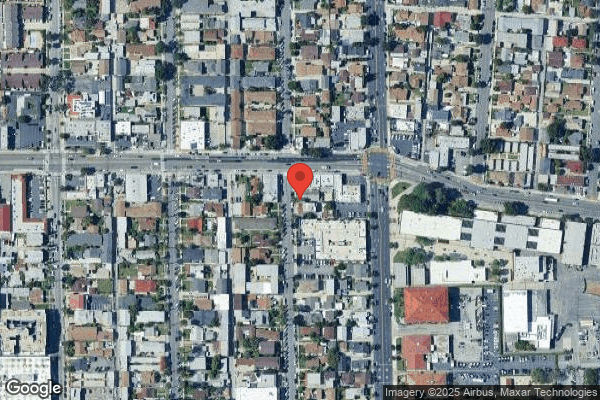
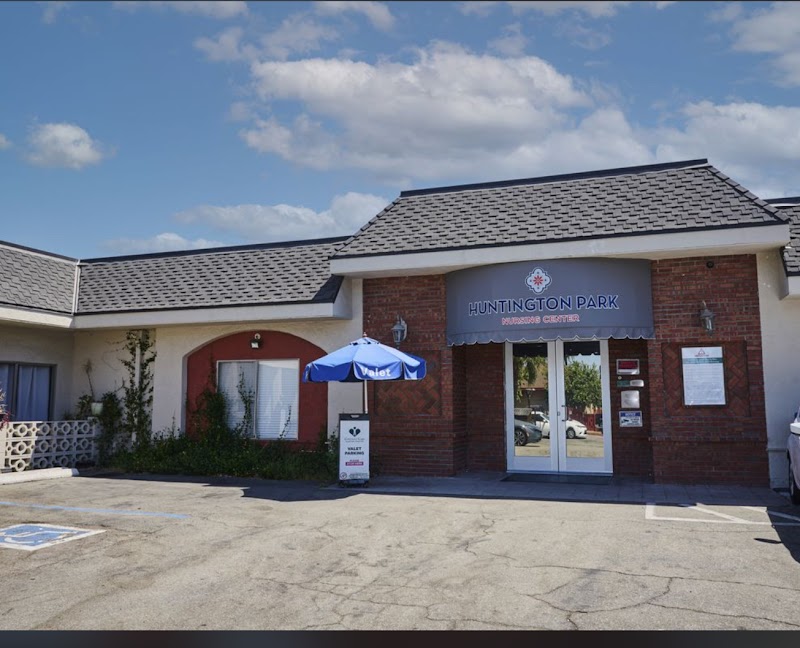
6425 MILES AVENUE, HUNTINGTON PARK, CA 90255 (213) 589-5941
For profit - Limited Liability company 99 Beds COVENANT CARE Data: November 2025
Trust Grade
50/100
#823 of 1155 in CA
Last Inspection: May 2025

Inspected within the last 6 months. Data reflects current conditions.

Overview

Huntington Park Nursing Center has a Trust Grade of C, which means it is average and sits in the middle of the pack among nursing homes. It ranks #823 out of 1,155 facilities in California, placing it in the bottom half, and #192 out of 369 in Los Angeles County, indicating that only one local option is better. The facility is showing improvement, with the number of issues decreasing from 19 in 2024 to 18 in 2025. Staffing is rated as average with a turnover of 32%, which is below the California average, suggesting that the staff tends to stay longer and build relationships with residents. A concerning aspect is the limited RN coverage, which is less than 93% of other facilities in the state, meaning there may be less oversight for resident care. However, there have been specific incidents noted by inspectors. For example, the facility failed to keep food storage practices sanitary, which could lead to foodborne illnesses for all residents. Additionally, one resident did not have their call light within reach, potentially delaying necessary care. Lastly, three residents did not have their specialized mattresses set correctly, raising the risk of pressure ulcers. While there are strengths in staff retention and no fines recorded, these incidents highlight significant areas for improvement.

Trust Score
C
50/100
In California
#823/1155
Bottom 29%
Safety Record
Low Risk
No red flags
Inspections
Getting Better
19 → 18 violations
Staff Stability
○ Average
32% turnover. Near California's 48% average. Typical for the industry.
Penalties
✓ Good
No fines on record. Clean compliance history, better than most California facilities.
Skilled Nurses
⚠ Watch
Each resident gets only 14 minutes of Registered Nurse (RN) attention daily — below average for California. Fewer RN minutes means fewer trained eyes watching for problems.
Violations
⚠ Watch
56 deficiencies on record. Higher than average. Multiple issues found across inspections.
★★☆☆☆
2.0
Overall Rating
★★★☆☆
3.0
Staff Levels
★★★★☆
4.0
Care Quality
★★☆☆☆
2.0
Inspection Score
Stable
2024: 19 issues
2025: 18 issues

The Good

  • 4-Star Quality Measures · Strong clinical quality outcomes
  • Full Sprinkler Coverage · Fire safety systems throughout facility
  • No fines on record
  • Staff turnover below average (32%)

    16 points below California average of 48%

Facility shows strength in quality measures, fire safety.

The Bad

2-Star Overall Rating

Below California average (3.1)

Below average - review inspection findings carefully

Staff Turnover: 32%

14pts below California avg (46%)

Typical for the industry

Chain: COVENANT CARE

Part of a multi-facility chain

Ask about local staffing decisions and management

The Ugly 56 deficiencies on record

Jun 2025 1 deficiency
CONCERN (D) 📢 Someone Reported This

A family member, employee, or ombudsman was alarmed enough to file a formal complaint

Potential for Harm - no one hurt, but risky conditions existed

Pharmacy Services (Tag F0755)

Could have caused harm · This affected 1 resident

**NOTE- TERMS IN BRACKETS HAVE BEEN EDITED TO PROTECT CONFIDENTIALITY** Based on interview, and record review, the facility failed to ensure one of four sampled residents ' (Resident 2) pain medicatio...

Read full inspector narrative →
**NOTE- TERMS IN BRACKETS HAVE BEEN EDITED TO PROTECT CONFIDENTIALITY** Based on interview, and record review, the facility failed to ensure one of four sampled residents ' (Resident 2) pain medication was reordered from the pharmacy at least seven (7) days in advance, as indicated in the facility ' s policy and procedure (P&P) titled, Medication Ordering and Receiving from Pharmacy. This deficient practice placed Resident 2 without the pain medicine available when needed resulting in the resident ' s discomfort and risk for severe pain. This deficient practice had the potential to affect in maintaining the resident ' s highest practicable physical, mental, and psychosocial well-being. Findings: During a review of Resident 2 ' s admission Record, the admission Record indicated Resident 2 was admitted to the facility on [DATE], with a diagnoses including chronic pain (persistent pain that lasts longer than 3 to 6 months, extending beyond the typical healing time for an injury or illness), pressure ulcer (wound) of left buttocks, stage 4 (a severe, deep wound extending into muscle, tendon, or bone, with a high risk of infection), and acute osteomyelitis (acute osteomyelitis.) During a review of Resident 2 ' s History and Physical (H&P) dated 5/27/2025, the H&P indicated Resident 2 had the mental capacity to understand and make medical decisions. During a review of Residents 2 ' s Minimum Data Set (MDS – a resident assessment tool), dated 5/30/2025, the MDS indicated Resident 2 had intact cognition. The MDS indicated Resident 2 required substantial/maximal assistance with activities of daily living (ADLs) such as dressing, toilet use, personal hygiene, transfer (moving between surfaces to and from bed, chair, and wheelchair) and bed mobility (how resident moves from lying to turning side to side). During a review of Resident 2 ' s Physician ' s orders dated 5/25/2025, the physician ' s order indicated Hydrocodone-Acetaminophen (Norco, a controlled [abused/ dangerous] pain medication) oral tablet 10-325 mg give 1 tablet by mouth every 6 hours as needed for moderate to severe pain (4-10) (pain scale). During a review of Resident 2 ' s progress notes dated 6/6/2025 timed 10:04 a.m., the progress notes indicated the authorization form for Norco tablet 5-325 mg was faxed to the primary physician ' s office (MD 1) office. The progress notes indicated Licensed Vocational Nurses (LVN 4) spoke to receptionist and was informed that the authorization form needing the physician ' s signature had been received and will be sent to MD 1 for signature. The progress notes indicated LVN 4 was informed that MD 1 will be back Monday, 6/9/2025 and there was no Physician Assistant (PA) available. The progress notes indicated LVN 4 paged MD 1 regarding the authorization form that needed to be signed. At 4:16 p.m., the progress notes indicated the refill authorization form for Hydrocodone-Acetaminophen oral tablet 10-325 mg from MD 1 had been received and was faxed to the pharmacy. At 6:20 p.m., the progress notesindicated the pharmacy received the faxed refill authorization form and indicated the Hydrocodone-Acetaminophen oral tablet 10-325 mg. medication will be delivered the night (time not specified) of 6/6/2025. During a review of Resident 2 ' s Medication Administration Record (MAR) for 6/2025, the MAR indicated Resident 2 did not receive Hydrocodone-Acetaminophen on 6/6/2025. During an interview on 6/10/2025 at 9:08 a.m. with Resident 2, in Resident 2 ' s room, Resident 2 stated he had pain in the back (unspecified) and in the buttocks wound. Resident 2 stated she asked LVN 3 on 6/6/2025 (time not specified) for herpain medication but was told by LVN 3 that she has no Norco medicine available and needs to be reordered from the pharmacy. Resident 2 stated LVN 3 told her the Norco will be delivered Monday (6/9/2025). Resident 2 stated she needed the Norcobecause of her back and wound pain. Resident 2 stated it is difficult to be in pain. Resident 2 stated later that afternoon, she asked LVN 3 if the medication was available and was told by LVN 3 they are waiting for the pharmacy to deliver the medications. Resident 2 stated shedid not receive Norco until the evening (time unspecified). During an interview on 6/10/2025 at 12:40 p.m. with LVN 3, LVN 3 stated Resident 2 ' s Norco was not available and was reordered 6/6/2025. LVN 3 stated Resident 2 did not get her Norco because we were waiting for the medications from the pharmacy. LVN 3 stated it was important for Resident 2 ' s pain medications to be available so that the resident will not suffer of pain. LVN 3 stated being in pain can affect Resident 2 ' s mental and physical well-being. LVN 3 stated it was not acceptable for Resident 2 to wait for medications. LVN statedmedication refills should be ordered timely. During a concurrent interview and record review on 6/10/2025 at 1:48 p.m. with the Registered Nurses (RN) 1, the RN 1 stated medications are ideally ordered 5 days prior to the medications running out. The RN 1 stated the pharmacy would refill controlled medications, after an authorization was obtained from the doctor. The RN 1 stated the authorization is then faxed to the pharmacy, and the medications will be delivered to the facility. The RN 1 stated if Resident 2 was on pain, we should have obtained an authorization from pharmacy and the doctor for a one-time dose and took the medication from the pyxis (medication dispensing and supplies are available when needed). The RN 1 stated if Resident 2 ' s pain was not managed in a timely manner, Resident 2 could get anxious, be uncomfortable and can develop clinical issues such as tachycardia (rapid heartbeat) or hypertension (high blood pressure.) The RN 1 reviewed Resident 2 ' s MAR on 6/6/2025 and stated no Norco medication was administrated that day. During an interview on 6/10/2025 at 2:52 p.m. with the Director of Nursing (DON), the DON stated controlledsubstances are orderedwhen the blue line (a marker) appeared in the medication ' s bubble pack. The DON stated if Resident 2 complained of pain and medication was not available, the nurses could have calledthe doctor and if it was available, the Norco could have been removed from the pyxis. The DON stated our responsibility was to provide Resident 2 the best quality of care. The DON stated being in pain can affect Resident 2 ' s functional mobility, Activities of Daily Living, and could result to tachycardia, hypertension and abnormal vital signs. During a review of the facility ' s P&P titled, Medication Ordering and Receiving from Pharmacy, dated 2/2010, the P&P indicated medications should be reordered three to four days in advance of need, to assure an adequate supply is on hand. The P&P indicated, when reordering medications that required special processing (such as controlledsubstance), the order should be at least seven (7) days in advance of need.
May 2025 17 deficiencies
CONCERN (D)

Potential for Harm - no one hurt, but risky conditions existed

Notification of Changes (Tag F0580)

Could have caused harm · This affected 1 resident

**NOTE- TERMS IN BRACKETS HAVE BEEN EDITED TO PROTECT CONFIDENTIALITY** Based on observation, interview, and record review, the facility failed to promptly notify the physician and the responsible par...

Read full inspector narrative →
**NOTE- TERMS IN BRACKETS HAVE BEEN EDITED TO PROTECT CONFIDENTIALITY** Based on observation, interview, and record review, the facility failed to promptly notify the physician and the responsible party (RP) of a significant change in condition (COC), related to decline in mobility and ([ADLs]- routine tasks/activities such as bathing, dressing and toileting a person performs daily to care for themselves) for one of six sampled residents (Resident 72). This deficient practice had the potential to result in a delay in medical assessment and treatment for Resident 72 and placing the resident at risk of significant decline in functional status, including total dependency for mobility, and increased dependency in ([ADLs]- routine tasks/activities such as bathing, dressing, and toileting a person performs daily to care for themselves). Cross Reference F688 Findings: During a review of Resident 72's admission Record (Face Sheet),the Face Sheet indicated Resident 72 was admitted to the facility on [DATE] with diagnoses which included dementia, Alzheimer's disease (a disease characterized by a progressive decline in mental abilities), diabetes mellitus (DM- a disorder characterized by difficulty in blood sugar control and poor wound healing), and muscle weakness (loss of muscle strength). During a review of Resident 72's Minimum Data Set (MDS - a resident assessment tool), dated 6/10/2024, the MDS indicated Resident 72's cognitive (the ability to think and process information) skills for daily decision making was severely impaired. The MDS indicated Resident 72 required moderate (helper does less than half the effort) assistance from staff for ADLs. The MDS indicated Resident 72 required moderate assistance from staff for sitting to standing and transfer from a bed to a chair. The MDS indicated Resident 72 was not assessed for walking due to medical conditions or safety concerns. During a review of Resident 72's care plan titled Resident with self-care deficit ., initiated 6/10/2024, the care plan indicated the facility would monitor, document, and report any changes for self-care deficit and decline in Resident 72's function. During an observation on 5/5/2025 at 11:47 a.m., in Resident 72's room, Resident 72 was observed lying in bed, asleep. During an observation on 5/7/2025 at 10:22 a.m., in the hallway, Resident 72 was observed sitting on the wheelchair asleep. During a telephone interview on 5/6/2025 11:25 a.m., with Resident 72's RP 1, RP 1 stated he visited Resident 72 daily since the resident's admission to the facility. RP 1 stated Resident 72 was able to walk independently and sometimes used a walker (mobility aid). RP 1 stated he noticed over the past four months, Resident 72 increasingly began to spend more time in bed and was sleeping more; however, this change was not discussed with RP 1 by the facility. RP 1 stated he wanted the facility to get Resident 72 out of bed more often and provide therapy. During a concurrent interview and record review on 5/8/2025 at 9:15 a.m., with Occupational Therapy Assistant (OTA) 1, Resident 72's occupational therapy treatment encounter notes, dated 6/6/2024 to 9/12/2024, were reviewed. The notes indicated Resident 72's initial assessment was performed on 6/6/2024, and Resident 72 required moderate assistance from staff for ADLs. OTA 1 stated Resident 72 received OT services from 6/6/2024 to 9/12/2024 and the resident achieved maximum potential (highest level of functional abilities). OTA 1 stated Resident 72 was discharged from therapy on 9/12/2024 with an order for the Restorative Nursing Assistance ([RNA]- certified nursing aide program that helps residents to maintain or improve their physical function) program. OTA 1 stated she was not aware of the resident's current ADLs status. OTA 1 stated if there was a significant change of condition related to Resident 72's increased dependency in ADLs, licensed staff should have notified the physician timely to prevent delays in care and services. During a concurrent interview and record review on 5/8/2025 at 9:25 a.m., with Physical Therapy (PT) 1, Resident 72's physical therapy treatment encounter notes, dated 6/6/2025 to 7/31/2024, were reviewed. The notes indicated Resident 72's initial assessment was performed on dated 6/6/2024 and Resident 72 was able to ambulate (walk) five feet using a two-wheeled walker (a mobility aid). PT 1 stated Resident 72 received PT services from 6/6/2024 to 7/30/2024 and reached a high level of mobility (ambulate independently). PT 1 stated Resident 72 was discharged from therapy on 7/31/2024 and did not require the RNA program. PT 1 stated Resident 72 had no need for a wheelchair during PT treatment and/or upon discharge from PT services. PT 1 stated Resident 72 was not referred again for PT after being discharged on 7/31/2024. PT 1 stated he was not aware Resident 72 was now wheelchair bound. PT 1 stated if there was a change of condition related to the decline in a resident's mobility, the nurses were responsible for notifying the physician immediately for an order and referral for therapy. During a concurrent observation and interview on 5/8/2025 at 10:00 a.m., in Resident 72's room, with Certified Nursing Assistant (CNA) 3, CNA 3 was observed transferring Resident 72 from a shower chair to the bed using a mechanical lift (a device used to assist in lifting transferring residents with limited mobility). CNA 3 stated Resident 72 was no longer able to stand up on her feet or walk and now required staff assistance for transfers. CNA 3 stated Resident 72 was able to stand and walk when first admitted to the facility but no longer could due to a decline in mobility and increased need for physical support. During a concurrent interview and record review on 5/8/2025 at 10:15 a.m., with Licensed Vocational Nurse (LVN) 2, Resident 72's Electronic Medical Records (EMR) were reviewed. The EMR indicated Resident 72 was able to stand and walk short distances with a walker upon admission to the facility but now required a wheelchair. LVN 2 stated there was no documented evidence in the EMR to reflect a timely resident assessment and/or physician notification. LVN 2 stated Resident 72's decline in mobility and ADLs should have been assessed, and the physician should have been notified to prevent delays of medical assessment, care, and treatment. During a concurrent interview and record review on 5/8/2025 at 10:25 a.m., with the MDS Nurse (MDSN), Resident 72's MDS dated [DATE] and 12/4/2024 were reviewed. Resident 72's MDS dated [DATE] indicated Resident 72 was able to walk at least 10 to150 feet with moderate assistance. Resident 72's MDS dated [DATE] indicated Resident 72 was not able to walk at least 10 feet due to medical condition or safety concerns. The MDSN stated this change reflected a significant decline in functional mobility and required reassessment and care plan revision. The MDSN stated Resident 72's physician should have been notified of the significant change of condition so resident would be evaluated and referred to therapy for services and treatment. During a concurrent interview and record review on 5/8/2025 at 2:20 p.m., with the Director of Nursing (DON), Resident 72's EMR was reviewed. The DON stated staff were to communicate a change of condition with the physician as needed. The DON stated he was not able to find documented evidence that the facility reassessed Resident 72 and addressed her functional status decline and/or timely physician notification. The DON stated the facility could have done better in notifying Resident 72's physician timely. The DON stated this could have placed Resident 72 at risk for delayed interventions, care and services, and further physical decline. During a telephone interview on 5/9/2025 at 3:04 p.m., with Resident 72's physician, the physician stated he was not aware of Resident 72's significant change of condition related to decline in mobility and increased dependency with ADLs. During a review of the facility's policy and procedure (P&P) titled Change of Condition, dated 2016, the P&P indicated the facility would provide treatment and services to address residents' changes. The P&P indicated if there were residents with a change of condition the facility would: 1. Document assessment findings and communications as soon as practical. 2. Notify physician and responsible party of assessment findings.
CONCERN (D)

Potential for Harm - no one hurt, but risky conditions existed

Assessment Accuracy (Tag F0641)

Could have caused harm · This affected 1 resident

**NOTE- TERMS IN BRACKETS HAVE BEEN EDITED TO PROTECT CONFIDENTIALITY** Based on observation, interview, and record review, the facility failed to ensure the Minimum Data Set ([MDS] - a resident asses...

Read full inspector narrative →
**NOTE- TERMS IN BRACKETS HAVE BEEN EDITED TO PROTECT CONFIDENTIALITY** Based on observation, interview, and record review, the facility failed to ensure the Minimum Data Set ([MDS] - a resident assessment tool), for two of six sampled residents (Residents 9, and 3) was accurately coded to reflect Residents 9 and 3's oral and/or dental status. This deficient practice resulted in incorrect data transmitted to the Centers for Medicare and Medicaid Services (CMS) regarding Resident 9 and 3's dental status and had the potential to negatively affect residents' care plan and delivery of necessary care and services. Findings: a. During a review of Resident 9's Face Sheet (front page of the chart that contains a summary of basic information about the resident), the Face Sheet indicated Resident 9 was admitted to the facility on [DATE] with diagnoses which included Parkinson's disease (a progressive disease of the nervous system marked by tremor, muscular rigidity, and slow, imprecise movements), dementia (a progressive state of decline in mental abilities), diabetes mellitus ([DM] -a disorder characterized by difficulty in blood sugar control and poor wound healing), and dysphagia (difficulty swallowing). During a review of Resident 9's Minimum Data Set (MDS, a resident assessment tool) dated 10/10/2024, the MDS indicated Resident 9's cognitive (the ability to think and process information) skills for daily decision making was moderately impaired. The MDS indicated Resident 9 required moderate (helper does less that half effort) assistance from staff for activities of daily living (ADLs- routine tasks/activities such as bathing, dressing and toileting a person performs daily to care for themselves). The MDS indicated Resident 9 was assessed as not having any oral and/or dental issues. During a concurrent observation and interview on 5/5/2025 at 9:35 a.m., in Resident 9's room, with Resident 9, Resident 9 was observed sitting on a wheelchair eating breakfast. Resident 9 stated it was hard to chew because he did not have his natural teeth. Resident 9 stated his dentures were broken. During a concurrent interview and record review on 5/6/2025 at 10:15 a.m., with the MDS Nurse (MDSN), Residents 9's MDS, dated [DATE] section oral/dental was reviewed. The MDS indicated Resident 9's oral/dental status assessment was coded incorrectly. The MDS Nurse stated the MDS did not reflect the resident's actual oral and/or dental status. The MDSN stated Resident 9 had dentures and did not have his natural teeth. The MDS Nurse stated the MDS should have been coded correctly. The MDSN stated inaccuracy in the MDS assessment had the potential to result in not meeting the resident's care needs and services. b. During a review of Resident 3's Face Sheet, the Face Sheet indicated Resident 3 was admitted to the facility on [DATE] with diagnoses which included dementia, DM, dysphagia, and muscle weakness (loss of muscle strength). During a review of Resident 3's MDS, dated [DATE], the MDS indicated Resident 3 required maximal (helper does more than half the effort) assistance from staff for ADLs. The MDS indicated Resident 3 was assessed as not having any oral and/or dental issues. During a concurrent observation and interview on 5/6/2025 at 8:22 a.m., in Resident 3's room, with Resident 3, Resident 3 was observed sitting up in bed. Resident 3's breakfast plate on the top of the resident's bedside table. Resident 3 stated she did not have any natural teeth and was not able to chew food. Resident 3 stated her dentures felt loose and shifted during meals. During a concurrent interview and record review on 5/6/2025 at 10:22 a.m., with the MDSN, Resident 3's MDS, dated [DATE] section oral/dental status was reviewed. The MDS indicated Resident 3 was assessed as not having any oral/dental issues. The MDSN stated Resident 3's MDS oral/dental status was coded incorrectly as it did not reflect the resident's actual oral and/or dental status. The MDSN stated the inaccurate coding had the potential to impact residents' oral health monitoring, nutritional interventions, and placed the residents at risk for delayed care needs and services. During a review of the facility's policy and procedure (P&P) titled Interdisciplinary Team (IDT, group of different disciplines working together towards a common goal of a resident) process verification of MDS, undated, the P&P indicated MDS accuracy would be completed by the facility's Interdisciplinary Team and ensure accuracy.
CONCERN (D)

Potential for Harm - no one hurt, but risky conditions existed

ADL Care (Tag F0677)

Could have caused harm · This affected 1 resident

**NOTE- TERMS IN BRACKETS HAVE BEEN EDITED TO PROTECT CONFIDENTIALITY** Based on observation, interview, and record review, the facility failed to provide care and services to maintain good grooming a...

Read full inspector narrative →
**NOTE- TERMS IN BRACKETS HAVE BEEN EDITED TO PROTECT CONFIDENTIALITY** Based on observation, interview, and record review, the facility failed to provide care and services to maintain good grooming and personal hygiene for one of 11 residents (Resident 7) by failing to keep Resident 7's fingernails clean and neat. This failure had the potential to result in a negative impact on Resident 7's quality of life and self-esteem. This failure also had the potential for the development of infection. Findings: During an observation on 5/5/2025 at 11:50 a.m., in the activity room, observed Resident 7's fingernails were long with yellow and brown substance underneath. During an observation on 5/6/2025 at 8:15 a.m., in Resident 7's room, observed Resident 7's fingernails were long with yellow and brown substance underneath. During an observation on 5/7/2025 at 1:31 p.m., in the facility's hallway, observed Resident 7's fingernails long with yellow and brown substance underneath. During a review of Resident 7's admission Record, the admission Record indicated Resident 7 was originally admitted to the facility on 3/28/2017 and readmitted on [DATE]. Resident 7's diagnoses included ulcerative colitis (a chronic inflammatory bowel disease [IBD] that caused inflammation and ulcers in the lining of the large intestine) and dementia (a progressive state of decline in mental abilities). During a review of Resident 7's Minimum Data Set (MDS, a resident assessment tool), dated 4/1/2025, the MDS indicated Resident 7's cognitive (the ability to think and process information) skills for daily living was intact. The MDS indicated Resident 7 required setup assistance with eating; moderate assistance (helper did less than half the effort) with oral hygiene; maximal assistance (helper did more than half the effort) with personal hygiene; and was dependent (helper did all the effort) with toileting hygiene, showering/ bathing self, and chair/bed-to-chair transferring. The MDS indicated Resident 7 used a walker and wheelchair for mobility. During a review of Resident 7's History and Physical (H&P), dated 1/15/2025, the H&P indicated Resident 7 did not have the capacity to understand and make decisions. During a review of Resident 7's care plan titled Self-care deficit as evidenced by: needs assistance with ADLs (activities of daily living, routine tasks/activities such as bathing, dressing and toileting a person performs daily to care for themselves), revised on 8/6/2024, the care plan indicated the goal was to keep Resident 7 clean, dry, and well-groomed. During a concurrent observation and interview on 5/7/2025 at 1:32 p.m., with Certified Nursing Assistant (CNA 1), in the facility hallway, observed Resident 7's fingernails were long with yellow and brown substance underneath. CNA 1 stated Resident 7's fingernails needed to be cleaned. CNA 1 stated Resident 7's long fingernails was a hygiene problem and could cause an infection. CNA 1 stated the CNAs were responsible for making sure residents' fingernails were clean. CNA 1 stated staff checked on residents constantly for cleanliness. During a concurrent interview and picture review on 5/7/2025 at 1:46 p.m. with the Infection Preventionist Nurse (IPN), the pictures dated 5/5/2025 at 11:52 a.m., 5/6/2025 at 8:15 a.m., and 5/7/2025 at 1:31 p.m. were reviewed. The pictures showed Resident 7's fingernails long with yellow and brown substance underneath. The IPN stated Resident 7's fingernails were dirty and needed to be cleaned. The IPN stated that when Resident 7 was eating, Resident 7's fingernails might transmit bacteria into her body. The IPN stated when Resident 7 touched any surface it would transmit the bacteria and put other residents at risk for infection. The IPN stated all nursing staff were responsible to ensure residents' fingernails were clean because of infection control. During a review of the facility's policy and procedure (P&P) titled Bath, Bed, undated, the P&P indicated fingernail care was part of the bath and staff were to be certain that nails were clean. During a review of the facility's Job Description for CNA, revised on 11/13/2017, the Job Description indicated the CNAs would provide assistance with nail care.
CONCERN (D)

Potential for Harm - no one hurt, but risky conditions existed

Deficiency F0688 (Tag F0688)

Could have caused harm · This affected 1 resident

**NOTE- TERMS IN BRACKETS HAVE BEEN EDITED TO PROTECT CONFIDENTIALITY** Based on interview and record review, the facility failed to ensure a physician order for physical therapy ([PT]- healthcare spe...

Read full inspector narrative →
**NOTE- TERMS IN BRACKETS HAVE BEEN EDITED TO PROTECT CONFIDENTIALITY** Based on interview and record review, the facility failed to ensure a physician order for physical therapy ([PT]- healthcare specialty focuses on restoring, maintaining, and improving a resident ability to move and function) and occupational therapy ([OT]- a healthcare specialty that helps a resident improve the ability to perform daily activities) services were implemented timely for one of six sampled residents (Resident 72). This deficient practice had the potential to result in a significant decline in Resident 72's functional status, including total dependency for mobility, and increased dependency in activities of daily living ([ADLs]- routine tasks/activities such as bathing, dressing, and toileting a person performs daily to care for themselves). Findings: During a review of Resident admission Record (Face Sheet), the Face Sheet indicated Resident 72 was admitted to the facility on [DATE]. Resident 72's diagnoses included dementia, Alzheimer's disease (a disease characterized by a progressive decline in mental abilities), diabetes mellitus (DM- a disorder characterized by difficulty in blood sugar control and poor wound healing), and muscle weakness (loss of muscle strength). During a review of Resident 72's Minimum Data Set (MDS - a resident assessment tool), dated 6/10/2024, the MDS indicated Resident 72's cognitive (the ability to think and process information) skills for daily living was severely impaired. The MDS indicated Resident 72 required moderate (helper does less than half the effort) assistance from staff for activities of daily living ([ADLs]- routine tasks/activities such as bathing, dressing, and toileting a person performs daily to care for themselves). The MDS indicated Resident 72 required moderate assistance from staff for sitting to standing and transfer from a bed to a chair. The MDS indicated Resident 72 was not assessed for walking due to medical conditions or safety concerns. During a review of Resident 72's care plan titled Resident with self-care deficit ., initiated 6/10/2024, the care plan indicated the facility would monitor, document, and report any changes for self-care deficit and decline in Resident 72's function. During a telephone interview on 5/6/2025 11:25 a.m., with Resident 72's Responsible Party (RP) 1, RP 1 stated he visited Resident 72 daily since the resident's admission to the facility. RP 1 stated Resident 72 was able to walk independently and sometimes used a walker (a mobility aid). RP 1 stated he noticed over the past four months Resident 72 increasingly spent more time in bed and was sleeping more than usual. RP 1 stated he wanted the facility to get Resident 72 out of bed more often and provide therapy. RP 1 stated Resident 72 was receiving therapy upon admission to the facility but the facility discontinued therapy services on 9/2024 and has not resumed them since. During a concurrent interview and record review on 5/8/2025 at 9:15 a.m., with Occupational Therapy Assistant (OTA) 1, Resident 72's OT treatment encounter notes, dated 6/6/2024 to 9/12/2024, were reviewed. The notes indicated Resident 72's initial assessment was performed on 6/6/2024 and Resident 72 required moderate assistance from staff for ADLs. OTA 1 stated Resident 72 received OT services from 6/6/2024 to 9/12/2024 and the resident achieved maximum potential (highest level of functional abilities). OTA 1 stated Resident 72 was discharged from therapy on 9/12/2024 with an order for the Restorative Nursing Assistance ([RNA]- certified nursing aide program that helps residents to maintain or improve their physical function) program. OTA 1 stated Resident 72 was not referred again for occupational therapy and she was not aware of the resident's current functional status. During a concurrent interview and record review on 5/8/2025 at 9:25 a.m., with Physical Therapist (PT) 1, Resident 72's PT treatment encounter notes, dated 6/6/2025 to 7/31/2024, were reviewed. The notes indicated Resident 72's initial assessment was performed on 6/6/2024 and Resident 72 was able to ambulate (walk) five feet using a two-wheeled walker (a mobility aid). PT 1 stated Resident 72 received PT services from 6/6/2024 to 7/30/2024 and reached a high level of mobility (ambulate independently). PT 1 stated Resident 72 was discharged from therapy on 7/31/2024 and did not require the RNA program. PT 1 stated Resident 72 had no need for a wheelchair during PT treatment and/or upon discharge from PT services. PT 1 stated Resident 72 was not referred again for PT services after being discharged on 7/31/2024. PT 1 stated he was not aware Resident 72 was now wheelchair bound. PT 1 stated if there was a decline in a resident's mobility, the nurses were responsible for notifying the physician for an order and referral for therapy. During a concurrent observation and interview on 5/8/2025 at 10:00 a.m., in Resident 72's room, with Certified Nursing Assistant (CNA) 3, CNA 3 was observed transferring Resident 72 from a shower chair to the bed using a mechanical lift (a device used to assist in lifting transferring residents with limited mobility). CNA 3 stated Resident 72 was no longer able to stand up on her feet or walk and required staff assistance for transfers. CNA 3 stated Resident 72 was able to stand and walk when first admitted to the facility but could no longer do so due to a decline in mobility and increased need for physical support. During a concurrent interview and record review on 5/8/2025 at 10:15 a.m., with Licensed Vocational Nurse (LVN) 2, Resident 72's Nursing Progress Notes dated 1/3/2025 to 5/4/2025, and Physician Orders, dated 1/2025 to 5/2025, were reviewed. The nursing progress notes indicated there were no assessments related to mobility decline and/or a PT/OT revaluation and treatment. The Physician Orders indicated there were no active orders for PT/OT evaluation. LVN 2 stated Resident 72 was able to stand and walk short distances with a walker upon admission to the facility but now required a wheelchair. LVN 2 stated Resident 72's decline in mobility and ADLs should have been assessed and an order for a PT/OT evaluation and treatment obtained. LVN 2 stated it was the licensed nurses' responsibility to notify the physician but was not done. During a concurrent interview and record review on 5/8/2025 at 10:25 a.m., with the MDS Nurse (MDSN), Resident 72's MDS dated [DATE] and 12/4/2024 were reviewed. The MDS dated [DATE] indicated Resident 72 was able to walk at least 10 to150 feet with moderate assistance. Resident 72's MDS dated [DATE] indicated Resident 72 was not able to walk at least 10 feet due to medical condition or safety concerns. The MDSN stated the change from 10/10/2024 to 12/4/2024 reflected a significant decline in Resident 72's functional mobility and required reassessment and a care plan revision. The MDSN stated Resident 72's physician should have been notified of the significant change of condition so the resident would be evaluated and referred to therapy for services and treatment. The MDSN stated delays in services and treatment had the potential to place Resident 72 at risk for further mobility and ADL decline. During an interview on 5/8/2025 at 12:19 p.m., with Registered Nurse Supervisor (RNS) 1, RNS 1 stated if the nurse received a written and signed order from the physician, the order would be indicated on the resident's order summary report and carried out immediately. RNS 1 stated if a PT/OT order was received the nurse would communicate with the rehabilitation department so the therapists would be aware and carry out the physician order. During a concurrent interview and record review on 5/8/2025 at 12:28 p.m., with RNS 1, Resident 72's Physician Order dated 10/23/2024 was reviewed. RNS 1 stated there was a written and signed physician's order dated 10/23/2024 which indicated Resident 72 required a PT/OT evaluation and wheelchair for mobility. RNS 1 stated there was no documented evidence indicating the order was carried out and/or communicated to the therapy department. RNS 1 stated not carrying out the PT/OT order timely placed Resident 72 at risk for delayed treatment, services, and for further functional and mobility decline. During a concurrent interview and record review on 5/8/2025 at 1:20 p.m., with PT 1, Resident 72's physician order dated 10/23/2024, was reviewed. The physician order indicated Resident 72 required a PT/OT evaluation for a wheelchair. PT 1 stated he was not aware of the order. PT 1 stated if residents required therapy nurses were responsible for obtaining a physician order and communicating the order to the rehabilitation department. PT 1 stated he was not aware Resident 72 had an order for a PT/OT evaluation and wheelchair until after the concern was brought to the rehabilitation department on 5/8/2025. PT 1 stated nurses should have notified the rehabilitation department that there was a physician order for a PT/OT evaluation and treatment so Resident 72 would be assessed and provided with necessary services and treatment as necessary and prevent further mobility decline. During an interview on 5/8/2025 at 2:20 p.m., with the Director of Nursing (DON), the DON stated the physician's orders should be completed and implemented immediately after they were received. The DON stated the facility staff overlooked Resident 72's physician order for a PT/OT evaluation for a wheelchair, which resulted in delayed care and treatment. The DON stated this could place Resident 72 at risk for mobility and ADL decline. During a review of the facility's policy and procedure (P&P) titled Physician Orders and Telephone Orders, dated 1/2004, the P&P indicated physician's orders would be obtained prior to the initiation of any treatment. The P&P indicated all orders must be complete and carried out without any questions. During a review of the facility's P&P titled Ambulation, undated, the P&P indicated facility would provide assistance, assess resident's function, maintain residents' optimal ambulation function, and would assist resident to achieve maximum function. During a review of the facility's P&P titled Range of Motion Exercises, undated, the P&P indicated the facility's responsibilities were to improve or maintain resident's mobility, muscle strength and prevent complications of immobility. During a review of the facility's Registered Nurse (RN) Job Description, undated, the job description indicated RNs duties included but not limited to take, transcribe, and carry out complete orders. The job description indicated RNs would complete appropriate referrals to other departments, including therapy.
CONCERN (D)

Potential for Harm - no one hurt, but risky conditions existed

Accident Prevention (Tag F0689)

Could have caused harm · This affected 1 resident

**NOTE- TERMS IN BRACKETS HAVE BEEN EDITED TO PROTECT CONFIDENTIALITY** Based on observation, interview, and record review, the facility failed to ensure a two-person assist when utilizing the electri...

Read full inspector narrative →
**NOTE- TERMS IN BRACKETS HAVE BEEN EDITED TO PROTECT CONFIDENTIALITY** Based on observation, interview, and record review, the facility failed to ensure a two-person assist when utilizing the electric stand-up lift (battery-powered device to provide assistance from a sitting to standing position) for one of two sampled residents (Resident 64). This deficient practice had the potential to result in Resident 64 becoming unsteady on the electronic stand-up lift resulting in a fall and/or injury. Findings: During an observation on 5/5/2025 at 1:27 p.m., inside Resident 64's room, Certified Nursing Assistant (CNA) 4 entered Resident 64's room with the electric stand-up lift. CNA 4 did not have another staff member in Resident 64's room to operate the electronic stand-up lift. CNA 4 transferred Resident 64 from the wheelchair to the bed using the electronic stand-up lift alone. During a review of Resident 64's admission Record (Face Sheet), the Face Sheet indicated Resident 64 was admitted to the facility on [DATE]. Resident 64's diagnoses included multiple sclerosis (a disease that causes breakdown of the protective covering of nerves) and generalized muscle weakness (feeling weak throughout the body). During a review of Resident 64's Minimum Data Set ([MDS], a resident assessment tool), dated 3/10/2025, the MDS indicated Resident 64's cognition (process of thinking) was severely impaired. The MDS indicated Resident 64 required maximal assistance (helper does more than half the effort) with toileting, bathing, lower body dressing, moving from a sit to stand position, and from a chair/bed-to-chair transfer. During a review of Resident 64's History and Physical (H&P), dated 3/6/2025, the H&P indicated Resident 64 had the capacity to understand and make decisions. During a review of Resident 64's care plan titled Self-Care Deficit ., dated 3/5/2025, the care plan indicated staff interventions were to provide a two-person physical assistance with bed mobility and transfers. During a review of the facility's In-Service titled, Hoyer Lift/Standing Machine/Transfers, dated 2/26/2024, the In-Service indicated participants would be able to properly transfer residents from one surface to another with assistance from other nursing staff personnel. The In-service indicated CNA 4 received and understood the In-Service education. During an interview on 5/5/2025 at 1:32 p.m., with CNA 4, CNA 4 stated she used the electric stand-up lift to transfer Resident 64 from his wheelchair to bed. CNA 4 stated she was alone with Resident 64 during the transfer. CNA 4 stated when operating the electric stand-up lift, two people were required to ensure a safe patient-transfer. CNA 4 stated a second person to assist in the transfer was required in case Resident 64 fell. During an interview on 5/7/2025 at 9:46 a.m., with the Director of Staff Development (DSD), the DSD stated two nursing personnel were required to safely operate the electric stand-up lift. The DSD stated the CNAs were educated through in-service training. The DSD stated having a second person there to assist in the transfer was essential for the safety of the residents and the CNA. The DSD stated while operating the electric stand-up lift, Resident 64 could have become unsteady and tip over to either side, causing him to fall. The DSD stated it could also be unsafe for the CNA operating the electric stand-up lift if the CNA tried to catch Resident 64 on their own. During an interview on 5/7/2025 at 2:30 p.m., with the Director of Nursing (DON), the DON stated a two-person assist was required when operating the electric stand-up lift. The DON stated one person would operate the stand-up lift, while the second person would provide stand-by assistance and stability to the resident. The DON stated during Resident 64's transfer from the wheelchair to the bed, CNA 4 was responsible for having a second person to assist. The DON stated a one-person assist placed Resident 64 at risk for falling during the transfer which could result in a serious injury. During a review of the facility's policy and procedure (P&P) titled, Resident Rights, dated 10/2022, the P&P indicated, The resident has a right to a safe, clean, comfortable, and homelike environment, including but not limited to receiving treatment and supports for daily living safely.
CONCERN (D)

Potential for Harm - no one hurt, but risky conditions existed

Deficiency F0698 (Tag F0698)

Could have caused harm · This affected 1 resident

Based on observation, interview, and record review, the facility failed to provide one of two residents (Resident 80), who required hemodialysis (a treatment to cleanse the blood of wastes and extra f...

Read full inspector narrative →
Based on observation, interview, and record review, the facility failed to provide one of two residents (Resident 80), who required hemodialysis (a treatment to cleanse the blood of wastes and extra fluids artificially through a machine when the kidney(s) have failed), a dialysis emergency kit (e-kit) at bedside. This failure had the potential for Resident 80 to receive delayed intervention in managing dialysis site complications such as bleeding. Findings: During a review of Resident 80's admission Record, dated 1/15/2025, the admission record indicated the facility admitted Resident 80 on 1/15/2025 with diagnoses including, but not limited to, chronic kidney disease (CKD - a condition that causes gradual loss of kidney function over a period of time) with dependence on hemodialysis (a treatment to cleanse the blood of wastes and extra fluids artificially through a machine when the kidney(s) have failed), anemia (a condition where the body does not have enough healthy red blood cells), and hypertension (HTN - high blood pressure). During a review of Resident 80's Minimum Data Set (MDS - a resident assessment tool), dated 4/16/2025, the MDS indicated Resident 80's cognition was intact. The MDS indicated Resident 80 required partial assistance from staff with activities such as dressing, personal hygiene, toileting use, and transfer mobility. During an observation on 5/5/2025 at 10:35 a.m., in Resident 80's room, there was no e-kit pinned to the wall, on the nightstand, or inside the bedside drawer. During an observation on 5/5/2025 at 11:36 a.m., in Resident 80's room, there was no e-kit pinned to the wall, on the nightstand, or inside the bedside drawer. During a concurrent observation and interview on 5/5/2025 at 1:05 p.m., in Resident 80's room, there was no e-kit pinned to the wall, on the nightstand, or inside the bedside drawer. Resident 80 stated he had not seen an e-kit inside his room. During a review of Resident 80's Physician Orders, dated 1/16/2025, physician orders indicated Resident 80 was to receive hemodialysis every Monday, Wednesday, and Friday. During a review of Resident 80's Order Summary Report indicated checking dialysis e-kit at bedside and restocking the e-kit as needed. During a review of Resident 80's care plan, dated 1/17/2025, the care plan indicated Resident 80 was at high risk for bleeding due to hemodialysis. The care plan indicated the goal was for Resident 80 would have no massive blood loss while awaiting medical assistance. The care plan indicated an intervention for meeting the goal included ensuring that an e-kit was available at all times in the event of bleeding. During an interview on 5/7/2025 at 1:29 p.m., with Licensed Vocational Nurse (LVN) 1, LVN 1 stated a complication the staff would monitor for a resident on hemodialysis was bleeding. LVN 1 stated an e-kit contained tape, gauze, and a clamp. LVN 1 stated an e-kit should always be at Resident 80's bedside and the e-kit should be checked daily to make sure the e-kit was stocked with all the necessary supplies. LVN 1 stated Resident 80 could hemorrhage (excessive bleeding or blood loss) if there was no e-kit at the bedside. During an interview on 5/8/2025 at 8:44 a.m. with the Director of Nursing (DON), the DON stated having an e-kit at Resident 80's bedside at all times would make it easier for staff to access the supplies needed to intervene immediately to manage bleeding. The DON stated if there was no e-kit available at Resident 80's bedside and Resident 80 began to bleed, there would be a delay in intervention to manage bleeding. During a review of the facility's policy and procedure (P&P) titled, Hemodialysis, dated 12/2022, indicated .The facility will assure that each resident receives care and services for the provision of hemodialysis consistent with professional standards of practice. This will include .Ongoing assessment and oversight of the resident before, during and after dialysis treatments, including monitoring of the resident's condition during treatments, monitoring for complications, implementation of appropriate interventions, and using appropriate infection control practices .
CONCERN (D)

Potential for Harm - no one hurt, but risky conditions existed

Deficiency F0712 (Tag F0712)

Could have caused harm · This affected 1 resident

**NOTE- TERMS IN BRACKETS HAVE BEEN EDITED TO PROTECT CONFIDENTIALITY** Based on interview and record review, the facility failed to ensure a resident's physician (Physician 1) conducted an initial co...

Read full inspector narrative →
**NOTE- TERMS IN BRACKETS HAVE BEEN EDITED TO PROTECT CONFIDENTIALITY** Based on interview and record review, the facility failed to ensure a resident's physician (Physician 1) conducted an initial comprehensive assessment (a thorough evaluation of person's health, including their physical, mental, and social factors) for one of six sampled residents (Resident 45) after Resident 45 was readmitted to the facility. This deficient practice resulted in the delay of a comprehensive assessment of Resident 45's health and status, which could negatively affect the delivery of necessary care and services for Resident 45. Findings: During a review of Resident 45's admission Record (Face Sheet), the Face Sheet indicated Resident 45 was initially admitted to the facility on [DATE] and readmitted on [DATE]. Resident 45's diagnoses included cognitive communication deficit (difficulties with communication due to problems with thinking and processing information, rather than just speech or language issues), generalized muscle weakness (feeling weak throughout the body), and dementia (a progressive state of decline in mental abilities). During a review of Resident 45's Minimum Data Set ([MDS], a resident assessment tool), dated 4/8/2025, the MDS indicated Resident 45's cognition (process of thinking) was moderately impaired. The MDS indicated Resident 45 required moderate assistance (helper does less than half the effort) with oral hygiene and personal hygiene and was dependent on staff's assistance with toileting, bathing, and lower body dressing. During a review of Resident 45's Census List, dated 4/8/2024 through 4/4/2025, the Census List indicated Resident 45 was discharged from the facility on 2/5/2025 and was readmitted to the facility on [DATE]. During a concurrent interview and record review on 5/8/2025 at 9:58 a.m., with the Medical Records Director (MRD), Resident 45's History and Physical (H&P), dated 3/28/2025, was reviewed. The MRD stated the H&P was completed when Resident 45 was hospitalized . The MRD stated once she received residents' records, either from the general acute care hospital (GACH) or from their physician, the records were scanned into the resident's electronic health record (eHR). The MRD stated Physician 1 would email or fax the completed H&Ps and she would scan into the resident's eHR. The MRD stated Resident 45 did not have an H&P after the resident's admission to the facility scanned into the eHR. During an interview on 5/8/2025 at 3:06 p.m., with the Director of Nursing (DON), the DON stated when a resident was admitted to the facility, their attending physician was supposed to physically see the resident within 30 days. The DON stated the physician would review hospital records, conduct a comprehensive assessment to establish a baseline (an individual's current health at a specific point of time, serving as a reference point for tracking changes and progress over time), and review orders and medications. The DON stated the physician would complete an H&P and provide the document to the facility. The DON stated an H&P was essential to create a baseline of the resident's health status and use as a reference if the resident experienced any changes. The DON stated the H&P was used by the nursing staff to reference prior to interacting with the resident and help guide the care provided to the resident. The DON stated Resident 45 had an H&P completed while he was hospitalized , however, Resident 45's health condition could change from his admission to the GACH to the resident's readmission back to the facility. The DON stated a completed H&P would show that Physician 1 came to personally assess Resident 45 comprehensively. The DON stated due to the delay of a comprehensive assessment of Resident 45's health and status, Resident 45 was at risk of experiencing a negative effect in the delivery of necessary care and services from the facility's staff. During a review of the facility's policy and procedure (P&P) titled, Physician Documentation, dated 1/2004, the P&P indicated, The resident shall be under the continuing supervision of a physician who evaluates the resident as needed and at least every 30 days unless there is an alternate schedule with medical justification by the attending physician. The P&P indicated the physician would provide a current History and Physical Examination within five days prior to admission or within 72 hours following the resident's admission.
CONCERN (D)

Potential for Harm - no one hurt, but risky conditions existed

Deficiency F0745 (Tag F0745)

Could have caused harm · This affected 1 resident

Based on interview and record review, the facility failed to follow up on an order for consultation with an Ear, Nose, and Throat (ENT - medical doctor who specializes in the medical and surgical trea...

Read full inspector narrative →
Based on interview and record review, the facility failed to follow up on an order for consultation with an Ear, Nose, and Throat (ENT - medical doctor who specializes in the medical and surgical treatment of conditions affecting the ears, nose, throat, head, and neck region) doctor for Resident 82. This failure had the potential to result in worsening left ear pain and left ear hearing loss for Resident 82. Findings: During a review of Resident 82's admission Record, dated 1/22/2025, the admission record indicated the facility admitted Resident 82 on 1/22/2025 with diagnoses including, but not limited to, end stage renal disease (ESRD - irreversible kidney failure), anemia (a condition where the body does not have enough healthy red blood cells), hypertension (HTN - high blood pressure), diabetes mellitus (DM - a disorder characterized by difficulty in blood sugar control and poor wound healing), and peripheral vascular disease (PVD - a slow progressive narrowing of the blood flow to the arms and legs). During an interview on 5/5/2025 at 10:55 a.m., with Resident 82, in the resident's room, Resident 82 stated she could not hear well in her left ear and had been experiencing pain in her left ear over a month ago, especially at nighttime. Resident 82 stated she could not open her mouth too wide or chew on the left side because of the left ear pain. Resident 82 stated she was told by staff that a specialist would be coming to examine her but had been waiting for more than a month for the consultation. During a review of Resident 82's progress note, dated 3/19/2025, the progress note indicated Resident 82 first experienced left ear pain on 3/19/2025. The progress note indicated Resident 82 complained of hearing from headphones sounding distant in the left ear. During a review of Resident 82's Order Summary Report, dated 4/6/2025, the order summary report indicated Resident 82 was to receive ENT consultation and treatment as needed for left ear pain. During a review of Resident 82's medical records, dated from 1/22/2025 to 5/6/2025, the resident's medical records indicated no documentation of an ENT consultation being followed up by nursing staff, social services department, or administration. During an interview on 5/7/2025 at 1:55 p.m., with the Social Services Director (SSD), the SSD stated there had not been any follow-up calls made to the ENT doctor about the ENT consultation for Resident 82 after the consultation was ordered by Resident 82's primary care physician in April. The SSD stated if Resident 82 did not receive an ENT consultation as ordered, Resident 82's condition could worsen. During an interview on 5/8/2025 at 8:57 a.m., with the Director of Nursing (DON), the DON stated the facility would not be meeting the needs of Resident 82 if the resident did not receive the ENT consultation. The DON stated Resident 82's activities of daily living (ADLs) would be affected by the resident's ear pain and would have hearing loss if the resident did not receive the ENT consultation as ordered. During a review of the Job Description for Social Worker, on 5/8/2025 at 11:00 a.m., indicated Understands in the MDS process and accurately assesses, documents and provides interventions for assigned case load .Effectively communicates with residents and families .
CONCERN (D)

Potential for Harm - no one hurt, but risky conditions existed

Deficiency F0806 (Tag F0806)

Could have caused harm · This affected 1 resident

**NOTE- TERMS IN BRACKETS HAVE BEEN EDITED TO PROTECT CONFIDENTIALITY** Based on observation, interview, and record review, the facility failed to ensure residents' food preferences were respected and...

Read full inspector narrative →
**NOTE- TERMS IN BRACKETS HAVE BEEN EDITED TO PROTECT CONFIDENTIALITY** Based on observation, interview, and record review, the facility failed to ensure residents' food preferences were respected and alternatives were provided for one of six sampled residents (Resident 42). This deficient practice had the potential to result in decreased meal intake, and alter Resident 42's nutritional status. Findings: During a review of Resident 42's admission Record (Face Sheet), the Face Sheet indicated Resident 42 was originally admitted to the facility on [DATE] and readmitted on [DATE] with diagnoses which included dementia (a progressive state of decline in mental abilities), ([DM]- a disorder characterized by difficulty in blood sugar control and poor wound healing), and dysphagia (difficulty swallowing), and muscle weakness (loss of muscle strength). During a review of Resident 42's Minimum Data Set ([MDS] - a resident assessment tool), dated 4/15/2025, the MDS indicated Resident 42's cognitive (the ability to think and process information) skills for daily decision making was intact. The MDS indicated Resident 42 was dependent on staff for activities of daily living (ADLs- routine tasks/activities such as bathing, dressing and toileting a person performs daily to care for themselves). During a review of Resident 42's History and Physical (H&P), dated 1/12/2025, the H&P indicated Resident 42 had the capacity to understand and make decisions. During a review of Resident 42's Order Summary Report, dated 3/8/2025, the Order Summary Report indicated the facility would provide Resident 42 with choices for the snack of the day. During a review of Resident 42's care plan with titled [Resident 42] was at risk for altered nutrition and hydration ., date initiated 1/13/2025, the care plan indicated staff interventions were to honor Resident 42's food and fluid preferences. During an interview on 5/5/2025 at 2:35 p.m., in Resident 42's room, Resident 42 stated he did not like the meals he was currently receiving and stated he did not like grilled chicken or fish. Resident 42 stated he was not offered substitutes or snacks. During a concurrent observation and interview on 5/7/2025 at 1:11 p.m., in Resident 42's room, Resident 42's lunch tray was observed. Resident 42's lunch tray had a plate with grilled fish, a scoop of white rice, and a carton of Ensure (nutritional supplement). Resident 42 stated he did not want to eat the fish because it was grilled and did not look appetizing. Resident 42 stated the Ensure contained milk and he did not like milk. Resident 42 stated he preferred to have boiled beef and toast. Resident 42 stated staff told him boiled beef was not an option. During an interview on 5/7/2025 at 1:36 p.m., with Certified Nursing Assistant (CNA) 3, CNA 3 stated CNA staff were responsible for completing and submitting the substitute request form to the kitchen if a resident requested something different from what was being served. CNA 3 stated the option for boiled beef was not provided to residents. During a concurrent observation, interview, and record review on 5/7/2025 at 1:44 p.m., in Resident 42's room, with the Dietary Supervisor (DS), Resident 42's lunch tray and diet ticket (a document that listed a resident's dietary needs, including allergies, preferences, and restrictions) was observed. The DS stated Resident 42's lunch plate contained grilled fish and a carton of Ensure. The DS stated Resident 42's diet ticket indicated Resident 42 would be provided with boiled meats and the resident disliked milk. The DS stated it was not appropriate to provide grilled fish and Ensure which contained milk ingredients. The DS stated it was important to honor Resident 42's food preferences. The DS stated dislike of food may affect Resident 42's meal intake and place the resident at risk for malnutrition (lack of proper nutrition). During a review of the facility's policy and procedure (P&P) titled Resident food preferences, dated 2/2009, the P&P indicated the facility would satisfy residents' tastes and shall provide food substitutions to meet resident food preferences.
CONCERN (D)

Potential for Harm - no one hurt, but risky conditions existed

Deficiency F0808 (Tag F0808)

Could have caused harm · This affected 1 resident

**NOTE- TERMS IN BRACKETS HAVE BEEN EDITED TO PROTECT CONFIDENTIALITY** Based on observation, interview, and record review, the facility failed to follow the renal diet (specialized diet designed to h...

Read full inspector narrative →
**NOTE- TERMS IN BRACKETS HAVE BEEN EDITED TO PROTECT CONFIDENTIALITY** Based on observation, interview, and record review, the facility failed to follow the renal diet (specialized diet designed to help people with kidney disease or kidney failure to manage their condition) menu for one of four sampled residents (Resident 21). This deficient practice had the potential to result in the buildup of waste products that Resident 21's kidneys could not filter. Findings: During a review of Resident 21's admission Record (Face Sheet), the Face Sheet indicated Resident 21 was admitted to the facility on [DATE]. Resident 21's diagnoses included spina bifida (a condition that occurs when the spine and spinal column do not form properly), end stage renal disease ([ESRD], irreversible kidney failure), and neuromuscular dysfunction of the bladder (also known as neurogenic bladder, when damage to the brain, spinal cord, or nerves disrupts the communication between the brain and the bladder, leading to a loss of bladder control). During a review of Resident 21's Minimum Data Set ([MDS], a resident assessment tool), dated 3/6/2025, the MDS indicated Resident 21's cognition (process of thinking) was intact. The MDS indicated Resident 21 required setup assistance with eating and oral hygiene and required moderate assistance (helper does less than half the effort) with toileting, bathing, and upper body dressing. The MDS indicated Resident 21 was on a therapeutic diet (diet ordered to manage problematic health conditions) During a review of Resident 21's History and Physical (H&P), dated 2/19/2025, the H&P indicated Resident 21 had the capacity to understand and make decisions. During a review of Resident 21's Order Summary Report, dated 5/8/2025, the Order Summary Report indicated to give Resident 21 a renal diet, regular texture for food items and thin consistency for fluids, for ESRD. During a review of Resident 21's care plan titled Resident at Risk for Altered Nutrition, Hydration, and Weight Fluctuations, dated 2/21/2025, the care plan indicated staff interventions to serve Resident 21 the diet as ordered. During an interview on 5/5/2025 at 1:10 p.m. with Resident 21, Resident 21 stated he was on a renal diet, however, would sometimes receive the wrong menu items during mealtimes. Resident 21 stated he understood since he was on the renal diet, receiving unapproved items could affect his kidneys. During an observation on 5/7/2025 at 12:30 p.m., inside Resident 21's room, Resident 21 received his lunch tray. The meal tray ticket indicated to serve Resident 21 a double portion of protein with every meal per Resident 21's request. Observed two pieces of crusted fish on Resident 21's plate. During a concurrent interview and record review on 5/7/2025 at 1:21 p.m., with the Dietary Supervisor (DS), the facility's Menu and Diet Spreadsheet, dated 5/7/2025, were reviewed. The DS stated the protein on the lunch menu served on 5/7/2025 was Italian crusted fish. The DS stated many of the therapeutic diets allowed for the Italian crusted fish to be served, however, according to the Diet Spreadsheet, the residents on the renal diet were served baked fish instead. The DS stated unlike the Italian crushed fish that was seasoned and with other ingredients to make the fish crispy, the baked fish would have simple seasonings such as garlic and onion powder. During a concurrent interview and picture review on 5/7/2025 at 1:28 p.m. with the DS, a picture of Resident 21's lunch tray dated 5/7/2025 at 12:30 p.m., was reviewed. The DS stated according to the photo of Resident 21's lunch tray on 5/7/2025, Resident 21 was served the incorrect fish based on Resident 21's renal diet order. The DS stated Resident 21 received a double portion of protein with every meal, per Resident 21's request. The DS stated not only did Resident 21 receive the incorrect fish, but he was also served a double portion of the fish. The DS stated she was responsible for checking the plates prior to the food carts leaving the kitchen and the nursing staff passing the meals to the residents. The DS stated serving the incorrect meal to Resident 21 put him at risk for issues with his nutrition and could affect his laboratory results and the resident's kidneys which could ultimately affect his dialysis (a treatment to cleanse the blood of wastes and extra fluids artificially through a machine when the kidney(s) have failed). During an interview on 5/7/2025 at 2:45 p.m., with the Director of Nursing (DON), the DON stated when a therapeutic diet, like the renal diet, was not followed, the resident's health condition could be affected. The DON stated Resident 21 had ESRD and received dialysis due to his kidney failure. The DON stated with ESRD, diet is the number one factor in maintaining healthy laboratory levels. The DON stated ESRD affected many bodily systems and organs. The DON stated serving the incorrect diet to Resident 21 could make his condition worse. During a review of the facility's policy and procedure (P&P) titled, Therapeutic Diets, dated 2/2009, the P&P indicated, The facility prepares and serves all special diets as planned.
CONCERN (D)

Potential for Harm - no one hurt, but risky conditions existed

Deficiency F0813 (Tag F0813)

Could have caused harm · This affected 1 resident

**NOTE- TERMS IN BRACKETS HAVE BEEN EDITED TO PROTECT CONFIDENTIALITY** Based on observation, interview, and record review, the facility failed to label and properly store food brought by family/ visi...

Read full inspector narrative →
**NOTE- TERMS IN BRACKETS HAVE BEEN EDITED TO PROTECT CONFIDENTIALITY** Based on observation, interview, and record review, the facility failed to label and properly store food brought by family/ visitors for three out of three residents (Residents 40, 66, and 52) in accordance with the facility's Policy and Procedure (P&P) titled, Use and storage for foods brought in by family or visitors. These deficient practices had the potential to result in food borne illnesses (any illness resulting from eating contaminated/spoiled foods) for Residents 40, 66, and 52, with symptoms including upset stomach, stomach cramps, nausea, vomiting, diarrhea, and fever and could lead to other serious medical complications and hospitalization. Findings: 1. During a review of Resident 40's admission Record, the admission record indicated Resident 40 was initially admitted to the facility on [DATE] and readmitted on [DATE]. Resident 40's diagnoses included diabetes mellitus (DM- a disorder characterized by difficulty in blood sugar control and poor wound healing) and end stage renal disease (ESRD -irreversible kidney failure). During a review of Resident 40's Minimum Data Set (MDS - a resident assessment tool), dated 2/13/2025, the MDS indicated Resident 40's cognition (ability to think, remember, and reason) was intact. The MDS indicated Resident 40 required setup assistance for eating; maximal assistance (helper did more than half the effort) for oral hygiene; and was dependent (helper did all the effort) for toileting hygiene, showering/ bathing self, personal hygiene, and chair/bed-to-chair transferring. The MDS indicated Resident 40 had impairments to the extremities (arms/legs) and used a wheelchair for mobility. During a review of Resident 40's History and Physical (H&P), dated 1/1/2025, the H&P indicated Resident 40 had the capacity to understand and make decisions. During an observation on 5/5/2025 at 11:10 a.m., in Resident 40's room, observed an unlabeled, opened ranch dressing bottle stored at the resident's bedside. The bottle indicated refrigerate after opening. During a concurrent observation and interview on 5/5/2025 at 1:23 p.m. with Resident 40, in Resident 40's room, observed the unlabeled, opened ranch dressing bottle at the bedside. Resident 40 stated the ranch dressing bottle belonged to him. During a concurrent observation and interview on 5/6/2025 at 8:11 a.m. with Resident 40, in Resident 40's room, observed the unlabeled, opened ranch dressing bottle at the bedside. Resident 40 stated he opened the bottle a while ago but did not remember exactly when. Resident 40 stated the staff did not offer to store the opened bottle in the refrigerator. During a concurrent interview and pictures review on 5/6/2025 at 2:29 p.m. with the Infection Preventionist Nurse (IPN), pictures of Resident 40's unlabeled and opened ranch dressing bottle, dated 5/5/2025 at 11:10 a.m. and 5/6/2025 at 8:12 a.m., were reviewed. The pictures showed an opened, unlabeled ranch dressing bottle at Resident 40's bedside. The bottle indicated to refrigerate after opening. The IPN stated the ranch dressing was perishable (something that was likely to spoil, decay, or go bad quickly.) The IPN stated the opened ranch dressing needed to be stored in the refrigerator if the label indicated as such. 2. During a review of Resident 66's admission Record, the admission record indicated Resident 66 was admitted to the facility on [DATE]. Resident 66's diagnoses included dementia (a progressive state of decline in mental abilities) and DM. During a review of Resident 66's MDS, dated [DATE], the MDS indicated Resident 66's cognition was severely impaired. The MDS indicated Resident 66 required setup assistance with eating; moderate assistance with oral hygiene and personal hygiene; maximal assistance with toileting hygiene, showering/ bathing self, and chair/ bed-to-chair transferring. During a review of Resident 66's H&P, dated 10/23/2024, the H&P indicated Resident 66 had the capacity to understand and make decisions. During a review of Resident 66's care plan titled, Oral/Dental Health Problems, revised on 11/12/2024, the care plan indicated the goal was for Resident 66 to be free of infection. During an observation on 5/5/2025 at 11:12 a.m., in Resident 66's room, observed two bottles of lemonade with a label indicating keep refrigerated at the bedside. The lemonade bottles were not labeled with the resident's name or date. During an observation on 5/6/2025 at 9:36 a.m., in Resident 66's room, observed two bottles of lemonade with a label indicating keep refrigerated at the bedside. The lemonade bottles were not labeled with the resident's name or date. During a concurrent observation and interview on 5/6/2025 at 1:34 p.m. with Resident 66, in Resident 66's room, observed two bottles of lemonade at the resident's bedside. The lemonade bottles were not labeled with the resident's name or date. Resident 66 stated she did not know how long she had the lemonade bottles at the bedside. During a concurrent observation and interview on 5/6/2025 at 1:34 p.m. with Certified Nursing Assistant (CNA) 5, in Resident 66's room, observed two bottles of lemonade at the bedside. CNA 5 stated she did not know how long Resident 7 had the lemonade at the bedside. During a concurrent interview with the IPN and picture review of Resident 66's lemonade bottles, the pictures dated 5/5/2025 at 11:16 a.m., 5/5/2025 at 1:25 p.m., and 5/6/2025 at 9:36 a.m. were reviewed. The pictures showed two unlabeled and undated bottles of lemonade at the bedside. The IPN stated if the lemonade's manufacture label indicated to keep refrigerated, the lemonade needed to be refrigerated. The IPN stated bacteria could grow causing the lemonade to cause infection. The IPN stated the risks for residents were upset stomach, nausea, vomiting, and diarrhea. 3. During a review of Resident 52's admission Record, the admission record indicated Resident 52 was admitted to the facility on [DATE]. Resident 52's diagnoses included DM and local skin infection. During a review of Resident 52's MDS dated [DATE], the MDS indicated Resident 52's cognition was intact. The MDS indicated Resident 52 required setup assistance with eating; supervision with oral hygiene and personal hygiene; moderate assistance with toileting hygiene and chair/bed-to-chair transferring; and maximal assistance with showering/ bathing self. During a review of Resident 52's H&P, dated 1/12/2025, the H&P indicated Resident 52 had the capacity to understand and make decisions. During an observation on 5/5/2025 at 1:06 p.m., in Resident 52's room, observed an opened jar of jalapeños at the bedside. The jar was unlabeled with the resident's name and undated. During a concurrent observation and interview on 5/5/2025 at 9:58 a.m. with Resident 52, in Resident 52's room, observed an opened jar of jalapeños at the bedside. The jar was unlabeled and undated. Resident 52 stated he got the jar of jalapenos the day before (5/4/2025). During a concurrent observation and interview on 5/6/2025 at 8:04 a.m. with Resident 52, in Resident 52's room, observed an opened jar of jalapeños at the bedside. Resident 52 stated he ate some of the jalapeños 5/5/2025. Resident 52 stated none of the staff offered him to store the jalapeños in the refrigerator. During an interview on 5/6/2025 at 12:40 p.m. with the Dietary Supervisor (DS), the DS stated the facility did not have a refrigerator to store residents' food items. The DS stated the facility informed families that they may bring food to residents but would not allow any leftover food because there was no refrigerator and also for infection control purposes. The DS stated residents should finish food that was brought in by families or visitors within four hours. The DS stated nurses were responsible for ensuring residents finish the food brought in by families or visitors and no perishable food was left at the bedside. The DS stated perishable food items included milk, yogurt, cheese, processed meat, ham, turkey, and salad dressings. The DS stated if the manufacture label indicated to keep the food item refrigerated, the item needed to be stored in the refrigerator. The DS stated the purpose of storing food in the refrigerator was to prevent food poisoning. The DS stated residents might experience nausea, vomiting, diarrhea, and fever if they have food poisoning. During a concurrent observation and interview on 5/6/2025 at 1:44 p.m. with CNA 5, in Resident 52's room, observed an opened, unlabeled and undated jar of jalapeños at the bedside. CNA 5 stated there was no label of the resident's name or date on the jar of jalapeños. CNA 5 stated the facility's policy for outside food was to have residents eat the food that family bought right away. CNA 5 stated she would label the outside food items with markers and write the date and time the item was received and the resident's name. CNA 5 stated she would throw away the food items if there was no label and it had been at the bedside for more than two days. CNA 5 stated the food could have been spoiled with bacteria. CNA 5 stated it was dangerous to residents, and residents might have stomachaches and diarrhea. CNA 5 stated she needed to throw away the food items at the bedside that were labeled to keep refrigerated. CNA 5 stated staff were responsible for ensuring food was stored properly by doing rounds constantly. During an interview on 5/6/2025 at 2:29 p.m. with the IPN, the IPN stated the facility's policy for outside food was to bring the portion of food the resident would eat because they did not want the food to be cold or left at room temperature. The IPN stated the facility discouraged left-over food because it could make residents sick. The IPN stated the purpose of keeping food in the refrigerator was to maintain the temperature to prevent food from going bad. The IPN stated bacteria would grow when the food went bad, and it could cause infection among residents. The IPN stated the risks for residents were upset stomach, nausea, vomiting, and diarrhea. During a review of the facility's P&P titled, Use and storage of foods brought in by family or visitors, revised on 8/2023, the P&P indicated, Prepared food items brought in by family or visitor must be labeled and dated. Facility may refrigerate labeled/dated prepared items in designated unit or pantry refrigerator. The P&P further indicated improperly stored items would be discarded if not removed by resident and or resident representative.
CONCERN (D)

Potential for Harm - no one hurt, but risky conditions existed

Deficiency F0825 (Tag F0825)

Could have caused harm · This affected 1 resident

**NOTE- TERMS IN BRACKETS HAVE BEEN EDITED TO PROTECT CONFIDENTIALITY** Based on interview and record review, the facility failed to ensure a physician order for physical therapy ([PT]- healthcare spe...

Read full inspector narrative →
**NOTE- TERMS IN BRACKETS HAVE BEEN EDITED TO PROTECT CONFIDENTIALITY** Based on interview and record review, the facility failed to ensure a physician order for physical therapy ([PT]- healthcare specialty focuses on restoring, maintaining, and improving a resident ability to move and function) and occupational therapy ([OT]-a healthcare specialty that helps a resident improve the ability to perform daily activities) evaluation and a wheelchair was carried out for one of six sampled residents (Resident 72). This deficient practice resulted in delayed treatment and services for Resident 72 and placed the resident at higher risk for further functional and mobility decline. Cross Reference F688 Findings: During a review of Resident admission Record (Face Sheet), the Face Sheet indicated Resident 72 was admitted to the facility on [DATE] with diagnoses which included dementia, Alzheimer's disease (a disease characterized by a progressive decline in mental abilities), diabetes mellitus (DM- a disorder characterized by difficulty in blood sugar control and poor wound healing), and muscle weakness (loss of muscle strength). During a review of Resident 72's Minimum Data Set (MDS - a resident assessment tool), dated 6/10/2024, the MDS indicated Resident 72's cognitive (the ability to think and process information) skills for daily decision making was severely impaired. The MDS indicated Resident 72 required moderate (helper does less than half the effort) assistance from staff for activities of daily living ([ADLs]- routine tasks/activities such as bathing, dressing, and toileting a person performs daily to care for themselves). The MDS indicated Resident 72 required moderate assistance from staff for sitting to standing and transfer from bed to chair. The MDS indicated Resident 72 was not assessed for walking due to medical conditions or safety concerns. During a review of Resident 72's care plan titled Resident with self-care deficit ., initiated 6/10/2024, the care plan indicated the facility would monitor, document, and report any changes for self-care deficit and declines in Resident 72's function. During a telephone interview on 5/6/2025 11:25 a.m., with Resident 72's Responsible Party (RP) 1, RP 1 stated he visited Resident 72 daily since the resident's admission to the facility. RP 1 stated Resident 72 was able to walk independently and sometimes used a walker (a mobility aid). RP 1 stated he noticed over the last four months Resident 72 increasingly began to spend more time in bed and was sleeping more. RP 1 stated he wanted the facility to get Resident 72 out of bed more often and provide therapy. RP 1 stated Resident 72 was receiving therapy upon admission to the facility but the facility discontinued therapy services on 9/2024. During a concurrent interview and record review on 5/8/2025 at 9:15 a.m., with Occupational Therapy Assistant (OTA) 1, Resident 72's occupational therapy treatment encounter notes, dated 6/6/2024 to 9/12/2024, were reviewed. The notes indicated Resident 72's initial assessment was performed on 6/6/2024 and Resident 72 required moderate assistance from staff for ADLs. OTA 1 stated Resident 72 received OT services from 6/6/2024 to 9/12/2024 and the resident achieved maximum potential (highest level of functional abilities). OTA 1 stated Resident 72 was discharged from therapy on 9/12/2024 with an order for the Restorative Nursing Assistance ([RNA]- certified nursing aide program that helps residents to maintain or improve their physical function) program. OTA 1 stated Resident 72 was not referred again for occupational therapy and she was not aware of the resident's current functional status. During a concurrent interview and record review on 5/8/2025 at 9:25 a.m., with Physical Therapist (PT) 1, Resident 72's physical therapy treatment encounter notes, dated 6/6/2025 to 7/31/2024, were reviewed. The notes indicated Resident 72's initial assessment was performed on 6/6/2024 and Resident 72 was able to ambulate (walk) five feet using a two-wheeled walker (a mobility aid). PT 1 stated Resident 72 received PT services from 6/6/2024 to 7/30/2024 and reached a high level of mobility (ambulate independently). PT 1 stated Resident 72 was discharged from therapy on 7/31/2024 and did not require the RNA program. PT 1 stated Resident 72 had no need for a wheelchair during PT treatment and/or upon discharge from PT services. PT 1 stated Resident 72 was not referred again for PT after being discharged on 7/31/2024. PT 1 stated he was not aware Resident 72 was now wheelchair bound. PT 1 stated if there was a decline in a resident's mobility, the nurses were responsible for notifying the physician for an order and referral for therapy. During a concurrent observation and interview on 5/8/2025 at 10:00 a.m., in Resident 72's room, with Certified Nursing Assistant (CNA) 3, CNA 3 was observed transferring Resident 72 from a shower chair to the bed using a mechanical lift (a device used to assist in lifting transferring residents with limited mobility). CNA 3 stated Resident 72 was no longer able to stand up on her feet or walk and now required staff assistance for transfers. CNA 3 stated Resident 72 was able to stand and walk when first admitted to the facility but can no longer due to a decline in mobility and increased need for physical support. During a concurrent interview and record review on 5/8/2025 at 10:15 a.m., with Licensed Vocational Nurse (LVN) 2, Resident 72's Electronic Medical Records (EMR) was reviewed. The EMR indicated Resident 72 was able to stand and walk short distances with a walker upon admission to the facility but now required a wheelchair. LVN 2 stated Resident 72's decline in mobility and ADLs should have been assessed and an order for PT/OT evaluation and treatment obtained. LVN 2 stated she was not aware if there was a current PT/OT order and was unable to locate an order in the EMR. During an interview on 5/8/2025 at 12:19 p.m., with Registered Nurse Supervisor (RNS) 1, RNS 1 stated if the nurse received a written and signed order from the physician, the order would be put in resident's order summary report and carried out immediately. RNS 1 stated if a PT/OT order was received the nurse would communicate with the rehabilitation department so the therapists would be aware to carry out the order. During a concurrent interview and record review with RNS 1, Resident 72's EMR was reviewed. RNS 1 stated there was a written and signed physician's order dated 10/23/2024 which indicated Resident 72 required PT/OT evaluation and wheelchair for mobility. RNS 1 stated there was no documented evidence the order was carried out and/or communicated to the therapy department. RNS 1 stated not carrying out the PT/OT order timely placed Resident 72 at risk for delayed treatment, services, and for further functional and mobility decline. During a concurrent interview and record review on 5/8/2025 at 1:20 p.m., with PT 1, Resident 72's physician order dated 10/23/2024, was reviewed. PT 1 stated the physician order indicated Resident 72 required PT/OT evaluation for a wheelchair. PT 1 stated he was not aware of the order. PT 1 stated the nurses were responsible for getting an order from the physician and communicating with the rehabilitation department. PT 1 stated he was not aware Resident 72 had an order for a PT/OT evaluation and wheelchair until 5/8/2025. PT 1 stated the nurses should have notified the rehabilitation department that there was a physician order for a PT/OT evaluation and treatment so Resident 72 would be assessed and provided with necessary services and treatment as necessary. During an interview on 5/8/2025 at 2:20 p.m., with the Director of Nursing (DON), the DON stated the physician's orders should be completed and implemented immediately after they were received. The DON stated the facility staff overlooked Resident 72's physician order for a PT/OT evaluation for a wheelchair, which resulted in delayed care and treatment. The DON stated this could place Resident 72 at risk for mobility and ADL decline. During a review of the facility's policy and procedure P&P titled Physician Orders and Telephone Orders, dated 1/2004, the P&P indicated physician's orders would be obtained prior to the initiation of any treatment. The P&P indicated all orders must be complete and carry out without any questions. During a review of the facility's Registered Nurse (RN) Job Description, undated, the job description indicated RNs duties included but not limited to take, transcribe, and carry out complete orders. The job description indicated RNs would complete appropriate referrals to other departments, including therapy.
CONCERN (E)

Potential for Harm - no one hurt, but risky conditions existed

Deficiency F0558 (Tag F0558)

Could have caused harm · This affected multiple residents

**NOTE- TERMS IN BRACKETS HAVE BEEN EDITED TO PROTECT CONFIDENTIALITY** Based on observation, interview, and record review, the facility failed to ensure one of 23 sampled residents' (Resident 45) cal...

Read full inspector narrative →
**NOTE- TERMS IN BRACKETS HAVE BEEN EDITED TO PROTECT CONFIDENTIALITY** Based on observation, interview, and record review, the facility failed to ensure one of 23 sampled residents' (Resident 45) call light was within reach. This deficient practice had the potential to result in a delay and the inability for Resident 45 to obtain care and services from the facility's staff. Findings: During a review of Resident 45's admission Record (Face Sheet), the Face Sheet indicated Resident 45 was initially admitted to the facility on [DATE] and readmitted on [DATE]. Resident 45's diagnoses included cognitive communication deficit (difficulties with communication due to problems with thinking and processing information, rather than just speech or language issues), generalized muscle weakness (feeling weak throughout the body), and dementia (a progressive state of decline in mental abilities). During a review of Resident 45's Minimum Data Set ([MDS], a resident assessment tool), dated 4/8/2025, the MDS indicated Resident 45's cognition (process of thinking) was moderately impaired. The MDS indicated Resident 45 required moderate assistance (helper does less than half the effort) with oral hygiene and personal hygiene and was dependent on staff's assistance with toileting, bathing, and lower body dressing. During a review of Resident 45's care plan titled, At Risk for Falls, dated 4/4/2025, the care plan indicated to minimize and manage Resident 45's risk for falls. The staff interventions indicated to keep the call light within Resident 45's reach. During a review of Resident 45's care plan titled, Communication Problem Related to Cognitive Communication Deficit, dated 4/7/2025, the care plan indicated Resident 45 would be able to make basic needs known daily. The staff interventions indicated to provide a safe environment and to have the call light within Resident 45's reach. During a review of Resident 45's care plan titled, Alteration in Musculoskeletal Status, dated 4/10/2025, the care plan indicated staff to anticipate Resident 45's needs and to ensure Resident 45's call light was within reach and responded promptly. During an observation on 5/5/2025 at 11:41 a.m. and 1:04 p.m., inside Resident 45's room, Resident 45 was observed laying in bed. Resident 45's call light hung behind Resident 45's bed and Resident 45 unable to reach it. During a concurrent observation and interview on 5/6/2025 at 10:42 a.m., with Certified Nursing Assistant (CNA) 2, inside Resident 45's room, Resident 45 was observed laying in bed. Resident 45's call light was clipped to the overhead light and Resident 45 unable to reach it. CNA 2 stated Resident 45's call light was not within reach. CNA 2 stated since the call light was outside of Resident 45's reach, Resident 45 would not be able to call for assistance. CNA 2 stated when she assisted Resident 45 inside his room and fixed his bed, the call light was moved out of the way. CNA 2 stated she forgot to put the call light within reach before leaving the room. During an interview on 5/7/2025 at 10:49 a.m., with Licensed Vocational Nurse (LVN) 1, LVN 1 stated call lights were used by the residents to call for assistance. LVN 1 stated when a resident was in bed, the call light would be clipped to the pillowcase or the bed sheet to ensure the call light would not fall onto the floor and would be within the resident's reach. LVN 1 stated Resident 45 used the call light when he needed assistance. LVN 1 stated if Resident 45's call light was not within his reach, Resident 45 was at risk, not only for a delay in his needs being attended to, but at risk for falls if Resident 45 tried to get out of bed to signal for a staff member. During an interview on 5/7/2025 at 2:20 p.m., with the Director of Nursing (DON), the DON stated call lights were used by the residents to ask for assistance. The DON stated when a resident was in their room, especially in bed, their call light had to be within their reach in case they needed assistance. The DON stated due to Resident 45's call light not within his reach, Resident 45 was at risk of his needs being not being met and Resident 45 may take it upon himself to do the tasks on his own, putting Resident 45 at risk of falling and sustaining an injury. During a review of the facility's policy and procedure (P&P) titled, Call Lights: Accessibility and Timely Response, dated 10/2022, the P&P indicated, Staff will ensure the call light is within reach of resident and secured, as needed.
CONCERN (E)

Potential for Harm - no one hurt, but risky conditions existed

Pressure Ulcer Prevention (Tag F0686)

Could have caused harm · This affected multiple residents

**NOTE- TERMS IN BRACKETS HAVE BEEN EDITED TO PROTECT CONFIDENTIALITY** Based on observation, interview, and record review, the facility failed to ensure three of four sampled residents' (Residents 33...

Read full inspector narrative →
**NOTE- TERMS IN BRACKETS HAVE BEEN EDITED TO PROTECT CONFIDENTIALITY** Based on observation, interview, and record review, the facility failed to ensure three of four sampled residents' (Residents 33, 70, and 32) low air loss mattresses (LALM, a mattress designed to distribute body weight over a broad surface area to help prevent skin breakdown) were accurately set to their weight. This deficient practice had the potential to cause the avoidable development and/or worsening of pressure ulcers (PU, localized, pressure-related damage to the skin and/or underlying tissue usually over a bony prominence) and the complications associated with impaired skin integrity. Findings: a. During a review of Resident 70's admission Record (Face Sheet), the Face Sheet indicated Resident 70 was admitted to the facility on [DATE] with diagnoses that included hemiplegia (paralysis on one side of the body) and hemiparesis (weakness on one side of the body) affecting the right dominant side following a cerebral infarct (also known as stroke, a loss of blood flow to a part of the brain), respiratory failure (when the lungs do not work well enough to get enough oxygen into the blood) with hypoxia (low oxygen level in the body's tissues), and dementia (a progressive state of decline in mental abilities). During a review of Resident 70's Minimum Data Set ([MDS], a resident assessment tool), dated 2/11/2025, the MDS indicated Resident 70's cognition (process of thinking) was severely impaired. The MDS indicated Resident 70 was dependent on staff's assistance with eating, oral hygiene, toileting, bathing, dressing, personal hygiene, and rolling left and right. The MDS indicated Resident 70 was at risk of developing PUs and used a pressure reducing device for the bed. During a review of Resident 70's History and Physical (H&P), dated 5/4/2024, the H&P indicated Resident 70 did not have the capacity to understand and make decisions. During a review of Resident 70's Order Summary Report, dated 1/29/2025, the Order Summary Report indicated Resident 70 could have a LALM in place for skin integrity maintenance. During a review of Resident 70's Braden Scale for Predicting Pressure Sore (Ulcer) Risk, dated 5/4/2025, the Braden Scale indicated Resident 70 was at moderate risk for developing PUs. During an observation on 5/5/2025 at 9:51 a.m., 5/5/2025 at 1 p.m., 5/5/2025 at 3:49 p.m., and 5/6/2025 at 7:51 a.m., in Resident 70's bedroom, Resident 70 was observed lying on a LALM. The LALM was set for a resident that weighed 350 pounds (lbs, a unit of measuring weight). During a concurrent observation and interview on 5/7/2025 at 8:51 a.m., with Treatment Nurse (TN) 1, in Resident 70's bedroom, Resident 70 was observed lying on the LALM with the weight setting on the pump set to 350 lbs. TN 1 stated Resident 70's LALM was set at the highest weight setting. TN 1 stated the LALM was supposed to be set according to Resident 70's weight. During a concurrent interview and record review on 8:53 a.m., with TN 1, Resident 70's Weight, dated 5/3/2025, was reviewed. TN 1 stated Resident 70 weighed 123 lbs. TN 1 stated Resident 70 did not have any PUs and the LALM was used to maintain Resident 70's skin integrity and to prevent the development of PUs. TN 1 stated the LALM was used to distribute Resident 70's weight to decrease the amount of pressure directed on body areas. TN 1 stated a 350 lb setting on the LALM was too high for Resident 70 and the LALM would be too firm. TN 1 stated this put Resident 70 at risk of developing PUs if the setting on the LALM continued to be incorrectly set. b. During a review of Resident 33's admission Record (Face Sheet), the Face Sheet indicated Resident 33 was initially admitted to the facility on [DATE] and readmitted on [DATE] with diagnoses that included hemiplegia and hemiparesis affecting the left non-dominant side following a cerebral infarction, stage three pressure ulcer (full-thickness loss of skin. Dead and black tissue may be visible) of the sacral region (area at the bottom of the spine and the buttocks), and essential hypertension (elevated blood pressure not due to another medical condition). During a review of Resident 33's MDS, dated [DATE], the MDS indicated Resident 33's cognitive skills for daily decision making was severely impaired. The MDS indicated Resident 33 was dependent on staff's assistance with oral hygiene, toileting, bathing, dressing, personal hygiene, and rolling left and right. The MDS indicated Resident 33 was at risk of developing PUs. The MDS indicated Resident 33 had an unhealed unstageable PU (unable to stage the PU due to the wound bed covered with slough [dead tissue, usually cream or yellow color] or eschar [dry, black, hard dead tissue]). The MDS indicated Resident 33 had a pressure-reducing device in bed. During a review of Resident 33's H&P, dated 3/10/2025, the H&P indicated Resident 33 did not have the capacity to understand or make decisions. During a review of Resident 33's Order Summary Report, dated 12/17/2024, the Order Summary Report indicated Resident 33 could have a LALM in place. During a review of Resident 33's Braden Scale for Predicting Pressure Sore Risk, dated 3/11/2025, the Braden Scale indicated Resident 33 was at a high risk for developing PUs. During a review of Resident 33's Skin and Wound Evaluation, dated 5/5/2025, the Skin and Wound Evaluation indicated Resident 33 had a Stage Four PU (full-thickness skin and tissue loss with exposed muscle, tendon, ligament, cartilage, or bone) at the sacrococcygeal (region of the body where the lower spine and the tailbone meet). During an observation on 5/5/2025 at 10:43 a.m., 5/5/2025 at 1:05 p.m., 5/5/2025 at 3:52 p.m., and 5/6/2025 at 7:58 a.m., in Resident 33's room, Resident 33 was observed lying on a LALM. The LALM was set for a resident that weighed 350 lbs. During a concurrent observation and interview on 5/7/2025 at 9:06 a.m., with TN 1, inside Resident 33's room, Resident 33 was observed lying on the LALM with the weight setting on the pump set to 350 lbs. TN 1 stated Resident 33's LALM was set at the highest weight setting. TN 1 stated the LALM was supposed to be set according to Resident 33's weight. During a concurrent interview and record review on 5/7/2025 at 9:08 a.m., with TN 1, Resident 33's Weight, dated 5/2/2025, was reviewed. TN 1 stated Resident 33 weighed 159lbs. RN 1 stated Resident 33 had a Stage Four PU and utilized the LALM to reduce the amount of pressure on her sacral area. TN 1 stated 350 lbs was too high for Resident 33 and the LALM should have been set according to Resident 33's weight. TN 1 stated this put Resident 33 at risk of developing new PUs and for her current stage four PU to worsen. During an interview on 5/7/2025 at 2:25 p.m., with the Director of Nursing (DON), the DON stated LALM were utilized to disperse the amount of pressure on the individual's body. The DON stated the LALM should be set close to the resident's weight to disperse the appropriate amount of pressure onto their body. The DON stated that when the LALM is set to a weight higher than the resident's weight, the LALM would become too firm. The DON stated when the LALM was not set correctly, the maximal potential to prevent the development or worsening of PUs would diminish. The DON stated Resident 70 did not have any existing PUs but was at risk of developing a PU or other skin breakdown due to the incorrect LALM setting. The DON stated Resident 33 had an existing PU and was at risk of healing progress to slow down and for the development of new PUs due to the incorrect LALM setting. c. During a review of Resident 32's Face Sheet, the Face Sheet indicated Resident 32 was admitted to the facility on [DATE] with diagnoses which included quadriplegia (paralysis from the neck down, including legs, and arms, usually due to a spinal cord injury), diabetes mellitus ([DM]- a disorder characterized by difficulty in blood sugar control and poor wound healing), anemia (a condition where the body does not have enough healthy red blood cells), and hypertension (HTN -high blood pressure). During a review of Resident 32's MDS, dated [DATE], the MDS indicated Resident 32 cognitive skills for daily living was intact. The MDS indicated Resident 32 was dependent on staff for activities of daily living (ADLs]- routine tasks/activities such as bathing, dressing and toileting a person performs daily to care for themselves). The MDS indicated Resident 32 was at risk of developing PUs/injury and used a pressure-reducing device for the bed. During a review of Resident 32's Order Summary Report, dated 5/28/2024, the Order summary Report indicated apply LALM every shift to maintain Resident 32's skin integrity. During a review of Resident 32's Braden Scale for Predicting Pressure Sore Risk, dated 3/4/2025, the Braden Scale indicated Resident 32 was chairfast (cannot walk safely and confined to a chair or wheelchair), was completely immobile (inability to change and control body position without assistance) and was at moderate risk for developing pressure sores. During a review of Resident 32's Weight and Vitals Summary, the Weight and Vitals Summary indicated Resident 32 weighed 157 lbs. on 4/29/2025 and 156 lbs. on 5/5/2025. During a concurrent observation and interview on 5/5/2025 at 9:50 a.m., in Resident 32's room, at Resident 32's bedside, Resident 32 was observed lying on a LALM. Resident 32 stated he was not able to move his body and was totally dependent on staff for repositioning and care. Resident 32 stated his mattress felt hard and he felt uncomfortable lying on his back. Resident 32's LALM was set at 230 lbs. During an observation on 5/5/2025 at 3:30 p.m., and 5/7/2025 at 1:20 p.m., at Resident 32's bedside, Resident 32 was observed lying on the LALM. Resident 32's LALM was set at 230 lbs. During a concurrent interview and record review, on 5/7/2025 at 1:25 p.m., with TN 1, Resident 32's Weight and Vitals Summary was reviewed. TN 1 stated Resident 32's Weight and Vitals Summary indicated Resident 32 weighed 157 lbs. on 4/29/2025 and 156 lbs. on 5/5/2025. During a concurrent observation and interview on 5/8/2025 at 1:33 p.m., at Resident 32's bedside, with TN 1, TN 1 stated Resident 32's LAML was set for 230 lbs. TN 1 stated this was setting and not the correct setting for the resident and stated it should be set for the 150-180 lb. setting. TN 1 stated it was important the resident's LALM would be set according to the resident's weight because if it was too soft, the resident would not get adequate support, and if it was too firm it could cause discomfort and increase the risk of PUs. During a review of the facility's policy and procedure (P&P) titled, Pressure Ulcer, Prevention of, undated, the P&P indicated to prevent skin breakdown and development of pressure ulcers use pressure reducing or relieving devices as necessary. During a review of the LALM's Operator's Manual titled, Drive Med Aire Plus Alternating Pressure and Low Air Loss Mattress Replacement System Operator's Manual, undated, the manual indicated to adjust the pressure of the mattress based on the patient's weight.
CONCERN (E)

Potential for Harm - no one hurt, but risky conditions existed

Deficiency F0760 (Tag F0760)

Could have caused harm · This affected multiple residents

**NOTE- TERMS IN BRACKETS HAVE BEEN EDITED TO PROTECT CONFIDENTIALITY** Based on interview and record review, the facility failed to administer hydralazine (antihypertensive medication used to treat h...

Read full inspector narrative →
**NOTE- TERMS IN BRACKETS HAVE BEEN EDITED TO PROTECT CONFIDENTIALITY** Based on interview and record review, the facility failed to administer hydralazine (antihypertensive medication used to treat high blood pressure [BP]) within the ordered parameters (specific instructions that dictate whether the medication is safe to administer) for one of five sampled residents (Resident 33). This deficient practice had the potential to result in Resident 33 becoming hypotensive (low blood pressure) that could cause altered level of consciousness ([ALOC], a state of reduced alertness or inability to arouse), confusion, nausea, vomiting, and weakness. Findings: During a review of Resident 33's admission Record (Face Sheet), the Face Sheet indicated Resident 33 was initially admitted to the facility on [DATE] and readmitted on [DATE]. Resident 33's diagnoses included hemiplegia (paralysis on one side of the body) and hemiparesis (weakness on one side of the body) affecting the left non-dominant side following a cerebral infarction and essential hypertension (elevated blood pressure not due to another medical condition). During a review of Resident 33's Minimum Data Set ([MDS], a resident assessment tool), dated 3/13/2025, the MDS indicated Resident 33's cognitive skills for daily decision making was severely impaired. The MDS indicated Resident 33 was dependent on staff's assistance with oral hygiene, toileting, bathing, dressing, personal hygiene, and rolling left and right. During a review of Resident 33's History and Physical (H&P), dated 3/10/2025, the H&P indicated Resident 33 did not have the capacity to understand or make decisions. During a review of Resident 33's Order Summary Report, dated 5/8/2025, the Order Summary Report indicated to give hydralazine 25 milligrams (mg, a unit of measurement) by mouth, every eight hours for hypertension. Hold (not to give) the medication if the systolic blood pressure ([SBP], the top number in a blood pressure reading, representing the pressure in the arteries when the heart beats and pumps blood out) was less than 110 millimeters of mercury (mm Hg, unit of pressure measurement) or if the diastolic blood pressure ([DBP], the bottom number of a blood pressure reading, representing the force of blood against artery walls when the heart is resting between beats) was less than 60 mm Hg. During a review of Resident 33's care plan titled, The Resident has Hypertension, dated 3/6/2024, the care plan indicated staff interventions were to give antihypertensive medications as ordered. During a concurrent interview and record review on 5/7/2025 at 10:53 a.m., with Licensed Vocational Nurse (LVN) 1, Resident 33's Medication Administration Record ([MAR], a daily documentation record used by a licensed nurse to document medications and treatments given to a resident), dated 4/1/2025 through 4/30/2025 and 5/1/2025 through 5/31/2025, were reviewed. The MARs indicated Resident 33 was administered hydralazine 25 mg outside the parameters on the following dates: 1. 4/1/2025 at 6 a.m. with a BP of 133/56 mm Hg. 2. 4/12025 at 10 p.m. with a BP of 108/58 mm Hg. 3. 4/2/2025 at 6 a.m. with a BP of 133/58 mm Hg. 4. 4/7/2025 at 10 p.m. with a BP of 116/58 mm Hg. 5. 4/8/2025 at 6 a.m. with a BP of 110/53 mm Hg. 6. 4/8/2025 at 10 p.m. with a BP of 118/59 mm Hg. 7. 4/9/2025 at 6 a.m. with a BP of 119/57 mm Hg. 8. 4/14/2025 at 6 a.m. with a BP of 119/52 mm Hg. 9. 4/14/2025 at 10 p.m. with a BP of 129/59 mm Hg. 10. 4/15/2025 at 10 p.m. with a BP of 121/58 mm Hg. 11. 4/16/2025 at 6 a.m. with a BP of 128/57 mm Hg. 12. 4/20/2025 at 10 p.m. with a BP of 118/58 mm Hg. 13. 4/21/2025 at 6 a.m. with a BP of 130/56 mm Hg. 14. 4/22/2025 at 6 a.m. with a BP of 119/57 mm Hg. 15. 4/24/2025 at 6 a.m. with a BP of 117/50 mm Hg. 16. 4/28/2025 at 6 a.m. with a BP of 122/52 mm Hg. 17. 4/28/2025 at 10 p.m. with a BP of 115/59 mm Hg. 18. 4/29/2025 at 6 a.m. with a BP of 121/57 mm Hg. 19. 4/29/2025 at 10 p.m. with a BP of 118/59 mm Hg. 20. 4/30/2025 at 6 a.m. with a BP of 122/58 mm Hg. 21. 5/4/2025 at 10 p.m. with a BP of 126/56 mm Hg. 22. 5/5/2025 at 6 a.m. with a BP of 112/53 mm Hg. 23. 5/5/2025 at 10 p.m., with a BP of 127/53 mm Hg. 24. 5/6/2025 at 6 a.m. with a BP of 120/58 mm Hg. LVN 1 stated prior to administering blood pressure medications, the licensed nurse was responsible for following all hold parameters. LVN 1 stated from 4/1/2025 through 5/6/2025, Resident 33 received hydralazine 25 mg 24 times when Resident 33 was not supposed to due to Resident 33's BP meeting the hold parameters. LVN 1 stated administering hydralazine to Resident 33 outside of the hold parameters put Resident 33 at risk of becoming hypotensive (low blood pressure), alerted level of consciousness, nausea, and vomiting. During an interview on 5/7/2025 at 2:34 p.m., with the Director of Nursing (DON), the DON stated hold parameters were ordered by the residents' physician to ensure safe medication administration. The DON stated Resident 33's hold parameters were not followed and put Resident 33 at risk for her heart to compensate (when the body works to maintain a normal state despite having a problem) for the low blood pressure by increasing her heart rate, making her heart work harder. During a review of the facility's policy and procedure (P&P) titled, Medication Administration- General Guidelines, updated 11/2021, the P&P indicated, Medications are administered in accordance with written orders of the attending physician.
CONCERN (E)

Potential for Harm - no one hurt, but risky conditions existed

Infection Control (Tag F0880)

Could have caused harm · This affected multiple residents

**NOTE- TERMS IN BRACKETS HAVE BEEN EDITED TO PROTECT CONFIDENTIALITY** Based on observation, interview, and record review, the facility failed to implement an effective infection prevention control p...

Read full inspector narrative →
**NOTE- TERMS IN BRACKETS HAVE BEEN EDITED TO PROTECT CONFIDENTIALITY** Based on observation, interview, and record review, the facility failed to implement an effective infection prevention control program for three out of four sampled residents (Residents 21, 70, and 242) when the facility failed to: 1. Ensure Resident 21 did not reuse an indwelling urinary catheter (a hollow tube inserted into the bladder to drain or collect urine) drainage bag. 2. Change Resident 70's oral suction (procedure involving the removal of secretions from the mouth using a suction device) cannister (container to collect fluids and secretions removed from the mouth). 3. Ensure Resident 242's indwelling urinary catheter drainage bag and tubing did not touch the floor. These deficient practices had the potential to result in the spread of bacteria through Resident 21 and 242's urinary catheter to result in a urinary tract infection ([UTI], an infection in the bladder/urinary tract). These deficient practices had the potential to result in Resident 70 developing a respiratory infection. Findings: a. During a review of Resident 21's admission Record (Face Sheet), the Face Sheet indicated Resident 21 was admitted to the facility on [DATE]. Resident 21's diagnoses included spina bifida (a condition that occurs when the spine and spinal column do not form properly), end stage renal disease ([ESRD], irreversible kidney failure), and neuromuscular dysfunction of the bladder (also known as neurogenic bladder, when damage to the brain, spinal cord, or nerves disrupts the communication between the brain and the bladder, leading to a loss of bladder control). During a review of Resident 21's Minimum Data Set ([MDS], a resident assessment tool), dated 3/6/2025, the MDS indicated Resident 21's cognition (process of thinking) was intact. The MDS indicated Resident 21 required setup assistance with eating and oral hygiene and required moderate assistance (helper does less than half the effort) with toileting, bathing, and upper body dressing. The MDS indicated Resident 21 had an indwelling urinary catheter During a review of Resident 21's History and Physical (H&P), dated 2/19/2025, the H&P indicated Resident 21 had the capacity to understand and make decisions. During a review of Resident 21's Order Summary Report, dated 5/8/2025, the Order Summary Report indicated for Resident 21 to have an indwelling urinary catheter, 16 French (unit of measure of the diameter of the catheter) with 5 milliliter (mL, unit of fluid measurement) balloon, connected to a drainage bag for neurogenic bladder. During a review of Resident 21's care plan titled, Resident with a Foley (indwelling urinary catheter) for Urinary Detention (the inability to fully or partially empty the bladder of urine), dated 3/3/2025, the care plan indicated staff were to maintain a closed drainage system (drainage tubing that is connected to a sterile collection container). During an observation on 5/5/2025 at 11:23 a.m., inside Resident 21's room, Resident 21 was not present in the room. A dignity bag (bag specifically designed to cover and conceal a urinary catheter drainage bag) with the urinary catheter drainage bag inside was tied to Resident 21's bed frame. The tip (end) of the drainage tubing, without a cap and exposed to air, was hanging outside of the dignity bag. During an interview on 5/5/2025 at 1:10 p.m., with Resident 21, Resident 21 stated when in bed, his urinary catheter was connected to the drainage bag on the side of the bed frame. Resident 21 stated when he transfers to his wheelchair, he would disconnect the urinary catheter from the drainage tubing then connect the urinary catheter to the drainage tubing of the leg bag (a sterile urine drainage bag designed to attach securely to the leg). Resident 21 stated once he returned to bed, he would disconnect the urinary catheter from the leg bag, then reconnect the urinary catheter to the drainage tubing at the side of his bed frame. Resident 21 stated the drainage bag tubing at the side of his bedframe would be reused daily and only changed once a month. Resident 21 stated the tip of the drainage tubing was not capped when he switched to the leg bag. Resident 21 stated the nursing staff were aware he switched from the two drainage bags. During an observation on 5/6/2025 at 1:47 p.m., inside Resident 21's room, Resident 21 was not present in the room. Resident 21's urinary catheter drainage bag was inside the dignity bag at the side of Resident 21's bed frame. The tip of the drainage bag, without a cap, was tucked inside the dignity bag. During an interview on 5/7/2025 at 7:37 a.m., with Resident 21, Resident 21 stated on 5/6/2025 he left the facility for his dialysis (a treatment to cleanse the blood of wastes and extra fluids artificially through a machine when the kidney(s) have failed) appointment. Resident 21 stated prior to his appointment he switched to the leg bag and upon his return to the facility, he switched back to the same drainage bag in the dignity bag. During a concurrent observation and interview on 5/7/2025 at 11:14 a.m., with Treatment Nurse (TN) 1, inside Resident 21's room, Resident 21 was not present in the room. Resident 21's urinary catheter drainage bag was observed inside the dignity bag at the side of Resident 21's bed frame. The tip of the drainage bag, without a cap, was tucked into the dignity bag. TN 1 stated Resident 21's drainage bag should not be kept at the bedside once disconnected from Resident 21. TN 1 stated whenever Resident 21 switched from the drainage bag to the leg back, the disconnected tubing and drainage bag should be disposed. TN 1 stated once Resident 21 was ready to switch from the leg bag to the drainage bag, Resident 21 should have been provided with a new drainage bag. TN 1 stated the urinary drainage bag should not be kept at the bedside after being disconnected due to the high chance of bacteria entering through the tip of the drainage tubing. TN 1 stated if bacteria were to enter the tubing and was reconnected to Resident 21's urinary catheter, the bacteria would enter Resident 21's bladder and cause a UTI. During an interview on 5/7/2025 at 1:42 p.m., with the Infection Preventionist Nurse (IPN), the IPN stated urinary catheters can be disconnected from the drainage tubing and bag, however, those parts should never be reconnected. The IPN stated a new drainage tubing and bag should be connected to the urinary catheter to prevent bacteria from entering the urinary catheter. The IPN stated the urinary catheter was a direct passage to Resident 21's bladder and any bacteria introduced could cause Resident 21 to develop a UTI and experience symptoms such as burning during urination. During a review of the facility's policy and procedure (P&P) titled, Catheter Associated Urinary Tract Infection (CAUTI) Prevention, undated, the P&P indicated to change the indwelling catheter and/or drainage bag when the closed system is compromised. b. During a review of Resident 70's admission Record (Face Sheet), the Face Sheet indicated Resident 70 was admitted to the facility on [DATE]. Resident 70's diagnoses included hemiplegia (paralysis on one side of the body) and hemiparesis (weakness on one side of the body) affecting the right dominant side following a cerebral infarct (also known as stroke, a loss of blood flow to a part of the brain), respiratory failure (when the lungs do not work well enough to get enough oxygen into the blood) with hypoxia (low oxygen level in the body's tissues), and dementia (a progressive state of decline in mental abilities). During a review of Resident 70's MDS, dated [DATE], the MDS indicated Resident 70's cognition was severely impaired. The MDS indicated Resident 70 was dependent on staff's assistance with eating, oral hygiene, toileting, bathing, dressing, personal hygiene, and rolling left and right. The MDS indicated Resident 70 was receiving oxygen therapy. During a review of Resident 70's H&P, dated 5/4/2024, the H&P indicated Resident 70 did not have the capacity to understand and make decisions. During a review of Resident 70's Order Summary Report, dated 5/7/2025, the Order Summary Report indicated to suction Resident 70 four times a day and as needed for increased oral secretions. During a review of Resident 70's Medication Administration Record ([MAR], a daily documentation record used by a licensed nurse to document medications and treatments given to a resident), dated 4/1/2025 through 4/30/2025, the MAR indicated from 4/27/2025 through 4/30/2025, Resident 70 had oral secretions suctioned 13 times. During a review of Resident 70's MAR, dated 5/1/2025 through 5/31/2025, the MAR indicated from 5/1/2025 through 5/5/2025, Resident 70 had oral secretions suctioned 17 times. During an observation on 5/5/2025 at 9:51 a.m., inside Resident 70's bedroom, an oral suction cannister containing approximately 250 ml of clear fluid was on top of Resident 70's nightstand. The lid of the suction cannister was dated 4/27/2025 and the two suction tubing connected to the cannister were dated 5/4/2025. During an interview on 5/7/2025 at 11:07 a.m., with Licensed Vocational Nurse (LVN) 1, LVN 1 stated Resident 70 had the tendency to have oral secretions that required oral suctioning from the licensed nurse. LVN 1 stated after the suction cannister, and tubing were used, those items were to be disposed of daily. LVN 1 stated oral secretions had the potential to grow bacteria and the bacteria could enter Resident 70's respiratory system through the Yankauer suction tip (an oral suctioning tool). During an interview on 5/7/2025 at 1:44 p.m., with the IPN, the IPN stated once the suction tubing and suction cannister were used, the licensed nurse was responsible for disposing the used tubing and cannister and putting together a new set up for the following shift. The IPN stated Resident 70's suction cannister with oral secretions should not have been kept at the bedside from 4/27/2025 through 5/5/2025. The IPN stated Resident 70 was at risk for respiratory infection, which could manifest as a fever, cough, or increased secretions. During an interview on 5/7/2025 at 2:37 p.m., with the Director of Nursing (DON), the DON stated the facility did not have a policy that indicated when a used suction cannister and tubing were to be changed. The DON stated the best practice was to dispose and change the suction cannister and tubing after 24 hours. The DON stated secretions in the cannister and tubing at the bedside could grow bacteria that would be harmful to the residents and the staff. During a review of the facility's P&P titled, Infection Prevention Program Overview, undated, the P&P indicated the goal of the infection prevention program was to decrease the risk of infection to residents and personnel. c. During a review of Resident 242's admission Record, the record indicated Resident 242 was admitted to the facility on [DATE]. Resident 242's diagnoses included candidal cystitis and urethritis (a fungal urinary tract infection [UTI] in the urinary bladder and/or urethra [tube-like structure that carried urine from the bladder to the outside of the body]) and dermatitis (inflammation of the skin). During a review of Resident 242's MDS, dated [DATE], the MDS indicated Resident 242's cognition was intact. The MDS indicated Resident 242 required setup assistance with eating and oral hygiene, and maximal assistance (helper did more than half the effort) with toileting hygiene, showering/ bathing self, and chair/bed-to-chair transferring. During a review of Resident 242's H&P, dated 4/13/2025, the H&P indicated Resident 242 had a chronic (lasting for a long time or recurring frequently) indwelling urinary catheter. During a review of Resident 242's care plan titled Enhanced Barrier Precautions, dated 4/17/2025, the care plan indicated the goal was for Resident 242 to be free of signs and symptoms of infection. During an observation on 5/5/2025 at 9:56 a.m. in Resident 242's room, Resident 242 was observed lying on the bed. Resident 242's urinary catheter bag and tubing were touching the floor. During an observation on 5/6/2025 at 8:06 a.m. in Resident 242's room, Resident 242 was observed lying on the bed. Resident 242's urinary catheter bag and tubing were touching the floor. During an observation on 5/6/2025 at 10:12 a.m. in Resident 242's room, Resident 242 was observed lying on the bed. Resident 242's urinary catheter bag and tubing were touching the floor. During a concurrent interview and picture review of Resident 242's urinary catheter bag and tubing on 5/6/2025 at 2:29 p.m. with the IPN, the pictures dated 5/5/2025 at 9:56 a.m., 5/6/2025 at 8:06 a.m., and 5/6/2025 at 10:12 a.m. were reviewed. The pictures showed Resident 242's urinary catheter bag and tubing were touching the floor. The IPN stated the urinary catheter bag and tubing should be away from the floor to prevent microorganisms from entering the resident's body. The IPN stated it was a part of the infection control program. The IPN stated it put Resident 242 at risk of infection and Resident 242 might experience burning sensation, pain, and fever. The IPN stated everyone was responsible for ensuring the urinary catheter bag was off the floor by checking throughout the shift. During a review of the facility's P&P titled Catheter Associated Urinary Tract Infection (CAUTI) Prevention, undated, the P&P indicated, Keep the collection bag and tubing off the floor.
CONCERN (F)

Potential for Harm - no one hurt, but risky conditions existed

Food Safety (Tag F0812)

Could have caused harm · This affected most or all residents

Based on observation, interview, and record review, the facility failed to ensure safe and sanitary food storage practices for 84 out of 84 residents when: 1. The inside gasket of the kitchen ice mach...

Read full inspector narrative →
Based on observation, interview, and record review, the facility failed to ensure safe and sanitary food storage practices for 84 out of 84 residents when: 1. The inside gasket of the kitchen ice machine was not clean. 2. One container of gelatin mix powder was not labeled with use-by date and content. These deficient practices had the potential to result in harmful bacteria growth and cross contamination (transfer of harmful bacteria from one place to another) that could lead to foodborne illness (any illness resulting from eating contaminated/spoiled foods) in all residents. Findings: 1. During a concurrent observation and interview on 5/6/2025 at 9:56 a.m. with the Dietary Supervisor (DS), in the kitchen, the inside gasket of the ice machine was observed with yellow and white buildup. The DS stated the buildup was water residual and should not be inside the ice machine. The DS stated the buildup could cause contamination that could make residents sick. The DS stated the residents might experience nausea, vomiting, and diarrhea. The DS stated she was responsible for ensuring the ice machine was cleaned, and the maintenance was responsible for cleaning the inside of the ice machine. During an interview on 5/7/25 at 3:21 p.m. with the Maintenance Manager (MM), the MM stated he was responsible for cleaning the inside of the kitchen ice machine once a month, and he cleaned and disinfected it on 4/28/2025 and 5/6/2025. The MM stated he removed all the yellow buildup on the rubber part inside the ice machine because it was not supposed to be there. 2. During a concurrent observation and interview on 5/6/2025 at 9:40 a.m. with the DS, in the kitchen's dry storage room, observed a container of gelatin mix powder was not labeled with the use-by date and contents. The DS stated the gelatin container did not have the received and use-by date. The DS stated the container should have a use-by date, and the DS was responsible for ensuring it was labeled. The DS stated the unopened gelatin could be stored on the shelf for 10 months. The DS stated the gelatin's expiration date was not visible, and the risk was that staff could have used it without knowing. The DS stated it could cause food born illness in residents, and residents could experience nausea, vomiting, and diarrhea. During a review of the facility's Policy and Procedure (P&P) titled, Ice Machine Sanitation, dated 2/2019, the P&P indicated Maintain sanitary and clean ice machines .Ice machines are properly maintained. During a review of the facility's P&P titled, Food and Dining Services, dated 2/2019, the P&P indicated Expiration dates and use-by dates will be checked to assure the dates are within acceptable parameters .All food storage bins or containers should be maintained in clean condition and labeled with the contents.
Dec 2024 1 deficiency
CONCERN (D) 📢 Someone Reported This

A family member, employee, or ombudsman was alarmed enough to file a formal complaint

Potential for Harm - no one hurt, but risky conditions existed

Safe Environment (Tag F0584)

Could have caused harm · This affected 1 resident

**NOTE- TERMS IN BRACKETS HAVE BEEN EDITED TO PROTECT CONFIDENTIALITY** Based on observation, interview, and record review, the facility failed to ensure one of 3 sampled residents ' (Resident 1) pers...

Read full inspector narrative →
**NOTE- TERMS IN BRACKETS HAVE BEEN EDITED TO PROTECT CONFIDENTIALITY** Based on observation, interview, and record review, the facility failed to ensure one of 3 sampled residents ' (Resident 1) personal wheelchair was accounted for, in the resident ' s inventory list (a document where a resident ' s personal belongings are listed/ added when received), as indicated in the facility ' s policy and procedure (P&P) titled, Inventory List, Resident ' s Personal. This failure had the potential to result in Resident 1 ' s wheelchair lost or stolen. Findings: During a review of Resident 1 ' s admission Record, the admission Record indicated Resident 1 was admitted to the facility on [DATE] with diagnosis including hemiplegia (total paralysis of the arm, leg, and trunk on the same side of the body) following cerebral infarction (stroke, loss of blood flow to a part of the brain). During a review of Resident 1 ' s History and Physical (H&P), dated 9/26/2024, the H&P indicated Resident 1 had the capacity to understand and make decisions. During a concurrent observation and interview on 12/10/2024 at 9:12 a.m. with Licensed Vocational Nurse (LVN 1) in the Rehabilitation Room, Resident 1 ' s identifying information was observed on an orange tag on Resident 1 ' s wheelchair. LVN 1 stated the tag was present on the wheelchair to identify Resident 1 is the wheelchair ' s owner. During an interview on 12/10/2024 at 9:16 a.m., the Assistant Director of Rehabilitation (ADOR) stated, Resident 1 ' s wheelchair was Resident 1 ' s personal property and did not belong to the facility. During a concurrent interview and record review on 12/10/2024 at 9:19 a.m. with LVN 1, Resident 1 ' s undated Inventory List was reviewed. The Inventory List did not indicate Resident 1 had a personal wheelchair. LVN 1 stated nursing or rehabilitation department staff should have updated Resident 1 ' s Inventory List to include Resident 1's wheelchair. During a concurrent interview and record review on 12/10/2024 at 9:59 a.m. with LVN 2, the facility ' s undated P&P titled Inventory List, Resident ' s Personal and Resident 1 ' s undated Inventory List were reviewed. LVN 2 stated the P&P indicated all durable medical equipment must be included on the inventory list and signed by the resident or the resident ' s representative. LVN 2 stated Resident 1 ' s Inventory List did not indicate a signature from Resident 1, or Resident 1 ' s representative. LVN 2 stated Resident 1 ' s Inventory List did not follow the P&P because it did not include Resident 1 ' s wheelchair and was not signed by the resident or a second facility witness. LVN 2 stated Resident 1 ' s wheelchair had the potential to be lost or stolen because Resident 1 ' s Inventory List did not indicate that Resident 1 owned a wheelchair that is in the facility. During a concurrent interview and record review on 12/10/2024 at 11:04 a.m. with the Social Services Director (SSD), Resident 1 ' s Standard Written Order dated 8/7/2023 was reviewed. The SSD stated Resident 1 ' s Standard Written Order indicated Resident 1 had an order for a wheelchair with footplates, cushions, and accessories. The SSD stated Resident 1's Inventory List should have been updated when Resident 1 received the wheelchair in August 2023. The SSD stated, residents had the potential to have their rights violated if personal properties are missing and inventory lists are not completed, as indicated in the facility ' s P&P. During a review of the facility ' s undated P&P titled, Inventory List, Resident ' s Personal, the P&P indicated the purpose of inventory lists was to protect residents ' personal property and prevent loss. The P&P indicated all personal items and durable medical equipment must be indicated on the resident ' s inventory list and signed by the resident or resident representative.
Oct 2024 1 deficiency
CONCERN (D) 📢 Someone Reported This

A family member, employee, or ombudsman was alarmed enough to file a formal complaint

Potential for Harm - no one hurt, but risky conditions existed

Comprehensive Care Plan (Tag F0656)

Could have caused harm · This affected 1 resident

**NOTE- TERMS IN BRACKETS HAVE BEEN EDITED TO PROTECT CONFIDENTIALITY** Based on interview, and record review, the facility failed to ensure a comprehensive, resident-centered care plan was developed ...

Read full inspector narrative →
**NOTE- TERMS IN BRACKETS HAVE BEEN EDITED TO PROTECT CONFIDENTIALITY** Based on interview, and record review, the facility failed to ensure a comprehensive, resident-centered care plan was developed for one of three sampled residents (Resident 1), who was admitted high risk for fall. This failure resulted in a total of three falls (2/20/2024, 3/25/2024 and 7/16/2024) within 5 months and had the potential to cause harm and injury to Resident 1. Findings: During a review of Resident 1 ' s admission Record, the admission Record indicated Resident 1 was originally admitted to the facility on [DATE] and readmitted on [DATE] with diagnoses including history of falls and muscle weakness. During a review of Resident 1 ' s Fall Risk assessment dated [DATE], the fall risk assessmentindicated Resident 1was admitted with history of falls. The fall risk assessment indicated Resident 1 had impaired gait (a person's manner of walking) and overestimates (misjudge) and was forgetful of limitations. The fall risk assessment indicated Resident 1 was a high fall risk. During a review of Resident 1 ' s care plan titled, At risk for falls and injuries related to history of falls, seizure disorder, dated 12/19/2023, the interventions indicated to assess toileting needs, physical (PT) and occupational therapy (OT) for fall/ safety management focusing on transfer, encourage use of call light, evaluate room for immediate safety needs, keep call light within reach and remind resident to use call light for assistance, keep environment clutter free, keep personal belongings within reach keep personal belongings within reach, observe for unsteady gait and balance, provide/reinforce use of non-skid footwear and provide safety cues. During a review of Resident 1 ' s Situation, Background, Assessment, and Recommendation ([SBAR] a structured way to communicate to the care team about a resident ' s change in condition) dated 2/20/2024, the SBAR indicated Resident had an unwitnessed fall on 2/20/2024 at approximately 10:18 p.m. The SBAR indicated, Resident 1 stated he was attempting to get the remote control on his roommate ' s table to turn off his television. The SBAR indicated Resident 1 sustained a bump and abrasion on the back of his head. The SBAR indicated Resident 1 was sent to a general acute care hospital (GACH) for evaluation due to the bump on the head and Resident 1 was on blood thinner. The SBAR indicated Interdisciplinary Team ([IDT] group of healthcare professionals, including resident/ resident representative, working together to provide residents with needed care) recommendations to use non-skid footwear, remind to use the call light for assistance and continue with PT and OT for fall and safety management. During a review of GACH ' s Emergency Department (ED) computed tomography ([CT] diagnostic imaging procedure that uses x-rays and a computer to create detailed pictures of the inside of the body) of head/brain dated 2/20/2023, the result was negative of fracture or intracranial hemorrhage (internal bleeding). During a review of Resident 1 ' s Care plan titled At risk for falls and injuries related to history of falls, seizure disorder, [dated 12/19/2023] the interventions were updated on 2/22/2024 indicating to provide and reinforce the use of non-skid footwear. During a review of Resident 1 ' s SBAR dated 3/25/2024, the SBAR indicated Resident 1 had an unwitnessed or suspected fall (second fall) on 3/25/2024 at approximately 9 a.m. at an outside clinic. The SBAR indicated, the clinic receptionist noticed Resident 1 was not in his wheelchair. The SBAR indicated the receptionist stood up and saw Resident 1 was on the floor. The SBAR indicated the receptionist stated Resident 1 stated he was trying to walk. The SBAR indicated IDT recommendation was to provide and escort on all scheduled appointments to ensure safety and PT/ OT to focus on fall/ safety management. During a review of Resident 1 ' s History and Physical (H&P) dated 4/18/2024, the H&P indicated Resident 1 did not have the capacity to understand and make decisions. During a review of Resident 1 ' s Minimum Data Set ([MDS] a federally mandated resident assessment tool) dated 6/19/2024, the MDS indicated Resident could understand and be understood by others. The MDS indicated Resident 1 was dependent and required two or more person ' s assist with activities of daily living (ADLs) such as toileting hygiene, shower. The MDS indicated Resident 1 required partial/moderate assistance for dressing, personal hygiene, roll left and right, chair bed transfer, toilet transfer and walking 10 feet. The MDS indicated Resident 1 required supervision for oral hygiene, sit to lying, lying to sitting on the side of the bed, sit to stand. The MDS indicated Resident 1 was frequently incontinent of bowel and urine. During a review of Resident 1 ' s SBAR dated 7/16/2024, the SBAR indicated Resident 1 had an unwitnessed or suspected fall (third fall) on 7/16/2024 at approximately 12:15 p.m. The SBAR indicated Resident 1 was a self-ambulator. The SBAR indicated Resident did not activate (turn on) the call light. The SBAR indicated Resident 1 was alert and oriented, was found on the floor laying on his left side near the restroom. The SBAR indicated Resident 1 denied pain, had no bruising, able to move all extremities, able to get up with assistance with no facial grimacing. The SBAR indicated Resident 1 had redness on the left elbow and a skin tear on the left scapula (shoulder blade). During a review of Resident 1 ' s IDT notes dated 7/16/2024, the IDT notes indicated x-ray (process of taking pictures of tissues and structures inside the body for diagnosis and treatment) of the cervical (back)/lumbosacral (lower back)/thoracic spine (middle back area) & left hip/humerus/femur (hip) was done and had no fractures (broken bone). The SBAR indicated upon facility ' s investigation at the time of incident on 7/16/2024, the floor was clean/dry, lighting adequate, non-skid footwear was in placed, call light was within reach but was not activated, wheelchair was appropriately locked and functioning well, & environment was clutter-free. The SBAR indicated Resident 1 stated he (Resident 1) got up from wheelchair to ambulate to the restroom without assistance & as he reached for the door handle, he lost balance & leaned toward the wall on the left side of his body as support and slid down onto the floor. The SBAR indicated Resident 1 denied hitting his head. During a review of Resident 1 ' s progress notes dated 7/17/2024 at 6:20 p.m., the progress notes indicated Resident 1 was transferred to GACH on 7/17/2024 at 9 p.m. due to a fall. The progress notes indicated Resident 1 had CT scan at GACH with no fracture, no dislocation and no soft tissue swelling. The progress notes indicated Resident 1 returned from GACH on 7/18/2024 at 9:11 a.m. The progress notes indicated Resident 1 was sent back to GACH on 7/19/2024 at 4:10 p.m. due to family ' s request for a Magnetic Resonance Imaging Test ([MRI] a medical imaging technique that uses a magnetic field and computer-generated radio waves to create detailed images of the organs and tissues in the body). The progress notes indicated Resident 1 was admitted to GACH for lumbar back pain. During a concurrent interview and record review on 10/15/2024 at 2:09 p.m., with Licensed Vocational Nurse (LVN 1), LVN 1 stated the care plan for Resident 1 did not indicate monitoring or supervising Resident 1. LVN 1 stated frequent visual check was very important for Resident 1 to ensure safety. During a concurrent record review and interview on 10/21/2024 at 10:37 a.m., with Director of Nursing (DON), the IDT dated 2/20/2024 was reviewed. The DON stated Resident 1 was admitted on [DATE], after a fall with trauma (a serious injury to the body that occurs suddenly due to violence or an accident) and loss of consciousness. The DON stated Resident 1 ' s care plan did not indicate interventions to monitor resident. The DON stated he did not think continuous monitoring could have prevented Resident 1 ' s multiple falls. During a review of the facility ' s policy and procedure (P&P) titled, Fall Prevention and Response, dated 8/2023, the P&P indicated each resident will be assessed for fall risk factors and will receive care and services in accordance with individualized level of risk to minimize the likelihood of falls. The P&P indicated the facility will assess each resident ' s individual fall risk factors and implement comprehensive, resident-centered fall prevention plans for each resident at risk for falls or with a recent history of falls. The P&P indicated the facility should identify and address potential for fall accidents, individual risk factors, need for supervision, care, and assistive devices. The P&P indicated, for residents identified with fall risk factors the facility will provide supervision and physical assistance in accordance with assessed needs. The P&P indicated, for very high-risk residents, the facility may consider implementing a routine rounding schedule during shift.
May 2024 13 deficiencies
CONCERN (D)

Potential for Harm - no one hurt, but risky conditions existed

Deficiency F0578 (Tag F0578)

Could have caused harm · This affected 1 resident

**NOTE- TERMS IN BRACKETS HAVE BEEN EDITED TO PROTECT CONFIDENTIALITY** Based on interview and record review, the facility failed to offer advance directives for one of three residents (Resident 44). ...

Read full inspector narrative →
**NOTE- TERMS IN BRACKETS HAVE BEEN EDITED TO PROTECT CONFIDENTIALITY** Based on interview and record review, the facility failed to offer advance directives for one of three residents (Resident 44). This deficient practice had the potential to cause conflict with Resident 44's wishes regarding health care. Findings: A review of Resident 44's admission Record indicated Resident 44 was admitted to the facility on [DATE]. Resident 44's diagnoses included metabolic encephalopathy (a problem with the metabolism causing brain dysfunction) and dementia (a general term for loss of memory, language, problem-solving and other thinking abilities that are severe enough to interfere with daily life). A review of Resident 44's History and Physical (H&P), undated, indicated Resident 44 did not have capacity to understand and make decisions. A review of Resident 44's Minimum Data Set ([MDS] a standardized assessment and care screening tool), dated 3/12/2024, indicated Resident 44 was severely cognitively impaired (ability to think and reason). The MDS indicated Resident 44 required substantial (helper does more than half the effort) assistance with hygiene, toileting, dressing, and was completely dependent (helper does all the effort) for bathing. A review of Resident 44's electronic medical record indicated Resident 44 did not have any advance directives or acknowledgement form. During an interview on 5/2/2024, at 9:06 a.m., with the Social Services Director (SSD), the SSD stated when residents were admitted she would ask them or their representative if they had any advance directives. The SSD stated if the resident did not have any she would offer her assistance and document it in a progress note which served as an acknowledgement form. The SSD stated advance directives were important because it could ensure the residents wishes were kept. During an interview on 5/2/2024, at 1:32 p.m., with the Administrator (ADM), the ADM stated residents were offered the opportunity for advance directives upon admission which should be documented in the resident's chart to show that it was offered. During a review of the facility's policy and procedure (P&P) titled Advance Directives, dated 11/2016, the P&P indicated the Patient Self-Determination Act of 1990 required all skilled nursing facilities to inform new residents of their right to establish an advance directive. The P&P indicated that the facility must have the resident or responsible party sign a form that acknowledges they have received this information and whether advance directive already exists or if the resident would like to establish one.
CONCERN (D)

Potential for Harm - no one hurt, but risky conditions existed

Deficiency F0604 (Tag F0604)

Could have caused harm · This affected 1 resident

**NOTE- TERMS IN BRACKETS HAVE BEEN EDITED TO PROTECT CONFIDENTIALITY** Based on observation, interview, and record review, the facility failed to ensure two of 92 resident's (Resident 37 and 41) beds...

Read full inspector narrative →
**NOTE- TERMS IN BRACKETS HAVE BEEN EDITED TO PROTECT CONFIDENTIALITY** Based on observation, interview, and record review, the facility failed to ensure two of 92 resident's (Resident 37 and 41) beds were not positioned against the wall. This deficient practice reduced the residents' ability to get out of bed freely and also increased the risk for entrapment and subsequent injury. Findings: 1. A review of Resident 37's admission Record indicated Resident 37 was admitted to the facility on [DATE]. Resident 37's admitting diagnoses included generalized muscle weakness and a history of falling. A review of Resident 37's Minimum Data Set (MDS, a standardized assessment and care screening/planning tool), dated 4/2/2024, indicated Resident 37 had severe cognitive impairment (problems with a person's ability to think, learn, remember, use judgement, and make decisions). The MDS indicated Resident 37 required maximal assistance from or full dependence on staff for repositioning herself in bed. During a concurrent interview and record review on 5/1/2024 at 12:02 p.m., with Registered Nurse (RN) 1, Resident 37's Interdisciplinary Team (IDT, group of different disciplines working together towards a common goal of a resident) progress notes and care plans were reviewed. RN 1stated there were no IDT progress notes or care plans indicating Resident 37 preferred to have her bed against the wall. During an observation on 4/29/2024 at 11:41 a.m., inside Resident 37's room, Resident 37's bed was observed against the wall. There was no gap observed between the left side of Resident 37's bed and the wall. There was a padded mat on the ground to the right side of the bed. During an interview on 4/29/2024 at 12:39 p.m., with Resident 37's family member (FM) 1, FM 1 stated Resident 37's bed had been against the wall for a while. FM 1 stated the facility never informed him that it was not required or supposed to be against the wall. 2. A review of Resident 41's admission Record indicated Resident 41 was originally admitted to the facility on [DATE]. Resident 41's admitting diagnoses included osteoarthritis (when flexible tissue at the ends of bones wears down) of the left knee and encephalopathy (a disease in which the functioning of the brain is affected by some agent or condition). A review of Resident 41's MDS, dated [DATE], indicated Resident 41 had moderate cognitive impairment. The MDS indicated Resident 41 required partial to moderate assistance from staff for repositioning herself in bed. The MDS indicated Resident 41 used a wheelchair for mobility. A review of Resident 41's care plan, dated 10/31/2023, indicated Resident 41 was at risk for falls and injuries. Further review of Resident 41's care plan did not indicate Resident 41 had any preferences for having her bed against the wall. During an observation on 5/1/2024 at 12:02 p.m., at Resident 41's bedside, Resident 41 was observed asleep in bed with the bed against the wall. There was no gap between the right side of Resident 41's bed and the wall. Resident 41's wheelchair was observed on the left side of her bed. During an interview on 5/1/2024 at 11:51 a.m., with the Director of Nursing (DON), the DON stated resident beds were not supposed to be placed against the wall unless it was the resident's preference. The DON stated that if a resident preferred having their bed against the wall it was supposed to be care planned and documented in an IDT progress note. The DON stated that having the bed against the wall which created a high risk for entrapment was a safety issue. The DON further stated that the bed against the wall was considered a restraint and stated that the bed should never be against the wall. A review of the facility's policy and procedure (P&P) titled Restraint Free Environment, dated 12/2021, indicated placing a bed close enough to a wall that the resident cannot independently get out of bed is considered a physical restraint.
CONCERN (D)

Potential for Harm - no one hurt, but risky conditions existed

Comprehensive Care Plan (Tag F0656)

Could have caused harm · This affected 1 resident

**NOTE- TERMS IN BRACKETS HAVE BEEN EDITED TO PROTECT CONFIDENTIALITY** Based on observation, interview, and record review, the facility failed to develop and implement an individualized care plan wit...

Read full inspector narrative →
**NOTE- TERMS IN BRACKETS HAVE BEEN EDITED TO PROTECT CONFIDENTIALITY** Based on observation, interview, and record review, the facility failed to develop and implement an individualized care plan with measurable objectives, timeframes, and interventions to improve, maintain, or prevent a further decline in range of motion (ROM, full movement potential of a joint) and mobility for one of six sampled residents (Resident 78) who was identified as having decreased mobility and ROM limitations in the right leg. This deficient practice had the potential to negatively affect the delivery of necessary care and services for Resident 78, and had the potential to lead to contracture (loss of motion of a joint) development and a decline in overall physical functioning. Findings: A review of Resident 78's admission Record indicated Resident 78 was admitted to the facility on [DATE] with diagnoses including an acquired absence of the right leg below the knee (amputation of the right leg below the level of the knee), right knee contracture, and chronic left ankle ulcer (sore that forms on the skin or the lining of an organ that does not heal properly) with necrosis (death of cells or tissue through disease or injury) of the muscle. A review of Resident 78's Minimum Data Set (MDS, an assessment and care-screening tool), dated 2/18/2023, indicated Resident 78 was cognitively (ability to think, understand, learn, and remember) intact. The MDS indicated Resident 78 required extensive assistance for bed mobility, dressing, toilet use, and personal hygiene and total dependence with transfers. The MDS indicated Resident 78 had functional limitations in ROM (limited ability to move a joint that interferes with daily functioning, including activities of daily living, or places the resident at risk of injury) in one leg and no functional ROM limitations in both arms. A review of Resident 78's MDS, dated [DATE], indicated Resident 78 was cognitively intact. The MDS indicated Resident 78 required moderate assistance for dressing, toilet hygiene, and personal hygiene and partial/moderate assistance with transfers. The MDS indicated Resident 78 had functional limitations in ROM in one leg and no functional ROM limitations in both arms. A review of Resident 78's care plans, indicated there was not a care plan addressing Resident 78's right knee contracture or a care plan to maintain or prevent decline in the resident's ROM to both legs and mobility. During a concurrent observation and interview on 5/1/2024 at 1:20 pm, in Resident 78's room, Resident 78 was observed lying in bed with both knees bent. Resident 78's right leg was observed to be amputated below the knee and was resting on a pillow with the knee fully bent. No splint was observed on Resident 78's right leg. Resident 78 tried to straighten both knees but could not. Resident 78 stated he was unable to straighten both knees and needed help with leg exercises because both of his legs felt very stiff. Resident 78 stated he never had a splint for the right leg, had not received help with leg exercises for about a year, and required assistance getting into a wheelchair, getting dressed and toileting. During a concurrent interview and record review on 5/2/2024 at 11:14 am, the MDS Director (MDSD), Resident 78's MDS, dated [DATE] and 2/1/2024, and care plans was reviewed. The MDSD stated a comprehensive and individualized care plan was developed for every resident and used as a guideline to ensure proper care was provided for each resident. The MDSD confirmed Resident 78 was identified as having mobility deficits and functional ROM limitations in one leg both upon admission and during the most recent annual assessment. The MDSD stated if mobility and functional ROM deficits were identified on the MDS, a care plan should have been created to ensure interventions such as physical therapy, occupational therapy (OT, profession that provides services to increase and/or maintain a person's capability to participate in everyday life activities) and/or restorative nursing assistant (RNA) services were part of the resident's care plan interventions. The MDSD reviewed Resident 78's care plan and confirmed there was no care plan and interventions in place to maintain or prevent a decline in mobility and ROM of Resident 78's both legs. The MDSD stated Resident 78's care plan should have included goals and interventions to maintain and prevent a decline in Resident 78's mobility and ROM of both legs since Resident 78 was at high risk for contracture development and a functional decline due to his diagnosis of a right below knee amputation and decreased mobility. The MDSD stated it was important for care plans to be developed, implemented, and accurate to ensure the appropriate care was provided to each individual resident. The MDSD stated the residents may not receive the appropriate treatment and services they required if it was not care planned. During an interview on 5/2/2024 at 2:52 pm, with the Director of Nursing (DON), the DON stated comprehensive care plans were developed for every resident and were used as a guide for staff to identify the type of care to provide the residents in the facility. The DON stated a care plan with goals and interventions should be developed for all residents who were identified as having ROM and mobility limitations upon assessments such as the MDS, observations, and/or by report from the resident or staff. The DON stated it was important for care plans to be developed, implemented, and accurate to ensure the appropriate care was provided to each individual resident. During a review of the facility's Policy and Procedure (P/P) titled, Care Plans, Comprehensive, revised 2008, the P/P indicated the facility would develop a comprehensive care plan directed towards achieving and maintaining optimal status of health, functional ability, and quality of life. The P/P indicated the care plan was individualized by identified resident problems, unique characteristics, strengths, and individual needs and should be realistic, have measurable goals and time frames, and responsibility for meeting the specific goals. The P/P indicated the care plan was based on the fundamental information gathered by the MDS, resident assessment protocols, and information gathered through regular observation and assessment.
CONCERN (D)

Potential for Harm - no one hurt, but risky conditions existed

Deficiency F0692 (Tag F0692)

Could have caused harm · This affected 1 resident

**NOTE- TERMS IN BRACKETS HAVE BEEN EDITED TO PROTECT CONFIDENTIALITY** Based on observation, interview, and record review, the facility failed to accurately monitor and record the total amount of cal...

Read full inspector narrative →
**NOTE- TERMS IN BRACKETS HAVE BEEN EDITED TO PROTECT CONFIDENTIALITY** Based on observation, interview, and record review, the facility failed to accurately monitor and record the total amount of calories received via enteral feeding (nutrition that bypasses the mouth and delivers via the stomach) for one of three residents (Resident 2). This deficient practice had the potential to result in Resident 2 not receiving an adequate amount of calories which could potentially lead to weight loss. Findings: A review of Resident 2's admission Record indicated Resident 2 was admitted to the facility on [DATE] and re-admitted on [DATE]. Resident 2's diagnoses included dementia (a general term for loss of memory, language, problem-solving and other thinking abilities that are severe enough to interfere with daily life), gastrostomy ([g-tube] the creation of an artificial external opening into the stomach for nutritional support), and dysphagia (difficulty swallowing). A review of Resident 2's History and Physical (H&P), dated 1/5/2023, indicated Resident 2 did not have capacity to understand and make decisions. A review of Resident 2's Minimum Data Set ([MDS] a standardized assessment and care screening tool), dated 2/27/2024, indicated Resident 2 was moderately cognitively impaired (ability to think and reason). The MDS indicated Resident 2 was dependent (helper does all the effort) on staff for hygiene, toileting, dressing, bathing, and eating. A review of Resident 2' Physician Orders, dated 9/11/2023, indicated Resident 2 was to receive Jevity 1.2 (a type of liquid feeding) via enteral pump (a feeding pump that moves fluid at a controlled rate to an enteral site such as a g-tube) at an infused rate of 50 milliliters ([ml] a unit of measurement) per hour for 20 hours for a total of 1000 ml. The orders indicated to begin the feeding at 2 p.m. daily until the dose was delivered. A review of Resident 2's care plan for altered nutrition and hydration, undated, indicated to administer enteral feeding as ordered to prevent unintended weight loss or dehydration. During an observation on 4/29/2024 at 10:24 a.m., Resident 2 was observed asleep in bed with the enteral feeding connected to the resident but turned off. Resident 2's Jevity 1.2 bottle was dated hung on 4/28/2024 at 6 a.m., and with 700 ml out of 1500 ml left in the bottle. During an interview on 4/29/2024 at 1:22 p.m., with Licensed Vocational Nurse (LVN 2), LVN 2 stated he turned off Resident 2's enteral pump off around 10:00 a.m. LVN 2 stated Resident 2 received a total amount of 786 ml of Jevity 1.2 since 4/28/2024. LVN 2 stated he would start a new bottle of Jevity 1.2 at 2 p.m. as ordered. During an observation on 4/30/2024 at 9:29 a.m., Resident 2 had Jevity 1.2 infusing at 50 ml per hour. Resident 2's Jevity 1.2 bottle was dated hung on 4/29/2024 at 3:35 p.m., and with 1000 ml out of 1500 ml left in the bottle. The enteral pump machine indicated Resident 2 received a total fed amount of 864 ml. During a concurrent observation and interview on 4/30/2024 at 11:00 a.m., with LVN 2, LVN 2 turned off Resident 2's enteral pump. LVN 2 stated Resident 2 received a total amount of 895 ml since 4/29/2024. LVN 2 stated he turned off the feeding pump because the order was to turn off the pump at 10 a.m. every day, and then restart the feeding again at 2 p.m. LVN 2 stated Resident 2 should be off feeding for a total of 4 hours. LVN 2 stated normally the pump was restarted at 2 p.m. but he changed the feeding on 4/29/2024 at 3:35 p.m. Resident 2's Jevity 1.2 bottle had a total of 950 ml out of 1500 ml left to be infused. During an observation on 5/1/2024 at 9:36 a.m., Resident 2's Jevity 1.2 bottle was dated hung 5/1/2024 at 2:00 a.m., and was currently infusing at 50 ml per hour, with a total of 957 ml given (total fed) and had a total of 750 ml out of 1500 ml left in the bottle. During a concurrent observation and interview on 5/1/2024 at 9:47 a.m., LVN 3, LVN 3 stated Resident 2's current feeding was hung at 2 a.m. from the previous shift, and that the current rate was 50 ml per hour, with approximately 750 ml of Jevity 1.2 left in the bottle. LVN 3 stated according to the time the bottle was hung, the rate of infusion, and the current time, Resident 2 should have received approximately 375 ml. LVN 3 stated per the total amount fed indicated on the machine, Resident 2 received 957 ml. LVN 3 stated she did not know why there was a discrepancy and was unsure of the total amount Resident 2 actually received. LVN 3 stated Resident 2's enteral pump total fed amount should be reset upon finishing the feeding dose. LVN 3 proceeded to turn off the enteral pump and stated it should be turned off at 10:00 a.m. everyday. During a concurrent observation and interview on 5/1/2024 at 9:56 a.m., with Registered Nurse (RN) 1, RN 1 stated the total volume fed on the enteral pump should match the order. RN 1 stated the total fed amount should only be cleared after Resident 2 had the full 1000 ml. RN 1 turned on Resident 2's enteral feeding and stated the total amount was 970 ml, but that it should be 1000 ml. RN 1 stated the nurses documented in the medication administration record (MAR) in real time when the feeding was administered. RN 1 stated the concern with the discrepancy of Resident 2's total fed amount on the enteral pump, the infusion rate, and the time the Jevity 1.2 bottle was started was that Resident 2 could lose weight from a lack of adequate nutrition. During an interview on 5/1/2024 at 10:13 a.m., with LVN 2, LVN 2 stated on 4/30/2024 at 2 p.m., he administered Resident 2's feeding. During an interview on 5/1/2024, at 10:46 a.m., with the Director of Nursing (DON), the DON stated for enteral feedings the order must be followed which included the type of formula, the rate of the feeding, the total number of hours to be infused, and the total volume fed. The DON stated the total fed amount and the rate of a feeding given via the enteral pump had to be set on the pump by the nurse, and after the total fed amount was complete it should be reset. The DON stated when nurses signed the Resident 2's MAR, it did not reflect the actual time given but the actual time given was the time indicated on the Jevity 1.2 bottle. During a review of the facility's policy and procedure (P&P) titled Enteral Nutritional Therapy, undated, the P&P indicated documentation may include the date, time, type, and amount of feeding administered.
CONCERN (D)

Potential for Harm - no one hurt, but risky conditions existed

Deficiency F0800 (Tag F0800)

Could have caused harm · This affected 1 resident

**NOTE- TERMS IN BRACKETS HAVE BEEN EDITED TO PROTECT CONFIDENTIALITY** Based on observation, interview, and record review, the facility failed to honor one out of three residents' food preferences (R...

Read full inspector narrative →
**NOTE- TERMS IN BRACKETS HAVE BEEN EDITED TO PROTECT CONFIDENTIALITY** Based on observation, interview, and record review, the facility failed to honor one out of three residents' food preferences (Resident 65). This deficient practice had the potential for Resident 65 experience discomfort due to indigestion. Findings: A review of Resident 65's admission Record indicated Resident 65 was admitted to the facility on [DATE]. Resident 65's diagnoses included gastro-esophageal reflux disease ([GERD] a digestive disease in which the stomach acid or bile irritates the food pipe lining), constipation, and nausea with vomiting. A review of Resident 65's History and Physical (H&P), dated 1/10/2023, indicated Resident 65 had the capacity to understand and make decisions. A review of Resident 65's Minimum Data Set ([MDS] a standardized assessment and care screening tool), dated 3/6/2024, indicated Resident 65 was cognitively intact (ability to think and reason). A review of Resident 65's GERD care plan, dated 1/27/2023, indicated Resident 65's health goals was to remain free from discomfort or complications related to GERD by avoiding foods or beverages that irritate the esophageal (the muscular tube through which food passes from the throat to the stomach) lining such as alcohol, chocolate, caffeine, acidic or spicy foods, and fried or fatty foods. A review of the facilities recipe for Spanish rice, dated 5/1/2024, indicated the recipe for Spanish rice included green and black peppers. During a concurrent observation and interview on 4/30/2024 at 8:30 a.m., with Resident 65, Resident 65 was observed awake, alert, and oriented, sitting up in bed. Resident 65 stated she did not like the facility's food. During a concurrent observation and interview on 4/30/2024 at 12:39 p.m., with Resident 65, observed Resident 1's lunch meal tray. [NAME] peppers in Resident 1 was observed picking out the green peppers served in the Spanish rice before eating. Resident 65 stated there were too much green peppers in her food which might damage her inflamed stomach. Resident 65 stated two months ago she had informed the Dietary Staff Manager (DSM) that bell peppers irritated her stomach due to chronic gastritis (inflammation of the stomach) and caused discomfort due to producing a lot of gas. Resident 65 stated the DSM told her they could not cook special food items for her because there were a lot of residents. During an interview on 5/1/2024 at 2:35 p.m., with the DSM, the DSM stated Resident 65 had spoken to her a few months ago regarding not wanting any bell peppers or spicy foods because it hurts the resident's stomach. The DSM stated she updated Resident 65's food preferences, which was a printed paper slip that was placed on her tray. The DSM stated the dietary aide and cook work together by calling out diets and preferences before plating during tray line. The DSM stated the Spanish rice Resident 65 received 4/29/2024 did have bell peppers in it and should have been replaced with an alternative to honor Resident 65's food preferences and prevent digestive irritation. During an interview on 5/2/2024 at 9:34 a.m., with [NAME] 1, [NAME] 1 stated during tray line they ensured the diet and preferences match the food given and have alternatives to ensure the resident received the right food. [NAME] 1 stated Resident 65's diet slip did not specify no bell peppers or peppers. [NAME] 1 stated the diet slip only stated no spicy foods and she did not consider bell peppers a spicy food. During a concurrent interview and record review on 5/2/2024 at 9:55 a.m. with the DSM, the DSM stated Resident 65's dietary preferences on file stated no spicy food and did not specify no bell peppers. The DSM stated generally people would not consider bell peppers spicy. A review of the facility policy and procedure (P&P) titled Resident Food Preferences, dated 2/2009, indicated the purpose of the policy is to satisfy the resident's taste and appetites by determining and providing their food preferences at meals. The P&P indicated dining and food staff are to: a. Within 48 hours of admission to the facility the Food and Dining Services Manager will inquire as to the resident's specific food preferences, dislikes, and food allergies, which will be documented on tray tickets. b. Be made aware of all preferences and food allergies, and the food and dining services staff will avoid serving products that contribute to food allergies and make every attempt to meet the resident's food preferences.
CONCERN (D)

Potential for Harm - no one hurt, but risky conditions existed

Deficiency F0825 (Tag F0825)

Could have caused harm · This affected 1 resident

**NOTE- TERMS IN BRACKETS HAVE BEEN EDITED TO PROTECT CONFIDENTIALITY** Based on observation, interview, and record review, the facility failed to provide Occupational Therapy (OT, provides services t...

Read full inspector narrative →
**NOTE- TERMS IN BRACKETS HAVE BEEN EDITED TO PROTECT CONFIDENTIALITY** Based on observation, interview, and record review, the facility failed to provide Occupational Therapy (OT, provides services to increase and/or maintain a person's capability to participate in everyday life activities) services to one of six sampled residents (Resident 78) who had activities of daily living (ADL, basic activities such as eating, dressing, toileting) and functional mobility (ability to move around and perform daily tasks) concerns. This deficient practice prevented Resident 78 from receiving skilled therapy services to maintain or achieve the highest practicable level of function. Findings: A review of Resident 78's admission Record indicated Resident 78 was admitted to the facility on [DATE] with diagnoses including an acquired absence of the right leg below the knee (amputation of the right leg below the level of the knee), right knee contracture (shortening and hardening of muscles, tendons, or other tissue leading to deformity and rigidity of joints), and chronic left ankle ulcer (sore that forms on the skin or the lining of an organ that does not heal properly) with necrosis (death of cells or tissue through disease or injury) of the muscle. A review of Resident 78's Order Summary Report, dated 2/13/2023, indicated for Resident 78 was to receive an occupational therapy (OT) evaluation and treatment. A review of Resident 78's Minimum Data Set (MDS, an assessment and care-screening tool), dated 2/18/2023, indicated Resident 78 was cognitively (ability to think, understand, learn, and remember) intact. The MDS indicated Resident 78 required extensive assistance for bed mobility, dressing, toilet use, and personal hygiene and total dependence with transfers. The MDS indicated Resident 78 had functional limitations in range of motion (ROM, limited ability to move a joint that interferes with daily functioning, including activities of daily living, or places the resident at risk of injury) in one leg and no functional ROM limitations in both arms. A review of Resident 78's OT Evaluation and Plan of Treatment dated 2/14/2023, indicated Resident 78 was referred to OT due to a decline in strength, balance, activity tolerance, and safety awareness impacting functional performance. The document indicated Resident 78's prior level of function (functional abilities prior to the condition causing the need for rehabilitation services) was independent in functional mobility and activities of daily living (ADLs, basic activities such as eating, toileting, and dressing). The document indicated Resident 78 required minimal assistance (MIN-A, helper provides 1-25% assistance to complete the task) for hygiene, grooming and upper body dressing, and maximal assistance (required 51-75% physical assistance to perform tasks) for lower body dressing, toileting, and toilet transfers. The document indicated Resident 78 had good rehabilitation potential and was very motivated to return to his prior level of function. The document indicated Resident 78 was at risk for a further decline and immobility (state of not being able to move around) without skilled OT services. The document indicated Resident 78 would receive OT services five times a week for eight weeks. A review of Resident 78's OT Discharge summary dated [DATE], indicated Resident 78 required standby assistance (presence of another person within close proximity for safety during performance of an activity) for toileting, set-up/clean up assistance for hygiene/grooming and upper body dressing, moderate assistance (helper provides 26-50% assistance to complete the task) for upper and lower bathing, and MIN-A for lower body dressing. The discharge summary indicated Resident 78 was discharged per Physician or Case Manager. During a concurrent observation and interview on 5/1/2024 at 1:20 pm, in Resident 78's room, Resident 78 was observed lying in bed with both knees bent. Resident 78's right leg was observed to be amputated below the level of the knee and was resting on a pillow with the knee fully bent. Resident 78 tried to straighten both knees but could not. Resident 78 stated he was unable to straighten both knees and needed help with leg exercises because both of his legs felt very stiff. Resident 78 stated he had not received help with leg exercises for about a year and required assistance getting into a wheelchair, getting dressed and toileting. During an interview on 4/30/2024 at 3:04 p.m. with the Director of Rehabilitation (DOR), the DOR stated the facility was responsible for providing the care and services the residents needed, including rehabilitation services regardless of payment source. The DOR stated if insurance coverage ran out and a resident still had skilled therapy needs, the therapist should notify the DOR who would in turn notify the case manager to request re-authorization (process of giving someone the ability to access a resource) to continue therapy services from insurance. The DOR stated the facility should explore alternate means of providing services as needed while waiting for re-authorization or if re-authorization was denied. During a concurrent interview and record review on 5/2/2024 at 12:15 p.m. with Occupational Therapist 1 (OT 1), Resident 78's OT records were reviewed. OT 1 confirmed Resident 78 was evaluated by OT on 2/14/2023 and was discharged from OT services on 4/18/2023. OT 1 stated Resident 78 was discharged from OT services per physician or case manager which meant insurance coverage ended. OT 1 stated the physician did not discontinue OT services. OT 1 stated she was informed Resident 78 no longer had insurance coverage for skilled therapy services and discharged Resident 78 from OT services despite Resident 78 having skilled OT needs. OT 1 stated Resident 78 made good progress in therapy, continued to require assistance with ADLs and functional mobility, and could have benefitted from continued skilled OT services once insurance ended. OT 1 stated she should have informed the DOR, case manager, or business office to request re-authorization or explore alternate ways of obtaining services but did not. OT 1 stated if residents who benefitted or required skilled therapy services did not receive them, it could lead to a functional decline. During an interview on 5/2/2024 at 1:32 p.m. with the DOR, the DOR stated he was unaware and did not recall being informed Resident 78 continued to require skilled OT services after discharge from OT on 4/18/2023. During a concurrent interview and record review on 5/2/2024 at 1:52 p.m. with the Social Services Director (SSD), who was also the facility's case manager, the SSD stated residents in the facility who required skilled therapy should receive the services regardless of the payment source. The SSD stated if a resident had skilled therapy needs and insurance coverage ended, the therapist should inform the DOR and the case manager so she can collaborate with the team and the insurance carrier to request re-authorization, inform the resident and family of the appeal process, or explore alternate means of providing the service. The SSD stated she was never informed Resident 78 had continued skilled OT needs once insurance coverage ended. During an interview on 5/2/2024 at 2:52 p.m. with the Director of Nursing (DON), the DON stated the facility was responsible for providing the care and services the residents in the facility needed regardless of payment source. The DON stated if insurance coverage ended and a resident still had skilled therapy needs, the facility should request for insurance re-authorization, put the resident on an RNA program in the meantime, and discuss alternative ways to provide the service. The DON stated if residents who required skilled therapy services did not receive them, it could negatively affect the discharge plan since the resident would not make progress towards established goals and potentially lead to a functional decline. The DON stated the facility did not have policies on Rehabilitation Services, maintaining ADLs, and maintaining mobility. During an interview on 5/2/2024 at 4:12 p.m. with the Administrator (ADM), the ADM stated the facility was responsible for providing the care and services the residents needed regardless of payment source. The ADM stated if insurance coverage ended and a resident still had skilled therapy needs, the facility should find ways to ensure the resident gets his or her needs met such as requesting re-authorization, exploring different insurance coverage plans, and looking for alternate ways of providing the services.
CONCERN (D)

Potential for Harm - no one hurt, but risky conditions existed

Deficiency F0847 (Tag F0847)

Could have caused harm · This affected 1 resident

**NOTE- TERMS IN BRACKETS HAVE BEEN EDITED TO PROTECT CONFIDENTIALITY** Based on observation, interview, and record review, the facility failed to ensure one out of three Residents (Resident 74) under...

Read full inspector narrative →
**NOTE- TERMS IN BRACKETS HAVE BEEN EDITED TO PROTECT CONFIDENTIALITY** Based on observation, interview, and record review, the facility failed to ensure one out of three Residents (Resident 74) understood and received the arbitration agreement in a language (Spanish) Resident 74 could understand when entering a binding contract. This deficient practice had the potential to result in harm for Resident 74 by waiving his right to a jury trial when taking legal action without his knowledge. Findings: A review of Resident 74's admission Record indicated Resident 74 was admitted to the facility on [DATE] and readmitted on [DATE]. Resident 74's diagnoses included stage renal disease (is the final, permanent stage of kidney disease, where kidney function has declined to the point that the kidneys can no longer function on their own) and dependence on renal dialysis (is the process of removing excess water, solutes, and toxins from the blood in people whose kidneys can no longer perform these functions naturally). A review of Resident 74's History and Physical (H&P), dated 12/5/2023, indicated Resident 74 had capacity to understand and make decisions. A review of Resident 74's Arbitration Agreement, dated 5/30/2023, indicated Resident 74 signed the arbitration agreement in English, on 5/30/2023. During an interview on 5/2/2024, at 9:10 a.m., with the admission Coordinator (ADMC), the ADMC stated Resident 74's arbitration agreement should have been in Spanish since Resident 74 only spoke Spanish. During a concurrent observation and interview on 5/2/2024 at 10:18 a.m., with Resident 74, Resident 74 was awake and alert, and stated he only speaks, reads, and writes in Spanish. Resident 74 stated he did not remember signing an arbitration agreement and was probably out of it when he signed that day. During an interview on 5/2/2024, at 1:14 p.m., with the Administrator (ADM), the ADM stated arbitration was explained to residents by the ADMC, was an optional form, and should be presented in a language the resident understands. A review of facility policy and procedure (P&P) titled Binding Arbitration Agreement, dated 5/2023, indicated the facility must ensure the resident or representative acknowledges that he/she understands the agreement, and in a language the resident or representative understands.
CONCERN (E)

Potential for Harm - no one hurt, but risky conditions existed

Deficiency F0558 (Tag F0558)

Could have caused harm · This affected multiple residents

**NOTE- TERMS IN BRACKETS HAVE BEEN EDITED TO PROTECT CONFIDENTIALITY** Based on observation, interview, and record review, the facility did not ensure the call light was in reach for five of 92 facil...

Read full inspector narrative →
**NOTE- TERMS IN BRACKETS HAVE BEEN EDITED TO PROTECT CONFIDENTIALITY** Based on observation, interview, and record review, the facility did not ensure the call light was in reach for five of 92 facility residents (Resident 27, 70, 7, 9, and 79). This deficient practice increased the risk for residents to be unable to call for staff assistance or express their needs. Findings: 1. A review of Resident 27's admission Record indicated Resident 27 was admitted to the facility on [DATE]. Resident 27's admitting diagnoses included generalized muscle weakness and osteoarthritis (when flexible tissue at the ends of bones wears down). A review of Resident 27's Minimum Data Set (MDS, a standardized assessment and care screening/planning tool), dated 2/13/2024, indicated Resident 27 required partial to moderate assistance with personal hygiene and dressing, required substantial to maximal assistance with toileting, and was dependent on staff for showering and bathing. The MDS indicated Resident 27 required partial to moderate assistance with rolling left to right in the bed, and required substantial to maximal assistance when transitioning from a sitting to lying position, and vice versa. Resident 27 was also dependent on staff for transitioning to a standing position or transferring from the bed to the chair. A review of Resident 27's care plan, dated 11/28/2023, indicated Resident 27 was at risk for falls and injuries. The staff interventions indicated to keep Resident 27's call light within reach. During an observation on 4/29/2024 at 10:14 a.m., at Resident 27's bedside, observed Resident 27's call light on the floor to the left of the resident's bed. During an observation, on 4/29/2024 at 10:11 a.m., outside of Resident 27's room, Resident 27 heard and observed calling out, Hello!. Observed Resident 27's certified nursing assistant (CNA) in a room across the hall with the door closed. Resident 27's call light observed on the floor to the left side of the resident's bed. During an observation on 4/29/2024 at 10:20 a.m., outside of Resident 27's room, Resident 27 observed and heard continuing to call out, Hello! Hello!. No staff observed in the hallway. Resident 27's call light observed on the floor to the left of Resident 27's bed. During a concurrent observation and interview, on 4/29/2024 at 10:22 a.m., with CNA 1, CNA 1 stated Resident 27's call light was on the floor. CNA 1 stated the call light was not supposed to be on the floor. CNA 1 stated the call light was supposed to be next to the resident. CNA 1 stated the call light allowed residents to call for help. CNA 1 stated that if the call light was not in reach, the resident might get up unassisted and could fall. 2. A review of Resident 70's admission Record indicated Resident 70 was admitted to the facility on [DATE], and most recently readmitted on [DATE]. Resident 70's admitting diagnoses included generalized muscle weakness and difficulty walking. A review of Resident 70's MDS, dated [DATE], indicated Resident 70 required partial to moderate assistance with toileting, showering, bathing, and getting dressed. The MDS indicated Resident 70 required partial to moderate assistance when turning from left to right in bed as well as when transitioning from a sitting to lying position and vice versa. A review of Resident 70's care plan, dated 3/6/2024, indicated Resident 70 was at risk for falls and injuries. The staff interventions indicated to keep Resident 70's call light within reach. During an observation on 4/29/2024 at 12:15 p.m., at Resident 70's bedside, observed Resident 70's call light on the floor to the left of the resident's bed. 3. A review of Resident 7's admission Record indicated Resident 7 was admitted to the facility on [DATE] with diagnoses including muscle weakness and spinal bifida (a defect of the spine). A review of Resident 7's MDS, dated [DATE], indicated Resident 7 usually made themselves understood, understood others, and was totally dependent on staff for toileting hygiene, bathing, and required maximal assistance (helper does more than half the effort) from staff for personal hygiene. A review of Resident 7's care plan, revised 1/26/2024, indicated Resident 7 was at risk for falls and injury related to spina bifida and muscle weakness. The staff's interventions indicated Resident 7's call light should be within reach. During an observation on 4/29/2024 at 10:42 a.m., in Resident 7's room, Resident 7 was lying in bed in a supine position. Observed Resident 7's call light on the right site of Resident 7's bed under Resident 7's pillow. During a concurrent observation and interview, on 4/29/2024 at 11:02 a.m., in Resident 7's room, Resident 7 was observed lying in bed in a semi-Fowler's position (head of the bed elevated 30-45 degree). Observed Resident 7's call light on the floor on the right site of the resident's bed. Resident 7 was calling for nurse assistance and asking for water. Resident 7 was not able to locate his call light. 4. A review of Resident 9's admission Record indicated Resident 9 was originally admitted to the facility on [DATE] and readmitted on [DATE] with diagnoses including Alzheimer's disease (brain disorder that slowly destroys memory), chronic obstructive pulmonary disease (COPD, a disease that causes airflow blockage and breathing problems), diabetes (high blood sugar), muscle weakness, and dysphagia (difficulty swallowing). A review of Resident 9's MDS, dated [DATE], indicated Resident 9 was totally dependent on staff for toileting hygiene, bathing, and required maximal assistance from staff for personal hygiene. A review of Resident 9's History and Physical (H&P), dated 1/6/2023, indicated Resident 9 did not have the capacity to understand and make decisions. A review of Resident 9's care plan, revised 2/28/2024, indicated Resident 9 was dependent on staff for activity of daily living (ADLs, self-care activities performed daily such as grooming, personal hygiene, and dressing) self-care deficit related to diabetes and Alzheimer's disease. The interventions indicated Resident 9's call light should be within reach. During an observation on 4/29/2024 at 10:45 a.m., in Resident 9's room, Resident 9 was observed lying in bed. Observed Resident 9's call light on the floor under the resident's bed and not within reach. During an observation on 4/29/2024 at 11:18 a.m., in Resident 9's room, observed Resident 9's call light on the floor under the resident's bed and not within reach. During an interview on 4/29/2024 at 11:22 a.m., with Licensed Vocational Nurse (LVN) 1, LVN 1 stated residents' call lights should be within reach. LVN 1 stated everyone was responsible to check on the residents' status and make sure the call lights were within reach. LVN 1 stated if a resident was unable to reach the call light and call for assistance it could delay resident assessment and care. LVN 1 stated it also put residents at risk for falls and injuries. 5. A review of Resident 79's admission Record indicated Resident 79 was originally admitted to the facility on Resident 79 on 2/14/2023 and re-admitted on [DATE]. Resident 79's diagnoses included hemiplegia (complete paralysis on one side of the body), hemiparesis (partial paralysis on one side of the body), history of repeated falls, and generalized muscle weakness. A review of Resident 79's H&P, dated 3/11/2023, indicated Resident 79 did not have capacity to understand and make decisions. A review of Resident 79's MDS, dated [DATE], indicated Resident 79 was moderately cognitively impaired (ability to think and reason). The MDS indicated Resident 79 required substantial (helper does more than half the effort) assistance with hygiene, toileting, dressing, and was completely dependent on staff for bathing. During an observation on 4/29/2024 at 11:21 a.m., Resident 79 was in her wheelchair with her body leaning towards the right side of her chair, and her head resting on the right-side arm rest. Resident 79 asked for help but the call light was not within reach. During an interview on 4/29/2024 at 11:30 a.m., Infection Preventionist Nurse (IPN) stated Resident 79 asked to be repositioned because she was uncomfortable. The IPN stated Resident 79's call light should have been within reach so the resident could ask for help. During an interview on 5/1/2024 4:51 p.m., with the Director of Nursing (DON), the DON stated call lights were supposed to always be within the residents' reach. The DON stated that if the call light was not within reach the resident could not call for help and stated it was a safety issue. During an interview on 5/2/2024 at 8:07 a.m., with the DON, the DON stated staff were responsible for checking that the residents' call lights were within reach at the resident's bedside. A review of the facility's policy and procedure (P&P) titled Call Lights: Accessibility and Timely Response, dated 10/2022, indicated the purpose of the P&P was to assure the facility adequately equipped with a call light at each residents' bedside, toilet, and bathing facility to allow residents to call for assistance. The P&P further indicated: a. Staff will ensure the call light is within reach of resident and secured, as needed. b. The call system will be accessible to residents while in their bed or other sleeping accommodations within the resident's room.
CONCERN (E)

Potential for Harm - no one hurt, but risky conditions existed

Deficiency F0688 (Tag F0688)

Could have caused harm · This affected multiple residents

**NOTE- TERMS IN BRACKETS HAVE BEEN EDITED TO PROTECT CONFIDENTIALITY** Based on observation, interview, and record review, the facility failed to provide treatments and services to prevent and/or lim...

Read full inspector narrative →
**NOTE- TERMS IN BRACKETS HAVE BEEN EDITED TO PROTECT CONFIDENTIALITY** Based on observation, interview, and record review, the facility failed to provide treatments and services to prevent and/or limit a decline in range of motion (ROM, full movement potential of a joint [where two bones meet]) and mobility (ability to move) for two of six sampled residents (Residents 78 and 29) with identified ROM and mobility concerns by failing to: a. Provide treatment and services to maintain and prevent a decline in mobility and ROM of Resident 78's legs. b. Provide a right knee extension splint (rigid material or apparatus used to support and immobilize a broken bone or impaired joint) to Resident 78's right leg in accordance with Physical Therapy (PT, profession aimed in the restoration, maintenance, and promotion of optimal physical function) recommendations on 2/14/2023. c. Implement the Restorative Nursing Program (RNP, nursing program that uses restorative nursing aides [RNAs] to help residents maintain their function and joint mobility) for ambulation (to walk), five times a week, as established and recommended by PT to maintain Resident 29's mobility upon discharge from PT services on 11/10/2023. These deficient practices led to the decline in Resident 78's mobility and left knee ROM and had the potential to lead to further contractures (loss of motion of a joint associated with stiffness and joint deformity) and a decline in Resident 78 and Resident 29's overall physical functioning and quality of life. Findings: 1. A review of Resident 78's admission Record indicated Resident 78 was admitted to the facility on [DATE] with diagnoses including an acquired absence of the right leg below the knee (amputation of the right leg below the level of the knee), right knee contracture, and chronic left ankle ulcer (sore that forms on the skin or the lining of an organ that does not heal properly) with necrosis (death of cells or tissue through disease or injury) of the muscle. A review of Resident 78's PT Evaluation and Plan of Treatment (PT Eval), dated 2/14/2023, indicated Resident 78 was referred to PT services for an evaluation due to limited and painful movement, decreased ROM, decreased strength, and decreased functional mobility (ability to move around and perform daily tasks). The PT Eval indicated Resident 78's left leg ROM was Within Functional Limits (WFL, sufficient joint movement to functionally complete daily routines). The PT Eval indicated Resident 78's right leg ROM was impaired at the hip and the knee. The PT Eval indicated Resident 78's right knee was contracted in a bent position with knee extension measured at negative 80 degrees (normal range equals zero degrees). The PT Eval indicated a recommendation for Resident 78 to wear a knee extension splint on the right knee at all times to maintain joint integrity (strength, stability, and movement of the joint). A review of Resident 78's Minimum Data Set (MDS, an assessment and care-screening tool), dated 2/18/2023, indicated Resident 78 was cognitively (ability to think, understand, learn, and remember) intact. The MDS indicated Resident 78 required extensive assistance for bed mobility, dressing, toilet use, and personal hygiene and total dependence with transfers. The MDS indicated Resident 78 had functional limitations in ROM (limited ability to move a joint that interferes with daily functioning, including activities of daily living, or places the resident at risk of injury) in one leg and no functional ROM limitations in both arms. A review of Resident 78's PT Discharge summary, dated [DATE], indicated Resident 78 required set-up assistance with transfers. The PT Discharge Summary indicated a Restorative Nursing Program was not indicated at the time of discharge. The PT Discharge Summary indicated the reason for discharge from PT services was highest practical level achieved. A review of Resident 78's MDS, dated [DATE], indicated Resident 78 was cognitively intact. The MDS indicated Resident 78 required moderate assistance for dressing, toilet hygiene, and personal hygiene and partial/moderate assistance with transfers. The MDS indicated Resident 78 had functional limitations in ROM in one leg and no functional ROM limitations in both arms. During a concurrent observation and interview on 5/1/2024 at 1:20 pm, in Resident 78's room, Resident 78 was observed lying in bed with both knees bent. Resident 78's right leg was observed to be amputated below the level of the knee and was resting on a pillow with the knee fully bent. No splint was observed on Resident 78's right leg. Resident 78 tried to straighten both knees but could not. Resident 78 stated he was unable to straighten both knees and needed help with leg exercises because both of his legs felt very stiff. Resident 78 stated he never had a splint for the right leg, had not received help with leg exercises for about a year, and required assistance from staff getting into a wheelchair, getting dressed and toileting. During an interview on 4/30/2024 at 3:04 pm, with the Director of Rehabilitation (DOR) who was also a physical therapist, the DOR stated most residents in the facility were either on skilled therapy services and/or RNA services to maintain and improve their level of function and prevent any declines. The DOR stated any resident in the facility who was identified as having less than normal ROM in the arms and/or legs should be on skilled therapy services or in the RNA program to prevent functional declines and contractures. During a concurrent interview and record review on 5/1/2024 at 2:43 pm, with the DOR, Resident 78's PT records was reviewed. The DOR confirmed Resident 78 was evaluated by PT on 2/14/2023 and discharged from PT services on 4/18/2023. The DOR confirmed Resident 78's leg left ROM was WFL which meant Resident 78's leg ROM was not within normal range but had sufficient ROM to perform activities of daily living (ADLs, basic activities such as dressing and toileting) and transfers. The DOR confirmed Resident 78 had a right knee contracture, was lacking 80 degrees of right knee extension, and recommended a right knee extension splint to be worn at all times to maintain joint integrity. The DOR stated he did not remember if a right knee splint was ever issued to Resident 78 as recommended by PT on the PT Eval on 2/14/2023. The DOR stated he did not recall why Resident 78 was discharged from PT services and why he did not recommend RNA services upon discharge to maintain Resident 78's mobility and ROM. The DOR stated the facility did not have a monitoring system in place to detect changes in a resident's ROM and mobility and depended on the residents, nursing, or other direct care staff to inform the rehabilitation department if a resident's ROM and/or mobility declined. During an observation on 5/1/2024 at 2:57 pm, in Resident 78's room, the DOR assessed Resident 78's mobility and ROM of both legs. Resident 78 was observed lying in bed with both knees bent. Resident 78 tried to extend the left knee but could not. The DOR tried to straighten Resident 78's left knee but could not. The DOR assessed Resident 78's right knee and stated Resident 78's right knee was contracted in a bent position. The DOR bent and straightened Resident 78's right knee minimally. The DOR measured Resident 78's left knee and stated Resident 78's left knee ROM was negative 48 degrees or lacking 48 degrees of motion to attain a fully straight position. Resident 78 sat up at the edge of the bed without assistance. While at the edge of the bed, the DOR placed a gait belt (safety device worn around the waist that can be used help safely transfer a person from one surface to another or while walking) around Resident 78's waist and moved Resident 78's wheelchair to the left side of the bed. The DOR grabbed Resident 78's gait belt and assisted Resident 78 onto the wheelchair. Resident 78 sat in the wheelchair for two minutes and transferred back to bed with the DOR's assistance. During a concurrent interview and record review on 5/1/2024 at 3:25 pm, Resident 78's PT notes and PT Eval dated 2/14/2023 was reviewed. The DOR confirmed Resident 78 had a decline in left knee ROM and mobility. The DOR stated Resident 78's left knee felt very stiff. The DOR stated he was unable to straighten Resident 78's left knee and the knee joint felt hard when trying to straighten the leg. The DOR stated the PT Eval, dated 2/14/2023 indicated Resident 78's left leg ROM was WFL and did not indicate any ROM limitations. The DOR stated Resident 78's right leg was contracted and had minimal ROM. The DOR stated Resident 78 could have benefited from a right knee extension splint to protect the knee joint and to ensure Resident 78's knee ROM did not worsen. The DOR stated either the rehabilitation department or the RNA applied splints to the residents once recommended by therapy. The DOR stated the RNA did not apply the right knee splint as recommended by PT since RNA services were never ordered for Resident 78. The DOR reviewed the PT notes and stated there was no documented evidence to indicate Resident 78 received or wore a right knee splint as recommended by PT on 2/14/2023. The DOR stated Resident 78 required set-up assistance for transfers at the time of discharge from PT on 4/18/2023 and now required contact guard assistance (touching assistance, minimal physical contact provided to the resident by staff for safety and/or stabilization) for transfers to and from a wheelchair which was a functional decline. The DOR stated nursing should have notified the rehabilitation department when they noticed Resident 78's left knee was losing ROM and/or when he required more assistance for transfers but did not. The DOR stated the rehabilitation department was unaware Resident 78 had a functional decline because they were never notified by nursing and there was no other routine screening or monitoring systems in place to check for declines. The DOR confirmed Resident 78 did not have treatment and services in place to maintain and prevent a decline in ROM and mobility after discharge from PT services on 4/18/2023. The DOR stated if residents did not receive treatment and services to maintain ROM and mobility such as rehab services, RNA services, and/or splints, it could potentially lead to a functional decline and contracture development. During a concurrent interview and record review on 5/2/2024 at 11:14 am, with the MDS Director (MDSD), Resident 78's MDS dated [DATE] and 2/1/2024 and PT notes was reviewed. The MDSD confirmed Resident 78 was identified as having mobility deficits and functional ROM limitations in one leg both upon admission and during the most recent annual assessment. The MDSD stated if mobility and functional ROM deficits were identified on the MDS, the resident should have been given treatment and services such as PT, Occupational Therapy (OT, profession that provides services to increase and/or maintain a person's capability to participate in everyday life activities) and/or RNA services to maintain and prevent a decline. The MDSD reviewed Resident 78's clinical record and confirmed Resident 78 did not have any treatment or services in place to maintain mobility and ROM after discharge from PT services on 4/18/2023. The MDSD stated Resident 78 was at high risk for contracture development and a functional decline due to his diagnosis of a right below knee amputation and decreased mobility and should have been on therapy or RNA services to address the decline in ROM and mobility identified in the MDS but was not. The MDSD stated if residents did not receive treatment and services to maintain ROM and mobility, it could potentially lead to a contracture development and a decline in function. During an interview on 5/2/2024 at 2:52 pm, with the the Director of Nursing (DON), the DON stated the facility provided therapy and/or RNA services to ensure residents maintained their current level of function and did not have a decline in function, mobility, and ROM. The DON stated the rehabilitation department assessed residents for splinting needs and communicated the recommendation to nursing or RNA to ensure the recommended splint was applied for contracture management. The DON stated if residents did not receive treatment and services to maintain ROM and mobility such as therapy, RNA services, and splints, it could potentially lead to a functional decline, increased weakness, muscle atrophy (decrease in size or wasting away of a body part of tissue), and contractures. The DON stated the facility did not have any policies and procedures for maintaining a resident's ROM and mobility and contracture management. During a review of the facility's policy and procedure (P/P) titled, Use of Assistive Devices, revised June 2023, the P/P indicated the facility would provide assistive devices such as orthotic or prosthetic equipment for those residents who required them to maintain or improve function and/or dignity. The P/P indicated the nursing, dietary, social services, and therapy departments would work together to ensure availability of devices such as ordering and/or replacement. 2. A review of Resident 29's admission Record indicated Resident 29 was admitted to the facility on [DATE] and re-admitted the resident on 8/11/2022 with diagnoses including Parkinson's disease (progressive disease of the nervous system marked by tremor, muscular rigidity, and slow, imprecise movement), right sided hemiplegia (weakness to one side of the body) and hemiparesis (inability to move one side of the body), and muscle weakness. A review of Resident 29's MDS, dated [DATE], indicated Resident 29 had moderate cognitive impairment. The MDS indicated Resident 29 required set-up assistance for eating, partial/moderate assistance for upper body dressing, transfers, and walking, and maximal/substantial assistance for toilet hygiene, lower body dressing, and rolling to both sides. The MDS indicated Resident 29 had functional ROM limitations in one arm and one leg. A review of Resident 29's PT Discharge summary, dated [DATE], indicated the reason for discharge from PT services was Maximum Potential Achieved, referred for RNP. The PT Discharge Summary indicated Resident 29's prognosis (likely outcome or course of a disease, illness, or problem) to maintain his current level of function was excellent with participation in RNP. The PT Discharge Summary indicated the physical therapist established and recommended a Restorative Ambulation Program for RNA to ambulate with Resident 29 using a front wheeled walker (FWW, mobility device with two wheels in the front used for support when standing or walking), as tolerated, once daily, five times a week. A review of Resident 29's February 2024 RNA Documentation Survey Report, indicated for RNA to ambulate with Resident 29 using a FWW, five times a week, as tolerated. The squares on the Documentation Survey Report indicated NA on the following days: 2/4/2024, 2/12/2024, 2/13/2024, 2/14/2024, 2/15/2024, 2/16/2024, 2/17/2024, 2/21/2024, 2/22/2024, 2/23/2024, and 2/25/2024. A review of Resident 29's March 2024 RNA Documentation Survey Report, indicated an for RNA to ambulate with Resident 29 using a FWW, five times a week, as tolerated. The squares on the Documentation Survey Report indicated NA on the following days: 3/5/2024, 3/6/2024, 3/7/2024, 3/8/2024, 3/9/2024, 3/11/2024, 3/12/2024, 3/13/2024, 3/14/2024, 3/16/2024, 3/18/2024, 3/22/2024, 3/23/2024, and 3/24/2024. A review of Resident 29's April 2024 RNA Documentation Survey Report, indicated for RNA to ambulate with Resident 29 using a FWW, five times a week, as tolerated. The squares on the Documentation Survey Report indicated NA on the following days: 4/3/2024, 4/5/2024, 4/6/2024, 4/7/2024, 4/10/2024, 4/12/2024, 4/14/2024, 4/23/2024, 4/26/2024, and 4/27/2024. The square on the Documentation Survey Report on 4/9/2024 was blank. During a concurrent observation and interview on 5/1/2024 at 8:46 am, in Resident 29's room, Resident 29 was observed lying in bed. Resident 29 stated staff assisted him with walking exercises two times a week. Resident 29 stated he was able to walk using a FWW with assistance but was unable to walk far distances due to fatigue and left knee pain. During an interview on 4/30/2024 at 3:04 pm, with the DOR, the DOR stated the rehabilitation department referred residents to the RNA program to ensure the residents maintained their current level of function after discharge from therapy services. The DOR stated the licensed therapist established an ambulation and/or exercise program for the resident prior to discharge from therapy services, discussed and trained the RNAs in the established program, and updated the resident's care plan and nursing task to reflect the type of exercises and frequency of the program for the RNAs to carry out. During a concurrent interview and record review on 5/2/2024 at 10:14 am, with the Director of Staff Development (DSD), Resident 29's RNA Documentation Survey Reports for the months of February 2024, March 2024, and April 2024 was reviewed. The DSD reviewed Resident 29's RNA Documentation Survey Reports for the months of February 2024, March 2024, and April 2024 and confirmed Resident 29 had RNA tasks for RNA to provide RNA ambulation exercises five times a week. The DSD stated a blank square and NA (Not Applicable) on the RNA Documentation Survey Report indicated the resident was not seen for RNA treatment that day. The DSD confirmed Residents 29 missed 8 days of scheduled RNA services for the month of February, 8 days of scheduled RNA services for the month of March, and four days of scheduled RNA services for the month of April. The DSD stated she did not know why Resident 29 did not receive RNA treatments five times a week per PT's established ambulation program and task. The DSD stated it was important for RNA to provide services as indicated per the RNA task and established RNA program because missed sessions could place residents at risk for a functional decline. The DSD stated most of the RNA referrals were from the rehabilitation department to maintain the resident's current level of function after discharge from therapy services. During an interview on 5/2/2024 at 2:52 pm, with the DON, the DON stated the purpose of the RNA program was to maintain a resident's current level of function. The DON stated missed RNA treatments could potentially cause a resident to experience a decline in overall function, mobility, and ROM. A review of the facility's policy and procedure (P/P), titled Restorative Nursing Programs, revised December 2021, indicated the facility provided maintenance and restorative services designed to maintain or improve a resident's abilities to the highest practicable level. The P/P indicated the concept of the RNA program was to focus on achieving and maintain optimal physical, mental, and psychosocial functioning. The P/P indicated the interdisciplinary team would ensure the ongoing review, evaluation, and decision-making regarding services needed to maintain or improve resident's abilities in accordance with the resident's comprehensive assessment, goals, and preferences. The P/P indicated residents would receive services from RNAs when they were assessed to have a need for RNA services, which included passive or active ROM, amputation/prosthesis care, and training and skill practice in transfers or walking. The P/P indicated potential candidates for RNA services may be identified through one or more of the following processes including physical assessments, MDS assessments, specialized rehabilitation assessments, and in-house referrals. The P/P indicated the Restorative Nurse was responsible for maintaining a current list of residents who required RNA to ensure all elements of the resident's program were implemented.
CONCERN (E)

Potential for Harm - no one hurt, but risky conditions existed

Medication Errors (Tag F0758)

Could have caused harm · This affected multiple residents

**NOTE- TERMS IN BRACKETS HAVE BEEN EDITED TO PROTECT CONFIDENTIALITY** Based on interview and record review, the facility failed to ensure one of five sampled residents (Resident 37) did not receive ...

Read full inspector narrative →
**NOTE- TERMS IN BRACKETS HAVE BEEN EDITED TO PROTECT CONFIDENTIALITY** Based on interview and record review, the facility failed to ensure one of five sampled residents (Resident 37) did not receive unnecessary psychotropic medications (any drug that affects brain activities associated with mental processes and behavior) when: 1. Lorazepam (brand name Ativan, used to act on the brain and nerves to produce a calming effect) was administered for behaviors not indicated in the physician order or resident's care plan. 2. Certified Nursing Assistant (CNA) observations were used for clinical justification in determining whether to attempt a gradual dose reduction (GDR, the stepwise tapering of a dose to determine if symptoms, conditions, or risks can be managed by a lower dose or if the dose or medication can be discontinued) for Resident 37's lorazepam order. 3. Resident 37's attending physician did not document the risk benefit analysis for continued administration of lorazepam beyond 14 days. These deficient practices placed Residents 37 at risk for avoidable harm from unwanted adverse effects (a harmful and undesired effect resulting from a medication or intervention) related to psychotherapeutic medication use. Findings: 1. A review of Resident 37's admission Record indicated Resident 37 was originally admitted to the facility on [DATE], and was most recently readmitted on [DATE]. Resident 37's admitting diagnoses included metabolic encephalopathy (a disease in which the functioning of the brain is affected by some agent or condition), Alzheimer's disease (a progressive disease that destroys memory and other important mental functions), dementia (a group of conditions characterized by impairment of at least two brain functions, such as memory loss and judgment), and history of falling. A review of Resident 37's Minimum Data Set (MDS, a standardized assessment and care-planning/care-screening tool), dated 4/2/2024, indicated Resident 37 had severely impaired cognition (problems with a person's ability to think, learn, remember, use judgement, and make decisions). The MDS indicated Resident 37 did not exhibit any hallucinations, delusions, or behavioral symptoms. A review of Resident 37's care plan, dated 5/4/2023, indicated Resident 37 had anxiety (feeling of unease, excessive worry). The staff's interventions indicated to monitor for repetitive motions and administer anti-anxiety medication as ordered. A review of Resident 37's medical record titled Documentation Survey Report, dated 1/1/2024 to 1/31/2024, indicated Resident 37 did not exhibit repetitive motion for the entire month of 1/2024. A review of Resident 37's EMAR, dated 1/1/2024 to 1/31/2024, indicated Resident 37 received lorazepam 1 mg a total of 39 times from 1/1/2024 to 1/31/2024. A review of Resident 37's medical record titled Documentation Survey Report, dated 2/1/2024 to 2/29/2024, indicated Resident 37 did not exhibit repetitive motion for the entire month of 2/2024. A review of Resident 37's EMAR, dated 2/1/2024 to 2/29/2024, indicated Resident 37 received lorazepam 1 milligram (mg, unit of measurement) a total of 13 times from 2/1/2024 to 2/29/2024. A review of Resident 37's medical record titled Documentation Survey Report, dated 3/1/2024 to 3/31/2024, indicated Resident 37 did not exhibit repetitive motion for the entire month of 3/2024. A review of Resident 37's EMAR, dated 3/1/2024 to 3/31/2024, indicated Resident 37 received lorazepam 1 mg a total of one (1) time from 3/1/2024 to 3/4/2024. A review of Resident 37's active physician orders, dated 3/4/2024 to current, indicated Resident 37's lorazepam orders were continued at 1 mg every six (6) hours as needed (PRN) for anxiety for another 90 days. A review of Resident 37's EMAR, dated 3/1/2024 to 3/31/2024, indicated Resident 37 received lorazepam 1 mg a total of 14 times from 3/4/2024 to 3/31/2024. A review of Resident 37's medical record titled Documentation Survey Report, dated 4/1/2024 to 4/30/2024, indicated Resident 37 did not exhibit the behavior of repetitive motion for the entire month of 4/2024. A review of Resident 37's EMAR, dated 4/1/2024 to 4/30/2024, indicated Resident 37 received lorazepam 1 mg a total of 23 times from 4/1/2024 to 4/31/2024. During an interview on 5/1/2024 at 1:58 p.m., with the Director of Staff Development (DSD), the DSD stated certified nursing assistants (CNAs) and licensed nurses documented resident behaviors at least once every shift, or as needed. The DSD stated these behaviors were stored in the resident's electronic health record (EHR) and documented on the resident's electronic medication administration record (EMAR). During a concurrent interview and record review, on 5/1/2024 at 4:15 p.m., with the Director of Nursing (DON), the DON reviewed Resident 37's discontinued and current physician orders for administration of lorazepam. The DON stated that the physician orders indicated lorazepam was to be administered for anxiety. The DON stated the specific behavioral manifestation of anxiety was not indicated in the physician orders. The DON stated the specific behavioral manifestation would be identified in Resident 37's care plan. During an interview on 5/2/2024 at 1:04 p.m., with the DON, the DON stated Resident 37's lorazepam dose should only be administered when the indicated behavior of repetitive motion was observed. A review of the facility's policy and procedure (P&P) titled Psychotropic Medication Management, dated 12/2017, indicated the facility policy was that psychotropic medications should only be used when necessary to minimize or eliminate medical symptoms and promote/maintain a Resident's highest practicable mental, physical, and psychosocial well-being. The P&P further indicated observed or reported behaviors are to be documented in the EHR [electronic health record]. A review of the facility (P&P) titled Medication Administration, dated 10/15/2019 and revised on 10/22/2023, the P&P indicated medications are administered by licensed nurses, or other staff who are legally authorized to do so in this state, as ordered by the physician and in accordance with professional standards of practice. 2. A review of Resident 37's care plan, dated 5/4/2023, did not indicate revisions to the targeted behaviors for administration of lorazepam, and still indicated to administer lorazepam for repetitive motions. A review of Resident 37's record titled Psychotropic Behavior Summary GDR Form, indicated Resident 37's lorazepam orders were being reviewed on 6/7/2023. The record indicated Resident 37 exhibited a total of 173 mood/behavior from May 2023 to June 2023. The record did not specify the specific mood or behaviors, and did not specify whether they were observed or documented by a CNA or licensed nurse. The record indicated Resident 37's physician did not attempt a GDR for Resident 37's lorazepam, and indicated [Resident 37's physician] would like to continue [lorazepam] for 90 more days [due to] persistent behaviors. A review of Resident 37's medical records titled Documentation Survey Report, dated 5/2023 and 6/2023, indicated Resident 37 did not exhibit the behavior of repetitive motion during the months of 5/2023 and 6/2023. A review of Resident 37's discontinued physician orders, dated 6/7/2023 to 9/6/2023, indicated Resident 37's lorazepam orders were continued at 1 mg every six (6) hours as needed for anxiety for 90 days. A review of Resident 37's care plan, dated 5/4/2023, did not indicate revisions to the targeted behaviors for administration of lorazepam, and still indicated to administer lorazepam for repetitive motions. A review of Resident 37's record titled Psychotropic Behavior Summary GDR Form, indicated Resident 37's lorazepam orders were being reviewed on 9/6/2023. The record further indicated Resident 37 exhibited 66 mood/behavior episodes from July 2023 to September 2023. The record did not specify the specific mood or behaviors, and did not specify whether they were observed or documented by a CNA or licensed nurse. The record indicated Resident 37's physician did not attempt a GDR for Resident 37's lorazepam, and indicated As per [Resident 37's physician], medication to continued [for] 90 more days. A review of Resident 37's discontinued physician orders, dated 9/6/2023 to 12/5/2023, indicated Resident 37's lorazepam orders were continued at 1 mg every six (6) hours PRN for anxiety for another 90 days. A review of Resident 37's medical records titled Documentation Survey Report, dated 7/2023, 8/2023, and 9/2023, indicated Resident 37 did not exhibit the behavior of repetitive motion during the months of 7/2023, 8/2023, and 9/2023. A review of Resident 37's record titled Psychotropic Behavior Summary GDR Form, indicated Resident 37's lorazepam orders were being reviewed on 12/5/2023. The record further indicated Resident 37 exhibited 145 mood/behavior episodes from October 2023 to December 2023. The record did not specify the specific mood or behaviors, and did not specify whether they were observed or documented by a CNA or licensed nurse. The record indicated Resident 37's physician did not attempt a GDR for Resident 37's lorazepam, and indicated [Resident 37's physician] notified that [Resident 37] scheduled for GDR, informed of behaviors and frequency [with] new order to continue [lorazepam] for another 90 days. A review of Resident 37's discontinued physician orders, dated 12/5/2023 to 3/4/2024, indicated Resident 37's lorazepam orders were continued at 1 mg every six (6) hours PRN for anxiety for another 90 days. A review of Resident 37's medical records titled Documentation Survey Report, dated 10/2023, 11/2023, and 12/2023, indicated Resident 37 did not exhibit the behavior of repetitive motion during the months of 10/2023, 11/2023, and 12/2023. A review of Resident 37's care plan, dated 5/4/2023, did not indicate a revision to the targeted behaviors for administration of lorazepam. During a concurrent interview and record review, on 5/1/2024 at 2:58 p.m., with the Social Services Director (SSD), the SSD reviewed Resident 37's undated medical record titled Psychotropic Behavior Summary GDR Form. The SSD stated the form was used to review any psychotropic medications (any drug that affects brain activities associated with mental processes and behavior) Resident 37 was receiving. The SSD stated the number of behavior/mood episodes documented on the form included any behaviors documented, not just the specific behavior indicated for administration of the medication being reviewed. The SSD stated she also did not differentiate between behaviors documented by the CNAs or the licensed nurses. During a concurrent interview and record review, on 5/1/2024 at 4:15 p.m., with the DON, the DON reviewed Resident 37's medical records titled Psychotropic Behavior Summary GDR Form, dated from 2023 to 2024, and Resident 37's care plan for anxiety, dated 5/4/2023. The DON stated the findings on the form were presented to Resident 37's physician to determine if a gradual dose reduction (GDR) was appropriate and to identify any unnecessary medications Resident 37 might be receiving. The DON stated a GDR was a safe way to determine if Resident 37 could tolerate a lower dose of lorazepam. The DON stated it was not in the CNAs scope of practice to assess residents, and stated CNA observations were not supposed to be used as clinical justification for the continued use of lorazepam. The DON further stated that the behaviors documented on Resident 37's records titled Psychotropic Behavior Summary GDR form, dated from 2023 to 2024, were not specific to the behaviors Resident 37's lorazepam was ordered for. The DON stated the lorazepam was only supposed to be administered when Resident 37 displayed repetitive motion. The DON stated there was a risk for irreversible side effects and complications related to psychotropic use in elderly residents and residents with dementia. During an interview on 5/2/2024 at 10:31 a.m., with the facility's Consultant Pharmacist (CP), the CP stated lorazepam should only be administered for the indicated behavior. The CP stated Resident 37 met the criteria for an elderly patient (age 65 or older) and stated lorazepam dosage in the elderly should not exceed two (2) milligrams a day per the manufacturer's guidelines. The CP stated there was potential for Resident 37 to experience respiratory depression, sedation, and risk for falls related to lorazepam use at doses beyond the manufacturer's guidelines. The CP stated psychotropics should be administered at the least amount required to be effective, which was why GDRs were important. An attempt was made to reach Resident 37's physician on 5/2/2024 at 12:42 p.m. but no answer was received. A review of the facility P&P titled Psychotropic Medication Management, dated 12/2017, indicated the resident's care plan should include behavioral manifestations which prompted need for medication and observed or reported behaviors, effectiveness of non-drug approaches, and monitoring of medication side effects are to be documented in the EHR [electronic health record]. A review of the facility document titled Job Description/Performance Evaluation for CNAs, dated 11/13/2017, indicated CNAs were required recognize and adhere to capabilities within the CNA scope of practice. The job description did not include assessments of residents. 3. A review of Resident 37's discontinued physician orders, dated 6/7/2023 to 9/6/2023, indicated lorazepam 1 mg every six (6) hours PRN for anxiety for 90 days. A review of Resident 37's discontinued physician orders, dated 9/6/2023 to 12/5/2023, indicated lorazepam 1 mg every six (6) hours PRN for anxiety for 90 days. A review of Resident 37's active physician orders, dated 3/4/2024 to current, indicated lorazepam 1 mg every six (6) hours PRN for anxiety for 90 days. During a concurrent interview and record review, on 5/1/2024 at 4:15 p.m., with the DON, the DON reviewed Resident 37's physician progress notes. The DON stated Resident 37's physician did not document a risk/benefit analysis related to Resident 27's continued lorazepam use beyond the federal guideline of 14 days. An attempt was made to reach Resident 37's physician on 5/2/2024 at 12:42 p.m. but no answer was received. During a review of the facility P&P titled Psychotropic Medication Management, dated 12/2017, indicated clinically necessary PRN psychotropic drug orders are limited to 14 days. If the prescribing practitioner determines a need for continued PRN use beyond the original 14 days, it is accompanied by supporting documentation in the electronic health record (EHR) including the rational for continued use and duration. The P&P further indicated medications prescribed outside federal guidelines are to be supported by documented evidence from the practitioner evaluating risks versus benefits of use.
CONCERN (E)

Potential for Harm - no one hurt, but risky conditions existed

Deficiency F0761 (Tag F0761)

Could have caused harm · This affected multiple residents

**NOTE- TERMS IN BRACKETS HAVE BEEN EDITED TO PROTECT CONFIDENTIALITY** Based on observation, interview, and record review, the facility failed to: 1. Ensure expired Ozempic (once-weekly injection to ...

Read full inspector narrative →
**NOTE- TERMS IN BRACKETS HAVE BEEN EDITED TO PROTECT CONFIDENTIALITY** Based on observation, interview, and record review, the facility failed to: 1. Ensure expired Ozempic (once-weekly injection to manage blood glucose levels) was removed and discarded for one out of three residents (Resident 51) medications reviewed in two of two inspected medication carts (Middle Station Medication Cart). 2. Ensure medication remaining at the facility after two of two residents (Resident 55 and 88) was discharged from the facility was removed from active supply, marked discontinued and securely stored until destroyed in accordance with the facility's Policy and Procedure (P&P) titled, Discontinued Medications, dated 8/2019. These deficient practices increased the risk that Residents 51 could have received medication that had become ineffective or toxic due to improper storage or labeling, which had the potential to lead to health complications related to Diabetes (a group of disease that result in too much sugar in the blood), hospitalization or death. For Resident 55 and Resident 88, these deficient practices had the potential for inadvertent (accidental) administration to Resident 55 and 88, misuse, and medication errors. Findings: 1. A review of Resident 51's admission Record (a document containing demographic and diagnostic information), dated [DATE], indicated that the resident was admitted to the facility on [DATE] and readmitted on [DATE]. Resident 51's diagnoses included Type 2 diabetes mellitus (a medical condition characterized by the inability to control blood sugar) with hypoglycemia (low blood sugar) without coma and Type 2 diabetes mellitus with chronic kidney disease (a condition in which the kidneys are damaged and cannot filter blood as well as they should). A review of Resident 51's History and Physical (H&P), dated [DATE], indicated the resident had the capacity to understand and make decisions. A review of Resident 51's Order Summary Report, dated [DATE], indicated an order for Ozempic (semaglutide) 0.25 milligrams (MG, unit of measurement) subcutaneous (SQ, an injection in which a needle is inserted just under the skin) injection. Inject 0.25 mg SQ one time a day every Thursday for weight loss, order date [DATE]. During a concurrent interview and medication cart inspection on [DATE] at 10:05 a.m. with Licensed Vocational Nurse (LVN) 4, observed Resident 51's Ozempic pen with an open date of [DATE] inside of Middle Station Medication Cart. LVN 4 stated that Resident 51 received Ozempic 0.25 mg once a week on Thursdays. During a review on [DATE] at 10:09 a.m., with LVN 4, the manufacturer's information packet for Ozempic was reviewed. The manufacturer's information packet indicated, once used, it (Ozempic) can be stored for 56 days at room temperature between 59 degrees Fahrenheit (F, a scale for measuring temperature) and 86 degrees F or in a refrigerator between 36 degrees F and 46 degrees F. The manufacturer's information packet indicated Ozempic would expire 56 days after the pen's first use and should be properly disposed of, even if there was medicine remaining in the pen. During a concurrent interview and record review on [DATE] at 10:11 a.m. with LVN 4, LVN 4 reviewed Resident 51's Medication Administration Record (MAR, a written record of all medications given to a resident) for the month of 4/2024. LVN 4 stated that Resident 51 was documented to have received a dose of Ozempic 0.25 mg last on [DATE] which was over 56 days from first use on [DATE] , and expired on [DATE]. LVN 4 stated the medication was no longer any good and should have been discarded and reordered for the resident. During an interview on [DATE] at 4:17 p.m., with the Director of Nursing (DON), the DON stated he was notified of Ozempic's shortened expiration date but that he was not aware that it expired after 56 days. A review of the facility's Policy and Procedure (P&P) titled, Storage of Medication, dated 8/2019, indicated, outdated, contaminated, or deteriorated medications and those in containers that are cracked, soiled, or without secure closures are immediately removed from stock, disposed of according to procedures for medication, and reordered from the pharmacy, if a current order exists. The P&P indicated medication storage conditions are monitored on a monthly basis by the consultant pharmacist and corrective action taken if problems are identified. 2a. During a concurrent observation and interview on [DATE] at 9:51 a.m. with LVN 4, Middle Station Medication Cart was inspected, inside of Middle Station Medication Cart was multiple bubble packs (a specific type of packaging used primarily for unit-dose packaging of medications) of medications labeled for Resident 55 and Resident 88 mixed in with current residents' medications. LVN 4 stated Resident 55 and Resident 88 were both transferred to the hospital and not currently in the facility. LVN 4 stated Resident 55 was on Bedhold (the right of an individual to resume nursing facility residency after he or she has been away from the facility due to hospitalization or therapeutic leave) since [DATE] and Resident 88 was on bedhold since [DATE]. A review of Resident 55s admission Record, dated [DATE], indicated that the resident was admitted to the facility on [DATE], and readmitted on [DATE]. Resident 55's diagnoses included Type 2 diabetes mellitus, hyperlipidemia (high cholesterol), peripheral vascular disease (reduced circulation of blood to a body part, other than the brain or heart, due to a narrowed or blocked blood vessel), and hypertension (high blood pressure). A review of the facility's form titled, Situation, Background, Assessment, Recommendation (SBAR, a reliable consistent process to facilitate concise, clear, focused communication) COC (Change of Condition) 911 Transfer, dated [DATE], indicated Resident 55 experienced an episode of hypoglycemia and was transferred out of the facility to a general acute care hospital (GACH) on [DATE] at 1:09 a.m. with orders for a 7 (seven) day bedhold (the right of an individual to resume nursing facility residency after he or she has been away from the facility due to hospitalization or therapeutic leave). During a medication cart inspection on [DATE] at 9:51 a.m. with LVN 4, of the Middle Station Medication Cart, the following bedhold medications for Resident 55 was observed inside of the medication cart mixed with current residents' medications that include but not limited to: a. Two different blood pressure medications Coreg and Nifedipine. b. Ciprofloxacin (an antibiotic). c. Two different medications for diabetes (a group of disease that result in too much sugar in the blood) Glipizide, an oral pill and Insulin Lispro(a hormone that lowers the level of glucose [a type of sugar] in the blood), an injectable insulin. d. Atorvastatin (a medication to lower cholesterol). e. Eliquis (a blood thinner). f. Two prescription eye drops, used to lower pressure in the eye, Lumigan and Brimonidine. g. Pentoxifylline (improves the flow of blood through blood vessels). 2b. During a review of Resident 88s admission Record, dated [DATE], the admission record indicated that the resident was admitted on [DATE], diagnoses included, Type 2 Diabetes Mellitus, Chronic Obstructive Pulmonary Disease ([COPD] a group of diseases that cause airflow blockage and breathing-related problems), Acute Respiratory Failure (a serious lung condition that causes low blood oxygen) with Hypoxia (low levels of oxygen in the body), Unspecified Traumatic Brain Injury (damage to the brain), and Osteoarthritis (the swelling and tenderness of one or more joints). During a review of Resident 88's document titled Notice of Transfer or Discharge, dated [DATE] indicated, the resident was discharged from the facility. During a medication cart inspection on [DATE] at 9:51 a.m. with LVN 4, of the Middle Station Medication Cart, the following bedhold medications for Resident 88 was observed inside of the medication cart mixed with current residents' medications that include but not limited to: a. Norco (Hydrocodone and acetaminophen combination is used to relieve pain severe enough to require opioid treatment). b. Metoprolol (used to treat high blood pressure, chest pain [angina], and heart failure). c. Atorvastatin (used to lower cholestorol). d. Levetiracetam (used to treat seizures). e. Ipratropium and albuterol (combination medication used to help control the symptoms of lung diseases). f. Trelegy (is a prescription medicine used long term to treat breathing conditions) g. Montelukast (helps to reduce inflammation and may be used to prevent asthma attacks). During an interview on [DATE] at 3:19 p.m. with LVN 4, LVN 4 stated there were no markings on the medication bubble packs for Resident 55 or Resident 88 to indicate the resident was transferred out of the facility. LVN 4 stated no one instructed her on how or where to store bedhold medications. LVN 4 stated she stored the medications inside of the medication cart until she was sure the resident(s) was not coming back. LVN 4 stated medications remaining in the medication cart when the resident was not in the facility could create a potential for medication errors and the possiblilty for another resident to receive the discharged resident's medication and a potential drug diversion for controlled medications. During an interview on [DATE] at 3:38 p.m. with the DON, the DON stated the facility's licensed nurse must give to the DON controlled medications as soon as possible when medication orders were changed, discontinued, and when residents were discharged out of the facility or expired (passed away). The DON stated once the resident left the facility, the licensed nurses must remove all the medications from the medication cart and store them in a designated location in the medication room and upon return would review the orders with the physician current orders for any changes or if able to continue the bedhold medications. During an interview on [DATE] at 4:10 p.m. with the DON, the DON stated that Resident 55 and Resident 88's medications should not be inside of the medication cart, only current residents medications. The DON stated Resident 55 and Resident 88's bedhold medications should have been removed and stored in the medication room. The DON stated the facility did not have a policy and procedure specific for handling bedhold medications. During a review of the facility's P&P titled, Discontinued Medications, dated 8/2019, indicated when medications are discontinued by a prescriber, a resident is transferred or discharged and does not take medications with him/her, or in the event of a resident's death, the medications are marked as discontinued and destroyed. The P&P indicated medications are removed from the medication cart immediately upon receipt of an order to discontinue (to avoid inadvertent administration.
CONCERN (E)

Potential for Harm - no one hurt, but risky conditions existed

Food Safety (Tag F0812)

Could have caused harm · This affected multiple residents

Based on observation and interview, the facility failed to ensure all food items stored in the kitchen and dry food storage room were labeled and dated, and failed to ensure safe food preparation prac...

Read full inspector narrative →
Based on observation and interview, the facility failed to ensure all food items stored in the kitchen and dry food storage room were labeled and dated, and failed to ensure safe food preparation practices in the kitchen were followed. These deficient practices had the potential to result in harmful bacteria growth and cross contamination (transfer of harmful bacteria from one place to another) that could lead to foodborne illness for residents who received food from kitchen. Findings: During the initial tour of the facility's kitchen on 4/29/2024 at 8:30 a.m., the following was observed: 1. In the refrigerator, there were 10 glasses of milk,10 glasses of juice, one medium sized plastic container of cooked beans, and one medium sized container of apple sauce without a date, and three cartons of milk open without a date. 2. In the refrigerator, there was one large size box of margarine and three plastic bags of uncooked sausages without a date. 3. On top of the kitchen table, there was two medium sized containers with previously cooked rice without a date. 4. In the dry storage room, there was one big sized container with dry uncooked beans unlabeled and without a date. During a concurrent observation and interview on 4/29/2024 at 9:00 a.m. with [NAME] 1, in the kitchen, [NAME] 1 stated she did not know when the milk, juice, cooked beans, and apple sauce were prepared. [NAME] 1 stated dates were necessary to know when food was prepared and when the food should be discarded before expiration. [NAME] 1 stated the box of margarine and bags of sausage were delivered to the facility last week. [NAME] 1 stated she did not remember the date. [NAME] 1 stated she should have labeled the margarine and sausage bag with the delivery date and use by date. [NAME] 1 stated she was busy and forgot. [NAME] 1 stated the rice was cooked that morning and should have been dated. [NAME] 1 stated she usually labeled all dry food containers with a use by date in the dry storage room, but did not label and date the dry beans container. During an interview on 4/30/2024 at 11:25 a.m. with the Dietary Staff Manager (DSM), the DSM stated all foods should be labeled and dated, when in storage for infection control, food safety and to prevent cross contamination of food and to provide good quality and safe food to our residents. A review of facility's Policy and Procedure (P&P) titled Food Safety in Receiving and Storage, effective 2/09, indicated food containers will be labeled with the name of the contents and dated with the date it was transferred to the container.
CONCERN (E)

Potential for Harm - no one hurt, but risky conditions existed

Infection Control (Tag F0880)

Could have caused harm · This affected multiple residents

**NOTE- TERMS IN BRACKETS HAVE BEEN EDITED TO PROTECT CONFIDENTIALITY** Based on observation, interview, and record review, the facility did not ensure enhanced barrier precautions (EBPs, an infection...

Read full inspector narrative →
**NOTE- TERMS IN BRACKETS HAVE BEEN EDITED TO PROTECT CONFIDENTIALITY** Based on observation, interview, and record review, the facility did not ensure enhanced barrier precautions (EBPs, an infection control intervention used to reduce transmission of multidrug-resistant organisms [MDROs, organisms resistant to at least one or more classes of antimicrobial agents]) were implemented for 16 of 16 sampled residents (Residents 59, 70, 94, 46, 25, 74, 92, 71, 48, 38, 40, 69, 26, 2, 62, 247). This deficient practice increased the risk for spread of MDROs to vulnerable facility residents, and the potential incidence of preventable infection. Findings: 1. A review of Resident 59's admission Record indicated Resident 59 was originally admitted to the facility on [DATE], and most recently readmitted Resident 59 on 7/13/2023. Resident 59's admitting diagnoses included cellulitis (a common and potentially serious bacterial skin infection) of the right lower leg and a pressure ulcer (PU, injury to skin and underlying tissue resulting from prolonged pressure) above the tailbone. A review of Resident 59's medical record titled Skin & Wound Evaluation, dated 4/27/2024, indicated Resident 59 had a Stage II PU (a type of PU that extends below the surface of the skin) measuring 5.8 centimeters (cm, unit of measurement) in length and 4.6 cm in width. A review of Resident 59's active physician orders indicated Resident 59 did not have orders for EBP. During an observation on 4/29/2024 at 12:10 p.m., outside of Resident 59's room, no signage was observed indicating Resident 59 was on EBP. No personal protective equipment (PPE, protective garments or equipment designed to protect the wearer's body from infection) was observed outside of or near Resident 59's room. During an observation on 4/30/2024 at 10:59 a.m., outside of Resident 59's room, no signage was observed indicating Resident 59 was on EBP. No personal protective equipment (PPE, protective garments or equipment designed to protect the wearer's body from infection) was observed outside of or near Resident 59's room. 2. A review of Resident 70's admission Record indicated Resident 70 was originally admitted to the facility on [DATE], and most recently readmitted on [DATE]. Resident 70's admitting diagnoses included local infection of the skin and underlying tissue, diabetes mellitus (when the body has trouble controlling blood sugar and using it for energy) with skin complications, and surgical amputation of toes from the left and right foot. A review of Resident 70's medical record titled Skin & Wound Evaluation, dated 4/30/2024, indicated Resident 70 had a surgical incision to the left foot. A review of Resident 70's active physician orders indicated Resident 70 did not have orders for EBP. During an observation on 4/29/2024 at 12:10 p.m., outside of Resident 70's room, no signage was observed indicating Resident 70 was on EBP. No personal protective equipment was observed outside of or near Resident 70's room. During an observation on 4/30/2024 at 10:59 a.m., outside of Resident 70's room, no signage was observed indicating Resident 70 was on EBP. No personal protective equipment was observed outside of or near Resident 70's room. 3. A review of Resident 94's admission Record indicated Resident 94 was admitted to the facility on [DATE]. Resident 94's admitting diagnoses included end stage renal disease (ESRD, a medical condition in which a person's kidneys cease functioning on a permanent basis) and dependence on renal dialysis (a procedure to remove waste products and excess fluid from the blood when the kidneys stop working properly), and extended spectrum beta lactamase (ESBL, an enzyme created by certain MDROs, making the organism harder to treat with antibiotics) resistance. A review of Resident 94's Minimum Data Set (MDS, a standardized assessment and care screening/planning tool), dated 3/28/2024, indicated Resident 94 was receiving dialysis treatment and had intravenous (IV, any method used to access the bloodstream through the veins) access. A review of Resident 94's active physician orders indicated Resident 94 did not have orders for EBP. During an observation on 4/30/2024 at 11:03 a.m., outside of Resident 94's room, no signage was observed indicating Resident 94 was on EBP. No personal protective equipment was observed outside of or near Resident 94's room. During an observation on 5/2/2024 at 9:26 a.m., outside of Resident 94's room, no signage was observed indicating Resident 94 was on EBP. No personal protective equipment was observed outside of or near Resident 94's room. 4. A review of Resident 46's admission Record indicated Resident 46 was admitted to the facility on [DATE]. Resident 46's admitting diagnoses included a Stage IV PU (a type of PU with full thickness tissue loss, with exposed bone, tendon, or muscle). A review of Resident 46's medical record titled Skin & Wound Evaluation, dated 4/25/2024, indicated Resident 46 had a Stage IV PU measuring 0.8 cm in length and 1.4 cm in width. The record further indicated Resident 46's PU had light, serosanguineous (clear, blood-tinged) exudate (fluid produced by a wound as it heals). A review of Resident 46's active physician orders indicated Resident 46 did not have orders for EBP. During an observation on 4/30/2024 at 11:03 a.m., outside of Resident 46's room, no signage was observed indicating Resident 46 was on EBP. No personal protective equipment was observed outside of or near Resident 46's room. During an observation on 5/2/2024 at 9:26 a.m., outside of Resident 46's room, no signage was observed indicating Resident 46 was on EBP. No personal protective equipment was observed outside of or near Resident 46's room. 5. A review of Resident 25's admission Record indicated Resident 25 was originally admitted to the facility on [DATE], and most recently readmitted on [DATE]. Resident 25's admitting diagnoses included failure to thrive (a state of decline that is multifactorial and may be caused by chronic concurrent diseases and functional impairments) and quadriplegia (complete or partial inability to move both arms and both legs). A review of Resident 25's MDS, dated [DATE], indicated Resident 25 had a feeding tube (a tube inserted through the wall of the abdomen directly into the stomach, used to provide nutrition to people who cannot obtain nutrition by mouth, are unable to swallow safely, or need nutritional supplementation). A review of Resident 25's active physician orders indicated Resident 25 did not have orders for EBP. The orders also indicated Resident 25 was receiving daily nutrition through her feeding tube. During an observation on 4/30/2024 at 11:38 a.m., outside of Resident 25's room, no signage was observed indicating Resident 25 was on EBP. No personal protective equipment was observed outside of or near Resident 25's room. During an observation on 5/2/2024 at 8:25 a.m., outside of Resident 25's room, no signage was observed indicating Resident 25 was on EBP. No personal protective equipment was observed outside of or near Resident 25's room. 6. A review of Resident 74's admission Record indicated Resident 74 was originally admitted Resident on 12/4/2022, and most recently readmitted on [DATE]. Resident 74's admitting diagnoses included ESRD, dependence on renal dialysis, and infection and inflammatory reaction due to peritoneal dialysis catheter (a flexible tube inserted into the abdomen that remains in place to remove waste products from the blood). A review of Resident 74's MDS, dated [DATE], indicated Resident 74 was receiving dialysis treatment. A review of Resident 74's care plan, dated 12/11/2023, indicated Resident 74 was at risk for infection at dialysis access site: right upper chest PermaCath (a catheter for dialysis, that is placed into the blood vessel in your neck or upper chest and ends in the right side of the heart, that can remain in place up to 12 months). During an observation on 5/2/2024 at 8:26 a.m., outside of Resident 74's room, no signage was observed indicating Resident 74 was on EBP. No personal protective equipment was observed outside of or near Resident 74's room. During an observation, on 5/2/2024 at 9:02 a.m., in Resident 74's room, observed Resident 74's PermaCath. No signage was observed indicating Resident 74 was on EBP. No personal protective equipment was observed outside of or near Resident 74's room. 7. A review of Resident 92's admission Record indicated Resident 92 was admitted to the facility on Resident 92 on 3/14/2024. Resident 92's admitting diagnoses included inability to move the left side of her body following a cerebral infarction (damage to tissues in the brain due to a loss of oxygen to the area) and dysphagia (difficulty swallowing). A review of Resident 92's physician orders indicated Resident 92 did not have orders for EBP. Resident 92's physician orders further indicated Resident 92 received IV fluids. During a concurrent observation and interview, on 4/29/2024 at 10:47 a.m., with Resident 92's family member (FM 1), at Resident 92's bedside, observed an IV access to Resident 92's right arm. FM 1 stated Resident 92 was receiving fluids intravenously. During an observation on 4/30/2024 at 11:34 a.m., there was no signage was observed indicating Resident 92 was on EBP. No personal protective equipment was observed outside of or near Resident 92's room. Resident 92 was observed lying in bed with IV access to her right arm. 8. A review of Resident 71's admission Record indicated Resident 71 was admitted to the facility on [DATE], and most recently readmitted on [DATE]. Resident 71's admitting diagnoses included inability to move the right side of her body following a cerebral infarction (damage to tissues in the brain due to a loss of oxygen to the area) and dysphagia (difficulty swallowing) following cerebral infarction. A review of Resident 71's MDS, dated [DATE], indicated Resident 71 had a feeding tube. A review of Resident 71's active physician orders indicated Resident 71 did not have orders for EBP. The orders also indicated Resident 71 was receiving daily nutrition through a feeding tube. During an observation on 4/30/2024 at 11:38 a.m., outside of Resident 71's room, no signage was observed indicating Resident 71 was on EBP. No personal protective equipment was observed outside of or near Resident 71's room. During an observation on 5/2/2024 at 8:27 a.m., outside of Resident 71's room, no signage was observed indicating Resident 71 was on EBP. No personal protective equipment was observed outside of or near Resident 71's room. 9. A review of Resident 48's admission Record indicated Resident 48 was admitted to the facility on [DATE], and most recently readmitted on [DATE]. Resident 48's admitting diagnoses included gangrene (dead tissue caused by an infection or lack of blood flow), ESRD, and dependence on renal dialysis. A review of Resident 48's active physician orders indicated Resident 48 did not have orders for EBP. During an observation on 4/30/2024 at 11:35 a.m., outside of Resident 48's room, no signage was observed indicating Resident 48 was on EBP. No personal protective equipment was observed outside of or near Resident 48's room. During an observation on 5/2/2024 at 8:28 a.m., outside of Resident 48's room, no signage was observed indicating Resident 48 was on EBP. No personal protective equipment was observed outside of or near Resident 48's room. Inside Resident 48's room, observed PermaCath to Resident 48's right upper chest. 10. A review of Resident 38's admission Record indicated Resident 38 was admitted to the facility on [DATE]. Resident 38's admitting diagnoses included neuromuscular dysfunction of bladder (when a person lacks bladder control due to brain, spinal cord or nerve problems). A review of Resident 38's MDS, dated [DATE], indicated Resident 38 had an indwelling urinary catheter (a flexible tube inserted into the bladder, that remains in place for draining urine). A review of Resident 38's physician orders indicated Resident 38 did not have orders for EBP. Resident 38's physician orders further indicated Resident 38 had a Foley catheter (a type of indwelling urinary catheter). During an observation on 4/30/2024 at 11:37 a.m., outside of Resident 38's room, no signage was observed indicating Resident 38 was on EBP. No personal protective equipment was observed outside of or near Resident 38's room. During an observation on 5/2/2024 at 8:27 a.m., outside of Resident 38's room, no signage was observed indicating Resident 38 was on EBP. No personal protective equipment was observed outside of or near Resident 38's room. 11. A review of Resident 40's admission Record indicated Resident 40 was admitted to the facility on [DATE]. Resident 40's admitting diagnoses included neuromuscular dysfunction of bladder. A review of Resident 40's MDS, dated [DATE], indicated Resident 40 had an indwelling urinary catheter. A review of Resident 40's physician orders indicated Resident 40 did not have orders for EBP. Resident 40's physician orders further indicated Resident 40 had a Foley catheter. During an observation on 4/30/2024 at 11:40 a.m., outside of Resident 40's room, no signage was observed indicating Resident 40 was on EBP. No personal protective equipment was observed outside of or near Resident 40's room. During an observation on 5/2/2024 at 8:27 a.m., outside of Resident 40's room, no signage was observed indicating Resident 40 was on EBP. No personal protective equipment was observed outside of or near Resident 40's room. 12. A review of Resident 69's admission Record indicated Resident 69 was admitted to the facility on [DATE], and most recently readmitted on [DATE]. Resident 69's admitting diagnoses included chronic kidney disease (longstanding disease of the kidneys leading to renal failure), extended spectrum beta lactamase resistance, neuromuscular dysfunction of bladder, and dysphagia with a feeding tube. A review of Resident 69's MDS, dated [DATE], indicated Resident 69 had an indwelling urinary catheter and a feeding tube. A review of Resident 69's physician orders indicated Resident 69 did not have orders for EBP. Resident 69's physician orders further indicated Resident 69 had a suprapubic catheter (a type of indwelling urinary catheter that is inserted into the bladder through the abdominal wall) and was receiving nutrition through his feeding tube daily. During an observation on 4/29/2024 at 9:40 a.m., inside Resident 69's room, Resident 69 was observed lying in bed, with nutrition infusing into his feeding tube via machine, and Resident 69's catheter was observed hanging on the bed, draining urine. Outside of Resident 69's room, no signage was observed indicating Resident 69 was on EBP. No personal protective equipment was observed outside of or near Resident 69's room. During an observation on 4/30/2024 at 11:36 a.m., outside of Resident 69's room, no signage was observed indicating Resident 69 was on EBP. No personal protective equipment was observed outside of or near Resident 69's room. During an observation on 5/2/2024 at 8:28 a.m., outside of Resident 69's room, no signage was observed indicating Resident 69 was on EBP. No personal protective equipment was observed outside of or near Resident 69's room. 13. A review of Resident 26's admission Record indicated Resident 26 was admitted to the facility on [DATE]. Resident 26's admitting diagnoses included an unstageable PU (a type of full thickness PU where the depth of the wound or is completely obscured by eschar [dead tissue] in the wound bed). A review of Resident 26's medical record titled Skin & Wound Evaluation, dated 4/28/2024, indicated Resident 26 had a wound to her left foot, measuring 7.3 cm in length and 7.2 cm in width. The record further indicated the wound had light, serous [clear, liquid part of blood] drainage. A review of Resident 26's physician orders indicated Resident 26 did not have orders for EBP. During an observation on 4/29/2024 at 9:50 a.m., outside of Resident 26's room, no signage was observed indicating Resident 26 was on EBP. No personal protective equipment was observed outside of or near Resident 26's room. During an observation on 4/30/2024 at 11:31 a.m., outside of Resident 26's room, no signage was observed indicating Resident 26 was on EBP. No personal protective equipment was observed outside of or near Resident 26's room. 14. A review of Resident 2's admission Record indicated Resident 2 was admitted to the facility on [DATE], and most recently readmitted on [DATE]. Resident 2's admitting diagnoses included dysphagia with a feeding tube. A review of Resident 2's MDS, dated [DATE], indicated Resident 2 had a feeding tube. A review of Resident 2's physician orders indicated Resident 2 did not have orders for EBP. Resident 2's physician orders further indicated Resident 29 was receiving nutrition through her feeding tube daily. During an observation on 4/29/2024 at 10:24 a.m., outside of Resident 2's room, no signage was observed indicating Resident 2 was on EBP. No personal protective equipment was observed outside of or near Resident 2's room. During an observation on 4/29/2024 at 1:22 p.m., in Resident 2's room, observed Licensed Vocational Nurse (LVN) 2 providing care to Resident 2 and handling Resident 2's feeding tube. LVN 2 was not wearing PPE. Outside of Resident 2's room, no signage was observed indicating Resident 2 was on EBP. No personal protective equipment was observed outside of or near Resident 2's room. During an observation on 5/2/2024 at 9:28 a.m., outside of Resident 2's room, no signage was observed indicating Resident 2 was on EBP. No personal protective equipment was observed outside of or near Resident 2's room. 15. A review of Resident 62's admission Record indicated Resident 62 was admitted to the facility on [DATE]. Resident 62's admitting diagnoses included pancytopenia (a condition in which there is a lower-than-normal number of red and white blood cells and platelets in the blood, increasing infection risk), ESRD, and dependence on renal dialysis. A review of Resident 62's care plan, dated 8/23/2023, indicated Resident 62 had risk for infection due to her PermaCath to her right upper chest area. A review of Resident 62's physician orders indicated Resident 62 did not have orders for EBP. During an observation on 5/1/2024 at 12:15 p.m., outside of Resident 62's room, no signage was observed indicating Resident 62 was on EBP. No personal protective equipment was observed outside of or near Resident 62's room. During an observation on 5/2/2024 at 8:59 a.m., outside of Resident 62's room, no signage was observed indicating Resident 62 was on EBP. No personal protective equipment was observed outside of or near Resident 62's room. In Resident 62's room, observed Resident 62 with a PermaCath on her right upper chest. 16. A review of Resident 247's admission Record indicated Resident 247 was admitted to the facility on [DATE]. Resident 247's admission Record did not have any admitting diagnoses indicated. A review of Resident 247's care plan, dated 4/26/2024, indicated Resident 247 had ESRD and was receiving dialysis treatment. The care plan indicated Resident 247 had risk for infection related to the PermaCath to the right upper chest area. A review of Resident 247's physician orders indicated Resident 247 did not have orders for EBP. During a concurrent observation and interview, on 4/29/2024 at 2:15 p.m., with Resident 247, Resident 247 stated that he recently started dialysis. Resident 247 then showed his PermaCath to his right upper chest area. During an observation on 5/2/2024 at 8:55 a.m., outside of Resident 247's room, no signage was observed indicating Resident 247 was on EBP. No personal protective equipment was observed outside of or near Resident 247's room. During a concurrent interview and record review, on 5/2/2024 at 9:00 a.m., with the Infection Preventionist Nurse (IPN), the IPN stated EBP was used to prevent spread of MDROs. The IPN stated that EBP required staff to wear a gown and gloves while performing high contact activities such as showering residents, changing bed linens, handling indwelling medical devices, and providing wound care. The IPN stated indwelling medical devices included urinary catheters, feeding tubes, and PermaCath dialysis catheters. The IPN stated that EBP was not currently being implemented for any facility residents. The IPN reviewed the facility policy and procedure (P&P) titled Enhanced Barrier Precautions, and stated it was dated 3/2023. The IPN stated that according to the P&P, EBP was supposed to be implemented for all facility residents with wounds and indwelling medical devices. The IPN stated the purpose of implementing EBP was infection prevention and stated that not implementing EBP could increase the risk for infection in the facility. A review of the facility P&P titled Enhanced Barrier Precautions, dated 3/2023, indicated it is the policy of this facility to implement enhanced barrier precautions for the prevention of transmission of multidrug-resistant organisms. The P&P indicated MDROs included ESBL, and indicated PPE was supposed to be available immediately near or outside of the resident's room. The P&P indicated an order for enhanced barrier precautions will be obtained for residents with any of the following: a. Wounds (e.g., chronic wounds such as pressure ulcers and unhealed surgical wounds) and/or indwelling medical devices (e.g.,urinary catheters and feeding tubes). b. Infection or colonization with a MDRO.
Apr 2024 2 deficiencies
CONCERN (D) 📢 Someone Reported This

A family member, employee, or ombudsman was alarmed enough to file a formal complaint

Potential for Harm - no one hurt, but risky conditions existed

Resident Rights (Tag F0550)

Could have caused harm · This affected 1 resident

**NOTE- TERMS IN BRACKETS HAVE BEEN EDITED TO PROTECT CONFIDENTIALITY** Based on observation, interview and record review, the facility failed to provide privacy to one of five sampled residents (Resi...

Read full inspector narrative →
**NOTE- TERMS IN BRACKETS HAVE BEEN EDITED TO PROTECT CONFIDENTIALITY** Based on observation, interview and record review, the facility failed to provide privacy to one of five sampled residents (Resident 2), when providing right foot wound care. This deficient practice violated the resident's right to privacy and had the potential to affect the psychosocial well-being of the resident. Findings: A review of Resident 2's admission record indicated Resident 2 was admitted to the facility on [DATE], with a diagnosis that included encounter for change or removal of surgical wound dressing, diabetes (abnormal blood sugar levels), and encounter for orthopedic aftercare following surgical amputation (aftercare following surgical amputation) A review of Resident 2's history and physical (H&P) dated 3/16/2004, indicated Resident 2 had the mental capacity to understand and make medical decisions. A review of Resident 2's minimum data set ([MDS] a standardized care assessment and care screening tool), dated 3/20/2024, indicated Resident 2's cognitive skills (thought process) was independent and could understand and be understood by others. The MDS indicated Resident 2 required supervision or touching assistance with activities of daily living (ADLs) such as dressing, toilet use, personal hygiene, transfer (moving between surfaces to and from bed, chair, and wheelchair) and bed mobility (how resident moves from lying to turning side to side). A review of Resident 2's physician orders dated 3/17/2024, indicated Resident 2 had an order for right great toe, status post big toe amputation, surgical incision treatment order to cleanse with normal saline, pat dry, apply iodine (antiseptic agent) dressing, cover with conventional dry dressing kerlix (type of dressing) every two days for 21 days. During an observation on 4/5/2024 at 11:00 a.m., by residents' room [ROOM NUMBER] bed b, Licensed Vocational Nurse 2 (LVN2) was observed performing wound care on Resident 2 with curtains not completely closed, exposing patient care procedure to staffs and visitors passing by room [ROOM NUMBER] and it was not providing the resident privacy. During an interview on 4/5/2024 at 12:50 p.m., with Resident 2 in Resident 2's room. Resident 2 stated wound dressing changes are done every other day. Resident 2 stated, it's not good if everybody saw the dressing change being done. During an interview on 4/5/2024 at 3:46 p.m., with Social Services Department (SSD), the SSD stated Resident 2 had the right for privacy and Resident 2 may feel uncomfortable that all the people are aware of his wound. During an interview on 4/8/2024 at 12:42 p.m., with Assistance Director of Nursing (ADON), the ADON stated, the nurses need to provide privacy by closing the resident curtains when performing resident care. The ADON stated providing privacy is a dignity matter. ADON stated, Resident 2 will feel embarrassed and disrespected. ADON stated, nurses need to protect Resident 2's privacy. A review of the facility's policy and procedure (P&P) titled, Promoting/ Maintaining Resident Dignity , dated 10/22/20222, indicated it is the practice of this facility to protect and promote resident rights and treat each resident with respect and dignity, as well as care for each resident in a manner and in an environment, that maintains or enhances resident's quality of life by recognizing each resident's individuality.
CONCERN (D) 📢 Someone Reported This

A family member, employee, or ombudsman was alarmed enough to file a formal complaint

Potential for Harm - no one hurt, but risky conditions existed

Deficiency F0657 (Tag F0657)

Could have caused harm · This affected 1 resident

**NOTE- TERMS IN BRACKETS HAVE BEEN EDITED TO PROTECT CONFIDENTIALITY** Based on interview and record review, the facility failed to revise the care plan to reflect safety measures in caring for one o...

Read full inspector narrative →
**NOTE- TERMS IN BRACKETS HAVE BEEN EDITED TO PROTECT CONFIDENTIALITY** Based on interview and record review, the facility failed to revise the care plan to reflect safety measures in caring for one of five sampled residents (Resident 1), who was at risk for spontaneous fractures (broken bone) due to brittle bones. This deficient practice had the potential to place Resident 1 at risk for further injuries. Findings: A review of Resident 1's admission record, indicated Resident 1 was admitted to the facility on [DATE], with a diagnosis that included dementia (impairment of memory and abstract thinking), age-related osteoporosis (a condition in which bones become weak and brittle), and unilateral primary osteoarthritis (type of arthritis that occurs when flexible tissue at the ends of bones wears down) of right knee. A review of Resident 1's history and physical (H&P) dated 4/18/2023, indicated Resident 1 does not have the mental capacity to understand and make medical decisions. A review of Resident 1's minimum data set ([MDS] a standardized care assessment and care screening tool), dated 3/26/2024, indicated Resident 1 had intact cognitive skills (thought process). The MDS indicated Resident 1 was dependent with staff with activities of daily living (ADLs) such as dressing, toilet use, shower, lower body dressing, outing on/taking off footwear. Resident 1 required substantial/ maximum assistance with personal hygiene, upper body dressing. Resident 1 was dependent with staff with transfer (moving between surfaces to and from bed, chair, and wheelchair) and substantial /maximal assistance with bed mobility (how resident moves from lying to turning side to side). A review of Resident 1's care plan, titled, Resident had osteoporosis, at risk for spontaneous fractures due to brittle bones , dated 4/17/2023, the goal indicated, Resident 1 will remain free of injuries or complications related to osteoporosis. One of the interventions indicated to monitor/ document/ report as needed, signs and symptoms related to osteoporosis and provide pillows to help maintain comfortable position. The care plan did not indicate interventions to provide resident safety and to prevent injuries. During an interview on 4/5/2024 at 11:27 a.m., with Resident 1 in Resident 1's room, Resident 1 stated, approximated one year ago, the Certified Nursing Assistance (CNA) helped me to the wheelchair. The CNA moved my knee harder, and I think it broke. Resident 1 stated, at that time, I had a pain and I needed to wear a blue splint. During an interview on 4/18/2024 at 11:46 a.m., with Registered Nurses (RN) 2, RN2 stated, care plans are done, so nurses are aware of the care, residents need. RN2 stated, Resident 1's care plan for osteoporosis diagnosis, should have included safety interventions, such as handling Resident 1 with care while providing ADL care. RN2 stated, with Residents 1's care plan for pain management, the care plan should have included interventions for safety and to avoid pain when repositioning the resident. RN2 stated, interventions are important because it described the plan of care for Resident 1. During a concurrent interview and record review on 4/18/2024 at 12:38 p.m., with Assistance Director of Nursing (ADON), Resident 1's osteoporosis care plans were reviewed. The ADON stated, individualized care plans are formulated to identify the residents' problems or risk factor and implement the interventions to meet the goal. The ADON stated, Resident 1 with osteoporosis should have safety measures such as gentle handling upon transfer and the care plan interventions should have been updated. A review of the facility's policies and procedures (P&P) titled Comprehensive Care Plans , dated 10/22/2022, indicated, it is the policy of the facility to develop and implement a comprehensive person-centered care plan for each resident, consistent with resident rights, that includes measurable objectives and timeframes to meet a resident's medical, nursing, and mental and psychosocial needs that are identified in the resident's comprehensive assessment. The P&P indicated, the care planning process will include an assessment of the resident's strengths and needs, and will describe the services that are to be furnished to attain or maintain the resident's highest practicable physical, mental, and psychosocial well-being.
Mar 2024 1 deficiency
CONCERN (D) 📢 Someone Reported This

A family member, employee, or ombudsman was alarmed enough to file a formal complaint

Potential for Harm - no one hurt, but risky conditions existed

Assessment Accuracy (Tag F0641)

Could have caused harm · This affected 1 resident

**NOTE- TERMS IN BRACKETS HAVE BEEN EDITED TO PROTECT CONFIDENTIALITY** Based on interview and record review, the facility failed to ensure an accurate assessment was conducted on the lower extremitie...

Read full inspector narrative →
**NOTE- TERMS IN BRACKETS HAVE BEEN EDITED TO PROTECT CONFIDENTIALITY** Based on interview and record review, the facility failed to ensure an accurate assessment was conducted on the lower extremities for one of three sampled residents (Resident 1). This failure had the potential that proper interventions necessary for an individualized care plan will not be identified and had the potential to provide poor quality care to the affected resident. Findings During a review of Resident 1's admission record, dated 3/28/2024, the admission record indicated Resident 1 was admitted to the facility on [DATE] with diagnoses including fracture (broken bone) of lower end of left femur (thigh), fracture of lower end of right femur, and osteoporosis (a condition in which bones become weak and brittle). During a review of Resident 1's History and Physical (H&P), dated 8/26/2023, the H&P indicated Resident 1 did not have the capacity to understand and make decisions. During a review of Resident 1's Minimum Data Set (MDS), a standardized assessment and care screening tool, dated 9/5/2023, the MDS indicated Resident 1 understood and was able to be understood by others. The MDS indicated Resident 1 had impairments on both lower extremities. The MDS indicated Resident 1 was dependent on staff for rolling left and right, sitting to lying, and lying to sitting on edge of bed. During a review of Resident 1's N Adv-Skilled Evaluation (Evaluation), dated 11/3/2023, the evaluation indicated Resident 1 was able to move all extremities with no impairment to the upper extremity (arms) range of motion and had a check mark next to amputation. During a review of Resident 1's N Adv-Skilled Evaluation (Evaluation), dated 11/4/2023, the evaluation indicated Resident 1 was able to move all extremities with no impairment to the upper extremity and lower extremity (legs) range of motion and had a check mark next to amputation. During a review of Resident 1's N Adv-Skilled Evaluation (Evaluation), dated 11/5/2023, the evaluation indicated Resident 1 was able to move the right and left upper extremities with no impairment to the upper extremity range of motion and impairment on both lower extremities range of motion and had a check mark next to amputation. During a concurrent interview and record review of Resident 1's Evaluations with the MDS nurse (MDSN) on 3/28/2024 at 2:19 p.m., the MDSN stated the documentation of the assessment was inconsistent and it was based on whoever assessed the resident at the time. The MDSN stated at the time he performed the MDS assessment, Resident 1 had impairments on both lower extremities. During a concurrent phone interview and record review of Resident 1's Evaluations with the Director of Nursing (DON) on 4/3/2024, the DON stated a check mark meant the selection applied. The DON stated it meant that Resident 1 had an amputation. The DON stated he did not think Resident 1 had an amputation and the evaluation was not correct. The DON stated the evaluation were an assessment of the resident and if the assessment were not correct, it can lead to improper interventions for the resident. During a review of the facility's policy and procedure (P&P), titled Care Plan, Comprehensive, dated 2018, the P&P indicated the care plan is based on using information gathered by the MDS, resident assessment protocols (RAP protocols) and information gathered through regular observation and assessment. The P&P indicated the care plan becomes tool for the interdisciplinary team to use as a reference for resident specific problems and approaches to establish guidance on meeting the individual needs of the resident.
Feb 2024 1 deficiency
CONCERN (D) 📢 Someone Reported This

A family member, employee, or ombudsman was alarmed enough to file a formal complaint

Potential for Harm - no one hurt, but risky conditions existed

Deficiency F0552 (Tag F0552)

Could have caused harm · This affected 1 resident

**NOTE- TERMS IN BRACKETS HAVE BEEN EDITED TO PROTECT CONFIDENTIALITY** Based on interview and record review, the facility failed to ensure an accurate documentation was available in the medical recor...

Read full inspector narrative →
**NOTE- TERMS IN BRACKETS HAVE BEEN EDITED TO PROTECT CONFIDENTIALITY** Based on interview and record review, the facility failed to ensure an accurate documentation was available in the medical record for 1 of 4 sampled residents, Resident 1. Resident 1 who had an insurance managed by a Health Management Organization (HMO, a health insurance plan that usually limits coverage to care from doctors who work for or contract with the HMO), and was changed to Medicare (united states federal health insurance program for people aged 65 years or older and people with certain disabilities). This failure resulted in Resident 1 ' s family member verbalizing feelings of mistrust, accusations of false documentation and doubting the care the facility staff provided. Findings: During an interview on 2/7/24 at 8:30 a.m., with Family Member 1 (FM 1), FM 1 stated facility staff changed Resident 1 ' s health insurance coverage from an HMO to Medicare to extend Resident 1 ' s stay at the facility without his consent. During an interview on 2/20/24 at 12:55 p.m., with the business office manager, the business office manager stated FM 1 was provided education regarding the Medicare benefits versus HMO benefits and was made aware that disenrollment form did not require a signature from FM 1. The business office manager stated he obtained verbal consent from FM 1 but had failed to document the education provided. During a review of Resident 1 ' s admission record, dated 2/7/2024, the admission record indicated Resident 1 was admitted on [DATE] with unspecified fracture of left femur (broken bone between the hip and the knee), history of falling, and pressure ulcer (an injury that breaks down the skin and underlying tissue) of unspecified part of back. During a review of Resident 1 ' s Minimum Data Set (MDS-an assessment and care planning tool), dated 9/5/2023, the MDS indicated Resident 1 had clear speech, the ability to express ideas and wants, and understands. The MDS indicated Resident 1 required extensive assistance with bed mobility (how resident moves from lying position, turns side to side, and positions body while in bed or alternative sleep furniture). The MDS indicated Resident 1 had impairments on both lower extremities that interfered with daily functions or placed the resident at risk of injury. During a review of the facility ' s policy and procedure (P&P) titled, Documentation in Medical Record, dated October 2022, the P&P indicated each resident ' s medical record shall contain an accurate representation of the actual experiences of the resident and include enough information to provide a picture of the resident ' s progress through complete accurate, and timely documentation.
Oct 2023 2 deficiencies
CONCERN (D) 📢 Someone Reported This

A family member, employee, or ombudsman was alarmed enough to file a formal complaint

Potential for Harm - no one hurt, but risky conditions existed

Accident Prevention (Tag F0689)

Could have caused harm · This affected 1 resident

**NOTE- TERMS IN BRACKETS HAVE BEEN EDITED TO PROTECT CONFIDENTIALITY** Based on interview and record review, the facility failed to ensure Certified Nurse Assistant (CNA) 2 monitored and supervised o...

Read full inspector narrative →
**NOTE- TERMS IN BRACKETS HAVE BEEN EDITED TO PROTECT CONFIDENTIALITY** Based on interview and record review, the facility failed to ensure Certified Nurse Assistant (CNA) 2 monitored and supervised one of three sampled residents (Resident 1) after being medicated and agitated 10 minutes prior to the incident. As a result of this failure, Resident 1 suffered a fall to the ground from a wheelchair and sustained a subdural hematoma (a type of brain bleed), subarachnoid hemorrhage (bleeding in the space that surrounds the brain), compression fracture of the fourth lumbar vertebra (a type of break in bones to the back that stack up on from the spine), right eleventh rib fracture (break in bone of the rib), and right temporal bone fracture (break in bone that forms part of the side and base of the skull). Findings: During a review of Residents 1's Face Sheet (admission record), the face sheet indicated Resident 1 was originally admitted to the facility on [DATE] and readmitted to the facility on [DATE]. Resident 1's diagnoses included generalized muscle weakness, Alzheimer's disease (affects memory, thinking and behavior), and anxiety (feelings of tension, worried thoughts). During a review of Resident 1's History and Physical (H/P) dated 4/6/2023, the H/P indicated Resident 1 did not have the capacity to understand and make decisions. During a review of Resident 1's care plan titled, Resident is noted with restlessness and anxiety, dated 7/9/2023, the staff's interventions included to ensure safety measures were in place to monitor Resident 1 for behaviors. During a review of Resident 1's Fall Risk assessment dated [DATE], the fall risk assessment indicated Resident 1 had a score of 55. A score of 45 and higher indicated a high risk for falls. During a review of Resident 1's Minimum Data Set ([MDS] a standardized care assessment and care screening tool) dated 7/20/2022, the MDS indicated Resident 1 usually had the ability to understand and be understood by others. The MDS indicated Resident 1 required a two-person physical assist for bed mobility, transfers, dressing, eating, personal hygiene and total dependence for locomotion (moving from place to place), and toilet use. The MDS indicated Resident 1's balance was not steady during transitions and walking and was only able to stabilize with staff assistance. During a review of Resident 1's care plan titled, At risk for falls and injuries, dated 7/21/2023, the staff's interventions included apply/monitor tab alarm when in bed or up in wheelchair to alert staff due to resident attempting to get up/out of bed/(wheelchair) unassisted. During a review of Resident 1's Verification of Incident Investigation (VII) dated 9/1/2023 at 10:22 p.m., the VII indicated on 9/1/2023, Resident 1 was restless and made multiple attempts to get out of bed. A CNA (CNA 2) placed the resident in a wheelchair to keep the resident close for monitoring. Lorazepam (medication used to treat anxiety) was given as ordered at 10:14 p.m. to help calm the resident. The CNA (CNA 2) left the resident in the hallway outside another room to answer another resident's call light. A nurse at the nursing station heard a thud (a dull, heavy sound, such as that made by an object falling to the ground) at 10:22 p.m., looked over, and Resident 1 was on the floor headfirst with the resident's legs still positioned in the wheelchair. 911 was called. During a review of Resident 1's Interdisciplinary Team (IDT, group of different disciplines working together towards a common goal of a resident) Post Fall Follow Up dated 9/12/2023, the IDT post fall follow up indicated on 9/1/2023 Resident 1 attempted to stand up while on the wheelchair unassisted and fell. Resident 1 was transferred to the general acute care hospital (GACH) for further evaluation and returned to the facility on 9/8/2023. Resident 1 was unable to recall the fall incident nor state what happened. During an interview with Licensed Vocational Nurse (LVN) 2 on 11/7/2023 at 10:23 a.m., LVN 2 stated Resident 1 was agitated that evening (9/1/2023) and she (LVN 2) administered medication to calm the resident down because the resident was trying to get out of bed multiple times and was very restless. LVN 2 stated Resident 2 fell 10 minutes after LVN 2 administered Lorazepam 1 milligram (mg, unit of measurement). LVN 2 stated CNA 2 was assigned to monitor Resident 1 continuously (1:1). LVN 2 stated she was sitting at the nurse's station when Resident 1 fell but was not monitoring the resident. LVN 2 stated CNA 2 should have asked LVN 2 to watch Resident 1 while CNA 2 went to answer another resident's call light to prevent Resident 1 from falling. LVN 2 stated Resident 1 should have not been left unattended. During an interview with CNA 2 on 11/07/2023 at 11:54 a.m., CNA 2 stated he was told by the previous shift nurses' staff he had to always stay with Resident 1 because of the resident's high risk for falls. CNA 2 stated he did not inform anyone he was going into a resident's room to respond to a call light because there was no one available. CNA 2 stated everyone (facility staff) was doing their rounds at that time. During an interview with the Director of Nursing (DON) on 11/8/2023 at 12:40 a.m., the DON stated it was not a good decision for CNA 2 to leave Resident 1 without supervision because that led to Resident 1 falling. The DON stated Resident 1 needed continuous monitoring and staff did not need a physician's order for one-to-one (1:1) monitoring. The DON stated staff were supposed to continuously monitor Resident 1. During a review of the facility's policy and procedure (P&P), titled Fall Prevention, revised 11/8/2023, the P&P indicated for Resident's with identified fall risk factors upon admission, facility will implement, universal safety interventions in response to risk, which may include, but is not limited to providing supervision and physical assistance in accordance with assessed needs.
CONCERN (D) 📢 Someone Reported This

A family member, employee, or ombudsman was alarmed enough to file a formal complaint

Potential for Harm - no one hurt, but risky conditions existed

Deficiency F0919 (Tag F0919)

Could have caused harm · This affected 1 resident

**NOTE- TERMS IN BRACKETS HAVE BEEN EDITED TO PROTECT CONFIDENTIALITY** Based on observation, interview, and record review, the facility failed to ensure the call light was within reach and accessible...

Read full inspector narrative →
**NOTE- TERMS IN BRACKETS HAVE BEEN EDITED TO PROTECT CONFIDENTIALITY** Based on observation, interview, and record review, the facility failed to ensure the call light was within reach and accessible for one of three sampled residents (Resident 3). This deficient practice had the potential to result in a fall, accidents and delay in meeting the needs for Resident 3. Findings: During a review of Residents 3 ' s Face Sheet (admission record), the Face Sheet indicated Resident 3 was originally admitted to the facility on [DATE], with diagnoses including muscle weakness, hypertension (high blood pressure) and diabetes (abnormal blood sugar). During a review of Resident 3 ' s History and Physical (H/P), dated 12/13/2022, the H/P indicated Resident 3 had the capacity to understand and make decisions. During a review of Resident 3 ' s care plan titled, High Risk for Falls and Injuries, dated 12/13/2022, the staff's interventions included to place the resident ' s call light within reach and to encourage the use of the call light. During a review of Resident 3's Minimum Data Set ([MDS] a standardized assessment and care screening tool), dated 9/13/2023, the MDS indicated Resident 3 had the ability to understand and be understood by others. The MDS also indicated Resident 3 required one-person physical assist for bed mobility, transfer, walk in room, corridor, locomotion (moving from place to place), dressing, toilet use, and personal hygiene. During a concurrent observation and interview with Resident 3 on 10/31/2023 at 11:45 a.m., Resident 3 could not find call light. Resident 3 stated she did not know where the call light was. During a concurrent observation and interview with Certified Nurse Assistant (CNA) 1 on 10/31/2023 at 11:56 a.m., in Resident 3's room, CNA 1 looked for the resident's call light and found the call light stuck between the mattress and the base of the bed. CNA 1 stated it was important for Resident 3 to have her call light because the resident had weakness to her hands, and it was difficult for the resident to use her hands. CNA 1 stated not having the call light at reach would put Resident 3 at high risk of falling because she was not able to get out of bed without assistance. CNA 1 also stated Resident 3 could have sustained a serious injury and could not have met her needs met due to lack of access to the call light and the resident should have had the call light within reach. During an interview with the Director of Nursing (DON) ON 11/8/2023 at 12:40 p.m., the DON stated call lights should be accessible to all residents because of risk of falling and because it could delay care to residents. During a review of the facility's policy and procedure (P&P) titled, Call lights: Accessibility and Timely Response , revised on 10/2022, the P&P indicated the purpose of this policy is to assure the facility is adequately equipped with a call light at each residents ' bedside, toilet, and bathing facility to allow residents to call for assistance. It further stated staff will ensure the call light is within reach of resident and secured, as needed.
Jun 2023 1 deficiency
CONCERN (D) 📢 Someone Reported This

A family member, employee, or ombudsman was alarmed enough to file a formal complaint

Potential for Harm - no one hurt, but risky conditions existed

Infection Control (Tag F0880)

Could have caused harm · This affected 1 resident

**NOTE- TERMS IN BRACKETS HAVE BEEN EDITED TO PROTECT CONFIDENTIALITY** Based on observation, interview and record review, the facility failed to follow their policy and procedure (P/P) titled Shower ...

Read full inspector narrative →
**NOTE- TERMS IN BRACKETS HAVE BEEN EDITED TO PROTECT CONFIDENTIALITY** Based on observation, interview and record review, the facility failed to follow their policy and procedure (P/P) titled Shower and Tub Room Cleaning and clean feces (bowel movement) off the floor from 1 of 2 shower rooms (shower room [ROOM NUMBER]). This failure resulted in an unsanitary environment for residents and staff and had the potential to spread infection. Findings: During an observation on 6/7/2023 at 11:55 a.m., with the Director of Staff Development (DSD), in shower room [ROOM NUMBER], 2 small droppings of feces were observed on the floor. The DSD stated the droppings were feces. The DSD stated staff were supposed to clean up after residents and to notify a house keeping staff to disinfect the area. During an interview on 6/7/2023 at 1:05 p.m., with a Certified Nursing Assistant (CNA) 1, CNA1 stated CNAs were responsible for cleaning the feces from the shower stalls and floor before leaving the shower room. CNA1 stated failure to remove the feces from the floor was unsanitary and had the potential to spread infections. During an interview on 6/7/2023 at 1:30 p.m., with a housekeeping staff (HK) 1, HK 1 stated she was not aware of the feces droppings in shower room [ROOM NUMBER]. HK 1 stated a resident may get angry and feel unclean seeing feces on the floor. During a review of the facility's P/P titled, Shower and Tub Room Cleaning , the p/p indicated the purpose of the policy was to provide a safe sanitary place for residents bathing. The p/p indicated staff will clean shower stalls by spraying diluted disinfectant onto any plumbing fixtures, hold bars and ledges, allow to stand 3-5 minutes and wipe with a clean cloth. The p/p indicated staff will use a nylon scrub brush, diluted purpose cleaner or tub & tile cleaner on walls to remove residue from grout and corners if necessary, and use a wet mop on shower room floors paying close attention to edges and corners.
Mar 2023 2 deficiencies
CONCERN (D) 📢 Someone Reported This

A family member, employee, or ombudsman was alarmed enough to file a formal complaint

Potential for Harm - no one hurt, but risky conditions existed

Grievances (Tag F0585)

Could have caused harm · This affected 1 resident

**NOTE- TERMS IN BRACKETS HAVE BEEN EDITED TO PROTECT CONFIDENTIALITY** Based on observation, interview, and record review, the facility failed to file a grievance for one of one sample resident (Resi...

Read full inspector narrative →
**NOTE- TERMS IN BRACKETS HAVE BEEN EDITED TO PROTECT CONFIDENTIALITY** Based on observation, interview, and record review, the facility failed to file a grievance for one of one sample resident (Resident 1). This deficient practice violated Resident 1's right to have a grievance filed and ensure the resident was comfortable at the facility. Findings: On 2/28/2023 at 10:37 AM, Resident 1 was observed sitting in her wheelchair at her bedside. Resident 1's room was neat, and the resident appeared well groomed. Resident 1 was observed with a boot on her right lower extremity (leg). A review of Resident 1's admission record indicated Resident 1 was admitted to the facility on [DATE] with diagnoses that included depression (a mood disorder that causes a persistent feeling of sadness and loss of interest and can interfere with your daily life). A review of Resident 1's Minimum Data Set (MDS - a comprehensive assessment and care screening tool), dated 2/6/2023 indicated Resident 1's cognitive (relating to the process of acquiring knowledge and understanding) status and decision-making skills were intact. On 2/28/2023 at 10:41 AM, during an interview with Resident 1, Resident 1 stated, I've been here since January 2023, the facility is good, there's ups and downs. I had an incident with someone here; I didn't feel safe, I felt uncomfortable. When asked to elaborate, Resident 1 stated, A guy who is also a resident here, was arguing with a male nurse one time at night. He was cursing at him, saying ' You f**king faggot!!' and the nurse walked away from him. The guy saw me looking and walked to his room. I was scared. Now, he keeps coming by over here by my room. He's been approaching my door and just standing there looking at me. I reported to it to the social workers. I told the nurses that I want my door closed to avoid him. He is friendly with everybody, but I don't get that same vibe from him, he's creepy to me. One time I went to the gym here where we do therapy and he followed me in there!! I was on the bike, pedaling and he stood at the door and watched me ride the bike! I was uncomfortable then and left to go back to my room. I do feel safe at the facility now since I'm able to have my door closed, that way I don't have to see him. The nurses know and have been watching out for me. They asked me if I wanted to move to another room, I said no. On 2/28/2023 at 1:03 PM, during interview with the Social Services Director (SSD), the SSD stated she had worked at the facility for 22 years as the social service director to advocate for the residents. The SSD stated, If a resident does not feel safe, we reinsure a safe environment, but we also find out why the resident don't feel safe. When asked if she had spoken to Resident 1 about not feeling safe due to another resident, the SSD stated, No, I haven't. She didn't speak to me; she must have spoken with my assistant. I spoke to her last week but that was about her discharge plan. The SSD stated, We document the conversation, we do room visits and ensure they feel safe. When asked what the importance is of having a resident feel safe, SSD stated, It is very important. My assistant should have reported to that to me that the resident feels uncomfortable, it's important to take care of it immediately. On 2/28/2023 at 1:37 PM, during interview with Assistant Social Worker (ASW), the ASW was asked if Resident 1 informed her that she felt uncomfortable due to another resident's behavior. The ASW stated. Resident 1 told me last week that there was a patient who kept following her. She told me that while she was in therapy, he was there, standing at the door, watching her. I asked if she wanted to change rooms and she said no. I told the staff, and we had the nurses watch and keep an eye on the her. She still does not want to do the room change. I reassured her that we will watch her and make sure nothing happens. I also told the nurses. When asked if Resident 1's concerns were documented, the ASW stated, I basically did not document anything because she did not want a room change. I should have documented because that was a concern to her. She said he stands at her doorway and stares at here. I didn't document it because I thought she felt like that just for the moment. The ASW stated, We have to communicate to the nurses to monitor and a room change. When asked before reporting to the staff, who should be informed first, ASW stated, I should have communicated the resident's concern to my supervisor which is the SSD. The ASW admited to not documenting Resident 1's concern. The ASW stated, This is the residents' home, this is where they stay 7 days a week. On 3/1/2023 at 2:28 PM, during a telephone interview with the SSD, the SSD stated, The resident can talk to me and ask for a grievance form, and I will follow up. The SSD stated she oversaw the grievances. On 3/1/2023 at 2:34 PM, during a telephone interview with the facility's Director of Nursing (DON), the DON stated a resident can file a grievance through social services, and we can go through the grievance process. The DON stated the grievance was handed to the social worker who oversees grievances and every morning, the facility reviewed any new grievances that has been filed. On 3/2/2023 at 11:40 AM, during a telephone interview with the SSD, the SSD stated, After you guys were here, my assistant and I went and spoke with Resident 1. We filed a grievance as of yesterday. The SSD stated, The resident did talk to my assistant when it first happened but no, we didn't file at that time. My assistant was following up with the resident but didn't file on a grievance. The SSD stated, The purpose of filing a grievance is when there is issue a resident has, it should be addressed within 72 hours. It is important to file a grievance so that we can immediately act on what is going on. The SSD stated, The policy states . well, I would have to read it but basically it says that if any residents have any concerns, it should be filed at that time so that it can be addressed with the appropriate dept. On 3/2/2023 at 2:09 PM, received a telephone call from the facility's Administrator, during an interview, the Administrator stated, After the investigation, when we were interviewing residents and making sure they felt safe, I spoke to Resident 1 and obviously, the word ' unsafe' is alarming. The resident also spoke to ASW yesterday and stated that she feels uncomfortable, she didn't use the word ' unsafe' with us. I just wanted to clarify the terms with you because if she felt ' unsafe', I'm sure she wouldn't want to be here. Explained to the Administrator that whenever a resident notifies staff of feeling uncomfortable or unsafe, they have the right to file a grievance. The administrator agreed and stated, Yes, you are correct and that's what we failed to do.
CONCERN (D) 📢 Someone Reported This

A family member, employee, or ombudsman was alarmed enough to file a formal complaint

Potential for Harm - no one hurt, but risky conditions existed

Respiratory Care (Tag F0695)

Could have caused harm · This affected 1 resident

**NOTE- TERMS IN BRACKETS HAVE BEEN EDITED TO PROTECT CONFIDENTIALITY** Based on interview and record review, the facility failed to ensure one of one sample resident (Resident 3), who had a diagnosis...

Read full inspector narrative →
**NOTE- TERMS IN BRACKETS HAVE BEEN EDITED TO PROTECT CONFIDENTIALITY** Based on interview and record review, the facility failed to ensure one of one sample resident (Resident 3), who had a diagnosis of pulmonary fibrosis (thickening or scarring of lung tissue), received continuous oxygen therapy according to the physicians order and the facility's oxygen administration policy and procedure (P&P) by not: 1. Checking the oxygen tank level for Resident 3 before transporting the resident to an appointment. 2. Labeling and dating Resident 3's humidifier (device that adds moisture to the air to prevent dryness ). These deficient practice had the potential to result in complications from lack of sufficient oxygen levels in the body (hypoxia) and could lead to shortness of breath, rapid breathing, confusion, and loss of consciousness and irregular heartbeats. Findings: During a review of Resident 3's admission Record (face sheet), the admission record indicated Resident 3 was originally admitted to the facility on [DATE] with diagnoses including chronic respiratory failure with hypoxia (a condition that occurs when the lungs cannot get enough oxygen into the blood or eliminate enough carbon dioxide from the body, it causes trouble breathing and fatigue), and dyspnea (shortness of breath). During a review of Resident 3's Physician's Order, dated [DATE], the order indicated Resident 3 must receive oxygen via nasal cannula (lightweight tube split into two prongs placed in the nostrils to deliver oxygen) continuous due to pulmonary fibrosis every shift. During a review of Resident 3's Minimum Data Set (MDS, a standardized assessment and care planning tool) dated [DATE], the MDS indicated Resident 3's cognitive skills (mental action or process of acquiring knowledge and understanding) for daily decision making was intact. The MDS indicated Resident 3 required limited to extensive assistance for activities of daily living (ADLs, self-care activities performed daily such as grooming, bathing, and eating). During a review of Resident 3's History and Physical (H&P), dated [DATE], the H&P indicated Resident 3 was enrolled under hospice care (end of life care) due to pulmonary fibrosis. The H&P indicated Resident 3 had shortness of breath with short conversations. During a review of Resident 3's Progress Note dated [DATE], the note indicated Licesned Vocational Nurse (LVN) 1 received a phone call from the paramedics who were at Residents 3's physician's office. The note indicated the paramedics requested an oxygen tank from the facility. The note indicated LVN 1 stated the facility would not transport oxygen tank to an appointment. During an observation on [DATE] at 11: 40 a.m., in Resident 3's room, observed Resident 3 receiving oxygen at 4 liters per minute (LPM). Resident 3's oxygen machine was using a humidifier bottle. The humidifier bottle did not have a date of when the bottle was opened. During an interview with Resident 3 on [DATE] at 11:45 a.m., Resident 3 stated he was scared and thought he was going to die because his nurse sent him to a physician appointment without any oxygen. Resident 3 stated his nurse did not check the oxygen level in his tank before sending him out of the facility. Resident 3 stated he could not talk because he had shortness of breath and he imagined himself dying in transit to his appointment. Resident 3 stated he was upset his nurse did not do her job and he could have died because of her. Resident 3 stated the staff at his physician's office called 911 to transfer the resident back to the facility because his oxygen tank was empty. During an interview with LVN 1 on [DATE] at 3:02 p.m., LVN 1 stated she was responsible for making sure Resident 3 had a safe transport to his physician appointment. LVN 1 stated it was her responsibility to check the oxygen tank and see if it had enough oxygen for Resident 3's appointment, especially because the resident was dependent on oxygen at a high oxygen level. LVN 1 stated Resident 3 could have possibly not been able to breath and possibly die due to not having continuous oxygen. LVN 1 stated it was important to check the residents oxygen tank for their safety and to prevent bad outcomes. LVN 1 stated the humidifier bottles must be dated with an open date. LVN 1 stated it was important to date humidifier bottles, so it did not get used for too long and because it was not a safe practice. During an interview with the Director of Nursing (DON) on [DATE] at 2:19 p.m., the DON stated it was the licensed nurse's responsibility to check the residents oxygen tank before the resident left the facility. The DON stated it was important to check the oxygen tank for oxygen to prevent bad outcomes for residents. The DON stated for residents dependent on oxygen, they must receive continuous oxygen therapy. The DON stated Resident 3 could have had a significant change in condition, desaturation (drops in blood oxygen level) and could have possibly died due to not having any oxygen. The DON stated the facility's protocol was to change the humidifier bottle once a week, and label the humidifier bottle with an open date and name of the person that opened the humidifier bottle. The DON stated it was important to date the humidifier bottle to be able to monitor when the bottle needed to be changed. During a review of the facility's policy and procedure (P&P) titled, Oxygen Administration, dated August, 2014, the P&P indicated that it's purpose was to administer oxygen to the resident when insufficient oxygen is being carried by the blood to the tissues. The P&P indicated that humidifier bottles must labeled with date and time opened.
Dec 2022 1 deficiency
CONCERN (E) 📢 Someone Reported This

A family member, employee, or ombudsman was alarmed enough to file a formal complaint

Potential for Harm - no one hurt, but risky conditions existed

Infection Control (Tag F0880)

Could have caused harm · This affected multiple residents

**NOTE- TERMS IN BRACKETS HAVE BEEN EDITED TO PROTECT CONFIDENTIALITY** Based on observations, interviews and record review, the facility failed to properly prevent and/or contain COVID-19 ([a disease...

Read full inspector narrative →
**NOTE- TERMS IN BRACKETS HAVE BEEN EDITED TO PROTECT CONFIDENTIALITY** Based on observations, interviews and record review, the facility failed to properly prevent and/or contain COVID-19 ([a disease caused by virus called SARs-CoV-2] an illness caused by a virus that can easily spread from person to person) by failing to: 1.Ensure Resident 1 was tested for Covid-19 when having signs and symptoms of Covid-19 before transferring to General Acute Care Hospital (GACH). 2.Ensure Licensed Vocational Nurse (LVN1) was appropriately screened upon entering the facility and was tested for Covid-19 with the rapid-test. These deficient practices placed all 88 in-house residents, staff members, and the community at risk for the transmission and spread of COVID-19. Findings: During an initial tour to the facility on [DATE] at 8:01 a.m., there was no red-zone (designated area for Covid-19 positive residents), and the screener/front desk person tested everyone that came into the facility for Covid-19 with the rapid-test. During a review of the census dated 12/05/2022, the census indicated 88-in house residents. During an interview on 12/5/2022 at 9:12a.m., with Director of Nursing (DON), DON stated everyone needs to be rapid tested and screened to prevent spreading the virus in the facility. DON stated that residents are very vulnerable, due to their diagnoses and could get sick or die from COVID-19 if the staff or visitors are not screened thoroughly. DON stated rapid testing is accessible to everyone so in case someone develops symptoms while in the facility, they can easily swab and self- isolate right away to contain and prevent the virus from spreading around the facility. During an interview on 12/5/2022 at 10:36 a.m. with the Infection Preventionist(I/P), IP stated that when someone develops symptoms, be it staff or resident, IP will rapid test and isolate (to be or remain alone or apart from others to minimize the spread of infection) the resident or send staff home. IP stated facility staff is aware of the signs and symptoms of Covid-19 and how to contain the virus to prevent it from spreading. A. During a review of the admission record (AR), the AR indicated Resident 1 was admitted to the facility on [DATE] and re admitted on [DATE], with diagnoses that included metabolic encephalopathy (problem in the brain), Huntington's disease (an inherited condition in which nerve cells in the brain break down overtime), diabetes mellitus without complications (a chronic condition that affects the way the body processes blood sugar). During a review of the Resident 1's Minimum Data Set (MDS, a standardized assessment and care screening tool), dated 11/6/2022, MDS indicated the resident had unclear speech, usually makes self-understood, and has the ability to usually understand others, and needed extensive assistance from one staff on bed mobility, transfer, eating, toilet use and personal hygiene total assistance with locomotion on and off unit. During an interview on 12/5/2022 at 1:12p.m., with I/P nurse, IP stated that she was the one providing teaching the Licensed Vocational Nurses (LVN) with about how to recognize residents that have change of condition (COC) and have signs and symptoms of Covid-19 . IP stated LVN's need to test residents or staff as soon as possible so facility can immediately do or implement the mitigation (the action of reducing the severity, seriousness of something) plan. During a concurrent observation at the nursing station on 12/6/2022 at 10:24 a.m., and interview with LVN 1, LVN 1 stated that if they found any residents having change of condition (COC) like coughing, shortness of breath (SOB), headache, fever, loss of sense of taste or smell, diarrhea. A COC protocol will be initiated then test resident for both Antigen (rapid test) and PCR (nasal swab sent to lab) to rule out Covid-19. During a concurrent interview on 12/6/2022 at 11:10 a.m. with LVN 1 and record review of the Resident 1's medical chart, LVN 1 stated that Resident 1 has an COC dated 12/3/2022, per LVN 1 it was documented that Resident 1 was on monitoring for having persistent dry nonproductive cough with SOB. LVN 1 confirmed that she couldn't find any lab test or documentation that Resident 1 was tested for Covid-19 before transferring to the GACH. During an interview on 12/6/2022 at 11:25 a.m. with the IP and DON, DON stated there should have been a rapid-test performed by the nursing staff that initiated the COC. DON stated it is for safety of the roommates or other residents and facility staff, in case Resident 1 tested positive for Covid-19, IP added we could easily isolate and do the necessary action in the facility if we are aware of Residents' Covid- 19 status. During a record review of the facility's covid-19 management and mitigation policy dated 10/6/2022, the policy indicated to implement screening testing, symptom-based testing (residents and staff), and response-driven testing. Residents with signs or symptoms potentially consistent with Covid-19 should be tested immediately to identify current infection, regardless of their vaccination status. Symptomatic residents undergoing covid-19 testing should remain in their current room while undergoing testing as described. B. During an interview on 12/5/2022 at 10:08 a.m. with the IP, IP stated that everyone that comes in the building needs to be screened at the front entrance, all visitors and staff are expected to do their rapid test and answer the screening questions truthfully, IP stated the facility has a screener from 6 a.m. up to 6 p.m. who reads the rapid test and confirms all the questions, after the screener is done for the day it would be the responsibility of the charge nurse or Registered Nurse on the floor to screen and to confirm with a covid- test. It is not acceptable that they will read there own rapid test and no one confirms the result, because they might miss an indeterminate result or sometimes we double test if the result comes out positive. False positives or false negatives are possible if the test is not done properly that's why we need another set of eyes to confirm. IP stated that it starts at the screening process to prevent Covid-19 in the facility. During a concurrent interview on 12/5/2022 at 11:30 p.m. and record review of LVN 2's Covid-19 testing result dated 11/9/2022, IP stated that LVN 2 was tested using the PCR covid-19 testing on 11/3/2022. IP also confirmed that LVN 2 was tested with rapid-test before entering the facility on 11/3/2022. LVN 2's Covid -19 result came back on 11/9/2022 as positive. IP stated that it should have been faster turnaround result to be able to isolate and monitor residents right away. IP stated that is why it is important to conduct rapid test was everyday before staff enter the facility, and start their shift. During a review of LVN 2's timecard (TC), indicated that LVN 2 went to work to the facility in the following dates 11/5/2022, 11/6/2022, 11/7/2022 and 11/8/2022, while being Covid-19 positive. IP stated that LVN 2's schedule was night shift from 7:00 p.m. to 7:00 a.m. IP stated that all staff who entered the facility were screened by other staff assigned as screener and not by themselves. IP stated staff are expected to do rapid testing before start of their shift and even before clocking in. During a record review of screening logbook for November 2022, the logbook indicated that LVN 2's self-screened on the following dates 11/5/2022 at 7:00 p.m.;11/6/2022 at 7:00 p.m.; 11/7/2022 at 7:00 p.m., and 11/8/2022 7:00 p.m. During an interview on 12/6/2022 at 8:24 a.m., with IP, IP stated that screening for night staff should have been done by staff from the outgoing shift, IP stated that it is not acceptable that they screened themselves and test themselves without verifying it with a second staff member. If no witness staff could just make up the test result and can lie with the questionnaire. During an interview on 12/6/2022 at 1:45 p.m. with the DON, DON stated that all staff should adhere with the policy to get screened and screening should be verified by the screener. After hours should be signed by the license nurse or other staff other than themselves, DON also stated that they make rapid-test accessible for all staff because just in case anyone shows signs and symptoms either visitors, staff or residents, they need to get tested right away to confirm or rule out Covid-19. During a record review of the facility's covid-19 management and mitigation policy dated 10/6/2022, the policy indicates if using an antigen test, perform a backup PCR for a negative result in a symptomatic individual, adhering to transmission- based precautions and work restrictions while awaiting results. During a record review of the facility's Covid-19 entrance and screening policy for visitors and Healthcare personnel (HCP) dated 11/20/2022,it indicated that the facility's policy to conduct Covid-19 pre- screening of HCP and visitors when required, to prevent exposures and minimize risks of Covid-19 transmission to others.
Jan 2022 13 deficiencies
CONCERN (D)

Potential for Harm - no one hurt, but risky conditions existed

Deficiency F0578 (Tag F0578)

Could have caused harm · This affected 1 resident

**NOTE- TERMS IN BRACKETS HAVE BEEN EDITED TO PROTECT CONFIDENTIALITY** Based on interview, and record review, the facility failed to provide 1 out of 7 residents (Resident 23), and or their responsib...

Read full inspector narrative →
**NOTE- TERMS IN BRACKETS HAVE BEEN EDITED TO PROTECT CONFIDENTIALITY** Based on interview, and record review, the facility failed to provide 1 out of 7 residents (Resident 23), and or their responsible parties, with written information on how to formulate an Advanced Directive (a written statement of a person's wishes regarding medical treatment, often including a living will, made to ensure those wishes are carried out should the person be unable to communicate them to a doctor). This deficient practice had the potential for violating Resident 23 choices about their medical care. Findings: During a review of Resident's medical records, the following information was missing: Resident 23 (admitted on [DATE], readmitted on [DATE]) did not have an advanced directive or a signature declining information on how to obtain an advanced directive. During a concurrent interview with Social Services Director (SSD) and record review of Resident 23's medical record on 01/20/2022 at 03:34 p.m., there was no advance directive form in Resident 23's chart. SSD stated that the advance directives must be in the chart upon admission and if there is none, it must be indicated in the social services progress notes, whether the resident declined to create one or does not want to execute one. During the review of facility's policy and procedure (P/P) titled Advance Directives dated November 2017, the P/P indicated: The Patient Self-Determination Act of 1990 requires all skilled nursing facilities to inform new residents of their right to establish an advance directive. On November 5, 1990, Congress passed this measure as an amendment to the Omnibus Budget Reconciliation Act of 1990. It became effective on December 1, 1991. The facility has the resident or responsible party sign a form that acknowledges they have received this information and whether or not an advance directive already exists or if the resident would like to establish one. If the resident does not have an advance directive and would like to establish one, the SSD responsibility is to confirm this information with the resident and contact the Ombudsman. Once an individual is already in a nursing home, the Ombudsman is required to complete this process.
CONCERN (D)

Potential for Harm - no one hurt, but risky conditions existed

Safe Environment (Tag F0584)

Could have caused harm · This affected 1 resident

**NOTE- TERMS IN BRACKETS HAVE BEEN EDITED TO PROTECT CONFIDENTIALITY** Based on observation, interview, and record review, the facility failed to protect resident's belongings, update inventory list,...

Read full inspector narrative →
**NOTE- TERMS IN BRACKETS HAVE BEEN EDITED TO PROTECT CONFIDENTIALITY** Based on observation, interview, and record review, the facility failed to protect resident's belongings, update inventory list, and verify missing items for one of two sampled residents (Resident 6), resulted in Resident 6 feeling uncomfortable wearing clothes that do not belong to him. This deficient practice resulted in violating Resident 6's rights and has the potential to cause negative effect on resident's quality of life. Findings: A review of admission record, Resident 6 was originally admitted on [DATE] with medical diagnoses that included obesity (excessive amount of body fat), arthritis (swelling and tenderness of one or more joints), joint replacement surgery of the left knee. A review of Resident 6's Minimum Data Set (MDS- a comprehensive assessment and care screening tool) dated 08/19/2021 indicated Resident 6 has intact cognition, with clear speech. Resident 6 required one person assist in transferring, dressing, and grooming. During an observation rounds on 01/20/22 at 08:50 a.m., Resident 6 was observed sitting in a wheelchair alert, wearing jogger pants pulled up to his hips. The upper hips and lower parts of the stomach was exposed. When asked why he was wearing his pants that way, Resident 6 stated the pants that he was wearing was too small for him and does not fit. Resident 6 then asked a question, what is the point of putting name on my clothes when I don't get the right clothes anyway?. Resident 6 pointed to the clothes on the bed and denied they belong to him. Resident 6 stated the clothes that he was wearing do not belong to him as well. Resident 6 continued to say that the clothes were too small and have to force them to make them fit but very uncomfortable. During an interview with SSD (Social Services Director) on 01/20/22 at 10:36 a.m., SSD stated the clothes should be labeled and marked in the inventory upon admission and any addition and changes to inventory of the belongings. A record review of a document titled Inventory List signed by the facility representative and the resident on 4/16/21 indicated 7 shorts, 10 jackets, 6 undershirts, 17 T-shirts, and 7 pants. During a concurrent observation and interview with CNA (Certified Nurse Assistant) 6 on 01/21/22 at 08:59 a.m., CNA 6 checked and confirmed Resident 6 had 2 shorts stored in bedside drawer, additional 4 shorts, 8 T-shirts, and 3 sweaters in the locker. There were no pants found in the locker. During an interview with Resident 6 on 01/21/22 at 09:10 a.m., Resident 6 stated it had been a while since his belongings had been missing. Resident 6 stated he had reported to staff, but the staff still gave pants that do not fit. Resident 6 was wearing a red long sleeves polo, black short sleeves polo shirt, and a jogger pants which resident denied belong to him. There were no names visible on the clothes. During an interview with the AL (Assistant Laundry) on 01/21/22 at 09:17 a.m., AL confirmed Resident 6 did not have clothes in the laundry room. AL stated when the clothes are old and torn, the staff throw them away. AL stated the staff show the resident first before throwing the clothes. AL stated the nurses grabs whatever clothes available to give to resident to wear. During an interview with LVN 5 (Licensed Vocational Nurse) on 01/21/22 at 09:30 a.m., LVN 5 stated when residents report for missing clothes, staff look for them first in the laundry or in other residents' rooms. If the staff cannot find the missing items, then they are logged in a binder for missing belongings in the nurses' station and SSD will follow up. The LVN 5 stated the facility has clothes for everyone to wear available in the laundry. If the resident does not have clothes, staff get the available clean clothing. When asked if the staff get the consent of the resident first before they give the clothes, LVN 5 stated some do not have a choice. During an interview with the DON (Director of Nursing) on 01/21/22 at 11:13 a.m., DON stated missing clothes should be reported first. It is the SSD who is responsible. DON stated the process is to find the missing items first, verify inventory, and reimburse based on what is in the inventory. DON stated the donation clothing in the laundry department are for homeless residents only who came without clothing. DON stated staff should not give random clothing to residents, that is not right. DON continued to say if residents have missing items, the facility must reimburse or ask the family to buy then reimburse them. Theft and loss report should have documentation of missing items which SSD is managing. According to the facility's policy titled Theft Investigation Positive Practice dated 2/2016 indicated it is the policy of this facility to safeguard the property/ belongings of the residents in this facility. This facility will protect a resident's personal belongings to the fullest extent possible. The purpose of this guideline is to provide a consistent method of investigating the situation if and when a resident's belongings are deemed as missing.
CONCERN (D)

Potential for Harm - no one hurt, but risky conditions existed

Deficiency F0657 (Tag F0657)

Could have caused harm · This affected 1 resident

**NOTE- TERMS IN BRACKETS HAVE BEEN EDITED TO PROTECT CONFIDENTIALITY** Based on observation, interview, and record review, the facility failed to develop and/or implement an individualized resident-c...

Read full inspector narrative →
**NOTE- TERMS IN BRACKETS HAVE BEEN EDITED TO PROTECT CONFIDENTIALITY** Based on observation, interview, and record review, the facility failed to develop and/or implement an individualized resident-centered plan of care with measurable objectives, timeframe, and interventions to meet Resident 56 who has pacemaker (a small device that is implanted in the chest to help control heartbeat) needs. Findings: During a review of Resident 56's admission Record, the record indicated the resident was admitted to the facility on [DATE], and readmitted on [DATE] with diagnoses of, but not limited to hypertension (a common condition in which the long-term force of the blood against your artery walls is high enough that it may eventually cause health problems, such as heart disease), diabetes mellitus (refers to a group of diseases that affect how your body uses blood sugar), kidney transplant status (surgical procedure to place a healthy kidney from a living or deceased donor into a person whose kidneys no longer function properly), peripheral vascular disease (a circulatory condition in which narrowed blood vessels reduce blood flow to the limbs), anemia, presence of cardiac pacemaker, benign prostatic hyperplasia (age-associated condition that can cause urination difficulty), acquired absence of left leg below the knee, and muscle weakness. During a review of Resident 56's Quarterly Minimum Data Set (MDS - a standardized assessment and screening tool) dated [DATE], MDS indicated Resident 56 was cognitively (ability to learn, remember, understand, and make decision) intact. The MDS indicated Resident 56 required extensive assistance with bed mobility, getting dressed, toilet use, personal hygiene and total dependence with bathing. During a concurrent observation and interview on [DATE], at 11:25 a.m., Resident 56 was observed lying in bed and coughing. LVN 6 confirmed that Resident 56 had a pacemaker but did not verbalize where it was located on Resident 56. LVN 6 also did not know what the alarming signs need to be reported to physician for pacemaker failure. LVN 6 confirmed that Resident 56 did not have a care plan for pacemaker in his medical chart. During an interview on [DATE], at 4:09 p.m., DON stated that an individualized resident-centered care plan should be developed and implemented for any resident with a pacemaker. DON confirmed that Resident 56 had a pacemaker since readmission and should have a care plan for pacemaker, to ensure proper care, monitoring and assessment. During a review of Resident 56's physician's order dated [DATE], the orders indicated, pacemaker: observe for signs of pacemaker failure, such as pulse below 60, bradycardia, syncope (sudden loss of consciousness), palpitations (hard, fast irregular hear beats), prolonged hiccups, chest pain, dizziness and/or weakness every shift. Notify physician for any observed signs and document in progress notes. During a review of facility's policies and procedures (P/P) dated 2008, titled Care Plan, Comprehensive, P/P indicated that it is the policy of this facility to develop, in conjunction with the resident and/or representative the comprehensive resident care plan. The care plan is directed toward achieving and maintaining optimal status of health, functional ability, and quality of life. It is completed no later than seven (7) days after the completion of the RAI.
CONCERN (D)

Potential for Harm - no one hurt, but risky conditions existed

Deficiency F0675 (Tag F0675)

Could have caused harm · This affected 1 resident

**NOTE- TERMS IN BRACKETS HAVE BEEN EDITED TO PROTECT CONFIDENTIALITY** Based on observations, interviews and record review, the facility failed to ensure Resident 8 received the necessary care and se...

Read full inspector narrative →
**NOTE- TERMS IN BRACKETS HAVE BEEN EDITED TO PROTECT CONFIDENTIALITY** Based on observations, interviews and record review, the facility failed to ensure Resident 8 received the necessary care and services needed to attain the highest practicable level of physical, mental, and psychosocial well-being, by not ensuring facility staff tended to Resident 8's needs. This deficient practice had the potential to result in Residents 8 not receiving the care that was needed to maintain Resident 8's physical and psychosocial well-being. Findings: A review of Resident 8's Face Sheet (admission record) indicated Resident 8 was admitted to the facility on [DATE]. Resident 8's diagnoses included essential hypertension (high blood pressure), history of falling, dizziness and giddiness (the feeling if being unbalanced and lightheaded), ataxia following cerebral infarction (without coordination and can occur after stroke and may affect various body parts including the eyes, hands, arms, legs, body or trunk, and speech, following injury to the brain), hyperlipidemia (high level of fat particles in the blood). A review of Resident 8's Minimum Data Set (MDS a comprehensive assessment and care planning tool) dated 10/20/2021 indicated Resident 8 had intact cognitive function (the mental action or process of acquiring knowledge and understanding through thought, experience, and the senses). A review of Resident 8's Care Plan (CP) for self-care deficit, undated indicated to provide one person assist for all activities of daily living (ADL's), Resident 8 is at risk for falls and injuries related to ataxia and indicated in the CP to encourage use of call light and keep the call light within reach. During an interview on 01/20/2022 at 09:00 a.m., Resident 8 stated that she felt neglected because facility staff barely checked on her. During an interview on 01/21/2022 at 11:24 a.m., Resident 8 stated that when she used her call light and asked for help, staff did not come to her, ask her if she needed anything, or if they could help, instead the staff usually only checked on her roommate. Resident 8 stated she felt that staff did not care if Resident 8 was around or not. Resident 8 stated that she did not know her assigned certified nursing assistant (CNA) for the most part because staff did not come to her and introduce themselves at the beginning of their shifts, this made her feel neglected and feel like less of a person for not being checked on. During an interview on 01/24/2022 at 12:43 p.m., restorative nursing assistant (RNA 2) stated that if she were a resident and staff did not come and check on her and attend her needs, she would really feel bad and get mad. During an interview on 01/24/2022 at 12:53 p.m., certified nursing assistant (CNA) 10 stated that Resident 8 had vision problems and wanted to be independent and used the call light when she really needed help but when staff do not come and check on her and ask how she's doing, that's very bad and if I was the resident, that would affect my psychosocial being and I would feel lonely. During an interview on 01/24/2022 at 01:00 p.m., CNA 8 stated that when she's assigned to Resident 8, she helps Resident 8 on shower days but for the assigned staff that does not check on Resident 8 or tell the resident that they are the assigned staff, that's very bad practice and that can lead to depression, sadness and that also affects the psychosocial being of the resident. During an interview on 01/24/2022 at 01:11 p.m., CNA 7 stated that when Resident 8 uses her call light that means she really needs help because she does not call much and for the assigned staff not to check on her and help is not acceptable and that affects the psychosocial aspects of the resident for not getting the quality care that the resident needs. During a concurrent interview and record review on 01/24/2022 at 02:23 p.m., CNA 10 stated that according to the care plan of CNA responsibilities, Resident 8 needed to be checked every 30 minutes and once the resident care was done it turned green on our documentation but record review indicated that the projected care for today starting at 07:00 in the morning until 02:30 p.m., this afternoon, indicated that Resident 8 was not checked on. CNA 10 stated that her practice is that whenever she provided care and checked on the Resident 8, she would check the box and the box turned green color meaning the care was done. According to the facility's policy (P/P) titled Activities of Daily Living (ADLs) dated 12/2021, the P/P indicated: 1. The facility will provide a maintenance and restorative program to assist the resident in achieving and maintaining the highest practicable outcome based on the comprehensive assessment. 2. A resident who is unable to carry out activities of daily living will receive the necessary services to maintain good nutrition, grooming, and personal and oral hygiene. 3.The facility will identify resident triggers through the Care Area Assessment (CAA) process to assess causal factors for decline, potential decline, or lack of improvement.
CONCERN (D)

Potential for Harm - no one hurt, but risky conditions existed

Quality of Care (Tag F0684)

Could have caused harm · This affected 1 resident

**NOTE- TERMS IN BRACKETS HAVE BEEN EDITED TO PROTECT CONFIDENTIALITY** Based on interview and record review, the facility failed to ensure residents received treatment and care in accordance with pro...

Read full inspector narrative →
**NOTE- TERMS IN BRACKETS HAVE BEEN EDITED TO PROTECT CONFIDENTIALITY** Based on interview and record review, the facility failed to ensure residents received treatment and care in accordance with professional standards of practice to meet the resident's physical, mental, and psychosocial needs, for three of three sampled residents, as evidenced by: a. Failing to properly implement safety precaution for Resident 10 who needed proper positioning and suctioning. This deficient practice has the potential to result in aspiration (inhalation of foreign materials) and resident choking on her saliva. b. Failing to provide proper turning for a Resident 1who needed assistance with repositioning and care. This deficient practice resulted in worsening of the left hip wound. Findings: A review of the admission record (Face sheet) indicated Resident 10 originally admitted on [DATE] and was re-admitted to the facility on [DATE] with diagnoses including but not limited to dependence to supplemental oxygen, muscle weakness, Dysphagia (difficulty swallowing) and Alzheimer's disease (progressive memory loss). A review of the Minimum Data Set (MDS - comprehensive assessment and care planning tool), dated 10/27/21 indicated Resident 10 is severely cognitively impaired (ability to make daily decisions, learn and reason) and required total dependence on bed mobility, dressing, eating, personal hygiene, transfer, and toilet use. Resident 10 required two persons physical assist on transfer to and from bed. During an observation on 01/19/22 at 12:10 p.m., Resident 10 was observed coughing, sounded wet and gargling, the head of the bed was minimally up about 10 degrees. Observed Resident 10 struggling to clear her throat and no available suction set up seen at bed side or anywhere inside the room. Resident 10 was turned to the right side on fetal position with pillows in between her legs, a towel next to resident's face had brownish substance coming from Resident 10's mouth. Resident 10 was non-responsive, opened eyes noted when coughing. Observed getting Oxygen via nasal cannula (NC- device to provide supplemental oxygen therapy) at 3 (three) l/pm (liters per minute; category in the volume flow rate). During a concurrent observation and interview with LVN 3 (Licensed Vocational Nurse) on 01/20/22 at 02:24 p.m., LVN 3 stated Resident 10 has a chronic cough. LVN 3 confirmed that Resident 10 had secretions and sometimes needed suctioning. LVN 3 stated we have suction machine at bedside and when needed we can suction. LVN 3 continued to say, we have suctioned her before. LVN 3 went inside Resident 10's room, verbalized there was no suction set up ready to use in the room for Resident 10. LVN 3 stated there was no space for suction set up because the room was small and if needed, will use the crash cart to suction the resident in an emergency. LVN 3 stated she thought there was a suction set up in the room. LVN 3 showed the location of the crash cart. Noted the crash cart was located inside a small storage room about 15 feet or more away from Resident 10's room, covered with hard, fitted plastic cover which was hard to pull out. It took more than five minutes to uncover the crash cart alone. LVN 3 did not attempt to take the crash cart out of the storage room because it was hard to pull out of the small, cramped room. LVN 3 stated it will take a while to get the crash cart in the room and if the resident is actively choking, the resident can die if not suctioned on time. LVN 3 stated will find a way to get a suction set up ready to use. A review of the physician's Order Summary Report for Resident 10 active as of 1/24/22, indicated Resident 10 is to have Oxygen at 4 l/pm via NC continuous every shift, order date 12/30/21. During an interview with LVN 3 on 1/20/22 at 2:24 p.m., LVN 3 stated Resident 10 should be getting 4 l/pm via NC with no titration (go up or down depending on oxygen level) order. LVN 3 stated Resident 10 has not have an episode of low oxygen level which was checked daily. LVN 3 stated it was a minor mistake and orders should be followed as written by the doctor. During an interview with the DON (Director of Nursing) on 01/21/22 at 11:44 a.m., DON stated the facility use the crash cart for emergency only. DON stated they have suction that can be set up at bed side and the charge nurse will decide based on Resident's assessment. DON stated there was no respiratory therapist in house and it is in the discretion of licensed nurses upon assessment on what equipment to use to help the residents. DON continued to say that the licensed nurses should not use the crash cart for any other reason because it is only intended for emergency use. During an interview with CNA 4 (Certified Nurse Assistant) on 01/25/22 at 09:57 a.m., CNA 4 stated Resident 10 had wet sounding cough, sometimes gargling, and needed to be sitting up to help her breathing and to prevent swallowing her own saliva. CNA 4 stated there was suction at bedside and if she thinks the resident needs suctioning, she will notify charge nurse. CNA 4 stated there was no suction set up before. CNA 4 stated it is important to suction the resident so the resident would not bed struggling to clear her throat. CNA 4 stated if resident is not suctioned on time, she can choke on her own saliva or vomit and possibly die. A review of the comprehensive care plan dated 10/29/20 focused on risk for altered/recurrent respiratory status, shortness of breath related to history of respiratory failure had an intervention of administer oxygen as ordered and position resident with proper body alignment for optimal breathing pattern. According to the facility's undated policy titled Oxygen Concentrator indicated the procedure to verify and understand the physician's order and know the flowrate and duration of use. According to the facility's policy titled Activities of Daily Living (ADLs) dated 12/21 indicated: 1. The facility will provide a maintenance and restorative program to assist the resident in achieving and maintaining the highest practicable outcome based on the comprehensive assessment. 2. A resident who is unable to carry out activities of daily living will receive the necessary services to maintain good nutrition, grooming, and personal and oral hygiene. 3. The facility will identify resident triggers through the Care Area Assessment (CAA) process to assess causal factors for decline, potential decline or lack of improvement. b. A review of the admission record (Face Sheet) for Resident 1 indicated the resident was initially admitted on [DATE] and readmitted on [DATE]. The resident was admitted with diagnoses that included Cerebral infarction (stroke), hemiplegia (paralysis on one side of the body), muscle weakness, and Pressure Ulcer (skin breakdown from prolonged pressure on the skin). A review Resident 1's Minimum Data Set (MDS - comprehensive assessment and care planning tool) dated 10/12/21 indicated Resident 1 is severely cognitively impaired (ability to make daily decisions, learn and reason). A review of Resident 1's medical record indicated total dependence with a one to two person assist for activities of daily living (ADL's) such as grooming, bathing, dressing, bed mobility, and toileting. During an observation on 01/19/22 at 11:40 a.m., Resident 1 was observed in the bed, eyes closed, no eye opening to verbal stimuli at that time. Noticed posted sign on the head of the bed indicating Please ONLY reposition to the window and on his back. Observed Resident 1 facing the door and positioned on his left side. A review of Resident's face sheet dated 04/08/21 indicated a pressure ulcer of sacral region stage 1 (non-blanchable redness). A review of Resident's care plan with the focus on Actual Pressure Ulcer; site left hip stage I (non-blanchable redness) was acquired in the facility on 09/8/21, worsened became Stage II (partial thickness loss of skin) on 09/18/21, worsened became unstageable (UTD - full thickness tissue loss) on 9/21/21 and reclassified on 9/26/21 as Stage IV (full thickness tissue loss with exposed tissue, tendon, and muscles). The focused care plan had a goal of will show improvement for the next review and interventions of reposition every two hours and as needed in bed and avoid reposition on left side. During an interview with CNA 1 (Certified Nurse Assistant) on 01/19/22 at 11:48 a.m., CNA 1 (been employed for one year in the facility) stated did not take care of the resident before and was not aware not to turn the resident on the left side. CNA 1 stated no one told her about the turning and no report was given during change of shift. CNA 1 stated if the resident has a wound on the left hip then he should not turn on the left to prevent further skin breakdown. During a concurrent observation and interview with CNA 1 and TN 1 (Treatment Nurse) on 01/19/22 at 11:50 a.m., both confirmed that Resident 1 was turned on his left side where the wound was located. TN 1 stated Resident 1 was non-verbal, and unable to turn self or call for help. TN 1 verbalized they will reposition the resident at that time. TN 1 stated the CNAs should know the specific care of the resident such as turning to prevent further skin damage. During an interview with LVN 3 (Licensed Vocational Nurse) on 01/21/22 at 11:24 a.m., LVN 3 stated Resident 1's positioning was supposed to be right and to his back only. LVN 3 stated CNAs cannot say they do not know because it is written in the turning schedule and the sign posted on the head of the bed of the resident. LVN 3 stated it is very important for staff to follow plan of care because the resident was non-verbal and the staff have to be mindful. LVN 3 continued to say the staff are the eyes and the doer of the resident's care because resident cannot do for himself. LVN 3 stated the wound will not get better if the staff do not do proper turning. LNV 3 added the care plan is very important to be resident specific because every resident have different needs. According to the facility's policy titled Skin Integrity Standard updated on 10/2021, patients identified to be at risk for skin breakdown (pressure ulcers) will have a routine assessment and interdisciplinary care plan process implemented to maintain and/or improve skin integrity. Establish a turning and positioning and/or heel elevation program based upon patient assessed clinical condition while in bed or in a chair with documentation of the established program/frequency determined.
CONCERN (D)

Potential for Harm - no one hurt, but risky conditions existed

Deficiency F0698 (Tag F0698)

Could have caused harm · This affected 1 resident

Based on observation, interview and record review the facility failed to ensure one of one sampled residents (Resident 268) was assessed upon arrival to the facility when she returned from outpatient ...

Read full inspector narrative →
Based on observation, interview and record review the facility failed to ensure one of one sampled residents (Resident 268) was assessed upon arrival to the facility when she returned from outpatient dialysis (procedure to remove waste products and excess fluid from the blood). This deficient practice resulted in a delay in addressing Resident 268's complaint of dizziness, and this could have been detrimental to her health and well-being. Findings: During a review of Resident 268's admission record (face sheet) , the face sheet indicated the facility admitted Resident 268 on 1/10/2022. Resident 268's diagnoses included; multiple fracture (broken) ribs , type 2 diabetes (body unable to process blood sugar [glucose]), end stage renal disease (kidney [organ that filters waste from the blood] ceases to function thus needing dialysis to live), cardiomegaly (enlarged heart), sepsis (blood infection), encephalopathy (disease or damaged brain and person has a declined ability to think, reason, concentrate). During a review of Resident 268's Minimum Data Set (MDS), a standardized assessment and care screening tool, dated 1/14/2022, the MDS indicated Resident 268 had the ability to express ideas and wants and had a clear comprehension and was able to understand verbal content. MDS also indicated Resident 268 had severely impaired cognitive (ability to learn, remember, understand, and make decision) skills for daily decision making. Resident 268 needed limited assistance with eating, bed mobility, transfer, toilet use, and personal hygiene; and extensive assistance with getting dressed. During an observation and interview on 1/20/2022 at 10:32 a.m., Resident 268 was noted lying in bed with her eyes closed and the head of her bed elevated about 30 degrees. Resident 268 stated she felt a little dizzy and had not notified anyone yet. Resident 268 stated she had pain 3/10 (scale of zero [0] to ten [10] with 0 having no pain and 10 as severe pain). During an interview with the minimum data set director (MDSD) on 1/21/2022 at 9:01 a.m., MDSD stated residents coming back from outpatient dialysis should be assessed upon arrival to make sure there were no problems. Per MDS, assessment should be right away to ensure Resident 268 was medically stable. During a concurrent observation and interview with licensed vocational nurse 2, (LVN 2) and record review of Resident 268's vital signs (measurements of heart rate, blood pressure [amount of force needed for blood to circulate in the body], respiration rate) record on 1/20/2022 at 10:44 a.m., LVN 2 stated Resident 268 returned from dialysis at 9:18 a.m. over an hour ago. LVN 2 stated, Resident 268's last vitals signes were taken at 3:00 a.m. today, before she went to dialysis. During an interview with the director of nursing (DON) on 1/21/2022 at 4:09 p.m., DON stated dialysis residents need to be assessed as soon as they arrive from the dialysis center. This was to ensure any problems are captured right away. Per DON, waiting one hour and 30 minutes to check the resident was not safe. During a record review of the facility's policy (P/P) entitled, Hemodialysis Care, dated 1/2022, the P/P indicated the facility has direct responsibility for the care of the resident, including the customary standard of care provided by the facility and the following resident assessment and dialysis management processes, including conducting pre and post dialysis assessment per facility protocol.
CONCERN (D)

Potential for Harm - no one hurt, but risky conditions existed

Pharmacy Services (Tag F0755)

Could have caused harm · This affected 1 resident

Based on observation, interview and record review, the facility staff failed to follow policy for count of controlled substances on change-of-shift documentation in the medication cart in the red zone...

Read full inspector narrative →
Based on observation, interview and record review, the facility staff failed to follow policy for count of controlled substances on change-of-shift documentation in the medication cart in the red zone. This deficient practice has the potential for the facility staff to not secure and safeguard-controlled medications as well as not be able to monitor those medications were administered to the residents safely and accurately. Findings: During a concurrent inspection of the controlled substances in the medication cart, and interview with assistant director of nursing (ADON) on January 20, 2022, at 11:32 a.m.; ADON, acknowledged that the Controlled count verification form, indicated the box designated for the on-coming nurse on January 20, 2022, was blank. ADON stated that both on-coming and outgoing licensed nurses need to complete and sign the form indicating that a narcotic count was performed and reconciled at the start and end of the shifts. ADON stated this was important in order to track all medications for accountability. During an interview on January 21, 2022, at 4:09 p.m., DON stated that it is the licensed nurse responsibility to make sure that narcotic check was done at the beginning of, and end of shift and the controlled count verification form should be signed by on-coming and out-going nurses to reconcile narcotic medications. During a review of the facility's policy and procedure titled, Safeguarding Controlled Substances, dated January 2009, the P/P indicated that the purpose to be proactive in efforts to safeguard residents and controlled substances, and handle incidents of missing controlled substances or suspected diversion involving any employee. To prevent narcotic diversion and provide appropriated outcomes for the facility and any employee, should an employee self-report a diversion. Controlled drug count/ Change-of-shift reconciliation: Each individual controlled substance must be counted when there is a change in shift nurse. Both on-coming, and off-going licensed nurse will sign the controlled drug count verification form when deemed accurate. At this time, the on-coming nurse may assume the keys.
CONCERN (D)

Potential for Harm - no one hurt, but risky conditions existed

Drug Regimen Review (Tag F0756)

Could have caused harm · This affected 1 resident

**NOTE- TERMS IN BRACKETS HAVE BEEN EDITED TO PROTECT CONFIDENTIALITY** Based on interview and record review, the facility failed to act on the consultant pharmacist's recommendation in the Medication...

Read full inspector narrative →
**NOTE- TERMS IN BRACKETS HAVE BEEN EDITED TO PROTECT CONFIDENTIALITY** Based on interview and record review, the facility failed to act on the consultant pharmacist's recommendation in the Medication Regimen Review (MRR- a thorough evaluation of the medication regimen of a resident with the goal of promoting positive outcomes and minimizing adverse consequences and potential risks associated with medication) in a timely manner for three out of nine sampled residents (Residents 13, 45, and 53). This deficient practice resulted in recommended blood test not performed on time for Residents 13, 45, and 53, with potential for adverse drug reaction for the following: a. Resident 13- Digoxin (medication to treat heart failure) level for the months of November and December b. Resident 45- Liver Function Test (blood test to diagnose and monitor liver disease) for the month of December c. Resident 53- TSAT (Transferrin Saturation- measures how much of stored iron can be used to make new red blood) and Ferritin (measures how much iron is stored in your body) for the months of November and December. Findings: a. A review of Resident 13's admission record indicated the resident was originally admitted to the facility on [DATE] and readmitted on [DATE] with diagnoses that included heart failure and Atrial Fibrillation (Afib- irregular and often very rapid heart rhythm). A review of Resident 13's Minimum Data Set ([MDS] a comprehensive standardized assessment and care screening tool) dated 11/04/21, indicated the resident's cognition (ability to learn, reason, remember, understand, and make decisions) was intact. The MDS indicated Resident 13 was able to express ideas and needs and was able to understand others. A review of Resident 13's Order Summary Report indicated order of Digoxin Tablet, 125 micrograms (a unit of mass that is equal to one millionth of a gram) to give by mouth once a day every Monday, Wednesday, and Friday for Afib. Digoxin was ordered in the facility on 08/12/21. A review of documents titled Consultation Report dated 11/08/21 and 12/06/21, Pharmacy recommendation was to obtain a trough (lowest concentration in the blood stream) serum (a clear liquid that can be separated from clotted blood) digoxin concentration on the convenient laboratory day, every 6 to 12 months, and as clinically indicated. Indicated rationale for recommendation was to maintain a serum digoxin concentration of 0.5-0.9 ng/ml (one-billionth of a gram per milliliter) may improve symptoms and reduce the risk of hospitalization, while higher concentrations in crease the risk of toxicity, especially in older adults. The facility had the blood work done on 1/24/21. b. A review of Resident 45's admission record indicated the resident was admitted to the facility on [DATE] with diagnoses that included quadriplegia (paralysis of all four limbs) and muscle spasm. A review of Resident 45's Minimum Data Set ([MDS] a comprehensive standardized assessment and care screening tool) dated 12/16/21, indicated the resident's cognition (ability to learn, reason, remember, understand, and make decisions) was intact. The MDS indicated Resident 45 was able to express ideas and needs and was able to understand others. A review of Resident 45's Order Summary Report indicated order of Dantrolene Sodium 25 milligrams capsule [a muscle relaxer that is used to treat muscle spasticity (stiffness and spasms) caused by conditions such as a spinal cord injury, stroke, cerebral palsy, or multiple sclerosis, give three capsules by mouth three times a day for Muscle spasms. Dantrolene Sodium was ordered in the facility on 12/16/20. A review of documents titled Consultation Report dated 12/06/21, Pharmacy recommendation was to monitor liver function test on the next convenient laboratory day and routinely every three months thereafter. Indicated rationale for recommendation was Dantrolene has an increased potential for liver toxicity, including symptomatic Hepatitis (inflammation of the liver). c. A review of Resident 53's admission record indicated the resident was admitted to the facility on [DATE] with diagnoses that included chronic kidney disease (gradual loss of kidney function over time), anemia (low number of red blood cells, and Hepatic failure (liver damage). A review of Resident 53's Minimum Data Set ([MDS] a comprehensive standardized assessment and care screening tool) dated 12/29/21, indicated the resident's cognition (ability to learn, reason, remember, understand, and make decisions) was intact. The MDS indicated Resident 53 was able to express ideas and needs and was able to understand others. A review of Resident 53's Order Summary Report dated 1/24/22 indicated an order for Epogen Solution (Epoetin Alfa- medication to treat low number of red blood cells), to inject one time a day on every Monday, Wednesday, Friday for Anemia. A review of documents titled Consultation Report dated 11/08/21, Pharmacy recommendation was to monitor TSAT (Transferrin Saturation- measures how much of stored iron can be used to make new red blood) and Ferritin (measures how much iron is stored in your body) following initiation and dosing changes of Epogen, at least every three months, and as clinically indicated. The rationale for recommendation was for increased risk for death and serious cardiovascular (includes heart and blood vessels) events when hemoglobin (red blood cells) exceeds 11 g/dL (grams per deciLiter). Individuals should be closely and continually assessed both clinically and through appropriate lab monitoring to avoid adverse (harmful) consequences. During a concurrent interview and record review on 01/21/22 at 2:25 p.m. with the DON (Directory of Nursing), DON confirmed the recommendation was done by the pharmacist but not followed up by the facility. DON stated he did not know why they were not done and will not make excuses. DON thought the reason was they were short staffed, and the facility was using the responsible person to cover the floor. The responsible person was the ADON (Assistant Director of Nursing) who was out on leave for personal reasons. DON stated regarding recommendations of monitoring laboratory for certain medications, if not done can possibly cause toxicity (poisonous) to the body. According to the facility's policy and procedures titled CA Medication Regimen Review 1. Facility should encourage Physician/Prescriber or other Responsible Parties receiving the MRR (Medication Regimen Review) and the Director of Nursing to act upon the recommendations contained in the MRR. 1.1 For those issues that require Physician/Prescriber intervention, Facility should encourage Physician/Prescriber to either accept and act upon the recommendations contained within the MRR or reject all or some of the recommendations contained in the MRR and provide an explanation as to why the recommendation was rejected. 1.2 The attending physician should document in the residents' health record that the identified irregularity has been reviewed and what, if any, action has been taken to address it. 1.2.1 If the attending physician has decided to make no change in the medication, the attending physician should document the rationale in the residents' health record. 2. Facility should alert the Medical Director where MRRs are not addressed by the attending physician in a timely manner.
CONCERN (E)

Potential for Harm - no one hurt, but risky conditions existed

Deficiency F0558 (Tag F0558)

Could have caused harm · This affected multiple residents

**NOTE- TERMS IN BRACKETS HAVE BEEN EDITED TO PROTECT CONFIDENTIALITY** A.3 During review of Resident 67's admission record (face sheet) , the face sheet indicated the facility admitted Resident 67 on...

Read full inspector narrative →
**NOTE- TERMS IN BRACKETS HAVE BEEN EDITED TO PROTECT CONFIDENTIALITY** A.3 During review of Resident 67's admission record (face sheet) , the face sheet indicated the facility admitted Resident 67 on [DATE]. Resident 67's diagnoses included Corona virus ([covid-19]a highly contagious infectious respiratory disease) , dementia ( loss of cognitive functioning - thinking, remembering, and reasoning - to such an extent that it interferes with a person's daily life and activities), legal blindness, anxiety disorder (mental health disorder characterized by excessive feelings of worry or fear strong enough to interfere with life), and anemia (condition in which you lack enough healthy red blood cells to carry adequate oxygen to your body's tissues) , essential hypertension (high blood pressure[force it takes for blood to pump ion the body]). During a review of Resident 67's Minimum Data Set ([MDS], a standardized assessment and care screening tool), dated [DATE], the MDS indicated Resident 67 had moderately impaired cognitive (ability to learn, remember, understand, and make decision) skills for daily decision making. Resident 67 needed supervision in eating; limited assistance with bed mobility, dressing, transfers (from one surface to another), toilet use, and bathing; and extensive assistance with personal hygiene. During an observation on [DATE] at 11:15 a.m., it was noted that Resident 67's call light (device used by residents to signal his or her need for assistance from professional staff) was on the floor. A.4During a review of Resident 2's admission record (face sheet) , the face sheet indicated the facility admitted Resident 2 on [DATE]. Resident 2's diagnoses included covid-19, aphasia (language disorder that affects a person's ability to communicate), Alzheimer's disease (progressive disease that destroys memory and other important mental functions), dysphagia (difficulty swallowing), muscle weakness, and difficulty walking. During a review of Resident 2's MDS, dated [DATE], the MDS indicated Resident 2 had severely impaired cognitive skills for daily decision making. Resident 2 needed limited assistance in eating and walking; and extensive assistance with bed mobility, dressing, transfers, toilet use, and personal hygiene. During a review of Resident 2's undated care plan for at risk for falls and injuries, indicated as an intervention the staff should have kept the call light within reach and encouraged the use of it. A.5 During a review of the Resident 41's face sheet , the facesheet indicated the facility admitted Resident 41 on [DATE]. Resident 41's diagnoses included fracture (broken bone) of one rib, anemia, generalized weakness, primary osteoarthritis (problem with joints that causes pain and swelling) of the right hand and left wrist, and cardiomegaly (enlarged heart). During a review of Resident 41's MDS, dated [DATE], the MDS indicated Resident 41 had severely impaired cognitive skills for daily decision making. Resident 41 needed supervision in eating; limited assistance with bed mobility, walking, transfer, and toilet; and extensive assistance with personal hygiene and dressing. A review of Resident 41's care plan for at risk for falls and injuries, undated, indicated as an intervention the staff should have kept the call light within reach and encouraged the use of it. During a concurrent observation and interview with certified nurse assistant 8 (CNA 8) on [DATE] at 11:55 a.m., CNA 8 stated and confirmed Resident 2's call light was under his bed on the floor, not within Resident 2's reach. CNA 8 also stated and confirmed Residents 41's call light was observed hanging on Resident 2's bedside table not within the reach of Resident 41. Per CNA 8, the residents call lights should have been within their reach so they can use it to call for assistance. During an interview with the director of nursing (DON) on [DATE] at 4:09 p.m., DON stated the call light always needed to be within reach for the resident. Per DON, if they cannot reach the call light, it needed to be care planned. B. Based on observation, interview and record review, the nursing staff failed to ensure bed are working properly for one of three sampled residents (Resident 20). This deficient practice had the potential not to meet Resident 20 needs. Findings: A review of Resident 20's Face Sheet (admission record) indicated Resident 50 was admitted to the facility on [DATE]. Resident 20's diagnoses included diabetes mellitus ([DM] high blood sugar), peripheral vascular disease ([PVD] a slow and progressive circulation disorder), cardiomegaly (enlargement of the heart), congestive heart failure ([CHF] occurs when the heart muscle doesn't pump blood as well as it should), diabetic foot ulcer (an open sore or wound on the foot of a person with diabetes, most located on the plantar surface, or bottom of the foot). A review of Resident 20's Minimum Data Set (MDS- a comprehensive assessment and care planning tool) dated [DATE] indicated Resident 20 does not have cognitive (ability to learn, remember, understand, and make decisions) impairment and required limited assistance for bed mobility, transfer and toilet use and requires extensive assistance for dressing. A review of Resident 20's undated Care Plan (CP), indicated Resident 20 had ADL (activities of daily living) self-care performance deficit related to weakness, DM, and CHF and Resident 20 required limited assistance for bed mobility and transfer. During an interview on [DATE] at 09:31 a.m., Resident 20 stated that it took staff a long time to answer the call light. Resident 20 stated his bed did not work, he was unable to adjust the position of the head or foot of the bed for his comfort. Resident 20 stated that he informed the maintenance department to fix his bed a while ago and they had not fix it yet. Resident 20 felt like he is less of a person and was not important. During a concurrent interview and record review on [DATE] at 02:08 p.m., the licensed vocational nurse (LVN 3) stated that the record did not indicate that Resident 20's bed had been fixed. Record review indicated, there was no documentation of maintenance log (an ongoing log of items that need attention of the maintenance department) for the month of October, November and December of 2021 and January of 2022. During an interview on [DATE] at 03:00 p.m., Resident 20 stated that the maintenance assistant came earlier in the day at 11:00 a.m., to check his bed and bed did not work. Prior to exiting the interview with Resident 20, maintenance assistant came to change Resident 20's bed motor. During a review of the facility's policy titled Use of Call Lights dated 2006, indicated all facility personnel must be aware of call lights at all times. Per policy, when providing care to residents be sure to position the call light conveniently for the residents to use. Per policy, staff needed to inform the residents where the call light was and show them how to use the call lights. Per policy, call lights were placed on the bed at all times and never on the floor or bedside stand. During the review of facility's policy and procedure (P/P) titled Accommodation of Needs Positive Practice dated on 11/2017, the P/P indicated: It is the standard of this facility to honor the right of the resident to: Reside and receive services in the center with reasonable accommodation of individual needs and preferences, except when the health and safety of the individual or others would be endangered; Reasonable accommodation of individual needs and preferences does not apply to interior design modifications to the resident's room such as repainting walls, replacing flooring or changing window treatments. The facility staff is instructed to meet resident's personal, mental, and physical needs. These include personal grooming, socialization, personal clothing of choice, telephone, marriage privileges, home-like environment, and attempting to honor life routines. The staff is encouraged to meet the psychosocial needs of residents, which include requests for care, opinions, decisions, and choices in everyday activity. The facility will ensure that the physical environment will aid residents to maintain independent functioning which includes promoting mobility, and good body alignment by providing supportive and adaptive furniture and equipment, arm supports, grab bars, elevated toilet seats, assistive devices, pillows, positioning rolls, pressure reducing equipment, and furniture designed for the handicapped. Based on observation, interview and record review, the facility staff failed to provide reasonable accommodation to meet the resident's needs by not ensuring: A. the resident's call lights were within reach for Five of Five sampled residents (Residents 56, 67, 2, 41 and 35) B. ensure bed's are working properly for one of three sampled residents (Resident 20). These deficient practicse had the potential to negatively impact the psychosocial well-being of the residents or result in delayed provision of services. Findings: A1.During a review of Resident 56's admission Record, the admission record indicated the resident was admitted to the facility on [DATE], and readmitted on [DATE] with diagnoses of, but not limited to hypertension (a common condition in which the long-term force of the blood against artery walls is high enough that it may eventually cause health problems, such as heart disease), diabetes mellitus (refers to a group of diseases that affect how your body uses blood sugar), kidney transplant status (surgical procedure to place a healthy kidney from a living or deceased donor into a person whose kidneys no longer function properly), peripheral vascular disease (a circulatory condition in which narrowed blood vessels reduce blood flow to the limbs), presence of cardiac pacemaker (a small device that is implanted in the chest to help control the heartbeat), Benign prostatic hyperplasia (age-associated prostate gland enlargement that can cause urination difficulty), acquired absence of left leg below the knee, and muscle weakness. During a review of Resident 56's Quarterly Minimum Data Set (MDS - a standardized assessment and screening tool) dated [DATE], indicated Resident 46 was cognitively (ability to learn, remember, understand, and make decisions) intact. The MDS indicated Resident 56 required extensive assistance with bed mobility, getting dressed, toileting, and personal hygiene. During concurrent observation and interview on [DATE], at 11:46 a.m., Resident 56 was lying on bed and coughing. Resident 56 stated that he needed the nurse. Resident 56 was pointing to the bed control (device used to adjust the position of the head or foot of the bed) hanging on the side table when asked where his call light was. Resident 56's call light was at the back of his bed. Certified Nursing Assistant (CNA) 6 stated that Resident 56 did not use the call light because he was confused, however Resident 56 was observed using the call light appropriately when the call light was placed in his reach. CNA 6 stated that the call light should be always close enough within reach of residents, to avoid delay in attending to resident's needs. CNA 6 also stated that Resident 56 was at risk for falls and if not attended to timely he may fall accidentally, trying to help himself. During a review of Resident's 56's plan of care initiated on [DATE], for at risk for fall/injuries related to antihypertensive medications, anemia muscle weakness, pacemaker and kidney transplant status indicated a goal to decrease risks for fall and/or minimize injuries from falls through the next review. Interventions include the resident requires to encouragement to use his call light, keep call light within reach. A.2 During a review of Resident 35's admission Record, the record indicated the Resident 35 was admitted to the facility on [DATE], with diagnoses of, but not limited to hypertension (a common condition in which the long-term force of the blood against your artery walls is high enough that it may eventually cause health problems, such as heart disease), anemia, displaced subtrochanteric fracture of left femur (a broken hip bone), atherosclerotic heart disease (a condition where the blood vessels become narrowed and hardened due to buildup of fats in the vessel wall), and hyperlipidemia (a medical term for abnormally high levels of fats in the blood). During a review of Resident 35's Quarterly Minimum Data Set (MDS - a standardized assessment and screening tool) dated [DATE], the MDS indicated the was severely cognitively impaired. The MDS indicated Resident 35 required extensive assistance with bed mobility, transfer, getting dressed, toilet use, and personal hygiene. During a concurrent observation and interview on [DATE], at 11:46 a.m., Resident 35 was lying in bed. Resident 35's call light was at the back of her bed, not within reach. CNA 6 stated Resident 35 is confused and did not use the call light, however Resident 35 effectively used the call light when the call light was placed in her hand. CNA 6 stated that Resident 35 was at risk for falls and if her needs were not attended, she might fall if she got out of bed to get help. CNA 6 stated that call light should be on top resident bed and not at the back on the bed, for resident to be able to reach it. During a review of Resident's 35's plan of care initiated on [DATE], for at risk for fall/injuries related to antihypertensive medications, anemia muscle spasm, osteoporosis, the care plan indicated a goal to decrease risk for fall and/or minimize injuries from falls through the next review. Interventions included to encourage the resident to use call light and keep call light within reach
CONCERN (E)

Potential for Harm - no one hurt, but risky conditions existed

ADL Care (Tag F0677)

Could have caused harm · This affected multiple residents

**NOTE- TERMS IN BRACKETS HAVE BEEN EDITED TO PROTECT CONFIDENTIALITY** Based on observation, interview, and record review, the facility failed to ensure two of two sampled Residents (#56 and # 269), ...

Read full inspector narrative →
**NOTE- TERMS IN BRACKETS HAVE BEEN EDITED TO PROTECT CONFIDENTIALITY** Based on observation, interview, and record review, the facility failed to ensure two of two sampled Residents (#56 and # 269), received the professional standard of care and services to maintain good grooming and personal hygiene. This deficient practice resulted in Resident 56 and Resident 269 not receiving fingernail care and had the potential to negatively impact Resident 56's and Resident 269's quality of life and self-esteem. Findings: a.During a review of Resident 56's admission Record indicated Resident 56 was admitted to the facility on [DATE], and readmitted on [DATE] with diagnoses of, but not limited to hypertension (a common condition in which the long-term force of the blood against your artery walls is high enough that it may eventually cause health problems, such as heart disease), diabetes mellitus (refers to a group of diseases that affect how your body uses blood sugar), kidney transplant status (surgical procedure to place a healthy kidney from a living or deceased donor into a person whose kidneys no longer function properly), peripheral vascular disease (a circulatory condition in which narrowed blood vessels reduce blood flow to the limbs), presence of cardiac pacemaker (a small device that is implanted in the chest to help control the heartbeat), benign prostatic hyperplasia (age-associated prostate condition that can cause urination difficulty), acquired absence of left leg below the knee, and muscle weakness. During a review of Resident 56's Quarterly Minimum Data Set (MDS - a standardized assessment and screening tool) dated [DATE], MDS indicated Resident 56 was cognitively (ability to learn, remember, understand, and make decision) intact. The MDS indicated Resident 56 required extensive assistance with bed mobility, getting dressed, toilet use, personal hygiene, and total dependence with bathing. During concurrent observation and interview on [DATE], at 11:50 a.m., Resident 56 was observed to have long fingernails with black matter underneath the nailbeds. Resident 56 stated that he wanted his fingernails to be trimmed. Certified Nursing Assistant (CNA) 6 stated that Resident 56's fingernail should be trimmed regularly and maintained clean at all times to prevent from harboring bacteria under the long fingernails. During a review of the Resident 56's care plan, the care plan indicated problem that Resident 56 refused to have toenails and fingernails trimmed. Interventions were: continue to provide hygienic care and explain importance, Podiatrist will provide teaching on importance, and respect residents choice. Goal: will continue to provide teaching on importance of trimming nails. b. During a review of Resident 269's admission record (face sheet) , the face sheet indicated the facility admitted Resident 269 on [DATE]. Resident 269's diagnoses included hemiplegia (paralysis of one side of the body) following cerebral infarction (injury to the brain ), type 2 diabetes (body unable to regulate blood sugar [glucose]), essential hypertension (high blood pressure[force it takes for blood to pump ion the body]), dysphagia (difficulty swallowing), and muscle weakness. b.During a review of Resident 269's Minimum Data Set (MDS), a standardized assessment and care screening tool, dated [DATE], the MDS indicated Resident 269 sometimes understood verbal content and sometimes had the ability to express ideas and wants. Resident 269 had severely impaired cognitive (ability to learn, remember, understand, and make decision) skills for daily decision making. Resident 269 needed extensive assistance with eating, bed mobility, dressing, transfer, toilet use, and personal hygiene. During a concurrent observation and interview with Resident 269 on [DATE] at 9:03 a.m., Resident 269 observed to have long, unkempt finger and toenails. Resident 269 stated, she wanted her nails trimmed. During a concurrent observation and interview with Resident 269 on [DATE] at 1:29 p.m., Resident 269 still had long, unkempt finger and toenails; when asked if she wanted them both cut/trimmed she nodded yes. When asked if she wanted her nails to be kept that way, she gestured no. During a concurrent observation and interview with certified nurse assistant 7 (CNA 7) on [DATE] at 1:29 p.m., CNA 7 stated and confirmed Resident 269's finger and toenails were long and unkempt and Resident 269 wanted them cut/trimmed. CNA 7 stated as part of her job she can trim the resident's fingernails, but as far as residents toe nails, the social worker gets a physician order to get toe nails cut/trimmed. Per CNA 7 residents' dignity and self- worth are affected when resident's finger and toe nails are not taken care of. During an interview with director of social services (DSS)and record review of podiatry's (foot specialist) list of residents to visit, on [DATE] at 1:35 p.m., DSS stated residents get seen by the podiatrist every 3 months unless the nurses had concerns and wanted resident to get seen prior to scheduled visits. Per DSS, podiatrists dealt with toenails, and the CNA's dealt with fingernails. If a resident is not a diabetic, fingernails may be cut/trimmed by any licensed nurse. Per DSS, she generates a list for residents to be seen by podiatrist according to nurse referrals. Per DSS, to date, she had not been notified by the nurses that Resident 269 needed podiatry services for her toenails. Per DSS no documented evidence can be provided that podiatry consult was requested for Resident 269. During an interview with licensed vocational nurse 4 (LVN 4) and record review of Resident 269's medical records, on [DATE] at 1:51 p.m., LVN 4 confirmed Resident 269's, finger or toenails have not been assessed since admission on [DATE] (twelve days). Per LVN 4, no documented evidence can be provided that resident 269 finger or toe nails were assessed or trimmed/cut since admission. During an interview with the director of nursing (DON) on [DATE] at 4:09 p.m., DON stated the resident's nails need to be assessed, cleaned and trimmed. Per DON, nail care was part of activities of daily living ([ADL] described as fundamental skills required to independently care for oneself, such as eating, bathing, and mobility) and needed to be addressed by the facility staff. A review of Resident 269's undated care plan titled self-care deficit indicated Resident 269 will be needing assistance with ADLs. Per care plan, resident 269 will be clean, dry, and well groomed. A review or Resident 269 orders as of [DATE], indicated resident 269 may have podiatry and consultation management as indicated. A review of the facility's policy entitled, ADLs dated 12/2021, indicated the facility will, based on the resident' s comprehensive assessment and consistent with the resident's needs and choices, ensure a resident's abilities in ADLs do not deteriorate unless deterioration is unavoidable. Per policy, care and services will be provided for the following activities of daily Living including bathing, dressing, grooming and oral care.
CONCERN (E)

Potential for Harm - no one hurt, but risky conditions existed

Deficiency F0761 (Tag F0761)

Could have caused harm · This affected multiple residents

Based on observation, interview, and record review the facility failed to: 1. Label four insulin pens with a pharmacy label for Resident 23, in accordance with medication labeling requirements, in on...

Read full inspector narrative →
Based on observation, interview, and record review the facility failed to: 1. Label four insulin pens with a pharmacy label for Resident 23, in accordance with medication labeling requirements, in one of 2 inspected medication room (Medication Room Miles Station). 2. Indicate open date on a multi-dose Tuberculin Purified Protein Derivative (Mantoux) Tubersol Vaccine, Gabapentin Solution, Albuterol Sulfate in one of two inspected medication room (Medication Room Miles Station). 3. Indicate an open date on Morphine Sulfate concentrate, Geri-tussin DM, 5 dietary supplements, multi-dose Heparin vial and Breo Ellipta, in accordance with medication labeling requirements and manufacturers' requirements and facility policies, in one of two inspected medication carts (Medication Cart Miles in Yellow zone). 4. Remove and discard from use one expired multi-dose Influenza Vaccine, one insulin vial with no identifier, one suppository with no identifier, one Intravenous antibiotic, Nystatin oral suspension, in accordance with manufacturers' requirements and facility policies in one of two inspected medication carts (Medication Room Miles Station) These deficient practices increased the risk that residents could have received medications that had become ineffective or toxic due to improper storage or labeling, accidentally used due to improper labeling, possibly leading to health complications resulting in infections, hospitalization, or death. Findings: During an observation on 1/20/21, at 09:22 a.m., in Medication Room Miles Station, the following medications were found either stored in a manner contrary to their respective manufacturers' requirements, not labeled with an open date as required by their respective manufacturers' specifications, expired, and not discarded, or stored and labeled contrary to facility policies, currently accepted laws and professional principles: 1. Four unopened Novolog (a type of insulin) FlexPens for Resident 23 were found stored in the refrigerator, not labeled with a pharmacy label of resident's name. According to facility policy and professional standards of practice, all medications including insulin pens must be labeled with a pharmacy label that includes the resident name to prevent accidental use and sharing of medications. According to the manufacturer's product information, Novolog pens must never be shared between patients as sharing poses a risk for transmission (transfer of a disease from one person to another) of blood-borne pathogens (organisms in the blood that can cause infections). 2. One open multi-dose Tuberculin Purified Protein Derivative (Mantoux) Tubersol Vaccine (indicated to aid diagnosis of Tuberculosis Infection (TB) was found in the refrigerator with no open date. According to the manufacturer's product storage and labeling, a vial of Tubersol which has been entered and in use for 30 days should be discarded and should not be used after expiration date. 3. One open Nystatin (used to treat fungal infections in the mouth) oral suspension (liquid to swirl around the mouth and swallow), for Resident 38 was found stored in the refrigerator and not labeled with opened or start date. Pharmacy dispensed the medication on 1/02/22, indicated to give for seven days. According to the manufacturer's product storage and labeling, the shelf life after opening the bottle when kept under the conditions of temperature listed above is 7 days. 4. One open Gabapentin Solution (used to treat pain from damaged nerves) for Resident 23 was found stored in the refrigerator, not labeled with an open date. According to the manufacturer's product labeling, a beyond-use date of up to 56 days at room temperature or 91 days refrigerated temperature may be used for this preparation. 5. One opened multi-dose Afluria Influenza Vaccine (protects against flu viruses) vial was found at room temperature labeled with an open date of 11/8/21. According to the manufacturer's product storage and labeling, opened Afluria Influenza Vaccine vial the vial must be discarded within 28 days of opening. 6. One open albuterol (medication used to prevent and treat difficulty in breathing, shortness of breath, and coughing) inhalation (a form of a medication to be inhaled as a vapor or spray) solution, out of original foil pack was found stored at room temperature and not labeled with a date on which foil pack was opened. 7. Five Promethazine with Haloperidol (if taken together can manage aggressive behavior) suppositories (medication inserted into the rectum), not in original packaging and in room temperature, was found with an expiration date of 12/01/21. According to the manufacturer's product storage and labeling, a Promethazine with Haloperidol suppository should be kept refrigerated with the temperature between 36 to 46 degrees Fahrenheit and should be used past expiration date. 8. One opened Novolog (a brand of insulin) was found in the refrigerator labeled with an open date of 10/19/21. According to the manufacturer's product storage and labeling, opened Novolog insulin vials can be stored and used or discarded within 28 days of opening vial. During an interview on 01/20/22, at 09:31a.m. with Director of Staff Development (DSD), DSD stated that the above medications are stored improperly and are considered expired and should not be used for residents. DSD stated that per facility policy all medications must have a pharmacy label indicating who the medication belongs to and directions for use, so that they are not accidentally administered to the wrong resident. DSD stated that any medication without a pharmacy label should be immediately returned to pharmacy for proper labeling. DSD stated she was not aware how unlabeled insulin pens was stored in the medication room. DSD stated that once a medication is opened, it must be labeled with the date it was opened to know when it expires and when it should be discarded. DSD stated that the above insulin pens and vials are considered expired because they do not have a date indicating when they were opened. DSD stated that most insulin vials and pens are good for twenty-eight to thirty days once they are opened. DSD stated that giving expired insulin to residents will not work properly and lead to health complications like hypoglycemia (a condition that leads to low blood sugars) or hyperglycemia (a condition that leads to high blood sugars), coma, hospitalization, and death. During an observation on 1/20/21, at 12:33 a.m., of Medication Cart Yellow Zone, the following medications were found either stored in a manner contrary to their respective manufacturers' requirements, not labeled with an open date as required by their respective manufacturers' specifications, expired, and not discarded, or stored and labeled contrary to facility policies, currently accepted laws, and professional principles: 1. One open bottle of Geri-tussin DM (Dextromethorphan) (used to reduce cough and congestion) found not labeled with an open date stored in Medication Cart Yellow Zone. 2. One open bottle of Centrum liquid (multivitamin) found not labeled with an open date stored in Medication Cart Yellow Zone 3. One open bottle of Iron supplement liquid (help increase red blood cells) was found not labeled with an open date stored in Medication Cart Yellow Zone. 4. One open bottle of Vitamin C liquid (ascorbic acid) was found not labeled with an open date stored in Medication Cart Yellow Zone. 5. One open multi-dose vial of Heparin (prevent blood clots) for Resident 20 was found not labeled with an open date stored in Medication Cart Yellow Zone. 6. One open pack of Breo Ellipta (prevent and decreased symptoms of wheezing and trouble breathing caused by asthma) was found not labeled with an open date in Medication Cart Yellow Zone. According to the manufacturer's product storage and labeling, opened foil packs of Breo Ellipta inhaler should be discarded six weeks after opening the moisture-protective foil tray and should be stored at room temperature between 68 to 77 degrees Fahrenheit. 7. One Aztreonam (antibiotic) in Sodium Chloride (water with electrolytes) in IV form (intravenous- administered into a vein) was found with expiration date of 1/14/22 in Medication Room Miles Station. During an interview with Licensed Vocational Nurse 2 (LVN) on 01/20/22 at 12:42 p.m., while checking Medication Cart Yellow Zone, LVN 2 stated it is important to have an open date because some medications expire certain time after opening and staff will not know when to throw the medications. LVN 2 stated medications will not be effective expiration or past the allowed time after opened date. LVN 2 stated residents will not get the needed effect of the medications, dosage, and can have dangerous effect on health overall. During an interview on 1/20/22, at 4:00 p.m., Director of Nursing (DON), DON stated that the facility failed to store and label the above medications properly and dispose of unlabeled and expired medications per policy and procedures. DON stated that opened medications, such as insulins, and breathing treatments, should be dated with an open date label to know when they should be disposed of, otherwise they are considered expired. DON stated that open insulin vials and pens are good for 28 days and giving expired insulin to residents will cause high or low blood sugar levels and potentially cause coma, hospitalization, and death. DON stated that insulin pens without pharmacy label was thrown out and reordered for safety concern because it can accidentally be used for the wrong resident and potentially lead to infections such as sepsis (a life-threatening health complication caused by infection of the blood). DON stated that giving expired breathing medication to residents will be ineffective and make breathing more difficult, possibly leading to complete stoppage of breathing. Review of review facility's policy and procedure (P&P) titled, Storage and Expiration Dating of Medications, Biologicals revised on 1/1/22, the P&P indicated: 4. Facility should ensure that medications and biologicals that: (1) have an expired date on the label; (2) have been retained longer than recommended by manufacturer or supplier guidelines; or (3) have been contaminated or deteriorated, are stored separate from other medications until destroyed or returned to the pharmacy or supplier. 5. Once any medication or biological package is opened, Facility should follow manufacturer/supplier guidelines with respect to expiration dates for opened medications. Facility staff should record the date opened on the primary medication container (vial, bottle, inhaler) when the medication has a shortened expiration date once opened or opened. 4.1 Facility staff may record the calculated expiration date based on date opened on the primary medication container 4.2 Medications with a manufacturer's expiration date expressed in month and year (e.g. May 2022) will expire on the last day of the month. 5.3 If a multi-dose vial of an injectable medication has been opened or accessed (e.g., needlepunctured), the vial should be dated and discarded within 28 days unless the manufacturer specifies a different (shorter or longer) date for that opened vial.
CONCERN (E)

Potential for Harm - no one hurt, but risky conditions existed

Food Safety (Tag F0812)

Could have caused harm · This affected multiple residents

Based on observations, interviews, and record reviews, the facility failed to store and prepare food under sanitary conditions in one (1) of 1 kitchen, by failing to: A. Ensure the facility used pas...

Read full inspector narrative →
Based on observations, interviews, and record reviews, the facility failed to store and prepare food under sanitary conditions in one (1) of 1 kitchen, by failing to: A. Ensure the facility used pasteurized ( have gone through a process that kills germs in foods and drinks ) eggs when preparing fried over-easy eggs( (egg gets fried on both sides, but it's not cooked for very long on the second side, so the yolk remains runny and uncooked) egg for 6 of 6 residents sampled, B. Ensure the jelly sandwiches were not stored in the dry storage area. These deficient practices had the potential to result in contamination of food items placing residents at a high risk for food borne illness that can lead to a decline in health, hospitalization and death. Findings: A.During an observation and interview with the dietary supervisor (DS) on 1/19/2022 at 9:27 a.m., DS confirmed that the eggs did not have P stamped on them to indicate the eggs were pasturized. Per DS, fried over easy-eggs were not on the regular menu, however fried-over easy eggs were regularly served due to residents requests. Per DS the cook fried at least 12 over-easy eggs a day as special requests. During an interview with the cook (CK) on 1/19/2022 at 9:49 a.m., the CK stated today she fried 30 over-easy eggs with runny yolk and served it to 15 residents. During a concurrent interview with DS and a record review of the diet profile cards of residents who were served fried over-easy eggs (dated 1/19/2022 and 1/20/2022) on 1/20/2022 at 9:00 a.m., DS confirmed that the diet profile cards indicated on 1/19/2022 six residents (Residents 20, 52, 58, 45,62, and 37) received fried over-easy eggs as part of their breakfast entrée. Per DS, on 1/20/2022 five residents (Residents 20, 52, 58, 45, and 37) received fried over-easy eggs as part of their breakfast entrée. During an interview with the director of nursing (DON) on 1/21/2022 at 4:09 p.m., DON stated unpasteurized eggs needed to be cooked thoroughly to prevent salmonella infection which can cause food borne illness. During an interview with the registered dietitian (RDN) on 1/24/2022 at 12:11 p.m., RDN stated hte facility was not allowed to serve runny (over-easy) eggs unless the eggs were pasteurized. During a record review of the facility policy (P/P) titled soft cooked eggs (boiled, poached or fried that have runny yolks) dated 2/2009, the P/P indicated the resident has the right to request soft cooked eggs and pasteurized fresh eggs will be used. Per policy, these eggs have a small red p to indicate they were pasteurized. During a review of the Center for Clinical Standards and Quality/ Survey & Certification Group's, CMS S&C letter 14 34 NH, dated May 20, 2014, the CMS S&C letter 14 34 NH indicated, skilled nursing and nursing facilities should use pasteurized shell eggs or liquid pasteurized eggs to eliminate the risk of residents contracting salmonella enteritis. In accordance with the Centers for Disease Control and Prevention (CDC) and the U.S. Food and Drug Administration (FDA) standards, skilled nursing and nursing facilities should not prepare nor serve soft cooked, undercooked or sunny side up eggs from unpasteurized eggs. For the elderly, a small amount of Salmonella bacteria can cause severe illness and even death. B.During a concurrent observation and interview with the DS on 1/19/2022 at 9:27 a.m., DS confirmed that there was a tray of jelly sandwiches that were on top of a storage rack in the dry food storage area that had the date 1/18/2022. Per DS, after he confirmed with Dietary aide 2 (DA 2), the sandwiches were made on 1/18/2022 as dated and were stored on the top rack of the dry storage area. Per DS, the sandwiches were made the day before and should not have been stored in the dry storage area. During an interview with the RDN on 1/24/2022 at 12:11 p.m., RDN stated freshly prepared sandwiches should be refrigerated unless they were being served within the next few minutes. Per RDN, only type of sandwich allowed in storage room to be stored for no more than an hour were peanut butter sandwiches. Per RDN, jelly sandwiches should not be stored in the dry storage area.
CONCERN (E)

Potential for Harm - no one hurt, but risky conditions existed

Infection Control (Tag F0880)

Could have caused harm · This affected multiple residents

**NOTE- TERMS IN BRACKETS HAVE BEEN EDITED TO PROTECT CONFIDENTIALITY** Based on observation, interview, and record review, the facility failed to implement interventions to prevent and control the sp...

Read full inspector narrative →
**NOTE- TERMS IN BRACKETS HAVE BEEN EDITED TO PROTECT CONFIDENTIALITY** Based on observation, interview, and record review, the facility failed to implement interventions to prevent and control the spread of infections for two of two sampled residents (29, 1 and 17) by failing to: a.Ensure treatment nurse 1 (TN 1) performed hand hygiene and used clean gloves while rendering wound care treatment for Resident 29 and Resident 1. b. Staff covered Resident 17's toothbrush before storing it on top of the bathroom sink for Resident 17 These deficient practices placed Residents17 and 29 at risk for contracting an infectious disease that could lead to illness and hospitalization. Findings: a. During a review of Resident 29's admission record (face sheet) , the face sheet indicated the facility admitted Resident 29 on 8/20/2021. Resident 29's diagnoses included Alzheimer's disease (progressive disease that destroys memory and other important mental functions), type 2 diabetes (body unable to regulate blood sugar [glucose]) , peripheral vascular disease (a condition that causes poor blood circulation in the legs and causes leg pain), localized edema (swelling), muscle weakness, dementia (impaired thinking, remembering, and reasoning). During a review of Resident 29's Minimum Data Set (MDS), a standardized assessment and care screening tool, dated 11/23/2021, the MDS indicated Resident 29 rarely had the ability to express ideas and wants, rarely had the ability to understand, and rarely understood verbal content. MDS also indicated Resident 29 had severely impaired cognitive (ability to learn, remember, understand, and make decision) skills for daily decision making. Resident 29 needed extensive assistance with eating, bed mobility, getting dressed and personal hygiene; and total dependence with toilet use, and transfer. During an observation of a wound care treatment for Resident 29's diabetic ulcer (open wound on the bottom of the feet) on the right first metatarsal (base of the big toe), performed by TN 1, on 1/21/2022 at 9:12 a.m., TN 1 was observed cleansing Resident 29's wound with saline (cleansing solution). Using the same contaminated gloves, TN 1, applied Medihoney (dressing gel to treat wounds) to the wound, applied zinc oxide (skin ointment to prevent or treat skin irritation) on the skin around the wound, then applied dry gauze to cover the wound. During an interview with the infection preventionist (IP) on 1/21/2022 at 3:57 p.m., IP stated during a dressing change, gloves should be changed and hand hygiene performed when going from the from dirty to clean field to prevent transmission of microorganisms (germs that can cause infection). During an interview with the director of nursing (DON) on 1/21/2022 at 4:09 p.m., DON stated during wound care treatment when going back and forth from dirty to clean fields, the nurse needs to perform hand hygiene and change gloves in between to prevent cross contamination and the spread of infection. b. A review of the admission record (face sheet) for Resident 1 indicated the resident was initially admitted on [DATE] and readmitted on [DATE]. The resident was admitted with diagnoses that include Cerebral infarction (stroke), hemiplegia (paralysis on one side of the body), muscle weakness, and Stage 1 (non-blanchable redness) Pressure Ulcer (skin breakdown from prolonged pressure on the skin) in sacral (above the tailbone) region. A review of Resident 1's medical record indicated Resident 1 is severely cognitively impaired (ability to make daily decisions, learn and reason), required total dependence with one to two- person assist for activities of daily living (ADLs) such as grooming, bathing, dressing, bed mobility, and toileting. A review of Resident's care plan with the focus on actual Pressure Ulcer; site left hip stage I was acquired on 09/8/21, worsening became Stage II (partial thickness loss of skin) on 09/18/21, worsening became unstageable (UTD - full thickness tissue loss) on 9/21/21 and reclassified on 9/26/21 as Stage IV (full thickness tissue loss with exposed tissue, tendon, and muscles). During a concurrent interview and observation of wound dressing change with TN 1 on 1/21/22 at 09:32 a.m. TN 1 stated Resident 1 had pressure ulcer stage 4 on the left hip. Resident was observed lying on his right side. Observed TN 1 removed old gauze from the left hip wound, cleansed with normal saline (cleansing solution), put Santyl ointment (prescription medication that removes dead tissue) with Bactroban ointment (antibiotic) in the center of the wound and zinc oxide (prevents minor skin irritation) around the wound before placing dry gauze using the same contaminated gloves. TN 1 did not change gloves after removing old, dirty gauze to putting medication, and putting clean gauze dressing to the wound. TN 1 stated the treatment is done once a day. During an interview with the infection preventionist (IP) on 1/21/2022 at 3:57 p.m., IP stated during a dressing change, gloves should be changed, and hand hygiene rendered when going from the from dirty to clean field to prevent transmission of microorganisms (germs that can cause infection). During an interview with the director of nursing (DON) on 1/21/2022 at 4:09 p.m., DON stated during a wound care treatment when going from dirty to clean fields and back again, need to perform hand hygiene and change gloves in between to prevent cross contamination and spread of infection. A review of the facility's policy enhanced standard precautions in skilled nurse facility (SNF), 2019, indicated regarding use of gloves and gowns, rationale of hand hygiene, gowns and gloves were to prevent the transfer of infectious agents. A review of licensed vocational nurse (LVN) job description (revised 11/13/2017) indicated the LVN was to maintain familiarity and promotes the use of personal protective equipment and follows infection control policies and practices. It further indicated, LVN observes proper hand washing and infection control practices during treatment. c.During a review of Resident 17's admission record with diagnoses that included chronic (history) kidney disease, and respiratory failure. During a review of the, MDS dated [DATE], the MDS indicated Resident 17's cognition was moderately impaired with ability to make decisions of daily living. Resident 17 required extensive assistance from one to two nursing staff members with activites of daily livings (ADLs), such as transferring, ambulating, and bed mobility. During an observation on 1/21/22 at 11:30 a.m., Resident 17's room [ROOM NUMBER] Bed-2 when inspecting Resident 17's bathroom noted resident toothbrush was stored on top of the restroom sink without being inside a toothbrush cover. During a review of Resident 17's undated care plan, the care plan indicated a focus of resident having a sore throat with body aches at risk for functional decline and respiratory infection. The goal: resident will verbalize understanding of infection control measures. The inventions to help accomplish the goal emphasize good hand washing techniques to all direct care staff and monitor for fever. During an interview dated on 1/21/22 at 11:34 a.m., Resident 17 was asked about his toothbrush being stored on the bathroom sink without being inside a toothbrush cover. Resident 17 stated he did not put the toothbrush on the sink. Resident stated the nurse must have put the toothbrush on the sink, because the resident sated that he is unable to walk. The Resident stated the toothbrush should be put inside a toothbrush cover after being used by the resident. During an interview dated on 1/19/22 at 2:30 p.m., CNA 5 was asked about Resident 17's toothbrush having been placed on top of the bathroom sink after being used by the resident to brush his teeth could cause an infection. CNA 5 stated she was going to get a new toothbrush and a toothbrush cover for the resident's toothbrush. During an interview dated on 1/21/22 at 4:00 p.m., with the Infection preventionist (IP) was asked about Resident 17's toothbrush being place on top of the bathroom sink after being used by resident. The IP stated the toothbrush should have been put inside a cover not left on the bathroom sink uncover that could cause an infection. During a review of the facility's policy (P/P) titled, Enhanced standard precautions in skilled nurse facility (SNF), dated 2019, the P/P indicated the rational regarding use of gloves and gowns, and hand hygiene before the use of , gowns and gloves was to prevent the transfer of infectious agents. During a review of licensed vocational nurse (LVN) job description (revised 11/13/2017), the description indicated the LVN was to maintain familiarity and promote the use of personal protective equipment and follow infection control policies and practices. It further indicated, LVN observes proper hand washing and infection control practices during treatment. According to the facility undated policy Oral Hygiene,'indicated the purpose for the staff to prevent infection, clean the mouth, and teeth to promote personal hygiene.
Understanding Severity Codes (click to expand)
Life-Threatening (Immediate Jeopardy)
J - Isolated K - Pattern L - Widespread
Actual Harm
G - Isolated H - Pattern I - Widespread
Potential for Harm
D - Isolated E - Pattern F - Widespread
No Harm (Minor)
A - Isolated B - Pattern C - Widespread

Questions to Ask on Your Visit

  • "Can I speak with families of current residents?"
  • "What's your RN coverage like on weekends and overnight?"

Our Honest Assessment

Strengths
  • • No major safety red flags. No abuse findings, life-threatening violations, or SFF status.
  • • No fines on record. Clean compliance history, better than most California facilities.
  • • 32% turnover. Below California's 48% average. Good staff retention means consistent care.
Concerns
  • • 56 deficiencies on record. Higher than average. Multiple issues found across inspections.
  • • Grade C (50/100). Below average facility with significant concerns.
Bottom line: Mixed indicators with Trust Score of 50/100. Visit in person and ask pointed questions.

About This Facility

What is Huntington Park Nursing Center's CMS Rating?

CMS assigns HUNTINGTON PARK NURSING CENTER an overall rating of 2 out of 5 stars, which is considered below average nationally. Within California, this rating places the facility higher than 0% of the state's 100 nursing homes. A rating at this level reflects concerns identified through health inspections, staffing assessments, or quality measures that families should carefully consider.

How is Huntington Park Nursing Center Staffed?

CMS rates HUNTINGTON PARK NURSING CENTER's staffing level at 3 out of 5 stars, which is average compared to other nursing homes. Staff turnover is 32%, compared to the California average of 46%. This relatively stable workforce can support continuity of care.

What Have Inspectors Found at Huntington Park Nursing Center?

State health inspectors documented 56 deficiencies at HUNTINGTON PARK NURSING CENTER during 2022 to 2025. These included: 56 with potential for harm. While no single deficiency reached the most serious levels, the total volume warrants attention from prospective families.

Who Owns and Operates Huntington Park Nursing Center?

HUNTINGTON PARK NURSING CENTER is owned by a for-profit company. For-profit facilities operate as businesses with obligations to shareholders or private owners. The facility is operated by COVENANT CARE, a chain that manages multiple nursing homes. With 99 certified beds and approximately 92 residents (about 93% occupancy), it is a smaller facility located in HUNTINGTON PARK, California.

How Does Huntington Park Nursing Center Compare to Other California Nursing Homes?

Compared to the 100 nursing homes in California, HUNTINGTON PARK NURSING CENTER's overall rating (2 stars) is below the state average of 3.1, staff turnover (32%) is significantly lower than the state average of 46%, and health inspection rating (2 stars) is below the national benchmark.

What Should Families Ask When Visiting Huntington Park Nursing Center?

Based on this facility's data, families visiting should ask: "Can I visit during a mealtime to observe dining assistance and food quality?" "How do you handle medical emergencies, and what is your hospital transfer rate?" "Can I speak with family members of current residents about their experience?"

Is Huntington Park Nursing Center Safe?

Based on CMS inspection data, HUNTINGTON PARK NURSING CENTER has a clean safety record: no substantiated abuse findings (meaning no confirmed cases of resident harm), no Immediate Jeopardy citations (the most serious violation level indicating risk of serious injury or death), and is not on the Special Focus Facility watch list (a federal program monitoring the lowest-performing 1% of nursing homes). The facility has a 2-star overall rating and ranks #100 of 100 nursing homes in California. While no facility is perfect, families should still ask about staff-to-resident ratios and recent inspection results during their visit.

Do Nurses at Huntington Park Nursing Center Stick Around?

HUNTINGTON PARK NURSING CENTER has a staff turnover rate of 32%, which is about average for California nursing homes (state average: 46%). Moderate turnover is common in nursing homes, but families should still ask about staff tenure and how the facility maintains care continuity when employees leave.

Was Huntington Park Nursing Center Ever Fined?

HUNTINGTON PARK NURSING CENTER has no federal fines on record. CMS issues fines when nursing homes fail to meet care standards or don't correct problems found during inspections. The absence of fines suggests the facility has either maintained compliance or corrected any issues before penalties were assessed. This is a positive indicator, though families should still review recent inspection reports for the full picture.

Is Huntington Park Nursing Center on Any Federal Watch List?

HUNTINGTON PARK NURSING CENTER is not on any federal watch list. The most significant is the Special Focus Facility (SFF) program, which identifies the bottom 1% of nursing homes nationally based on persistent, serious quality problems. Not being on this list means the facility has avoided the pattern of deficiencies that triggers enhanced federal oversight. This is a positive indicator, though families should still review the facility's inspection history directly.