DESERT CANYON POST ACUTE, LLC
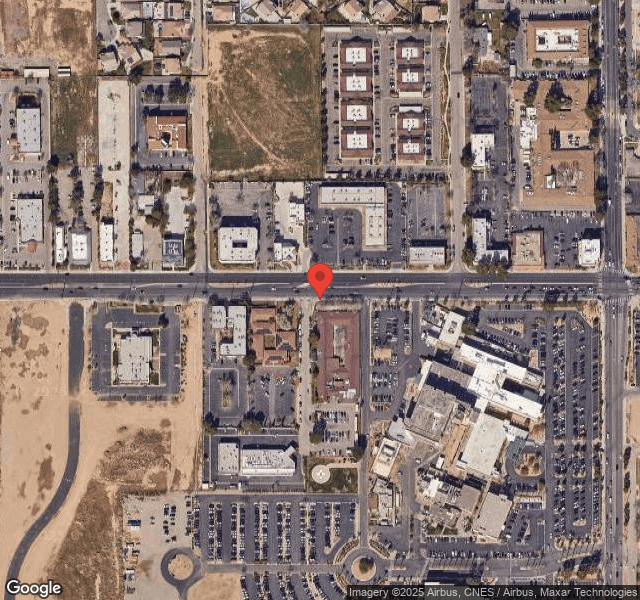
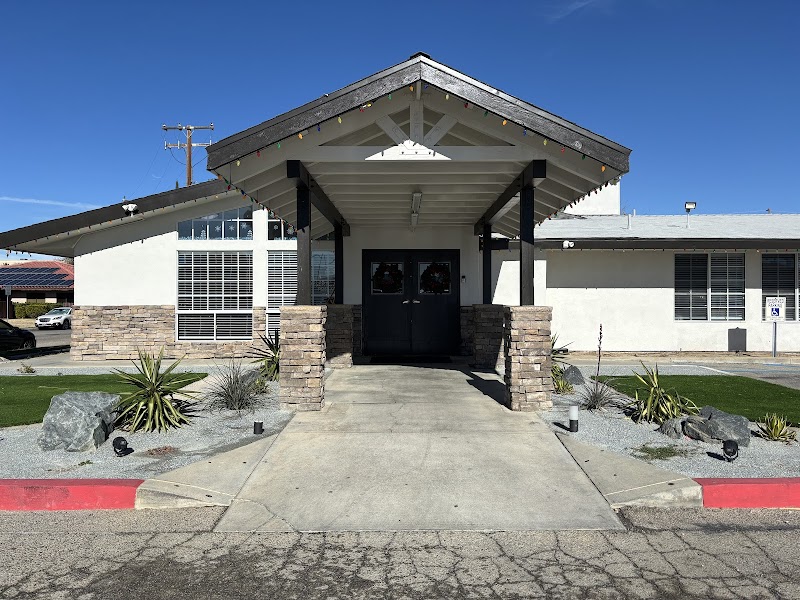
1642 WEST AVENUE J, LANCASTER, CA 93534 (661) 942-8463
For profit - Limited Liability company 99 Beds ABBY GL, LLC Data: November 2025
Trust Grade
8/100
#1012 of 1155 in CA
Last Inspection: November 2024

Within standard 12-15 month inspection cycle. Federal law requires annual inspections.

Overview

Desert Canyon Post Acute in Lancaster, California, has a Trust Grade of F, indicating significant concerns about the quality of care provided. With a state rank of #1012 out of 1155, they are in the bottom half of facilities in California, and at #294 out of 369 in Los Angeles County, they only rank slightly better than the worst options locally. While there has been an improvement in their trend, with issues decreasing from 31 in 2024 to 11 in 2025, the facility still faces serious deficiencies, including incidents of physical abuse between residents and failure to provide adequate supervision for those at high fall risk. Staffing is a relative strength, with a 4/5 rating and a turnover rate of 29%, lower than the state average, but there are concerning incidents where residents did not receive timely assessments after falls, highlighting ongoing care quality issues. Overall, while there are some positive aspects, families should weigh these against the serious problems noted in inspections.

Trust Score
F
8/100
In California
#1012/1155
Bottom 13%
Safety Record
High Risk
Review needed
Inspections
Getting Better
31 → 11 violations
Staff Stability
✓ Good
29% annual turnover. Excellent stability, 19 points below California's 48% average. Staff who stay learn residents' needs.
Penalties
✓ Good
No fines on record. Clean compliance history, better than most California facilities.
Skilled Nurses
⚠ Watch
Each resident gets only 25 minutes of Registered Nurse (RN) attention daily — below average for California. Fewer RN minutes means fewer trained eyes watching for problems.
Violations
⚠ Watch
96 deficiencies on record. Higher than average. Multiple issues found across inspections.
★☆☆☆☆
1.0
Overall Rating
★★★★☆
4.0
Staff Levels
★★★★☆
4.0
Care Quality
★☆☆☆☆
1.0
Inspection Score
Stable
2024: 31 issues
2025: 11 issues

The Good

  • 4-Star Staffing Rating · Above-average nurse staffing levels
  • 4-Star Quality Measures · Strong clinical quality outcomes
  • Low Staff Turnover (29%) · Staff stability means consistent care
  • Full Sprinkler Coverage · Fire safety systems throughout facility
  • No fines on record
  • Staff turnover is low (29%)

    19 points below California average of 48%

Facility shows strength in staffing levels, quality measures, staff retention, fire safety.

The Bad

1-Star Overall Rating

Below California average (3.1)

Significant quality concerns identified by CMS

Chain: ABBY GL, LLC

Part of a multi-facility chain

Ask about local staffing decisions and management

The Ugly 96 deficiencies on record

4 actual harm
Apr 2025 4 deficiencies
CONCERN (D) 📢 Someone Reported This

A family member, employee, or ombudsman was alarmed enough to file a formal complaint

Potential for Harm - no one hurt, but risky conditions existed

Deficiency F0557 (Tag F0557)

Could have caused harm · This affected 1 resident

Based on observation, interview, and record review, the facility failed to provide dignity to one of five sample residents (Resident 4) by not fully covering Resident 4 and exposing his incontinence b...

Read full inspector narrative →
Based on observation, interview, and record review, the facility failed to provide dignity to one of five sample residents (Resident 4) by not fully covering Resident 4 and exposing his incontinence brief while walking with physical therapist in the hallway. This deficient practice could lead Resident 4 to feel uncomfortable, lose dignity, and lose modesty. Findings: During a review of Resident 4's admission Record, the admission Record indicated the facility admitted Resident 4 on 4/10/2025 with a diagnosis of hypotension (having abnormally low blood pressure {the force of your blood pushing against the walls of your arteries as your heart pumps blood throughout your body}). During a review of Resident 4's Minimum Data Set (MDS - a resident assessment tool), dated 4/9/2025, the MDS indicated Resident 4's thought process was intact and required substantial assistance from staff to complete activities of daily living (ADLs - activities such as bathing, dressing, and toileting a person performs daily). During a concurrent observation and interview on 4/24/2024 at 9:32 a.m., with Physical Therapist Student (PTS), PTS stated while holding Resident 4's waist belt the gown was being pulled upward and caused exposing Resident 4's incontinence brief while walking in the hallway. PTS further stated it was important to cover Resident 4 the whole time so that Resident 4 will not feel bad that his incontinent brief was exposed in the hallway and might feel uncomfortable, and also to protect Resident 4's dignity and modesty. During an interview on 4/25/2025 at 11:08 a.m., with the Director of Nursing (DON), the DON stated staff must cover Resident 4 the whole time while walking in the hallway and nothing should be exposed for Resident 4's dignity. During a review of the current facility-provided policy and procedure titled, Dignity and Respect, last review date of 10/30/2024, the policy and procedure indicated, Residents shall be treated with dignity and respect at all the times. Treated with dignity means the resident will be assisted in maintaining and enhancing his or her self-esteem and self-worth.
CONCERN (D) 📢 Someone Reported This

A family member, employee, or ombudsman was alarmed enough to file a formal complaint

Potential for Harm - no one hurt, but risky conditions existed

Safe Environment (Tag F0921)

Could have caused harm · This affected 1 resident

Based on observation, interview, and record review, the facility failed to ensure the facility's emergency exit was not blocked by a Hoyer lift (a device that helps caregivers safely lift and move peo...

Read full inspector narrative →
Based on observation, interview, and record review, the facility failed to ensure the facility's emergency exit was not blocked by a Hoyer lift (a device that helps caregivers safely lift and move people) and wheelchair, and an emergency cart was not parked in both sides of the hallway. These deficient practices had the potential for the delay of care during an emergency. Findings: During a concurrent observation and interview on 4/25/2025 at 8:59 a.m., during a facility tour with License Vocational Nurse 2 (LVN 2), in Station A, observed with LVN 2 that a Hoyer lift was parked in the right side in front and close to emergency exit door, an emergency crash cart was parked on the right side beside the utility room, and two wheelchairs parked in between the right side of the hallway. LVN 2 stated that the Hoyer lift should not be parked in front of the emergency exit. LVN 2 stated wheelchairs and carts should be parked in one side of the hallway. LVN 2 stated they (Hoyer lift, wheelchairs, and carts) are blocking the hallways and exit door and could cause delay in the care of the residents during an emergency. During an interview on 4/25/2025 at 11:09 a.m., with the Director of Nursing (DON), the DON stated the emergency exit should not be blocked because the residents possibly will not be able to go out during an emergency. During a review of facility policy and procedure titled, Safe Environment, last reviewed date of 10/30/2024, indicated, The resident has a right to a safe, clean, comfortable, and homelike environment, including but not limited to receiving treatment and support for daily living safely. The physical layout of the facility maximizes resident independence and does not pose a safety risk.
CONCERN (E) 📢 Someone Reported This

A family member, employee, or ombudsman was alarmed enough to file a formal complaint

Potential for Harm - no one hurt, but risky conditions existed

Deficiency F0559 (Tag F0559)

Could have caused harm · This affected multiple residents

**NOTE- TERMS IN BRACKETS HAVE BEEN EDITED TO PROTECT CONFIDENTIALITY** Based on observation, interview, and record review the facility failed to provide a written notice indicating the reason for roo...

Read full inspector narrative →
**NOTE- TERMS IN BRACKETS HAVE BEEN EDITED TO PROTECT CONFIDENTIALITY** Based on observation, interview, and record review the facility failed to provide a written notice indicating the reason for room changes for three of three sample residents (Resident 1, Resident 2, and Resident 3). This deficient practice resulted to Residents 1, 2, and 3 feeling violated their right to refuse for room changes. Cross reference F837. Findings: During a review of Resident 1's admission Record, the admission Record indicated the facility initially admitted Resident 1 on 11/7/2022 and readmitted on [DATE] with diagnosis that included type 2 diabetes mellitus (body doesn't produce enough insulin [acts like a key that unlocks your body's cells so they can use sugar]). During a review of Resident 1's Minimum Data Set (MDS - a resident assessment tool), dated 2/3/2025, the MDS indicated Resident 1's thought process was intact and required set-up assistance from staff to complete activities of daily living (ADLs - activities such as bathing, dressing, and toileting a person performs daily). During an interview on 4/24/2025 at 11:35 a.m., with Resident 1, Resident 1 stated that she was in her previous room for over a year and was moved recently in her current room. Resident 1 stated the facility informed her that she needed to move because they will turn her room as an isolation (apart from others) room. Resident 1 further stated that the facility did not orient her in her new room and Resident 1 was having a hard time to maneuver in the bathroom, room, and keep bumping to her extra dresser because her closet was too small compared to her previous room and she was blind. Resident 1 further stated that she feels that the facility did not care about her by putting her in the farthest room in the very far back of the building because staff know that she was blind. Resident 1 stated she was upset about this room change. Resident 1 stated the room was too small for her and her roommate. During a review of Resident 2's admission Record, the admission Record indicated the facility initially admitted Resident 2 on 2/2/2024 and readmitted on [DATE] with a diagnosis of cerebral infarction (blood flow to the brain is interrupted). During a review of Resident 2's MDS, dated [DATE], the MDS indicated Resident 2 was intact with thought process and required dependent assistance from staff to complete activities of daily living. During an interview on 4/24/2025 at 12:03 p.m., with Resident 2, Resident 2 stated that for her it was straight forward they came in our room and telling us that they are moving us and did not even ask me anything. Resident 2 stated it made her feel horrible and felt like they (staff) just threw us in the other room like a garbage. Resident 2 further stated that the facility did not read any document for the room change to her and did not receive any document indicating the reason why she had a room change. Resident 2 further stated that she did not practice her right to make a decision for herself. During a review of Resident 3's admission Record, the admission Record indicated the facility initially admitted Resident 3 on 1/12/2025 and readmitted on [DATE], with a diagnosis of urinary tract infection (infection of the urinary system, which includes the kidneys {cleans your blood}, ureters {carries urine from kidney to bladder}, bladder {stores urine}, and urethra {tube through which urine leaves the body}). During a review of Resident 3's MDS, dated [DATE], the MDS indicated Resident 3 was intact with thought process and required substantial assistance from staff to complete activities of daily living. During an interview on 4/24/2025 at 11:17 a.m., with Resident 3, Resident 3 stated she complained about her roommate being loud during the night and her (Resident 3) family member called the facility to inform them about her roommate. Resident 3 stated staff just came in her room and informed Resident 3 that whoever is the complainant they are the one who needs to be moved. Resident 3 stated staff did not orient Resident 3 in her new room and roommate. Resident 3 stated she felt she was forced to moved and felt it was unfair and left her with no choice. During a concurrent interview and record review on 4/24/2025 at 1:19 p.m., the facility's policy and procedure titled, Room or Roommate Change, was reviewed with the Social Service Director (SSD). The SSD stated the notice of a change in room or roommate assignment will be in writing and will include the reasons for such change and the facility may use SS-12 Form A Notification of Room Change to notify the resident of the room change. The SSD stated that SSD did not provide any written notification indicating the reason of the room change to the residents or responsible party. During a review of the facility policy and procedure titled, Room or Roommate Change, last review date of 10/30/2024, the policy and procedure indicated, The notice of a change in room or roommate assignment will be in writing and will include the reason for such change. The facility may use SS-12 Form A Notification of Room Change to notify the resident of the room change. Social services staff will assist in orienting the resident to his or her new room and roommate and will provide the resident the opportunity to see the new location, meet the new roommate, and ask questions about the move.
CONCERN (E) 📢 Someone Reported This

A family member, employee, or ombudsman was alarmed enough to file a formal complaint

Potential for Harm - no one hurt, but risky conditions existed

Deficiency F0837 (Tag F0837)

Could have caused harm · This affected multiple residents

**NOTE- TERMS IN BRACKETS HAVE BEEN EDITED TO PROTECT CONFIDENTIALITY** Based on observation, interview, and record review, the facility failed to update the facility's policy and procedure for a room...

Read full inspector narrative →
**NOTE- TERMS IN BRACKETS HAVE BEEN EDITED TO PROTECT CONFIDENTIALITY** Based on observation, interview, and record review, the facility failed to update the facility's policy and procedure for a room change affecting three of three sampled residents (Residents 1, 2, and 3). This deficient practice resulted to Resident 1, Resident 2, Resident 3 feeling their right to refuse for a room change was violated. Cross reference F559. Finding: During a review of Resident 1's admission Record, the admission Record indicated the facility initially admitted Resident 1 on 11/7/2022 and readmitted on [DATE] with diagnosis that included type 2 diabetes mellitus (body doesn't produce enough insulin [acts like a key that unlocks your body's cells so they can use sugar]). During a review of Resident 1's Minimum Data Set (MDS - a resident assessment tool), dated 2/3/2025, the MDS indicated Resident 1's thought process was intact and required set-up assistance from staff to complete activities of daily living (ADLs - activities such as bathing, dressing, and toileting a person performs daily). During an interview on 4/24/2025 at 11:35 a.m., with Resident 1, Resident 1 stated that she was in her previous room for over a year and was moved recently in her current room. Resident 1 stated the facility informed her that she needed to move because they will turn her room as an isolation (apart from others) room. Resident 1 further stated that the facility did not orient her in her new room and Resident 1 was having a hard time to maneuver in the bathroom, room, and keep bumping to her extra dresser because her closet was too small compared to her previous room and she was blind. Resident 1 further stated that she feels that the facility did not care about her by putting her in the farthest room in the very far back of the building because staff know that she was blind. Resident 1 stated she was upset about this room change. Resident 1 stated the room was too small for her and her roommate. During a review of Resident 2's admission Record, the admission Record indicated the facility initially admitted Resident 2 on 2/2/2024 and readmitted on [DATE] with a diagnosis of cerebral infarction (blood flow to the brain is interrupted). During a review of Resident 2's MDS, dated [DATE], the MDS indicated Resident 2 was intact with thought process and required dependent assistance from staff to complete activities of daily living. During an interview on 4/24/2025 at 12:03 p.m., with Resident 2, Resident 2 stated that for her it was straight forward they came in our room and telling us that they are moving us and did not even ask me anything. Resident 2 stated it made her feel horrible and felt like they (staff) just threw us in the other room like a garbage. Resident 2 further stated that the facility did not read any document for the room change to her and did not receive any document indicating the reason why she had a room change. Resident 2 further stated that she did not practice her right to make a decision for herself. During a review of Resident 3's admission Record, the admission Record indicated the facility initially admitted Resident 3 on 1/12/2025 and readmitted on [DATE], with a diagnosis of urinary tract infection (infection of the urinary system, which includes the kidneys {cleans your blood}, ureters {carries urine from kidney to bladder}, bladder {stores urine}, and urethra {tube through which urine leaves the body}). During a review of Resident 3's MDS, dated [DATE], the MDS indicated Resident 3 was intact with thought process and required substantial assistance from staff to complete activities of daily living. During an interview on 4/24/2025 at 11:17 a.m., with Resident 3, Resident 3 stated she complained about her roommate being loud during the night and her (Resident 3) family member called the facility to inform them about her roommate. Resident 3 stated staff just came in her room and informed Resident 3 that whoever is the complainant they are the one who needs to be moved. Resident 3 stated staff did not orient Resident 3 in her new room and roommate. Resident 3 stated she felt she was forced to moved and felt it was unfair and left her with no choice. During a concurrent interview and record review on 4/24/2025 at 1:19 p.m., the facility's policy and procedure titled, Room or Roommate Change, was reviewed with the Social Service Director (SSD). The SSD stated the notice of a change in room or roommate assignment will be in writing and will include the reasons for such change and the facility may use SS-12 Form A Notification of Room Change to notify the resident of the room change. The SSD stated that SSD did not provide any written notification indicating the reason of the room change to the residents or responsible party. During a concurrent interview and record review on 4/25/2025 at 12:43 p.m., the facility's policy and procedure titled, Room or Roommate Change, last review date of 10/30/2024, and State Operation Manual were reviewed with the Director of Nursing (DON). The policy and procedured titled, Room or Roommate Change, indicated the notice of a change in room or roommate assignment will be in writing and will include the reasons for such change. The DON read State Operation Manual guidance 483.10(e)(4)-(6) indicated, when a resident is being moved at the request of facility staff, the resident, family, and/or resident representative must receive an explanation in writing of why the move is required. The DON stated that the facility's policy and procedures did not indicate that resident must receive an explanation in writing of why the move is required as indicated in the State Operation Manual guidance. The DON stated that the policy and procedure must be reviewed and updated by the governing body according to the regulations. During a review of facility's policy and procedure titled, Governing Body, last review date of 10/30/2024, indicated, The facility has an active, engaged and involved governing body that is responsible for establishing and implementing policies regarding the management of the facility. Individual such as facility owners, Chief Executive Officers, or other individuals who are legally responsible to establish and implement policies regarding the management and operations of the facility.
Mar 2025 1 deficiency
CONCERN (D) 📢 Someone Reported This

A family member, employee, or ombudsman was alarmed enough to file a formal complaint

Potential for Harm - no one hurt, but risky conditions existed

Accident Prevention (Tag F0689)

Could have caused harm · This affected 1 resident

Based on observation, interview, and record review, the facility failed to accurately document a Fall Risk Assessment for one of three sampled residents (Resident 1) after Resident 1 had a fall. This ...

Read full inspector narrative →
Based on observation, interview, and record review, the facility failed to accurately document a Fall Risk Assessment for one of three sampled residents (Resident 1) after Resident 1 had a fall. This deficient practice had the potential for Resident 1 to have inaccurate assessment of the fall that can affect provision of nursing care. Findings: During a review of Resident 1's admission Record, the admission Record indicated the facility admitted the resident on 7/15/2024 with diagnoses that included muscle weakness (generalized), difficulty in walking, and paraplegia (loss of movement and/or sensation, to some degree, of the legs). During a review of Resident 1's Minimum Data Set (MDS - a resident assessment tool), dated 7/23/2024 indicated Resident 1 had the ability to understand and be understood. The MDS indicated Resident 1 required supervision (helper provides verbal cues and touching) with showering and set up (helper set ups or cleans up) with toileting and was independent (Resident completes the activity by themselves with no assistance from a helper) with eating, oral hygiene, upper body and lower body dressing, putting on and taking off footwear and personal hygiene. During a review of Resident 1's Care Plan, created on7/16/2024, the Care Plan indicated the resident was at risk for falls related to gait and balance problems, muscle weakness, paraplegia, left knee joint disorders. The Care Plan indicated interventions that included meeting resident's needs, call light within reach, and encourage the resident to use it (call light) for assistance as needed. During a review of Resident 1's Fall Risk Evaluation, dated 1/13/2025, the Fall Risk Evaluation indicated a fall risk score of 10 (a total score of 10 or greater is considered as high risk for potential falls). During a review of Resident 1's Situational Background Assessment and Request (SBAR- a structured way to share information between people, especially in healthcare setting) Change of Condition (COC), dated 3/13/2025 at 12:55 p.m., the SBAR indicated Resident 1 had an unwitnessed fall. The SBAR indicated Resident 1 was found lying on the floor in his right side. The SBAR indicated Resident 1 stated he was trying to reach out for his cord charger that was under his bed, and as he reached for the cord he fell off his bed landing on the floor on his left hip. The SBAR indicated Resident 1 was unable to move or turn to left side due to pain. The SBAR indicated the facility called immediately called 911 (the number to call for emergency services) at 1 p.m. and at 1:07 p.m. the paramedics (a person trained to give emergency medical care to people who are injured or ill, typically in a setting outside of a hospital) arrived. During a review of Resident 1's Fall Risk Evaluation, dated 3/13/2025, the Fall Risk Evaluation indicated a fall risk score of 6. During a concurrent interview and record review on 3/24/2025 at 3 p.m., Resident 1's Fall Risk Evaluation was reviewed with the Director of Nursing (DON). The DON stated Resident 1 had previous falls. The DON stated Resident 1's Fall Risk Evaluation, dated 1/13/2025, indicated Resident 1's fall risk score was 10, a high risk for a fall, then on 3/13/2025 after Resident 1's fall we would expect Resident 1's score to have gone up. The DON stated the Fall Risk Evaluation, dated 3/13/2025, indicated the score was marked lower because the nurse did not mark that Resident 1 had the fall, did not add that Resident 1 required assistive devices, and indicated that Resident 1 had not had a fall in the last three months, but the fall on 3/13/2025 counts as a fall. The DON stated the Fall Risk Evaluation dated 3/13/2025 was inaccurately documented. The DON stated the potential for inaccurate assessment for a fall is that it will affect the nursing interventions. During a review of the facility's policy and procedures (P&P) titled, Documentation policy, last reviewed 10/30/202, the P&P indicated that in accordance with Centers for Medicare & Medicaid Services (CMS) procedure for Resident Assessment Instrument (RAI), assessment for bowel and bladder, falls, chemical restraints, pressure sore risks and fall risk shall be completed using Care Area Assessments (CAAs). These assessments are validated and reliable in accordance with RAI standards as set forth by CMS. 1. Fall risk assessment is determined by incorporating information from the MDS and/or CAAs and information provided in weekly summaries and or Medicare charting and/or CBE Variance Charting, physician progress notes, history and physical, discharge notes, and or physical orders. During a review of the facility's P&P titled, Fall Management Program, last reviewed 10/30/202, the P&P indicated, the facility strives to provide each resident with adequate supervision and assistance devices to minimize the risk associated with falls.
Feb 2025 1 deficiency
CONCERN (D) 📢 Someone Reported This

A family member, employee, or ombudsman was alarmed enough to file a formal complaint

Potential for Harm - no one hurt, but risky conditions existed

Free from Abuse/Neglect (Tag F0600)

Could have caused harm · This affected 1 resident

**NOTE- TERMS IN BRACKETS HAVE BEEN EDITED TO PROTECT CONFIDENTIALITY** Based on interview and record review, the facility failed to protect the resident ' s right to be free from verbal abuse (at typ...

Read full inspector narrative →
**NOTE- TERMS IN BRACKETS HAVE BEEN EDITED TO PROTECT CONFIDENTIALITY** Based on interview and record review, the facility failed to protect the resident ' s right to be free from verbal abuse (at type of abuse that uses language) for two of two sampled residents (Resident 2 and Resident 3), when on 2/11/2025, both Resident 3 and Resident 2 called each other derogatory words (unflattering, unkind, or demeaning). This deficient practice resulted in Resident 2 and Resident 3 being subjected to verbal abuse while under the care of the facility. Residents who are subjected to verbal abuse are at increased risk for low self-esteem (when someone lacks confidence in themselves and their abilities), anxiety (a feeling of fear, dread, and uneasiness), depression (mood disorder that causes a persistent feeling of sadness and loss of interest in activities for long periods of time) and social isolation (when someone has few or no social connections or support, and lacks relationships with others). Findings: a. During a review of Resident 2 ' s admission Record, the admission Record indicated the facility admitted the resident on 7/2/2024 with diagnoses including muscle weakness (generalized), essential (primary) hypertension (HTN-high blood pressure), and end stage renal disease (ESRD- irreversible kidney failure). During a review of Resident 2 ' s Minimum Data Set (MDS- an assessment and care screening tool), dated 7/10/2024, cognitive (the mental action or process of acquiring knowledge and understanding through thought, experience, and the senses) skills for daily decision making was intact. The MDS further indicated that Resident 2 was dependent (helper does all of the effort) with oral hygiene, toileting, showering, and putting on and taking off footwear, and required substantial assistance (helper does more than half the effort) with upper and lower body dressing and personal hygiene. During a review of Resident 2 ' s Situational Background Assessment and Request (SBAR- a communication framework that helps people share information in a structured way), dated 2/11/2025 at 10 a.m. indicated altercation with another resident. The SBAR indicated Resident 2 was involved in a verbal altercation with another resident (Resident 3). As per Resident 2, she was talking to a male resident (name not indicated) when the female resident (Resident 3) started cursing and using inappropriate words. b. During a review of Resident 3 ' s admission Record, the admission Record indicated the facility admitted the resident on 1/17/2025 with diagnoses including major depressive disorder (a mood disorder that causes a persistent feeling of sadness and loss of interest), anxiety disorder (a condition that causes excessive fear, worry, and dread that can interfere with daily life), and essential (primary) hypertension (HTN-high blood pressure). During a review of Resident 3 ' s MDS, dated [DATE], the MDS indicated Resident 3's cognitive (the mental action or process of acquiring knowledge and understanding through thought, experience, and the senses) skills for daily decision making were moderately impaired. The MDS further indicated Resident 3 required substantial assistance (helper does more than half the effort) with oral hygiene, showring, lower body dressing, and putting on and taking off footwear and required partial assistance (helper does less than half the effort) with eating, toileting, upper body dressing, and personal hygiene. During a review of Resident 3 ' s SBAR, dated 2/11/2025 at 10 a.m., the SBAR indicated Resident 3 had a verbal disagreement with another resident (Resident 2). The SBAR indicated Resident 3 got interrupted talking to a male resident. During an interview on 2/21/2025 at 10:08 a.m., Resident 2 stated got into a fight with another resident who is no longer in the facility. Resident 2 stated cannot recall date or time but was in the activity room when a male resident called Resident 2 over to his table where Resident 3 was sitting next to the male resident. Resident 2 stated Resident 3 became upset and called Resident 2 a derogatory name and that was when she called Resident 3 a derogatory name. During an interview on 2/21/2025 at 11:39 a.m. with the Infection Preventionist (IP), the IP stated she was in the facility when incident occurred with Resident 2 and Resident 3 but cannot recall the date. The IP stated it happened after breakfast. The IP stated she was in the nurses ' station 1 when she heard yelling coming from the activity room. The IP stated she ran to the activity room and saw Resident 2 with staff behind her and Resident 3 was on the other side of the table with another staff behind Resident 3. The IP stated she heard Resident 2 and Resident 3 calling each other derogatory names. The IP stated based on the situation that occurred with Resident 2 and Resident 3 the IP stated she would consider it abuse because it could affect their residents' emotionally and/or mentally. The IP stated this was emotional abuse because there was a verbal argument and there was cursing, and you are going to feel emotionally damaged by being called those names. During an interview on 2/21/2025 at 12:09 p.m. the Activities Assistants (AA) stated does not recall the date but the time was around 9:30 a.m. to 10 a.m. and both Resident 2 and Resident 3 were in the activity room. The AA stated a male resident who was sitting next to Resident 3 called Resident 2 over and that was when Resident 3 said something under her breath. The AA stated she did not hear what Resident 3 said but Resident 2 became upset. The AA stated Resident 2 began to cuss at Resident 3. The AA stated there was a table between both residents. The AA stated she would consider this verbal abuse and can be emotional abuse. The AA stated this would be abuse because they both used hateful words that were not needed and could develop to emotional distress. The AA state the words were hurtful. During an interview on 2/21/2025 at 1 p.m. with the Social Services Director (SSD), the SSD stated she was by station 2 when she heard yelling so she ran and saw nurses ran to the activity room and observed a nurse separating Resident 2 and Resident 3. The SSD stated she spoke to Resident 2 and Resident 2 stated that both herself and Resident 3 were in the activity room when a male resident called Resident 2 over where Resident 3 was sitting. The SSD stated Resident 2 stated the male resident was asking about lunch when Resident 2 got upset and told the male resident, Then you can go with that (derogatory word). The SSD stated Resident 2 got upset and both Resident 2 and Resident 3 began to cuss at each other. The SSD stated when she spoke to Resident 3, Resident 3 stated Resident 2 made a comment but could not say what Resident 2 said about Resident 3 but stated that they both then began to cuss at each other. During an interview on 2/21/2025 at 3:45 p.m. the Director of Nursing (DON) stated was not in the building when Resident 2 and Resident 3 had an incident. The DON stated residents cursing at each other is a form of abuse and would say it was verbal abuse. The DON stated residents should not be involved in verbal abuse. The DON stated there was a potential for emotional distress and mental distress. During a review of the facility policy and procedures (P&P) titled, Abuse Prevention Agitated or Combative Residents, last reviewed on 10/30/2024, the P&P indicated each resident has the right to be free from mistreatment, neglect, and misappropriation of property. During a review of the facility P&P titled, Abuse Prohibition and Prevention Program, last reviewed on 10/30/2024, the P&P indicated the facility [NAME] to provide an environment which prohibits and prevents abuse, neglect, and exploitation of resident and misappropriation of resident property.
Jan 2025 3 deficiencies
CONCERN (D) 📢 Someone Reported This

A family member, employee, or ombudsman was alarmed enough to file a formal complaint

Potential for Harm - no one hurt, but risky conditions existed

Comprehensive Care Plan (Tag F0656)

Could have caused harm · This affected 1 resident

Based on interview and record review, the facility failed to develop a comprehensive care plan for one of three sampled residents (Resident 1) by failing to ensure care plan was developed on Resident ...

Read full inspector narrative →
Based on interview and record review, the facility failed to develop a comprehensive care plan for one of three sampled residents (Resident 1) by failing to ensure care plan was developed on Resident 1's refusal of medication. This deficient practice had the potential for delayed provision of necessary care and services. Findings: During a record review of Resident 1 ' s admission Record, the admission Record indicated the facility admitted Resident 1 on 3/15/2024, with diagnoses that included sepsis (a life-threatening blood infection), diabetes mellitus (DM-a disorder characterized by difficulty in blood sugar control and poor wound healing) and end stage renal disease (ESRD-irreversible kidney failure). During a record review of Resident 1's History and Physical (H&P-a medical examination that involves a doctor taking a patient's medical history, performing a physical exam, and documenting their findings) dated 11/23/2024, the H&P indicated Resident 1 had the capacity to understand and make decisions. During a record review of Resident 1's Minimum Data Set (MDS – a resident assessment tool) dated 12/13/2024, the MDS indicated Resident 1's cognitive (mental action or process of acquiring knowledge and understanding) skills for daily decisions was intact. The MDS indicated Resident 1 was dependent to staff for toileting, and personal hygiene. During a record review of Resident 1's Medication Administration Record (MAR- record of medication received by the resident) dated 1/2025, the MAR indicated multiple medication refusal was documented as follows: 1. Amlodipine (medication used to treat high blood pressure)- refused on 1/4/2025 and 1/12/2025. 2. Aspirin (medication used to lower risk of heart attack, stroke [occurs when blood flow to the brain is interrupted] or blood clot)- refused on 1/4/2025, 1/8/2025 and 1/12/2025. 3. Atorvastatin (medication used to reduce the amount of cholesterol in the blood)-refused on 1/8/2025, 1/9/2025 and 1/10/2025. 4. Minoxidil (medication used to treat high blood pressure)-refused on 1/7/2025. 5. Mirtazapine (medication used to treat depression [a mental disorder that involves a prolonged low mood and loss of interest in activities]) refused on 1/8/2025, 1/9/2025, and 1/10/2025. 6. Docusate (medication used to soften the stool, making it easier to have a bowel movement) -refused on 1/8/2025 and 1/9/2025. 7. Protonix (medication used to treat heartburn [occurs when stomach acid backs up into the tube that carries food from your mouth to your stomach]) refused on 1/8/2025 and 1/9/2025. 8. Hydralazine (medication used to treat high blood pressure)- refused on 1/4/2025, 1/12/2025, and 1/7/2025. 9. Sevelamer (medication that prevent increase in phosphates among people who are on dialysis due to chronic kidney disease [CKD-a long-term condition that occurs when the kidneys are damaged and can not filter blood properly])-refused on 1/8/2025, 1/9/2025, and 1/12/2025. 10. Sucralfate (medication that treats stomach ulcers [a sore in the stomach lining])- refused on 1/2/2025, 1/3/2025, 1/8/2025, 1/9/2025, 1/10/2025, 1/11/2025 and 1/12/2025. During a concurrent interview and record review on 1/17/2025 at 11:05 a.m., with the Director of Nursing (DON), Resident 1's Care Plans was reviewed. The DON stated there was no care plan created for medication refusal. The DON stated the care plan ensures the resident was provided with specific intervention to help plan their care. The DON stated care plan is created after refusing the medication three times. The DON stated nurses were in charge of creating care plan. During a record review of facility's policy and procedure (PnP) titled, Comprehensive Care Plans-Timing, dated 3/2023, the PnP indicated, Each resident shall have a person-centered, comprehensive care plan, developed, reviewed, and revised by the facility interdisciplinary team including the resident and resident representative, if applicable. Each resident has the right to participate in choosing or refusing treatment options and must be given the opportunity to participate in the development, review, and revision of his/her care plan.
CONCERN (D) 📢 Someone Reported This

A family member, employee, or ombudsman was alarmed enough to file a formal complaint

Potential for Harm - no one hurt, but risky conditions existed

Deficiency F0679 (Tag F0679)

Could have caused harm · This affected 1 resident

**NOTE- TERMS IN BRACKETS HAVE BEEN EDITED TO PROTECT CONFIDENTIALITY** Based on interview and record review, the facility failed to provide an ongoing activity program that is resident centered for o...

Read full inspector narrative →
**NOTE- TERMS IN BRACKETS HAVE BEEN EDITED TO PROTECT CONFIDENTIALITY** Based on interview and record review, the facility failed to provide an ongoing activity program that is resident centered for one of three sampled residents (Resident 2). This deficient practice had the potential to affect Resident 2's sense of self-worth and psychosocial well-being. Findings: During a record review of Resident 2's admission Record, the admission Record indicated the facility admitted Resident 2 on 12/28/2024, with diagnoses that included unspecified (unconfirmed) fracture of right patellar (break in the bone of the kneecap), unspecified dementia (a progressive state of decline in mental abilities) and history of fall. During a record review of Resident 2's Minimum Data Set (MDS - a resident assessment tool) dated 1/4/2025, the MDS indicated Resident 2's cognitive (mental action or process of acquiring knowledge and understanding) skills for daily decisions was severely impaired. The MDS indicated Resident 2 was dependent to staff for toileting, and showering. During an interview and record review on 1/17/2025 at 11:05 a.m., with the Director of Nursing (DON), Resident 2's Activity Participation and Attendance for 1/2025 were reviewed. The DON stated Resident 2 was not yet assessed for activity and there was no documented activity provided and attendance. The DON stated Resident 2 was admitted on [DATE] and should have been assessed within three days before 1/1/2025. The DON stated activity staff were assigned to assess and provide activity to residents. The DON stated there were no activity attendance since 12/28/2024. The DON stated upon admission, staff assess and complete Activity Review Assessment then staff needs to activate the task to allow documentation daily. During an interview on 1/17/2025 at 11:29 a.m., with the Activity Director (AD), the AD stated there was a miscommunication on what was needed to complete. The AD stated upon admission, she (AD) talks to resident and family and asks their activity preference. The AD stated she (AD) was not sure why its activity assessment and attendance were not documented. During a record review of facility's policy and procedure (PnP) titled, Activities, dated 3/2023, the PnP indicated, The facility provides an ongoing activities program to support residents in their choices of activities to support their physical, mental, and psychosocial well-being, encouraging both independence and interaction in the community. The facility creates opportunities for each resident to have a meaningful life by supporting his or her domains of wellness (security, autonomy, growth, connectedness, identity, joy and meaning). Residents are assessed upon admission and periodically to identify their interests, hobbies, and cultural preferences. 4. Residents with cognitive impairment may benefit from activities related interventions. Resident's individualized activities of interest shall be noted in the assessment, identified in the plan of care, and updated as necessary to reflect changes in the resident's preferences.
CONCERN (E) 📢 Someone Reported This

A family member, employee, or ombudsman was alarmed enough to file a formal complaint

Potential for Harm - no one hurt, but risky conditions existed

Deficiency F0680 (Tag F0680)

Could have caused harm · This affected multiple residents

Based on interview and record review, the facility failed to employ a qualified Activity Director (AD) that met the qualifications as per facility's job description for Activity Director for one of tw...

Read full inspector narrative →
Based on interview and record review, the facility failed to employ a qualified Activity Director (AD) that met the qualifications as per facility's job description for Activity Director for one of two staff. This deficient practice had a potential for residents residing in the facility not being assisted and receiving activity related necessary care to attain highest practicable well-being. Findings: During an interview on 1/17/2025, at 11:05 a.m., with the Director of Nursing (DON), the DON stated AD was hired by the Administrator (ADM). During an interview on 1/17/2025 at 11:25 a.m., with the ADM, the ADM stated the facility provided the training and orientation when AD was hired. During a concurrent interview and record review on 1/17/2025 at 11:29 a.m., with the AD, AD's Job Description was reviewed. The Job Description indicated, The Activities Director plans, oversees and leads the residents' activities in accordance with Federal, State and company requirements. Completes, in writing, a comprehensive assessment of each Resident's past and present leisure interests, physical and mental limitations, and activity-related needs. Completes required documentation in health record in accordance with Federal, State and company requirements. Maintains written records of Residents' attendance at activities, other related lists and inventories. Certificates and Licenses: Current Activities Director certification in long term care specialization. The AD stated she (AD) was hired on 10/2024 as AD. The AD stated did not maintain written record of resident's attendance. The AD stated she (AD) had no certification in long term care specialization. During a concurrent interview and record review on 1/17/2025 at 11:43 a.m., with the ADM, AD's Job Description was reviewed. The ADM stated AD was probably not qualified based on the facility's Job Description.
Jan 2025 2 deficiencies
CONCERN (D) 📢 Someone Reported This

A family member, employee, or ombudsman was alarmed enough to file a formal complaint

Potential for Harm - no one hurt, but risky conditions existed

Deficiency F0679 (Tag F0679)

Could have caused harm · This affected 1 resident

**NOTE- TERMS IN BRACKETS HAVE BEEN EDITED TO PROTECT CONFIDENTIALITY** Based on interview and record review, the facility failed to provide an ongoing activity program that is resident-centered for o...

Read full inspector narrative →
**NOTE- TERMS IN BRACKETS HAVE BEEN EDITED TO PROTECT CONFIDENTIALITY** Based on interview and record review, the facility failed to provide an ongoing activity program that is resident-centered for one of three sampled residents (Resident 1). This deficient practice had the potential to affect Resident 1's sense of self-worth and psychosocial well-being. Findings: During a record review of Resident 1 ' s admission Record, the admission Record indicated the facility admitted Resident 1 on 3/15/2024, with diagnoses that included sepsis (a life-threatening blood infection), diabetes mellitus (DM-a disorder characterized by difficulty in blood sugar control and poor wound healing) and end stage renal disease (ESRD-irreversible kidney failure). During a record review of Resident 1's History and Physical (H&P) dated 11/23/2024, the H&P indicated Resident 1 had the capacity to understand and make decisions. During a record review of Resident 1's Minimum Data Set (MDS – a resident assessment tool) dated 12/13/2024, the MDS indicated Resident 1's cognitive (mental action or process of acquiring knowledge and understanding) skills for daily decisions was intact. The MDS indicated Resident 1 was dependent to staff for toileting, and personal hygiene. During a record review of Resident 1's Order Summary Report dated 11/18/2024, the Order Summary Report indicated Resident 1 may participate in activity if not in conflict with treatment plan. During a record review of Resident 1's Activity Participation Review assessment dated [DATE], the Activity Participation Review Assessment indicated Resident 1 preferred one-on-one activity visits (activities that a staff member or family member can do with a resident to improve their quality of life) and enjoyed movies, outdoor time, eating snacks and playing with phone. During a record review of Resident 1's Care Plan about at risk for fall dated 11/19/2024, the Care Plan indicated an intervention to encourage the resident to participate in activities that promote exercise, physical activity for strengthening and improved mobility. During an interview on 1/15/2025, at 8:59 a.m., with Resident 1, Resident 1 stated he (Resident 1) was not offered to attend activities. Resident 1 stated nobody had asked him what he liked to do everyday. During an interview on 1/15/2025, at 9:24 a.m., with the Activity Director (ACD), the ACD stated Resident 1 likes to stay in his (Resident 1) room and does not like to sit on a chair too long. During a concurrent interview and record review on 1/15/2025, at 10:19 a.m., with the Director of Nursing (DON), Resident 1's Activity Participation dated 11/2024 and 12/2024 was reviewed. The DON stated there were no documented activity attendance for Resident 1 on 11/2024 and 12/2024. During a concurrent interview and record review on 1/15/2025, at 10:35 a.m., with the DON, facility's policy and procedure (PnP) titled, Activities , dated 3/2023, was reviewed. The PnP indicated, The facility provides an ongoing activities program to support residents in their choices of activities to support their physical, mental, and psychosocial well-being, encouraging both independence and interaction in the community. Residents are assessed upon admission and periodically to identify their interests, hobbies, and cultural preferences. 2. The interdisciplinary team implements an ongoing resident centered activities program that incorporates the resident's interests, hobbies, and cultural preferences. The DON stated activity staff should have added an activity task to trigger the documentation.
CONCERN (D) 📢 Someone Reported This

A family member, employee, or ombudsman was alarmed enough to file a formal complaint

Potential for Harm - no one hurt, but risky conditions existed

Infection Control (Tag F0880)

Could have caused harm · This affected 1 resident

Based on observation, interview, and record review, the facility failed to implement its infection control measures for one of three sampled residents (Resident 1) who was on enhanced barrier precauti...

Read full inspector narrative →
Based on observation, interview, and record review, the facility failed to implement its infection control measures for one of three sampled residents (Resident 1) who was on enhanced barrier precaution (EBP- wearing a protective gown and gloves whenever you are doing close-contact care with a patient who might be carrying these germs) by failing to ensure Treatment Nurse 1 (TN 1) wore protective gown while proving wound care. These deficient practice had the potential for cross contamination (unintentional transfer of bacteria or germs or other contaminant from one surface to another) of infection among residents and staff. Findings: During a record review of Resident 1 ' s admission Record, the admission Record indicated the facility admitted Resident 1 on 3/15/2024, with diagnoses that included sepsis (a life-threatening blood infection), diabetes mellitus (DM-a disorder characterized by difficulty in blood sugar control and poor wound healing) and end stage renal disease (ESRD-irreversible kidney failure). During a record review of Resident 1's History and Physical (H&P) dated 11/23/2024, the H&P indicated Resident 1 had the capacity to understand and make decisions. During a record review of Resident 1's Minimum Data Set (MDS - a resident assessment tool) dated 12/13/2024, the MDS indicated Resident 1's cognitive (mental action or process of acquiring knowledge and understanding) skills for daily decisions was intact. The MDS indicated Resident 1 was dependent to staff for toileting, and personal hygiene. During a record review of Resident 1's Order Summary Report dated 11/19/2024, the Order Summary Report indicated an order for EBP due to dialysis port (catheter placed in a vein, that allows blood to be accessed for dialysis. Dialysis is a treatment for people whose kidneys are no longer filtering waste and excess fluid from the blood) and wound every shift. During a record review of Resident 1's Care Plan about EBP dated 11/19/2024, the Care Plan indicated an intervention for health teaching to resident, family members and staff about importance of EBP including proper hand hygiene and wearing of personal protective equipment (PPE-clothing and equipment that is worn or used to provide protection against hazardous substances and or environments) during high -contact resident activities. During a concurrent observation and interview on 1/15/2025, at 8:46 a.m., with the Admissions Director (AD) outside of Resident 1's room. Observed EBP signage posted by Resident 1's door. Observed TN 1 came out behind Resident 1's curtain wearing gloves and mask but with no protective gown while holding soiled dressing. The AD stated EBP signage on the door indicated to wear protective gown when providing wound care. The AD stated the importance of wearing protective gown was to prevent transmission of infection to residents. During an interview on 1/15/2025, at 8:59 a.m., with Resident 1, Resident 1 stated TN 1 came and changed the dressing on his foot. Resident 1 stated TN 1 did not wear a protective gown with wound care. During an interview on 1/15/2025, at 9:18 a.m., with TN 1, TN 1 stated Resident 1 had a diabetic foot ulcer (an open sore on the foot of someone with diabetes) on the heels and left lateral foot. TN 1 stated Resident 1 was on EBP. TN 1 stated he (TN 1) did wound care but did not wore a protective gown. TN 1 stated the use of protective gown was to prevent infection. During an interview on 1/15/2025, at 9:41 a.m., with the Director of Staff Development (DSD), the DSD stated TN 1 should have worn a protective gown while doing wound care to Resident 1 who was on EBP to prevent transmission of infection. During an interview on 1/15/2025, at 10:19 a.m., with the Director of Nursing (DON), the DON stated staff who provides wound care to residents on EBP should use protective gown, and gloves. During a record review of facility's policy and procedure (PnP) titled, Enhanced Barrier Precautions, dated 4/2024, the PnP indicated, I. EBP are used in conjunction with standard precautions and expand the use of personal protective equipment (PPE-clothing and equipment that is worn or used to provide protection against hazardous substances and or environments) to donning of gown and gloves during high-contact resident care activities that provide opportunities for transfer of multidrug-resistant organism (MDRO-a germ that is resistant to many antibiotics) to staff hands and clothing. II. EBP are indicated for residents with any of the following .B. Wounds and or indwelling medical devices (relating to a device that is left inside the body) even if the resident is not known to be infected or colonized with a MDRO. Ill. Wounds generally include chronic wounds, not shorter-lasting wounds, such as skin breaks or skin tears covered with an adhesive bandage or similar dressing. Examples of chronic wounds include, but are not limited to, pressure ulcers (areas of skin damage caused by prolonged pressure on a specific area of the body), diabetic foot ulcers, unhealed surgical wounds, and venous stasis ulcers (an open sore that forms on the leg due to poor blood flow in the veins).
Nov 2024 15 deficiencies
CONCERN (D)

Potential for Harm - no one hurt, but risky conditions existed

Deficiency F0558 (Tag F0558)

Could have caused harm · This affected 1 resident

Based on observation, interview, and record review, the facility failed to provide reasonable accommodation of resident needs and preferences by failing to ensure the call light (an alerting device fo...

Read full inspector narrative →
Based on observation, interview, and record review, the facility failed to provide reasonable accommodation of resident needs and preferences by failing to ensure the call light (an alerting device for nurses or other nursing personnel to assist a patient when in need) was within reach for one of two sampled residents (Resident 237) reviewed under the Environment facility task. This deficient practice had the potential to result in the delay of care and services and possible injury to residents when they are unable to summon health care workers. Findings: During a review of Resident 237's admission Record, dated 11/21/2024, the admission Record indicated the facility admitted Resident 237 on 11/15/2024 with diagnoses that included cerebral infarction (CVA - a stroke, loss of blood flow to a part of the brain), vascular dementia (a progressive state of decline in mental abilities), and pneumonia (an infection/inflammation in the lungs). During a review of Resident 237's Admit/Readmit Assessment form, dated 11/15/2024, the Admit/Readmit Assessment form indicated Resident 237 was alert to their name only. During a review of Resident 237's Care Plan titled, The resident is at risk for falls related to gait/balance problems, deconditioning, incontinence, poor safety awareness, status post fall, and muscle weakness, initiated 11/15/2024, the Care Plan indicated to promote a safe environment, to keep the call light within reach at all times and encourage the resident to call for assistance. During an observation and interview on 11/19/2024 at 10:26 a.m., with Resident 237, observed Resident 237 lying in bed awake. Observed the resident with a large yellow bruise on the forehead and the resident stated she did not know what happened to her head. Resident 237 stated she does not know if she has a call light. Observe the call light cord wrapped around the left upper side rail (SR, adjustable rigid plastic bars attached to the bed) and dangling off the SR towards the floor. During a concurrent observation and interview on 11/19/2024 at 10:33 a.m., with Certified Nursing Assistant 3 (CNA 3), CNA 3 entered Resident 237's room and stated he was caring for the resident who had recently had a fall at home. CNA 3 stated the call light should always be within reach of the resident so they can contact staff to get assistance. CNA 3 stated Resident 237's call light was not within reach of the resident because it was hanging down off the left side of the bed. CNA 3 stated there was a clasp on the call light cord that should have been used to connect the cord to the resident's sheet or blanket, but the clasp was not being used. During an interview and record review on 11/21/2024 at 1:45 p.m., with the Director of Nursing (DON), the DON reviewed the facility policy and procedure (P&P) regarding call lights. The DON stated the call light should be within reach of all residents to notify staff if they need something. The DON stated when the call light is not within reach then residents are not able to call for assistance resulting in a delay of care. During a review of the facility P&P titled, Resident Call System, last reviewed 10/30/2024, the P&P indicated the facility is adequately equipped to allow residents to call for staff assistance through a communication system which relays the call directly to a staff member or to a centralized staff work area from the residents' bedside. When the resident is confined to their bed, be sure to provide resident with call light access. Resident call systems shall be accessible to residents while in their bed.
CONCERN (D)

Potential for Harm - no one hurt, but risky conditions existed

Tube Feeding (Tag F0693)

Could have caused harm · This affected 1 resident

Based on observation, interview, and record review the facility failed to ensure residents receiving enteral feeding (EF - also known as tube feeding, a method of supplying nutrients directly into the...

Read full inspector narrative →
Based on observation, interview, and record review the facility failed to ensure residents receiving enteral feeding (EF - also known as tube feeding, a method of supplying nutrients directly into the stomach) received appropriate care and services to prevent complications of enteral feeding for one (1) out of 1 sampled resident (Resident 43) investigated under the tube feeding care area by failing to ensure the licensed nurse (LN) hang the correct EF formula. This deficient practice had the potential for the resident to experience increase in blood sugar and gastrointestinal (GI) (relating to stomach and intestines) problems such as abdominal pain and diarrhea. Findings: During a review of Resident 43's admission Record, the admission Record indicated the facility originally admitted Resident 43 on 11/29/2023 and readmitted the resident on 3/14/2024, with diagnoses including type 2 diabetes mellitus (DM 2 - a disorder characterized by difficulty in blood sugar control and poor wound healing), gastrostomy status (GT - a surgical opening fitted with a device to allow feedings to be administered directly to the stomach common for people with swallowing problems), and generalized muscle weakness. During a review of Resident 43's Minimum Data Set (MDS - a resident assessment tool) dated 8/9/2024 and 11/5/2024, the MDS indicated Resident 43 was sometimes understood and understands others and was dependent on staff for activities of daily living such as eating, hygiene, toileting, dressing, bathing, and surface-to-surface transfers. During a review of Resident 43's History and Physical (H&P) dated 2/18/2024, the H&P indicated Resident 43 had fluctuating capacity to understand and make decisions. During a review of Resident 43's Order Summary Report, the Order Summary Report indicated the following physician's order dated 10/30/2024: - Every shift Diabetisource AC (a tube feeding formula made with a unique blend of carbohydrates that includes pureed fruits and vegetables to help with nutritional management of blood glucose): set pump at 50 milliliter per hour (ml/hr - a unit of measurement) for 20 hours to provide 1000 ml per 1200 kilocalories (Kcal - a unit used to measure the amount of energy in food). Start infusion at 2:00 p.m. and continue for 20 hours or until total volume is complete. During an observation on 11/19/2024 at 9:29 a.m. inside Resident 43's room, observed Resident 43 was receiving an EF formula of Fibersource HN (a tube feeding formula formulated with fiber to meet the nutritional needs for tube feeding patients with normal or elevated calorie and/or protein requirements) infusing at 50 ml/hr. During an observation on 11/19/2024 at 9:50 a.m., inside Resident 43's room with Registered Nurse 1 (RN 1), RN 1 verified Resident 43's EF formula that was infusing was Fibersource HN. During a concurrent interview and record review on 11/19/2024 at 9:50 a.m., reviewed Resident 43's physician orders wit RN 1, RN 1 verified the physician's order dated 10/30/2024 indicated an EF formula order for Diabetisource AC. RN 1 stated prior to hanging a new formula bag, the LN should check the physician's order for the type of formula and infusion rate. RN 1 stated the LN who hung the EF formula did not follow the physician's order. RN 1 stated Resident 43's EF formula should have been Diabetosurce AC instead of Fibersource HN as it placed Resident 43 at risk for increase in blood glucose and other complications such as GI irritation. During an interview on 11/22/2024 at 10:30 a.m., the Assistant Director of Nursing (ADON) stated she was made aware by RN 1 that Resident 43's EF formula started by the night shift LN was Fibersource HN instead of Diabetisource AC. The ADON stated the LN were supposed to check the physician's order for the type of formula and the infusion rate prior to starting a new bag to ensure the residents were getting the correct formula. The ADON stated the LN did not hang the correct EF formula for Resident 43. The ADON stated the LN should have hang Diabetisource AC instead of Fibersource HN as it placed Resident 43 at risk for complication such as increased blood sugar and feeding intolerance. During a review of the facility's policy and procedure (P&P) titled, Enteral Feeding, last reviewed 10/30/2024, the P&P indicated a purpose to ensure the safe administration of enteral nutrition. The P&P further indicated: - Enteral formulas shall be administered at full strength or in accordance with the physician order. - The nurse shall verify the enteral nutrition label against the order before administration to include the type of formula.
CONCERN (D)

Potential for Harm - no one hurt, but risky conditions existed

Respiratory Care (Tag F0695)

Could have caused harm · This affected 1 resident

Based on observation, interview, and record review, the facility failed to ensure respiratory care provided to residents were consistent with professional standards of practice for one of two sampled ...

Read full inspector narrative →
Based on observation, interview, and record review, the facility failed to ensure respiratory care provided to residents were consistent with professional standards of practice for one of two sampled residents (Resident 33) investigated under respiratory care by failing to ensure the nebulizer (a small machine that turns liquid medicine into a mist that can be easily inhaled) mask and tubing (this allows the medicine to enter the lungs directly) were kept in a plastic bag with the name of the resident and the date it was provided. The deficient practice had a potential for Resident 33 to develop complications such as respiratory infections of using a nebulizer caused by improper handling of the mask and tubing. Findings: During a review of the Resident 33's admission Record, the admission Record indicated the facility admitted the resident on 6/1/2020, with diagnoses including cerebral infarction (also known as stroke, refers to damage to tissues in the brain due to a loss of oxygen to the area), dysphagia (difficulty swallowing), and personal history of coronavirus disease 2019 (COVID-19 - a highly contagious respiratory illness capable of producing severe symptoms) During a review of Resident 33's History and Physical (H&P), dated 8/13/2023, the H&P indicated the resident was awake, alert, answers simple questions/follows simple commands, and had dysphasia (impaired ability to understand and use the spoken word). During a review of Resident 33's Minimum Data Set (MDS - a resident assessment tool), dated 6/4/2024, the MDS indicated the resident had the ability to make self-understood and understand others. During a review of Resident 33's Order Summary Report, dated 11/6/2024, the Order Summary Report indicated an order for ipratropium-albuterol solution 0.5-2.5 (3) milligrams (mg, a unit of weight)/3 milliliters (ml, a unit of volume) 3 milliliters, inhale orally (by mouth) every four (4) hours as needed for shortness of breath (SOB) or wheezing (a high-pitched, whistling sound that can occur during breathing when the airways in the lungs become narrowed or blocked) via nebulizer. During a concurrent observation and interview on 11/19/2024, at 10:09 a.m., with Licensed Vocational Nurse 1 (LVN 1), inside Resident 33's room, observed Resident 33's nebulizer mask and tubing was not placed inside a plastic bag with the name and the date the mask and tubing was provided. LVN 1 stated the mask and tubing should be placed inside a plastic bag with the name of the resident and the date it was provided to ensure the tubing belongs to the resident and the tubing was not old. LVN 1 stated the tubing, and the mask was prone to moisture which was good for bacterial or viral growth that can cause the resident to get sick. During an interview on 11/21/2024, at 10:50 a.m., with the Assistant Director of Nursing (ADON), the ADON stated the mask and the tubing for nebulizer machines should be placed inside a plastic bag labeled with the name of the resident and the date it was provided to prevent infection and cross-contamination (the physical movement or transfer of harmful bacteria from one person, object, or place to another) among residents. During a review of the facility's recent policy and procedure (P&P) titled Infection Prevention and Control Program, last reviewed on 10/30/2024, the P&P indicated to ensure the facility establishes and maintains an infection control program designed to provide a safe, sanitary, and comfortable environment and to help prevent the development and transmission of disease and infection in accordance with Federal and State requirements. During a review of the facility's recent P&P titled Nebulizer (aerosol) Therapy, last reviewed on 10/30/2024, the P&P indicated to obtains equipment (i.e., administration set-up, plastic bag, gauze sponges masks). Take care not to contaminate mask, mouthpiece and/or internal tubes. Store in plastic bag, marked with date and resident's name, between uses. Discard the administration set-up every seven (7) days.
CONCERN (D)

Potential for Harm - no one hurt, but risky conditions existed

Pharmacy Services (Tag F0755)

Could have caused harm · This affected 1 resident

Based on observation, interview, and record review, the facility failed to ensure safe handling of medications and maintain a safe and secure storage by failing to discard one (1) of nine (9) sampled ...

Read full inspector narrative →
Based on observation, interview, and record review, the facility failed to ensure safe handling of medications and maintain a safe and secure storage by failing to discard one (1) of nine (9) sampled residents (Resident 35) medication in bubble pack (a packaged container with compartments that can contain medications) with a broken seal and covered with paper tape. This deficient practice had the potential for medication error and contaminate medications stored inside the medication cart. Findings: During a concurrent observation and interview on 11/20/2024 at 2:47 p.m. during an inspection of Medication Cart 2 in the presence of Licensed Vocational Nurse 2, LVN 2 confirmed Resident 35's midodrine (a medication used to treat low blood pressure that causes severe dizziness and fainting) bubble pack slots number 10, 11, 12, 13, 14, 15, and 16 with a broken seal was stored in Medication Cart 2. LVN 2 stated the process prior to dispensing medications that can affect the blood pressure (BP), the licensed nurse should check the BP first and if the measurement did not meet the parameter (refers to a limit or guideline when to hold or administer a medication) set by the physician, then the medication will not be removed from the bubble pack. LVN 2 verified the seal from the bubble pack was broken and covered with paper tape. LVN 2 stated the medications for slot numbers 10, 11, 12, 13, 14, 15, and 16 should have been discarded once removed from the bubble pack and not placed back as the medication had been contaminated. LVN 2 stated it could not be the right medication that was placed back in the bubble pack. During a concurrent interview and record review on 11/22/2024 at 10:02 a.m., reviewed Resident 35's midodrine bubble pack with the Assistant Director of Nursing (ADON). The ADON stated the LN should check the resident's BP if the physician's order indicated a parameter prior to dispensing the medication. If the medication was dispensed prior to checking the BP, the medications should have been dispensed and not placed back in the bubble pack and sealed with a tape. The ADON stated the LN did not discard the midodrine from slot numbers 10, 11, 12, 13, 14, 15, and 16. The ADON stated the midodrine should have been discarded once removed from the bubble pack. The ADON stated the medication had been contaminated by placing the tape on the slots and touching the tablets. The ADON stated the nurses would not be able to know if the correct medication was placed back in the bubble pack. During an interview on 11/21/2024 at 10 a.m., with the Director of Nursing (DON), the DON stated she was made aware by the ADON of the issue with the midodrine. The DON stated the midodrine should have been discarded if dispensed prior to checking the BP and did not meet the parameter set by the physician. The DON stated the LN should check the BP prior to dispensing the midodrine from the bubble pack. The DON stated this is done as the medication was already contaminated, the nurses would not know if the correct medicine was placed back in the bubble pack, and ensure the resident receives the right medication. During a review of the facility's policy and procedure (P&P) titled, Storage of Medications, last reviewed 10/30/2024, the P&P indicated: - Nurses may not transfer medications from one container to another or return partially used medication to the original container. - Outdated, contaminated, or deteriorated medications and those in containers that are cracked, soiled, or without secure closures are immediately removed from inventory, disposed of according to procedures for medication disposal. During a review of the facility's P&P titled, Medication Labels, last reviewed 10/30/2024, the P&P indicated: - Medication labels are not altered, modified, or marked in any way by nursing personnel. Content are not transferred from one container to another. - Medication containers having soiled, damaged, incomplete, illegible, confusing, or makeshift labels are destroyed in accordance with the medication destruction policy.
CONCERN (D)

Potential for Harm - no one hurt, but risky conditions existed

Medication Errors (Tag F0758)

Could have caused harm · This affected 1 resident

**NOTE- TERMS IN BRACKETS HAVE BEEN EDITED TO PROTECT CONFIDENTIALITY** Based on interview and record review, the facility failed to ensure the entire medication regimen of the resident was managed an...

Read full inspector narrative →
**NOTE- TERMS IN BRACKETS HAVE BEEN EDITED TO PROTECT CONFIDENTIALITY** Based on interview and record review, the facility failed to ensure the entire medication regimen of the resident was managed and monitored to promote or maintain the resident's highest practicable mental, physical, and psychosocial well-being for two of seven sampled residents (Residents 67 and 285) investigated under unnecessary medications review by: 1. Failing to monitor Resident 67's hours of sleep for two consecutive night shifts on 11/17/2024 and 11/18/2024 in relation to the use of Trazodone (antidepressant, a prescription medication used to treat depression [mood disorder that causes a persistent feeling of sadness and loss of interest] and other mental health conditions) for inability to sleep. 2. Failing to specify Resident 285's behavior to monitor on the use of pimavanserin (antipsychotic, a type of drug used to treat symptoms of psychosis [a severe mental disorder in which thought and emotions are so impaired that contact is lost with external reality]) per the physician's order. These deficient practices had the potential to result in the use of unnecessary psychotropic drugs (a drug or other substance that affects how the brain works and causes changes in mood, awareness, thoughts, feelings, or behavior) and adverse effects (an undesired and harmful result of a treatment or intervention, such as a medication or surgery) of the medications. Findings: 1. During a review of Resident 67's admission Record, the admission Record indicated the facility admitted the resident on 7/15/2024, with diagnoses including major depressive disorder (a mood disorder that causes a persistent feeling of sadness and loss of interest), stimulant abuse (sporadically consuming large doses of stimulants over a short period of time), and muscle weakness. During a review of Resident 67's History and Physical (H&P), dated 7/26/2024, the H&P indicated the resident had the capacity to make decisions. During a review of Resident 67's Minimum Data Set (MDS - a resident assessment tool), dated 7/23/2024, the MDS indicated the resident had the ability to make self-understood and understand others. During a review of Resident 67's Order Summary Report, the Order Summary Report indicated: - 9/29/2024 (date of physician's order) Trazodone hydrochloride (HCl) oral tablet. Give 25 milligrams (mg, a unit of weight) by mouth at bedtime for inability to sleep. - 9/30/2024 Trazodone/Melatonin: Monitor for number (#) of hours of sleep every shift. During a review of Resident 67's Medication Administration Record (MAR) for 11/2024, the MAR did not indicate the number of hours the resident slept on 11/17/2024 and 11/18/2024 during night shift. During a review of Resident 67's Care Pla regarding the use of antidepressant medication Trazodone, last revised on 10/25/2024, the Care Plan indicated a goal of the resident will be free from discomfort or adverse reactions related to antidepressant therapy. During a concurrent interview and record review on 11/21/2024, at 11:15 a.m., with the Assistant Director of Nursing (ADON), reviewed Resident 67's Order Summary Report and MAR. The ADON stated there was an order for Trazodone HCl 25 mg at bedtime for inability to sleep and also an order to monitor number of hours of sleep of the resident every shift. The ADON stated there were two missing monitoring for number of hours of sleep on the MAR of the resident on 11/17/2024 and 11/18/2024 night shift. The ADON stated in nursing if it was not documented, it was not done. The ADON stated it was important to monitor for hours of sleep of the resident in relation to the use of an antidepressant Trazodone to know if the medication was effective or needed to be changed. During a review of the facility's recent policy and procedure (P&P) titled, Dignity and Respect Psychoactive Medications, last reviewed on 10/30/2024, the P&P indicated the interdisciplinary team (IDT - a group of health care professionals from different fields who coordinate resident care) will check the physician orders for the medication to ensure the order contains the name of the medication, dose, route, times, and behavior(s) for which the medication is being administered. The order may also include monitoring requirements for the behavior(s) and the diagnosis. Indication(s) for psychoactive medication use shall be identified by the interdisciplinary team and documented in the resident's record. 2. During a review of Resident 285's admission Record, the admission Record indicated the facility admitted the resident on 11/5/2024, with diagnoses including major depressive disorder, idiopathic neuropathy (a chronic condition that occurs when the peripheral nervous system is damaged for no apparent reason), and radiculopathy (injury or damage to nerve roots in the area where they leave the spine). During a review of Resident 285's H&P, dated 11/6/2024, the H&P indicated the resident had the capacity to make decisions. During a review of Resident 285's MDS, dated [DATE], the MDS indicated the resident had the ability to make self-understood and understand others. During a review of Resident 285's Order Summary Report, dated 11/6/2024, the Order Summary Report indicated no diagnosis and behavior to monitor on the use of pimavanserin. During a concurrent interview and record review on 11/21/2024, at 11:08 a.m., with the ADON, reviewed Resident 285's Order Summary Report. The ADON stated there was an order for pimavanserin; however, there was no diagnosis attached to it and what behavior to monitor on the Order Summary Report. The ADON stated the staff should have followed-up with the doctor who ordered the medication prior to administering the medication to the resident. The ADON stated there should be a specific behavior to monitor and diagnosis to know if the medication was working. During a review of the facility's recent policy and procedure (P&P) titled Dignity and Respect Psychoactive Medications,. last reviewed on 10/30/2024, the P&P indicated the IDT will check the physician orders for the medication to ensure the order contains the name of the medication, dose, route, times, and behavior(s) for which the medication is being administered. The order may also include monitoring requirements for the behavior(s) and the diagnosis. Indication(s) for psychoactive medication use shall be identified by the interdisciplinary team and documented in the resident's record.
CONCERN (D)

Potential for Harm - no one hurt, but risky conditions existed

Deficiency F0761 (Tag F0761)

Could have caused harm · This affected 1 resident

Based on observation, interview, and record review, the facility failed to ensure safe provision of pharmaceutical services during the inspection of one (1) of two medication carts (Medication Cart 2)...

Read full inspector narrative →
Based on observation, interview, and record review, the facility failed to ensure safe provision of pharmaceutical services during the inspection of one (1) of two medication carts (Medication Cart 2) reviewed during the Medication Storage and Labeling task by failing to ensure one open bottle of glucose test strips was labeled with the date it was opened in accordance with the manufacturer's requirements. This deficient practice had the potential to result in inaccurate blood glucose readings on the residents. Findings: During a concurrent observation and interview on 11/20/2024 at 1:50 p.m., of Medication Cart 2 in the presence of Licensed Vocational Nurse 2 (LVN 2), observed 1 opened bottle of glucose test strips and did not indicate a label of when it was opened. LVN 2 stated she did not know when the bottle of glucose test strips was first opened. LVN 2 stated the licensed nurses (LN) were supposed to indicate the date of when the glucose test strips was opened. LVN 2 stated the purpose of indicating the date is for the staff to be aware of when to discard the unused glucose test strips. LVN 2 stated glucose test strips are supposed to be used within 90 days of opening the bottle. LVN 2 stated using the glucose test strips beyond 90 days can potentially result in inaccurate reading of resident blood glucose and affect the amount of insulin (a hormone that removes excess sugar from the blood, can be produced by the body or given artificially via medication) would require and may increase or decrease a resident's blood glucose level. During a concurrent interview and record review on 11/22/2024 at 10:02 a.m., reviewed the glucose test strips manufacturer's insert instructions with the Assistant Director of Nursing (ADON). The ADON stated the LN were supposed to indicate on the bottle the date of when it was first opened. The ADON stated the glucose test strips are good for 90 days per manufacturer's insert instructions. The ADON stated the purpose of indicating the date on the bottle of when the glucose test strips was first opened was for staff to be aware of when to dispose the strips. The ADON stated if the glucose test strips were used beyond the 90 days, the blood glucose reading could be inaccurate and can potentially affect the amount of insulin the residents were receiving by receiving lesser or more than they require. During a review of the facility-provided manufacturer's insert instruction for Glucose Test Strips (GTS), undated, the instruction indicated to write the date on the bottle label when the bottle was first opened and use the test strips within three months of fist opening the bottle. During a review of the facility's policy and procedure (P&P) titled, Medication Storage in the Facility, last reviewed 10/30/2024, the P&P indicated certain medications or package types, blood sugar testing solutions and strips, once opened require an expiration date shorter than the manufacturer's expiration date to ensure medication purity and potency.
CONCERN (D)

Potential for Harm - no one hurt, but risky conditions existed

Deficiency F0807 (Tag F0807)

Could have caused harm · This affected 1 resident

Based on observation, interview, and record review, the facility failed to ensure each resident receives and the facility provides drinks, including water and other liquids consistent with resident ne...

Read full inspector narrative →
Based on observation, interview, and record review, the facility failed to ensure each resident receives and the facility provides drinks, including water and other liquids consistent with resident needs and preferences and sufficient to maintain resident hydration for one of five sampled residents (Resident 53) investigated during dining observation by serving regular milk that the resident indicated on his diet preference as a dislike. The deficient practice had the potential for Resident 53 who was on renal diet (a diet that limits the amount of sodium, protein, potassium, and phosphorus in the food) to develop excess phosphorus leading to low level of calcium levels causing bone fractures (a partial or complete break in the bone). Cross Reference F808 Findings: During a review of Resident 53's admission Record, the admission Record indicated the facility admitted the resident on 3/15/2024 and readmitted the resident on 11/18/2024, with diagnoses including end stage renal disease (irreversible kidney failure), Crohn's disease (a chronic inflammatory bowel disease [IBD] that causes inflammation in the digestive tract), and dependence on renal dialysis (a treatment to cleanse the blood of wastes and extra fluids artificially through a machine when the kidney/s have failed). During a review of Resident 53's History and Physical (H&P), dated 9/14/2024, the H&P indicated the resident had the capacity to make decisions. During a review of Resident 53's Minimum Data Set (MDS - a resident assessment tool), dated 9/21/2024, the MDS indicated the resident had the ability to make self-understood and understand others. The MDS indicated the resident was on a therapeutic diet and on hemodialysis (a treatment to filter wastes and water from the blood). During a review of Resident 53's Order Summary Report, dated 11/18/2024, the Order Summary Report indicated an order for consistent, constant, or controlled carbohydrate diet (CCHO, a meal plan that involves eating the same amount of carbohydrates each meal and snack throughout the day), liberal (ways to individualize a therapeutic diet) renal diet (a diet that is low in sodium, phosphorous, and protein). Regular texture, thin liquids consistency, fortify (adding extra nutrients to food or has nutrients added that are not normally there) diet, double portions with all meals. During a review of Resident 53's Care Plan regarding dietary orders: CCO Liberal Renal diet regular texture thin liquids consistency, last revised on 11/19/2024, the Care Plan indicated an intervention to provide diet as ordered. During a review of Resident 53's Lunch Meal Ticket, dated 11/19/2024, the Lunch Meal Ticket indicated regular milk as listed on the dislikes, and there was a note of double portion all meals. During a review of Resident 53's Dietary Profile, dated 11/21/2024, the Dietary Profile indicated regular portions, food dislikes included spinach, broccoli, citrus, no tomato and tomato products, and diet was liberal house renal CCHO. During a concurrent observation, interview, and record review on 11/19/2024 at 1:05 p.m., with Certified Nursing Assistant 4 (CNA 4), inside Resident 53's room, observed Resident 53 served with white rice, one carnitas taco with cranberry juice and almond milk. Aside from the lunch tray on the table, observed a carton of regular milk with straw on top of the side table of the resident. Compared the Lunch Meal Ticket with the meal served with CNA 4. CNA 4 stated the Lunch Meal Ticket indicated double portion on all meals and regular milk was on the dislike list of the resident. CNA 4 stated the regular carton of milk was given by the night shift staff to the resident. During a concurrent observation, interview, and record review on 11/19/2024, at 1:15 p.m., with the Dietary Supervisor (DS), inside Resident 53's room, observed Resident 53 served with white rice, one carnitas taco with cranberry juice and almond milk. Aside from the lunch tray on the table, observed a carton of regular milk with straw on top of the side table of the resident. Compared the Lunch Meal Ticket with the meal served with the DS. The DS stated the Lunch Meal Ticket indicated double portion on all meals and milk was on the dislike list of the resident. The DS stated the regular carton of milk should have not been given by the night shift staff to the resident as the resident was on a renal diet and it could cause increased phosphorus that is bad for the kidneys of the resident. The DS stated the tray should have two carnitas tacos on the plate since the order was double portion. The DS stated the tray should only contain almond milk. The DS stated not following the diet order of the resident could lead to weight loss and abnormal laboratory results to the resident increasing the workload of the kidneys. During a concurrent interview and record review on 11/21/2024, at 10:55 a.m., with the Assistant Director of Nursing (ADON), the ADON stated she does not know where to check the likes and dislikes of the resident with regards to food preferences, that is why maybe the regular milk was served by the staff at night shift. The ADON stated they should follow the resident's preference to respect their rights and promote more appetite. The ADON stated they should follow the ordered portions to avoid weight loss. During a concurrent interview and record review on 11/22/2024 at 9:54 a.m., with the DS, reviewed Resident 53's Physician Orders, Dietary Profile, Nutrition Assessment, and Lunch Meal Ticket of the resident for 11/19/2024. The DS stated he himself checks the tray for accuracy of its contents, followed by the tray line staff and the LVN serving the tray. The DS stated that the tray was probably not checked by the LVN prior to serving the tray. The DS stated the dislikes are only found in the meal ticket and it is not accurately reflected on the Dietary Profile of the resident. The DS stated the double portion instruction for all meals were missing in the dietary profile. The DS stated it was important to follow the diet order to prevent weight loss and not to serve regular milk since the resident's diet is renal. The DS stated serving regular milk can increase the phosphorous of the resident affecting their electrolytes. During a review of the facility's recent policy and procedure (P&P) titled Menus, last reviewed on 10/30/2024, the P&P indicated the facility assures menus are developed and prepared to meet resident choices including their nutritional, religious, cultural, and ethnic needs while using established national guidelines. Residents receive food in the amount, type, consistency, and frequency to maintain normal body weight and acceptable nutritional values. During a review of the facility's recent policy and procedure (P&P) titled Resident Preference Interview, last reviewed on 10/30/2024, the P&P indicated a current dietary questionnaire will be maintained for each resident indicating the diet order, likes, dislikes, allergies to foods and instructions or guidelines to be followed in preparation and serving of food for the resident. Resident preferences will be reflected on the tray card and updated in a timely manner.
CONCERN (D)

Potential for Harm - no one hurt, but risky conditions existed

Deficiency F0808 (Tag F0808)

Could have caused harm · This affected 1 resident

Based on observation, interview, and record review the facility failed to ensure residents receive and consume foods in the appropriate form and/or the appropriate nutritive content as prescribed by a...

Read full inspector narrative →
Based on observation, interview, and record review the facility failed to ensure residents receive and consume foods in the appropriate form and/or the appropriate nutritive content as prescribed by a physician, and/or assessed by the interdisciplinary team to support the resident's treatment, plan of care, in accordance with his her goals and preferences for one of five sampled residents (Resident 53) investigated during dining observation by failing to follow the physician's diet order of double portions with all meal and serving regular milk that is listed as a dislike on the resident's meal ticket. The deficient practice had the potential for the resident for weight loss and increased phosphorus leading to low level of calcium levels causing bone fractures (a partial or complete break in the bone). Cross Reference F807 Findings: During a review of Resident 53's admission Record, the admission Record indicated the facility admitted the resident on 3/15/2024 and readmitted the resident on 11/18/2024, with diagnoses including end stage renal disease (irreversible kidney failure), Crohn's disease (a chronic inflammatory bowel disease [IBD] that causes inflammation in the digestive tract), and dependence on renal dialysis (a treatment to cleanse the blood of wastes and extra fluids artificially through a machine when the kidney/s have failed). During a review of Resident 53's History and Physical (H&P), dated 9/14/2024, the H&P indicated the resident had the capacity to make decisions. During a review of Resident 53's Minimum Data Set (MDS - a resident assessment tool), dated 9/21/2024, the MDS indicated the resident had the ability to make self-understood and understand others. The MDS indicated the resident was on a therapeutic diet and on hemodialysis (a treatment to filter wastes and water from the blood). During a review of Resident 53's Order Summary Report, dated 11/18/2024, the Order Summary Report indicated an order for consistent, constant, or controlled carbohydrate diet (CCHO, a meal plan that involves eating the same amount of carbohydrates each meal and snack throughout the day), liberal (ways to individualize a therapeutic diet) renal diet (a diet that is low in sodium, phosphorous, and protein). Regular texture, thin liquids consistency, fortify (adding extra nutrients to food or has nutrients added that are not normally there) diet, double portions with all meals. During a review of Resident 53's Care Plan regarding dietary orders: CCO Liberal Renal diet regular texture thin liquids consistency, last revised on 11/19/2024, the Care Plan indicated an intervention to provide diet as ordered. During a review of Resident 53's Lunch Meal Ticket, dated 11/19/2024, the ticket indicated regular milk as listed on the dislikes, and there was a note of double portion all meals. During a review of Resident 53's Dietary Profile, dated 11/21/2024, the Dietary Profile indicated regular portions, food dislikes included spinach, broccoli, citrus, no tomato and tomato products, and diet was liberal house renal CCHO. During a concurrent observation, interview, and record review on 11/19/2024 at 1:05 p.m., with Certified Nursing Assistant 4 (CNA 4), inside Resident 53's room, observed Resident 53 served with white rice, one carnitas taco with cranberry juice and almond milk. Aside from the lunch tray on the table, observed a carton of regular milk with straw on top of the side table of the resident. Compared the Lunch Meal Ticket with the meal served with CNA 4. CNA 4 stated the Lunch Meal Ticket indicated double portion on all meals and regular milk was on the dislike list of the resident. CNA 4 stated the regular carton of milk was given by the night shift staff to the resident. During a concurrent observation, interview, and record review on 11/19/2024, at 1:15 p.m., with the Dietary Supervisor (DS), inside Resident 53's room, observed Resident 53 served with white rice, one carnitas taco with cranberry juice and almond milk. Aside from the lunch tray on the table, observed a carton of regular milk with straw on top of the side table of the resident. Compared the Lunch Meal Ticket with the meal served with the DS. The DS stated the Lunch Meal Ticket indicated double portion on all meals and milk was on the dislike list of the resident. The DS stated the regular carton of milk should have not been given by the night shift staff to the resident as the resident was on a renal diet and it could cause increased phosphorus that is bad for the kidneys of the resident. The DS stated the tray should have two carnitas tacos on the plate since the order was double portion. The DS stated the tray should only contain almond milk. The DS stated not following the diet order of the resident could lead to weight loss and abnormal laboratory results to the resident increasing the workload of the kidneys. During a concurrent interview and record review on 11/21/2024, at 10:55 a.m., with the Assistant Director of Nursing (ADON), the ADON stated she does not know where to check the likes and dislikes of the resident with regards to food preferences, that is why maybe the regular milk was served by the staff at night shift. The ADON stated they should follow the resident's preference to respect their rights and promote more appetite. The ADON stated they should follow the ordered portions to avoid weight loss. During a concurrent interview and record review on 11/22/2024 at 9:54 a.m., with the DS, reviewed Resident 53's Physician Orders, Dietary Profile, Nutrition Assessment, and Lunch Meal Ticket of the resident for 11/19/2024. The DS stated he himself checks the tray for accuracy of its contents, followed by the tray line staff and the LVN serving the tray. The DS stated that the tray was probably not checked by the LVN prior to serving the tray. The DS stated the dislikes are only found in the meal ticket and it is not accurately reflected on the Dietary Profile of the resident. The DS stated the double portion instruction for all meals were missing in the dietary profile. The DS stated it was important to follow the diet order to prevent weight loss and not to serve regular milk since the resident's diet is renal. The DS stated serving regular milk can increase the phosphorous of the resident affecting their electrolytes. During a review of the facility's recent policy and procedure (P&P) titled Physician Orders, last reviewed on 10/30/2024, the P&P indicated whenever possible, the Licensed Nurse receiving the order will be responsible for documenting and implementing the order. During a review of the facility's recent policy and procedure (P&P) titled Menus, last reviewed on 10/30/2024, the P&P indicated the facility assures menus are developed and prepared to meet resident choices including their nutritional, religious, cultural, and ethnic needs while using established national guidelines. Residents receive food in the amount, type, consistency, and frequency to maintain normal body weight and acceptable nutritional values. During a review of the facility's recent policy and procedure (P&P) titled Resident Preference Interview, last reviewed on 10/30/2024, the P&P indicated a current dietary questionnaire will be maintained for each resident indicating the diet order, likes, dislikes, allergies to foods and instructions or guidelines to be followed in preparation and serving of food for the resident. Resident preferences will be reflected on the tray card and updated in a timely manner.
CONCERN (D)

Potential for Harm - no one hurt, but risky conditions existed

Food Safety (Tag F0812)

Could have caused harm · This affected 1 resident

Based on observation, interview, and record review, the facility failed to ensure safe and sanitary food storage and food preparation practices in the kitchen when: 1. One tomato was found on the flo...

Read full inspector narrative →
Based on observation, interview, and record review, the facility failed to ensure safe and sanitary food storage and food preparation practices in the kitchen when: 1. One tomato was found on the floor in the walk-in refrigerator. 2. A separate thermometer probe was not kept inside the reach-in freezers. 3. Three bags of cereal were not labeled with the receive date or expiration date in the dry storage area. 4. Food items that indicate to refrigerate after opening were stored in the dry storage area. 5. Drink pitchers were placed in the drying area stacked on top of other drink pitchers while wet. These failures had the potential to result in harmful bacterial growth and cross contamination (transfer of harmful bacteria from one place to another) that could lead to foodborne illness (transfer of bacteria from one object to another) in 82 of 86 residents who receive food from the kitchen. Findings: 1. During a concurrent observation and interview with the Dietary Supervisor (DS), on 11/19/2024, at 8:10 a.m., inside the kitchen's walk-in refrigerator, a tomato laid on the floor in the far-right corner from the entrance beneath the shelving. The DS stated every part of the walk-in refrigerator should be cleaned and the walk-in refrigerator was not cleaned thoroughly. The DS stated there is a potential that the tomato in the fridge would spoil and be a potential source for cross-contamination, which could lead to foodborne illnesses in residents. During an interview with the Director of Nursing (DON), on 11/22/202, at 1:55 p.m., the DON stated there should be no food on the floor and storage areas should be kept clean because the food could rot, spoil, and be a potential invitation for pests and rodents, which can all be a potential source for cross-contamination and cause foodborne illnesses in residents. During an interview with the Registered Dietitian (RD), on 11/22/2024 at 2:16 p.m., the RD stated fruits and vegetables should be stored in containers, not on the floor, dated and labeled, to preserve the freshness of the food. The RD stated storage areas should be kept clean to prevent attracting ants or mice into the facility kitchen. The RD further stated improper storage and cleaning can be potential source for gastrointestinal (GI, relating to the stomach and intestines) upset. During a review of the facility's policy and procedure (P&P) titled, Food Storage, last reviewed 10/30/2024, the P&P indicated fresh fruit and vegetables should be checked and sorted for ripeness and should be left in cartons, bags, or paper wrapping because it slows down spoilage and loss of moisture. The P&P further indicated walls, ceiling, and floors should be maintained in good repair and regularly cleaned. During a review of the facility's P&P titled, Food Receiving and Storage, last reviewed 10/30/2024, the P&P indicated food and food products should always be kept off the floor. The P&P indicated foods in the walk-in unit should be stored off the floor. 2. During a concurrent observation and interview with the DS, on 11/19/2024 at 8:37 a.m., in the kitchen, the two reach-in freezers did not contain a separate thermometer probe inside the freezers. The DS stated the facility does not use separate thermometers for monitoring temperatures in the freezers and that the facility uses the built-in thermometers to measure the temperatures in the freezer. The DS further stated he was unsure if there should be a separate thermometer inside the freezers. During a review of the Food Code 2022, the Food Code 2022 indicated, 4-204.112 Temperature Measuring Devices. (A) In a mechanically refrigerated or hot FOOD storage unit, the sensor of a TEMPERATURE MEASURING DEVICE shall be located to measure the air temperature or a simulated product temperature in the warmest part of a mechanically refrigerated unit and in the coolest part of a hot FOOD storage unit. 3. During a concurrent observation and interview with the DS, on 11/19/2024 at 8:37 a.m., inside the kitchen's dry storage area, the following was observed: a. Three bags of cereal without a label for expiration or receive date. b. One bottle of teriyaki glaze, with an open date of 11/4/2024, with a label indicating to refrigerate after opening. c. One bottle of soy sauce, with an open date of 11/11/2024, with a label indicating to refrigerate after opening. d. One bottle of teriyaki marinade sauce, with an open date of 10/1/2024, with a label indicating to refrigerate after opening. The DS stated foods indicating to refrigerate after opening should be stored in the refrigerator to preserve the foods nutritional value and to prevent food spoilage, which can lead to potential foodborne illness in residents. During an interview with the DON, on 11/22/2024 at 1:55 p.m., the DON stated foods should be labeled with the expiration date and the date opened to ensure food is not expired. The DON further stated foods that indicate to be stored in the refrigerator after opening should be placed in the refrigerator to ensure the food items do no spoil or expire. The DON further stated improper storage of food items can be a potential source for foodborne illness. During an interview with the RD, on 11/22/2024 at 2:16 p.m., the RD stated the facility should be following the manufacturer's guidelines for food items because improper storage can affect the quality of the food and cause potential spoiling. During a review of the facility's P&P titled, Food Storage, last reviewed 10/30/2024, the P&P indicated to label and date storage products. During a review of the facility's P&P titled, Food Receiving and Storage, last reviewed 10/30/2024, the P&P indicated when food, food products or beverages are delivers to the nursing home, the facility staff must inspect these items for safe transport and quality upon receipt and ensure their proper storage, keeping track of when to discard perishable foods and covering, labeling, and dating all foods stored in the refrigerator or freezer as indicated. During a review of the facility's P&P titled, Dietary Department - General, last reviewed 10/30/2024, the P&P indicated one of the primary objectives of the dietary department include maintenance of standards for quality of food. 4. During a concurrent observation and interview with Dietary Aide (DA) 1, on 11/19/2024 at 8:56 a.m., inside the kitchen, in the dishwashing area, a drying rack contained wet drink pitchers that were stacked on top of each other. DA 1 stated the drink pitchers on the drying rack were drying. During an interview with the DS, on 11/19/2024, at 8:56 a.m., the DS stated when washing dishes in the dishwasher, the dishware being cleaned should not be stacked on top of each other when drying. The DS stated dishware should not be stacked on top of each other while wet because of water accumulation, which can be a potential source for cross-contamination. During an interview with the DON, on 11/22/2024 at 1:55 p.m., the DON stated when drying dishware, the dishware should not be stacked while wet because it will slow down the drying process. The DON further stated improper drying can retain moisture in the dishes, which can lead to potential bacteria growth and cause potential cross-contamination and foodborne illness. During an interview with the RD, on 11/22/2024 at 2:16 p.m., the RD stated dishware should be air dried so that there is no chance for mildew (a type of mold or fungus) to grow, which can be a potential source for GI upset in residents. During a review of the facility's P&P titled, Dietary Department - General, last reviewed 10/30/2024, the P&P indicated one of the primary objectives of the dietary department include maintenance of standards for sanitation and safety. During a review of the Food Code 2022, the Food Code 2022 indicated, 4-901.11 Equipment and Utensils, air-drying required. After cleaning and sanitizing equipment and utensils: (A) Shall be air-dried or used after adequate draining as specified in the first paragraph of 40 CFR 180.940 tolerance exemptions for active and inert ingredients for use in antimicrobial formulations (food-contact surface sanitizing solutions), before contact with food and; (B) May not be cloth dried except that utensils that have been air-dried may be polished with cloths that are maintained clean and dry.
CONCERN (E)

Potential for Harm - no one hurt, but risky conditions existed

Deficiency F0658 (Tag F0658)

Could have caused harm · This affected multiple residents

**NOTE- TERMS IN BRACKETS HAVE BEEN EDITED TO PROTECT CONFIDENTIALITY** Based on interview and record review, the facility's licensed nursing staff failed to provide care in accordance with profession...

Read full inspector narrative →
**NOTE- TERMS IN BRACKETS HAVE BEEN EDITED TO PROTECT CONFIDENTIALITY** Based on interview and record review, the facility's licensed nursing staff failed to provide care in accordance with professional standards for three of three sampled residents (Residents 21, 43, and 28) investigated under insulin (a hormone that lowers the level of glucose [a type of sugar] in the blood) by failing to rotate (a method to ensure repeated injections are not administered in the same area) subcutaneous (beneath the skin) insulin administration sites. The deficient practices had the potential for adverse effect (unwanted, unintended result) of same site subcutaneous administration of insulin such as bruising, lipodystrophy (abnormal distribution of fat), and cutaneous amyloidosis (is a condition in which clumps of abnormal proteins called amyloids build up in the skin). Cross Reference F760 Findings: 1. During a review of Resident 21's admission Record, the admission Record, indicated the facility admitted the resident on 1/11/2021, and readmitted the resident on 11/10/2023, with diagnoses including type 2 diabetes (DM 2 - a disorder characterized by difficulty in blood sugar control and poor wound healing), paraplegia (loss of movement and/or sensation, to some degree, of the legs), and contracture (a stiffening/shortening at any joint, that reduces the joint's range of motion) of muscle. During a review of Resident 21's History and Physical (H&P), dated 7/22/2024, the H&P indicated the resident had normal cognition (the mental process of acquiring knowledge and understanding through thought, experience, and the senses) and was paraplegic. During a review of Resident 21's Minimum Data Set (MDS - a resident assessment tool), dated 3/18/2024, the MDS indicated the resident had the ability to make self understood and understand others. During a review of Resident 21's Order Summary Report, dated 6/21/2024, the Order Summary Report indicated an order for Humalog Solution 100 units (the amount required to lower the blood sugar)/milliliter (ml, a unit of volume) (Insulin Lispro). Inject as per sliding scale (the increasing administration of the pre-meal insulin dose based on the blood sugar level before the meal): if 70 - 149 = 0 unit; 150 - 199 = 1 - units; 200 - 249 = 3- units; 250 - 299 = 5 - units; 300 - 349 = 7- units. Give 9 units if blood sugar equal to (=) or greater than (>) 350, hold (do not administer) insulin for blood glucose (BG, also called blood sugar) less than (<) 70 milligram (mg, a unit of weight)/deciliter (dl, a unit of measurement for fluid volume) notify MD, subcutaneously before meals and at bedtime for DM2. If resident can eat or drink give fruit juice or glucose 15 grams (g, a unit of weight). If resident can't eat or drink, give intramuscular (IM, within or into the muscle) glucagon (a natural hormone the body makes that works within other hormones and bodily functions to control glucose [sugar] levels in the blood) 1 mg, if ineffective give Dextrose 50 percent (% - a unit of measurement) water (D50W - used to treat low blood sugar levels) 25 ml as intravenous (IV, within, or into the vein) push. Check BG every (q) 15 min until BG 80 mg/dl. Rotate site. During a review of Resident 21's Care Plan titled On insulin therapy related to DM, dated 7/2/2024, the Care Plan indicated an intervention of insulin administration as ordered. During a review of Resident 21's Location of Administration Report for insulin from 8/2024 to 11/2024, the Location of Administration Report indicated that Humalog solution 100 unit/ml was given on: 8/13/2024 at 4:36 p.m. on the Abdomen- Right Lower Quadrant (RLQ) 8/18/2024 at 9:10 p.m. on the Abdomen- RLQ 8/24/2024 at 4:07 p.m. on the Arm- right 8/25/2024 at 8:09 p.m. on the Arm-right 10/11/2024 at 9:02 p.m. on the Abdomen - RLQ 10/13/2024 at 8:28 p.m. on the Abdomen - RLQ 10/19/2024 at 5 p.m. on the Abdomen - RLQ 10/27/2024 at 9:02 p.m. on the Abdomen - Left Upper Quadrant (LUQ) 10/28/2024 at 9:12 p.m. on the Abdomen - LUQ 11/3/2024 at 4:27 p.m. on the Abdomen - LUQ 11/5/2024 at 5:59 p.m. on the Abdomen - LUQ 11/9/2024 at 8:57 p.m. on the Arm - right 11/11/2024 at 5:34 a.m. on the Arm - right During a concurrent interview and record review on 11/21/2024 at 10:14 a.m., with the Assistant Director of Nursing (ADON), reviewed Resident 21's Order Summary Report and Location of Administration of insulin from 8/2024 to 11/2024. The ADON stated there were multiple instances that the staff failed to rotate the administration sites to the resident. The ADON stated the sites should be rotated to prevent tissue injury such as lipodystrophy and to increase effectiveness of the medication. During a review of the facility's recent policy and procedure (P&P) titled, Insulin Administration, last reviewed on 10/30/2024, the P&P indicated insulin may be injected into the subcutaneous tissue of the upper arm, and the anterior or lateral areas of the thighs and abdomen. Avoid the area approximately 2 inches around the navel. Injection sites should be rotated to reduce the risk of damaging the skin tissue. During a review of the facility-provided Insulin Lispro Injection 100 units/ml patient information, undated, the patient information indicated to change (rotate) where you inject your insulin with each dose. This can reduce your chance of getting pits, lumps, or thickened skin where you inject your insulin. Do not inject your insulin into the exact same spot or where the skin has pits or lumps. Avoid injecting into thickened, tender, bruised, scaly, hard, scarred, or damaged skin. 2. During a review of Resident 43's admission Record, the admission Record indicated the facility originally admitted Resident 43 on 11/29/2023 and readmitted the resident on 3/14/2024, with diagnoses including DM 2, gastrostomy status (GT - a surgical opening fitted with a device to allow feedings to be administered directly to the stomach common for people with swallowing problems), and generalized muscle weakness. During a review of Resident 43's MDS dated [DATE] and 11/5/2024, the MDS assessments indicated Resident 43 was sometimes understood and understands others and was dependent on staff for activities of daily living such as eating, hygiene, toileting, dressing, bathing, and surface-to-surface transfers. The MDS indicated Resident 43 received insulin. During a review of Resident 43's H&P dated 2/18/2024, the H&P indicated Resident 43 had fluctuating capacity to understand and make decisions. During a review of Resident 43's Order Summary Report, the Order Summary Report indicated the following physician's order dated 6/20/2024: - Novolog injection solution (Insulin Aspart - a fast-acting, manmade version of human insulin that helps control blood sugar levels) inject SQ before meals and at bedtime for diabetes. Inject as per sliding scale: if 70 - 149 = 0 unit; 150 - 199 = 2 units; 200 - 249 = 4 units; 250 - 299 = 6 units; 300 - 349 = 8 units. If more than (>) 350 give 10 units and call physician. Hold insulin for blood sugar less than (<) 70. Notify physician. If resident can eat or drink give fruit juice or glucose 15 grams. If resident can't eat or drink give IM glucagon 1 mg, if ineffective give D50W 25 milliliter as IV push. Check blood glucose (BG) every 15 minutes until BG 80. Rotate site. During a concurrent interview and record review on 11/22/2024 at 10:15 a.m., reviewed Resident 43's Medication Administration Record (MAR - a daily documentation records used by a licensed nurse to document medications and treatments given to a resident) from 9/2024, 10/2024, and 11/2024 with the ADON, the ADON verified the MAR indicated the insulin Aspart were administered as follows: - 09/25/24 11:30 09/25/24 12:57 subcutaneously Arm - left - 09/29/24 11:30 09/29/24 11:41 subcutaneously Arm - left - 10/03/24 11:30 10/03/24 12:02 subcutaneously Abdomen - RLQ - 10/03/24 16:30 10/03/24 15:55 subcutaneously Abdomen - RLQ - 10/12/24 11:30 10/12/24 14:44 subcutaneously Arm - right - 10/12/24 16:30 10/12/24 17:29 subcutaneously Arm - right - 10/26/24 21:00 10/26/24 21:37 subcutaneously Arm - right - 10/27/24 11:30 10/27/24 12:23 subcutaneously Arm - right - 11/01/24 06:30 11/01/24 06:27 subcutaneously Arm - left - 11/02/24 11:30 11/02/24 11:54 subcutaneously Arm - left - 11/02/24 21:00 11/02/24 21:09 subcutaneously Arm - right - 11/04/24 11:30 11/04/24 12:22 subcutaneously Arm - right - 11/16/24 16:30 11/16/24 16:43 subcutaneously Abdomen - LUQ - 11/17/24 16:30 11/17/24 16:10 subcutaneously Abdomen - LUQ The ADON stated insulin administration should be rotated per standards of practice and according to physician's orders. The ADON verified Resident 43's MAR indicated the insulin administration sites were not rotated. The ADON stated the insulin administration sites should have been rotated as ordered by the physician to prevent tissue injury which may affect absorption of the medication. The ADON stated not rotating the insulin administration site can cause lipodystrophy. During a review of the facility-provided manufacturer's guideline on Novolog Aspart dated 2/2023, the manufacturer's guideline indicated to rotate the injection sites within the same region from one injection to the next to reduce the risk of lipodystrophy and localized cutaneous amyloidosis. During a review of the facility's P&P titled, Insulin Administration, last reviewed 10/30/2024, the P&P indicated: - Insulin may be injected into the subcutaneous tissue of the upper arm, and the other anterior or lateral areas of the thighs and abdomen. Avoid the area approximately 2 inches around the navel. - Injection sites should be rotated to reduce the risk of damaging the skin tissue. 3. During a review of Resident 28's admission Record, the admission Record indicated the facility originally admitted Resident 28 on 3/6/2019 and readmitted the resident on 10/26/2022, with diagnoses including DM 2, hemiplegia (inability to move one side of the body), and hemiparesis (weakness of one side of the body) following cerebral infarction (a condition where a part of the brain has been damaged due to decreased blood flow) affecting right dominant side, and generalized muscle weakness. During a review of Resident 28's MDS dated [DATE], the MDS indicated Resident 28 was always understood and understands others and required assistance from staff for activities of daily living such as eating, hygiene, toileting, dressing, bathing, and surface-to-surface transfers. The MDS indicated Resident 28 received insulin. During a review of Resident 28's H&P dated 2/4/2024, the H&P indicated Resident 28 had fluctuating capacity to understand and make decisions. During a review of Resident 28's Order Summary Report, the Order Summary Report indicated the following physician's order dated 5/10/2023: - Novolog solution (Insulin Aspart) 100 unit per milliliter (unit/ml - a unit of measurement) inject as per sliding scale: if 70 - 139 = 0 unit; 140 - 169 = 1 unit; 170 - 199 = 2 units; 200 - 229 = 3 units; 230 - 259 = 4 units; 260 - 289 = 5 units; 290 - 309 = 6 units; 310 - 369 = 8 units; 370 - 399 = 10 units subcutaneously before meals and at bedtime for diabetes. Hold for blood sugar more than (>) 400 and if less than (<) 70 and awake, give orange juice or snack. Give IM glucagon 1 mg if unresponsive. Notify MD. Rotate Sites. During a concurrent interview and record review on 11/22/2024 at 10:15 a.m., reviewed Resident 28's MAR from 9/2024, 10/2024, and 11/2024 with the ADON, the ADON verified the MAR indicated the insulin Aspart were administered as follows: - 09/07/24 11:30 09/07/24 12:33 subcutaneously Arm - right - 09/08/24 11:30 09/08/24 12:48 subcutaneously Arm - right - 10/01/24 11:30 10/01/24 12:08 subcutaneously Arm - right - 10/01/24 21:00 10/01/24 20:49 subcutaneously Arm - right - 10/11/24 16:30 10/11/24 17:02 subcutaneously Arm - Upper arm (front) (right) - 10/11/24 21:00 10/11/24 20:12 subcutaneously Arm - Upper arm (front) (right) - 10/12/24 21:00 10/12/24 20:08 subcutaneously Arm - Upper arm (front) (right) - 10/13/24 16:30 10/13/24 18:18 subcutaneously Arm - Upper arm (front) (right) - 10/14/24 16:30 10/14/24 16:43 subcutaneously Arm - right - 10/15/24 16:30 10/15/24 16:31 subcutaneously Arm - right - 10/20/24 16:30 10/20/24 16:53 subcutaneously Arm - right - 10/21/24 16:30 10/21/24 16:35 subcutaneously Arm - right - 11/02/24 16:30 11/02/24 17:45 subcutaneously Arm - right - 11/03/24 11:30 11/03/24 12:45 subcutaneously Arm - right The ADON stated insulin administration should be rotated per standards of practice and according to physician's orders. The ADON verified Resident 28's MAR indicated the insulin administration sites were not rotated. The ADON stated the insulin administration sites should have been rotated as ordered by the physician to prevent tissue injury which may affect absorption of the medication. The ADON stated not rotating the insulin administration site can cause lipodystrophy. During a review of the facility-provided manufacturer's guideline on Novolog Aspart dated 2/2023, the guideline indicated to rotate the injection sites within the same region from one injection to the next to reduce the risk of lipodystrophy and localized cutaneous amyloidosis. During a review of the facility's P&P titled, Insulin Administration, last reviewed 10/30/2024, the P&P indicated: - Insulin may be injected into the subcutaneous tissue of the upper arm, and the other anterior or lateral areas of the thighs and abdomen. Avoid the area approximately 2 inches around the navel. - Injection sites should be rotated to reduce the risk of damaging the skin tissue.
CONCERN (E)

Potential for Harm - no one hurt, but risky conditions existed

Accident Prevention (Tag F0689)

Could have caused harm · This affected multiple residents

**NOTE- TERMS IN BRACKETS HAVE BEEN EDITED TO PROTECT CONFIDENTIALITY** 3. During a review of Resident 60's admission Record, the admission Record indicated the facility admitted the resident on 2/22/...

Read full inspector narrative →
**NOTE- TERMS IN BRACKETS HAVE BEEN EDITED TO PROTECT CONFIDENTIALITY** 3. During a review of Resident 60's admission Record, the admission Record indicated the facility admitted the resident on 2/22/2024, with diagnoses including dementia (a progressive state of decline in mental abilities), psychotic disturbance (a collection of symptoms that affect the mind, where there has been some loss of contact with reality), and anxiety (feelings of fear, dread, and uneasiness that may occur as a reaction to stress). During a review of Resident 60's H&P, dated 2/23/2024, the H&P indicated the resident did not have the capacity to understand and make decisions. During a review of Resident 60's MDS dated [DATE], the MDS indicated the resident usually had the ability to make self-understood and understand others. The MDS indicated the resident had severe cognitive impairment (problems with a person's ability to think, learn, remember, use judgement, and make decisions). During a review of Resident 60's Care Plan regarding falls related to dementia, assistance required with ADLs, and poor safety awareness, last revised on 11/20/2024, the Care Plan indicated an intervention to provide a safe environment. During a concurrent observation and interview on 11/19/2024, at 9:32 a.m., with CNA 1 inside Resident 60's room, observed Resident 60's bed remote control with exposed frayed wires. CNA 1 stated there should be no exposed frayed wires on the bed remote control of the resident as it could cause accidents such as electrocution. CNA 1 stated all staff were responsible for reporting potential circumstances that can predispose residents to accidents. CNA 1 stated that she will report the issue to the Maintenance Supervisor to resolve the issue right away. During an interview on 11/21/2024, at 10:26 a.m., with the Assistant Director of Nursing (ADON), the ADON stated all the staff were responsible for reporting potential situations that can cause residents to incur accidents. The ADON stated the frayed wires on the resident's bed remote control can potentially result to resident incurring an accident like electrocution. During a review of the facility's recent P&P titled, Maintenance Services, last reviewed on 10/30/2024, the P&P indicated the Maintenance Department is responsible for maintaining the buildings, grounds, and equipment in a safe and operable manner at all times. Maintaining all mechanical, electrical, and patient care equipment in safe operating condition. During a review of the facility's recent P&P titled Free of Accident Hazards/Supervision/Devices, last reviewed on 10/30/2024, the P&P indicated hazards may include, but not limited to, aspects of the physical plant, equipment, and devices that are defective or are not used properly (per manufacturer's specifications), are disabled/removed, or are not individually adapted or fitted to the resident's needs. Based on observation, interview, and record review, the facility failed to provide an environment free from accidents and hazards for three of seven sampled residents (Resident 45, Resident 42, and Resident 60) reviewed under the Accidents care area, by failing to: 1. Ensure bilateral landing mats (a floor pad designed to help prevent injury should a person fall) were placed per physician's order for Resident 45, a resident with a recent history of falls. 2. Failing to ensure the pad alarm (a device that triggers an audible alarm when a patient attempts to rise off the pad) was placed while Resident 42 was up on the wheelchair. The failures above had the potential to result in resident falls with injuries such as broken bones, bruises, and lacerations (a tear or cut in the skin or underlying tissue), and even death in residents. 3. Failing to ensure there were no frayed wires on the bed remote control of Resident 60. This deficient practice had increased the chances of the resident incurring an injury such as electrical shock and even death. Findings: 1. During a review of Resident 45's admission Record, dated 11/21/2024, the admission Record indicated the facility admitted Resident 45 on 10/21/2023 and readmitted the resident on 11/14/2023 with diagnoses that included atrial fibrillation (an irregular and often very rapid heart rhythm that can lead to blood clots [clumps that occur when blood hardens from a liquid to a solid]), muscle weakness, difficulty walking, and schizophrenia (a mental illness that is characterized by disturbances in thought). During a review of Resident 45's Minimum Data Set (MDS - resident assessment tool), dated 11/14/2024, the MDS indicated Resident 45 had the ability to understand others and the ability to be understood. The MDS further indicated the resident was dependent on staff for eating, toileting, showering, dressing, oral and personal hygiene, and transferring from the bed/chair. During a review of Resident 45's Fall Risk Evaluation, dated 11/15/24, the Fall Risk Evaluation indicated the resident was disoriented, had a history of one to two falls in the last month, had balance problems, and was a high risk for falls. During a review of Resident 45's Post Fall Evaluation/Interdisciplinary Team (IDT - group of health care professionals with various areas of expertise who work together toward the goals of their patients) Review form, dated 11/15/2024, the Post Fall Evaluation/IDT Review form indicated Resident 45 had an unwitnessed fall from the bed on 11/15/2024 at 5:19 p.m. The Post Fall Evaluation/IDT Review form further indicated Resident 45 had a previous fall on 10/25/2024 and the resident would benefit from bilateral landing mats. During a review of Resident 45's Order Summary Report, dated 11/21/2024, the Order Summary Report indicated an order for bilateral landing mats to minimize risk for injury, dated 11/18/2024. During an observation on 11/19/2024 at 9:04 a.m., observed Resident 45 lying in bed, awake and alert. Observed the bed in the low position and no landing mats were at bedside. During a concurrent observation, interview, and record review on 11/19/2024 at 9:19 a.m., with Licensed Vocational Nurse 4 (LVN 4), LVN 4 reviewed Resident 45's Physician Orders. LVN 4 entered Resident 45's room and stated he (LVN 4) had just started caring for the resident and the resident did not have bilateral landing mats at bedside. LVN 4 reviewed the Resident 45's orders and noted an order for bilateral fall mats was placed on 11/18/2024 at 12:22 p.m. During a follow-up interview on 11/19/2024 at 9:29 a.m. with LVN 4, LVN 4 stated Resident 45 should have had fall mats at all times, but he (Resident 45) did not. During an interview on 11/19/2024 at 9:33 a.m., with Certified Nursing Assistant 5 (CNA 5), CNA 5 stated Resident 45 had recently moved rooms and she had cared for him on 11/18/2024 and 11/19/2024. CNA 5 stated Resident 45 never had bilateral landing mats at his bedside while she cared for the resident. During a concurrent interview and record review on 11/21/2024 at 1:45 p.m. with the Director of Nursing (DON), the DON reviewed the facility policy and procedures (P&P) on fall prevention. The DON stated fall mats minimize the risk for injury when the resident falls because the mat is a soft texture. The DON stated Resident 45 had a fall on 11/15/2024 and the Interdisciplinary Team recommended fall mats. The DON stated the fall mats should have been put in place by the assigned nurse on 11/18/2024, but they were not. The DON stated when Resident 45 did not have bilateral fall mats, there was a potential for injury such as bruising and fractures (broken bones). The DON stated the facility P&P was not followed when Resident 45 had an order for fall mats and did not have them at bedside. During a review of the facility P&P titled, Fall Management Program, last reviewed 10/30/2024, the P&P indicated the facility strives to provide each resident with adequate supervision and assistance devices to minimize the risks associated with falls; and to provide an environment which remains as free from accident hazards as possible. The intent of the policy is to ensure the facility provides an environment as free from accident hazards over which the facility has control and provide supervision and assistive devices to each resident to prevent avoidable accidents. An avoidable accident is an accident which occurred because the facility failed to implement interventions, including assistive devices consistent with the resident needs, goals, care plan and current professional standards of practice in order to eliminate risk and reduce risk of an accident. During a review of the facility P&P titled, Falls Prevention-Potential Safety Interventions, last reviewed 10/30/2024, the P&P indicated the facility implements interventions to reduce the risk of accidents. Fall impact reduction methods include floor mats placed on the floor. 2. During a review of Resident 42's admission Record, the admission Record indicated the facility originally admitted the resident on 2/11/2022 and readmitted Resident 42 on 4/21/2023 with diagnoses including history of falling, difficulty in walking, and generalized muscle weakness. During a review of Resident 42's History and Physical (H&P) dated 5/15/2024, the H&P indicated the resident had the capacity to understand and make decisions. During a review of Resident 42's MDS dated [DATE], the MDS indicated the resident had moderately impaired cognition (mental action or process of acquiring knowledge and understanding) and required set-up assistance with eating and oral hygiene, supervision with toileting, total assistance with tub/shower transfers, and partial/moderate assistance with all other activities of daily living (ADLs - basic tasks that must be accomplished every day for an individual to thrive). The MDS indicated Resident 42 was using bed and wheelchair alarm daily. During a review of Resident 42's fall risk assessments dated 7/21/2024, 8/1/2024, 8/3/2024, and 10/24/2024, the fall risk assessments indicated the resident was a high risk for falls. During a review of Resident 42's Care Plan on high risk for falls related to impaired cognition, chronic pain syndrome, history of multiple falls in home environment, assistance required with ADLS, and muscle weakness, initiated 2/11/2024 and last revised 8/20/2024, the Care Plan indicated to provide pad alarm in wheelchair to alert staff when resident is trying to get up unassisted, monitor for placement and function as one of the interventions to minimize or prevent falls. During a review of Resident 42's Order Summary Report, the Order Summary Report indicated: - 8/21/2024 (order date): Pad alarm in wheelchair to alert the staff when resident is trying to get up in wheelchair unassisted. Monitor placement and function every shift. During a concurrent observation and interview on 11/19/2024 at 9:55 a.m. inside Resident 42's room with CNA 5, observed Resident 42 was sitting on the wheelchair and trying to get up unassisted. CNA 5 stated Resident 42 was a high risk for falls and had previous fall incidents; hence, the resident required both bed and wheelchair pad alarm. CNA 5 stated the wheelchair pad alarm was not placed on Resident 42's wheelchair. CNA 5 stated she was not assigned to the resident and unable to explain the reason the wheelchair pad alarm was not placed. CNA 5 stated staff are reminded during huddles who are residents that are high risk for falls and to ensure the bed and wheelchair alarms were placed properly and functioning well. CNA 5 stated the wheelchair pad alarm should have been placed on Resident 42's wheelchair as it placed the resident at risk for falling and sustain injuries from the fall such as bruising or broken bones. During an interview on 11/19/2024 at 10:15 a.m. with CNA 7, CNA 7 stated for residents who are high risk for falls and have an order for wheelchair pad alarms, the alarm is placed on the wheelchair and ensure the alarm was functioning well. CNA 7 stated she placed Resident 42 on the wheelchair after providing ADLs and confirmed that she did not place the wheelchair pad alarm and did not know what happened to the alarm. CNA 7 stated she should have ensured the pad alarm was placed on the wheelchair as it placed the resident at risk for falls and suffer injuries such as broken bones. During a concurrent interview and record review on 11/22/2024 at 10:30 a.m., reviewed Resident 42's physician orders, and facility policy on Fall Management Program and Free of Accident Hazards/Supervision/Devices with the DON. The DON stated the pad alarms minimize the risks for falls for high-risk residents as it reminds the residents to ask for assistance. The DON stated Resident 42 had previous multiple fall incidents and the Interdisciplinary team recommended recently to add the use of pad alarms in bed and wheelchair to minimize falls. The DON stated the pad alarms are monitored for placement and functionality every shift and should be placed when the resident is always either on the bed or on the wheelchair. The DON stated Resident 42's wheelchair pad alarm should have been placed as soon as Resident 42 was placed on the wheelchair to prevent the resident from getting up unassisted and sustain injuries from the fall. During a review of the facility's P&P titled, Fall Management Program, last reviewed 10/30/2024, the P&P indicated the facility strives to provide each resident with adequate supervision and assistance devices to minimize the risks associated with falls; and to provide an environment which remains as free from accident hazard as possible. The P&P further indicated an avoidable accident is an accident which occurred because the facility failed to implement interventions, including adequate supervision and assistive devices. During a review of the facility's P&P titled, Free of Accident Hazards/Supervision/Devices, last reviewed 10/30/2024, the P&P indicated the following: - The facility provides an environment that is free from accident hazards over which the facility has control, and each resident receives adequate supervision and assistive devices for each resident to prevent avoidable accidents. - An avoidable accident occurs when the facility failed to implement interventions, including adequate supervision consistent with the resident's needs. goals, care plan and current professional standards of practice in order to eliminate or reduce risk of an accident.
CONCERN (E)

Potential for Harm - no one hurt, but risky conditions existed

Deficiency F0700 (Tag F0700)

Could have caused harm · This affected multiple residents

**NOTE- TERMS IN BRACKETS HAVE BEEN EDITED TO PROTECT CONFIDENTIALITY** 3. During a review of Resident 44's admission Record, the admission Record indicated the facility admitted the resident on 8/20/...

Read full inspector narrative →
**NOTE- TERMS IN BRACKETS HAVE BEEN EDITED TO PROTECT CONFIDENTIALITY** 3. During a review of Resident 44's admission Record, the admission Record indicated the facility admitted the resident on 8/20/2022, with diagnoses including hemiplegia (inability to move one side of the body), hemiparesis (weakness or partial paralysis on one side of the body), and cerebral infarction (damage to tissues in the brain due to a loss of oxygen to the area). During a review of Resident 44's MDS, dated [DATE], the MDS indicated the resident had the ability to make self-understood and understand others. The MDS indicated the resident required partial to supervision assistance on mobility and activities of daily living. During a review of Resident 44's Order Summary Report, dated 8/21/2024, the report indicated an order for grab bars up times two for bed mobility, every shift. During a review of Resident 44's Bed/Side Rail Entrapment Risk Assessment, dated 11/12/2024, the assessment did not indicate the reasons and recommendations on the use of the grab bars/bed/side rail. During an observation and interview on 11/19/2024, at 9:44 a.m., with Certified Nursing Assistant (CNA) 2, inside Resident 44's room, observed resident lying in bed with both upper grab bars on. CNA 2 confirmed its placement and stated it was used for mobility. During a concurrent interview and record review on 11/21/2024, at 10:31 a.m., with the ADON, reviewed Resident 44's Order Summary Report and Bed/Side Rail Entrapment Risk Assessment. The ADON stated there was an order of grab bars x 2 for bed mobility. The ADON stated the reasons and recommendation were left blank on the assessment of Bed/Side Rail Entrapment Risk on 11/12/2024. The ADON stated the grab bars and the side rails were the same. The ADON stated the staff needed to check for safety, check for function of the grab bar if it was doing its purpose. The ADON stated if the resident was immobile, they do not need the grab bars. The ADON stated before applying the grab bars/side rail they should have a physician's order, they should assess for entrapment or strangulation, and care plan. The ADON stated they reassess the need for grab bars quarterly and as needed. The ADON stated the Bed/side Rail Entrapment Risk Assessment was incomplete, the reason and recommendation for grab bars/side rails were not filled out. The ADON stated the failure to assess the need and for risk of entrapment on the use of grab bars/side rails completely could lead to potential for injury on the resident such as strangulation or entrapment. During a review of the facility's recent P&P titled, Bedrails, last reviewed on 10/30/2024, the P&P indicated to ensure that prior to the installation or use of bed rails, the facility attempts to use alternatives. If the attempted alternatives were not adequate to meet the resident's needs, the resident is assessed for the use of bed rails, which include a review of risks including entrapment; and informed consent is obtained from the resident or if applicable, the resident representative. The facility must ensure the bed is appropriate for the resident and that bed rails are properly installed and maintained. 2. During a review of Resident 184's admission Record, the admission Record indicated the facility admitted the resident on 11/9/2024 with diagnoses including legal blindness, generalized muscle weakness and primary osteoarthritis (a progressive disorder of the joints caused by a gradual loss of cartilage). During a review of Resident 184's MDS dated [DATE], the MDS indicated Resident 184 was able to understand and make decisions, and required assistance from staff with activities of daily living including eating, hygiene, showering/bathing himself, dressing, and surface-to-surface transfers. During a review of Resident 184's H&P, dated 11/10/2024, the H&P indicated Resident 184 had the capacity to understand and make decisions. During a review of Resident 184's Order Summary Report, dated 11/9/2024, the Order Summary Report indicated Resident 184 was ordered quarter siderails up times two for bed mobility every shift. During a review of Resident 184's Consent for the Use of Bed/Side Rails, dated 11/9/2024, the Consent for the Use of Bed/Side Rails indicated the reason for use was for use as a mobility enabler. The Consent for the Use of Bed/Side Rails further indicated the resident representative signed the consent. During a review of Resident 184's Bed/Side Rail Entrapment Risk Assessment, dated 11/12/2024, the Bed/Side Rail Entrapment Risk Assessment did not indicate recommendations for use of bed or side rails. During a review of Resident 184's Care Plan titled, Use of quarter rails as an enabler to assist in functional mobility/bed mobility, dated 11/20/2024, the Care Plan indicated interdisciplinary discussion during care plan meeting with resident on any decisions to start, modify or discontinuance of bed/side rails in the context of an individualized assessment. The Care Plan further indicated ongoing discussions on risks, such as entrapment or injury, and benefits with resident at a minimum of quarterly or as a resident's condition necessitates. During an observation on 11/19/2024 at 10:17 a.m., inside Resident 184's room, Resident 184 was asleep in bed with two bed rails on both sides of the head of the bed. During an interview with the ADON, on 11/21/2024 at 10:31 a.m., the ADON stated when using side rails or grab bars, the facility needs to check for safety and the function of the grab bar. The ADON further stated if a complete assessment is not performed, the facility is not looking into the purpose of the grab bars and can place residents at risk for injury. During a concurrent interview and record review with the Director of Nursing (DON), on 11/22/2024, at 1:55 p.m., Resident 184's Bed/Side Rail Entrapment Risk Assessment, dated 11/9/2024, was reviewed and the DON confirmed the least restrictive measures and recommendations were not completed in the assessment and stated the least restrictive measures and recommendations should have been indicated. The DON further stated if the assessment is not complete, there is a potential that the facility will not initiate the interventions properly. During a review of the facility P&P titled, Bedrails, last reviewed 10/30/2024, the P&P indicated when attempted alternatives are not adequate to meet the resident's needs, the resident shall be evaluated for the use of bed rails including the risk for entrapment and possible benefits of bed rails. Based on observation, interview, and record review, the facility failed to ensure residents were completely assessed for the use of bed rails for two of seven sampled residents (Residents 22 and 184) investigated under the accidents care area and for one of three sampled residents (Resident 44) investigated under bedrails care area when the facility failed to: 1. Indicate Resident 22's and Resident 184's recommendations for use of bed or side rails (adjustable metal or rigid plastic bars that attach to the bed that are available in a variety of types, shapes, and sizes, mattress, or bed frame) on their Bed/Side Rail Entrapment Assessment. 2. Indicate Resident 44's recommendation and the reason for use of grab bars (safety devices that help people maintain their balance, reduce fatigue, and prevent falls) on the Bed/Side Rail Entrapment Assessment. These failures placed the residents at risk for potential accidents such as a body part being caught between the rails, falls if a resident attempts to climb over, around, between, or through the rails. Findings: 1. During a review of Resident 22 admission Record, the admission Record indicated the facility originally admitted Resident 22 on 4/5/2021 and readmitted the resident on 8/20/2023 with diagnoses including generalized muscle weakness and difficulty weakness. During a review of Resident 22's Minimum Data Set (MDS, a resident assessment tool), dated 11/11/2024, the MDS indicated Resident 22 was able to understand and make decisions, was independent or required touching assistance with activities of daily living including eating, hygiene, showering/bathing himself, dressing, and surface-to-surface transfers. During a review of Resident 22's History and Physical (H&P), dated 8/22/2024, the H&P indicated Resident 22 has the capacity to understand and make decisions. During a review of Resident 22's Order Summary Report, dated 8/20/2024, the Order Summary Report indicated Resident 22 was ordered grab bars up times two for bed mobility and monitor for placement and safety every shift. During a review of Resident 22's Consent for the Use of Bed/Side Rails, dated 8/20/2023, the Consent for the Use of Bed/Side Rails indicated the reason for use was per resident's request and for use as a mobility enabler. The Consent for the Use of Bed/Side Rails further indicated the resident signed the consent. During a review of Resident 22's Bed/Side Rail Entrapment Risk Assessment, dated 11/12/2024, the Bed/Side Rail Entrapment Risk Assessment did not indicate recommendations for use of bed or side rails. During a review of Resident 22's Care Plan titled, Use of quarter rails as an enabler to assist in functional mobility/bed mobility, dated 11/14/2023, the Care Plan indicated interdisciplinary discussion during care plan meeting with resident on any decisions to start, modify or discontinuance of bed/side rails in the context of an individualized assessment. The Care Plan further indicated ongoing discussions on risks, such as entrapment or injury, and benefits with resident at a minimum of quarterly or as a resident's condition necessitates. During an observation on 11/19/2024, at 10:32 a.m., inside Resident 22's room, Resident 22 was sleeping in bed with two small rails on both sides of the head of the bed. During an interview with the Assistant Director of Nursing (ADON), on 11/21/2024 at 10:31 a.m., the ADON stated when using side rails or grab bars, the facility needs to check for safety and the function of the grab bar. The ADON further stated if a complete assessment is not performed, the facility is not looking into the purpose of the grab bars and can place residents at risk for injury. During a concurrent interview and record review with the DON, on 11/22/2024 at 1:55 p.m., Resident 22's Bed/Side Rail Entrapment Risk Assessment, dated 11/12/2024, was reviewed and the DON confirmed the recommendations were not completed in the assessment and stated the recommendations should have been indicated. The DON further stated if the assessment is not complete, there is a potential that the facility will not initiate the interventions properly. During a review of the facility policy and procedure (P&P) titled, Bedrails, last reviewed 10/30/2024, the P&P indicated when attempted alternatives are not adequate to meet the resident's needs, the resident shall be evaluated for the use of bed rails including the risk for entrapment and possible benefits of bed rails.
CONCERN (E)

Potential for Harm - no one hurt, but risky conditions existed

Deficiency F0760 (Tag F0760)

Could have caused harm · This affected multiple residents

**NOTE- TERMS IN BRACKETS HAVE BEEN EDITED TO PROTECT CONFIDENTIALITY** Based on interview and record review the facility failed to ensure residents were free of any significant medication errors (mea...

Read full inspector narrative →
**NOTE- TERMS IN BRACKETS HAVE BEEN EDITED TO PROTECT CONFIDENTIALITY** Based on interview and record review the facility failed to ensure residents were free of any significant medication errors (means the observed or identified preparation or administration of medications or biologicals which is not in accordance with the prescriber's order, manufacturer's specifications, and accepted professional standards) for three of three sampled residents (Residents 21, 43, and 28)) investigated under insulin (a hormone that lowers the level of glucose [a type of sugar] in the blood) failing to rotate (a method to ensure repeated injections are not administered in the same area) subcutaneous (beneath the skin) insulin administration sites. The deficient practices had the potential for adverse effect (unwanted, unintended result) of same site subcutaneous administration of insulin such as bruising, lipodystrophy (abnormal distribution of fat), and cutaneous amyloidosis (is a condition in which clumps of abnormal proteins called amyloids build up in the skin). Cross Reference F658 Findings: 1. During a review of Resident 21's admission Record, the admission Record, indicated the facility admitted the resident on 1/11/2021, and readmitted the resident on 11/10/2023, with diagnoses including type 2 diabetes (DM 2 - a disorder characterized by difficulty in blood sugar control and poor wound healing), paraplegia (loss of movement and/or sensation, to some degree, of the legs), and contracture (a stiffening/shortening at any joint, that reduces the joint's range of motion) of muscle. During a review of Resident 21's History and Physical (H&P), dated 7/22/2024, the H&P indicated the resident had normal cognition (the mental process of acquiring knowledge and understanding through thought, experience, and the senses) and was paraplegic. During a review of Resident 21's Minimum Data Set (MDS - a resident assessment tool), dated 3/18/2024, the MDS indicated the resident had the ability to make self understood and understand others. During a review of Resident 21's Order Summary Report, dated 6/21/2024, the Order Summary Report indicated an order for Humalog Solution 100 units (the amount required to lower the blood sugar)/milliliter (ml, a unit of volume) (Insulin Lispro). Inject as per sliding scale (the increasing administration of the pre-meal insulin dose based on the blood sugar level before the meal): if 70 - 149 = 0 unit; 150 - 199 = 1 - units; 200 - 249 = 3- units; 250 - 299 = 5 - units; 300 - 349 = 7- units. Give 9 units if blood sugar equal to (=) or greater than (>) 350, hold (do not administer) insulin for blood glucose (BG, also called blood sugar) less than (<) 70 milligram (mg, a unit of weight)/deciliter (dl, a unit of measurement for fluid volume) notify MD, subcutaneously before meals and at bedtime for DM2. If resident can eat or drink give fruit juice or glucose 15 grams (g, a unit of weight). If resident can't eat or drink, give intramuscular (IM, within or into the muscle) glucagon (a natural hormone the body makes that works within other hormones and bodily functions to control glucose [sugar] levels in the blood) 1 mg, if ineffective give Dextrose 50 percent (% - a unit of measurement) water (D50W - used to treat low blood sugar levels) 25 ml as intravenous (IV, within, or into the vein) push. Check BG every (q) 15 min until BG 80 mg/dl. Rotate site. During a review of Resident 21's Care Plan titled On insulin therapy related to DM, dated 7/2/2024, the Care Plan indicated an intervention of insulin administration as ordered. During a review of Resident 21's Location of Administration Report for insulin from 8/2024 to 11/2024, the Location of Administration Report indicated that Humalog solution 100 unit/ml was given on: 8/13/2024 at 4:36 p.m. on the Abdomen- Right Lower Quadrant (RLQ) 8/18/2024 at 9:10 p.m. on the Abdomen- RLQ 8/24/2024 at 4:07 p.m. on the Arm- right 8/25/2024 at 8:09 p.m. on the Arm-right 10/11/2024 at 9:02 p.m. on the Abdomen - RLQ 10/13/2024 at 8:28 p.m. on the Abdomen - RLQ 10/19/2024 at 5 p.m. on the Abdomen - RLQ 10/27/2024 at 9:02 p.m. on the Abdomen - Left Upper Quadrant (LUQ) 10/28/2024 at 9:12 p.m. on the Abdomen - LUQ 11/3/2024 at 4:27 p.m. on the Abdomen - LUQ 11/5/2024 at 5:59 p.m. on the Abdomen - LUQ 11/9/2024 at 8:57 p.m. on the Arm - right 11/11/2024 at 5:34 a.m. on the Arm - right During a concurrent interview and record review on 11/21/2024 at 10:14 a.m., with the Assistant Director of Nursing (ADON), reviewed Resident 21's Order Summary Report and Location of Administration of insulin from 8/2024 to 11/2024. The ADON stated there were multiple instances that the staff failed to rotate the administration sites to the resident. The ADON stated the sites should be rotated to prevent tissue injury such as lipodystrophy and to increase effectiveness of the medication. During an interview on 11/21/2024 at 1:21 p.m., with the Director of Nursing (DON), the DON stated not rotating administration sites of insulin is considered a medication error. During a review of the facility's recent policy and procedure (P&P) titled Medication Errors, last reviewed on 10/30/2024, the P&P indicated medication error is the observed or identified preparation or administration of medications or biologicals which is not in accordance with: a. The prescriber's order. b. Manufacturer's specifications regarding the preparation and administration of the medication or biological; or c. Accepted professional standards and principles include the various practice regulations in each State, and current commonly accepted health standards established by national organizations, boards, and councils. During a review of the facility's recent policy and procedure (P&P) titled, Insulin Administration, last reviewed on 10/30/2024, the P&P indicated insulin may be injected into the subcutaneous tissue of the upper arm, and the anterior or lateral areas of the thighs and abdomen. Avoid the area approximately 2 inches around the navel. Injection sites should be rotated to reduce the risk of damaging the skin tissue. During a review of the facility-provided Insulin Lispro Injection 100 units/ml patient information, undated, the patient information indicated to change (rotate) where you inject your insulin with each dose. This can reduce your chance of getting pits, lumps, or thickened skin where you inject your insulin. Do not inject your insulin into the exact same spot or where the skin has pits or lumps. Avoid injecting into thickened, tender, bruised, scaly, hard, scarred, or damaged skin. 2. During a review of Resident 43's admission Record, the admission Record indicated the facility originally admitted Resident 43 on 11/29/2023 and readmitted the resident on 3/14/2024, with diagnoses including DM 2, gastrostomy status (GT - a surgical opening fitted with a device to allow feedings to be administered directly to the stomach common for people with swallowing problems), and generalized muscle weakness. During a review of Resident 43's MDS dated [DATE] and 11/5/2024, the MDS assessments indicated Resident 43 was sometimes understood and understands others and was dependent on staff for activities of daily living such as eating, hygiene, toileting, dressing, bathing, and surface-to-surface transfers. The MDS indicated Resident 43 received insulin. During a review of Resident 43's H&P dated 2/18/2024, the H&P indicated Resident 43 had fluctuating capacity to understand and make decisions. During a review of Resident 43's Order Summary Report, the Order Summary Report indicated the following physician's order dated 6/20/2024: Novolog injection solution (Insulin Aspart - a fast-acting, manmade version of human insulin that helps control blood sugar levels) inject SQ before meals and at bedtime for diabetes. Inject as per sliding scale: if 70 - 149 = 0 unit; 150 - 199 = 2 units; 200 - 249 = 4 units; 250 - 299 = 6 units; 300 - 349 = 8 units. If more than (>) 350 give 10 units and call physician. Hold insulin for blood sugar less than (<) 70. Notify physician. If resident can eat or drink give fruit juice or glucose 15 grams. If resident can't eat or drink give IM glucagon 1 mg, if ineffective give D50W 25 milliliter as IV push. Check blood glucose (BG) every 15 minutes until BG 80. Rotate site. During a concurrent interview and record review on 11/22/2024 at 10:15 a.m., reviewed Resident 43's Medication Administration Record (MAR - a daily documentation records used by a licensed nurse to document medications and treatments given to a resident) from 9/2024, 10/2024, and 11/2024 with the ADON, the ADON verified the MAR indicated the insulin Aspart were administered as follows: - 09/25/24 11:30 09/25/24 12:57 subcutaneously Arm - left - 09/29/24 11:30 09/29/24 11:41 subcutaneously Arm - left - 10/03/24 11:30 10/03/24 12:02 subcutaneously Abdomen - RLQ - 10/03/24 16:30 10/03/24 15:55 subcutaneously Abdomen - RLQ - 10/12/24 11:30 10/12/24 14:44 subcutaneously Arm - right - 10/12/24 16:30 10/12/24 17:29 subcutaneously Arm - right - 10/26/24 21:00 10/26/24 21:37 subcutaneously Arm - right - 10/27/24 11:30 10/27/24 12:23 subcutaneously Arm - right - 11/01/24 06:30 11/01/24 06:27 subcutaneously Arm - left - 11/02/24 11:30 11/02/24 11:54 subcutaneously Arm - left - 11/02/24 21:00 11/02/24 21:09 subcutaneously Arm - right - 11/04/24 11:30 11/04/24 12:22 subcutaneously Arm - right - 11/16/24 16:30 11/16/24 16:43 subcutaneously Abdomen - LUQ - 11/17/24 16:30 11/17/24 16:10 subcutaneously Abdomen - LUQ The ADON stated insulin administration should be rotated per standards of practice and according to physician's orders. The ADON verified Resident 43's MAR indicated the insulin administration sites were not rotated. The ADON stated the insulin administration sites should have been rotated as ordered by the physician to prevent tissue injury which may affect absorption of the medication. The ADON stated not rotating the insulin administration site can cause lipodystrophy. During a concurrent interview and record review on 11/22/2024 at 1:21 p.m., reviewed Resident 43's insulin administration sites for 9/2024, 10/2024, ad 11/2024, and physician's order for insulin Aspart, manufacturer's guideline, and the facility's policy and procedure (P&P) on insulin administration and medication error with the DON. The DON stated insulin should be administered on different sites or rotated as indicated in the physician's order, manufacturer's guideline, and the P&P on insulin administration. The DON stated not rotating the insulin administration sites is considered a medication error as the insulin was administered not in accordance with the physician's orders, not following the manufacturer's guideline, and not following accepted professional standards. During a review of the facility- provided manufacturer's guideline on Novolog Aspart dated 2/2023, the guideline indicated to rotate the injection sites within the same region from one injection to the next to reduce the risk of lipodystrophy and localized cutaneous amyloidosis. During a review of the facility's P&P titled, Insulin Administration, last reviewed 10/30/2024, the P&P indicated: - Insulin may be injected into the subcutaneous tissue of the upper arm, and the other anterior or lateral areas of the thighs and abdomen. Avoid the area approximately 2 inches around the navel. - Injection sites should be rotated to reduce the risk of damaging the skin tissue. During a review of the facility's P&P titled, Medication Error, last reviewed 10/30/2024, the P&P indicated a medication error is the observed or identified preparation or administration of medications or biologicals which is not in accordance with: a. The prescriber's order. b. Manufacturer's specifications regarding the preparation and administration of the medication or biological. c. Accepted professional standards and principles include the various practice regulations in each State, and current commonly accepted health standards established by national organizations, boards, and councils. 3. During a review of Resident 28's admission Record, the admission Record indicated the facility originally admitted Resident 28 on 3/6/2019 and readmitted the resident on 10/26/2022, with diagnoses including DM 2, hemiplegia (inability to move one side of the body), and hemiparesis (weakness of one side of the body) following cerebral infarction (a condition where a part of the brain has been damaged due to decreased blood flow) affecting right dominant side, and generalized muscle weakness. During a review of Resident 28's MDS dated [DATE], the MDS indicated Resident 28 was always understood and understands others and required assistance from staff for activities of daily living such as eating, hygiene, toileting, dressing, bathing, and surface-to-surface transfers. The MDS indicated Resident 28 received insulin. During a review of Resident 28's H&P dated 2/4/2024, the H&P indicated Resident 28 had fluctuating capacity to understand and make decisions. During a review of Resident 28's Order Summary Report, the Order Summary Report indicated the following physician's order dated 5/10/2023: - Novolog solution (Insulin Aspart) 100 unit per milliliter (unit/ml - a unit of measurement) inject as per sliding scale: if 70 - 139 = 0 unit; 140 - 169 = 1 unit; 170 - 199 = 2 units; 200 - 229 = 3 units; 230 - 259 = 4 units; 260 - 289 = 5 units; 290 - 309 = 6 units; 310 - 369 = 8 units; 370 - 399 = 10 units subcutaneously before meals and at bedtime for diabetes. Hold for blood sugar more than (>) 400 and if less than (<) 70 and awake, give orange juice or snack. Give IM glucagon 1 mg if unresponsive. Notify MD. Rotate Sites. During a concurrent interview and record review on 11/22/2024 at 10:15 a.m., reviewed Resident 28's MAR from 9/2024, 10/2024, and 11/2024 with the ADON, the ADON verified the MAR indicated the insulin Aspart were administered as follows: - 09/07/24 11:30 09/07/24 12:33 subcutaneously Arm - right - 09/08/24 11:30 09/08/24 12:48 subcutaneously Arm - right - 10/01/24 11:30 10/01/24 12:08 subcutaneously Arm - right - 10/01/24 21:00 10/01/24 20:49 subcutaneously Arm - right - 10/11/24 16:30 10/11/24 17:02 subcutaneously Arm - Upper arm (front) (right) - 10/11/24 21:00 10/11/24 20:12 subcutaneously Arm - Upper arm (front) (right) - 10/12/24 21:00 10/12/24 20:08 subcutaneously Arm - Upper arm (front) (right) - 10/13/24 16:30 10/13/24 18:18 subcutaneously Arm - Upper arm (front) (right) - 10/14/24 16:30 10/14/24 16:43 subcutaneously Arm - right - 10/15/24 16:30 10/15/24 16:31 subcutaneously Arm - right - 10/20/24 16:30 10/20/24 16:53 subcutaneously Arm - right - 10/21/24 16:30 10/21/24 16:35 subcutaneously Arm - right - 11/02/24 16:30 11/02/24 17:45 subcutaneously Arm - right - 11/03/24 11:30 11/03/24 12:45 subcutaneously Arm - right The ADON stated insulin administration should be rotated per standards of practice and according to physician's orders. The ADON verified Resident 28's MAR indicated the insulin administration sites were not rotated. The ADON stated the insulin administration sites should have been rotated as ordered by the physician to prevent tissue injury which may affect absorption of the medication. The ADON stated not rotating the insulin administration site can cause lipodystrophy. During a concurrent interview and record review on 11/22/2024 at 1:21 p.m., reviewed Resident 43's insulin administration sites for 9/2024, 10/2024, ad 11/2024, and physician's order for insulin Aspart, manufacturer's guideline, and the facility's policy and procedure (P&P) on insulin administration and medication error with the DON. The DON stated insulin should be administered on different sites or rotated as indicated in the physician's order, manufacturer's guideline, and the P&P on insulin administration. The DON stated not rotating the insulin administration sites is considered a medication error as the insulin was administered not in accordance with the physician's orders, not following the manufacturer's guideline, and not following accepted professional standards. During a review of the facility provided manufacturer's guideline on Novolog Aspart dated 2/2023, the guideline indicated to rotate the injection sites within the same region from one injection to the next to reduce the risk of lipodystrophy and localized cutaneous amyloidosis. During a review of the facility's policy and procedure (P&P) titled, Insulin Administration, last reviewed 10/30/2024, the P&P indicated: - Insulin may be injected into the subcutaneous tissue of the upper arm, and the other anterior or lateral areas of the thighs and abdomen. Avoid the area approximately 2 inches around the navel. - Injection sites should be rotated to reduce the risk of damaging the skin tissue. During a review of the facility's P&P titled, Medication Error, last reviewed 10/30/2024, the P&P indicated a medication error is the observed or identified preparation or administration of medications or biologicals which is not in accordance with: a. The prescriber's order. b. Manufacturer's specifications regarding the preparation and administration of the medication or biological. c. Accepted professional standards and principles include the various practice regulations in each State, and current commonly accepted health standards established by national organizations, boards, and councils.
CONCERN (E)

Potential for Harm - no one hurt, but risky conditions existed

Infection Control (Tag F0880)

Could have caused harm · This affected multiple residents

**NOTE- TERMS IN BRACKETS HAVE BEEN EDITED TO PROTECT CONFIDENTIALITY** 5. During a review of Resident 44's admission Record, the admission Record indicated the facility admitted the resident on 8/20/...

Read full inspector narrative →
**NOTE- TERMS IN BRACKETS HAVE BEEN EDITED TO PROTECT CONFIDENTIALITY** 5. During a review of Resident 44's admission Record, the admission Record indicated the facility admitted the resident on 8/20/2022, with diagnoses including hemiplegia (total paralysis of the arm, leg, and trunk on the same side of the body), hemiparesis (weakness or partial paralysis on one side of the body), and cerebral infarction. During a review of Resident 44's MDS, dated [DATE], the MDS indicated the resident had the ability to make self-understood and understand others. The MDS indicated the resident occasionally had urinary and bowel (feces) incontinence (the involuntary loss of bladder or bowel control). During a concurrent observation and interview on 11/19/2024, at 9:44 a.m., with CNA 2, observed Resident 44's urinal bottle hanging on a trash can at the right side of the bed without the name and room number of the resident. CNA 2 stated the urinal bottle should be labeled with the room number and the name of the resident to prevent switching urinal with other residents inside the room causing cross-contamination (the physical movement or transfer of harmful bacteria from one person, object, or place to another) and infection among residents. During an interview on 11/21/2024, at 10:29 a.m., with the Assistant Director of Nursing (ADON), the ADON stated the staff should place the name and room number of the resident on the urinal bottle to identify which resident it belongs to prevent infection due to accidental use of another resident's urinal bottle. The ADON stated the urinal is changed as needed. During a review of the facility's recent P&P titled Infection Prevention and Control Program, last reviewed on 10/30/2024, the P&P indicated to ensure the facility establishes and maintains an infection control program designed to provide a safe, sanitary, and comfortable environment and to help prevent the development and transmission of disease and infection in accordance with Federal and State requirements. Based on observation, interview, and record review, the facility failed to maintain an infection prevention and control program designed to provide a safe, sanitary, and comfortable environment and to help prevent the development and transmission of communicable diseases and infections by failing to: 1.Ensure the Treatment Nurse (TN) performed hand hygiene after doffing (removing) used disposable gloves and prior to donning (putting on) new disposable gloves while providing wound care treatment for one of one sampled resident (Resident 16) reviewed during the Pressure Ulcer/Pressure Injury (PU or PI - localized, pressure-related damage to the skin and/or underlying tissue usually over a bony prominence) care area. 2. Ensure the nasal cannula (NC - tubing connected to a device that gives additional oxygen [O2] through the nose) was changed weekly and labeled with the date last changed for one of two sampled residents (Resident 237) reviewed under the Respiratory Care area and one randomly sampled resident (Resident 235). 3.Ensure Licensed Vocation Nurse 3 (LVN 3) implemented Enhanced Barrier Precautions (EBP, an infection control intervention designed to reduce transmission of multidrug-resistant organisms [MDRO, microorganisms, mainly bacteria, that are resistant to one or more classes of antibiotics] that uses targeted gown and glove use during high contact resident care activities) by failing to don a gown during the gastrostomy tube (GT - a surgical opening fitted with a device to allow feedings to be administered directly to the stomach common for people with swallowing problems) medication pass observation and the administration of an enteral feeding (method of feeding that uses the gastrointestinal (GI) tract to deliver nutrition and calories) for one of five sampled residents (Resident 47) reviewed during the Medication Administration task. 4. Ensure to label the urinal bottle (a container for collecting urine that is used by people who are unable to use a bathroom toilet) with the name and room number of the resident for one of one sampled residents (Resident 44) reviewed during the urinary catheter (a hollow tube inserted into the bladder to drain or collect urine) or urinary tract infection (UTI- an infection in the bladder/urinary tract) care area. These failures had the potential to spread infections and illnesses among residents and staff. Findings: 1. During a review of Resident 16's admission Record, dated 11/21/2024, the admission Record indicated the facility admitted Resident 16 on 3/24/2015 with diagnoses including osteoporosis (weak and brittle bones due to lack of calcium and Vitamin D) with current pathological fracture (a break in a bone that is caused by an underlying disease), Alzheimer's disease (a disease characterized by a progressive decline in mental abilities), and a PU of the sacral region (the bottom of the spine lying between the lumbar spine [L5] and the coccyx [tailbone]) stage 4 (full-thickness skin and tissue loss with exposed muscle, tendon, ligament, cartilage, or bone). During a review of Resident 16's Minimum Data Set (MDS - resident assessment tool), dated 7/21/2024, the MDS indicated Resident 16 sometimes had the ability to understand others and sometimes had the ability to be understood. The MDS further indicated the resident was dependent on staff for eating, toileting, bathing, dressing, oral and personal hygiene, and mobility. During a review of Resident 16's Order Summary Report, dated 11/21/2024, the Order Summary Report indicated: -Coccyx (sacral region): cleanse with normal saline solution (cleaning agent), pat dry, apply Iodosorb (a wound gel that reduces bacteria and promotes healing), cover with dry dressing every day shift for PI for 30 days, dated 11/6/2024. During a review of Resident 16's Care Plan regarding EBP, initiated 5/1/2024, the Care Plan indicated a goal that the resident would have no signs and symptoms of infection. The Care Plan indicated to observe proper cleaning technique during cleaning wounds and to teach staff about the importance of EBP including proper hand hygiene during high contact resident activities. During a wound care observation on 11/21/2024 at 8:47 a.m. with the TN, the TN administered a wound care treatment to Resident 16's Stage 4 PI on the sacral region. Observed the TN donned a pair of disposable gloves and removed the residents dressing covering the PI. Observed the TN removed the used gloves, placed them in a trash bag, then donned a new pair of disposable gloves. Observed the TN did not perform hand hygiene after removing the used gloves and prior to donning the clean gloves. Observed the TN completed Resident 16's wound care treatment. During a follow-up interview on 11/21/2024 at 8:05 a.m. with the TN, the TN stated during Resident 16's wound care treatment, he did not sanitize his hands after removing the used gloves and prior to donning the clean gloves. The TN stated he is not required to sanitize his hands between glove changes while providing wound care if the resident has only one wound. The TN stated he only changed his gloves during the wound care treatment for an extra precautionary measure. During an interview on 11/21/2024 at 12:53 p.m., with the Infection Preventionist (IP), the IP stated hand hygiene (washing hands with soap and water or sanitizing hands with antibacterial hand rub) should be performed between glove changes. The IP stated performing and hygiene prevents cross contamination (the process by which bacteria or other microorganisms are unintentionally transferred from one substance or object to another, with harmful effect) of bacteria from the soiled dressing to the wound. The IP stated when the TN removed Resident 16's used dressing the TN's gloves were considered dirty. The IP stated the TN should have performed hand hygiene after removing the dirty gloves and before placing the new gloves on to complete the wound care treatment for Resident 16. During a concurrent interview and record review on 11/21/2024 at 1:45 p.m. with the Director of Nursing (DON), the DON reviewed the facility policy and procedure regarding hand hygiene. The DON stated hand hygiene must be performed between glove changes to prevent the spread of infection. The DON stated when the TN removed Resident 16's dressing, the dressing was considered potentially soiled on the inside and outside of the dressing from urine and feces. The DON stated the gloves touching the potentially soiled dressing should be removed and hand hygiene should be performed prior to donning a new pair of gloves to provide the treatment. The DON stated the TN must have been nervous when he did not perform hand hygiene between glove changes. The DON stated the facility policy for hand hygiene was not followed by the TN. During a review of the facility policy and procedure (P&P) titled, Treatment Services to Prevent/Heal Pressure Ulcers, last reviewed 10/30/2024, the P&P indicated evidenced based practice suggests that PI dressing protocols may use clean technique rather than sterile. Clean technique (also known as non-sterile) involves approved hand hygiene and glove use, maintaining a clean environment by preventing direct contamination of materials and supplies. During a review of the facility P&P titled, Dressings- Application and Technique, last reviewed 10/30/2024, the P&P indicated the purpose of the policy was to ensure cleanliness and prevent infection by protecting the skin's surface and to promote comfort and wound healing. The licensed nurse will use non-sterile or clean dressing technique for all dressing changes unless otherwise indicated by physician or manufacture guidelines. Wash hands before and after each procedure and put on gloves. The procedure for Clean Technique includes the following: -Prepare a clean, dry work area at bedside. -Don non-sterile gloves. -Remove dressing and discard into plastic bag. -Remove and discard nonsterile disposable gloves in plastic bag at bedside. -Wash hands and reapply non-sterile gloves. -Proceed with cleansing of wound. -Remove and discard nonsterile disposable gloves in plastic bag at bedside. -Wash hands and reapply non-sterile gloves. -Apply treatment and dressing. During a review of the facility P&P titled, Hand Hygiene, last reviewed 10/30/2024, the P&P indicated the purpose of the P&P was to ensure all individuals use appropriate hand hygiene while at the facility. The facility considers hand hygiene the primary means to prevent the spread of infection. Facility staff must wash hands with soap and water in between glove changes. During a review of the facility P&P titled, Infection Prevention and Control Program, last reviewed 10/30/2024, the P&P indicated the purpose of the P&P was to ensure the facility establishes and maintains an infection control program designed to provide a safe, sanitary, and comfortable environment and to help prevent the development and transmission of disease and infection in accordance with Federal and State requirements. Staff are trained on the infection control policies and procedures upon hire and periodically thereafter, including when and how to find and use pertinent procedures related to infection control. 2.During a review of Resident 235's admission Record, dated 11/21/2024, the admission Record indicated the facility admitted Resident 235 on 11/4/2024 with diagnoses that included chronic obstructive pulmonary disease (COPD-a chronic lung disease causing difficulty in breathing), diabetes mellitus (DM-a disorder characterized by difficulty in blood sugar control and poor wound healing), and morbid obesity (a serious health condition that results from an abnormally high body mass). During a review of Resident 235's MDS, dated [DATE], the MDS indicated Resident 235 had the ability to understand others and the ability to be understood. The MDS further indicated the resident required substantial/maximal assistance with toileting and showering and required moderate/partial assistance with upper body dressing and mobility. During a review of Resident 235's Order Summary Report, dated 11/21/2024, the Order Summary Report indicated: -Oxygen at two to four liters per minute (LPM, a unit of measurement) via nasal cannula continuously, monitor and document oxygen saturation (O2 sat- a measurement of how much oxygen the blood is carrying as a percentage) every shift, may titrate (adjust) to keep oxygen saturation above 91 percent (%, a measurement), dated 11/4/2024. During a review of Resident 235's Care Plan regarding a COPD exacerbation (respiratory symptoms become worse) initiated 4/11/2024, the Care Plan indicated a goal that the resident would display optimal breathing patterns and would remain free from signs and symptoms of respiratory infection. During a concurrent observation and interview on 11/19/2024 at 9:45 a.m., with Certified Nursing Assistant 5 (CNA 5), observed Resident 235 lying in bed while being administered oxygen via a NC. CNA 5 entered Resident 235's room and stated the resident's NC was not labeled with the date. CNA 5 stated the NCs were usually labeled with the date, but this resident's NC was not dated and she was not sure why. During an interview on 11/19/2024 at 10:59 a.m., with the DON, the DON stated all NCs should be labeled with the date they were last changed to ensure NCs are appropriately changed once a week and as needed. The DON stated NCs are changed weekly for infection control to make sure bacteria does not travel up the NC tubing to the resident and possibly cause a respiratory infection. During a concurrent observation and interview on 10/20/2024 at 3:02 p.m., with CNA 6, CNA 6 entered Resident 235's room and stated the resident's NC was not labeled with the date and she did not know when it was last changed. During an interview and record review on 11/19/2024 at 11:13 a.m., with the Central Supply (CS), the CS stated he changes the resident's NCs weekly, and they should all be labeled with the date last changed. The CS stated if the NC is not dated then the staff would not know when it was last changed, and it may not get changed weekly at the appropriate time. During a follow up interview and record review on 11/21/24 at 1:45 pm with the DON, the DON reviewed the facility policy and procedure regarding oxygen administration. The DON stated the policy indicates to change NC's weekly and placing a sticker with the date on the NC is the process to ensure the NCs are changed weekly. The DON stated the facility policy and procedure was not followed when the resident's NC was not labeled with the date last change. During a review of the facility P&P titled, Oxygen Therapy, last reviewed 10/30/2024, the P&P indicated all oxygen tubing and cannulas used to deliver oxygen will be changed weekly and when visibly soiled and will be stored in a plastic bag at the resident's bedside to protect the equipment from dust and dirt when not in use. During a review of the facility P&P titled, Infection Prevention and Control Program, last reviewed 10/30/2024, the P&P indicated the purpose of the P&P was to ensure the facility establishes and maintains an infection control program designed to provide a safe, sanitary and comfortable environment and to help prevent the development and transmission of disease and infection in accordance with Federal and State requirements. Staff are trained on the infection control policies and procedures upon hire and periodically thereafter, including when and how to find and use pertinent procedures related to infection control. 3. During a review of Resident 237's admission Record, dated 11/21/2024, the admission Record indicated the facility admitted Resident 237 on 11/15/2024 with diagnoses that included cerebral infarction (CVA- a stroke, loss of blood flow to a part of the brain), vascular dementia (a progressive state of decline in mental abilities) and pneumonia (an infection/inflammation in the lungs). During a review of Resident 237's Admit/Readmit Assessment form, dated 11/15/2024, the Admit/Readmit Assessment form indicated Resident 237 was alert to their name only and required supplemental oxygen. During a review of Resident 237's Order Summary Report, dated 11/21/2024, the Order Summary Report indicated: -Oxygen at two LPM via nasal cannula continuously, monitor and document oxygen saturation every shift, or may titrate to keep oxygen saturation above 91%, dated 11/15/2024. During a concurrent observation and interview on 11/19/2024 at 10:26 a.m., with Resident 237, observe Resident 237 lying in bed awake. Resident 237 stated she did not know if she needed oxygen. Observed Resident 237's NC connected to an oxygen concentrator (device used to provide supplemental oxygen) with the tubing resting on the floor. Observed the NC tubing was not labeled with a date. During a concurrent observation and interview on 11/19/2024 at 10:33 a.m., with CNA 3, CNA 3 entered Resident 237's room and stated he was caring for the resident who used continuous oxygen. CNA 3 stated the NC tubing was not labeled with the date and was on the floor. CNA 3 stated he would replace the used NC with a new NC. CNA 3 exited the room and returned with a new unlabeled NC, removed the old unlabeled NC, connected the new NC to the concentrator and placed it on the resident. CNA 3 exited the room. Observed CNA 3 did not label the new NC with the date. During a concurrent observation and interview on 11/19/2024 at 10:59 a.m., observed the DON at Resident 237's room. The DON stated all NCs should be labeled with the date they were last changed to ensure NCs are appropriately changed once a week and as needed. The DON stated Resident 237's NC was not labeled with a date and the DON did not know when it was last changed. The DON stated NCs are changed weekly for infection control to make sure bacteria does not travel up the NC tubing to the resident and possibly cause a respiratory infection. During an interview and record review on 11/19/2024 at 11:13 a.m., with the Central Supply (CS) staff, the CS stated he changes the resident's NCs weekly, and they should all be labeled with the date last changed. The CS stated if the NC is not dated then the staff would not know when it was last changed, and it may not get changed weekly at the appropriate time. During a follow-up interview and record review on 11/21/24 at 1:45 pm with the DON, the DON reviewed the facility P&P regarding oxygen administration. The DON stated the P&P indicates to change NC's weekly and placing a sticker with the date on the NC is the process to ensure the NCs are changed weekly. The DON stated the facility P&P was not followed when the resident's NC was not labeled with the date last change. During a review of the facility P&P titled, Oxygen Therapy, last reviewed 10/30/2024, the P&P indicated all oxygen tubing and cannulas used to deliver oxygen will be changed weekly and when visibly soiled and will be stored in a plastic at the resident's bedside to protect the equipment from dust and dirt when not in use. During a review of the facility P&P titled, Infection Prevention and Control Program, last reviewed 10/30/2024, the P&P indicated the purpose of the P&P was to ensure the facility establishes and maintains an infection control program designed to provide a safe, sanitary and comfortable environment and to help prevent the development and transmission of disease and infection in accordance with Federal and State requirements. Staff are trained on the infection control policies and procedures upon hire and periodically thereafter, including when and how to find and use pertinent procedures related to infection control. 4. During a review of Resident 47's admission Record, dated 11/21/2024, the admission Record indicated the facility admitted Resident 47 on 7/20/2024 and most recently readmitted the resident on 9/16/2023 with diagnoses that included acute pyelonephritis (a urinary tract infection that occurs when bacteria travels from the bladder to the kidneys), dysphagia (difficulty eating), gastrostomy, and end stage renal disease (ESRD -irreversible kidney failure). During a review of Resident 47's MDS, dated [DATE], the MDS indicated Resident 47 had the ability to understand others and the ability to be understood. The MDS further indicated the resident was dependent on staff for toileting, bathing, dressing, and transferring from the bed/chair. During a review of Resident 47's Order Summary Report, dated 11/21/2024, the Order Summary Report indicated the following orders: -Enteral feed order: four times a day enteral feed of Novasource Renal (type of enteral feed solution) one can of 240 ml, dated 9/25/2024. -EBP due to nephrostomy (a tube that lets urine drain from the kidney through an opening in the skin), GT, and permacath (a flexible tube used for hemodialysis [(a treatment to cleanse the blood of wastes and extra fluids artificially through a machine when the kidney(s) have failed]) treatment, every shift, dated 9/25/2024. During a review of Resident 47's Care Plan regarding EBP, dated 10/25/2024, the Care Plan indicated goals that the resident would have no signs and symptoms of infection and the risk and complications of infection would be minimized. The CP indicated to teach staff about the importance of EBP including proper hand hygiene and wearing of personal protective equipment (PPE - specialized clothing used to protect from exposure to potentially infectious materials to avoid injury or disease) during high contact resident activities. During a medication administration observation on 11/21/2024 at 8:04 a.m. with LVN 3, at Medication Cart #2, LVN 3 stated she would provide medications and an enteral feed to Resident 47 via GT. Observed an EBP sign posted at the room entrance. LVN 3 stated she would get a disposable gown to use for the medication pass. Observed LVN 3 walk down the hallway and returned with a bag of disposable gowns that she placed in the medication cart. LVN 3 prepared Resident 47's medications and enteral feed, walked into the resident's room, donned gloves, assessed Resident 47's GT, then administered the medications and enteral feed to the resident via GT. Observed LVN 3 did not don a gown during the medication pass observation to Resident 47. During a follow-up interview on 11/21/2024 at 8:30 a.m., LVN 3 stated she brought disposable gowns to the medication cart because Resident 47 has a GT and is on EBP. LVN 3 stated EBPs provide extra protection for residents to prevent the resident's from getting exposed to bacteria that could lead to an infection. LVN 3 stated she forgot to put a gown on during the medication pass because she was nervous. During an interview on 11/21/2024 at 12:53 p.m., with the IP, the IP stated EBP are used for residents with open wounds, GTs, and any indwelling devices to help prevent infections. The IP stated residents with indwelling devices are easily infected with MDROs because they have openings in the body that may be an access for bacteria to infect. The IP stated disposable gowns and gloves are worn when staff provide high contact care for these residents, like administering medications and feedings via GT. The IP stated when LVN 3 did not follow the facility policy to wear a gown while accessing Resident 47's GT, it could have resulted in an infection at the site of the GT potentially leading to sepsis (a life-threatening blood infection) or death of the resident. During a review of the facility P&P titled, Enhanced Barrier Precautions, last reviewed 10/30/2024, the P&P indicated the facility will utilize current guidance from the Centers for Disease Control (CDC) and the Centers for Medicare and Medicaid Services (CMS) to determine the appropriate PPE to be utilized during care of residents to minimize the risk of infection or spread of infection. EBP refers to any infection control intervention designed to reduce transmission of MDRO that employ targeted gown and glove use during high contact resident care activities that are associated with a high risk of MDRO colonization or transmission. EBP are indicated for residents with indwelling devices even if the resident is not known to be infected or colonized with a MDRO. Indwelling medical devices examples include central lines, urinary catheters, and feeding tubes. For any resident for whom EBP is indicated, EBP is employed when performing the following high contact resident care activities: feeding tube care or use. During a review of the facility P&P titled, Infection Prevention and Control Program, last reviewed 10/30/2024, the P&P indicated the purpose of the P&P was to ensure the facility establishes and maintains an infection control program designed to provide a safe, sanitary and comfortable environment and to help prevent the development and transmission of disease and infection in accordance with Federal and State requirements. Staff are trained on the infection control policies and procedures upon hire and periodically thereafter, including when and how to find and use pertinent procedures related to infection control.
MINOR (B)

Minor Issue - procedural, no safety impact

Assessment Accuracy (Tag F0641)

Minor procedural issue · This affected multiple residents

**NOTE- TERMS IN BRACKETS HAVE BEEN EDITED TO PROTECT CONFIDENTIALITY** 2. During a review of Resident 43's admission Record, the admission Record indicated the facility originally admitted Resident 4...

Read full inspector narrative →
**NOTE- TERMS IN BRACKETS HAVE BEEN EDITED TO PROTECT CONFIDENTIALITY** 2. During a review of Resident 43's admission Record, the admission Record indicated the facility originally admitted Resident 43 on 11/29/2023 and readmitted the resident on 3/14/2024, with diagnoses including type 2 diabetes mellitus (DM 2 - a disorder characterized by difficulty in blood sugar control and poor wound healing), gastrostomy status (GT - a surgical opening fitted with a device to allow feedings to be administered directly to the stomach common for people with swallowing problems), and generalized muscle weakness. During a review of Resident 43's MDS, dated [DATE] and 11/5/2024, the MDS assessments indicated Resident 43 was sometimes understood and understands others and was dependent on staff for activities of daily living such as eating, hygiene, toileting, dressing, bathing, and surface-to-surface transfers. The MDS indicated Resident 43 was on therapeutic mechanically altered diet. During a review of Resident 43's History and Physical (H&P) dated 2/18/2024, the H&P indicated Resident 43 had fluctuating capacity to understand and make decisions. During a review of Resident 43's Order Summary Report, the report indicated the following physician's orders: - Consistent Carbohydrate No Added Salt diet. Puree texture, thin liquids consistency. Fortify (foods that have extra vitamins and minerals added to them). May have cake and crackers. - 7/30/2024: Every shift Diabetisource AC (a unique carbohydrate blend that includes pureed fruits and vegetables to help with the nutritional management of patients with diabetes or stress-induced high blood sugar): set pump at 50 milliliters per hour (ml/hr - a unit of measurement) for 20 hours to provide 1000 ml per 1200 kilocalories (Kcal - a unit of measurement). Start infusion at 2:00 p.m. and continue for 20 hours or until total volume is complete. During a concurrent observation and interview on 11/19/2024, at 9:50 a.m., inside Resident 43's room with Registered Nurse 1 (RN 1), observed Resident 43 sleeping in bed with enteral feeding (EF - a way of providing nutrition directly into the stomach through feeding tube [a tube inserted into the stomach or small intestine to deliver a liquid nutritional formula]) infusing. During a concurrent interview and record review on 11/22/2024 at 9:27 a.m., reviewed Resident 43's MDS assessments dated 8/9/2024 and 11/5/2024 and physician's order with the MDSC, the MDSC verified Resident 43's MDS assessments did not indicate the resident had feeding tube while a resident in the facility. The MDSC stated the MDS assessments were not accurate. The MDSC stated each interdisciplinary team (IDT - a group of healthcare professionals from complementary fields who work in tandem to treat a patient) member completes their own part of the MDS assessments and the MDSC signs the assessments as completed and accurate. The MDSC stated Resident 43's feeding tube status should have been assessed accurately as the MDS tool serves as a clinical picture of the resident and reflects the care the resident needs. During a concurrent interview and record review on 11/22/2024 at 1:54 p.m., reviewed Resident 43's MDS assessments dated 8/9/2024 and 11/5/2024 and physician's orders with the Director of Nursing (DON), the DON verified the MDS assessments indicated Resident 43 was on mechanically altered diet. The DON verified Resident 43 had a physician's order for EF but was not indicated on the MDS assessment. The DON stated each IDT member is responsible to complete their part of the assessment and the MDSC signs the assessment as completed and for accuracy. The DON stated the purpose of the MDS is to determine the type of care a resident need and informs the IDT of how to provide care for the resident. The DON stated the MDSC should have ensured the MDS assessments were accurate when completed as it had the potential for a delay in providing the care the resident needs. During a review of the facility's P&P titled, Resident Assessment, last reviewed 10/10/2024, the P&P indicated: - The facility conducts initially and periodically a comprehensive, accurate, standardized reproducible assessment of each resident's functional capacity. - The assessment minimally includes the dental and nutritional status and documentation of participation in assessment. The assessment process must include direct observation and communication with the resident, as well as communication with licensed and non-licensed direct care staff members on all shifts. During a review of the facility's P&P titled, Accuracy of Assessments, last reviewed 10/10/2024, the P&P indicated: - The facility ensures each resident receives an accurate assessment, reflective of the resident's status at the time of the assessment, by staff qualified to assess relevant care areas and care knowledgeable about the resident's status, needs, strengths, and area of decline. - Accuracy of assessment: the appropriate, qualified health professionals correctly document the resident's medical, functional, and psychosocial problems and identify resident strengths to maintain or improve medical status, functional abilities, and psychosocial status using the Resident Assessment Instrument (RAI). - Facilities are responsible for ensuring that all participants in the assessment process have the requisite knowledge to complete an accurate assessment. - The assessment must present an accurate picture of the resident's status during the observation period of the MDS. 3. During a review of Resident 4's admission Record, the admission Record indicated the facility originally admitted Resident 4 on 5/1/2021 and readmitted the resident on 4/16/2024, with diagnoses chronic pain syndrome, difficulty in walking, and generalized muscle weakness. During a review of Resident 4's H&P dated 4/19/2024, the H&P indicated Resident 4 did not have the capacity to make decisions. During a review of Resident 4's MDS dated [DATE], the MDS indicated Resident 4 required assistance from staff for activities of daily living such as eating, hygiene, toileting, dressing, bathing, and surface-to-surface transfers. The MDS did not indicate Resident 4 had fall incident since prior assessment. During a review of Resident 4's Situation, Background, Assessment, Recommendation form (SBAR - a tool or form that helps healthcare professionals communicate critical information about a patient's condition) dated 6/12/2024, the SBAR indicated Resident 4 had a fall incident. During a concurrent interview and record review on 11/22/2024 at 9:41 a.m., reviewed Resident 4's SBAR and MDS with the MDSC, the MDSC stated the SBAR dated 6/12/2024 indicated Resident 4 had a fall incident. The MDSC stated if there was a fall incident since the prior assessment, the MDSC usually indicate the fall incident in the next MDS assessment. The MDSC stated Resident 4's fall incident should have been indicated in the MDS assessment dated [DATE]. During a concurrent interview and record review on 11/22/2024 at 1:54 p.m., reviewed Resident 4's SBAR dated 6/12/2024 and MDS assessment dated [DATE] with the DON. The DON stated the MDSC reviews resident's medical records, interviews staff, and the residents for completion of the MDS assessment. The DON verified the SBAR indicated Resident 4 had a fall incident and the MDS assessment did not indicate the fall incident. The DON stated the MDSC should have indicated in the MDS assessment dated [DATE] that Resident 4 had a fall incident for accuracy. The DON stated the purpose of the MDS is to determine the type of care a resident need and informs the IDT of how to provide care for the resident. The DON stated the MDSC should have ensured the MDS assessments were accurate when completed as it had the potential for a delay in providing the care the resident needs. During a review of the facility's P&P titled, Resident Assessment, last reviewed 10/10/2024, the P&P indicated: - The facility conducts initially and periodically a comprehensive, accurate, standardized reproducible assessment of each resident's functional capacity. - The assessment minimally includes the dental and nutritional status and documentation of participation in assessment. The assessment process must include direct observation and communication with the resident, as well as communication with licensed and non-licensed direct care staff members on all shifts. During a review of the facility's P&P titled, Accuracy of Assessments, last reviewed 10/10/2024, the P&P indicated: - The facility ensures each resident receives an accurate assessment, reflective of the resident's status at the time of the assessment, by staff qualified to assess relevant care areas and care knowledgeable about the resident's status, needs, strengths, and area of decline. - Accuracy of assessment: the appropriate, qualified health professionals correctly document the resident's medical, functional, and psychosocial problems and identify resident strengths to maintain or improve medical status, functional abilities, and psychosocial status using the Resident Assessment Instrument (RAI). - Facilities are responsible for ensuring that all participants in the assessment process have the requisite knowledge to complete an accurate assessment. - The assessment must present an accurate picture of the resident's status during the observation period of the MDS. Based on interview and record review, the facility failed to ensure each resident receives an accurate assessment, reflective of the resident's status at the time of the assessment: 1. For one of three sampled residents (Resident 82) investigated during closed record review, when Resident 82's Minimum Data Set (MDS, a resident assessment tool), did not indicate the resident was receiving hospice services (compassionate care for people who are near the end of life). 2. For one of two sampled residents (Resident 43) investigated under the tube feeding care area when Resident 43's MDS did not indicate the resident received tube feeding. 3. For one of one sampled resident (Resident 4) investigated under the unnecessary medication care area when Resident 4's MDS did not indicate the resident had a fall incident since the prior assessment. These deficient practices had the potential for a delay in the delivery of necessary care and services the residents need. Findings: 1. During a review of Resident 82's admission Record, the admission Record indicated the facility originally admitted Resident 82 on 6/9/2021 and readmitted the resident on 12/19/2022 with diagnoses including acute and chronic respiratory failure (condition in which your blood doesn't have enough oxygen or has too much carbon dioxide). During a review of Resident 82's MDS, dated [DATE], the MDS indicated Resident 8 had difficulty understanding and making decisions, required set-up to maximal assistance with activities of daily living, such as eating, dressing, hygiene, showering or bathing, and surface-to-surface transfers, and was not receiving hospice services. During a review of Resident 82's MDS, dated [DATE], the MDS indicated Resident 8 had difficulty understanding and making decisions, required setup to maximal assistance with activities of daily living, such as eating, dressing, hygiene, showering or bathing, and surface-to-surface transfers, and was not receiving hospice services. During a review of Resident 82's Order Summary Report, dated 1/4/2023, the Order Summary Report indicated to admit Resident 82 to hospice. During a concurrent interview and record review with the Minimum Data Set Coordinator (MDSC), on 11/22/202 at 1:16 p.m., Resident 82's MDS dated [DATE] and 7/9/2024 were reviewed and the MDSC confirmed and stated the MDS did not indicate Resident 82 was receiving hospice services. The MDSC stated Resident 82 was admitted to hospice on 1/4/2023 and was not discharged from hospice services between 4/8/2024 and 7/9/2024. The MDSC stated if Resident 82 was discharged from hospice services, Resident 82 would have a significant change assessment performed. The MDSC further stated it is important for the resident's MDS to indicate the resident is receiving hospice for accuracy, communication, and to help plan the care of the resident. During a concurrent interview and record review with the Director of Nursing (DON), on 11/22/2024 at 1:55 p.m., Resident 82's MDS dated [DATE] and 7/9/2024 were reviewed and the DON confirmed the MDS assessments did not indicate Resident 82 was receiving hospice services and stated prior to Resident 82's death, the resident was receiving hospice services since 1/4/2023. The DON stated Resident 82's MDS should have indicated the resident was receiving hospice services. The DON stated the MDS assessment is used to determine how to care for residents and assist with planning the resident's care. The DON further stated if the assessment is not accurate, there can be a potential delay in care. During a review of the facility's policy and procedure (P&P) titled, Accuracy of Assessments, last reviewed 10/30/2024, the P&P indicated the facility ensures each resident receives an accurate assessment, reflective of the resident's status at the time of the assessment, by staff qualified to assess relevant care areas and are knowledgeable about the resident's status, needs strengths, and areas of decline.
Sept 2024 2 deficiencies
CONCERN (D) 📢 Someone Reported This

A family member, employee, or ombudsman was alarmed enough to file a formal complaint

Potential for Harm - no one hurt, but risky conditions existed

Free from Abuse/Neglect (Tag F0600)

Could have caused harm · This affected 1 resident

**NOTE- TERMS IN BRACKETS HAVE BEEN EDITED TO PROTECT CONFIDENTIALITY** Based on interview and record review, the facility failed to prevent verbal abuse for two of four sampled residents (Resident 1 ...

Read full inspector narrative →
**NOTE- TERMS IN BRACKETS HAVE BEEN EDITED TO PROTECT CONFIDENTIALITY** Based on interview and record review, the facility failed to prevent verbal abuse for two of four sampled residents (Resident 1 and Resident 2) when on 8/24/2024 Resident 2 had an exchange of verbal profanity with Resident 1. Resident 1 and Resident 2, who were roommates, were not separated until 9/6/2024. This deficient practice had the potential for further abuse for Resident 1 and Resident 2. Findings: a. A review of Resident 1's admission Record indicated the facility admitted the resident on 6/9/2024 and was readmitted on [DATE] with diagnoses including major depressive disorder (a serious mental health condition that causes a persistent low mood or loss of interest in activities, which interferes with daily life), muscle weakness, and acute (very serious, extreme, or severe) respiratory failure (a serious condition that makes it difficult to breathe on your own). A review of Resident 1's Minimum Data Set (MDS, a standardized assessment and care-planning tool), dated 7/9/2024, indicated Resident 1 could understand and be understood. The MDS indicated Resident 1 was dependent (helper does all the effort) with toileting, showering, upper and lower body dressing, putting on and taking off footwear and personal hygiene, and needed moderate assistance (helper does less than half the effort) with oral hygiene. A review of Resident 1's Activity Progress Notes, dated 9/2/2024 at 3:20 p.m., written by the Activities Director (AD), indicated that on Tuesday, 8/24/2024, Resident 1 was showing aggressive behavior towards her roommate Resident 1. Resident 2 was calling Resident 1 a demon and stated she (Resident 1) is a horrible person. The Progress Notes indicated Resident 2 stated that Resident 1 has a lot of evil inside her, so stay away from me you evil (used verbal profanity). A review of Resident 1's Situational-Background-Assessment-Recommendation (SBAR, communication form between members of the health care team caring for a resident about his / her condition) Change of Condition (COC, a sudden clinically important deviation from a patient's baseline status), dated 9/6/2024 at 12:35 p.m., indicated Resident 1 was allegedly involved in a verbal altercation. The Assessment details indicated Resident 1 was allegedly involved in a verbal altercation and Resident 1 was assessed for signs of injury and emotional distress. The physician was notified on 9/6/2024 at 12:40 p.m. A review of Resident 1's Care plan, developed on 9/6/2024, indicated Resident 1's alleged involvement in a verbal altercation, indicated to monitor any signs of emotional distress, offer room change to the resident, and to provide emotional support and encourage resident to verbalize feelings. A review of the facilities Action Summary indicated Resident 1 was moved from the room (room [ROOM NUMBER]) Resident 1 and Resident 2 shared to current room (room [ROOM NUMBER]) on 9/6/2024 at 7:05 p.m. During an interview on 9/16/2024 at 10:49 a.m., Resident 1 stated that during an activity's session, cannot recall the exact day, she was moved because of an alleged argument. Resident 1 stated, I don't know what happened. Resident 1 stated she was asked if she could move to a different room, since she had never objected in the past, so they moved her to room [ROOM NUMBER]. b. A review of Resident 2's admission Record indicated the facility admitted the resident on 7/27/2023 with diagnoses including bipolar disorder (a mental illness that causes extreme mood swings, or shifts in mood, energy, and activity levels), history of transient ischemic attack (TIA- a temporary blockage of blood flow to the brain) and cerebral infarction (occurs as a result of disrupted blood flow to the brain due to problems with the blood vessels that supply it). A review of Resident 2's MDS, dated [DATE], indicated Resident 2 had the ability to usually understand and is usually understood. The MDS indicated Resident 2 was dependent on personal hygiene, putting on and taking off footwear, showering, and required maximal assistance (helper does more than half the effort) with toileting and requires moderate assistance with upper and lower body dressing. A review of Resident 2's Care plan, developed on 8/2/2023, for risk for mood impairment as evidenced by feeling down, depressed, or hopeless, trouble falling asleep or staying asleep, or sleeping too much, feeling tired or having little energy and trouble concentrating. The interventions included to encourage meaningful socialization, provide emotional support, and to use positive reinforcement. A review of Resident 2's SBAR: COC, dated 9/6/2024 at 12:37 p.m., indicated it was reported that Resident 2 was allegedly being verbally aggressive towards another resident during activity's session. The Assessment details indicated Resident 2 was allegedly verbally aggressive towards another resident (Resident 1). A review of Resident 2's Care plan, developed on 9/6/2024, for allegedly being involved in a verbal altercation, with interventions that included to monitor for any signs of emotional distress, offer room change, and to encourage resident to verbalize feelings. A review of Resident 2's Care plan, developed on 9/7/2024, the for potential to demonstrate verbal abusive behaviors related to ineffective coping skills, mental, emotional illness, poor impulse control, with interventions that included when agitated intervene before agitation escalates, guide away from source of distress; engage calmly in conversation, if response is aggressive, staff to walk calmly away and approach later. During an interview on 9/16/2024 at 12:31 p.m., the AD stated he had abuse training but feels like he did not get enough training. The AD stated the incident between Resident 1 and Resident 2 occurred on 8/24/2024 and did not document it till 9/2/2024, the AD stated he did not report it but told Certified Nursing Assistant 1 (CNA 1). The AD stated Resident 1 and Resident 2 were roommates and the incident occurred prior to lunch (8/24/2024) during an activity. The AD stated Resident 2 was cussing at the AD and calling the AD verbal profanity. The AD stated he then placed Resident 1 next to Resident 2 and that was when Resident 2 stated, move this (verbal profanity) away from me, she is full of demons. The AD stated Resident 1 looked at Resident 2 but did not respond to Resident 2. The AD stated he was in shock, it was then time for lunch and the AD removed Resident 2 and sent her into her room. The AD denied any physical altercation between Resident 1 and Resident 2. The AD stated he went to get Resident 1 asked if she was okay and Resident 1 stated her stomach hurt bad. The AD stated Resident 2 was directing her comments to Resident 1. The AD stated he made a progress note on 9/2/2024 and did not report it to anyone at that point. The AD stated it was not until there was an abuse in-service and he then told the Director of Nursing (DON) that there had been an abuse incident. The AD stated he was educated that they must report abuse to keep residents safe. The AD stated if abuse is not reported, it can be a big issue. The AD stated if residents involved stay in same room, it can be a risk for more abuse to occur. During an interview on 9/16/2024 at 1:36 p.m., CNA 1 stated the AD never reported any abuse allegation between Resident 1 and Resident 2 to her. During an interview on 9/16/2024 at 2:35 p.m., the Social Service Director (SSD) stated being notified about the incident between Resident 1 and Resident 2 on 9/6/2024 during a meeting as mentioned by the AD. The SSD stated the AD mentioned that Resident 1 and Resident 2 had an incident and was not too sure what abuse was and the AD was not sure if he should have reported it. The SSD stated the AD mentioned Resident 2 was making comments about Resident 1 being evil. The SSD stated for Resident 1 and Resident 2 situation it should have been reported and documented immediately because it was not brought up till a week later. The SSD stated no changes in Resident 1 and Resident 2 and neither one can recall incident. The SSD stated not reporting in a timely manner can be a risk for further abuse because Resident 1 and Resident 2 were roommates. During an interview on 9/16/2024 at 3 p.m., the DON stated the incident with Resident 1 and Resident 2 occurred on 8/24/2024 and was told by the AD. The DON stated that during the weekly meeting on 9/6/2024, the AD stated he documented abuse on 9/2/2024. The DON stated the AD should have immediately separated residents and then inform the nurse so that they can start abuse protocol right away. The DON stated room change for Resident 1 and Resident 2 was done when we found out on 9/6/2024. The DON stated there is a risk for not reporting and no monitoring was done to ensure the residents were not in distress. The DON stated that delayed room separation can be a risk for abuse to occur again. During an interview on 9/16/2024 at 3:33 p.m., the Administrator stated the AD stated should have reported the alleged abuse within two hours if the AD thought it was abuse. The Adm stated Resident 1 and Resident 2 were separated, but if the nursing department was aware of the incident, the room change could have been done earlier. The Adm stated the risk for not separating the involved residents and not providing a room change immediately after the alleged abuse can escalate to further abuse. A review of the facility's Policy and Procedures titled, Reporting of Alleged Violations, last revised on 2/2024, indicated the facility prohibits the use of verbal, mental, sexual, physical abuse, neglect, misappropriation of resident property, exploitation, and or involuntary seclusion, and physical or chemical restraint not required to treat the resident's symptoms. Verbal abuse: the use of oral, written, or gestured language that willfully includes disparaging and derogatory terms to residents or their families, or within their hearing distance, regardless of their age, ability to comprehend, or disability. Employees, facility consultants and or Attending Physicians must immediately report any suspected abuse or incidents of abuse to the Administrator or Director of Nursing Services. The facility shall ensure that all alleged violations involving abuse, neglect, exploitation, or mistreatment, including injuries of unknow source and misappropriation of resident property are reported immediately, but no later than 2 hours after the allegation is made.
CONCERN (D) 📢 Someone Reported This

A family member, employee, or ombudsman was alarmed enough to file a formal complaint

Potential for Harm - no one hurt, but risky conditions existed

Report Alleged Abuse (Tag F0609)

Could have caused harm · This affected 1 resident

**NOTE- TERMS IN BRACKETS HAVE BEEN EDITED TO PROTECT CONFIDENTIALITY** Based on interview and record review, the facility failed to implement its abuse prevention policy by failing to report the alle...

Read full inspector narrative →
**NOTE- TERMS IN BRACKETS HAVE BEEN EDITED TO PROTECT CONFIDENTIALITY** Based on interview and record review, the facility failed to implement its abuse prevention policy by failing to report the alleged abuse to the State Survey Agency no later than 2 hours after the allegation occurred for two of four sample residents (Resident 1 and Resident 2) when on 8/24/2024 Resident 2 had an exchange of verbal profanity with Resident 1. This deficient practice had the potential to result in unidentified abuse and placed Residents 1 and 2 at risk for further abuse. Findings: a. A review of Resident 1's admission Record indicated the facility admitted the resident on 6/9/2024 and was readmitted on [DATE] with diagnoses including major depressive disorder (a serious mental health condition that causes a persistent low mood or loss of interest in activities, which interferes with daily life), muscle weakness, and acute (very serious, extreme, or severe) respiratory failure (a serious condition that makes it difficult to breathe on your own). A review of Resident 1's Minimum Data Set (MDS, a standardized assessment and care-planning tool), dated 7/9/2024, indicated Resident 1 could understand and be understood. The MDS indicated Resident 1 was dependent (helper does all the effort) with toileting, showering, upper and lower body dressing, putting on and taking off footwear and personal hygiene, and needed moderate assistance (helper does less than half the effort) with oral hygiene. A review of Resident 1's Activity Progress Notes, dated 9/2/2024 at 3:20 p.m., written by the Activities Director (AD), indicated that on Tuesday, 8/24/2024, Resident 1 was showing aggressive behavior towards her roommate Resident 1. Resident 2 was calling Resident 1 a demon and stated she (Resident 1) is a horrible person. The Progress Notes indicated Resident 2 stated that Resident 1 has a lot of evil inside her, so stay away from me you evil (used verbal profanity). A review of Resident 1's Situational-Background-Assessment-Recommendation (SBAR, communication form between members of the health care team caring for a resident about his / her condition) Change of Condition (COC, a sudden clinically important deviation from a patient's baseline status), dated 9/6/2024 at 12:35 p.m., indicated Resident 1 was allegedly involved in a verbal altercation. The Assessment details indicated Resident 1 was allegedly involved in a verbal altercation and Resident 1 was assessed for signs of injury and emotional distress. The physician was notified on 9/6/2024 at 12:40 p.m. A review of Resident 1's Care plan, developed on 9/6/2024, indicated Resident 1's alleged involvement in a verbal altercation, indicated to monitor any signs of emotional distress, offer room change to the resident, and to provide emotional support and encourage resident to verbalize feelings. A review of the facilities Action Summary indicated Resident 1 was moved from the room (room [ROOM NUMBER]) Resident 1 and Resident 2 shared to current room (room [ROOM NUMBER]) on 9/6/2024 at 7:05 p.m. During an interview on 9/16/2024 at 10:49 a.m., Resident 1 stated that during an activity's session, cannot recall the exact day, she was moved because of an alleged argument. Resident 1 stated, I don't know what happened. Resident 1 stated she was asked if she could move to a different room, since she had never objected in the past, so they moved her to room [ROOM NUMBER]. b. A review of Resident 2's admission Record indicated the facility admitted the resident on 7/27/2023 with diagnoses including bipolar disorder (a mental illness that causes extreme mood swings, or shifts in mood, energy, and activity levels), history of transient ischemic attack (TIA- a temporary blockage of blood flow to the brain) and cerebral infarction (occurs as a result of disrupted blood flow to the brain due to problems with the blood vessels that supply it). A review of Resident 2's MDS, dated [DATE], indicated Resident 2 had the ability to usually understand and is usually understood. The MDS indicated Resident 2 was dependent on personal hygiene, putting on and taking off footwear, showering, and required maximal assistance (helper does more than half the effort) with toileting and requires moderate assistance with upper and lower body dressing. A review of Resident 2's Care plan, developed on 8/2/2023, for risk for mood impairment as evidenced by feeling down, depressed, or hopeless, trouble falling asleep or staying asleep, or sleeping too much, feeling tired or having little energy and trouble concentrating. The interventions included to encourage meaningful socialization, provide emotional support, and to use positive reinforcement. A review of Resident 2's SBAR: COC, dated 9/6/2024 at 12:37 p.m., indicated it was reported that Resident 2 was allegedly being verbally aggressive towards another resident during activity's session. The Assessment details indicated Resident 2 was allegedly verbally aggressive towards another resident (Resident 1). A review of Resident 2's Care plan, developed on 9/6/2024, for allegedly being involved in a verbal altercation, with interventions that included to monitor for any signs of emotional distress, offer room change, and to encourage resident to verbalize feelings. A review of Resident 2's Care plan, developed on 9/7/2024, the for potential to demonstrate verbal abusive behaviors related to ineffective coping skills, mental, emotional illness, poor impulse control, with interventions that included when agitated intervene before agitation escalates, guide away from source of distress; engage calmly in conversation, if response is aggressive, staff to walk calmly away and approach later. During an interview on 9/16/2024 at 12:31 p.m., the AD stated he had abuse training but feels like he did not get enough training. The AD stated the incident between Resident 1 and Resident 2 occurred on 8/24/2024 and did not document it till 9/2/2024, the AD stated he did not report it but told Certified Nursing Assistant 1 (CNA 1). The AD stated Resident 1 and Resident 2 were roommates and the incident occurred prior to lunch (8/24/2024) during an activity. The AD stated Resident 2 was cussing at the AD and calling the AD verbal profanity. The AD stated he then placed Resident 1 next to Resident 2 and that was when Resident 2 stated, move this (verbal profanity) away from me, she is full of demons. The AD stated Resident 1 looked at Resident 2 but did not respond to Resident 2. The AD stated he was in shock, it was then time for lunch and the AD removed Resident 2 and sent her into her room. The AD denied any physical altercation between Resident 1 and Resident 2. The AD stated he went to get Resident 1 asked if she was okay and Resident 1 stated her stomach hurt bad. The AD stated Resident 2 was directing her comments to Resident 1. The AD stated he made a progress note on 9/2/2024 and did not report it to anyone at that point. The AD stated it was not until there was an abuse in-service and he then told the Director of Nursing (DON) that there had been an abuse incident. The AD stated he was educated that they must report abuse to keep residents safe. The AD stated if abuse is not reported, it can be a big issue. The AD stated if residents involved stay in same room, it can be a risk for more abuse to occur. During an interview on 9/16/2024 at 1:36 p.m., CNA 1 stated the AD never reported any abuse allegation between Resident 1 and Resident 2 to her. During an interview on 9/16/2024 at 2:35 p.m., the Social Service Director (SSD) stated being notified about the incident between Resident 1 and Resident 2 on 9/6/2024 during a meeting as mentioned by the AD. The SSD stated the AD mentioned that Resident 1 and Resident 2 had an incident and was not too sure what abuse was and the AD was not sure if he should have reported it. The SSD stated the AD mentioned Resident 2 was making comments about Resident 1 being evil. The SSD stated for Resident 1 and Resident 2 situation it should have been reported and documented immediately because it was not brought up till a week later. The SSD stated no changes in Resident 1 and Resident 2 and neither one can recall incident. The SSD stated not reporting in a timely manner can be a risk for further abuse because Resident 1 and Resident 2 were roommates. During an interview on 9/16/2024 at 3 p.m., the DON stated the incident with Resident 1 and Resident 2 occurred on 8/24/2024 and was told by the AD. The DON stated that during the weekly meeting on 9/6/2024, the AD stated he documented abuse on 9/2/2024. The DON stated the AD should have immediately separated residents and then inform the nurse so that they can start abuse protocol right away. The DON stated room change for Resident 1 and Resident 2 was done when we found out on 9/6/2024. The DON stated there is a risk for not reporting and no monitoring was done to ensure the residents were not in distress. The DON stated that delayed room separation can be a risk for abuse to occur again. During an interview on 9/16/2024 at 3:33 p.m., the Administrator stated the AD stated should have reported the alleged abuse within two hours if the AD thought it was abuse. The Adm stated Resident 1 and Resident 2 were separated, but if the nursing department was aware of the incident, the room change could have been done earlier. The Adm stated the risk for not separating the involved residents and not providing a room change immediately after the alleged abuse can escalate to further abuse. A review of the facility's Policy and Procedures titled, Reporting of Alleged Violations, last revised on 2/2024, indicated the facility prohibits the use of verbal, mental, sexual, physical abuse, neglect, misappropriation of resident property, exploitation, and or involuntary seclusion, and physical or chemical restraint not required to treat the resident's symptoms. Verbal abuse: the use of oral, written, or gestured language that willfully includes disparaging and derogatory terms to residents or their families, or within their hearing distance, regardless of their age, ability to comprehend, or disability. Employees, facility consultants and or Attending Physicians must immediately report any suspected abuse or incidents of abuse to the Administrator or Director of Nursing Services. The facility shall ensure that all alleged violations involving abuse, neglect, exploitation, or mistreatment, including injuries of unknow source and misappropriation of resident property are reported immediately, but no later than 2 hours after the allegation is made.
Aug 2024 1 deficiency
CONCERN (D) 📢 Someone Reported This

A family member, employee, or ombudsman was alarmed enough to file a formal complaint

Potential for Harm - no one hurt, but risky conditions existed

Deficiency F0602 (Tag F0602)

Could have caused harm · This affected 1 resident

**NOTE- TERMS IN BRACKETS HAVE BEEN EDITED TO PROTECT CONFIDENTIALITY** Based on interview and record review, the facility failed to ensure 1 of 2 sampled residents ' right to be free from misappropri...

Read full inspector narrative →
**NOTE- TERMS IN BRACKETS HAVE BEEN EDITED TO PROTECT CONFIDENTIALITY** Based on interview and record review, the facility failed to ensure 1 of 2 sampled residents ' right to be free from misappropriation of property was maintained by the facility. Resident 1 ' s cell phone was taken by another resident. This deficient practice resulted in Resident 1 to not have his personal phone and make calls to his family. Findings: During a record review of Resident 1 ' s admission Record, it indicated the resident was admitted on [DATE] with medical history including cerebral infarction, anemia, hyperlipidemia, schizophrenia, dysphagia, muscle weakness, anxiety disorder, hypertension, gastritis, sciatica, dysphagia, and benign prostatic hyperplasia. During a review of Resident 1 ' s Minimum Data Set (a standardized care screening tool) dated June 4, 2024,the MDS indicated the resident was moderate cognitively impaired. Resident 1 was dependent on staff with toilet hygiene, dressing, and personal hygiene. During a review of Resident 1 ' s Change of Condition dated 8/17/2024, it indicated Resident 1 was alert and oriented. Resident 1 reported that his phone went missing. The facility initiated an investigation and during the investigation with video camera review, another resident was observed taking Resident 1 ' s phone. Abuse facility protocol was initiated. During an interview with Resident 1 on 8/23/2024 at 9:00 a.m., Resident 1 stated, he reported to the facility that he could not locate his cell phone. Resident 1 stated, the facility notified him that another resident was observed taking his phone. Resident 1 stated, the facility has not provided him with a new phone, and that his family member has ordered a new phone. Resident 1 stated, he has not been able to call his family. During an interview with the Director of Nurses (DON) on 8/23/2024 at 10:00 a.m., the DON stated, she looked at the video surveillance and another resident was observed taking Resident 1 ' s phone. The DON stated, the facility has not replaced Resident 1 ' s phone. The DON stated, Resident 1 ' s family member has ordered a new phone and that once it arrives, they will reimburse Resident 1. A review of the facility ' s policy and procedure titled, Abuse Prohibition and Prevention Program dated April 2024, indicated the facility has policies and procedure for screening and training employees, protection of residents and for the prevention, identification, investigation, and reporting of abuse, neglect, exploitation, mistreatment including injuries of unknown source and misappropriation or resident property. A review of the facility ' s policy and procedure titled, Respect and Dignity Right to Have Personal Property dated April 2017, indicated all residents ' possessions regardless of they apparent value to other, must be treated with respect.
Aug 2024 3 deficiencies 2 Harm
SERIOUS (G) 📢 Someone Reported This

A family member, employee, or ombudsman was alarmed enough to file a formal complaint

Actual Harm - a resident was hurt due to facility failures

Free from Abuse/Neglect (Tag F0600)

A resident was harmed · This affected 1 resident

Based on interview and record review, the facility failed to protect the resident's right to be free from physical abuse (the willful infliction of injury, unreasonable confinement, intimidation, or p...

Read full inspector narrative →
Based on interview and record review, the facility failed to protect the resident's right to be free from physical abuse (the willful infliction of injury, unreasonable confinement, intimidation, or punishment with resulting physical harm, pain, or mental anguish .includes verbal abuse, sexual abuse, physical abuse, and mental abuse including abuse facilitated or enabled through the use of technology) by another resident for one of ten sampled residents (Resident 1). On 7/17/2024 at 5:15 a.m., Resident 2 poured lemon juice on Resident 1's face while Resident 1 was sleeping. This deficient practice resulted in Resident 1 feeling defenseless, hopeless, and verbalized not being able to sleep. Findings: A review of Resident 1's admission Record indicated the facility admitted the resident on 11/13/2023 with diagnoses including type 2 diabetes mellitus (a chronic condition that affects the way the body processes blood sugar [glucose]), major depressive disorder (mental health condition that causes a persistently low or sad mood and a loss of interest in activities that once brought joy), and anxiety disorder (persistent and excessive worry that interferes with daily activities). A review of Resident 1's Minimum Data Set (MDS - a standardized assessment and care-screening tool), dated 5/22/2024, indicated the resident's cognitive (problems with a person's ability to think, learn, remember, use judgement, and make decisions) skills was intact. The MDS indicated Resident 1 required moderate assistance (helper lifts, holds, or supports trunk or limbs, but provides less than half the effort) on roll left to right. The MDS indicated Resident 1 was dependent on facility staff on chair/bed to chair transfers. The MDS indicated Resident 1's sit to stand ability was not attempted because of the resident's medical condition or safety concerns. A review of Resident 1's Fall Risk Evaluation, dated 5/23/2024, indicated the resident had a total score of 12. A total score above 10 represented high risk for falls. A review of Resident 1's psychiatric (related to the study of mental illness) evaluation, dated 6/18/2024, indicated the resident had a diagnosis that included major depressive disorder. The Medications section indicated Resident 1 had doxepin (a medication used to treat depression and anxiety) 6 milligrams (mg - unit of measurement) at bedtime for depression and difficulty falling asleep and trazadone (a medication used for treating major depressive disorder) 150 mg at bedtime for depression and inability to fall asleep. A review of Resident 1's COC Form, dated 7/17/2024, indicated that on 7/17/2024 at 5:15 a.m., Resident 1 received physical aggression from Resident 2. The COC indicated Resident 2 poured lemon juice on Resident 1's face that resulted to an eye irritation. A review of Resident 2's admission Record indicated the facility admitted the resident on 7/16/2024 with diagnoses including encephalopathy (damage or disease that affects the brain), schizophrenia (mental disorder in which people interpret reality abnormally), and essential hypertension (an abnormally high blood pressure that was not a result of a medical condition). A review of Resident 2's History and Physical (H&P), dated 7/19/2024, indicated the resident had the capacity to make decisions. A review of Resident 2's Progress Notes, dated 7/22/2024, indicated the resident went out on pass (a request by the resident to leave the facility for a period and then come back to continue treatment or stay after clinical assessment). Resident did not return to the facility. During an interview on 7/30/2024 at 12:54 p.m., Resident 1 stated the admission Director (AD) was informed that Resident 1 was uncomfortable with Resident 2 as the roommate. Resident 1 stated that a bottle of lemon juice was on top of the Resident 1's table. Resident 1 stated on 7/17/2024 early morning, Resident 2 poured the lemon juice on Resident 1's face and chest which went to Resident 1's eyes. Resident 1 stated the lemon juice prevented the resident's eyes to open. Resident 1 pulled the bedside table in front of Resident 2 to prevent the resident from hitting Resident 1. Resident 1 stated that he was not able to fight back because he required assistance on standing up or moving. Resident 1 stated he felt defenseless and was not able to sleep for three days even with his regular sleeping medications. Resident 1 stated that he did not feel safe in the facility and had requested to be discharged sooner. During an interview and concurrent record review on 7/31/2024 at 9:53 a.m., Resident 1's Progress Notes, dated 7/18/2024 at 3:58 p.m., were reviewed with the Social Service Director (SSD) indicated SSD met with Resident 1 and performed a psychosocial wellbeing (the state of mental, emotional, and social health of an individual) visits as follow up on the altercation that happened on 7/17/2024. The Progress Notes indicated Resident 1 stated Mentally, I just don't feel okay. He, referring to Resident 2, really caught me off guard and I couldn't sleep last night. The SSD Progress Notes indicated Resident 1 felt hopeless and defenseless. The SSD stated Resident 1 refused a psychologist (a person that specializes in helping treat people's cognitive, emotional, and social process and behaviors) and psychiatrist (a medical doctor that specializes in the field of psychiatry [field of medicine focused on the diagnosis, treatment, and prevention of mental, emotional, and behavioral disorders]) evaluation. The SSD was not able to provide documented evidence that Resident 1 refused the psychologist and psychiatrist evaluations. The SSD stated that Resident 1's inability to sleep after the altercation with Resident 2 was not reported to the nursing staff. The SSD stated that the altercation had a negative effect on Resident 1's care. The SSD stated that if the effects of the resident-to-resident altercation were reported, the nursing staff had the opportunity to provide necessary interventions for Resident 1. During an interview and concurrent record review on 7/31/2024 at 10:34 a.m., Resident 1's Physician Orders were reviewed with the Assistant Director of Nursing (ADON) indicated a psychiatry and psychology evaluation was ordered on 7/24/2024, seven days after Resident 1 and Resident 2's physical altercation. The ADON was not able to provide documented evidence that Resident 1 was offered and refused a psychiatry and psychology evaluation. Resident 1's SSD Progress Notes, dated 7/18/2024 at 3:58 p.m., was reviewed with the ADON indicated SSD documented Resident 1 felt hopeless, defenseless and the inability to sleep. The ADON stated the SSD should report to the licensed nurses the negative impact of the resident-to-resident altercation on Resident 1 that resulted to the resident's feeling of hopelessness, defenseless and inability to sleep. The ADON stated the act of pouring juice on another person was considered a physical abuse because there was contact. The ADON stated Resident 1 had the potential for an increased anxiety and depression. During a follow up interview on 7/31/2024 at 12:44 p.m., the ADON stated the effect of lack of sleep on residents included easily irritated, more emotionally sensitive, grumpy, slow decision-making ability, and slow performance. The ADON stated the facility failed to address the resident-to-resident altercation effect on Resident 1. During an interview on 7/31/2024 at 2:51 p.m. Attending Physician 2 (MD 2) stated people that lack sleep for a couple of days may develop behavior changes such as feeling irritated, not happy, frustrated, or behaviors that required the need for medication or medication adjustment. A review of the facility's policy and procedure titled, Abuse Prohibition and Prevention Program, dated 10/26/2023, indicated the purpose to provide staff guidelines to ensure protection for the health, welfare, and rights of each resident residing in the facility and to ensure the facility was doing all that is within its control to prevent occurrence of abuse. The Prevention section of the policy indicated the facility strived to provide an environment which prohibits and prevents abuse, neglect, and exploitation of residents through identification, correction, and intervention in situations in which abuse, neglect, and/or misappropriation of resident property was more likely to occur. The Protection section of the policy indicated the facility will provide protection of residents from harm during an investigation including but not limited to . c. interventions to calm the situation and support the involved residents. A review of the facility's policy and procedure titled, Resident Rights, dated 10/26/2023, indicated residents in long term care facilities have rights guaranteed to them under Federal and State law including the right to a dignified existence, self-determination, and communication with and access to persons and services inside and outside the facility. The policy indicated employees shall treat residents with kindness, dignity, and respect.
SERIOUS (G) 📢 Someone Reported This

A family member, employee, or ombudsman was alarmed enough to file a formal complaint

Actual Harm - a resident was hurt due to facility failures

Accident Prevention (Tag F0689)

A resident was harmed · This affected 1 resident

**NOTE- TERMS IN BRACKETS HAVE BEEN EDITED TO PROTECT CONFIDENTIALITY** Based on interview and record review, the facility failed to ensure residents receive the necessary care based on the assessed i...

Read full inspector narrative →
**NOTE- TERMS IN BRACKETS HAVE BEEN EDITED TO PROTECT CONFIDENTIALITY** Based on interview and record review, the facility failed to ensure residents receive the necessary care based on the assessed individual needs to prevent accidents and minimize injuries forone of ten sampled residents (Resident 3), who was identified as a high fall risk. The facility failed to: 1. Ensure Resident 3 was provided visual supervision while sitting on a Geri-chair (a padded reclining chair that was designed to help older adults with limited mobility) in the hallway. 2. Review and revise Resident 3's care plan interventions that were person-centered and were individualized based on the resident's risks, physical, and mental condition. 3. Implement the facility's policies and procedure on Fall Management Program and Free of Accident Hazards / Supervision / Devices. As a result, on 7/14/2024 at 7:45 p.m., Resident 3 fell out of the Geri-chair in the hallway and sustained a right femur fracture (a break in the thighbone), acute (severe or sudden onset) nondisplaced fracture (the bone cracks or breaks but retains its proper alignment) of the right inferior and superior pubic ramus (pelvic bones), and an acute mildly comminuted (a bone that is broken in at least two pieces) and mildly displaced fracture (the ends of the bone had come out of alignment) of the left inferior pubic ramus. Findings: A review of Resident 3's admission Record indicated the facility admitted the resident on 4/12/2023 with diagnoses including chronic obstructive pulmonary disease (COPD - a lung disease characterized by long term poor airflow), muscle weakness, and essential hypertension. A review of Resident 3's Minimum Data Set (MDS - a standardized assessment and care-screening tool), dated 4/16/2024, indicated the resident's cognitive (refers to conscious mental activities including thinking, reasoning, understanding, learning, and remembering) skills was moderately impaired. The MDS indicated Resident 3 required moderate assistance (helper lifts, holds, or supports trunk or limbs but provides less than half the effort) roll left and right. The MDS indicated Resident 3's assessment on lying to sitting, sit to stand, and chair/bed-to-chair transfer were not attempted because of the resident's medical condition or safety concerns. A review of Resident 3's Fall Risk Evaluation, dated 4/18/2024, indicated the resident had a total score of ten. A score of ten or greater represented high risk for falls. The fall risk evaluation indicated a prevention protocol should be initiated immediately and documented on the care plan and reviewed at least quarterly and with COC. A review of Resident 3's Change of Condition (COC) Form, dated 6/22/2024, indicated the resident had an unwitnessed fall. Resident 1 was seen lying on the floor and sustained a skin tear on the right elbow. The COC indicated Resident 3 was agitated and wanted to throw self off the bed. The COC indicated the family was notified and consents were acquired for pad alarm (a device placed under a high fall risk resident on the bed or on a chair to alert the caregivers), extra mattress on the floor, and to put the resident's bed against the wall. The COC indicated Ativan 0.5 milligrams (mg - unit of measurement) twice a day, as needed was ordered. A review of Resident 3's Fall Risk Evaluation, dated 6/22/2024, indicated the resident had a total score of 12. A score of ten or greater represented high risk for falls. The fall risk evaluation indicated a prevention protocol should be initiated immediately and documented on the care plan and reviewed at least quarterly and with COC. A review of Resident 3's Physician Orders, dated 6/22/2024, indicated an order for a pad alarm on bed. A review of Resident 3's Physician Orders, dated 6/22/2024, indicated an order for lorazepam (a medication used to manage anxiety disorders) 0.5 milligrams (mg - unit of measurement) for verbalization of feeling nervous. A review of Resident 3's Care Plan on actual fall, dated 6/22/2024, indicated the resident had a fall secondary to poor balance. The Care Plan interventions included bed against the wall, mattress on the floor, encourage Resident 3 to use bell to call for assistance, and to keep the call light (a device used to call for assistance from the facility staff) within reach at all times. The Care Plan interventions did not include Resident 3's pad alarm. A review of Resident 3's COC Form, dated 7/14/2024, indicated the resident was found on the floor beside Resident 3's chair. The COC indicated Resident 3 sustained a small bump on the head without bleeding and Emergency Medical Services (EMS) were notified. Resident 3 was transferred to General Acute Care Hospital 1 (GACH 1) for further evaluation. A review of Resident 3's Post Fall Evaluation/Interdisciplinary Team (IDT) Review, dated 7/14/2024, indicated the resident was observed on the floor at 7:45 p.m., beside the resident's Geri-chair. The IDT Review indicated Resident 3 sustained a bump on the head. The IDT Review indicated Resident 3 had hallucination of being killed. A review of Resident 3's GACH 1 History and Physical (H&P) Reports, dated 7/14/2024 at 9:03 p.m., indicated the resident was admitted to the emergency department due to a fall. The Physical Exam section indicated Resident 3 had a deformity of the right leg consistent with fracture. The Assessment / Plan section indicated Resident 3 sustained a fall, blunt head injury (caused by an external force strong enough to move the brain within the skull), and hematoma (an area of blood that collects outside of the larger blood vessels caused of the face). A review of Resident 3's GACH 1 discharge instructions, dated [DATE], indicated the resident's diagnoses included fall, blunt head trauma, and hematoma of the face. The Imaging section indicated a computed tomography (CT - a diagnostic imaging procedure that used a combination of x-ray [the use of electromagnetic energy beams to produce images of internal tissues, bones, and organs] and computer technology to produce images of the inside of the body) scan of the brain/head without contrast (a dye or other substance that helps show abnormal areas inside the body) was done at 8:42 p.m. on 7/14/2024. The CT scan impression indicated Resident 3 had mild to moderate bi-frontoparietal scalp (both forehead and upper back wall of the head bones) hematoma or contusion (an injury that resulted from a direct blow or impact in which the skin is not broken) at the vertex (top of the head). The CT scan of the pelvis without contrast indicated Resident 3 had a right femur fracture, acute nondisplaced fracture of the right inferior and superior pubic ramus, and an acute mildly comminuted and mildly displaced fracture of the left inferior pubic ramus. During an interview and concurrent record review on 7/30/2024 at 11:42 a.m., Registered Nurse 1 (RN 1) stated that Resident 3 was agitated and anxious. RN 1 stated that Resident 3 was unable to walk and had a high risk for falls. Resident 3's Care Plan on risk for falls, initiated on 4/13/2023 and last revised on 2/9/2024, was reviewed with RN 1 and indicated the resident was at risk for falls secondary to gait and balance problems and muscle weakness. The Care Plan had a goal to minimize risk of injury from falls. The Care Plan Interventions included to educate the resident /family/caregivers about safety reminders and what to do if a fall occurs. During a telephone interview on 7/31/2024 at 6:10 p.m., CNA 4 stated she went on her lunch break and informed LVN 2 and CNA 6 that Resident 3 was on a Geri-chair in the hallway across from the resident's room. During a telephone interview on 7/31/2024 at 6:22 p.m., LVN 2 stated CNA 4 went on a lunch break and informed her that Resident 3 was on a Geri-chair in the hallway. LVN 2 stated CNA 6 informed her that she was going to return a food tray to the kitchen. LVN 2 stated she was at nurse station 2 and could not see Resident 3 from the nurse station. CNA 6 returned to the hallway and found Resident 3 on the floor. LVN 2 was made aware and saw Resident 3 lying facing the left side on the floor beside the Geri-chair. LVN 2 stated that Resident 3 complained of pain on the head. LVN 2 stated that EMS was called, and Resident 3 was brought to GACH 1. During an interview on 8/1/2024 at 10:40 a.m., CNA 6 stated she went to the kitchen to return a resident's food tray and informed LVN 2, who weas at nurse station 2, that Resident 3 was on a Geri-chair in the hallway. CNA 6 stated she returned to the hallway and found Resident 3 on the floor with the resident's hand on the head. CNA 6 stated Resident 6 was on a Geri-chair in the hallway for closer supervision because of the resident's daily attempt to jump out of the bed. CNA 6 stated Resident 3's fall could be prevented if there was someone visually watching the resident. CNA 6 stated Resident 3 was on a Geri-chair without a pad alarm or a mattress on the floor. During an interview on 8/1/2024 at 12:44 p.m., the Assistant Director of Nursing (ADON) stated Resident 3 was a fall risk, had impulsive behavior, and attempted to get out of bed. The ADON stated Resident 3 was placed on a Geri-chair in the hallway for more visual monitoring. The ADON stated the pad alarm and mattress were not provided for Resident 3 while on the Geri-chair. Resident 3's Care Plan on risk for falls, dated 6/22/2024, was reviewed with the ADON indicated the resident did not have the pad alarm and Geri-chair as part of the Care Plan interventions. The ADON stated that care plans should be individualized to meet the resident's need. The ADON stated the facility failed to include the use of Geri-chair, pad alarm, and visual monitoring in Resident 3's Care Plan interventions. Resident 3's facility provided GACH 1 records were reviewed with the ADON and indicated the resident sustained an acute right hip fracture and left pubic fracture. The ADON stated the facility failed to ensure Resident 3 was monitored and visually supervised to prevent resident falls. A review of the facility's policy and procedure titled, Fall Management Program, dated 11/2017 and last reviewed on 10/26/2024, indicated the facility strives to provide each resident with adequate supervision and assistance devices to minimize the risks associated with falls and to provide an environment which remains as free from accident hazards as possible. The policy defined fall as unintentionally coming to rest on the ground, floor, or other lower level but not as a result of an overwhelming external force. The policy indicated the facility nursing staff and/or the interdisciplinary team shall update the resident's plan of care accordingly to reduce the risk of further occurrences of a fall and/or to reduce the risk for significant injury related to falling. A review of the facility's policy and procedure titled, Free of Accident Hazards / Supervision / Devices, dated 3/2018 and last reviewed on 10/26/2023, indicated the intent to provide guidelines for facility staff to manage residents at risk for avoidable accidents. The System Approach section indicated implementation of individualized, resident centered interventions, including adequate supervision and assistive devices, to reduce individual risks related to hazards in the environment. A review of the facility's policy and procedure titled, Develop - Implement Comprehensive Care Plans, dated 2/2018 and last reviewed on 10/26/2023, indicated the facility develops a person-centered comprehensive care plans that are culturally competent and trauma-informed, developed, and implemented to meet the preferences and goals and address the resident's medical, physical, mental, and psychosocial needs. The policy indicated the facility must establish, document, and implement the care and services to be provided to each resident to assist in attaining or maintaining their highest practicable quality of life.
CONCERN (D) 📢 Someone Reported This

A family member, employee, or ombudsman was alarmed enough to file a formal complaint

Potential for Harm - no one hurt, but risky conditions existed

Medical Records (Tag F0842)

Could have caused harm · This affected 1 resident

Based on interview and record review, the facility failed to ensure clinical records were complete and accurately documented for two of ten sampled residents (Resident 1 and Resident 3) by failing to:...

Read full inspector narrative →
Based on interview and record review, the facility failed to ensure clinical records were complete and accurately documented for two of ten sampled residents (Resident 1 and Resident 3) by failing to: a. Ensure the Social Service Director (SSD) documented the correct date of Resident 1 and Resident 2's altercation in Resident 1's clinical record. The SSD also failed to document Resident 1's refusal of a psychologist (a person that specializes in helping treat people's cognitive, emotional, and social process and behaviors) and psychiatrist (a medical doctor that specializes in the field of psychiatry [field of medicine focused on the diagnosis, treatment, and prevention of mental, emotional, and behavioral disorders]) evaluation. b. Ensure the Emergency Medical Services (EMS) time of notification and the time Resident 3 was taken to General Acute Care Hospital 1 (GACH 1) was documented in Resident 3's clinical record. The facility also failed to ensure Resident 3's Attending Physician 1 (MD 1) and Family Member 1 (FM 1) were notified of Resident 3's change of condition (COC) and accurately documented in the resident's clinical records. These deficient practices resulted in inaccurate information on Resident 1 and Resident 3's clinical record and had the potential for delayed medical interventions for Resident 1 and Resident 3. Findings: a. A review of Resident 1's admission Record indicated the facility admitted the resident on 11/13/2023 with diagnoses including type 2 diabetes mellitus (a chronic condition that affects the way the body processes blood sugar [glucose]), major depressive disorder (mental health condition that causes a persistently low or sad mood and a loss of interest in activities that once brought joy), and anxiety disorder (persistent and excessive worry that interferes with daily activities). A review of Resident 1's Minimum Data Set (MDS - a standardized assessment and care-screening tool), dated 5/22/2024, indicated the resident's cognitive (refers to conscious mental activities including thinking, reasoning, understanding, learning, and remembering) skills was intact. The MDS indicated Resident 1 was dependent on facility staff on chair/bed to chair transfers. The MDS indicated Resident 1's sit to stand ability was not attempted because of the resident's medical condition or safety concerns. A review of Resident 1's COC Form, dated 7/17/2024, indicated the on 7/17/2024 at 5:15 a.m., Resident 1 received physical aggression from Resident 2. The COC indicated Resident 2 poured lemon juice on Resident 1's face that resulted to an eye irritation. A review of Resident 2's admission Record indicated the facility admitted the resident on 7/16/2024 with diagnoses including encephalopathy (damage or disease that affects the brain), schizophrenia (mental disorder in which people interpret reality abnormally), and essential hypertension (an abnormally high blood pressure that was not a result of a medical condition). A review of Resident 2's History and Physical (H&P), dated 7/19/2024, indicated the resident had the capacity to make decisions. During an interview and concurrent record review on 7/31/2024 at 9:53 a.m., Resident 1's progress notes were reviewed with the SSD. The Progress Notes, dated 7/18/2024, indicated SSD met with Resident 1 and performed a psychosocial wellbeing (the state of mental, emotional, and social health of an individual) visits as follow up on the altercation that happened on 7/17/2024. The SSD progress notes indicated the incident happened on 7/19/2024. The SSD stated Resident 1 refused a psychologist and psychiatrist evaluation. The SSD was not able to provide documented evidence that Resident 1 refused the psychologist and psychiatric evaluations. The SSD stated her documentation of Resident 1 and Resident 2's reported altercation date was inaccurate. The SSD also stated that not documenting Resident 1's refusals indicated that the facility did not offer and provide the resident with interventions after the reported altercation. The SSD stated that interventions not documented were not done. The SSD stated the facility failed to ensure documentation in Resident 1's clinical records were complete and accurate. A review of the facility's policy and procedure titled, Documentation Policy, dated 7/2019 and last reviewed on 10/26/2023, indicated it was the facility's policy to document relevant findings in the clinical record. The policy indicated that 72-hour charting shall be once daily and may be completed more frequently at the nurses' discretion .and if there is a change that requires further physician notification in accordance with charting by exception. The policy indicated to complete the notification of the family/responsible party/legal representative with name, date, and time. A review of the facility's policy and procedure titled, Reporting of Alleged Violations, dated 11/2017 and revised on 2/2024, indicated the Social Service Department or designee will monitor the resident's reactions and psychosocial well-being regarding the incident and provide further support as needed and desired by the resident. b. A review of Resident 3's admission Record indicated the facility admitted the resident on 4/12/2023 with diagnoses including chronic obstructive pulmonary disease (COPD - a lung disease characterized by long term poor airflow), muscle weakness, and essential hypertension. A review of Resident 3's Minimum Data Set (MDS - a standardized assessment and care-screening tool), dated 4/16/2024, indicated the resident's cognitive skills was moderately impaired. The MDS indicated Resident 3 required moderate assistance (helper lifts, holds, or supports trunk or limbs but provides less than half the effort) roll left and right. A review of Resident 3's COC form, dated 7/14/2024, indicated the resident was found on the floor beside the resident's chair. The COC indicated the facility called the Emergency Medical Services (EMS) and transferred Resident 3 to GACH 1. The COC form did not indicate the time the EMS was called and the time the EMS took Resident 3 to GACH 1. The COC form indicated Attending Physician 1 (MD 1) was notified at 8 p.m. on 7/14/2023, 1 year before Resident 3's fall. The COC form indicated the Family Member 1 (FM 1) was notified at 8:25 p.m. on 7/14/2023, one year before Resident 3's fall. During an interview and concurrent record review on 7/30/2024 at 11:42 a.m., Resident 3's COC form was reviewed with Registered Nurse 1 (RN 1) and the resident's clinical record did not indicate the time EMS was called and the time the resident was taken to GACH 1. The COC indicated MD 1 and FM 1 were notified on 7/14/2023, one year before Resident 3's fall. RN 1 stated that documentation in Resident 3's clinical records should be accurate and complete. RN 1 stated that Resident 3 had the potential to receive delayed services and care. During an interview and concurrent record review on 7/31/2024 at 12:44 p.m., Resident 3's clinical records were reviewed with the Assistant Director of Nursing (ADON). The ADON was not able to provide documented evidence on the time the EMS was called. The ADON was not able to provide documented evidence on the time EMS took Resident 3 to GACH 1. The ADON stated that Resident 3's COC form indicated FM 1 and MD 1 were notified on 7/14/2023, one year before the resident's fall incident. The ADON stated the facility failed to ensure accurate documentation of Resident 3's fall incident that happened on 7/14/2024. A review of the facility's policy and procedure titled, Documentation Policy, dated 7/2019 and last reviewed on 10/26/2023, indicated it was the facility's policy to document relevant findings in the clinical record. The policy indicated to complete the notification of the family/responsible party/legal representative with name, date, and time. A review of the facility's policy and procedure titled, Notification of Changes, dated 11/2017 and last reviewed on 10/26/203, indicated the facility notifies the physician and resident representative on an accident involving the resident which results in injury and had the potential for requiring physician intervention.
Jul 2024 1 deficiency
CONCERN (E) 📢 Someone Reported This

A family member, employee, or ombudsman was alarmed enough to file a formal complaint

Potential for Harm - no one hurt, but risky conditions existed

Safe Environment (Tag F0921)

Could have caused harm · This affected multiple residents

Based on observation, interview, and record review, the facility failed to provide a safe, functional, and comfortable environment for seven of nine sampled residents (Residents 1, 2, 3, 4, 5, 6, and ...

Read full inspector narrative →
Based on observation, interview, and record review, the facility failed to provide a safe, functional, and comfortable environment for seven of nine sampled residents (Residents 1, 2, 3, 4, 5, 6, and 7), by failing to monitor daily temperatures on 7/1/2024, 7/2/2024, and 7/3/2024. This deficient practice had the potential to result in unsafe temperatures related to summer weather, compromising the health & safety of the residents, staff, and visitors. Findings: During an observation on 7/3/2024 at 3:30 p.m. in the hallway, two large fans were observed actively blowing air in an angle facing the ceiling. During an observation on 7/3/2024 at 3:32 p.m. in Resident 1 ' s room, a portable air-conditioning ([AC] a machine that forces cool air into a building) unit was actively operating. During an observation on 7/3/2024 at 3:45 p.m. in Resident 2 and 3 ' s room, a portable AC unit was actively operating. During an observation on 7/3/2024 at 3:48 p.m. in Resident 4 and 5 ' s room, a portable AC unit was actively operating. During an observation on 7/3/2024 at 3:58 p.m. in 6 and 7 ' s room, a portable AC unit was actively operating. On 7/3/2024 at 4:02 p.m., during interview with the Maintenance Director (MD), MD stated the facility has 17 air-conditioning units. MD indicated checking three rooms daily to make sure the temperatures are between 71 degrees Fahrenheit (degrees F- unit of measure) to 81 degrees F. MD stated that temperature checks were done to make sure the facility ' s temperatures were within a comfortable range. During concurrent record review, MD could not provide documented evidence that temperature checks were done on 7/1/2024, 7/2/2024, and 7/3/2024. On 7/3/2024 at 5:25 p.m., during an interview with the Director of Nursing (DON), DON stated not knowing about a downed AC unit. The DON stated that the expected temperature for the day (7/1/2024) is 108 degrees Fahrenheit. That the facility ' s city location is placed under extreme heat advisory (excessive heat warning) which could affect how comfortable a resident is and their safety. DON stated that the safety concerns could lead to dehydration, which DON defined as loss of body fluids, dry mouth, and confusion. A review of a facility provided policy and procedure titled Safe Environment, dated 3/2023, stated, The resident has a right to a safe, clean, comfortable, and homelike environment, including but not limited to receiving treatment and support for daily living safely. The policy also indicated Comfortable and Safe Temperature Levels: means that the ambient (surrounding) temperature should be in a relatively narrow range that minimizes residents ' susceptibility (influenced by) to loss of body heat and risk of hypothermia (having lower body temperature than normal), or hyperthermia (having higher body temperature than normal), or and is comfortable for the residents.
Jun 2024 1 deficiency
CONCERN (D) 📢 Someone Reported This

A family member, employee, or ombudsman was alarmed enough to file a formal complaint

Potential for Harm - no one hurt, but risky conditions existed

Free from Abuse/Neglect (Tag F0600)

Could have caused harm · This affected 1 resident

Based on interview and record review, the facility failed to protect the resident's right to be free from verbal abuse (the willful infliction of injury, unreasonable confinement, intimidation, or pun...

Read full inspector narrative →
Based on interview and record review, the facility failed to protect the resident's right to be free from verbal abuse (the willful infliction of injury, unreasonable confinement, intimidation, or punishment with resulting physical harm, pain, or mental anguish .includes verbal abuse, sexual abuse, physical abuse, and mental abuse including abuse facilitated or enabled through the use of technology) by staff. On 6/9/2024 at 1:30 p.m., the Admissions Coordinator (AC) stated the Facility [NAME] yelled at Resident 1 to shut up. This deficient practice resulted in Resident 1 feeling humiliated and verbalizing not feeling safe in the facility. Findings: A review of Resident 1's admission Record indicated the facility admitted the resident on 4/26/2024 with diagnoses that included chronic obstructive pulmonary disease (COPD - a lung disease characterized by long term poor airflow), major depressive disorder (mental health condition that causes a persistently low or sad mood and a loss of interest in activities that once brought joy), and anxiety disorder (persistent and excessive worry that interferes with daily activities). A review of Resident 1's Minimum Data Set (MDS - a standardized assessment and care-screening tool) dated 5/8/2024, indicated the resident's cognition (refers to conscious mental activities including thinking, reasoning, understanding, learning, and remembering) was intact. The Mood section indicated Resident 1 was feeling down, depressed, or hopeless during the lookback period (time frame for assessment). A review of Resident 1's Care Plan on behavior, dated 6/6/2024, indicated the resident had a behavior of throwing the dinner tray at the kitchen. The Care Plan intervention included to anticipate and meet Resident 1's needs. A review of Resident 1's Change of Condition (COC) form, dated 6/9/2024, indicated the resident went to the kitchen and spoke to the FC about the resident's diet slip (a list of foods served to the resident based on the resident's diet order). The COC form indicated facility staff separated the FC from Resident 1 when the FC started to argue with the resident. The COC form indicated Resident 1 felt safe if the FC was not there. The attending physician was notified at 2 p.m. on 6/9/2024. A review of Resident 1's Progress Notes, dated 6/9/2024 timed at 2:27 p.m., indicated Social Service Coordinator 1 (SSC 1) heard a commotion outside the social service office. The Progress Notes indicated SSC 1 and the facility nursing staff stood in between the FC and Resident 1. A review of Resident 1's Progress Notes, dated 6/9/2024 timed at 3:28 p.m. as a late entry, indicated SSC 1 was notified about the alleged verbal abuse between the FC and Resident 1. The Progress Notes indicated Resident 1 showed the diet slip to the FC to address some concerns the resident had on the food received. The Progress Notes indicated the KC stated he did not care for Resident 1, he did not respect the resident, and that the KC could read the diet slip. The Progress Notes indicated Resident 1 did not feel safe in the facility with the FC. The resident was informed that FC was no longer in the facility. A review of the facility provided investigation interviews, dated 6/9/2024, indicated the AC witnessed the verbal altercation between the KC and Resident 1. The documented interview indicated the KC stated to AC that Resident 1 was rude, and he could not work with the resident anymore. The documented interview indicated that the altercation escalated, and the KC told Resident 1 to shut up. A review of Resident 1's psychiatric (related to the study of mental illness) evaluation, dated 6/18/2024, indicated the resident had a history of bipolar disorder (mental illness that causes unusual shifts in a person's mood, energy, activity levels, and concentration) intermittent anger outbursts and bouts of poor judgment. The Assessment / Plan section indicated Resident 1 to continue psychiatric medication regimen for psychiatric stabilization. A review of the facility employee files indicated the KC did not have a background check in his file. The facility was not able to provide the KC's background check document. On 6/20/2024 at 9:52 a.m., during an interview, Resident 1 stated the KC came out of the kitchen and spoke to the AC about Resident 1 while the resident was within hearing distance. Resident 1 stated that the KC was pointing his finger at him and stating in a loud voice that he does not like, and respect Resident 1 and he could not work with the resident. Resident 1 stated that the KC answered him in an arrogant tone when he asked the KC to read the diet slip. Resident 1 stated that the KC clenched his fist like he was going to hit him and yelled at him to shut up. Resident 1 stated that the KC was a big man while he is a resident on a wheelchair that required the use of an oxygen. Resident 1 stated that he was humiliated and agitated by the KC's actions towards him. Resident 1 stated that he did not feel safe in the facility knowing that the KC could come back and hurt him. Resident 1 stated that he felt safe after the facility informed him that the KC was fired. On 6/20/2024 at 10:33 a.m., during an interview, AC stated that Resident 1 approached her for help on the diet slip. AC stated that they went to the kitchen. The KC started to talk to AC about Resident 1, who was within hearing distance, while the KC was pointing his finger at the resident. AC stated the KC called Resident 1 rude and stated that he could not work with the resident. AC stated that Resident 1 was calm, but the KC stated some harsh words which agitated the resident. AC stated that the KC's voice was loud and sounded irritated as he yelled at Resident 1 to shut up. AC stated there were facility staff and residents in the hallway during the incident. AC stated that she led the KC outside the facility and asked him to go home. On 6/20/2024 at 11:55 a.m., during an interview, Social Service Coordinator 1 (SSC 1) stated she went out of her office because she heard a loud commotion. SSC 1 stated the KC and Resident 1 were cursing at each other at the hallway in front of the kitchen. SSC 1 stated that Resident 1 was brought to the social service office to calm the resident down and to get the resident's statement about the incident. SSC 1 stated that Resident 1 did not feel safe with the KC in the facility. SSC 1 stated she told Resident 1 that the KC was no longer in the facility. SSC 1 defined abuse as an incident where a resident felt unsafe or there was a threat to the resident's safety whether verbal or physical in nature. SSC 1 stated that the verbal altercation between the LC and Resident 2 was an abuse because the resident felt unsafe at that time. On 6/20/2024 at 2:46 p.m., during a concurrent interview and record review, the Administrator stated that he is the facility's abuse prevention coordinator. The facility-provided investigation interview report, dated 6/9/2024, was reviewed with the ADM and the report indicated the KC stated to the AC that Resident 1 was rude, and KC could not work with the resident anymore. The report indicated the KC told Resident 1 to shut up. The ADM stated the KC's behavior was inappropriate and did not cater to customer service and professionalism. The ADM stated that the incident had the potential for residents to be scared to bring up similar events in the future. The ADM stated that the facility failed to ensure the residents were treated with respect and free from potential abuse. A review of the facility's policy and procedure titled, Abuse Prohibition and Prevention Program, dated 10/26/2023, indicated the purpose to provide staff guidelines to ensure protection for the health, welfare, and rights of each resident residing in the facility and to ensure the facility was doing all that is within its control to prevent occurrence of abuse. The Screening section of the policy indicated the facility check with the appropriate licensing board and registries prior to hire and annually thereafter. The Prevention section of the policy indicated the facility strived to provide an environment which prohibits and prevents abuse, neglect, and exploitation of residents through identification, correction, and intervention in situations in which abuse, neglect, and/or misappropriation of resident property was more likely to occur. A review of the facility's policy and procedure titled, Resident Rights, dated 10/26/2023, indicated residents in long term care facilities have rights guaranteed to them under Federal and State law including the right to a dignified existence, self-determination, and communication with and access to persons and services inside and outside the facility. The policy indicated employees shall treat residents with kindness, dignity, and respect.
May 2024 2 deficiencies
CONCERN (D) 📢 Someone Reported This

A family member, employee, or ombudsman was alarmed enough to file a formal complaint

Potential for Harm - no one hurt, but risky conditions existed

Infection Control (Tag F0880)

Could have caused harm · This affected 1 resident

Based on observation, interview, and record review, the facility failed to implement infection control measures for one of three sampled residents (Resident 2) by: 1. Failing to ensure Certified Nursi...

Read full inspector narrative →
Based on observation, interview, and record review, the facility failed to implement infection control measures for one of three sampled residents (Resident 2) by: 1. Failing to ensure Certified Nursing Assistant 1 (CNA 1) wore protective gown during incontinent care (care provided to resident with no bladder and bowel control) and linen change. Residents 2's was on enhanced barrier precaution (expand the use of personal protective equipment and refers to the use of gown and gloves during high-contact resident care activities that provide opportunities for transfer of multidrug resistant organisms [MDRO- are germs that are difficult to treat because they are resistant to many antibiotics]). 2. Failing to ensure Licensed Vocational Nurse 1 (LVN 1) was notified that Resident 2 was on enhanced barrier precaution. These deficient practices had the potential for cross contamination (unintentional transfer of bacteria/germs or other contaminant from one surface to another) of infection among residents. Findings: A review of Resident 2's admission Record indicated the facility admitted the resident on 1/4/2024 with diagnoses that included cerebral infarction (also known as a stroke - refers to damage tissues in the brain due to a loss of oxygen to the area), encounter for attention to gastrostomy (an opening into the stomach from the abdominal wall, made surgically for the introduction of food and medications) and dysphagia (swallowing difficulties). A review of Resident 2's Minimum Data Set (MDS - a standardized assessment and care screening tool), dated 1/13/2024, indicated resident's cognitive (mental action or process of acquiring knowledge and understanding) skills for daily decisions were moderately impaired. A review of Resident 2's Care Plan on enhanced barrier precaution (expand the use of personal protective equipment and refers to the use of gown and gloves during high-contact resident care activities that provide opportunities for transfer of multidrug resistant organisms [MDRO- are germs that are difficult to treat because they are resistant to many antibiotics]) related to gastrostomy tube (GT) site, dated 5/1/2024, indicated an intervention that health teaching will be provided to resident, family members and staff about the importance of enhanced barrier precaution including proper hand hygiene and wearing of personal protective equipment (PPE-equipment worn to minimize exposure to hazards that cause serious workplace injuries and illnesses) during high contact resident activities. During an observation on 5/11/2024 at 8:24 a.m., observed Resident 2 in bed with ongoing GT feeding at 40 milliliter (ml- unit of measurement) per hour. A signage was posted that indicated enhanced barrier precaution: providers and staff must also wear gloves and gown for the following high contact resident care activities (dressing, bathing, transferring, changing line, etc.) posted by wall on Resident 2's foot part of the bed. During a concurrent observation and interview on 5/11/2024 at 8:24 a.m., Certified Nursing Assistant 1 (CNA 1) stated Resident 2 had GT but not on enhanced barrier precaution. CNA 1 stated he had the resident last Sunday, 5/5/2024 and there was no enhanced barrier precaution signage in the room. CNA 1 stated he did not receive a report that Resident 2 was on enhanced barrier precaution. CNA 1 admitted providing incontinent care (care provided to resident with no bladder and bowel control) and changed Resident 2's linen without wearing a gown. During an interview on 5/11/2024 at 8:33 a.m., Licensed Vocational Nurse 1 (LVN 1) stated Resident 2 was not on enhanced barrier precaution and LVN 1 did not receive a report from outgoing shift that Resident 2 is on enhanced barrier precaution. LVN 1 stated it is important to endorse that resident was on enhanced barrier precaution to stop the spread of infection. During an interview on 5/11/2024 at 8:39 a.m., Registered Nurse 1 (RN 1) stated Resident 2 was on enhanced barrier precaution because of the GT. RN 1 stated it is important to notify staff to use gown and gloves when providing care to prevent the spread of infection. During an interview on 5/11/2024 at 9:05 a.m., the Infection Preventionist (IP) stated staff were in-serviced that any resident with tubings, catheter, or wound will be on enhanced barrier precaution. The IP stated resident on enhanced barrier precaution had the signage posted in the room and wears an orange bracelet. The IP stated staff should wear gown and gloves when giving direct care to prevent the spread of infection. A review of facility's policy and procedure titled, Enhanced Barrier Precautions, dated 4/1/2024, indicated, I. Enhanced barrier precaution is used in conjunction with standard precautions and expand the use of PPE to donning (putting on) of gown and gloves during high-contact resident care activities that provide opportunities for transfer of multidrug resistant organisms (MDRO- are germs that are difficult to treat because they are resistant to many antibiotics) to staff hands and clothing. II. EBP are indicated for residents with any of the following: B. Wounds and/or indwelling medical devices even if the resident is not known to be infected or colonized (germs are on the body but do not make you sick. People who are colonized will have no signs or symptoms) with a MDRO. IV. IV. Indwelling medical device examples include central lines (lines that goes all the way up to a vein near the heart or just inside the heart), urinary catheters (a flexible tube used to empty the bladder and collect urine in a drainage bag), feeding tubes (allows you to receive nutrition directly through your stomach), and tracheostomies (a procedure to help air and oxygen reach the lungs by creating an opening into the trachea [windpipe] from outside the neck). Based on observation, interview, and record review, the facility failed to implement infection control measures for one of three sampled residents (Resident 2) by: 1. Failing to ensure Certified Nursing Assistant 1 (CNA 1) wore protective gown during incontinent care (care provided to resident with no bladder and bowel control) and linen change. Residents 2's was on enhanced barrier precaution (expand the use of personal protective equipment and refers to the use of gown and gloves during high-contact resident care activities that provide opportunities for transfer of multidrug resistant organisms [MDRO- are germs that are difficult to treat because they are resistant to many antibiotics]). 2. Failing to ensure Licensed Vocational Nurse 1 (LVN 1) was notified that Resident 2 was on enhanced barrier precaution. These deficient practices had the potential for cross contamination (unintentional transfer of bacteria/germs or other contaminant from one surface to another) of infection among residents. Findings: A review of Resident 2's admission Record indicated the facility admitted the resident on 1/4/2024 with diagnoses that included cerebral infarction (also known as a stroke - refers to damage tissues in the brain due to a loss of oxygen to the area), encounter for attention to gastrostomy (an opening into the stomach from the abdominal wall, made surgically for the introduction of food and medications) and dysphagia (swallowing difficulties). A review of Resident 2's Minimum Data Set (MDS - a standardized assessment and care screening tool), dated 1/13/2024, indicated resident's cognitive (mental action or process of acquiring knowledge and understanding) skills for daily decisions were moderately impaired. A review of Resident 2's Care Plan on enhanced barrier precaution (expand the use of personal protective equipment and refers to the use of gown and gloves during high-contact resident care activities that provide opportunities for transfer of multidrug resistant organisms [MDRO- are germs that are difficult to treat because they are resistant to many antibiotics]) related to gastrostomy tube (GT) site, dated 5/1/2024, indicated an intervention that health teaching will be provided to resident, family members and staff about the importance of enhanced barrier precaution including proper hand hygiene and wearing of personal protective equipment (PPE-equipment worn to minimize exposure to hazards that cause serious workplace injuries and illnesses) during high contact resident activities. During an observation on 5/11/2024 at 8:24 a.m., observed Resident 2 in bed with ongoing GT feeding at 40 milliliter (ml- unit of measurement) per hour. A signage was posted that indicated enhanced barrier precaution: providers and staff must also wear gloves and gown for the following high contact resident care activities (dressing, bathing, transferring, changing line, etc.) posted by wall on Resident 2's foot part of the bed. During a concurrent observation and interview on 5/11/2024 at 8:24 a.m., Certified Nursing Assistant 1 (CNA 1) stated Resident 2 had GT but not on enhanced barrier precaution. CNA 1 stated he had the resident last Sunday, 5/5/2024 and there was no enhanced barrier precaution signage in the room. CNA 1 stated he did not receive a report that Resident 2 was on enhanced barrier precaution. CNA 1 admitted providing incontinent care (care provided to resident with no bladder and bowel control) and changed Resident 2's linen without wearing a gown. During an interview on 5/11/2024 at 8:33 a.m., Licensed Vocational Nurse 1 (LVN 1) stated Resident 2 was not on enhanced barrier precaution and LVN 1 did not receive a report from outgoing shift that Resident 2 is on enhanced barrier precaution. LVN 1 stated it is important to endorse that resident was on enhanced barrier precaution to stop the spread of infection. During an interview on 5/11/2024 at 8:39 a.m., Registered Nurse 1 (RN 1) stated Resident 2 was on enhanced barrier precaution because of the GT. RN 1 stated it is important to notify staff to use gown and gloves when providing care to prevent the spread of infection. During an interview on 5/11/2024 at 9:05 a.m., the Infection Preventionist (IP) stated staff were in-serviced that any resident with tubings, catheter, or wound will be on enhanced barrier precaution. The IP stated resident on enhanced barrier precaution had the signage posted in the room and wears an orange bracelet. The IP stated staff should wear gown and gloves when giving direct care to prevent the spread of infection. A review of facility's policy and procedure titled, Enhanced Barrier Precautions, dated 4/1/2024, indicated, I. Enhanced barrier precaution is used in conjunction with standard precautions and expand the use of PPE to donning (putting on) of gown and gloves during high-contact resident care activities that provide opportunities for transfer of multidrug resistant organisms (MDRO- are germs that are difficult to treat because they are resistant to many antibiotics) to staff hands and clothing. II. EBP are indicated for residents with any of the following: B. Wounds and/or indwelling medical devices even if the resident is not known to be infected or colonized (germs are on the body but do not make you sick. People who are colonized will have no signs or symptoms) with a MDRO. IV. IV. Indwelling medical device examples include central lines (lines that goes all the way up to a vein near the heart or just inside the heart), urinary catheters (a flexible tube used to empty the bladder and collect urine in a drainage bag), feeding tubes (allows you to receive nutrition directly through your stomach), and tracheostomies (a procedure to help air and oxygen reach the lungs by creating an opening into the trachea [windpipe] from outside the neck).
CONCERN (E) 📢 Someone Reported This

A family member, employee, or ombudsman was alarmed enough to file a formal complaint

Potential for Harm - no one hurt, but risky conditions existed

Comprehensive Care Plan (Tag F0656)

Could have caused harm · This affected multiple residents

Based on interview and record review, the facility failed to develop a comprehensive care plan for one of three sampled resident (Resident 1) to address the following: 1. Resident 1 refused lactulose ...

Read full inspector narrative →
Based on interview and record review, the facility failed to develop a comprehensive care plan for one of three sampled resident (Resident 1) to address the following: 1. Resident 1 refused lactulose (medication used to constipation [when your bowel movements become less frequent, and stools become difficult to pass]) nine times from 5/4/2024 to 5/9/2024. 2. Resident 1 refused shower twice in a week from 5/3/2024 to 5/9/2024. These deficient practices had the potential for delayed provision of necessary care and services. Findings: A review of Resident 1's admission Record indicated the facility admitted the resident on 5/3/2024 with diagnoses that included other cirrhosis of liver (is permanent scarring that damages your liver and interferes with its functioning that can lead to liver failure), other ascites (a condition in which fluid collects in spaces within your abdomen) and essential hypertension (occurs when you have abnormally high blood pressure that's not the result of a medical condition). A review of Resident 1's admission Assessment indicated the resident was alert and oriented to person, place, time, and situation. a. A review of Resident 1's Medication Review Report dated 5/4/2024 indicated an order for lactulose (medication used to constipation [when your bowel movements become less frequent, and stools become difficult to pass]), 10 grams (unit of measurement) per 15 milliliter (ml- unit of measurement) and give 30 ml by mouth three times a day for liver cirrhosis. A review of Resident 1's Medication Administration Record (MAR), dated 5/2024, indicated the resident refused lactulose nine times from 5/4/2024 to 5/9/2024. During a concurrent interview and record review on 5/13/2024 at 10:04 a.m., with the ADON, Resident 1's MAR dated 5/2024 and Care Plans was reviewed. The ADON stated Resident 1 had multiple refusal for lactulose. The ADON stated there was no care plan develop on the medication refusal. The ADON stated staff should develop a care plan for any refusal to address Resident 1's refusal of care or medication and to notify the doctor. b. A review of the facility's Shower List for 7 a.m. to 3 p.m. shift indicated Resident 1 was scheduled for shower on Thursdays and Sundays. During a concurrent interview and record review on 5/11/2024 at 9:05 a.m., with the Infection Preventionist (IP), Resident 1's Activities of Daily Living (ADL) - bed bath, dated 5/2024, and Care Plans were reviewed. The ADL- bed bath had a check mark on 5/7/2024 and 5/9/2024. The IP stated Resident 1 had a bed bath on 5/7/2024 and 5/9/2024. The IP stated no shower was provided from 5/3/2024 to 5/9/2024. The IP stated staff should offer shower first and if refused then provide the bed bath and notify the nurses. The IP stated there was no care plan developed to addressed resident refusal of shower. During an interview on 5/13/2024 at 8:53 a.m., Certified Nursing Assistant 2 (CNA 2) stated she offered shower on 5/7/2024 and 5/9/2024 but Resident 1 refused and stated she was cold. CNA 2 stated she gave bed bath on both days. CNA 2 stated bed bath provided did not include washing the hair. CNA 2 stated she did not report to the nurses of Resident 1's refusal to shower. During an interview on 5/13/2024 at 10:04 a.m., the Assistant Director of Nursing (ADON) stated CNAs should notify nurses for any refusal so care plan could be developed. The ADON stated they do not have a policy for showering residents. A review of facility's policy and procedure titled, Develop-Implement Comprehensive Care Plans, dated 2/2018 and revised on 2/2023, indicated The facility develops a person-centered comprehensive care plans that are culturally competent and trauma-informed, developed and implemented to meet his or her preference and goals, and address the resident's medical, physical, mental, and psychosocial needs. The Comprehensive care plan describes: a. The services that are to be furnished to attain or maintain the residents highest practicable physical, mental, and psychosocial well-being. b. Any services that are not provided due to the resident's exercise of right to refuse treatment . Based on interview and record review, the facility failed to develop a comprehensive care plan for one of three sampled resident (Resident 1) to address the following: 1. Resident 1 refused lactulose (medication used to constipation [when your bowel movements become less frequent, and stools become difficult to pass]) nine times from 5/4/2024 to 5/9/2024. 2. Resident 1 refused shower twice in a week from 5/3/2024 to 5/9/2024. These deficient practices had the potential for delayed provision of necessary care and services. Findings: A review of Resident 1's admission Record indicated the facility admitted the resident on 5/3/2024 with diagnoses that included other cirrhosis of liver (is permanent scarring that damages your liver and interferes with its functioning that can lead to liver failure), other ascites (a condition in which fluid collects in spaces within your abdomen) and essential hypertension (occurs when you have abnormally high blood pressure that's not the result of a medical condition). A review of Resident 1's admission Assessment indicated the resident was alert and oriented to person, place, time, and situation. a. A review of Resident 1's Medication Review Report dated 5/4/2024 indicated an order for lactulose (medication used to constipation [when your bowel movements become less frequent, and stools become difficult to pass]), 10 grams (unit of measurement) per 15 milliliter (ml- unit of measurement) and give 30 ml by mouth three times a day for liver cirrhosis. A review of Resident 1's Medication Administration Record (MAR), dated 5/2024, indicated the resident refused lactulose nine times from 5/4/2024 to 5/9/2024. During a concurrent interview and record review on 5/13/2024 at 10:04 a.m., with the ADON, Resident 1's MAR dated 5/2024 and Care Plans was reviewed. The ADON stated Resident 1 had multiple refusal for lactulose. The ADON stated there was no care plan develop on the medication refusal. The ADON stated staff should develop a care plan for any refusal to address Resident 1's refusal of care or medication and to notify the doctor. b. A review of the facility's Shower List for 7 a.m. to 3 p.m. shift indicated Resident 1 was scheduled for shower on Thursdays and Sundays. During a concurrent interview and record review on 5/11/2024 at 9:05 a.m., with the Infection Preventionist (IP), Resident 1's Activities of Daily Living (ADL) - bed bath, dated 5/2024, and Care Plans were reviewed. The ADL- bed bath had a check mark on 5/7/2024 and 5/9/2024. The IP stated Resident 1 had a bed bath on 5/7/2024 and 5/9/2024. The IP stated no shower was provided from 5/3/2024 to 5/9/2024. The IP stated staff should offer shower first and if refused then provide the bed bath and notify the nurses. The IP stated there was no care plan developed to addressed resident refusal of shower. During an interview on 5/13/2024 at 8:53 a.m., Certified Nursing Assistant 2 (CNA 2) stated she offered shower on 5/7/2024 and 5/9/2024 but Resident 1 refused and stated she was cold. CNA 2 stated she gave bed bath on both days. CNA 2 stated bed bath provided did not include washing the hair. CNA 2 stated she did not report to the nurses of Resident 1's refusal to shower. During an interview on 5/13/2024 at 10:04 a.m., the Assistant Director of Nursing (ADON) stated CNAs should notify nurses for any refusal so care plan could be developed. The ADON stated they do not have a policy for showering residents. A review of facility's policy and procedure titled, Develop-Implement Comprehensive Care Plans , dated 2/2018 and revised on 2/2023, indicated The facility develops a person-centered comprehensive care plans that are culturally competent and trauma-informed, developed and implemented to meet his or her preference and goals, and address the resident's medical, physical, mental, and psychosocial needs. The Comprehensive care plan describes: a. The services that are to be furnished to attain or maintain the residents highest practicable physical, mental, and psychosocial well-being. b. Any services that are not provided due to the resident's exercise of right to refuse treatment .
Apr 2024 1 deficiency
CONCERN (D) 📢 Someone Reported This

A family member, employee, or ombudsman was alarmed enough to file a formal complaint

Potential for Harm - no one hurt, but risky conditions existed

Notification of Changes (Tag F0580)

Could have caused harm · This affected 1 resident

Based on interviews and record reviews, the facility failed to notify the Power of Attorney (POA-a person legally or non-legally appointed to make decisions on behalf of a patient who lacks capacity) ...

Read full inspector narrative →
Based on interviews and record reviews, the facility failed to notify the Power of Attorney (POA-a person legally or non-legally appointed to make decisions on behalf of a patient who lacks capacity) of one of three sampled residents (Resident 1) regarding the progression of an abrasion (the surface layers of the epidermis [skin] has been broken) over Resident 1 ' s coccyx (the small bone at the end of the spine tailbone). As a result, Family Member 1 was not provided information to request additional care interventions. This deficient practice violated the resident ' s rights and/or the representative ' s right to be fully informed of Resident 1 ' s change of condition. Findings: A review of Resident 1's admission Record indicated the facility initially admitted the resident on 7/28/2023 and readmitted the resident on 1/24/2024 with diagnoses including dementia (a set of symptoms that over time can affect memory, problem-solving, language and behavior), cerebral infarction (occurs as a result of disrupted blood flow to the brain due to problems with the blood vessels that supply it.), bipolar disorder (is a mental illness that causes unusual shifts in a person ' s mood, energy, activity levels, and concentration), and morbid obesity (weight is more than 80 to 100 pounds above their ideal body weight). A review of the face sheet indicated the daughter was the resident representative. A review of Resident 1 ' s Advance Health Care Directive Form, dated, 5/11/2016, indicated Resident 1 ' s POA was his Family Member 1 (FM 1). The form indicated Resident 1 designated her daughter as her agent to make health decisions for her. A review of Resident 1 ' s Minimum Data Set ([MDS] a standardized assessment and screening tool), dated 2/8/2024, indicated Resident 1 was severely impaired with thought process and decision-making tasks. The MDS indicated Resident 1 required total dependence from staff for dressing, toilet use (how resident uses toilet room, cleansing after elimination), and shower/bathe self. A review of Resident 1 ' s change in condition (COC), dated 3/20/2024, at 6:53 a.m., indicated Licensed Vocational Nurse 1 (LVN 1) received report that Resident 1 has abrasion and upon assessment Resident 1 has abrasion on her coccyx and noted redness on the site. The COC indicated Resident 1 has no complaint of pain or discomfort. The Medical Doctor was made aware, and Treatment Nurse initiated treatment per facility protocol. The COC indicated LVN 1 attempted to contact Resident 1 ' s Responsible Party (RP), unable to leave message, voicemail was full. On 4/10/2024, at 9:48 a.m., during a telephone interview with Family Member 1 (FM 1), FM 1 stated on 4/4/2024, she took her mother (Resident 1) to a doctor ' s appointment and checked her back and noticed she had a pressure ulcer on her bottom area. FM 1 stated the facility never notified her that the resident had a wound, and she is the resident's POA. FM 1 stated when she went back to the facility, the staff told her, the resident's wound happened on 3/20/2024 and they tried to call her, and her voicemail was full. FM 1 stated that she goes to the facility two to three times a week, and no one told her about the resident's wound and further stated her voicemail is not full. On 4/10/2024 at 1:16 p.m., during an interview with the Director of Nursing (DON), the DON stated the facility should have communicated with FM 1 and tried to reach out to her again or tried another number. On 4/10/2024 at 2:57 p.m., during a concurrent interview and record review with Registered Nurse Supervisor (RNS), Resident 1's medical records including COC from 3/20/2024 were reviewed. The RNS stated that she was informed by LVN 1 of Resident 1 ' s abrasion to the coccyx area and to follow up with Resident 1 ' s FM 1 (Responsible Party). The RNS stated that she did call FM 1, but the call went straight to voicemail and the voicemail messages were full and she could not leave a message. The RNS stated that she forgot to document that she called FM 1 and she forgot to relay to the next shift to follow up and call FM 1 again to notify her of the resident's abrasion. The RNS stated it is important for the facility to notify a resident ' s responsible party of any change of condition because they need to know what is going on and know what interventions the resident is receiving. On 4/10/2024 at 3:13 p.m., during a telephone interview with Licensed Vocational Nurse 1 (LVN 1), LVN 1 stated on the morning of 3/20/2024, the Certified Nursing Assistant (CNA) notified her that Resident 1 had a change of condition on her coccyx area. LVN 1 stated that she checked the resident's abrasion to her coccyx area. LVN 1 stated she reported the COC to the medical doctor (MD) and the treatment Nurse 1 (TN 1). LVN 1 stated she called Resident 1 ' s FM 1 (Responsible Party), but no one answered the phone and she endorsed RNS to follow up with FM 1. A review of the facility ' s policy and procedure titled Notification of Changes, revised on 3/2023, indicated, the facility notifies the physician and resident representative of: An accident involving the resident which results in injury and has the potential for requiring physician intervention; a significant change in the resident's physical, mental, or psychosocial status (that is, a deterioration in health, mental, or psychosocial status in either life-threatening conditions or clinical complications); a need to alter treatment significantly (that is, a need to discontinue an existing form of treatment due to adverse consequences, or to commence a new form of treatment). The policy further indicated, designated resident representative or family, as appropriate, should be notified of significant changes in the resident health status. Facility staff shall contact the designated resident representative, consistent with his or her authority, to make any required decisions when the resident is not capable of making decisions.
Feb 2024 1 deficiency
CONCERN (D) 📢 Someone Reported This

A family member, employee, or ombudsman was alarmed enough to file a formal complaint

Potential for Harm - no one hurt, but risky conditions existed

Infection Control (Tag F0880)

Could have caused harm · This affected 1 resident

Based on observation, interview, and record review, the facility failed to implement infection control measures for three of five sampled staff (Certified Nursing Assistant 1 [CNA 1], CNA 2 and Payrol...

Read full inspector narrative →
Based on observation, interview, and record review, the facility failed to implement infection control measures for three of five sampled staff (Certified Nursing Assistant 1 [CNA 1], CNA 2 and Payroll Coordinator [PC]), while the facility had Coronavirus Disease 2019 outbreak (a sudden rise in the incidence of a disease) by failing to: 1. Ensure CNA 1 and PC wore the N95 (disposable respirators that can help reduce your exposure to airborne particulates of all sizes, from large visible dust to particles that cannot be seen, such as viruses) mask with lower strap secured behind the neck, while inside the facility. 2. Ensure CNA 2 wore a fit tested N95 mask while inside the facility. This deficient practice had the potential to result in the spread of COVID-19 infection. Findings: a. During a concurrent interview on 2/12/2024 at 8:03 a.m., the Assistant Director of Nursing (ADON) stated the facility had COVID-19 outbreak with five positive residents inside the facility. The ADON stated all staff should be wearing N95 (disposable respirators that can help reduce your exposure to airborne particulates of all sizes, from large visible dust to particles that can't be seen, such as viruses) mask while inside the facility. During a concurrent observation and interview on 2/12/2024 at 8:59 a.m., with the ADON, outside of Resident 1's room, observed Certified Nursing Assistant 1 (CNA 1) came out of Room A wearing an N95 mask with the lower strap hanging in front of his neck. The ADON called his attention and informed him to put the lower strap of his N95 mask behind his neck. During an interview on 2/12/2024 at 9:22 a.m., CNA 1 stated he came out of Room A with the lower strap of the N95 mask in front of his neck. LVN 1 stated he was adjusting his N95 mask because it was hard to breathe with it. LVN 1 stated he should use both strap and put one behind his head and the lower strap behind his neck while inside the facility to protect himself from COVID-19. b. During a concurrent observation and interview on 2/12/2024 at 9:07 a.m., with the ADON, outside of Resident 1's room, observed ADON talking to Payroll Coordinator (PC) with PC's N95 mask lower strap hanging in front of her neck. Observed PC walked in the hallway, went inside Medical Records room with the lower strap of her N95 mask still hanging in front of her neck. During an interview on 2/12/2024 at 9:07 a.m., PC stated she should use the lower strap of her N95 mask and secure it behind her neck. PC stated she was informed by the Infection Preventionist (IP) that the facility had a COVID-19 outbreak. During an interview on 2/12/2024 at 9:33 a.m., the Director of Nursing (DON) stated the appropriate way of wearing N95 mask is to use both strap behind the head and neck. The DON stated N95 mask is to protect the staff and residents from airborne diseases. c. During a concurrent observation and interview on 2/12/2024 at 9:54 a.m., with CNA 2, inside the conference room, observed CNA 2 wearing a black mask. CNA 2 stated the mask she was wearing was not from the facility and was not fit tested on her. CNA 2 stated she was fit tested for an N95, but it was hurting the bridge of her nose and leaves a mark on her face. CNA 2 stated she started working at 7 a.m. and she had been wearing the black mask since then and nobody had told her to change it. CNA 2 stated mask fit testing is important to protect her from any disease. During an interview on 2/12/2024 at 10:08 a.m., the IP stated the facility currently have a total of six COVID-19 positive residents inside the facility. The IP stated their policy while on outbreak is to wear N95 mask at all times with the two straps behind the head and neck. The IP stated staff should wear N95 mask that was fit tested for them to make sure the mask is sealed and to fully protect them from COVID-19. The IP stated staff were informed to wear a barrier in the bridge of their nose to protect their skin. During an interview on 2/12/2024 at 10:18 a.m. the DON stated staff should wear N95 mask that was fit tested for them. A review of facility's policy and procedure titled, Personal Protective Equipment, with revised date on 9/1/2023, indicated, The facility may use National Institute for Occupational Safety and Health (NIOSH-conducts research and makes recommendations for the prevention of work-related injury and illness) certified N95 filtering facepiece respirators to prevent the risk of exposure to infectious respiratory illnesses. If the facility utilizes N95 masks, the facility will follow their respiratory protection program to include training, fit testing, etc.
Feb 2024 2 deficiencies
CONCERN (D) 📢 Someone Reported This

A family member, employee, or ombudsman was alarmed enough to file a formal complaint

Potential for Harm - no one hurt, but risky conditions existed

Deficiency F0558 (Tag F0558)

Could have caused harm · This affected 1 resident

Based on observation, interview, and record review, the facility failed to ensure the call light button was within reach of the resident for one of five sampled residents (Resident 1). This deficient ...

Read full inspector narrative →
Based on observation, interview, and record review, the facility failed to ensure the call light button was within reach of the resident for one of five sampled residents (Resident 1). This deficient practice had the potential to result in the resident not being able to call for facility staff assistance and delay in the provision of necessary care and services that can negatively affect the resident's comfort and well-being. Findings: A review of Resident 1 ' s admission Record indicated the facility admitted the resident on 1/12/2024 and readmitted the resident on 1/12/2024 with diagnoses including cerebral infarction (damage to tissues in the brain due to a loss of oxygen to the area), ataxia (a group of disorders that affect co-ordination, balance, and speech), muscle weakness (generalized) and difficulty in walking. A review of Resident 1 ' s Care plan for assistance in the following areas: bed mobility, transfer, walk in room/corridor, locomotion on unit and off unit, dressing, eating, toilet use, personal hygiene and bathing related to CVA left hemiparesis, developed on 1/12/2024, indicated interventions to keep the call light within reach and answer promptly, encourage independence with needed assistance and explain all procedures and purpose prior to start. A review of Resident 1 ' s Minimum Data Set (MDS - a standardized assessment and care screening tool) dated 1/19/2024 indicated Resident 1 had the ability to understand others and was able to be understood. The MDS indicated Resident 1 required partial to moderate assistance with oral hygiene, upper and lower body dressing, and substantial to maximum assistance with personal hygiene. During a concurrent observation and interview on 2/7/2024 at 11:08 a.m. with Licensed Vocational Nurse 1 (LVN 1), observed Resident 1 ' call light on the floor not within Resident 1 ' s reach. LVN 1 stated not having call light within reach of Resident 1 placed him at risk for not being able to call for help and can result in the resident trying to get up on his own and fall. During an interview on 2/7/2024 at 3:20p.m. with the Assistant Director of Nursing (ADON), the ADON stated call lights should be at bedside within the resident's reach. The ADON stated not having the call light within the resident's reach can result in the resident attempting to get up and falling. A review of the facility ' s policies and procedures, titled Resident Call System, last revised on 3/2023 indicated the facility is adequately equipped to allow residents to call for staff assistance through a communication system which relays the call directly to a staff member or to a centralized staff work area from the resident ' bedside, floor, or toileting facilities. When the resident is sitting in his/her chair or confined to his/her bed, be sure to provide resident with call light access.
CONCERN (D) 📢 Someone Reported This

A family member, employee, or ombudsman was alarmed enough to file a formal complaint

Potential for Harm - no one hurt, but risky conditions existed

Safe Environment (Tag F0921)

Could have caused harm · This affected 1 resident

Based on observation, interview, and record review the facility failed to provide a safe, functional, sanitary, and comfortable environment for one out of five sampled residents (Resident 4) by failin...

Read full inspector narrative →
Based on observation, interview, and record review the facility failed to provide a safe, functional, sanitary, and comfortable environment for one out of five sampled residents (Resident 4) by failing to ensure Resident ' s bathroom sink have running water. This deficient practice had the potential to result in an unsanitary and unhomelike environment for Resident 4 due to not having access to running water in the bathroom sink. Findings: A review of Resident 4 ' s admission Record indicated the facility admitted the resident on 9/4/2022 and readmitted the resident on 12/29/2023 with diagnoses including fracture of shaft of humerus (breaking the bone in your upper arm) left arm, peripheral vascular disease (the reduced circulation of blood to a body part, other than the brain or heart, due to a narrowed or blocked blood vessel), and muscle weakness (generalized). A review of Resident 4 ' s care plan developed on 12/29/2023 indicated Resident 4 required assistance in the following areas: bed mobility, transfer, walking in room and corridor, locomotion on unit and off unit, dressing, eating, toilet use, personal hygiene, and bathing. The interventions included to assist the resident with maintaining good personal hygiene every shift and as needed, assist with toilet needs, and call light within reach and answered promptly. A review of Resident 4 ' s Minimum Data Set (MDS - a standardized assessment and care screening tool) dated 1/5/2024 indicated Resident 4 had the ability to understand others and was able to be understood. The MDS indicated Resident 4 required partial to moderate assistance with toileting hygiene, upper dressing, and personal hygiene. During an interview on 2/7/2024 at 12 p.m. with Resident 4, the resident stated there is no water in the bathroom for the last four days. Resident 4 stated staff bring a bucket of water to wash her hands. During an interview on 2/7/2024 at 2 p.m. with Resident 4 stated, the resident stated the Certified Nurse Assistants (CNAs) were aware the water was turned off in her bathroom and the CNAs would bring in water for her to wash her hands. Resident 4 stated not having running water in the bathroom made it difficult for her to wash her hands especially since her left arm is broken. The resident stated she had to ask the CNAs for water to wash her hands and brush her teeth. During a concurrent observation and interview on 2/7/2024 at 12:40 p.m. with the Maintenance Supervisor (MS) in Resident 4 ' s bathroom, observed a basin by the sink. The MS turned on the sink faucet and stated there is light brown water dripping slowly and debris is possibly blocking the pipe. The MS stated he was not aware that there is no running water from the resident's sink because there was no work order submitted. During an interview on 2/7/2024 at 3:20 p.m. with the Assistant Director of Nursing (ADON), the ADON stated she was not aware that Resident 4 did not have running water in her sink. The ADON stated if there is an issue with not having water from the resident's sink, the CNAs need to report to their supervisor so the supervisor can place a workorder for the MS. The ADON stated there was no work order submitted for Resident 4's sink faucet. The ADON stated not having running water can result in an environment that is not home like. The ADON stated residents need to have access to water to wash their hands. A review of the facility ' s policies and procedures, titled Exercise of Rights, last revised on 3/2023 indicated resident have autonomy and choice, to the maximum extent possible, about how they wish to live their everyday lives and received care, subject to the facility ' s rules. A review of the facility ' s policies and procedures, titled Safe Environment, last revised on 3/2023 indicated the resident has a right to a safe, clean, comfortable, and homelike environment, including but not limited to receiving treatment and support for daily living safely. Homelike environment should include the resident ' s opinion of the living environment. To maintain a sanitary, orderly, and comfortable interior. A review of the facility ' s policies and procedures, titled Activities of Daily Living Maintain Abilities, last revised on 3/2023 indicated resident is given the appropriate treatment and services to maintain or improve his or her ability to carry out the activities of daily living, including hygiene, bathing, dressing, grooming, and oral care.
Jan 2024 2 deficiencies
CONCERN (D) 📢 Someone Reported This

A family member, employee, or ombudsman was alarmed enough to file a formal complaint

Potential for Harm - no one hurt, but risky conditions existed

Deficiency F0745 (Tag F0745)

Could have caused harm · This affected 1 resident

Based on observation, interview, and record review, the facility failed to ensure that one of eight sampled residents (Resident 8) had a functional eyeglass. The facility was not able to provide a rep...

Read full inspector narrative →
Based on observation, interview, and record review, the facility failed to ensure that one of eight sampled residents (Resident 8) had a functional eyeglass. The facility was not able to provide a replacement for the Resident 8 ' s broken eyeglasses. This deficient practice had the potential to result in Resident 8 ' s decreased ability to read, write, and do activities safely. In addition, based on the Reasonable Person Concept (refers to a tool to assist the survey team ' s assessment of the severity level of negative, or potentially negative, psychosocial outcome the deficiency may have had on a reasonable person in the resident ' s position), due to Resident 8 ' s impaired cognition (conscious mental activities including thinking, reasoning, understanding, learning, and remembering) and medical condition, an individual subjected to delay of medical services may have psychological (mental or emotional) effects including feelings of hopelessness (a feeling or state of despair or lack of hope) and feelings of helplessness (the belief that there is nothing that anyone can do to improve a bad situation). Findings: A review of Resident 8 ' s admission Record indicated the facility admitted the resident on 11/14/2023 with diagnoses including chronic obstructive pulmonary disease (COPD – a group of diseases that cause airflow blockage and breathing -related problems), pulmonary hypertension (a condition that affects the blood vessels in the lungs), and cellulitis (a common bacterial skin infection that causes redness, swelling, and pain in the infected area of the skin). A review of Resident 8 ' s Care Plan on visual function, created on 11/18/2023, indicated the resident had impaired visual function. The care plan indicated that Resident 8 had one pair of glasses located in the facility. The care plan intervention included the facility to identify and record factors affecting visual function including environmental and choices. A review of Resident 8 ' s Minimum Data Set (MDS- a standardized assessment and care screening tool), dated 11/23/2023, indicated the resident ' s cognition was moderately impaired. The vision section indicated that Resident 8 ' s ability to see was adequate with glasses. On 1/17/2024 at 2:28 p.m., during a concurrent observation and interview, observed Resident 8 ' s broken eyeglasses. Resident 8 stated that the eyeglasses allowed the resident to see properly while reading and writing. Resident 8 stated that since the eyeglasses broke, the resident had to hold the eyeglasses with one hand and write with the other hand. Resident 8 stated that this action made it hard for the resident. On 1/17/2024 at 5:19 p.m., during a concurrent interview and record review, the Social Service Director (SSD) stated there was no documented evidence indicating that Resident 8 was offered a pair of eyeglasses. The SSD stated that Resident 8 liked activities involving writing and reading. On 1/17/2024 at 7:02 p.m., during a concurrent interview and record review, the Director of Nursing (DON) stated that Resident 8 came to the facility with eyeglasses. The DON stated that the eyeglasses were broken on December 2023. Resident 8 ' s medical records were reviewed with the DON and indicated that there was no care plan created addressing the resident ' s broken eyeglasses. The DON stated that Resident 8 not having the eyeglasses had the potential to compromise the resident ' s quality of life. A review of the facility ' s policy and procedure titled, Dignity and Respect, dated 10/26/2023, indicated that each resident shall be cared for in a manner that promotes and enhances quality of life, dignity, respect, and individuality. The policy indicated that residents ' private space and property shall be respected at all times.
CONCERN (D) 📢 Someone Reported This

A family member, employee, or ombudsman was alarmed enough to file a formal complaint

Potential for Harm - no one hurt, but risky conditions existed

Infection Control (Tag F0880)

Could have caused harm · This affected 1 resident

Based on observation, interview, and record review, the facility failed to maintain an infection prevention and control program regarding Coronavirus disease 2019 (COVID-19, a viral infection that is ...

Read full inspector narrative →
Based on observation, interview, and record review, the facility failed to maintain an infection prevention and control program regarding Coronavirus disease 2019 (COVID-19, a viral infection that is highly contagious and easily transmits from person to person, causing respiratory problems and may cause death) for one of eight sampled residents (Residents 8), by failing to ensure Licensed Vocational Nurse 2 (LVN 2) perform hand hygiene (hand washing with soap and water or use of alcohol-based hand sanitizer) before and after changing gloves and after touching unclean surfaces. LVN 2 also did not disinfect the pulse oximeter (a device used to measure the saturation of oxygen carried in the red blood cells) used on Resident 8. These deficient practices placed other residents and staff at risk for exposure and contracting COVID-19. Findings: A review of Resident 8 ' s admission Record indicated the facility admitted the resident on 11/14/2023 with diagnoses including chronic obstructive pulmonary disease (COPD – a group of diseases that cause airflow blockage and breathing -related problems), pulmonary hypertension (a condition that affects the blood vessels in the lungs), and cellulitis (a common bacterial skin infection that causes redness, swelling, and pain in the infected area of the skin). A review of Resident 8 ' s Minimum Data Set (MDS- a standardized assessment and care screening tool), dated 11/23/2023, indicated the resident ' s cognition (conscious mental activities including thinking, reasoning, understanding, learning, and remembering) was moderately impaired. On 1/17/2024 at 3:26 p.m., during a concurrent observation and interview, observed LVN 2 touched Resident 8 ' s bedside chair with the resident ' s personal property on it. LVN 2 did not remove her gloves and went to the medication cart, opened the drawer, removed Resident 8 ' s medication from the box, and returned the box in the medication cart. LVN 2 changed the glove on her right hand, kept the unclean gloves on the left hand, and proceeded to give Resident 8 ' s medication. LVN 2 was observed removing the pulse oximeter from Resident 8 ' s finger and placed it on top of the medication cart and then touched the computer. LVN 2 did not disinfect the pulse oximeter after Resident 8 used the equipment. LVN 2 stated that she should sanitize her hands before and after glove use. LVN 2 stated that she should disinfect the pulse oximeter before and after resident use. On 1/17/2024 at 6:02 p.m., during an interview, the Infection Preventionist Nurse (IPN) stated that hand hygiene should be done before and after resident care, before entering and after exiting a resident ' s room, when hands were visibly soiled, and in between gloves use. The IPN stated the equipment should be disinfected before and after resident use. The IPN stated that not following infection control practices had the potential for cross contamination (the transfer of harmful bacteria from person, object or place to another) and potential spread of infection to residents and staff. A review of the facility ' s policy and procedure titled, Hand Hygiene, dated 10/26/2023, indicated the purpose to ensure that all individuals use appropriate hand hygiene while at the facility. The policy indicated that facility staff follow the hand hygiene procedures to help prevent the spread of infections to other staff, residents, and visitors. The policy indicated that facility staff, visitors, and volunteers must perform hand hygiene procedures in the following circumstances. Wash hands with soap and water in between glove changes. Alcohol-based hand hygiene products can and should be used to decontaminate hands immediately upon entering the resident occupied area, immediately upon exiting a resident occupied area, after removing personal protective equipment (PPE). A review of the facility ' s policy and procedure titled, Infection Prevention and Control Program, dated 10/26/2023, indicated the purpose to ensure the facility establishes and maintains an infection control program designed to provide a safe, sanitary, and comfortable environment and to help prevent the development and transmission of disease and infection in accordance with federal and state requirements.
Nov 2023 27 deficiencies
CONCERN (D)

Potential for Harm - no one hurt, but risky conditions existed

Resident Rights (Tag F0550)

Could have caused harm · This affected 1 resident

Based on observation, interview, and record review, the facility failed to ensure residents were treated with respect and dignity for one of 58 residents (Resident 65), when Certified Nursing Assistan...

Read full inspector narrative →
Based on observation, interview, and record review, the facility failed to ensure residents were treated with respect and dignity for one of 58 residents (Resident 65), when Certified Nursing Assistant (CNA) 10 was observed standing over Resident 65 while spoon-feeding the resident. This deficient practice had the potential to affect the resident`s sense of self-worth and self-esteem. Findings: A review of Resident 65's admission Record indicated the facility admitted Resident 65 on 7/12/2022, with diagnoses including type two diabetes mellitus (a chronic condition that affects the way the body processes blood sugar), generalized weakness, and history of falling. A review of Resident 65's Minimum Data Set (MDS - an assessment and care screening tool), dated 8/9/2023, indicated Resident 65 had severe cognitive impairment (when a person has trouble remembering, learning new things, concentrating, or making decisions that affect their everyday life), required extensive assistance with bed mobility, and was totally dependent on staff for transferring between surfaces. A review of Resident 65's Care Plan, revised 11/13/2023, indicated Resident 65 has activities of daily living (ADL) self-performance deficit related to impaired balance and limited mobility. The care plan indicated interventions included the facility will promote and respect dignity during ADL care such as respecting resident's rights. During an observation on 11/13/2023, at 12:52 p.m., inside Resident 65's room, Resident 65 was sitting in a recliner chair and Certified Nursing Assistant 10 (CNA 10) was standing over Resident 65. CNA 10 was observed inserting a spoonful of food into Resident 65's mouth while standing over the resident. During an interview on 11/13/2023, at 1:14 p.m., with CNA 10, CNA 10 stated Resident 65 sometimes needs help with eating. CNA 10 stated she was standing over Resident 65 while feeding him. CNA 10 stated when feeding residents, staff should sit at eye level with the resident to show respect towards them. CNA 10 further stated she stood over Resident 65 to feed him because there was no chair available. During an interview on 11/13/2023, at 1:22 p.m., with Registered Nurse (RN) 1, RN 1 stated when staff feed residents, they should be sitting with the resident to respect the resident's dignity. During an interview on 11/16/2023, at 3:49 p.m., with the Director of Nursing (DON), the DON stated it is not appropriate for staff to be standing over the resident while feeding them. The DON stated staff should be sitting at eye level with the resident when feeding them. The DON further stated if the staff are not sitting at eye level with residents, the residents could possibly feel disrespected. A review of the facility's policy and procedure (P&P) titled, Privacy and Dignity, reviewed 10/26/2023, indicated the facility promotes independence and dignity in dining.
CONCERN (D)

Potential for Harm - no one hurt, but risky conditions existed

Deficiency F0554 (Tag F0554)

Could have caused harm · This affected 1 resident

Based on observation, interview, and record review, the facility failed to ensure a resident's self-administration of medications was appropriate and safe for one of 58 sampled residents by failing to...

Read full inspector narrative →
Based on observation, interview, and record review, the facility failed to ensure a resident's self-administration of medications was appropriate and safe for one of 58 sampled residents by failing to ensure Resident 39's Medication Self-Administration Assessment was completed prior to leaving medications at the resident's bedside. This deficient practice had the potential to result in unsafe medication administration or omission. Findings: A review of Resident 39's admission Record, indicated the facility originally admitted Resident 39 to the facility on 5/19/2021, and readmitted the resident on 6/3/2021, with diagnoses including unspecified dementia (a group of thinking and social symptoms that interferes with daily functioning) and dysphagia (difficulty or discomfort in swallowing, as a symptom of disease). A review of Resident 39's Minimum Data Set (MDS- and assessment and care screening tool), dated 8/23/2023, indicated Resident 39's cognition was severely impaired (when a person has trouble remembering, learning new things, concentrating, or making decisions that affect their everyday life). A review of Resident 39's Self-Administration of Medication Assessment, dated 5/24/2023, indicated the Interdisciplinary team determined Resident 39 was not a candidate for safe medication self-administration. The self-administration of medication assessment further indicated no reason why Resident 39 is not safe for self-administration of medication. A review of Resident 39's Self-Administration of Medication Assessment, dated 8/24/2023, indicated the Interdisciplinary team determined Resident 39 was not a candidate for safe medication self-administration. The self-administration of medication assessment further indicated no reason why Resident 39 is not safe for self-administration of medication. A review of Resident 39's Care Plans indicated there was no care plan for medication self-administration for the resident. A review of Resident 39's Medication Administration Record (MAR), dated 11/13/2023, indicated Resident 39 was administered the following medications: - Aspirin (medication used to reduce the risk of heart attack) 81 milligrams (mg - a unit of measure), give one tablet by mouth one time a day for myocardial infarction (heart attack when one or more areas of the heart muscle does not get enough oxygen) prophylaxis (prevention) at 9:00 AM. - Cholecalciferol (medication used to supplement vitamin D) 1,000 units, give one tablet by mouth one time a day for Vitamin D deficiency at 9:00 AM. - Docusate Sodium (medication used to treat and manage constipation [difficulty having a bowel movement]) 100 mg, give one tablet by mouth one time a day for constipation, hold for loose bowel movements at 9:00 AM. - Multiple Vitamins-Minerals one tablet by mouth one time a day for supplement at 9:00 AM. During a concurrent observation and interview with Resident 39, on 11/13/2023, at 9:25 a.m., inside Resident 39's room, a small circular white pill was observed in a clear plastic medication cup on top of Resident 39's meal tray. Resident 39 stated he did not realize there was medication in the cup. Resident 39 stated he does not know what medication is in the cup. Resident 39 was observed taking the medication cup and putting the medication in their mouth and drinking water with the medication. During an interview on 11/16/2023, at 3:49 p.m., with the Director of Nursing (DON), the DON stated medications can be left at the bedside if there is a physician order and the resident has a medication self-administration assessment. The DON stated Resident 39 should not have his medications left at his bedside. The DON stated if Resident 39's medications are left at the bedside, there is a possibility that the resident would not take his medications, the facility would not know if the resident took the medications or not, and the resident could possibly be underdosed or overdosed on his medications. The DON stated Resident 39 has periods of confusion and it is not safe for medications to be left at his bedside. The DON further stated the Self-Administration of Medication Assessment form should be filled out. A review of the facility's policy and procedure (P&P) titled, Medication - Self Administration, revised 10/26/2023, indicated residents who request to perform medication self-administration will be assessed for capability. The P&P indicated the interdisciplinary team develops and implements a care plan for medication self-administration.
CONCERN (D)

Potential for Harm - no one hurt, but risky conditions existed

Deficiency F0625 (Tag F0625)

Could have caused harm · This affected 1 resident

Based on observation, interview, and record review, the facility failed to provide a resident written notice of bed hold (holding or reserving a resident's bed while the resident is absent from the fa...

Read full inspector narrative →
Based on observation, interview, and record review, the facility failed to provide a resident written notice of bed hold (holding or reserving a resident's bed while the resident is absent from the facility for therapeutic leave or hospitalization) when the resident was transferred to a general acute care hospital (GACH) for one of three (Resident 32) residents reviewed under closed records. This deficient practice had the potential to result in Resident 32 and their representative being unaware of the bed hold policy and can lead to a transfer of the resident to another skilled nursing facility not of the resident's or responsible party's preference. Findings: A review of Resident 32's admission Record indicated the facility admitted the resident on 1/26/2019 and readmitted the resident on 4/26/2023 with diagnoses including end stage renal disease (ESRD - he last stage of long-term kidney disease when the kidneys can no longer support the body's needs), and generalized muscle weakness. A review of Resident 32's Minimum Data Set (MDS - a standardized assessment and care screening tool), dated 10/31/2023, indicated the resident had an intact cognition (mental action or process of acquiring knowledge and understanding) and required supervision with eating, extensive assistance with bed mobility, dressing, and personal hygiene and was totally dependent on staff with all other activities of daily living (ADLs - basic tasks that must be accomplished every day for an individual to thrive). A review of Resident 32's Situation Background Assessment, Review and Notify (SBAR-a technique that can be used to facilitate prompt and appropriate communication): Change of Condition form dated 11/9/2023 at 2:25 p.m. indicated the resident was transferred to general acute care hospital (GACH) due to milky white discharge from the coccyx (also known as the tailbone) area. The form indicated Resident 32's physician was notified and gave an order to transfer the resident to GACH emergency room (ER) for further evaluation. During a review of Resident 32's electronic health record (EHR), there was no documented evidence the written bed hold notification was provided to the resident and/or their representative. During a concurrent interview and record on 11/16/2023 at 2:02 p.m., with the Admissions Director (Adm Dir), the And Dir verified there was no documented evidence that a written bed hold notification was provided Resident 32 or their representative upon transfer to GACH. The Adm Dir stated it was important to notify the resident or their representative of the bed hold notification in writing as the resident has the right to return to their previous bed. During a concurrent interview and record review on 11/16/2023 at 2:52 p.m., with Registered Nurse 1 (RN 1), reviewed Resident 32's medical record. RN 1 verified there was no documented evidence the bed hold policy notification was provided to the resident or their representative. RN 1 stated that she was not familiar with the bed hold notification form. RN 1 stated the licensed nurses (LNs) enter the names of the residents transferred to GACH in a binder and the Adm Dir takes care of the paperwork. RN 1 stated the LNs were not oriented on written bed hold notifications. During an interview on 11/16/2023 at 3:31 p.m., with the Director of Nursing (DON), the DON stated the facility did not provide a written bed hold notification to Resident 32 upon transfer to GACH. The DON stated it was important to provide the residents written bed hold notification so the residents and their representative are aware that they can return to their previous bed. A review of the facility's policy and procedure titled, Bed Hold, last reviewed on 10/26/2023, indicated that the facility will be provided to all residents or RPs, regardless of payor source with a copy of the policy and Bed Hold Agreement form upon transfer to an acute hospital or a planned therapeutic leave.
CONCERN (D)

Potential for Harm - no one hurt, but risky conditions existed

Deficiency F0658 (Tag F0658)

Could have caused harm · This affected 1 resident

Based on observation, interview, and record review, the facility failed to provide care in accordance with professional standards for two of 13 sampled residents (Resident 33 and Resident 11), by 1. ...

Read full inspector narrative →
Based on observation, interview, and record review, the facility failed to provide care in accordance with professional standards for two of 13 sampled residents (Resident 33 and Resident 11), by 1. Failing to rotate (a method to ensure repeated injections are not administered in the same area) subcutaneous (beneath the skin) insulin (a hormone that lowers the level of sugar in the blood) administration sites to Resident 33. This deficient practice had the potential for adverse effect (unwanted, unintended result) of same site subcutaneous administration of insulin such as lipodystrophy (abnormal distribution of fat). 2. Failing to provide Resident 33 a straw for drinking liquids. 3. Failing to consult with the pharmacist before opening the tamsulosin (Flomax, medication used to help relax the muscles in the prostate and the opening of the bladder) timed-release capsule (designed to release medication over a sustained period, usually 8 to 24 hours) and administering it to Resident 11. Findings: a. A review of Resident 33's admission Record indicated the facility admitted Resident 33 on 4/19/2021, with a diagnosis of type 2 diabetes mellitus (a disease that occurs when your blood glucose, also called blood sugar, is too high). A review of Resident 21's Minimum Data Set (MDS, a standardized assessment and care screening tool), dated 10/19/2023, indicated Resident 33 had the ability to make self-understood and understand others. The MDs indicated Resident 33 was receiving insulin injections. A review of Resident 33's Order Summary Report indicated: -Admelog Solution 100 unit per milliliter (unit/ml, 100 units of insulin in each milliliter of insulin) (Insulin Lispro). Inject as per sliding scale (varies the dose of insulin based on blood glucose level) : if 70-139= 0 units; 140-180= 2 units; 181-240= 3 units; 241-300= 4 units; 301-350= 6 units; 351-400= 8 units if over 400 milligrams per deciliter (mg/dl, a unit of measure that shows the concentration of a substance in a specific amount of fluid) administer 10 units notify provider and repeat blood sugar (b/s) check in 30 min., subcutaneously (situated or lying under the skin, as tissue) before meals for diabetes mellitus (DM). Rotate (following a regular pattern as you move the shots from site to site) sites, on 7/1/2022. - Novolin 70/30 Suspension (70-30) 100 unit/ml (Insulin Isophane & Regular). Inject 15 unit subcutaneously two times a day for DM hold for blood sugar less than (<) 70. Rotate sites, on 2/20/2023. A review of Resident 33's Location of Administration of insulin on 9/2023 to 11/2023, indicated: -Novolin 70/30 Suspension (70-30) 100 unit/ml 9/2/2023 5:26 a.m. at the Abdomen- right lower quadrant (RLQ) 9/2/2023 5:21 p.m. at the Abdomen- RLQ 9/17/2023 5:43 a.m. at the Abdomen- left upper quadrant (LUQ) 9/17/2023 5:38 p.m. at the Abdomen- LUQ 9/26/2023 5:02 p.m. at the Abdomen-LLQ 9/26/2023 4:18 p.m. at the Abdomen-LLQ 11/9/2023 5:23 a.m. at the Arm- left 11/9/2023 5:02 p.m. at the Arm- left -Admelog Solution 100 unit/ml 9/9/2023 5:03 p.m. at the Arm-right 9/10/2023 3:54 p.m. at the Arm-right 9/12/2023 4:06 p.m. at the Abdomen- left lower quadrant (LLQ) 9/16/2023 11:37 a.m. at the Abdomen-LLQ 9/16/2023 11:37 a.m. at the Abdomen-LLQ 9/16/2023 8:37 p.m. at the Abdomen- RLQ 9/17/2023 5:36 p.m. at the Abdomen- RLQ 10/13/2023 12:15 p.m. at the Arm-right 10/14/2023 12:46 p.m. at the Arm-right 11/9/2023 1:14 p.m. at the Abdomen- LUQ 11/9/2023 4:58 p.m. at the Abdomen- LUQ 11/11/2023 5:34 p.m. at the Abdomen- LUQ During an interview and record review on 11/14/2023, at 9:51 a.m., with ADON, Resident 33's medical record was reviewed. The ADON stated the licensed nurses should have rotated sites to prevent tissue injury and lipodystrophy. A review of the facility's policy and procedure titled, Subcutaneous Injection/Insulin or Heparin, last reviewed on 10/26/2023, indicated injected sites will be rotated to avoid unnecessary trauma to tissues and aid in medication absorption. Hardened or painful areas will not be used for injection. A review of the Novolin 70/30 Prescribing Information, medically reviewed by Drugs.com, last updated on 8/24/2023, a drug reference provided by the facility, indicated inject subcutaneously in abdominal wall, thigh upper arm, or buttocks and rotate injection sites to reduce risk of lipodystrophy and localized cutaneous amyloidosis. A review of the Admelog, medically reviewed by Drugs.com, last updated on 8/14/2023, a drug reference provided by the facility, indicated use a different place each time you give an injection. Do not inject into the same place two times in a row. Do not inject into skin that is damaged, tender, bruised, pitted, thickened, scaly, or has a scar or hard lump. b. A review of Resident 33's Order Summary Report indicated an order of: -Consistent carbohydrate diet (CCHO) no added salt (NAS) diet. Puree texture, mildly thick consistency, fortified diet. Liquids with straw. Large portions with meals on 10/11/2022. -Speech Therapy (ST) re-certification: Skilled ST 3 times per week times 4 weeks: Treatment plan may include oral motor/pharyngeal exercises (a tongue and lip muscle exercise therapy to treat malocclusions and other dental and speech disorders), compensatory training, patient/caregiver education. Long-term goal (LTG): Patient will safely swallow to least restrictive diet of puree texture diet and nectar thick liquid for optimal oral (PO) intake and reduce risk of aspiration. The Therapy clarification order serves as the physician certification for the therapy plan of care on 10/3/2023. A review of Resident 33's Nutritional Risk Assessment, dated 4/17/2023, indicated Resident 33 was receiving pureed, CCHO, NAS, fortified, large portion, mildly thick liquids, liquids with straw. The Nutritional Risk Assessment also indicated Resident 33 was receiving altered texture and therapeutic diet related to chewing deficit, hypertension (HTN, high blood pressure), diabetes mellitus (DM, a disease that occurs when the blood glucose, also called blood sugar, is too high). During a concurrent observation and interview on 11/13/2023, at 9:35 a.m., observed with Certified Nursing Assistant 6 (CNA 6), Resident 33 was lying with head of bed at 30 degrees. Observed Resident 33 sliding towards the left side of the bed with food spilling from the resident's mouth. There was no straw observed in the resident's tray for the resident to use. CNA 6 stated Resident 33 needs assistance with feeding and the resident's bed should be at 45 degrees. CNA 6 stated the resident could aspirate if he does not use a straw for drinking liquids. During an interview on 11/14/2023, at 9:43 a.m., the Assistant Director of Nursing (ADON), the ADON stated residents' head of bed should be at least 45 to 90 degrees when eating. The ADON stated Resident 33 is at risk for aspiration and a straw should have been provided on the tray every meal to help the resident drink liquids safely. During an interview on 11/16/2023, at 10 a.m., with the Director of Rehabilitation (DOR), the DOR stated the resident cannot reposition himself in bed and required assistance of the staff when repositioning. The DOR stated when feeding the resident, the head of bed (HOB) should be at least 45 degrees to prevent aspiration. The DOR stated the resident has poor head and neck control and it will be difficult for the resident to eat while in bed if the resident was not positioned correctly. The DOR stated the resident had delayed swallowing and the recommendation of the OT and ST was to provide distant supervision and to occasionally provide feeding assistance. The DOR stated distant supervision means checking on the resident and making sure that the resident was sitting midline in bed. The DOR further stated the resident drinks better with the use of straw. A review of the facility's recent policy and procedure titled, Activities of Daily Living, last reviewed on 10/26/2023, indicated residents who are unable to carry out ADLs independently will receive the assistance necessary to maintain good nutrition, grooming, mobility, elimination, communication, and personal and oral hygiene. Appropriate assistance will be provided for residents who are unable to carry out ADLs independently, with the consent of the resident and in accordance with the plan of care, including appropriate support and assistance with: D. Dining (Eating meals and snacks). b. A review of Resident 11's admission Record indicated the facility originally admitted the resident on 8/31/2021 and readmitted the resident on 10/10/2023 with diagnoses including acute respiratory failure with hypoxia (a serious condition that makes it difficult to breathe on your own) and unspecified pulmonary fibrosis (a disease where there is scarring of the lungs-called fibrosis-which makes it difficult to breathe). A review of Resident 11's History and Physical, dated 10/10/2023, indicated the resident does not have the capacity to make decisions and not fully oriented. A review of Resident 11's Minimum Data Set (MDS - a standardized assessment and care screening tool), dated 10/31/2023, indicated the resident made self-understood and understood others. The MDS indicated the resident was dependent (helper does all of the effort and resident does none of the effort to complete the activity) with eating (the ability to use suitable utensils to bring food and/or liquid to the mouth and swallow food and/or liquid once the meal is placed before the resident). A review of Resident 11's Medication Review Report, dated 11/1/2023, indicated the following order: -Tamsulosin capsule 0.4 mg, give one capsule by mouth one time a day for BPH take after breakfast, dated 10/10/2023. During an observation on 11/15/2023 at 9:14 a.m., observed Licensed Vocational Nurse 3 (LVN 3) opening tamsulosin capsule and pouring the contents in a medicine cup with apple sauce and administering the medication to the resident by mouth using a spoon. During an interview on 11/15/2023 at 9:31 a.m., LVN 3 was asked about opening and taking the contents of tamsulosin capsule and giving to Resident 11. LVN 3 stated she will verify the orders for tamsulosin with Resident 11's doctor. During an interview on 11/15/2023 at 2:24 p.m., with LVN 3, LVN 3 stated the Director of Nursing (DON) spoke to the pharmacist and the pharmacist stated it was appropriate to open the tamsulosin capsule as long as the contents were not crushed. During a concurrent interview and record review on 11/15/2023 at 5:00 p.m., with the DON, the facility's policy and procedure (P&P) titled, Medication Crushing Guidelines, approved on 10/26/2023, was reviewed. The DON stated according to their P&P, the licensed nurses should have checked a reference or the facility's pharmacist before administering medications that were taken out of timed-release capsules because stated there is a potential for the resident to experience adverse effects.
CONCERN (D)

Potential for Harm - no one hurt, but risky conditions existed

ADL Care (Tag F0677)

Could have caused harm · This affected 1 resident

**NOTE- TERMS IN BRACKETS HAVE BEEN EDITED TO PROTECT CONFIDENTIALITY** Based on observation, interview, and record review, the facility failed to ensure a resident who is unable to carry out activiti...

Read full inspector narrative →
**NOTE- TERMS IN BRACKETS HAVE BEEN EDITED TO PROTECT CONFIDENTIALITY** Based on observation, interview, and record review, the facility failed to ensure a resident who is unable to carry out activities of daily living (ADL) received the necessary services to maintain good nutrition for one of 58 sampled residents (Resident 65) by failing to Ensure Resident 65 was not in a reclined position while being assisted with feeding by Certified Nursing Assistant (CNA) 10. This deficient practice resulted in Resident 65 coughing after eating a spoonful of food and drinking the provided beverage; and had the potential for Resident 65 to aspirate (breathe in foreign objects, such as liquid or food, into the lungs) and possibly result in aspiration pneumonia (inflammation and infection of the lungs or large airways that occurs when food or liquid is breathed into the airways or lungs, instead of being swallowed). Findings: a. A review of Resident 65's admission Record indicated the facility admitted Resident 65 to the facility on 7/12/2022 with diagnoses including type two diabetes mellitus (chronic condition that affects the way the body processes blood sugar), generalized weakness, and history of falling. A review of Resident 65's MDS, dated [DATE], indicated Resident 65 had severe cognitive impairment (when a person has trouble remembering, learning new things, concentrating, or making decisions that affect their everyday life), required extensive assistance with bed mobility, was totally dependent on staff for transferring between surfaces, required one-person setup help with eating, and was on a mechanically altered diet (type of texture-modified diet for people who have difficulty chewing and swallowing). A review of Resident 65's Order Summary Report, dated 7/24/2023, indicated Resident 65 was ordered a consistent carbohydrate no added salt (diet that controls the amount of carbohydrates eaten to control blood sugar) with soft & bite-sized texture (a type of mechanically altered diet), moderately thick consistency (fluids with a honey like consistency) diet. A review of Resident 65's Care Plan, revised 11/13/2023, indicated Resident 65 is at nutrition risk secondary to need for altered texture and therapeutic diet, at risk for aspiration, and at risk for choking related to swallowing deficit. The care plans interventions included assisting resident with meals. During an observation, on 11/13/2023, at 12:45 p.m., inside Resident 65's room, Resident 65 was observed in a recliner chair in a lying position with a bed side table containing a meal tray in front of the resident. Resident 65 was observed picking up food from the tray and eating with his hands. During an observation, on 11/13/2023, at 12:51 p.m., inside Resident 65's room, CNA 10 was observed lifting Resident 65 from a lying position to a reclined position. During an observation, on 11/13/2023, at 12:52 p.m., inside Resident 65's room, CNA 10 was observed feeding Resident 65 in a reclined position. During an observation, on 11/13/2023, at 12:55 p.m., inside Resident 65's room, Resident 65 was observed coughing and CNA 10 removed Resident 65's tray from the bedside table. During an observation, on 11/13/2023, at 1:04 p.m., inside Resident 65's room, CNA 10 placed a meal tray on Resident 65's bedside table. CNA 10 was observed lifting Resident 65 into a reclined position. Resident 65 was observed drinking clear liquid from a cup on the bedside table and began to cough after drinking. During an observation, on 11/13/2023, at 1:07 p.m., inside Resident 65's room, Registered Nurse (RN) 1 was observed talking to CNA 10 and RN 1 told CNA 10 that Resident 65's chair position is too low. During an interview with CNA 10, on 11/13/2023, at 1:14 p.m., CNA 10 stated Resident 65 should be sitting up when eating to prevent the resident from choking. During an interview with RN 1, on 11/13/2023, at 1:22 p.m., RN 1 stated Resident 65 was in his recliner chair during lunch. RN 1 stated Resident 65's chair was in a reclined position and Resident 65 was sliding down his chair. RN 1 stated when eating, residents should be sitting upright to prevent residents from choking and aspirating. During an interview with the Director of Nursing (DON), at 11/16/2023, at 3:49 p.m., the DON stated residents should be sitting upright when eating to prevent aspiration. The DON further stated if a resident aspirates, they can choke and possibly get aspiration pneumonia. A review of the facility's policy and procedure (P&P) titled, Activities of Daily Living, last reviewed 10/26/2023, indicated appropriate assistance will be provided for residents who are unable to carry out ADLs independently, with the consent of the resident and in accordance with the plan of care, including appropriate support and assistance with mobility and dining.
CONCERN (D)

Potential for Harm - no one hurt, but risky conditions existed

Incontinence Care (Tag F0690)

Could have caused harm · This affected 1 resident

Based on observation, interview, and record review the facility failed to ensure resident who was incontinent of bladder received appropriate treatment and services to prevent urinary tract infections...

Read full inspector narrative →
Based on observation, interview, and record review the facility failed to ensure resident who was incontinent of bladder received appropriate treatment and services to prevent urinary tract infections (UTI, common infections that happen when bacteria, often from the skin or rectum, enter the urethra [duct that transmits urine from the bladder to the exterior of the body during urination], and infect the urinary tract) to one out of thirteen sampled residents (Resident 21) by failing to: 1. Attach a leg strap/statlock (a device to secure the catheter to prevent tugging and pulling) to secure the urinary catheter (a procedure used to drain the bladder and collect urine, through a flexible tube called a catheter) of the resident. 2. Keep the urinary catheter bag (collects urine from the catheter) off the floor. The deficient practices had the potential for residents to develop catheter associated urinary tract infection (CAUTI, an infection of the urinary tract caused by a tube [urinary catheter] that has been placed to drain urine from the bladder [an organ inside the body that stores urine until it is can be excreted]) due to tugging and pulling of the urinary catheter causing trauma to the urinary meatus (where urine leaves the body through a hole at the end of the urethra). Findings: A review of Resident 21's admission Record indicated the facility admitted Resident 21 on 10/15/2023, with a diagnosis of neuromuscular dysfunction of the bladder (name given to a numbery of urinary conditions in people who lack bladder control due to brain, spinal cord, or nerve problem) and pressure ulcer of sacral region (skin and soft tissue injuries that form as a result of constant or prolonged pressure exerted on the skin), unspecified stage. A review of Resident 21's Minimum Data Set (MDS - a standardized assessment and care screening tool), dated 10/22/2023, indicated Resident 21 had the ability to make self-understood and understand others. The MDS indicated Resident 21 was always incontinent of urine and has an indwelling urinary catheter. A review of Resident 21's Order Summary Report, dated 10/15/2023, indicated the following orders -Indwelling catheter: Indwelling catheter FR. # 16 (used to size catheters and other instruments) to drainage bag due to diagnosis of neurogenic bladder (when a person lacks bladder control due to brain, spinal cord, or nerve problems). -Indwelling catheter: Indwelling catheter care daily and if necessary (PRN). Every day shift. A review of Resident 21's Care Plan titled, Resident 21 has indwelling Foley Catheter (a common type of indwelling catheter), initiated on 10/16/2023, indicated an intervention to check tubing for kinks each shift and anchor (secure) safely. During a concurrent observation and interview on 11/13/2023, at 9:38 a.m., with Certified Nursing Assistant 6 (CNA 6), observed Resident 21's urinary catheter drainage bag hanging on right-side of the bed frame. The resident's urinary catheter drainage bag was touching the floor and was not secured with a securement device on the right leg of the resident. CNA 6 stated the securement device looked old and the adhesive was worn out. CNA 6 stated the bag should be off the floor for infection control and the statlock should have been applied to prevent pulling and tugging on the tubing. During an interview on 11/14/2023, at 9:56 a.m., with the Assistant Director of Nursing (ADON), the ADON stated the nursing staff should have changed the statlock of the catheter to prevent tugging and dislodgement that could result in pain. The ADON stated the urinary collection bag should have been off the floor for infection control. A review of the facility's recent policy and procedure titled, Catheter- Care of, last reviewed on 10/26/2023, indicated to prevent catheter-associated urinary tract infections while ensuring that residents are not given indwelling catheters unless medically necessary. On daily catheter care: H. Reattach the catheter to the leg strap. Ensure that the catheter is properly anchored to prevent urethral tearing. On proper techniques for urinary catheter maintenance: C. Anchor the catheter with a leg strap to prevent excessive tension on the catheter, which can lead to urethral tears or dislodging the catheter. D. Urinary flow: iii. Catheter tubing should be secured to prevent dependent loops. F. Collection Bags: i. Take care to ensure the collection bag does not touch the floor at any time. A review of the facility's recent policy and procedure titled, Catheter- Indwelling, Insertion of, last reviewed on 10/26/2023, indicated to secure catheter and bag with leg strap or tape. Allow for slack so movement of leg and thigh does not create pressure on the catheter.
CONCERN (D)

Potential for Harm - no one hurt, but risky conditions existed

Deficiency F0730 (Tag F0730)

Could have caused harm · This affected 1 resident

Based on interview and record review, the facility failed to complete a performance review (also known as performance evaluation [PE] - a formal and productive procedure to measure an employee's work ...

Read full inspector narrative →
Based on interview and record review, the facility failed to complete a performance review (also known as performance evaluation [PE] - a formal and productive procedure to measure an employee's work and results based on their job responsibilities) at least once every 12 months for one of three sampled Certified Nursing Assistants (CNA) (CNA 11) reviewed under sufficient and competent nurse staffing task. This deficient practice had the potential to result in missed opportunities to address CNA 11's performance issues that could impact resident safety and satisfaction. Findings: During a concurrent interview and record review on 11/15/2023 at 4:09 p.m., with MDSN 1, CNA 11's employee file was reviewed. MDSN 1stated the last performance evaluation (PE) filed for CNA 11 was dated 2/14/2022. MDSN 1 stated there was no PE completed for CNA 11's for the year 2023. During an interview on 11/16/2023 at 2:26 p.m., with the Director of Nursing (DON), the DON stated CNA performance evaluations are done annually. The DON stated the responsible person to complete PEs is the Director of Staff Development is responsible for completing PEs. The DON stated the purpose of the PE is to inform the employees of their performance progress and discuss areas of work that may need improvement. A review of the facility's policy and procedure titled, Performance Appraisals/Evaluations, reviewed and approved on 10/26/2023, indicated that all employees will have a performance appraisal/evaluation based upon their job description at least annually.
CONCERN (D)

Potential for Harm - no one hurt, but risky conditions existed

Pharmacy Services (Tag F0755)

Could have caused harm · This affected 1 resident

Based on observation, interview and record review the facility failed to administer medications in accordance of professional standards of practice for one of three sampled residents (Resident 11) by ...

Read full inspector narrative →
Based on observation, interview and record review the facility failed to administer medications in accordance of professional standards of practice for one of three sampled residents (Resident 11) by failing to consult with the pharmacist before opening the tamsulosin (Flomax, medication used to help relax the muscles in the prostate and the opening of the bladder) timed-release capsule (designed to release medication over a sustained period, usually 8 to 24 hours) and administering it to Resident 11. This deficient practice had the potential to result in alteration of the drug's absorption and cause adverse consequences including stomach lining irritation and sudden drop in the blood pressure, which could lead to dizziness or fainting, Findings: A review of Resident 11's admission Record indicated the facility originally admitted the resident on 8/31/2021 and readmitted the resident on 10/10/2023 with diagnoses including acute respiratory failure with hypoxia (a serious condition that makes it difficult to breathe on your own) and unspecified pulmonary fibrosis (a disease where there is scarring of the lungs-called fibrosis-which makes it difficult to breathe). A review of Resident 11's History and Physical, dated 10/10/2023, indicated the resident does not have the capacity to make decisions and not fully oriented. A review of Resident 11's Minimum Data Set (MDS - a standardized assessment and care screening tool), dated 10/31/2023, indicated the resident made self-understood and understood others. The MDS indicated the resident was dependent (helper does all of the effort and resident does none of the effort to complete the activity) with eating (the ability to use suitable utensils to bring food and/or liquid to the mouth and swallow food and/or liquid once the meal is placed before the resident). A review of Resident 11's Medication Review Report, dated 11/1/2023, indicated the following order: -Tamsulosin capsule 0.4 mg, give one capsule by mouth one time a day for BPH take after breakfast, dated 10/10/2023. During an observation on 11/15/2023 at 9:14 a.m., observed Licensed Vocational Nurse 3 (LVN 3) opening tamsulosin capsule and pouring the contents in a medicine cup with apple sauce and administering the medication to the resident by mouth using a spoon. During an interview on 11/15/2023 at 9:31 a.m., LVN 3 was asked about opening and taking the contents of tamsulosin capsule and giving to Resident 11. LVN 3 stated she will verify the orders for tamsulosin with Resident 11's doctor. During an interview on 11/15/2023 at 2:24 p.m., with LVN 3, LVN 3 stated the Director of Nursing (DON) spoke to the pharmacist and the pharmacist stated it was appropriate to open the tamsulosin capsule as long as the contents were not crushed. During a concurrent interview and record review on 11/15/2023 at 5:00 p.m., with the DON, the facility's policy and procedure (P&P) titled, Medication Crushing Guidelines, approved on 10/26/2023, was reviewed. The DON stated according to their P&P, the licensed nurses should have checked a reference or the facility's pharmacist before administering medications that were taken out of timed-release capsules because stated there is a potential for the resident to experience adverse effects.
CONCERN (D)

Potential for Harm - no one hurt, but risky conditions existed

Deficiency F0761 (Tag F0761)

Could have caused harm · This affected 1 resident

Based on observation, interview, and record review the facility failed to ensure safe provision of pharmaceutical services by failing to label the date of when Anoro Ellipta (a brand of prescription m...

Read full inspector narrative →
Based on observation, interview, and record review the facility failed to ensure safe provision of pharmaceutical services by failing to label the date of when Anoro Ellipta (a brand of prescription medication used to treat chronic obstructive pulmonary disease [COPD - refers to a group of diseases that cause airflow blockage and breathing-related problems] administered by inhalation) was opened for one out of nine residents (Resident 56) during investigation of Medication Storage and Labeling. This deficient practice placed the Resident 56 at risk for medication errors. Findings: A review of Resident 56's admission Record indicated the facility admitted the resident on 1/29/2021 and readmitted the resident on 2/8/2021 with diagnoses including cerebral infarction (also known as stroke - a condition that occurs when a clot blocks the blood supply to the brain), acute respiratory failure with hypoxia (a condition that makes it difficult to breathe independently with low oxygen level), and COPD. A review of Resident 56's Minimum Data Set (MDS - a standardized assessment and care screening tool), dated 8/15/2023, indicated the resident had severely impaired cognition (mental action or process of acquiring knowledge and understanding) and required supervision with eating, total assistance with bathing, and extensive assistance with all other activities of daily living (ADLs - basic tasks that must be accomplished every day for an individual to thrive). A review of Resident 56's Order Summary Report indicated the following physician orders: 1. umeclidinium-vilanterol aerosol powder breath activated 62.5-25 microgram per inhalation (MCG/INH - a unit of measurement) one puff inhale by mouth one time a day for COPD dated 3/29/2023. 2. Oxygen at two (2) to four (4) liters per minute (LPM - a unit of measurement) continuously via nasal cannula (a device that delivers extra oxygen through a tube and into the nose) every sift for shortness of breath dated 5/23/2022. During a concurrent observation and interview on 11/16/2023 at 1:45 p.m. with Registered Nurse 2 (RN 2), observed and reviewed Station 1 Medication Cart 3. Observed with RN 2 Resident 56's umeclidinium-vilanterol aerosol powder breath activated without an open date. RN 2 stated the medication should have been labeled by the licensed nurse with the date of when it was opened to ensure that the count in the metered inhaler was correct, and Resident 56 was receiving the prescribed dose by the physician. During an interview in 11/16/2023 at 2:30 p.m., with the Assistant Director of Nursing (ADON), the ADON stated the license nurse should have indicated the date the medication was opened to make the staff aware the medication's expiration date and to ensure that Resident 56 was receiving the prescribed dose by the physician. A review of the facility's procedure titled, Medication Administration, last reviewed 10/26/2023 indicated inhalers should be labeled with a date open.
CONCERN (D)

Potential for Harm - no one hurt, but risky conditions existed

Deficiency F0838 (Tag F0838)

Could have caused harm · This affected 1 resident

Based on interview and record review, the facility failed to evaluate the overall number of facility staff available to meet the resident care needs by failing to determine sufficient staffing ranges ...

Read full inspector narrative →
Based on interview and record review, the facility failed to evaluate the overall number of facility staff available to meet the resident care needs by failing to determine sufficient staffing ranges for the provision of quality care. This deficient practice had the potential to result in a delay of necessary care and services to the residents. Cross-reference to F725 Findings: During an interview, on 11/16/2023 at 10:24 a.m., the Director of Nursing (DON) stated they had completed the Facility Assessment (determines the resources necessary to care for residents competently during the day-to-day operations and emergencies) two months ago with Administrator 2 (ADM 2). During an interview and concurrent record review of the Facility Assessment, dated 4/27/2023, on 11/16/2023 at 2:19 p.m., the DON stated the facility assessment was not complete as there was no staffing information documented. The DON stated ADM 2 should have completed it. The DON stated the purpose of the facility assessment is to determine the demographics of the residents and to ensure proper staff-to-patient ratios (indicates the number of staff assigned to care for residents per shift). A review of the facility's policy and procedure, titled Facility Assessment, revised 3/2023, indicated the purpose of the facility assessment is for the facility to evaluate its resident population and identify the resources needed to provide that necessary person-centered care and services the residents require. The policy indicated the facility reviews and updates the assessment when changes occur which require substantial modification to any part of this assessment.
CONCERN (D)

Potential for Harm - no one hurt, but risky conditions existed

Medical Records (Tag F0842)

Could have caused harm · This affected 1 resident

Based on interview, and record review, the facility failed to ensure the licensed nurse documented the notification to the physician and dialysis center (a hospital-based or independent unit approved ...

Read full inspector narrative →
Based on interview, and record review, the facility failed to ensure the licensed nurse documented the notification to the physician and dialysis center (a hospital-based or independent unit approved and licensed to provide outpatient dialysis services) of a resident's refusal for dialysis (a procedure to remove waste products and excess fluid from the blood when the kidneys stop working properly) treatment for one out of three residents (Resident 32) investigated for closed records. This deficient practice had the potential to result in the medical records containing inaccurate documentation. Findings: A review of Resident 32's admission Record indicated the facility admitted the resident on 1/26/2019 and readmitted the resident on 4/26/2023 with diagnoses including end stage renal disease (ESRD - he last stage of long-term kidney disease when the kidneys can no longer support the body's needs), and generalized muscle weakness. A review of Resident 32's Minimum Data Set (MDS - a standardized assessment and care screening tool), dated 10/31/2023, indicated the resident had an intact cognition (mental action or process of acquiring knowledge and understanding) and required supervision with eating, extensive assistance with bed mobility, dressing, and personal hygiene and was totally dependent on staff with all other activities of daily living (ADLs - basic tasks that must be accomplished every day for an individual to thrive). A review of Resident 32's Situation Background Assessment, Review and Notify (SBAR-a technique that can be used to facilitate prompt and appropriate communication): Change of Condition form dated 11/9/2023 at 3:30 a.m., indicated the resident refused dialysis. The SBAR did not indicate the physician was notified of Resident 32's refusal for dialysis. During a review of Resident 32's progress notes dated 11/9/2023, there was no documented evidence that the physician and dialysis center were notified of Resident 32's refusal for dialysis treatment. During a concurrent interview and record review on 11/16/2023 at 11:13 a.m., with Registered Nurse 2 (RN 2), Resident 32's SBAR dated 11/9/2023 at 3:30 a.m. was reviewed. RN 2 verified there was no documented evidence that the physician and dialysis center were notified of resident refusal for dialysis treatment. RN 2 stated the physician and dialysis center were notified but she forgot to document in the SBAR or progress notes. A review of the facility's policy and procedure titled, Change of Condition Notification, last reviewed 10/26/2023, indicated to ensure physicians are informed of the change in the resident's condition in a timely manner when there is a need to alter treatment. The policy indicated the licensed nurse will document the date, time, and pertinent details of the incident, the time the physician was notified, the method by which he was contacted, the response time, and whether or not orders were received.
CONCERN (D)

Potential for Harm - no one hurt, but risky conditions existed

Deficiency F0919 (Tag F0919)

Could have caused harm · This affected 1 resident

**NOTE- TERMS IN BRACKETS HAVE BEEN EDITED TO PROTECT CONFIDENTIALITY** Based on observation, interview, and record review, the facility failed to ensure a functioning call light system (device used t...

Read full inspector narrative →
**NOTE- TERMS IN BRACKETS HAVE BEEN EDITED TO PROTECT CONFIDENTIALITY** Based on observation, interview, and record review, the facility failed to ensure a functioning call light system (device used to alert facility staff assistance as needed by residents) was provided for two of 58 sampled residents (Residents 5 and 64) when their call light was not functioning after pressing the call light button to activate the call light system. This deficient practice resulted in Resident 64 feeling helpless and had a possibility to delay provision of care to the residents. Findings: a. A review of Resident 5's admission Record indicated the facility admitted the resident on 5/1/2021 and readmitted the resident on 7/27/2022 with diagnoses including parkinsonism (a disorder of the central nervous system that affects movement, often including tremors). A review of Resident 5's Minimum Data Set (MDS - a standardized assessment and care screening tool), dated 11/1/2023, indicated the resident had severe cognitive impairment (when a person has trouble remembering, learning new things, concentrating, or making decisions that affect their everyday life), was dependent on staff with toileting and showering or bathing, and required partial assistance with dressing, undressing, personal hygiene (e.g., combing hair, washing hands and face, oral hygiene), and mobility. A review of Resident 5's Care Plan, revised 8/2/2022, indicated the resident has ADL self-care performance deficit related to Parkinson's disease (a progressive disorder that affects the nervous system that causes unintended or uncontrollable movements), scoliosis (a sideways curvature of the spine), chronic pain, history of breast cancer (uncontrolled growth of abnormal cells), and depression (mood disorder that causes a persistent feeling of sadness and loss of interest). Resident 5's care plan further indicated interventions included keeping the call light within reach at all times. b. A review of Resident 64's admission Record indicated the facility admitted the resident on 12/15/2022 and readmitted the resident on 4/21/2023, with diagnoses including acute respiratory failure (condition in which not enough oxygen passes from the lungs to the blood) with hypoxia (absence of enough oxygen in the tissues to sustain bodily functions). A review of Resident 64's MDS, dated [DATE], indicated the resident had severe cognitive impairment, used a wheelchair for mobility, and required extensive one person assistance with bed mobility, transferring (how a resident moves between surfaces such as a bed, chair, wheelchair), dressing undressing, toileting, and personal hygiene. A review of Resident 64's Care Plan, initiated 3/30/2023, indicated the resident required assistance in bed mobility, transfers, locomotion on and off the unit, dressing, eating, toilet use, personal hygiene, and bathing. Resident 64's care plan further indicated interventions included keeping the call light within reach and answered promptly. During a concurrent observation and interview, on 11/13/2023, at 10:10 a.m., inside Resident 64's room, Resident 64 stated he had issues with calling for help and stated his call light did not work. The red button on Resident 64's call light was pressed, and the call light was not activated. Further observation showed that Resident 64's call light was not plugged in. Resident 64 further stated not being able to use the call light made him feel helpless. During an observation, on 11/13/2023, at 10:10 a.m., inside Resident 5's room, a call light was observed wrapped up inside a gray basket on top of a nightstand next to Resident 5's bed. Further observation showed the call light was not connected to the wall plug in. During a concurrent observation and interview, on 11/13/2023, at 10:20 a.m., with Licensed Vocational Nurse (LVN) 2, inside Resident 5's and 64's room, LVN 2 confirmed Resident 5 and 64's call lights were not plugged into the wall plug in. LVN 2 was observed plugging Resident 5 and 64's call lights and pressing the red buttons on the control. After pressing the red buttons, no light or indicator showed that the call light system was activated. LVN 2 stated the call light system was not working after plugging it into the call light system panel. LVN 2 stated it is important to make sure that the residents can call for help and let them know the staff are not ignoring them. LVN 2 further stated if the call light is not working properly, residents can possibly fall or become agitated from not being helped. During an interview with the Director of Nursing (DON), on 11/16/2023, at 3:49 p.m., the DON stated call lights should be plugged in and working so that residents can call staff when they need something. The DON further stated if a resident does not have access to their call lights, their needs will not be met. A review of the facility's policy and procedures (P&P) titled, Communication - Call System, last reviewed on 10/26/2023, indicated the facility will provide a call system to enable residents to alert the nursing staff from their beds and toileting/bathing facilities. A review of the facility's P&P titled, Maintenance Services, last reviewed on 10/26/2023, indicated the maintenance department is responsible for maintaining equipment in a safe and operable manner at all times. The P&P further indicated the functions of the maintenance department may include maintaining the paging system in good working order.
CONCERN (E)

Potential for Harm - no one hurt, but risky conditions existed

Deficiency F0558 (Tag F0558)

Could have caused harm · This affected multiple residents

**NOTE- TERMS IN BRACKETS HAVE BEEN EDITED TO PROTECT CONFIDENTIALITY** Based on observation, interview, and record review, the facility failed to accommodate the needs and preferences for six of 58 r...

Read full inspector narrative →
**NOTE- TERMS IN BRACKETS HAVE BEEN EDITED TO PROTECT CONFIDENTIALITY** Based on observation, interview, and record review, the facility failed to accommodate the needs and preferences for six of 58 residents (Resident 2, 21, 68, 36, 5, and 64) by failing to: 1. Ensure the call light was within reach for Residents 2, 21, 68, and 36. 2. Ensure Resident 5 and Resident 64's call light was operative and within reach. These deficient practices had the potential for residents not being able to call for facility staff assistance, possibly delay necessary care and services, and increase the risk for injury or fall. Findings: a. A review of Resident 2's admission Record indicated the facility initially admitted the resident on 10/19/2022 and readmitted the resident on 2/25/2023 with diagnoses including chronic respiratory failure (a condition that occurs when the lungs cannot get enough oxygen into the blood or eliminate enough carbon dioxide from the body), heart failure (a condition in which the heart cannot pump blood well enough to meet the body's needs), and generalized muscle weakness. A review of Resident 2's Minimum Data Set (MDS - an assessment and care screening tool) dated 8/1/2023, indicated the resident had moderately impaired cognition (mental action or process of acquiring knowledge and understanding) and required total dependance and one-person physical assistance with transfers, dressing, and toilet use. Resident 2 required extensive assistance and one-person physical assistance with bed mobility and personal hygiene and limited assistance and one-personal physical assistance with eating. A review of Resident 2's care plan on risk for falls related to muscle weakness, psychoactive drug use, unaware of safety needs, and history of falls initiated 5/3/2023, last revised 11/4/2023 indicated the following interventions: 1. Resident's call light is within reach and encourage the resident to use it for assistance as needed. 2. Promote safe environment with a working and reachable light. During a concurrent observation and interview on 11/13/2023 at 10:53 a.m., observed Resident 2's call light on the floor and not within the resident's easy reach. Observed Resident 2 looked down and was unable to find his call light. Resident 2 stated that the nurses forget to give him his call light sometimes and he cannot always get ahold of the staff when he needs them. Resident 2 stated that he will just wait to get help until the nurses come into his room. During a concurrent observation and interview on 11/13/2023 at 11:04 a.m., Certified Nursing Assistant (CNA) 2 verified that Resident 2's call light was on the floor and not within the resident's reach. CNA 2 stated that the call light should be within Resident 2's reach so he could call for assistance. During an interview on 11/16/2023 at 1:15 p.m., with the Director of Nursing (DON), the DON stated that all staff needs to make sure residents' call lights are clipped to the resident's bed or gown, so the residents can easily reach them. The DON stated that if the resident's call light is not within reach, the resident is unable to have their needs met at the time they call for help. A review of the facility's policy and procedure titled, Communication - Call System, last reviewed 10/26/2023, indicated a purpose to provide a mechanism for residents to promptly communicate with Nursing Staff. The policy indicated call cords will be placed within the resident's reach in the resident's room. b. A review of Resident 21's admission Record indicated the facility admitted Resident 21 on 10/15/2023, with diagnoses including acquired absence of right leg below knee, muscle weakness, and unspecified glaucoma (a group of eye diseases that can cause vision loss and blindness by damaging a nerve in the back of the eye called the optic nerve). A review of Resident 21's MDS, dated [DATE], indicated Resident 21 had the ability to make self-understood and understand others. The MDS also indicated Resident 21 uses a walker (an equipment that gives support to maintain balance or stability while walking) and had limb prosthesis (an artificial limb that replaces a missing body part, usually because it has been amputated). A review of Resident 21's Care Plan titled, Resident 21 is at risk for falls related to comorbidities of blindness to the left eye, generalized muscle weakness, and unsteady gait, right below the knee amputation (BKA), revised on 10/15/2023, indicated an intervention of call light is within reach and encourage the resident to use it for assistance as needed. During a concurrent observation and interview on 11/13/2023, at 9:38 a.m., observed with CNA 6, Resident 21's call light on the floor. CNA 6 stated the resident will not be able to call for help because the call light is on the floor. c. A review of Resident 68's admission Record indicated the facility admitted Resident 68 on 7/20/2022 and readmitted the resident on 9/16/2023, with diagnoses including seizures (a sudden, uncontrolled burst of electrical activity in the brain), difficulty in walking, and muscle weakness. A review of Resident 68's MDS, dated [DATE], indicated Resident 68 had the ability to make self-understood and understand others. The MDS indicated the resident required extensive assistance on bed mobility, dressing, and personal hygiene. The MDS also indicated Resident 68 required total dependence on transfer, eating, and toilet use. A review of Resident 68's Care plan titled, Resident 68 is at risk for falls related to confusion, hypotension, unaware of safety needs, vision/hearing problems, history of falls ., revised on 9/24/2023, indicated an intervention of call light is within reach and encourage the resident to use it for assistance as needed. During a concurrent observation and interview on 11/13/2023, at 9:29 a.m., observed with CNA 6 Resident 68's call light on the floor. CNA 6 stated the call light was on the floor and the resident will not be able to call for help. During an interview on 11/16/2023, at 9:45 a.m., with the Assistant Director of Nursing (ADON), the ADON stated the call light should always be within reach of the resident so the resident can call for help. The ADON also stated the resident can fall if they try to reach the call light on the floor. A review of the facility's recent policy and procedure titled, Communication- Call System, last reviewed on 10/26/2023, indicated the facility will provide a call system to enable residents to alert the nursing staff from their beds and toileting/bathing facilities. The call system should be accessible to a resident lying on the floor in toileting and bathing facilities. Call cords will be placed with the resident's reach in the resident's room. d. A review of Resident 36's admission Record indicated the facility admitted the resident on 8/26/2018 and readmitted the resident on 2/9/2022 with diagnoses including encounter for gastrostomy (a surgical procedure to insert a tube through the abdomen and into the stomach used for feeding, usually via a feeding tube), rheumatoid arthritis (a condition when you r immune system attacks healthy cells in the body causing painful swelling especially the joints), and dementia (a general term for the impaired ability to remember, think, or make decisions that interferes with doing everyday activities). A review of Resident 36's History and Physical dated 3/22/2023, indicated the resident did not have the capacity to understand and make decisions. A review of Resident 36's MDS, dated [DATE], indicated the resident had severely impaired cognition (mental action or process of acquiring knowledge and understanding) and was totally dependent to staff with all activities of daily living (ADLs - basic tasks that must be accomplished every day for an individual to thrive). A review of Resident 36's care plan on risk for falls related to unaware of safety needs and cognitive impairment due to dementia initiated 2/11/2022, last revised 11/13/2023 indicated the following interventions: - Call light is within reach and encourage the resident to use it for assistance as needed. - Encourage the resident to use bell to call for assistance. Keep call lights within reach at all times. - Anticipate and meet the resident's needs. During an observation 11/13/2023 at 11:09 a.m., observed Resident 36's call light hanging on the right side of the bed. Resident 36 was observed with contractures to both upper extremities. Resident 36 stated he is only able to slightly move both hands. During an interview on 11/13/2023 at 11:25 a.m., CNA 2 stated that Resident 36's call light was hanging on the right side of the bed, out of the resident's reach. CNA 2 stated Resident 36 is unable to reach his call light and cannot call the staff for assistance. During an interview on 11/16/2023 at 4:00 p.m., with the ADON, the ADON stated that Resident 36's should have been provided with an adaptive call bell, such as the flat pad call light, that is within the resident's reach so the resident will be able to easily call or alert staff for assistance. A review of the facility's policy and procedure titled, Communication-Call System, last reviewed 10/26/2023, indicated that the facility will provide a call system to residents and should be accessible to alert staff of their needs. The policy indicated and adaptive call bell will be provided to resident per resident's needs. f. A review of Resident 5's admission Record indicated Resident 5 was originally admitted to the facility on [DATE] and readmitted the resident on 7/27/2022 with diagnoses including parkinsonism (a disorder of the central nervous system that affects movement, often including tremors). A review of Resident 5's MDS, dated [DATE], indicated Resident 5 had severe cognitive impairment (when a person has trouble remembering, learning new things, concentrating, or making decisions that affect their everyday life). A review of Resident 5's Care Plan, revised 8/2/2022, indicated Resident 5 has ADL self-care performance deficit related to Parkinson's, scoliosis (A sideways curvature of the spine), chronic pain, history of breast cancer, and depression. Resident 5's care plan further indicated interventions included keeping the call light within reach at all times. During an observation, on 11/13/2023, at 10:10 a.m., inside Resident 5's room, a call light was observed wrapped up inside a gray basket on top of a nightstand next to Resident 5's room. Further observation showed the call light was not connected to the wall plug in. During a concurrent observation and interview, on 11/13/2023, at 10:20 a.m., with Licensed Vocational Nurse (LVN) 2, inside Resident 5's room, LVN 2 confirmed Resident 5's call light was not plugged into the wall plug in. LVN 2 stated it is important to make sure that the residents can call for help and let them know the staff are not ignoring them. LVN 2 further stated if the call light is not working properly, residents can possibly fall or become agitated from not being helped. F. A review of Resident 64's admission Record indicated Resident 64 was originally admitted to the facility on [DATE] and readmitted to the facility on [DATE], with diagnoses including acute respiratory failure (condition in which your blood doesn't have enough oxygen or has too much carbon dioxide) with hypoxia (An absence of enough oxygen in the tissues to sustain bodily functions). A review of Resident 64's MDS, dated [DATE], indicated Resident 64 had severe cognitive impairment and uses a wheelchair for mobility. A review of Resident 64's Care Plan, initiated 3/30/2023, indicated Resident 64 requires assistance in bed mobility, transfers, locomotion on and off the unit, dressing, eating, toilet use, personal hygiene, and bathing. Resident 64's care plan further indicated interventions include keeping the call light within reach and answered promptly. During a concurrent observation and interview with Resident 64, on 11/13/2023, at 10:10 a.m., inside Resident 64's room, Resident 64 stated he had issues with calling for help and stated his call light did not work. The red button on Resident 64's call light was pressed, and the call light was not activated. Further observation showed that Resident 64's call light was not plugged in. Resident 64 further stated not being able to use the call light made him feel helpless. During a concurrent observation and interview with LVN 2, on 11/13/2023, at 10:20 a.m., inside Resident 64's room, LVN 2 confirmed Resident 64's call light was not plugged in. LVN 2 stated it is important to make sure that the residents can call for help and let them know the staff are not ignoring them. LVN 2 further stated if the call light is not working properly, residents can possibly fall or become agitated from not being helped. During an interview with the DON, on 11/16/2023, at 3:49 p.m., the DON stated call lights should be plugged in so that residents can call staff when they need something. The DON further stated if a resident does not have access to their call lights, their needs will not be met. A review of the facility's policy and procedure titled, Communication - Call System, last reviewed 10/26/2023, indicated the facility will provide a call system to enable residents to alert the nursing staff from their beds and toileting/bathing facilities.
CONCERN (E)

Potential for Harm - no one hurt, but risky conditions existed

Deficiency F0576 (Tag F0576)

Could have caused harm · This affected multiple residents

Based on interview and record review, the facility failed to ensure residents had the right to receive mail for two of 16 sampled residents (Resident 74 and Resident 85). Resident 74 and Resident 85 s...

Read full inspector narrative →
Based on interview and record review, the facility failed to ensure residents had the right to receive mail for two of 16 sampled residents (Resident 74 and Resident 85). Resident 74 and Resident 85 stated they do not receive mail on Saturdays. This deficient practice violated the residents' right to receive mail on Saturdays and had the potential to negatively affect the resident's psychosocial well-being. Findings: During the with Resident Council meeting on 11/14/2023, at 1:49 p.m., Resident 74 and Resident 85 stated they do not receive mail on Saturdays. During an interview with the Activities Director (AD) on 11/15/2023 at 9:45 a.m., the AD stated that she does not work on the weekends and she checks the residents' mailbox on Monday mornings to check for mail delivered during the weekend. The AD stated that residents do not receive their mail on Saturdays and sometimes there are packages left in the resident mailbox when she checks on Mondays. The AD stated that residents should be receiving their mail on Saturdays because if they are mailed medical forms, they should be able to get it immediately. During an interview with the Assistant director of nursing (ADON) on 11/15/2023 at 11:05 a.m., the ADON stated that every day the facility has mail that is delivered to the residents by the AD. She confirmed that residents receive mail from the AD and if the AD is not at the facility the residents do not receive their mail. ADON stated that the AD is not at the facility on Saturdays, and she is not sure if the residents receive mail on that day. The ADON stated that it is important for residents to receive their mail every day because what if they receive an urgent message coming to them from their family member. ADON stated that when residents are not receiving their mail this will cause a delay in residents receiving information or messages. A review of the facility's policy and procedure (P&P) titled, Resident Rights-Mail, reviewed 10/26/2023, indicated a purpose to ensure that residents have access to mail delivery. The policy indicated mail and packages will be delivered to the resident within 24 hours of delivery on premises or to the facility's post office box (including Saturday deliveries).
CONCERN (E)

Potential for Harm - no one hurt, but risky conditions existed

MDS Data Transmission (Tag F0640)

Could have caused harm · This affected multiple residents

Based on interview and record review the facility failed to complete and transmit the Minimum Data Set (MDS - a standardized assessment and care screening tool) Discharge Assessments for three of thre...

Read full inspector narrative →
Based on interview and record review the facility failed to complete and transmit the Minimum Data Set (MDS - a standardized assessment and care screening tool) Discharge Assessments for three of three sampled residents (Resident 81, 82, and 83) investigated under the Resident Assessment task. These deficient practices had the potential to result in care that does not address the resident's specific care needs. Findings: a. A review of Resident 81's admission Record indicated the facility admitted the resident on 5/23/2023 with diagnoses including chronic (long-term) systolic (congestive) heart failure (a condition that occurs when the heart does not pump blood effectively) and cardiogenic shock (a life-threatening condition resulting from inadequate tissue perfusion due to the dysfunction of the heart which can lead to organ failure). The admission Record indicated the facility discharged the resident on 6/30/2023. A review of Resident 81's physician order, dated 6/26/2023, indicated an order to transfer the resident to General Acute Care Hospital 1 (GACH 1) for further evaluation. b. A review of Resident 82's admission Record indicated the facility admitted the resident on 6/3/2023 with diagnoses including unspecified cerebral infarction (also known as an ischemic stroke - the disrupted blood flow to the brain due to problems with the blood vessels that supply it) and chronic systolic (congestive) heart failure. The admission Record indicated the facility discharged the resident on 6/19/2023 to home. A review of Resident 82's physician order, dated 6/19/2023, indicated an order to discharge the resident to home. c. A review of Resident 83's admission Record indicated the facility admitted the resident on 6/12/2023 with diagnoses including cerebral infarction and chronic obstructive pulmonary disease (COPD, a lung disease causing restricted airflow and breathing problems). The admission Record indicated the facility discharged the resident on 6/26/2023 to home. During a concurrent interview and record review on 11/16/2023 at 12:41 p.m., with MDS Nurse 1 (MDSN 1), Resident 81, 82, and 83's MDS Assessments were reviewed. MDSN 1 stated Residents 81, 82, and 83 did not have a discharge assessment. MDSN 1 stated she does not know why it was missed. During an interview on 11/16/2023 at 2:14 p.m., with MDSN 1, MDSN 1 stated the assessments should have been completed 14 days from the discharge date . During an interview on 11/16/2023 at 2:26 p.m., with the Director of Nursing (DON), the DON stated the MDS discharge assessments should be completed to make sure the facility knew when and where the residents were at discharge to and what the residents' functional capacity and health status were prior to discharge. A review of the facility's policy and procedure, titled Resident Assessment Instrument (RAI) Process, reviewed and approved on 10/26/2023, indicated that the facility will utilize the RAI process as the basis for the accurate assessment of each resident's functional capacity and health status as outlined in the Centers for Medicaid and Medicare Services (CMS - a federal agency that administers major healthcare programs) RAI Manual. The procedure indicated the RAI process will be completed in accordance with AP - 30 - Form A - RAI Omnibus Budget Reconciliation Act (OBRA, also known as the Nursing Home Reform Act of 1987 - set forth federal standards of how care should be provided to nursing home residents) Required Assessment Summary. The procedure indicated the facility will transmit MDS assessments in accordance with the transmission dates outlined in AP - 30 - Form A - RAI OBRA Required Assessment Summary. A review of the facility's Form A: Policy No. - AP - 30 titled, RAI OBRA Required Assessment Summary, revised 7/2015, indicated that the MDS Completion date is the discharge date + 14 calendar days and the Transmission Date no later than the MDS Completion Date + 14 calendar days for the assessment types: Discharge Assessment - return not anticipated and Discharge Assessment - return anticipated.
CONCERN (E)

Potential for Harm - no one hurt, but risky conditions existed

Comprehensive Care Plan (Tag F0656)

Could have caused harm · This affected multiple residents

**NOTE- TERMS IN BRACKETS HAVE BEEN EDITED TO PROTECT CONFIDENTIALITY** c. A review of Resident 54's admission Record indicated the facility admitted Resident 54 on 10/1/2021 and the facility readmitt...

Read full inspector narrative →
**NOTE- TERMS IN BRACKETS HAVE BEEN EDITED TO PROTECT CONFIDENTIALITY** c. A review of Resident 54's admission Record indicated the facility admitted Resident 54 on 10/1/2021 and the facility readmitted Resident 54 on 10/4/2023, with diagnoses including cardiogenic shock (happens when the heart cannot pump enough blood and oxygen to the brain and other vital organs), acute respiratory failure with hypoxia (develops when the lungs cannot get enough oxygen in the blood), and chronic obstructive pulmonary disease (is a group of lung diseases that make it hard to breathe and get worse over time). A review of Resident 54's MDS, dated [DATE], indicated Resident 54 had the ability to make self-understood and understand others. A review of Resident 54's Order Summary Report, dated 10/5/2023, indicated an order of oxygen at 3 liters per minute (LPM, is a measurement of the velocity at which air flows into the sample probe) via nasal cannula continuously. Monitor and document oxygen saturation every shift. Every shift for may titrate (a simple strategy of early lowering oxygen administration rates) to maintain SPO2 (a measurement of how much oxygen the body is carrying as a percentage of the maximum it could carry) greater than (>)91%. During a concurrent interview and record review on 11/14/2023, at 10:03 a.m., reviewed the Medical Records of Resident 54 with the ADON. The ADON stated she cannot find the care plan for oxygen therapy on Resident 54. The ADON stated the care plan was important to have an updated plan of care for the resident for oxygen treatment and the interventions they could do for a resident. d. A review of Resident 69's admission Record indicated the facility admitted the resident on 7/22/2022 with diagnoses including diabetes type 2, paraplegia (the inability to voluntarily move the lower parts of the body), muscle weakness, major depressive disorder, and anxiety disorder. A review of Resident 69's History and Physical dated 6/18/2023, indicated the resident had the capacity to understand and make decisions. A review of Resident 69's MDS dated [DATE], indicated the resident was cognitively intact (able to understand and make decisions) and required total dependance and one-person physical assistance with transfers. Resident 69 required extensive assistance and one-person physical assistance with bed mobility, dressing, toilet use, and personal hygiene and supervision and setup help only with locomotion on unit and eating. The MDS indicated Resident 69 was receiving insulin injections. A review of Resident 69's physician order dated 10/25/2022, indicated an order to do fingerstick blood sugar monitoring before meals and at bedtime with Regular Human insulin (inject subcutaneously-applied under the skin) sliding scale (refers to the progressive increase in pre-meal or nighttime insulin doses and is based on (fingerstick) blood sugar (FSBS) test levels done at set intervals) coverage as follow: if blood sugar (mg/dl) 81 to 199 = 0 unit; BS: 200 to 250 = 2 units, BS: 251 to 300 = 4 units, BS: 301 to 350 = 6 units, BS: 351 to 400 = 8 units, BS: greater than 401 = 10 units and notify physician. A review of Resident 69's medication administration record (MAR) dated 11/1/2023-11/15/2023, indicated the following for insulin administration: -On 11/1/2023 at 11:30 a.m., Resident 69 received 2 units of insulin Regular Human SC. - On 11/2/2023 at 8:00 p.m., Resident 69 received 2 units of insulin Regular Human SC. A review of Resident 69's Care Plan on at risk for hypo/hyperglycemia related to diagnosis diabetes revised 3/22/2023, indicated the following intervention was created on 11/14/2023: -Give insulin as per sliding scale as ordered. Rotate sites. During a concurrent interview and record review on 11/14/2023 at 2:35 p.m., with Infection Preventionist (IP) nurse, reviewed Resident 69's care plan, The IP nurse verified that there was no care plan for Resident 69's insulin use. The IP nurse stated that she is not sure if Resident 69 should have a care plan on insulin even though she is receiving Insulin. She stated that Resident 69 should have a care plan on hypoglycemia and hyperglycemia, and she will ask the DON if she should include an Insulin in Resident 69's care plan interventions. During an interview on 11/14/2023 at 2:40 p.m., with Minimum Data Set Nurse (MDSN), the MDSN stated she was unable to find a care plan on insulin for Resident 69. MDS confirmed that there was no care plan for insulin in Resident 69's record. MDS Confirmed that Resident 69 is receiving a sliding scale insulin. MDS stated Resident 69 should have a care plan that indicate the resident is receiving insulin, so staff knows what kind of medication the resident is receiving. During an interview on 11/15/2023 at 11:13 a.m., with the Director of Nursing (DON), the DON stated that there should be care plans for residents on medications with black box or high-risk medication. The DON stated that Resident 69 should have had a care plan for insulin use. A review of the facility's P&P titled, Care Planning, last reviewed on 10/26/2023, indicated to ensure that a comprehensive person-centered care plan is developed for each resident based on their individual assessed needs. The Facility's interdisciplinary Team (IDT) will develop a Baseline and/or Comprehensive Care Plan for each resident in accordance with OBRA and MDS guidelines. The Comprehensive Care Plan must be completed within 7 days after completion of the Comprehensive admission Assessment and must be periodically reviewed and revised by a team of qualified persons after each assessment, including the comprehensive and quarterly review assessments. b. A review of Resident 33's admission Record indicated the facility admitted Resident 33 on 4/19/2021, with a diagnosis of type 2 diabetes mellitus (a disease that occurs when the blood glucose, also called as blood sugar, is too high) with unspecified complications. A review of Resident 33's MDS, dated [DATE], indicated Resident 33 had the ability to make self-understood and understand others. The MDS indicated Resident 33 was on insulin injections. A review of Resident 33's Order Summary Report indicated the following: -Admelog Solution 100 unit per milliliter (unit/ml, 100 units of insulin in each milliliter of insulin) (Insulin Lispro). Inject as per sliding scale (varies the dose of insulin based on blood glucose level) : if 70-139= 0 units; 140-180= 2 units; 181-240= 3 units; 241-300= 4 units; 301-350= 6 units; 351-400= 8 units if over 400 milligrams per deciliter (mg/dl, a unit of measure that shows the concentration of a substance in a specific amount of fluid) administer 10 units notify provider and repeat blood sugar (b/s) check in 30 min., subcutaneously (situated or lying under the skin, as tissue) before meals for diabetes mellitus (DM). Rotate (following a regular pattern as you move the shots from site to site) sites, on 7/1/2022. - Novolin 70/30 Suspension (70-30) 100 unit/ml (Insulin Isophane & Regular). Inject 15 unit subcutaneously two times a day for DM hold for blood sugar less than (<) 70. Rotate sites, on 2/20/2023. During a concurrent interview and record review on 11/14/2023, at 9:51 a.m., with the Assistant Department Administrator (ADON), Resident 33's medical record was reviewed. The ADON stated Resident 33 did not have a care plan for insulin use. The ADON stated it was important to have a care plan for insulin to provide necessary interventions to administer insulin safely and effectively to residents. Based on observation, interview, and record review, the facility failed to develop and implement a comprehensive person-centered care plan for four of 58 residents (Resident 31, 33, 54, and 69) by failing to: a. Develop Resident 31's care plan for smoking that indicated interventions that are complete and specific, including addressing storage of Resident 31's smoking material (e.g., cigarettes, lighters). b. Develop and implement Resident 33 and 69's care plan on the use of insulin (a hormone that lowers the level of glucose [a type of sugar] in the blood). c. Develop and implement Resident 54's care plan on the use of oxygen via nasal cannula (a device that gives additional oxygen through the nose). These deficient practices had the potential to result in inconsistent implementation of the care plan that may lead to a delay in or lack of delivery of care and services. Findings: a. A review of Resident 31's admission Record indicated Resident 31 was admitted to the facility on [DATE] with diagnoses including pneumonia (lung inflammation caused by bacterial or viral infection). A review of Resident 31's History and Physical (H&P), dated 10/2/2023, indicated Resident 31 had the capacity to understand and make decisions. A review of Resident 31's Minimum Data Set (MDS - an assessment and care screening tool), dated 10/10/2023, indicated Resident 31 had moderate cognitive impairment (when a person has trouble remembering, learning new things, concentrating, or making decisions that affect their everyday life). A review of Resident 31's Smoking Risk Assessment, dated 10/2/2023, indicated Resident 31 is unsafe to smoke. A review of Resident 31's Care Plans, initiated 10/6/2023 and revised on 11/4/2023, indicated Resident 31 is a smoker and is at risk for injury non-compliance, and respiratory illness. Resident 31's care plan indicated interventions included storing smoking materials at blank (the care plan interventions did not indicate a location). During an observation, on 11/13/2023, at 11:15 a.m., inside Resident 31's room, Resident 31 was observed in bed carrying a box of cigarettes on her hand. During an interview with Resident 31, on 11/16/2023, at 9:30 a.m., Resident 31 stated the facility allows her to keep her own cigarettes and lighters. During an interview with the Director of Nursing (DON), on 11/16/2023, at 3:49 p.m., the DON stated smoking materials should be locked up. The DON stated implementing those measures are for resident safety and to prevent injury. The DON further stated care plans should be person-centered and an incomplete care plan is not person-centered. A review of the facility's policy and procedure (P&P) titled, Smoking by Residents, last reviewed 10/26/2023, indicated a smoking care plan will be created for the residents who smoke, and all smoking materials will be stored in a secure area to ensure they are kept safe.
CONCERN (E)

Potential for Harm - no one hurt, but risky conditions existed

Deficiency F0657 (Tag F0657)

Could have caused harm · This affected multiple residents

**NOTE- TERMS IN BRACKETS HAVE BEEN EDITED TO PROTECT CONFIDENTIALITY** Based on interview and record review the facility failed to ensure the comprehensive care plan was reviewed and revised by the i...

Read full inspector narrative →
**NOTE- TERMS IN BRACKETS HAVE BEEN EDITED TO PROTECT CONFIDENTIALITY** Based on interview and record review the facility failed to ensure the comprehensive care plan was reviewed and revised by the interdisciplinary team (IDT) for two of 58 sampled residents (Resident 68 and Resident 65) by: 1. Failing to update Resident 68's care plan for fall after the resident had an unwitnessed fall on 8/30/2023, 9/1/2023, and 9/8/2023. The deficient practice had the potential for Resident 68 to have repeated falls that could result to injuries and even death. 2. Failing to revise Resident 65's care plan for nutrition. This deficient practice placed the resident at risk for complications related to nutritional and hydration status. Findings: a. A review of Resident 68's admission Record indicated the facility admitted Resident 68 on 7/20/2022 and readmitted Resident 68 on 9/16/2023, with diagnoses including seizures (a sudden, uncontrolled burst of electrical activity in the brain), difficulty walking, and muscle weakness. A review of Resident 68's Minimum Data Set (MDS, a standardized assessment and care screening tool), dated 7/25/2023, indicated Resident 68 had the ability to make self-understood and understand others. The MDS indicated Resident 68 required extensive assistance on bed mobility, dressing, personal hygiene, and total dependence on transfer, eating, and toilet use with one to two-persons assist. A review of Resident 68's Fall Risk Evaluation, dated 8/28/2023, indicated a score of 14 (high risk for fall). A review of Resident 68's Situation, Background, Assessment, and Recommendation (SBAR, is a verbal or written communication tool that helps provide essential, concise information, usually during crucial situations) Communication for Changes in Condition, dated 8/30/2023, at 4:50 a.m., indicated Resident 68 was found by a CNA laying on the floor, unable to recount what happened. The SBAR Communication indicated Resident 68 with complaint of leg pain and the physician ordered bilateral (both) hip and pelvic x-rays (picture of bones in and around both hips). A review of Resident 68's Post Fall Evaluation/Interdisciplinary Team dated 8/30/2023, indicated the resident had an unwitnessed fall in the resident's room, fell from the bed, no injury noted, did not require first aid, and did not transfer to acute care. A review of bilateral hip with or without contrast (to visualize the body internally under different modes of radiography) pelvis 3-4 views, dated 8/30/2023, indicated: No acute fracture or dislocation (separation of two bones where they meet at a joint). The osseous structures (things that are literally made of bone) appear intact. Modest joint space narrowing. Soft tissues are unremarkable. Post changes. A review of Resident 68's SBAR Communication for Changes in Condition, dated 9/1/2023, at 2:53 p.m., indicated Resident 68 was found by a Housekeeper lying on the floor, with emesis (vomit) next to the resident, with complaints of pain and discomfort, feeling dizzy and nauseous, and with a bump at the back of the resident's head. Resident 68 was transferred to General Acute Care Hospital 1 (GACH 1) ER for further evaluation. A review of Resident 68's GACH 1 Discharge summary, dated [DATE], indicated a computed tomography (CT, a diagnostic procedure that uses a combination of x-rays and computer technology to produce images of the inside of the body) spine cervical without contrast indicated no fracture or step off, CT chest, abdomen and pelvis without contrast indicated no acute findings in the chest, abdomen, or pelvis, and CT brain without contrast, adult trauma, indicated no intracranial hemorrhage (bleeding between the brain tissue and skull or within the brain tissue itself) or skull fracture. A review of Resident 68's Fall Risk Evaluation, dated 9/7/2023, indicated a score of 15 (High Risk for Fall). A review of Resident 68's SBAR Communication for Changes in Condition, dated 9/8/2023, at 12:07 a.m., indicated Resident 68 was found on the floor by the charge nurse, with complaints of pain in the occipital area (at the back of the head), of the head and hip region, and dizziness. Resident 68 was transferred to GACH 1 emergency room (ER) for further evaluation and treatment. A review of Resident 68's Post Fall Evaluation/IDT Review, dated 9/8/2023, indicated the resident had an unwitnessed fall, inside the resident's room, while getting up from bed, no injury noted, did not require first aid, and was transferred to acute care. A review of Resident 68' GACH Discharge summary, dated [DATE], indicated the resident was brought in by emergency medical services (EMS, is a system the provides emergency medical care) from the facility, the resident stated he had seizure and was found on the floor. A review of Resident 68's Care Plan titled, Resident 68 is at risk for falls related to confusion, hypotension, unaware of safety needs, history of falls ., last reviewed on 9/24/2023, did not address the resident's fall on 8/30/2023, 9/1/2023, and 9/8/2023. During an interview on 11/16/2023, at 9:45 a.m., with the Assistant Director of Nursing (ADON), the ADON stated whenever a resident has a fall, a post fall and fall risk evaluation is conducted by the IDT and the resident's care is revised. The ADON stated Resident 68's care plan on falls was not revised to reflect the falls on 8/30/2023, 9/1/2023, and 9/8/2023. During an interview on 11/16/2023, at 10:36 a.m., with the Director of Nursing (DON), the DON stated that there was no actual fall documented on the care plan and the only intervention that was added to the care plan on 10/26/2023, was providing bilateral bed bolsters to define body parameter. The DON stated the care plan interventions were not evaluated and revised due to the facility's failure to conduct IDT meetings, post fall evaluations, and fall risk evaluation assessment. The DON stated the IDT meeting s and completion of Post Fall Evaluation and Fall Risk Evaluation Assessment were important in order to identify the interventions needed, and to determine the root cause of the fall. A review of the facility's recent policy and procedure titled, Care Planning, last reviewed on 10/26/2023, indicated the IDT will revise the comprehensive care plan as needed at the following intervals: B. As dictated by changes in the resident's condition. A review of the facility's recent policy and procedure titled, Fall Management Program, last reviewed on 10/26/2023, indicated the facility nursing staff and/or the interdisciplinary team shall update the resident's plan of care accordingly to reduce the risk of further occurrences of a fall and/or to reduce the risk(s) for significant injury related to falling. Supervision/Adequate Supervision: An intervention and means of mitigating the risk of an accident. Facilities are obliged to provide adequate supervision to prevent accidents. Adequate supervision is determined by assessing the appropriate level and number of staff required, the competency and training of the staff, and frequency of supervision needed. This determination is based on the individual resident's assessed needs and identified hazards in the resident's environment. Adequate supervision may vary from resident to resident and from time to time for the same resident. A review of the facility's recent policy and procedure titled, Post Fall Evaluation, last reviewed on 10/26/2023, indicated the purpose of this procedure is to provide guidelines for identifying the cause(s) associated with resident falls. Within 24 hours of a fall, begin to try to identify possible or likely causes of the incident. Refer to resident-specific evidence including medical history, known functional impairments, etc. b. A review of Resident 65's admission Record indicated the facility admitted Resident 65 to the facility on 7/12/2022 with diagnoses including type two diabetes mellitus (chronic condition that affects the way the body processes blood sugar), generalized weakness, and history of falling. A review of Resident 65's MDS, dated [DATE], indicated Resident 65 had severe cognitive impairment (when a person has trouble remembering, learning new things, concentrating, or making decisions that affect their everyday life), required extensive assistance with bed mobility, was totally dependent on staff for transferring between surfaces, required one-person setup help with eating, and was on a mechanically altered diet (type of texture-modified diet for people who have difficulty chewing and swallowing). A review of Resident 65's Order Summary Report, dated 7/24/2023, indicated Resident 65 was ordered a consistent carbohydrate no added salt (diet that controls the amount of carbohydrates eaten to control blood sugar) with soft & bite-sized texture (a type of mechanically altered diet), moderately thick consistency (fluids with a honey like consistency) diet. A review of Resident 65's Care Plan, dated 7/18/2022, indicated Resident 65 is at nutrition risk secondary to need for altered texture and therapeutic diet. The care plan further indicated interventions included consistent carbohydrate diet, no added salt, full liquid texture (diet that requires no chewing), and moderately thick consistency. The care plan intervention was initiated on 9/27/2022 and there were no additional revision dates indicated. During an interview with the DON, on 11/16/2023, at 3:49 p.m., with the DON, the DON stated care plans are reviewed and/or revised quarterly or as needed. The DON stated care plans should reflect a resident's current orders. The DON stated if a care plan does not reflect a resident's current orders, orders can possibly not be followed because it is not care planned appropriately. A review of the facility's policy and procedure titled, Care Planning, last reviewed 10/26/2023, indicated each resident's comprehensive care plan will describe services that are to be furnished to attain or maintain the resident's highest practicable physical, mental, and psychosocial well-being. The policy & procedure further indicated the comprehensive care plan must be periodically reviewed and revised by a team of qualified persons after each assessment, including the comprehensive and quarterly review assessments.
CONCERN (E)

Potential for Harm - no one hurt, but risky conditions existed

Deficiency F0676 (Tag F0676)

Could have caused harm · This affected multiple residents

Based on observation, interview and record review, the facility failed to provide the necessary care and services to ensure residents' abilities of daily living do not diminish to one of nineteen samp...

Read full inspector narrative →
Based on observation, interview and record review, the facility failed to provide the necessary care and services to ensure residents' abilities of daily living do not diminish to one of nineteen sampled residents (Resident 33) by failing to provide feeding assistance to Resident 33 who had hemiplegia (one-sided muscle paralysis or weakness) and hemiparesis (weakness or the inability to move on one side of the body) following cerebral infarction affecting left non-dominant side. This deficient practice placed Resident 33 at risk for complications related to nutritional and hydration status. Findings: A review of Resident 33's admission Record indicated the facility admitted Resident 33 on 4/19/2021, with diagnoses including hemiplegia and hemiparesis following cerebral infarction (occurs because of disrupted blood flow to the brain due to problems with the blood vessels that supply it) affecting left non-dominant side, dysphagia (difficulty swallowing), and muscle weakness. A review of Resident 33's Minimum Data Set (MDS - a standardized assessment and care screening tool), dated 10/19/2023, indicated Resident 33 had the ability to make self-understood and understand others. The MDs indicated Resident 33 needed to have a helper set up; resident completes activity. Helper Assists only prior to or following the activity. The MDs also indicated Resident 33 was on a mechanically altered diet (foods that can be safely and successfully swallowed). A review of Resident 33's Occupational Therapy (OT, branch of health care that helps people of all ages who have physical, sensory, or cognitive problems) Evaluation & Plan of Treatment, with the certification period of 10/19/2023 to 11/14/2023, indicated Resident had a diagnosis of hemiplegia and hemiparesis following unspecified cerebrovascular disease (a group of conditions that affect blood flow and the blood vessels in the brain) affecting left non-dominant side. The OT Evaluation & Plan of Treatment had a goal for the resident will safely perform self-feeding tasks with Set-up (A, assist) with use of for proper positioning during meals to increase (I, independent) in self-feeding and increase ability to eat with residents in dining room. A review of Resident 33's Speech Language Pathologist (SLP, experts in communication) Evaluation and Plan of Treatment, with the certification period of 9/6/2023 to 10/2/2023, indicated Resident needed to have nectar thick liquids, supervision for oral intake (distant supervision), and standard aspiration precautions. During a concurrent observation and interview on 11/13/2023, at 9:35 a.m., observed with Certified Nursing Assistant 6 (CNA 6) Resident 33 was lying with head of bed at 30 degrees. Observed Resident 33 sliding towards the left side of the bed with food spilling from the resident's mouth. CNA 6 stated Resident 33 needs assistance with feeding and the resident's bed should be at 45 degrees. During an interview on 11/16/2023, at 10 a.m., with the Director of Rehabilitation (DOR), the DOR stated the resident cannot reposition himself in bed and required assistance of the staff when repositioning. The DOR stated when feeding the resident, the head of bed (HOB) should be at least 45 degrees, ideally 90 degrees to prevent aspiration. The DOR stated the resident has poor head and neck control and it will be difficult for the resident to eat while in bed if the resident was not positioned correctly. The DOR stated the resident had delayed swallowing and the recommendation of the OT and ST was to provide distant supervision and to occasionally provide feeding assistance. The DOR stated distant supervision means checking on the resident and making sure that the resident was sitting midline in bed. A review of the facility's recent policy and procedure titled, Activities of Daily Living, last reviewed on 10/26/2023, indicated residents who are unable to carry out ADLs independently will receive the assistance necessary to maintain good nutrition, grooming, mobility, elimination, communication, and personal and oral hygiene. Appropriate assistance will be provided for residents who are unable to carry out ADLs independently, with the consent of the resident and in accordance with the plan of care, including appropriate support and assistance with: D. Dining (Eating meals and snacks).
CONCERN (E)

Potential for Harm - no one hurt, but risky conditions existed

Accident Prevention (Tag F0689)

Could have caused harm · This affected multiple residents

**NOTE- TERMS IN BRACKETS HAVE BEEN EDITED TO PROTECT CONFIDENTIALITY** h. A review of Resident 7's Face Sheet indicated the facility admitted the resident on 12/19/2022 with diagnoses including chron...

Read full inspector narrative →
**NOTE- TERMS IN BRACKETS HAVE BEEN EDITED TO PROTECT CONFIDENTIALITY** h. A review of Resident 7's Face Sheet indicated the facility admitted the resident on 12/19/2022 with diagnoses including chronic kidney disease, hypotension (low blood pressure), muscle weakness, and dependence on renal dialysis (blood is put through a filter outside the body, cleaned, and then returned to the person). A review of Resident 7's History and Physical dated 12/21/2022, indicated the resident has the capacity to understand and make decisions. A review of Resident 7's Minimum Data Set (MDS - an assessment and care screening tool) dated 9/20/2023, indicated the resident was cognitively intact (able to understand and make decisions) and required extensive assistance and one-person physical assistance with walking in room and corridor, dressing, toilet use, and personal hygiene. Resident 7 required limited assistance and two-person physical assistance with transfers and supervision and setup help only to one-person physical assistance with bed mobility, locomotion off unit, and eating. A review of Resident 7's Smoking Risk assessment dated [DATE] indicated Resident 7 had a High Risk (Unsafe to smoke) score of 16. A review of Resident 7's care plan on smoking initiated on 12/25/2022, indicated the resident will adhere to facility smoking policy. The interventions indicated observing Resident 7 for unsafe smoking behavior/attempts to obtain smoking materials from outside sources, inform facility management of this behavior, and evaluate for signs of unsafe smoking, burns in clothing or on skin. A review of Resident 7's care plan on non-compliant with keeping smoking materials in safe storage initiated on 11/13/2023, indicated the goal was to respect the resident's wish and. The care plan indicated an intervention to explain the risk and benefits of resident's choice of keeping smoking materials in their possession. During an observation on 11/14/2023 at 12:28 p.m., observed Resident 7, Resident 31, and Resident 53 sitting outside in the smoking patio area without any staff supervision. Resident 7, Resident 31, and Resident 53 were observed not wearing protective aprons. During an observation of the patio ground, 10 cigarettes were observed on the patio ground below the outside table. Underneath the table, ashes were observed and scattered around the patio table. During an observation on 11/14/2023 at 3:00 p.m., Resident 7 was observed smoking on the patio without supervision. During an interview on 11/14/2023 at 3:15 p.m., Resident 7 stated that the facility staff comes and cleans up the cigarettes' buds (the part of a cigarette that is left after it has been smoked) on the patio about once a week. During a concurrent interview and record review on 11/14/2023 at 3:35 p.m., with the DON, Resident 7's medical record was reviewed. The DON stated the resident had a high-risk smoking assessment of 16 and should be supervised while smoking. The DON stated that the residents who are not compliant, go outside to the patio and just smoke whenever they want and when the staff sees the high-risk residents outside smoking on the patio, they then monitor them. During a concurrent interview and record review on 11/16/2023 at 10:32 a.m., with the ADON, Resident 7's Smoking Risk Assessment and Social services assessment was reviewed. The ADON stated that Resident 7's Smoking Risk Assessment indicated the resident had a high risk score of 16. The ADON stated that the facility has no documentation where the resident keeps their cigarettes. Based on observation, interview, and record review the facility failed to provide an environment that is free from accident hazard to eight out of thirteen sampled residents (Residents 37, 13, 19, 24, 68, 7, 31, and 53) by: 1. Transferring Resident 37 and Resident 13 without two staff assisting when using a mechanical lift. 2. Failing to ensure the beds of Resident 19 and Resident 24, who were assessed to be high risk for fall with injury, were placed on its lowest position. 3. Failing to implement interventions to prevent falls for Resident 68, who was assessed as being a high fall risk and had history of falls. These deficient practices had a potential for repeated accidents and falls that could lead to injuries and even death. 4. Failing to implement its smoking policy and procedure of providing supervision and smoking apron to residents while smoking in the patio, conducting a smoking risk assessment and ensuring resident smoking materials were stored in a secure area and provided documentation of their location, for Residents 7, 31, and 53. These deficient practices placed Residents 7, 31, and 53 at risk for smoking-related injuries. Findings: a. A review of Resident 37's admission Record indicated the facility admitted Resident 37 on 7/28/2023, with diagnoses including bilateral artificial knee joint (replacing both knees with a prosthesis under operation, one anesthesia, and on the same day) muscle weakness, and dementia (loss of cognitive functioning, thinking, remembering, and reasoning to such an extent that it interferes with a person's daily life and activities). A review of Resident 37's Minimum Data Set (MDS - a standardized assessment and care screening tool), dated 8/4/2023, indicated Resident 37 had the ability to make self-understood and understand others. The MDS indicated Resident 37 required extensive assistance on bed mobility, locomotion on and off the unit, dressing, toilet use, and personal hygiene and total dependence on transfer with one to two-persons assist. A review of Resident 37's Fall Risk Evaluation, dated 11/6/2023, indicated a score of 14 (high risk for fall). A review of Resident 37's Order Summary Report, dated 8/2/2023, indicated an order for [NAME] lift (used in healthcare to transfer physically disabled individuals from one place or position to another) for all transfers. A review of Resident 37's Care Plan titled, Resident 37 is at risk for falls related to poor safety awareness, dementia, bipolar disorder (a mental illness that cause unusual shifts in a person's mood, energy, activity levels, and concentration) ., revised on 8/5/2023, indicated an intervention to promote safe environment. A review of Care Plan titled, Activities of Daily Living (ADL): Resident requires assistance in the following areas ., initiated on 7/28/2023, indicated assist with transfers as needed; [NAME] Lift with 2 staff, sling size large. During a concurrent observation and interview on 11/13/2023, at 10:01 a.m., observed CNA 9 left Resident 37's room while the resident was still suspended in a Hoyer lift on a sling and came back after one (1) minute inside the resident's room. The Director of Nursing (DON) happened to be passing by the room and saw the resident suspended in a Hoyer lift on a sling. The DON stated the resident should not be left unattended suspended on a Hoyer lift because the resident could fall. CNA 9 stated she lifted Resident 37 using a Hoyer lift by herself from the bed to transfer to a wheelchair to prepare the resident for activities and decided to leave Resident 37 to get another staff to help on transferring Resident 37 to her wheelchair. CNA 9 stated she should have not left Resident 37 lifted on a Hoyer lift because the lift could move, and the resident could fall and cause injury. CNA 9 stated she was educated on how to use the Hoyer lift and she was aware that it must be operated by 2 staff for safety. During an interview on 11/14/2023, at 10:08 a.m., with the Assistant Director of Nursing (ADON), the ADON stated during training, the staff were instructed to utilize two persons when transferring residents using the Hoyer lift, (a brand name for a mobile floor lift system [assistant device] that rolls on wheels [metal frame] and is intended to help lift, suspend with a sling, and transfer residents with mobility problems to transfer from and to bed. During two-person operation, one person engages the unit's controls while the other person handles and guides the individual being transferred), for the safety of the residents. The ADON stated the resident should not be left alone when the resident was already lifted because it could result in injuries resulting from a fall. A review of the facility's recent policy and procedure titled, Total Mechanical Lift, last reviewed 10/26/2023, indicated a mechanical lift is used to facilitate transfers of residents. The resident will have a physician's order for the use of mechanical lift. At least two people are present while resident is being transferred with the mechanical lift. b. A review of Resident 19's admission Record indicated the facility admitted Resident 19 on 10/3/2013 and readmitted Resident 19 on 12/15/2020, with diagnoses including epilepsy (a disorder of the brain characterized by repeated seizures), dementia (the loss of cognitive functioning, thinking, remembering, and reasoning to such an extent that it interferes with a person's daily life and activities), and muscle weakness. A review of Resident 19's MDS, dated [DATE], indicated Resident 19 had the ability to make self-understood and understand others. The MDS indicated Resident 19 required total dependence on bed mobility, transfer, locomotion on and off the unit, dressing, toilet use, and personal hygiene and required extensive assistance on eating with one to two-persons assist. A review of Resident 19's Fall Risk Evaluation, dated 9/8/2023, indicated a score of 14 (high risk for fall). A review of Resident 19's Care Plan titled, Resident 19 is at risk for falls related to dementia, psychosis, hypertension (HTN, high blood pressure) ., revised on 7/9/2018, indicated an intervention of using low bed (less than a foot from the floor) and bolsters (to support with or as a pillow or cushion); ensure the device is in place as needed. During a concurrent observation and interview on 11/13/2023, at 11:29 a.m., with CNA 9 observed Resident 19's bed was not at its lowest possible position. The height of the bed measured 36 inches off the floor. CNA 9 stated the bed was too high. CNA 9 stated the bed should have been placed on its lowest position to prevent injuries and falls. During an interview on 11/14/2023, at 10:16 a.m., with the ADON, the ADON stated the bed should be placed in the lowest position to prevent injuries and falls. A review of the facility's recent policy and procedure titled, Restraint Alternatives- Guidance, last reviewed on 10/26/2023, indicated use adjustable height beds, place in low position with mat on the floor at bedside. A review of the facility's recent policy and procedure titled, Resident Rooms and Environment, last reviewed on 10/26/2023, indicated the resident will be provided with a bed of proper size and height for the safety and convenience of the resident. c. A review of Resident 68's admission Record indicated the facility admitted Resident 68 on 7/20/2022 and readmitted Resident 68 on 9/16/2023, with diagnoses including seizures (a sudden, uncontrolled burst of electrical activity in the brain), difficulty walking, and muscle weakness. A review of Resident 68's MDS, dated [DATE], indicated Resident 68 had the ability to make self-understood and understand others. The MDS indicated Resident 68 required extensive assistance on bed mobility, dressing, personal hygiene, and total dependence on transfer, eating, and toilet use with one to two-persons assist. A review of Resident 68's Fall Risk Evaluation, dated 8/28/2023, indicated a score of 14 (High Risk for Fall). A review of Resident 68's Situation, Background, Assessment, and Recommendation (SBAR, is a verbal or written communication tool that helps provide essential, concise information, usually during crucial situations) Communication for Changes in Condition, dated 8/30/2023, at 4:50 a.m., indicated Resident 68 was found by a CNA laying on the floor, unable to recount what happened. The SBAR Communication indicated Resident 68 with complaint of leg pain and the physician ordered bilateral (both) hip and pelvic x-rays (picture of bones in and around both hips). A review of Resident 68's Post Fall Evaluation/IDT Review, dated 9/8/2023, indicated the resident had an unwitnessed fall, inside the resident's room, while getting up from bed, no injury noted, did not require first aid, and was transferred to acute care. A review of bilateral hip with or without contrast (to visualize the body internally under different modes of radiography) pelvis 3-4 views, dated 8/30/2023, indicated: No acute fracture or dislocation (separation of two bones where they meet at a joint). The osseous structures (things that are literally made of bone) appear intact. Modest joint space narrowing. Soft tissues are unremarkable. Post changes. A review of Resident 68's SBAR Communication for Changes in Condition, dated 9/1/2023, at 2:53 p.m., indicated Resident 68 was found by a Housekeeper laying on the floor, with emesis (vomit) beside the resident, resident complaint of pain and discomfort, feeling dizzy and nauseous, with a bump at the back of the head of the resident . Resident 698 was transferred to General Acute Care Hospital 1 (GACH 1) ER for further evaluation. A review of Resident 68's GACH 1 Discharge summary, dated [DATE], indicated a computed tomography (CT, a diagnostic procedure that uses a combination of x-rays and computer technology to produce images of the inside of the body) spine cervical without contrast indicated no fracture or step off, CT chest, abdomen and pelvis without contrast indicated no acute findings in the chest, abdomen, or pelvis, and CT brain without contrast, adult trauma, indicated no intracranial hemorrhage (bleeding between the brain tissue and skull or within the brain tissue itself) or skull fracture. A review of Resident 68's Fall Risk Evaluation, dated 9/7/2023, indicated a score of 15 (high risk for fall). A review of Resident 68's SBAR Communication for Changes in Condition, dated 9/8/2023, at 12:07 a.m., indicated Resident 68 was found on the floor by the charge nurse, with complaints of pain in the occipital area (at the back of the head), of the head and hip region, and dizziness. Resident 68 was transferred to GACH 1 emergency room (ER) for further evaluation and treatment. A review of Resident 68's Post Fall Evaluation/IDT Review, dated 9/8/2023, indicated the resident had an unwitnessed fall, inside the resident's room, while getting up from bed, no injury noted, did not require first aid, and was transferred to acute care. A review of Resident 68' GACH Discharge summary, dated [DATE], indicated the resident was brought in by emergency medical services (EMS, is a system the provides emergency medical care) from the facility, the resident stated he had seizure and was found on the floor. During an observation and interview on 11/13/2023, at 9:29 a.m., with Certified Nursing Assistant 6 (CNA 6). observed Resident 68's bed remote control cord on the floor next to the bed. CNA 6 stated the bed remote control cords should be kept off the floor because it could result in the resident tripping and falling. During an interview on 11/16/2023, at 9:45 a.m., with the ADON, the ADON stated excess bed control cords should be kept off the floor by using zip ties to prevent slips, trips, and falls. During an interview on 11/16/2023, at 10:36 a.m., the DON stated the facility should have implemented interventions to prevent the repeated falls such as move the resident closer to the nursing station, use of a pad alarm (the weigh sensing bed pad sends an alert to the alarm letting the caregiver know that the resident is rising from the bed), and assign a sitter (staff that are immediately at hand can help prevent a fall or redirect a patient from engaging in a harmful act). The DON stated the mentioned interventions were not in place due to their failure to do IDT meetings, post fall evaluations, and fall risk evaluation assessment. The DON stated the IDT, meetings Post Fall Evaluation, and Fall Risk Evaluation Assessment were important were important in order to identify the interventions needed, and to determine the root cause of the fall. A review of the facility's recent policy and procedure titled, Communication- Call System, last reviewed on 10/26/2023, indicated the facility will provide a call system to enable residents to alert the nursing staff from their beds and toileting/bathing facilities. The call system should be accessible to a resident lying on the floor in toileting and bathing facilities. Call cords will be placed with the resident's reach in the resident's room. A review of the facility's recent policy and procedure titled, Care Planning, last reviewed on 10/26/2023, indicated the IDT will revise the comprehensive care plan as needed at the following intervals: B. As dictated by changes in the resident's condition. A review of the facility's recent policy and procedure titled, Fall Management Program, last reviewed on 10/26/2023, the facility nursing staff and/or the interdisciplinary team shall update the resident's plan of care accordingly to reduce the risk of further occurrences of a fall and/or to reduce the risk(s) for significant injury related to falling. Supervision/Adequate Supervision: An intervention and means of mitigating the risk of an accident. Facilities are obliged to provide adequate supervision to prevent accidents. Adequate supervision is determined by assessing the appropriate level and number of staff required, the competency and training of the staff, and frequency of supervision needed. This determination is based on the individual resident's assessed needs and identified hazards in the resident's environment. Adequate supervision may vary from resident to resident and from time to time for the same resident. A review of the facility's recent policy and procedure titled, Post Fall Evaluation, last reviewed on 10/26/2023, indicated the purpose of this procedure is to provide guidelines for identifying the cause(s) associated with resident falls. Within 24 hours of a fall, begin to try to identify possible or likely causes of the incident. Refer to resident-specific evidence including medical history, known functional impairments, etc. d. A review of Resident 13's admission Record indicated the facility admitted the resident on 12/14/2022 with diagnoses including type two diabetes mellitus (DM 2 - a condition that happens because of a problem in the way the body regulates and uses sugar as a fuel), dysphagia (difficulty swallowing), and generalized muscle weakness. A review of Resident 13's History and Physical dated 12/21/2022, indicated the resident did not have the capacity to understand and make decisions. A review of Resident 13's Minimum Data Set (MDS- a standardized assessment and screening tool) dated 9/20/2023 indicated the resident had a severely impaired cognition (mental action or process of acquiring knowledge and understanding) and required supervision from staff with eating, totally dependent with bathing, extensive assistance with two (2) persons assist with transfers, and extensive assistance with one person assist with all other activities of daily living (ADLs - basic tasks that must be accomplished every day for an individual to thrive). A review of Resident 13's care plan indicated the following: 1. The care plan for limited mobility during transfers, at risk for injury initiated on 12/14/2022 and last revised on 9/21/2023, indicated a goal of injury will be minimized during transfers by observing proper transfer technique. The interventions included gentle handling during transfer and mobility, monitor for pain and discomfort during transfer, assess and report to physician as needed. 2. The care plan for at risk for falls related to abnormalities of gait and mobility muscle weakness, requires assistance with ADL history of falls initiated on 12/14/2022 and last revised 9/21/2023, indicated a goal to minimize risk of injury from falls by promoting safe environment. A review of the manufacturer's guideline on the use Hoyer lift or mechanical lift indicated the following: - Do not leave the resident unattended while in the lift and never keep resident suspended in the sling. - Ensure the battery is charged for transfer. - Test lift controls before bringing lift to patient. - Before lifting the patient, perform safety check by making sure batteries are always charged. During an observation 11/13/2023 at 3:45 p.m., observed Resident 3 in the wheelchair, with sling under the resident attached to the mechanical lift. There was no staff present in the room. During a concurrent observation and interview on 11/13/2023 at 3:46 p.m., with the Infection Preventionist (IP), observed Resident 13 in the wheelchair, with the sling under resident attached to the mechanical lift. The IP stated Resident 13 should not have been left unsupervised while attached to the mechanical lift as it placed the resident at risk for accidents or injuries. During an interview on 11/13/2023 at 3:50 p.m., with CNA 4, CNA 4 stated she left Resident 13 for a couple of minutes to asked CNA 5, who was in another room, to watch Resident 13 so she can look for another mechanical lift with a battery that was charged. During an interview on 11/13/2023 at 4:15 p.m., with CNA 5, CNA 5 stated CNA 4 did not ask her to watch Resident 13 while CNA 4 looked for another mechanical lift. During a follow up interview on 11/15/2023 at 3:56 p.m., with CNA 4, CNA 4 stated Resident 13 required two persons assist during transfers using the mechanical lift. CNA 4 stated it was her mistake that she attached Resident 13 to the mechanical lift before making sure the lift had a charged battery. CNA 4 stated that she did not ask CNA 5 to watch Resident 13 before leaving the room to get another mechanical lift. CNA 4 stated she should not have left Resident 13 unsupervised as it placed the resident at risk for accident which may result in injuries. A review of the facility's policy and procedure titled, Total Mechanical Lift, last reviewed 10/26/2023 indicated a mechanical lift is used appropriately to facilitate transfers of residents and at least 2 people are present while resident is being transferred with the mechanical lift. e. A review of Resident 24's admission Record indicated Resident 24 was originally admitted to the facility on [DATE] and readmitted to the facility on [DATE] with diagnoses including paraplegia (paralysis of the legs and lower body) and generalized muscle weakness. A review of Resident 24's MDS, dated [DATE], indicated Resident 24 is cognitively intact (able to understand and make decisions) and had impairment on one side of their upper extremities (e.g., shoulder, elbow, wrist, or hand). A review of Resident 24's H&P, dated 8/27/2023, indicated Resident 24 has a past medical history including paraplegia. A review of Resident 24's Fall Risk Assessment, dated 11/10/2023, indicated Resident 24 is a high risk for falls. A review of Resident 24's Care Plan, dated 11/10/2023, indicated Resident 24 is at risk for falls related to gait and balance problems. Resident 24's care plan interventions included promote safe environment. During an observation on 11/13/2023, at 12:25 p.m., inside Resident 24's room, Resident 24 was observed lying down in bed and the bed was observed at a height of approximately 32 inches (a unit of measure) off the ground. During an interview the DON, on 11/16/2023, at 3:49 p.m., the DON stated resident's beds should be kept in the lowest position to prevent injury. A review of the facility's P&P titled, Resident Rooms and Environment, last reviewed 10/26/2023, indicated residents will be provided with a bed of proper size and height for the safety and convenience of the resident. f. A review of Resident 31's MDS dated [DATE], indicated the resident was cognitively intact (able to understand and make decisions) and required partial or moderate assistance with rolling left to right, sit to lying, lying to sitting on the side of the bed. Resident 31 required substantial maximal assistance with toilet transfer, chair/bed to chair transfer, sit to stand. Resident 31 required setup or clean up assistance with eating, and oral hygiene. A review of Resident 31's Smoking Risk assessment dated [DATE] indicated Resident 31 had a High Risk (Unsafe to smoke) score of 32. A review of Resident 31's care plan on smoking initiated on 10/6/2023, indicated the resident will adhere to facility smoking policy. The interventions indicated observing Resident 31 for unsafe smoking behavior/attempts to obtain smoking materials from outside sources, inform facility management of this behavior, and evaluate for signs of unsafe smoking, burns in clothing or on skin. A review of Resident 31's care plan on non-compliant with keeping smoking materials in safe storage initiated on 11/13/2023, indicated the goal was to respect the resident's wish. The interventions indicating explaining the risk and benefits of resident's choice of keeping smoking materials in their possession. During a concurrent observation and interview on 11/14/2023 at 3:05 p.m., Resident 31 was observed taking out her cigarettes from her wheelchair. Resident 31 stated that staff never watches her when she smokes, and she can smoke whenever she wants to. Observed blinds closed to the surrounding windows around the patio. Resident 31 stated that staff never offered her a lead apron. The resident stated that there are always cigarette buds on the patio all the time. The resident stated that the staff cleans the cigarette buds up about once a week. Multiple cigarette buds and ashes observed on the patio ground. Resident 31 stated that she always keeps her lighter and her cigarettes with her in her room. During a concurrent interview and record review, on 11/16/2023 at 10:07 a.m., with the ADON, Resident 31's Smoking Risk Assessment and Social Services Assessment notes were reviewed. The ADON both assessments did not indicate where the resident's cigarettes should be stored. The ADON showed surveyor that Resident 31 received education on the smoking guidelines per her care plan. ADON stated that the facility has no documentation showing where Resident 31 keeps her cigarettes. The ADON stated that there should be documentation in Resident 31's chart of where her cigarettes are located and stored safely and securely because this puts the resident at risk for a Fire Hazzard. The ADON stated that the facility should document where Resident 31's cigarettes are located so they know where they are and if they are safe and who has the cigarettes. g. A review of Resident 53's Face Sheet indicated the facility admitted the resident on 9/30/2021 with diagnoses including encephalopathy (disease that affects the whole brain and alters its structure or how it works, and causes changes in mental function), hemiplegia (one-sided muscle paralysis or weakness), chronic kidney disease, muscle weakness and hypotension (low blood pressure). A review of Resident 53's History and Physical dated 8/20/2023, indicated the resident has the capacity to understand and make decisions. A review of Resident 53's MDS dated [DATE], indicated the resident was severely impaired cognitively (unable to understand and make decisions) and required dependence from staff for toileting hygiene, shower/bath self, upper and lower body dressing, putting on and taking off footwear, sit to stand, chair/bed to chair transfer, and toilet transfer. Resident 53 required partial moderate assistance with roll left to right and setup or clean up assistance with oral hygiene and personal hygiene. A review of Resident 53's Smoking Risk assessment dated [DATE] indicated Resident 53 had a High Risk (Unsafe to smoke) score of 24. A review of Resident 53's care plan on smoking initiated on 9/22/2023, indicated the resident will adhere to facility smoking policy. The interventions indicated observing Resident 53 provide supervision when resident is smoking as required, observe residents for unsafe smoking behavior/attempts to obtain smoking materials from outside sources. Evaluate for signs of unsafe smoking, burns in clothing or on skin. A review of Resident 53's care plan on non-compliant with keeping smoking materials in safe storage initiated on 11/13/2023, indicated the goal was to respect the resident's wish. The interventions indicating explaining the risk and benefits of resident's choice of keeping smoking materials in their possession. A review of Resident 53's electronic health record (EHR) and physical medical record indicated there was no documented evidence that the physician ordered to allow the resident to smoke. During a concurrent interview and record review on 11/16/2023 at 10:29 a.m., ADON verified that Resident 53's Smoking Risk Assessment and Social services assessment did not indicate where his cigarettes should be stored. ADON confirmed that Resident 53's Smoking Risk Assessment was High Risk of 24. ADON stated that the facility has no documentation where Resident 53 keeps his cigarettes in the quarterly IDT or any other IDTS. ADON showed surveyor that Resident 53 received education on the smoking guidelines per his care plan. During an interview on 11/14/2023 at 3:21 p.m., ADM stated the smoking policy the facility is following is the Smoking by Residents policy. The ADM stated that all polices are reviewed at the same time. During an interview on 11/14/2023 at 3:28 p.m., Director of Nursing (DON) stated that nursing is responsible for ensuring that the smoking assessment is being followed for the residents. DON stated that nursing is responsible for the residents following times frames for smoking and watching the residents. The DON stated that only High-risk residents need to be watched and supervised by the staff. DON stated that High Risk residents are High risk for injury, and staff complete an assessment to see whether a resident is safe to smoke with or without supervision. The DON stated that multiple disciplines are responsible for supervising the residents while smoking. During an interview on 11/14/2023 at 3:48 p.m., Assistant Director of Nursing (ADON) stated that the Ombudsman told the residents they have the right to smoke whenever they want. ADON stated the residents were upset when the facility told them that they could only smoke at certain times, and they called the Ombudsman. ADON stated that the Ombudsman told the facility that the residents have the right to smoke whenever they want, and they have the right to hold their own cigarettes in their rooms. During a concurrent observation and interview on 11/16/2023 at 9:22 a.m., Infection Preventionist (IP) nurse confirmed in the picture taken from 11/14/2023 of the smoking patio, that there were a lot of ashes on the floor of the patio. IP stated that there were many cigarette buds on the patio floor. During an interview on 11/16/2023 at 10:38 a.m., Social Services Director (SSD) stated that she provides smoking guidelines to residents that smoke, and these guidelines are the smoking policy. The SSD stated that she has not been documenting where the residents are keeping their cigarettes. She stated that she only documents that the residents are noncompliant with storing their smoking materials in their rooms in their care plan. A review of[TRUNCATED]
CONCERN (E)

Potential for Harm - no one hurt, but risky conditions existed

Respiratory Care (Tag F0695)

Could have caused harm · This affected multiple residents

**NOTE- TERMS IN BRACKETS HAVE BEEN EDITED TO PROTECT CONFIDENTIALITY** b. A review of Resident 54's admission Record indicated the facility admitted Resident 54 on 10/1/2021 and readmitted the reside...

Read full inspector narrative →
**NOTE- TERMS IN BRACKETS HAVE BEEN EDITED TO PROTECT CONFIDENTIALITY** b. A review of Resident 54's admission Record indicated the facility admitted Resident 54 on 10/1/2021 and readmitted the resident on 10/4/2023, with diagnoses including acute respiratory failure with hypoxia (a serious condition that makes it difficult to breathe on your own), chronic obstructive pulmonary disease (a group of diseases that cause airflow blockage and breathing-related problems), and pulmonary embolism (a blood clot that develops in a blood vessel elsewhere in the body [often the leg], travels to an artery in the lung, and suddenly forms a blockage of the artery). A review of Resident 54's Minimum Data Set (MDS, a standardized assessment and care screening tool), dated 10/12/2023, indicated Resident 54 had the ability to make self-understood and understand others. A review of Resident 54's Order Summary Report, dated 10/5/2023, indicated the following orders: - Oxygen at 3 liters per minute (LPM, a measurement of the velocity at which air flows into the sample probe) via nasal cannula continuously. -Monitor and document oxygen saturation (SPO2, is a measurement of how much oxygen the blood is carrying as a percentage of the maximum it could carry) every shift. Every shift for may titrate (to ascertain) to maintain SPO2> 91%. During a concurrent observation and interview on 11/13/2023, at 9:54 a.m., with Licensed Vocational Nurse 1 (LVN 1), observed Resident 54's nasal canula was on the resident's chin. LVN 2 stated the oxygen nasal cannula prong should be on the nostrils to receive oxygen needed to keep oxygen saturation up. During an interview on 11/14/2023, at 10:03 a.m., with the Assistant Director of Nursing (ADON), the ADON stated licensed nurses and CNAs should check and make sure the nasal prongs were applied properly in order for the residents to receive the oxygen prescribed by the doctor. c. A review of Resident 23's admission Record indicated the facility admitted Resident 23 on 1/20/2023, with diagnoses including cerebral infarction (occurs as a result of disrupted blood flow to the brain due to problems with the blood vessels that supply it), cardiomyopathy (disease in which the heart muscle becomes weakened, stretched, or has another structural problem), and heart failure (a condition that develops when the heart doesn't pump enough blood for the body's needs). A review of Resident 23's MDS, dated [DATE], indicated Resident 23 had the ability to make self-understood and understand others. A review of Resident 23's Order Summary Report, dated 3/30/2023, indicated an order of oxygen at 2 to 4 LPM via nasal cannula continuously. Monitor and document oxygen saturation every shift. Every shift for may titrate to maintain SPO2> 91%. During a concurrent observation and interview on 11/13/2023, at 11:58 a.m., with Certified Nursing Assistant 8 (CNA 8) and Certified Nursing Assistant 9 (CNA 9), observed Resident 23's the nasal cannula on the resident's chin. The oxygen tubing was on the floor and was not attached to the oxygen machine. Both CNA 8 and CNA 9 stated the oxygen tubing should be on the resident's nostrils and connected to the oxygen machine so the resident receives the oxygen. Both CNAs stated that the oxygen tubing should be off the floor to prevent infection. During an interview on 11/14/2203, at 10:18 a.m., with the ADON, the ADON stated the oxygen tubing should be off the floor and connected on the oxygen humidifier to get the prescribed oxygen order. The ADON stated the staff should have connected the oxygen tubing and kept the tubing off the floor when they did their rounds to prevent the resident from experiencing shortness of breath and infection. A review of the facility's recent policy and procedure titled, Oxygen Administration, last reviewed on 10/26/2023, indicated the purpose of the policy is to prevent or reverse hypoxemia (low levels of oxygen in the blood) and provide oxygen to the tissues. Oxygen items will be stored in a plastic bag at the resident's bedside to protect the equipment from dust and dirt when not in use. Attach oxygen tubing to nozzle on flowmeter (a calibrated instrument or device that measures how much media [gas, liquid, or stream] is moving through or has moved through something). Attach oxygen tubing to humidifier. Hold nasal cannula in proper position with prongs curving downward. Place cannula prongs into nares. Wrap tubing over and behind ears. Adjust plastic slide under chin until cannula fits snugly. Based on observation, interview, and record review the facility failed to provide respiratory care consistent with professional standards for three of three sampled residents (Resident 11, 54, and 23) by: 1. Failing to apply Resident 11, 54, and 23's nasal cannula (a lightweight tube which on one end splits into two prongs which are placed in the nostrils to provide supplemental oxygen to the body) properly to ensure the residents receive oxygen as ordered by the physician. These deficient practices had the potential for Resident 11 and 54 not to get enough oxygen in the system causing shortness of breath leading to hypoxia (low levels of oxygen in the body). 2. Failing to ensure Resident 23's oxygen tubing was kept off the floor. This deficient practice had the potential for bacteria to grow in Resident 23's nasal cannula tubing resulting in respiratory infections. Findings: a. A review of Resident 11's admission Record indicated the facility admitted the resident on 8/31/2021 and readmitted the resident on 10/10/2023 with diagnoses including cerebral infarction (also known as stroke - a condition that occurs when a clot blocks the blood supply to the brain), acute respiratory failure with hypoxia (a condition that makes it difficult to breathe independently with low oxygen level), and generalized muscle weakness. A review of Resident 11's physician's order dated 10/10/2023, indicated and order to administer oxygen at two (2) to four (4) liters per minute (LPM - a unit of measurement) via nasal cannula (a medical device used to deliver oxygen directly into the nostrils) continuously. A review of Resident 11's Minimum Data Set (MDS - a standardized assessment and care screening tool), dated 01/21/2021, indicated the resident had severely impaired cognition (mental action or process of acquiring knowledge and understanding) and was totally dependent on staff with all activities of daily living (ADLs - basic tasks that must be accomplished every day for an individual to thrive). A review of Resident 11's physician's order dated 10/10/2023, indicated and order to administer oxygen at two (2) to four (4) liters per minute (LPM - a unit of measurement) via nasal cannula (a medical device used to deliver oxygen directly into the nostrils) continuously. A review of Resident 11's care plan on oxygen therapy related to acute respiratory failure initiated and revised on 10/13/2023, indicated a goal that Resident 11 will not have signs and symptoms of poor oxygen absorption and the following interventions: 1. Oxygen settings: the resident has oxygen via nasal prongs/mask at 2-4 LPM continuously and humidified. 2. Monitor for signs and symptoms of respiratory distress and report to physician as needed. During a concurrent observation and interview on 11/13/2023 at 11:16 a.m., observed Resident 11 lying in bed, with the nasal prongs positioned on the left side of the resident's head. Observed the resident's oxygen concentrator delivering three (3) LPM via nasal cannula. During a concurrent observation and interview on 11/13/2023 at 11:20 a.m. with Certified Nursing Assistant 2 (CNA 2), CNA 2 verified that the nasal prong was not placed properly on the Resident 11's nostrils. CNA 2 stated that the nasal prong should have been placed properly as Resident 11 was not getting the amount of oxygen the resident needed. During an interview on 11/16/2023 at 1:00 p.m., with the Assistant Director of Nursing (ADON), the ADON stated the nasal prong should have been on Resident 11's nostrils to ensure the resident was getting the amount of oxygen ordered. A review of the facility's policy and procedure titled, Oxygen Administration, last reviewed on 10/26/2023, indicated a purpose to prevent or reverse hypoxemia (low level of oxygen in the blood) and provide oxygen to the tissues. The policy indicated to place cannula prongs into the nares (nostrils or nasal passages).
CONCERN (E)

Potential for Harm - no one hurt, but risky conditions existed

Menu Adequacy (Tag F0803)

Could have caused harm · This affected multiple residents

**NOTE- TERMS IN BRACKETS HAVE BEEN EDITED TO PROTECT CONFIDENTIALITY** Based on observation, interview, and record review, the facility failed to provide individual food preferences to two out of 2 s...

Read full inspector narrative →
**NOTE- TERMS IN BRACKETS HAVE BEEN EDITED TO PROTECT CONFIDENTIALITY** Based on observation, interview, and record review, the facility failed to provide individual food preferences to two out of 2 sampled residents (Resident 18 and 86). This deficient practice had the potential to cause psychosocial harm to the residents and decrease food intake resulting to weight loss. Findings: a. A review of Resident 86's admission Record indicated the facility admitted the resident on 9/11/2023 with diagnoses including heart failure (a condition when the heart does not pump enough blood for the body's needs), diabetes mellitus type 2 (DM, a chronic condition that affects the way the body processes blood sugar [glucose]), and hypothyroidism (when thyroid glands does not produce enough thyroid hormones for the body's needs). A review of Resident 86's Minimum Data Set (MDS - a standardized assessment and care screening tool), dated 9/18/2023, indicated Resident 86 was cognitively intact (able to understand and make decisions), able to eat with supervision, and needed one-person physical assistance when eating. During an interview with Resident 86, on 11/14/2023 at 11:45 a.m., Resident 86 stated there was no menu given to him daily for him to choose food that he wanted, his food preferences were not catered, and he was just given all vegetables with no variety. A review of Resident 86's physician's order dated 9/11/2023, indicated consistent carbohydrate (CCHO, consistent amount of carbohydrates was served at each meal), no added salt (NAS, no table salt added on the tray), regular texture with thin liquid consistency. During a tray line (area used to plate food of the residents) observation, on 11/13/2023 at 12:30 p.m. of Resident 86's tray and tray ticket (a paper that indicates diet, food request, likes and dislikes), Resident 86's meal ticket indicated dislikes bread and desserts. Resident 86's tray had bread roll and cake. During a concurrent observation of Resident 86's tray by the hallway and an interview, on 11/13/2023 at 12:37 p.m., the Dietary Service Supervisor (DSS) stated Resident 86 got bread roll and cake which was listed as food dislikes in the tray ticket and that those food items should not be on Resident 86's tray. The DSS stated, the possible outcome for residents getting food dislikes on their tray was they might get upset and they might not eat the food causing poor food intake and weight loss. b. A review of Resident 18's admission Record indicated the facility admitted the resident on 3/15/2021 with diagnoses including unspecified arterial fibrillation (irregular heart rhythm), chronic obstructive pulmonary disease (COPD, group of diseases that cause airflow blockage and breathing problems), and essential primary hypertension (HTN, high blood pressure). A review of Resident 18's Minimum Data Set, dated [DATE], indicated Resident 18 was cognitively intact, able to eat with supervision, and needed one-person physical assistance when eating. During a concurrent observation of Resident 18's food at bedside and an interview with Resident 18, on 11/13/2023 at 9:19 a.m., the resident had canned olives and green beans at bed side. Resident 18 stated she requested olives and green beans on her salad every day from the kitchen on multiple occasions; however, the kitchen staff did not cater these food preferences, so she ended up buying her own supplies of olives, cucumbers, and green beans. During an interview with Resident 18, on 11/14/2023 at 11:05 a.m., the resident stated the salad request for lunch and dinner were always missing ingredients such as cucumber, tomatoes, egg, and turkey so she just supplied what was missing in the salad by buying her own ingredients. Resident 18 stated food preferences has not been catered even after telling the kitchen staff. A review of Resident 18's physician's order dated 3/20/2023, indicated NAS, regular texture thin liquid consistency. During an interview with the DSS, on 11/14/2023 at 11:21 a.m., the DSS stated Resident 18 got a plate on 11/13/2023 which consisted of lettuce and tomatoes only; however, the resident liked salad with egg and turkey every day. The DSS stated the kitchen staff made a mistake as the staff did not look at Resident 18's meal ticket properly. A review of the facility's undated recipe titled, Chef Salad with Dressing (Entrée Salad)-3oz, indicated chef salad ingredients were: Cheddar cheese, iceberg lettuce, tomatoes, eggs, green bell peppers, turkey breast, ham buffet, 1000 island dressing, and Italian dressing. A review of the facility's policies and procedures (P&P) titled, Resident Preference Interview, revised 10/1/2019 indicated Purpose: To ensure that resident's nutritional needs are met through thorough and individualized nutritional care plans. Policy: The dietary manager or designee will utilize the Dietary Questionnaire to determine food preferences for residents consuming oral diets. V. The dietary department will provide residents with meals consistent with their preferences as indicated on the tray card. A review of the facility's P&P titled, Menus, revised 9/1/2021, indicated Menus are to be designed in consideration of resident preferences, dietary resources and seasonal availability of foods.
CONCERN (E)

Potential for Harm - no one hurt, but risky conditions existed

Deficiency F0805 (Tag F0805)

Could have caused harm · This affected multiple residents

**NOTE- TERMS IN BRACKETS HAVE BEEN EDITED TO PROTECT CONFIDENTIALITY** Based on observation, interview and record review, the facility failed to prepare food and drinks designed to meet individual ne...

Read full inspector narrative →
**NOTE- TERMS IN BRACKETS HAVE BEEN EDITED TO PROTECT CONFIDENTIALITY** Based on observation, interview and record review, the facility failed to prepare food and drinks designed to meet individual needs when: 1. Two of 88 residents (Residents 6 and 16) did not receive fortified diet (adding foods such as butter, margarine, soup to the diet to increase calories and protein) during lunch meal. 2. One of one resident (Resident 65) on moderately thickened liquid's (a honey thick consistency, fluid slowly drips in dollops off the end of the spoon) was not thickened appropriately. These deficient practices had the potential to cause weight loss for Residents 6 sand 16; and may cause coughing, choking (to keep from breathing the normal way), and death to Resident 65. Findings: a.1 A review of Resident 6's admission Record indicated the facility admitted the resident on 8/28/2008 and readmitted the resident on 10/29/2008 with diagnoses including heart failure (a condition when the heart does not pump enough blood for the body's needs), chronic obstructive pulmonary disease (COPD, a lung disease that makes it hard to breathe), and dysphagia (difficulty swallowing). A review of Resident 6's Minimum Data Set (MDS - a standardized assessment and care screening tool), dated 9/5/2023, indicated Resident 6 had moderate cognitive (relating to thinking, reasoning, or remembering) impairment, able to eat with limited assistance, and needed one-person physical assistance when eating. A review of Resident 6's physician's order, dated 10/17/2023, indicated no added salt (NAS, no table salt added on the tray), easy to chew, ground meat texture, large portion with breakfast, fortified. During tray line observation (an area where resident's foods were assembled), on 11/13/2023 at 11:16 a.m., Resident 6's lunch meal was not given additional melted butter; the meal ticket indicated soft bite-sized large portion fortified. a.2 A review of Resident 16's admission Record, indicated the facility admitted the resident on 11/29/2022 with diagnoses including essential primary hypertension (HTN, high blood pressure), malignant neoplasm of uterine adnexa (a mass formed near the uterus), and hyperlipidemia (high fats in the blood). A review of Resident 16's Minimum Data Set, dated [DATE], indicated the resident was severely cognitively impaired (unable to understand and make decisions). A review of Resident 16's physician's order, dated 1/11/2023 indicated regular (diet with no restriction), easy to chew, ground meat texture (included soft, moist and food grinded with the use of a blender), thin liquid consistency. During an interview with the Dietary Services Supervisor (DSS), on 11/13/2023 at 11:20 a.m., the DSS stated 2 trays on fortified diets (Resident 6 and Resident 16) did not get melted butter on their meals. The DSS stated, fortified diets should be given extra melted butter to prevent weight loss. A review of the facility's policies and procedure (P&P) titled, Dietary Department-General, revised 10/24/2022, indicated The primary objectives of the dietary department include: (A) Preparation of provision of nutritionally adequate, attractive, well-balanced meals that are consistent with physicians' orders and accommodates resident allergies, intolerances and preferences. A review of the facility's undated diet manual titled Diet Extension for Fortified Diet, indicated, Follow Specialized Nutrition Program (SNP) (SNF) (aka as fortified) recipes available on recipe book. A review of the facility's undated diet manual titled Special Nutrition Program (SNF), indicated, The Special Nutrition Program (SNP) is a fortified food program that should provide for the increased nutrition requirements for residents who are underweight, have pressure injuries (injuries to skin and underlying tissue resulting from prolonged pressure on the skin), experiencing significant weight loss, have poor intake and/or have a low albumin (main protein in the blood). Supplement programs are as follows (try food first). Special
CONCERN (E)

Potential for Harm - no one hurt, but risky conditions existed

Food Safety (Tag F0812)

Could have caused harm · This affected multiple residents

Based on observation, interview, and record review, the facility failed to ensure safe and sanitary food storage and food preparation practices in the kitchen when: a. Two 400 pans (4-inch deep pans...

Read full inspector narrative →
Based on observation, interview, and record review, the facility failed to ensure safe and sanitary food storage and food preparation practices in the kitchen when: a. Two 400 pans (4-inch deep pans) four 600 pans (6-inch deep pans), and two carts for storing clean dishware had sticker and/or tape residues. b. Two freezer bottom shelves and gaskets (a rubber attached to outer edge of the refrigerator use for airtight seal) had dust and dirt residues. c. Freezer and refrigerator temperature logs were left blank on 11/12/2023. d. Clean pink pitchers were not protected from spill from the handwashing sink (issue of possible cross-contamination, the transfer of harmful bacteria from one place to another). e. Pots and pans were not air dried. f. Red buckets containing sanitizer and wipe cloths were not separated from food and clean kitchen utensils (issue of possible cross-contamination) g. Ice machine baffle (slanted component used to keep ice from falling out of the bin when the door is opened) had white slimy particles and internal parts of the ice machine had black sealant residues when wiped with paper towel. h. Staff was not wearing a hairnet and beard guard (a latex-free net used to prevent hair from falling to food) while inside the kitchen. These deficient practices had the potential to result in harmful bacteria growth and cross contamination that could lead to foodborne illness (an infection or irritation of the gastrointestinal tract [including the stomach and intestines] caused by food or beverages that contain harmful bacteria/germs, chemicals, or other organisms) in 86 out of 88 medically-compromised residents who received food and ice from the kitchen. Findings: a. During an initial kitchen tour observation, on 11/13/2023 at 8:04 a.m., observed two 400 pans and four 600 pans with sticker residues. During an initial kitchen tour observation, on 11/13/2023 at 10:01 a.m., observed the handle of two carts for transporting clean dishware with sticker and tape debris. During a concurrent observation and interview with the Dietary Service Supervisor (DSS), on 11/14/2023 at 8:32 a.m., six pans had sticker residues. The DSS stated the presence of sticker residue was not okay as it can attract dust and bacteria contaminating the food and residents could get sick. A review of the facility's policy and procedure (P&P) titled, Dietary Department General, revised 10/24/2022, indicated The primary objectives of dietary department include: (C) Maintenance of standards for sanitation and safety. A review of the Food Code 2017 indicated 4-601.11 (A) Equipment Food Contact Surfaces and utensils shall be clean to sight and touch. (B) Non-Food-Contact surfaces of equipment shall be kept free of an accumulation of dust, dirt, food residue and other debris. b. During a concurrent initial kitchen tour observation and an interview with the DSS, on 11/13/2023 at 8:23 a.m., Reach-in Freezer 1's bottom shelves and freezer gaskets had visible dust, black dirt, and food debris. The DSS stated the freezers should be free from dust and dirt as those can contaminate food causing the residents to get sick. The DSS stated the freezer was cleaned last week and as needed and that it needed to be cleaned. During a concurrent initial kitchen tour observation and an interview with the DSS, on 11/13/2023 at 9:04 a.m., Reach-in Freezer 2's bottom shelves had black dirt residue. The DSS stated it needed to be cleaned as it can contaminate resident's foods. A review of the facility's policy and procedure (P&P) titled, Freezer Operation and Cleaning, revised 7/1/2016, reviewed and approved on 10/23/2023, indicated, Policy: The dietary staff will use the freezer according to manufacturer's guidelines. The freezer will be cleaned periodically, as necessary. A review of the Food Code 2017 indicated 4-601.11 (A) Equipment Food Contact Surfaces and utensils shall be clean to sight and touch. 4-701.10 Food Contact Surfaces and Utensils shall be sanitized. 4-702.11 Before use after cleaning. Utensils and Food-Contact Surfaces of Equipment shall be sanitized before use after cleaning. c. During an initial kitchen tour observation, on 11/13/2023 at 8:11 a.m., observed a blank Walk-in Refrigerator temperature log. During a concurrent observation of the Freezer temperature log and an interview with [NAME] 1, the Freezer AM temperature on 11/12/2023 was blank. [NAME] 1 stated she was the one responsible for checking and recording the freezer and refrigerator temperatures on 11/12/2023; however, she forgot to check and record. [NAME] 1 stated the freezer and refrigerator temperatures should be checked to ensure proper temperature storage of food. [NAME] 1 stated residents can get sick if food were not stored in proper temperatures. A review of the facility's policy and procedure (P&P) titled, Dietary Department General, revised 10/24/2022, indicated Purpose: To establish guidelines to record the temperature of refrigerated and frozen storage areas. Policy: A daily temperature record is to be kept for refrigerator and frozen storage area. Procedure: The Dietary Manager or designee is to record daily refrigerator and freezer temperatures on Form A-Refrigerator/Freezer Temperature Log during AM and PM shifts. A review of the Food Code 2017 indicated 3-501.11 Frozen Food. Stored frozen foods shall be maintained frozen. 3-501.16 Time/Temperature Control for safety Food, Hot and Cold Holding (A) Except during preparation, cooking or cooling, or when times is used as a public health control as specified under §3-501.19 and except under (B) and in (C) of this section, time/temperature control for safety food shall be maintained: (2) at 5°F (41°F) or less. d. During an observation of handwashing process of Dishwasher 1 (DW 1), on 11/13/2023 at 10:02 a.m., water spilled and splashed to the clean pink pitchers that were stored near the handwashing sink when DW 1 washed his hands. During a concurrent observation of DW 1 handwashing and an interview with the DSS, on 11/13/2023 at 10:14 a.m., the DSS stated the water from handwashing sink was contaminating the clean pitchers nearby the area. The DSS stated there should be a splash guard between the handwashing sink and the clean area to prevent possible contamination. e. During a concurrent observation of the storage rack by the tray line area (an area to assemble resident's food) and an interview with DW 1, on 11/13/2023 at 10:57 a.m., pans were stacked wet. DW 1 stated the process of washing pots and pans included air drying of everything to prevent possible contamination. During an interview with the DSS, on 11/13/2023 at 11:01 a.m., the DSS stated that the process of washing dishes was to air dry before storage. The DSS stated the staff stacked the pots and pans wet and it should not be that way due to the possible growth of bacteria. A review of the facility's P&P titled, Pot and Pan Cleaning, revised 7/1/2016, reviewed and approved on 10/23/2023, indicated, (IX) Invert the pots and pans and place them on a drying rack or counter. Place small items in a flat bottom dish rack to dry. (X) Allow the items to air dry. Do not use a towel. A review of the Food Code 2017 indicated 4-901.11 Equipment and Utensils, air-drying required. After cleaning and sanitizing equipment and utensils: (A) Shall be air-dried or used after adequate draining. (B) May not be cloth dried. f. During a concurrent observation of pots and pans and mixer bowl storage area and an interview with the DSS, on 11/13/2023 at 11:03 a.m., there was a red bucket with quat sanitizer (disinfectant chemical) stored along with the mixer bowl and pots and pans. The DSS stated the red bucket should not be stored along with the clean kitchen equipment and utensils to prevent chemical contamination. During a concurrent observation of the kitchen preparation sink area and an interview with [NAME] 1, on 11/13/2023 at 11:05 a.m., cooked cabbage in a pot and red sanitizing bucket with quat sanitizer were stored together. [NAME] 1 stated, cooked cabbage will be served to the residents later; however, red buckets should not be placed or stored near the prepared foods to avoid contamination of food. A review of the Food Code 2017 indicated 3-305.14 Food Preparation. During preparation, unpackaged food shall be protected from environmental sources of contamination. A review of the Food Code 2017 indicated 3-304.14 Wiping cloths, use limitation. (E) Containers of chemical sanitizing solutions specified in Subparagraph (B) (1) of this section in which wet wiping cloths are held between uses shall be stored off the floor and used in a manner that prevents contamination of food, equipment, utensils, linens, single-service, or single-use articles. g. During an observation of the ice machine and an interview with the DSS, on 11/13/2023 at 11:08 a.m., there were slimy white substance in the ice machine baffle when wiped with the paper towel and internal compartments had a black residue build-up. The DSS stated there should not be any dirt build-up in the ice machine as it could contaminate the ice used by the residents that could make them sick. During an interview with the Maintenance Director (MD), on 11/13/2023 at 11:16 a.m., the MD stated the ice machine dirt build-up was a sealant build-up. The MD stated the outside company just came out 2 weeks ago and emptied the bin and cleaned it. The MD stated there should not be any sealant build-up in the ice machine due to possible ice contamination. A review of the facility's P&P titled, Ice Machine-Operation and Cleaning, revised 9/1/2021, indicated, Policy: The dietary staff will operate the ice machine according to the manufacture's guidelines. The ice machine will be cleaned routinely. h. During an initial kitchen tour observation, on 11/13/2023 at 7:56 a.m., DW 1 was wearing a cap and was not wearing hair net and a beard guard. During an interview, on 11/14/2023 at 8:57 a.m., the DSS stated kitchen staff should wear hair net in the kitchen, and a baseball cap was not acceptable to prevent hair falling out to the food to prevent contamination for resident's safety. During a concurrent observation in the kitchen and an interview with DW 1, on 11/14/2023 at 8:59 a.m., DW 1 was wearing a baseball cap instead of a hair net and was not wearing a beard guard. DW 1 stated cap was acceptable hair restraints if hair net was worn inside the cap. DW 1 stated the hair net must have fallen and he did not wear the beard guard because it has not been available in the last 2 weeks. DW 1 stated wearing hair restraints was important when serving food to prevent lose hair from falling into the food and possible contamination. During an interview with the DSS, on 11/14/2023 at 9:02 a.m., the DSS stated DW 1 should have worn beard guard, but it was not available at that time. A review of the facility's policy and procedure (P&P) titled Dietary Department General, revised 10/24/2022, indicated Employee Hygiene During Food Preparation and Service. B. Food service staff must wear hairnets when cooking, preparing, and assembling food, such as stirring pots or assembling ingredients of salad. A review of the Food Code 2017 indicated -2-402.11 Effectiveness. (A) Except as provided in (B) of this section, food employees shall wear hair restraints such as hats, hair coverings, or nets, beard restraints, and clothing that covers body hair, that are designed and worn to effectively keep their hair from contacting exposed food; clean equipment, utensils, and linens; and unwrapped singles service and single-use articles.
CONCERN (E)

Potential for Harm - no one hurt, but risky conditions existed

Infection Control (Tag F0880)

Could have caused harm · This affected multiple residents

b. During a concurrent observation and interview, on 11/13/2023, at 12:04 p.m., observed with Certified Nursing Assistant 1 (CNA 1) an opened linen cart facing the hallway in between Room A and Room B...

Read full inspector narrative →
b. During a concurrent observation and interview, on 11/13/2023, at 12:04 p.m., observed with Certified Nursing Assistant 1 (CNA 1) an opened linen cart facing the hallway in between Room A and Room B. CNA 1 stated the linen cart should be replaced with a cover for infection control purposes. During an interview, on 11/14/2023, at 10:22 a.m., the Assistant Director of Nursing (ADON) stated the linen cart should be covered when not in use for infection control. During an interview on 11/16/2023, at 11:01 a.m., the Housekeeping Supervisor (HK) stated the linen cart should always be covered for infection control. A review of the facility's recent policy and procedure titled, Laundry- Sorting, Washing & Drying, last reviewed on 10/26/2023, indicated the clean laundry on the cart in the hampers is covered with a clean protective sheet. Based on observation, interview, and record review, the facility failed to implement infection prevention and control measures for seven of eight sampled residents (Resident 11, 63, 23, 46, 57, 500, and 28) and one of one linen cart (Linen Cart 1) by: 1. Failing to ensure the urinary catheter (a tube that is inserted into the bladder, allowing urine to drain freely) drainage bag (to collect urine) was not touching the floor for Resident 11. 2. Failing to ensure the oxygen tubing was not touching the floor for Resident 11. These deficient practices had the potential for contamination of residents' equipment and placed the residents at risk for infection. 3. Failing to ensure Linen Cart 1 was covered when not in use. This deficient practice had the potential for cross contamination (unintentional transfer of bacteria/germs or other contaminants from one surface to another) of infection among residents. 4. Failing to report positive coronavirus disease (COVID-19 - a respiratory infectious disease caused by the SARS-CoV-2 virus capable of producing severe symptoms) cases to the State Agency (a group of people who work for the government to help make and enforce laws) as indicated in the facility's policy for unusual occurrences and reportable diseases for Residents 63, 23, 46, 57, 500, and 28. This deficient practice had the potential to result in unmonitored COVID-19 outbreaks (the occurrence of disease cases in excess of normal expectancy) in the facility. Findings: a.1 A review of Resident 11's admission Record indicated the facility admitted the resident on 8/31/2021 and readmitted the resident on 10/10/2023 with diagnoses including cerebral infarction (also known as stroke - a condition that occurs when a clot blocks the blood supply to the brain), acute respiratory failure with hypoxia (a condition that makes it difficult to breathe independently with low oxygen level), and generalized muscle weakness. A review of Resident 11's History and Physical dated 10/10/2023 indicated the resident did not have the capacity to understand and make decisions. A review of Resident 11's Minimum Data Set (MDS - a standardized assessment and care screening tool), dated 10/31/2023, indicated the resident had severely impaired cognition (mental action or process of acquiring knowledge and understanding) and was totally dependent on staff with all activities of daily living (ADLs - basic tasks that must be accomplished every day for an individual to thrive). A review of Resident 11's physician's order, dated 10/10/2023, indicated to administer oxygen at two (2) to four (4) liters per minute (LPM - a unit of measurement) via nasal cannula (a medical device used to deliver oxygen directly into the nostrils) continuously. A review of Resident 11's care plan on oxygen therapy related to acute respiratory failure initiated and revised on 10/13/2023, indicated a goal that Resident 11 will not have signs and symptoms of poor oxygen absorption and the following interventions: - Oxygen settings: the resident has oxygen via nasal prongs/mask at 2-4 LPM continuously and humidified. - Monitor for signs and symptoms of respiratory distress and report to physician as needed. During a concurrent observation and interview, on 11/13/2023 at 11:16 a.m., observed Resident 11 lying in bed with oxygen on at three (3) LPM with the tubing touching the floor. During a concurrent observation and interview, on 11/13/2023 at 11:20 a.m. Certified Nursing Assistant 2 (CNA 2) verified that Resident 11's oxygen tubing was touching the floor. CNA 2 stated that the oxygen tubing should have been placed in a bag and should not be touching the floor. CNA 2 stated that it was an infection control issue. CNA 2 stated the floor was dirty and placed Resident 11 at risk for acquiring infection. During an interview, on 11/13/2023 at 3:45 p.m., the Infection Preventionist (IP) stated Resident 11's oxygen tubing should not be touching the floor as it placed the resident at risk for acquiring infection. The IP stated oxygen tubing were supposed to be inside a bag to prevent from touching the floor. A review of the facility's policy and procedure titled, Oxygen Administration, last reviewed 10/26/2023, indicated all oxygen tubing used to deliver oxygen will be changed weekly and when visibly soiled. The policy indicated oxygen items will be stored in a bag at the resident's bedside to protect from dust and dirt. a.2 A review of Resident 11's physician's order, dated 10/10/2023 indicated the following orders: 1. Indwelling catheter (a hollow, flexible tube that is inserted into the bladder to drain urine into a bag) to drainage bag due to obstructive uropathy (a condition in which the flow of urine is blocked). 2. Monitor every shift for signs and symptoms of possible urine infection and call physician. A review of Resident 11's care plan addressing indwelling catheter related to diagnosis of obstructive uropathy, initiated on 10/10/2023 and last revised 11/13/2023, indicated a goal that Resident 11 will show no signs and symptoms of urinary infection. The care plan indicated the following interventions: - Indwelling catheter care daily and as needed - Monitor/record/report to physician for signs and symptoms of urinary infection: pain, burning, blood-tinged urine, cloudiness, no output, deepening of urine color, increased pulse, increased temperature, urinary frequency, foul-smelling urine, fever, chills, altered mental status, change in behavior, change in eating patterns. During an observation, on 11/13/2023 at 3:45 p.m., observed Resident 11 lying in bed with the height of the bed at the lowest position and the urinary drainage bag touching the floor. During a concurrent observation and interview, on 11/13/2023 at 3:50 p.m., the Infection Preventionist (IP) verified that Resident 11's urinary drainage bag was touching the floor. The IP stated the urinary drainage bag should not be touching the floor as it was an infection control issue and placed Resident 11 at risk for acquiring infection. A review of the facility's policy and procedure titled, Catheter-Care of, last reviewed 10/26/2023, indicated that a resident with or without catheter will receive the appropriate care and services to prevent infections. The policy indicated to ensure collection bags does not touch the floor at any time. A review of the facility's policy and procedure titled, Infection Prevention and Control Program, last reviewed on 10/26/2023, indicated to maintain a safe, sanitary, and comfortable environment to help prevent and manage transmission of diseases and infections. c. During an interview and record review of the Resident Line Listing (a table that contains key information about each case in an outbreak), on 11/15/2023 at 11:21 a.m., the Infection Preventionist (IP) stated the facility had an active outbreak on 11/12/2023. The IP stated the following residents were symptomatic and resulted COVID-19 positive test (means the virus was detected and they have or recently had an infection) using the rapid antigen test (designed for the rapid diagnoses of active infection primarily by detecting SARS-CoV-2 virus) : 1. Resident 63 2. Resident 23 3. Resident 46 4. Resident 57 5. Resident 500 6. Resident 28 During an interview, on 11/15/2023 at 11:24 a.m., the IP stated as of 11/15/2023, there were seven (7) total COVID-19 positive residents. During an interview, on 11/15/2023 at 11:59 a.m., the IP stated she reported to the local health department 1 (LHD 1) online using the redcap link (LHD 1's COVID-19 Outbreak Reporting website). The IP stated she does not report to the State Agency because she assumed the local health department would report to the State Agency. During an interview, on 11/16/2023 at 4:00 p.m., the Assistant Director of Nursing (ADON) stated they report to the red cap link for reporting health diseases. The ADON stated they did not report to the State Agency because every time they report to LHD 1 someone from the State Agency comes. The ADON stated per their policy for unusual occurrences they have to report it to the State Agency because they (State Agency) monitor their facility's outbreak including their staffing and supplies. A review of the facility's policy and procedure titled, Unusual Occurrence Reporting, reviewed and approved on 10/23/2023, indicated that the facility will ensure timely reports are made to designated agencies as required by state and federal law. The procedure indicated the facility reports the following events by phone and in writing to the appropriate state or federal agencies including disease outbreaks. A review of the facility's policy and procedure titled, Reportable Diseases, reviewed and approved on 10/23/2023, indicated the Administrator will report such diseases to the California Department Public Health district office and local public health officer.
CONCERN (F)

Potential for Harm - no one hurt, but risky conditions existed

Garbage Disposal (Tag F0814)

Could have caused harm · This affected most or all residents

Based on observation, interview, and record review, the facility failed to dispose garbage and refuse properly by not covering three of six green dumpsters (large trash container designed to be emptie...

Read full inspector narrative →
Based on observation, interview, and record review, the facility failed to dispose garbage and refuse properly by not covering three of six green dumpsters (large trash container designed to be emptied into a truck) from 7:30 a.m. to 9:41 a.m. while waiting for trash to be picked up by the garbage truck. This deficient practice had a potential to attract birds, flies, insects, and pests, and possibly spread infection to all 88 facility residents. Findings: During an observation of the dumpster area outside of the facility entrance, on 11/14/2023 at 7:30 a.m., observed three out of six green dumpsters that were not covered. During an observation of the dumpster area outside of the facility entrance, on 11/14/2023 at 8:39 a.m., observed three green dumpsters that were not covered. During a concurrent observation of the dumpster area outside the facility entrance and an interview with the Housekeeping Supervisor (HS), on 11/14/2023 at 8:41 a.m., the HS stated three dumpsters were not covered. The HS stated the last time the outside vendor picked up the garbage was on 11/13/2023 in the afternoon and there was no set schedule for the outside vendor to pick up the garbage and empty the dumpsters. The HS stated the outside vendor was scheduled to come every day. The HS stated the dumpster should always be covered for infection control purposes as birds might pick up the trash out and spread infection. The HS stated the garbage that were out in the open could attract other animals like flies and pest and could spread infection to the residents. A record review of the facility's latest policies and procedures (P&P) titled Garbage/Trash Can Use and Cleaning, dated 9/1/2021, reviewed and approved on 10/26/2023, indicated Procedure: Food waste will be placed in covered garbage and trash cans. A record review of the facility's latest P&P titled Pest Control, dated 11/1/2017, reviewed and approved on 10/26/2023, indicated Purpose: To ensure the facility is free of insects, rodents, and other pets that could compromise the health, safety, and comfort of residents, facility staff and visitors.
MINOR (B)

Minor Issue - procedural, no safety impact

Staffing Information (Tag F0732)

Minor procedural issue · This affected multiple residents

Based on observation, interview and record review, the facility failed to ensure the facility met the data requirements for staffing information by failing to: 1. Ensure that the reflected total numbe...

Read full inspector narrative →
Based on observation, interview and record review, the facility failed to ensure the facility met the data requirements for staffing information by failing to: 1. Ensure that the reflected total number and the actual hours worked of the Restorative Nursing Assistants (RNA) on 11/14/2023 were accurate. 2. Post the current nurse staffing data daily. As a result, the total number of staff and the actual hours worked by the staff was not readily accessible to residents and visitors. Findings: During an interview on 11/15/2023 at 8:58 a.m., RNA 1 stated there was no RNA on 11/14/2023 because she and RNA 2 worked as CNAs. RNA 1 stated her assignment on 11/14/2023 indicated she worked as a CNA. During an observation on 11/15/2023 at 9:37 a.m., observed the Daily Nurse Staffing Information posted by the lobby, dated 11/14/2023, indicated the following full-time equivalents (FTEs - a unit of measurement that represents the number of full-time hours an organization's employees work) and total hours, during the day shift (7 a.m. to 3 p.m.): - Certified Nursing Assistants (CNA) 13, total hours 225.00 - RNA 3, total hours 24.00 During a concurrent observation and interview, on 11/15/2023 at 9:37 a.m., with Medical Records Director (MRD), the MRD stated the posted Daily Nurse Staffing Information was dated 11/14/2023. The MRD stated the Daily Nurse Staffing Information is posted daily. The MR stated the Daily Nurse Staffing Information shows the facility's staffing information for licensed and unlicensed nurses. During a concurrent interview and record review on 11/16/23 at 2:22 p.m., with the Director of Nursing (DON), the CNA Assignment (7 a.m. to 3 p.m. shift) dated 11/14/2023 and the Daily Staffing Information dated 11/14/2023 was reviewed. The DON stated the Daily Staffing Information should have accurately reflected there were no RNAs assigned on 11/14/2023. The DON stated they schedule two (2) RNAs so that they could complete the RNA treatments. During an interview on 11/16/2023 at 2:28 p.m., the DON stated the daily staffing information should be posted daily to ensure the facility has appropriate number of staff on the daily basis. A review of the facility's policy and procedure titled, Nursing Department - Staffing, Scheduling & Postings, reviewed and approved on 10/26/2023, indicated the facility will post the total number and the actual hours worked by the licensed and unlicensed nursing staff directly responsible for resident care per shift including CNA. The procedure indicated the facility will post the nurse staffing data on a daily basis at the beginning of each shift.
MINOR (B)

Minor Issue - procedural, no safety impact

Deficiency F0947 (Tag F0947)

Minor procedural issue · This affected multiple residents

Based on interview and record review, the facility failed to ensure one of three Certified Nursing Assistants (CNA 10) received the dementia (impaired ability to remember, think, or make decisions tha...

Read full inspector narrative →
Based on interview and record review, the facility failed to ensure one of three Certified Nursing Assistants (CNA 10) received the dementia (impaired ability to remember, think, or make decisions that interferes with doing everyday activities) in-services (training) as indicated in the Facility Assessment (determines the resources necessary to care for residents competently during the day-to-day operations and emergencies). This deficient practice had the potential to result in reduced quality of care, as without proper training CNAs may lack the necessary knowledge and skills to effectively communicate with and care for residents with dementia. Findings: A review of the Facility Assessment, dated 4/27/2023, indicated the common characteristics of their facility's population includes residents with dementia or Alzheimer's disease (a brain disorder that slowly destroys memory and thinking skills). During a concurrent interview and record review of the facility's In-service (training) Education - Attendance Record/Sign-in Sheet, on 11/16/2023 at 10:27 a.m., Minimum Data Set Nurse 1 (MDSN 1) stated the Director of Staff Development (DSD) provides the in-services to the CNAs and when the staff attends, they sign the sign-in sheet. MDSN 1 stated for the following in-services: - Alzheimer's/Dementia (topic), dated 7/18/2023, CNA 10 did not sign-in. - Alzheimer's/Dementia, dated 8/17/2023, CNA 10 did not sign-in. During an interview, on 11/16/2023 at 2:26 p.m., the Director of Nursing (DON) stated the DSD provides the in-services to the CNAs. The DON stated the in-services are provided as scheduled on the in-service calendar. A review of the Facility Assessment, dated 4/27/2023, indicated that one of the common characteristics of the facility's resident population included residents with dementia. The Facility Assessment indicated that the facility assessed the residents for unique needs and preferences by developing and updating the individualized plan of care. The Facility Assessment indicated that the facility evaluates their process to ensure staff are competent and are accurately practicing identified competencies both during day-to-day and emergency operations through, by conducting thorough training upon hire as well as competency tests that are conducted at least annually or as needed. A review of the facility's policy and procedure titled, Staff Competency Program, reviewed and approved on 10/26/2023, indicated that patient care staff's competencies are maintained and improved through in-service and/or continuing education.
Aug 2023 2 deficiencies
CONCERN (D) 📢 Someone Reported This

A family member, employee, or ombudsman was alarmed enough to file a formal complaint

Potential for Harm - no one hurt, but risky conditions existed

Deficiency F0757 (Tag F0757)

Could have caused harm · This affected 1 resident

Desert Canyon- F757 Unnecessary Drugs Based on interview and record review, the facility failed to ensure that one of four sampled residents (Resident 1) receive non-pharmacological approach (interven...

Read full inspector narrative →
Desert Canyon- F757 Unnecessary Drugs Based on interview and record review, the facility failed to ensure that one of four sampled residents (Resident 1) receive non-pharmacological approach (interventions that do not involve the use of medications to treat pain) prior to the administration of pain medications. This deficient practice had the potential to place Resident 1 at risk of receiving unnecessary pain medications. Findings: A review of Resident 1 ' s admission Record indicated the facility admitted Resident 1 on 8/9/2023 with diagnoses including secondary malignant neoplasm of the brain (a cancer that has started in another part of the body and has spread to the brain), atherosclerosis of aorta (a material called plaque [fat or calcium] has built up on the inside wall of a large blood vessel called the aorta), and cerebrovascular disease (a group of conditions that affect the blood flow and blood vessels in the brain). A review of Resident 1 ' s Minimum Data Set (MDS - a standardized assessment and care screening tool), dated 8/15/2023, indicated that Resident 1 had impaired cognition (when the resident has trouble remembering, learning new things, concentrating, or making decisions that affect their everyday life). The MDS further indicated Resident 1 did not walk and required two-person extensive assistance (when resident involved in activity, staff provide weight-bearing support) with mobility, transferring, dressing, toileting, personal hygiene, and was totally unable to bathe independently. A review of the Order Summary Report, dated 8/15/2023, indicated that there were non-pharmacological approaches that can be done prior to administration of pain medications that are ordered as needed (PRN): (1) repositioned, (2) dim light/quiet environment, (3) hot/cold application, (4) relaxation technique, (5) distraction, (6) music (7) other as needed. A review of Resident 1 ' s Medication Administration Record (MAR), dated 8/2023, indicated that non-pharmacological approaches were not attempted for the days of 8/10/2023-8/15/2023. The MAR, dated 8/2023, indicated that a Morphine Sulfate 0.25 milliliter (ml – a unit of measurement) oral solution by mouth every four hours as needed for moderate and severe pain was administered on: 1) 8/10/2023 at 12:01 a.m., at 9:10 a.m., and at 4:48 p.m., 2) 8/11/2023 at 3 a.m. and at 7:30 a.m. 3) 8/12/2023 at 9:17 a.m. 4) 8/13/2023 at 9:45 p.m. 5) 8/14/2023 at 8 a.m. and 12 p.m. 6) 8/15/2023 at 8 a.m. The MAR further indicated Tramadol Hydrochloride (HCl) tablet 25 milligram (mg -a unit of measurement) by mouth every eight hours as needed for moderate pain was given on 8/13/2023 at 9:10 a.m. During a concurrent interview and record review on 8/17/2023 at 1:36 p.m. with ADON, ADON reviewed Resident 1 ' s MAR, dated 8/2023, and stated that non-pharmacological approaches were not attempted from 8/10/2023 to 8/15/2023. The ADON stated the non- pharmacological approaches should be attempted every day before administering PRN pain medications to prevent administration of unnecessary medications to the resident. During a concurrent interview and record review on 8/17/2023 at 2:36 p.m. with LVN3, LVN3 reviewed Resident 1 ' s MAR dated 8/2023 and stated that non-pharmacological approaches before administration of PRN pain medications should be done daily. LVN3 stated it was not documented from 8/10/2023 to 8/15/2023. LVN3 stated if it is not documented in MAR that means it was not done. During a concurrent interview and record review on 8/17/2023 at 3:27 p.m. with DON, the DON reviewed Resident 1 ' s MAR and stated non-pharmacological approaches were not performed from 8/10/2023 to 8/15/2023. The DON stated the non-pharmacological approaches should be attempted every day before administering PRN pain medications to prevent administration of an excessive dose of pain medications. A review of the facility ' s policy and procedure titled, Administration of pain medication, revised on 10/14/2022, indicated, If possible, nursing staff will first alleviate pain through non-pharmacological measures.
CONCERN (D) 📢 Someone Reported This

A family member, employee, or ombudsman was alarmed enough to file a formal complaint

Potential for Harm - no one hurt, but risky conditions existed

Medication Errors (Tag F0758)

Could have caused harm · This affected 1 resident

Based on interview and record review, the facility failed to ensure that one of four sampled residents (Resident 1) receive non-pharmacological approach (interventions that do not involve the use of m...

Read full inspector narrative →
Based on interview and record review, the facility failed to ensure that one of four sampled residents (Resident 1) receive non-pharmacological approach (interventions that do not involve the use of medications) prior to the administration of an anti-anxiety medication (a class of psychotropic medication [any drug that affects behavior, mood, thoughts, or perception] used to prevent or treat anxiety symptoms or disorders). This deficient practice had the potential to place Resident 1 at risk of receiving an excessive dose of psychotropic medications. Findings: A review of Resident 1 ' s admission Record indicated the facility admitted Resident 1 on 8/9/2023 with diagnoses including secondary malignant neoplasm of the brain (a cancer that has started in another part of the body and has spread to the brain), atherosclerosis of aorta (a material called plaque [fat or calcium] has built up on the inside wall of a large blood vessel called the aorta), and cerebrovascular disease (a group of conditions that affect the blood flow and blood vessels in the brain). A review of Resident 1 ' s Minimum Data Set (MDS - a standardized assessment and care screening tool), dated 8/15/2023, indicated that Resident 1 had impaired cognition (when the resident has trouble remembering, learning new things, concentrating, or making decisions that affect their everyday life). The MDS further indicated Resident 1 could not walk and required two-person extensive assistance (resident involved in activity, staff provide weight-bearing support) with mobility, transferring, dressing, toileting, personal hygiene, and was totally unable to bathe independently. A review of the Order Summary Report, dated 8/15/2023, indicated an order for a non-pharmacological approach to be attempted prior to administration of Lorazepam (anti-anxiety medication) by: (1) encouraging to verbalize feelings; (2) encouraging the family to participate in care; (3) encouraging to participate in daily activities; (4) providing a quiet and calm environment; (5) teaching the resident relaxation techniques or deep breathing exercises; (6) redirecting and providing gentle reality orientation ;(7) other as needed. A review of Resident 1 ' s Medication Administration Record (MAR), dated 8/2023, indicated that a non-pharmacological approach for Lorazepam administration was not attempted on 8/12/2023 and 8/13/2023. The MAR dated 8/2023 indicated that a Lorazepam tablet 0.5 mg (milligram – a unit of measurement) every six hours as needed for anxiety was administered on: 1) 8/12/2023 at 10:10 a.m. 2) 8/13/2023 at 9:10 a.m. During a concurrent interview and record review on 8/17/2023 at 1:36 p.m. with ADON, ADON reviewed Resident 1 ' s MAR dated 8/2023 and stated that non-pharmacological approach for Lorazepam was not attempted on 8/12/2023 and 8/13/2023. The ADON stated the non- pharmacological approach should be attempted every day before administering PRN anti-anxiety medication to prevent administration of unnecessary medications to the resident. During a concurrent interview and record review on 8/17/2023 at 2:36 p.m. with LVN3, LVN3 reviewed Resident 1 ' s MAR dated 8/2023 and stated that non-pharmacological approach before administration of PRN anti-anxiety medication should be done daily. LVN3 stated that non-pharmacological approach before administrating Lorazepam was not documented on 8/12/2023 and on 8/13/2023. LVN3 stated that if it is not documented in MAR that means it was not done. During a concurrent interview and record review on 8/17/2023 at 3:27 p.m. with DON, DON reviewed Resident 1 ' s MAR and stated non-pharmacological approaches were not performed on 8/12/2023 and 8/13/2023 before Lorazepam administration. The DON stated the non-pharmacological approach for anti-anxiety medication should be attempted every day before administering Lorazepam to prevent the administration of an excessive dose of psychotropic medication. A review of the facility ' s policy and procedure titled, Psychotherapeutic drug management, revised on 10/14/2022, indicated, non-pharmacological interventions are considered and used when indicated, instead of, or in addition to, medication.
Aug 2023 2 deficiencies
CONCERN (D) 📢 Someone Reported This

A family member, employee, or ombudsman was alarmed enough to file a formal complaint

Potential for Harm - no one hurt, but risky conditions existed

Comprehensive Care Plan (Tag F0656)

Could have caused harm · This affected 1 resident

Based on observation, interview, and record review, the facility failed to develop a person centered comprehensive care plan when one of three sampled residents (Resident 3) asked to put the bedside t...

Read full inspector narrative →
Based on observation, interview, and record review, the facility failed to develop a person centered comprehensive care plan when one of three sampled residents (Resident 3) asked to put the bedside table (table use to hold food) containing uncovered food inside the restroom. This deficient practice had the potential to result in food borne illnesses (illness caused by consuming contaminated foods or beverages) for Resident 3. Findings: A review of Resident 3 ' s admission Record indicated the facility initially admitted the resident on 10/10/1997 with diagnoses that included unspecified focal traumatic brain injury with loss of consciousness (damage to the brain), morbid obesity (excessive body weight and body fat) due to excess calories and anemia (a condition in which the body does not have enough healthy red blood cells). A review of Resident 3 ' s Minimum Data Sheet (MDS - a standardized care assessment tool), dated 8/11/2023, indicated the resident is cognitively (a mental process that take place in the brain, including thinking, attention, language, learning, memory and perception) intact. The MDS indicated that Resident 3 ' s needed two-person supervision getting up from bed and set up only when eating. A review of Resident 3 ' s Physician diet order, dated 10/21/2021, indicated Resident 3 ' s diet was regular diet (diet with no restriction), thin liquid consistency with place guard (device use to assist person to pick up food). During an observation of Resident 3 ' s bedside table inside the Resident 3 ' s restroom on 8/15/2023 at 9:46 a.m., observed the bedside table contained banana, two unwrapped hard candies, a plate of chocolate cake with cream on top, a bowl of uncovered peanut butter, cup of single serve butter and an uncovered cup of water with straw. During an interview with the Licensed Vocational Nurse 1 (LVN 1) on 8/15/2023 at 10:28 a.m., LVN 1 stated Resident 3 was very particular not to change anything on the bedside table. If Resident 3 needed anything, Resident 3 will just ask the nurses. LVN 1 stated putting the bedside table with food inside the restroom was an unacceptable practice because it is not sanitary due to germs (microorganism that causes disease). LVN 1 stated Resident 3 could get sick. During an interview with the Certified Nursing Assistant 1 (CNA 1) on 8/15/2023 at 10:58 a.m., CNA 1 stated Resident 3 was very particular about the bedside table and the food on it. CNA 1 stated Resident 3 instructed CNA 1 to place the bedside table inside the restroom while they were getting Resident 3 transfer to the wheelchair. CNA 1 stated that this was not the first time it happened and was told by Resident 3 ' s previous caregiver to follow Resident 3 ' s instructions, otherwise Resident 3 will get mad. CNA 1 stated, I put the bedside table with food inside the restroom by the entrance near the grab bar (a bar attached to the bathroom wall use for assisting a person). CNA 1 stated that putting the bedside table with food and uncovered peanut butter was unacceptable due to infection control issues. CNA 1 stated Resident 3 can get sick upon consumption of the food. CNA 1 has provided education to Resident 3 about infection control and documented it in the Resident 3 ' s chart about a year ago. CNA 1 stated, I cannot remember exactly which date and we have a care plan for it. CNA 1 stated this practice is not the right thing to do because of infection control issues. However, CNA 1 followed Resident 3 ' s instruction because other CNAs were doing it, too. During an interview with LVN 1 on 8/15/2023 at 11:24 a.m., LVN 1 stated she never heard about Resident 3 wanting to put the bedside table with food in the restroom and CNA 1 did not tell me. LVN 1 stated the process to ensure safety of the residents was to explain at least three times that the table should not be in the restroom and the food should be covered. LVN 1 stated part of their process was to notify the supervisor and document the incident in the Resident ' s chart. LVN 1 stated that resident can get sick from this practice. During an interview with the Assistant Director of Nursing (ADON) on 8/15/2023 at 2:52 p.m., ADON stated, Resident 3 was very particular about moving the bedside table and gave instructions to the staff on what to do. ADON stated Resident 3 would not stop yelling and would not participate with the care if the bedside table was moved in a different way. ADON stated she did not hear Resident 3 wanted to put the side table in the rest room. ADON stated she provided education to Resident 3 about covering the food and infection control practices as flies or dust can go to the food. The food on the tray can be contaminated and can cause Resident 3 infection. ADON stated she had seen Resident ' s 3 side table in the hallway. ADON stated, resident ' s rights were respected however, facilities process was to educate the resident about the risk and benefits of such practice. ADON stated that some of the risk of uncovered food in the restroom included diarrhea, upset stomach, nausea and vomiting. ADON stated that a care plan was documented explaining the risk and benefits. ADON stated she did know why Resident 3 wanted to put the side table with food in the restroom. During a record review of Resident 3 ' s medical record written by the facility's Registered Dietitian 1 (RD1), dated 10/16/2023 and revised on 4/17/2023, indicated, Resident keeps old food at her bedside and would refuse to discard them even if offered new ones. Risk and Benefits explained. ADON stated there were no care plans about putting Resident 3 ' s food in the restroom and she did not see it in the chart. During an interview with the Infection Control Nurse (IPN) on 8/15/2023 at 4:32 p.m., IPN stated, she was not aware about Resident 3 putting the side table with food and uncovered peanut butter in the restroom. IPN stated the possible outcome was gastrointestinal infection (infection of the instestines) and upset stomach. IPN stated that there should be a care plan about Resident 3 ' s behavior. Based on the record review of the facility ' s undated policy and procedure titled, Infection Prevention and Control Program, indicated, To ensure the facility establishes and maintain an Infection Control Program designed to provide a safe, sanitary and comfortable environment and to help prevent the development and transmission of disease and infection in accordance with Federal and State requirements. (1) The facility must establish an Infection Prevention and Control Program under which it (A) identifies, investigates, controls, and prevents infections in the facility. (C) Maintains a record of incidents and corrective actions related to infections.
CONCERN (E) 📢 Someone Reported This

A family member, employee, or ombudsman was alarmed enough to file a formal complaint

Potential for Harm - no one hurt, but risky conditions existed

Food Safety (Tag F0812)

Could have caused harm · This affected multiple residents

Based on observation, interview, and record review, the facility failed to ensure safe and sanitary food preparation practices in the kitchen when: - One cook wiped the pole above the kitchen utensils...

Read full inspector narrative →
Based on observation, interview, and record review, the facility failed to ensure safe and sanitary food preparation practices in the kitchen when: - One cook wiped the pole above the kitchen utensils container by the tray line full of dust - Eleven flies were observed flying in the kitchen and landing on surfaces, trays, utensils, and dishes. This deficient practice had the potential to result in harmful bacteria growth and cross contamination (transfer of harmful bacteria from one place to another) that could lead to foodborne illness by consuming potentially contaminated food in 85 out of 85 medically compromised residents who received food from the kitchen. Findings: 1. During a concurrent observation and interview with the Dietary Services Supervisor (DSS), in the trayline area (area for food assembly in the kitchen) on 8/15/2023 at 12:43 p.m., observed Dishwasher (DW) wiping the dusty pole under a grey utensil ' s container by the tray line while trayline lunch service was happening. The utensil container had napkins, spoons, forks and knives. DSS stated, DW should not be cleaning right now. The dirt/dust can fall on the trayline area and utensil container and can cause cross contamination. As a result of cross contamination, residents can get sick. During an interview with the DW on 8/15/2023 at 12:45 p.m., DW stated, this was not my usual time to clean the pole by the trayline. DW stated, cleaning the pole under utensil container the residents used in trayline is not okay because the dust can go the silverwares and can cause contamination. DS stated the possible outcome is everybody can get sick and that DS should not clean during trayline operation. DS stated, I just wanted to keep cleaning that ' s why I did it. A review of the facility ' s document titled, Food and Nutrition: Competency Checklist-Food Service Worker, not dated and signed by DW, indicated Knowledge of Safety Precaution: demonstrate correct sanitation of equipment, utensils. A review of the facility ' s document titled, Dietary In-Service Record, Topic: Kitchen Inspection Findings dated 8/4/2023 indicated a summary of sanitation and cross-contamination was conducted by DSS to staff. Sanitation and safety including preventing cross-contamination. According to the Federal Food Code 2022, 6-501.12 Cleaning, Frequency and Restrictions indicated, (A)Physical facilities shall be cleaned as often as necessary to keep them clean. (B)Except the cleaning that is necessary doe to a spill or other accident, cleaning shall be done during periods when the least amount of food is exposed such as after closing. 6.501.13 Cleaning Floors, Dustless Methods, indicated (A)except as specified in (B) of this section, only dustless method of cleaning shall be used, such as wet cleaning, mopping with treated dust mops, or sweeping using a broom and dust-arresting compounds. (B)spills or drippage on floors that occur between normal floor cleaning times may be cleaned. (1) without the use of dust-arresting compounds; and (2) in the case of liquid spills or drippage, with the use of a small amount of absorbent compound such as sawdust or diatomaceous earth applied immediately before spot cleaning. 2. During an observation of the facility's kitchen on 8/15/2023, at 11:57 a.m., three flies was observed sitting on the food rack by the trayline area (area for food assembly in the kitchen). DSS was killing the flies using a wood clip board. During an interview with the Dietary Services Supervisor (DSS) on 8/15/2023, at 11:59 a.m., DSS stated there were three flies on the food drying rack. Last week the pest control vendor placed a new fly trap. During an observation of the facility's trash bin in the outside area on 8/15/2023, at 12:01 p.m., black trash container was not covered. Kitchen staff opened the kitchen doors while moping the kitchen floor. During a concurrent interview with the DSS on 8/15/2023, at 12:01 p.m., DSS stated the trash was not covered and should always be covered. If the trash bin was not covered, it can attract flies and it can go inside the facility kitchen. During an interview with the DSS on 8/15/2023, at 12:20 p.m., four flies were observed flying in the kitchen over the meal preparation and resident ' s food trays. DSS stated, there should be no fly on the resident ' s tray as it can cause cross- contamination (transfer of harmful bacteria from on object to another) with food and residents can get sick. During an observation of the kitchen dry storage area on 8/15/2023, at 12:38 p.m., three flies were flying around landing on the storage racks. The was one fly landed on the near the fly trap near the refrigerator. During an interview with the Assistant Director of Nursing (ADON) on 8/15/2023, at 3:31 p.m., ADON stated, I see flies in the facility every now and then because the doors from the smoking and activities areas were open when residents goes in and out of the facility. ADON stated, we have to get rid of the flies because residents can have a possible infection from the flies. During an interview with the facility Administrator (ADM) on 8/15/2023, at 3:44 p.m., ADM stated, the facility has flies but never heard issues that flies were in the kitchen. ADM stated our vendor comes and empty the fly traps. Honestly, I don ' t know anything about flies. I don ' t know what outcome flies can cause to the residents. During an interview with the facility Infection Control Nurse (IPN) on 8/15/2023, at 3:52 p.m., IPN stated flies are outside the facility but not inside. There were no reports that there were flies in the kitchen. IPN stated, it ' s not okay to have flies in the kitchen as flies goes everywhere and it can catch anything. Flies touch equipment and can cause cross-contamination. IPN stated I would not eat the food if there are flies. Resident can get sick, have stomachache and infection. During a review of facility's Policy and Procedure (P&P), titled, Pest Control, revised 11/1/2017, the P&P indicated, Purpose: To ensure the Facility is free of insects, rodents, and other pest that could compromise the health, safety, and comfort of the residents, facility staff and visitors. According to the Federal Food Code 2022, 5-501/116 Cleaning Receptacles indicated, Outside receptacles must be constructed with tight-fitting lids or cover to prevent the scattering of the garbage or refuse by birds, the breeding of flies, or the entry of rodents.
Jul 2023 1 deficiency
CONCERN (D) 📢 Someone Reported This

A family member, employee, or ombudsman was alarmed enough to file a formal complaint

Potential for Harm - no one hurt, but risky conditions existed

Deficiency F0658 (Tag F0658)

Could have caused harm · This affected 1 resident

Based on interview and record review, the facility failed to meet professional standards of practice for one of one sampled resident (Resident 1), by failing to follow-up Resident 1 ' s tele-appointme...

Read full inspector narrative →
Based on interview and record review, the facility failed to meet professional standards of practice for one of one sampled resident (Resident 1), by failing to follow-up Resident 1 ' s tele-appointment (remote medical appointment using video or phone calls to talk with the physician) physician visit. This deficient practice had the potential to delay the necessary care and treatment to the resident. Findings: A review of Resident 1's admission Record indicated the facility admitted the resident on 5/8/2023 with diagnoses including hydrocephalus (a buildup of fluid in the brain, or more precisely, cerebrospinal fluid (CSF, acts as a protective cushion for the brain and spinal cord) in the ventricular system [a system of fluid-filled spaces in the brain that helps protect and nourish the brain and spinal cord], which causes potentially damaging increased pressure in the head) and encephalopathy (a condition that affects the brain, leading to altered brain function and symptoms such as confusion, memory problems, and changes in behavior). A review of Resident 1's Minimum Data Set (MDS, a standardized assessment and care screening tool), dated 5/15/2023, indicated the resident made self-understood and understood others. The MDS indicated the resident required extensive assistance with bed mobility, transfer, walk in room and corridor, locomotion on and off unit, dressing, toilet use, personal hygiene with one-person physical assist and required total dependence with bathing with one-person physical assist. A review of Resident 1's Care Plan titled, Alteration in Neurological Status related to hydrocephalus, status-post insertion of shunt (a hollow tube surgically placed in the brain), right sided ventriculostomy (a surgical procedure in which a small hole is made in the brain ' s ventricles to drain excess fluid and relieve pressure), revised 5/15/2023, indicated the resident with goals to maintain optimal status and quality of life, which included interventions such as discussing with family any concerns regarding treatments, obtaining and monitoring lab or diagnostic work as ordered reporting of results to the physician and follow-up as indicated. During a concurrent interview and record review of Resident 1's Physician Orders and Progress Notes on 7/20/2023 at 12:24 p.m., the Registered Nurse 1 (RN 1) stated an order dated 5/9/2023 for tele-appointment: follow-up with MD 1 on 5/11/2023 at 4:30 p.m. Office will call Family Member 1 (FM 1), one time only for one day. RN 1 stated the charge nurse or nursing supervisor will follow-up with the Resident 1 ' s MD 1 ' s tele-appointment for any new orders or follow-up appointments. RN 1 stated there was no follow-up done with Resident 1 ' s MD 1 for the tele-appointment. During a concurrent interview and record review of Resident 1 ' s Progress Notes from 5/8/2023 to 6/22/2023, RN 1 stated there were no documentation regarding the tele-appointment visit notes. During an interview on 7/20/2023 at 1:54 p.m., the Assistant Director of Nursing (ADON) stated in the Physician Order indicated that the MD 1 ' s health office will call Resident 1 ' s FM 1. ADON stated FM 1 will also let the facility know after the appointment and if not, the RN supervisor would follow-up the next day with the FM 1 and ask if there were any new orders. During an interview on 7/20/2023 at 1:58 p.m., the ADON stated when the resident ' s tele-health appointment was not followed-up this would impact the necessary care to the resident. A review of the facility's policy and procedure titled Physician Orders, reviewed and approved on 10/14/2022, indicated the facility ' s policy to ensure that all physician orders are complete and accurate. The procedure indicated that the licensed nurse receiving the order will be responsible for documenting and implementing the order. The procedure further indicated that documentation pertaining to physician orders will be maintained in the resident ' s medical record.
Apr 2023 3 deficiencies 2 Harm
SERIOUS (G) 📢 Someone Reported This

A family member, employee, or ombudsman was alarmed enough to file a formal complaint

Actual Harm - a resident was hurt due to facility failures

Deficiency F0658 (Tag F0658)

A resident was harmed · This affected 1 resident

**NOTE- TERMS IN BRACKETS HAVE BEEN EDITED TO PROTECT CONFIDENTIALITY** Based on interview and record review, the facility failed to provide nursing services that meet professional standards of practi...

Read full inspector narrative →
**NOTE- TERMS IN BRACKETS HAVE BEEN EDITED TO PROTECT CONFIDENTIALITY** Based on interview and record review, the facility failed to provide nursing services that meet professional standards of practice for one of two sampled resident (Resident 1). On 3/1/2023, at 11 a.m., when Certified Nursing Assistants 1 and 2 (CNAs 1 and 2) informed Licensed Vocational Nurse 1 (LVN 1) Resident 1 slipped out of the lift machine (designed to lift and transfer patients from one place to another and may be operated using a power source or manually) sling (or sling lift, consists of a soft fabric tool that wrap around a patient's body and it is hooked to the lift machine; sling lifts come in various sizes, materials, and weight capacities). CNAs 1 and CNA 2 reported CNA 2 was able to catch Resident 1 before hitting the floor. LVN 1 failed to: 1. Immediately notify a Registered Nurse (RN) to perform a head to toes assessment of Resident 1 for any injuries. 2. Notify Resident 1's attending physician and the responsible party of the resident's witnessed fall incident. 3. Initiate an investigation of Resident 1's incident to identify causes of the fall and prevent further incidents. Interview potential witnesses including Resident 1's roommate. 4. Initiate a Change of Condition form to document findings and ensure continued monitoring of Resident 1's condition for 72 hours as per facility's policy. This deficient practice resulted in delayed medical care and Resident 1's deterioration of condition and subsequent transfer to General Acute Care Hospital 1 (GACH 1) the following day after the fall (3/2/2023), where the resident was identified with a right hip fracture (broken bone). On 3/5/2023, Resident 1 underwent a surgery to repair the broken bone. Findings: A review of Resident 1's admission Record indicated the facility originally admitted the resident, a 79 years-old male, on 10/5/2020 with diagnoses including dementia (a loss of mental ability severe enough to interfere with normal activities of daily living), repeated falls, benign prostatic hyperplasia (BPH, enlarged prostate [gland in the male reproductive system] that may cause problems associated with urination). A review of Resident 1's Minimum Data Set (MDS, a standardized assessment and care-screening tool), dated 2/23/2023, indicated the resident had memory problems, could understand others, and make herself understood. Resident 1 required extensive assistance with bed mobility and was totally dependent on staff with transfers with two or more-person physical assist. The MDS indicated the resident was not steady and could only stabilize with staff assistance during surface-to-surface transfer (between bed and chair). Resident 1's weight was 127 pounds. A review of Resident 1's nursing Progress Notes, indicated there was no documentation dated 3/1/2023 about the resident's incident of slipping out the lift machine. A review of Resident 1' s SBAR (Situation, Background, Assessment, and Recommendation, a tool to aid in facilitating and strengthening communication between health care staff) Communication form, documented by LVN 1 on 3/2/2023, indicated receiving a report on 3/1/2023, that Resident 1 slipped out of the sling during transfer. CNA 2 caught Resident 1 before hitting the floor. Upon assessment the resident had redness to the right side on the scalp. Resident 1 had no complains of pain. The SBAR indicated LVN 1 notified the resident's caregiver and the attending physician on 3/2/2023 at 11 a.m. The physician ordered an x-ray of the skull. The x-ray result was negative for a fracture. No other injuries were identified. Resident 1 would be monitored for any delayed sign of injuries. A review of Resident 1' s SBAR Communication form, dated 3/3/2023, indicated at 1:32 p.m., the resident had oxygen desaturation (low oxygen in the blood), the oxygen saturation reading was 86% (normal above 95%) and was mumbling. Resident 1 was speaking but not in his baseline. Given oxygen at 2 liters per minute (2 L/min) via nasal cannula (a lightweight tube which on one end splits into two prongs which are placed in the nostrils and from which a mixture of air and oxygen flows). Emergency Medical Services (EMS, paramedics) were called, and Resident 1 was transferred to GACH 1. A review of Resident 1's GACH 1 History and Physical Reports dated 3/4/2023, indicated the patient was noted to have pain upon transfer onto the gurney. An extensive work-up was initiated in the emergency room and the patient was noted to have a right hip fracture. A review of Resident 1's GACH 1 Computed Tomography (CT, a diagnostic test that produces images of the inside of the body), dated 3/3/2023, indicated the resident with suspected right femoral (thigh bone) neck fracture. A review of Resident 1 GACH 1 discharge instructions, dated [DATE], indicated Resident 1 underwent a hemiarthroplasty (partial hip replacement, leaving the socket intact and replacing only the thigh side of the bone) of the right hip on 3/5/2023. Resident 1 was transferred back to the facility on 3/7/2023. During an interview on 3/24/2023 at 10:29 a.m., CNA 1 stated she was the assigned CNA to Resident 1 on 3/1/2023 when the fall incident happened. CNA 1 stated after she assisted Resident 1 with a shower, she and CNA 2 were transferring Resident 1 back to bed. CNA 1 stated she was the one managing the lift machine and CNA 2 assisted her with the transfer. CNA 1 stated during the transfer one of the sling hooks came loose from the lift machine and the resident slipped out of the sling. and CNA 2 caught the resident and was able to put the resident back to bed. CNA 1 stated she saw the resident hit his head of the bed's foot board. CNA 1 stated the resident had been itchy and was wiggling in the air and one of the slings got unhooked. On 3/24/2023 at 1:13 p.m., during a concurrent observation and interview, CNA 1 brought a sling and stated that slings came in one size with four hooks. On 3/24/2023 at 1:22 p.m., during a concurrent observation and interview CNA 1 and CNA 2 did a demonstration of the transfer of Resident 1 in the Rehab Room using a dummy, a sling, and a lift machine. CNA 2 stated the slings size go from small, medium, large, and extra-large. CNA 2 stated small would be used for Resident 1 but an extra-large was used. On 3/24/2023 at 11:15 a.m., during an interview, Licensed Vocational Nurse 1 (LVN 1) stated on 3/1/2023 CNAs 1 and 2 informed him slipped from the sling but one of them caught the resident preventing him from hitting the floor. LVN 1 stated he checked the resident and asked him if he had any pain and did not see anything on the resident's head. LVN 1 stated the resident did not hit the floor and if the resident had hit the floor, he would have notified the resident's attending physician and the responsible party. LVN 1 stated he did not talk to his supervisor until the next day. LVN 1 stated he did not document a change in condition for the resident because the resident did not fall and hit the floor. During an interview on 3/24/2023 at 2:22 p.m., the Assistant Director of Nursing (ADON) stated on 3/2/2023 during the standup meeting (consists of nursing going over the 24-hour report, incidents, follow ups, etc.) she learned about Resident 1's incident. ADON stated LVN 1 should have done a change of condition assessment and monitoring right away on 3/1/2023 and should have notified the resident's attending physician and responsible party right away. On 3/24/2023 at 2:39 p.m., during a concurrent observation and interview, the Director of Staff Development (DSD) stated the size of the sling used depends on the positioning of the resident. The DSD stated the red, blue, green, and black go small, medium, large, extra-large. The DSD stated this is determined by making sure the sling fits snug to the resident. On 3/24/2023 at 3:11 p.m., during an interview, the DON stated the CNAs are trained for the proper use of the sling for patient safety. A review of the facility's policy and procedure titled, Total Mechanical Lift, reviewed on 4/22/2022, indicated nursing staff will be trained to use the mechanical lift. The procedure indicated to hook the loops on the side of u-sling to sling bar and attach each corner of the sling to the correct hook on the sling bar. A review of the facility's policy and procedure titled, Change of Condition Notification, reviewed on 4/22/2022, indicated that the facility will promptly inform the resident, consult with the resident's attending physician, and notify the resident's legal representative when the resident endures a significant change in condition caused by, but not limited to an injury/accident. The procedure indicated the attending physician will be notified timely with a resident's change in condition The procedure further indicated that the licensed nurse would notify the resident, the resident's responsible party, or the family/surrogate decision-makers of any changes in the resident's condition as soon as possible.
SERIOUS (G) 📢 Someone Reported This

A family member, employee, or ombudsman was alarmed enough to file a formal complaint

Actual Harm - a resident was hurt due to facility failures

Accident Prevention (Tag F0689)

A resident was harmed · This affected 1 resident

**NOTE- TERMS IN BRACKETS HAVE BEEN EDITED TO PROTECT CONFIDENTIALITY** Based on observation, interview, and record review, the facility failed to ensure its residents were free from accident hazards ...

Read full inspector narrative →
**NOTE- TERMS IN BRACKETS HAVE BEEN EDITED TO PROTECT CONFIDENTIALITY** Based on observation, interview, and record review, the facility failed to ensure its residents were free from accident hazards for one of two sampled residents (Resident 1). On 3/1/2023 at 11 a.m., Certified Nursing Assistant 1 (CNA 1) with CNA 2 were transferring Resident 1 from the shower chair to bed using a lift machine (designed to lift and transfer patients from one place to another and may be operated using a power source or manually; lift machines use a lifting sling [soft fabric tool that wrap around a patient's body] hooked to the lift; sling lifts come in various sizes, materials, and weight capacities). CNA 1 used the wrong size of sling (an extra-large when Resident 1 was small) and Resident 1 slipped down and out of the sling. CNA 2 reported to Licensed Vocational Nurse 1 (LVN 1) she was able to catch the resident before hitting the floor. Licensed Vocational Nurse 1 did not identify Resident 1's right hip pain or right hip mobility problem and did not report the incident to a Registered Nurse (RN) to accurately assess the resident for possible injuries. As a result, on 3/2/2023, when Resident 1 was being transferred to General Acute Care Hospital 1 (GACH 1) due to low oxygenation, the resident was noted with right hip pain when placing him on the gurney. Resident 1 was identified with a right hip fracture (break of a bone) and on 3/5/2023, underwent surgery to repair the fracture. Findings: A review of Resident 1's admission Record indicated the facility originally admitted the resident, a 79 years-old male, on 10/5/2020 with diagnoses including dementia (a loss of mental ability severe enough to interfere with normal activities of daily living), repeated falls, benign prostatic hyperplasia (BPH, enlarged prostate [gland in the male reproductive system] that may cause problems associated with urination). A review of Resident 1's Minimum Data Set (MDS, a standardized assessment and care-screening tool), dated 2/23/2023, indicated the resident had memory problems, could understand others, and make herself understood. Resident 1 required extensive assistance with bed mobility and was totally dependent on staff with transfers with two or more-person physical assist. The MDS indicated the resident was not steady and could only stabilize with staff assistance during surface-to-surface transfer (between bed and chair). Resident 1's weight was 127 pounds. A review of Resident 1's nursing Progress Notes, indicated there was no documentation dated 3/1/2023 about the resident's incident of slipping out the lift machine. A review of Resident 1' s SBAR (Situation, Background, Assessment, and Recommendation, a tool to aid in facilitating and strengthening communication between health care staff) Communication form, documented by LVN 1 on 3/2/2023, indicated receiving a report on 3/1/2023, that Resident 1 slipped out of the sling during transfer. CNA 2 caught Resident 1 before hitting the floor. Upon assessment the resident had redness to the right side on the scalp. Resident 1 had no complains of pain. The SBAR indicated LVN 1 notified the resident's caregiver and the attending physician on 3/2/2023 at 11 a.m. The physician ordered an x-ray of the skull. The x-ray result was negative for a fracture. No other injuries were identified. Resident 1 would be monitored for any delayed sign of injuries. A review of Resident 1' s SBAR Communication form, dated 3/3/2023, indicated at 1:32 p.m., the resident had oxygen desaturation (low oxygen in the blood), the oxygen saturation reading was 86% (normal above 95%) and was mumbling. Resident 1 was speaking but not in his baseline. Given oxygen at 2 liters per minute (2 L/min) via nasal cannula (a lightweight tube which on one end splits into two prongs which are placed in the nostrils and from which a mixture of air and oxygen flows). Emergency Medical Services (EMS, paramedics) were called, and Resident 1 was transferred to GACH 1. A review of Resident 1's GACH 1 History and Physical Reports dated 3/4/2023, indicated the patient was noted to have pain upon transfer onto the gurney. An extensive work-up was initiated in the emergency room and the patient was noted to have a right hip fracture. A review of Resident 1's GACH 1 Computed Tomography (CT, a diagnostic test that produces images of the inside of the body), dated 3/3/2023, indicated the resident with suspected right femoral (thigh bone) neck fracture. A review of Resident 1 GACH 1 discharge instructions, dated [DATE], indicated Resident 1 underwent a hemiarthroplasty (partial hip replacement, leaving the socket intact and replacing only the thigh side of the bone) of the right hip on 3/5/2023. Resident 1 was transferred back to the facility on 3/7/2023. During an interview on 3/24/2023 at 10:29 a.m., CNA 1 stated she was the assigned CNA to Resident 1 on 3/1/2023 when the fall incident happened. CNA 1 stated after she assisted Resident 1 with a shower, she and CNA 2 were transferring Resident 1 back to bed. CNA 1 stated she was the one managing the lift machine and CNA 2 assisted her with the transfer. CNA 1 stated during the transfer one of the sling hooks came loose from the lift machine and the resident slipped out of the sling. and CNA 2 caught the resident and was able to put the resident back to bed. CNA 1 stated she saw the resident hit his head of the bed's foot board. CNA 1 stated the resident had been itchy and was wiggling in the air and one of the slings got unhooked. On 3/24/2023 at 1:13 p.m., during a concurrent observation and interview, CNA 1 brought a sling and stated that slings came in one size with four hooks. On 3/24/2023 at 1:22 p.m., during a concurrent observation and interview CNA 1 and CNA 2 did a demonstration of the transfer of Resident 1 in the Rehab Room using a dummy, a sling, and a lift machine. CNA 2 stated the slings size go from small, medium, large, and extra-large. CNA 2 stated small would be used for Resident 1 but an extra-large was used. On 3/24/2023 at 11:15 a.m., during an interview, Licensed Vocational Nurse 1 (LVN 1) stated on 3/1/2023 CNAs 1 and 2 informed him slipped from the sling but one of them caught the resident preventing him from hitting the floor. LVN 1 stated he checked the resident and asked him if he had any pain and did not see anything on the resident's head. LVN 1 stated the resident did not hit the floor and if the resident had hit the floor, he would have notified the resident's attending physician and the responsible party. LVN 1 stated he did not talk to his supervisor until the next day. LVN 1 stated he did not document a change in condition for the resident because the resident did not fall and hit the floor. During an interview on 3/24/2023 at 2:22 p.m., the Assistant Director of Nursing (ADON) stated on 3/2/2023 during the standup meeting (consists of nursing going over the 24-hour report, incidents, follow ups, etc.) she learned about Resident 1's incident. ADON stated LVN 1 should have done a change of condition assessment and monitoring right away on 3/1/2023 and should have notified the resident's attending physician and responsible party right away. On 3/24/2023 at 2:39 p.m., during a concurrent observation and interview, the Director of Staff Development (DSD) stated the size of the sling used depends on the positioning of the resident. The DSD stated the red, blue, green, and black go small, medium, large, extra-large. The DSD stated this is determined by making sure the sling fits snug to the resident. On 3/24/2023 at 3:11 p.m., during an interview, the DON stated the CNAs are trained for the proper use of the sling for patient safety. A review of the facility's policy and procedure titled, Total Mechanical Lift, reviewed on 4/22/2022, indicated nursing staff will be trained to use the mechanical lift. The procedure indicated to hook the loops on the side of u-sling to sling bar and attach each corner of the sling to the correct hook on the sling bar. A review of the facility's policy and procedure titled, Change of Condition Notification, reviewed on 4/22/2022, indicated that the facility will promptly inform the resident, consult with the resident's attending physician, and notify the resident's legal representative when the resident endures a significant change in condition caused by, but not limited to an injury/accident. The procedure indicated the attending physician will be notified timely with a resident's change in condition The procedure further indicated that the licensed nurse would notify the resident, the resident's responsible party, or the family/surrogate decision-makers of any changes in the resident's condition as soon as possible.
CONCERN (E) 📢 Someone Reported This

A family member, employee, or ombudsman was alarmed enough to file a formal complaint

Potential for Harm - no one hurt, but risky conditions existed

Deficiency F0726 (Tag F0726)

Could have caused harm · This affected multiple residents

Based on interview and record review, the facility failed to have nursing staff with the necessary competencies to provide care and assure resident safety to prevent decline in general condition (medi...

Read full inspector narrative →
Based on interview and record review, the facility failed to have nursing staff with the necessary competencies to provide care and assure resident safety to prevent decline in general condition (medical, physical, and mental wellbeing) for one of two sampled residents (Resident 1). Certified Nursing Assistant 1 (CNA 1), who worked in the facility since 8/30/2022 and routinely used mechanical lift (designed to lift and transfer patients from one place to another and may be operated using a power source or manually; lift machines use a lifting sling [soft fabric tool that wrap around a patient's body] hooked to the lift; sling lifts come in various sizes, materials, and weight capacities), did not know the sling lifts come in different sizes and applied to Resident 1, who weighed 127 pounds, an extra-large sling. On 3/1/2023, at 11 a.m., Resident 1 slipped out of the lift machine and fell. Findings: A review of Resident 1's admission Record indicated the facility originally admitted the resident, a 79 years-old male, on 10/5/2020 with diagnoses including dementia (a loss of mental ability severe enough to interfere with normal activities of daily living), repeated falls, benign prostatic hyperplasia (BPH, enlarged prostate [gland in the male reproductive system] that may cause problems associated with urination). A review of Resident 1's Minimum Data Set (MDS, a standardized assessment and care-screening tool), dated 2/23/2023, indicated the resident had memory problems, could understand others, and make herself understood. Resident 1 required extensive assistance with bed mobility and was totally dependent on staff with transfers with two or more-person physical assist. The MDS indicated the resident was not steady and could only stabilize with staff assistance during surface-to-surface transfer (between bed and chair). Resident 1's weight was 127 pounds. A review of Resident 1's nursing Progress Notes, indicated there was no documentation dated 3/1/2023 about the resident's incident of slipping out the lift machine. During an interview on 3/24/2023 at 10:29 a.m., CNA 1 stated she was the assigned CNA to Resident 1 on 3/1/2023 when the fall incident happened. CNA 1 stated after she assisted Resident 1 with a shower, she and CNA 2 were transferring Resident 1 back to bed. CNA 1 stated she was the one managing the lift machine and CNA 2 assisted her with the transfer. CNA 1 stated during the transfer one of the sling hooks came loose from the lift machine and the resident slipped out of the sling. and CNA 2 caught the resident and was able to put the resident back to bed. CNA 1 stated she saw the resident hit his head of the bed's foot board. CNA 1 stated the resident had been itchy and was wiggling in the air and one of the slings got unhooked. On 3/24/2023 at 1:13 p.m., during a concurrent observation and interview, CNA 1 brought a sling and stated that slings came in one size with four hooks. On 3/24/2023 at 1:22 p.m., during a concurrent observation and interview CNA 1 and CNA 2 did a demonstration of the transfer of Resident 1 in the Rehab Room using a dummy, a sling, and a lift machine. CNA 2 stated the slings size go from small, medium, large, and extra-large. CNA 2 stated small would be used for Resident 1 but an extra-large was used. On 3/24/2023 at 2:39 p.m., during a concurrent observation and interview, the Director of Staff Development (DSD) stated the size of the sling used depends on the positioning of the resident. The DSD stated the red, blue, green, and black go small, medium, large, extra-large. The DSD stated this is determined by making sure the sling fits snug to the resident. On 3/24/2023 at 3:11 p.m., during an interview, the DON stated the CNAs are trained for the proper use of the sling for patient safety. A review of the facility's policy and procedure titled, Total Mechanical Lift, reviewed on 4/22/2022, indicated nursing staff will be trained to use the mechanical lift. The procedure indicated to hook the loops on the side of u-sling to sling bar and attach each corner of the sling to the correct hook on the sling bar.
Mar 2023 1 deficiency
CONCERN (D) 📢 Someone Reported This

A family member, employee, or ombudsman was alarmed enough to file a formal complaint

Potential for Harm - no one hurt, but risky conditions existed

Food Safety (Tag F0812)

Could have caused harm · This affected 1 resident

Based on observation, interview, and record review, the facility failed to ensure safe and sanitary dishwashing practices in the kitchen for one of two dishwashing methods (3 compartment sink). Facili...

Read full inspector narrative →
Based on observation, interview, and record review, the facility failed to ensure safe and sanitary dishwashing practices in the kitchen for one of two dishwashing methods (3 compartment sink). Facility staff stated they used Germicidal Medical Disinfectant Wipes to sanitize food trays. This failure had the potential to result in food contact surface and chemical contamination for medically compromised residents who received food from the kitchen. Findings: During an observation with the Dietary Aide (DA) on 3/8/23 at 9:46 AM in the dishwashing area, the DA demonstrated how to use the dishwashing machine. During a concurrent interview, the DA stated they had problems with a leak on 3/6/23 and a maintenance company was called to service the dishwasher. The DA stated when the dishmachine was broken, they use the 2-compartment sink. The DA described the 2-compartment sink process as follows: wash, rinse, sanitize using bleach wipes, then air dry for 2 minutes. The DA did not mention they used the 3 compartment sink method when the dishwasher was not available. During an observation and concurrent interview with the Dietary Supervisor (DS) on 3/7/23 at 10:43 AM, the DS stated the 3 compartment sink was used when the dishmachine was down by following wash, rinse and sanitize method. The DS stated a quat sanitizer was used with a concentration of 200-400 parts per million (ppm). The DS stated, we dip the dishes in the sink with sanitizer and remove it immediately right after we dip the dishes. The DS stated it was okay to dip and remove the dishes immediately and does not follow a time as long as the proper concentration of the sanitizer was in the acceptable range of 200-400ppm. During an interview with the DA on 3/7/23 at 10:52 AM, the DA stated the bleach sanitizing wipes are used to sanitize resident ' s tray. The DA brought the container of the germicidal disinfectant medical wipes to use and demonstrated how to check the concentration of the wipes by using a test strips. During a concurrent interview and record review with the DS on 3/7/23 at 10:52 AM, the label of the germicidal medical disinfectant was reviewed and it indicated the following information: Product Name: Germicidal Medical Disinfectant Wipes To disinfect and deodorize: To disinfect nonfood contact surface only. The DS was asked if this type of sanitizer was used in sanitizing patient ' s tray, the DS was unable to answer and observed shaking his head. A review of the Dietary Aide ' s job description dated 10/16 indicated the DA washes dishes, cook wares, flatware, and trays using approved procedures. A review of the facility's policy and procedures titled, Pot and Pan Cleaning dated 7/1/16, indicated, Pots and pans will routinely wash, rinse and sanitized using the 3-compartment sink and chemicals available. Procedure: 1. Clean the 3-compartment sink prior to use. 2. Fill all compartment 2/3 full c. Fill the 3rd compartment with water and sanitizer using the dispenser system. i. Test quaternary sanitizer for adequacy in the sanitizing compartment. 6. Sanitize the pots and pans in the 3rd compartment by immersing them in the sanitizer water solution for a minimum of 30 seconds. A review of Food Code 2022 indicated 4-501.17 Warewashing Equipment, Cleaning Agents, when used for warewashing, the compartment of a sink, mechanical warewasher, or wash receptacle of alternative manual warewashing equipment as specified in 4-301.12(C), shall contain a wash solution of soap, detergent, acid cleaner, alkaline cleaner, degreaser, abrasive cleaner, or other cleaning agent according to the cleaning agent manufacturer ' s label instructions.
Jan 2023 1 deficiency
CONCERN (D) 📢 Someone Reported This

A family member, employee, or ombudsman was alarmed enough to file a formal complaint

Potential for Harm - no one hurt, but risky conditions existed

Pharmacy Services (Tag F0755)

Could have caused harm · This affected 1 resident

**NOTE- TERMS IN BRACKETS HAVE BEEN EDITED TO PROTECT CONFIDENTIALITY** Based on observation, interview, and record review, the facility failed to administer (the act of giving a treatment, such as a ...

Read full inspector narrative →
**NOTE- TERMS IN BRACKETS HAVE BEEN EDITED TO PROTECT CONFIDENTIALITY** Based on observation, interview, and record review, the facility failed to administer (the act of giving a treatment, such as a drug, to a patient) medication as prescribed (ordered to use) for one of three sampled residents (Resident 1). This deficient practice resulted in the delay of getting Resident 1 ' s Metformin HCl (mendication given to patients with diabetes) timely. Findings: A review of Resident 1 ' s admission Record indicated that the resident was initially admitted to the facility on [DATE] with diagnoses that included type II diabetes mellitus (Type II DM- an impairment in the way the body regulates and uses sugar (glucose) as a fuel), essential hypertension (occurs when you have abnormally high blood pressure that's not the result of a medical condition), and dysphagia (swallowing difficulty) following cerebral infarction (stroke). A review of Resident 1 ' s Minimum Data Set (MDS- a standardized assessment and care planning tool), dated 4/21/2022, indicated the resident had severe cognitive (thought process) impairment. The MDS indicated Resident 1's needed total assistance for activities of daily living. A review of Resident 1 ' s Physician ' s Order Summary indicated that on 11/22/2021, the physician ordered Metformin HCl tablet 500 milligram (mg - a unit of measurement) 1 tablet by mouth twice daily (BID) before meals for Type II DM. A review of Resident 1 ' s Medication Administration Record (MAR) indicated that Metformin HCl was given at 7:30 a.m. on 1/3/2023. On 1/3/2023 at 9:55 a.m., during an observation, Licensed Vocational Nurse 1 (LVN 1) prepared Resident 1 ' s medications, including Metformin 500 mg 1 tablet, was noted to be given at 10:02 a.m. On 1/3/2023 at 11:46 a.m. during an interview, LVN 1 stated that the physician ' s order, indicated that Metformin HCl be given BID before meals. LNV 1 stated the medication was given around10 a.m. LVN 1 stated there was a delay in medication administration. On 1/3/2023 at 12:02 p.m., during an interview, Registered Nurse 1 (RN 1) stated that the check marks in the MAR indicated that the medication was given but does not indicate the time of administration. RN 2 stated that the physician ' s order was to give the before meals. RN 2 stated that breakfast trays are given between 7:30 a.m. and 8:30 a.m. daily. RN 2 stated that medications supposed to be given before breakfast was given at 10:02 a.m. and it was already considered late. RN 2 stated the nurses can pass medication one hour before or one hour after but not 90 minutes after. RN 2 stated that a nurse can pass medications when it is due and does not have to pass the other medications not yet due. On 1/6/2023 at 2:12 p.m., during an interview, the Pharmacy Consultant stated that Metformin is an anti-diabetic medication (medication indicated for diabetic patients). Pharmacy Consultant stated that she would recommend Metformin HCL is given with food to avoid stomach upset. Pharmacy Consultant stated that if the food trays are passed out at 7:30 a.m., it is reasonable to give the Metformin at 7:30 a.m. On 1/6/2023 at 2:27 p.m., during an interview, the Director of Nursing (DON) stated that the Metformin HCL was started on 11/22/2021 and it has been over a year. The DON stated that the discrepancy in the order should have been seen during monthly recap (reviewing the MAR against the Physician ' s orders). DON stated that Point Click Care (PCC- a software used by long term care facilities for electronic medical record) automatically generates 9 a.m. and 5 p.m. when an order is for BID but is not an excuse. The DON further stated that there was a delay in giving Resident 1 ' s Metformin HCL because the order was BID, before meals and the medication was given at 10:02 a.m. A review of the facility ' s policy and procedure on Medication- Administration, revised on 9/1/2021, indicated that the facility ' s aim was to provide standards for a safe administration of medications for residents in the facility by: a. Medication will be administered by a licensed nurse per the order of an Attending Physician or licensed independent practitioner. b. Medications must be given to the resident by a Licensed Nurse preparing the medication. c. Medications will be administered per physician ' s order. d. The Licensed Nurse will chart the drug, time administered and initial his/her name with each medication administration. e. The time and dose of the drug administered to the resident will be recorded in the MAR f. Recording will include the date, time, and the dose of the medication.
Dec 2022 1 deficiency
CONCERN (E) 📢 Someone Reported This

A family member, employee, or ombudsman was alarmed enough to file a formal complaint

Potential for Harm - no one hurt, but risky conditions existed

Infection Control (Tag F0880)

Could have caused harm · This affected multiple residents

**NOTE- TERMS IN BRACKETS HAVE BEEN EDITED TO PROTECT CONFIDENTIALITY** Based on observation, interview, and record review, the facility failed to maintain an infection prevention and control program ...

Read full inspector narrative →
**NOTE- TERMS IN BRACKETS HAVE BEEN EDITED TO PROTECT CONFIDENTIALITY** Based on observation, interview, and record review, the facility failed to maintain an infection prevention and control program regarding Coronavirus 2019 (COVID-19, a viral infection that is highly contagious and easily transmits from person to person, causing respiratory problems and may cause death) for three of ten sampled residents (Residents 6, 9, and 10), by failing to: a. Ensure Certified Nurse Assistant 1 (CNA 1) perform hand hygiene before and after touching Resident 6 in the yellow zone (area where residents who were exposed to COVID-19 or are showing symptoms are placed). CNA 1 did not wear any gloves before touching Resident 6. b. Ensure Housekeeper 1 (HKP 1) perform hand hygiene and remove isolation gowns and gloves inside Resident 9 and 10's room when cleaning in the facility's yellow zone area. c. Ensure soiled linens were not exposed and were kept in a covered bin. d. Ensure that CNA 3's personal protective equipment (PPE - equipment worn to minimize exposure to hazards that cause serious workplace injuries and illnesses) was removed prior to exiting a resident's room in the yellow zone and walk in the hallway with her PPE on. e. Ensure that Activity Staff 1's face shield or goggles were always worn within the facility, wore gloves while touching the privacy curtain of a resident in the yellow zone, and performed hand hygiene after touching the resident's curtain with her bare hands, followed by touching her computer. These deficient practices placed other residents and staff at risk for exposure and contracting COVID-19. Findings: a. A review of Resident 6's admission Record indicated the resident was initially admitted on [DATE] and readmitted on [DATE] with diagnoses including Parkinson's disease (a brain disorder that causes unintended or uncontrollable movements, such as shaking, stiffness, and difficulty with balance and coordination), hereditary and idiopathic neuropathy (an inherited condition that causes numbness, tingling and muscle weakness in the limbs), and anemia (a condition that develops when the blood produces a lower-than-normal amount of healthy red blood cells). A review of Resident 6's Minimum Data Set (MDS- a standardized assessment and care screening tool), dated 11/2/2022, indicated the resident's cognition (conscious mental activities including thinking, reasoning, understanding, learning, and remembering) was severely impaired. A review of Resident 6's Change of Condition form, dated 11/25/2022, indicated that the resident was placed on isolation precaution for probable Covid 19 exposure. Resident 6 was tested for Covid-19 with a negative result. During an observation on 12/5/2022 at 12:05 p.m., CNA 1 touched Resident 6 on the shoulder and fixed the resident's shirt without gloves on. CNA 1 was not seen performing hand hygiene before and after touching the resident. CNA 1 was observed touching doorknobs in the restrooms located at station 1 hallway after touching Resident 6 without gloves on. A concurrent interview with CNA 1 stated she forgot to sanitize her hands and use gloves. CNA 1 stated that her actions could potentially spread infection to other residents and staff. During an interview on 12/6/2022 at 10:36 a.m., the Infection Preventionist Nurse (IPN) stated that staff should wear proper PPE and perform hand hygiene before and after entering the resident's room, before and after resident care, and handwashing to be done when hands are visibly soiled. IPN stated that not following these procedures can infect other residents and staff. b. A review of Resident 9's admission Record indicated the resident was initially admitted on [DATE] and readmitted on [DATE] with diagnoses including congestive heart failure (CHF - a serious condition in which the heart doesn't pump blood as efficiently as it should), type 2 diabetes mellitus (a condition that affects the way the body processes blood sugar), and osteomyelitis (infection in a bone). A review of Resident 9's MDS, dated [DATE], indicated the resident's cognition was intact. A review of Resident 9's Change of Condition form, dated 11/27/2022, indicated that the resident was placed on isolation precaution for probable Covid 19 exposure. Resident 9 was tested for Covid 19 with a negative result. A review of Resident 10's admission Record indicated the resident was admitted on [DATE] with diagnoses including chronic obstructive pulmonary disease (COPD - a chronic inflammatory lung disease that causes obstructed airflow from the lungs), type 2 diabetes mellitus, and epilepsy (a group of disorders marked by problems in the normal functioning of the brain that can produce seizures, unusual body movements, a loss of consciousness as well as mental problems or problems with the senses). A review of Resident 10's MDS, dated [DATE], indicated the resident's cognition was intact. A review of Resident 10's Change of Condition form, dated 11/29/2022, indicated that the resident was placed on isolation precaution for probable Covid 19 exposure. Resident 10 was tested for Covid 19 with a negative result. During an observation on 12/5/2022 at 12:32 p.m., HKP 1 was cleaning Resident 9 and 10's room (roommates). HKP 1 removed the used gown and gloves and disposed in the housekeeping cart trash bin. HKP 1 did not use a hand sanitizer before putting on a new set of gloves. During an interview on 12/5/2022 at 12:51 p.m. with Housekeeping Director (HKPD), HKPD stated that used PPEs are removed and disposed in the trash can located in the residents' room. HKPD stated that used PPEs should not be thrown in the housekeeping cart because of the potential to spread infection. c. During an observation on 12/5/2022 at 11:25 a.m., soiled linen bin was overflowing, and linens were hanging out of the soiled linen bin. During a concurrent interview, the IPN stated that it is not acceptable for the soiled linens bin to be overflowing and soiled linens hanging out of the bin. During an interview on 12/6/2022 at 10:36 a.m., the IPN stated that cross contamination can happen when someone unintentionally touches the soiled linens hanging on the linen bin. d. During an observation on 12/5/2022 at 11:09 a.m., CNA 3 was seen walking in the hallway wearing a gown, N95, and goggles. During a concurrent interview, CNA 3 stated that she worked at the facility for about four months. CNA 3 stated she got fit tested for the N-95 (BYD), undergone in-service for PPE and worked only in the yellow zone. CNA 3 stated that staff should not be wearing PPE in the hallway as it can cause cross-contamination. e. During an observation on 12/5/2022 at 11:17 a.m., Activity staff was observed not wearing a face shield or goggles. Activity staff opened a resident's curtain with bare hands, without performing hand hygiene, returned to her cart and touched her computer. During a concurrent interview, Activity Staff confirmed that observations were correct. Activity Staff stated that she was potentially spreading germs by not wearing the proper PPE and was at risk of getting infected by not properly protecting herself. On 12/6/2022 at 10:34 a.m., during an interview, IP stated that staff were expected to follow the education provided to them like wearing of PPE and doing hand hygiene. PPE is don by the door and doff inside by the trash bins. IP stated staff were not allowed to walk in the hallway with PPE on to prevent cross-contamination. PPE should be worn whenever they go inside the yellow zone/room. IP stated that hand hygiene should be done upon entering and existing the room, before and after care, and wash hands when it is visibly soiled to prevent infecting other residents and themselves. IP stated that touching resident's curtains in a yellow zone is acceptable if they do hand hygiene. IP stated that staff should wear PPE upon entering a resident's room in the yellow zone. IP stated face shields/goggles must be always worn in the facility, even in the hallways. A review of the facility's policy and procedure titled, Infection Prevention Control for COVID-19 or Person/Patient Under Investigation (PUI), revised on 10/2021, indicated that to minimize chance of exposure, wear PPE while caring for affected or potentially exposed residents. A review of the facility's policy and procedure titled, Hand Hygiene, revised on 10/2021, indicated that facility staff follow the hand hygiene procedures to help prevent the spread of infections to other staff, residents, and visitors. A review of the facility's policy and procedure titled Personal Protective Equipment revised on 10/2021, indicated that when gowns and gloves are used, they are used only once and discarded into appropriate receptacles located in the room in which the procedure was performed. A review of the facility's policy and procedure titled, Infection Prevention and Control Program, revised on 10/24/2022, indicated that the facility establishes and maintains an infection control program designed to provide a safe, sanitary, ad comfortable environment and to help prevent the development and transmission of disease and infection in accordance with federal and state requirements.
Nov 2022 16 deficiencies
CONCERN (D)

Potential for Harm - no one hurt, but risky conditions existed

Deficiency F0645 (Tag F0645)

Could have caused harm · This affected 1 resident

Based on interview and record review, the facility failed to follow-up on one of one sampled resident (Resident 54) who had a positive Level I (means the resident needs to have an in-depth evaluation ...

Read full inspector narrative →
Based on interview and record review, the facility failed to follow-up on one of one sampled resident (Resident 54) who had a positive Level I (means the resident needs to have an in-depth evaluation by a state-designated authority) Preadmission Screening and Resident Review (PASARR - a federal requirement to help ensure that individuals are not inappropriately placed in nursing homes for long term care). This deficient practice had the potential to result in resident's medical and nursing care needs not being met. Findings: A review of Resident 54's admission Record indicated the facility originally admitted the resident on 06/01/2020 and readmitted the resident on 08/19/2022 with diagnoses including cerebral (brain) infarction (stroke-a condition that occurs when the blood flow to the brain is blocked or disrupted causing parts of the brain become damaged or die) and anemia (a condition that develops when the person's blood produces a lower-than-normal amount of healthy red blood cells). A review of Resident 54's Minimum Data Set (MDS, an assessment and care screening tool) dated 06/05/2022, indicated the resident had the ability to understand others and had the ability to express ideas and wants. The MDS indicated the resident required extensive assistance (resident involved in activity, staff provide weight-bearing support) in bed mobility, dressing, toilet use, and personal hygiene. During a concurrent interview and record review of Resident 54's clinical record on 11/22/2022 at 3:10 p.m., the Director of Nursing (DON) confirmed there was no Level II evaluation (the in-depth evaluation and determination by a state-designated authority after a positive Level I PASARR is identified) on the clinical record. The DON confirmed Resident 54's positive Level I PASARR screen and should have an evaluation done by the PASARR representative (state-designated authority). The DON confirmed Resident 54's PASARR Screening dated 08/28/2022 indicated Level I - Positive. The DON confirmed the PASARR Level II letter, dated 09/20/2022, indicated that the letter served as a courtesy that the case was closed due the individual was isolated as a health or safety precaution. The DON stated that should have been followed up because the Level II evaluation was not done. The DON stated she will submit a new PASARR Level I Screening to reopen the case for Resident 54. The DON stated the PASARR is completed to see if the resident is appropriate to be transferred to their facility. A review of the facility's policy and procedure titled Pre-admission Screening Resident Review (PASRR), reviewed and approved on 10/14/2022, indicated a positive Level I screen necessitates an in-depth evaluation of the individual by the state-designated authority, known as PASARR Level II, which must be conducted prior to admission to a nursing facility. The procedure indicated if the Level I screening results indicate that the applicant should receive the Level II screening, the facility shall contact the appropriate state agency for additional screening.
CONCERN (D)

Potential for Harm - no one hurt, but risky conditions existed

Quality of Care (Tag F0684)

Could have caused harm · This affected 1 resident

Based on interview and record review, the facility failed to provide quality care in accordance with professional standards of practice to meet the resident's physical, mental, and psychosocial needs ...

Read full inspector narrative →
Based on interview and record review, the facility failed to provide quality care in accordance with professional standards of practice to meet the resident's physical, mental, and psychosocial needs by failing to follow-up and ensure the modified barium swallow study (MBSS - imaging procedure using contrast to look at how a person swallow different liquids and foods to determine if there is a swallowing problem) was completed as recommended by speech therapist and ordered by the physician for one of one sampled residents (Resident 51). This deficient practice had the potential to negatively affect Resident 51's psychosocial well-being from the delay in advancing the resident's diet and removal of gastrostomy tube (g-tube, feeding tube placed through the abdomen into the stomach) as requested by the resident. Findings: A review of Resident 51's admission Record indicated the facility admitted the resident on 3/31/2020, with diagnoses that included encounter for attention to gastrostomy (an opening into the stomach from the abdominal wall), nontraumatic intracranial hemorrhage (acute bleeding within the skull in the absence of trauma) and aphasia (loss of ability to understand or express speech) following cerebral infarction (damage to tissues in the brain due to a loss of oxygen to the area). A review of Resident 51's Minimum Data Set (MDS - an assessment and care screening tool), dated 9/29/2022, indicated the resident had the ability to make self usually understood and had the ability to usually understand others. The MDS further indicated Resident 51 required one-person extensive assistance with bed mobility, dressing, and personal hygiene and was totally dependent on staff with transfers and toilet use. A review of the nursing progress note, dated 4/22/2022 at 10:38 a.m., indicated Resident 51 returned from appointment with referral for MBSS to be faxed over and new follow-up on 5/13/2022 at 9:45 a.m. A review of the nursing progress note, dated 5/13/2022 at 3:53 p.m., indicated Resident 51 was seen by primary care provider (PCP) and gave orders for MBSS. A review of Resident 51's physician's order, dated 5/19/2022, indicated an order to schedule an appointment for MBSS. A review of Resident 51's physician's order, dated 6/14/2022, indicated an order to schedule an appointment for MBSS. A review of Resident 51's Rehabilitation Dysphagia (swallowing difficulty) Screen Form, dated 9/1/2022, indicated the resident's oral (PO) diet consisting of puree texture diet and nectar thick liquids was initiated on 6/1/2020 and the enteral (way of delivering nutrition directly to the stomach through tube feeding) feed order was discontinued on 7/16/2020. The screening further indicated resident would like to upgrade diet consistencies and ST recommendation requesting PCP referral be obtained for MBSS to be performed prior to a bedside swallow evaluation (assessment of the swallowing ability and risk for dysphagia) being completed. During a concurrent interview and record review, on 11/22/2022 at 3:18 p.m., Speech Therapist 1 (ST 1) stated Resident 51 already had a g-tube upon admission to the facility and was receiving tube feeding. ST 1 stated the resident was eventually transitioned to pureed diet on 6/1/2020 and tube feeding was stopped. ST 1 stated she conducted a dysphagia screening for Resident 51 on 9/1/2022 which is done annually for all residents with a g-tube. ST 1 stated Resident 51 had expressed to her during the screening that she wanted her diet upgraded to regular food. ST 1 stated she recommended a PCP referral for MBSS to be completed prior to her proceeding with a bedside swallow evaluation for trialing different textures of food. ST 1 stated resident did not show any signs and symptoms of aspiration (when something enters your airway or lungs by accident) but the resident is weak in clearing her throat. ST 1 stated she requested the MBSS to be done first as a precautionary measure since silent aspiration can occur in residents with longstanding history of tube feeding. ST 1 confirmed the MBSS that she requested has not been done yet and that she is still waiting for it to be completed. During a concurrent interview and record review, on 11/23/2022 at 1:26 p.m., the Director of Nursing (DON) verified Resident 51 was seen on 4/22/2022 and 5/13/2022 by the PCP who gave orders for MBSS and confirmed Resident 51's physician's orders for MBSS dated 5/19/2022 and 6/14/2022 indicating to schedule an appointment for MBSS. The DON reviewed Resident 51's progress notes in PointClickCare (PCC, electronic health record) and confirmed there was no documented evidence that the MBSS was completed. The DON stated the licensed nurses should have followed-up to contact the doctor's office to schedule an appointment and ensure the MBSS was completed for ST to proceed with performing a bedside swallow evaluation for Resident 51. The DON stated MBSS was recommended by ST since resident wanted to advance her diet from a pureed texture mildly thick consistency diet to regular food. The DON stated the charge nurse or desk nurse review scheduled appointments based on the physician's order to see if it has been completed and will follow-up by rescheduling an appointment if a procedure was missed or not done. The DON explained the doctors will also write the order again if an appointment was not followed up from the previous time it was ordered. The DON stated the Resident 51 had also been requesting for her g-tube to be completely removed but they needed to advance her diet and know that she can eat regularly without issues before it can be done. The DON confirmed there was a delay in getting the MBSS completed since it was ordered on 5/19/2022 and 6/14/2022. The DON stated the MBSS for Resident 51 should have been completed timely for ST to proceed with performing a bedside swallow evaluation to advance the resident's diet and removal of g-tube as requested by the resident. A review of the facility's policy and procedure titled, Referrals to Outside Services, last reviewed on 10/14/2022, indicated to provide residents with outside services as required by physician orders or the care plan and that referrals for medical services are made pursuant to an attending physician's order.
CONCERN (D)

Potential for Harm - no one hurt, but risky conditions existed

Tube Feeding (Tag F0693)

Could have caused harm · This affected 1 resident

**NOTE- TERMS IN BRACKETS HAVE BEEN EDITED TO PROTECT CONFIDENTIALITY** Based on observation, interview, and record review, the nursing staff failed to ensure a resident with a gastrostomy feeding tub...

Read full inspector narrative →
**NOTE- TERMS IN BRACKETS HAVE BEEN EDITED TO PROTECT CONFIDENTIALITY** Based on observation, interview, and record review, the nursing staff failed to ensure a resident with a gastrostomy feeding tube (GT-a tube that is passed through the abdominal wall to the stomach used to provide nutrition) received the tube feeding formula as ordered by the resident's physician for one of two sampled residents (Resident 87). This deficient practice had a potential to result in weight loss and had a potential to result in altered nutritional status that can lead to complications. Findings: A review of Resident 87's admission Record indicated the facility admitted the resident on 11/19/2022 with diagnoses including end stage renal disease (ESRD - last stage of chronic kidney disease when the kidneys fail leading to the need of long-term dialysis [blood purifying treatment] or a kidney transplant to maintain life) and dependence on renal dialysis. A review of Resident 87's Physician Order indicated an order of enteral feed (way of delivering nutrition directly to the stomach through tube feeding) order every shift Novasource Renal (a nutritionally complete oral nutritional supplement designed for people on dialysis) 2.0: set pump at 50 milliliters per hour (ml/hr-rate of flow over time) for 18 hrs, to provide 900 ml/1800 kilocalories (kcal-unit of energy), ordered date 11/19/2022. A review of Resident 87's Minimum Data Set (MDS-a standardized assessment and care screening tool) assessment dated [DATE], indicated the resident had the ability to understand others and had the ability to express ideas and wants. The MDS indicated the resident was totally dependent (full staff performance every time during entire 7-day period) with bed mobility, transfer, eating (includes intake of nourishment by other means [e.g. tube feeding]), and personal hygiene. A review of Resident 87's Tube Feeding Care Plan revised date 10/27/2022 indicated the resident with goals of maintaining adequate nutritional and hydration status included interventions of checking the current tube feeding orders. A review of Resident 87's Medication Administration Record (MAR-used to document medications taken by each resident) for the month of 11/2022 indicated the administration of Novasource Renal enteral feed on 11/22/2022 during the 7 a.m. to 3 p.m. shift. During a concurrent observation and interview on 11/21/2022 at 4:32 p.m., Licensed Vocational Nurse 3 (LVN 3) hung a new tube feeding bag for Resident 87. LVN 3 confirmed she hung Isosource High-Nitrogen (a nutritionally complete tube feeding formula for normal or elevated calorie and/or protein requirements) at 50 ml/hr. LVN 3 stated she checked Resident 87's clinical record and that it was the correct formula ordered for the resident. During an observation on 11/22/2022 at 8:12 a.m., observed Resident 87 on continuous tube feeding with formula Isosource High-Nitrogen at 50 ml/hr. The feeding pump indicated the resident had received a total of 705 ml. A review of Resident 87's Medication Administration Record (MAR-used to document medications taken by each resident) for the month of 11/2022 indicated the administration of Novasource Renal enteral feed on 11/22/2022 during the 7 a.m. to 3 p.m. shift. During an interview on 11/23/2022 at 11:41 a.m., the Registered Dietitian (RD) stated she was familiar with Resident 87. The RD stated Resident 87 was a dialysis resident. The RD stated if Novasource Renal was not available, an appropriate substitute would be Nepro (a therapeutic nutrition specifically designed to help meet the nutritional needs of people on dialysis). The RD stated Novasource Renal and Nepro are two formulas appropriate for dialysis residents. The RD stated it is important that the resident receives the ordered tube feeding formula to ensure the resident receives the appropriate calories, protein, and fluids needed. The RD stated if Nepro is out, Glucerna (nutrition designed to help blunt post-meal blood sugar response for people with diabetes [a condition that affects how the body uses blood sugar) may be given. When all other formulas are not available or out of stock, only then would it be okay to provide Fibersource High Nitrogen (a nutritionally complete tube feeding formula with fiber) as a last resource. During an interview on 11/23/2022 at 1:50 p.m., the Assistant Director of Nursing (ADON) stated if the tube feeding formula is not available, the licensed nurses are expected to contact the dietitian for an appropriate substitute that is available in the facility. The ADON stated if there is no supply and no appropriate substitute, then the licensed nurses/the facility will contact their sister facility to borrow supplies until they are able to obtain their own supply. During a concurrent interview and record review on 11/23/2022 at 2:56 p.m., the Central Supply Supervisor (CSC) reviewed the document titled, Tube Feeding Nutrition Inventory List as of 11/23/2022 and confirmed they have 24 total bags/quantities of Novasource Renal they currently have in the facility. The CSC stated the reorder date is when the tube feeding formulas are reordered every Thursdays. A review of the facility's policy and procedure titled Tube Feeding/Total Parenteral Nutrition (TPN-infusing a specialized form of food through a vein [intravenously]), reviewed and approved on 10/14/2022, indicated that a physician order is required to administer tube feedings/TPN. Commercial formula tube feedings will only be used for residents as prescribed.
CONCERN (D)

Potential for Harm - no one hurt, but risky conditions existed

Respiratory Care (Tag F0695)

Could have caused harm · This affected 1 resident

Based on observation, interview, and record review, the licensed staff failed to provide respiratory care services in accordance with professional standards of practice to one out of four sampled resi...

Read full inspector narrative →
Based on observation, interview, and record review, the licensed staff failed to provide respiratory care services in accordance with professional standards of practice to one out of four sampled residents (Resident 387) by failing to consistently monitor and document oxygen saturation (a measure of how much oxygen is in the blood) every shift. The deficient practice had the potential for Resident 387 to develop hypoxia (a condition in which the human body tissues are not oxygenated sufficiently) and hypercapnia (a buildup of carbon dioxide [CO2- a waste product made by the body] in the blood stream). Findings: A review of Resident 387's admission Record indicated that the facility admitted the resident on 6/11/2021. The facility readmitted the resident on 11/19/2022 with diagnoses that included respiratory failure (a serious condition that makes it difficult to breathe on your own) with hypercapnia, chronic obstructive pulmonary disease (COPD- a long-lasting lung disease where the small airways in the lungs are damaged making it harder for air to get in and out), and pulmonary edema (a buildup of fluid in the air spaces in the lungs). A review of Resident 387's History and Physical (H&P), dated 6/8/2022, indicated that the resident had COPD, on oxygen (O2) 2 liters (metric unit of capacity) via nasal cannula (a medical device to provide supplemental oxygen therapy to people who have lower oxygen levels) at home. The H&P also indicated the resident presented with worsening shortness of breath and agitation and required intubation (a process where a healthcare provider inserts a tube through a person's mouth or nose, then down into their windpipe) and ventilatory support (a machine that helps with breathing). A review of Resident 387's Minimum Data Set (MDS - a standardized assessment and care screening tool), dated 6/14/2022, indicated that the resident had the ability to make self-understood and the ability to understand others. The MDS indicated the resident had intact cognition (gaining of knowledge and understanding). The MDS also indicated the resident used oxygen therapy. A review of Resident 387's Order Summary Report (current and active physician's orders for residents), with order date of 11/20/2022, indicated oxygen at 2 liters per minute (LPM) via nasal cannula continuously. The physician's order also indicated to monitor and document oxygen saturation every shift, may titrate (continuously measure and adjust the balance of oxygen in the body) to maintain oxygen saturation greater than 91 percent (%). A review of Resident 387's Care Plan, initiated on 11/19/2022, indicated a care plan for oxygen therapy related to congestive heart failure (CHF- occurs when the heart muscle does not pump blood as well as it should), acute (sudden) and chronic (persistent) respiratory failure, and ineffective gas exchange. The care plan had a goal that the resident will have no signs and symptoms of poor oxygen absorption through the review date. Included in the interventions listed were oxygen settings: oxygen at 2 LPM via nasal cannula continuously; monitor and document oxygen saturation every shift, may titrate to maintain oxygen saturation (SPO2) greater than 91%. A review of Resident 387's Weights and Vitals Summary (a report indicating the date, time, oxygen saturation, and mode of oxygen delivery) with date range of 11/19/2022 to 11/23/2022, indicated the following oxygen saturations: 11/19/2022 at 11:55 p.m. = 98% (oxygen via nasal cannula) 11/20/2022 at 3 a.m. = 95% room air (RA) 11/20/2022 at 9:05 p.m. = 96% (oxygen via nasal cannula) 11/21/2022 at 2:39 a.m. = 96% (oxygen via nasal cannula) 11/22/2022 at 12:40 p.m. = 96% (oxygen via nasal cannula) 11/23/2022 at 2:11 a.m. = 96% (oxygen via nasal cannula) 11/23/2022 at 10:26 a.m. = 97% (oxygen via nasal cannula) There were missing monitoring of saturation on the following days and shifts: 11/20/2022 for 7 a.m. to 3 p.m. shift 11/21/2022 for 7 a.m. to 3 p.m. and 3 p.m. to 11 p.m. shifts 11/22/2022 for 3 p.m. to 11 p.m. shift During an observation on 11/21/2022, at 1:29 p.m., with Licensed Vocational Nurse 1 (LVN 1), LVN 1 confirmed and validated that resident had the oxygen at 1.5 LPM instead of 2 LPM via nasal cannula per MD order. During an interview and record review on 11/23/2022, at 9:53 a.m., with LVN 1, LVN 1 stated that the staff did not follow the monitoring of oxygen saturation every shift. LVN 1 stated that there were shifts without oxygen saturation measurements. LVN 1 stated that she did not find documentation of the licensed nurse who titrated the oxygen on 11/21/2022 at 1.5 LPM instead of 2 LPM. LVN 1 also stated that it is important to monitor the oxygen saturation to check if it needed to be titrated or be given a breathing treatment especially Resident 387 had cardiac issue and COPD. During an interview on 11/23/2022, at 2:14 p.m., with the Assistant Director of Nursing (ADON), the ADON stated that the staff should have monitored and documented the oxygen saturation of Resident 387 every shift as ordered by the physician. The ADON stated it is important to monitor and titrate the oxygen to provide adequate oxygenation to the body. The ADON stated that residents should be off oxygen if not needed. The ADON further stated if they do not titrate the oxygen, the resident will become dependent on oxygen; Resident 387 had COPD and they retain CO2. A review of the facility's recent policy and procedure titled Oxygen Administration, dated 10/24/2022, indicated that a physician's order is required to initiate oxygen therapy, except in an emergency. The order shall include oxygen flow rate, method of administration (e.g., nasal cannula), usage of therapy (continuous or as needed [PRN]), titration instructions, and indication for use. Document in the patient's record oxygen saturations as indicated etc. A review of the facility's recent policy and procedure titled Physician Orders, revised 10/24/2022, indicated that the policy ensures that all physician orders are complete and accurate. Whenever possible, the License Nurse receiving the order will be responsible for documenting and implementing the order. Medication/treatment orders will be transcribed onto the appropriate resident administration record. Orders pertaining to other health care disciplines will be transcribed onto the appropriate communication system for that discipline. A review of the facility's recent policy and procedure titled Documentation- Nursing, revised date10/24/2022, indicated that medication administration records and treatment administration records are completed with each medication or treatment completed. Treatments completed and documented as per physician's order. Documentation will be completed by the end of the assigned shift.
CONCERN (D)

Potential for Harm - no one hurt, but risky conditions existed

Deficiency F0757 (Tag F0757)

Could have caused harm · This affected 1 resident

Based on interview and record review, the facility failed to ensure one of six sampled resident's (Resident 27) drug regimen was free of unnecessary medications by failing to indicate a specific diagn...

Read full inspector narrative →
Based on interview and record review, the facility failed to ensure one of six sampled resident's (Resident 27) drug regimen was free of unnecessary medications by failing to indicate a specific diagnosis for Zosyn (antibiotic used to treat a wide variety of bacterial infections) in the physician's order. This deficient practice had the potential to result in Resident 27 receiving unnecessary medication and placed the resident at risk for adverse consequences (unwanted, uncomfortable, or dangerous effects that a drug may have) from prolonged use of antibiotics including antibiotic resistance. Findings: A review of Resident 27's admission Record indicated the facility admitted the resident on 1/11/2021, and most recently readmitted the resident on 9/1/2022, with diagnoses that included urinary tract infection (UTI - infection in any part of the urinary system), paraplegia (loss of ability to make voluntary movements of the lower half of the body), and neuromuscular dysfunction of bladder (loss of bladder control caused by neurologic damage) A review of Resident 27's Minimum Data Set (MDS, a standardized assessment and care screening tool), dated 10/10/2022, indicated the resident had the ability to make self understood and had the ability to understand others. The MDS further indicated Resident 27 required one-person extensive assistance with bed mobility, dressing, toilet use, and personal hygiene and was totally dependent on staff with transfers. A review of Resident 27's physician's order, ordered on 11/19/2022, indicated an order for piperacillin sodium - tazobactam sodium solution (Zosyn) reconstituted 3-0.375 grams (gm, unit of measure) intravenously (given through a vein) every six hours for infection for seven days. During a concurrent interview and record review, on 11/22/2022 at 11:43 a.m., the Assistant Director of Nursing (ADON) stated Resident 27 is receiving Zosyn for UTI. The ADON reviewed Resident 27's physician's order and verified the order for Zosyn did not specify exactly what the antibiotic was indicated for. The ADON stated the licensed nurse who obtained the order should have clarified with the physician regarding what the specific infection was and placed the diagnosis under indication for use when entering the order on PointClickCare (PCC, electronic health record). During a concurrent interview and record review, on 11/23/2022 at 9:19 a.m., the Infection Preventionist (IP) reviewed Resident 27's physician's order and confirmed the order for Zosyn did not have a specific diagnosis or infection. The IP verified infection is not an adequate indication for antibiotic use and stated the antibiotic order should have included the diagnosis of UTI. The IP stated an order for antibiotic should include the dose, route, frequency, start date, stop date, and the specific diagnosis or type of infection that the antibiotic is indicated for. The IP further stated the importance of having a specific diagnosis indicated for antibiotic use for the nurses to know what they are assessing and what the antibiotic is indicated for. A review of the facility's policy and procedure titled, Physician Orders, last reviewed on 10/14/2022, indicated medication orders will include the name of medication, dosage, frequency, duration of order, route, and the condition/diagnosis for which the medication is ordered if applicable.
CONCERN (E)

Potential for Harm - no one hurt, but risky conditions existed

Deficiency F0577 (Tag F0577)

Could have caused harm · This affected multiple residents

Based on observation, interview, and record review, the facility failed to ensure resident rights to examine the results of the most recent survey (a survey to determine compliance with state and fede...

Read full inspector narrative →
Based on observation, interview, and record review, the facility failed to ensure resident rights to examine the results of the most recent survey (a survey to determine compliance with state and federal regulations) of the facility by failing to: 1.Ensure nine of 14 residents knew where to locate the most recent survey results, as indicated during a Resident Council Interview task. 2. Post the most recent survey results in a place readily accessible (a place where individuals wishing to examine survey results do not have to ask to see them) to residents, family members, and legal representatives of residents. This deficient practice had the potential to impede the resident rights and negatively affect residents' psychosocial wellbeing. Findings: During an observation on 11/21/2022 at 7:45 a.m., the most recent survey results were not in a readily accessible location at the facility main entrance lobby or other location in the facility. During Resident Council task interview on 11/21/2022 at 2:12 p.m., nine of 14 residents raised their hands to indicate they did not know where to find the most recent survey results when asked by the surveyor, Without having to ask, were the results of the state inspection available to read?. During an observation on 11/22/2022 at 7:45 a.m., the most recent survey results were not in a readily accessible location at the facility main entrance lobby or other location in the facility. During an interview on 11/22/2022 at 2:16 p.m., the Activities Director (AD) stated she did not know where to find the results of the most recent survey. During an observation and interview on 11/22/2022 at 2:20 p.m., the Assistant Administrator (AADM) stated the most recent survey results were usually located in a binder placed in a metal holder on the wall in the main entrance lobby. The AADM assessed the lobby and stated the survey binder and metal holder were not affixed to the wall. The AADM stated the survey binder was a white binder placed lying flat on an elevated desktop, approximately four feet high, in the left corner of the main lobby. The white binder did not have a visible label. The AADM stated the lobby had been under construction and the metal holder and binder were removed from the wall. During an observation and interview on 11/22/2022 at 4:58 p.m., the Director of Nursing (DON) stated the most recent survey results binder was usually on the wall in the front lobby. The DON stated residents should be able to access it by seeing it. The DON assessed the main lobby and stated the binder was placed on a desktop. Observed the DON remove the binder from the elevated desktop and placed it on a lower table with the binder label facing out toward the lobby. The DON stated the binder should be facing out with the label visible. The DON stated residents should not have to ask for assistance to get the binder, even if they are in a wheelchair. The DON stated it (the most recent survey results binder) was not readily accessible to all residents. A review of the facility policy and procedure titled, Resident Rights, last reviewed 10/14/2022, indicated the purpose of the policy was to promote and protect the rights of all residents at the facility. All residents have the right to a dignified existence, self-determination, and communication with the access to persons and services inside and outside the facility including those specified in this policy. The facility will protect and promote the rights of the resident and provide equal access to quality of care regardless of diagnosis, severity of condition, or payment source. State and federal laws guarantee certain basic rights to all residents of the facility these rights include a resident's right to examine survey results. A review of the facility policy and procedure titled, Compliance with Laws and Professional Standards, last reviewed 10/14/2022, indicated the purpose of the policy was to ensure the facility staff provide services in compliance with federal, state, and local laws, regulations, codes, and professional standards, as applicable. The facility will post in a place readily accessible to residents, family members, and legal representatives of residents, the results of the most recent survey of the facility. Readily Accessible means that the individual(s) wishing to examine the most recent survey results should not have to ask to see them (e.g., posted on an accessible wall).
CONCERN (E)

Potential for Harm - no one hurt, but risky conditions existed

Deficiency F0658 (Tag F0658)

Could have caused harm · This affected multiple residents

Based on interview and record review, the licensed nursing staff failed to provide professional standards of care to one out of four sampled residents (Resident 21) by failing to rotate (a method to e...

Read full inspector narrative →
Based on interview and record review, the licensed nursing staff failed to provide professional standards of care to one out of four sampled residents (Resident 21) by failing to rotate (a method to ensure repeated injections are not administered in the same area) subcutaneous (beneath the skin) insulin (a hormone that lowers the level of sugar in the blood) administration sites. This deficient practice had the potential for unnecessary tissue trauma and hardening of the area where frequent subcutaneous administration occurred that impairs absorption (a condition in which the body takes in another substance) of insulin. Findings: A review of Resident 21's admission Record, indicated that the facility admitted the resident on 10/3/2013. The facility readmitted the resident on 12/15/2020, with a diagnosis that included diabetes mellitus type II (DM, a chronic condition that affects the way the body processes blood sugar [glucose]). A review of Resident 21's Minimum Data Set (MDS - a standardized assessment and care screening tool), dated 9/8/2022, indicated that Resident 21 had the ability to make self-understood and had the ability to understand others. The MDS also indicated Resident 21 had been receiving insulin injections. A review of Resident 21's Order Summary Report (current and active physician's orders for residents) indicated: 1. Order date of 10/25/2022 -Humulin R solution (a short-acting insulin used to control high blood sugar) 100 units per milliliter (units/ml, unit of measure per volume), inject as per sliding scale (a scale with insulin dosage variations to be administered based on blood sugar levels): If blood sugar (BS) is 150 - 199 = administer 1 unit 200 - 249 = 2 units 250 - 299 = 3 units 300 - 349 = 4 units 350+ = 5 units Hold (do not administer) for BS greater than 350 and if less than 70 and awake, give orange juice (OJ)/snack. Give intramuscular (IM- a technique used to deliver a medication deep into the muscles) glucagon (a hormone that raises blood sugar) 1milligram (mg- unit of weight) if unresponsive and notify Medical Doctor (MD). Administer insulin subcutaneously before meals and at bedtime for DM and rotate sites. 2. Order date of 5/31/2022 -Insulin glargine (Lantus) solution pen-injector 100 units/ml, inject 20 units subcutaneously at bedtime for diabetes mellitus, hold for BS under 70, rotate site. A review of Resident 21's Location of Administration Report (a report indicating the date, time, and what body part the insulin administered) for 9/2022 indicated insulin glargine doses were injected as follows on: 9/7/2022 at 8:22 p.m. to the rear upper right arm 9/8/2022 at 8:01 p.m. to the rear upper right arm A review of Resident 21's Location of Administration Report for 9/2022 indicated Humulin R solution doses were injected as follows on: 9/11/2022 at 8:22 p.m. to the right arm (arm-right) 9/12/2022 at 9:17 p.m. to the arm-right 9/17/2022 at 4:34 p.m. to the right lower quadrant of the abdomen (abdomen-RLQ) 9/17/2022 at 9:38 p.m. to the abdomen-RLQ 9/27/2022 at 7:20 p.m. to the left lower quadrant of the abdomen (abdomen-LLQ) 9/28/2022 at 7:17 p.m. to the abdomen-LLQ A review of Resident 21's Location of Administration Report for 10/2022 indicated insulin glargine doses were injected as follows on: 10/11/2022 at 8:12 p.m. to the right arm (arm-right) 10/15/2022 at 8:53 p.m. to the arm-right 10/18/2022 at 8:04 p.m. to the right front upper arm (arm-upper arm-front-right) 10/19/2022 at 8:33 p.m. to the arm-upper arm-front-right 10/20/2022 at 8:02 p.m. to the arm-upper arm-front-right 10/30/2022 at 8:16 p.m. to the right rear upper arm (arm-upper arm-rear-right) 10/31/2022 at 9:13 p.m. to the arm-upper arm-rear-right A review of Resident 21's Location of Administration Report for 10/2022 indicated Humulin R solution doses were injected as follows on: 10/1/2022 at 4:02 p.m. to the right rear upper arm (arm-upper arm-rear-right) 10/15/2022 at 11:50 a.m. to the right lower quadrant of the abdomen (abdomen-RLQ) 10/15/2022 at 8:52 p.m. to the abdomen-RLQ 10/17/2022 at 4:21 p.m. to the right arm (arm-right) 10/18/2022 at 8:04 p.m. to the arm-right 10/19/2022 at 8:32 p.m. to the arm-right 10/20/2022 at 4:20 p.m. to the arm-right 10/23/2022 at 4:15 p.m. to the arm-right 10/23/2022 at 8:41 p.m. to the arm-right 10/24/2022 at 3:46 p.m. to the arm-right 10/25/2022 at 12:50 p.m. to the arm-right 10/25/2022 at 5:14 p.m.to the arm-right 10/25/2022 at 8:09 p.m. to the arm-right 10/27/2022 at 4:07 p.m. to the arm-right 10/28/2022 at 11:46 a.m. to the arm-right 10/28/2022 at 4:05 p.m.to the arm-right 10/29/2022 at 8:10 p.m. to the right rear upper arm (arm-upper arm-rear-right) 10/30/2022 at 4:15 p.m.to the arm-upper arm-rear-right A review of Resident 21's Location of Administration Report for 11/2022 indicated insulin glargine doses were injected as follows on: 11/3/2022 at 8:23 p.m. to the right rear upper arm (arm-upper arm-rear-right) 11/4/2022 at 8:25 p.m. to the arm-upper arm-rear-right 11/14/2022 at 8:31 p.m.to the right arm (arm-right) 11/15/2022 at 8:25 p.m.to the arm-right A review of Resident 21's Location of Administration Report for 11/2022 indicated Humulin R solution doses were injected as follows on: 11/7/2022 at 4:30 p.m. to the right rear upper arm (arm-upper arm-rear-right) 11/7/2022 at 8:15 p.m. to the arm-upper arm-rear-right 11/11/2022 at 4:09 p.m. to the left arm (arm-left) 11/11/2022 at 8:06 p.m. to the arm-left 11/12/2022 at 8:05 p.m. to the right arm (arm-right) 11/14/2022 at 11:31 a.m. to the arm-right During an interview and record review of Resident 21's Location of Administration Reports for 9/2022 to 11/2022, on 11/21/2022, at 1:38 p.m., with Licensed Vocational Nurse 1 (LVN 1), LVN 1 stated that the licensed nurses did not rotate the subcutaneous administration of insulin on multiple occasions. LVN 1 stated that the site for insulin administration should be rotated to prevent hardening of the tissues that could lead to decreased absorption of insulin. During an interview on 11/23/2022, with the Assistant Director of Nursing (ADON), the ADON stated that the staff should rotate the administration sites of insulin to prevent tissue damage. The ADON stated that if the staff keep on injecting insulin on the same site, it will cause tissue damage and the effectiveness of the medication will be affected. A review of the facility's recent policy and procedure titled Subcutaneous Injection/Insulin or Heparin (a substance that slows the formation of blood clots), revised 10/24/2022, indicated that injection sites will be rotated to avoid unnecessary trauma to tissues and aid in medication absorption. Hardened or painful areas will not be used for injection. To establish more consistent blood insulin levels, rotate insulin injection sites within anatomic regions (areas of the human body defined by landmarks provided by evident structures that are easily palpable or visible).
CONCERN (E)

Potential for Harm - no one hurt, but risky conditions existed

Accident Prevention (Tag F0689)

Could have caused harm · This affected multiple residents

**NOTE- TERMS IN BRACKETS HAVE BEEN EDITED TO PROTECT CONFIDENTIALITY** c. A review of Resident 10's admission Record indicated that the facility admitted the resident on 3/14/2019, with diagnoses inc...

Read full inspector narrative →
**NOTE- TERMS IN BRACKETS HAVE BEEN EDITED TO PROTECT CONFIDENTIALITY** c. A review of Resident 10's admission Record indicated that the facility admitted the resident on 3/14/2019, with diagnoses including fracture (broken bone) of the neck of the femur (thighbone, upper bone of the leg or hind leg), Alzheimer's disease (a brain disorder that slowly destroys memory and thinking skills and eventually, the ability to carry out the simplest task), and disorders of bone density (is the amount of bone mineral in the bones) and structure. A review of Resident 10's Minimum Data Set (MDS - a standardized assessment and care screening tool), dated 9/6/2022, indicated that the resident had no capacity to make self-understood and to understand others. The resident required extensive assistance on bed mobility, dressing, eating, and personal hygiene. The resident was totally dependent on transfer and toilet use. The resident had been taking antipsychotic (a type of psychiatric medication to treat conditions that affect the mind, where there has been some loss of contact with reality), antidepressant (used to treat depression), and opioid medications (a substance used to treat moderate to severe pain). A review of Resident 10's Order Summary Report (current and active physician's orders for residents), dated 7/7/2022, indicated orders for: -1/4 siderails up times two for bed mobility and repositioning every shift. Monitor for placement and safety. -Landing mat to both sides of the bed to prevent further injuries in case of a fall. Every shift monitor for placement. A review of Resident 10's Interdisciplinary Team (IDT- involves team members from different disciplines working collaboratively, with a common purpose, to set goals, make decisions and share resources and responsibilities) Conference Review, dated 5/23/2022, indicated that the facility reviewed resident's safety/fall precautions. The IDT discussed all care areas, including safety interventions, goals, medications, services, and treatments. A review of Resident 10's Care Plan (an individualized written program for resident that is developed by health care professionals), initiated on 9/12/2021, indicated a plan for Resident 10 as at risk for falls and indicated a goal for Resident 10 to be free of falls through the review date. The care plan indicated an intervention of low bed for safety. During an observation on 11/21/2022, at 9:55 a.m., observed the resident's low bed placed 3 feet above the floor. Resident 10 had a fall mat on both sides of the bed. Resident 10 had a falling star sign (a symbol used by the facility to identify residents at risk for fall) on her care board. During an interview and observation on 11/21/2022, at 10:01 a.m., with Licensed Vocational Nurse 5 (LVN 5), LVN 5 stated that the bed was in the high position about 3 feet above the floor. LVN 5 stated that the bed should have been placed on the lowest position to prevent falls with injury. During an interview on 11/23/2022, at 2:02 p.m., with the Assistant Director of Nursing (ADON), the ADON stated that the low bed should be kept in the lowest position for fall risk residents so that in case they fall, they sustain less injury. A review of the facility's recent policy and procedure titled Fall Management Program, revised date 10/24/2022, indicated under universal fall prevention measures to place bed in the lowest position with brakes locked. A review of the facility's recent policy and procedure titled Resident Rooms and Environment, revised 10/24/2022, indicated that the resident will be provided with a bed of proper size and height for the safety and convenience of the resident. Based on observation, interview, and record review, the facility failed to provide an environment free from accidents and hazards by failing to: 1. Ensure Licensed Vocational Nurse 1 (LVN 1) did not leave medications unattended and out of view for two of four residents (Resident 37 and 63) investigated during the Medication Administration task. 2. Ensure that the resident's medication was not left unattended for one out of two residents (Resident 53) investigated under the care area accidents. This deficient practice had the potential to result in possible harm to residents by residents obtaining and/or consuming other residents' unattended medications. 3. Ensure the low bed (usually less than a foot from the floor) was not left in the high position (3 feet above the floor) increasing the risk for falls with injury to one out of four sampled residents (Resident 10) investigated under the care area accidents. This deficient practice had a potential for Resident 10 sustaining fracture (a partial or complete break in the bone) or death due to a fall. Findings: a.1. A review of Resident 37's admission Record indicated the facility admitted the resident on 8/26/2018 and readmitted the resident on 2/9/2022 with diagnoses that included gastrostomy (g-tube, a surgical procedure for inserting a tube through the stomach for feeding or drainage), seizures (abnormal electrical activity in the brain), and dementia (general term for loss of memory, language, problem-solving and other thinking abilities at are severe enough to interfere with daily life). A review of Resident 37's History and Physical, dated 2/25/2022, indicated the resident did not have the capacity to understand and make decisions. A review of Resident 37's Minimum Data Set (MDS - an assessment and screening too) dated 11/16/2022, indicated the resident usually understood others and usually had the ability to make self-understood. The MDS further indicated the resident received an antipsychotic (a class of medication used to treat psychiatric disorders), an anticoagulant (a class of medications used to prevent blood clots), and a diuretic (a class of medications that help remove fluid and salt from the body) seven days a week. a.2. A review of Resident 63's admission Record indicated the facility admitted the resident on 2/22/2022 and readmitted the resident on 8/16/2022 with diagnoses that included type 2 diabetes mellitus (a chronic condition that affects the way the body processes blood sugar [glucose]), major depressive disorder (a mood disorder that causes a persistent feeling of sadness and loss of interest and can interfere with one's daily functioning), and bipolar disorder (a mental health disorder that causes extreme mood swings). A review of Resident 63's MDS dated [DATE], indicated the resident understood others and had the ability to make self-understood. The MDS also indicated the resident needed limited assistance (resident is highly involved in activity with staff providing guided maneuvering of limbs) with locomotion on unit (how resident moves between locations in his room in wheelchair). During a Medication Administration task observation on 11/23/2022 at 9:57 a.m., Licensed Vocational Nurse 1 (LVN 1) prepared Resident 37's medications at Med Cart 2 while Resident 37 lay in bed 1 and Resident 63 sat in a wheelchair next to bed 2. LVN 1 placed Resident 37's medications on a plastic tray, placed the medication tray on the bedside table next to Resident 37, walked across the room and into the restroom to wash her hands while Resident 37's medications were left unattended and out of view. LVN 1 returned to Resident 37's bedside, checked Resident 37's g-tube placement, walked back to the restroom to wash her hands while Resident 37's medications were left unattended and out of view. LVN 1 walked to Med Cart 2 while Resident 37's medications were left unattended and out of view, then returned to Resident 37's bedside and administered the medications to Resident 37. During an interview on 11/23/2022 at 10:45 a.m., LVN 1 stated she put Resident 37's medications at bedside and went to the restroom where she could not see the medications. LVN 1 stated Resident 63 was in his wheelchair in the room, and she should have taken the medications with her because she could not see them from the restroom. LVN 1 stated leaving the medications could have led to Resident 63 taking Resident 37's medications which may have been contraindicated or have side effects for Resident 63. During an interview on 11/23/2022 at 11:50 a.m., the Director of Nursing (DON) stated medications should not be left at a resident's bedside. The DON stated the proper procedure was for the LVN to be ready prior to going into the resident's room and the LVN should immediately administer the medications and not leave them. The DON stated the importance (of not leaving medications unattended and out of site) was there was a possibility the other resident could take them and consume medications that were not intended for them. The DON stated it would be a medication error and a hazard to the other resident. A review of the facility policy and procedures titled, Medication - Administration, last reviewed 10/14/2022, indicated the purpose of the policy was to provide practice standards for safe administration of medications for residents in the facility. The policy and procedures indicated medications will not be left at bedside. b. A review of Resident 53's admission Record indicated the facility admitted the resident on 6/9/2021 and readmitted the resident on 7/21/2022 with diagnoses that included acute and chronic respiratory failure (a condition in which the lungs have a hard time loading the blood with oxygen resulting in low oxygen) and chronic obstructive pulmonary disease (COPD - a lung condition that block airflow and make it difficult to breathe). A review of Resident 53's Minimum Data Set (MDS - a standardized assessment and care screening tool), dated 10/27/2022, indicated that the resident had an intact cognition (mental action or process of acquiring knowledge and understanding). The MDS also indicated that the resident was totally dependent on staff with all activities of daily living (ADLs - basic tasks that must be accomplished every day for an individual to thrive). A review of the Order Summary Report dated 11/11/2022, indicated ipratropium-albuterol solution (a medicine breathed in through the mouth to open up the air passages in the lungs) 0.5-2.5 (3) milligrams (ml - a unit of measurement) per milliliters (ml - a unit of measurement) 3 ml inhale orally every 4 hours as needed for shortness of breath or wheezing via nebulizer (a small machine that turns liquid medicine into a mist to inhale into the lungs). A review of Medication Administration Record (MAR) from 11/1/2022-11/21/2022 indicated the ipratropium-albuterol solution was last administered on 11/19/2022 at 5:44 p.m. During an observation on 11/21/2022 at 10:55 a.m., observed at Resident 53's bedside table a nebule (container) with a colorless solution inside next to the nebulizer (a small machine that turns liquid medicine into a mist to inhale into the lungs). During a concurrent observation and interview on 11/21/2022 at 11:00 a.m., the Infection Preventionist (IP) confirmed that the medication at the bedside was ipratropium-albuterol solution. The IP stated the medication should not have been left unattended at the bedside for resident safety. During a concurrent interview and record review of the Resident 53's Medication Administration Record on 11/21/2022 at 11:05 a.m. with the Licensed Vocational Nurse 4 (LVN 4) LVN 4 stated she did not know who left the medication at the bedside. LVN 4 stated that the medication should not have been left at the bedside for other resident's safety. During an interview on 11/23/2022 at 2:45 p.m., the Assistant Director of Nursing (ADON) stated that the medication should not have been left at the bedside for resident safety as it has the potential for other residents to get the medication and take it. A review of the facility's policy and procedure titled, Medication-Administration, last reviewed on 10/14/2022, indicated a purpose of providing practice standards of safe medication administration for residents in the facility. The policy also indicated that medications will not be left at the bedside.
CONCERN (E)

Potential for Harm - no one hurt, but risky conditions existed

Deficiency F0697 (Tag F0697)

Could have caused harm · This affected multiple residents

Based on interview and record review, the facility failed to ensure effective pain management was done by failing to document the pre and post pain assessments for one of one sampled resident (Residen...

Read full inspector narrative →
Based on interview and record review, the facility failed to ensure effective pain management was done by failing to document the pre and post pain assessments for one of one sampled resident (Resident 73) investigated under the care area of pain management. This deficient practice had the potential to result in lack of detection of unrelieved pain. Findings: A review of Resident 73's admission Record indicated the facility admitted the resident on 8/3/2022 with diagnoses that included thromboangiitis obliterans (Buerger's disease- caused by small blood vessels that become inflamed and swollen), end stage renal disease (chronic irreversible kidney failure), and chronic pain (pain that lasts more than several months). A review of Resident 73's Minimum Data Set (MDS - an assessment and care screening tool) dated 11/9/2022 indicated the resident had the ability to make self-understood and had the ability to understand others. A review of Resident 73's physician orders indicated an order for oxycodone-acetaminophen (medicine used to relieve moderate to severe pain) tablet 5-325 milligrams (mg-a unit of measure) give one tablet by mouth every four hours as needed for moderate to severe pain, ordered on 10/22/2022. A review of Resident 73's Care Plan in regards to risk for pain, initiated on 8/3/2022, indicated an intervention to evaluate the effectiveness of pain interventions every shift and review for compliance, alleviating of symptoms, dosing schedules, and resident satisfaction with results. During a concurrent interview and record review on 11/21/2022 at 11:31 a.m., with Licensed Vocational Nurse 2 (LVN 2), reviewed Resident 73's Controlled Medication Count Sheet (CMCS-accountability record of medications considered to have strong potential for abuse) form and Medication Administration Record (MAR). LVN 2 verified the following: - One dose of oxycodone-acetaminophen 5-325 mg documented on the CMCS form for 11/10/2022 was not documented on the MAR and pre and post pain assessment was not done. - Four doses of oxycodone-acetaminophen 5-325 mg documented on the CMCS form for 11/13/2022 was not documented on the MAR and pre and post pain assessment was not done. - Three doses of oxycodone-acetaminophen 5-325 mg documented on the CMCS form for 11/17/2022 was not documented on the MAR and pre and post pain assessment was not done. - Three doses of oxycodone-acetaminophen 5-325 mg documented on the CMCS form for 11/18/2022 was not documented on the MAR and pre and post pain assessment was not done. - Two doses of oxycodone-acetaminophen 5-325 mg documented on the CMCS form for 11/19/2022 was not documented on the MAR and pre and post pain assessment was not done. - One dose of oxycodone-acetaminophen 5-325 mg documented on the CMCS form for 11/20/2022 was not documented on the MAR and pre and post pain assessment was not done. - One dose of oxycodone-acetaminophen 5-325 mg documented on the CMCS form for 11/21/2022 was not documented on the MAR and pre and post pain assessment was not done. LVN 2 stated the procedure when giving controlled pain medications was to assess the resident for pain and ask for their pain scale (numerical scale used to measure pain with 0 being no pain and 10 being the worst pain). LVN 2 stated then they check what medication is appropriate according to the pain scale. LVN 2 stated he would then give the medication to the resident and then document on the MAR. LVN 2 stated after 30 minutes to an hour, he would reassess the resident and see if the medication was effective. LVN 2 stated if the medication administration is not documented on the MAR, staff wouldn't know if a pain assessment was done and if the medication was effective. During a concurrent interview and record review on 11/23/2022 at 11:44 a.m., with the Director of Nursing (DON), reviewed Resident 73's CMCS form and MAR. The DON verified the missing pain assessments. The DON stated when giving controlled pain medications, the process was to ask the resident their pain level and look at the MAR and check when pain medication was last given. The DON stated after giving the medication, the license nurse should document and sign the MAR and CMCS form. The DON stated after 30 minutes, license nurse should reassess for pain. The DON stated an assessment is done before giving the medication and a reassessment is done after giving the medication. The DON stated it is important to document medication administrations to evaluate the effectiveness of the medication. The DON stated they look at and evaluate the MAR to see if pain is being addressed. The DON stated if entries are not documented on the MAR, it won't prompt the license nurse to evaluate the effectiveness of the medication. A review of the facility's policy and procedure titled, Pain Management, last reviewed on 10/14/2022, indicated, To ensure accurate assessment and management of the resident's pain .After medications/interventions are implemented, re-evaluate the resident's level of pain .The Licensed Nurse will administer pain medication as ordered and document all medication administered on the Medication Administration Record (MAR).
CONCERN (E)

Potential for Harm - no one hurt, but risky conditions existed

Pharmacy Services (Tag F0755)

Could have caused harm · This affected multiple residents

c. A review of Resident 77's admission Record indicated the facility admitted the resident on 8/29/2022 with diagnoses that included type 2 diabetes mellitus (a chronic condition that affects the way ...

Read full inspector narrative →
c. A review of Resident 77's admission Record indicated the facility admitted the resident on 8/29/2022 with diagnoses that included type 2 diabetes mellitus (a chronic condition that affects the way the body processes blood sugar [glucose]) and necrotizing fasciitis (a type of infection that affects the tissue under the skin). A review of Resident 77's History and Physical, dated 8/30/2022, indicated the resident had the capacity to understand and make decisions, and the resident had left foot pain and swelling. A review of Resident 77's Minimum Data Set (MDS - an assessment and screening too) dated 8/7/2022, indicated the resident understood others and had the ability to make self-understood. The MDS further indicated the resident received opioids (a strong pain medication) seven days a week. A review of Resident 77's Physician Orders, dated 10/22/2022, indicated an order for Norco (an opioid) oral tablet 10-325 milligrams (mg, a unit of measurement), give one tablet by mouth every four hours as needed for moderate to severe pain. During a Medication Administration observation on 11/22/2022 at 9:01 a.m., Resident 77 complained of foot pain and Licensed Vocational Nurse 1 (LVN 1) stated she would give Resident 77 a Norco tablet. LVN 1 exited Resident 77's room, retrieved a Norco tablet from Medication Cart 2 and documented the administration of Norco in Resident 77's Medication Administration Record (MAR). LVN 1 stated she documented the administration of Norco prior to administering it to Resident 77. LVN 1 entered Resident 77's room and administered the Norco to Resident 77. LVN 1 exited Resident 77's room and stated she should always chart (document) in the MAR after administration and not before. LVN 1 stated the importance (of documenting after administration) was to know that the patient took the medication and to know it was given to the right person. LVN 1 stated she signed (documented) early and should not have. During an interview on 11/22/2022 at 4:58 p.m., the Director of Nursing (DON) stated charting of medication administration should be done after the administration of the medication, including pain medication. The DON stated the importance was to document that a medication was given and for accuracy of documentation. A review of the facility policy and procedure titled, Medication - Administration, last reviewed 10/14/2022, indicated the purpose of the policy was to provide practice standards for safe administration of medications for residents in the facility. The procedure included to administer the medications, stay with the resident until the medicine is swallowed, then the Licensed Nurse will chart the drug and time administered. d. A review of Resident 51's admission Record indicated the facility admitted the resident on 3/31/2020, with diagnoses that included nontraumatic intracranial hemorrhage (acute bleeding within the skull in the absence of trauma) and essential hypertension (high blood pressure that is not the result of medical condition). A review of Resident 51's Minimum Data Set (MDS - an assessment and care screening tool), dated 9/29/2022, indicated the resident had the ability to make self usually understood and had the ability to usually understand others. The MDS further indicated Resident 51 required one-person extensive assistance with bed mobility, dressing, and personal hygiene and was totally dependent on staff with transfers and toilet use. A review of Resident 51's physician's orders indicated the following: 1. Amlodipine besylate (medication used to treat high blood pressure) tablet 10 milligrams (mg - unit of measure). Give one tablet via gastrostomy tube (g-tube, feeding tube placed through the abdomen into the stomach) one time a day for hypertension. Hold if systolic blood pressure (SBP - the top number, measures the force your heart exerts on the walls of your arteries each time it beats) is less than 110 or heart rate is less than 60, ordered on 5/20/2022. 2. Lisinopril (medication used to treat high blood pressure) tablet 40 mg. Give one tablet via g-tube one time a day for hypertension. Hold if SBP less than 110 or heart rate less than 60, ordered on 5/20/2022. 3. Metoprolol tartrate (medication used to treat high blood pressure) tablet 25 mg. Give one tablet via g-tube every 12 hours for hypertension. Hold if SBP less than 110 or heart rate less than 60, ordered on 5/20/2022. During a concurrent interview and record review, on 11/23/2022 at 8:20 a.m., Licensed Vocational Nurse 4 (LVN 4) reviewed Resident 51's physician orders and verified the resident is on amlodipine, lisinopril and metoprolol for high blood pressure with ordered parameters to hold the blood pressure medication if SBP is less than 110 or heart rate is less than 60. LVN 4 stated the licensed nurses check the blood pressure before giving blood pressure medications in the morning and explained they would hold the medication if the SBP is below 110 or if the heart rate falls below 60 and document in the Medication Administration Record (MAR) that the medication was held with a rationale (underlying reason). LVN 4 verified that a check mark documented in the MAR means that the medication was given. LVN 4 then reviewed Resident 51's Medication Administration Record (MAR) for 11/2022 and confirmed the resident received amlodipine, lisinopril, and metoprolol on the following dates as indicated by a check mark: 1. 11/3/2022 at 9 a.m. for documented blood pressure of 108/72 2. 11/4/2022 at 9 a.m. for documented blood pressure of 106/62 3. 11/6/2022 at 9 a.m. for documented blood pressure of 104/60 4. 11/7/2022 at 9 a.m. for documented blood pressure of 108/66. LVN 4 stated the blood pressure medications should have been held on the specified dates since Resident 51's SBP was below 110 and verified the ordered parameters were not followed. LVN 4 stated administering blood pressure medications when it should have been held could further drop resident's blood pressure and potentially lead to lightheadedness, dizziness, and loss of consciousness. During a concurrent interview and record review, on 11/23/2022 at 1:03 p.m., the Director of Nursing (DON) reviewed Resident 51's MAR for 11/2022 and verified amlodipine, lisinopril and metoprolol were given on 11/3/2022, 11/4/2022, 11/6/2022, and 11/7/2022 when it should have been held by the licensed nurse. The DON stated the physician orders for blood pressure medications contain parameters to hold the medication if the SBP is less than 110 and confirmed the orders were not followed. The DON further stated the blood pressure medications should not be given below the ordered parameters since there is a potential risk for the resident to become hypotensive which can lead to generalized weakness and dizziness. A review of the facility's policy and procedure titled, Medication Administration, last reviewed on 10/14/2022, indicated medications will be administered per physician's order. Based on observation, interview, and record review, the facility failed to: 1. Ensure the Controlled Medication Count Sheet (CMCS- accountability record of medications that are considered to have a strong potential for abuse) coincided with the Medication Administration Record (MAR) for one of two sampled residents (Resident 73) investigated during the facility task Medication Storage and Labeling. 2. Ensure licensed nurse staff completed documentation indicating reconciliation of controlled medications (medications that are considered to have a strong potential for abuse) was done for three of 61 shifts. These deficient practices resulted in inaccurate reconciliation of the controlled medication and placed the facility at potential for inability to readily identify loss and drug diversion (illegal distribution of abuse of prescription drugs or their use for unintended purposes) of controlled medications. 3. Ensure Licensed Vocational Nurse 1 (LVN 1) did not document the administration of Norco (an opioid [a strong pain medication]) prior to administering the medication to the resident for one of four residents (Resident 77) during a Medication Administration observation. This deficient practice had the potential to result in inaccurate documentation and delay in care in services. 4. Ensure blood pressure medications were held (not administered) per ordered parameters (limit or boundary) by the physician for one of one sampled resident (Resident 51). This deficient practice had the potential to result in unintended complications related to the management of blood pressure such as hypotension (abnormally low blood pressure) for Resident 51 that can lead to falls. Findings: a. A review of Resident 73's admission Record indicated the facility admitted the resident on 8/3/2022 with diagnoses that included thromboangiitis obliterans (Buerger's disease- caused by small blood vessels that become inflamed and swollen), end stage renal disease (chronic irreversible kidney failure), and chronic pain (pain that lasts more than several months). A review of Resident 73's Minimum Data Set (MDS - an assessment and care screening tool) dated 11/9/2022 indicated the resident had the ability to make self-understood and had the ability to understand others. A review of Resident 73's physician orders indicated an order for oxycodone-acetaminophen (medicine used to relieve moderate to severe pain) tablet 5-325 milligrams (mg-a unit of measure) give one tablet by mouth every four hours as needed for moderate to severe pain, ordered on 10/22/2022. During an inspection of Medication Cart 1 on 11/21/2022 at 11:31 a.m., with Licensed Vocational Nurse 2 (LVN 2), reviewed Resident 73's Controlled Medication Count Sheet (CMCS) and Medication Administration Record (MAR). LVN 2 verified the following: - One dose of oxycodone-acetaminophen 5-325 mg documented on the CMCS for 11/10/2022 was not documented on the MAR. - Four doses of oxycodone-acetaminophen 5-325 mg documented on the CMCS for 11/13/2022 was not documented on the MAR. - Three doses of oxycodone-acetaminophen 5-325 mg documented on the CMCS for 11/17/2022 was not documented on the MAR. - Three doses of oxycodone-acetaminophen 5-325 mg documented on the CMCS for 11/18/2022 was not documented on the MAR. - Two doses of oxycodone-acetaminophen 5-325 mg documented on the CMCS for 11/19/2022 was not documented on the MAR. - One dose of oxycodone-acetaminophen 5-325 mg documented on the CMCS for 11/20/2022 was not documented on the MAR. - One dose of oxycodone-acetaminophen 5-325 mg documented on the CMCS for 11/21/2022 was not documented on the MAR. LVN 2 stated the entries should be documented on the MAR. LVN 2 stated the procedure when giving controlled pain medications was to assess the resident for pain and ask for their pain scale (numerical scale used to measure pain with 0 being no pain and 10 being the worst pain). LVN 2 stated then they check what medication is appropriate according to the pain scale. LVN 2 stated then he would take out the medication from the bubble pack (a package that contains multiple sealed compartments with medication/s) and date and time the CMCS. LVN 2 stated he would then give the medication to the resident and then document on the MAR and sign the CMCS. During a concurrent interview and record review on 11/23/2022 at 11:44 a.m., with the Director of Nursing (DON), reviewed Resident 73's CMCS and MAR. The DON verified the entries on the CMCS not documented on the MAR. The DON stated it should have been documented on the MAR. The DON stated the importance on documenting is to know if the medication was given. The DON stated when giving controlled pain medications, process is to ask the resident their pain level and look at the MAR and check when pain medication was last given. The DON stated after giving the medication, the license nurse should document and sign the MAR and CMCS. The DON stated entries from the CMCS should be documented on the MAR. A review of the facility's policy and procedure titled, Medication-Administration, last reviewed on 10/14/2022, indicated, The Licensed Nurse will chart the drug, time administered and initials his/her name with each medication administration .The time and dose of the drug or treatment administered to the resident will be recorded in the resident's individual medication record by the person who administers the drug or treatment .Recording will include the date, the time, and the dosage of the medication. When an as needed (PRN) medication is administered the efficacy of the medication will be documented. A review of the facility's policy and procedure titled, Pain Management, last reviewed on 10/14/2022, indicated, The Licensed Nurse will administer pain medication as ordered and document all medication administered on the Medication Administration Record (MAR). b. During an inspection of Medication Cart 1 on 11/21/2022 at 11:31 a.m., with Licensed Vocational Nurse 2 (LVN 2), reviewed the Controlled Drugs-Count Record form. LVN 2 verified there were missing entries on the log. The Controlled Drugs-Count Record form indicated the following: - On 11/13/2022 for the 3 p.m.-11 p.m. shift, missing signature for the incoming nurse. - On 11/20/2022 for the 7a.m.-3 p.m. shift, missing signature for the incoming nurse. - On 11/20/2022 for the 3 p.m.-11 p.m. shift, missing signature for the outgoing nurse. LVN 2 stated during shift change the incoming and outgoing licensed nurse will count the narcotics and verify the narcotic count. LVN 2 stated it is important to know if all narcotics are accounted for. LVN 2 stated after they count, licensed nurses will sign the form indicating the count was verified and there were no discrepancies. During an interview on 11/23/2022 at 11:36 a.m., with the Director of Nursing (DON), the DON stated during change of shift, the incoming and outgoing licensed nurse will count the narcotics, verify the count, and document on the Controlled Drugs-Count Record form. The DON stated it is important that both licensed nurse count and document to ensure that there were no discrepancies with the narcotic count. A review of the facility's policy and procedure titled, Medication Storage in the Facility, last reviewed on 10/14/2022, indicated, Medications included in the Drug Enforcement Administration (DEA) classification as controlled substances are subject to special handling, storage, disposal, and recordkeeping in the facility in accordance with federal, state and other applicable laws and regulations .At each shift change, or when keys are transferred, a physical inventory of all controlled substances, including the emergency supply, is conducted by two licensed nurses and is documented.
CONCERN (E)

Potential for Harm - no one hurt, but risky conditions existed

Medication Errors (Tag F0758)

Could have caused harm · This affected multiple residents

**NOTE- TERMS IN BRACKETS HAVE BEEN EDITED TO PROTECT CONFIDENTIALITY** Based on observation, interview, and record review, the facility failed to ensure four of six sampled residents (Resident 10, 52...

Read full inspector narrative →
**NOTE- TERMS IN BRACKETS HAVE BEEN EDITED TO PROTECT CONFIDENTIALITY** Based on observation, interview, and record review, the facility failed to ensure four of six sampled residents (Resident 10, 52, 53, and 31) reviewed for unnecessary medications, were free from unnecessary psychotropic medications (medications capable of affecting the mind, emotions, and behavior) by failing to: 1. Monitor and document the side effects and behavior manifestations of antidepressant (mirtazapine and sertraline, medications used to treat depression [mood disorder that causes a persistent feeling of sadness and loss of interest]) and antipsychotic (Seroquel and olanzapine, medications to treat conditions that affect the mind, where there has been some loss of contact with reality) medication use of Residents 10 and 52. 2. Ensure Resident 31's clonazepam order (medication used to treat anxiety [intense, excessive, and persistent worry and fear about everyday situations]) behavior manifestation was the same behavior manifestation that was being monitored. These deficient practices had the potential to result in unnecessary medications and can lead to adverse effects such as headache, dizziness, and tremors (involuntary shaking or movement), which may lead to falls and injuries. Findings: a.1. A review of Resident 10's admission Record indicated that the facility admitted the resident on 3/14/2019, with diagnoses including major depressive disorder (a common and serious medical illness that negatively affects how you feel, the way you think and how you act), schizoaffective disorder (a mental illness that can affect your thoughts, mood and behavior), and Alzheimer's disease (a brain disorder that slowly destroys memory and thinking skills and, eventually, the ability to carry out the simplest tasks). A review of Resident 10's Minimum Data Set (MDS - a standardized assessment and care screening tool), dated 9/6/2022, indicated that the resident had no capacity to make self-understood and had no ability to understand others. The MDS indicated the resident had been taking antipsychotic and antidepressant. A review of Resident 10's Order Summary Report (current and active physician's order for residents) indicated: -Order date of 8/25/2022 Mirtazapine tablet 7.5 milligram (mg- unit of weight). Give 1 tablet by mouth in the evening for depression, monitor behavior for poor oral intake. Give at 5 p.m. -Order date of 12/8/2020 Remeron: monitor for side effects of antidepressant agent every shift. -Order date of 8/4/2022 Seroquel tablet 25 mg. Give 1 tablet by mouth two times a day for schizoaffective disorder, monitor for behavior of auditory hallucinations (are sensory perceptions of hearing in the absence of an external stimulus). -Order date of 1/31/2020 Seroquel: monitor episodes of schizoaffective manifestation, monitor behavior for auditory hallucinations every shift. Seroquel: monitor side effects of antipsychotic agent every shift. A review of Resident 10's Care Plan, dated 1/28/2021, indicated a care plan for black box warning (required by the United States Food and Drug Administration for certain medications that carry serious safety risks) for use of Remeron (mirtazapine), indicated for depression, with a goal that the resident will not experience side effects/interactions with the use of Remeron. A review of Resident 10's Care Plan, dated 12/13/2019, indicated a care plan for a black box warning for use of Seroquel (quetiapine), with a goal of Resident 10 to l not experience side effects/interactions with the use of Seroquel. A review of Resident 10's Medication Administration Record for 9/2022, indicated the following: -Missing assessments and documentations on Remeron: Monitor side effects of antidepressant agent every shift on 9/14/2022 night shift, 9/17/2022 evening shift, and 9/18/2022 evening shift. -Missing assessment and documentations on Seroquel: Monitor episodes of schizoaffective behavior, monitor behavior for auditory hallucinations every shift on 9/14/2022 night shift, 9/17/2022 evening shift, and 9/18/2022 evening shift. -Missing assessment and documentations on Seroquel: Monitor side effects of antipsychotic agent every shift on 9/14/2022 night shift, 9/17/2022 evening shift, and 9/18/2022 evening shift. a.2. A review of Resident 52's admission Record indicated that the facility admitted the resident on 5/8/2020. The facility readmitted the resident on 12/7/2022 with diagnoses including schizoaffective disorder, major depressive disorder, and psychotic disorder (conditions that affect the mind, where there has been some loss of contact with reality) with delusions (a belief that is clearly false and that indicates an abnormality in the affected person's content of thought). A review of Resident 52's History and Physical (H&P), dated 5/18/2022, indicated that the resident had the capacity to understand and make decisions. A review of Resident 52's MDS, dated [DATE], indicated that the resident had the ability to make self-understood and had the ability to understand others. The resident had impaired cognition (gaining of knowledge and understanding). The MDS also indicated the resident had hallucinations and delusions on admission. The resident had been taking antipsychotic and antidepressant medications. A review of Resident 52's Care Plan, dated 8/30/2021, indicated a care plan for black box warning for use of Zoloft (sertraline) with a goal for the resident not to experience side effects/interactions with the use of Zoloft. An intervention on the care plan indicated for monitoring of side effects of antidepressant every shift and reporting to medical doctor (MD) for side effects. A review of Care Plan, dated 8/30/2021, indicated a care plan for black box warning for use of Zyprexa (olanzapine) with a goal of the resident not to have adverse side effects from the medication. An intervention on the care plan indicated for monitoring of side effects of anti-psychotic medication very shift and reporting to MD for side effects. A review of Resident 52's Order Summary Report indicated: -Order date of 8/20/21 Sertraline tablet 25 mg. Give 2 tablets by mouth at bedtime for depression -Order date of 4/16/2021 Sertraline: monitor side effects of antidepressant agent every shift. -Order date of 5/12/2022 Sertraline: monitor episodes of depression, monitor behavior for verbalization of sadness every shift. -Order date of 4/26/2022 Olanzapine tablet 2.5 mg. Give 1 tablet by mouth in the morning for schizoaffective disorder, bipolar type (an illness that produce dramatic swings in mood) Olanzapine tablet 2.5 mg. Give 1 tablet by mouth at bedtime for schizoaffective disorder, bipolar type. -Order date of 4/30/2022 Olanzapine: monitor for episodes of schizoaffective disorder, bipolar type; monitor behavior for auditory hallucination every shift. -Order date of 5/12/2022 Olanzapine: monitor side effects of antipsychotic agent every shift. A review of Resident 52's MAR, for 9/2022, indicated the following: -Missing assessment and documentation of sertraline: monitor side effects of anti-depressant agent every shift on 9/17/2022 evening and nigh shifts, and 9/18/2022 evening shift. -Missing assessment and documentation of olanzapine: monitor episodes of schizoaffective disorder, bipolar type monitor behavior for auditory hallucination every shift on 9/17/2022 evening and night shifts, and 9/18/2022 evening shift. -Missing assessment and documentation of olanzapine: monitor side effects of anti-psychotic agent every shift on 9/3/2022 evening shift, 9/17/2022 evening and night shifts, and 9/18/2022 evening shift. -Missing assessment and documentation of sertraline: monitor episodes of depression monitor behavior for verbalization of sadness on 9/3/2022 evening shift, 9/17/2022 evening and night shifts, and 9/18/2022 evening shift. During an interview and record review on 11/21/2022, at 1:29 p.m., Licensed Vocational Nurse 1 (LVN 1), LVN 1 confirmed missing assessment and documentations for the month of 9/2022 of psychotropic medication indication and side effect monitoring to Residents 10 and 52. LVN 1 stated that it is important to document the monitoring of behaviors and side effects to make sure the antipsychotics and antidepressants were working. It also helps the physician to decide and adjust the dosing. LVN 1 also stated that if it is not documented, it is not done. During an interview on 11/23/2022, at 2:12 p.m., with the Assistant Director of Nursing (ADON), the ADON stated that it is important to document the side effects and the behaviors that needed to be observed on residents taking antipsychotic/antidepressant in the MAR per doctor's order to ascertain if the medication is effective or not. The ADON also stated that if there is a blank on the monitoring sheet, it means it is not done. A review of the facility's recent policy and procedure titled Psychotherapeutic (used to treat problems in thought processes of individuals with both perceptual and behavioral disorders) Drug Management, dated 10/24/2022, indicated to monitor psychotropic drug use daily noting any adverse effects (that is [i.e.] extrapyramidal symptoms [EPS- involuntary muscle movements that occur in the face and neck], tardive dyskinesia [a condition where your face, body or both make sudden, irregular movements which you cannot control], excessive dose, or distressed behavior). Will monitor the presence of target behaviors on a daily basis charting by exception (i.e., charting only when the behaviors are present). The medication will be written on the Medication Administration Record (MAR) with the following information: (1) Medication dose, and time of administration; (2) Manifestations for the drug i.e., hitting others etc.; (3) Side effects of the drug i.e., drooling, dry mouth, abnormal gait etc. A review of the facility's recent policy and procedure titled Documentation- Nursing, revised date10/24/2022, indicated that medication administration records and treatment administration records are completed with each medication or treatment completed. Treatments completed and documented as per physician's order. Documentation will be completed by the end of the assigned shift. b. A review of Resident 31's admission Record indicated the facility admitted the resident on 4/26/2022 with diagnoses that included cerebral infarction (damage to tissues in the brain due to a loss of oxygen to the area), muscle weakness, and anxiety disorder (intense, excessive, and persistent worry and fear about everyday situations). A review of Resident 31's Minimum Data Set (MDS - an assessment and care screening tool) dated 11/2/2022 indicated the resident had the ability to make self-understood and had the ability to understand others. A review of Resident 31's physician orders indicated the following: - Clonazepam tablet 0.5 milligrams (mg-a unit of measure) give one tablet by mouth two times a day for anxiety manifested by panic attacks, ordered on 8/27/2022. - Clonazepam: monitor episodes of anxiety manifested by verbalization of anxious feelings every shift, ordered on 8/23/2022. During an interview on 11/23/2022 at 12:33 p.m., with Licensed Vocational Nurse 4 (LVN 4), LVN 4 was asked about Resident 31's behaviors. LVN 4 stated Resident 31 will have panic attacks and will start screaming, crying, and curling up into a ball. LVN 4 stated she hasn't witnessed it recently, about 2-3 weeks ago. During an interview on 11/23/2022 at 12:56 p.m., with Licensed Vocational Nurse 3 (LVN 3), LVN 3 was asked about Resident 31's behaviors. LVN 3 stated Resident 31 has severe anxiety now and then. LVN 3 stated Resident 31 would break down with symptoms including shortness of breath, panic attacks such as dropping on the floor and screaming. During a concurrent interview and record review on 11/23/2022 at 2:02 p.m., with the Assistant Director of Nursing (ADON), reviewed Resident 31's physician orders. The ADON verified the behavior manifestation for the clonazepam order is not the same as what behavior is being monitored. The ADON stated they need to know what they are medicating the resident for. The ADON stated she will talk to the nurses and ask what behavior they observe first before Resident 31 has a panic attack and see what is common. The ADON stated they should not wait for the resident to have a panic attack and should medicate before the resident has a panic attack. The ADON stated the order should match what behavior they are monitoring. A review of the facility's policy and procedure titled, Psychotherapeutic Drug Management, last reviewed on 10/14/2022, indicated that a nursing responsibility is to monitor the presence of target behaviors on a daily basis.
CONCERN (E)

Potential for Harm - no one hurt, but risky conditions existed

Deficiency F0761 (Tag F0761)

Could have caused harm · This affected multiple residents

**NOTE- TERMS IN BRACKETS HAVE BEEN EDITED TO PROTECT CONFIDENTIALITY** Based on observation, interview, and record review, the facility failed to: 1. Label one open vial of glucometer (medical device...

Read full inspector narrative →
**NOTE- TERMS IN BRACKETS HAVE BEEN EDITED TO PROTECT CONFIDENTIALITY** Based on observation, interview, and record review, the facility failed to: 1. Label one open vial of glucometer (medical device for determining the approximate concentration of glucose [sugar] in the blood) test strips (an absorbent strip that soaks up blood to be read by the glucometer) found in one of two medication carts (Medication Cart 3) investigated during the facility task Medication Storage and Labeling. This deficient practice had the potential to result in inaccurate blood glucose readings. 2. Remove two syringes (a device used to inject medication) of glucagon (a medication to treat low blood sugar) for hospitalized Resident 59 found in one of two medication carts (Medication Cart 3) investigated during the facility task Medication Storage and Labeling. This deficient practice had the potential to result in the mismanagement of resident medication. 3. Ensure the phenobarbital (a medication used to treat seizures) bubble pack (packaging in which medications are organized and sealed between a cardboard backing and a clear plastic cover) label matched the route of administration (the location at which a drug is administered) indicated in the physician orders and Medication Administration Record (MAR) for one of four residents (Resident 37) observed during the task Medication Administration. This deficient practice had the potential to result in the wrong route of administration of phenobarbital and possible harm to Resident 37. 4. Discard a discontinued bubble pack of lorazepam (medication used to treat anxiety [intense, excessive, and persistent worry and fear about everyday situations]) for one of two sampled residents (Resident 31) investigated during the facility task Medication Storage and Labeling. This deficient practice had the potential to place the facility at potential for inability to readily identify loss and drug diversion (illegal distribution of abuse of prescription drugs or their use for unintended purposes) of controlled medications. Findings: a. During a Medication Storage and Labeling task observation (inspection) of Medication Cart 3 on [DATE] at 4:11 p.m. with Licensed Vocational Nurse 3 (LVN 3), observed and verified by LVN 3 an open vial of Assure Platinum Test Strips (brand of test strips) for the glucometer not labeled with an open date and stored in the medication cart. LVN 3 stated the test strips need to be marked with the open date because they may not be accurate past the expiration date after opening. LVN 3 stated she did not know when the vial was opened and would throw it out and get a new vial. LVN 3 stated it was important to have accurate blood sugar readings because it could affect the amount of insulin (a medication to treat high blood sugar) given and overall management of residents with diabetes mellitus (DM, a condition that affects how the body uses blood sugar) LVN 3 stated if a resident's blood sugar was too high or too low it could lead to symptoms of hyperglycemia (high blood sugar) or hypoglycemia (low blood sugar) and the resident could end up in the hospital. During an interview and record review on [DATE] at 5:30 p.m., the Director of Nursing (DON) reviewed the Assure Platinum Test Strips manufacturer insert instructions and stated when the test strips are first opened, the date should be written on the vial. The DON stated the test strips should be used within three months of first opening the vial. The DON stated the importance of writing the open date on the vial was to know when the strips were expired because it could affect the results of the blood sugar reading. The DON stated it was important to have an accurate reading because it could affect the dosage of insulin and diabetes treatment. A review of the facility policy and procedure titled, Blood Glucose Monitoring, last reviewed [DATE], indicated to discard test strips which have been opened longer than the manufacturer's recommendations. b. A review of Resident 59's admission Record indicated the facility admitted the resident on [DATE] and readmitted the resident on [DATE] with diagnoses that included type 2 diabetes mellitus. A review of Resident 59's Minimum Data Set (MDS - an assessment and screening too) dated [DATE], indicated the resident understood others and had the ability to make self-understood. A review of the Resident 59's Physician Orders, dated [DATE], indicated an order for glucagon solution (a medication to increase blood sugar) as needed for low blood sugar. A review of Resident 59's Notice of Transfer/Discharge form, dated [DATE], indicated the resident was transferred to the hospital on [DATE]. During a Medication Storage and Labeling task observation (inspection) of Medication Cart 3 on [DATE] at 4:11 p.m. with Licensed Vocational Nurse 3 (LVN 3), observed and verified by LVN 3 two glucagon syringes labeled for Resident 59. LVN 3 stated the syringes should not be in the cart because Resident 59 had been discharged to the hospital more than 24 hours ago. LVN 3 stated when a resident is in the hospital for more than 24 hours, the medications are removed from the med cart and given to the Director of Nursing (DON) to dispose of with the pharmacy. During an interview on [DATE] at 5:03 p.m. the DON stated the facility policy was medication should not be in a med cart if a resident was transferred to the hospital longer than 24 hrs. and the resident's glucagon should have been removed. The DON stated Resident 59 had been hospitalized for more than 3 days. A review of the facility policy and procedure titled, Disposal of Medications and Medication - Related Supplies, last reviewed [DATE], indicated when medications are discontinued by a prescriber, a resident is transferred or discharged and does not take medications with him/her, or in the event of a resident's death, the medications are marked as discontinued and destroyed. The discontinued drug container shall be stored in a separate location designed solely for this purpose. The date the medication was discontinued shall be indicated on the container. Medications are removed from the medication cart immediately upon receipt of an order to discontinue. Medications awaiting disposal or return are stored in a locked secure area designated for that purpose until destroyed or picked up by pharmacy. c. A review of Resident 37's admission Record indicated the facility admitted the resident on [DATE] and readmitted the resident on [DATE] with diagnoses that included gastrostomy (g-tube, a surgical procedure for inserting a tube through the stomach for feeding or drainage), seizures (abnormal electrical activity in the brain), and dementia (general term for loss of memory, language, problem-solving and other thinking abilities that are severe enough to interfere with daily life). A review of Resident 37's History and Physical, dated [DATE], indicated the resident did not have the capacity to understand and make decisions. A review of Resident 37's Minimum Data Set (MDS - an assessment and screening too) dated [DATE], indicated the resident usually understood others and usually had the ability to make self-understood. A review of Resident 37's Physician Orders, dated [DATE], indicated an order for phenobarbital tablet 64.8 milligrams (mg, a unit of measurement), give 1 tablet via g-tube two times a day for seizures. During a Medication Administration task observation on [DATE] at 9:57 a.m., LVN 1 prepared Resident 37's medications at Medication Cart 2. LVN 1 took a phenobarbital tablet from the bubble pack labeled, Take 1 tablet by mouth, twice a day. LVN 1 crushed the phenobarbital tablet into a fine powder, mixed it with water, and administered the phenobarbital to Resident 37 via the g-tube. LVN 1 exited Resident 37's room. During an interview and record review on [DATE] at 10:45 a.m. LVN 1 reviewed Resident 37's phenobarbital bubble pack label and stated the label indicated to administer the medication by mouth, but she administered it via g-tube. LVN 1 stated the bubble pack label did not match the physician orders or the Medication Administration Record (MAR). LVN 1 stated Resident 37 does not take any medication by mouth. LVN 1 stated if the label was different from the order, then there should be a change of order, refer to chart sticker, but there was no sticker on the bubble pack. LVN 1 stated the importance of the bubble pack label matching the MAR and orders was to ensure the proper route of administration and they should match. During an interview on [DATE] at 11:50 a.m., the Director of Nursing (DON) stated the label on the medication bubble pack should match the MAR and physician orders unless there was a change of direction. The DON stated if there was a change of direction, then there should be a sticker on the bubble pack to refer to the resident's order. The DON stated the importance was to ensure the correct route of administration was used. The DON stated if a medication is given via the wrong route, then it is a medication error. A review of the facility policy and procedure titled, Medication - Administration, last reviewed [DATE], indicated the purpose of the policy was to provide practice standards for safe administration of medications for residents in the facility. The procedure indicated considerations include The Rule of 3 - The Licensed Nurse administering medications will perform 3 checks comparing the physician's order, pharmacy label, and MAR. A review of the facility policy and procedure titled, Medication Ordering and Receiving from Pharmacy, last reviewed [DATE], indicated medications are labeled in accordance with facility requirements and state and federal laws. Only the dispensing pharmacy/registered pharmacist can modify, change, or attach prescription labels. Each prescription medication label includes specific directions for use, including the route of administration. Medication labels are not altered, modified, or marked in any way by nursing personnel. If the physicians' directions for use change or the label is inaccurate, the nurse may place a change of order- check chart label on the container indicating there is a change in directions for use, taking care not to cover important label information. When such a label appears on the container, the medication nurse checks the resident's MAR or the physician's order for current information. The dispensing pharmacy is informed prior to the next refill of the prescription so the new container will contain an accurate label. d. A review of Resident 31's admission Record indicated the facility admitted the resident on [DATE] with diagnoses that included cerebral infarction (damage to tissues in the brain due to a loss of oxygen to the area), muscle weakness, and anxiety disorder. A review of Resident 31's Minimum Data Set (MDS - an assessment and care screening tool) dated [DATE] indicated the resident had the ability to make self-understood and had the ability to understand others. A review of Resident 31's physician orders indicated an order for Ativan (brand name for lorazepam) oral tablet 1 milligram (mg- a unit of measure give one tablet by mouth every eight hours as needed for anxiety manifested by sudden restlessness for 14 days, ordered on [DATE]. During a concurrent observation and interview on [DATE] at 11:20 a.m., with Licensed Vocational Nurse 2 (LVN 2), observed and reviewed Medication Cart 1. Observed with LVN 2 Resident 31's lorazepam medication bubble pack stored in the medication cart. LVN 2 verified Resident 31 does not have an active order for the use of lorazepam and verified the medication was discontinued on [DATE] per Resident 31's Medication Administration Record (MAR) for 11/2022. LVN 2 verified there were entries made on the Controlled Medication Count Sheet (CMCS-accountability record of medications considered to have strong potential for abuse) form after the medication was discontinued. LVN 2 verified entries on the CMCS form were made on 11/7, 11/10, 11/18, and [DATE]. LVN 2 stated the medication bubble pack should not be in the medication cart and stated when a medication is discontinued, the medication bubble pack and the CMCS form should be given to the Director of Nursing (DON). During a concurrent interview and record review on [DATE] at 11:38 a.m., with the Director of Nursing (DON), reviewed Resident 31's physician orders and MAR for 11/2022. The DON verified Resident 31's lorazepam order was discontinued on [DATE]. The DON stated when a controlled medication is discontinued, the licensed nurse should take the medication bubble pack out of the medication cart and turn it in to her along with the CMCS form. The DON stated the purpose is so there are no medication errors if the medication is still in the medication cart and the licensed nurse were to give it. The DON stated the purpose is to dispose of it properly. The DON verified there were entries made on the CMCS form after the medication was discontinued. The DON stated the medication shouldn't have been given after it was discontinued. During an interview on [DATE] at 12:56 p.m., with Licensed Vocational Nurse 3 (LVN 3), LVN 3 stated she did not check if the lorazepam order was current. LVN 3 stated if the medication was discontinued, she would send a message to the physician to renew the medication order and have the resident be reevaluated by the psychiatrist. LVN 3 stated she probably didn't notice the medication was discontinued. LVN 3 stated when giving controlled medications, she would take the medication out of the bubble pack, document on the CMCS form, give the medication to the resident, and then document on the MAR and sign the CMCS form. LVN 3 stated license nurses are to give the discontinued controlled medication bubble pack and the CMCS form to the DON. LVN 3 stated the importance in taking out the discontinued medication bubble pack is to know it was discontinued and not have it stored in the medication cart. LVN 3 stated if the medication bubble pack is still in the medication cart, it is assumed it is a current order and the license nurse can still give the medication. LVN 3 stated license nurse is to take out the discontinued bubble pack and give to the DON as soon as it is discontinued. A review of the facility's policy and procedure titled, Disposal of Medications and Medication-related Supplies- Controlled Substance Disposal, last reviewed on [DATE], indicated, Medications included in the Drug Enforcement Administration (DEA) classification as controlled substances are subject to special handling, storage, disposal, and recordkeeping in the facility in accordance with federal and state laws and regulations Schedule II-V controlled substances remaining in the facility after a resident has been discharged , or the order discontinued, are disposed of in the facility by the director of nursing or designated facility registered nurse in conjunction with the pharmacist. A review of the facility's policy and procedure titled, Disposal of Medications and Medication-related Supplies- Discontinued Medications, last reviewed on [DATE], indicated, When medications are discontinued by a provider, a resident is transferred or discharged and does not take medications with him/her, or in the event of a resident's death, the medications are marked as 'discontinued' and destroyed. If a medication expires, or a prescriber discontinues a medication, the discontinued drug container shall be marked or otherwise identified and shall be stored in a separate location designated solely for this purpose. The date the medication was discontinued shall be indication on the medication container. The nurse documents the order to discontinue the medication in the resident's record. The Physician's Order sheet and the Medication Administration Record (MAR) are updated by striking through the order and writing 'D/C' across or next to the discontinued order or recording on the eMAR. Medications are removed from the medication cart immediately upon receipt of an order to discontinue (to avoid inadvertent administration). Medications awaiting disposal or return are stored in a locked secure area designated for that purpose until destroyed or picked up by pharmacy. A review of the facility's policy and procedure titled, Medication Storage in the Facility, last reviewed on [DATE], indicated, Medications included in the Drug Enforcement Administration (DEA) classification as controlled substances are subject to special handling, storage, disposal, and recordkeeping in the facility in accordance with federal, state and other applicable laws and regulations .Controlled substances remaining in the facility after the order has been discontinued or the resident has expired are retained in the facility in a securely double locked area with restricted access until destroyed by the facility's director of nursing or a registered nurse employed by facility and a pharmacist.
CONCERN (E)

Potential for Harm - no one hurt, but risky conditions existed

Food Safety (Tag F0812)

Could have caused harm · This affected multiple residents

Based on observation, interview, and record review, the facility failed to maintain the kitchen in a clean, safe, and sanitary condition in which food was stored, prepared, and served in accordance wi...

Read full inspector narrative →
Based on observation, interview, and record review, the facility failed to maintain the kitchen in a clean, safe, and sanitary condition in which food was stored, prepared, and served in accordance with professional standards of food service safety by failing to: 1. Ensure open bags of chicken nuggets, chicken tenders, hamburger patties, and hashbrowns; and packages of hotdog buns, hamburger buns, bagels, and wheat bread were all labeled with open dates. 2. Ensure a container of brown-colored liquid with a loose-fitting lid was labeled with the content and date prepared. 3. Ensure a plastic bag containing six heads of lettuce with moist brown discoloration were discarded. These deficient practices had the potential to result in harmful bacteria growth that could lead to foodborne illnesses (illness caused by the ingestion of contaminated food or beverages). Findings: a. During a concurrent observation and interview with the Dietary Services Supervisor (DSS) on 11/21/2022 at 8:20 a.m., observed the following food items in the kitchen without open dates: 1. Open bags of chicken nuggets, chicken tenders, hamburger patties, and hashbrowns. 2. Open bags of hotdog buns, hamburger buns, bagels, and wheat bread The DSS stated the bags of chicken nuggets, chicken tenders, hamburger patties, hashbrowns, hotdog buns, hamburger buns, bagels, and wheat bread should have been labeled with an open date so staff will know when to discard the food items. b. During a concurrent observation and interview with the DSS on 11/21/2022 at 8:50 a.m., observed the following in the walk-in refrigerator: 1. A container of brown-colored liquid with a loose-fitting lid and not labeled with the content and date prepared. 2. A plastic bag containing six heads of lettuce with moist brown discoloration. The DSS stated that the container with the brown-colored liquid should have been tightly sealed with the lid and labeled with the content and date prepared. The DSS also stated that the bag of lettuce should have been discarded so the staff do not give food that are not good anymore to the residents. During an interview on 11/23/2022 at 10:45 a.m., the Administrator (ADM) stated that the bags of chicken nuggets, chicken tenders, hamburgers patties, hashbrowns, hotdog buns, hamburger buns, bagels, and wheat bread should have been labeled with open date, so the staff do not give food that are not good anymore to the residents. The ADM stated that the container of brown-colored liquid should have been labeled with the content and date prepared, and the bag of lettuce with moist brown discoloration at the bottom should have been discarded, so the staff do not give food that are not good anymore to the residents. A review of the facility's policy and procedure titled, Food Storage, last reviewed 10/14/2022, indicated food items will be stored in accordance with good sanitary practice. The policy also indicated that food items should have a label and date, and fresh vegetables should be checked and sorted for ripeness. A review of the facility's policy and procedure titled, Dietary Guidelines-General, indicated that one of the primary objectives of the dietary department is to maintain standards for sanitation, safety, and quality of food.
CONCERN (E)

Potential for Harm - no one hurt, but risky conditions existed

Infection Control (Tag F0880)

Could have caused harm · This affected multiple residents

b. A review of Resident 17's admission Record indicated that the facility admitted the resident on 8/18/2022, with diagnoses including chronic kidney disease (kidneys are damaged and cannot filter blo...

Read full inspector narrative →
b. A review of Resident 17's admission Record indicated that the facility admitted the resident on 8/18/2022, with diagnoses including chronic kidney disease (kidneys are damaged and cannot filter blood the way they should), essential hypertension (a type of high blood pressure that has no clearly identifiable cause), and dependence on renal dialysis (a procedure where a machine with a special filter used to clean your blood). A review of Resident 17's History and Physical (H&P), dated 8/21/2022, indicated that the resident's hospital course had been complicated by a Coronavirus Disease 2019 (COVID-19 -a highly contagious disease spread from person to person through droplets released when an infected person coughs, sneezes, or talks) positive test result. A review of Resident 17's Minimum Data Set (MDS - a standardized assessment and care screening tool), dated 8/25/2022, indicated that the resident had the ability to make self- understood and can understand others. The resident had intact cognition (gaining of knowledge and understanding). The MDS also indicated the resident required extensive assistance in toilet use and personal hygiene with one-person physical assist. A review of Resident 17's Care Plan (an individualized written program for resident that is developed by health care professionals), initiated on 8/19/2022, indicated a care plan of at risk for COVID-19 related to pandemic (an epidemic that has spread over several countries or continents, impacting many people) and at risk for developing signs and symptoms of COVID-19 due to advanced age, low immune system, limited mobility, and other related comorbidities (simultaneous presence of two or more diseases). The care plan indicated a goal of minimizing exposure from COVID-19 in the community daily for three months. The care plan indicated an intervention to minimize exposure by staying in the room if possible and wearing a mask when attending activities. During a concurrent observation and interview on 11/21/2022, at 9:41 a.m., with Certified Nursing Assistant 2 (CNA 2), observed CNA 2 transported Resident 17 without a mask on a shower chair from the shower room to the resident's room. CNA 2 stated that she forgot to offer and place the mask on Resident 17. CNA 2 stated that it is very important to place a mask on Resident 17 to protect the resident and the staff too. During an interview on 11/21/2022, at 9:52 a.m., with Physical Therapy Assistant 1 (PTA 1), PTA 1 stated that when residents are out of their rooms, the residents should have masks on to prevent the residents from getting infections. During an interview on 11/23/2022, at 10 a.m., with the Infection Preventionist (IP), the IP stated that the staff should have placed a mask on Resident 17 on transport to and from the shower room to prevent infection. During an interview on 11/23/2022, at 2:06 p.m., with the Assistant Director of Nursing (ADON), the ADON stated that transporting resident with a mask on A review of the facility's recent policy and procedure titled Infection Prevention Control for COVID-19 or Patient Under Investigation (PUI- residents who has symptoms, however, has not yet tested positive for COVID-19, and newly admitted residents in the facility), revised 10/24/2022, indicated that all residents must wear face coverings when outside their room, as tolerated. Based on observation, interview, and record review, the facility failed to maintain an infection prevention and control program by: 1. Failing to ensure that the urinals (a container used to collect urine if the person is not able to go to the bathroom) for three out of five sampled residents (Residents 3, 39, and 46) were labeled with their name or room number. This deficient practice had the potential for contamination of residents' equipments and placed the residents at risk for infection. 2. Failing to ensure Certified Nursing Assistant 2 (CNA 2) placed a mask on a resident (Resident 17) while transporting the resident from the shower room to the resident's room. The deficient practice had the potential to transmit infection to the resident and to the staff. 3. Failing to label the dressing for the midline catheter (vascular access device placed into a peripheral vein) with the date and initials of the licensed nurse performing the dressing change per facility policy for one of three sampled residents (Resident 27). This deficient practice had the potential to transmit infectious microorganisms and placed Resident 27 at risk for infection. Findings: a.1. A review of Resident 3's admission Record indicated the facility admitted the resident on 3/2/2020 and readmitted the resident on 7/13/2022 with diagnoses including chronic respiratory failure (an ongoing condition when the airways that carry air to the lungs become narrow and damaged limiting air movement through the body), hypertensive heart disease (refers to heart problems that occur because of high blood pressure that is present over a long time), and obstructive uropathy (a condition when the urine can't flow through the urinary tract [the body's drainage system for removing urine]). A review of Resident 3's Minimum Data Set (MDS- a standardized assessment and screening tool) dated 9/5/2022, indicated that the resident had an intact cognition (mental action or process of acquiring knowledge and understanding). The MDS also indicated Resident 3 was unable to ambulate, required limited assistance with eating, and required extensive assistance with all other activities of daily living (ADLs - basic tasks that must be accomplished every day for an individual to thrive). During an observation on 11/21/2022 at 10:22 a.m., observed Resident 3's urinal hanging outside the right upper siderails and it did not indicate a name or room number. a.2. A review of Resident 39's admission Record indicated the facility admitted the resident on 7/24/2020 with diagnoses including cerebral infarction (a condition that occurs when the blood supply to part of the brain is interrupted or reduced, preventing brain tissue from getting oxygen), hemiplegia (muscle weakness or partial paralysis on one side of the body that can affect the arms, legs, and facial muscles) left nondominant side, and cognitive communication deficit (a condition in which a person has difficulty communicating because of injury to the brain that controls the ability to think). A review of Resident 39's History and Physical dated 4/14/2021, indicated the resident did not have the capacity to understand and make decisions. A review of Resident 39's Minimum Data Set (MDS- a standardized assessment and screening tool) dated 11/3/2022, indicated the resident's cognition (mental action or process of acquiring knowledge and understanding) was severely impaired. The MDS also indicated the resident required extensive assistance from staff with bed mobility and eating and was totally dependent with all other activities of daily living (ADLs - basic tasks that must be accomplished every day for an individual to thrive). The MDS also indicated the resident was unable to ambulate. During an observation on 11/21/2022 at 10:25 a.m., observed Resident 39's urinal hanging behind the bed's headboard and it did not indicate a name or room number. a.3. A review of Resident 46's admission Record indicated the facility admitted the resident on 10/9/2020 and readmitted the resident on 12/23/2021 with diagnoses including Fournier's gangrene (a rapidly progressing, tissue-destroying infection on the genitals and nearby areas), multiple sclerosis (a condition that impacts the brain, spinal cord and optic nerves [nerves that carry impulses to the brain from the back of the eye] and controls everything we do), and neurogenic bladder (a condition when a person lacks bladder control due to brain, spinal cord, or brain problem). A review of Resident 46's History and Physical dated 12/24/2021 indicated the resident had the capacity to understand and make decisions. A review of Resident 46's Minimum Data Set (MDS - a standardized assessment and screening tool) dated 11/1/2022, indicated that the resident had an intact cognition (mental action or process of acquiring knowledge and understanding). The MDS also indicated the resident required limited assistance with eating and required extensive assistance with bed mobility, dressing, toileting, and personal hygiene. During an observation on 11/21/2022 at 10:28 a.m., observed Resident 46's urinal hanging on the left upper bed siderail and it did not indicate a name or room number. During a concurrent observation and interview on 11/21/2022 at 10:43 a.m., Certified Nursing Assistant 1 (CNA 1) confirmed that the residents' urinals did not indicate their names or room numbers. CNA 1 stated the urinal should have been labeled with the residents' names and room numbers so the staff would know who the urinals it belonged to. CNA 1 also stated it is an infection control issue. During an interview on 11/21/2022 at 10:43 a.m., the Infection Preventionist (IP) stated that the residents' urinals should have been labeled with the residents' names. The IP stated it is important to indicate the labels to avoid switching between residents and prevent cross contamination (unintentional transfer of bacteria/germs or other contaminants from one surface or substance to another). During an interview on 11/23/2022 at 10:30 a.m., the Director of Staff Development (DSD) stated that the practice in the facility regarding the use of urinals for each resident is to indicate or label them with either the resident's name or room number. The DSD stated the urinal should have been labeled with the residents' names or room numbers for staff to know who the equipments belonged to, to avoid switching between residents, and to prevent cross contamination. During an interview on 11/23/2022 at 11:00 a.m., the Director of Nursing (DON) stated that the urinals should have been labeled with the residents' names or room numbers to prevent spread of infection between residents. The DON confirmed that the facility did not have a policy related to labeling of urinals with the resident's name or room number. A review of the facility's policy and procedure titled, Infection Prevention and Control Program, last reviewed on 10/14/2022, indicated that the facility ensures to provide a safe, sanitary, and comfortable environment to help prevent and manage transmission of diseases and infections. c. A review of Resident 27's admission Record indicated the facility admitted the resident on 1/11/2021, and most recently readmitted the resident on 9/1/2022, with diagnoses that included urinary tract infection (UTI - infection in any part of the urinary system), paraplegia (loss of ability to make voluntary movements of the lower half of the body), and neuromuscular dysfunction of bladder (loss of bladder control caused by neurologic damage). A review of Resident 27's Minimum Data Set (MDS, a standardized assessment and care screening tool), dated 10/10/2022, indicated the resident had the ability to make self-understood and had the ability to understand others. The MDS further indicated Resident 27 required one-person extensive assistance with bed mobility, dressing, toilet use, and personal hygiene and was totally dependent on staff with transfers. During an observation, on 11/21/2022 at 9:50 a.m., observed Resident 27 with a midline catheter to left arm. Observed midline dressing unlabeled with no date and no initials of licensed nurse. During a concurrent observation and interview, on 11/21/2022 at 11:03 a.m., the Assistant Director of Nursing (ADON) observed Resident 27's midline dressing and verified there was no date and initials labeled on the dressing. The ADON explained the registered nurse (RN) is responsible for changing the dressing every seven days and as needed (PRN) and confirmed there should be a date of when the dressing was changed and the initials of the RN who changed it labeled visibly on the dressing. The ADON stated the midline dressing should have been labeled with the change date and initials for licensed nurses to know when to change the dressing again based on the date of the last dressing change and to ensure the dressing is changed at least every seven days to prevent infection. During an interview, on 11/23/2022 at 12:58 p.m., the Director of Nursing (DON) stated midline dressings should be labeled with the date and staff initials whenever the dressing is changed weekly or as needed. The DON stated the RN supervisors are usually the ones to change the dressings since they administer intravenous (through or within the vein) antibiotics (medication used to treat bacterial infections) and confirmed the RN changing the dressing should have labeled the midline dressing with the change date and their initials. The DON further stated the importance of labeling with the date for the RN was to know when the next dressing change is due, to ensure the dressing is changed weekly to prevent infection at the insertion site, and to secure the midline catheter so it does not get accidentally pulled out. A review of the facility's policy and procedure titled, Central Access Guidelines and Procedures, last reviewed on 10/14/2022, indicated to label the dressing with type of device, time and date of dressing change, and initials of the RN performing the procedure.
CONCERN (E)

Potential for Harm - no one hurt, but risky conditions existed

Antibiotic Stewardship (Tag F0881)

Could have caused harm · This affected multiple residents

c. A review of Resident 27's admission Record indicated the facility admitted the resident on 01/11/2021, and most recently readmitted the resident on 09/01/2022, with diagnoses that included UTI, par...

Read full inspector narrative →
c. A review of Resident 27's admission Record indicated the facility admitted the resident on 01/11/2021, and most recently readmitted the resident on 09/01/2022, with diagnoses that included UTI, paraplegia (loss of ability to make voluntary movements of the lower half of the body), and neuromuscular dysfunction of bladder (loss of bladder control caused by neurologic damage). A review of Resident 27's Minimum Data Set (MDS, a standardized assessment and care screening tool), dated 10/10/2022, indicated the resident had the ability to make self understood and had the ability to understand others. The MDS further indicated Resident 27 required one-person extensive assistance with bed mobility, dressing, toilet use, and personal hygiene and was totally dependent on staff with transfers. A review of Resident 27's Physician Order, ordered on 11/19/2022, indicated an order for piperacillin sodium - tazobactam sodium solution (Zosyn) reconstituted 3-0.375 grams (gm, unit of measure) intravenously (given through a vein) every six hours for infection for seven days. During a concurrent interview and record review, on 11/23/2022 at 9 a.m., the IP stated she uses the McGeer's criteria to monitor antibiotic use and documents whether the resident meets the criteria on the antibiotic tracking sheet. The IP reviewed the antibiotic tracking sheet for 11/2022 and confirmed Resident 27 did not meet the criteria for UTI, stating the resident had a positive urine culture (test to identify germs) but the resident was asymptomatic (no symptoms) and was not displaying any signs and symptoms of urinary tract infection. The IP stated Resident 27 had an indwelling urinary catheter and confirmed both criteria 1 and 2 indicated in the McGeer's criteria for infection surveillance checklist form should have been met to consider the suspected infection as UTI. The IP explained that if the resident does not meet the criteria for the suspected infection, she contacts the physician to decide whether the antibiotic can be discontinued if it is not necessary. The IP confirmed she did not notify the physician that Resident 27 does not meet the McGeer's criteria for UTI and ask if they would like to continue or discontinue the antibiotic. The IP further reviewed the infection notes under Resident 27's progress notes and verified there was no documented evidence that the physician was informed to evaluate the need for antibiotics and whether it should be continued. The IP stated Resident 27's attending physician should have been notified to ensure antibiotic use was appropriate for the resident and to prevent the resident from receiving unnecessary medications which can lead to development of antibiotic resistance. During a concurrent interview and record review, on 11/23/2022 at 10:27 a.m., the IP stated the Surveillance Data Collection Form is completed as soon as the antibiotic is initiated and verified Resident 27's Zosyn was started on 11/19/2022. The IP stated the data collection form for UTI involves determining if the resident meets the criteria for UTI and would indicate if a culture was done and whether the resident is receiving antibiotic treatment. The IP confirmed the surveillance data collection form was not completed and should have been initiated when the antibiotic was first started on 11/19/2022. The IP stated the importance of conducting infection surveillance and completing the surveillance data collection form to monitor residents for signs and symptoms that need to be reported to the physician and to evaluate if the antibiotic is still needed. A review of the facility's policy and procedure titled, Antibiotic Stewardship Interventions, last reviewed on 10/14/2022, indicated the IP will collect and analyze infection surveillance data and monitor the adherence to the antibiotic stewardship program and create a report for the consultant pharmacist identifying the number of residents on antibiotics that did not meet criteria for active infection and suggest appropriate overall changes to make it a successful, well-rounded program. The policy and procedure further indicated licensed nurses will utilize antibiotic time out to prompt reassessment and review the need and choice of antibiotics based upon diagnostic information and consider a stop order if diagnostic results do not support the use of antibiotics and recommendations will be communicated to the attending physician. Based on interview and record review, the facility failed to implement an antibiotic stewardship program (a coordinated program that promotes the appropriate use of drugs used to treat infections, including antibiotics [a medicine that inhibits the growth of or destroys microorganisms]), for antibiotic use protocol (official procedure or system of rules) for four of four sampled residents (Resident 34, 88, 386, and 27) by: 1. Failing to communicate to their respective attending physicians about Resident 34 who did not meet the Respiratory criteria; and about Residents 88, 386, and 27 who did not meet the criteria for UTI based on the McGeer's criteria (a standard used for defining infections for surveillance purposes and to assess antibiotic appropriateness) for prompt reassessment and review and choice of the residents' prescribed antibiotics. 2. Failing to implement an effective in-service (training) education related to antibiotic stewardship program as evidenced by Registered Nurse 1's (RN 1's) inability to understand and demonstrate proper completion of infection surveillance forms in identifying appropriateness of antibiotic use. 3. Failing to conduct infection surveillance for Resident 27's UTI and complete the Surveillance Data Collection Form. These deficient practices had the potential in inappropriately prescribed antibiotics and placed Residents 34, 88, 386, and 27 at higher risk of antibiotic resistance (when bacteria/germs change in some way that reduces or eliminates the effectiveness of drugs, chemicals, or other agents designed to cure or prevent infections). Findings: a.1. A review of Resident 34's admission Record indicated the facility admitted the resident on 10/19/2022 with diagnoses including chronic obstructive pulmonary disease (COPD-progressive lung disorders characterized by increasing breathlessness) and end stage renal disease (ESRD-last stage of chronic kidney disease when the kidneys fail leading to the need of long-term dialysis [blood purifying treatment] or a kidney transplant to maintain life). A review of Resident 34's Physician Orders indicated the following orders: - Doxycycline hyclate (antibiotic) tablet 100 milligrams (mg-unit of measure), give one tablet by mouth two times a day for pneumonia (an infection of the air sacs in one or both the lungs) for 10 days, ordered on 11/14/2022. - Bactrim DS (antibiotic) oral tablet 800-160 mg, give one tablet by mouth two times a day for pneumonia for 10 days, ordered on 11/14/2022. A review of Resident 34's Surveillance Data Collection Form (a tool to aid Infection Preventionists and other users [including licensed vocational nurses and registered nurses] when making a determination about a healthcare-associated infection) - Respiratory Tract Infection, dated 11/14/2022, indicated the resident did not meet the criteria for pneumonia infection. a.2. A review of Resident 88's admission Record indicated the facility admitted the resident on 11/14/2022 with diagnoses including chronic respiratory failure (a condition that occurs when the lungs cannot get enough oxygen into the blood or eliminate enough carbon dioxide from the body) with hypoxia (a condition in which the body or a region of the body is deprived of adequate oxygen supply at the tissue level) and sepsis (an inflammation throughout the body due to bloodstream infection). A review of Resident 88's Physician Orders indicated the following orders: - Bactrim DS tablet 800-160 mg, give one tablet by mouth every 12 hours (hrs) for urinary tract infection (UTI- infection that affects part of the urinary tract-kidneys, ureters, urinary bladder, and the urethra) for 14 days, ordered on 10/25/2022. - Nitrofurantoin macrocystal (antibiotic) oral capsule 100 mg, give 100 mg by mouth two times a day for UTI for five days, ordered on 10/27/2022. A review of Resident 88's Surveillance Data Collection Form-UTI dated 10/25/2022, indicated the resident did not meet the criteria for UTI. a.3. A review of Resident 386's admission Record indicated the facility admitted the resident on 11/18/2022 with diagnoses including acute kidney failure (a condition where the kidneys lose the ability to filter waste from your blood sufficiently over a period of days) and anemia (lack of healthy blood red blood cells in the blood). A review of Resident 386's Physician Orders indicated an order of Keflex (antibiotic) oral capsule 500 mg, give one capsule by mouth one time only for UTI until 11/04/2022 and give 1 capsule by mouth two times a day for UTI until 11/11/2022. A review of Resident 386's Surveillance Data Collection Form-UTI dated 11/04/2022, indicated the resident did not meet the criteria for UTI. During a concurrent interview and record review on 11/22/2022 at 3:58 p.m., the Infection Preventionist (IP) stated the facility uses the monthly antibiotic tracking sheet to understand their facility's prescribing patterns and identify antibiotic stewardship interventions. The IP stated the registered nurse (RN) supervisors input the Surveillance Data Collection Forms located at the nursing stations. Reviewed the monthly antibiotic tracking sheet for the month of 11/2022 with the IP who stated she inputs data to the monthly antibiotic tracking sheet and corrects them if there are errors. The IP stated the facility uses McGeer's Criteria in determining antibiotic appropriateness. During a concurrent interview and record review on 11/23/2022 at 12:55 p.m., the IP confirmed the orders and Surveillance Data Collection Forms for Residents 34, 88, 386. The IP confirmed she did not document that the residents did not meet McGeer's criteria. The IP also stated she reviews the order with the nurse who received the order. According to the IP, the licensed nurses usually fill out the Surveillance Data Collection Forms, but some licensed nurses do not know how to fill it out and so she fills it out herself especially on the weekends when she was not at the facility. During an interview on 11/23/2022 at 1:41 p.m., the ADON stated they notify the IP once receiving an order for antibiotic and the IP will then fill out the Surveillance Data Collection Form. The ADON also stated they make sure they administer the antibiotic within four hours, they review the laboratory results for indications of infection, and they monitor the residents for signs and symptoms of infection. The ADON stated the licensed nurses (e.g., licensed vocational nurses [LVNs] and RNs) used to complete the Surveillance Data Collection Forms before the IP started working full time at the facility. The ADON stated she was not sure what an antibiotic timeout (provider-led reassessment of the continuing need and choice of antibiotics when the clinical picture is clearer and more diagnostic information, especially results of cultures and rapid diagnostics, is available) was. The ADON reported they received antibiotic stewardship in-service (training) on what to monitor and how to fill out the Surveillance Data Collection Forms. The ADON stated she does not recall when the last antibiotic stewardship in-service was. The ADON stated if the resident who had an antibiotic medication did not meet the McGeer's criteria, the licensed nurses are expected to inform the resident's physician and should document when the physician was notified. The ADON stated the importance of implementing the Antibiotic Stewardship Program is to monitor if the resident has a true infection or not, and to ensure the prescribed antibiotics are not given unnecessarily. During an interview on 11/23/2022 at 2:00 p.m., the IP stated she has provided the antibiotic stewardship in-service last 3/2022. During a concurrent interview and record review of sample blank copy of a Surveillance Data Collection Form on 11/23/2022 at 2:05 p.m., RN 1 stated she had received in-service from the IP about the surveillance forms and how to fill it out, but she does not know how to fill it out. RN 1 stated she does not know what antibiotic timeouts mean. RN 1 stated she thinks it means to give the antibiotics right away. RN 1 stated she does not how to fill out the surveillance data collection forms. RN 1 stated licensed nurses (LVNs and RNs) who receive the antibiotic order should fill out the respective Surveillance Data Collection Form and notify the IP. RN 1 stated if the resident's antibiotic does not meet the criteria, the licensed nurses (LVNs or RNs) receiving the order should communicate with the attending physician to verify the continued use of antibiotic and this communication is documented in the resident's progress notes. A review of the facility's policy and procedure titled Antibiotic Stewardship Program, reviewed and approved on 10/14/2022, indicated that it is the facility's policy to promote appropriate use of antibiotics while optimizing the treatment of infections, and simultaneously reducing the possible adverse events (an unexpected medical problem that happens during treatment with a drug or other therapy) associated with antibiotic use. The procedure indicated the licensed nurses will utilize antibiotic timeout to prompt reassessment and review the need and choice of antibiotics based upon diagnostic information and consider a stop order if diagnostic results do not support the use of antibiotics recommendations will be communicated to the attending physician. The IP, or other similarly qualified health care professionals, will educate nursing staff to obtain and communicate pertinent clinical information to physicians to promote appropriate diagnosis and prescribing of antibiotics. A review of the facility's policy and procedure titled Antibiotic Stewardship Interventions, reviewed and approved on 10/14/2022, indicated an antibiotic timeout prompts a reassessment of the continuing need and choice of antibiotics when the clinical picture is clearer and more diagnostic information is available.
MINOR (B)

Minor Issue - procedural, no safety impact

Assessment Accuracy (Tag F0641)

Minor procedural issue · This affected multiple residents

**NOTE- TERMS IN BRACKETS HAVE BEEN EDITED TO PROTECT CONFIDENTIALITY** Based on interview and record review, the facility failed to accurately code the Minimum Data Set (MDS-a standardized assessment...

Read full inspector narrative →
**NOTE- TERMS IN BRACKETS HAVE BEEN EDITED TO PROTECT CONFIDENTIALITY** Based on interview and record review, the facility failed to accurately code the Minimum Data Set (MDS-a standardized assessment and care screening tool) Assessment for one of one sampled resident (Resident 83) investigated under hospitalization care area; the resident was discharged to community (refers to private home/apt., board/care, assisted living, or group home) but the MDS was coded as discharged to acute hospital. This deficient practice had the potential to negatively affect Resident 83's plan of care and delivery of necessary care and services upon the resident's discharge to home. Findings: A review of Resident 83's admission Record indicated the facility admitted the resident on 08/16/2022 with diagnoses including orthopedic (relating to problems affecting people's joints and spines) aftercare and paraplegia (a type of paralysis that affects the person's ability to move the lower half of their body). A review of Resident 83's Physician Discharge summary dated [DATE] indicated the resident was discharged to an assisted living facility (ALF-a senior living option for those with minimal needs for assistance with daily living and care). A review of Resident 83's MDS Discharge Assessment (a required assessment when the resident is discharged from the facility) dated 09/30/2022 indicated the resident was discharged to acute hospital. During a concurrent interview and record review of Resident 83's clinical record on 11/22/2022 at 4:25 p.m., the Director of Nursing (DON) stated the resident's MDS Assessment should have been coded accurately to indicate the resident went home in order to ensure arrangements have been made for the needed durable medical equipment (DME-Equipment and supplies ordered by a health care provider for everyday or extended use) and any necessary care the resident may need after discharge. The DON confirmed Resident 83's MDS Discharge assessment dated [DATE] indicated the resident was discharged to acute hospital. Reviewed Resident 83's Interdisciplinary Discharge summary dated [DATE] and the DON confirmed Resident 83 went home to an assisted living facility. During an interview on 11/22/2022 at 5:44 p.m., MDS Nurse 1 (MDSN 1) confirmed the MDS Discharge assessment dated [DATE] coding for Resident 83 was inaccurate and a modified MDS Discharge Assessment has been submitted. A review of the facility's policy and procedure titled Resident Assessment Instrument (RAI) Process, reviewed and approved on 10/14/2022, indicated that each resident's assessment will be coordinated by and certified as complete by a registered nurse, and all individuals who complete a portion of the assessment will sign and certify to the accuracy of the portion of the assessment he or she completed.
Understanding Severity Codes (click to expand)
Life-Threatening (Immediate Jeopardy)
J - Isolated K - Pattern L - Widespread
Actual Harm
G - Isolated H - Pattern I - Widespread
Potential for Harm
D - Isolated E - Pattern F - Widespread
No Harm (Minor)
A - Isolated B - Pattern C - Widespread

Questions to Ask on Your Visit

  • "What safeguards are in place to prevent abuse and neglect?"
  • "Can I speak with families of current residents?"
  • "What's your RN coverage like on weekends and overnight?"

Our Honest Assessment

Strengths
  • • No fines on record. Clean compliance history, better than most California facilities.
  • • 29% annual turnover. Excellent stability, 19 points below California's 48% average. Staff who stay learn residents' needs.
Concerns
  • • Multiple safety concerns identified: Federal abuse finding, 4 harm violation(s), Payment denial on record. Review inspection reports carefully.
  • • 96 deficiencies on record, including 4 serious (caused harm) violations. Ask about corrective actions taken.
  • • Grade F (8/100). Below average facility with significant concerns.
Bottom line: This facility has a substantiated abuse finding. Extreme caution advised. Explore alternatives.

About This Facility

What is Desert Canyon Post Acute, Llc's CMS Rating?

CMS assigns DESERT CANYON POST ACUTE, LLC an overall rating of 1 out of 5 stars, which is considered much below average nationally. Within California, this rating places the facility higher than 0% of the state's 100 nursing homes. A rating at this level reflects concerns identified through health inspections, staffing assessments, or quality measures that families should carefully consider.
How is Desert Canyon Post Acute, Llc Staffed?

CMS rates DESERT CANYON POST ACUTE, LLC's staffing level at 4 out of 5 stars, which is above average compared to other nursing homes. Staff turnover is 29%, compared to the California average of 46%. This relatively stable workforce can support continuity of care.

What Have Inspectors Found at Desert Canyon Post Acute, Llc?

State health inspectors documented 96 deficiencies at DESERT CANYON POST ACUTE, LLC during 2022 to 2025. These included: 4 that caused actual resident harm, 88 with potential for harm, and 4 minor or isolated issues. Deficiencies causing actual harm indicate documented cases where residents experienced negative health consequences.

Who Owns and Operates Desert Canyon Post Acute, Llc?

DESERT CANYON POST ACUTE, LLC is owned by a for-profit company. For-profit facilities operate as businesses with obligations to shareholders or private owners. The facility is operated by ABBY GL, LLC, a chain that manages multiple nursing homes. With 99 certified beds and approximately 89 residents (about 90% occupancy), it is a smaller facility located in LANCASTER, California.
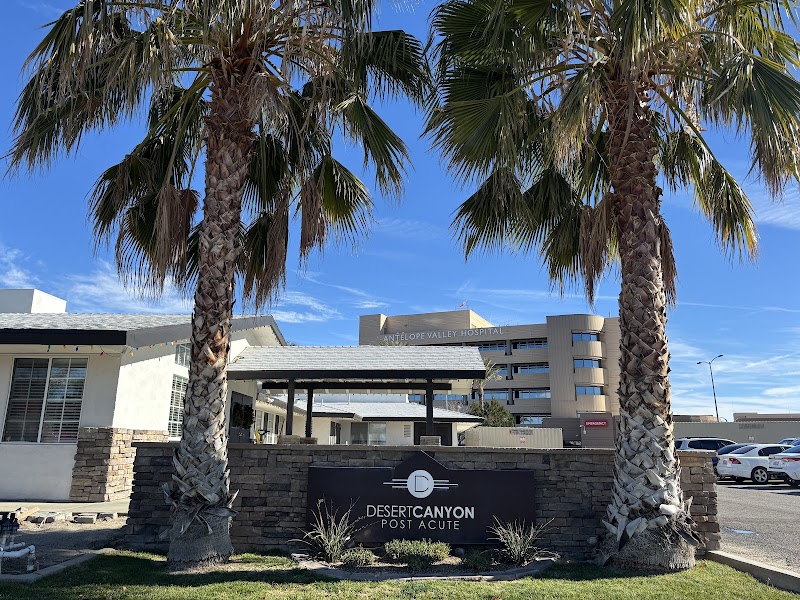
How Does Desert Canyon Post Acute, Llc Compare to Other California Nursing Homes?

Compared to the 100 nursing homes in California, DESERT CANYON POST ACUTE, LLC's overall rating (1 stars) is below the state average of 3.1, staff turnover (29%) is significantly lower than the state average of 46%, and health inspection rating (1 stars) is much below the national benchmark.

What Should Families Ask When Visiting Desert Canyon Post Acute, Llc?

Based on this facility's data, families visiting should ask: "What safeguards and monitoring systems are in place to protect residents from abuse or neglect?" "Can I visit during a mealtime to observe dining assistance and food quality?" "How do you handle medical emergencies, and what is your hospital transfer rate?" "Can I speak with family members of current residents about their experience?" These questions are particularly relevant given the substantiated abuse finding on record.

Is Desert Canyon Post Acute, Llc Safe?

Based on CMS inspection data, DESERT CANYON POST ACUTE, LLC has documented safety concerns. The facility has 1 substantiated abuse finding (meaning confirmed case of resident harm by staff or other residents). The facility has a 1-star overall rating and ranks #100 of 100 nursing homes in California. Families considering this facility should ask detailed questions about what corrective actions have been taken since these incidents.

Do Nurses at Desert Canyon Post Acute, Llc Stick Around?

Staff at DESERT CANYON POST ACUTE, LLC tend to stick around. With a turnover rate of 29%, the facility is 17 percentage points below the California average of 46%. Low turnover is a positive sign. It means caregivers have time to learn each resident's needs, medications, and personal preferences. Consistent staff also notice subtle changes in a resident's condition more quickly. Registered Nurse turnover is also low at 12%, meaning experienced RNs are available to handle complex medical needs.

Was Desert Canyon Post Acute, Llc Ever Fined?

DESERT CANYON POST ACUTE, LLC has no federal fines on record. CMS issues fines when nursing homes fail to meet care standards or don't correct problems found during inspections. The absence of fines suggests the facility has either maintained compliance or corrected any issues before penalties were assessed. This is a positive indicator, though families should still review recent inspection reports for the full picture.

Is Desert Canyon Post Acute, Llc on Any Federal Watch List?

DESERT CANYON POST ACUTE, LLC is not on any federal watch list. The most significant is the Special Focus Facility (SFF) program, which identifies the bottom 1% of nursing homes nationally based on persistent, serious quality problems. Not being on this list means the facility has avoided the pattern of deficiencies that triggers enhanced federal oversight. This is a positive indicator, though families should still review the facility's inspection history directly.