THE ELLISON JOHN TRANSITIONAL CARE CENTER


43830 10TH STREET WEST, LANCASTER, CA 93534 (661) 494-8600
For profit - Individual 170 Beds ABBY GL, LLC Data: November 2025 3 Immediate Jeopardy citations
Trust Grade
0/100
#1133 of 1155 in CA
Last Inspection: February 2025

Within standard 12-15 month inspection cycle. Federal law requires annual inspections.

Overview

The Ellison John Transitional Care Center has received a Trust Grade of F, indicating significant concerns about the quality of care provided. Ranking #1133 out of 1155 facilities in California places it in the bottom half, and #355 out of 369 in Los Angeles County means there are very few local options that are worse. The facility is worsening, with issues increasing from 32 in 2024 to 34 in 2025. Staffing is an average strength, rated 3 out of 5 stars with a turnover rate of 36%, which is slightly below the state average. However, the $259,160 in fines is alarming, placing it higher than 95% of California facilities, pointing to ongoing compliance issues. Specific incidents of concern include a failure to notify a physician when a resident's blood pressure dropped dangerously low, which could lead to serious health risks. Additionally, there was a critical incident involving a resident experiencing non-consensual sexual contact, indicating severe lapses in resident safety. Lastly, a resident was mistakenly given an IV medication meant for another, highlighting significant flaws in care and oversight. Overall, while there are some staffing strengths, the serious incidents and poor ratings suggest families should approach this facility with caution.

Trust Score
F
0/100
In California
#1133/1155
Bottom 2%
Safety Record
High Risk
Review needed
Inspections
Getting Worse
32 → 34 violations
Staff Stability
○ Average
36% turnover. Near California's 48% average. Typical for the industry.
Penalties
⚠ Watch
$259,160 in fines. Higher than 98% of California facilities. Major compliance failures.
Skilled Nurses
○ Average
Each resident gets 33 minutes of Registered Nurse (RN) attention daily — about average for California. RNs are the most trained staff who monitor for health changes.
Violations
⚠ Watch
99 deficiencies on record. Higher than average. Multiple issues found across inspections.
★☆☆☆☆
1.0
Overall Rating
★★★☆☆
3.0
Staff Levels
★★★★☆
4.0
Care Quality
★☆☆☆☆
1.0
Inspection Score
Stable
2024: 32 issues
2025: 34 issues

The Good

  • 4-Star Quality Measures · Strong clinical quality outcomes
  • Full Sprinkler Coverage · Fire safety systems throughout facility
  • No fines on record
  • Staff turnover below average (36%)

    12 points below California average of 48%

Facility shows strength in quality measures, fire safety.

The Bad

1-Star Overall Rating

Below California average (3.1)

Significant quality concerns identified by CMS

Staff Turnover: 36%

Near California avg (46%)

Typical for the industry

Federal Fines: $259,160

Well above median ($33,413)

Significant penalties indicating serious issues

Chain: ABBY GL, LLC

Part of a multi-facility chain

Ask about local staffing decisions and management

The Ugly 99 deficiencies on record

3 life-threatening 1 actual harm
Sept 2025 2 deficiencies
CONCERN (D) 📢 Someone Reported This

A family member, employee, or ombudsman was alarmed enough to file a formal complaint

Potential for Harm - no one hurt, but risky conditions existed

Notification of Changes (Tag F0580)

Could have caused harm · This affected 1 resident

**NOTE- TERMS IN BRACKETS HAVE BEEN EDITED TO PROTECT CONFIDENTIALITY** Based on interview and record review, the facility staff failed to notify the physician on 9/5/2025 when Resident 1 complained o...

Read full inspector narrative →
**NOTE- TERMS IN BRACKETS HAVE BEEN EDITED TO PROTECT CONFIDENTIALITY** Based on interview and record review, the facility staff failed to notify the physician on 9/5/2025 when Resident 1 complained of weakness/numbness (a loss of feeling or sensation in an area of the body) to the right side the face for one of three samples Residents (Resident 1). This deficient practice had the potential to result in a lack of necessary care and treatment to Resident 1.Findings: A record review of Resident 1's admission Record, the admission Record indicated Resident 1 was admitted on [DATE] and readmitted on [DATE] and 6/28/2025 with diagnosis including chronic respiratory failure (a condition where the lungs are unable to adequately exchange oxygen), type 2 diabetes (the body's inability to process sugar), dependence on ventilator (a mechanical life-support machine that helps patients breathe), and hypertensive heart disease (a long-term condition that develops from chronic high blood pressure). A record review of Resident 1's Minimum Data Set (An assessment tool) dated 9/10/2025, indicated Resident 1 was cognitively intact. Resident 1 was dependent on staff for activities of daily living. During an interview with Resident 1 on 9/11/2025 at 10:10 a.m., Resident 1 stated that on 9/5/2025 at around 6:30 p.m., she reported to the Registered Nurse (RN 2) that she was having numbness and weakness to the right side of her face. Resident 1 stated the Registered Nurse assessed her (Resident 1), however she (RN 2) did not notify her (Resident 1) Medical Doctor. Resident 1 stated she (Resident 1) continued to have numbness to the right side of her (Resident 2) face over the weekend. Resident 1 stated she (Resident 1) complained again on 9/7/2025 to a different registered nurse (RN 1). Resident 1 stated RN 1 then proceeded to call the Medical Doctor, and she (Resident 1) was transferred to the emergency department. Resident 1 stated she does not know why it took two days for the facility to finally listen to her (Resident 1). Resident 1 stated she (Resident 1) was diagnosed in the Emergency Department with Bell's Palsy (a sudden weakness in the muscles on one half of the face). During a record review of Resident 1's Progress Notes dated 9/5/2024 at 6:40 p.m., the Progress Notes indicated Resident 1 requested a Registered Nurse (RN 2) present in her (Resident 1) room and stated she (Resident 1) feels like her mouth is tilting to one side. RN 2 assessed Resident 1 for any signs of stroke (damage to the brain from interruption of blood supply) but noted none at the time. RN 2 educated Resident 1 on signs and symptoms of stroke. RN 2 asked Resident 1 to stay calm and relax for a better assessment to be done. Resident 1 was reassessed after 5 to 10 minutes when Resident 1 was calm and no abnormalities noted. During an interview with Registered Nurse (RN 2) on 9/11/2025 at 1:57 p.m., RN 2 stated, she was called to assess Resident 1. RN 2 stated when she went into Resident 2's room, she noted Resident 1 crying, and she (Resident 1) stated she was experiencing numbness and weakness to the right side of her face. RN 2 stated she did not notice any weakness to Resident 1's right side of the face, and she did not notify Resident 1's Medical Doctor. RN 2 stated, she later realized that she should have called the Medical Doctor, but she failed to do so. During an interview with Assistant Director of Nurses (ADON) on 9/11/2025 at 2:30 p.m., ADON stated, Registered Nurse (RN 2) needed to call Resident 1's Medical Doctor to notify of Resident 1's change of condition immediately. ADON stated, there was a delay in care and treatment of Resident 1. ADON stated, the facility should have called the Medical Doctor to obtain orders for Resident 1. ADON stated, it should not have taken two days to respond to Resident 1's right facial numbness. During a record review of the facility's Policy and Procedure titled, Notification of Changes dated November 2017, indicated the facility informs the resident's physician, and resident's representative when there is a significant change in the resident's physical, mental, or psychosocial status in either life-threatening condition of clinical complications. The Attending Physician will be notified timely with a resident's change in condition.
CONCERN (D) 📢 Someone Reported This

A family member, employee, or ombudsman was alarmed enough to file a formal complaint

Potential for Harm - no one hurt, but risky conditions existed

Deficiency F0761 (Tag F0761)

Could have caused harm · This affected 1 resident

Based on observation, interview, and record review, the facility failed to ensure safe provision of pharmaceutical services for one of three sampled residents (Resident 8) by failing to ensure the res...

Read full inspector narrative →
Based on observation, interview, and record review, the facility failed to ensure safe provision of pharmaceutical services for one of three sampled residents (Resident 8) by failing to ensure the resident's medications were not left unattended at bedside. This deficient practice had the potential to cause medication errors and could possibly lead to Resident 8's discomfort.Findings: During a review of Resident 8's admission Record (undated), the admission Record indicated the facility admitted the resident on 9/8/2025 with diagnoses that included acute respiratory failure (a serious condition that makes it difficult to breathe on your own), type 2 diabetes mellitus (a chronic condition that affects the way the body processes blood sugar [glucose]), and benign prostatic hyperplasia (BPH - a condition that occurs when the prostate gland enlarges, potentially slowing or blocking the urine stream). During a review of Resident 8's Physician Order, dated 9/8/2025, the Physician Order indicated polyethylene glycol 3350 powder (a medication used to relieve constipation) 17 grams (unit of measurement) mixed with eight ounces (oz - unit of measurement) of water, one time a day for bowel management. During a review of Resident 8's History and Physical (H&P- a medical examination that involves a doctor taking a patient's medical history, performing a physical exam, and documenting their findings), dated 9/9/2025, the H&P indicated Resident 8 had the capacity to understand and make decisions. During a concurrent observation and interview on 9/10/2025 at 10:30 a.m. with Licensed Vocational Nurse (LVN) 2, observed LVN 2 left Resident 8's room and went to the nurse station. LVN 2 left Resident 8's water mixed with polyethylene glycol 3350 powder on the bedside table unattended. LVN 2 returned to Resident 8's room and stood at the door. LVN 2 stated she gave all of Resident 8's scheduled medications and was going to document the medications as given. The surveyor clarified with LVN 2 if Resident 8's scheduled medications were administered and LVN 2 stated she gave all of Resident 8's scheduled medications. LVN 2 looked in Resident 8's room and stated that she forgot to give the resident's water mixed with polyethylene glycol 3350 powder. LVN 2 stated that she should not leave medications unattended. LVN 2 stated that medications left unattended had the potential for other residents to take the medications or for Resident 8 to not take the medication and result in discomfort and constipation. During an interview on 9/10/2025 at 3:03 p.m. with Registered Nurse (RN) 1, RN 1 stated Resident 8's medication should not be left unattended. RN 1 stated other residents had the potential to drink Resident 8's medication on the bedside table thinking it was regular water. RN 1 stated the facility failed to ensure Resident 8's medication was not left unattended and failed to ensure Resident 8 received all the scheduled medications before leaving the resident's room. During a review of the facility's policy and procedure (PnP) titled, Administering Medications, last reviewed on 12/3/2024, the PnP indicated the purpose to provide employees with guidelines for the safe and timely administration of medications per physician order. The PnP indicated following verification of the resident and scheduled medication, the licensed nurse follows the pour, pass, chart standard of practice.
Jul 2025 1 deficiency
CONCERN (D) 📢 Someone Reported This

A family member, employee, or ombudsman was alarmed enough to file a formal complaint

Potential for Harm - no one hurt, but risky conditions existed

Accident Prevention (Tag F0689)

Could have caused harm · This affected 1 resident

Based on interview and record review, the facility failed to follow the facility's policy and procedure on fall management for one of three sampled residents (Resident 1), when Resident 1 who was admi...

Read full inspector narrative →
Based on interview and record review, the facility failed to follow the facility's policy and procedure on fall management for one of three sampled residents (Resident 1), when Resident 1 who was admitted to the facility with history of falls, was not assessed for fall risk upon admission. This failure had the potential to place Resident 1 at an increased risk of falls. Findings:During a review of Resident 1's admission Record (AR), the AR indicated the facility admitted Resident 1 on 6/7/2025 with diagnoses of diabetes mellitus, muscle weakness, history of falling, and anemia. During a review of Resident 1's History and Physical (H&P), dated 6/29/2025, the H&P indicated Resident 1 had the capacity to make decisions. During a review of Resident 1's Minimum Data Set (MDS-a resident assessment tool), dated 6/14/2025, the MDS indicated Resident 1 had intact cognitive functioning (mental processes that enable people to think, understand, make decisions, and complete tasks). The MDS further indicated Resident 1 required moderate assistance from staff with eating, oral hygiene, personal hygiene. The MDS indicated Resident 1 required maximal assistance from staff for transfers from chair to bed and had a history of falls. During a review of Resident 1s Care Plan (CP) for risk of falls, last revised on 7/15/2025, the CP indicated Resident 1 was at risk for recurrent falls and spontaneous injury related to deconditioning, gate and balance problems. During a concurrent interview and record review on 7/22/2025 at 12:19p.m. with Registered Nurse (RN) 1, Resident 1's Fall Risk Assessment, dated 7/14/2025 was reviewed. The Fall Risk Assessment indicated Resident 1 was at high risk for falls. RN 1 stated Resident 1's fall risk assessment upon admission was not completed. RN 1 further stated the purpose of the fall risk assessment was to identify fall risk residents and initiate appropriate fall prevention interventions. RN 1 stated this failure had the potential for Resident 1 to experience a fall incident. During an interview on 7/22/2025 at 2:13p.m. with the Director of Nursing (DON), the DON stated the purpose of the fall risk assessment was for the facility to identify the risk of fall and develop a personalized care plan. The DON further stated the failure to complete the fall risk assessment had the potential to increase the likelihood of accidents and falls for Resident 1. During a review of the facility-provided policy and procedure (P&P) titled, Fall Management Program, last reviewed on 12/3/2024, the P&P indicated, Each resident entering the facility shall have a fall risk evaluation completed within 2 hours, and no more than 24 hours of admission. Residents at risk for falling shall have a care plan that identified individual risk factors and person-centered interventions, based on the risk factors.
May 2025 2 deficiencies
CONCERN (D) 📢 Someone Reported This

A family member, employee, or ombudsman was alarmed enough to file a formal complaint

Potential for Harm - no one hurt, but risky conditions existed

Deficiency F0692 (Tag F0692)

Could have caused harm · This affected 1 resident

Based on interview and record review, the facility failed to obtain weekly weights for one of three sampled residents (Resident 1) after Resident 1 was noted with a Change in Condition (COC) on 3/21/2...

Read full inspector narrative →
Based on interview and record review, the facility failed to obtain weekly weights for one of three sampled residents (Resident 1) after Resident 1 was noted with a Change in Condition (COC) on 3/21/2025 regarding a weight loss of 15 pounds (lbs.- a unit of measurement) in one week. This deficient practice had the potential for Resident 1 to have a delay in care. Findings: During a review of Resident 1's admission Record, the admission Record indicated the facility admitted Resident 1 on 1/5/2024 and readmitted the resident on 3/11/2025 with diagnoses including hypertensive heart disease with heart failure (long-term high blood pressure [HTN-hypertension] has weakened the heart muscle to the point where it can't pump enough blood, leading to heart failure), muscle weakness (generalized), and polyneuropathy (damage to multiple peripheral nerves in the body, causing symptoms like numbness, tingling, and pain, often in the hands and feet). During a review of Resident 1's Weights and Vital Summary, the Summary indicated: - 3/12/2025 157 lbs. - 3/20/2025 142 lbs. (weight loss of 15 lbs - 9.6%) During a review of Resident 1's care plan created on 3/17/2025 and revised on 3/27/2025 for nutritional risk secondary to weight fluctuation related fluid shifts and diagnosis of heart failure, the care plan indicated interventions that included diet as ordered and weekly weights as ordered. During a review of Resident 1's SBAR (Situation-Background-Assessment-Recommendation, a structured communication tool used in healthcare to improve information sharing and resident safety, especially during critical situations: Change in Condition (COC), dated 3/21/2025 at 9:08 a.m., the SBAR indicated weight loss. The assessment details indicated Resident 1 noted with weight loss: -15 lbs. in one week. During a review of Resident 1's care plan created on 3/21/2025 for weight loss of 15 lbs. in one week, the care plan indicated interventions that included notifying the doctor of any COC, and weekly weight as ordered. During a review of Resident 1's Interdisciplinary Team (IDT- a group of professionals from different fields who work together to achieve a common goal, often related to a patient's care or a specific project) Progress Notes Weight Variance & Nutritional Condition, dated 3/27/2025 at 6:33 p.m., the IDT Progress Notes indicated Resident 1 was observed with loss of 15 lbs. in one week. The IDT agreed to continue weekly weights, will continue to monitor and refer to doctor for any COC. During a review of Resident 1's Progress Notes, dated 4/2/2025 at 4:15 p.m., the Progress Notes indicated Resident 1 was noted with edema (a condition where excess fluid accumulates in the body's tissues, causing swelling) of the bilateral (both) lower extremities (limbs of the body) and upper arms. During a review of Resident 1's Minimum Data Set (MDS - a resident assessment tool), dated 4/2/2025, the MDS indicated Resident 1's cognition (refers to conscious mental activities including thinking, reasoning, understanding, learning, and remembering) was intact. The MDS indicated Resident 1 required supervision or touch assistance (helper provides verbal cues, and or touching, steading and or contact guard assistance as resident completes activities) with toileting, showering, lower body dressing, putting on and taking off footwear and personal hygiene. During a concurrent interview and record review, Resident 1's IDT Progress Notes Weight Variance & Nutritional Condition, dated 3/27/2025 on 5/5/2025 at 12:28 p.m. was reviewed with the Assistant Director of Nursing (ADON). The ADON stated for newly admitted residents we do weekly weights for four weeks then if there is any significant weight loss the facility will review the resident and determine the need to continue with the weekly weight for another four weeks. The ADON reviewed Resident 1's IDT Progress Notes Weight Variance & Nutritional Condition dated 3/27/2025 and stated it indicated to continue weekly weights. The ADON reviewed Resident 1's weights and stated last weight was on 3/20/2025, next weight should have been on 3/27/2025. The ADON stated Resident 1 was weighed on 4/2/2025 with a weight of 194 lbs. but it was not recorded, because we wanted to verify the accuracy, but Resident 1 was later discharged . The ADON stated the weight increase was an increase of 52 lbs. The ADON reviewed Resident 1's progress notes dated 4/2/2025 at 4:15 p.m. indicating Resident 1 had edema, the ADON stated the edema could potentially have been a factor for Resident 1's weight gain. The ADON stated Resident 1 should have been weighed weekly, the ADON stated not weighing Resident 1 weekly could potentially cause a delay in care. During an interview on 5/5/2025 at 4 p.m. with the Director of Nursing (DON), the DON stated for new admissions the facility checks weights weekly for four weeks, then it will change to monthly if weights are stable but if within the first month there are issues with weight gain or weight loss we continue with the weekly weights. The DON stated reviewed Resident 1's weights and the facility did not do weekly weights for a new admission as Resident 1 was a new admission. The DON stated Resident 1 had a COC on 3/21/2025 for weight loss of 15 lbs. and there should have been another weight check on 3/28/2025. The DON stated Resident 1 was weighed on 4/2/2025 with an increase in weight of 56 lbs. this was a large discrepancy. The DON stated the doctor assessed and cleared Resident 1 to be discharged . The DON stated if the facility had been doing the weekly weights the facility could have caught the weight gain, not sure if it was the food or something else that caused the weight increase. During a review of the facility's Policy and Procedure (P&P) titled, Weight Management, last reviewed on 12/3/2024, the P&P indicated weight will be recorded monthly unless ordered more or less frequently by the physician or upon the discretion of the IDT. Resident monitored during the weekly weight management meeting may be weighed weekly until his or her condition stabilizes or as determined by the IDT evaluation of resident needs.
CONCERN (D) 📢 Someone Reported This

A family member, employee, or ombudsman was alarmed enough to file a formal complaint

Potential for Harm - no one hurt, but risky conditions existed

Laboratory Services (Tag F0770)

Could have caused harm · This affected 1 resident

Based on interview and record review, the facility failed to provide laboratory (lab) services for one of three sampled residents (Resident 1) on 3/18/2025. On 4/2/2025 Resident 1 was discharged witho...

Read full inspector narrative →
Based on interview and record review, the facility failed to provide laboratory (lab) services for one of three sampled residents (Resident 1) on 3/18/2025. On 4/2/2025 Resident 1 was discharged without the ordered labs being completed. This deficient practice had the potential for a delay in care and treatment. Findings: During a review of Resident 1's admission Record, the admission Record indicated the facility admitted Resident 1 on 1/5/2024 and readmitted the resident on 3/11/2025 with diagnoses including hypertensive heart disease with heart failure (long-term high blood pressure [HTN-hypertension] has weakened the heart muscle to the point where it can't pump enough blood, leading to heart failure), muscle weakness (generalized), and polyneuropathy (damage to multiple peripheral nerves in the body, causing symptoms like numbness, tingling, and pain, often in the hands and feet). During a review of Resident 1's SBAR (Situation-Background-Assessment-Recommendation, a structured communication tool used in healthcare to improve information sharing and resident safety, especially during critical situations: Change in Condition (COC), dated 3/14/2025 at 6:15p.m., the SBAR indicated Resident 1 had dysuria. The doctor (MD) was notified with new orders for urinalysis (UA- a test of your urine, used to detect any urinary tract infections [UTI-an infection in the bladder/urinary tract]), culture and sensitivity (CS- a lab test to check for bacteria or other germs in a urine sample) During a review of Resident 1's Physician Order dated 3/14/2025, the Physician Order indicated UA and CS one time only for 2 days. During a review of Resident 1's Progress Notes dated 3/18/2025 at 3/18/2025 at 12:44 p.m., the Progress Notes indicated urine specimen culture results is insufficient, new order to collect urine specimen for repeat UA and CS, one time only until 3/19/2025. During a review of Resident 1's Physician Order dated 3/18/2025, the Physician Order indicated to collect urine specimen for repeat urine test one time only until 3/19/2025 During a review of Resident 1's Progress Notes dated 3/18/2025 at 10:24 p.m., the Progress Notes indicated Attempted to collect UA. Unsuccessful attempt. Next shift to made aware and re-attempt. During a review of Resident 1's Order Workflow, Patient Order History dated 3/19/2025, the Patient Order History indicated incomplete specimen, not ready for pick up. For the UA & C/S- clean catch. During a review of Resident 1's Minimum Data Set (MDS - a resident assessment tool), dated 4/2/2025, the MDS indicated Resident 1 cognition was intact. The MDS indicated Resident 1 required supervision or touch assistance (helper provides verbal cues, and or touching, steading and or contact guard assistance as resident completes activities) with toileting, showering, lower body dressing, putting on and taking off footwear and personal hygiene. During an interview on 5/5/2025 at 2:35 p.m. with the Director of Nursing (DON), the DON stated Licensed Vocational Nurse (LVN) 1 collected Resident 1's UA on 3/19/2025 and placed it in the facility's refrigerator for the lab to pick up but the lab had already come in the morning. The DON stated cannot verify anyone came to pick up the UA, and the order fell off the tracker and no one verified it was done. The DON stated staff should have called the lab to inform them that UA was done and ready for pick up and staff should have called lab to follow up on results. During an interview on 5/5/2025 at 3:37 p.m. with LVN 1, LVN1 stated collected Resident 1's UA on 3/19/2025. LVN 1 stated she labeled the UA, did not call the lab to inform them that the specimen was ready to be picked up, worked the following day, did not see the specimen in the facility specimen refrigerator, and assumed the lab had picked up Resident 1's UA. LVN1 stated she did not call the lab to follow up on the results of the UA. LVN 1 stated UA and C/S should have been done to determine what antibiotics the resident needs to be on. LVN 1 stated the potential negative outcome is that we will not know if the resident has an infection, and we will not be able to treat the infection. LVN 1 stated it can possibly lead to a delay in the care and treatment if the resident has an infection. During an interview on 5/5/2025 at 4 p.m. with the DON, the DON stated for labs we get an order, enter it, and when the lab sees the order, they come in and pick it up. The DON stated when lab came in and the specimen was not ready the ball was dropped (someone made a mistake or missed an opportunity at a critical moment). The DON stated if there is a pending infection, and the C/S is not done then we will not know what antibiotics the resident will need to be prescribed. The DON stated we did not see the result, and no one had followed up to see what the result was. During a review of the facility's Policy and Procedure (P&P) titled, Laboratory Services ordering and Prompt Reporting, last reviewed on 12/3/2024, the P&P indicated the facility shall provide or obtain lab services and promptly report abnormal results in accordance with physician order. During a revie of the facility's P&P titled, Laboratory Services, last reviewed on 12/3/2024, the P&P indicated laboratory, radiology, or other diagnostic services ordered by the physician will be completed in a timely manner; and abnormal results will be reported to the physician in a timely manner to ensure results can be acted upon quickly.
Apr 2025 3 deficiencies
CONCERN (D) 📢 Someone Reported This

A family member, employee, or ombudsman was alarmed enough to file a formal complaint

Potential for Harm - no one hurt, but risky conditions existed

Safe Environment (Tag F0584)

Could have caused harm · This affected 1 resident

**NOTE- TERMS IN BRACKETS HAVE BEEN EDITED TO PROTECT CONFIDENTIALITY** Based on observation, interview, and record review, the facility failed to ensure the room of one of four sampled residents (Res...

Read full inspector narrative →
**NOTE- TERMS IN BRACKETS HAVE BEEN EDITED TO PROTECT CONFIDENTIALITY** Based on observation, interview, and record review, the facility failed to ensure the room of one of four sampled residents (Resident 3) was free from clutter. This failure had the potential to negatively impact Resident 3's psychosocial well-being (refers to a resident's overall mental, emotional, and social health, encompassing aspects like happiness, life satisfaction, self-esteem, social functioning, and a sense of purpose). Findings: During a review of Resident 3's admission Record, the admission Record indicated Resident 1 was admitted on [DATE], and readmitted on [DATE], with diagnoses of epilepsy (a condition with sudden, uncontrolled electrical disturbance in the brain which can cause uncontrolled jerking, blank stares and loss of consciousness), schizophrenia (a mental illness that is characterized by disturbances in thoughts), and muscle weakness. During a review of Resident 3's Minimum Data Set (MDS-a resident assessment tool), dated 1/25/2024, the MDS indicated Resident 3 had severely impaired cognitive functioning (mental processes that enable people to think, understand, make decisions, and complete tasks). The MDS also indicated Resident 3 required maximal assistance on lower body dressing, and dependent on eating, personal hygiene, and toilet transfers. During a review of Resident 3's Care Plan (CP), dated 2/10/2025, the CP indicated Resident 3 had high risk for falls and injuries due to the following risk factors: impaired cognition, disorder of brain, epilepsy, decrease in functional status. The CP indicated to keep Resident 3's environment free from obstruction. During a review of Resident 3's History and Physical (H&P), dated 3/21/2025, the H&P indicated Resident 3 did not have the capacity to understand and make decisions. During a review of Resident 3's Care Plan (CP), dated 4/21/2025, the CP indicated Resident 3 had an Activities of Daily Living (ADLs- routine tasks/activities such as bathing, dressing and toileting a person performs daily to care for themselves) Self Care performance deficit. During a concurrent observation and interview on 4/21/2025 at 12:10 a.m. with Licensed Vocational Nurse (LVN) 3 in Resident 3's room, three boxes and two bags covered with 3 blankets and clothing were observed next to the right side of Resident 3's room entrance. On the left side of Resident 3's room entrance multiple folded cardboard boxes were observed in a single cardboard box next to side table with multiple bottles and plastic bags. LVN 3 stated all the boxes, bags and clothing belong to Resident 3's roommate. During an interview on 4/22/2025 at 1:46 p.m. with the Director of Nursing (DON), the DON stated Resident 3 was cognitively impaired. The DON also stated that any reasonable person would not feel comfortable in a cluttered room. The DON stated the facility failed to provide a homelike environment for Resident 3. During a review of the facility-provided policy and procedure (P&P) titled, Homelike Environment, last revised on 1/2025, the P&P indicated, The facility strives to provide a personalized, homelike environment which recognizes the individuality and autonomy of the residents It is the responsibility of all facility staff to create a homelike environment and promptly address any cleaning needs.
CONCERN (D) 📢 Someone Reported This

A family member, employee, or ombudsman was alarmed enough to file a formal complaint

Potential for Harm - no one hurt, but risky conditions existed

Quality of Care (Tag F0684)

Could have caused harm · This affected 1 resident

**NOTE- TERMS IN BRACKETS HAVE BEEN EDITED TO PROTECT CONFIDENTIALITY** Based on interview and record review, the facility failed to ensure residents received treatment and care in accordance with pro...

Read full inspector narrative →
**NOTE- TERMS IN BRACKETS HAVE BEEN EDITED TO PROTECT CONFIDENTIALITY** Based on interview and record review, the facility failed to ensure residents received treatment and care in accordance with professional standards of practice to meet the resident's physical, mental, and psychosocial (relating to the interrelation of social factors and individual thoughts and behavior) needs by failing to administer medications and treatments as ordered by the physician for one of four sampled residents (Resident 1). This deficient practice had the potential to delay Resident 1's care causing him to experience prolonged, unrelieved muscle spasms (a sudden involuntary muscular contraction, twitch). Findings: During a review of Resident 1's admission Record, the admission Record indicated Resident 1 was admitted on [DATE] with diagnoses of neuropathy (disease or dysfunction of one or more nerves, typically causing numbness or weakness in the hands and feet), malignant melanoma (type of a skin cancer), hypothyroidism (a condition where the thyroid gland located int eh lower part of the neck doesn't produce enough hormone), and muscle weakness. During a review of Resident 1's History and Physical (H&P), dated 4/9/2025, the H&P indicated, Resident 1 had the capacity to understand and make decisions. During a review of Resident 1's Minimum Data Set (MDS-a resident assessment tool), dated 4/15/2025, the MDS indicated Resident 1's cognitive functioning (mental processes that enable people to think, understand, make decisions, and complete tasks) was intact. During a review of Resident 1's Order Summary Report, the report indicated the following physician's order: -4/16/2025: Baclofen (a medication that relaxes muscles and reduces muscle stiffness) tablet to give 5 milligram (mg-unit of measurement) by mouth three times a day for muscle spasms. -4/21/2025: Cyclobenzaprine HCl (a medication that relaxes muscles and reduces muscle stiffness) tablet 10 mg to give 1 tablet by mouth every 8 hours as needed for muscle spasms. During a concurrent observation and interview on 4/22/2025 at 10:45 a.m. with Licensed Vocational Nurse (LVN) 1 in Resident 1's room, Resident 1 was observed in bed, awake and alert. Resident 1 stated he was uncomfortable in bed and was experiencing muscle spasms. Resident 1 stated he had not received his muscle spasm medication since last night and asked the LVN 1 to administer his muscle spasm medication. LVN 1 stated Resident 1's order of Baclofen was discontinued by the physician and there was no new medication ordered for muscle spasms. During a concurrent interview and record review on 4/25/2025 at 2:08 p.m. with LVN 1, Resident 1's Medication Administration Record (MAR), dated April 2025 was reviewed. The MAR indicated the medication order of Baclofen table 5 mg was discontinued on 4/21/2025 at 6:07 p.m. The MAR also indicated Resident 1 had an order for Cyclobenzaprine HCL 10 mg as needed for muscle spasms ordered on 4/21/2025 at 6:15 p.m. LVN 1 stated she was not aware that Resident 1 had a new medication order, and she did not check Resident 1's complete order summary. LVN 1 stated Cyclobenzaprine was already available in the medication cart, and she should have administered the medication when resident complained of muscle spasms. During a review of Resident 1's MAR, dated 4/2025, the MAR indicated Cyclobenzaprine was administered to Resident 1 on 4/22/2025 at 2:30 p.m. During an interview on 4/22/2025 at 2:54 p.m. with the Director of Nursing (DON), the DON stated facility failed to administer Resident 1's medications and treatments as ordered by the physician. The DON stated LVN 1 should have reviewed Resident 1's complete order summary and administered the medication when Resident 1 complained of experiencing muscle spasm. The DON stated the failure caused a delay in Resident 1's care. During a review of the facility-provided policy and procedure (P&P) titled, Medication administration-General Guidelines, last reviewed on 12/3/2024, the P&P indicated, Medications are administered as prescribed in accordance with good nursing principles and practices.The facility has sufficient staff and a medication distribution system to ensure safe administration of medications without unnecessary interruptions B. 2) Medications are administered in accordance with written orders of the prescriber.
CONCERN (D) 📢 Someone Reported This

A family member, employee, or ombudsman was alarmed enough to file a formal complaint

Potential for Harm - no one hurt, but risky conditions existed

Infection Control (Tag F0880)

Could have caused harm · This affected 1 resident

**NOTE- TERMS IN BRACKETS HAVE BEEN EDITED TO PROTECT CONFIDENTIALITY** Based on observation, interview, and record review, the facility failed to maintain an infection prevention and control program ...

Read full inspector narrative →
**NOTE- TERMS IN BRACKETS HAVE BEEN EDITED TO PROTECT CONFIDENTIALITY** Based on observation, interview, and record review, the facility failed to maintain an infection prevention and control program designed to prevent the development and transmission of communicable diseases (illness that can be transmitted from one person to another) and infections by failing to ensure a sign was posted near the isolation room (a specialized room designed to separate residents with communicable disease to prevent the spread of infection) indicating the type of precaution and personal protective equipment (PPE, specialized clothing or gear worn to minimize exposure to hazards taht can cause serious illnesses) a resident required for one of four sampled residents (Resident 2). The deficient practices had a potential to spread infections and illnesses among residents. Findings: During a review of Resident 2's admission Record, the admission Record indicated Resident 2 was admitted on [DATE] with the diagnoses of diabetes mellitus (DM-a disorder characterized by difficulty in blood sugar control and poor wound healing), muscle weakness, anemia (a condition where the body does not have enough healthy red blood cells), and resistance to multiple antimicrobial drugs (drugs that kill or slow the growth of microorganisms like bacteria and viruses). During a review of Resident 2's History and Physical (H&P), dated 4/11/2024, the H&P indicated Resident 1 had the capacity to understand and make decisions. During a review of Resident 2's Order Summary Report, the report indicated the following physician's order: - 4/17/2025: Contact Isolation (an isolation method used to prevent the spread of germs through direct or indirect contact with a patient or their environment) for diagnoses of E.Coli ( a bacteria that can cause infection of the urine )/ multidrug-resistant organism (MDRO) infection of urine every shift. During a review of Resident 2's Care Plan (CP), initiated on 4/17/2024, the CP indicated Resident 1 had urinary tract infection/E. Coli of urine. The CP also indicated Resident 2 was on Isolation/Contact Precaution (an infection control intervention designed to reduce transmission of MDRO) for E.Coli of urine. The CP interventions indicated to maintain contact precautions and post precaution sign in front of room/door per facility's policy. During an observation on 4/21/2025 at 8:30a.m. near Resident 2's room, an isolation caddy (a small storage containing PPE) was observed secured on the door. There was no isolation sign posted on Resident 2's door indicating the type of precautions and PPE required to enter the Resident 2's room. During an interview on 4/21/2025 at 9:07a.m. with Licensed Vocational Nurse (LVN) 2, LVN 2 stated an isolation sign should have been posted near Resident 2's room to indicate the type of PPE required to enter Resident 2's room. LVN 2 stated the lack of isolation sign could lead to the spread of infection among staff and residents. During an interview on 4/22/2025 at 12:06 p.m. with the Infection Preventionist (IP) Assistant, the IP Assistant stated an isolation sign should have been placed near Resident 2's room to indicate the type of PPE required to enter the Resident 2's room. The IP Assistant stated the failure to place an isolation sign near Resident 2's room could have led to staff and visitors not using the proper PPE prior to entering Resident 2's room leading to the spread of infection to staff and other residents. During an interview on 4/22/2025 at 2:54 p.m. with the Director of Nursing (DON), the DON stated an isolation sign should have been posted on Resident 2's room to indicate the type of PPE required to enter Resident 2's room and to prevent the spread of infection to staff and other residents in the facility. During a review of the facility-provided policy and procedure (P&P) titled, Resident Isolation-Categories of Transmission-Based Precautions, last revised on 12/3/2024, the P&P indicated, Contact precautions are implemented for residents known or suspected to be infected or colonized with microorganisms that are transmitted by direct contact with the resident or indirect contact with environmental surfaces or resident-care items in the resident's environment. i. The Facility alerts staff to the type of precaution a resident requires
Feb 2025 24 deficiencies
CONCERN (D)

Potential for Harm - no one hurt, but risky conditions existed

Deficiency F0552 (Tag F0552)

Could have caused harm · This affected 1 resident

Based on interview and record review, the licensed nursing staff failed to ensure the residents and/or responsible party (RP) were informed in advance, of the risks and benefits of psychoactive medica...

Read full inspector narrative →
Based on interview and record review, the licensed nursing staff failed to ensure the residents and/or responsible party (RP) were informed in advance, of the risks and benefits of psychoactive medication (a drug that changes brain function and results in alterations in perception, mood, consciousness or behavior) for one (1) of 1 sampled resident (Resident 34) reviewed for informed consent (voluntary agreement to accept treatment and/or procedures after receiving education regarding the risks, benefits, and alternatives offered) by failing to ensure the Zoloft (also known as sertraline, an antidepressant used to treat mental and mood disorders) informed consent indicated the milligrams (mg - metric unit of measurement, used for medication dosage and/or amount) the resident was on, and the boxes were checked on the informed consent whether the resident consented to take the medication. This deficient practice violated the residents' right to make an informed decision regarding the use of psychoactive medications. Findings: During a review of Resident 34 ' s admission Record, the admission Record indicated the facility admitted the resident on 9/15/2018, and readmitted the resident on 4/19/2022, with diagnoses including major depressive disorder (a mood disorder that causes a persistent feeling of sadness and loss of interest) and acute respiratory failure (a serious condition that makes it difficult to breathe on your own) with hypoxia (a condition where the body tissues are not getting enough oxygen). During a review of Resident 34 ' s History and Physical (H&P), dated 2/8/2024, the H&P indicated the resident had depression, had logical thoughts, and had cooperative behavior. During a review of Resident 34 ' s Minimum Data Set (MDS - a resident assessment tool), dated 12/7/2024, the MDS indicated the resident had the ability to make self-understood and understand others and had intact cognition (a person's mental abilities, like thinking, remembering, reasoning, and understanding, are fully functioning and not significantly impaired, allowing them to perform everyday tasks normally). The MDS indicated the resident was on a high-risk drug class antidepressant medication. During a review of Resident 34 ' s Order Summary Report, dated 9/10/2024, the Order Summary Report indicated an order for Zoloft Oral Tablet 50 mg. Give 1 tablet by mouth 1 time a day for depression manifested by uncontrollable crying spells. Informed consent obtained by MD. During a review of Resident 34 ' s Psychotherapeutic Medication Informed Consent Form, dated 9/10/2024, the Psychotherapeutic Medication Informed Consent Form did not include the dose of Zoloft, and the boxes were not checked whether the resident consented to take the medication. During a concurrent interview and record review, on 2/26/2025, at 8:46 a.m., with Registered Nurse (RN) 1, Resident 34 ' s Order Summary Report and Informed Consent were reviewed. RN 1 confirmed and stated the dose was not listed on the Psychotherapeutic Medication Informed Consent Form and the boxes were not checked whether the resident consented to take the medication. RN 1 stated it was important to have the dose and the boxes checked to ensure the resident was consenting to the use of the medication. During a concurrent interview and record review, on 2/28/2025, at 9:19 a.m., with the Director of Nursing (DON), Resident 34 ' s Psychotherapeutic Medication Informed Consent Form was reviewed. The DON confirmed and stated the dose of the medication Zoloft was not indicated and the boxes whether the resident or representative consented to the use of the medication was not marked with a check on Resident 34 ' s Psychotherapeutic Medication Informed Consent Form. The DON stated the dose should be indicated on the form because when the medication dose gets increased, they have to get a new consent, and the boxes should be checked to ensure they honor the resident ' s right to informed consent. During a review of the facility's recent policy and procedure (P&P) titled, Informed Consent, last reviewed on 12/3/2024, the P&P indicated the facility provides with all information that is material to an individual resident ' s decision concerning whether to accept or refuse any proposed treatment or procedure including the disclosure of material information for administration of psychotherapeutic drugs or physical restraints of the prolonged use of a device that may lead to the inability to regain use of a normal bodily function.
CONCERN (D)

Potential for Harm - no one hurt, but risky conditions existed

Safe Environment (Tag F0584)

Could have caused harm · This affected 1 resident

**NOTE- TERMS IN BRACKETS HAVE BEEN EDITED TO PROTECT CONFIDENTIALITY** Based on observation, interview, and record review, the facility failed to provide a safe, comfortable, and homelike environment...

Read full inspector narrative →
**NOTE- TERMS IN BRACKETS HAVE BEEN EDITED TO PROTECT CONFIDENTIALITY** Based on observation, interview, and record review, the facility failed to provide a safe, comfortable, and homelike environment for two (2) of 2 sampled residents (Residents 83 and 42) reviewed during a random observation by failing to ensure Resident 83 ' s and 42 ' s floor mats were free from rips and disrepair. This deficient practice had the potential to negatively affect the resident ' s quality of life. Findings: a. During a review of Resident 83 ' s admission Record, the admission Record indicated the facility admitted the resident on 12/23/2024 with diagnoses including Parkinson's disease (a progressive disease of the nervous system marked by tremor, muscular rigidity, and slow, imprecise movements), speech disturbances, and generalized muscle weakness. During a review of Resident 83 ' s History and Physical (H&P), dated 12/29/2024, the H&P indicated Resident 83 had the capacity to make decisions. During a review of Resident 83 ' s Minimum Data Set (MDS - a resident assessment tool), dated 12/30/2024, the MDS indicated Resident 83 had intact cognition (mental action or process of acquiring knowledge and understanding) and required total assistance with sit to stand activities and transfers; partial/moderate assistance with eating, oral hygiene, and personal hygiene; substantial/maximal assistance from staff with all other activities of daily living (ADLs - activities such as bathing, dressing and toileting a person performs daily). During a review of Resident 83 ' s fall risk assessments dated, 12/23/2024, 1/21/2025, and 2/33/2025, the fall risk assessments indicated the resident was a high risk for falls. During a review of Resident 83 ' s Order Summary Report, dated 1/29/2025, the Order Summary Report indicated a physician ' s order for landing mats to minimize injury every shift for safety. During a review of Resident 83 ' s care plan (CP) on risk for recurrent falls and spontaneous injury, initiated on 5/18/2021 and last revised on 2/24/2025, the CP indicated landing mat as one of the interventions to prevent falls. During a concurrent observation and interview, on 2/24/2025, at 9:49 a.m., inside Resident 83 ' s room, Resident 83 ' s landing mat laid on the right side of Resident 83 ' s bed with the lower portion of the mat torn off in the middle. During a concurrent observation and interview, on 2/24/2025, at 9:56 a.m., inside Resident 83 ' s room, with Licensed Vocational Nurse (LVN) 4, LVN 4 stated Resident 83 ' s right landing mat had a portion of the lower part of the mat torn off. LVN 4 stated if staff observed any equipment or furniture in the room in disrepair, the maintenance department should be notified to replace the equipment, such as landing mats. LVN 4 stated staff should have notified the maintenance department and that the landing mat should have been replaced as it is not homelike when any equipment in the room is damaged or torn off. During an interview, on 2/28/2025, at 12:30 p.m., with the Director of Nursing (DON), the stated Resident 83 ' s landing mat had a portion of the lower part torn off in the middle. The DON stated the staff should notify the maintenance department to replace the damaged landing mat. The DON stated the staff should have notified the maintenance department and the landing mat should have been replaced as the facility was not providing the residents a homelike environment. The DON stated not providing a clean and homelike environment can potentially affect Resident 83 ' s quality of life as the facility is their temporary home while they recover. During a review of the facility ' s policy and procedure (P&P) titled, Homelike Environment, last reviewed on 12/3/2024, the P&P indicated: The facility strives to provide a personalized, homelike environment which recognizes the individuality and autonomy of the resident, provides an opportunity for self-expression, and encourages links with the past and family members. The facility environment should enhance the quality of life for residents in accordance with resident preferences. It is the responsibility of all facility staff to create a homelike environment and promptly address any cleaning needs. b. During a review of Resident 42 ' s admission Record, the admission Record indicated the facility admitted the resident on 12/30/2024 with diagnoses including malignant neoplasm of left female breast (abnormal growth of tissue that can spread to other parts of the body), difficulty in walking, and generalized muscle weakness. During a review of Resident 42 ' s H&P, dated 12/31/2024, the H&P indicated Resident 42 had the capacity to make decisions. During a review of Resident 42 ' s MDS, dated [DATE], the MDS indicated Resident 42 had intact cognition and required partial/moderate assistance from staff with all ADLs. During a review of Resident 42 ' s fall risk assessment, dated 12/30/2024, the fall risk assessment indicated the resident was a high risk for falls. During a review of Resident 42 ' s Order Summary Report, dated 12/30/2024, the Order Summary Report indicated a physician ' s order for landing mats to minimize injury. During a review of Resident 42 ' s CP on risk for recurrent falls and spontaneous injury, initiated on 12/31/2024 and last revised on 1/9/2025, the CP indicated landing mats as one of the interventions to prevent falls. During an observation, on 2/24/2025, at 10:40 a.m., inside Resident 42 ' s room, Resident 42 ' s landing mat laid on the right side of the resident ' s bed with a portion of the right side ripped off. During a concurrent observation and interview, on 2/24/2025, at 11:00 a.m., inside Resident 42 ' s room, with Treatment Nurse (TN) 2, TN 2 confirmed Resident 42 ' s landing mat laid on the right side of the resident ' s bed with a portion of the right side ripped off. TN 2 stated if staff observed any equipment or furniture in the room is in disrepair, the maintenance department should be notified to replace the equipment. TN 2 stated staff should have notified the maintenance department and that the landing mat should have been replaced as it is not homelike when any equipment in the room is damaged or torn off. During an interview, on 2/28/2025, at 12:30 p.m., with the DON, the DON stated Resident 42 ' s landing mat had a portion of the right side ripped off. The DON the staff should notify the maintenance department to replace any damaged landing mat. The DON stated the staff should have notified the maintenance department and the landing mat should have been replaced as the facility was not providing the residents a homelike environment. The DON stated not providing a clean and homelike environment can potentially affect Resident 42 ' s quality of life as the facility is their temporary home while they recover. During a review of the facility ' s P&P titled, Homelike Environment, last reviewed on 12/3/2024, the P&P indicated: The facility strives to provide a personalized, homelike environment which recognizes the individuality and autonomy of the resident, provides an opportunity for self-expression, and encourages links with the past and family members. The facility environment should enhance the quality of life for residents in accordance with resident preferences. It is the responsibility of all facility staff to create a homelike environment and promptly address any cleaning needs.
CONCERN (D)

Potential for Harm - no one hurt, but risky conditions existed

Deficiency F0604 (Tag F0604)

Could have caused harm · This affected 1 resident

Based on observation, interview, and record review, the facility failed to ensure residents were treated with respect and dignity including the right to be free from physical restraints (any manual me...

Read full inspector narrative →
Based on observation, interview, and record review, the facility failed to ensure residents were treated with respect and dignity including the right to be free from physical restraints (any manual method, physical or mechanical device, material or equipment that is attached or adjacent to the resident ' s body that he or she cannot easily remove that restricts freedom of movement or normal access to one ' s body) for one (1) of two (2) sampled residents (Resident 303) reviewed for physical restraints by failing to ensure the resident had a physician ' s order, an informed consent (voluntary agreement to accept treatment and/or procedures after receiving education regarding the risks, benefits, and alternatives offered), a device use or restraint assessment, and a care plan for bed pad (a pad with sensors that will alarm when a resident stands up unassisted to help prevent falls by alerting staff) alarm while in bed. This deficient practice placed Resident 303 at risk for restriction of resident ' s freedom of movement, a decline in physical functioning, psychosocial harm, physical harm from entrapment (a state in which a person is trapped by the bed rail in a position that they cannot move from), and death of residents. Findings: During a review of Resident 303 ' s admission Record, the admission Record indicated the facility originally admitted the resident on 12/20/2024 and readmitted Resident 303 in the facility on 2/5/2025, with diagnoses including ESRD (End Stage Renal Disease-irreversible kidney failure), dependence on renal dialysis (a treatment to cleanse the blood of wastes and extra fluids artificially through a machine when the kidney(s) have failed), and generalized muscle weakness. During a review of Resident 303 ' s History and Physical (H&P), dated 2/7/2025, the H&P indicated Resident 303 had the capacity to make medical decisions. During a review of Resident 303 ' s Minimum Data Set (MDS - a resident assessment tool), dated 2/12/2025, the MDS indicated Resident 303 had the ability to make self-understood and understand others and had intact cognition (mental action or process of acquiring knowledge and understanding). The MDS indicated Resident 303 had no upper and lower extremity impairment. The MDS indicated Resident 303 required substantial/maximal assistant to total assistance from staff with all activities of daily living (ADLs- activities such as bathing, dressing and toileting a person performs daily). During a review of Resident 303 ' s Order Summary Report, the Order Summary Report did not indicate an order for bed pad alarm. During a review of Resident 303 care plan (CP) on risk for falls and spontaneous injuries, initiated on 2/6/2025 and last revised on 2/24/2025, the CP did not indicate bed pad alarm as one of the interventions to prevent risk of injury from falls. During a review of Resident 303 ' s fall risk evaluation, dated 2/5/2025, the fall risk evaluation indicated Resident 83 was a high risk for falls. During multiple observations, on 2/24/2025, at 11:36 a.m., and 2/25/2025, at 1:31 p.m., inside Resident 303 ' s room, Resident 303 laid in bed asleep with a bed alarm box hanging on the right side of the bed. During a concurrent observation and interview, on 2/26/2025, at 9:30 a.m., inside Resident 303 ' s room, with the Director of Staff Development (DSD), the DSD confirmed and stated Resident 303 had a bed alarm box hanging on the right side of the bed. The DSD confirmed and stated the green light on the bed alarm box blinked to indicate it functioned. The DSD stated she was not sure if Resident 303 had a physician ' s order for the use of bed pad alarm while in bed. During a concurrent interview and record review, on 2/26/2024, at 2:30 p.m., with the Assistant Director of Nursing (ADON), Resident 303 ' s medical record, including physician ' s orders, informed consent, device/physical restraint assessment, and care plan were reviewed. The ADON confirmed and stated there was no physician ' s order, informed consent, device/physical restraint use assessment completed, and care plan developed for the use of bed pad alarm for Resident 303. The ADON stated prior to use of any type of restraint, the licensed nurses must complete a device use/physical restraint assessment, obtain an order from the physician, obtain written informed consent from the resident or resident representative, and develop a care plan. The ADON stated a device use/physical restraint assessment should have been completed, a physician ' s order and informed consent from the resident or resident representative should be obtained, and a care plan should be developed prior to use of the bed pad alarm on Resident 303. The ADON stated the purpose of device use/physical restraint assessment was to ensure the use of bed alarm for Resident 303 was appropriate. The ADON stated the purpose of the physicians ' order is for the physician to be aware of Resident 303 ' s current condition and plan of care. The ADON stated the purpose of the informed consent is to give the resident and/or representative the option to accept or decline the proposed treatment. The ADON stated the purpose of the care plan is for the staff to be aware of the proper intervention for Resident 303 ' s safety. During an interview, on 2/28/2025, at 1:30 p.m., with the Director of Nursing (DON), the DON stated the staff should have obtained a physician ' s order, obtained an informed consent from the resident/representative, assessed the resident for appropriateness on the use of the restraint, and developed and implemented a care plan on the prior to use of bed pad alarm for Resident 303. The DON stated it was important to have all those elements to ensure safe use of the bed pad alarm to honor Resident 303 or representative right to accept or decline the proposed treatment. The DON stated if these elements were not present, the facility applied the restraint against Resident 303 ' s will and restricts her freedom to move freely. During a review of the facility ' s policy and procedure (P&P) titled, Informed Consent, last reviewed 12/3/2024, the P&P indicated: The facility provides with all information that is material to an individual patient's decision concerning whether to accept or refuse any proposed treatment or procedure including the disclosure of material information for administration of psychotherapeutic drugs or physical restraints or the prolonged use of a device that may lead to the inability to regain use of a normal bodily function It is the responsibility of the prescribing physician, or approved licensed healthcare provider, to personally examine and obtain a written informed consent, whereby applicable an indicated by state & federal regulations, from a resident or their representative for the use of: Physical restraints. During a review of the facility ' s P&P titled, Respect and Dignity - Physical Restraints, last reviewed 12/3/2024, the P&P indicated: The facility does not use physical restraints imposed for purposes of discipline or convenience and that are not required to treat the resident's medical symptoms. Physical Restraints: Any manual method or physical or mechanical device, material, or equipment attached or adjacent to the resident's body that the individual cannot remove easily which restricts freedom of movement or normal access to one's body (e.g. leg restraints, arm restraints, hand mitts, soft ties or vests, lap cushions, and lap trays the resident cannot remove easily). 1. The facility limits the use of any physical restraint to circumstances in which the resident has medical symptoms that warrant the use of restraints. 2. Staff shall document the medical symptoms being treated and the reason[s)a restraint is warranted. 3. The licensed nurse shall obtain a physician's order for the use and specific type of restraint. 4. The interdisciplinary team shall complete a physical restraint assessment to identify potential risks associated with the restraint use, specific to the resident. 5. The interdisciplinary team will complete a resident centered care plan, based on the restraint assessment with individualized interventions for care.
CONCERN (D)

Potential for Harm - no one hurt, but risky conditions existed

Deficiency F0655 (Tag F0655)

Could have caused harm · This affected 1 resident

**NOTE- TERMS IN BRACKETS HAVE BEEN EDITED TO PROTECT CONFIDENTIALITY** Based on interview and record review, the facility failed to: 1. Include a diagnosis of dementia (a group of progressive medica...

Read full inspector narrative →
**NOTE- TERMS IN BRACKETS HAVE BEEN EDITED TO PROTECT CONFIDENTIALITY** Based on interview and record review, the facility failed to: 1. Include a diagnosis of dementia (a group of progressive medical conditions affecting the brain that interfere with the ability to remember, think clearly, and make decisions) on the baseline care plan (an initial set of instructions needed to provide resident-centered care to a newly admitted resident) for one of five residents sampled for unnecessary medications (Resident 68). 2. Include the use of the antipsychotic (a class of medications used to treat mental illness) medication, quetiapine (a medication used to treat mental illness), on the baseline care plan for one of five residents sampled for unnecessary mediations (Resident 68). These deficient practices of failing to include a diagnosis of dementia and the use of quetiapine on Resident 68's baseline care plan increased the risk that Resident 68 may not have received resident-centered care and planning unique to her needs possibly leading to impairment or decline in her mental or physical condition or functional or psychosocial status. Findings: During a review of Resident 68's admission Record (a document containing a resident's diagnostic and demographic information), dated 2/27/2025, the admission Record indicated she was admitted to the facility on [DATE] with diagnoses including: dementia. During a review of Resident 68's History and Physical (H&P - a record of a comprehensive physician's assessment), dated 1/24/2025, the H&P indicated she did not have the capacity to understand and make decisions. During a review of Resident 68's Order Audit Report (a report containing details and a timeline regarding a specific physician order), dated 2/26/2025, the Order Audit Report indicated she was prescribed quetiapine 75 milligrams (mg - a unit of measure for mass) by mouth at bedtime for adjunct treatment of depression manifested by physical aggression between 1/22/2025 and 1/29/2025. During a review of Resident 68's baseline care plans, dated 1/22/2025, the baseline care plans indicated no care plans addressed Resident 68's diagnosis of dementia or use of quetiapine upon her admission to the facility. During an interview on 2/27/25 at 9:20 a.m., with the Director of Nursing (DON), the DON stated when a resident is first admitted the facility, facility staff create a baseline care plan for them to address care areas of greatest concern. The DON stated as the resident is here longer, care plans are revised and improved to become more resident-specific. The DON stated it is very important that a diagnosis of dementia is included on the baseline care plan so that the facility can address specific behaviors and challenges to providing a resident's care that may arise from dementia. The DON stated, when Resident 68 was admitted on [DATE], the facility failed to include her diagnosis of dementia in her baseline care plan. The DON stated this increased the risk that her specific needs and challenges related to her dementia diagnosis may not have cared for in an optimized way which could have led to a decline in her physical, mental, or psychosocial well-being. The DON stated the facility also failed to include that Resident 68 was receiving the antipsychotic, quetiapine, in her baseline care plan. The DON stated using antipsychotics, especially in residents with dementia, increases the risk that they may experience adverse effects related to their use. The DON stated failure to include antipsychotic therapy on the baseline care plan increased the risk that Resident 68 could have had adverse effects related to antipsychotic therapy possibly leading to a decline in her quality of life. During a review of the facility's policy and procedures (P&P) titled Baseline Care Plan, revised March 2023, the P&P indicated The facility develops and implements a baseline care plan for each resident that includes instructions needed to provide effective and person-centered care of the resident that meet professional standards and quality of care . The baseline care plan is based on the resident's admission orders, information available from the transferring provider, and discussion with the resident and resident representative, if available. Each resident's baseline care plan includes the instructions needed to provide effective and person-centered care for the immediate needs of the resident that meet professional standards of care .
CONCERN (D)

Potential for Harm - no one hurt, but risky conditions existed

Deficiency F0657 (Tag F0657)

Could have caused harm · This affected 1 resident

Based on observation, interview, and record review, the facility failed to ensure the interdisciplinary team (IDT - a group of people from different healthcare disciplines who work together to provide...

Read full inspector narrative →
Based on observation, interview, and record review, the facility failed to ensure the interdisciplinary team (IDT - a group of people from different healthcare disciplines who work together to provide care for a resident) reviewed and revised the comprehensive care plan after each assessment, including both the comprehensive and quarterly review assessments for one of four sampled residents (Resident 73) reviewed for physical restraints (a device or technique that limits a person's movement or access to their body) by failing to conduct an interdisciplinary meeting to review and revise the care plan of the resident having multiple physical restraints. Resident 73 ' s care plan for physical restraints was last reviewed and revised on 8/19/2024. This deficient practice had the potential for unnecessary use of physical restraint that can result in physical and psychosocial decline of the resident. Findings: During a review of Resident 73 ' s admission Record, the admission Record indicated the facility admitted the resident on 9/24/2021, and readmitted the resident on 12/10/2022, with diagnoses including spondylosis (a condition in which there is abnormal wear on the cartilage and bones of the neck [cervical vertebrae]), osteoarthritis (a chronic disease that occurs when the cartilage in a joint breaks down), and anxiety disorder (a mental health condition that causes excessive and persistent fear and worry). During a review of Resident 73 ' s History and Physical (H&P), dated 2/28/2025, the H&P indicated the resident was on fall precautions and did not have the capacity to understand and make decisions. During a review of Resident 73 ' s Minimum Data Set (MDS - a resident assessment tool), dated 11/28/2024, the MDS indicated the resident rarely to never had the ability to make self-understood and understand others and was dependent on mobility and activities of daily living (ADLs- activities such as bathing, dressing and toileting a person performs daily). The MDS indicated the resident had two falls since admission prior to assessment without injury and had a bed alarm (device that alerts caregivers when a resident tries to get out of bed). During a review of Resident 73 ' s Order Summary Report, the Order Summary Report indicated the following physician's orders dated: On 9/8/2022, bed alarm in bed, monitor for placement and function every (q) shift. Every Shift. On 12/14/2023, bilateral bed bolsters (prevents residents from rolling off a gurney or bed) while in bed. Every Shift for safety. On 1/26/2025, bilateral padded side rail (a bar that attaches to the side of a bed) every shift to prevent skin breakdown and seizure (a sudden, uncontrolled electrical disturbance in the brain which can cause uncontrolled jerking, blank stares, and loss of consciousness) precautions (taking safety measures to prevent injury if someone has a seizure). On 1/16/2024, may have foot of the bed face the wall. Every shift. On 12/14/2023, resident may have bed against the wall with mattress placed upright with double mattress times (x) 2 on bedside floor. Every shift for safety. During a review of Resident 73 ' s Care Plan (CP) titled, Disrupting Life Sustaining Medical Devices Use of device/s: Bilateral bed bolsters, bilateral floor mattress, pad alarm in bed, self-release belt while up on wheelchair, and abdominal binder for safety, was created on 8/24/2022 and last revised on 8/19/2024, the CP indicated a goal of the resident will have minimized complications related to device use, including contractures (a permanent tightening of the muscles, tendons, skin, and nearby tissues that causes the joints to shorten and become very stiff), skin breakdown, altered mental status, isolation or withdrawal through review date. During a concurrent interview and record review, on 2/26/2025, at 8:08 a.m., with Registered Nurse (RN) 1, Resident 73 ' s Order Summary Report, Assessments, Informed Consents (voluntary agreement to accept treatment and/or procedures after receiving education regarding the risks, benefits, and alternatives offered), and Care Plans were reviewed. RN 1 stated Resident 73 ' s CP titled Disrupting Life Sustaining Medical Devices Use of device/s: Bilateral bed bolsters, bilateral floor mattress, pad alarm in bed, self-release belt while up on wheelchair, and abdominal binder for safety, was last revised on 8/19/2024. During a concurrent interview and record review, on 2/26/2025, at 3:02 p.m., with Minimum Data Set Nurse (MDSN) 2, Resident 73 ' s Care Plans and IDTs were reviewed. MDSN 2 stated the CP titled, Disrupting Life Sustaining Medical Devices Use of device/s: Bilateral bed bolsters, bilateral floor mattress, pad alarm in bed, self-release belt while up on wheelchair, abdominal binder for safety, was last revised on 8/19/2024. MDSN 2 stated the care plan should have been reviewed and revised every quarter. MDSN 2 stated there was no IDT done for the last quarter of 2024 discussing the revision of the care plan. MDSN 2 stated it was important to review and revise the care plans to help in reevaluating the intervention specifically restraint to minimize its use to prevent complications such as contractures, skin breakdown, altered mental status, isolation or withdrawal. During an interview, on 2/28/2025, at 9:20 a.m., with the Director of Nursing (DON), the DON stated the licensed nurses should have reviewed and revised Resident 73 ' s care plan on the use of restraints quarterly to monitor for effectiveness of the care plan, its goals, and its interventions. The DON stated reviewing/revising the care plan helps in reevaluating the restraint to minimize its use. During a review of the facility ' s recent policy and procedure (P&P) titled, Respect and Dignity - Physical Restraints, last reviewed on 12/3/2024, the P&P indicated the facility does not use physical restraints imposed for purposes of discipline or convenience and that are not required to treat the resident ' s medical symptoms. The IDT will provide on-going documentation for the use of the physical restraint; and use the restraint for the least amount of time as possible, with ongoing re-evaluation. Falls generally do not constitute self-injurious behavior or a medial symptom that warrants the use of a physical restraint. During a review of the facility ' s recent P&P titled, Documentation Policy, last reviewed on 12/3/2024, the P&P indicated in accordance with Centers for Medicare & Medicaid Services (CMS - a federal agency that manages health care programs in the United States) procedures for the Resident Assessment Instrument (RAI - standardized assessment tool used by nursing homes to create individualized care plans for residents), assessments for bowel and bladder, falls, chemical restraints (when a medication is used to intentionally calm or control someone's behavior), pressure sore risks (damage to an area of the skin caused by constant pressure on the area for a long time) and fall risks shall be completed using the Care Area Assessment (CAAs - an in-depth review of a resident's health to determine if they need care planning). CAAs may be used as frequently as indicated for assessments including but not limited to upon full MDS 3.0 assessments, quarterly reviews, or at any other time deemed appropriate by the IDT.
CONCERN (D) 📢 Someone Reported This

A family member, employee, or ombudsman was alarmed enough to file a formal complaint

Potential for Harm - no one hurt, but risky conditions existed

ADL Care (Tag F0677)

Could have caused harm · This affected 1 resident

Based on observation, interview, and record review, the facility failed to provide necessary services to maintain good grooming and personal hygiene for one (1) of 1 sampled resident (Resident 65) rev...

Read full inspector narrative →
Based on observation, interview, and record review, the facility failed to provide necessary services to maintain good grooming and personal hygiene for one (1) of 1 sampled resident (Resident 65) reviewed for activities of daily living (ADLs- activities such as bathing, dressing and toileting a person performs daily) by failing to provide proper perineal (involves cleaning the private areas of a resident) care to the resident per facility policy and procedure (P&P). This deficient practice had the potential to result in a negative impact on Resident 65's psychosocial wellbeing. Cross-reference F697 and F880. Findings: During a review of Resident 65 ' s admission Record, the admission Record indicated the facility originally admitted the resident on 2/8/2021 and readmitted in the facility on 1/10/2025 with diagnoses including type two (2) diabetes mellitus (DM 2 - a disorder characterized by difficulty in blood sugar control and poor wound healing), long term use of insulin (a hormone that removes excess sugar from the blood, can be produced by the body or given artificially via medication), and generalized muscle weakness. During a review of Resident 65 ' s History and Physical (H&P), dated 1/11/2025, the H&P indicated Resident 65 had the capacity to understand and make decisions. During a review of Resident 65 ' s Minimum Data Set (MDS – a resident assessment tool), dated 1/17/2025, the MDS indicated Resident 65 had moderately impaired cognition (mental action or process of acquiring knowledge and understanding) and required partial/moderate assistance with toileting hygiene, bathing, and lower body dressing; substantial/maximal assistance from staff with all other ADLs. During a review of Resident 65 ' s care plan (CP) titled, ADL: Resident 65 requires assistance with personal hygiene and toilet use, initiated on 1/12/2025 and last revised on 1/24/2025, the CP indicated to assist resident with toileting needs and maintaining good personal hygiene every shift and as needed as a few of the interventions to increase ADL participation and minimize functional decline. During an observation, on 2/24/2025, at 10:21 a.m., inside Resident 65 ' s room, Certified Nursing Assistant (CNA) 1 put on gloves without performing hand hygiene and grabbed three (3) wash cloths inside a plastic bag on top of Resident 65 ' s bed. CNA 1 went to the bathroom, wet the washcloths, and started wiping Resident 65 ' s eyes from inside corner to outer corner with 1 wash cloth, placed the 3 washcloths on top of the overbed table that was not cleaned or sanitized, and left the room without removing her gloves. During a follow up concurrent observation and interview, on 2/24/2025, at 10:27 a.m., inside Resident 65 ' s room, with CNA 1, CNA 1, without performing hand hygiene, put on gloves, removed Resident 65 ' s incontinence briefs, and started providing ADL care to Resident 65 using the washcloths that were placed on top of the overbed table. CNA 1 wiped Resident 65 ' s perineal area with the washcloth that was placed on top of the overbed table. Resident 65 stated the washcloth was cold and CNA 1 proceeded to continue with placing a clean incontinence brief on the resident. During an interview, on 2/24/2025, at 3:21 p.m., with CNA 1, CNA 1 stated when providing perineal care to residents and changing their incontinence briefs, the staff are supposed to wash the hands or use hand sanitizer prior to putting on gloves, use 1 basin for soap and water, 1 basin for water to rinse off the soap, clean the table, have the resident check the water temperature, wipe the resident ' s perineal area using washcloth with soapy water with 1 stroke for each clean side of the washcloth, rinse with a washcloth with water and pat dry. CNA 1 stated she did not follow the steps in providing proper perineal care to the resident and was unable to tell the reason why. CNA 1 stated she should have followed the steps in providing proper perineal care to Resident 65. CNA 1 stated not providing the proper perineal care can make Resident 65 not feel clean and placed the resident at risk for getting an infection. During an interview, on 2/28/2025, at 9:06 a.m., with the Director of Staff Development (DSD), the DSD stated the CNAs are supposed to clean the overbed table first prior to placing the washcloths and basins, use 1 basin for the soapy water, 1 basin for water to rinse the soap, washcloths, perform hand hygiene and put on gloves prior to providing ADL care to residents. The DSD stated for female residents, the CNAs are supposed to wash the perineal area with soapy washcloth, rinse the area using a clean washcloth, and pat dry the area using a clean washcloth from front to back and using the clean area of the washcloth for each stroke. The DSD stated CNA 1 should have followed the proper steps in providing perineal care to Resident 65 so the resident would feel clean and prevent the risk of infection. During a concurrent interview and record review, on 2/28/2025, at 1:00 p.m., with the Director of Nursing (DON), the facility ' s P&P titled, Perineal Care, last reviewed on 12/3/2024, was reviewed. The DON stated the P&P indicated the proper steps of perineal care by performing hand hygiene, explain procedure to the resident, prepare equipment such as washbasins, soap, washcloths, gloves, and overbed table protector. The DON stated the P&P further indicated the proper steps in washing the pubic area (refers to the lower part of the abdomen, just above the genitals) for female residents is to wash the perineal area with soapy washcloth, rinse the area using a clean washcloth, and pat dry the area using a clean washcloth from front to back and using the clean area of the washcloth for each stroke. The DON stated CNA 1 should have should have followed the proper steps in providing perineal care to Resident 65 so the resident would feel clean and prevent the risk of infection due to not providing proper perineal care to the resident. The DON stated it can affect Resident 65 ' s dignity, quality of life, and self-esteem. During a review of the facility ' s P&P titled, ADL Care Provided for Dependent Residents, last reviewed on 12/3/2024, the P&P indicated a resident who is unable to carry out ADLs receives the necessary services to maintain good nutrition, grooming, and personal an oral hygiene. During a review of the facility ' s P&P titled, ADL Maintain Abilities, last reviewed 12/3/2024, the P&P indicated each resident is given the appropriate treatment and services to maintain or improve his or her ability to carry out the activities of daily living including hygiene, bathing, dressing, grooming, and oral care. During a review of the facility ' s P&P titled, Dignity and Respect, last reviewed on 12/3/2024, the P&P indicated: Each resident shall be cared for in a manner that promotes and enhances quality of life, dignity, respect and individuality. Procedures shall be explained before they are performed, and residents will be told in advance if they are going to be taken out of their usual or familiar surroundings. During a review of the facility ' s P&P titled, Perineal Care, last reviewed on 12/3/2024, the P&P indicated a purpose to maintain the cleanliness of the genital area, to reduce odor, and to prevent infection or skin breakdown. The P&P further indicated the following procedure: Wash hands Explain procedure to resident Prepare equipment: washbasin, soap, washcloths bath towel, bed protector or pad, gloves, overbed table protector Put on gloves Wash the pubic area for female residents: separate the labia (the folds of skin surrounding the vaginal opening). Wash with soapy washcloth, moving from front to back, on each side of the labia and in the using a clean area of the washcloth for each stroke; rinse the area moving from front to back using a clean of the washcloth for each stroke; dry the area moving from front to back using a blotting motion with towel Do not touch anything with soiled gloves after procedure such as curtain, side rails, clean linen, call bell, etc.) Put on clean gloves Clean and return all equipment to its proper place Place soiled linen in proper container Remove gloves Wash hands
CONCERN (D)

Potential for Harm - no one hurt, but risky conditions existed

Quality of Care (Tag F0684)

Could have caused harm · This affected 1 resident

**NOTE- TERMS IN BRACKETS HAVE BEEN EDITED TO PROTECT CONFIDENTIALITY** Based on observation, interview, and record review, the facility failed to ensure that one of one sampled resident (Resident 197...

Read full inspector narrative →
**NOTE- TERMS IN BRACKETS HAVE BEEN EDITED TO PROTECT CONFIDENTIALITY** Based on observation, interview, and record review, the facility failed to ensure that one of one sampled resident (Resident 197), reviewed under General care area, received treatment and care in accordance with professional standards of practice, by failing to identify and assess Resident 197 who had a change in condition, and was not administered three doses of levothyroxine as ordered. This deficient practice had the potential to result in Resident 197 to go unmonitored for symptoms of hypothyroidism such as fatigue, heart problems, and impaired cognitive function. Findings: During a review of Resident 197 ' s admission Record, the admission Record indicated the resident was admitted on [DATE] with diagnoses including presence of left artificial hip joint, hypertensive heart disease (high blood pressure), and hypothyroidism. During a review of Resident 197 ' s physician order, dated 2/17/2025, the physician order indicated levothyroxine sodium oral tablet 75 micrograms (mcg-a unit of measurement) give one tablet by mouth one time a day for hypothyroidism. During a review of Resident 197 ' s History and Physical (H&P), dated 2/18/2025, the H&P indicated the resident had the capacity to understand and make decisions. During a review of Resident 197 ' s Care Plan Report, dated 2/18/2025, the Care Plan Report indicated the care plan focus indicated Resident 197 has hypothyroidism and required daily thyroid replacement. The Care Plan Report included interventions to give thyroid replacement therapy as ordered and to monitor or document for side effects and effectiveness done by the licensed nurses. During an interview on 2/24/2025 at 10:18 a.m. with Resident 197, Resident 197 stated she has been at the facility since 2/17/2025, and she has only received her thyroid medication only two to three times this week. Resident 197 stated she has not received her thyroid medication this morning. During a concurrent observation and interview on 2/27/2025 at 6:23 a.m. with Licensed Vocational Nurse (LVN) 1, in Nursing Station 1, Resident 197 ' s levothyroxine bubble pack inside the medication cart. LVN 1 stated the levothyroxine 75 mcg tablet bubble pack was filled on 2/17/2025 with a total of five (5) doses/tablets were administered. LVN 1 stated he has not administered today ' s dose yet because resident prefers to receive it at 7 a.m. During a concurrent interview and record review on 2/28/2025 at 7:17 a.m. with LVN 1, Resident 197 ' s Medication Administration Record (MAR), dated 2/1/2025 – 2/28/2025 was reviewed. The MAR indicated, a total of 10 doses of levothyroxine were administered from 2/18/2025 to 2/28/2025. LVN 1 stated, there was a total of 15 doses in the bubble pack and eight tablets were still in the bubble pack. LVN 1 stated there were three (3) tablets that were not administered. LVN 1 stated when Resident 197 ' s levothyroxine was not administered the resident could have confusion. During an interview on 2/28/2025 at 7:20 a.m. with LVN 1, LVN 1 stated he did not complete a change in condition and a progress note on 2/27/2025 on Resident 197 ' s missed doses of levothyroxine. LVN 1 stated he was not at fault because he administered all the medications when he was scheduled to work. LVN 1 stated if he created the change in condition and progress note would that mean that it was his fault. LVN 1 stated when a medication was not administered, he would inform the Director of Nursing (DON). LVN 1 stated he did not inform the DON on 2/27/2025 but he will inform the DON today, 2/28/2025. During an interview on 2/28/2025 at 8:47 a.m., with the Director of Nursing (DON), the DON stated Resident 197 ' s medication should be administered as ordered to treat specific diseases and should be monitored. The DON stated when medication is not administered it could affect Resident 197 ' s thyroid functioning. The DON stated LVN 1 should call the doctor and family/representative informing them of what happened. The DON stated LVN 1 did not inform her about Resident 197 ' s missed levothyroxine doses. The DON stated if the doctor will order a thyroid test the licensed nurse will carry out the order and monitor the resident for any changes. The DON stated this is a medication error and entails a change in condition. During an interview on 2/28/2025 at 1:18 p.m. with the Assistant Director of Nursing (ADON), the ADON stated he was only made aware today about Resident 197 ' s missed levothyroxine doses. The ADON stated the licensed nurse, Registered Nurse (RN) or LVN, can initiate the change in condition (COC) and progress notes and this should be done as soon as possible. The ADON stated an RN would then close the resident ' s COC assessment. The ADON stated the purpose of initiating a COC and progress notes if to monitor Resident 197 for any adverse consequences. During a review of the facility ' s policy and procedure (P&P) titled, Care and Services Interdisciplinary Team, last reviewed 12/3/2024, the P&P indicated the licensed nurse/designee documents and notifies the resident ' s physician and responsible party of: Change in condition including progress and/or decline in physical or mental function. During a review of the facility ' s P&P titled, Medication Errors, last reviewed 12/3/2024, the P&P indicated medication error is The observed or identified preparation or administration of medications or biologicals which is not in accordance with: a. The prescriber ' s order . Procedure: 1. When a medication reaches a resident in error, the facility should . b. Notify the resident ' s representative and the Physician/Prescriber to obtain further instructions and/or orders. c. Facility staff should monitor the resident in accordance with Physician ' s/Prescriber ' s instructions.
CONCERN (D)

Potential for Harm - no one hurt, but risky conditions existed

Incontinence Care (Tag F0690)

Could have caused harm · This affected 1 resident

**NOTE- TERMS IN BRACKETS HAVE BEEN EDITED TO PROTECT CONFIDENTIALITY** Based on observation, interview, and record review, the facility failed to ensure residents with a urinary catheter (also known ...

Read full inspector narrative →
**NOTE- TERMS IN BRACKETS HAVE BEEN EDITED TO PROTECT CONFIDENTIALITY** Based on observation, interview, and record review, the facility failed to ensure residents with a urinary catheter (also known as an indwelling catheter, a hollow tube inserted into the bladder to drain or collect urine) received appropriate care and services to prevent urinary tract infections (UTI - an infection in the bladder/urinary tract) for two (2) out of 2 sampled residents (Residents 83 and 53 ) reviewed for urinary catheter or UTI by failing to ensure Residents 83 ' s and 53 ' s urinary catheter tubing did not have a loop while hanging on the side the bed. This deficient practice had the potential for the resident ' s urine not to flow freely which may lead to development of UTI. Findings: a. During a review of Resident 83 ' s admission Record, the admission Record indicated the facility admitted the resident on 12/23/2024 with diagnoses including Parkinson's disease (a progressive disease of the nervous system marked by tremor, muscular rigidity, and slow, imprecise movements), neurogenic bladder (a condition in which a person lacks bladder control due to a brain, spinal cord, or nerve condition), and generalized muscle weakness. During a review of Resident 83 ' s History and Physical (H&P), dated 12/29/2024, the H&P indicated Resident 83 had the capacity to make decisions. During a review of Resident 83 ' s Minimum Data Set (MDS – a resident assessment tool), dated 12/30/2024, the MDS indicated Resident 83 had intact cognition (mental action or process of acquiring knowledge and understanding) and required total assistance with sit to stand activities and transfers; partial/moderate assistance with eating, oral hygiene, and personal hygiene; substantial/maximal assistance from staff with all other activities of daily living (ADLs - activities such as bathing, dressing and toileting a person performs daily). The MDS indicated Resident 83 had an indwelling catheter. During a review of Resident 83 ' s Order Summary Report, dated 12/23/2024, the Order Summary Report indicated the following physician ' s orders: Indwelling catheter: change urinary catheter every month and as needed if with blockage/ leakage/ removal/ dislodgement every day shift every 30 days and as needed. Indwelling catheter: Indwelling catheter French (FR – a measurement system used to describe the outer diameter of cylindrical objects) 16 per 10 milliliters (ml – a unit of measurement) to drainage bag due to diagnosis of neurogenic bladder. During an observation, on 2/24/2025, at 9:49 a.m., inside Resident 83 ' s room, Resident 83 laid in bed asleep with a urinary catheter drainage bag hanging on the side of the bed. Resident 83 ' s urinary catheter tubing had a loop. During a concurrent observation and interview, on 2/24/2025, at 9:56 a.m., inside Resident 83 ' s room with Licensed Vocational Nurse (LVN) 4, LVN 4 confirmed and stated Resident 83 ' s urinary catheter tubing had a loop, and the loop had urine inside. LVN 4 stated the urinary catheter tubing should not have a loop as the urine will not flow freely or can back up into the bladder and cause UTI. LVN 4 stated Resident 83 ' s urinary catheter tubing should have no loops as it placed Resident 83 at risk for acquiring a UTI when the urine in the tubing cannot flow freely and possibly back up into the bladder. During an interview, on 2/28/2025, at 1:00 p.m., with the Director of Nursing (DON), the DON stated urinary catheter tubing should be positioned properly on the side of the bed to prevent loops or kinks as the urine will not flow freely and go back up into the bladder. The DON stated the staff should check every time they go to the resident ' s room if the urinary catheter tubing had a loop or kink. The DON stated Resident 83 ' s urinary catheter drainage bag should have been placed properly on the side of the bed to prevent kinks or loops as the urine will not flow freely and back up into the bladder which may lead to UTI. During a review of the facility ' s policy and procedure (P&P) titled, Indwelling Catheter Use, last reviewed on 12/3/2024, the P&P indicated the facility monitors residents with catheters for changes in skin integrity, skin irritation or breakdown, and signs and symptoms of urinary tract infection. During a review of the facility provided clinical guideline titled, Guideline for Prevention of Catheter Associated Urinary Tract Infections, dated 3/25/2024, the clinical guideline indicated to maintain an unobstructed urine flow and to keep the catheter and collecting tube free from kinking as a few of the proper techniques for urinary catheter maintenance. b. During a review of Resident 53 ' s admission Record, the admission Record indicated the facility originally admitted the resident on 10/25/2019 and readmitted the resident on 1/19/2024 with diagnoses including cerebral infarction (also known as stroke, loss of blood flow to a part of the brain), Parkinson's disease (a progressive disease of the nervous system marked by tremor, muscular rigidity, and slow, imprecise movements), and neurogenic bladder (a condition in which a person lacks bladder control due to a brain, spinal cord, or nerve condition). During a review of Resident 53 ' s H&P, dated 1/21/2025, the H&P indicated Resident 53 did not have the capacity to understand and make decisions. During a review of Resident 53 ' s MDS, dated [DATE], the MDS indicated Resident 53 had severely impaired cognition and required total assistance from staff with all ADLs. The MDS indicated Resident 53 had an indwelling catheter. During a review of Resident 53 ' s Order Summary Report, the Order Summary Report indicated the following physician ' s orders: On 1/22/2025, Indwelling catheter: Indwelling catheter Fr 16/10 ml to drainage bag due to diagnosis of neurogenic bladder. On 1/24/2025, Indwelling catheter: change urinary catheter every month and as needed if with blockage/ leakage/ removal/ dislodgement) every day shift every 30 days and as needed. On 1/24/2025, Indwelling catheter: Flush urinary catheter with 50 ml normal saline (NS - a saltwater solution) every day for sedimentation (solid particles settling down to the bottom of a liquid) and cloudiness as needed. During a review of Resident 53 ' s CP on indwelling catheter, initiated on 1/24/2024 and last reviewed on 1/23/2025, the CP indicated interventions including to check tubing for kinks each shift and anchor safely to minimize Resident 53 ' s risk of urinary infection. During an observation, on 2/26/2025, at 8:30 a.m., inside Resident 53 ' s room, Resident 53 laid in bed asleep with a urinary catheter drainage bag hanging on the side of the bed. The urinary catheter tubing had a loop. During a concurrent observation and interview, on 2/26/2025, at 8:35 a.m., inside Resident 53 ' s room, with LVN 7, LVN 7 confirmed and stated Resident 53 ' s urinary catheter tubing had a loop, and the loop had urine inside. LVN 7 stated the urinary catheter tubing should not have a loop as the urine will not flow freely, can back up into the bladder and cause UTI. LVN 7 stated Resident 53 ' s urinary catheter tubing should have no loop as it placed Resident 53 at risk for acquiring UTI. During an interview on 2/28/2025, at 1 p.m., with the DON, the DON stated urinary catheter tubing should be positioned properly on the side of the bed to prevent loop or kink as the urine will not flow freely and go back up into the bladder. The DON stated the staff should check every time they go to the resident ' s room if the urinary catheter tubing had a loop or kink. The DON stated Resident 53 ' s urinary catheter drainage bag should have been placed properly on the side of the bed to prevent kink or loop as the urine will not flow freely and back up into the bladder which may lead to UTI. During a review of the facility ' s P&P titled, Indwelling Catheter Use, last reviewed on 12/3/2024, the P&P indicated the facility monitors residents with catheters for changes in skin integrity, skin irritation or breakdown, and signs and symptoms of urinary tract infection. During a review of the facility provided clinical guideline titled, Guideline for Prevention of Catheter Associated Urinary Tract Infections, dated 3/25/2024, the clinical guideline indicated to maintain an unobstructed urine flow and to keep the catheter and collecting tube free from kinking as a few of the proper techniques for urinary catheter maintenance.
CONCERN (D)

Potential for Harm - no one hurt, but risky conditions existed

Deficiency F0697 (Tag F0697)

Could have caused harm · This affected 1 resident

Based on interview and record review the facility failed to ensure that residents receive treatment and care in accordance with professional standards of practice related to pain management for one (1...

Read full inspector narrative →
Based on interview and record review the facility failed to ensure that residents receive treatment and care in accordance with professional standards of practice related to pain management for one (1) of 1 sampled resident (Resident 65) reviewed for pain management when Certified Nursing Assistant (CNA) 1 failed to recognize and address Resident 65 ' s verbalization of pain while providing activities of daily living (ADLs- activities such as bathing, dressing and toileting a person performs daily) care. This deficient practice had the potential for Resident 65 to be subjected to unnecessary pain affecting the resident ' s quality of life and comfort. Cross-reference F677 and F880. Findings: During a review of Resident 65 ' s admission Record, the admission Record indicated the facility originally admitted the resident on 2/8/2021 and readmitted in the facility on 1/10/2025 with diagnoses including type two (2) diabetes mellitus (DM 2 - a disorder characterized by difficulty in blood sugar control and poor wound healing), long term use of insulin (a hormone that removes excess sugar from the blood, can be produced by the body or given artificially via medication), and generalized muscle weakness. During a review of Resident 65 ' s History and Physical (H&P), dated 1/11/2025, the H&P indicated Resident 65 had the capacity to understand and make decisions. During a review of Resident 65 ' s Minimum Data Set (MDS – a resident assessment tool), dated 1/17/2025, the MDS indicated Resident 65 had moderately impaired cognition (mental action or process of acquiring knowledge and understanding) and required partial/moderate assistance with toileting hygiene, bathing, and lower body dressing; substantial/maximal assistance from staff with all other ADLs. During a review of Resident 65 ' s Order Summary Report, dated 1/13/2025, the Order Summary Report indicated a physician ' s order for: Norco Tablet 5-325 MG (hydrocodone- acetaminophen – a type of strong combination of pain medication that contains a narcotic to manage moderate to severe pain) give 1 tablet by mouth every six (6) hours as needed for moderate scale of four (4) to 6 out of 10 to severe pain seven (7) to 10 out of 10 not to exceed three (3) grams (gm – a unit of measurement) of total acetaminophen per day. Hold for sedation and or respiratory rate (RR) of less than12. During a review of Resident 65 ' s care plan (CP) on risk for pain, initiated on 1/12/2025 and last revised on 1/24/2025, the CP indicated to administer pain medication as ordered, anticipate resident ' s need for pain relief and respond immediately to any complaint of pain, keep resident in comfortable position, monitor or document for probable cause of each pain episode, and remove or limit causes where possible as a few of the interventions to prevent Resident 65 ' s interruption in normal activities due to pain. During a concurrent observation and interview, on 2/24/2025, at 10:27 a.m., inside Resident 65 ' s room, with CNA 1, CNA 1 provided ADL care to Resident 65. Resident 65 verbalized pain with slight pulling of the left leg while CNA 1 placed a sock on Resident 65 ' s left foot. Resident 65 pointed to her left foot and stated she had a lot of pain on the toes. CNA 1 proceeded to place the sock again on the left foot and Resident 65 complained of pain again by screaming and pulling her left leg and telling CNA 1 not to touch her leg. CNA 1 stated she was trying to put the socks on Resident 65, complete her task, and notify the Charge Nurse (CN) after. CNA 1 stated when residents complain of pain or refusing to continue with ADL care, the staff should notify the CN. CNA 1 stated she should have stopped and not try to put the socks on again on Resident 65 and notify the CN to give the resident pain medication. CNA 1 stated if the pain was not addressed Resident 65 will continue to refuse ADL care. During an interview, on 2/24/2025, at 10:35 a.m., with Licensed Vocational Nurse (LVN) 9, LVN 9 stated CNAs are supposed to stop providing care to residents as soon as the residents verbalized pain accompanied with refusal to be touched during care and notify the CN to address pain and administer pain medication timely. LVN 9 stated CNA 1 should have stopped and not attempt to place Resident 65 ' s sock on the left foot the second time and notified the CN to administer pain medication timely to prevent continued refusal of care and lead to decline in functioning. During an interview, on 2/28/2025, at 1:00 p.m., with the Director of Nursing (DON), the DON stated when a resident verbalizes pain during ADL care, the CNA should stop providing care, ask the resident the location of the pain, how much pain the resident is having, and notify the CN to address resident ' s pain. The DON stated CNA 1 should have not attempted to place Resident 65 ' s sock on the left foot again when the resident initially complained of pain. The DON stated CNA 1 should have stopped providing care to Resident 65 and notified the CN to address the pain timely. The DON stated not recognizing and addressing Resident 65 ' s pain timely placed the resident at risk for continuation to refuse care and/or treatment participation in ADLs or therapy which may lead to decline in function. During a review of the facility ' s policy and procedure (P&P) titled, Pain Management, last reviewed on 12/3/2024, the P&P indicated the following: Recognizing Pain: 1. Observe the resident (during rest and movement) for physiologic and behavioral (nonverbal) signs of pain. 2. Possible Behavioral Signs of Pain: a. Verbal expressions such as groaning, crying, screaming; b. Facial expressions such as grimacing, frowning, clenching of the jaw, etc.; c. Changes in gait, skin color and vital signs; d. Behavior such as resisting care, irritability, depression, decreased participation in usual activities; e. Limitations in his or her level of activity due to the presence of pain; 3. Ask the resident if he/she is experiencing pain. Be aware that the resident may avoid the term pain and use other descriptors such as throbbing, aching, hurting, cramping, numbness or tingling.
CONCERN (D)

Potential for Harm - no one hurt, but risky conditions existed

Deficiency F0757 (Tag F0757)

Could have caused harm · This affected 1 resident

**NOTE- TERMS IN BRACKETS HAVE BEEN EDITED TO PROTECT CONFIDENTIALITY** Based on interview and record review, the facility failed to reevaluate or discontinue a PRN (as needed) order for guaifenesin o...

Read full inspector narrative →
**NOTE- TERMS IN BRACKETS HAVE BEEN EDITED TO PROTECT CONFIDENTIALITY** Based on interview and record review, the facility failed to reevaluate or discontinue a PRN (as needed) order for guaifenesin oral liquid (a medication used to treat cough/congestion) after 10 days in one of five residents sampled for unnecessary medications (Resident 101). The deficient practice of failing to stop or reevaluate PRN medications increased the risk that Resident 101 may have experienced adverse effects (unwanted, uncomfortable, or dangerous effects that a drug may have) related to the use of guaifenesin possible resulting in a decline in her quality of life. Cross-referenced to F756 Findings: During a review of Resident 101's admission Record (a document containing a resident's diagnostic and demographic information), dated 2/27/2025, the admission Record indicated she was admitted to the facility on [DATE] with diagnoses including: anxiety disorder (a mental illness characterized by persistent worry or fear strong enough to interfere with daily life). During a review of Resident 101's History and Physical (H&P - a record of a comprehensive physician's assessment), dated 1/3/2025, the H&P indicated she had worsening functional and cognitive decline but did not indicate whether she had the capacity to understand and make decisions. During a review of Resident 101's Physician Order Summary (a monthly summary of all active physician orders), dated 2/26/2025, the Physician Order Summary indicated she was prescribed guaifenesin oral liquid to take 10 milliliters (ml - a unit of measure for volume) by mouth every four hours as needed for congestion on 11/30/2024. Further review of the order for guaifenesin indicated there was no stop date indicated. During a review of the consultant pharmacist's recommendation, dated 12/31/2024, the consultant pharmacist's recommendation indicated the consultant pharmacist advised the facility to indicate the length of therapy for PRN guaifenesin oral liquid as the facility's policy for the duration of cough and cold products is limited to 10 days. Further review of the pharmacist's recommendation indicated no apparent facility response. During an interview on 2/26/2025 at 3:27 p.m., with the Director of Nursing (DON), the DON stated the facility failed to define or limit the use of guaifenesin oral liquid to 10 days per the facility policy. The DON stated the failure to limit PRN medications per the requirements and recommendations of the pharmacist increased the risk that Resident 101 may have received them when it had become clinically inappropriate. The DON stated the reason for using PRN medications may change with the passage of time and must be limited so they can be periodically reevaluated to determine if the resident still has need for them. The DON stated the failure to limit Resident 101's PRN medications per the requirements also increased the risk that she may have experienced adverse effects related to the medications which could have contributed to a decline in her quality of life. During a review of the facility's policy Stop Orders, revised April 2018, the policy indicated The following classes of medications, whether the order is for routine or as needed (PRN) use, are stopped automatically after the indicated number or days, unless the prescriber specifies a different number of doses or duration of therapy to be given . cough and cold preparations 10 days.
CONCERN (D)

Potential for Harm - no one hurt, but risky conditions existed

Dental Services (Tag F0791)

Could have caused harm · This affected 1 resident

Based on interview and record review, the facility failed to promptly provide dental services for one out of three sampled residents (Residents 89) investigated under dental services by failing to sch...

Read full inspector narrative →
Based on interview and record review, the facility failed to promptly provide dental services for one out of three sampled residents (Residents 89) investigated under dental services by failing to schedule a dental appointment for Resident 89. This deficient practice placed Resident 89 at risk for a delay in the necessary dental and services the resident needs which result in the inability to pain, effectively chew foods, weight changes, lack of energy and loss of muscle mass. Findings: During a review of Resident 89 ' s admission Record, the admission Record indicated the facility originally admitted the resident on 1/16/2024 and readmitted the resident in the facility on 11/18/2024 with diagnoses including rheumatoid arthritis (a chronic progressive disease-causing inflammation in the joints and resulting in painful deformity and immobility) multiple sites, age-related osteoporosis (weak and brittle bones due to lack of calcium and Vitamin D), and generalized muscle weakness. During a review of Resident 89 ' s History and Physical (H&P), dated 11/19/2024, the H&P indicated Resident 89 had fluctuating capacity to understand and make decisions. During a review of Resident 89 ' s Minimum Data Set (MDS - a resident assessment tool), dated 12/30/2024, the MDS indicated Resident 83 had intact cognition (mental action or process of acquiring knowledge and understanding) and required supervision or touching assistance with eating; partial/moderated assistance to substantial/maximal assistance from staff with all other activities of daily living (ADLs- activities such as bathing, dressing and toileting a person performs daily). During a review of Resident 89 ' s Order Summary Report, dated 11/18/2024, the Order Summary Report indicated a physician ' s order for social services to arrange for dental consult as needed. During an interview, on 2/24/2025, at 10:52 a.m., inside Resident 89 ' s room, Resident 89 stated that she had requested routine dental care from the social services department about three months ago. Resident 89 stated she had mentioned during one of the meetings and did not hear back from the social services department. Resident 89 was unable to remember the last time she was seen by the dentist. During an interview, on 2/25/2025, at 1:20 p.m., with Social Services Assistant (SSA) 1, SSA 1 stated the dentist comes to the facility one (1) to two (2) times a month and residents are seen based on the current list of residents provided by the facility prior to each visit to determine which residents were not seen yet. SSA 1 stated some residents are not seen by the dentist due to resident insurance not paying for services to be provided in the facility. SSA 1 stated the social services department makes arrangements for resident ' s dental appointments if not covered by the insurance in the facility. SSA 1 stated Resident 89 ' s insurance denied the authorization and they have not arranged her dental appointment. SSA 1 stated they should have arranged for Resident 89 ' s dental appointment as previously requested and update the resident as needed so Resident 89 would be aware of the plan for her dental care. SSA 1 stated she spoke with Resident 89 in the afternoon of 2/24/2025 about her dental appointment and did not document her conversation with the resident. During a concurrent interview and record review, on 2/28/2025, at 9:09 a.m., the with Social Services Director (SSD), Resident 89 ' s social services notes and physician orders were reviewed. The SSD confirmed and stated there was a physician ' s order for dental consultation as needed and there was no documentation of the conversation by the social services department regarding dental care or appointments with Resident 89. The SSD stated if a resident ' s insurance does not cover dental services in the facility, the case manager will obtain authorization from the resident ' s insurance, and the social services department will make an appointment and arrange transportation to and from a dental services clinic. The SSD stated SSA 1 should have notified the case manager to obtain authorization for Resident 89 ' s needed dental services so Resident 89 ' s request for dental services can be arranged timely. The SSD stated not meeting Resident 89 ' s dental services needs placed Resident 89 at risk for a delay in the necessary care and services the resident needed, which may lead to pain, difficulty chewing, and being unable to eat. During a review of the facility ' s policy and procedure (P&P) titled, Dental Services, last reviewed 12/3/2024, the P&P indicated the facility assists residents in obtaining needed dental services including routing and emergency services to meet the needs of each resident. The P&P further indicated: The facility will ensure the dentist provides dental services in accordance with professional standards of quality and timeliness. The facility shall attempt to find alternative funding sources or alternative service delivery systems for residents unable to pay for needed dental services. When necessary, or if requested by the resident or their interested party, the facility will assist the resident in making appointments and arrange for transportation to and from the dental services location.
CONCERN (D)

Potential for Harm - no one hurt, but risky conditions existed

Deficiency F0806 (Tag F0806)

Could have caused harm · This affected 1 resident

Based on observation, interview, and record review, the facility failed to honor resident dietary preferences for one of eight sampled residents (Resident 59) reviewed under the Food care area by fail...

Read full inspector narrative →
Based on observation, interview, and record review, the facility failed to honor resident dietary preferences for one of eight sampled residents (Resident 59) reviewed under the Food care area by failing to ensure the resident was not served fish, a disliked food, at lunch on 2/28/2025. This deficient practice had the potential to result in the resident having a decreased meal intake which could lead to unintentional weight loss and malnutrition (lack of sufficient nutrients in the body). Findings: During a review of Resident 59 ' s admission Record, the admission Record indicated the facility admitted the resident on 1/27/2025 with diagnoses that included myocardial infarction (MI - heart attack), pneumonia (an infection/inflammation in the lungs), diabetes mellitus (DM - a disorder characterized by difficulty in blood sugar control and poor wound healing), and malignant neoplasm of right female breast (breast cancer [a disease in which some of the body ' s cells grow uncontrollably and spread to other parts of the body]). During a review of Resident 59 ' s Minimum Data Set (MDS – resident assessment tool), dated 2/3/2025, the MDS indicated the resident was able to understand others and was able to make herself understood. The MDS further indicated the resident required supervision / touching assistance with eating. During a review of Resident 59 ' s Dietary Profile (a written collection of information about a resident's diet), dated 1/29/2025, the Dietary Profile indicated the resident disliked fish and the resident ' s meal ticket was updated. During a review of Resident 59 ' s Order Summary Report, the Order Summary Report indicated a dietary order for consistent carbohydrate, low sodium diet, regular texture, thin liquid consistency, gluten free, dated 1/29/2025. During a review of Resident 59 ' s Care Plan (CP) regarding the resident ' s diet, initiated 1/28/2025, the CP indicated to provide food preferred if not in conflict with the treatment plan. During an interview, on 2/24/2025, at 3:34 p.m., with Resident 59, Resident 59 stated that the facility serves food items that Resident 59 has an intolerance to or dislikes. During an interview, on 2/26/2025, at 12:57 p.m., with the Dietary Supervisor (DS), the DS stated the kitchen staff is aware that Resident 59 has dietary intolerances and food dislikes, and the resident should not be served those items. The DS stated the kitchen staff ensures Resident 59 is not served food dislikes / intolerances by following the resident ' s meal ticket (a list of items that specifies the food and fluids a resident should receive) which indicates these dislikes/intolerances based on the resident ' s dietary profile. During a concurrent observation and interview, on 2/28/2025, at 1:15 p.m., with Resident 59, Resident 59 sat at bedside eating from the lunch tray. Resident 59 stated Resident 59 dislikes fish but was served seasoned fish. Resident 59 ' s plate contained fish. During a concurrent observation, interview, and record review, on 2/28/2025, at 1:20 p.m., with Certified Nursing Assistant (CNA) 6, Resident 59 ' s Lunch meal ticket, dated 2/28/2025, was reviewed and indicated Resident 59 does not like fish. CNA 6 stated the lunch tray is reviewed prior to being delivered to the resident and, if the meal ticket indicates the resident does not like fish, the resident should not be served fish. CNA 6 entered Resident 59 ' s room and reviewed the resident ' s meal ticket and lunch tray and stated the meal ticket indicates the resident dislikes fish, but the resident was served fish. During an interview, on 2/28/2025, at 1:38 p.m., with the DS, the DS stated she was made aware that Resident 59 was served fish for lunch on 2/28/2025 and the resident should not have been served fish because the resident dislikes fish. The DS stated a lot of staff member ' s eyes missed that the resident had fish on her lunch plate. The DS stated when Resident 59 was served a disliked food, it can affect the resident because the resident may feel unhappy because the facility failed the resident. During an interview, on 2/28/2025, at 2 p.m., with the Director of Nursing (DON), the DON stated when Resident 59 was served fish and the resident disliked fish, the resident may have felt disappointed. The DON stated feeling disappointed may cause psychosocial issues affecting the resident ' s well-being and may potentially lead to unwanted weight loss in the resident. During a review of the facility policy and procedure (P&P) titled, Food and Nutritional Services, last reviewed 12/3/2024, the P&P indicated the facility staff supports the nutritional well-being of the residents while respecting an individual's right to make choices about his or her diet. The facility provides each resident with a nourishing, palatable, well-balanced diet that meets his or her daily nutritional and special dietary needs, taking into consideration the preferences of each resident. The facility has an ongoing communication and coordination among and between staff within all departments to ensure the resident assessment, care plan and food and nutrition services meet each resident's daily nutritional and dietary needs and choices. Residents are offered meaningful choices in meals/diets that are nutritionally adequate and satisfying to the individual. Reasonable efforts to accommodate these choices and preferences are addressed by facility staff.
CONCERN (D) 📢 Someone Reported This

A family member, employee, or ombudsman was alarmed enough to file a formal complaint

Potential for Harm - no one hurt, but risky conditions existed

Infection Control (Tag F0880)

Could have caused harm · This affected 1 resident

**NOTE- TERMS IN BRACKETS HAVE BEEN EDITED TO PROTECT CONFIDENTIALITY** b. During a review of Resident 65's admission Record, the admission Record indicated the facility originally admitted the reside...

Read full inspector narrative →
**NOTE- TERMS IN BRACKETS HAVE BEEN EDITED TO PROTECT CONFIDENTIALITY** b. During a review of Resident 65's admission Record, the admission Record indicated the facility originally admitted the resident on 2/8/2021 and readmitted on [DATE] with diagnoses including type 2 diabetes mellitus (DM 2 - a disorder characterized by difficulty in blood sugar control and poor wound healing), calculus of gallbladder (also known as gallstones, are hardened deposits of fats and bile [a fluid that is made and released by the liver and stored in the gallbladder] which aids with digestion) calcium salts that form in the [gallbladder - a small, pear-shaped organ that stores and releases bile to help digest food]), and generalized muscle weakness. During a review of Resident 65's History and Physical (H&P), dated 1/11/2025, the H&P indicated Resident 65 had the capacity to understand and make decisions. During a review of Resident 65's MDS, dated [DATE], the MDS indicated Resident 65 had moderately impaired cognition (mental action or process of acquiring knowledge and understanding) and required partial/moderate assistance with toileting hygiene, bathing, and lower body dressing; substantial/maximal assistance from staff with all other ADLs. During a review of Resident 65's Order Summary Report, dated 1/16/2025, the Order Summary Report indicated a physician's order for EBP due to medical device right upper abdomen (RUA) biliary drain (a thin, flexible tube inserted into the bile duct to help drain excess bile if the duct is blocked, allowing the bile to flow out into a collection bag outside the body). During a review of Resident 65's CP on EBP related to medical device (RUA biliary drain), initiated on 1/16/2025 and last revised on 1/24/2025, the CP indicated health teaching to resident, family members, and staff about importance of EBP including proper hand hygiene and wearing of personal protective equipment (PPE - clothing and equipment that is worn or used to provide protection against hazardous substances and/or environments) during high-contact resident activities as one of the interventions to minimize risk and complications of infection. During an observation, on 2/24/2025, at 10:21 a.m., inside Resident 65's room, CNA 1 put on gloves without performing hand hygiene and grabbed three (3) wash cloths inside a plastic bag on top of Resident 65's bed. CNA 1 went to the bathroom, wet the washcloths, and started wiping Resident 65's eyes from the inside corner to outer corner with one wash cloth, placed the 3 washcloths on top of the overbed table that was not cleaned or sanitized, and left the room without removing her gloves. During a concurrent observation and interview, on 2/24/2025, at 10:27 a.m., inside Resident 65's room, with CNA 1, CNA 1 put on gloves without performing hand hygiene and started providing ADL care to Resident 65 using the washcloths placed on top of the overbed table. CNA 1 stated she did not know Resident 65 was on EBP, and she did not pay attention to the EBP sign taped at the doorway. CNA 1 was unable to answer why Resident 65 was on EBP. CNA 1 stated staff are supposed to wear PPEs while providing care to residents who are on EBP to prevent spread of infection among residents. CNA 1 stated she should have paid attention to the EBP sign at the door, performed hand hygiene, and put on the proper PPE prior to providing ADL care to Resident 65 to prevent spread of infection to the other residents. During a concurrent observation and interview, on 2/24/2025, at 10:30 a.m., inside Resident 65's room, with LVN 9, LVN 9 stated staff are supposed to perform hand hygiene and put on the proper PPEs prior to performing high contact activities to residents on EBP to prevent spread of infection among residents and staff. LVN 9 stated Resident 65 was on EBP due to presence of RUA biliary drain. LVN 9 told CNA 1 that she should have put on a gown while providing care to Resident 65. LVN 9 stated CNA 1 should have performed proper hand hygiene and put on the proper PPEs prior to providing care to Resident 65. During an interview, on 2/27/2025, at 12:05 p.m., with the IP, the IP stated residents on EBP are identified by blue colored sign at the door indicating a number 1 for the resident in bed 1 and number 2 for the resident in bed 2. The IP stated staff must perform the proper hand hygiene using a hand sanitizer or washing their hands and put on the proper PPEs prior to performing high contact activities to residents on EBP such as the presence of any tubes or catheters, wounds, changing linens, providing ADL care. The IP stated CNA 1 should have performed the proper hand hygiene and put on the proper PPEs prior to providing care to Resident 65 to prevent or stop the spread of infection or cross contamination between the residents and staff. During an interview, on 2/28/2025, at 1:00 p.m., with the DON, the DON stated that all staff were supposed to perform the proper hand hygiene and put on the proper PPEs prior to performing high contact activities such as providing ADL care to any resident on EBP. The DON stated CNA 1 should have performed proper hand hygiene using the hand sanitizer or washing her hands and put on the proper PPEs prior to providing ADL care to Resident 65 as she was on EBP due to presence of RUA biliary drain to prevent cross contamination and spread of infection among residents and staff. During a review of the facility's P&P titled, Enhanced Barrier Precautions, last reviewed on 12/3/2024, the P&P indicated the facility will utilize guidance to determine the appropriate PPE to be utilized during the care of residents to minimize the risk of infection or spread of infection. The P&P further indicated: - I. EBP are used in conjunction with standard precautions and expand the use of PPE to donning of gown and gloves during high-contact resident care activities that provide opportunities for transfer of MDROs to staff hands and clothing. - II. EBP are indicated for residents with any of the following: B. Wounds and/or indwelling medical devices even if the resident is not known to be infected or colonized with a multidrug resistant organism (MDRO). - IV. Indwelling medical device examples include central lines, urinary catheters, feeding tubes, and tracheostomies. During a review of the facility's P&P titled, Infection Prevention and Control Program, last reviewed on 12/3/2024, the P&P indicated the facility establishes and maintains an infection control program designed to provide a safe, sanitary and comfortable environment and to help prevent the development and transmission of disease and infection in accordance with Federal and State requirements. Based on observation, interview, and record review the facility failed to maintain an infection prevention and control program designed to provide a safe, sanitary, and comfortable environment to help prevent the development and transmission of communicable diseases and infections by failing to: 1. Ensure Certified Nursing Assistant (CNA) 2 did not place the nasal cannula (a small plastic tube, which fits into the person's nostrils for providing supplemental oxygen) from the floor onto the resident's bed for one of three sampled residents (Resident 101) reviewed under the Respiratory care area. 2. Perform hand hygiene and putting on a gown prior to performing activities of daily living (ADLs- activities such as bathing, dressing and toileting a person performs daily) care residents on enhanced barrier precautions (EBP - extra steps to prevent the spread of germs by wearing special protective gear, like gowns and gloves, when caring for someone who might have a highly contagious infection) for one (1) of two (2) sampled residents (Resident 65) reviewed under the Infection Control task. These deficient practices had the potential to spread infections and illnesses among residents and staff. Findings: a. During a review of Resident 101's admission Record, the admission Record indicated the facility admitted the resident on 5/15/2024 with diagnoses that included Alzheimer's disease (a disease characterized by a progressive decline in mental abilities), dependence on supplemental oxygen, and encounter for palliative care (specialized medical care for people living with a serious illness). During a review of Resident 101's Minimum Data Set (MDS - resident assessment tool), dated 2/4/2025, the MDS indicated the resident was able to understand others and was able to make herself understood. The MDS further indicated the resident had no impairment of upper or lower extremities and was dependent on staff for oral and personal hygiene, toileting, bathing, and dressing. The MDS indicated the resident required oxygen therapy while a resident in the facility. During a review of Resident 101's Order Summary Report, dated 1/29/2025, the Order Summary Report indicated an order for oxygen at 2 to four liters per minute (LPM - a unit of measurement) via NC continuously. Monitor and document oxygen saturation (O2 Sat - a measurement of the percentage (%) of oxygen in the blood) every shift. May titrate to maintain oxygen saturation greater than 91%. During a review of Resident 101's Care Plan (CP) titled, Refusal/Removing of oxygen therapy. Non-compliance with care. With episodes of removing oxygen tubing/devices, initiated 9/5/2024, the CP indicated to re-apply the oxygen tubing when resident is needing it. During an observation, on 2/25/2025, at 11:10 a.m., Resident 101 laid in bed and the NC was on the ground. During a concurrent observation and interview, on 2/25/2025, at 11:12 a.m., with CNA 2, CNA 2 entered Resident 101's room. CNA 2 picked up the NC, coiled the NC tubing, and placed the NC on Resident 101's bed next to the resident's right hand. CNA 2 stated Resident 101's NC was on the ground, and she placed the NC from the ground onto the resident's bed. CNA 2 exited Resident 101's room and the NC remained on the resident's bed within reach of the resident. During an interview, on 2/25/2025, at 11:15 a.m., with Licensed Vocational Nurse (LVN) 2, LVN 2 stated CNA 2 notified LVN 2 that Resident 101's NC needed to be changed because it was on the ground. LVN 2 stated the NC was now on the bed. LVN 2 stated CNA 2 should not have placed the NC on the resident's bed after the NC had been on the ground. LVN 2 stated when the NC was placed on the bed it was an infection control issue. LVN 2 stated CNA 2 should have removed or left the NC on the ground until it was replaced, but she did not. During an interview, on 2/27/2025, at 12:01 p.m., with the Infection Preventionist (IP), the IP stated NCs are changed weekly and kept in a storage bag when not in use to prevent bacteria from contaminating the NC. The IP stated the NC should not be placed on a resident's bed if it was previously on the floor. The IP stated when a NC is on the floor and then placed on the bed there was a potential that bacteria from the dirty floor could transfer to the resident's bed or directly to the resident if they put on the NC. During an interview, on 2/28/2025, at 11 a.m., with the Director of Nursing (DON), the DON stated CNA 2 should not have placed Resident 101's NC from the floor to the bed. The DON stated CNA 2 should have left the NC on the floor and called the nurse to replace it. The DON stated the floor is dirty and could potentially cause cross contamination (the process by which bacteria or other microorganisms are unintentionally transferred from one substance or object to another, with harmful effect) resulting in an infection in Resident 101. The DON stated the facility's policy and procedure (P&P) was not followed when CNA 2 placed Resident 101's NC on the bed after the NC was on the floor. During a review of the facility's P&P titled, Infection Prevention and Control Program, last reviewed 12/3/2024, the P&P indicated the purpose of the policy was to ensure the facility establishes and maintains an infection control program designed to provide a safe sanitary, and comfortable environment and to help prevent the development and transmission of disease and infection in accordance with federal and state requirements. Infection prevention and control program standards apply to all facility employees who provide care and services to residents. During a review of the facility P&P titled, Oxygen Therapy, last reviewed 12/3/2024, the P&P indicated the purpose was to provide guidelines for the administration of oxygen. The NC is a tube that is placed approximately one-half inch into the resident's nose. All NCs used to deliver oxygen will be changed weekly and when visibly soiled and will be stored in a plastic bag at the resident's bedside to protect equipment from dust and dirt when not in use.
CONCERN (E)

Potential for Harm - no one hurt, but risky conditions existed

Comprehensive Care Plan (Tag F0656)

Could have caused harm · This affected multiple residents

**NOTE- TERMS IN BRACKETS HAVE BEEN EDITED TO PROTECT CONFIDENTIALITY** 4. During a review of Resident 97's admission Record, the admission Record indicated the facility admitted the resident on 6/16/...

Read full inspector narrative →
**NOTE- TERMS IN BRACKETS HAVE BEEN EDITED TO PROTECT CONFIDENTIALITY** 4. During a review of Resident 97's admission Record, the admission Record indicated the facility admitted the resident on 6/16/2023 and readmitted the resident on 5/28/2024 with diagnoses that included diabetes mellitus (DM-a disorder characterized by difficulty in blood sugar control and poor wound healing), hypertensive heart disease without heart failure (high blood pressure that is present over a long time), and depression (persistent feelings of sadness and loss of interest that can interfere with daily living. During a review of Resident 97's MDS, dated [DATE], the MDS indicated the resident was able to understand others and was able to make herself understood. The MDS further indicated the resident required partial/moderate assistance from staff for oral and personal hygiene, toileting, bathing, and dressing. During a review of Resident 97's Care Plan (CP) titled, (Resident 97) prefers only Spanish-speaking CNAs initiated 10/3/2024, the CP indicated to respect the resident's preferences. During a concurrent observation and interview on 2/24/2025 at 10:30 a.m., with Resident 97 and CNA 3, Resident 97 sat in bed and stated she did not want any male CNAs to provide her care. CNA 3 stated the staff was aware Resident 97 did not want to have any male CNAs assigned to the resident. During an interview on 2/25/2025 at 6:20 a.m., with Licensed Vocational Nurse (LVN) 1, LVN 1 stated LVN 1 was providing care for Resident 97 and he was not aware the resident had any requests regarding male or female CNAs. During an interview on 2/25/2025 at 6:25 a.m., with CNA 4, CNA 4 stated CNA 4 was not aware of any specific requests that Resident 97 had regarding CNA preferences. During an interview on 2/27/2025 at 6:47 a.m. with CNA 2, CNA 2 stated she had told the Director of Staff Development (DSD) and the licensed nurses that Resident 97 did not want any male CNAs to be assigned to provide Resident 97's care. During an interview on 2/27/2025 at 8:04 a.m., with Resident 97, Resident 97 lay in bed and stated Resident 97 had talked with the DSD and told the DSD that she did not want any male CNAs providing her care because she was afraid of men cleaning her. During a concurrent interview and record review on 2/27/2025 at 8:56 a.m., with the DSD, the DSD reviewed Resident 97's care plans. The DSD stated the DSD had known for about a year that Resident 97 did not want any male CNA's providing the resident's care. The DSD stated the DSD did not document or develop a care plan for Resident 97's preference for no male CNAs. During a concurrent interview and record review on 2/27/2025 at 8:56 a.m., with Minimum Data Set Nurse (MDSN) 2, MDSN 2 reviewed Resident 97's care plans and physician orders. MDSN 2 stated care plans are individualized for specific resident needs. MDSN 2 stated when a resident verbalizes a preference for no male CNAs to be assigned to provide care, there should be a care plan to reflect the preference to ensure that all facility staff are aware of the resident's preferences. MDSN 2 stated it was important to develop a CP for Resident 97's preference for no male CNAs to ensure no male CNAs were assigned to care for Resident 97. During a concurrent interview and record review on 2/27/2025 at 9:10 a.m., with the DON, the DON reviewed Resident 97's CPs and facility policy regarding CPs. The DON stated she was not aware Resident 97 had a preference for no male CNAs to be assigned to provide care. The DON stated when Resident 97 verbalized a preference for only female CNAs, a CP should have been created but it was not. The DON stated the importance of CPs is a CP communicates with the interdisciplinary team the resident preferences to make sure the plan for the resident's care is what the resident wants. The DON stated when a CP for Resident 97's preference was not developed there was a potential that things could fall through the cracks and the needs of the resident would not be met. During a review of the facility recent P&P, last reviewed 12/3/2024, the P&P indicated the facility develops person-centered comprehensive care plans that are culturally competent and trauma-informed, developed and implemented to meet his or her preferences and goals, and address the resident's medical, physical, mental and psychosocial needs. Person-Centered Care: means to focus on the resident as the locus of control and support the resident in making their own choices and having control over their daily lives. The comprehensive care plan describes the services that are to be furnished to attain or maintain the resident's highest practicable physical, mental, and psychosocial well-being. Care plans must be person-centered and reflect the resident's goals for admission and desired outcomes, interventions that reflect the resident's cultural preferences, values and practices. The interdisciplinary team develops the care plan with corresponding interventions for care that is in accordance with professional standards of practice and accounting for residents' experiences and preferences in order to eliminate or mitigate triggers that may cause retraumatization of the resident. The facility must establish, document and implement the care and services to be provided to each resident to assist in attaining or maintaining his or her highest practicable quality of life. Care plans shall describe the resident's needs and preferences and how the facility will assist in meeting these needs and preferences. Based on interview and record review, the facility failed to develop and implement a comprehensive person-centered care plan for: 1. Continuous Positive Airway Pressure (CPAP, a machine that uses air pressure to keep airways open during sleep) for one of three sampled residents (Resident 29) reviewed for respiratory care. 2. Humulin R ( is a man-made insulin [a hormone that helps the body use blood sugar for energy] that is used to control high blood sugar) for one of two sampled residents (Resident 29) reviewed for insulin use. 3. Cephalexin (used to treat certain infections caused by bacteria such as pneumonia [lung infection] and other respiratory tract infections; and infections of the bone, skin, ears, , genital, and urinary tract), Ciclopirox (a topical antifungal medication that treats fungal infections of the skin and nails), and Lotrimin cream (an over-the-counter (OTC) antifungal cream that's applied to the skin to treat certain infections, such as ringworm and athlete's foot) for one of one sampled resident (Resident 73) reviewed for antibiotic (medicines that fight bacterial infections in people and animals) use. 4. Insulin NPH (a long-acting insulin that helps manage diabetes by lowering blood sugar levels) for one of two sampled residents (Resident 52) reviewed for insulin use. The deficient practices above had the potential for residents to not receive necessary care and treatment. 5. Preference to be assigned only female certified nursing assistants (CNA) to provide care for one of nine sampled residents (Resident 97) reviewed during the Accidents care area. This deficient practice had the potential to result in failing to address Resident 97's needs and preferences negatively impacting the resident's physical, mental, and psychosocial well-being. Findings: 1.a. During a review of Resident 29's admission Record, the admission Record indicated the facility admitted the resident on 1/22/2025, with diagnoses including chronic obstructive pulmonary disease (COPD, a chronic lung disease causing difficulty in breathing), asthma (a chronic lung disease that makes breathing difficult), and methicillin resistant staphylococcus aureus (MRSA, a bacterium that does not respond to antibiotics) infection, type 2 diabetes mellitus (a disease that occurs when the blood glucose, also called blood sugar, is too high) with hyperglycemia (a condition in which the level of glucose in the blood is higher than normal), and cellulitis (a bacterial infection of the skin and tissue just beneath it) of right lower limb. During a review of Resident 29's History and Physical (H&P), dated 1/23/2025, the H&P indicated the resident had the capacity to understand and make decisions. During a review of Resident 29's Minimum Data Set (MDS, a resident assessment tool), dated 1/29/2025, the MDS indicated the resident had the ability to make self-understood and understand others and had intact cognition (a person's mental abilities, like thinking, remembering, reasoning, and understanding, are fully functioning and not significantly impaired, allowing them to perform everyday tasks normally). During a review of Resident 29's Order Summary Report, dated 2/28/2025, the Order Summary Report did not indicate an order for CPAP. During an observation, interview and record review on 2/26/2025, at 8:29 a.m., with Registered Nurse (RN) 1, inside Resident 29's room, observed Resident 29 with a CPAP on. Reviewed Resident 29's Order Summary Report, Assessments, and Care Plans with RN 1. RN 1 stated there was no order, no assessment, and no care plan on the use of home CPAP in the facility. RN 1 stated the licensed staff should have created a care plan on the use of home CPAP in the facility to ensure its safe use. During an interview and record review on 2/26/2025, at 8:41 a.m., with Respiratory Therapist (RT) 1, reviewed Resident 29's Order Summary Report, Assessments, and Care Plans. RT 1 stated there was no order, no assessment, and no care plan on the use of home CPAP in the facility for Resident 29. RT 1 stated the licensed nurses were responsible for obtaining an order, performing an assessment on the safe use, and developing and implementing a care plan on the use of home CPAP in the facility of Resident 29. RT 1 stated the care plan is important to ensure the staff was using the machine safely and to communicate with other disciplines the interventions set in the use of the home CPAP in the facility. During an interview on 2/28/2025, at 9:09 a.m., with the Director of Nursing (DON), the DON stated it was important to ensure there is a care plan on the use of home CPAP for Resident 29 to make sure they follow the indication and setting of the treatment per doctor's order to know the right way to use them and to monitor the effects of the home CPAP on the resident. During a review of the facility's recent policy and procedure (P&P) titled Develop-Implement Comprehensive Care Plans, last reviewed on 12/3/2024, the P&P indicated the facility develops a person-centered comprehensive care plans that are culturally competent and trauma-informed, developed and implemented to meet his or her preferences and goals, and address the resident's medical, physical, mental, and psychosocial needs. 1.b. During a review of Resident 29's MDS, dated [DATE], the MDS indicated the resident was on a high-risk drug class hypoglycemic (drugs that help lower blood sugar levels) medication. During a review of Resident 29's Order Summary Report, dated 1/28/2025, the Order Summary Report did not indicate an order for Humulin R Injection Solution 100 unit per milliliter (unit/ml, 100 units of insulin in each milliliter [mL]) (Insulin Regular [Human]). Inject as per sliding scale (the increasing administration of the pre?meal insulin dose based on the blood sugar level before the meal): if 70 - 149 = 0 If blood sugar (BS) is less than 70 & awake, given orally (PO) juice. If unresponsive give Glucagon (a natural hormone in the body makes that works with other hormones to control glucose [sugar] levels in the blood) 1 mg intramuscular (IM, within a muscle), notify MD.; 150 - 199 = 1 unit; 200 - 249 = 2 units; 250 - 299 = 4 units; 300 - 349 = 5 units; 350+ = 6 units Notify MD, subcutaneously before meals and at bedtime for Type 2 Diabetes Mellitus rotate injection site. During a concurrent interview and record review on 2/28/2025, at 9:04 a.m., with the DON, reviewed Resident 29's Order Summary Report and Care Plan. The DON stated there was no care plan on the use of Humulin R on the resident's medical chart. The DON stated the licensed staff should have developed a care plan on the use of Humulin R for Resident 29 to ensure the licensed staff follow the indication and doses of the medication to ensure safe use. The DON stated the care plan serves as a communication to all health disciplines on what to watch for and what interventions were being implemented to the resident to deliver high-quality care. During a review of the facility's recent policy and procedure (P&P) titled Develop-Implement Comprehensive Care Plans, last reviewed on 12/3/2024, the P&P indicated the facility develops a person-centered comprehensive care plans that are culturally competent and trauma-informed, developed and implemented to meet his or her preferences and goals, and address the resident's medical, physical, mental, and psychosocial needs. 2. During a review of Resident 73's admission Record, the admission Record indicated the facility admitted the resident on 9/24/2021, and readmitted the resident on 12/10/2022, with diagnoses including flaccid neuropathic bladder (when the bladder muscles are weak and cannot contract properly to empty urine because of nerve damage), chronic viral hepatitis C (a long-term liver infection that occurs when the body cannot get rid of the hepatitis virus), and acute respiratory failure (is a serious condition that makes it difficult to breathe on your own). During a review of Resident 73's H&P, dated 2/28/2025, the H&P indicated the resident did not have the capacity to understand and make decisions. During a review of Resident 73's MDS, dated [DATE], the MDS indicated the resident rarely to never had the ability to make self-understood and understand others and was on a high-risk drug class antibiotic medication. During a review of Resident 73's Order Summary Report, the Order Summary Report indicated physician's orders dated: 2/20/2025 Cephalexin Tablet 500 milligrams (mg, a unit of weight). Give 1 tablet via gastrostomy tube (g-tube, a tube inserted through the wall of the abdomen directly into the stomach) four times a day for urinary tract infection (UTI, an infection in the bladder/urinary tract) for 10 days. 2/22/2025 Ciclopirox External Solution 8% (Ciclopirox). Apply to left toe nails topically (applied externally or on the surface) every day and evening shift for onychomycosis (a medical term for a fungal infection of the nails) for 30 days. 2/22/2022 Ciclopirox External Solution 8% (Ciclopirox). Apply to right toe nails topically every day and evening shift for onychomycosis for 30 days. 2/22/2025 Lotrimin AF external cream 1% (Clotrimazole [Topical]). Apply to left hand ring finger topically every day and evening shift for dry scaly skin on left hand ring finger for 14 days. During a concurrent interview and record review on 2/26/2025, at 8:58 a.m., with RN 1, reviewed Resident 73's Order Summary Report and Care Plan. RN 1 stated there was no care plan developed and implemented on the use of Cephalexin, Ciclopirox, and Lotrimin AF external cream on the resident's medical chart. RN 1 stated a care plan should have been developed and implemented for Resident 73 by licensed nurses on its use to ensure the medications side effects were monitored and the plan on its use were communicated to all licensed staff to ensure safe use. During an interview on 2/28/2025, at 9:09 a.m., with the DON, the DON stated the staff should have developed and implemented a care plan on the use of Cephalexin, Ciclopirox, and Lotrimin AF external cream for Resident 73 to ensure the licensed staff follow the indication and doses of the medication to ensure safe use. The DON stated the care plan serves as a communication to all health disciplines on what to watch for and what interventions were being implemented to the resident to deliver high-quality care. During a review of the facility's recent P&P titled Develop-Implement Comprehensive Care Plans, last reviewed on 12/3/2024, the P&P indicated the facility develops a person-centered comprehensive care plans that are culturally competent and trauma-informed, developed and implemented to meet his or her preferences and goals, and address the resident's medical, physical, mental, and psychosocial needs. 3. During a review of Resident 52's admission Record, the admission Record indicated the facility admitted the resident on 6/6/2024, with diagnoses including type 2 diabetes mellitus with hyperglycemia, and dysphagia (swallowing difficulties). During a review of Resident 52's H&P, dated 6/21/2024, the H&P indicated the resident did not have the capacity to understand and make decisions. During a review of Resident 52's MDS, dated [DATE], the MDS indicated the resident rarely to never had the ability to make self-understood and understand others and had severely impaired cognitive skills (problems with a person's ability to think, learn, remember, use judgement, and make decisions) for daily decision making. The MDS indicated the resident was on a high-risk drug class hypoglycemic medication including insulin. During a review of Resident 52's Order Summary Report, dated 2/22/2025, the Order Summary Report indicated an order for Insulin NPH (Human) (Isophane) Subcutaneous Suspension Pen-injector 100 unit/ml (Insulin NPH [Human] [Isophane]). Inject 18 unit subcutaneously (beneath, or under, all the layers of the skin) two times a day for Diabetes/hyperglycemia. Rotate injection sites, hold for BS less than (<) 100. During a concurrent interview and record review on 2/28/2025, at 8:46 a.m., with the Medical Records Director (MRD), reviewed Resident 52's Order Summary Report and Care Plan. The MRD stated there was no care plan on the use of insulin NPH on Resident 52. The MRD stated it was important to have a care plan on the use of insulin NPH to ensure its safe use. The MRD stated the licensed staff should have developed and implemented a care plan on its use to make sure the interventions and goals were communicated to other healthcare disciplines. During an interview on 2/28/2025, at 9:09 a.m., with the DON, the DON stated the licensed staff should have developed a care plan on the use of insulin NPH on Resident 52 to make sure they follow the indication and doses of medication monitor the effects of these medications and to communicate the plan to all staff caring for the resident in the facility. During a review of the facility's recent policy and procedure (P&P) titled Develop-Implement Comprehensive Care Plans, last reviewed on 12/3/2024, the P&P indicated the facility develops a person-centered comprehensive care plans that are culturally competent and trauma-informed, developed and implemented to meet his or her preferences and goals, and address the resident's medical, physical, mental, and psychosocial needs.
CONCERN (E)

Potential for Harm - no one hurt, but risky conditions existed

Deficiency F0658 (Tag F0658)

Could have caused harm · This affected multiple residents

**NOTE- TERMS IN BRACKETS HAVE BEEN EDITED TO PROTECT CONFIDENTIALITY** d. During a review of Resident 197's admission Record, the admission record indicated the resident was admitted on [DATE] with d...

Read full inspector narrative →
**NOTE- TERMS IN BRACKETS HAVE BEEN EDITED TO PROTECT CONFIDENTIALITY** d. During a review of Resident 197's admission Record, the admission record indicated the resident was admitted on [DATE] with diagnoses that included the presence of a left artificial hip joint, hypertensive heart disease (high blood pressure), and hypothyroidism (underactive thyroid, happens when your thyroid gland doesn't make enough thyroid hormones to meet your body's needs). During a review of Resident 197's physician order, dated 2/17/2025, indicated levothyroxine sodium oral tablet 75 micrograms (mcg-a unit of measurement) give one tablet by mouth one time a day for hypothyroidism. During a review of Resident 197's History and Physical, dated 2/18/2025, the H & P indicated the resident had the capacity to understand and make decisions. During a review of Resident 197's Care Plan Report, dated 2/18/2025, the care plan report indicated Resident 197 has hypothyroidism and required daily thyroid replacement. The Care Plan Report included interventions to administer thyroid replacement therapy as ordered and to monitor or document side effects and effectiveness done by the licensed nurses. During an interview on 2/24/2025 at 10:18 a.m. with Resident 197, Resident 197 stated she has been here since 2/17/2025 and she has only received her thyroid medication only two to three times this week. Resident 197 stated she has not received her thyroid medication this morning. During a concurrent observation and interview on 2/27/2025 at 6:23 a.m. with Licensed Vocational Nurse (LVN) 1, while in Nursing Station 1, Resident 197's levothyroxine bubble pack was inside the medication cart. LVN 1 stated the levothyroxine 75 mcg tablet bubble pack was filled on 2/17/2025 with a total of five (5) doses/tablets were administered. LVN 1 stated he has not administered today's dose yet because the resident prefers to receive it at 7 a.m. During a concurrent interview and record review on 2/28/2025 at 7:17 a.m. with LVN 1, Resident 197's Medication Administration Record (MAR), dated 2/1/2025 - 2/28/2025 was reviewed. The MAR indicated, a total of 10 doses of levothyroxine were administered from 2/18/2025 to 2/28/2025. LVN 1 stated, there was a total of 15 doses in the bubble pack and eight tablets were still in the bubble pack. LVN 1 stated there were three (3) tablets that were not administered. LVN 1 stated when Resident 197's levothyroxine are not administered the resident could have confusion. During an interview on 2/28/2025 at 8:47 a.m., the Director of Nursing (DON) stated Resident 197's medication should be administered as ordered and are given to treat specific diseases and monitored. The DON stated when medication is not administered it could affect Resident 197's thyroid functioning. The DON stated LVN 1 should call the doctor and family/representative informing them of what happened. The DON stated if the doctor will order a thyroid test the licensed nurse will carry out the order and monitor the resident for any changes. The DON stated this is a medication error and entails a change in condition. During a review of the facility's policy and procedure (P&P) titled, Medication Errors, last reviewed on 12/3/2024, the P&P indicated a medication error is The observed or identified preparation or administration of medications or biologicals which is not in accordance with: a. The prescriber's order . Procedure: 1. When a medication reaches a resident in error, the facility should . b. Notify the resident's representative and the Physician/Prescriber to obtain further instructions and/or orders. c. Facility staff should monitor the resident in accordance with Physician's/Prescriber's instructions. Based on interview and record review, the facility's licensed nursing staff failed to provide care in accordance with professional standards by failing to: 1. Ensure three (3) of 3 sampled residents (Residents 65, 29, and 52) reviewed for insulin (a hormone that lowers the level of glucose [a type of sugar] in the blood) and anticoagulant (a substance that is used to prevent and treat blood clots in blood vessels and the heart) use had their subcutaneous (beneath the skin) insulin and heparin (an anticoagulant) administration sites rotated (a method to ensure repeated injections are not administered in the same area). The deficient practice had the potential to result in adverse effect (unwanted, unintended result) of same site subcutaneous administration of insulin and heparin such as excessive bruising, lipodystrophy (abnormal distribution of fat) and cutaneous amyloidosis (is a condition in which clumps of abnormal proteins called amyloids build up in the skin). 2. Ensure three doses of levothyroxine was administered as ordered by the physician for one of one sampled residents (Resident 197). This deficient practice had the potential to result in adverse effects (unwanted, unintended result) and serious health complications such as heart problems and impaired cognitive function. Cross reference F760 Findings: a. During a review of Resident 65's admission Record, the admission Record indicated the facility originally admitted the resident on 2/8/2021 and readmitted Resident 65 on 1/10/2025 with diagnoses including type two (2) diabetes mellitus (DM 2 - a disorder characterized by difficulty in blood sugar control and poor wound healing), long term use of insulin, and generalized muscle weakness. During a review of Resident 65's History and Physical (H&P) dated 1/11/2025, the H&P indicated Resident 65 had the capacity to understand and make decisions. During a review of Resident 65's Minimum Data Set (MDS, a standardized assessment and care screening tool), dated 1/17/2025, the MDS indicated Resident 65 had moderately impaired cognition (mental action or process of acquiring knowledge and understanding) and required partial to moderate a12ssistance with toileting hygiene, bathing, and lower body dressing; substantial to maximal assistance from staff with all other activities of daily living (ADLs - basic tasks that must be accomplished every day for an individual to thrive). The MDS further indicated Resident 65 received insulin. During a review of Resident 65's Order Summary Report, the Order Summary Report indicated the following physician's orders dated 1/28/2025: - Insulin lispro injection solution (a short acting insulin)100 unit per milliliter (unit/ml) inject subcutaneously before meals and at bedtime for DM 2. Fingerstick blood sugar (FSBS - most common type of blood sugar monitoring) using lancets (a small needle) and test strips. Rotate injection site. Inject as per sliding scale (increasing administration of the pre?meal insulin dose based on the blood sugar level before the meal): if 70 - 149 = 0 units; if BS less than (<) 70 and awake give juice; if unresponsive, give Glucagon (a hormone that raises blood sugar) 1 milligram (mg - a unit of measurement) intramuscularly (IM - inject into the muscle) and notify physician (MD); 150 - 199 = 4 units; 200 - 249 = 8 units; 250 - 299 = 12 units; 300 - 349 = 16 units; 350 plus = 20 units and notify MD. During a review of Resident 65's care plan (CP) titled Risk for hypoglycemia (low blood sugar)/hyperglycemia (high blood sugar) related to diagnosis of DM 2 initiated on 1/13/2025 and last revised on 1/24/2025, the CP indicated to administer insulin lispro injection as ordered per sliding scale as one of the interventions to minimize complications related to DM 2. During a concurrent interview and record review on 2/27/2025 at 12:22 p.m., Resident 65's physician's orders, Medication Administration Record (MAR - a daily documentation records used by a licensed nurse to document medications and treatments given to a resident) and Location of Administration Report for 2/2025 were reviewed with Licensed Vocational Nurse 3 (LVN 3). LVN 3 stated Resident 65 had a physician's order for insulin lispro which was administered as follows: - Insulin lispro injection solution 100 unit/ml: 2/02/25 10:19 p.m. subcutaneously abdomen - left lower quadrant (LLQ) 2/03/25 4:29 p.m. subcutaneously abdomen - LLQ 2/03/25 11:31 subcutaneously abdomen - LLQ 2/06/25 4:54 p.m. subcutaneously abdomen - right lower quadrant (RLQ) 2/06/25 8:02 p.m. subcutaneously abdomen - RLQ 2/08/25 12:25 p.m. subcutaneously abdomen - LLQ 2/08/25 4:08 p.m. subcutaneously abdomen - LLQ 2/12/25 8:26 p.m. subcutaneously abdomen - RLQ 2/13/25 5:59 a.m. subcutaneously abdomen - RLQ 2/15/25 11:43 a.m. subcutaneously abdomen - LLQ 2/15/25 5:26 p.m. subcutaneously abdomen - LLQ LVN 3 stated insulin administration sites should be rotated per standards of practice, manufacturer's guidelines, and according to physician's orders. LVN 3 stated Resident 65's MAR indicated the insulin administration sites were not rotated although, there was a physician's order to rotate injection sites. LVN 3 stated Resident 65's insulin administration sites should have been rotated per standards of practice to prevent pain, redness, irritation, bruising, and pits on the resident's skin. During an interview on 2/28/025 at 1 p.m. Resident 65's physician's orders, MAR Location of Administration Report for 2/2025 was reviewed with the Director of Nursing (DON). The DON stated the location of administration sites for Resident 65's insulin were not rotated. The DON stated the charge nurses (CN) are supposed to rotate insulin administration sites according to standards of practice, as indicated in the manufacturer's guideline, and physician's order. The DON stated Resident 65 had a physician's order to rotate injection sites. The DON stated Resident 65's administration sites for insulin should have been rotated to prevent adverse effects such as bruising, skin irritation, skin pits, lipodystrophy and amyloidosis which can affect absorption of the insulin. During a review of the facility provided undated, manufacturer's guideline for insulin lispro, the manufacturer's guideline indicated: - Change (rotate) your injection sites within the area you choose for each dose to reduce your risk of getting lipodystrophy (pits in skin or thickened skin) and localized cutaneous amyloidosis (skin with lumps) at the injection sites. - Do not inject where the skin has pits, is thickened, or has lumps. - Do not inject where the skin is tender, bruised, scaly or hard, or into scars or damaged skin. - Choose your injection site: insulin lispro is injected under the skin of your stomach area, buttocks, upper legs or upper arms. During a review of the facility's recent policy and procedure titled Insulin Administration, last reviewed on 12/3/2024, the P&P indicated the injection sites should be rotated to reduce the risk of damaging the skin tissue. b. During a review of Resident 29's admission Record, the admission Record indicated the facility admitted the resident on 1/22/2025, with diagnoses including type 2 diabetes mellitus (a disorder in which the body does not produce enough or respond normally to insulin, causing blood sugar [glucose] levels to be abnormally high), peripheral vascular disease (the reduced circulation of blood to a body part, other than the brain or heart, due to a narrowed or blocked blood vessel), and atherosclerotic heart disease (the buildup of fats, cholesterol and other substances in and on the artery walls). During a review of Resident 29's History and Physical (H&P), dated 1/23/2025, the H&P indicated the resident was on deep vein thrombosis (DVT, a blood clot in a vein deep in the body, usually in the leg) prophylaxis (an attempt to prevent disease) of heparin subcutaneous (sq, beneath, or under, all the layers of the skin) and had the ability to make self-understood and understand others. During a review of Resident 29's Minimum Data Set (MDS, a resident assessment tool), dated 1/29/2025, the MDS indicated the resident had the ability to make self-understood and understand others and had intact cognition (person's cognitive abilities like memory, understanding, problem-solving etc. are working usually in all fundamental ways). The MDS indicated the resident was on an anticoagulant and hypoglycemic (a class of drugs that help lower blood sugar levels) medications. During a review of Resident 29's Order Summary Report, the Order Summary Report indicated an order for: 1/22/2025 Heparin Sodium (Porcine) Injection Solution 5000 unit per milliliters (unit [s an amount approximately equivalent to 0.002 mg of pure heparin]/ml [ a unit of volume]) (Heparin Sodium (Porcine). Inject one milliliter subcutaneously three times a day for DVT prophylaxis and rotate injection sites. 1/22/2025 Heparin: Monitor for signs and symptoms of bleeding (abnormal or unexplained bruising, petechiae (small red or purple spots on the skin or inside the mouth that are caused by broken blood vessels), internal bleeding, nosebleeds, bleeding gums, abnormal bleeding) by (+)YES or(-)NO. Notify MD if (+). Every shift. 1/27/2024 Humulin R Injection Solution 100 unit/ml (Insulin Regular [Human]). Inject as per sliding scale (the increasing administration of the pre?meal insulin dose based on the blood sugar level before the meal.): if 70 - 149 = 0, If blood sugar (BS) is less than 70 & awake, given orally (PO) juice. If unresponsive give Glucagon (a hormone that raises blood sugar [glucose]) 1 milligram (mg, a unit of weight) intramuscular (IM, within or into the muscle), notify MD.; 150 - 199 = 1 unit; 200 - 249 = 2 units; 250 - 299 = 4 units; 300 - 349 = 5 units; 350+ = 6 units. Notify MD, subcutaneously before meals and at bedtime for Type 2 diabetes mellitus rotate injection site. During a review of Resident 29's Location of Administration Report of Humulin R and Heparin Sodium for 1/2025 to 2/2025, the Location of Administration Report indicated Heparin Sodium (Porcine) Injection Solution 5000 unit/ml was administered subcutaneously on: 1/24/2025 at 9:03 p.m. on the Abdomen - Left Lower Quadrant (LLQ) 1/25/2025 at 6:37 a.m. on the Abdomen - LLQ And Humulin R Injection Solution 100 unit/ml was administered subcutaneously on: 1/29/2025 at 5:33 a.m. on the Abdomen - LLQ 1/29/2025 at 12:23 p.m. on the Abdomen - LLQ 2/14/2025 at 8:22 p.m. on the Abdomen - Left Upper Quadrant (LUQ) 2/15/2025 at 8:46 p.m. on the Abdomen - LUQ During a concurrent interview and record review on 2/26/2025, at 8:47 a.m., with Registered Nurse (RN) 1, Resident 29's Location of Administration Report for Humulin R and Heparin Sodium for 1/2025 to 2/2025. RN 1 stated there were multiple instances where the licensed staff did not rotate the subcutaneous administration of heparin and Humulin R on the resident. RN 1 stated it was important to rotate heparin and Humulin R administration sites to prevent excessive bruising and lipodystrophy on residents. During an interview on 2/28/2025, at 9:04 a.m., with the Director of Nursing (DON), the DON stated the licensed staff should have rotated Humulin R and heparin subcutaneous administration sites of Resident 29 to prevent adipose tissue (a connective tissue that extends throughout your body) buildup on the frequented site, discoloration, and hardening of the skin which can affect absorption of the medication. The DON added there was no reason for the licensed staff to repeat administration sites as it appears on the electronic healthcare record where the last subcutaneous administration of heparin and Humulin R was given. During a review of the facility's recent P&P titled Insulin Administration, last reviewed on 12/3/2024, the P&P indicated the injection sites should be rotated to reduce the risk of damaging the skin tissue. During a review of the facility-provided Highlights of Prescribing Information on the use of Humulin R (insulin human) injection, for subcutaneous or intravenous use, with initial U.S. approval in 1982, the Highlights of Prescribing Information indicated subcutaneous injection: inject subcutaneously 30 minutes before a meal into the thigh, upper arm, abdomen, or buttocks. Rotate injection sites to reduce risk of lipodystrophy and localized cutaneous amyloidosis. During a review of the facility-provided Highlights of prescribing Information on the use of Heparin Sodium Injection, USP for intravenous or subcutaneous use, with initial U.S. approval in 2009, the Highlights of Prescribing Information indicated under method of administration for deep subcutaneous (intrafat) injection, a different site should be used for each injection to prevent the development of massive hematoma. c. During a review of Resident 52's admission Record, the admission Record indicated the facility admitted the resident on 6/6/2024, with diagnoses including type 2 diabetes mellitus, gastro-esophageal reflux disease (GERD, a condition where stomach acid flows into the esophagus), and dysphagia (swallowing difficulties). During a review of Resident 52's H&P, dated 6/21/2024, the H&P indicated the resident did not have the capacity to understand and make decisions. During a review of Resident 52's MDS, dated [DATE], the MDS indicated the resident rarely to never had the ability to make self-understood and understand others and had severely impaired cognitive skills (a condition that makes it difficult for someone to think, learn, remember, and make decisions) for daily decision making. The MDS indicated the resident was on a high-risk drug class hypoglycemic medication. During a review of Resident 52's Order Summary Report, dated 2/22/2025, the Order Summary Report indicated an order for Insulin NPH (Human) (Isophane) Subcutaneous Suspension Pen-injector 100 unit/ml (Insulin NPH [Human] [Isophane]), the report indicated to inject 18 units subcutaneously two times a day for diabetes/hyperglycemia (a condition in which there is too much glucose in the blood, also known as high blood sugar). Rotate injection sites and hold for blood sugar (BS) less than (<) 100. During a review of Resident 52's Location of Administration Report of Insulin NPH (Isophane) for 1/2025 to 2/2025, the Location of Administration Report indicated Insulin NPH (Isophane) Subcutaneous Suspension Pen-Injector 100 unit/ml was administered on: 1/5/2025 at 5:10 a.m. on the Abdomen - LLQ 1/5/2025 at 6:04 p.m. on the Abdomen - LLQ 1/19/2025 at 5:11 a.m. on the Abdomen - LLQ 1/19/2025 at 5:05 p.m. on the Abdomen - LLQ 2/7/2025 at 5:08 p.m. on the Abdomen - Right Lower Quadrant (RLQ) 2/8/2025 at 6:55 a.m. on the Abdomen - RLQ During a concurrent interview and record review on 2/26/2025, at 8:55 a.m., with RN 1, reviewed Resident 52's Location of Administration Report for Insulin NPH (Isophane) for 1/2025 to 2/2025. RN 1 stated there were multiple instances where the licensed staff did not rotate the subcutaneous administration of Insulin NPH (Isophane) on the resident. RN 1 stated it was important to rotate Insulin NPH (Isophane) administration sites to prevent excessive bruising and lipodystrophy on residents. During an interview on 2/28/2025, at 9:04 a.m., with the DON, the DON stated the licensed staff should have rotated Insulin NPH (Isophane) subcutaneous administration sites of Resident 52 to prevent adipose tissue buildup on the frequented site, discoloration and hardening of the skin which can affect absorption of the medication. The DON added there was no reason for the licensed staff to repeat administration sites as it appears on the electronic healthcare record where the last subcutaneous administration of Insulin NPH (Isophane) was given. During a review of the facility's recent P&P titled Insulin Administration, last reviewed on 12/3/2024, the P&P indicated the injection sites should be rotated to reduce the risk of damaging the skin tissue. During a review of the facility-provided Consumer Information on the use of Humulin N vials insulin isophane, human biosynthetic (rDNA origin), suspension for injection, 100 [NAME]/mL, the Consumer Information indicated to avoid tissue damage (skin thinning, skin thickening, or skin lumps), always change the site for each injection by at least 1.5 cm (0.5 inches) from the previous site, rotating sites of the body so that the same site is not used more than approximately once a month. Do not inject into pits (depressions), thickened skin or lumps.
CONCERN (E)

Potential for Harm - no one hurt, but risky conditions existed

Accident Prevention (Tag F0689)

Could have caused harm · This affected multiple residents

**NOTE- TERMS IN BRACKETS HAVE BEEN EDITED TO PROTECT CONFIDENTIALITY** e. During a review of Resident 83's admission Record, the admission Record indicated the facility admitted the resident on 12/23...

Read full inspector narrative →
**NOTE- TERMS IN BRACKETS HAVE BEEN EDITED TO PROTECT CONFIDENTIALITY** e. During a review of Resident 83's admission Record, the admission Record indicated the facility admitted the resident on 12/23/2024 with diagnoses including Parkinson's disease (a progressive disease of the nervous system marked by tremor, muscular rigidity, and slow, imprecise movements), speech disturbances, and generalized muscle weakness. During a review of Resident 83's History and Physical (H&P) dated 12/29/2024, the H&P indicated Resident 83 had the capacity to make decisions. During a review of Resident 83's MDS, dated [DATE], the MDS indicated Resident 83 had an intact cognition and required total assistance with sit to stand activities and transfers; partial/moderate assistance with eating, oral hygiene, and personal hygiene; substantial/maximal assistance from staff with all other activities of daily living (ADLs - basic tasks that must be accomplished every day for an individual to thrive). During a review of Resident 83's fall risk assessment dated [DATE], 1/21/2025, and 2/33/2025, the fall risk assessments indicated the resident was a high risk for falls. During a review of Resident 83's Order Summary Report, the Order Summary Report indicated a physician's order dated 1/29/2025 for landing mats to minimize injury every shift for safety. During a review of Resident 83's CP on risk for recurrent falls and spontaneous injury initiated on 5/18/2021 and last revised on 1/9/2025 and last revised on 2/24/2025, the CP indicated landing mat as one of the interventions to prevent falls. During a concurrent observation and interview on 2/24/2025 at 9:49 a.m. inside Resident 83's room, observed Resident 83's lading mat on the left side with the overbed table placed on top. During a concurrent observation and interview on 2/24/2025 at 9:56 a.m. inside Resident 83's room with LVN 4, LVN 4 stated Resident 83's overbed table was placed on top of the left landing mat. LVN 4 stated that the overbed table can be unstable if placed on top of the floor mat and possibly fall on the residents. LVN 4 stated the residents can lose balance and hit the overbed table when getting out of bed unassisted. LVN 4 stated the overbed table should have not been placed on top of Resident 83's floor mat as it placed the resident at risk for getting injured when Resident 83 lose balance while trying to get out of bed unassisted. During a concurrent interview and record review on 2/28/2025 at 1p.m., reviewed a photograph of Resident 83's floor mat dated 2/24/2024 at 9:56 a.m. with the DON, the DON stated Resident 83's overbed table was placed on top of the left floor mat. The DON stated there should always be no furniture or equipment on top of residents' floor mats for resident safety. The DON stated Resident 83's overbed should not have been placed on top of the floor mat to prevent injuries when Resident 83 tries to get out of bed unassisted which may lead to hospitalization. During a review of the facility's recent P&P titled Fall Management Program, last reviewed on 12/3/2023, the P&P indicated the facility strives to provide each resident with adequate supervision and assistance devices to minimize the risks associated with falls; and to provide an environment which remains as free from accident hazards as possible. During a review of the facility's recent P&P titled Free of Accident Hazards/Supervision/Devices, last reviewed on 12/3/2024, the P&P indicated the facility provides an environment that is free from accident hazards over which the facility has control, and each resident receives adequate supervision and assistive devices for each resident to prevent avoidable accidents. All staff is involved in observing and identifying potential hazards in the environment. The facility makes reasonable efforts to identify the hazards and risk factors for each resident. f. During a review of Resident 42's admission Record, the admission Record indicated the facility admitted the resident on 12/30/2024 with diagnoses including malignant neoplasm of left female breast (abnormal growth of tissue that can spread to other parts of the body), difficulty in walking, and generalized muscle weakness. During a review of Resident 42's History and Physical (H&P) dated 12/31/2024, the H&P indicated Resident 42 had the capacity to make decisions. During a review of Resident 42's MDS, dated [DATE], the MDS indicated Resident 42 had an intact cognition and required partial/moderate assistance from staff with all activities of daily living (ADLs - basic tasks that must be accomplished every day for an individual to thrive). During a review of Resident 42's fall risk assessment dated [DATE], the fall risk assessment indicated the resident was a high risk for falls. During a review of Resident 42's Order Summary Report, the Order Summary Report indicated a physician's order dated 12/30/2024 for landing mats to minimize injury. During a review of Resident 42's CP on risk for recurrent falls and spontaneous injury initiated on 12/31/2024 and last revised on 1/9/2025, the CP indicated landing mat as one of the interventions to prevent falls. During a concurrent observation and interview on 2/24/2025 at 10:40 a.m. inside Resident 42's room, observed Resident 42's lading mat on the right side of the bed with the overbed table placed on top. During a concurrent observation and interview on 2/24/2025 at 11 a.m. inside Resident 42's room with Treatment Nurse (TN) 2, TN 2 stated Resident 42's overbed table was placed on top of the right landing mat. TN 2 stated that the overbed table can be unstable if placed on top of the floor mat and possibly fall on the residents. TN 2 stated the residents can lose balance and hit the overbed table when getting out of bed unassisted. TN 2 stated the overbed table should have not been placed on top of Resident 42's floor mat as it placed the resident at risk for getting injured when Resident 42 lose balance while trying to get out of bed unassisted. During a concurrent interview and record review on 2/28/2025 at 1:00 p.m., reviewed a photograph of Resident 42's floor mat dated 2/24/2024 at 10:40 a.m. with the DON, the DON stated Resident 42's overbed table was placed on top of the left floor mat. The DON stated there should always be no furniture or equipment on top of residents' floor mats for resident safety. The DON stated Resident 42's overbed should not have been placed on top of the floor mat to prevent injuries when Resident 42 tries to get out of bed unassisted which may lead to hospitalization. During a review of the facility's recent P&P titled Fall Management Program, last reviewed on 12/3/2023, the P&P indicated the facility strives to provide each resident with adequate supervision and assistance devices to minimize the risks associated with falls; and to provide an environment which remains as free from accident hazards as possible. During a review of the facility's recent P&P titled Free of Accident Hazards/Supervision/Devices, last reviewed on 12/3/2024, the P&P indicated the facility provides an environment that is free from accident hazards over which the facility has control, and each resident receives adequate supervision and assistive devices for each resident to prevent avoidable accidents. All staff is involved in observing and identifying potential hazards in the environment. The facility makes reasonable efforts to identify the hazards and risk factors for each resident. g. During a review of Resident 83's admission Record, the admission Record indicated the facility admitted the resident on 12/23/2024 with diagnoses including Parkinson's disease (a progressive disease of the nervous system marked by tremor, muscular rigidity, and slow, imprecise movements), speech disturbances, and generalized muscle weakness. During a review of Resident 83's H&P dated 12/29/2024, the H&P indicated Resident 83 had the capacity to make decisions. During a review of Resident 83's MDS, dated [DATE], the MDS indicated Resident 83 had an intact cognition (mental action or process of acquiring knowledge and understanding) and required total assistance with sit to stand activities and transfers; partial/moderate assistance with eating, oral hygiene, and personal hygiene; substantial/maximal assistance from staff with all other activities of daily living (ADLs - basic tasks that must be accomplished every day for an individual to thrive). During a review of Resident 83's fall risk assessment dated [DATE], 1/21/2025, and 2/33/2025, the fall risk assessments indicated the resident was a high risk for falls. During a review of Resident 83's CP on unwitnessed fall initiated on 1/30/2025 and last revised on 2/21/2025, the CP indicated to monitor/document/report as needed for 72 hours to physician for signs and symptoms of pain bruises, change in mental status, new onset of confusion, sleepiness, inability to maintain posture, and agitation as one of the interventions. During a review of Resident 83's SBAR (situation, background, assessment, recommendation-a communication tool used by healthcare workers when there is a change of condition among the residents) dated 1/29/2025, the SBAR indicated Resident 83 had a fall incident on 1/29/2025 at 5:58 p.m. During a concurrent interview and record review on 2/27/2025 at 2 p.m., reviewed Resident 83's SBAR dated 1/29/2025 with Licensed Vocational Nurse (LVN) 4. LVN 4 stated after every fall incident, the resident will be monitored for any signs and symptoms of complication such as change in mental status, increased confusion, and/or visible signs of injury. LVN 4 stated there were no licensed nurses' notes on the following: - 1/29/2025 11p.m. to 7 a.m. shift - 1/30/2025 7 a.m. to 3 p.m. shift - 1/30/2025 3 p.m. to 11 p.m. shift - 1/31/2025 7 a.m. to 3 p.m. shift - 2/1/2025 7 a.m. to 3 p.m. shift - 2/1/2025 3 p.m. to 11 p.m. shift LVN 4 stated the licensed nurses should have documented that Resident 83 was monitored every shift per policy and procedure to ensure Resident 83 was safe after a fall incident. During an interview on 2/289/2025 at 1 p.m. with the DON, the DON stated residents are monitored every shift and documented in the electronic health record for 72 hours after a fall incident to ensure residents are safe and free from complications and to prevent further falls. The DON stated the licensed nurses should have monitored Resident 83 every shift for 72 hours to ensure Resident 83 is safe and there were no signs and symptoms of complication such as increased confusion, change in mental status, pain, increased bruising and notify the physician as needed. During a f review of the facility's recent P&P titled Fall Management Program, last reviewed on 12/3/2023, the P&P indicated: -After a fall or other similar accident, the resident shall have a physical assessment documented in the nursing notes in accordance with the facility policy on documenting by exception. -The facility shall begin charting for a minimum of 72 hours after the fall or related accident and continue to assess for latent injuries or changes in condition. During a review of the facility's recent P&P titled, Documentation Policy, last reviewed on 12/3/2024, the P&P indicated 72-hour charting shall be initiated at the following times: -A significant change in physical, mental, or psychosocial status of the resident (progression, regression, new problems) -An extraordinary event occurs such as falls or injury. Based on observation, interview, and record review, the facility failed to provide an environment free from accidents and hazards by failing to: 1. Ensure two tubes of triamcinolone acetonide cream (a topical medication used to treat skin conditions) were not left unattended at the resident ' s bedside for one of nine sampled residents (Resident 41) reviewed under the Accidents care area. This deficient practice had the potential to result in the resident ' s self-administration of medication which could potentially result in adverse reactions like itchiness, rashes, and illness from accidental ingestion of topical medications. 2. Ensure the floor pad alarm (alerting device used to monitor a resident's movement) was activated when the resident moved in a certain way for one of nine sampled residents (Resident 348) reviewed under the Accidents care area. 3. Ensure the hallway was free from liquid spills while residents were unattended by staff for one of nine sampled residents (Resident 66) reviewed under the Accidents care area. These deficient practices had the potential to result falls resulting in injuries like fractures (broken bones) and lacerations. 4. Ensure resident fall mats (a cushioned mat that reduces the risk of injury from a fall) did not have a furniture or equipment on top of them for three of nine sampled residents (Resident 34, 83, and 42) reviewed during the Accidents care area. This deficient practice increases the risk of injury when the resident slips, trips, and falls by hitting the hard surface of the equipment or furniture that is on top of the fall mat. 5. Complete the post fall monitoring per facility policy and procedure for one of nine sampled residents (Resident 83) reviewed during the Accidents care area. This deficient practice had the potential to result in resident injury from falls. Findings: a. During a review of Resident 41 ' s admission Record, the admission Record indicated the facility admitted the resident on 12/17/2024 with diagnoses that included fracture (break in the bone) of shaft of left femur (the long portion of the thigh bone) and unspecified dementia (a general term for loss of memory, language, problem-solving and other thinking abilities that interfere with daily life. During a review of Resident 41 ' s Self Administration of Medication Assessment form, dated 12/17/2024, the form indicated the resident did not express a desire to self-administer medications and a self-administration evaluation and determination was not completed. During a review of Resident 41 ' s Minimum Data Set (MDS – resident assessment tool) dated 12/24/2024, the MDS indicated the resident was able to understand others and was able to make herself understood. The MDS further indicated the resident required substantial/maximal assistance from staff for toileting, bathing, dressing, personal hygiene, and mobility. During a review of Resident 41 ' s Change of Condition form, dated 1/27/2025, the form indicated the resident had a skin rash to the upper back. During a concurrent observation and interview on 2/24/2025 at 10:05 a.m., with Resident 41 and Visitor Care Giver (VCG) 1, Resident 41 sat in a wheelchair at the bedside. A tube of triamcinolone acetonide cream was observed on the resident ' s bed. Resident 41 stated she uses the cream because she has a rash. VCG 1 stated Resident 41 applies the cream herself and she keeps it at the bedside. During a concurrent observation and interview on 2/25/2025 at 9:03 a.m. with Certified Nursing Assistant (CNA) 5 and Family Member (FM) 1, while in Resident 41 ' s room, CNA 5 stated Resident 41 often complains of itchiness and kept a cream at the bedside to apply. FM 1 stated Resident 41 was prescribed a medication for a skin issue that the resident stored in a bin on the nightstand. Two tubes of triamcinolone acetonide cream were observed sitting in a bin on Resident 41 ' s nightstand. CNA 5 stated the triamcinolone acetonide cream was the cream the resident applied for itchiness. FM 1 was observed to place the two tubes of triamcinolone acetonide cream back in the open bin on the nightstand. CNA 5 was observed exiting Resident 41 ' s room and did not remove the triamcinolone acetonide cream. During an interview on 2/25/2025 at 9:20 a.m., with Licensed Vocational Nurse (LVN) 6, LVN 6 stated medications should not be stored at the bedside and all staff members know they must report any medication at the bedside so it can be removed. LVN 6 stated Resident 41 should not have triamcinolone acetonide cream at the bedside and the resident did not have an order for the cream. LVN 6 stated CNA 5 should have reported the medication at the bedside, but CNA 5 did not report it. LVN 6 stated it was important to have an order for medication because the physician must know what medication a resident is taking to ensure it is appropriate for the resident and administered per the physician ' s order. LVN 6 stated it was not safe for Resident 41 to store triamcinolone acetonide cream and self-administer the medication. LVN 6 stated she would remove the cream from Resident 41 ' s room. During an interview on 2/27/2025 at 11:33 a.m., with Treatment Nurse (TN) 1, TN 1 stated prescribed medications are only applied by the treatment nurse and should not be left unsecured at the bedside. TN 1 stated TN 1 was made aware that Resident 41 had triamcinolone acetonide cream and was self-administering the medication. TN 1 stated Resident 41 should not have had the medication at the bedside and the self-administration of triamcinolone acetonide cream may have potentially caused the resident to have an allergic reaction like itchiness. TN 1 stated when medication is left at the bedside there is also the potential that Resident 41 or another confused resident may ingest the medication causing an adverse reaction. During a follow up interview on 2/27/2025 at 2 p.m., with CNA 5, CNA 5 stated she left the triamcinolone acetonide cream in Resident 41 ' s room and did not notify any staff that it was there. CNA 5 stated it was a mistake to leave the cream in the room and she should have removed it and notified the nurse, but she did not. During a concurrent interview and record review on 2/28/2025 at 11 a.m., with the Director of Nursing (DON), the DON reviewed the facility policy and procedure regarding medication self-administration and resident supervision. The DON stated when a resident wants to self-administer medication the interdisciplinary team performs a safety evaluation, and if the resident is able to safely administer the medication, then the physician writes an order. The DON stated Resident 41 is not safe for the self-administration of medication. The DON stated CNA 5 should not have left the triamcinolone acetonide cream in Resident 41 ' s room without reporting it to the CN. The DON stated the facility policy was not followed when triamcinolone acetonide cream was left in Resident 41 ' s room and could have potentially resulted in residents ingesting the medication causing an adverse reaction like nausea, headaches, or diarrhea. During a review of the facility policy and procedure (P&P) titled, Resident Self Administer Medications, last reviewed 12/3/2025, the P&P indicated the interdisciplinary team supports the right of each resident to self-administer medications when this practice is clinically appropriate. The interdisciplinary team evaluates each resident's ability to safely self-administer medications when the resident requests to exercise this right. A resident may only self-administer medications after the IDT has determined which medications may be self-administered. During a review of the facility P&P titled, Free of Accident Hazards/Supervision/ Devices, last reviewed 12/3/2025, the P&P indicated the facility provides an environment that is free from accident hazards over which the facility has control, and each resident receives adequate supervision to prevent avoidable accidents. An effective way for the facility to avoid accidents is to develop a culture of safety and commit to implementing systems that address resident risk and environmental hazards to minimize the likelihood of accidents. A facility with a commitment to safety acknowledges the high-risk nature of its population and setting; and engages all staff, residents and families in training on safety, and promotes ongoing discussions about safety with input from staff at all levels of the organization, as well as residents and families. All staff is involved in observing and identifying potential hazards in the environment. b. During a review of Resident 348 ' s admission Record, the admission Record indicated the facility admitted the resident on 2/22/2025 with diagnoses that included sequelae of cerebral infarction (CVA-stroke, loss of blood flow to a part of the brain), dementia, and seizures (abnormal electrical activity in the brain). During a review of Resident 348 ' s Fall Risk Evaluation, dated 2/22/2025, the evaluation indicated the resident was disoriented, had a history of one to two falls in the past three months, had balance problems while standing/walking, and was a high risk for falls. During a review of Resident 348 ' s Order Summary Report, the order summary report indicated an order for a floor alarm to alert the staff when the resident is trying get up in bed unassisted. Monitor placement and function every shift, dated 2/24/25. During a review of Resident 348 ' s History and Physical (H&P), dated 2/28/2024, the H&P indicated the resident did not have the capacity to understand and make decisions. During a concurrent observation on 2/28/2025 at 8:55 a.m., Resident 348 sat in the bed in the low position. The resident ' s feet were on the left floor alarm pad and the floor alarm pad was not alarming. During a concurrent observation and interview on 2/28/2025 at 8:58 a.m. with Registered Nurse (RN) 2, RN 2 stated Resident 348 was a fall risk and had floor alarm pads to alert staff when the resident attempted to get up. While entering Resident 348 ' s room the resident ' s feet were observed on the alarm pad. The alarm was not sounding. RN 2 stated RN 2 had turned off the alarm when RN 2 was previously in the room. RN 2 turned on the floor alarm and the floor alarm sounded from the pressure of Resident 348 ' s feet. RN 2 stated she should not have turned off the alarm and left the resident unattended, but she did. RN 2 stated the alarm was important because the resident was a risk for falls. RN 2 stated when she turned off the alarm and left the resident unattended, it could have potentially resulted in the resident falling resulting in an injury. During a concurrent interview and record review on 2/28/2025 at 11 a.m., with the DON, the DON reviewed the facility P&P regarding fall prevention and resident supervision. The DON stated a floor alarm should be on at all times to alert staff when a resident is attempting to get out of bed unassisted. The DON stated the facility policy was not followed when Resident 348 ' s floor alarm was not activated and could have potentially resulted in injury to the resident from a fall. During a review of the facility P&P titled, Position Change Alarms-Safety, last reviewed 12/3/2025, the P&P indicated the facility takes steps to identify resident's risk for falls and implements approaches to address those risks in a manner that enables the resident to achieve or maintain his or her highest practicable physical, mental, and psychosocial well-being. Position Change Alarms are alerting devices intended to monitor a resident's movement and that emit an audible signal when the resident moves in a certain way. Each resident shall be evaluated on admission for risks related to falls and implements approaches to reduce or eliminate identified risks. During a review of the facility P&P titled, Free of Accident Hazards/Supervision/ Devices, last reviewed 12/3/2025, the P&P indicated the facility provides an environment that is free from accident hazards over which the facility has control, and each resident receives adequate supervision and assistive devices for each resident to prevent avoidable accidents. An effective way for the facility to avoid accidents is to develop a culture of safety and commit to implementing systems that address resident risk and environmental hazards to minimize the likelihood of accidents. Hazards may include, but are not limited to, aspects of the physical plant, equipment, and devices that are disabled/removed. c. During a review of Resident 66 ' s admission Record, the admission Record indicated the facility admitted the resident on 12/22/2022 and readmitted the resident on 5/2/2024 with diagnoses that included dementia, encephalopathy (an alteration in consciousness due to brain dysfunction), history of falling, and muscle weakness. During a review of Resident 66 ' s MDS, dated [DATE], the MDS indicated the resident was able to understand others and was able to make herself understood. The MDS further indicated the resident required supervision or touching assistance from staff for mobility during sitting to standing and required partial/moderate assistance from staff for transferring from the bed to chair and walking at least 10 feet once standing. During a review of Resident 66 ' s Care Plan (CP) titled, (Resident 66) is at risk for recurrent falls and spontaneous injury related to confusion and forgetfulness, unaware of safety needs ., history of falling, . initiated on 5/2/2024, the CP indicated a goal that the resident would remain free of injury from falls and interventions including providing a safe environment with even floors free from spills. During a concurrent observation and interview on 2/25/2025 at 12:55 p.m., Resident 66 was observed self-propelling in a wheelchair down the hallway toward Station 1. The resident was unattended, and no staff were present. A large spill of liquid was observed on the floor near the medication cart directly to the left of Resident 66. Resident 66 stated she was looking for her family and wanted to leave. Resident 66 turned in the wheelchair and advanced the opposite direction toward the resident ' s room. During an observation and interview on 2/25/2025 with LVN 6, LVN 6 stated about five to six minutes prior, LVN 6 had spilled tube feeding formula (a liquid food administered through a tube in the stomach) on the floor. LVN 6 stated LVN 6 called for housekeeping to come clean the spill. LVN 6 stated LVN 6 left the spill unattended because a resident called for assistance and LVN 6 went to a resident ' s room. LVN 6 call for housekeeping assistance. During an interview on 2/27/2025 at 12:30 p.m. with the Housekeeping Supervisor (HS), the HS stated spills should be cleaned immediately because residents, staff, or visitors could slip and fall. The HS stated when a spill occurs, any staff can place a towel on the spill and call for housekeeping staff to disinfect. The HS stated LVN 6 should not have left a spill in the hallway when the housekeeping staff were delayed in responding to the call on 2/25/2025. During an interview on 2/28/2025 at 9 a.m., with RN 2, RN 2 stated when a spill occurs in the hallway, anyone can grab a towel and clean it up. RN 2 stated LVN 6 should not have left a spill unattended in the hallway, but she did. RN 2 stated when LVN 6 left the spill unattended in the hallway Resident 66 could have potentially stood up and slipped on the spill resulting in an injury like a broken bone. During a review of the facility P&P titled, Free of Accident Hazards/Supervision/ Devices, last reviewed 12/3/2025, the P&P indicated the facility provides an environment that is free from accident hazards over which the facility has control, and each resident receives adequate supervision to prevent avoidable accidents. An effective way for the facility to avoid accidents is to develop a culture of safety and commit to implementing systems that address resident risk and environmental hazards to minimize the likelihood of accidents. A facility with a commitment to safety acknowledges the high-risk nature of its population and setting. Effective Accident Management identifies environmental hazards, the resident's risk for an avoidable accident, and evaluates the resident's need for supervision. All staff is involved in observing and identifying potential hazards in the environment. Some factors that may result in resident falls include, but are not limited to, environmental hazards, wet floors. d. During a review of Resident 34's admission Record, the admission Record indicated the facility admitted the resident on 9/15/2018, and readmitted the resident on 4/19/2022, with diagnoses including hemiplegia (paralysis that affects only one side of your body) and hemiparesis (muscle weakness or partial paralysis that affects one side of the body) following cerebral infarction (a type of stroke that occurs when blood flow to the brain is blocked), and osteoarthritis ( degenerative joint disease, in which the tissues in the joint break down over time) of left hip. During a review of Resident 34's H&P, dated 2/8/2024, the H&P indicated the resident had debility (a general state of weakness or feebleness that can affect a person's physical or mental state), logical thoughts (uses reasoning skills to objectively study any problem, which helps make a rational conclusion about how to proceed), and cooperative behavior. During a review of Resident 34's MDS, dated [DATE], the MDS indicated the resident had the ability to make self-understood and understand others and had intact cognition (a person's mental abilities, like thinking, remembering, understanding, and reasoning, are fully functional and working normally, with no significant impairments or decline in their cognitive skills). The MDS indicated the resident was dependent to requiring substantial to maximal assistance on mobility and activities of daily living (ADLs, routine tasks/activities such as bathing, dressing and toileting a person performs daily to care for themselves). During a review of Resident 34's CP indicating the resident is at risk for falls related to confusion, gait (a manner of walking or moving on foot)/balance problems, incontinence (the involuntary loss of bladder or bowel control), poor communication/ comprehension, and psychoactive drug (a chemical substance that changes how the brain functions, which can alter mood, perception, and behavior) use, last revised on 4/20/2022, the CP indicated an intervention to promote a safe environment with: (Example: even floors free from spills and/or clutter; adequate, glare-free light; a working and reachable call light, personal items within reach). During an observation on 2/24/2025, at 9:28 a.m., observed Resident 34's fall mat at the right side of the bed had an oxygen concentrator (a medical device that removes nitrogen from the air to deliver oxygen that's 85-95% pure) and a side table on top of them. During a concurrent observation and interview on 2/24/2025, at 9:39 a.m., with LVN 5, inside Resident 34's room, observed Resident 34's fall mat at the right side of the bed had an oxygen concentrator and a side table on top of them. LVN 5 stated there should be no furniture or medical equipment on top of the fall mat of Resident 34 because the resident can fall on them and cause falls with injury to the resident such as fractures (break in bone) and lacerations (cut refers to a skin ). During an interview on 2/28/2025, at 9:16 a.m., with the DON, the DON stated the fall mat of Resident 34 should be clear of equipment or furniture on top of them to prevent falls with injury. The DON stated the resident could hit the medical equipment or furniture on top of the fall mat when they fall that can cause laceration or fracture on residents. During a review of the facility's recent P&P titled Fall Management Program, last reviewed on 12/3/2024, the P&P indicated the facility strives to provide each resident with adequate supervision and assistance devices to mi[TRUNCATED]
CONCERN (E)

Potential for Harm - no one hurt, but risky conditions existed

Respiratory Care (Tag F0695)

Could have caused harm · This affected multiple residents

Based on observation, interview, and record review, the facility failed to ensure respiratory care provided to residents were consistent with professional standards of practice for one of three sample...

Read full inspector narrative →
Based on observation, interview, and record review, the facility failed to ensure respiratory care provided to residents were consistent with professional standards of practice for one of three sampled residents (Resident 29) reviewed for respiratory care by failing to ensure Resident 29 ' s home continuous positive airway pressure (CPAP - a machine that uses mild air pressure to keep breathing airways open while you sleep) machine had: A physician ' s order to use in the facility including parameters of oxygen administration and indication for use. An assessment of the home CPAP machine ' s integrity, monitoring of the resident ' s respiratory condition, including response to therapy. A care plan that includes interventions for CPAP therapy. Been cleaned daily per manufacturer ' s guidelines on cleaning the mask and the CPAP tubing. These deficient practices had the potential for residents to receive inappropriate oxygen therapy and develop complications such as respiratory infections due to the CPAP mask and tubing not being cleaned per manufacturer ' s guidelines. Findings: During a review of Resident 29 ' s admission Record, the admission Record indicated the facility admitted the resident on 1/22/2025, with diagnoses including chronic obstructive pulmonary disease (COPD-a chronic lung disease causing difficulty in breathing), asthma (a chronic [long-term] condition that affects the airways in the lungs), and obstructive sleep apnea (the most common sleep-related breathing disorder). During a review of Resident 29 ' s History and Physical (H&P), dated 1/23/2025, the H&P indicated the resident had obstructive sleep apnea and was on CPAP at bedtime. The H&P indicated the resident had the capacity to understand and make decisions. During a review of Resident 29 ' s Minimum Data Set (MDS - a resident assessment tool), dated 1/29/2025, the MDS indicated the resident had the ability to make self-understood and understand others and had intact cognition (someone's mental abilities, like thinking, remembering, understanding, and reasoning, are fully functional and working normally, with no significant impairments or decline in cognitive skills). During a review of Resident 29 ' s Order Summary Report, the Order Summary Report did not indicate an order for home CPAP machine use in the facility. During a concurrent observation and interview, on 2/24/2025, at 9:56 a.m., with Resident 29, inside Resident 29 ' s room, Resident 29 wore a mask connected to a CPAP machine at the bedside. The CPAP machine was on. Resident 29 stated he came in the facility with the home CPAP machine, and nobody had checked it and the CPAP mask. Resident 29 stated the mask and the tubing were not changed for a few weeks. During a concurrent observation, interview, and record review, on 2/26/2025, at 8:29 a.m., with Registered Nurse (RN) 1, inside Resident 29 ' s room, Resident 29 wore a mask connected to his home CPAP machine. Resident 29 ' s Order Summary Report, Assessments, and Care Plans were reviewed with RN 1. RN 1 confirmed and stated there was no physician ' s order to use the home CPAP machine in the facility, nobody in the facility has assessed the integrity of the resident ' s home CPAP machine, there is no assessment on the resident ' s response to the therapy, and the resident had no care plan on home CPAP machine use. RN 1 stated the CPAP mask, and tubing should be cleaned per manufacturer ' s guideline to prevent respiratory infection to the resident. RN 1 stated the licensed nurses should have obtained a physician ' s order for the home CPAP machine to be used in the facility, assessed the CPAP machine for its integrity and monitored the resident ' s response to the therapy, and developed and implemented a care plan on home CPAP machine use in the facility to ensure its safe use. RN 1 stated the care plan helps standardize the care being provided to the resident and serves as a communication to all healthcare disciplines. During a concurrent interview and record review, on 2/26/2025, at 8:41 a.m., with Respiratory Therapist (RT) 1, RT 1 stated it was the responsibility of licensed nurses to obtain an order for the home CPAP machine for Resident 29. RT 1 stated there should be an assessment of the home CPAP machine to ensure it is working properly and a care plan should have been developed and implemented to include the settings and what respiratory assessments needed to be done to the resident while on the home CPAP machine. During an interview, on 2/27/2025, at 11:57 a.m., with the Infection Preventionist (IP), the IP stated she found Resident 29 ' s home CPAP machine ' s manufacturer ' s user manual and the user manual indicated to gently wash the tubing and mask adaptor in a solution of warm water and a liquid dish soap, rinse thoroughly, air dry, inspect the tubing and mask adaptor for damage or wear daily, and discard and replace if necessary. The IP stated the failure of the staff to clean the tubing and mask adapter had the potential for residents to develop respiratory infections. During an interview, on 2/28/2025, at 9:10 a.m., with the Director of Nursing (DON), the DON stated they allow the residents to use their own CPAP machine in the facility and if the resident does not have one, they provide the residents. The DON stated before using Resident 29 ' s home CPAP machine, the facility should have a physician's order for the machine setting, perform face mask fitting, have an indication, and a care plan on its use. The DON stated it was important to have all the mentioned requirements because without all the requirements, the facility cannot monitor for the effectiveness of the treatment and will not be able to determine the reason for its use. The DON also stated the failure of the staff to clean Resident 29 ' s CPAP mask and tubing daily with warm water and dish washing solution per manufacturer's guideline had the potential for residents to develop infection. The DON stated it was the responsibility of the licensed nurses and respiratory therapist to ensure there was a physician's order, a face mask fitting, indication, a care plan, and a pulse oximeter (an electronic device that measures the saturation of oxygen carried in your red blood cells) for use of the resident on CPAP. During a review of the facility's recent policy and procedure (P&P) titled, Bilevel Positive Airway Pressure (BIPAP - a type of device that helps with breathing [ventilator]) and CPAP Therapy, last reviewed on 12/3/2024, the P&P indicated to provide clinical practice guidelines for the care and treatment of the resident who uses a positive airway pressure machine for treatment of sleep apnea. Both CPAP and BiPAP machines allow residents to breathe easily and regularly throughout the night. Review the physician's order to determine the oxygen concentration and flow, and the Positive end-expiratory pressure (PEEP - a setting on a breathing machine that keeps a little bit of pressure in the lungs even after you breathe out, helping to prevent the tiny air sacs from collapsing and ensuring proper oxygen exchange, especially for people who can't breathe on their own fully), Inspiratory Positive Airway Pressure (IPAP - pressure delivered by the ventilator while the patient is inhaling), and Expiratory Positive Airway Pressure (EPAP - pressure delivered by the ventilator while the patient is exhaling) for the machine. Review and follow manufacturer's instructions for CPAP machine setup and oxygen delivery. EQUIPMENT 1. NO SMOKING sign for the resident's room. 3. Disposable circuit tubing with mask and head strap. 7. Pulse oximeter. During a review of the facility's recent P&P titled, Infection Prevention and Control Program, last reviewed on 12/3/2024, the P&P indicated to ensure the facility establishes and maintains an infection control program designated to provide a safe, sanitary and comfortable environment and to help prevent the development and transmission of disease and infection in accordance with Federal and State requirements. During a review of the facility's recent P&P titled, Develop-Implement Comprehensive Care Plans, last reviewed on 12/3/2024, the P&P indicated the facility develops a person-centered comprehensive care plans that are culturally competent and trauma-informed, developed and implemented to meet his or her preferences and goals, and address the resident's medical, physical, mental, and psychosocial needs. During a review of the facility-provided User Manual titled, CPAP 1, undated, the User Manual indicated under Cleaning the Tubing, hand wash the tubing and the mask adaptor (if included) before first use and daily. For daily cleaning, disconnect the tubing from the device and the mask, and if included, disconnect the mask adaptor from the tubing. For the flexible tubing, gently wash the tubing and mask adaptor in a solution of warm water and a liquid dish soap. Rinse thoroughly. Air dry. Inspect the tubing and mask adaptor for damage or wear. Discard and replace if necessary.
CONCERN (E)

Potential for Harm - no one hurt, but risky conditions existed

Pharmacy Services (Tag F0755)

Could have caused harm · This affected multiple residents

**NOTE- TERMS IN BRACKETS HAVE BEEN EDITED TO PROTECT CONFIDENTIALITY** 3. During a review of Resident 197's admission Record, the admission Record indicated the resident was admitted on [DATE] with d...

Read full inspector narrative →
**NOTE- TERMS IN BRACKETS HAVE BEEN EDITED TO PROTECT CONFIDENTIALITY** 3. During a review of Resident 197's admission Record, the admission Record indicated the resident was admitted on [DATE] with diagnoses including presence of left artificial hip joint, hypertensive heart disease (high blood pressure), and hypothyroidism. During a review of Resident 197's H&P, dated 2/18/2025, the H & P indicated the resident had the capacity to understand and make decisions. During a review of Resident 197's physician order, dated 2/17/2025, the physician's order indicated levothyroxine sodium oral tablet 75 micrograms (mcg-a unit of measurement) give one tablet by mouth one time a day for hypothyroidism. During a review of Resident 197's Care Plan Report, dated 2/18/2025, the Care Plan Report indicated the resident has hypothyroidism and required daily thyroid replacement. The Care Plan Report included interventions to administer thyroid replacement therapy as ordered and to monitor or document for side effects and effectiveness done by the licensed nurses. During an interview on 2/24/2025 at 10:18 a.m. with Resident 197, Resident 197 stated she has been here since 2/17/2025 and she has only received her thyroid medication only two to three times this week. Resident 197 stated she has not received her thyroid medication this morning. During a concurrent observation and interview on 2/27/2025 at 6:23 a.m. with LVN 1, while in Nursing Station 1, Resident 197's levothyroxine bubble pack was inside the medication cart. LVN 1 stated the levothyroxine 75 mcg tablet bubble pack was filled on 2/17/2025 with a total of five (5) doses/tablets which were administered. LVN 1 stated he has not administered today's dose yet because Resident 197 preferred to receive it at 7 a.m. During a concurrent interview and record review on 2/28/2025 at 7:17 a.m. with LVN 1, Resident 197's Medication Administration Record (MAR), dated 2/1/2025 - 2/28/2025 was reviewed. The MAR indicated, a total of 10 doses of levothyroxine were administered from 2/18/2025 to 2/28/2025. LVN 1 stated, there was a total of 15 doses in the bubble pack and eight tablets were still in the bubble pack. LVN 1 stated there were three (3) tablets that were not administered. LVN 1 stated when Resident 197's levothyroxine are not administered the resident could have confusion. During an interview on 2/28/2025 at 8:47 a.m., with the DON, the DON stated Resident 197's medication should be administered as ordered and is given to treat specific diseases and be monitored. The DON stated when medication is not administered it could affect Resident 197's thyroid functioning and the resident should be monitored for any changes. The DON stated LVN 1 should call the doctor and family/representative informing them of what happened. During a review of the facility's P&P titled, Administering Medications, last reviewed on 12/3/2025, the P&P indicated the purpose of the policy was to provide employees with guidelines for the safe and timely administration of medications per the physician order. Medications must be administered in accordance with the orders. Based on observation interview, and record review, the facility failed to provide pharmaceutical services (including procedures that assure the accurate acquiring, receiving, dispensing, and administering of all drugs and biologicals) by failing to: 1. Accurately account for two doses of controlled medications (medications with a high potential for abuse) affecting Residents 87 and 93 in two of four inspected medication carts on Station 2 Cart 1 and Station 3 Cart 1. This deficient practice increased the risk of diversion (any use other than that intended by the prescriber) of controlled mediations and the risk that Residents 87 and 93 could have received too much or too little medication due to a lack of documentation possibly resulting in serious health complications requiring hospitalization. 2. Administer alprazolam (a medication to treat anxiety [a mental health condition that may result in restlessness, irritability, feelings of nervousness, panic, and fear]) for one of three sampled residents (Resident 347) reviewed during the Behavioral- Emotional care area, when Resident 347 requested medication on 2/24/2025 at 6 a.m. This deficient practice resulted in Resident 347 reporting continued feelings of anxiousness on 2/24/2025 at 10 a.m. and had the potential to result in increased anxiety and risk for a decline in the resident's psychosocial wellbeing. 3. Administer Resident 197's three doses of levothyroxine (used to treat hypothyroidism [a condition where the thyroid gland does not produce enough thyroid hormone]) as ordered when a discrepancy of three doses of levothyroxine were observed in the bubble pack. This deficient practice had the potential to result in Resident 197's fluctuations in thyroid hormone levels, leading to symptoms of hypothyroidism such as fatigue, cold intolerance, and constipation. Findings: 1. a. During a review of Resident 87's admission Record (a document containing a resident's diagnostic and demographic information), dated 2/27/2025, the admission Record indicated she was admitted to the facility on [DATE] and most recently readmitted on [DATE] with diagnoses including seizures (sudden, uncontrolled burst of electrical activity in the brain that can cause changes in movement, behavior, feelings, or awareness). During a review of Resident 87's History and Physical (H&P - a record of a comprehensive physician's assessment), dated 2/18/2025, the H&P indicated her cognition was poor but did not indicate whether she had the capacity to understand and make decisions or not. During a review of Resident 87's Physician Order Summary (a monthly summary of all active physician orders), dated 2/27/2025, the Physician Order Summary indicated Resident 87 was prescribed clonazepam ODT (a controlled medication used to treat seizures) 0.5 milligrams (mg - a unit of measure for mass) by mouth three times daily for seizure management on 2/22/2025. During an observation of Station 2 Cart 1 on 2/25/2025 at 1:40 p.m. and concurrent interview with Licensed Vocational Nurse (LVN 4), the following discrepancies were found between the Drug Control Receipt Record (a log signed by the nurse with the date and time each time a controlled substance is given to a resident) and the medication card (a bubble pack from the dispensing pharmacy labeled with the resident's information that contains the individual doses of the medication) or physical inventory: 1. Resident 87's Drug Control Receipt Record for clonazepam ODT 0.5 mg indicated there were six doses left, however, the physical inventory contained five doses. LVN 4 stated she administered the missing dose of clonazepam to Resident 87 around 10 a.m. that day. LVN 4 stated she understands that she needs to sign out the doses of controlled medication on the Drug Control Receipt Record immediately after the medication is removed from the bubble pack or supply. LVN 4 stated she failed to sign for the missing dose earlier because she was distracted by other tasks and did not remember to do it when she returned. LVN 4 stated it is important to maintain accountability of controlled substances to prevent diversion or accidental overdose to the resident. LVN 4 stated if Resident 87 received clonazepam more often than prescribed, it could cause medical complications possibly leading to hospitalization. 1.b. During a review of Resident 93's admission Record, dated 2/27/2025, the admission Record indicated she was admitted to the facility on [DATE] and most recently readmitted on [DATE] with diagnoses including seizures. During review of Resident 93's H&P dated 10/26/2024, the H&P indicated she had the capacity to understand and make decisions. During a review of Resident 93's Physician Order Summary, dated 2/27/2025, the Order Summary Report indicated she was prescribed lorazepam (a controlled medications used to treat seizures) 1.5 mg (as one and one-half 1 mg tablets) via gastrostomy tube (g-tube - a tube surgically implanted into the stomach for administration of medications and nutrition) once daily on Tuesday, Thursday, and Saturday for anxiety manifested by repetitive anxious complaints on 2/5/2025. During an observation of Station 3 Cart 1 on 2/25/2025 at 1:59 p.m. and a concurrent interview with LVN 3, the following discrepancies were found between the Drug Control Receipt Record and the medication card or physical inventory: 1. Resident 93's Drug Control Receipt Record for lorazepam 1 mg tablets indicated there were 12 doses left, however, the medication card contained 11 doses. LVN 3 stated she gave the missing medication to Resident 93 at approximately 1:07 p.m. that day. LVN 3 stated she was supposed to sign the dose out on the Drug Control Receipt Record immediately before it was administered to the resident. LVN 3 stated she failed to sign it because she forgot. LVN 3 stated signing the controlled drug record ensures the count is correct to prevent any missing medications and possibly prevent the resident from receiving it more often than necessary. LVN 3 stated if Resident 93 received lorazepam more often than prescribed, it could cause additional drowsiness or other adverse effects which could negatively impact her health or well-being. During a review of the facility's policy and procedures (P&P) titled Controlled Substances, revised April 2018, the P&P indicated Accurate accountability of the inventory of all controlled drugs is maintained at all times. When a controlled substance is administered, the licensed nurse administering the medication immediately enters the following on the accountability record . date and time of administration . initials of nurse administering the dose, and completed after the medication is actually administered . 2. During a review of Resident 347's admission Record, the admission Record indicated the facility admitted the resident on 2/21/2025 with diagnoses that included generalized anxiety, depressive disorder (depression - persistent feelings of sadness and loss of interest that can interfere with daily living), and dependence on renal dialysis (a treatment to cleanse the blood of wastes and extra fluids artificially through a machine when the kidney(s) have failed). During a review of Resident 347's H&P, dated 2/28/2025, the H&P indicated the resident had the capacity to understand and make decisions. During a review of Resident 347's Order Summary Report, dated 2/26/2025, the Order Summary Report indicated an order to administer alprazolam oral tablet 0.5 milligrams (mg - a unit of measurement), one tablet by mouth every six hours, as needed for anxiety manifested by physical movements of restlessness for 14 days. During a review of Resident 347's Care Plan (CP) titled, (Resident 347) is on alprazolam . initiated on 2/22/2025, the CP indicated a goal that the anti-anxiety medication would be effective with an intervention to give medication as ordered by the physician. During a concurrent observation, interview, and record review on 2/24/2025 at 10 a.m. with LVN 6, LVN 6 reviewed Resident 347's Medication Administration Record (MAR - - a record of all medications taken by a resident on a day-to-day basis) and Progress Notes. Resident 347 was observed lying in bed and stated she was newly admitted to the facility. Resident 347 stated she felt anxious and had requested medication at 6 a.m. and never saw the nurse again. Resident 347 was observed to activate the call light (an alerting device for nurses or other nursing personnel to assist a patient when in need). LVN 6 entered Resident 347's room and Resident 347 stated Oh, there you are, I haven't seen you all morning. Resident 347 stated she felt anxious and depressed and did not receive the medication she requested at 6 a.m. LVN 6 stated she arrived early to work while the night shift nurse was still providing care to Resident 347. LVN 6 stated Resident 347 had requested alprazolam at 6 a.m. and she notified Licensed Vocational Nurse 7 (LVN 7) to give the medication. LVN 6 reviewed the MAR and noted alprazolam was not administered on 2/24/2025. LVN 6 stated alprazolam was a medication that was ordered to be given as needed and the resident should have received the medication as soon as possible upon the resident's request, but she did not. LVN 6 stated she would give the resident the alprazolam. During an interview on 2/25/2025 at 6:06 a.m. with LVN 7, LVN 7 stated the usual process for the administration, of as needed medication, is the nurse will be notified that the resident is requesting the medication. The nurse will assess the resident as soon as possible, and the medication will be administered at that time. LVN 7 stated on 2/24/2025 she did not assess Resident 347 for the need for alprazolam and she did not administer alprazolam to the resident. LVN 7 stated on 2/24/2025 she thought LVN 6 was going to give Resident 347 the alprazolam, so she did not administer it. LVN 7 stated when Resident 347 requested alprazolam at 6 a.m. and the medication was not administered until after 10 a.m., it was considered a delay in the delivery of the medication which could have resulted in Resident 347 having an anxiety attack (episodes of intense anxiety that lead to severe cognitive, emotional, and physical symptoms) with feelings of stress, fear, and impending doom. During a concurrent interview and record review on 2/28/2025, at 11 a.m. with the Director of Nursing (DON), the DON reviewed the facility policy and procedure regarding medication administration. The DON stated when a resident requests an as needed medication, the nurse should assess the resident and provide interventions at that time. The DON stated if the resident required medication, then the nurse should administer the medication. The DON stated Resident 347 should have been assessed and administered alprazolam when the resident requested the medication, but she was not. The DON stated waiting more than three hours to administer alprazolam to Resident 347 was too long and could have resulted in increased anxiety in the resident affecting their ability to participate in their normal activities of daily living and negatively impact their psychosocial wellbeing. The DON stated the facility policy was not followed when Resident 347 was not delivered the alprazolam when it was requested. During a review of the facility P&P titled, Administering Medications, last reviewed on 12/3/2025, the P&P indicated the purpose of the policy was to provide employees with guidelines for the safe and timely administration of medications per physician orders. Medications must be administered in accordance with the orders. During a review of the facility's P&P titled, Medication Errors, last reviewed on 12/3/2025, the P&P indicated the facility ensures that its residents are free of any significant medication errors. A medication error is the observed or identified preparation or administration of medications or biologicals which is not in accordance with accepted professional standards and principles which apply to professionals providing services. A delivery error is a drug product not received by the resident at the expected time.
CONCERN (E)

Potential for Harm - no one hurt, but risky conditions existed

Drug Regimen Review (Tag F0756)

Could have caused harm · This affected multiple residents

**NOTE- TERMS IN BRACKETS HAVE BEEN EDITED TO PROTECT CONFIDENTIALITY** Based on interview and record review, the facility failed to: 1. Respond to the consultant pharmacist's (a medical professional...

Read full inspector narrative →
**NOTE- TERMS IN BRACKETS HAVE BEEN EDITED TO PROTECT CONFIDENTIALITY** Based on interview and record review, the facility failed to: 1. Respond to the consultant pharmacist's (a medical professional responsible for a monthly review of all residents' medication regimens) recommendation from 11/30/2024 to limit the duration of PRN (as needed) lorazepam (a medication used to treat mental illness) to 14 days or define a specific length of therapy for one of five residents sampled for unnecessary medications (Resident 101). 2. Respond to the consultant pharmacist's recommendation from 12/31/2024 to define the length of therapy with guaifenesin oral liquid (a medication used to treat cough/congestion) for one of five residents sampled for unnecessary medications (Resident 101). The deficient practice of failing to ensure the facility responded to medication irregularities (potential issues with a resident's medication regimen) identified by the consultant pharmacist during the Medication Regimen Review (MRR - a monthly report from the consultant pharmacist identifying any medication irregularities in a resident's current medication regimen) increased the risk that Resident 101 could have experienced adverse effects (unwanted, uncomfortable, or dangerous effects that a drug may have) related to their medication therapy possibly leading to impairment or decline in her mental or physical condition or functional or psychosocial status. Cross-referenced F757, F758 Findings: During a review of Resident 101's admission Record (a document containing a resident's diagnostic and demographic information), dated 2/27/2025, the admission Record indicated she was admitted to the facility on [DATE] with diagnoses including: anxiety disorder (a mental illness characterized by persistent worry or fear strong enough to interfere with daily life). During a review of Resident 101's History and Physical (H&P - a record of a comprehensive physician's assessment), dated 1/3/2025, the H&P indicated she had worsening functional and cognitive decline but did not indicate whether she had the capacity to understand and make decisions. During a review of Resident 101's Order Audit Report (a report containing details and a timeline regarding a specific physician order), dated 2/26/2025, the Order Audit Report indicated she was prescribed lorazepam 2 milligrams (mg a unit of measure for mass) per milliliter (ml - a unit of measure for volume) oral concentrate to take 1 ml by mouth every four hours as needed for anxiety between 5/15/2024 and 2/24/2025. During a review of Resident 101's Physician Order Summary (a monthly summary of all active physician orders), dated 2/26/2025, the Physician Order Summary indicated she was prescribed guaifenesin oral liquid to take 10 ml by mouth every four hours as needed for congestion on 11/30/2024. During a review of the consultant pharmacist's recommendation, dated 11/30/2024, the consultant pharmacist's recommendation indicated the consultant pharmacist advised the facility that PRN orders for lorazepam must be limited to 14 days or a specific duration with a corresponding clinical rationale must be documented. Further review of the pharmacist's recommendation indicated that the facility documented no new orders on 12/17/2024. During a review of the consultant pharmacist's recommendation, dated 12/31/2024, the consultant pharmacist's recommendation indicated the consultant pharmacist advised the facility to indicate the length of therapy for PRN guaifenesin oral liquid as the facility's policy for the duration of cough and cold products is limited to 10 days. Further review of the pharmacist's recommendation indicated no apparent facility response. During an interview on 2/26/2025 at 3:27 p.m., with the Director of Nursing (DON), the DON stated the facility failed to timely respond to the pharmacist's recommendation to limit PRN lorazepam to 14 days and define the length of therapy of guaifenesin oral liquid. The DON stated the facility failed to limit the duration of Resident 101's PRN lorazepam to 14 days or document a longer duration and rationale between 5/15/2024 and 2/24/2025. The DON stated the facility also failed to define or limit the use of guaifenesin oral liquid to 10 days per the facility policy. The DON stated the failure to limit PRN medications per the requirements and recommendations of the pharmacist increased the risk that Resident 101 may have received them when it had become clinically inappropriate. The DON stated the reason for using PRN medications may change with the passage of time and must be limited so they can be periodically reevaluated to determine if the resident still has need for them. The DON stated the failure to limit Resident 101's PRN medications per the requirements also increased the risk that she may have experienced adverse effects related to the medications which could have contributed to a decline in her quality of life. During a review of the facility's policy, Medication Regimen Review, undated, the policy indicated .The facility staff will encourage the physician/prescriber or other responsible parties receiving the MRR and the Director of Nursing to act upon the recommendations including acceptance or rejection; and provide an explanation as to why the recommendations was rejected . The attending physician should address the consultant pharmacist's recommendations no later than their next scheduled visit to the facility to assess the resident .
CONCERN (E)

Potential for Harm - no one hurt, but risky conditions existed

Medication Errors (Tag F0758)

Could have caused harm · This affected multiple residents

**NOTE- TERMS IN BRACKETS HAVE BEEN EDITED TO PROTECT CONFIDENTIALITY** Based on interview and record review, the facility failed to: 1. Perform a gradual dosage reduction (GDR - a periodic attempt t...

Read full inspector narrative →
**NOTE- TERMS IN BRACKETS HAVE BEEN EDITED TO PROTECT CONFIDENTIALITY** Based on interview and record review, the facility failed to: 1. Perform a gradual dosage reduction (GDR - a periodic attempt to lower the dosage of a medication or discontinue a medication in order to control a resident's symptoms with lower doses or fewer medications) for psychotropic medications (medications that affect brain activities associated with mental processes and behavior) in two of five residents sampled for unnecessary medications (Residents 1 and 71.) 2. Limit the duration of PRN (as needed) lorazepam (a medication used to treat mental illness) to 14 days or document a longer, specific duration and clinical rationale in one of five residents sampled for unnecessary medications (Resident 101.) 3. Ensure the antipsychotic medication (a class of medications used to treat mental illness), quetiapine (an antipsychotic medication used to treat mental illness) was used for a clear indication or diagnosed condition as documented in the clinical record for one of five residents sampled for unnecessary medications (Resident 68.) 4. Monitor for the target behaviors of physical aggression related to the use of quetiapine in one of five residents sampled for unnecessary medications (Resident 68.) 5. Document behaviors of repetitive physical movements and restlessness related to the use of PRN alprazolam (a medication used to treat mental illness) in the February 2025 Medication Administration Record (MAR - a record of all medications administered and monitoring documented for a resident) for one of five residents sampled for unnecessary medications (Resident 347.) 6. Ensure sertraline (a medication used to treat depression [a mental illness defined by depressed mood, trouble sleeping, and lack of interest in activities]) and escitalopram (a medication used to treat depression) were not used simultaneously without clinical justification in one of five residents sampled for unnecessary medications (Resident 347.) The deficient practices of failing to perform GDRs, limit the duration of PRN orders for psychotropic medications, use antipsychotics for a clear indication, monitor and document target behaviors, and avoid therapeutic duplication of antidepressant therapy increased the risk that Residents 1, 68, 71, 101, and 347 could have experienced adverse effects related to psychotropic medication therapy, such as drowsiness, dizziness, constipation, or increased risk of fall, possibly leading to impairment or decline in their mental or physical condition or functional or psychosocial status. Findings: 1.a. During a review of Resident 1's admission Record (a document containing a resident's diagnostic and demographic information), dated 2/27/2025, the admission Record indicated she was admitted to the facility on [DATE] and most recently readmitted on [DATE] with diagnoses including: Major Depressive Disorder (MDD - a mental illness defined by depressed mood, trouble sleeping, and lack of interest in activities) and anxiety disorder (a mental illness characterized by persistent worry or fear strong enough to interfere with daily life.) During a review of Resident 1's History and Physical (H&P - a record of a comprehensive physician's assessment), dated 1/22/2025, the H&P indicated she had the capacity to understand and make decisions. During a review of Resident 1's Physician Order Summary (a monthly summary of all active physician orders), dated 2/26/2025, the Physician Order Summary indicated she was prescribed the following: 1. Lorazepam 0.5 milligrams (mg - a unit of measure for mass) by mouth one time a day for anxiety manifested by inconsolable drying and excessive worrying on 7/27/2024. 2. Sertraline 50 mg by mouth one time a day for depression manifested by verbalization of sadness on 7/27/2024. During a review of the consultant pharmacist's (a medical professional responsible for a monthly review of all residents' medication regimens) recommendations, dated 1/31/2025, the consultant pharmacist's recommendations indicated the pharmacist recommend a GDR for Resident 1's sertraline and lorazepam. Further review of the pharmacist's recommendation indicated the psychiatric nurse practitioner (NP) agreed and indicated to decrease the dosage of sertraline from 50 mg daily to 25 mg daily and to discontinue the lorazepam. During a review of Resident 1's Psychiatric Progress Note (clinical documentation of a psychiatric treatment professional's assessment and treatment plan), authored by NP and dated 2/24/2025, the Psychiatric Progress Note indicated the plan was to Decrease sertraline 25 mg oral tablet QD (every day). Discontinue lorazepam tablet 0.5 mg QD. Please refer to updated physician's orders & MAR. 1.b. During a review of Resident 71's admission Record, dated 2/27/2025, the admission Record indicated she was admitted to the facility on [DATE] and most recently readmitted on [DATE] with diagnoses including: MDD. During a review of Resident 71's History and Physical (H&P), dated 11/23/2024, the H&P indicated she had the capacity to understand and make decisions. During a review of Resident 71's Physician Order Summary, dated 2/26/2025, the Physician Order Summary indicated she was prescribed amitriptyline 50 mg at bedtime for depression manifested by loss of interested in most normal activities on 10/23/2024. During a review of the consultant pharmacist's recommendations, dated 1/31/2025, the consultant pharmacist's recommendations indicated the pharmacist recommend a GDR for Resident 71's amitriptyline. Further review of the pharmacist's recommendation indicated NP agreed and indicated to decrease the dosage of amitriptyline from 50 mg to 25 mg at bedtime. During a review of Resident 71's Psychiatric Progress Note, authored by NP and dated 2/24/2025, the Psychiatric Progress Note indicated the plan was to Decrease amitriptyline tablets 25 mg QHS (at bedtime). Please refer to updated physician's orders & MAR. During an interview on 2/26/2025 at 3:27 p.m. with the Director of Nursing (DON), the DON stated the pharmacist's recommendations on 1/31/2025 indicated NP responded to a GDR request for Resident 1's sertraline to decrease the dose from 50 mg daily to 25 mg and to discontinue the lorazepam and to decrease Resident 71's dose of amitriptyline from 50 mg to 25 mg at bedtime. The DON stated, according to the NP's psychiatric notes, dated 2/24/2025, NP's plan was to decrease Resident 1's sertraline from 50mg to 25 mg and discontinue the lorazepam and to reduce Resident 71's dose of amitriptyline from 50 mg to 25 mg at bedtime. The DON, stated, despite these records, the facility failed to implement the changes in dose and Resident 1 was still receiving 50 mg of sertraline and still had an active order for lorazepam and Resident 71 was still receiving 50 mg of amitriptyline because NP had not yet issued the new orders. The DON stated no one from the facility followed up with NP after reviewing the response to the pharmacist's recommendations or the psychiatric notes indicating the GDRs to obtain any needed orders. The DON stated, as a result, the facility failed to implement the gradual dosage reduction of Resident 1's sertraline from 50mg to 25mg or discontinue the lorazepam or to decrease Resident 71's dosage of amitriptyline from 50 mg to 25 mg at bedtime. The DON stated using sertraline, lorazepam, or amitriptyline at a higher dose than necessary increased the risk that Residents 1 and 71 may have experienced adverse effects including drowsiness, dizziness, dry mouth, or fall with injury possibly leading to a decline in their functional status or quality of life. 2. During a review of Resident 101's admission Record, dated 2/27/2025, the admission Record indicated she was admitted to the facility on [DATE] with diagnoses including: anxiety disorder (a mental illness characterized by persistent worry or fear strong enough to interfere with daily life.) During a review of Resident 101's H&P, dated 1/3/2025, the H&P indicated she had worsening functional and cognitive decline but did not indicate whether she had the capacity to understand and make decisions. During a review of Resident 101's Order Audit Report (a report containing details and a timeline regarding a specific physician order), dated 2/26/2025, the Order Audit Report indicated she was prescribed lorazepam 2 mg per milliliter (ml - a unit of measure for volume) oral concentrate to take 1 ml by mouth every four hours as needed for anxiety between 5/15/2024 and 2/24/2025. During a review of the consultant pharmacist's recommendation, dated 11/30/2024, the consultant pharmacist's recommendation indicated the consultant pharmacist advised the facility that PRN orders for lorazepam must be limited to 14 days or a specific duration with a corresponding clinical rationale must be documented. Further review of the pharmacist's recommendation indicated that the facility documented no new orders on 12/17/2024. During an interview on 2/26/2025 at 3:27 p.m., with the DON, the DON stated the facility failed to timely respond to the pharmacist's recommendation to limit PRN lorazepam to 14 days. The DON stated the facility failed to limit the duration of Resident 101's PRN lorazepam to 14 days or document a longer duration and rationale between 5/15/2024 and 2/24/2025. The DON stated the failure to limit PRN medications per the requirements and recommendations of the pharmacist increased the risk that Resident 101 may have received them when it had become clinically inappropriate. The DON stated the reason for using PRN medications may change with the passage of time and must be limited so they can be periodically reevaluated to determine if the resident still has need for them. The DON stated the failure to limit Resident 101's PRN medications per the requirements also increased the risk that she may have experienced adverse effects related to the medication which could have contributed to a decline in her quality of life. 3. During a review of Resident 68's admission Record, dated 2/27/2025, the admission Record indicated she was admitted to the facility on [DATE] with diagnoses including: dementia (a group of progressive medical conditions affecting the brain that interfere with the ability to remember, think clearly, and make decisions.) During a review of Resident 68's H&P, dated 1/24/2025, the H&P indicated she did not have the capacity to understand and make decisions. During a review of Resident 68's Order Audit Report, dated 2/26/2025, the Order Audit Report indicated she was prescribed quetiapine 75 mg by mouth at bedtime for adjunct treatment of depression manifested by physical aggression between 1/22/2025 and 1/29/2025. During a review of Resident 68's MAR, for January 2025, the MAR indicated she received quetiapine 75 mg from 1/23/2025 to 1/28/2025. Further review of the MAR indicated the behavioral monitoring order related to Resident 68's quetiapine instructed licensed staff to monitor for verbal aggression rather than physical aggression. During a review of Resident 68's Psychiatric Progress Note, authored by NP and dated 1/23/2025, the Psychiatric Progress Note indicated there was no discussion of Resident 68's need for adjunct treatment of depression (combining an antidepressant and an antipsychotic to better treat depression) with an antipsychotic medication including Resident 68's history of antidepressants tried and failed or any rationale for the combination therapy without having optimized the dose of her antidepressant first. During a review of Resident 68's clinical record, the clinical record indicated no other documented rationale for the use of quetiapine or any medical or psychiatric history documenting the need for adjunct treatment for MDD. During a review of Resident 68's Psychiatric Progress Note, authored by NP and dated 1/29/2025, the Psychiatric Progress Note indicated to discontinue Resident 68's quetiapine. During a telephone interview, on 2/27/2025, at 8:56 a.m., with NP, NP stated he was not aware of Resident 68 needing quetiapine as adjunct therapy for MDD. NP stated this medication should not have been continued upon her admission to the facility as it was being given for agitation or anxiety during her hospital stay prior to her admission to the facility. NP stated quetiapine was discontinued because the resident has dementia and to continue using this medication regularly put this resident at risk for sedation, dizziness, drowsiness, increased risk of fall with injury, and unexplained death or stroke which outweighed any benefit she may have received from it. During an interview on 2/27/2025 at 9:20 a.m. with the DON, The DON stated when an antipsychotic medication is prescribed, it must have a clear indication and diagnosis documented in the resident's clinical record. The DON stated the facility failed to ensure Resident 68 had a clear indication for the use of quetiapine upon her admission to the facility. The DON stated Resident 68's behaviors related to MDD included loss of interest or pleasure in normal activities. The DON stated the target behaviors for using the quetiapine were physical aggression. The DON stated, if quetiapine was used as adjunct therapy to help sertraline better treat the symptoms of MDD, it doesn't make sense that it would have different target behaviors. The DON stated, because the use of quetiapine was not clearly defined in Resident 68's clinical record, the risks of continued quetiapine use, including dizziness, drowsiness, fall with injury and death, were increased and outweighed any benefits. The DON stated the facility failed to properly monitor for target behaviors related to the use of quetiapine. The DON stated the target behavior defined for the use of quetiapine for Resident 68 was physical aggression, however, according to the January 2025 MAR, the facility was monitoring for behaviors of verbal aggression. The DON stated, the monitoring order did not include the correct behaviors for which quetiapine was prescribed. The DON stated this may cause licensed nurses to not document episodes of physical aggression despite the resident exhibiting them. The DON stated it is important to properly monitor target behaviors related to antipsychotic use in order to periodically reassess whether the medication is effective at controlling those behaviors. The DON stated, if behaviors are not properly monitored, there is a risk that the resident may receive antipsychotic therapy for longer or at higher doses than necessary possibly leading to increased adverse effects of quetiapine and a decline in quality of life. 4. During a review of Resident 347's admission Record, dated 2/27/2025, the admission Record indicated she was admitted to the facility on [DATE] with diagnoses including: depression and anxiety. During a review of Resident 347's clinical record, the clinical record indicated she did not yet have a History and Physical on file with the facility. During a review of Resident 347 Order Summary Report, dated 2/27/2025, the Order Summary Report indicated she was prescribed the following: 1. Alprazolam 0.5 mg by mouth every six hours as needed for anxiety manifested by repetitive physical movements as evidenced by restlessness on 2/2021/2025. 2. Escitalopram 10 mg by mouth one time a day for depression manifested by loss of interest in most normal activities on 2/24/2025. 3. Sertraline 50 mg by mouth one time a day for depression manifested by loss of interest or pleasure in most or all normal activities on 2/2021/2025. During a review of Resident 347's MAR, for February 2025, the MAR indicated she received PRN alprazolam on 2/22, 2/23, and 2/24/2025, however, the behavioral monitoring order Related to Resident 347's alprazolam indicated there were no documented incidents of Resident 347 having repetitive physical movements as evidenced by restlessness on those days or at any other time during February 2025. During a review of Resident 347's Psychiatric Progress Note, authored by NP and dated 2/24/2025, the Psychiatric Progress Note indicated Resident 347 was to receive both escitalopram and sertraline, but provided no discussion or rationale as to why Resident 347 would need two antidepressants of the same class simultaneously. During a review of Resident 347's clinical record, the clinical record indicated there was no other documented clinical rationale for the use of both escitalopram and sertraline simultaneously. During a telephone interview on 2/27/2025 at 8:56 a.m. with NP, NP stated it is not appropriate for Resident 347 to be on both escitalopram and sertraline at the same time. NP stated these medications are in the same class of antidepressant and are not commonly used at the same time. NP stated, on 2/24/2025, after seeing Resident 347, the resident stated she wanted to try a different antidepressant than sertraline. NP stated he gave the facility staff a verbal discontinue order for sertraline and prescribed escitalopram. NP stated it is possible this order was not communicated to the facility staff effectively. NP stated he was unaware that Resident 347 was receiving them simultaneously. NP stated using them together could cause additional adverse effects related to their use which could decrease Resident 347's quality of life. During an interview on 2/27/2025 at 9:20 a.m. with the DON, the DON stated Resident 347's order for alprazolam is for PRN use so it should only be used when the resident is experiencing the symptoms or behaviors for which it is prescribed. The DON stated the February MAR between 2/2021 and 2/2025 indicate this resident did not have any behaviors of Anxiety manifested by repetitive physical movements as evidenced by restlessness documented. The DON stated the February MAR also indicated that Resident 347 received alprazolam on 2/22, 2/23, and 2/24. The DON stated, although the licensed nurses are documenting the administration of PRN doses of alprazolam in the nurses' progress notes, they failed to document the behaviors on the behavioral monitoring order in the MAR. The DON stated it is important to document the behaviors in the MAR because the prevalence of behaviors documented there is used to determine if a medication is effective at controlling those behaviors. The DON stated, without documenting behaviors in the MAR, the medication cannot accurately be reevaluated to determine whether it is controlling Resident 347's symptoms of anxiety. The DON stated this could possibly result in the resident receiving a decrease in dosage or a discontinuation of the medication, resulting in a worsening of her anxiety and a decline in her quality of life. During a review of the facility's policy titled, Psychotropic Medication - Gradual Reduction and PRN, revised March 2023, the policy indicated Residents who have not used psychotropic drugs are not given these drugs unless the medication is necessary to treat a specific condition as diagnosed and documented in the clinical record . The facility implements gradual dose reductions (GDR) . unless contraindicated, prior to initiating or instead of continuing psychotropic medication . PRN orders for psychotropic drugs are limited to 14 days, unless the attending physician or prescribing practitioner believes that it is appropriate for the PRN order to be extended beyond 14 days . the attending physician or prescribing practitioner shall document their rationale in the resident's medical record and indicate the duration for the PRN psychotropic order when the order extends beyond 14 days . During a review of the facility's policy titled, Antipsychotic Medications Use in Dementia, revised March 2023, the policy indicated Antipsychotic medication therapy for residents with dementia shall be used only when it is necessary to treat a specific medical condition . Residents with dementia will only receive antipsychotic medication when necessary to treat specific conditions for which they are indicated and effective . nursing staff will document in detail and individual's target symptoms . the staff will observe, document, and report to the Attending Physician information regarding the effectiveness or any interventions, including antipsychotic medications . During a review of the facility's policy titled, Stop Orders, revised April 2018, the policy indicated The following classes of medications, whether the order is for routine or as needed (PRN) use, are stopped automatically after the indicated number or days, unless the prescriber specifies a different number of doses or duration of therapy to be given . PRN anxiolytics . 14 days.
CONCERN (E)

Potential for Harm - no one hurt, but risky conditions existed

Deficiency F0760 (Tag F0760)

Could have caused harm · This affected multiple residents

**NOTE- TERMS IN BRACKETS HAVE BEEN EDITED TO PROTECT CONFIDENTIALITY** b. During a review of Resident 29 ' s admission Record, the admission Record indicated the facility admitted the resident on 1/2...

Read full inspector narrative →
**NOTE- TERMS IN BRACKETS HAVE BEEN EDITED TO PROTECT CONFIDENTIALITY** b. During a review of Resident 29 ' s admission Record, the admission Record indicated the facility admitted the resident on 1/22/2025, with diagnoses including type 2 diabetes mellitus (a disorder in which the body does not produce enough or respond normally to insulin, causing blood sugar [glucose] levels to be abnormally high), peripheral vascular disease (the reduced circulation of blood to a body part, other than the brain or heart, due to a narrowed or blocked blood vessel), and atherosclerotic heart disease (the buildup of fats, cholesterol and other substances in and on the artery walls). During a review of Resident 29 ' s History and Physical (H&P), dated 1/23/2025, the H&P indicated the resident was on DVT (DVT, a blood clot in a vein deep in the body, usually in the leg) prophylaxis (an attempt to prevent disease) heparin subcutaneous (sq, beneath, or under, all the layers of the skin) and the resident had the ability to make self-understood and understand others. During a review of Resident 29 ' s Minimum Data Set (MDS, a resident assessment tool), dated 1/29/2025, the MDS indicated the resident had the ability to make self-understood and to understand others and had intact cognition (person's cognitive abilities like memory, understanding, problem-solving etc. are working usually in all fundamental ways). The MDS indicated the resident was on an anticoagulant and hypoglycemic medications (a class of drugs that help lower blood sugar levels). During a review of Resident 29 ' s Order Summary Report, the Order Summary Report indicated an order as follows: 1/22/2025 Heparin Sodium (Porcine) Injection Solution 5000 unit per milliliters (unit [s an amount approximately equivalent to 0.002 mg of pure heparin]/ml [ a unit of volume]) (Heparin Sodium (Porcine)). Inject 1 milliliter subcutaneously three times a day for DVT prophylaxis. Rotate injection sites. 1/22/2025 Heparin: Monitor for signs and symptoms of bleeding (abnormal or unexplained bruising, petechiae (small red or purple spots on the skin or inside the mouth that are caused by broken blood vessels), internal bleeding, nosebleeds, bleeding gums, abnormal bleeding) by (+)YES or(-)NO. Notify MD if (+). Every shift. 1/27/2024 Humulin R Injection Solution 100 unit/ml (Insulin Regular [Human]). Inject as per sliding scale (the increasing administration of the pre-meal insulin dose based on the blood sugar level before the meal.): if 70 - 149 = 0, If blood sugar (BS) is less than 70 & awake, given orally (PO) juice. If unresponsive give Glucagon (a hormone that raises blood sugar [glucose]) 1 milligram (mg, a unit of weight) intramuscular (IM, within or into the muscle), notify MD. 150 - 199 = 1 unit; 200 - 249 = 2 units; 250 - 299 = 4 units; 300 - 349 = 5 units; 350+ = 6 units Notify MD, subcutaneously before meals and at bedtime for Type 2 diabetes mellitus rotate injection site. During a review of Resident 29 ' s Location of Administration Report of Humulin R and Heparin Sodium for 1/2025 to 2/2025, the Location of Administration Report indicated Heparin Sodium (Porcine) Injection Solution 5000 unit/ml was administered subcutaneously on: 1/24/2025 at 9:03 p.m. on the abdomen - Left Lower Quadrant (LLQ) 1/25/2025 at 6:37 a.m. on the abdomen - LLQ And Humulin R Injection Solution 100 unit/ml was administered subcutaneously on: 1/29/2025 at 5:33 a.m. on the abdomen - LLQ 1/29/2025 at 12:23 p.m. on the abdomen - LLQ 2/14/2025 at 8:22 p.m. on the abdomen - Left Upper Quadrant (LUQ) 2/15/2025 at 8:46 p.m. on the abdomen - LUQ During a concurrent interview and record review on 2/26/2025, at 8:47 a.m., with Registered Nurse (RN) 1, Resident 29 ' s Location of Administration Report for Humulin R and Heparin Sodium for 1/2025 to 2/2025 were reviewed. RN 1 stated there were multiple instances where the licensed staff did not rotate the subcutaneous administration of heparin and Humulin R on the resident. RN 1 stated it was important to rotate heparin and Humulin R administration sites to prevent excessive bruising and lipodystrophy on residents. RN 1 stated not rotating Humulin R and Heparin Sodium subcutaneous administration sites is a medication error. During an interview on 2/28/2025, at 9:04 a.m., with the Director of Nursing (DON), the DON stated the licensed staff should have rotated Resident 29 ' s Humulin R and heparin subcutaneous administration sites to prevent adipose tissue (a connective tissue that extends throughout your body) buildup on the frequented site, discoloration, and hardening of the skin which can affect absorption of the medication. The DON added there was no reason for the licensed staff to repeat administration sites as it appears on the electronic healthcare record where the last subcutaneous administration of heparin and Humulin R was given. The DON stated not rotating Humulin R and Heparin Sodium subcutaneous administration sites is a medication error. c. During a review of Resident 52 ' s admission Record, the admission Record indicated the facility admitted the resident on 6/6/2024, with diagnoses including type 2 diabetes mellitus, gastro-esophageal reflux disease (GERD, a condition where stomach acid flows into the esophagus), and dysphagia (swallowing difficulties). During a review of Resident 52 ' s H&P, dated 6/21/2024, the H&P indicated the resident did not have the capacity to understand and make decisions. During a review of Resident 52 ' s MDS, dated [DATE], the MDS indicated the resident rarely to never had the ability to make self-understood and understand others and had severely impaired cognitive skills (a condition that makes it difficult for someone to think, learn, remember, and make decisions) for daily decision making. The MDS indicated the resident was on a high-risk drug class hypoglycemic medication. During a review of Resident 52 ' s Order Summary Report, dated 2/22/2025, the Order Summary Report indicated an order of Insulin NPH (Human) (Isophane) Subcutaneous Suspension Pen-injector 100 unit/ml (Insulin NPH [Human] [Isophane]). Inject 18 units subcutaneously two times a day for diabetes/hyperglycemia (a condition in which there is too much glucose in the blood, also known as high blood sugar). Rotate injection sites, hold for blood sugar (BS) less than (<) 100. During a review of Resident 52 ' s Location of Administration Report of Insulin NPH (Isophane) for 1/2025 to 2/2025, the Location of Administration Report indicated Insulin NPH (Isophane) Subcutaneous Suspension Pen-Injector 100 unit/ml was administered on: 1/5/2025 at 5:10 a.m. on the abdomen - LLQ 1/5/2025 at 6:04 p.m. on the abdomen - LLQ 1/19/2025 at 5:11 a.m. on the abdomen - LLQ 1/19/2025 at 5:05 p.m. on the abdomen - LLQ 2/7/2025 at 5:08 p.m. on the abdomen – Right Lower Quadrant (RLQ) 2/8/2025 at 6:55 a.m. on the abdomen – RLQ During a concurrent interview and record review on 2/26/2025, at 8:55 a.m., with RN 1, Resident 52 ' s Location of Administration Report for Insulin NPH (Isophane) for 1/2025 to 2/2025. RN 1 stated there were multiple instances where the licensed staff did not rotate the subcutaneous administration of Insulin NPH (Isophane) on the resident. RN 1 stated it was important to rotate Insulin NPH (Isophane) administration sites to prevent excessive bruising and lipodystrophy on residents. RN 1 stated not rotating Insulin NPH (Isophane) subcutaneous administration sites is a medication error. During an interview on 2/28/2025, at 9:04 a.m., with the DON, the DON stated the licensed staff should have rotated Resident 52 ' s Insulin NPH (Isophane) subcutaneous administration sites to prevent adipose tissue buildup on the frequented site, discoloration, and hardening of the skin which can affect absorption of the medication. The DON added there was no reason for the licensed staff to repeat administration sites as it appears on the electronic healthcare record where the last subcutaneous administration of Insulin NPH (Isophane) was given. The DON stated not rotating Insulin NPH (Isophane) subcutaneous administration sites is a medication error. Based on interview and record review, the facility failed to ensure residents were free of any significant medication errors (means the observed or identified preparation or administration of medications or biologicals which is not in accordance with the prescriber ' s order, manufacturer ' s specifications, and accepted professional standards) for three of three sampled residents (Residents 65, 29 and 52) reviewed for insulin (a hormone that lowers the level of glucose [a type of sugar] in the blood) and anticoagulant (a substance that is used to prevent and treat blood clots in blood vessels and the heart) use by failing to rotate (a method to ensure repeated injections are not administered in the same area) subcutaneous (beneath the skin) insulin and heparin (an anticoagulant) administration sites for (Residents 65, 29 and 52). The deficient practice had the potential to result in an adverse effect (unwanted, unintended result) of same site subcutaneous administration of insulin and heparin such as excessive bruising, lipodystrophy (abnormal distribution of fat) and cutaneous amyloidosis (is a condition in which clumps of abnormal proteins called amyloids build up in the skin). Additionally, the facility failed to ensure to administer three doses of levothyroxine as ordered for one of one sampled resident (Resident 197) reviewed for levothyroxine use. This deficient practice had the potential to result in adverse effects (unwanted, unintended result) and serious health complications such as heart problems and impaired cognitive function. Cross reference F658 Findings: a. During a review of Resident 65 ' s admission Record, the admission Record indicated the facility originally admitted the resident on 2/8/2021 and readmitted the resident on 1/10/2025 with diagnoses including type two (2) diabetes mellitus (DM 2 - a disorder characterized by difficulty in blood sugar control and poor wound healing), long term use of insulin, and generalized muscle weakness. During a review of Resident 65 ' s History and Physical (H&P) dated 1/11/2025, the H&P indicated Resident 65 had the capacity to understand and make decisions. During a review of Resident 65 ' s Minimum Data Set (MDS, a standardized assessment and care screening tool), dated 1/17/2025, the MDS indicated Resident 65 had moderately impaired cognition (mental action or process of acquiring knowledge and understanding) and required partial/moderate assistance with toileting hygiene, bathing, and lower body dressing; substantial/maximal assistance from staff with all other activities of daily living (ADLs - basic tasks that must be accomplished every day for an individual to thrive). The MDS further indicated Resident 65 received insulin. During a review of Resident 65 ' s care plan (CP) titled Risk for hypoglycemia (low blood sugar)/hyperglycemia (high blood sugar) relate to diagnosis of DM 2 initiated on 1/13/2025 and last revised on 1/24/2025, the CP indicated to administer insulin lispro injection as ordered per sliding scale as one of the interventions to minimize complications related to DM 2. During a review of Resident 65 ' s Order Summary Report, the Order Summary Report indicated the following physician ' s orders 1/28/2025: Insulin lispro injection solution (a short acting insulin) 100 unit per milliliter (unit/ml) inject subcutaneously before meals and at bedtime for DM 2. Fingerstick blood sugar (FSBS – most common type of blood sugar monitoring) using lancets (a small needle) and test strips. Rotate injection site. Inject as per sliding scale (increasing administration of the pre-meal insulin dose based on the blood sugar level before the meal): if 70 - 149 = 0 units; if BS less than (<) 70 and awake give juice; if unresponsive, give Glucagon (a hormone that raises blood sugar) 1 milligram (mg – a unit of measurement) intramuscularly (IM – inject into the muscle) and notify physician (MD); 150 - 199 = 4 units; 200 - 249 = 8 units; 250 - 299 = 12 units; 300 - 349 = 16 units; 350 plus = 20 units and notify MD. During a concurrent interview and record review on 2/27/2025 at 12:22 p.m., Resident 65 ' s physician ' s orders, Medication Administration Record (MAR – a daily documentation records used by a licensed nurse to document medications and treatments given to a resident) Location of Administration Report for 2/2025 was reviewed with Licensed Vocational Nurse 3 (LVN 3). LVN 3 stated Resident 65 had a physician ' s order for insulin lispro which was administered as follows: Insulin lispro injection solution 100 unit/ml: 2/02/25 10:19 p.m. subcutaneously abdomen – left lower quadrant (LLQ) 2/03/25 4:29 p.m. subcutaneously abdomen - LLQ 2/03/25 11:31 subcutaneously abdomen - LLQ 2/06/25 4:54 p.m. subcutaneously abdomen – right lower quadrant (RLQ) 2/06/25 8:02 p.m. subcutaneously abdomen - RLQ 2/08/25 12:25 p.m. subcutaneously abdomen - LLQ 2/08/25 4:08 p.m. subcutaneously abdomen - LLQ 2/12/25 8:26 p.m. subcutaneously abdomen - RLQ 2/13/25 5:59 a.m. subcutaneously abdomen - RLQ 2/15/25 11:43 a.m. subcutaneously abdomen - LLQ 2/15/25 5:26 p.m. subcutaneously abdomen – LLQ LVN 3 stated insulin administration sites should be rotated per standards of practice, manufacturer ' s guidelines, and according to physician ' s orders. LVN 3 stated Resident 65 ' s MAR indicated the insulin administration sites were not rotated and there was a physician ' s order to rotate injection sites. LVN 3 stated Resident 65 ' s insulin administration sites should have been rotated per standards of practice to prevent pain, redness, irritation, bruising, and pits on the resident ' s skin. During an interview on 2/28/025 at 1 p.m. Resident 65 ' s physician ' s orders, MAR Location of Administration Report for 2/2025 was reviewed with the Director of Nursing (DON). The DON stated the location of administration sites for Resident 65 ' s insulin was not rotated. The DON stated the charge nurses (CN) are required to rotate the insulin administration sites according to standards of practice, as indicated in the manufacturer ' s guideline, and physician ' s order. The DON stated Resident 65 had a physician ' s order to rotate injection sites. The DON stated Resident 65 ' s administration sites for insulin should have been rotated to prevent adverse effects such as bruising, skin irritation, skin pits, lipodystrophy and amyloidosis which can affect absorption of the insulin. The DON stated not rotating the administration sites of insulin can be considered a medication error due to not following the MD orders, manufacturer ' s guideline, and professional standards of practice. d. During a review of Resident 197 ' s admission Record, the admission Record indicated the resident was admitted on [DATE] with diagnoses including presence of left artificial hip joint, hypertensive heart disease (high blood pressure), and hypothyroidism. During a review of Resident 197 ' s physician order, dated 2/17/2025, the physician order indicated levothyroxine sodium oral tablet 75 micrograms (mcg-a unit of measurement) give one tablet by mouth one time a day for hypothyroidism. During a review of Resident 197 ' s H&P, dated 2/18/2025, the H & P indicated the resident had the capacity to understand and make decisions. During a review of Resident 197 ' s Care Plan Report, dated 2/18/2025, the Care Plan Report indicated the care plan focus indicated the resident has hypothyroidism and required daily thyroid replacement. The Care Plan Report interventions included to give thyroid replacement therapy as ordered and to monitor or document for side effects and effectiveness done by the licensed nurses. During an interview on 2/24/2025 at 10:18 a.m. with Resident 197, Resident 197 stated she has been here since 2/17/2025 and she has only received her thyroid medication only two to three times this week. Resident 197 stated she has not received her thyroid medication this morning. During a concurrent observation and interview on 2/27/2025 at 6:23 a.m. with Licensed Vocational Nurse (LVN) 1 in Nursing Station 1, Resident 197 ' s levothyroxine bubble pack (a card that packages doses of medication within small, clear, or light-resistant amber-colored plastic bubbles (or blisters). Each pack is secured by a strong, paper-backed foil that protects the pills until dispensed) inside the medication cart. LVN 1 stated the levothyroxine 75 mcg tablet bubble pack was filled on 2/17/2025 with a total of five (5) doses/tablets which were administered. LVN 1 stated he has not administered today ' s dose yet because resident prefers to receive it at 7 a.m. During a concurrent interview and record review on 2/28/2025 at 7:17 a.m. with LVN 1, Resident 197 ' s Medication Administration Record (MAR), dated 2/1/2025 – 2/28/2025 was reviewed. The MAR indicated, a total of 10 doses of levothyroxine were administered from 2/18/2025 to 2/28/2025. LVN 1 stated, there was a total of 15 doses in the bubble pack and 8 tablets were still in the bubble pack. LVN 1 stated there were three (3) tablets that were not administered. LVN 1 stated when Resident 197 ' s levothyroxine are not administered the resident could have confusion. During an interview on 2/28/2025 at 8:47 a.m. with the Director of Nursing (DON), the DON stated Resident 197 ' s medication should be administered as ordered and it is given to treat specific diseases and be monitored. The DON stated when medication is not administered it could affect Resident 197 ' s thyroid functioning. The DON stated LVN 1 should call the doctor and family/representative to inform them about what happened. The DON stated if the doctor will order a thyroid test the licensed nurse will carry out the order and monitor the resident for any changes. The DON stated this is a medication error and entails a change in condition. During a review of the facility provided undated manufacturer ' s guideline for insulin lispro, the manufacturer ' s guideline indicated: - Change (rotate) your injection sites within the area you choose for each dose to reduce your risk of getting lipodystrophy (pits in skin or thickened skin) and localized cutaneous amyloidosis (skin with lumps) at the injection sites. - Do not inject where the skin has pits, is thickened, or has lumps. - Do not inject where the skin is tender, bruised, scaly or hard, or into scars or damaged skin. - Choose your injection site: insulin lispro is injected under the skin of your stomach area, buttocks, upper legs or upper arms. During a review of the facility's recent policy and procedure titled Medication Errors, last reviewed on 12/3/2024, the P&P indicated Medication error: The observed or identified preparation or administration of medications or biologicals which is not in accordance with: a. The prescriber's order. b. Manufacturer's specifications regarding the preparation and administration of the medication or biological; or c. Accepted professional standards and principles which apply to professionals providing services. d. Accepted professional standards and principles include the various practice regulations in each State, and current commonly accepted health standards established by national organizations, boards, and councils. During a review of the facility's recent policy and procedure (P&P) titled Medication Errors, last reviewed on 12/3/2024, the P&P indicated a medication error is the observed or identified preparation or administration of medications or biologicals which is not in accordance with: a. The prescriber's order. b. Manufacturer's specifications regarding the preparation and administration of the medication or biological; or c. Accepted professional standards and principles which apply to professionals providing services. d. Accepted professional standards and principles include the various practice regulations in each State, and current commonly accepted health standards established by national organizations, boards, and councils. During a review of the facility's recent policy and procedure (P&P) titled Insulin Administration, last reviewed on 12/3/2024, the P&P indicated the injection sites should be rotated to reduce the risk of damaging the skin tissue. During a review of the facility-provided Highlights of Prescribing Information on the use of Humulin R (insulin human) injection, for subcutaneous or intravenous use, with initial U.S. approval in 1982, the Highlights of Prescribing Information indicated subcutaneous injection: inject subcutaneously 30 minutes before a meal into the thigh, upper arm, abdomen, or buttocks. Rotate injection sites to reduce risk of lipodystrophy and localized cutaneous amyloidosis. During a review of the facility-provided Highlights of prescribing Information on the use of Heparin Sodium Injection, USP for intravenous or subcutaneous use, with initial U.S. approval in 2009, the Highlights of Prescribing Information indicated under method of administration for deep subcutaneous (intrafat) injection, a different site should be used for each injection to prevent the development of massive hematoma. During a review of the facility-provided Consumer Information on the use of Humulin N vials insulin isophane, human biosynthetic (rDNA origin), suspension for injection, 100 units/mL, the Consumer Information indicated to avoid tissue damage (skin thinning, skin thickening, or skin lumps). always change the site for each injection by at least 1.5 cm (0.5 inches) from the previous site, rotating sites of the body so that the same site is not used more that approximately once a month. Do not inject into pits (depressions), thickened skin or lumps.
CONCERN (E)

Potential for Harm - no one hurt, but risky conditions existed

Food Safety (Tag F0812)

Could have caused harm · This affected multiple residents

Based on observation, interview, and record review, the facility failed to ensure safe and sanitary food storage and food preparation practices in the kitchen when: Two dented cans were found with th...

Read full inspector narrative →
Based on observation, interview, and record review, the facility failed to ensure safe and sanitary food storage and food preparation practices in the kitchen when: Two dented cans were found with the non-dented cans. One opened bag of crushed graham crackers did not indicate the date of when it was opened. These failures had the potential to result in harmful bacterial growth and cross contamination (transfer of harmful bacteria from one place to another) that could lead to foodborne illness (a disease caused by consuming food or drinks that are contaminated by germs or chemicals) in 128 of 150 medically compromised residents. Findings: 1. During a concurrent observation and interview on, 2/24/2025, at 8:30 a.m., with the Dietary Manager (DM), inside the dry storage room, the DM confirmed and stated there were two dented cans not placed in the dented can area. The DM stated it was missed during the daily inspection of dented cans by one of the kitchen staff. The DM stated it was important to separate the dented cans from non-dented cans to avoid using it for residents as the seal of the dented cans had already been broken and can release chemical which can cause cross-contamination. 2. During a concurrent observation and interview, on 2/24/2025, at 8:30 a.m., inside the dry storage room with the DM, the DM confirmed and stated an opened box of graham cookie crumbs did not indicate the date of when it was opened. The DM stated any opened items in the kitchen are labeled with the date they were opened for the staff to know until when can they use the opened items. The DM stated the kitchen staff should have labeled the graham cookie crumbs with the date it was opened so the staff would know that the graham cookie crumbs were not beyond the recommended shelf life of three (3) months for all items in the dry storage room During a review of Food Code 2022, dated 1/18/2023, Food Code 2022 indicated, 3-101.11 Safe Unadulterated, and Honestly Presented. Food shall be safe, unadulterated, and, as specified under 3-601.12, honestly presented. 3-201.11 Compliance with Food Law. A primary line of defense ensuring that food meets the requirements of §3-101.11 is to obtain food from approved sources, the implications of which are discussed below. However, it is also critical to monitor food products to ensure that, after harvesting, processing, they do not fail victim to conditions that endanger their safety, make them adulterated, or compromise their honest presentation. The regulatory community, industry, and consumers should exercise vigilance in controlling the conditions to which foods are subjected and be alert to signs of abuse. FDA considers food in hermetically sealed containers that are swelled or leaking to be adulterated and actionable under the Federal Food, Drug, and Cosmetic Act. Depending on the circumstances, rusted, and pitted or dented cans may also present a serious potential hazard. During a review of the facility provided product shelf-life guide titled A Shelf Life Guide,, undated, the product shelf-life guide indicated recommendations for pantry stored crackers after opening has a shelf life of one month. During a review of the facility ' s policy and procedure (P&P) titled, Food Storage, last reviewed on 12/3/2024, the P&P indicated food items will be stored, thawed, and prepared in accordance with good sanitary practice. The P&P further indicated: VIII Canned Fruit Storage Guidelines C. Dented or bulging cans should be placed in a separate storage area and returned for credit. - XIII Dry Storage Guidelines G. Any opened products should be placed in storage containers with tight fitting lids. H. Label and date storage products. During a review of Food Code 2022, dated 1/18/2023, Food Code 2022 indicated, 3-501.17 Commercially processed food, open and hold cold, (B) except specified in (E) – (G) of this section, refrigerated, ready-to-eat time/temperature control for food safety food prepared and packed by a food processing plant shall be clearly marked, at the time the original container is opened in a food establishment and if the food is held for more than 24 hours, to indicate the date or day by which the food shall be consumed on the premises, sold, or discarded, based on the temperature and time combinations specified in (A) of this section and (1) The day the original container is opened in the food establishment shall be counted as Day 1; and (2) The day or date marked by the food establishment may not exceed a manufacture ' s use-by- date if the manufacturer determined the use-by date based on food safety.
MINOR (B)

Minor Issue - procedural, no safety impact

MDS Data Transmission (Tag F0640)

Minor procedural issue · This affected multiple residents

**NOTE- TERMS IN BRACKETS HAVE BEEN EDITED TO PROTECT CONFIDENTIALITY** Based on interview and record review, the facility failed to transmit the Minimum Data Set (MDS-a resident assessment tool) Asse...

Read full inspector narrative →
**NOTE- TERMS IN BRACKETS HAVE BEEN EDITED TO PROTECT CONFIDENTIALITY** Based on interview and record review, the facility failed to transmit the Minimum Data Set (MDS-a resident assessment tool) Assessments for one of two sampled residents (Resident 126) reviewed under Resident Assessments facility task by, failing to transmit Resident 126's MDS discharge assessment. This deficient practice had the potential to negatively affect the provision of necessary care and services needed by the resident. Findings: During a review of Resident 126's admission Record, the admission Record indicated the facility admitted the resident on 9/30/2024 with diagnoses including fracture ((bone that is broken in at least two places) of the neck of the left femur (thigh bone), gout (a painful form of arthritis [inflammation (or stress) of joints] caused by uric acid crystals that form in and around the joints), and alcohol abuse. During a review of Resident 126's MDS dated [DATE], the MDS indicated the resident had the capacity to understand and make decisions. During a review of Resident 126's physician order, the physician order indicated to discharge the resident home on [DATE] with home health care (a medical care provided in the resident's home) to include physical therapy, occupational therapy, and home health aide (a home healthcare worker who helps patients with basic medical tasks and assists with everyday tasks). During an interview on 2/28/2025 at 8:54 a.m., the Director of Nursing (DON) stated when a resident is discharged , the MDS Assessments should be completed and submitted based on the MDS calendar. The DON stated when the MDS Assessments are not transmitted timely it can potentially affect the appropriate billing, resident assessment, and data on their facility's quality measures and CMS indications that they are taking care of Resident 126 in the facility. During a concurrent interview and review on 2/27/2025 at 3:03 p.m. with MDS Nurse (MDSN) 2, the Final Validation Report (facility's documentation of successful MDS file submission), dated 2/25/2025 was reviewed. The Final Validation Report indicated Resident 126's MDS assessment was completed late. MDSN 2 stated they identified that Resident 126's MDS Discharge Assessment was late, and the assessment was submitted this week on 2/25/2025. During an interview on 2/28/2025 at 10:53 a.m., with MDSN 1, MDSN 1 stated Resident 126's MDS Discharge should have been transmitted on 11/20/2024 and if transmitted after this date it was considered late. MDSN 1 stated they missed Resident 126's MDS Discharge Assessment and they submitted it on 2/25/2025 which was considered late. During a review of the Centers for Medicare & Medicaid Services (CMS, a federal agency that administers a major healthcare programs) Long-Term Care Facility Resident Assessment Instrument 3.0 User's Manual, dated 10/2024, the RAI manual indicated providers must transmit all sections of the MDS 3.0 required for their State-specific instrument and all tracking or correction information. The MDS must be transmitted electronically no later than 14 calendar days after the MDS completion date. During a review of the facility's policy and procedure (P&P) titled, RAI OBRA Required Assessment Summary, last reviewed 12/3/2024, the P&P indicated the Discharge Assessment - return not anticipated (Non-Comprehensive)'s MDS Completion Date no later than discharge date +14 calendar days and Transmission Date No Later Than MDS Completion Date +14 calendar days.
MINOR (B)

Minor Issue - procedural, no safety impact

Assessment Accuracy (Tag F0641)

Minor procedural issue · This affected multiple residents

**NOTE- TERMS IN BRACKETS HAVE BEEN EDITED TO PROTECT CONFIDENTIALITY** 3. During a review of Resident 104's admission Record, the admission Record indicated the resident was admitted on [DATE] with d...

Read full inspector narrative →
**NOTE- TERMS IN BRACKETS HAVE BEEN EDITED TO PROTECT CONFIDENTIALITY** 3. During a review of Resident 104's admission Record, the admission Record indicated the resident was admitted on [DATE] with diagnoses including anoxic brain injury (caused by a complete lack of oxygen to the brain), type 2 diabetes (DM-a disorder characterized by difficulty in blood sugar control and poor wound healing) with hyperglycemia, and essential (primary) hypertension (high blood pressure). During a review of Resident 104's physician progress note, dated 2/2/2025, the physician progress note indicated the resident does not have the capacity to make decisions. During a concurrent interview and record review on 2/27/2025 at 3:05 p.m. with MDSN 2, reviewed Resident 104's MDS Assessments Section A0500 Question History. MDSN 2 stated Resident 104's last name on the MDS Assessments Section A0500 Question History did not match the resident's Medicaid insurance card for the following assessments: - 1/22/2024, Entry - 1/29/2024, Comprehensive Assessment - 7/24/2024, Quarterly Assessment - 10/17/2024, Quarterly Assessment - 4/30/2024, Quarterly Assessment During an interview on 2/28/2025 at 9:01 a.m. with the DON, the DON stated resident's legal name should be entered correctly because they are ensuring right services to the right person and the identified person in that billing is accurate. During a concurrent interview and record review on 2/28/2025 10:16 a.m., reviewed the CMS Long-Term Care Facility RAI 3.0 User's Manual, dated 10/2024, with MDSN 1. MDSN 1 stated the RAI manual indicated the Resident's name as it appears on the Medicare card. If the resident is not enrolled in the Medicare program, use the resident's name as it appears on a Medicaid card or other government-issued document. MDSN 1 stated they will submit an MDS modification assessment to reflect the resident's legal name according to the RAI manual. During a review of the facility's recent P&P titled Accuracy of Assessments, last reviewed on 12/3/2024, the P&P indicated the facility ensures each resident receives accurate assessment, reflective of the resident's status at the times of the assessment, by staff qualified to assess relevant care areas and are knowledgeable about the resident's status, needs, strengths, and areas of decline. Based on interview and record review, the facility failed to ensure residents receive an accurate assessment, reflective of the residents' status at the time of the assessment by: 1. Failing to accurately complete the Minimum Data Set (MDS - a resident assessment tool) on a diagnosis of dementia (a group of progressive medical conditions affecting the brain that interfere with the ability to remember, think clearly, and make decisions) for one of five residents sampled for unnecessary medications (Resident 71.) This deficient practice increased the risk that Resident 71 may not have received care planning and treatment according to her needs possibly leading to a decline in her overall health and well-being. 2. Failing to ensure an accurate assessment is conducted for one of three sampled residents (Resident 29) reviewed for accuracy of assessment by failing to indicate in the MDS that Resident 29 had a home continuous positive airway pressure (CPAP, is a machine that uses mild air pressure to keep breathing airways open while you sleep) machine in use at the facility. This deficient practice has the potential to result in Resident 29's delay in necessary care and treatment. 3. Failing to accurately code Resident 104's MDS to reflect the resident's legal name as it appears on the resident's government-issued identification card/Medicare (a federal health insurance program for people age [AGE] or older)/Medicaid (a joint federal and state program that helps cover medical costs for some people with limited income and resources) insurance card. This deficient practice had the potential to affect Resident 104's plan of care and delivery of necessary care and services. Findings: 1. During a review of Resident 71's admission Record (a document containing a resident's diagnostic and demographic information), dated 2/27/2025, the admission Record indicated she was admitted to the facility on [DATE] and most recently readmitted on [DATE] with diagnoses including: schizophrenia (a mental illness characterized by hearing or seeing things that are not there.) During a review of Resident 71's History and Physical (H&P - a record of a comprehensive physician's assessment), dated 11/23/2024, the H&P indicated she had the capacity to understand and make decisions. During a review of Resident 71's Physician Order Summary (a monthly summary of all active physician orders), dated 2/26/2025, the Physician Order Summary indicated she was prescribed donepezil (a medication used to treat dementia) five (5) milligrams (mg - a unit of measure for mass) by mouth at bedtime for dementia on 1/31/2024. During a review of Resident 71's Care Plan (a resident-specific plan of care used to guide treatment and caregivers concerning a resident's medical issues), dated 2/1/2024, the Care Plan indicated Resident 71 had impaired function/dementia for which the use of donepezil was indicated as a targeted intervention. During a review of Resident 71's MDS Section I, dated 11/28/2024, the MDS Section 1 indicated Resident 71 did not have dementia as an active diagnosis. During an interview on 2/26/2025 at 2:58 p.m., with MDS nurse (MDSN) 2, MDSN 2 stated Resident 71's pre-admission paperwork, dated 1/31/2024, did not include dementia in a diagnosis list despite donepezil listed as an active medication. MDSN 2 stated donepezil is only used to treat dementia, and thus the physician should have been called to clarify the order at that time to determine if Resident 71 had dementia. MDSN 2 stated, since this was not done, the MDS assessment completed upon Resident 71's admission did not include a diagnosis of dementia despite the use of donepezil to treat dementia. MDSN 2 stated this error was likely carried through in subsequent assessments up to the present and explains why a diagnosis of dementia is not on Resident 71's diagnosis list or the assessment done on 11/28/24. MDSN 2 stated this increased the risk that the facility staff did not develop a resident-centered care plan for dementia which could have led to a decline in Resident 71's functional or psychosocial status. During a review of the facility's recent policy and procedures (P&P) titled Accuracy of Assessments, last reviewed on 12/3/2024, the P&P indicated, The facility ensures each resident received an accurate assessment, reflective of the resident's status at the time of the assessment, by staff qualified to assess relevant care areas and are knowledgeable about the resident's status, needs, strengths, and areas of decline . The assessment must represent an accurate picture of the resident's status during the observation period of the MDS . 2. During a review of Resident 29's admission Record, the admission Record indicated the facility admitted the resident on 1/22/2025, with diagnoses including chronic obstructive pulmonary disease (COPD, a lung disease that makes it hard to breathe), asthma (is a chronic (long-term) condition that affects the airways in the lungs), and obstructive sleep apnea (the most common sleep-related breathing disorder). During a review of Resident 29's H&P, dated 1/23/2025, the H&P indicated the resident had obstructive sleep apnea and was on CPAP at bed time. The H&P indicated the resident had the capacity to understand and make decisions. During a review of Resident 29's MDS, dated [DATE], the MDS indicated the resident had the ability to make self-understood and understand others and had intact cognition (someone's mental abilities, like thinking, remembering, understanding, and reasoning, are fully functional and working normally, with no significant impairments or decline in cognitive skills). The MDS did not indicate the resident was on a home CPAP machine at the facility. During a review of Resident 29's Order Summary Report, dated 2/28/2025, the Order Summary Report did not indicate an order for home CPAP use in the facility. During an observation and interview on 2/24/2025, at 9:56 a.m., inside Resident 29's room, observed Resident 29 with a CPAP on. Resident 29 stated he came in the facility with the home CPAP machine, and nobody had checked the machine and the CPAP mask, and the tubing were not changed for a few weeks now. During an observation on 2/26/2025 at 8:29 a.m., with Registered Nurse (RN) 1, inside Resident 29's room, observed Resident 29 wearing his home CPAP. During an interview and record review on 2/26/2025, at 2:56 p.m., with MDSN 2, reviewed Resident 29's MDS Assessment, dated 1/29/2025. MDSN 2 stated she did the Resident 29's MDS and she did not see the home CPAP when she did her assessment. MDSN 2 stated the staff should have reported to her the presence of home CPAP at the facility for MDSN 2 to update the MDS Assessment. MDSN 2 stated it was important to ensure the CPAP machine use was captured on the MDS Assessment to give an accurate picture of the resident to implement a comprehensive care plan. MDSN 2 stated the failure of the staff to report to her the presence of a home CPAP had led to the home CPAP not having an order, the resident was not assessed on its use, and no care plan was developed and implemented. During an interview on 2/28/2025, at 9:22 a.m., with the Director of Nursing (DON), the DON stated the Resident 29's MDS dated [DATE] should have been coded that the resident was using a home CPAP while at the facility to reflect the accurate picture of the resident for care planning. The DON stated even though the MDSN 2 did not see the home CPAP, the staff should have reported it to MDSN 2 to update the MDS Assessment. The DON stated providing an accurate assessment of the resident can help provide appropriate and relevant care to the resident. During a review of the facility's recent P&P titled Resident Assessment, last reviewed on 12/3/2024, the P&P indicated the facility uses the Resident Assessment Instrument (RAI, is a tool used in nursing homes to assess residents' needs and strengths) in accordance with special format and timeframes as set forth by Centers for Medicare & Medicaid Services (CMS, a federal agency that administers major healthcare programs). The facility conducts initially and periodically a comprehensive, accurate, standardized reproducible assessment of each resident's functional capacity. Using the RAI provided by CMS, the facility develops a comprehensive assessment of a resident's needs, strengths, goals, life history and preference. The assessment minimally includes the following: -Special treatments and procedures. During a review of the facility's recent P&P titled Accuracy of Assessments, last reviewed on 12/3/2024, the P&P indicated the facility ensures each resident receives accurate assessment, reflective of the resident's status at the times of the assessment, by staff qualified to assess relevant care areas and are knowledgeable about the resident's status, needs, strengths, and areas of decline.
Feb 2025 1 deficiency
CONCERN (D) 📢 Someone Reported This

A family member, employee, or ombudsman was alarmed enough to file a formal complaint

Potential for Harm - no one hurt, but risky conditions existed

Quality of Care (Tag F0684)

Could have caused harm · This affected 1 resident

**NOTE- TERMS IN BRACKETS HAVE BEEN EDITED TO PROTECT CONFIDENTIALITY** Based on interview and record review, the facility failed to ensure a resident received care consistent with professional standa...

Read full inspector narrative →
**NOTE- TERMS IN BRACKETS HAVE BEEN EDITED TO PROTECT CONFIDENTIALITY** Based on interview and record review, the facility failed to ensure a resident received care consistent with professional standards of practice for one of three sampled residents (Resident 1) by failing to ensure Licensed Vocational Nurse 1 (LVN 1) called 911 when Resident 1 had a change in condition on [DATE], at 11:30 p.m. This deficient practice had the potential for a delay in care and services. Findings: During a record review of Resident 1's admission Record, the admission Record indicated the facility admitted Resident 1 on [DATE], with diagnoses that included traumatic subarachnoid hemorrhage (bleeding in the space below one of the thin layers that cover and protect your brain. It is a medical emergency that requires immediate treatment) without loss of consciousness, history of falling and unspecified (unconfirmed) dementia (a progressive state of decline in mental abilities). During a record review of Resident 1's Physician Order for Life -Sustaining Treatment (POLST-a portable medical order form that records patients' treatment wishes so that emergency personnel know what treatments the patient wants in the event of a medical emergency, taking the patient's current medical condition into consideration), dated [DATE], the POLST indicated Resident 1 was a Do Not Resuscitate and on Comfort-Focused Treatment. The POLST indicated request transfer to hospital only if comfort needs cannot be met in current location. During a record review of Resident 1's History of Present Illness (H&P- a medical examination that involves a doctor taking a patient's medical history, performing a physical exam, and documenting their findings), dated [DATE], the History of Present Illness indicated Resident 1 had the capacity to make decisions. During a record review of Resident 1's Minimum Data Set (MDS- a resident assessment tool), dated [DATE], the MDS indicated Resident 1's cognitive (mental action or process of acquiring knowledge and understanding) skills for daily decisions were severely impaired. The MDS indicated Resident 1 needed moderate assistance from staff for eating, toileting, shower and personal hygiene. During a record review of Resident 1's Progress Notes, dated [DATE], timed at 1:54 a.m., the Progress Notes indicated the following: [DATE], at 11:30 p.m., -Resident 1 was in bed with no shortness of breath. [DATE], at 12:30 a.m.- Resident 1 had body twitching (involuntary muscle contractions that cause brief, jerky movements), facial dropping (a condition where one or both sides of the face appear to sag or droop), eyes fixated (eyes that are locked in a particular position and cannot move freely), drooling (involuntary flow of saliva from the mouth), with blood pressure (bp-measure of how forcefully your blood goes through your arteries) of 163/72, pulse rate (pr-the number of times the heart beats per minute) 80 and oxygen saturation (O2 sat- a measurement of how much oxygen the blood is carrying as a percentage) at 78 percent (%-unit of measurement). Registered Nurse 1 (RN 1) was made aware. Resident placed on non-rebreather mask (a face mask that delivers oxygen to patients who need more than normal air) at 15 liters and O2 sat increased to 98%. Slurred speech (a condition where speech is unclear, distorted, or difficult to understand) noted and 911 (emergency medical response) was called. [DATE], at 1 a.m., -Paramedic (a person trained to give emergency medical care to people who are injured or ill, typically in a setting outside of a hospital) arrived. During a record review of Resident 1's Change of Condition (COC-communication between members of the health care team about a resident ' s condition), dated [DATE], at 1:55 a.m., the COC indicated the following: [DATE], at 12:30 a.m., - Resident 1 had body twitching, facial dropping, eyes fixated, drooling, with bp of 163/72, pr of 80 and O2 sat of 78%. [DATE], at 12:45 a.m., Licensed Vocational Nurse 1 (LVN 1) notified RN 1 of Resident 1's COC and Do Not Resuscitate (DNR a medical order that instructs health care providers not to perform CPR if a patient's breathing or heart stop) status. RN 1 assessed and found Resident 1 had facial twitching, drooling, slurred speech and left sided upper extremity weakness. [DATE], at 1 a.m., Resident 1's bp was 144/47, LVN 1 notified Resident 1's family, RN 1 instructed LVN 1 to call 911. [DATE], at 1:03 a.m., Resident 1's bp was 163/79, pr of 80, respiratory rate (rr-the number of breaths a person takes per minute) of 18 and O2 sat of 78% on room air. Resident 1 was placed on non-rebreather mask at 15 liters and oxygen went up to 98%, Coronavirus Disease 2019 (COVID-19- highly contagious respiratory disease is thought to spread from person to person through droplets released when an infected person coughs, sneezes or talks) test completed and was negative. [DATE], at 1:04 a.m., RN 1 notified the physician [DATE], at 1:11 a.m., Paramedics arrived 2/202025, at 1:16 a.m., Resident 1 was transferred out to General Acute Care Hospital (GACH). During a record review of Resident 1's Progress Notes, dated [DATE], timed at 2:36 a.m., the Progress Notes indicated the following: [DATE], at 12:50 a.m., Registered Nurse 1 (RN 1) was notified of Resident 1's change in condition. The Progress Notes indicated Resident 1 had facial twitching, drooling, left sided weakness and bladder incontinence (unable to control bladder). The Progress Notes indicated Resident 1 had a bp of 144/57 and O2 sat of 78% and Resident 1 was placed on non-rebreather mask of 15 liters per minute. [DATE], at 1:04 a.m., the physician was notified. [DATE], at 1:11 a.m , Emergency Medical Team (EMT-911) arrived. [DATE], at 1:16 a.m., Resident 1 was transported out to General Acute Care Hospital (GACH). During a record review of Resident 1's Health Facility Complaint, dated [DATE], the Health Facility Complaint indicated on [DATE], there was a delay in patient care by waiting to activate 911 for possible stroke (a medical emergency that occurs when blood flow to the brain is interrupted). The Health Facility Complaint indicated 911 was called on [DATE] at 1 a.m. During an interview on [DATE], at 10:14 a.m., with LVN 2, LVN 2 stated signs of possible stroke includes facial drop, slurred speech, facial twitching and high blood pressure. LVN 2 stated RN and physician should be notified and 911 should be called. LVN 2 stated it should not take 20 minutes to call 911 from resident's change in condition. During an interview on [DATE], at 10:22 a.m., with LVN 1, LVN 1 stated on [DATE] at 11:30 p.m., she (LVN 1) saw Resident 1 asleep with no signs of distress. LVN 1 stated after resident rounds, she (LVN 1) went back to count narcotics (medication used to treat pain) with LVN 3 in the nurse's station. LVN 1 stated on [DATE] at 12:30 a.m., Certified Nursing Assistant 1 (CNA 1) notified her (LVN 1) at the nurse's station that Resident 1 did not look good. LVN 1 stated she (LVN 1) went to Resident 1's room and notice Resident 1's body was twitching. LVN 1 stated she (LVN 1) run back to nurses' station to get the blood pressure machine and checked Resident 1's vital signs. LVN 1 stated she (LVN 1) ran back to the nurse's station to paged RN 1 using the facility phone. LVN 1 stated Resident 1 appeared to have signs of a mild stroke. LVN 1 stated on [DATE] at 1 a.m., she (LVN 1) called 911. LVN 1 stated she (LVN 1) called 911, 30 minutes after Resident 1's COC. During a concurrent interview and record review on [DATE], at 11:08 a.m., with the Director of Staff Development (DSD), Resident 1's COC dated [DATE] was reviewed. The DSD stated if resident had signs of stroke, staff should immediately call 911. The DSD stated 30 minutes is a long time to call 911. The DSD stated in 30 mins death can result if 911 was not called immediately. The DSD stated LVN 1 should have called RN 1 and called 911. The DSD stated staff have walkie talkie (a portable radio that allows users to communicate by voice over a radio frequency) to call. The DSD stated Resident 1's room had a phone just outside the room. The DSD stated LVN 1 should have used the phone outside Resident 1's room to call for RN 1 or call 911. The DSD stated the importance of calling 911 immediately was for saving lives. During an interview on [DATE], at 11:27 a.m. with CNA 1, CNA 1 stated on [DATE] at 12:30 a.m., she (CNA 1) called Resident 1's name to check Resident 1's vital signs (essential measurements that indicate a person's basic physiological functions) but Resident 1 did not respond. CNA 1 stated she (CNA 1) ran out to the nurse's station to report to LVN 1. CNA 1 stated she (CNA 1), LVN 1 and LVN 2 ran back to Resident 1's room. CNA 1 stated she (CNA 1) had the walkie talkie but did not know where she placed the walkie talkie. CNA 1 stated there was a phone outside of Resident 1's room but CNA did not know how to page (to call a person using a loudspeaker) using the phone and was not educated on how to page using the phone. During an interview on [DATE], at 12:02 p.m., with Minimum Data Set Nurse (MDSN), the MDSN stated from 12:30 a.m. when Resident 1 had COC to 1 a.m., when LVN 1 called 911, was a long time to call 911 for possible signs of stroke. The MDSN stated CNA 1 should not leave Resident 1 in the room to call for assistance. The MDSN stated Resident 1's room was eight rooms away from the nurse's station. The MDSN stated the importance of calling 911 immediately with possible stroke was to send residents out to GACH for imaging test (medical procedures that use various technologies to create detailed images of internal body structures), to check if they are candidates for blood thinners (medications that prevent or reduce the formation of blood clots). The MDSN stated treatment may not be effective if there was a delay and Resident 1's condition might get worst. During an interview on [DATE], at 12:14 p.m. with the Director of Nursing (DON), the DON stated CNA 1 should have called from the hallway and not leave Resident 1. The DON stated nurses can call 911 anytime. The DON stated they do not have a policy for stroke management, only for change of condition. During a record review of facility's policy and procedure (P&P) titled, Emergency Services, dated 1/2025, was reviewed. The P&P indicated, The facility provides emergency services required for alleviation of severed pain, or immediate diagnosis and treatment of unforeseen medical conditions. Emergency Medical Condition: A medical condition manifesting itself by acute symptoms of sufficient severity, including severe pain. Basic Life Support: A level of medical care which is used for victims of life-threatening illnesses or injuries until they can be given full medical care at a hospital, and may include recognition of sudden cardiac arrest (when the heart stops beating suddenly), activation of the emergency response system, early cardiopulmonary resuscitation (CPR- a first aid technique that can help save a life during cardiac arrest), and rapid defibrillation (a procedure that uses an electrical shock to restore a normal heartbeat) with an automated external defibrillator (AED-is a portable device that can be used to treat a person whose heart has suddenly stopped working, if available). 1. For purposes of providing treatment of an emergency medical condition, manifesting itself by acute symptoms of sufficient severity, including severe pain, such that the absence of immediate medical attention could reasonably be expected to result in any of the following: a. Placing the patient's health in serious jeopardy. b. Serious impairment to bodily functions. c. Serious dysfunction of any bodily organ or part.
Jan 2025 1 deficiency
CONCERN (E) 📢 Someone Reported This

A family member, employee, or ombudsman was alarmed enough to file a formal complaint

Potential for Harm - no one hurt, but risky conditions existed

Infection Control (Tag F0880)

Could have caused harm · This affected multiple residents

Based on observation, interview, and record review, the facility failed to maintain an infection prevention and control program regarding scabies (a contagious skin condition caused by tiny mites that...

Read full inspector narrative →
Based on observation, interview, and record review, the facility failed to maintain an infection prevention and control program regarding scabies (a contagious skin condition caused by tiny mites that cause itchy skin rash) for one of seven sampled residents (Resident 3) by failing to: 1. Ensure the Resident 3's private caregiver removed the disposable gloves and performed hand hygiene (hand washing with soap and water and use of alcohol-based hand sanitizer) before touching the linens inside the clean linen cart. 2. Ensure the linens inside a resident's room were not returned to the clean linen cart. 3. Ensure soiled personal protective equipment (PPE - equipment worn to minimize exposure to hazards that cause serious workplace injuries and illnesses) were placed inside the trash bin instead of the dirty linen bin. These deficient practices placed Resident 3 and facility staff at risk for exposure and contracting scabies. Findings: During a concurrent observation and interview on 1/15/2025 at 10:19 a.m. with Certified Nursing Assistant 1 (CNA 1), observed the dirty linen bin inside a resident room on contact isolation (a set of precautions used to prevent the spread of infectious diseases) for possible scabies. The dirty linen bin had used PPEs in it such as disposable isolation gown and disposable gloves. CNA 1 placed the used PPEs in the trash bin inside the resident room. CNA 1 stated the used PPEs should not be in the dirty linen bin. During an interview on 1/15/2025 at 12:56 p.m. with the Director of Nursing (DON), the DON stated soiled PPEs should be in the trash bin. The DON stated laundry staff and housekeeping staff had the potential for exposure to scabies. The DON stated the facility failed to follow the infection prevention and control protocol. During a record review of the facility's policy and procedure (PnP) titled, Infection Prevention and Control Program, last reviewed on 12/3/2024, the PnP indicated the facility's infection control PnP apply equally to all facility staff, consultants, contractors, residents, visitors, volunteer workers, and the general public. During a record review of the facility's PnP titled, Personal Protective Equipment, last reviewed on 12/3/2024, the PnP indicated gloves were used only once and discarded into the appropriate receptacle located in the room in which the procedure was performed. The PnP indicated hands are washed before and after removing the gloves. During a record review of Resident 3's admission Record, the admission Record indicated the facility admitted the resident on 12/4/2024 with diagnoses including type 2 diabetes mellitus (a chronic condition that affects the way the body processes blood sugar [glucose]), hypertensive heart disease (heart problems that occur because of high blood pressure that was present over a long time), and seizures (a sudden, uncontrolled burst of electrical activity in the brain). During a record review of Resident 3's Minimum Data Set (MDS - a resident assessment tool), dated 12/11/2024, the MDS indicated the resident's cognitive (refers to conscious mental activities including thinking, reasoning, understanding, learning, and remembering) skills were intact. During a concurrent observation and interview on 1/15/2025 at 10:35 a.m. with Registered Nurse 1 (RN 1), observed Resident 3's personal caregiver removed her gloves on the left hand and held it with her right gloved hand. Resident 3's personal caregiver opened the clean linen cart with her ungloved left hand and touched the linens. RN 1 stated Resident 3's personal caregiver did not perform hand hygiene and had placed other residents at risk for infection. RN 1 stated a personal caregiver was considered a visitor. RN 1 stated visitors should follow the facility's infection prevention and control protocols. During a concurrent observation and interview on 1/15/2025 at 10:39 a.m. with RN 1, observed CNA 2 returned linens from a residents' room back inside the clean linen cart. CNA 2 pushed the linen cart in front of Resident 3's room. CNA 2 went to Resident 3's room and took linens from the linen cart and gave them to Resident 3's personal caregiver. RN 1 stated linens in a residents' room should not be returned in the clean linen cart. RN 1 stated returning the linens had the potential to cause cross contamination (the physical movement or transfer of harmful bacteria from one person, object, or place to another). During an interview on 1/15/2025 at 10:57 a.m. with CNA 2, CNA 2 stated she returned the linen she brought inside a residents' room back in the clean linen cart. CNA 2 stated returned linens that were taken out of a residents' room had the potential to contaminate the clean linens. CNA 2 stated she replaced all the linens in the linen cart with a new batch of clean linens. During an interview on 1/15/2025 at 12:56 p.m. with the Director of Nursing (DON), the DON stated soiled PPEs should be in the trash bin. The DON stated laundry and housekeeping staff had the potential for exposure to scabies. The DON stated facility staff should ensure visitors follow the facility's infection prevention and control protocol. The DON stated linens inside a resident's room should not be returned in the clean linen cart. The DON stated there was a potential for spread of infection, organisms, or scabies to other residents and staff. The DON stated the facility failed to follow the infection prevention and control protocol. During a record review of the facility's policy and procedure (PnP) titled, Infection Prevention and Control Program, last reviewed on 12/3/2024, the PnP indicated the facility's infection control PnP apply equally to all facility staff, consultants, contractors, residents, visitors, volunteer workers, and the general public. During a record review of the facility's PnP titled, Personal Protective Equipment, last reviewed on 12/3/2024, the PnP indicated gloves were used only once and discarded into the appropriate receptacle located in the room in which the procedure was performed. The PnP indicated hands are washed before and after removing the gloves. During a record review of the facility's PnP titled, Soiled Laundry and Bedding, last reviewed on 12/3/2024, the PnP indicated the purpose to protect the health and safety of residents, facility staff, and visitors by preventing the spread of microbial organisms via soiled linens.
Dec 2024 3 deficiencies
CONCERN (D) 📢 Someone Reported This

A family member, employee, or ombudsman was alarmed enough to file a formal complaint

Potential for Harm - no one hurt, but risky conditions existed

Comprehensive Care Plan (Tag F0656)

Could have caused harm · This affected 1 resident

Based on interview and record review, the facility failed to ensure one of six sampled resident's (Resident 5) comprehensive, person-centered care plan with measurable objectives and interventions wer...

Read full inspector narrative →
Based on interview and record review, the facility failed to ensure one of six sampled resident's (Resident 5) comprehensive, person-centered care plan with measurable objectives and interventions were created and implemented addressing Resident 5's intravenous line (IV line - a soft flexible tube placed inside a vein) site and the resident's long-term use of oxygen supplement (a medical treatment that provides extra oxygen for people with breathing problems of lung diseases). This deficient practice placed Resident 5 at risk for not receiving the necessary services and assistance that can result in resident injury or serious condition. Findings: During a record review of Resident 5's admission Record, the admission Record indicated the facility admitted the resident on 12/12/2024 with diagnoses including chronic obstructive pulmonary disease (COPD - a lung disease characterized by long term poor airflow), hypertensive heart disease with heart failure (a group of conditions that occur when high blood pressure is left untreated and damages the heart), and dependence on supplemental oxygen. During a record review of Resident 5's Admit/Readmit Assessment, dated 12/12/2024, the Admit/Readmit Assessment indicated the resident was alert and oriented to self and situation. The Respiratory section of the Admit/Readmit Assessment indicated Resident 5 required an oxygen equipment. During a record review of Resident 5's Physician Orders, dated 12/13/2024, indicated oxygen 1 to 3 liters per minute via nasal cannula (a medical device that gives additional oxygen through the nose) continuously. During a record review of Resident 5's Physician Orders, dated 12/18/2024, indicated to start IV, change site every 72 hours and as needed for infiltration or soiling. The Physician Orders indicated to monitor IV site. Observe for signs and symptoms of infiltration or phlebitis (an inflammation of the vein) before and after medication administration. During a record review of Resident 5's Change of Condition (COC) form, dated 12/19/2024, the Assessment section of the COC form indicated the resident had shortness of breath, decreased oxygen saturation (O2 sat - the percentage of oxygen in the blood compared to the maximum amount of oxygen the blood can carry), and generalized edema (fluid accumulation that affects the whole body) more significant on the right upper extremity (shoulder, elbow, wrist, and hand). During a record review of Resident 5's Paramedic Report, dated 12/19/2024, the Paramedics Report indicated Resident 5's IV site on the right arm was severely infiltrated. During an interview on 12/23/2024 at 2:50 p.m. and a concurrent record review of Resident 5's Care Plans, reviewed with the Director of Nursing (DON), the DON stated Care Plans should be resident centered and used as a guide for the resident's plan of care. The DON stated there were no Care Plans on Resident 5's COPD diagnosis and the resident's use of oxygen. The DON stated the facility failed to recognize and create interventions addressing Resident 5's COPD condition and use of oxygen. Resident 5's Care Plan on infection, dated 12/18/2024, indicated the resident was at risk for infection related to IV site. Resident 5's Care Plan Interventions indicated to monitor site for infiltration, redness, tenderness, and swelling. Resident 5's Care Plan on IV fluid, dated 12/18/2024, indicated the resident was on IV fluids for abnormal labs. Resident 5's Care Plan Goal indicated the resident would not have complications related to IV therapy. Resident 5's Care Plan Interventions indicated to monitor, document, and report signs and symptoms of infiltration at the site such as edema at the insertion site, taut, or stretched skin, blanching or coldness of the skin, slowing or stopping of the infusion, and leaking of IV fluids out of the insertion site. The DON stated care plan interventions that were not followed had the potential to cause Resident 5's IV to infiltrate and lead to infection. During a record review of the facility's policy and procedure (PnP) titled, Develop - Implement Comprehensive Care Plans, last reviewed on 12/3/2024, indicated the comprehensive care plan describes the services that are to be furnished to attain or maintain the resident's highest practicable physical, mental, and psychosocial well-being. The PnP indicated care plans must be person-centered and reflect the resident's goals for admission and desired outcomes.
CONCERN (D) 📢 Someone Reported This

A family member, employee, or ombudsman was alarmed enough to file a formal complaint

Potential for Harm - no one hurt, but risky conditions existed

Deficiency F0694 (Tag F0694)

Could have caused harm · This affected 1 resident

Based on interview and record review, the facility failed to ensure one of six sampled resident's (Resident 5) intravenous line (IV line - a soft flexible tube placed inside a vein) site was assessed ...

Read full inspector narrative →
Based on interview and record review, the facility failed to ensure one of six sampled resident's (Resident 5) intravenous line (IV line - a soft flexible tube placed inside a vein) site was assessed and monitored. As a result of this deficient practice, Resident 5 had an infiltrated (occurs when the fluid leaks out of the vein into surrounding soft tissue) IV site that placed Resident 5 at risk for infection. Findings: During a record review of Resident 5's admission Record, the admission Record indicated the facility admitted the resident on 12/12/2024 with diagnoses including chronic obstructive pulmonary disease (COPD - a lung disease characterized by long term poor airflow), hypertensive heart disease with heart failure (a group of conditions that occur when high blood pressure is left untreated and damages the heart), and dependence on supplemental oxygen. During a record review of Resident 5's Admit/Readmit Assessment, dated 12/12/2024, the Admit/Readmit Assessment indicated the resident was alert and oriented to self and situation. During a record review of Resident 5's Physician Orders, dated 12/18/2024, the Physician Orders indicated to start IV, change site every 72 hours and as needed for infiltration or soiling. The Physician Orders indicated to monitor IV site. Observe for signs and symptoms of infiltration or phlebitis (an inflammation of the vein) before and after medication administration. During a record review of Resident 5's Change of Condition (COC) form, dated 12/19/2024, the Assessment section of the COC form indicated the resident had generalized edema (fluid accumulation that affects the whole body) more significant on the right upper extremity (shoulder, elbow, wrist, and hand). During a record review of Resident 5's Paramedic Report, dated 12/19/2024, the Paramedics Report indicated Resident 5's IV site on the right arm was severely infiltrated. During an interview on 12/23/2024 at 12:39 p.m. with Registered Nurse 1 (RN 1), RN 1 stated on 12/19/2024 at 3:20 p.m., she was informed about Resident 5's COC. RN 1 stated Resident 5 had generalized edema but observed the resident's right arm, the resident's arm with an IV line, was more edematous (abnormally swollen with fluid). During an interview on 12/23/2024 at 1:39 p.m. with RN 3, RN 3 stated Resident 5 was on IV therapy (a way to give fluids, medicines, nutrition, or blood directly into the blood stream through a vein) for hydration with an IV line on the right forearm. RN 3 stated on 12/19/2024, Resident 5 had the IV therapy infusing since the start of her 7 a.m. shift. RN 3 stated on 12/19/2024 at 3 p.m., she went in Resident 5's room to flush the resident's IV line and observed Resident 5's right forearm was very swollen, infiltrated, cool to touch, and had the transparent look on the skin. RN 3 stated she stopped the infusing IV fluids and informed RN 2. During an interview on 12/23/2024 at 2:50 p.m. and a concurrent record review of Resident 5's Care Plan on infection, dated 12/18/2024, reviewed with the Director of Nursing (DON), indicated the resident was at risk for infection related to IV site. Resident 5's Care Plan Interventions indicated to monitor site for infiltration, redness, tenderness, and swelling. Resident 5's Care Plan on IV fluid, dated 12/18/2024, indicated the resident was on IV fluids for abnormal labs. Resident 5's Care Plan Goal indicated the resident would not have complications related to IV therapy. Resident 5's Care Plan Interventions indicated to monitor, document, and report signs and symptoms of infiltration at the site such as edema at the insertion site, taut or stretched skin, blanching or coldness of the skin, slowing or stopping of the infusion, and leaking of IV fluids out of the insertion site. The DON stated residents' IV site should be assessed every shift and as needed. The DON stated nursing staff should observe the IV site when rounding on the resident every two hours to ensure the IV therapy was infusing well. The DON stated IV sites not assessed had the potential to cause infection. The DON stated the facility failed to monitor the patency of the IV site. During a record review of the facility's policy and procedure (PnP) titled, Parenteral IV Fluids, last reviewed on 12/3/2024, the PnP indicated parenteral fluids were administered consistent with professional standards of practice and in accordance with physician orders, the comprehensive person-centered care plan, and the resident's goals and preferences. The PnP indicated licensed nursing staff shall provide ongoing monitoring and support of the resident during IV therapy treatments, evaluation of resident's status, monitoring for complications, and the provision of infection control practices.
CONCERN (D) 📢 Someone Reported This

A family member, employee, or ombudsman was alarmed enough to file a formal complaint

Potential for Harm - no one hurt, but risky conditions existed

Medical Records (Tag F0842)

Could have caused harm · This affected 1 resident

Based on interview and record review, the facility failed to ensure medical records were complete and accurately documented for one of six sampled residents (Resident 5) by failing to ensure licensed ...

Read full inspector narrative →
Based on interview and record review, the facility failed to ensure medical records were complete and accurately documented for one of six sampled residents (Resident 5) by failing to ensure licensed nurses documented Resident 5's respiratory rate (RR - the number of breaths a person takes per minute) and oxygen saturation (O2 sat - the percentage of oxygen in the blood compared to the maximum amount of oxygen the blood can carry) in the resident's flowsheet every shift. This deficient practice resulted in incomplete information on Resident 5's clinical records and had the potential for delayed and inaccurate medical interventions. Findings: During a record review of Resident 5's admission Record, the admission Record indicated the facility admitted the resident on 12/12/2024 with diagnoses including chronic obstructive pulmonary disease (COPD - a lung disease characterized by long term poor airflow), hypertensive heart disease with heart failure (a group of conditions that occur when high blood pressure is left untreated and damages the heart), and dependence on supplemental oxygen. During a record review of Resident 5's Admit/Readmit Assessment, dated 12/12/2024, the Admit/Readmit Assessment indicated the resident was alert and oriented to self and situation. During an interview on 12/23/2024 at 12:39 p.m. and a concurrent record review of Resident 5's clinical records, reviewed with Registered Nurse 1 (RN 1), Resident 5's O2 sat Summary flowsheet, dated 12/1/2024 to 12/31/2024, indicated the resident did not have a documented O2 sats on 12/14/2024 (11 p.m. to 7 a.m. shift), 12/15/2024 (3 p.m. to 11 p.m. shift), 12/16/2024 (3 p.m. to 11 p.m. shift), 12/17/2024 (11 p.m. to 7 a.m. shift), 12/18/2024 (11 p.m. to 7 a.m. shift), and 12/19/2024 (7 a.m. to 3 p.m. shift). Resident 5's Respiration Summary flowsheet, dated 12/1/2024 to 12/31/2024, indicated the resident's RR on 12/14/2024 (11 p.m. to 7 a.m. shift), 12/17/2024 (11 p.m. to 7 a.m. shift), and 12/19/2024 (7 a.m. to 3 p.m. shift) were not documented in the flowsheet. RN 1 stated resident 5's vital signs (the basic measurements of the body's functions such as temperature, heart rate, RR, and blood pressure) should be taken every shift and documented in the resident's flowsheet. During an interview on 12/23/2024 at 2:50 p.m. and a concurrent record review of Resident 5's clinical records, reviewed with the Director of Nurses (DON), Resident 5's Medication Administration Record (MAR), dated 12/1/2024 to 12/31/2024, indicated the resident's O2 sat were documented every shift from 12/13/2024 to 12/18/2024 except for the resident's O2 sat on 12/19/2024 (7 a.m. to 3 p.m. shift). Resident 5's O2 sat and RR were also documented on a different section of the resident's MAR that indicated to monitor vital signs every shift. The DON stated Resident 5's O2 sat and RR should be documented in the resident's vital signs flowsheet for easy access during emergency. The DON stated Resident 5's documented vital signs were inconsistent on different sections of the resident's clinical records. The DON stated Resident 5's inconsistent documentation of vital signs had the potential to cause incorrect and delayed assessments. The DON stated the facility failed to ensure proper documentation of Resident 5's vital signs. During a record review of the facility's policy and procedures (PnP) titled, Documentation Policy, last reviewed on 12/3/2024, indicated it was the policy of the facility to document relevant findings in the clinical record. The PnP indicated entries should be clear to avoid confusion.
Dec 2024 1 deficiency
CONCERN (E) 📢 Someone Reported This

A family member, employee, or ombudsman was alarmed enough to file a formal complaint

Potential for Harm - no one hurt, but risky conditions existed

Infection Control (Tag F0880)

Could have caused harm · This affected multiple residents

Based on interview and record review, the facility failed to implement its infection prevention and control program by failing to conduct coronavirus disease 2019, (COVID-19, a highly contagious respi...

Read full inspector narrative →
Based on interview and record review, the facility failed to implement its infection prevention and control program by failing to conduct coronavirus disease 2019, (COVID-19, a highly contagious respiratory illness that can lead to severe symptoms) response testing according to the facility ' s COVID-19 Testing & Quarantine, policy and procedure for three of nine sampled staff (Licensed Vocational Nurse 4 [LVN 4], Registered Nurse 1 [RN 1], and Registered Nurse 2 [RN 2]). This deficient practice had the potential to result in an increased transition of COVID-19 infection among residents and staff. Findings: During a concurrent interview and record review with the Infection Preventionist (IP) provided a document with no title indicating Week 12/2/24 through 12/8/2024. The IP stated this document is the staff testing log. The IP stated all facility staff are listed and staff will test daily on their own. The IP stated staff will write their names and date of testing, and the designated staff the IP, DSD and or receptionist will sign off the staff if the staff is negative. During a record review on 12/5/2024 at 4:25 p.m. of the facilities Nursing Sign-in Sheet, dated 12/5/2024, Station 1 indicated LVN 4, RN 1, and RN 2 signed in for work on 12/5/2024. During a record review on 12/5/2024 at 4:27 p.m. of the IP-provided staff testing log for the week of 12/2/24 through 12/8/2024, LVN 4 name was noted on record with no date of test, RN 1 name noted on record with no date of test, and RN 2 name was not on the record. During an interview on 12/5/2024 at 4:33 p.m., LVN 4 stated staff testing is once a week and if there are any COVID-19 symptoms staff do not come to work. LVN 4 stated last COVID-19 testing was done sometime last week. During a concurrent record review and interview on 12/5/2024 at 4:48 p.m. with RN 1 regarding the staff testing log for the week of 12/2/2024 through 12/8/2024, RN 1 stated he did COVID-19 test today (12/5/2024) and it was negative. RN 1 reviewed the staff testing log and stated the log did not indicate he took a COVID-19 test today (12/5/2024). During a concurrent record review and interview on 12/5/2024 at 4:52 p.m. with RN 2 regarding the staff testing log for the week of 12/2/2024 through 12/8/2024, RN 2 reviewed log and stated RN 2's name was not listed on the log. RN 2 stated did COVID-19 test this morning (12/5/2024) but did not log it in. During a concurrent record review and interview on 12/5/2024 at 4:55 p.m. with the Director of Nursing (DON) regarding the staff testing log for the week of 12/2/2024 through 12/8/2024 and the facility nursing sign in sheet for 12/5/2024, the DON stated the current policy for facility is to test staff when they report to the facility. The DON reviewed the facility's Nursing Sign in sheet with the staff testing log for the week of 12/2/2024 through 12/8/2024, the DON stated cannot find RN 2's name listed on the staff testing log. The DON stated LVN 4 and RN 1's names were listed as working in the staff sign in sheet for 12/5/2024, but there was no date indicating LVN 4 and RN 1 were tested for COVID today (12/5/2024). The DON stated to verify that staff are following the daily testing one must verify with the Nursing Sign in sheet. The DON stated if facility is not monitoring the staff testing, there is a possibility for an infected staff to come in and not test, then can spread the infection. A review of the facility ' s policy and procedure titled, COVID-19 Testing & Quarantine, last reviewed on 12/3/2024, indicated to prevent COVID-19 from entering nursing homes, detect cases quickly, and stop transmission. The Facility will test residents and Facility Staff, including individuals providing services under arrangement and volunteers, for COVID-19 in accordance with CDC guidelines, unless more stringent state or local testing guidelines exist.
Nov 2024 3 deficiencies 1 IJ
CRITICAL (J) 📢 Someone Reported This

A family member, employee, or ombudsman was alarmed enough to file a formal complaint

Immediate Jeopardy (IJ) - the most serious Medicare violation

Notification of Changes (Tag F0580)

Someone could have died · This affected 1 resident

**NOTE- TERMS IN BRACKETS HAVE BEEN EDITED TO PROTECT CONFIDENTIALITY** Based on interview and record review, the facility failed to notify the physician of one of three sampled residents (Resident 1)...

Read full inspector narrative →
**NOTE- TERMS IN BRACKETS HAVE BEEN EDITED TO PROTECT CONFIDENTIALITY** Based on interview and record review, the facility failed to notify the physician of one of three sampled residents (Resident 1) physician, when on 11/3/2024, Resident 1's blood pressure (BP - the measurement of the pressure or force of blood inside your arteries [muscular walled tubes that carries blood from the heart to tissues and organs in the body], normal range less than 120/80 millimeters of mercury [mmHg - unit of pressure measure]) dropped from 118/75 mmHg on 11/2/2024 at 7:03 p.m. to 89/54 mmHg on 11/3/2024 at 1:00 a.m. As a result, Resident 1's BP continued to drop on 11/3/2024 with observations of coffee ground discharge (appears dark brown in color, fluid that comes out of the body) upon tracheal suctioning (a procedure that uses a suction catheter [a flexible, hollow tube used to remove fluids or secretions from a resident's airway] to remove mucus [a slimy, sticky, gelatinous substance produced normally in the body] and other secretions from the airway through a tracheostomy tube [trach tube - a curved tube made of metal or plastic that is inserted into the trachea or windpipe through a surgically created opening in the neck]) and blood in the stool (material in a bowel movement). On 11/3/2024 at 10:20 a.m., Resident 1 was transferred to the General Acute Care Hospital (GACH) for further evaluation and treatment. Resident 1 died in the GACH on 11/13/2024 (time not indicated). On 11/20/2024 at 5:13 p.m., while onsite at the facility, the State Survey Agency (SSA) called an Immediate Jeopardy (IJ - a situation in which the facility's noncompliance with one or more requirements of participation has caused, or is likely to cause, serious injury, harm, impairment, or death of a resident) situation in the presence of the Administrator (ADM) and the Director of Nursing (DON) due to the facility's failure to notify Resident 1's physician when Resident 1 had a change in condition (COC - when there is a sudden and significant change from a resident's health) on 11/3/2024 at 1:00 a.m. and not determining if there was a need to alter treatment significantly by starting a new form of treatment to address the BP drop. On 11/21/2024 at 4:26 p.m., the ADM submitted an IJ Removal Plan (a detailed plan that identifies all actions the facility will take to immediately address the noncompliance that has resulted in the IJ situation). On 11/22/2024 at 10:36 a.m., while onsite at the facility, after verifying and confirming the facility's implementation of the IJ Removal Plan through observations, interviews, and record reviews, the SSA accepted the IJ Removal Plan and removed the IJ situation in the presence of the ADM and DON. The acceptable IJ Removal Plan included the following summarized actions: 1. The DON will re-educate each licensed nurse starting on 11/20/2024, before the start of the shift. This re-education will continue daily until all nurses understand how to complete change-in-condition documentation for blood pressure readings outside the resident's usual low parameters (specific measurements or factors used). 2. On 11/20/2024, the Assistant DON (ADON) trained the Registered Nurse (RN) Supervisor assigned to Resident 1 on 11/3/2024. This training covered the facility's policies and procedures regarding changes in a resident's condition. The ADON emphasized the importance of promptly recognizing these changes, immediately notifying the resident's physician, providing ongoing monitoring and appropriate nursing interventions, and accurately documenting all actions taken. The training also reinforced the necessity of communicating with both the physician and the resident representative throughout the process. 3. On 11/21/2024, before returning to work, Licensed Vocational Nurse 1 (LVN 1) who cared for Resident 1 on 11/3/2024 will receive re-education on the facility's policies and procedures regarding changes in a resident's condition. This re-education will emphasize the importance of promptly recognizing these changes, immediately notifying the resident's physician, providing ongoing monitoring, and implementing appropriate nursing interventions, and accurately documenting all actions taken, including follow-up vital signs. The training will also reinforce the necessity of communicating with both the physician and the resident representative throughout the process. 4. On 11/20/2024, the Director of Staff Development (DSD)/designee began training Certified Nursing Assistants (CNAs) on how to use the stop and watch form. This form allows CNAs to quickly alert licensed nurses (LVNs/RNs) about potential changes in a resident's condition. After completing the form, CNAs will submit it to a licensed nurse, who will then assess the resident to verify the potential change and report their findings to the supervising RN. 5. On 11/20/2024, the ADON/designee began immediately training all available licensed staff (RN Supervisors and LVNs) on the facility's policies and procedures regarding changes in a resident's condition. This training included when to notify the physician and resident representative, such as when there's a significant change in the resident's physical, mental, or psychosocial (having to do with the mental, emotional, social, and spiritual effects of a disease) status, a need to alter treatment significantly, or a decision to transfer or discharge the resident. 6. The training emphasized providing detailed information to the physician, especially for chest pain, loss of consciousness, or signs of a heart attack or stroke. Staff also received instruction on proper documentation, monitoring procedures, and when to contact the on-call physician. Furthermore, the facility's policy and procedure on change of condition will be added to the new hire orientation materials (effective 11/25/24) and the annual competency program. Any remaining licensed nurses will complete this training before their next shift. 7. All residents experiencing significant changes in their condition, such as changes in baseline vital signs (clinical measurements, specifically pulse rate [PR- number of times the heart beats per minute], temperature [a measure of the degree of hotness or coldness of the body], respiration rate [the number of breaths a person takes per minute] and blood pressure, that indicate the state of a resident's essential body functions), respiratory (relating to breathing) conditions, or cardiac (relating to the heart) function, are potentially affected and may require transfer to the GACH. 8. On 11/20/2024, the DON conducted an audit of the facility's 143 residents to assess for changes in their condition. The audit revealed that eight residents were currently being monitored for changes related to cardiovascular (related to or involving the heart and blood vessels) issues or conditions that could require 911 (telephone number to call for emergency services) intervention. 9. Starting on 11/20/2024, the RN Supervisor for each shift will closely monitor the eight residents identified with changes in condition for at least 72 hours, or until their conditions stabilize, focusing on addressing both actual and potential declines in their physical, mental, and psychosocial well-being. To ensure the best outcomes, the RN Supervisors will collaborate closely with each resident's primary care physician to implement care and treatment interventions, ensuring that care aligns with each resident's individual goals and preferences, and continuously monitor the effectiveness of physician-guided interventions, making revisions as needed. In addition, the DON and RN Supervisors have already reviewed and revised the care plans of these eight residents to address their specific needs and ensure they receive the necessary care and services to maintain the best possible health outcomes. 10. Starting on 11/21/2024, the Interdisciplinary Team (a group of professionals from different field or disciplines who work together collaboratively to achieve a common goal to manage and treat resident's needs) will conduct daily reviews of the eight residents with cardiovascular-related changes in condition or those requiring 911 intervention. These reviews will continue until each resident's condition is resolved, ensuring prompt notifications, appropriate interventions, effective care planning, and timely action to minimize further decline. Following the completion of change-in-condition education on 11/20/2024, the DON will validate the competencies of licensed nurses (RN Supervisors and LVNs) through verbalization. This will confirm their understanding of what constitutes a change in condition, how to communicate effectively with the physician, how to complete assessments and notifications, how to contact the on-call physician, how to communicate pertinent information, how to effectively convey assessment findings (including vital signs, level of consciousness, and relevant laboratory results), how to make decisions about resident transfers, and how to notify the resident and responsible party. 11. Effective 11/25/2024, the facility's policy and procedure on change of condition will be included in the new hire orientation checklist and incorporated into the annual competency program for all staff. 12. The DON and her designee will monitor staff to ensure they are aware of and educated on changes in condition, emphasizing immediate assessment, physician notification, and continuous monitoring until the resident's condition is resolved or they are transferred to the hospital. Additionally, the Weekend RN Supervisor will confirm licensed staff's knowledge of residents being monitored for changes in condition and when to initiate a change-in-condition evaluation and report during the clinical report at the beginning of their shift. 13. The RN Supervisor for each shift is responsible for informing the resident, their physician, and their representative of any changes in condition that involve life-threatening concerns. This ensures that residents receive the necessary resources, including staff, supplies, services, policies, training, and supervision, to meet their needs. Additionally, RN Supervisors and licensed staff caring for residents with changes in condition will verify the resident's code status and report it to the physician when notifying them of the change. 14. Any staff member identified as needing further training on recognizing and responding to resident changes in condition will receive one-on-one (two people talking directly, usually with one teaching or giving information to the other) training and testing by the DON or a designee. This individualized instruction will ensure that all staff members understand and follow the proper protocols for managing changes in resident conditions. 15. The DON or a designee will discuss residents with new or ongoing changes in condition during morning clinical meetings (on Monday to Friday) and pre-shift huddles (a short meeting where a team discusses residents to improve safety and quality of care) on weekends to ensure their (residents') needs are met. 16. To ensure compliance with change-of-condition protocols, the DON, DSD, ADON, or a designee (including RN supervisors from the Skilled Nursing Facility and Subacute units) will provide clinical oversight, evaluating and supervising all staff through clinical rounds conducted every shift. 17. The ADM and DON will analyze concerns related to resident care and report their findings to the Quality Assurance and Assessment (QAA) committee for three months. This ongoing analysis will support continuous quality improvement initiatives within the facility. 18. The QAA committee will determine and implement any necessary actions to address issues or concerns identified during their monthly reviews. This may include further investigation, policy revisions, staff training, or other interventions to ensure resident safety and well-being. 19. This plan to address the IJ situation will remain in effect until all licensed nursing staff have completed the required re-education and the plan is fully implemented. This includes validation by the DON that licensed nurses understand the entire process for addressing resident changes in condition. They must be able to recognize and respond to changes, determine resident code status, notify primary care physicians, follow the escalation plan to notify the facility Medical Director if needed, and transfer unstable residents to the GACH for further evaluation and treatment if the physician cannot be reached. Findings: During a review of Resident 1's Record of Admission, the Record of admission indicated the facility initially admitted the resident on 5/30/2024 and readmitted on [DATE], with diagnoses including traumatic subarachnoid hemorrhage (bleeding in the space between your brain and the membrane that covers it) with loss of consciousness (the state of being awake, alert, aware and responsive) and hypotension (low blood pressure wherein the force of blood pushing against your artery walls is lower than normal). During a review of Resident 1's Minimum Data Set (MDS, a resident assessment tool), dated 6/6/2024, the MDS indicated Resident 1 was dependent on staff for oral hygiene, toileting hygiene, shower, upper body dressing, lower body dressing, putting on/taking off footwear, and personal hygiene. The MDS indicated Resident 1 required an oxygen therapy (a treatment that provides extra oxygen to residents with breathing problems or lung diseases), suctioning, tracheostomy (surgical procedure that creates an opening in the neck to insert a tube into the windpipe) care, and invasive mechanical ventilator (a method of respiratory support that involves a tube inserted into the resident's airway and connected to a machine called a ventilator to deliver air into the lungs). The MDS indicated Resident 1 required a feeding tube (G-tube - medical device used to provide nutrition to people who cannot obtain nutrition by mouth, are unable to swallow safely, or need nutritional supplementation) and therapeutic diet (a meal plan that controls the intake of certain foods or nutrients) while residing in the facility. During a review of Resident 1's History & Physical (H&P), dated 6/26/2024, the H&P indicated the resident did not have the capacity to understand and make decisions due to traumatic brain injury (a brain injury that occurs when the brain is damaged by a sudden external force). During a review of Resident 1's physician's telephone order, dated 11/3/2024 at 7:29 a.m., the order indicated the physician ordered one (1) liter (L - unit of measurement) sodium chloride solution 0.9 (normal saline - a solution of water and salt) percent (% - per one hundred) 75 millimeters (ml - unit of measurement) per hour (hr.) intravenously (IV - refers to administering a substance, such as a drug or fluid, into a vein using a needle or tube) every shift for low BP for one day only. During a review of Resident 1's physician's telephone order, dated 11/3/2024 at 8:00 a.m., the order indicated the physician ordered 1 L sodium chloride solution 0.9 % 250 ml/hr. intravenously every shift for low BP for one day only. During a review of Resident 1's physician's telephone order, dated 11/3/2024 at 8:31 a.m., the order indicated the physician ordered Midodrine hydrochloride (a medication used to treat low BP) oral (by mouth) tablet 10 milligrams (mg - unit of measurement) to be given through G-tube every eight hours as needed for systolic BP (pressure in your arteries when your heart beats and pumps blood out, essentially the top number in a BP reading) of less than 90 mmHg. During a review of Resident 1's physician's telephone order, dated 11/3/2024 at 9:55 a.m., the order indicated the physician ordered to transfer Resident 1 to the GACH via 911 transfer due to tracheal blood, blood in stool, and hypotension with 46/27 mmHg BP reading (time not indicated in the order). During a review of Resident 1's Los Angeles Fire Department (LAFD) paramedics (health professionals certified to perform advanced life support procedures) report, dated 11/3/2024 timed at 10:00 a.m., the report indicated that the paramedics were notified at 10:00 a.m. on 11/3/2024. The paramedics report indicated that Resident 1 at 10:12 a.m. (on 11/3/2024) had a BP of 38/28 mmHg and PR of 102 beats per minute (bpm), and at 10:25 a.m. (on 11/3/2024) had a BP of 31/30 mmHg and PR of 112 bpm. The report indicated the paramedics arrived to find Resident 1 with hypotension, shortness of breath (the uncomfortable feeling of being unable to breathe deeply enough or getting enough air), bradycardia (a condition where the heart beats slower than normal, or less than 60 beats per minute, while at rest), complaints of pain, and resident on ventilator. The report indicated the paramedics transferred Resident 1 to the GACH. During a concurrent interview and record review on 11/17/2024 at 11:40 a.m., with Registered Nurse 1 (RN 1), Resident 1's Weights and Vitals Summary report, dated 11/2/2024 to 11/3/2024 was reviewed. RN 1 stated Resident 1's BP of 89/54 mmHg on 11/3/2024 at 1:00 a.m. was not reported to her (RN 1). RN 1 further stated had LVN 1 reported this to her (RN 1), she would immediately notify the physician. RN 1 stated the next vital signs check done for Resident 1 was around 6:17 a.m. (on 11/3/2024) after the Respiratory Therapist 1 (RT 1) reported that Resident 1 had coffee ground discharge during suction. The report indicated Resident 1's BP on 11/2/2024 at 7:03 p.m. was 118/75 mmHg and on 11/3/2024 at 7:34 a.m. was 85/56 mmHg. During a concurrent interview and record review on 11/17/2024 at 12:13 p.m., with RN 2, Resident 1's COC form dated 11/3/2024, timed at 10:00 a.m. was reviewed. RN 2 stated Resident 1 had a BP of 38/28 mmHg (at 10:15 a.m.), with tracheal bleeding, blood in stool with dark brown in color, loose stool with foul (smelly) odor, and with distended (enlarged or stretched out) and rigid (stiff) abdomen. RN 2 stated around 8:00 a.m. (11/3/2024), RN 2 reported to MD 1 that Resident 1's BP was 86/54 mmHg and received an order to give IV fluids of normal saline 250 ml/hr. and Midodrine hydrochloride 10 mg via G-Tube. During a telephone interview on 11/19/2024, at 8:09 a.m., LVN 1 stated she (LVN 1) received a low BP reading from Certified Nursing Assistant 1 (CNA 1) for Resident 1 at 1:00 a.m. (on 11/3/2024). LVN 1 stated she could not recall the exact BP reading. LVN 1 stated she (LVN 1) elevated Resident 1's feet, rechecked Resident 1's blood pressure after 15 minutes, and was able to obtain a normal reading (116/62 mmHg). LVN 1 stated she (LVN 1) did not complete a COC about Resident 1's low BP. LVN 1 stated she (LVN 1) did not inform the attending physician and the RN Supervisor about Resident 1's low BP. LVN 1 stated she did not monitor Resident 1's blood pressure again until the end of her shift. During a concurrent interview and record review on 11/19/2024 at 3:43 p.m., with RN 1, Resident 1's COC form dated 11/3/2024, timed at 6:17 a.m. was reviewed. RN 1 stated at 6:17 a.m. (on 11/3/2024) RT 1 reported that Resident 1 had a coffee ground discharge during suctioning Resident 1. RN 1 stated Resident 1's BP was 82/50 mmHg (at 6:17 a.m.) and after inserting and administration of an IV fluid (normal saline) BP was rechecked after 15 minutes and Resident 1's BP was 69/44 mmHg around 6:30 a.m. (11/3/2024). During a telephone interview on 11/20/2024 at 2:09 p.m., with MD 2, MD 2 stated he was not notified regarding Resident 1's change of condition and low BP at 1:00 a.m. (on 11/3/2024). MD 2 further stated had he been informed of Resident 1's BP drop, he (MD 2) would have ordered a normal saline bolus (a single, large dose of medicine or fluid such as normal saline) and if not effective he (MD 2) will order to transfer Resident 1 to the GACH right away. During a telephone interview on 11/20/2024 at 3:23 p.m., with MD 1, MD 1 stated he was not made aware of Resident 1's low BP at 1 a.m. (11/3/2024). MD 1 stated he received a call around 6:00 a.m. on 11/3/2024. MD 1 stated Resident 1's vital signs should have been monitored closely every 15 to 30 minutes after the BP dropped at 1:00 a.m. (on 11/3/2024). During an interview on 11/20/2024 at 4:41 p.m., the DON stated LVN 1 should have reported Resident 1's low blood pressure to RN 1 and should have notified Resident 1's physician to obtain further orders. This would have allowed Resident 1 to receive necessary interventions sooner. The DON also stated LVN 1 failed to monitor Resident 1's blood pressure as frequently as required. During a review of the current facility-provided policy and procedure (P&P) titled, Notification of Changes, with last reviewed date of 11/28/2023, the P&P indicated the facility informs the resident physician when there are changes involving life threatening conditions. The P&P indicated. The facility notifies the physician and resident representative of: . b. A significant change in the resident's physical, mental, or psychosocial status (that is, a deterioration in health, mental, or psychosocial status in either life-threatening conditions or clinical complications); c. A need to alter treatment significantly (that is, a need to discontinue an existing form of treatment due to adverse (harmful) consequences, or to commence a new form of treatment The P&P indicated, Facility staff shall notify the resident's physician when a resident experiences symptom such as chest pain, loss of consciousness, or the other signs or symptoms of heart attack or stroke that may signify a significant change.
CONCERN (D) 📢 Someone Reported This

A family member, employee, or ombudsman was alarmed enough to file a formal complaint

Potential for Harm - no one hurt, but risky conditions existed

Comprehensive Care Plan (Tag F0656)

Could have caused harm · This affected 1 resident

**NOTE- TERMS IN BRACKETS HAVE BEEN EDITED TO PROTECT CONFIDENTIALITY** Based on interview and record review the facility failed to develop and implement a comprehensive person-centered care plan (a w...

Read full inspector narrative →
**NOTE- TERMS IN BRACKETS HAVE BEEN EDITED TO PROTECT CONFIDENTIALITY** Based on interview and record review the facility failed to develop and implement a comprehensive person-centered care plan (a written or electronic record containing all the information the resident needs to effectively manage their own health) for one of three sampled residents (Residents 1) by failing to ensure Resident 1 had a care plan on hypotension (low blood pressure). This deficient practice had the potential to result in a delay in or lack of delivery of care and services to Resident 1. Findings: During a review of Resident 1's Record of Admission, the Record of admission indicated the facility initially admitted the resident on 5/30/2024 and readmitted on [DATE], with diagnoses including traumatic subarachnoid hemorrhage (bleeding in the space between your brain and the membrane that covers it) with loss of consciousness (the state of being awake, alert, aware and responsive) and hypotension (low blood pressure wherein the force of blood pushing against your artery walls is lower than normal). During a review of Resident 1's Minimum Data Set (MDS, a resident assessment tool), dated 6/6/2024, the MDS indicated Resident 1 was dependent on staff for oral hygiene, toileting hygiene, shower, upper body dressing, lower body dressing, putting on/taking off footwear, and personal hygiene. The MDS indicated Resident 1 required an oxygen therapy (a treatment that provides extra oxygen to residents with breathing problems or lung diseases), suctioning, tracheostomy (surgical procedure that creates an opening in the neck to insert a tube into the windpipe) care, and invasive mechanical ventilator (a method of respiratory support that involves a tube inserted into the resident's airway and connected to a machine called a ventilator to deliver air into the lungs). The MDS indicated Resident 1 required a feeding tube (G-tube - medical device used to provide nutrition to people who cannot obtain nutrition by mouth, are unable to swallow safely, or need nutritional supplementation) and therapeutic diet (a meal plan that controls the intake of certain foods or nutrients) while residing in the facility. During a review of Resident 1's History & Physical (H&P), dated 6/26/2024, the H&P indicated the resident did not have the capacity to understand and make decisions due to traumatic brain injury (a brain injury that occurs when the brain is damaged by a sudden external force). During a review of Resident 1's Los Angeles Fire Department (LAFD) paramedics (health professionals certified to perform advanced life support procedures) report, dated 11/3/2024 timed at 10:00 a.m., the report indicated that the paramedics were notified at 10:00 a.m. on 11/3/2024. The paramedics report indicated that Resident 1 at 10:12 a.m. (on 11/3/2024) had a BP of 38/28 mmHg and PR of 102 beats per minute (bpm), and at 10:25 a.m. (on 11/3/2024) had a BP of 31/30 mmHg and PR of 112 bpm. The report indicated the paramedics transferred Resident 1 to the GACH. During a concurrent interview and record review on 11/18/2024 at 1:48 p.m., with Registered Nurse 3 (RN 3), Resident 1's care plans from admission date 6/26/2024 to 11/3/2024 were reviewed. RN 3 stated there was no care plan on Resident 1's diagnosis of hypotension. RN 3 further stated it should have a care plan on hypotension because Resident 3 was diagnosed with hypotension to indicate the interventions needed for the resident. During an interview on 11/22/2024 at 9:13 a.m., the Director of Nursing (DON) stated it was important to have a care plan for Resident 1's hypotension for the staff to know exactly how to care for the resident and what treatments to provide. During a review of the facility policy and procedure titled, Develop- Implement Comprehensive Care Plans, last reviewed date in 11/28/2023, indicated the facility develops a person-centered comprehensive care plans that are culturally competent and trauma-informed, developed and implemented to meet his or her preferences and goals, and address the resident's medical, physical, mental, and psychosocial needs. The interdisciplinary team develops the care plan with corresponding interventions for care that is in accordance with professional standards of practice and accounting for resident's experiences and preferences in order to eliminate or mitigate triggers that may cause traumatization of the resident. Care plan shall include the discipline providing care or services, measurable objectives, and timeframes in order to evaluate the resident's progress toward his/her goals. Based on interview and record review the facility failed to develop and implement a comprehensive person-centered care plan (a written or electronic record containing all the information the resident needs to effectively manage their own health) for one of three sampled residents (Residents 1) by failing to ensure Resident 1 had a care plan on hypotension (low blood pressure). This deficient practice had the potential to result in a delay in or lack of delivery of care and services to Resident 1. Findings: During a review of Resident 1's Record of Admission, the Record of admission indicated the facility initially admitted the resident on 5/30/2024 and readmitted on [DATE], with diagnoses including traumatic subarachnoid hemorrhage (bleeding in the space between your brain and the membrane that covers it) with loss of consciousness (the state of being awake, alert, aware and responsive) and hypotension (low blood pressure wherein the force of blood pushing against your artery walls is lower than normal). During a review of Resident 1's Minimum Data Set (MDS, a resident assessment tool), dated 6/6/2024, the MDS indicated Resident 1 was dependent on staff for oral hygiene, toileting hygiene, shower, upper body dressing, lower body dressing, putting on/taking off footwear, and personal hygiene. The MDS indicated Resident 1 required an oxygen therapy (a treatment that provides extra oxygen to residents with breathing problems or lung diseases), suctioning, tracheostomy (surgical procedure that creates an opening in the neck to insert a tube into the windpipe) care, and invasive mechanical ventilator (a method of respiratory support that involves a tube inserted into the resident's airway and connected to a machine called a ventilator to deliver air into the lungs). The MDS indicated Resident 1 required a feeding tube (G-tube - medical device used to provide nutrition to people who cannot obtain nutrition by mouth, are unable to swallow safely, or need nutritional supplementation) and therapeutic diet (a meal plan that controls the intake of certain foods or nutrients) while residing in the facility. During a review of Resident 1's History & Physical (H&P), dated 6/26/2024, the H&P indicated the resident did not have the capacity to understand and make decisions due to traumatic brain injury (a brain injury that occurs when the brain is damaged by a sudden external force). During a review of Resident 1's Los Angeles Fire Department (LAFD) paramedics (health professionals certified to perform advanced life support procedures) report, dated 11/3/2024 timed at 10:00 a.m., the report indicated that the paramedics were notified at 10:00 a.m. on 11/3/2024. The paramedics report indicated that Resident 1 at 10:12 a.m. (on 11/3/2024) had a BP of 38/28 mmHg and PR of 102 beats per minute (bpm), and at 10:25 a.m. (on 11/3/2024) had a BP of 31/30 mmHg and PR of 112 bpm. The report indicated the paramedics transferred Resident 1 to the GACH. During a concurrent interview and record review on 11/18/2024 at 1:48 p.m., with Registered Nurse 3 (RN 3), Resident 1's care plans from admission date 6/26/2024 to 11/3/2024 were reviewed. RN 3 stated there was no care plan on Resident 1's diagnosis of hypotension. RN 3 further stated it should have a care plan on hypotension because Resident 3 was diagnosed with hypotension to indicate the interventions needed for the resident. During an interview on 11/22/2024 at 9:13 a.m., the Director of Nursing (DON) stated it was important to have a care plan for Resident 1's hypotension for the staff to know exactly how to care for the resident and what treatments to provide. During a review of the facility policy and procedure titled, Develop- Implement Comprehensive Care Plans, last reviewed date in 11/28/2023, indicated the facility develops a person-centered comprehensive care plans that are culturally competent and trauma-informed, developed and implemented to meet his or her preferences and goals, and address the resident's medical, physical, mental, and psychosocial needs. The interdisciplinary team develops the care plan with corresponding interventions for care that is in accordance with professional standards of practice and accounting for resident's experiences and preferences in order to eliminate or mitigate triggers that may cause traumatization of the resident. Care plan shall include the discipline providing care or services, measurable objectives, and timeframes in order to evaluate the resident's progress toward his/her goals.
CONCERN (D) 📢 Someone Reported This

A family member, employee, or ombudsman was alarmed enough to file a formal complaint

Potential for Harm - no one hurt, but risky conditions existed

Tube Feeding (Tag F0693)

Could have caused harm · This affected 1 resident

**NOTE- TERMS IN BRACKETS HAVE BEEN EDITED TO PROTECT CONFIDENTIALITY** Based on observation, interview, and record review, the facility failed to ensure two of three sampled residents (Residents 2 an...

Read full inspector narrative →
**NOTE- TERMS IN BRACKETS HAVE BEEN EDITED TO PROTECT CONFIDENTIALITY** Based on observation, interview, and record review, the facility failed to ensure two of three sampled residents (Residents 2 and 3) who were on enteral feeding (a way of delivering nutrition directly to the stomach or small intestine) had their supplies labeled with date and time and changed every 24 hours. This deficient practice had the potential for Resident 2 and Resident 3 to receive inaccurate amount of formula as ordered and for enteral feeding supplies harboring bacteria and transmitting to residents. Findings: a. During a review of Resident 2's Record of Admission, the Record of admission indicated the facility initially admitted the resident on 6/6/2024 and readmitted on [DATE] with a diagnosis of acute respiratory failure with hypoxia (lungs are suddenly unable to get enough oxygen into your blood). During a review of Resident 2's History & Physical (H&P), dated8/28/2024, indicated that resident did not have the capacity to understand and make decisions. During a review of Resident 2's Minimum Data Set (MDS, a standardized assessment and care screening tool), dated 9/10/2024, indicated a feeding tube is required while a resident in the facility. During a review of Resident 2's Order Summary Report, dated 8/28/2024, indicated the physician ordered enteral feeding order every shift using Nepro (liquid nutrition that is given to patients as a tube feed) 1.8 set pump at 50 milliliter (ml - a metric unit of volume)/hour (hr) for 20 hrs. to provide 1,000 cubic centimeter (cc -unit volume)/1,800 kilocalorie (kCal - a unit of energy used to measure the amount of energy in food). The order indicated to start infusion at 12 p.m. and continue for 20 hrs. or until total volume is complete. During a concurrent observation and interview on 11/16/2024 at 11:30 a.m., with License Vocational Nurse 2 (LVN 2), inside Resident 2's room, LVN 2 stated there was no start time, rate, in enteral feeding and no name, date, time and rate in Resident 2's water bag. LVN 2 further stated that it should be labeled completely, to make sure to know when was the last time it was change, to know the proper rate of the feeding and to know if it is for the right resident. During an interview on 11/22/2024 at 9:13 a.m., the DON (Director of Nursing) stated it was important to label tube feeding correctly. This is because the labels help staff make sure the feeding is not expired, has not been sitting out too long, and that the resident is getting the right amount. It also helps them keep track of how much the resident has already eaten. b. During a review of Resident 3's Record of Admission, the Record of admission indicated the facility initially admitted the resident on 9/14/2022 and readmitted on [DATE] with diagnoses including acute respiratory failure with hypoxia (lungs are suddenly unable to get enough oxygen into your blood). During a review of Resident 3's History & Physical (H&P), dated 8/4/2024, indicated that resident had a dysphagia (swallowing difficulties) and tube feeding. Resident 3 did not have the capacity to understand and make decisions. During a review of Resident 3's Minimum Data Set (MDS, a standardized assessment and care screening tool), dated 10/20/2024, indicated that resident was totally dependent with activities of daily living. During a review of Resident 3's Order Summary Report, dated 8/3/2024, enteral feed orders every shift two Cal HN 2.0 set pump at 30 ml/hr. for 20 hrs. To provide 600 cc/1200 KCAL. Start infusion at 12 p.m. and continue 20 hrs. or until total volume is complete. During an observation and interview on 11/16/2024 at 11:36 a.m., with LVN 3, inside Resident 3's room, LVN 3 stated that the feeding tube was unlabeled, and it should be labeled and indicate resident's name, date, time, and rate of feeding. LVN 3 further stated it was important to make sure it belonged to the right resident and to make sure that the feeding was not expired. During an interview on 11/22/2024 at 9:13 a.m., the DON (Director of Nursing) stated it was important to label tube feeding correctly. This is because the labels help staff make sure the feeding isn't expired, hasn't been sitting out too long, and that the resident is getting the right amount. It also helps them keep track of how much the resident has already eaten. During a review of the facility policy and procedure titled, Enteral Feeding - Safety Precaution, last reviewed date 11/28/2023, indicated the nurse shall verify the enteral nutrition label against the order before administration. To ensure: a. Resident name, ID and room number. b. Type of Formula c. Date and time formula was prepared d. D. Route of delivery e. Access site f. Method (pump, gravity, syringe): and g. Rate of administration (mL/hour) h. The formula label contains the initials, date and time the formula was hung/administered. Based on observation, interview, and record review, the facility failed to ensure two of three sampled residents (Residents 2 and 3) who were on enteral feeding (a way of delivering nutrition directly to the stomach or small intestine) had their supplies labeled with date and time and changed every 24 hours. This deficient practice had the potential for Resident 2 and Resident 3 to receive inaccurate amount of formula as ordered and for enteral feeding supplies harboring bacteria and transmitting to residents. Findings: a. During a review of Resident 2's Record of Admission, the Record of admission indicated the facility initially admitted the resident on 6/6/2024 and readmitted on [DATE] with a diagnosis of acute respiratory failure with hypoxia (lungs are suddenly unable to get enough oxygen into your blood). During a review of Resident 2's History & Physical (H&P), dated8/28/2024, indicated that resident did not have the capacity to understand and make decisions. During a review of Resident 2's Minimum Data Set (MDS, a standardized assessment and care screening tool), dated 9/10/2024, indicated a feeding tube is required while a resident in the facility. During a review of Resident 2's Order Summary Report, dated 8/28/2024, indicated the physician ordered enteral feeding order every shift using Nepro (liquid nutrition that is given to patients as a tube feed) 1.8 set pump at 50 milliliter (ml - a metric unit of volume)/hour (hr) for 20 hrs. to provide 1,000 cubic centimeter (cc -unit volume)/1,800 kilocalorie (kCal - a unit of energy used to measure the amount of energy in food). The order indicated to start infusion at 12 p.m. and continue for 20 hrs. or until total volume is complete. During a concurrent observation and interview on 11/16/2024 at 11:30 a.m., with License Vocational Nurse 2 (LVN 2), inside Resident 2's room, LVN 2 stated there was no start time, rate, in enteral feeding and no name, date, time and rate in Resident 2's water bag. LVN 2 further stated that it should be labeled completely, to make sure to know when was the last time it was change, to know the proper rate of the feeding and to know if it is for the right resident. During an interview on 11/22/2024 at 9:13 a.m., the DON (Director of Nursing) stated it was important to label tube feeding correctly. This is because the labels help staff make sure the feeding is not expired, has not been sitting out too long, and that the resident is getting the right amount. It also helps them keep track of how much the resident has already eaten. b. During a review of Resident 3's Record of Admission, the Record of admission indicated the facility initially admitted the resident on 9/14/2022 and readmitted on [DATE] with diagnoses including acute respiratory failure with hypoxia (lungs are suddenly unable to get enough oxygen into your blood). During a review of Resident 3's History & Physical (H&P), dated 8/4/2024, indicated that resident had a dysphagia (swallowing difficulties) and tube feeding. Resident 3 did not have the capacity to understand and make decisions. During a review of Resident 3's Minimum Data Set (MDS, a standardized assessment and care screening tool), dated 10/20/2024, indicated that resident was totally dependent with activities of daily living. During a review of Resident 3's Order Summary Report, dated 8/3/2024, enteral feed orders every shift two Cal HN 2.0 set pump at 30 ml/hr. for 20 hrs. To provide 600 cc/1200 KCAL. Start infusion at 12 p.m. and continue 20 hrs. or until total volume is complete. During an observation and interview on 11/16/2024 at 11:36 a.m., with LVN 3, inside Resident 3's room, LVN 3 stated that the feeding tube was unlabeled, and it should be labeled and indicate resident's name, date, time, and rate of feeding. LVN 3 further stated it was important to make sure it belonged to the right resident and to make sure that the feeding was not expired. During an interview on 11/22/2024 at 9:13 a.m., the DON (Director of Nursing) stated it was important to label tube feeding correctly. This is because the labels help staff make sure the feeding isn't expired, hasn't been sitting out too long, and that the resident is getting the right amount. It also helps them keep track of how much the resident has already eaten. During a review of the facility policy and procedure titled, Enteral Feeding – Safety Precaution , last reviewed date 11/28/2023, indicated the nurse shall verify the enteral nutrition label against the order before administration. To ensure: a. Resident name, ID and room number. b. Type of Formula c. Date and time formula was prepared d. D. Route of delivery e. Access site f. Method (pump, gravity, syringe): and g. Rate of administration (mL/hour) h. The formula label contains the initials, date and time the formula was hung/administered.
Nov 2024 1 deficiency
CONCERN (E) 📢 Someone Reported This

A family member, employee, or ombudsman was alarmed enough to file a formal complaint

Potential for Harm - no one hurt, but risky conditions existed

Deficiency F0813 (Tag F0813)

Could have caused harm · This affected multiple residents

**NOTE- TERMS IN BRACKETS HAVE BEEN EDITED TO PROTECT CONFIDENTIALITY** Based on observation, interview, and record review, the facility failed to follow its policy and procedure (PnP) titled, Use and...

Read full inspector narrative →
**NOTE- TERMS IN BRACKETS HAVE BEEN EDITED TO PROTECT CONFIDENTIALITY** Based on observation, interview, and record review, the facility failed to follow its policy and procedure (PnP) titled, Use and storage of food brought to residents, when items were noted without a use by date, resident information, and without a re-sealable container for three of five sampled Residents (Resident 3, Resident 4, and Resident 5). This deficient practice had the potential to result in Residents 3, 4, & 5 to receive food items that are expired and placed these residents at risk for developing foodborne illness (any illness resulting from eating contaminated/spoiled foods) symptoms including upset stomach, stomach cramps, nausea, vomiting, diarrhea, and fever and can lead to other serious medical complications and hospitalization. Findings: a. A review of Resident 3's admission Record indicated the facility admitted Resident 9 on 7/6/2024 with diagnoses including dysphagia (difficulty swallowing), muscle weakness (general), and seizures (a sudden, uncontrolled electrical disturbance in the brain which can cause uncontrolled jerking, blank stares, and loss of consciousness). A review of Resident 3's Order Summary Report (shows a breakdown of all orders placed within the specified time), dated 7/6/2024, indicated no added salt diet regular texture, thin liquid consistency (no additives, includes all liquids and is considered non-restrictive). A review of Resident 3's Minimum Data Set (MDS - a resident assessment tool), dated 10/6/2024, indicated Resident 3 had the ability to understand and be understood. The MDS indicated Resident 3 when eating required setup to clean up assistance. During a concurrent observation and interview on 11/20/2024 at 10:27 a.m. with the Infection Control Preventionist (IP) of the residents' refrigerator in station 3 medication room, the IP stated there was a caramel macchiato coffee with Resident 3's name and room number. The IP stated there was no date on it. During an interview on 11/20/2024 at 11:42 a.m., Resident 3 stated not getting food and/or snacks from outside of the facility. Resident 3 stated if she gets anything like an iced coffee it can only be in the refrigerator for three days, then if it is not consumed, it gets thrown out. Resident 3 stated she or a staff can label it with her room number, bed number, Resident 3's name and date. b. A review of Resident 4's admission Record indicated the facility admitted Resident 4 on 7/16/2024 with diagnoses including dysphagia, muscle weakness (general), and gastro-esophageal reflux disease (GERD- a condition in which the stomach contents leak backward from the stomach into the esophagus [food pipe]). A review of Resident 4's MDS, dated [DATE], indicated Resident 4 had the ability to understand and be understood. The MDS further indicates Resident 4 required supervision or touching assistance (helper provides verbal cues and or touching assistance as resident completes activity) with eating. A review of Resident 4's Order Summary Report, dated 7/30/2024, indicated consistent carbohydrates diet (CCHO- a diet involving eating the same amount of carbohydrates [the body's major source of energy] to give you the energy you need to function] each day) no added salt easy to chew, ground meat texture, thin liquids consistency (no additives, includes all liquids and is considered non-restrictive). During a concurrent observation and interview on 11/20/2024 at 10:38 a.m. with the IP of the residents' refrigerator in station 2 medication room, the IP stated there were fresh eggs with Resident 4's room number and name, but no received or open date. The IP stated Resident 4 should not have these eggs and we cannot cook them because the kitchen has a strict policy on the type of eggs that can be used. The IP stated there were turkey franks (hot dog, made using ground turkey meat combined with various seasoning) with Resident 4's name, room number but no received date. During an interview on 11/20/2024 at 12:34 p.m., Resident 4 stated she gets her own food, because it is allowed, and food are placed in the freezer for 72 hours. c. A review of Resident 5's admission Record indicated the facility admitted Resident 5 on 6/17/2021 and readmitted the resident on 10/7/2021 with diagnoses including Guillain-Barre syndrome (GBS- a condition in which the body's immune system attacks the nerves), paralytic syndrome (a condition that causes flaccid paralysis, muscle weakness, and loss of reflexes), and GERD. A review of Resident 5's Order Summary Report, dated 2/9/2023, indicated regular diet, thin liquids consistency (no additives, includes all liquids and is considered non-restrictive). A review of Resident 5's MDS, dated [DATE], indicated Resident 5 had the ability to understand and be understood. The MDS indicated Resident 3 required setup to clean up assistance with eating. During a concurrent observation and interview on 11/20/2024 at 10:27 a.m. with the IP of the residents' refrigerator in station 3 medication room, the IP stated there was a green bag with zip lock bag with rice with no name of the resident, and/or when it was received, a cucumber in foil with date of 11/11/2024. The IP stated cucumber should have been thrown out after the 3rd day. The IP stated Resident 5 told IP that the rice in the refrigerator was Resident 5's and was brought in by family on 11/18/2024. During an interview on 11/20/2024 at 11:10 a.m., Resident 5 stated family does bring food and when family does take her out, she brings food back. Resident 5 stated the process for example is to give staff the food, and the staff will put the name, room number, and date. During an interview on 11/20/2024 at 3:34 p.m., the IP stated that for residents' refrigerators in station 3 and station 2, issues with labeling there included missing names, dates, an expired cucumber. The IP stated the cucumber was passed 72 hours and needed to be discarded. The IP stated the items in the refrigerator past 72 hours can spoil, can affect the rest of the food in the refrigerator, and can develop microorganisms. The IP stated that if resident consumes this food, the resident can have the potential to get sick. During an interview on 11/20/204 at 4 p.m., the Director of Nursing (DON) stated the risk of not dating on the label is that one will not know if the item is expired and must be thrown out. A review of the facilities PnP titled, Use and Storage of Food Brought to Residents, last revised on 3/2023, indicated the facility has procedures to ensure safe and sanitary storage, handling, and consumption of foods [NAME] to residents by family and other visitors. To ensure safe food practices and the prevention of foodborne illness, the facility shall provide safe and sanitary storage of food brought to residents by family and visitors for period not to exceed 72 hours, and in accordance with the following guidelines. 7. Perishable foods must be stored in the refrigerator, in re-sealable containers with tightly fitting lids. Containers will be labeled with the resident name, and the manufacturer use by date. 8. Labeling, dating, and monitoring refrigerated food, including, leftovers, so it is used by its use by date, or frozen or discarded in accordance with acceptable standards of safe food storage guidelines.
Jul 2024 1 deficiency
CONCERN (D) 📢 Someone Reported This

A family member, employee, or ombudsman was alarmed enough to file a formal complaint

Potential for Harm - no one hurt, but risky conditions existed

Free from Abuse/Neglect (Tag F0600)

Could have caused harm · This affected 1 resident

**NOTE- TERMS IN BRACKETS HAVE BEEN EDITED TO PROTECT CONFIDENTIALITY** Based on interview and record review, the facility failed to protect the resident's right to be free from physical abuse (delibe...

Read full inspector narrative →
**NOTE- TERMS IN BRACKETS HAVE BEEN EDITED TO PROTECT CONFIDENTIALITY** Based on interview and record review, the facility failed to protect the resident's right to be free from physical abuse (deliberately aggressive or violent behavior with the intention to cause harm) for one of three sampled residents (Resident 2). On 7/14/2023, at 6:33 p.m., Resident 1 hit Resident 2 on the back of the shoulder. Resident 2 was sitting in his wheelchair and Resident 1, rushed over to Resident 2's wheelchair and hit Resident 2 several times on the back of the left neck and left shoulder. This deficient practice resulted in Resident 2 being subjected to physical abuse by Resident 1 while under the care of the facility. Resident 2 sustained abrasion (scratches or scrapes) to his left shoulder and felt soreness to the neck. The facility transferred Resident 2 to the general acute care hospital (GACH) for further care and evaluation. Findings: During a review of Resident 1's admission Record, it indicated the facility initially admitted Resident 1 on 11/16/2023 with a readmission date of 7/8/2024. Resident 1's diagnoses included major depressive disorder (is a common and serious medical illness that negatively affects how you feel, the way you think and how you act), psychoactive substance abuse (a strong desire or sense of compulsion to take a drug or other substance that affects how the brain works and causes changes in mood, awareness, thoughts, feelings, or behavior), and suicidal ideations (wanting to take one's own life). During a review of Resident 1's History and Physical, dated 7/11/2024, indicated the resident had the capacity to understand and make decisions. During a review of Resident 1's Change in Condition Evaluation (COC), dated 7/14/2024 at 6:40 p.m., indicated that on 7/14/2024 at 6:33 p.m. Resident 1 was seen hitting Resident 2. The COC indicated Registered Nurse 1 (RN 1) immediately separated the two residents, and Resident 1 was aggressive and tried to hit RN 1. During a review of Resident 2's admission Record, it indicated the facility initially admitted Resident 2 on 4/26/2022 and readmitted on [DATE] with diagnoses including hypertension (HTN- high blood pressure) and low back pain. During a review of Resident 2's Minimum Data Set (MDS - a standardized assessment and care-screening tool), dated 5/20/2024, it indicated the resident's cognitive skills (ability to understand and make decisions) were intact (not affected). The MDS indicated Resident 2 required supervision or touching assistance for eating and oral hygiene. The MDS indicated Resident 2 required moderate assistance with dressing, and substantial/maximal assistance with transferring, showering, and toilet and personal hygiene. During a review of Resident 2's Change in Condition Evaluation, dated on 7/14/2024 and timed at 6:40 p.m. indicated Resident 1 ran towards Resident 2 and began attacking Resident 2 with an unknown object to the back of the neck. RN 1 immediately intervened and separated Resident 2 from Resident 1. Resident 1 ran out of the room. During a review of Resident 2's Order Summary Report, dated on 7/14/2024 indicated Resident 2 may be sent out of the facility for further evaluation. During a review of Resident 2's Nursing Notes, dated 7/14/2024 and timed at 10:50 p.m., indicated Resident 2 returned to facility from the GACH at 10:50 p.m. Resident 2 was noted to have abrasions to back of neck and left chest area, the abrasions clean and open to air, and Resident 2 denied pain. During a review of Resident 2's Care plan, dated on 7/14/2024, indicated Resident 2 was involved in a physical altercation with Resident 1. The care plan indicated Resident 2 was struck by roommate resulting in abrasion to left shoulder. During a review of Resident 2's Wound Weekly Monitoring Assessment, dated 7/15/2024, indicated Resident 2 had left shoulder front abrasions measuring 3.1 centimeters (cm - a unit of measurement) by length, 0.5 cm by width, and 0 cm by depth. During a review of facility's investigation report, dated 7/19/2024, indicated Resident 1 turned around and attacked his roommate, Resident 2. RN 1 jumped in and separated them and made sure Resident 1 then got in his wheelchair and he began rolling out of facility. The report indicated Resident 2 felt soreness to the neck. During an interview on 7/26/2024 at 11:31 a.m., Resident 2 stated that he had been in the facility for nine months, never had any resident attack him before a week ago. Resident 2 stated he had never had any interactions with his roommate (Resident 1) before last week. Resident 2 stated that he was sitting looking at his television and the next thing he knows, a man (Resident 1) hit him in the back on the left shoulder, three or four times and the left side of his neck. Resident 2 stated that the nurse (RN 1) came and got Resident 1 off him very quickly. Resident 2 stated that he had no pain from the man hitting him. Resident 2 stated that the nurses (names not identified) looked at him and made sure he was ok, and the ambulance came immediately and took him to the hospital. He stated that the hospital did an X-ray, and he came back to the facility the same night. Resident 2 stated he did not see Resident 1 again because Resident 1 was taken immediately to jail after the incident (physical abuse) happened. During an interview on 7/26/2024, at 11:44 a.m., with Licensed Vocational Nurse 1 (LVN 1), LVN 1 stated that on 7/14/2024, around 6:30 p.m., RN 1 removed Resident 1 and he (Resident 1) went back to his wheelchair and then ran to Resident 2 and began hitting Resident 2's neck. RN 1 separated him (Resident 1) from Resident 2 and then Resident 1 went out of the room into the hallway. During an interview on 7/26/2024 at 1:21 p.m., Registered Nurse 1 stated that on 7/14/2024 at around 6:30 p.m. suddenly Resident 1 turned and went towards Resident 2 and grabbed Resident 2 and she went and pulled Resident 1 off Resident 2 and then Resident 1 went out of the room and LVN 1 and LVN 2 followed Resident 1 in the nursing station. RN 1 stated she assessed Resident 2, and he had no pain, she offered pain medication and he refused. RN 1 stated that both residents were transferred out of the facility within 10 minutes. RN 1 stated that abuse should never happen in the facility because we have to protect the residents. During an interview on 7/26/2024 at 3:35 p.m., the Administrator (ADM) stated that the outcome of his investigation was that Resident 1 had become psychotic and caused him to attack Resident 2. The ADM stated that abuse should never occur in the facility, the facility is supposed to protect everyone from any abuse ever happening. During a review of the current facility-provided policy and procedure (P&P) titled, Abuse, Neglect, & Exploitation of Residents & Property, revised 3/2023, indicated the facility's policy, The resident has the right to be free from abuse, neglect, misappropriation of resident property, and exploitation. Residents must not be subjected to abuse by anyone, including, but not limited to, facility staff, other residents, consultants or volunteers, staff of other agencies serving the resident; family members or legal guardians, friends, or other individuals.
Feb 2024 19 deficiencies
CONCERN (D)

Potential for Harm - no one hurt, but risky conditions existed

Deficiency F0552 (Tag F0552)

Could have caused harm · This affected 1 resident

**NOTE- TERMS IN BRACKETS HAVE BEEN EDITED TO PROTECT CONFIDENTIALITY** Based on interview and record review, the facility failed to obtain informed consent (a process during which residents or caregi...

Read full inspector narrative →
**NOTE- TERMS IN BRACKETS HAVE BEEN EDITED TO PROTECT CONFIDENTIALITY** Based on interview and record review, the facility failed to obtain informed consent (a process during which residents or caregivers are educated regarding the potential risks and benefits of medication therapy) from the resident or their responsible party (a person delegated to make medical decisions for the resident in the event they are unable to do so) prior to treatment with prochlorperazine (a medication used to treat nausea and vomiting) in one of five sampled residents (Resident 102) reviewed for unnecessary medications. The deficient practice of failing to obtain informed consent prior to initiating treatment with psychotropic medications (medications that affect brain activities associated with mental processes and behavior) could have prevented Resident 102 from exercising his right to decline to take psychotropic medications. This increased the risk that Resident 102 could have experienced adverse effects (unwanted, uncomfortable, or dangerous effects that a drug may have) related to psychotropic medications possibly leading to impairment or decline in his mental or physical condition or functional or psychosocial status. Findings: A review of Resident 102's admission Record (a record containing diagnostic and demographic resident information), dated 2/22/24, indicated he was admitted to the facility on [DATE] with diagnoses including anxiety disorder (a mental condition characterized by intense, excessive, and persistent worry and fear about everyday situations.) A review of Resident 102's Order Summary Report (a summary of all current physician orders), dated 2/22/24 indicated, on 2/20/24, Resident 102's attending physician prescribed prochlorperazine 10 milligrams (mg - a unit of measure for mass) by mouth every six hours as needed for nausea and vomiting. A review of Resident 102's clinical record indicated there was no documentation that Resident 102 or any responsible party received education regarding the risks and benefits of prochlorperazine prior to its initiation on 2/20/24. During an interview with the Director of Nursing (DON) on 2/22/24 at 4:05 PM, the DON stated she could not find any documented informed consent for Resident 102's use of prochlorperazine. The DON stated that even though prochlorperazine is being used for nausea and vomiting, it is technically an antipsychotic medication and is monitored for adverse effects similarly to other antipsychotics and thus requires informed consent prior to initiation of therapy. The DON stated informed consent is meant to ensure residents and their representatives are educated about the risks and benefits of therapy with psychotropic medications and can exercise their right to decline treatment with them if they choose. The DON stated without informed consent, Resident 102 could have taken prochlorperazine for longer than necessary leading to adverse effects affecting his quality of life. A review of the facility's policy Informed Consent, revised February 2024, indicated It is the responsibility of the prescribing physician to obtain informed consent, when applicable by state and federal regulations, from the resident or the representative of an incapacitated resident for administration of treatment and/or procedures including psychotherapeutic medications . Licensed personnel will verify the prescribing physician has obtained informed consent and presence of such is in the resident's medical record .
CONCERN (D)

Potential for Harm - no one hurt, but risky conditions existed

Deficiency F0554 (Tag F0554)

Could have caused harm · This affected 1 resident

Based on observation, interview, and record review, the facility's interdisciplinary team (IDT - a coordinated group of experts from several fields who work together) failed to ensure a resident's sel...

Read full inspector narrative →
Based on observation, interview, and record review, the facility's interdisciplinary team (IDT - a coordinated group of experts from several fields who work together) failed to ensure a resident's self-administration of medications was appropriate and safe for one of one sampled resident (Resident 211) investigated during a random observation by failing to conduct a Medication Self-Administration assessment for Resident 211, who was self-administering medications obtained outside of the facility. This deficient practice had the potential to result in unsafe medication administration or omission (the act of not including something that should have been included). Findings: A review of Resident 211's admission Record indicated the facility admitted the resident on 2/16/2024 with diagnoses including chronic obstructive pulmonary disease (COPD - a lung disease characterized by long term poor airflow) and respiratory disorders in diseases classified elsewhere. A review of Resident 211's History and Physical, dated 2/18/2024, indicated the resident had the capacity to understand and make decisions. During a concurrent observation and interview on 2/20/2024 at 10:12 a.m., at Resident 211's bed side, observed an orange-colored canister inhaler placed on top of Resident 211's overbed side table. Resident 211 stated the inhaler is Primatene mist (an over-the-counter asthma [a disease that affects the lungs] inhaler) and he has been using this over the counter inhaler for years. Resident 211 stated the inhaler was in the pocket of his clothes when he was at the hospital, and he brought the medication with him to the facility. Resident 211 stated he uses the inhaler by himself every few hours especially after working with the physical therapist (a healthcare provider who helps a person improve how the body performs physical movements). Resident 211 stated the inhaler helps him breath because he has COPD. During a concurrent interview and record review on 2/20/2024 at 10:22 a.m. with Licensed Vocational Nurse 8 (LVN 8), Resident 211's active physician orders was reviewed. LVN 8 stated Resident 211 did not have an order to have an inhaler at the bed side. LVN 8 stated the licensed nurses, completes the self-administration assessment upon admission, and as needed, and when the resident requests to self-administer their own medications. LVN 8 stated she did not know Resident 211 had an inhaler at the bed side. During a concurrent observation and interview on 2/20/2024 at 2:52 p.m., with LVN 8 at Resident 211's bed side, Resident 211 stated he has been taking Primatene mist medication for years. Resident 211 showed the Primatene mist inhaler to LVN 8. Resident 211 stated his Primatene inhaler box was left at home. Resident 211 stated he prefers to have the inhaler with him and administer it himself when he needs it. During an interview on 2/23/2024 at 3:53 p.m., with the Director of Nursing (DON), the DON stated the licensed nurses completes the self-administration of medication to make sure the resident is informed of how to safely administer and store Primatene mist inhaler to prevent overmedication and to ensure other residents will not have access to the resident's medication. A review of the facility' s policy and procedure titled, Resident Self-Administer Medications, reviewed and approved on 11/28/2023, indicated a resident may only self-administer medications after the IDT has determined which medications may be self-administered.
CONCERN (D)

Potential for Harm - no one hurt, but risky conditions existed

Deficiency F0558 (Tag F0558)

Could have caused harm · This affected 1 resident

Based on observation, interview, and record review, the facility failed to keep the call light (device used to alert nurses and other facility staff to assist a resident in need) within reach of the r...

Read full inspector narrative →
Based on observation, interview, and record review, the facility failed to keep the call light (device used to alert nurses and other facility staff to assist a resident in need) within reach of the resident for one of three sampled residents investigated during review of environment facility task (Resident 41). This deficient practice had the potential to result in the resident not being able to call the facility staff for assistance and delay in the provision of care and services. Findings: A review of Resident 41's admission Record indicated the facility admitted Resident 41 on 12/28/2021 with diagnoses including, but not limited to, generalized muscle weakness. A review of Resident 41's History and Physical, dated 9/29/2022, indicated Resident 41 was alert and had a history of right eye removal. A review of Resident 41's Minimum Data Set (MDS - a standardized assessment and care screening tool), dated 11/24/2023, indicated Resident 41 had moderate cognitive impairment (condition in which people have more memory or thinking problems), had limited vision, used a wheelchair, required partial or moderate assistance with eating, oral hygiene, upper body dressing, rolling left and right, sit to lying, lying to sitting on the side of the bed, required substantial or maximal assistance with toileting hygiene, showering or bathing herself, lower body dressing, personal hygiene, and was dependent on staff for chair or bed-to-chair transfers, toilet transfers, and tub or shower transfers. A review of Resident 41's Care Plan, dated 12/11/2023, indicated Resident 41 has self-care deficits with activities of daily living functions related to weakness. The care plan indicated an intervention to ensure the call light was within reach and encourage the resident to use it for assistance. During a concurrent observation and interview, with Resident 41, on 2/20/2024, at 12:20 p.m., inside Resident 41's room, Resident 41 was observed sitting in her wheelchair with her call light hanging off the right side of the resident's wheel on the wheelchair. Resident 41 was observed with a patch of skin on her right eye socket. Resident 41 stated that she has no vision on her right side. Resident 41 was observed searching for her call light and was unable to find her call light. Resident 41 stated she was unable to call for help. Resident 41 was informed that her call light was hanging off the right wheel on her wheelchair and the resident was observed attempting to reach with her right hand but was unable reach the call light. Resident 41 stated she was unable to see or reach her call light. During a concurrent interview and record review, with Certified Nursing Assistant (CNA) 5, on 2/22/2204, at 12:09 p.m., CNA 5 stated Resident 41 does not have a right eye and has no vision on her right side. CNA 5 stated because of her vision problems, Resident 41 would not be able to see where her call light is. CNA 5 further stated if a resident's call light is not within reach, the resident might not be able to call for help and if they try to reach for a call light outside of her reach, the resident might fall while trying to get to their call light. During a concurrent interview and record review, with Licensed Vocational Nurse (LVN) 7, on 2/22/2024, at 12:23 p.m., LVN 7 stated Resident 41 has a history of right eye removal and because of her impaired vision, it is important for the call light within reach of the resident for resident safety. LVN 7 further stated if the resident is not able to call for help, the resident might fall, and it could take time before the resident is seen. During an interview with the Director of Nursing (DON), on 2/23/2024, at 4:06 p.m., the DON stated a resident's call light should be within reach of the resident. The DON further stated if a resident's call light is outside of their reach, the resident would not be able to call, and the facility staff would not be able to attend to the resident's needs. A review of the facility's policy and procedure (P&P) titled, Resident Call System, last reviewed 11/28/2023, indicated when the resident is sitting in his or her chair or confined to his or her bed, be sure to provide resident with call light access.
CONCERN (D)

Potential for Harm - no one hurt, but risky conditions existed

Transfer Notice (Tag F0623)

Could have caused harm · This affected 1 resident

Based on interview and record review, the facility failed to send a copy of the notification of discharge to the long-term care ombudsman (a resident advocate) for one of three sampled residents inves...

Read full inspector narrative →
Based on interview and record review, the facility failed to send a copy of the notification of discharge to the long-term care ombudsman (a resident advocate) for one of three sampled residents investigated during review of closed records (Resident 159) by failing to send a copy of Resident 159's Notice of Transfer/Discharge to the ombudsman on 12/29/2023. This deficient practice had the potential for Resident 159 to have an unsafe discharge. Cross-reference F641 Findings: A review of Resident 159's admission Record indicated the facility admitted Resident 159 on 12/8/2023 with diagnoses including, but not limited to, encounter for surgical aftercare following surgery on the digestive system (parts of the body that help break down food and absorb nutrients). The admission Record indicated the facility discharged the resident on 12/29/2023. A review of Resident 159's Order Summary Report, dated 12/27/2023, indicated the facility may discharge Resident 159 to private home via vehicle around 2 p.m. Resident 159's order summary report indicated the address where Resident 159 was going to be discharged to. A review of Resident 159's Notice of Transfer/Discharge, dated 12/27/2023, indicated Resident 159 was discharged to the address noted on the Order Summary Report, dated 12/27/2023. The notice of transfer/discharge indicated there was no mark on the check box to indicate if the ombudsman was notified. The notice of transfer/discharge further indicated a blank space where the date of ombudsman notification of discharge would be written. During a concurrent interview and record review, with the Case Manager (CM), on 2/22/2024, at 10:15 a.m., Resident 159's Notice of Transfer/Discharge, dated 12/27/2023 and Interdisciplinary Discharge Summary/Recapitulation of Stay, dated 12/29/2023 was reviewed. The CM stated there was no check mark or date indicated if or when the ombudsman was provided the notice. The CM stated she provided Resident 159 the Notice of Transfer/Discharge. The CM stated the social services department sends the notification to the ombudsman. The CM stated it is important to notify the ombudsman so they would be able to follow up with the resident and make sure the discharge was safe. The CM stated the section in Interdisciplinary Discharge Summary/Recapitulation of Stay, dated 12/29/2023 indicating if the ombudsman or Adult Protective Services (APS) was notified was marked as no. During a concurrent interview and record review, with Social Services Coordinator (SSC) 1, on 2/22/2024, at 10:34 a.m., Resident 159's Notice of Transfer/Discharge, dated 12/27/2023, was reviewed and SSC 1 confirmed there was no check mark or date indicated if or when the ombudsman was provided the notice. SSC 1 stated the social services department keeps a copy with the confirmation fax. SSC 1 stated their process for sending the notification to the ombudsman depends on how many discharges are scheduled for the day and they will attach multiple notices of transfer/discharge to a single fax. SSC 1 stated it is important to send the notice of transfer/discharge to the ombudsman to explain to the ombudsman the reason the resident is leaving the facility. SSC 1 stated if residents have questions, they will have an advocate in the community to assist them. SSC 1 stated when an ombudsman is notified of a resident's return to the community, they can ensure the resident had a safe discharge. SSC 1 further stated if the ombudsman is not notified of a resident's discharge, the ombudsman would not be able to provide resources and would not be able to check on the resident. During an interview with the Social Services Director (SSD), on 2/22/2024, at 10:54 a.m., the SSD stated she is looking for Resident 159's Notice of Transfer/Discharge ombudsman notification confirmation fax. No confirmation fax was provided prior to or upon exit with the facility. During an interview with the Director of Nursing (DON), on 2/23/2024, at 4:06 p.m., the DON stated it is important to send the Notice of Transfer/Discharge to the ombudsman so that the ombudsman will know that the discharge is appropriate and safe. The DON further stated if the ombudsman is not notified, the ombudsman will not be able to follow up with the resident on or after discharge. A review of the facility's policy and procedure (P&P) titled, Notice Requirements Before Transfer or Discharge, last reviewed 11/28/2023, indicated the facility shall send a copy of the notice of transfer or discharge to the representative of the Office of the State Long-Term Care (LTC) Ombudsman before or as close as possible to the actual time of a facility-initiated transfer or discharge. The P&P further indicated evidence that the notice was sent to the ombudsman should be present in the medical record.
CONCERN (D)

Potential for Harm - no one hurt, but risky conditions existed

Deficiency F0657 (Tag F0657)

Could have caused harm · This affected 1 resident

Based on observation, interview, and record review the facility failed to review and revise the resident's care plan regarding resident's refusal to keep the pulse oximeter (provide long-term monitori...

Read full inspector narrative →
Based on observation, interview, and record review the facility failed to review and revise the resident's care plan regarding resident's refusal to keep the pulse oximeter (provide long-term monitoring of blood oxygen levels) on for one of three sampled residents (Resident 361) reviewed under ventilator (vent, breathing machine)/tracheostomy (trach, a surgical opening through the neck into the windpipe to allow air to fill the lungs) investigative care area. The deficient practice had the potential to result in the resident not receiving the necessary respiratory care and services that is in accordance with professional standards of practice and the resident's choice. Findings: A review of Resident 361's admission Record indicated the facility admitted the resident on 2/16/2024, with diagnoses including stenosis of larynx (a narrowing of the trachea [windpipe] that is caused by an injury or a birth defect), tracheostomy, and dysphagia (difficulty swallowing). A review of Resident 361's History and Physical (H&P), dated 2/10/2024, indicated the resident was able to communicate with writing. A review of Resident 361's Order Summary Report indicated an order for: -Respiratory Therapist (RT) Order: May be on continuous pulse oximeter every 4 hours as needed and every shift on 2/17/2024. -RT Order: Tracheostomy Order: Humidified Oxygen via Tpiece/Tmask (an instrument used in weaning a patient from a breathing machine) at 1 to 5 liters per minute (LPM, a measurement of the velocity at which air flows into the sample probe). May titrate (to ascertain the amount) oxygen as needed to keep oxygen saturation (SPO2, a measurement of how much oxygen the blood is carrying as a percentage of the maximum it could carry) greater than or equal to 92%, as needed for weaning on 2/16/2024. -RT: Tracheostomy Order: Humidified Oxygen via Tpiece/Tmask at 1 to 5 LPM. May titrate oxygen as needed to keep SPO2 greater than or equal to 92%, every 6 hours 2/16/2024. A review of Resident 361's Care Plan titled, Resident is at risk for respiratory distress like shortness of breath, irregular respiration, etc. related to self-decannulation (the removal of the tracheostomy tube), initiated on 2/17/2024, indicated an intervention to monitor oxygen saturation as needed and as ordered. During a concurrent observation, interview, and record review on 2/20/2024, at 10 a.m. with Licensed Vocational Nurse 5 (LVN 5), in Resident 361' room, observed Resident 361's pulse oximeter probe not on the resident's fingertip and the pulse oximeter turned off. LVN 5 stated the pulse oximeter should be continuously on to monitor Resident 361's oxygen saturation but the resident refused to have the pulse oximeter on. LVN 5 stated there was no care plan for the resident's refusal to wear the pulse oximeter probe. During a concurrent interview and record review on 2/20/2024, at 10:06 a.m., with Respiratory Therapist 1 (RT 1), RT 1 stated there is no care plan for the resident's refusal to have the pulse oximeter on continuously. RT 1 stated it was important to create a care plan regarding the resident's refusal so that staff may find other ways of checking the resident's respiratory status. During an interview on 2/23/024, at 10:15 a.m., with the Director of Nursing (DON), the DON stated the pulse oximeter should be on the resident per physician's order to monitor the resident for desaturations (the condition of a low blood oxygen concentration). The DON stated the resident is newly admitted and has to be monitored closely to prevent untoward events. The DON stated if the resident refused the pulse oximeter to be on, it should have been care planned to find other ways of making sure the resident does not experience respiratory distress. A review of the facility's recent policy and procedure titled, Comprehensive Care Plans- Timing, last reviewed on 11/28/2023, indicated each resident shall have a person-centered, comprehensive care plan, developed, reviewed, and revised by the facility interdisciplinary team including the resident and resident representative, if applicable. The interdisciplinary team reviews and revises the comprehensive care plan after each assessment, including both the comprehensive and quarterly review assessments. A review of the facility's recent policy and procedure titled, Pulse Oximetry (Assessing Oxygen Saturation), last revised on 11/28/2023, indicated to monitor arterial blood oxygen saturation (SaO2) without the use of invasive devices. For safety and comfort of residents, the Facility will utilize pulse oximetry to measure levels of oxygen in the resident's blood when such measurement is ordered by the resident's Attending Physician or as indicated by the resident's condition. Notify the physician if the resident refuses the procedure. The following information will be recorded in the resident's medical record: If the resident refused the procedure, the reason(s) why and the intervention taken.
CONCERN (D)

Potential for Harm - no one hurt, but risky conditions existed

Quality of Care (Tag F0684)

Could have caused harm · This affected 1 resident

Based on interview and record review the facility failed to ensure residents received treatment and care in accordance with professional standards of practice to meet the resident's physical, mental, ...

Read full inspector narrative →
Based on interview and record review the facility failed to ensure residents received treatment and care in accordance with professional standards of practice to meet the resident's physical, mental, and psychosocial needs for one of two sampled residents (Resident 132) investigated during review of skin conditions (non-pressure [disease of the skin and/or subcutaneous tissue (fatty tissue)]), by failing to arrange transportation for Resident 132's orthopedic appointment on 2/21/2024, resulting in a missed appointment. This deficient practice placed the resident at risk for not receiving the necessary treatment and services related to the resident's diagnoses of gangrene to left toes. Findings: A review of Resident 132's admission Record indicated the facility admitted the resident on 11/9/2023 and readmitted the resident on 12/28/2023 with diagnoses including other acute (recent onset) osteomyelitis (infection of the bone), left ankle and foot, generalized muscle weakness, and seizures (a sudden, uncontrolled burst of electrical activity in the brain). A review of Resident 132's Minimum Data Set (MDS - a standardized assessment and care screening tool), dated 1/4/2024, indicated the resident had severely impaired cognitive skills for daily decision making and dependent with self-care, stairs, and functional cognition (the resident's need for assistance with planning regular tasks). A review of Resident 132's Order Summary Report, dated 2/13/2024, indicated an order for follow-up on 2/21/2024 at 10:20 a.m. for diagnoses of gangrene to left toes. During a concurrent interview and record review on 2/22/2024 at 2:35 p.m. with Registered Nurse 1 (RN 1), reviewed Resident 132's physician orders and nursing progress notes. RN 1 stated she forgot to document Resident 132's rescheduled orthopedic appointment. RN 1 stated the resident had an orthopedic appointment on 2/21/2024 at 10:20 a.m. RN 1 stated Resident 132's responsible party (RP) called and informed the facility she was at the orthopedic clinic waiting for Resident 132. RN 1 stated they could not find the transportation request paper and the resident missed his appointment. RN 1 stated she called the orthopedic clinic and rescheduled the resident's appointment on 2/26/2024. During a concurrent interview and record review on 2/23/2024 at 9:42 a.m. with Social Services Coordinator 1 (SSC 1), reviewed social services progress notes. SSC 1 stated they check transportation request forms daily and arranged the transportation the next day. SSC 1 stated on 2/21/2024 RN 1 informed her that the transportation did not arrive for Resident 132. SSC 1 stated she and RN 1 checked the sub-acute care unit transportation binder, but there was no transportation request form for Resident 132's orthopedic appointment for 2/21/2024. During a concurrent interview and record review on 2/23/2024 at 2:22 p.m. with the Assistant Director of Nursing (ADON), reviewed sub-acute care unit transportation binder. The ADON stated he filed the transportation request form under the 2/14/2024 tab instead of 2/21/2024. The ADON stated he informed SSC 1 on 2/13/2024 when he placed the order for Resident 132's orthopedic appointment. During an interview on 2/23/2024 at 4:01 p.m., with the DON, the DON stated the ADON wrote Resident 132's orthopedic appointment order but was filed under the wrong date and RN 1 overlooked it. The DON stated the resident missed his appointment and was not evaluated by the specialist. A review of the facility's policy and procedure, Referrals to Outside Services, approved on 11/28/2023, indicated it is the facility's policy to provide residents with outside services as required by the physician orders. The procedure indicated the Social Services Director or his/her designee will coordinate with nursing staff to ensure that the attending physician's order and referral outside provider is documented in the resident's medical record.
CONCERN (D)

Potential for Harm - no one hurt, but risky conditions existed

Pressure Ulcer Prevention (Tag F0686)

Could have caused harm · This affected 1 resident

2. A review of Resident 97's admission Record indicated the facility admitted the resident on 4/12/2022 and readmitted the resident on 4/20/2022, with diagnoses including anoxic brain damage (caused b...

Read full inspector narrative →
2. A review of Resident 97's admission Record indicated the facility admitted the resident on 4/12/2022 and readmitted the resident on 4/20/2022, with diagnoses including anoxic brain damage (caused by a complete lack of oxygen to the brain, which results in the death of brain cells), tracheostomy (a surgical opening through the neck into the windpipe to allow air to fill the lungs), and muscle weakness. A review of Resident 97's History and Physical (H&P), dated 4/22/2022, indicated the resident had no capacity to understand and make decisions. A review of Resident 97's Minimum Data Set (MDS, a standardized assessment and care screening tool), dated 12/29/2023, indicated the resident rarely/never had the ability to make self-understood and understand others. The MDS indicated the resident was dependent on activities of daily living (ADLs) and was always incontinent of urine and bowel (feces). The MDS indicated the resident's weight was 218 pounds (lbs., a unit of weight). The MDS indicated the resident was at risk for developing pressure ulcers/injuries and was on as pressure reducing device for bed and on turning/repositioning program. The MDS further indicated the resident had moisture associated skin damage (MASD, when skin is repeatedly exposed to various sources of bodily secretions or effluents). A review of Resident 97's Order Summary Report, dated 3/6/2023, indicated an order for low air loss mattress every shift for skin management set to manufacturer's guidelines. A review of Resident 97's Care Plan titled, Resident 97 has high risk/ or at risk for pressure ulcer development or skin impairment related to (r/t) .,last revised on 5/3/2022, indicated an intervention to use a LAL mattress. A review of Resident 97's Braden Scale for Predicting Pressure Sore Risk, dated 1/12/2024, indicated the resident was high risk for developing pressure ulcers/injuries. During a concurrent observation and interview on 2/20/2024, at 2:35 p.m. with Licensed Vocational Nurse/ Treatment Nurse 3 (LVN 3) and Licensed Vocational Nurse 4 (LVN 4), in Resident 97's room, LVN 3 and LVN4 verified and stated the bed of Resident 77 was set at 400. LVN 4 stated the bed should be set between 200 to 250 according to resident's weight. LVN 4 stated the hard mattress could cause skin issues. During an interview on 2/22/2024, at 10:06 a.m., with LVN 3, LVN 3 stated the LALM should set according to the resident's weight because if the bed is too firm or underinflated it may cause pressure injury. During an interview on 2/22/2024, at 10:15 a.m., with the Director of Nursing (DON), the DON stated the LALM should be set according to resident's weight or the manufacturer's recommendation to maximize the therapeutic effect of the mattress. The DON stated there could be a potential for development of skin impairment if the settings are not corrected right away. A review of the facility's recent policy and procedure titled, Treatment Services to Prevent/Heal Pressure Ulcers, last reviewed on 11/28/2023, indicated the purpose of this guideline is to provide care and services consistent with professional standards of practice to promote the healing of existing pressure ulcer/injuries, including prevention of infection to the extent possible and prevent the development of additional pressure ulcer/injury. Based upon the assessment and the resident's clinical condition, choices and identified needs, basic or routine care could include, but is not limited to, interventions to: Provide appropriate, pressure-redistributing, support surfaces. Appropriate support surfaces or devices should be chosen by matching a device's potential therapeutic benefit with the resident's specific situation, such as multiple injuries, limited turning surfaces, ability to maintain position. For example, an overinflated overlay product, or one that bottoms out (when the overlay is underinflated or loses inflation creating less than once inch between the resident and support material) is unlikely to effectively reduce the pressure risk. A review of the facility's recent policy and procedure titled, Low Air Loss Mattresses, last reviewed on 11/28/2023, indicated to provide staff with guidelines for residents with low air loss mattresses for maximal effectiveness of the air mattress, and patient comfort. Low air loss mattress therapy maintains peripheral circulation by distributing the patient's weight over several low-pressure mattress sections. The even distribution of pressure on the skin prevents capillary closure and maintains tissue viability around bony prominences, such as the trochanter and coccyx. A review of the LALM 2's User's Manual, undated, indicated the weight guide indicated on comfort levels is reference for pressure setting. Always consult Professional for the appropriate setting. According to the weight and height of the patient, adjust the pressure setting to the most suitable level without bottoming out. Based on observation, interview, and record review the facility failed to ensure residents with pressure ulcers (or pressure injury, localized damage to the skin and/or underlying soft tissue usually over a bony prominence or related to a medical or other device) receive necessary treatment and services, consistent with professional standards of practice, to promote healing, prevent infection and precent new ulcers from developing for two of five sampled residents investigated under pressure ulcers (Resident 9 and 97) by: 1. Failing to keep Resident 9's low air loss mattress (LALM - a specialized mattress designed to prevent and treat pressure ulcers) on the correct settings according to the resident's plan of care. 2. Failing to set Resident 97's LALM according to the resident's weight. These deficient practices had the potential for skin breakdown or worsening of pressure ulcers. Cross-reference F656 Findings: 1. A review of Resident 9's admission Record indicated the facility admitted the resident on 12/29/2023 with diagnoses including, but not limited to, generalized muscle weakness, ventricular tachycardia (a type of abnormal heart rhythm), and type two diabetes mellitus (a long-term condition in which the body has trouble controlling blood sugar and using it for energy). A review of Resident 9's History and Physical (H&P), dated 1/13/2024, indicated Resident 9 has the capacity to understand and make decisions. A review of Resident 9's Minimum Data Set (MDS - a standardized assessment and care screening tool), dated 1/5/2024, indicated Resident 9 was able to understand and make decisions, was dependent on staff for eating, oral hygiene, toileting hygiene, showering or bathing himself, upper and lower body dressing, putting on or taking off footwear, rolling left to right, sitting to lying, lying to sitting on the side of the bed, sit to stand, chair or bed-to-chair transfer, and toilet transfers. The MDS indicated Resident 9 pressure ulcer treatments included pressure reducing device for the bed, a turning or repositioning program, and pressure ulcer care. The MDS further indicated Resident 9 weighed 187 pounds. A review of Resident 9's Weights and Vitals Summary indicated the following: - On 12/30/2023, Resident 9 weighed 187 pounds. - On 1/2/2024, Resident 9 weighed 187 pounds. - On 1/16/2024, Resident 9 weighed 189 pounds. - On 1/25/2024, Resident 9 weighed 195 pounds. - On 2/1/2024, Resident 9 weighed 200 pounds. - On 2/10/2024, Resident 9 weighed 199 pounds. A review of Resident 9's Wound Weekly Monitoring Assessment - Pressure, dated 12/30/2023, indicated Resident 9 was assessed upon admission with the following: -Left buttock pressure injury measuring one centimeter (cm - a unit of measure) by one cm, red/moist wound, superficial tissue, scant amount of serous (clear fluid) drainage, and redness on the periwound (tissue around the wound). - Right buttock pressure injury measuring one cm by one cm, red/moist wound, superficial tissue, scant amount of serous drainage, and redness on the periwound. - Left heel deep tissue injury. - Right heel deep tissue injury. A review of Resident 9's Order Summary Report indicated Resident 9 was ordered the following: - On 12/31/2023, LALM: monitor daily and set to manufacturer's specifications. - On 2/22/2024, LALM every shift for wound management/skin management. A review of Resident 9's Care Plan, dated 1/12/2024, indicated Resident 9 was at high risk or at risk for pressure injury development or skin impairment related to impaired or decreased mobility and functional ability. The care plan further indicated interventions/tasks including Resident 9 needs a LALM to protect the skin. During a concurrent observation and interview, with Resident 9, on 2/20/2024, at 11:40 a.m., inside Resident 9's room, Resident 9 was observed lying in bed. The bed had a LALM and the device controlling the LALM was set to 250 alternating. A label on the LALM device indicated 150 to 200. Resident 9 stated he was admitted to the facility with wounds and the facility placed him on a special mattress to treat his wounds. During an interview with Certified Nursing Assistant (CNA) 4, on 2/22/2024, at 3:24 p.m., CNA 4 stated she is assigned to Resident 9 and Resident 9 is on a LALM. CNA 4 stated the LALM setting is based on the resident's weight and the resident's settings are labeled on the LALM device. CNA 4 stated it is important to have the correct settings for the LALM to prevent wounds. During an interview with Licensed Vocational Nurse (LVN) 6, on 2/22/2024, at 4:11 p.m., LVN 6 stated Resident 9's LALM should be set between 150 to 200 pounds. LVN 6 stated if the settings are set too high, it can slow down wound healing or cause wounds if the resident was placed on the incorrect setting for a long period of time. During an interview with the Director of Nursing (DON), on 2/23/2024, at 4:04 p.m., the DON stated the LALM should be set to the weight of the resident. The DON stated it is important to have the LALM set to the right setting to achieve optimal therapy and make sure it helps the resident. The DON further stated if the LALM is not set properly, the LALM will not deliver the appropriate treatment for the resident and the resident could have skin breakdown or injury. A review of the facility's policy and procedure (P&P) titled, Low Air Loss Mattress, last reviewed 11/28/2023, indicated LALM therapy maintains peripheral circulation by distributing the resident's weight over several low-pressure mattress sections. The P&P further indicated the even distribution of pressure on the skin prevents capillary (blood vessels) closure and maintains tissue viability around bony prominences. A review of the facility's P&P titled, Treatment Services to Prevent/Heal Pressure Ulcers, last reviewed 11/28/2023, indicated prevention and treatment strategies include providing appropriate, pressure-redistributing, support surfaces. A review of the LALM 1's Manufacturer's Function Guide, undated, indicated the Comfort Setting controls the air pressure output based on the resident's weight.
CONCERN (D)

Potential for Harm - no one hurt, but risky conditions existed

Respiratory Care (Tag F0695)

Could have caused harm · This affected 1 resident

**NOTE- TERMS IN BRACKETS HAVE BEEN EDITED TO PROTECT CONFIDENTIALITY** Based on observation, interview, and record review the facility failed to provide residents with necessary respiratory care and ...

Read full inspector narrative →
**NOTE- TERMS IN BRACKETS HAVE BEEN EDITED TO PROTECT CONFIDENTIALITY** Based on observation, interview, and record review the facility failed to provide residents with necessary respiratory care and services that is in accordance with professional standards of practice to two out of three sampled residents (Residents 361 and 20) reviewed under the ventilator (vent, breathing machine)/tracheostomy (trach, a surgical opening through the neck into the windpipe to allow air to fill the lungs) investigative care area by failing to: 1. Ensure Resident 361, who is receiving humidified oxygen via a t-piece (an instrument used in weaning of a patient from a ventilator) was using pulse oximeter (provide long-term monitoring of a person's blood oxygen levels) as ordered by the physician's order. The deficient practice had the potential to result in the resident not receiving the necessary respiratory care and services that is in accordance with professional standards of practice and the resident's choice. Cross reference to F657 2. Keep Resident 20's oxygen via nasal cannula (a device that gives additional oxygen through the nose) on. The deficient practice placed the residents at risk for hypoxia (low levels of oxygen in the body tissues) 3. Label Resident 24's suction tube with the date it was last changed. The deficient practice placed the resident at risk for infection. Findings: 1. A review of Resident 361's admission Record indicated the facility admitted the resident on 2/16/2024, with diagnoses including stenosis of larynx (a narrowing of the windpipe that is caused by an injury or a birth defect), tracheostomy, and dysphagia (difficulty swallowing). A review of Resident 361's History and Physical (H&P), dated 2/10/2024, indicated the resident was able to communicate with writing and Family Member 2. A review of Resident 361's Order Summary Report, dated 2/17/2024, indicated an order for Respiratory Therapist (RT) Order: May be on continuous pulse oximeter every 4 hours as needed and every shift. A review of Resident 361's Care Plan titled, Resident is at risk for respiratory distress like shortness of breath, irregular respiration, etc. related to self-decannulation (the removal of the tracheostomy tube), initiated on 2/17/2024, indicated an intervention to monitor oxygen saturation as needed and as ordered. A review of Resident 361's Order Summary Report indicated an order for: -RT Order: May be on continuous pulse oximeter every 4 hours as needed and every shift on 2/17/2024. -RT Order: Tracheostomy Order: Humidified Oxygen via Tpiece/Tmask (an instrument used in weaning of a patient from ventilator) at 1 to 5 liters per minute (LPM, a measurement of velocity at which air flows into the sample probe). May titrate (to ascertain the quantity) oxygen as needed to keep oxygen saturation (SPO2, a measurement of how much oxygen the blood is carrying as a percentage of the maximum it could carry) greater than or equal to 92%, as needed for weaning on 2/16/2024. -RT: Tracheostomy Order: Humidified Oxygen via Tpiece/Tmask at 1 to 5 LPM. May titrate oxygen as needed to keep SPO2 greater than or equal to 92%, every 6 hours 2/16/2024. During a concurrent observation, interview, and record review on 2/20/2024, at 10 a.m. with Licensed Vocational Nurse 5 (LVN 5), in Resident 361' room, observed Resident 361's pulse oximeter probe not on the resident's fingertip and the pulse oximeter turned off. LVN 5 stated the pulse oximeter should be continuously on to monitor Resident 361's oxygen saturation but the resident refused to have the pulse oximeter on. LVN 5 stated there was no care plan for the resident's refusal to wear the pulse oximeter probe. During a concurrent interview and record review on 2/20/2024, at 10:06 a.m., with Respiratory Therapist 1 (RT 1), RT 1 stated it was important to create a care plan regarding the resident's refusal to have the pulse oximeter on continuously so that staff may find other ways of checking the resident's respiratory status. During an interview on 2/23/2024, at 10:15 a.m., with the Director of Nursing (DON), the DON stated the Resident 361 should be using the pulse oximeter per physician's order to monitor the resident for desaturations (low blood oxygen concentration). The DON stated the resident is newly admitted and has to be monitored closely to prevent untoward events. A review of the facility's recent policy and procedure titled, Pulse Oximetry (Assessing Oxygen Saturation), last revised on 11/28/2023, indicated to monitor arterial blood oxygen saturation (SaO2) without the use of invasive devices. For safety and comfort of residents, the Facility will utilize pulse oximetry to measure levels of oxygen in the resident's blood when such measurement is ordered by the resident's Attending Physician or as indicated by the resident's condition. Notify the physician if the resident refuses the procedure. The following information will be recorded in the resident's medical record: If the resident refused the procedure, the reason(s) why and the intervention taken. 2. A review of Resident 20's admission record indicated the facility admitted the resident on 12/30/2019, with diagnoses including chronic respiratory failure (a condition in which the blood does not have enough oxygen or has too much carbon dioxide) with hypercapnia (high carbon dioxide in the blood) and hypertensive heart disease (heart problems that occur because of a high blood pressure that is present over a long time). A review of Resident 20's Minimum Data Set (MDS, a standardized assessment and care screening tool), dated 11/24/2023, indicated the resident had the ability to make self-understood and understand others. The MDS indicated the resident was on oxygen while a resident at the facility. A review of Resident 20's Order Summary Report, dated 4/26/2021, indicated an order for oxygen at 2 to 4 LPM via nasal cannula continuously. Monitor and document oxygen saturation every shift. Every shift for chronic respiratory failure with hypercapnia. During a concurrent observation and interview on 2/20/2024, at 9:47 a.m., with Certified Nursing Assistant 2 (CNA 2), in Resident 20's room, observed the resident's nasal cannula tubing on the floor and the nasal cannula not placed on the resident's nostrils. CNA 2 stated the tubing should not be on the floor and nasal cannula should be on the resident's nostrils to provide the resident the needed oxygen. CNA 2 stated if the resident is not getting the oxygen, the resident might have shortness of breath. During an interview on 2/23/2024, at 10:15 a.m., with the DON, the DON stated staff should ensure oxygen delivered via nasal cannula should be properly applied on residents needing supplemental oxygen to prevent hypoxia. A review of the facility's recent policy and procedure titled, Oxygen therapy, last reviewed on 11/28/2023, indicated the purpose of this procedure is to provide guidelines for the administration of oxygen. The nasal cannula is a tube that is placed approximately one-half inch into the resident's nose. It is held in place by an elastic band placed around the resident's head. The nasal catheter is a piece of tubing inserted through the resident's nostrils into the back of his/her mouth. It is help in place by a piece of skin tape attached to the resident's forehead and/or cheek. 3. A review of Resident 24's admission Record indicated the facility admitted the resident on 2/22/2019 and readmitted the resident on 12/14/2022, with diagnoses including chronic respiratory failure (a condition in which the blood does not have enough oxygen or has too much carbon dioxide) with hypoxia (low levels of oxygen in the body tissues), tracheostomy (a surgical opening created through the neck into the windpipe to allow air to fill the lungs), and dependence on respirator (breathing machine) status. A review of Resident 24's MDS, dated [DATE], indicated the resident rarely/never had the ability to make self-understood and understand others. The MDS indicated the resident was on oxygen therapy, suctioning, tracheostomy care (is done to keep the tracheostomy tube clean), and invasive mechanical ventilator (breathing machine). A review of Resident 24's Order Summary Report, dated 12/14/2022, indicated an order for: -RT Order: Change closed suction catheter system and tubing (the catheter is a part of ventilator circuit with no need to disconnect the ventilator) as needed for excessive secretions. -RT Order: Change closed suction catheter system and tubing every night shift. Every Monday, Thursday for excessive secretions. During a concurrent observation and interview on 2/20/2024, in Resident 24's room, with Respiratory Therapist 2 (RT 2), observed the resident's suction tube with no date of when it was last changed. RT 2 stated suction tube should have been dated to make the staff aware of when to change it and for infection control. During an interview on 2/22/2024, at 4:14 p.m., with the Infection Preventionist (IP), the IP stated the closed suction system should be changed twice a week to prevent growth of microorganisms in the tubing. During an interview on 2/23/2024, at 10:15 a.m., with the DON, the DON stated the closed suction system should be dated when it was last changed for infection control and to make the staff aware when the suction tubing was last changed. A review of the facility's recent policy and procedure titled, Suctioning: Closed System (Inline), last reviewed on 11/28/2023, indicated inline suction catheter will be changed as per facility equipment schedule. The Guidelines for Changing RT Supplies indicated closed suction catheter was changed every Monday and Thursday. Guidelines for changing RT Supplies: Change as scheduled, label with room number, last name first initial, equipment in use, and date of change. A review of the facility's recent policy and procedure titled, Infection Prevention and Control Program, last revised on 11/28/2023, indicated to ensure the facility establishes and maintains an Infection Control Program designed to provide a safe sanitary and comfortable environment and to help prevent the development and transmission of disease and infection in accordance with Federal and State requirements.
CONCERN (D)

Potential for Harm - no one hurt, but risky conditions existed

Medical Records (Tag F0842)

Could have caused harm · This affected 1 resident

**NOTE- TERMS IN BRACKETS HAVE BEEN EDITED TO PROTECT CONFIDENTIALITY** Based on interview and record review the facility failed to maintain medical records in accordance with accepted professional st...

Read full inspector narrative →
**NOTE- TERMS IN BRACKETS HAVE BEEN EDITED TO PROTECT CONFIDENTIALITY** Based on interview and record review the facility failed to maintain medical records in accordance with accepted professional standards, by failing to: 1. To document the name of the person who pronounced the resident's death at the facility for one of three sampled residents (Resident 158) investigated during review of closed records. This deficient practice had the potential to result in inaccurate documentation in the medical records regarding the resident's death. 2. Complete Resident 44's change in condition assessment timely when the resident tested positive for coronavirus disease-2019 (COVID-19 - a highly contagious respiratory illness capable of producing severe symptoms) during COVID-19 testing (a way of to check if the person have the virus causing the COVID-19 illness) for one of six sampled residents investigated during review of infection control facility task. This deficient practice had the potential to result in inaccurate documentation in the medical records regarding the resident's COVID-19 status. Findings: 1. A review of Resident 158's admission Record indicated the facility admitted the resident on 5/31/2022, with diagnoses including malignant neoplasm of left female breast (a disease in which cells in the breast grow out of control), iron deficiency anemia secondary to blood loss (a condition in which blood lacks adequate healthy red blood cells), and hypertensive heart disease with heart failure (is a long-term condition that develops over many years in people with high blood pressure). A review of Resident 158's Minimum Data Set (MDS, a standardized assessment and care screening tool), dated 1/20/2024, indicated the resident had the ability to make self-understood and understand others. The resident had intact cognition (mental process that take place in the brain, including thinking, attention, language, learning, memory, and perception). The MDS indicated the resident had chemotherapy (the use of drugs to destroy cancer cells) and was on hospice care (care that focuses on comfort and quality of life of a person with a serious illness approaching the end of life). A review of Resident 158's Order Summary Report indicated the following orders: -Admit to Hospice 1 (H 1) under routine level of care with terminal illness of malignant neoplasm of left breast. Comorbidities (any coexisting health condition) include diabetes type 2 (DM 2, a condition that happens because of a problem in the way the body regulates and uses sugar as a fuel) iron deficiency anemia (a condition in which the body does not have enough healthy red blood cells), hypertensive heart disease, dysphagia (difficulty swallowing), muscle weakness, gastritis (stomach lining gets red and swollen), hypothyroid (happens when the thyroid gland does not make enough thyroid hormone), and hyperlipidemia (excess of lipids or fats in the blood), on 1/8/2024. -Comfort measure only, on 1/8/2024. A review of Resident 158's Situation, Background, Assessment, and Recommendation (SBAR, a structured communication framework) Communication for Changes in Condition, dated 2/4/2024, indicated Charge Nurse reported resident non-responsive, vitals not appreciated expired at 2:50 a.m. Hospice, family, and Medical Doctor 1 (MD 1) informed. Body picked up at 4:45 a.m. by Mortuary 1 ([NAME] 1). At 2:50 a.m., resident noted unresponsive, RN Supervisor notified, and upon RN assessment, resident was expired. Notified Hospice Nurse 1 (HN 1), who stated they will call family and [NAME] 1. Called family and spoke with Family Member 1 (FM 1), who confirmed hospice nurse informed them of resident expiring. MD made aware. [NAME] 1 came and picked up resident at 4:45 a.m. During a concurrent interview and record review on 2/22/2024, at 9:18 a.m., with Registered Nurse 1 (RN 1), RN 1 stated only a licensed physician may declare a resident's expiration in the facility. RN 1 stated the name of the doctor who pronounced the resident's expiration should be documented on the Situation, Background, Assessment, and Recommendation (SBAR, a structured communication framework that can help teams share information) or progress notes. RN 1 stated that there was no documentation that indicated the name of the doctor who pronounced the resident's death. RN 1 stated it is important to have the name of the physician that pronounced the resident's death documented to ensure the resident's medical record related to death is complete. During an interview on 2/23/2024, at 10:15 a.m., with the Director of Nursing (DON), the DON stated the name of the physician who was informed and pronounced the resident's expiration should be documented to make sure the details of the resident's death are complete and accurate. A review of the facility's recent policy and procedure titled, Death of a Resident, last reviewed on 11/28/2023, indicated only licensed physician may declare a resident dead. The licensed Nurse will report the resident's symptoms to the Attending Physician so the Attending Physician can make an official determination of death. Anticipated Death- Resident is a Do Not Resuscitate (DNR) or No Code. Th resident will be declared dead only by the licensed physician. 2. A review of Resident 44's admission Record indicated the facility admitted the resident on 2/1/2024 with diagnoses including encounter for surgical aftercare following surgery on the digestive system (the body system that breaks down food into nutrients for energy and eliminates waste) and encounter for attention to colostomy (a surgical procedure that creates an opening in the abdomen to divert the flow of waste from the intestines). A review of Resident 44's History and Physical, dated 2/2/2024, indicated the resident does not have the capacity to understand and make decisions and can make needs known but cannot make medical decisions. A review of Resident 44's MDS, dated [DATE], indicated the resident made self-understood and understood others. A review of Resident 44's Census List (a list gathers the information of the resident's bed location) indicated the resident moved to current bed location on 2/19/2024. During an observation on 2/20/2024 at 12:52 p.m., observed Novel Respiratory Precautions sign posted outside of Resident 44's door. During an interview on 2/20/2024 at 12:55 p.m., Resident 44 stated she was told she had an infection, so she was moved another room. During an interview on 2/22/2024 at 2:32 p.m., with the Infection Preventionist (IP), the IP stated Resident 44 had tested positive on COVID-19 antigen testing on 2/17/2024 and was moved to another room to isolate. During a concurrent interview and record review on 2/22/2024 at 2:40 p.m., with the IP, reviewed Resident 44's change in condition assessments and nursing progress notes. The IP stated there was no change in condition assessment completed on 2/17/2024 when Resident 44 tested positive for COVID-19. The IP stated it happened during the weekend and she was notified by phone. The IP stated the licensed nurses should have completed the change in condition right away to ensure the change in condition was communicated to the physician, responsible party, and the team members. The IP stated the COVID-19 positive result form and COVID-19 screening tool were also not completed. The IP stated the purpose of completing the forms were for continuity of care and to ensure that the information entered were accurate. During an interview on 2/23/2024 at 3:35 p.m., the DON stated the licensed nurses should document the change in condition assessment, COVID-19 test results, COVID-19 screening immediately within the shift and notify the IP if there was an order from the resident's physician. The DON stated the change in condition should be documented and communicated to the team members to show proof that the assessment was completed. A review of the facility's policy and procedure titled, Documentation - Nursing, approved on 11/28/2023, indicated that nursing documentation will be concise, clear, pertinent, and accurate. The procedure indicated documentation will be completed by the end of the assigned shift and alert charting, documentation done to track a medication event for a period of 72 hours or longer, of events including suspected or actual change in condition.
CONCERN (E)

Potential for Harm - no one hurt, but risky conditions existed

Comprehensive Care Plan (Tag F0656)

Could have caused harm · This affected multiple residents

**NOTE- TERMS IN BRACKETS HAVE BEEN EDITED TO PROTECT CONFIDENTIALITY** 4. A review of Resident 101's admission Record (Face Sheet), dated 2/23/2024, indicated the facility admitted Resident 100 on 12...

Read full inspector narrative →
**NOTE- TERMS IN BRACKETS HAVE BEEN EDITED TO PROTECT CONFIDENTIALITY** 4. A review of Resident 101's admission Record (Face Sheet), dated 2/23/2024, indicated the facility admitted Resident 100 on 12/15/2023, with diagnoses including chronic respiratory failure (chronic failure of the body to exchange gases properly, which leads to a buildup of carbon dioxide and a lack of oxygen in the blood ) with hypoxia (a reduced level of oxygen in tissues), diabetes mellitus (a disease in which the boy does not control the amount of sugar in the blood), and tracheostomy status (a surgical incision in the trachea [windpipe] to help air and oxygen reach the lungs ). A review of Resident 101's History and Physical dated 1/31/2024 indicated the resident does not have the capacity to understand and make decisions. A review of Resident 101's Minimum Data Set (MDS, a standardized assessment and care screening tool), dated 12/20/2023, indicated Resident 101 had the ability to make himself understood and sometimes understand others. The MDS indicated the resident was dependent in toileting hygiene, shower/bathe self, upper body dressing, lower body dressing and personal hygiene. During an observation on 2/22/2024, at 11:30 a.m., observed Resident 101 lying in bed, with an indwelling urinary catheter tube draining light yellow urine to the urinary bag. During a concurrent interview and record review on 2/22/2024, at 12:00 p.m., with the Registered Nurse 1 (RN 1), reviewed Resident 101's physician order for an indwelling catheter dated 12/15/2023 and 1/3/2024. RN 1 stated there was no care plan created for Resident 101's indwelling catheter when it was ordered. RN 1 stated the failure to develop a care plan can potentially delay the care for Resident 101's indwelling catheter. During an interview on 2/23/2024, at 2:15 p.m., with the Director of Nursing (DON), the DON stated a care plan should have been created for Resident 101's indwelling catheter to manage his care. The DON stated not having a care plan addressing the resident's urinary catheter can place the resident is at risk for not receiving the appropriate care. Based on observation, interview, and record review, the facility failed to develop and implement a comprehensive person-centered care plan for: 1. One of five sampled residents investigated under pressure ulcers (Resident 9) when the facility failed to keep Resident 9's low air loss mattress (LALM - a specialized mattress designed to prevent and treat pressure ulcers [or pressure injury, localized damage to the skin and/or underlying soft tissue usually over a bony prominence or related to a medical or other device]) on the correct setting according to the resident's plan of care. This deficient practice placed the resident at risk for skin breakdown. 2. One of two sampled residents investigated under accidents (Resident 96) when the facility failed to implement Resident 96's smoking plan of care. This deficient practice placed the resident at risk for smoking related injuries. 3. One of five sampled residents investigated under unnecessary medications (Resident 153) when the facility failed to develop a comprehensive care plan for Resident 153 regarding the use of mirtazapine (medication used to treat mental illness) to be used as an appetite stimulant. This deficient practice had the potential to result in Resident 153's use of psychotropic medications (medications that affect brain activities associated with mental processes and behavior) would not be periodically reevaluated as intended. This increased the risk that Resident 153 may have experienced adverse effects (unwanted, uncomfortable, or dangerous effects that a drug may have) related to psychotropic medications possibly leading to impairment or decline in her mental or physical condition or functional or psychosocial status. 4. One of two sampled residents investigated under urinary catheters (tube placed in the body to drain and collect urine from the bladder, Resident 101) when the facility failed to develop Resident 101's comprehensive care plan for indwelling urinary catheter (a type of urinary catheter) care. This deficient practice placed the resident at risk for not receiving care and services to prevent urinary tract infections and to restore as much normal bladder function as possible. Cross-reference F686 and F689 Findings: 1. A review of Resident 9's admission Record indicated the facility admitted the resident on 12/29/2023 with diagnoses including, but not limited to, generalized muscle weakness, ventricular tachycardia (a type of abnormal heart rhythm), and type two diabetes mellitus (a long-term condition in which the body has trouble controlling blood sugar and using it for energy). A review of Resident 9's History and Physical (H&P), dated 1/13/2024, indicated Resident 9 has the capacity to understand and make decisions. A review of Resident 9's Minimum Data Set (MDS - a standardized assessment and care screening tool), dated 1/5/2024, indicated Resident 9 was able to understand and make decisions, was dependent on staff for eating, oral hygiene, toileting hygiene, showering or bathing himself, upper and lower body dressing, putting on or taking off footwear, rolling left to right, sitting to lying, lying to sitting on the side of the bed, sit to stand, chair or bed-to-chair transfer, and toilet transfers. The MDS indicated Resident 9 pressure ulcer treatments included pressure reducing device for the bed, a turning or repositioning program, and pressure ulcer care. The MDS further indicated Resident 9 weighed 187 pounds. A review of Resident 9's Weights and Vitals Summary indicated the following: - On 12/30/2023, Resident 9 weighed 187 pounds. - On 1/2/2024, Resident 9 weighed 187 pounds. - On 1/16/2024, Resident 9 weighed 189 pounds. - On 1/25/2024, Resident 9 weighed 195 pounds. - On 2/1/2024, Resident 9 weighed 200 pounds. - On 2/10/2024, Resident 9 weighed 199 pounds. A review of Resident 9's Wound Weekly Monitoring Assessment - Pressure, dated 12/30/2023, indicated Resident 9 was assessed upon admission with the following skin impairments: - Left buttock pressure injury measuring one centimeter (cm - a unit of measure) by one cm, red/moist wound, superficial tissue, scant amount of serous (clear fluid) drainage, and redness on the periwound (tissue around the wound). - Right buttock pressure injury measuring one cm by one cm, red/moist wound, superficial tissue, scant amount of serous drainage, and redness on the periwound. - Left heel deep tissue injury. - Right heel deep tissue injury. A review of Resident 9's Order Summary Report indicated Resident 9 was ordered the following: - On 12/31/2023, LALM: monitor daily and set to manufacturer's specifications. - On 2/22/2024, LALM every shift for wound management/skin management. A review of Resident 9's Care Plan, dated 1/12/2024, indicated Resident 9 was at high risk or at risk for pressure injury development or skin impairment related to impaired or decreased mobility and functional ability. The care plan further indicated interventions/tasks including Resident 9 needs a LALM to protect the skin. During a concurrent observation and interview, with Resident 9, on 2/20/2024, at 11:40 a.m., inside Resident 9's room, Resident 9 was observed lying in bed. The bed had a LALM and the device controlling the LALM was set to 250 alternating. A label on the LALM device indicated 150 to 200. Resident 9 stated he was admitted to the facility with wounds and the facility placed him on a special mattress to treat his wounds. During an interview with Certified Nursing Assistant (CNA) 4, on 2/22/2024, at 3:24 p.m., CNA 4 stated she is assigned to Resident 9 and Resident 9 is on a LALM. CNA 4 stated the LALM setting is based on the resident's weight and the resident's settings are labeled on the LALM device. CNA 4 stated it is important to have the correct settings for the LALM to prevent wounds. During an interview with Licensed Vocational Nurse (LVN) 6, on 2/22/2024, at 4:11 p.m., LVN 6 stated Resident 9's LALM should be set between 150 to 200 pounds. LVN 6 stated if the settings are set too high, it can slow down wound healing or cause wounds if the resident was placed on the incorrect setting for a long period of time. During an interview with the Director of Nursing (DON), on 2/23/2024, at 4:04 p.m., the DON stated the LALM should be set to the weight of the resident. The DON stated it is important to have the LALM set to the right setting to achieve optimal therapy and make sure it helps the resident. The DON further stated if the LALM is not set properly, the LALM will not deliver the appropriate treatment for the resident and the resident could have skin breakdown or injury. A review of the facility's policy and procedure (P&P) titled, Low Air Loss Mattress, last reviewed 11/28/2023, indicated LALM therapy maintains peripheral circulation by distributing the resident's weight over several low-pressure mattress sections. The P&P further indicated the even distribution of pressure on the skin prevents capillary (blood vessels) closure and maintains tissue viability around bony prominences. A review of the facility's P&P titled, Treatment Services to Prevent/Heal Pressure Ulcers, last reviewed 11/28/2023, indicated prevention and treatment strategies include providing appropriate, pressure-redistributing, support surfaces. A review of the Drive (LALM manufacturer) Function Guide, undated, indicated the Comfort Setting controls the air pressure output based on the resident's weight. 2. A review of Resident 96's admission Record indicated the facility admitted Resident 96 on 11/24/2023 with diagnoses including, but not limited to, fracture (broken bone) of unspecified part of neck of left femur (thighbone), subsequent encounter for closed fracture with routine healing, and encounter for orthopedic (branch of surgery concerned with conditions involving the musculoskeletal system) aftercare. A review of Resident 96's, dated 12/1/2023, indicated Resident 96 had moderate cognitive impairment (condition in which people have more memory or thinking problems), requires setup or clean-up assistance with eating, oral hygiene, required partial or moderate assistance with rolling left to right, required substantial or maximal assistance with showering or bathing themselves, upper and lower body dressing, putting on or taking off footwear, and was dependent on staff for personal hygiene, toileting hygiene, sit to lying, lying to sitting on the side of the bed, sit to stand, chair or bed-to-chair transfers, and toilet transfers. A review of Resident 96's Smoking Risk Assessment, dated 11/24/2023, indicated Resident 96 does not currently smoke. A review of Resident 96's Care Plan, dated 2/8/2024, indicated Resident 96 is a smoker and is at risk for injury, non-compliance, and respiratory illness. Resident 96's care plan indicated interventions and tasks that included: - Store smoking materials at reception's desk. - Supervise with smoking as determined by smoking evaluation. - Smoking apron (protective equipment used to protect a resident's clothing from burning ash) when assessed to be unsafe. - Evaluate for signs of unsafe smoking, burns in clothing or on skin. During an observation on 2/20/2024, at 12:10 p.m., inside Resident 96's room, a packet of cigarettes and a lighter were observed on the nightstand next to the resident's bed. During a concurrent observation and interview, with CNA 5, on 2/23/2024, at 8:35 a.m., inside Resident 96's room, a clear green lighter was observed on the nightstand next to the resident's bed and a clear red lighter was observed on the resident's bed side table. CNA 5 confirmed the presence of the lighters at the bedside and stated Resident 96 is currently smoking at the smoking patio. CNA 5 stated she was unsure if residents were allowed to keep lighters at the bedside. During a concurrent observation and interview, with Resident 96, on 2/23/2024, at 8:45 a.m., in the smoking patio, Resident 96 was observed in a wheelchair, next to an ashtray, holding a cigarette and smoking. Resident 96 was observed not wearing a smoking apron while smoking. Resident 96 was observed disposing his cigarette in the ash tray, take out a pack of cigarettes and lighter from his sweater pocket, take out a single cigarette, place the cigarette in his mouth, and light it with his lighter. Resident 96 was observed placing the cigarette pack and lighter inside his sweater pocket. Resident 96 stated he does not get his cigarettes or lighter from the reception desk and he keeps his lighters and cartons of cigarettes in his room. Resident 96 further stated he has been smoking since he was [AGE] years old and considered himself an active smoker since he was admitted to the facility. During a concurrent observation and interview, with Receptionist 1, at the front desk of the facility, Receptionist 1 stated she keeps the lighters for the residents. Receptionist 1 stated when the residents want to smoke, they come to the receptionist desk and get their lighters from the receptionist desk. Receptionist 1 took out a small black box from the desk and opened the box. The small black box contained multiple lighters labeled with names. Receptionist 1 stated when the residents are done smoking, they return to the receptionist and return they lighters. Receptionist 1 stated she is not sure who keeps the cigarettes and that the receptionists do not store the residents' cigarettes. Receptionist 1 further stated she does not see Resident 96 come to the receptionist desk to get a lighter. During a concurrent interview and record review, with LVN 1, on 2/23/2024, at 12:34 p.m., Resident 96's medical record was reviewed and LVN 1 confirmed a Smoking Risk Assessment, dated 11/24/2023, indicated Resident 96 does not smoke. LVN 1 stated Resident 96 is a smoker. Further review of Resident 96's medical record did not indicate additional Smoking Risk Assessments were performed. LVN 1 stated it important to conduct a Smoking Risk Assessment as needed to know about the resident, their safety risks, their health risks, and if the resident is a risk to others. Resident 96's care plan, dated 2/8/2024, was reviewed and LVN 1 confirmed interventions included to store smoking materials at the reception desk and evaluate the resident for signs of unsafe smoking. LVN 1 stated Resident 96 is noncompliant with the smoking protocol and that she saw Resident 96 keep cigarettes at the bedside. LVN 1 further stated Resident 96 should not keep smoking materials at the bedside or on themselves for resident safety. During an interview with the Administrator, on 2/23/2024, at 1:05 p.m., the Administrator stated the residents are allowed to keep their cigarettes at the bedside, but they are not allowed to keep their lighters. The Administrator further stated lighters are kept at the receptionist desk. During an interview with the DON, on 2/23/2024, at 4:06 p.m., the DON stated Resident 96 is a smoker. The DON stated residents are allowed to keep their cigarettes, but not their lighters. The DON stated residents go to the reception area and they get their lighters from the receptionist before they go outside to smoke. The DON stated it is important to store the lighters for the residents to prevent accidents from occurring. The DON stated residents are assessed for smoking as scheduled and as needed, such as when the facility discovers that the resident is a smoker or if their needs have changed and the facility needs to meet their needs. The DON further stated it is important to reassess residents to ensure they are safe to smoke. A review of the facility's P&P titled, Smoking Policy, last reviewed 11/28/2023, indicated residents who express a desire to smoke will be assessed for deficits and capabilities to smoke safely and assessments will be completed on admission and quarterly and as the resident's needs or capabilities change. The P&P indicated the results of the assessment will be documented in the care plan and updated as necessary to reflect the resident's status. The P&P indicated smoking materials for residents requiring supervision will be labeled and kept at the nurses' station or other facility designated area and residents may ask for their smoking materials prior to smoking in designated smoking areas. The P&P further indicated residents evaluated by the nurse and reviewed by the interdisciplinary team as independent smokers and who wish to maintain their smoking materials may only do so only when able to indicate the understanding smoking materials are for individual use only and may not be shared with other residents. 3. A review of Resident 153's admission Record (a record containing diagnostic and demographic resident information), dated 2/22/24, indicated the facility admitted the resident on 1/30/24 with diagnoses including muscle weakness and a history of falling. A review of Resident 153's Physician Progress Notes, dated 1/30/24, indicated Resident 153 also had diagnoses including anxiety disorder (a mental disorder characterized by persistent feelings of worry, nervousness, or unease strong enough to interfere with daily activities) and major depressive disorder (MDD - a mental disorder characterized by depressed mood and loss of interest in activities). A review of Resident 153's Order Summary Report (a summary of all current physician orders), dated 2/22/24, indicated Resident 153's attending physician prescribed the following psychotropic medications: 1. On 2/1/24 - buspirone (a medication used to treat anxiety) 5 milligrams (mg - a unit of measure for mass) by mouth two times a day for anxiety manifested by statement of feeling anxious. 2. On 2/2/24 - duloxetine (a medication used to treat depression) 30 mg by mouth one time a day for depression manifested by verbalization of sadness. 3. On 2/20/24 - haloperidol (a medication used to treat mental illness) 0.25 mg by mouth every 12 hours as needed for psychosis (a mental disorder characterized by a disconnection from reality usually resulting from mental illness, a health condition, or drug-use) manifested by excessive agitation. 4. On 2/20/24 - mirtazapine (a medication used to treat depression) 15 mg by mouth at bedtime for appetite stimulant. A review of Resident 153's available care plans indicated there were no care plans for any behaviors or problems related to poor appetite for which mirtazapine was listed as a targeted intervention. Further review of the available care plans indicated there was no care plan regarding the use of mirtazapine containing instructions to monitor for its effectiveness towards any therapeutic goal or adverse effects. During an interview with the Director of Nursing on 2/22/24 at 4:05 PM, the DON stated the facility failed to create a care plan for Resident 153 which defines target behaviors and goals of therapy for poor appetite and the use of mirtazapine. The DON stated the behaviors for the use of psychotropic medication must be resident-specific and care planned so the use of psychotropic medications as a targeted intervention can be monitored for effectiveness and periodically reevaluated. The DON stated failing to create a care plan with targeted interventions and defined goals of therapy could have caused Resident 153 to receive mirtazapine for longer than necessary or at higher doses than necessary leading to an increased risk of experiencing adverse effects which could negatively impact her quality of life. A review of the facility's policy Develop-Implement Comprehensive Care Plans. Revised March 2023, indicated The facility must establish, document and implement the care and services to be provided to each resident to assist in attaining or maintaining his or her highest practicable quality of life . Care plans shall describe the resident's needs and preferences and how the facility will assist in meeting these needs and preferences .
CONCERN (E)

Potential for Harm - no one hurt, but risky conditions existed

Deficiency F0658 (Tag F0658)

Could have caused harm · This affected multiple residents

Based on interview and record review, the facility's licensed nursing staff failed to provide care in accordance with professional standards by failing to rotate (a method to ensure repeated injection...

Read full inspector narrative →
Based on interview and record review, the facility's licensed nursing staff failed to provide care in accordance with professional standards by failing to rotate (a method to ensure repeated injections are not administered in the same area) subcutaneous (beneath the skin) administration sites of insulin (a hormone that lowers the level of sugar in the blood) for one out of five sampled residents (Resident 94) investigated during review of unnecessary medications. The deficient practice had the potential for adverse effects (unwanted, unintended result) of same site subcutaneous administration of insulin such as lipodystrophy (abnormal distribution of fat) and cutaneous amyloidosis (a rare disease that occurs when a protein called amyloid builds up in organs). Cross reference to F760 Findings: A review of Resident 94's admission Record indicated the facility admitted the resident on 11/15/2023, with a diagnosis of type 2 diabetes mellitus (a disease that occurs when the blood glucose, also called blood sugar, is too high). A review of Resident 94's History and Physical (H&P), dated 12/23/2023, indicated the resident had the capacity to understand and make decisions. A review of Resident 94's Minimum Data Set (MDS, a standardized assessment and care screening tool), dated 12/6/2023, indicated the resident had the ability to make self-understood and understand others. The MDS indicated the resident was on a high-risk drug class hypoglycemic medication (a group of drugs used to help reduce the amount of sugar present in the blood) insulin. A review of Resident 94's Order Summary Report indicated the following orders: - Insulin Glargine Subcutaneous Solution 100 units per milliliters (unit/ml, the number of units of insulin in one milliliter) (Insulin Glargine). Inject 8 unit subcutaneously one time a day for diabetes mellitus (DM) on 11/30/2023. - Insulin Aspart Injection Solution (Insulin Aspart). Inject as per sliding scale (the increasing administration of the pre-meal insulin dose based on the blood sugar level before the meal): if 180 - 200 = 2 units, If blood sugar (BS) less than (<) 70 give 8 ounces (Oz, a unit of weight) of orange juice via gastrostomy tube (g-tube, a tube inserted through the belly that brings nutrition directly to the stomach); 201 - 230 = 3 units; 231 - 260 = 4 units; 261 - 290 = 5 units; 291 - 320 = 6 units; 321 - 350 = 7 units If BS 350 give 8 units and contact MD, subcutaneously every 24 hours for Diabetes finger stick blood sugar (FSBS, requires to prick the finger with a lancet and applying a drop to a machine to measure blood sugar) using lancets and test strips. Rotate injection sites on 2/6/2024. A review of Resident 94's Care Plan titled, At risk for hypo (low blood sugar)/hyperglycemia (high blood sugar) related to (r/t) diagnosis (Dx) of Type 2 DM, last revised on 2/5/2024, indicated an intervention for Insulin Aspart Injection Solution (Insulin Aspart). Inject as per sliding scale: if 180 - 200 = 2 units If BS < 70 give 8 Oz of orange juice via g-tube; 201 - 230 = 3 units; 231 - 260 = 4 units; 261 - 290 = 5 units; 291 - 320 = 6 units; 321 - 350 = 7 units If BS > 350 give 8 units and contact MD, subcutaneously every 8 hours for Diabetes FSBS using lancets and test strips. Rotate injection sites. A review of Resident 94's Location of Administration Report for insulin dated 11/2023 to 2/2024 indicated: - Insulin Glargine Subcutaneous Solution 100 UNIT/ML was administered on the following dates and sites: 11/16/23 at 9:11 a.m. on the Abdomen- Right Upper Quadrant (Abdomen - RUQ) 11/16/23 at 5:12 p.m. on the Abdomen - RUQ 11/17/23 at 8:30 a.m. on the Abdomen- Left Upper Quadrant (Abdomen - LUQ) 11/17/23 at 5:43 p.m. on the Abdomen - LUQ 12/27/23 at 9:18 a.m. on the Abdomen- Right Lower Quadrant (Abdomen - RLQ) 12/28/23 at 10:12 a.m. on the Abdomen - RLQ - Insulin Aspart Injection Solution 100 UNIT/ML was given on: 11/19/23 at 4:32 p.m. on the Abdomen - RLQ 11/21/23 at 11:31 a.m. on the Abdomen - RLQ 12/05/23 at 8:33 a.m. on the Abdomen- Left Lower Quadrant (Abdomen - LLQ) 12/06/23 at 8:37 a.m. on the Abdomen - LLQ 12/07/23 at 8:00 a.m. on the Abdomen - LLQ 12/08/23 at 8:10 a.m. on the Abdomen - LLQ 12/14/23 at 8:08 a.m. on the Abdomen - RLQ 12/28/23 at 10:11a.m. on the Abdomen - RLQ During a concurrent interview and record review on 2/22/2024, at 9:21 a.m., with Registered Nurse 1 (RN 1), reviewed Resident 94's Location of Administration from 11/2023 to 2/2024 with RN 1. RN 1 stated there were repeated sites of insulin administration on the Location of Administration Record of insulin of the resident. RN 1 stated the site of administration should be rotated to prevent skin complications and lipodystrophy. During an interview on 2/23/2024, at 10:15 a.m. with the DON, the DON stated the sites of insulin administration should be rotated to prevent discoloration and hardening of the skin, and lipodystrophy. A review of the facility's recent policy and procedure titled, Insulin Administration, last reviewed on 11/28/2023, indicated the facility develops protocol to provide guidelines for the safe administration of insulin. Injection sites should be rotated to reduce the risk of damaging the skin tissue. A review of the manufacturer's recommendation provided by the facility titled, Novolog (insulin aspart) injection 100 U/ml has insulin pens designed to meet your patient's needs, undated, indicated repeated insulin injections into areas of lipodystrophy or localized cutaneous amyloidosis have been reported to result in hyperglycemia; and a sudden change in the injection site (to an unaffected area) has been reported to result in hypoglycemia. Advise patients who have repeatedly injected into areas of lipodystrophy or localized cutaneous amyloidosis to change the injection site to unaffected areas and closely monitor for hypoglycemia. A review of the manufacturer's recommendation provided by the facility titled, SEMGLEE and Insulin Glargine (insulin glargine-yfgn) injection are delivered through a prefilled injector pen, undated, indicated use the injection method as instructed by your healthcare professional.
CONCERN (E)

Potential for Harm - no one hurt, but risky conditions existed

Accident Prevention (Tag F0689)

Could have caused harm · This affected multiple residents

**NOTE- TERMS IN BRACKETS HAVE BEEN EDITED TO PROTECT CONFIDENTIALITY** Based on observation, interview, and record review, the facility failed to ensure residents received adequate supervision and im...

Read full inspector narrative →
**NOTE- TERMS IN BRACKETS HAVE BEEN EDITED TO PROTECT CONFIDENTIALITY** Based on observation, interview, and record review, the facility failed to ensure residents received adequate supervision and implemented measures to prevent accidents for two of two sampled residents (Resident 96 and 132) reviewed under accidents care area, by failing to: 1. Reassess Resident 96's Smoking Risk Assessment as needed and implement the resident's smoking care plan. 2. Ensure Resident 132's pad alarm device (device that contain sensors that trigger an alarm or warning light when they detect a change in pressure) was turned on/working while the resident was lying in bed. 3. Ensure Resident 132's alarm device head was connected to the pad alarm while the resident was up in the Geri-chair (a special type of chair designed for older adults or people with mobility issues). These deficient practices had the potential to place the resident at risk for falls and serious injuries. Findings: 1. A review of Resident 96's admission Record indicated the facility admitted Resident 96 on 11/24/2023 with diagnoses including, but not limited to, fracture (broken bone) of unspecified part of neck of left femur (thighbone), subsequent encounter for closed fracture with routine healing, and encounter for orthopedic (branch of surgery concerned with conditions involving the musculoskeletal system) aftercare. A review of Resident 96's Minimum Data Set (MDS - a standardized assessment and care screening tool), dated 12/1/2023, indicated Resident 96 had moderate cognitive impairment (condition in which people have more memory or thinking problems), requires setup or clean-up assistance with eating, oral hygiene, required partial or moderate assistance with rolling left to right, required substantial or maximal assistance with showering or bathing themselves, upper and lower body dressing, putting on or taking off footwear, and was dependent on staff for personal hygiene, toileting hygiene, sit to lying, lying to sitting on the side of the bed, sit to stand, chair or bed-to-chair transfers, and toilet transfers. A review of Resident 96's Smoking Risk Assessment, dated 11/24/2023, indicated Resident 96 does not currently smoke. A review of Resident 96's Care Plan, dated 2/8/2024, indicated Resident 96 is a smoker and is at risk for injury, non-compliance, and respiratory illness. Resident 96's care plan indicated interventions and tasks that included: - Store smoking materials at reception's desk. - Supervise with smoking as determined by smoking evaluation. - Smoking apron (protective equipment used to protect a resident's clothing from burning ash) when assessed to be unsafe. - Evaluate for signs of unsafe smoking, burns in clothing or on skin. During an observation on 2/20/2024, at 12:10 p.m., inside Resident 96's room, a packet of cigarettes and a lighter were observed on the nightstand next to the resident's bed. During a concurrent observation and interview, with Certified Nursing Assistant (CNA) 5, on 2/23/2024, at 8:35 a.m., inside Resident 96's room, a clear green lighter was observed on the nightstand next to the resident's bed and a clear red lighter was observed on the resident's bed side table. CNA 5 confirmed the presence of the lighters at the bedside and stated Resident 96 is currently smoking at the smoking patio. CNA 5 stated she was unsure if residents were allowed to keep lighters at the bedside. During a concurrent observation and interview, with Resident 96, on 2/23/2024, at 8:45 a.m., in the smoking patio, Resident 96 was observed in a wheelchair, next to an ashtray, holding a cigarette and smoking. Resident 96 was observed not wearing a smoking apron while smoking. Resident 96 was observed disposing his cigarette in the ash tray, take out a pack of cigarettes and lighter from his sweater pocket, take out a single cigarette, place the cigarette in his mouth, and light it with his lighter. Resident 96 was observed placing the cigarette pack and lighter inside his sweater pocket. Resident 96 stated he does not get his cigarettes or lighter from the reception desk and he keeps his lighters and cartons of cigarettes in his room. Resident 96 further stated he has been smoking since he was [AGE] years old and considered himself an active smoker since he was admitted to the facility. During a concurrent observation and interview, with Receptionist 1, at the front desk of the facility, Receptionist 1 stated she keeps the lighters for the residents. Receptionist 1 stated when the residents want to smoke, they come to the receptionist desk and get their lighters from the receptionist desk. Receptionist 1 took out a small black box from the desk and opened the box. The small black box contained multiple lighters labeled with names. Receptionist 1 stated when the residents are done smoking, they return to the receptionist and return they lighters. Receptionist 1 stated she is not sure who keeps the cigarettes and that the receptionists do not store the residents' cigarettes. Receptionist 1 further stated she does not see Resident 96 come to the receptionist desk to get a lighter. During a concurrent interview and record review, with Licensed Vocational Nurse (LVN) 1, on 2/23/2024, at 12:34 p.m., Resident 96's medical record was reviewed and LVN 1 confirmed a Smoking Risk Assessment, dated 11/24/2023, indicated Resident 96 does not smoke. LVN 1 stated Resident 96 is a smoker. Further review of Resident 96's medical record did not indicate additional Smoking Risk Assessments were performed. LVN 1 stated it important to conduct a Smoking Risk Assessment as needed to know about the resident, their safety risks, their health risks, and if the resident is a risk to others. Resident 96's care plan, dated 2/8/2024, was reviewed and LVN 1 confirmed interventions included to store smoking materials at the reception desk and evaluate the resident for signs of unsafe smoking. LVN 1 stated Resident 96 is noncompliant with the smoking protocol and that she saw Resident 96 keep cigarettes at the bedside. LVN 1 further stated Resident 96 should not keep smoking materials at the bedside or on themselves for resident safety. During an interview with the Administrator, on 2/23/2024, at 1:05 p.m., the Administrator stated the residents are allowed to keep their cigarettes at the bedside, but they are not allowed to keep their lighters. The Administrator further stated lighters are kept at the receptionist desk. During an interview with the Director of Nursing (DON), on 2/23/2024, at 4:06 p.m., the DON stated Resident 96 is a smoker. The DON stated residents are allowed to keep their cigarettes, but not their lighters. The DON stated residents go to the reception area and they get their lighters from the receptionist before they go outside to smoke. The DON stated it is important to store the lighters for the residents to prevent accidents from occurring. The DON stated residents are assessed for smoking as scheduled and as needed, such as when the facility discovers that the resident is a smoker or if their needs have changed and the facility needs to meet their needs. The DON further stated it is important to reassess residents to ensure they are safe to smoke. A review of the facility's policy and procedure (P&P) titled, Smoking Policy, last reviewed 11/28/2023, indicated residents who express a desire to smoke will be assessed for deficits and capabilities to smoke safely and assessments will be completed on admission and quarterly and as the resident's needs or capabilities change. The P&P indicated the results of the assessment will be documented in the care plan and updated as necessary to reflect the resident's status. The P&P indicated smoking materials for residents requiring supervision will be labeled and kept at the nurses' station or other facility designated area and residents may ask for their smoking materials prior to smoking in designated smoking areas. The P&P further indicated residents evaluated by the nurse and reviewed by the interdisciplinary team as independent smokers and who wish to maintain their smoking materials may only do so only when able to indicate the understanding smoking materials are for individual use only and may not be shared with other residents. 2. A review of Resident 132's admission Record indicated the facility admitted the resident on 11/9/2023 and readmitted on [DATE] with diagnoses including other acute (recent onset) osteomyelitis (infection of the bone), left ankle and foot, generalized muscle weakness, and seizures (a sudden, uncontrolled burst of electrical activity in the brain). A review of Resident 132's MDS, dated [DATE], indicated the resident had severely impaired cognitive skills for daily decision making and dependent with self-care, stairs, and functional cognition (the resident's need for assistance with planning regular tasks). The MDS indicated the resident was dependent with roll left and right, chair/bed-to-chair transfer. A review of Resident 132's Order Summary Report indicated the following: - Pad alarm in bed, monitor for placement and function every shift, dated 1/8/2024. - Pad alarm in Geri-chair, monitor for placement and function when resident up in Geri-chair every shift for safety, dated 2/12/2024. A review of Resident 132's Fall Risk Evaluation, dated 2/14/2024, indicated the resident as high risk for falls. A review of Resident 132's Care Plan titled, Risk for falls related to gait/balance problems, developed on 12/28/2023, indicated an intervention of pad alarm in Geri-chair. A review of Resident 132's Care Plan titled, Pad alarm in bed, developed on 1/8/2024, indicated the resident needs to have device applied and released for repositioning. During an observation on 2/20/2024 at 12:00 p.m., in Resident 132's room, observed Resident 132 lying in low bed with mattress placed on left side of the resident's bed, and underneath the resident's lower body a pad connected to an alarm device with. A sign posted at the wall by the resident's head of bed indicated to place bed alarm and turn on. Resident 132 did not respond when spoken to. During a concurrent observation and interview on 2/20/2024 at 4:15 p.m. with Registered Nurse 3 (RN 3) in Resident 132's room, RN 3 stated Resident 132's pad alarm device was not turned on and needed to be reset. RN 3 stated when the pad alarm is turned on there would be a green light blinking. 3. During an observation on 2/23/2024 at 8:20 a.m., in Resident 132's room, observed Resident 132 in Geri-chair with pad alarm underneath. During a concurrent observation and interview on 2/23/2024 at 8:31 a.m. with RN 1 at Resident 132's bed side. RN 1 stated Resident 132's pad alarm connection wire was not connected to the device alarm head. RN 1 stated the Certified Nursing Assistant (CNA) probably forgot to connect the pad alarm after he transferred the resident to the Geri-chair. RN 1 stated the pad alarm should be connected to the device alarm head in order to alarm. The pad alarm triggers the alarm when the resident tries to get out of the Geri-chair and staff responds to prevent the resident from falling off the chair. During an interview on 2/23/2024 at 3:56 p.m., the DON stated RN 3 placed the sign on Resident 132's wall to remind staff about the resident's pad alarm. The DON stated the purpose of having the bed/chair device alarm was part of fall prevention. The DON stated when a resident is getting restless, tries getting off the chair, and the bed/chair device alarm was not connected it may not alarm the staff that there is movement going and the resident might fall. A review of the facility's policy and procedure titled, Fall Management Program, approved on 11/28/2023, indicated residents at risk for falling shall have a care plan that identifies individual risk factors and person-centered interventions based on the risk factors. A review of the facility's policy and procedure titled, Position Change Alarms-Safety, approved on 11/28/2023, indicated the use of an alarm device is based on resident evaluation, documented on the care plan, and monitored for efficacy on an on-going basis.
CONCERN (E)

Potential for Harm - no one hurt, but risky conditions existed

Pharmacy Services (Tag F0755)

Could have caused harm · This affected multiple residents

Based on observation, interview, and record review, the facility failed to accurately account for three doses of controlled medication (medications with a high potential for abuse) affecting Residents...

Read full inspector narrative →
Based on observation, interview, and record review, the facility failed to accurately account for three doses of controlled medication (medications with a high potential for abuse) affecting Residents 151 and 411 in one of four inspected medication carts (Station 1 Cart 1.) This deficient practice increased the risk of diversion (any use other than that intended by the prescriber) of controlled mediations and that Residents 151 and 411 could have received too much or too little medication due to lack of documentation possibly resulting in serious health complications requiring hospitalization. Findings: During an observation and concurrent interview of Station 3 Cart A, on 2/21/24 at 2:19 PM, with the Licensed Vocational Nurse (LVN 7), the following discrepancies were found between the Controlled Medication Count Sheet (a log signed by the nurse with the date and time each time a controlled substance is given to a resident) and the medication card (a bubble pack from the dispensing pharmacy labeled with the resident's information that contains the individual doses of the medication): 1. Resident 411's Controlled Medication Count Sheet for codeine/apap (a medication used to treat pain) 30/300 milligrams (mg - a unit of measure for mass) indicated there were 21 doses left, however, the medication card contained 20 doses. 2. Resident 151's Controlled Medication Count Sheet for oxycodone/apap (a medication used to treat pain) 5/325 mg indicated there were 23 doses left, however, the medication card contained 21 doses. During a concurrent interview, LVN 7 stated she administered the missing dose of codeine/apap 30/300 mg for Resident 411 today around 1:00 PM and the two missing doses of oxycodone/apap 5/325 for Resident 151 around 9:30 AM and 2 PM today. LVN 7 stated she failed to sign the Controlled Medication Count Sheet at the time of administration because she forgot or was distracted by other tasks. LVN 7 stated she understands that the policy is to sign for the doses of controlled substances on the accountability record and the Medication Administration Record (MAR - a record of all medications administered for a resident) immediately after they are administered. LVN 7 stated failing to sign the accountability record increases the risk of diversion and possible overdose of medications to the residents which could lead to medical complications and possibly hospitalization. A review of the facility's policy Controlled Substances, revised October 2019, indicated When a controlled substance is administered, the licensed nurse administering the medication immediately enters the following information on the accountability record and/or the medication administration record (MAR) . Signature of the nurse administering the dose on the accountability record at the time the medication is removed from supply .
CONCERN (E)

Potential for Harm - no one hurt, but risky conditions existed

Deficiency F0757 (Tag F0757)

Could have caused harm · This affected multiple residents

Based on interview and record review, the facility failed to ensure residents who receive Eliquis (Apixaban, a blood thinner that treats and helps prevent blood clots that are related to certain condi...

Read full inspector narrative →
Based on interview and record review, the facility failed to ensure residents who receive Eliquis (Apixaban, a blood thinner that treats and helps prevent blood clots that are related to certain conditions involving the heart and blood vessels) were monitored for adverse effects (an often harmful and unwanted effect) as indicated in the care plan for one of five sampled residents (Resident 94) investigated during review of unnecessary medications. This deficient practice placed the residents at risk for unnecessary medication and undetected side effects. Findings: A review of Resident 94's admission Record indicated the facility admitted the resident on 11/15/2023, with diagnoses including acute respiratory failure (occurs when the lungs cannot release enough oxygen in the blood, which prevents the organs from properly functioning) with hypoxia (low levels of oxygen in the body tissues), chronic obstructive pulmonary disease (COPD, a common lung disease causing restricted airflow and breathing problems), and tracheostomy (a surgical opening through the neck into the windpipe to allow air to fill the lungs). A review of Resident 94's History and Physical (H&P), dated 12/23/2023, indicated the resident had the capacity to understand and make decisions. A review of Resident 94's Minimum Data Set (MDS, a standardized assessment and care screening tool), dated 12/6/2023, indicated the resident had the ability to make self-understood and understand others. The MDS indicated the resident was dependent in activities of daily living (ADLs). The MDS indicated the resident was receiving high-risk drug class anticoagulant medication (a group of medications that decrease the blood's ability to clot). A review of Resident 94's Order Summary Report indicated the following orders: - 12/24/2023 Eliquis Oral Tablet 2.5 milligrams (mg, a unit of weight) (Apixaban). Give 1 tablet via gastrostomy tube (G-Tube, a tube inserted through the belly that brings nutrition directly to the stomach) one time a day for deep vein thrombosis (DVT, a medical condition that occurs when a blood clot forms in a deep vein) prophylaxis (PPX, measures designed to preserve health and prevent the spread of disease). - 2/2/2024 Aspirin/Eliquis: Monitor for signs and symptoms of bleeding (abnormal or unexplained bruising, petechiae (tiny spots of bleeding under the skin), internal bleeding, nosebleeds, bleeding gums, abnormal bleeding) by (+) YES or (-) NO. Notify MD if (+). every shift. A review of Resident 94's Care Plan titled, The resident has high risk for bleeding, bruising, and/or skin discoloration related to (r/t) anti-coagulant therapy (Apixaban): DVT Prophylaxis, last revised on 2/5/2024, indicated an intervention to observe/record/report to MD for any abnormal or unexplained bruising, petechiae, internal bleeding (signs and symptoms of gastrointestinal [GI] bleed) nosebleeds, bleeding gums, other abnormal bleeding. During a concurrent interview and record review on 2/22/2024, at 9:31 a.m., with Registered Nurse 1 (RN 1), reviewed the Medication Administration Record (MAR) of Resident 94. RN 1 stated there was no monitoring for adverse effects (unwanted) from 12/24/2023 to 2/1/2024 on the use of Apixaban. RN 1 stated it is important to monitor for the side effects of the medication to prevent adverse effects of the anticoagulant such as bleeding. During an interview on 2/23/2024, at 10:15 a.m., with the Director of Nursing (DON), the DON stated the Apixaban's side effects should have been monitored as soon as the medication was ordered to detect the adverse effects of the medication. A review of the facility's recent policy and procedure titled, Anticoagulant Therapy, last reviewed on 11/28/2023, indicated to ensure that anticoagulant therapy is safely and effectively administered. The facility will monitor residents receiving anticoagulant therapy.
CONCERN (E)

Potential for Harm - no one hurt, but risky conditions existed

Medication Errors (Tag F0758)

Could have caused harm · This affected multiple residents

**NOTE- TERMS IN BRACKETS HAVE BEEN EDITED TO PROTECT CONFIDENTIALITY** Based on interview and record review, the facility failed to: 1. Define resident-specific, objectively measurable target behavio...

Read full inspector narrative →
**NOTE- TERMS IN BRACKETS HAVE BEEN EDITED TO PROTECT CONFIDENTIALITY** Based on interview and record review, the facility failed to: 1. Define resident-specific, objectively measurable target behaviors related to the use of lorazepam (a medication used to treat mental illness) in three of five residents sampled for unnecessary medications (Resident 12, 102, and 132.) 2. Ensure the antipsychotic medication haloperidol (a medication used to treat mental illness) was used only for conditions or diagnoses as documented in the clinical record in one of five residents sampled for unnecessary medications (Resident 153.) 3. Define resident-specific, objectively measurable target behaviors related to the use of haloperidol in one of five residents sampled for unnecessary medications (Resident 153) 4. Define resident-specific, objectively measurable target behaviors and diagnosis related to the use of mirtazapine (a medication used to treat mental illness) in one of five residents sampled for unnecessary medications (Resident 153.) 5. Monitor mirtazapine for adverse effects (unwanted, uncomfortable, or dangerous effects that a drug may have) and effectiveness in one of five residents sampled for unnecessary medications (Resident 153.) The deficient practices of failing to define target behaviors related to the use of lorazepam, mirtazapine, and haloperidol, failing to ensure haloperidol and mirtazapine were only used for conditions or diagnoses as documented in the clinical record, and failing to monitor mirtazapine for adverse effects and effectiveness increased the risk that Residents 102, 132, and 153 could have experienced adverse effects related to their psychotropic (medications that affect brain activities associated with mental processes and behavior) medication therapy possibly leading to impairment or decline in their mental or physical condition or functional or psychosocial status. Findings: A review of Resident 153's admission Record (a record containing diagnostic and demographic resident information), dated 2/22/24, indicated she was admitted to the facility on [DATE] with diagnoses including muscle weakness and a history of falling. A review of Resident 153's Physician Progress Notes, dated 1/30/24, indicated Resident 153 also had diagnoses including anxiety disorder (a mental disorder characterized by persistent feelings of worry, nervousness, or unease strong enough to interfere with daily activities) and major depressive disorder (MDD - a mental disorder characterized by depressed mood and loss of interest in activities) A review of Resident 153's Order Summary Report (a summary of all current physician orders), dated 2/22/24, indicated Resident 153's attending physician prescribed the following psychotropic (medications that affect brain activities associated with mental processes and behavior) medications: 1. On 2/1/24 - buspirone (a medication used to treat anxiety) 5 milligrams (mg - a unit of measure for mass) by mouth two times a day for anxiety manifested by statement of feeling anxious. 2. On 2/2/24 - duloxetine (a medication used to treat depression) 30 mg by mouth one time a day for depression manifested by verbalization of sadness. 3. On 2/20/24 - haloperidol (a medication used to treat mental illness) 0.25 mg by mouth every 12 hours as needed for psychosis (a mental disorder characterized by a disconnection from reality usually resulting from mental illness, a health condition, or drug-use) manifested by excessive agitation. 4. On 2/20/24 - mirtazapine (a medication used to treat depression) 15 mg by mouth at bedtime for appetite stimulant. A review of Resident 153's clinical record indicated there was no record of a physician assessment indicating a diagnosis of psychosis was evaluated or identified. A review of Resident 153's clinical record, including available care plans, indicated there were no resident-specific target behaviors or goals of therapy identified or documented for the use of mirtazapine or haloperidol. A review of Resident 153's available care plans indicated there were no care plans for any behaviors or problems related to poor appetite for which mirtazapine was listed as a targeted intervention. Further review of the available care plans indicated there was no care plan regarding the use of mirtazapine containing instructions to monitor for its effectiveness towards any therapeutic goal or adverse effects. A review of Resident 153's February 2024 Medication Administration Record (MAR - a record of all medications administered and monitoring done for a resident) indicated facility staff were not monitoring for any adverse effects or effectiveness related to the use of mirtazapine. A review of Resident 12's admission Record, dated 2/22/24, indicated she was admitted to the facility on [DATE] with diagnoses including depression. A review of Resident 12's Order Summary Report, dated 2/22/24, indicated Resident 132's attending physician prescribed the following psychotropic medications: 1. On 2/20/24 - lorazepam 2 mg/ milliliter (ml - a unit of measure for volume) oral solution to give 1 ml by mouth at bedtime for anxiety. 2. On 2/20/24 - lorazepam 1 mg by mouth every four hours as needed for anxiety manifested by agitation. A review of Resident 12's clinical record, including available care plans, indicated there were no resident-specific target behaviors or goals of therapy identified or documented for the use of lorazepam. A review of Resident 102's admission Record, dated 2/22/24, indicated he was admitted to the facility on [DATE] with diagnoses including anxiety disorder. A review of Resident 102's Order Summary Report, dated 2/22/24 indicated, on 2/20/24, Resident 102's attending physician prescribed lorazepam 1 mg by mouth every six hours as needed for restlessness and anxiety. A review of Resident 102's clinical record, including available care plans, indicated there were no resident-specific target behaviors or goals of therapy identified or documented for the use of lorazepam. A review of Resident 132's admission Record, dated 2/22/24, indicated he was admitted to the facility on [DATE] and most recently readmitted on [DATE] with diagnoses including generalized anxiety disorder. A review of Resident 132's Order Summary Report, dated 2/22/24 indicated on 2/22/24, Resident 132's physician prescribed lorazepam 0.5 mg every six hours as needed for anxiety manifested by agitation. A review of Resident 132's clinical record, including available care plans, indicated there were no resident-specific target behaviors or goals of therapy identified or documented for the use of lorazepam. During an interview with the Director of Nursing on 2/22/24 at 4:05 PM, the DON stated there is no documentation of a diagnoses of psychosis in Resident 153's clinical record. The DON stated the behaviors of excessive agitation and confusion are too broad to justify the use of the antipsychotic medication haloperidol as any resident-specific problematic behaviors are not defined or monitored. The DON stated the facility failed to link Resident 153's use of mirtazapine to any of her documented diagnoses, failed to create a care plan which defines target behaviors and goals of therapy for poor appetite or the use of mirtazapine, or to monitor for effectiveness and adverse effects of mirtazapine. The DON stated the behavior of agitation for the use of Resident 12's lorazepam is too broad to adequately monitor. The DON stated it is possible that agitation may mean different things to different nurses conducting monitoring. The DON stated the problematic behaviors that define Resident 12s agitation should be defined, resident-specific, and care planned to allow proper monitoring and periodic reevaluation of the medication's effectiveness. The DON stated the behaviors of restlessness and anxiety or verbalization of anxiety related to the use of Resident 102's use of lorazepam are too broad to be objectively monitored. The DON stated the behaviors of agitation related to the use of Resident 132's lorazepam are not resident-specific and are too broad to be able to adequately monitor for effectiveness. The DON stated the behaviors for the use of psychotropic medication must be resident-specific and care planned so the use of psychotropic medications as a targeted intervention can be monitored for effectiveness and periodically reevaluated. The DON stated failing to define target behaviors, link psychotropic medication use to documented diagnoses, care plan targeted interventions and define goals of therapy, and monitor for adverse effects and effectiveness could have caused Residents 12, 102, 132, and 153 to receive psychotropic medications for longer than necessary or at higher doses than necessary leading to an increased risk of experiencing adverse effects of those medications which could negatively impact their quality of life. A review of the facility's policy Psychotropic Medication - Gradual Reduction and PRN, revised March 2023, indicated The facility manages and monitors each resident's drug regimen to promote or maintain the resident's highest practicable mental, physical, and psychosocial well-being . Residents who have not used psychotropic drugs are not given these drugs unless the medication is necessary to treat a specific condition as diagnosed and documented in the clinical record . A review of the facility's policy Antipsychotic Medication Use in Dementia, revised March 2023, indicated Nursing staff will document in detail an individual's target symptom(s) . Antipsychotic medication will not be used if the only symptoms are one of more of the following: wandering . restlessness . mild anxiety . verbal expressions of behavior which does not represent danged to the resident or others . Nursing staff shall monitor and report side effects to the Attending Physician for follow up and/or necessary changes .
CONCERN (E)

Potential for Harm - no one hurt, but risky conditions existed

Deficiency F0760 (Tag F0760)

Could have caused harm · This affected multiple residents

Based on interview and record review the facility failed to ensure residents were free of any significant medication errors by failing to rotate (a method to ensure repeated injections are not adminis...

Read full inspector narrative →
Based on interview and record review the facility failed to ensure residents were free of any significant medication errors by failing to rotate (a method to ensure repeated injections are not administered in the same area) subcutaneous (beneath the skin) administration sites of insulin (a hormone that lowers the level of sugar in the blood) to one out of five sampled residents (Resident 94) investigated during review of unnecessary medications. The deficient practices had the potential for adverse effect (unwanted, unintended result) of same site subcutaneous administration of insulin such as lipodystrophy (abnormal distribution of fat) and cutaneous amyloidosis (a rare disease that occurs when a protein called amyloid builds up in organs). Cross Reference F658 Findings: A review of Resident 94's admission Record indicated the facility admitted the resident on 11/15/2023, with a diagnosis of type 2 diabetes mellitus (a disease that occurs when the blood glucose, also called blood sugar, is too high). A review of Resident 94's History and Physical (H&P), dated 12/23/203, indicated the resident had the capacity to understand and make decisions. A review of Resident 94's Minimum Data Set (MDS, a standardized assessment and care screening tool), dated 12/6/2023, indicated the resident had the ability to make self-understood and understand others. The MDS indicated the resident was receiving high-risk drug class hypoglycemic medication insulin. A review of Resident 94's Order Summary Report indicated the following orders: - Insulin Glargine Subcutaneous Solution 100 units per milliliters (unit/ml, the number of units of insulin in one milliliter) (Insulin Glargine). Inject 8 unit subcutaneously one time a day for DM on 11/30/2023. - Insulin Aspart Injection Solution (Insulin Aspart). Inject as per sliding scale (the increasing administration of the pre-meal insulin dose based on the blood sugar level before the meal): if 180 - 200 = 2 units If blood sugar (BS) less than (<) 70 give 8 ounces (Oz, a unit of weight) of orange juice via gastrostomy tube (g-tube, a tube inserted through the belly that brings nutrition directly to the stomach); 201 - 230 = 3 units; 231 - 260 = 4 units; 261 - 290 = 5 units; 291 - 320 = 6 units; 321 - 350 = 7 units If greater than (>) 350 give 8 units and contact MD, subcutaneously every 24 hours for Diabetes finger stick blood sugar (FSBS, requires to prick the finger with a lancet and applying a drop to a machine to measure blood sugar) using lancets and test strips. Rotate injection sites on 2/6/2024. A review of Resident 94's Care Plan titled, At risk for hypo (low blood sugar)/hyperglycemia (high blood sugar) related to (r/t) diagnosis (Dx) of Type 2 DM, last revised on 2/5/2024, indicated an intervention for Insulin Aspart Injection Solution (Insulin Aspart). Inject as per sliding scale: if 180 - 200 = 2 units If BS < 70 give 8 Oz of orange juice via g-tube; 201 - 230 = 3 units; 231 - 260 = 4 units; 261 - 290 = 5 units; 291 - 320 = 6 units; 321 - 350 = 7 units If BS > 350 give 8 units and contact MD, subcutaneously every 8 hours for Diabetes FSBS using lancets and test strips. Rotate injection sites. A review of Resident 94's Location of Administration Report for insulin dated 11/2023 to 2/2024 indicated: - Insulin Glargine Subcutaneous Solution 100 UNIT/ML was administered on the following dates and sites: 11/16/23 at 9:11 a.m. on the Abdomen- Right Upper Quadrant (Abdomen - RUQ) 11/16/23 at 5:12 p.m. on the Abdomen - RUQ 11/17/23 at 8:30 a.m. on the Abdomen- Left Upper Quadrant (Abdomen - LUQ) 11/17/23 at 5:43 p.m. on the Abdomen - LUQ 12/27/23 at 9:18 a.m. on the Abdomen- Right Lower Quadrant (Abdomen - RLQ) 12/28/23 at 10:12 a.m. on the Abdomen - RLQ - Insulin Aspart Injection Solution 100 UNIT/ML was given on: 11/19/23 at 4:32 p.m. on the Abdomen - RLQ 11/21/23 at 11:31 a.m. on the Abdomen - RLQ 12/05/23 at 8:33 a.m. on the Abdomen- Left Lower Quadrant (Abdomen - LLQ) 12/06/23 at 8:37 a.m. on the Abdomen - LLQ 12/07/23 at 8:00 a.m. on the Abdomen - LLQ 12/08/23 at 8:10 a.m. on the Abdomen - LLQ 12/14/23 at 8:08 a.m. on the Abdomen - RLQ 12/28/23 at 10:11a.m. on the Abdomen - RLQ During a concurrent interview and record review on 2/22/2024, at 9:21 a.m., with Registered Nurse 1 (RN 1), reviewed Resident 94's Location of Administration from 11/2023 to 2/2024 with RN 1. RN 1 stated there were repeated sites of insulin administration on the Location of Administration Record of insulin of the resident. RN 1 stated the site of administration should be rotated to prevent skin complications and lipodystrophy. RN 1 stated the Physician's Order to rotate the insulin administration site was not followed which constitutes a mediation error. During an interview on 2/23/2024, at 11:54 a.m., with Licensed Vocational Nurse 4 (LVN 4), LVN 4 stated not following the doctor's order on administering medication is considered a medication error. During an interview on 2/23/2024, at 10:15 a.m. with the DON, the DON stated the sites of insulin administration should be rotated to prevent discoloration and hardening of the skin, and lipodystrophy. The DON it is a medication error when the physician's order for medication administration is not followed as indicated in their facility policy. A review of the facility's recent policy and procedure titled, Medication Errors, last reviewed 11/28/2023, indicated a definition of a medication error is the observed or identified preparation or administration of medications or biologicals which is not in accordance with: a. The prescriber's order. b. Manufacturer's specifications regarding the preparation and administration of the medication or biological. A review of the facility's recent policy and procedure titled, Insulin Administration, last reviewed on 11/28/2023, indicated the facility develops protocol to provide guidelines for the safe administration of insulin. Injection sites should be rotated to reduce the risk of damaging the skin tissue. A review of the manufacturer's recommendation provided by the facility titled, Novolog (insulin aspart) injection 100 U/ml has insulin pens designed to meet your patient's needs, undated, indicated repeated insulin injections into areas of lipodystrophy or localized cutaneous amyloidosis have been reported to result in hyperglycemia; and a sudden change in the injection site (to an unaffected area) has been reported to result in hypoglycemia. Advise patients who have repeatedly injected into areas of lipodystrophy or localized cutaneous amyloidosis to change the injection site to unaffected areas and closely monitor for hypoglycemia. A review of the manufacturer's recommendation provided by the facility titled, SEMGLEE and Insulin Glargine (insulin glargine-yfgn) injection are delivered through a prefilled injector pen, undated, indicated use the injection method as instructed by your healthcare professional.
CONCERN (E)

Potential for Harm - no one hurt, but risky conditions existed

Infection Control (Tag F0880)

Could have caused harm · This affected multiple residents

**NOTE- TERMS IN BRACKETS HAVE BEEN EDITED TO PROTECT CONFIDENTIALITY** Based on observation, interview, and record review, the facility failed to implement and maintain an infection control program b...

Read full inspector narrative →
**NOTE- TERMS IN BRACKETS HAVE BEEN EDITED TO PROTECT CONFIDENTIALITY** Based on observation, interview, and record review, the facility failed to implement and maintain an infection control program by failing to: 1. Wear proper personal protective equipment (PPE, equipment worn to minimize exposure to hazards that cause serious workplace injuries and illnesses) such as the face shield or goggles while providing care to residents placed on Novel Respiratory Precautions (special measures taken to prevent the spread of new or unfamiliar respiratory illnesses) to two out of eight sampled residents (Residents 40 and 161) identified during screening and was investigated under infection control. 2. Ensure accurate label of the date and time the feeding tube formula was prepared for one out of eight sampled residents (Resident 148) identified during screening and was investigated under infection control. 3. Label the urinal bottles (a container used to collect urine) with the name and room number to prevent cross contamination (the physical movement or transfer of harmful bacteria from one person, object, or place to another) for three of eight sampled residents (Resident 15, 143, and 361) identified during screening and was investigated under infection control. 4. Keep the oxygen tubing off the floor for three out of eight sampled residents (Residents 20 and 48) identified during screening and was investigated under infection control. 5. Change and label the oxygen tubing which was last changed on 2/14/2024 for one out of eight sampled residents (Resident 48) identified during screening and was investigated under infection control. 6. Keep the Yankauer (an oral suctioning tool used in medical procedures) on the supply packaging labeled with the opened date for one out of eight sampled residents (Resident 361) identified during screening and was investigated under infection control. 7. Complete coronavirus disease-2019 (COVID-19 - a highly contagious respiratory illness capable of producing severe symptoms) antigen testing (a way to detect specific proteins from the virus to determine if a person is currently infected) Certified Nursing Assistant 6 (CNA 6) for the week of 2/19/2024 to 2/25/2024. These deficient practices had the potential to spread infection among residents and staff. Findings: 1. A review of Resident 40's admission Record (Face Sheet) indicated the facility admitted the resident on 2/10/2024 with diagnoses including hypotension (low blood pressure), bradycardia (slow heart rate), and acute kidney failure (kidneys suddenly lose the ability to eliminate excess salts, fluids, and waste). A review of Resident 40's Minimum Data Set (MDS, a standardized assessment and care screening tool), dated 01/19/2024, indicated the resident had the ability to make himself understood and understand others. The MDS indicated the resident required supervision or touching assistance in toileting hygiene, showering/bathing self, upper body dressing, lower body dressing, and putting on or taking off footwear. During a concurrent observation and interview on 2/20/2024, at 9:41 a.m., with Certified Nursing Assistant 1 (CNA 1), Resident 40 was on Novel Respiratory Isolation for exposure to individual positive for COVID-19. Observed CNA 1 going in and out of Resident 40's room while wearing her N95 mask (respiratory protective device designed to achieve a very close facial fit and very efficient filtration of airborne particles), isolation gown, gloves, and prescription eyeglasses. CNA 1 stated she should have worn her goggles or face shield instead of her prescription glasses because she might get infected and pass it on the other residents. During a concurrent interview and record review on 2/20/2024, at 9:50 a.m., Licensed Vocational Nurse 1 (LVN 1) observed CNA 1 wearing prescription glasses going out of Resident 40's room and instructed her she should have been wearing her goggles when she goes inside the resident's room. LVN 1 stated CNA 1 should have been wearing her (CNA 1) googles for infection control because CNA 1 can potentially get sick and pass it on the other residents. During an interview on 2/21/2024, at 2:15p.m., the Infection Preventionist (IP) stated for COVID-19 positive and COVID-19 exposed residents, before entering the room, all staff should observe the Novel Respiratory isolation precaution and wear proper personal protective equipment (N95 mask, isolation gown, gloves, and face shield or goggles). The IP stated staff should be wearing face shields or goggles and not their prescription eyeglasses as staff can potentially get infected and pass it on to the other residents and that is an infection control issue. During an interview on 2/23/2024, at 2:28p.m., the Director of Nursing (DON) stated all staff should be wearing appropriate PPEs when caring for COVID-19 positive and COVID-19 exposed residents. The DON stated staff should be wearing face shield or goggles and not regular prescription eyeglasses when caring for COVID-19 positive and COVID-19 exposed residents. The DON stated staff not wearing the appropriate PPEs could get infected and spread it to other residents. A review of the facility's recent signage titled, Novel Respiratory Precautions, last reviewed on 11/28/2023, indicated to see the nurse before entering the room, clean hands, wear a gown, wear an N-95 mask and face shield or goggles, wear gloves, and clean hands when exiting the resident's room. A review of the facility's recent policy and procedure titled, Infection Prevention and Control Program, last revised on 11/28/2023, indicated the facility establishes and maintains an Infection Control Program designed to provide a safe sanitary and comfortable environment to help prevent the development and transmission of disease and infection in accordance with Federal and State requirements. 2. A review of Resident 148's admission Record indicated the facility admitted the resident on 1/22/2024, with diagnoses including anoxic brain damage (when the brain loses oxygen supply), diabetes mellitus (condition when the body cannot properly store or use glucose [sugar], the main body's source of energy), and tracheostomy status (a surgical incision in the trachea [windpipe] to help air and oxygen reach the lungs). A review of Resident 148's History and Physical examination, dated 2/12/2024, indicated the resident was comatose (persistent vegetative state/no discernible consciousness) A review of Resident 148's MDS, dated [DATE], indicated the resident rarely or never able to make herself understood and rarely or never able to understand others. The MDS indicated the resident was dependent in toileting hygiene, showering/bathing self, upper body dressing, lower body dressing, and personal hygiene. During a concurrent observation and interview on 2/21/2024, at 9:35 a.m., Licensed Vocational Nurse 2 (LVN 2) observed Resident 148's gastrostomy tube (g-tube - tube placed into stomach for nutritional support and administering medications) feeding formula dated 12/20/2024 12 p.m. LVN 2 stated it was labeled incorrectly by the night nurse and it can potentially make the resident sick. During an interview on 2/23/2024, at 2:35p.m., the DON stated Resident 148's gastrostomy feeding tube should have been dated when it was prepared for safe administration and to prevent contamination and infection. A review of the facility's recent policy and procedure titled, Enteral (way of delivering nutrition directly to the stomach through tube feeding) Feeding -Safety Precautions, last reviewed on 11/28/2023, indicated to indicate the date and time the formula was prepared to ensure safe administration of enteral nutrition. A review of the facility's recent policy and procedure titled, Infection Prevention and Control Program, last revised on 11/28/2023, indicated the facility establishes and maintains an Infection Control Program designed to provide a safe sanitary and comfortable environment and to help prevent the development and transmission of disease and infection in accordance with Federal and State requirements. 3a. A review of Resident 15's admission Record indicated the facility admitted the resident on 7/13/2023 and readmitted the resident on 9/14/2023, with diagnoses including type 2 diabetes mellitus (a disease that occurs when the blood glucose, also called blood sugar, is too high), acute pancreatitis (a rare inflammatory disease of the pancreas), and absence of right and left leg below knee. A review of Resident 15's MDS, dated [DATE], indicated the resident had the ability to make self-understood and understand others. The MDS indicated the resident was dependent on toileting hygiene and needed substantial/maximal assistance on personal hygiene. The MDS also indicated the resident was occasionally incontinent of urine and frequently incontinent of bowel (feces). During an observation on 2/20/2024, at 11:58 a.m., observed Resident 15's urinal bottle without a label, hanging on the left upper side rail of the resident. During an interview on 2/22/2024, at 9:11 a.m., CNA 3 stated the staff should have labeled the urinal bottle with the name and room number of the resident. CNA 3 stated she labels the urinal bottle with that information to prevent switching of urinals with other residents that can lead to infection. 3b. A review of Resident 143's admission Record indicated the facility admitted the resident on 1/10/2024, with diagnoses including pain due to internal orthopedic prosthetic devices (a device designed to replace a missing part of the body or to make a part of the body work better) and pneumothorax (a collection of air outside of the lung). A review of Resident 143's MDS, dated [DATE], indicated the resident had the ability to make self-understood and understand others. The MDS indicated the resident required substantial/maximal assistance on toileting hygiene and personal hygiene. The MDs indicated the resident was occasionally incontinent of urine and frequently incontinent of bowel. During an observation on 2/20/2024, at 11:59 a.m., observed Resident 143's urinal without a label at the bedside of the resident. During an interview on 2/22/204, at 9:11 a.m., CNA 3 stated the staff should have labeled the urinal bottle with the name and room number of the resident. CNA 3 stated she labels the urinal bottle with that information to prevent switching of urinals with other residents that can lead to infection. 3c. A review of Resident 361's admission Record indicated the facility admitted the resident on 2/16/2024, with diagnoses including stenosis of larynx (a narrowing of the upper airway between the larynx and the trachea), tracheostomy (a surgical opening through the neck into the trachea to allow air to fill the lungs), and dysphagia (difficulty swallowing). A review of Resident 361's History and Physical (H&P), dated 2/10/2024, indicated the resident was able to communicate with writing. During a concurrent observation and interview on 2/20/2024, at 10 a.m., in Resident 361's room, observed with LVN5 Resident 361's urinal without a label. LVN 5 stated the urinal should be labeled with the name and room number of the resident to prevent infection and to know when to change them again. During an interview on 2/22/2024, at 4:14 p.m., the IP stated the urinals should be labeled with the name and room number of the resident to prevent cross contamination due to the possibility of switching urinals in shared rooms. During an interview on 2/23/2024, at 10:15 a.m., the DON stated the staff should label the urinal bottle with the name and room number to prevent switching of urinals that can cause cross-contamination. A review of the facility's recent policy and procedure titled, Cleaning & Disinfection of Resident Care Equipment, last reviewed on 11/28/2023, indicated semi-critical items consist of items that come in contact with mucous membranes or non-intact skin (e.g., respiratory equipment). Such devices are free from microorganisms, although small numbers of bacterial spores are permissible. Single resident-use items are cleaned/disinfected between uses by a single resident and disposed of afterwards (e.g., bedpans, urinals). A review of the facility's recent policy and procedure titled, Infection Prevention and Control Program, last revised on 11/28/2023, indicated the facility establishes and maintains an Infection Control Program designed to provide a safe sanitary and comfortable environment and to help prevent the development and transmission of disease and infection in accordance with Federal and State requirements. 4a. A review of Resident 20's admission Record indicated the facility admitted the resident on 12/20/2019, with diagnoses including chronic respiratory failure (a condition that occurs when the lungs cannot get enough oxygen into the blood or eliminate enough carbon dioxide from the body) with hypercapnia (high levels of carbon dioxide in the blood), and hypertensive heart disease (refers to heart problems that occur because of high blood pressure that is present over a long time). A review of Resident 20's MDS, dated [DATE], indicated the resident had the ability to make self-understood and understand others. The MDS indicated the resident was on oxygen therapy at the facility. A review of Resident 20's Order Summary Report, dated 4/26/2021, indicated an order of oxygen at 2 to 4 liters per minute (LPM, a measurement of the velocity at which air flows into the sample probe) via nasal cannula (a device that gives additional oxygen through the nose) continuously. Monitor and document oxygen saturation (the amount of oxygen circulating in the blood) every shift. Every shift for chronic respiratory failure with hypercapnia. During a concurrent observation and interview on 2/20/2024, at 9:47 a.m., with CNA 2, at Resident 20's room, observed Resident 20's nasal cannula tubing was on the floor. CNA 2 stated the tubing should not be on the floor to prevent infection among residents. 4b. A review of Resident 48's admission Record indicated the facility admitted the resident on 9/15/2018 and readmitted the resident on 4/19/2022, with diagnoses including hemiplegia (paralysis that affects only one side of the body) and hemiparesis (one-sided muscle weakness) following cerebral infarction (damage to tissues in the brain due to a loss of oxygen to the area), hypertensive heart disease, and atrial fibrillation (an irregular and often very rapid heartbeat rhythm). A review of Resident 48's MDS, dated [DATE], indicated the resident had the ability to make self-understood and understand others. The MDS indicated the resident was on oxygen therapy while a resident at the facility. A review of Resident 48's Order Summary Report, dated 10/30/2023, indicated an order for: - Oxygen at 2 to 3 LPM via nasal cannula as needed for shortness of breath (SOB) may titrate (to ascertain measurement) to maintain oxygen saturation (SPO2) greater than (>) 91%. -Change oxygen (O2) tubing as needed. -Change O2 tubing every night shift every Tue. During a concurrent observation and interview on 2/20/2024, at 9:47 a.m., with CNA 2, at Resident 48's room, observed with CNA 2 Resident 48's nasal cannula was on the floor and was dated 2/14/2024. CNA 2 stated the oxygen tubing should not be touching the floor and the oxygen tubing should have been changed last night 2/13/2024 to prevent infection to residents due to prolonged use. During an interview on 2/22/2024, at 4:14 p.m., the IP stated the oxygen tubing should be off the floor and dated of when it was last changed to prevent infection. The IP stated as soon as the staff sees an oxygen tubing on the floor, they should replace the oxygen tubing immediately. During an interview on 2/23/2024, at 10:25 a.m., the DON stated the staff should change Resident 48's oxygen tubing, should have labeled the tubing 2/20/2024, and should have kept the oxygen tubing off the floor for infection control purposes. A review of the facility's recent policy and procedure titled, Cleaning & Disinfection of Resident Care Equipment, last reviewed on 11/28/2023, indicated semi-critical items consist of items that come in contact with mucous membranes or non-intact skin (e.g., respiratory equipment). Such devices are free from microorganisms, although small numbers of bacterial spores are permissible. Single resident-use items are cleaned/disinfected between uses by a single resident and disposed of afterwards (e.g., bedpans, urinals). A review of the facility's recent policy and procedure titled, Infection Prevention and Control Program, last revised on 11/28/2023, indicated the facility establishes and maintains an Infection Control Program designed to provide a safe sanitary and comfortable environment and to help prevent the development and transmission of disease and infection in accordance with Federal and State requirements. 5. During a concurrent observation and interview on 2/20/204, at 9:51 a.m., with Licensed Vocational Nurse 5 (LVN 5), at Resident 361's room, observed Resident 361's Yankauer tucked on the second drawer at the left side of the resident's bed without a protective sleeve on. LVN 5 stated the Yankauer should be on the original packaging sleeve of the Yankauer with a date on it when not in use to prevent contamination of the Yankauer that could spread infection to residents. During an interview on 2/22/2024, at 4:14 p.m., the IP stated the Yankauer should be kept in the packaging it came with, with the date it was opened. The IP stated they place the date on the original packaging to know when to change them again and to protect the Yankauer from touching dirty surfaces. During an interview on 2/23/2024, at 10:15 a.m., the DON stated the Yankauer should be kept on packaging sleeve and the packaging sleeve should have been dated to prevent infection and to know when it was last replaced. A review of the facility's recent policy and procedure titled, Suctioning- Tracheostomy Tube, last reviewed on 11/28/2023, indicated remove Yankauer from packaging if new, label with resident's name and date when opened. If currently in use, check date (Yankauer are changed every 48-72 hours and PRN for excessive soiling). 6. A review of Resident 161's admission Record indicated the facility admitted the resident on 2/16/2024 with diagnoses including other sequelae (refers to any complication or condition that results from a pre-existing illness, injury, or medical intervention) of cerebral infarction (commonly known as stroke, caused by a blockage in a blood vessel in the brain, leading to brain damage) (damage to tissues in the brain due to a loss of oxygen to the area) and seizures (a sudden, uncontrolled burst of electrical activity in the brain). A review of Resident 161's History and Physical, dated 2/18/2024, indicated the resident has the capacity to understand and make decisions. A review of Resident 161's Order Summary Report, dated 2/17/2024, indicated the resident was placed on COVID-19 Contact/Droplet Isolation/Precaution (measure aimed to prevent spread of germs that are passed through respiratory secretions) due to COVID-19 exposure. A review of Resident 161's care plan on contact droplet isolation due to exposure to COVID-19 positive, developed on 2/17/2023, included interventions to reinforce infection control practices such as wearing proper personal protective equipment. During a concurrent observation and interview on 2/20/2024 at 8:57 a.m., CNA 6 stated Resident 161 has a signage of novel respiratory precautions outside the door. CNA 6 stated they are expected to wear face shield or googles before entering the room. Observed Physical Therapy Assistant 1 (PTA 1) exited Resident 161's room and was not wearing an eye protection. PTA 1 stated Certified Occupational Therapist Assistant 1 (COTA 1) was also inside they just finished providing treatment to Resident 161. Observed COTA 1 inside Resident 161's room with the resident and not wearing eye protection. PTA 1 stated eye protection was not on the Resident 161's plan of care so they do not wear a face shield. During a concurrent observation and interview on 2/20/2024 at 9:08 a.m., the Maintenance Director (MD) entered Resident 161's room not wearing eye googles or face [NAME] and was wearing eyeglasses (used for vision correction) with no flap on the side. The MD exited Resident 161's room. The MD stated he went inside the room because there was something wrong with Resident 161's bed. The MD stated his eyeglasses are his googles/ eye protection. During an interview on 2/23/2024 at 3:10 p.m., the IP stated all staff and visitors are expected to follow the facility's infection control policy and procedure regarding the use of PPE. The IP stated all staff and visitors entering a novel respiratory precautions room should wear eye protection such as googles or face shield. The IP stated the PPEs must be worn before entering the resident's room and they must remove their gown and gloves before exiting the room. The IP stated this is to prevent the spread of infection among residents, staff, and visitors. During an interview on 2/23/2024 at 3:37 p.m., the DON stated all staff and visitors are expected to follow the facility's infection P&P. A review of the facility's recent signage titled, Novel Respiratory Precautions, approved on 11/28/2023, indicated to see the nurse before entering the room, clean hands, wear a gown, wear an N-95 mask and face shield or goggles, wear gloves, and clean hands when exiting. A review of the facility's recent policy and procedure titled, Infection Prevention and Control Program, approved on 11/28/2023, indicated the facility establishes and maintains an Infection Control Program designed to provide a safe sanitary and comfortable environment and to help prevent the development and transmission of disease and infection in accordance with Federal and State requirements. 7. During an interview on 2/23/2024 at 1:23 p.m., CNA 6 stated they do COVID-19 testing for staff by the lobby entrance which is their designated area for COVID-19 testing. CNA 6 stated she does her COVID-19 testing once a week and the last she tested was last 2/19/2024. During a concurrent interview and record review on 2/23/2024 at 2:51 p.m. with the IP, reviewed staff roster COVID-19 testing list for week of 2/19/2024 to 2/25/2024. The IP stated CNA 6 did not test this week and whoever witnessed it did not sign off CNA 6 doing the test. The IP stated CNA 6 has not had COVID-19 positive result in the last 90 days. The IP stated since they are on an active COVID-19 outbreak and the guidance provided to them by the public health nurse was to conduct daily testing of facility staff. A review of CNA 6's timesheet (a document that records the time an employee has worked during a specific period) from 2/17/2024 to 2/23/2024, indicated CNA 6 did not work on 2/19/2024. During an interview on 2/23/2024 at 3:19 p.m., the IP stated she reviews the COVID-19 testing at the end of the week and no one reviewed the facility staff COVID-19 testing daily. The IP stated if the facility staff failed to take their COVID-19 test then she would call them and ask why they did not test. The IP stated if the staff do not take their COVID-19 testing then there is a potential for the spread of COVID-19 infection in their facility. During an interview on 2/23/2024 at 3:45 p.m., the DON stated the guidance provided was for facility staff to take their COVID-19 testing daily. The DON stated based on the guidance, COVID-19 testing is done every 3 days for antigen. The DON stated the potential outcome of not following the testing schedule for COVID-19 would be not knowing if the facility staff has COVID-19 or not. The DON stated there is the potential that staff can spread the COVID-19 in the facility. A review of the facility's policy and procedure titled, COVID-19 Testing and Quarantine, approved on 11/28/2023, indicated the facility will test residents and facility staff for COVID-19 in accordance with Centers of Disease Control (CDC, a national public health agency in the United States) guidelines, unless more stringent state or local testing guidelines exist. The procedure indicated testing is recommended immediately and at day 1, day 3, and day 5; if additional cases are identified, strong consideration should be shifted to broad-based approach testing every 3-7 days until there are no new cases for 14 days. A review of the facility's COVID-19 Outbreak Notification Letter, dated 1/31/2024, indicated the local public health department has received notification of a COVID-19 outbreak at the site among residents.
MINOR (B)

Minor Issue - procedural, no safety impact

MDS Data Transmission (Tag F0640)

Minor procedural issue · This affected multiple residents

**NOTE- TERMS IN BRACKETS HAVE BEEN EDITED TO PROTECT CONFIDENTIALITY** Based on interview and record review, the facility failed to transmit encoded, accurate and complete Minimum Data Set (MDS, a st...

Read full inspector narrative →
**NOTE- TERMS IN BRACKETS HAVE BEEN EDITED TO PROTECT CONFIDENTIALITY** Based on interview and record review, the facility failed to transmit encoded, accurate and complete Minimum Data Set (MDS, a standardized assessment and care screening tool) timely for one of two sampled residents (Resident 126) investigated during review of Resident Assessment facility task. The deficient practice had the potential to result in care that does not address the resident's specific care needs. Findings: A review of Resident 126's admission Record indicated the facility admitted the resident on 10/4/2022 with diagnoses including encounter for other orthopedic aftercare (care of the body after getting treatment for bone or muscle problems) and generalized muscle weakness. A review of Resident 126's Interdisciplinary Discharge summary, dated [DATE], indicated the facility discharge the resident to a private home on [DATE]. During a concurrent interview and record review on 2/22/2024 at 4:07 p.m. with Minimum Data Set (a standardized assessment and care screening tool) Nurse 1 (MDSN 1), reviewed Resident 126's MDS Assessments. MDSN 1 stated Resident 126's MDS discharge assessment was not completed because it was missed. MDSN 1 stated the MDS discharge assessment should be completed for compliance and payment purposes. A review of the facility's policy and procedure titled, Resident Assessment, approved on 11/28/2023, indicated that the MDS is part of the United States federally mandated process for clinical assessment of all residents in Medicare or Medicaid-certified (a health insurance program) nursing homes. A review of Centers for Medicare & Medicaid Services (CMS - a federal agency that administers major healthcare programs) Long-Term Care Facility Resident Assessment Instrument 3.0 User's Manual, dated 10/2023, indicated providers must transmit all sections of the MDS 3.0 required for their State-specific instrument and all tracking or correction information. The MDS discharge assessment completion date is the discharge date plus 14 calendar days and must be transmitted electronically no later than 14 calendar days after the MDS completion date.
MINOR (B)

Minor Issue - procedural, no safety impact

Assessment Accuracy (Tag F0641)

Minor procedural issue · This affected multiple residents

**NOTE- TERMS IN BRACKETS HAVE BEEN EDITED TO PROTECT CONFIDENTIALITY** 2. A review of Resident 159's admission Record indicated the facility admitted Resident 159 on 12/8/2023 with diagnoses includin...

Read full inspector narrative →
**NOTE- TERMS IN BRACKETS HAVE BEEN EDITED TO PROTECT CONFIDENTIALITY** 2. A review of Resident 159's admission Record indicated the facility admitted Resident 159 on 12/8/2023 with diagnoses including, but not limited to, encounter for surgical aftercare following surgery on the digestive system (parts of the body that help break down food and absorb nutrients) and was discharged from the facility on 12/29/2023. A review of Resident 159's Order Summary Report, dated 12/27/2023, indicated an order for the resident's discharge to a private home via private vehicle around 2:00 p.m. Resident 159's order summary report further indicated the address where Resident 159 was going to be discharged to. A review of Resident 159's Notice of Transfer/Discharge, dated 12/27/2023, indicated Resident 159 was discharged to the address noted on the Order Summary Report, dated 12/27/2023. During a concurrent interview and record review, on 2/22/2024, at 10:08 a.m., with Registered Nurse (RN) 2, Resident 159's MDS, dated [DATE], was reviewed and RN 2 confirmed the MDS indicated Resident 159 was discharged to the GACH on 12/29/2023. During a concurrent interview and record review, with the Case Manager (CM), on 2/22/2024, at 10:15 a.m., Resident 159's MDS, dated [DATE], was reviewed and indicated Resident 159 was discharged to the GACH on 12/29/2023. The CM stated Resident 159 was one of her residents and the resident was discharged home on [DATE]. The CM stated Resident 159's MDS was entered in error and should have indicated the resident was discharged home. The CM further stated if the MDS is coded with incorrect information, the facility would not know where the resident was placed. During a concurrent interview and record review, with the Minimum Data Set Director (MDSD), on 2/22/2024, at 10:58 a.m., Resident 159's Discharge summary, dated [DATE] was reviewed. The MDSD confirmed Resident 159 was discharged home. Further record review of Resident 159's MDS, dated [DATE], indicated Resident 159 was discharged to the GACH on 12/29/2023 and the MDSD stated the entry was made in error. The MDSD further stated it is important to have an accurate entry so that the facility knows the resident was discharged safely. The MDSD further indicated if the MDS is not entered accurately, the facility would not know where the resident was discharged and the resident might not get what's needed for a safe discharge, including supplies and referrals. During an interview with the DON, on 2/23/2024, at 4:06 p.m., the DON confirmed Resident 159's MDS, dated [DATE], indicated Resident 159 was discharged to the GACH and should have indicated the resident was discharged home. The DON further stated if the MDS is not completed accurately, residents might not be able to get the appropriate referrals or help in the community. A review of the facility's policy and procedure (P&P) titled, Accuracy of Assessments, last reviewed 11/28/2023, indicated the facility ensures each resident receives an accurate assessment, reflective of the resident's status at the time of the assessment, by staff qualified to assess relevant care areas and are knowledgeable about the resident's status, needs, strengths, and areas of decline. 3. A review of Resident 153's admission Record (a record containing diagnostic and demographic resident information), dated 2/22/24, indicated she was admitted to the facility on [DATE] with diagnoses including muscle weakness and a history of falling. A review of Resident 153's Physician Progress Notes, dated 1/30/24, indicated Resident 153 also had diagnoses including generalized anxiety disorder and major depressive disorder. A review of Resident 153's Order Summary Report (a summary of all current physician orders), dated 2/22/24, indicated Resident 153's attending physician prescribed the following psychotropic (medications that affect brain activities associated with mental processes and behavior) medications: 1. On 2/1/24 - buspirone (a medication used to treat anxiety) 5 milligrams (mg - a unit of measure for mass) by mouth two times a day for anxiety manifested by statement of feeling anxious. 2. On 2/2/24 - duloxetine (a medication used to treat depression) 30 mg by mouth one time a day for depression manifested by verbalization of sadness. 3. On 2/20/24 - haloperidol (a medication used to treat mental illness) 0.25 mg by mouth every 12 hours as needed for psychosis (a mental disorder characterized by a disconnection from reality usually resulting from mental illness, a health condition, or drug-use) manifested by excessive agitation. 4. On 2/20/24 - mirtazapine (a medication used to treat depression) 15 mg by mouth at bedtime for appetite stimulant. A review of the MDS assessment Section I (active diagnoses) completed 2/6/24 indicated Resident 153 did not have active diagnoses of anxiety disorder or depression. A review of the MDS assessment Section N (medications) completed 2/6/24 indicated Resident 153 was regularly receiving anti-anxiety and antidepressant medications. During an interview with the Director of Nursing (DON) on 2/22/24 at 4:05 PM, the DON stated the facility failed to accurately complete Section I of Resident 153's MDS assessment on 2/6/24. The DON stated the facility failed to indicate in Section I (active diagnoses) that Resident 153 has depression and anxiety disorder despite marking in Section N (medications) that she is current receiving anti-anxiety medications and antidepressants. The DON stated these diagnoses were most likely overlooked by the person completing the assessment on 2/6/24. The DON stated it is important that the MDS assessment be accurate to ensure that all care areas are identified, and a plan of care is created. The DON stated the inaccurate MDS assessment for Resident 153 increased the risk that her care areas of anxiety disorder and depression would not be identified and treated leading to a decline in her physical, mental, or psychosocial status. A review of the facility's policy Accuracy of Assessments, revised March 2023, indicated The facility ensures each resident received an accurate assessment, reflective of the resident's status at the time of the assessment, by staff qualified to assess relevant care areas and are knowledgeable about the resident's status, needs, strengths, and areas of decline . The assessment must represent an accurate picture of the resident's status during the observation period of the MDS . Based on interview and record review, the facility failed to conduct an accurate Minimum Data Set (MDS - a standardized assessment and care screening tool) Assessments, by failing to: 1. Code Resident 130's MDS Quarterly Assessment (a comprehensive assessment and requires care plan review) with the accurate number of days the resident received insulin injections during the observation period for one of two sampled residents investigated during Resident Assessment facility task. This deficient practice had the potential to negatively affect Resident 130's plan of care and delivery of necessary care and services. 2. Code Resident 159's MDS assessment as discharged to home but was coded discharged to general acute care hospital (GACH) for one of three sampled residents during review of closed records. This deficient practice had the potential for the facility to not know where the resident was discharged . Cross-reference F623 3. To ensure the minimum data set (MDS - a comprehensive resident assessment tool) assessment completed on 2/6/24 accurately reflected the diagnoses of anxiety disorder (a mental disorder characterized by persistent feelings of worry, nervousness, or unease strong enough to interfere with daily activities) and major depressive disorder (MDD - a mental disorder characterized by depressed mood and loss of interest in activities) in one of five sampled residents (Resident 153) investigated during review of unnecessary medications. Findings: 1. A review of Resident 130's admission Record indicated the facility admitted the resident on 11/2/2023 and readmitted on [DATE] with diagnoses including hypertension (a condition in which the force of the blood against the artery walls is too high) and generalized muscle weakness. A review of Resident 130's History and Physical, dated 12/10/2023, indicated the resident had the capacity to understand and make decisions. During a concurrent interview and record review on 2/22/2024 at 4:10 p.m. with MDS Nurse 1 (MDSN 1), reviewed Resident 130's Medication Administration Record dated 2/2024 and MDS Assessment, dated 2/8/2024. MDSN 1 stated Resident 130's MDS Assessment on insulin should have been coded as 0 number of days that insulin injections were received by the resident during the observation period instead of 7 days because the resident was not receiving insulin. MDSN 1 stated she MDS should have completed accurately for continuity of care. MDSN 1 stated she will submit an MDS assessment modification for Resident 130's Quarterly Assessment, dated 2/8/2024. During an interview on 2/23/2024 at 3:51 p.m., the Director of Nursing (DON) stated the MDS nurses should ensure the accuracy of coding the resident's MDS Assessments because they would be unable to update the plan of care if the assessment was coded inaccurately. A review of the facility's policy and procedure titled, Accuracy of Assessments, approved on 11/28/2023, indicated that the facility is responsible for ensuring that all participants in the assessment process have the requisite knowledge to complete and accurate assessment and must represent an accurate picture of the resident's status during the observation period of the MDS. A review of Centers for Medicare & Medicaid Services (CMS - a federal agency that administers major healthcare programs) Long-Term Care Facility Resident Assessment Instrument 3.0 User's Manual, dated 10/2023, indicated the steps to complete the insulin assessment to review the resident's medication administration records for the 7-day look-back period (or since admission/entry or reentry if less than 7 days) and determine fi the resident received insulin injections, if the physician changed the resident's insulin orders, and to count the number of days insulin injections were received and/or insulin orders changed.
Jan 2024 4 deficiencies
CONCERN (D) 📢 Someone Reported This

A family member, employee, or ombudsman was alarmed enough to file a formal complaint

Potential for Harm - no one hurt, but risky conditions existed

Deficiency F0698 (Tag F0698)

Could have caused harm · This affected 1 resident

**NOTE- TERMS IN BRACKETS HAVE BEEN EDITED TO PROTECT CONFIDENTIALITY** Based on interview and record review, the facility failed to ensure that one of three sampled residents (Resident 1) who require...

Read full inspector narrative →
**NOTE- TERMS IN BRACKETS HAVE BEEN EDITED TO PROTECT CONFIDENTIALITY** Based on interview and record review, the facility failed to ensure that one of three sampled residents (Resident 1) who required hemodialysis (process of purifying the blood of a person whose kidneys are not working normally) received treatment and services in accordance with standards of practice by failing to notify the physician timely when Resident 1's hemodialysis catheter (a flexible tube used for dialysis treatment) was dislodge (forced out). Resident 1 was sent to the dialysis center without a hemodialysis access resulting to Resident 1 not receiving a hemodialysis treatment during Resident 1's scheduled hemodialysis session. This deficient practice had the potential to place Resident 1 at risk for fluid overload and other complications of having a delay in receiving a hemodialysis treatment. Findings: A review of Resident 1 ' s admission Record indicated the facility admitted the resident on 5/23/2023 with diagnoses that included other sequelae (after effect of a disease) of cerebral infarction (also known as a stroke-refers to damage to tissues in the brain due to a loss of oxygen to the area), essential hypertension (occurs when you have abnormally high blood pressure that is not the result of a medical condition), end stage renal disease (ESRD - a medical condition in which a person's kidneys stop working on a permanent basis leading to the need for a regular course of long-term dialysis (a procedure to remove waste products and excess fluid from the blood when the kidneys stop working properly) or a kidney transplant (surgery during which an organ, tissue, cells, or other part donated by or removed from the body of one person is put into the body of another person to maintain life), and dependent to renal dialysis. A review of Resident 1 ' s History and Physical, dated 5/25/2023, indicated the resident had the capacity to understand and make decisions. A review of Resident 1 ' s Minimum Data Set (MDS - a standardized assessment and care-screening tool), dated 12/19/2023, indicated Resident 1 had intact cognition (mental action or process of acquiring knowledge and understanding). The MDS indicated Resident 1 was on hemodialysis. A review of Resident 1 ' s Physician Order, dated 12/26/2023, indicated Resident 1's hemodialysis schedule three times a week (Monday, Wednesday, and Friday) at 4:45 a.m., with pick up time (time resident will be picked up by transporter at the facility) of 3:30 a.m. A review of Resident 1 ' s Care Plan on potential for complications of ESRD, dated 12/29/2023 and revised on 1/2024, indicated an intervention for right groin permacath (flexible tube used for dialysis treatment): - To monitor access site for redness, swelling, drainage or pain and notify medical doctor. - Call Nephrologist (a medical doctor who specializes in kidney care and treating diseases of the kidneys) and attending physicians for any changes in resident ' s condition. A review of Resident 1 ' s Situation Background Assessment Recommendation (SBAR, technique that provides a framework for communication between members of the health care team about a resident ' s condition), dated 1/12/2024, indicated Resident 1's dialysis catheter (a flexible tube used for dialysis treatment) came out. The SBAR indicated the facility called the dialysis center and they were informed to send the resident to the dialysis center, and they will transfer the resident to the hospital for evaluation. The SBAR also indicated that Medical Doctor 1 was notified at 6 a.m., with an order to transfer to the hospital. A review of Resident 1 ' s General Acute Care Hospital (GACH) discharge instructions, dated [DATE], indicated resident was seen for accidental removal of catheter from dialysis center. During a concurrent interview and record review on 1/20/2024 at 12:30 p.m., with Registered Nurse 1 (RN 1), Resident 1 ' s SBAR dated 1/12/2024 and Progress Note dated 1/12/2024 were reviewed. RN 1 stated the nurses should have called the physician first instead of the dialysis center. RN 1 stated dialysis center do not reinsert dialysis catheter and resident should have been transferred to the hospital after calling the doctor. During an interview in 1/20/2024 at 2:13 p.m., RN 2 stated on 1/12/2024 at around 3:30 a.m., she was notified by Licensed Vocational Nurse 4 (LVN 4) that Resident 1 ' s dialysis catheter was dislodged (forced out). RN 2 stated the Transport Service (TS) was already at the facility to pick up the resident and she asked LVN 4 to call dialysis center. RN 2 stated she did not call the physician because she was assessing Resident 1 and thought it was LVN 5 who called the physician. RN 2 stated resident was picked up by TS even without dialysis access. During an interview on 1/20/204 at 3:30 p.m., Medical Doctor 1 (MD 1) stated that on 1/12/2024 he was not informed that Resident 1 ' s dialysis catheter was dislodged. MD 1 stated if they had called him, he would have ordered to transfer the resident to the hospital and not to the dialysis center. MD 1 stated they should have called him right away. During an interview on 1/22/2024 at 10:13 a.m., LVN 4 stated on 1/12/2024 at around 3:30 a.m. Certified Nursing Assistant 2 (CNA 2) informed her that they found Resident 1 ' s dialysis catheter underneath her. LVN 4 stated there were no signs of bleeding and they called RN 2 right away. LVN 4 stated RN 2 instructed her to call dialysis center and the dialysis center informed her to still send the resident with the dialysis catheter. LVN 4 stated she did not call the doctor and thought it was RN 2 who called. During an interview on 1/22/2024 at 12:54 p.m., the Director of Nursing (DON) stated RN 2 called the physician after Resident 1 was picked up for dialysis. The DON stated RN 2 should have called the doctor right away. The DON stated there was a delay in care. A review of facility ' s policy and procedure titled, Notification of Changes, dated 11/2017 and revised on 3/2023, indicated, The facility notifies the physician and resident representative of: c. A need to alter treatment significantly (that is, a need to discontinue an existing form of treatment due to adverse consequences, or to commence a new form of treatment) or c. A decision to transfer or discharge the resident from the facility. A review of facility ' s policy and procedure titled, Dialysis Management, dated 11/2017 and revised on 3/2023, indicated, Licensed Nurses assess, manage, and report changes in bruit or thrill, bleeding, infections, hypertension or hypotension, hyperkalemia, et cetera (and so forth).
CONCERN (D) 📢 Someone Reported This

A family member, employee, or ombudsman was alarmed enough to file a formal complaint

Potential for Harm - no one hurt, but risky conditions existed

Pharmacy Services (Tag F0755)

Could have caused harm · This affected 1 resident

Based on interview and record review, the facility failed to provide pharmaceutical services (including procedures that assure the accurate acquiring, receiving, dispensing, and administering of all d...

Read full inspector narrative →
Based on interview and record review, the facility failed to provide pharmaceutical services (including procedures that assure the accurate acquiring, receiving, dispensing, and administering of all drugs and biological) for one of three sampled residents (Resident 1) by: 1. Failing to ensure Licensed Vocational Nurse 1 (LVN 1) and LVN 2 held the medication midodrine (medication used to treat orthostatic hypotension [sudden fall in blood pressure that occurs when a person assumes a standing position]) per physician ' s order on 1/1/2024 and 1/16/2024. 2. Failing to ensure LVN 3 administer the medication midodrine per physician ' s order on 1/15/2024. These deficient practices had the potential to increase and or decrease Resident 1 ' s blood pressure. Findings: A review of Resident 1 ' s admission Record indicated the facility admitted the resident on 5/23/2023 with diagnoses that included other sequelae (after effect of a disease) of cerebral infarction (also known as a stroke-refers to damage to tissues in the brain due to a loss of oxygen to the area), essential hypertension (occurs when you have abnormally high blood pressure that's not the result of a medical condition), end stage renal disease (ESRD-a medical condition in which a person's kidneys stops working on a permanent basis leading to the need for a regular course of long-term dialysis (a procedure to remove waste products and excess fluid from the blood when the kidneys stop working properly) or a kidney transplant (surgery during which an organ, tissue, cells, or other part donated by or removed from the body of one person is put into the body of another person to maintain life), and dependent to renal dialysis. A review of Resident 1 ' s History and Physical, dated 5/25/2023, indicated the resident had the capacity to understand and make decisions. A review of Resident 1 ' s Minimum Data Set (MDS - a standardized assessment and care-screening tool), dated 12/19/2023, indicated Resident 1 had intact cognition (mental action or process of acquiring knowledge and understanding). A review of Resident 1 ' s Physician Order, dated 12/26/2023, indicated an order for midodrine hydrochloride (medication used to treat orthostatic hypotension [sudden fall in blood pressure that occurs when a person assumes a standing position]) oral tablet 10 milligram (mg-unit of measurement), one tablet via gastrostomy tube (GT- a flexible tube surgically inserted through abdomen into the stomach for feeding, fluid and medication administration) two times a day for hypotension ( low blood pressure, hold for systolic blood pressure (sbp- pressure in the arteries when the heart beats) greater than 120. A review of Resident 1 ' s Medication Administration Record (MAR- record of medications received by the resident), dated 1/2024, indicated the resident received midodrine hydrochloride at 5 p.m. on the following dates: 1/1/2024 - Blood pressure (BP) of 124/57 millimeters of mercury (mmHg - unit of measurement for BP) 1/16/2024 - BP of 140/71 mmHg A review of Resident 1 ' s MAR, dated 1/2024, indicated on 1/15/2024 at 9 a.m., resident was not given midodrine even with a BP of 109/60. A review of Resident 1 ' s Care Plan on potential for complications of ESRD, dated 12/29/2023 and revised on 1/20/2024, indicated an intervention to administer medication as ordered and monitor for side effects and effectiveness. During a concurrent interview and record review on 1/20/2024 at 3:42 p.m., with the Assistant Director of Nursing (ADON), Resident 1 ' s Physician Order dated 12/26/2023 and MAR dated 1/2024 were reviewed. The ADON stated on 1/1/24 and 1/16/2024 at 5 p.m., midodrine should have been held as per doctor ' s order. The ADON stated on 1/15/2024 at 9 a.m. the medication should have been given as Resident 1's BP was 109/60 mmHg and the physician ' s order was to give it. A review of the facility ' s policy and procedure titled, Medication and Treatment Orders, dated 3/2023, indicated, Medications shall be administered only upon the written order of a person duly licensed and authorized to prescribe such medications in this state.
CONCERN (D) 📢 Someone Reported This

A family member, employee, or ombudsman was alarmed enough to file a formal complaint

Potential for Harm - no one hurt, but risky conditions existed

Medical Records (Tag F0842)

Could have caused harm · This affected 1 resident

Based on interview and record review, the facility failed to maintain complete and accurate medical records in accordance with accepted professional standards for one of three sampled residents (Resid...

Read full inspector narrative →
Based on interview and record review, the facility failed to maintain complete and accurate medical records in accordance with accepted professional standards for one of three sampled residents (Resident 1) when Resident 1 ' s dialysis (a procedure to remove waste products and excess fluid from the blood when the kidneys stop working properly) catheter (a flexible tube used for dialysis treatment) was dislodged (forced out). This deficient practice had the potential to result in confusion in the care and services rendered to Resident 1 and resulted to inaccurate information entered into Resident 1 ' s medical record. Findings: A review of Resident 1 ' s admission Record indicated the facility admitted the resident on 5/23/2023 with diagnoses that included other sequelae (after effect of a disease) of cerebral infarction (also known as a stroke-refers to damage to tissues in the brain due to a loss of oxygen to the area), essential hypertension (occurs when you have abnormally high blood pressure that's not the result of a medical condition), end stage renal disease (ESRD-a medical condition in which a person's kidneys stops working on a permanent basis leading to the need for a regular course of long-term dialysis (a procedure to remove waste products and excess fluid from the blood when the kidneys stop working properly) or a kidney transplant (surgery during which an organ, tissue, cells, or other part donated by or removed from the body of one person is put into the body of another person to maintain life), and dependent to renal dialysis. A review of Resident 1 ' s History and Physical, dated 5/25/2023, indicated the resident had the capacity to understand and make decisions. A review of Resident 1 ' s Minimum Data Set (MDS - a standardized assessment and care-screening tool), dated 12/19/2023, indicated Resident 1 had intact cognition (mental action or process of acquiring knowledge and understanding). The MDS indicated resident was on hemodialysis (a machine filters wastes, salts, and fluid from your blood when your kidneys are no longer healthy enough to do this work adequately). A review of Resident 1 ' s Situation Background Assessment Recommendation (SBAR, technique that provides a framework for communication between members of the health care team about a resident's condition), dated 1/12/2024, indicated residents dialysis catheter (a flexible tube used for dialysis treatment) came out. The SBAR indicated the facility called the dialysis center and they were informed to send the resident to the dialysis center. The SBAR also indicated that Medical Doctor 1 was notified at 6 a.m., with order to transfer to hospital. During a concurrent interview and record review on 1/20/2024 at 12:30 p.m., with Registered Nurse 1 (RN 1), Resident 1 ' s SBAR dated 1/12/2024 and Progress Note dated 1/12/2024 were reviewed. RN 1 stated RN 2 and Licensed Vocational Nurse 4 (LVN 4) did not document what interventions were done when they found out the dialysis catheter was dislodged. During an interview on 1/20/2024 at 1:43 p.m., the Director of Nursing (DON) stated RN 2 ' s documentation was incomplete. The DON stated RN 2 should document if there was any bleeding and what was the condition of the resident. During an interview on 1/22/2024 at 10:13 a.m., LVN 4 stated LVN 5 was the assigned nurse for Resident 1. LVN 4 stated on 1/12/2024 at 3:30 a.m., LVN 5 went on break when Certified Nursing Assistant 2 (CNA 2) informed her that they found Resident 1 ' s dialysis catheter underneath her. LVN 4 stated there were no signs of bleeding and she called RN 2 right away. LVN 4 stated she did not document because she thought RN 2 and LVN 5 would. During an interview on 1/22/2024 at 12:54 p.m., the DON stated LVN 4 should document also for a complete and accurate medical records. A review of facility ' s policy and procedure titled, Completion and Correction, dated 5/1/2019 and reviewed on 11/28/2023, indicated, The facility will work to complete and correct medical records in a standardized manner to provide the highest quality and accuracy in documentation. II. Entries will be recorded promptly as the events or observations occur. III. Entries will be complete, legible, descriptive, and accurate. IV. Any person(s) making observations or rendering direct services to the resident will document in the record. V. Entries should be written in chronological sequence. VII. Documentation will reflect medically relevant information concerning the resident and will be documented in a professional manner.
CONCERN (D) 📢 Someone Reported This

A family member, employee, or ombudsman was alarmed enough to file a formal complaint

Potential for Harm - no one hurt, but risky conditions existed

Infection Control (Tag F0880)

Could have caused harm · This affected 1 resident

Based on observation, interview, and record review, the facility failed to implement infection control measures for one of five sampled staff members (Rehabilitation Assistant 1 [RA 1]) while the faci...

Read full inspector narrative →
Based on observation, interview, and record review, the facility failed to implement infection control measures for one of five sampled staff members (Rehabilitation Assistant 1 [RA 1]) while the facility had an on-going Coronavirus Disease 2019 (COVID-19, highly contagious respiratory disease is thought to spread from person to person through droplets released when an infected person coughs, sneezes or talks) and influenza (a contagious respiratory illness caused by influenza viruses that infect the nose, throat, and sometimes the lungs) outbreaks (a sudden rise in the incidence of a disease) by failing to ensure RA 1 was wearing an N95 (a respiratory protective device designed to achieve a very close facial fit and very efficient filtration of airborne particles) mask with strap that were intact behind the neck, while inside the facility. This deficient practice had the potential to result in the spread of infection. Findings: During an interview on 1/11/2024 at 7:35 a.m., the Director of Staff Development (DSD) stated there were six residents positive with COVID-19 and one resident positive with influenza inside the facility. During an observation on 1/11/2024 at 10:08 a.m., observed Rehabilitation Assistant 1 (RA 1) in the rehab station talking to Minimum Data Set (MDS) Nurse. RA 1 was observed wearing N95 mask with the lower strap hanging in front of her neck. During a concurrent observation and interview on 1/11/2024 at 10:09 a.m., with MDS, in the rehab room. RA 1 was observed with N95 lower strap hanging in front of her neck. The MDS stated RA 1 ' s N95 ' s bottom strap was not secured. During an interview on 1/11/2024 at 10:11 a.m., RA 1 stated she forgot to secure the bottom strap of her N95 at the back of her neck. RA 1 stated she is aware that the facility had COVID-19 and influenza outbreaks. RA 1 stated she should have secured and put both strap of her N95 mask on the back of her head and the back of her neck to prevent the spread of the infection. During an interview on 1/11/2024 at 11:26 a.m., the Infection Preventionist (IP) stated the facility is currently on COVID-19 and influenza outbreaks and it is mandatory for all staff to wear N95 in all patient care areas. The IP stated rehab station is part of the patient care areas. The IP stated the correct way of wearing N95 is to have the two straps on at the back of the head and the neck. During an interview on 1/11/2024 at 1:34 pm., the Director of Nursing (DON) stated all staff members should be wearing N95 with both straps over the head and neck and not dangling in the front for infection control. A review of facility ' s policy and procedure titled, Personal Protective Equipment, dated 9/1/2023, indicated, The facility may use National Institute for Occupational Safety and Health (NIOSH, conducts research and makes recommendations for the prevention of work-related injury and illness) certified N 95 filtering facepiece respirators to prevent the risk of exposure to infectious respiratory illnesses. If the facility utilizes N 95 mask, the facility will follow their respiratory protection program to include training, fit testing, et cetera (and so forth). During a concurrent interview and record review on 1/11/2024 at 2:15 p.m., with the DSD, facility ' s policy, and procedure (PnP) titled, Pandemic Influenza Workbook, published on 8/2007 and updated on 6/2010 was reviewed. The DSD stated the facility is using the donning procedure of N95 from the workbook. The PnP indicated, General Donning Instructions for N-95 Respirators, the following instructions must be followed each time, the respirator is worn. Before donning, wash your hands and inspect the respirator to ensure the integrity of the components including the shell, straps, and metal nose clip. 3. Pull the top strap over your head so it rests high on the back of the head. 4. Pull the bottom strap over your head and position it around the neck below the ears.
Dec 2023 1 deficiency
CONCERN (D) 📢 Someone Reported This

A family member, employee, or ombudsman was alarmed enough to file a formal complaint

Potential for Harm - no one hurt, but risky conditions existed

Deficiency F0573 (Tag F0573)

Could have caused harm · This affected 1 resident

Based on interview and record review, the facility failed to provide the requested medical records to the responsible party of one of three sampled residents (Resident 1). The facility received the re...

Read full inspector narrative →
Based on interview and record review, the facility failed to provide the requested medical records to the responsible party of one of three sampled residents (Resident 1). The facility received the request to release Resident 1 ' s medical records on 12/5/2023. The facility provided the requested medical records on 12/20/2023, eight days after the date that the requested medical records were supposed to be released. This deficient practice violated the resident ' s rights to secure personal medical records. Findings: A review of Resident 1 ' s admission Record indicated the facility admitted the resident on 5/18/2023 with diagnoses including metabolic encephalopathy (a problem in the brain caused by a chemical imbalance in the blood), type two diabetes mellitus (a disease that occurs when the blood sugar is too high), and end stage renal disease (kidney failure). A review of Resident 1 ' s Minimum Data Set (MDS - a standardized assessment and care screening tool), dated 6/4/2023, indicated the resident was independent on cognitive (conscious mental activities including thinking, reasoning, understanding, learning, and remembering) skills in daily decision making. A review of Resident 1 ' s Authorization for Use or Disclosure of Protected Health Information, dated 12/5/2023, indicated that Resident 1 authorized the facility to release all health information pertaining to Resident 1 ' s medical history, mental or physical condition and treatment received to the resident ' s responsible party. A review of the facility ' s email transmission, dated 12/20/2023, indicated Resident 1 ' s responsible party ' s medical record requests were sent as an attachment to the email. On 12/28/2023 at 11:51 a.m., during an interview, the Director of Nursing (DON) stated that the facility did not have a log of completed medical records requests. The DON stated that the requested medical records should be available to the requestor within two days. The DON stated that the facility failed to provide the resident or resident representative the right to access the requested medical records. A review of the facility ' s policy and procedure titled, Resident Access to PHI or Financial Records, dated 11/28/2023, indicated the purpose to establish guidelines for reviewing resident or resident ' s personal representative ' s request for access to Protected Health Information (PHI). The policy indicated that if the resident and/or their personal representative requests a copy of the resident ' s medical or financial record, the facility will provide the resident and/or their personal representative with a copy of the medical record within two working days after receiving the written request.
Dec 2023 4 deficiencies 2 IJ
CRITICAL (J) 📢 Someone Reported This

A family member, employee, or ombudsman was alarmed enough to file a formal complaint

Immediate Jeopardy (IJ) - the most serious Medicare violation

Free from Abuse/Neglect (Tag F0600)

Someone could have died · This affected 1 resident

**NOTE- TERMS IN BRACKETS HAVE BEEN EDITED TO PROTECT CONFIDENTIALITY** Based on observation, interview, and record review, the facility failed to ensure one of three sampled residents (Resident 2) wa...

Read full inspector narrative →
**NOTE- TERMS IN BRACKETS HAVE BEEN EDITED TO PROTECT CONFIDENTIALITY** Based on observation, interview, and record review, the facility failed to ensure one of three sampled residents (Resident 2) was free from sexual abuse (non-consensual [not agreed by the people involved] sexual contact of any type with a resident) on 12/4/2023 at 8:10 a.m. when Resident 1 sat on Resident 2 ' s bed and touched Resident 2 ' s genitals (the sexual organs; the testicles and penis of a male) while Resident 2 laid in bed as observed by Certified Nursing Assistant 1 (CNA 1) and as communicated by Resident 2. This deficient practice resulted in Resident 2 experiencing non-consensual sexual contact from Resident 1 while under the care of the facility. Resident 2 conveyed he felt sexually assaulted, violated, and humiliated. On 12/15/2023 at 5:28 p.m., the California Department of Public Health (CDPH), while conducting the investigation of a facility-reported incident (FRI) regarding resident abuse, identified an Immediate Jeopardy (IJ - a situation in which the facility ' s noncompliance with one or more requirements of participation has caused, or is likely to cause, serious injury, harm, impairment, or death to a resident) under 42CFR §483.12 Freedom from Abuse, Neglect, and Exploitation. On 12/15/2023 at 5:28 p.m., the Administrator (ADM) and the Director of Nursing (DON) were notified of the IJ situation from the facility ' s failure to ensure Resident 2 was free from sexual abuse inflicted by Resident 1. On 12/17/2023 at 2:56 p.m., the IJ situation was removed in the presence of the ADM and the DON, while on site, after verifying and confirming the implementation of the facility ' s submitted IJ Removal Plan (a detailed plan to address the IJ findings) through observation, interview, and record review. The acceptable IJ Removal Plan included the following summarized actions: · Resident 1 was discharged as planned per physician order on 12/15/2023. · Resident 2 remained in the facility and was assessed after the incident. · On 12/15/2023, all 115 alert residents, including Resident 2, were interviewed, and reported they felt safe in the facility. All residents (except Resident 2) stated they have not experienced any sexual abuse while at the facility. · On 12/15/2023, all 32 residents who were not able to participate in an interview were assessed by the licensed nurses through comprehensive skin assessments to identify any signs of sexual abuse, with no findings. · The Director of Staff Development (DSD)/ DSD Designee re-educated all staff on the Abuse Prevention Policy and will continue until the facility had 100% compliance by 12/20/23. · Department heads will do weekly audits to ensure that residents assigned to their room rounds feel safe in the facility and free from any type of abuse. Any resident that reports feeling unsafe or abused, the allegation will immediately be relayed to the Abuse Coordinator for follow-up action. · Prior to approving on admitting residents, residents will be screened through [NAME] ' s Law (is the name for a federal law in the United States requiring law enforcement authorities to make information available to the public regarding registered sex offenders) by Admissions Assistant to identify residents that have the ability for sexual abuse. · The Director of Nursing screens referral forms prior to admission to identify a resident that could have the potential for sexual-seeking behaviors. · Residents that are identified within the facility for having the potential for sexual-seeking behaviors will have a psychiatric (medical specialty that helps people with emotional or mental disorders) evaluation and their care plans will be updated to prevent a behavior from occurring that would cause sexual abuse. · All residents who have been identified either before admission or while at the facility as having behaviors that could lead to high potential for sexual-seeking behavior will have their locations documented every two hours using the Resident Whereabouts Rounding Tool. Findings: A review of Resident 1 ' s admission Record indicated the facility admitted Resident 1 on 9/9/2023 with diagnoses including dementia (impaired ability to remember, think, or make decisions that interferes with doing everyday activities) and bipolar disorder (a mental illness that causes unusual shifts in a person's mood, energy, activity levels, and concentration). A review of Resident 1 ' s Minimum Data Set (MDS, a standardized assessment and care-planning tool), dated 11/9/2023, indicated Resident 1 could understand and be understood and had some memory problem. The MDS indicated Resident 1 required partial assistance with sit to stand, chair to chair transfer, and walking. A review of Resident 1 ' s Situational-Background-Assessment-Recommendation (SBAR, communication form between members of the health care team caring for a resident about his / her condition) Change of Condition (COC, a sudden clinically important deviation from a patient's baseline status), dated 12/4/2023, indicated CNA 1 reported that around 8:10 a.m., he witnessed Resident 1 sitting on Resident 2 ' s bed and inappropriately touching the top area of Resident 2 ' s incontinent brief. A review of Resident 1 ' s Care Plan, developed on 12/4/2023 for Resident 1 ' s involvement in a resident-to-resident inappropriate touching, indicated interventions including informing local law enforcement, monitoring for any signs of emotional distress, and offering a room change. A review of Resident 2 ' s admission Records indicated the facility admitted the resident on 10/15/2021 with diagnoses including cerebral infarction (occurs because of disrupted blood flow to the brain which can cause parts of the brain to die off), dysarthria (difficulty speaking because the muscles for speech are weak), dysphagia (swallowing difficulties), and muscle weakness. A review of Resident 2 ' s MDS, dated [DATE], indicated Resident 2 had memory problems and had the ability to understand and be understood. The MDS indicated Resident 2 required two-person assist with bed mobility and transfers and was unable to walk. A review of Resident 2 ' s SBAR COC form, dated 12/4/2023, Registered Nurse 1 (RN 1) documented CNA 1 reported that at around 8:10 a.m. he (CNA 1) witnessed Resident 1 sitting on Resident 2 ' s bed and inappropriately touching Resident 2 ' s incontinent brief area. The SBAR indicated RN 1 documented that when RN 1 attempted to interview Resident 2, Resident 2 did not want to talk. A review of Resident 2 ' s Care plan, developed on 12/4/2023 for Resident 2 ' s involvement in a resident-to-resident inappropriate touching, indicated interventions including monitoring Resident 2 for any signs of emotional distress, psychiatric consult (evaluation of the causes of emotional distress [highly unpleasant reaction]) and for Social Services (SS) staff to provide emotional and psychosocial support (interventions that relieve stress and can help prevent mental conditions). A review of Resident 2 ' s SS Progress Notes, dated 12/4/2023 timed at 8:47 a.m., indicated the Social Services Coordinator (SSC) completed an interview with Resident 2 with yes or no questions. The SS Progress Notes indicated Resident 2 was shaking at the start of the interview, but the shaking decreased as the interview progressed. Resident 2 was able to gesture he was touched over the incontinent brief. During an interview on 12/5/2023 at 10:33 a.m., Resident 1 stated that when (no date or time was specified) he was talking to his roommate (Resident 2), who did not speak but used his hands and gestures to communicate, he was accused of touching Resident 2 inappropriately. Resident 1 stated he only touched Resident 2 ' s leg and did not touch him inappropriately. On 12/5/2023 at 11:11 a.m., a concurrent observation and interview was conducted with Resident 2, who could only communicate with hand gestures and by nodding to indicate Yes and head shaking to indicate No. When asked about the incident with Resident 1 that occurred on 12/4/2023 at around 8:10 a.m., Resident 2 was observed pointing to the bed next to his (previously occupied by Resident 1) and to his own bed to indicate Resident 1 came to his bed. When asked if Resident 1 sat on his bed, Resident 2 nodded Yes. Resident 2 nodded Yes to the question of being touched inappropriately. Resident 2 proceeded to remove his blankets and demonstrated by placing his hand on top of his incontinent brief and motioning up and down, showing the Evaluator what Resident 1 did to him. Resident 2 gestured Resident 1 ' s hand was inside of his incontinent brief (directly over his genitals) when touching him. When asked if that was what Resident 1 had done to him, Resident 2 nodded Yes. When asked if he felt Resident 1 sexually assaulted him, Resident 2 nodded Yes. Resident 2 gestured CNA 1 came in the room and made Resident 1 go back to his bed. During an interview on 12/5/2023 at 12:14 p.m., CNA 1 stated that on 12/4/2023 at around 8 a.m. he was entering Residents 1 and 2 ' s room and observed Resident 1 sitting on Resident 2 ' s bed facing Resident 2. Resident 2 was lying down in bed facing up. CNA 1 stated Resident 2 ' s blanket was removed (was to the side), his gown was pulled up exposing his (Resident 22 ' s) abdomen, his incontinent brief was on, and Resident 1 was massaging Resident 2 over the private area on top of the incontinent brief. CNA 1 stated he did not observe skin-to-skin contact (hand directly touching Resident 2 ' s genitals). CNA 1 stated Resident 2 appeared upset, shaking his hands in attempts to push Resident 1 away. On 12/5/2023 at 1:06 p.m., during an interview, Resident 2 nodded Yes to feeling violated and humiliated. On 12/5/2023 at 1:15p.m., during an interview, with Social Services Coordinator (SSC) stated that on 12/4/2023 after she was informed of the sexual abuse allegation, she went to speak to Resident 2 and observed Resident 2 to be excessively shaking but as the interview progressed, Resident 2 ' s shaking subsided. The SSC stated Resident 2 was shaky due to the alleged sexual abuse. The SSC stated she asked Resident 2 if he could confirm the incident of sexual abuse and Resident 2 nodded Yes and pointed to Resident 1 as the abuser. The SSC stated Resident 2 nodded Yes about Resident 1 touching him over the incontinent brief. On 12/5/2023 at 1:41 p.m., during an interview, RN 1 stated that on 12/4/2023 at 8:20 a.m. Licensed Vocational Nurse 1 (LVN 1) notified her about CNA 1 ' s report of sexual abuse from Resident 1 on Resident 2. RN 1 stated she went to speak to Resident 2 who confirmed Resident 1 touched him over his incontinent brief. During an interview on 12/5/2023 at 3:01 p.m., the DON stated Resident 1 ' s interaction with Resident 2 was inappropriate. A review of the current facility provided policy and procedure (P&P) titled, Abuse Prohibition and Prevention Program, revised 3/2023, indicated the facility has policies and procedures for screening and training employees, protection of residents and for the prevention, identification, investigation, and reporting abuse. To ensure protection for the health, welfare and rights of each resident residing in the facility; and to assure the facility is doing all that is within its control to prevent occurrences of abuse. A review of the current facility provided P&P titled, Sexual Abuse, revised 3/2023, indicated the facility conducts investigation and protects a resident from non-consensual sexual relations anytime the facility has reason to suspect that the resident does not wish to engage in sexual activity or may not have the capacity to consent. Sexual abuse: Non-consensual sexual contact of any type with a resident. Unwanted intimate touching of any kind especially of breast or perineal (the area of the genitals) area.
CRITICAL (J) 📢 Someone Reported This

A family member, employee, or ombudsman was alarmed enough to file a formal complaint

Immediate Jeopardy (IJ) - the most serious Medicare violation

Deficiency F0760 (Tag F0760)

Someone could have died · This affected 1 resident

**NOTE- TERMS IN BRACKETS HAVE BEEN EDITED TO PROTECT CONFIDENTIALITY** Based on interview and record review, the facility failed to ensure one of four sampled residents (Resident 11), who was not pre...

Read full inspector narrative →
**NOTE- TERMS IN BRACKETS HAVE BEEN EDITED TO PROTECT CONFIDENTIALITY** Based on interview and record review, the facility failed to ensure one of four sampled residents (Resident 11), who was not prescribed (ordered) an intravenous (IV, given through the vein [blood vessels forming part of the blood circulation system]) medication, was on hospice care (focuses on comfort care when the person is approaching the end of life), and was not wearing an identification (ID) wristband (a band worn by residents that contains important resident data [such as name, date of birth , medical record number, and facility name], allowing residents to be identified). In addition, the facility failed to ensure Resident 11 was not administered in error the IV antibiotic (medicine that fight infections caused by bacteria delivered directly into the bloodstream) ceftriaxone sodium ordered to Resident 12 (Resident 11 ' s former roommate). On [DATE] at around 10 a.m., Registered Nurse 3 (RN 3), without positively identifying Resident 11, inserted a peripheral (away from the center of the body, on the arms or legs) IV catheter (PIVC or IV line is a thin plastic tube placed into a vein using a needle) to Resident 11 ' s left arm and initiated the IV administration of the antibiotic that was intended for Resident 12, who had been discharged the previous day. The significant (which causes the resident discomfort or jeopardizes his or her health and safety) medication error (administration of medication not in accordance with the physician ' s order) was identified by the visiting Hospice Nurse (HN), who arrived at Resident 11 ' s room when RN 3 was leaving and immediately asked RN 3 about the IV. The HS checked the IV antibiotic bag and noticed the name on the bag was not Resident 11 ' s name. This failure resulted in Resident 11 receiving IV ceftriaxone sodium without a physician ' s order placing Resident 11 at risk of life-threatening complications including an anaphylactic reaction (a severe, life-threatening allergic reaction) or a drug adverse reaction (or side effects, are unwanted undesirable effects that are possibly related to a medication [ceftriaxone common side effects include black, tarry stools, chest pain, chills, fever, cough, and painful or difficult urination]). In addition, Resident 11 underwent an IV insertion which could be painful and contrary to the comfort treatment plan of care. On [DATE] at 5:28 p.m., the California Department of Public Health (CDPH), while conducting the investigation of a complaint regarding quality of care, identified an Immediate Jeopardy (IJ - a situation in which the facility ' s noncompliance with one or more requirements of participation has caused, or is likely to cause, serious injury, harm, impairment, or death to a resident) under 42 CFR §483.45(f)(2) Residents are free of any significant medication errors. The Administrator (ADM) and the Director of Nursing (DON) were notified on [DATE] at 5:28 p.m. of the IJ situation from the facility ' s failure to ensure Resident 11 was free from any significant medication error. On [DATE] at 2:56 p.m., the IJ situation was removed in the presence of the ADM and the DON, while on site, after verifying and confirming the implementation of the facility ' s submitted IJ Removal Plan (a detailed plan to address the IJ findings) through observation, interview, and record review. The acceptable IJ Removal Plan included the following summarized actions: · Resident 11 was discharged as planned on [DATE] without complications. · On [DATE], the facility had six residents receiving IV antibiotics and the DON assessed them and audited their medication and their physician ' s orders. No medication errors or adverse effects were found. · Other residents given IVs by RN 3 prior to [DATE] were evaluated. · Admissions Assistant confirmed on [DATE] the six residents with IV and all residents in the facility had ID wristbands. · Re-education on medication administration and IV medication administration, including identification of the resident, to all RNs will continue until 100% of the RNs have been in-serviced by [DATE]. · All residents will have wristbands or some other obvious alternative means for identifying them. Two licensed nurses will be required to check the resident ' s ID wristband, the IV medication order, and the IV medication itself. The same two licensed nurses will document they visually verified the right resident, the right medication order, and the right IV medication in the resident ' s medical records. · The Reception Team and all licensed nurses will be trained on how to create an ID wristband by [DATE] (or prior to their next shift, whichever is sooner) in the case a resident is missing their ID wristband. All RNs authorized to give IV medications will be trained to check wristbands before giving IV medications. Any resident without a wristband will have one printed or manually made for them immediately. Residents that refuse to wear a wristband will have a color picture taken and printed and kept in their medical records such that all RNs who administer IV medications to those residents will have a large visual way of confirming the identity of the resident prior to giving them medications. · The DON and / or the Assistant DON (ADON) will assess the IV medication competency of each RN using the Intravenous Medication Competency Tool, upon hire, biannually (twice a year), and when a variance to standard is identified. Only RNs with a 100% score on their audit will be allowed to give IV medications. · The DON and / or the ADON will use the Registered Nurses High Risk Medication Competency Checklist, to confirm all registered nurses who give IV medications know the correct procedure for doing so, upon hire, and biannually. A score of 100% is required to receive authorization to give high risk medications at this facility. If the registered nurse receives a score of 100%, they will be authorized to give high risk medications at this facility. If a RN does not receive a passing score of 100%, he or she will be required to complete a High-Risk Medication in-service, prior to being tested again, and prior to being authorized to give high risk medications. · The Quality Assessment and Assurance (QAA) committee will review and discuss medication administration protocols for all residents during the monthly QAA meetings. Findings: A review of Resident 11 ' s admission Record indicated the facility admitted Resident 11 on [DATE] with diagnoses including anoxic brain damage (caused by a complete lack of oxygen to the brain, which results in the death of brain cells after approximately four minutes of oxygen deprivation), history of sudden cardiac arrest (when the heart stops beating suddenly), and palliative care (specialized medical care that focuses on providing relief from pain and other symptoms of a serious illness). A review of Resident 11 ' s Physician Orders for Life-Sustaining Treatment (POLST) form brought upon admission by the caregiver signed and prepared on [DATE], indicated Comfort-Focus Treatment – primary goal of maximizing comfort. Do not use treatment listed in Full and Selective Treatment (sections) unless consistent with comfort goals. The section for Selective Treatment included IV antibiotics, indicating one of Resident 11 ' s wishes was not to give him IV antibiotics. A review of Resident 11 ' s Minimum Data Set (MDS – a standardized assessment and care-screening tool), dated [DATE], indicated Resident 11 had moderate cognitive impairment (when a person has trouble remembering, learning new things, concentrating, or making decisions that affect their everyday life). Resident 11 was dependent on staff for oral hygiene, toilet hygiene, shower and or bathing, upper and lower body dressing, and personal hygiene. A review of the Physician ' s Orders for Resident 11, dated [DATE], indicated the stay at the facility was for Respite Care (provides short-term relief for in-home hospice caregiver). A review of Resident 11 ' s Situational-Background-Assessment-Recommendation (SBAR - a technique to aid in facilitating and strengthening communication between health care staff), dated [DATE], and timed at 10:57 a.m., indicated a medication error occurred to Resident 11 with no adverse effects. The time of the medication error was not documented. Resident 11 received IV ceftriaxone sodium IV solution 2 grams (gm – unit of measurement) hanging (IV fluids are packaged in bags which need to be hung in a pole above the patient's heart to have enough pressure for the IV fluid to infuse) approximately five (5) minutes. The SBAR indicated that upon arrival of the HN, RN 3 discontinued IV line and the medication right away. A review of Resident 11 ' s Care Plan developed on [DATE], indicated Resident 11 had the potential for complications and adverse effects related to IV therapy due to medication error. The interventions included to assess, record, and report to the physician any complications related to IV medication. A review of the Medication Error Report Form for Resident 11, dated [DATE] with no time specified, indicated the reason for the administration of ceftriaxone 2 gm IV to the wrong resident (Resident 11) was because the nurse (RN 3) did not identify Resident 11. A review of Resident 12 ' s admission Record indicated the facility admitted Resident 12 on [DATE] with diagnoses including end stage renal disease (the kidneys cease functioning on a permanent basis) and osteomyelitis (infection of the bone) on the right ankle and foot. A review of the Physician ' s Orders for Resident 12, dated [DATE], indicated to administer ceftriaxone sodium IV solution 2 gm once a day for 13 days for osteomyelitis. A review of Resident 12 ' s Nursing Progress Notes, dated [DATE], timed at 4:40 p.m., indicated Resident 12 was transferred to a hospital via emergency ambulance. During an interview on [DATE] at 11:44 a.m., RN 3 stated that on [DATE] she was assigned to the Subacute Care Unit (for residents needing services that are more intensive than those typically received in skilled nursing facilities [SNF] but less intensive than acute care) and there was only one RN in the regular SNF side of the facility when there should have been two RNs. RN 3 stated that around 10 a.m., the DON asked her to help with hanging an IV antibiotic for a resident (Resident 12) in the regular SNF side and gave her (RN 3) the resident ' s room number. RN 3 stated that when she went inside the room there was only one resident, Resident 11, who had no ID wristband and she (RN 3) assumed that he (Resident 11) was the resident (Resident 12) needing the IV medication. RN 3 stated Resident 11 did not have an IV line and she performed a PIVC on Resident 11, connected the IV antibiotic, and started its infusion. RN 3 stated she then exited Resident 11 ' s room and passed the HN in the doorway. RN 3 stated the HN asked who ordered the IV antibiotic and when RN 3 mentioned the name of the doctor and Residents 12 ' s name, the HN told RN 3 she had the wrong resident. RN 3 stated she removed the IV line and reported the error to RN 4. RN 3 stated she should have checked the picture in the Medication Administration Record (MAR) before administering the medication. RN 3 stated Resident 11 could have suffered adverse or allergic reactions to the antibiotic and Resident 11 could have died. During an interview on [DATE] at 12:23 p.m., the HN stated that on [DATE] around 9 a.m., he went to the SNF where Resident 11 was admitted for Respite Care and observed an IV bag hanging and being administered to Resident 11. The HN stated he was not aware of an IV order and asked RN 3 who ordered the IV medication. The HN stated he observed the IV bag with the name of the antibiotic and another resident ' s name (Resident 12). The HN stated he clamped the IV tubing to turn off the infusion. The HN stated he then informed RN 3 that she (RN 3) had made a medication error and reported it to the DON, Family Member 1 (FM 1), and notified all the Hospice interdisciplinary team (IDT – professionals from various disciplines who work in collaboration to manage the care of a patient). On [DATE] at 3 p.m., during an interview, RN 4 stated on [DATE] she was aware Resident 12 had an IV due at 9 a.m. but did not know Resident 12 had been discharged . RN 4 stated she did the incident report, removed IV line, and the HN told her (RN 4) he would notify the physician and FM 1. On [DATE] at 4:10 p.m., during an interview, the Admissions Assistant 1 (AA 1) stated when an admission medical record is created, an ID wristband would also be made. The ID wristband indicates the resident ' s first and last name, date of birth , the doctors name, and facility address. AA 1 stated she worked on [DATE] when Resident 11 was admitted but could not recall if she (AA 1) created the medical record and the wristband for Resident 11. On [DATE] at 2 p.m., during an interview, the DON stated that on [DATE] around 9 a.m. the HN informed her (DON) Resident 11 was given the wrong medication. The DON stated RN 3 failed to look at the physician ' s order in the medical record, the MAR, follow the Nursing Rights of Medication Administration (right patient, right medication, right dose, right time, right route, right reason, right position, and right documentation), and failed to follow the facility ' s policies and procedures (P&Ps) on medication administration. The DON stated RN 3 should have done a two-method resident verification, by checking face / arm band with MAR, or a two-person verification. The DON stated Resident 11 had no reactions from the medication error but there was a potential for an allergic reaction like anaphylactic reaction. On [DATE] at 5:01 p.m., during an interview, the DON stated the Admissions Department would prepare the admission chart (medical record) and the ID wristband and the admitting nurse would place the band on the resident as soon as the resident arrives at the facility. On [DATE] at 5:12 p.m., during an interview, the Medical Director (MD) stated he did not recall being informed about a medication error. MD 1 stated if a resident is administered an antibiotic that was not prescribed and the resident is allergic to it, the resident can have an anaphylactic reaction, a skin reaction, or breathing problems. A review of the current facility provided P&P titled, Infusion Therapy Products-General Information, last revised on 10/2019, indicated the resident ' s medical record is checked for known allergies, and the resident is monitored closely for any signs of adverse reactions after each dose of the medication. A review of the current facility provided P&P titled, Medication Administration-General Guidelines, last revised on 10/2019, indicated medications are administered as prescribed in accordance with good nursing principles and practices. Prior to administration, the medication and dosage schedule on the resident ' s MAR is compared with the medication label. Medications are administered in accordance with written orders of the attending physician. Residents ae identified before medication is administered using (two) methods of identification. Methods of identification include: a. Checking identification band. b. Checking photograph attached to medical record. c. Verifying resident identification with another nurse. A review of the facility ' s provided P&P titled, Medication Errors, last revised on 7/2016 indicated the purpose of the policy is to ensure the prompt reporting of errors in the administration of medications and treatments to residents. The preparation or administration of medication or biologicals which is not in accordance with: a. The prescriber ' s order. b. Manufacturers specification (not recommendations) regarding the preparation and administration of the medication or biological. c. Accepted professional standards and principles which apply to professionals providing services. d. A medication error may be the administration or omission of medications: i. To the wrong resident; ii. At the wrong time; iii. At the wrong dose; iv. Via the wrong route; or v. Which is not currently prescribed.
CONCERN (D) 📢 Someone Reported This

A family member, employee, or ombudsman was alarmed enough to file a formal complaint

Potential for Harm - no one hurt, but risky conditions existed

Notification of Changes (Tag F0580)

Could have caused harm · This affected 1 resident

**NOTE- TERMS IN BRACKETS HAVE BEEN EDITED TO PROTECT CONFIDENTIALITY** Based on interview and record review, the facility failed to ensure immediate notification to the resident ' representative of a...

Read full inspector narrative →
**NOTE- TERMS IN BRACKETS HAVE BEEN EDITED TO PROTECT CONFIDENTIALITY** Based on interview and record review, the facility failed to ensure immediate notification to the resident ' representative of a significant change of condition of one of four sampled residents (Resident 11). On 11/22/2023, Family Member 1 (FM 1) was not informed of a medication error that occurred when Registered Nurse (RN 3) administered Ceftriaxone (an antibiotic in the form of an injection that a healthcare provider gives you in a hospital or clinic) to Resident 11 intravenously (within a vein) that was intended for Resident 12 (Resident 1 ' s former roommate). This deficient practice resulted in a violation of FM 1 ' s right to be aware of all pertinent information related to the care of Resident 11. Findings: A review of Resident 11 ' s admission Record indicated the facility admitted Resident 11 on 11/21/2023 with diagnoses including anoxic brain damage (caused by a complete lack of oxygen to the brain, which results in the death of brain cells after approximately four minutes of oxygen deprivation), history of sudden cardiac arrest (when the heart stops beating suddenly), and palliative care (specialized medical care that focuses on providing relief from pain and other symptoms of a serious illness). The admission Record indicated FM 1 was Resident 11 ' s representative. A review of Resident 11 ' s Minimum Data Set (MDS – a standardized assessment and care-screening tool), dated 11/25/2023, indicated Resident 11 had moderate cognitive impairment (when a person has trouble remembering, learning new things, concentrating, or making decisions that affect their everyday life). Resident 11 was dependent on staff for oral hygiene, toilet hygiene, shower and or bathing, upper and lower body dressing, and personal hygiene. A review of the Physician ' s Orders for Resident 11, dated 11/21/2023, indicated the stay at the facility was for Respite Care (provides short-term relief for in-home hospice caregiver). A review of Resident 11 ' s Situational-Background-Assessment-Recommendation (SBAR - a technique to aid in facilitating and strengthening communication between health care staff), dated 11/22/2023, and timed at 10:57 a.m., indicated a medication error occurred to Resident 11 with no adverse effects. The time of the medication error was not documented. Resident 11 received IV ceftriaxone sodium IV solution 2 grams (gm – unit of measurement) hanging (IV fluids are packaged in bags which need to be hung in a pole above the patient's heart to have enough pressure for the IV fluid to infuse) approximately five (5) minutes. The SBAR indicated that upon arrival of the HN, RN 3 discontinued IV line and the medication right away. The notes did not include that FM 1 was informed of the error in medication administration and that Resident 11 was being monitored for any adverse reaction from the medication. A review of the facilities Medication Error Report Form for Resident 11 dated 11/22/2023, indicated Ceftriaxone was administered to the wrong resident. The immediate actions taken indicated the doctor notified and ordered to monitor for adverse effect and that FM 1 was notified by HN 1. During an interview on 12/15/2023 at 11:15 a.m., FM 1 stated Resident 11 was admitted to the facility for respite care on 11/21/2023 and came home on [DATE]. FM 1 stated that HN 1 called FM 1 on 11/22/2023 to inform FM 1 that Resident 11 was given an IV medication in error, FM 1 stated to this date the facility has not informed him of the incident or even addressed the incident. During an interview on 12/15/2023 at 11:44 a.m., RN 3 stated that on 11/22/2023 she did not contact FM 1 to report the medication error but knew HN 1 contacted FM 1. During an interview on 12/15/2023 at 3 p.m., with RN 4 stated on 11/22/2023 RN 4 stated she did the incident report, removed IV line and HN 1 told her he would notify FM 1. RN 4 stated she did not notify FM 1 of the medication error. During an interview on 12/15/2023 at 2 p.m., the Director of Nursing (DON) stated when there is a change of condition of a resident, the facility is responsible to notify the resident ' s responsible party. A review of the facility ' s policies and procedures titled, Notification of Change, last revised on 3/2023, indicated the facility informs the resident, the resident ' s physician, and the resident ' s representative when there is an accident resulting in injury, changes involving life threatening conditions, adverse treatment consequences or transfer or discharge the resident.
CONCERN (D) 📢 Someone Reported This

A family member, employee, or ombudsman was alarmed enough to file a formal complaint

Potential for Harm - no one hurt, but risky conditions existed

Investigate Abuse (Tag F0610)

Could have caused harm · This affected 1 resident

**NOTE- TERMS IN BRACKETS HAVE BEEN EDITED TO PROTECT CONFIDENTIALITY** Based on interview and record review, the facility failed to implement its policies and procedures (P&P) on Abuse Prohibition an...

Read full inspector narrative →
**NOTE- TERMS IN BRACKETS HAVE BEEN EDITED TO PROTECT CONFIDENTIALITY** Based on interview and record review, the facility failed to implement its policies and procedures (P&P) on Abuse Prohibition and Prevention Program and Sexual Abuse for one of three sampled residents (Resident 2). On 12/4/2023 at 8:10 a.m., when Resident 1 sat on Resident 2 ' s bed (roommate) and touched Resident 2 ' s genitals (the sexual organs; the testicles and penis of a male) while Resident 2 laid in bed as observed by Certified Nursing Assistant 1 (CNA 1) and as communicated by Resident 2. CNA 1 took Resident 1 to his bed and left the room to report the incident to Licensed Vocational Nurse (LVN 1). LVN 1 after checking on both Residents 1 and 2, left the room with Resident 1 unattended in the same room with Resident 2. This failure placed Resident 2 at risk for further sexual abuse. Findings: A review of Resident 1 ' s admission Record indicated the facility admitted Resident 1 on 9/9/2023 with diagnoses including dementia (impaired ability to remember, think, or make decisions that interferes with doing everyday activities) and bipolar disorder (a mental illness that causes unusual shifts in a person's mood, energy, activity levels, and concentration). A review of Resident 1 ' s Minimum Data Set (MDS, a standardized assessment and care-planning tool), dated 11/9/2023, indicated Resident 1 could understand and be understood and had some memory problem. The MDS indicated Resident 1 required partial assistance with sit to stand, chair to chair transfer, and walking. A review of Resident 1 ' s Situational-Background-Assessment-Recommendation (SBAR, communication form between members of the health care team caring for a resident about his / her condition) Change of Condition (COC, a sudden clinically important deviation from a patient's baseline status), dated 12/4/2023, indicated CNA 1 reported that around 8:10 a.m., he witnessed Resident 1 sitting on Resident 2 ' s bed and inappropriately touching the top area of Resident 2 ' s incontinent brief. A review of Resident 1 ' s Care Plan, developed on 12/4/2023 for Resident 1 ' s involvement in a resident-to-resident inappropriate touching, indicated interventions including offering Resident 1 ' s room change. A review of Resident 2 ' s admission Records indicated the facility admitted the resident on 10/15/2021 with diagnoses including cerebral infarction (occurs because of disrupted blood flow to the brain which can cause parts of the brain to die off), dysarthria (difficulty speaking because the muscles for speech are weak), dysphagia (swallowing difficulties), and muscle weakness. A review of Resident 2 ' s MDS, dated [DATE], indicated Resident 2 had memory problems and had the ability to understand and be understood. The MDS indicated Resident 2 required two-person assist with bed mobility and transfers and was unable to walk. On 12/5/2023 at 11:11 a.m., a concurrent observation and interview was conducted with Resident 2, who could only communicate with hand gestures and by nodding to indicate Yes and head shaking to indicate No. When asked about the incident with Resident 1 that occurred on 12/4/2023 at around 8:10 a.m., Resident 2 was observed pointing to the bed next to his (previously occupied by Resident 1) and to his own bed to indicate Resident 1 came to his bed. When asked if Resident 1 sat on his bed, Resident 2 nodded Yes. Resident 2 nodded Yes to the question of being touched inappropriately. Resident 2 gestured Resident 1 ' s hand was inside of his incontinent brief (directly over his genitals) when touching him. Resident 2 gestured CNA 1 came in the room and made Resident 1 go back to his bed. During an interview on 12/5/2023 at 12:14 p.m., CNA 1 stated Resident 1 and Resident 2 shared the room, and their beds were next to each other. CNA 1 stated that on 12/4/2023, after finding Resident 1 on Resident 2 ' s bed, he had Resident 1 go back to his bed. CNA 1 stated he then left the room to find LVN 1 to report the abuse. CNA 1 stated LVN 1 was in another resident ' s room which was about a minute away from Residents 1 and 2 ' s room. CNA 1 stated he was away from Resident 1 and Resident 2 for about 5 minutes. CNA 1 stated there was no other staff with Residents 1 and 2 to protect Resident 2 for further sexual abuse. CNA 1 stated when there is resident-to-resident abuse staff must separate the residents. CNA 1 stated he should have pushed the call light or called for help from someone in the hallway. CNA 1 stated the risk for leaving the resident alone and unattended after an abuse is a risk for further abuse. During an interview on 12/5/2023 at 2:19 p.m., LVN 1 stated LVN 1 stated that on 12/4/2023, after she was notified of the alleged sexual abuse, she entered Resident 1 and 2 ' s room and both were in their designated beds and there was no staff in room monitoring the residents. LVN 1 stated she then left the room leaving Residents 1 and 2 unattended to continue administering medications to the morning medications. LVN 1 stated she was aware that after any type of abuse, the residents involved must be separated and the victim is to be protected from further abuse. LVN 1 stated should have gotten someone to stay with the residents until the room change was done. LVN 1 stated this could have affected Resident 2, he may have felt like he was not being listened to and could have caused frustration, made him anxious and scared of being left alone with the abuser. During an interview on 12/5/2023 at 3:01 p.m. with the Director of Nursing (DON) stated Resident 1 and Resident 2 should have been placed in different areas or room immediately. The DON stated leaving Resident 1 and Resident 2 unattended was a risk for continued abuse. A review of the facility's policy titled, Abuse Prohibition and Prevention Program, revised 3/2023, indicated the facility has policies and procedures for screening and training employees, protection of resident and for the prevention, identification, investigation, and reporting abuse. To ensure protection for the health, welfare and rights of each resident residing in the facility; and to assure the facility is doing all that is within its control to prevent occurrences of abuse. Separation of residents involved in a resident-to-resident altercation. A review of the facility's policy titled, Sexual Abuse, revised 3/2023, indicated the facility conducts an investigation and protects a resident from non-consensual sexual relations anytime the facility has reason to suspect that the resident does not wish to engage in sexual activity or may not have the capacity to consent. Sexual abuse: Non-consensual sexual contact of any type with a resident. Unwanted intimate touching of any kind especially of breast or perineal area.
Nov 2023 1 deficiency
CONCERN (E) 📢 Someone Reported This

A family member, employee, or ombudsman was alarmed enough to file a formal complaint

Potential for Harm - no one hurt, but risky conditions existed

Infection Control (Tag F0880)

Could have caused harm · This affected multiple residents

**NOTE- TERMS IN BRACKETS HAVE BEEN EDITED TO PROTECT CONFIDENTIALITY** Based on observation, interview, and record review, the facility failed to maintain an infection prevention and control program ...

Read full inspector narrative →
**NOTE- TERMS IN BRACKETS HAVE BEEN EDITED TO PROTECT CONFIDENTIALITY** Based on observation, interview, and record review, the facility failed to maintain an infection prevention and control program regarding Coronavirus disease 2019 (COVID-19, a viral infection that is highly contagious and easily transmits from person to person, causing respiratory problems and may cause death) for four of eight sampled residents (Residents 2, 3, 6, and 7), by failing to: a. Ensure Certified Nursing Assistant 1 (CNA 1) perform hand hygiene before and after assisting Resident 2 in putting on a N95 mask (respiratory protective device designed to achieve a very close facial fit and very efficient filtration of airborne particles). CNA 1 also failed to perform hand hygiene before entering Resident 3 ' s room to take the resident ' s food tray. CNA 1 also failed to perform hand hygiene after touching unclean surfaces. b. Ensure Licensed Vocational Nurse 2 (LVN 2) performs hand hygiene after exiting Resident 6 ' s room and before entering Resident 7 ' s room. Resident 6 was on enhanced standard precaution (ESP - an infection control intervention designed to reduce transmission of resistant organisms that employs targeted gown and glove use during high contact resident care activities). Resident 7 was not on ESP. c. Ensure LVN 3 wore the N95 mask (respiratory protective device designed to achieve a very close facial fit and very efficient filtration of airborne particles) properly and did not alter the elastic straps on N95 mask. d. Ensure Registered Nurse 2 (RN 2) wore the fit-tested N95 mask while in the facility. These deficient practices placed other residents and staff at risk for exposure and contracting COVID-19. Findings: a. A review of Resident 2 ' s admission Record indicated the facility admitted the resident on 1/6/2022 with diagnoses including cerebral infarction (occurs as a result of disrupted blood flow to the brain due to problems with the blood vessels that supply it), hemiplegia (one-sided muscle paralysis or weakness) affecting the right side, and type two diabetes mellitus (a disease that occurs when the blood sugar was too high). A review of Resident 2 ' s Minimum Data Set (MDS- a standardized assessment and care screening tool), dated 10/9/2023, indicated the resident ' s cognition (conscious mental activities including thinking, reasoning, understanding, learning, and remembering) was intact. A review of Resident 3 ' s admission Record indicated the facility admitted the resident on 11/12/2018 with diagnoses including intervertebral disc degeneration (occurs when the spinal rubbery cushions between the bones in the spinal column wear down), Alzheimer ' s disease (a brain disorder that slowly destroys memory, thinking skills, and the ability to carry out the simplest tasks), and anxiety disorder (persistent and excessive worry that interferes with daily activities). A review of Resident 3 ' s MDS, dated [DATE], indicated the resident ' s cognition was intact. On 11/16/2023 at 9:06 a.m., during a concurrent observation and interview, CNA 1 was observed assisting Resident 2 in opening the N95 mask package without wearing gloves. Resident 2 bit the plastic package of the N95 mask and handed it to CNA 1. The N95 mask was placed on Resident 2 ' s face. CNA 1 did not perform hand hygiene before and after assisting Resident 2. CNA 1 borrowed housekeeping 1 (HKP 1) ' s radio and then went in Resident 3 ' s room to get the resident ' s food tray. CNA 1 was not wearing gloves and did not perform hand hygiene before and after entering Resident 3 ' s room. CNA 1 placed the radio on HKP 1 ' s cart without disinfecting the radio. HKP 1 took the radio and placed it on her pocket then proceeded to take supplies from the housekeeping cart. CNA 1 was observed holding a plastic bag of trash and went in the soiled utility room. CNA 1 came out of the soiled utility room and proceeded to talk to the Director of Nursing (DON) and the surveyor at the nurse station 2 without performing hand hygiene. CNA 1 stated that she should have washed her hands or used a hand sanitizer before and after resident care, before returning the radio to HKP 1, and after throwing the trash in the soiled utility room. CNA 1 stated that she could potentially spread infection and disease like covid-19 to other residents and staff. On 11/16/2023 at 11:16 a.m., during an interview, the Infection Preventionist Nurse (IPN) stated that equipment should be disinfected after use and hand hygiene should be performed before and after resident care to prevent spread of infection. On 11/16/2023 at 12:34 p.m. during an interview, the Director of Nursing (DON) stated that hand hygiene should be performed before and after resident care, before putting on personal protective equipment (PPE - equipment worn to minimize exposure to hazards that cause serious workplace injuries and illnesses), and after removing the PPEs. The DON stated that equipment should be disinfected after use. The DON stated that the facility staff failed to follow the infection prevention measures and had the potential to cause transmission of Covid-19 and other organisms to residents and staff. A review of the facility ' s policy and procedure titled, Hand Hygiene, dated 11/28/2022, indicated the purpose to ensure that all individuals use appropriate hand hygiene while at the facility. The policy indicated that facility staff follow the hand hygiene procedures to help prevent the spread of infections to other staff, residents, and visitors. It also indicated the hand hygiene procedures which included but not limited to immediately upon entering and exiting a resident occupied area regardless of glove use and after removing PPE. A review of the facility ' s policy and procedure titled, Infection Prevention and Control Program, dated 11/28/2022, indicated the purpose to ensure the facility establishes and maintains an infection control program designed to provide a safe, sanitary, and comfortable environment and to help prevent the development and transmission of disease and infection. b. A review of Resident 6 ' s admission Record indicated the facility admitted the resident on 10/15/2021 with diagnoses including cerebral infarction (occurs as a result of disrupted blood flow to the brain due to problems with the blood vessels that supply it), type two diabetes mellitus (a disease that occurs when the blood sugar was too high), and hemiplegia (one-sided muscle paralysis or weakness) affecting the t side. A review of Resident 6 ' s MDS, dated [DATE], indicated the resident ' s cognition was moderately impaired. A review of Resident 6 ' s Care Plan on Covid-19 exposure, initiated on 11/13/2023, indicated that the resident was exposed to a positive Covid-19 individual and was at risk for developing the disease and further complications. The intervention indicated included to observe proper hand hygiene and use of PPE. A review of Resident 6 ' s Care Plan on contact droplet isolation (a precaution placed when a person had an infection with germs that could be spread to others by speaking, sneezing, or coughing), revised on 11/16/2023, indicated that the resident was on isolation for possible exposure to Covid-19. The intervention included to reinforce infection control practices such as hand washing, proper PPE use and cough etiquette. A review of Resident 7 ' s admission Record indicated the facility admitted the resident on 7/28/2023 with diagnoses including chronic obstructive pulmonary disease (COPD - a group of diseases that cause airflow blockage and breathing-related problems), osteoporosis (a bone disease in which bones become fragile and more likely to break), and essential hypertension (occurs when a person had an abnormally high blood pressure that ' s not the result of a medical condition). A review of Resident 7 ' s MDS, dated [DATE], indicated the resident ' s cognition was severely impaired. A review of Resident 7 ' s Care Plan on Covid-19 exposure, initiated on 7/28/2023, indicated that the resident was at risk of Covid-19 exposure from staff and other residents. Resident 7 ' s care plan goal was to minimize exposure to Covid-19. The interventions included to observe and to educate Resident 7 on proper hygiene including hand hygiene. On 11/16/2023 at 10:06 a.m., during a concurrent observation and interview, observed LVN 2 removing and disposing her PPEs in the trash bin inside Resident 6 ' s room and proceeded to enter Resident 7 ' s room, wore gloves, and assisted the resident without performing hand hygiene. LVN 2 stated Resident 6 was on ESP due to exposure to Covid -19. LVN 2 stated that Resident 7 was not on ESP. LVN 2 stated that she did not sanitize her hands after coming out from Resident 6 ' s room and before entering Resident 7 ' s room. LVN 2 further stated that she should sanitize her hands before and after resident care to prevent spread of infection to other residents and staff. On 11/16/2023 at 11:16 a.m., during an interview, the Infection Preventionist Nurse (IPN) stated that hand hygiene should be performed before and after resident care to prevent spread of infection. On 11/16/2023 at 12:34 p.m. during an interview, the Director of Nursing (DON) stated that hand hygiene should be performed before and after resident care, before putting on PPEs, and after removing the PPEs. The DON stated that the LVN should sanitized her hands after leaving Resident 6 ' s room. The DON stated that the facility staff failed to follow the infection prevention measures and had the potential to cause transmission of Covid-19 and other organisms to residents and staff. A review of the facility ' s policy and procedure titled, Hand Hygiene, dated 11/28/2022, indicated the purpose to ensure that all individuals use appropriate hand hygiene while at the facility. The policy indicated that facility staff follow the hand hygiene procedures to help prevent the spread of infections to other staff, residents, and visitors. It also indicated the hand hygiene procedures which included but not limited to immediately upon entering and exiting a resident occupied area regardless of glove use and after removing PPE. A review of the facility ' s policy and procedure titled, Infection Prevention and Control Program, dated 11/28/2022, indicated the purpose to ensure the facility establishes and maintains an infection control program designed to provide a safe, sanitary, and comfortable environment and to help prevent the development and transmission of disease and infection. c. On 11/16/2023 at 10:34 a.m. during a concurrent observation and interview, observed LVN 3 ' s N95 mask was altered. Both the elastic straps of the N95 mask were cut and tied together to make an ear loop. LVN 3 stated that the elastic straps of the N95 mask caused her headaches. LVN 3 stated that she could potentially spread infection to other residents and staff. On 11/16/2023 at 11:16 a.m., during an interview, the Infection Preventionist Nurse (IPN) stated that facility employees were fit tested for two kinds of N95 mask upon hire, annually and as needed. On 11/16/2023 at 12:34 p.m., during an interview, the Director of Nursing (DON) stated that facility staff should not alter the N95 mask. The DON stated that the altering the elastic band of the N95 mask had the potential to spread and acquire infection such as Covid-19. A review of the facility ' s policy and procedure titled, Infection Prevention and Control Program, dated 11/28/2022, indicated the purpose to ensure the facility establishes and maintains an infection control program designed to provide a safe, sanitary, and comfortable environment and to help prevent the development and transmission of disease and infection. A review of the facility ' s policy and procedure titled, Personal Protective Equipment, dated 11/28/2022, indicated the use of National Institute for Occupational Safety and Health (NIOSH) - certified N95 filtering facepiece respirators to prevent the risk of exposure to infectious respiratory illnesses. d. On 11/16/2023 at 10:34 a.m., during a concurrent observation and interview, observed RN 2 was not wearing a facility fit-tested N95 mask. RN 2 stated that wearing the N95 mask made her feel nauseous. RN 2 stated that the N95 mask she was wearing was not the N95 mask she was fit-tested on . The Director of Nursing (DON) stated that RN 2 should be wearing a fit-tested N95 mask while in the facility. The DON stated that the N95 mask should snuggly fit the face to prevent spread of infection such as Covid-19. A review of RN 2 ' s N95 Respirator Fit Test Record, dated 3/1/2023, indicated that RN 2 was fit-tested for a small Honeywell N95 mask and a small BYD N95 mask. On 11/16/2023 at 11:16 a.m., during an interview, the Infection Preventionist Nurse (IPN) stated that facility employees were fit tested for two kinds of N95 mask upon hire, annually and as needed. A review of the facility ' s policy and procedure titled, Infection Prevention and Control Program dated 11/28/2022, indicated the purpose to ensure the facility establishes and maintains an infection control program designed to provide a safe, sanitary, and comfortable environment and to help prevent the development and transmission of disease and infection. A review of the facility ' s policy and procedure titled, Personal Protective Equipment, dated 11/28/2022, indicated the use of National Institute for Occupational Safety and Health (NIOSH) - certified N95 filtering facepiece respirators to prevent the risk of exposure to infectious respiratory illnesses.
Sept 2023 1 deficiency
CONCERN (D) 📢 Someone Reported This

A family member, employee, or ombudsman was alarmed enough to file a formal complaint

Potential for Harm - no one hurt, but risky conditions existed

Antibiotic Stewardship (Tag F0881)

Could have caused harm · This affected 1 resident

Based on interview and record review, the facility failed to monitor for adverse reactions associated with antibiotic (medication used to treat bacterial infections) use for one (Resident 1) of three ...

Read full inspector narrative →
Based on interview and record review, the facility failed to monitor for adverse reactions associated with antibiotic (medication used to treat bacterial infections) use for one (Resident 1) of three sampled residents. This deficient practice had the potential for unmanaged side effects of antibiotic use which may lead to adverse reactions (also known as side effects - unwanted undesirable effects related to a drug) such as nausea, diarrhea, dizziness, and headache. Findings: A review of Resident 1 ' s admission Record indicated the facility admitted the resident on 9/7/2022 and readmitted the resident on 6/6/2023 with diagnoses including psychosis ( a condition of the mind that results in difficulties determining what is real and what is not real), schizoaffective disorder (a mental disorder characterized by abnormal thought processes and an unstable mood), and depression (a common mental disorder characterized by persistent sadness and lack of interest in previously rewarding or enjoyable activities). A review of Resident 1 ' s History and Physical dated 6/12/2023, indicated the resident can make needs known but cannot make medical decisions. A review of Resident 1 ' s Minimum Data Set (MDS- a standardized assessment and screening tool) dated 5/31/2023 indicated the resident had an intact cognition (mental action or process of acquiring knowledge and understanding) and required total assistance from staff with bathing, and transfers, and extensive assistance with all other activities of daily living (ADLs - basic tasks that must be accomplished every day for an individual to thrive). A review of Resident 1 ' s of physician ' s order indicated ciprofloxacin hydrochloride (a medicine that help stop infections caused by bacteria) oral tablet 250 milligrams (mg – a unit of measurement) give one tablet by mouth two times a day for dysuria (discomfort or burning with urination) for five days with an order date of 9/1/2023. A review of Resident 1 ' s Health Status Notes (licensed nurses monitoring notes) indicated the resident was monitored for adverse reactions from antibiotic (a medicine that help stop infections caused by bacteria) use on the following dates and times: 1. 9/2/2023 at 2:44 p.m. 2. 9/5/2023 at 7:15 p.m. 3. 9/6/2023 at 6:45 p.m. 4. 9/7/2023 at 6:30 a.m. During a concurrent interview and record review on 9/19/2023 at 1:22 p.m., Resident 1 ' s physician ' s order and licensed nurses monitoring notes were reviewed with the Infection Preventionist (IP). The IP verified that the licensed nurses (LN) monitored the resident for adverse reactions from antibiotic use four times. The IP stated that there should have documented evidence that the LN monitored Resident 1 for adverse reactions every shift and three days after completion of the antibiotic. The IP stated it was important to monitor every shift to ensure resident did not develop any adverse reactions or intolerance regarding the use of antibiotic. During a concurrent interview and record review on 9/19/2023 at 1:45 p.m., Resident 1 ' s licensed nurses monitoring notes were reviewed with the Director of Nursing (DON). The DON verified that the licensed nurses (LN) monitored the resident for adverse reactions from antibiotic use four times. The DON stated LN should have monitored Resident 1 for adverse reactions every shift. The DON stated it was important to monitor every shift to ensure resident did not develop any adverse reactions or intolerance regarding the use of antibiotic. A review of the facility ' s policy and procedure titled, Documentation-Nursing, last reviewed 10/24/2022, indicated a purpose to provide documentation of resident status and care given by nursing staff. The policy indicated that narrative charting will be used for treatments or procedures and will be completed by the end of the assigned shift. The policy indicated alert charting is documentation done to track a medical event for a period of 72 hours or longer and includes new physician orders and initiation of medical treatment.
Aug 2023 1 deficiency
CONCERN (D) 📢 Someone Reported This

A family member, employee, or ombudsman was alarmed enough to file a formal complaint

Potential for Harm - no one hurt, but risky conditions existed

Infection Control (Tag F0880)

Could have caused harm · This affected 1 resident

**NOTE- TERMS IN BRACKETS HAVE BEEN EDITED TO PROTECT CONFIDENTIALITY** Based on observation, interview, and record review, the facility failed to follow infection control procedures for one of four s...

Read full inspector narrative →
**NOTE- TERMS IN BRACKETS HAVE BEEN EDITED TO PROTECT CONFIDENTIALITY** Based on observation, interview, and record review, the facility failed to follow infection control procedures for one of four sampled residents (Resident 1) by failing to perform hand hygiene (hand washing with soap and water and use of alcohol-based hand sanitizer) before and after glove use while administering medications. This deficient practice placed Resident 1 at risk for contracting and exposure to infections. Findings: A review of Resident 1's admission Record indicated the facility admitted the resident on 2/5/2023 and readmitted on [DATE] with diagnoses including type two diabetes mellitus (a disease that occurs when the blood sugar is too high), end stage renal disease (ESRD – a condition in which a person's kidney cease functioning permanently), and essential hypertension (abnormally high blood pressure that was not a result of a medical condition). A review of Resident 1's Minimum Data Set (MDS – a standardized assessment and care-screening tool), dated 8/15/2023, indicated the resident's cognition (conscious mental activities including thinking, reasoning, understanding, learning, and remembering) was severely impaired. Resident 1 required extensive assistance (resident involved in activity and staff provided guided maneuvering) in bed mobility, transfer, dressing, eating, toilet use, and personal hygiene. A review of Resident 1's Care Plan on potential for urinary tract infection (UTI – an infection in any part of the urinary system) indicated a goal to minimize occurrence of UTI for three months. A review of Resident 1's Care Plan on infection indicated that the resident had infection of the blood. The care plan intervention indicated to maintain universal precautions (safety precautions used to prevent transmission of infections) when providing resident care. On 8/31/2023 at 8:53 a.m., during a concurrent observation and interview, Licensed Vocational Nurse 1 (LVN 1) was observed preparing Resident 1's medications without performing hand hygiene first. LVN 1 took two pieces of gloves from the gloves box, went inside Resident 1's room, placed the medication cup on top of the resident's table then wore the gloves. LVN 1 took Resident 1's medication cup from the table, gave the medications to the resident and removed her gloves. LVN 1 was seen disposing the empty medication cup in the trash, went out of the room, and touched the computer on the medication cart. LVN 1 did not perform hand hygiene during the medication administration process. LVN 1 stated that she should have used a hand sanitizer between gloves use and before touching the computer. LVN 1 further stated that failure to perform hand hygiene before and after resident care had the potential to cause a spread on infection to other residents and staff. On 8/31/2023 at 3:26 p.m., during an interview, the Director of Nursing (DON) stated that hand hygiene should be done before and after resident care and in between glove use. The DON further stated that failure to perform hand hygiene had the potential to spread infection to residents and could lead to life threatening effects on the resident. A review of the facility's policy and procedure titled, Infection Prevention and Control Program, dated 11/28/2022, indicated the purpose to ensure the facility establishes and maintains an infection control program designed to provide a safe, sanitary, and comfortable environment and to help prevent the development and transmission of disease and infection. A review of the facility's policy and procedure titled, Hand Hygiene, dated 11/28/2022, indicated the purpose to ensure that all individuals use appropriate hand hygiene while at the facility. The policy indicated that facility staff, visitors, and volunteers must perform hand hygiene procedures with the use of alcohol-based hand hygiene products immediately upon entering and exiting a resident occupied area regardless of glove use and after removing personal protective equipment (PPE – equipment worn to minimize exposure to hazards that cause serious injuries and illnesses).
Aug 2023 6 deficiencies
CONCERN (D) 📢 Someone Reported This

A family member, employee, or ombudsman was alarmed enough to file a formal complaint

Potential for Harm - no one hurt, but risky conditions existed

Deficiency F0554 (Tag F0554)

Could have caused harm · This affected 1 resident

Based on observation, interview, and record review, the facility failed to ensure that one of three sampled resident (Resident 2) had a physician's order to keep medications at bedside. Resident 2 kep...

Read full inspector narrative →
Based on observation, interview, and record review, the facility failed to ensure that one of three sampled resident (Resident 2) had a physician's order to keep medications at bedside. Resident 2 kept the following over the counter (OTC) medications at bedside: 1. Hemorrhoidal (medication used to treat swollen and inflamed veins around the anus or in the lower rectum) ointment (substance that is put on skin containing 80% oil). 2. Hemorrhoidal Cream (substance that is put in the skin with equal parts oil and water). This deficient practice had the potential to result in unsafe medication administration. Findings: A review of Resident 2's admission Record indicated the facility admitted the resident on 9/7/2022 with diagnoses that included chronic obstructive pulmonary disease (COPD- a chronic inflammatory lung disease that causes obstructed airflow from the lungs), diabetes mellitus (uncontrolled elevated blood sugar), and hypertension (uncontrolled elevated blood pressure). A review of Resident 2's History and Physical, dated 6/12/2023, indicated the resident can make needs known but cannot make medical decisions. A review of Resident 2's Minimum Data Set (MDS - a standardized assessment and care-screening tool), dated 5/31/2023, indicated resident's cognitive (mental action or process of acquiring knowledge and understanding) skills for daily decisions were moderately impaired. The MDS indicated Resident 2 required extensive assistance from staff for activities of daily living (bed mobility, dressing, toilet use and personal hygiene). Resident 2 was always incontinent (unable to control) of bowel and bladder functions. During an interview on 8/11/2023 at 10:29 a.m., Certified Nursing Assistant 1 (CNA 1) stated Resident 2 had a hemorrhoidal cream at bedside brought in by family that she applied per resident's request after shower and incontinent care. During an interview on 8/11/2023 at 11 a.m., Licensed Vocational Nurse 1 (LVN 1) stated residents cannot keep medications at bedside. During a concurrent observation and interview on 8/11/2023 at 2:15 p.m., with CNA 1, inside Resident 2's room. CNA 1 stated she applied the medication per Resident 2's request and CNA 1 showed two unlabeled tubes of medications as follows: 1. Hemorrhoidal (medication used to treat swollen and inflamed veins around the anus or in the lower rectum) ointment (substance that is put on skin containing 80% oil). 2. Hemorrhoidal Cream (substance that is put in the skin with equal parts oil and water). During a current interview and record review on 8/11/2023 at 4:18 p.m., with the Director of Nursing (DON). Resident 2's Self Medication Administration Assessment, dated 6/6/2023, indicated that resident agreed for license nurses to administer medication for safety and accuracy. DON stated there should not be any medication left at bedside. DON stated the facility's policy is to remove any medication at bedside. A review of facility's policy and procedure titled, Medication- Administration, dated 9/1/2021 and reviewed on 11/28/2022, indicated, Medications will not be left at the bedside.
CONCERN (D) 📢 Someone Reported This

A family member, employee, or ombudsman was alarmed enough to file a formal complaint

Potential for Harm - no one hurt, but risky conditions existed

Report Alleged Abuse (Tag F0609)

Could have caused harm · This affected 1 resident

Based on interview and record review, the facility failed to report an allegation of family to resident abuse within two hours to the State Survey Agency (SSA) for one of three sampled residents (Resi...

Read full inspector narrative →
Based on interview and record review, the facility failed to report an allegation of family to resident abuse within two hours to the State Survey Agency (SSA) for one of three sampled residents (Resident 2). On 8/4/2023, Resident 2 notified Licensed Vocational Nurse 1 (LVN 1) that Family Member 1 (FM 1) stole her money. The alleged abuse was not reported until 8/15/2023. This deficient practice had the potential to delay the investigation and place Resident 2 at risk for further abuse. Findings: A review of Resident 2's admission Record indicated the facility admitted the resident on 9/7/2022 with diagnoses that included chronic obstructive pulmonary disease (COPD- a chronic inflammatory lung disease that causes obstructed airflow from the lungs), diabetes mellitus (DM-uncontrolled elevated blood sugar), and hypertension (uncontrolled elevated blood pressure). A review of Resident 2's History and Physical, dated 6/12/2023, indicated the resident can make needs known but cannot make medical decisions. A review of Resident 2's Minimum Data Set (MDS - a standardized assessment and care-screening tool), dated 5/31/2023, indicated resident's cognitive (mental action or process of acquiring knowledge and understanding) skills for daily decisions were moderately impaired. The MDS indicated Resident 2 required extensive assistance from staff for activities of daily living (bed mobility, dressing, toilet use and personal hygiene). Resident 2 was always incontinent (unable to control) of bowel and bladder functions. During an interview on 8/11/2023 at 11 a.m., Licensed Vocational Nurse 1 (LVN 1) stated on 8/4/2023 Resident 2 reported that Family Member 1 (FM 1) stole her money. LVN 1 stated she did not report to the Administrator (ADM) because the incident was from the past. LVN 1 stated she should have reported it because it is an allegation of abuse. During an interview on 8/11/2023 at 12:18 p.m., Assistant Administrator (AADM) stated if resident mention any allegation of abuse, it should be reported to ADM and Social Service (SS) because we are mandated reporter and it is to protect the safety of the resident. During an interview on 8/11/2023 at 4:18 p.m., the Director of Nursing (DON) stated, LVN 1 should have reported allegation of financial abuse to the ADM for the wellbeing and resident safety. DON stated even if the incident was from years ago, they must report and investigate. During an interview on 8/15/2023 at 11:11 a.m., the ADM stated he was not informed on Friday 8/11/2023 of the allegation of abuse. ADM stated they will make the report today and add another allegation that Resident 2 also reported that FM 1 stole resident's car too. A review of facility's policy and procedure titled, Abuse Prevention and Prohibition Program, dated 10/24/2022, indicated, Facility Staff will report known or suspected instances of abuse to the Administrator, or his/her designee. All mandated reporters will report reasonable suspicion of a crime against a resident when it is objectively reasonable for a person to entertain a suspicion of conduct that appears to be financial abuse The Administrator will report allegation of abuse, neglect, exploitation, mistreatment, injuries of unknown source, misappropriation of resident property or other incidents that qualify as a crime. i. Immediately, but no later that 2 hours after forming the suspicion-of the alleged violation involves abuse or results in serious bodily injury to the State Survey Agency, law enforcement and the Ombudsman (representatives that assist residents in long-term care facilities with issues related to day-to-day care, health, safety, and personal preferences).
CONCERN (D) 📢 Someone Reported This

A family member, employee, or ombudsman was alarmed enough to file a formal complaint

Potential for Harm - no one hurt, but risky conditions existed

Accident Prevention (Tag F0689)

Could have caused harm · This affected 1 resident

**NOTE- TERMS IN BRACKETS HAVE BEEN EDITED TO PROTECT CONFIDENTIALITY** Based on observation, interview, and record review, the facility failed to ensure resident safety for one of three sampled resid...

Read full inspector narrative →
**NOTE- TERMS IN BRACKETS HAVE BEEN EDITED TO PROTECT CONFIDENTIALITY** Based on observation, interview, and record review, the facility failed to ensure resident safety for one of three sampled residents (Resident 2) by failing to ensure that the landing mat (a mat that supplies extra cushioning for protection to increase safety when landing) was placed on the floor for safety. This deficient practice placed Resident 2 at risk for falls and serious injuries that include possible fractures and bleeding. Findings: A review of Resident 2's admission Record indicated the facility admitted the resident on 9/7/2022 and readmitted on [DATE] with diagnoses including psychosis (a condition of the mind that results in difficulties determining what is real and what is not real), schizoaffective disorder (a mental disorder characterized by abnormal thought processes and an unstable mood), and depression (a common mental disorder characterized by persistent sadness and lack of interest in previously rewarding or enjoyable activities). A review of Resident 2's History and Physical, dated 6/12/2023, indicated the resident can make needs known but cannot make medical decisions. A review of Resident 2's Minimum Data Set (MDS- a standardized assessment and screening tool), dated 5/31/2023, indicated the resident had a moderately impaired cognition (mental action or process of acquiring knowledge and understanding) and required total assistance from staff with bathing, and transfers, and extensive assistance with all other activities of daily living (ADLs - basic tasks that must be accomplished every day for an individual to thrive). A review of Resident 2's Order Summary Report, indicated a physician's order for landing mats to minimize injury every shift for safety dated 6/6/2023 with an original order date of 5/7/2023. During a concurrent observation and interview on 8/10/2023 at 2:45 p.m., Certified Nursing Assistant 1 (CNA 1) verified that there were no landing mats on the floor. CNA 1 stated that Resident 2 had landing mats in the past but refused landing mats to be placed on the floor upon transfer to the current room. CNA 1 stated that the resident verbalized that she did not need it. During a concurrent interview and record review on 8/10/2023 2:50 p.m., Licensed Vocational Nurse 1 (LVN 1) verified that Resident 2 had an order for landing mats dated 6/6/2023 for safety. LVN 1 stated that the landing mats should have been in placed as ordered to prevent injuries from falls. During a concurrent interview and record review on 8/10/2023 at 4:00 p.m., with the Director of Nursing (DON). Resident 2's Order Summary Report, dated 7/2023, was reviewed. The DON verified that there was an order in place for landing mats for resident safety. The DON stated the landing mats should have been in placed as ordered for Resident 2's safety and prevent injuries from falls. A review of the facility's policy and procedure titled, Fall Management Program, last reviewed 10/24/2022 indicated the program strives to prevent resident falls through meaningful assessments, interventions, education, and reevaluation.
CONCERN (D) 📢 Someone Reported This

A family member, employee, or ombudsman was alarmed enough to file a formal complaint

Potential for Harm - no one hurt, but risky conditions existed

Deficiency F0757 (Tag F0757)

Could have caused harm · This affected 1 resident

Based on interview and record review, the facility failed to ensure one of three sampled residents (Resident 1) who was receiving anticoagulant (medication used to treat blood clot) was assessed and m...

Read full inspector narrative →
Based on interview and record review, the facility failed to ensure one of three sampled residents (Resident 1) who was receiving anticoagulant (medication used to treat blood clot) was assessed and monitored for its side effect. This deficient practice placed Resident 1 at risk for its side effects including bleeding, bruising and nose bleeds. Findings: A review of Resident 1's admission Record indicated the facility admitted the resident on 7/10/2023 with diagnoses that included superior rim of left pubis fracture (broken left hip bone), history of fall, and hypertension (uncontrolled elevated blood pressure). A review of Resident 1's Minimum Data Set (MDS - a standardized assessment and care-screening tool), dated 7/17/2023, indicated Resident 1's cognition (mental action or process of acquiring knowledge and understanding) was moderately impaired. Resident 1 needed extensive assistance from staff for dressing eating, toilet use and personal hygiene. A review of Resident 1's Physician Order, dated 7/13/2023, indicated an order for Heparin Sodium (anticoagulant medication that is use to treat blood clot) injection (act of administering a liquid, especially a drug, into a person's body using a needle and a syringe) solution 5,000 units per milliliter (ml-unit of measure) subcutaneously (under the layers of the skin) every 12 hours for deep vein thrombosis (DVT- the formation of one or more blood clots in one of the body's large veins, most commonly in the lower leg ) prophylaxis (prevention). A review of Resident 1's Medication Administration Record (MAR) indicated no monitoring was documented for the side effects of anticoagulant use. A review of Resident 1's Care plan on high risk for bleeding, bruising and or skin discoloration related to anticoagulant therapy: Heparin dated 7/24/2023, indicated the following interventions: 1. Administer medication as ordered and monitor for any side effects. 2. Monitor, document, report to medical doctor signs and symptoms of anti-coagulant complications: blood tinged (small amount) or frank blood (the obvious, visible presence of blood) in urine, black tarry (sticky) stools (feces), dark or bright red blood in stools, sudden severe headaches, nausea, vomiting, diarrhea, muscle joint pain, lethargy (sleepiness), bruising . 3. Observe, record, report to medical doctor for any abnormal or unexplained bruising, petechia (reddish or purplish spot containing blood that appears in skin), internal bleeding, nosebleeds, bleeding gums, other abnormal bleeding. During a concurrent interview and record review on 8/11/2023 at 10:42 a.m., with the Director of Nursing (DON), Resident 1's Medication Administration Record (MAR) dated 7/2023 was reviewed. The MAR indicated no monitoring was documented for the side effect of anticoagulant. DON stated there were no documented monitoring for the side effects of anticoagulant use on 7/2023 MAR. DON stated residents on anticoagulant are at high risk for bleeding and needed to be monitored every shift. A review of facility's policy and procedure titled, Anticoagulant Therapy, dated 3/1/2020 and reviewed on 11/28/2022, indicated, The facility will monitor residents receiving anticoagulant therapy. Instruct the resident and family regarding the side effects and adverse drug effects of anticoagulant therapy. A review of facility's policy and procedure titled, Medication Administration-General Guidelines, dated 10/2019 and reviewed on 11/28/2022, indicated Monitoring of side effects or medications related problems occurs continually, but particularly after medication administration and especially after the few doses of a new medication.
CONCERN (E) 📢 Someone Reported This

A family member, employee, or ombudsman was alarmed enough to file a formal complaint

Potential for Harm - no one hurt, but risky conditions existed

Comprehensive Care Plan (Tag F0656)

Could have caused harm · This affected multiple residents

**NOTE- TERMS IN BRACKETS HAVE BEEN EDITED TO PROTECT CONFIDENTIALITY** Based on interview and record review, the facility failed to develop and implement a comprehensive person- centered care plan fo...

Read full inspector narrative →
**NOTE- TERMS IN BRACKETS HAVE BEEN EDITED TO PROTECT CONFIDENTIALITY** Based on interview and record review, the facility failed to develop and implement a comprehensive person- centered care plan for two of three sampled residents (Resident 1 and Resident 2) by: 1. Failing to develop a care plan to address Resident 1's refusal of heparin (anticoagulant medication that is used to treat blood clot) for three days from 7/13/2023 to 7/16/2023. 2. Failing to develop a care plan to address Resident 1's no bowel movement on 7/15/2023, 7/26/2023, 7/27/2023, 7/28/2023, and 7/29/2023. 3. Failing to develop a care plan for Resident 2 addressing the refusal of the landing mat (a mat that supplies extra cushioning for protection to increase safety when landing) for safety. 4. Failing to develop a care plan for Resident 3 addressing the refusal to use bedside commode (a portable non-flushing toilet used by individuals recovering from a medical illness and unable to use the bathroom independently or safely). These deficient practices had the potential to negatively affect the delivery of necessary care and services. Findings: a. A review of Resident 1's admission Record indicated the facility admitted the resident on 7/10/2023 with diagnoses that included superior rim of left pubis fracture (broken left hip bone), history of fall, and hypertension (uncontrolled elevated blood pressure). A review of Resident 1's Minimum Data Set (MDS - a standardized assessment and care-screening tool), dated 7/17/2023, indicated Resident 1's cognition (mental action or process of acquiring knowledge and understanding) was moderately impaired. Resident 1 needed extensive assistance from staff for dressing, eating, toilet use and personal hygiene. A review of Resident 1's Physician Order, dated 7/13/2023, indicated an order for Heparin Sodium (anticoagulant medication that is used to treat blood clot) injection (act of administering a liquid, especially a drug, into a person's body using a needle and a syringe) solution 5,000 units per milliliter (ml - unit of measure) subcutaneously (under the layers of the skin) every 12 hours for deep vein thrombosis (DVT - the formation of one or more blood clots in one of the body's large veins, most commonly in the lower leg) prophylaxis (prevention). A review of Resident 1's Medication Administration Record (MAR) indicated from 7/13/2023 at 9 p.m. until 7/16/2023 9 a.m., resident refused heparin. During a concurrent interview and record review on 8/10/2023 at 11:42 a.m., with the Director of Nursing (DON). Resident 1's MAR dated 7/2023 and care plans were reviewed. The MAR indicated resident refused heparin from 7/13/2023 to 7/16/2023. The DON stated there should be a care plan created for the refusal of heparin, for any refusal of medication. During an interview on 8/10/2023 at 1:05 p.m., Registered Nurse 1 (RN 1) stated there should be a care plan to address refusal of heparin medication as part of the resident's plan of care. b. A review of Resident 1's Documentation Survey Report, dated 7/2023, indicated resident had no bowel movement on 7/15/2023, 7/26/2023, 7/27/2023, 7/28/2023, and 7/29/2023. A review of Resident 1's care plan on constipation indicated the facility created the care plan on 7/30/2023 after the resident had multiple episode of no bowel movement. During an interview on 8/10/2023 at 1:05 p.m., RN 1 stated there should be a care plan if bowel movement on the second day to address constipation. During an interview on 8/10/2023 at 1:29 p.m., the DON stated there should be a care plan on bowel management to address constipation. During an interview on 8/10/2023 at 3:23 p.m., the DON stated they do not have a policy for bowel management. c. A review of Resident 2's admission Record indicated the facility admitted the resident on 9/7/2022 and readmitted on [DATE] with diagnoses including psychosis (a condition of the mind that results in difficulties determining what is real and what is not real), schizoaffective disorder (a mental disorder characterized by abnormal thought processes and an unstable mood), and depression (a common mental disorder characterized by persistent sadness and lack of interest in previously rewarding or enjoyable activities). A review of Resident 2's History and Physical, dated 6/12/2023, indicated the resident can make needs known but cannot make medical decisions. A review of Resident 2's MDS, dated [DATE], indicated the resident had a moderately impaired cognition and required total assistance from staff with bathing, and transfers, and extensive assistance with all other activities of daily living. A review of Resident 3's Order Summary Report, indicated a physicians' order for landing mats to minimize injury every shift for safety dated 6/6/2023 with an original order date of 5/7/2023. During a concurrent observation and interview on 8/10/2023 at 2:45 p.m., Certified Nursing Assistant 1 (CNA 1) verified that there were no landing mats on the floor. CNA 1 stated that Resident 3 had landing mats in the past but refused landing mats to be placed on the floor upon transfer to the current room. CNA 1 stated that the resident verbalized that she did not need it. During a concurrent interview and record review on 8/10/2023 at 4:00 p.m., with the DON. Resident 1's Order Summary Report dated 7/2023 and care plans were reviewed. The DON verified there was no documented evidence that the refusal for use of landing mats. The DON stated the care plan for refusal should have been developed to ensure all staff involved with Resident 3's care will be aware of the plan of care and to prevent a potential delay in the delivery of care. d. A review of Resident 3's admission Record indicated the facility admitted the resident on 9/22/2022 and readmitted on [DATE] with diagnoses including cellulitis (a bacterial skin infection that causes pain, redness, and swelling at the site of infection), muscle weakness, and peripheral vascular disease (the reduced circulation of blood leading to the legs). A review of Resident 3's History and Physical, dated 9/22/2022, indicated the resident had the capacity to understand and make decisions. A review of Resident 3's MDS, dated [DATE], indicated the resident had an intact cognition (mental action or process of acquiring knowledge and understanding) and required supervision with eating, limited assistance with personal hygiene, and dressing, and extensive assistance with all other activities of daily living (ADLs - basic tasks that must be accomplished every day for an individual to thrive). A review of Resident 3's Post Fall Evaluation Form, dated 7/24/2023, indicated a recommendation for bedside commode. A review of Resident 3's Order Summary Report, indicated a physicians' order for bedside commode every shift dated 7/24/2023. A review of Resident 3's care plan on actual fall due to poor balance, and unsteady gait, initiated on 7/22/2023, indicated an intervention for the use of bedside commode. During an interview on 8/15/2023 at 11:30 a.m., Licensed Vocational Nurse 3 (LVN 3) stated the bedside commode was observed at the bedside with the lid closed and had Resident 3's personal clothing on the top. LVN 3 stated Resident 3 did not like to use the bedside commode. During a concurrent interview and record review on 8/9/2023 at 2:45 p.m., the DON stated that Resident 3 was usually non- compliant with the use of bedside commode despite the fall incident on 7/22/2023. During a review of the resident's care plan there was no documented evidence that a care plan was developed regarding Resident 3's refusal to use the bedside commode. The DON stated, a care plan addressing the refusal for bedside commode should have been developed to ensure all staff involved with Resident 3's care will be aware of the plan of care and to prevent a potential delay in the delivery of care. A review of facility's policy and procedure titled, Care Planning, dated 10/24/2022, indicated, A licensed nurse will initiate the Care Plan, and the plan will be finalized in accordance with MDS guidelines and updated as indicated for a change in condition, onset of new problems, resolution of current problems and as deemed appropriate by clinical assessment and judgment on an as needed bases. The Care Plan will include measurable objectives and timetables to meet a resident's medical, nursing, mental and psychological needs. Changes may be made to the Comprehensive Care Plan on an ongoing basis for the duration of the resident's stay. Each resident's Comprehensive Care Plan will describe the following: B. Any services that would be required, but not provided due to the resident's exercise of rights, which includes the right to refuse treatment.
CONCERN (E) 📢 Someone Reported This

A family member, employee, or ombudsman was alarmed enough to file a formal complaint

Potential for Harm - no one hurt, but risky conditions existed

Pharmacy Services (Tag F0755)

Could have caused harm · This affected multiple residents

**NOTE- TERMS IN BRACKETS HAVE BEEN EDITED TO PROTECT CONFIDENTIALITY** Based on interview and record review, the facility failed to provide pharmaceutical services (including procedures that assure t...

Read full inspector narrative →
**NOTE- TERMS IN BRACKETS HAVE BEEN EDITED TO PROTECT CONFIDENTIALITY** Based on interview and record review, the facility failed to provide pharmaceutical services (including procedures that assure the accurate acquiring, receiving, dispensing, and administering of all drugs and biologicals) to meet the needs for two of three sampled residents (Resident 1 and Resident 2) by: 1. Failing to ensure that Resident 1 was given Senna-Docusate Sodium (medication used to treat constipation [bowel movements become less frequent, and stools become difficult to pass]) as per physician's order. 2. Failing to ensure that a qualified staff administer an over the counter (OTC) medicated ointment and failed to ensure there was a physician's order for its application for Resident 2. These deficient practices may result in Resident 1 not having bowel movement (BM) for several days and unsafe medication application to Resident 2. Findings: a. A review of Resident 1's admission Record indicated the facility admitted the resident on 7/10/2023 with diagnoses that included superior rim of left pubis fracture (broken left hip bone), history of fall, and hypertension (uncontrolled elevated blood pressure). A review of Resident 1's Minimum Data Set (MDS - a standardized assessment and care-screening tool), dated 7/17/2023, indicated Resident 1's cognition (mental action or process of acquiring knowledge and understanding) was moderately impaired. Resident 1 needed extensive assistance from staff for dressing, eating, toilet use, and personal hygiene. A review of Resident 1's Physician Order, dated 7/10/2023, indicated an order for Senna-Docusate Sodium (medication used to treat constipation [bowel movements become less frequent, and stools become difficult to pass]) tablet 8.6-50 milligram (mg-unit of measure), give two tablets by mouth every 12 hours as needed for constipation. A review of Resident 1's Documentation Survey Report, dated 7/2023, indicated resident had no bowel movement on 7/15/2023, 7/26/2023, 7/27/2023, 7/28/2023 and 7/29/2023. A review of Resident 1's Medication Administration Record (MAR), dated 7/2023, indicated Senna-Docusate Sodium was not given until 7/29/2023 at 7:10 p.m. A review of Resident 1's Care Plan on Pain Medication Therapy, dated 7/24/2023, indicated an intervention to monitor for altered mental status, anxiety, and constipation. During a concurrent interview and record review on 8/10/2023 at 1:05 p.m., with Registered Nurse 1 (RN 1), Resident 1's Physician Order, dated 7/10/2023, was reviewed. The Physician's Order, dated 7/10/2023, indicated an order for Senna-Docusate Sodium two tablets by mouth every 12 hours for constipation. RN 1 stated Senna should be given on the first day without bowel movement (BM) on 7/26/2023 as per physician's order and nurses should have notified the doctor on the second day if still with no BM. During an interview on 8/10/2023 at 1:29 p.m., the Director of Nursing (DON) stated Senna should have been administered per physician's order on 7/27/2023, second day without BM. DON stated no documentation that physician was notified on the three days that Resident 1 had no BM. A review of facility's policy and procedure titled, Medication-Administration, dated 9/1/2021 and reviewed on 11/28/2022, indicated Medications will be administered per physician's order. b. A review of Resident 2's admission Record indicated the facility admitted the resident on 9/7/2022 with diagnoses that included chronic obstructive pulmonary disease (COPD- a chronic inflammatory lung disease that causes obstructed airflow from the lungs), diabetes mellitus (uncontrolled elevated blood sugar) and hypertension. A review of Resident 2's History and Physical, dated 6/12/2023, indicated the resident can make needs known but cannot make medical decisions. A review of Resident 2's MDS, dated [DATE], indicated resident's cognitive skills for daily decisions were moderately impaired. The MDS indicated Resident 2 required extensive assistance from staff for bed mobility, dressing, toilet use and personal hygiene. Resident 2 was always incontinent of bowel and bladder functions. During an interview on 8/11/2023 at 10:29 a.m., Certified Nursing Assistant 1 (CNA 1) stated Resident 2 had a hemorrhoid cream at beside brought in by a family member that she applied per resident's request after shower and after incontinent care. During a concurrent observation and interview on 8/11/2023 at 2:15 p.m., with CNA 1, inside Resident 2's room. CNA 1 stated she applied the medication per Resident 2's request and showed two unlabeled tubes of medications as follows: 1. Hemorrhoidal (medication used to treat swollen and inflamed veins around the anus or in the lower rectum) ointment (substance that is put on skin containing 80% oil). 2. Hemorrhoidal Cream (substance that is put in the skin with equal parts oil and water). During an interview on 8/11/2023 at 11 a.m., Licensed Vocational Nurse 1 (LVN 1) stated CNA cannot apply hemorrhoid cream because it is a medication and its is out of CNA's job description. During a current interview and record review on 8/11/2023 at 4:18 p.m., with the DON. Resident 2's active physician's order was reviewed. The DON stated there were no physician order for hemorrhoid cream or ointment. The DON stated only license nurses can apply and administer medications with physician's order. A review of facility's CNA's Job Description, indicated, Discuss deviation from procedures with supervisors before acting. A review of facility's policy and procedure titled, Medication- Administration, dated 9/1/2021 and reviewed on 11/28/2022, indicated, Medication will be administered by a Licensed Nurse per the order of an Attending Physician or licensed independent practitioner.
Jul 2023 1 deficiency
CONCERN (D) 📢 Someone Reported This

A family member, employee, or ombudsman was alarmed enough to file a formal complaint

Potential for Harm - no one hurt, but risky conditions existed

Medical Records (Tag F0842)

Could have caused harm · This affected 1 resident

Based on interview and record review, the facility failed to maintain an accurate documentation for one of two sampled residents (Resident 1), by failing to adjust Resident 1's bathing timing during t...

Read full inspector narrative →
Based on interview and record review, the facility failed to maintain an accurate documentation for one of two sampled residents (Resident 1), by failing to adjust Resident 1's bathing timing during the evening shift. This deficient practice had the potential to result in missed showers. Findings: A review of Resident 1's admission Record indicated the facility admitted the resident on 6/6/2023 with diagnoses including chronic obstructive pulmonary disease (COPD, a chronic inflammatory lung disease that causes obstructed airflow from the lungs) and chronic kidney disease (gradual loss of kidney function- to remove wastes and excess water from the body). A review of Resident 1's History and Physical, dated 9/10/2022, indicated the resident can make needs known but can not make medical decisions. A review of Resident 1's Minimum Data Set (MDS, a standardized assessment and care screening tool), dated 5/31/2023, indicated the resident made self understood and understood others. The MDS indicated the resident required total dependence with transfer and bathing with two or more persons physical assist and required extensive assistance with bed mobility, toilet use, and personal hygiene with one personal physical assist. A review of Resident 1's Activities of Daily Living (ADL, refer's to the resident's self-care activities) care plan, revised date 6/7/2023, indicated the resident with goals of increased ADL participation and minimize functional decline with interventions including washing of face and arms daily and during shower days. A review of Station 2 Shower Schedule document, indicated Resident 1's room and bed number scheduled for the 3 p.m. to 11 p.m. shift. During a concurrent interivew and record review of Resident 1's Documentation Survey Report (a document of ADL tasks CNAs recorded for the resident) July 2023, on 7/7/2023 at 2:23 p.m., CNA 1 stated she was the assigned CNA for Resident 1 on 7/5/2023 and on the documentation survey report dated 7/5/2023 she recorded not applicable or NA because it was not done. CNA 1 stated it was not done because the resident ' s room and bed number was scheduled for evening shift but showed up on her task during the 7 a.m. to 3 p.m. shift. CNA 1 stated she follows the Station 2 Shower Schedule document. During a concurrent interivew and record review of Resident 1's Documentation Survey Report July 2023, on 7/7/2023 at 2:32 p.m., CNA 2 stated she was the assigned CNA for Resident 1 on 7/3/2023 7 a.m. to 3 p.m. shift and documented resident not available or RA because the resident did not want to shower that day. During a concurrent interivew and record review of Resident 1's Documentation Survey Report July 2023 and Station 2 Shower Schedule, on 7/7/2023 at 4:11 p.m., the Director of Nursing (DON) stated it is important for the CNAs to document accurately and completely to show that the care was provided. The DON stated it is the timing of the shower because Resident 1 does show scheduled for 3 p.m. to 11 p.m. on the Station 2 Shower Schedule and bathing timed for 7 a.m. to 3 p.m. on the electronic ADL tasks charting. The DON stated the Director of Staff Development (DSD) or DSD Assistant can change the timing of the resident's shower schedule on the electronic charting. The DON stated if the resident had a preference with shower schedule timing they would accommodate and provide the resident with the shower. A review of the facility's policy and procedure titled, Documentation-Nursing, approved on 11/28/2022, indicated that it is the facility's policy that nursing documentation will be concise, clear, pertinent, and accurate. The procedure indicated that the CNA will document the care provided on the facility's method of documentation, manually or electronic and sign each entry on the ADL Flow Sheet in the appropriate area of the record according to the date and shift that services were performed.
Jun 2023 1 deficiency
CONCERN (D) 📢 Someone Reported This

A family member, employee, or ombudsman was alarmed enough to file a formal complaint

Potential for Harm - no one hurt, but risky conditions existed

Deficiency F0658 (Tag F0658)

Could have caused harm · This affected 1 resident

Based on interview and record review, the facility failed to meet quality professional standards of care to one of four sampled residents (Resident 1) by: 1. Licensed Vocational Nurse 2 (LVN 2) delega...

Read full inspector narrative →
Based on interview and record review, the facility failed to meet quality professional standards of care to one of four sampled residents (Resident 1) by: 1. Licensed Vocational Nurse 2 (LVN 2) delegating the task of urine sample collection on Resident 1 who had a urinary catheter (a flexible tube used to empty the bladder and collect urine in a drainage bag) to Certified Nursing Assistant 6 (CNA 6). 2. Collecting a urine sample on Resident 1 who had a urinary catheter on the urine collection bag instead of the collection port (a part of the urinary catheter where you can aspirate to obtain a urine sample). These deficient practices had resulted in delay of antibiotic administration to Resident 1 due to contaminated specimen (a sample of a substance or material for examination or study) sent on 5/28/2023. Findings: A review of Resident 1 ' s admission Record indicated the facility admitted the resident on 5/13/2023, with diagnoses including retention of urine (a condition in which urine cannot empty from the bladder), urinary incontinence (a person leaks urine by accident), hypo-osmolality (a condition where the levels of electrolytes, proteins, and nutrients in the blood are lower than normal), and hyponatremia (low sodium concentration in the clear liquid part of the blood). A review of Resident 1 ' s Minimum Data Set (MDS - a standardized assessment and care screening tool), dated 5/17/2023, indicated the resident had the ability to make self-understood and understand others. The MDS indicated the resident required extensive assistance on bed mobility, transfer, dressing, eating, toilet use, and personal hygiene. The MDS also indicated the resident uses a wheelchair and had an indwelling (implanted within the body) urinary catheter. A review of Resident 1 ' s Situation, Background, Assessment, and Recommendation - Change of Condition (SBAR/COC, a framework for communication between members of the health care team), dated 5/28/2023, indicated the resident complained of pain and burning sensation during urination. The SBAR/COC also indicated the resident ' s urine was dark in color, with sediments (aggregates of finely granular material without any defining shape at the light microscopic level). The MD and daughter were informed. A review of Resident 1 ' s Physician Order, dated 5/28/2023, indicated a telephone order for stat (without delay) urinalysis (UA, a test that checks several components of a urine sample) with culture and sensitivity (C&S, a set of tests performed on a clinical specimen, where isolation of a potentially pathogenic [causing or capable of causing diseases] bacterium is followed by antibiotic susceptibility testing [used to determine which antimicrobials will inhibit the growth of the bacteria or fungi causing a specific infection]) one time only to rule out (to exclude) urinary infection for day 1. A review of Resident 1 ' s Laboratory Results Report, received on 5/29/2023, indicated multiple organisms present in urine, possible contamination. During an interview on 6/8/2023, at 9:10 a.m., Family Member 1 (FM 1) stated the urine sample was contaminated because the staff got the urine specimen from the urinary catheter drainage bag. During an interview on 6/8/2023, at 9:56 a.m., LVN 2 stated she did not collect the urine sample. LVN 2 stated she asked CNA 6 to collect the urine specimen for her. LVN 2 stated that she observed CNA 6 unclamp the urinary catheter collection bag and poured the urine in the specimen cup, placed the urine specimen in a biohazard bag, and placed them in the refrigerator for pick up. During an interview on 6/8/2023, at 10 a.m., Licensed Vocational Nurse 1 (LVN 1), stated only LVNs can collect urine samples from urinary catheters. During an interview on 6/8/2023, at 10:26 a.m., Certified Nursing Assistant 4 (CNA 4) stated she was allowed to collect urine sample in the facility on residents with urinary catheter. CNA 4 stated she gets the urine sample from the urinary catheter collection bag. During an interview on 6/8/2023, at 10:33 a.m., Certified Nursing Assistant 5 (CNA 5) stated she was not allowed to collect a urine sample from a urinary catheter. CNA 5 stated the collection of urine sample on a urinary catheter was out of her scope of practice (those activities that a person licensed to practice as a health professional is permitted to perform) as a CNA from what she learned from school. During an interview on 6/8/2023, at 1:45 p.m., the Director of Nursing (DON) stated LVN 2 should not have delegated the task of collecting a urine sample from a urinary catheter to CNA 6 as it was out of CNA scope of practice. The DON added, collecting the urine sample from the urinary catheter drainage bag will result in contaminated specimen. The DON further stated the urine sample should be collected in the collection port of the urinary catheter. During an interview on 6/8/2023, at 2:03 p.m., the Director of Staff Development (DSD) stated the urine sample collection through a urinary catheter was a part of the skills competency for licensed nurses. The DSD stated there was a port on the tubing to collect urine sample. The DSD added, licensed nurses were supposed to be the one obtaining the sample because it was within their scope of practice. The CNA was not supposed to get a sample from the urinary catheter as it was not on their scope of practice. During an interview on 6/8/2023, at 3:18 p.m., the Assistant Director of Nursing (ADON) stated LVN 2 should have not delegated the task of collecting urine specimen in a urinary catheter to CNA 6 because it was out of their scope of practice. The ADON stated they should have collected the urine from the collection port not the urinary catheter drainage bag because the specimen will be contaminated. A review of the facility ' s job description for Certified Nursing Assistants, dated 12/2016, did not indicate specimen collection from the roles and responsibilities listed. A review of the facility ' s recent policy and procedure titled Catheter- Care of, dated 7/1/2015, indicated to prevent catheter-associated urinary tract infections while ensuring that residents are not given in-dwelling catheters unless medically necessary. Specimen Collection: A. Wash hands and don (to put on) gloves B. Explain the procedure to the resident and provide privacy. C. Occlude or kink the drainage tubing a minimum of three inches below the sample port until urine is visible under the access site. D. Swab the surface of the sampling port with an antiseptic wipe. E. Using aseptic technique (a set of practices that protects patients from healthcare-associated infections and protects healthcare workers from contact with blood, body fluid, and body tissue), position the luer lock (a screw connection on a syringe that creates a leak-free seal) or slip tip syringe in the center of the sampling port. F. Hold syringe perpendicular to the surface of the sampling port, press firmly and twist gently to open access the sampling port. G. Slowly aspirate the desired volume of urine into the syringe and remove the syringe from the sample port when complete. H. Transfer the specimen into a specimen container, label according to protocol and place in a transport pouch. I. Follow specimen handling guidelines and send specimen to the laboratory immediately or refrigerate until transported. J. Discard syringe, remove gloves, and wash hands.
Apr 2023 1 deficiency
CONCERN (D) 📢 Someone Reported This

A family member, employee, or ombudsman was alarmed enough to file a formal complaint

Potential for Harm - no one hurt, but risky conditions existed

Deficiency F0837 (Tag F0837)

Could have caused harm · This affected 1 resident

Based on observation, interview, and record review, the facility failed to establish a policy and procedure regarding the surveillance cameras being used in the facility. This deficient practice had t...

Read full inspector narrative →
Based on observation, interview, and record review, the facility failed to establish a policy and procedure regarding the surveillance cameras being used in the facility. This deficient practice had the potential to violate residents' and visitors ' privacy. Findings: During an observation on 4/30/2023 at 12:50 p.m., a surveillance camera was observed in Hallway 1. Residents were also observed in the hallway. During an interview on 5/2/2023 at 11:32 a.m., the Administrator (ADM) stated that the facility has surveillance cameras in the hallways. ADM also stated there was no policy regarding the surveillance cameras. During an interview on 5/2/2023 at 2:05 p.m., the Director of Nursing (DON) stated that the residents are also in the hallways and can be viewed in the surveillance camera. A review of the facility ' s current policy and procedure titled, Review of Policies and Procedures, with 9/1/2021, indicated that the purpose of the policy is to ensure that the facility ' s policies and procedures are current and consistent with local, state and federal laws and regulations. It also indicated that the facility reviews its policy and procedure manuals annually and when the following occurs: A. a change in local, state or federal regulation; B. a change in professional standards of practice; C. as a result of a survey; or D. when new procedures are necessary to meet resident needs. A review of facility ' s policy and procedure titled, Governing body, revised on 9/1/2021, indicated that Governing Body ' s (GB) purpose was to ensure proper oversight of the facility. The Governing body has full legal authority and responsibility for the management and operation of the facility. Duties and responsibilities of the GB are to ensures the provision of facility services, and quality resident care in accordance with professional standards of practice and a safe physical environment equipped and staff to maintain the facility and services. Also, establishes and implements a system whereby resident and staff grievances and/or recommendations, including those relating to resident rights, are identified within the facility.
Feb 2023 15 deficiencies 1 Harm
SERIOUS (G)

Actual Harm - a resident was hurt due to facility failures

Pressure Ulcer Prevention (Tag F0686)

A resident was harmed · This affected 1 resident

**NOTE- TERMS IN BRACKETS HAVE BEEN EDITED TO PROTECT CONFIDENTIALITY** 2. A review of Resident 104's admission Record indicated the facility originally admitted the resident on 3/22/2022 with diagnos...

Read full inspector narrative →
**NOTE- TERMS IN BRACKETS HAVE BEEN EDITED TO PROTECT CONFIDENTIALITY** 2. A review of Resident 104's admission Record indicated the facility originally admitted the resident on 3/22/2022 with diagnoses that included acute respiratory failure with hypoxia (a condition that occurs when the respiratory system cannot adequately provide oxygen to the body), stroke, and quadriplegia (paralysis of all four limbs). A review of Resident 104's MDS, dated [DATE], indicated Resident 104 was severely impaired in cognition (the process of acquiring knowledge and understanding through thought, experience, and the senses) with skills required for daily decision making. The MDS indicated Resident 104 required total dependence (full staff performance every time during the entire seven-day assessment period) from two-person staff assistance for bed mobility, and transfer. The MDS indicated Resident 104 had a stage III (three) pressure ulcer (a full thickness tissue loss pressure ulcer in which subcutaneous fat [fat underneath the skin that can be grabbed and pinched between the fingers] may be visible, but bone, tendon [tissue attaching a muscle to a bone], or muscle is not exposed). A review of the Resident 104's SBAR: Change of Condition Form, dated 8/06/2022, indicated Resident 104 had a new open wound to the sacrococcyx area. A review of Resident 104's Braden Scale for Predicting Pressure Sore Risk, dated 12/16/2022, indicated a score of 12 (high risk for pressure injuries). A review of Resident 104's current Care Plan for Pressure Ulcer Stage III, initiated on 9/14/2022, indicated a goal that Resident 104 will show signs of pressure ulcer healing. The care plan indicated an intervention that licensed staff will conduct treatment as ordered and change when signs of healing are not noted. The care plan indicated an intervention that licensed staff will notify the resident's physician and family for changes. A review of Resident 104's Physician's Orders indicated an order, dated 2/1/2023, to cleanse the sacrococcyx pressure sore with normal saline (a salty solution to cleanse wounds), pat dry, apply collagen (a treatment medication to stimulate wound healing) to wound bed, followed by Dermaseptin ( brand name for a skin preparation, an ointment that provides a barrier to prevent irritation from moisture and to promote healing) to peri wound (tissue surrounding the wound), then apply a Duoderm (brand name for a commonly used hydrocolloid dressing [dressing to provide a moist and insulating environment to promote wound healing]) dressing, hold for 30 seconds, every day shift for wound management for 14 days. During a concurrent interview and wound observation with Licensed Vocational Nurse 1 (LVN 6) on 2/01/2023 at 9:02 a.m., observed LVN 6 change Resident 104's sacrococcyx dressing. Observed the stage III pressure ulcer which measured 1.5 centimeters (cm, a unit of measure in length) by 1.7 cm. LVN 6 did not measure the depth. Observed a dime shaped circular area of broken skin with red base beside the stage III wound on the upper right side. LVN 6 applied the collagen as ordered to the wound and the skin prep to the surrounding skin which covered the dime shaped reddened open area. When asked what the reddened area was, LVN 6 stated the dime-shaped circular area observed in the wound treatment observation was granulated (that part of the healing process in which lumpy, pink tissue containing new connective tissue forms around the edges of a wound) and not 100% closed skin, but the first layer of the skin was removed. When asked how long circular area had been present, LVN 6 stated she did not know since there was no documentation specifically for that area of reddened area. When asked if the broken skin area was getting larger, treatment nurse stated she did not know. LVN 6 stated she had observed the broken skin before but has not measured it. LVN 6 stated she would describe the dime-shaped, red, circular broken skin as the peri-wound which was red and granulated. LVN 6 stated the wound description needed more clarification since the red, circular, dime-shaped area looks different than the skin touching and surrounding the stage III ulcer. LVN 6 stated documenting accurately is important so it can be monitored and will not increase in size. During a concurrent record review and interview with LVN 6 on 2/02/2023 at 9:45 a.m., reviewed Resident 104's August 2022 Treatment Administration Record (TAR, the form in which treatments such as dressing changes are documented after completing for that day). The TAR indicated there were blank spaces on 8/15/2022, 8/20/2022, and 8/22/2022 for Resident 104's wound treatment. When asked about those blank spaces for Resident 104's August 2022 TAR, LVN 6 stated she did not know what they indicated since she did not conduct Resident 104's wound treatments in August 2022. During an interview on 02/02/23 10:09 a.m., and concurrent record review of the facility's policy and procedure titled, Change of Condition Notification, reviewed 11/28/2022, the DON stated the part of the policy and procedure that indicated a significant change in the resident's physical status referred to development of new breakdown in skin. The DON stated, although not specifically indicated, skin breakdown is considered a significant change in condition. The policy and procedure indicated the attending physician will be notified timely with a resident's change in condition. The DON stated there should have been a change in condition form completed when the broken skin was first observed. The DON stated the resident's physician should have been notified. The DON stated it was important for the resident's physician to be aware so they can order treatment to prevent the wound from getting larger. The DON stated this open area might require different treatment than the ordered skin preparation ointment since there is open skin and is different in appearance from the rest of the skin surrounding the stage III pressure ulcer. When asked about the blank spaces on Resident 104's August 2022 TAR, she stated she could not verify the treatments were done on those dates. The DON stated if there is no documentation then there was the possibility that the treatments were not done on those days. A review of the facility's policy and procedure titled, Pressure Ulcer Prevention, reviewed 11/28/2022, indicated if a resident is identified as having a wound at any time other than admission, the Wound Monitoring Record will be implemented. The policy and procedure indicated a Wound Monitoring Record will be implemented for each identified wound. Based on interview and record review, the facility failed to provide the necessary treatment and services to prevent formation and progression of a pressure injury (an injury to skin and underlying tissue due to prolonged pressure over a bony structure) to the sacrococcyx (pertaining to the sacrum [large, curved, triangular-shaped bone at the base of the spine] and coccyx [tailbone]) for three of five sampled residents (Residents 93, 104, and 121) by failing the following: 1. For Resident 93: a. Failed to ensure wound weekly monitoring assessments were completed to determine the healing status of Resident 93's sacroccoccyx pressure injury. b. Failed to notify the physician on 12/27/2022 when Resident 93's wound treatment order came to an end which resulted in Resident 93 not receiving wound treatments since the last treatment was provided on 12/27/2022 and until a new treatment was ordered on 1/2/2023. c. Failed to notify the Registered Dietitian (RD) to provide nutritional recommendations to promote healing of pressure injury when Resident 93's sacrococcyx wound worsened from stage three pressure injury (full-thickness loss of skin, in which subcutaneous [beneath the skin] fat may be visible in the injury) to stage four pressure injury (full-thickness skin and tissue loss with exposed or directly palpable fascia [is a thin casing of connective tissue that surrounds every structure in the body], muscle, tendon, ligament, cartilage or bone in the injury). d. Failed to ensure Resident 93's skin checks were conducted by the Certified Nursing Assistants (CNAs) during shower days (12/23/2022, 12/26/2023, 12/30/2023, and 1/6/2023). These deficient practices resulted in Resident 93 developing a facility-acquired (developed after admission to the facility) stage three sacrococcyx pressure injury that progressed to a stage four pressure wound while in the facility. 2. Failed to document a new wound on the right buttock for Resident 104. This had the potential to result in the development of worsening and newly acquired pressure injury for Resident 104. 3. Failed to adjust the low air loss mattress based on the weight distribution for Resident 121 who had a stage three pressure injury at the sacrococcyx area. This deficient practice had the potential to cause worsening of the pressure injury on the sacrococcyx of Resident 121. Findings: 1. A review of Resident 93's admission Record indicated the facility admitted the resident on 5/27/2021 with diagnoses of diffuse traumatic brain injury (a sudden, violent blow or jolt to the head that causes damage to the brain) with loss of consciousness of unspecified duration, generalized muscle weakness, and diabetes mellitus type two (a chronic disease characterized by high levels of sugar in the blood due to impairment in the way the body regulates and uses sugar for fuel). A review of Resident 93's Wound Weekly Monitoring Assessment - Pressure, dated 5/28/2021, indicated Resident 93 did not have a sacrococcyx wound upon admission. A review of Resident 93's Situation-Background-Assessment-Recommendation: Change of Condition (COC - system for identifying, evaluating, and reporting deterioration in resident's condition) form, dated 9/23/2022, indicated a reopened wound to sacral area. A review of Resident 93's Wound Weekly Monitoring Assessment, dated 9/24/2022, indicated a stage three sacrococcyx wound measuring 1 centimeter (cm - unit of measure) in length by 1 cm in width by 0.2 cm in depth with no undermining (erosion under the wound edges resulting in a large wound with a small opening) or tunneling (wound that has progressed to form passageways underneath the surface of the skin). A review of Resident 93's Braden Scale for Predicting Pressure Sore Risk form (Braden Scale is a standardized, evidence-based assessment tool commonly used in health care to assess and document a patient's risk for developing pressure injuries), dated 11/30/2022, indicated the resident was a high risk for developing pressure injuries. A review of Resident 93's Minimum Data Set (MDS - a standardized assessment and care screening tool), dated 11/30/2022, indicated Resident 93's cognitive skills (the act or process of knowing and perceiving) for daily decision making were severely impaired and was totally dependent on staff with two people assisting for bed mobility (moving to and from lying positions, turning side to side, and positioning body while in bed), transfer (moving to or from bed, chair, wheelchair, standing position), dressing, and toilet use. A review of Resident 93's Wound Consultation Notes by Wound, Ostomy (an artificial opening in an organ of the body created during an operation) and Continence Nurse 1 (WOCN 1), dated 12/16/2022, indicated a stage 3 pressure injury described as crater-like injury extending through dermis to subcutaneous tissue but not through fascia. A review of Resident 93's Wound Weekly Monitoring Assessment, dated 1/13/2023, indicated an unstageable (full thickness tissue loss in which the base of the injury is covered by slough [yellow, tan, gray, green, or brown colored dead tissue separating from living tissue] and/or eschar [collection of dry, dead tissue within a wound that appears tan, brown, or black] in the wound bed) sacrococcyx wound measuring 6 cm in length by 6 cm in width with 80% slough, 10% granulation (pink lumpy tissue that forms during wound healing), and 10% epithelialization (formation of new tissue covering the wound surface). A review of Resident 93's COC, dated 1/16/2023, indicated the resident's pressure injury had deteriorated as evidenced by increase in size and depth and that the MD had reclassified the sacrococcyx wound from stage three pressure injury to stage four pressure injury. A review of Resident 93's Wound Weekly Monitoring Assessment - Pressure, dated 1/16/2023, indicated a stage four sacrococcyx wound measuring 8.5 cm in length by 8.5 cm in width by 4 cm in depth with undermining of 4 cm noted at 9 a.m. to 4 p.m. The assessment further indicated muscle and tendon were exposed with 30% slough, 60% granulation, and 10% epithelialization. A review of Resident 93's Care Plan, dated 1/16/2023, indicated the resident was at risk for further deterioration of stage four sacrococcyx pressure wound and indicated interventions that included monitoring and reassessing pressure injury for healing weekly, providing treatment as ordered and changing treatment when signs of healing are not noted, RD evaluation as ordered, and notifying MD for changes. A review of Resident 93's Wound Consultation Notes by WOCN 1, dated 1/17/2023, indicated the sacrococcyx wound deteriorated to stage 4 with visible muscle and bone and malodor (a very unpleasant smell) noted. The wound consultation note indicated Resident 93 was noted with slight fever of 100.4 degrees Fahrenheit (unit of measure) and signs and symptoms of infection were noted that included increased pain, increased drainage, and increased wound size. Medical Doctor 1 (MD 1) was notified of the changes. During a concurrent interview and record review, on 2/1/2023 at 10:45 a.m., Treatment Nurse 1 (TN 1) stated Resident 93 developed a stage three pressure injury on the sacrococcyx that had reopened on 9/23/2022 at the facility. TN 1 reviewed Resident 93's Wound Weekly Monitoring Assessment, dated 9/24/2022 to 1/27/2023, and stated that weekly assessments of Resident 93's sacrococcyx pressure injury were not done on 12/30/2022 and 1/6/2023. TN 1 stated she was not aware the weekly assessments were not completed until 1/13/2023 when the next weekly wound assessment was due since she was not working from 12/24/2022 to 1/2/2023 and TN 1 was not assigned to Resident 93 on 1/6/2023. TN 1 stated the treatment nurse assigned to Resident 93 on 12/30/2022 and 1/6/2023 should have assessed the wound and documented on the Wound Weekly Monitoring Assessment form. TN 1 further reviewed Resident 93's physician's order and stated the following order: Cleanse with half-strength Dakin's (solution is used to prevent and treat skin and tissue infections), pat dry, apply gentamycin (antibiotic) ointment on wound bed first, then apply thin layer of triad paste (topical wound dressing), apply skin prep to periwound (tissue surrounding a wound), and cover with foam dressing every day shift every other day for wound management for 14 days, ordered on 12/17/2022. TN 1 reviewed Resident 93's Treatment Administration Record (TAR) for December 2022 and January 2022 and stated a wound treatment was missed on 12/29/2022 which should have been the last treatment date for the specified order. TN 1 stated that no wound treatments were provided for Resident 93's sacrococcyx pressure injury since 12/27/2022 until a new treatment order was obtained from the physician on 1/2/2023, with instructions to cleanse with normal saline, pat dry, apply Medihoney (is a brand name wound and burn gel made from 100% Leptospermum [Manuka] honey), followed by calcium alginate (dressing used for moderate to heavily draining wounds), apply skin prep to periwound, and cover with foam dressing every day shift. TN 1 stated there is potential outcome for the wound to deteriorate further if treatments are missed. TN 1 stated Resident 93's sacrococcyx wound had deteriorated to a stage four pressure injury with exposed muscle and tendon when she reassessed the wound on 1/16/2023 and verified the wound had grown larger measuring 8.5 cm in length by 8.5 cm in width by 4 cm in depth with undermining of 4 cm noted. During an interview on 2/1/2023 at 2:08 p.m., the Assistant Director of Nursing (ADON) confirmed she worked on 12/30/2022 and was assigned to Resident 93. The ADON stated she typically does not provide wound treatments but would fill in as wound treatment nurse when needed. The ADON stated she was not aware Resident 93 had a sacrococcyx wound and stated she did not complete the weekly wound assessment for Resident 39 on 12/30/2022 since she was not aware Resident 93 was due for one. During a concurrent record review of Resident 93's TAR, the ADON stated that the facility did not provide any wound treatment to Resident 93 on 12/30/2022. The ADON stated that she was unaware at that time (12/30/2022) that Resident 93's wound treatment had been completed and that a new order had to be obtained to continue treatment for Resident 93's sacrococcyx wound. The ADON stated that had she known at that time (12/30/2022) that Resident 93 had no further wound treatments ordered for her unhealed sacrococcyx pressure injury, she would have called the registered nurse (RN) to assess and evaluate the wound with her and contact the physician to determine if any changes would need to be made to continue or order a new treatment. The ADON stated there was a potential for Resident 93's sacrococcyx wound to deteriorate further due to wound treatments not being continued and missed opportunities for assessments to monitor the progress of the wound. During a concurrent interview and record review, on 2/1/2023 at 2:28 p.m., Licensed Vocational Nurse 3 (LVN 3) stated she worked on 1/6/2023 and was assigned to residents in station 2 including Resident 93. LVN 3 reviewed Resident 93's TAR and stated the wound treatment was provided for Resident 93 on 1/6/2023. However, LVN 3 stated she did not get a chance to observe the Resident 93's sacrococcyx wound since the treatment was provided by another LVN who offered to assist her that day. LVN 3 stated that a wound assessment was not completed on 1/6/2023 and only the ordered wound treatment was done. LVN 3 stated the weekly wound assessment should have been completed to measure the wound and monitor for any changes and abnormalities that needed to be communicated to the physician promptly. LVN 3 stated there is potential for further skin issues and worsening of existing pressure injuries if skin is not assessed weekly. During a concurrent interview and record review, on 2/2/2023 at 8:50 a.m., the Registered Dietitian (RD) stated she was unaware Resident 93's sacrococcyx wound had deteriorated to a stage 4 pressure injury and confirmed that she was not notified, stating that she would have documented in the dietary/nutritional progress notes addressing the wound. The RD stated she did not receive a call from the treatment nurse and that she did not receive an autopopulated (to automatically fill a form) alert via email which should have been triggered if a resident develops a wound or has wound that has worsened. The RD reviewed Resident 93's dietary progress note, dated 1/29/2023, and stated she did not make any changes or provide new recommendations for wound management since Resident 93's most recent weekly wound assessment, dated 1/27/2023, that she reviewed indicated the sacrococcyx wound had decreased in size. The RD further stated the treatment nurse should have notified her immediately for timely interventions and recommendations for wound management since wound healing can be inhibited if interventions are not implemented promptly. The RD stated that if she had been notified, she would have made recommendations to check laboratory results for complete blood count (CBC, blood test used to look at overall health and help diagnose a medical condition), basic metabolic panel (BMP, blood test that measures the body's fluid and electrolyte balance), albumin (is a protein made by the liver), and prealbumin and reevaluated the need for zinc (essential mineral) and arginaid (a supplement) to promote wound healing. During a concurrent interview and record review, on 2/2/2023 at 10:19 a.m., Treatment Nurse 2 (TN 2) stated she worked on 12/29/2022 and stated she was the only treatment nurse available during the day shift. TN 2 reviewed Resident 93's TAR for December 2022 and stated there was no documented evidence wound treatment was provided for Resident 93's sacrococcyx pressure injury on 12/29/2022. TN 2 stated she did not provide wound care for Resident 93 on that day. TN 2 further stated she did not call the doctor for a new wound treatment order and stated she was unaware the wound treatment for 12/29/2022 was the last scheduled treatment. TN 2 stated WOCN 1 should have been notified to ensure Resident 93 continued to receive wound treatments for her sacrococcyx pressure injury. TN 2 further stated it is important that treatments are not missed to prevent Resident 93's wound from deteriorating and prevent wound infections. During an interview, on 2/2/2023 at 10:28 a.m., LVN 8 stated she worked on 12/29/2022 and stated she did not remember providing a wound treatment for Resident 93. LVN 8 stated that Resident 93's TAR for December 2022 indicated that a wound treatment was not provided on 12/29/2022. During an interview, on 2/2/2023 at 3:45 p.m., WOCN 1 stated Resident 93's sacrococcyx pressure injury was a stage 3 and was stable and small in size when she had visited the resident on 12/16/2022. WOCN 1 stated she was on vacation starting 12/22/2022 and stated her next visit to see Resident 93 was on 1/17/2023 when she noticed Resident 93's sacrococcyx wound had suddenly worsened and deteriorated very fast. WOCN 1 stated she also found Resident 93 to have a fever of 100.4 degrees Fahrenheit and there was foul odor coming from the sacrococcyx wound. WOCN 1 confirmed Resident 93's sacrococcyx wound had increased in size with visible muscle and bone and stated the wound had progressed to a stage 4 pressure injury. WOCN 1 stated she notified Medical Doctor 1 (MD 1) and ordered a wound treatment on 1/17/2023. WOCN 1 stated since she was not available, the treatment nurse should have called MD 1 prior to when the last treatment was provided on 12/29/2022 so there is no lapse in wound treatment. During an interview, on 2/2/2023 at 5:16 p.m., the Director of Nursing (DON) stated Resident 93 did not receive wound care for her sacrococcyx pressure injury when the ordered treatment ended on 12/29/2022 until a new treatment order was obtained on 1/2/2023 upon reviewing Resident 93's TAR. During a concurrent record review of Resident 93's Wound Weekly Monitoring Assessment, dated 12/23/2022 to 1/16/2023, the DON stated there were missing assessments on 12/30/2022 and 1/6/2023. The DON stated the treatment nurses should have assessed Resident 93's sacrococcyx pressure injury and documented on the Wound Weekly Monitoring Assessment every week. The DON stated Resident 93's sacrococcyx wound was assessed to be a stage 3 pressure injury measuring 3.8 cm in length by 2.9 cm in width and 0.1 cm in depth om 12/23/2022 and that the wound had worsened to unstageable pressure injury when assessed on 1/13/2023 and further deteriorated to stage 4 pressure injury measuring 8.5 cm in length by 8.5 cm in width by 4 cm in depth when reassessed on 1/16/2023. During an interview, on 2/3/2023 at 1:19 p.m., MD 1 stated the facility did not call her to reorder wound treatment for Resident 93 between 12/27/2022 and 1/1/2023. MD 1 checked the message system and verified there were no calls received from the facility. MD 1 stated if she had been called, she would have ordered a treatment and not allowed the treatment to come to a stop or be discontinued. MD 1 stated Resident 93 has a deep stage 3 pressure injury on the sacrococcyx that requires continued treatment for wound healing. MD 1 further stated she would have consulted with WOCN 1 for treatment recommendations and would have adjusted the treatment order depending on if the wound was getting better or worse. During an interview, on 2/3/2023 at 2:55 p.m., the DON stated no one had been auditing the weekly wound assessments and therefore were missed. During a concurrent interview and record review, on 2/3/2023 at 3:07 p.m., the Director of Staff Development (DSD) stated the following: Certified Nursing Assistant 6 (CNA 6) did not complete the weekly skin check for Resident 93 during shower day on 12/23/2022. CNA 4 did not complete the weekly skin check for Resident 93 when shower was provided on 12/30/2022. Certified Nursing Assistant 5 (CNA 5) did not complete weekly skin checks during shower days for Resident 93 on 12/26/2022 and 1/6/2022. A review of the facility's current policy and procedure titled, Wound Management, last reviewed on 11/28/2022, indicated a resident who has a wound will receive the necessary treatment and services to promote healing, prevent infection, and prevent new pressure injuries from developing. The policy and procedure further indicated the following: A licensed nurse will perform a skin assessment upon admission, readmission, weekly, and as needed for each resident. Implement a wound treatment per physician's order. The attending physician will be notified to advise on appropriate treatment promptly. Dietary contact will be made for nutritional assessment for wound management. CNAs will complete body checks on resident's shower days and report unusual findings to the licensed nurse. Wound documentation will occur at a minimum of weekly until the wound is healed. Documentation will include: o Location of wound o Length, width, and depth measurements recorded in centimeters o Direction and length of tunneling and undermining if applicable o Appearance of wound base o Drainage amount and characteristics including color, consistency, and odor o Appearance of wound edges o Description of the peri-wound condition or evaluation of the skin adjacent to the wound o Presence or absence of new epithelium at wound rim o Presence of pain 3. A review of Resident 121's admission Record indicated the facility admitted the resident on 10/10/2022 and was readmitted on [DATE], with diagnoses including chronic respiratory failure (a condition that occurs when the lungs cannot get enough oxygen into the blood or eliminate enough carbon dioxide from the body), diabetes type II (an impairment in the way the body regulates and uses sugar as fuel), and protein-calorie malnutrition (a nutritional status in which reduced availability of nutrients leads to changes in body composition and function). A review of Resident 121's History & Physical (H&P), dated 11/10/2022, indicated that the resident had the capacity to understand and make decisions. A review of Resident 121's MDS, dated [DATE], indicated that the resident had the ability to make self-understood and understand others. The MDS indicated that the resident required total dependence on bed mobility, transfer, locomotion on and off unit, dressing, eating, toilet use, and personal hygiene. The MDS also indicated, that the resident required one to two persons' physical assist. The MDS further indicated that the resident was always incontinent of stool (feces) and the resident had an unstageable deep tissue injury (full-thickness skin and tissue loss in which the extent of tissue damage within the ulcer cannot be confirmed). The MDS indicated that the resident's weight was 143 pounds (lbs., a unit of weight). A review of the Braden Scale for Predicting Pressure Sore Risk, dated 10/10/2022, indicated that Resident 121 was at high risk for developing pressure injury. A review of Resident 121's Order Summary Report, dated 11/20/2022, indicated an order for low air loss mattress (a mattress designed to prevent and treat pressure injuries) every shift for wound management/skin management. A review of Resident 121's Wound Weekly Monitoring Assessment- Pressure, dated 1/17/2023, indicated a sacrococcyx extending to the right and left measuring 2.3 centimeters by 2.1 cm by 0.2 cm, stage III. A review of Resident 121's Care Plan, revised date 1/28/2023, indicated a care plan for pressure injury stage 3 skin integrity impaired: sacrococcyx extending to the right and left buttock. During a concurrent observation and interview on 1/30/2023, at 10:40 a.m., with Registered Nurse 3 (RN 3), observed the bed setting of the low air loss mattress of Resident 121 was maximum inflated at 250. RN 3 stated that the setting should be at 120. RN 3 further stated that the setting was probably changed when the staff changed Resident 121's incontinence pad, she was not sure how long the mattress was maximum inflated. RN 3 stated that it is not appropriate for Resident 121's weight which was only 120 to 150 lbs. If the resident had a bedsore, it would make it worse. A review of the facility's recent policy and procedure titled Pressure Ulcer Prevention, dated 11/28/2022, indicated that the purpose of the policy was to identify residents at risk for skin breakdown, implement measures to prevent and/or manage pressure ulcers and minimize complications. A review of the facility's recent policy and procedure titled Wound Management, dated 11/29/2022, indicated that an assessment of care needs for pressure ulcer and wound management will be made with emphasis on, but not limited to mechanical offloading and pressure reducing devices. A review of the Manufacturer's Guideline on the use of Alta [NAME] Plus 760000 Alternating Pressure/Low Air Loss Mattress System, dated 2011, indicated on pressure adjustment, generally, a lighter patient will need a lower (softer) setting while a heavier patient will need a higher (firmer) setting, but pressure adjustment must ultimately be based on the patient's weight distribution.
CONCERN (D)

Potential for Harm - no one hurt, but risky conditions existed

Deficiency F0558 (Tag F0558)

Could have caused harm · This affected 1 resident

Based on observation, interview, and record review, the facility failed to ensure a resident who was at risk for fall had a call light within the resident's reach (an alerting device for nurses or oth...

Read full inspector narrative →
Based on observation, interview, and record review, the facility failed to ensure a resident who was at risk for fall had a call light within the resident's reach (an alerting device for nurses or other nursing personnel to assist a resident when in need for one out of eight seven residents (Resident 77). This deficient practice placed the resident at risk for injury for not having a way to reach staff when help is needed. Findings: A review of Resident 77's admission Record indicated that the facility admitted the resident on 11/1/2019 and was readmitted the resident on 1/8/2022, with diagnoses including disorders of brain, epilepsy (a common condition that affects the brain and causes frequent seizures), and muscle weakness. A review of Resident 77's Minimum Data Set (MDS - a standardized assessment and care screening tool), dated 1/15/20223, indicated that the resident usually had the ability to make self-understood and understand others. The MDS indicated that the resident had highly impaired vision. The MDS further indicated that the resident required extensive assistance on bed mobility, dressing, and toilet use. The resident was totally dependent on transfer, locomotion on and off unit, eating, and personal hygiene. A review of Resident 77's Care Plan, revised on 8/10/2022, indicated that the resident was at risk for falls and injuries. The care plan indicated an intervention to encourage the resident to call for assistance in ambulation. During an observation and interview on 1/30/2023, at 11:20 a.m., with Registered Nurse 3 (RN 3), observed Resident 77's call light was coiled and dangling underneath the right upper side rail of the resident's bed. RN 3 stated that it will be hard for the resident to reach the call light and could result in the resident unable to call for help increasing the resident's risk for fall. During an interview on 2/2/2023, at 11:18 a.m., with the Assistant Director of Nursing (ADON), the ADON stated that the resident should have the call light within easy reach so the resident can ask for help and prevent a fall. A review of the facility's recent policy and procedure titled Fall Management Program, dated 2/25/2028, indicated to position call bell, urinal if applicable, bedside stand within reach. Place bed in lowest position with brakes locked. A review of the facility's recent policy and procedure titled Communication- Call System, dated 11/28/2022, indicated the purpose of the policy was to provide a mechanism for residents to promptly communicate with Nursing Staff. Call cords will be placed within the resident's reach in the resident's room.
CONCERN (D)

Potential for Harm - no one hurt, but risky conditions existed

Deficiency F0577 (Tag F0577)

Could have caused harm · This affected 1 resident

Based on observation, interview, and record review, the facility failed to protect and facilitate the resident rights to examine the results of the most recent survey (a survey to determine compliance...

Read full inspector narrative →
Based on observation, interview, and record review, the facility failed to protect and facilitate the resident rights to examine the results of the most recent survey (a survey to determine compliance with state and federal regulations) of the facility by failing to: 1. Ensure seven of seven residents who attended the Resident Council meeting knew where to locate the most recent survey results. 2. Post the most recent survey results in a place readily accessible (a place where individuals wishing to examine survey results do not have to ask to see them) to residents, family members, and legal representatives of residents. These deficient practices had the potential to impede the resident rights and negatively affect residents' psychosocial wellbeing. Findings: During observations on 1/30/2023 at 7:50 a.m. and 1/31/2023 at 7:35 a.m., the most recent survey results were not in a readily accessible location at the facility main entrance lobby or other location in the facility. Observed survey binder behind the wall of the reception desk obstructed from view by another binder. During the Resident Council meeting on 1/31/2023 at 1:44 p.m., seven of seven residents raised their hands to indicate they did not know where to find the most recent survey results when asked by the surveyor, Without having to ask, were the results of the state inspection available to read?. During an interview on 1/31/2023 at 2:45 p.m., the Activities Director (AD) stated the result of the most recent survey was located at the reception desk. The AD stated that residents were reminded during the resident council meeting where to find the most recent survey results. During an observation and interview on 11/22/2022 at 4:58 p.m., the Director of Nursing (DON) stated the most recent survey results binder is located by the reception desk in the front lobby. The DON stated residents should be able to access the survey results. The DON located the survey binder behind the wall of the reception desk, obstructed from view with another binder. The DON stated the binder should not be behind the wall of the reception desk and the label Survey Binder's font should have been bigger and should have been placed on top of a table in the lobby. The DON stated residents should not have to ask for assistance to get the binder and should have made the survey results binder accessible to all residents, even the ones in the wheelchair. A review of the facility policy and procedure titled, Resident Rights, last reviewed 11/28/2022, indicated the purpose of the policy was to promote and protect the rights of all residents at the facility. All residents have the right to a dignified existence, self-determination, and communication with the access to persons and services inside and outside the facility including those specified in this policy. The facility will protect and promote the rights of the resident and provide equal access to quality of care regardless of diagnosis, severity of condition, or payment source. State and federal laws guarantee certain basic rights to all residents of the facility these rights include a resident's right to examine survey results. A review of the facility policy and procedure titled, Compliance with Laws and Professional Standards, last reviewed 11/28/2022, indicated the purpose of the policy was to ensure the facility staff provide services in compliance with federal, state, and local laws, regulations, codes, and professional standards, as applicable. The facility will post in a place readily accessible to residents, family members, and legal representatives of residents, the results of the most recent survey of the facility. Readily Accessible means that the individual(s) wishing to examine the most recent survey results should not have to ask to see them (e.g., posted on an accessible wall).
CONCERN (D)

Potential for Harm - no one hurt, but risky conditions existed

Deficiency F0583 (Tag F0583)

Could have caused harm · This affected 1 resident

Based on observation, interview, and record review, the facility failed to provide privacy for one (Resident 79) of one resident investigated for privacy when the electronic health record was left ope...

Read full inspector narrative →
Based on observation, interview, and record review, the facility failed to provide privacy for one (Resident 79) of one resident investigated for privacy when the electronic health record was left opened and unattended by staff. This deficient practice violated Resident 79's right to privacy and confidentiality of their medical records. Findings: A review of the facility's Daily Census (a listing of all the residents in the facility for that day), dated 1/30/2023, indicated Resident 79 was a resident residing in station one. During an observation on 1/30/23 at 12:08 p.m., observed Medication Cart 1 Station 1 unattended, with the computer screen open with Resident 79's name and information open so that others walking by the medication cart could see the resident's medical record. Did not observe licensed nursing staff at the computer and did not observe licensed nursing staff walking away from the computer. After a minute, Licensed Vocational Nurse 4 (LVN 4) came to the computer and closed the screen. LVN 4 stated she should have closed it when she stepped away from the medication cart. LVN 4 stated it could expose residents' information to those who should not see them. During an interview with the Director of Nurses (DON) on 2/02/23 at 10:09 a.m., she stated LVN 4 should have locked the medication cart when stepping away. The DON stated it is important to maintain residents' privacy. The DON stated leaving a computer open could expose Resident 79's records to someone who should not see them. A review of the facility's policy and procedure titled Electronic Protected Health Information Security, reviewed 11/28/2022, indicated when not in use, laptops or other mobile electronic devices should be stored in a physically secure location.
CONCERN (D)

Potential for Harm - no one hurt, but risky conditions existed

Deficiency F0679 (Tag F0679)

Could have caused harm · This affected 1 resident

Based on observation, interview, and record review, the facility failed to develop and implement resident-centered activities for a resident who considered listening to music as a very important activ...

Read full inspector narrative →
Based on observation, interview, and record review, the facility failed to develop and implement resident-centered activities for a resident who considered listening to music as a very important activity for one of one sampled resident (Resident 56). This deficient practice had the potential to result in a decline in the resident's physical, social and emotional functioning. Findings: A review of Resident 56's admission Record indicated the facility admitted the resident on 12/1/2022 with diagnoses including hemiplegia (in its most severe form, complete paralysis of half of the body) and hemiparesis (is weakness of one entire side of the body) following cerebral infarction (stroke, damage to the brain from interruption of its blood supply) affecting left non-dominant side, and acute kidney failure (kidneys lose the ability to filter waste from your blood sufficiently over a period of days). A review of Resident 56's History and Physical, dated 12/3/2022, indicated the resident does not have the capacity to understand and make decisions. A review of Resident 56's Minimum Data Set (MDS, a standardized assessment and care screening tool), dated 12/8/2022, indicated the resident slurred or mumbled words, sometimes made self-understood, and sometimes understood others. The MDS indicated the resident's cognitive skills for daily decision making was severely impaired (never or rarely made decisions). The MDS indicated the resident required total dependence with bed mobility, transfer, dressing, toilet use, and bathing with two or more physical assistance. The MDS indicated the family or significant other as primary respondent for the resident's daily and activity preferences who stated that listening to music was a very important activity for the resident while residing in the facility. During an interview on 1/31/2023 at 11:19 a.m., the Family Member 1 (FM 1) stated she visits Resident 56's daily during lunch time. FM 1 stated she had attended the care plan meeting via teleconference meeting. FM 1 stated she had shared during the meeting the resident's preference to have the bed/music speaker she provided to be played daily preferably 24/7 but may be off at night when the resident is sleeping. FM 1 stated but every time she visits the speaker has been put away. FM 1 stated she feels Resident 56 is regressing if she has not been provided with this activity. During a concurrent observation and interview at Resident 56's bedside, on 2/1/2023 at 9:43 a.m., Certified Nursing Assistant 2 (CNA 2) confirmed the resident's music speaker and headphones were kept inside the resident's drawer. CNA 2 stated she does not know what activities the resident has. CNA 2 stated she does not know what the resident's activity preference is. CNA 2 stated the digital photo was already set up when she got here this morning. During a concurrent observation and interview at Resident 56's bedside, on 2/1/2023 at 11:20 a.m., the Speech Therapist (ST, work to prevent, assess, diagnose, and treat speech, language, social communication, cognitive-communication, and swallowing disorders) stated FM 1 wanted Resident 56 to have continuous music played. The ST stated she asked the resident if she would like to listen to music and the resident nodded her head, so she placed the headphones on the resident. The ST stated FM 1 wanted the resident to have sensory stimulation, so FM 1 brought devices such as the digital photo album, headphones, and music speaker/device player for the resident. During a concurrent observation and interview at Resident 56's bedside, on 2/1/2023 at 11:28 a.m., the Activity Director (AD) confirmed that the resident has the headphones and music device brought in by FM 1. The AD stated she does not know who applies the headphones to the resident because she only conducts room visits three times a week. During a concurrent interview and record review on 2/1/2023 at 12:56 p.m., Resident 56's Documentation Survey Report dated 1/2023, was reviewed with AA., AA 1 stated activities are offered every day and room visits are done Monday through Friday. AA 1 stated room visits are done daily, and documentation of activities offered should be done daily. AA 1 confirmed that she did not sign on 1/2, 1/3, 1/4, and 1/5. AA 1 stated that the days that were not signed may have been because it was missed, or activities were not offered to the resident. AA 1 stated the resident's category of 1:1 program/Room visits and music should have been signed daily. During an interview on 2/2/2023 at 10:28 a.m., the Director of Nursing (DON) stated activities are offered to the residents daily, including weekends and evenings. The DON stated the activity staff visits the residents in the rooms and offer the activities. The DON stated the resident's care plan should be resident centered based on the resident's preferences. The DON stated for Resident 56's FM 1 provided their own music device and wants it to be played continuously for sensory stimulation. The DON stated the activity staff and the nursing staff including CNA and licensed nurses should ensure that is being provided to the resident. The DON stated the care plan should indicate which disciplines would implement the interventions including the activity care plan. The DON stated when the resident is not provided activities as care planned, it may lead to a decline in their physical, emotional, and social well-being. A review of the facility's policy and procedure titled, Activities Program, approved on 11/28/2022, indicated that the facility provides an activity program designed to meet the needs and interests, and preferences of residents. The policy indicated that a variety of activities are offered on daily basis, which includes weekends and evenings. The procedure indicated that activities staff will maintain a daily log that documents the frequency of each activity offered by the facility and which residents participate in that activity. A review of the facility's policy and procedure titled, Room Visit Program, approved on 11/28/2022, indicated that the facility will provide recreational opportunities for residents who not physically able to leave their room and the AD will develop an individualized activity care plan. Residents will be visited in their room on a regularly scheduled basis. The procedure indicated room visits may include sensory stimulation and the resident's participation in activities and Activity Staff will document the activity, the level of participation, and response to approaches will be recorded, and any additional comments regarding the visit.
CONCERN (D)

Potential for Harm - no one hurt, but risky conditions existed

Accident Prevention (Tag F0689)

Could have caused harm · This affected 1 resident

Based on observation, interview, and record review, the facility failed to provide an environment free from accidents and hazards for one out of ten sampled residents (Resident 121) by failing to ensu...

Read full inspector narrative →
Based on observation, interview, and record review, the facility failed to provide an environment free from accidents and hazards for one out of ten sampled residents (Resident 121) by failing to ensure Resident 121's bed was not left at working level (height of the bed when staff are providing care to residents, 3 feet); increasing the risk for falls with injury. This deficient practice placed Resident 121 at risk falls with injury. Findings: A review of Resident 121's admission Record indicated that the facility admitted the resident on 10/10/2022 and readmitted the resident on 11/7/2022, with diagnoses including chronic respiratory failure with hypoxia (a condition that occurs when the lungs cannot get enough oxygen into the blood or eliminate enough carbon dioxide from the body), tracheostomy (an opening created at the front of the neck so a tube can be inserted into the windpipe to help breathe), and muscle weakness. A review of Resident 121's History and Physical (H&P), dated 11/10/2022, indicated that the resident had the capacity to understand and make decisions. A review of Resident 121's Minimum Data Set (MDS - a standardized assessment and care screening tool), dated 11/14/2022, indicated that the resident had the ability to make self-understood and understand others. The MDS indicated that the resident required total dependence on bed mobility, transfer, locomotion on and off unit, dressing, eating, toilet use, and personal hygiene. The MDS also indicated that the resident uses a wheelchair. The MDS further indicated that the resident had orthostatic hypotension (a form of low blood pressure that happens when standing after sitting or lying down). A review of Resident 121's Fall Risk Assessment, dated 10/10/2022, indicated that the resident was a high risk for fall. A review of Resident 121's Care Plan, revised on 11/11/2022, indicated that the resident was at risk for falls related to gait (manner of walking or moving on foot)/balance problems. The care plan indicated an intervention to promote a safe environment. During an observation and interview on 1/30/2023, at 10:40 a.m., with Registered Nurse 3 (RN 3), observed the resident's bed height was at working level (3 feet from the floor). RN 3 confirmed the observation and stated that she does not know how long the bed has been left on that height. RN 3 stated the height was not safe for the resident because the resident is at risk for falls. RN 3 stated the resident could fall, which could result in fractures. A review of the facility's recent policy and procedure titled Fall Risk Assessment, dated 11/28/2022, indicated that the facility will ensure the resident's environment minimizes hazards, and that each resident receives adequate supervision and assistance to prevent accidents. A review of the facility's recent policy and procedure titled Fall Management Program, dated 11/28/2022, to place bed in lowest position with brakes locked. A review of the facility's recent policy and procedure titled Resident Rooms and Environment, dated11/28/2022, indicated the purpose of the policy and procedure was to provide residents with a safe, clean, comfortable, and homelike environment. The resident will be provided with a bed of proper size and height for safety and convenience of the resident.
CONCERN (D)

Potential for Harm - no one hurt, but risky conditions existed

Incontinence Care (Tag F0690)

Could have caused harm · This affected 1 resident

Based on observation, interview, and record review, the facility failed to follow professional standards of practice for urinary catheter (a tube placed in the body to drain and collect urine from the...

Read full inspector narrative →
Based on observation, interview, and record review, the facility failed to follow professional standards of practice for urinary catheter (a tube placed in the body to drain and collect urine from the bladder) care for one of three sampled residents (Resident 104) investigated for the presence of a urinary catheter by failing to ensure irrigating a urinary catheter (process of flushing a urinary catheter with normal saline solution [salt water used in cleaning] to rid the urinary catheter of sediments [gritty particles in the urine]) was documented as being done. This deficient practice had the potential to result in a urinary tract infection (UTI, an infection in any part of the urinary system) for Resident 104. Findings: A review of Resident 104's Face Sheet (admission record) indicated the facility originally admitted the resident on 3/22/2022 with diagnoses including acute respiratory failure with hypoxia (a condition that occurs when the respiratory system cannot adequately provide oxygen to the body), stroke and quadriplegia (paralysis of all four limbs). A review of Resident 104's Minimum Data Set (MDS, a standardized assessment and care screening tool), dated 12/16/2022, indicated Resident 104 was severely impaired in cognition (the process of acquiring knowledge and understanding through thought, experience, and the senses) with skills required for daily decision making. The MDS indicated Resident 104 required total dependence (full staff performance every time during the entire seven-day assessment period) from one-person staff for toilet use, and personal hygiene. The MDS indicated Resident 104 had a urinary catheter. A review of Resident 104's Physician's Orders indicated the following: 1. Indwelling catheter: monitor every shift for signs and symptoms of possible urinary infection and call the doctor. Document 0 if no signs or symptoms. Document CU (change in urine) for change in character of urine such was change in urinary sediments every shift, dated 9/14/2022. 2. Indwelling catheter: flush urinary catheter with 50 cubic centimeters (cc., a unit of measuring liquid volume) normal saline every day as needed for sedimentation and cloudiness, dated 9/14/2022. A review of Resident 104's Care Plan for indwelling catheter (or urinary catheter), initiated 9/14/2022, indicated a goal that Resident 104 will have minimized risk for complications from indwelling catheter. The care plan indicated an intervention to observe urine odor, color, clarity (how clear the urine is), and amount as needed. During a concurrent interview and observation with Licensed Vocational Nurse 6 (LVN 6) on 1/30/2023 at 12:30 p.m., observed particles in Resident 104's urinary catheter tubing. LVN 6 stated the particles were sediments and Resident 104 had an order to irrigate the urinary catheter. LVN 6 stated she will irrigate the urinary catheter. A review of Resident 104's Treatment Administration Record (TAR, a record for licensed nursing staff to document a resident's treatments) dated 1/1/2023 to 1/31/2023, indicated licensed nursing staff did not irrigate Resident 104's urinary catheter. The January 2023 TAR did not indicate licensed nursing staff documented sediments in Resident 104's catheter tubing During a concurrent interview and record review on 2/02/2023 at 9:52 a.m., Resident 104's January 2023 TAR was reviewed with LVN 6. LVN 6 stated there was no documentation of the sediments or irrigating the urinary catheter. LVN 6 stated she flushed Resident 104's urinary catheter but did not document the irrigation or the presence of sediments. LVN 6 stated she should have documented so that the other nurses would be aware in case there were other observations that would indicate a need to notify Resident 104's physician for a possible sign of infection. During an interview with the Director of Nurses (DON) on 2/02/2023 at 10:09 a.m., she stated LVN 6 should have documented on Resident 104's TAR, the presence of sediments and irrigating the urinary catheter. The DON stated this was important because it is part of monitoring for signs and symptoms of infection and the licensed nurses document also so they can communicate a resident's condition with other staff and Resident 104's physician to provide continuity of care. A review of the facility's policy and procedure titled, Care of Catheter, reviewed 11/28/2022, indicted when irrigation is necessary, intermittent irrigation (performing the task when needed) should be used and a physician's order is required. The policy and procedure indicated documentation of catheter care will be maintained in the resident's medical record.
CONCERN (D)

Potential for Harm - no one hurt, but risky conditions existed

Deficiency F0757 (Tag F0757)

Could have caused harm · This affected 1 resident

Based on interview and record review the facility failed to ensure a resident was free from unnecessary drugs for one of seven sampled residents (Resident 139) by failing to adequately monitor for the...

Read full inspector narrative →
Based on interview and record review the facility failed to ensure a resident was free from unnecessary drugs for one of seven sampled residents (Resident 139) by failing to adequately monitor for the adverse effects of Lovenox (prevent blood from clotting) use on multiple occasions. This deficient practice had the potential for adverse (unwanted) reactions including bleeding and bruising. Findings: A review of Resident 139's admission Record indicated that the facility admitted the resident on 12/30/2022, with diagnoses including acute respiratory failure (a condition that happens when your lungs cannot get enough oxygen into your blood or remove enough carbon dioxide), cerebral infarction (occurs because of disrupted blood flow to the brain due to problems with the blood vessels that supply it), gastro-esophageal reflux disease (occurs when stomach acid repeatedly flows back into the tube connecting the mouth and stomach). A review of Resident 139's History and Physical (H&P), dated 1/12/2023, indicated that the resident had the capacity to understand and make decisions. A review of Resident 139's Minimum Data Set (MDS - a standardized assessment and care screening tool), dated 1/4/2023, indicated that the resident sometimes had the ability to make self-understood and understand others. The MDS also indicated that the resident was on an anticoagulant (a substance that prevents and treats blood clots in the blood vessels and the heart). A review of Resident 139's Order Summary Report indicated an order for: -Enoxaparin Sodium Injection Solution Prefilled Syringe 40 milligrams (mg, a unit of mass or weight)/0.4 milliliters (ml, a unit of volume) (enoxaparin sodium) (an anticoagulant medicine) inject 0.4 ml subcutaneously (sq, beneath or under the layers of the skin) one time a day for Deep Vein Thrombosis (DVT, a medical condition that occurs when a blood clot forms in a deep vein) Prophylaxis (PPX, an attempt to prevent disease) with order date of 1/1/2023. -Enoxaparin: Monitor for signs and symptoms of bleeding (abnormal or unexplained bruising, petechiae [pinpoint, unraised, round red spots under the skin caused by bleeding], internal bleeding, nosebleeds, bleeding gums, abnormal bleeding) by (+) YES or (-) NO. Notify MD if (+) every shift, with order date of 12/31/2022. A review of the Medication Administration Record (MAR) for 1/2023, indicated that on 1/11/2023, 1/23/2023, and 1/24/2023 day shift (7 a.m. to 3 p.m.) Enoxaparin: Monitor for signs and symptoms of bleeding every shift was left blank. A review of Resident 139's Care Plan, dated 1/3/2023, indicated a care plan for resident at risk for bleeding, bruising, and or skin discoloration related to anticoagulant therapy. The care plan indicated an intervention to administer medications as ordered and monitor for side effects. During a concurrent record review and interview on 2/2/2023, at 10:13 a.m., Resident 139's MAR was reviewed with the Assistant Director of Nursing (ADON). The ADON stated that the staff should have initialed/signed the monitoring log on the use of enoxaparin on 1/11/2023, 1/23/2023, and 1/24/2023 in the MAR to indicate that it was done. The ADON further stated that if the monitoring sheet was left blank it means that it was not done. The ADON further stated that the deficient practice had the potential to place the residents at risk for adverse consequences. A review of the facility's recent policy and procedure titled Anticoagulant Therapy, dated 11/28/2022, indicated the purpose of the policy was to ensure that anticoagulant therapy was safely and effectively administered. The facility will monitor residents receiving anticoagulant therapy. Instruct the resident and family regarding the side effects and adverse drug effects of anticoagulant therapy. Document the decision in the medical record. A review of the facility's recent policy and procedure titled Documentation- Nursing, revised 11/28/2022, indicated that medication administration records and treatment administration records are completed with each medication or treatment completed. Documentation will be completed by the end of the assigned shift.
CONCERN (D)

Potential for Harm - no one hurt, but risky conditions existed

Medical Records (Tag F0842)

Could have caused harm · This affected 1 resident

**NOTE- TERMS IN BRACKETS HAVE BEEN EDITED TO PROTECT CONFIDENTIALITY** 2. A review of Resident 114's admission Record indicated that the facility admitted the resident on 7/13/2022 and was readmitted...

Read full inspector narrative →
**NOTE- TERMS IN BRACKETS HAVE BEEN EDITED TO PROTECT CONFIDENTIALITY** 2. A review of Resident 114's admission Record indicated that the facility admitted the resident on 7/13/2022 and was readmitted on [DATE], with diagnoses of acute respiratory failure (a condition that happens when the lungs cannot get enough oxygen into the body or remove enough carbon dioxide), depression, and anxiety. A review of Resident 114's Minimum Data Set (MDS - a standardized assessment and care screening tool), dated 1/6/2023, indicated that the resident rarely/never had the ability to make self-understood and understand others. The MDS indicated that the resident had severely impaired cognitive skills (when a person has trouble remembering, learning new things, concentrating, or making decisions that affect their everyday life) for daily decision making. The MDS further indicated that the resident was on antianxiety (medication to treat anxiety) and antidepressant (medication to treat depression) medications. A review of Resident 114's Order Summary Report indicated an order for: -Zoloft oral tablet 25 milligram (mg, a unit of mass or weight) (Sertraline HCL), give 1 tablet via gastrostomy tube (g-tube, a tube inserted through the wall of the abdomen directly into the stomach) one time a day for depression monitor for behavior of sad affect, with order date of 12/8/2022. -Zoloft: Monitor side effect of anti-depressant agent every shift. Chart 0 for none or use 1st letter HDTAS H=headache; D=dizziness; T=tremors; D= dry mouth; A=anorexia; D= diarrhea; S=sweating, with order date of 1/6/2023. -Zoloft: Monitor episodes of depression monitor for behavior of sad affect every shift, with order date of 1/6/2023. - Lorazepam oral tablet 1mg (lorazepam), give 1 tablet via g-tube every 8 hours as needed for anxiety monitor for behavior excessive restlessness until 2/9/2023, with order date of 1/9/2023. -Ativan: Monitor side effects of anti-anxiety agent every shift. Chart 0 for none or use 1st letters SDAP. S= sedation; D=dizziness; A=ataxia; P=paradoxical excitation, with order date of 12/7/2022. A review of Resident 114's Care Plan indicated: -Resident on lorazepam related to anxiety manifested by behaviors of excessive restlessness, initiated on 12/12/2022. The care plan indicated an intervention to monitor and document side effects and effectiveness of the medication. -Resident on Zoloft related to depression manifested by sad affect, initiated on 12/12/2022. The care plan indicated an intervention to monitor side effects of anti-depressant agent every shift and monitor and report to MD if necessary for side effects and adverse reactions. A review of Resident 114's Medication Administration Record (MAR) for 1/2023 indicated: - Missing entry on 1/11/2023 day shift for Ativan: monitoring for side effects of anti-anxiety agent every shift. - Missing entries on 1/11/2023 day shift Zoloft: Monitor episodes of depression monitor for behavior of sad affect every shift and 1/15/2023 night shift. - Missing entry on 1/11/2023 day shift Zoloft: Monitor side effects of anti-depressant agent every shift. During a concurrent interview and record review on 2/2/2023, at 10:42 a.m., reviewed Resident 114's MAR with the Assistant Director of Nursing (ADON), the ADON stated that there were missing entries on monitoring for side effects and behavior for use of Ativan and Zoloft in the MAR of the resident. The ADON stated that if it is not documented, it was not done. The ADON stated that the deficient practice had the potential for adverse effects not identified on the resident. A review of the facility's recent policy and procedure titled Psychotherapeutic Drug Management, dated 11/28/2022, indicated that the attending medical practitioner will review the current drug regimen monthly and determine if the resident should remain on the same dose or an adjustment should be made. The attending physician will respond to any irregularities reported by the pharmacist as described in section VI (D) by reviewing the irregularities and documenting in the resident's medical record that the irregularity has been reviewed, and what, if any, action has been taken to address it. If no action has been taken, the attending physician must document his/her rationale. Documentation by the Attending Physician must occur within 30 days of issuance of the pharmacists' report, unless the irregularity is an emergent issue requiring immediate action. Will monitor psychotropic drug use daily noting any adverse effects (i.e., EPS, Tardive dyskinesia, excessive dose, or distressed behavior). Monitoring should also include evaluation of the effectiveness of non-pharmacological approaches prior to administering PRN medications. Reviews the use of the medication with the physician and the interdisciplinary team at least quarterly to determine the continued presence or target behaviors and or the presence of any adverse effects of the medication use. A review of the facility's recent policy and procedure titled Documentation- Nursing, revised 11/28/2022, indicated that medication administration records and treatment administration records are completed with each medication or treatment completed. Documentation will be completed by the end of the assigned shift. Based on interview and record review, the facility failed to maintain medical records on each resident that are complete and accurately documented for two of eight (Resident 104 and Resident 114) residents by failing to: 1. Ensure licensed nurses accurately documented on the respiratory treatment administration record (RTAR, a form in which respiratory medications are documented after being given to a resident) for Resident 104. 2. Ensure licensed nurses document every shift on the Medication Administration Record (MAR) monitoring for adverse effects (unwanted, uncomfortable, or dangerous effects that a medication may have) related to the use of lorazepam (a prescription medicine used to treat the symptoms of anxiety disorders) and monitoring for target behavior (behavior identified to be changed) and adverse effects related to the use of Zoloft (medication used to treat depression and panic attacks) for Resident 114. Findings: 1. A review of Resident 104's admission Record indicated the facility originally admitted the resident on 3/22/2022 with diagnoses that included acute respiratory failure with hypoxia (a condition that occurs when the respiratory system cannot adequately provide oxygen to the body). A review of Resident 104's Minimum Data Set (MDS, a standardized assessment and care screening tool), dated 12/16/2022, indicated Resident 104 was severely impaired in cognition (the process of acquiring knowledge and understanding through thought, experience, and the senses) with skills required for daily decision making. The MDS indicated Resident 104 was totally dependent (full staff performance every time during the entire seven-day assessment period) from one-person staff for dressing, eating, toilet use, and personal hygiene. A review of Resident 104's Physician's Orders, dated 9/14/2022, indicated an order for ipratropium-albuterol (a medication inhaled that opens the airway to make breathing easier) solution 0.5-2.5 (3) milligram per 3 milliliters (mg/ml, units of measure) via tracheostomy (trach, an opening in the windpipe so that one can breathe) every six hours for shortness of breath; notify the physician if the heart rate increases to 10 or above from heart rate accessed before giving treatment. A review of Resident 104's RTAR, for the month of January 2023, indicated blank entries on 1/03/2023 at 7 p.m., 1/04/2023 at 7 p.m., 1/20/2023 at 1 p.m., 1/25/2023 at 7 p.m., and 1/26/2023 at 1 a.m. for the medication ipratropium-albuterol 3 mg/3 ml. During a phone interview with Registered Nurse 1 (RN 1) on 2/02/2023 at 1:46 p.m., she stated she gave the ipratropium-albuterol to Resident 104 on 1/04/2023 and 1/25/2023. RN 1 stated she was unable to sign the RTAR on the medication cart computer and had to document on another computer. RN 1 stated the computer might not have saved the documentation. During an interview with RN 3 on 2/02/2023 at 4:10 p.m., she stated she gave Resident 104 the 1/20/2023 1 p.m. ipratropium-albuterol medication on 1/20/2023 but something may have happened when she was signing the RTAR that did not save the documentation in the computer. During an interview with RN 4 on 2/02/23 at 4:49 p.m., she stated she gave Resident 104 the ipratropium-albuterol medication on 1/03/2023 at 7 p.m. RN 3 stated she had to sign the medication on another computer other than the medication cart the medication is taken from. RN 3 stated she did remember giving the medication that evening. During a concurrent interview and record review, on 2/02/2023 at 5 p.m., the Director of Nursing (DON) stated the licensed nurses administered the ipratropium-albuterol medication on the dates with the blank spaces in January 2023 but due to a computer issue the documentation was not saved correctly. A review of the facility's policy and procedure titled Documentation-Nursing, reviewed 11/28/2022, the medication administration records and treatment administration records are to be completed with each medication or treatment completed.
CONCERN (D)

Potential for Harm - no one hurt, but risky conditions existed

Deficiency F0849 (Tag F0849)

Could have caused harm · This affected 1 resident

Based on interview, and record review, the facility failed to ensure a resident who was receiving hospice services (a program designed to provide a caring environment for meeting the physical and emot...

Read full inspector narrative →
Based on interview, and record review, the facility failed to ensure a resident who was receiving hospice services (a program designed to provide a caring environment for meeting the physical and emotional needs of the terminally ill) had a current hospice certification from the physician for one of one sampled resident (Resident 94) reviewed for hospice care. This deficient practice had the potential to result in a delay or lack of coordination in delivery of hospice care and services to Resident 92. Findings: A review of Resident 94's admission Record indicated the facility admitted the resident on 11/12/2021 and readmitted the resident on 3/13/2022 with diagnoses type 2 diabetes mellitus (a long-term medical condition in which your body doesn't use insulin [a hormone that helps regulate the amount of sugar, or glucose, in the blood] properly, resulting in unusual blood sugar levels), quadriplegia (a form of paralysis [the loss of ability to move some or all of your body] that affects all four limbs). A review of Resident 94's Minimum Data Set (MDS- a standardized assessment and screening tool) dated 12/1/2022, indicated the resident had an intact cognition (mental action or process of acquiring knowledge and understanding) and required two-person total assistance with transfers, and one-person total assistance with all other activities of daily living (ADLs - basic tasks that must be accomplished every day for an individual to thrive). A review of Resident 94's Order Summary Report indicated a physician's order dated 8/17/2022 to admit resident to hospice service (a type of care and philosophy of care that focuses on the palliation of a chronically ill, terminally ill or seriously ill patient's pain and symptoms, and attending to their emotional and spiritual needs) under routine level of care with diagnosis of quadriplegia and cervical spinal stenosis. A review of Resident 94's Physician's Certification for Hospice Benefit (report from the physician justifying the need for hospice services) dated 8/4/2022, indicated the resident was terminally ill with a life expectancy of six months or less if the terminal illness runs its normal course. It also indicated the certification period was from 8/4/2022 to 11/1/2022. During a concurrent interview and record review on 2/2/2023 at 9:26 a.m., reviewed Resident 94's Physician's Recertification for Hospice Benefit form dated 8/4/2022 to 11/1/2022 with the Social Services Director (SSD). The SSD stated the recertification form was not discussed with the hospice representative during the quarterly Interdisciplinary Team Meeting (IDT - a group of professionals that works residents and/or representatives to plan coordinate, coordinate and deliver personalized health care). The SSD stated that the form should have been followed up with the hospice representative, updated and placed in the chart timely to prevent delay in providing the hospice services Resident 94 needed. During an interview on 2/2/2023 at 10:04 a.m., the Director of Nursing (DON) stated that the SSD was responsible in coordinating with the hospice representative in ensuring that the resident that has a current hospice certification in the medical record. The DON also stated it was important to have a current hospice certification in order to prevent delay in implementing Resident 94's plan of care and providing necessary care and services. A review of the Hospice Agreement signed by the facility and Urgent Help Hospice (UHH) with effective date 8/3/2022, indicated the SSD as one of the facility's contact persons. The agreement indicated the hospice shall provide the physician certification and recertification of the terminal illness specific to each resident. The agreement also indicated a member of the facility's IDT was responsible for following the physician certification and recertification of the terminal illness specific to each resident.
CONCERN (D)

Potential for Harm - no one hurt, but risky conditions existed

Infection Control (Tag F0880)

Could have caused harm · This affected 1 resident

b. A review of Resident 445's admission Record, indicated that the facility admitted the resident on 1/25/2023, with diagnoses including peritoneal abscess (collection of pus or infected material and ...

Read full inspector narrative →
b. A review of Resident 445's admission Record, indicated that the facility admitted the resident on 1/25/2023, with diagnoses including peritoneal abscess (collection of pus or infected material and is usually due to localized infection inside the abdomen), intra-abdominal (situated in the abdomen) and pelvic swelling, mass and lump, and severe sepsis without septic shock (life-threatening organ dysfunction due to a dysregulated host response to infection). A review of Resident 445's History and Physical (H&P), dated 1/28/2023, indicated that the resident has the capacity to understand and make decisions. A review of Resident 445's Minimum Data Set (MDS - a standardized assessment and care screening tool), dated 2/1/2023, indicated that the resident had the ability to make self-understood and understand others. The MDS indicated that the resident required extensive assistance on toilet use and personal hygiene. The MDS also indicated that the resident was occasionally incontinent of urine and stool (feces). A review of Resident 445's Care Plan, dated 1/30/2023, indicated a care plan for infection of the colon (longest part of the large intestine): necrotic (death of body tissue) mass colon. The care plan had a goal of the resident will be free from complications related to infection. The care plan included an intervention to maintain universal precautions (an approach to infection control to treat all human blood and body fluids as if they contain bloodborne infections) when providing resident care. During an observation and interview on 1/30/2023, at 11:13 a.m., with Registered Nurse 3 (RN 3), observed two bottles of urinals not labeled hanging on the upper left side rail of the resident's bed. RN 3 stated that the staff should have labeled the urinal bottles with the room number and date it was provided. RN 3 further stated that they were supposed to change the urinal bottles weekly. RN 3 stated that it was important to label the urinal bottles with the room number and the date to prevent mixing the bottles with another resident which could cause infection. During an interview on 1/30/2023, at 1:29 p.m., with the Infection Preventionist (IP), the IP stated that the staff should labeled the urinal with the resident's name and room number to prevent spread of infection. A review of the facility's recent policy and procedure titled Urinal and Bedpan - Offering and Removing, dated 11/28/2022, indicated to observe (standard) universal precautions or other infection control standards as indicated. Based on observation, interview, and record review, the facility failed to maintain an infection prevention and control program for two of nine sampled residents (Resident 16 and Resident 445) by: 1. Failing to ensure Resident 16's nebulizer (a small machine that turns liquid medicine into a mist) tubing was changed per facility policy and procedure. 2. Failing to ensure Resident 445's urinal (a container for collecting urine) was labeled with the resident's name, date, and room number. These deficient practices had the potential for contamination of residents' equipment and placed the residents at risk for infection. Findings: a. A review of Resident 16's admission Record indicated the facility admitted the resident on 11/22/2017 and readmitted the resident on 10/27/2018 with diagnoses chronic obstructive pulmonary disease (COPD - a condition that damages the lungs in ways that make it hard to breathe), dementia (a condition affecting memory, thinking and social abilities that interferes with daily functioning), Parkinson's disease (a disorder of the central nervous system [the body's processing center which controls most of the functions of the body] that affects movement, often including tremors [disorder that causes involuntary and rhythmic shaking]. A review of Resident 16's Minimum Data Set (MDS- a standardized assessment and screening tool) dated 1/10/2023, indicated the resident had moderately impaired cognition (mental action or process of acquiring knowledge and understanding) and required supervision with eating, one-person extensive assistance with bed mobility, dressing, toilet use, and personal hygiene, two-person extensive assistance with transfers, and one-person total assistance with bathing. During an observation on 1/30/2023 at 10:15 a.m., observed nebulizer and tubing inside a plastic bag. The tubing and the plastic bag were dated 1/18/2023. During a concurrent observation and interview on 1/30/2023 at 10:20 a.m., with Licensed Vocational Nurse 5 (LVN 5), LVN 5 stated verified that the date on the nebulizer tubing was 1/18/2023. LVN 5 stated all tubings are changed weekly per facility policy. LVN 5 stated that the nebulizer tubing should have been changed on 1/25/2023 for infection control. During an interview on 1/30/2023 at 10:48 a.m., the Infection Preventionist (IP) stated that the date on the nebulizer tubing was 1/18/2023. The IP stated the tubing should have been changed weekly per facility policy. The IP stated it was important to change the tubings weekly per facility policy to prevent contamination of resident equipment and spread of infection. During a concurrent interview and record review on 2/3/2023 at12:37 p.m., the facility's policy and procedure titled, Small Volume Nebulizer was reviewed with the IP. The IP stated that the policy indicated to change the nebulizer tubing to prevent bacterial contamination. During another concurrent interview and record review on 2/3/2023 at 12:53 p.m., the facility's policy and procedure titled, Oxygen Administration was reviewed with the IP. The IP verified that the policy indicated all oxygen tubings, masks, and cannulas will be changed weekly and when visibly soiled. The IP stated that the facility uses this policy and procedure when changing nebulizer tubings.
CONCERN (E)

Potential for Harm - no one hurt, but risky conditions existed

Deficiency F0658 (Tag F0658)

Could have caused harm · This affected multiple residents

**NOTE- TERMS IN BRACKETS HAVE BEEN EDITED TO PROTECT CONFIDENTIALITY** Based on interview and record review, the facility's licensed nursing staff failed to provide care in accordance with profession...

Read full inspector narrative →
**NOTE- TERMS IN BRACKETS HAVE BEEN EDITED TO PROTECT CONFIDENTIALITY** Based on interview and record review, the facility's licensed nursing staff failed to provide care in accordance with professional standards to six out of seven sampled residents (Residents 139, 110, 66, 121, 98, and 97) by: 1. Failing to rotate (a method to ensure repeated injections are not administered in the same area) subcutaneous (beneath the skin) insulin (a hormone that lowers the level of sugar in the blood) and Lovenox (medication that helps prevent the formation of blood clots) administration sites to Residents 139, 110, 66, 121, and 98. These deficient practices had the potential to cause unnecessary tissue trauma and hardening of the area where frequent subcutaneous administration occurred that could lead to impaired absorption (a condition in which the body takes in another substance) of insulin and Lovenox. 2. Attempting to take the blood pressure on the left arm of Resident 97 with thrombosis (occurs when blood clots block the blood vessels) and acute embolism (a blockage of a pulmonary [lung] artery) on left upper extremity, despite a sign on the wall indicating no blood pressure on the left arm. This deficient practice had the potential to dislodge a clot that could travel to the heart causing a heart attack, or the brain causing a stroke. Findings: a. A review of Resident 139's admission Record indicated that the facility admitted the resident on 12/30/2022, with diagnoses including acute respiratory failure (a condition that happens when the lungs cannot get enough oxygen into the blood or remove enough carbon dioxide), diabetes type II (an impairment in the way the body regulates and uses sugar as fuel), and cerebral infarction (occurs as a result of disrupted blood flow to the brain). A review of Resident 139's History and Physical (H&P), dated 1/12/2023, indicated that the resident had the capacity to understand and make decisions. A review of Resident 139's Minimum Data Set (MDS - a standardized assessment and care screening tool), dated 1/4/2023, indicated that the resident sometimes had the ability to make self-understood and had the ability to understand others. The MDS further indicated that the resident required total dependence on bed mobility, transfer, and locomotion on and off unit. The MDS also indicated that the resident was on an anticoagulant (a substance that is used to prevent and treat blood clots in blood vessel and the heart) and insulin injections. A review of Resident 139's Order Summary Report, dated 1/1/2023, indicated an order for: -Enoxaparin sodium injection Solution prefilled syringe 40 milligrams (mg, a unit of mass or weight)/0.4 milliliters (ml, a unit of volume) (Enoxaparin Sodium) inject 0.4ml subcutaneously (beneath, or under the layers of the skin) (one time a day for Deep Vein Thrombosis (DVT, a medical condition that occurs when blood clot forms in a deep vein) Prophylaxis (PPX, an attempt to prevent disease). -Lantus SoloStar subcutaneous solution pen-injector 100 unit/ml (a measure of how much insulin is packed into each milliliter of the fluid) (Insulin Glargine) inject 10 unit subcutaneously one time a day for diabetes mellitus (DM). -Insulin Aspart Injection solution 100 unit/ml (Insulin Aspart) inject per sliding scale (varies the dose of insulin based on blood glucose [sugar] level): if 180-200= 3 units if blood sugar is less than (BS<) 70 give 8 ounces (oz, unit of weight) of orange juice if conscious, notify MD; 201-230= 4 units; 231-260=5 units; 261-290=7 units; 291-320=9 units; 321-350=11 units if BS 351 or greater give 13 units and notify MD, subcutaneously every 6 hours for DM hold if BS<100, FSBS using test strips (an easy way to test blood sugar) and lancets (to pierce the finger for a blood sample), rotate sites. A review of Resident 139's Care Plan, initiated on 1/3/2023, indicated that the resident was at risk for: -Bleeding, bruising, and/or skin discoloration related to anticoagulant therapy. -Hypo (low blood sugar)/hyperglycemia (high blood sugar) related to diagnosis of DM. A review of Resident 139's Location of Administration Report on 1/1/2023 thru 1/31/2023 indicated: -Lovenox sodium injection solution prefilled syringe 40 mg/0.4 ml 1/3/2023 at 1:03 a.m. Left Upper Quadrant of the Abdomen (Abdomen-LUQ) 1/4/2023 at 12:14 p.m. Abdomen- LUQ 1/5/2023 at 12:18 p.m. Left Lower Quadrant of the Abdomen (Abdomen- LLQ) 1/6/2023 at 8:12 a.m. Abdomen- LLQ 1/17/2023 at 10:59 a.m. Abdomen- LUQ 1/18/2023 at 3:06 p.m. Abdomen- LUQ 1/24/2023 at 4:12 p.m. Abdomen- LLQ 1/25/2023 at 3:05 p.m. Abdomen- LLQ 1/26/2023 at 8:29 a.m. Abdomen- LLQ 1/27/2023 at 9:53 a.m. Abdomen- LLQ -Insulin Aspart injection solution 100 unit/ml 1/14/2023 at 12:04 a.m. Abdomen- LUQ 1/14/2023 at 6:16 a.m. Abdomen- LUQ 1/14/2023 at 12 p.m. Abdomen- LUQ 1/25/2023 at 7:50 a.m. Abdomen- LLQ 1/25/2023 at 3:05 p.m. Abdomen- LLQ During a concurrent record review and interview on 1/31/2023, at 11:50 a.m., Resident 139's Medication Administration Record (MAR) was reviewed with the Assistant Director of Nursing (ADON). The ADON stated that there were repeated administration sites of Lovenox and Aspart Insulin subcutaneous medications on the MAR and the sites of administration should be rotated to prevent tissue damage to residents receiving the medication. b. A review of Resident 110's admission Record indicated that the facility admitted the resident on 5/6/2022, with diagnoses including acute respiratory failure, acute embolism, and thrombosis of unspecified deep veins of right lower extremity, and gastro-esophageal reflux disease (occurs when stomach acid repeatedly flows back into the tube connecting your mouth and stomach). A review of Resident 110's MDS, dated [DATE], indicated that the resident usually had the ability to make self-understood and understand others. The MDS indicated that the resident required extensive assistance on bed mobility, total dependence on transfer and locomotion on and off unit. The MDS further indicated that the resident was on an anticoagulant. A review of Resident 110's Order Summary Report, indicated -Enoxaparin sodium injection solution prefilled syringe 100 mg/ml (Enoxaparin Sodium) inject 100 mg subcutaneously every 12 hours for DVT Prophylaxis (long-term therapy non-ambulatory) rotate site of injection, with order date of 12/26/2022, and was discontinued on 12/29/2022. -Enoxaparin Sodium Injection Solution Prefilled Syringe 40 mg/ml (Enoxaparin Sodium) inject 100mg subcutaneously every 12 hours for DVT Prophylaxis (long-term therapy non-ambulatory) rotate site of injection with order date of 12/29/2022 and was discontinued on 1/20/2023. A review of Resident 110's Care Plan, revised on 1/4/2023, indicated that the resident was at risk for bleeding, bruising, and/or skin discoloration related to anticoagulant therapy. The care plan also indicated an intervention to administer medications as ordered and monitor for side effects. A review of Resident 110's Location of Administration Report on 1/1/2023 thru 1/31/2023 indicated: -Enoxaparin sodium injection solution prefilled syringe 100 mg/ml 1/1/2023 at 9:06 p.m. Right Lower Quadrant of the Abdomen (Abdomen- RLQ) 1/2/2023 at 11:38 a.m. Abdomen- RLQ 1/4/2023 at 9:13 p.m. Abdomen- RLQ 1/5/2023 at 10:20 a.m. Abdomen- RLQ 1/16/2023 at 9:27 a.m. Abdomen- RLQ 1/16/2023 at 8:05 p.m. Abdomen- RLQ 1/17/2023 at 8:02 a.m. Abdomen- RLQ 1/17/2023 at 9:11 p.m. Abdomen-LUQ 1/18/2023 at 10:03 a.m. Abdomen- LUQ During a concurrent record review and interview on 2/2/2023, at 10:19 a.m., Resident 110's MAR was reviewed with the ADON. The ADON stated that there were repeated sites of administration of Lovenox in the MAR and the staff should have rotated the sites of Lovenox administration to prevent undue bleeding and bruising. ADON further stated that the deficient practice had the potential for residents to develop side effects of the medication Lovenox such as bruising, bleeding, pain, and tenderness on the site of injection. c. A review of Resident 66's admission Record indicated that the facility admitted the resident on 2/26/2019 and was readmitted on [DATE], with diagnoses including chronic respiratory failure (a condition that occurs when the lungs cannot get enough oxygen into the blood or eliminate enough carbon dioxide from the body), diabetes type II, and gastrostomy status (a tube inserted through the wall of the abdomen directly into the stomach). A review of Resident 66's MDS, dated [DATE], indicated that the resident rarely/never had the ability to make self-understood and understand others. The MDS further indicated that the resident was on insulin injections. A review of Resident 66's Order Summary Report indicated an order for: -Insulin Glargine solution 100 unit/ml, inject 10 unit subcutaneously at bedtime for diabetes Finger Stick Blood Sugar (FSBS, an easy way to measure the amount of sugar in your body) using lancets and test strips. Rotate injection sites. If BS <70 and patients is awake, give orange juice (OJ)/snack, if resident is unresponsive give glucagon 1 milligrams per deciliter (mg/dl, a unit of measure that shows the concentration of a substance in a specific amount of fluid) Intramuscular (IM, a technique to deliver a medicine deep into the muscles) and call MD, with order date of 6/29/2022. -Humalog solution 100 unit/ml (Insulin Lispro), inject as per sliding scale: if 70-149= 0 if BS <70, give OJ via g-tube and call MD. If not awake, give IM Glucagon 1mg and call MD; 150-199= 1 unit; 200-249=2 units; 250-299=4 units; 300-349=5 units; 350-399= 6 units if BS >400 give 8 units of insulin and notify MD, subcutaneously every 6 hours for DM2 FSBS using test strips and lancets. Rotate injection sites, with order date of 5/24/2022. A review of Resident 66's Care Plan, initiated on 5/25/2022, indicated that the resident was at risk for hypo/hyperglycemia related to diagnosis of DM. A review of Resident 66's Location of Administration Report on 1/1/2023 thru 1/31/2023 indicated: -Insulin Glargine solution 100 unit/ml 1/6/2023 at 12:13 a.m. Abdomen- LLQ 1/7/2023 at 12:07 a.m. Abdomen- LLQ 1/12/2023 at 11:45 p.m. Abdomen- LLQ 1/13/2023 at 11 p.m. Abdomen- LLQ 1/14/2023 at 11:42 p.m. Abdomen- LLQ 1/20/2023 at 8:10 p.m. Left Arm (Arm- left) 1/21/2023 at 9:48 p.m. Arm-left 1/27/2023 at 11 p.m. Abdomen- LLQ 1/28/2023 at 2:27 a.m. Abdomen- LLQ -Humalog Solution 100 unit/ml 1/1/2023 at 5:52 p.m. Abdomen- LLQ 1/2/2023 at 12:19 a.m. Abdomen- LLQ 1/4/2023 at 5:10 a.m. Abdomen- LUQ 1/5/2023 at 5:18 a.m. Abdomen- LUQ 1/14/2023 at 12:03 a.m. Abdomen- LUQ 1/14/2023 at 5:56 a.m. Abdomen- LUQ 1/17/2023 at 1:14 a.m. Arm- left 1/17/2023 at 6:37 a.m. Arm- left 1/18/2023 at 5:13 a.m. Right Upper Quadrant of the Abdomen (Abdomen- RUQ) 1/18/2023 at 5:37 p.m. Abdomen- RUQ 1/19/2023 at 12:18 a.m. Abdomen- LLQ 1/20/2023 at 12:35 a.m. Abdomen- LLQ 1/22/2023 at 12:46 a.m. Abdomen- LUQ 1/22/2023 at 6:16 a.m. Abdomen- LUQ 1/24/2023 at 6:27 p.m. Abdomen- LLQ 1/25/2023 at 1:13 a.m. Abdomen- LLQ 1/29/2023 at 2:50 a.m. Abdomen- LLQ 1/30/2023 at 12:40 a.m. Abdomen- LLQ During a concurrent record review and interview on 1/31/2022, at 11:07 a.m., Resident 66's MAR was reviewed with Licensed Vocational Nurse 9 (LVN 9). LVN 9 stated that there were repeated insulin sites of administration on the MAR of Resident 66. LVN 9 stated that it should be rotated to prevent tissue damage and pain on the repeated administration site. During a concurrent record review and interview on 1/31/2023, at 11:50 a.m., Resident 66's MAR was reviewed with the ADON. The ADON stated that the resident was on Insulin Glargine and verified multiple instances of repeated sites of injection of insulin to the resident on the MAR. ADON stated that it should be rotated to prevent tissues damage to resident. d. A review of Resident 121's admission Record indicated that the facility admitted the resident on 10/10/2022 and was readmitted the resident on 11/7/2022, with diagnoses including chronic respiratory failure, atrial fibrillation (an irregular heartbeat that occurs when the electrical signals in the atria [the two upper chambers of the heart] fire rapidly at the same time), and gastro-esophageal reflux disease. A review of Resident 121's H&P, dated 11/10/2022, indicated that the resident had the capacity to understand and make decisions. A review of Resident 121's MDS, dated [DATE], indicated that the resident had the ability to make self-understood and understand others. The MDs indicated that the resident required total dependence on bed mobility, transfer, and locomotion on and off unit. The MDs further indicated that the resident was on an anticoagulant. A review of the Order Summary Report, dated 11/7/2022, indicated an order for enoxaparin sodium injection prefilled syringe 40 mg/ 0.4 ml (enoxaparin sodium) Inject 40 mg subcutaneously one time a day for DVT prophylaxis. Rotate injection site. A review of Care Plan, dated 11/11/2022, indicated a care plan on the use of anticoagulant Enoxaparin Sodium related to DVT PPX. The care plan indicated to monitor/document to MAR, if necessary (PRN), signs and symptoms of anticoagulant complications: blood tinged or frank blood in urine . A review of Resident 121's Location of Administration Report on 12/1/2022 thru 12/31/2022 indicated: -Enoxaparin sodium injection solution prefilled syringe 40 mg/0.4 ml 12/2/2022 at 9:19 a.m. Abdomen- RLQ 12/3/2022 at 11 a.m. Abdomen- RLQ 12/13/2022 at 10:52 a.m. Abdomen- RLQ 12/14/2022 at 10:11 a.m. Abdomen- RLQ 12/15/2022 at 9:06 a.m. Abdomen- RLQ 12/16/2022 at 10:35 a.m. Abdomen- RLQ 12/21/2022 at 9:54 a.m. Abdomen- RLQ 12/22/2022 at 9:58 a.m. Abdomen- RLQ 12/28/2022 at 9:41 a.m. Abdomen- RLQ 12/29/2022 at 8:47 a.m. Abdomen- RLQ During a concurrent record review and interview on 2/2/2023, at 10:22 a.m., Resident 121's MAR was reviewed with the ADON. The ADON stated that there were repeated administration sites of the medication Lovenox in the MAR, and the staff should have rotated the sites of Lovenox administration to prevent bleeding and bruising at the site. e. A review of Resident 98's admission Record indicated that the facility admitted the resident on 9/24/2021 and readmitted the resident on 12/10/2022, with diagnoses including acute respiratory failure, diabetes type II, and tracheostomy status (an opening surgically created through the neck into the windpipe to allow direct access to the breathing tube). A review of Resident 98's MDS, dated [DATE], indicated that the resident rarely/never had the ability to make self-understood and understand others. The MDS indicated that the resident required total dependence on eating. The MDs further indicated that the resident was on feeding tube, requiring a therapeutic diet. The MDS also indicated that the resident was on insulin injections. A review of the Order Summary Report, indicated an order for: -Humulin R solution 100 unit/ml (Insulin Regular Human) inject as per sliding scale: if 70-149= 0 if BS<70 and patient is awake, give OJ and call MD; 150-199=1; 200-249= 3; 250-299=5; 300-349=7; 350-399=9 if > or = 400, give 10 units and call MD. Per MD on call., subcutaneously every 4 hours for type II DM using test strips and lancets. Rotate injection site, with order date of 1/31/2023. -Insulin Glargine-YGFN PEN U100 inject 20 units subcutaneously daily, with order date of 1/28/2023. A review of Resident 98's Care Plan, dated 8/22/2022, indicated a care plan for at risk for hypo/hyperglycemia related to diagnosis of DM. A review of Resident 98's Location of Administration Report on 1/1/2023 thru 1/31/2023 indicated: -Humulin R solution 100 unit/ml 1/9/2023 at 4:59 a.m. Abdomen- RUQ 1/9/2023 at 11:12 a.m. Abdomen- RUQ 1/10/2023 at 4:55 a.m. Abdomen- RLQ 1/10/2023 at 1:16 p.m. Abdomen- RLQ 1/12/2023 at 4:58 a.m. Abdomen- RLQ 1/13/2023 at 12:09 a.m. Abdomen- RLQ 1/16/2023 at 9:12 a.m. Abdomen- LLQ 1/17/2023 at 12:20 a.m. Abdomen- LLQ 1/17/2023 at 8:27 a.m. Abdomen- LLQ 1/18/2023 at 11:47 p.m. Abdomen- LLQ 1/18/2023 at 4:55 a.m. Abdomen- LUQ 1/18/2023 at 8:20 a.m. Abdomen- LUQ 1/18/2023 at 8:45 p.m. Abdomen- LUQ 1/23/2023 at 12:11 p.m. Abdomen- RLQ 1/25/2023 at 9:59 a.m. Abdomen- RLQ During a concurrent record review and interview on 1/31/2023, at 11:55 a.m., Resident 98's MAR was reviewed with the ADON. The ADON stated that there were multiple instances in the MAR that the site of administration of insulin was not rotated. The ADON stated that the staff should have rotated the sites of administration to prevent tissue injury to the site of repeated administration. f. A review of Resident 97's admission Record indicated that the facility admitted the resident on 9/7/2022 and readmitted the resident on 10/1/2022, with diagnoses including acute embolism and thrombosis of deep veins of left upper extremity, myocardial infarction (MI, decreased or complete cessation of blood flow to a portion of the heart muscle), and presence of cardiac pacemaker (an electronic device that is implanted in the body to monitor heart rate and rhythm). A review of Resident 97's MDS, dated [DATE], indicated that the resident had the severely impaired cognition (when a person has trouble remembering, learning new things, concentrating, or making decisions that affect their everyday life). During a concurrent observation and interview on 1/30/2023, at 8:40 a.m., in Station 1 during medication pass, observed a sign on the wall of Resident 97 indicating no blood pressure on left arm. Licensed Vocational Nurse 10 (LVN 10) was observed removing the resident's left jacket sleeves and was about to take the resident's blood pressure; stopped LVN 10 and requested to check the sign on Resident 97's wall. Observed LVN 10 proceeded to check blood pressure on the right arm instead. LVN 10 stated that the resident had thrombosis and acute embolism on left upper extremity. LVN 10 stated if he had taken the blood pressure on the left arm, it could potentially cause another embolism or clot; potentially exasperate the issue. LVN 10 stated the potential risk was death, potentially cause for more clot, another myocardial infarction or stroke (occurs when something blocks blood supply to part of the brain). LVN 10 stated it was important to know his resident before caring for them. LVN 10 stated he did not know that the resident had thrombosis before he went in the room. During an interview on 02/02/23, at 11:15 a.m., with the ADON, the ADON stated that the LVN should have not attempted to take the blood pressure on the left arm it could have dislodged a clot from the left upper extremity and caused the clot to travel to the heart and the brain causing a heart attack or stroke. A review of the facility's recent policy and procedure titled Subcutaneous Injection/Insulin or Heparin, dated 11/28/2022, indicated injected sites will be rotated to avoid unnecessary trauma to tissues and aid in medication absorption. Hardened or painful areas will not be used for injection. Assess the injection site for bleeding. Apply additional pressure if necessary. Record the administration of medication and the site on the Medication Administration Record. A review of the facility's recent policy and procedure titled Anticoagulant Therapy, dated 11/28/2022, indicated the purpose of the policy was to ensure that anticoagulant therapy was safely and effectively administered. The facility will monitor residents receiving anticoagulant therapy. Instruct the resident and family regarding the side effects and adverse drug effects of anticoagulant therapy. Document the decision in the medical record. A review of the Manufacturer's Guideline on the use of Lovenox (enoxaparin sodium injection) for subcutaneous and intravenous use, with initial U.S. Approval in 1993, indicated that administration should be alternated between left and right anterolateral and left and right posterolateral abdominal wall. The whole length of the needle should be introduced into a skin fold help between the thumb and forefinger; the skin fold should be held throughout the injection. To minimize bruising, do not rub the injection site after completion of the injection. A review of the Manufacturer's Guideline on the use of Lantus (insulin glargine injection) for subcutaneous injection, with initial U.S. Approval in 2000, indicated to rotate injection sites to reduce the risk of lipodystrophy. A review of the Manufacturer's Guideline for Humalog (insulin lispro injection USP [rDNA origin]) for injection with initial U.S. approval on 1996, indicated that HUMALOG administered by subcutaneous injection should be given in the abdominal wall, thigh, upper arm, or buttocks. Injection sites should be rotated within the same region (abdomen, thigh, upper arm, or buttocks) from one injection to the next to reduce the risk of lipodystrophy. A review of the Manufacturer's Guideline on the use of Humulin R, manufactured by [NAME] Lilly and Company, Indianapolis, IN 46285, USA, undated, indicated to void tissue damage, choose a site for each injection that is at 1/2 inch from the previous injection site. The usual sites of injection are abdomen, thighs, and arms.
CONCERN (E)

Potential for Harm - no one hurt, but risky conditions existed

Pharmacy Services (Tag F0755)

Could have caused harm · This affected multiple residents

**NOTE- TERMS IN BRACKETS HAVE BEEN EDITED TO PROTECT CONFIDENTIALITY** c. A review of Resident 32's admission Record indicated that the facility admitted the resident on 11/21/2022, with diagnoses in...

Read full inspector narrative →
**NOTE- TERMS IN BRACKETS HAVE BEEN EDITED TO PROTECT CONFIDENTIALITY** c. A review of Resident 32's admission Record indicated that the facility admitted the resident on 11/21/2022, with diagnoses including unspecified fracture of the upper end of left humerus (break in the bone in the upper arm), polyneuropathy (multiple peripheral nerves became damaged), and depression. A review of Resident 32's MDS, dated [DATE], indicated that the resident had severe cognitive impairment (problems with a person's inability to think, learn, remember, use judgement, and make decisions). The MDS indicated the Resident 32 required extensive assistance on bed mobility, dressing, and personal hygiene and total dependence on transfer, locomotion on and off unit, and toilet use. A review of Resident 32's Order Summary Report, dated 11/21/2022, indicated an order for Lidocaine External Patch 5% (Lidocaine). Apply to left upper arm topically (on the surface of the body) one time a day for pain management and remove per schedule. A review of Resident 32's Medication Administration Record, for 1/2023, indicated Lidocaine External Patch 5% (Lidocaine). Apply to left upper arm topically one time a day for pain management and remove per schedule. The MAR indicated that the patch will be removed at 8:59 a.m., and applied at 9 a.m. A review of Resident 32's Order Summary Report, dated 2/1/2023, at 6 p.m., indicated an order for Lidocaine Patch 5% (Lidocaine). Apply to left upper arm topically one time a day for pain management for 12 hours. Remove at 9 p.m. and remove per schedule. A review of Resident 32's Care Plan, revised on 11/23/2022, indicated a care plan of at risk for pain related to disease process, neuropathy (a nerve problem that causes pain, numbness, tingling, swelling, or muscle weakness in different parts of the body), left humerus fracture, and depression. During a concurrent observation and interview on 1/31/2023, at 8:15 a.m., at Station 1, together with LVN 7, Resident 32 stated she was going to shower today and stated she still had the other patch. Observed Resident 32 pulled down her left arm sleeve and showed the patch. Observed LVN 7 explained to Resident 32 that she will hold off on the lidocaine patch until after shower, the resident agreed. LVN 7 stated that a lidocaine patch dated 1/30/2023 was still on the resident's left upper arm. LVN 7 stated the Lidocaine patch should have been removed at 9 pm last night if it was applied at 9 am. LVN 7 stated Resident 32 could be on too much pain medication in her system. LVN 7 stated when the patch was left on longer than scheduled, it could cause irritation on the skin which could cause redness, swelling, and discomfort. During an interview on 2/3/2023, at 1 p.m., with the Pharmacist (PHARM) on the phone and Assistant Director of Nursing (ADON), the PHARM stated that she saw the order written on 11/22/2023 indicating Lidocaine External Patch 5% (Lidocaine) apply to left upper arm topically one time a day for pain management and remove per schedule. The PHARM stated that the order should have been clarified by the licensed nurses because lidocaine patches were supposed to remain on only for 12 hours. The PHARM stated that the order was discontinued on 2/1/2023. The pharmacist stated that she does not have any access to change the order in the Point Click Care (PCC, a cloud-based, integrated electronic healthcare record) because only staff in the facility has access to it. The PHARM stated that the lidocaine being sent to the facility was labeled with the correct order indicating Lidocaine External Patch 5% (Lidocaine) apply to left arm topically one time a day for pain management for 12 hours, remove at 2100 and remove per schedule. During a concurrent record review and interview on 2/3/2023, at 1:10 p.m., the ADON stated that the MAR still had the previous order of lidocaine one time a day without the removal instruction at 9 p.m. and does not match the pharmacist lidocaine label which indicated every 12 hours applied at 9 a.m. and removed at 9 pm. The ADON stated that the staff should have clarified the order with the physician. ADON stated that the staff should have also removed the patch at 9 p.m. and not left the following day to prevent absorbing too much lidocaine. The deficient practice had the potential for medication error. A review of the facility's recent policy and procedure titled, Physician Orders, dated 11/28/2022, indicated the purpose of the policy and procedure was to ensure that all physician orders are complete and accurate. Medication/treatment orders will be transcribed onto the appropriate resident administration record. Orders pertaining to other healthcare disciplines will be transcribed onto the appropriate communication system for that discipline. A review of the facility's recent policy and procedure titled, Specific Medication Administration Procedures: Transdermal Drug Delivery System (Patch) Application), dated 11/28/2022, indicated to remove old patch from body. Fold in half with adhesive sides together. Discard according to facility policy. A review of the facility's recent policy and procedure titled, Medication- Administration, dated 11/28/2022, indicated medication will be administered by a Licensed Nurse per the order of an Attending Physician or licensed independent practitioner. Medications will be administered per physician's order. b. A review of Resident 8's admission Record indicated the facility admitted the resident on 1/27/2020, and readmitted on [DATE], with diagnoses of acute respiratory failure with hypoxia, dependence on respiratory ventilator (machine that pumps air into patients' airways when they are unable to breathe adequately on their own), and tachycardia (heart rate of more than 100 beats per minute). A review of Resident 8's MDS, dated [DATE], indicated Resident 8's cognitive skills (the act or process of knowing and perceiving) for daily decision making were severely impaired. The MDS further indicated Resident 8 was totally dependent on staff with two people assisting for bed mobility, transfer, dressing, toilet use, and personal hygiene. A review of Resident 8's physician's order, ordered on 11/25/2022, indicated an order to give metoprolol tartrate (medication used to treat high blood pressure) oral tablet 12.5 milligrams (mg, unit of measure) via gastrostomy tube (g-tube, feeding tube placed through the abdomen into the stomach) one time a day for tachycardia. Hold if systolic blood pressure (SBP - the top number, measures the force your heart exerts on the walls of your arteries each time it beats) is less than 110 or heart rate is less than 60 and to call Medical Doctor (MD) if SBP is less than 90 or heart rate is less than 60. During a concurrent interview and record review, on 2/2/2023 at 3:20 p.m., LVN 6 reviewed Resident 8's physician's order and stated that the resident is receiving metoprolol tartrate for tachycardia with ordered parameters to hold the medication if SBP is less than 110 or heart rate is less than 60. LVN 6 stated the licensed nurses check the vital signs including blood pressure and heart rate before giving a blood pressure medication and document in the resident's medical records. LVN 6 stated the licensed nurses would hold the medication if the SBP is below 110 or if the heart rate falls below 60 and document in the Medication Administration Record (MAR) that the medication was held with a rationale. LVN 6 reviewed Resident 8's MAR for January 2023 and confirmed the resident received metoprolol tartrate on the following dates as indicated by a check mark: 1/2/2023 at 9 a.m. for documented blood pressure of 106/74, 1/5/2023 at 9 a.m. for documented blood pressure of 102/65, 1/12/2023 at 9 a.m., for documented blood pressure of 104/72, and 1/23/2023 at 9 a.m. for documented blood pressure of 109/74. LVN 6 stated the licensed nurse should have held the medication on the specified dates since Resident 8's SBP was below 110 and stated the ordered parameters were not followed. LVN 6 stated administering blood pressure medications below the ordered parameters have the potential to further drop Resident 8's blood pressure and can lead to side effects that include lightheadedness and dizziness. During a concurrent interview and record review, on 2/3/2023 at 3 p.m., the Director of Nursing (DON) reviewed Resident 8's MAR for January 2023 and stated metoprolol tartrate was given on 1/2/2023, 1/5/2023, 1/12/2023, and 1/23/2023. The DON stated the medication should have been held for SBP below 110 following the ordered parameters. The DON further stated giving blood pressure medications below ordered parameters can result in resident having a hypotensive episode which can lead to resident possibly fainting. A review of the facility's policy and procedure titled, Medication - Administration, last reviewed on 11/28/2022, indicated medication will be administered per physician's order. Based on observation, interview, and record review, the facility failed the following for three of seven sampled residents (Resident 106, Resident 8, and Resident 32: 1. Failed to ensure medication was not left at the bedside for Resident 106. This deficient practice had the potential to result in harm to Resident 106 from omitting the dose, double dosing later, and places other residents at risk due to sharing. 2. Failed to ensure blood pressure medications were held per ordered parameters by the physician for Resident 8. This deficient practice had the potential to result in unintended complications for Resident 8 related to the management of blood pressure such as hypotension (abnormally low blood pressure) and dizziness. 3. Failed to provide routine administration of medication accurately and safely for Resident 32 by failing to remove the Lidocaine External Patch (used to relieve pain) 5 percent (%, a number or ratio that can be expressed as a fraction of 100) on Resident 32's Left Upper Arm (LUA) on 1/30/2023 at 9 p.m. and failing to clarify Resident 32's order for Lidocaine External Patch 5% on 11/21/2022. These deficient practices had the potential to cause adverse effects of the medication on Resident 32. Findings: a. A review of Resident 106's admission Record indicated the facility readmitted the resident on 1/7/2023 with diagnoses including pneumonia (an infection of the air sacs in one or both the lungs) and acute respiratory failure (condition that develops abruptly when the lungs cannot get enough oxygen into the blood) with hypoxia (a condition in which the body or a region of the body is deprived of adequate oxygen supply at the tissue level). A review of Resident 106's History and Physical, dated 2/24/2022, indicated the resident had the capacity to understand and make decisions. A review of Resident 106's Minimum Data Set (MDS, a standardized assessment and care screening tool), dated 1/14/2023, indicated the resident's cognition (ability to think, understand, and reason) was intact. The MDS indicated Resident 106 required extensive assistance (resident involved in activity, staff provide weight-bearing support) from nursing staff with bed mobility (moving to and from lying positions, turning side to side, and positioning body while in bed), transfer (moving to or from bed, chair, wheelchair, standing position), dressing, toilet use and personal hygiene. A review of Resident 106's Physician Orders, dated 1/7/2023, indicated Sertraline HCl Oral Tablet 50 milligrams (mg, a unit of measure), give three tablets by mouth one time a day for depression (a mood disorder that causes a persistent feeling of sadness and loss of interest) manifested by verbalization of sadness. A review of Resident 106's Self Administration of Medication Assessment, dated 1/8/2023, indicated the resident was not mentally able to administer own medications. During an observation on 1/30/2023 at 9:57 a.m., observed a blue pill inside a medication cup, placed on top of the resident's overbed table within Resident 106's reach. Observed Resident 106 asleep in bed. During a concurrent observation and interview on 1/30/2023 at 10:03 a.m., Licensed Vocational Nurse 1 (LVN 1) stated Resident 106's medication sitting on top of the overbed table. LVN 1 stated there should not be a medication left at the bedside. LVN 1 stated Resident 106 is asleep and will confirm with the licensed nurse. Observed LVN 1 shook the medicine cup and the blue pill freely moved inside the medicine cup. LVN 1 stated it seems Resident 106 had not taken it yet. During a concurrent observation and interview on 1/30/2023 at 10:05 a.m., LVN 1 stated the medication left at the bedside was Sertraline (an antidepressant). Observed LVN 1 administered Sertraline to Resident 106 and the resident was able to swallow the medication. During a concurrent interview, Resident 106 stated she does not know how long the medication had been sitting on the overbed table, but it must be one of her morning medications. During an interview on 1/30/2023 at 10:08 a.m., Resident 106 stated usually the licensed nurse hands the medication to her and she takes it while the licensed nurse is watching. Resident 106 stated the licensed nurse may have left it there while she was asleep. During an interview on 2/3/2023 at 3:47 p.m., the Director of Nursing (DON) stated there should not be any medication left at the bedside unless it was assessed that the resident may self administer medications. The DON stated for Resident 106 it was assessed that the licensed nurses will administer the medications for the resident's safety and accuracy. The DON stated when medications are left at the bedside the resident may missed that dose or another resident may accidentally ingest that medication which may cause the other resident to get sick. A review of the facility's policy and procedure titled, Medication - Administration, approved on 11/28/2022, indicated that it is the facility's policy that medications will not be left at the bedside. The procedure indicated that the licensed nurse would remain with the resident until the medicine is swallowed.
CONCERN (E)

Potential for Harm - no one hurt, but risky conditions existed

Drug Regimen Review (Tag F0756)

Could have caused harm · This affected multiple residents

**NOTE- TERMS IN BRACKETS HAVE BEEN EDITED TO PROTECT CONFIDENTIALITY** Based on interview and record review, the facility failed to manage the resident's medication regimen appropriately for three of...

Read full inspector narrative →
**NOTE- TERMS IN BRACKETS HAVE BEEN EDITED TO PROTECT CONFIDENTIALITY** Based on interview and record review, the facility failed to manage the resident's medication regimen appropriately for three of seven sampled residents (Resident 121, 114 and 98 by: 1. Failing to act upon the facility's pharmacy consultant's recommendation to clarify from the physician the intended length of therapy of Enoxaparin (Lovenox, a blood thinner) for Resident 121. 2. a. Failing to act upon the facility's pharmacy consultant's recommendation to clarify from the physician the length of therapy for Lovenox and the instructions for use of Chlorhexidine Gluconate (Peridex) (helps reduce the number of germs in your mouth or on your skin) on the Medication Administration Record for Resident 114. b. Failing to act upon the facility's pharmacy consultant's recommendation to clarify from the physician the intended length of therapy for Resident 114's PRN order for Diphenoxylate -Atropine (Lomotil) (a prescription medicine used to treat the symptoms of diarrhea) if needed (PRN), enoxaparin (Lovenox), and Ondansetron (Zofran) (a drug used to prevent nausea and vomiting) 3. Failing to act upon the facility's pharmacy consultant's recommendation to clarify from the physician if a dose change was warranted for Resident 98's use of Citalopram (medication to treat depression) and Quetiapine (medication to treat psychosis [a severe mental disorder in which a person loses the ability to recognize reality or relate to others]). These deficient practices had the potential to cause adverse (unwanted) side effects from the continued use of these medications. Findings: 1. A review of Resident 121's admission Record indicated that the facility admitted the resident on 10/10/2022 and readmitted the resident on 11/7/2022, with diagnoses including chronic respiratory failure (is a condition that occurs when the lungs cannot get enough oxygen into the blood or eliminate enough carbon dioxide from the body), atrial fibrillation (an irregular heartbeat that occurs when the electrical signals in the atria [the two upper chambers of the heart] fire rapidly at the same time), and gastro-esophageal reflux disease (occurs when stomach acid repeatedly flows back into the tube connecting the mouth and stomach). A review of Resident 121's History and Physical (H&P), dated 11/10/2022, indicated that the resident had the capacity to understand and make decisions. A review of Resident 121's Minimum Data Set (MDS - a standardized assessment and care screening tool), dated 11/14/2022, indicated that the resident had the ability to make self-understood and understand others. A review of the facility's Consultant Pharmacist's Medication Regimen Review, dated 11/1/2022 to 11/30/2022, indicated to clarify the intended length of therapy for the Enoxaparin (Lovenox) order. A review of Resident 121's Order Summary Report, dated 11/7/2022, indicated an order for enoxaparin sodium injection solution prefilled syringe 40 milligrams (mg, a unit of mass or weight)/ 0.4 milliliter (ml, a unit of volume) (enoxaparin sodium) Inject 40 mg subcutaneously (situated or lying under the skin) one time a day for Deep Vein Thrombosis (DVT, a medical condition that occurs when a blood clot forms in a deep vein) prophylaxis (PPX, an attempt to prevent disease). Rotate injection site (a method to ensure repeated injections are not administered in the same area). During a concurrent record review and interview on 2/2/2023, at 10:22 a.m., Resident 121's medical record was reviewed with the ADON. The ADON stated that there was no notation on the medical record that the pharmacist recommendation was acted upon. The ADON stated that the resident is at risk for harm when their needs are not communicated to the physician and other healthcare staff. 2. A review of Resident 114's admission Record indicated that the facility admitted the resident on 7/13/2022 and readmitted the resident on 12/7/2022, with diagnoses including acute respiratory failure, anoxic brain damage (caused by a complete lack of oxygen to the brain, which results in the death of brain cells), gastro-esophageal reflux disease. A review of Resident 114's MDS, dated [DATE], indicated that the resident rarely/never had the ability to make self-understood and sometimes had the ability to understand others. The MDS indicated that the resident required total dependence on bed mobility, transfer, dressing, eating, toilet use, and personal hygiene. A review of the facility's Consultant Pharmacist's Recommendations created between 10/1/2022 and 10/31/2022, indicated: -Please clarify the intended length of therapy for the Enoxaparin (Lovenox) order. -Please indicate whether to Swish & Swallow OR Swish and Spit Out to the order for Chlorhexidine Gluconate (Peridex) 0/12% on the Medication Administration Record. A review of Resident 114's Order Summary Report, indicated an order for: -Enoxaparin Sodium Injection Solution Prefilled Syringe 40 mg/0.4ml (enoxaparin sodium), inject 0.4 milliliter subcutaneously one time a day for DVT PPX rotate injection sites, with order date of 12/8/2022. -Diphenoxylate-Atropine Oral Tablet 2.5-0.025 mg (Diphenoxylate w/ Atropine). Give 2 tablet via gastrostomy tube (G-tube, a tube inserted through the wall of the abdomen directly into the stomach) every 6 hours as needed for Diarrhea, with order date of 12/7/2022. -Ondansetron HCl Oral Tablet 4 mg (Ondansetron HCl). Give 1 tablet via G-tube every 24 hours as needed for nausea/vomiting, with order date of 12/7/2022. During a concurrent record review and interview on 2/2/2023, at 10:42 a.m., reviewed Resident 114's medical record with the ADON. The ADON stated that the pharmacist's recommendations were not acted upon. The ADON stated that there was no follow-up done to clarify the order for length of therapy for Lovenox Lomotil PRN, Zofran, and method of administration for Chlorhexidine. The ADON stated that the deficient practice placed the resident at risk for adverse consequences and side effects. During an interview on 2/2/2023, at 2:50 p.m., with the DON, the DON stated that the Chlorhexidine, Lomotil, Lovenox, and Zofran pharmacy recommendations to indicate length of therapy were not acted upon. The DON stated that the deficient practice had to potential for unnecessary medications and adverse side effects to residents. 3. A review of Resident 98's admission Record indicated that the facility admitted the resident on 9/24/2021 and readmitted the resident on 12/10/2022, with diagnoses including acute respiratory failure, psychosis not due to a substance or unknown physiological condition, and anxiety disorder. A review of Resident 98's MDS, dated [DATE], indicated that the resident rarely had the ability to make self-understood and understand others. The MDS further indicated that the resident was on antipsychotic (medication used to treat psychosis) and antidepressant medications (medication used to treat depression). A review of the facility's Consultant Pharmacist's Medication Regimen review between 11/1/2022 and 11/30/2022, indicated: -Patient has been on Citalopram 5mg QHS for Depression since 8/21/2022. Do you feel a dose change is warranted at this time? -Patient has been on Quetiapine 25mg QHS for Psychosis since 8/24/2022. Do you feel dose change is warranted at this time? A review of Resident 98's Order Summary Report indicated an order for: -Quetiapine Fumarate Oral Tablet 25 mg (Quetiapine Fumarate) Give 1 tablet via g-tube at bedtime for psychosis monitor for behavior manifestation of excessive agitation as evidenced by pulling out life sustaining tubes, with order date of 8/24/2022. -Citalopram Hydrobromide Oral Tablet (Citalopram Hydrobromide) give 5 mg via g-tube at bedtime for depression monitor for behavior manifestation of difficulty falling asleep, with order date of 8/21/2022. During a concurrent record review and interview on 2/2/2023, at 11:07 a.m., reviewed Resident 98's medical record with ADON. The ADON stated that she did not see any notes on the resident's medical record addressing the dosage change for Citalopram and Seroquel. The ADON stated that the deficient practice had the potential for residents to have unnecessary medications. During an interview on 2/2/2023, at 2:40 p.m., with the Director of Nursing (DON), the DON was not able to provide any evidence indicating that the pharmacist's recommendations for Citalopram and Seroquel were acted upon. The DON stated that failure to act upon the consultant pharmacist's recommendations on medications could potentially cause unnecessary medications to residents and possibly adverse drug reactions. A review of the facility's recent policy and procedure titled Drug Regimen Review, dated 11/28/2022, indicated the attending physician will respond to any irregularities reported by the pharmacist by reviewing the irregularities and documenting in the resident's medical record that the irregularity has been reviewed, and what, if any, action has been taken to address it. If no action has been taken, the attending physician must document his/her rationale. Documentation by the Attending Physician must occur within 30 days of issuance of the pharmacist's report, unless the irregularity is an emergent issue requiring immediate action. The Medical Director and DON will also review the pharmacist's report if any irregularities are identified. The DON is responsible for following up with the Attending Physician, as indicated.
CONCERN (E)

Potential for Harm - no one hurt, but risky conditions existed

Deficiency F0761 (Tag F0761)

Could have caused harm · This affected multiple residents

**NOTE- TERMS IN BRACKETS HAVE BEEN EDITED TO PROTECT CONFIDENTIALITY** Based on observation, interview, and record review the facility licensed staff failed to follow their policy and procedures by f...

Read full inspector narrative →
**NOTE- TERMS IN BRACKETS HAVE BEEN EDITED TO PROTECT CONFIDENTIALITY** Based on observation, interview, and record review the facility licensed staff failed to follow their policy and procedures by failing to label four multi-use medication containers with open dates (date written on a medication when it was first opened for use) for one out of five medication carts reviewed (Station 2 Cart 2) during facility task Medication Storage and Labeling. The deficient practice had the potential to result in nursing staff administering low potent (effect) or expired medications. a. A review of Resident 12's admission Record indicated that the facility admitted the resident on 2/20/2018 and readmitted the resident on 11/9/2021 with diagnoses including cord compression (compression of nerve bundle in lower spine), spinal stenosis (happens when the spaces in the spine narrow and create pressure on the spinal cord and nerve roots), and polyarthritis (inflammation or swelling of five or more joints at the same time). A review of Resident 12's Minimum Data Set (MDS - a standardized assessment and care screening tool), dated 1/1/2023, indicated that the resident had the ability to make self-understood and understand others. The MDS indicated that the resident was totally dependent on personal hygiene. A review of Resident 12's Order Summary Report, dated 10/13/2022, indicated an order for Debrox Otic (relating to the ear) Solution (Carbamide Peroxide [Otic]) instill (the dispensation of a sterile ophthalmic medication into the eye) 2 drops in both ears one time a day for ear wax build up. During a concurrent observation and interview on 1/30/2023, at 9:35 a.m., in Station 2 Cart 2, observed with Licensed Vocational Nurse 8 (LVN 8) Resident 12's Debrox Otic Solution without an opened date. LVN 8 stated that the medication should have been dated with an open date to prevent administering expired medications to residents. During an interview on 2/3/2023 with Licensed Vocational Nurse 1 (LVN 1), LVN 1 stated that that all multi-use medications should be dated once opened. LVN 1 stated that the Debrox Otic Solution should be discarded after the treatment usually within 3-5 days to prevent administering expired medication or less potent medication. b. A review of Resident 111's admission Record, indicated that the facility admitted the resident on 5/6/2022, with diagnoses including non-ST elevation myocardial infarction (a type of heart attack that usually happens when the heart's need for oxygen cannot be met), dysphagia (difficulty swallowing), and gastro-esophageal reflux disease (occurs when stomach acid repeatedly flows back into the tube connecting your mouth and stomach). A review of Resident 111's MDS, dated [DATE], indicated that the resident had the ability to make self-understood and understand others. A review of Resident 111's Order Summary Report, indicated an order for nitroglycerin tablet sublingual (under the tongue). Give 1 tablet sublingually every 5 minutes as needed for chest pain. Give 1 tablet sublingual every 5 minutes interval, call MD if no relief after third dose, with an order date of 5/6/2022. During a concurrent observation and interview on 1/30/2023, at 9:53 a.m., with LVN 8, observed with LVN 8 Resident 111's nitroglycerin 0.4 mg tab with no opened date. LVN 8 stated that the medication should have been dated with an open date to prevent administering expired medications to residents. During an interview on 2/3/2023 with LVN 1, LVN 1 stated that that all multi-use medications should be dated once opened. LVN 1 stated that the nitroglycerine sublingual should be discarded once opened after 30 days to prevent administering expired medication or less potent medication. c. A review of Resident 17's admission Record indicated that the facility admitted the resident on 9/2/2021 and readmitted the resident on 6/15/2022, with diagnoses including pneumonia (a severe inflammation of the lungs in which the tiny air sacs are filled with fluid), Parkinson's disease (a brain disorder that causes unintended or uncontrollable movements such as shaking, stiffness etc.), and dysphagia. A review of Resident 17's MDS, dated [DATE], indicated that the resident sometimes had the ability to make self-understood and understand others. A review of Resident 17's Order Summary Report, dated 1/10/2023, indicated an order for Scopolamine transdermal patch 72 Hour 1 mg/3 days (Scopolamine). Apply 1 patch transdermal (attaches to the skin) every 72 hours for secretions and remove per schedule. During a concurrent observation and interview on 1/30/2023, at 9:53 a.m., with LVN 8, Observed with LVN 8 Resident 17's packet of scopolamine patch with no opened date. The packet of scopolamine patch contained more than one patch in a packet. LVN 8 stated that the medication should have been dated with an open date to prevent administering expired medications to residents. During an interview on 2/3/2023 with LVN 1, LVN 1 stated that that all multi-use medications should be dated once opened. LVN stated that scopolamine patch, once opened should be discarded in 30 days to prevent administering expired medication or less potent medication. d. A review of Resident 21's admission Record indicated that the facility admitted the resident on 7/29/2022 and readmitted the resident on 11/11/2022, with diagnoses including chronic obstructive pulmonary disease (a group of diseases that cause airflow blockage and breathing-related problems), emphysema (a disorder affecting the tiny air sacs of the lungs), and acute respiratory distress (occurs when fluid builds up in the tiny, elastic air sacs in the lungs). A review of Resident 21's MDS, dated [DATE], indicated that the resident had the ability to make self-understood and understand others. The MDS also indicated that the resident was on oxygen therapy (a treatment that provides with supplemental, or extra oxygen). A review of Resident 21's Order Summary Report, dated 8/25/2022, indicated an order for ipratropium-albuterol inhalation solution 0.5-2.5 mg/3 ml. (used to prevent shortness of breath, coughing, and chest tightness) Inhale orally every 6 hours as needed for shortness of breath/wheezing (a high-pitched whistling sound made while breathing). During a concurrent observation and interview on 1/30/2023, at 9:53 a.m., with LVN 8, Observed with LVN 8 Resident 21's ipratropium/ albuterol inhalation packet with no opened date. LVN 8 stated that the medication should have been dated with an open date to prevent administering expired medications to residents. During an interview on 2/2/2023, at 10:42 a.m., with ADON, ADON stated that stated that multi-use medications should be labeled with an open date to prevent dispensing expired medications. A review of the facility's recent policy and procedure titled Specific Medication Administration Procedures: Administration Procedures for All Medications, dated 11/28/2022, indicated to check the expiration date on package/container before administering any medication. When opening a multi-dose container, place the date on the container. A review of the facility's recent policy and procedure titled Preparation and General Guidelines: Vials and Ampules of Injectable Medications, dated 11/28/2022, indicated the date opened and the initials of the first person to use the vial are recorded on multidose vials on the vial label or an accessory label affixed for that purpose). The solution in multidose vials (MDV) is inspected prior to each use for unusual cloudiness, precipitation, or foreign bodies. The rubber stopper is inspected for deterioration. If a MDV is opened and does not indicate the date opened, the product should not be used and should be discarded accordingly to the facility's policy. Medication in multidose vials may be used (until the manufacturer's expiration date/for length of time allowed by state/according to facility policy/for thirty days) if inspection reveals no problems during that time.
Jan 2023 1 deficiency
CONCERN (D) 📢 Someone Reported This

A family member, employee, or ombudsman was alarmed enough to file a formal complaint

Potential for Harm - no one hurt, but risky conditions existed

Deficiency F0583 (Tag F0583)

Could have caused harm · This affected 1 resident

Based on observation, interview, and record review, the facility failed to ensure confidential personal information for one of four sampled residents (Resident 3) was protected. The clinical records o...

Read full inspector narrative →
Based on observation, interview, and record review, the facility failed to ensure confidential personal information for one of four sampled residents (Resident 3) was protected. The clinical records of Resident 3 and two other computers with visible documents were unattended in the nurse station. This deficient practice had the potential to violate residents ' rights for privacy and confidentiality of personal and medical records. Findings: During a concurrent observation and interview on 1/20/2023 at 11:50 a.m., two computers in the nurse station were on and unlocked. Resident 3 ' s medical record information was visible on one of two open computers in the nurse station. Patient Liaison (PL) stated that patient information should not be visible to unauthorized staff, physicians, and family members. PL further stated that resident ' s rights to privacy was violated. During a concurrent observation and interview on 1/20/2023 at 11:56 a.m., one computer in the nurse station was observed to be on and unlocked with a visible resident information. Certified Nurse Assistant 1 (CNA 1) stated that the computer should have been closed or logged off. CNA 1 further stated that staff, visitors, and other residents passing by can get the resident ' s personal and medical information and violating Health Insurance Portability and Accountability Act (HIPAA-federal law that required the creation of national standards to protect sensitive patient health information from being disclosed without the patient's consent or knowledge). During an interview on 1/20/2023 at 3 p.m., the Administrator (ADM) stated that leaving the computers with resident information visible to the public violates the residents ' privacy rights. A review of the facility ' s policy and procedure titled, Electronic Protected Health Information (ePHI) Security, dated 7/2015, indicated the purpose to ensure the security and integrity of medical records of residents at the facility. The policy indicated the resident medical records will be maintained in the computerized system in a manner that protects the ePHI from unauthorized use, access, modification, or destruction. A review of the facility ' s policy and procedure titled, Disclosure of Protected Health Information (PHI), dated 7/2015, indicated the facility staff will keep medical records secure and confidential, care should be taken to keep a medical record shielded and inaccessible to other residents or to the general public. Based on observation, interview, and record review, the facility failed to ensure confidential personal information for one of four sampled residents (Resident 3) was protected. The clinical records of Resident 3 and two other computers with visible documents were unattended in the nurse station. This deficient practice had the potential to violate residents' rights for privacy and confidentiality of personal and medical records. Findings: During a concurrent observation and interview on 1/20/2023 at 11:50 a.m., two computers in the nurse station were on and unlocked. Resident 3's medical record information was visible on one of two open computers in the nurse station. Patient Liaison (PL) stated that patient information should not be visible to unauthorized staff, physicians, and family members. PL further stated that resident's rights to privacy was violated. During a concurrent observation and interview on 1/20/2023 at 11:56 a.m., one computer in the nurse station was observed to be on and unlocked with a visible resident information. Certified Nurse Assistant 1 (CNA 1) stated that the computer should have been closed or logged off. CNA 1 further stated that staff, visitors, and other residents passing by can get the resident's personal and medical information and violating Health Insurance Portability and Accountability Act (HIPAA-federal law that required the creation of national standards to protect sensitive patient health information from being disclosed without the patient's consent or knowledge). During an interview on 1/20/2023 at 3 p.m., the Administrator (ADM) stated that leaving the computers with resident information visible to the public violates the residents' privacy rights. A review of the facility's policy and procedure titled, Electronic Protected Health Information (ePHI) Security, dated 7/2015, indicated the purpose to ensure the security and integrity of medical records of residents at the facility. The policy indicated the resident medical records will be maintained in the computerized system in a manner that protects the ePHI from unauthorized use, access, modification, or destruction. A review of the facility's policy and procedure titled, Disclosure of Protected Health Information (PHI), dated 7/2015, indicated the facility staff will keep medical records secure and confidential, care should be taken to keep a medical record shielded and inaccessible to other residents or to the general public.
Understanding Severity Codes (click to expand)
Life-Threatening (Immediate Jeopardy)
J - Isolated K - Pattern L - Widespread
Actual Harm
G - Isolated H - Pattern I - Widespread
Potential for Harm
D - Isolated E - Pattern F - Widespread
No Harm (Minor)
A - Isolated B - Pattern C - Widespread

Questions to Ask on Your Visit

  • "What changes have you made since the serious inspection findings?"
  • "Can I speak with families of current residents?"
  • "What's your RN coverage like on weekends and overnight?"

Our Honest Assessment

Strengths
  • • 36% turnover. Below California's 48% average. Good staff retention means consistent care.
Concerns
  • • Multiple safety concerns identified: 3 life-threatening violation(s), 1 harm violation(s), $259,160 in fines, Payment denial on record. Review inspection reports carefully.
  • • 99 deficiencies on record, including 3 critical (life-threatening) violations. These warrant careful review before choosing this facility.
  • • $259,160 in fines. Extremely high, among the most fined facilities in California. Major compliance failures.
  • • Grade F (0/100). Below average facility with significant concerns.
Bottom line: This facility has 3 Immediate Jeopardy findings. Serious concerns require careful evaluation.

About This Facility

What is The Ellison John Transitional's CMS Rating?

CMS assigns THE ELLISON JOHN TRANSITIONAL CARE CENTER an overall rating of 1 out of 5 stars, which is considered much below average nationally. Within California, this rating places the facility higher than 0% of the state's 100 nursing homes. A rating at this level reflects concerns identified through health inspections, staffing assessments, or quality measures that families should carefully consider.

How is The Ellison John Transitional Staffed?

CMS rates THE ELLISON JOHN TRANSITIONAL CARE CENTER's staffing level at 3 out of 5 stars, which is average compared to other nursing homes. Staff turnover is 36%, compared to the California average of 46%. This relatively stable workforce can support continuity of care.

What Have Inspectors Found at The Ellison John Transitional?

State health inspectors documented 99 deficiencies at THE ELLISON JOHN TRANSITIONAL CARE CENTER during 2023 to 2025. These included: 3 Immediate Jeopardy (the most serious level, indicating potential for serious harm or death), 1 that caused actual resident harm, 91 with potential for harm, and 4 minor or isolated issues. Immediate Jeopardy findings are rare and represent the most serious regulatory concerns. They require immediate corrective action.
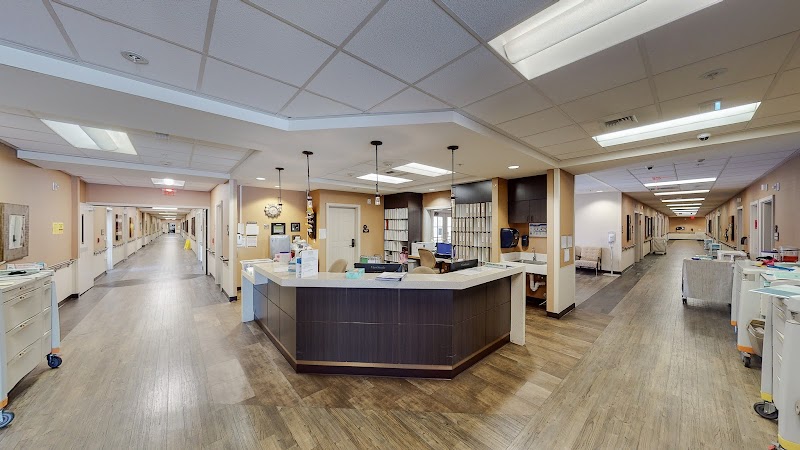
Who Owns and Operates The Ellison John Transitional?

THE ELLISON JOHN TRANSITIONAL CARE CENTER is owned by a for-profit company. For-profit facilities operate as businesses with obligations to shareholders or private owners. The facility is operated by ABBY GL, LLC, a chain that manages multiple nursing homes. With 170 certified beds and approximately 151 residents (about 89% occupancy), it is a mid-sized facility located in LANCASTER, California.
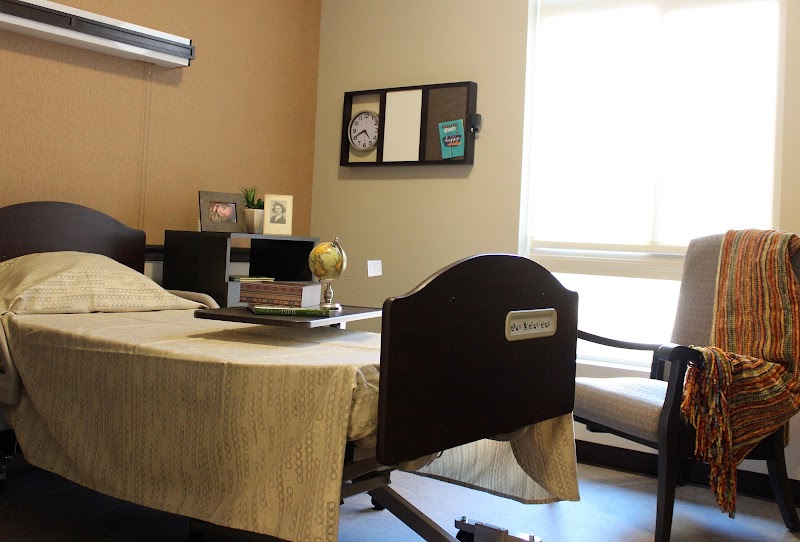
How Does The Ellison John Transitional Compare to Other California Nursing Homes?

Compared to the 100 nursing homes in California, THE ELLISON JOHN TRANSITIONAL CARE CENTER's overall rating (1 stars) is below the state average of 3.1, staff turnover (36%) is near the state average of 46%, and health inspection rating (1 stars) is much below the national benchmark.

What Should Families Ask When Visiting The Ellison John Transitional?

Based on this facility's data, families visiting should ask: "What changes have been made since the serious inspection findings, and how are you preventing similar issues?" "Can I visit during a mealtime to observe dining assistance and food quality?" "How do you handle medical emergencies, and what is your hospital transfer rate?" "Can I speak with family members of current residents about their experience?" These questions are particularly relevant given the facility's Immediate Jeopardy citations.

Is The Ellison John Transitional Safe?

Based on CMS inspection data, THE ELLISON JOHN TRANSITIONAL CARE CENTER has documented safety concerns. Inspectors have issued 3 Immediate Jeopardy citations (the most serious violation level indicating risk of serious injury or death). The facility has a 1-star overall rating and ranks #100 of 100 nursing homes in California. Families considering this facility should ask detailed questions about what corrective actions have been taken since these incidents.

Do Nurses at The Ellison John Transitional Stick Around?

THE ELLISON JOHN TRANSITIONAL CARE CENTER has a staff turnover rate of 36%, which is about average for California nursing homes (state average: 46%). Moderate turnover is common in nursing homes, but families should still ask about staff tenure and how the facility maintains care continuity when employees leave.

Was The Ellison John Transitional Ever Fined?

THE ELLISON JOHN TRANSITIONAL CARE CENTER has been fined $259,160 across 3 penalty actions. This is 7.3x the California average of $35,670. Fines at this level are uncommon and typically indicate a pattern of serious deficiencies, repeated violations, or failure to correct problems promptly. CMS reserves penalties of this magnitude for facilities that pose significant, documented risk to resident health or safety. Families should request specific documentation of what issues led to these fines and what systemic changes have been implemented.

Is The Ellison John Transitional on Any Federal Watch List?

THE ELLISON JOHN TRANSITIONAL CARE CENTER is not on any federal watch list. The most significant is the Special Focus Facility (SFF) program, which identifies the bottom 1% of nursing homes nationally based on persistent, serious quality problems. Not being on this list means the facility has avoided the pattern of deficiencies that triggers enhanced federal oversight. This is a positive indicator, though families should still review the facility's inspection history directly.