HERITAGE GARDENS HEALTH CARE CENTER
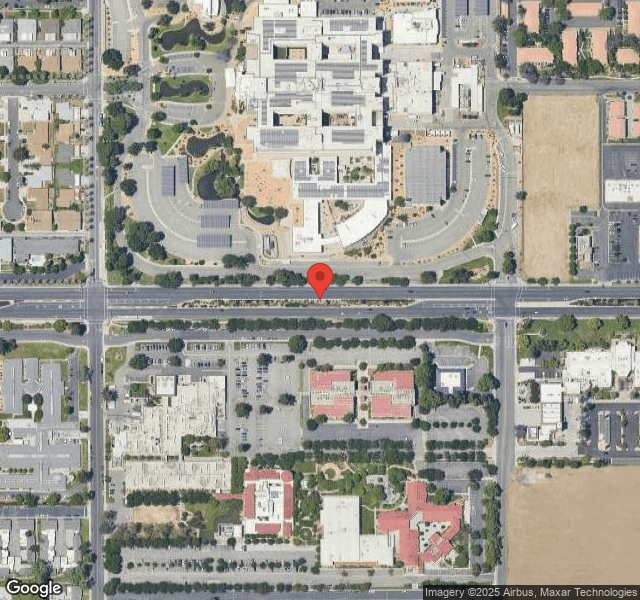
25271 BARTON ROAD, LOMA LINDA, CA 92354 (909) 796-0216
For profit - Corporation 110 Beds PROGRESSIVE HEALTH CARE CENTERS Data: November 2025 1 Immediate Jeopardy citation
Trust Grade
58/100
#372 of 1155 in CA
Last Inspection: January 2025

Within standard 12-15 month inspection cycle. Federal law requires annual inspections.

Overview

Heritage Gardens Health Care Center has a Trust Grade of C, which means it is average and in the middle of the pack compared to other facilities. It ranks #372 out of 1,155 nursing homes in California, placing it in the top half, and #24 out of 54 in San Bernardino County, with only a few local options rated higher. Unfortunately, the facility is worsening, with issues increasing from 3 in 2024 to 9 in 2025. Staffing is average at 3 out of 5 stars, with a turnover rate of 47%, indicating that staff may not stay long enough to build strong relationships with residents. While the facility has no fines on record, it has concerning RN coverage, being lower than 84% of California facilities, which may affect the quality of care. Specific incidents include a resident not receiving critical heart medication for 32 days and failures in infection control practices for multiple residents, which could lead to serious health risks. Overall, while there are notable strengths, such as good quality measures, the facility also has significant areas for improvement.

Trust Score
C
58/100
In California
#372/1155
Top 32%
Safety Record
High Risk
Review needed
Inspections
Getting Worse
3 → 9 violations
Staff Stability
⚠ Watch
47% turnover. Above average. Higher turnover means staff may not know residents' routines.
Penalties
✓ Good
No fines on record. Clean compliance history, better than most California facilities.
Skilled Nurses
⚠ Watch
Each resident gets only 19 minutes of Registered Nurse (RN) attention daily — below average for California. Fewer RN minutes means fewer trained eyes watching for problems.
Violations
⚠ Watch
45 deficiencies on record. Higher than average. Multiple issues found across inspections.
★★★★☆
4.0
Overall Rating
★★★☆☆
3.0
Staff Levels
★★★★★
5.0
Care Quality
★★★☆☆
3.0
Inspection Score
Stable
2024: 3 issues
2025: 9 issues

The Good

  • 5-Star Quality Measures · Strong clinical quality outcomes
  • Full Sprinkler Coverage · Fire safety systems throughout facility
  • No fines on record

Facility shows strength in quality measures, fire safety.

The Bad

Staff Turnover: 47%

Near California avg (46%)

Higher turnover may affect care consistency

Chain: PROGRESSIVE HEALTH CARE CENTERS

Part of a multi-facility chain

Ask about local staffing decisions and management

The Ugly 45 deficiencies on record

1 life-threatening
May 2025 1 deficiency
CONCERN (D) 📢 Someone Reported This

A family member, employee, or ombudsman was alarmed enough to file a formal complaint

Potential for Harm - no one hurt, but risky conditions existed

Resident Rights (Tag F0550)

Could have caused harm · This affected 1 resident

**NOTE- TERMS IN BRACKETS HAVE BEEN EDITED TO PROTECT CONFIDENTIALITY** Based on observation, interview, and record review, the facility failed to ensure one of three sampled residents (Resident 1) wa...

Read full inspector narrative →
**NOTE- TERMS IN BRACKETS HAVE BEEN EDITED TO PROTECT CONFIDENTIALITY** Based on observation, interview, and record review, the facility failed to ensure one of three sampled residents (Resident 1) was treated with respect, kindness, and dignity, when a Certified Nursing Assistant (CNA 1) engaged in a verbal altercation with Resident 1. This failure resulted in Resident 1 ' s basic right to be violated, which had the potential for Resident 1 to feel disrespected and unsafe. Findings: During a review of Resident 1 ' s admission Record (contains demographic and medical information), it indicated Resident 1 was admitted to the facility on [DATE], with diagnoses of hemiplegia (one side of the body paralyzed) and hemiparesis (weakness of one side of the body). During a review of Resident 1 ' s Change in Condition Evaluation, dated April 4, 2025, it indicated on April 4, 2025 at around 3 PM, Resident [Resident 1] had a derogatory verbal altercation with a staff member [CNA 1]. Both staff member and Resident educated on the importance of proper communication, mutual respect. Resident on monitoring for psychosocial well-being. Resident reassured that he is safe and that the CNA in question will no longer be assigned to his care. Resident verbalized feeling safe and does not appear in any distress. During a review of Employee Separation Report dated April 9, 2025, it indicated CNA 1 used the word F*** multiple times in a verbal interaction with a resident. This was witnessed by another staff member and the resident who was alert and oriented. There is no circumstance where any expletive may be used in a verbal interaction with a resident. This is expressly against facility policy and practice . During an interview on April 11, 2025, at 2:38 PM, with the Administrator (Admin), the Admin stated CNA 1 validated the incident had occurred. The Admin further stated although Resident 1 initiated the use of profanity, CNA 1 ' s response was inappropriate and not permitted under facility policy. The Admin stated staff were expected to walk away and report such incidents, rather than engage in verbal altercations with residents. During an observation on April 11, 2025, at 4:00 PM, Resident 1 was lying down in bed, with his eyes open. Resident 1 stated on April 4, 2025, at approximately 11:30 AM, CNA 1 was providing care for him, when CNA 1 pulled his pillow really hard, which upset him and led him to use the F-word first toward CNA 1. Resident 1 further stated, in response, CNA 1 replied F*** you, and continued to exchange offensive language with him. Resident 1 stated This should not happen in places like this. During a concurrent phone interview and record review. on May 2, 2025, at 4:16 PM with the Director of Nurses (DON), the facility ' s policy and procedure (P&P) titled Resident Rights, dated revised December 2016, was reviewed. The P&P indicated, Employees shall treat all residents with kindness, respect and dignity .1. Federal and state laws guarantee certain basic rights to all residents of this facility. These rights include the resident ' s right to .b. Be treated with respect, kindness and dignity . The DON stated staff were expected to follow this policy, and acknowledged CNA 1 failed to do so during the incident involving Resident 1.
Jan 2025 8 deficiencies
CONCERN (D)

Potential for Harm - no one hurt, but risky conditions existed

Deficiency F0637 (Tag F0637)

Could have caused harm · This affected 1 resident

**NOTE- TERMS IN BRACKETS HAVE BEEN EDITED TO PROTECT CONFIDENTIALITY** Based on interview and record review, the facility failed to ensure the Significant Change of Status Assessments (SCSA- comprehe...

Read full inspector narrative →
**NOTE- TERMS IN BRACKETS HAVE BEEN EDITED TO PROTECT CONFIDENTIALITY** Based on interview and record review, the facility failed to ensure the Significant Change of Status Assessments (SCSA- comprehensive assessment that must be completed when the Interdisciplinary Team (IDT) has determined that a resident meets the significant change guidelines for either major improvement or decline) Minimum Data Set (MDS- a computerized assessment instrument) were completed within 14 days for one of two residents (Resident 5) reviewed for hospice (services to provide for the physical, psychosocial, spiritual, and emotional needs of a terminally ill patient and/or family members, as delineated in a specific patient plan of care.). This failure resulted on Resident 5's care plan not being updated and revised to reflect her current status, and had the potential to delay identification and implementation of the resident's care and support needs. Findings: During a review of Resident 5's admission Record (a document that contains demographic and clinical data), it indicated Resident 5 was admitted to the facility on [DATE], with diagnoses which included cerebrovascular disease (condition that affects the blood vessels in the brain, lead to stroke) and atherosclerosis heart disease (condition where the blood vessels clogged, and lead to heart attacks or strokes). During a concurrent interview and record review, on January 16, 2025, at 10:10 AM, with the Minimum Data Set Nurse 1 (MDS Nurse 1), the MDS Nurse 1 reviewed and acknowledged Resident 5's physician's order, dated May 24, 2024, which indicated . Admit to [Name of the Hospice Company] Hospice on routine level of care . During a follow-up concurrent interview and record review, on January 16, 2025, at 10:15 AM, with the MDS Nurse 1, the MDS Nurse 1 reviewed Resident 5's clinical record, which indicated the SCSA assessment was not completed 14 days after hospice admission. The MDS Nurse 1 stated, The SCSA MDS assessment should have been completed on June 6, 2024, and we missed it. (Six months and 11 days past due). During a concurrent interview and record review, on January 16, 2025, at 10:15 AM, with the MDS Nurse 1, the MDS Nurse 1 reviewed the facility's policy and procedure titled Change in Resident's Condition or Status revised May 20, 2017, which indicated .2. A significant assessment is major decline or improvement in resident status that will: a. Will not normally resolve itself without intervention . c. requires interdisciplinary review and/or revision of the care plan .9. If a significant change in resident's physical or mental condition occurs, a comprehensive assessment of the resident's condition will be conducted as required by current OBRA [is a federal law that establishes regulations for nursing facilities] regulation governing resident assessment and as MDS RAI [Resident Assessment Instrument] instruction manual . The MDS Nurse 1 stated the facility did not follow the policy. During a review of CMS (Centers for Medicare & Medicaid Services) RAI (Resident Assessment Instrument, this manual provides guidelines and definitions for completing MDS assessment) manual, dated October 2024, it indicated .An SCSA is required to be performed when a terminally ill resident enrolls in a hospice program (Medicare-certified or State-licensed hospice provider) or changes hospice providers and remains a resident at the nursing home. The ARD must be within 14 days from the effective date of the hospice election (which can be the same or later than the date of the hospice election statement, but not earlier than). An SCSA must be performed regardless of whether an assessment was recently conducted on the resident. This is to ensure a coordinated plan of care between the hospice and nursing home is in place. A Medicare-certified hospice must conduct an assessment at the initiation of its services. This is an appropriate time for the nursing home to evaluate the MDS information to determine if it reflects the current condition of the resident, since the nursing home remains responsible for providing necessary care and services to assist the resident in achieving their highest practicable well-being at whatever stage of the disease process the resident is experiencing .
CONCERN (D)

Potential for Harm - no one hurt, but risky conditions existed

Assessment Accuracy (Tag F0641)

Could have caused harm · This affected 1 resident

**NOTE- TERMS IN BRACKETS HAVE BEEN EDITED TO PROTECT CONFIDENTIALITY** 2. During an observation on January 13, 2025, at 2:48 PM, in Resident 19's room, Resident 19 was lying in bed, watching televisi...

Read full inspector narrative →
**NOTE- TERMS IN BRACKETS HAVE BEEN EDITED TO PROTECT CONFIDENTIALITY** 2. During an observation on January 13, 2025, at 2:48 PM, in Resident 19's room, Resident 19 was lying in bed, watching television. Resident 19 stated she had no concerns with her care. During a review of Resident 19's admission Record, it indicated Resident 19 was admitted to the facility with the diagnoses of other mechanical complication of other internal orthopedic devices, implants, and grafts (issues that arise due to complications on an internal orthopedic implant), generalized muscle weakness (decreased strength or weakness in most of muscles), and osteomyelitis (OM- bone infection). During a review of Resident 19's Physician's Order, dated October 16, 2024, it indicated Bactrim (antibiotic medication) DS (Double Strenght) Oral Tablet 800 - 160 MG (milligram-unit of measurement) Give 1 tablet by mouth in the morning for Chronic LLE (left lower leg) hardware/OM infection for 52 weeks. During a review of Resident 19's Infection Note, dated December 18, 2024, it indicated .per dr (doctor) . resident is to continue current antibiotic regime and continue to follow infectious disease MD's (Medical Doctor) directives without a time out (scheduled review of the patient antibiotic treatment) at this time . During a review of Resident 19's MDS - Section N: Medications, dated January 1, 2025, it indicated Resident 19 did not receive any antibiotics. During a review of Resident 19's MAR for the month of December 2024, it indicated Resident 19 received her antibiotic medications everyday for the whole month. During a concurrent interview and record review, on January 15, 2025, at 2:12 PM, with the MDS Nurse 1, the MDS Nurse 1 reviewed Resident 19's MAR for the month of December 2024 and MDS- Section N dated January 1, 2025, and stated Resident 19's MDS was not coded correctly. The MDS Nurse 1 further it was her mistake. During a concurrent interview and record review, on January 16, 2025, at 2:26 PM, with the DON, the DON reviewed the facility's P&P titled, Certifying Accuracy of the Resident Assessment revised on November 2019, which indicated . Any person completing a portion of the Minimum Data Set/MDS (Resident Assessment Instrument) must sign and certify the accuracy of that portion . 3. The information captured on the assessment reflects the status of the resident during the observation (look back) period for that assessment . The DON stated the P&P was not followed. During a review of the CMS RAI manual, dated October 2024, it indicated, .The intent of the items in this section is to record the number of days, during the last 7 days (or since admission/entry or reentry if less than 7 days) that any type of injection, insulin, and/or select medications were received by the resident . N0415F1. Antibiotic: Check if an antibiotic medication was taken by the resident at any time during the 7-day look-back period (or since admission/entry or reentry if less than 7 days) . Based on observation, interview, and record review, the facility failed to ensure Minimum Data Set (MDS- a computerized assessment instrument) Assessments were completed accurately for two of two residents (Residents 9 and 19) reviewed for insulin (hormone that helps the body use sugar and starches for energy or store them for later use) and antibiotic (medication used to treat bacterial infections) use when: 1. Resident 9's insulin injections were not coded on the MDS assessment. 2. Resident 19's antibiotic therapy was not coded on the MDS assessment. These failures had the potential to cause inaccuracy in identifying Residents 9 and 19's care and support needs. Findings: 1. During a review of Resident 9's admission Record (contains demographic and medical information), it indicated Resident 9 was admitted to the facility on [DATE], with diagnoses of Type 2 diabetes mellitus (when the body has trouble using insulin properly, causing high blood sugar levels.), and long term use of insulin. During a review of Resident 9's Physician's Orders, dated July 12, 2023, it indicated . Humalog injection solution (insulin Lispro- type of insulin) 100 unit/mL (units of insulin in each milliliter of the liquid) inject as per sliding scale (: if 70 - 150 = 0 UNITS;151 - 200 = 2 UNITS; 201 - 250 = 4 UNITS; 251 - 300 = 6 UNITS; 301 - 350 = 8 UNITS; 351 - 400 = 10 UNITS; 401 - 450 = 12 UNITS, subcutaneously before meals and at bedtime related to Type 2 diabetes mellitus without complications .IF OVER 400 GIVE 12 UNITS AND CALL MD .-Start Date 08/01/2024 (August 1, 2024) 0600 (6 AM) . During a concurrent interview and record review, on January 14, 2025, at 10:12 AM, with the MDS Nurse 2, the MDS Nurse 2 reviewed and acknowledged Resident 9's Medication Administration Record (MAR) for the month of October 2024, which indicated Resident 9 has received insulin injections on October 1, 2024, October 3, 2024, October 4, 2024, October 5, 2024, October 6, 2024, and October 7, 2024. (A total of 6 days from October 1, 2024 through October 7, 2024.) During further interview and record review, on January 14, 2025, at 10:18 AM, with the MDS Nurse 2, the MDS Nurse 2 reviewed and acknowledged Resident 9's MDS Section N - Medications dated October 7, 2024, which indicated Resident 9 did not receive any insulin injection from the seven day look back period (October 1, 2024 through October 7, 2024). The MDS Nurse 2 stated the MDS Assessment was inaccurately coded and further stated it should have reflected the six days of insulin use. During a concurrent interview and record review on January 16, 2025, at 8:20 AM, with the Director of Nursing (DON), the DON reviewed the facility's policy and procedure (P&P) titled Certifying Accuracy of the Resident Assessment dated November 2019, which indicated 2. Any person who completes any portion of the MDS assessment, tracking form or correction request form is required to sign the assessment certifying the accuracy of the portion of that assessment . The DON stated the policy was not followed. During a concurrent interview and record review, on January 16, 2025, at 9:38 AM, with the MDS Nurse 2, the MDS Nurse 2 reviewed of the CMS (Centers for Medicare & Medicaid Services) RAI manual (Resident Assessment Instrument, this manual provides guidelines and definitions for completing MDS assessment) dated October 2024, which indicated, .The intent of the items in this section is to record the number of days, during the last 7 days (or since admission/entry or reentry if less than 7 days) that any type of injection, insulin, and/or select medications were received by the resident . N0415F1. Antibiotic: Check if an antibiotic medication was taken by the resident at any time during the 7-day look-back period (or since admission/entry or reentry if less than 7 days) . The MDS Nurse 2 stated that the RAI Manual guidelines were not followed.
CONCERN (D)

Potential for Harm - no one hurt, but risky conditions existed

Quality of Care (Tag F0684)

Could have caused harm · This affected 1 resident

Based on observation, interview, and record review, the facility failed to ensure a physician's order was carried out timely for one of two residents (Resident 62) reviewed for hospice (services to pr...

Read full inspector narrative →
Based on observation, interview, and record review, the facility failed to ensure a physician's order was carried out timely for one of two residents (Resident 62) reviewed for hospice (services to provide for the physical, psychosocial, spiritual, and emotional needs of a terminally ill patient and/or family members, as delineated in a specific patient plan of care) when Resident 62's order for a Speech Therapy (ST- assessment and treatment of communication problems and speech disorders) evaluation was not communicated with the hospice provider. This failure had the potential to place Resident 62 at risk for aspiration (when food, liquid, or other material is accidentally inhaled into the lungs), weight loss and further nutritional decline. Findings: During an observation on January 13, 2025, at 8:29 AM, outside of Resident 62's room, Resident 62 was yelling out nonsensically. During a review of Resident 62's admission Record (contains demographic and medical information), it indicated Resident 62 was admitted to the facility with the diagnoses of cerebral atherosclerosis (disease that occurs when fatty plaque builds up in the arteries of the brain), unspecified dementia (group of brain diseases that cause a decline in thinking, memory, and reasoning skills), and encounter for palliative care (specialized care aimed at improving the quality of life for patients with serious illnesses). During a review of Resident 62's Minimum Data Set [MDS- a computerized assessment instrument] Section C - Cognitive Patterns, dated October 30, 2024, it indicated a Brief Interview for Mental Status (BIMS - test used to screen cognitive impairment in long term care facilities) score of 6, indicating severe cognitive impairment (medical term referring to problems with thinking, learning, remembering, and making decisions). During a review of Resident 62's Nutrition/Dietary Note dated November 22, 2024, it indicated .per IDT (Interdisciplinary Team- a team mixed of different professions who come together to make recommendations for patient care), pt (patient) had difficulty chewing meats, however pt reported being able to chew normally. Will refer to ST for precaution . RECS: (recommendations) . 3) ST eval d/t [due to] difficulty chewing. During a review of Resident 62's Physician's Order dated November 23, 2024, it indicated ST eval (evaluation) d/t difficulty chewing. During a review of Resident 62's Nurses Note dated November 23, 2024, it indicated Carried out RD (Registered Dietician) recommendations as follows: . 2. ST eval d/t difficulty chewing. Orders noted and carried out . MD (Medical Doctor) and resident made aware. During a concurrent interview and record review, on January 15, 2025, at 10:07 AM, with the Director of Nursing (DON), the DON reviewed Resident 62's clinical record and was not able to find documentation of Resident 62's ST evaluation. The DON stated the Registered Nurse from the registry (independent contractors hired through a third party) was the one who carried out Resident 62's physician's order and the nurse did not communicate with the facility nor with Resident 62's hospice provider. During a concurrent interview and record review on January 16, 2025, at 2:20 PM, with the DON, the DON reviewed the facility's policy and procedure (P&P) titled, Hospice Program revised on July 2017, which indicated . 10. In general, it is the responsibility of the facility to meet the president's personal care and nursing in needs in coordination with the hospice representative . c. Notifying the hospice about the following: . (2) clinical complications that suggest a need to alter the plan of care . d. communicating with the hospice provider (and documenting such communication) to ensure that the needs of the resident are addressed and met 24 hours per day . The DON stated the P&P was not followed.
CONCERN (D)

Potential for Harm - no one hurt, but risky conditions existed

Deficiency F0688 (Tag F0688)

Could have caused harm · This affected 1 resident

**NOTE- TERMS IN BRACKETS HAVE BEEN EDITED TO PROTECT CONFIDENTIALITY** Based on observation, interview, and record review, the facility failed to ensure necessary care and services to ensure activiti...

Read full inspector narrative →
**NOTE- TERMS IN BRACKETS HAVE BEEN EDITED TO PROTECT CONFIDENTIALITY** Based on observation, interview, and record review, the facility failed to ensure necessary care and services to ensure activities of daily living were being provided for two of four residents (Residents 44 and 54) reviewed for position and mobility when: 1. Resident 44's Restorative Nursing Program (RNP- planned healthcare approach within long-term care facilities that aims to help residents maintain or regain their independence by providing targeted interventions to improve their functional abilities) recommendation from the Physical Therapist (PT- healthcare provider who helps you improve how your body performs physical movements) was not implemented. 2. Resident 54's RNP recommendation from the PT and Occupational Therapist (OT- healthcare provider who helps you improve your ability to perform daily tasks) were not implemented. These failures had the potential to delay the continuity of care for Residents 44 and 54, which could prevent them from maintaining or improving the activities of daily living. Findings: 1. During a concurrent observation and interview on January 13, 2025, at 11:55 AM, in Resident 44's room, Resident 44 was lying on her bed. She stated she has not been working with anyone on walking or exercises. During a review of Resident 44's admission Record (contains demographic and medical information), it indicated Resident 44 was admitted to the facility on [DATE], with diagnoses which included muscle (a part of your body that helps you move by stretching and contracting) weakness and difficulty of walking. During a review of Resident 44's PT Discharge summary, dated [DATE], it indicated . discharged status and recommendation . Prognosis to maintain CLOF [Current Level of Function] = Good with consistent staff follow through . discharged recommendations: RNP . ambulation [walk] w/ [with] fww [front wheel walker (a type of walker with wheels in the front to help people walk more easily)] During a concurrent interview and record review, with the Director of Nursing (DON), on January 15, 2025, at 10:30 AM, the DON reviewed Resident 44's clinical records, and was not able to find documented evidence to indicate the PT's recommendation for RNP had been implemented for Resident 44. The DON stated I was not aware of the PT recommendation. The DON further stated the recommendation was not communicated to the nursing department, hence it was not followed up and implemented. During a follow up interview and concurrent record review with the Director of Rehabilitation (DOR), on January 15, 2025, at 2:15 PM, the DOR reviewed Resident 44's clinical records and confirmed the PT had recommended ambulation with a front wheel walker for Resident 44. The DOR stated she had just learned about the recommendation (seven months and thirteen days after it was made). The DOR further explained there should have been communication between the nursing and rehabilitation departments regarding this recommendation, but there was not. 2. During a concurrent observation and interview, on January 14, 2025, at 9:55 AM, in Resident 54's room, Resident 54 was lying on his geriatric chair (large padded chairs with wheeled bases, and are designed to assist seniors with limited mobility). He stated that he has not been working with anyone on any exercises. During a review of Resident 54's admission Record, it indicated Resident 54 was admitted to the facility on [DATE], with diagnoses which included contracture (a condition where muscles or joints become tight and stiff, making it hard to move them) of muscle and muscle weakness. During a review of Resident 54's PT Discharge summary, dated [DATE], it indicated . discharged status and recommendation . Prognosis to maintain CLOF = Good with consistent staff follow through . discharged recommendations: RNP . ROM (Range of Motion- type of exercise that helps you move your joints as far as they can go, like stretching or bending your arm or leg) . During a review of Resident 54's OT Discharge summary dated [DATE], it indicated . discharged status and recommendation . Prognosis to maintain CLOF = Good with consistent staff follow through . discharged recommendations: d/c [discharged ] to nsg [nursing] care . ROM to BUE [bilateral (both) upper extremities] as tolerated. During a concurrent interview and record review, with the DON, on January 15, 2025, at 10:45 AM, the DON reviewed Resident 54's clinical records, and was not able to find documented evidence to indicate the PT's and OT's recommendations had been implemented for Resident 54. The DON stated, I was not aware of the PT and OT recommendation. The DON further stated the recommendation was not communicated to the nursing department, hence it was not followed up and implemented. During a follow up interview and concurrent record review with the DOR, on January 15, 2025, at 2:40 PM, the DOR reviewed Resident 54's clinical records and confirmed that PT had recommended ROM and OT had recommended ROM to BUE for Resident 54. The DOR stated she had just learned about the recommendation. The DOR further explained that there should have been communication between the nursing and rehabilitation departments regarding this recommendation, but there was not. During a concurrent interview and record review, with the DOR, on January 15, 2025, at 3:05 PM, the DOR reviewed the facility's policy and procedures titled Restorative Nursing Services, revised on July 2017, which indicated, Policy Statement Residents will receive restorative nursing care as needed to help promote optimal safety and independence. Policy Interpretation and Implementation 1. Restorative nursing care consists of nursing interventions that may or may not be accompanied by formalized rehabilitative services (e.g., physical, occupational or speech therapies). 2. Residents may be started on a restorative nursing program upon admission, during the course of stay or when discharged from rehabilitative care. 3. Restorative goals and objectives are individualized and resident-centered, and are outlined in the resident's plan of care . The DOR stated the facility policy was not followed.
CONCERN (D)

Potential for Harm - no one hurt, but risky conditions existed

Respiratory Care (Tag F0695)

Could have caused harm · This affected 1 resident

Based on observation, interview, and record review, the facility failed to ensure a physician's order for oxygen therapy (administration of oxygen at concentrations greater than that in ambient air wi...

Read full inspector narrative →
Based on observation, interview, and record review, the facility failed to ensure a physician's order for oxygen therapy (administration of oxygen at concentrations greater than that in ambient air with the intent of treating or preventing the symptoms and manifestations of decreased perfusion of oxygen to the tissues) was obtained for one of three residents (Resident 33) reviewed for oxygen. This failure had the potential for Resident 33 to develop oxygen toxicity (conditions that occurs when someone breaths too much oxygen, damaging lungs and potential for death) from the lack of monitoring from a physician. Findings: During a review of Resident 33's admission Record, it indicated Resident 33 was admitted to the facility with the diagnoses of dementia (medical condition that causes a person to lose ability to think, remember, and reason), retropharyngeal and parapharyngeal abscess (severe infection in the neck that involve a collection of pus in the deep neck spaces), and shortness of breath (difficulty breathing). During an observation on January 13, 2025, at 10:11 AM, in Resident 33's room, Resident 33 was lying in bed, talking nonchalantly to the wall. Resident 33 was wearing nasal cannula tubing (a flexible plastic tube that delivers oxygen through small tubes that sit in the nose) attached to an oxygen concentrator, which was running at 2 liters per minute (amount of oxygen given to a patient). During an interview and concurrent record review, on January 13, 2025, at 2:41 PM, with the Director of Nursing (DON), the DON reviewed Resident 33's clinical record and was unable to find a physician's order for Resident 33's oxygen therapy. The DON stated there should have been an order. During a concurrent interview and record review, on January 13, 2025, at 3:48 PM, with the DON, the DON reviewed the facility's policy and procedure (P&P) titled, Oxygen Administration revised on October 2010, which indicated, . Preparation 1. Verify that there is a physician's order for this procedure. Review the physician's order . for oxygen therapy . The DON stated the P&P was not followed.
CONCERN (D) 📢 Someone Reported This

A family member, employee, or ombudsman was alarmed enough to file a formal complaint

Potential for Harm - no one hurt, but risky conditions existed

Deficiency F0839 (Tag F0839)

Could have caused harm · This affected 1 resident

**NOTE- TERMS IN BRACKETS HAVE BEEN EDITED TO PROTECT CONFIDENTIALITY** Based on interview and record review, the facility failed to ensure their professional staff maintained an active and current li...

Read full inspector narrative →
**NOTE- TERMS IN BRACKETS HAVE BEEN EDITED TO PROTECT CONFIDENTIALITY** Based on interview and record review, the facility failed to ensure their professional staff maintained an active and current license (legal permit that allows a person to practice nursing) when a Licensed Vocational Nurse (LVN 2) worked with an expired license on [DATE], through [DATE]. This failure had the potential to place 101 highly vulnerable residents whose health conditions are already compromised at risk of receiving care from an unqualified nurse with an expired license, which could have affected and altered their health and well-being. Findings: During a review of a facility provided document titled Board of Vocational Nursing and Psychiatric Technicians Licensing Details dated [DATE], it indicated LVN 2 nursing license was delinquent (license that is not renewed within the allotted timeframe). During a concurrent interview and record review on [DATE], at 1:32 PM, with the Director of Nursing (DON), the DON reviewed and acknowledged a facility document titled Nursing Staff Assignment and Sign-in Sheet dated [DATE] through [DATE], which indicated LVN 2 worked throughout those dates. During a follow up interview with the DON, on [DATE], at 1:46 PM, the DON stated it was her responsibility to check on the nurses' licenses. The DON further stated she checked LVN 2's license last [DATE], and it was still active. The DON stated she checks nurses' licenses monthly to see if it was active, but she did not check for the expiration dates. During a concurrent interview and record review, on [DATE], at 1:57 PM, with the DON, the DON reviewed an undated facility document titled Patient Care Supervisor - LVN Job Description which indicated, . E. Qualifications: Current nursing licensure in the state of California required. The DON stated the job description was not followed. The DON further stated LVN 2 should not have worked from [DATE] through 5, 2025.
CONCERN (F)

Potential for Harm - no one hurt, but risky conditions existed

Food Safety (Tag F0812)

Could have caused harm · This affected most or all residents

Based on observation, interview, and record review, the facility failed to ensure the ice scoop used for the kitchen's ice machine was stored in a clean and sanitary manner as required by the facility...

Read full inspector narrative →
Based on observation, interview, and record review, the facility failed to ensure the ice scoop used for the kitchen's ice machine was stored in a clean and sanitary manner as required by the facility's policy. This failure posed potential risk for contamination of ice, which could lead to foodborne illness (food poisoning, is a sickness caused by eating food or drinking water that is contaminated with harmful bacteria, viruses, parasites, or chemicals.) and negatively impact the health and safety of 96 of 96 vulnerable residents who received food and beverages from the kitchen. Findings: During a concurrent observation and interview, on January 14, 2025, at 8:20 AM, with the Dietary Services Supervisor (DSS), in the kitchen, the ice machine was inspected. The ice scoop was found resting inside an uncovered blue container located near the ice machine. The DSS stated the ice scoop must always be stored in a clean, covered container to ensure safety and prevent contamination. During a concurrent observation and interview on January 14, 2025, at 8:30 AM, in the kitchen, with the Maintenance Director, (MD-1), the MD-1 stated, It's not my job to place the ice scoop back properly. The MD-1 acknowledged the ice scoop should have been stored on the side of the ice machine in a covered container. During a concurrent interview and record review, on January 16, 2025, at 8:55 AM, with the MD-1, the MD-1 reviewed the facility's policy and procedure (P&P) titled, Ice Machines and Ice Storage Chest dated January 2012, which indicted 1. Ice-making machines, ice storage chest/containers, and ice call all become contaminated by: a. Unsanitary manipulation by employees .2. To help prevent contamination of ice machines, ice storage chest/containers or ice, staff shall follow these precautions .e. keep the ice scoop/bin in a covered container when not in use ., clean and sanitize the tray and ice scoop daily . The MD-1 acknowledged the policy was not followed. During an interview with the Infection Control Prevention Nurse (ICP Nurse), on January 16, 2025, at 9:32 AM, the ICP Nurse stated the ice scoop placement did not follow the protocol. She further stated it should be placed in a designated area and covered with a lid because leaving it uncovered can lead to contamination. The IP Nurse further stated ice was considered a food item, and for infection control purposes, it must be protected with a lid to prevent contamination.
CONCERN (F)

Potential for Harm - no one hurt, but risky conditions existed

Infection Control (Tag F0880)

Could have caused harm · This affected most or all residents

**NOTE- TERMS IN BRACKETS HAVE BEEN EDITED TO PROTECT CONFIDENTIALITY** Based on observation, interview, and record review, the facility failed to ensure proper and safe infection control practices we...

Read full inspector narrative →
**NOTE- TERMS IN BRACKETS HAVE BEEN EDITED TO PROTECT CONFIDENTIALITY** Based on observation, interview, and record review, the facility failed to ensure proper and safe infection control practices were being followed for six of 25 sampled residents (Residents 44, 33, 65, 4, 484 and 47) when: 1. Resident 44's Central Venous Catheter (CVC- thin, flexible tube inserted into a vein to provide access to the heart) dressing was not changed in accordance with facility policy. 2. Resident 44's Intravenous tubing (IV- flexible tube used to give fluids, medicine, or nutrients through a vein) was not dated in accordance with facility policy. 3. Resident 33's oxygen tubing (flexible plastic tube that is used to deliver oxygen from an oxygen supply to a person who needs extra oxygen) was not changed in accordance with facility policy. 4. Resident 65's oxygen tubing was not dated in accordance with facility policy 5. License Vocational Nurse 1 (LVN 1) did not perform hand hygiene (practice of washing hands with soap and water or using an alcohol-based hand sanitizer to remove germs) during medication administration for Resident 5. 6. Certified Nursing Assistant 1 (CNA 1) did not perform hand hygiene when assisting Residents 484 and 47 with breakfast. These failures had the potential to result in cross-contamination (the transfer of harmful bacteria) causing a preventable infection to 101 highly vulnerable residents whose health conditions were already compromised. Findings: 1. During a review of Resident 44's clinical record, the Face Sheet (contains demographic and medical information), indicated Resident 44 was admitted to the facility on [DATE], with diagnoses which included bacteremia (bloodstream infection that occurs when bacteria enter the blood) and hypertension (high blood pressure). During a concurrent observation and interview, on January 13, 2025, at 11:55 AM, with a Registered Nurse 1 (RN 1), Resident 44's CVC, which was located on her right upper arm, was inspected. RN 1 confirmed the CVC dressing was dated January 1, 2025, indicating when the dressing was last changed. RN 1 stated the facility's practice required the dressing to be changed every seven days or when it becomes soiled or dislodged. RN 1 further stated that the dressing should have been changed on January 8, 2025 (five days ago), but it had not been. A concurrent interview and record review, on January 16, 2025, at 10:30 AM, with the Director of Nursing (DON) and Infection Control Prevention Nurse (ICP Nurse), the DON and the ICP Nurse reviewed the facility's policy and procedure (P&P) titled, Central Venous Catheter Dressing Changes, revised on April 20, 2016, which indicated, Purpose. The purpose of this procedure is to prevent catheter-related infections that are associated with contaminated, loosened, soiled, or wet dressings General Guidelines . 5. Change transparent semi-permeable membrane (TSM) dressings at least every 5-7 days and PRN [as needed] wet, soiled, or not intact) . The DON stated the facility should have a system to ensure CVC dressings were changed according to policy, but no system were currently in place to monitor this. The ICP Nurse confirmed the policy was not followed. 2. During a review of Resident 44's clinical record, the Face Sheet indicated Resident 44 was admitted to the facility on [DATE], with diagnoses which included bacteremia and hypertension. During a review of Resident 44's physician's order, dated January 13, 2025, it indicated Resident 44 had an order for Vancomycin (a prescription antibiotic used to treat serious bacterial infections) . IV solution .1 gram (GM - unit of measure) intravenously one time a day . During a concurrent observation and interview, on January 13, 2025, at 11:40 AM, with RN 1, in Resident 44's room, Resident 44's Vancomycin 1 GM IV solution, which was hanging on the IV pole, was inspected. The IV solution was connected to an undated IV tubing. RN 1 stated that he administered Resident 44's IV medication that morning around 9:15 AM. RN 1 explained that facility practice required dating the IV tubing once it was opened and assembled for use. RN 1 further stated he should have dated, timed, and initialed the IV tubing, but he did not. A concurrent interview and record review, on January 16, 2025, at 10:14 AM, with the DON and ICP Nurse, they reviewed the facility's policy and procedure (P&P) titled, Administration Set/Tubing Changes, revised on April 20, 2016, which indicated, Purpose The purpose of this procedure is to provide guidelines for aseptic administration set changes in order to prevent infections associated with contaminated IV therapy equipment. Preparation 1. Label new tubing with date, time, and initials. If facility requires, label may include the date and time that tubing was initiated and when tubing should be discontinued. General Guidelines: . 6. All tubing is labeled with start and change date and time. Any tubing that is observed not to have a label must be changed and then labeled accordingly . Both the DON and ICP Nurse stated the facility did not follow this policy. 3. During a review of Resident 33's admission Record, it indicated Resident 33 was admitted to the facility with the diagnoses of dementia (medical condition that causes a person to lose ability to think, remember, and reason), retropharyngeal and parapharyngeal abscess (severe infection in the neck that involve a collection of pus in the deep neck spaces), and shortness of breath (difficulty breathing). During an observation on January 13, 2025, at 10:11 AM, in Resident 33's room, Resident 33 was lying in bed, talking nonchalantly to the wall. Resident 33 was wearing oxygen cannula with its tubing attached to an oxygen concentrator, which was running at 2 liters per minute (amount of oxygen given to a patient). The date on oxygen tubing was December 27, 2024. (17 days ago) During an interview on January 13, 2025, at 3:26 PM, with the Infection Control ICP Nurse, the ICP Nurse stated Resident 33's oxygen tubing should have been changed sooner than 17 days. The ICP Nurse further stated it was all the nurse's responsibility to check the labels and change as needed. During a concurrent interview and record review, on January 13, 2025, at 3:48 PM, with the DON, the facility's P&P titled, Oxygen Administration dated revised October 2010 was reviewed. The P&P indicated, .Steps in the Procedure . 23. Change the oxygen cannula and tubing every seven (7) days, or as needed . The DON stated the P&P was not followed. The DON further stated it should not have been left unchanged for 17 days due to the risk of infection. 4. During a review of Resident 65's admission Record, it indicated Resident 65 was admitted to the facility with the diagnoses of chronic obstructive pulmonary disease (COPD-lung disease that makes it difficult to breath), acute respiratory failure with hypoxia (medical condition when there is not enough oxygen in the body), and asthma (lung disease that causes inflammation in the airways of the lungs). During a review of Resident 65's Physician Order dated September 17, 2024, the Physician Order indicated, Titrate (slowly increase or decrease over a period of time) O2 (oxygen) via n/c (nasal cannula- a type of oxygen tubing) between 2-5 L/min (L-liters- unit of measurement/min-minutes) to keep oxygen saturations (levels of oxygen in the blood) above 92% (95-100 is considered normal, with lower levels being acceptable for COPD) . During an observation on January 13, 2025, at 10:35 AM, in Resident 65's room, Resident 65 was lying in bed, watching television. Resident 65's oxygen tubing was adjacent to Resident 65's bed. There was no label on the oxygen tubing. During an interview on January 13, 2025, at 3:26 PM, with the ICP Nurse, the ICP Nurse stated Resident 65's oxygen tubing should have been labeled with the date. The ICP Nurse further stated it was the nurse's responsibility to label oxygen tubing. During a concurrent interview and record review on January 13, 2025, at 3:48 PM, with the DON, the DON reviewed the facility's P&P titled, Oxygen Administration revised on October 2010, which indicated .Steps in the Procedure . 23. Change the oxygen cannula and tubing every seven (7) days, or as needed . Documentation . After completing the oxygen setup or adjustment, the following information should be recorded . 1. The date and time that the procedure was performed. 2. The name and title of the individual who performed the procedure . The DON stated the P&P was not followed. 5. During a review of Resident 5's admission Record, it indicated Resident 5 was admitted to the facility with the diagnoses of hemiplegia (condition that causes weakness or paralysis on one side of the body) and hemiparesis (condition that causes weakness or an inability to move on one side of the body) following cerebral infarction (athologic process that results in an area of necrotic tissue in the brain) affecting right dominant side, aphasia (loss of ability to understand or express speech) following cerebral infarction, and gastrostomy status (a tube inserted into the stomach that delivers food and liquids). During a medication administration observation, on January 15, 2025, at 9:11 AM, with LVN 1, LVN 1 checked Resident 5's blood pressure then touched the computer, which was by the medication cart. LVN 1 then proceeded with administering Resident 5's medication, without performing hand hygiene. During a follow up interview on January 15, 2025, at 11:10 AM, with LVN 1, LVN 1 stated she should have performed hand hygiene after touching Resident 5. During an interview on January 15, 2025, at 11:25 AM, with the ICP Nurse, the ICP Nurse stated the expectation was for nurses to wash their hands after touching a patient. The ICP Nurse stated LVN 1 should have performed hand hygiene before administering Resident 5's medication. During a concurrent interview and record review on January 16, 2025, at 2:24 PM, with the DON, the DON reviewed the facility's P&P titled, Handwashing/Hand Hygiene revised on August 2019, which indicated, . 7. Use an alcohol-based hand rub . ; or, alternatively, soap (antimicrobial or non-antimicrobial) and water for the follow situations; . b. before and after direct contact with residents; c. before preparing or handing medications . The DON stated the P&P was not followed. 6. During a concurrent observation and interview, on January 15, 2025, at 7:38 AM, with CNA 1, CNA 1 walked into Residents 47 and 484's shared room. (Both residents were placed on Enhanced Barrier Precaution [EBP- set of infection control measures that use gowns and gloves to reduce the spread of resistant organism.]) An isolation cart (mobile storage unit that holds protective equipment such as gloves, mask, gown) was near the entrance of their room. CNA 1 donned on gown and gloves prior to entering room, then opened the curtain divider and set up Resident 47's breakfast tray. CNA 1 then cut up Resident 47's food and proceeded on feeding Resident 47. CNA 1 wore the same gown and gloves. Without performing hand hygiene, CNA 1 proceeded to set up the breakfast tray and feed Resident 484. Resident 47 stated CNA 1 comes in every morning to feed me and Resident 484 at the same time. CNA 1 acknowledged when residents were on EBP, the staff should not wear the same gown and gloves for the care of more than one person. During a concurrent interview and record review on January 15, 2025, at 8:30 AM, with the ICP Nurse, the IPN Nurse reviewed the facility's P&P titled, Handwashing/ Hand Hygiene policy, revised on August 2019, which indicated Use an alcohol-based hand rub . ; or, alternatively, soap (antimicrobial and non-antimicrobial) and water for the following situations: before and after assisting a resident with meals . The ICP Nurse stated CNA 1 should have followed the P&P, but she did not.
Dec 2024 1 deficiency
CONCERN (D) 📢 Someone Reported This

A family member, employee, or ombudsman was alarmed enough to file a formal complaint

Potential for Harm - no one hurt, but risky conditions existed

Quality of Care (Tag F0684)

Could have caused harm · This affected 1 resident

**NOTE- TERMS IN BRACKETS HAVE BEEN EDITED TO PROTECT CONFIDENTIALITY** Based on , interviews, and record reviews, the facility failed to implement its policy for blood glucose monitoring, when one of...

Read full inspector narrative →
**NOTE- TERMS IN BRACKETS HAVE BEEN EDITED TO PROTECT CONFIDENTIALITY** Based on , interviews, and record reviews, the facility failed to implement its policy for blood glucose monitoring, when one of four sampled residents (Resident 1) was not checked at the scheduled time, which potentially resulted in a change in Resident 1's condition leading to being transferred to a general acute hospital for evaluation and treatment. This failure had the potential to jeopardize the health and well-being of Resident 1 who is medically compromised. During a review of Resident's 1 admission Record (document containing clinical and demographic data), it indicated Resident 1 was admitted to the facility on [DATE], with a diagnosis which included type 2 diabetes mellitus (a condition where the body doesn't use insulin [ a hormone that helps sugar from food to get into the cells for energy] properly, causing blood sugar levels to get too high ). During a review of the clinical record for Resident 1's, the Brief Interview for Mental Status (BIMS- screening tool to identify and monitor cognitive decline), dated October 18, 2024, indicated, Resident 1's score was a 12 which indicated Resident 1's cognition (the mental process of thinking, learning, remembering, and being aware of surroundings) had moderate cognitive impairment. During a review of Resident 1's Blood Sugar Summary, dated November 12, 2024, the document indicated, the blood sugar check was conducted later than scheduled time, specifically at 1:38 p.m. A review of the document titled Order Summary dated October 23, 2024, indicated that blood sugar checks ordered to be conducted before meals and at bedtime. During an interview on December 12, 2024, at 1:34 p.m. with Maternal Data Set Assistant Coordinator (MDS ) 1, MDS 1 confirmed that the blood sugar check was performed at 1:38 p.m. and indicated that it should have been conducted prior to meals, ideally around 11:30 a.m. Additionally, MDS 1 acknowledged that the facility did not adhere to either the physician's orders. During a review of facility's policy and procedure (P&P) titled, Glucose Monitoring, dated December 2015, the P&P indicated: 1. The management of individuals with diabetes mellitus should follow relevant protocols and guidelines. 2. The physician will order the frequency of glucose monitoring.
Sept 2024 1 deficiency
CONCERN (D) 📢 Someone Reported This

A family member, employee, or ombudsman was alarmed enough to file a formal complaint

Potential for Harm - no one hurt, but risky conditions existed

ADL Care (Tag F0677)

Could have caused harm · This affected 1 resident

**NOTE- TERMS IN BRACKETS HAVE BEEN EDITED TO PROTECT CONFIDENTIALITY** Based on observation, interview, and record review, the facility failed to follow its policy and procedure for activities of dai...

Read full inspector narrative →
**NOTE- TERMS IN BRACKETS HAVE BEEN EDITED TO PROTECT CONFIDENTIALITY** Based on observation, interview, and record review, the facility failed to follow its policy and procedure for activities of daily living (ADL) to ensure the proper maintenance of grooming and personal hygiene services for one of the three sampled residents. This failure had the potential to put clinically compromised resident (Resident 1) at risk for infection when Resident 1 ' s unclean and untrimmed fingernails were not adequately maintained. Findings: 1.During a review of Resident 1's clinical record, the face sheet (contains demographic and medical information), indicated Resident 1 was admitted on [DATE] with a diagnosis that included unspecified dementia (the loss of cognitive functioning – thinking, remembering, and reasoning – to such an extent that it interferes with a person ' s daily life and activities). During a review of the clinical record for Resident 1 ' s the Brief Interview for Mental Status (BIMS- screening tool to identify and monitor cognitive decline), dated 08/09/2024, indicated, Resident 1 ' s score was a 10 which indicated Resident 1 had moderate cognitive impairment. During a review of Resident 1's MDS Section G (Functional Status), dated 8/09/2024, the MDS Section G indicated, Resident 1 needed partial/moderate assistance in his personal hygiene. During an observation on 9/05/2024, at 10:38 a.m., in Resident 1 ' s room, it was noted that Resident 1 had notably long and unclean fingernails. During a concurrent observation and interview on 9/05/2024, at 11:23 a.m., with Administrator (ADM 1) and Resident Assessment Coordinator (Staff 1) in Resident 1 ' s room, both ADM 1 and Staff 1 acknowledged that Resident 1 ' s fingernails are notably long and dirty. When I asked ADM 1 and Staff 1 who is responsible for trimming Resident 1 ' s fingernails, ADM 1 stated it is the CNAs responsibility of cleaning or trimming. During a review of the facility ' s policy and procedure (P&P) titled, Activities of Daily Living (ADLs), Supporting, dated March 2018, the P&P indicated, Residents who are unable to carry out activities of daily living independently will receive the services necessary to maintain good nutrition, grooming and personal and oral hygiene.
May 2024 1 deficiency
CONCERN (D) 📢 Someone Reported This

A family member, employee, or ombudsman was alarmed enough to file a formal complaint

Potential for Harm - no one hurt, but risky conditions existed

Deficiency F0604 (Tag F0604)

Could have caused harm · This affected 1 resident

**NOTE- TERMS IN BRACKETS HAVE BEEN EDITED TO PROTECT CONFIDENTIALITY** Based on observation, interview, and record review, the facility failed to follow the policy and procedure for restraints, for o...

Read full inspector narrative →
**NOTE- TERMS IN BRACKETS HAVE BEEN EDITED TO PROTECT CONFIDENTIALITY** Based on observation, interview, and record review, the facility failed to follow the policy and procedure for restraints, for one of three sampled residents (Resident 1) when Certified Nursing Assistant (CNA 1) wrapped Resident 1 ' s waist and legs in linen sheets on April 15, 2024. This failure had the potential to place Resident 1 at risk for decreased mobility, circulation, psychological harm and even death. Findings: During a review of Resident 1's Face Sheet (contains demographic and medical information), it indicated Resident 1 was admitted to the facility on [DATE], with diagnoses which included dementia (condition that affects the way the person's brain is working), unspecified fracture of right lower leg (unknown break in bone) and schizoaffective disorder, bipolar type (person experiences hallucinations with manic/depressive moments). During a review of Resident 1 ' s Annual H & P dated April 13, 2023, it indicated .resident is unable to make decisions concerning health care because dementia . the patient also intermittently digs out her bowel movements .pt does have chronic constipation (difficulty passing poop) .Patient requires all care to be delivered by licensed nursing staff and adjunct professional medical personnel (unlicensed staff such as CNAs) . During a review of Resident 1 ' s Minimum Data Set (MDS- federal mandated clinical assessment for all residents in Medicare or Medicaid certified nursing homes) Section C Cognitive Patterns, dated December 19, 2023, it indicated a Brief Interview for Mental Status (BIMS- tool used to screen and identify the cognitive condition of residents upon admission into a long-term care facility) score of 5 indicating severe cognitive impairment. During a review of Resident 1 ' s MDS Section GG Functional Abilities and Goals, dated December 19, 2023, it indicated .Toileting hygiene 1. Dependent [indicating the resident is dependent on others for assistance] . Personal hygiene 2. Substantial/maximal assistance [amount of assistance needed by the resident]. During a review of Resident 1 ' s Care Plan (an plan where a person ' s specific care needs are outlined and planned) dated April 15, 2024, it indicated At risk for decline in psychosocial well-being d/t [due to] involuntary seclusion [separation of a resident from other residents or from her/his room or confinement to her/his room (with or without roommates) against the resident's will] .intervention .encourage to talk about feelings .schedule treatments and therapies around visitors .provide reassurance to resident .assist in visits with friends and family in a private location .education provided to staff regarding involuntary seclusion, restraints [devices that limit a patient's movement], use of restraints and types of restraints . During a concurrent observation and interview on April 16, 2024, at 11:12 AM, with Resident 1, Resident 1 was observed sitting down on a Geri-chair (large, padded chair that is designed to help seniors with limited mobility) watching television in the activities room. Resident 1 was smiling and grabbing at the upper part of her pants. Resident 1 was unable to recall the incident that occurred. During a telephone interview on April 16, 2024, at 12:07 PM, with CNA 1, CNA 1 stated she placed the sheet around Resident 1 to prevent her from digging into her pants. CNA 1 further stated it was told to her by someone else that the sheet prevented her from smearing feces. CNA 1 was not able state who told her that information. CNA 1 further stated it was not the right measure. During a telephone interview on April 17, 2024, at 7:22 AM, with LVN 2, LVN 2 stated that CNA 3 came to her during her shift and notified her that she found Resident 1 with linen sheets wrapped around waist and upper thighs. LVN 2 further stated she conducted a body assessment (a head-to-toe check of the body) and there were no markings on Resident 1 ' s skin. LVN 2 stated she then informed the Director of Nursing (DON). During a review of facility document titled Patient Care Assistant- CNA Job Description undated, it indicated .The nursing assistant assists the resident in performing activities of daily living, provides a clean and safe living environment, gathers data on the resident ' s physical and emotional state, and reports observations to the nurse in charge .E. Toliets resident. F. Positions resident for comfort .Assists in meeting the resident ' s socio-emotional needs: . F. Ensures the resident ' s rights are maintained . During a review of facility document titled Standard of Performance undated, it indicated A. Clinical: . 1. Performs routine patient care in accordance with company ad center policies and nursing procedures .6. Uses equipment correctly and safely during the performance of direct patient care . C. Consumer Service: . 8. Protects patient rights through monitoring general patient condition to identify, correct, and/or report infringement of rights. During a concurrent telephone interview and record review on May 3, 2024, at 9:50 AM, with the DON, the facility ' s policy and procedure (P&P) titled, Use of Restraints, dated revised April 2017 was reviewed. The P&P indicated, indicated .Restraints shall only be used for the safety and well-being of the resident(s) and only after other alternatives have been tried unsuccessfully. Restraints shall only be used to treat the resident ' s medical symptom(s) and never for discipline or staff convenience . 1. Physical Restraint are defined as any manual method or physical or mechanical device, material or equipment attached or adjacent to the resident ' s body that the individual cannot remove easily, which restricts freedom of movement or restricts normal access to one ' s body .4. Practices that inappropriately utilize equipment to prevent resident mobility are considered restraints and are not permitted, including: .b. tucking sheets so tightly that a bed- bound resident cannot move. The DON stated the P&P was not followed. Based on observation, interview, and record review, the facility failed to follow the policy and procedure for restraints, for one of three sampled residents (Resident 1) when Certified Nursing Assistant (CNA 1) wrapped Resident 1's waist and legs in linen sheets on April 15, 2024. This failure had the potential to place Resident 1 at risk for decreased mobility, circulation, psychological harm and even death. Findings: During a review of Resident 1's Face Sheet (contains demographic and medical information), it indicated Resident 1 was admitted to the facility on [DATE], with diagnoses which included dementia (condition that affects the way the person's brain is working), unspecified fracture of right lower leg (unknown break in bone) and schizoaffective disorder, bipolar type (person experiences hallucinations with manic/depressive moments). During a review of Resident 1's Annual H & P dated April 13, 2023, it indicated .resident is unable to make decisions concerning health care because dementia . the patient also intermittently digs out her bowel movements .pt does have chronic constipation (difficulty passing poop) .Patient requires all care to be delivered by licensed nursing staff and adjunct professional medical personnel (unlicensed staff such as CNAs) . During a review of Resident 1's Minimum Data Set (MDS- federal mandated clinical assessment for all residents in Medicare or Medicaid certified nursing homes) Section C Cognitive Patterns , dated December 19, 2023, it indicated a Brief Interview for Mental Status (BIMS- tool used to screen and identify the cognitive condition of residents upon admission into a long-term care facility) score of 5 indicating severe cognitive impairment. During a review of Resident 1's MDS Section GG Functional Abilities and Goals , dated December 19, 2023, it indicated .Toileting hygiene 1. Dependent [indicating the resident is dependent on others for assistance] . Personal hygiene 2. Substantial/maximal assistance [amount of assistance needed by the resident] . During a review of Resident 1's Care Plan (an plan where a person's specific care needs are outlined and planned) dated April 15, 2024, it indicated At risk for decline in psychosocial well-being d/t [due to] involuntary seclusion [separation of a resident from other residents or from her/his room or confinement to her/his room (with or without roommates) against the resident's will] .intervention .encourage to talk about feelings .schedule treatments and therapies around visitors .provide reassurance to resident .assist in visits with friends and family in a private location .education provided to staff regarding involuntary seclusion, restraints [devices that limit a patient's movement], use of restraints and types of restraints . During a concurrent observation and interview on April 16, 2024, at 11:12 AM, with Resident 1, Resident 1 was observed sitting down on a Geri-chair (large, padded chair that is designed to help seniors with limited mobility) watching television in the activities room. Resident 1 was smiling and grabbing at the upper part of her pants. Resident 1 was unable to recall the incident that occurred. During a telephone interview on April 16, 2024, at 12:07 PM, with CNA 1, CNA 1 stated she placed the sheet around Resident 1 to prevent her from digging into her pants. CNA 1 further stated it was told to her by someone else that the sheet prevented her from smearing feces. CNA 1 was not able state who told her that information. CNA 1 further stated it was not the right measure. During a telephone interview on April 17, 2024, at 7:22 AM, with LVN 2, LVN 2 stated that CNA 3 came to her during her shift and notified her that she found Resident 1 with linen sheets wrapped around waist and upper thighs. LVN 2 further stated she conducted a body assessment (a head-to-toe check of the body) and there were no markings on Resident 1's skin. LVN 2 stated she then informed the Director of Nursing (DON). During a review of facility document titled Patient Care Assistant- CNA Job Description undated, it indicated .The nursing assistant assists the resident in performing activities of daily living, provides a clean and safe living environment, gathers data on the resident's physical and emotional state, and reports observations to the nurse in charge .E. Toliets resident. F. Positions resident for comfort .Assists in meeting the resident's socio-emotional needs: . F. Ensures the resident's rights are maintained . During a review of facility document titled Standard of Performance undated, it indicated A. Clinical: . 1. Performs routine patient care in accordance with company ad center policies and nursing procedures .6. Uses equipment correctly and safely during the performance of direct patient care . C. Consumer Service: . 8. Protects patient rights through monitoring general patient condition to identify, correct, and/or report infringement of rights . During a concurrent telephone interview and record review on May 3, 2024, at 9:50 AM, with the DON, the facility's policy and procedure (P&P) titled, Use of Restraints , dated revised April 2017 was reviewed. The P&P indicated, indicated .Restraints shall only be used for the safety and well-being of the resident(s) and only after other alternatives have been tried unsuccessfully. Restraints shall only be used to treat the resident's medical symptom(s) and never for discipline or staff convenience . 1. Physical Restraint are defined as any manual method or physical or mechanical device, material or equipment attached or adjacent to the resident's body that the individual cannot remove easily, which restricts freedom of movement or restricts normal access to one's body .4. Practices that inappropriately utilize equipment to prevent resident mobility are considered restraints and are not permitted, including: .b. tucking sheets so tightly that a bed- bound resident cannot move. The DON stated the P&P was not followed.
Dec 2023 1 deficiency
CONCERN (D) 📢 Someone Reported This

A family member, employee, or ombudsman was alarmed enough to file a formal complaint

Potential for Harm - no one hurt, but risky conditions existed

Resident Rights (Tag F0550)

Could have caused harm · This affected 1 resident

**NOTE- TERMS IN BRACKETS HAVE BEEN EDITED TO PROTECT CONFIDENTIALITY** Based on observation, interview, and record review, the facility failed to ensure one of the three sampled residents (Resident 1...

Read full inspector narrative →
**NOTE- TERMS IN BRACKETS HAVE BEEN EDITED TO PROTECT CONFIDENTIALITY** Based on observation, interview, and record review, the facility failed to ensure one of the three sampled residents (Resident 1) was treated with respect, and dignity when Certified Nursing Assistant 1 (CNA1) used profanity around Resident 1. This failure compromised Resident's 1 dignity and violated her rights to respect, which had the potential for Resident 1 to experience psychosocial harm (mental harm and suffering). Findings: A review of Resident's 1 admission Record (a document containing clinical and demographic data) indicated Resident 1 was admitted to the facility on [DATE], with a diagnosis Alzheimer's disease (most common type of dementia, it is a progressive disease that begins with mild memory loss and possibly leading to loss of the ability to carry on a conversation and respond to the environment). A review of Resident 1's History and Physical, dated October 3, 2023, at 11:36 AM, documented by Resident's 1 Family Nurse Practitioner (FNP), it indicated Resident 1 does not have the capacity to understand and make decisions. During a concurrent observation and interview, on December 7, 2023, at 12:20 PM, with Resident 1, Resident 1 sitting on a wheelchair in her room, Resident 1 was not able to recount the alleged incident. During an interview with Resident 2, (Resident 1's roommate), on December 7, 2023, at 12:30 PM, Resident 2 stated she heard CNA 1 was cussing and calling names on Resident 1. Resident 2 further stated, CNA 1 had been doing it (using profanities around Resident 1) for the last 2 months or so (since Resident 2 became a roommate of Resident 1). During a telephone interview with CNA 1, on December 12, 2023, at 3:00 PM, CNA 1 admitted using profanity, something along the lines of Are you freaking kidding me, someone could have broken their neck on this (referring to the spilled water from Resident's 1 table). During a telephone interview with the Director of Nursing (DON), on December 15, 2023, at 2:54 PM, the DON stated the facility expectation was that all staff should treat all residents with respect and dignity regardless of their mental status, and CNA 1 should have not made such statement in front of Resident 1. The DON further stated CNA 1's comment to Resident 1 was not acceptable, and she should have kept it to herself and acted professional regardless of the situation. During a telephone interview with Administrator, on December 15, 2023, at 2:58 PM, the Administrator stated all staff were informed about Residents Rights upon hiring, and CNA 1 was not supposed to be making such comment in front of residents. The Administrator further stated CNA 1 was given disciplinary action and will be terminated if she will repeat the violation. During a concurrent record review on December 15, 2023, at 1:00 PM, the facility's policy and procedure (P&P) titled, Residents Rights, dated December 2016, was reviewed. The P&P indicated, . Employee shall treat all residents with kindness respect, and dignity.
Nov 2023 1 deficiency
CONCERN (D) 📢 Someone Reported This

A family member, employee, or ombudsman was alarmed enough to file a formal complaint

Potential for Harm - no one hurt, but risky conditions existed

Investigate Abuse (Tag F0610)

Could have caused harm · This affected 1 resident

**NOTE- TERMS IN BRACKETS HAVE BEEN EDITED TO PROTECT CONFIDENTIALITY** Based on observation, interview, and record review, the facility failed to ensure immediate protective measure was put into plac...

Read full inspector narrative →
**NOTE- TERMS IN BRACKETS HAVE BEEN EDITED TO PROTECT CONFIDENTIALITY** Based on observation, interview, and record review, the facility failed to ensure immediate protective measure was put into place to provide protections to one of three sampled resident (Resident 3) when a Certified Nurse Assistant (CNA) was not suspended immediately after an alleged abuse to Resident 3 was reported. This failure had the potential for further abuse, neglect, exploitation, or mistreatment in a vulnerable population of 94 residents as the alleged perpetrator, CNA, continued to have access to the alleged victim, Resident 3, and to other residents while the investigation was still in process. Findings: During a review of Resident 3's admission Record (clinical record with demographic information), it indicated, Resident 3 was admitted to the facility on [DATE], with diagnoses of dementia (loss of memory, language, problem-solving and other thinking abilities that are severe enough to interfere with daily life), hyperlipidemia (too many lipids (fats) in the blood), and hypertension (blood pressure that is higher than normal). During a review of Resident 3's history and physical examination, dated September 2, 2023, indicated Resident 3 does not have a capacity to understand and make decisions. A review of the facility's five (5) days summary, dated October 19, 2023, indicated, . On Tuesday October 17, 2023, at approximately 10:45 AM, two employees came to report that a housekeeper reported an incident . The DON [Director of Nurses] and Administrator interviewed the housekeeper, [named of the housekeeper] . The housekeeper stated she was cleaning room [ROOM NUMBER] when resident [named of Resident 3] slapped the CNA [Named of employee] and [Named of employee] told the resident, I am your CNA and slapped her leg . The administrator completed the SOC 341 [Suspected Dependent Adult/Elder Abuse form] and submitted to the Ombudsman [representatives assist residents in long-term care facilities], Sheriff, and the Department of Public Health. The CNA was suspended pending investigation . During an interview, on October 19, 2023, at 2:10 PM, with the Housekeeper (HKP), the HKP stated on October 17, 2023, in the morning around 10:45 AM, she reported to two (2) employees that she saw CNA slapped Resident 3's leg. During an interview, on October 20, 2023, at 11:20 AM, with CNA. CNA stated on October 17, 2023, around 11:25 AM, DON and Administrator called for a meeting and told her about the abuse allegation toward Resident 3. CNA then remembered and told the DON and the Administrator that she was not assigned to Resident 3. She further stated after that the Scheduler asked her to continue work and finish her shift. A review of form titled [named of the facility] Nursing Staff Assignment and Sign-in Sheet dated October 17, 2023, indicated CNA was on duty .Shift 1- start time 07:00 AM . End time : 3:30 PM . During a concurrent interview and record review, on October 25, 2023, at 12:05 PM, with the Administrator, the timecard of the CNA indicated, .[named of the CNA] 10/16/2023 - 10/31/2023 . range date . Date 10/17 . in 7:00 AM . out 10:39 AM . in 11:09 AM . out 3:08 PM . The Administrator stated she was not aware that CNA needed to be removed immediately during investigation. During an interview, on October 25, 2023, at 12:05 PM, with the Director of Staff Developer (DSD), the DSD stated once any employee has been accused of resident abuse, the Administrator will suspend the respective employee immediately while the investigation is in process to protect the resident (s). During a concurrent interview and record review, on October 25, 2023, at 12:15 PM, with the DON, the timecard of the CNA indicated, . Date/time 10/17/2023 .punch in 7:04:00 AM . Punch out 10:39:00 AM . Punch in 11:09:00 AM . Punch out 3:08:00 PM . The DON stated she was not aware the incident was reported around 10:40 AM. She stated she thought the incident was reported around 2:00 PM. The DON further stated she should have removed CNA immediately instead of her completing her shift. During a concurrent interview and record review, on October 30, 2023, at 12:40 PM, with the DON and the Administrator, the facility's policy and procedure (P&P) titled, Abuse Investigation and Reporting revised July 2017, was reviewed. The P&P indicated, Policy Statement All reports of resident abuse, neglect, exploitation, misappropriation of resident property, mistreatment and/or injuries of unknown source (abuse) shall be promptly reported to local, state, and federal agencies (as defined by current regulations) and thoroughly investigated by facility management. Findings of abuse investigations will also be reported. Policy Interpretation and Implementation. Role of the Administrator: . 4. The Administrator will suspend immediately any employee who has been accused of resident abuse, pending the outcome of the investigation. Both the DON and the Administrator stated the facility did not follow the policy.
Sept 2023 1 deficiency
CONCERN (D) 📢 Someone Reported This

A family member, employee, or ombudsman was alarmed enough to file a formal complaint

Potential for Harm - no one hurt, but risky conditions existed

Deficiency F0761 (Tag F0761)

Could have caused harm · This affected 1 resident

**NOTE- TERMS IN BRACKETS HAVE BEEN EDITED TO PROTECT CONFIDENTIALITY** Based on observation, interview, and record review, the facility failed to protect 92 clinically compromised residents when the ...

Read full inspector narrative →
**NOTE- TERMS IN BRACKETS HAVE BEEN EDITED TO PROTECT CONFIDENTIALITY** Based on observation, interview, and record review, the facility failed to protect 92 clinically compromised residents when the treatment cart was left unlocked and unattended by a licensed nurse. This failure had the potential for a vulnerable population of 92 residents to gain direct access to harmful chemicals, placing them at risk for ingestion of harmful chemicals, which could lead to poisoning and even death. Findings: During an observation on September 29, 2023, at 10:49 AM, Treatment Nurse (TN 1) opened the drawers of the treatment cart. Inside the treatment cart were biological's, medication ointments, and solutions. TN 1 applied medication ointment on a clean dressing, grabbed additional dressing supplies from the next drawer, and then proceeded to enter room [ROOM NUMBER] to provide wound treatment to a resident. The treatment cart was parked at the door of room [ROOM NUMBER] and was left unlocked and unattended by TN 1. During a concurrent observation and interview, on September 29, 2023, at 10:55 AM, with TN 1, TN 1 walked over to the treatment cart and stated, Oh .I know, I forgot to lock the treatment cart when I got my supplies, it was supposed to be locked before leaving the cart. TN 1 further stated it was important to keep the cart locked because anyone can take the medications and supplies. During a concurrent interview and record review on September 29, 2023, at 11:33 AM, with the Director of Nursing (DON), the facility's policy and procedure (P&P) titled, Security of Medication Cart, dated April 2007, indicated, The medication car shall be secured during medication passes. 1. The nurse must secure the medication cart during the medication pass to prevent unauthorized entry .4. Medication carts must be securely locked at all times when out of the nurse's view . The DON stated the policy was not followed and further stated the treatment cart was considered a medication cart and must be kept locked when unattended for security reasons because someone who was not authorized can take the medications away from the cart.
Sept 2023 1 deficiency
CONCERN (D) 📢 Someone Reported This

A family member, employee, or ombudsman was alarmed enough to file a formal complaint

Potential for Harm - no one hurt, but risky conditions existed

Infection Control (Tag F0880)

Could have caused harm · This affected 1 resident

**NOTE- TERMS IN BRACKETS HAVE BEEN EDITED TO PROTECT CONFIDENTIALITY** Based on observation, interview, and record review, the facility failed to maintain infection control practices when A Certified...

Read full inspector narrative →
**NOTE- TERMS IN BRACKETS HAVE BEEN EDITED TO PROTECT CONFIDENTIALITY** Based on observation, interview, and record review, the facility failed to maintain infection control practices when A Certified Nursing Assistant (CNA 1) and A License Vocational Nurse (LVN 2) did not perform COVID-19 (a highly contagious illness caused by a virus) precautions upon entry into Covid positive room on September 19, 2023, in accordance with the facility's policy and procedure. This failure increased the risk of the transmission of Covid 19 to a compromised resident (Resident 1). Findings: During a review of Resident 1's admission Record (general demographics), the document indicated Resident 1 was admitted to the facility on [DATE], with diagnoses to include, urinary tract infection (urine infection), difficulty walking, chronic atrial fibrillation (irregular heart rate, poor blood flow), congested heart failure (heart cannot pump blood as well), (COVID-19 (a highly contagious illness caused by a virus). During an observation on September 19, 2023, at 10:43 AM, License Vocational Nurse 1 (LVN1), observed exiting Positive Covid-19 room [ROOM NUMBER] with surgical mask, gown, and gloves. Removes PPE gown and gloves, performs hand hygiene, then preps with new gown, gloves leaving surgical mask on and enters Positive Covid-19 room [ROOM NUMBER] with no N95 mask (filtering facepiece respirator), wearing surgical mask. During an observation on September 19, 2023, at 10:43 AM, Certified Nursing Assistant (CNA), CNA1 observed entering Positive Covid-19 room [ROOM NUMBER] with wearing a gown, gloves and surgical mask, Not wearing N95, only wearing surgical mask. During an interview on September 19, 2023, at 10:47 AM with LVN1, LVN1 stated, the procedure here in facility is full personal protective equipment (PPE) before entering the Positive Covid rooms and exiting. We remove gown and gloves, hand wash in sink in bathrooms and hand sanitize. I have not witnessed any staff coming in and out of the covid rooms not using PPEs. When asked, should you be wearing an N95 mask in Covid positive rooms? Yes, we should, I'm wearing a surgical mask because the N95 hurts my nose, the bridge of my nose. During an interview on September 19, 2023, at 12:26 PM with CNA1, CNA1 stated, Before going in covid positive rooms we gown, glove, mask .I'm supposed to be wearing an N95 mask and I had a surgical mask. On exiting the Covid room, we take off gloves and gown. Disposed and wash hands. I apologize, I should be wearing an N95 mask in Covid positive rooms, I agree I did not have on while entering the Covid positive room. During an interview on September 19, 2023, at 12:10 PM with Director of Staff Development, DSD stated, when asked, what mask should the staff be wearing while in Covid-19 positive rooms? States, surgical mask while on the floor and N95 mask if they are going into the Covid Positive rooms. We have issue with PM shift, staff not wearing N95 mask just wearing surgical mask. They do pop in with their surgical mask to see what they need but then get the nurse, they don't go in to do care. Regarding my observation, DSD agreed staff should have been wearing a N95 mask while in Covid positive rooms. During an interview on September 19, 2023, at 12:40 PM with Infection Preventionist Nurse (IP), IP states, we let staff know of our Covid-19 positive residents and the precaution signs are at doors. Before entering positive rooms, the staff is in full PPE they need an N95 mask. Regarding my observation, IP nurse agreed staff should have been wearing a N95 mask while in Covid positive rooms. During an interview on September 19, 2023, at 12:47 PM with the Administrator (ADM), (ADM) agreed after observation of CNA1 and LVN1 entering Covid-19 positive room without an N95 mask, states I can agree we are not following protocol and policy on infection control. The staff should have been wearing N95 mask while entering Covid positive rooms, we will address the issue. During a review of the facility's policy and procedure titled, Coronavirus Disease (COVID-19)-Infection Prevention and Control Measures revised April 2020, the policy and procedure indicated, This facility follows recommended standard and transmission-based precautions, environmental cleaning and social distancing practices to prevent the transmission of COVID-19 within the facility .12. For a resident with known or suspected COVID-19: a. Staff wear gloves, isolation gown, eye protection and an N95 or higher-level respirator if available .13. A staff wear all recommended PPE, gloves, gown, eye protection and respirator for the care of all residents on the unit .regardless of symptoms .
Sept 2023 1 deficiency
CONCERN (D) 📢 Someone Reported This

A family member, employee, or ombudsman was alarmed enough to file a formal complaint

Potential for Harm - no one hurt, but risky conditions existed

Deficiency F0725 (Tag F0725)

Could have caused harm · This affected 1 resident

Based on interview and record review, the facility failed to provide sufficient numbers of staff when three out of 12 sampled days (August 5, 2023, August 6, 2023, and August 20, 2023) had less than 3...

Read full inspector narrative →
Based on interview and record review, the facility failed to provide sufficient numbers of staff when three out of 12 sampled days (August 5, 2023, August 6, 2023, and August 20, 2023) had less than 3.5 direct care service hours per patient day (DHPPD- the total number of hours worked per patient day divided by the average daily number of residents in the facility). This failure had the potential to result in unmet needs, such as psychosocial and physical needs, and safety concerns for 101 residents. Findings: During a concurrent interview and record review on September 1, 2023, at 11:50 AM, with the Payroll Coordinator (PC) and the Director of Nursing (DON), the facility ' s document titled, Census and Direct Care Service Hours Per Patient Day (DHPPD- the number that results from dividing the actual nursing hours perform by direct caregivers per patient day and the number of residents in the facility), for dates: August 5, 2023, August 6, 2023, and August 20, 2023, were reviewed. The DHPPD indicated, the Actual DHPPD was 3.17 (facility was short of 0.33) on August 5, 2023, Actual DHPPD was 2.93 (facility was short of 0.57) on August 6, 2023, and Actual DHPPD was 3.11 (facility was short of 0.39) on August 20, 2023. The PC stated she was the one who placed all the hours from staff clock-ins to calculate the DHPPD and stated it was accurate. The PC and the DON acknowledged the facility did not meet the DHPPD required for those dates. During a concurrent interview and record review on September 1, 2023, at 12:17 PM, with the DON, the facility ' s staffing waiver for certified nursing assistant (CNA), with a valid date of July 1, 2023, to June 30, 2024, which indicated, .2. The facility shall continue to provide a minimum of 3.5 direct care service hours per patient day. 3. When the facility cannot provide 2.4 certified nurse assistant (CNA) direct care service hours per patient day, the facility shall use licensed vocational nurses and/or registered nurses. 4. The facility shall employ and schedule additional staff as needed to ensure quality resident care based on the needs of individual residents and to ensure compliance with all applicable state and federal staffing requirements . The DON acknowledged the waiver was not followed on August 5, 2023, August 6, 2023, and August 20, 2023, due to the DHPPD being below 3.5 and stated it was important to have enough staff so patient care is not affected and for the staff working to have enough help. During a concurrent interview and record review on September 1, 2023, at 12:23 PM, with the DON, the facility ' s policy and procedure (P&P), titled, Staffing, dated October 2017, was reviewed. The P&P indicated, Our facility provides sufficient numbers of staff with the skills and competency necessary to provide care and services for all residents in accordance with resident care plans and the facility assessment . The DON stated the policy was not followed.
Jul 2022 17 deficiencies
CONCERN (D)

Potential for Harm - no one hurt, but risky conditions existed

Deficiency F0558 (Tag F0558)

Could have caused harm · This affected 1 resident

**NOTE- TERMS IN BRACKETS HAVE BEEN EDITED TO PROTECT CONFIDENTIALITY** Based on observation, interview, and record review, the facility failed to ensure the call light was within reach for three of t...

Read full inspector narrative →
**NOTE- TERMS IN BRACKETS HAVE BEEN EDITED TO PROTECT CONFIDENTIALITY** Based on observation, interview, and record review, the facility failed to ensure the call light was within reach for three of three residents (Residents 634, 47, and 8) reviewed for call lights. This failure resulted in Residents 634, 47, and 8 not to have means of contacting the staff for assistance. Findings: 1. During a review of Resident 634's clinical record, the face sheet (contains demographic and medical information) indicated Resident 634 was admitted to the facility on [DATE], with diagnoses that included weakness, anxiety disorder (disorder characterized by significant and uncontrollable feelings of anxiety and fear), and schizophrenia (disorder that affects a person's ability to think, feel, and behave clearly). During an observation, in Resident 634's room, on July 14, 2022, at 8:45 AM, Resident 634 was lying in bed in a semi-upright position. Resident 634 did not have her call light next to her. Her call light was on the floor behind her bed's headboard. During a concurrent observation and interview, with a Certified Nursing Assistant (CNA 1), in Resident 634's room, on July 14, 2022, at 8:48 AM, CNA 1 found Resident 634's call light on the floor behind the headboard. CNA 1 stated the call light needed to be close to Resident 634, and not on the floor so she can call for help. 2. During a review of Resident 47's clinical record, the face sheet indicated Resident 47 was readmitted to the facility on [DATE], with diagnoses that included generalized muscle weakness, Alzheimer's disease (progressive disease that destroys memory and other important mental functions), and dementia (loss of cognitive functioning- thinking, remembering, and reasoning). During an observation, on July 14, 2022, at 8:53 AM, in Resident 47's room, Resident 47 was lying in bed in a semi-upright position. Resident 47 did not have her call light next to her. Her call light was on the floor. During a concurrent observation and interview with the Director of Staff Development (DSD), on July 14, 2022, at 8:57 AM, the DSD found Resident 47's call light on the floor. The DSD stated that was not acceptable, and the call light should be close to the residents so they can reach it. She further stated it was their policy. 3. During a review of Resident 8's clinical record, the face sheet indicated Resident 8 was admitted to the facility on [DATE], with diagnoses that included generalized muscle weakness, hypertension (high blood pressure), and dementia. During an observation, on July 14, 2022, at 9:03 AM, in Resident 8's room, Resident 8 was lying in bed in a semi-upright position. Resident 8 did not have her call light next to her. Her call light was on the floor behind her bed's headboard. During a concurrent observation and interview with CNA 2, on July 14, 2022, at 9:09 AM, CNA 2 found Resident 8's call light on the floor behind her headboard. CNA 2 stated it should be next to Resident 8 so she can call and the facility's policy was not followed. During a concurrent interview and record review with the Director of Nursing (DON), on July 14, 2022, at 2:46 PM, the DON reviewed the facility's policy and procedure titled, Answering the Call light, revised March 2021, which indicated, The purpose of this procedure is to ensure timely responses to the resident's requests and needs .5. When the resident is in bed or confined to a chair be sure the call light is within each reach of the resident. The DON stated the staff were expected to make sure call lights were within reach prior to leaving resident's rooms.
CONCERN (D)

Potential for Harm - no one hurt, but risky conditions existed

Deficiency F0583 (Tag F0583)

Could have caused harm · This affected 1 resident

**NOTE- TERMS IN BRACKETS HAVE BEEN EDITED TO PROTECT CONFIDENTIALITY** Based on observation, interview, and record review, the facility failed to safeguard the privacy and confidentiality of personal...

Read full inspector narrative →
**NOTE- TERMS IN BRACKETS HAVE BEEN EDITED TO PROTECT CONFIDENTIALITY** Based on observation, interview, and record review, the facility failed to safeguard the privacy and confidentiality of personal and medical records for one of six residents (Resident 36) reviewed for medication administration when a licensed nurse used her personal cell phone to text the physician regarding Resident 36's protected health information with the resident's full name in the text message. This failure had the potential for unauthorized individuals to view Resident 36's protected health information on facility's staff personal cell phone. Findings: During a review of Resident 36's clinical record, the face sheet (contains demographic and medical information) indicated Resident 36 was admitted to the facility on [DATE], with diagnoses that included type 2 diabetes mellitus (increased blood sugar levels), and kidney disease (kidneys are damaged and can't filter blood the way they should). During an observation, on July 13, 2022, at 8:50 AM, a Licensed Vocational Nurse (LVN 2) used their personal cell phone to text the physician with the resident's full name with protected health information. The text message on the personal cell phone indicated, Good morning [name of physician] just informing, [name of Resident 36] refuse her morning meds, she is alert and oriented. She is going for Colonoscopy (medical procedure) this morning. During an interview with LVN 2, on July 13, 2022, at 11:24 AM, he stated he used his personal cell phone for contacting the physician. LVN 2 stated the facility phone was busy. He stated it saves time to use his personal cell phone. During an interview with the Director of Nursing (DON), on July 14, 2022, at 10:28 AM, the DON stated the staff can use the facility phone to communicate with the physician. She further stated the licensed nurses were allowed to use their cell phones to call the physicians but not to text the physicians. During a concurrent interview and record review, on July 15, 2022, at 2:11 PM, the DON, the Administrator (ADM), and the Quality Assurance Nurse (QA) acknowledged the facility's policy and procedure titled, Non-Disclosure of Resident or Facility Information revised May 2019, which indicated, 3. It is the responsibility of all employees to safeguard resident PHI and facility information pertaining to accessing resident information . During further interview and record review, the DON, the ADM, and the QA acknowledged the facility's policy and procedure titled, Resident Rights Guidelines for All Nursing Procedures revised October 2010, which indicated, .1. e. Confidentiality of protected health information .
CONCERN (D)

Potential for Harm - no one hurt, but risky conditions existed

Assessment Accuracy (Tag F0641)

Could have caused harm · This affected 1 resident

**NOTE- TERMS IN BRACKETS HAVE BEEN EDITED TO PROTECT CONFIDENTIALITY** Based on observation, interview, and record review, the facility failed to accurately code the Resident Assessment Instrument-Mi...

Read full inspector narrative →
**NOTE- TERMS IN BRACKETS HAVE BEEN EDITED TO PROTECT CONFIDENTIALITY** Based on observation, interview, and record review, the facility failed to accurately code the Resident Assessment Instrument-Minimum Data Set (RAI-MDS - a computerized resident assessment tool) for one of three residents (Resident 48) reviewed for tube feedings (a tube inserted into the stomach used to administer liquid nutrition) when Resident 48's RAI-MDS dated [DATE], did not indicate Resident 48 was receiving enteral nutrition (liquid nutrition) through a feeding tube. This failure had the potential to result in unmet care needs for Resident 48 which can potentially jeopardize the residents' health and safety. Findings: During an observation, on July 13, 2022, at 3:32 PM, Resident 48 was receiving enteral nutrition through a feeding tube that was being administered by an infusion pump at the resident's bedside. During a review of Resident 48's physician's order sheet, dated January 11, 2022, it indicated, [Brand name of enteral nutrition] 1.2 via G-tube [gastric tube - tube inserted into the stomach] & 50 ccs/hr [rate at which pump is set] x 20 hrs via E-pump [pump which administers the enteral nutrition] continuously to produce 1200 kcal . During a review of Resident 48's Medication Administration Record (MAR) for April 2022, it indicated Resident 48 received enteral nutrition through a feeding tube every day for the month of April, 2022. During a review of Resident 48's care plan (an individualized plan of care for the medical treatment of a resident) for Enteral nutrition and feeding, dated January 28, 2022, it indicated interventions that included .will provide [Brand name of enteral nutrition] 1.2 G-tube @ 50cc/hr x 20 hrs via e pump continuously to produce 1200 kcal . During a review of Resident 48's Resident Assessment Instrument - Minimum Data Set (RAI-MDS), dated April 27, 2022, under Section K0510 - Nutritional Approaches, it did not have B. Feeding tube checked for nutrition approach. During a concurrent interview and record review, with the Minimum Data Set Coordinator (MDS 1), on July 15, 2022, at 9:37 AM, the MDS 1 reviewed Resident 48's RAI-MDS, dated [DATE], and MAR dated April 2022. The MDS 1 stated Resident 48 received tube feedings for every day during the month of April 2022, and the RAI-MDS should have indicated Resident 48 was receiving tube feedings. During an interview with the MDS 1, on July 14, 2022, at 2:32 PM, the MDS 1 stated the facility followed the current version of the RAI manual for completion of the RAI-MDS assessments. The MDS 1 further stated the facility was using the current version 1.17.1 dated October 2019. During a review of the current RAI Manual titled, Long-Term Care Facility Resident Assessment Instrument 3.0 User's Manual, Version 1.17.1, dated October 2019, the manual indicated, .K0510: Nutritional Approaches .Check all nutritional approaches performed after admission/entry or reentry to the facility and within the 7-day look-back period .K051B, Feeding tube .
CONCERN (D)

Potential for Harm - no one hurt, but risky conditions existed

Quality of Care (Tag F0684)

Could have caused harm · This affected 1 resident

**NOTE- TERMS IN BRACKETS HAVE BEEN EDITED TO PROTECT CONFIDENTIALITY** Based on observation, interview, and record review, the facility failed to ensure one of five residents (Resident 13) reviewed f...

Read full inspector narrative →
**NOTE- TERMS IN BRACKETS HAVE BEEN EDITED TO PROTECT CONFIDENTIALITY** Based on observation, interview, and record review, the facility failed to ensure one of five residents (Resident 13) reviewed for rehabilitation services was provided physical therapy services (PT services - specially designed exercises and equipment to help patients regain or improve their physical abilities) as ordered by a physician. This failure had the potential for Resident 13 not to obtain services intended to help the resident achieve and maintain his highest level of mobility functioning. Findings: During a review of Resident 13's clinical record, the face sheet (contains demographic and medical information) indicated Resident 13 was admitted to the facility on [DATE], with diagnoses which included difficulty in walking, tear of unspecified meniscus (tear of one of the connective tissues of the knee), pain in right and left knees, and dementia (a brain disease that causes memory disorders, personality changes, and impaired reasoning). During a concurrent observation and interview, on July 12, 2022, at 10:51 AM, Resident 13 was lying in his bed. Resident 13 stated he had limited range of motion in his legs (limited ability to move his legs). Resident 13 further stated the staff used to work with him through the physical therapy department but stated they had not worked with him recently. During a review of Resident 13's physicians orders sheet, dated July 7, 2022, it indicated, PT - Gait [walking] training with brace on 3x/WK [three times a week] for 40 min. [minutes] each session. During a review of Resident 13's care plan (an individualized plan for the medical care of a resident), titled ADL [activities of daily living], dated March 23, 2022, it indicated, PT/OT [physical therapy/occupational therapy] for eval an [sic] follow up treatment as indicated. During an interview with the Rehab Services Director (RSD), on July 14, 2022, at 11:16 AM, the RSD reviewed Resident 13's clinical record and stated Resident 13 received rehab services from May 12, 2022, through June 24, 2022. The RSD further stated Resident 13 had not received any rehab services from June 25, 2022, through the current date (July 14, 2022). During a follow up interview with the RSD, on July 14, 2022, at 11:24 AM, the RSD stated she was not aware of any new physician's orders for physical therapy gait training for Resident 13. The RSD stated gait training was usually done through the rehab department, but she was never informed of a new physician's order for gait training for the resident. During an interview with the Director of Nursing (DON), on July 14, 2022, at 11:34 AM, the DON reviewed Resident 13's clinical record and stated Resident 13 received the new physician's orders for physical therapy during an orthopedic appointment (appointment with a specialist trained in the treatment of bones, muscles, ligaments, etc.) The DON further stated the individual who received the orders and input the orders into the system, was supposed to print the orders and provide them to the rehab department for consideration of implementation for the resident, but stated that was not done. During a review of the facility's policy and procedure titled, Specialized Rehabilitative Services, dated December 2009, it indicated, Policy Statement. Our facility will provide Rehabilitative Services to residents as indicated by the MDS. Policy Interpretation and Implementation. 1. In addition to Rehabilitative Nursing Care, the facility provides Specialized Rehabilitative Services by qualified professional personnel. 2. Specialized Rehabilitative Services include the following: a. Physical Therapy .
CONCERN (D)

Potential for Harm - no one hurt, but risky conditions existed

Deficiency F0692 (Tag F0692)

Could have caused harm · This affected 1 resident

**NOTE- TERMS IN BRACKETS HAVE BEEN EDITED TO PROTECT CONFIDENTIALITY** Based on observation, interview, and record review, the facility failed to maintain acceptable parameters of nutritional status ...

Read full inspector narrative →
**NOTE- TERMS IN BRACKETS HAVE BEEN EDITED TO PROTECT CONFIDENTIALITY** Based on observation, interview, and record review, the facility failed to maintain acceptable parameters of nutritional status (nutrition and hydration status) for three of seven residents (Residents 11, 71 and 48) reviewed for nutrition when: 1. Resident 11, who was at risk for weight loss, was not assessed by the Registered Dietitian (RD) upon admission. (RD assessments are essential to determine the overall nutritional status of residents, diagnose malnutrition (lack of proper nutrition), identify underlying issues that could lead to malnutrition, and plan necessary interventions.) 2. Resident 71, who was at risk for weight loss, was not assessed by the RD quarterly, after the facility failed to inform the RD about the resident's refusal to be weighed. 3. Resident 48's tube feeding (a tube inserted directly into the stomach for the administration of liquid nutrition) rate was not administered according to the physician's order on July 13, 2022. These failures had the potential for Residents 11, 71 and 48 to experience unplanned weight loss and further decline in their nutritional status. Findings: 1. A review of Resident 11's clinical record, the face sheet (contains demographic and medication information) indicated Resident 11 was admitted to the facility on [DATE] with diagnoses that included heart disease (a heart condition that includes diseased vessels, heart muscle weakness and risk of blood clots), and first degree atrioventricular heart block (a disease of the electrical system of the heart). During a concurrent observation and interview with Resident 11, on July 14, 2022, at 11:37 AM, Resident 11 was lying in bed. There was a container of jello and a glass of juice on his bedside table. Resident 11 stated his dentures were recently broken, and he preferred to be served a soft textured diet. During an interview with the Dietary Services Supervisor (DSS), on July 14, 2022, at 1:00 PM, the DSS stated that Resident 11 was admitted in March 2022 (almost four months ago), and she could not find any RD assessment for Resident 11. During an interview with the Director of Nursing (DON), on July 15, 2022, at 9:28 AM, the DON stated she was unable to find Resident 11's initial RD assessment. The DON stated all residents needed to be assessed by a RD upon admission. During an interview with the Registered Dietician (RD 1), on July 15, 2022, at 12:05 PM, the RD stated she was hired last April 2022, and she was not aware Resident 11 had not been assessed by a dietician since his admission on [DATE]. The RD 1 stated Resident 11 should have been assessed upon admission. During a review of the facility's policy and procedure titled, Nutritional Assessment, dated October 2017, it indicated The Dietician, in conjunction with the nursing staff and healthcare practitioners, will conduct a nutritional assessment for each resident upon admission (within current baseline assessment timeframes) and as indicated by a change in condition that places the resident at risk for impaired nutrition. 2. During an observation, on July 14, 2022, at 11:15 AM, Resident 71 was lying in bed, sleeping. There was a glass of juice and a glass of water on the bedside table. Both glasses were full. A review of Resident 71's clinical record, the face sheet indicated Resident 71 was admitted on [DATE], with diagnoses that included cerebrovascular accident (damage to the brain from interruption of blood supply), and acute Myeloblastic Leukemia (a type of cancer of the blood and bone marrow that affects white blood cells). During a review of Resident 71's Nutritional Screening and Assessment, dated February 21, 2022, it indicated the initial nutritional assessment was completed by Registered Dietician 2 (RD 2) upon admission. Further review indicated Poor Food intake . will continue to monitor PO intake, weight changes, labs, and skin PRN (as needed). It indicated Resident 71's current Body Mass Index (BMI- value obtained from the weight and height of a person) was 17.9 at time of admission. (BMI of below 18.5 was considered underweight.) During a review of Resident 71's Resident Care Details, dated July 15, 2022, it indicated Resident 71's food intake was mostly 25-50% in the last 30 days. During a review of Resident 71's clinical record, there was no documented evidence to indicate the RD has completed Resident 71's quarterly assessment. During an interview with the DON, on July 15, 2022, at 9:38 AM, the DON stated Resident 71 was admitted to the facility under hospice care. The DON stated Resident 71 had been refusing weights and had poor food intake. The DON stated the RD assessment was completed upon admission, but confirmed the quarterly assessment was not done. The DON further stated the RD has not been notified to assess Resident 71 due to poor food intake and refusing weights, and further stated she should have. During an interview with RD 1, on July 15, 2022, at 12:05 PM, the RD 1 stated she had not been notified that Resident 71 was refusing weights and had poor food intake. During a review of the facility's policy and procedure titled, Nutritional Assessment, dated October 2017, it indicated The Dietician, in conjunction with the nursing staff and healthcare practitioners, will conduct a nutritional assessment for each resident upon admission (within current baseline assessment timeframes) and as indicated by a change in condition that places the resident at risk for impaired nutrition. 3. During an observation on July 13, 2022, at 3:32 PM, Resident 48 was receiving enteral nutrition (liquid nutrition) through a tube feeding (a tube inserted directly into the stomach for the administration of liquid nutrition) that was being administered through a pump at the resident's bedside. The enteral nutrition container was labeled with 50 cc/hr (cubic centimeters per hour) but the pump was administering the enteral nutrition at a rate of 55 cc's/hr. During an interview with the Director of Nursing (DON), on July 13, 2022, at 3:38 PM, the DON observed the enteral nutrition being administered to Resident 48. The DON confirmed the enteral nutrition container was labeled with 50 cc's/hr while the pump was administering the nutrition at 55 cc's/hr. The DON stated the setting on the pump was wrong and was supposed to be 50 cc's/hr and needed to be changed. During a review of Resident 48's physician's order sheet, dated January 11, 2022, it indicated, [Brand name of enteral nutrition] 1.2 via G-tube [gastric tube - tube inserted into the stomach] & 50 ccs/hr [rate at which pump is set] x 20 hrs via E-pump [pump which administers the enteral nutrition] continuously to produce 1200 kcal . During a review of Resident 48's care plan (an individualized plan of care for the medical treatment of a resident) for Enteral nutrition and feeding, dated January 28, 2022, it indicated interventions that included .will provide [Brand name of enteral nutrition] 1.2 G-tube @ 50cc/hr x 20 hrs via e pump continuously to produce 1200 kcal . During a concurrent interview and record review with the DON, on July 15, 2022, at 9:48 AM, the DON reviewed the facility's policy and procedure titled, Enteral Nutrition, dated November 2018, which indicated, Policy Statement. Adequate nutritional support through enteral nutrition is provided to residents as ordered. The DON reviewed the facility's policy and procedure titled, Enteral Feedings - Safety Precautions, dated November 2018, which indicated, .Preventing errors in administration. Check the enteral nutrition label against the order before administration. Check the following information: .f. Method (pump, gravity, syringe); and Rate of administration (mL/hour) . The DON stated the facility's policies and procedures were not followed regarding administering the enteral nutrition at the correct rate.
CONCERN (D)

Potential for Harm - no one hurt, but risky conditions existed

Tube Feeding (Tag F0693)

Could have caused harm · This affected 1 resident

Based on observation, interview, and record review, the facility failed to ensure an enteral nutrition bottle (container with liquid nutritional formula administered to a resident through a feeding tu...

Read full inspector narrative →
Based on observation, interview, and record review, the facility failed to ensure an enteral nutrition bottle (container with liquid nutritional formula administered to a resident through a feeding tube inserted directly into the stomach) for one of three residents (Resident 48) reviewed for tube feeding (a tube inserted directly into the stomach for the administration of liquid nutrition) was labeled with nurse initials and date (when the feeding was started) in accordance with the facility's policy and procedure. This failure had the potential for the enteral nutrition bottle to exceed the manufacturer's prescribed hang-time (amount of time a feeding is safe to use after opened), and for Resident 48 to not receive the prescribed amount of nutritional calories resulting in weight loss. Findings: During an observation, on July 13, 2022, at 3:32 PM, Resident 48 was receiving enteral nutrition through a tube feeding that was being administered by an infusion pump at her bedside. The enteral nutrition bottle was not labeled with a date, or the initials of the nurse who started the tube feeding. During a concurrent observation and interview, with a Licensed Vocational Nurse (LVN 1), on July 13, 2022, at 3:40 PM, LVN 1 inspected Resident 48's enteral nutrition bottle and stated she was the nurse who started the tube feeding. LVN 1 stated she was supposed to write the date and her initials on the bottle but she forgot to do so. During a concurrent interview and record review with the Director of Nursing (DON), on July 15, 2022, at 9:48 AM, the DON reviewed the facility's undated policy and procedure titled, Enteral Feedings Safety Precautions, which indicated, .Preventing errors in administration. 1. Check the enteral nutrition label against the order before administration 2. On the formula label document initials, date and time the formula was hung, and initial that the label was checked against the order . The DON stated the facility's policy was not followed.
CONCERN (D)

Potential for Harm - no one hurt, but risky conditions existed

Respiratory Care (Tag F0695)

Could have caused harm · This affected 1 resident

**NOTE- TERMS IN BRACKETS HAVE BEEN EDITED TO PROTECT CONFIDENTIALITY** Based on observation, interview, and record review, the facility failed to provide appropriate respiratory care and treatment fo...

Read full inspector narrative →
**NOTE- TERMS IN BRACKETS HAVE BEEN EDITED TO PROTECT CONFIDENTIALITY** Based on observation, interview, and record review, the facility failed to provide appropriate respiratory care and treatment for one resident (Resident 9) reviewed for respiratory care when Resident 9 received oxygen therapy (use of oxygen as medical treatment) without a physician's order. This failure had the potential for Resident 9 to receive improper oxygen therapy and potentially missed opportunities to identify Resident 9's significant change in condition. Findings: During a review of Resident 9's clinical record, the face sheet (contains demographic and medical information) indicated Resident 9 was readmitted to the facility on [DATE], with diagnoses that included end-stage renal disease (a condition in which a person's kidneys cease functioning), and type 2 diabetes mellitus (a condition that affects the way the body processes blood sugar). During a concurrent observation and interview with a Licensed Vocational Nurse (LVN 1) on July 13, 2022, at 10:04 AM, Resident 9 was on oxygen therapy at 5 liters/minute (the flow of oxygen being received). During an interview with the DSD (Director of Staff Development), on July 14, 2022, at 9:28 AM, she stated Resident 9's oxygen therapy orders were discontinued on July 22, 2021 (almost a year ago). During a concurrent interview and record review, with the Director of Nursing, (DON), on July 14, 2022, at 2:46 PM, the DON reviewed the facility's policy and procedure titled Oxygen administration revised October 2010, and stated the expectation was to have a doctor's order for residents receiving oxygen therapy. During a review of the facility's policy and procedure titled Oxygen administration revised October 2010, which indicated The purpose of this procedure is to provide guidelines for safe oxygen administration . 1. Verify that there is a physician's order for this procedure. Review the physician's orders or facility protocol for oxygen administration .2. Review the resident's care plan to assess for any special needs of the resident.
CONCERN (D)

Potential for Harm - no one hurt, but risky conditions existed

Deficiency F0698 (Tag F0698)

Could have caused harm · This affected 1 resident

**NOTE- TERMS IN BRACKETS HAVE BEEN EDITED TO PROTECT CONFIDENTIALITY** Based on observation, interview, and record review, the facility failed to ensure a Licensed Vocational Nurse (LVN 1) knew how t...

Read full inspector narrative →
**NOTE- TERMS IN BRACKETS HAVE BEEN EDITED TO PROTECT CONFIDENTIALITY** Based on observation, interview, and record review, the facility failed to ensure a Licensed Vocational Nurse (LVN 1) knew how to properly assess the arterio-venous fistula (AVF- a site on resident's arm used to connect a blood filtering machine) for two residents (Resident 5 and Resident 9) reviewed for hemodialysis (dialysis- a process of purifying the blood of a person whose kidneys are not working normally). This failure increased the potential for staff to have delayed detections, reporting and/or management of complications from the hemodialysis access site for Resident 5 and 9. Findings: 1. A review of Resident 5's clinical record, the face sheet indicated Resident 5 was readmitted to the facility on [DATE], with diagnoses that included dependance on renal dialysis (procedure of removing toxins from the body) and hypertension (blood pressure that is higher than normal). A review of Resident 5's care plan, dated March 7, 2022, indicated to monitor dialysis access site on the left arm AV fistula for patency, bruits (sound generated by turbulent flow of blood in an artery indicating patency), and thrill (vascular thrill indicated that the blood is flowing through the arteries) every shift. During a concurrent observation and interview, in Resident 5's room, on July 13, 2022, at 10:11 AM, LVN 1 removed Resident 5's dialysis dressing and didn't use a stethoscope (medical device) to listen to Resident 5's dialysis access for bruit. LVN 1 stated she was sorry, and she was supposed to. She further stated she forgot and skipped it. 2. A review of Resident 9's admission Record indicated the resident was admitted to the facility on [DATE]. Resident 9's medical diagnoses included dependance on renal dialysis and type 2 diabetes (a disease that result in too much sugar in the blood). A review of Resident 9's care plan dated September 15, 2021, indicated to monitor AVF on left upper arm for bruit and thrill every shift. During an observation, in Resident 9's room, on July 13, 2022, at 10:04 AM, LVN 1 removed Resident 9's dialysis dressing. She did not do an assessment on the access. During an interview with the Director of Staff Development (DSD), on July 15, 2022, at 8:24 AM, she stated the staff were expected to monitor the dialysis access site for bruit and thrill. She further stated they should use a stethoscope to listen for the bruit and feel the access site for the thrill. A concurrent interview and record review was conducted with the Director of Nursing (DON) on July 15, 2022, at 10:51 AM. The DON reviewed the facility's policy and procedure titled Hemodialysis Access Care revised September 2010, which indicated .check patency of the site at regular intervals. Palpate the site to feel the thrill, or use a stethoscope to hear the whoosh or bruit of blood through the access . The DON stated the expectation is for the staff to check the access daily by feeling for the thrill and listening for the bruit with a stethoscope.
CONCERN (D)

Potential for Harm - no one hurt, but risky conditions existed

Unnecessary Medications (Tag F0759)

Could have caused harm · This affected 1 resident

**NOTE- TERMS IN BRACKETS HAVE BEEN EDITED TO PROTECT CONFIDENTIALITY** Based on observation, interview, and record review, the facility did not ensure the medication error rate was less than 5%. This...

Read full inspector narrative →
**NOTE- TERMS IN BRACKETS HAVE BEEN EDITED TO PROTECT CONFIDENTIALITY** Based on observation, interview, and record review, the facility did not ensure the medication error rate was less than 5%. This occurred when three errors for Resident 55 occurred out of 27 opportunities for a medication administration error rate of 11.1%. This failure had the potential to expose residents to preventable medication errors which could adversely affect their health and safety. Findings: During a review of Resident 55's clinical record, the face sheet (contains demographic and medical information) indicated Resident 55 was admitted to the facility on [DATE], with diagnoses that included type 2 diabetes mellitus with diabetic neuropathy (high blood sugar values causing nerve damage), anemia (low red blood cells), and constipation (difficult bowel movement). During a review of Resident 55's Physician Order, dated July 20, 2021, it indicated, TUMS TABLET 500 mg CHEWABLE 2 tab [tablets] PO [by mouth] BID [twice a day] for gas pain . During a review of Resident 55's Physician Order, dated June 10, 2021, it indicated, LACTULOSE 30 ML PO QD [daily] for Constipation (Hold if Loose Stool). During a review of Resident 55's Physician Order, dated July 19, 2021, it indicated, ALBUTEROL HFA 90 MCG INHALER, Inhale 2 puffs QID [four times a day] for cough and congestion. During a medication administration observation, on July 13, 2022, at 9:04 AM, LVN 2 was preparing the following medications for Resident 55: i. One tablet of daily vitamin/mineral (supplement) ii. One tablet of Vitamin C (supplement) 500 mg (milligrams - unit of measuremen) iii. Two tablets of generic antacid for TUMS (for stomach upset) iv. One capsule of Benzonatate (for cough) v. One tablet of Doxycycline (for infection) 100 mg vi. Thirty (30) ml (milliliters - unit of measurement) of Lactulose (for constipation) vii. Albuterol inhaler (for lung disease) LVN 2 verified she prepared 6 pills. During further observation and concurrent interview, on July 13, 2022, at 9:10 AM, LVN 2 prepared one tablet of Hydrocodone/APAP 5/325 mg (pain medication) and verified there are 7 pills to be administered to Resident 55. During further observation and concurrent interview, on July 13, 2022, at 9:15 AM, LVN 2 administered 6 pills, Lactulose, and one puff of Albuterol inhaler to Resident 55. LVN 2 disposed the remaining Lactulose in trash can. He stated he disposed the remaining 15 mls of Lactulose. During a subsequent interview, on July 13, 2022, at 9:16 AM, LVN 2 stated he administered one pill of Tums to Resident 55. During an interview, on July 13, 2022, at 9:24 AM, LVN 2 stated, I am done with this room and this resident [Resident 55]. During a follow up interview, on July 13, 2022, at 9:49 AM, LVN 2 confirmed he gave one inhaler puff. He stated, One in the morning. During a review of Resident 55's Medication Administration Record (MAR) dated July 13, 2022, it indicated, TUMS TABLET 500mg CHEWABLE 2 tab PO BID for gas pain. Generic CALCIUM CARBONATE, LACTULOSE 30 ML PO QD for Constipation (Hold if Loose Stool) and ALBUTEROL HFA 90 MCG INHALER, Inhale 2 puffs QID for cough and congestion were administered Resident 55. During an interview, on July 13, 2022, at 11:24 AM, LVN 2 acknowledged the prescriber orders for TUMS was two tablets, inhaler dose was 2 puffs, and Lactulose dose was 30 ml. During a concurrent interview and record review, with the Director of Nursing (DON), the Administrator (ADM), and the Quality Assurance Nurse (QA), on July 15, 2022, at 2:22 PM, they acknowledged the facility's policy and procedure titled, Administering Medications revised April 2019, which indicated, . Medications are administered in accordance with prescriber orders.
CONCERN (D)

Potential for Harm - no one hurt, but risky conditions existed

Deficiency F0761 (Tag F0761)

Could have caused harm · This affected 1 resident

**NOTE- TERMS IN BRACKETS HAVE BEEN EDITED TO PROTECT CONFIDENTIALITY** Based on the observation, interview, and record review, the facility failed to ensure medications were appropriately labeled in ...

Read full inspector narrative →
**NOTE- TERMS IN BRACKETS HAVE BEEN EDITED TO PROTECT CONFIDENTIALITY** Based on the observation, interview, and record review, the facility failed to ensure medications were appropriately labeled in accordance with the facility's policies and procedures and standards of practice when: 1. For Resident 36, two opened and undated insulin (drug used to lower blood sugar) pens were observed stored in the Medication Cart 300. 2. For Resident 484, an opened foil of Budesonide (steroid medication) inhalation pouches observed in the Medication Cart 300 did not have an open date. 3. An incomplete prescription label for a controlled substance (highly regulated medication due to potential for abuse or misuse), Morphine Sulfate (strong pain medication), was observed stored in the Medication Room Refrigerator. It was not labeled with important information such as prescription number and expiration date. These failures placed Residents 36 and 484 at risk for receiving ineffective or outdated medications, and/or had the potential for drug diversion (illegal use). Findings: 1. During a review of Resident 36's clinical record, the face sheet (contains demographic and medical information), indicated Resident 36 was admitted on [DATE], with diagnoses that included methicillin resistant staphylococcus infection (infection), type 2 diabetes mellitus (high blood sugar levels), and kidney disease. During a concurrent observation and interview, with a Licensed Vocational Nurse (LVN 4), on July 12, 2022, at 3:35 PM, LVN 4 inspected the Medication Cart 300. Resident 36's Basaglar KwikPen insulin and Victoza insulin were observed stored in the medication cart. Both insulins were opened and undated. LVN 4 stated, I don't know when it was opened. During a concurrent interview and record review, with the Director of Nursing (DON), the Administrator (ADM), and the Quality Assurance Nurse (QA), on July 15, 2022, at 2:32 PM, they acknowledged the facility's policy and procedure titled, Insulin Administration revised September 2014, which indicated, . Check expiration date, if drawing from an opened multi-dose vial. If opening a new vial, record expiration date and time on the vial (follow manufacturer recommendations for expiration after opening) . During further interview and record review, the DON, ADM, and QA, acknowledged the facility's policy and procedure titled, Labeling of Medication Containers revised April 2019, which indicated, All medications maintained in the facility are properly labeled in accordance with current state and federal guidelines and regulations .3. Labels for individual resident medications include all necessary information, such as . h. The expiration date when applicable. 2. During a review of Resident 484's clinical record, the face sheet indicated Resident 484 was admitted to the facility on [DATE], with diagnoses that included muscle weakness, shortness of breath, and hypertension (high blood pressure). During a concurrent observation and interview with LVN 4, on July 12, 2022, at 4:10 PM, LVN 4 inspected Medication Cart 300. Resident 484's Budesonide inhalation suspension 0.5 mg/2 ml was observed stored in the medication cart. It was opened and undated. The Budesonide inhalation product labeling indicated, Once the foil envelope is open, use the ampules within 2 weeks. Date Opened [blank with no open. LVN 4 acknowledged the Budesonide inhalation suspension was opened and undated. During a concurrent interview and record review, with the DON, the ADM, and the QA, on July 15, 2022, at 2:32 PM, they acknowledged the facility's policy and procedure titled, Labeling of Medication Containers revised April 2019, which indicated, All medications maintained in the facility are properly labeled in accordance with current state and federal guidelines and regulations .3. Labels for individual resident medications include all necessary information, such as . h. The expiration date when applicable. 3. During a concurrent observation and interview, with the Director of Staff Development (DSD), on July 14, 2022, at 3:08 PM, in the Station 1 Medication Room, the DSD inspected the medication room. A bottle 30 ml (milliliter - a unit of measurement) of Morphine Sulfate 100 mg/5ml oral solution was observed to be unopened. The label on the bottle was peeled off. It did have prescription number, and an expiration date. The DSD acknowledged the label on the bottle of Morphine Sulfate oral solution 30 ml was peeled off, and that it did have prescription number, and an expiration date. During a concurrent interview and record review, the DON, the ADM, and the QA, on July 15, 2022, at 2:15 PM, they acknowledged the facility's policy and procedure titled, Storage of Medications revised April 2019, which indicated, . 4. Drug containers that have missing, incomplete, improper, or incorrect labels are returned to the pharmacy for proper labeling before storing .
CONCERN (D)

Potential for Harm - no one hurt, but risky conditions existed

Deficiency F0802 (Tag F0802)

Could have caused harm · This affected 1 resident

Based on observation, interview, and record review, the facility failed to ensure their dietary staff had the appropriate competencies and skill sets to carry out the functions of the Food and Nutriti...

Read full inspector narrative →
Based on observation, interview, and record review, the facility failed to ensure their dietary staff had the appropriate competencies and skill sets to carry out the functions of the Food and Nutrition Services, when three Dietary Aides (Dietary Aides 1, 2, and 3) did not know the manufacturer's guidelines related to the sanitizer testing of the dishwasher. This failure had the potential to cause foodborne illness (illness caused by eating contaminated foods) or food contamination for 84 residents who received foods from the kitchen. Findings: During a review of the facility's policy and procedure titled, Dishwashing Machine Use, dated March 2010, it indicated, Dishwashing machine chemical sanitizer concentrations and contact times will be as follows: Chlorine 50-100 ppm. During a concurrent observation, and interview, with Dietary Aide 1 (DA 1), on July 12, 2022, at 8:36 AM, in the dishwashing area of kitchen, DA 1 tested the sanitation level of the dishwasher. DA 1 dipped the chlorine strip directly into the dish water inside of the open compartment on the front of dishwasher, while the machine was running. She then compared the strip to the indicator colors of the chlorine test strip container, the ppm (measurement of parts per million) appeared to be at 200 ppm. When asked what the chlorine ranges should be, DA 1 stated 100-200 ppm. When asked again, to reassure and clarify, DA 1 again stated the chlorine test ranges should be within 100-200 ppm. A review facility document titled Dish Machine Temperature Log (the temperature and ppm log for the dishwasher located in the dishwashing area) for July 2022, indicated that on July 2, 2022 DA 2, and on July 3, 2022, DA 3 both documented 200 ppm for dishwasher during breakfast and lunch. During an interview with the Dietary Services Supervisor (DSS), on July 13, 2022, at 10:13 AM, the DSS stated DA 1 should have tested the chlorine ppm at plate level (directly on dish) after the machine cycle was complete and should not have tested the machine dish water. The DSS stated ppm for the dish machine should be 50-100 ppm. The DSS further stated she was unaware that the dishwasher chlorine level was recorded at 200 ppm on July 2, 2022 and July 3, 2022 during breakfast and lunch. She stated that DA 2 and DA 3 did not inform her, and that they should inform her when levels are out of range. When asked regarding competencies or any skill checks for Dietary staff, the DSS stated that competency checks had not been completed for DA 1. According to the DSS, DA 1 was hired in November 2020, DA 2 was hired June 28, 2022, and DA 3 was hired May 24, 2022. During a review of an undated facility document titled, Dietary Aid/Dishwasher Job Description, it indicated qualifications for Dietary Aide included a Basic understanding of sanitation, organization, and safety. It also indicated the employee reports problems and needs to [sic] Supervisor in a timely manner.
CONCERN (D)

Potential for Harm - no one hurt, but risky conditions existed

Medical Records (Tag F0842)

Could have caused harm · This affected 1 resident

**NOTE- TERMS IN BRACKETS HAVE BEEN EDITED TO PROTECT CONFIDENTIALITY** Based on observation, interview, and record review, the facility failed to ensure medical records for five residents (Residents ...

Read full inspector narrative →
**NOTE- TERMS IN BRACKETS HAVE BEEN EDITED TO PROTECT CONFIDENTIALITY** Based on observation, interview, and record review, the facility failed to ensure medical records for five residents (Residents 284, 11, 13, 15, and 29) of 24 sampled residents, were complete and accurately documented when: 1. For Resident 284, a controlled substance (highly regulated medication due to potential for abuse or misuse) pain medication was removed from the drug supply and logged out of the Control Drug Record (CDR - narcotic count sheet) but not documented as administered on the Medication Administration Record (MAR) at the time of removal. This failure had the potential for inadequate controlled substance accountability in the facility or to expose the resident to preventable medication errors. 2. The Physicians Orders for Life Sustaining Treatment (POLST- written medical orders that addresses a limited number of critical medical decisions) for four of seven residents (Residents 11, 13, 15 and 29) reviewed for advance directives (a legal document that explains how an individual wants medical decisions to be made if the individual is incapable of making their own decisions) was left blank regarding whether or not an advance directive existed for the residents. Additionally, the POLST for Resident 15, was missing a signature from the resident or legally recognized decisionmaker. This failure had the potential to result in a delay of treatment for the residents as related to advance directives, or for life sustaining measures to be rendered against what the resident wanted. Findings: 1. During a review of Resident 284's clinical record, the face sheet (contains demographic and medical information), indicated Resident 284 was admitted to the facility on [DATE], with diagnoses that included left foot burn, type 2 diabetes mellitus with diabetic neuropathy (nerve damage from high blood sugar levels), and hypertension (high blood pressure). During a concurrent interview and record review, with Licensed Vocational Nurse (LVN 2), on July 14, 2022, at 11:24 AM, LVN 2 reviewed Resident 284's Controlled Drug Record (CDR) and Medication Administration Record (MAR), and acknowledged the CDR indicated one tablet of Hydrocodone/APAP (controlled pain medication) 5/325 mg was pulled from the medication bubble pack on July 12, 2022, at 11:20 AM, but was not documented on the MAR at that time. During a concurrent interview and record review, with the Direcyor of Nursing (DON), the Administrator (ADM), and the Quality Assurance Nurse (QA), on July 15, 2022, at 2:22 PM, the acknowledged the facility's policy and procedure titled, Documentation of Medication Administration revised April 2007, indicated, .2. Administration of medication must be documented immediately after (never before) it is given. 3d. Date and time of administration . 2.a During a review of Resident 11's clinical record, the face sheet indicated Resident 11 was admitted to the facility on [DATE], with diagnoses which included, legal blindness, hearing loss, anxiety disorder (a condition marked by excessive worry or anxiety that can disrupt daily life), and muscle wasting and atrophy (the thinning or wasting of muscle mass). During a review of Resident 11's POLST, signed on March 21, 2022, Section D (Information and Signatures) for information pertaining to whether or not the resident had an advance directive was blank. 2.b During a review of Resident 13's clinical record, the face sheet indicated Resident 13 was admitted to the facility on [DATE], with diagnoses which included malignant neoplasm of prostate (prostate cancer), chronic kidney disease, and dementia (a brain disease that causes memory disorders, personality changes, and impaired reasoning). During a review of Resident 13's POLST, signed on March 23, 2022, Section D (Information and Signatures) for information pertaining to whether or not the resident had an advance directive was blank. 2.c During a review of Resident 15's clinical record, the facse sheet indicated Resident 15 was admitted to the facility on [DATE], with diagnoses which included heart failure, dementia, and anxiety disorder. During a review of Resident 15's POLST, dated January 8, 2021, Section D (Information and Signatures) for information pertaining to whether or not the resident had an advance directive was blank. Further review indicated there was no signature from either the resident or the legally recognized decision maker. 2.d During a review of Resident 29's clinical record, the face sheet indicated Resident 29 was admitted to the facility on [DATE], with diagnoses which included aphasia (disorder which impairs the expression and understanding of language), dementia, and bipolar disorder (disorder which causes extreme mood shifts). During a review of Resident 29's POLST, dated July 2, 2021, Section D (Information and Signatures) for information pertaining to whether or not the resident had an advance directive was blank. During an interview with the DON, on July 15, 2022, at 8:52 AM, the DON reviewed the POLSTs of Resident 11, 13, 15 and 29, and confirmed Section D regarding advanced directives were blank for all four residents, and it was supposed to be completed by nursing staff upon admission. The DON further stated Resident 15's POLST should have been signed by the resident or the legally recognized decisionmaker, but it did not. During a concurrent interview and record review, with the DON, on July 15, 2022, at 9:48 AM, the DON reviewed the facility's policies and procedures titled, Charting and Documentation, dated July 2017, and Advance Directives, dated December 2016, and stated they were not followed. During a review of the facility's policy and procedure titled, Charting and Documentation, dated July 2017, indicated, Policy Interpretation and Implementation .3. Documentation in the medical record will be objective (not opinionated or speculative), complete, and accurate . During a review of the facility's policy and procedure titled, Advance Directives, dated December 2016, indicated, 7. Information about whether or not the resident has executed an advance directive shall be displayed prominently in the medical record.
CONCERN (D)

Potential for Harm - no one hurt, but risky conditions existed

Infection Control (Tag F0880)

Could have caused harm · This affected 1 resident

**NOTE- TERMS IN BRACKETS HAVE BEEN EDITED TO PROTECT CONFIDENTIALITY** Based on observation, interview, and record review, the facility failed to ensure a safe infection control program for 86 medica...

Read full inspector narrative →
**NOTE- TERMS IN BRACKETS HAVE BEEN EDITED TO PROTECT CONFIDENTIALITY** Based on observation, interview, and record review, the facility failed to ensure a safe infection control program for 86 medically compromised residents when: 1. A licensed nurse did not clean and disinfect the glucometer (devices measures blood sugar values) after using it on Resident 36. 2. Outdated supplies were available for resident use in the Medication Room. These failures had the potential for cross-contamination (unintentional transfer) of blood borne pathogens (microorganisms that cause serious disease present in human blood) due to an improperly cleaned glucometer and/or to be treated with ineffective or deteriorated (reduced quality) supplies which could negatively impact the residents' clinical conditions. Findings: 1. During a review of Resident 36's clinical record, the face sheet (contains demographic and medical information) indicated Resident 36 was admitted to the facility on [DATE], with diagnoses that included methicillin resistant staphylococcus infection (infection), type 2 diabetes mellitus (high blood sugar levels), and kidney disease. During a concurrent observation and interview, on [DATE], from 8:28 AM, Licensed Vocational Nurse (LVN 2) was conducting medication administration for Resident 36. LVN 2 used the glucometer to take Resident 36's blood sugar level. LVN 2 stated they used the glucometer to test the patient's blood sugar. LVN 2 stored the glucometer on top of medication cart, without cleaning and disinfecting it. During a concurrent observation and interview on [DATE], at 9:25 AM, LVN 2 stated, The glucometer is for the whole hall and not dedicated to the resident [Resident 36]. LVN 2 acknowledged he did not clean the glucometer after using it on Resident 36. During a concurrent interview and record review on [DATE], at 2:49 PM, the Director of Nursing (DON), the Quality Assurance Nurse (QA), and the Administrator (ADM) acknowledged the facility's policy and procedure titled, Cleaning and Disinfection of Resident-Care Items and Equipment revised [DATE], which indicated, . Reusable resident care equipment will be decontaminated and/or sterilized between residents according to manufacturers' instructions . 2. During a concurrent observation and interview, with the Director of Staff Development (DSD), on [DATE], at 10:22 AM, the DSD inspected the Station 1 Medication Room. There were two expired Stomahesive Pastes (protective Skin Barrier for use around stomas and fistulas). One Stomahesive Paste expired February 2013 (9 years outdated) and the second Stomahesive Paste expired [DATE] (9 years outdated). She acknowledged the two Stomahesive Pastes were outdated. During a concurrent interview and record review, with the QA, on [DATE], at 11:51 AM, the QA acknowledged the facility's policy and procedure titled, Storage of Medications revised [DATE], which indicated, .Discontinued, outdated, or deteriorated drugs or biologicals are returned to the dispensing pharmacy or destroyed . The QA stated This was the closest policy for the expired Stomahesive Paste. The QA further stated she has not located a policy yet for medical items.
CONCERN (D)

Potential for Harm - no one hurt, but risky conditions existed

Room Equipment (Tag F0908)

Could have caused harm · This affected 1 resident

Based on observation, interview, and record review, the facility failed to ensure their kitchen equipment was maintained in a safe operating condition when: 1. The light for the walk-in freezer and re...

Read full inspector narrative →
Based on observation, interview, and record review, the facility failed to ensure their kitchen equipment was maintained in a safe operating condition when: 1. The light for the walk-in freezer and refrigerator was dim. 2. The walk-in freezer was noted with a chunk of ice around the black pipe behind the ventilator fans. 3. The walk-in refrigerator was noted with a copper pipe dripping water behind the ventilator fans. These failures had the potential to negatively affect the quality of food served to 84 medically compromised residents who received food from the kitchen. Findings: 1. During an observation, on July 12, 2022, at 9:23 AM, the light in the walk-in refrigerator and the walk-in freezer were found to be dim. Only one small light bulb was noted above the entrance door of the walk-in refrigerator and walk-in freezer. Flashlights were needed to inspect the walk-in refrigerator and walk-in freezer. During an interview with the Maintenance Staff (MS 1), on July 12, 2022, at 3:31 PM, the MS 1 stated it was dark in the walk-in refrigerator and the walk-in freezer, and it was hard to see. During an interview with Dietary Aide 5 (DA 5) on July 13, 2022, at 9:26 AM, DA 5 stated that more light in the walk-in refrigerator and the walk-in freezer would help him do his job more efficiently. During an interview with the Dietary Services Supervisor (DSS), on July 13, 2022 at 11:02 AM, the DSS stated the lighting in the walk-in fridge and walk-in freezer was not enough for staff to perform their job efficiently, and more lighting would be better. During a review of the FDA (Food and Drug Administration) Federal Food Code, dated 2017, Lighting 6-303.11 indicated, Lighting levels are specified so that sufficient light is available to enable employees to perform certain functions such as reading labels; discerning the color of substances; identifying toxic materials; recognizing the condition of food, utensils, and supplies; and safely conducting general food establishment operations and clean-up. Properly distributed light makes the need for cleaning apparent by making accumulations of soil conspicuous . 2. During a concurrent observation and interview with the DSS, on July 12, 2022, at 9:21 AM, a large chunk of ice was seen on a black pipe behind the walk-in freezer's ventilator fans. The DSS confirmed the finding and stated she did not know there was a big chunk of ice there. During an interview with MS 1, on July 12, 2022, at 3:31 PM, MS 1 stated no one had informed maintenance about the big chunk of ice found on a black pipe behind the walk-in freezer's ventilator fans. MS 1 stated if the ice was allowed to continue to build up, this could potentially affect the temperature control in the walk-in freezer. During a follow up interview with the DSS, on July 13, 2022, at 11:02 AM, the DSS stated there should be no ice buildup because it could potentially affect the temperature in the freezer. The DSS stated they do not have a current facility policy and procedure written for Equipment Maintenance or Preventive Maintenance Equipment. During a review of the facility's document titled, My Field Audits, document by the Registered Dietitian (RD 1), dated April 29, 2022, it indicated .ice on vent system as well as dripping and then refrozen on bottom of freezer, had been identified for the facility to address. During a review of the FDA Federal Food Code, dated 2017, 4-501.11 indicated, proper maintenance of equipment to manufacturer specifications helps ensure that it will continue to operate as designed. Failure to properly maintain equipment could lead to violations of the associated requirements of the Code that place the health of the consumer at risk. For example, refrigeration units in disrepair may no longer be capable of properly cooling or holding time/temperature control for safety foods at safe temperatures. 3. During a concurrent observation and interview on July 12, 2022, at 9:33 AM, the walk-in refrigerator was observed with water dripping from a copper pipe behind the ventilation fans. Water from the copper pipe directly dripped onto the lid of a vegetable storage container, and some of the water dripped onto the floor. The DSS stated the copper pipe was sweating. The DSS further stated that there should be no water dripping from the copper pipes, which could have a potential for food contamination. During an interview on July 12, 2022, at 3:31 PM, with MS 1, he stated that there should be no water dripping in the walk-in refrigerator, and that the issue was not reported to maintenance. During an interview on July 13, 2022, at 11:02 AM, with the DSS, she stated they do not have a current facility policy and procedure written for Equipment Maintenance or Preventive Maintenance Equipment. During a review of FDA Federal Food Code, dated 2017, 4-501.11 indicated, Proper maintenance of equipment to manufacturer specifications helps ensure that it will continue to operate as designed. Failure to properly maintain equipment could lead to violations of the associated requirements of the Code that place the health of the consumer at risk. For example, refrigeration units in disrepair may no longer be capable of properly cooling or holding time/temperature control for safety foods at safe temperatures.
CONCERN (E)

Potential for Harm - no one hurt, but risky conditions existed

Pharmacy Services (Tag F0755)

Could have caused harm · This affected multiple residents

**NOTE- TERMS IN BRACKETS HAVE BEEN EDITED TO PROTECT CONFIDENTIALITY** Based on observation, interview, and record review, the facility failed to ensure safe and effective pharmaceutical services for...

Read full inspector narrative →
**NOTE- TERMS IN BRACKETS HAVE BEEN EDITED TO PROTECT CONFIDENTIALITY** Based on observation, interview, and record review, the facility failed to ensure safe and effective pharmaceutical services for 86 medically compromised residents when: 1. Outdated medications were observed stored and was available for resident use: 1.a. For Resident 634, a syringe of outdated ABHR gel (mixed medication containing Ativan/Benadryl/Haldol/Reglan; medication used for nausea and vomiting or agitation), with an expiration date of [DATE], was observed stored in the Medication Room refrigerator. 1.b. For Resident 36, four (4) bags of outdated Vancomycin (antibiotic), with an expiration date of [DATE], was observed stored in the Medication Room refrigerator. 1.c. For Resident 34, a vial of outdated Nitroglycerin (medication to treat chest pain), with an expiration date of [DATE], was observed stored in the Medication Cart 300. 1.d. A bottle of Aspirin (blood thinner medication) 81 milligrams (mg - a unit of measurement for dose), with the expiration date smeared off, was observed stored in the Medication Cart 500. 2. In the Station 1 Medication Room, the Intravenous (IV - into the resident's vein) Emergency Kit (E-Kit) was observed to be open with no seal, and with the following items listed on the contents list missing: IV Solutions, Prefilled NS [normal saline - saltwater] Flush, D 50% [dextrose - sugar water to treat low blood sugar]. 3. For Resident 66, there was no Controlled Drug Records (CDR - narcotic count sheet) located for Ativan oral concentrate (narcotic medication used for anxiety) and Morphine Sulfate solution (narcotic medication used for pain), which were observed stored in the Medication Room refrigerator. 4. For Resident 134, the facility could not demonstrate the inhaler (small, hand-held device that delivers medicine in the form of a spray that you breathe in) was administered correctly. These failures had the potential for 86 medically compromised residents to receive outdated, potentially deteriorated, and ineffective medications; for the facility to have adequate emergency drugs available for urgent use; drug diversion (illegal use of narcotics); preventable medication errors; ineffective drug treatment intended to maximize the resident's clinical outcomes; and poor oversight and potential for resident exposure to pharmaceutical waste. Findings: 1.a. During a review of Resident 634's clinical record, the face sheet (contains demographic and medical information) indicated Resident 634 was admitted to the facility on [DATE], with diagnoses that included hypertension (high blood pressure), anxiety (feeling of worry disorder), and major depressive disorder (feeling of sadness disorder). During a concurrent observation and interview, with the Director of Staff Development (DSD), on [DATE], at 9:54 AM, the DSD inspected the Medication Room Refrigerator, and observed a syringe of Resident 634's ABHR [DATE]/10/MG/ML GEL (ABHR- Ativan 1mg/Benadryl 25mg/ Haldol 1 mg/ Reglan 10 mg in 1 ml gel), with an expiration date of [DATE] (30 days outdated). The DSD acknowledged the syringe of ABHR gel was outdated. During a concurrent interview and record review with the Director of Nursing (DON), the Administrator (ADM), and the Quality Assurance (QA) Nurse, on [DATE], at 2:15 PM, they acknowledged the facility's policy and procedure titled, Storage of Medication revised [DATE], which indicated, . 5. Discontinued, outdated, or deteriorated drugs or biologicals are returned to the dispensing pharmacy or destroyed . 1.b. During a review of Resident 36's clinical record, the face sheet indicated Resident 36 was admitted to the facility on [DATE], with diagnoses that included methicillin resistant staphylococcus infection (bacterial infection), type 2 diabetes mellitus (high blood sugar levels), and kidney disease. During a concurrent observation and interview, with the DSD, on [DATE], at 10:02 AM, the DSD inspected the Medication Room Refrigerator, and observed four bags of Resident 36's Vancomycin 750 mg in 250 milliliters of Normal Saline, with an expiration date of [DATE] (Five days outdated). The DSD acknowledged the four bags of Vancomycin were expired. During a concurrent interview and record review, with the DON, the ADM, and the QA, on [DATE], at 2:15 PM, they acknowledged the facility's policy and procedure titled, Storage of Medication revised [DATE], which indicated, . 5. Discontinued, outdated, or deteriorated drugs or biologicals are returned to the dispensing pharmacy or destroyed . 1.c. During a review of Resident 34's clinical record, the face sheet indicated Resident 34 was admitted to the facility on [DATE], with diagnoses that included anemia (low red blood cells), muscle weakness, and hypertension. During a concurrent observation and interview, with a Licensed Vocational Nurse (LVN 4), on [DATE], at 3:50 PM, LVN 4 inspected the Medication 300 Cart and observed Resident 34's Nitroglycerin 0.4 mg sublingual [under the tongue] vial, with an expiration date of [DATE] (Three months expired) stored inside the cart. LVN 4 acknowledged Resident 34's nitroglycerin vial was outdated. During a concurrent interview and record review, with the DON, the ADM, and the QA, on [DATE], at 2:15 PM, they acknowledged the facility's policy and procedure titled, Storage of Medication revised [DATE], which indicated, . 5. Discontinued, outdated, or deteriorated drugs or biologicals are returned to the dispensing pharmacy or destroyed . 1.d. During a medication administration observation, with LVN 3, on [DATE], at 9:40 AM, a bottle of Aspirin 81 mg with no visible expiration date was observed stored in Medication Cart 500. LVN 3 acknowledged the bottle did not have a visible expiration date. During a follow up interview with LVN 3, on [DATE], at 10:10 AM, she stated the date on the bottle of Aspirin was smeared off when it was wiped with alcohol. She further stated the pharmacy told the facility to put tape on the bottle to prevent the manufacturer expiration date from smearing off. During a concurrent interview and record review, with the DON, the ADM, and the QA, on [DATE], at 2:15 PM, they acknowledged the facility's policy and procedure titled, Storage of Medication dated Revised [DATE], indicated, . 5. Discontinued, outdated, or deteriorated drugs or biologicals are returned to the dispensing pharmacy or destroyed . 2. During a concurrent observation and interview with the DSD, on [DATE], at 10:50 AM, the DSD inspected the Station 1 Medication Room, and observed an opened IV E-kit. The IV E-kit did not have a sealed tag to secure the drug storage container. The DSD acknowledged the following items were missing from the IV E-kit: i. Four prefilled saline flushes, ii. One bag of D50% (25 gm/50 ml), iii. Three NS 0.9% 1000 mLs, iv. One bag of D5W 1000 mLs, v. Two bags of NS 0.9% 500 mLs, vi. Four bags of NS 0.9% 250 mLs, vii. Four bags of NS 0.9% 100 mLs. The DSD stated there was no documentation to show when it was opened, and she did not know how long it was opened. During a concurrent interview and record review, with the DON, the ADM, and the QA, on [DATE], at 2:18 PM, they acknowledged the facility's policy and procedure titled, Emergency Medications revised [DATE], which indicated, . Any medication that is removed from the emergency kit must be documented on the emergency medication administration log . The DON stated, I don't know when the items were removed. 3. During a review of Resident 66's clinical record, the face sheet indicated Resident 66 was admitted to the facility on [DATE], with diagnoses that hypertension and end stage heart failure (heart disease). During a concurrent observation and interview, with the DSD, on [DATE], at 10:07 AM, the DSD inspected the Station 1 Medication Room Refrigerator, and observed an unopened 30 mL bottle of Resident 66's Ativan 2 mg/ml oral solution. There was no CDR to accompany the bottle of Ativan. During further observation and interview, with the DSD, on [DATE], at 10:11 AM, the DSD inspected the Station 1 Medication Room Refrigerator, and observed an unopened 30 mL bottle of Resident 66's Morphine Sulfate oral solution. Its' label was peeled off and did not have the prescription number. During a concurrent interview and record review with LVN 1, on [DATE], at 11:47 AM, LVN 1 reviewed Resident 66's CDRs, and acknowledged there was no count sheets for Resident 66's unopened Morphine Sulfate solution and Resident 66's Ativan oral solution. During a concurrent interview and record review, with the DON, the ADM, and the QA, on [DATE], at 2:20 PM, they acknowledged the facility's policy and procedure Controlled Substances titled, Controlled Substances revised [DATE], which indicated, 9. Upon Receipt . c. An individual resident-controlled substance record is made for each resident .The record contains: (1) Name of the resident; (2) Name and strength of the medication; (3) Quantity received; (4) Number on hand; (5) Name of physician; (6) Prescription number (7) Name of issuing pharmacy; and (8) Date and time received. 4. During an inspection of Medication Cart 400, with LVN 1, on [DATE] at 2:24 PM, Resident 34's Fluticasone/Salmeterol 250 MCG/50 mcg inhaler, was observed inside the medication cart. It was observed to have 30 doses remaining. Further inspection indicated it was dispensed by the pharmacy on [DATE], and was opened by the facility staff on [DATE], with 60 doses originally in the inhaler. During a review of Resident 134's clinical record, the face sheet indicated Resident 134 was admitted to the facility on [DATE], with diagnoses that included acute respiratory failure (respiratory disease), chronic heart failure, and muscle weakness. During a review of Resident 134's physician's order sheet, dated [DATE], it indicated, FLUTICASONE-SALMETEROL [combination inhaler] 250-50 [dose], 1 puff inhaled BID (twice a day). During a review of Resident 134's Medication Administration Record (MAR) for [DATE] and [DATE], it indicated the inhaler was administered to Resident 134 twice a day since [DATE], with no refused or held doses. During a concurrent observation and interview with the DON, on [DATE], at 5:12 PM, at the facility conference room, the DON acknowledged Resident 134's inhaler was observed to have 30 doses remaining, and the inhaler would have 60 doses when dispensed by pharmacy but the inhaler counter was observed to show only 30 doses left. The DON acknowledged the doses remaining should have been approximately 10 doses, if administered correctly. The DON further acknowledged the June and [DATE] MAR documentation indicated there was no held or refused doses. During a concurrent interview and record review, with the DON, the ADM, and the QA, on [DATE], at 2:29 PM, they acknowledged the facility's policy and procedure titled, Administering Medications through a Metered Dose Inhaler revised [DATE]. The DON stated it was a training issue for the staff. During a review of the facility's policy and procedure titled, Administering Medications dated [DATE], it indicated Medications are administered in accordance with prescriber orders.
CONCERN (E)

Potential for Harm - no one hurt, but risky conditions existed

Deficiency F0805 (Tag F0805)

Could have caused harm · This affected multiple residents

Based on observation, interview, and record review, the facility failed to ensure the appropriate food textures were provided for 12 of 12 residents (Residents 1, 8, 14, 20, 39, 46, 47, 57, 74, 82, 53...

Read full inspector narrative →
Based on observation, interview, and record review, the facility failed to ensure the appropriate food textures were provided for 12 of 12 residents (Residents 1, 8, 14, 20, 39, 46, 47, 57, 74, 82, 534, and 635) with puree textured diet (a diet with smooth food texture like pudding or mashed potatoes designed for someone who has difficulty swallowing and/or chewing) when Residents 1, 8, 14, 20, 39, 46, 47, 57, 74, 82, 534, and 635 received cheese and vegetable lasagna pureed entrée, that was not smooth, for lunch on July 13, 2022. This failure had the potential to place the residents that received this diet at risk of choking. Findings: During a review of a facility document titled, Physician Orders List, dated July 13, 2022, the order list indicated Residents 1, 8, 14, 20, 39, 46, 47, 57, 74, 82, 534, and 635 have a physician's order to receive a pureed diet. During a concurrent observation and interview, with Dietary [NAME] 1, on July 13, 2022, at 10:23 AM, Diet [NAME] 1 was preparing cheese and vegetable lasagna puree entrée. Dietary [NAME] 1 placed designated portions of lasagna onto the food processor and blended it for about 30 seconds, and then scooped out the puree into a serving dish. The pureed lasagna entrée was noted with multiple visible chunks of pasta and vegetables. During an observation in the kitchen, on July 12, 2022, at 12:05 PM, the dietary staff was plating food for the resident for lunch. Resident 39 and Resident 14 received a scoop of the pureed cheese and vegetable lasagna. During a concurrent observation and interview, with the Dietary Services Supervisor (DSS),on July 13, 2022, at 1:12 PM, a test tray was observed with the same cheese and vegetable lasagna pureed entrée that had been served to the residents. The pureed lasagna was noted to be clumpy and have chunks in it. The DSS stated the pureed lasagna entrée should not have any lumps or chunks in it, and further stated it should be smooth. During an interview with the Registered Dietician (RD 1), on July 15, 2022, at 12:05 PM, the RD 1 stated the cook should know how to accomplish a pureed texture, which should be smooth like mashed potatoes, and not runny or chunky. During a review of a facility document titled, Regular Pureed Diet, dated 2020, indicated .the texture of the food should be of a smooth and moist consistency and able to hold its shape .
CONCERN (F)

Potential for Harm - no one hurt, but risky conditions existed

Food Safety (Tag F0812)

Could have caused harm · This affected most or all residents

Based on observation, interview, and record review, the facility failed to ensure safe and sanitary food preparation and storage practices in the kitchen when: 1. The ice machine was not kept in sanit...

Read full inspector narrative →
Based on observation, interview, and record review, the facility failed to ensure safe and sanitary food preparation and storage practices in the kitchen when: 1. The ice machine was not kept in sanitary condition. 2. The microwave had food residue. 3. Seven out of seven shelves in the walk-in refrigerator had dust and grime, and the floor inside walk-in refrigerator had old food, black grime, and trash. 4. The reach in refrigerators #1 and # 2 had sticky handles. The gaskets had black grime. The ventilation fans were dusty with black debris. 5. The food warmer had food crumbs and residue on bottom shelves. 6. The shelf storing the spices had dust. 7. The area behind the stove had dust, grease build-up and black grime. 8. In the dry storage room, four lid covers for thickener, flour, sugar, and brown sugar had dust. 9. There were unlabeled and undated food items in the resident refrigerator at Nursing Station 1. The refrigerator had food residue and spilled liquid. These failures had the potential to cause food borne illness (illness from eating contaminated food) to 84 medically compromised residents who received food from the kitchen. Findings: 1. During a concurrent observation and interview, with the Dietary Services Supervisor (DSS) and Maintenance Staff (MS 1), on July 12, 2022, at 3:31 PM, in front of the ice machine, a white paper towel was used to wipe the top area of the ice bin where the ice exits the ice maker and enters the ice bin. There was brownish-black substance on the white napkin. The DSS and MS 1 confirmed the white napkin findings. The DSS stated there was potential for ice contamination with the brownish-black substance. The DSS further stated the ice storage bin was cleaned every 3 months and it should be cleaned more often to prevent build-up. During an interview with the Registered Dietician (RD 1), on July 15, 2022, at 12:05 PM, the RD 1 stated the ice machine should be cleaned monthly, and should have no slime, mold, or black spots, in order to prevent contamination of the ice. During a review of the facility's policy and procedure titled, Ice Machines and Ice Storage Chests, dated January 2012, it indicated, Ice machines and ice storage/distribution containers will be used and maintained to assure a safe and sanitary supply of ice. 2. During a concurrent observation and interview with the DSS, on July 12, 2022, at 10:06 AM, the microwave was noted to have food residue and an oily substance on the inside. The DSS confirmed the findings and stated the microwave should be kept clean, with no food residue or oily substance. The DSS further stated this had the potential for food contamination when the microwave is used. During an interview with the RD 1, on July 15, 2022, at 12:05 PM, the RD 1 stated the microwave should be wiped down daily or after each use as needed, and it should be free from debris and food residue. The RD 1 stated it was a potential food safety issue. During a review of the facility's policy and procure titled, Sanitization, dated October 2008, it indicated, All equipment, food contact surfaces, and utensils shall be washed to remove or completely loosen soils by using the manual or mechanical means necessary and sanitized using hot water and/or chemical sanitizing solutions. 3. During a concurrent observation and interview with the DSS, on July 12, 2022, at 9:26 AM, seven out of seven shelves that stored foods in the walk-in refrigerator were observed with dust, and a blackish-brown grime. The floor of the walk-in refrigerator had food residue, dust, and a blackish-brown grime. There was a thick layer of black debris in the corners and around the perimeter of the walk-in refrigerator. The DSS stated the walk-in refrigerator was scheduled for a deep clean every 3 months, but does not think it was sufficient, and it needed to be cleaned more often. During an interview with the RD 1, on July 15, 2022, at 12:05 PM, the RD 1 stated the expectation was for the shelves in the walk-in refrigerator to be clean and free from residue and grime. The RD 1 stated this had the potential to cause food contamination and is a safety issue. The RD 1 further stated the walk-in refrigerator needed to be deeply cleaned more often. During a review of the facility's policy and procedure titled, Food Receiving and Storage, dated October 2017, it indicated, Food Services, or other designated staff, will maintain clean food storage areas at all times. 4. During a concurrent observation and interview, with the DSS, on July 12, 2022, at 8:55 AM, the reach in refrigerator # 1 and #2 outside handles had a sticky residue. The inside gasket of the refrigerator doors had blackish-brown debris. There was black debris on the ventilator fan inside both refrigerators. Bottom shelves were sticky with black debris and food residue. The DSS confirmed the findings and stated both refrigerators should be kept clean, and stated these findings have the potential for food contamination. During an interview with the RD 1, on July 15, 2022, at 12:05 PM, the RD 1 stated the expectation was for reach in refrigerators to be thoroughly clean, to ensure food safety. During a review of the facility's policy and procedure titled, Food Receiving and Storage, dated October 2017, it indicated, Food Services, or other designated staff, will maintain clean food storage areas at all times. 5. During a concurrent observation and interview with the DSS, on July 12, 2022, at 10:12 AM, a food warmer was noted with crumbs and food residue on the bottom shelf. The DSS confirmed the findings and stated the food warmer should be clean. During an interview with the RD 1, on July 15, 2022, at 12:05 PM, the RD 1 stated the food warmer should be clean and free from food residue and debris. The RD 1 stated if food residue and crumbs were left over the food warmer, the old food had the potential to contaminate any new food that is placed inside. During a review of the facility's policy and procedure titled, Food Receiving and Storage, dated October 2017, it indicated, Food Services, or other designated staff, will maintain clean food storage areas at all times. During a review of the facility's policy and procedure titled, Sanitization, dated October 2008, it indicated, All equipment, food contact surfaces, and utensils shall be washed to remove or completely loosen soils by using the manual or mechanical means necessary and sanitized using hot water and/or chemical sanitizing solutions. 6. During a concurrent observation and interview with the DSS, on July 12, 2022, at 9:36 AM, the stainless-steel shelf that stored the spices had a layer of dust. The DSS confirmed findings and stated the shelf should be clean and free of dust. During an interview with the RD 1, on July 15, 2022, at 12:05 PM, she stated the shelf that held the spices should be free of dust, to prevent food contamination. During a review of the facility's policy and procedure titled, Food Receiving and Storage, dated October 2017, it indicated, Food Services, or other designated staff, will maintain clean food storage areas at all times. 7. During a concurrent observation and interview with the DSS, on July 12, 2022, at 10:03 AM, there was a greasy and sticky residue, dust, and black debris behind the stove and oven. The DSS confirmed the findings and stated the area behind the stove and oven should be clean. During an interview with the RD 1, on July 15, 2022, at 12:05 PM, she stated the area behind the stove and oven should be clean, to prevent food contamination. During a review of the facility's policy and procedure titled, Sanitization, dated October 2008, it indicated, All kitchens, kitchen areas, and dining areas shall be kept clean, free from litter and rubbish . 8. During a concurrent observation and interview with the DSS, on July 12, 2022, at 9:41 AM, in the dry storage room, there were four lid covers (for thickener, flour, sugar, brown sugar) noted with dust. The DSS confirmed the findings and stated it should be clean, to prevent food contamination. During an interview with the RD 1, on July 15, 2022, at 12:05 PM, she stated the lid covers should clean. The RD 1 stated if dust was left on the lid covers, it had the potential to transfer to food items and cause contamination. During a review of the facility's policy and procedure titled, Food Receiving and Storage, dated October 2017, it indicated, Food Services, or other designated staff, will maintain clean food storage areas at all times. 9. During a concurrent observation and interview with the Director of Staff Development (DSD), on July 13, 2022, at 3:15 PM, the resident refrigerator in Nursing Station 1 had food residue and spilled liquid. Four food items were found in the refrigerator. All of the food items did not have dates on them. Three were not labeled with a name. The DSD confirmed the findings and stated all food items should be labeled with resident's name and date it was brought in. She further stated the refrigerator should be clean. During an interview with the RD 1, on July 15, 2022, at 12:05 PM, she stated food in the resident refrigerator needed to be labeled with the resident's name and the date it was brought in. The RD 1 stated if foods were not labeled correctly, there was a potential for residents to receive the wrong food, a food that is out of date, or a food item that is not consistent with their ordered diet texture. During a review of the facility's policy and procedure titled, Foods Brought by Family/Visitors, dated October 2017, it indicated, Food brought by family/visitors that is left with the resident to consume later will be labeled and stored in a manner that it is clearly distinguishable from facility-prepared food.
Nov 2019 11 deficiencies 1 IJ (1 affecting multiple)
CRITICAL (K)

Immediate Jeopardy (IJ) - the most serious Medicare violation

Free from Abuse/Neglect (Tag F0600)

Someone could have died · This affected multiple residents

**NOTE- TERMS IN BRACKETS HAVE BEEN EDITED TO PROTECT CONFIDENTIALITY** Based on observation, interview, and record review, the facility failed to ensure for two of 22 sampled residents (Resident 1 an...

Read full inspector narrative →
**NOTE- TERMS IN BRACKETS HAVE BEEN EDITED TO PROTECT CONFIDENTIALITY** Based on observation, interview, and record review, the facility failed to ensure for two of 22 sampled residents (Resident 1 and 36) they were free from neglect when prescribed medications were not provided as follows: 1.For Resident 1, the medication atorvastatin (a medication used for high cholesterol levels) was not available to be administered, because it had not been reordered for 74 days and the nurses were documenting they were administering the medication from September 10, 2019, through November 22, 2019. 2.For Resident 36, the medication amiodarone (a medication used for a heart condition) was not available for 32 days because it had not been reordered and was not available for administration and the nurses were documenting they were administering the medication as being given from September 21, 2019 through October 8, 2019, and from November 7, 2019 through November 22, 2019. This failure to provide necessary medication as prescribed by the doctor, failure to reorder the medication timely from the pharmacy, and failure to notify the attending physician's that these residents had missed prescribed doses resulted in Residents 1 and 36's medical need being neglected which had the potential to cause harm. Findings: 1.During a review of the clinical record for Resident 1, indicated Resident 1 was admitted on [DATE], with diagnoses which included hyperlipidemia (high cholesterol levels in the blood). A review of Resident 1's physician's orders dated, August 19, 2019, indicated, Atorvastatin 80 mg (milligram-a unit of measurement) PO (by mouth) q HS (every bedtime) for hyperlipidemia. During a medication review for Resident 1 in the 400 hall medication cart on November 22, 2019 at 1:45 PM, with Licensed Vocational Nurse (LVN 3), the medication Atorvastatin 80 mg was not located in the cart to be available for administration. LVN 3 confirmed the medication Atorvastin 80 mg was not available in the medication cart. LVN 3 stated, I will call the pharmacy and re-order the medication. During an interview with pharmacy technician (PHT-a person who keeps track of medications delivered to the facility from the pharmacy) on November 22, 2019 at 3:10 PM, she stated the last time the medication was re-ordered by the facility and sent by the pharmacy was on August 19, 2019. The PHT stated the pharmacy had sent a 21-day supply which would last through September 9, 2019. There was no documented evidence the medication has been refilled after the completion of the 21-day supply. The PHT stated there was no Atorvastin 80mg available for administration for September 10 through September 30, 2019, or for the months of October or November 2019. During a review of the document titled, E-Script New Prescription Request, dated August 19, 2019, indicated, Atorvastin 80 mg by mouth daily for 21 days. Further review of the document indicated a note from the pharmacy. It indicated, Need to clarify why there is a stop date. Tried calling nurse to clarify but left on hold. Please follow-up with M.D. During a review of the Electronic Medication Administration Record (E-MAR) for the month of September 2019, the form indicated after September 9, 2019, the nurses were documenting the medication was available and being administered from September 10 through September 25, 2019. It was documented as not being administered on September 26 and 27, 2019, without explanation for the medication not being given. It was documented as being given from September 28 through September 30, 2019. There was no documented evidence the physician had been notified the medication had not been available or evidence that it had been re-ordered from the pharmacy. During a review of the E-MAR for the month of October 2019, the E-MAR indicated the nurses were documenting the medication Atrovastin 80 mg was available and administered on October 1 through October 31, 2019. There was no documented evidence the physician had been notified the medication had not been available or that it had been re-ordered from the pharmacy. During a review of the E-MAR for the month of November 2019, the E-MAR indicated the nurses were documenting the medication Astrovastin 80 mg. was available and administered from November 1 through November 21, 2019. There was no documented evidence the physician had been notified the medication had not been available or that it had been re-ordered from the pharmacy. During an interview with the Director of Staff Development/Infection Control Preventionist (DSD/ICP) on November 22, 2019 at 4 PM, she confirmed the medication was not available to be administered and the nurses were documenting the medication as having been available and having been administered evidenced by their signature on the E-MAR. The DSD stated, They should not document the medication as being given when the medication is not available. During an interview with the Director of Nurses (DON) on November 22, 2019 at 4:30 PM, he confirmed there is no documented evidence the nurses clarify the order with the doctor why there is a stop date on Resident 1's Atorvastin 80 mg by mouth for 21 days. The DON stated, The nurses should have clarified the order. During a review of the facility's policy and procedure titled, Abuse Prevention, dated October 11, 1999, indicated, Our facility will not permit residents to be subjected to abuse by anyone, including staff members, other residents, consultants, volunteers, staff of other agencies serving the residents, family members, legal guardians, sponsors, friends, or other individuals. All staff participate in Abuse Prevention activities to ensure that all is being done within the facilities control to prevent occurrences Under the section titled, Procedure .2 Employee training on abuse prevention will be conducted during orientation on an on-going basis .which includes .d. What constitutes abuse, neglect and misappropriation of property.11. The administrator or his/her appointed designee will report to the State Nurse Aide Registry of Licensing authorities any knowledge it has of any action .which would indicate an employee is unfit for service including known incidents of resident abuse . During a review of the facility's policy and procedure titled, Administering Medications, undated, indicated, Policy Statement: Medications shall be administered in a safe and timely manner, and as prescribed . 15. If a drug is withheld, refused, or given at a time other than the scheduled time, the individual administering the medication shall initial and document Medication not administered for that drug and dose. During a review of the facility's Policy and Procedure titled, Physician Medication Orders, undated, indicated, Drugs and biologicals that are required to be refilled must be reordered from the issuing pharmacy not less than (3) days prior to the last dosage being administered to ensure that refills are readily available. 2.During a review of the clinical record for Resident 36, indicated Resident 36 was admitted on [DATE], with diagnoses which included atrial fibrillation (a condition of the heart which can cause a heart attack). A review of Resident 36's physician's orders dated, July 9, 2018, indicated, Amiodarone 100 mg (Milligram -a unit of measurement) PO (by mouth) QD (everyday) for Atrial Fibrillation. During a medication review for Resident 36 in the 300 hall medication cart on November 22, 2019 at 2:45 PM, with Licensed Vocational Nurse (LVN 4), the medication amiodarone 100 mg PO QD was not located in the cart. LVN 4 confirmed the medication Amiodarone 100 mg was not located in the medication cart. LVN 4 stated, I gave the last dose and I threw the bubble pack in the shredder. I ordered the medication from the pharmacy today. During an interview with the MDS Director (MDS-minimal data set- MDSD-a nurse who performs an assessment on a resident) on November 22, 2019 at 5:10 PM, she stated, I checked the shredder to see if I could find the bubble pack, but I couldn't find it. It was not there. During an interview with the pharmacy technician (PHT-a person who keeps track of medications delivered to the facility from the pharmacy) on November 22, 2019 at 3:10 PM, she stated the last time the medication was re-ordered and sent was on August 21, 2019. She stated the pharmacy had sent a 30-day supply which would last until September 20, 2019. During a review of the Electronic Medication Administration Record (E-MAR) for the month of September 2019, the form indicated after September 20, 2019, the nurses were continuing to document the medication was available and being administered on September 21, September 22, September 23, September 24, September 25, September 28, September 29, and September 30. The medication was not administered on September 26 and September 27. There was no documented reason the medication was not administered. There was no documented evidence the physician had been notified the medication had not been available or evidence that it had been re-ordered from the pharmacy. During a review of the E-MAR for the month of October 2019, the nurses were documenting the medication was available and being administer on October 1, October 2, October 3, October 4, October 5, October 6, October 7, and on October 8, 2019. There was no documented evidence the physician had been notified the medication had not been available or evidence that it had been re-ordered from the pharmacy prior to October 8, 2019. During a review of the pharmacy delivery manifest, dated October 8, 2019, the form indicated Resident 36's medication amiodarone 100 mg 30-day supply was delivered to the facility. The facility had medication through November 6, 2019. During a review of the E-MAR for the month of November 2019, the E-MAR indicated the nurses were documenting the medication was available and being administered on November 7, November 8, November 9, November 10, November 11, November 12, November 13, November 14, November 15, November 16, November 17, November 18, November 19, November 20, and November 21. During an interview with the Director of Staff Development/Infection Control Preventionist (DSD/ICP) on November 22, 2019 at 4 PM, she confirmed the medication was not available to be administered and the nurses were documenting the medication as having been available and having been administered evidenced by their signature on the E-MAR. The DSD stated, They should not document the medication as being given when the medication is not available. During a review of Resident 36's electrocardiogram (ECG- a test to identify problems in conduction of the heart) dated November 22, 2019, the ECG which was ordered following the identification of the amiodorone not being administered indicated Resident 36 had Atrial Fibrillation with rapid ventricular response . Abnormal ECG. During a review of the facility's policy and procedure titled, Abuse Prevention, dated October 11, 1999, indicated, Our facility will not permit residents to be subjected to abuse by anyone, including staff members, other residents, consultants, volunteers, staff of other agencies serving the residents, family members, legal guardians, sponsors, friends, or other individuals. All staff participate in Abuse Prevention activities to ensure that all is being done within the facilities control to prevent occurrences. Under the section titled, Procedure .2 Employee training on abuse prevention will be conducted during orientation on an on-going basis .which includes .d. What constitutes abuse, neglect and misappropriation of property.11. The administrator or his/her appointed designee will report to the State Nurse Aide Registry of Licensing authorities any knowledge it has of any action .which would indicate an employee is unfit for service including known incidents of resident abuse . During a review of the facility's policy and procedure titled, Administering Medications, dated undated, indicated, Policy Statement: Medications shall be administered in a safe and timely manner, and as prescribe 15. If a drug is withheld, refused, or given at a time other than the scheduled time, the individual administering the medication shall initial and document Medication not administered for that drug and dose. During a review of the facility's policy and procedure titled, Physician Medication Orders, undated, indicated, Drugs and biologicals that are required to be refilled must be reordered from the issuing pharmacy not less than (3) days prior to the last dosage being administered to ensure that refills are readily available. An immediate Jeopardy (IJ-a situation with the potential to harm the health and safety of the patients) was called under 483.12 (a) (1) F 600 Freedom from Abuse, Neglect, and Exploitation on November 22, 2019 at 3:15 PM, in the presence of the Administrator (ADM) and Director of Nursing (DON). The ADM and the DON were verbally notified of the IJ situation identified based on the facility's failure to ensure Resident's 1 and 36 were free from neglect when prescribed medications which were not provided as follows: 1.For Resident 1, the medication atorvastatin (a medication used for high cholesterol levels) was not available to be administered, because it had not been reordered and was not available for administration for 74 days and the nurses were documenting they were administering the medication from September 10, 2019, through November 22, 2019. 2.For Resident 36, the medication amiodarone (a medication used for a heart condition) was not available for 32 days, because it had not been reordered and was not available for administration and the nurses were documenting they were administering the medication as being given from September 21, 2019 through October 8, 2019, and from November 7, 2019 through November 22, 2019. This failure to provide necessary medication as prescribed by the doctor, failure to reorder the medication timely from the pharmacy, and failure to notify the attending physician's that these residents had missed prescribed doses resulted in Residents 1 and 36's medical need being neglected which had the potential to cause harm. The facility submitted a corrective action plan (CAP) which was reviewed and accepted on November 25, 2019 at 4:15 PM, in the presence of the ADM and DON. After interviews to confirm implementation of the CAP and a review of medication availability for Resident 1 and 36, and interviews with staff regarding the in-services on neglect, and medication administration, the IJ was lifted on November 25, 2019 at 4:55 PM, in the presence of the ADM and DON.
CONCERN (D)

Potential for Harm - no one hurt, but risky conditions existed

Notification of Changes (Tag F0580)

Could have caused harm · This affected 1 resident

**NOTE- TERMS IN BRACKETS HAVE BEEN EDITED TO PROTECT CONFIDENTIALITY** Based on observation, interview, and record review, the facility failed to notify the doctor of lab test results for one of 22 s...

Read full inspector narrative →
**NOTE- TERMS IN BRACKETS HAVE BEEN EDITED TO PROTECT CONFIDENTIALITY** Based on observation, interview, and record review, the facility failed to notify the doctor of lab test results for one of 22 sampled Residents (Resident 196) when the lab test results were available and the doctor was not notified. This failure had the potential to jeopardized the health and safety of resident 196 by delaying medical services. Findings: During a review of the clinical record for Resident 196, the face sheet (a document which contains basic information about the resident) indicated Resident 196 was admitted to the facility on [DATE], with diagnoses which included hypertension (High blood pressure), and hypothyroidism (a disease that affects the hormones). A review of Resident 196's physician's orders dated November 8, 2019, indicated CBC (Complete Blood Count-a lab test) and BMP (Basic Metabolic Panel-a lab test) on Monday (November 11, 2019). During a review of the clinical record for Resident 196, there was no documented evidence the CBC and BMP lab test results were available in the clinical record and the doctor was notified. During an interview with the Director of Staff Development (DSD) on November 21, 2019 at 1:45 PM, the DSD confirmed there was no documented evidence the labs test results were available in Resident 196's clinical record and the doctor was notified. The DSD stated, The lab test results should be available in the chart and there should be documentation that the nurses should have notified the doctor. The DSD further stated, I will get the lab results right now and have the nurse notify the doctor. During an interview with the Director of Nursing (DON) on November 21, 2019 at 2 PM, the DON confirmed there was no documented evidence the labs test results were available in Resident 196's clinical record for review and the doctor was notified about the lab test results. The DON stated, The labs should be in the chart. The doctor should have been notified about the lab results. A review of the facility's policy and procedure titled, Test Results, undated, indicated, The resident's attending physician will be notified of the results of diagnostic tests.
CONCERN (D)

Potential for Harm - no one hurt, but risky conditions existed

Deficiency F0697 (Tag F0697)

Could have caused harm · This affected 1 resident

Based on interview and record review, the facility failed to assess one of two Residents' (Resident 77's) pain level each shift and document the effectiveness of the pain medication administered. This...

Read full inspector narrative →
Based on interview and record review, the facility failed to assess one of two Residents' (Resident 77's) pain level each shift and document the effectiveness of the pain medication administered. This had the potential for the staff to not be able to determine if the pain medication was adequately controlling Resident 77's pain which could cause unnecessary suffering. Findings: During an interview with Resident 77 on November 20, 2019 at 6:43 AM, he stated that the nurses do not ask his pain level after giving his pain medication. He states his pain isn't controlled sometimes. During review of clinical record for Resident 77 with a Licensed Vocational Nurse (LVN 2), the Medication Administration Record (MAR) and nurses progress notes did not show that Resident 77's pain level before and after receiving Norco (a narcotic pain medication) was effective in relieving his pain. During a concurrent interview and record review of the MAR (Medication Administration Record-record of medications, treatments and assessments) and nursing progress notes with the Minimum Data Set (A computerized assessment tool) Director (MDSD) on November 21, 2019 at 3:26 PM, the MAR for the month of November 2019, and the nurses' progress notes showed that pain levels (from 0-no pain to 10-worst pain) were not documented for every shift before and after Norco had been administered. MDSD stated that the order placed for pain level done in electronic medical record on October 24, 2019 was not entered correctly so the LVN was not able to enter pain level in the electronic record. She stated that the LVNs who were not able to enter pain level should have re-entered the order correctly in the electronic record. Also, they could have documented the pain level and effectiveness of pain medication in the nurses' progress note. During a concurrent interview and record review of the MAR and nurses progress notes with the Director of Staff Development (DSD) on November 22, 2019 at 9:47 AM, the DSD stated that Licensed staff should check for effectiveness of pain medication 30 minutes after it has been given and the pain level should be assessed every shift. They should be documenting the pain level in the MAR. If they can't enter the pain level right away, then they can stop the original order for pain level and put in a new order. We expect the problem to be dealt with immediately. Pain levels are important. We want to make sure patients are comfortable and pain can increase blood pressure and cause other medical dilemmas. Maybe patient can go into cardiac arrest (Absence of pulse, blood pressure and respirations). There should have been a pain level despite note saying medication effective. During a review of the MAR notes for November 2019, there was no documentation to show effectiveness of the pain medication (Norco). The MAR for November 2019 showed that Resident 77's pain level was asessed, but there was no documentation of what the pain level was each shift. As well as, prior to and following the administration of the Norco. During an interview with the Director of Nursing (DON) on November 22, 2019, at 10:33 AM, the DON stated. If [the nurses] were not able to put the pain level in MAR, then they should put it in the nurses' progress note. We assess residents pain every shift. The DON stated Pain level should be documented somewhere and there should be a pre and post pain level done. The facility policy and procedure titled Pain - Clinical Protocol, undated, indicated under Assessment and Recognition . 3.a. Staff will assess pain using a consistent approach and a standardized pain assessment instrument appropriate to the resident's cognitive level. Also, under Monitoring 1. The staff will reassess the individual's pain and related consequences at regular intervals, at least each shift for acute pain or significant levels of chronic pain . 4a. The physician will adjust or discontinue medications accordingly, based on effectiveness .
CONCERN (D)

Potential for Harm - no one hurt, but risky conditions existed

Deficiency F0761 (Tag F0761)

Could have caused harm · This affected 1 resident

**NOTE- TERMS IN BRACKETS HAVE BEEN EDITED TO PROTECT CONFIDENTIALITY** Based on observation, interview, and record review, the facility failed to follow their policy and procedure for home medication...

Read full inspector narrative →
**NOTE- TERMS IN BRACKETS HAVE BEEN EDITED TO PROTECT CONFIDENTIALITY** Based on observation, interview, and record review, the facility failed to follow their policy and procedure for home medication brought to the facility upon admission by leaving the home medications at the bedside for one of eight residents (Resident 297). This failure had the potential to result in over dose of blood pressure medications (lower the blood pressure) and diuretic medication (increase production of urine and lower the blood pressure) and would have caused hypotension, dehydration (loss of body fluids), cardiac arrhythmia (irregular heart beat) and even death. Findings: During an observation on November 18, 2019, at 12:25 PM, Resident 297 was lying semi-Fowlers position (head of the bed raised at 45-degree angle) in her bed. She was awake, alert, and interviewable. There was a medication prescription bottles were observed inside the plastic bag placed on the Resident 297's bed besides the Resident 297. During a concurrent interview with Resident 297, Resident 297 stated she brought those medications from home last Wednesday (November 11, 2019- six days ago) when she was admitted to the facility. A review of Resident 297's clinical record face sheet (demographic data) indicated Resident 297 was admitted to the facility on [DATE], with the diagnoses of plural effusion (water in the lungs), atrial fibrillation (irregular heartbeat), and hypertension (high blood pressure). During an interview on November 18, 2019 at 12:40 PM, with the Registered Nurse (RN 2), in Resident 297's room, RN 2 acknowledged and stated residents never allowed to have their home medication at the bedside. RN 2 stated the home medications should be sent back with the family member or has to be locked in the medication room until family comes and pick it up to prevent overdose. During a concurrent interview and medication reconciliation of Resident 297's home medication on November 18, 2019. At 12:43 PM, with the Director of Nursing (DON) in the medication room, the DON acknowledged the following prescription medication bottles were found inside the plastic bag as follows: one bottle of 150 milligrams (mg- a unit of measurement) Propafenone tablets (anti-arrhythmic medication), 2 bottles of 1 mg bumetanide tablets (water pill), one bottle of 20 mg Lasix tablets (water pill), and one bottle of losartan 25 mg (lower blood pressure). The DON stated home medications should be locked in the medication room until it was given back to the family or it would be properly discarded. The facility policy and procedure titled Acceptance of Medications on Admission undated indicated Purpose: The purpose of this procedure is to establish for the acceptance of medications brought to the facility by the resident or family upon admission; Preparation: .7. Medications not accepted by this facility must be returned to the resident's representative (sponsor) or destroyed in accordance with our established procedures governing the destruction of medication. The nurse Supervisor will be responsible for documenting the results of the facility's decision to accept or reject medications brought by the resident upon admission.
CONCERN (D)

Potential for Harm - no one hurt, but risky conditions existed

Deficiency F0802 (Tag F0802)

Could have caused harm · This affected 1 resident

Based on observation, interview, and record review, the facility failed to ensure the competency of kitchen staffs when: 1.A Dietary Aide (DA 1) did not demonstrate appropriate knowledge on the use of...

Read full inspector narrative →
Based on observation, interview, and record review, the facility failed to ensure the competency of kitchen staffs when: 1.A Dietary Aide (DA 1) did not demonstrate appropriate knowledge on the use of the sanitization bucket. 2. A Dishwasher (DW 2) did not demonstrate appropriate knowledge on the use of the sanitization bucket. 3. A Dishwasher (DW 1) did not demonstrate appropriate knowledge on the use of the sanitization bucket. These failed practices had the potential for food borne illness (disease caused by consumption of contaminated food and drinks) for a medically compromised population of 98 residents who received food from the kitchen out of a facility census of 100. Findings: 1.During an observation and interview with DA 1 on November 18, 2019, at 9:47 AM, DA 1 stated the red sanitization bucket with a sanitizer solution (a sanitizer solution used to sanitize the food contact areas such as counter tops) would be changed every 2 hours and further stated solution would be changed every 5 hours and as needed. DA 1 further demonstrated the strength of sanitization bucket solution by checking the solution. DA 1 collected the sanitization solution in the bucket and was observed testing the water mixed solution with a quaternary ammonia test strip (a test strip used to check the concentration of a quaternary ammonia solution) and the test strip result indicated 100 ppm (parts per million-unit of measurement). DA 1 stated after dipping the test strip in to the solution would wait for a minute and compare the results with the test strip indicator. 2. During an observation on November 18, 2019, at 9:55 AM, a red sanitization bucket solution was labeled as November 17, 2019, at 5:00 AM. During a concurrent observation and interview with DW 2 on November 18, 2019, at 9:55 AM, DW 2 stated the sanitization bucket solution was made today (November 18, 2019). DW 2 further stated the sanitization bucket would be changed every 4 hours and as needed. DW 2 further stated he would collect the premixed solution from the multi [quaternary] solution and mixed with hot water and dip the test strip in to the solution and would wait for a minute for the strip's color change. DW 2 stated he would wait for a minute and compare the color change with the color codes on the test strip box and logged in to the record and the test results should be 200ppm. During a concurrent interview and record review with DW 2 on November 18, 2019, at 9:57 AM, DW 2 reviewed facility's document titled Sanitizer bucket change schedule for the month of November 2019, indicated, November 18, at 5:00 AM was 200ppm, 8:00 AM was 200ppm. DW 2 was unable to say when was the sanitizer bucket changed. 3. During an interview with DW 1 on November 18, 2019, at 3:43 PM, DW 1 stated he would change the sanitizer bucket solution as needed and wait for a minute for the color change of the test strip. DW 1 was unable to demonstrate the sanitizer bucket solution change. During an interview with the Dietary Supervisor (DS) on November 18, 2019, at 3:50 PM, the DS stated kitchen staffs are expected to change the red sanitization bucket solutions every 3-4 hours and as needed. Staffs are expected to dip the paper in the sanitizing solution and wait for 10 seconds to compare the results with the test strip box. During a review of the [BRAND NAME] quat-10 test paper instructions indicated, Dip paper in [quaternary]solution, NOT FOAM SURFACE, for 10 seconds. Compare colors at once During a review of facility's undated policy and procedure titled Sanitization, indicated, . sanitizing procedures - 5. Sanitizing of utensils and removable parts of equipment should be accomplished in one of the following ways: . b. contact with QAC (at approved concentration) per manufacturer's instructions
CONCERN (D)

Potential for Harm - no one hurt, but risky conditions existed

Garbage Disposal (Tag F0814)

Could have caused harm · This affected 1 resident

Based on observation, interview, and record review, the facility failed to ensure one of four (4) dumpsters lids were completely closed and trash was kept on top of the dumpster lid. This failure had ...

Read full inspector narrative →
Based on observation, interview, and record review, the facility failed to ensure one of four (4) dumpsters lids were completely closed and trash was kept on top of the dumpster lid. This failure had the potential for the harborage of insects and pests that could affect the health and safety of a highly vulnerable population of 100 residents. Findings: During an observation with the Dietary Supervisor (DS), on November 18, 2019, at 9:58 AM, of the garbage storage area outside of the kitchen trash dumpsters were inspected. The first dumpster was observed the dumpster was overfilled with trash and the lid was halfway closed, with the top part of the lid was also stored with trash. During a concurrent interview with the DS, the DS stated, the expectation of the trash dumpster lids is that the lids should be completely closed and the trash should not be stored on top of the dumpsters. During an interview with the Director of Environmental Services (DES), on November 21, 2019, at 11:56 AM, the DES, stated the dumpster lids was expected to be covered always. The DES further stated dumpsters were not to be over filled and the trash should be placed inside the dumpster. Facility was unable to provide a policy and procedure for the dumpster maintenance. According to the 2013 United States Department of Agriculture Food Code, proper storage and disposal of garbage and refuse are necessary to minimize the development of odors, prevent such waste from becoming an attractant and harborage or breeding place for insects and rodents, and prevent the soiling of food preparation and food service areas. Improperly handled garbage creates nuisance conditions, makes housekeeping difficult, and may be possible source of contamination of food, equipment, and utensils.
CONCERN (E)

Potential for Harm - no one hurt, but risky conditions existed

Assessment Accuracy (Tag F0641)

Could have caused harm · This affected multiple residents

**NOTE- TERMS IN BRACKETS HAVE BEEN EDITED TO PROTECT CONFIDENTIALITY** Based on observation, interview, and record review, the facility failed to accurately code the medications during the 7-day look...

Read full inspector narrative →
**NOTE- TERMS IN BRACKETS HAVE BEEN EDITED TO PROTECT CONFIDENTIALITY** Based on observation, interview, and record review, the facility failed to accurately code the medications during the 7-day look back assessment period in the Minimum Data Set (MDS - resident assessment tool), for three of 22 sampled residents (Resident's 94, 75, and 77) when, 1. For Resident 94, antiplatelet medication (prevents platelets [blood cells] from clumping and forming blood clots) was inaccurately coded as an anticoagulant (blood thinner) in section N- Medication. 2. For Resident 75, antiplatelet medication (preventions platelets (blood cells) from clumping and forming blood clots) was inaccurately coded as an anticoagulant (blood thinner) in Section N-medication. 3. For Resident 77, the MDS was inaccurately coded for Diabetes Mellitus (DM-a group of diseases that result in too much in the blood) and insulin medication given (controls blood sugar levels in the body). These failures had the potential to result in unmet care needs by not being accurately assessed for Resident 94, 75, and 77, which could potentially jeopardize their health and safety. Findings: 1. During an observation on November 27, 2019, at 1:29 PM, Resident 94 was sitting in his wheelchair in the dining room, had finished eating lunch, and was well groomed. During a review of Resident 94's clinical record, the face sheet (contains demographic information) indicated Resident 94 was readmitted to the facility on [DATE], with diagnoses of deep vein thrombosis of lower extremity (blood clots in the vein) and atherosclerotic heart disease (deposition of fatty substance in the heart vessels). A review of Resident 94's MDS, under Section N - Medications, dated October 28, 2019, indicated Resident 94 had received Anticoagulant (e.g., warfarin, heparin, or low-molecular weight heparin) seven times at the time of assessment period. A review of Resident 94's Physician Orders dated October 2019, indicated Resident 94 had an order for Plavix 75 mg tablet (antiplatelet medication) daily for atherosclerotic heart disease and the medication was ordered by the physician on January 17, 2019 and there was no order for anticoagulant medication. A concurrent interview and record review on November 20, 2019 at 1:30 PM, of Resident 75's Medication Administration Record (MAR) dated October 2019, and the quarterly MDS dated [DATE], with the Minimum Data Set Nurse (MDS 1) was conducted on November 20, 2019. MDS 1 reviewed the document and stated she had coded the Plavix medication as an anticoagulant, as she was not aware that Plavix was not an anticoagulant. During a concurrent interview and record review on November 20, 2019 at 1:35 PM, of CMS's [Center for Medicare and Medicaid] RAI (Resident Assessment Instrument) Version 3.0 Manual dated October 2017, with MDS 1, it indicated Anticoagulant (e.g., warfarin, heparin, or low- molecular weight heparin): Record the number of days an anticoagulant medication was received by the resident at any time during the 7-day look-back period (or since admission/entry or reentry if less than 7 days). Do not code antiplatelet medications such as aspirin/extended release, dipyridamole, or clopidogrel [Plavix] here. MDS 1 reviewed and verified that she should not have coded Plavix as an anticoagulant medication. During an interview with the Director of Nursing (DON) on November 21, 2019, at 4:46 PM, the DON acknowledged that Plavix was inaccurately coded for anticoagulant and the expectation was to follow the CMS coding guidelines. 2. During a review of Resident 75's clinical record, the face sheet (a document that contains basic information about the resident) indicated Resident 75 was readmitted to the facility on [DATE], with diagnoses which included atrial fibrillation (a condition of the heart that can cause blood clots). During a review of Resident 75's quarterly MDS (minimal date set-an assessment tool), under Section N - Medications, dated October 16, 2019, indicated Resident 75 had received an Anticoagulant (blood thinner) seven times. During a review of Resident 75's Physician Orders dated May 9, 2019, indicated Resident 75 had an order for Plavix (an antiplatelet medication-reduces the ability of a type of cell to stick together) 75 mg (milligram- a unit of measurement) tablet daily for atherosclerotic heart disease (condition caused by narrowing of the arteries). There was no order for an anticoagulant (blood thinner) medication. During a review Resident 75's quarterly MDS dated [DATE], indicated Plavix medication was coded as an anticoagulant. During a review of CMS's [Center for Medicare and Medicaid] RAI (Resident Assessment Instrument) Version 3.0 Manual dated October 2017, indicated, Anticoagulant (e.g., warfarin, heparin, or low- molecular weight heparin): Record the number of days an anticoagulant medication was received by the resident at any time during the 7-day look-back period (or since admission/entry or reentry if less than 7 days). Do not code antiplatelet medications such as aspirin/extended release, dipyridamole, or clopidogrel [Plavix] here. During an interview with MDS 2 on November 20, 2019 at 3:55 PM, the MDS 2 confirmed Plavix was coded as an anticoagulant in Resident 75's quarterly MDS. The MDS 1 stated, I was not aware the Plavix was not an anticoagulant. I should have not coded as an anticoagulant. During an interview with the Director of Nursing (DON) on November 21, 2019, at 4:36 PM, the DON acknowledged that Plavix was inaccurately coded for anticoagulant and the expectation was to follow the CMS coding guidelines. 3. During a review of the face sheet for Resident 77, dated November 25, 2019, indicated Resident 77 was admitted on [DATE]. Under Current Diagnoses, Diabetes was not documented. During a concurrent interview and record review with the MDS Nurse on November 25, 2019, at 11:02 AM, the MDS stated after reviewing Resident 77's MDS under Section I- Active Diagnoses, dated October 29, 2019, shows that resident has diagnosis of Diabetes Mellitus (DM) and the medication section N indicated he received insulin. During a concurrent interview and record review of the MDS, physician's history and physical, physician's progress notes dated November 8, 2019, and of the Medication, Administration Record (MAR) for November 2019, with the MDS Nurse, on November 25, 2019, at 11:02 AM, she stated that there was no diagnosis of DM for Resident 77. The MDS Nurse stated that the diagnosis should not have been put in the MDS. She stated the facility gets information for the MDS from the diagnosis entered by Medical Records into the electronic chart and from the physician's History and Physical. The MDS nurse stated after review of the MAR that insulin was not ordered and insulin was not given, and it should not have been entered into MDS. During a concurrent interview and record review with the Director of Nurses (DON) on November 25, 2019, at 11:21 AM, the DON stated that insulin was accidentally coded and acknowledged that there was no order for insulin. The DON further acknowledged that the resident did not have a diagnosis of DM and that should not have been entered into the MDS. The Centers for Medicare and Medicaid Services (CMS) Resident Assessment Instrument (RAI) Version 3.0 Manual Section N: Medications, dated April 2012, indicated that 1. review resident's medication administration records for the 7-day look-back period. 2. Determine if resident received insulin injections during the look-back period. The Centers for Medicare and Medicaid Services (CMS) Resident Assessment Instrument (RAI) Version 3.0 Manual Section I: Active Diagnoses, dated April 2012, indicated that Identify Diagnoses: The disease conditions in this section require a physician-documented diagnosis (or by a nurse practitioner, physician assistant, or clinical nurse specialist if allowable under state licensure laws) in the last 60 days. Medical record sources for physician diagnoses include progress notes, the most recent history and physical, transfer documents, discharge summaries, diagnosis/ problem list, and other resources as available. If a diagnosis/problem list is used, only diagnoses confirmed by the physician should be entered.
CONCERN (E)

Potential for Harm - no one hurt, but risky conditions existed

Quality of Care (Tag F0684)

Could have caused harm · This affected multiple residents

**NOTE- TERMS IN BRACKETS HAVE BEEN EDITED TO PROTECT CONFIDENTIALITY** Based on observation, interview and record review, the facility failed to ensure 3 out of 22 sampled residents (resident's 35, 2...

Read full inspector narrative →
**NOTE- TERMS IN BRACKETS HAVE BEEN EDITED TO PROTECT CONFIDENTIALITY** Based on observation, interview and record review, the facility failed to ensure 3 out of 22 sampled residents (resident's 35, 250, and 21) facility's policies and procedures were followed when: 1. For Resident 35, doctor's order for a Dilantin level was not done and the doctor was not notified on a timely manner. This failure had the potential to jeopardize the health and safety of Resident 35. 2. For Resident 250, the facility failed to weigh resident weekly for one month after admission to determine a trend in weight. This failure had the potential to result in untreated weight loss or gain which could cause significant medical complications and death. 3. For Resident 21, the consultant pharmacist's medication regimen review was not carried out by staff in a timely manner. This failure had the potential for Resident 21's not to get the full benefits of the medication. Findings: 1.During a review of the clinical record for Resident 35, the face sheet (a document which contains basic information about the resident) indicated Resident 35 was admitted to the facility on [DATE], with diagnoses which included intracranial hemorrhage (stroke), and diabetes (high blood sugar). A review of Resident 35's physician's orders dated October 25, 2019, indicated Dilantin (a medication for seizures) Level on November 7, 2019. During a review of the Clinical record for Resident 35, there was no documented evidence a Dilantin level was done on November 7, 2019. Further review of the clinical record, indicated, the doctor was not notified about Dilantin level not being done. During an interview and record review with the Director of Nursing (DON) on November 21, 2019, at 10:00 AM, the DON review resident 35's clinical record and confirmed there was no documented evidence the Dilantin level was done and the doctor was notified. The DON stated, It should have been done as ordered. During an interview with the Director of Staff Development (DSD) on November 21, 2019, at 11:00 AM, the DSD confirmed there was no documented evidence a Dilantin level was done and the doctor was notified. The DSD stated, The nurses should have notified the lab about the Dilantin level order. The DSD further stated, There was no lab slip filled out. The lab was not notified about the Dilantin level to be done. That is how it was missed. The doctor should have been notified. A review of the facility's policy and procedure titled, Test Results, undated, indicated, The resident's attending physician will be notified of the results of diagnostic tests. 2. During review of the clinical record for Resident 250, the current diagnoses found in the History and Physical that can affect weight were major depressive disorder (mood disorder that interferes with daily life), mild protein-calorie malnutrition (not enough protein intake), Vitamin B12 deficiency anemia due to intrinsic factor deficiency (a decrease in red blood cells when the body can't absorb enough vitamin B12), sick sinus syndrome (sinus node or natural pace maker in the heart is malfunctioning), chronic obstructive pulmonary disease (COPD-A group of lung diseases that block airflow and make it difficult to breath), gastroesophageal reflux disease (GERD-A digestive disease in which stomach acid or bile irritates the food pipe lining), dementia (thinking and social symptoms that interferes with daily functioning), hemiplegia (muscle weakness or partial paralysis on one side of the body). During a review of the clinical record, indicated Resident 250's weight was documented the day after admission on [DATE], as 123 pounds. There were no further weights taken after this time. During a concurrent interview and record review with the Registered Dietician (RD) on November 21, 201,9 at 2:28 PM, she stated Resident 250 had a history of difficulty swallowing and laryngeal cancer (Cancer of the vocal cords) which resulted in a 20-pound weight loss prior to admission in the past year. The RD reviewed the weight documented on admission and acknowledged that weights had not been documented since then. She stated that the weights should have been recorded weekly since admission. During a concurrent interview and record review with Restorative Nurse Assistant (RNA 1) on November 21, 2019, at 2:29 PM, RNA1 reviewed weight logs and confirmed no weights had been documented after admission. He stated that it should have been taken weekly. During an interview with Director of Staff Development (DSD) on November 21, 2019, at 2:38 PM, the DSD stated that weekly weights should be done for one month after admission. During a concurrent interview and record review with Minimum Data Set Director (MDSD) on November 21, 2019, at 2:43 PM, the MDSD stated that new admissions are weighed weekly for four weeks. RNA's see weights flagged in ecare (electronic system of identifying care tasks needed to be implemented). The MDSD stated, It would inform us of a decline in resident's health such as electrolyte imbalances, dehydration (a harmful reduction in the amount of water in the body), malnutrition (A condition that results from lack of sufficient nutrients in the body) and potential pressure ulcers (injuries to skin and underlying tissue resulting from prolonged pressure on the skin). During an interview with the Director of Nursing (DON) on November 21, 2019, at 11:07 AM, the DON stated new admissions are weighed weekly for one month. The DON stated, They should have been done. If weights are not done, we are placing the resident at risk for dehydration and malnutrition because we are not monitoring. Basically placing the resident's health condition at risk. The facility policy and procedure titled Weight Assessment and Intervention, dated January 22, 2013, indicated under Weight Assessment: 1. The nursing staff will measure resident weights on admission, the next day, and weekly for four weeks thereafter. 2. Weights will be recorded in the electronic record immediately after being taken. 3. During a review of the clinical record, the face sheet (a document which contains basic information about the resident), indicated, Resident 21 was admitted to the facility on [DATE], with diagnoses which included GERD (Gastric Esophageal Reflux Disease- a condition of the stomach that causes heartburn). A review of Resident 21's physician's order dated May 26, 2019, indicated, Omeprazole 40 mg (milligram- a unit of measurement) capsule Q (every) D (day) via G tube (gastric tube-a (gastric tube- a tube that is placed directly into the stomach through an abdominal wall incision for administration of food, fluids, and medications) for GERD. A review of Resident 21's Electronic Medication Administration Record (E-MAR) on November 21, 2019 at 10:30 AM, indicated the medication is being given at 9 AM. During a review of the document titled, Consultant Pharmacist's Medication Regimen Review, dated, October 9, 2019, for Resident 21, indicated, Omeprazole works best given before meals. Consider changing administration time from 9 AM to 6:30 AM. During a review of the Clinical record for Resident 21 on November 21, 2019, there was no documented evidence the doctor was notified and pharmacy's recommendation was carried out, 43 days after the consultant pharmacist's medication Regimen Review report was given to the facility. During an interview with the Director of Nurses (DON) on November 21, 2019, at 2:45 PM, the DON confirmed there was no documented evidence the doctor was notified and pharmacy's recommendation were carried out. The DON stated, The doctor should have been notified and the pharmacy's recommendation should have been followed. A review of the facility's policy and procedure titled, Administering Medications, undated, indicated, Medications shall be administered in a safe and timely manner .4. If a dosage is believed to be inappropriate or excessive for a resident, or a medication has been identified as having potential adverse consequences for the resident or is suspected of being associated with adverse consequences, the person preparing or administering the medication shall contact the resident's attending physician or the facility's medical director to discuss the concerns.
CONCERN (E)

Potential for Harm - no one hurt, but risky conditions existed

Infection Control (Tag F0880)

Could have caused harm · This affected multiple residents

**NOTE- TERMS IN BRACKETS HAVE BEEN EDITED TO PROTECT CONFIDENTIALITY** Based on observation, interview, and record review, the facility failed to ensure infections do not develop and potentially tran...

Read full inspector narrative →
**NOTE- TERMS IN BRACKETS HAVE BEEN EDITED TO PROTECT CONFIDENTIALITY** Based on observation, interview, and record review, the facility failed to ensure infections do not develop and potentially transmit communicable disease to other residents, for four of 22 sampled residents (Residents 72, 347, 92 and 247) when: 1.For Resident 72, Her nasal cannula had not been changed for 11 days. 2.For Resident 247, there was no sign at resident's room entrance stating isolation precautions were in place. 3.Resident 347's Intra Venous access (I V- a cannula inserted in to the vein to administer medicines) dressing was outdated and was not changed per facility's policy and procedure. 4.Resident 92's I V dressing was not dated to indicate when it was inserted or changed per facility's policy and procedure. These failures had the potential to jeopardize the health and safety of these residents (Residents 72, 247, 347 and 92). Findings: 1.During an observation on November 18, 2019 at 12:19 PM, the nasal cannula for Resident 72 was dated November 8, 2019. During an interview with Licensed Vocational Nurse (LVN1) on November 18, 2109 at 12:24 PM, she confirmed that nasal cannula was dated November 8, 2019. She stated that they are changed every week by the Environmental Director (ED). During an interview with the ED on November 18, 2019 at 12:36 PM, she stated that the cannula is changed every Friday and that it should have been changed. During an interview with the Director of Nursing (DON) on November 18, 2019 at 12:46 PM, he stated that the standard of care was to change the nasal cannula weekly and the cannula should have been changed. The facility policy and procedure titled SNF Oxygen Services Policy and Procedure, undated, indicated The nasal cannula should be changed every 5 - 7 days, unless a severe infection requires a more frequent change. 2.During an observation on November 18, 2019, at 10:34 AM, at the entrance of the room for Resident 247, were gloves, gowns and masks hanging from door, but no sign stating the resident was in isolation precautions. During an interview with Treatment Nurse (TN) on November 18, 2019, at 10:35 AM, she stated that there should be a sign at the entrance to resident 247's room. She stated that other residents, staff and visitors could get an infection from Resident 247 if precautions were not taken. During an interview with the DON on November 18, 2019 at 10:55 AM, he stated that there should be a sign on the door or frame of the door for isolation precautions. There would be an issue of transmitting infection to others, if precautions were not taken During an interview with Director of Staff Development/Infection Control Preventionist (DSD/ICP) on November 18, 2019, at 11:05 AM, she stated that there should have been a stop sign. We are placing persons at risk to be exposed to an infection with cross contamination. The facility policy and procedure titled Isolation-Initiating Transmission-Based Precautions, undated, indicated, . 5. When Transmission-Based Precautions are implemented, the Infection Control Coordinator (or designee) shall . b. Post the appropriate notice on the room entrance door so that all personnel will be aware of precautions, or be aware that they must first see a nurse to obtain additional information about the situation before entering the room. This facilities process for notification is signage instructing visitors to see nurse before entering. 3.During an observation and interview with Resident 347, on November 18, 2019, at 10:32 AM, Resident 347 was alert awake and was able to communicate her needs. Resident 347 had two I V access lines, one was on her left arm and another one in the antecubital (AC-close to elbow) area. The I V in the left arm was dated November 2, and the left AC I V was dated November 3 and the dressing was visibly slightly moistened. Resident 347 stated she had the I V from the hospital and she was not receiving any medicines through the I V and had requested multiple times to the staff to remove it. During a review of Resident 347's admission Record (contains demographic information) indicated, Resident 347 was admitted on [DATE], with diagnoses which included biliary pancreatitis without necrosis or infection (complications from gall stones leads to inflammation of the pancreas), and diabetes mellitus (elevated blood sugar level). During a concurrent observation and interview with a Registered Nurse (RN 1) on November 18, 2019, at 10:45 AM, RN 1 verified Resident 347 's I V dressing were dated November 2 and November 3 on resident's left arm and AC area respectively. RN 1 stated the dressing would usually be changed every three to five days or the I Vs should have been discontinued. RN 1 further stated the I V was placed prior to admission and Resident347 was not receiving any I V medicines. A review of facility's undated policy and procedure titled Peripheral I V dressing changes indicated, The purpose of this procedure is to prevent catheter related infections associated with contaminated, loosened or soiled catheter site dressings . 2. Change the dressing at the time of catheter site rotation (every 72 to 96 hours) or immediately upon observing that he integrity of the dressing has been compromised . During an interview and record review with the Director of Nursing (DON) on November 21, 2019, at 2:43 PM, the DON stated I V dressings should be changed every three to five (5) days and as needed, or if the resident was not on any I V medicines, or the nurse should obtain an order from the physician to discontinue the I V. The DON further stated staffs are expected to check the I V site and document in the progress notes about the site and dressing. The I V dressings being over 2 weeks without being changed was not acceptable. The DON further reviewed facility's undated policy and procedure titled Peripheral I V dressing changes and verified the facility did not follow the policy and procedure by not changing the I V dressing in a timely manner. 4. During an observation and interview with Resident 92 on November 18, 2019, at 11:06 AM, Resident 92 was lying in her bed, resident was alert, awake, and able to communicate her needs. Resident 92 was observed with an undated I V access site in her left arm. Resident 92 stated she had received medication through that [I V]. During an observation and interview with RN 1 at Resident 92's room on November 18, 2019, at 11:14 AM, RN 1 confirmed Resident 92's left hand I V site was unlabeled. RN 1 further stated staff are expected to date and initial the dressing after placing the I V access and document in the resident's progress notes. A review of Resident 92's admission Record indicated Resident 92 was admitted on [DATE], with diagnoses included, embolism (blood clot block the blood vessels causes emboli) and thrombosis (blood clots) of arteries of the lower extremities and atrial fibrillation (irregular heart beat). A review of facility's undated policy and procedure titled Peripheral I V dressing changes indicated, . Steps in the procedure, 7. Label dressing with date, time, and initials . During an interview, and record review, with the DON on November 21, 2109, at 2:53 PM, the DON stated, staff are expected to label the I V dressing with date, time and initials and also document in the resident's progress notes. The DON further reviewed facility's undated policy and procedure titled Peripheral I V dressing changes and verified the facility did not follow the policy and procedure by not labeling the I V dressing.
CONCERN (F)

Potential for Harm - no one hurt, but risky conditions existed

Deficiency F0804 (Tag F0804)

Could have caused harm · This affected most or all residents

Based on observation, interview, and record review, the facility failed to provide hot food within an appropriate temperature for a medically compromised residents in the facility when hot food in the...

Read full inspector narrative →
Based on observation, interview, and record review, the facility failed to provide hot food within an appropriate temperature for a medically compromised residents in the facility when hot food in the breakfast tray was served cold. This failure had the potential for the growth of harmful bacteria that could lead to food borne illness (food poisoning caused by contaminated food consumption) for a medically compromised population of 98 residents who received food from the kitchen in the universe of 100. Findings: During a resident council meeting conducted in the facility on November 19, 2019, at 2:30 PM, five of five residents were complained the food was served cold and served late for the past several months. During a review of the facility's document Resident council minutes dated September 27, 2019, indicated, council members requesting for more fruits specially breakfast, sometimes trays are late . During a tray line observation on November 20, 2019, at 6:46 AM, along with the cook 1, in the kitchen temperature(temp) checked by the surveyor after calibrating the thermometer to 34 degrees Fahrenheit (F- unit of measurement), indicated the following: Fried egg - 147.2 F (eggs held for service should be at least 155 degrees F). During an observation of a breakfast test tray (a sample tray of food to test the temp and the palatability) in the food cart was served at the [400's hallway] and the remaining four trays in the cart was served in the dining room, with the Dietary Supervisor(DS), on November 20, 2019, at 7:38 AM, after the thermometer was calibrated by the DS and the surveyor indicated the following: Fried egg- 114. 6 F (surveyor), 114.4 F (DS). During an interview with the DS on November 20, 2019, at 7:45 AM, the DS verified the food temp of the test tray was too low for the hot food, and put the eggs in the unsafe temperature zone. The DS stated the fried eggs should have still been above 120 degrees F when the food was served outside the kitchen A review of the policy and procedures titled Meal Service [NAME of company], indicated, . Meals that meet the nutritional needs of the resident will be served in an accurate and efficient manner, and served at the appropriate temperatures . Recommended temp at delivery to resident-Hot Entrée >= 120F . During a follow up interview and record review with the DS on November 20, 2019, at 8:46 AM, the DS reviewed the policy and procedures titled Meal Service and verified the facility did not follow this policy and procedure by serving hot food at a lower than safe temperature to the residents.
CONCERN (F)

Potential for Harm - no one hurt, but risky conditions existed

Food Safety (Tag F0812)

Could have caused harm · This affected most or all residents

Based on observation, interview, and record review, the facility failed to ensure safe and sanitary food preparation and storage practices as evidenced by: 1. Uncovered vegetables (celery and cabbage...

Read full inspector narrative →
Based on observation, interview, and record review, the facility failed to ensure safe and sanitary food preparation and storage practices as evidenced by: 1. Uncovered vegetables (celery and cabbage) were found in the walk in refrigerator. 2. Unlabeled bread (five packages) found in the dry storage room. 3. Nine hotel pans of various sizes were stacked and stored wet. 4. Kitchen staff (Dishwasher- DW 4) did not perform hand hygiene when entered in to the kitchen. These failed practices had the potential for the growth of harmful bacteria that could lead to food borne illness (disease caused by consumption of contaminated food and drinks) for a medically compromised population of 98 residents who received food from the kitchen out of a facility census of 100. Findings: 1.During an initial tour of the kitchen on November 18, 2019, at 9:20 AM, an observation was conducted with the facility's Dietary Supervisor (DS). Observed one clear large plastic box of uncovered celery and a large box of cabbage uncovered in the walk -in refrigerator. During a concurrent interview with the DS on November 18, 2019, at 9:21 AM, the DS verified the vegetables (celery and cabbage) box should have been covered and kept in the walk in refrigerator. A review of the facility's undated policy and procedure titled Food receiving ad storage, indicated, . Labeling foods stored in refrigerator/freezer, 7. All foods stored in the refrigerator will be covered . During a concurrent interview and record review with the DS on November 22,2019, at 11:13 AM, the DS reviewed the facility's undated policy and procedure titled Food receiving ad storage and verified the facility did not follow the policy and procedure for the storage of the celery and cabbage. The DS further acknowledged the vegetables should have been covered and kept in the refrigerator. 2. During an initial tour of the kitchen on November 18, 2019, at 9:26 AM, with the facility's DS, an observation was conducted five packets of unlabeled (use by- final day that the product will be at it's optimum freshness) bread in the dry storage room shelves. During an interview with the DS on November 18, 2019, at 9:27 AM, the DS stated the bread packet should have been labeled with the use by date. 3. During an initial tour of the kitchen along with the DS on November 18, 2019, at 9:30 AM, nine (9) hotel pans of various sizes were on the bottom rack of the shelves in the food production area and were stacked and wet on the inside surface. During an interview with the DS on November 18, 2019, at 9:31 AM, the DS confirmed five medium hotel pans, two (2) small serving pans, and two (2) large hotel pans were stored and stacked wet and all these pans were used to serve the food. The DS further stated the pans should be completely dry before stacking. A review of the facility's undated policy and procedure titled Sanitization, indicated, . 10. Air drying, Food preparation equipment and utensils that are manually washed will be allowed to air dry . During a concurrent interview and record review with the DS on November 22, 2019, at 11:42 AM, the DS reviewed the facility's policy and procedure titled Sanitization and verified the facility did not follow the policy and procedure when multiple pans were stored and stacked wet. 4.During an observation on November 18, 2019, at 9:40 AM, DW 4 entered in to the kitchen without performing hand hygiene and went in to the walk in refrigerator with a cart. During an interview with DW 4 on November 18, 2019, at 9:42 AM, DW 4 confirmed he did not perform hand hygiene and went in to the walk in refrigerator to collect the juices. A review of facility's undated policy and procedure titled Food preparation and service, indicated, . 5. Food preparation staff will adhere to proper hygiene and sanitary practices to prevent the spread of food borne illnesses . During an interview and record review with the DS on November 22, 2019, at 11:54 AM, the DS stated all kitchen staff were expected to perform hand hygiene prior to handling the food. The DS further reviewed the facility's undated policy and procedure titled Food preparation and service, and verified the facility did not follow this policy and procedure when a DW did not perform hand hygiene.
Understanding Severity Codes (click to expand)
Life-Threatening (Immediate Jeopardy)
J - Isolated K - Pattern L - Widespread
Actual Harm
G - Isolated H - Pattern I - Widespread
Potential for Harm
D - Isolated E - Pattern F - Widespread
No Harm (Minor)
A - Isolated B - Pattern C - Widespread

Questions to Ask on Your Visit

  • "What changes have you made since the serious inspection findings?"
  • "Can I speak with families of current residents?"
  • "What's your RN coverage like on weekends and overnight?"

Our Honest Assessment

Strengths
  • • No fines on record. Clean compliance history, better than most California facilities.
Concerns
  • • Multiple safety concerns identified: 1 life-threatening violation(s). Review inspection reports carefully.
  • • 45 deficiencies on record, including 1 critical (life-threatening) violation. These warrant careful review before choosing this facility.
  • • Grade C (58/100). Below average facility with significant concerns.
Bottom line: Mixed indicators with Trust Score of 58/100. Visit in person and ask pointed questions.

About This Facility

What is Heritage Gardens Health's CMS Rating?

CMS assigns HERITAGE GARDENS HEALTH CARE CENTER an overall rating of 4 out of 5 stars, which is considered above average nationally. Within California, this rating places the facility higher than 99% of the state's 100 nursing homes. This rating reflects solid performance across the metrics CMS uses to evaluate nursing home quality.
How is Heritage Gardens Health Staffed?

CMS rates HERITAGE GARDENS HEALTH CARE CENTER's staffing level at 3 out of 5 stars, which is average compared to other nursing homes. Staff turnover is 47%, compared to the California average of 46%.

What Have Inspectors Found at Heritage Gardens Health?

State health inspectors documented 45 deficiencies at HERITAGE GARDENS HEALTH CARE CENTER during 2019 to 2025. These included: 1 Immediate Jeopardy (the most serious level, indicating potential for serious harm or death) and 44 with potential for harm. Immediate Jeopardy findings are rare and represent the most serious regulatory concerns. They require immediate corrective action.
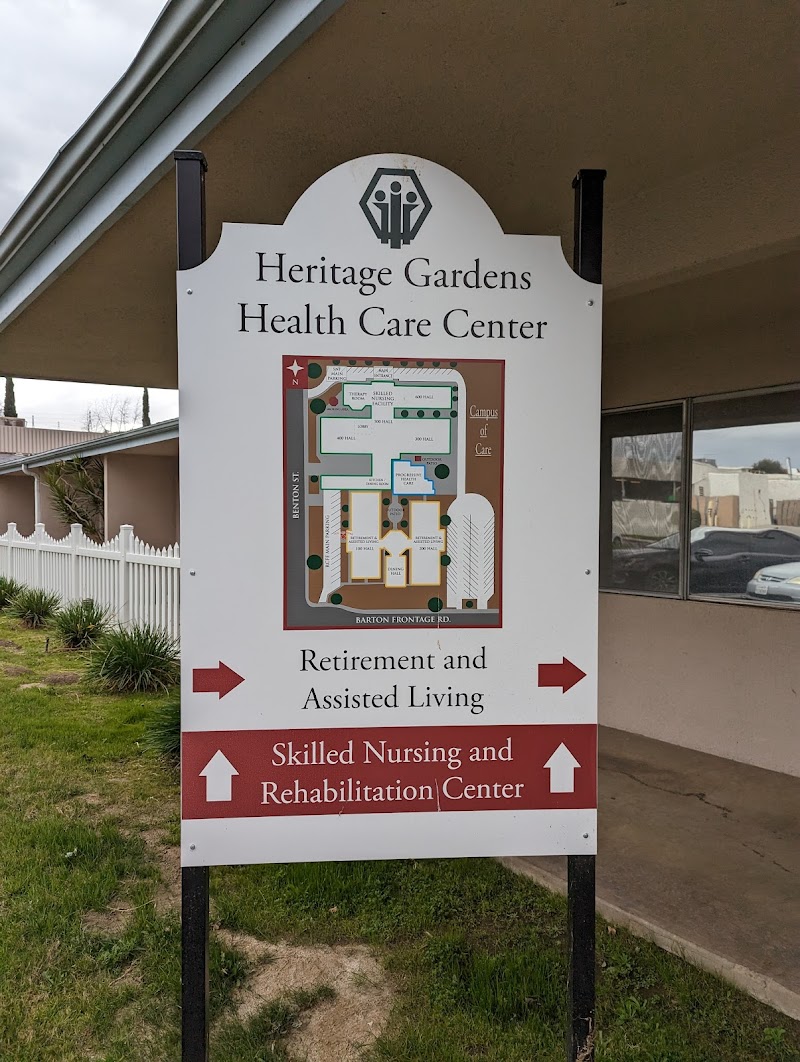
Who Owns and Operates Heritage Gardens Health?

HERITAGE GARDENS HEALTH CARE CENTER is owned by a for-profit company. For-profit facilities operate as businesses with obligations to shareholders or private owners. The facility is operated by PROGRESSIVE HEALTH CARE CENTERS, a chain that manages multiple nursing homes. With 110 certified beds and approximately 93 residents (about 85% occupancy), it is a mid-sized facility located in LOMA LINDA, California.
How Does Heritage Gardens Health Compare to Other California Nursing Homes?

Compared to the 100 nursing homes in California, HERITAGE GARDENS HEALTH CARE CENTER's overall rating (4 stars) is above the state average of 3.2, staff turnover (47%) is near the state average of 46%, and health inspection rating (3 stars) is at the national benchmark.

What Should Families Ask When Visiting Heritage Gardens Health?

Based on this facility's data, families visiting should ask: "What changes have been made since the serious inspection findings, and how are you preventing similar issues?" "Can I visit during a mealtime to observe dining assistance and food quality?" "How do you handle medical emergencies, and what is your hospital transfer rate?" "Can I speak with family members of current residents about their experience?" These questions are particularly relevant given the facility's Immediate Jeopardy citations.

Is Heritage Gardens Health Safe?

Based on CMS inspection data, HERITAGE GARDENS HEALTH CARE CENTER has documented safety concerns. Inspectors have issued 1 Immediate Jeopardy citation (the most serious violation level indicating risk of serious injury or death). The facility has a 4-star overall rating and ranks #1 of 100 nursing homes in California. Families considering this facility should ask detailed questions about what corrective actions have been taken since these incidents.

Do Nurses at Heritage Gardens Health Stick Around?

HERITAGE GARDENS HEALTH CARE CENTER has a staff turnover rate of 47%, which is about average for California nursing homes (state average: 46%). Moderate turnover is common in nursing homes, but families should still ask about staff tenure and how the facility maintains care continuity when employees leave.

Was Heritage Gardens Health Ever Fined?

HERITAGE GARDENS HEALTH CARE CENTER has no federal fines on record. CMS issues fines when nursing homes fail to meet care standards or don't correct problems found during inspections. The absence of fines suggests the facility has either maintained compliance or corrected any issues before penalties were assessed. This is a positive indicator, though families should still review recent inspection reports for the full picture.

Is Heritage Gardens Health on Any Federal Watch List?

HERITAGE GARDENS HEALTH CARE CENTER is not on any federal watch list. The most significant is the Special Focus Facility (SFF) program, which identifies the bottom 1% of nursing homes nationally based on persistent, serious quality problems. Not being on this list means the facility has avoided the pattern of deficiencies that triggers enhanced federal oversight. This is a positive indicator, though families should still review the facility's inspection history directly.