BEL VISTA HEALTHCARE CENTER
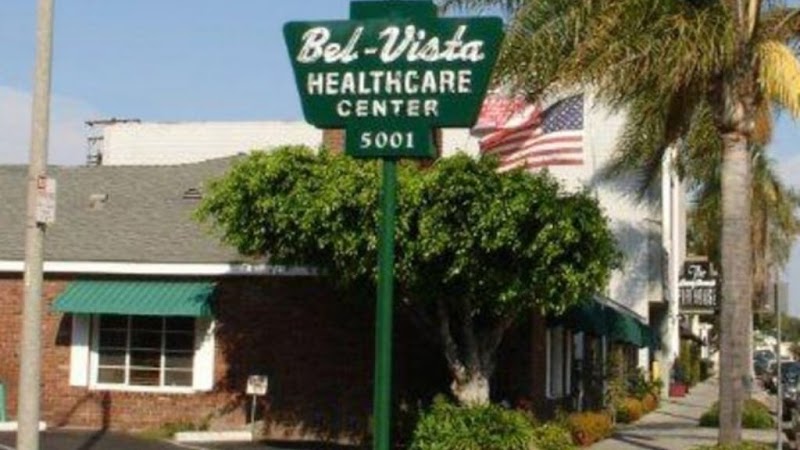
5001 EAST ANAHEIM STREET, LONG BEACH, CA 90804 (562) 494-5001
For profit - Corporation 41 Beds PACS GROUP Data: November 2025
Trust Grade
45/100
#532 of 1155 in CA
Last Inspection: May 2025

Inspected within the last 6 months. Data reflects current conditions.

Overview

Bel Vista Healthcare Center has a Trust Grade of D, indicating below-average performance with some concerning issues. It ranks #532 out of 1155 facilities in California, placing it in the top half, but still raises caution due to its grade. The facility is currently improving, as it reduced the number of reported issues from 26 in 2024 to 15 in 2025. Staffing is rated at 2 out of 5 stars with a turnover rate of 40%, which is average for California, suggesting some consistency among staff. However, the facility has concerning fines totaling $29,543, which is higher than 86% of California facilities, indicating potential ongoing compliance issues. While the facility has average RN coverage, it has serious incidents, such as failing to monitor a resident with diabetes properly and not providing timely assistance for toileting, which could lead to further health complications. Additionally, medication carts were left unsecured, posing a safety risk for residents. Overall, while there are some strengths, families should weigh these serious concerns when considering this facility.

Trust Score
D
45/100
In California
#532/1155
Top 46%
Safety Record
Moderate
Needs review
Inspections
Getting Better
26 → 15 violations
Staff Stability
○ Average
40% turnover. Near California's 48% average. Typical for the industry.
Penalties
⚠ Watch
$29,543 in fines. Higher than 92% of California facilities. Major compliance failures.
Skilled Nurses
○ Average
Each resident gets 30 minutes of Registered Nurse (RN) attention daily — about average for California. RNs are the most trained staff who monitor for health changes.
Violations
⚠ Watch
69 deficiencies on record. Higher than average. Multiple issues found across inspections.
★★★☆☆
3.0
Overall Rating
★★☆☆☆
2.0
Staff Levels
★★★★★
5.0
Care Quality
★★☆☆☆
2.0
Inspection Score
Stable
2024: 26 issues
2025: 15 issues

The Good

  • 5-Star Quality Measures · Strong clinical quality outcomes
  • Full Sprinkler Coverage · Fire safety systems throughout facility
  • No fines on record
  • Staff turnover below average (40%)

    8 points below California average of 48%

Facility shows strength in quality measures, fire safety.

The Bad

3-Star Overall Rating

Near California average (3.1)

Meets federal standards, typical of most facilities

Staff Turnover: 40%

Near California avg (46%)

Typical for the industry

Federal Fines: $29,543

Below median ($33,413)

Moderate penalties - review what triggered them

Chain: PACS GROUP

Part of a multi-facility chain

Ask about local staffing decisions and management

The Ugly 69 deficiencies on record

2 actual harm
Sept 2025 3 deficiencies
CONCERN (D) 📢 Someone Reported This

A family member, employee, or ombudsman was alarmed enough to file a formal complaint

Potential for Harm - no one hurt, but risky conditions existed

Deficiency F0627 (Tag F0627)

Could have caused harm · This affected 1 resident

**NOTE- TERMS IN BRACKETS HAVE BEEN EDITED TO PROTECT CONFIDENTIALITY** Based on interview and record review, the facility failed to ensure one of two sampled residents (Resident 1) was safely dischar...

Read full inspector narrative →
**NOTE- TERMS IN BRACKETS HAVE BEEN EDITED TO PROTECT CONFIDENTIALITY** Based on interview and record review, the facility failed to ensure one of two sampled residents (Resident 1) was safely discharged to a lower level of care by failing to:1.Ensure Resident 1 was discharged to a Board and Care (a small, residential care setting providing housing, meals, and personal care assistance for adults and seniors who cannot live alone but do not require skilled nursing care) and not discharged to a Recuperative Care facility ( provides a temporary, post-hospital care setting who are recovering from an illness and experiencing homelessness) according to physician's order and resident's preference.This failure put Resident 1 at risk for avoidable physical and psychosocial harm and resulted in an inappropriate discharge.Findings:During a review of Resident 1's admission Record, the admission Record indicated the resident was admitted on [DATE] with diagnoses including hypertension (HTN-high blood Pressure), glaucoma( eye condition that damages the optic nerve which can lead to vision loss or blindness), lack of coordination and protein-calorie malnutrition( condition that occurs when a person does not consume enough protein and calories to meet body's needs).During a review of Resident 1's Minimum Data Set (MDS- a resident assessment tool) dated 8/28/2025, the MDS indicated the resident had an intact cognition (thought process) and required supervision or touching assistance ( helper provides verbal cues as resident completes the activity) with bathing, dressing, transferring to and from a bed to a chair , toilet transfer( ability to on and off a toilet or commode) and bed mobility.During a review of Resident 1's Order Summary Report dated 8/27/2025, the Order Summary Report indicated to discharge Resident 1 to a Board and Care, with Home Health for Physical Therapy (PT-treatment that restores movement, reduces pain, and improve quality of life) , Occupational Therapy (OT- provides services to increase and/or maintain a person's capability to participate in everyday life activities) for safety and a Registered Nurse (RN) for medication compliance on 8/28/2025.During a review of Resident 1's Quarterly Interdisciplinary Team (IDT- team members from different departments working together with a common purpose to set goals and make decisions that ensure residents receive the best care) Conference Notes dated 7/21/2025, the IDT Conference Notes indicated the facility would look for a board and care versus assisted living (residential senior that provides housing and personal care) for discharge planning( a coordinated effort by healthcare staff, the resident and their family to create a personalized plan for a safe and smooth transition when the resident leaves the facility).During a review of Resident 1's Care Plan titled Discharge/Transfer Planning Preference: Resident indicated a preference to be discharged to an assisted living or Board and Care, initiated 4/24/2025. The Care Plan goal indicated the facility would honor resident's preference for discharge. The Care Plan interventions indicated to assess resident needs for discharge, assisting resident ‘s preference regarding discharge preferences and appropriate post-acute care.During a review of Resident 1's Progress Notes dated 8/28/2025 at 10:01 a.m., the Progress Notes indicated Resident 1 was discharged to a Board and Care in a stable condition.During a telephone interview on 9/12/2025 at 1:51 p.m. with Resident 1, Resident 1 stated the Board and Care where he was discharged looked unsafe and the facility personnel looked suspicious. During a telephone interview on 9/16/2025, at 11:59 a.m. with the Director of Patient Care (DOPC- third party collaborating with facility's social worker to find a place for a resident who is going to get discharged ), the DOPC stated the facility where the resident was discharged was not a Board and Care. The DOPC stated it was a recuperative care facility which was transitional housing for homeless people, and people who came from jail. The DPOC stated residents should be independent and should not require medical services. The DOPC stated they received an online referral from the facility's social worker and had spoken to Resident 1 over the phone about the place. The DOPC stated Resident 1 agreed but she did not know if the resident knew the facility was not a board and care. The DOPC stated Resident 1 refused to stay as soon as he got to the facility because of his fear of gangs and the facility's location. The DOPC stated Resident 1 left the recuperative care facility on his own and went back to an undisclosed place at Long Beach.During a concurrent interview and record review on 9/15/2025, at 2:34 p.m. with Case Manager (CM) 1 of Resident 1's electronic medical, CM 1 stated Resident 1 was discharged to a board and care on 8/28/2025. CM 1 stated the Social Worker (SW) arranged for the board and care facility.During an interview on 9/16/2025, at 10:32 p.m. with CM1, CM 1 stated Resident 1 was discharged to a Recuperative Care Facility and not to a Board and Care. CM1 stated Recuperative Care Facility is a home for homeless people and not a licensed facility. CM1 stated a Board and Care are for residents that need more help with activities of daily living (ADL- routine tasks/activities such as bathing, dressing and toileting a person performs daily to care for themselves) and help residents with their medications. CM 1 stated the facility should have screened the facility to ensure the place was safe and able to meet the needs of Resident 1.During an interview on 9/16/2025, at 11:17 a.m. with the Administrator (ADM), the ADM stated there was a miscommunication between the SW and the DPOC about Resident 1's discharge. The ADM stated he was disappointed about what happened to Resident 1 getting discharged to a Recuperative Care facility instead of Board and Care. The ADM stated it was the responsibility of the facility to screen the place where Resident 1 will be discharged to ensure safe discharge.During a concurrent interview and record review on 9/16/2025, at 2:58 p.m. with the Director of Nursing (DON), Resident 1's electronic medical record was reviewed. The DON stated the physician ‘s order indicated to discharge Resident 1 to a Board and Care, obtain Home Health for physical and occupational therapy for safety and Registered Nurse for medication compliance. The DON stated the SW was on vacation and did not know what happened to the discharge of Resident 1. The DON stated the facility should have followed the physicians' discharge order to a Board and Care. The DON stated the SW should have verified the placement and discussed with Resident 1 and the physician if the resident was going to a recuperative care facility instead of board and care. The DON stated Resident 1 being discharged to Recuperative Care instead of a Board and Care could have caused emotional distress and could result in an inappropriate discharge.During a review of facility's policy and procedure (P&P) titled, Transfer or Discharge, revised 3/2025, the P&P indicated discharges must meet specific criteria and require resident or representative notification, orientation and documentation in the medical record.
CONCERN (D) 📢 Someone Reported This

A family member, employee, or ombudsman was alarmed enough to file a formal complaint

Potential for Harm - no one hurt, but risky conditions existed

Deficiency F0628 (Tag F0628)

Could have caused harm · This affected 1 resident

**NOTE- TERMS IN BRACKETS HAVE BEEN EDITED TO PROTECT CONFIDENTIALITY** Based on interview and record review, the facility failed to provide the proper notice for discharge for one of two sample resid...

Read full inspector narrative →
**NOTE- TERMS IN BRACKETS HAVE BEEN EDITED TO PROTECT CONFIDENTIALITY** Based on interview and record review, the facility failed to provide the proper notice for discharge for one of two sample residents (Resident 1) by failing to:1. Provide a written discharge notice (30-day notice of proposed discharge) at least 30 days prior to the transfer or discharge of the resident from the facility.This failure had the potential to put Resident 1 at risk for inappropriate and unsafe discharge.Findings:During a review of Resident 1's admission Record, the admission Record indicated the resident was admitted on [DATE] with diagnoses including hypertension (HTN-high blood Pressure), glaucoma( eye condition that damages the optic nerve which can lead to vision loss or blindness), lack of coordination and protein-calorie malnutrition( condition that occurs when a person does not consume enough protein and calories to meet body's needs).During a review of Resident 1's Minimum Data Set (MDS- a resident assessment tool) dated 8/28/2025, the MDS indicated the resident had an intact cognition (thought process) and required supervision or touching assistance ( helper provides verbal cues as resident completes the activity) with bathing, dressing, transferring to and from a bed to a chair , toilet transfer ( ability to on and off a toilet or commode) bed mobility.During a review of Resident 1's Order Summary Report dated 8/27/2025, the Order Summary Report indicated to discharge the resident to Board and Care on 8/28/2025. During a review of Resident 1's Notice of Proposed Transfer/Discharge (formal, written notification from long term care facility to a resident and their representative about a planned move from the facility and must be provided at least 30 days in advance under federal law) dated 8/28/2025, the Notice of Proposed Transfer/ Discharge indicated the resident received and signed the form on 8/28/2025. The Notice of Proposed Transfer indicated the resident was discharged to a Board and Care (a small residential care setting providing housing, meals, and personal care assistance for adults and seniors who cannot live alone but do not require skilled nursing care) on 8/28/2025.During a review of Resident 1's Progress Notes dated 8/28/2025 at 10:01 a.m., the Progress Notes indicated the resident was discharged to a board and care in stable condition.During a concurrent interview and record review on 9/15/2025, at 3:06 p.m. with Licensed Vocational Nurse (LVN) 2, Resident 1's Notice of Proposed Transfer/ Discharge was reviewed. LVN 2 stated the Notice of Proposed Transfer/Discharge was provided to Resident 1 on the day of discharge. LVN2 stated the Notice of Proposed Transfer/ Discharge is provided to residents upon their discharge.During an interview on 9/16/2025, at 2:58 p.m. with the Director of Nursing (DON), the DON stated the facility provides a Notice of Proposed Transfer /Discharge to the residents on the day that they are leaving the facility or the day they get discharged . The DON stated she was not aware the written notice for discharge should be provided to the residents at least 30 days before the discharge as indicated in the facility policy. The DON agreed that the Notice of Proposed Transfer/ Discharge should be given at least 30 days prior to the discharge of the residents to give ample time to decide and be informed about their discharge.During a review of facility's policy and procedure (P&P) titled, Transfer or Discharge Notices, revised 3/2025, the P&P indicated residents or resident representative are notified of an impending discharge at least 30 days prior to transfer or discharge. The P&P indicated the written notice should be in a language or manner that the residents can understand.
CONCERN (D) 📢 Someone Reported This

A family member, employee, or ombudsman was alarmed enough to file a formal complaint

Potential for Harm - no one hurt, but risky conditions existed

Quality of Care (Tag F0684)

Could have caused harm · This affected 1 resident

**NOTE- TERMS IN BRACKETS HAVE BEEN EDITED TO PROTECT CONFIDENTIALITY** Based on interview and record review, the facility failed to provide the necessary care and service for one of three sampled res...

Read full inspector narrative →
**NOTE- TERMS IN BRACKETS HAVE BEEN EDITED TO PROTECT CONFIDENTIALITY** Based on interview and record review, the facility failed to provide the necessary care and service for one of three sampled residents (Resident 2) by failing to:1.Monitor Resident 2 for constipation (a condition in which stool becomes hard, dry, difficult to pass) daily.2.Provide necessary medications for constipation when the resident had no bowel movement for three days as ordered by the physician.These failures had the potential to put Resident 2 at risk for fecal impaction (hardened stool that's stuck in the rectum or lower colon) that could lead to a bowel obstruction (partial or complete blockage of small or large intestines which is life threatening), nausea or pain.Findings:During a review of Resident 2's admission Record, the admission Record indicated Resident 2 was originally admitted on [DATE] and was readmitted on [DATE] with diagnoses including metabolic encephalopathy( condition where the brain is unable to function properly due to an imbalance of chemicals in the blood), atrial fibrillation( irregular heartbeat), hypertension(HTN- high blood pressure), and acute osteomyelitis of left ankle and foot(inflammation of bone or bone marrow, usually due to infection).During a review of Resident 2's Minimum Data Set ( MDS- a resident assessment tool) dated 8/7/2025, the MDS indicated the resident had moderately impaired cognitive skills ( a person is having trouble with thinking, remembering, and making decisions) and required substantial assistance (helper does more than half the effort to complete an activity) with dressing, bathing and bed mobility.During a review of Resident 2's Care Plan titled, At risk for complications with bowel regimen/constipation due to immobility, side effects of medication initiated on 9/11/2025, the Care Plan's interventions included to administer medications for constipation per physician order.During a review of Resident 2's Activities of Daily Living (ADLs- activities such as bathing, dressing and toileting a person performs daily) Task for Bowel Continence (ability to control the passage of stool from the rectum), the ADL Bowel Continence Task indicated Resident 2 did not have a bowel movement on 8/20/2025, 8/21/2025, and 8/22/2025.During a review of Resident 2's Order Summary Report dated 8/2/2025, the Order Summary Report indicated a physician order to give Milk of Magnesia ([MOM]-laxative) oral suspension 400 milligrams ([mg]- unit of measurement) to give 30 milliliters ([ml]- unit of measurement) by mouth prn (as needed) every 24 hours for constipation daily.During a review of Resident 2's Order Summary Report dated 8/2/2025, the Order Summary Report indicated a physician order to give Dulcolax (laxative Suppository 10 mg rectally (per rectum) prn for constipation daily if MOM is ineffective. During a review of Resident 2's Order Summary Report dated 8/2/2025 indicated a physician order to give Fleet Saline Enema (a liquid laxative rectally to relieve occasional constipation) rectally prn for constipation every three days if Dulcolax is ineffective.During a concurrent interview and record review of Resident 2 ‘s ADL Task for Bowel Continence on 9/16/2025 at 9:34 a.m. with Certified Nursing Assistant (CNA)2, CNA 2 stated Resident 1 had no bowel movement on 8/20/2025, 8/21/2025 and 8/22/2025. CNA 2 stated she should have notified the charge nurse when Resident 2 did not have a bowel movement so the resident could receive medication for constipation. CNA 2 stated Resident 2 could get sick and increase his chance of hospitalization due to infection.During a concurrent interview and record review on 9/16/2025 at 11:30 a.m. with Licensed Vocational Nurse (LVN) 1, Resident 2's ADL Task for Bowel Continence and Medication Administration (MAR - a daily documentation record used by a licensed nurse to document medications and treatments given to a resident) were reviewed. LVN 1 stated Resident 2 did not have bowel movement on 8/20/2025, 8/21/2025, and 8/22/2025. LVN 1 stated the electronic chart would alert the LVNs if a resident had no bowel movement within 24 to 48 hours. LVN 1 stated she could not recall if she received an alert for Resident 2 in the electronic chart and was not notified by the CNA regarding Resident 2's constipation. LVN 1 stated Resident 2 did not receive any medication for constipation, and she should have administered the prn laxatives to relieve constipation. LVN 1 stated if all the prn laxatives are ineffective, the physician will be notified because the resident could be at risk for fecal impaction. During a concurrent interview and record review on 9/16/2025, at 10:49 a.m. with the Director of Staff Development (DSD), Resident 2's MAR was reviewed. The DSD stated CNAs report to the charge nurse when a resident has no bowel movement and if a resident has no bowel movement for two days, the licensed nurse should administer medications for constipation. The DSD stated the staff should have monitored the frequency of Resident 2's bowel movement on the MAR and the CNAs should have notified the licensed nurse about Resident 2's constipation.During an interview on 9/16/2025, at 3:54 p.m. with the Director of Nursing (DON), the DON stated the charge nurse should have checked to see if Resident 2 had a bowel movement, administer the laxatives if needed and notified the physician if the prn laxatives were ineffective. The DON stated Resident 2 could have developed abdominal pain, nausea, vomiting and constipation if the resident was not monitored and prn laxatives not administered as ordered by the physician for constipation.During a review of facility's Job Description for Certified Nursing Assistant, the Job Description of Certified Nursing Assistant indicated the CNA will report all changes in the resident's condition to the Nurse Supervisor/ Charge Nurse as soon as practical and performed all assigned tasks as instructed by the supervisor and in accordance with facility's policies and procedures.During a review of the facility's Job Description of LVN, the Job Description of LVN indicated the LVN will review the resident's charts for specific medication orders as necessary and will make periodic checks to evaluate resident's physical and emotional condition.
Jul 2025 1 deficiency
CONCERN (D) 📢 Someone Reported This

A family member, employee, or ombudsman was alarmed enough to file a formal complaint

Potential for Harm - no one hurt, but risky conditions existed

Accident Prevention (Tag F0689)

Could have caused harm · This affected 1 resident

**NOTE- TERMS IN BRACKETS HAVE BEEN EDITED TO PROTECT CONFIDENTIALITY** Based on interview, and record review, the facility failed to ensure one of three sampled residents (Resident 1), who was assess...

Read full inspector narrative →
**NOTE- TERMS IN BRACKETS HAVE BEEN EDITED TO PROTECT CONFIDENTIALITY** Based on interview, and record review, the facility failed to ensure one of three sampled residents (Resident 1), who was assessed at risk for falls and who had a previous unwitnessed fall, did not fall again. Resident 1 following her first unwitnessed fall on 6/20/2025 had recommendations from the Rehabilitation Department to use a bed alarm (sensors placed in a bed or chair that alarm and alerts staff when a resident stands up unassisted). The bed alarm was not used, per the Rehab Department's recommendation. This deficient practice resulted in Resident 1 having a second unwitnessed fall on 6/30/2025 and sustaining a mild to moderate left parietal (refers to the sides of the head) scalp hematoma (a collection of blood outside of a blood vessel caused by a blunt trauma)/contusion (a bruise). This deficient practice had the potential for Resident 1 to sustain greater injuries.Findings: Based on interview, and record review, the facility failed to ensure one of three sampled residents (Resident 1), who was assessed at risk for falls and who had a previous unwitnessed fall, did not fall again. Resident 1 following her first unwitnessed fall on 6/20/2025 had recommendations from the Rehabilitation Department to use a bed alarm (sensors placed in a bed or chair that alarm and alerts staff when a resident stands up unassisted). The bed alarm was not used, per the Rehab Department's recommendation. This deficient practice resulted in Resident 1 having a second unwitnessed fall on 6/30/2025 and sustaining a mild to moderate left parietal (refers to the sides of the head) scalp hematoma (a collection of blood outside of a blood vessel caused by a blunt trauma)/contusion (a bruise). This deficient practice had the potential for Resident 1 to sustain greater injuries. Findings: During a review of Resident 1' s admission Record (Face Sheet), the Face Sheet indicated Resident 1 was admitted to the facility on [DATE] with the diagnoses including metabolic encephalopathy (a brain disorder that occurs when an underlying condition causes a chemical imbalance in the blood that affects the brain), abnormalities of gait (a manner of walking or moving on foot) and mobility, lack of coordination, and seizures (a sudden, uncontrolled burst of electrical activity in the brain that can cause changes in behavior, movement, and awareness). During a review of Resident 1' s Minimum Data Set ([MDS] a resident assessment tool) dated 6/8/2025, the MDS indicated Resident 1 had moderate cognitive (thought process) impairment. The MDS indicated Resident 1 had a functional limitation in range of motion to her bilateral (both) lower extremities ([BLE] legs) and used a wheelchair as her mobility device. The MDS indicated Resident 1 was dependent for toileting hygiene and was incontinent (involuntary voiding of urine and stool) in both her bowel and bladder functions and had a fall history of less than a month prior to admission. During a review of Resident 1' s History and Physical (H&P), dated 6/2/2025, the H&P indicated Resident 1 was unable to make her own medical decision at this time. During a review of Resident 1's admission Fall Risk Observation and assessment dated [DATE], the Fall Risk Observation and Assessment indicated Resident 1 scored 10, meaning she was a moderate risk for falls During a review of Resident 1's Physical Therapy (PT) Evaluation and Plan of Treatment dated 6/3/2025, The PT Evaluation and Plan of Treatment indicated Resident 1 was referred to PT for assessment of her BLE range of motion [(ROM] the direction a joint can move to its full potential), strength, balance, motor coordination, motor control, gait mechanics, functional mobility, safety awareness and risk for falls due to Resident 1's fall risk, seizures, altered mental status (AMS). During a review of Resident 1's Change of Condition (COC) Evaluation dated 6/20/2025, the COC Evaluation indicated Resident 1 had an unwitnessed fall and was found sitting on her bottom on the floor with her back facing the side of her bed, with her left leg folded under her, her right leg straight with her right foot flat on the floor. The COC Evaluation indicated Resident 1 reported to LVN 1 that she did not know what happened. During a review of Resident 1's Rehab Status Post-Fall Screen dated 6/20/2025, the Rehab Status Post-Fall Screen indicated Resident 1 was found in her room on the floor. The Rehab Status Post-Fall Screen indicated Resident 1 was unable to recall a what happened due to her impaired cognition, cognitive issues, and poor safety awareness with impulsive tendencies. The Rehab Status Post-Fall Screen indicated a recommendation for bed and chair alarms: (bed alarms and chair alarms are commonly used to alert staff if a patient is attempting to get up without assistance, especially if they have a high fall risk and can help prevent falls by providing early warning signals that prompt staff to assist the patient). During a review of Resident 1's COC Evaluation form dated 6/30/2025, the COC Evaluation form indicated Resident 1 had an unwitnessed fall where she was found in her bathroom lying on the floor using her arm to cushion her head. The COC Evaluation form indicated Resident 1 had a hematoma on the left side of her scalp. The COC Evaluation form indicated Resident 1's physician gave instructions to transfer Resident 1 to a General Aute Care Hospital (GACH) via 911 for further evaluation. During a review of Resident 1's SBAR ([situation, background, assessment, recommendation] a communication tool used by healthcare workers when there is a change of condition among the residents) Communication Form dated 6/30/2025, the SBAR indicated Resident 1 was transferred to a GACH via 911 for evaluation. During a review of the Emergency Department (ED) documents dated 6/30/2025, the ER documents indicated Resident 1 was transferred to the ED on 6/30/2025. During a review of the GACH's Discharge Instructions dated 6/30/2025, the Discharge Instructions indicated Resident 1 sustained a mild to moderate left parietal scalp hematoma/contusion, which could represent a small calcification (an abnormal buildup of calcium salts in body tissues, leading to hardening) or small acute intraparenchymal hemorrhage (bleeding from a damaged blood vessel). During an interview on 7/14/2025 at 11:51 a.m., Licensed Vocational Nurse (LVN) 1 stated on 6/30/2025 she went to Resident 1's room and noticed she was not in bed and that her bedside table was next to the bathroom, when she opened the bathroom door she found Resident 1 on the floor. LVN 1 stated she assessed Resident 1 and found a hematoma on the left side of Resident 1's head. LVN 1 stated Resident 1 should be assisted when she gets up from bed because she was unsteady when she walked. LVN 1 stated she was not aware of the recommendation for Resident 1 to use a bed alarm and using one could have prevented Resident 1 from falling because the alarm should have prompted staff to check on her. During an interview on 7/14/2025 at 1:18 p.m., the Assistant Director of Rehab (ADOR) stated on 6/3/2025 Resident 1 they assessed Resident 1 at high risk for falls. On 6/20/2025, Resident had an unwitnessed fall and was reassessed by the Rehab Depart post fall. The ADOR stated recommendations for Resident 1 included using a bed alarm and all departments were made aware of the recommendation via the facility's computer systems, and verbally during the IDT meeting. The ADOR stated with Resident 1's history of falls, anxiety, her impaired cognition, impulsive behavior and weakness to her BLEs, Resident 1 was at risk for falls and needed assistance walking and getting out of bed. During an interview with on 7/14/2025 at 3:20 p.m., Certified Nursing Assistant (CNA) 1 stated Resident 1 was identified as high risk for fall because Resident 1 had a previous unwitnessed fall on 6/20/2025. CNA 1 stated she went to Resident 1's room and on 6/30/2025 and found the resident sitting on the bathroom floor and noticed a bump on the left side of her head. CNA 1 stated no one told her about the recommended interventions to use a bed alarm and using the bed alarm might have helped prevent Resident 1's second unwitnessed fall (6/30/2025). During an interview on 7/15/2025 at 3:20 p.m., the Director of Nursing (DON) stated Resident 1 had two unwitnessed falls, since her admission on [DATE], one on 6/20/2025 and another one on 6/30/2025. The DON stated the rehabilitation department assessed Resident 1 after her first unwitnessed fall on 6/20/2025 and recommended that a bed alarm was to be used. The DON stated although the Rehab Depart made a recommendation for Resident 1 to use a bed alarm, it did not mean the intervention would be used. The DON acknowledged that using the bed alarm might have prevented Resident 1 from falling the second time (6/30/2025). During a review of the facility s Policy and Procedure (P/P) titled, Falls and Fall Risk, Managing revised 3/2018, the P/P indicated that based on previous evaluations and current data, the staff will identify interventions related to the resident's specific risks and causes to try to prevent the resident from falling and to try to minimize complications from falling. Resident conditions that may contribute to the risk of falls may include cognitive impairment, lower extremity weakness, functional impairment and incontinence. Medical factors that contribute to the risk of falls may include neurological disorders. The staff with the input of the attending physician will implement a resident-centered fall prevention plan to reduce the specific risk factor(s) of falls for each resident at risk or with a history of falls. If falling recurs despite initial interventions, staff will implement additional or different interventions or indicate why the current approach remains relevant. During a review of the facility's undated P/P titled, Fall Risk Assessment the P/P indicated the nursing staff, in conjunction with the attending physician, consultant pharmacist, therapy staff, and others, will seek to identify and document resident risk factors for falls and establish a resident-centered falls prevention plan based on relevant assessment information. The staff and attending physician will collaborate to identify and address modifiable fall risk factors and interventions to try to minimize the consequences of risk factors that are not modifiable.
Jun 2025 1 deficiency
CONCERN (D) 📢 Someone Reported This

A family member, employee, or ombudsman was alarmed enough to file a formal complaint

Potential for Harm - no one hurt, but risky conditions existed

Deficiency F0557 (Tag F0557)

Could have caused harm · This affected 1 resident

**NOTE- TERMS IN BRACKETS HAVE BEEN EDITED TO PROTECT CONFIDENTIALITY** Based on interview and record review, the facility failed to treat one of four sampled residents (Resident 1) with respect and d...

Read full inspector narrative →
**NOTE- TERMS IN BRACKETS HAVE BEEN EDITED TO PROTECT CONFIDENTIALITY** Based on interview and record review, the facility failed to treat one of four sampled residents (Resident 1) with respect and dignity by failing to ensure Resident 1 was assisted with getting dressed prior to him leaving for his appointment. This deficient practice resulted in Resident 1 to feel embarrassed because he had to wear a hospital gown (a loose-fitting garment, typically open in the back, that patients wear in medical facilities) to his appointment. This deficient practice had the potential for Resident 1 to be exposed causing unworthiness and psychosocial harm to Resident 1. Findings: During a review of Resident 1's admission Record (Face Sheet), the Face Sheet indicated Resident 1 was admitted to the facility on [DATE] with diagnoses including acute kidney failure ([AKI] also called acute kidney injury - when the kidneys suddenly can't filter waste products from the blood), type 2 diabetes ([DM] a disorder characterized by difficulty in blood sugar control and poor wound healing), and colostomy (a surgical procedure that brings one end of the large intestine out through the abdominal wall to allow waste to leave the body). During a review of Resident 1's Minimum Data Set ([MDS] a resident assessment tool), dated 5/30/2025, the MDS indicated Resident 1's cognition was intact. During a telephone interview on 6/17/2025 at 1:56 p.m., with Resident 1's Family Member (FM 1), FM 1 stated on 5/30/2025 at 7:30 a.m., she brought Resident 1 street clothes (ordinary clothes that people wear in public) to wear to his appointment. FM 1 stated when Resident 1 arrived at his appointment, he was still wearing a hospital gown and not the street clothes she brought for him to be changed into. FM 1 stated she was upset because Resident 1 expressed to her that he was embarrassed because he had to wear a hospital gown in public. During an interview on 6/18/2025 at 11:46 a.m., with the Case Manager (CM), the CM stated she received a phone call (after Resident 1's appointment on 5/30/2025) from Resident 1's FM 1 complaining that Resident 1 arrived at his appointment wearing a hospital gown. The CM stated CNA 1 reported to her that Resident 1 had refused to change into his clothes. During a concurrent interview and record review on 6/18/2025 at 3:26 p.m., with the Case Manager (CM), Resident 1's Clinical Records dated 5/2025 were reviewed. The Clinical Records indicated, there were no documentation indicating on 5/30/2025 that Resident 1 refused to change into his street clothes prior to him leaving for his appointment. The CM indicated she did not find any documentation on Resident 1's refusal to change into his street clothes nor that the facility staff notified his RP 1 of his refusal to change into his clothes. During a telephone interview on 6/18/2025 at 4:19 p.m., with CNA 1, CNA 1 stated on 5/30/2025, she offered Resident 1 only once if he wanted to change into his clothes prior to leaving to his appointment. CNA 1 stated Resident 1 refused to be changed because he was hot. CNA 1 admitted to not reporting Resident 1's refusal to change into his clothes. CNA 1 stated she should have offered Resident 1 to be changed at least three times and if he still refused, she would notify the charge nurse immediately. During an interview on 6/18/2025 at 4:51 p.m., with the Director of Nursing (DON), the DON stated CNA 1 should have changed Resident 1 into his clothes prior to leaving for his appointment. The DON stated if a resident refused to be changed into their clothes, it should be documented in the medical record and the licensed nurses should have notified of his refusal. During a review of the facility's policy and procedure (P&P) titled, Dignity, revised 2/2021, the P&P indicated each resident shall be cared for in a manner that promotes and enhances his or her sense of well-being, level of satisfaction with life, and feelings of self-worth and self-esteem. Residents are treated with dignity and respect at all times. When assisting with care, residents are supported in exercising their rights. For example, residents are encouraged to dress in clothing that they prefer. During a review of the facility's P&P titled Resident Rights, dated 2/2021, the P/P indicated employees shall treat all resident with kindness, respect and dignity. Federal and state laws guarantee certain basic rights to all residents of this facility. These rights include the resident's right to a dignified existence and be treated with respect, kindness and dignity.
May 2025 9 deficiencies
CONCERN (D)

Potential for Harm - no one hurt, but risky conditions existed

Deficiency F0800 (Tag F0800)

Could have caused harm · This affected 1 resident

**NOTE- TERMS IN BRACKETS HAVE BEEN EDITED TO PROTECT CONFIDENTIALITY** Based on observation interview and record review the facility failed to ensure a banana was not placed on Resident 194's breakfa...

Read full inspector narrative →
**NOTE- TERMS IN BRACKETS HAVE BEEN EDITED TO PROTECT CONFIDENTIALITY** Based on observation interview and record review the facility failed to ensure a banana was not placed on Resident 194's breakfast tray when the diet tag indicated Resident 194 was allergic to bananas. This deficient practice had the potential to subject Resident 194 to have an allergic reaction( an unpleasant or dangerous immune system reaction after a certain food is eaten. Findings: During a review of Resident 194's admission Record, the admission Record indicated Resident 1 was initially admitted to the facility on [DATE] with diagnoses including dysphagia (difficulty swallowing) , oropharyngeal phase (swallowing difficulty related to mouth and throat), asthma (when a person's airway became inflamed , narrow, swell and becomes difficult to breathe) and repeated falls. During a review of Resident 194's Minimum Data Set (MDS), a resident assessment tool, dated 5/6/2025, the MDS indicated Resident 194's cognition was moderately impaired. The MDS indicated Resident 194 was dependent (helper does all the effort. Residents does none of the effort to complete the activity) with shower/ bathing self, substantial/ maximum assistance (helper lifts holds trunk or limbs and provides more than half the effort) with toilet hygiene, lower body dressing and putting on/ taking off footwear. During a record review of Resident 194's Order Summary Report (OSR), the Order Summary Report dated 4/30/2025 indicated Resident 194 was allergic to avocado, banana and strawberries. During a breakfast tray line observation and interview on 5/17/2025 at 7:59 a.m. with the Dietary Aide (DA), DA observed ½ of a banana on Resident 194's breakfast tray . The DA stated he was nervous and did not see the allergy sign on resident's tray. The DA stated if the resident gets the banana and eats it his health can be affected . DA stated the process is we must pay attention the allergy tag written in red double check the foods on the tray to prevent errors. During an observation and interview on 5/17/20256 at 8:15 a.m., with the Dietary Supervisor (DS), the DS stated the DA checks the meal cart to make sure Resident who are allergic to foods do not get them. The DS stated he also checks the trays . The DS stated it is important to make sure you do not put foods residents are allergic to on their food tray it because could make the resident sick. During a review of the facility's policy and procedure (P&P) titled Food Allergy and Food Intolerances dated 2001, the P&P indicates residents with food allergies and/or intolerances are identified upon admission and offered food substitutions od similar appeal and nutritional value, Steps are taken to prevent resident exposure to the allergens. Meals for residents with severe food allergies are specially prepared so that cross- contamination with allergens does not occur. During a review of the facility's policy and procedure (P&P) titled Tray identification dated revised April 2007 indicates the food service Manager or supervisor will check trays for correct diets before the food carts are transported to their designated area.
CONCERN (D)

Potential for Harm - no one hurt, but risky conditions existed

QAPI Program (Tag F0867)

Could have caused harm · This affected 1 resident

Based on interview and record review, the facility's Quality Assessment and Assurance Committee (QAA: committee that focuses on identifying and addressing quality deficiencies in resident care) failed...

Read full inspector narrative →
Based on interview and record review, the facility's Quality Assessment and Assurance Committee (QAA: committee that focuses on identifying and addressing quality deficiencies in resident care) failed to implement and ensure effective oversight of the facility and implementation of their Quality Assurance and Performance Improvement (QAPI: systemic approach to improve the quality of care and services provided to residents) plan. This deficient practice had the potential to have reoccurring deficient practices that can impact the quality of care for the residents. During a concurrent interview and record review on 5/18/2025 at 6:25p.m., with the Administrator (ADM), the ADM stated they have QAPI meetings monthly and QAPIs are structured to identify potential solutions to yield positive outcomes. The ADM stated they did not have documentation of QAPI meetings prior to March 2025. The ADM stated there were issues regarding call light response time at the end of February 2025, and in March 2025, call light issues were present during the resident council meetings, so a QAPI was implemented regarding call light response times. The ADM stated there were no other issues that they were aware of for March 2025 and indicated skin integrity issues were identified at a later time. The ADM stated when he took over as the ADM in January 2025, upon observing trends, he provided additional nursing support [Assistant Director of Nursing (ADON)] to help with care and support and to see if any changes would be made. ADM stated the QAPI was initiated in March 2025 as he wanted to give the previous Director of Nursing (DON) the benefit of the doubt on her opinions and believed it was not necessary to do a QAPI at the time when the trends were present and indicated it could have helped if a QAPI was initiated at that time. During a concurrent interview and record review on 5/18/2025 at 6:39 p.m. with the ADM, the ADM stated there is no QAPI in April 2025 and indicated the call light issue has not been resolved in April. The ADM stated during the resident council meeting; the residents did not complain about call lights. ADM stated he looked through the Director of Nursing (DON)'s office and was not able to locate previous QAPI documents. ADM stated if a QAPI is not implemented, the trend identified will continue and impose more risks to the residents and not enhancing care. ADM stated the QAPI is not complete. ADM stated the QAPI is constantly monitored each day and indicated if an issue continues to trend, it will be added to the QAPI. During a review of the facility's policy and procedure (P&P) titled, Quality Assessment and Performance Improvement (QAPI) Program, revised on February 2020, the P&P indicated this facility shall develop, implement, and maintain an ongoing, facility-wide, data driven QAPI program that is focused on indicators of the outcomes of care and quality of life for our residents. The objectives of the QAPI program are to: 1. provide a means to measure current and potential indicators for outcomes of care and quality of life. 2. provide a means to establish and implement performance improvement projects to correct identified negative or problematic indicators. 3. reinforce and build upon effective systems and processes related to the delivery of quality care and services. 4. establish systems through which to monitor and evaluate corrective actions. Authority: 1. The owner and/or governing board (body) of our facility is ultimately responsible for the QAPI program. 2. The governing board/owner evaluates the effectiveness of its QAPI program at least annually and presents findings to the QAPI committee. 3. The administrator is responsible for assuring that this facility's QAPI program complies with federal, state, and local regulatory agency requirements. Implementation 1. The QAPI committee oversees implementation of our QAPI plan, which is the written component describing the specifics of the QAPI program, how the facility will conduct its QAPI functions, and the activities of the QAPI committee. 2. The QAPI plan describes the process for identifying and correcting quality deficiencies. Key components of this process include: a. tracking and measuring performance; b. establishing goals and thresholds for performance measurement; c. identifying and prioritizing quality deficiencies; d. systematically analyzing underlying causes of systemic quality deficiencies; e. developing and implementing corrective action or performance improvement activities; and f. monitoring or evaluating the effectiveness of corrective action/performance improvement activities, and revising as needed. 3. The committee meets monthly to review reports, evaluate data, and monitoring QAPI-related activities and make adjustments to the plan. During a review of the facility's P&P titled, Quality Assessment and Performance Improvement (QAPI) Program - Analysis and Action, revised on March 2020, the P&P indicated quality deficiencies that are identified through feedback and data and will undergo appropriate corrective action. Corrective actions are monitored against established goals and benchmarks by the QAPI committee. The QAPI program, overseen the QAPI committee is designed to identify and address quality deficiencies through the analysis of underlying cause and actions targeted at correcting systems at a comprehensive level. The methodology for analysis and action is guided by a written QAPI plan that includes: a. Definition of the problem, based on information obtained through data, self-assessment and feedback systems. b. An analysis of the root cause of the problem from a systems perspective. c. Establishing measurable goals or benchmarks for improvement. d. Specific interventions aimed at correcting the problem and achieving the stated goals or benchmarks. e. Methods and frequency of monitoring performance improvement objectives. The QAPI committee is responsible for analyzing identified problems, establishing corrective actions, measuring progress against the established goals and benchmarks, communicating information to staff and residents, and reporting findings to the administrator and governing board.
CONCERN (E)

Potential for Harm - no one hurt, but risky conditions existed

Quality of Care (Tag F0684)

Could have caused harm · This affected multiple residents

**NOTE- TERMS IN BRACKETS HAVE BEEN EDITED TO PROTECT CONFIDENTIALITY** Based on observation, interview, and record review, the facility failed to ensure residents received treatment and care in accor...

Read full inspector narrative →
**NOTE- TERMS IN BRACKETS HAVE BEEN EDITED TO PROTECT CONFIDENTIALITY** Based on observation, interview, and record review, the facility failed to ensure residents received treatment and care in accordance with physician orders for two of eight sampled residents (Resident 2 and 28) by: 1.Failing to follow up dermatology (branch of medicine that diagnosis and treats skin disorders) consult for Resident 2. 2.Failing to follow physician orders for dressing change for Resident 28's right above the knee amputation (AKA). These deficient practices resulted in Resident 2 not being seen by a dermatologist and had the potential for Resident 28's wound to become infected. Findings: During a review of Resident 2's admission Record, the admission Record indicated Resident 2 was initially admitted to the facility on [DATE] and was readmitted on [DATE] with diagnoses including Parkinson's Disease (a progressive disease of the nervous system marked by tremor, muscular rigidity, and slow, imprecise movements), rheumatoid arthritis (a chronic progressive disease-causing inflammation in the joints and resulting in painful deformity and immobility), and chronic kidney (bean shaped organ responsible for filtering blood and removing waste) disease (progressive condition where the kidneys become damaged and are unable to filer blood effectively). During a review of Resident 2's History and Physical (H&P), dated 5/17/2025, the H&P indicated Resident 2 was able to make her own medical decisions. During a review of Resident 2's Minimum Data Set [MDS] a resident assessment tool), dated 3/6/2025, the MDS indicated Resident 2 's cognitive skills (the mental action or process of acquiring knowledge and understanding through thought, experience, and the senses) were intact. The MDS indicated Resident 2 required moderate assistance (provide less than half the effort) in bathing, toileting hygiene, and shower transfer, required supervision for chair/bed-to-chair transfer, lower body (waist below) dressing, putting/taking shoes off, and is independent in eating, oral hygiene, upper body (waist above) dressing, and personal hygiene. The MDS indicated Resident 2 utilizes a wheelchair and walker and has bilateral (both sides) impairments on the lower (hips/legs) extremities. During a review of Resident 2's Order Summary Report (physician orders) dated 5/18/2025, the order summary indicated dermatology consult and treatment as indicated for right hand lesions with an active date of 1/31/2025. During a review of Resident 2's progress notes dated 5/18/2025, the progress note dated 1/31/2025 at 11:57 a.m. indicated Dermatologist 1 (DERM 1) was called for a dermatology consult and treatment as indicated for right hand lesions. DERM 1 requested the face sheet and to take a photograph of lesions on Resident 2's right hand. During a review of Resident 2's physician order sheet from DERM 1 dated 3/26/2025, the physician order sheet indicated to fax a signed consent form to schedule a biopsy to rule out basal cell (most common type of skin cancer)/ squamous cell carcinoma (type of skin cancer that makes up the outermost layer of the skin). During a review of Resident 2's skin biopsy consent form, there are no dates and signature indicated on the consent form. During a concurrent observation and interview on 5/17/2025 at 10:43 a.m. with Resident 2, Resident 2 stated she has had this skin issue for about six months. Resident 2 stated the facility is aware, and she had not received any medication, and the facility has not done anything for her. It was observed Resident 2 had two raised bumps on her right hand. During a concurrent interview and record review on 5/18/2025 at 11:34 a.m., with Registered Nurse Supervisor 1 (RNS 1), RNS 1 stated the order for Resident 2 indicated there was an order for a dermatology consult on 1/31/2025. RNS 1 stated when there is an order for a dermatology consult, they will schedule and make an appointment with dermatology. RNS 1 stated depending on the insurance the Case Manager (CM) or the Social Service Director (SSD) will get prior authorization for the referral and fax the documents to the clinic. RNS 1 stated per order, Resident 2 should have a dermatology consultation appointment. RNS 1 stated the progress note on 1/31/2025, indicated DERM 1 asked for Resident 2's face sheet to be faxed over. RNS 1 stated the DERM 1 physician order sheet indicated the informed consent to be faxed, but the informed consent was not signed. RNS 1 stated there are no notations in March, April, and May 2025 regarding the dermatology consultation and indicated it is not known if a signed consent form was faxed to the dermatology clinic. RNS 1 stated the informed consent should have been signed and sent out at that time. RNS 1 stated the nurses usually follow up with the documents and indicated this was communicated from the nurses to DERM 1 and DERM 1 requested the face sheet. RNS 1 stated it is known what happened afterwards and usually follow up within 72 hours (hr.). RNS 1 stated if the resident does not receive the intended consultation, their condition can get worse and affect the health of the resident. During an interview on 5/18/2025 at 6:57p.m. with the Administrator (ADM), the ADM stated the previous Director of Nursing (DON) was in charge of all ancillary services (services that support, or supplement primary care provided by doctors and nurses) and was aware that Resident 2 had an order summary by DERM 1 in March 2025 and was not followed up. The ADM stated at that time, it was DON's responsibility and indicated that the residents not receiving the intended consultation is a huge issue as it can potentially lead to a more serious issue, and this could have been easily preventable had they made an appointment, and they did not. During an interview on 5/18/2025 at 8:38p.m. with the DON, the DON stated it was important for residents to get consultations if needed, and if there is an order, the resident should get the consultation. 2.During a review of Resident 28's admission Record, the admission Record indicated Resident 28 was initially admitted to the facility on [DATE] with diagnoses including type 2 diabetes mellitus (a condition where the body has trouble controlling blood sugar) with hyperglycemia (elevated sugar in the blood), type 2 diabetes mellitus with diabetic neuropathy arthropathy (nerve damage and joint disease), hypertension (high blood pressure) and acquired absence of right leg above knee. During a review of Resident 28's history and physical (H&P), dated 5/15/2025 the H&P indicated Resident 28 had the capacity to understand and make decisions. During a review of Resident 28's Minimum Data Set (MDS), a resident assessment tool dated 3 /31 /2025, the MDS indicated Resident 28 was dependent (Helper does all the effort. Resident does none of the effort to complete the activity) with eating, and personal hygiene, substantial / maximal assistance (helper lifts and holds trunk or limbs, provides more than half the effort ) with lower body dressing, shower/bathe self and putting on /taking off footwear. During a record review of Resident 28's Treatment Administration Record (TAR) dated 5/16/2025 , the TAR indicated right AKA (surgical incision) cleanse with normal saline (sterile water), apply xeroform (wound dressing), ABD pad (a highly absorbent medical dressing used to manage heavily draining wounds)and wrap with kerlix (used to secure and protect wounds , injuries or surgical sites ) every day shift x 30 days . Another order with a start date of 5/15/2025 indicated to monitor surgical incision daily every day shift. And last order dated 5/15/2025 indicated to monitor dressing integrity daily every day shift. During an observation and interview on 5/18/2025 at 11:30 a.m., with Licensed Vocational Nurse 3 (LVN 3), Resident 28 was in bed with his right AKA without a dressing . LVN 3 stated she was aware resident had no dressing . LVN 3 states it was important to keep Resident 28's surgical wound covered with dressing to prevent infection. During an interview on 5/18/2025 at 12:30 p.m., with Registered Nurse 1 (RN 1), RN 1 stated she was not aware Resident 28 had no dressing to his right AKA. RN 1 stated it was important to keep Resident 28's right AKA surgical site completely covered to prevent infection, and it to follow the doctor's order. During an interview on 5/18/2025 at 8:00 p.m. with the Director of Nursing (DON), the DON stated we must follow doctors order and keep the wound covered and provide a dressing to prevent infection. During a review of the facility's policies and Procedures (P&P), titled Resident Rights, revised date February 2021, the P&P indicated federal and state laws guarantee certain basic rights to all residents of this facility. These rights include the resident's right to: a dignified existence; communication with and access to people and services, both inside and outside the facility. During a review of the facility's P&P, titled Dignity, revised date February 2021, the P&P indicated each resident shall be cared for in a matter that promotes and enhances his or her sense of well-being, level of satisfaction with life, and feelings of self-worth and self-esteem. The facility culture supports dignity and respect for residents by honoring resident goals, choices, preferences, values, and beliefs. This begins with the initial admission and continues throughout the resident's facility stay. Individual needs and preferences of the resident are identified through the assessment process. During a review of the facility's policy and procedure (P&P) titled Residents Rights indicates federal and state laws guarantees certain basic rights to all residents of this facility these rights include the residents right to : Equal access to quality care, regardless of source of payment.
CONCERN (E)

Potential for Harm - no one hurt, but risky conditions existed

Deficiency F0727 (Tag F0727)

Could have caused harm · This affected multiple residents

**NOTE- TERMS IN BRACKETS HAVE BEEN EDITED TO PROTECT CONFIDENTIALITY** Based on interview and record review, the facility failed to ensure two of ten sampled residents (Resident 21 and 28) had their ...

Read full inspector narrative →
**NOTE- TERMS IN BRACKETS HAVE BEEN EDITED TO PROTECT CONFIDENTIALITY** Based on interview and record review, the facility failed to ensure two of ten sampled residents (Resident 21 and 28) had their admission/readmission assessments completed by Registered Nurses (RNs) This deficient practice had the potential for delay in care and services, due to missed or inaccurate identification of problems. a. During a review of Resident 21's admission Record, the admission Record indicated Resident 21 was initially admitted to the facility on [DATE] and was readmitted on [DATE] with diagnoses including unspecified fracture (break in a bone) of unspecified lumbar vertebra (one of the bones that make up the spinal column in the lower back), spinal stenosis (space inside the backbone is too small putting pressure on the spinal cord), and obstructive (urine flow is blocked) and reflux uropathy (occurs when urine flows backward into the bladder often as a result of obstruction). During a review of Resident 21's History and Physical (H&P), dated 4/20/2025, the H&P indicated Resident 21 had the capacity to understand and make decisions. During a review of Resident 21 Minimum Data Set [MDS] a resident assessment tool), dated 4/24/2025, the MDS indicated Resident 21's cognitive skills (the mental action or process of acquiring knowledge and understanding through thought, experience, and the senses) were mildly impaired. The MDS indicated Resident 21 is dependent on chair/bed-to-chair transfer and toileting hygiene, required maximal assistance (provide more than half the effort) for bathing, dressing upper (above waist) and lower (waist below) body, required supervision on personal hygiene and oral hygiene, and required set up for eating. The MDS indicated Resident 21 utilizes a wheelchair and has bilateral (both sides) impairments on the upper (arms/shoulders) and lower (hips/legs) extremities. During a review of Resident 21's Change of Condition (COC) dated 5/13/2025 at 4:26p.m., the COC indicatred Resident 21 was sent to the hospital for further evaluation for a left elbow skin tear and right forearm skin tear. During an interview on 5/18/2025 at 5:41p.m., with Licensed Vocational Nurse 2 (LVN 2), LVN 2 stated upon admission, they get the paperwork, introduce the resident, review the resident, do skin assessments with the Certified Nursing Assistant (CNA), assess for smoking, check if they are a fall risk, and do the Braden Scale (tool used to assess a patient's risk for developing damaged skin and tissue). LVN 2 stated they do the head-to-toe assessment and indicated the RN does not do the admission assessments. LVN 2 stated the Licensed Vocational Nurses are the ones that do the skin assessment, and it was primarily their responsibility to do the admission assessments not the Registered Nurses. LVN 2 stated if there is a serious incident such as a fall or bleed, they will notify the RN so they can assess the resident. LVN 2 stated if they do not have an RN, they will notify the physician. During a concurrent interview and record review on 5/18/2025 at 5:49 p.m. with LVN 2, LVN 2 stated Resident 21 went and came back from the hospital and usually an LVN will not do a full readmission assessment if the resident comes back from the hospital in the same day. LVN 2 stated the progress note indicated on 5/14/2025 at 12:55a.m., there is documentation that the resident returned from the hospital. LVN 2 stated the skin and pain assessment needs to be completed. LVN 2 stated there was no reassessment done by an LVN or an RN when Resident 21 returned back from the hospital and was supposed to do an assessment. LVN 2 stated an assessment is supposed to be done as Resident 21 has been on a gurney in the emergency room and you want to assess to ensure theres no new issues, and ensure the resident is not in pain. LVN 2 stated if there are no readmission assessments done, the resident may have skin breakdown, so it is important to cover all the basis as they are there to take care of the residents and make sure they are okay. b. During a review of Resident 28's admission Record, the admission Record indicated Resident 28 was initially admitted to the facility on [DATE] and was readmitted on [DATE] with diagnoses including Parkinson's Disease (a progressive disease of the nervous system marked by tremor, muscular rigidity, and slow, imprecise movements), Type II Diabetes Mellitus (DM: a disorder characterized by difficulty in blood sugar control and poor wound healing), and dementia (a progressive state of decline in mental abilities). During a review of Resident 28's H&P, dated 5/15/2025, the H&P indicated Resident 28 had the capacity to understand and make decisions. During a review of Resident 28 MDS dated [DATE], the MDS indicated Resident 2's cognitive skills were severely impaired. The MDS indicated Resident 28 is dependent on chair/bed-to-chair transfer, toilet transfer, toileting hygiene, required maximal assistance for lower body dressing, bathing, required moderate assistance (provide less than half the effort) for oral hygiene and upper body dressing, and required supervision for eating and personal hygiene. The MDS indicated Resident 28 utilizes a wheelchair and has bilateral impairments on the lower extremities. During a review of Resident 28's Admission/readmission Evaluation/assessment dated [DATE], the admission/readmission evaluation indicated this assessment document was completed by Licensed Vocational Nurse 3 (LVN 3). During a concurrent interview and record review on 5/18/2025 at 3:54 p.m., with Infection Preventionist Nurse (IPN), the IPN stated the LVN's have been doing the admission assessments and Registered Nurse Supervisor 1 (RNS 1) helps and does the care plans. the IPN stated RNS 1 also does the admission assessments, but most of the time, the LVNs do the admission assessments. The IPN stated that when the resident is admitted , the admission assessments have to be documented right away. The IPN stated that when a resident goes to the hospital and comes right back to the facility, they have to do an admission/readmission evaluation assessment right away as the resident might have bruising, there may be new medication orders, and does not want the facility to be blamed. IPN stated they also have to do the skin check and is done by the LVNs. During an interview on 5/18/2025 at 4:01p.m., with RNS 1, RNS 1 stated for admission, transfer, and discharge assessments, the LVN does it and she helps. During an interview on 5/18/2025 at 8:31p.m. with Director of Nursing (DON), the DON stated the Registered Nurses (RN) does not usually do the admissions and indicated any licensed nurse can do the head-to-toe assessment. The DON stated if the LVN completes the head-to-toe assessment, the RN should verify the assessment themselves. The DON stated RN completes a comprehensive assessment of the resident because they oversee the plan of care, treatments, and ensure issues are not missed. During a review of the facility's policies and Procedures (P&P), titled Job Description: Registered Nurse (RN), dated 1/2025, the P&P indicated participate in the development of written preliminary and comprehensive assessments of the nursing needs of each resident as necessary. Ensure that all personnel involved in providing care to the resident are aware of the resident's care plan. Review nurses' notes to determine if the care plan is being followed. Review resident's medical and nursing treatments to ensure that they are provided in accordance with the resident's care plan and wishes. During a review of the facility's P&P, titled Job Description: Director of Nursing revised 1/2025, the P&P indicated the DON is a registered nurse who oversees and supervises the care of all the residents. Essential Duties: Overall management of the entire nursing department and staffing levels. Responsible for ensuring resident safety and that all residents are treated with utmost respect. Liaison between the facility, physicians and family members. Work closely with all other departments to ensure excellent overall resident care. I know During a review of the facility's P&P, titled admission Assessment and Follow Up: Role of the Nurse revised September 2012, the P&P indicated the purpose of this procedure is to gather information about the resident's physical, emotional, cognitive, and psychosocial condition upon admission for the purposes of managing the resident, initiating the care plan, and completing required assessment instruments, including MDS. 7. Conduct an admission assessment (history and physical), including a. A summary of the individual's recent medical history, including hospitalizations, acute illnesses, and overall status prior to admission. b. Relevant medical, social, and family history
CONCERN (E)

Potential for Harm - no one hurt, but risky conditions existed

Pharmacy Services (Tag F0755)

Could have caused harm · This affected multiple residents

**NOTE- TERMS IN BRACKETS HAVE BEEN EDITED TO PROTECT CONFIDENTIALITY** Based on observation, interview, and record review, the facility failed to provide pharmaceutical services including procedures ...

Read full inspector narrative →
**NOTE- TERMS IN BRACKETS HAVE BEEN EDITED TO PROTECT CONFIDENTIALITY** Based on observation, interview, and record review, the facility failed to provide pharmaceutical services including procedures that assure the accurate acquiring, and administering drugs and biologicals per physician orders to meet the needs of each resident for two out of five sampled residents (Resident 1 and 21) by: 1.Failing to follow up with the Medication Regimen Review (MRR: comprehensive evaluation of resident's medication performed by a pharmacist to promote positive outcomes and minimize adverse consequences) recommendations for Resident 1. 2.Failing to communicate new medication order to the pharmacy for Resident 1. 3.Failing to follow doctors orders and remove Lidoderm External Patch five (5) percent (%) (Lidocaine: medication that numbs specific area of the body by blocking pain signals to the brain) for Resident 21. These deficient practices had the potential for Resident 1 to not receive medication to address pain appropriately and increased the risk for adverse reactions for Resident 21 by leaving the Lidocaine patch longer than 12 hours (hrs). 1. During a review of Resident 1's admission record, the admission record indicated Resident 1 was admitted to the facility on [DATE] with diagnoses including cerebral infarction (stroke - loss of blood flow to a part of the brain) and osteomyelitis (inflammation of bone or bone marrow, usually due to infection) of the right ankle and foot. During a review of Resident 1's Minimum Data Set (MDS - a resident assessment tool), dated 4/9/2025, the MDS indicated Resident 1 had moderate cognition (ability to learn, reason, remember, understand, and make decisions) impairment with the ability to recall information, required supervision when eating, required maximal assistance (helper does more than half of the effort) for dressing, and was dependent (helper does all of the effort) for showering and bathing. During a review of Resident 1's Physician Order Summary, the Order Summary indicated Resident 1 had an order for: a.Hydrocodone-acetaminophen (strong pain medication) tablet 5-325 milligrams (MG-unit of measurement) give one tablet by mouth every six hours as needed for severe pain (6-10 pain level) with start date 4/3/2025 and an end date 4/20/2025. b.Hydrocodone-acetaminophen tablet 5-325 MG give one tablet by mouth every six hours as needed for moderate pain (4-6 pain level) with start date 4/20/2025. During an observation on 5/18/2025 at 8:30 a.m., in Resident 1's room, Resident 1 reported a pain level of 7 out of 10. Licensed vocational nurse (LVN) 4 administered one tablet of hydrocodone-acetaminophen tablet 5-325 MG to Resident 1. During a concurrent interview and record review on 5/18/2025 at 10:10 a.m. with Licensed vocational nurse (LVN) 4, Resident 1's order summary, medication blister pack (type of tamper evident packaging that separates medication by dose), and reconciliation count sheet were reviewed. LVN 4 stated Resident 1's order summary indicated hydrocodone-acetaminophen tablet 5-325 MG is to be given for moderate pain (4-6). LVN 4 stated the blister pack and the reconciliation count sheet indicated hydrocodone-acetaminophen 5-325 MG for severe pain (6-10). During a concurrent interview and record review on 5/18/2025 at 1:11 p.m., with Registered Nurse Supervisor (RNS) 1, Resident 1's MRR for hydrocodone-acetaminophen 5-325 MG dated 4/29/2025 was reviewed. The MRR indicated pharmacist (PHARM) 1 recommended to the facility to ensure that the order on the pain assessment flow sheet (also known as the MAR-Medication administration record) matches with the reconciliation or count sheet (Paper documentation for narcotic and controlled substance medications). RNS 1 stated she reviewed Resident 1's MRR and left a message with the MD on 5/17/2025. RNS 1 stated they should have reviewed the pain assessments on the MAR and compared it to the reconciliation sheet . During an interview on 5/18/2025 at 2:52 p.m., with pharmacist (PHARM) 2, PHARM 2 stated when a medication order is changed or updated, the facility has to print and fax the new order to the pharmacy. PHARM 2 stated the pharmacy did not receive an updated order for Resident 1 which indicated hydrocodone-acetaminophen 5-325 MG for moderate pain (4-6). During an interview on 5/18/2025 at 7:27 p.m., with Licensed Vocational Nurse (LVN) 2, LVN 2 stated if a medication order's parameters were changed, it should have been faxed to the pharmacy. LVN 2 stated it is the LVN's responsibility to ensure the medication blister pack has the correctly ordered dose and parameters. During an interview 5/18/2025 at 11:29 a.m., with Registered Nurse Supervisor (RNS) 2, RNS 2 stated MRR recommendations should be followed up with or acted upon within 5 days. RNS 2 stated the pain medication order should have been clarified with the physician and addressed. RNS 2 stated Resident 1 was at risk for pain not being managed adequately. During an interview on 5/18/2025 at 8:08 p.m., with the Director of Nursing (DON), the DON stated it is important for medications to be administered within the ordered pain level parameters. The DON stated if there is a discrepancy, the nurse should have clarified the order with the physician. The DON stated if the blister pack does not match the order, it can potentially cause a medication error. The DON stated Resident 1 could be at risk for being under or over medicated. During a review of the facility's policies and Procedures (P&P), titled Medication Regimen Reviews, revised February 2025, the P&P indicated the MRR includes a review of the medical record to prevent, identify, report, and resolve medication-related problems, medication errors, or other irregularities . irregularities may include incorrect medications, administration times, or dosage forms; or other medication errors, including those related to documentation. The P&P indicated upon receiving the MRR report from the pharmacist, the attending physician review and responds to the report .if the physician does not provide a timely or adequate response, or the consultant pharmacist identifies that no action has been taken, he/she contacts the medical director or the administrator. 3. During a review of Resident 21's admission Record, the admission Record indicated Resident 21 was initially admitted to the facility on [DATE] and was readmitted on [DATE] with diagnoses including unspecified fracture (break in a bone) of unspecified lumbar vertebra (one of the bones that make up the spinal column in the lower back), osteoarthritis (a progressive disorder of the joints, caused by a gradual loss of cartilage), and spinal stenosis (space inside the backbone is too small putting pressure on the spinal cord). During a review of Resident 21's H&P, dated 4/20/2025, the H&P indicated Resident 21 has the capacity to understand and make decisions. During a review of Resident 21 MDS, dated [DATE], the MDS indicated Resident 21's cognitive skills were mildly impaired. The MDS indicated Resident 21 was dependent on chair/bed-to-chair transfer and toileting hygiene, required maximal assistance (provide more than half the effort) for bathing, dressing upper (above waist) and lower (waist below) body, required supervision on personal hygiene and oral hygiene, and required set up for eating. The MDS indicated Resident 21 utilizes a wheelchair and has bilateral (both sides) impairments on the upper (arms/shoulders) and lower (hips/legs) extremities. During a review of Resident 21's Order Summary Report (physician orders) dated 5/18/2025, the order summary indicated Lidoderm External Patch five (5) percent (%) (Lidocaine: medication that numbs specific area of the body by blocking pain signals to the brain): apply to low back topically (applied to the skin) in the morning for low back pain for 14 days. Apply in the morning and remove at bedtime for 14 days. The Lidoderm order was placed on 5/15/2025 and started on 5/16/2025. During a review of the Medication Administration Record (MAR: detailed record of medication administered to residents) dated 5/1/2025 - 5/31/2025, the MAR indicated Lidoderm External Patch 5% scheduled at 9:00a.m. was administered on 5/16/2025 and 5/17/2025. There is no indication that the Lidoderm External Patch 5% was removed at bedtime. During a review of the location of the administration report dated 5/1/2025 thru 5/31/2025, the administration report indicated the Lidoderm External Patch 5% was administered at the following times: 5/16/2025 administration time 10:21 a.m. and 5/17/2025 administration time 10:19 a.m. During an interview on 5/17/2025 at 9:32 a.m. with Resident 21, Resident 21 stated they had started putting the Lidocaine patch on 2 days ago and they have not removed the patch. During a concurrent observation and interview on 5/17/2025 at 9:46a.m. with Licensed Vocational Nurse 1 (LVN 1), the Lidocaine patch was observed on Resident 21's back with no date. LVN 1 stated he placed the Lidocaine patch on yesterday 5/16/2025. During an interview on 5/17/2025 at 1:54 p.m. with LVN 1, LVN 1 stated if medication is due at 9:00a.m., there is a 2-hour (hr.) time frame in which the medication can be administered 2 hrs before and after the medication due time. LVN 1 stated despite the 2-hr. time frame, the medication preferably should be given closer to 9:00 a.m. LVN 1 stated for Lidocaine patches, if the administration time is 9:00a.m., it should be administered closer to 9:00 a.m. and has to be on for 12 hrs and be off for 12 hrs as that is the usual order for Lidocaine patches. LVN 1 stated the Lidocaine patch observed on Resident 21 was supposed to be removed during the night shift per physician's orders. LVN 1 stated leaving the Lidocaine patch on longer than 12 hrs is not good for the skin as it can cause irritation. During a concurrent interview and record review on 5/18/2025 at 12:15p.m., with Registered Nurse Supervisor 1 (RNS 1), RNS 1 stated medication can be administered upto one hour before and upto one hour after the scheduled administration time. RNS 1 stated Lidocaine patches are on for 12 hrs and off for 12 hrs and indicated the Lidocaine patch would be administered at 9:00 a.m. and removed at 9:00p.m. RNS 1 stated leaving the Lidocaine patch on for longer than 12 hrs may irritate the skin and cause the skin to break down. RNS 1 stated the MAR dated 5/1/2025 - 5/31/2025 that indicated the Lidocaine patch to be applied to the low back topically in the morning and remove at bedtime should reflect the removal time of the Lidocaine patch and the way the MAR is documents needs to be clarified with the physician. During an interview on 5/18/2025 at 8:31p.m., with the DON, the DON stated medications are administered one hour before and after and Lidocaine patches are left on for 12 hrs and are off for 12 hrs. The DON stated the Lidocaine patch is removed after 12 hrs as that is the dosage for pharmacy. During a review of the facility's policies and Procedures (P&P), titled Administering Medications, revised dated April 2019, the P&P indicated medications are administered in a safe and timely manner, and as prescribed. Medications are administered in accordance with prescriber orders, including any required time frame. Medication administration times are determined by resident need and benefit, not staff convenience. Factors that are considered include: a. enhancing optimal therapeutic effect of the medication; b. preventing potential medication or food interactions; and c. honoring resident choices and preferences, consistent with his or her care plan. Medications are administered within one (1) hour of their prescribed time, unless otherwise specified (for example, before and after meal orders).
CONCERN (E)

Potential for Harm - no one hurt, but risky conditions existed

Unnecessary Medications (Tag F0759)

Could have caused harm · This affected multiple residents

**NOTE- TERMS IN BRACKETS HAVE BEEN EDITED TO PROTECT CONFIDENTIALITY** Based on observations, interviews, and record review, the facility failed to ensure its medication error rate was less than five...

Read full inspector narrative →
**NOTE- TERMS IN BRACKETS HAVE BEEN EDITED TO PROTECT CONFIDENTIALITY** Based on observations, interviews, and record review, the facility failed to ensure its medication error rate was less than five (5) percents (%). Three medication errors out of 25 total opportunities yielded a medication error rate of 8%, in 1 of 4 sampled residents (Residents 1) observed during medication administration (med pass). This deficient practice of med pass error rate at 8% exceeded the 5 % threshold and had the potential of adversely affecting residents' health condition. Findings: During medication administration (med pass) observation on 5/18/2025 at 8:30 a.m, in Resident 1's room, Licensed Vocational Nurse (LVN) 4 prepared 11 medications for Resident 1. The medications included one tablet of chewable aspirin 81 milligrams (MG- unit of measurement) and one tablet of hydrocodone-acetaminophen (strong pain medication) tablet 5-325 MG for Resident 1's reported seven out of 10 pain level. Resident 1 was observed swallowing both tablets. During an interview on 5/18/2025 at 8:30 a.m. with Resident 1, Resident 1 stated he did not chew any of the medications; he swallowed all his medication. During an interview on 5/18/2025 at 8:31 a.m. with LVN 4, LVN 4 stated resident did not chew the medication. LVN 4 stated not chewing the medication as ordered could alter the medication's effectiveness. During a review of Resident 1's admission record, the admission record indicated Resident 1 was admitted to the facility on [DATE] with diagnoses including cerebral infarction (stroke - loss of blood flow to a part of the brain) and osteomyelitis (inflammation of bone or bone marrow, usually due to infection) of the right ankle and foot. During a review of Resident 1's Minimum Data Set (MDS - a resident assessment tool), dated 4/9/2025, the MDS indicated Resident 1 had moderate cognition (ability to learn, reason, remember, understand, and make decisions) impairment with the ability to recall information, required supervision when eating, required maximal assistance (helper does more than half of the effort) for dressing, and was dependent (helper does all of the effort) for showering and bathing. During a review of Resident 1's Physician Order Summary, the Order Summary indicated Resident 1 had an order for: a.Aspirin tablet chewable 81 MG- give one tablet by mouth one time a day for cerebral vascular accident (CVA) prophylaxis (prevention) with start date 5/5/2025 b.Hydrocodone-acetaminophen tablet 5-325 MG- give one tablet by mouth every six hours as needed for severe pain (6-10 pain level) with start date 4/3/2025 and an end date 4/20/2025. c.Hydrocodone-acetaminophen tablet 5-325 MG give one tablet by mouth every six hours as needed for moderate pain (4-6 pain level) with start date 4/20/2025. During a concurrent interview and record review on 5/18/2025 at 10:10 a.m., with Licensed vocational nurse (LVN) 4, Resident 1's order summary, medication blister pack (type of tamper evident packaging that separates medication by dose), and reconciliation count sheet were reviewed. LVN 4 stated Resident 1's order summary indicated hydrocodone-acetaminophen tablet 5-325 MG is to be given for moderate pain (4-6). LVN 4 stated the blister pack and the reconciliation count sheet indicated hydrocodone-acetaminophen 5-325 MG for severe pain (6-10). During an interview on 5/18/2025 at 2:52 p.m., with pharmacist (PHARM) 2, PHARM 2 stated when a medication order is changed or updated, the facility has to print and fax the new order to the pharmacy. PHARM 2 stated the pharmacy did not receive an updated order for Resident 1 which indicated hydrocodone-acetaminophen 5-325 MG for moderate pain (4-6). During an interview on 5/18/2025 at 7:27 p.m., with Licensed Vocational Nurse (LVN) 2, LVN 2 stated if a medication order's parameters were changed, it should have been faxed to the pharmacy. LVN 2 stated it is the LVN's responsibility to ensure the medication blister pack has the correctly ordered dose and parameters. During an interview 5/18/2025 at 11:29 a.m. with Registered Nurse Supervisor (RNS) 2, RNS 2 stated the pain medication order should have been clarified with the physician and addressed. RNS 2 stated Resident 1 was at risk for pain not being managed. During an interview on 5/18/2025 at 8:08 p.m. with the Director of Nursing (DON), the DON stated it is important for medications to be administered as ordered and within the ordered pain level parameters. The DON stated if chewable aspirin is not chewed, it can affect the absorption and efficacy. The DON stated if there is a discrepancy, the nurse should have clarified the order with the physician. The DON stated if the blister pack does not pmatch the order, it can potentially cause a medication error. The DON stated Resident 1 could be at risk for being under or over medicated. During a review of the facility's policy and procedure (P&P), titled Administering Medications, revised April 2019, the P&P indicated medications are administered in accordance with prescriber orders, including any required time frame.
CONCERN (E)

Potential for Harm - no one hurt, but risky conditions existed

Deficiency F0760 (Tag F0760)

Could have caused harm · This affected multiple residents

**NOTE- TERMS IN BRACKETS HAVE BEEN EDITED TO PROTECT CONFIDENTIALITY** Based on observations, interviews, and record review, the facility failed to administer: 1.Hydrocodone-acetaminophen with the or...

Read full inspector narrative →
**NOTE- TERMS IN BRACKETS HAVE BEEN EDITED TO PROTECT CONFIDENTIALITY** Based on observations, interviews, and record review, the facility failed to administer: 1.Hydrocodone-acetaminophen with the ordered pain level parameters for Resident 1 2.Oxycodone with the ordered pain level parameters for Resident 21. This deficient practice had the potential to under or over-medicate Resident 1 and Resident 21. Findings: During medication administration (med pass) observation on 5/18/2025 at 8:30 a.m., in Resident 1's room, the Licensed Vocational Nurse (LVN) 4 administered one tablet of hydrocodone-acetaminophen (strong pain medication) tablet 5-325 MG for Resident 1's reported seven out of 10 pain level. During a review of Resident 1's admission record, the admission record indicated Resident 1 was admitted to the facility on [DATE] with diagnoses including cerebral infarction (stroke - loss of blood flow to a part of the brain) and osteomyelitis (inflammation of bone or bone marrow, usually due to infection) of the right ankle and foot. During a review of Resident 1's Minimum Data Set (MDS - a resident assessment tool), dated 4/9/2025, the MDS indicated Resident 1 had moderate cognitive (ability to learn, reason, remember, understand, and make decisions) impairment with the ability to recall information, required supervision when eating, required maximal assistance (helper does more than half of the effort) for dressing, and was dependent (helper does all of the effort) for showering and bathing. During a review of Resident 1's Physician Order Summary, the Order Summary indicated Resident 1 had an order for: a.Hydrocodone-acetaminophen tablet 5-325 MG- give one tablet by mouth every six hours as needed for severe pain (6-10 pain level) with start date 4/3/2025 and an end date 4/20/2025. b.Hydrocodone-acetaminophen tablet 5-325 MG give one tablet by mouth every six hours as needed for moderate pain (4-6 pain level) with start date 4/20/2025. During a concurrent interview and record review on 5/18/2025 at 10:10 a.m., with Licensed vocational nurse (LVN) 4, Resident 1's order summary, medication blister pack (type of tamper evident packaging that separates medication by dose), and reconciliation count sheet were reviewed. LVN 4 stated Resident 1's order summary indicated hydrocodone-acetaminophen tablet 5-325 MG is to be given for moderate pain (4-6). LVN 4 stated the blister pack and the reconciliation count sheet indicated hydrocodone-acetaminophen 5-325 MG for severe pain (6-10). During an interview on 5/18/2025 at 2:52 p.m., with pharmacist (PHARM) 2, PHARM 2 stated when a medication order is changed or updated, the facility has to print and fax the new order to the pharmacy. PHARM 2 stated the pharmacy did not receive an updated order for Resident 1 which indicated hydrocodone-acetaminophen 5-325 MG for moderate pain (4-6). During an interview on 5/18/2025 at 7:27 p.m., with Licensed Vocational Nurse (LVN) 2, LVN 2 stated if a medication order's parameters were changed, the new parameters should have been faxed to the pharmacy. LVN 2 stated it is the LVN's responsibility to ensure the medication blister pack has the correctly ordered dose and parameters. During a concurrent interview and record review 5/18/2025 at 11:29 a.m., with Registered Nurse Supervisor (RNS) 2, Resident 1's May 2025 Medication Administration Record (MAR) was reviewed. RNS 2 stated Resident 1 received hydrocodone-acetaminophen 5-325 outside of the ordered pain level parameters seven times: 5/9/2025 (for pain 7/10), 5/10/2025 (for pain 7/10), 5/11/2025 (for pain 7/10), 5/15/2025 (for pain 7/10), 5/17/2025 (once for pain 10/10), 5/17/2025 (for pain 7/10), and 5/18/2025(for pain 7/10). RNS 2 stated the pain medication order should have been clarified with the physician and addressed. RNS 2 stated Resident 1 was at risk for pain not being managed. During an interview on 5/18/2025 at 8:08 p.m. with the Director of Nursing (DON), the DON stated it is important for medications to be administered within the ordered pain level parameters. The DON stated Resident 1 could be at risk for being under or over medicated. During a review of the facility's policy and procedure (P&P), titled Administering Medications, revised April 2019, the P&P indicated medications are administered in accordance with prescriber orders, including any required time frame.
CONCERN (E)

Potential for Harm - no one hurt, but risky conditions existed

Infection Control (Tag F0880)

Could have caused harm · This affected multiple residents

**NOTE- TERMS IN BRACKETS HAVE BEEN EDITED TO PROTECT CONFIDENTIALITY** . Based on observation, interview, and record review, the facility failed to implement their Enhanced Barrier Precaution (EBP: i...

Read full inspector narrative →
**NOTE- TERMS IN BRACKETS HAVE BEEN EDITED TO PROTECT CONFIDENTIALITY** . Based on observation, interview, and record review, the facility failed to implement their Enhanced Barrier Precaution (EBP: infection control practices to prevent the spread of multidrug-resistant organisms (MDRO's) control measures for one of three sampled residents (Residents 21 ) by failing to wear proper Personal Protective Equipment (PPE: to protective clothing, helmets, gloves, face shields, goggles, face masks and/or respirators or other equipment designed to protect the wearer from injury or the spread of infection or illness) when coming in contact with /administering Resident 21's Lidocaine Patch (medication that numbs specific area of the body by blocking pain signals to the brain) and when handling the indwelling catheter (known as Foley catheter, a tube that allows urine to drain from the bladder into a bag that is usually attached to the thigh) drainage bag. These deficient practices had the potential to transmit infectious microorganisms and increase the risk of infection for the residents. During a review of Resident 21's admission Record, the admission Record indicated Resident 21 was initially admitted to the facility on [DATE] and was readmitted on [DATE] with diagnoses including unspecified fracture (break in a bone) of unspecified lumbar vertebra (one of the bones that make up the spinal column in the lower back), spinal stenosis (space inside the backbone is too small putting pressure on the spinal cord), and obstructive (urine flow is blocked) and reflux uropathy (occurs when urine flows backward into the bladder often as a result of obstruction). During a review of Resident 21's History and Physical (H&P), dated 4/20/2025, the H&P indicated Resident 21 had the capacity to understand and make decisions. During a review of Resident 21 Minimum Data Set [MDS] a resident assessment tool), dated 4/24/2025, the MDS indicated Resident 21's cognitive skills (the mental action or process of acquiring knowledge and understanding through thought, experience, and the senses) were mildly impaired. The MDS indicated Resident 21 was dependent on chair/bed-to-chair transfer and toileting hygiene, required maximal assistance (provide more than half the effort) for bathing, dressing upper (above waist) and lower (waist below) body, required supervision on personal hygiene and oral hygiene, and required set up for eating. The MDS indicated Resident 21 utilizes a wheelchair and has bilateral (both sides) impairments on the upper (arms/shoulders) and lower (hips/legs) extremities. During a review of Resident 21's Order Summary Report (physician orders) dated 5/18/2025, the order summary indicated enhanced barrier precautions during high contact resident care activities secondary to (foley cath) every shift with an active date of 4/18/2025. During an observation on 5/17/2025 at 9:46 a.m., with Licensed Vocational Nurse 1 (LVN 1), LVN 1 was observed exposing Resident 21's Lidocaine patch located on the lower back without wearing proper PPE. LVN 1 was then observed touching Resident 21's foley catheter bag without wearing proper PPE. During an interview on 5/17/2025 at 1:54 p.m., with LVN 1, LVN 1 stated EBP's are for residents with wounds and foley catheters, and gowns are worn when performing nursing care that can possibly expose you to fluids or wounds. LVN 1 stated when giving medications, gowns are not worn since you are not giving direct patient care. LVN 1 stated gowns are worn when you have direct patient skin to skin contact and when emptying the foley catheter bag. LVN 1 stated as long as there is a possibility of liquid or splashing during nursing care, a gown is worn. LVN 1 stated if gowns are not worn, whatever is being handled such as bodily fluids can splash and wearing a gown can prevent that from occurring. During an interview on 5/18/2025 at 10:41a.m. with the Infection Preventionist Nurse (IPN), the IPN stated EBPs are for residents who have foleys, gastrostomy tube (a surgical opening fitted with a device to allow feedings to be administered directly to the stomach common for people with swallowing problems), or chronic wounds that require dressing. The IPN stated high contact includes providing activities of daily living (ADL: shower, bed bath) care and emptying the foley bag. The IPN stated a gown should be worn if you are touching the foley bag even if you are not emptying it as it might spill. The IPN stated you wear the gown to protect yourself and the resident and not wearing a gown can contaminate your clothing and increase the chance of spreading it to other residents. During an interview on 5/18/2025 at 1:59 p.m., with Registered Nurse Supervisor 1 (RNS 1), RNS 1 stated PPE should be worn since you are coming in contact with the resident when putting on the Lidocaine patch as it is worn for precaution. During an interview on 5/18/2025 at 8:31p.m., with the Director of Nursing (DON), the DON stated EBPs are for residents that have some kind of invasive device like a foley catheter and staff should wear a gown when you are going to anticipate having contact with the resident. The DON stated a gown is worn to protect the residents. The DON stated a gown is worn when applying a Lidocaine patch on a resident who is on EBP because you are having contact with the patient. During a review of the facility's policies and Procedures (P&P), titled Administering Medications, revised April 2019, the P&P indicated staff follows stablished facility infection control procedures (e.g., handwashing, antiseptic techniques, gloves, isolation precautions, etc.) for the administration of medications, as applicable. During a review of the facility's P&P titled Enhanced Barrier Precautions, revised December 2024, the P&P indicated enhanced barrier precautions (EBPs) are utilized to prevent the spread of multi-drug resistant organisms (MDROs) to residents. Enhanced barrier precautions (EBPs) refer to infection prevention and control interventions designed to reduce transmission of multi-drug-resistant organisms (MDROs) during high contact resident care activities. Enhanced barrier precautions apply when a resident has a wound or indwelling medical device, and has secretions or excretions that are unable to be covered of contained. Indwelling medical devices include central lines, urinary catheters, feeding tubes, and tracheotomies. EBPs employ targeted gown and glove use in addition to standard precautions during high contact resident care activities when contact precautions do not otherwise apply. a.Gloves and gown are applied prior to performing the high contact resident care activity (as opposed to before entering the room). Examples of high-contact resident care activities requiring the use of gown and gloves for EBPs include prolonged, high-contact with items in the resident's room, with resident's equipment, or with resident's clothing or skin (e.g., in the shower room, therapy gym, or during restorative care); device care or use (central line, urinary catheter, feeding tube, tracheostomy/ventilator, etc.)
MINOR (B)

Minor Issue - procedural, no safety impact

Deficiency F0912 (Tag F0912)

Minor procedural issue · This affected multiple residents

**NOTE- TERMS IN BRACKETS HAVE BEEN EDITED TO PROTECT CONFIDENTIALITY** Based on observation, interview, and record review the facility failed to ensure two of 20 resident bedrooms met the requirement...

Read full inspector narrative →
**NOTE- TERMS IN BRACKETS HAVE BEEN EDITED TO PROTECT CONFIDENTIALITY** Based on observation, interview, and record review the facility failed to ensure two of 20 resident bedrooms met the requirements of 80 square feet ([sq. ft.] a unit of area measurement) per residents in multi-bed resident rooms and 100 sq. ft for each single bed resident room. This deficient practice had the potential to result in inadequate space to provide privacy, space during daily care, and access during an emergency. During a review of the facility's Client Accommodations Analysis form, provided by the facility on 5/18/2025, the facility had 2 rooms that measured less than 80 sq. ft. per resident in multi-bed rooms and two rooms that measured less than 100 sq. ft for a single bedroom. The resident rooms were as follows: room [ROOM NUMBER]: 14 inches (in: unit of length) x 10.1 in [141.4 sq. ft.] approved capacity: 2 room [ROOM NUMBER]: 14 in x 10.7 in [149.8 sq. ft.] approved capacity: 2 During a concurrent observation and interview on 5/18/2025 at 8:43a.m. with Maintenance Supervisor (MS), the room size measured for 5 was 14 in x 10.7 in and room [ROOM NUMBER] was 14 in x 10.6 in. MS stated he does not know what the right measurement for each resident is and indicated the room is small for 2 beds. MS stated there is a room waiver that is submitted for the rooms and indicated if the room is small, the staff and residents may bump into things. During an interview on 5/18/2025 at 8:40p.m. with Director of Nursing (DON), DON stated if the resident's room is deemed too small per guidance, there is potential for the room to be cluttered and the resident may fall due to not having enough space.
May 2025 1 deficiency
CONCERN (D) 📢 Someone Reported This

A family member, employee, or ombudsman was alarmed enough to file a formal complaint

Potential for Harm - no one hurt, but risky conditions existed

Quality of Care (Tag F0684)

Could have caused harm · This affected 1 resident

**NOTE- TERMS IN BRACKETS HAVE BEEN EDITED TO PROTECT CONFIDENTIALITY** Based on interview and record review, the facility failed to ensure the status of one of three sample residents (Resident 1)'s a...

Read full inspector narrative →
**NOTE- TERMS IN BRACKETS HAVE BEEN EDITED TO PROTECT CONFIDENTIALITY** Based on interview and record review, the facility failed to ensure the status of one of three sample residents (Resident 1)'s alleged abuse allegation was assessed and monitored. These deficient practices had the potential to negatively affect the residents' physical comfort and psychosocial well-being by not receiving the needed and necessary services timely. Findings: During a review of Resident 1's admission record, the admission Record indicated Resident 1 was admitted to the facility on [DATE] with diagnoses including unspecified sequelae (long term effect) of cerebral infarction (stroke: blockage that disrupts blood flow to the brain leading to brain), slurred speech, and hypertension (high blood pressure). During a review of Resident 1's History and Physical (H&P) dated 4/22/2025, the H&P indicated Resident 1 is not able to make medical decisions. During a review of Resident 1's Minimum Data Set ([MDS] a resident assessment tool) dated 4/18/2025, the MDS indicated Resident 1's cognitive skills (the mental action or process of acquiring knowledge and understanding through thought, experience, and the senses) were mildly impaired. The MDS indicated Resident 1 is dependent on toileting hygiene, lower body (waist below) dressing, required maximal assistance (provide more than half the effort) for toilet transfer, chair/bed-to-chair transfer, bathing, upper body (waist above), and required supervision for eating, oral hygiene, and personal hygiene. The MDS indicated Resident 1 has an impairment on one side of the lower (hips/legs) extremities and utilized a wheelchair. During a review of the Change in Condition (COC) Evaluation dated 5/9/2025, from a report reported by Social Service Director (SSD), Nurse Practitioner 1 (NP 1) reported during her visit with Resident 1, Resident 1 verbalized her breast and vagina was fondled, inappropriately touched by a male staff. During a review of the progress notes for the 72-hour (hr.) charting, the progress notes indicated there was a 72-hr charting dated 5/10/2025 at 10:05 a.m., 5/10/2025 at 10:29 a.m., and 5/13/2025 at 4:04 a.m. During a concurrent interview and record review on 5/13/2025 at 2:09 p.m. with Licensed Vocational Nurse 2 (LVN 2), LVN 2 stated a COC is something that is out of the ordinary, and once a COC is initiated, the doctor and family are notified, a care plan is created, document on the progress notes, and the resident with have a 72-hr monitoring. LVN 2 stated if there is a COC, there should be 72-hr. monitoring. LVN 2 stated the COC on 5/9/2025 indicated Resident 1 verbalized an alleged abuse by a staff and is not sure what Resident 1 should be on monitoring for. LVN 2 stated the 72-hr monitoring is documented in the progress note for every shift and Resident 1 should have been on monitoring until 5/12/2025. LVN 2 stated they monitor the residents to see if there's any development regarding the COC. During an interview on 5/13/2025 at 2:56p.m. with Director of Nursing Covering Consultant (DONCC), DONCC stated when there is an alleged abuse allegation, ensure the resident is safe and secure, assess the resident, notify the doctor, family, start the investigation, and report to the Administrator (ADM) since they are responsible for contacting the local police, Ombudsman, and California Department of Public Health (CDPH). DONCC stated the residents will be monitored for 72-hr, the SSD will visit the residents to ensure they feel safe and there are no psychosocial issues. DONCC stated the residents will be monitored for 72-hr every shift when there is a COC, and if there's no 72-hr monitoring, how would they be able to identify the COC in a resident if there's no monitoring. During a review of the facility's policy and procedure (P&P) titled, Change in a Resident's Condition or Status, revised date February 2021, the P&P indicated the nurse will record in the resident's medical information relative to changes in the resident's medical/mental condition or status.
Dec 2024 1 deficiency
CONCERN (D) 📢 Someone Reported This

A family member, employee, or ombudsman was alarmed enough to file a formal complaint

Potential for Harm - no one hurt, but risky conditions existed

Deficiency F0625 (Tag F0625)

Could have caused harm · This affected 1 resident

**NOTE- TERMS IN BRACKETS HAVE BEEN EDITED TO PROTECT CONFIDENTIALITY** Based on interview and record review, the facility failed to complete and to provide a written notice of seven-day bed hold (a g...

Read full inspector narrative →
**NOTE- TERMS IN BRACKETS HAVE BEEN EDITED TO PROTECT CONFIDENTIALITY** Based on interview and record review, the facility failed to complete and to provide a written notice of seven-day bed hold (a guaranteed reservation for residents that are transferred out emergently) document when the resident was transferred to the General Acute Care Hospital (GACH) for one of three sampled residents (Resident 1). This failure resulted in Resident 1 and Resident 1's Responsible Party not knowing their rights to a seven-day bed hold. Findings: During a review of Resident 1 ' s admission Record, the admission Record indicated, Resident 1 was admitted to the facility on [DATE] with diagnoses including cerebral infarction (loss of blood flow to a part of the brain), sick sinus syndrome (a type of abnormal heartbeat), and dementia (progressive state of decline in mental abilities). During a review of Resident 1 ' s History and Physical (H&P), dated 5/28/2024, the H&P indicated, Resident 1 did not have the capacity (ability) to understand and make decisions. During a review of Resident 1 ' s Minimum Data Set (MDS – a resident assessment tool), dated 11/1/2024, the MDS indicated Resident 1 required dependent assistance (Helper does all of the effort) from two or more staff for hygiene, transfer, maximal assistance (Helper does more than half the effort) from one staff for bed mobility, dressing, and supervision or touching assistance (Helper provides verbal cues and /or touching/steading and /or contact guard assistance as resident completes activity) from one staff for eating. During a phone interview on 12/24/2024, at 8:54 a.m., with Resident 1 ' s Responsible Party (RP), the RP stated, she received a call from facility staff that Resident 1 was transferred to the GACH on 12/20/2024. The RP stated, she asked the staff if she had to sign the bed hold document. The RP stated the staff said she did not need to sign it. During a concurrent interview and record review on 12/24/2024, at 11:29 a.m., with the Business Office Manager (BOM), the facility ' s daily census (the number of patients receiving care at a healthcare facility at a given time) from 12/20/2024 to 12/24/2024 were reviewed. The census indicated, there was no bed hold placed for Resident 1. The BOM stated, the facility ' s policy indicated that the facility should provide a written bed hold notice to the resident and the RP, but it was not provided to Resident 1 and her RP upon transfer to the GACH. During an interview on 12/24/2024, at 4:00 p.m., the Director of Nursing (DON) stated, there should have been a seven-day bed- hold placed to reserve the Resident 1's room and the facility shouldhave provided a written notice to Resident1 and Resident 1's RP when Resident 1 was transferred to the GACH. The DON stated, there was no bed-hold provided to Resident 1 and agreed it was Resident 1 ' s right to come back to her room.The DON stated, this was an Interdisciplinary Team (IDT- a group of healthcare professionals with various specialties who work together to treat a patient) ' s decision due to ongoing complications between the facility and Resident 1 ' s RP. During a review of Resident 1 ' s Order Summary Report (OSR), dated 12/26/2024, the OSR indicated to transfer Resident 1 to the GACH for further evaluation and management related to an episode of increased heart rate was ordered on 12/20/2024. The OSR indicated, there was no order for bed-hold. During a review of Resident 1 ' s SNF/NF to Hospital Transfer Form, dated 12/20/02024, the SNF/NF to Hospital Transfer Form indicated, Resident 1 was transferred to the GACH on 12/20/2024, at 5:30 p.m. During a review of the facility's policy and procedure (P&P) titled Bed-Hold and Return, revised 10/2022, the P&P indicated, Policy statement: Residents and /or representatives are informed (in writing) of the facility and state (if applicable) bed-hold policies. Policy interpretation and Implementation: 1. All residents/representatives are provided written information regarding the facility and state bed-hold policies, which address holding or reserving a resident ' s bed during periods of absence (hospitalization or therapeutic leave). Residents, regardless of payer source, are provided written notice about these policies at least twice: a. notice 1-well in advance of any transfer. b. notice 2: at the time of transfer (or, if the transfer was an emergency, within 24 hours) .3. Multiple attempts to provide the resident representative with notice2 should be documented in cases where staff were unable to reach and notify the representative timely .5. The requirement that residents be permitted to return to the facility following hospitalization or therapeutic leave applies to all residents
Nov 2024 2 deficiencies
CONCERN (D) 📢 Someone Reported This

A family member, employee, or ombudsman was alarmed enough to file a formal complaint

Potential for Harm - no one hurt, but risky conditions existed

Safe Environment (Tag F0584)

Could have caused harm · This affected 1 resident

**NOTE- TERMS IN BRACKETS HAVE BEEN EDITED TO PROTECT CONFIDENTIALITY** Based on interview and record review, the facility failed to ensure one of three sampled residents (Resident 1) clothing was inv...

Read full inspector narrative →
**NOTE- TERMS IN BRACKETS HAVE BEEN EDITED TO PROTECT CONFIDENTIALITY** Based on interview and record review, the facility failed to ensure one of three sampled residents (Resident 1) clothing was inventoried prior to being sent out to be laundered by an outside vendor. This deficient practice resulted in the facility not knowing which clothing was being laundered by the outside vendor and resulted in the loss of Resident 1 ' s clothing. Findings: During a review of Resident 1 ' s admission Record (Face Sheet), the Face Sheet indicated Resident 1 was admitted on [DATE] with the diagnosis of hemiplegia (total paralysis of the arm, leg, and trunk on the same side of the body) and hemiparesis (weakness or the inability to move on one side of the body). During a review of Resident 1 ' s Minimum Data Set (MDS – a federally mandated resident assessment tool) dated 8/29/2024, the MDS indicated Resident 1 cognition was moderately impaired and was dependent (helper does all the effort) on facility staff to complete activities of daily living (ADLs- routine tasks/activities such as bathing, dressing and toileting a person performs daily to care for themselves). During an interview on 11/4/2024 at 1:11 p.m. with Certified Nursing Assistant 1 (CNA 1), CNA 1 stated when the laundry is delivered to the facility, she will separate the clothes for each resident and there is no inventory log of the clothing that is delivered. During an interview on 11/7/2024 at 4:00 p.m. with Resident 1 ' s Responsible Party (RP), RP 1 stated Resident 1 ' s clothing that was sent out by the facility to be laundered and was not found. The RP stated the facility does not have a way to track the clothing that goes out for laundry. During an interview on 11/8/2024 at 9:42 a.m. with the Director of Nursing (DON), the DON stated the facility does not have an inventory list of what items are sent out to the laundry vendor and the facility cannot ensure the items which are being sent out are being delivered back to the facility. During a review of the facility ' s policy and procedure (P&P) titled Personal Property, dated 8/2022, the P&P indicated resident belongings are treated with respect by facility staff, regardless of perceived value. The P&P indicated resident ' s personal belongings and clothing are inventoried and documented upon admission and updated as necessary.
CONCERN (D) 📢 Someone Reported This

A family member, employee, or ombudsman was alarmed enough to file a formal complaint

Potential for Harm - no one hurt, but risky conditions existed

Medical Records (Tag F0842)

Could have caused harm · This affected 1 resident

**NOTE- TERMS IN BRACKETS HAVE BEEN EDITED TO PROTECT CONFIDENTIALITY** Based on interview and record review, the facility failed to ensure one of three sampled residents (Resident 1) Interdisciplinar...

Read full inspector narrative →
**NOTE- TERMS IN BRACKETS HAVE BEEN EDITED TO PROTECT CONFIDENTIALITY** Based on interview and record review, the facility failed to ensure one of three sampled residents (Resident 1) Interdisciplinary Team (IDT- a group of professional and direct care staff that have primary responsibility for the development of a plan of care for the patient) Conference Notes accurately reflected the list of concerns and topics discussed during the IDT meeting. This deficient practice has the potential to result in a lack of communication and implementation of Resident 1 ' s plan of care. Findings: During a review of Resident 1 ' s admission Record (Face Sheet), the Face Sheet indicated Resident 1 was admitted on [DATE] with the diagnosis of hemiplegia (total paralysis of the arm, leg, and trunk on the same side of the body) and hemiparesis (weakness or the inability to move on one side of the body). During a review of Resident 1 ' s Minimum Data Set (MDS- a federally mandated resident assessment too) dated 8/29/2024, the MDS indicated Resident 1 cognition was moderately impaired and was dependent (helper does all the effort) on facility staff to complete activities of daily living (ADLs- routine tasks/activities such as bathing, dressing and toileting a person performs daily to care for themselves). During a review of Resident 1 ' s Family Input/Concerns Interdisciplinary Care Plan Meeting Note dated 10/4/2024, the Family Input/Concerns Interdisciplinary Care Plan Meeting Note indicated topics discussed including a list of concerns, nursing/medical conditions, dietary/nutrition plan, activities, toileting, and Restorative Nurse Assistant (RNA). During a review of Resident 1 ' s IDT Conference Note dated 10/4/2024, the IDT Conference Note indicated the topics addressed during the IDT meeting included pain medication and consulting with the pulmonologist. The IDT Conference Note did not reflect the family ' s concerns which were noted on the Family Input/Concerns Interdisciplinary Care Plan Meeting Note dated 10/4/2024. During an interview on 11/4/2024 at 11:13 a.m. with the Director of Nursing (DON), the DON stated she receives the list of concerns from Resident 1 ' s RP via e-mail and those concerns are discussed in the IDT meeting. The DON stated the concerns are not documented on Resident 1 ' s IDT Conference Note. The DON stated the concerns should have been documented to accurately reflect the concerns that were discussed in the IDT and the plan of care to resolve those concerns. During a review of the facility ' s policy and procedure (P&P) titled Care-Planning Interdisciplinary Team, dated 3/2022, the P&P indicated the resident ' s family and/or the resident ' s legal representative/guardian or surrogate are encouraged to participate in the development of and revisions of the resident ' s care plan. During a review of the facility ' s P&P titled Care Plans, Comprehensive Person Centered, dated 3/2022, the P&P indicated assessments of residents are ongoing and care plans are revised as information about the residents and the residents ' condition change.
May 2024 23 deficiencies 1 Harm
SERIOUS (G)

Actual Harm - a resident was hurt due to facility failures

Quality of Care (Tag F0684)

A resident was harmed · This affected 1 resident

**NOTE- TERMS IN BRACKETS HAVE BEEN EDITED TO PROTECT CONFIDENTIALITY** Based on interview and record review, the facility failed to: 1. Ensure one of one sampled resident (Resident 38) who with diagn...

Read full inspector narrative →
**NOTE- TERMS IN BRACKETS HAVE BEEN EDITED TO PROTECT CONFIDENTIALITY** Based on interview and record review, the facility failed to: 1. Ensure one of one sampled resident (Resident 38) who with diagnosis type 2 diabetes mellitus (abnormal blood sugar) and receiving Sitagliptin phosphate ( medication to lower blood sugar) received a weekly complete blood count ([CBC] a laboratory test which gives information about the production of all blood cells in the body) and comprehensive metabolic panel ([CMP] a group of blood tests which provide information about the body's metabolism [chemical reaction in the body's cells which change food into energy]) per physician order. 2. Ensure Resident 38's blood sugar was checked when Resident 38 had a change of condition ([COC] a sudden, clinically important deviation from a patient's baseline in physical, cognitive (ability to think, understand, learn, and remember), behavioral, or functional status which without immediate intervention, may result in complications or death) of increased confusion on 3/4/2024 , in and out of sleep throughout the night, moaning and calling for his family members on 3/7/2024 and slurred speech (slow speech that can be difficult to understand) on 3/10/2024. 3. Ensure interventions on Resident 38's care plan titled Diabetes Mellitus dated 1/31/2024, which indicated Licensed Vocational Nurses (LVN) and Registered Nurses (RN) will monitor Resident 38, for signs and symptoms of hyperglycemia (high blood sugar) such as increased thirst, dry skin, stupor (altered level of consciousness) , and coma, (a period of prolonged unconsciousness brought on by illness or injury) the results documented and the physician (medical doctor [MD])notified. These failures resulted in Resident 38 receiving a delay in diagnosis, care, and treatment. Resident 38 was transferred to a general acute care hospital (GACH) for evaluation and treatment for a critically high blood sugar of 728 milligrams per deciliter ([mg/dL-unit of measurement] blood sugar reference range was from 70-100 mg/dl), hypernatremia (high sodium [salt] level) and tachypnea (rapid breathing over 20 breaths per minute). On 3/10/2024, Resident 38 was admitted to the GACH's Intensive Care Unit ([ICU] a unit with specialized staff, equipment, and standards to handle severe, potentially life-threatening illnesses). Findings: A review of Resident 38's admission Record (Face Sheet), indicated Resident 38 was admitted to the facility on [DATE] with diagnoses including type 2 diabetes mellitus, cancer of the kidney (abnormal growth of cells in your body tissue), and gastrostomy tube ([GT] soft flexible tube surgically placed into the stomach through the abdominal wall to provide nutrition and/or medication). A review of Resident 38's History and Physical (H&P), dated 3/14/2024, indicated Resident 38 did not have the capacity to understand and make decisions. A review of Resident 38's Minimum Data Set ([MDS] a standardized assessment and care screening tool), dated 2/3/2024, indicated Resident 38 had moderate impairment in cognitive skills for daily decision-making. The MDS indicated Resident 38 had a diagnosis of diabetes mellitus (DM-abnormal blood sugar). A review of Resident 38's Care Plan titled Diabetes Mellitus, dated 1/31/2024, indicated Resident 38 will be free from any signs and symptoms of hyperglycemia (high blood sugar) and will have no complications related to diabetes. The Care Plan interventions indicated staff will monitor and document any signs and symptoms of hyperglycemia such as increased thirst, fatigue, dry skin, abdominal pain, stupor, and coma. A review of Resident 38's Physician Order Summary Report dated 1/30/2024, indicated Sitagliptin Phosphate 50 milligrams ([mg] unit of measurement) daily orally for diabetes, CBC, and CMP every Wednesday. During a concurrent interview and record review on 5/18/2024 at 2:20 p.m., with Registered Nurse (RN) 1, Resident 38's Situation, Background, Assessment, and Recommendation ([SBAR] a structured communication tool which enhances the communication between members of the healthcare team) dated 3/4/2024, was reviewed. The SBAR indicated Resident 38 had increased confusion on 3/4/2024 (unspecified time). The SBAR indicated Licensed Vocational Nurse (LVN) 2 notified Resident 38's Medical Doctor (MD) 1 on 3/4/2024 at 7:47 a.m. and received orders for CBC and CMP due to Resident 38's change of condition. RN 1 stated labs were not drawn until 3/6/2024, (2 days after the order was received), because it was not entered as a stat (immediately) order. RN 1 stated Resident 38's blood sugar level was not checked upon Resident 38's change of condition (increased confusion). A review of Resident 38's Nurse's Notes dated 3/4/2024 and timed at 6:10 p.m., indicated Resident 38 was disoriented. Nurse's Notes did not indicate Resident 38's blood sugar was checked, or that MD 1 was notified of Resident 38's status (disorientation). During a concurrent interview and record review on 5/18/2024 at 2:35 p.m., with RN 1 Resident 38's Weekly Summary Notes dated 3/5/2024 timed at 12:06 a.m., and 4:09 a.m., were reviewed. The Weekly Summary Notes indicated Resident 38 continued to moan and ask for past and present family members throughout the day and night hours. RN 1 stated Resident 38's blood sugar was not checked on 3/5/2024, and MD 1 was not notified of Resident 38's altered mental status. A review of Resident 38's Nurse's Notes dated 3/6/2024 timed at 4:40 a.m., indicated Resident 38 was in and out of sleep throughout the night, moaning and calling for his family members. The notes did not indicate Resident 38's blood sugar was checked, or MD 1 notified of Resident 38's status. During an interview on 5/18/2024 at 2:42 p.m., with LVN 2, LVN 2 stated when Resident 38 was found with slurred speech on 3/10/2024, he (LVN 2) did not check Resident 38's blood sugar. LVN 2 stated it was possible Resident 2 had hyperglycemia and dehydration because of Resident 38's altered mental status, increased confusion, and dry/cracked lips. LVN 2 stated he contacted the on-call MD 2 by phone on 3/10/2024 at an unknown time, but MD 2 did not respond. LVN 2 stated he should have notified the Director of Nursing (DON) and recommended Resident 38 be transferred to a GACH for further evaluation and treatment. During a concurrent interview and record review on 5/18/2024 at 5:35 p.m., with RN 1, Resident 38's SBAR and the Medication Administration Record (MAR) was reviewed. RN 1 stated prior to 3/4/2024, Resident 38 could verbalize his needs and communicate with staff, so the signs and symptom on 3/4/2024 through 3/7/2024 were a significant change in Resident 38's mental status. RN 1 stated prior to 3/4/2024 Resident 38 was able to verbalize if he was in pain to staff. RN 1 stated Resident 38's blood sugar was not checked during the change of condition (COC) on 3/4/2024 through 3/7/2024. RN 1 stated there was no documentation on Resident 38's progress notes or in the MAR to indicate the resident's blood sugar was checked. RN 1 stated license nurses did not check the resident's blood sugar, not even once. During a concurrent interview and record review on 5/18/2024 a 6:00 p.m., with RN 1, Resident 38's 72-hour Charting dated 3/6/2024 and timed at 2:47 p.m., was reviewed. The 72-hour Charting indicated Resident 38 was disoriented to situations. RN 1 stated Resident 38's blood sugar was not checked, and MD 1 was not notified of Resident 38's altered mental status. A review of Resident 38's Lab Results Report dated 3/6/2024 and reported via telephone to LVN 3 at 9:57 p.m., indicated Resident 38's glucose level was 217 mg/dL, with critical (such a difference from normal, as to be life-threatening unless something is done promptly and for which some corrective action could be taken) laboratory results as follows: 1. Blood Urea Nitrogen ([BUN] a blood test which measures the amount of urea nitrogen [waste product when the liver breaks down protein] in the blood which if elevated can be indicative of poor kidney function or damage) level of 81 mg/dL. The BUN reference range is between 7-25 milligrams per deciliter (mg/dL-measures fluid volume). 2. Sodium level to 160 milliequivalents per liter (mEq/L measures fluid volume). The sodium reference range is between 136-145 mEq/L. During a concurrent interview and record review on 5/18/2024 at 6:25 p.m., with RN 1 Resident 38's Nurse's Notes dated 3/6/2024 timed at 10:59 p.m., was reviewed. The Nurse's Notes indicated Resident 38 continued to have increased confusion and his lab results were faxed to MD 1 on 3/6/2024 at 10:59 p.m. RN 1 stated there was no documented evidence that MD 1 responded to Resident 38's laboratory results or Licensed Nurses followed up with MD 1 (who was also the Medical Director). A review of Resident 38's Nurse's Notes dated 3/7/2024 and timed at 2:55 p.m., indicated Resident 38 continued to have episodes of confusion. The Nurse's Notes did not indicate Resident 38's blood sugar was checked, and that MD 1 was notified of Resident 38's status (change in mental status) or critical lab results from 3/6/2024. During a concurrent interview and record review on 5/18/2024 at 6:46 p.m., with RN 1 Resident 38's Nurse's Notes dated 3/9/2024 timed at 3:55 p.m., was reviewed. The Nurse's Progress Notes indicated RN 1 notified MD 2 of Resident 38's BMP results. RN 1 stated that she did not inform MD 2 about Resident 38's diagnosis of diabetes. RN 1 stated she informed MD 2 only of the BUN results because RN 1 was concerned about signs and symptoms of dehydration for Resident 38. RN 1 stated other critical laboratory result (Sodium 161 mEq/L) was not relayed to MD 2 and clinical symptoms including increased confusion on 3/4/2024, in and out of sleep throughout the night moaning and calling for his family members on 3/7/2024. A review of Resident 38's COC dated 3/10/2024, timed at 11:56 a.m., indicated Resident 38's Family Member (FM) 1 informed LVN 4 that Resident 38 was not responsive as usual. A review of Resident 38's SBAR Communication Form dated 3/10/2024, indicated LVN 4 paged MD 2 at 12 p.m., to notify the MD of Resident 38's chapped lips, tear to his upper left lip, and decreased communication (not responding). There was no documentation to indicate Resident 38's blood sugar level was checked, and if MD 2 responded to the page. A review of Resident 38's Nurse's Notes dated 3/10/2024 timed at 3:11 p.m., indicated Resident 38 was noted with a slurred speech. The Nurse's Notes indicated MD 2 was called (time not indicated) and awaiting his response. There was no documentation to indicate Resident 38's blood sugar level was checked. A review of Resident 38's COC dated 3/10/2024 timed at 6:43 p.m., indicated Resident 38 was still noted with increased weakness and was less verbal. The COC indicated Resident 38's Family Member (FM) 1 requested Resident 38 to be transferred to a GACH for evaluation and treatment. The COC also indicated Resident 38 would be transferred to the GACH via a regular ambulance transport. A review of Resident 38's GACH H&P dated 3/10/2024 timed at 7:43 p.m., indicated Resident 38 presented to the Emergency Department (ED) with a respiratory rate ranging between 25 and 37 breaths per minute and increased confusion. The H&P indicated FM 1 stated Resident 38's altered mental status continued to worsen and the resident had labored breathing. The H&P indicated the following laboratory results: 1. Glucose level of 728 mg/dL. A normal blood glucose level is less than 149 mg/dL. 2. Sodium level of 146 millimoles per liter ([mmol/L] measures fluid volume. The normal range for blood sodium levels is between 134-145 mmol/L. 3. Potassium (type of electrolyte [regulate nerve and muscle function]) level of 6.4 mmol/L. The normal range for blood potassium levels is between 3.5-5.2 mmol/L. High levels can cause irregular heartbeat. 4. Chloride (type of electrolyte) level of 119 mmol/L. The normal range for blood chloride levels is between 101-111 mmol/L. High levels maybe a sign of dehydration. 5. Blood Urea Nitrogen level of 132 mg/dL. The normal range for BUN levels is between 8-20 mg/dL. 6. Creatinine (a blood test used to check how well the kidneys are) level of 3.39 mg/dL. The normal range for blood creatinine levels is between 0.44-1.03 mg/dL.) If elevated can be indicative of dehydration, kidney damage or kidney failure) The H&P dated 3/10/2024 indicated Resident 38 presented to the ED with high serum osmolality (less water in the blood), a blood pH (a measure of how acidic or basic a substance or solution is) of greater than 7.3. The GACH H&P indicated Resident 38 required subcutaneous (under the skin) insulin (medication to lower blood sugar) administration and calcium gluconate (medication used to lower the level of potassium in the blood) in the ED. The H&P indicated Resident 38 was later admitted to the ICU on 3/10/2024. During an interview on 5/18/2024 at 12:42 p.m., with LVN 2, LVN 2 stated on 3/10/2024, when Resident 38 was observed to have a slurred speech, altered mental status, increased confusion, and dry/cracked lips, he (LVN 2) did not check the resident's blood sugar. LVN 2 stated Resident 2 might have had hyperglycemia and dehydration. LVN 2 stated he paged MD 2, but he did not get a response. LVN 2 stated he notified the DON on 3/10/2024 but the DON did not give any recommendation for Resident 38 to be transferred to the GACH. During an interview on 5/19/2024 at 12:21 p.m., with LVN 4, LVN 4 stated if a resident had or continued to have an altered level of consciousness, a COC had to be completed to include a blood sugar check, especially if the resident was diagnosed with diabetes. LVN 4 stated when Resident 38 continued to have an altered mental status, she should have been transferred to the GACH immediately. LVN 4 stated she forgot to check Resident 38's blood sugar when Resident 38 had a COC on 3/10/2024. LVN 4 stated she did not notify MD 2, who was the on-call MD that weekend. LVN 4 stated on 3/10/2024 she (LVN 4) paged MD 2 but did not respond. LVN 4 stated she should have notified the DON when she did not get a response from MD 2. During an interview on 5/19/2024 at 1:30 p.m., with the DON, the DON stated upon admission of residents in the facility she thoroughly checked the admission orders and clarified medications that required monitoring with the MD the day after admission. The DON stated she continued to monitor new residents until a care planning and Interdisciplinary Team (IDT- different health care disciplines to help receive the care they need) met to make sure nothing was missed with the plan of care. The DON stated it was the responsibility of all licensed nurses to ensure laboratory tests (labs) ordered by the physician were carried out in a timely manner. The DON stated she was responsible to ensure ordered labs (CBC and CMP) were done weekly but she forgot to ensure Resident 38's labs were done, and the MD notified of the resident's four missed CBC and CMP tests in the month of February 2024. The DON stated it was the standard of practice (the usual thing done in a particular situation) to monitor (check blood sugar) a resident's blood glucose levels if the resident was a diabetic and had a COC of altered mental status. The DON stated Resident 38's hospitalization could have been prevented if the resident's weekly CBC and CMP was performed as ordered on 1/31/2024 and Resident 38's MDs notified of any abnormal results. The DON stated unknown and uncontrolled blood sugar levels placed Resident 38 at risk for kidney failure, comatose (a period of prolonged unconsciousness brought on by illness or injury), impaired cognition, and death. During a concurrent interview and record review on 5/19/2024 at 1:30 p.m., with the DON, Resident 38's Clinical Record was reviewed. The DON stated there were no CBC and CMP results for the month of February 2024. A review of Resident 38's Nutritional Narrative Note dated 3/7/2024 and timed at 1:02 p.m., indicated MD 1 had not placed an order for Resident 38's critical labs dated 3/6/2024. The note did not indicate if the Registered Dietician (RD) notified MD 1 of the critical labs. During a concurrent interview and record review on 5/20/2024 at 8:28 a.m., with the RD, Resident 38's admission Nutritional Risk assessment dated [DATE], was reviewed. The RD stated she identified Resident 38 was receiving Sitagliptin but did not check if the licensed staff were monitoring Resident 38's blood sugar. The RD stated Resident 38's blood sugar should have been checked at least daily to monitor if it was stable or not. The RD stated she did not recommend checking Resident 38's blood sugar since his admission on [DATE]. During a concurrent interview and record review on 5/20/2024 at 11:17 a.m., with MD 1 Resident 38's Lab Results Report dated 3/6/2024, and 3/9/2024, and of Resident 38's Clinical Chart were reviewed. MD 1 stated he ordered weekly CBC and CMP for Resident 38 on 1/30/2024 to help determine Resident 38's fluctuating labs and to monitor the resident's blood glucose levels. MD 1 stated if there was an increase in the blood glucose levels results on the weekly labs, MD 1 could have determined how often Resident 38's blood sugar should have been monitored, whether on a daily, twice daily, or weekly basis. MD 1 stated he was not aware weekly CBC and CMP was not done for Resident 38 as ordered on 1/30/2024. MD 1 stated had the weekly labs been done as ordered, he could have detected a change or abnormal lab results which would correlate with Resident 38's change of condition on 3/4/2024-3/10/2024. MD 1 stated on 3/9/2024, Resident 38 should have been transferred to the GACH for further evaluation immediately after the resident continued to have confusion, altered level of consciousness and critical high lab values that were not improving after intravenous (IV-through the vein) hydration on 3/6/2024. A review of the facility's policies and procedures (P&P) titled, Lab and Diagnostic Test Results - Clinical Protocol, revised 11/2018, The staff will process test requisitions and arrange for tests. The P&P indicated Direct a voice communication with the physician was the preferred means for presenting any results requiring immediate notification, especially when the resident's clinical status was unstable. The P&P indicated a physician should respond within one hour regarding a lab test result requiring immediate notification. The P&P indicated if the attending or covering physician did not respond to immediate notification within an hour, the nursing staff should contact the Medical Director for assistance. A review of the facility's P&P titled, Nursing Care of the Older Adult with Diabetes Mellitus, revised 11/2020, indicated symptoms associated with diabetes included hyperglycemia. The P&P indicated older adults with diabetes were at higher risk for functional impairment, cognitive decline, muscle loss than other older adults. The P&P indicated for a resident on an oral medication (s) who was well controlled, his/her blood glucose levels should be monitored at least twice weekly (or more frequently if there was a change in drugs or drug dosages). The P&P indicated for the resident receiving oral medication(s) who was poorly controlled, blood glucose levels should be monitored two to four times daily, as needed. A review of the facility's P&P titled Change in a Resident's Condition or Status, revised 2/2021, indicated prior to notifying the physician or healthcare provider, the nurse will make detailed observations and gather relevant and pertinent information for the provider, including information prompted by the SBAR Communication Form.
CONCERN (D) 📢 Someone Reported This

A family member, employee, or ombudsman was alarmed enough to file a formal complaint

Potential for Harm - no one hurt, but risky conditions existed

Report Alleged Abuse (Tag F0609)

Could have caused harm · This affected 1 resident

**NOTE- TERMS IN BRACKETS HAVE BEEN EDITED TO PROTECT CONFIDENTIALITY** Based on interview, and record review, the facility failed to report an allegation of staff to resident physical abuse to the Ca...

Read full inspector narrative →
**NOTE- TERMS IN BRACKETS HAVE BEEN EDITED TO PROTECT CONFIDENTIALITY** Based on interview, and record review, the facility failed to report an allegation of staff to resident physical abuse to the California Department of Public Health (CDPH), Local Law Enforcement, and the State Long Term Care Ombudsman ([LTC] public advocate) within the regulated time frame of two hours for one of one sampled resident (Resident 30). This deficient practice resulted in CDPH not being aware of the abuse allegation that occurred in 4/2024 until 5/18/2024 and the inability to investigate the allegation on time. This deficient practice had the potential for pertinent information to be lost and/or forgotten, more allegations of abuse to go unreported and continued abuse to occur. Findings: During a review of Resident 30's admission Record (Face Sheet), the Face Sheet indicated Resident 30 was admitted to the facility on [DATE] with diagnoses including cerebral infarction (occurs as a result of disrupted blood flow to the brain due to problems with the blood vessels that supply it) and malnutrition (a condition caused by not getting enough calories or the right amount of key nutrients, such as vitamins and minerals, that are needed for health.) During a review of Resident 30's Minimum Data Set ([MDS] a standardized assessment and care screening tool) dated 3/8/2024, the MDS indicated Resident. The MDS indicated Resident 30's cognitive skills for daily decision making were severely impaired. The MDS indicated Resident 30 was totally dependent and required two or more staff assistance for oral hygiene, showering, bathing, personal hygiene, and rolling left to right in bed. During an interview on 5/18/2024 at 12:40 p.m., with Resident 30's Family Member (FM) 1, FM 1 stated on 4/10/2024, Resident 30 reported to her an allegation that three facility Certified Nurse Assistants were physically aggressive with Resident 30 and dug their fingernails into Resident 30's skin. FM 1 stated she reported the allegations to the Operations Manager (OM). During a review of Resident 1's Nurse's Notes and Social Service Notes dated 4/2024, there was no documentation of the allegations. During an interview on 5/18/2024 at 2:11 p.m., the Social Services Director (SSD) stated she was not made aware of the allegations. The SSD stated all allegations of abuse should be reported to CDPH, Local Law Enforcement and the Ombudsman within two hours of the allegation. During an interview on 5/18//2024 at 6:34 p.m., the OM stated he was made aware of the allegations made by FM 1 but did not consider it abuse since he considered the conversation as informal, and the FM 1 stated the CNAs were aggressive towards Resident 30 and never mentioned physical abuse. The OM stated he did not conduct a thorough investigation of the incident, nor did he report the allegation to the CDPH, Local Law Enforcement or the Ombudsman. During a review of the facility's Policy and Procedure titled, Abuse, Neglect, Exploitation, or Misappropriation - Reporting and Investigating, revised 9/2022, the P&P indicated all reports of resident's abuse (including injuries of unknown origin), neglect, exploitation, or theft/misappropriation of resident property are reported to local, state, and federal agencies (as required by current regulations) and thoroughly investigated by facility management. The P&P indicated if resident abuse, neglect, exploitation, misappropriation of resident property or injury of unknown source is suspected, the suspicion must be reported immediately to the administrator and to other officials according to state law. The P&P indicated immediately is defined as within two hours of an allegation of abuse or result in serious bodily injury.
CONCERN (D)

Potential for Harm - no one hurt, but risky conditions existed

Comprehensive Care Plan (Tag F0656)

Could have caused harm · This affected 1 resident

Based on interview, and record review, the facility failed to develop and implement an individualized care plan with measurable objectives, timeframes, and interventions t for two of two sampled resid...

Read full inspector narrative →
Based on interview, and record review, the facility failed to develop and implement an individualized care plan with measurable objectives, timeframes, and interventions t for two of two sampled residents (Resident 24 and Resident 9) when: a. Resident 24's non- compliance on turning and repositioning as part of wound management interventions; and b. Resident 9's prescribed anti-anxiety medication (used to treat anxiety [(a condition in which a person has excessive worry and feelings of fear, dread, and uneasiness) disorders) with subsequent monitoring for episodes of anxiety and the response to medications such as side effects and/ or adverse reactions (harmful or unpleasant reaction to medication). These deficient practices had the potential to negatively affect the delivery of necessary care and services for Resident 24 and 9). Findings: a. During a review of Resident 24's admission Record (Face Sheet), the indicated Resident 24 was admitted at the facility on 2/3/2023 with diagnoses including diabetes mellitus (a condition in which the body fails to metabolize (process) glucose (sugar) correctly ), pressure injury (a breakdown in the skin integrity of a person because of pressure and this usually occurs when a bony part of the body was under persistent contact with an external surface) of the sacral (lower back) area of his body. During a review of Resident 24's Minimum Data Set ([MDS] a standardized assessment and care screening tool) dated 4/22/2024, indicated Resident 24 able to make independent decisions that were reasonable and consistent and was dependent to two or more persons assist to complete his activities of daily living ([ADL] such as dressing, bathing, hygiene, toileting and turning and repositioning in bed). During a review of Resident 24's Situation, Background, Assessment and Recommendation (SBAR) Communication Form dated 5/14/2024 timed at 4 p.m., the SBAR indicated Resident 24's Stage 4 (severe tissue damage that occurs when the muscles, tendons and bones are visible at the bottom of the ulcer) pressure injury to the sacral area of his body has increased in size with a measurement of 2 centimeter ([cm] unit of measurement ) by 1.4 cm by 0.2 cm, 90% granulation (the appearance healthy tissue that signifies healing) and 10% slough (dead tissues) peri wound (the area around the wound) area due to non-compliance with turning and repositioning in bed. During a review of Resident 24's comprehensive care plan (CP), the CP did not indicate a plan of care was formulated for Resident 24's noncompliance with turning and repositioning in bed. During an observation and interview on 5/18/202 at 9:36 a.m., Resident 24 in a supine (lying in bed facing upward) position in a low air loss bed (a special bed designed to prevent skin breakdown) smiled at the surveyor; however, declined to show the dressing and/ or the pressure injury condition on the sacral area of his body. During a concurrent interview and record review on 5/19/2024 at 8:12 a.m., with Licensed Vocational Nurse 4 (LVN 4) stated Resident 24's noncompliance to turning and repositioning in bed should have been included in his plan of care so the licensed staff could assess, evaluate, and intervene in accordance with Resident 24's preferences with his care and treatment. During an interview on 5/29/2024 at 9:06 a.m., Registered Nurse (RN) 1 stated a plan of care for Resident 24's behavior of non-compliance should have been formulated to be able to identify interventions that will encourage Resident 24 to comply with his care and treatment including an interdisciplinary meeting with Resident 24 and his family. During an interview on 5/19/2024 at 2:58 p.m., with the Director of Nursing (DON) stated a plan of care was necessary to provide Resident 24 and his family education on wound care management and prevention of complications. b. During a review of Resident 9's admission Record (Face Sheet), the Face sheet indicated Resident 9 was admitted at the facility on 3/1/2024 with diagnosis of anxiety disorder. During a review of Resident 9's Medication Administration Record (MAR) dated 5/2024, the MAR indicated Lorazepam (an anti- anxiety medication) 0.5 milligram (mg-unit of measurement) one tablet every twenty-four hours at night as needed for anxiety as manifested by verbalization of feeling anxious. The MAR did not indicate a behavioral monitoring for verbalization of feeling anxious was completed prior to administration of the anti- anxiety medication to Resident 9. During a review of Resident 9's comprehensive care plan, no documentation on plan of care for Resident 9's anti-anxiety medication. During a concurrent interview and record review on 5/18/2024 at 4 p.m., RN 1 stated Resident 9 was prescribed an anti-anxiety medication since 3/2024 and the MAR did not indicate Resident 9 was being monitored for behavior of verbalization of feeling anxious prior to administration of the medication and did not indicate Resident 9 was monitored for side effects and adverse effects to the anti- anxiety medication every shift. RN 1 stated there was no plan of care formulated for Resident 9 who was taking an anti- anxiety medication. During an interview on 5/19/2024 at 2:58 p.m., DON stated behavior monitoring and identification of the side effects and adverse reactions are necessary to determine if the psychotropic medication (medication for mental illness) was effective or not and if so, a re-evaluation should be done to meet the residents' needs. During a review of the facility's Policy and Procedure (P&P) titled Care plans, Comprehensive Person- Centered revised 12/2016, the P&P indicated a comprehensive, person-centered care plan that includes measurable objectives and timetables to meet the resident's physical, psychosocial and functional needs is developed and implemented for each resident.
CONCERN (D)

Potential for Harm - no one hurt, but risky conditions existed

Deficiency F0658 (Tag F0658)

Could have caused harm · This affected 1 resident

**NOTE- TERMS IN BRACKETS HAVE BEEN EDITED TO PROTECT CONFIDENTIALITY** Based on observation, interview, and record review, the licensed nursing staff failed to follow professional standards of practi...

Read full inspector narrative →
**NOTE- TERMS IN BRACKETS HAVE BEEN EDITED TO PROTECT CONFIDENTIALITY** Based on observation, interview, and record review, the licensed nursing staff failed to follow professional standards of practice for one of one sampled resident (Resident 29) by: 1. Not flushing (introducing water to the tube) the medication pre and post administration of medication with 30 milliliters ([mL] a unit of measurement) though a gastrostomy ([G-Tube] a surgical opening made into the stomach to provide nutritional support and administer medications to a resident) of water. 2. Not checking gastric residual (the volume of fluid remaining in the stomach) prior to medication administration. 3. Not mixing medication with five to 15 mL of water prior to administration per facility's policy and procedure. These deficient practices had the potential to cause additional health complications such as dislodgement of the G-Tube, aspiration (food, liquid, or other material enters a person's airway and eventually the lungs), abdominal distention (bloating and swelling in the belly area) and discomfort, gastric reflux (stomach contents move up into esophagus (food pipe lining) or for Resident 29 not receiving all the necessary doses of medication. This deficient practice resulted in Resident 29 receiving 560 mL of fluids during medication administration. Findings: During a review of Resident 29's admission Record (Face Sheet), the Face Sheet indicated Resident 29 was admitted to the facility on [DATE] with diagnosis including cerebral infarction ([stroke] damage to tissues of the brain due to a loss of oxygen to the area), left hemiplegia (weakness or paralysis [loss of ability to move] on one side of the body) and hemiparesis (muscle weakness or partial paralysis on one side of the body which can affect the arms, legs, and facial muscles), dysphagia (difficulty swallowing), and gastrostomy. During a review of Resident 29's Minimum Data Set ([MDS] a standardized assessment and care screening tool) dated 4/24/2024, the MDS indicated Resident 29's had moderate cognitive (ability to think, understand, learn, and remember) impairment. The MDS indicated Resident 29 had functional limitations in both upper and lower extremities. During a review of Resident 29's Physician Order Summary Report indicated on 1/24/2024, to flush Resident 29's G-Tube with 30 cubic centimeters ([cc] a measure of volume) of water before and after each medication administration. During a review of Resident 29's untitled Care Plan dated 1/25/2024, the Care Plan indicated Resident 29 required tube feeding related to dysphagia, resisting eating and weight loss. The Care Plan goal indicated Resident 29 will be free of aspiration through a review date of 5/7/2024. The Care Plan interventions indicated for the Licensed Nurses to check the physician's orders for flushing the G-Tube with medication administration. During an observation on 5/19/2024 at 8:34 a.m., in Resident 29's room, the Licensed Vocational Nurse (LVN) 5 was observed preparing to administer the following medications: 1. Amlodipine Besylate (medication used to treat high blood pressure and chest pain) 5 milligrams ([mg] a unit of measurement of mass) twice a day (BID). 2. Ascorbic Acid ([Vitamin C] vitamin used for growth and repair of tissues [group of cells which perform a specific function] in all parts of the body) 500 mg daily. 3. Aspirin (medication used to prevent heart attack or stroke) 81 mg daily. 4. Clopidogrel Bisulfate (a type of blood thinner medication used to prevent stroke, heart attack and other heart problems) 75 mg daily. 5. Lansoprazole (medication used to reduce stomach acid) 30 mg daily. 6. Multivitamin-Minerals (vitamin used to treat or prevent vitamin deficiency) 1 tablet daily. 7. Baclofen (medication used to treat muscle spasms) 5 mg 2 two times a day (BID). 8. Metoprolol 25 mg (medication used to treat high blood pressure, chest pain and heart failure [a chronic condition in which the heart doesn't pump blood as well as it should]) BID. During a continued observation on 5/19/2024 at 8:41 a.m., prior to administering Resident 29's medications, LVN 5 did not check Resident 29's gastric residual prior to administering the first medication. LVN 5 was observed flushing Resident 29's G-Tube with 30 mL with water then LVN 5 was observed withdrawing 60 mL of the first medication dissolved in water with the syringe and push the medication into Resident 29's G-Tube with the plunger. LVN 5 was observed withdrawing 70 mL of the second medication dissolved in water with the syringe and push the medication into Resident 29's G-Tube with the plunger. LVN 5 was observed withdrawing 60 mL of the third, fourth, and fifth medication's dissolved in water (totaling 180 mL) with the syringe and push the medications into Resident 29's G-tube with the plunger. LVN 5 was observed withdrawing 70 mL of the sixth medication dissolved in water with the syringe and push the medication into Resident 29's G-Tube with the plunger. LVN 5 was observed withdrawing 60 mL of the seventh and eighth medication dissolved in water (totaling 120 mL) with the syringe and push the medications into resident 29's G-Tube with the plunger. LVN 5 was observed flushing Resident 29's G-Tube with 30 mL of water after the eight medications to Resident 29. Resident 29 received a total of 560 mL of water during medication administration. During an interview on 5/19/2024 at 9:34 a.m., with LVN 5, LVN 5 stated she was told that if she added additional water to the medications, she considered the additional water as the flush and was not required to flush the medication with plain water after the medication was administered. LVN 5 stated she was not aware of the MD order to flush Resident 29's G-Tube with 30 mL after each medication administration, nor was she aware of Resident 29's care plan to check MD orders for flushing Resident 29's G-Tube with medication administration. LVN 5 stated she was not aware of the facility's policy stating when administering medications, medications are crushed and mixed with 5-15 mL of water prior to administration via the G-tube. During an interview on 5/19/2024 at 9:58 a.m., with the Director of Nursing (DON) stated prior to administering medications through the G-tube, it was important for the licensed nurses to check the gastric residual prior to administering the medications so that if the residual was high, the medications may be held, and the need to notify the physician. The DON stated after each medication, the G-Tube was to be flushed with at least 15-30 mL of water between each medication to avoid potential interaction of the medications and to ensure the resident received all their medications. The DON stated, when the medication was overly diluted with water, there was a potential for the resident to get too much water during the medication administration, thus potentially leading to dislodgement of the G-Tube, aspiration from regurgitation of gastric contents into the lungs, abdominal distention, abdominal discomfort, and gastric reflux. During a review of the facility's policy and procedure (P&P) titled, General Guidelines for Administering Medication Via Enteral Tube, revised 1/2018, the P&P indicated the facility assures the safe and effective administration of enteral formulas and medications via enteral tubes. The P&P indicated enteral tubes are flushed with 10-15 mL (or prescribed amount) between each medication, and after all medications have been administered with another 15-30 mL of water. The P&P indicated the enteral tubing is flushed with at least 15 mL of water between each medication to avoid physical interaction of the medications. The P&P indicated tablets, powders, and beads from opened capsules are mixed with 5-15 mL of water prior to administration via the tube.
CONCERN (D)

Potential for Harm - no one hurt, but risky conditions existed

ADL Care (Tag F0677)

Could have caused harm · This affected 1 resident

**NOTE- TERMS IN BRACKETS HAVE BEEN EDITED TO PROTECT CONFIDENTIALITY** Based on observation, interview, and record review, the facility failed to ensure one of 31 sampled resident's (Resident 30) got...

Read full inspector narrative →
**NOTE- TERMS IN BRACKETS HAVE BEEN EDITED TO PROTECT CONFIDENTIALITY** Based on observation, interview, and record review, the facility failed to ensure one of 31 sampled resident's (Resident 30) got out of bed as ordered and was offered to get out of bed when he requested to attend the facility's Cinco De Mayo Festivities. This deficient practice resulted in Resident 30's not getting out of bed since his admission to the facility on 3/4/024, feeling of sadness, and inability to participate in the Cinco de Mayo Festivities. Findings: During a review of Resident 30's admission Record (Face Sheet), the Face Sheet indicated Resident 30 was admitted to the facility on [DATE] with diagnoses including cerebral infarction (occurs because of disrupted blood flow to the brain due to problems with the blood vessels that supply it), abnormalities of gait (manner of walking) and mobility, and lack of coordination. During a review of Resident 30's Minimum Data Set ([MDS] a standardized assessment and care screening tool) dated 3/8/2024 the MDS indicated Resident 30's cognitive skills for daily decision making were severely impaired. The MDS indicated Resident 30 was totally dependent and required two or more staff assistance for oral hygiene, showering, bathing, personal hygiene, and rolling left to right in bed. During a review of Resident 30's Order Summary Report (physician's orders), dated 2/4/2024, the physician's orders indicated an order was placed for Resident 30 to get out of bed as tolerated and wheelchair mobility. During a review of Resident 30's Care Plan titled, Activities of Daily Living ([ADLs] activities related to personal care which include bathing or showering, dressing, getting in and out of bed or a chair, walking, using the toilet, and eating), initiated 3/4/2024, indicated Resident 30 will perform transfers to and from a bed to a chair (wheelchair) with substantial/max assistance from staff. The care plan interventions indicated to guide Resident 30 to and from a bed to a chair (wheelchair) using a device if needed. During an interview on 5/18/2024 at 12:40 p.m., with Resident 30's Family Member (FM) 1, FM 1 stated since Resident 30's admission on [DATE], Resident 30 never got out of bed. FM 1 stated when the facility was having Cinco de Mayo festivities, Resident 30 requested to get out of bed to participate, but the staff stated they did not have a way to get Resident 30 out of bed because the room is too small to fit the Hoyer lift ([patient lift] help people who are unable to safely stand or walk move from one place to another) to help Resident 30 transfer out of bed. The FM 1 stated the staff stated they didn't have a Geri chair (useful for those with mobility issues and can also be used for bedridden patients who have difficulty sitting upright in a conventional wheelchair) or wheelchair for the resident to sit in. During an observation on 5/18/2024 at 1:30 p.m. in Resident 30's room. There was no wheelchair observed in Resident 30's room. During a review of Resident 30's Clinical Record, dated 3/2024 to 5/2024, there was no documentation by the staff indicating Resident 30 got out of bed. During an interview on 5/19/2024 at 9:28 a.m. with Certified Nurse Assistant (CNA) 3, CNA 3 stated that it is difficult to maneuver the Hoyer lift, CNA 3 stated that if there is a resident that needs all the equipment and needs extensive to total assistance with 2 staff it is difficult to provide ADLs. During an interview on 5/19/2024 at 12:02 p.m., with the Operations Manager (OM) and Maintenance Supervisor (MS), the MS stated there were no Geri chairs in the facility but did have tilting wheelchairs. The MS stated, a Geri chair seems more comfortable since it is like a bed but with that small room it is hard to put Ger-chair inside. During an interview on 5/19/2024 at 5:27 p.m., with the Director of Rehabilitation (DOR) the DOR stated based on Resident 30's assessment, Resident 30 required a Hoyer lift for transfer from the bed to chair. The DOR stated he would recommend a high back wheelchair for Resident 30 but did not see any physical therapy notes or physician's orders for resident to have a high back wheelchair. The DOR stated, there should have been attempts to get Resident 30 out of bed because it is beneficial for the resident to engage in out of room activities and to sustain a better quality of life. During continued observations of resident rooms on 5/18/2024, 5/19/2024, and 5/20/2024, there was enough space for the nursing staff to provide care and services for Resident 30. During a review of the facility's policy and procedure (P&P) titled, Activities of Daily Living (ADL), Supporting, revised 3/2018, the P&P indicated residents will be provided with care, treatment, and services as appropriate to maintain or improve their ability to carry out ADLs. The P&P indicated residents who are unable to carry out ADLs independently will receive the services necessary to maintain good nutrition, grooming, personal, and oral hygiene. The P&P indicated appropriate care and services will be provided for residents who are unable to carry out ADLs independently, with the consent of the resident in accordance with the plan of care, including appropriate support in assistance with mobility. CROSS REFERENCE TO F912
CONCERN (D)

Potential for Harm - no one hurt, but risky conditions existed

Deficiency F0685 (Tag F0685)

Could have caused harm · This affected 1 resident

**NOTE- TERMS IN BRACKETS HAVE BEEN EDITED TO PROTECT CONFIDENTIALITY** Based on observation, interview and record review, the facility failed to ensure two of two sampled residents (Resident 9 and Re...

Read full inspector narrative →
**NOTE- TERMS IN BRACKETS HAVE BEEN EDITED TO PROTECT CONFIDENTIALITY** Based on observation, interview and record review, the facility failed to ensure two of two sampled residents (Resident 9 and Resident 18) were: a. provided assistance in recharging Resident 9's hearing aid; and b. provided assistance for Resident 18 to be scheduled for ancillary services such as Eyes, Ears, Nose and Throat consultation and assessed/ determined for a hearing aid. These failures has caused Resident 9 and Resident 18 to feel frustrated during their care and treatment which could potentially delay the delivery of their care and services that can inadvertently affect their quality of life. Findings: A. During a review of Resident 9's admission Record (face sheet), the Face sheet indicated Resident 9 was admitted at the facility on 3/1/2024 with diagnosis including anxiety disorder (a condition in which a person has excessive worry and feelings of fear, dread, and uneasiness) and repeated falls. During a review of Resident 9's Minimum Data Set ([MDS] a standardized assessment and care screening tool) dated 3/5/2024, the MDS indicated Resident 9 was not identified to have a hearing inadequacy, was able to make independent decisions that were reasonable and consistent, required one-person partial and/or moderate assistance (the helper lifts, holds and/or support the [NAME] or limbs, but provides less than half the effort) to get out of bed. During an observation and interview on 5/18/2024 at 9:41 a.m., Resident 9 had a frustrated expression and stated in exasperation that she cannot hear. Resident 9 pointed to her hearing aid on top of her drawer and stated the hearing aid were not recharged so she couldn't use it and she needed the nurse to help her get out of the bed because her family was coming to visit. During an observation on 5/18/2024 at 10 a.m., Activity Assistant 1 (AA1) answered the call light of Resident 9 and AA1 told Resident 9 she will inform the nurse so she can be helped. Resident 9 was heard repeatedly asking AA1 what she was telling her. B. During a review of Resident 18's admission Record (face sheet), the Face sheet indicated Resident 18 was admitted at the facility on 3/23/2024 with a diagnosis including chronic respiratory failure (a disorder that happens when the airways that carry air into the lungs become narrow and damaged). During a review Resident 18's Minimum Data Set ([MDS] a standardized assessment and care screening tool) dated 3/2/2024, the MDS indicated Resident 18 was not identified to have a hearing inadequacy, was able to make independent decisions that were reasonable and consistent and required two or more helpers to complete her activities of daily living ({ADL}) task such as bathing, dressing, grooming and toileting). During an observation and interview on 5/18/2024 at 10:12 a.m., Resident 18 had a frustrated expression and stated it was frustrating not to be able to hear the staff and the staff knew about it. Resident 18 stated she have a pair of hearing aid at home and if she can't have them at the facility, she needed to be checked because she cannot hear very well. During an interview on 5/18/2024 at 10:10 a.m., AA1 stated Resident 9 had difficulty hearing and should be using her hearing aid so she can understand the staff and be able to express herself well. During an interview on 5/18/2024 at 10:12 a.m., Certified Nursing Assistant (CNA) 1 stated Resident 9 was hard of hearing and can get uncomfortable if unable to use her hearing aid. CNA 1 stated Resident 1 needed to have a hearing aid because she gets frustrated if she could not understand her care. During an interview on 5/18/2024 at 10:15 a.m., Licensed Vocational Nurse (LVN) 1 stated the licensed nurses oversee recharging Resident 9's hearing aid and stated Resident 18 was hard of hearing and did not have and/or was not using a hearing aid. LVN 1 stated if the residents are not able to hear adequately, it could affect their care. During a concurrent interview and record review on 5/18/2024 at 1:19 p.m., Registered Nurse Supervisor 1 (RNS 1) stated Resident 9 and Resident 18 despite observed to have difficulty of hearing, were not identified to have such difficulties and there was no care plan formulated to address the concern. RNS 1 stated there will be a delay in the provision of Resident 9 and Resident 18's care and treatment and their quality life will be affected. During an interview on 5/19/2024 at 2:44 p.m., the Social Service Director (SSD) stated Resident 9 was seen by the Eyes, Ears, Nose and Throat Doctor and there was no other recommendation but for Resident 9 to use her current hearing aid. SSD stated she was not able to identify Resident 18 to have a hearing impairment on her assessment; however, the nursing staff and her must collaborate in identifying any sensory difficulties that Resident 18 may have to include Resident 18 in the list to be evaluated by the Eyes, Ears, Nose and Throat Doctor. During an interview on 5/19/2024 at 2:58 p.m., the Director of nursing Services (DON) stated residents who have a hearing impairment have the potential to feel frustrated that could delay the delivery of their care and treatment and negatively affect their quality of life. During a review of the facility's Policy and Procedure (P/P) on Hearing Impaired Resident, Care Of revised 2/2018, the P/P indicated the facility staff must assist the hearing-impaired residents to maintain effective communication with the clinicians, caregivers, other residents, and visitors by: 1. assisting the resident and their representatives to schedule appointment and transportation to obtain needed services, and 2. assisting the resident with care and maintenance of their hearing devices.
CONCERN (D)

Potential for Harm - no one hurt, but risky conditions existed

Accident Prevention (Tag F0689)

Could have caused harm · This affected 1 resident

Based on observation, interview, and record review the facility failed to ensure one of one sampled resident (Resident 11) was provided floor mats to both side of her bed, who have a history of fallin...

Read full inspector narrative →
Based on observation, interview, and record review the facility failed to ensure one of one sampled resident (Resident 11) was provided floor mats to both side of her bed, who have a history of falling. This failure has the potential for Resident 11 to incur injury and suffer complications associated with a fall. Findings: During a review of Resident 11's admission Record (face sheet), the face indicated Resident 11 was admitted at the facility on 9/12/2023 with diagnosis including atrial fibrillation (a condition of irregular heartbeat that occurs when the electrical signals in the chambers of the heart fire rapidly at the same time causing the heart to beat faster than normal) with long term use of anticoagulant (also called a blood thinner; a substance that is used to prevent and treat blood clots in the blood vessels and the hearts) medication, dementia (a condition of loss of brain function that affects one or more brain function such as memory, thinking, language, judgment or behavior), and gait (the way a person walks or run) and mobility (ability to move freely) abnormalities. During a review of Resident 11's Minimum Data Set ([MDS] a standardized assessment and care screening tool) dated 3/11/2024, the MDS indicated Resident 11 had moderate disorientation and was unable to make independent decisions and required substantial maximal assist (helper lifts or hold the trunk or limbs and provides more than half the effort) with one- person assist to complete her activities of daily living ({ADL}) such as dressing, bathing, hygiene, toileting, bed mobility (turning and repositioning) and transferring from chair/bed to chair. During a review of Resident 11's Order Summary Report (OSR), the Order Summary Report indicated Resident 11 had a doctor's order dated 4/20/2024 to take Apixaban (an anticoagulant medication; also knows as a blood thinner) 5 (five) mg (a measure of weight equal to one thousandth of a gram) 1 (one) tablet by mouth twice (two times) a day for Atrial Fibrillation. During a review of Resident 11's care plan (CP) on Impaired self-care and functional mobility dated 4/26/2024, the CP had a goal for Resident 11 to be able to perform her activities of daily living from substantial maximum assist to supervision with interventions including assessing the safety of the environment. During a review of Resident 11's care plan (CP) on 'Falls: Resident had an unwitnessed fall and is at risk for recurring falls, dated 5/4/2024, the CP had a goal for Resident 11 to not have any major injuries related to the occurrence of a fall and minimize complications related to the actual fall to the extent possible with interventions including anticipation and meeting Resident 11's needs, keeping the bed in low position with brakes locked and to provide safety devices such as a fall mat and other non-slip pads. During an observation on 5/18/2024 at 5:31 p.m., Resident 11 was in bed taking a nap and there were no fall mats to either side of her bed. During an interview and record review on 5/18/2024 at 5:34 p.m., Licensed Vocational Nurse 10 stated Resident 11 had a history of falls in the past and had a recent unwitnessed fall (sitting on the floor beside her wheelchair) and confirmed that one of the interventions in her care plan is to provide safety devices such as fall mats to both side of her bed. LVN 10 stated Resident 11 is currently on an anticoagulant medication with bleeding as one of the side effects. During an interview on 5/18/2024 at 5:45 p.m., Registered Nurse 1 (RNS 1) stated the staff must ensure the fall precautions are provided for Resident 11, who was taking an anticoagulant medication, to manage and/or prevent complications of a fall, which could be detrimental to her health. During an interview on 5/19/2024 at 2:58 p.m., the Director of Nursing Services (DON) stated she believe following the interventions in the plan of care is necessary to prevent further episodes of fall and prevent potential injuries and complications. During a review of the facility's Policy and Procedure (P/P) on Falls and Fall Risk, Managing revised 3/2018, the P/P indicated the facility must identify interventions related to the residents' specific risks and causes to try to prevent residents from falling and to try to minimize complications from falling. During a review of the facility's Policy and Procedure (P/P) on Safety and Supervision of Residents revised 7/2017, the P/P indicated the facility must strive to provide supervision and assistance to the residents to prevent accidents and promote safety and should ensure interventions specific in a resident individualized
CONCERN (D)

Potential for Harm - no one hurt, but risky conditions existed

Deficiency F0698 (Tag F0698)

Could have caused harm · This affected 1 resident

**NOTE- TERMS IN BRACKETS HAVE BEEN EDITED TO PROTECT CONFIDENTIALITY** Based on interview, and record review, the facility failed to ensure a resident (Resident 140), who received hemodialysis (proce...

Read full inspector narrative →
**NOTE- TERMS IN BRACKETS HAVE BEEN EDITED TO PROTECT CONFIDENTIALITY** Based on interview, and record review, the facility failed to ensure a resident (Resident 140), who received hemodialysis (process of purifying the blood of a person whose kidneys [one of a pair of organs in the abdomen which remove waste and extra water (as urine) and help keep chemicals balanced in the body] are not working normally) intake and output status was monitored per the physician's orders for one of one sampled resident. This deficient practice had the potential to over and/or underload Resident 140 with fluid. Findings: During a review of Resident 140's admission Record (Face Sheet), the Face Sheet indicated Resident 140 was admitted to the facility on [DATE] with diagnosis including diabetes mellitus (DM) type 2 [a chronic disease characterized by elevated levels of blood glucose (or blood sugar) in a bloodstream] and end stage kidney disease (a condition in which the kidneys lose the ability to remove waste and balance fluids), dependence on renal (kidney) dialysis (a procedure to remove waste products and excess fluid from the blood when the kidneys stop working properly), and pleural effusion (the buildup of excess fluid between the tissues which line the lungs [a pair of spongy organs located withing the chest cavity close to the heart] and chest). During a review of Resident 140's Nursing admission assessment dated [DATE], the Nursing admission Assessment indicated Resident 140's cognition was intact and oriented to person with periods of confusion. The Nursing admission Assessment indicated Resident 140 required assistance with activities of daily living ([ADLs] activities related to personal care) from staff which included eating, bathing, dressing, grooming/hygiene, toileting, and bed mobility. During a review of Resident 140's Order Summary Report ([OSR] physician's orders), the OSR dated 5/16/2024 indicated a physician's order was received for Resident 140 to be on a 1000 milliliter ([mL] a unit of capacity equal to one thousandth of a liter) fluid restriction: 720 mL from dietary and 280 mL from nursing (80 mL from 11 p.m. to 7 a.m., 100 mL from 7 a.m. to 3 p.m., and 100 mL from 3 p.m. to 11 p.m. There were no orders indicating to monitor Resident 140's output. During a review of Resident 140's Documentation Survey Report dated 5/2024, there was no documentation indicating the Certified Nurse Assistants (CNAs) monitored Resident 140's intake and output. During a review of Resident 140's Nurse's Notes, dated 5/2024, there was no documentation indicating the LNs monitored Resident 140's intake and output. During a concurrent interview and record review on 5/19/2024 at 1:15 p.m., with Licensed Vocational Nurse (LVN) 2 of Resident 140's Medication Administration Record (MAR), dated 5/2024 was reviewed. The MAR indicated, from 5/16/2024 to 5/19/2024, there were no licensed staff initials in the box for Resident 140's fluid restriction, to demonstrate the fluid restriction was done. LVN 2 stated there was no documentation on the MAR dated 5/16/2024 to 5/19/2024 that indicated Resident 140's fluid restriction was done nor that Resident 140's output was monitored. LVN stated if the LNs don't monitor a dialysis resident's intake, there is a potential for the resident to have fluid overload (having too much water in the body which can lead to heart issues, shortness of breath, and unnecessary hospitalization. During an interview on 5/19/2024 at 6:01 p.m., with the Director of Nursing (DON), the DON stated all License Nurses(LN) are responsible for following the physician's orders for fluid restriction and it is important for all LNs to ensure residents who are on dialysis intake and output is monitored to prevent complications relating to fluid overload which may include shortness of breath, congestive heart failure (a chronic [long term] condition in which the heart doesn't pump blood as well as it should), unnecessary swelling, and elevated blood pressure. During a review of the facility's undated policy and procedure (P&P) titled, Dialysis, Coordination of care and Assessment of Resident, the P&P indicated the facility will monitor fluid balance through recording and assessment of intake and output. The P&P indicated the facility will notify the dialysis center physician of resident noncompliance of diet/fluid restrictions as indicated.
CONCERN (D)

Potential for Harm - no one hurt, but risky conditions existed

Deficiency F0699 (Tag F0699)

Could have caused harm · This affected 1 resident

**NOTE- TERMS IN BRACKETS HAVE BEEN EDITED TO PROTECT CONFIDENTIALITY** Based on observation, interview, and record review the facility failed to ensure resident who has a history of Post traumatic st...

Read full inspector narrative →
**NOTE- TERMS IN BRACKETS HAVE BEEN EDITED TO PROTECT CONFIDENTIALITY** Based on observation, interview, and record review the facility failed to ensure resident who has a history of Post traumatic stress disorder (PTSD- a mental health condition that's triggered by a terrifying event either experiencing it or witnessing it) was screen and was assessed for re-traumatization of traumatic experience for one of one sampled resident (Resident 23). This deficient practice has the potential for staff unable to identify fears that can bring back trauma. Findings: During a review of Resident 23's admission Record (Face Sheet), the face sheet indicated Resident 23 was admitted to the facility on [DATE] with diagnosis including Post traumatic stress disorder (PTSD- a mental health condition that's triggered by a terrifying event either experiencing it or witnessing it), depression (a depressed mood or loss of pleasure or interest in activities for long periods of time),unspecified atrial fibrillation (an irregular and often very rapid heart rhythm). During a review of Resident 23's Minimum Data Set ([MDS] a standardized assessment and care screening tool), dated 4/11/2024, indicated Resident 23's no speech and cognitive skills for daily decision-making were modified independence some difficulty in new situations only. During an initial tour to the facility on 5/18/2024 at 8:20 a.m. observed Resident 23 in bed, non-verbal. During a record review of the social service note (SSN) dated 4/9/2024, the SSN indicated Social Service Designee (SSD) had IDT with Resident 23's wife and stated that he is nonverbal and does not show any symptoms of PTSD. During an interview on 5/18/2024 at 4:46 p.m. with the SSD and record review of the SSN, SSD stated that she referred Resident 23 to psychiatrist at the same day they had an IDT with Resident 23's wife. SSD stated that she does not know if there is an assessment and SSD stated that she does not know what the trauma assessment is. SSD further added that she does not know what could re-traumatize Resident 23. During a concurrent interview on 5/19/2024 at 9:58 a.m. with the Director of Nursing (DON) and record review of Resident 23 care plan titled Trauma-informed care dated 4/10/2024, the DON stated the care plan doesn't indicate Resident 23 was assessed with regards to trauma and DON further added facility does not know what the triggers or history are. DON said it could have been better if all facility staff aware and be able to recognize Resident 23's traumatic experiences to avoid re-traumatization. During an interview on 5/19/2024 at 1:30 p.m. with Licensed Vocational Nurse (LVN 6), LVN 6 said she is the nurse in charge of Resident 23, but she is not aware what are the triggers that can possibly re-traumatized or can have a flash back of the trauma. LVN 6 stated she could provide specific care if she is aware of the trauma event that Resident 23 has encountered previously. During a record review of the facility's policy and procedure (P &P) titled Trauma Informed Care and Culturally Competent Care dated 08/2022, the P & P indicated develop individualized care plans that address past trauma in collaboration with the resident and family as appropriate. Identify and decrease exposure to triggers that may re-traumatize the resident.
CONCERN (D)

Potential for Harm - no one hurt, but risky conditions existed

Deficiency F0700 (Tag F0700)

Could have caused harm · This affected 1 resident

**NOTE- TERMS IN BRACKETS HAVE BEEN EDITED TO PROTECT CONFIDENTIALITY** Based on observation, interview, and record review, the facility failed to ensure proper use of bed rails (are adjustable metal ...

Read full inspector narrative →
**NOTE- TERMS IN BRACKETS HAVE BEEN EDITED TO PROTECT CONFIDENTIALITY** Based on observation, interview, and record review, the facility failed to ensure proper use of bed rails (are adjustable metal or rigid plastic bars that attach to the bed) for two of three sampled residents (Resident 15, 24, and 28), as indicated in the facility's policy and procedure by failing to: assess, monitor, evaluate, and provide care plan for residents with side rails. These deficient practices had the potential to result in inappropriate use of bed rails for (Resident 15,24 and 28) that can lead to entrapment and/or injuries. Findings: a. During a review of Resident 15's admission Record (Face Sheet), the face sheet indicated Resident 15 was admitted to the facility on [DATE] with diagnosis including cerebral infarction (damage to tissues in the brain due to a loss of oxygen to the area) and dysphagia (difficulty swallowing). During a review of Resident 15's Minimum Data Set ([MDS] a standardized assessment and care screening tool) dated 4/11/2024, the MDS indicated Resident 15's cognitive skills for daily decision making were severely impaired. The MDS indicated Resident 15 had functional limitations in both upper and lower extremities. The MDS indicated Resident 15 was fully dependent on staff for oral hygiene, rolling left to right in bed and for chair/bed-to-chair transfer. During an observation on 5/19/2024 at 9:51 a.m., in Resident 15's room, Resident 15's bed was observed with the right side of his bed positioned against the wall. Resident 15's bed was also observed with the left siderail up. b. During a review of Resident 24's Face Sheet, Resident 24 was admitted to the facility on [DATE] with diagnosis including left knee osteoarthritis (tissues in the joint [part of the body where two or more bones meet to allow movement] break down over time) and chronic obstructive pulmonary disease ([COPD] a long disease which causes restricted airflow and breathing problems). During a review of Resident 24's History and Physical (H&P), dated 7/2/2023, the H&P indicated Resident 24 had fluctuating capacity to understand and make decisions. During a review of Resident 24's Minimum Data Set ([MDS] a standardized assessment and care screening tool) dated 4/22/2024, the MDS indicated Resident 24's cognition was intact. The MDS indicated Resident 24 had functional limitation on one upper extremity and had functional limitation to both lower extremities. The MDS indicated Resident 24 required partial to moderate assistance from staff for eating and oral hygiene and was fully dependent on staff assistance for rolling left to right in bed. c. During a review of Resident 28's admission Record (Face Sheet), the face sheet indicated Resident 28 was admitted to the facility on [DATE] with diagnosis including unspecified abnormalities of gait and mobility (pattern that you walk), unspecified fracture of shaft of right fibula (a break to your fibula caused by a forceful impact that results in injury), presence of left artificial hip joint (surgical procedure in which the hip joint is replaced by a prosthetic implant). During a review of Resident 28's Minimum Data Set ([MDS] a standardized assessment and care screening tool), dated 3/8/2024, indicated Resident 28's has clear speech and can usually be understood by others and has the ability to be understand by others. Resident 28 has impairment on lower extremity but can be set up on eating, oral hygiene and personal hygiene, partial moderate assistance with toileting, shower/bathe self, lower body dressing and putting on/taking off footwear. Resident 28 is not on restraint. During an initial round on 5/18/2024 at 7:10 a.m., Resident 28 sleeping in bed two siderails up and bed is against the wall. During an interview on 5/18/2024 at 7:21 a.m. with Resident 28, she stated that her bed set up is always like that. During an interview on 5/18/2024 at 2:36 p.m. with Certified Nurse Assistant (CNA 3), CNA stated that she is not aware if there is an order, but she always has this set- up with regard to Resident 28's bed. During a concurrent interview on 5/19/2024 at 5:34 p.m. with the Director of Nursing (DON) and record review of the Resident 28's physician's order, plan of care and assessment. DON stated she could not find any assessment for the side rails or plan of care. DON stated that it should have a physician order as well as consent for siderails, DON further added the order indicated Resident 28 has a ¼ side rail to right side of the bed for bed mobility and transfer ability. DON continued reviewing two more residents (Resident 24 and 15) consent, assessment, and care plan. The DON stated that there is nothing for the siderails in two other residents that are being reviewed. DON stated that assessment is important to make sure that it is not restraint and was able to establish that staff are not using it for convenience nor restraining residents to get out of bed. During a concurrent interview on 5/20/2024 at 10:45 a.m. with the DON and Administrator, Admin stated that they have the tool to check siderails measurement. The DON stated that it is important to measure the appropriate bed system because of the risk of entrapment especially for Residents that are unable to verbalize. Admin stated that it is the responsibility of the maintenance supervisor (MS) to make sure that it would be measure appropriate prior to installation. During a concurrent interview on 5/20/2024 at 10:56 a.m. with the MS and presence of DON and Admin, MS stated that he has the tool, but he has not done it yet, since he is waiting for the person to help him use the tool.MS stated that no side rails or enabler in the bed was measured. During a record review of the facility's policy and procedure (P&P) titled Use of Restraints revised 04/2017, It indicated practices that inappropriately utilize equipment to prevent resident mobility are considered restraints and are not permitted including using bedrails to keep resident from voluntarily getting out of bed as opposed to enhancing mobility while in bed. During a record review of the P &P titled Bed Safety and Bed Rails revised 08/2022, the P&P indicated Residents beds meet the safety specifications established by the Hospital Bed Safety Workgroup. Bed frames, mattresses and bed rails are checked for compatibility and size prior to use. Maintenance staff routinely inspects all beds and related equipment to identify risk and problems including potential entrapment risks.
CONCERN (D)

Potential for Harm - no one hurt, but risky conditions existed

Deficiency F0740 (Tag F0740)

Could have caused harm · This affected 1 resident

**NOTE- TERMS IN BRACKETS HAVE BEEN EDITED TO PROTECT CONFIDENTIALITY** Based on observation, interview and record review, the facility failed to ensure resident who has a history of Post traumatic st...

Read full inspector narrative →
**NOTE- TERMS IN BRACKETS HAVE BEEN EDITED TO PROTECT CONFIDENTIALITY** Based on observation, interview and record review, the facility failed to ensure resident who has a history of Post traumatic stress disorder (PTSD- a mental health condition that's triggered by a terrifying event either experiencing it or witnessing it), and depression (a depressed mood or loss of pleasure or interest in activities for long periods of time) was provided with individualized approach to care and understand resident's distress for one of one sampled resident(Resident 23). This deficient practice has the potential not to provide behavioral health care services needed for Resident 23. Findings: During a review of Resident 23's admission Record (Face Sheet), the face sheet indicated Resident 23 was admitted to the facility on [DATE] with diagnosis including Post traumatic stress disorder (PTSD- a mental health condition that's triggered by a terrifying event either experiencing it or witnessing it), depression (a depressed mood or loss of pleasure or interest in activities for long periods of time),unspecified atrial fibrillation (an irregular and often very rapid heart rhythm). During a review of Resident 23's Minimum Data Set ([MDS] a standardized assessment and care screening tool), dated 4/11/2024, indicated Resident 23's no speech and cognitive skills for daily decision-making were modified independence some difficulty in new situations only. During an initial tour to the facility on 5/18/2024 at 8:20 a.m. observed Resident 23 in bed, non-verbal. During a concurrent interview on 5/19/2024 at 9:58 a.m. with the Director of Nursing (DON) and record review of Resident 23 care plan titled Trauma-informed care dated 4/10/2024, the DON stated the care plan doesn't indicate Resident 23 was assessed with regards to trauma and DON further added facility does not know what the triggers or history are. DON stated that none in Resident 23's medical record has a file of assessment for the trauma. During an interview on 5/19/2024 at 1:30 p.m. with Licensed Vocational Nurse (LVN 6), LVN 6 stated that she was never trained or was never in-service for trauma informed care, LVN 6 said she is the nurse in charge of Resident 23, but she is not aware what are the triggers that can possibly re-traumatized him. During an interview on 5/19/2024 at 4:24 p.m. with the Infection Preventionist/Director of Staff Development (DSD), the IP stated she just got the role of being the DSD and she did not do an in-service for trauma- informed care because she is also learning what needs to be done with the new position she acquired. During a record review of the facility's policy and procedure (P &P) titled Trauma Informed Care and Culturally Competent Care dated 08/2022, the P & P indicated to guide staff in providing care that is culturally competent and trauma-informed in accordance with professional standards of practice. All staff are provided in service training about trauma and trauma- informed care in the context of the healthcare setting. Nursing staff are trained on trauma screening and assessment tools. .
CONCERN (D)

Potential for Harm - no one hurt, but risky conditions existed

Deficiency F0757 (Tag F0757)

Could have caused harm · This affected 1 resident

Based on interview and record review, the facility failed to ensure one of three sampled residents (Resident 9), who was prescribed an anxiolytic (also known as anti-anxiety, a drug used to treat symp...

Read full inspector narrative →
Based on interview and record review, the facility failed to ensure one of three sampled residents (Resident 9), who was prescribed an anxiolytic (also known as anti-anxiety, a drug used to treat symptoms of anxiety such as feelings of fear, dread, uneasiness that may occur as a reaction to stress) for anxiety disorder was monitored for behavior of anxiety prior to administration of the medication and monitored for side effects and/or adverse reactions to the medication every shift. This failure has the potential for Resident 9 to be unnecessarily medicated with anxiolytic (anti-anxiety medication) which could place Resident 9 high risk for adverse and/ or side effects that could negatively affect her overall health and well-being. Findings: During a review of Resident 9's admission Record (face sheet), the Face sheet indicated Resident 9 was admitted at the facility on 3/1/2024 with diagnosis including anxiety disorder (a condition in which a person has excessive worry and feelings of fear, dread, and uneasiness). During a review of Resident 9's Medication Administration Record (MAR) dated 5/2024, the MAR indicated was prescribed Lorazepam (an anti- anxiety medication) 0.5 mg (a measure of weight equal to one thousandth of a gram) one tablet every twenty-four hours at night as needed for anxiety as manifested by verbalization of feeling anxious. The MAR did not indicate a behavioral monitoring for verbalization of feeling anxious was completed prior to administration of the anti- anxiety medication to Resident 9. During a review of Resident 9's comprehensive care plan (CP, the CP did not indicate a plan of care was formulated for Resident 9 while taking the anti-anxiety medication. During an interview and record review on 5/18/2024 at 4 p.m., Registered Nurse 1 (RN 1) stated Resident 9 was prescribed an anti-anxiety medication since 3/2024 and the MAR did not indicate Resident 9 was monitored for behavior of verbalization of feeling anxious prior to administration of the medication and did not indicate Resident 9 was monitored for side effects and adverse effects to the anti- anxiety medication every shift. RN 1 stated there was no plan of care formulated for Resident 9 who was taking an anti- anxiety medication. RN 1 stated a monitoring of the resident's behavior prior to administration of a psychotropic drug and monitoring of side effects and/ or adverse reaction to the medication should be documented every shift to identify if the resident will need adjustment of the medication. During an interview on 5/19/2024 at 2:58 p.m., the Director of Nursing Services (DON) stated behavior monitoring and identification of the side effects and adverse reactions are necessary to determine if the psychotropic medication is effective or not and if so, a re-evaluation should be done to meet the residents' needs. During a review of the facility's Policy and Procedure (P/P) on Psychotropic Medication Management undated, the P/P indicated the residents in need of psychotherapeutic medications receive appropriate assessment and interventions to achieve their highest practicable level of functioning. The P/P indicated medication effects will be monitored and documented on the medication administration record, to include targeted behavior monitoring, and monitoring for adverse effects when the medications are used.
CONCERN (D) 📢 Someone Reported This

A family member, employee, or ombudsman was alarmed enough to file a formal complaint

Potential for Harm - no one hurt, but risky conditions existed

Deficiency F0773 (Tag F0773)

Could have caused harm · This affected 1 resident

Based on interview and record review the facility failed to ensure laboratory findings was relayed to medical doctor (MD) when available for one of one sampled residents ( Resident 6). This deficient...

Read full inspector narrative →
Based on interview and record review the facility failed to ensure laboratory findings was relayed to medical doctor (MD) when available for one of one sampled residents ( Resident 6). This deficient practice has the potential to miss abnormal laboratory to be relayed to MD and informed for any abnormal findings. Findings: During a record review of Resident 6's admission record, the admission record indicated Resident 6 was admitted to the facility initially on 2/24/2024. Resident 6's diagnosis included dementia (loss of memory, language, problem-solving and other thinking abilities that are severe enough to interfere with daily life), generalized muscle weakness (a decrease in muscle strength) and paroxysmal atrial fibrillation (happens when abnormal electrical impulses suddenly start firing in the atria). During a record review of Resident 6's Minimum Data Set (MDS), a standardized assessment and care planning tool, dated 3/1/2024, the MDS indicated Resident 6 supervision on eating at required dependent assistance (helper does all the effort) from the two or more staff for transfer, putting on/off taking off footwear, toileting and shower/ bathe self, and lower body dressing. During a record review of Resident 6's telephone order (TO), dated 5/8/2024, the TO indicated monthly laboratory complete blood count (CBC- a blood test that measures many different parts and features of your blood) and basic metabolic panel (BMP- is a blood sample test that measures eight different substances in your blood). During a record review of the Laboratory result, basic metabolic panel (BMP- is a blood sample test that measures eight different substances in your blood) B-type Natriuretic Peptide(BNP- Brain natriuretic peptide (BNP) test is a blood test that measures levels of a protein called BNP that is made by your heart and blood vessels.), complete blood count (CBC a laboratory test which gives information about the production of all blood cells in the body dated 5/10/2024, collection date 5/10/2024, received date 5/10/2024. During an interview on 5/18/2024 at 1:20 p.m. with the Registered Nurse 1(RN1), the RN1 stated that laboratory comes in Monday, Wednesday, and Friday since this is a small facility. RN1 stated that the family requested to get the laboratory, but the MD and family member should be informed as soon as the laboratory result is available. RN1 stated it is important to get the family involved and the MD to better take care of the Resident. During a concurrent interview with Registered Nnurse (RN )1 at 5/18/2024 at 2:01 p.m. and record review of Resident 6's laboratory result, RN1 stated that the order was done 5/10/2024 and was received on that day, it was not relayed to MD until 5/10/2024, RN1 stated normal or abnormal laboratory result should be relayed to MD and also if the family wishes to know what the result, they have the right to be inform as well. RN1 stated it was relayed to MD on 5/13/2024 and the laboratory result was received on 5/10/2024. During an interview on 5/19/2024 at 9:58 a.m. with the Director of Nursing (DON), the DON stated the laboratory results whether it is normal or abnormal needs to be relayed to MD as soon as it is available, Resident 6's laboratory was not relayed on time, it was resulted on 5/10/2024 and MD was notified on 5/13/2024. During a review of the facility's P&P titled, Lab and Diagnostic Test Results - Clinical Protocol, revised 11/2018, the P&P indicated the staff will process test requisitions and arrange for tests. The P&P indicated direct voice communication with the physician is the preferred means for presenting any results requiring immediate notification, especially when the resident's clinical status is unstable. The P&P indicated a physician should respond within one hour regarding a lab test result requiring immediate notification. The P&P indicated if the attending or covering physician does not respond to immediate notification within an hour, the nursing staff should contact the Medical Director for assistance.
CONCERN (D)

Potential for Harm - no one hurt, but risky conditions existed

Food Safety (Tag F0812)

Could have caused harm · This affected 1 resident

Based on observation, interview and record review, the facility failed to ensure the walk-in freezer in the facility's kitchen did not have an ice buildup. This failure has the potential for the resid...

Read full inspector narrative →
Based on observation, interview and record review, the facility failed to ensure the walk-in freezer in the facility's kitchen did not have an ice buildup. This failure has the potential for the residents' food supply to be tampered and/or contaminated that could put the residents at risk for food-borne illnesses. Findings: During an observation of the facility's walk-in freezer on 5/18/2024 at 6:48 a.m., the freezer had an ice build-up at the top portion of the freezer. During an interview on 5/18/2024 at 6:48 a.m., [NAME] 1 (CK 1) stated the ice buildup was concerning because it might leak and can destroy the residents' food supply. During an interview on 5/18/2024 at 2:01 p.m., the Maintenance Director (MD) stated the ice condensation in the freezer was normal because it was an old freezer that needed an insulation line to be redone. During an interview and record review on 5/18/2024 at 2:28 p.m., the Registered Dietician (RD) stated the ice buildup in the walk-in freezer has been identified and noted during kitchen audits and was fixed/ resolved by the facility's maintenance several times. RD stated the buildup is not ideal but the risk for contamination is minimal. During an interview on 5/20/2024 at 9:34 a.m., the Administrator stated the ice condensation in the walk-in freezer has been addressed and if the same situation occurs, the facility will install a new freezer in the kitchen. During a review of the facility's Policy and Procedure (P/P) on Food Receiving and Storage revised 11/ 2022, the P/P indicated the facility shall receive and store the residents' food supply in a manner that complies with safe food handling practices. The P/P indicated functioning of refrigeration should be monitored daily and throughout the day by the food and nutrition services manager or designee to ensure food is not stored under leaking water lines or under lines on which the water has condensed.
CONCERN (D)

Potential for Harm - no one hurt, but risky conditions existed

Deficiency F0838 (Tag F0838)

Could have caused harm · This affected 1 resident

**NOTE- TERMS IN BRACKETS HAVE BEEN EDITED TO PROTECT CONFIDENTIALITY** Based on interview and record review, the facility failed to address/ implement facility assessment elements when: a.The facilit...

Read full inspector narrative →
**NOTE- TERMS IN BRACKETS HAVE BEEN EDITED TO PROTECT CONFIDENTIALITY** Based on interview and record review, the facility failed to address/ implement facility assessment elements when: a.The facility failed to include the Infection Prevention Nurse (IPN) during the resident's assessment in the facility's assessment dated 01/30/ 2024 for the population of 39 census. b.The facility failed to assess needs for Resident that will be admitted to the facility with trauma experience to be able to provide needs and necessary care needed. These deficient practices had a potential to result in the provision of inadequate care and services to the facility's resident population. Findings: A. During a record review of the facility's assessment provided on 5/18/2024 during entrance conference, the assessment did not indicate that IPN was included in the facility wide assessment that was conducted on 1/30/2024. During a concurrent interview on 5/20/2024 at 9: 46 a.m. with the DON and Admin and record review of the facility assessment, the Admin stated that he forgot to include the IPN on the person(s) involved in completing the assessment. The Admin stated IPN role is important since there is a lot of infectious diseases and Residents in the facility are immunocompromised and vulnerable. B. During a review of Resident 23's admission Record (Face Sheet), the face sheet indicated Resident 23 was admitted to the facility on [DATE] with diagnosis including Post traumatic stress disorder (PTSD- a mental health condition that's triggered by a terrifying event either experiencing it or witnessing it), depression (a depressed mood or loss of pleasure or interest in activities for long periods of time),unspecified atrial fibrillation (an irregular and often very rapid heart rhythm). During a review of Resident 23's Minimum Data Set ([MDS] a standardized assessment and care screening tool), dated 4/11/2024, indicated Resident 23's no speech and cognitive skills for daily decision-making were modified independence some difficulty in new situations only. During an entrance conference on 5/18/2024 at 8:54 a.m. with the Director of Nursing (DON), the DON stated that she was present with the rest of the governing body when they did the facility assessment. DON stated that facility assessment is important to make sure identify residents need and resources will be available if needed. DON stated that the facility has one resident that is experiencing Post traumatic Disease that was identified and was verbalized by his significant other. During a record review of the facility's Resident matrix printed 05/18/2024, the Matrix indicated that Resident 23 who resides at room [ROOM NUMBER]-A has PTSD or trauma (a deeply distressing or disturbing experience). During an interview on 5/202024 at 10:04 a.m. with the DON and Administrator (Admin), The Admin stated that there is no PTSD diagnosis included under the assessment category of the psychiatric/mood disorder. The Admin stated that it is important to update and revised to reflect the resident diseases and condition to be able to manage the needed care. During a record review of the facility's policy and procedure(P&P) dated 12/2023 titled Facility Assessment, the P & P indicated a facility assessment is conducted annually to determine and update our capacity to meet the needs of and competently care for our residents during say to day operations. Facility wide assessment to ensure that the resources are available to meet the specific needs of our residents.
CONCERN (D)

Potential for Harm - no one hurt, but risky conditions existed

Deficiency F0868 (Tag F0868)

Could have caused harm · This affected 1 resident

Based on interview and record review, the facility's Quality Assessment and Assurance ([QAA] to develop and implement appropriate plans of action to correct identified quality deficiencies) and Qualit...

Read full inspector narrative →
Based on interview and record review, the facility's Quality Assessment and Assurance ([QAA] to develop and implement appropriate plans of action to correct identified quality deficiencies) and Quality Assurance Performance Improvement ([QAPI] designated to bring about constant and measurable improvement in the services provided at the facility for continual improvement of quality care) committee failed to: 1.Maintain effective systems in place to obtain and use feedback for facility issues submitted by direct care staff, residents, and resident representatives with regards to trauma informed care. 2. Monitor, review and analyze data for performance improvement of facility issues such as Abuse, use of side rails or bed against the wall, and change of condition. These deficient practices have the potential to not identify systematic approach to improve services to the residents. Findings: During a concurrent interview and record review on 5/20/2024 at 11:06 a.m. with the Administrator (ADMIN) and Director of Nursing (DON), the ADMIN stated the facility does not have any evidence of monitoring facility issues. The ADM stated he does not have any logs to track and trend facility issues to see what is working but they should have a process in place. The ADMIN added that everyday head department makes their rounds and fix it as soon as it was identified. The Admin stated the facility is not following the QAPI policy for developing, monitoring, and evaluating performance indicators. During a review of the facility's titled QAPI program Plan, the QAPI plan dated 11/17/2023 evaluation indicated that the Administrator to conduct a trend opportunities and changes on all identified findings.
CONCERN (D)

Potential for Harm - no one hurt, but risky conditions existed

Antibiotic Stewardship (Tag F0881)

Could have caused harm · This affected 1 resident

**NOTE- TERMS IN BRACKETS HAVE BEEN EDITED TO PROTECT CONFIDENTIALITY** Based on interview and record review, the facility failed to ensure resident that is taking antibiotic vancomycin (can treat inf...

Read full inspector narrative →
**NOTE- TERMS IN BRACKETS HAVE BEEN EDITED TO PROTECT CONFIDENTIALITY** Based on interview and record review, the facility failed to ensure resident that is taking antibiotic vancomycin (can treat infections) 125 mg oral suspension for Clostridioides difficile (c-diff- is a bacterium that causes an infection of the colon, the longest part of the large intestine) was discontinued from contact isolation and was not placed in enhanced precaution for one of one sample Resident (Resident 38) This deficient practice had the potential for other Residents to get infected while Resident 38 is still on antibiotic without precaution. Findings: During a review of Resident 38's admission Record (Face Sheet), indicated Resident 38 was admitted to the facility on [DATE] with diagnosis including type 2 diabetes mellitus, cancer of the kidney (abnormal growth of cells in your body tissue), and gastrostomy tube ([GT] soft flexible tube surgically placed into the stomach through the abdominal wall to provide nutrition and/or medication). During a review of Resident 38's History and Physical (H&P), dated 3/14/2024, indicated Resident 38 did not have the capacity to understand and make decisions. During a review of Resident 38's Minimum Data Set ([MDS] a standardized assessment and care screening tool), dated 2/3/2024, indicated Resident 38 had moderate cognitive (ability to think, understand, learn, and remember) skills for daily decision-making impairment. The MDS indicated Resident 38 had unclear speech (slurred or mumbled words) and was usually understood and was usually able to understand others. During a record review of the order summary report (OSR) dated 1/30/2024, the OSR indicated Resident 38 on strict single room isolation with contact precautions due to c-diff positive. During a record review of the order summary report (OSR) dated 1/31/2024, the OSR indicated Resident 38 on Vancomycin 125 mg via Gastrostomy Tube (GT a tube inserted through the belly that brings nutrition directly to the stomach) until 2/10/2024. During a concurrent interview on 5/19/2024 at 2:16 p.m. with the Infection Preventionist (IP) and record review of the infection prevention notes, the IP stated she discontinued the isolation for Resident 38 on 2/8/2024 because Resident 38 did not have any signs and symptoms of diarrhea and there is no order for enhanced precaution. IP stated direct care staff {(Certified Nurse Assistant (CNA) and License Vocational Nurse (LVN)} are not wearing any PPE when providing care that are not on isolation. During a record review of the facility's policy and procedure (P&P) titled Surveillance for Infections dated 2017, the P & P indicated if transmission-based precautions or other preventative measures are implemented to slow or stop the spread of infection, The IP will collect data to help determine the effectiveness of such measures.
CONCERN (D)

Potential for Harm - no one hurt, but risky conditions existed

Deficiency F0912 (Tag F0912)

Could have caused harm · This affected 1 resident

**NOTE- TERMS IN BRACKETS HAVE BEEN EDITED TO PROTECT CONFIDENTIALITY** Based on observation, interview, and record review, the facility failed to ensure two of 20 residents bedrooms measured at least...

Read full inspector narrative →
**NOTE- TERMS IN BRACKETS HAVE BEEN EDITED TO PROTECT CONFIDENTIALITY** Based on observation, interview, and record review, the facility failed to ensure two of 20 residents bedrooms measured at least 80 feet square feet (sq. ft) per resident in rooms [ROOM NUMBERS]. The deficient practice resulted in reduced, required bed space per resident in rooms [ROOM NUMBERS], and had the potential for inadequate space during resident's care, or the inability for residents' access and use of personal assistive devices, furniture and providing enough space for visitors. Findings: During an initial tour on 5/18/2024 at 6:45 a.m., during the initial tour of the facility-and during the entrance conference with the Infection Preventionist, the IP stated that she is aware there is a room waiver. During a tour with the Administrator on 5/19/2024 at 11:03 a.m. stated rooms [ROOM NUMBERS] had been granted a waiver (variation) in December 2021. During a review of the facility's Client Accommodation s Analysis form dated 5/18/2024, the form indicated the following: Room: Sq ft. Number of Residents 5 149.80 2 6 149.80 2 During an interview on 5/19/2024 at 9:28 a.m. with Certified Nurse Assistant (CNA)4, CNA 4 stated that it is difficult to maneuver the Hoyer (a patient lift used by caregivers to safely transfer patients) lift in both room, CNA 4 stated that if there is a resident that needs all the equipment and needs extensive to total assistance with 2 staff it is really difficult to provide Activities of Daily Living(ADL's) so Residents are left in the bed. During observations on 5/18/2024, 5/19/2024, and 5/20/2024, there was not enough space for the nursing staff to provide care and services the residents and there were no complaints received from the residents regarding room size for rooms [ROOM NUMBERS]. During an interview and concurrent record review on 5/19/2024 at 10:20 a.m. with the Administrator and Maintenance Supervisor (MS), Admin stated that granting of the room variance will not adversely affect the resident's health and safety and the waiver was in accordance with the special needs of the residents. The Admin stated that he would put resident that in need of total assistance in the A bed instead of B bed to accommodate residents need.
CONCERN (D)

Potential for Harm - no one hurt, but risky conditions existed

Deficiency F0947 (Tag F0947)

Could have caused harm · This affected 1 resident

Based on observation, interview and record review, the facility failed to ensure the caregivers of one of one sampled resident (Resident 32) were properly identified through background check, competen...

Read full inspector narrative →
Based on observation, interview and record review, the facility failed to ensure the caregivers of one of one sampled resident (Resident 32) were properly identified through background check, competencies verified and provided orientation of the facility's rules and regulations before allowed to render care for one of one sampled resident (Resident 32). This failure had the potential for Resident 32 to be provided assistance and care not in line with the professional standard of care that could negatively affect her safety and well-being. Findings: During a review of Resident 32's admission Record (Face sheet), the face sheet indicated Resident 32 was admitted at the facility on 4/9/2024 with a diagnosis including anxiety disorder (a condition in which a person has excessive worry and feelings of fear, dread, and uneasiness) and senile degeneration of the brain (a condition when older individuals suffer from cognitive decline particularly memory loss). During a review of Resident 32's Minimum Data Set ([MDS] a standardized assessment and care screening tool) dated 4/12/2024, the MDS indicated Resident 32 had severe disorientation and was unable to make independent decisions and was dependent to two or more persons assist to complete her activities of daily living ({ADL}) such as dressing, bathing, hygiene, and toileting. During a review of Resident 32's Physician Orders dated 5/8/2024, the primary doctor ordered the following: a. regular diet with thin liquids consistency, b. monitor intake and output every shifty for 30 (thirty) days, c. monitor episodes of refusing tuning and repositioning every shift, d. out of bed as tolerated, e. Monitor for pain every shift using pain scale, and f. wheelchair mobility. During an observation on 5/19/2024 at 5:45 p.m., Resident 32 was sitting on her bed while a caregiver (identification unknown) was assisting Resident 32 with spoonful of food at varied intervals during dinner. During an interview and record review on 5/19/2024 at 7 p.m., the Director of Staff Development (DSD) or Infection Preventionist (IP), DSD stated the family of Resident 32 provided Resident 32's caregivers but there is no physician order for a private caregiver and/ or sitter for Resident 32. DSD stated she contacted the marketer and the marketer stated there is no contract for the company who provided 1:1 caregiver. DSD added she did not have the caregivers' background check and competencies verified before allowing them to render care to Resident 32. During an interview and record review on 5/19/2024 at 7:40 p.m., Registered Nurse 1 (RN 1) stated and confirmed there was no facility orientation provided for the caregivers and she did not have a checklist started and/or on file. RN 1 stated it was a health and safety risk for Resident 32. During an interview on 5/19/2024 at 7:45 p.m., the Director of Nursing Services (DON) stated she believed the facility could have reached out to the company who provided the caregivers to Resident 32 to initially provide the background checks and verified competencies of the caregivers. During an interview on 5/19/2024 at 7:56 p.m., the Administrator (OM) stated the facility did not have specific contract with the company who provided the caregivers to Resident 32. The OM stated these caregivers should have been background checked and their nursing assistant training verified before allowed in the facility. The OM stated it is his and all department head staff responsibility to ensure the residents, staff and visitors are safe in the facility. During a review of the facility's Policy and Procedure (P/P) on Staffing, Sufficient and Competent Nursing revised 8/2022, the P/P indicated the nurse aides/nursing assistants providing nursing or related services to residents in the facility, including those who provide services through an agency or under contract with the facility must possess appropriate skills and competencies to provide nursing and related care and services for all residents in accordance with resident care plans and facility assessment. During a review of the facility's Policy and Procedure (P/P) on Nurse Aide Registry Verification revised 8/2022, the P/P indicated the certified nurse aide licenses shall be verified through the state registry of the nurses' aides before individuals may serve as nurse aides or nursing assistants. The P/P indicated the human resource director or designee is responsible for contacting the state nurse aide registry to determine the validity of the individual's certification status including other documents and information necessary concerning the individual
CONCERN (E)

Potential for Harm - no one hurt, but risky conditions existed

Deficiency F0604 (Tag F0604)

Could have caused harm · This affected multiple residents

**NOTE- TERMS IN BRACKETS HAVE BEEN EDITED TO PROTECT CONFIDENTIALITY** Based on observation, interview, and record review, the facility failed to assess, care plan, and obtain a physician's order to ...

Read full inspector narrative →
**NOTE- TERMS IN BRACKETS HAVE BEEN EDITED TO PROTECT CONFIDENTIALITY** Based on observation, interview, and record review, the facility failed to assess, care plan, and obtain a physician's order to have the bed against the wall for three of 31 sampled residents (Residents 15, 24 and 28). This deficient practice had the potential to result in unnecessary use of a physical restraint (purposely limiting or obstructing freedom of a person's bodily movement). Findings: a. During a review of Resident 15's admission Record (Face Sheet), the face sheet indicated Resident 15 was admitted to the facility on [DATE] with diagnosis including cerebral infarction (damage to tissues in the brain due to a loss of oxygen to the area) and dysphagia (difficulty swallowing). During a review of Resident 15's Minimum Data Set ([MDS] a standardized assessment and care screening tool) dated 4/11/2024, the MDS indicated Resident 15's cognitive skills for daily decision making were severely impaired. The MDS indicated Resident 15 had functional limitations in both upper and lower extremities. The MDS indicated Resident 15 was fully dependent on staff for oral hygiene, rolling left to right in bed and for chair/bed-to-chair transfer. During an observation on 5/19/2024 at 9:51 a.m., in Resident 15's room, Resident 15's bed was observed with the right side of his bed positioned against the wall. Resident 15's bed was also observed with the left siderail up. b. During a review of Resident 24's Face Sheet, Resident 24 was admitted to the facility on [DATE] with diagnosis including left knee osteoarthritis (tissues in the joint [part of the body where two or more bones meet to allow movement] break down over time) and chronic obstructive pulmonary disease ([COPD] a long disease which causes restricted airflow and breathing problems). During a review of Resident 24's History and Physical (H&P), dated 7/2/2023, the H&P indicated Resident 24 had fluctuating capacity to understand and make decisions. During a review of Resident 24's Minimum Data Set ([MDS] a standardized assessment and care screening tool) dated 4/22/2024, the MDS indicated Resident 24's cognition was intact. The MDS indicated Resident 24 had functional limitation on one upper extremity and had functional limitation to both lower extremities. The MDS indicated Resident 24 required partial to moderate assistance from staff for eating and oral hygiene and was fully dependent on staff assistance for rolling left to right in bed. During a concurrent observation and interview on 5/19/2024 at 7:54 a.m., with the Licensed Vocational Nurse (LVN) 5, in Resident 24's room, Resident 24's right side of his bed was observed against the wall. Resident 24's bed was also observed with the left siderail up. LVN 5 confirmed Resident 24's right side of the bed was positioned against the wall and the left siderail was up. LVN 5 stated she was not sure why Resident 24's right side of the bed was pushed against the wall. LVN 5 did not adjust Resident 24's bed after she noticed it was positioned against the wall. c. During a review of Resident 28's Face Sheet, the face sheet indicated Resident 28 was admitted to the facility on [DATE] with diagnosis including fracture of right tibia (lower leg bone) shaft (shin area), pain, and lack of coordination (not able to move different parts of the body together well). During a review of Resident 24's MDS, dated [DATE], the MDS indicated Resident 24's cognition was intact. The MDS indicated Resident 24 had no upper body functional limitations but had a functional limitation of one lower extremity. The MDS indicated Resident 24 required partial/moderate assistance from staff for rolling left to right in bed, sitting to lying in bed, and lying to sitting on the side of the bed. The MDS indicated substantial/maximum assistance from staff for sitting to standing, toilet transfer, and tub/shower transfer. The MDS indicated Resident 24 was continent of bowel and bladder. During an observation on 5/18/2024 at 7:36 a.m., in Resident 28's room. Resident 28's bed was observed pushed against the wall. During an interview on 5/18/2024 at 5:35 p.m., with Registered Nurse (RN) 1, RN 1 stated Resident's 15, 24 and Resident 28 did not have a physician's order no care plans for having their beds against the wall. RN 1 stated having the bed against the wall could be considered a restraint since it limits the movement of the resident. RN 1 stated having the bed against the wall had a potential to cause the resident to feel trapped due to the restrictions the resident may have by not being able to freely move their body. During an interview on 5/19/2024 at 8:38 p.m., with the Director of Nursing (DON), the DON stated I do believe it is important to keep the resident's bed from against the wall but in some of the rooms we have a hard time because the rooms are so small, one of the beds need to be against the wall. During an interview on 5/20/2024 at 9:32 a.m., with the DON and Operations Manager (OM) stated Resident's 15, 24 and Resident 28 did not have a bed rail assessment. The DON stated the facility must address the bed against the wall in the resident's comprehensive assessment. During a review of the facility's policy and procedure (P&P) titled, Use of Restraints, revised 4/2017, the P&P indicated restraints shall only be used to treat the resident's medical symptom (s) and never for the discipline or staff convenience, or for the prevention of falls. The P&P indicated physical restraints are defined as any manual method or physical or mechanical device, material, or equipment attached or adjacent to the resident's body that the individual cannot remove easily which restricts freedom of movement or normal access to one's body. The P&P indicated the definition of restraints is based on the functional status of the resident and not on the device. The P&P indicated if a resident cannot remove a device in the manner in which the staff applied it given that resident's physical condition, and this restricts his/her typical ability to change position or place, that device is considered a restraint.
CONCERN (E)

Potential for Harm - no one hurt, but risky conditions existed

Pharmacy Services (Tag F0755)

Could have caused harm · This affected multiple residents

**NOTE- TERMS IN BRACKETS HAVE BEEN EDITED TO PROTECT CONFIDENTIALITY** Based on observation, interview, and record review, the facility failed to: 1.Ensure Licensed Vocational Nurse (LVN) 11 immediat...

Read full inspector narrative →
**NOTE- TERMS IN BRACKETS HAVE BEEN EDITED TO PROTECT CONFIDENTIALITY** Based on observation, interview, and record review, the facility failed to: 1.Ensure Licensed Vocational Nurse (LVN) 11 immediately enters the date and time of a controlled medication [a drug or other substance that is tightly controlled by the government because it may be abused or cause addiction and may cause significant risk to patient safety]) administration, and her initials to Medication Administration Record ( MAR) and the Controlled Medication Sheet (a form used to document and track the administration of controlled substances for one of two sampled residents (Resident 16) per facility's policy and procedure ( P&P). These deficient practices had the potential for increase in pain and/or uncontrolled pain, for Resident 16, medication errors and diversion (illegal distribution or abuse of prescription drugs or their use for purposes not intended by the prescriber) of narcotics (a medication used to relieve moderate to severe pain). 2. Ensure LVN's 11 and 12 did not administer Resident 16's Refresh Tears Ophthalmic Solution (medication for dry eyes) to Resident 139. These deficient practices resulted in Resident 139 receiving medications that were not supplied to him, and placed Resident 16 at risk for mismanagement of her medication regimen, related to inaccurate documentation and/or non-reconciliation (the process of identifying the most accurate list of all medications that the patient is taking by comparing the medical record to an external list of medications obtained from a patient, hospital, or other provider) of their prescribed medications and/or controlled substances. Findings: a. During a review of Resident 16's admission Record (Face Sheet), indicated Resident 16 was admitted to the facility on [DATE] with diagnoses including mononeuropathy (damage that happens to a single nerve [a bundle of fibers that receives and sends messages between the body and the brain], which results in loss of movement, sensation, or other function of that nerve) and pain due to internal orthopedic prosthetic devices (a medical device manufactured to replace a missing joint [part of the body where two or more bones meet to allow movement) or bone, or to support a damaged bone]). During a review of Resident 16's History and Physical (H&P) dated 2/13/2024, the H&P indicated Resident 16 had the capacity to understand and make decisions. During a review of Resident 16's Minimum Data Set ([MDS] a standardized assessment and care screening tool) dated 2/15/2024, the MDS indicated Resident 16 had moderate cognitive (ability to think, understand, learn, and remember) impairment and was usually understood and usually understands others. During a review of Resident 16's Physician Order Summary Report dated 2/27/2024, indicated an order for Hydrocodone-Acetaminophen (narcotic pain medication) 10-325 milligrams ([mg] a unit of mass or weight) 1 tablet every four hours as needed for moderate pain. During a concurrent observation and interview on 5/18/2024 at 7:27 a.m., with LVN 11, LVN 11 and LVN 2 doing an end of shift narcotic count of Resident 16's Hydrocodone-Acetaminophen medication LVN 11 stated Resident 16's-controlled medication count indicated there should be 17 tablets remaining. LVN 2 stated Resident 16's bubble pack count of Hydrocodone-Acetaminophen 10-325 mg indicated there was 16 tablets remaining and there was a discrepancy in the count. LVN 11 stated he forgot to document on the controlled medication count sheet that he gave Resident 16 Hydrocodone-Acetaminophen on 5/18/2024 at 3 a.m. LVN 11 then proceeded to document on the controlled medication count sheet that he administered Hydrocodone-Acetaminophen 10-325 mg 1 tablet on 5/18/2024 at 3 a.m. During a continued observation, LVN 11 then proceeded to document in Resident 16's MAR that he administered Resident 16's Hydrocodone-Acetaminophen 10-325 1 tablet as administered. During a review of Resident 16's Medication Administration Audit form dated 5/18/2024, indicated LVN 11 documented Hydrocodone-Acetaminophen 10-325 mg was administered to Resident 16 at 7:02 a.m., (four hours after the administration time of 3 a.m. and different from the controlled medication count sheet). b. During a review of Resident 139's Face Sheet indicated Resident 139 was admitted to the facility on [DATE] with diagnoses including glaucoma (a group of eye diseases that can cause vision loss and blindness by damaging a nerve in the back of the eye), cataract (a cloudy area in the lens [clear part] of the eye) and legal blindness. During a review of Resident 139's H&P dated 5/7/2024, the H&P indicated Resident 139 had the capacity to understand and make decisions. During a review of Resident 139's MDS, dated [DATE], indicated Resident 138 had moderate cognitive impairment and Resident 139 was usually understood by other and was usually able to understand others. During a review of Resident 139's Physician Order Summary dated 5/8/2024 indicated an order for Refresh Tears Ophthalmic Solution administer four times a day (at 9 a.m., 1 p.m., 5 p.m., and 9 p.m.) for dry eyes. During a review of Resident 139's Pharmacy Delivery Receipts dated 5/2024, indicated there was no documentation that Refresh Tears Ophthalmic Solution was delivered to the facility for Resident 139. During a review of Resident 139's MAR dated 5/2024, indicated Refresh Tears Ophthalmic Solution was administered to Resident 139 on 5/9/2024 at 9 a.m. Continued review of Resident 139's MAR indicated Refresh Tears Ophthalmic Solution was administered to Resident 139 from 5/10/2024 to 5/13/2024 at 9 a.m. and 1 p.m. and from 5/15/2024 to 5/17/2024 at 9 a.m. and at 1 p.m. The MAR indicated licensed nurses documented that Refresh Tears Ophthalmic Solution was not available on 5/8/2024 and on 5/9/2024 at 1 p.m. During an interview on 5/18/2024 at 3:15 p.m., with LVN 2, LVN 2 stated from 5/11/2024 to 5/13/2024 at 9 a.m. and 1 p.m., and on 5/17/2024 at 9 a.m. and 1 p.m., Resident 139's Refresh Tears Ophthalmic Solution was missing from the medication cart and saw that another resident (Resident 16) received the same medication. LVN 2 stated he decided to administer Resident 16's medication to Resident 139 so Resident 139 would not miss his (Resident 139's) doses of Refresh Tears Ophthalmic Solution. During an interview on 5/18/2024 at 3:35 p.m., with LVN 1, LVN 1 stated from 5/9/2024 at 9 a.m. and on 5/10/2024 at 9 a.m. and 1 p.m., Resident 139's Refresh Tears Ophthalmic Solution was missing from the medication cart and saw Resident 16 received the same medication (Refresh Tears Ophthalmic Solution). LVN 1 stated since Resident 16's medication came in single dose vials, it would be okay to give Resident 16's medication to Resident 139. LVN 1 stated Resident 139 was insisting on receiving his Refresh Tears Ophthalmic Solution, so he thought it was better to give Resident 16's medication to Resident 139. LVN 11 stated he made a mistake and had no explanation as to why he shared medications between Resident's 16 and 139. During an interview on 5/19/2024 at 1:35 p.m. with the Director of Nursing (DON), the DON stated the correct steps in medication administration include pouring the medication, passing the medication to the resident and documenting that the medication was given. The DON stated the licensed nurses should never administer a resident's medications to another resident. The DON stated the moment the licensed nurse removes the controlled medication from the medication cart, they should document on the Controlled Medication Count Sheet. The DON stated after the licensed nurse administered the medication to the resident, the nurse should document the administration of the medication on the MAR before going to the next resident. The DON stated when pain medications were not administered as scheduled, and the administration time was not accurate, it had the potential for medication errors. The DON stated possible outcomes for not documenting in real time including increased the possibility of Resident 16 to not receive the medication to control the pain, placed the resident at risk of being overmedicated, and can also lead to medication diversion. During a review of the facility's LVN Job Description (undated), indicated drug administration functions include to ensure that prescribed medication for one resident was not administered to another resident. During a review of the facility's P&P titled, Preparation and General Guidelines for Controlled Substances, revised 1/2018, indicated when a controlled substance was administered, the licensed nurse immediately enters the date and time of control medication administration, the initials of the nurse administering the dose is completed after the medication was administered on the accountability record and the MAR. During a review of the facility's P&P titled, Medication Administration-General Guidelines, revised 12/2019, the P&P indicated the licensed nurses must check the five rights prior to medication administration which include: right resident, right drug, right route, and right time. The P&P indicated a triple check to the five rights is recommended at three steps in the process of preparation of a medication for administration: (1) when the medication is selected, (2) when the dose is removed from the container, and finally (3) just after the dose is prepared and the medication is put away. The P&P indicated medications supplied for one resident are never administered to another resident. During a review of the facility's P&P titled, Controlled Substances, revised 11/2022, the P&P indicated the facility complies with all laws, regulations, and other requirements related to handling, storage, disposal, and documentation of controlled medications. During a review of the facility's P&P titled, Documentation of Medication Administration, revised 11/2022, the P&P indicated administration of medication is documented immediately after it is given.
CONCERN (E)

Potential for Harm - no one hurt, but risky conditions existed

Medical Records (Tag F0842)

Could have caused harm · This affected multiple residents

**NOTE- TERMS IN BRACKETS HAVE BEEN EDITED TO PROTECT CONFIDENTIALITY** Based on interview and record review, the facility failed to ensure the Medication Administration Record ([MAR] a record of all ...

Read full inspector narrative →
**NOTE- TERMS IN BRACKETS HAVE BEEN EDITED TO PROTECT CONFIDENTIALITY** Based on interview and record review, the facility failed to ensure the Medication Administration Record ([MAR] a record of all medications administered to a resident) were accurately documented for the month of 5/2024 for two of two sampled residents (Resident 18 and 139). Licensed nurses documented: 1. For Resident 18, Licensed Vocational Nurse (LVN) 10 documented on Resident 18's MAR as administered for Ipratropium-Albuterol Solution (a medication used to open bronchial tubes [air passages]) every six hours for shortness of breath (unable to breathe normally), on 5/17/2024 at 9 p.m., and on 5/18/2024 at 3 a.m., when the medication was not delivered in the facility. This deficient practice placed Resident 18 at risk for further respiratory complications, change of condition, and unnecessary hospitalization from lack of treatment. 2. For Resident 139, licensed nurses documented on Resident 139's MAR as administered for Refresh Tears Ophthalmic Solution ([Carboxymethlcellulose Sodium]- medications used for dry eyes) four times a day from 5/8/2024 to 5/13/2024 for the 5 p.m. and 9 p.m. dose, and dose from 5/15/2024 to 5/17/2024 for the 5 p.m. and 9 p.m. dose when the medication was not delivered in the facility. These deficient practices of failing to ensure the medical records accurately reflect care delivered to the resident increased the risk Residents 18 and 139 to not received their medications as ordered and may have received unnecessary dosage adjustments to their medications possibly resulting in medical complications and a decreased quality of life. Findings: a. During a review of Resident 18's admission Record (Face Sheet) indicated Resident 18 was admitted to the facility on [DATE] with diagnosis including congestive heart failure ((heart muscle is unable to pump enough blood to meet the body's needs for blood and oxygen), acute respiratory failure (a serious condition which makes it difficult to breathe on your own), and chronic pulmonary edema (a condition in which fluid builds up in the lungs, making it difficult to breathe). During a review of Resident 18's Minimum Data Set ([MDS] a standardized assessment and care screening tool), dated 3/28/2024, the MDS indicated Resident 18 had moderate cognitive (ability to think, understand, learn, and remember) impairment. The MDS indicated Resident 18 was sometimes understood by others and sometimes understood others. During a review of Resident 18's Physician Order Summary Report dated 5/17/2024 indicated Resident 18 was to receive Ipratropium-Albuterol Solution 0.5-2.5 (3) milligrams ([mg] a unit of mass or weight)/3 milliliters ([mL] a unit of capacity) every six hours (3 a.m., 9 a.m., 3 p.m., and 9 p.m.) for three days for shortness of breath and wheezing (a high-pitched whistling sound made while breathing, associated with difficulty breathing). During a review of Resident 18's Pharmacy Delivery Receipts, from 5/1/2024 through 5/18/2024, indicated there was no documentation that Ipratropium-Albuterol Solution 0.5-2.5 (3) mg/3 mL was delivered to the facility for Resident 18. During a review of Resident 18's MAR, for the month of 5/2024, indicated Ipratropium-Albuterol Solution 0.5-2.5 (3) mg/3 mL was administered to Resident 18 on 5/17/2024 at 9 p.m., and on 5/18/2024 at 3 a.m. Continued review of Resident 18's MAR indicated licensed nurses documented that Ipratropium-Albuterol 0.5-2.5 0.5-2.5 (3) mL was not available from the pharmacy on 5/18/2024 at 9 a.m. and at 3 p.m. The MAR indicated Resident 18 received two doses of Ipratropium-Albuterol Solution 0.5-2.5 (3) mg/3 mL from 5/17/2024 to 5/18/2024 when the medication was not available in the facility. During an interview on 5/18/2024 at 4:48 p.m., with LVN 10 stated she documented that she administered Ipratropium-Albuterol Solution to Resident 18 on 5/17/2024 at 9 p.m., LVN 1 stated she was probably in a hurry and did not verify the Ipratropium-Albuterol Solution was in the medication cart prior to documenting she administered it to Resident 18. b. During a review of Resident 139's admission Record (Face Sheet) indicated Resident 139 was admitted to the facility on [DATE] with diagnoses including glaucoma (a group of eye diseases that can cause vision loss and blindness by damaging a nerve in the back of the eye), and cataract (a cloudy area in the lens [clear part] of the eye) and legal blindness. During a review of Resident 139's History and Physical (H&P) dated 5/7/2024, the H&P indicated Resident 139 had the capacity to understand and make decisions. During a review of Resident 139's MDS, dated [DATE], indicated Resident 138 had moderate cognitive impairment and Resident 139 was usually understood by other and was usually able to understand others. During a review of Resident 139's Physician Order Summary Report, dated 5/8/2024 indicated an order for Refresh Tears Ophthalmic Solution four times a day (9 a.m., 1 p.m., 5 p.m., and 9 p.m.) for dry eyes was ordered on 5/8/2024. During a review of Resident 139's Pharmacy Delivery Receipts from 5/1/2024 through 5/18/2024, indicated there was no documentation that Refresh Tears Ophthalmic Solution was delivered to the facility for Resident 139. During a review of Resident 139's MAR for 5/2024, indicated Refresh Tears Ophthalmic Solution was administered to Resident 139 from 5/8/2024 to 5/13/2024 at 5 p.m. and at 9 p.m., and from 5/15/2024 to 5/17/2024 at 5 p.m. and at 9 p.m. Continued review of Resident 139's MAR indicated licensed nurses documented that Refresh Tears Ophthalmic Solution was not available on 5/8/2024 and on 5/9/2024 at 1 p.m. The MAR indicated Resident 139 received 18 doses of Refresh Tears Ophthalmic Solution from 5/7/2024 to 5/13/2024 and from 5/15/2024 to 5/17/2024 when the medication was not available in the facility. During an interview on 5/18/2024 at 9:05 a.m., with Resident 139 stated there were several days when he gets a different number of pills when he received his medication and does not consistently get his eye drops. Resident 139 stated the number of medications the nurses give him are never the same and sometimes give him the wrong medications. Resident 139 stated, when he asked licensed nurses to explain what the medications were that they were giving him and why the number of pills were inconsistent, and they (the licensed nurses) were not able to explain. Resident 139 stated when he asked the licensed nurses where his eyedrops were, the licensed nurses tell him it has not arrive from the pharmacy. Resident 139 stated his eyes have been burning and feel like he has sand in his eyes because his eyes are so dry from not receiving the eye drops but the nurses were not doing anything about it. During a concurrent observation and interview on 5/18/2024 at 9:29 a.m., with LVN 2, checked Station 1's medication cart (movable piece of equipment used in healthcare facilities to store, transport, and dispense medicines, medical supplies, and emergency equipment), LVN 2 stated there was no Refresh Tears Ophthalmic Solution for Resident 139 in the medication cart. During an interview on at 4:21 p.m., with LVN 6 stated she signed Resident 139 MAR that she administered the 5 p.m. and 9 p.m. doses of Refresh Ophthalmic Solution to Resident 139 from 5/8/2024 to 5/12/2024 and from 5/15/2024 to 5/17/2024 when she did not physically administer it to him (Resident 139). During an interview on 5/19/2024 at 8:38 p.m., the Director of Nursing (DON) stated the correct way to prepare medications for administration is to take the medication cart to the resident's doorway, verify using the resident's MAR with the medications ordered, prepare the medications, identify the correct resident, administer the medication to the resident, and document the medication as given. The DON stated the licensed nurses should not document on the MAR that medications as given when they (licensed nurses) have not actually administered the medications to the residents. The DON stated if residents do not get their medications as prescribed, the residents are at risk for adverse reactions (a harmful and undesired effect resulting from a medication) including respiratory complications, increased eye discomfort and pain, which could potentially lead to hospitalizations. During a review of the facility's LVN Job Description (undated), indicated the LVN's essential duties include preparing and administering medications as ordered by the physician. During a review of the facility's policy and procedure (P&P) titled, Medication Administration - General Guidelines, revised 12/2019, indicated prior to administration of any medications, the medication and dosage schedule on the resident's MAR are compared with the medication label. The P&P indicated medications are administered in accordance with written orders of the prescriber. The P&P indicated the individual who administers the medication dose records the administration on the resident's MAR directly after the medication is given. The P&P indicated at the end of each medication pass, the person administering the medications reviews the MAR to ensure necessary doses were administered and documented.
CONCERN (F)

Potential for Harm - no one hurt, but risky conditions existed

Deficiency F0761 (Tag F0761)

Could have caused harm · This affected most or all residents

**NOTE- TERMS IN BRACKETS HAVE BEEN EDITED TO PROTECT CONFIDENTIALITY** Based on observation, interview, and record review, the facility failed to: 1. Ensure medication carts (a moveable (a movable pi...

Read full inspector narrative →
**NOTE- TERMS IN BRACKETS HAVE BEEN EDITED TO PROTECT CONFIDENTIALITY** Based on observation, interview, and record review, the facility failed to: 1. Ensure medication carts (a moveable (a movable piece of equipment used in healthcare facilities to store, transport, and dispense medicines, medical supplies, and emergency equipment) 1, 2, and the facility's intravenous ([IV] giving medicines or fluids through a needle or tube inserted into a vein) medication carts were locked when unattended. This deficient practice resulted in resident's, visitors, and other staff having immediate access to medications and had the potential for theft, loss, and unauthorized consumption of medications. 2. Ensure the medication cart 2 keys were left unattended on top of medication cart 2. These deficient practices resulted in resident's, visitors, and other staff having immediate access to narcotics and had the potential for theft, loss, drug diversion (the illegal distribution or abuse of prescription drugs or their use for purposes not intended by the prescriber), and unauthorized consumption of medications. 3. Ensure Resident 10's opened Vancomycin (medication used to treat bacterial infections) 50 milligrams ([mg] a unit of mass or weight)/milliliters ([mL] a metric unit of volume) Solution and Resident 15's opened Acetylcysteine (medication used to decrease mucous in patients with certain lung conditions) 10% Solution stored in the refrigerator were labeled with an open date per the facility's policy and procedure (P&P) titled Medication Storage in the Facility. This deficient practice of failing to label medications per the facility's P&P increased the risk of Residents 10 and 15 to have received medications that had become ineffective or toxic due to improper labeling possibly leading to health complications resulting in hospitalization and death. Findings: 1. During an observation on 5/18/2024 at 6:42 a.m., in the facility hallway, there were two unlocked and unattended medication carts and one unlocked and unattended IV cart. During an interview on 5/18/2024 at 6:58 a.m., with Licensed Vocational Nurse (LVN) 11, LVN 11 stated the medication carts were unlocked. LVN 11 stated the medication carts were unlocked because the lock button was popped out and the drawers can be opened. LVN 11 stated medication carts should be locked prior to stepping away from them. During a review of the facility's P&P titled, Storage of Medications, revised 11/2020, the P&P indicated drugs and biologicals in the facility are stored in locked compartments. The P&P indicated the nursing staff was responsible for maintaining medication storage and preparation in a clean, safe, and sanitary manner. The P&P indicated compartments (including, but not limited to, drawers, cabinets, rooms, refrigerators, carts, and boxes) containing drugs and biologicals are locked when not in used and unlocked medication carts are not left unattended. 2. During an observation on 5/18/2024 at 6:56 a.m., in the facility hallway, there was keys left unattended on top of medication cart 2. During an interview on 5/19/2024 at 7:01 a.m., with LVN 11, LVN 11 stated the keys belonged to medication cart 2. LVN 11 stated he accidentally left the keys on top of medication cart 2. LVN 11 stated he should have made sure the keys remained with him until the medication count was completed with the incoming shift. During a review of the facility's P&P titled, Storage of Medications, revised 11/2020, the P&P indicated only persons authorized to prepare and administer medications have access to locked medications. During a review of the facility's P&P titled, Controlled Substances, revised 11/2022, the P&P indicated the charge nurse on duty maintains the keys to controlled substance containers. 3. a. During a review of Resident 10's admission Record (Face Sheet), the Face Sheet indicated Resident 10 was originally admitted to the facility on [DATE] with diagnoses including acute respiratory failure (often caused by a disease or injury that affects breathing) and enterocolitis (inflammation [swelling] that occurs in the intestines) due to clostridium difficile (a bacteria which causes an infection of the colon [longest part of the large intestine]). During a review of Resident 10's Minimum Data Set ([MDS] a standardized assessment and care-screening tool) dated 3/28/2024, the MDS indicated Resident 10's cognition (ability to think, understand, learn, and remember) was moderately impaired and sometimes had the ability to be understood and sometimes understood others. During a concurrent observation and interview on 5/18/2024 at 7:53 a.m., of the facility's medication refrigerator, with LVN 2, observed Vancomycin 50 mg/mL solution with no open date label. LVN 2 stated the medication should be labeled with open date. b. During a review of Resident 15's admission Record (Face Sheet), indicated Resident 15 was admitted to the facility on [DATE] with diagnoses including acute (develops suddenly) and chronic (develops slowly and may worsen over an extended period) respiratory failure (a serious condition which makes it difficult to breathe on your own). During a review of Resident 15's MDS dated [DATE], the MDS indicated Resident 15's cognitive skills for daily decision making were severely impaired and was rarely able to understand and be understood by others. During a concurrent observation and interview on 5/18/2024 at 7:53 a.m., of the facility's medication refrigerator, with LVN 2, Acetylcysteine 10% solution was observed with no opened date labeled. LVN 2 stated the medication should be labeled with open date. During an interview with the Director of Nursing (DON) on 5/19/2024 at 1:35 p.m., the DON stated, when the licensed nurses open a new multi-dose medication, they must be labeled with open date and expiration date on the medication. The DON stated if there was no opened date on the medication licensed nurses can potentially administer expired medications to the resident which could result in a change of condition and unnecessary hospitalization. The DON stated if the medication cart was left unlocked and the keys are left on top of the cart, everyone in the building had access to the medications including narcotics in the cart. The DON stated there was a potential for the residents, staff, or visitors to take the medications from the cart and possibly consume the medications or drug diversion could occur. The DON stated if a resident consumed medications that were not prescribed to them, it can potentially lead to complications including change of condition which could possibly require hospitalization and/or death from overconsumption of medications. During a review of the facility's P&P titled, Medication Storage in the Facility, revised 1/2018, the P&P indicated when the original seal of a manufacturer's container or vial is initially broken, the container or vial will be dated. The P&P indicated the nurse shall place a date opened sticker on the medication and enter the date opened and the new date of expiration.
Feb 2023 5 deficiencies 1 Harm
SERIOUS (G) 📢 Someone Reported This

A family member, employee, or ombudsman was alarmed enough to file a formal complaint

Actual Harm - a resident was hurt due to facility failures

Incontinence Care (Tag F0690)

A resident was harmed · This affected 1 resident

**NOTE- TERMS IN BRACKETS HAVE BEEN EDITED TO PROTECT CONFIDENTIALITY** Based on observation, interview and record review, the facility failed to ensure the resident, who was awake and alert, continen...

Read full inspector narrative →
**NOTE- TERMS IN BRACKETS HAVE BEEN EDITED TO PROTECT CONFIDENTIALITY** Based on observation, interview and record review, the facility failed to ensure the resident, who was awake and alert, continent (ability to control) of bowel and bladder and had a high risk for a pressure ulcer (an injury that breaks down the skin and underlying tissue) development, received care and services to maintain bowel and bladder continence for one of three sampled residents (Resident 1). The facility failed to: 1. Ensure the nursing staff assisted Resident 1 timely to go to the bathroom to maintain the resident's continence of bowel/bladder. 2. Ensure Resident 1 had access to the hallway bathroom or a bedside commode when she needed to urinate and/or have a bowel movement. 3. Implement Resident 1's plan of care and the Interdisciplinary Team ([IDT] a team of healthcare professionals from different professional disciplines who work together to manage the physical, psychological, and spiritual needs of the resident) assessment for the staff to assist the resident with toileting to ensure the resident's needs are met. 4. Ensure Resident 1, who was continent of both bowel and bladder, dignity was maintained by not putting an adult brief (adult diapers with tabs designed to provide full incontinence protection) on the resident for staff's convenience due to shortage of staff (crossed referenced to F550). These failures resulted in Resident 1, who was continent of both bowel and bladder, being encouraged to use a diaper instead of using a bedside commode or being taken to the hallway bathroom outside the resident room to maintain the resident's continence. Resident 1 expressed feelings of lack of dignity and being embarrassed of using a diaper. Findings: During an initial tour of the facility on 2/1/2023 at 5:20 a.m., there was two certified nurse assistants (CNAs 1 and 2) and one licensed vocational nurse (LVN 1) on duty to care for 43 residents. During a review of Resident 1's admission Record (AR), the AR indicated Resident 1 was admitted to the facility on [DATE] with diagnoses including neuropathy with ataxia (lose muscle control in the arms and legs), Type 2 diabetes mellitus (disease that occurs when blood glucose [sugar in the blood] was too high) and muscle weakness. During a review of Resident 1's history and physical (H/P), dated 10/20/2022, the H/P indicated Resident 1 had the ability to understand and make decisions. During a review of Resident 1's Minimum Data Set (MDS), a standardized assessment and care-screening tool, dated 1/18/2023, the MDS indicated Resident 1 could always understand and be understood by others. According to the MDS, Resident 1 was continent of bowel and bladder, required an extensive assistance (resident involved in activity, staff provide weight-bearing [body weight] support) with at least two-persons physical assistance during toilet use and transfers (how resident moves between surfaces such as bed, chair, wheelchair, standing position) between surfaces. The MDS indicated Resident 1 was at risk for developing pressure ulcers/injuries. During a review of Resident 1's Care Plan (C/P), initiated on 1/18/2023, the C/P indicated Resident 1 was aware she could urinate and have a bowel movement in the diaper. The C/P goals indicated Resident 1 would remain continent of bowel and bladder through the next review date and at all times [sic]. The staff's interventions included to assist the resident with toileting needs. During a review of Resident 1's IDT conference notes, dated 1/31/2023, the IDT notes indicated Resident 1 was at risk for skin breakdown due to resident needing extensive assist with bed mobility and transferring. The IDT notes indicated staff would assist the resident with bowel and bladder every two hours while awake. During an interview on 2/1/2023 at 5:45 a.m. with CNA 1, CNA 1 stated she, CNA 2 and one LVN were the only staff working on the night shift from 11 p.m. until 7 a.m. CNA 1 stated it was difficult to meet the toileting needs of the residents because many residents required a two-persons physical assistance and there were not enough staff at night to accommodate the residents' toileting needs. CNA 1 stated Resident 1 can tell when she needs to urinate or have a bowel movement. CNA 1 stated the staff at night was not always able to assist Resident 1 to the bathroom in time as she needs a two-persons physical assistance in getting her up into and from a wheelchair. CNA 1 stated Resident 1 agreed to wear a diaper to avoid sitting in a mess although Resident 1 has the capability of going and sitting on a toilet. During a review of the facility's nursing staffing and sign-in sheets (staffing sheets) dated 1/14/2023, 1/17/2023, 1/18/2023, 1/22/2023, 1/23/2023, 1/26/2023 and 1/31/2023, the staffing sheets indicated during the 11 p.m.-7 a.m. shift there were two CNAs and one LVN on duty. During an observation on 2/1/2023 at 9:30 a.m., while in Resident 1's room, Resident 1 was observed sitting up in bed eating breakfast. A wheelchair was at the resident's bedside and there was no bathroom observed in the resident's room. During an interview on 2/1/2023 at 9:35 a.m. with Resident 1, Resident 1 stated she does not have a bathroom in her room but there was a bathroom outside of her room in the hallway. Resident 1 stated when staff can assist her, she prefers to use the bathroom and not to wear a diaper. Resident 1 stated she does not need to wear a diaper, but the staff puts a diaper on her, especially at night because the staff cannot attend to her needs on time. Resident 1 stated she needs two people to help her into the wheelchair to get to the bathroom. Resident 1 stated, I feel embarrassed to wear a diaper and it was not dignified but I guess it is better than sitting in a mess. During an interview on 2/1/2023 at 2:20 p.m. with the MDS Coordinator, the MDS coordinator stated Resident 1 was continent of bowel and bladder and should be accommodated to get up to use the bathroom or use a bedside commode (a portable toilet). The MDS coordinator stated by not accommodating the resident's needs Resident 1 was at risk for urinary tract infections ([UTI] an infection in any part of the urinary system), skin irritation, loosing continence of bowel and bladder and embarrassment. During an interview on 2/1/2023 at 4 p.m. with the Director of Nursing (DON), the DON stated the facility must accommodate the toileting needs of the residents and provide staff to assist residents to the bathroom. The DON stated by not assisting the resident in time to get to the bathroom, the resident will continue to urinate in her diaper and be at risk for UTIs and skin breakdown and can cause embarrassment for a resident, which does not enhance the resident's dignity. The DON stated the 11 p.m.-7 a.m. shift was short-staffed, the DON stated they have been trying to get staff to come in and work at night and offer overtime, but it has still been a challenge. During an interview with Resident 1 on 2/17/2023 at 8:40 a.m., Resident 1 stated, I have not worn a diaper since I was a baby, and it makes me feel like a baby. Resident 1 stated she was embarrassed, frustrated, and angry that she had to be wet in a diaper. Resident 1 stated she urinates in the diaper and have had one bowel movement (BM) in the diaper since she has been admitted to the facility (10/2022). Resident 1 stated sometimes when she calls for help to go to the bathroom, the staff brings a bedpan (a receptacle used by a bedridden resident as a toilet) which was very uncomfortable on her buttocks. Resident 1 stated she would rather use the bathroom rather than urinate or have a BM in a diaper because sitting on a toilet feels more natural. During a review of the facility's policy and procedure (P/P) dated 8/2022 and titled, Urinary Continence and Incontinence-Assessment and Management, the P/P indicated as part of the initial and ongoing assessments, the nursing staff and physician will screen for information related to urinary continence. The P/P indicated relevant information related to urinary continence included functional and or cognitive or limitations that could affect continence, including impaired mobility , decreased upper and lower extremity muscle strength, additional information such as type of frequency of physical assistance necessary for the resident to access the toilet or commode and environmental factors that may restrict or facilitate resident's access to the toilet , including distance to the toilet or commode. The P/P indicated the nursing staff and physician will identify risk factors for becoming incontinent including environmental factors (immobility and lack of toilet).
CONCERN (D) 📢 Someone Reported This

A family member, employee, or ombudsman was alarmed enough to file a formal complaint

Potential for Harm - no one hurt, but risky conditions existed

Resident Rights (Tag F0550)

Could have caused harm · This affected 1 resident

**NOTE- TERMS IN BRACKETS HAVE BEEN EDITED TO PROTECT CONFIDENTIALITY** Based on observation, interview and record review, the facility failed to ensure the rights were not denied for one of three sam...

Read full inspector narrative →
**NOTE- TERMS IN BRACKETS HAVE BEEN EDITED TO PROTECT CONFIDENTIALITY** Based on observation, interview and record review, the facility failed to ensure the rights were not denied for one of three sampled residents (Resident 1). Resident 1, who was continent (ability to control) of bowel and bladder, was not treated with respect, dignity, and care provided in a manner that promotes independence. The facility's staff put a diaper on Resident 1 for the staff's convenience due to staff shortage (crossed refernced to F690). This deficient practice resulted in Resident 1 being encouraged to urinate and have a bowel movement in a diaper and caused the resident to feel angry, embarrassed and feeling like a baby. Findings: During an observation on 2/1/2023 at 5:20 a.m., two certified nurse assistants (CNAs 1 and 2) and one Licensed Vocational Nurse 1 (LVN 1) was on staff. During an interview on 2/1/2023, at 5:45 a.m., with CNA 1, CNA 1 stated she and CNA 2 and LVN 1 were the only staff working until 7 a.m. (nightshift [11 p.m.-7 a.m.]). CNA 1 stated was difficult to meet the toileting needs of the residents because many residents required a two- person physical assist and there was not enough staff at night. During a review of Resident 1's admission Record AR), the AR indicated Resident 1 was admitted to the facility on [DATE] with diagnoses including neuropathy with ataxia (lose muscle control in their arms and legs), Type 2 diabetes mellitus (disease that occurs when blood glucose [sugar in the blood] was too high]) and muscle weakness. During a review of Resident 1's history and physical (H/P), dated 10/20/2022, the H/P indicated Resident 1 has the ability to understand and make decisions. During a review of Resident 1's Minimum Data Set (MDS), a standardized assessment and care-screening tool, dated 1/18/2023, the MDS indicated Resident 1 could always understand and be understood by others. According to the MDS, Resident 1 required extensive assistance (resident involved in activity, staff provide weight-bearing [body weight] support) with at least a two-person physical assist her during toilet use (how resident uses toilet room, commode, bedpan, transfers on and off toilet) and transferring. The MDS indicated Resident 1 was at risk for developing pressure ulcers/injuries (an injury that breaks down the skin and underlying tissue). During a review of Resident 1's Interdisciplinary Team ([IDT] a team of healthcare professionals from different professional disciplines who work together to manage the physical, psychological and spiritual needs of the patient) conference notes, dated 1/31/2023, the IDT notes indicated resident was at risk for skin breakdown due to resident needing extensive assist with bed mobility and transfer. The IDT indicated staff was to assist Resident 1 with bowel and bladder every two hours while awake. During an observation on 2/1/2023 at 9:30 a.m., while in Resident 1's room, Resident 1 was sitting up in bed eating her breakfast. A wheelchair was observed at the bedside and there was no bathroom in Resident 1's room. During an interview on 2/1/2023 at 9:35 a.m. with Resident 1, Resident 1 stated she does not have a bathroom in her room but there was a bathroom outside her room in the hallway. Resident 1 stated when staff can assist her, she prefers to use the bathroom and not wear a diaper. Resident 1 stated she does not need to wear a diaper, but the staff puts a diaper on her, especially at night because the staff cannot attend to her needs on time. Resident 1 stated she needs two people to help her into the wheelchair to go to the bathroom. Resident 1 stated, I feel embarrassed to wear a diaper and it was not dignified but I guess it's better than sitting in a mess. During an interview on 2/1/2023 at 2:20 p.m. with the Minimum Data Set Coordinator (MDS), the MDS coordinator stated Resident 1 was continent (ability to control) of bowel and bladder and should be accommodated to get up to use the bathroom or use a bedside commode (a portable toilet). The MDS coordinator stated by not accommodating the resident's needs Resident 1 was at risk for urinary tract infections ([UTI] an infection in any part of the urinary system), skin irritation, loosing continence of bowel and bladder and embarrassment. During an interview on 2/1/2023 at 4 p.m. with the Director of Nursing (DON), the DON stated the facility must accommodate the toileting needs of the residents and provide staff to assist residents to the bathroom. The DON stated by not aiding the resident in time, the resident will continue to urinate in her diaper and be at risk for urinary tract infections (UTIs) and skin breakdown and can cause embarrassment for a resident, which does not enhance the resident's dignity. During a subsequent interview with Resident 1 on 2/17/2023 at 8:40 a.m., Resident 1 stated, I have not worn a diaper since I was a baby, and it makes me feel like a baby. Resident 1 stated she was embarrassed, frustrated, and angry that she had to be wet in a diaper. Resident 1 stated she urinates in the diaper and have had one bowel movement (BM) in the diaper since she has been admitted to the facility (10/2022). Resident 1 stated sometimes when she calls to go to the bathroom, the staff brings a bedpan (a receptacle used by a bedridden resident as a toilet) which was very uncomfortable on her buttocks. Resident 1 stated she would rather use the bathroom rather than urinate or have a BM in a diaper because sitting on a toilet feels more natural. During a review of the facility's policy and procedure (P/P) titled, Resident's Rights, revised 12/2016, the P/P indicated all employees shall treat all residents' with kindness, respect, and dignity. The P/P indicated that the federal and state laws guarantee certain basic rights to all residents of this facility, these rights include the residents' right to a dignified existence and self-determination.
CONCERN (D) 📢 Someone Reported This

A family member, employee, or ombudsman was alarmed enough to file a formal complaint

Potential for Harm - no one hurt, but risky conditions existed

Notification of Changes (Tag F0580)

Could have caused harm · This affected 1 resident

**NOTE- TERMS IN BRACKETS HAVE BEEN EDITED TO PROTECT CONFIDENTIALITY** Based on observation, interview, and record review, the facility failed to notify the resident ' s attending physician for one o...

Read full inspector narrative →
**NOTE- TERMS IN BRACKETS HAVE BEEN EDITED TO PROTECT CONFIDENTIALITY** Based on observation, interview, and record review, the facility failed to notify the resident ' s attending physician for one of three sampled residents (Resident 1), after Resident 1 sustained a skin injury (skin tear) to the right forearm on 4/12/2023. This deficient practice resulted in a delay in Resident 1 receiving needed care and services. Findings: During a review of Resident 1's admission Record (FS-Face sheet), the FS indicated Resident 1 was admitted to the facility on [DATE] and readmitted on [DATE]. Resident 1 ' s diagnosis included fracture (break) of the vertebra (backbone), muscle weakness causing difficulty walking and maintaining balance. During a review of Resident 1's History and Physical (H/P) dated 3/11/2022, the H/P indicated Resident 1 had the capacity to understand and make decisions. During a review of Resident 1 ' s Minimum Data Set (MDS, a standardized assessment and care-screening tool) dated 3/2/2023, the MDS indicated Resident 1 could be understood and be understood by others. The MDS further indicated that Resident 1 required extensive assistance (resident involved in activity, staff will take the resident ' s weight by holding her up) with at least two-person assist during transfers. During a concurrent observation and interview on 4/21/2023, at 1:00 p.m., with Resident 1 in Resident 1 ' s room, Resident 1 was observed to be sitting in bed with steri-strips (strips of tape put across a skin incision or cut) noted on her right forearm. Resident 1 stated she experienced discomfort in her arm while being transferred by CNA 2 during her shower. Resident 1 stated she looked down, and noticed her skin had a cut. Resident 1 stated she notified Certified Nurse Assistant (CNA) 2. During an interview on 4/21/2023, at 1:47 p.m., with Licensed Vocational Nurse (LVN) 2, LVN 2 stated on 4/12/2023 she observed Resident 1 being wheeled in her shower chair in the hallway by CNA 2. LVN 2 stated Resident 1 informed LVN 2 that while being transferred into her shower chair, Resident 1 ' s arm was scratched. LVN 2 stated CNA 2 confirmed Resident 1 had a new skin tear on her right forearm. LVN 2 stated she assessed Resident 1 ' s arm and noted the skin tear and it needed to be bandaged. LVN 2 stated she asked CNA 2 to return Resident 1 to her room for LVN 3 apply bandage Resident 1 ' s skin tear. LVN 2 stated she did not notify the Resident 1 ' s physician or resident representative. LVN 2 stated she should have completed a change of condition (COC) or SBAR form, notified the physician and the resident representative. LVN 2 stated failure to notify the proper parties, Resident 1 had a delay of services and had her rights violated. During an interview on 4/21/2023, at 2:00 p.m., with the Director of Nursing (DON), the DON stated the policy of the facility is to complete a change of condition documentation or the Situation Background Assessment Recommendation (verbal or written communication tool that helps provide essential, concise information, [SBAR]) form, inform the physician and resident representative when there was an injury or change of condition that occurred with the resident. The DON stated the purpose was to ensure the rights of the resident and to make sure the resident receive the necessary care and services needed. The DON stated failing to notify the physician can lead to missed assessments and treatments. During a review of the facility ' s Policy and Procedure (P&P) titled Change in Resident ' s Condition or Status revised February 2011, the P&P indicated the following: Our facility shall promptly notify the resident, her attending physician and resident ' s representative of changes in the resident ' s medical/mental condition and or status. The P&P further indicates the nurse will notify the resident ' s attending physician or physician on call when there has been an accident or incident involving the resident, prior to notifying the physician the nurse will make detailed observations and gather relevant and pertinent information for the provider including information prompted by the Interact SBAR communication, unless otherwise instructed by the resident, the nurse will notify the resident ' s representative when the resident is involved in an accident or incident that results in an injury. Based on observation, interview, and record review, the facility failed to notify the resident's attending physician for one of three sampled residents (Resident 1), after Resident 1 sustained a skin injury (skin tear) to the right forearm on 4/12/2023. This deficient practice resulted in a delay in Resident 1 receiving needed care and services. Findings: During a review of Resident 1's admission Record (FS-Face sheet), the FS indicated Resident 1 was admitted to the facility on [DATE] and readmitted on [DATE]. Resident 1's diagnosis included fracture (break) of the vertebra (backbone), muscle weakness causing difficulty walking and maintaining balance. During a review of Resident 1's History and Physical (H/P) dated 3/11/2022, the H/P indicated Resident 1 had the capacity to understand and make decisions. During a review of Resident 1's Minimum Data Set (MDS, a standardized assessment and care-screening tool) dated 3/2/2023, the MDS indicated Resident 1 could be understood and be understood by others. The MDS further indicated that Resident 1 required extensive assistance (resident involved in activity, staff will take the resident's weight by holding her up) with at least two-person assist during transfers. During a concurrent observation and interview on 4/21/2023, at 1:00 p.m., with Resident 1 in Resident 1's room, Resident 1 was observed to be sitting in bed with steri-strips (strips of tape put across a skin incision or cut) noted on her right forearm. Resident 1 stated she experienced discomfort in her arm while being transferred by CNA 2 during her shower. Resident 1 stated she looked down, and noticed her skin had a cut. Resident 1 stated she notified Certified Nurse Assistant (CNA) 2. During an interview on 4/21/2023, at 1:47 p.m., with Licensed Vocational Nurse (LVN) 2, LVN 2 stated on 4/12/2023 she observed Resident 1 being wheeled in her shower chair in the hallway by CNA 2. LVN 2 stated Resident 1 informed LVN 2 that while being transferred into her shower chair, Resident 1's arm was scratched. LVN 2 stated CNA 2 confirmed Resident 1 had a new skin tear on her right forearm. LVN 2 stated she assessed Resident 1's arm and noted the skin tear and it needed to be bandaged. LVN 2 stated she asked CNA 2 to return Resident 1 to her room for LVN 3 apply bandage Resident 1's skin tear. LVN 2 stated she did not notify the Resident 1's physician or resident representative. LVN 2 stated she should have completed a change of condition (COC) or SBAR form, notified the physician and the resident representative. LVN 2 stated failure to notify the proper parties, Resident 1 had a delay of services and had her rights violated. During an interview on 4/21/2023, at 2:00 p.m., with the Director of Nursing (DON), the DON stated the policy of the facility is to complete a change of condition documentation or the Situation Background Assessment Recommendation (verbal or written communication tool that helps provide essential, concise information, [SBAR]) form, inform the physician and resident representative when there was an injury or change of condition that occurred with the resident. The DON stated the purpose was to ensure the rights of the resident and to make sure the resident receive the necessary care and services needed. The DON stated failing to notify the physician can lead to missed assessments and treatments. During a review of the facility's Policy and Procedure (P&P) titled Change in Resident's Condition or Status revised February 2011, the P&P indicated the following: Our facility shall promptly notify the resident, her attending physician and resident's representative of changes in the resident's medical/mental condition and or status. The P&P further indicates the nurse will notify the resident's attending physician or physician on call when there has been an accident or incident involving the resident, prior to notifying the physician the nurse will make detailed observations and gather relevant and pertinent information for the provider including information prompted by the Interact SBAR communication, unless otherwise instructed by the resident, the nurse will notify the resident's representative when the resident is involved in an accident or incident that results in an injury.
CONCERN (D) 📢 Someone Reported This

A family member, employee, or ombudsman was alarmed enough to file a formal complaint

Potential for Harm - no one hurt, but risky conditions existed

Comprehensive Care Plan (Tag F0656)

Could have caused harm · This affected 1 resident

**NOTE- TERMS IN BRACKETS HAVE BEEN EDITED TO PROTECT CONFIDENTIALITY** Based on observation, interview, and record review, the facility failed to develop and implement a comprehensive person-centered...

Read full inspector narrative →
**NOTE- TERMS IN BRACKETS HAVE BEEN EDITED TO PROTECT CONFIDENTIALITY** Based on observation, interview, and record review, the facility failed to develop and implement a comprehensive person-centered care plan for one of three sampled residents (Resident 1), after Resident 1 sustained a skin injury (skin tear) to the right forearm on 4/12/2023. This deficient practice violated Resident 1 ' s right to participate in the planning of her care and caused a delay in Resident 1 receiving necessary care and services. Findings: During a review of Resident 1's admission Record (FS-Facesheet), the FS indicated Resident 1 was admitted to the facility on [DATE] and readmitted on [DATE]. Resident 1 ' s diagnosis included fracture (break) of the vertebra (backbone), muscle weakness causing difficulty walking and maintaining balance. During a review of Resident 1's History and Physical (H/P) dated 3/11/2022, the H/P indicated Resident 1 had the capacity to understand and make decisions. During a review of Resident 1 ' s Minimum Data Set (MDS, a standardized assessment and care-screening tool) dated 3/2/2023, the MDS indicated Resident 1 could be understood and be understood by others. The MDS further indicated that Resident 1 required extensive assistance (resident involved in activity, staff will take the resident ' s weight by holding her up) with at least two people assist during transfers. During a concurrent observation and interview on 4/21/2023, at 1:00 p.m., with Resident 1 in Resident 1 ' s room, Resident 1 was observed to be sitting in bed with steri-strips (strips of tape put across a skin incision or cut) on her right forearm. Resident 1 stated she experienced discomfort in her arm while being transferred to a shower chair by Certified Nurse Assistant (CNA) 2 and when she looked down at her right arm, she noticed a cut in her skin. Resident 1 stated she notified CNA 2. Resident 1 stated she does not know if her doctor was notified, or her family has been notified. Resident 1 stated she has not been asked about the skin tear after the incident . Resident 1 stated she has not received any updates about how to take care of the skin tear but would like to be involved and updated on her plan of care. During an interview on 4/21/2023, at 1:47 p.m., with Licensed Vocational Nurse (LVN) 2, LVN 2 stated she should have completed a change of condition (COC) or Situation Background Assessment and Recommendation (SBAR- communication tool) form, notified the physician and the resident representative and create a care plan addressing Resident 1 ' s skin tear. LVN 2 stated failure to create a care plan and notify the proper parties caused delay of services for Resident 1. During an interview on 4/21/2023, at 2:00 p.m., with the Director of Nursing (DON), the DON stated when there was an injury that occurred, the policy of the facility was to complete a COC/SBAR form, inform the physician and resident representative and to develop a care plan. The DON stated the purpose of the care plan was to document the resident ' s needs, goals, and interventions needed to meet those goals. The care plan ensures this information is communicated to the resident and her care team. The DON stated failing create a care plan addressing the skin tear means the resident was not involved in her care and may not have received the proper assessments possibly leading to missed treatments and needed services. During a review of the facility ' s Policy and Procedure (P&P) titled Care Plan, Comprehensive Person-centered revised March 2022, the P&P indicated the following: the care plan interventions should be derived from information obtained from the resident and her family/responsible party, each resident has the right to participate in the implementation of her comprehensive person -centered care plan including the right to participate in the planning process, when possible interventions should address the underlying source of the problem, the Interdisciplinary Team ( IDT- team of health care professionals) should review and update the care plan when there has been a significant change ( condition that will not normally resolve itself without intervention by staff or by implementing standard disease related interventions) in the resident ' s condition.
CONCERN (E) 📢 Someone Reported This

A family member, employee, or ombudsman was alarmed enough to file a formal complaint

Potential for Harm - no one hurt, but risky conditions existed

Deficiency F0808 (Tag F0808)

Could have caused harm · This affected multiple residents

Based on observation, interview and record review, the facility's staff failed to adhere to its policy and procedure titled Tray Identification, to assure each resident receive and consume foods in th...

Read full inspector narrative →
Based on observation, interview and record review, the facility's staff failed to adhere to its policy and procedure titled Tray Identification, to assure each resident receive and consume foods in the appropriate form and nutritive content as prescribed by the physician, plan of care and residents' preferences. The licensed nurse failed to ensure residents breakfast meal trays were checked for accuracy against the Diet Order Tally Report ([DR] list of residents' physicians ordered diets) for 12 of 12 sampled residents. This deficient practice placed the residents at risk for choking, malnutrition (when a diet does not provide enough nutrients or the right balance for optimal health), and possible allergic reactions (body's immune system [which normally fights infections] reacts to certain food, causing nausea, vomiting, rashes, diarrhea, difficulty breathing) which is harmful to the residents' overall health and wellbeing. Findings: During an observation on 2/1/2023 at 8:00 a.m., while in the facility's hallway, a food cart was there with food trays. Each tray had a meal card listing the food items and specific diet on each plate. During a subsequent observation and a concurrent interview on 2/1/2023 at 8:05 a.m., Licensed Vocational Nurse 1 (LVN 1) was observed looking at the meal card ticket and on each plate. LVN 1 stated a licensed nurse must verify each resident was receiving the correct meal prior to the certified nurse assistants (CNAs) passing the trays to the residents. LVN 1 stated she was checking the meal trays for the residents in Rooms 1 to 7. LVN 1 stated per the facility's policy and procedure (P/P), she should be using the DR to verify each tray was correct instead of the meal card ticket. LVN 1 stated the meal card ticket can be incorrect and by not using the DR, the residents could be at risk for receiving the incorrect meal, which could lead to choking or their nutritional needs not being met with the wrong meal tray. During an interview with on 2/1/2023 at 8:40 a.m. with the Director of Nursing (DON), the DON stated a licensed nurse must use the DR to ensure the residents are receiving the correct meal tray. The DON stated by not using the DR residents are at risk for receiving a meal that was not in accordance to the physician's orders or plan of care. The DON stated it could put the resident at risk for not getting enough nutrition, residents can choke on the food and/or have an allergy. During a concurrent interview and review of the facility's P/P on 2/1/2023 at 4:22 p.m. with the DON, the facility's P/P titled, Tray identification, dated 4/2007, indicated the nursing staff shall check each food tray for the correct diet before serving it to the residents. The DON stated the DR was used to ensure the correct diet is served to the residents.
Dec 2021 23 deficiencies
CONCERN (D)

Potential for Harm - no one hurt, but risky conditions existed

Resident Rights (Tag F0550)

Could have caused harm · This affected 1 resident

**NOTE- TERMS IN BRACKETS HAVE BEEN EDITED TO PROTECT CONFIDENTIALITY** Based on observation, interview, and record review, the facility failed to ensure facility staff wore name badges to identify th...

Read full inspector narrative →
**NOTE- TERMS IN BRACKETS HAVE BEEN EDITED TO PROTECT CONFIDENTIALITY** Based on observation, interview, and record review, the facility failed to ensure facility staff wore name badges to identify themselves to residents and families. This deficient practice had the potential to negatively affect Resident 16's sense of self-esteem, self-worth and felt his rights was violated. Findings: During a review of Resident's 16 admission record (Face Sheet), the face sheet indicated Resident 16 was admitted to the facility on [DATE]. Resident 16's diagnoses included hemiplegia (paralysis [inability to move] of one side of the body) and hemiparesis (muscle weakness), hypertension (high blood pressure), and migraines (recurring type of headache). During a review of Resident 16's Minimum Data Set (MDS), a standardized assessment and care screening tool, dated 10/13/2021, the MDS indicated Resident 16 had intact cognitive (ability to learn, remember, understand, and make decision) skills for daily decision making. The MDS indicated Resident 16 required limited assistance with bed mobility, dressing and personal hygiene, and an extensive assistance with transfer, toilet use, and bathing. During an interview on 12/17/2021 at 9:27 a.m. with Resident 16, Resident 16 stated some of the facility staff do not wear name badge when they are working. Resident 16 stated that he had a concern regarding staff not wearing name badges. Resident 16 stated, I feel my civil rights are being violated and staff are not truthful. During a concurrent observation and interview on 12/18/2021 at 12:30 p.m. with Certified Nursing Assistant 1 (CNA) 1, observed CNA 1 with no identification (ID) badge and a hand written tape over her left chest. CNA 1 stated that she left her ID badge in her car and could not find it. CNA 1 stated that it was important to wear the facility's ID badge so residents and visitors know who was working in the facility and who was taking care of the residents. During a review of the facility's Resident Council Meeting Minutes, dated 8/26/2021 and 11/23/2021, the minutes indicated there was an identified concern that name tags need to be worn. The facility actions indicated to remind all staff to wear name badges at all times, and lost name badges to be re-ordered. During an interview on 12/19/2021 at 12:10 p.m. with the Director of Nursing (DON), the DON stated facility staff should wear ID badges at all times to distinguish staff working in the facility. The DON stated it was for the safety of the residents and staff.
CONCERN (D)

Potential for Harm - no one hurt, but risky conditions existed

Deficiency F0557 (Tag F0557)

Could have caused harm · This affected 1 resident

**NOTE- TERMS IN BRACKETS HAVE BEEN EDITED TO PROTECT CONFIDENTIALITY** Based on observation, interview, and record review, the facility failed to maintain two of 31 sampled residents (Residents 25 an...

Read full inspector narrative →
**NOTE- TERMS IN BRACKETS HAVE BEEN EDITED TO PROTECT CONFIDENTIALITY** Based on observation, interview, and record review, the facility failed to maintain two of 31 sampled residents (Residents 25 and 16) dignity by failing to: a. Ensure Resident 25 was provided with a dignified dining experience. b. Ensure Resident 16 did not accidentally defecate (pooping) on the floor. These deficient practices did not preserve Resident 25 and Resident 16's dignity thus impeding on the realization of the resident's highest attainable practicable well-being. Findings: a. During a review of Resident 25's admission Record (face sheet), the face sheet indicated the resident was admitted to the facility on [DATE]. Resident 25's diagnoses included cerebral infarct (blockage of blood vessel in the brain), anxiety (constant feeling of worry, fear, dread, or uneasiness), history of falling, heart failure, dysphagia (difficulty swallowing), and encounter for palliative care (medical care for people with serious illness focused on medical, emotional and spiritual support needed). During a review of Resident 25's Minimum Data Set (MDS), a standardized assessment and care screening tool, dated 11/8/2021, the MDS indicated Resident 25 rarely had the ability to express ideas and wants, and rarely had the ability to understand others. The MDS indicated Resident 25 had severely impaired cognitive (ability to think and reason) skills for daily decision making. The MDS further indicated Resident 25 needed limited assistance when eating, and an extensive assistance to total dependence with activities of daily living ([ADLs] tasks of everyday life, dressing, eating, personal hygiene, and toilet use). During an observation on 12/17/2021 at 8:15 a.m., Resident 25 was observed sitting on the bed with the head of the bed at a 30 degree angle. Resident 25 was noted feeding herself with no assistance. Resident 25's breakfast tray was set up in front of her and resident hands were observed to be shaky. Resident 25 was observed using her hands instead of the utensils to eat her breakfast. During an interview with Licensed Vocational Nurse 2 (LVN 2) on 12/18/2021 at 12:55 p.m., LVN 2 stated Resident 25 sometimes fed herself and sometimes was assisted by staff. LVN 2 stated Resident 25 should not have been eating with her hands and should have been using her utensils. During an interview with the Director of Nursing (DON) on 12/19/2021 at 1:04 p.m., the DON stated the facility needed to ensure resident care needs were met. The DON stated staff needed to provide quality care. The DON stated having to eat with one's hands could affect Resident 25's dignity. b. During a review of the Resident's 16 admission Record (face sheet), the face sheet indicated Resident 16 was admitted to the facility on [DATE]. Resident 16's diagnoses included hemiplegia (paralysis [inability to move] of one side of the body) and hemiparesis (muscle weakness), cerebrovascular accident (damage to the brain from interruption of its blood supply), hypertension (high blood pressure), and migraine (recurring type of headache). During a review of Resident 16's MDS, dated [DATE], the MDS indicated Resident 16 had intact cognitive skills for daily decision making. The MDS indicated Resident 16 required limited assistance with bed mobility, dressing and personal hygiene, and an extensive assistance with transfer, toilet use, and bathing. During an interview on 12/18/2021 at 11:06 a.m., Resident 16 stated the call light response time was delayed. Resident 16 stated he felt frustrated when the nurses delayed their response to his call light which caused him to unintentionally defecate on the floor. Resident 16 stated the accidental incontinence (inability to control) of his bowels insulted his dignity. During an interview with the Director of Nursing (DON) on 12/19/2021 at 1:04 p.m., the DON stated the facility needed to ensure resident care needs were met. The DON stated staff needed to provide quality care. The DON stated accidental incontinence may affect the residents morale and would not preserve Resident 16's dignity. During a review of the facility's policy and procedure (P/P) titled, Dignity, revised 2/2021, the P/P indicated each resident shall be cared for in a manner that promotes and enhances his or her sense of well-being, level of satisfaction with life, and feelings of self-worth and self-esteem. The P/P indicated when assisting with care, residents were supported in exercising their rights. The P/P indicated residents will be provided with a dignified dining experience. Demeaning practices and standards of care that compromise dignity were prohibited. Staff were expected to promote dignity and assist residents; for example: promptly responding to a resident's request for toileting assistance.
CONCERN (D)

Potential for Harm - no one hurt, but risky conditions existed

PASARR Coordination (Tag F0644)

Could have caused harm · This affected 1 resident

**NOTE- TERMS IN BRACKETS HAVE BEEN EDITED TO PROTECT CONFIDENTIALITY** Based on interview and record review, the facility failed to ensure one of eight sampled resident's (Resident 33) pre-admission ...

Read full inspector narrative →
**NOTE- TERMS IN BRACKETS HAVE BEEN EDITED TO PROTECT CONFIDENTIALITY** Based on interview and record review, the facility failed to ensure one of eight sampled resident's (Resident 33) pre-admission screening and resident review (PASARR) assessment screening was followed up to determine the facility's ability to provide for the special needs of the resident. This deficient practice placed Resident 33 at risk for not receiving the necessary care and services required and needed. Findings: During a review of Resident 33's admission Record, the admission record indicated the resident was admitted to the facility on [DATE]. Resident 33's diagnoses included acute kidney failure (sudden loss of kidney function), atrial fibrillation (irregular heart beat), renal dialysis (process of removing excess water, solutes, and toxins from the blood in people whose kidneys can no longer perform these functions naturally). During a review of Resident 33's Minimum Data Set (MDS), a standardized assessment and care screening tool, dated 11/1/2021, the MDS indicated the resident was able to make self-understood and had the ability to understand others. The MDS indicated Resident 33 required extensive assistance of a one to two-person assist with bed mobility, dressing, toilet use and personal hygiene, and total assistance with bathing. The MDS indicated Resident 33 was independent with eating. During a concurrent interview and record review with the Minimum Data Set Coordinator (MDSC) on 12/18/2021 at 10:22 a.m., MDSC stated the Director of Nursing (DON) and the MDSC were responsible for completing the PASARR. MDSC stated she referred residents and the facility waited for a phone call. MDSC confirmed there was no list nor system in place on the resident referrals. During an interview with the DON on 12/19/2021 at 11:58 a.m., the DON stated the MDSC followed up with the resident PASARR's and verified that there was no proof or documentation that it was being followed up. During an interview on 12/18/2021 at 4:15 p.m. with the Director of Social Services (SSD), SSD stated he did complete or follow up with the resident's PASARR's. During a review of the facility's policy and procedure (P/P) titled, admission Criteria, revised March 2019, the P/P indicated the admitting nurse notifies the social services department when a resident is identified as having a possible (or evident) mental disorder (MD), intellectual disability (ID), or RD. The P/P indicated the social worker is responsible for making referrals to the appropriate state-designated authority.
CONCERN (D)

Potential for Harm - no one hurt, but risky conditions existed

Deficiency F0658 (Tag F0658)

Could have caused harm · This affected 1 resident

**NOTE- TERMS IN BRACKETS HAVE BEEN EDITED TO PROTECT CONFIDENTIALITY** Based on observation, interview, and record review, the facility failed to ensure nursing staff met professional standards of qu...

Read full inspector narrative →
**NOTE- TERMS IN BRACKETS HAVE BEEN EDITED TO PROTECT CONFIDENTIALITY** Based on observation, interview, and record review, the facility failed to ensure nursing staff met professional standards of quality and competency, for proper medication administration technique of one of two licensed nurses observed administering medications, as evidenced by the facility's failure to ensure that two (2) medications were administered to Resident 6 during medication administration (med pass) and licensed staff did not sign the Medication Administration Record (MAR) without giving the medication for Resident 6. This deficient practice resulted in Resident 6 complaining of pain and the potential for harm to Resident 6 due to not receiving medications indicated for nutritional supplement and pain caused by their individual medical conditions. Cross referenced F759 Findings: During a review of the Resident's 6 admission Record (Face Sheet), the face sheet indicated Resident 32 was admitted to the facility on [DATE]. Resident 6's diagnoses included encephalopathy (damage or disease that affects the brain), type 2 diabetes mellitus ( a condition in which the body fails to metabolize [process] glucose [sugar] correctly), diabetic polyneuropathy (numbness or tingling in your fingers, toes, hands, and feet ), and chronic obstructive pulmonary disease ([COPD] progressive disease that makes it hard to breath). During a review of Resident 6 's Minimum Data Set (MDS), a standardized assessment and care screening tool, dated 11/30/2021, the MDS indicated Resident 6 had intact in cognitive (ability to learn, remember, understand, and make decision) skills for daily decision making and no verbal behavior symptoms directed toward others. Resident 6 required extensive assistance with bed mobility, transfer, dressing, toilet use, personal hygiene, and bathing. During a verification of the medication administered with Resident 6's morning med pass, the Physician Order Summary Report dated 12/1/2021 indicated two medication orders that were not given during the med pass. 1. Ascorbic Acid (vitamin [ substances that our bodies need to develop and function normally] C), give 1 tablet by mouth one time a day. 2. Aspercreme Lidocaine Cream 4 percent (%) apply to left hand topically two times a day for arthritis. 3. Aspercreme Lidocaine Cream 4% apply to left hip topically two times a day for arthritis. During a review of Resident 6's Medication Administration Record (MAR), dated December 18, 2021, the MAR indicated, Resident 6 Ascorbic Acid 500 milligrams ([mg] unit of measurement) and Aspercreme Lidocaine Cream were signed by Licensed Vocational Nurse 3 (LVN 3) on 12/18/2021 at 9:00 a.m. During an interview on 12/18/2021 at 1:50 p.m. with LVN 2, LVN 2 stated the Ascorbic acid and Aspercream Lidocaine cream were signed by LVN 3. LVN 2 stated that when medications were signed in the MAR it means that it was given. During an interview on 12/18/2021 at 2 p.m. with LVN 3, LVN 3 stated that she signed the MAR for Ascorbic acid and Aspercreme but did not give the medication. LVN 3 stated that the Aspercreme Lidocaine crème was not available. LVN 3 stated that she has not ordered the Aspercreme Lidocaine crème from the pharmacy. LVN 3 stated that when medication is not available facility will call the pharmacy and ask for refill of the medication. LVN 3 stated that, staff will notify attending physician and inform that medications were not given and asked if it is okay to administer the medication when it's available. LVN 3 stated that she had not order the medication from the pharmacist. LVN 3 stated that she signed the MAR the ascorbic acid and Aspercream Lidocaine cream but did not give it Resident 6. LVN 3 stated that it is important to give the medication as ordered by the physician and not sign the MAR if medication was not given During an interview on 12/18/21 at 2:17 p.m. with the Director of Nursing (DON), the DON stated that medications that were not given should have a documentation of the reason why it was not given. DON stated that if the medication was not given, staff should not sign the MAR. DON stated LVN 3 had the intention to falsify the document by signing the MAR without giving the medication to Resident 6. During a review of Resident 6's Progress Notes, dated 12/18/2021 at 1 p.m., the Progress Notes indicated Resident 6 verbalized pain level was eight (8) out of 10 (zero no pain, and 10 the worst pain). Administered Norco (narcotic pain medication used to treat moderate to severe pain) 7.5 -325 mg two (2) tablets by mouth. During a review of Resident 6's Progress Notes, dated 12/18/2021 at 2 p.m., the Progress Notes indicated Resident 6 verbalized pain level was five (5) out of 10 (zero no pain, and 10 the worst pain). Received a call from physician with one time order to give Ascorbic acid 500 mg and continue Aspercream lidocaine cream upon delivery from pharmacy. During a review of the facility's pharmacy policy and procedures (P/P) titled, Medication Administration-General Guidelines, dated 2/23/2015, the P/P indicated Medications are administered in accordance with written orders of the attending physician The individual who administers the medication dose records the administration on the resident's MAR directly after the medications given. At the end of each medication pass, the person administering the medications reviews the MAR to ensure necessary doses were administered and documented. During a review of the facility's undated P/P titled, Physician Orders, the P/P indicated, Physician orders that follow this policy will be considered to be valid orders and will be executed as if the authorized prescriber wrote them.
CONCERN (D)

Potential for Harm - no one hurt, but risky conditions existed

ADL Care (Tag F0677)

Could have caused harm · This affected 1 resident

Based on observation, interview, and record review, the facility failed to provide feeding assistance for one of 31 sampled residents (Resident 25). This deficient practice resulted in Resident 25's i...

Read full inspector narrative →
Based on observation, interview, and record review, the facility failed to provide feeding assistance for one of 31 sampled residents (Resident 25). This deficient practice resulted in Resident 25's inadequate nutritional intake thus putting the resident at high risk for malnutrition. Findings: a. During a record review of Resident 25's admission Record (face sheet) dated 12/18/2021, the face sheet indicated the facility admitted Resident 25 on 8/25/2020. Resident 25's diagnoses included cerebral infarct (blockage of blood vessel in the brain), anxiety (constant feeling of worry, fear, dread, or uneasiness), history of falling, heart failure, dysphagia (difficulty swallowing), and encounter for palliative care (medical care for people with serious illness focused on medical, emotional and spiritual support needed). During a record review of Resident 25's Minimum Data Set (MDS), a standardized assessment and care screening tool, dated 11/8/2021, the MDS indicated Resident 25 rarely had the ability to express ideas and wants, and rarely had the ability to understand others. The MDS indicated Resident 25 had severely impaired cognitive skills (ability to think and reason) for daily decision making. The MDS indicated Resident 25 required limited assistance when eating and extensive assistance to total dependence with activities of daily living ([ADLs] tasks of everyday life, dressing, getting into or out of a bed or chair, taking a bath or shower and using the toilet). During a record review of Resident 25's Physician's Order, the order indicated for a mechanical soft diet (chopped, ground and pureed foods designed for people who have trouble chewing and swallowing) with thin liquids, fortify (addition of extra nutrients) all meals. During an observation on 12/17/21 8:15 a.m., Resident 25 was observed sitting on the bed with the head of bed (HOB) at a 30 degree angle. Resident 25 was observed feeding herself with no assistance. Resident 25's breakfast tray was set up in front of her and resident hands were observed to be shaky. Resident 25 was observed using her hands and not utensils to eat from her tray. During a review of the Resident 22's admission Record (face sheet), the face sheet indicated the facility admitted Resident 22 on 6/1/2021. Resident 22's diagnoses included chronic obstructive pulmonary disease ([COPD] breathing problem), gout (painful condition causing joints to swell), morbid obesity (weight more than 80 to 100 ponds above ideal weight), muscle weakness, type 2 diabetes (body unable to regulate glucose [sugar] as fuel), and abnormalities of gait and mobility. During a review of Resident 22's Minimum Data Set (MDS), a standardized assessment and care screening tool, dated 11/4/2021, the MDS indicated Resident 22 had intact cognitive (ability to learn, remember, understand, and make decision) skills for daily decision making. During an interview on 12/18/21 at 12:39 p.m., Resident 22 (Resident 22's roommate) stated and confirmed that Resident 25 ate breakfast by herself and was not assisted. Per Resident 22, a certified nurse assistant (CNA) set up the food tray in front of Resident 25 and left. Per Resident 22, Resident 25 needed more help than just setting up her tray. Per Resident 22, more often than not, staff just puts the tray in front of her and leaves. Per Resident 22, Resident 25 needed more help because Resident 25 needed to eat. Per Resident 22, sometimes Resident 25 would look hungrily at her tray but was unable to eat and by the time staff came back to check on her, the nurses would say, oh she didn't eat, and then resident 25 would fall back asleep. During an interview with Licensed Vocational Nurse 2 (LVN 2) on 12/18/21 at 12:55 p.m., LVN 2 stated Resident 25 sometimes fed herself and was sometimes assisted by staff. LVN 2 stated Resident 25 should not have been eating with just her hands; she should have been using her utensils. During an observation on 12/19/21 at 8 a.m., Resident 25 was observed eating by herself with a spoon. Resident 25's hand was trembling (involuntary shaking) so much that Resident 25 stopped. Resident 25 put her spoon down on her tray and grabbed the bowl and drank the bowl of hot cereal. During a concurrent interview with the Director of Nursing (DON) and review of Resident 25's MDS (dated 11/8/2021) and Resident 25's documentation survey report (printed 12/18/2021) on 12/19/2021 at 1:04 p.m., the DON confirmed according to the MDS, Resident 25 needed limited assistance when eating or drinking. The DON stated the MDS also indicated that the facility was to provide a one-person physical assist to Resident 25 when eating and drinking. The DON stated the documentation survey report for Resident 25 indicated the resident was either independent or provided with a one-person assistance when eating. Per the DON, according to the MDS, the facility should have been assisting Resident 25 with her meals to ensure adequate nutrition. During a record review of the certified nursing assistants (CNA) job description (dated 2/2019), the duties indicated CNAs were to make sure residents personal care needs were met and to assist residents with their daily functions.
CONCERN (D)

Potential for Harm - no one hurt, but risky conditions existed

Quality of Care (Tag F0684)

Could have caused harm · This affected 1 resident

**NOTE- TERMS IN BRACKETS HAVE BEEN EDITED TO PROTECT CONFIDENTIALITY** Based on interview and record review, the facility failed to ensure a resident, who was at risk for aspiration (when food, drink...

Read full inspector narrative →
**NOTE- TERMS IN BRACKETS HAVE BEEN EDITED TO PROTECT CONFIDENTIALITY** Based on interview and record review, the facility failed to ensure a resident, who was at risk for aspiration (when food, drink, or foreign objects are breathed into the lungs) and was noncompliant with her nothing per mouth ([NPO] to withhold food and fluids)) order, did not have a pitcher of water and enteral formula at the bedside (Resident 31). This deficient practice placed Resident 31 at risk for aspiration and choking. Findings: During a review of Resident 31's admission Record (Face Sheet), the face sheet indicated Resident 31 was admitted to the facility on [DATE]. Resident 31's diagnoses included malignant neoplasm (cancer) of the tongue, dysphagia (difficulty swallowing), chronic obstructive pulmonary disease ([COPD] progressive disease that makes it hard to breath), and use of a gastrostomy tube ([G-tube] an artificial opening into the stomach to deliver medication, nutrition, and hydration). During a review of Resident 31's Minimum Data Set (MDS), a standardized assessment and care screening tool, dated 11/29/2021, the MDS indicated Resident 31 had moderate impairment in cognitive (ability to learn, remember, understand, and make decision) skills for daily decision making. The MDS indicated Resident 31 required supervision with bed mobility, locomotion on unit and off the unit, and toilet use; limited assistance with transfer; and extensive assistance with dressing, personal hygiene, and bathing. The MDS indicated Resident 31 had signs and symptoms of a possible swallowing disorder which included loss of liquid/solids from the mouth when eating or drinking, holding food in the mouth/cheeks or residual food in the mouth, coughing or choking during meals or when swallowing medications, and had complaints of difficulty or pain with swallowing. The MDS indicated Resident 31 had a gastrostomy tube. During a review of Resident 31's Physician's Order dated 8/18/2021, the order indicated Resident 31's diet was nothing by mouth (NPO). Resident 31's enteral feed (tube feeding) order dated 9/15/2021, indicated enteral feed four times a day 500 milliliter ([ml] measure capacity) of Isosource 1.5 at 9 a.m. and 1 p.m., and 250 ml of Isosource 1.5 at 5 p.m. and 9 p.m. bolus (given all at once) through the gastrostomy tube. During an observation on 12/19/2021 at 11:34 a.m., in Resident 31's room, observed a full water pitcher on top of Resident 31's dresser. Observed Resident 31 able to wheel himself and ambulate (walk) short distances. Resident 31 was able to access the water pitcher. During an observation on 12/19/2021 at 11:40 a.m., in Resident 31's room, observed two enteral formula of Ensure plus on top of Resident's 31 belongings. During an interview on 12/19/21 at 12:10 p.m. with the Director of Nursing (DON), the DON stated there should be no food or fluids at the bedside of residents with orders of NPO. The DON stated that there was a high risk for residents to consume the food or drink the fluids if it was easily accessible to the resident. During a review of Resident 31's Physician Progress Notes dated 11/12/2021 and 12/17/2021, the notes indicated Resident 31 was NPO and tube feeding but he is very noncompliant. The notes indicated Resident 31 was educated on risks and consequences of his actions. During a review of Resident 31's Physician Order Summary Report dated 12/1/2021, the summary report indicated a prescriber's order, dated 8/31/2021, indicated to monitor episodes of being noncompliant with NPO status every shift. During a review of Resident 31's Medication Administration Record (MAR) for the month of November 2021, the MAR indicated 24 episodes of noncompliance with NPO status on the day shift, five (5) episodes of noncompliance with NPO on the evening shift and seven (7) episodes of noncompliance with NPO on the night shift. During a review of Resident 31's MAR for the month of December 2021, the MAR indicated two (2) episodes of noncompliance with NPO status on the day shift, two (episodes of noncompliance with NPO on the evening shift and two (2) episodes of noncompliance with NPO on the night shift. During an interview with the Director of Nursing (DON) on 12/19/2021 at 1 p.m., the DON stated the facility did not have a policy for NPO status.
CONCERN (D)

Potential for Harm - no one hurt, but risky conditions existed

Deficiency F0687 (Tag F0687)

Could have caused harm · This affected 1 resident

**NOTE- TERMS IN BRACKETS HAVE BEEN EDITED TO PROTECT CONFIDENTIALITY** Based on observation, interview, and record review, the facility failed to provide routine foot care for one of one sampled resi...

Read full inspector narrative →
**NOTE- TERMS IN BRACKETS HAVE BEEN EDITED TO PROTECT CONFIDENTIALITY** Based on observation, interview, and record review, the facility failed to provide routine foot care for one of one sampled residents (Resident 11). Resident 11 was observed with long, curved toenails, and was last seen by the podiatrist on 10/8/2021. This deficient practice resulted in complaints of pain and discomfort, and had the potential to cause complications with mobility and foot health. Findings: During a review of the Resident 11's admission record (face sheet), the face sheet indicated Resident 11 was admitted to the facility on [DATE]. Resident 11's diagnoses included hypertension (high blood pressure), dementia (loss of memory, language, problem-solving and other thinking abilities), osteoarthritis (degenerative joint disease) of the knee, and hyperlipidemia (high levels of fat particles in the blood). During a review of Resident 11's Minimum Data Set (MDS), a standardized assessment and care screening tool, dated 9/29/2021, the MDS indicated Resident 11 had severe impairment in cognitive (ability to learn, remember, understand, and make decision) skills for daily decision making. The MDS indicated Resident 11 required limited assistance with bed mobility and locomotion on the unit, and required extensive assistance with transfer, dressing, toilet use, personal hygiene, and bathing. During a concurrent observation and interview on 12/17/2021 at 9 a.m., Resident 11 stated his toenails on the left foot were long and curved. Resident 11 stated that it painful and uncomfortable, especially when the toenails got caught on the blankets. Resident 11 stated that he had been telling staff about his toenails. Resident 11 stated that it had been a while since his toenails were cut. During an interview on 12/18/21 at 3:09 p.m. with the Social Services Director (SSD), the SSD stated he was responsible for scheduling the resident's ancillary services including podiatry. SSD stated the podiatrist came to the facility every 60 days, and as needed. SSD stated that if residents needs their toenails trimmed, the licensed staff would inform the SSD so he could make the necessary referral. During a concurrent observation and interview on 12/18/21 at 4:35 p.m.,with Licensed Vocational Nurse 4 (LVN 4), LVN 4 agreed that Resident 11's toenails were long and needed to be trimmed. During an interview on 12/19/21 at 12:10 p.m. with the Director of Nursing (DON), the DON stated if staff noticed a resident had long toenails, they should inform the SSD to schedule a podiatrist to come. The DON stated certified nursing assistants (CNAs) should check the resident's skin condition including toenails when providing resident care, bed baths, or showers. During a review of Resident 11 's Podiatric Evaluation and Treatment form dated 10/8/2021, the form indicated debridement (medical removal of dead, damaged, or infected tissue to improve the healing potential of the remaining healthy tissue) of nails was provided. During a review of the facility's policy and procedure (P/P) titled, Foot Care, revised March 2018, the P/P indicated, residents will receive appropriate care and treatment in order to maintain mobility and foot health.
CONCERN (D)

Potential for Harm - no one hurt, but risky conditions existed

Accident Prevention (Tag F0689)

Could have caused harm · This affected 1 resident

**NOTE- TERMS IN BRACKETS HAVE BEEN EDITED TO PROTECT CONFIDENTIALITY** Based on observation, interview, and record review, the facility failed to conduct an interdisciplinary team ([IDT] group of dif...

Read full inspector narrative →
**NOTE- TERMS IN BRACKETS HAVE BEEN EDITED TO PROTECT CONFIDENTIALITY** Based on observation, interview, and record review, the facility failed to conduct an interdisciplinary team ([IDT] group of different disciplines working together towards a common goal for the resident) meeting, update interventions, perform neurological assessments and rehabilitation assessment status post fall for Resident 13. These deficient practices resulted in Resident 13 suffering multiple falls in three consecutive days. Findings: During a review of Resident 13's admission Record, the admission record indicated the resident was admitted to the facility on [DATE]. Resident 13's diagnoses included acute myeloma in relapse (relapsed, or recurrent, acute myelogenous leukemia (AML) means the leukemia has come back after treatment and reaching remission), and unspecified protein-calorie malnutrition. During a review of Resident 13's Minimum Data Set (MDS), a standardized assessment and screening tool, dated 10/10/2021, the MDS indicated the resident was able to make self-understood and had the ability to understand others with clear vision and clear speech. The MDS indicated Resident 13 required extensive assistance with a one-person physical assist with bed mobility, dressing, toilet use, personal hygiene and bathing, and supervision with eating. During an initial tour of the facility on 12/17/2021 at 9 a.m., Resident 13 was observed with his bed in the lowest position, a fall mat and two padded side rails. During an interview on 12/19/21 at 9:22 a.m. with Certified Nursing Assistant 10 (CNA 10), CNA 10 stated Resident 13 moved a lot and sometimes got confused which was why the resident had padded siderails. CNA 10 stated when Resident 13 was moved to his current room he no longer had anymore falls. During a concurrent interview and record review on 12/18/21 at 12:50 p.m. with the Director of Nursing (DON), the DON stated that after every resident fall there should be an updated care plan with revised interventions, an updated assessment, and an IDT meeting. The DON stated the rehabilitation department was to assess the resident for any changes in functional mobility and relay the information to the medical doctor. The DON stated Resident 13 did not have a rehab assessment, IDT meeting, and the care plan interventions were not updated for the fall incident on 11/8/2021. The DON verified Resident 13 fell on [DATE],11/7/2021 and 11/8/2021, and the resident was only assessed on 11/6/21 for neurological changes. During a review of the facility's policy and procedure (P/P) titled, Fall- Clinical Protocol, dated March 2018, the P/P indicated based on the preceding assessment, the staff and physician will identify pertinent interventions to prevent subsequent falls and to address the risk of clinically significant consequences of falling. If underlying causes cannot be readily identified or corrected, staff will try various relevant interventions, based on assessment of the nature or category of falling until falling reduces or stops or until a reason is identified for its continuation.
CONCERN (D)

Potential for Harm - no one hurt, but risky conditions existed

Tube Feeding (Tag F0693)

Could have caused harm · This affected 1 resident

Based on observation, interview, and record review, the facility failed to ensure Resident 137's tube feeding (a way of delivering nutrition directly to the stomach through a surgically inserted tube)...

Read full inspector narrative →
Based on observation, interview, and record review, the facility failed to ensure Resident 137's tube feeding (a way of delivering nutrition directly to the stomach through a surgically inserted tube) formula was running at the prescribed rate ordered. This deficient practice had the potential for decreased nutritional intake. Findings: During a review of Resident 137's admission Record (face sheet) dated 12/19/2021, the face sheet indicated the facility admitted Resident 137 on 12/14/2021. Resident 137's diagnoses included hemiplegia (paralysis [inability to move] on one side of the body), aphasia (loss of ability to understand or express speech caused by brain damage), essential hypertension (abnormally high blood pressure [force it takes for blood to pump in the body]), muscle weakness, syncope (temporary loss of consciousness), and hyperlipidemia (abnormally high levels of lipids or fats in the blood). During a concurrent observation, interview, and record review of Resident 137's enteral feeding formula label, on 12/17/21 at 8:37 a.m., it was noted and visually confirmed by Certified Nursing assistant 5 (CNA 5) the rate on the enteral (tube feeding) pump indicated the formula was running at 54 milliliter ([mL] unit of measurement) per hour (mL/hour). CNA 5 confirmed the formula label was labeled with Resident 137's name, date and time started on 12/16/21 at 3:30, and order indicated to infuse at 54 ml/ hour. Per CNA 5, 3:30 meant it was started at 3:30 a.m. based on the 24 hour format. During an interview with the Director of Nursing (DON) and a concurrent record review of Resident 137's physician orders (12/19/2021), on 12/19/21 at 1:04 p.m., the DON confirmed Resident 137's order for enteral feeding was indicated for Isosource 1.5 (brand of formula) at 63 ml/hour for 20 hours via gastrostomy tube (surgically inserted tube connected directly to the stomach through the abdomen). The DON stated the feeding pump should have been set at 63 ml/ hour and not 54 ml per hour. The DON stated not infusing the tube feeding at the correct rate indicated that Resident 137 did not receive the nutritional intake prescribed to meet her needs. During a review of the facility's policy and procedure (P/P) titled, Enteral feedings safety precautions, revised 11//2018, the P/P indicated the facility will remain current in and follow accepted best practices in enteral nutrition. The P/P indicated as a means of preventing errors in administration, to check the enteral nutrition label against the order before administration. Check the following information: date and time formula was hung; and rate of administration (ml/hour). On the formula label document initials, date and time the formula was hung, and initial that the label was checked against the order.
CONCERN (D)

Potential for Harm - no one hurt, but risky conditions existed

Deficiency F0698 (Tag F0698)

Could have caused harm · This affected 1 resident

**NOTE- TERMS IN BRACKETS HAVE BEEN EDITED TO PROTECT CONFIDENTIALITY** Based on observation, interview, and record review, the facility failed to monitor the intake and output status for one of one s...

Read full inspector narrative →
**NOTE- TERMS IN BRACKETS HAVE BEEN EDITED TO PROTECT CONFIDENTIALITY** Based on observation, interview, and record review, the facility failed to monitor the intake and output status for one of one sampled residents (Resident 33) receiving hemodialysis (process of purifying the blood of a person whose kidneys are not working normally). This deficient practice had the potential to over or underload Resident 33 with fluid, which can affect the kidneys. Findings: During a review of Resident 33's admission Record, the admission record indicated the resident was admitted to the facility on [DATE]. Resident 33's diagnoses included acute kidney failure (when your kidneys suddenly become unable to filter waste products from your blood), atrial fibrillation (irregular heart beat), and renal dialysis (process of removing excess water, solutes, and toxins from the blood in people whose kidneys can no longer perform these functions naturally). During a review of Resident 33's Minimum Data Set (MDS), a standardized assessment and screening tool, dated 11/21/2021, the MDS indicated the resident was able to make self-understood and had the ability to understand others. The MDS indicated Resident 33 required extensive assistance with a one to two-person physical assist with bed mobility, dressing, toilet use and personal hygiene, and total assistance with bathing. During initial tour on 12/17/21, Resident 33 was observed with a water pitcher at the bedside. During a concurrent interview and record review on 12/18/2021 at 12:30 p.m. with the Director of Nursing (DON), the DON stated there was no physician order for monitoring Resident 33's intake and output nor in the care plan. When asked the DON if it was okay not to monitor the intake and output for dialysis residents and if it was acceptable for the facility not to place residents who were receiving dialysis on fluid restrictions and a renal diet, the DON stated it is acceptable. When asked how to monitor a resident's intake and output, the DON stated that she should review the physician's order and care plan to closely monitor the resident's intake and output. During a review of the facility's policy and procedure (P/P) titled, Dialysis, Coordination of care and Assessment of Resident, the P/P indicated monitoring fluid balance through recording and assessment of intake and output, the facility will notify dialysis center physician of resident noncompliance of diet/fluid restrictions if indicated.
CONCERN (D)

Potential for Harm - no one hurt, but risky conditions existed

Deficiency F0744 (Tag F0744)

Could have caused harm · This affected 1 resident

**NOTE- TERMS IN BRACKETS HAVE BEEN EDITED TO PROTECT CONFIDENTIALITY** Based on observation, interview, and record review, the facility failed to comprehensively assess the root cause of behavioral s...

Read full inspector narrative →
**NOTE- TERMS IN BRACKETS HAVE BEEN EDITED TO PROTECT CONFIDENTIALITY** Based on observation, interview, and record review, the facility failed to comprehensively assess the root cause of behavioral symptoms and develop measurable goals and interventions to address care and treatment of residents with dementia (a disorder of mental processes caused by brain disease or injury and marked by memory disorder, personality changes, and impaired reasoning) for one of 8 sampled residents (Resident 20). This deficient practice had the potential to negatively affect the delivery of services to Resident 20. Findings: During a review of Resident 20's admission Record, the admission record indicated the resident was admitted to the facility on [DATE]. Resident 20's diagnoses included dementia (progressive memory loss affecting a person's ability to carry out daily activities and that may cause changes in mood and personality), anxiety (excessive worry or feeling of unease), major depressive disorder (causes severe symptoms that affect how you feel, think, and handle daily activities, such as sleeping, eating, or working), and hypertension (high blood pressure). During a review of Minimum Data Set (MDS), a comprehensive assessment and care screening tool, dated 10/26/2021, the MDS indicated Resident 20 was able to understand others and was able to be understood. The MDS indicated Resident 20 required limited assistance with moving in bed, transferring from bed to chair, and dressing, toilet use and personal hygiene, and required extensive assistance with bathing. During a concurrent observation and interview on 12/18/2021 at 8:42 a.m., Resident 20 stated that he had dementia and that his medicine was making him shake a lot. Resident 20's feet were observed shaking. During a review of Resident's 20 Medication Administration Record (MAR) for the month of December 2021, the MAR indicated Resident 20 was receiving Seroquel (used to treat mental/mood conditions) 25 milligrams ([mg ] unit of measurement) two times a day for psychosis (severe mental disorder characterized by a disconnection from reality) manifested by (M/B) visual hallucinations secondary to dementia. The MAR indicated Resident 20 was receiving Duloxetine Hydrochloride (used to treat depression and nerve pain) capsule delayed release particles 20 mg twice a day for depression m/b sad facial expression secondary to dementia. During a concurrent interview and record review on 12/18/2021 at 4:57 p.m. with the Director of Nursing (DON), the DON stated that care plan expectations were initiated during the resident's admission process by the admission nurse, then after 14 days the MDS Coordinator (MDSC) comprehensively checked that all care plans were completed. The DON stated that there was no care plan addressing Resident 20's dementia and that it was important so staff will be able to provide proper care. During a review of the facility's policy and procedure (P/P) titled, Dementia- Clinical Protocol, dated November 2018, the P/P indicated for the individual with confirmed dementia, the Interdisciplinary Team will identify a resident- centered care plan to maximize remaining function and quality of life.
CONCERN (D)

Potential for Harm - no one hurt, but risky conditions existed

Pharmacy Services (Tag F0755)

Could have caused harm · This affected 1 resident

Based on observation, interview, and record review, the facility failed to ensure adequate amount of emergency drugs to residents by failing to replace oral (PO) medication in the emergency kit ([E-ki...

Read full inspector narrative →
Based on observation, interview, and record review, the facility failed to ensure adequate amount of emergency drugs to residents by failing to replace oral (PO) medication in the emergency kit ([E-kit] storage receptacle that contains a drug supply that can be used for residents during emergencies) within 72 hours of usage for one of one medication storage rooms in the facility. This deficient practice had the potential to result in the unavailability of medication for the residents during an emergent situation. Findings: During a medication storage inspection and concurrent interview with the Infection Preventionist (IP) Nurse and review of the oral E-kit record for E-kit 148 on 12/17/221 at 9:50 a.m., the IP confirmed that E-kit 148 was used on four different occasions: 1. On 12/9/2021, one Keflex (medication for infection) was removed for Resident 35; 2. On 12/15/221, one Doxycycline (medication for infection) caplet was removed for Resident 29 on two occasions; and 3. On 12/16/221, one Tramadol (pain medication) 50 milligrams was removed for Resident 137. The IP Nurse stated nurses were supposed to call the pharmacy as soon as possible to replace the E-kit as soon as items from the E-kit were used. The IP Nurse stated the E-kit was supposed to be replaced within 72 hours as per the facility's policy. During a concurrent interview with the Director of Nursing (DON) and a record review of the E-kit record for E kit 148 on 12/19/2021 at 1:40 p.m., the DON confirmed E-kit 148 was first used on 12/9/2021. The DON stated the E-kit should have been replaced right away once used. The DON stated the E-kit was important because it was used for residents in case of emergencies. During a review of the facility's policy and procedure (P/P) titled, Medication ordering and receiving from pharmacy, dated 1/2/2018, the P/P indicated emergency needs for medication were met by using the facility's approved emergency medication supply. The P/P indicated an emergency supply of medications, including emergency drugs, antibiotics, controlled substances and products for infusion is supplied by the provider pharmacy in limited quantities in portable, sealed containers, in compliance with applicable state regulations. The P/P indicated opened kits were replaced with sealed E-kits within 72 hours of opening.
CONCERN (D)

Potential for Harm - no one hurt, but risky conditions existed

Unnecessary Medications (Tag F0759)

Could have caused harm · This affected 1 resident

**NOTE- TERMS IN BRACKETS HAVE BEEN EDITED TO PROTECT CONFIDENTIALITY** Based on observation, interview, and record review, the facility failed to ensure that it was free of a medication error rate of...

Read full inspector narrative →
**NOTE- TERMS IN BRACKETS HAVE BEEN EDITED TO PROTECT CONFIDENTIALITY** Based on observation, interview, and record review, the facility failed to ensure that it was free of a medication error rate of less than five percent as evidenced by the identification of three (3) medication errors based on 27 medication opportunities, that yield a facility medication error rate of 11.11 percent during medication administration. The following three medication errors occurred for: a. The facility failed to remove a lidocaine patch (used to relieve pain and numb the skin) for Resident 6 at 9 p.m. per physician order. b. The facility failed to administer a dose of Ascorbic Acid (Vitamin C) for Resident 6 as ordered. c. The facility failed to administer Aspercream lidocaine cream 4 percent (%) to Resident 6's left hand and left hip as ordered. These deficient practices had the potential to place Resident 6 at risk for discomfort, pain and jeopardizes her health and safety. Findings: During a review of Resident 6's admission Record (Face Sheet), the face sheet indicated Resident 6 was admitted to the facility on [DATE]. Resident 6's diagnoses included encephalopathy (damage or disease that affects the brain) , type 2 diabetes mellitus ( a condition in which the body fails to metabolize [process] glucose [sugar] correctly), diabetic polyneuropathy (numbness or tingling in your fingers, toes, hands, and feet ), and chronic obstructive pulmonary disease ([COPD] progressive disease that makes it hard to breath). During a review of Resident 6 's Minimum Data Set (MDS), a standardized assessment and care screening tool, dated 11/30/2021, the MDS indicated Resident 6 had intact cognitive (ability to learn, remember, understand, and make decision) skills for daily decision making and no verbal behavioral symptoms directed toward others. The MDS indicated Resident 6 required extensive assistance with bed mobility, transfer, dressing, toilet use, personal hygiene, and bathing. During a review of Resident 6'sPhysician Order Summary Report dated 12/1/2021, the report indicated an order, dated 8/31/2021, for Lidoderm patch 5% (a medication used for the treatment of nerve pain), apply to the left knee topically in the morning, on at 9 a.m., and off at 9 p.m. According to the Lidocaine package insert (a document that provides information about the drug and its use), the insert indicated, excessive dosing by applying LIDODERM to larger areas or for longer than the recommended wearing time could result in increased absorption of lidocaine and high blood concentrations, leading to serious adverse effects. Longer duration of application, application of more than the recommended number of patches, smaller patients, or impaired elimination may all contribute to increasing the blood concentration of lidocaine. During an observation on 12/18/21 at 8:06 a.m., during Resident 6's morning medication administration (med pass), Licensed Vocational Nurse 3 (LVN) 3 removed the old Lidocaine patch on Resident 6's left knee and applied a new patch. During an interview on 12/18/2021 at 8:06 a.m. with LVN 3, LVN 3 stated Resident 6's Lidocaine patch was applied in the morning and removed at 9 p.m. per the physician order and pharmacist recommendation. During a verification of the medication administered with Resident 6's morning med pass, the Physician Order Summary Report dated 12/1/2021 indicated two medication orders that were not given during the med pass. 1. Ascorbic Acid (vitamin [ substances that our bodies need to develop and function normally] C), give 1 tablet by mouth one time a day. 2. Aspercreme Lidocaine Cream 4% apply to left hand topically two times a day for arthritis. 3. Aspercreme Lidocaine Cream 4% apply to left hip topically two times a day for arthritis. During a review of Resident 6's Medication Administration Record (MAR), dated December 18, 2021, the MAR indicated, Resident 6's Ascorbic Acid 500 mg and Aspercreme Lidocaine Cream were signed by LVN 3 on 12/18/2021 at 9 a.m. During an interview on 12/18/2021 at 1:50 p.m. with LVN 2, LVN 2 stated the Ascorbic acid and Aspercream Lidocaine cream were signed by LVN 3. LVN 2 stated that when medications were signed in the MAR it means that it was given. During an interview on 12/18/2021 at 2 p.m. with LVN 3, LVN 3 stated that she signed the MAR for Ascorbic acid and Aspercreme but did not give the medication. LVN 3 stated that the Aspercreme Lidocaine crème was not available. LVN 3 stated that she has not ordered the Aspercreme Lidocaine crème from the pharmacy. LVN 3 stated that when medication is not available facility will call the pharmacy and ask for refill of the medication. LVN 3 stated that, staff will notify attending physician and inform that medications were not given and asked if it is okay to administer the medication when it's available. LVN 3 stated that she had not order the medication from the pharmacist. LVN 3 stated that she signed the MAR the ascorbic acid and Aspercream Lidocaine cream but did not give it Resident 6. LVN 3 stated that it is important to give the medication as ordered by the physician and not sign the MAR if medication was not given During an interview on 12/18/21 at 2:17 p.m. with the Director of Nursing (DON), the DON stated that medications that were not given should have documentation of the reason why it was not given. The DON stated that if the medication was not given, staff should not sign the MAR. The DON stated LVN 3 had the intention to falsify the document by signing the MAR without giving the medication to Resident 6. During a review of the facility's pharmacy policy and procedures (P/P) titled, Medication Administration-General Guidelines, dated 2/23/2015, the P/P indicated, Medications are administered in accordance with written orders of the attending physician The individual who administers the medication dose records the administration on the resident's MAR directly after the medications given. At the end of each medication pass, the person administering the medications reviews the MAR to ensure necessary doses were administered and documented.
CONCERN (D)

Potential for Harm - no one hurt, but risky conditions existed

Deficiency F0761 (Tag F0761)

Could have caused harm · This affected 1 resident

Based on observation, interview, and record review, the facility failed to ensure drugs and biologicals (substance from biological sources) used in the facility was labeled in accordance with professi...

Read full inspector narrative →
Based on observation, interview, and record review, the facility failed to ensure drugs and biologicals (substance from biological sources) used in the facility was labeled in accordance with professional principles by: a. Failing to indicate the date when the Aplisol (brand name of a solution for Tuberculin Purified Protein Derivative, PPD - used to aid in the detection of infection with mycobacterium tuberculosis, TB - a highly contagious infection of the lungs) vial was opened to readily identify when the vial should be discarded. This deficient practice had the potential to cause inaccurate test results in the detection of TB and can lead to untreated mycobacterium tuberculosis and spread of infection. b. Failing to ensure medications for a discharged resident (Resident 140) and a used normal saline vial were not stored in one (1) of two (2) medication carts in the facility. These deficient practices had the potential to result in an unintentional medication administration of the wrong or contaminated medication to current residents in the facility. Findings: a. During a Medication Storage inspection and concurrent interview with Infection Preventionist (IP) Nurse, on 12/17/2021 at 9:50 a.m., an opened Aplisol vial was noted inside the medication refrigerator. The IP confirmed the Aplisol vial did not indicate the date of when it was opened. IP stated the medication nurse should have labeled the vial with the opened date because the vial was only good for one month after opening. IP stated the Aplisol vial would be discarded, because the vial did not have an opened date. During a record review of the Aplisol package insert (11/2013), the insert indicated vials in use more than 30 days should be discarded due to possible oxidation (substance changes) and degradation which may affect potency of the drug. b. During a record review Resident 140's admission Record (face sheet), the face sheet indicated the facility admitted Resident 140 on 11/23/2021 with a diagnosis including anemia (lack of enough healthy red blood cells to carry adequate oxygen to the body), gastroesophageal reflux disease ([GERD] stomach acid flows up into the food pipe and irritates its lining), and leukemia (cancer of the blood). During a review of Resident 140's Order Summary Report printed on 12/19/2021, the summary report indicated Resident 140 had orders for esomeprazole magnesium capsule delayed release (medication to reduce stomach acid) and ondansetron tablet (medication to prevent nausea and vomiting). During an inspection of Medication Cart 2 with Registered Nurse 1 (RN 1) on 12/17/2021 at 10:20 a.m., RN 1 confirmed the following findings: 1. A used and opened normal saline vial with the label indicated single use only; 2. Resident 140's ondansetron and esomeprazole were still in the medication cart and Resident 140 has been discharged from the facility. According to RN 1, the used normal saline vial should have been discarded after use, and Resident 140's medications should have been placed in the discontinued medication bin. RN 1 stated having these medications still in the cart increased risk of errors if a licensed nurse happened to use the items by mistake. RN 1 stated the glucose test strips should have been dated because it loses its efficacy after a given time. During a record review of the facility's policy and procedure (P/P) titled, Medication Storage in the Facility, dated 2/23/2015, the P/P indicated outdated, contaminated, or deteriorated medications are immediately removed from stock, disposed of according to procedures for medication disposal, and reordered if a current order exists. During a review of the facility's P/P titled, Disposal of medications and medication-related supplies, dated 1/5/2018, the P/P indicated medications awaiting disposal were stored in a locked secure area designated for that purpose until destruction. The P/P indicated medications are to be removed from the medication carts immediately upon receipt of an order to discontinue (to avoid inadvertent administration).
CONCERN (E)

Potential for Harm - no one hurt, but risky conditions existed

Deficiency F0578 (Tag F0578)

Could have caused harm · This affected multiple residents

**NOTE- TERMS IN BRACKETS HAVE BEEN EDITED TO PROTECT CONFIDENTIALITY** Based on interview and record review, the facility failed to ensure advance directives (written statement of a person's wishes r...

Read full inspector narrative →
**NOTE- TERMS IN BRACKETS HAVE BEEN EDITED TO PROTECT CONFIDENTIALITY** Based on interview and record review, the facility failed to ensure advance directives (written statement of a person's wishes regarding medical treatment made to ensure those wishes are carried out should the person be unable to communicate them to a doctor) for three of eight sampled residents (Residents 13, 33 and 16) was offered and/or initiated. This deficient practice had the potential to cause conflict with Resident 13, 33, and 16's wishes regarding health care. Findings: During a review of Resident 13's admission Record, the admission record indicated the resident was admitted to the facility on [DATE]. Resident 13's diagnoses included acute myeloma in relapse (relapsed, or recurrent, acute myelogenous leukemia [AML] means the leukemia has come back after treatment and reaching remission), palliative care, unspecified protein-calorie malnutrition. During a review of Resident 13's Minimum Data Set (MDS), a standardized assessment and screening tool, dated 10/10/2021, the MDS indicated the resident was able to make self-understood and had the ability to understand others with clear vision and clear speech. The MDS indicated Resident 13 required an extensive assistance with a one-person assist with bed mobility, dressing, toilet use, personal hygiene and bathing, and required supervision with eating. During a review of Resident 33's admission Record, the admission record indicated the resident was admitted to the facility on [DATE]. Resident 33's diagnoses included acute kidney failure (when your kidneys suddenly become unable to filter waste products from your blood), atrial fibrillation ( irregular heart beat), renal dialysis (process of removing excess water and toxins from the blood in people whose kidneys can no longer perform these functions naturally). During a review of Resident 33's MDS, dated [DATE], the MDS indicated the resident was able to make self-understood and had the ability to understand others with clear vision and clear speech.The MDS indicated Resident 33 required an extensive assistance with a one to two-person assist with bed mobility, dressing, toilet use and personal hygiene, required total assistance with bathing, and was independent with eating. During a review of the Resident's 16 admission Record, the admission record indicated Resident 16 was admitted to the facility on [DATE]. Resident 16's diagnoses included hemiplegia (paralysis [inability to move] of one side of the body) and hemiparesis (muscle weakness), cerebrovascular accident (damage to the brain from interruption of its blood supply), hypertension ( high blood pressure), and migraine ( recurring type of headache ). During a review of Resident 16's MDS, dated [DATE], the MDS indicated Resident 16 had intact cognitive (ability to learn, remember, understand, and make decision) skills for daily decision making. The MDS indicated Resident 16 required limited assistance with bed mobility, dressing and personal hygiene, and an extensive assistance with transfer, toilet use, and bathing. During a concurrent interview and record review on 12/18/2021 at 11:48 a.m. with Licensed Vocational Nurse 2 (LVN 2), LVN 2 stated there was no advance directive for Resident 13 but there was a Physician's Order for Life Sustaining Treatment ([POLST] a written medical order that helps give residents with serious illnesses more control over their own care by specifying the types of medical treatment they want to receive during serious illness). During an interview with the Social service Director (SSD) on 12/18/2021 at 4:32 p.m., the SSD stated he did not initiate advance directives. The SSD stated only when the family asked him to and when during a review of a POLST and the resident stated they wanted an advance directive then he would do the referral. When asked who usually discussed the POLST with the resident or family, the SSD stated it was started by the admission nurse and if it was not completed during the admission process, the admission coordinator discussed it with the resident or family the following day. During a concurrent interview and record review on 12/19/2021 at 12:10 pm with the Director of Nursing (DON), the DON stated that upon admission, the licensed staff would ask the resident if they had an advance directive. The DON stated if there was no advance directive and the family wanted one, then it was referred to the SSD. The DON stated if it was not completed by the admission nurse, it was the responsibility of the admission coordinator to discuss the POLST. If the resident or family wanted to have an advance directive, the admission nurse referred them to the SSD. The DON stated the advance directive was only offered to the family or resident that wished to have one but never initiated nor offered by the SSD. The DON stated there was a POLST for Residents 13 and 33, but no advance directive or any form that showed an advance directive was offered. During a review of the facility's policy and procedures (P/P) titled, Advance Directives, dated December 2016, the P/P indicated, upon admission, the resident will be provided with written information concerning the right to refuse or accept medical or surgical treatment and to formulate an advance directive if he or she chooses to do so. Written information will include a description of the facility's policies to implement advance directives and applicable state law.
CONCERN (E)

Potential for Harm - no one hurt, but risky conditions existed

Deficiency F0604 (Tag F0604)

Could have caused harm · This affected multiple residents

**NOTE- TERMS IN BRACKETS HAVE BEEN EDITED TO PROTECT CONFIDENTIALITY** Based on observation, interview, and record review, the facility failed to assess, care plan, and obtain a physician's order for...

Read full inspector narrative →
**NOTE- TERMS IN BRACKETS HAVE BEEN EDITED TO PROTECT CONFIDENTIALITY** Based on observation, interview, and record review, the facility failed to assess, care plan, and obtain a physician's order for having the bed against the wall for ten of 31 sampled residents (Residents 7, 14, 137, 138, 27, 25, 22, 12, 26, and 34). This deficient practice had the potential to result in unnecessary use of a physical restraint (purposely limiting or obstructing freedom of a person's bodily movement). Findings: a. During a record review of Resident 12's admission Record (face sheet), dated 12/19/2021, the face sheet indicated the facility admitted Resident 12 on 9/10/2021. Resident 12's diagnoses included a left foot injury, essential hypertension (abnormally high blood pressure [force it takes for blood to pump in the body]), history of falling, and sciatica (nerve pain originating in the lower back which travels down the leg). During a review of Resident 12's Minimum Data Set (MDS), a standardized assessment and care screening tool, dated 12/8/2021, the MDS indicated Resident 12 was cognitively (ability to think or reason) intact. The MDS indicated Resident 12 was independent in eating and needed supervision to limited assistance with activities of daily living ([ADLs] tasks of everyday life, dressing, getting into or out of a bed or chair, taking a bath or shower and using the toilet). b. During a review of Resident 7's face sheet, dated 12/19/2021, the face sheet indicated the facility admitted Resident 7 on 7/1/2021. Resident 7's diagnoses included muscle weakness, malignant neoplasm of the colon (colon cancer), abnormalities of gait and mobility, anemia (not enough red blood cells to transport oxygen to the body), and anxiety disorder (constant feeling of worry, fear, dread, or uneasiness). During a review of Resident 7's MDS, dated [DATE], the MDS indicated Resident 7 had the ability to express ideas and wants, and had the ability to understand others. The MDS indicated Resident 7 had moderately impaired cognitive skills for daily decision making. The MDS indicated Resident 7 was independent when eating and needed limited to extensive assistance with ADLs. c. During a review of Resident 137's face sheet, dated 12/19/2021, the face sheet indicated the facility admitted Resident 137 on 12/14/2021. Resident 137's diagnoses included hemiplegia (paralysis [inability to move] on one side of the body), aphasia (loss of ability to understand or express speech caused by brain damage), essential hypertension, muscle weakness, syncope (temporary loss of consciousness), and hyperlipidemia (abnormally high levels of lipids or fats in the blood). d. During a review of Resident 138's face sheet, dated 12/19/2021, the face sheet indicated the facility admitted Resident 138 on 12/14/2021. Resident 138's diagnoses included chronic obstructive pulmonary disease ([COPD] breathing problem), muscle weakness, atrial fibrillation (irregular heart beat), anemia, and morbid obesity (excessive weight). e. During a review of Resident 25's face sheet, dated 12/18/2021, the face sheet indicated the facility admitted Resident 25 on 8/25/2020. Resident 25's diagnoses included cerebral infarct (blockage of blood vessel in the brain), anxiety (constant feeling of worry, fear, dread, or uneasiness), history of falling, heart failure, dysphagia (difficulty swallowing), and encounter for palliative care (medical care for people with serious illness focused on medical, emotional and spiritual support needed). During a review of Resident 25's MDS, dated [DATE], the MDS indicated Resident 25 rarely had the ability to express ideas and wants, and rarely had the ability to understand others. The MDS indicated Resident 25 had severely impaired cognitive skills for daily decision making. The MDS indicated Resident 25 needed limited assistance when eating and extensive assistance to total dependence with ADLs. f. During a review of Resident 22's admission record (face sheet), the face sheet indicated the facility admitted Resident 22 on 6/1/2021. Resident 22's diagnoses included COPD, gout (painful condition causing joints to swell), morbid obesity, muscle weakness, Type 2 diabetes (body unable to regulate glucose [sugar] as fuel), and abnormalities of gait and mobility. During a review of Resident 22's MDS, dated [DATE], the MDS indicated Resident 22 had intact cognitive skills for daily decision making. The MDS indicated Resident 22 was independent in eating, needed limited assistance with bed mobility and dressing, and needed extensive assistance with transfer, toilet use, and personal hygiene. g. During a review of Resident 27's admission record (face sheet), the face sheet indicated the facility admitted Resident 27 on 11/5/2021. Resident 27's diagnoses included repeated falls, type 2 diabetes, dementia (group of thinking and social symptoms interferes with daily functioning), morbid obesity, fracture of the toe (broken toe), and tachycardia (fast heart beat). During a review of Resident 27's MDS, dated [DATE], the MDS indicated Resident 27 had intact cognitive skills for daily decision making. The MDS indicated Resident 27 was independent in eating but needed extensive assistance with bed mobility, dressing, transfer, toilet use, and personal hygiene. h. During a review of Resident 14's admission record (face sheet) dated 12/19/2021, the face sheet indicated the facility admitted Resident 14 on 9/6/2021. Resident 14's diagnoses included COPD, anemia, unsteadiness on feet, dysphagia, and history of falling. During a review of Resident 14's MDS, dated [DATE], the MDS indicated Resident 14 rarely had the ability to express ideas and wants, and rarely had the ability to understand others. The MDS indicated Resident 14 had severely impaired cognitive skills for daily decision making. The MDS further indicated Resident 14 needed limited assistance when eating and extensive assistance to total dependence with ADLs. i. During a review of Resident 34's admission record (face sheet) dated 12/19/2021, the face sheet indicated the facility admitted Resident 34 on 11/24/2021. Resident 34's diagnoses included COPD, muscle weakness, hemiplegia, atrial fibrillation, and Type 2 diabetes. During a review of Resident 34's MDS, dated [DATE], the MDS indicated Resident 34 rarely had the ability to express ideas and wants, and rarely had the ability to understand others. The MDS indicated Resident 34 had severely impaired cognitive skills for daily decision making. The MDS indicated Resident 34 needed extensive assistance to total dependence with ADLs. j. During a record review of Resident 26's admission record (face sheet) dated 12/19/2021, the face sheet indicated the facility admitted Resident 26 on 10/10/2021. Resident 26's diagnoses included asthma (breathing problem), unsteadiness on feet, muscle weakness, gastroesophageal reflux disease (stomach acid backs up to the food pipe damaging the lining), and Type 2 diabetes. During a review of Resident 26's MDS, dated [DATE], the MDS indicated Resident 26 was cognitively intact for daily decision making. The MDS indicated Resident 26 was independent in eating and needed limited assistance with ADLs. During an observation on 12/19/2021 at 9:30 a.m., 10 of 31 sampled residents' beds were noted to be positioned against the wall. Residents 12, 7, 137, 138, 25, 22, and 27's right side of the bed was against the wall; and Resident's 14, 34 ,and 26's left side of the bed was against the wall. During a concurrent interview on 12/19/2021 at 1:15 p.m. with the Director of Nursing (DON) and record review of Resident's 7, 14, 137, 138, 27, 25, 22, 12, 26, and 34 charts, the DON confirmed that all ten residents did not have an assessment, care plan, or physician order for having their beds against the wall. The DON stated having the bed against the wall could be considered a restraint since it limited the movement and freedom of the residents' body movements. The DON stated the facility needed to address the beds against the wall with a comprehensive assessment, physician order, and care plan. Per the DON, it was important to protect the residents right to be free from restraints. During a review of the facility's policy and procedure (P/P) titled, Physical Restraint Application, revised 10/2010, the P/P indicated physical restraints were defined by the Centers for Medicare and Medicaid Services (CMS) as any manual method or physical or mechanical device, material, or equipment attached or adjacent to the resident's body that the individual cannot remove easily which restricts freedom of movement or normal access to one's body. The P/P indicated the definition of restraints was based on the functional status of the resident and not on the device, therefore any device that had the effect on the resident of restricting freedom of movement or normal access to one's body could be considered a restraint. The resident must be physically and cognitively able to self-release devices. If a resident cannot mentally and physically self-release, then the device was considered a restraint.
CONCERN (E)

Potential for Harm - no one hurt, but risky conditions existed

Assessment Accuracy (Tag F0641)

Could have caused harm · This affected multiple residents

**NOTE- TERMS IN BRACKETS HAVE BEEN EDITED TO PROTECT CONFIDENTIALITY** Based on observation, interview, and record review, the facility failed to ensure an accurate assessment was conducted for three...

Read full inspector narrative →
**NOTE- TERMS IN BRACKETS HAVE BEEN EDITED TO PROTECT CONFIDENTIALITY** Based on observation, interview, and record review, the facility failed to ensure an accurate assessment was conducted for three of eight sampled residents (Residents 23, 31, and 35). 1. Resident 23's limited range of motion was coded incorrectly. 2. Resident 35's skin condition during the assessment reference date (ARD) was not coded. 3. Resident's 31's assessment was coded incorrectly for therapeutic diet (meal plan that controls the intake of certain foods or nutrients). This deficient practice had the potential to result in an inaccurate reflection of Residents 23, 31, and 35's medical status and functional abilities. Findings: a. During a review of Resident 23's admission Record, the admission record indicated the resident was admitted to the facility on [DATE]. Resident 23's diagnoses included traumatic brain injury ([TBI] brain dysfunction caused by an outside force, usually a violent blow to the head), atrial fibrillation (irregular, often rapid heart rate), and anemia (condition in which the blood doesn't have enough healthy red blood cells). During a review of Resident 23's Minimum Data Set (MDS), a standardized assessment and screening tool, dated 8/10/2021, the MDS indicated Resident 23 was able to make self-understood and had the ability to understand others. The MDS indicated Resident 23 had clear speech and vision, and required an extensive assistance with one-person physical assist with bed mobility, dressing, eating, toilet use and limited assistance with personal hygiene, and total assistance with bathing. During a review of Resident 23's Occupational Therapy evaluation dated 11/2/2021, the evaluation indicated Resident 23's range of motion (ROM) to the right upper extremity (RUE) was up to 50% of normal range, and the left upper extremities (LUE) was up to 50% of normal range. During a concurrent interview and record review on 12/19/2021 at 9:58 a.m. with Minimum Data Set Coordinator (MDSC), MDSC stated it was important to have an accurate assessment because it reflected the resident's well-being. MDSC stated an accurate assessment allowed for the resident to achieve optimal function and initiate a proper plan of care to get the resident back to their prior functional level. When asked if the ROM of Resident 23 was coded correctly, MDSC stated it should be coded that the resident had limitations to both upper and lower extremities. MDSC verified Section G0400 (Functional limitation in Range of Motion) of Resident 23's assessment indicated her upper extremities was coded 0 which means the resident had no limitations, and that it should have been coded. MDSC stated she would modify Resident 23's assessment. b. During a review of Resident 35's admission Record, the admission record indicated the resident was admitted to the facility on [DATE]. Resident 35's diagnoses included Stage IV pressure ulcer of the right heel (injury/damage to the skin caused by prolonged pressure to the site), anemia (condition in which the blood doesn't have enough healthy red blood cells), and retention of urine. During a review of Resident 35's MDS dated [DATE], the MDS indicated the resident had impaired cognitive (thought process) function for daily decision-making. The MDS indicated Resident 35 had unclear speech but clear vision, and required extensive assistance with a two-person physical assist with bed mobility, locomotion on unit, dressing, supervision with eating, and total assistance with toilet use, personal hygiene, and bathing. During a review of Resident 35's Treatment Record, for the month of November 2021, the record indicated Resident 35 had a right big toe blister that started on 11/12/2021. The record indicated treatment was provided up to 11/25/2021. During a concurrent interview and record review on 12/19/2021 at 10:22 a.m., when asked about section M (skin conditions) of the MDS, MDSC stated there was a seven (7)-day look back period for skin assessments. When asked if Resident 35's blister was coded in the assessment, MDSC stated that she thinks it should not be coded if it heals on the ARD. MDSC did not realize the blister was still during the look back window and should have been coded. c. During a review of Resident 31's admission Record, the admission record indicated Resident 16 was admitted to the facility on [DATE]. Resident 31 diagnoses included malignant neoplasm (cancer) of the tongue, dysphagia (difficulty swallowing ), chronic obstructive pulmonary disease ([COPD] progressive disease that makes it hard to breath), and use of gastrostomy tube ([G-tube] an artificial opening into the stomach to deliver medication, nutrition, and hydration). During a review of Resident 31's MDS, dated [DATE], the MDS indicated Resident 31 had moderate impairment in cognitive skills for daily decision making. The MDS indicated Resident 31 required supervision with bed mobility, locomotion on unit and off the unit, and toilet use, limited assistance with transfer, and extensive assistance with dressing, personal hygiene, and bathing. Resident 32 had signs and symptoms of a possible swallowing disorder which included loss of liquid/solids from the mouth when eating or drinking, holding food in the mouth/cheeks or residual food in mouth, coughing or choking during meals or when swallowing medications, and complaints of difficulty or pain with swallowing. The MDS indicated Resident 31 had a gastrostomy tube. During a review of Resident 31's Physician's Order dated 8/18/2021, the order indicated Resident 31's diet was nothing by mouth (NPO). Resident 31's enteral feed (tube feeding) order dated 9/15/2021, indicated enteral feed four times a day with 500 milliliter ([ml] unit of measurement) of Isosource 1.5 at 9:00 a.m. and 1:00 p.m., and 250 ml of Isosource 1.5 at 5:00 p.m. and 9:00 p.m. bolus (given at once) through the G-tube. During a review of the Resident Assessment Instrument (RAI), dated October 2019, the RAI indicated for staff to code based on the presence of any pressure ulcer/injury (regardless of stage) in the past 7 days. The RAI indicated the assessment accurately reflects the resident's status, as the assessment process includes direct observations, as well as communication with the resident and direct care staff on all shifts.
CONCERN (E)

Potential for Harm - no one hurt, but risky conditions existed

Comprehensive Care Plan (Tag F0656)

Could have caused harm · This affected multiple residents

**NOTE- TERMS IN BRACKETS HAVE BEEN EDITED TO PROTECT CONFIDENTIALITY** Based on observation, interview, and record review, the facility failed to develop a comprehensive and resident centered care pl...

Read full inspector narrative →
**NOTE- TERMS IN BRACKETS HAVE BEEN EDITED TO PROTECT CONFIDENTIALITY** Based on observation, interview, and record review, the facility failed to develop a comprehensive and resident centered care plan for three of eight sampled residents (Residents 20, 33, and 34). This deficient practice had the potential to result in a delay in delivery of care and services. Findings: a. During an initial tour of the facility on 12/18/2021 at 8:42 a.m., Resident 20 stated he had dementia and that the medicine he was given was making him shake a lot. Resident 20's feet were observed to be shaking. During a review of Resident 20's admission Record, the admission record indicated Resident 20 was admitted to the facility on [DATE]. Resident 20's diagnoses included dementia (progressive memory loss that affects a person's ability to carry out daily activities and that may cause changes in mood and personality), anxiety (excessive worry or fear), major depressive disorder (causes severe symptoms that affect how you feel, think, and handle daily activities, such as sleeping, eating, or working), and hypertension (high blood pressure). During a review of Resident 20's Minimum Data Set (MDS), a comprehensive assessment and care screening tool, dated 10/26/2021, the MDS indicated Resident 20 was able to understand others and was able to be understood. The MDS indicated Resident 20 required limited assistance with moving in bed, transferring from bed to chair, and dressing, toilet use and personal hygiene, and required extensive assistance with bathing. During a concurrent interview and record review on 12/18/2021 at 4:57 p.m. with the Director of Nursing (DON), the DON stated that care plan expectations were initiated during admission by the admission nurse. The DON stated 14 days after admission, the Minimum Data Set Coordinator (MDSC) comprehensively checked that all care plans were completed. The DON stated there was no care plan addressing Resident 20's dementia and she stated that it was important so staff would be able to provide proper plan of care. b. During a review of Resident 33's admission Record, the admission record indicated the resident was admitted to the facility on [DATE]. Resident 33's diagnoses included acute kidney failure (sudden loss of kidney function), atrial fibrillation (irregular heart beat), and dependence on renal dialysis (process of removing excess water, solutes, and toxins from the blood in people whose kidneys can no longer perform these functions naturally). During a review of Resident 33 ' s MDS, dated [DATE], the MDS indicated the resident was able to make self-understood and had the ability to understand others, and had clear vision and clear speech. The MDS indicated Resident 33 required extensive assistance of a one to two-person physical assist with bed mobility, dressing, toilet use and personal hygiene, total assistance with bathing, and was independent with eating. During an interview on 12/18/2021 at 12:30 p.m. with the DON, the DON stated physician's orders should match the resident's care plan. When asked the DON where Resident 33's dialysis access was located, the DON stated that in the care plan it was identified as an ateriovenuous ([AV] an abnormal connection between an artery and a vein) shunt, but the access was a permacath (an external soft plastic tube placed under the skin to allow for access to dialysis) on the resident's right upper chest. The DON stated the permacath was not reflected on the care plan, and stated there was no monitoring for intake and output. c. During a review of Resident 34's admission Record, the admission record indicated the resident was admitted to the facility on [DATE]. Resident 34's diagnoses included chronic obstructive pulmonary disease ([COPD] lung diseases that block airflow and make it difficult to breathe), hemiplegia and hemiparesis following cerebral infarction affecting left non-dominant side (paralysis [inability to move] of one side of the body), and muscle weakness. During a review of Resident 34 ' s MDS, dated [DATE], the MDS indicated the resident was able to make self-understood and had the ability to understand others. The MDS indicated Resident 34 required extensive assistance with a one to two-person physical assist with bed mobility, dressing and eating, and total assistance with bathing, toilet use, and personal hygiene. During an observation and tour with the Administrator (Admin) on 12/19/2021 at 7:48 a.m., Admin stated Resident 34 ' s bed was always moving around. The Admin stated the bed was now against the wall and the Interdisciplinary Team (IDT] group of different disciplines working together towards a common goal for a resident) discussed the matter. During a review of the facility's policy and procedure (P/P) titled. Using the Care Plan, dated August 2006, the P/P indicated the care plan shall be used in developing the residents daily care routines and will be available to staff personnel who have responsibility for providing care or services to the resident.
CONCERN (E)

Potential for Harm - no one hurt, but risky conditions existed

Deficiency F0725 (Tag F0725)

Could have caused harm · This affected multiple residents

**NOTE- TERMS IN BRACKETS HAVE BEEN EDITED TO PROTECT CONFIDENTIALITY** Based on interview and record review, the facility failed to ensure there was sufficient nursing staff to provide care for two o...

Read full inspector narrative →
**NOTE- TERMS IN BRACKETS HAVE BEEN EDITED TO PROTECT CONFIDENTIALITY** Based on interview and record review, the facility failed to ensure there was sufficient nursing staff to provide care for two of 31 sampled residents (Residents 16 and 22). Resident's 16 and 22's call lights (device used by residents to signal his or her need for assistance from healthcare staff) were not answered in a timely manner. This deficient practice resulted in Residents 16 and 22's needs not being met, and resulted in Resident 16's accidental defecation (the act of pooping) on the floor which impacted Resident 16's dignity. Findings: a. During a review of the Resident 22's admission Record (face sheet), the face sheet indicated the facility admitted Resident 22 on 6/1/2021. Resident 22's diagnoses included chronic obstructive pulmonary disease ([COPD] breathing problem), gout (painful condition causing joints to swell), morbid obesity (weight more than 80 to 100 ponds above ideal weight), muscle weakness, type 2 diabetes (body unable to regulate glucose [sugar] as fuel), and abnormalities of gait and mobility. During a review of Resident 22's Minimum Data Set (MDS), a standardized assessment and care screening tool, dated 11/4/2021, the MDS indicated Resident 22 had intact cognitive (ability to learn, remember, understand, and make decision) skills for daily decision making. Resident 22 required limited assistance with bed mobility and dressing, and required extensive assistance with transfer, toilet use, and personal hygiene. During an interview on 12/17/2021 at 7:38 a.m., Resident 22 stated the response time in answering call lights was a problematic issue. Resident 22 stated she waited close to half an hour at the most, and on occasion the nurses that did respond to the call light informed the resident that her assigned nurse was attending to another resident and the nurse would have to return to her with her request, resulting in an even longer wait time. b. During a review of Resident 16's admission record, the face sheet indicated Resident 16 was admitted to the facility on [DATE]. Resident 16's diagnoses included hemiplegia (paralysis [inability to move] of one side of the body) and hemiparesis (muscle weakness), cerebrovascular accident (damage to the brain from interruption of its blood supply), hypertension (high blood pressure), and migraine (recurring type of headache). During a review of Resident 16's MDS, dated [DATE], the MDS indicated Resident 16 had intact cognitive skills for daily decision making. The MDS indicated Resident 16 required limited assistance with bed mobility, dressing and personal hygiene, and required an extensive assistance with transfer, toilet use, and bathing. During an interview on 12/18/2021 at 11:06 a.m. with Resident 16, Resident 16 stated the response time for answering call lights was delayed. Resident 16 stated he felt frustrated when the nurses delayed answering his call light and caused him to unintentionally defecate (poop) on the floor. Resident 16 stated the accidental incontinence (inability to control) insulted his dignity. During a review of the facility's resident council (organized group of residents who met regularly to discuss and address concerns about their rights, quality of care and quality of life in the facility) meeting minutes dated 7/23/2021, the minutes indicated the following several concerns from eleven (11) resident attendees of the meeting: 1. Certified nurse assistants (CNAs) needed coverage on their lunch breaks. 2. CNAs were always short staffed. 3. Resident meal trays took too long to be passed out and resulted in cold food. 4. Call lights were not being answered in a timely manner, especially on the 11 p.m. to 7 a.m. shift. During an interview on 12/19/2021 at 11:20 a.m. with the Director of Staff Development (DSD), the DSD stated CNAs needed to answer resident call lights in a timely manner. The DSD stated the staffing waiver did not preclude (prevent) the facility from providing adequate care to the residents in the facility. During an interview with the Director of Nursing (DON) on 12/19/2021 at 1:04 p.m., the DON stated the staffing waiver was not a valid justification for not adequately staffing the facility to meet resident care needs. The DON stated the facility needed to still give quality care and attend to the needs of residents. During a review of the facility's policy and procedure (P/P) titled, Answering the call light, revised 10/2010, the P/P indicated the purpose of the policy was to ensure staff responded to resident's requests and needs. The P/P indicated call lights need to be answered as soon as possible and staff promises made to residents with an item and information needed to be done promptly.
CONCERN (E)

Potential for Harm - no one hurt, but risky conditions existed

Food Safety (Tag F0812)

Could have caused harm · This affected multiple residents

**NOTE- TERMS IN BRACKETS HAVE BEEN EDITED TO PROTECT CONFIDENTIALITY** Based on observation, interview, and record review, the facility failed to store food in a sanitary manner to prevent growth of ...

Read full inspector narrative →
**NOTE- TERMS IN BRACKETS HAVE BEEN EDITED TO PROTECT CONFIDENTIALITY** Based on observation, interview, and record review, the facility failed to store food in a sanitary manner to prevent growth of microorganisms that could cause food borne illness (any illness resulting from the food spoilage of contaminated food) for 33 out of the 55 residents in the facility by: a. Storing staff food together with resident food. b. Discarding frozen fruit and ground meat on the labeled discarded date. These deficient practices had the potential to cause food borne illness for 33 out of the 55 residents in the facility. c. Facility failed to maintain dish washer temperature of 120 degrees Fahrenheit (F) as outlined in the facility policy and failed to ensure the chemical in the dishwasher used for sanitizing was at the proper level of 100 parts per million (PPM) to ensure dishes were cleaned. This deficient practice placed residents at increased risk for food borne illness related to improper sanitation of dishes. Findings: a. During an initial kitchen tour with the [NAME] (CK) on 12/17/2021 at 7:35 a.m., observed a plastic bag containing two (2) bags of [NAME] (dietary food) stored in the reach-in refrigerator. During a concurrent observation and interview with the CK, CK acknowledged that the food belonged to one of the staff. CK stated that no staff food should be stored in the kitchen refrigerator. During an interview on 12/19/2021 at 11 a.m. with the Director of Food and Nutrition Services (DFNS), DFNS stated food brought by employees should be stored in the staff refrigerator and not in the kitchen to prevent cross-contamination and food borne illnesses. b. During initial kitchen tour with the [NAME] on 12/17/18 at 7:35 a.m., observed a bag of frozen fruit stored in the reach-in refrigerator with a discard date of 12/4/21. During a concurrent observation and interview with the CK, he acknowledged they should be discarded on the discard date labeled and immediately disposed of them in the trash receptacle. During a concurrent observation and interview on 12/17/2021 at 1:38 p.m. with the Director of Food and Nutrition Services (DFNS), observed ground meat stored in the walk-in refrigerator labeled date out of the freezer 12/12/2021 for use on 12/14/2021. DFNS stated that it was important to use any food on the use by date to prevent food borne illnesses. DFNS stated that food should be discarded and should not be in the refrigerator after the labeled use by date. During a review of the facility's policy and procedure (P/P) titled, Food Receiving and Storage, revised October 2017, the P/P indicated, all foods stored in the refrigerator or freezer will be covered, labeled and dated with a use by date. c. During an observation on 12/17/2021 at 1:26 p.m., observed during the initial 2 wash cycle water temperatures did not exceed 118 degrees Fahrenheit. Observed Dietary Aide 2 (DA 2) empty the rack of cups and trays and store it for air dry. DA 2 did not test a sample of rinse water to ensure proper concentration of chemical sanitizer. During an interview on 12/17/2021 at 1:30 p.m. with DFNS, DFNS stated that dish wash temperature should reach 120 degrees Fahrenheit or higher for proper sanitation. DFNS stated that if acceptable temperature was not reached, that the dishes should be washed again on the correct level of dish wash temperature. DFNS stated that DA 2 should have test a sample of rinse water to ensure dishes were sanitized properly. During a review of the facility's undated policy and procedure (P/P) titled, Machine Dishwashing Procedure, the P/P indicated, the Dietary Supervisor is responsible for instructing all dishwashing employees in the importance of proper machine temperatures, proper final rinse water pressure, if a low temperature machine is in use, the proper concentration of chemical sanitizer. Low temperature (chemical sanitizing) machines should read 140 degrees Fahrenheit or conform to the acceptable temperature indicated on the machine label.
CONCERN (E)

Potential for Harm - no one hurt, but risky conditions existed

Infection Control (Tag F0880)

Could have caused harm · This affected multiple residents

b. During a concurrent observation on 12/18/2021 at 10:28 a.m., the Physical Therapist (PT) was observed wearing an isolation gown in the green zone hallway. The IP and Director of Nursing also observ...

Read full inspector narrative →
b. During a concurrent observation on 12/18/2021 at 10:28 a.m., the Physical Therapist (PT) was observed wearing an isolation gown in the green zone hallway. The IP and Director of Nursing also observed the PT wearing the isolation gown in the hallway. During a review of the Infection Control Recommendations, presented in the Centers for Disease Control and Prevention website (Recommendations | Isolation Precautions | Guidelines Library | Infection Control | CDC), policy indicated before leaving the patient's room or cubicle, remove and discard PPE. It further indicated removal of the gown and perform hand hygiene before leaving the patients environment. During a review of the Coronavirus Disease 2019 Guidelines for Preventing and Managing COVID-19 in Skilled Nursing Facilities (updated 12/15/2021), the guidelines indicated gowns should be changed (donned and doffed) between every patient, included those in multi-occupancy rooms) regardless of the cohort. c. During an interview with the IP and concurrent record review of the facility's screening tool for employees on 12/17/2021 at 3:30 p.m., the IP confirmed the following: 1. On 12/13/2021, 44 employees were screened prior to entering the facility; 2. On 12/14/2021, 34 employees were screened prior to entering the facility; 3. On 12/15/2021, 38 employees were screened prior to entering the facility. During a subsequent interview with the IP and record review of the facility's detail time report indicated the following findings: 1. On 12/13/2021, approximately 48 employees worked that day; 2. On 12/14/2021, approximately 47 employees worked in the facility; and 3. On 12/15/2021, approximately 51 staff members worked in the facility. During a continued interview with the IP and a record review of the screening logs and the detail time report on 12/17/2021 at 3:44 p.m., the following findings were noted in a random audit of screening log staff compliance: 1. On 12/13/2021, Certified Nurse Assistant 6 (CNA 6) and Registered Nurse 2 (RN 2) were not screened prior to entrance into the facility; and 2. On 12/14/2021, CNA 7, RN 2, the Admissions Director (AD), CNA 9, and Dietary Aide 3(DA 3) were not screened prior to entrance to the facility. According to the IP, based on record review of the time sheets and screening logs, there were a number of staff that was not screened prior to starting their shifts on 12/13/2021, 12/14/2021, and on 12/15/2021. The IP stated all staff should have been screened prior to entry to the facility to mitigate the spread of any infections including COVID-19. During a review of the Coronavirus Disease 2019 Guidelines for Preventing and Managing COVID-19 in Skilled Nursing Facilities (updated 12/15/2021), the guidelines indicated all staff, regardless of vaccination status, should be screened for signs and symptoms of COVID-19 infection, including a temperature check at least once per shift prior to entry to the facility. Per guidelines, records should be kept of these resident and staff symptom and temperature checks. Based on observation, interview, and record review, the facility failed to maintain an infection control program which prevented the spread of infection and COVID-19 (a respiratory disease caused by a coronavirus called SARS-CoV-2) when: a. Staff failed to complete a self-screen for temperature and symptoms of COVID-19 prior to starting their shift. b. Staff failed to properly doff (remove) personal protective equipment ([PPE] protective clothing to prevent the spread of infections). c. Staff wearing appropriate PPE. These deficient practices could potentially spread and expose residents and staff to COVID-19. Findings: a. During a concurrent observation on 12/18/2021 at 11:25 a.m., in Resident 32's room, observed Certified Nursing Assistant 2 (CNA) 2 remove her gown first then remove her gloves before exiting the room. During an interview on 12/18/2021 at 1:32 p.m., with Infection Preventionist Nurse (IP) stated, proper doffing should be gown first, fold it and discard in the trash, then removal of the gloves. IP showed the poster posted outside resident room which indicated that gloves should be removed first then the gown. IP stated that it was important to properly doff PPE for infection control. During an interview on 12/19/21 at 12:10 p.m. with the Director of Nursing (DON), the DON stated proper doffing of PPE should be gloves first since it is the dirtiest then gown. DON stated that staff should doff properly to prevent cross contamination and infection control.
MINOR (B)

Minor Issue - procedural, no safety impact

Staffing Information (Tag F0732)

Minor procedural issue · This affected multiple residents

Based on observation, interview, and record review, the facility failed to ensure staffing information was posted and updated on a daily basis. This deficient practice resulted in the total number of ...

Read full inspector narrative →
Based on observation, interview, and record review, the facility failed to ensure staffing information was posted and updated on a daily basis. This deficient practice resulted in the total number of staff and the actual hours worked by the staff being not readily accessible to residents and visitors. Findings: During an observation on 12/17/2021 at 11:30 a.m., there was no visible staffing information postings found on the hallways or lobby of the facility. During a concurrent observation, interview, and record review of the facility's daily nurse staffing information dated 12/19/2021 at 10:27 a.m., the Infection Preventionist (IP) Nurse and the Director of Nursing both confirmed the daily staffing information was not posted for residents or public viewing. The IP stated the facility posted the daily nurse staffing information at the nurses station not visible to residents and visitors. During a concurrent interview and record review of the daily nurse staffing information dated 12/19/2021, the Director of Staff Development (DSD) confirmed that the daily nurse staffing information was posted at the nursing station away from residents or public view. The DSD stated the posting indicated scheduled hours for 12/19/2021 and not the actual hours. The DSD stated she was unaware staffing information needed to be posted within the residents and visitors' view.
MINOR (B)

Minor Issue - procedural, no safety impact

Deficiency F0912 (Tag F0912)

Minor procedural issue · This affected multiple residents

**NOTE- TERMS IN BRACKETS HAVE BEEN EDITED TO PROTECT CONFIDENTIALITY** Based on observation, interview, and record review, the facility failed to ensure two of 20 residents bedrooms measured at least...

Read full inspector narrative →
**NOTE- TERMS IN BRACKETS HAVE BEEN EDITED TO PROTECT CONFIDENTIALITY** Based on observation, interview, and record review, the facility failed to ensure two of 20 residents bedrooms measured at least 80 feet square feet (sq. ft) per resident in rooms [ROOM NUMBERS]. The deficient practice resulted in reduced, required bed space per resident in rooms [ROOM NUMBERS], and had the potential for inadequate space during resident's care, or the inability for residents' access and use of personal assistive devices, furniture and providing enough space for visitors. Findings: On 12/17/2021 at 7:45 a.m., during the initial tour of the facility-and during the entrance conference with the Administrator, the Administrator stated rooms [ROOM NUMBERS] had been granted a waiver (variation) in August 2019. During a review of the facility's Client Accommodation s Analysis form dated 12/17/2021, the form indicated the following: Room: Sq ft. Number of Residents 5 149.80 2 6 149.80 2 During observations on 12/17/1021, 12/18/2021, and 12/19/2021, there was enough space for the nursing staff to provide care and services the residents and there were no complaints received from the residents regarding room size for rooms [ROOM NUMBERS]. During an interview and concurrent record review on 12/19/2021 at 7:50 a.m., the Administrator stated that granting of the room variance will not adversely affect the resident's health and safety and the waiver was in accordance with the special needs of the residents.
Understanding Severity Codes (click to expand)
Life-Threatening (Immediate Jeopardy)
J - Isolated K - Pattern L - Widespread
Actual Harm
G - Isolated H - Pattern I - Widespread
Potential for Harm
D - Isolated E - Pattern F - Widespread
No Harm (Minor)
A - Isolated B - Pattern C - Widespread

Questions to Ask on Your Visit

  • "Can I speak with families of current residents?"
  • "What's your RN coverage like on weekends and overnight?"

Our Honest Assessment

Strengths
  • • 40% turnover. Below California's 48% average. Good staff retention means consistent care.
Concerns
  • • Multiple safety concerns identified: 2 harm violation(s), $29,543 in fines, Payment denial on record. Review inspection reports carefully.
  • • 69 deficiencies on record, including 2 serious (caused harm) violations. Ask about corrective actions taken.
  • • $29,543 in fines. Higher than 94% of California facilities, suggesting repeated compliance issues.
  • • Grade D (45/100). Below average facility with significant concerns.
Bottom line: Trust Score of 45/100 indicates significant concerns. Thoroughly evaluate alternatives.

About This Facility

What is Bel Vista Healthcare Center's CMS Rating?

CMS assigns BEL VISTA HEALTHCARE CENTER an overall rating of 3 out of 5 stars, which is considered average nationally. Within California, this rating places the facility higher than 0% of the state's 100 nursing homes. This mid-range rating indicates the facility meets federal standards but may have areas for improvement.

How is Bel Vista Healthcare Center Staffed?

CMS rates BEL VISTA HEALTHCARE CENTER's staffing level at 2 out of 5 stars, which is below average compared to other nursing homes. Staff turnover is 40%, compared to the California average of 46%. This relatively stable workforce can support continuity of care.

What Have Inspectors Found at Bel Vista Healthcare Center?

State health inspectors documented 69 deficiencies at BEL VISTA HEALTHCARE CENTER during 2021 to 2025. These included: 2 that caused actual resident harm, 64 with potential for harm, and 3 minor or isolated issues. Deficiencies causing actual harm indicate documented cases where residents experienced negative health consequences.
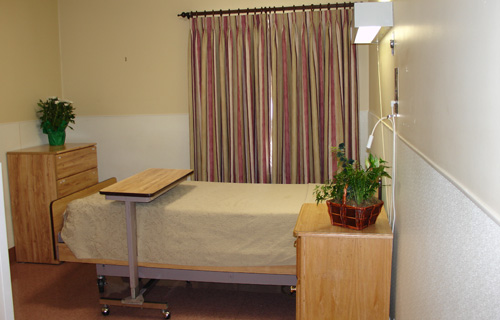
Who Owns and Operates Bel Vista Healthcare Center?

BEL VISTA HEALTHCARE CENTER is owned by a for-profit company. For-profit facilities operate as businesses with obligations to shareholders or private owners. The facility is operated by PACS GROUP, a chain that manages multiple nursing homes. With 41 certified beds and approximately 36 residents (about 88% occupancy), it is a smaller facility located in LONG BEACH, California.
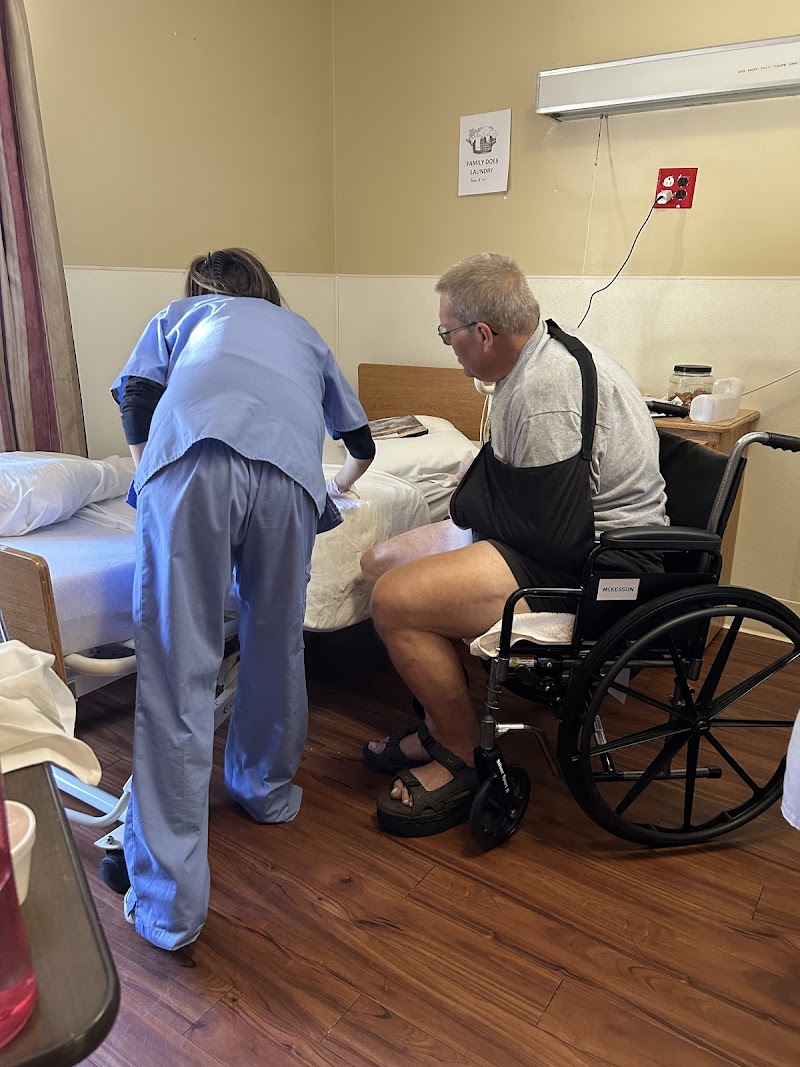
How Does Bel Vista Healthcare Center Compare to Other California Nursing Homes?

Compared to the 100 nursing homes in California, BEL VISTA HEALTHCARE CENTER's overall rating (3 stars) is below the state average of 3.1, staff turnover (40%) is near the state average of 46%, and health inspection rating (2 stars) is below the national benchmark.

What Should Families Ask When Visiting Bel Vista Healthcare Center?

Based on this facility's data, families visiting should ask: "Can you walk me through typical staffing levels on day, evening, and night shifts?" "Can I visit during a mealtime to observe dining assistance and food quality?" "How do you handle medical emergencies, and what is your hospital transfer rate?" "Can I speak with family members of current residents about their experience?" These questions are particularly relevant given the below-average staffing rating.

Is Bel Vista Healthcare Center Safe?

Based on CMS inspection data, BEL VISTA HEALTHCARE CENTER has a clean safety record: no substantiated abuse findings (meaning no confirmed cases of resident harm), no Immediate Jeopardy citations (the most serious violation level indicating risk of serious injury or death), and is not on the Special Focus Facility watch list (a federal program monitoring the lowest-performing 1% of nursing homes). The facility has a 3-star overall rating and ranks #100 of 100 nursing homes in California. While no facility is perfect, families should still ask about staff-to-resident ratios and recent inspection results during their visit.

Do Nurses at Bel Vista Healthcare Center Stick Around?

BEL VISTA HEALTHCARE CENTER has a staff turnover rate of 40%, which is about average for California nursing homes (state average: 46%). Moderate turnover is common in nursing homes, but families should still ask about staff tenure and how the facility maintains care continuity when employees leave.

Was Bel Vista Healthcare Center Ever Fined?

BEL VISTA HEALTHCARE CENTER has been fined $29,543 across 1 penalty action. This is below the California average of $33,374. While any fine indicates a compliance issue, fines under $50,000 are relatively common and typically reflect isolated problems that were subsequently corrected. Families should ask what specific issues led to these fines and confirm they've been resolved.

Is Bel Vista Healthcare Center on Any Federal Watch List?

BEL VISTA HEALTHCARE CENTER is not on any federal watch list. The most significant is the Special Focus Facility (SFF) program, which identifies the bottom 1% of nursing homes nationally based on persistent, serious quality problems. Not being on this list means the facility has avoided the pattern of deficiencies that triggers enhanced federal oversight. This is a positive indicator, though families should still review the facility's inspection history directly.