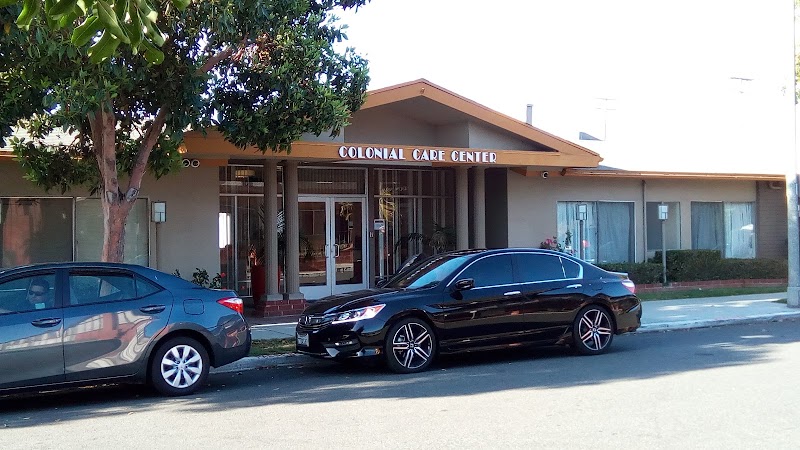
COLONIAL CARE CENTER

1913 E 5TH STREET, LONG BEACH, CA 90802 (562) 432-5751
For profit - Corporation 196 Beds LONGWOOD MANAGEMENT CORPORATION Data: November 2025 2 Immediate Jeopardy citations
Trust Grade
0/100
#999 of 1155 in CA
Last Inspection: February 2025

Within standard 12-15 month inspection cycle. Federal law requires annual inspections.

Overview

Colonial Care Center has received a Trust Grade of F, indicating significant concerns about the quality of care provided. They rank #999 out of 1155 nursing homes in California, placing them in the bottom half of facilities statewide, and #286 out of 369 in Los Angeles County, suggesting limited local options for better care. Unfortunately, the facility is worsening, with the number of issues increasing from 27 in 2024 to 29 in 2025. Staffing is a mixed bag, as they have a turnover rate of 37%, which is slightly below the state average, but their overall staffing rating is only 2 out of 5 stars, indicating below-average support for residents. There are also significant concerns about compliance, with fines totaling $139,092, higher than 86% of California facilities, reflecting ongoing issues. Specific incidents of concern include a failure to provide CPR to a resident in distress, which could severely impact their chance of survival, and a lack of monitoring for a resident on a feeding tube who experienced significant weight loss. Additionally, another resident suffered a decline in range of motion that was avoidable, pointing to inadequate assessments and care. While the facility has some strengths in employee retention, the serious deficiencies noted present significant risks for residents.

Trust Score
F
0/100
In California
#999/1155
Bottom 14%
Safety Record
High Risk
Review needed
Inspections
Getting Worse
27 → 29 violations
Staff Stability
○ Average
37% turnover. Near California's 48% average. Typical for the industry.
Penalties
✓ Good
$139,092 in fines. Lower than most California facilities. Relatively clean record.
Skilled Nurses
⚠ Watch
Each resident gets only 25 minutes of Registered Nurse (RN) attention daily — below average for California. Fewer RN minutes means fewer trained eyes watching for problems.
Violations
⚠ Watch
84 deficiencies on record. Higher than average. Multiple issues found across inspections.
★☆☆☆☆
1.0
Overall Rating
★★☆☆☆
2.0
Staff Levels
★★☆☆☆
2.0
Care Quality
★☆☆☆☆
1.0
Inspection Score
Stable
2024: 27 issues
2025: 29 issues

The Good

  • Full Sprinkler Coverage · Fire safety systems throughout facility
  • No fines on record
  • Staff turnover below average (37%)

    11 points below California average of 48%

Facility shows strength in fire safety.

The Bad

1-Star Overall Rating

Below California average (3.1)

Significant quality concerns identified by CMS

Staff Turnover: 37%

Near California avg (46%)

Typical for the industry

Federal Fines: $139,092

Well above median ($33,413)

Significant penalties indicating serious issues

Chain: LONGWOOD MANAGEMENT CORPORATION

Part of a multi-facility chain

Ask about local staffing decisions and management

The Ugly 84 deficiencies on record

2 life-threatening 3 actual harm
May 2025 1 deficiency
CONCERN (D) 📢 Someone Reported This

A family member, employee, or ombudsman was alarmed enough to file a formal complaint

Potential for Harm - no one hurt, but risky conditions existed

Comprehensive Care Plan (Tag F0656)

Could have caused harm · This affected 1 resident

**NOTE- TERMS IN BRACKETS HAVE BEEN EDITED TO PROTECT CONFIDENTIALITY** Based on observation, interview and record review, the facility failed to ensure one of three sampled residents (Resident 1) bed...

Read full inspector narrative →
**NOTE- TERMS IN BRACKETS HAVE BEEN EDITED TO PROTECT CONFIDENTIALITY** Based on observation, interview and record review, the facility failed to ensure one of three sampled residents (Resident 1) bed was placed in a low position, per the resident's Falling Star Program care plan dated 2/13/2024. This failure has resulted in Resident 1, who was assessed as a high risk for falls, being observed in a bed that was not in a lowered position and placed Resident 1 at risk for falling out of bed and injuries. Findings: During a review of Resident 1's admission Record (Face Sheet), the Face Sheet indicated Resident 1 was originally admitted to the facility on [DATE] and readmitted on [DATE] with diagnosis including a diagnosis of generalized weakness. During a review of Resident 1's Minimum Data Set ([MDS] a resident assessment tool) dated 2/3/2025, the MDS indicated Resident 1 was forgetful and was not able to make reasonable and consistent decisions, he required one to two person assist to complete activities of daily living ([ADLs] routine tasks/activities]) such as transferring from bed/chair to chair. During a review of Resident 1's Care Plan date 2/13/2024, the Care Plan indicated Resident 1 was at risk for falls related to antihypertensive medications (medications used to treat high blood pressure), balance deficit (poor balance), cognitive (the mental action or process of acquiring knowledge and understanding through thought, experience, and the senses) impairment, decreased strength and endurance, history of falls, poor safety awareness/judgement and an unsteady gait (a person's manner of walking). The Care Plan's goal indicated Resident 1's bed should be in a low position. During an observation of Resident 1 on 5/14/2025 at 3:12 p.m., accompanied by Registered Nurse Supervisor (RNS) 1, and concurrent interview, Resident 1 was observed in bed asleep, lying on his right side close to the edge of the mattress. RNS 1 used a tape measurer to measure the height of Resident 1's bed (from the top of the mattress to the floor), Resident 1's bed was 16 inches high as compared to Resident 1's roommate's (Resident 3) bed, which was almost lowered to the floor. RNS 1 stated Resident 1's bed was not in the lowest position the bed could be placed in, which was 14 inches. During an interview on 5/16/2025 at 4:04 p.m., the Director of Nursing Services (DON) stated during their daily shift huddles interventions and safety precautions are discussed based on residents' care plans and the interventions such as low beds are expected to be implemented to lessen the impact of a fall and injury During an interview on 5/16/2025 at 5:03 p.m., the Administrator (ADM) stated all staff of the facility must carry out and implement the residents' care plan interventions to ensure their care and safety needs are properly provided. During a review of the facility's policy and procedure (P/P) titled, Care Plans, Comprehensive Person-Centered revised 3/2023, the P/P indicated the care plan interventions are chosen and implemented after careful consideration of the relationship between the residents' problem areas and their causes and the underlying sources of problem areas and assessments of the residents must be ongoing; thereby, the care plans are evaluated, revised, and/or continued based on the residents' status and changes in condition to ensure the residents' physical, psychological and functional care needs and interventions are developed and implemented. During a review of the facility's policy and procedure (P/P) titled, Falls and Fall Risk, Managing revised 3/2018, the P/P indicated the facility shall implement interventions related to the resident's specific risks and causes to prevent the resident from falling and to minimize complications from falling.
Feb 2025 28 deficiencies 2 IJ
CRITICAL (J)

Immediate Jeopardy (IJ) - the most serious Medicare violation

Deficiency F0678 (Tag F0678)

Someone could have died · This affected 1 resident

**NOTE- TERMS IN BRACKETS HAVE BEEN EDITED TO PROTECT CONFIDENTIALITY** Based on interview and record review, the facility failed to ensure that a resident with a Full Code status (resident wants all ...

Read full inspector narrative →
**NOTE- TERMS IN BRACKETS HAVE BEEN EDITED TO PROTECT CONFIDENTIALITY** Based on interview and record review, the facility failed to ensure that a resident with a Full Code status (resident wants all life saving measures in case of life threatening emergencies) and in distress, received Cardiopulmonary Resuscitation (CPR-an emergency procedure to restart a person's heart, chest compressions) immediately, reducing the residents chances of survival and adverse health outcomes for one of 145 residents with Full Code status (Resident 44). The facility failed to: 1.Ensure Registered Nurse (RN) 2 announced a Code Blue (an announcement that signifies a medical emergency where a patient is experiencing a life-threatening situation) when Resident 44 had no palpable (rhythmic beat of a blood vessel indicating a heartbeat, that can be felt by touch) heartbeat. 2.Ensure RN 2 provided resuscitation and basic life support such as CPR immediately without loss of critical time to Resident 44, when Resident 44 no longer had a palpable pulse on [DATE]. 3.Ensure RN 2 was knowledgeable of the facility's policies and procedures regarding initiating CPR when a full code resident is unresponsive. 4.Ensure RN 2 implemented the facility's policy and procedure (P&P) titled, Emergency Procedure - Cardiopulmonary Resuscitation, revised February 2018, which indicated if an individual was found unresponsive and not breathing normally, a licensed staff, certified in CPR/BLS shall initiate CPR and the American Heart Association ([AHA] the leader in resuscitation science, education, and training, and publisher of the official Guidelines for CPR) guidelines which indicated First responder will call for help, send available staff to call a Code Blue, retrieve emergency medical equipment, assess the residents' level of consciousness, circulation, airway, and breathing and begin CPR, call 911, CPR will continue until the paramedics arrive and assume responsibility. These deficient practices delayed life-saving resuscitation attempts, such as CPR to ensure Resident 44's body had uninterrupted blood, and oxygen circulation, to prevent irreversible damage such as brain damage and or death. The facility had 145 residents, with a Full Code status and at risk of not receiving CPR in case of cardiopulmonary arrest. On [DATE] at 4:43 p.m., an Immediate Jeopardy ([IJ] a situation in which the facility's noncompliance with one or more requirements of participation had caused, or is likely to cause serious injury, harm, impairment, or death to a resident) was called in the presence of the Administrator (ADM) and the Director of Nursing(DON) due to the facility's failure to identify the need for and initiate basic life support to Resident 44, including CPR immediately upon discovering the resident was unresponsive. On [DATE] at 1:34 p.m., the Facility submitted an acceptable IJ removal plan (IJRP- an intervention to immediately correct the deficient practices). After verification the IJRP was implemented through observation, interview, and record review, the IJ was removed while onsite on [DATE] at 4:44 p.m., in the presence of the ADM and the DON. The IJRP included the following: 1.Resident 44 was transferred to the general acute care hospital (GACH) on [DATE] and currently remains hospitalized . 2.On [DATE], the Administrator (ADM) and the Director of Nursing (DON) notified the facility Medical Director of the findings outlined in the IJ removal plan and developed an IJ removal plan. 3.On [DATE] and [DATE], two American Heart Association ([AHA] the leader in resuscitation science, education, and training, and publisher of the official Guidelines for CPR) Instructors provided in-services to nurses on the facility's CPR policy and procedure. The training covered the following: a.Assessment and activation for CPR iUnconsciousness with absence of life ii.Gasping or no observable chest movements (rise and fall) iii.No palpable carotid pulse (the rhythmic beat of a blood vessel that can be felt on either side of the neck), do not use a pulse oximeter (a device that measures how much oxygen is in the blood) to assess for pulse. b.Code for cardiac/respiratory arrest-Code Blue c.CPR Procedures 4.All nursing including part time and overnight shift who was unable to attend the Inservice must be given an in-service prior to returning to work. 5.The DON and Registered Nurse (RN) supervisor reviewed residents who required CPR within the past 30 days and identified one resident aside from Resident 44 with an incident of code blue with not the same deficient practice 6.The AHA instructors will repeat the in services to nursing staff, regarding CPR policy and procedure, every month for 3 months to ensure compliance. 7.The DON and/or designee will review residents who have a change in condition weekly for 4 weeks and monthly thereafter, to ensure that any resident requiring CPR has received the CPR timely, and continually until the paramedics (emergency response team) arrive or there are obvious sign of life. 8.The DON and/or designee will review residents who have change in condition weekly for 4 weeks and monthly thereafter, to ensure that any resident required. Findings: During a review of Resident 44's admission Record, the admission Record indicated Resident 44 was admitted to the facility on [DATE] and readmitted on [DATE], with diagnoses including Type II Diabetes (DM- a disorder characterized by difficulty in blood sugar control and poor wound healing), Sepsis (blood infection), and Urinary Tract Infection (UTI- disease causing bacteria in the urinary tract). During a review of Resident 44's Nursing admission Assessment, dated [DATE], the Nursing admission Assessment indicated Resident 44 had an admitting diagnosis of pneumonia (a lung infection that make it difficult to breath). The Nursing admission Assessment indicated Resident 44 had completed antibiotics (medicines that treat bacterial infections by killing bacteria or stopping them from growing) at the GACH prior to admission. During a review of Resident 44's History and Physical (H&P), dated [DATE], the H&P indicated, Resident 44 did not have the capacity to understand and make decisions. During a review of Resident 44's Minimum Data Set (MDS- a resident assessment tool), dated [DATE], the MDS indicated Resident 44 had severely impaired cognitive (the mental action or process of acquiring knowledge and understanding through thought, experience, and the senses) skills for daily decision making. The MDS indicated Resident 44 had functional limitation in range of motion (the distance and direction a joint can move) on upper extremity (your arm, including your shoulder, elbow, wrist, and hand) and lower extremity (your leg, including your hip, thigh, knee, shin, ankle, and foot), The MDS indicated Resident 44 needed assistance from two or more helpers for the resident to transfer to and from a bed to a wheelchair. During a review of Resident 44's Order Summary Report, as of [DATE], the Order Summary Report indicated there was an order on [DATE] to provide CPR. During a review of Resident 44's Life-Sustaining Treatment (POLST-resident's preferences for medical treatment), dated [DATE], the POLST indicated that facility must attempt CPR if Resident 44 had no pulse and was not breathing. During a review of Resident 44's care plan for Advance Directive (a document that expresses the resident's health care wishes should they be unable to speak for themselves), revised [DATE], the care plan indicated that CPR was to be performed, with interventions including respecting Resident 44's or family's wishes regarding resuscitation efforts. During a review of Resident 44's Change of Condition (COC)/Interact Assessment Form (situation, background, assessment, and recommendation [SBAR] a verbal or written communication tool that helps provide essential, concise information, usually during crucial situations), dated [DATE] at 11p.m., the COC indicated Resident 44's oxygen saturation (amount of oxygen in blood) level was between 88 to 90 percent (%) on room air (RA) (oxygen saturation reference range 95%-100%). The COC indicated facility staff placed Resident 44 on oxygen at 2 Liters (L)/ minute (min) nasal canula (NC) and Resident 44's oxygen saturation went up to 94-95%. The COC indicated Resident 44 was placed on 72-hour monitoring, and her Medical Doctor (MD) was notified on [DATE] at 11:30 p.m. During a review of Resident 44's COC dated [DATE], the COC indicated at 7:30 a.m. on [DATE] Resident 44 was up in her wheelchair. The COC indicated Resident 44's vital signs (VS) were: Blood Pressure 103/64 millimeters of mercury (mmHg- unit of measure. Reference range 120/80 mmHg), Heart Rate 84 (beats) /(per) minute (min-reference range 60 to 100), Oxygen saturation 93% with oxygen 2L/min via NC, Temperature (measure how well the body can make and get rid of heat) 97.9 degree (Reference range 96.8 degree to 98.6 degree) and Respiration Rate 16 (breaths)/min (Reference range 12 to 20 /min) prior to the incident. The COC indicated at 8:40 a.m., Resident 44 was up in her wheelchair, diaphoretic (sweating heavily), eyes closed with VS: HR 40-42/min, oxygen saturation 88% with oxygen at 2L/min via NC. The COC indicated Resident 44 had a palpable (detectable by touch) pulse (heartbeat) of 50 beats/min then Resident 44 was transferred to her bed. The COC indicated Resident 44's heart rate started to fluctuate (vary) from 40-42/min and her oxygen level dropped to 80%. The COC indicated staff did not observe Resident 44's chest rise and fall (indicating breathing), so staff grabbed the Ambu-bag (a handheld device that helps patients' breath when they aren't breathing well or at all) and started providing breaths until the paramedics arrived at 8:45 a.m., and initiated CPR. The COC indicated RN 1 and RN 2 were aware that Resident 44 was full code before calling the paramedics at 8:41 a.m. During a review of the Paramedics Report, dated [DATE], the Paramedics Report indicated Resident 44 had a cardiac arrest (when the heart suddenly stops beating, preventing blood and oxygen from being pumped to the body's organs) on [DATE] at 8:30 a.m., witnessed by staff. The Paramedics Report indicated the emergency medical staff (EMS - Paramedics) arrived at resident's room at.8:44 a.m. and found Resident 44 lying in bed pulseless, apneic (an involuntary pause in breathing), with fixed and dilated pupils (a person's pupils are wide open and do not respond to light, indicating a serious medical condition, often associated with brain damage or severe head injury). The Paramedics Report indicated facility staff noticed Resident 44 was breathing with increased effort, so they began ambuing (the act of using an Ambu-bag) the resident. The Paramedics Report indicated facility staff never initiated chest compressions, even though Resident 44 was observed to be in full cardiac arrest. The Paramedics Report indicated the paramedics immediately initiated CPR on Resident 44 and achieved Resident 44's return to spontaneous circulation (ROSC - when heartbeat and breathing return to normal. During a review of Resident 44's Emergency Documentation-MD notes, from the GACH, dated [DATE], the Emergency Documentation-MD notes indicated EMS brought Resident 44 to the GACH's Emergency Department (ED) from the facility after EMS provided emergency services including CPR at the facility (where Resident 44 resided). The Emergency Documentation-MD notes indicated according to EMS, upon EMS's arrival, Resident 44 was pulseless. The Emergency Documentation-MD note indicated EMS initiated CPR, provided emergency services and Resident 44's ROSC was achieved. The Emergency Documentation-MD note indicated Resident 44's diagnoses at the ED included cardiopulmonary arrest. The note indicated Resident 44 was admitted to the intensive care unit (ICU GACH Unit that cares for seriously ill patients that need constant observation). During an interview on [DATE], at 9:38 a.m., with CNA 1, CNA 1 stated on [DATE] at approximately 8:30 a.m., she entered Resident 44's room to assist Resident 44 with her breakfast and observed Resident 44 sitting in her wheelchair sweating. CNA 1 stated she called CNA 2 to check on Resident 44. CNA 1 stated CNA 2 entered the room, assessed Resident 44, and told her (CNA 1) not to feed Resident 44 her breakfast. CNA 1 stated she stayed with Resident 44 while CNA 2 went to get help. During an interview on [DATE] at 10:17 a.m., with RN 2, RN 2 stated on [DATE] at approximately 8:35 a.m., when she entered Resident 44's room, she observed Resident 44 was lying down, appeared sweaty, and pale. RN 2 stated she checked Resident 44's pulse manually and felt Resident 44's pulse. RN 2 stated the oximeter readings of heartbeat on Resident 44's finger fluctuated between 36 beats/min, to 46 beats/min, and Resident 44's oxygen saturation dropped from 88% to 70%. RN 2 stated she left Resident 44's room and returned with a crash cart (cart stocked with emergency medical equipment, supplies, and drugs for use by medical personnel especially during efforts to resuscitate a patient experiencing cardiac arrest). RN 2 stated she suctioned (to suck out or remove something, like thick liquids using a force created by a vacuum) her Resident 44's mouth to remove secretions. RN 2 stated after suctioning Resident 44, she manually checked Resident 44's pulse and it went up to 50/min. RN 2 stated, when Resident 44's pulse was no longer detectable manually, she relied on the oximeter readings of Resident 44's pulse, which still indicated a pulse at 32/min. RN 2 stated she (RN 2) did not initiate CPR because the oximeter indicated Resident 44 had a pulse, although she could not obtain Resident 44's pulse manually. During an interview on [DATE] at 10:14 a.m., with Treatment Nurse (TXN) 1 stated, she was aware Resident 44 was a full code. TXN 1 stated staff should have initiated chest compressions when Resident 44 stopped breathing and had no pulse. During an interview on [DATE] at 10:52 a.m., with RN 2, RN 2 stated she did not initiate chest compressions when she (RN 2) could no longer detect Resident 44's pulse from the resident's carotid artery (the main blood vessels that supply blood to the brain face, and neck). RN 2 stated the oximeter still displayed a pulse reading. RN 2 stated, if the heart rate was not palpable manually, but the oximeter showed numeric values of 30's/min, 40/min and 50/min, it indicated a regular rhythm. RN 2 stated she did not initiate chest compressions when she (RN 2) could no longer detect Resident 44's pulse from the resident's carotid artery (the main blood vessels that supply blood to the brain face, and neck). RN 2 stated she did not announce a Code Blue, because she believed Resident 44 still had a heart rate based on the oximeter reading. During an interview on [DATE] at 12:15 p.m., the Director of Nursing (DON), stated if the COC involved a Resident's unresponsiveness, staff must assess the Resident's lung function and pulse immediately. The DON stated if the resident did not have a detectable pulse staff must start chest compressions immediately, provide breathing support, and call a Code Blue for emergency intervention. The DON stated if an oximeter indicated numbers like 30's/min, 45/min, 50/min without a palpable pulse, it could be an indication that the resident was not okay, and it was important to provide timely CPR. During an interview on [DATE] at 4:17 p.m., Resident 44's primary doctor stated Resident 44 was a full code, and the staff should have provided CPR when Resident 44 experienced a cardiac arrest. During a review of the facility's P&P titled, Emergency Procedure - Cardiopulmonary Resuscitation, revised February 2018, indicated Personnel have completed training on the initiation of cardiopulmonary resuscitation (CPR) and basic life support (BLS), including defibrillation, for victims of sudden cardiac arrest. The P&P indicated sudden cardiac arrest (SCA) was a loss of heart function due to abnormal heart rhythms (arrhythmias). 1. Victims of cardiac arrest may initially have gasping respirations or may appear to be having a seizure. Training in BLS includes recognizing presentations of SCA. 2. The chances of surviving SCA may be increased if CPR is initiated immediately upon collapse. 3. Early delivery of a shock with a defibrillator plus CPR within 3-5 minutes of collapse can further increase chances of survival. 4. If an individual (resident, visitor, or staff member) was found unresponsive and not breathing normally, a licensed staff certified in CPR/BLS will initiate CPR unless the person had a do not resuscitate (DNR) order, or obvious signs of irreversible death (e.g., rigor mortis). The P&P indicated, if the resident's NR status was unclear, CPR will be initiated until it was determined that there was a DNR or a physician's order not to administer CPR. According to the P&P, if the first responder was not CPR-certified, that person will call 911 and follow the 911 operator's instructions until a CPR-certified staff member arrived. The P&P indicated Preparation for Cardiopulmonary Resuscitation was as follows: 1. The facility's procedure for administering CPR would incorporate the steps covered in the 2010 AHA Guidelines for CPR and Emergency Cardiovascular Care. 2. Select and identify a CPR team for each shift in the case of an actual cardiac arrest, with a designated team leader who would be responsible for coordinating the CPR. The team The P&P also indicated Preparation for Cardiopulmonary Resuscitation was as follows : 1. If an individual was found unresponsive, briefly assess for abnormal or absence of breathing. If sudden cardiac arrest is likely, begin CPR: Instruct a staff member to activate Code Blue and call 911. Verify or instruct a staff member to verify the code status of the individual. Initiate the basic life support (BLS) sequence of events. 2. The BLS sequence of events is referred to as C-A-B (chest compressions, airway, breathing). 3. Chest compressions: a Following initial assessment, begin CPR with chest compressions; b Push hard to a depth of at least 2 inches (5 cm) at a rate of at least 100 compressions per minute; c Allow full chest recoil after each compression; and d Minimize interruptions in chest compressions. 4. Airway: Tilt head back and lift chin to clear airway. 5. Breathing: After 30 chest compressions provide 2 breaths via ambu-bag or manually (with CPR shield). 6. All rescuers, trained or not, should provide chest compressions to victims of cardiac arrest. Trained rescuers should also provide ventilations with a compression-ventilation ratio of 30:2. 7. Continue with CPR/BLS until emergency medical personnel arrive. During a review of AHA's article titled 11 things to know to save a life with CPR, published [DATE], the article indicated according to research, each minute of delayed CPR, there was a decreased chance of survival by about 10%.
CRITICAL (J)

Immediate Jeopardy (IJ) - the most serious Medicare violation

Deficiency F0692 (Tag F0692)

Someone could have died · This affected 1 resident

**NOTE- TERMS IN BRACKETS HAVE BEEN EDITED TO PROTECT CONFIDENTIALITY** Based on observation, interview, and record review, the facility failed to ensure a resident, who was receiving feeding through ...

Read full inspector narrative →
**NOTE- TERMS IN BRACKETS HAVE BEEN EDITED TO PROTECT CONFIDENTIALITY** Based on observation, interview, and record review, the facility failed to ensure a resident, who was receiving feeding through a gastrostomy tube ([GT] a soft tube surgically placed into the stomach to provide nutrition and medications), did not have a severe weight loss (a weight loss greater than five percent (%) in one month, or greater than 7.5% in three months, and greater than 10% in six months) for one of 48 residents receiving GT feeding (Resident 188). The facility failed to ensure: 1.The licensed nurses conducted a change of condition (COC) assessment and monitored Resident 188 closely including weekly weights, signs and symptoms of malnutrition (condition that develops when the body is deprived of vitamins, minerals and other nutrients it needs to maintain healthy tissues and organ function), and dehydration (a dangerous loss of body fluid caused by illness, sweating, or inadequate intake), when the resident had A.Significant weight loss of (nine pounds ([lbs.] a unit of weight measurement) in one month (12/6/2024 [119 lbs.]-1/3/2024 [110lbs]) which was 7.6 % of Resident 188's admission body weight of 119 lbs., B.Weight loss of 24 lbs. in two months (12/6/2024 [119 lbs.]-1/31/2025 [95 lbs.]) on 1/31/2025 which was 20.1% of Resident 188's admission body weight of 119 lbs. C.Weight loss of 25.8 lbs. on 2/6/2025 (12/6/2024 [119 lbs.] - 2/6/2025 93.2 lbs.]) which was 21.6% of Resident 188's admission body weight of 119 lbs. 2. The licensed nurses notified Resident 188's physician and responsible party (RP) of Resident 188's 7.6% significant weight loss identified on 1/3/2025 and 20.1% weight loss in two months identified on 1/31/2025 in accordance with Resident 188's untitled care plan dated 12/23/2024. 3. Resident 188's assigned nurse (unknown) notified the Registered Dietician (RD) to evaluate Resident 1 when the resident had a nine lbs. weight loss on 1/3/2025. 4. Registered Nurse (RN) 3 notified the RD on 1/31/2025 for the RD to evaluate Resident 188's 20.1% weight loss, in accordance with the untitled care plan dated 12/23/2024 when Resident 188 was noted to have continued weight loss. 5. The Interdisciplinary Team ([IDT] a team of different health care professionals working together to develop care interventions for a resident), including the RD met after Resident 188's significant weight loss was first identified on 1/3/2025, and then on 1/31/2025, to develop interventions to prevent further weight loss. 6. The IDT developed an individualized care plan with measurable goals to address Resident 188's weight loss identified on 1/3/2025 and 1/31/2025. 7. Restorative Nursing Assistant ([RNA] certified nursing aide program that helps residents to maintain their function and joint mobility) 1 documented Resident 188's weight right after weighing Resident 188 on 1/31/2025 on the RNA Monthly Weight Report. 8. The RD did not wait until 2/6/2025 (30 days later) to reassess the effectiveness of Resident 188's nutritional interventions recommended on 1/7/2025, including increasing Resident 188's GT feeding 10 additional cubic centimeter ([cc], a unit of measurement) per hour (hr.) to 55 cc/hr, once his diarrhea (loose stool) subsided, per IDT/ care plan review, continue to monitor weight trends (unknown frequency), and reassess as needed (unknown frequency) the interventions recommended (on 1/7/2025). As a result of these deficient practices, Resident 188 had severe weight loss of 25.8 lbs. equal to 21.6% in 60 days. These deficient practices placed Resident 188 and 48 facility residents recieving enteral feeding at risk for malnutrition, dehydration, and possible death. On 2/8/2025 at 4:44 p.m., an Immediate Jeopardy ([IJ] a situation in which the provider's noncompliance with one or more requirements of participation has caused, or is likely to cause serious injury, harm, impairment, or death to a resident) was called in the presence of the facility's Director of Nursing (DON) and the administrator (ADM) due to the facility's failure to implement interventions to prevent Resident 188's severe weight loss, and placed 48 residents recieving enteral feeding at risk for malnutrition, dehydration, and possible death. On 2/9/2025 at 1:13 p.m., the facility submitted an acceptable IJ Removal Plan ([IJRP] interventions to immediately correct the deficient practices). After onsite verification of the facility's IJRP's implementation through observation, interview, and record review, the IJ was removed on 2/9/2025 at 3:10 p.m., in the presence of the DON and ADM. The IJRP included the following immediate actions: a. A change of condition assessment, Situation Background Assessment Recommendation ([SBAR] a communication tool used to share information in a structured way) for severe weight loss was completed on 2/6/2025, which included vital signs (clinical measurements, specifically pulse rate, temperature, respiration rate, and blood pressure, that indicate the state of a patient's basic body functions), pain, laboratory (medical procedure that involves testing a sample of blood, urine, or other substance from the body) results reviewed and obtained new physician orders on 2/6/2025 for adding Liquacel (protein supplement) and to increase GT feeding to 55cc/hr. b. On 2/8/2025, the assistant director of nursing (ADON) conducted another assessment, indicating the Resident 188 remained at his baseline (starting point used for comparisons) condition with normal vital signs, and without any sign of distress. c. On 2/8/2025, the IDT members, including the RD, conducted an IDT care plan meeting. During the meeting, the IDT members addressed Resident 188's overall condition with severe weight loss of 12/6/2024 119Ibs, 1/3/2025 ll0lbs (-9 lbs.), 2/6/2025 93.2Ibs. (25.8 lbs.) The physician instructed to start weekly weight for four weeks and repeat the comprehensive metabolic panel ([CMP] a blood test to check liver, kidney, and metabolic health) on 2/10/2025. d. RNA 1 will receive a performance correction notice, and a one-on-one in-service by the DON regarding weight documentation, emphasizing the importance of recording the weight on the same day it was measured. e. On 2/8/2025, the weights management in-service was initiated until all licensed nurses, including part-time and night ([NOC] 11 p.m. to 7 a.m. shift) will be completed. In-service will be expected to be completed by 2/10/2025. Any licensed nurse unable to attend the in-service due to part time status, emergency or leave of absence has been removed from the schedule and must be given an in-service prior to returning to work. Weight Management in-service includes: e1. Conducting a change of condition assessment for significant or severe weight change: loss or gain of 3 lbs. within a month, 5% a loss or gain of at least 5% in 30 days, 7.5% in 90 days, or 10% in 180 days. e2. Licensed nurses will notify RD and physician of the significant or severe weight changes. e3. Conduct significant weight loss IDT care plan to include useful interventions based on assessment. f. The DON and ADON initiated review of all residents' weight records (180 residents) for the past 30 days to ensure that all significant or severe weight changes had proper assessments, RD recommendations, MD notifications, and updated plan of care. All reviews will be completed by 2/10/2025. g. The DON and the ADON will conduct monthly in-services to licensed nurses regarding weight management for 3-months, covering the following details: Conducting a change of condition assessment for significant or severe weight change: loss or gain of 3 lbs. within a month, 5% a loss or gain of at least 5% in 30 days, 7 .5% in 90 days, or 10% in 180 days. DON and/or designee will notify RD and physician of the significant or severe weight changes. Conduct significant or severe weight loss IDT care plan to include useful interventions based on assessment. Note that education on oral gratification is not considered a useful intervention for promoting weight gain. h. The DON and/or designee will repeat a monthly in-service for three months to RNA responsible for weights documentation, to ensure all weights are recorded on the same day it is measured. i. On 2/8/2025, the DON created a weight management monitoring log, including significant or severe weight loss. j. The DON/ADON will meet with the RNA weekly for four weeks, then monthly for three months to ensure timely weight documentation. k. The DON/ADON will participate in weekly weight management meeting and document the findings with corrective actions in the monitoring log. L. The DON/ADON will monitor weight variance through weekly weight meeting to ensure all residents with weight variance (significant or severe) will be addressed. The DON will discuss weight management related findings during the monthly QA meeting for three months to ensure ongoing compliance with the state and federal regulations. (cross reference: F553, F580, F656, and F865) Findings: During a review of Resident 188's admission Record, the admission Record indicated Resident 188 was admitted to the facility 12/6/2024 with diagnoses including muscle wasting (the shrinking and weakening of muscles), non-Hodgkin lymphoma (cancer [invasive growth of disease causing organisms]), tracheostomy tube (an opening surgically created through the neck into the trachea [windpipe] to allow air to fill the lungs), and multiple pressure ulcers (Injury to skin and underlying tissue resulting from prolonged pressure on the skin) and had a GT. During a review of Resident 188's Minimum Data Set ([MDS] a resident assessment tool) dated 12/13/2024, the MDS indicated Resident 188 had severe cognitive impairment (a significant decline in cognitive abilities that significantly impact daily functioning and independence) for daily decision making. The MDS indicated Resident 188's current weight as of 12/6/2024 was 119 lbs. The MDS indicated Resident 188 was receiving a therapeutic (a meal plan that controls the intake of certain foods or nutrients) diet and was receiving 51% or more of his total calories through a feeding tube. During a review of Resident 188's untitled Care Plan initiated on 12/23/2024, the Care Plan indicated Resident 188 had cancer with an increased risk for weight loss secondary to non-Hodgkin's lymphoma. The untitled Care Plan indicated Resident 188's goal was not to have a weight loss exceeding 5% per month. The Care Plan interventions included RD evaluations and to notify the physician and Resident 188's responsible party of any change of conditions. During a review of a document titled, Weekly-Weights- Station Subacute (a level of care needed by a patient who does not require hospital level acute care but who requires more intensive licensed skilled nursing care than is provided to the majority of patients in a skilled nursing facility) Summary dated 12/2024, the document indicated Resident 188's admitting weight was 119 lbs. and was weighed weekly after admission on [DATE]. Resident 188's weight was as follows: 1. On 12/11/2024 Resident 188's weight was 115 lbs. There was four lbs. weight loss in five days since admission on [DATE]. 2. On 12/18/2024 Resident 188's weight was 112 lbs. There was another three lbs. weight loss in a week from 12/11/2024. 3. On 12/27/2024 Resident 188's weight was 110 lbs. There was another two lbs. weight loss in a week from 12/28/2024. 4. On 1/3/2025 Resident 188's weight was 110 lbs. The Weekly Weights and Vitals Summary did not indicate the aforementioned weekly weights were recorded and addressed in Resident 188's electronic medical record (EMR) and the resident's weekly weight loss was addressed. During a review of Resident 188's Weights and Vitals Summary, dated 12/6/2024, the Weekly Weights and Vitals Summary indicated Resident 188 weighed 119 lbs. The Weights and Vitals Summary dated 1/3/2025 indicated Resident 188's weight was 110 lbs., a nine lbs. (7.6%) weight loss since admission. The Weights and Vitals Summary did not indicate Resident 188's weekly weight measurements were continued when the weight loss was identified on 1/3/2025. During a review of Resident 188's Weights and Vitals Summary dated 2/6/2025, the Weights and Vitals Summary indicated Resident 188 weighed 93.2 lbs., which was a 25.8 lb. (21.7%) weight loss since admission. During a review of Resident 188's Order Summary Report (physician's orders), the Order Summary Report indicated an order was placed on 12/6/2024 to monitor Resident 188's weight weekly for four weeks and then monthly. The Order Summary Report indicated an order for monthly weights was placed on 12/6/2024. The Order Summary Report indicated there was an order placed on 12/6/2024 for GT feeding with Glucerna (diabetes-specific nutritional formula) 1.5 calorie ([cal] a unit of energy derived from nutrition) at 45 cubic centimeters (cc) per hour (hr) for 20 hours via GT pump (device to administer feeding formula) to provide 900 cc equal to1350 kilocalories (kcals) per day and discontinued on 1/7/2025. During a review of Resident 188's change of condition (COC)- Licensed Nurse Note dated 12/14/2024, the note indicated Resident 188 was having frequent loose stools (diarrhea). During review of Resident 188's Order Summary Report the Order Summary Report indicated on 1/7/2025, an order was placed for Imodium A-D (antidiarrhea medication) 2 milligrams (mg) via GT every four hours as needed for loose stool for seven days. During a review of Resident 188's Nutrition/ Dietary Note dated 1/7/2025 at 10:56 a.m., the Nutrition/Dietary Note indicated the RD documented Resident 188's weight was 110 lbs. with a nine lbs. weight loss in one month. The RD documented Resident 188's ideal body weight ([IBW] the healthiest weight per height) range was 117 lbs. to 143 lbs., and Resident 188's nine lbs. weight loss was significant. The Nutrition/Dietary Note indicated the RD recommended to increase the Glucerna 1.5 from 45 cc/hr to 55 cc/hr to provide 1100cc/1650 kcal per day. The Nutrition/Dietary Note indicated the RD recommended to monitor the resident's weight trends (frequency not specified) and she (RD) documented she would reassess the resident's nutritional needs as needed. There was an addendum (additional information) added on 1/7/2025 to the Nutrition/ Dietary Note indicating Resident 188 was able to tolerate the GT feeding well and had no nausea (feeling sick to your stomach), vomiting (throwing-up forces the contents of the stomach up through the food pipe) or diarrhea. During a review of Resident 188's Nutrition/ Dietary Note dated 1/7/2025 at 1:13 p.m., the Nutrition/ Dietary Note indicated the RD discussed Resident 188's frequent loose stools with a nurse (unknown) and to hold the order to increase the GT feeding to 55 cc/hr due to Resident 188's diarrhea. The Nutrition/ Dietary Note indicated the GT feeding would be increased once the diarrhea resolved. During a review of Resident 188's Medication Administration Record (MAR) for January 2025, the MAR indicated Imodium A-D was last given to the resident on 1/13/2025 for loose stool. During a review of Resident 188's Order Summary Report for January 2024, the Order Summary Report indicated an order dated 1/7/2025 to increase Glucerna 1.5 to 55 cc/hr. to administer for 20 hours via GT pump to provide 900 cc/1350 kcal per day. This order was discontinued three days later on 1/10/2025. The Order Summary Report indicated on 1/10/2025 an order was placed to decrease the Glucerna 1.5 back down to 45 cc/hr to administer for 20 hours to provide 900 cc/1350 kcal per day. The Order Summary Report indicated there were no new orders placed until 2/7/2025. On 2/7/2025 there was a new order to increase the GT feeding with Glucerna 1.5 at 55 cc per hour for 20 hours via GT pump to provide 1100 cc/1650 kcal per day. During a review of Resident 188's Licensed Nurses Progress Notes dated 1/7/2025, the Licensed Nurses Progress Notes indicated Resident 188's physician (MD 1) was informed Resident 188 was having loose stool and the RD recommended to increase Resident 188's GT water flush (water given through the GT for hydration) to 50cc/hr related to elevated (no result specified) blood urea nitrogen ([BUN] a kidney function laboratory test). The Licensed Nurses Progress Notes did not indicate MD 1 was informed of Resident 188's nine lbs. weight loss. During a review of Resident 188's Care Plan (untitled) initiated on 1/7/2025, the Care Plan indicated Resident 188 was identified to be at risk for dehydration secondary to diarrhea. The Care Plan indicated the goal for Resident 188 was to reduce the risk of unplanned weight changes. The Care Plan interventions included monitoring Resident 188's weight (frequency not identified) and report (unspecified to whom) any change of plus or minus (+/-) of three pounds per week or +/- five pounds per month per policy (policy not identified). This Care Plan did not include Resident 188's actual weight loss of 7.5% (nine lbs.) that had been identified on 1/3/2025 or the interventions to reduce the risk of continued weight loss from occurring. During a concurrent observation and interview on 2/5/2025 at 12 p.m., with Resident 188, in Resident 188's room, the resident was observed receiving Glucerna 1.5 through GT at rate of 45 cc/hr. Resident 188 stated he had been losing weight recently but was hopeful he would gain some weight back because he passed his swallow evaluation (checks how well a resident swallows) on 2/4/2025 and was now able to eat a little food along with his tube feeding for oral gratification (the pleasure derived from oral activities such as eating). Resident 188 stated he hoped to gain some weight because his legs looked like bones. Resident 188 was observed pulling his bed sheets away from his legs. Resident 188 legs were observed being very thin with prominent bones. Resident 188 stated he wanted to be stronger to participate in therapy. During an interview on 2/5/2025 at 12:03 p.m., Licensed Vocational Nurse (LVN) 6 stated RNA 1 was responsible for measuring and recording weights. LVN 6 stated RNA 1 had not reported any recent weight changes for Resident 188. During an interview on 2/5/2025 at 2:49 p.m., Registered Nurse (RN) 2 stated as of 2/5/2025, the last weight recorded for Resident 188 was on 1/3/2025. RN 2 stated RNA 1 was supposed to turn monthly weights in by the fifth day of every month but they were not yet completed. RN 2 stated the facility usually did not complete a COC for weight loss unless it was a lot of weight, like a 40 lbs. weight loss. RN 2 agreed that a nine lbs. (7.6%) weight loss was a lot of weight to lose in one month. RN 2 stated that a COC did not need to be completed for a 7.5% weight loss. RN 2 stated if Resident 188 had been weighed weekly for four weeks after he was admitted on [DATE], per physician's order, the RD could have assessed Resident 188 sooner than 1/7/2025 and identified the gradual weight decrease. RN 2 stated she reviewed Resident 188's electronic medical record and could not find any documentation that Resident 188 was weighed weekly as RD recommended. During an interview on 2/6/2025 at 10:22 a.m., RNA 1 stated she weighed Resident 188 on Friday 1/31/2025 and the resident weighed 95 lbs. RNA 1 stated she did not document the weight for 1/31/2025 in Resident 188's chart but I knew Resident 188 had lost a lot of weight so she (RNA 1) verbally informed RN 3 about the weight loss on 1/31/2025. RNA 1 stated RN 3 stated that the weight loss identified on 1/31/2025 was okay, and that Resident 188 would start gaining weight because he passed his swallow evaluation and was able to eat (for oral gratification) as well as receive tube feedings. RNA 1 could not produce any documentation that the resident's weight of 95 lbs. on 1/31/2025 was documented. RNA 1 pointed to her head and stated, it is all in here. RNA 1 stated the residents' monthly weights on the sub-acute unit were not entered into the computer yet because she had yet to complete taking all the weights for the month and would finish by 2/7/2025. During an interview on 2/6/2025 at 11:48 a.m., RN 3 stated on 1/31/2025, RNA 1 did inform her Resident 188 lost a lot of weight (did not know exact amount). RN 3 stated she did not inform the physician because she was admitting another resident at the time. RN 3 stated she assumed Resident 188 would start gaining weight now that he was able to eat by mouth and was continuing to receive tube feeding. RN 3 stated Resident 188's diarrhea had stopped sometime mid-January 2025 (exact date unknown). During an observation on 2/6/2025 at 12:02 p.m., RNA 1 and LVN 3 were observed weighing Resident 188 using a mechanical lift (device used to assist with transfers [from one surface to another] and movement of individuals who require support for mobility beyond the manual support provided by caregivers alone) containing a scale. Resident 188 weighed 93.2 lbs. (total of 25.8 lbs. weight loss from admission weight of 119 lbs. on 12/6/2024). During an interview on 2/6/2025 at 12:21 p.m., the RD stated the nursing staff did not notify her of Resident 188's identified weight loss on 1/3/2025. The RD stated residents' monthly weights were documented in the residents' medical records and were printed out for her review every Monday or Thursday (in general). The RD stated on 1/7/2025, she reviewed Resident 188's weight report dated 1/3/2025 which indicated the resident weighed 110 lbs. and had a weight loss of nine lbs. The RD stated she assessed Resident 188 on 1/7/2025. The RD stated she had not reassessed Resident 188 since 1/7/2025 (30 days ago) when she evaluated him for significant weight loss and did not implement any interventions such as measuring his weight weekly because she (RD) did not feel Resident 188 required weekly weights for close monitoring. The RD stated she was unable to increase Resident 188's GT feeding on 1/7/2025 because Resident 188 had diarrhea. The RD stated she did not reassess Resident 188 after the diarrhea subsided on 1/13/2025. The RD stated she did not feel it was necessary to monitor Resident 188's significant weight loss of 7.6% more frequently than monthly. The RD stated it was important to monitor severe weight loss closely to ensure the residents health status did not decline. The RD stated the potential outcome of severe weight loss was malnutrition. During an interview on 2/6/2025 at 2:04 p.m., MD 1 stated he should have been notified as soon as possible of Resident 188's severe weight loss. MD 1 stated it was important he was notified so he could decide on new interventions and ensure the RD was assessing the resident's nutritional needs. During a review of Resident 188's Nutrition/ Dietary Note dated 2/6/2025, the Nutrition/ Dietary Note indicated Resident 188 weighed 93 lbs., and had a 17 lbs. (15%) weight loss in one month from 1/3/2025 to 2/6/2025 and had 26 lbs. weight loss in three months from 12/6/2025 to 2/6/2025. The Nutrition/ Dietary Note indicated the weight loss was significant and was likely related to pressure ulcer healing, diarrhea, and respiratory failure (a serious condition that makes it difficult to breathe on your own). The Nutrition/ Dietary Note indicated Resident 188 was tolerating GT feeding well and was not experiencing diarrhea at the time on 2/6/2025. The Nutrition/ Dietary Note indicated the RD recommended to increase the GT feeding to Glucerna 1.5 at 55cc/hr for 20 hrs. to provide 1100 cc/1650 kcal daily. During a review of Resident 188's COC/ Interact Assessment form (SBAR) dated 2/7/2024, the COC indicated Resident 188 had a 26 lbs. weight loss. The COC indicated MD 1 was notified of the weight loss. During a review of Resident 188's COC/ Interact Assessment forms (SBAR), the COC/Interact Assessment forms did not indicate there were any other COCs from admission (on 12/6/2024) to 2/7/2025 in Resident 188's chart regarding weight loss or that MD 1 or Resident 188's responsible party (RP), family member (FM)1were informed of the resident's severe weight loss. During an interview on 2/7/2025 at 12:41 p.m., Resident 188's FM 1 stated nursing staff (unknown) told her in passing Resident 188 was losing weight, but no one informed her how much weight. FM 1 stated on 2/7/2025, the morning nurse (unknown) called her about Resident 188's weight loss and informed her that Resident 188 had lost weight. FM 1 stated they did not inform her of the actual amount of weight he lost but now she was feeling worried about Resident 188's health. During an interview on 2/8/2025 at 1:23 p.m., the ADON stated a COC was important documentation including monitoring when an issue outside of the resident's baseline occurred. The ADON stated a significant weight loss was outside of Resident 188's baseline and a COC should have been initiated. The ADON stated he reviewed Resident 188's medical record and did not find a COC completed for weight loss or any documentation indicating the physician or FM 1 was notified of the weight loss. The ADON stated the RD needed to be made aware of significant weight loss but so did the physician because the physician had more options for addressing the weight loss, more interventions, and modalities to address the weight loss. The ADON stated a care plan should have been created for the weight loss as a change of condition. The ADON stated it was important to create a care plan, so all staff involved knew the new interventions, new goals, and the problem the resident was having. The ADON stated he reviewed Resident 188's medical record and did not find a care plan for the resident's severe weight loss. The ADON stated it was important to monitor interventions for a COC to see if interventions were effective. The ADON stated the IDT should have met and discussed Resident 188's weight loss so that they could collaborate and come up with new solutions for the weight loss and recommend them to the physician. The ADON stated the IDT was to be done as soon as the RP and resident were available to be involved in the care planning. The ADON stated as soon as Resident 188's diarrhea subsided on 1/13/2025 the RD should have reassessed the resident and the physician should have been notified so they could decide if GT feeding could have been increased. The ADON stated the potential outcome of not monitoring severe weight loss or reassessing the resident's interventions was further weight loss. The ADON stated based on Resident 188's current weight of 93.2 lbs., the interventions were not working and the IDT meeting should have been conducted to address the resident's progressive weight loss. During an interview on 2/8/2025 at 1:57 p.m., the RD stated she did not attend IDT meetings for weight loss. The RD stated the IDT discussed Resident 188's case but the notes of the IDT discussion were not written down. The RD stated if it was not documented, it was not done. The RD stated RNA 1 did not write down any weights on 1/31/2025, she (RNA 1) just told her (RD) the weight verbally on 2/6/2025. The RD stated the potential outcome of not being notified right away of weight loss was a delay of interventions to prevent further weight loss. The RD stated she based her assessment of Resident 188's chart and information obtained from nurses but did not assess or speak to the resident himself. During an interview on 2/8/2025 at 2:33 p.m., the DON stated facility staff cannot assume a weight loss was expected based on the resident's diagnosis. The DON stated they must closely monitor the resident's weight trends (via weekly weights) to see if any other interventions could be implemented for the resident. The DON stated she was not made aware Resident 188 had severe weight loss and that his weight loss was not discussed during an IDT meeting. The DON stated communication among the care team was important so weights can be addressed appropriately. The DON stated it was important to reassess the interventions to see if the interventions were working and revise and add new interventions as needed. During an interview on 2/8/2025 at 3:02 p.m., the director of staff development (DSD) stated the weights should be documented in the resident's chart right away after obtaining the weight. The DSD stated, we are all human and the RNAs could forget a weight or mix up the weights of different residents if they did not write them down right away. The DSD stated accurate weights were important so an accurate nutritional assessment could be done, and weights could be accurately monitored. During an interview on 2/8/2025 at 3:26 p.m., the medical director (MD 2) stated the physician needed to be informed as soon as weight loss was identified. MD 2 stated any significant weight fluctuations needed to be addressed. MD 2 stated continued weight loss was not good and affected a resident's well-being, could lead to malnutrition and slow pressure sore healing. During a review of the facility's policy and procedure (P/P) titled Nutritional Assessment dated 10/2017, the P/P indicated as part of the comprehensive assessment, the nutritional assessment was to be a systematic, multidisciplinary process that included gathering and interpreting data and using that data to help define meaningful interventions for the resident at risk of impaired nutrition. During a review of the facility's P/P titled Weight Assessment and Intervention dated 3/2022, the P/P indicated weights were to be recorded in each unit's weight record chart and in the individual's medical record. Any weight change of 5% or more since last weight assessment was retaken the next day for confirmation and if the weight is verified, the nursing team was to immediately notify the RD in writing. Residents were to be weighed at an interval determined by the IDT. The threshold for significant unplanned and undesired weight loss was to be based on the following criteria [ where percentage of body weight loss = (usual weight - actual weight)/ (usual weight) x 100]: a. 1 month - 5% weight loss is significant; greater than 5% is severe. b. 3 months- 7.5% weight loss is significant; greater than 7.5% is severe. c. 6 months - 10% weight loss is significant; greater than 10% is severe. Care planning for weight loss or impaired nutrition is a multidisciplinary effort and includes the physician, nursing staff, the dietitian, the consultant pharmacist, and the resident or resident's legal surrogate (RP). Individualized care plans shall address to the extent possible: the identified causes of weight loss; goals and benchmarks for improvement; and time frames and parameters for monitoring and reassessment. During a review of the facility's P/P titled Change in Resident's Condition or Status dated 3/2022, the P/P indicated the nurse was to notify the physician and RP when there has been a significant change in the resident's physical condition. Notifications were to be made within 24 hours. The nurse was to record information relative to changes in the resident's record. During a review of the facility's Registered Dietician (RD) Consultant job description dated 4/2022, the job description indicated the RD was to work with the ADM, nursing, and other department heads on planning resident care issues, and quality assessment monitoring and reporting. The RD was responsible for evaluating the nutritional needs of the residents and documenting in the nutritional record.
CONCERN (D)

Potential for Harm - no one hurt, but risky conditions existed

Deficiency F0557 (Tag F0557)

Could have caused harm · This affected 1 resident

Based on observation, interview, and record review, The facility failed to respect dignity for one of two residents (Resident 119) who were under hospice care by not providing oral care when resident ...

Read full inspector narrative →
Based on observation, interview, and record review, The facility failed to respect dignity for one of two residents (Resident 119) who were under hospice care by not providing oral care when resident 119's teeth covered with brown, sticky matters. This failure has the potential to result in aspiration, tooth decay, pain, and infection, compromising Resident 119's comfort, dignity and overall health. Findings: During a review of Resident 119's admission Record, the admission Record indicated the facility admitted Resident 119 on 8/14/2020 with diagnoses including arteriosclerotic heart disease (a condition that occurs when the coronary arteries narrow or become blocked) and Wernicke's encephalopathy (a brain disorder caused by a severe lack of vitamin B1). During a review of Resident 119's History and Physical (H&P), dated 1/26/2025, indicated, Resident 119 did not have the capacity to understand and make decisions. During a review of Resident 119's Minimum Data Set (MDS- a resident assessment tool), dated 11/14/2024, indicated Resident 119's cognitive skills (the mental abilities your brain uses to think, process information, remember things, pay attention, and solve problems) for daily decision making was severely impaired. The MDS also indicated Resident 119 had functional impairment in range of motion on both upper and lower extremities, was dependent for oral hygiene. During a review of Resident 119's Order Summary Report, orders as of 2/6/2024, the Order Summary Report indicated that the following physician orders: a. 1/25/2025- Placed Code Status as do-not-resuscitate (DNR) b. 1/25/2025- Admit to hospice care. c. 1/31/2025- Provide suctioning as needed, including nasal tracheal suctioning if necessary d. 2/3/2025-Provide oral care for comfort. During a review of Resident 119's care plan for self-care deficits, revised on 8/24/2022 indicated that Resident 119 required total assist with her ADLs. The care plan goal indicated Resident 119 would be clean, dry and well groomed daily. The care plan interventions which included providing oral care two times a day and assisting as needed. During a review of Resident 119's care plan for 'on hospice care', initiated 1/28/2025, indicated that Resident 119 was expected to deterioration due to decline/ terminal illness. The care plan goal indicated that Resident 119 would be comfortable: kept clean and dry; maintain dignity ongoing until the next assessment. The care plan interventions which included providing good oral hygiene. During a review of Resident 119's Medication Administration Record (MAR), for the month of February, the MAR indicated that oral care for comfort was not provided in February, as required. During an observation on 2/3/2025 at 10:32 a.m. in Resident 119's room, observed Resident 119 sitting upright at an 80-degree angle in bed, receiving 3 liter(L)/minute(min) of oxygen via (through) nasal cannular (NC). Resident 119 had a bubbling sound in the throat, indicating the presence of secretions. Resident 119's mouth was open, and there was dried, sticky brown buildup between and covering the entire bottom teeth. During an observation on 2/4/2025 at 4:13 p.m. in Resident 119's room, observed Resident 119 sitting upright at an 80-degree angle in bed, receiving 3 L/min of oxygen via NC. Resident 119 had a bubbling sound in her throat, indicating the presence of secretions. Resident 119's mouth was open. There was dried and sticky brown buildup between and covering her entire bottom teeth. During an interview on 2/5/2025 at 9:06 a.m. with Licensed Vocational Nurse (LVN) 1, LVN 1 stated that Resident 119 is under palliative care, she still requires all nursing care, including oral care. During a concurrent observation and interview on 2/5/2025 at 10:11 a.m. with LVN 1 in Resident 119's room, observed LVN 1 assessing the buildup inside of Resident 119's mouth. Upon inspecting Resident 119's mouth, LVN 1 stated that it was light brown, dried, and stuck between the teeth, and stated that's so bad unsure if it was food residue or another buildup. LVN 1 also stated that CNAs are responsible for providing morning care, oral care should be provided as needed, at least in the morning, to prevent aspiration, discomfort, and potential infections, and Resident 119 should not have such build up, as it can lead to aspiration, tooth decay, pain, infections and food fly can go into the resident's mouth because of it. During an interview on 2/7/2025 at 12:53 p.m. with the Director of Nursing (DON), the DON stated that oral care is essential for maintaining dignity, even in palliative care, and should be considered a necessary aspect of patient care. During a review of the facility's policy and procedure (P&P) titled, Palliative care, undated, indicated the Resident will be assisted to be a comfortable demise in a dignified manner. During a review of the facility's P&P titled, mouth care, dated 2001, indicated that the purposes of this procedure are to keep the resident's lips and oral tissues moist, to cleanse and freshen the resident's mouth and to prevent oral infection. The H&P also indicated that Demeaning practices and standards of care that compromise dignity are prohibited. Staff are expected to promote dignity and assist residents
CONCERN (D)

Potential for Harm - no one hurt, but risky conditions existed

Quality of Care (Tag F0684)

Could have caused harm · This affected 1 resident

**NOTE- TERMS IN BRACKETS HAVE BEEN EDITED TO PROTECT CONFIDENTIALITY** Based on interview and record review, the facility failed to provide the necessary care and services to attain or maintain the h...

Read full inspector narrative →
**NOTE- TERMS IN BRACKETS HAVE BEEN EDITED TO PROTECT CONFIDENTIALITY** Based on interview and record review, the facility failed to provide the necessary care and services to attain or maintain the highest practicable physical well-being for one of three sampled residents (Resident 55) by failing to: 1. Follow the facility policy and procedure to monitor and document assessments and interventions provided to Resident 55 during change of condition (COC). 2. Not creating and implementing a patient centered care plan for actual weight loss. 3. Assess Resident 55's continued weight loss. These deficient practices resulted in Resident 55 requiring a gastrostomy (g-tube: a surgical opening fitted with a device to allow feedings to be administered directly to the stomach common for people with swallowing problems) to prevent further weight loss. Findings: During a review of Resident 55's admission record the admission record indicated Resident 55 was initially admitted to the facility on [DATE] and readmitted on [DATE] with diagnoses including, protein-calorie malnutrition, major depressive disorder (MDD: a mood disorder that causes a persistent feeling of sadness and loss of interest), and dysphagia (difficulty swallowing). During a review of Resident 55's History and Physical (H&P) dated 12/18/2024, the H&P indicated Resident 55 is able to make decisions for activities of daily living. During a review of Resident 55's Minimum Data Set ([MDS] a resident assessment tool)], the MDS dated [DATE], the MDS indicated Resident 55's cognitive skills (were severely impaired. The MDS indicated Resident 55 is dependent on all aspects of activities of daily living (ADL: bathing, sit to lying, personal, toileting, oral hygiene, and eating. During a review of Resident 55's CP initiated on 1/23/2024 and revised on 4/24/2024 indicated resident has alteration in nutritional status related to (r/t) diagnosis of dementia (a progressive state of decline in mental abilities), at risk for weight gain, weight loss, dehydration, and at risk for malnutrition due to dysphagia. The CP intervention indicated the following: 4/23/2024-add sugar free (SF) 4-ounce (oz: unit of weight) HPN with lunch for one (1) month (completed) 7/6/2024-add SF 4 oz High Protein Nutritional (HPN) at 10:00a.m. and 2:00p.m. for three (3) months 8/13/2024-add SF ice cream with lunch and dinner. 10/9/2024-add 4 oz. HPN twice a day (BID) for two (2) months. (change in diet order) 11/5/2024-increase sugar free HPN to three times a day for weight management. Increase Glucerna shake (calorically dense formula for residents who are diabetic) to three times a day (TID) for weight management. 12/20/2024-add SF 4 oz. juice with lunch and dinner. 12/26/2024-add 4 oz HPN TID. Add ice cream with lunch and dinner. Add Glucerna with meals. Report significant weight loss and gain to medical doctor (MD) and family. During a review of Resident 55's Order Summary Report (physician notes) dated 2/6/2025, the order summary report indicated Mirtazapine (medication used to treat depression) Tablet 7.5 milligram (mg: unit of mass/weight) [give 1 tablet by mouth at bedtime for depression as manifested by (m/b) poor oral (PO) intake less than 50 percent (%). The order summary report indicated to monitor for potential side effects antidepressant (Mirtazapine); sedation, weight gain, weight loss. The order summary indicated monitor episodes of depression m/b poor PO intake less than 50% [zero (0)=greater (>) 50% of meal intake, 1=less (<) than 50% of meal intake for (Mirtazapine) use. These three orders were ordered 12/17/2024. During a review of Resident 55's Weights and Vitals Summary dated 2/7/2025, the weights and vitals summary indicated the following: 5/6/2025 122 pounds (lbs) [-7.5 percent (%) change [Comparison weight 2/5/2024, 133 lbs, -8.3%, -11 lbs] 6/5/2025 120 lbs [-10% change [Comparison weight 1/10/2024, 134 lbs, -10.4%, -14 lbs] 7/3/2024 118 lbs [-10% change [Comparison weight 1/10/2024, 134 lbs, -11.9%, -16 lbs] 8/5/2024 116 lbs [-10% change [Comparison weight 3/5/2024, 129 lbs, -10.1%, -13 lbs] 9/5/2024 114 lbs [-10% change [Comparison weight 3/8/2024, 128lbs, -10.9%, -14 lbs] 10/4/2024 112 lbs [-10% change [Comparison weight 4/5/2024, 125 lbs, -10.4%, -13 lbs] 1/3/2025 104 lbs [-10% change [Comparison weight 8/5/2024 , 116 lbs, -10.3%, -12 lbs] [-5% change [Comparison weight 12/5/2024, 110 lbs, -5.5 %, -6 lbs] During a review of Resident 55's Change of Condition (COC) dated 2/28/2024, the COC indicated Resident 55 had variable by mouth (PO) intake. The nursing notes indicated the nurse was notified by a nursing assistant Resident 55 was not eating sufficiently for breakfast and received orders to draw labs. During a review of Resident 55's COC dated 12/13/2024, the COC indicated Resident 55 had critical lab results for sodium level 167 (normal level 135 to 145 milliequivalents per liter (mEq/L: unit used to measure concentration of substance). Resident 55 was ordered to go to general acute care hospital (GACH) due to having severe dehydration (when body loses more fluids than intakes) and acute kidney injury (kidneys suddenly lose their ability to function properly). During a review of Resident 55's Nutritional assessment dated [DATE], the nutritional assessment indicated Resident 55's required calories is 1220 to 1525 (normal range 1900 to 2000kcal) 20-25 kilocalories per kilogram (kcal/kg: is a unit of measurement used to estimate caloric needs based on body weight), required protein of 61-67 (1 to 1.1 gram per kg (g/kg: unit of mass) (normal range 88-90gm), and required fluid intake of 1220 to 1525 (1 milliliter (unit of measurement for volume) per (kcal: unit of heat energy) (mL/kcal) (normal range 1800 to 2000mL). Resident 55's summary of level of care indicated moderate as Resident 55's weight fluctuates, lab data is consistent with potential for malnutrition, and food intake fluctuates. Implementation plan indicated by mouth 25 to 60% of meals. Resident weight is 134 lbs and is above IBM. During a review of Resident 55's Nutritional assessment dated [DATE] at 3:11p.m., the nutritional assessment indicated Resident 55's required calorie is 1225 to 1470 (25-30kcal/kg), required protein 49-54 (1-1.1gm/kg), and required fluid of 1225 to 1470 (1mL/kcal). Resident 55's PO intake is 10-80% for meals. Problems indicated weight loss of 5% in last 30 days or 7.5% in the last 90 days or 10% in the last 180 days). Other issues identified was left forearm abrasion, 3% weight loss in 1 month, 6% in last 3 months, 11% in last 6 months likely related to recent hospitalization, poor po intake. Summary of level of care indicated high risk with excessive weight loss/gain. Lab data/diagnosis consistent with potential for or presence of malnutrition. Food intake poor. Resident receives tube feeding, has pressure sores or is in critical medical condition. Implementation plan indicated Glucerna three times a day with meals, ice cream two times a day with lunch/dinner, and 4 oz. HPN three times a day. During a concurrent interview and record review of the progress notes on 2/05/25 at 3:54 p.m. with Registered Dietitian (RD), RD stated Resident 55 on 2/24/2024 had low PO intake so she recommended nutritional shake for lunch and dinner, and indicated Resident 55 was sent out to the hospital in April 2024 RD stated the Certified Nursing Assistant (CNA) would notify her if the Resident does not like the shakes. During a concurrent interview and record review of Resident 55's MAR dated 1/1/2025 to 1/31/1025 on 2/5/2025 at 4:04p.m. with RD, RD stated the MAR reflecting Glucerna Shake with meals for supplement 237mL PO order date 12/26/2024 does not indicate how much Resident 55 drank as there is only a check mark. RD stated the MAR should reflect the percentage or mL of how much Resident 55 drank the Glucerna to get an exact intake. RD stated she makes her rounds and like to see if the residents have the shakes in their hands, but indicated the only way to know if the resident is eating or drinking the shakes is by talking to the nurse. RD stated Resident 55 has constant significant weight changes, however it was a slow gradual weight loss. RD stated Resident 55 is supposed to ideally be getting 1225 to 1470 calories for a baseline weight within 90 to 110 lbs. During a concurrent interview and record review of Resident 55's MAR dated on 2/1/2025 to 2/28/2025 on 2/6/2025 at 1:14p.m. with Licensed Vocational Nurse 4 (LVN 4), LVN 4 stated Resident 55 does not eat much and gets Glucerna three times a day and indicated she drank about 20% today. LVN 4 stated Resident 55 ate 30% of her breakfast and had a strawberry milk shake that is given to Resident 55 at 10:00a.m. and at 2:00p.m. LVN 4 stated the MAR dated 2/1/2025 to 2/28/2025 indicated the check mark on Glucerna for breakfast, lunch, and dinner indicates that it was given to Resident 55, but does not know how much she drank and needs to be monitored. LVN 4 stated if there is a weight loss, she will report it to the RD, inform the doctor, family, and would do a COC to ensure she is being monitored for 3 days if she is not eating as she may be dehydrated. LVN 4 stated not monitoring the resident may lead to confusion and death. LVN 4 stated the RNA does not communicate or report to her if there is a weight loss and checks on her own. LVN 4 stated if there is a weight loss, she would ask the RD if they would want to change the diet. LVN 4 stated the RD asks how the resident is eating or if they like what they have or if the current diet needs to be changed. LVN 4 stated she has not seen Resident 55 eat ice cream, but she likes the shakes and drink water but does not eat much food. LVN 4 stated since Resident 55's breakfast and lunch intake are about 30-35% and at times has eaten 40%, but her baseline has been 30-35%. During a concurrent interview and record review of Resident 55's CP on 2/6/2025 at 1:55p.m. with Licensed Vocational Nurse 4 (LVN 4), LVN 4 stated Resident 55 has an anticipated weight loss related to malnutrition dated 1/8/2025 with interventions to do monthly weights but does not have a CP for an actual weight loss. LVN 4 stated Resident 55 has a CP for alternation in nutritional status initiated on 1/23/24, revised 4/24/24, but the CP has not been revised for a year and does not indicate how much weight Resident 55 lost. LVN 4 stated the purpose of CP is to have a goal and interventions that needs to be done so the resident can improve during their time in the facility. LVN stated CP is also updated to know if the resident is improving and will add more interventions for the resident to continue improving. During an interview on 2/6/2025 at 2:03p.m. with Certified Nursing Assistant 4 (CNA 4), CNA 4 stated Resident 55 is not alert and does not know where she is at. CNA 4 stated Resident 55 is a one to one (1:1) feeder, is on a pureed diet (foods that have been blended or mashed), and stays with Resident 55 from 20 to 30 minutes as she does not want to eat. CNA 4 stated she has eaten 30% for breakfast and lunch and indicated when she does not want the food, she would say she wants milk and Glucerna is her favorite as she drinks all of it. CNA 4 stated she would notify the nurse if a resident does not eat as the resident can get sicker and dehydrated. CNA 4 stated Resident 55 likes to hold the cup that has the fluids and ensures she drinks all the milk, water, and juice. CNA 4 stated depending on the day, there are times Resident 55 would drink the nourishments and at times will spit it out. CNA 4 stated she gets regular portions and desserts, but primarily drink the Glucerna. During an interview on 2/6/2025 at 2:13p.m. with Restorative Nursing Aide 4 (RNA 4), RNA 4 stated if a resident loses more than 10 lbs in 2 to 3 weeks, that is considered a significant weight loss RNA 4 stated she will report the weight to Restorative Nursing Aide 2 (RNA 2) and RNA 2 will input the weights into the computer. RNA 4 stated when weights are done on a monthly basis, they will try to get the weight within the first or second week. RNA 4 stated if a resident has a history of not eating, they will do weekly weights for the first 3 to 4 weeks, and if the resident eats 50% or more of their meal, they will discontinue the weekly weights and will not be weighed on a monthly basis. RNA 4 stated when there is a weight loss that requires immediate attention, she will report it to RNA 2 and the Charge Nurse (CN) as it is unusual for a resident to lose 5 to 10 lbs . During a concurrent interview and record review of Resident 55's weekly weights on 2/6/2025 at 3:30p.m. with RNA 2, RNA 2 stated if a resident gets admitted at 100 lbs and gains 5 lbs and becomes 105 lbs, she will notify the RD. RNA 2 stated RD comes every week and if a resident gains or loses weight, she will document it on the paper and report it to the Supervisor and CN that the resident keeps losing weight RNA 2 stated she reported the recent weight loss for Resident 55 to the Director of Nursing (DON), doctor was notified, and from 1/28/2025, Resident 55 has been on weekly weights as she continues to lose weight. RNA 2 stated she notifies the RD about Resident 55 losing weight as it is alarming, and the resident is not eating and does not want her to continue losing weight. During an interview on 2/7/2025 at 1:44p.m. with RD, RD stated DM attends the IDT meetings monthly. RD stated the IDT weight variance is done by the DM and licensed nurses monthly as well. RD stated she has separate meetings when it comes to weights and will discuss it with the nurses. RD stated it is case by case and will speak to the nurses individually regarding the residents who have weight concerns. RD stated the RNA will weigh the resident upon admission (weekly for the first 4 weeks and then monthly). RD stated if a resident starts to lose weight, they will continue to monitor and will keep them on a list of residents they need to chart once a month. RD stated a significant weight loss is when a resident loses 5% in 1 month, 7.5% in 3 months, and 10 % in 6 months. RD stated the weight for 2/2025 is not in the system yet and indicated the RNA will notify about weight loss sometimes, but stated she waits until it is documented in the system electronically RD stated if a resident has significant weight loss, she will do an assessment right away which includes their weight changes, medications they are on, how much food they are intaking, diet order, nourishments, and anything that is discussed with the nursing staff. RD stated Resident 55 was having significant weight loss RD indicated Resident 55 lost 5 lbs during 3/8/2024 (128 lbs) from 2/5/2024 (133 lbs. RD stated if Resident 55 is within her IBM range, she would receive 25-30cal/kg, but if resident is below her IBM range, they would add additional calories to get to her IBM RD stated she was not sure whether the interventions provided worked or not, but indicated it is trial and error, timing of the nourishments, and identifying what works best for Resident 55. RD stated in 7/3/2024, Resident 55's food intake was 40-100%. RD stated she recommended a g-tube on 1/25/2025 as she believes they did and tried everything they could from January 2024 to December 2024 to address Resident 55's continued weight loss and indicated Resident 55's weight loss was unavoidable. RD stated she checks to ensure weight is addressed during the IDT meetings, with the doctor, family, but not necessarily for significant weight changes. During a concurrent interview and record review of Resident 55's weekly weights on 2/8/2025 at 1:31p.m. with Assistant Director of Nursing (ADON), ADON stated care plan identifies what the goals are and how the problem is being addressed in a particular situation. ADON stated significant weight loss would trigger a weight loss due to the COC ADON stated if no one followed up, the resident would continue to lose weight. During an interview on 2/8/2025 at 2:24p.m. with DON, DON stated the RD, or the DM attend the IDT. DON reiterated the RD does not attend the IDT and will discuss the concerns with DM or when the RD is here. DON stated DM can make recommendations but cannot assess the weight and protein intakes and the RD primarily does the recommendations. DON stated if there is a significant weight loss, it triggers an IDT meeting. DON stated if there are no IDT meetings regarding significant weight loss, they will miss out on the cause, what could have been done to help resident to address nutritional needs, what can they do to maintain weight, further decline, or weight loss. DON stated they would address the COC that is occurring with the resident as a significant weight loss is change from their baseline for the resident. DON stated the doctor is notified if there are any changes to ensure they are aware of what is going on with their residents. DON stated weekly weights are important as they are done to monitor the resident that continues to lose weight and see if the interventions in place are effective. During a concurrent interview and record review of Resident 55's Weights and Vitals Summary dated 2/7/2025 on 2/8/2025 at 7:19p.m. with DON, DON stated if the resident has significant weight loss, the weight loss would be triggered. DON stated the significant weight loss was triggered on 5/6/2024 and does not remember if she did an IDT for May 2024, and if there was another weight loss triggered (June), another IDT would have been done to see what they can do and ask RD. DON stated Resident 55 should have had an IDT on a monthly basis and she is the one responsible doing the IDTs. DON stated IDT is done monthly if a resident continuously loses weight and indicated if she missed it, she missed it and did not do it. During a concurrent interview and record review of Resident 55's IDT Weight Management Care Plan dated 3/24/2024, 9/26/2024, and 1/20/2025 on 2/8/2025 at 7:24p.m. with Director of Nursing (DON), DON stated they do an IDT CP due to Resident 55's weight fluctuating and significant weight loss. DON stated Resident 55 should have had an IDT CP in June 2024 and despite having an IDT CP, Resident 55 still requires a CP for an actual weight loss. During a concurrent interview and record review of Resident 55's CP alteration in nutritional status on 2/8/2025 at 7:27p.m. with DON, DON stated for Resident 55's weight loss, she has looked at her diagnosis, see if she had an infection, what her meal intake was, determine if the resident needs extra servings, identify if anything happened in the last 3 months, or if she is getting antidepressant medications. DON stated Resident 55 is on Mirtazapine (antidepressant) to stimulate appetite. DON stated she look at labs and if they are abnormal, she will ask the nurse to inform the doctor about the abnormal lab results and should be documented that the doctor was notified. DON stated all of the interventions on the CP with added supplements is not good and was not effective. During a concurrent interview and record review of Resident 55's weekly weights on 2/8/2025 at 7:38p.m. with DON,. DON stated if she is notified that a resident has weight loss, she will ask to have the resident reweighed on the same day. DON stated resident's weekly weights are not documented in their electronic system and indicated the weekly weights documented on paper can get lost. DON stated the do weights upon readmission, and if they do not monitor weight, the resident can continue to lose weight, be malnourished, and be dehydrated. DON stated RD calculates how much nutrition a resident requires and also does the nutrition assessments on admission and annually. DON stated Resident 55 should have had a ST screen to see if her diet needed to be changed of determine if she has dysphagia and is not sure why she was not sent out to the hospital for a reevaluation. DON stated she is not sure if they addressed her medication Mirtazapine, and it could have contributed to her weight loss. DON stated they could have done a re-eval with the psychologist for her medications. DON stated Resident 55 could have also had the carcinoembryonic antigen (CEA: test is not used for cancer screening but is used to detect cancer) screening as it could have answered why Resident 55 is losing weight, or have done the IDT weekly when the weight loss was triggered, or could have done the IDT monthly to better monitor her weight. During a review of the facility's P&P, titled Weight Assessment and Intervention revised 3/2022, the P&P indicated resident weights are monitored for undesirable or unintended weight loss or gain. Any weight change of 5% or more since the last weight assessment is retaken the next day for confirmation. If the weight is verified, nursing will immediately notify the dietitian in writing. Unless notified of significant weight change, the dietitian will review the unit weight record monthly to follow individual weight trends over time. The threshold for significant unplanned and undesired weight loss will be based on the following criteria [where percentage of body weight loss = (usual weight-actual weight)/(usual weight) x 100]: a. 1 month-5% weight loss is significant, greater than 5% is severe b. 3 months-7.5% weight loss is significant; greater than 7.5% is severe c. 6 months-10% weight loss is significant; greater than 10% is severe. Undesirable weight change is evaluated by the treatment team whether or not the criteria for significant weight change has been met The physician and the multidisciplinary team identify conditions and medications that may be causing anorexia, weight loss or increasing the risk of weight loss. For example: cognitive or functional decline; chewing or swallowing abnormalities, medication-related adverse consequences; increased need for calories and/or protein; fluid and nutrient loss. Care planning for weight loss or impaired nutrition is a multidisciplinary effort and includes the physician, nursing staff, the dietitian, the consultant pharmacist, and the resident or resident's legal surrogate. Individualized care plans shall address to the extent possible: a. the identified causes of weight loss, b. goals and benchmarks for improvement; and c. time frames and parameters for monitoring and reassessment. Interventions for undesirable weight loss are based on careful consideration of the following: nutrition and hydration need of the resident, environmental factors that may inhibit appetite or desire to participate in meals; medications that may interfere with appetite, chewing, swallowing, or digestion; and use of supplementation and/or feeding tubes. During a review of the facility's P&P, titled Nutritional Assessment dated 1/27/2022, the P&P indicated as part of the comprehensive assessment, a nutritional assessment, including current nutritional status and risk factors for impaired nutrition, shall be conducted for each resident. The dietician, in conjunction with the nursing staff and healthcare practitioners, will conduct a nutritional assessment for each resident upon admission (within current baseline assessment timeframes) and as indicated by a change in condition that places the resident at risk for impaired nutrition. As part of the comprehensive assessment, the nutritional assessment will be a systematic, multidisciplinary process that includes gather and interpreting data and using that data to help define meaningful interventions for the resident at risk for or with impaired nutrition. The nutritional assessment will be conducted by the multidisciplinary team and shall identify at least the following components: Nursing: usual body weight; description of the resident's usual intake and appetite; a history of reduced appetite or progressive weight loss or gain prior to admission; current clinical conditions and recent events that may have affected a resident's nutritional status and risk factors; usual meal and snack patterns. Dietician: an estimate of calorie, protein, nutrient and fluid needs; whether the resident's current intake is adequate to meet his or her nutritional needs. The multidisciplinary team shall identify, upon the resident's admission and upon his or her change of condition, the following situations that place the resident at increased risk for impaired nutrition (Note: Many residents have multiple, co-existing risk factors.): medication changes-includes changes resulting in loss of appetite, nausea, constipation, lethargy, decreased absorption, swallowing difficulty, etc. increased need for calories and/or protein-onset or exacerbation of diseases or conditions that result in a hypermetabolic state and an increased demand for calories and protein (e.g., cancer, COPD, liver disease; hyperthyroidism, wounds). During a review of the facility's P&P, titled Interdepartmental Notification of Diet (Including Changes and Reports revised 10/2017, the P&P indicated nursing services shall notify the physician and dietician when a nutritional problem (e.g., weight loss, pressure ulcer, eating problem, etc.) has been identified and shall collaborate with the dietician and physician to initiate an appropriate process of clinical review for causes of the nutritional problem.
CONCERN (D)

Potential for Harm - no one hurt, but risky conditions existed

Deficiency F0757 (Tag F0757)

Could have caused harm · This affected 1 resident

Based on interview and record review, the facility failed to ensure one out of three sampled residents (Resident 188) had an adequate diagnosis and did not receive unnecessary antipsychotic (altering ...

Read full inspector narrative →
Based on interview and record review, the facility failed to ensure one out of three sampled residents (Resident 188) had an adequate diagnosis and did not receive unnecessary antipsychotic (altering brain chemistry to help reduce psychotic symptoms like hallucinations, delusions and disordered thinking) medications. This deficient practice placed Resident 188 at risk for harmful side effects of antipsychotic medication including sedation (a decrease in awareness and a decrease in response to external stimulation), drowsiness (sleepy), dizziness, weakness, problems with movement, and changes in weight. Findings: During a review of Resident 188's admission record, the admission record indicated Resident 188 was admitted to the facility 12/6/2024 with diagnoses of gastrostomy tube (GT, a feeding tube), muscle wasting, non-Hodgkin lymphoma (cancer), tracheostomy tube (an opening surgically created through the neck into the trachea (windpipe) to allow air to fill the lungs), and multiple pressure ulcers. Resident 188's admission record did not indicate Resident 188 had any diagnosis related to mental health issues or psychosis. During a review of Resident 188's minimum data set (MDS, a resident assessment tool) dated 12/13/2024 indicated Resident 188 had severe cognitive impairment (a significant decline in cognitive abilities that significantly impact daily functioning and independence). The MDS indicated Resident 188 did not have any indicators for psychosis nor did he exhibit any behavioral symptoms. The MDS indicated Resident 188 did not have any psychiatric or mood disorders. The MDS indicated Resident 188 was receiving antipsychotic medication. During a review of Resident 188's Order Summary Report, the report indicated an order was placed 2/3/2025 for Seroquel (antipsychotic medication) oral tablet 25 mg, give 1 tablet via GT at bedtime for anti-psychosis. During an interview on 2/8/2025 at 3:16 p.m., the Assistant Director of Nursing (ADON) stated there must be an actual diagnosis for antipsychotic usage and the physician's order needed to be full and complete including the manifestation (m/b, what symptoms is resident exhibiting. The ADON stated he reviewed Resident 188's chart and he did not have any diagnosis for psychosis or mental health issues. The ADON also stated that the order for Seroquel was not complete because it did not contain the m/b statement informing which behaviors Resident 188 had that warranted the use of Seroquel. The ADON stated Resident 188 was at risk of medication side effects and Seroquel had a black box warning (is an added label to drugs or drug products by the Food and Drug Administration (FDA) when serious adverse reactions or special problems occur, particularly those that may lead to death or serious injury) which was, increased risk of death. During a review of the facility's policy and procedure (P/P) titled Antipsychotic Medication Use dated 7/2022, the P/P indicated residents would not receive medications that were not clinically indicated to treat a specific condition. Residents who were transferred from the hospital and were already receiving antipsychotics would be evaluated for the appropriateness and indications for use.
CONCERN (D)

Potential for Harm - no one hurt, but risky conditions existed

Medication Errors (Tag F0758)

Could have caused harm · This affected 1 resident

Based on interview and record review the facility failed to follow their policy and procedure (P/P) titled Antipsychotic Medication Use by failing to ensure one out of eight sampled residents (Residen...

Read full inspector narrative →
Based on interview and record review the facility failed to follow their policy and procedure (P/P) titled Antipsychotic Medication Use by failing to ensure one out of eight sampled residents (Resident 184) had complete physicians orders for psychotropic medications (any drug that affects behavior, mood, thoughts, or perception) including a specific diagnosis. This deficient practice placed Resident 184 at risk for receiving unnecessary medications (medications without adequate indication for use). Findings: During a review of Resident 184's admission Assessment, the admission Assessment indicated Resident 184 was admitted to the facility 9/16/2024 with diagnoses of unspecified dementia (a condition characterized by progressive or persistent loss of intellectual functioning, especially with impairment of memory and abstract thinking, and often with personality change, resulting from organic disease of the brain) with behavioral disturbance, unspecified mood disorder (a mental health condition that primarily affects your emotional state), and unspecified psychosis (a severe mental condition in which thought and emotions are so affected that contact is lost with external reality). During a review of Resident 184's minimum data set (MDS, a resident assessment tool) dated 12/20/2024, the MDS indicated Resident 184 had severe cognitive impairment (problems with your thinking, communication, understanding or memory). The MDS indicated Resident 184 had no behavioral symptoms or indicators of psychosis. The MDS indicated Resident 184 was receiving antipsychotics. During a review of Resident 184's Order Summary Report, orders were placed 3/4/2025 for Olanzapine (an antipsychotic medication) oral tablet 5 milligrams (mg, a unit of measurement), give 1 tablet by mouth two times a day for antipsychotics. During an interview on 3/12/2025 at 2:11 p.m., the assistant director of nursing (ADON) stated he oversaw monitoring antipsychotics for the facility and the facility was cited on their recent recertification survey (exit date 3/8/2025) for unnecessary psychotropic medications and it was part of his duty to ensure all residents had a proper diagnosis and indication for antipsychotic use. The ADON stated he reviewed Resident 184's current medication orders on 3/12/2025 and noted for antipsychotics was not a proper diagnosis to be prescribed Olanzapine and there was no indication mentioned. The ADON stated it was important to ensure residents receiving antipsychotic medications had a specific diagnosis for use and an indication as to why the resident was receiving the medication to ensure they were being monitored for the behavior. The ADON stated the potential risk of residents not having a proper diagnosis or indication for the antipsychotics was the resident does not really need the medication and they could have adverse side effects (unwanted undesirable effects that are possibly related to a drug). During a review of the facility's P/P titled Antipsychotic Medication Use dated 7/2022, the P/P indicated residents would not receive medications that were not clinically indicated to treat a specific condition. Residents who were transferred from the hospital and were already receiving antipsychotics would be evaluated for the appropriateness and indications for use.
CONCERN (D)

Potential for Harm - no one hurt, but risky conditions existed

Deficiency F0801 (Tag F0801)

Could have caused harm · This affected 1 resident

**NOTE- TERMS IN BRACKETS HAVE BEEN EDITED TO PROTECT CONFIDENTIALITY** Based on interview and record review the facility failed to ensure the registered dietician (RD) was competent regarding assessm...

Read full inspector narrative →
**NOTE- TERMS IN BRACKETS HAVE BEEN EDITED TO PROTECT CONFIDENTIALITY** Based on interview and record review the facility failed to ensure the registered dietician (RD) was competent regarding assessment and reassessment of residents with severe weight loss for one of ten sampled residents (Resident 188), and the RD failed to attend interdisciplinary (an approach to healthcare that integrates multiple disciplines through collaboration) team meetings at the facility. This deficient practice had the potential to cause continued weight loss for Resident 188. Resident 188 had severe weight loss (a weight loss greater than 5% in one month, greater than 7.5% in 3 months, and greater than 10% in 6 months) of 25.8 lbs. or 21.6% in 60 days since admission on [DATE]. This deficient practice placed all 181 Residents at risk for weight loss. Cross reference: F692 Findings: During a review of Resident 188's admission record, the admission record indicated Resident 188 was admitted to the facility 12/6/2024 with diagnoses of gastrostomy tube (GT, a feeding tube), muscle wasting, non-Hodgkin lymphoma (cancer), tracheostomy tube (an opening surgically created through the neck into the trachea (windpipe) to allow air to fill the lungs), and multiple pressure ulcers. During a review of a handwritten document titled Weekly-Weights- Station Subacute found in the RNA binder in the subacute station dated 12/2024, the handwritten document indicated Resident 188 was weighed weekly after admission with the following weights: 12/11/2024: 115 lbs. (4 lbs. weight loss in 5 days since 12/6/2024) 12/18/2024: 112 lbs. (3 lbs. weight loss in a week) 12/27/2024: 110 lbs. (2 lbs. weight loss in a week) 1/3/2024: 110 lbs. The weekly weights noted above were not identified in Resident 188's electronic medical record and the weekly weight loss was not addressed. Weekly weights were not continued when the 7.6% weight loss was identified on 1/3/2025. During a review of Resident 188's Weights and Vitals Summary, on 12/6/2025 (admission) Resident 188 weighed 119 lbs. On 1/3/2025 the Weights and Vitals Summary indicated Resident 188 weighed 110 lbs., a 9 lb. (7.6%) loss since admission 1 month prior. On 2/6/2025 the Weights and Vitals Summary indicated Resident 188 weighed 93.2 lbs., a 25.8 lb. (21.7%) loss since admission 60 days (2 months) prior. During a review of Resident 188's Order Summary Report, the report indicated an order was placed 12/6/2024 to monitor Resident 188's weight weekly times (x) 4 weeks and then monthly (no weekly weights were documented in Resident 188's Weight and Vital Sign Report in the electronic medical record (EMR)). The report indicated an order was placed on 12/6/2024 and discontinued 1/7/2025 for enteral feed order: Glucerna (diabetes-specific nutrition) 1.5 calorie (cal) formula at 45 cubic centimeter (cc, a unit of measurement) per hour (hr.) for 20 hrs. via pump to provide 900 cc/1350 kilocalories (kcals) per day. An order was placed 1/7/2025 to increase Glucerna 1.5 to 55 cc/ hr. for 20 hrs. via pump to provide 900 cc/ 1350 kcal (incorrect, would have provided 1100 cc/ 1650 kcal) per day, the order was discontinued 3 days later on 1/10/2025. On 1/7/2025, an order was placed for Imodium A-D (antidiarrhea medication) 2 milligrams (mg) via GT every 4 hours as needed for loose stool for 7 days. On 1/10/2025 an order was placed to decrease the Glucerna 1.5 back down to 45 cc/hr. for 20 hrs. (900 cc/1350 kcal) per day. There were no new orders placed until 2/7/2025 to increase the tube feeding. A new order was placed on 2/7/2025 for Glucerna 1.5 at 55 cc per hour for 20 hours via pump to provide 1100CC/1650 kcal) per day. During a review of Resident 188's minimum data set (MDS, a resident assessment tool) dated 12/13/2024 indicated Resident 188 had severe cognitive impairment (a significant decline in cognitive abilities that significantly impact daily functioning and independence). The MDS indicated Resident 188's current weight (taken 12/6/2024) was 119 lbs., Resident 188 was receiving a therapeutic diet (e.g., diabetic), and Resident 188 was receiving 51% or more of his total calories through a feeding tube. Resident 188's medical record did not include an updated significant change MDS containing updated information regarding his cognitive function or weight loss. During a review of Resident 188's untitled care plan initiated 12/23/2024, the care plan focus was Resident 188 had cancer with increased risk for weight loss secondary to non-Hodgkin's lymphoma. Goals included Resident 188 having weight loss that did not exceed 5% per month and interventions including RD evaluation. During a review of Resident 188's medication administration report for 1/2025, Imodium A-D was last given on 1/13/2025 for loose stool. During a review of Resident 188's Nutrition/ Dietary Note dated 1/7/2025, the RD indicated Resident 188's weight was 110 lbs. a 9-pound (8% (number documented by RD)) weight loss in 1 month. The RD indicated Resident 188's ideal body weight (IBW) was 117 to 143 lbs., and the weight loss was significant. The RD recommended to increase the Glucerna 1.5 from 45 cc/hr. to 55 cc/hr. to provide 1100cc, 1650 kcal) per day. The RD indicated to monitor weight trends (frequency not specified), and she would reassess as needed. An addendum added 1/7/2025 to this note indicated Resident 188 was able to tolerate the feeding well and had no nausea/ vomiting or diarrhea (N/V/D). During a review of Resident 188's Nutrition/ Dietary note entered later that day on 1/7/2025, the RD indicated she discussed with nurse (unknown) and the increase in tube feeding would be held due to diarrhea. The RD indicated the tube feeding would be increased once diarrhea resolved (Imodium last given 1/13/2025, 6 days later). During a review of Resident 188's Nutrition/ Dietary note dated 2/6/2025, the RD indicated Resident 188 was 93 lbs., a 17 lb. (15%) weight loss in one month, 26 lb. weight loss in 3 months (these numbers are documented by RD, it appears she rounded the numbers. The RD indicated the weight loss was significant and was likely related to wound healing, diarrhea, respiratory failure (a serious condition that makes it difficult to breathe on your own), and history of sepsis (blood stream infection). The RD indicated Resident 188 was tolerating tube feeding well and was not experiencing diarrhea at the time. The RD recommended to increase the tube feeding to Glucerna 1.5 at 55cc/hr. x 20 hrs. (1100 cc, 1650 kcal). During an interview on 2/6/2025 at 12:21 p.m., the RD stated she had not reassessed Resident 188 since 1/7/2025 (30 days ago) when she evaluated him for significant weight loss and did not implement any weekly weights because she did not feel Resident 188 required weekly weights for close monitoring. The RD stated she was unable to increase tube feeding on 1/7/2025 because Resident 188 had Diarrhea. The RD stated she did not reassess Resident 188 after the diarrhea subsided on 1/13/2025 (6 days later). The RD stated she did not feel it was necessary to monitor Resident 188's significant weight loss of 7.6% more frequently than monthly. The RD stated it was important to monitor severe weight loss closely to ensure the residents health status did not decline. The RD stated the potential outcome of severe weight loss was malnutrition (condition that develops when the body is deprived of vitamins, minerals and other nutrients it needs to maintain healthy tissues and organ function). During an interview on 2/8/2025 at 1:57 p.m., the RD stated she did not attend IDT meetings for weight loss. The RD stated the IDT discussed Resident 188's case but it was not written down. The RD stated if it was not documented, it was not done. The RD stated she based her assessment of Resident 188 on the resident's chart and information obtained from nursing but did not assess or speak to the resident himself. During a review of the facility's P/P titled Weight Assessment and Intervention dated 3/2022, the P/P indicated any weight change of 5% or more since last weight assessment was retaken the next day for confirmation and if the weight is verified, the nursing team was to immediately notify the RD in writing. Residents were to be weighed at an interval determined by the IDT. The threshold for significant unplanned and undesired weight loss was to be based on the following criteria [ where percentage of body weight loss = (usual weight - actual weight)/ (usual weight) x 100]: a. 1 month - 5% weight loss is significant; greater than 5% is severe. b. 3 months- 7.5% weight loss is significant; greater than 7.5% is severe. c. 6 months - 10% weight loss is significant; greater than 10% is severe. Care planning for weight loss or impaired nutrition is a multidisciplinary effort and includes the physician, nursing staff, the dietitian, the consultant pharmacist, and the resident or resident's legal surrogate (RP). Individualized care plans shall address to the extent possible: the identified causes of weight loss; goals and benchmarks for improvement; and time frames and parameters for monitoring and reassessment. During a review of the facility's Registered Dietician (RD) Consultant job description dated 4/2022, the job description indicated the RD was to work with the ADM, nursing, and other department heads on planning resident care issues, and quality assessment monitoring and reporting. The RD was responsible for evaluating the nutritional needs of the residents and documenting in the nutritional record.
CONCERN (E)

Potential for Harm - no one hurt, but risky conditions existed

Deficiency F0553 (Tag F0553)

Could have caused harm · This affected multiple residents

**NOTE- TERMS IN BRACKETS HAVE BEEN EDITED TO PROTECT CONFIDENTIALITY** Based on interview and record review the facility failed to: a. involve one of 10 sampled residents (Resident 188) and his res...

Read full inspector narrative →
**NOTE- TERMS IN BRACKETS HAVE BEEN EDITED TO PROTECT CONFIDENTIALITY** Based on interview and record review the facility failed to: a. involve one of 10 sampled residents (Resident 188) and his responsible party, family member (FM 1) in creating a plan of care for significant weight loss. b. ensure one of seven sampled residents (Resident 19) participated in the development and implementation of his care plan by failing to ensure Resident 19 was involved in the care planning process when Restorative Nursing Aide (RNA, nursing aide program that helps residents maintain their function and joint mobility) services for range of motion (ROM, full movement potential of a joint) exercises to both legs were discontinued. These deficient practices caused Resident 188 and FM 1 to not be informed regarding Resident 188's current health condition and Resident 19's right to be active participant in his care. Findings: During a review of Resident 188's admission record, the admission record indicated Resident 188 was admitted to the facility 12/6/2024 with diagnoses of gastrostomy tube (GT, a feeding tube), muscle wasting, non-Hodgkin lymphoma (cancer), tracheostomy tube (an opening surgically created through the neck into the trachea (windpipe) to allow air to fill the lungs), and multiple pressure ulcers. During a review of Resident 188's Weights and Vitals Summary, on 12/6/2025 (admission) Resident 188 weighed 119 lbs. On 1/3/2025 the Weights and Vitals Summary indicated Resident 188 weighed 110 lbs., a 9 lb. (7.6%) loss since admission 1 month prior. On 2/6/2025 the Weights and Vitals Summary indicated Resident 188 weighed 93.2 lbs., a 25.8 lb. (21.7%) loss since admission 60 days (2 months) prior. During a review of Resident 188's minimum data set (MDS, a resident assessment tool) dated 12/13/2024 indicated Resident 188 had severe cognitive impairment (a significant decline in cognitive abilities that significantly impact daily functioning and independence). The MDS indicated Resident 188's current weight (taken 12/6/2024) was 119 lbs., Resident 188 was receiving a therapeutic diet (e.g., diabetic), and Resident 188 was receiving 51% or more of his total calories through a feeding tube. Resident 188's medical record did not include an updated significant change MDS containing updated information regarding his cognitive function or weight loss. During a review of Resident 188's Nutrition/ Dietary Note dated 1/7/2025, the RD indicated Resident 188's weight was 110 lbs. a 9-pound (8% (number documented by RD)) weight loss in 1 month. The RD indicated Resident 188's ideal body weight (IBW) was 117 to 143 lbs., and the weight loss was significant. During an interview on 2/8/2025 at 1:23 p.m., the ADON stated it was important to involve the resident and RP in the care planning process so they could be involved in the plan of care and a care planning meeting or interdisciplinary team (IDT, brings together knowledge from different health care disciplines to help people receive the care they need ) meeting should be done as soon as the resident and RP are available after a change of condition (COC). The ADON stated he could not find any information in Resident 188's chart that FM 1 was informed of the severe weight loss or invited to participate in Resident 188's plan of care for weight loss. The ADON stated he could not find a care plan for severe weight loss. The ADON stated a severe weight loss care plan was important because it ensured the staff were addressing the residents needs and they want to prevent the resident from further weight loss. During a review of the facility's policy and procedure (P/P) titled Weight Assessment and Intervention dated 3/2022, the P/P indicated the threshold for significant unplanned and undesired weight loss was to be based on the following criteria [ where percentage of body weight loss = (usual weight - actual weight)/ (usual weight) x 100]: a. 1 month - 5% weight loss is significant; greater than 5% is severe. b. 3 months- 7.5% weight loss is significant; greater than 7.5% is severe. c. 6 months - 10% weight loss is significant; greater than 10% is severe. Care planning for weight loss or impaired nutrition was a multidisciplinary effort and included the physician, nursing staff, the dietitian (RD), the consultant pharmacist, and the resident or resident's legal surrogate (RP). Individualized care plans shall address to the extent possible: the identified causes of weight loss; goals and benchmarks for improvement; and time frames and parameters for monitoring and reassessment. b. During a review of Resident 19's admission Record, the admission Record indicated the facility initially admitted Resident 19 on 9/10/2003 and re-admitted Resident 19 on 5/20/2023 with diagnoses including C1-C4 quadriplegia (spinal cord injury in the neck region causing weakness or paralysis in both arms and both legs), polyneuropathy (damage of the nerves that can cause weakness, numbness, and burning pain) and chronic obstructive pulmonary disease (lung disease that causes obstruction of airflow and can limit normal breathing). During a review of Resident 19's Order Summary Report, the Order Summary Report indicated a physician's order, ordered on 5/24/2023 and discontinued on 10/17/2024, for RNA to provide passive range of motion (PROM, movement at a given joint with full assistance from another person) exercises to Resident 19's both legs, every day, five times a week. The Order Summary Report indicated the physician's order was discontinued because Resident 19 was uncooperative and refused the RNA program. During a review of Resident 19's MDS dated [DATE], the MDS indicated Resident 19 was cognitively (ability to think, understand, learn, and remember) intact. The MDS indicated Resident 19 was dependent in eating, hygiene, toileting, bathing, dressing, and rolling to both sides. The MDS indicated Resident 19 had functional ROM limitations (limited ability to move a joint that interferes with daily functioning, including activities of daily living, or places the resident at risk of injury) in both arms (shoulder, elbow, wrist, hand) and both legs (hip, knee, ankle, foot). During an interview on 2/4/2025 at 12:07 pm, in Resident 19's room, Resident 19 stated he did not want ROM exercises for both legs because they were straight, and he would never use them again since he was paralyzed. Resident 19 stated it was hard for him to get comfortable once both legs were moved and preferred to not have them touched. Resident 19 stated he did not feel the facility involved him enough in his plan of care. During an interview and record review on 2/7/2025 at 1:00 pm, the ADON and Restorative Nursing Aide 2 (RNA 2) of the Resident 19's medical record. RNA 2 stated she used to provide RNA services to Resident 19's both legs for many years up until October 2024. RNA 2 stated Resident 19 intermittently refused RNA services in the past but was generally cooperative with ROM to both legs. RNA 2 stated Resident 19 began refusing RNA services for both legs when a different RNA was assigned to Resident 19 for ROM exercises in October 2024. RNA 2 stated Resident 19 was particular with who assisted in his care and may have been upset when the RNA changed. RNA 2 stated she returned to assist Resident 19 with ROM exercises to both legs but Resident 19 adamantly refused and stated he no longer wanted ROM exercises to both legs. RNA 2 stated she informed Rehab who then discontinued the RNA order for ROM exercises to both legs. The ADON reviewed Resident 19's electronic record and stated there was no evidence the Physical Therapist (PT, profession aimed in the restoration, maintenance, and promotion of optimal physical function) who discontinued the RNA order discussed the plan of care with Resident 19 and/or other staff before discontinuing the RNA order for ROM exercises to Resident 19's both legs on 10/17/2024. The ADON stated the plan of care should have been discussed with Resident 19 and the responsible party, the physician should have been notified, an IDT should have been conducted, and a COC should have been initiated by nursing when Resident 19 refused RNA services since he was at high risk for contracture (loss of motion of a joint associated with stiffness and joint deformity) development and his plan of care significantly changed. The ADON reviewed Resident 19's medical record and stated there was no documented evidence to confirm that the plan of care and alternatives to maintain mobility were discussed with Resident 19, the physician was notified, a COC was initiated, and an IDT was conducted. The ADON stated Resident 19 should have been involved in his plan of care to discuss the risks, benefits, and any alternative options to ensure Resident 19 received the appropriate treatment and services to prevent a decline. The ADON stated if Resident 19 was identified as having ROM limitations, was at high risk for contracture development, and was in the facility with no ROM exercises or interventions to maintain or prevent a decline, Resident 19 could potentially have a functional decline and develop contractures. During an interview and record review on 2/7/2025 at 3:15 pm, the Minimum Data Set Coordinator (MDSC) stated residents should always be involved in the care planning process. The MDSC stated if a resident who was identified as being at high risk for contracture development refused ROM services, the plan of care should be discussed with the resident, a COC should be initiated, and an IDT should be conducted to discuss alternative treatment options and explore the reasons for refusal. The MDSC reviewed Resident 19's electronic medical record and stated there was no documented evidence to indicate the plan of care for Resident 19's RNA refusals were discussed when RNA services were discontinued for ROM exercises to Resident 19's both legs on 10/17/2024. During an interview on 2/7/2025 at 5:52 pm, the Director of Nursing (DON) stated it was important for residents and their responsible parties to always be informed of and involved in their plan of care. The DON stated if a resident refused to participate in a recommended RNA program, the plan of care should always be discussed with the resident and responsible party and an IDT meeting should be done to identify the reason for refusals and develop alternative interventions to prevent any decline. During a review of the facility's Policy and Procedure (P/P) titled Resident Rights, revised 3/2023, the P/P indicated Federal and State laws guarantee certain basic rights to all residents of the facility which include being informed of and participating in, his or her care planning and treatment. Cross reference: F656 and F692
CONCERN (E)

Potential for Harm - no one hurt, but risky conditions existed

Deficiency F0578 (Tag F0578)

Could have caused harm · This affected multiple residents

**NOTE- TERMS IN BRACKETS HAVE BEEN EDITED TO PROTECT CONFIDENTIALITY** Based on interview and record review, the facility failed to ensure the residents' medical records were updated to show document...

Read full inspector narrative →
**NOTE- TERMS IN BRACKETS HAVE BEEN EDITED TO PROTECT CONFIDENTIALITY** Based on interview and record review, the facility failed to ensure the residents' medical records were updated to show documentation that a resident has an advance directive (written statement of a person's wishes regarding medical treatment made to ensure those wishes are carried out should the person be unable to communicate them to a doctor) for four of eight of sampled residents (Resident 37, 343, 55, and 46). This deficient practice had the potential to cause conflict with the residents' wishes regarding health care. 1. During a review of Resident 37's admission record (Face Sheet), the Face Sheet indicated Resident 37 was initially admitted to the facility on [DATE] and was readmitted on [DATE] and with diagnoses including dementia (a progressive state of decline in mental abilities), gastrostomy (a surgical opening fitted with a device to allow feedings to be administered directly to the stomach common for people with swallowing problems), and contracture (a stiffening/shortening at any joint, that reduces the joint's range of motion) on the left elbow and hand. During a review of Resident 37's History and Physical (H&P) dated 12/19/2024, the H&P indicated Resident 37 does not have the capacity to understand and make decisions. During a review of Resident 37's Minimum Data Set ([MDS] a resident assessment tool), dated 1/23/2025, the MDS indicated Resident 37's cognitive skills (the mental action or process of acquiring knowledge and understanding through thought, experience, and the senses) were moderately impaired. The MDS indicated Resident 37 was dependent on all aspects of activities of daily living (ADL: eating, oral hygiene, personal hygiene). The MDS indicated Resident 37 utilized a wheelchair and have impairments on both the upper (arms/shoulders) and lower (hip/legs) extremities. During a review of Resident 37's Surrogate Decision Maker (Advance Directive) dated 2/23/2024, the advance directive indicated Resident 37 is not capable of making preferred intensity decisions with a note documented as waiting on signature from public guardian (PG: a court-appointed person who manages the care of people who cannot make decisions for themselves). During a review of Resident 37's Social Service (SS) Notes dated 7/12/2025, 10/4/2025, and 1/2/2025 indicated Social Service Director (SSD) attempted to reach PG and left a voice mail to invite them to addend Resident 37's quarterly care plan meeting. During an interview on 2/6/2025 at 2:30p.m. with SSD, the SSD stated she is responsible for overlooking the staffs that were assigned by different stations to complete the advance directives. SSD stated Resident 37 has a PG assigned and does not know if a different public guardian would be assigned if the current one is not responding. SSD stated the purpose of an advance directive is for a resident to put their wishes so that others will know what kind of care they would like to be provided and is important. SSD stated advance directives are offered at admission and if a resident does not have an advance directive and does not have the capacity, the advance directive cannot be executed. SSD additionally stated if the resident does not have the capacity to sign, a responsible party will sign it, and if there are no responsible party, the PG would be notified. During a concurrent interview and record review of the SS notes dated 7/12/2025, 10/4/2025, and 1/2/2025 on 2/6/2025 at 2:57p.m. with SSD, SSD stated they have quarterly care plan meetings and when there are no major changes, it is acceptable to do meetings on a quarterly basis. SSD stated if a long-term resident required medical interventions, the meetings would occur more frequently. During a review of Resident 37's Change of Condition (COC) dated 8/7/2024 at 1:51a.m., the COC indicated Resident 37 had respiratory distress (condition where breathing becomes difficult) and was transported to a General Acute Care Hospital (GACH) at 1:45a.m. During an interview on 2/6/2025 at 3:06p.m. with SSD, SSD stated respiratory distress on COC dated 8/7/2024 is considered a medical COC and would follow up sooner. SSD stated there has been many attempts to call the PG but with no response. SSD stated she does not know if the current PG is actively working as a PG and would follow up. SSD stated Resident 37's advance directive is not confirmed and would try and call the office to see if there is a different PG that can be assigned. 2. During a review of Resident 343's Face Sheet, the Face Sheet indicated Resident 343 was initially admitted to the facility on [DATE] and readmitted on [DATE] with diagnoses including dementia, psychosis, and schizoaffective disorder (a mental illness that can affect thoughts, mood, and behavior). During a review of Resident 343's H&P dated 1/29/2025, the H&P indicated Resident 343 does not have the capacity to understand and make decisions. During a review of Resident 343's MDS dated [DATE], the MDS indicated Resident 343's cognitive skills were severely impaired. The MDS indicated Resident 343 is dependent on bathing, chair/bed-to-chair transfer, personal hygiene, toileting hygiene, oral hygiene, and required maximal assistance (helper supports more than half the effort required) for eating. The MDS indicated Resident 343 is impaired on both side of the upper and lower extremities. During a review of Resident 343's Advance Directive dated 12/27/2017, the advance directive indicated Resident 343 is not capable of making preferred intensity decisions and indicated Resident 343 is unable to sign and is under a public guardian. During a concurrent interview and record review of Resident 343's advance directive dated 12/27/2017 on 2/6/2025 at 2:39p.m. with SSD, SSD stated Resident 343's PG does not have to sign the paper. SSD stated upon readmission, they will do an Interdisciplinary (IDT: professionals from different disciplines come together and work to plan and coordinate care) meeting and will notify the PG to come to the facility to sign the documents. SSD stated Resident 343 does not have an advance directive and the PG did not sign the document. 3. During a review of Resident 55's Face Sheet, the Face Sheet indicated Resident 55 was initially admitted to the facility on [DATE] and readmitted on [DATE] with diagnoses including MDD, dementia, and psychosis. During a review of Resident 55's H&P dated 12/18/2024, the H&P indicated Resident 55 is able to make decisions for activities of daily living. During a review of Resident 55's MDS dated [DATE], the MDS indicated Resident 55's cognitive skills were severely impaired. The MDS indicated Resident 55 is dependent on all aspects of ADL. The MDS indicated Resident 55 is impaired on one side of the upper extremity and is impaired on both sides of the lower extremities. During a review of Resident 55's Advance Directive, the advance directive indicated Resident 55 is not capable of making preferred intensity decisions and indicated Resident 55's family was called twice with no response on 1/12/2024. During a concurrent interview and record review of the advance directive dated 1/12/2024 on 2/6/2025 at 2:31p.m. with SSD, SSD stated Resident 55 has a family member 2 (FM 2) that changes her number often and has had difficulty getting in contact with the family member. SSD stated multiple attempts have been made to contact FM 2 by phone, email, reaching out to past facilities Resident 55 resided at, but has been unable to reach FM 2. SSD stated Resident 55's care had been under the facilities IDT bioethics (provide guidance and consultation on complex medical ethical situations) committee. SSD stated Resident 55 has been referred to the PG but has been waiting for the approval or might be waitlisted. SSD stated they would have attempted to call the PG office and continue following up with them. 4. During a review of Resident 46's Face Sheet, the Face Sheet indicated Resident 46 was initially admitted to the facility on [DATE] and readmitted on [DATE] with diagnoses including dementia, schizophrenia (a mental illness that is characterized by disturbances in thought), and Parkinson's disease (a progressive disease of the nervous system marked by tremor, muscular rigidity, and slow, imprecise movements). During a review of Resident 46's H&P dated 1/20/2025, the H&P indicated Resident 46 does not have the capacity to understand and make decisions. During a review of Resident 46's MDS dated [DATE], the MDS indicated Resident 46's cognitive skills were severely impaired. The MDS indicated Resident 46 is dependent on all aspects of ADL. The MDS indicated Resident 46 is impaired on both side of the upper and lower extremities. During a review of Resident 46's Advance Directive dated 4/6/2022, the advance directive indicated Resident 46 is full code (FC: patient wishes to receive all possible medical interventions if they become incapacitated and require life-saving measures) by default and is awaiting response for completion from representative (via case manager: patient advocates, supporting/coordinating care for patients to navigate their health). During a concurrent interview and record review of the advance directive dated 4/6/2022 on 2/6/2025 at 2:38p.m. with SSD, SSD stated they will wait for a response for the case manager and during quarterly meetings will ask if they can fill out or sign the advance directive forms. SSD stated the advance directive should have been followed up on it since it is from 2022. During an interview on 2/8/2025 at 7:08p.m. with Director of Nursing (DON), DON stated an advance directive gives direction to the staff on what kind of care the resident wants and is done upon admission. DON stated if there any COC or a decline in overall medication condition, they will ask the family if they want to change the advance directive. During a review of the facility's Policies and Procedures (P&P), titled Advance Directives, revised 9/2022, the P&P indicated advance directives are honored in accordance with state law and facility policy. Legal Representative (i.e., substitute decision-maker, proxy, agent) - a person designated and authorized by [NAME] advance directive or state law to make treatment decisions for another person in the event the other person becomes unable to make necessary health care decisions. If the resident is incapacitated and unable to receive information about his or her right to formulate an advance directive, the information may be provided to the residents legal representative. The interdisciplinary team conducts ongoing review of the residents decision-making capacity and invokes the resident representative or health care agent if the resident is determined not to have decision-making capacity. Changes are documented in the care plan and medical record. The interdisciplinary team will review annually with the resident his or her advance directives to ensure that such directives are still the wishes of the resident. During a review of the facility's P&P, titled Social Services, revised 9/2022, the P&P indicated the social worker/social services staff are responsible for assisting residents with advance care planning, including but not limited to completion of advance directives (F578, Advance Directives).
CONCERN (E)

Potential for Harm - no one hurt, but risky conditions existed

Notification of Changes (Tag F0580)

Could have caused harm · This affected multiple residents

**NOTE- TERMS IN BRACKETS HAVE BEEN EDITED TO PROTECT CONFIDENTIALITY** Based on observation, interview, and record review the facility failed to: a. Notify one out of 10 sampled residents (Resident ...

Read full inspector narrative →
**NOTE- TERMS IN BRACKETS HAVE BEEN EDITED TO PROTECT CONFIDENTIALITY** Based on observation, interview, and record review the facility failed to: a. Notify one out of 10 sampled residents (Resident 188)'s physician (MD 1) and responsible party (FM 1) when Resident 188 had a change of condition related to significant weight loss of 7.6% (9lbs) in one month on 1/3/2025, and 20.1% (24lbs) weight loss in 2 months on 1/31/2025. b. report a change of condition (COC) for one of seven sampled residents (Resident 19) who was identified as being at high risk for contracture (loss of motion of a joint associated with stiffness and joint deformity) development and had limited range of motion (ROM, full movement potential of a joint) concerns by not Reporting Resident 19's refusal of Restorative Nursing Aide (nursing aide program that help residents maintain any progress made after therapy intervention to maintain their function) services for range of motion (ROM, full movement potential of a joint) exercises to both legs in accordance with the facility's Policy and Procedure (P/P) titled, Change in a Resident's Condition or Status. The deficient practice of Resident 188 had the potential to delay care, FM 1 would not be aware of the health status of Resident 188, and Resident 188 could be subject to further weight loss. Resident 188 was reweighed on 2/6/2025 and weighed 93.2 lbs. Resident 188 had severe weight loss of 25.8 lbs. or 21.6% in 60 days. The deficient practice resulted of Resident 19 not receiving services and alternative interventions to improve ROM, prevent contractures (condition of shortening and hardening of muscles, tendons, or other tissue, often leading to joint stiffness), and improve overall mobility and physical functioning. Cross reference: F692 Findings: During a review of Resident 188's admission record, the admission record indicated Resident 188 was admitted to the facility 12/6/2024 with diagnoses of gastrostomy tube (GT, a feeding tube), muscle wasting, non-Hodgkin lymphoma (cancer), tracheostomy tube (an opening surgically created through the neck into the trachea (windpipe) to allow air to fill the lungs), and multiple pressure ulcers. During a review of Resident 188's minimum data set (MDS, a resident assessment tool) dated 12/13/2024 indicated Resident 188 had severe cognitive impairment (a significant decline in cognitive abilities that significantly impact daily functioning and independence). The MDS indicated Resident 188's current weight (taken 12/6/2024) was 119 lbs., Resident 188 was receiving a therapeutic diet (e.g., diabetic), and Resident 188 was receiving 51% or more of his total calories through a feeding tube. Resident 188's medical record did not include an updated significant change MDS containing updated information regarding his cognitive function or weight loss. During a review of Resident 188's Weights and Vitals Summary, on 12/6/2025 (admission) Resident 188 weighed 119 lbs. On 1/3/2025 the Weights and Vitals Summary indicated Resident 188 weighed 110 lbs., a 9 lb. (7.6%) loss since admission 1 month prior. On 2/6/2025 the Weights and Vitals Summary indicated Resident 188 weighed 93.2 lbs., a 25.8 lb. (21.7%) loss since admission 60 days (2 months) prior. During a review of Resident 188's Order Summary Report, the report indicated an order was placed 12/6/2024 to monitor Resident 188's weight weekly times (x) 4 weeks and then monthly (no weekly weights were documented in Resident 188's Weight and Vital Sign Report in the electronic medical record (EMR)). The report indicated an order was placed on 12/6/2024 and discontinued 1/7/2025 for enteral feed order: Glucerna (diabetes-specific nutrition) 1.5 calorie (cal) formula at 45 cubic centimeter (cc, a unit of measurement) per hour (hr.) for 20 hrs. via pump to provide 900 cc/1350 kilocalories (kcals) per day. An order was placed 1/7/2025 to increase Glucerna 1.5 to 55 cc/ hr. for 20 hrs. via pump to provide 900 cc/ 1350 kcal (incorrect, would have provided 1100 cc/ 1650 kcal) per day, the order was discontinued 3 days later on 1/10/2025. On 1/7/2025, an order was placed for Imodium A-D (antidiarrhea medication) 2 milligrams (mg) via GT every 4 hours as needed for loose stool for 7 days. On 1/10/2025 an order was placed to decrease the Glucerna 1.5 back down to 45 cc/hr. for 20 hrs. (900 cc/1350 kcal) per day. There were no new orders placed until 2/7/2025 to increase the tube feeding. A new order was placed on 2/7/2025 for Glucerna 1.5 at 55 cc per hour for 20 hours via pump to provide 1100CC/1650 kcal) per day. During a review of Resident 188's untitled care plan initiated 12/23/2024, the care plan focus was Resident 188 had cancer with increased risk for weight loss secondary to non-Hodgkin's lymphoma. Goals included Resident 188 having weight loss that did not exceed 5% per month and interventions included notifying the physician and Resident 188's responsible party of any change of conditions. During a review of Resident 188's Nutrition/ Dietary Note dated 1/7/2025, the RD indicated Resident 188's weight was 110 lbs. a 9-pound (8% (number documented by RD)) weight loss in 1 month. The RD indicated Resident 188's ideal body weight (IBW) was 117 to 143 lbs., and the weight loss was significant. During a review of Resident 188's Licensed Nursing Notes Dated 1/7/2025, the notes indicated Resident 188's physician (MD 1) was informed Resident 188 was having loose stool and the RD recommended Resident 188's water flush (for hydration) would be increased to 50cc/hr. related to elevated blood urea nitrogen (BUN, a kidney function laboratory test). The nurses note did not indicate MD 1 was informed of Resident 188's weight loss. During a review of Resident 188's untitled care plan initiated 1/7/2025, the care plan focus was Resident 188 was at risk for alteration in hydration status secondary to diarrhea (loose stool). Goals included reducing the risk of unplanned weight changes for Resident 188 and interventions included monitoring Resident 188's weight (frequency not identified) and report any change of plus or minus (+/-) 3 pounds per week or +/- 5 pounds per month as indicated or per policy (policy not identified). During a review of Resident 188's Nutrition/ Dietary note dated 2/6/2025, the RD indicated Resident 188 was 93 lbs., a 17 lb. (15%) weight loss in one month, 26 lb. weight loss in 3 months (these numbers are documented by RD, it appears she rounded the numbers. The RD indicated the weight loss was significant and was likely related to wound healing, diarrhea, respiratory failure (a serious condition that makes it difficult to breathe on your own), and history of sepsis (blood stream infection). The RD indicated Resident 188 was tolerating tube feeding well and was not experiencing diarrhea at the time. The RD recommended to increase the tube feeding to Glucerna 1.5 at 55cc/hr. x 20 hrs. (1100 cc, 1650 kcal). During a review of Resident 188's COC form (SBAR) dated 2/7/2024, the COC indicated Resident 188 had a 26 lb. weight loss, the COC indicated MD 1 was notified of the weight loss. There were no other COCs in Resident 188's chart regarding weight loss or informing MD 1 and Resident 188's responsible party (RP), family member (FM)1 of Resident 188's weight loss. During an observation and concurrent interview on 2/5/2025 at 12 p.m., Resident 188 stated he had been losing weight recently but was hopeful he would gain some weight back because he passed his swallow evaluation (checks how well a resident swallows) the day prior (2/4/2025) and was now able to eat a little food along with his tube feeding. Resident 188 stated he hoped to gain some weight because his legs looked like bones and he wanted to be stronger to participate in therapy Resident 188 pulled his bed sheets away from his legs and Resident 188 appeared very thin with prominent bones showing in legs. During an interview on 2/5/2025 at 2:49 p.m., Registered Nurse (RN) 2 stated she was the subacute unit manager. RN 2 stated the facility usually did not complete a COC for weight loss unless it was a lot of weight, like 40 lbs. weight loss. RN 2 agreed that 9 lbs. weight loss (7.6%) was a lot of weight to lose in one month but maintained that a COC did not need to be completed. During an interview on 2/6/2025 at 10:22 a.m., RNA 1 stated she weighed Resident 188 on Friday 1/31/2025 and the resident weighed 95 lbs. RNA 1 stated she did not document the weight from 1/31/2025 in the chart but knew Resident 188 had lost a lot of weight so she verbally informed Registered Nurse (RN 3) about the weight loss on 1/31/2025. RNA 1 stated RN 3 stated that the weight loss was okay, and that Resident 188 would start gaining weight because he passed his swallow evaluation and was able to eat as well as receive tube feedings. During an interview on 2/6/2025 at 11:48 a.m., RN 3 stated on 1/31/2025, RNA 1 did inform her Resident 188 lost a lot of weight (did not know exact amount). RN 3 stated she did not inform the physician (MD 1) because she was admitting another resident (unknown) at the time. RN 3 stated she assumed Resident 188 would start gaining weight now that he was able to eat by mouth and was continuing to receive tube feeding. During an interview on 2/6/2025 at 2:04 p.m., MD 1 stated he should be notified as soon as possible for severe weight loss, and it was important he was notified so he could decide on new interventions and ensure the RD was assessing the resident's nutritional needs. During an interview on 2/7/2025 at 9:59 a.m., RN 2 stated the facility only informs the physician of a significant weight change if the RD was not in or the RD couldn't be reached. RN 2 stated they only notified the physician of significant weight loss on a as needed (PRN) basis. During an interview on 2/7/2025 at 12:41 p.m., Resident 188's family member (FM 1) stated nursing staff (unknown) told her In passing Resident 188 was losing weight, but no one informed her how much or made it a big deal. FM 1 stated just that morning (2/7/2025) a nurse (unknown) did a formal phone call about weight loss and informed her that Resident 188 had lost weight. FM 1 stated they did not inform her of the actual amount of weight he lost but now she was feeling worried Resident 188's health. During an interview on 2/8/2025 at 1:23 p.m., the ADON stated a COC was important documentation and monitoring done when an issue occurred outside of the resident's baseline and significant weight loss is outside of resident's baseline and should be done. The ADON stated he reviewed Resident 188's medical record and could not find a COC done for weight loss or any documentation indicating the physician or FM 1 was notified of the weight loss. The ADON the physician needed to be aware of weight loss because the physician had more options for addressing the weight loss, more interventions, and modalities to address the weight loss. During a review of the facility's P/P titled Weight Assessment and Intervention dated 3/2022, the P/P indicated the threshold for significant unplanned and undesired weight loss was to be based on the following criteria [ where percentage of body weight loss = (usual weight - actual weight)/ (usual weight) x 100]: a. 1 month - 5% weight loss is significant; greater than 5% is severe. b. 3 months- 7.5% weight loss is significant; greater than 7.5% is severe. c. 6 months - 10% weight loss is significant; greater than 10% is severe. Care planning for weight loss or impaired nutrition is a multidisciplinary effort and includes the physician, nursing staff, the dietitian, the consultant pharmacist, and the resident or resident's legal surrogate (RP). Individualized care plans shall address to the extent possible: the identified causes of weight loss; goals and benchmarks for improvement; and time frames and parameters for monitoring and reassessment. During a review of the facility's P/P titled Change in Resident's Condition or Status dated 3/2022, the P/P indicated the nurse was to notify the physician and RP when there has been a significant change in the resident's physical condition. Notifications were to be made within 24 hours. The nurse was to record information relative to changes in the resident's record. b. During a review of Resident 19's admission Record, the admission Record indicated the facility initially admitted Resident 19 on 9/10/2003 and re-admitted Resident 19 on 5/20/2023 with diagnoses including C1-C4 quadriplegia (spinal cord injury in the neck region causing weakness or paralysis in both arms and both legs), polyneuropathy (damage of the nerves that can cause weakness, numbness, and burning pain) and chronic obstructive pulmonary disease (lung disease that causes obstruction of airflow and can limit normal breathing). During a review of Resident 19's Order Summary Report, the Order Summary Report indicated a physician's order, ordered on 5/24/2023 and discontinued on 10/17/2024, for RNA to provide passive range of motion (PROM, movement at a given joint with full assistance from another person) exercises to Resident 19's both legs, every day, five times a week. The Order Summary Report indicated the physician's order was discontinued because Resident 19 was uncooperative and refused the RNA program. During a review of Resident 19's MDS dated [DATE], the MDS indicated Resident 19 was cognitively (ability to think, understand, learn, and remember) intact. The MDS indicated Resident 19 was dependent in eating, hygiene, toileting, bathing, dressing, and rolling to both sides. The MDS indicated Resident 19 had functional ROM limitations (limited ability to move a joint that interferes with daily functioning, including activities of daily living, or places the resident at risk of injury) in both arms (shoulder, elbow, wrist, hand) and both legs (hip, knee, ankle, foot). During a concurrent observation and interview on 2/4/2025 at 12:07 pm, in Resident 19's room, Resident 19 was lying in bed with both shoulders elevated on pillows to the side to shoulder height, both elbows bent, both wrists straight, and the neck and upper body hunched forward. Resident 19's fingers of the left hand were all bent downwards, except the middle finger which was fully straight. Resident 19's fingers of the right hand were straight and held closely together. Resident 19's both legs were straight at both hips and both knees and both feet were pointing downwards. Resident 19 stated he did not want ROM exercises for both legs because they were straight, and he would never use them again since he was paralyzed. Resident 19 stated it was hard for him to get comfortable once both legs were moved and preferred to not have them touched. During an interview and record review on 2/7/2025 at 1:00 pm, the Assistant Director of Nursing (ADON) and Restorative Nursing Aide 2 (RNA 2) reviewed Resident 19's medical record. RNA 2 stated she used to provide RNA services to Resident 19's both legs for many years up until October 2024. RNA 2 stated Resident 19 intermittently refused RNA services in the past but was generally cooperative with ROM to both legs. RNA 2 stated Resident 19 began refusing RNA services for both legs when a different RNA was assigned to Resident 19 for ROM exercises in October 2024. RNA 2 stated Resident 19 was particular with who assisted in his care and may have been upset when the RNA changed. RNA 2 stated she returned to assist Resident 19 with ROM exercises to both legs but Resident 19 adamantly refused and stated he no longer wanted ROM exercises to both legs. RNA 2 stated she informed Rehab who then discontinued the RNA order for ROM exercises to both legs. The ADON stated the physician should have been notified, an Interdisciplinary Team meeting (IDT, team of health care professionals that work together with the resident and or resident's representative to prioritize the resident 's needs and goals) should have been conducted, and a COC should have been initiated by nursing when Resident 19 refused RNA services since he was at high risk for contracture development, and it was a significant change in his plan of care. The ADON reviewed Resident 19's medical record and confirmed the physician was not notified and a COC and IDT were not initiated but should have. The ADON stated the physician should have been notified, the reason for refusal should have been investigated, and alternative options should have been explored to ensure Resident 19 received the appropriate treatment and services to prevent a decline. The ADON stated if Resident 19 was identified as having ROM limitations, was at high risk for contracture development, and was in the facility with no ROM exercises or interventions to maintain or prevent a decline, Resident 19 could potentially have a functional decline and develop contractures. During an interview on 2/7/2025 at 5:52 pm, the Director of Nursing (DON) stated a COC was considered anything a resident experienced different from his or her baseline. The DON stated a complete refusal of RNA services of ROM exercises to both legs was considered a COC. The DON stated once staff identified a resident had a COC, a licensed nurse created a COC Evaluation, notified the physician, notified the resident's family or responsible party, implemented interventions, updated the comprehensive care plan, and monitored the resident to ensure effectiveness. The DON stated the physician should have been notified immediately and throughout the process to assist in identifying the root cause of RNA refusals and suggest or provide alternative interventions to address the issue. The DON stated Resident 19 could potentially have a functional decline and develop contractures if the physician was not notified and interventions to maintain or improve ROM were not implemented. During a review of the facility's Policy and Procedure (P/P) titled, Change in a Resident's Condition or Status, revised 3/2023, the P/P indicated the facility would promptly notify the resident, his or her attending physician, and the resident representative of changes in the resident's medical/mental condition and/or status. The P/P indicated the nurse would notify the resident's attending physician or physician on call when there had been refusal of treatment or medications two or more consecutive times and when there was a need to alter a resident's treatment significantly.
CONCERN (E)

Potential for Harm - no one hurt, but risky conditions existed

Deficiency F0604 (Tag F0604)

Could have caused harm · This affected multiple residents

**NOTE- TERMS IN BRACKETS HAVE BEEN EDITED TO PROTECT CONFIDENTIALITY** Based on observation, interview, and record review, the facility failed to follow facility's policy and procedure by: 1. Failin...

Read full inspector narrative →
**NOTE- TERMS IN BRACKETS HAVE BEEN EDITED TO PROTECT CONFIDENTIALITY** Based on observation, interview, and record review, the facility failed to follow facility's policy and procedure by: 1. Failing to find alternative ways to prevent fall before putting the 4 side rails up for Resident 24 and placing lap tray over Resident 161 2. Failing to obtain consents before applying restraints. 3. Failing to conduct a pre-restraining assessment and review to determine the need for restrains. 4. Failing to follow resident's care plan to have IDT meeting to discuss plan of care and to ensure appropriateness of restraint. This failure has the potential to compromise the resident's dignity and safety, create un unsafe environment, and increase the risk of further injury. Findings: 1. During a review of Resident 24's admission Record, the admission Record indicated the facility admitted Resident 24 on 3/5/2013 and readmitted on [DATE] with diagnoses including hemiplegia (paralysis or weakness that affects one side of the body) and hemiparesis (weakness or the inability to move on one side of the body left hand contracture (a permanent tightening of the muscles, tendons, skin, and nearby tissues that causes the joints to shorten and become very stiff), right hand contracture, right ankle contracture, and left ankle contracture. During a review of Resident 24's History and Physical (H&P), dated 8/28/2024, indicated, Resident 24 had the capacity to understand and make decisions. During a review of Resident 24's Minimum Data Set (MDS- a resident assessment tool), dated 11/21/2024, indicated Resident 24 was cognitively (related to thinking) intact. The MDS also indicated that Resident had functional impairment in range of motion on both upper and both lower extremities and needed assistances to complete Activities of Daily Living (ADL's) During a review of Resident 24's Order Summary Report, as of 2/6/2025, the Order Summary Report indicated: a) 8/18/2024- Facility may use less restricting measures prior to initiating resident with physical or chemical restraints. b) 1/30/25- Bilateral upper and lower ½ (half) siderails per resident request as an enabler for bed mobility, reposition and other activities of daily living (ADL)'s, not considered as a restraint. During a review of Resident 24's Change of Condition (COC)/Interact Assessment Form (SBAR), dated 1/30/2025, indicated that Resident 24 fell at 4:15 a.m. while trying to turn on to left side in the bed without injury. During a review of Resident 24's care plan for actual fall, initiated 2/3/2025 indicated that Resident 24 had fall on 1/31/2025. The care plan's goal was to minimize risk of falls or injury through appropriate interventions. The care plan's interventions which included to put up bilateral ½ (half) siderails up per resident's request. During a review of Resident 24's care plan for bilateral upper ½(half) siderails, revised on 10/20/2024 indicated that the side rails was considered as an enabler. The care plan's goal indicated that Resident 24 would not have complications from use of devices. The care plan's interventions which included attempting to use less restrictive devices on an ongoing basis, discussing plan of care with interdisciplinary team (DT) and resident/ responsible party, referring to IDT members for education, evaluation and recommendation of appropriate use of device. During a review of Resident 24's care plan for safety device, initiated on 1/30/2025 indicated that facility considered bilateral and lower half siderails as an enabler for bed mobility, repositing and other ADL's. The care plan's goal which included preventing or reducing incident of injury/fall. The care plan's interventions which included preventing and managing of safety/ injury from potential falls, assessing quarterly and following up by IDT team to ensure appropriateness of restraint. During a concurrent observation and interview on 2/3/2025 at 10:53 a.m. at the door of Resident 24's room, observed a yellow star next to Resident 24's name indicating Resident 24 was at high fall risk. Upon entering the room, observed Resident lying in bed with all side rails up. Resident 24 stated that she fell down last week from the bed and staff put all side rails up and she agreed. During a concurrent observation and interview on 2/4/2025 at 8:50 a.m. in Resident 24's room, observed Resident 24 lying in bed with all side rails up, the bed's foot board with blinking lights on for 'brake not set' and 'bed not down'. During a concurrent interview and record review on 2/5/2025 at 2:10 p.m. with the Assistant Director of Nursing (ADON), Resident 24's order summary as of 2/5/2025, care plan as of 2/5/2025, IDT meeting for the month of January and February. The ADON stated that physical restraints are defined any device that restricts a resident's freedom of movement and should only be applied after following proper procedures, including: a) Assessing the resident and exploring alternative measure before using restrains. b) Obtaining a physician's order and notifying family or the responsible party (RP) c) Getting informed consent from the decision-maker, explaining the risks and benefits. d) Monitoring the effectiveness of the restraint and assessing placement, circulation and overall condition. e) Updating the care plan as needed. The ADON stated that staff did not recognize the use of all four side rails as a restraint because the resident had requested it. However, there was no consent form showing that the resident had agreed after being informed of the risks and benefits. The ADON also stated followings: a) No pre-assessment documented where Resident 24 could lower the side rails independently, and due to Resident 24's condition, she could not lower them. b) No documentation indicating staff attempted alternative measures before applying four side rails up. c) No record of staff monitoring the restriction of movement caused by the side rails. d) No IDT meeting held regarding the four side rails. e) Despite Resident 24 being a high fall risk for several years, there were no floor mats provided to prevent injury, and the bed was not consistently kept in a low, locked position to minimize fall risks. f) Resident 24's fall on 1/30/2025 was avoidable, and staff applied the side rails without attempting to find alternative interventions. 2. During a review of Resident 161's admission Record, the admission Record indicated the facility admitted Resident 161 on 11/11/2022, and readmitted on [DATE] with diagnoses including Dementia (a general term a decline in mental abilities that impacts a person's daily life), muscle weakness (a lack of muscle strength that makes it hard to move muscles), and history of falling. During a review of Resident 161's MDS, dated [DATE], indicated Resident 161' cognitive (related to thinking) was severely impairment cognitive. The MDS also indicated that Resident 161 had functional impairment in range of motion on both lower extremities and needed assistances to complete following functions: a) Sit to stand (the ability to come to a standing position from sitting in a chair, wheelchair, or on the side of the bed)-substantial/maximal assistance (helper odes more than half the effort, helper lift, holds, or supports trunk or limbs, but provides less than half the effort) b) Chair/bed-to chair transfer (the ability to transfer to and from a bed to a chair or wheelchair): Dependent (helper does all the effort. Resident does none of the effort to complete the activity. Or the assistance of two or more helper is required for the resident to complete the activity). During a review of Resident 161's SOAP note (Subjective, objective, Assessment, Plan- a standardized format used in medical documentation to record patient information in a concise and organized manner), dated 1/20/2025, indicated that Resident 161 had fall precautions. During a review of Resident 161's Order Summary Report, orders as of 2/6/2025, the Order Summary Report indicated that the following physician orders: a) 12/9/2024- Geri chair (a large, padded chair that helps people with limited mobility sit and stand) with lap tray (a flat, stable surface that you can use on your lap to work, eat, or read) as tolerated for positioning and comfort per family request and time a day for positioning and comfort. During a review of Resident 116's care plan for physical restraint in use, revised on 4/16/2024 indicated that Resident 116 was at risk for decreased mobility, decreased physical functioning and type of restraint was Geri chair with lap tray as tolerated for positioning and comfort per family request. The care plan's goal was that least restrictive measures would be employed daily and Resident 116 would be restraint free through the next assessment. During an observation on 2/3/3035 at 3:16pm in activity room, observed Resident 116 in a Geri chair with a lap tray over the resident. Resident observed trying to stand up but blocked by the lap tray several times. During a concurrent interview and record review on 2/5/2025 at 3:17 p.m. with Registered Nurse (RN) 3, Resident 116's Order Summary, as of 2/5/2024 and Care Plan, active of 2/5/2024 were reviewed. The RN 3 stated that following: a) No pre-assessment documented if the lap try was necessary for Resident 24. b) No assessment if Resident 24 could remove the lap tray independently, and due to Resident 24's condition, most of time he could not lower them. c) No documentation indicating staff attempted alternative measures before placing a lap tray over Resident 24. d) No IDT meeting held regarding the lap tray restraint. During an interview on 2/5/2025 at 4:06 p/m. with the Director of Nursing (DON), the DON stated that staff did not implement necessary safety measures before applying the side rails for Resident 24 and placing a lap tray over Resident 161 and failed to ensure a safe environment for the residents. The DON stated that staff did not follow fall prevention protocols or properly reassess Resident 24's needs before using the side rails and locking the lap tray over Resident 161. The DON also stated that this failure had the potential to compromise the resident's dignity and safety, create an unsafe environment and increase the risk of furtherer injury. During a review of the facility's policy and procedure (P&P) titled, Use of Restraints, revised April 2017, indicated the restraints shall only be used after other alternatives have been tried unsuccessfully for the safety and well-being of the resident(s), when they use of restraints is indicated, the least restrictive alternative will be used for the least amount of time necessary, and the ongoing re-evaluation for the need for restraints will be documented and followings: . The definition of a restraint is based on the functional status of the resident and not the device. If the resident cannot remove a device in the same manner in which the staff applied it given that resident's physical condition (i.e., side rails are put back down, rather than climbed over), and this restricts his/her typical ability to change position or place, that device is considered a restraint.3. Examples of devices that are/may be considered physical restraints include leg restraints, arm restraints, hand mitts, soft ties or vest, wheelchair safety bars, geri-chairs, and lap cushions and trays that the resident cannot remove. 4. Prior to placing a resident in restraints, there shall be a pre-restraining assessment and review to determine the need for restraints. The assessment shall be used to determine possible underlying causes of the problematic medical symptom and to determine if there are less restrictive interventions (programs, devices, referrals, etc.) that may improve the symptoms. 5. Restraints shall only be used upon the written order of a physician and after obtaining consent from the resident and/or representative (sponsor). The order shall include the following: a. The specific reason for the restraint (as it relates to the resident's medical symptom); b. How the restraint will be used to benefit the resident's medical symptom; and c. The type of restraint, and period of time for the use of the restraint. 6. The following safety guidelines shall be implemented and documented while a resident is in restraints: a. Restraints shall be used in such a way as not to cause physical injury to the resident and to insure the least possible discomfort to the resident. b. Physical restraints shall be applied in such a manner that they can be speedily removed in case of fire or other emergency. Restraints with locking devices shall not be used. c. A resident placed in a restraint will be observed at least every thirty (30) minutes by nursing personnel and an account of the resident's condition shall be recorded in the resident's medical record. 7. Residents and/or surrogate/sponsor shall be informed about the potential risks and benefits of all options under consideration, including the use of restraints, not using restraints, and the alternatives to restraint use.
CONCERN (E)

Potential for Harm - no one hurt, but risky conditions existed

Deficiency F0645 (Tag F0645)

Could have caused harm · This affected multiple residents

**NOTE- TERMS IN BRACKETS HAVE BEEN EDITED TO PROTECT CONFIDENTIALITY** Based on interview and record review, the facility failed to ensure two of three sampled residents (Residents 16 and Resident 55...

Read full inspector narrative →
**NOTE- TERMS IN BRACKETS HAVE BEEN EDITED TO PROTECT CONFIDENTIALITY** Based on interview and record review, the facility failed to ensure two of three sampled residents (Residents 16 and Resident 55) Preadmission Screening and Resident Review (PASRR) assessment screening was accurate to determine the facility's ability to provide the special need of the residents. This deficient practice placed the residents at risk of not receiving necessary care and services they need. Findings: a. During a review of Resident 16's admission record (Face Sheet), the Face Sheet indicated Resident 16 was initially admitted to the facility on [DATE] and readmitted on [DATE] with diagnoses including psychosis (a severe mental condition in which thought, and emotions are so affected that contact is lost with reality), schizoaffective disorder (a mental illness that can affect thoughts, mood, and behavior) [bipolar type (sometimes called manic-depressive disorder; mood swings that range from the lows of depression to elevated periods of emotional highs)], and major depressive disorder (MDD: (a mood disorder that causes a persistent feeling of sadness and loss of interest). During a review of Resident 16's History and Physical (H&P) dated 6/15/2024, the H&P indicated Resident 16 does not have the capacity to understand and make decisions. During a review of Resident 16's Minimum Data Set [MDS] a resident assessment tool) ], dated 11/8/2024, the MDS indicated Resident 16's cognitive skills (the mental action or process of acquiring knowledge and understanding through thought, experience, and the senses) were severely impaired. The MDS indicated Resident 16 is dependent on all aspects of activities of daily living (ADL: bathing, sit to lying, personal, toileting, oral hygiene, and eating. The MDS indicated Resident 16 is impaired on both the upper (arms/shoulders) and lower (hips/legs) extremities. During a review of Resident 16's PASRR Level I screening dated 6/11/2024, the section that indicated whether an individual has a serious diagnosed mental disorder such as depressive disorder, anxiety disorder, schizoaffective disorder, or psychosis, and/or mood disturbance, the PASRR indicated Resident 16 did not have a serious mental illness. During an interview on 2/6/2025 at 3:47p.m. with Assistant Director of Nursing (ADON), ADON stated the hospitals do the PASRR Level I screening and will send it to the facility, and if the resident required a PASRR Level II, the hospital would follow up if the resident remained in the hospital. ADON stated if they are unable to determine whether the resident required a PASRR Level II, they will do a PASRR Level I depending on the residents medical and psychological condition. ADON stated if the PASRR Level II is not available, they will follow up ADON stated they will do another PASRR Level I screening if there is a change of condition (COC)and if a resident requires a screening, or if the PASRR Level I screening is inaccurate. b. During a review of Resident 55's Face Sheet, the Face Sheet indicated Resident 55 was initially admitted to the facility on [DATE] and readmitted on [DATE] with diagnoses including major depressive disorder (MDD), dementia (a progressive state of decline in mental abilities), and psychosis. During a review of Resident 55's H&P dated 12/18/2024, the H&P indicated Resident 55 is able to make decisions for activities of daily living. During a review of Resident 55's MDS dated [DATE], the MDS indicated Resident 55's cognitive skills (were severely impaired. The MDS indicated Resident 55 is dependent on all aspects of activities of daily living (ADL: bathing, sit to lying, personal, toileting, oral hygiene, and eating. The MDS indicated Resident 55 is impaired on one side of the upper extremity and is impaired on both sides of the lower extremities. During a review of Resident 55's PASRR Level I Screening dated 1/9/2025, the section that indicated whether an individual has a serious diagnosed mental disorder such as depressive disorder, anxiety disorder, schizoaffective disorder, or psychosis, and/or mood disturbance, the PASRR indicated Resident 55 did not have a serious mental illness. During a concurrent interview and record review of the PASRR Level I on 2/6/2025 at 3:56p.m. with ADON, ADON stated Resident 55 was admitted to the facility on [DATE] with has a diagnosis of psychosis and dementia and Resident 16 has a diagnosis of schizoaffective disorder (bipolar type), and MDD ADON stated Resident 55's and 16's PASRR Level I was incorrectly documented. does. ADON stated the purpose of the PASRR is so that the resident is referred accordingly based on their needs and ensure the residents' psychological and mental health needs are being addressed. During a review of the facility's policies and Procedures (P&P), titled Preadmission Screening and resident Review (PASRR), revised 6/2024, the P&P indicated each resident with serious mental illness (SMI) and/or intellectual/developmental disability/related conditions (ID/DD/RD) will have the appropriate setting, as well as specialized services and/or rehabilitative services would be needed. The facility will submit a new Level I PASRR if: any error/discrepancy in the previous PASRR screening. The facilities designated staff will review the available information from the PASRR Online System regularly .and document and maintain the records.
CONCERN (E)

Potential for Harm - no one hurt, but risky conditions existed

Comprehensive Care Plan (Tag F0656)

Could have caused harm · This affected multiple residents

**NOTE- TERMS IN BRACKETS HAVE BEEN EDITED TO PROTECT CONFIDENTIALITY** Based on observation, interview, and record review, the facility failed to ensure nine out of 37 sampled residents (Resident 19,...

Read full inspector narrative →
**NOTE- TERMS IN BRACKETS HAVE BEEN EDITED TO PROTECT CONFIDENTIALITY** Based on observation, interview, and record review, the facility failed to ensure nine out of 37 sampled residents (Resident 19, Resident 21, Resident 25, Resident 40, Resident 46, Resident 55, Resident 59, Resident 74, and Resident 188) had a person-centered care plan related to: 1. The facility failed to develop and implement a care plan for Resident 19's refusal of Restorative Nursing Aide (RNA, nursing aide program that helps residents maintain their function and joint mobility) services for passive range of motion (PROM, movement at a given joint with full assistance from another person) exercises to both legs. 2. Facility failed to initiate and update care plans for resident 46 for actual seizures and seizure medications. 3 . Failed to initiate care plans for Resident 55 and Resident 21 for continued weight loss. 4. Resident 188's significant weight loss with meaningful interventions identified to prevent further weight loss 5. Resident 40's,74's and 59's individualized Preadmission Screening and Resident Review (PASRR) level 2 (is a person-centered evaluation that is completed for anyone identified by the Level 1 Screening as having, or suspected of having, a PASRR condition, i.e., serious mental illness (SMI), intellectual disability (ID), developmental disability (DD), or related condition (RC)) determination. These deficient practices can lead to resident's needs not being met, affect the resident's well-being and poor patient outcomes. Findings: 1.During a review of Resident 19's admission Record, the admission Record indicated the facility initially admitted Resident 19 on 9/10/2003 and re-admitted Resident 19 on 5/20/2023 with diagnoses including C1-C4 quadriplegia (spinal cord injury in the neck region causing weakness or paralysis in both arms and both legs), polyneuropathy (damage of the nerves that can cause weakness, numbness, and burning pain) and chronic obstructive pulmonary disease (lung disease that causes obstruction of airflow and can limit normal breathing). During a review of Resident 19's Order Summary Report, the Order Summary Report indicated a physician's order, ordered on 5/24/2023 and discontinued on 10/17/2024, for RNA to provide passive range of motion (PROM, movement at a given joint with full assistance from another person) exercises to Resident 19's both legs, every day, five times a week. The Order Summary Report indicated the physician's order was discontinued because Resident 19 was uncooperative and refused the RNA program. During a review of Resident 19's Minimum Data Set (MDS, a federally mandated assessment tool), dated 1/22/2025, the MDS indicated Resident 19 was cognitively (ability to think, understand, learn, and remember) intact. The MDS indicated Resident 19 was dependent in eating, hygiene, toileting, bathing, dressing, and rolling to both sides. The MDS indicated Resident 19 had functional ROM limitations (limited ability to move a joint that interferes with daily functioning, including activities of daily living, or places the resident at risk of injury) in both arms (shoulder, elbow, wrist, hand) and both legs (hip, knee, ankle, foot). During a review of Resident 19's care plan, the care plan did not indicate a care plan addressing Resident 19's refusals of RNA services for PROM exercises of Resident 19's both legs. During a concurrent observation and interview on 2/4/2025 at 12:07 pm, in Resident 19's room, Resident 19 was lying in bed with both shoulders elevated on pillows to the side to shoulder height, both elbows bent, both wrists straight, and the neck and upper body hunched forward. Resident 19's fingers of the left hand were all bent downwards, except the middle finger which was fully straight. Resident 19's fingers of the right hand were straight and held closely together. Resident 19's both legs were straight at both hips and both knees and both feet were pointing downwards. Resident 19 stated he did not want ROM exercises for both legs because they were straight, and he would never use them again since he was paralyzed. Resident 19 stated it was hard for him to get comfortable once both legs were moved and preferred to not have them touched. During an interview and record review on 2/7/2025 at 3:15 p, the Minimum Data Set Coordinator (MDSC) stated the care plan was a comprehensive (inclusive, including everything necessary) plan of care created to address the resident's needs. The MDSC reviewed Resident 19's RNA physician's order, dated 5/24/2023, for PROM exercises to Resident 19's both legs, five times a week, and confirmed the physician's order was discontinued on 10/17/2024. The MDSC stated Resident 19 was at high risk for contracture development because of his diagnosis of quadriplegia and required interventions to maintain and prevent a decline in ROM. The MDSC reviewed Resident 19's care plan and confirmed Resident 19 did not have a care plan to address Resident 19's RNA refusals. The MDSC stated it was important the facility developed a care plan for RNA refusals to ensure there were goals and interventions in place to ensure the resident maintained his or her current level of function. The MDSC stated if multiple RNA refusals were not care planned, the facility may not be providing the appropriate care and services the residents need to maintain mobility and ROM which could potentially lead to a functional decline. During an interview on 2/7/2025 at 5:52 pm., the Director of Nursing (DON) stated comprehensive care plans were developed for every resident and used as a guide for staff to identify the type of care to provide the residents in the facility. The DON stated if a resident refused recommended RNA services, a comprehensive care plan should be developed and implemented to ensure the facility had the proper interventions in place to prevent a decline. The DON stated it was important for care plans to be developed and implemented to ensure the appropriate care was provided to each individual resident. During a review of the facility's Policy and Procedure titled Resident Mobility and ROM, revised 7/2017, the P/P indicated residents would not experience an avoidable reduction in ROM and residents with limited ROM and mobility would receive treatment, services, and equipment to increase and/or prevent a further decrease in ROM and mobility. The P/P indicated the care plan would be developed by the interdisciplinary team based on the comprehensive assessment and would be revised as needed. The P/P indicated the care plan would include specific interventions, exercises, and therapies to maintain, prevent avoidable decline in, and/or improve mobility and ROM. 2. During a review of Resident 46's admission record, the admission record indicated Resident 46 was initially admitted to the facility on [DATE] and readmitted on [DATE] with diagnoses including epilepsy (seizure: a sudden, uncontrolled electrical disturbance in the brain which can cause uncontrolled jerking, blank stares, and loss of consciousness), with status epilepticus (life-threatening medical emergency characterized by prolonged or repetitive seizures). During a review of Resident 46's H&P dated 1/20/2025, the H&P indicated Resident 46 does not have the capacity to understand and make decisions. During a review of Resident 46's MDS dated [DATE], the MDS indicated Resident 46's cognitive skills were severely impaired. The MDS indicated Resident 46 is dependent on all aspects of activities of daily living (ADL: bathing, oral hygiene, dressing, personal hygiene). The MDS indicated Resident 46 is impaired on both side of the upper and lower extremities. During a review of Resident 46's Change of Condition (COC) dated 12/21/2024 at 7:36a.m. indicated at 6:40a.m., Resident 46 was diaphoretic (sweating heavily) and shaking appearing to be having seizures. Resident 46 was taken to the hospital at 7:10a.m. During a review of Resident 46's COC dated 1/5/2025 at 4:58a.m. indicated Resident 46 was diaphoretic and was having an episode of a seizure. Resident 46 was observed having multiple episodes of seizures. First episode of seizure was at 4:58a.m., second episode at 5:11a.m., and third episode at 5:15a.m. At 5:17a.m., the paramedics arrived and was transferred to the hospital at 5:27a.m. During a review of Resident 46's Care Plan (CP), the CP indicated seizure disorder: at risk for injury, ineffective breathing pattern, and disorientation initiated on 4/14/2022 and revised on 4/17/2024. The CP additionally indicated at risk for potential drug toxicity related to use of Levetiracetam (medication used to treat epilepsy). The CP goal indicated no unrecognized signs and symptoms (s/s) of drug toxicity daily initiated 4/14/2022 with revision date 1/9/2025. During a review of Resident 46's Order Summary (physician notes), the Order Summary dated 2/6/2025 indicated orders for Levetiracetam oral solution 100 milligram (mg: unit of mass) / milliliter (mL: unit of volume) (give 10mL via g-tube two times a day for seizure disorder and Valproic Acid (generic name: Valproate Sodium: use to treat epilepsy) oral solution 250mg/5mL (give 5mL via g-tube three times a day for seizure) on 1/8/2025. During a concurrent interview and record review of Resident 46's COC and CP on 2/7/2025 at 10:54a.m. with Licensed Vocational Nurse 5 (LVN 5), LVN 5 stated Resident 46 has a diagnosis of epilepsy and indicated she has had two episodes of seizures, one on 12/21/2024 and another on 1/5/2025. LVN 5 stated they when there is a COC or if a resident is on a new medication, they will have a CP. LVN 5 stated Resident 46 has an at risk for seizure disorder CP and is on Levetiracetam and Valproic Acid. LVN 5 stated Resident 46 should have a CP for the actual seizures and interventions along with the seizure medications she is on. LVN 5 stated the purpose of a CP is to provide proper care that is needed with measurable goals and interventions to determine how the goal would be achieved. LVN 5 additionally stated the interventions for the at risk for seizure disorder CP has not been updated since 4/14/2022 and would usually update the CP. During a concurrent interview and record review of Resident 46's CP on 2/8/2025 at 4:01p.m. with MDSC, MDSC stated there is a CP for seizures and they will follow it when Resident 46 has a seizure that was initiated on 4/14/2022. MDSC stated Resident 46 is on Levetiracetam, and since this medication is not part of the Black Box warning (serious or life-threatening risks associated with the drug), Resident 46 does not have to be monitored for any s/s and can be added under the same at risk for seizure disorder CP. MDSC stated she does not know the s/s Levetiracetam, however when a resident requires monitoring for s/s, it would be in the Medication Administration Record (MAR: document that tracks medications given to a patient). MDSC stated there are no orders to specifically monitor the s/s of the medication but do have a monitoring for seizure activity. MDSC stated even if a resident has a COC, they do not CP it anymore. MDSD stated Valproic Acid is a new medication and the at risk for seizure disorder CP would be updated, but there will not be new interventions as it was only a new medication, and interventions have nothing to do with it. During a concurrent interview and record review of Resident 46's CP on 2/8/2025 at 5:11p.m. with Assistant Director of Nursing (ADON), ADON stated Resident 46 should have an actual care plan for seizures to prevent the resident from having another seizure. 3. During a review of Resident 55's admission Record, the admission Record indicated Resident 55 was initially admitted to the facility on [DATE] and readmitted on [DATE] with diagnoses including major depressive disorder (MDD), dysphagia (difficulty swallowing), and protein-calorie malnutrition. During a review of Resident 55's H&P dated 12/18/2024, the H&P indicated Resident 55 is able to make decisions for activities of daily living. During a review of Resident 55's MDS dated [DATE], the MDS indicated Resident 55's cognitive skills (were severely impaired. The MDS indicated Resident 55 is dependent on all aspects of activities of daily living (ADL: bathing, sit to lying, personal, toileting, oral hygiene, and eating. The MDS indicated Resident 55 is impaired on one side of the upper extremity and is impaired on both sides of the lower extremities. During a review of Resident 55's CP initiated on 1/23/2024 and revised on 4/24/2024 indicated resident has alteration in nutritional status related to (r/t) diagnosis of dementia (a progressive state of decline in mental abilities), at risk for weight gain, weight loss, dehydration, and at risk for malnutrition due to dysphagia. Another CP initiated 1/8/2025 indicated anticipated weight loss related to malnutrition. There are no CP's for Resident 55's actual weight loss. During a concurrent interview and record review of Resident 55's CP on 2/6/2025 at 1:14p.m. with Licensed Vocational Nurse 4 (LVN 4), LVN 4 stated Resident 55 has an anticipated weight loss related to malnutrition dated 1/8/2025 with interventions to do monthly weights but does not have a CP for an actual weight loss and should have one. LVN 4 stated Resident 55 has a CP for alternation in nutritional status initiated on 1/23/24, revised 4/24/24, but the CP has not been revised for a year and does not indicate how much weight Resident 55 lost. LVN 4 stated the purpose of CP is to have a goal and interventions that needs to be done so the resident can improve during their time in the facility. LVN stated CP is also updated to know if the resident is improving and will add more interventions for the resident to continue improving. During a concurrent interview and record review of Resident 55's Interdisciplinary (IDT: group of healthcare professionals from different departments working together to develop and implement a comprehensive care plan for a patient addressing concerns) Weight Management Care Plan dated 3/24/2024, 9/26/2024, and 1/20/2025 on 2/8/2025 at 7:24p.m. with Director of Nursing (DON), DON stated they do an IDT CP due to Resident 55's weight fluctuating and significant weight loss. DON stated Resident 55 should have had an IDT CP in June 2024 and despite having an IDT CP, Resident 55 still requires a CP for an actual weight loss. 4. During a review of Resident 21's admission Record, the admission Record indicated Resident 21 was initially admitted to the facility on [DATE] and readmitted on [DATE] with diagnoses including squamous cell carcinoma (skin cancer) of skin of scalp (skin covering the head) and neck, benign prostatic hyperplasia (prostate gland enlargement that can cause difficulty urinating), and chronic viral Hepatitis C (a viral infection of the liver that leads to illness and can be spread by contact with the contaminated blood). During a review of Resident 21's H&P dated 10/24/2024, the H&P indicated Resident 21 does not have the capacity to understand and make decisions. During a review of Resident 21's MDS dated [DATE], the MDS indicated Resident 21's cognitive skills were moderately impaired. The MDS indicated Resident 21 is dependent on performing majority of ADLs and required moderate assistance (assists with less than half the effort) for eating. The MDS indicated Resident 21 is impaired on both sides of the lower extremities. During a review of Resident 21's CP initiated on 2/21/2014 and revised on 1/14/2025 indicated resident has alteration in nutritional status related to (r/t) diagnosis of schizophrenia (a mental illness that is characterized by disturbances in thought), hyperlipidemia (high levels of cholesterol in blood) and is at risk for weight gain and weight loss. There are no CP's for Resident 21's actual weight loss. During a concurrent interview and record review on 2/56/2025 at 3:28p.m. with Registered Dietitian (RD), RD indicated care plans are initiated by the Dietary Manager (DM). RD stated the CP reflects interventions that was added for weight loss, but indicated there are no actual care plans for weight loss. RD stated she does not know if a care plan specifically for weight loss is needed. During an interview on 2/8/2025 at 6:50p.m. with DON, DON stated a care plan is needed as it is an individualized plan of care for the residents to address the specific concerns the resident has. 4. During a review of Resident 188's admission record, the admission record indicated Resident 188 was admitted to the facility 12/6/2024 with diagnoses of gastrostomy tube (GT, a feeding tube), muscle wasting, non-Hodgkin lymphoma (cancer), tracheostomy tube (an opening surgically created through the neck into the trachea (windpipe) to allow air to fill the lungs), and multiple pressure ulcers. During a review of Resident 188's Weights and Vitals Summary, on 12/6/2025 (admission) Resident 188 weighed 119 lbs. On 1/3/2025 the Weights and Vitals Summary indicated Resident 188 weighed 110 lbs., a 9 lb. (7.6%) loss since admission 1 month prior. On 2/6/2025 the Weights and Vitals Summary indicated Resident 188 weighed 93.2 lbs., a 25.8 lb. (21.7%) loss since admission 60 days (2 months) prior. During a review of Resident 188's minimum data set (MDS, a resident assessment tool) dated 12/13/2024 indicated Resident 188 had severe cognitive impairment (a significant decline in cognitive abilities that significantly impact daily functioning and independence). The MDS indicated Resident 188's current weight (taken 12/6/2024) was 119 lbs., Resident 188 was receiving a therapeutic diet (e.g., diabetic), and Resident 188 was receiving 51% or more of his total calories through a feeding tube. Resident 188's medical record did not include an updated significant change MDS containing updated information regarding his cognitive function or weight loss. During a review of Resident 188's Nutrition/ Dietary Note dated 1/7/2025, the RD indicated Resident 188's weight was 110 lbs. a 9-pound (8% (number documented by RD)) weight loss in 1 month. The RD indicated Resident 188's ideal body weight (IBW) was 117 to 143 lbs., and the weight loss was significant. During an interview on 2/8/2025 at 1:23 p.m., the ADON stated a care plan was required to be created Resident 188's severe weight loss, change of condition and it was important to create a care plan, so all staff involved knew the new interventions, new goals, and the problem the resident was having. The ADON stated he reviewed Resident 188's medical record and could not find a care plan for severe weight loss. The ADON stated a severe weight loss care plan was important because it ensured the staff were addressing the residents needs and they want to prevent the resident from further weight loss. During a review of the facility's policy and procedure (P/P) titled Weight Assessment and Intervention dated 3/2022, the P/P indicated the threshold for significant unplanned and undesired weight loss was to be based on the following criteria [ where percentage of body weight loss = (usual weight - actual weight)/ (usual weight) x 100]: a. 1 month - 5% weight loss is significant; greater than 5% is severe. b. 3 months- 7.5% weight loss is significant; greater than 7.5% is severe. c. 6 months - 10% weight loss is significant; greater than 10% is severe. Care planning for weight loss or impaired nutrition was a multidisciplinary effort and included the physician, nursing staff, the dietitian (RD), the consultant pharmacist, and the resident or resident's legal surrogate (RP). Individualized care plans shall address to the extent possible: the identified causes of weight loss; goals and benchmarks for improvement; and time frames and parameters for monitoring and reassessment. 5. During a review of Resident 40's admission Record, the admission Record indicated Resident 40 was admitted to the facility 10/11/2022 with diagnoses of unspecified psychosis (a severe mental condition in which thought and emotions are so affected that contact is lost with external reality), major depressive disorder (a mood disorder that causes a persistent feeling of sadness and loss of interest and can interfere with your daily life), schizoaffective disorder (a mental health problem where you experience psychosis as well as mood symptoms) and generalized anxiety disorder (a mental health condition that causes fear, worry and a constant feeling of being overwhelmed). During a review of Resident 40's H&P dated 11/16/2024, the H&P indicated Resident 40 was recently hospitalized for evaluation and management of decompensation of schizoaffective disorder with auditory hallucinations (where you hear, see, smell, taste or feel things that appear to be real but only exist in your mind) telling her to kill herself. During a review of Resident 40' MDS sated 11/20/2024, the MDS indicated Resident 40 had moderate cognitive impairment (problems with a person's ability to think, learn, remember, use judgement, and make decisions). During a review of Resident 40's PASRR Individualized Determination Report dated 1/15/2025 indicated Resident 40 required specialized add-on services (services and supports that supplement nursing facility care to address mental health needs). Specialized add-on services determined for Resident 40 included; mental health rehabilitation activities, activities of daily living (ADL) training/ reinforcement, supportive services, psychotherapy/ counseling, neuropsychology consultation, psychiatry consultation and/or follow-up care, safety monitors, behavior monitors, pharmacy consultation, internal medicine consultation, sleep specialist consultation, ophthalmology consultation, physical therapy consultation, occupational therapy consultation, social services consultation, continence evaluation, and accessibility accommodations. 6. During a review of Resident 74's admission Record, the admission record indicated Resident 74 was admitted to the facility on [DATE] with diagnoses including unspecified psychosis (a severe mental condition in which thought, and emotions are so affected that contact is lost with reality), unspecified dementia (a progressive state of decline in mental abilities), and anxiety disorder (persistent and excessive worry that interferes with daily activities). During a review of Resident 74's History & Physical (H&P) dated 12/25/2024, the H&P indicated Resident 74 was recently hospitalized at a general acute care hospital (GACH) for a urinary tract infection and schizoaffective disorder (a mental illness that can affect thoughts, mood, and behavior). During a review of Resident 74's Minimum Data Set (MDS - a resident assessment tool), dated 12/29/2024, the MDS indicated was able to understand and be understood by others, had some ability to recall information, required supervision for eating and oral hygiene, and required moderate assistance (helper does less than half of effort) for toileting, bathing, and dressing. During a review of Resident 74's PASRR Individualized Determination Report dated 12/22/2024, the report indicated Resident 74 required specialized add-on services (services and supports that supplement nursing facility care to address mental health needs). Specialized add-on services determined for Resident 74 included; mental health rehabilitation activities, activities of daily living (ADL) training/ reinforcement, supportive services, psychotherapy/counseling, substance rehabilitative services psychology consultation, psychiatry consultation and/or follow-up care, safety monitors, behavior monitors, sleep specialist consultation, physical therapy consultation, occupational therapy consultation, continence evaluation, and accessibility accommodations. 7. During a review of Resident 59's admission Record, the admission record indicated Resident 59 was admitted to the facility on [DATE] with diagnoses including major depressive disorder (a mood disorder that causes a persistent feeling of sadness and loss of interest), anxiety disorder (persistent and excessive worry that interferes with daily activities), and schizoaffective disorder (a mental illness that can affect thoughts, mood, and behavior). During a review of Resident 59's MDS, dated [DATE], the MDS indicated was able to understand and be understood by others, had some ability to recall information, required supervision for eating, oral hygiene, toileting, bathing, and dressing. During a review of Resident 59's PASRR Individualized Determination Report dated 10/23/2024, the report indicated Resident 59 required specialized add-on services (services and supports that supplement nursing facility care to address mental health needs). Specialized add-on services determined for Resident 59 included; mental health rehabilitation activities, ADL) training/ reinforcement, supportive services, psychotherapy/ counseling, psychology consultation, neuropsychology consultation, psychiatry consultation and/or follow-up care, safety monitors, behavior monitors, internal medicine consultation, pain services consultation, sleep specialist consultation, physical therapy consultation, occupational therapy consultation, social services consultation, smoking cessation program, and accessibility accommodations. During an interview on 2/8/2025 at 5:29 p.m., the assistant director of nursing (ADON) stated the PASRR was an assessment that determined if a resident needed anything for their mental health needs. The ADON stated the PASRR level 2 determination informs the facility what services the resident would benefit from. The ADON stated he oversaw PASRRs in the facility but did not create individualized care plans based on their PASRR recommendations. The ADON stated it would be important to create a care plan for PASRR recommendations because it would sure all departments (social services, activities, nursing, etc.) would be on the same page and ensure the residents were meeting their goals and receiving all necessary care. During a review of the facility's P/P titled Care Plans, Comprehensive Person-Centered dated 3/2022, the P/P indicated a comprehensive, person-centered care plan that included measurable objectives and timetables to meet the resident's physical, psychosocial, and functional needs was developed and implemented for each resident.
CONCERN (E)

Potential for Harm - no one hurt, but risky conditions existed

Deficiency F0688 (Tag F0688)

Could have caused harm · This affected multiple residents

**NOTE- TERMS IN BRACKETS HAVE BEEN EDITED TO PROTECT CONFIDENTIALITY** Based on observation, interview, and record review, the facility failed to provide treatments and services to five of seven samp...

Read full inspector narrative →
**NOTE- TERMS IN BRACKETS HAVE BEEN EDITED TO PROTECT CONFIDENTIALITY** Based on observation, interview, and record review, the facility failed to provide treatments and services to five of seven sampled residents (Residents 19, 37, 66, 95, and 109) to prevent and/or limit a decline in joint (where two bones meet) range of motion (ROM, full movement potential of a joint) and mobility (ability to move). 1. For Resident 95, the facility failed to ensure the Restorative Nursing Aide (RNA, nursing aide program that helps residents maintain their function and joint mobility) order for the application of a resting hand splint (RHS, splint secured from the hand to the forearm to position the hand in a functional position) to Resident 95's left hand was written appropriately to include a maximal wear time of two (2) hours. 2. For Resident 19, the facility failed to provide RNA passive range of motion (PROM, movement at a given joint with full assistance from another person) exercises to Resident 19's both arms (shoulder, elbow, wrist, hand), five (5) times a week as ordered. 3. For Resident 37, the facility failed to provide RNA PROM exercises to Resident 37's both legs and both arms, 5 times a week as ordered. 4. For Resident 66, the facility failed to provide ambulation (walking) exercises using a front wheeled walker (FWW, mobility device with two wheels in the front used for support when standing or walking), 5 times a week as ordered from October 2024 to December 2024 and three (3) times a week as ordered from December 2024 to January 2025. 5. For Resident 109, the facility failed to provide ambulation exercises using hand -held assistance (HHA, helper places their hands on the resident to perform the task), 5 times a week as ordered. These deficient practices had the potential to cause residents to have skin break down (tissue damage caused by friction, shear, moisture, or pressure), pain, discomfort, a decline in mobility, ROM loss leading to contracture (loss of motion of a joint associated with stiffness and joint deformity) development, and a decline in physical functioning such as the ability to eat, dress, and walk. Findings: 1. During a review of Resident 95's admission Record, the admission Record indicated the facility initially admitted Resident 95 on 3/6/2024 and re-admitted the resident on 1/13/2025 with diagnoses including epilepsy (disorder that causes episodes of seizures or altered consciousness), aphasia (loss of ability to understand or express speech, caused by brain damage), and acute respiratory failure (condition that occurs when the lungs cannot get enough oxygen into the blood). During a review of Resident 95's Occupational Therapy (OT, profession that provides services to increase and/or maintain a person's capability to participate in everyday life activities) Discharge summary, dated [DATE], the OT Discharge Summary indicated Resident 95 safely wore a resting hand splint on the left hand, fingers, and wrist for up to 2 hours. The OT Discharge Summary indicated Resident 95 was discharged from OT services due to highest practical level achieved. The OT Discharge Summary recommendations indicated an RNA program for RNA to apply a left resting hand splint to the resident's tolerance, 5 times a week. During a review of Resident 95's RNA Order Summary Report, the Order Summary Report indicated a physician's order, dated 3/27/2024, for RNA to apply a resting hand splint to Resident 95's left hand to the resident's tolerance, every day, 5 times a week. During a review of Resident 95's Minimum Data Set (MDS, a federally mandated assessment tool), dated 12/12/2024, the MDS indicated Resident 95 was non-verbal and had severely impaired cognitive skills (ability to think, understand, learn, and remember) for daily decision making. The MDS indicated Resident 95 was dependent with hygiene, bathing, dressing, and rolling to both sides. The MDS indicated Resident 95 had functional limitations in ROM (limited ability to move a joint that interferes with daily functioning, including activities of daily living, or places the resident at risk of injury) on both arms (shoulder, elbow, wrist, hand) and both legs (hip, knee, ankle, foot). During a review of Resident 95's Census List (record of hospitalizations, room changes, and payer source changes), the Census List indicated Resident 95 was transferred to the hospital on 1/6/2025 and returned to the facility on 1/13/2025. During a review of Resident 95's RNA Order Summary Report, the Order Summary Report indicated a physician's order, dated 1/14/2025, for RNA to apply a resting hand splint to Resident 95's left hand to the resident's tolerance, every day, 5 times a week. During an observation of an RNA session on 2/5/2025 at 11:32 am, in Resident 95's room, Resident 95 was lying in bed with the head rotated to the left. Resident 95 had a tracheostomy (a tube placed into a surgically created hole through the front of the neck and into the windpipe-trachea) tube and was mouthing words. Resident 95's both arms were slightly bent at the elbows and resting at the sides of the body. Resident 95's left wrist was fully bent in a downward position and the hand was slightly closed with the knuckles of all the fingers straight and the middle joints and tips of the fingers bent. Restorative Nursing Aide 3 (RNA 3) assisted with PROM exercises to Resident's both arms and both legs. RNA 3 stated Resident 95 wears a splint on the left hand because the left hand and left wrist were contracted. After the exercises were complete, RNA 3 applied a resting hand splint Resident 95's left hand. RNA 3 stated she kept the splint on Resident 95's left hand for about 3 to four (4) hours a day. During a concurrent interview and record review on 2/5/2025 at 11:50 am, RNA 3 reviewed Resident 95's RNA physician orders and RNA task. RNA 3 confirmed the RNA orders and task indicated no splint wear time. RNA 3 stated the Rehabilitation Department (Rehab) created the RNA program and entered the RNA orders and RNA tasks into the electronic documentation system. RNA 3 stated if there was no wear time listed on the RNA order, RNA would not know how long to leave the splint on a resident. RNA 3 stated RNAs were unable to determine how long a resident should wear a splint because they were not qualified to do so. RNA 3 stated she put the splint on Resident 95's left hand for 3 to 4 hours daily because that is what Resident 95 tolerated but was unsure of how long she was supposed to leave it on since the wear time was not written in the RNA order. During a concurrent interview and record review on 2/5/2025 at 2:48 pm, Occupational Therapist 1 (OT 1) stated the purpose of splints was to prevent a decline in a resident's ROM. OT 1 stated a licensed Physical Therapist (PT, profession aimed in the restoration, maintenance, and promotion of optimal physical function) or OT assessed a resident's need for splints and determined a splint wear schedule (length of time and frequency a person can tolerate wearing the splint for safety, comfort, and maximal benefits) before transitioning a resident to an RNA program. OT 1 stated the licensed therapist established the RNA program and wrote the RNA splinting orders. OT 1 stated the RNA splinting order must include a splinting wear time, specifically the maximal wear time a resident was able to safely tolerate a splint before having any negative effects from the splint. OT 1 reviewed Resident 95's OT Discharge summary, dated [DATE], and confirmed the last time she saw Resident 95 for OT services was on 3/27/2024. OT 1 confirmed Resident 95 tolerated 2 hours of wearing the left resting hand splint at the time of discharge from OT on 3/27/2024. OT 1 reviewed the RNA orders, dated 3/27/2024 and 1/14/2025, and stated the RNA order was re-written or carried over upon re-admission to the facility in January 2025. OT 1 confirmed Resident 95's RNA order for the application of a resting hand splint to Resident 95's left arm, dated 1/14/2025, did not include a splint wear time. OT 1 stated the RNA orders should always include a splint wear time since Rehab determined the splint wear schedule and RNAs would not know how long to safely keep the splint on a resident. OT 1 stated the RNA order should have included a splint wear time of up to 2 hours since that is how long Resident 95 was able to tolerate the resting hand splint upon discharge from OT services on 3/27/2024. OT 1 stated if a splint wear time was not included in the RNA order, it could potentially lead to skin break down, skin irritation, and discomfort. During an interview on 2/7/2025 at 5:52 pm, the Director of Nursing (DON) stated Rehab was responsible for assessing the types of splints, determining the splint wear time for all residents in the facility, and establishing the RNA program. The DON stated all RNA splinting orders must include a wear time since Rehab determined how long a resident was able to safely tolerate wearing a splint. The DON stated if the splint wear time was not included in the RNA order, RNA would not know how long the resident should wear the splint which could potentially lead to discomfort, pain, and skin breakdown. 2. During a review of Resident 19's admission Record, the admission Record indicated the facility initially admitted Resident 19 on 9/10/2003 and re-admitted Resident 19 on 5/20/2023 with diagnoses including C1-C4 quadriplegia (spinal cord injury in the neck region causing weakness or paralysis in both arms and both legs), polyneuropathy (damage of the nerves that can cause weakness, numbness, and burning pain) and chronic obstructive pulmonary disease (lung disease that causes obstruction of airflow and can limit normal breathing). During a review of Resident 19's Order Summary Report, the Order Summary Report indicated a physician's order, dated 5/22/2023, for RNA to provide PROM exercises to Resident 19's both arms, every day, 5 times a week. During a review of Resident 19's RNA Documentation Survey Report (RNA flowsheet, daily record of RNA services provided for each month) for November 2024, the RNA flowsheets indicated for RNA to provide PROM exercises to Resident 19's both arms, every day, 5 times a week. The squares on the RNA flowsheet were blank on the following seven (7) days: 11/1/2024, 11/7/2024, 11/12/2024, 11/19/2024, 11/21/2024, 11/26/2024, and 11/29/2024. During a review of Resident 19's RNA flowsheets for December 2024, the RNA flowsheets indicated for RNA to provide PROM exercises to Resident 19's both arms, every day, 5 times a week. The squares on the RNA flowsheet were blank on the following six (6) days: 12/2/2024, 12/6/2024, 12/19/2024, 12/20/2024, 12/25/2024, and 12/30/2024. During a review of Resident 19's RNA flowsheets for January 2025, the RNA flowsheets indicated for RNA to provide PROM exercises to Resident 19's both arms, every day, 5 times a week. The squares on the RNA flowsheet were blank on the following eight (8) days: 1/6/2025, 1/9/2025, 1/17/2025, 1/23/2025, 1/24/2025, 1/28/2025, 1/29/2025, and 1/30/2025. During a review of Resident 19's MDS, dated [DATE], the MDS indicated Resident 19 was cognitively intact. The MDS indicated Resident 19 was dependent in eating, hygiene, toileting, bathing, dressing, and rolling to both sides. The MDS indicated Resident 19 had functional ROM limitations in both arms and both legs. During a concurrent observation and interview on 2/4/2025 at 12:07 pm, in Resident 19's room, Resident 19 was lying in bed with both shoulders elevated on pillows to the side to shoulder height, both elbows bent, both wrists straight, and the neck and upper body hunched forward. Resident 19's fingers of the left hand were all bent downwards, except the middle finger which was fully straight. Resident 19's fingers of the right hand were straight and held closely together. Resident 19 stated he was concerned about the ROM of his arms because staff rarely assisted with arm exercises. During a concurrent interview and record review on 2/6/2025 at 10:21 am, the Director of Staff Development (DSD) stated she supervised the RNAs. The DSD reviewed the Resident 19's physician's orders and RNA Flowsheets for November 2024, December 2024, and January 2025. The DSD confirmed Resident 19 had a physician's orders for RNA to provide PROM exercises to Resident 19's both arms, 5 times a week. The DSD stated a blank square on the RNA flowsheet grid indicated the resident was not seen for RNA treatment that day. The DSD confirmed Resident 19 missed 7 days of scheduled RNA services for the month of November, 6 days of scheduled RNA services for the month of December, and 8 days of scheduled RNA services for the month of January. The DSD stated Residents 19 did not receive RNA treatments as ordered by the physician. The DSD stated it was important for RNA to provide services as prescribed by the physician because missed treatments could place residents at risk for a functional decline. 3. During a review of Resident 37's admission Record, the admission Record indicated the facility initially admitted Resident 37 on 5/23/2012 and re-admitted Resident 37 on 12/18/2024 with diagnoses including contractures to the left hand and left elbow and peripheral vascular disease (reduced circulation of blood to a body part due to a narrowed or blocked blood vessel). During a review of Resident 37's Order Summary Report, the Order Summary Report indicated a physician's order, dated 8/13/2024, for RNA to provide PROM exercises to Resident 19's both arms, every day, 5 times a week. During a review of Resident 37's Order Summary Report, the Order Summary Report indicated a physician's order, dated 8/13/2024, for RNA to provide PROM exercises to Resident 19's both legs, every day, 5 times a week. During a review of Resident 37's RNA Flowsheets for October 2024, the RNA flowsheets indicated for RNA to provide PROM exercises to Resident 37's both arms and both legs, every day, 5 times a week. The squares on the RNA flowsheet were blank on the following 3 days on both RNA tasks: 10/7/2024, 10/10/2024, and 10/29/2024. During a review of Resident 37's RNA Flowsheets for November 2024, the RNA flowsheets indicated for RNA to provide PROM exercises to Resident 37's both arms and both legs, every day, 5 times a week. The squares on the RNA flowsheet were blank on the following 6 days on both RNA tasks: 11/7/2024, 11/8/2024, 11/12/2024, 11/19/2024, 11/26/2024, and 11/29/2024. During a review of Resident 37's RNA Flowsheets for December 2024, the RNA flowsheets indicated for RNA to provide PROM exercises to Resident 37's both arms and both legs, every day, 5 times a week. The squares on the RNA flowsheet were blank on the following 4 days on both RNA tasks: 12/2/2024, 12/6/2024, 12/162024, and 12/18/2024. During a review of Resident 37's MDS, dated [DATE], the MDS indicated Resident 37 was severely cognitively impaired. The MDS indicated Resident 37 was dependent in eating, hygiene, toileting, bathing, dressing, rolling to both sides, and bed to chair transfers. The MDS indicated Resident 37 had functional ROM limitations in both arms and both legs. During an observation on 2/4/2025 at 11:06 am, in Resident 37's room, Resident 37 was sitting in a chair to the right side of the bed. Resident 37's left hand was in a fist and the fingers of the right hand were hyperextended (the extension of a body part beyond it's normal limits) at the middle joints and bent at the fingertips. Resident 37's legs were covered with blankets. During a concurrent interview and record review on 2/6/2025 at 10:21 am, the Director of Staff Development (DSD) stated she supervised the RNAs. The DSD reviewed the Resident 37's physician's orders and RNA Flowsheets for October 2024, November 2024, and December 2024. The DSD confirmed Resident 37 had 2 physician's orders for RNA to provide PROM exercises to Resident 37's both arms and both legs, 5 times a week. The DSD stated a blank square on the RNA flowsheet grid indicated the resident was not seen for RNA treatment that day. The DSD confirmed Resident 37 missed 3 days of scheduled RNA services for the month of October, 6 days of scheduled RNA services for the month of November, and 5 days of scheduled RNA services for the month of December. The DSD stated Residents 37 did not receive RNA treatments as ordered by the physician. The DSD stated it was important for RNA to provide services as prescribed by the physician because missed treatments could place residents at risk for a functional decline. 4. During a review of Resident 66's admission Record, the admission Record indicated the facility initially admitted Resident 66 on 3/1/2022 and re-admitted Resident 66 on 3/5/2024 with diagnoses including muscle weakness, chronic obstructive pulmonary disease (lung disease that causes obstruction of airflow and can limit normal breathing), and osteoarthritis (loss of protective cartilage that cushions the ends of your bones). During a review of Resident 66's Order Summary Report, the Order Summary Report indicated a physician's order, dated 6/13/2024, for RNA to provide ambulation exercises using a FWW, 5 times a week. During a review of Resident 66's RNA Flowsheets for October 2024, the RNA flowsheets indicated for RNA to provide ambulation exercises using a FWW, every day, 5 times a week. The squares on the RNA flowsheet were blank on the following 3 days: 10/17/2024, 10/29/2024, and 10/30/2024. During a review of Resident 66's RNA Flowsheets for November 2024, the RNA flowsheets indicated for RNA to provide ambulation exercises using a FWW, every day, 5 times a week. The squares on the RNA flowsheet were blank on the following 2 days: 11/28/2024 and 11/29/2024. During a review of Resident 66's MDS, dated [DATE], the MDS indicated Resident 66 had moderately impaired cognition. The MDS indicated Resident 66 required supervision or touching assistance for eating, oral hygiene and rolling to both sides, partial/moderate assistance for upper body dressing, sit to stand transition, transfers, walking 10 feet, and substantial/maximal assistance for toilet hygiene, bathing, and lower body dressing. The MDS indicated Resident 66 had functional ROM limitations in both arms. During a review of Resident 66's Order Summary Report, the Order Summary Report indicated a physician's order, dated 12/19/2024, for RNA to provide ambulation exercises using a FWW, 3 times a week. During a review of Resident 66's RNA Flowsheets for December 2024, the RNA flowsheets indicated 2 separate tasks for RNA to provide ambulation exercises using a FWW, every day, 5 times a week from 12/1/2024 to 12/19/2024, and 3 times a week from 12/19/2024 to 12/31/2024. The squares on the RNA flowsheet were blank on the following 5 days: 12/10/2024, 12/12/2024, 12/17/2024, 12/21/2024, and 12/24/2024. During a review of Resident 66's RNA Flowsheets for January 2025, the RNA flowsheets indicated for RNA to provide ambulation exercises using a FWW, every day, 3 times a week. The squares on the RNA flowsheet were blank on the following 3 days: 1/4/2025, 1/9/2025, and 1/21/2025. During a concurrent observation and interview on 2/4/2025 at 10:58 am, in Resident 66's room, Resident 66 was lying in bed, holding and reading a book overhead. Resident 66 had a wheelchair with his name on it against the wall in front of the bed. Resident 66 stated staff assisted with walking exercises one time a week. During a concurrent interview and record review on 2/6/2025 at 10:21 am, the Director of Staff Development (DSD) stated she supervised the RNAs. The DSD reviewed the Resident 66's physician's orders and RNA Flowsheets for October, November 2024, December 2024, and January 2025. The DSD confirmed Resident 66 had 2 physician's orders for provide ambulation exercises using a FWW, 5 times a week from 6/13/2024 to 12/19/2024 and 3 times a week from 12/19/2024 to current date. The DSD stated a blank square on the RNA flowsheet grid indicated the resident was not seen for RNA treatment that day. The DSD confirmed Resident 66 missed 3 days of scheduled RNA services for the month of October, 2 days of scheduled RNA services for the month of November, 5 days of scheduled RNA services for the month of December, and 3 days of scheduled RNA services for the month of January. The DSD stated Residents 66 did not receive RNA treatments as ordered by the physician. The DSD stated it was important for RNA to provide services as prescribed by the physician because missed treatments could place residents at risk for a functional decline. 5. During a review of Resident 109's admission Record, the admission Record indicated the facility initially admitted Resident 109 on 5/20/2022 and re-admitted Resident 109 on 6/13/2024 with diagnoses including muscle weakness, low back pain, and osteoarthritis. During a review of Resident 109's Order Summary Report, the Order Summary Report indicated a physician's order, dated 8/30/2024, for RNA to provide ambulation exercises with HHA, 3 times a week. During a review of Resident 109's RNA Flowsheets for October 2024, the RNA flowsheets indicated for RNA to provide ambulation exercises with HHA to Resident 109, 5 times a week. The squares on the RNA flowsheet were blank on the following 3 days: 10/7/2024, 10/10/2024, and 10/29/2024. During a review of Resident 109's RNA Flowsheets for November 2024, the RNA flowsheets indicated for RNA to provide ambulation exercises with HHA to Resident 109, 5 times a week. The squares on the RNA flowsheet were blank on the following 5 days: 11/7/2024, 11/12/2024, 11/19/2024, 11/26/2024, and 11/29/2024. During a review of Resident 109's RNA Flowsheets for December 2024, the RNA flowsheets indicated for RNA to provide ambulation exercises with HHA to Resident 109, 5 times a week. The squares on the RNA flowsheet were blank on the following 4 days: 12/2/2024, 12/6/2024, 12/20/2024, and 12/25/2024. During a review of Resident 109's MDS, dated [DATE], the MDS indicated Resident 109 had severely impaired cognition. The MDS indicated Resident 109 required supervision or touching assistance for eating, oral hygiene, toileting hygiene, rolling to both sides, transfers, and walking 50 feet and partial/moderate assistance for bathing, dressing, sit to stand transition, and toilet transfers. The MDS indicated Resident 109 had functional ROM limitations in one arm. During a review of Resident 109's RNA Flowsheets for January 2025, the RNA flowsheets indicated for RNA to provide ambulation exercises with HHA to Resident 109, 5 times a week. The squares on the RNA flowsheet were blank on the following 5 days: 1/6/2025, 1/9/2025, 1/17/2025, 1/24/2025, and 1/29/2025. During a concurrent interview and record review on 2/6/2025 at 10:21 am, the Director of Staff Development (DSD) stated she supervised the RNAs. The DSD reviewed the Resident 109's physician's orders and RNA Flowsheets for October 2024, November 2024, December 2024, and January 2025. The DSD confirmed Resident 109 had a physician's orders for RNA to provide ambulation exercises using HHA with Resident 109, 5 times a week. The DSD stated a blank square on the RNA flowsheet grid indicated the resident was not seen for RNA treatment that day. The DSD confirmed Resident 109 missed 3 days of scheduled RNA services for the month of October, 5 days of scheduled RNA services for the month of November, 4 days of scheduled RNA services for the month of December, and 5 days of scheduled RNA services for the month of January. The DSD stated Residents 109 did not receive RNA treatments as ordered by the physician. The DSD stated it was important for RNA to provide services as prescribed by the physician because missed treatments could place residents at risk for a functional decline. During an interview with the Director of Nursing (DON) on 2/7/2025 at 5:52 pm, the DON stated the purpose of the RNA program was to maintain a resident's current level of function and to prevent any functional declines. The DON stated missed RNA treatments could potentially cause a resident to experience a decline in overall function and mobility. During a review of the facility's undated Policy and Procedure (P/P) titled Splinting, the P/P indicated splinting would be recommended in accordance with evaluation findings and resident/family consent. The P/P indicated residents adjusted to new splints over time by following a wearing schedule that designated the amount of time the splint was to be worn and the amount of time the splint should remain off. The P/P indicated the wearing schedule was established by a physician and therapist in collaboration with each other. The P/P indicated once the wearing schedule was established, a physician's order was needed that specified the type of splint, where it was to be applied, and the wearing schedule. During a review of the facility's P/P titled Resident Mobility and ROM, revised 7/2017, the P/P indicated residents would not experience an avoidable reduction in ROM and residents with limited ROM and mobility would receive treatment, services, and equipment to increase and/or prevent a further decrease in ROM and mobility. During a review of the facility's P/P titled, Restorative Nursing Program, revised 7/2017, the P/P indicated residents would receive restorative nursing care as needed to promote optimal safety and independence.
CONCERN (E)

Potential for Harm - no one hurt, but risky conditions existed

Tube Feeding (Tag F0693)

Could have caused harm · This affected multiple residents

**NOTE- TERMS IN BRACKETS HAVE BEEN EDITED TO PROTECT CONFIDENTIALITY** Based on observation, interview, and record review, the facility failed to ensure tube feedings were properly managed for three ...

Read full inspector narrative →
**NOTE- TERMS IN BRACKETS HAVE BEEN EDITED TO PROTECT CONFIDENTIALITY** Based on observation, interview, and record review, the facility failed to ensure tube feedings were properly managed for three (3) of four (4) sampled residents (Resident 16, 84, and 37) with a gastrostomy tube (GT or g-tube: a tube that is passed through the abdominal wall to the stomach used to provide nutrition) by failing to: 1. Ensure Resident 16's tube feeding was disconnected after the administration of feeding. 2. Ensure the feedings were replaced in a timely manner for Residents 84 and Resident 37 that were hanging and were not administered for more than 24 hours (hrs) later. These deficient practices had the potential to place Residents 16, 84, and 37 at risk for infection. 1. During a review of Resident 16's admission Record, the admission Record indicated Resident 16 was initially admitted to the facility on [DATE] and readmitted on [DATE] with diagnoses including GT, chronic obstructive pulmonary disease (COPD: a chronic lung disease causing difficulty in breathing), gastroesophageal reflux disease (GERD: stomach acid that flows back from the stomach into the tube that connects the mouth and stomach), and chronic kidney disease (moderate damage to the kidneys). During a review of Resident 16's History and Physical (H&P) dated 6/15/2024, the H&P indicated Resident 16 did not have the capacity to understand and make decisions. During a review of Resident 16's Minimum Data Set ([MDS] a resident assessment tool)], dated 11/8/2024, the MDS indicated Resident 16's cognitive skills (the mental action or process of acquiring knowledge and understanding through thought, experience, and the senses) were severely impaired. The MDS indicated Resident 16 was dependent in all aspects of activities of daily living (ADL: bathing, sit to lying, personal, toileting, oral hygiene, and eating. The MDS indicated Resident 16 was impaired on both the upper (arms/shoulders) and lower (hips/legs) extremities. During a review of Resident 16's Order Summary (physician notes) dated 2/5/2025, the physician notes indicated (Nepro: therapeutic nutrition designed for people who have reduced kidney function) at 50 cubic centimeter (cc: unit of volume that measures space occupied by solid or liquid) per hour (hr.) for 20 hours (hrs.) via pump to provide 1000CC/1800 kilocalories (kcals: unit measurement of energy used to describe calorie content of food) per day with an active date of 6/12/2024. During a concurrent observation and interview on 2/3/2025 at 11:14 a.m., with Licensed Vocational Nurse 5 (LVN 5), LVN 5 stated Resident 16's tube feeding was not turned on but it was still connected to Resident 16's g-tube. LVN 5 stated anything can happen to the G-tube or the resident whether the tube feeding is running or not. LVN 5 stated if the resident does not get up, the feeding tube stayed connected to Resident 16. During an interview on 2/8/2025 at 7:07 p.m. with Director of Nursing (DON), the DON stated the feeding tube should not be attached to the resident if the feeding is done or empty. The DON stated it can create more problems such as abdominal distention (feeling of fullness and swelling in the abdomen), air, and restlessness (inability to relax) for Resident 16. 2. During a review of Resident 84's admission Record, the admission Record indicated Resident 84 was initially admitted to the facility on [DATE] and was readmitted on [DATE] with diagnoses including gastrostomy, gastroparesis (condition where the stomach muscles do not work to move food to be digested), and hemiplegia (total paralysis of the arm, leg, and trunk on the same side of the body) and hemiparesis (weakness or paralysis on one side of the body) following unspecified cerebrovascular disease (CVD: condition that affect the blood vessels in brain) affecting left non-dominant side. During a review of Resident 84's H&P dated 5/2/2024, the H&P indicated Resident 84 does not have the capacity to understand and make decisions. During a review of Resident 84's MDS dated [DATE], the MDS indicated Resident 84's cognitive skills were intact. The MDS indicated Resident 37 was dependent in performing a majority of ADL's and required maximal assistance for oral hygiene. The MDS indicated Resident 84 was impaired on both the upper and lower extremities. During a review of Resident 84's physician notes dated 2/6/2025, the physician notes indicated Jevity 1.5 (calorie dense and fiber fortified formula that provides a balanced nutrition for long- or short-term use of tube feeding) at 45cc/hr. for 20hrs via pump to provide 900cc/1350kcal per day with an active date of 1/29/2024. During an observation on 2/3/2025 at 3:10 p.m., in Resident 84's room, the Jevity 1.5 that was dated 2/2/2025 at 12 (did not indicate a.m. or p.m.) was running at 45cc/hr. The Jevity had about 700mililiter (mL: unit of volume) left to infuse. During an observation on 2/4/2025 at 9:39 a.m. in Resident 84's room, the Jevity 1.5 that was dated 2/2/2025 at 12 (did not indicate a.m. or p.m.) was turned off and was empty. During a concurrent observation and interview on 2/4/2025 at 9:57 a.m., with the DON, the DON stated the Jevity 1.5 feeding was dated 2/2/2025 at 12:00 and does not know if it was in the a.m. or p.m. The DON stated the staff should have hung another container of Jevity and changed the tube feeding yesterday (2/3/2025). The DON stated the tube feeding was finished, and it has been hanging for 48 hours. The DON stated the Jevity 1.5 feed label indicated that it should not be hung for more than 24 hours. DON stated tube feedings must be changed per manufacturers instructions, as it may cause gastrointestinal (conditions affecting the digestive system) problems and diarrhea if the resident received a feeding that was hanging over 48 hrs. 3. During a review of Resident 37's admission Record, the admission Record indicated Resident 37 was initially admitted to the facility on [DATE] and was readmitted on [DATE] and with diagnoses including hypertension (high blood pressure), gastrostomy, and contracture (a stiffening/shortening at any joint, that reduces the joint's range of motion) on the left elbow and hand. During a review of Resident 37's H&P dated 12/19/2024, the H&P indicated Resident 37 does not have the capacity to understand and make decisions. During a review of Resident 37's MDS dated [DATE], the MDS indicated Resident 37's cognitive skills were moderately impaired. The MDS indicated Resident 37 was dependent on all aspects of ADL. The MDS indicated Resident 37 utilized a wheelchair and have impairments on both the upper and lower extremities. During a review of Resident 37's physician notes dated 2/6/2025, the physician notes indicated Jevity 1.5 at 45cc/hr. for 20 hrs via pump to provide 900cc/1350kcal per day (on at 12:00 p.m. and off at 8:00a.m. of until dose limit is completed) with an active date of 1/29/2025. During a concurrent observation and interview on 2/3/2025 at 3:36 p.m., with Licensed Vocational Nurse 2 (LVN 2), LVN 2 stated Resident 37's tubing for the tube feeding was wrapped around the right side of the residents side rails and the tube was taught. LVN stated he changes tube feeding within 48 hrs and is in the facility policy. LVN 2 stated Resident 37's tube feeding that is hanging was dated 2/2/2025 at 5:00 a.m. and indicated it should have been replaced as the feeding can go bad and is a safety concern. LVN 2 stated the water bag does not have a label on it, and they would normally label it. LVN 2 stated the water bag should have been replaced as it is replaced every 24 hours. During a review of the facility's policies and Procedures (P&P), titled Enteral Feedings-Safety Precautions, revised 11/2018, the P&P indicated the facility will remain current in and follow accepted best practices in enteral nutrition. Change administration sets for open-system enteral feedings at least every 24 hours, or as specified by the manufactured. Change administration sets for closed-system enteral feeds in according the manufacturer's instructions. During a review of Jevity 1.5 Cal Complete, Balanced Nutrition with Fiber manufacturer guideline, updated 7/22/2024, the manufacturer guideline indicated unless a shorter hang time is specified by the set manufacturer, hand product for up to 48 hours after initial connection when clean technique and only one new set are used. Otherwise hang for no more than 24 hours.
CONCERN (E)

Potential for Harm - no one hurt, but risky conditions existed

Deficiency F0726 (Tag F0726)

Could have caused harm · This affected multiple residents

Based on interview and record review the facility failed to 1. Ensure Restorative Nurse Assistant (RNA 1) was competent regarding documenting residents' weight in the resident's medical record and li...

Read full inspector narrative →
Based on interview and record review the facility failed to 1. Ensure Restorative Nurse Assistant (RNA 1) was competent regarding documenting residents' weight in the resident's medical record and licensed nurses (unknown) including Registered Nurses (RN 2 and RN 3) were competent in reporting changes of condition related to weight loss to the registered dietician (RD), physician (MD 1), and the responsible party (Family Member (FM)1) for one of 10 sampled residents (Resident 188). These deficient practices had the potential to cause inaccurate nutrition assessments and the potential for a delay in care and implementation of interventions to prevent further weight loss for Resident 188. Cross reference: F692 Findings: During a review of Resident 188's admission record, the admission record indicated Resident 188 was admitted to the facility 12/6/2024 with diagnoses of gastrostomy tube (GT, a feeding tube), muscle wasting, non-Hodgkin lymphoma (cancer), tracheostomy tube (an opening surgically created through the neck into the trachea (windpipe) to allow air to fill the lungs), and multiple pressure ulcers. During a review of a handwritten document titled Weekly-Weights- Station Subacute found in the RNA binder in the subacute station dated 12/2024, the handwritten document indicated Resident 188 was weighed weekly after admission with the following weights: 12/11/2024: 115 lbs. (4 lbs. weight loss in 5 days since 12/6/2024) 12/18/2024: 112 lbs. (3 lbs. weight loss in a week) 12/27/2024: 110 lbs. (2 lbs. weight loss in a week) 1/3/2024: 110 lbs. The weekly weights noted above were not identified in Resident 188's electronic medical record and the weekly weight loss was not addressed. During a review of Resident 188's Weights and Vitals Summary, on 12/6/2025 (admission) Resident 188 weighed 119 lbs. On 1/3/2025 the Weights and Vitals Summary indicated Resident 188 weighed 110 lbs., a 9 lb. (7.6%) loss since admission 1 month prior. On 2/6/2025 the Weights and Vitals Summary indicated Resident 188 weighed 93.2 lbs., a 25.8 lb. (21.7%) loss since admission 60 days (2 months) prior. During a review of Resident 188's minimum data set (MDS, a resident assessment tool) dated 12/13/2024 indicated Resident 188 had severe cognitive impairment (a significant decline in cognitive abilities that significantly impact daily functioning and independence). The MDS indicated Resident 188's current weight (taken 12/6/2024) was 119 lbs., Resident 188 was receiving a therapeutic diet (e.g., diabetic), and Resident 188 was receiving 51% or more of his total calories through a feeding tube. Resident 188's medical record did not include an updated significant change MDS containing updated information regarding his cognitive function or weight loss. During a review of Resident 188's untitled care plan initiated 12/23/2024, the care plan focus was Resident 188 had cancer with increased risk for weight loss secondary to non-Hodgkin's lymphoma. Goals included Resident 188 having weight loss that did not exceed 5% per month and interventions including RD evaluation and notifying the physician and Resident 188's responsible party of any change of conditions. During a review of Resident 188's Nutrition/ Dietary Note dated 1/7/2025, the RD indicated Resident 188's weight was 110 lbs. a 9-pound (8% (number documented by RD)) weight loss in 1 month. The RD indicated Resident 188's ideal body weight (IBW) was 117 to 143 lbs., and the weight loss was significant. The RD recommended to increase the Glucerna 1.5 from 45 cc/hr. to 55 cc/hr. to provide 1100cc, 1650 kcal) per day. The RD indicated to monitor weight trends (frequency not specified), and she would reassess as needed. An addendum added 1/7/2025 to this note indicated Resident 188 was able to tolerate the feeding well and had no nausea/ vomiting or diarrhea (N/V/D). During a review of Resident 188's Nutrition/ Dietary note entered later that day on 1/7/2025, the RD indicated she discussed with nurse (unknown) and the increase in tube feeding would be held due to diarrhea. The RD indicated the tube feeding would be increased once diarrhea resolved (Imodium last given 1/13/2025, 6 days later). During a review of Resident 188's Licensed Nursing Notes Dated 1/7/2025, the notes indicated Resident 188's physician (MD 1) was informed Resident 188 was having loose stool and the RD recommended Resident 188's water flush (for hydration) would be increased to 50cc/hr. related to elevated blood urea nitrogen (BUN, a kidney function laboratory test). The nurses note did not indicate MD 1 was informed of Resident 188's weight loss. During a review of Resident 188's untitled care plan initiated 1/7/2025, the care plan focus was Resident 188 was at risk for alteration in hydration status secondary to diarrhea (loose stool). Goals included reducing the risk of unplanned weight changes for Resident 188 and interventions included monitoring Resident 188's weight (frequency not identified) and report any change of plus or minus (+/-) 3 pounds per week or +/- 5 pounds per month as indicated or per policy (policy not identified). During a review of Resident 188's Nutrition/ Dietary note dated 2/6/2025, the RD indicated Resident 188 was 93 lbs., a 17 lb. (15%) weight loss in one month, 26 lb. weight loss in 3 months (these numbers are documented by RD, it appears she rounded the numbers. The RD indicated the weight loss was significant and was likely related to wound healing, diarrhea, respiratory failure (a serious condition that makes it difficult to breathe on your own), and history of sepsis (blood stream infection). The RD indicated Resident 188 was tolerating tube feeding well and was not experiencing diarrhea at the time. The RD recommended to increase the tube feeding to Glucerna 1.5 at 55cc/hr. x 20 hrs. (1100 cc, 1650 kcal). During a review of Resident 188's COC form (SBAR) dated 2/7/2024, the COC indicated Resident 188 had a 26 lb. weight loss, the COC indicated MD 1 was notified of the weight loss. There were no other COCs in Resident 188's chart regarding weight loss or informing MD 1 and Resident 188's responsible party (RP), family member (FM)1 of Resident 188's weight loss. During an observation and concurrent interview on 2/5/2025 at 12 p.m., Glucerna 1.5 was hanging for Resident 188 with a rate of 45 cc/hr. Resident 188 stated he had been losing weight recently but was hopeful he would gain some weight back because he passed his swallow evaluation (checks how well a resident swallows) the day prior (2/4/2025) and was now able to eat a little food along with his tube feeding. Resident 188 stated he hoped to gain some weight because his legs looked like bones (Resident 188 pulled his bed sheets away from his legs and Resident 188 appeared very thin with prominent bones showing in legs) and he wanted to be stronger to participate in therapy. During an interview on 2/5/2025 at 12:03 p.m., LVN 6 stated RNA 1 was responsible for subacute weights but had not reported any recent weight changes for Resident 188. During an interview on 2/5/2025 at 2:49 p.m., Registered Nurse (RN) 2 stated she was the subacute unit manager. RN 2 stated as of 2/5/2025, the last weight recorded for Resident 188 was on 1/3/2025. RN 2 stated RNA 1 was supposed to turn monthly weights in by the 5th of every month but they were not yet completed at that time. RN 2 stated the facility usually did not complete a COC for weight loss unless it was a lot of weight, like 40 lbs. weight loss. RN 2 agreed that 9 lbs. weight loss (7.6%) was a lot of weight to lose in one month but maintained that a COC did not need to be completed. RN 2 stated the RD would have assessed Resident 188 sooner than 1/7/2025 if the gradual weight loss was identified during the weekly weights upon admission. RN 2 stated she reviewed Resident 188's medical record and could not find any weekly weights. During an interview on 2/6/2025 at 10:22 a.m., RNA 1 stated she weighed Resident 188 on Friday 1/31/2025 and the resident weighed 95 lbs. RNA 1 stated she did not document the weight from 1/31/2025 in the chart but knew Resident 188 had lost a lot of weight so she verbally informed Registered Nurse (RN 3) about the weight loss on 1/31/2025. RNA 1 stated RN 3 stated that the weight loss was okay, and that Resident 188 will start gaining weight because he passed his swallow evaluation and was able to eat as well as receive tube feedings. RNA 1 could not produce any documentation that the weight of 95 lbs. was documented when taken on 1/31/2025, RNA 1 pointed to her head and stated, it is all in here. RNA 1 stated the subacute monthly weights were not in the computer yet because she had yet to complete taking all the weights for the month and would finish by 2/7/2025. During an interview on 2/6/2025 at 11:48 a.m., RN 3 stated on 1/31/2025, RNA 1 did inform her Resident 188 lost a lot of weight (did not know exact amount). RN 3 stated she did not inform the physician because she was admitting another resident at the time. RN 3 stated she assumed Resident 188 would start gaining weight now that he was able to eat by mouth and was continuing to receive tube feeding. RN 3 stated Resident 188's diarrhea had stopped sometime mid-January 2025 (exact date unknown). During an observation on 2/6/2025 at 12:02 p.m., RNA 1 and LVN 3 weighed Resident 188 using a mechanical lift (devices used to assist with transfers and movement of individuals who require support for mobility beyond the manual support provided by caregivers alone) containing a scale. Resident 188 weighed 93.2 lbs. During an interview on 2/6/2025 at 12:21 p.m., the RD stated the nursing staff did not notify her of any identified weight loss until after the residents' monthly weights were taken by Restorative Nursing Assistants (RNAs). The RD stated residents' monthly weights were documented in the residents' medical records and are printed out, for her review every Monday or Thursday. The RD stated on 1/7/2025, she reviewed Resident 188's weight report dated 1/3/2025 which indicated the resident weighed 110 lbs. and had lost weight. The RD stated, she then assessed Resident 188. During an interview on 2/6/2025 at 2:04 p.m., MD 1 stated he should be notified as soon as possible for severe weight loss, and it was important he was notified so he could decide on new interventions and ensure the RD was assessing the resident's nutritional needs. During an interview on 2/7/2025 at 9:59 a.m., RN 2 stated the facility only informs the physician of a significant weight change if the RD was not in or the RD couldn't be reached. RN 2 stated they only notified the physician of significant weight loss on a as needed (PRN) basis. RN 2 stated the point of monitoring a resident with weight loss closely was to ensure the interventions implemented were effective. During an interview on 2/7/2025 at 12:41 p.m., Resident 188's family member (FM 1) stated nursing staff (unknown) told her In passing Resident 188 was losing weight, but no one informed her how much or made it a big deal. FM 1 stated just that morning (2/7/2025) a nurse (unknown) did a formal phone call about weight loss and informed her that Resident 188 had lost weight. FM 1 stated they did not inform her of the actual amount of weight he lost but now she was feeling worried Resident 188's health. During an interview on 2/8/2025 at 1:23 p.m., the ADON stated a COC was important documentation and monitoring done when an issue occurred outside of the resident's baseline and significant weight loss is outside of resident's baseline and should be done. The ADON stated he reviewed Resident 188's medical record and could not find a COC done for weight loss or any documentation indicating the physician or FM 1 was notified of the weight loss. The ADON stated the RD needed to be made aware of significant weight changes but so did the physician because the physician had more options for addressing the weight loss, more interventions, and modalities to address the weight loss. The ADON stated a care plan was required to be created for the weight loss change of condition and it was important to create a care plan, so all staff involved knew the new interventions, new goals, and the problem the resident was having. The ADON stated he reviewed Resident 188's medical record and could not find a care plan for severe weight loss. The ADON stated it was important to monitor interventions for a COC to see if interventions were effective and the IDT should meet so that they can collaborate and come up with new solutions for the weight loss and recommend it to the physician. The ADON stated the IDT was to be done as soon as the RP and resident are available- they need to be involved in the care. The ADON stated as soon as Resident 188's diarrhea subsided (1/13/2025) the RD should have reassessed the resident and the physician should have been notified so they could decide if the tube feeding could have been increased. The ADON stated the potential outcome of not monitoring severe weight loss or reassessing the resident's interventions was further weight loss. The ADON stated based on Resident 188's current weight (93.2 lbs.), the interventions were not working, and an IDT should have been conducted for the resident. During an interview on 2/8/2025 at 1:57 p.m., the RD stated RNA 1 did not write down any weights on 1/31/2025, she just told her the weight verbally for Resident 188 on 2/6/2025 (6 days later). The RD stated if it was not documented, it was not done. The RD stated the potential outcome of not being notified right away of weight loss was a delay of interventions and further weight loss. During an interview on 2/8/2025 at 3:02 p.m., the director of staff development (DSD) stated the weights should be documented immediately in the resident's chart after obtaining the weight. The DSD stated, we are all human and the RNAs could forget a weight or mix up the weights of different residents if they were not written down right away. The DSD stated accurate weights were important so an accurate nutritional assessment could be done, and weights could be accurately monitored. During a review of the facility's P/P titled Weight Assessment and Intervention dated 3/2022, the P/P indicated weights were to be recorded in each unit's weight record chart and in the individual's medical record. Any weight change of 5% or more since last weight assessment was retaken the next day for confirmation and if the weight is verified, the nursing team was to immediately notify the RD in writing. Residents were to be weighed at an interval determined by the IDT. The threshold for significant unplanned and undesired weight loss was to be based on the following criteria [ where percentage of body weight loss = (usual weight - actual weight)/ (usual weight) x 100]: a. 1 month - 5% weight loss is significant; greater than 5% is severe. b. 3 months- 7.5% weight loss is significant; greater than 7.5% is severe. c. 6 months - 10% weight loss is significant; greater than 10% is severe. Care planning for weight loss or impaired nutrition is a multidisciplinary effort and includes the physician, nursing staff, the dietitian, the consultant pharmacist, and the resident or resident's legal surrogate (RP). Individualized care plans shall address to the extent possible: the identified causes of weight loss; goals and benchmarks for improvement; and time frames and parameters for monitoring and reassessment. During a review of the facility's P/P titled Change in Resident's Condition or Status dated 3/2022, the P/P indicated the nurse was to notify the physician and RP when there has been a significant change in the resident's physical condition. Notifications were to be made within 24 hours. The nurse was to record information relative to changes in the resident's record.
CONCERN (E)

Potential for Harm - no one hurt, but risky conditions existed

Pharmacy Services (Tag F0755)

Could have caused harm · This affected multiple residents

**NOTE- TERMS IN BRACKETS HAVE BEEN EDITED TO PROTECT CONFIDENTIALITY** Based on observation, interview, and record review, the facility failed to: 1.Ensure Resident 177's physician order for Aspirin ...

Read full inspector narrative →
**NOTE- TERMS IN BRACKETS HAVE BEEN EDITED TO PROTECT CONFIDENTIALITY** Based on observation, interview, and record review, the facility failed to: 1.Ensure Resident 177's physician order for Aspirin [a medication used to prevent heart attack (flow of blood and oxygen is blocked) and stroke (loss of blood flow to a part of the brain)] was administered as a chewable according to manufacturer formulation specifications instead of being swallowed, on 2/5/2025. 2.Ensure the correct medication administration route (is often classified by the location at which the drug is administered) was ordered for one of eight sampled residents (Resident 52) who had a gastrostomy tube (GT, a tube inserted through the wall of the abdomen directly into the stomach. It can be used to give drugs and liquids, including liquid food, to the patient). These deficient practices had to potential for Resident 52 to receive medication orally (by mouth) and aspirate (breathe something in; inhale) and had a potential for Resident 177 to be at risk for stroke. Findings: 1.During a review of Resident 177's admission record (face sheet), dated 2/6/2025, the face sheet indicated Resident 177 was admitted to the facility on [DATE] with diagnoses including hypertension (HTN-high blood pressure) and hyperlipidemia (high cholesterol). During a review of Resident 177's Minimum Data Set (MDS - a resident assessment tool), dated 11/20/2024, the MDS indicated Resident 177's cognition (the mental action or process of acquiring knowledge and understanding through thought, experience, and the senses) was not intact, required supervision when eating, and required moderate (helper does less than half the effort) to maximal (helper does more than half the effort) for hygiene and bathing. During a review of Resident 177's Physician Order Summary dated 2/6/2025, the Order Summary indicated Aspirin 81 Oral Tablet Chewable 81 Milligrams (MG - unit of measurement) Give 1 tablet by mouth one time a day for cerebrovascular accident (CVA) prophylaxis. During an observation on 2/5/2025 at 9:53 a.m. in Resident 177's room, Registered Nurse (RN) 4 prepared and administered Resident 177's medications which included one tablet of chewable aspirin 81 MG. Resident 177 was observed swallowing the Aspirin 81 MG tablet. During an interview on 2/5/2025 at 10:10 a.m. with RN 4, RN 4 stated Resident 177 swallowed the aspirin instead of chewing it as ordered. RN 4 stated the efficacy of the aspirin will be affected. During an interview on 2/8/2025 at 6:50 p.m. with the Director of Nursing (DON), the DON stated if aspirin is not administered per manufacturer guidelines, the aspirin will not be effective, the resident may have gastrointestinal stress, and is at an increased risk of having a stroke. During a review of the facility's licensed vocational nurse (LVN) job description last revised 3/7/2024, the job description stated the facility shall prepare and pass medications as indicated. 2.During a review of Resident 52's admission Record, the admission Record indicated Resident 52 was admitted to the facility 4/3/2022 with diagnoses of cerebral palsy (a group of conditions that affect movement and posture), gastrostomy, tracheostomy (an opening surgically created through the neck into the trachea (windpipe) to allow air to fill the lungs), and dysphagia (problems swallowing). During a review of Resident 52's MDS dated [DATE], the MDS indicated Resident 52 was rarely or never understood. During a review of Resident 52's order summary sheet, an order was placed 1/29/2025 for Zinc Sulfate capsule 220 mg, give 1 capsule by mouth one time a day for supplement/ wound healing for 1 month. During an interview on 2/5/2025 at 9:07 a.m., licensed vocational nurse (LVN 3) stated she had not previously noticed Resident 52's physician order for Zinc Sulfate was incorrect. LVN 3 stated Resident 52 was unable to swallow anything by mouth and the order should have indicated the Zinc Sulfate was to be given by GT. LVN 3 stated nurses were to follow the medication administration rights (Right Person, Right Medication, Right Dose, Right Time, Right Route, Right Reason, and Right Documentation) when administering medications to residents and it was for resident safety. LVN 3 stated she had been giving the medication via GT because Resident 52 could not swallow but if someone did follow the order, Resident 52's safety was at risk, and he could choke and aspirate. During an interview on 2/8/2025 at 2:52 p.m., the Director of Nursing (DON) stated the medication administration route needed to be verified against physician orders, but the nurses also needed to assess the resident to see if the order was correct for their condition. The DON stated it was important for physician's orders to indicate the correct route because the medication could have accidentally been given by mouth and the resident might aspirate. The DON stated the nurses needed to take the time to get a clarification of physician's orders if something was not correct. During a review of the facility's policy and procedure (P/P) titled Medication and Treatment Orders dated 7/2016, the P/P indicated orders for medications must include the route of administration.
CONCERN (E)

Potential for Harm - no one hurt, but risky conditions existed

Deficiency F0761 (Tag F0761)

Could have caused harm · This affected multiple residents

**NOTE- TERMS IN BRACKETS HAVE BEEN EDITED TO PROTECT CONFIDENTIALITY** Based on observation, interview and record review, the facility failed to store and label medications in accordance with manufac...

Read full inspector narrative →
**NOTE- TERMS IN BRACKETS HAVE BEEN EDITED TO PROTECT CONFIDENTIALITY** Based on observation, interview and record review, the facility failed to store and label medications in accordance with manufacture guidelines for the following: 1. One opened Budesonide inhalation suspension foil pack (medication used to reduce breathing problems) for Resident 152 2. Four Intravenous (IV - administered thorugh a blood vessel) Lorazepam (sedative medication used to treat anxiety or seizures) vials for Resident 87 3. One IV Torbramycin (antibiotic) bag for Resident 1 4. One opened Ipratopium Bromide foil pack (medication used to treat breathing problems) for Resident 72 5. One opened Tuberculin Purified Protein Derivative (PPD-used in the 2-step process to screen new resident for tuberculosis [TB-an infectious disease that primarily affects the lungs] solution multi-dose vial. This failure had the potential to result in Residents 152, 87, 1, and 72 receiving medications that had become ineffective or toxic due to improper storage or labeling, possibly leading to health complications or hospitalization as well as resulting in inaccurate testing for any resident requiring an initial or annual TB screening, placing all residents at risk for Tuberculosis. Findings: 1. During a review of Resident 152's admission Record, the admission Record indicated Resident 152 was initially admitted to the facility on [DATE] and readmitted on [DATE] with diagnoses including dementia (a progressive state of decline in mental abilities) and hypertensive heart disease (prolonged high blood pressure) with heart failure. During a review of Resident 152's general acute care hospital (GACH) records dated [DATE], Resident 157 was treated for acute hypoxic respiratory failure (a condition where the body does not have enough oxygen [life sustaining gas] in the blood) and pneumonia (a lung infection). During a review of Resident 152's Minimum Data Set (MDS - a resident assessment tool), dated [DATE], the MDS indicated Resident 152 had severe cognitive (ability to learn, reason, remember, understand) impairment, required supervision for eating, was required maximal (helper does more than half the effort) for toileting and bathing. During a review of Resident 152's Physician Order Summary printed [DATE], the Physician Order Summary indicated an order for Budesonide Inhalation Suspension 0.5 Milligrams (MG - unit of measurement)/ 2 Milliliter (ML - unit of measurement), inhale orally two times a day for shortness of breath (SOB), ordered [DATE]. During a concurrent observation and interview on [DATE] at 2:16 p.m., with Registered Nurse (RN) 4, the Station 3B medication cart was inspected. There was an opened foil pack of Budesonide for Resident 152 with no opened date. RN 4 stated the open date should have been written on the foil pack because the medication must be used within 2 weeks after foil envelope is opened per the manufacturer guidelines. If Resident 152 received expired Budesonide for SOB, there is a risk that the resident will continue to have SOB or other breathing problems due to recieving expired or ineffective medication. 2. During a review of Resident 1's admission Record, the admission Record, indicated Resident 1 was initially admitted to the facility on [DATE] with diagnoses of sepsis (a life-threatening blood infection) and pneumonia (an infection/inflammation in the lungs). During a review of Resident 1's MDS, dated [DATE], the MDS indicated Resident 1 had was able to understand and be understood and was dependent (required complete assistance of 2 or more helpers) for eating, hygiene, bathing, and dressing. During a review of Resident 1's Physician Order Summary printed [DATE], the Physician Order Summary indicated an order for Tobramycin Sulfate Injection Solution. Use 120 MG intravenously one time a day for leukocytosis 9the body's response to infections)/sputum infection until [DATE] 05:59 reconstitute with 100 ML Normal Saline (NS) solution, ordered [DATE]. During a concurrent observation and interview on [DATE] at 2:44 p.m., in the Station 1 medication storage room refrigerator with RN 5, there was one bag of IV Tobramycin for Resident 1 that had an expiration date of [DATE]. RN 5 stated the antibiotic was discontinued and the expired medication should have been properly disposed of. 3. During a review of Resident 72's admission Record, the admission Record indicated Resident 72 was initially admitted to the facility on [DATE] and readmitted on [DATE] with diagnoses including pneumonia, acute respiratory failure (a condition when the body is not able to breath to support body funtions), and chronic obstructive pulmonary disease (COPD-a chronic lung disease causing difficulty in breathing). During a review of Resident 72's MDS, dated [DATE], the MDS indicated Resident 1 had moderatly cognitivly impairmed with some ability to recall information, required supervision for eating and toileting, and required maximal assistance for bathing. During a review of Resident 72's Physician Order Summary printed [DATE], the Physician Order Summary indicated an order for Ipratropium-Albuterol Inhalation Solution 0.5-2.5 (3) MG/3ML, 1 unit inhale orally every 4 hours as needed for Wheezing (difficulty breathing); Shortness of breath, ordered on [DATE]. During a concurrent observation and interview on [DATE] at 2:32 p.m., with Licensed Vocational Nurse (LVN) 4, Station 1A medication cart was inspected. There was an opened foil pack of Ipratropium-Albuterol Inhalation Solution with no open date. LVN 4 stated the open date should have been written on the foil pack because the medication must be used within 2 weeks after foil envelope is opened per the manufacturer guidelines. LVN 4 stated if there is no open date, the nurse will not know when the medication expires. LVN 4 stated if Resident 72 received expired Ipratropium-Albuterol for SOB or wheezing, there is a risk that the resident will continue to have SOB, wheezing or other breathing problems. 4. During a concurrent observation and interview on [DATE] at 2:44 p.m., in the Station 1 medication storage room refrigerator with RN 5, there was one opened Tuberculin Purified Protein Derivative (PPD-used in the 2-step process to screen new resident for tuberculosis (TB-an infectious disease that primarily affects the lungs) solution multi-dose vial with the open date of [DATE]. RN 5 stated the PPD solution should be used within 30 days per manufacturer guidelines (until [DATE]). During an interview on [DATE] at 6:50 p.m. with the Director of Nursing (DON), the DON stated it is important to label medications and follow manufacturer guidelines for storage. It is important to dispose of medications when expired, because the potency of the medication will be affected. It is important to ensure that PPD solution is not expired because it can produce inaccurate TB screening readings potentially placing all residents at risk for tuberculosis. During a review of the facility's policy and procedure (P&P), titled Medication Storage in the Facility - Storage of Medications, dated [DATE], The P&P indicated Medications and biologicals are stored safely, securely, and properly, following manufacturer's recommendations or those of the supplier . Outdated, contaminated, or deteriorated medications and those in containers that are cracked, soiled, or without secure closures are immediately removed from stock, disposed of according to procedures for medication disposal, and reordered from the pharmacy if a current order exists. During a review of the facility's policy and procedure (P/P), titled Preparation and General Guidelines - Vials and Ampules of Injectable Medications, dated [DATE], The P/P indicated the date opened and the initials of the first person to use the vial are recorded on multi-use vials .medication in multi-dose vials may be used until the manufacturer's expiration date or 6 months after opening unless otherwise specified.
CONCERN (E)

Potential for Harm - no one hurt, but risky conditions existed

Medical Records (Tag F0842)

Could have caused harm · This affected multiple residents

Based on observation, interview, and record review, the facility failed to ensure the Physical Therapy Joint Mobility Screenings (PT JMS, a brief assessment of a resident's range of motion of both leg...

Read full inspector narrative →
Based on observation, interview, and record review, the facility failed to ensure the Physical Therapy Joint Mobility Screenings (PT JMS, a brief assessment of a resident's range of motion of both legs completed by a Physical Therapist [PT, profession aimed in the restoration, maintenance, and promotion of optimal physical function]), dated 8/19/2024 and 10/15/2024, for one of seven sampled residents (Resident 19) were accurately completed and documented. This deficient practice had the potential to negatively impact the provision of necessary care and services, portray an inaccurate reflection of assessment results, cause miscommunication among staff, and result in missed opportunities to detect declines in joint range of motion (ROM, full movement potential of a joint). Findings: During a review of Resident 19's admission Record, the admission Record indicated the facility initially admitted Resident 19 on 9/10/2003 and re-admitted Resident 19 on 5/20/2023 with diagnoses including C1-C4 quadriplegia (spinal cord injury in the neck region causing weakness or paralysis in both arms and both legs), polyneuropathy (damage of the nerves that can cause weakness, numbness, and burning pain) and chronic obstructive pulmonary disease (lung disease that causes obstruction of airflow and can limit normal breathing). During a review of Resident 19's PT JMS, dated 8/19/2024, the PT JMS indicated Resident 19 had full passive range of motion (PROM, movement at a given joint with full assistance from another person) in both hips and both knees and had minimal (less than 25% loss) ROM loss in both ankles. The PT JMS indicated Resident 19 maintained the ROM of both hips, both knees, and both ankles (from previous JMS). The PT JMS comment section indicated patient did not let therapist manually test PROM, screening was done based on visual observation. During a review of Resident 19's PT JMS, dated 10/15/2024, the PT JMS indicated Resident 19 had full PROM in both hips and both knees and had minimal ROM loss in both ankles. The PT JMS indicated Resident 19 maintained the ROM of both hips, both knees, and both ankles (from previous JMS). The PT JMS comment section indicated patient did not let therapist manually test PROM, screening was done based on visual observation. During a review of Resident 19's Minimum Data Set (MDS, a federally mandated assessment tool), dated 1/22/2025, the MDS indicated Resident 19 was cognitively (ability to think, understand, learn, and remember) intact. The MDS indicated Resident 19 was dependent in eating, hygiene, toileting, bathing, dressing, and rolling to both sides. The MDS indicated Resident 19 had functional ROM limitations (limited ability to move a joint that interferes with daily functioning, including activities of daily living, or places the resident at risk of injury) in both arms (shoulder, elbow, wrist, hand) and both legs (hip, knee, ankle, foot). During a concurrent interview and record review on 2/6/2025 at 11:57 am, Physical Therapist 1 (PT 1) stated the facility monitored for changes in joint ROM by JMS screens conducted by licensed PTs and Occupational Therapists (OT, profession that provides services to increase and/or maintain a person's capability to participate in everyday life activities) upon a resident's admission, re-admission, quarterly, and upon a change of condition (significant alteration in a patient's physical, mental, or emotional status that deviates from their baseline health). PT 1 stated the purpose of the JMS was to assess for any changes, declines, or improvements in a resident's joint ROM to ensure the appropriate interventions and services were provided. PT 1 stated the assessment of a resident's ROM in the JMS indicated a resident's PROM, which meant the therapist provided total assistance while moving the joint through the available ROM. PT 1 reviewed Resident 19's PT JMS evaluations, dated 8/19/2024 and 10/15/2024, and confirmed the PT JMS evaluations indicated Resident 19 had full PROM of both hips and both knees and minimal ROM loss of both ankles. PT 1 confirmed Resident 19's PT JMA evaluations indicated in the comment section that the evaluation of Resident 19's ROM was based on visual observation only because Resident 19 refused the PROM assessment. PT 1 stated he did not perform a physical assessment of Resident 19's ROM of both legs since Resident 19 refused. PT 1 stated it was impossible to perform a PROM assessment by visual observation only since PROM required the therapist to move the resident's legs with hands on total physical assistance through the available ROM. PT 1 stated Resident 19's PT JMS evaluations, dated 8/19/2024 and 10/15/2024, were inaccurate. PT 1 stated he should have documented Resident 19's refusal of PROM of both legs under the comment section of each joint and/or been more specific when documenting observations such as the position of Resident 19's legs instead of providing an inaccurate PROM value to joints that were not assessed. PT 1 stated the PT JMS evaluations were contradictory and confusing since it appeared as though he assessed Resident 19's PROM of both legs when he did not. PT 1 stated it was important JMS evaluations were documented accurately to avoid confusion and miscommunication among staff. During a concurrent interview and record review on 2/7/2025 at 11:39 am, the Assistant Director of Nursing (ADON) stated the facility monitored for changes in joint ROM by JMS evaluations conducted by the Rehabilitation Department (Rehab) and nursing. The ADON reviewed Resident 19's PT JMA evaluations, dated 8/19/2024 and 10/15/2024, and stated both PT JMS evaluations were confusing, contradictory, and inaccurate. The ADON stated the PT JMS evaluations indicated Resident 19 had full PROM of both hips and both knees and minimal ROM loss of both ankles but later indicated in the comment section that the PROM assessment was done by observation only since Resident 19 refused the PROM assessment. The ADON stated PROM assessments could not be done by visual observation since PROM required the evaluating person to provide total physical assistance of the resident's body part through the available range to assess his or her ROM. The ADON stated it was important JMS evaluations were documented accurately to avoid missed opportunities to identify declines in ROM and to ensure residents received the appropriate treatment and services to maintain function. During an interview on 2/7/2025 at 5:52 pm, the Director of Nursing (DON) stated the facility monitored for changes in joint ROM by JMS evaluations conducted by Rehab and MDS assessments conducted by nursing. The DON stated it was important JMS evaluations were completed and documented accurately to ensure the facility did not miss any opportunities to detect declines in a resident's ROM and to ensure residents received the appropriate treatment and services to maintain and improve ROM and function. During a review of the facility's undated Policy and Procedure (P/P) titled Joint Mobility Assessment, the P/P indicated the purpose of the Joint Mobility Assessment was to determine a resident's ROM for all major joints and to implement plans of care to increase, maintain or reduce a decline in joint mobility. The P/P indicated all residents shall be assessed for joint mobility limitations upon admission and reviewed every three months thereafter. The P/P indicated the PT and//or OT shall assess each joint for ROM and document findings on the Joint Mobility Assessment sheet. The P/P indicated the information was used to assist in developing or modifying a plan of care, especially in area of physical function such as positioning, locomotion, and activities of daily living (dressing, grooming, eating). During a review of the facility's P/P, titled Charting and Documentation, revised July 2017, the P/P indicated all services provided to the resident, progress toward the care plan goals, or any changes in the resident's medical, physical, functional, or psychosocial condition, shall be documented in the resident's medical record. The P/P indicated documentation in the medical record would be objective, complete, and accurate.
CONCERN (E)

Potential for Harm - no one hurt, but risky conditions existed

Deficiency F0865 (Tag F0865)

Could have caused harm · This affected multiple residents

**NOTE- TERMS IN BRACKETS HAVE BEEN EDITED TO PROTECT CONFIDENTIALITY** Based on interview and record review, the facility's Quality Assessment and Assurance committee ([QAA] a group of facility staff...

Read full inspector narrative →
**NOTE- TERMS IN BRACKETS HAVE BEEN EDITED TO PROTECT CONFIDENTIALITY** Based on interview and record review, the facility's Quality Assessment and Assurance committee ([QAA] a group of facility staff who identifies, evaluates, and implements measures to improve the quality care and life for the residents in the facility) and Quality Assurance Performance Improvement ([QAPI] a group who takes a systemic, interdisciplinary, comprehensive, and data driven approach to maintaining and improving safety and quality in nursing homes while involving residents and families, and all nursing home caregivers in practical and creative problem solving) committee failed to identify concerns related to cardio-pulmonary resuscitation (CPR, it can help save a life during cardiac arrest, when the heart stops beating or beats too ineffectively to circulate blood to the brain and other vital organs) and weight loss in the facility. This deficient practice had the potential for continued weight loss and improper assessment skills for when initiating CPR is indicated for full code (when your heart stops, and you have died, medical professionals will do everything medically possible to try and restart your heart) residents. (Cross reference: F678 and F692) Findings: During an interview on [DATE] at 7:42 p.m., the administrator (ADM) stated CPR and weight loss were not part of their current QAPI plan and the issues were not identified prior to the recertification survey [DATE]-[DATE]. The ADM stated these issues should have been caught via training and follow through, but they were not. During a review of the facility's policy and procedure (P/P) titled, Quality Assurance and Performance (QAPI) Program, revised 2/2020, indicated the facility implements and maintains an ongoing, facility-wide Quality Assurance and Performance Improvement (QAPI) Program focused on the indicators of the outcomes of care and quality of life for our residents. The P/P indicated the objective of the QAPI program was to provide a means to measure current and potential indicators for outcomes of care and quality of life and establish a system through which to monitor and evaluate corrective actions.
CONCERN (E)

Potential for Harm - no one hurt, but risky conditions existed

Infection Control (Tag F0880)

Could have caused harm · This affected multiple residents

**NOTE- TERMS IN BRACKETS HAVE BEEN EDITED TO PROTECT CONFIDENTIALITY** Based on observation, interview, and record review, the facility failed to observe infection control measures on 5 of 37 sampled...

Read full inspector narrative →
**NOTE- TERMS IN BRACKETS HAVE BEEN EDITED TO PROTECT CONFIDENTIALITY** Based on observation, interview, and record review, the facility failed to observe infection control measures on 5 of 37 sampled residents (Resident 19, 87,343,16) by failing to: 1. Ensure Restorative Nursing Aide 2 (RNA 2) wore an isolation gown (protective apparel used to protect the wearer from the transfer of microorganisms and body fluids) while providing range of motion (ROM, full movement potential of a joint) exercises to Resident 19 who was on Enhanced Barrier Precautions (EBP, infection control intervention using gown and gloves during high contact resident care activities designed to reduce the transmission of multi-drug resistant organisms). 2. Ensure padded side rails (a padded side fitted to a bed for safety) were not wrapped with foam and paper tape for one of 10 sampled residents (Resident 87). 3. Ensure Resident 343 had an Enhanced Barrier Precaution (EBP: infection control intervention designed to reduce transmission of multidrug-resistant organisms (MDROs) signage posted for having a gastrostomy tube (g-tube: a surgical opening fitted with a device to allow feedings to be administered directly to the stomach common for people with swallowing problems), foley catheter (a hollow tube inserted into the bladder to drain or collect urine), and a nephrostomy bag (urine drain from the kidney through an opening in the skin on the back). 4. Ensure staff wore proper Personal Protective Equipment (PPE: equipment worn (gown, gloves, goggles) to help create a barrier between a healthcare worker and germs, bodily fluids) when touching the foley catheter of Resident 343 and staff wore PPE while doing care for Resident 16 who is on EBP. The deficient practice of using a foam and paper tape prevented staff for proper cleaning and disinfection (the process of cleaning something, especially with a chemical, to destroy bacteria) of the padded side rails and could lead to the spread of infection to all other residents and staff. The failure of RNA 2 not wearing isolation gown had the potential to transmit infectious microorganisms and increase the risk of infection among the residents and staff members. The deficient practice of not following the proper usage of PPE while providing care put Residents, staff, visitors or vendors at risk for spread of infection. Findings: 1. During a review of Resident 19's admission Record, the admission Record indicated the facility initially admitted Resident 19 on 9/10/2003 and re-admitted Resident 19 on 5/20/2023 with diagnoses including C1-C4 quadriplegia (spinal cord injury in the neck region causing weakness or paralysis in both arms and both legs), polyneuropathy (damage of the nerves that can cause weakness, numbness, and burning pain) and chronic obstructive pulmonary disease (lung disease that causes obstruction of airflow and can limit normal breathing). During a review of Resident 19's Order Summary Report, the Order Summary Report indicated a physician's order, dated 12/24/2024, for Resident 19 to be placed on EBP precautions. During an observation on 2/4/2025 at 3:32 pm, in the resident's room, Resident 19 was lying in bed with both shoulders elevated on pillows to the side to shoulder height, both elbows bent, and the neck and upper body hunched forward. Resident 19 had a tracheostomy (a tube placed into a surgically created hole through the front of the neck and into the windpipe-trachea) tube. A sign that indicated Resident 19 was on EBP precautions was posted on the back wall behind Resident 19's bed. RNA 2 was standing next to Resident 19's bed wearing gloves on both hands and no isolation gown. RNA 2 stated she just completed passive range of motion (PROM, movement at a given joint with full assistance from another person) to Resident 19's left arm and was about to start ROM to Resident 19's right arm. RNA 2 picked up Resident 19's right arm and provided PROM to Resident 19's shoulder, elbow, wrist, and hand. Once RNA 2 completed exercises to Resident 19's right arm, RNA 2 removed both gloves, washed hands, and exited the room. During an interview on 2/4/2025 at 3:45pm, RNA 2 stated she did not wear an isolation gown while providing PROM exercises to Resident 19 because she did not know Resident 19 was on EBP precautions. RNA 2 stated she did not see a sign indicating Resident 19 was on EBP precaution upon entrance to Resident 19's room and did not see the sign posted on the wall behind Resident 19's bed. RNA 2 stated she should have worn an isolation gown while providing PROM to Resident 19 because she provided direct care to Resident 19 who was on EBP precautions. RNA 2 stated it was important to follow infection control protocols to prevent the spread of infection. During an interview on 2/6/2025 at 11:05 am, the Infection Preventionist Nurse (IPN) stated the purpose of EBP was to reduce the transmission of infections for residents with tracheostomies, gastronomy tubes (a tube placed directly into the stomach for long-term feeding), catheters (thin, flexible rube inserted into the bladder to drain urine), and open wounds. The IPN stated all staff must wear the appropriate personal protective equipment (PPE, equipment worn to minimize exposure to hazards that can cause serious injuries and illnesses) which included an isolation gown and gloves during high contact activities such as providing PROM exercises to residents on EBP precautions to prevent the spread of infection. During an interview on 2/7/2025 at 5:52 pm, the Director of Nursing (DON) stated it was important all staff followed the proper infection control protocols to prevent the spread of infection and cross contamination. During a review of the facility's Policy and Procedure (P/P) titled, Enhanced [NAME] Precautions, revised 6/5/2024, the P/P indicated EBP precautions were used as an infection prevention and control intervention to reduce the spread of MRDO to residents. The P/P indicated EBP precautions required the use of gowns and gloves during high contact resident care activities. 2. During a review of Resident 87's admission Record, the admission Record indicated Resident 87 was admitted to the facility on [DATE] with diagnoses of epilepsy (a neurological disorder marked by sudden recurrent episodes of sensory disturbance, loss of consciousness, or convulsions, associated with abnormal electrical activity in the brain) and encephalopathy (a change in how your brain functions). During a review of Resident 87's Minimum Data Set (MDS- a resident assessment tool) dated 11/6/2024, the MDS indicated Resident 87 was rarely or never understood. During a review of Resident 87's Order Summary Report, an order was placed 12/27/2024 for low bed with bilateral upper padded half side rails up to decrease potential injury. During an observation on 2/4/2025 at 9:05 a.m., Resident 87's bilateral upper side rails on his bed were wrapped in black foam and white paper tape. During an interview on 2/7/2025 at 4 p.m., the infection prevention nurse (IPN) stated the facility used Diversey Oxivir 1 Disinfectant Cleaner on the padded side rails in the subacute unit (where Resident 87 resided) and Diversey Virex Plus- One Step Disinfectant Cleaner and Deodorizer for all other units in the facility. The IPN stated that the manufactures instructions on both products indicated they were to be used on hard, nonporous (does not allow liquid or air to pass through it) surfaces. The IPN stated the foam and tape wrapped on the bedrails was not appropriate because they were porous and could cause the surface to not be cleaned properly and also break down the foam and tape. During a review of the product label for Diversey Oxivir 1 Disinfectant Cleaner sku 100850916, the label indicated the product was an effective cleaner, disinfectant, and deodorizer for hard, nonporous inanimate (not alive) surfaces. During a review of the product label for Diversey Virex Plus-One Step Disinfectant Cleaner and Deodorizer, the label indicated the product worked as a disinfectant on hard, non-porous surfaces. 3. During a review of Resident 343's admission Record, the admission Record indicated Resident 343 was initially admitted to the facility on [DATE] and readmitted on [DATE] with diagnoses including g-tube, hydronephrosis (kidney swelling due to urine building up) with renal (kidney: organs that filter waste materials out of the blood) and ureteral calculous obstruction (blockage in the tube that carries urine from bladder caused by a kidney stone), and artificial opening of urinary tract status (conditions affecting the urinary system). During a review of Resident 343's H&P dated 1/29/2025, the H&P indicated Resident 343 does not have the capacity to understand and make decisions. During a review of Resident 343's MDS dated [DATE], the MDS indicated Resident 343's cognitive skills were severely impaired. The MDS indicated Resident 343 is dependent on bathing, chair/bed-to-chair transfer, personal hygiene, toileting hygiene, oral hygiene, and required maximal assistance (helper supports more than half the effort required) for eating. The MDS indicated Resident 343 is impaired on both side of the upper and lower extremities. During a review of the Order Summary (physician notes) dated 2/6/2025, the order summary indicated an active order for enhance barrier precautions related to (r/t) g-tube on 1/29/2025. During an observation on 2/3/2025 at 10:51a.m. in Resident 343's room, Resident 343 had a g-tube, foley catheter, and a nephrostomy bag. Resident 343's room did not have any indication of EBP signage above the head of her bed or on the outside of the door or the hallway. During a concurrent observation and interview on 2/5/2025 at 11:27a.m. with Infection Preventionist Nurse (IPN), IPN stated EBP was implemented in 2019 and is used for extra protection for residents who have g-tubes, open wounds, indwelling catheters as they are prone to getting infections, so it is imperative to protect the residents as much as possible. IPN stated Resident 343 has a g-tube, so the EBP sign would be placed on top of where the head of the bed is. IPN stated upon observation of Resident 343's room, indicated Resident 343 is supposed to have a EBP signage and does not have one. IPN stated hand hygiene is done as much as possible and is done before and after patient care. IPN stated if the staff is answering the call light and does not touch the resident, they do not have to do hand hygiene. IPN however stated it is common practice to do hand hygiene when leaving the residents room even if the staff did not touch the resident. During a concurrent observation and interview on 2/5/2025 at 11:13a.m. with Certified Nursing Assistant 3 (CNA 3), CNA 3 was observed entering Resident 343's room with no PPE lifted the blanket that was covering the foley catheter, reached her hand inside the dignity bag (bag covering the foley catheter for privacy) to slightly expose the foley bag. CNA 3 stated she would wear a gown for precautions and if a resident has an infection, they are mandated to wear a gown. CNA 3 stated not wearing PPE can transmit the infection to another resident. CNA 3 stated even with or without a precautionary sign on the wall, they are trained to wear PPE if they have a resident with a g-tube. CNA 3 stated she wears gloves for everything, however she indicated she did not wear gloves this time since she was requested to show the foley catheter for observation. CNA 3 was observed touching her mask with the same hand she touched the foley bag without performing hand hygiene. CNA 3 stated hand hygiene is performed before and after working with residents and before entering the resident's room. During a review of Resident 16's admission Record , the admission record indicated Resident 16 was initially admitted to the facility on [DATE] and readmitted on [DATE] with diagnoses including gastrostomy, chronic obstructive pulmonary disease (COPD: a chronic lung disease causing difficulty in breathing), gastroesophageal reflux disease (GERD: stomach acid that flows back from the stomach into the tube that connects the mouth and stomach), and chronic kidney disease (moderate damage to the kidneys). During a review of Resident 16's H&P dated 6/15/2024, the H&P indicated Resident 16 does not have the capacity to understand and make decisions. During a review of Resident 16's MDS dated [DATE], the MDS indicated Resident 16's cognitive skills were severely impaired. The MDS indicated Resident 16 is dependent on all aspects of activities of daily living (ADL: bathing, sit to lying, personal, toileting, oral hygiene, and eating. The MDS indicated Resident 16 is impaired on both the upper and lower extremities. During a review of Resident 16's Order Summary dated 2/5/2025, the order summary indicated (Nepro: therapeutic nutrition designed for people who have reduced kidney function) at 50 cubic centimeter (cc: unit of volume that measures space occupied by solid or liquid) per hour (hr.) for 20 hours (hrs.) via pump to provide 1000CC/1800 kilocalories (kcals: unit measurement of energy used to describe calorie content of food) per day with an active date of 6/12/2024. During a concurrent observation and interview on 2/5/2025 at 1:26p.m. with Registered Nurse 1 (RN 1), RN 1 was observed lifting up Resident 16's blanket to show the location of Resident 16's g-tube without wearing a gown when there was an EBP signage posted on top of Resident 16's head of the bed. RN 1 stated Resident is on EBP precautions since she has a g-tube and will wear a gown and gloves as it can get on her clothes. RN 1 stated unless direct patient care is being provided, it is not necessary to wear a gown. During a review of the facility's P&P, titled Enhanced Barrier Precautions revised 6/5/2024, the P&P indicated enhanced barrier precautions are used as an infection prevention and control intervention to reduce the spread of multi-drug-resistant organisms (MDROs) to residents. EBPs employ targeted gown and glove use during high contact resident care activities when contact precautions do not otherwise apply .gloves and gown are applied prior to performing the high contact resident care activity (as opposed to before entering the room). Examples of high-contact resident care activities requiring the use of gown and gloves for EBPs include dressing, bathing/showering, transferring, provide hygiene, changing linens, device care or use (urinary catheter, feeding tube), and wound care. EBPs are indicated (when contact precautions do not otherwise apply) for residents with wounds and/or indwelling medical devices regardless or MDRO colonization. EBPs remain in place for the duration of the resident's stay or until resolution of the wound or discontinuation of the indwelling medical device that places them at increased risk. Standard precautions apply to the care of all residents regardless of suspected or confirmed infection or colonization status. Signs are posted outside of resident's room or head of the bed indicating the type of precautions and PPE required. During a review of the facility's P&P, titled Handwashing/Hand Hygiene undated, the P&P indicated this facility considers hand hygiene that primary means to prevent the spread of healthcare-associated infections. Hand Hygiene is indicated after contact with blood, body fluids, or contaminated surfaces, after touching the resident's environment. Single-use disposable gloves should be used when anticipating contact with blood or body fluids and when in contact with a resident.
CONCERN (E)

Potential for Harm - no one hurt, but risky conditions existed

Antibiotic Stewardship (Tag F0881)

Could have caused harm · This affected multiple residents

**NOTE- TERMS IN BRACKETS HAVE BEEN EDITED TO PROTECT CONFIDENTIALITY** Based on interview and record review, the facility failed to implement the antibiotic stewardship program policy when the antibi...

Read full inspector narrative →
**NOTE- TERMS IN BRACKETS HAVE BEEN EDITED TO PROTECT CONFIDENTIALITY** Based on interview and record review, the facility failed to implement the antibiotic stewardship program policy when the antibiotic (a substance used to kill bacteria and to treat infections) did not meet Loeb's or McGeer's Criteria (criteria used to determine appropriate use of antibiotics) for two of three sampled residents: 1. Resident 154 for ceftriaxone (antibiotic used to treat bacterial infections) 2. Resident 29 for cephalexin (another antibiotic used to treat bacterial infections). These deficient practices had the potential to increase antibiotic resistance and provide antibiotics without justification. Findings: 1. During a review of Resident 154's admission Record, the record indicated Resident 154 was initially admitted to the facility on [DATE] and readmitted on [DATE] with diagnoses including respiratory failure with hypoxia, tracheostomy (an opening surgically created through the neck into the trachea [windpipe] to allow direct access to the breathing tube), and gastrostomy (a surgical opening fitted with a device to allow feedings to be administered directly to the stomach common for people with swallowing problems). During a review of Resident 154's Minimum Data Set (MDS-a resident assessment tool) dated 11/25/2024 indicated Resident 154's cognition (the mental action or process of acquiring knowledge and understanding through thought, experience, and the senses) was not intact and was dependent (required complete assistance of 2 or more helpers) for hygiene, bathing, and dressing. During a review of Resident 154's physician order summary printed on 2/7/2025, the order indicated Ceftriaxone Sodium Solution Reconstituted 1 GRAM (GM-unit of measurement) Inject 1 GRAM intramuscularly every 24 hours for urinary tract infection (UTI - an infection in any part of the urinary system, the kidneys, bladder or urethra) for 5 days. 2. During a review of Resident 29's admission Record, the record indicated Resident 29 was initially admitted to the facility on [DATE] and readmitted on [DATE] with diagnoses including dementia and hypertension (HTN-high blood pressure). During a review of Resident 29's MDS dated [DATE] indicated Resident 29's was not intact, required supervision for eating, and required moderate assistance (helper provided less than half of effort) for hygiene, bathing, and dressing. During a review of Resident 29's Medication Administration Record (MAR) printed on 2/7/2025, the MAR indicated Cephalexin Oral Tablet Give 500 Milligrams(MG-unit of measurement) by mouth four times a day for possible UTI for 7 days. The MAR indicated Resident 29 completed the ordered Cephalexin. During a concurrent interview and record review on 02/06/25 at 2:50 p.m. with the Infection Preventionist Nurse (IPN), Resident 154 and Resident 29's charts: 1. Resident 154's Infection Screening Evaluation dated 12/21/2024 was reviewed and indicated, No IPC Case Triggered. The IPN stated Resident 154's symptoms did not meet criteria, and there is no documentation indicating the physician was notified. The IPN stated Resident 154 completed the ordered ceftriaxone. 2. Resident 29's Infection Screening Evaluation dated 1/17/2025 was reviewed. The Infection Screening Evaluation indicated, No IPC Case Triggered. The IPN stated Resident 29's symptoms did not meet criteria, and there is no documentation indicating the physician was notified. The IPN stated the physician the physician should be notified if a resident does not meet Loeb's or Mc Geer's criteria. During an interview on 2/8/2025 at 6:50 p.m. with the Director of Nursing (DON), the DON stated the purpose of the antibiotic stewardship program is to ensure antibiotics are used appropriately and prevent overuse or incorrect use of antibiotics. The DON stated the physician must be notified if a resident does not meet criteria. During a review of the facility's Infection Control Preventionist Job Description dated 3/19/2024, the job description indicated, the IPN reviews every antibiotic order in the facility to ensure that each medication has proper indication for use and is appropriate for the residents and is responsible for sharing feedback to the physicians.
CONCERN (F)

Potential for Harm - no one hurt, but risky conditions existed

Deficiency F0800 (Tag F0800)

Could have caused harm · This affected most or all residents

Based on observation ,interview and record review the facility failed to ensure they followed their own sanitation and infection control policy to work under sanitary conditions at all times. This d...

Read full inspector narrative →
Based on observation ,interview and record review the facility failed to ensure they followed their own sanitation and infection control policy to work under sanitary conditions at all times. This deficient practice had the potential to result in cross-contamination (transfer of harmful substances or disease-causing microorganisms to food by hands, food contact surfaces) and increase the risk of infection for 133 of 181 residents. Findings: During a concurrent observation and interview on 2/4/2025 at 11:59a.m. with Regional Registered Dietitian (RRD), RRD was observed grabbing a food thermometer with no hand washing and gloves, grabbed an alcohol swab (clean and disinfect skin or surfaces to prevent infection), swabbed the metal part of the thermometer, and stuck the thermometer into the purred broccoli (cooked food that has been blended to the consistency of a creamy paste). RRD was observed getting another alcohol swab and wiping away the metal part of the thermometer to clean the purred broccoli and attempted to repeat the process without hand hygiene and gloves. RRD stated the cook had already taken the temperature of the food and did not wear a glove because I had asked him to take the temperature of the food. During an interview on 2/4/2025 at 12:43p.m. with RRD, RRD stated hand hygiene is performed to prevent cross contamination and indicated he was not touching the food when taking the temperature. During a review of the facility's Policies and Procedures (P&P), titled Sanitation and Infection Control, undated, the P&P indicated hand washing before and after handling foods. Hands are to be washed when entering the kitchen and before putting on disposable gloves. Disposable gloves are to be worn when handling food directly with hands when handling ready-to-eat foods.
CONCERN (F)

Potential for Harm - no one hurt, but risky conditions existed

Food Safety (Tag F0812)

Could have caused harm · This affected most or all residents

**NOTE- TERMS IN BRACKETS HAVE BEEN EDITED TO PROTECT CONFIDENTIALITY** Based on observation and interview the facility failed to ensure to store food in a sanitary manner to prevent growth of microor...

Read full inspector narrative →
**NOTE- TERMS IN BRACKETS HAVE BEEN EDITED TO PROTECT CONFIDENTIALITY** Based on observation and interview the facility failed to ensure to store food in a sanitary manner to prevent growth of microorganisms that could cause food borne illness (food poisoning: any illness resulting from the food spoilage of contaminated food, pathogenic bacteria, and viruses for 133 out of the 181 residents in the facility by not: 1. Facility failed to separately store frozen meats and veggies. 2. Facility failed to store opened sausages and croissants separately in the produce fridge. 3. Facility failed to date and label frozen items, produce, and stored goods. 4. Facility failed to date thickened milk shakes that were already thawed in the fridge. 5. Facility failed to discard molded and expired bread and expired cottage cheese. 6. Facility failed to check chloride levels and have chloride test strips available before running the dishwasher. 7. Facility failed to have a scale to weigh proper portion sizes. These deficient practices had the potential to result in pathogen (germ) exposure to residents and placed residents at risk for developing foodborne illness (food poisoning) with symptoms including upset stomach, stomach cramps, nausea, vomiting, diarrhea and fever and can lead to other serious medical complications and hospitalization. Findings: During initial kitchen tour on 2/3/2025 at 8:23a.m. with Dietary Aid 1 (DA 1) and [NAME] 1 (CK 1), DA 1 stated in Freezer number (#) two (2): a. Potato fries in a bag and 2 pie crusts on the first shelf do not have labels and are undated. CK 1 stated a different staff had supposedly received the delivery on Saturday 2/1/2025, however the delivery date and open date for the pie crust is not indicated. During a concurrent observation and interview on 2/3/2025 at 8:34a.m. with CK 1 for Freezer # 2 , CK 1 stated on the first shelf: a. Opened bag of peperoni that was stored with the pie crust. Date on the opened bag of peperoni is unclear. b. Valley box crinkle fries, cut carrots, and green peas has no date on the boxes. c. Frozen pork loin and zucchini crinkle fries are stored together undated. d. Cut corn and frozen beef are stored together undated. e. Frozen broccoli florentine and ground pork are stored together undated. CK 1 stated veggies and meat are supposed to be stored separately and is not supposed to be like this in the freezer. f. Cookie box is stored on top of the meat box. CK 1 indicated the cookie and meat are not supposed to be stored together and the received date is supposed to be on the box. During a concurrent observation and interview on 2/3/2025 at 8:44a.m. with CK 1 in the produce fridge, CK 1 stated Top shelf on Left side of Produce Fridge: g. Opened sausages are stored with croissant (baked margarine). h. Opened tartar sauce dated 11/4/2024. i. One (1) opened and 2 unopened cottage cheese. Produce original expiration date 12/5/2024. j. Three (3) non-dairy almond milk stored with ground beef with no received date. k. Opened box of health shake with Keep Frozen on box. Thickened milk shake has no thaw date. Bottom shelf on left side of Produce Fridge: Produce box had a label pepper, but had onions stored in the bin. CK 1 stated labels are required to know when the items expire, and without the label, they will not know when the food will go bad and the residents can get sick. During a concurrent observation and interview on 2/3/2025 at 8:59a.m. with Dietary Aid 2 (DA 2), DA 2 stated the chloride strips are usually located on the top of the dishwashing machine, but indicated he does not know where they are. DA 2 stated they check twice a day but do not have the strips today. Cups were noted drying at the end of the dishwasher. During a concurrent observation and interview on 2/3/2025 at 9:16a.m. with Registered Dietitian (RD) in pantry room, RD stated the opened peanut kids (peanut butter) with an unclear date is based on the delivery date. During a concurrent observation and interview on 2/3/2025 at 9:20a.m. with Dietary Manager (DM) in pantry room. DM stated: Salt packets-does not know delivery date Canned cranberry dated 1/12 but does not know the year Sweet Relish-undated 12 boxes of perfect moist angel food boxes-no delivery date, Vanilla wafers-undated. Tea bags-no received dated. DM stated they would normally write the receive date to know if more orders need to be placed and the best by date. Swiss miss (hot chocolate) no sugar-opened box undated. Polenta-no received date 2 [NAME] tomato ketchup-undated Five (5) Sunrise brand canned mushrooms-undated. DM stated they are supposed to have labels on it. 5 unopened dry pasta-one unclear date and the rest undated. Ziti noodles-undated. Unopened bread [eight (8) hamburger enriched bun dated 1/27/2021] four (4) hamburger buns molded. 1 expired hamburger enriched bun dated 1/26/2024. 4 loafs of bread expired: 1/3/2025, 1/4/2025, 1/18/2025, and 1/30/2025. During a concurrent observation and interview on 2/3/2025 at 9:47a.m. with RD and DM, DM stated the health shakes in the produce fridge that have been thawed are good for 2 weeks but does not any dates. DM stated the onions in the produce bin does not have a date. During a concurrent observation and interview on 2/3/2025 at 9:39a.m. with DM for Freezer # 2, DM stated the zucchini box is undated, and the pork loin, broccoli florentine, and zucchini are stored together. DM stated they are supposed to be stored separately as the meat can leak onto the veggies and the residents can get sick. During a concurrent observation and interview on 2/3/2025 at 9:52a.m. with DM of dishwasher machine, DM stated the chlorine test strips would normally be on top of the dishwasher, but it was not there prior and did not observe a test strip near the dishwasher. DM stated they check the chemical (chlorine) and if there are no chlorine test strips, they run the dishwasher a few times. DM stated they check to ensure all of the germs come off after the dishes are returned to the kitchen. DON stated if they do not check the chloride level, residents can get sick, can contaminate from dirty and clean dishes. DM stated they check the chlorine level before every meal service. During a concurrent observation and interview with Regional Registered Dietitian (RRD) and CK 1 by ready-to-serve food, RRD stated for the pork that was being served for lunch on 2/4/2025, a small portion is usually 2 to 3 ounces (oz: unit of weight) and indicated they do not have a food scale, and stated by the looks of it, the small portion of pork was 2oz. RRD stated they measure weight if the recipe requires measurement. During an interview on 2/4/2025 at 12:41p.m. with RRD, RRD stated the kitchen used to have a scale but has not had a scale since 1/31/2025. RRD stated 3 oz is the size of the palm, and a scale ensures the residents get the recommended serving. RRD stated he knows the pork being served for lunch for a regular portion (3 oz) is 3 oz as the meat was the size of the palm. RRD stated there was nothing that needed to be weighed. During a review of the Dry Goods Storage Guidelines, dated 2018, the dry goods storage guidelines indicated: 1.Mayonnaise, salad dressing, tater sauce: opened-refrigerated 2 months. 2.Bread: unopened on shelf-five (5) to seven (7) days During a review of the facility's Policy and Procedure (P&P), titled Refrigerator/Freezer Storage undated, the P&P indicated all meat and perishable food, e.g. milkshakes, pies, etc. placed in the refrigerator for thawing must be labelled and re-dated with the date the item was transferred to the refrigerator. All items should be properly covered, dated, and labeled. Food items should have the following appropriate dates: Delivery date-upon receipt Open date-opened containers of PHF Thaw date-any frozen items. No food items that is expired of beyond the bed buy date are in stock. Dry goods storage guidelines to be followed unless manufacture recommendation showing it can be kept longer. Food items will be stored according to this order: a) Cooked and ready-to-eat, produce, leftovers b) Whole raw beef, pork, fish, eggs c) Raw ground meat/fish d) Raw poultry and ground turkey During a review of the facility's P&P, titled Dish Washing Procedures-Dish Machine undated, the dish washer will run the dish machine before washing of dishes until temperature and chlorine level is within manufacturer's guidelines. During a review of the facility's P&P, titled Storage of Canned and Dry Goods undated, the P&P indicated new stock must be placed behind the old stock so oldest items will be used first. Products should be dated to ensure FIFP-First -in-First-out. All foods will be dated according to -month, day, and year. Plastic or metal contained (with fitting lids and NSF approved_, or re-sealable plastic bags will be used for staples and opened packages (like pasta, rice, cereal, flour, etc.). Food items will be dated and labeled when placed in containers.
CONCERN (F)

Potential for Harm - no one hurt, but risky conditions existed

Garbage Disposal (Tag F0814)

Could have caused harm · This affected most or all residents

Based on observation, interview, and record review, the facility failed to dispose garbage and refuse properly by not completely covering two (2) of three (3) blue dumpster (a large trash container de...

Read full inspector narrative →
Based on observation, interview, and record review, the facility failed to dispose garbage and refuse properly by not completely covering two (2) of three (3) blue dumpster (a large trash container designed to be emptied into a truck) for unknown amount of time. This deficient practice had a potential to attract flies, insects, cats, and other animals to the dumpster area placing 180 of 196 facility residents getting food from the kitchen cross-contamination (a transfer of harmful bacteria from one place to another). Findings: During a concurrent observation of the garbage area located outside the facility near the kitchen and interview with Dietary Manager (DM) at 2/3/2025 on 9:43a.m., 2 of 3 blue dumpsters were not completely closed and covered. There were 3 black trash bags between two dumpsters on the floor. DM stated the trash bin lids were not completely closed, and it could attract pests. During a concurrent observation of the garbage area located outside the facility near the kitchen and interview with the Maintenance Supervisor (MS) at 2/7/2025 on 12:20 p.m., 1 of 3 blue dumpsters was open. There was 1 black trash bag, flattened cardboard boxes, and soiled diapers in the walkway next to the dumpsters. During a review of Food Code 2017, indicated, 5-501.113 Covering Receptacles and waste handling units for refuse, recyclables, and returnable shall be kept covered: (A) Inside food establishment if the receptacles and units: (1) Contain food residue and are not in continuous use; or (2) After they are filled; and 174 (B) With tight-fitting lids or doors if kept outside the food establishment. During a review of the facility's Policies and Procedures (P&P), titled Waste Control and Disposal, undated, the P&P indicated trash bins should be covered at all times. Outside garbage bin should be kept closed at all times and surrounding area must be kept clean. Dispose garbage in a timely manner to prevent build up. All cardboard boxes will be broken down and disposed of timely.
CONCERN (F)

Potential for Harm - no one hurt, but risky conditions existed

Deficiency F0887 (Tag F0887)

Could have caused harm · This affected most or all residents

Based on observation, interview and record review, the facility failed to offer, educate, and track coronavirus vaccinations for staff per facility's policy. This failure had the potential to place a...

Read full inspector narrative →
Based on observation, interview and record review, the facility failed to offer, educate, and track coronavirus vaccinations for staff per facility's policy. This failure had the potential to place all residents at risk for infection of coronavirus. Findings: During an interview on 2/6/2025 at 2:50 p.m. with the Infection Preventionist Nurse (IPN), the IPN stated the facility does not have a tracking log or retain records of vaccination education, proof of vaccination, or declinations for coronavirus vaccination of facility staff. During an interview on 2/8/2025 at 6:50 p.m. with the Director of Nursing (DON), the DON stated it is important to educate and document staff coronavirus vaccinations in order to protect residents and staff from the coronavirus. During a review of the facility's policy and procedure (P/P), titled Covid-19 Policy, dated 8/26/2024, the P/P indicated: A. The facility will continue to educate residents, responsibility parties, and staff about the benefits of receiving the vaccination and risks of refusals. B. Covid-19 2024-2025 vaccination will be offered to residents and staff based on recommendations by Long beach Health Department (LHD) and California Department of Health (CDPH). C. The facility will keep copies of the proof of vaccinations. E. The facility will continue to educate the resident, responsible party, and employees regarding the benefits of COVID-19 vaccination to keep their vaccination up to date unless it is contraindicated, refused by resident or refused by employees. G. If am employee chooses not to be vaccinated, they must provide a written declination that he or she has declined the vaccination.
CONCERN (F)

Potential for Harm - no one hurt, but risky conditions existed

Deficiency F0941 (Tag F0941)

Could have caused harm · This affected most or all residents

Based on interview, and record review, The facility failed to provide Effective Communications training for direct care staff, including 18 of Registered Nurse (RN), 50 of Licensed vocational nurse (L...

Read full inspector narrative →
Based on interview, and record review, The facility failed to provide Effective Communications training for direct care staff, including 18 of Registered Nurse (RN), 50 of Licensed vocational nurse (LVN), and 20 of Respiratory Therapist (RT) as required by the facility's policy and procedure (H&P). This deficient practice had the potential to miscommunication, unmet resident needs, and compromised care, particularly for residents who rely on alternative communication methods. Findings: During an interview on 2/8/2025 at 6:56 p.m. with the Administrator, the ADM stated that currently, there were 18 of RN, 50 of LVN, 20 of RT, and 100 of CNA in the facility. During a concurrent interview and record review on 2/8/2025 at 7:55 p.m. with the Director of Staff Development (DSD), the facility's in-service logs, for the year of 2024. The DSD stated that she was unaware that Effective Communications was a mandatory training for direct care staff and stated that the training was not provided in 2024. The DSD also stated that Effective Communications is important to ensure that staff can communicate effectively with residents, without this training, staff may lack the necessary skills to communicate properly with residents. During an interview on 2/8/2025 at 8:05 p.m. with the Director of Nursing (DON), the DON stated that effective communication is essential to meet resident's need, particularly for Non-English speaking residents and those requiring specialized care, such as individuals with dementia, traumatic brain injury (TBI), or stroke, who rely on specific communication methods. The DON also stated that the training should be provided to ensure staff can effectively communicate with these residents, without proper training, resident's needs may not be met, affecting their care. During a review of the facility's policy and procedure (H&P) titled, In-Service Training, All Staff, revised August 2022, indicated the all staff are required to participate in regular in-service education and primary object of the in-service training is to ensure that staff are able to interact in a manner that enhances the resident's quality of life and quality of care and can demonstrate competency in the topic areas of the training. The P&P also indicated 'Effective communication with residents and family as a required training topic for direct care staff. The P&P indicated that training requirement are met prior to staff providing services to residents, annually, and as necessary based on the facility's assessment.

CONCERN (F)

Potential for Harm - no one hurt, but risky conditions existed

Deficiency F0944 (Tag F0944)

Could have caused harm · This affected most or all residents

Based on interview, and record review, The facility failed to provide Quality assurance and performance improvement (QAPI) training for direct care staff, including 18 of Registered Nurse (RN), 50 of ...

Read full inspector narrative →
Based on interview, and record review, The facility failed to provide Quality assurance and performance improvement (QAPI) training for direct care staff, including 18 of Registered Nurse (RN), 50 of Licensed vocational nurse (LVN), and 20 of Respiratory Therapist (RT) as required by the facility's policy and procedure (H&P). This deficient practice had the potential to result in poor communication among staff, lack of awareness of facility updates, lack of collaborative work, and compromised resident care. Findings: During an interview on 2/8/2025 at 6:56 p.m. with the Administrator, the ADM stated that currently, there were 18 of RN, 50 of LVN, 20 of RT, and 100 of CNA in the facility. During a concurrent interview and record review on 2/8/2025 at 7:55 p.m. with the Director of Staff Development (DSD), the facility's in-service logs, for the year of 2024, were reviewed. The DSD stated that she was unaware that QAPI was a mandatory training for direct care staff, and she did not provide the training to direct care staff in 2024. The DSD also stated that QAPI training is important for staff to stay informed what was going on in the facility and could not answer the potential outcomes of not providing the training. During an interview on 2/8/2025 at 8:05 p.m. with the Director of Nursing (DON), the DON stated that QAPI is ongoing process used to address issues, improve communication among staff, ensure proper resident care. Without this training, staff may not be aware of updated facility procedures, proper communication protocols, or how to assist residents effectively, potentially impacting resident care and teamwork within the facility. During a review of the facility's policy and procedure (H&P) titled, In-Service Training, All Staff, revised August 2022, indicated the all staff are required to participate in regular in-service education and primary object of the in-service training is to ensure that staff are able o interact in a manner that enhances the resident's quality of life and quality of care and can demonstrate competency in the topic areas of the training. The P&P also indicated 'Elements and goals of the facility QAPI program as a required training topic. The P&P indicated that training requirement are met prior to staff providing services to residents, annually, and as necessary based on the facility's assessment.
Dec 2024 1 deficiency
CONCERN (E) 📢 Someone Reported This

A family member, employee, or ombudsman was alarmed enough to file a formal complaint

Potential for Harm - no one hurt, but risky conditions existed

Infection Control (Tag F0880)

Could have caused harm · This affected multiple residents

Based on observation, interview and record review, the facility failed to ensure, cleaning products used by housekeeping staff were effective against Candida auris ([C. auris] a fungus that can cause ...

Read full inspector narrative →
Based on observation, interview and record review, the facility failed to ensure, cleaning products used by housekeeping staff were effective against Candida auris ([C. auris] a fungus that can cause severe, often multidrug-resistant infections). This deficient practice resulted the facility's use of an ineffective cleaning agent against C. auris during the facility's ongoing C. auris outbreak (two or more linked cases of the same illness). This deficient practice had the potential for C. auris to survive on surfaces in the facility and spread to other residents. Findings: During an observation of the facility's housekeeping closet and a concurrent interview with the housekeeping staff (HK 1) on 12/16/2024 at 1 p.m., two cleaning agents, Virex Plus and One Step Disinfectant Cleaner and Deodorizer were observed in the housekeeping closet. HK 1 stated the two cleaning agents in the housekeeping closet were the cleaners used to clean the rooms on the subacute unit (a unit where a patient requires more intensive licensed skilled nursing care). During an interview on 12/16/2024 at 1:11 p.m., the Infection Prevention Nurse (IPN) stated the cleaning agents found in the housekeeping closet and used by the housekeeping staff were not on the approved EPA list supplied by their local Health Department. The IPN stated he was not aware that the housekeeping staff were using the those cleaning agents to clean the rooms on the subacute unit. The IPN stated cleaning agents on the approved EPA list eliminate the specific organism that cause C. auris, and certain brands do not have the ingredients necessary to eliminate the C. auris organism which could lead to the spread of the organism causing an outbreak in the facility. During an interview on 12/16/2024 at 2:06 p.m., the Housekeeper Account Manager (HKM) stated the cleaning agents were not on the EPA approved list provided by their local public health department and they were not effective against C. auris. The HKM stated if the approved EPA cleaner was not used, there was a chance of the organism spreading in the facility. During an interview on 12/16/2024 at 2:54 p.m., the Director of Nursing (DON) stated cleaning agents used in the facility should be effective against potential or actual organisms present in the facility. The DON stated if cleaning agents were not effective, the organisms could spread throughout the facility. During a review of the facility's local Health Department's guidance related to the C. auris outbreak, dated 12/12/2024, the local Health Department's guidance indicated the facility should confirm disinfectant being used at the facility was on the Environmental Protection Agency ([EPA] a federal agency that protects the environment and human health) Registered Antimicrobial Products list that were effective against C. auris. During a review of the facility's policy and procedure (P/P), titled Isolation-Categories of Transmission-Based Precautions dated 9/2022, the P/P indicated when transmission-based precautions are in effect, housekeeping surfaces (e.g. floors, tabletops, walls, windows, blinds/curtains) will be cleaned on a regular basis following guidelines and approved chemicals (EPA approved) by local public health or Centers of Disease Control and Prevention (CDC).
Sept 2024 3 deficiencies
CONCERN (D) 📢 Someone Reported This

A family member, employee, or ombudsman was alarmed enough to file a formal complaint

Potential for Harm - no one hurt, but risky conditions existed

Deficiency F0553 (Tag F0553)

Could have caused harm · This affected 1 resident

**NOTE- TERMS IN BRACKETS HAVE BEEN EDITED TO PROTECT CONFIDENTIALITY** Based on interview and record review, the facility failed to include one of three residents (Resident 1) and/or his Responsible ...

Read full inspector narrative →
**NOTE- TERMS IN BRACKETS HAVE BEEN EDITED TO PROTECT CONFIDENTIALITY** Based on interview and record review, the facility failed to include one of three residents (Resident 1) and/or his Responsible Party (RP 1) in an Interdisciplinary Team ([IDT] a group of professionals with different areas of expertise who work together to achieve a common goal or meet the needs of a resident) Conference when Resident 1 was found sitting on the floor on 7/1/2024. This deficient practice resulted in RP 1 not being aware of Resident 1's change of condition (COC) or their ability to provide input regarding Resident 1's care. This deficient practice had the potential for Resident 1's care needs to go unmet. Findings During a review of Resident 1's admission Record (Face Sheet), the Face Sheet indicated Resident 1 was admitted to the facility on [DATE] with diagnoses of dementia (impaired ability to remember, think, or make decisions that interferes with doing everyday activities) and schizoaffective disorder (a mental illness which affects a person's mood and behavior). During a review of Resident 1's Minimum Data Set ([MDS] a standardized assessment and care screening tool) dated 6/12/2024, the MDS indicated Resident 1's cognition (the mental action or process of acquiring knowledge and understanding through thought, experience, and the senses) was severely impaired. The MDS indicated Resident 1 required partial to moderate assistance (helper does less than half the effort) for completion of his activities of daily living ([ADL] task such as bathing or showering, dressing, getting in and out of bed or a chair, walking, using the toilet and eating). During a review of Resident 1's COC Assessment Form dated 7/1/2024, the COC indicated Resident 1 was found sitting on the floor. During a review of Resident 1's Interdisciplinary Narrative, dated 7/18/2024, the IDT Narrative indicated Resident 1 exhibited a behavior of sitting on the floor due to his culture and it was the Resident 1's preference to sit on the floor. The IDT narrative indicated Resident 1, and/or RP 1 did not attend the IDT conference. During an interview on 9/12/2024 at 12:03 p.m., RP 2 stated it was not part of Resident 1's culture to sit or pray on the floor. During an interview on 9/13/2024 at 9 a.m., RP 1 state she was not informed about an IDT meeting or that Resident 1 was found sitting on the floor. RP 1 stated Resident 1 does not like to sit on the floor. During an interview on 9/13/2024 at 9:48 a.m., the Director of Nursing (DON) stated she did not ask RP 1 if Resident 1's behavior of sitting on the floor was part of Resident 1's culture, and stated she assumed sitting on the floor was a cultural norm based on her experience with other residents' behavior of sitting on the floor. The DON stated she did not further investigate Resident 1's behavior to determine if Resident 1 should be placed on bowel and bladder training, if fall precautions should be implemented or if his medications needed adjusting. The DON stated Resident 1 was a new resident and the facility staff were in the process of getting to know him, and they should have reached out to RP 1, who was familiar with Resident 1's routine and behaviors. During a review of the facility's policy and procedure (P/P) titled Resident Rights dated 3/2023, the P/P indicated Federal and State laws guarantee certain basic rights to all residents of the facility which include being informed of and participating in, his or her care planning and treatment.
CONCERN (E) 📢 Someone Reported This

A family member, employee, or ombudsman was alarmed enough to file a formal complaint

Potential for Harm - no one hurt, but risky conditions existed

Comprehensive Care Plan (Tag F0656)

Could have caused harm · This affected multiple residents

**NOTE- TERMS IN BRACKETS HAVE BEEN EDITED TO PROTECT CONFIDENTIALITY** Based on interview, and record review, the facility failed to develop and implement a care plan and/develop a care plan based on...

Read full inspector narrative →
**NOTE- TERMS IN BRACKETS HAVE BEEN EDITED TO PROTECT CONFIDENTIALITY** Based on interview, and record review, the facility failed to develop and implement a care plan and/develop a care plan based on an accurate assessment of for one of three residents (Resident 1) after Resident 1 was found sitting on the floor and following Resident 1's fall and fracture (break of the bone) to his nose. These deficient practices resulted in Resident 1's care needs not being addressed and/or addressed inaccurately and had the potential to result in a delay of care. Findings During a review of Resident 1's admission Record (Face Sheet), the Face Sheet indicated Resident 1 was admitted to the facility on [DATE] with diagnoses of dementia (impaired ability to remember, think, or make decisions that interferes with doing everyday activities) and schizoaffective disorder (a mental illness which affects a person's mood and behavior). During a review of Resident 1's Minimum Data Set ([MDS] a standardized assessment and care screening tool) dated 6/12/2024, the MDS indicated Resident 1's cognition (the mental action or process of acquiring knowledge and understanding through thought, experience, and the senses) was severely impaired. a. During a review of Resident 1's Change of Condition (COC) Assessment Form dated 7/1/2024, the COC indicated Resident 1 was found sitting on the floor. During a review of Resident 1's Interdisciplinary Narrative, dated 7/18/2024, the IDT Narrative indicated Resident 1 exhibited a behavior of sitting on the floor due to his culture and it was the Resident 1's preference to sit on the floor. During a review of Resident 1's Care Plan dated 7/2/2024, the Care Plan indicated Resident 1 had an altered behavior pattern related to diagnosis of dementia manifested by an episode of sitting on the floor. Under this care plan a goal was to minimize the risk of decline daily until the next assessment. The Care Plan's interventions included to assess what may cause the behavior and what may trigger the behavior and attempt to reduce/eliminate those triggers if possible. During an interview on 9/12/2024 at 12:03 p.m., RP 2 stated it was not part of Resident 1's culture to sit or pray on the floor. During an interview on 9/13/2024 at 9 a.m., RP 1 state she was not informed about an IDT meeting or that Resident 1 was found sitting on the floor. RP 1 stated Resident 1 does not like to sit on the floor. During an interview on 9/13/2024 at 9:48 a.m., the Director of Nursing (DON) stated she did not ask RP 1 if Resident 1's behavior of sitting on the floor was part of Resident 1's culture, and stated she assumed sitting on the floor was a cultural norm based on her experience with other residents' behavior of sitting on the floor. The DON stated, she did not investigate Resident 1's behavior to determine if Resident 1 should be placed on bowel and bladder training, if fall precautions should be implemented or if his medications needed adjusting. The DON stated Resident 1 was a new resident and the facility staff were in the process of getting to know him, and they should have reached out to RP 1, who was familiar with Resident 1's routine and behaviors for input into Resident 1's care needs. b. During a review of a General Acute Care Hospital (GACH) Emergency Department (ED) Physician's note dated 9/1/2024, the ED Physician's note indicated Resident 1's had a nasal bone fracture (broken nose). During a review of Resident 1's Licensed Nurse note dated 9/1/2024, the Licensed Nurse note indicated Resident 1 was readmitted to the facility with slight swelling to his nose and dried blood on his skin. The Licensed Nurse note indicated the facility would continue with Resident 1's plan of care. During a review of Resident 1's clinical record, there was no documentation to indicate a care plan was developed regarding Resident 1's broken nose. During an interview on 9/13/2024 at 9:48 a.m., and a subsequent interview at 12:35 p.m., the DON after reviewing Resident 1's clinical record, stated she could not find a care plan for Resident 1's nasal fracture. The DON stated a care plan addressing Resident 1's nasal fracture, pain, treatment, consults and monitoring should have been created. During a review of the facility's P/P titled Care Plans, Comprehensive Person Centered, dated 3/2033, the P/P indicated the IDT team to review and update the care plan when the resident has been readmitted to the facility from a hospital stay. The P/P indicated assessments of residents are ongoing and care plans are revised as information about the residents and the resident's condition change.
CONCERN (E) 📢 Someone Reported This

A family member, employee, or ombudsman was alarmed enough to file a formal complaint

Potential for Harm - no one hurt, but risky conditions existed

Medical Records (Tag F0842)

Could have caused harm · This affected multiple residents

**NOTE- TERMS IN BRACKETS HAVE BEEN EDITED TO PROTECT CONFIDENTIALITY** Based on interview, and record review, the facility failed to ensure Psychiatrist Evaluation Progress notes and General Acute Ca...

Read full inspector narrative →
**NOTE- TERMS IN BRACKETS HAVE BEEN EDITED TO PROTECT CONFIDENTIALITY** Based on interview, and record review, the facility failed to ensure Psychiatrist Evaluation Progress notes and General Acute Care Hospital (GACH) records were available in the clinical record for one of three sampled residents (Resident 1). This deficient practice resulted in Resident 1's clinical records being incomplete and had the potential for non-continuity of care. Findings During a review of Resident 1's admission Record (Face Sheet), the Face Sheet indicated Resident 1 was admitted to the facility on [DATE] with diagnoses of dementia (impaired ability to remember, think, or make decisions that interferes with doing everyday activities) and schizoaffective disorder (a mental illness which affects a person's mood and behavior). During a review of Resident 1's Minimum Data Set ([MDS] a standardized assessment and care screening tool) dated 6/12/2024, the MDS indicated Resident 1's cognition (the mental action or process of acquiring knowledge and understanding through thought, experience, and the senses) was severely impaired. a. During a review of Resident 1's Physician's order dated 6/7/2024, the Physician's order indicated for Resident 1 to have a psychiatrist evaluation with treatment and follow up as indicated. During a review of Resident 1's clinical records, there was no documentation indicating that a psychiatric evaluation was conducted. During an interview on 9/12/2024 at 3:44 p.m., the Assistant Director of Nursing (ADON) stated, Resident 1 was on the facility's list for a psychiatric evaluation for 7/15/2024 after his fall on 7/1/2024 and again on 8/5/2024. The ADON, after reviewing Resident 1's clinical record, stated he could not find any documentation regarding Resident 1's psychiatric evaluations. During an interview on 9/12/2024 at 3:44 p.m., the Director of Nursing (DON) stated after Resident 1 was found sitting on the floor on 7/1/2024, she requested that Resident 1 have a psychiatric evaluation to review is medication, she later did not see that a psychiatric evaluation was done, so she requested another evaluation in 8/2024. The DON, after reviewing Resident 1's clinical record, stated she could not find a psychiatric evaluation for Resident 1 during 7/2024 or 8/2024. During an interview on 9/12/2024 at 3:59 p.m., the Medical Records Director (MRD) stated Resident 1's psychiatric evaluation notes were requested and received (9/12/2024) for Resident 1's psychiatric evaluations on 7/15/2024 and 8/5/2024. b. During a review of Resident 1's nursing progress notes dated 8/31/2024, the notes indicated Resident 1 was transported via 911 to a GACH due to a fall resulting in a laceration to the bridge of Resident 1's nose. During a review of Resident 1's clinical records, there was no documentation from the GACH indicating the care Resident 1 received or treatment orders during his admission to the GACH on 8/31/2024. During an interview with the DON and a concurrent review of Resident 1's clinical records on 9/13/2025 at 9:48 a.m., Resident 1's clinical records indicated there were no GACH records available from Resident 1's recent admission to the GACH on 8/31/2024. The DON stated the records from the GACH should have been requested when they were not sent with Resident 1 on his return to the facility on 9/1/2024 . The DON stated the GACH records were needed to provide information regarding the care Resident 1 received when he was at the GACH and all medical records documenting the care of Resident 1 should have been available for review by facility staff. During an interview on 9/13/2024 at 11:15 a.m., the MRD stated Resident 1's GACH record were requested and received (9/13/2024) for Resident 1's GACH stay of 8/31/2024. During a review of the facility's undated policy and procedure (P/P) titled Medical Records, the (P/P) indicated the facility shall maintain complete, accurate, readily accessible, and systemically organized medical records for each resident admitted .
Jun 2024 2 deficiencies
CONCERN (D) 📢 Someone Reported This

A family member, employee, or ombudsman was alarmed enough to file a formal complaint

Potential for Harm - no one hurt, but risky conditions existed

Deficiency F0772 (Tag F0772)

Could have caused harm · This affected 1 resident

**NOTE- TERMS IN BRACKETS HAVE BEEN EDITED TO PROTECT CONFIDENTIALITY** Based on interview and record review, the facility failed to follow up on missed laboratory (lab) tests for one of three sampled...

Read full inspector narrative →
**NOTE- TERMS IN BRACKETS HAVE BEEN EDITED TO PROTECT CONFIDENTIALITY** Based on interview and record review, the facility failed to follow up on missed laboratory (lab) tests for one of three sampled residents (Resident 1) when Resident 1 had lab tests ordered on 5/6/2024 but were not collected by the lab. This deficient practice placed Resident 1 at risk for undiagnosed medical problems due to the lack of monitoring lab test values. Findings During a review of Resident 1's admission Record, the record indicated Resident 1 was admitted on [DATE] with the diagnosis including schizoaffective disorder (a mental health condition where resident has a different perception or reality). During a review of Resident 1's Minimum Data Set ([MDS- a standardized assessment and care screening tool) dated 5/10/2024, the MDS indicated Resident 1's cognition (the mental action or process of acquiring knowledge and understanding through thought, experience, and the senses) was severely impaired. During a review of Resident 1's Physician order dated 4/16/2024, the order indicated the following labs to completed: complete blood count [(CBC] blood test that can provide information about the persons blood), basic metabolic panel ([BMP] test that measures different substances in the blood), lipid panel (test for specific fat molecules in the blood), liver function tests([LFT] test provide information on persons liver), and Hemoglobin A1c (blood test to measure the average blood sugar level over the past two to three months) on 5/06/2024. During a review of Resident 1's licensed nurse's note dated 4/16/2024, the note indicated the physician visited Resident 1 and ordered labs to be completed on 5/6/2024. During a review of the Laboratory Specimen Collection log printed on 6/4/2024, the log indicated the lab tests for Resident 1 had no date or time collected. During a review of the Laboratory Order Requisition undated, the requisition indicated the lab tests were cancelled on 5/6/2024 at 10:02 a.m. During an interview on 6/4/2024 at 3:05 p.m. with the Registered Nurse Supervisor 1 (RNS 1), the RNS 1 stated she was unaware the labs were not drawn for Resident 1 on 5/6/2024. RNS 1 stated if the phlebotomist (a medical professional who is trained to perform blood draws on children and adults) cannot draw the resident's blood test, it should be reported to the charge nurse and documented in the medical record. RNS 1 could not find documentation regarding Resident 1's refusal for the blood test. During an interview on 6/4/2024 at 4:10 p.m. with the Director of Nursing (DON), the DON stated she was unsure what happened with the lab test for Resident 1 that was supposed to be completed on 5/6/2024 but was not. The DON stated it was important to have lab results for residents to monitor and manage their medical conditions, especially if the resident was very ill. During a review of facility's policy titled Lab and diagnostic test results-clinical protocol dated 3/2023, the policy indicated the staff will process test requisitions and arrange for tests.
CONCERN (E) 📢 Someone Reported This

A family member, employee, or ombudsman was alarmed enough to file a formal complaint

Potential for Harm - no one hurt, but risky conditions existed

Infection Control (Tag F0880)

Could have caused harm · This affected multiple residents

**NOTE- TERMS IN BRACKETS HAVE BEEN EDITED TO PROTECT CONFIDENTIALITY** Based on interview and record review, the facility failed to implement their Covid-19 (highly contagious respiratory infection) ...

Read full inspector narrative →
**NOTE- TERMS IN BRACKETS HAVE BEEN EDITED TO PROTECT CONFIDENTIALITY** Based on interview and record review, the facility failed to implement their Covid-19 (highly contagious respiratory infection) policy by failing to conduct contact tracing testing (testing those who were close contacts [sharing the same indoor airspace for a cumulative total of 15 minutes or more over a 24-hour period ]on exposed staff for Covid-19 when four of four residents (Resident 2) tested positive for COVID-19 on 5/21/2024 and 5/22/2024. These deficient practices had the potential to result in undiagnosed or delayed diagnosis of Covid-19 within the facility which does not mitigate the spread of Covid-19 in the facility. Findings During a review of Resident 2's admission Record, the record indicated Resident 2 was admitted on [DATE] with the diagnoses including dementia (impaired ability to remember, think, or make decisions that interferes with doing everyday activities). During a review of Resident 2's Minimum Data Set ([MDS]- a standardized assessment and care screening tool) dated 5/15/2024, the MDS indicated Resident 2's cognition (the mental action or process of acquiring knowledge and understanding through thought, experience, and the senses) was severely impaired. During a review of Resident 3's admission Record, the record indicated Resident 3 was admitted on [DATE] with the diagnosis including Parkinson's (a brain disorder that causes unintended or uncontrollable movements, such as shaking, stiffness, and difficulty with balance and coordination). During a review of Resident 3's MDS dated [DATE], the MDS indicated Resident 3's cognition was severely impaired. During a review of Resident 4's admission Record, the record indicated Resident 4 was admitted on [DATE] with the diagnosis including metabolic encephalopathy (a brain caused by a chemical imbalance in the blood). During a review of Resident 4's MDS dated [DATE], the MDS indicated Resident 4's cognition was severely impaired. During a review of Resident 5's admission Record, the record indicated Resident 5 was admitted on [DATE] with the diagnosis including metabolic encephalopathy. During a review of Resident 5's MDS dated [DATE], the MDS indicated Resident 5's cognition was severely impaired. During a review of email communication with guidance from the local health department dated 5/23/2024, the email indicated the facility should perform response testing on close contacts. The email indicated health care providers with higher risk exposures and residents with high-risk close contacts should test on day 1, 3, and 5 following dates of last exposure. During an interview on 6/4/2024 at 12:55 p.m. and a subsequent interview at 3:25 p.m. with the Infection Prevention Nurse (IPN), the IPN stated Resident 2 tested positive while in the hospital on 5/21/2024. The IPN stated three additional residents (Resident 3, 4, and 5) tested positive on 5/22/2024. The IPN stated he does not have documented evidence exposed staff who worked with Residents 2,3,4, and 5 were tested for Covid -19 on day 1, 3, and 5. The IPN stated since the facility has more staff and residents than the IPN was previously use to, the IPN needed to be more disciplined in tracking the response testing during an outbreak. The IPN stated response testing should be tracked to limit and control the outbreak. The IPN stated without proper tracking and testing, there might be staff undetected who were COVID-19 positive. During an interview on 6/4/2024 at 4:10 p.m. with the Director of Nursing (DON), the DON stated she was aware the staff were testing themselves during the outbreak, but she was not sure if they were testing according to the local health department guidelines on days 1, 3, and 5. The DON was unaware the IPN was not tracking the staff testing. The DON stated the staff testing should be tracked to ensure local health department guidelines were followed and to monitor if the COVID-19 outbreak was spreading. During a review of the facility's policy titled COVID-19 policy dated 5/01/2024, the policy indicated the facility will perform contact tracing to identify any employee/resident who may have had high risk close contacts with the positive case. The policy indicated all employees who had high-risk exposure and residents who had close contacts, regardless of vaccination status, should follow series of 3 tests at day 0, day 3 and day 5.
Apr 2024 1 deficiency
CONCERN (E) 📢 Someone Reported This

A family member, employee, or ombudsman was alarmed enough to file a formal complaint

Potential for Harm - no one hurt, but risky conditions existed

Tube Feeding (Tag F0693)

Could have caused harm · This affected multiple residents

**NOTE- TERMS IN BRACKETS HAVE BEEN EDITED TO PROTECT CONFIDENTIALITY** Based on observation, interview, and record review, the facility failed to ensure the gastrostomy tube ([GT] a tube which is ins...

Read full inspector narrative →
**NOTE- TERMS IN BRACKETS HAVE BEEN EDITED TO PROTECT CONFIDENTIALITY** Based on observation, interview, and record review, the facility failed to ensure the gastrostomy tube ([GT] a tube which is inserted through the wall of the abdomen directly into the stomach to give medications, fluid, and liquid food to a patient) dressing (woven cotton fabric used to provide a protective barrier between the GT site and the skin which helps prevent maceration [a softening and breaking down of skin resulting from prolonged exposure to moisture]) was replaced when it fell off for two of three sampled residents (Resident's 1 and 2). These deficient practices resulted in Resident's 1 and 2's dressing not being on the GT site, to protect the skin, as ordered and had the potential for Resident's 1 and 2 to have a decline in skin integrity. Findings: A. During a review of Resident 1's admission Record (Face Sheet), the Face Sheet indicated Resident 1 was admitted to the facility on [DATE] with diagnosis including acute (sudden) and chronic (over time) respiratory failure (when the lungs can't release enough oxygen into the blood), cardiac arrest (when the heart stops beating suddenly), tracheostomy (a surgically created hole in the windpipe which provides an alternative airway for breathing), and gastrostomy. During a review of Resident 1's Minimum Data Set ([MDS] a standardized assessment and care planning tool) dated 1/25/2024, the MDS indicated Resident 1's cognitive skills for daily decision-making skills were severely impaired. The MDS indicated Resident 1 was never understood and could never understand others. During a review of Resident 1's Order Summary Report (Physician's Orders), the summary indicated the following: 1. On 1/19/2024, an order was placed to cleanse Resident 1's GT site with normal saline (cleansing solution), pat dry, and cover with dry dressing every dayshift. 2. On 1/19/2024, an order was placed to change dressing as needed (PRN) when soiled or pulled out. During a review of Resident 1's untitled Care Plan, dated 1/3/12024, the Care Plan indicated Resident 1 was at risk for excoriation (wearing off skin), skin integrity impairment, and potential for presence of caustic liquid (burns or corrodes [destroy] the skin) on the skin at the GT site. The Care Plan goal indicated to reduce the risk of skin alteration at the GT site daily through the next assessment date of 4/15/2024. The Care Plan interventions included to administer treatment as ordered and to provide protective skin care as indicated/ordered. During a phone interview on 4/4/2024 at 2:26 p.m., with Resident 1's Significant Other (SO), the SO stated on 4/3/2024, she noticed Resident 1's GT dressing was missing. During a concurrent observation and interview on 4/5/2024 at 10:37 a.m. with Licensed Vocational Nurse (LVN 1) in Resident 1's room, Resident 1's GT dressing was missing. LVN 1 stated, I don't know what happened to Resident 1's GT dressing or how it came off. There should be always a dressing at Resident 1's GT site. During a review of Resident 1's Treatment Administration Records (TAR) dated for the month of 4/2024, the TAR indicated the last dressing change was done on 4/4/2024 during the day shift. The TAR indicated there was no PRN dressing changes provided for the month of 4/2024. B. During a review of Resident 2's Face Sheet, the Face Sheet indicated Resident 2 was admitted to the facility on [DATE] with diagnosis including chronic respiratory failure, tracheostomy, and gastrostomy. During a review of Resident 2's MDS dated [DATE], the MDS indicated Resident 2's cognitive skills for daily decision-making skills were severely impaired. The MDS indicated Resident 2 was never understood and could never understand others. During a review of Resident 2's History and Physical (H&P) dated 1/30/2024, the H&P indicated Resident 2 did not have the capacity to understand and make decisions. During a review of Resident 2's Physician's Orders indicated the following: 1. On 12/20/2022, an order was placed to cleanse Resident 2's GT site with normal saline, pat dry, and cover with dry dressing every dayshift. 2. On 12/20/2022, an order was placed to change dressing PRN when soiled or pulled out. During a review of Resident 2's untitled Care Plan, dated 4/18/2021, the Care Plan indicated Resident 2 was at risk for skin integrity impairment and potential for presence of caustic liquid on the skin at the GT site. The Care Plan goal indicated to reduce the risk of skin alteration at the GT site daily through the next assessment date of 4/25/2024. The Care Plan interventions included to administer treatment as ordered and to provide protective skin care as indicated/ordered. During a concurrent observation and interview on 4/5/2024 at 10:05 a.m. with LVN 2 in Resident 2's room, Resident 2's GT dressing was missing. LVN 2 stated, Resident 2's GT dressing must have been removed or may have fallen off during repositioning or while providing care. Whenever the dressing falls off, it should be replaced. During an interview on 4/5/2024 at 3:39 p.m., with the Treatment Nurse (TN 1), the TN 1 stated, The purpose of keeping a dressing around the GT site was to protect the skin from drainage, irritation, and to prevent any skin breakdown. During an interview on 4/5/2024 at 4:12 p.m., with the Director of Nursing (DON), the DON stated, Whenever a GT dressing falls of or is removed, it was important for the licensed nurses to replace the GT dressing to prevent the risk of skin irritation, infection, and skin breakdown. If there was a physician's order to change the GT dressing as needed if it was removed or falls off, the licensed nurses must follow that order. During a review of the facility's policy and procedure (P&P) titled, Gastrostomy/Jejunostomy Site Care, revised 3/2023, the P&P indicated the purposes of this procedure was to promote cleanliness and to protect the gastrostomy site from irritation, breakdown, and infection. The P&P indicated staff were to verify there is a physician's order for this procedure, review the resident's care plan, and provide for any special needs of the resident.
Feb 2024 19 deficiencies 1 Harm
SERIOUS (G)

Actual Harm - a resident was hurt due to facility failures

Deficiency F0688 (Tag F0688)

A resident was harmed · This affected 1 resident

**NOTE- TERMS IN BRACKETS HAVE BEEN EDITED TO PROTECT CONFIDENTIALITY** Based on observation, interview, and record review, the facility failed to ensure the resident, who had no impairments in the ri...

Read full inspector narrative →
**NOTE- TERMS IN BRACKETS HAVE BEEN EDITED TO PROTECT CONFIDENTIALITY** Based on observation, interview, and record review, the facility failed to ensure the resident, who had no impairments in the right hand and arm range of motion ([ROM], full movement potential of a joint [where two bones meet]) did not acquire an avoidable decline (reduction) in ROM and did not develop a contracture (loss of motion associated with stiffness and joint deformity) of the right wrist and right hand for one of seven sampled residents (Resident 59). The facility failed to: 1.Accurately assess and code the Minimum Data Set ([MDS], a comprehensive assessment and care screening tool) dated 12/28/2023, to indicate ROM limitations in Resident 59's right arm. 2. Assess Resident 59's ROM of both arms for any changes or decline in ROM on the quarterly Joint Mobility Screens ([JMS] a brief assessment of a resident's ROM in both arms and both legs), dated 11/21/2023 and 12/28/2023. 3. Ensure Resident 59 was provided with a Restorative Nursing Aide program ([RNA] a nursing program that uses restorative nursing aides RNAs to help residents maintain their function and mobility) treatment in accordance with the Occupational Therapy ([OT] a profession that provides services to increase and/or maintain a person's capability to participate in everyday life activities), Rehabilitation Screening ([Rehab Screen] a quarterly evaluation of a resident's need for skilled therapy [services that require specialized training and experience of a licensed therapist or therapy assistant] or an RNA program) recommendations on 9/28/2023 to prevent a decline in Resident 59's right arm ROM and in accordance with the facility's P&P titled, Restorative Nursing Program. These deficient practices, from 9/28/2023 to 2/23/2024 (approximately five months), resulted in Resident 59 developing a severe contracture (>50% loss of motion) of the right wrist and right hand. Findings: During a review of Resident 59's admission Record, the admission Record indicated Resident 59 was admitted to the facility on [DATE] and re-admitted on [DATE] with diagnoses including right sided hemiplegia (weakness to the right side of the body), osteoarthritis (loss of protective cartilage that cushions the ends of your bones), and anoxic brain damage (injury to the brain caused by lack of oxygen). During a review of Resident 59's MDS, dated [DATE], the MDS indicated Resident 59 had clear speech and severely impaired cognitive (ability to think, understand, learn, and remember) skills for daily decision making and required extensive assistance (resident involved in activity while staff provided support) for bed mobility, transfers between surfaces, dressing, toilet use, and personal hygiene. The MDS indicated Resident 59 had functional limitations in ROM (limited ability to move a joint that interferes with daily functioning, including activities of daily living, or places the resident at risk of injury) and had no ROM limitations in both arms but had ROM limitations in both legs. During a review of Resident 59's Physician's Orders, the Physician's Orders indicated an order dated 2/28/2020 for RNA to provide passive range of motion ([PROM] a movement at a given joint with full assistance from another person) exercises to Resident 59's right arm followed by the application of a right-hand splint (rigid material or apparatus used to support and immobilize a broken bone or impaired joint) for four to six hours, five times a week as tolerated. The Physician Orders indicated order for RNA was discontinued on 2/28/2020 timed at 3:02 p.m. During a review of Resident 59's care plan titled ROM Limitations Related to Right Hemiplegia and Arthritis, revised 1/1/2024, the care plan indicated the goal was for Resident 59 to avoid complications related to contractures and would not experience a ROM decline. The care plan interventions to prevent ROM decline included for RNA to provide PROM exercises to the right arm followed by the application of a right-hand splint, for four to six hours, five times a week as tolerated. During a review of Resident 59's Physical Therapy ([PT] profession aimed in the restoration, maintenance, and promotion of optimal physical function) Evaluation and Plan of Treatment dated 6/8/2023, the PT Evaluation and Plan of Treatment indicated Resident 59's ROM in both arms was within functional limits ([WFL] a sufficient movement without limitation). During a review of Resident 59's Physician's Orders, the physician's order indicated for OT to provide OT evaluation and treatment for Resident 59. The Physician Order indicated order for RNA was discontinued on 6/9/2023 timed at 11:46 a.m. During a review of Resident 59's Occupational Therapy re-admission Joint Mobility Screening (OT JMS), dated 6/14/2023, the OT JMS indicated Resident 59's had full PROM in both wrists, hands, fingers, elbows, and shoulders. During a review of Resident 59's PT Discharge summary, dated [DATE], indicated Resident 59 RNA Program was not applicable (did not apply) because Resident 59 refused. During a review of Resident 59's Physician's Orders, the Physician's Orders indicated an order dated 7/27/2023 at 9:05 p.m., for RNA to provide PROM exercises to Resident 59's both legs, five times a week as tolerated. During a review of Resident 59's Occupational Therapy Rehabilitation Screening (OT Rehab Screen), dated 9/28/2023, the OT Rehab Screen indicated an RNA Program was recommended for Resident 59. During a review of Resident 59's Nursing Quarterly Joint Mobility Screen, dated 11/21/2023, the JMS indicated for Resident 59 to continue PROM exercises with RNA to both legs and no evaluation or recommendations for Resident 59's arm was documented. During a review of Resident 59's MDS, dated [DATE], the MDS indicated Resident 59 had clear speech and severely impaired cognitive skills for daily decision making. The MDS indicated Resident 59 required substantial/maximal assistance (helper does more than half the effort to complete the task) for hygiene and lying to sitting on the side of the bed, partial/moderate assistance (helper does less than half the effort to complete the task) for dressing, and supervision/touching assistance (helper provides verbal cues or steadying assistance for activity) for eating and rolling to both sides. The MDS indicated Resident 59 had no ROM limitations in both arms and had ROM limitations in one leg. During a review of Resident 59's Nursing Quarterly Joint Mobility Screen, dated 12/28/2023, the JMS indicated for Resident 59 to continue PROM exercises with RNA to both legs and no evaluation or recommendations for Resident 59's arm was documented. During a review of Resident 59's OT Rehab Screen, dated 12/28/2023, the OT Rehab Screen indicated an RNA Program was recommended for Resident 59. During a concurrent observation and interview on 2/20/2024 at 2:33 p.m., in Resident 59's room, Resident 59 was observed sitting upright in the bed with the left ankle crossed over the right knee. Resident 59's right elbow was bent, the right wrist was bent downwards, the fingers of the hand were bent into a fist, and the right thumb was fully straight. Resident 59 attempted to straighten the right wrist and open the right hand using her left arm but was unable to do so. Resident 59 stated that she previously had full range of motion in her right arm, but currently she had difficulty moving it due to her right wrist and right hand were stuck (unable to move from a particular position). Resident 59 stated facility staff assisted her with exercises to both legs but did not provide exercises for her arms and hands. During an interview on 2/21/2024 at 3:15 p.m., Certified Nursing Assistant (CNA 8) stated Resident 59's does not use her right arm to assist with care during activities of daily living ([ADLs], basic activities such as eating, dressing, and toileting) and mobility (ability to move). During an interview on 2/21/2024 at 3:19 p.m., RNA 1 stated she assisted Resident 59's with legs PROM exercises because there was no order for ROM for the resident 's arms. RNA 1 stated she does not recall ever performing ROM exercises to Resident 59's arms throughout the entirety of Resident 59's stay at the facility. (Resident 59 was admitted on [DATE] and readmitted on [DATE]). During an interview on 2/21/2024 at 3:47 p.m., RNA 2 stated he assisted Resident 59 with PROM exercises to both legs only because there was no order to provide exercises for Resident 59's arms. RNA 2 stated, in the past, there was an order for RNA to assist with exercises to the right arm and apply a right-hand splint, but does not know why the order was discontinued. During a concurrent interview and record review on 2/22/2024 at 10:27 a.m. with Physical Therapist (PT 1), PT 1 stated the Rehabilitation Department (rehab department) performed JMS for all the residents in the facility upon admission, re-admission, annually, and upon notification by staff of a resident change of condition to monitor for changes in joint ROM. PT 1 stated the OT JMS assessed ROM of the resident's arms and the PT JMS assessed ROM of the resident's legs. PT 1 stated the nursing department performs quarterly JMS and should notify the rehab department if any changes or declines noted in a resident's ROM. PT 1 stated the rehab department also performed Rehab Screens quarterly. PT 1 stated the OT Rehab Screen assessed the resident's overall level of function related to ADLs and ROM of the arms. PT 1 stated the PT Rehab Screen assessed the resident's overall level of function related to mobility and ROM of the legs. PT 1 stated the results of the Rehab Screen and JMS indicates if a resident required skilled therapy services or an RNA Program. Resident 59's PT Evaluation was reviewed; PT 1 stated Resident 59 was evaluated by PT on 6/8/2023 and indicated ROM of both arms were WFL. PT 1 stated he did not recommend an RNA Program upon discharge from PT treatment on 7/27/2023 due to multiple resident's refusals with mobility. PT 1 stated he wrote an RNA order for RNA to perform PROM to Resident 59's both legs due to Resident 59 high risk for developing a contracture without RNA intervention. PT 1 stated Resident 59 had fluctuating (changing frequently) cooperation levels with mobility but did not refuse to participate in ROM exercises. During a concurrent interview and record review on 2/22/2024 at 10:40 a.m. with Occupational Therapist (OT 1), Resident 59's entire medical therapy record, physician's orders (dated 2/28/2020), and OT Annual JMS (dated 6/14/2023) were reviewed. OT 1 stated the purpose of the JMS was to monitor if resident's joint ROM had maintained, improved, or declined. OT 1 stated it was important to regularly monitor for changes in joint ROM to ensure the proper RNA services were provided to the resident if needed to prevent a decline in ROM and or development of contractures. OT 1 stated she performed an OT JMS on 6/14/2023 with Resident 59, which indicated Resident 59 had full ROM of both wrists, hands, fingers, elbows, and shoulders. OT 1 stated the physician ordered and discontinued RNA to perform PROM exercises to Resident 59's right arm followed by the application of a right-hand splint order on 2/28/2020. OT 1 stated she did not know the reason Resident 59's RNA order was discontinued and was unable to find documentation to indicate the reason of discontinuance of the order for PROM exercises and right-hand splint on 2/28/2020. OT 1 stated Resident 59 did not receive any RNA services for the arms while in the facility since the RNA order, dated 2/28/2020, was discontinued and no other RNA orders addressing Resident 59's arms were found in the clinical record. OT 1 stated Resident 59 was at high risk for contracture development due to Resident 59's diagnosis of right hemiplegia and could have benefitted from OT and/or an RNA program while in the facility to maintain and prevent a decline of ROM of the arms. During a concurrent observation and interview on 2/22/2024 at 11:15 a.m., while in Resident 59's room, OT 1 was observed performing an OT JMS and re-assessed Resident 59's ROM of both arms. Resident 59 stated she was unable to straighten her right wrist and open her right hand. Resident 59 screamed when OT 1 attempted to straighten Resident 59's right wrist and fingers on the right hand. OT 1 stated Resident 59's had severe contractures of the right wrist and fingers of the right hand and recommended skilled OT services for management of the right-hand contracture. OT 1 stated Resident 59 was at high risk for contracture development due to the diagnosis of hemiplegia and failed to receive treatment and services while in the facility to maintain arm ROM and prevent a decline. OT 1 stated Resident 59's right hand and right wrist contractures could have been prevented if OT evaluated Resident 59 earlier and established an RNA program for right arm ROM exercises. During a review of Resident 59's OT JMS, dated 2/22/2024, the JMS indicated Resident 59 had severe (>50% ROM loss) ROM limitations in the right wrist, right hand, and right fingers. The JMS indicated Resident 59 had minimal (<25% loss) ROM limitations in the right elbow and right shoulder. The JMS indicated Resident 59 had severe contractures of the right wrist, hand, and fingers and recommended a skilled OT therapy evaluation. During a review of Resident 59's OT Rehab Screen, dated 2/22/2024, the OT Rehab Screen indicated Resident 59 had contractures to the right wrist and right hand and recommended skilled OT services to provide evaluation and treatment of Resident 59's contractures. During an interview on 2/22/2024 at 12:45 p.m., the Minimum Data Set Nurse (MDSN) stated the facility monitored any changes in joint ROM by the MDS and JMS performed by the Rehab Department and nursing. The MDSN stated the Rehab Department performed a detailed JMS annually, upon admission, and upon change of condition. The MDSN stated nursing monitors for changes in a resident's ROM through the completion of the MDS and quarterly JMS screen performed by a licensed nurse or MDSN. The MDSN stated the licensed nurse JMS assessed the resident's general ROM as it relates to resident ability to complete ADLs such as eating and dressing. The MDSN stated nursing observed the resident active movement of the arms and legs during ADLs but did not perform ROM to physically assess the joint ROM of the arms. During a concurrent interview and record review on 2/22/2024 at 1:01 p.m. with the MDS Assistant (MDSA), Resident 59's quarterly MDS, dated [DATE] and 12/28/2023 were reviewed. The MDSA stated the MDS was a comprehensive (complete) assessment of the resident and was used to create a plan of care. The MDSA stated the facility monitored for changes in a resident's joint mobility by assessment entered in the MDS, nursing quarterly JMS, and PT and OT JMS. The MDSA stated nursing performed JMS by observing a resident actively move his or her arms and legs to perform ADLs and compared the results with therapy notes. The MDSA stated Resident 59's MDS assessment, dated 9/28/2023 and 12/29/2023 indicated Resident 59 was scored a zero which indicated Resident 59 had no ROM limitations in both arms. During a concurrent observation and interview on 2/22/2024 at 11:15 a.m., while in Resident 59's room, the MDSA was observed re-assessing Resident 59's ROM of both arms. Resident 59 was observed sitting in a wheelchair with the right elbow, right wrist, and fingers of the right hand in a bent position. The MDSA was observed unable to straighten Resident 59's right wrist and right hand. Resident 59 stated she was unable to straighten her right wrist and fingers of the right hand because they were stuck and asked MDSA for a splint to help straighten her wrist and keep her hand open. The MDSA asked Resident 59 if she can use her right arm for ADL's such combing the hair and eating but Resident 59 was unable to use the right arm. The MDSA stated he clearly remembered recently evaluating Resident 59's right arm when completing the MDS on 12/28/2023 and stated the MDS was coded incorrectly. The MDSA stated Resident 59's right arm ROM looked the same on 12/28/2023 when the MDS was coded and should have been coded a one instead of a zero to indicate Resident 59 had ROM impairments in one arm since Resident 59 was unable to use the right arm for ADLs due to joint limitations. The MDSA stated the facility was unable to identify Resident 59's decline in right arm ROM because the MDS was coded incorrectly. The MDSA stated that if MDS dated [DATE] was coded correctly, the facility could have identified Resident 59's right arm ROM decline since the previous MDS assessment dated [DATE] indicated no arm ROM limitations and could have provided services to prevent a further decline. During a concurrent interview and record review on 2/22/2024 at 1:49 p.m. reviewed with MDSN Resident 59's MDS assessments dated 9/28/2023 and 12/28/2023 were reviewed. The MDNS stated it was important for the MDS to be coded accurately because it was a comprehensive assessment of a resident's current level of function used to create the plan of care. The MDNS stated if Resident 59's MDS dated [DATE] was coded correctly, the facility could have identified Resident 59's decline in right arm ROM earlier and provided the proper services such as skilled OT therapy or RNA services to prevent a further decline in ROM and contracture. During a concurrent interview and record review on 2/22/2024 at 4:20 p.m., with MDSN Resident 59's nursing JMS dated 11/21/2023 and 12/28/2023 were reviewed. The MDSN stated nursing did not assess Resident 59's ROM of both arms. The MDSN stated nursing assessed the ROM of Resident 59's both legs but did not assess ROM of Resident 59's both arms on 11/21/2023 and 12/28/2023 JMS. The MDNS stated the facility could have identify the decline in Resident 59's right arm ROM if the ROM of Resident 59's arms were assessed during the 11/21/2023 and 12/28/2023 JMS. The MDNS stated the rehab department should have notified to provide skilled OT therapy or establish an RNA program. During a concurrent interview and record review on 2/23/2023 at 2:47 p.m., with the Director of Rehabilitation (DOR) Resident 59's clinical therapy records and OT Rehab Screens dated 9/28/2023 and 12/28/2023, were reviewed. The DOR stated the facility monitored for changes in residents' joint ROM by OT and PT JMS, quarterly nursing JMS, and quarterly Rehab Screens. The DOR stated the OT and PT JMS were completed annually, upon admission, upon re-admission, and upon notification of a resident's change of condition. The DOR stated the rehab department was never notified from nursing or other staff of a decline in Resident 59's right arm ROM. The DOR stated the OT and PT JMS involved the licensed therapist moving the resident's joints through his or her available ROM to provide a more accurate and measurable (something that could be quantified) way of identifying any ROM changes. The DOR stated the OT Rehab Screens were completed quarterly by a licensed therapist to identify any changes in a resident's ADL performance, provided a general assessment of a resident's ROM of both arms, and determined if skilled therapy services or an RNA program were recommended based on the results. The DOR reviewed Resident 59's OT Rehab Screens, dated 9/28/2023 and 12/28/2023, and stated the OT recommended an RNA program for Resident 59 based on the results of the screening. The DOR stated that if an RNA program was recommended on the Rehab Screen, the therapist should have checked the clinical record to ensure the resident was on an RNA program or request an OT evaluation to start an RNA program if needed. The DOR stated the OT Rehab Screen recommendations for an RNA program for Resident 59 on 9/28/2023 and 12/28/2023 were not carried out. The DOR stated Resident 59 was not on an RNA program for arm exercises on 9/2023 and OT was never ordered to evaluate Resident 59 to start an RNA program. During a concurrent interview and record review on 2/23/2024 at 3:51 p.m. Resident 59's OT Rehab Screens dated 9/28/2023 was reviewed. PT 1 stated he conducted the OT Rehab Screen on 9/28/2023 and recommended an RNA program for Resident 59's arm. PT 1 stated he assumed Resident 59 was already on an RNA program for the arms since Resident 59 was receiving RNA services for leg exercises but did not check to confirm and did not ask for an OT evaluation to start an RNA program if needed. PT 1 stated the recommendation for an RNA program for Resident 59's arms on 9/28/2023 was not carried out resulting in Resident 59 not receiving treatment and services to prevent a decline in Resident 59's right arm ROM and contracture. PT 1 stated that if the Rehab Screen recommendations were not carried out, residents in the facility could develop contractures and a functional decline in ROM. PT 1 stated Resident 59's right wrist and right-hand contractures could have been prevented if the OT Rehab Screen recommendations of RNA program for the arm were carried out on 9/28/2023. During a concurrent interview and record review on 2/23/2024 at 7:18 p.m. with the Director of Nursing (DON), Resident 59's clinical record was reviewed. The DON reviewed Resident 59's OT JMS, dated 6/14/2023, and stated Resident 59 had full ROM of the right shoulder, elbow, wrist, hand, and fingers. The DON reviewed Resident 59's physician's order, dated 2/28/2020, for RNA to perform PROM to Resident 59's right arm and apply a right-hand splint. The DON stated the RNA order was ordered on 2/28/2023 and discontinued on 2/28/2020 but did not know why. The DON reviewed Resident 59's order, dated 6/9/2023, for OT to provide evaluation and treatment to Resident 59. The DON stated the physician's order for an OT evaluation and treatment on 6/9/2023 and was discontinued on the same day (6/9/2023) but did not know why. The DON reviewed Resident 59's quarterly nursing JMS dated 11/21/2023 and 12/28/2023 and stated the licensed nurses did not assess Resident 59's ROM of both arms. The DON reviewed Resident 59's OT Rehab Screens, dated 9/28/2023 and 12/28/2023, and stated the licensed OT recommended an RNA program for Resident 59's arms on OT Rehab Screen. The DON stated there was no documentation Resident 59 received RNA services for the arms and OT services while in the facility. The DON reviewed Resident 59's OT JMS and OT Rehab Screen, dated 2/22/2024, and stated Resident 59 had severe contractures of the right wrist and right hand and required skilled OT services. The DON reviewed Resident 59's care plan, revised 1/1/2024, and stated the care plan indicated Resident 59 had ROM limitations with a goal to avoid complications related to contractures and would not experience a ROM decline. The DON stated the care plan interventions included PROM exercises to Resident 59's right arm followed by the application of a right-hand splint. The DON stated the care plan intervention was inaccurate, not up to date, and was not implemented since Resident 59's RNA order for PROM of the right arm and right-hand splint was discontinued on 2/28/2020. The DON stated there were no RNA orders for the right arm after it was discontinued on 2/28/2020. The DON stated that if Resident 59's care plan intervention was to receive right arm ROM exercises and a splint, it should have been implemented because it indicated Resident 59 required ROM maintenance services but was not done. The DON stated Resident 59 had right hemiplegia, did not move without encouragement, and was at high risk for contracture development. The DON stated Resident 59 did not receive treatment and services to maintain and prevent a decline in the Resident 59's right wrist and right hand. The DON stated the tools the facility had in place to identify and monitor for joint ROM changes were ineffective. The DON stated Resident 59's right wrist and right-hand contractures could have been prevented if Resident 59 MDS reflects the correct ROM of right arm, licensed staff assessed Resident 59's arm ROM during JMS, OT recommendations were carried out and Resident 59 received RNA program for her arm. During a review of the facility's Policy and Procedure (P&P) titled, Resident Mobility and Range of Motion, revised July 2017, indicated residents would not experience an avoidable reduction in ROM and residents with limited ROM would receive treatment and services to increase and/or prevent a further decrease in ROM. The P&P indicated nursing would identify the resident's current ROM of his or her joints and limitations in movement as part of the comprehensive assessment and develop a plan of care to include specific interventions, exercises, and therapies to maintain, prevent avoidable decline in, and/or improve ROM. During a review of the facility's P&P undated titled, Restorative Nursing Program indicated the purpose of the RNA program was to maintain the resident's functional ability and reduce further declines. The P&P indicated the RNA program was to be provided under the direction of the Rehab Team, physician, DON, and other disciplines as needed and would include residents with limited mobility due to physical impairments, muscular deterioration (decrease in muscle size and tissue), contractures, and other physical and cognitive limitations. The policy indicated each resident shall be given care to reduce the risk of contractures, deformities, and decline in functional activities that included ROM exercises. CROSS REFERENCE TO F641
CONCERN (D)

Potential for Harm - no one hurt, but risky conditions existed

Assessment Accuracy (Tag F0641)

Could have caused harm · This affected 1 resident

**NOTE- TERMS IN BRACKETS HAVE BEEN EDITED TO PROTECT CONFIDENTIALITY** Based on observation, interview, and record review, the facility failed to accurately assess and code the Minimum Data Set (MDS,...

Read full inspector narrative →
**NOTE- TERMS IN BRACKETS HAVE BEEN EDITED TO PROTECT CONFIDENTIALITY** Based on observation, interview, and record review, the facility failed to accurately assess and code the Minimum Data Set (MDS, a standardized assessment and care-screening tool) assessment for one of seven sampled residents (Resident 59) by failing to ensure the MDS was coded correctly to include impairment of the arm on one side of the body for functional limitations in range of motion ( limited ability to move a joint that interferes with daily functioning, including activities of daily living, or places the resident at risk of injury). This deficient practice had the potential to result in delayed or missed identification of joint range of motion (ROM, full movement potential of a joint) changes, inaccurate care planning, and inadequate provision of services and treatments for Resident 59. Findings: During a concurrent observation and interview on 2/20/2024 at 2:33 p.m., in Resident 59's room, Resident 59 was observed sitting upright in the bed with the left ankle crossed over the right knee. Resident 59's right elbow was bent, the right wrist was bent downwards, the fingers of the hand were bent into a fist, and the right thumb was fully straight. Resident 59 attempted to straighten the right wrist and open the right hand using her left arm but was unable to do so. Resident 59 stated that she previously had full range of motion in her right arm, but currently she had difficulty moving it due to her right wrist and right hand were stuck (unable to move from a particular position). Resident 59 stated facility staff assisted her with exercises to both legs but did not provide exercises for her arms and hands. During a review of Resident 59's admission Record, the admission Record indicated Resident 59 was admitted to the facility on [DATE] and re-admitted on [DATE] with diagnoses including right sided hemiplegia (weakness to the right side of the body), osteoarthritis (loss of protective cartilage that cushions the ends of your bones), and anoxic brain damage (injury to the brain caused by lack of oxygen). During a review of Resident 59's MDS, dated [DATE], the MDS indicated Resident 59 had clear speech and severely impaired cognitive (ability to think, understand, learn, and remember) skills for daily decision making and required extensive assistance (resident involved in activity while staff provided support) for bed mobility, transfers between surfaces, dressing, toilet use, and personal hygiene. The MDS indicated Resident 59 had functional limitations in ROM (limited ability to move a joint that interferes with daily functioning, including activities of daily living, or places the resident at risk of injury) and had no ROM limitations in both arms but had ROM limitations in both legs. During a review of Resident 59's MDS, dated [DATE], the MDS indicated Resident 59 had clear speech and severely impaired cognitive skills for daily decision making. The MDS indicated Resident 59 required substantial/maximal assistance (helper does more than half the effort to complete the task) for hygiene and lying to sitting on the side of the bed, partial/moderate assistance (helper does less than half the effort to complete the task) for dressing, and supervision/touching assistance (helper provides verbal cues or steadying assistance for activity) for eating and rolling to both sides. The MDS indicated Resident 59 had no ROM limitations in both arms and had ROM limitations in one leg. During an interview on 2/22/2024 at 12:45 p.m., the Minimum Data Set Nurse (MDSN) stated the facility monitored any changes in joint ROM by the MDS and multiple joint mobility screens (JMS, a brief assessment of a resident's ROM in both arms and both legs) performed by the Rehab Department and nursing. During a concurrent interview and record review on 2/22/2024 at 1:01 p.m. with the MDS Assistant (MDSA), Resident 59's quarterly MDS, dated [DATE] and 12/28/2023 were reviewed. The MDSA stated the MDS was a comprehensive (complete) assessment of the resident and was used to create a plan of care. The MDSA stated the facility monitored for changes in a resident's joint mobility by assessment entered in the MDS, nursing quarterly JMS, and PT and OT JMS. The MDSA stated nursing performed JMS by observing a resident actively move his or her arms and legs to perform ADLs and compared the results with therapy notes. The MDSA stated Resident 59's MDS assessment, dated 9/28/2023 and 12/29/2023 indicated Resident 59 was scored a zero which indicated Resident 59 had no ROM limitations in both arms. During a concurrent observation and interview on 2/22/2024 at 11:15 a.m., while in Resident 59's room, the MDSA was observed re-assessing Resident 59's ROM of both arms. Resident 59 was observed sitting in a wheelchair with the right elbow, right wrist, and fingers of the right hand in a bent position. The MDSA was observed unable to straighten Resident 59's right wrist and right hand. Resident 59 stated she was unable to straighten her right wrist and fingers of the right hand because they were stuck and asked MDSA for a splint to help straighten her wrist and keep her hand open. The MDSA asked Resident 59 if she can use her right arm for ADL's such combing the hair and eating but Resident 59 was unable to use the right arm. The MDSA stated he clearly remembered recently evaluating Resident 59's right arm when completing the MDS on 12/28/2023 and stated the MDS was coded incorrectly. The MDSA stated Resident 59's right arm ROM looked the same on 12/28/2023 when the MDS was coded and should have been coded a one instead of a zero to indicate Resident 59 had ROM impairments in one arm since Resident 59 was unable to use the right arm for ADLs due to joint limitations. The MDSA stated the facility was unable to identify Resident 59's decline in right arm ROM because the MDS was coded incorrectly. The MDSA stated that if MDS dated [DATE] was coded correctly, the facility could have identified Resident 59's right arm ROM decline since the previous MDS assessment dated [DATE] indicated no arm ROM limitations and could have provided services to prevent a further decline. During a concurrent interview and record review on 2/22/2024 at 1:49 p.m. reviewed with MDSN Resident 59's MDS assessments dated 9/28/2023 and 12/28/2023 were reviewed. The MDNS stated it was important for the MDS to be coded accurately because it was a comprehensive assessment of a resident's current level of function used to create the plan of care. The MDNS stated if Resident 59's MDS dated [DATE] was coded correctly, the facility could have identified Resident 59's decline in right arm ROM earlier and provided the proper services such as skilled OT therapy or RNA services to prevent a further decline in ROM and contracture. During an interview on 2/23/2024 at 7:18 pm, the Director of Nursing (DON) stated the MDS was a comprehensive assessment of the resident used to create the plan of care. The DON stated it was important the MDS was coded accurately to ensure the facility was able to assess if the care provided was appropriate for the resident's needs. The DON stated incorrect coding of the MDS could potentially result in an inaccurate assessment of the resident which could negatively impact the care and services he or she received. During a review of the facility's Policy and Procedure (P&P) titled, Comprehensive Assessments, revised March 2023, indicated comprehensive assessments were conducted to assist in developing person-centered care plans and in accordance with criteria established in the Resident Assessment Instrument User Manual. During a review of the Center for Medicare and Medicaid (CMS)'s Resident Assessment Instrument (RAI) Version 3.0 Manual dated October 2023, indicated the RAI process was the basis for the accurate assessment of each resident. The RAI manual indicated Medicare and Medicaid participating long term care facilities were required to conduct comprehensive, accurate, standardized (done or produced in a consistent way) and reproducible (able to be duplicated) assessments of each resident's functional capacity and health status. CROSS REFERENCE TO F688
CONCERN (D)

Potential for Harm - no one hurt, but risky conditions existed

Comprehensive Care Plan (Tag F0656)

Could have caused harm · This affected 1 resident

**NOTE- TERMS IN BRACKETS HAVE BEEN EDITED TO PROTECT CONFIDENTIALITY** Based on observation, interview, and record review, the facility failed to initiate a comprehensive person-centered care plan wh...

Read full inspector narrative →
**NOTE- TERMS IN BRACKETS HAVE BEEN EDITED TO PROTECT CONFIDENTIALITY** Based on observation, interview, and record review, the facility failed to initiate a comprehensive person-centered care plan when the physical restraint hand mitten was implemented on 8/18/2023 for Resident 111 who had a hand mitten on right hand. This deficient practice had the potential for the staff not knowing how to care for residents with a physical restraint and Resident 111 sustaining an injury from the hand mitten physical restraint. Findings: During a review of Resident 111's admission Record, dated 2/23/24, the admission record indicated, Resident 111 was originally admitted on [DATE] and readmitted [DATE]. Resident 111's diagnosis includes acute respiratory failure with hypoxia (a condition where you don't have enough oxygen in the tissues in your body), Encounter for attention to tracheostomy (a surgically created hold in your windpipe that provides an alternative airway for breathing), dependence on respirator ventilator status (the need for mechanical ventilation for more than six hours per day for more than 21 days). During a review of Resident 111's History and Physical (H&P), dated 3/23/2023, indicated, Resident 111 does not have the capacity to understand and make decisions. During a review of Resident 111's Minimum Data Set (MDS- a standardized assessment and care planning tool), dated 12/4/2023, indicated, Resident 111 has no speech, rarely/ never understood by others, and rarely/ never understand others. The MDS indicated Resident 111 has one limb restraint. During a review of Resident 111's care plan, dated 2/1/2024, the care plan indicated, physical restraint in use, apply right hand mitten daily for prevention of pulling out life sustaining tubes. At risk for: decreased mobility, decreased physical functioning, behavioral problem, incontinence, pressure sores, circulatory problem, dehydration, weight loss. The date initiated was 2/1/2024 and target date noted as 2/29/2024. During a review of Resident 111's Order Summary Report (physician orders), dated 8/18/2023, the physician orders indicated, Resident 111 had an order for a restraint, a hand mitten on right hand to prevent pulling out life sustaining tubes and lines. Release every 2 hours to check integrity. During a concurrent interview and record review on 2/21/2024, at 4:35 p.m., with the Registered Nurse Supervisor (RNS 3), Resident 111 care plan was reviewed. RNS 3 stated, she could not find or locate any care plan for a hand mitten for right hand dating 8/18/2023when the physical restraint was initiated. During a concurrent interview and record review on 2/21/2024, at 4:36 p.m., with the Clinical Care Coordinator (CCC), Resident 111 physician order, care plan and restraint policy was reviewed. The CCC indicated the physician order for restraint to right hand order date was 8/18/2023. The CCC located a care plan with a date initiation for 2/1/2024 for physical restraint in use and to apply right hand mittens daily for prevention of pulling out of life sustaining tubes. The CCC stated, it important to care plan the physical restraint for hand mitten when the hand mitten was ordered and applied to the resident to see if the goals are being met or if the interventions need to be changed or reassessed for safety of the resident. During a concurrent interview and record review on 2/21/2024, at 4:39 p.m., with the Director of Nursing (DON), Resident 111 physician order and care plan was reviewed. The DON stated the RNS is responsible for completing the care plan for physical restraint which was ordered by the physician on 8/18/2023. The DON indicated, the care plan for physical restraint for hand mitten to right hand date initiation was 2/1/2024, six months after the physical restraint hand mitten was ordered and applied to Resident 111 right hand. The DON stated the purpose of the care plan is for the plan of care for the resident so that everyone will know how to take care of the resident for safety reasons. During a review of the facility's policy and procedure (P&P), titled, Use of Restraints, dated 4/2017, indicated, care plans for residents in restraints will reflect interventions that address not only the immediate medical symptom(s), but the underlying problems that may be causing the symptoms.
CONCERN (D)

Potential for Harm - no one hurt, but risky conditions existed

Deficiency F0657 (Tag F0657)

Could have caused harm · This affected 1 resident

**NOTE- TERMS IN BRACKETS HAVE BEEN EDITED TO PROTECT CONFIDENTIALITY** Based on interview and record review, the facility failed to review and revise the comprehensive care plan for four of seven sam...

Read full inspector narrative →
**NOTE- TERMS IN BRACKETS HAVE BEEN EDITED TO PROTECT CONFIDENTIALITY** Based on interview and record review, the facility failed to review and revise the comprehensive care plan for four of seven sampled residents (Residents 59, 112, 124, and 140) by failing to ensure the following: a. For Resident 59, the facility failed to update the care plan to remove the intervention for a Restorative Nursing Aide program (RNA program, nursing aide program that uses restorative nursing aides [RNA] to help residents maintain their function and joint mobility) for range of motion (ROM, full movement potential of a joint) exercises for the right arm and right-hand splint (rigid material or apparatus used to support and immobilize a broken bone or impaired joint) application when the RNA order was discontinued. b. For Resident 112, the facility failed to update the care plan interventions to: 1.Include an RNA program for ROM exercises to both legs. 2.Discontinue the Physical Therapy (PT, profession aimed in the restoration, maintenance, and promotion of optimal physical function) plan of care when PT services were discontinued. c.For Resident 124, the facility failed to update the care plan interventions to: 1.Include an RNA program for ROM exercises to both legs. 2.Discontinue the PT plan of care when PT services were discontinued. d.For Resident 140, the facility failed to update the care plan intervention to include an RNA program for ROM exercises to both arms and application of splints to Resident 140's both hands and right elbow splint, up to four hours daily, five times a week. These failures had the potential to negatively affect the delivery of necessary care and services for Residents 59, 112, 124, and 140. Findings: During a review of Resident 59's admission Record, the admission Record indicated Resident 59 was admitted to the facility on [DATE] and re-admitted on [DATE] with diagnoses including right sided hemiplegia (weakness to the right side of the body), osteoarthritis (loss of protective cartilage that cushions the ends of your bones), and anoxic brain damage (injury to the brain caused by lack of oxygen). During a review of Resident 59's Physician's Orders, the Physician's Orders indicated an order dated 2/28/2020 for RNA to provide passive range of motion ([PROM] a movement at a given joint with full assistance from another person) exercises to Resident 59's right arm followed by the application of a right-hand splint (rigid material or apparatus used to support and immobilize a broken bone or impaired joint) for four to six hours, five times a week as tolerated. The Physician Orders indicated order for RNA was discontinued on 2/28/2020 timed at 3:02 p.m. During a review of Resident 59's MDS, dated [DATE], the MDS indicated Resident 59 had clear speech and severely impaired cognitive skills for daily decision making. The MDS indicated Resident 59 required substantial/maximal assistance (helper does more than half the effort to complete the task) for hygiene and lying to sitting on the side of the bed, partial/moderate assistance (helper does less than half the effort to complete the task) for dressing, and supervision/touching assistance (helper provides verbal cues or steadying assistance for activity) for eating and rolling to both sides. The MDS indicated Resident 59 had no ROM limitations in both arms and had ROM limitations in one leg. During a review of Resident 59's care plan titled ROM Limitations Related to Right Hemiplegia and Arthritis, revised 1/1/2024, the care plan indicated the goal was for Resident 59 to avoid complications related to contractures and would not experience a ROM decline. The care plan interventions to prevent ROM decline included for RNA to provide PROM exercises to the right arm followed by the application of a right-hand splint, for four to six hours, five times a week as tolerated. b. During a review of Resident 112's admission Record), indicated the Resident 112 was admitted on [DATE] and re-admitted on [DATE] with diagnoses including right sided hemiplegia and hemiparesis (inability to move one side of the body) and polyneuropathy (inability to move one side of the body). During a review of Resident 112's MDS, dated [DATE], indicated Resident 112 had severely impaired cognition for daily decision making. The MDS indicated Resident 112 was dependent (helper does all the effort) with eating, hygiene, bathing, dressing, sitting, and transfers (moving from one surface to another). During a review of Resident 112's Physician Order Summary Report, dated 4/25/2023, indicated for RNA to perform PROM exercises to Resident 112's both legs with the assist of one person, five times a week as tolerated. During a review of Resident 112's Physician Order Summary Report, dated 4/25/2023, indicated for PT to discontinue PT services. During a review of Resident 112's care plan, revised 3/23/2023, the care plan indicated Resident 112 had decreased muscle strength, decreased balance, and decreased functional mobility (ability to move around and perform daily tasks). The goal of the care plan was for Resident 112 to increase muscle strength, functional mobility, activity tolerance, endurance, ADLs, sitting and standing balance, and gait (manner of walking) tolerance. The care plan interventions indicated for PT to perform exercises, activities, neuromuscular re-education (rehabilitation techniques to restore muscle function and movement), and wheelchair training, three times a week for four weeks. During a review of Resident 112's care plan, revised 4/25/2023, the care plan indicated Resident 112 had decreased muscle strength, low activity, and difficulty with ADLs. The goal of the care plan was to increase muscle strength, low activity, and independence with ADLs. The care plan intervention did not include RNA services to provide ROM exercises to Resident 112's both legs with the assist of one person, five times a week as tolerated. c.During a review of Resident 124's admission Record), the Face Sheet indicated the facility admitted Resident 124 on 8/28/2020 and re-admitted Resident 124 on 3/26/2023 with diagnoses including rheumatoid arthritis (chronic autoimmune inflammatory disease that affects the joints) and muscle wasting and atrophy (thinning or loss of muscle tissue). During a review of Resident 124's MDS, dated [DATE], the MDS indicated Resident 124 had severely impaired cognition. The MDS indicated Resident 124 was dependent with eating, hygiene, bathing, dressing, sitting, and transfers. The MDS indicated Resident 124 had functional ROM limitations of both arms and both legs. During a review of Resident 124's Order Summary Report, the physician's order, dated 9/23/2023, indicated for RNA to PROM exercises to Resident 124's both legs, five times a week as tolerated. During a review of Resident 124's Order Summary Report, the physician's order, dated 9/23/2023, indicated for PT to discontinue PT services. During a review of Resident 124's care plan, revised 6/23/2023, the care plan indicated Resident 124 was at risk for a decline in ROM and strength with the goal to prevent a decline in ROM and strength. The care plan did not include RNA services for ROM exercises to Resident 124's both legs, five times a week as tolerated. During a review of Resident 124's care plan, revised 8/3/2023, the care plan indicated Resident 124 had decreased muscle strength, ROM, and bed mobility. The goal of the care plan was for Resident 124 to increase muscle strength, ROM, and bed mobility. The care plan interventions indicated for PT to perform exercises, activities, and neuromuscular re-education, three times a week for four weeks. d. During a review of Resident 140's admission Record, indicated the Resident 140 was admitted to the facility on [DATE] and re-admitted on [DATE] with diagnoses including cerebral infarction (blockage of the flow of blood brain, causing or resulting in brain tissue death) and respiratory failure (any condition that affects breathing function and result in lungs not functioning properly). During a review of Resident 140's MDS, dated [DATE], indicated Resident 140 had severely impaired cognition. The MDS indicated Resident 140 was dependent with eating, hygiene, bathing, dressing, sitting, and transfers. The MDS indicated Resident 140 had functional ROM limitations of both arms and both legs. During a review of Resident 140's Physician Order Summary Report, dated 4/11/2022, indicated for RNA to provide PROM exercises to Resident 140's both arms and apply splints to Resident 140's both hands and the right elbow, up to four hours, five times a week. During a review of Resident 140's care plan, revised 12/20/2023, the care plan indicated Resident 140 was at risk for a decline in ROM with the goal to prevent a decline in ROM. The care plan interventions did not include RNA services to provide exercises to Resident 140's both arms and apply splints to Resident 140's both hands and right elbow. During a concurrent interview and record review on 2/23/2024 at 2:47 pm, the Director of Rehabilitation (DOR) reviewed the clinical records of Residents 59, 112, 124, and 140. The DOR stated the licensed therapist which included the PT, Occupational Therapist (OT, licensed professional that provides services to increase and/or maintain a person's capability to participate in everyday life activities), and Speech Therapist (ST, licensed professional aimed in the prevention, assessment, and treatment of speech, language, communicative, and swallowing disorders) were responsible for developing, reviewing, and revising the section of a resident's care plans related to RNA services, ambulation (walking), ROM exercises, splinting. The DOR stated everything related to therapy and/or RNA services should be care planned. The DOR stated the care plan should be updated when a resident was put on a therapy or RNA program, when a resident was discharged from a therapy or RNA program, and as needed. The DOR reviewed Resident 59's care plan and physicians orders. The DOR stated Resident 59's RNA order for PROM of the right arm followed by a right-hand splint was discontinued 2/28/2020 and Resident 59 was not receiving RNA services. The DOR stated Resident 59's care plan was not updated and stated the RNA intervention should have been discontinued when RNA services were discontinued. The DOR reviewed Resident 112's and Resident 124's care plans, physician's orders, and therapy notes. The DOR stated Resident 112's and Resident 124's care plans indicated Resident 112 and Resident 124 were receiving PT services but were not. The DOR stated Resident 112's and Resident 124's care plans both did not include RNA services for PROM to Resident 112's and Resident 124's both legs as ordered and should have. The DOR stated Resident 112's and Resident 124's care plans were not updated and stated the PT interventions should have been discontinued when both residents were discharged from therapy and RNA services for ROM exercises to both legs should have been added when the RNA program began. The DOR reviewed Resident 140's care plan and physician's orders. The DOR confirmed Resident 140's care plan was not updated to include RNA to provide PROM exercises to Resident 140's both arms and apply splints to both hands and the right elbow as ordered and should have. The DOR stated it was important that care plans were revised and up to date to ensure the facility was addressing the residents care appropriately. During an interview on 2/23/2024 at 3:26 p.m., the Minimum Data Set Coordinator (MC) stated the rehab department was responsible for developing and updating all the care plans related to PT, OT, ST, RNA, ROM, and mobility (ability to move). The MC stated it was important for care plans to be accurate and updated to ensure the resident was receiving the appropriate type of care and to prevent and functional declines. During an interview on 2/23/2023 at 7:18 pm, the Director of Nursing (DON) stated the purpose of the care plan was to identify the resident's goals, concerns, and problems and create interventions to address those issues to ensure the appropriate care was provided. The DON stated the care plan should be updated for any change of condition, upon discovery of any new concern, quarterly, and as needed. The DON stated it was important for care plans to be accurate and up to date to ensure staff knew how to provide the appropriate care to the residents. During a review of the facility's Policy and Procedure (P&P), revised 3/2023, titled Care Plans Comprehensive Person-Centered, the P&P indicated the resident's comprehensive care plan described the services that were to be furnished to attain or maintain the resident's highest practicable physical, mental, and psychosocial well-being. The P&P indicated the care plan assessments would be ongoing and the care plans were revised as information about the residents and the resident's conditions change. During a review of the facility's P&P, revised 7/2017, titled Resident Mobility and Range of Motion, P&P indicated resident with limited ROM would receive treatment and services to increase and/or prevent a further decline in ROM and would not experience an avoidable reduction in ROM. The P&P indicated the care plan would be developed by the interdisciplinary team based on the comprehensive assessment and would be revised as needed. The P&P indicated the care plan would include specific interventions, exercises, and therapies to maintain, prevent avoidable decline in, and/or improve mobility and ROM. The P&P indicated the care plan would include the type, frequency, and duration of interventions as well as measurable goals and objectives.
CONCERN (D)

Potential for Harm - no one hurt, but risky conditions existed

Deficiency F0658 (Tag F0658)

Could have caused harm · This affected 1 resident

**NOTE- TERMS IN BRACKETS HAVE BEEN EDITED TO PROTECT CONFIDENTIALITY** Based on observation, interview, and record review, the licensed nursing staff failed to follow professional standards of practi...

Read full inspector narrative →
**NOTE- TERMS IN BRACKETS HAVE BEEN EDITED TO PROTECT CONFIDENTIALITY** Based on observation, interview, and record review, the licensed nursing staff failed to follow professional standards of practice for one of one sampled resident (Resident 140) by: 1.Not flushing (act of cleaning) the medication pre and post administering medication through a gastrostomy (g-tube: surgical opening made into the stomach to provide nutritional support). 2.Mixing each medication using the syringe. These deficient practices have the potential to cause additional health complications such as dislodgement of g-tube or the resident not receiving all the necessary doses for the medications. Findings: During a review of Resident 140's admission Record, indicated the resident was admitted initially on 9/2/2021 and readmitted on [DATE] with diagnoses that included acute and chronic respiratory failure with hypoxia, aphasia (inability to express speech cause by brain damage), tracheostomy (surgical airway to help air and oxygen reach the lungs) and gastrostomy (g-tube), hypertension (high blood pressure), During a review of Resident 140's Minimum Data Set (MDS), a standardize assessment tool dated 12/11/2023 indicated Resident 140's cognition was severely (mental action or process of acquiring knowledge and understanding ability) impaired and is dependent on all aspects of activities of daily living (ADL: personal hygiene, toileting, bathing, eating).The MDS indicated Resident 140 had functional limitations on both right and left upper (arms, shoulders) and lower (legs, hip) extremities. During a record review of Job Description for Licensed Vocational Nurse (LVN), the job description included to administer medications according to policy and procedure. During a review of the Order Summary Report (Physician Order) indicated Resident 140 has an active order dated 4/8/2022 to slow push meds and fluids via g-tube (GT) as needed if not contraindicated. Resident 140 has an active order dated 4/8/2022 that indicated staff may give 30 cubic centimeters (cc: one cubic centimeter is the equivalent to one milliliter) of fluids via GT pre and post medication administration. During an observation on 2/22/2024 at 9:51a.m. with Licensed Vocational Nurse 1 (LVN 1), LVN 1 was preparing to administer the following medications: 1. Chlorhexidine Gluconate (antiseptic and disinfectant that stops the growth and spread of bacteria) solution 0.12% (15 milliliter (mL) every 12 hrs for prophylaxis (preventative measurement) by oral toothbrush with oral suction. 2. Amiodarone (prevents and treats a fast or irregular heartbeat) Hydrochloride (HCL: acid salt that helps dissolve the medication and help get absorbed into the bloodstream quicker) 400 milligrams (mg) one tab once a day for ventricular tachycardia (rapid heartbeat) hold if systolic blood pressure (SBP: measures the pressure in your arteries when your heart beat) less than 110 or heart rate (HR) less than 60. 3. Clonazepam (medication that helps treat seizures) 0.25mg one tab three times a day for seizure. 4. Docusate Sodium (stool softener) 10mg one tablet once a day: hold for loose stools. 5. Ferrous Sulfate (iron: essential in making protein in red blood cells that help carry oxygen throughout the body) Liquid supplement 330mg/7.5 mL two times a day for anemia: mix with water or juice. 6. Liqua Cel Oral Liquid (Amino Acids: liquid protein) 30mL two times a day for wound healing: mix with four ounces (oz) was water. 7. Multivitamin (substances that our bodies need to develop and function normally) Liquid 15mL one time a day for supplement. 8. Vitamin C (nutrient the body needs to form blood vessels, cartilage, muscle and collagen in bones) 500 mg for wound management. During an observation on 2/22/2024 at 10:08a.m. while doing medication pass with Resident 140, LVN 1 was observed not flushing G-tube prior to administering the first medication. LVN 1 was observed unable to administer medication using the gravity so LVN1 push the medication with the plunger. LVN 1 was mixing medication in the syringe. LVN 1 was not observed flushing with water after administering all the medications separately. During an interview on 2/22/2024 at 10:21a.m. with LVN 1, LVN 1 stated the medications are crushed and water is added into the med cup. LVN 1 stated he used the syringe to mix the medications. LVN 1 stated he could use a spoon to mix the medications, but since he is not a pharmacist, he did not want to mix the medications and potentially can create medication interactions. LVN 1 stated prior to administering the medication, he did not put water into the syringe and should have prevented the initial difficult push. LVN 1 stated he know he made an error and should have given 30cc prior to administering the first medication. LVN 1 stated medications are administered usually by gravity and indicated after the first medication, since the medications are mixed with water, LVN 1 stated he did not flush the medication with 10 to 15cc of water. LVN 1 stated per facility policy, the medication is flushed with 10-15cc. LVN 1 stated if the medications are not given properly, there is a risk for clogging, dislocating of the g-tube, and would be bad for the resident if something happened to the g-tube as it can cause infection and sepsis (serious condition in which the body responds improperly to an infection). During a concurrent interview and record review on 2/22/2024 at 12:28p.m. with Clinical Care Coordinator (CCC), CCC stated when mixing the medications, each medication cup would have its own spoon as you do not want to mix and cross contaminate the medication if only one spoon is used to mix all the medications. CCC stated it is not okay to mix medications with the syringe as it might leave the residue from the previous medication and the syringe is used to administer multiple medications. CCC stated after each medication, the g-tube is flushed with 30cc of water, and even if the medication is in liquid form or if it is in the medication cup, the g-tube needs to get flushed. During an interview on 2/23/2024 at 5:58p.m. with Director of Nursing (DON), DON stated medications are administered one by one, and in between each medication administration, put five to 10cc of water and flush the g-tube to check for patency. DON stated water is put in the medication cup to dilute the medication and ensure there are no residual in the cup, so the resident gets all their medications. DON stated each medication is mixed with its own designated spoon unless there is only one medication, but if the resident has multiple medications, multiple spoons are used to prevent possible interaction with other medications. DON stated if the g-tube is not flushed after each medication, the resident does not get the correct dose so the g-tube must be flushed right away so the medication can go straight into the stomach as extra water is good for the resident. DON stated medications improperly administered through the g-tube can affect the resident's condition as they may not get the same dose as ordered. During a review of the facility's P&P titled, Administering Medications through an Enteral Tube, revised on March 2023, the P&P indicated administer each medication separately and flush between medications. Unclamp the flush with at least 15mL water (or prescribed amount) prior to administering medication. Administer each medication separately by gravity flow: pour diluted medication into the barrel of the syringe while holding the tubing slightly above the level of insertion .open the clamp and deliver medication slowly. May gently push if necessary. If administering more than one medication, flush with 15mL warm purified water (or prescribed amount) between medications. When the last of the medication begins to drain from the tubing, flush the tubing with 15mL of water (or prescribed amount).
CONCERN (D)

Potential for Harm - no one hurt, but risky conditions existed

Deficiency F0676 (Tag F0676)

Could have caused harm · This affected 1 resident

**NOTE- TERMS IN BRACKETS HAVE BEEN EDITED TO PROTECT CONFIDENTIALITY** Based on observation, interview, and record review, the facility failed to ensure one of three sampled residents (Resident 107) ...

Read full inspector narrative →
**NOTE- TERMS IN BRACKETS HAVE BEEN EDITED TO PROTECT CONFIDENTIALITY** Based on observation, interview, and record review, the facility failed to ensure one of three sampled residents (Resident 107) was provided an alternate means to communicate with a language that the resident was able to understand. This deficient practice had the potential to place Resident 107 at risk for feeling of frustration, isolation, and not able to communicate with the staff his needs which could lead to a delay on receiving appropriate care and services. Findings: During a record review of Resident 107's admission Record, the admission Record indicated the resident was admitted on [DATE] to the facility with diagnoses that included dementia(loss of cognitive functioning such as thinking, remembering and reasoning which can affect and interfere with daily life and activities), Alzheimer's disease( a brain disorder that slowly destroys memory and thinking skills and eventually the ability to carry out the simplest tasks) and diabetes ( high blood sugar). During a record review of Resident 107's Minimum Data Set ([MDS] standardized screening and care planning tool) dated 1/23/2024, the MDS indicated the resident had severely impaired cognition(thought process) and required partial/moderate assistance ( helper does less than half the effort) with eating, toileting hygiene, dressing, and personal hygiene. During a record review of Resident 107's History and Physical (H and P) dated 5/6/2023, the H and P indicated the resident did not have the capacity to understand or make decisions. During a review of Resident 107's Care Plan revised 1/23/2024, the Care Plan indicated the resident was at risk for having needs unmet related to difficulty in communication because the resident could only speak Thai. The Care Plan's goal indicated the resident would be able to relate to others effectively daily. The Care Plan's interventions included used of communication board( a sheet of symbols, pictures, or photos to help people with limited language skills express themselves) in Thai language, pointing to appropriate need, staff member to translate on Thai as needed and to monitor for non-verbal communication. During a concurrent observation and interview on 2/20/2024, at 4:40 p.m. in Resident 107's room with Certified Nursing Assistant (CNA 5) , Resident 107 was seated in a chair quietly. Resident 107 did not talk when asked and just looked at the person who was asking the questions. CNA 5 stated the resident could not speak English, and they used a communication board to talk to the resident. CNA 5 stated there was no communication board in the room of Resident 107. CNA 5 stated he did not know how to communicate with Resident 107 because the resident spoke a different language. During an interview on 2/20/2024, at 4:50 p.m. with Social Worker Assistant (SW), SW stated they did not leave the Communication Binder in the room of a resident, because of the type of residents they have in the unit but could be found in the Nursing Station. During an observation on 2/21/2024, at 9:02 a.m. in Resident 107's room, a communication folder with resident's language was on the top of the bedside drawer of Resident 107. During an observation on 2/23/2024, at 3:21 p.m. with Licensed Vocational Nurse (LVN 7), LVN 7 stated Resident 107 spoke Cambodian and staff uses a communication book or used a staff member that can speak his language like the social worker. LVN 7 stated if Resident 107 was unable to communicate to staff what he wants his needs would not be met and Resident 107 would feel isolated. During an interview on 2/23/2024, at 6:35 p.m. with Director of Nursing (DON), DON stated if Resident 107 is unable to communicate to staff members , his needs will not be met in a timely manner and resident could feel isolated and frustrated. During a record review of facility's policy and procedure (P/P) titled Accommodation of Needs Related to Communication Deficits undated, the P/P indicated communication needs will be identified and appropriate interventions including care planning will be developed to accommodate the needs of the resident. During a record review of facility's P/P titled Accommodation of Needs revised 3/2021, the P/P indicated staff attitudes and behaviors are directed towards assisting the residents in maintaining independence, dignity and well being by interacting with a resident in ways that accommodate the physical or sensory limitations of the residents, promote communication, and maintain dignity.
CONCERN (D)

Potential for Harm - no one hurt, but risky conditions existed

Deficiency F0679 (Tag F0679)

Could have caused harm · This affected 1 resident

**NOTE- TERMS IN BRACKETS HAVE BEEN EDITED TO PROTECT CONFIDENTIALITY** Based on observation, interview, and record review the facility failed to ensure wheelchair bound (unable to walk) resident get...

Read full inspector narrative →
**NOTE- TERMS IN BRACKETS HAVE BEEN EDITED TO PROTECT CONFIDENTIALITY** Based on observation, interview, and record review the facility failed to ensure wheelchair bound (unable to walk) resident get up in bed to attend out of the room group activities for one of nine sampled residents (Resident 29) for 60 days. This failure resulted in Resident 29 unable to attend activities of her choice and had the potential to cause psychosocial harm, like depression (feeling of sadness) and feeling of isolation. Findings: During a review of Resident 59's admission Record indicated Resident 59 was admitted to the facility on [DATE] with diagnoses including hemiplegia (a condition caused by brain damage or spinal cord injury that leads to paralysis on one side of the body), anoxic brain syndrome (a restriction on the oxygen being supplied to the brain) and gastro-esophageal reflux disease ([GERD] when stomach acid repeatedly flows back into the tube connecting your mouth and stomach). During a review of Resident 59's Minimum Data Set (MDS - a standardized assessment and care-screening tool) dated 12/28/2023, the MDS indicated Resident 59 had severe cognitive (ability to learn, remember, understand, and make decision) impairment. During a review of Resident 59's Care Plan revised 2/20/2024, the CP indicated Resident 59 requires assistance and encouragement in attending or participating with planned activities. The Care Plan indicated Resident 59 requires extensive assist (1-2 persons) for wheelchair use. The Care Plan indicated interventions including Resident 59 will participate in independent activities at least twice a day. The Care Plan indicated Resident 59's interventions included to assist with activities daily and provide room visits when not going to group activities. During a review of Resident 59's Social Services progress note dated 12/29/2023, indicated for the staff to provide 1:1 room visits for sensory stimulation (sensation you receive when one or more of your senses is activated) to promote psychosocial wellbeing and prevent further cognitive decline. During a review of Resident 59's Activity Record dated 12/25/2023 through 2/22/2024, indicated Resident 59 had not been out of bed in a wheelchair for any activities for 60 days. During an interview on 2/20/2024 at 9:53 a.m. with Resident 59, Resident 59 stated, she wished she could go outside to get some fresh air. Resident 59 stated, she has not been out of bed in the wheelchair for years. During an interview on 2/22/2024 at 3:07 p.m. with the Activity Director (AD), the AD stated, Resident 59 has not been out of bed for activities since 12/24/2023. During an interview on 2/23/2024 at 11:59 a.m. with Resident 59, Resident 59 stated she never refused to get out of bed before. Resident 59 stated, she thought it was common sense that the facility should ask her did she want to get out of bed, because no one should be in bed 24 hours a day. During an interview on 2/23/2024 at 7:11 p.m. with the Director of Nurses (DON), the DON stated a resident should be offered activities seven days a week. The DON stated 30 to 60 days was too long for a Resident 59 to stay in bed because they could develop wounds or feel isolated. During a review of the facility policy and procedure (P&P) titled Resident Rights revised 2/2023, the P&P indicated residents have a right to a dignified existence. The P&P indicated residents have a right to be free from involuntary seclusion and physical restraints. During a review of the facility P&P titled Activity Evaluation revised 6/2018, the P&P indicated, to promote the physical, mental, and psychosocial well-being of residents, an activity evaluation is conducted and maintained for each resident and with any change of condition that could affect his/her participation in planned activities. During a review of the facility P&P titled Accommodations of Needs revised 3/2021, the P&P indicated to accommodate individual needs and preferences, staff attitudes and behaviors are directed towards assisting the residents in maintaining independence, dignity, and well-being to the extent possible in accordance with the residents' wishes.
CONCERN (D)

Potential for Harm - no one hurt, but risky conditions existed

Accident Prevention (Tag F0689)

Could have caused harm · This affected 1 resident

**NOTE- TERMS IN BRACKETS HAVE BEEN EDITED TO PROTECT CONFIDENTIALITY** Based on observation, interview and record review, the facility failed to ensure one of three sample residents (Resident 65) was...

Read full inspector narrative →
**NOTE- TERMS IN BRACKETS HAVE BEEN EDITED TO PROTECT CONFIDENTIALITY** Based on observation, interview and record review, the facility failed to ensure one of three sample residents (Resident 65) was properly positioned in the bed during meal assistance. This deficient practice had the potential to place Resident 65 at risk for choking and aspiration (when food, liquid, or other material enters a person's airway and eventually the lungs by accident which could result to serious health issues like pneumonia, infection in the lungs). Findings: During a record review of Resident 65's admission Record, the admission Record indicated the resident was initially admitted on [DATE] and was readmitted on [DATE] to the facility with diagnoses that included palliative care( specialized medical care that focuses on providing relief from pain of a serious illness), dementia(a group of thinking and social symptoms that interfere with daily functioning), and bipolar disorder(mental disorder associated with episodes of mood swings causing unusual shifts in a person's mood , energy and activity level). During a record review of Resident 65's Minimum Data Set ([MDS] standardized screening tool) dated 12/21/2023, the MDS indicated the resident was unable to make decisions regarding tasks of daily life. The MDS indicated the resident required substantial or maximal assistance (helper does more than half the effort) with eating, and toileting hygiene. During a record review of Resident 65's Care Plan, revised 2/12/2024, the Care Plan indicated the resident was at risk for aspiration of food and liquids secondary to dementia. The Care Plan goals indicated the resident would not have aspiration daily. The Care Plan's interventions included repositioning the resident with the head of bed elevated when in bed during mealtime and monitoring for signs and symptoms of aspiration. During a concurrent observation and interview on 2/22/2024, at 8:17 a.m. with Certified Nursing Assistant (CNA 6) in Resident 65's room, CNA 6 was feeding Resident 65 who was in a side lying position and head of the bed (upper half of the bed) was about 20 degrees angle. Observed Resident 65's eyes were closed and food fed by CNA 6 to the resident was accumulating outside the mouth of the resident. CNA 6 stated she had fed the resident that way when she worked 3 p.m. to 11:00 p.m. shift. CNA 6 stated she would prefer Resident 65 to be positioned on her back and in an upright position to prevent aspiration and choking. During an interview on 2/22/2024, at 8:50 a.m. with Director of Staff Development (DSD), DSD stated the resident had to be awake and the head of the bed should be in an upright position to prevent choking. During an interview on 2/23/202, at 3:27 p.m. with Licensed Vocational Nurse (LVN 7), LVN 7 stated Resident 65 should be positioned upright in the bed and the CNA should be sitting on the right of the resident so the CNA could see if the resident had swallowed her food. LVN 7 stated this practice will prevent aspiration and choking that could result to pneumonia. LVN 7 stated charge nurses are responsible in ensuring the residents are positioned properly during mealtimes. During an interview on 2/23/2024, at 6:34 p.m. with Director of Nursing (DON), DON stated residents should be positioned with head of the bed at 45 degrees angle or in an upright position during mealtime to prevent aspiration and choking. DON stated the staff member should sit down and be within eye level with the resident to ensure the resident is chewing the food well. During a record review of facility's policy and procedure(P/P) titled Preparing the Resident for a Meal revised 9/2010, the P/P indicated residents whose meals are served in bed should be properly positioned by using wedges and pillows to achieve a nearly upright position. The P/P indicated having the resident in the sitting position with the head slightly forward will lessen the possibility of choking.
CONCERN (D)

Potential for Harm - no one hurt, but risky conditions existed

Deficiency F0761 (Tag F0761)

Could have caused harm · This affected 1 resident

Based on observation, interview, and record review, the facility failed to secure a medication in a locked storage area for one of eight (8) residents (Resident 59) by leaving a Protonix (treats heart...

Read full inspector narrative →
Based on observation, interview, and record review, the facility failed to secure a medication in a locked storage area for one of eight (8) residents (Resident 59) by leaving a Protonix (treats heartburn, stomach ulcers, reflux disease, or other conditions that cause too much stomach acid) 40 milligrams ([mg] unit of measurement) before breakfast daily at Resident 59's bedside unattended, This deficient practice placed Resident 59 at risk for medication errors and had the potential for unsafe medication administration to other residents, staff, or visitors. Findings: During an initial tour to the facility on 2/20/2024 at 11:24 a.m. during the initial tour, Protonix 40 mg tablet was observed in a medicine cup, left unattended on the bedside table of Resident 59. During a review of Resident 59's admission Record (face sheet) dated 4/3/2012, the face sheet indicated Resident 59 was admitted to the facility with diagnoses of hemiplegia (a condition caused by brain damage or spinal cord injury that leads to paralysis on one side of the body), anoxic brain syndrome (a process that begins with the cessation of cerebral blood flow to brain tissue ) and gastro-esophageal reflux disease ([GERD] occurs when stomach acid repeatedly flows back into the tube connecting your mouth and stomach (esophagus)). During a review of Resident 59's Minimum Data Set (MDS - a standardized assessment and care-screening tool) dated 12/28/2023, the MDS indicated Resident 59 had severe cognitive impairment (). During a review of Resident 59's physician order (PO) dated 2/2/2024, the PO indicated for Resident 59 to take Protonix 40 mg daily before breakfast. During a review of Resident 59's Medication Administration Record (MAR) dated 2/20/2024, Resident 59 MAR was signed by the licensed vocational nurse (LVN 4) for administering Protonix 40 mg by mouth to Resident 59 at 6:30 a.m. During a concurrent observation and interview on 2/20/2024 at 11:26 a.m. with the Licensed Vocational Nurse (LVN 2), LVN 2 stated that medication should not be left at the bedside because another resident can take it. During an interview on 2/20/2024 at 11:33 a.m. with LVN 3, LVN 3 stated she did not see the medication at Resident 59 bedside this morning. LVN 3 stated the medication was left by LVN 4. LVN 3 confirmed the medication was Protonix 40 mg and stated it should not be left at Resident 59 bedside. During an interview on 2/23/2024 at 7:11 p.m. with the Director of Nurses (DON), the DON stated licensed nurses cannot leave medications at the resident's bedside unattended. The DON stated it is accessible to any staff and residents that are ambulatory to take it and may have an adverse reaction. The DON stated for resident's safety, medications should not be left at the bedside. During a review of the facility policy and procedure (P&P) titled Administering Medications revised 3/2023, the P&P indicated medications are administered in a safe and timely manner, and as prescribed. The P&P indicated residents may self-administer their own medications only if the attending physician, in conjunction with the interdisciplinary care planning team, has determined that they have the decision making compacity to do so safely.
CONCERN (D)

Potential for Harm - no one hurt, but risky conditions existed

Deficiency F0806 (Tag F0806)

Could have caused harm · This affected 1 resident

**NOTE- TERMS IN BRACKETS HAVE BEEN EDITED TO PROTECT CONFIDENTIALITY** Based on observation, interview, and record review, the facility failed to follow one of two (Resident 149) sampled resident's a...

Read full inspector narrative →
**NOTE- TERMS IN BRACKETS HAVE BEEN EDITED TO PROTECT CONFIDENTIALITY** Based on observation, interview, and record review, the facility failed to follow one of two (Resident 149) sampled resident's allergy preference, resulting in Resident 149 receiving chocolate shake when Resident 149 is allergic to chocolate. This deficient practice had the potential to cause an allergic reaction that could have been detrimental to the resident's well-being. Findings: During a review of Resident 149's admission Record, indicated the resident was admitted initially on [DATE] and readmitted on [DATE] with diagnoses that included dementia (impaired ability to think or make decisions), severe protein-calorie malnutrition, encephalopathy (brain disease that alters brain function), and gastroesophageal reflux disease (GERD: stomach acid repeatedly flows back into the tube connecting the mouth and stomach). During a review of Resident 149's Minimum Data Set (MDS-standardize assessment and care screening tool) dated [DATE], indicated Resident 149 was cognitively (mental action or process of acquiring knowledge and understanding ability) moderately impaired and required maximal assistance on personally hygiene, toileting, bathing, dressing, lying to sitting, dependent on chair/bed-to-chair transfer, and required supervision for eating. The MDS indicated Resident 149 had no functional limitation of the upper (arms, shoulders) and lower (legs, hip) extremities. During a concurrent observation and interview on [DATE] at 10:36a.m. with Resident 149, Resident 149 stated the facility gave her something that she is allergic to. Resident 149 stated she is allergic to chocolate and got chocolate milk. Resident 149 stated the facility forced her to drink something she does not like. Resident 149 was observed to have a chocolate milk on her bed side table. During a review of Resident 149's menu for breakfast, lunch, and dinner, the menu indicated Resident 149 was allergic to chocolate. During an interview on [DATE] at 12:45p.m. with Resident 149, Resident 149 stated she cannot have a lot of chocolate but can have a little bit. Resident 149 stated chocolate upsets her stomach but she can drink it occasionally. During a concurrent observation, interview, and record review on [DATE] at 12:48p.m. with Licensed Vocational Nurse 9 (LVN 9), LVN 9 stated on the menu, Resident 149 has allergies to chocolate and observed a chocolate milk at the bedside table. LVN 9 stated Resident 149 should not have chocolate milk. During a concurrent observation and interview on [DATE] at 12:51p.m. with Registered Dietician (RD), RD stated Resident 149 should not have gotten the chocolate milk because she is allergic to it. RD stated Resident 149 could get an allergic reaction, a swollen throat, or choked. During a concurrent observation and interview on [DATE] at 8:27a.m. with Dietary Supervisor (DS), DS stated he noticed they have not been getting vanilla shakes for a month and has been getting chocolate shakes. During an interview on [DATE] at 11:00a.m. with DS, DS stated he dropped the ball as he never orders chocolate shakes and always order vanilla. DS stated he has a receipt indicating they received a case of chocolate shakes and did not see it. DS stated it would depend on the severity of allergies, but the resident could have died or gotten hives. DS stated Resident 149 should not have gotten chocolate milk and knows he made a mistake as he should have checked. During an interview on [DATE] at 7:00p.m. with Director of Nursing (DON), DON stated if a resident is allergic to chocolate or do not like chocolate, receiving an item they are allergic can affect the resident as it can cause them to have an allergic reaction. DON stated it is not okay for a resident to get chocolate milk because it still says they are allergic to chocolate and the milk is chocolate base. DON stated they would not know the extent of the person's reaction if they consumed something they are allergic to.
CONCERN (D)

Potential for Harm - no one hurt, but risky conditions existed

Food Safety (Tag F0812)

Could have caused harm · This affected 1 resident

Based on observation, interview and record review, the facility failed to ensure safe and sanitary food storage and food preparation practices in the kitchen when: 1.A bowl of ground beef was stored ...

Read full inspector narrative →
Based on observation, interview and record review, the facility failed to ensure safe and sanitary food storage and food preparation practices in the kitchen when: 1.A bowl of ground beef was stored on the second shelf from top shelf and a bag of cabbage and bag of broccoli was stored below the raw ground meat. 2.A bowl of sliced sausage on the second shelf and a bowl of onions on the same shelf. 3.A bowl of onions and cabbage stored on the third shelf below the diced sausage in the walk-in refrigerator for 179 out of 179 sampled residents. 4. Dietary cook carried a bowl of sliced sausage covered with plastic stack on top of a bowl of onions while bringing it to the stove area. 5. One box of beans was stored without covering in the dry food storage area. These deficient practices had the potential to result in harmful bacteria growth and cross contamination (transfer of harmful bacteria from one place to another) that could lead to foodborne illness (illness caused by food contaminated with bacteria, viruses, and parasites) in 179 out of 179 residents who received food from the facility. Findings: During a concurrent observation and interview on 2/20/2024 at 8:50 a.m., with the Dietary Supervisor (DS) in the walk-in refrigerator, observed a bowl of ground beef stored on the second shelf from top shelf and a bag of cabbage and bag of broccoli was stored below the raw ground meat, a bowl of diced sausage on the second shelf and a bowl of onions on the same shelf and a bowl of onions and cabbage stored on the third shelf below the sliced sausage. The DS stated meats and vegetables should be stored separately to avoid potential cross contamination. The DS stated DC should not transfer a bowl of sliced sausage covered with plastic cover atop a bowl of onions to the cooking area, as this could lead to contamination. During a concurrent observation and interview on 2/20/2024 at 8:55 a.m., with the DS in the dry storage area, observed a box of beans was left without a cover. DS stated that the beans must be kept covered to prevent pests from getting into and to avoid the risk of causing food borne illnesses among the residents. During a review of the facility's policy and procedure (P&P) titled, Storage of Dry Goods ([undated]), indicated food and supplies will be stored properly and in a safe manner. Remove food from packaging boxes upon delivery to minimize pests. During a review of the facility P&P titled, Refrigerator/ Freezer Storage, ([undated]), indicated, food items will be stored according to this order: a.Cooked and ready-to-eat, produce, leftovers. b.Whole raw beef, pork, fish, and eggs c.Raw ground meat/ fish d.Raw poultry and ground turkey
CONCERN (D)

Potential for Harm - no one hurt, but risky conditions existed

QAPI Program (Tag F0867)

Could have caused harm · This affected 1 resident

Based on interview and record review, the facility's Quality Assessment and Assurance ([QAA] to develop and implement appropriate plans of action to correct identified quality deficiencies) and Qualit...

Read full inspector narrative →
Based on interview and record review, the facility's Quality Assessment and Assurance ([QAA] to develop and implement appropriate plans of action to correct identified quality deficiencies) and Quality Assurance Performance Improvement ([QAPI] designated to bring about constant and measurable improvement in the services provided at the facility for continual improvement of quality care) committee failed to: 1.Maintain effective systems in place to obtain and use feedback for facility issues submitted by direct care staff, residents, and resident representatives. 2. Monitor, review and analyze data for performance improvement of facility issues such as falls, call lights, Infection Control, and weight loss. 3. Failing to have a QAPI committee meeting December 2023. These deficient practices have the potential to not identify systematic approach to improve services to the residents. Findings: During a concurrent interview and record review on 2/23/2024 at 1:06 p.m. with the Administrator (ADM), the ADM stated the facility does not have any evidence of monitoring facility issues. The ADM stated he does not have any logs to track and trend facility issues to see what is working but they should have a process in place. The ADM stated the facility is not following the QAPI policy for developing, monitoring, and evaluating performance indicators. During a review of the facility policy and procedure (P&P) titled QAPI program, the P&P indicated the QAPI plan key components include, tracking and measuring performance, systematically analyzing underlying causes of systemic quality deficiencies and monitoring performance improvement activities, and evaluating the effectiveness of corrective action. The P&P indicated the committee meets monthly to review reports, evaluate data, and monitor QAPI-related activities and adjust the plan.
CONCERN (E)

Potential for Harm - no one hurt, but risky conditions existed

Resident Rights (Tag F0550)

Could have caused harm · This affected multiple residents

**NOTE- TERMS IN BRACKETS HAVE BEEN EDITED TO PROTECT CONFIDENTIALITY** Based on observation, interview, and record review the facility failed to maintain respect and dignity on two of four residents ...

Read full inspector narrative →
**NOTE- TERMS IN BRACKETS HAVE BEEN EDITED TO PROTECT CONFIDENTIALITY** Based on observation, interview, and record review the facility failed to maintain respect and dignity on two of four residents (Resident 65 and Resident 142) by CNA standing over the resident while assisting them during a meal. This failure had the potential to result in decreased self-esteem and self-worth on Resident 65 and Resident 142. Findings: During a record review of Resident 65's admission Record, the admission Record indicated Resident 65 was initially admitted on [DATE] and was readmitted on [DATE] to the facility with diagnoses that included functional quadriplegia (complete immobility due to severe disability or frailty from another medical condition without injury to the brain or spinal cord), palliative care( specialized medical care that focuses on providing relief from pain of a serious illness) and bipolar disorder(mental disorder associated with episodes of mood swings causing unusual shifts in a person's mood , energy and activity level). During a record review of Resident 65's Minimum Data Set ([MDS] standardized screening tool) dated 12/21/2023, the MDS indicated the resident was unable to make decisions regarding tasks of daily life. The MDS indicated the resident required substantial or maximal assistance (helper does more than half the effort) with eating, and toileting hygiene. During a record review of Resident 142's admission Record, the admission Record indicated the resident was initially admitted to the facility on [DATE] and was readmitted on [DATE] to the facility with diagnosis that included t included dementia( general term for loss of memory, language, problem-solving and other thinking abilities that are severe enough to interfere with daily life) schizophrenia(mental disorder that affects a person's ability to think, feel, and behave clearly), and Huntington's disease(inherited condition in which nerve cells on the brain break down overtime). During a record review of Resident 142's MDS dated [DATE], the MDS indicated the resident is never or rarely understood and cognitive skills(thought process) for decision making is poor. The MDS indicated the resident required substantial assistance with eating, toileting, and dressing. During a dining observation on 2/20/2024, at 1:15 p.m. in Resident 142's room, Certified Nursing Assistant (CNA 5) was standing over Resident 142 who was sitting on a wheelchair while assisting and feeding the resident. During an interview on 2/20/2024, at 1:34 p.m. with CNA 5, CNA 5 stated he was supposed to sit down when feeding Resident 142 because feeding a resident within eye level could prevent choking and maintain resident's dignity. During a concurrent observation and interview on 2/22/2024, at 8:17 a.m. in Resident 65's room with CNA 6, CNA 6 was standing over the bed and the resident was positioned in a side lying with the head of the bed in a low position. CNA 6 stated she had fed the resident before in a side lying position but preferred the resident to be on her back. CNA 6 stated she should not be standing over the bed and the resident should be fed within eye level. During an interview on 2/22/2024, at 8:50 a.m. with Director of Staff Development (DSD), DSD stated the CNA had to be within eye level of the resident for eye contact so the resident should be able to communicate to the staff and to ensure residents are aware of what they are eating. During an interview on 2/23/2024, at 3:27 p.m. with Licensed Vocational Nurse (LVN 7), LVN 7 stated Resident 65 should be positioned in an upright position in the bed and the CNA should be on the right side of the resident sitting to prevent choking and preserve their dignity. During an interview on 2/23/2024, at 6:34 p.m. with Director of Nursing (DON), DON stated the CNA should sit down and had to be within eye level of the resident and should not stand over the resident during assistance of meals to maintain the dignity of the resident. During a review of facility's policy and procedure(P/P) titled Dignity revised 2/2021, the P/P indicated each resident shall be cared in a manner that promotes and enhances their sense of well-being, feelings of self-worth and self-esteem. The P/P indicated when residents are assisted with their care, the facility should support in exercising their rights by providing a dignified dining experience.
CONCERN (E)

Potential for Harm - no one hurt, but risky conditions existed

Deficiency F0604 (Tag F0604)

Could have caused harm · This affected multiple residents

**NOTE- TERMS IN BRACKETS HAVE BEEN EDITED TO PROTECT CONFIDENTIALITY** Based on observation, interview, and record review, the facility failed to ensure two of two sampled residents (Resident 19 and ...

Read full inspector narrative →
**NOTE- TERMS IN BRACKETS HAVE BEEN EDITED TO PROTECT CONFIDENTIALITY** Based on observation, interview, and record review, the facility failed to ensure two of two sampled residents (Resident 19 and Resident 63) were free of unnecessary physical restraint, as evidenced by: 1. Resident 19 having bilateral upper side rails with two wedge pillows (provides side support, helps to alleviate pressure, and prevent residents from slipping down the bed) underneath the fitted sheets by the leg. 2. Resident 63's bed was against the wall on the right side with bilateral upper side rails on the left side of the bed. These deficient practices placed Resident 19 and 63 at risk for injury and potential for entrapment (event when an individual is trapped or entangles in the spaces of the bed rail). a. During a review of Resident 19's admission Record, indicated the Resident 19 was admitted to the facility on [DATE] and readmitted on [DATE] with diagnoses including unspecified psychosis (disconnection from what is real), major depressive disorder (MDD: decreased or loss of interest in pleasurable activities), schizoaffective disorder (a combined disorder that causes hallucinations and mood), dementia (impaired ability to think or make decisions) and chronic obstructive pulmonary disease (COPD: diseases that cause airflow blockage and breathing-related problems). During a review of Resident 19's Minimum Data Set (MDS a standardize assessment and care screening tool) dated 2/10/2024, indicated Resident 19 had severely impaired cognitive (ability to learn, remember, understand, and make decision) skill for daily decision making. The MDS indicated Resident 19 was dependent for personal hygiene, toileting, bathing, dressing the lower body, and transfer from chair/bed-to-chair and required maximal assistance (helper does more than half the effort) to roll left and right, and dressing the upper body. The MDS indicated Resident 19 had no functional limitations on both the right and left upper (arms, shoulders) and lower (legs, hip) extremities. The MDS indicated Resident 19 did not have any behavioral symptoms and no physical restraints used in bed (bed rail). During a review of the Physician Order Summary Report Resident 19 does not have an order for the utilization of bed rails. During a review of the Medication Administration Record (MAR) for the month of January indicated an order for a restraint: low bed with bilateral upper half side rails up with floor mat to decrease potential injury ordered on 1/4/2024 and was discontinued on 1/22/2024. During a review of MAR for the month of February, Resident 19 does not have an order for the use of bilateral upper half side rails. During a review of Resident 19's Side Rail/Entrapment (event an individual is trapped or entangles in the spaces of the bed rail) Assessment on 12/7/2023 and 12/30/2023 indicated the diagnosis/condition pertaining to the used of side rails including restlessness, excess movement, and poor trunk control. The assessment indicated to assess the side rail safety/entrapment quarterly and as needed to ensure a safe environment and the use of side rails was necessary and appropriate. During a review of Resident 19's Restraint-Physical dated 10/22/2020, indicated physical restraint was used for unsteady gait due to impaired cognition. The alternatives attempted to reduce risk of harm to resident included directed/supervised ambulation, positioning device, and medication review. The interdisciplinary team (IDT: group of health care professionals with various areas of expertise who work together toward the goals of the patient) recommended to use the low bed for safety and decrease potential injury. During a review of the Resident 19's Informed Consent indicated the use of low bed with half upper side rails to decrease potential injury and was signed by Resident 19's representative on 1/4/2024. During a review of the IDT dated 1/3/2024, indicated no physical restraint used recommended at this time along with no chemical restraint (medical restraint in which a drug is used to restrict the freedom of movement of a patient) used and recommended at this time. During an observation on 2/20/2024 at 12:15 p.m. observed Resident 19 with bilateral side rails and wedge pillow bilaterally underneath the fitted sheet by the feet. During a concurrent observation, interview, and record review on 2/21/2024 at 9:58 a.m. with Licensed Vocational Nurse 9 (LVN 9), Resident 19 was noted with a wedge pillow underneath the bed with a pillow underneath Resident 19's legs. The foot part of the bed was elevated, bilateral side rails up and a floor mat on the left side of Resident 19's bed. LVN 9 stated Resident 19 was a fall risk with history of getting out of bed, so she has a floor mat, and bed in a low position. LVN 9 stated pillows underneath the resident her legs were used for positioning and the wedge pillows underneath the bed was used to prevent Resident 19 from getting out of the bed. LVN 9 stated Resident 19 can feel trap with the wedge pillows and pillow underneath her legs. LVN 9 stated the use of restraints had the potential for injury to the residents and potential for entrapment. During a concurrent interview and record review on 2/22/2024 at 1:41 p.m. with Registered Nurse Supervisor 1 (RNS) 1, stated a restraint assessment should be done on admission or when a change of condition (COC) occurs. RNS 1 stated there was a side rail assessment done on 9/11/2023 and should have another reassessment done. RNS 1 stated a reassessment should be done to assess the need for siderails for residents with history of falls and getting out of bed. RNS 1 stated staff should not put wedge pillows underneath the fitted sheets by Resident 19's feet. RNS 1 stated a pillow can be used to elevated Resident 19's feet. Resident 19 was being prevented from getting out of bed so it would be considered a restraint. During a concurrent observation, interview, and record review on 2/23/2024 at 1:06p.m. with Clinical Care Coordinator (CCC), CCC stated having side rails on both sides of the bed were considered restraints as it restricts the movement of Resident 19. CCC stated there should be a physician order for the used of bilateral side rails, an indication for the use and consent. b. During a review of Resident 63's admission Record, indicated Resident 63 was admitted to the facility on [DATE] with diagnoses including dementia (impaired ability to think or make decisions), unspecified psychosis (disconnection from what is real), absence of right leg below knee, absence of left leg above knee, and hypertension (high blood pressure). During a review of Resident 63's MDS dated [DATE] indicated Resident 63 was had severe impairment with cognition and dependent for most of the activities of daily living (ADL: personal hygiene, bathing, eating) and required maximal assistance to roll left and right The MDS indicated Resident 63 had functional limitation on one side of the upper right extremities (arms, shoulders) and had functional limitations on both right and left lower (legs, hip) extremities. The MDS indicated Resident 63 did not have any behavioral symptoms and there are no physical restraints used in bed (bed rail). During a review of Resident 63's Order Summary Report (Physicians orders), Resident 63 does not have an order for the utilization of bedside rails. During a review of Side Rail/Entrapment Assessment on 1/10/2024, the diagnosis/condition pertaining to side rails safety include poor trunk control, generalized muscle weakness, and is an enabler for bed mobility and positioning. The assessment indicated side rail is indicated due to the following medical symptoms of dementia and the type of side rails used, which are bilateral half/upper side rails. During a review of Resident 63's Side Rail/Entrapment Assessment on 1/10/2024 indicated the diagnosis/condition pertaining to the used of side rails including poor trunk control, generalized muscle weakness, and is an enabler for bed mobility and positioning. The assessment indicated bilateral half/upper siderails was indicated due to the following medical symptoms of dementia. During an observation on 2/20/2024 at 10:05 a.m., Resident 63 was observed Resident 63's bed against the wall on the right side with side rails up on the left side. During an observation on 2/23/2024 at 8:40 a.m., Resident 63 was observed Resident 63's bed against the wall on the right side with side rails up on the left side. During a concurrent observation, interview, and record review on 2/23/2024 at 3:01p.m. with RNS 2 and LVN 10, observed Resident 63 bed against the wall on the right side with side rails up on the left side. LVN 10 stated upon reviewing Resident 63's care plan, Resident 63 does not have a careplan for bedside rails. LVN 10 stated having the bed against the wall and siderails up can make Resident 63 feel trapped. LVN 10 stated Resident 63 does not move around and has not tried to get out of bed. During an interview on 2/23/2024 at 6:12 p.m. with Director of Nursing (DON), the DON stated anything that can restrict the resident's movement was considered restraints. DON stated wedge pillow should not be put underneath the fitted sheets. DON stated if a resident wants to have the bed against the wall, another assessment would be done. DON stated residents need to be monitored for the used of restraints as it can cause harm to the extremities, injury, and possible entrapment. DON stated prior to putting restraints, least restrictive measurements need to be implemented such as bringing the resident to activities or releasing the restraints when the family visits. During a review of the facility's P&P titled Use of Restraints revised on March 2023, the P&P indicated restraints shall only be used to treat the resident's medical symptom(s) and never for discipline or staff convenience, or for the prevention of falls. During a review of the facility's P&P titled Bed Safety and Bed Rails revised on March 2023, the P&P indicated the use of bed rails or side rails is prohibited unless the criteria for use of bed rails have been met, including attempts to use alternatives, interdisciplinary evaluation, resident assessment, and informed consent. Before using bed rails for any reason, the staff shall inform the resident or representative about the benefits and potential hazards associate with bed rails and obtain informed consent. During a review of the facility's P&P titled Bed Safety and Entrapment undated, the P&P indicated facility will complete physical restraint assessment and document the proper medical symptoms that warrant the use of bedrails. During a review of the facility's P&P titled Resident Rights revised on March 2023, the P&P indicated federal and state laws guarantee certain basic rights to all residents of this facility. These rights include the resident's right to: be free from corporal punishment or involuntary seclusion, and physical or chemical restraints not required to treat the resident's symptoms.
CONCERN (E)

Potential for Harm - no one hurt, but risky conditions existed

Deficiency F0802 (Tag F0802)

Could have caused harm · This affected multiple residents

Based on interview and record review, the facility failed to ensure dietary personnel attended scheduled Interdisciplinary Team meetings ([IDT] a group of professional and direct care staff that have ...

Read full inspector narrative →
Based on interview and record review, the facility failed to ensure dietary personnel attended scheduled Interdisciplinary Team meetings ([IDT] a group of professional and direct care staff that have primary responsibility for the development of a plan of care for an individual resident receiving services) for two of eight (8) residents (Residents 34 and 160) who were losing weight in the facility by failing to ensure dietary personnel: 1.Collaborate with various team members during IDT weight loss meetings. 2.Provide effective communication and feedback during IDT meetings to staff members for residents who were losing weight in the facility. 3.Address nutritional needs of the residents during the IDT meeting. These deficient practices placed residents at risk for further malnutrition, continued weight loss and feelings of depression and had the potential for a decline in Residents' 34 and 160 overall qualities of life through proper nutrition and personalized care. Findings: A. During a review of Resident 34's admission Record (face sheet) dated 9/4/2020, the face sheet indicated Resident 34 was admitted to the facility with diagnoses of depression (a constant feeling of sadness and loss of interest, which stops you doing your normal activities), failure to thrive (syndrome of weight loss, decreased appetite and poor nutrition, and inactivity), and muscle weakness. During a review of Resident 34's Minimum Data Set (MDS - a standardized assessment and care-screening tool) dated 1/12/2024, the MDS indicated Resident 34 did not have the mental capacity to make daily decisions regarding Activities of Daily Living ([ADLs] fundamental skills required to independently care for oneself, such as eating, bathing) and was cognitively impaired ( when a person has trouble remembering, learning new things, concentrating, or making decisions that affect their everyday life). The MDS section K (swallowing and nutritional status) indicated Resident 34 had five (5) percent ([%] unit of measurement) weight loss in one month. During a review of Resident 34's care plan (CP) revised 2/20/2024, the CP indicated Resident 34 had an alteration in nutritional status and at was at risk for weight loss due to failure to thrive. The CP indicated the interventions were to have a Registered Dietician (RD) referral and the RD to follow up as indicated. During a review of Resident 34's IDT meeting dated 2/20/2024, the IDT meeting indicated the attendees (staff in attendance) were nursing, social services, and activities. The IDT meeting indicated dietary personnel was not in attendance for the weight loss meeting. B. During a review of Resident 160's admission Record (face sheet) dated 5/19/2022, the face sheet indicated Resident 160 was admitted to the facility with diagnoses of depression, failure to thrive and Alzheimer's disease (a progressive disease beginning with mild memory loss and possibly leading to loss of the ability to carry on a conversation and respond to the environment). During a review of Resident 160's MDS dated did not have the mental capacity to make decision regarding ADL's and had severe cognitive impairment (a point where the individual is incapable of living independently because of the inability to plan and carry out regular tasks). The MDS section K indicated Resident 160 had 5 % weight loss in one month. During a review of Resident 160's care plan (CP) revised 2/6/2024, the CP indicated Resident 160 had an alteration in nutritional status and at risk for weight loss due to depression and protein calorie malnutrition (a nutritional status in which reduced availability of nutrients leads to changes in body composition and function). The CP indicated the interventions were to have a Registered Dietician (RD) referral and the RD to follow up as indicated. During a review of Resident 160's IDT meetings dated 11/13/2023 and 2/16/2024, the IDT meetings indicated the attendees (staff in attendance) were nursing, social services, and activities. The IDT meetings indicated dietary personnel was not in attendance for both weight loss meetings. During an interview on 2/23/2024 at 11:25 a.m. with the Registered Dietician (RD), the RD stated she does not attend the IDT weight loss meetings. The RD stated she relied on what the dietary supervisor (DS) tells her after the meetings. The RD stated she is aware that several residents in the facility are losing weight. The RD stated it was important for dietary to attend the IDT weight loss meeting, so they can give their input and help with the weight loss of the residents. The RD stated she did not attend the IDT weight loss meetings for Resident 34 and Resident 160 on the following dates: 11/13/2024, 2/16/2024 and 2/20/2024. During an interview on 2/23/2034 at 7:11 p.m. with the Director of Nurses (DON), the DON stated dietary personnel should attend the IDT weight loss meetings. The DON stated it was important for dietary personnel to attend the IDT meetings to know which residents are losing weight, to know about the diet and meal portion sizes. The DON stated the dietary personnel makes recommendations for weight loss residents and are a part of the plan of care. The DON stated if the dietary personnel does not attend the IDT meetings, they will not be aware of what is going on with the resident weight loss and the resident could continue to lose weight. During a review of the facility policy and procedure (P&P) revised 3/2023, the P&P indicated the interdisciplinary team is responsible for the development of resident care plans. The P&P indicated the IDT includes but not limited to a member of the food and nutrition services staff.
CONCERN (E)

Potential for Harm - no one hurt, but risky conditions existed

Menu Adequacy (Tag F0803)

Could have caused harm · This affected multiple residents

**NOTE- TERMS IN BRACKETS HAVE BEEN EDITED TO PROTECT CONFIDENTIALITY** Based on observation interview and record review, the facility failed to provide the same regular diet that consisted of diced c...

Read full inspector narrative →
**NOTE- TERMS IN BRACKETS HAVE BEEN EDITED TO PROTECT CONFIDENTIALITY** Based on observation interview and record review, the facility failed to provide the same regular diet that consisted of diced carrots, red beans and rice, and sliced beef as a pureed diet that consisted of pureed carrots, pureed rice, no red beans, and pureed beef for seven (7) Residents 24, 51, 81, 112, 122, 123, and 131 out of 179 sampled residents. This deficient practice had the potential to result in seven residents not receiving the same week 4 pureed diet as the residents who received a regular diet and not receiving the same calories or nutritional value of their diet ordered per physician order. Findings: During a review of Resident 24's, admission Record, dated 2/23/2024, indicated Resident 24 was originally admitted [DATE] and re-admitted [DATE]. Resident 24 diagnosis includes unspecified dementia (impaired ability to remember, think, or make decisions that interferes with doing everyday activities) and dysphagia (swallowing difficulties). During a review of Resident 24's Order Summary Report (physician orders), dated 2/1/2024, it indicated Resident 24 had a physician order for regular diet, mechanical soft texture (a type of texture- modified diet for people who have difficulty chewing and swallowing), thin consistency. During a review of Resident 51's admission record, dated 2/23/2024, the admission record indicated, Resident 51 was originally admitted on [DATE] and re-admitted on [DATE]. Resident 51 diagnosis includes unspecified dementia and dysphagia. During a review of Resident 51's Order Summary Report, dated 2/1/2024, indicated, Resident 51 was on a regular diet, mechanical soft texture. During a review of Resident 81's admission record, dated 2/23/2024, the admission record indicated, Resident 81 was originally admitted on [DATE] and readmitted [DATE]. Diagnosis included unspecified dementia and dysphagia. During a review of Resident 81's Order Summary Report, dated 1/25/2024, the order summary report indicated, Resident 81 was on a regular diet puree texture, thin consistency. During a review of Resident 112's admission record, dated 2/23/2024, the admission record indicated, Resident 112 was originally admitted on [DATE] and readmitted on [DATE]. Diagnosis included dysphagia. During a review of Resident 112 's Order Summary Report, dated 1/30/2024, the Order Summary indicated, Resident 81 was on a regular diet, puree texture, honey/ moderately thick consistency. During a review of Resident 122's admission Record, dated 2/23/2024, the admission record indicated, Resident 122 was originally admitted on [DATE] and readmitted [DATE]. Diagnosis included dysphagia. During a review of Resident 122's Order Summary Report, dated 12/28/2021, the order summary report indicated, Resident 122 was on a controlled carbohydrate no added salt diet puree texture, thin consistency. During a review of Resident 123's admission Record, dated 2/23/2024, the admission record indicated, Resident 123 was admitted on [DATE]. Diagnosis included unspecified dementia. During a review of Resident 123's Order Summary Report, dated 2/12/2021, the order summary report indicated, Resident 123 was on a regular diet puree texture, nectar/mildly thick. During a review of Resident 131's admission record, dated 2/23/2024, the admission record indicated, Resident 131 was admitted on [DATE]. Diagnosis includes unspecified dementia. During a review of Resident 131's Order Summary Report, dated 2/23/2024, Resident 131 was on a no added salt diet puree texture. During a review of the Winter menu week 4, dated 2/22/2024, the winter menu indicated, the pureed diet menu consisted of pureed roast beef with savory Thyme sauce, pureed red beans and rice, pureed parslied carrots, pureed Caesar salad with Caesar dressing, pureed blonde brownies, and milk. During a concurrent observation in the kitchen and interview on 2/22/2024, at 11:05 a.m., with the Registered Dietician (RD) the dietary cook (DC) was observed placing a regular diet of diced carrots, red beans and rice, and sliced beef onto the steaming tables and for the pureed diet placed pureed carrots, pureed white rice, and pureed beef onto the steaming tables. The RD observed seven meal trays with a pureed diet consisting of pureed carrots, pureed rice (no pureed beans), and pureed beef being plated for seven residents 24, 51, 81, 112, 122, 123, and 131. The RD stated, the pureed diet recipe should be the same as the regular diet that was being served. The RD further stated, the reason the regular and pureed diet should be prepared the same is so that all the residents receive the same number of calories and do not lack calories that may contribute to a resident's weight loss. During a concurrent observation and interview on 2/22/2024, at 11:05 a.m., with the Dietary [NAME] (DC) stated, the regular diet and pureed diet was prepared the same until the RD told the DC that the red beans was missing from the rice for the pureed meal. The DC then informed the Dietary Supervisor (DS), who said nothing, observed shrugging his shoulders and then walked away from the DC. The DC then continued cooking and the pureed meals minus the beans continued to be served and plated by the dietary aide to go to seven residents 24, 51, 81,112, 122, 123, and 131 for lunch. During a review of the facility's policy and procedure titled, Menu, ([undated]), indicated, the menus will be prepared as written using standardized recipes. The Dietary Services Supervisor and cooks are trained and responsible for the preparation and service of therapeutic diets prescribed.
CONCERN (E)

Potential for Harm - no one hurt, but risky conditions existed

Infection Control (Tag F0880)

Could have caused harm · This affected multiple residents

**NOTE- TERMS IN BRACKETS HAVE BEEN EDITED TO PROTECT CONFIDENTIALITY** 6. During an observation on 2/20/2024 at 12:04 p.m., CNA 1 was observed entering a resident's room without performing hand hygie...

Read full inspector narrative →
**NOTE- TERMS IN BRACKETS HAVE BEEN EDITED TO PROTECT CONFIDENTIALITY** 6. During an observation on 2/20/2024 at 12:04 p.m., CNA 1 was observed entering a resident's room without performing hand hygiene and assisted one of the residents. CNA 1 then processed to assist the neighboring resident without doing hand hygiene and walked out of the resident's room with a cup without performing hand hygiene. During a concurrent observation and interview on 2/20/2024 at 12:07p.m. with CNA 1, CNA 1 stated hand hygiene should be performed before wearing gloves, after each patient interaction, and prior to entering another resident's room. CNA 1 stated hand hygiene was important since your hands get dirty, and if you touch a resident with dirty hands, it can spread infection. CNA 1 stated she should have washed her hands when she left the residents room. CNA 1 stated she kept gloves in her pocket, so it was easily accessible when she needs it. During an interview on 2/23/2024 at 7:00 p.m. with the Director of Nursing (DON), the DON stated hand hygiene was done before and after taking care of residents, when gloves are removed, and during medication pass. DON stated gloves were in or outside of the room and do not usually keep gloves in the pocket. DON stated it was not advisable to keep gloves in the pocket as it was not known whether the gloves are clean or not. DON stated keeping gloves in the pocket can cause cross contamination and would be an infection control issue. 7. During an observation on 2/20/2024, at 12:55 p.m. Certified Nursing Assistant (CNA) 7 picked up the lunch tray of a resident from the cart and set up the tray in a resident's room then came back to the lunch cart to pick up another tray to pass in another resident's room without hand hygiene. During an observation on 2/20/2024, at 1:05 p.m., Licensed Vocational Nurse (LVN) 7 did not perform hand hygiene before opening all the covers of plated meal that will be served to residents during distribution of lunch trays. During an interview on 2/20/2024, 1:24 p.m. with LVN 7, LVN 7 stated hand hygiene should be performed before and after we touch resident's care area, before and in between passing of the food trays to the residents, and when trays are checked with current diets of residents. LVN 7 stated hand hygiene was practiced during passing of food trays to prevent cross contamination (unintentional transfer of harmful bacteria to another object) and for infection control issues. During an interview on 2/23/2024, at 5:43 p.m. with Infection Preventionist Nurse (IPN), IPN stated staff members should wash hands or perform hand hygiene before and in between passing of food trays because clean hands will prevent cross contamination and spread of infection among residents. 8.During a record review of Resident 119's admission Record, the admission record indicated Resident 119 was initially admitted to the facility on [DATE] and was readmitted on [DATE] with diagnoses including epilepsy (brain disorder causing recurring seizures), cerebral infarction (damage to brain tissues due to a loss of oxygen in the affected area) and history of Covid-19 (a highly infectious contagious respiratory disease caused by a virus). During a record review of Resident 119' Minimum Data Set ([MDS] standardized assessment and care screening tool) dated 12/16/2023, the MDS indicated Resident 119 had severely impaired cognition (ability to learn, remember, understand, and make decision) and required supervision with eating, toileting, hygiene, and dressing. During a record review of Resident 119's History and Physical (H&P) dated 3/17/2023, the H& P indicated Resident 119 did not have the capacity to understand and make decisions. During a concurrent medication administration observation and interview on 2/22/2024, at 9:39 a.m. with LVN 8, observed LVN 8 entered the room of Resident 119 and took resident's blood pressure ([bp] pressure of blood pushing against the wall of the arteries) with a sphygmomanometer ( device used to measure bp and consists of an inflatable cuff, measuring unit and a manually operated bulb) and proceeded to store the sphygmomanometer in the medication cart without cleaning or sanitizing the device. LVN 8 stated she did not clean or sanitize the bp monitor device after she used it on Resident 119. LVN 8 stated she should sanitize the bp cuff and the machine after each use with germicidal (kills germs or bacteria) bleach wipes to prevent spread of infection among residents. During an interview on 2/23/2024, at 5:45 p.m. with IPN, IPN stated the licensed nurse should have cleaned and sanitized the bp cuff and machine after using it on a resident and before storing it in the medication cart. IPN stated the facility used germicidal wipes to clean and leave it off to dry after cleaning to prevent spread of viruses and infection. During a record review of facility's policy and procedure (P&P) titled Handwashing/Hand Hygiene revised 8/2019, the P&P indicated to use an alcohol-based hand rub or alternatively, soap and water before and after handling food, before and after assisting a resident with meals and before and after direct contact with residents. The P&P indicated use an alcohol-based hand rub containing at least 62% alcohol; or alternatively, soap (antimicrobial or non-antimicrobial) and water for the following situations: before and after direct contact with residents, before preparing or handling medications, and after removing gloves. The use of gloves does not replace hand washing/hand hygiene. Integration of glove use along with routine hand hygiene is recognized as the best practice for prevention healthcare-associated infections. Perform hand hygiene before applying non-sterile gloves. During a record review of facility's P&P titled Cleaning and Disinfection of Resident-Care items and Equipment revised 9/2022, the P&P indicated resident-care equipment, including reusable items will be cleaned and disinfected according to current Centers for Disease Control (CDC- national public health agency of the United States) recommendations for disinfection. The P&P indicated non-critical items reusable items (devices that come in contact with skin but not mucous membranes) like bp cuff required cleaning and disinfection between residents. Based on observation, interview, and record review the facility failed to provide a safe, sanitary environment by maintaining proper infection control practices and procedures in the facility by failing to: 1. Ensure residents' clothes were stored in a clean and hygienic (maintaining health and preventing disease, especially by being clean) manner. 2. Ensure boxes were not stored on the floor in the laundry room. 3. Ensure linen and clothes were washed in a safe and sanitized (disinfected) manner. 4. Ensure staffed performed hand hygiene during medication pass for Resident 140. 5. Ensure gloves for resident use were not stored in staff pockets when providing care to Resident 28. 6. Ensure staff performed hand hygiene before and after entering resident's rooms. 7. Ensure staff performed hand hygiene when passing lunch trays. 8. Ensure the licensed nurse clean and sanitized the blood pressure cuff for Resident 119. These deficient practices placed all residents in the facility at risk for infection, cross contamination (the process by which bacteria or other microorganisms are unintentionally transferred from one substance or object to another, with harmful effect) of resident care equipment and meals and had the potential to lead to nausea, vomiting (throwing up), diarrhea (loose stool) and skin irritation. Findings: 1. During an observation on 2/23/2024 at 9:36 a.m. in the laundry room, observed clean linen was stored on top of boxes stack on the floor and three heavy-duty detergent soap container lids were unscrewed (left open) and the lids had a brown sticky unknown substance on one container top and grey colored mold material on two other heavy duty soap container lids stored by the washing machines. During a concurrent observation and interview on 2/23/2024 at 9:37 a.m. with the Laundry Aide (LA) in the laundry folding room, the LA stated, the boxes should not be stored on the floor in the laundry room because the floor was dirty. The LA stated clean clothes should not be stored on top of the boxes because the boxes could be dirty. The LA stated the clean clothes could be contaminated, and the residents could get a skin infection when they put on their clothes. 3.During a concurrent observation and interview on 2/23/2024 at 9:40 a.m. in the laundry room by the washing machines with the LA, the LA stated the lid to the heavy-duty detergent soap containers should be closed to prevent contamination. The LA stated if the dirt on top of the solution lid gets into the solution, it could contaminate the whole laundry soap container. The LA stated the clothes would not be clean if they are washed with dirty detergent soap solution. The LA stated there was an unknown brown sticky substance on one of the laundry detergent containers and a thick grey mold like substance on the lids of two other laundry detergent containers. During a concurrent observation and interview on 2/23/2024 at 10:15 a.m. with the Laundry Supervisor (LS) stated, the lids to the heavy-duty soap container should be kept closed. The LS stated if the dust and dirt on top of the container lid gets into the laundry solution, the residents' clothes will not be clean. The LS stated the lids to the commercial laundry detergent had sticky brown substance and grey mold like furry substances on the top of the lids (3). The LS stated, the residents could get sick if the unknown substances get into the laundry solution. During a review of the facility safety data sheet (SDS) titled Fabri Suds dated 12/10/2018, the SDS indicated to store the heavy-duty laundry detergent in a well-ventilated place and to keep the container tightly closed. During a review of the facility policy and procedure (P&P) titled Laundry and Linen revised 1/2014, the P&P indicated to use any detergent designated for laundry processing and follow manufacturer's instructions. The P&P indicated clean linen will remain hygienically clean (free of pathogens in sufficient numbers to cause human illness) through measures designed to protect it from environmental contamination, such as covering clean linen carts. During a review of the facility P&P titled Infection Prevention and Control Program revised 4/2023, the P&P indicated the infection prevention and control program is a facility wide effort involving all disciplines and individuals and is an integral part of the quality assurance and performance improvement program. The P&P indicated the infection prevention and control program was established and maintained to provide a safe, sanitary, and comfortable environment and to help prevent the development and transmission of communicable diseases and infections. 4. During a review of Resident 140's admission Record, indicated the Resident 140 was admitted to the facility on [DATE] and readmitted on [DATE] with diagnoses including acute and chronic respiratory failure with hypoxia (condition when the body does not get enough oxygen ), aphasia (inability to express speech cause by brain damage), tracheostomy (surgical airway to help air and oxygen reach the lungs), gastrostomy (g-tube: surgical opening made into the stomach to provide nutritional support, hypertension (high blood pressure), and dependent on a ventilator (machine that moves air in and out of lungs). During a review of Resident 140's Minimum Data Set (MDS), a standardize assessment and care screening tool) dated 12/11/2023 indicated Resident 140 was severe cognitive (ability to learn, remember, understand, and make decision) impairment and dependent on all aspects of activities of daily living (ADL: personal hygiene, toileting, bathing, eating). The MDS indicated Resident had functional limitation on both right and left upper (arms, shoulders) and lower (legs, hip) extremities. During a record review of Job Description for Licensed Vocational Nurse (LVN), as other duties, the job description indicated to provide proper infection control to ensure resident care and safety. During a record review of In-Service Minutes, Licensed Vocational Nurse 1 (LVN) 1, LVN 1 had received an in-service for hand hygiene on 12/6/2023 to 12/12/2023. In-Service Minutes dated 1/10/2024 to 1/12/2024 indicated LVN 1 received in-service for infection control and hand washing. During an observation on 2/22/2024 at 9:54 a.m. with LVN 1, LVN 1 provided oral care using Chlorhexidine (antiseptic and disinfectant that stops the growth and spread of bacteria) solution 0.12%, and after providing care, removed the gloves, put new gloves on, and suctioned Resident 140 without doing hand hygiene. During an observation on 2/22/2024 at 10:13 a.m. with LVN 1, LVN 1 was observed after administering the last medication and disposing the medication cup and glove for Resident 140, LVN 1 proceeded to get another pair of gloves without performing hand hygiene. During an interview on 2/22/2024 at 10:21a.m. with LVN 1, LVN 1 stated hand hygiene should be perform after each medication administration, before touching a g-tube, and removal of used gloves. LVN 1 stated he failed to perform hand hygiene and hand hygiene should be done to prevent cross contamination. During an interview on 2/22/2024 at 12:28p.m. with Clinical Care Coordinator (CCC), CCC stated hand hygiene should be perform before preparing medications, after administering medications, and after the use of gloves. CCC stated in the subacute (patients who require more intensive care) unit, many residents are on enhanced barrier precautions (the use of personal protective equipment (PPE) to reduce transmission of multidrug-resistant organisms), staff must wash their hands with soap and water. CCC stated hand hygiene should be performed to prevent cross contamination and infection control. 5. During a review of Resident 28's admission Record, indicated Resident 28 was admitted to the facility on [DATE] and readmitted on [DATE] with diagnoses including dementia (impaired ability to think or make decisions), generalized muscle weakness, hypertension (high blood pressure), schizophrenia (disorder that affects a person's ability to think, feel, and behave clearly), and major depressive disorder (decreased or loss of interest in pleasurable activities). During a review of Resident 28's MDS dated [DATE], indicated Resident 109 had moderate cognitive impairment and was dependent on personal hygiene, toileting, and chair/bed/to-chair transfers. The MDS indicated Resident 28 had functional limitation on one side of the upper (arms, shoulders) extremities. During a record review of Job Description for Certified Nursing Assistant (CNA), as essential duties and responsibilities, the job description indicated to perform infection control practices during resident care procedures. During an observation on 2/20/2024 at 10:59 a.m., Certified Nursing Assistant 1 (CNA) 1 was observed taking gloves out of her right scrub (clothing used by healthcare professional) pocket and attempted to wear them, but her hands were still wet. CNA 1 proceeded to dry her hands on her scrubs and wore the gloves she brought out from her pocket prior to assisting Resident 28.
CONCERN (F)

Potential for Harm - no one hurt, but risky conditions existed

PASARR Coordination (Tag F0644)

Could have caused harm · This affected most or all residents

**NOTE- TERMS IN BRACKETS HAVE BEEN EDITED TO PROTECT CONFIDENTIALITY** Based on interview and record review, the facility failed to ensure the Preadmission Screening and Resident Review (PASRR is gui...

Read full inspector narrative →
**NOTE- TERMS IN BRACKETS HAVE BEEN EDITED TO PROTECT CONFIDENTIALITY** Based on interview and record review, the facility failed to ensure the Preadmission Screening and Resident Review (PASRR is guided by federal regulations that require all individuals being considered for admission to a Medicaid-certified nursing facility (NF) level II evaluation was completed for three of five sampled residents (Resident 135,142 and Resident 175) who were diagnosed with mental disorder (MD). This deficient practice had the potential for Resident 135,142 and 175, not receiving appropriate behavioral services. Findings: A . During a record review of Resident 135's admission Record, the admission Record indicated the resident was initially admitted on [DATE] and was readmitted on [DATE] with diagnoses that included major depressive disorder ( mood disorder that causes persistent feeling of sadness, loss of interest which could interfere in normal tasks of daily living), unspecified psychosis( variety of mental health conditions that can cause a person to have a distorted experience of reality), and anxiety disorder ( mental health disorder characterized by feelings of worry, anxiety or fear that are strong enough to interfere with daily activities). During a record review of Resident 135's History and Physical ( H and P) dated 8/17/2023, the H and P indicated the resident did not have the capacity to understand and make decisions. During a review of Resident 135's MDS dated [DATE], the MDS indicated the resident had severely impaired cognitive skills( when a person had trouble remembering, learning new things, and making decisions) and required partial/ moderate assistance ( helper does less than half the effort) with bed mobility, bed to chair transfer, personal hygiene, and dressing. During a record review of Resident 135's Care Plan revised on 1/29/2024, the Care Plan indicated the resident had a diagnosis of depression manifested by persistent feeling of hopelessness and helplessness. The Care Plan's goals indicated the resident's episodes would be minimized through appropriate interventions daily and would minimize risk of adverse effects of medication use daily. The Care Plan's interventions included to administer antidepressant medications ( prescription medicines to treat depression) as per physician's order, monitor and record episodes of behavior. During a record review of Resident 135's Preadmission Screening and Resident Review ([PASSR] federal requirement to ensure individuals are not inappropriately placed in nursing homes for long term care) Level 1 dated 6/2/2023 , the PASSR Level 1 indicated it was positive and required a PASSR Level 2 Evaluation. There was no PASSR Level 2 Screening documented. During a record review of Resident 135's Interdisciplinary Team ( [IDT]an essential part of collaborative care, where physicians, nurses, therapists, social workers, and other professionals work together to plan and coordinate patient care) Meeting Note, dated 2/13/2024, the IDT Meeting Note indicated the team had discussed with the physician, resident's drug appeared appropriate and with no immediate plan for drug reduction for Trazodone ( medicine to treat depression). B. During a record review of Resident 142's admission Record, the admission Record indicated the resident was initially admitted to the facility on [DATE] and was readmitted on [DATE] to the facility with diagnosis that included dementia( general term for loss of memory, language, problem-solving and other thinking abilities that are severe enough to interfere with daily life) and schizophrenia(mental disorder that affects a person's ability to think, feel, and behave clearly). During a record review of Resident 142's MDS dated [DATE], the MDS indicated the resident is never or rarely understood and cognitive skills(thought process) for decision making is poor. The MDS indicated the resident required substantial assistance with eating, toileting, and dressing. During a record review of Resident 142's Physician Order dated 8/25/2022, the Physician Order indicated an order for Quetiapine Fumarate (Seroquel, medicine used to treat schizophrenia) 25 milligrams (mgs, unit of measurement) give one tablet by mouth two times a day for schizophrenia manifested by inability to process internal stimuli causing stress or anger. During a record review of Resident 142's Psychotropic Drug Review dated 1/11/2023, the Psychotropic Drug Review indicated resident was on Quetiapine Fumarate 25 mgs. twice a day for schizophrenia and this was discussed with the physician and resident's drug therapy appeared appropriate and at baseline level with no plan for dose reduction. During a record review of Resident 142's PASSR Level 1 Screening dated 7/8/2022, the PASSR Level 1 Screening was positive required a PASSR Level 2 Evaluation. There was no PASSR Level 2 Screening documented. C . During a record review of Resident 175's admission Record, the admission Record indicated the resident was admitted initially admitted on [DATE] and was readmitted on [DATE] with diagnosis that included major depressive disorder, unspecified psychosis, and anxiety disorder. During a record review of Resident 175's H and P dated 12/21/2023, the H and P indicated the resident did not have the capacity to understand and make decisions. During a record review of Resident 175's MDS dated [DATE], the MDS indicated the resident required set-up or clean-up assistance with eating and partial/ moderate assistance with bed mobility, dressing, personal hygiene, and bathing. During a record review of Resident 175's Care Plan dated 1/6/2024, the Care Plan indicated the resident had altered behavioral patterns related to psychosis. The Care Plan's goals indicated to minimize the risk of decline and to reduce the episodes of behavior daily. The Care Plan's interventions included to assess what may cause behavior , psych referral, and administer medication as ordered. During a record review of Resident 175's Psychotropic assessment dated [DATE], the Psychotropic Assessment indicated the resident had psychosis manifested by sudden anger outburst and was on Aripiprazole ( prescription medicine used to treat schizophrenia, bipolar disorder, mental disorder characterized by mood swings and other mental disorder) 2 milligrams at bedtime. During a record review of Resident 175 's Medication Administration Report (MAR) for February 2024, the MAR indicated the resident was on Aripiprazole 2 mgs. by mouth at bedtime for psychosis, and the resident was monitored for episodes of psychosis as manifested by sudden angry outbursts. During a record review of Resident 175's PASSR Screening Level 1 dated 12/20/2023, the PASSR Screening Level 1 indicated the resident was negative and did not require a Level 2 Mental Health Evaluation. During an interview on 2/22/2024, at 3:59 p.m. with Assistant Director of Nursing (ADON), ADON stated the facility should have resubmitted another PASSR Screening Level 1 for Resident 175 because the resident had a diagnosis of psychosis and was receiving medicine for episodes of psychosis. ADON stated Resident 175 would not receive the proper treatment and care if not properly screened for PASSR. ADON stated the Registered Nurses should have followed up if the facility did not get a call from the state for Resident 135 and Resident 142 who had a positive PASSR Level 1 but did not have PASSR Level 2 Evaluation. ADON stated the residents would miss important referral or services that the Department of Health Care Services recommended if PAASR was not completed properly.
CONCERN (F)

Potential for Harm - no one hurt, but risky conditions existed

Garbage Disposal (Tag F0814)

Could have caused harm · This affected most or all residents

Based on observation and interview, the facility failed to have garbage container in sanitary conditions without lids to cover three (3) outside garbage dumpsters for 179 out of 179 sampled residents....

Read full inspector narrative →
Based on observation and interview, the facility failed to have garbage container in sanitary conditions without lids to cover three (3) outside garbage dumpsters for 179 out of 179 sampled residents. This deficient practice had the potential to harbor and feed pests into the entire facility leading to spread of infectious disease and residents feeling ill. Findings: During a concurrent observation and interview on 2/22/2024, at 11:10 a.m., with the Dietary Supervisor (DS), the outside kitchen garbage dumpsters were observed. Two outside garbage dumpsters were observed with overflowing trash without lids on either dumpster. The DS stated that all three garbage dumpsters should be completely covered with lids so that pests like do not get inside of the garbage because the pests can carry diseases. During a review of the facility's policy and procedure (P&P) titled, Waste Control and Disposal, dated 2019, the P&P indicated, outside garbage bin should be kept closed at all times and surrounding area must be kept clean.
Jan 2024 1 deficiency
CONCERN (E) 📢 Someone Reported This

A family member, employee, or ombudsman was alarmed enough to file a formal complaint

Potential for Harm - no one hurt, but risky conditions existed

Infection Control (Tag F0880)

Could have caused harm · This affected multiple residents

**NOTE- TERMS IN BRACKETS HAVE BEEN EDITED TO PROTECT CONFIDENTIALITY** Based on observation, interview, and record review, the facility failed to implement their infection prevention and control prog...

Read full inspector narrative →
**NOTE- TERMS IN BRACKETS HAVE BEEN EDITED TO PROTECT CONFIDENTIALITY** Based on observation, interview, and record review, the facility failed to implement their infection prevention and control program (IPCP) during a Norovirus (contagious virus that spread through touching and eating contaminated surfaces and food and causes vomiting and diarrhea (watery stool) outbreak (OB: sudden increase in occurrences of a disease) by: 1. Not having the contact precaution (procedure used to reduce the spread of infections through direct or indirect contact) signage in front of the isolation rooms. 2. Certified NUrse Assistant (CNA) 1, CNA 2, CNA 3, and CNA 4 not performing hand hygiene before entering and exiting the isolation rooms. These deficient practices resulted in 15 residents and two staff members who exhibits signs and symptoms of Norovirus and two residents (Resident 1 and Resident 7) tested positive. Findings: a. During a review of Resident 1 ' s admission record, the admission record indicated Resident 1 was admitted to the facility on [DATE]with diagnoses including, gastroesophageal reflux disease (GERD: occurs when stomach acid repeatedly flows back into the tube connecting your mouth and stomach), overweight, chronic obstructive pulmonary disease (COPD: chronic inflammatory lung disease that causes obstructed airflow from the lungs), and hyperlipidemia (elevated levels of cholesterol build up in the arteries). During a review of Resident 1 ' s Minimum Data Set (MDS a standardized assessment and care screening tool), dated 10/20/2023, the MDS indicated Resident 1 ' s cognitive (the mental action or process of acquiring knowledge and understanding through thought, experience, and the senses) were moderately impaired. The MDS indicated Resident 1 required partial/moderate assistance for dressing, personal hygiene, bathing, and required supervision for eating, oral hygiene, toileting, and transferring from chair to bed. During a record review of Trident Care Laboratory (diagnosis test result) for a Norovirus Ribonucleic Acid (RNA: molecule that is essential for most biological functions) Polymerase Chain Reaction (PCR: method of making multiple copies of DNA sequence) the laboratory test indicated stool sample collected on 1/8/2024 resulted 1/10/2024 positive Norovirus. During a review of Resident 1 ' s Change of Condition (COC) Evaluation dated 1/8/2024, the COC indicated around 5:30p.m., a Certified Nursing Assistant (CNA) informed the nurse that Resident 1 was not feeling well. Resident 1 stated his stomach was upset and had three loose stools with hyperactive bowel sounds. b. During a review of Resident 7 ' s admission record, the admission record indicated Resident 7 was admitted to the facility on [DATE] with diagnoses including unspecified psychosis (mental condition of the mind that results in difficulty determining what is real and what is not real), hereditary and idiopathic neuropathy (group of inherited disorders that affect the peripheral nervous system), and tobacco use. During a review of Resident 7 ' s MDS dated [DATE], the MDS indicated Resident 7 ' s cognitive skills were intact. The MDS indicated Resident 7 required supervision for performing activities of daily living (ADLs). During a record review of Trident Care Laboratory Norovirus RNA PCT stool sample collected on 1/8/2024 indicated a positive Norovirus result on 1/12/2024. During a review of Resident 7 ' s Change of Condition (COC) Evaluation dated 1/8/2024 indicated around 5:30p.m., Resident 7 complained of having upset stomach and had one loose stool. Around 7:00p.m., Resident 7 was still complaining of having several episodes of loose stools. During an observation at Nursing Station 3( secured unit- designated space where individuals with any type of mental disorders), on 1/12/2024 at 10:33a.m three isolation rooms that were a part of the Norovirus OB that did not have the contact precaution signage before entering resident ' s room. During a concurrent observation and interview on 1/12/2024 at 10:39a.m. with the Infection Preventionist Nurse (IPN), IPN stated the contact precaution signage and isolation carts were up in front of Resident ' s room yesterday but it is not there now. During a record review of the Line List (list that describes an OB in terms of person, place, time, and symptoms), it indicated one resident had signs and symptoms (s/s) of vomiting, diarrhea, and abdominal cramps on 1/7/2024. On 1/8/2024, seven residents started showing s/s, on 1/9/2024, one resident started showing s/s, on 1/10/2024 three residents started showing s/s, and on 1/11/2024, three residents started showing s/s. On 1/12/2024, there were two new residents that started showing s/s. During an observation on 1/12/2024 at 10:44a.m. with the IPN, CNA 4 was observed wearing a glove on her left hand and walking towards the linen room. And CNA 1 was observed removing her gown by the door, placed the dirty gown in her left hand, stated she was going to go wash her hands, and left the contact isolation room while holding onto the dirty gown in her left hand without any hand hygiene. During an interview on 1/12/2024 at 10:47a.m. with CNA 1, CNA 1 stated for isolation rooms, prior to entering the room, hand hygiene is performed, supplies are gathered, don (put on) Personal Protective Equipment (PPE: equipment worn (gloves, gown, goggles) to protect self from injury or infection), and when you are done providing patient care, before you leave, you remove your PPE and wash hands. CNA 1 stated she took the dirty gown outside, the gown is supposed to be thrown away in the room as it is dirty, and she should have not taken the gown out of the room CNA 1 stated it is important to keep dirty things in dirty areas to prevent cross contamination. CNA 1 stated hand hygiene should be performed when you touch anything and in between patient care to prevent spreading the virus. CNA 1 stated she should have washed her hands after doffing (remove PPE) as your hands are dirty. During an observation on 1/12/2024 at 11:02a.m. with CNA 2,CNA 2 was holding a plastic bag and entering a resident ' s room without performing hand hygiene. During an interview on 1/12/2024 at 11:09a.m. with CNA 2, CNA 2 stated hand hygiene is performed before going into the room and going out of the room. CNA 2 stated before he entered the resident ' s room with the plastic bag, he did not do hand hygiene because the plastic bag is clean, but stated he is supposed to do hand hygiene before entering the room. CNA 2 stated if hand hygiene is not performed, you can get the infection or spread the infection to other residents. During an observation on 1/12/2024 at 1:19 p.m. with CNA 3, CNA 3 was observed coming out of Residents room with gloves on holding a cup and went to another residents room to dispose the dirty gloves. During an interview on 1/12/2024 at 2:25p.m. with CNA 4, CNA 4 stated hand hygiene is performed after every resident care, when touching another surface, and when the glove is soiled. CNA 4 stated she was in a hurry to get a towel for the resident and had left the residents room with her glove on, but indicated she made a mistake and should not have worn the gloves outside the room. CNA stated without proper hand hygiene, transmission can occur indirectly from a container to another, and the virus or parasites can spread to others. During a concurrent interview and record review on 1/12/2024 at 11:15a.m. with IPN, IPN stated one of the residents had diarrhea on 1/7/2024, 2 residents on 1/8/2024 and 7 residents were in Nursing Station 3, so testing was initiated,2 residents were tested positive for Norovirus. IPN stated there were two staff members that called out with stomach issues on 1/12/2024. IPN stated Norovirus is contagious, and if a resident that is exposed or have symptoms is moved to another room, you might spread the virus more, so they close the curtain between the rooms and treat them as isolation. IPN stated if one of the residents tested positive for Norovirus with two other roommates, the staff will have to gown up for the roommates as well. IPN stated Norovirus is a gastrointestinal (affecting the stomach and intestine) virus that has spores that can come from feces, food, water, and surfaces, and if they are not cleaned properly, the virus can be left on the surface for two weeks, so it is important to make sure to clean effectively to prevent it from spreading. IPN stated if a resident had at least three episodes of diarrhea or vomiting, the doctor is notified and COC will be initiated. IPN stated hand hygiene is done to prevent the spread of infections for staff and residents, and not washing your hands can spread the virus and bacteria easily. IPN stated CNA ' s are aware not to walk out of the room with gloves on. IPN stated there should be no gloves or gowns worn in the hallway IPN stated hand hygiene is done before and after patient care, when you get supplies, before you put gloves on, when you remove gloves, and before and after leaving the room. During a review of the facility ' s P&P titled Handwashing/Hand Hygiene revised on April 2023, the P&P indicated all personnel shall follow the handwashing/hand hygiene procedures to help prevent the spread of infections to other personnel, residents, and visitors. Wash hands with soap (antimicrobial or non-antimicrobial) and waster for the following situations: after contact with a resident with infections including diarrhea including, but not limited to infections caused by norovirus, salmonella, shigella, and C. difficile. Use an alcohol-based hand rub containing at least 70% alcohol; or alternatively, soap (antimicrobial or non-antimicrobial) and water for the following situations: before and after direct contact with residents, and before and after entering isolation precaution settings. Hand hygiene is the final step after removing and disposing or personal protective equipment. During a review of the facility ' s P&P titled Personal Protective Equipment—Gloves revised on April 2023, the P&P indicated gloves shall be used only once and discarded into the appropriate receptable located in the room in which the procedure is being performed. During a review of the facility ' s P&P titled Personal Protective Equipment—Using Gowns revised on April 2023, the P&P indicated if the gown is disposable, discard it into the waste receptable inside the room. Wash hands.
Nov 2023 1 deficiency
CONCERN (F) 📢 Someone Reported This

A family member, employee, or ombudsman was alarmed enough to file a formal complaint

Potential for Harm - no one hurt, but risky conditions existed

Infection Control (Tag F0880)

Could have caused harm · This affected most or all residents

**NOTE- TERMS IN BRACKETS HAVE BEEN EDITED TO PROTECT CONFIDENTIALITY** Based on observation, interview and record review, the facility staff failed to ensure staffnot wearing an isolation gown while ...

Read full inspector narrative →
**NOTE- TERMS IN BRACKETS HAVE BEEN EDITED TO PROTECT CONFIDENTIALITY** Based on observation, interview and record review, the facility staff failed to ensure staffnot wearing an isolation gown while walking in the hallway. This deficient practice had the potential to spread infection throughout the facility. Findings: During an observation of medication pass on 10/31/2023 at 9:16 a.m., Licensed Vocational Nurse (LVN 2) was standing in front of room [ROOM NUMBER] with a contact precaution ( steps that a healthcare facility visitors and staff need to follow before going into a resident's room )sign in front of the doorway, LVN 2 was observed wearing an isolation gown while preparing medications. LVN 2 stopped preparing the medication and walked away to the opposite side of the hallway wearing the same isolation gown, LVN 2 looked around the corner then went back in front of room [ROOM NUMBER] and continue preparing medications still wearing the same isolation gown. During an interview on 10/31/2023 at 09:20 a.m. with LVN 2 , LVN 2 stated I was preparing medication for resident in room [ROOM NUMBER] who was in isolation and then I realized I did not have any syringes to use for administering heparin ( medication used to thin the blood ), LVN 2 stated I should have not kept the gown on when I walked across the hallway, but I was looking for a nurse who can get me a needle so I did not need to remove my gown. LVN 2 stated we should never walk in the hallways with an isolation gown on, LVN 2 stated that we can contaminate our residents and staff if we don't use the personal protective equipment (PPE- equipment worn to minimize exposure to hazards that cause serious workplace injuries and illnesses)properly. During an interview on 10/31/2023 at 09:30 a.m., with Certified Nurse Assistant (CNA 1 ), CNA 1 stated when I am preparing to enter a Contact precaution room, I must apply my PPE ( wearing gown and gloves) before entering the room and remove the PPE before exiting the room. CNA 1 stated if I forgot to bring in an item, I must take off my PPE before walking in the hallway . During an interview on 10/31/2023 at 11:54 a.m., with Director of Staff Development (DSD) , DSD stated staff are instructed not to walk down the hallway while wearing an isolation gown, staff must take the gown off. DSD stated PPE should only be worn while inside the isolation room to protect and prevent the spread of germs. During an interview on 10/31/2023 at 3:10 p.m., with Infection Preventionist ( IP), the IP stated when walking in the facility's hallway we do not wear isolation gown or PPE this prevents the spread of infection. During a record review of the facility's policy and procedure (P/P) titled Infection Control undated, the P/P indicated this facility has established and will maintain in infection control program to provide a safe , sanitary, and comfortable environment to help prevent the development and transmission of disease and infection.
Oct 2023 1 deficiency
CONCERN (E) 📢 Someone Reported This

A family member, employee, or ombudsman was alarmed enough to file a formal complaint

Potential for Harm - no one hurt, but risky conditions existed

Infection Control (Tag F0880)

Could have caused harm · This affected multiple residents

Based on interview and record review the facility failed to report the Coronavirus disease ([Covid-19] a very contagious infectious disease) outbreak (at least one resident is confirmed positive with ...

Read full inspector narrative →
Based on interview and record review the facility failed to report the Coronavirus disease ([Covid-19] a very contagious infectious disease) outbreak (at least one resident is confirmed positive with Covid-19), with four residents positive for Covid-19 (Resident 6,7,8,9) out of one hundred eighty six (186) total residents, to the California Department of Public Health (CDPH) Licensing and Certification (L&C), within twenty four hours of the start of the outbreak on 10/10/2023. This deficient practice resulted in a delay of the CDPH investigation and potentially increased the risk of further spreading Covid-19 to other residents and staff. Findings: During a review of the facility's Covid-19 Positive Residents October 2023 and the Covid-19 Positive Staff October 2023, the records indicated: a. On 10/10/2023 there were 4 residents (Resident 6,7,8,9) and no staff positive for Covid-19. b. On of 10/23/2023, there was a cumulative total of 18 positive resident and 6 positive staff members positive for Covid-19. During an interview with the Infection Preventionist (IP) on 10/25/2023 at 9:58 a.m., the IP stated the first Covid-19 positive case was on 10/10/2023.The IP stated she did not report the outbreak to CDPH. During an interview on 10/25/2023 at 2:45 p.m., with the Director of Nursing (DON), the DON stated that she was unaware that the Covid-19 outbreak needed to be reported to the district office (DO) and that it was the facility ' s responsibility to report all outbreaks to the DO. During a review of the facility ' s undated Policy and Procedure (P&P) titled Infection Control, the P&P indicated the facility will report any information regarding infection control to external agencies as required by state and federal law and regulation.
Aug 2023 1 deficiency
CONCERN (F) 📢 Someone Reported This

A family member, employee, or ombudsman was alarmed enough to file a formal complaint

Potential for Harm - no one hurt, but risky conditions existed

Food Safety (Tag F0812)

Could have caused harm · This affected most or all residents

Based on observation, interview, and record review, the facility failed to ensure safe food preparation practices in the kitchen when: A. Ice machine was not maintained in a sanitary manner and proper...

Read full inspector narrative →
Based on observation, interview, and record review, the facility failed to ensure safe food preparation practices in the kitchen when: A. Ice machine was not maintained in a sanitary manner and proper sanitation practice not followed to prevent the growth of microorganism resembling mold. This deficient practice had the potential to cross-contaminate food and put 156 Residents, staff, and visitors at risk for food borne illness. B. Multiple flies flying around in the kitchen and overflowing trash bin in the trash area These failures has the potential to result in harmful bacteria growth and cross contamination (transfer of harmful bacteria from one place to another) that could lead to foodborne illness for medically compromised residents who is receiving food from the kitchen. Findings: A. During a concurrent observation in the kitchen and interview on 8/30/2023 at 9:40a.m., with the Dietary Aide (DA) and Dietary Supervisor(DS)the DS opened the ice machine and there was grime build up on the right and left side corner of the ice bin. The DS stated, he is responsible in cleaning the ice machine once a month and maintenance supervisor (MS) will deep clean the ice machine quarterly. The DS verified the cleaning log was not signed for the month of August, the DS also stated I did not clean the machine for this month. He further stated it needs to be cleaned routinely to prevent food borne illness from the dirty ice bin. DS stated the Residents could get sick with e. coli (a bacteria found in the environment, foods and intestines of people and animals) or salmonella infection (a bacteria that occurs in the intestine causing food poisoning). During a record review of the ice machine cleaning log for the month of August 2023 no signature from the dietary staff or maintenance staff. During a record review of the facility's policy and procedure(P&P) titled, Ice Machine Cleaning, Revised 2019, the P&P indicated that the ice machine (bin) will be cleaned and sanitized once a month . Maintenance and staff will clean and sanitize the motor (evaporator) every 3 to 6 months depending on manufactures recommendation. Staff assigned in cleaning the ice machine will record the date of cleaning. B. During a concurrent observation and interview of the tray line on 8/30/2023 at 1:20 p.m. with DA and DS in the kitchen. A fly was observed on a plate of pureed chicken and pureed broccoli, multiple flies on paper towel roll and on the trash can. The DA stated today is the delivery day so the door was left open and the flies are all over. The DS stated we have had this fly problem for about a week and maintenance was called on 8/ 24/2023, DS further stated that company that is responsible for pest control will be called today DS stated flies carry germs and lays egg . That can cause food illnesses if the Resident will consume food that is unsanitary. During an observation and interview on 8/30/2023 at 1:20 p.m. with DS, Observed that there was a large trash bin with trash hanging out and a white cream on the ground with multiple flies on it. The DS stated he have to constantly remind housekeeping to clean the area where the trash bins are located. DS also stated that the trash bin should not be overflowing so it won't attract flies in the area. During an interview on 8/30/2023 at 1:57 p.m. with Housekeeping Manager (HM), HM stated She knows the large trash bin looks nasty it even smells bad. HM stated the housekeeper's duty is to check every two hours and keep it clean HM stated there can be a problem with flies and rodents if the trash area is not cleaned regularly or if it is overflowing. During a record review of the facility's policy and procedure(P&P) titled Housekeeping pest control, undated, the P&P indicated all housekeepers should report to the Housekeeping Supervisor any sign of rodents or insects, including ants, in the facility. The Housekeeping Supervisor takes immediate action to remove the pests from the facility. If necessary, he or she calls the extermination company for assistance.ny for assistance.
May 2023 1 deficiency
CONCERN (D) 📢 Someone Reported This

A family member, employee, or ombudsman was alarmed enough to file a formal complaint

Potential for Harm - no one hurt, but risky conditions existed

Deficiency F0760 (Tag F0760)

Could have caused harm · This affected 1 resident

**NOTE- TERMS IN BRACKETS HAVE BEEN EDITED TO PROTECT CONFIDENTIALITY** Based on observation, interview, and record review, the facility failed to: 1. Monitor finger sticks (a test to check blood suga...

Read full inspector narrative →
**NOTE- TERMS IN BRACKETS HAVE BEEN EDITED TO PROTECT CONFIDENTIALITY** Based on observation, interview, and record review, the facility failed to: 1. Monitor finger sticks (a test to check blood sugar levels ) prior to breakfast for two of two sampled residents (Resident 1 and 2). 2. Administer insulin (a medication that helps the body process blood sugar) per sliding scale (amount to be administered based on blood sugar levels) prior to breakfast for two of two sampled residents (Resident 1 and 2). 3. Document reasons why a medication was withheld, not administered, or refused as applicable. These deficient practices had the potential to result in medical complication related to Diabetes Mellitus (DM-disease in which the body can not regulate the amount of sugar in the blood without the help of medication) that Residents 1 and 2 may have hypoglycemia not enough sugar for the body to function) and hyperglycemia (too much sugar in the blood for the body to function) resulting in hospitalization. Findings: During a review of Resident 1's admission Record (Face Sheet), the Face Sheet indicated Resident 1 was admitted to the facility on [DATE] with diagnoses that included chronic obstructive pulmonary disease (COPD-diseases that cause airflow blockage and breathing-related problems), and type 2 diabetes mellitus. A review of Resident 1's Minimum Data Set ([MDS] a comprehensive standardized assessment and care screening tool), dated 3/18/2023, indicated the resident's cognition (ability to learn, reason, remember, understand, and make decisions) was intact. The MDS indicated Resident 1 required total assistance from staff for activities of daily living (ADL) including bed mobility, transfer, toilet use, dressing, and personal hygiene. A review of Resident 1's physician orders, dated 08/09/2021, indicated an order to inject Insulin Lispro Solution as per sliding scale: if blood sugar (BS) is 70-150= administer 0 units of insulin; 151-200= administer 2 units of insulin; 201-250= administer 4 units of insulin; 251-300= administer 6 units of insulin; 301-350=administer 8 units of insulin; 351-400= administer 10 units of insulin BS greater than 400 give 12 units of insulin & recheck BS after 15 minutes, if no change call MD, administer subcutaneously (inject right under the skin) before meals and at bedtime for DM. A review of Resident 1's medication administration record (MAR) from 5/1/2023 to 5/30/23, indicated no documentation of Resident 1's BS test results and insulin administration per sliding scale on following dates: 5/4/2023, at 6:30 a.m., 5/10/2023, at 6:30 a.m., and 5/20/2023, at 6:30 a.m. During a review of Resident 1's progress notes dated 5/4/2023, 5/10/2023 , and 5/20/2023 there was no documentation about why Resident 1's blood sugar check, and whether insulin was or was not administered During a review of Resident 2's Face Sheet, the Face Sheet indicated Resident 2 was admitted to the facility on [DATE] with diagnoses that included type 2 diabetes mellitus, and muscle weakness During a review of Resident 2's MDS, dated [DATE], the MDS indicated Resident 2's cognitive skills were moderately impaired. The MDS indicated Resident 2 required extensive assistance from staff for activities of daily living (ADL) including bed mobility, dressing, and personal hygiene. The MDS indicated Resident 2 required limited staff assistance for transfer and toilet use. During a review of Resident 2's physician orders, dated 12/27/2022, the orders indicated to inject Insulin Novolog as per sliding scale: if BS 201-250= administer 2 units of insulin; BS 251-300= administer 4 units of insulin; BS 301-350= administer 6 units of insulin; BS 351-400= administer 8 units of insulin; BS 401-450= administer 10 units of insulin, if BS greater than 450= call MD below than 60= call MD, subcutaneously before meals for DM. A review of Resident 2's MAR dated from 5/1/2023 to 5/30/23, indicated no documentation of Resident 1's BS and administering insulin per slide scale on 5/30/2023 at 6:30 am. During a review of Resident 2's progress notes dated from 5/1/2023 to 5/20/2023 there was no documentation about Resident 2's BS and why Resident 2's insulin was withheld, not administered, or refused as applicable. A review of Resident 2' care plan (CP) indicating Resident 2 had DM, and he was at risk for fluctuating blood sugar levels resulting in hypoglycemic or hyperglycemic episodes. The interventions included to administer medications as ordered and to do his finger sticks as ordered. During a concurrent interview and record review on 5/31/2023 at 1:14 p.m., with LVN 1 (Licensed Vocational Nurse 1), LVN 1 confirmed there was no documentation that Resident 1's BS was checked, and his insulin was or was not given on those following days: 5/4/2023 at 6:30 a.m., 5/10/2023 at 6:30 a.m., and 5/20/2023 at 6:30 am. LVN 1 confirmed there was no documentation that Resident 2's BS was checked, and his insulin was given on 5/30/2023 at 6:30 a.m. LVN 1 stated, if it is not documented, nurse did not do it. During a phone interview on 6/1/2023 at 04:25 p.m., with Licensed Vocational Nurse 2 (LVN 2), LVN 2 stated, she was assigned to give medication in station 2 on 5/4/2023 and 5/10/2023 and she only worked until midnight. LVN 2 stated, she did not know who were responsible to check Resident 1's BS and administered insulin per sliding scale. LVN 2 stated, monitoring BS is very important because we need to check diabetic residents' BS to make sure it was not too low or too high. If BS is too low or too high, the resident might end up in the hospital. LVN 2 also stated, nurses should document medication administration because if we did not document, it did not happen or was not done. During a review of the facility's policy and procedure (P/P) titled, Policy: Blood Sugar Monitoring with Insulin Administration, undated, the P/P indicated the blood sugar value will be documented and if ordered, insulin coverage will be administered and documented. During a review of the facility's policy and procedure (P/P) titled, Medication Administration-General Guidelines, dated 10/2017, the P/P indicated the individual who administers the medication dose records the administration on the resident's MAR directly after the medication is given. The P/P further indicated at the end of each medication pass, the person administering the medication reviews the MAR to ensure necessary doses were administered and documentedColonial Care Center
Mar 2023 1 deficiency
CONCERN (D) 📢 Someone Reported This

A family member, employee, or ombudsman was alarmed enough to file a formal complaint

Potential for Harm - no one hurt, but risky conditions existed

Deficiency F0699 (Tag F0699)

Could have caused harm · This affected 1 resident

**NOTE- TERMS IN BRACKETS HAVE BEEN EDITED TO PROTECT CONFIDENTIALITY** Based on observation, interview, and record review, the facility failed to Identify one of three sampled residents (Resident 1) ...

Read full inspector narrative →
**NOTE- TERMS IN BRACKETS HAVE BEEN EDITED TO PROTECT CONFIDENTIALITY** Based on observation, interview, and record review, the facility failed to Identify one of three sampled residents (Resident 1) ' history of trauma, and triggers which may cause re-traumatization. This failure resulted in Resident 1 feeling anxious and re-traumatized by Certified Nursing Assistant (CNA)1 and affecting psychosocial well-being. Findings: During a review of Resident 1 ' s admission record, the admission record indicated Resident 1 was admitted to the facility on [DATE]. Resident 1 ' s diagnosis included major depressive disorder (a mood disorder that causes a persistent feeling of sadness and loss of interest), chronic obstructive pulmonary disease (a group of diseases that cause airflow blockage and breathing-related problems), dysphagia (difficulty swallowing), anxiety disorder (disorder involves persistent and excessive worry that interferes with daily activities), tracheostomy (an opening surgically created through the neck into the trachea [windpipe] to allow air to fill the lungs), and tibia fracture (A break in the shinbone just below the knee). During a review of Resident 1 ' s Minimum Data Set (MDS), a standardized assessment and care planning tool, dated 3/2/2023, the MDS indicated Resident 1's cognition (ability to think and reason) was intact. The MDS indicated Resident 1 required extensive assistance from one staff with bed mobility, dressing, toilet use, personal hygiene, total dependence from two more staff for transfer, and limited assistance from one staff with eating. During a concurrent observation and interview on 3/29/2023, at 10:15 a.m., with Resident 1, in Resident 1 ' s room, Resident 1 was observed being anxious and fidgety while in sitting position in the bed. Resident 1 stated, she was abused by her ex-spouse for over 23 years. Resident 1 stated she felt scared and anxious when CNA 1 triggered her past trauma by talking aggressive toward her. Resident 1 stated, there were similar occasions happened before with CNA 1, but CNA 1 had been assigned to her roommate. Resident 1 stated, CNA 1 reminded her of her abusive ex-husband, and she was traumatized every time she saw him inside of the room. Resident 1 stated, it has been a year since she was admitted to the facility, but no one cares or has done anything about this. During phone interview on 3/29/2023, at 1:16 p.m., with CNA 1, CNA 1 stated, he did not know Resident 1 had trauma and did not receive any training regarding trauma informed care. CNA 1 stated he did not realize he triggered past trauma for Resident 1 and did not know how to care for the resident with trauma. During an interview on 3/29/2023, at 2:40 p.m., at nursing station, with Licensed Vocational Nurse (LVN) 2 stated, Resident 1 got anxious easily and did not know anything about Resident 1 ' s past trauma. LVN 2 stated she did not receive any training regarding how to identify the resident ' s trauma and how to care for the resident once trauma was identified. During an interview on 3/29/2023, at 3:10 p.m., with Director of Staff Development (DSD), DSD stated, she did not provide in-service for trauma informed care and would provide soon. DSD stated, the facility failed to assess and identify Resident 1 ' s trauma upon admission and develop care plan. During an interview on 3/29/2023, at 3:45 p.m., with Social Service Director (SSD), SSD stated, she did not do trauma assessment for Resident 1, because she did not know about Resident 1 ' s trauma. SSD stated, it was important to identify the trauma and update the plan of care for Resident 1 to prevent re-traumatization by triggers. SDS stated re-traumatization would harm Resident 1 ' s psychosocial well-being. During an interview on 3/29/2023, at 3:45 p.m., with Administrator (ADM), ADM stated the facility did not identify Resident 1 ' s trauma and its triggers, and there was no care plan and assessment because of that. ADM stated this failure would affect Resident 1 negatively on her mental health and well-being. During a review of Resident 1's Care Plan (CP), dated from 4/2022 to 3/2023, the CP indicated, there was no care plan initiated or updated for trauma informed care. During a review of Resident 1 ' s Psychiatric Evaluation Note (PEN), dated 1/23/2023, the PEN indicated, Resident 1 ' s anxiety increased and antianxiety (A drug used to treat symptoms of anxiety, such as feelings of fear, dread, uneasiness, and muscle tightness, that may occur as a reaction to stress) medication was ordered. During a review of Resident 1 ' s clinical record, there was no trauma assessment was done upon admission and after admission. During a review of the facility's policy and procedure (P&P) titled, Trauma-Informed Care, revised on 1/27/2020, the P&P indicated, Facility will utilize the 4-R concepts and 6-key principles to create and maintain a safe, calm, and secure environment with patient-centered supportive care to ensure that residents who have history of trauma receive culturally competent, trauma-informed care in accordance with professional standards of practice and accounting for residents ' experiences and preference in order to mitigate triggers that may cause re-traumatization of the resident. 4 R concepts: Realizes the widespread impact of trauma and understands potential paths for recovery, recognizes the signs and symptoms of trauma in residents/families, staff, and others involved with the system, responds by fully integrating knowledge about trauma into care and practices, and resist re-traumatization Procedure: Social Service will complete the Trauma Care Evaluation within 7 days of admissions. This may also apply to any potential event that may occur after admission. A plan of care will be developed if any traumatic negative effects are identified. Implement useful interventions to attempt to minimize stressors in the environment that may trigger feelings of trauma. Reassess care plan as needed Complete behavior IDT conference to review medications, plan of care, useful interventions, and or appropriate referrals.
Mar 2023 4 deficiencies 2 Harm
SERIOUS (G) 📢 Someone Reported This

A family member, employee, or ombudsman was alarmed enough to file a formal complaint

Actual Harm - a resident was hurt due to facility failures

Notification of Changes (Tag F0580)

A resident was harmed · This affected 1 resident

**NOTE- TERMS IN BRACKETS HAVE BEEN EDITED TO PROTECT CONFIDENTIALITY** Based on interview and record review, the facility failed to ensure when one of three sampled residents (Resident 1) had a chang...

Read full inspector narrative →
**NOTE- TERMS IN BRACKETS HAVE BEEN EDITED TO PROTECT CONFIDENTIALITY** Based on interview and record review, the facility failed to ensure when one of three sampled residents (Resident 1) had a change of condition (COC): 1. Resident 1 ' s physician (Physician 1) and responsible party (RP) were notified timely after the resident fell on [DATE] and sustained injuries. Physician 1 was not notified of Resident 1 ' s fall on 12/29/2022 and injuries until 12/30/2022. 2. Adhere to the facility ' s policy and procedure (P/P) titled, COC, which indicated the physician would be notified promptly and a 72-hour COC assessment would be documented. 3. Implement Resident 1 ' s care plan titled, ADLs which indicated if Resident 1 had any change of condition, the physician/responsible party would be notified immediately. These failures resulted in Resident 1 receiving a delay in diagnosis, care, and treatment for multiple lower leg fractures (broken bones), cellulitis (an infection of the deep tissue) from an open traumatic wound (an opened wound that occurs because of injury or accident), resulting in a transfer to a general acute care hospital (GACH) and being admitted for three days. Findings: During a review of Resident 1 ' s admission Record (A/R) dated 1/6/2023, the A/R indicated Resident 1 was initially admitted to the facility on [DATE] and last readmitted on [DATE]. According to the AR, Resident 1 ' s diagnosis included paraplegia (paralysis [loss of ability to move] of legs and lower body), Type 2 diabetes mellitus (a chronic condition that affects the way the body processes blood sugar; elevated blood sugar) receiving insulin (a hormone used to control blood sugar), peripheral vascular disease ([PVD] a disease that prevents normal blood flow to the legs), and hypertension (high blood pressure). During a review of Resident 1 ' s Minimum Data Set (MDS), an assessment and care-screening tool, dated 11/9/2022, the MDS indicated Resident 1 was non-ambulatory and used a wheelchair for mobility. According to the MDS, Resident 1 was totally dependent upon staff for care and required a 2 or more-person physical assist for transferring. During a review of Resident 1 ' s care plan, dated 11/19/2022 and titled, ADL, (activities of daily living [mobility, grooming, toileting, and hygiene]) the care plan indicated Resident 1 required total assistance with ADLs. The staff ' s interventions included notifying the physician and /or responsible party of any change of condition and provide a safe environment. During a review of Resident 1 ' s history and physical (H/P), dated 11/29/2022, the H/P indicated Resident 1 ' s diagnosis included paraplegia and PVD. During a review of the facility ' s Situation Background Assessment and Recommendations ([SBAR] an internal facility communication document), dated 12/30/2022 and timed at 5:23 p.m., the SBAR indicated RN 1 went to assess Resident 1 after Certified Nursing Assistant 2 (CNA 2) reported the resident ' s skin changes. Registered Nurse 1 (RN 1) indicated upon assessment, Resident 1 had blisters (a small bubble on the skin filled with serum [body fluid/blood plasma; {colorless fluid part of blood} and usually caused by friction, burning and other damage) and discoloration on the left lower leg, both knees were swollen, and an abrasion (a superficial scraping off the skin) and redness was observed on the right knee. According to the SBAR, RN 1 reported the resident ' s change of condition to the physician (Physician 1), who ordered Bactrim (an antibiotic to treat infection) for cellulitis (bacterial infection the causes redness, swelling and pain) and a stat (immediate) x-ray (a diagnostic test to determine extent of injury). The x-ray indicated Resident 1 had multiple fractures on both legs. Resident 1 was transferred to the GACH by ambulance on 12/31/2022 at 1:30 a.m. During a review of Resident 1 ' s GACH H/P, dated 12/31/2022, the H/P indicated Resident 1 was paraplegic and unable to stand or walk. The H/P indicated Resident 1 sustained fractures to both legs/knees from a traumatic injury with unspecified fractures of lower end of femur (thigh bone), left tibia (the larger of the two lower leg bones), upper end of right tibia, and upper and lower end of right fibula (the smaller of the two leg bones). According to the GACH H/P, Resident 1 ' s legs were immobilized with splints (hard material used to immobilize body parts) and pain management was the care provided with an orthopedic (a physician who specializes in the care and treatment of bones, joints, and other structures involved in movement of the body) referral. Resident 1 was transferred back to the Skilled Nursing Facility (SNF) 1/3/2023 (three days after admission to the GACH). During an interview with Resident 1 (Spanish speaking only) on 1/6/2023 at approximately 12:05 p.m., with Restorative Nurse Assistant 1 (RNA 1) as a Spanish to English translator, RNA 1 stated Resident 1 stated he recalls having a fall to his knees with a lot of pain but does not remember when. According to RNA 1, Resident 1 stated he remembered right before the fall he felt dizzy and had aching knees. During an interview with CNA 1 on 1/6/2023 at 12:19 p.m., CNA 1 stated she was Resident 1 ' s CNA on 12/29/2022, the day of the fall incident. CNA 1 stated on 12/29/2022, the day Resident 1 fell, she and two untrained CNA students (Untrained CNAs 1 and 2) were transferring Resident 1 out of the bed (OOB) into a chair. CNA 1 stated she used a stand-up lift (Vera lift) to get Resident 1 OOB instead of a mechanical sling lift (a lift with a sling; resident sits in the sling) when Resident 1 fell. CNA 1 stated she and UNS 1 and 2 lost their grip on Resident 1 during the transfer and guided the resident to the floor where he laid on his buttocks. CNA 1 stated she reported the fall incident to the charge nurse, Licensed Vocational Nurse (LVN) 1. During an interview with LVN 2, on 1/6/2023 at 12:34 p.m., LVN 2 stated she was Resident 1 ' s nurse on 12/30/2022 when Resident 1 ' s bilateral leg injuries were discovered by Certified Nursing Assistant 2 (CNA 2) at 4:30 p.m. LVN 2 stated she did not receive any endorsement or report of any incident or fall with Resident 1 during the change of shift that day between 2:30-3 p.m. LVN 2 stated she found out from CNA 2 and RN 1 Resident 1 had swelling and discoloration on both of knees. During an interview with the administrator (ADM) on 1/6/2023 at 1:53 p.m., the ADM stated CNA 1 told him she had two CNA students assisting her in transferring Resident 1, on 12/29/2022, the day the resident fell. The ADM stated CNA 1 told him she did not think Resident 1 fell since there was no injury. The ADM stated, My staff need further education and training regarding falls. During an interview with the Minimum Data Set Nurse 1 (MDSN 1) and the ADM, on 1/6/2023 at 3:07 p.m., they both stated they could not find any notes or documentation regarding Resident 1 ' s fall on 12/29/2022. The ADM stated there were no notes or change of condition (COC) report regarding any notification to the resident ' s physician and/or family regarding the fall incident on 12/29/2022. During a telephone interview with LVN 1 on 1/9/2023 at 1:30 p.m., LVN 1 stated on 12/29/2022 at approximately 10 a.m., LVN 3 reported to her Resident 1 was on the floor. LVN 1 stated, at approximately 10:30 a.m. on 12/29/2022 she went to check on Resident 1 and saw CNA 1 tending to Resident 1 at that time. LVN 1 stated upon assessment of Resident 1, she did not find any injuries on Resident 1 ' s body and notified the supervisor, Registered Nurse 2 (RN 2). LVN 1 stated she got busy during the shift change (2:30 p.m.-3 p.m.) on 12/29/2022 and forgot to endorse Resident 1 ' s fall incident to the in-coming nurse and she did not complete an incident report and/or document the resident ' s fall. LVN 1 stated she was a new nurse and thought RN 2 would document the incident and endorse Resident 1 ' s fall information to the oncoming shift. LVN 1 stated reporting and documenting incidents should occur within 72 hours. LVN 1 stated Resident 1 was a high fall risk. During a telephone interview on 1/12/2023 at 9:15 a.m., Registered Nurse 3 (RN 3), RN 3 stated she was in charge on 12/30/2022, for the 7 a.m. to 3 p.m. shift, but was not notified of any injuries or incidents regarding Resident 1 in the report. RN 3 stated she made quick rounds on 12/30/2022 and would only do assessments when a nurse notifies her of a concern. RN 3 stated she received a telephone call the same day 12/30/2022 from RN 1 after her shift was over (after 3 p.m.) who asked her if she knew about the bruising and swelling on Resident 1 ' s leg. RN 3 stated she informed RN 1 she had no idea what happened and does not know if it happened on her shift or not. During an interview with RN 2 on 2/14/2023 at 11:10 a.m., RN 2 stated on 12/29/2022, she was very busy and does not remember anyone reporting to her about Resident 1 having a fall. RN 2 stated if she had known about Resident 1 ' s fall, she would have called the physician and wrote a Change of Condition (COC) note as per protocol. During an interview with LVN 3 on 2/14/2023 at 11:31 a.m., LVN 3 stated on 12/29/2022 she witnessed Resident 1 on the floor as she walked by the resident ' s room and CNA 1 with two student CNAs. LVN 3 stated she told CNA 1 not to touch Resident 1 until she called the nurse to come and assess the resident. LVN 3 stated she reported Resident 1 ' s fall to LVN 1 and RN 2 at the nursing station. During a review of the facility ' s undated P/P titled, Change of Condition indicated: 1. The definition of a change of condition is a sudden or marked difference in resident, including but not limited to injuries from a fall, skin breakdown (any opening of the skin), swelling. 2. The physician shall be notified promptly. During a review of the facility ' s undated P/P titled, Notification of Physician the P/P indicated the physician would be notified if there was a change in condition (deterioration of, or suspicion of deterioration of the patients ' health which deviates what is normal for them) of the resident, and that this call/notification will be documented in the nurses ' notes.
SERIOUS (G) 📢 Someone Reported This

A family member, employee, or ombudsman was alarmed enough to file a formal complaint

Actual Harm - a resident was hurt due to facility failures

Accident Prevention (Tag F0689)

A resident was harmed · This affected 1 resident

**NOTE- TERMS IN BRACKETS HAVE BEEN EDITED TO PROTECT CONFIDENTIALITY** Based on observation, interview, and record review, the facility failed to ensure adequate supervision and mechanical sling lift...

Read full inspector narrative →
**NOTE- TERMS IN BRACKETS HAVE BEEN EDITED TO PROTECT CONFIDENTIALITY** Based on observation, interview, and record review, the facility failed to ensure adequate supervision and mechanical sling lift device was used in transferring one of three sampled residents (Resident 1) to ensure the resident was free of falls and injuries by failing to: 1.Use an appropriate lifting device (a mechanical sling lift [resident sits in the sling to transfer]) for Resident 1, who had a high risk for falls due to lower extremity paralysis (inability to move the legs and lower body, typically caused by spinal injury or disease), and was unable to stand. 2.Use a two-person or more trained Certified Nursing Assistant (CNA) to physical assist in transferring Resident 1 from the bed to the chair. These failures resulted in Resident 1 falling and sustaining multiple lower leg fractures (broken bones) with pain and cellulitis (an infection of the deep tissue) from an open traumatic wound (injury to the skin, blisters) and requiring a transfer to a general acute care hospital (GACH) for treatment and remained for three days. Findings: During a review of Resident 1 ' s admission Record (A/R) dated 1/6/2023, the A/R indicated Resident 1 was initially admitted to the facility on [DATE] and last readmitted on [DATE]. According to the AR, Resident 1 ' s diagnosis included paraplegia (paralysis [loss of ability to move] of legs and lower body), Type 2 diabetes mellitus (a chronic condition that affects the way the body processes blood sugar; elevated blood sugar) receiving insulin (a hormone used to control blood sugar), peripheral vascular disease ([PVD] a disease that prevents normal blood flow to the legs), and hypertension (high blood pressure). During a review of Resident 1 ' s Minimum Data Set (MDS), an assessment and care-screening tool, dated 11/9/2022, the MDS indicated Resident 1 was non-ambulatory and used a wheelchair for mobility. According to the MDS, Resident 1 was totally dependent upon staff for care and required a 2 or more-person physical assist for transferring. During a review of Resident 1 ' s care plan titled, To prevent or reduce incident of injury/fall . dated 11/19/2022, the care plan indicated the staff ' s interventions indicated to keep the bed in low position and place bilateral floor mats on the floor to decrease potential injury. During a review of Resident 1 ' s care plan, dated 11/19/2022 and titled, ADL, (activities of daily living [mobility, grooming, toileting, and hygiene]) the care plan indicated Resident 1 required total assistance with ADLs. The staff ' s interventions included notifying the physician and /or responsible party of any change of condition and provide a safe environment. During a review of Resident 1 ' s history and physical (H/P), dated 11/29/2022, the H/P indicated Resident 1 ' s diagnosis included paraplegia and PVD. During a review of the facility ' s Situation Background Assessment and Recommendations ([SBAR] an internal facility communication document), dated 12/30/2022 and timed at 5:23 p.m., the SBAR indicated RN 1 went to assess Resident 1 after CNA 2 reported the resident ' s skin changes. RN 1 indicated upon assessment, Resident 1 had blisters (a small bubble on the skin filled with serum [body fluid/blood plasma] and usually caused by friction, burning and other damage) and discoloration on the left lower leg, both knees were swollen, and an abrasion (a superficial scraping off the skin) and redness was observed on the right knee. According to the SBAR, RN 1 reported it to the physician (Physician 1), who ordered Bactrim (an antibiotic to treat infection) for cellulitis (bacterial infection the causes redness, swelling and pain) and a stat (immediate) x-ray (a diagnostic test to determine extent of injury). The x-ray indicated Resident 1 had multiple fractures on both legs. Resident 1 was transferred to the GACH by ambulance on 12/31/2022 at 1:30 a.m. During a review of Resident 1 ' s GACH H/P, dated 12/31/2022, the H/P indicated Resident 1 was paraplegic and unable to stand or walk. The H/P indicated Resident 1 sustained fractures to both legs/knees from a traumatic injury with unspecified fractures of lower end of femur (thigh bone), left tibia (the larger of the two lower leg bones), upper end of right tibia, and upper and lower end of right fibula (the smaller of the two leg bones). According to the GACH H/P, Resident 1 ' s legs were immobilized with splints (hard material used to immobilize body parts) and pain management was the care provided with an orthopedic (a physician who specializes in the care and treatment of bones, joints, and other structures involved in movement of the body) referral. Resident 1 was transferred back to the Skilled Nursing Facility (SNF) 1/3/2023 (three days after admission to the GACH). During an observation on 1/6/2023 at 12:02 p.m., while in Resident 1 ' s room, the resident ' s bed was not in the lowest position and there were no floor mats in place on the floor next to the bed. During an interview with Resident 1 (Spanish speaking only) on 1/6/2023 at approximately 12:05 p.m., with Restorative Nurse Assistant (RNA) 1 as a Spanish to English translator, Resident 1 stated he recalls having a fall to his knees with a lot of pain but does not remember when. According to RNA 1, Resident 1 stated he remembered right before the fall he felt dizzy and had aching knees. During an interview with RNA 1 on 1/6/2023 at approximately 12:10 p.m., RNA 1 stated she performs passive range of motion exercises (exercises done by another person, when the person was unable to participate in any motion) on Resident 1 ' s legs. RNA 1 stated Resident 1 was bed-bound (unable to get out of bed without full assistance). During an interview with CNA 1 on 1/6/2023 at 12:19 p.m., CNA 1 stated she was Resident 1 ' s nurse on 12/29/2022, the day of the fall incident. CNA 1 stated on 12/29/2022, the day Resident 1 fell, she and two untrained nursing students (UNS 1 and 2) were transferring Resident 1 out of the bed (OOB) into a chair. CNA 1 stated she used a stand-up lift (Vera lift) to get Resident 1 OOB instead of a mechanical sling lift when Resident 1 fell. CNA 1 stated she and UNS 1 and 2 lost their grip on Resident 1 during the transfer and guided the resident to the floor where he laid on his buttocks. CNA 1 stated she reported the fall incident to the charge nurse, Licensed Vocational Nurse (LVN) 1. During a review of the stand/sit lift manufacture guidelines (Vera Lift), the guidelines indicated the following residents were not suited to use the stand/sit lift: 1. Residents with unpredictable behavior. 2. Resident unable to follow instructions. 3. Residents who cannot bear weight. 4. Resident who are paraplegic or quadriplegic (all limbs paralyzed). During a review of the facility ' s in-service, dated 10/17/2022 and titled, Lifting/Transferring/Mechanical Lifts/Slings/Gait Belt, CNA 1 was not listed as one of the employees who attended the training. During an interview with LVN 2, on 1/6/2023 at 12:34 p.m., LVN 2 stated she was Resident 1 ' s nurse on 12/30/2022 for the 3:00 p.m. to 11:00 p.m. shift, when Resident 1 ' s bilateral leg injuries were discovered by CNA 2 at 4:30 p.m. LVN 2 stated she did not receive any endorsement or report of any incident including falls with Resident 1 during the change of shift that day between 2:30-3:00 p.m. LVN 2 stated she found out from CNA 2 and RN 1 that Resident 1 had swelling and discoloration on both knees. During an interview with the administrator (ADM) on 1/6/2023 at 1:53 p.m., the ADM stated CNA 1 told him she had UNS 1 and 2 assisting her in transferring Resident 1, on 12/29/2022, the day the resident fell. The ADM stated CNA 1 told him she did not think Resident 1 fell since there was no injury. The ADM stated, My staff need further education and training regarding falls. During a concurrent observation and interview on 1/6/2023 at 2:58 p.m., while inside Resident 1 ' s room, Resident 1 ' s bed was observed not in a low position. RNA 1 stated Resident 1 ' s bed was not in a low position and should have been. During an interview with LVN 2 on 1/6/2023 at 3:01 p.m., LVN 2 stated if a resident had a fall risk, the staff ' s interventions would typically be to have the bed in low position. LVN 2 stated Resident 1 ' s bed was not in a low position and there were no floor mats on the floor. During an interview with the Minimum Data Set Nurse (MDSN) 1 and the ADM, on 1/6/2023 at 3:07 p.m., the ADM and MDSN 1 both stated they could not find any notes or documentation regarding Resident 1 ' s fall on 12/29/2022. During a telephone interview with LVN 1 on 1/9/2023 at 1:30 p.m., LVN 1 stated on 12/29/2022 at approximately 10 a.m., LVN 3 reported to her Resident 1 was on the floor. LVN 1 stated at approximately 10:30 a.m. on 12/29/2022 she went to check on Resident 1 and saw CNA 1 tending to Resident 1 at that time. LVN 1 stated upon assessment of Resident 1, she did not find any injuries on Resident 1 ' s body and notified the supervisor, and Registered Nurse (RN) 2. LVN 1 stated she got busy during the shift change (2:30 p.m.-3 p.m.) on 12/29/2022 and forgot to endorse Resident 1 ' s fall incident to the in-coming nurse and she did not complete an incident report and/or document the resident ' s fall. LVN 1 stated she was a new nurse and thought RN 2 would document the incident and endorse Resident 1 ' s fall information to the oncoming shift. LVN 1 stated reporting and documenting incidents should occur within 72 hours. LVN 1 stated Resident 1 was a high fall risk. During a telephone interview on 1/12/2023 at 9:15 a.m., with RN 3, RN 3 stated she was the charge nurse on 12/30/2022, for the 7:00 a.m. to 3:00 p.m. shift, but was not notified of any injuries or incidents regarding Resident 1 in the report. RN 3 stated she made quick rounds on 12/30/2022 and would only do assessments when a nurse notifies her of a concern. RN 3 stated she received a telephone call the same day 12/30/2022 from RN 1 after her shift was over (after 3 p.m.) who asked her if she knew about the bruising and swelling on Resident 1 ' s leg. RN 3 stated she informed RN 1 she had no idea what happened and does not know if it happened on her shift or not. During a telephone interview on 1/12/2023 at 9:25 a.m. with CNA 3, CNA 3 stated on 12/29/2022, during the 11 p.m. to 7 a.m. shift, Resident 1 was not able to turn in bed and she reported the resident had pain in his leg and there were bruises (blood or bleeding under the skin) and scratches (sore or mark on the surface with a sharp or pointed object) on the resident ' s legs. CNA 3 stated she then notified the charge nurse (LVN 5). During an interview with on 2/14/2023 at 11:10 a.m. with RN 2, RN 2 stated on 12/29/2022, she was very busy and does not remember anyone reporting to her about Resident 1 having a fall. RN 2 stated if she had known about Resident 1 ' s fall, she would have called the physician and wrote a Change of Condition (COC) note as per protocol. During an interview on 2/14/2023 at 11:31 a.m. with LVN 3, LVN 3 stated on 12/29/2022 she witnessed Resident 1 on the floor as she walked by the resident ' s room and CNA 1 with UNS 1 and 2. LVN 3 stated she told CNA 1 not to touch Resident 1 until she called the nurse to come and assess the resident. LVN 3 stated she reported Resident 1 ' s fall to LVN 1 and RN 2 at the nursing station. During an interview on 2/14/2023 at 12:04 p.m., with the Director of Rehab ([DOR] supervises all Rehab staff, who was a physical therapist {PT} healthcare professional who helps injured or ill people to improve movement and manage pain]), the DOR stated the last time he evaluated Resident 1 for physical therapy was in 2020, and at that time Resident 1 was not ambulating (walking). The DOR stated according to the resident ' s status then and now (as the DOR was currently seeing Resident 1 after the fall incident), a sling lift (a device used to transfer residents from bed to chair using a sling attached to a lifting machine) was the most appropriate lifting device to use when transferring Resident 1 from bed to chair since the resident was unable to stand. During an interview with an Occupational Therapist ([OT] a healthcare professional who treats and helps residents to improve and perform daily tasks) 1, on 2/14/2023 at 12:10 p.m., OT 1 stated she last worked with Resident 1 in 2020. OT 1 stated Resident 1 was totally dependent and could not stand. OT 1 stated when a resident was totally dependent, the caregiver must do all the work for the resident during the care activities. During review of an email from the ADM, dated 2/15/2023 and timed at 5:01 p.m., after several attempts were made to interview the two student CNAs regarding Resident 1 ' s fall to no avail, the ADM indicated he was not able to find the instructor or the students to obtain the names who were assisting CNA 1 when Resident 1 fell on [DATE]. During a review of the facility ' s undated policy and procedure (P/P) titled, Mechanical Lifts/Slings: Monitoring Functions, the P/P indicated mechanical lifts will be used in a safe, non-hazard areas and the resident ' s safety and privacy would always be provided. During a review of the facility ' s undated policy and procedure (P/P) titled, Positioning and Moving Residents, the P/P indicated before moving a resident, the staff should assess the resident ' s physical abilities, ability to balance, sit, and stand. The P/P also indicated when using a mechanical lift, a two-person assist must always be used.
CONCERN (D) 📢 Someone Reported This

A family member, employee, or ombudsman was alarmed enough to file a formal complaint

Potential for Harm - no one hurt, but risky conditions existed

Comprehensive Care Plan (Tag F0656)

Could have caused harm · This affected 1 resident

**NOTE- TERMS IN BRACKETS HAVE BEEN EDITED TO PROTECT CONFIDENTIALITY** Based on observation, interview, and record review, the facility failed to implement care plan focus for one of three sampled re...

Read full inspector narrative →
**NOTE- TERMS IN BRACKETS HAVE BEEN EDITED TO PROTECT CONFIDENTIALITY** Based on observation, interview, and record review, the facility failed to implement care plan focus for one of three sampled residents (Resident 1), who had a history of falls, including the use of floor mats, and ensuring bed was in low position. This deficient practice placed Resident 1 at risk for potential injuries from a fall. Findings: During a review of Resident 1 ' s admission Record (A/R) dated 1/6/2023, the A/R indicated Resident 1 was initially admitted to the facility on [DATE] and last readmitted on [DATE]. According to the AR, Resident 1 ' s diagnosis included paraplegia (paralysis [loss of ability to move] of legs and lower body), Type 2 diabetes mellitus (a chronic condition that affects the way the body processes blood sugar; elevated blood sugar) receiving insulin (a hormone used to control blood sugar), peripheral vascular disease ([PVD] a disease that prevents normal blood flow to the legs), and hypertension (high blood pressure). During a review of Resident 1 ' s Minimum Data Set (MDS), an assessment and care-screening tool, dated 11/9/2022, the MDS indicated Resident 1 was non-ambulatory and used a wheelchair for mobility. During a review of Resident 1 ' s care plan titled, To prevent or reduce incident of injury/fall . dated 11/19/2022, the care plan indicated the staff ' s interventions indicated to keep the bed in low position and place bilateral floor mats on the floor to decrease potential injury. During a review of Resident 1 ' s care plan, dated 11/19/2022 and titled, ADL, (activities of daily living [mobility, grooming, toileting, and hygiene]) the care plan indicated Resident 1 required total assistance with ADLs. The staff ' s interventions included notifying the physician and /or responsible party of any change of condition and provide a safe environment. During a review of Resident 1 ' s history and physical (H/P), dated 11/29/2022, the H/P indicated Resident 1 ' s diagnosis included paraplegia and PVD. During an observation on 1/6/23, at 12:02 p.m., Resident 1 ' s bed was observed not in the lowest position, and no floor mats were placed beside the resident ' s bed. During an interview with Resident 1 (Spanish speaking only) on 1/6/2023 at approximately 12:05 p.m., with Restorative Nurse Assistant (RNA) 1 as a Spanish to English translator, Resident 1 stated he recalls having a fall to his knees with a lot of pain but does not remember when. According to RNA 1, Resident 1 stated he remembered right before the fall he felt dizzy and had aching knees. During an interview with RNA 1 on 1/6/2023 at approximately 12:10 p.m., RNA 1 stated she performs passive range of motion exercises (exercises done by another person, when the person was unable to participate in any motion) on Resident 1 ' s legs. RNA 1 stated Resident 1 was bed-bound (unable to get out of bed without full assistance from staff). During an interview with RNA 1 on 1/6/2023, at 2:58 p.m., stated Resident 1 ' s bed was not in a low position. During an interview with Licensed Vocational Nurse 2 (LVN 2), on 1/6/2023, at 3:01 p.m., she stated she was not sure if Resident 1 had a care plan for falls. LVN 2 stated if a resident was a fall risk the interventions would be to have the bed in low position. LVN 2 verbalized that Resident 1 ' s bed was not in low position, and there were no floor mats in his room. She stated that the red circle sticker next to Resident 1 ' s meant the resident was a fall risk. During a review of Resident 1 ' s untitled care plan last revised 6/3/2022, indicated to prevent or reduce incident of injury/fall . Interventions state to keep bed on low position, and to place bilateral floor mats to decrease potential injury.
CONCERN (E) 📢 Someone Reported This

A family member, employee, or ombudsman was alarmed enough to file a formal complaint

Potential for Harm - no one hurt, but risky conditions existed

Deficiency F0726 (Tag F0726)

Could have caused harm · This affected multiple residents

**NOTE- TERMS IN BRACKETS HAVE BEEN EDITED TO PROTECT CONFIDENTIALITY** Based on observation, interview, and record review, the facility failed to provide timely nursing services for one of three samp...

Read full inspector narrative →
**NOTE- TERMS IN BRACKETS HAVE BEEN EDITED TO PROTECT CONFIDENTIALITY** Based on observation, interview, and record review, the facility failed to provide timely nursing services for one of three sampled residents (Resident 1), when: 1. One certified nursing assistant (CNA 1) was not documented to have training for lifting and transferring 2. One Licensed Vocational Nurse (LVN 1) did not endorse (report given from one shift to the following shift). 3. LVN 1 and Registered Nurse (RN 2) did not complete an incident report and according to facility ' s policy and procedure of a fall incident involving Resident 1. These failures placed Resident 1 at risk for injuries and delay of treatment. Findings: During a review of Resident 1 ' s admission Record (A/R) dated 1/6/2023, the A/R indicated Resident 1 was initially admitted to the facility on [DATE] and last readmitted on [DATE]. According to the AR, Resident 1 ' s diagnosis included paraplegia (paralysis [loss of ability to move] of legs and lower body), Type 2 diabetes mellitus (a chronic condition that affects the way the body processes blood sugar; elevated blood sugar) receiving insulin (a hormone used to control blood sugar), peripheral vascular disease ([PVD] a disease that prevents normal blood flow to the legs), and hypertension (high blood pressure). During a review of Resident 1 ' s Minimum Data Set (MDS), an assessment and care-screening tool, dated 11/9/2022, the MDS indicated Resident 1 was non-ambulatory and used a wheelchair for mobility. According to the MDS, Resident 1 was totally dependent upon staff for care and required a 2 or more-person physical assist for transferring. During a review of Resident 1 ' s care plan, dated 11/19/2022 and titled, ADL, (activities of daily living [mobility, grooming, toileting, and hygiene]) the care plan indicated Resident 1 required total assistance with ADLs. The staff ' s interventions included notifying the physician and /or responsible party of any change of condition and provide a safe environment. During a review of Resident 1 ' s history and physical (H/P), dated 11/29/2022, the H/P indicated Resident 1 ' s diagnosis included paraplegia and PVD. During an interview with Resident 1 (Spanish speaking only) on 1/6/2023 at approximately 12:05 p.m., with Restorative Nurse Assistant (RNA 1) as a Spanish to English translator, Resident 1 stated he recalls having a fall to his knees with a lot of pain but does not remember when. According to RNA 1, Resident 1 stated he remembered right before the fall he felt dizzy and had aching knees. During an interview with CNA 1 on 1/6/2023 at 12:19 p.m., CNA 1 stated she was Resident 1 ' s CNA on 12/29/2022, the day of the fall incident. CNA 1 stated on 12/29/2022, the day Resident 1 fell, she and two untrained CNA students (Untrained CNAs 1 and 2) were transferring Resident 1 out of the bed (OOB) into a chair. CNA 1 stated she used a stand-up lift (Vera lift) to get Resident 1 OOB instead of a mechanical sling lift (a lift with a sling; resident sits in the sling) when Resident 1 fell. CNA 1 stated she and UNS 1 and 2 lost their grip on Resident 1 during the transfer and guided the resident to the floor where he laid on his buttocks. CNA 1 stated she reported the fall incident to the charge nurse, Licensed Vocational Nurse (LVN) 1. During a review of facility ' s in-service dated 10/17/22, titled Lifting & Transferring/Mechanical Lifts/Slings/Gait Belt, there was no signature on the list of staff identifying CNA 1 attended the in-service. During an interview with LVN 2, on 1/6/2023 at 12:34 p.m., LVN 2 stated she was Resident 1 ' s nurse on 12/30/2022 for the 3:00 p.m. to 11:00 p.m. shift, when Resident 1 ' s bilateral leg injuries were discovered by CNA 2 at 4:30 p.m. LVN 2 stated she did not receive any endorsement or report of any incident including falls with Resident 1 during the change of shift that day between 2:30-3:00 p.m. LVN 2 stated she found out from CNA 2 and RN 1 that Resident 1 had swelling and discoloration on both knees. During an interview with the administrator (ADM) on 1/6/2023 at 1:53 p.m., the ADM stated CNA 1 told him she had UNS 1 and 2 assisting her in transferring Resident 1, on 12/29/2022, the day the resident fell. The ADM stated CNA 1 told him she did not think Resident 1 fell since there was no injury. The ADM stated, My staff need further education and training regarding falls. During an interview with Minimum Data Set Nurse 1 (MDSN 1), and the Admin 1, on 1/6/23, at 3:07 p.m., they both stated that they could not find any notes or documentation regarding Resident 1 ' s fall on 12/29/22. Per Admin 1 there was no notes regarding notification to the physician, no incident report, no nursing notes, and no change of condition notes, no endorsement notes, and no other notes regarding care or reporting of Resident 1 ' s fall on the day of the incident (12/29/22). During a telephone interview with LVN 1 on 1/9/2023 at 1:30 p.m., LVN 1 stated on 12/29/2022 at approximately 10 a.m., LVN 3 reported to her Resident 1 was on the floor. LVN 1 stated at approximately 10:30 a.m. on 12/29/2022 she went to check on Resident 1 and saw CNA 1 tending to Resident 1 at that time. LVN 1 stated upon assessment of Resident 1, she did not find any injuries on Resident 1 ' s body and notified the supervisor, and Registered Nurse (RN 2). LVN 1 stated she got busy during the shift change (2:30 p.m.-3:00 p.m.) on 12/29/2022 and forgot to endorse Resident 1 ' s fall incident to the in-coming nurse and she did not complete an incident report and/or document the resident ' s fall. LVN 1 stated she was a new nurse and thought RN 2 would document the incident and endorse Resident 1 ' s fall information to the oncoming shift. LVN 1 stated reporting and documenting incidents should occur within 72 hours. LVN 1 stated Resident 1 was a high fall risk. During a telephone interview on 1/12/2023 at 9:15 a.m., with RN 3, RN 3 stated she was the charge nurse on 12/30/2022, for the 7:00 a.m. to 3:00 p.m. shift, but was not notified of any injuries or incidents regarding Resident 1 in the report. RN 3 stated she made quick rounds on 12/30/2022 and would only do assessments when a nurse notifies her of a concern. RN 3 stated she received a telephone call the same day 12/30/2022 from RN 1 after her shift was over (after 3 p.m.) who asked her if she knew about the bruising and swelling on Resident 1 ' s leg. RN 3 stated she informed RN 1 she had no idea what happened and does not know if it happened on her shift or not. During a telephone interview on 1/12/2023 at 9:25 a.m. with CNA 3, CNA 3 stated on 12/29/2022, during the 11 p.m. to 7 a.m. shift, Resident 1 was not able to turn in bed and she reported the resident had pain in his leg and there were bruises (blood or bleeding under the skin) and scratches (sore or mark on the surface with a sharp or pointed object) on the resident ' s legs. CNA 3 stated she then notified the charge nurse (LVN 5). During a phone interview on 1/12/23, at 9:15 a.m., Registered Nurse 3 (RN 3), she stated that she was covering staffing on 12/30/22, for the 7 a.m. to 3 p.m. shift, but was not notified of any injuries or incidents in report. RN 3 stated that she did quick rounds that day, and only does assessments when a nurse notifies her of a concern. RN 3 received a phone call from RN 1 after her shift was over (after 3 p.m.) who inquired and had asked her if she knew about the bruising and swelling on Resident 1 ' s leg. RN 3 says she has no idea what happened and does not know if it happened on her shift or not. During a phone interview on 1/12/23, at 10:36 a.m., Licensed Vocational Nurse 4 (LVN 4), stated that she was called to come in on 12/30/22, during the 7a.m. to 3p.m. shift, but was not given a report on Resident 1. During an interview on 2/14/2023 at 12:04 p.m., with the Director of Rehab ([DOR] supervises all Rehab staff, who was a physical therapist {PT} healthcare professional who helps injured or ill people to improve movement and manage pain]), the DOR stated the last time he evaluated Resident 1 for physical therapy was in 2020, and at that time Resident 1 was not ambulating (walking). The DOR stated according to the resident ' s status then and now (as the DOR was currently seeing Resident 1 after the fall incident), a sling lift (a device used to transfer residents from bed to chair using a sling attached to a lifting machine) was the most appropriate lifting device to use when transferring Resident 1 from bed to chair since the resident was unable to stand. During a review of the facility ' s policy titled Report Accidents/Incidents (no date) indicated incidents should be reported to the charge nurse and documented on the incident/accident report right away. The charge nurse handling the report is responsible for the completeness and accuracy of the information contained in the report. A nurse assessment and documentation of the incident shall be done on both the incident/accident report, and a nursing note. The nursing note is to include a complete body check, activities prior to incident/accident, physician notification, physician orders, family notification, vital signs and neuro checks for head injuries or unwitnessed falls, if applicable. There should also be a Care Plan entry, investigation of the incident/ accident, documentation of conclusions and steps taken to prevent (within 5 days), Post Fall assessment, and an in-service related to the incident. During a review of the facility ' s policy titled Shift-Change Endorsement (no date), indicated new onset of changes of condition, not limited to but including incidents/falls will be documented on a communication record by the licensed nurse .that the out-going and in-coming nurse will conduct change of shift report by review of these records, and if necessary, conduct endorsement at bedside. During a review of the facility ' s policy titled Change on Condition (no date) indicated: 1.The definition of a change of condition is a sudden or marked difference in resident, including but not limited to injuries from a fall, skin breakdown (any opening of the skin), swelling. 2. The physician shall be notified promptly. 3. Documentation a. Documentation of the change should occur for at least 72 hours, or longer if warranted. b. Care plan should be adjusted accordingly. c. Meeting of the interdisciplinary team (team of varied health care providers that meet on a continued basis to discuss, review, and update the plan of care for the resident). d. Reassess resident condition as needed. e. Change of condition/SBAR (situation, background, assessment, recommendation) note will be completed as indicated. 4. If a change of condition is identified by a CNA they will notify the charge nurse, make a note of the findings in the narrative section of the Daily CNA Notes, including documentation of charge nurse notification.
Mar 2023 1 deficiency
CONCERN (D) 📢 Someone Reported This

A family member, employee, or ombudsman was alarmed enough to file a formal complaint

Potential for Harm - no one hurt, but risky conditions existed

Investigate Abuse (Tag F0610)

Could have caused harm · This affected 1 resident

**NOTE- TERMS IN BRACKETS HAVE BEEN EDITED TO PROTECT CONFIDENTIALITY** Based on observation, interview, and record review, the facility failed to do a thorough investigation for an unknown injury tha...

Read full inspector narrative →
**NOTE- TERMS IN BRACKETS HAVE BEEN EDITED TO PROTECT CONFIDENTIALITY** Based on observation, interview, and record review, the facility failed to do a thorough investigation for an unknown injury that started as a bruise (skin discoloration) and resulted in a left upper arm fracture for one of four sampled residents (Resident 1). This deficient practice resulted in a delay of an onsite inspection by the Department of Public Health and had the potential for an ongoing unknown injury to be investigated on a timely manner. Findings: During a review of the admission Record indicated Resident 1 was admitted to the facility on [DATE] and readmitted on [DATE] with diagnoses including chronic respiratory failure (long term condition that prevents lungs from getting enough oxygen, tracheostomy (small surgical opening in neck that allows air flow), dysphagia (inability to swallow), gastrostomy (surgical procedure in stomach to provide nutrients), unspecified fracture of shaft of humerus (largest bone) in arm and specified disorders of bone density. During a record review of the Minimum Data Set (MDS), a standardized assessment tool, dated 1/31/23 indicated Resident 31 was severely cognitively impaired and cannot make daily decisions for self. Resident 1 was totally dependent on all activities of daily living (ADL) (activities related to personal care). Resident 1 is impaired bilaterally for upper (shoulder, elbow, wrist) and lower (hip, knee, ankle) extremities. During a record review of the incident report received on 1/25/23 for an unknown injury, the interview records provided were not clear as the staffs interviewed do not have their role/title noted as well at the date these staffs worked or are referring to in the interview. The incident report has the date missing in line 3. Date/Time of Fracture Report from Lab, and the incident report that was signed by the Medical Director, Administrator (ADMIN), and Director of Nursing (DON) is dated as 1/4/23. There are no interview records from the staffs that were endorsed to follow up with the initial bruising that was identified on Resident 1's left arm during the 3:00 p.m. to 11:00 p.m. shift. During a concurrent interview and record review on 2/9/23 at 9:52 a.m. with the ADMIN, the ADMIN stated there are no dates on the Interview Record and had to interview staffs that were assigned to the subacute unit that has interacted or cared for Resident 1 during that incident. During a concurrent interview and record review on 2/9/23 at 2:47 p.m. with the ADMIN, the ADMIN stated during an investigation of an abuse or any unusual occurrences, the ADMIN will interview staff and the resident if the resident is alert. ADMIN stated the interviews are primarily with the staffs that worked with the resident that are assigned on the same unit, or within the same hallway even if there was no direct patient care provided as the staffs may have witnessed or heard something. ADMIN stated the residents who are alert in the room or hallway close to where the incident occurred, or the residents who are assigned to said alleged perpetrator will be interviewed. ADMIN stated these investigations are conducted in collaboration with the Social Services Director (SSD) and DON to help identify the cause of what lead to Resident 1's fracture and assisted in interviewing other staffs. The ADMIN stated interviews were conducted with Registered Nurse Supervisor 2 (RNS 2), Registered Nurse Supervisor 1 (RNS 1), Licensed Vocational Nurse 2 (LVN 2), and Registered Nurse 1 (RN1) but does not have any interview records documented. ADMIN stated there is supposed to be a record of the interviews to show that the interviews were conducted. The ADMIN stated the DON spoke to Resident 1's roommate and will have to follow up with the DON for the interview records. ADMIN stated there was an initial bruising noted on 1/23/23 and then an x-ray was performed on 1/24/23 with a result of a fracture. ADMIN stated a complete investigation was performed and did the best to investigate the situation. ADMIN stated Resident 1's roommate should have been interviewed and should have documented the interviews that were conducted. During an interview on 2/9/23 at 4:11 p.m. with the DON, DON stated on 1/22/23, it was noted by Licensed Vocational Nurse 3 (LVN 3) that Resident 1's low air mattress was deflated and was asked by a Treatment Nurse (TXN) to see why the low air mattress was flat. DON stated the upper part of the mattress was deflated and speculates Resident 1's fracture may have been caused by Resident 1's weight. DON stated an interview was conducted with LVN 3, the TXN, and another staff member, but did not document the interview for said staff member. DON stated no one really knows what really happened and stated when an unknown injury occurs, the DON usually writes down the interviews and ask the staffs what happened that day. The DON stated an incident report will be initiated, an investigation will be done, and documents pertaining to the investigation would be given to the ADMIN. The DON stated Resident 4 was interviewed but the interview was not documented DON stated the interview should have been written down. The DON stated these unknown injuries need to be investigated to rule out abuse and falls to ensure no foul play was done. During a review of the facility's policy and procedure (P&P) titled, Abuse Allegation Reporting: Some Type of Abuse, with unknown date, the P&P indicated, Facility Administrator and/or facility Abuse Coordinator and/or designee shall be responsible for ensuring thorough investigation, utilizing such measures as interview staff, visitors, residents, or other individuals who may have knowledge of alleged violations .To the extent possible, obtain written statements from individuals interviewed.
Feb 2022 18 deficiencies
CONCERN (D)

Potential for Harm - no one hurt, but risky conditions existed

Resident Rights (Tag F0550)

Could have caused harm · This affected 1 resident

**NOTE- TERMS IN BRACKETS HAVE BEEN EDITED TO PROTECT CONFIDENTIALITY** Based on observation, interview, and record review, the facility's nursing staff failed to ensure care was render in a manner in...

Read full inspector narrative →
**NOTE- TERMS IN BRACKETS HAVE BEEN EDITED TO PROTECT CONFIDENTIALITY** Based on observation, interview, and record review, the facility's nursing staff failed to ensure care was render in a manner in full respect and dignity for one of six sampled residents (Resident 202). Resident 202's privacy curtain was open prior to the staff providing care and checking the resident's incontinence (inability to control bowel and bladder) pad and the resident's body parts were exposed and visual form the hallway. This deficient practice resulted in the exposure of Resident 202's private parts and had the potential to affect the resident's self-worth and dignity. Findings: During an observation on 2/15/2022 at 12:22 p.m., Resident 202 was observed from the hallway lying on her back in bed with a certified nursing assistant (CNA 1) rendering care. CNA 1 was observed pulling back the top sheet and pulling up Resident 202's gown. CNA 1 opened the legs of Resident 202 to visualize if the resident was soiled. CNA 1 saw the surveyor and quickly closed the privacy curtain. During a review of Resident 202's admission Record (Face Sheet), the Face Sheet indicated Resident 202 was admitted to the facility on [DATE], with diagnoses including but not limited to acute respiratory failure (a lung condition that leads to low oxygen levels in the blood), sepsis (overwhelming reaction to infection that comes with high morbidity and mortality), tracheostomy (is a surgically created hole in your windpipe that provides an alternative airway for breathing), gastrostomy tube (a tube placed directly into the stomach through an abdominal wall incision for administration of food, fluids, and medication), and hypertension (condition present when blood flows through the blood vessels with a force greater than normal). During a review of Resident 202's Minimum Data Set (MDS), an assessment and care- screening tool, dated 2/17/2022, the MDS indicated the resident was severely cognitively impaired. Resident 202 was totally dependent with bed mobility, toilet use, and personal hygiene. The MDS further indicated the resident had an indwelling urinary catheter (a flexible plastic tube inserted into the bladder to provide continuous urinary drainage) and was incontinent. During an interview on 2/15/2022 at 12:28 p.m., with CNA 1, CNA 1 stated during the inspection of Resident 202's fecal (stool) incontinence status the resident was exposed to bystanders. CNA 1 stated he was checking to see if the resident was soiled with feces and forgot to provide privacy to the resident. CNA 1 stated Resident 202 was nonverbal and it was important to be the resident's advocate. CNA 1 stated if Resident 202 was verbal she would be upset. CNA 1 stated he violated the residents right to privacy. During an interview on 2/15/2022 at 12:34 p.m., with registered nurse (RN 1), RN 1 stated the staff were supposed to draw the curtain or close the door for privacy to the resident when resident care was provided. RN 1 stated Resident 202 was to be respected and it was important not to expose the resident to bystanders in the hallway. During an interview on 2/22/2022 at 9:14 a.m., with the administrator (ADM), the ADM stated during resident care, the staff were expected to maintain dignity to the residents and provide privacy. During a review of the facility's undated policy and procedure (P/P) titled, Residents' Rights: Purpose & Policies, the P/P indicated The facility shall treat each resident with consideration, respect, and full recognition of his/her dignity and individuality. All treatments for the residents are given in privacy. Personal care is given in privacy. Precautions are taken to ensure that all residents are fully clothed when in the presence of other residents or the public.
CONCERN (D)

Potential for Harm - no one hurt, but risky conditions existed

Deficiency F0676 (Tag F0676)

Could have caused harm · This affected 1 resident

**NOTE- TERMS IN BRACKETS HAVE BEEN EDITED TO PROTECT CONFIDENTIALITY** Based on observation, interview and record review, the facility's nursing staff failed to adhere to its policy and procedure (P/...

Read full inspector narrative →
**NOTE- TERMS IN BRACKETS HAVE BEEN EDITED TO PROTECT CONFIDENTIALITY** Based on observation, interview and record review, the facility's nursing staff failed to adhere to its policy and procedure (P/P) to ensure one of 28 sampled residents (Resident 36) was provided an appropriate bed bath which included cleaning the feet, back, nails, and appying lotion on the skin. These deficient practice resulted inadequate grooming of Resident 36 and had the potential to lead to discomfort, skin breakdown, malodor (unpleasant smell) and infection and low self-worth. Findings: During a review, Resident 36's admission Records (AR), the AR indicated Resident 36 was initially admitted to the facility on [DATE] and last readmitted on [DATE]. Resident 36's diagnoses included generalized muscle weakness, dementia (progress loss of memory) and an altered mental status. During a review of Resident 36's Minimum Data Set (MDS), an assessment and care-screening tool, dated 11/17/2021, the MDS indicated Resident 36's cognitive skills for daily decision-making were severely impaired. The MDS indicated Resident 36 was totally dependent on the staff to complete her activities of daily living ([ADLs] task such as eating, bathing, dressing, grooming and toileting), had a functional limitation in range of motion ([ROM] the distance and direction a joint can move to its full potential) and was incontinent (involuntary voiding of urine and stool [bowel and bladder functions]). During a concurrent observation and interview on 2/16/2022 at 8:26 a.m., Resident 36 was observed in bed and a bed bath was being provided by Certified Nursing Assistant 4 (CNA 4). During the observation, CNA 4 neglected to wash Resident 36's feet and only turned her on her left side to clean the right side of her back, which was observed with peeling skin. CNA 4 did not apply lotion to Resident 36's skin prior to placing a gown on her and completing her morning care. Resident 36's nails were so black with debris it looked as though she had on black finger-nail polish. CNA 4 attempted to scrub Resident 36's nails but the dirt/debris would not come off. During a subsequent interview, on the same day, at 10:30 a.m., Resident 36 was observed with her nails cut to the nub. CNA 4 was with Resident 36 at the time and stated she had Resident 36's nails cut because she could not get the dirt out any other way. CNA 4 stated she did not know how long Resident 36's nails had been dirty. During an interview on 3/7/2022 at 10:01 a.m., the Director of Staff Development (DSD) stated the nursing staff were instructed in detail of how to give a bed bath. The DSD stated a bed bath includes washing the resident's feet as well as their entire back and applying lotion to the resident's skin. During a review of the facility's undated P/P, titled Bed Bath the P/P indicated the objective was to promote cleanliness and to provide and opportunity to inspect the resident's body. According to the P/P the following should occur: fold the blanket back from the far leg, lay the towel lengthwise under the resident's leg, wash and dry the leg and foot, especially the skin between the resident's toes. Repeat the above for the resident's other leg and foot. Turn the resident onto side. Wash the resident's back, rinse and dry well rub the resident's back with lotion as necessary. During a review of the facility's undated P/P titled, Nail Care the P/P indicated for staff to ensure resident's nails were clean and trimmed to reduce risk of infection and to promote dignity. Weekly body checks to check nail condition. Hand washing with soap and water and/or sanitary wipes before meals, frequent intervals as needed throughout the day. Nail trimming and filing as indicated. During a review of the facility's undated P/P titled Skin Care the P/P indicated for the staff to ensure resident's skin was clean and to promote good skin integrity and reduce risks of skin issues. Apply skin moisturizer when necessary.
CONCERN (D)

Potential for Harm - no one hurt, but risky conditions existed

Pressure Ulcer Prevention (Tag F0686)

Could have caused harm · This affected 1 resident

**NOTE- TERMS IN BRACKETS HAVE BEEN EDITED TO PROTECT CONFIDENTIALITY** Based on observation, interview and record review, the facility's nursing staff failed to ensure the wounds for two of 28 sample...

Read full inspector narrative →
**NOTE- TERMS IN BRACKETS HAVE BEEN EDITED TO PROTECT CONFIDENTIALITY** Based on observation, interview and record review, the facility's nursing staff failed to ensure the wounds for two of 28 sampled residents (Residents 34 and 36) were treated with standard of practices to reduce the risk of infection, which included using clean gloves, a clean surface, clean instruments vs fingers to apply ointment and making sure the wound was clean before continuing with treatment. These deficient practices resulted in Residents 34 and 36's wound being treated inappropriately and had the potential to cause infection. Findings: a. During a review of Resident 34's admission Records (AR), the AR indicated Resident 34 was initially admitted to the facility on [DATE] and last readmitted to the facility on [DATE]. Resident 34 had diagnoses including dementia (progressive loss of memory), Alzheimer's disease (a form of dementia), and generalized muscle weakness. During a review of Resident 34's Minimum Data Set (MDS), an assessment and care-screening tool, dated 11/16/2021, the MDS indicated Resident 34's cognitive skills for daily decision-making were severely impaired. The MDS indicated Resident 36 was totally dependent on the facility's staff to complete her activities of daily living ([ADLs] task such as eating, bathing, dressing, grooming and toileting. Resident 34 had a functional limitation in range of motion ([ROM] the distance and direction a joint can move to its full potential) to both her upper and lower extremities and was incontinent (involuntary voiding of urine and stool in bowel and bladder functions) in her bowel and bladder functions. According to the MDS, Resident 34 was at risk for pressure ulcers (injuries to skin and underlying tissue resulting from prolonged pressure on the skin) and had one Stage IV pressure ulcer (tissue loss with exposed bone, tendon or muscle). During a review of Resident 34's Physician's Order, dated 2/1/2022, the order indicated to cleanse Resident 34's Sacro-coccyx Stage IV pressure ulcer with normal saline (salt water), pat dry then apply Santyl (an ointment) and cover with a clean dry dressing. During a wound observation on 2/17/2022 at 9:55 a.m., Licensed Vocational Nurse 9 (LVN 9) began to treat Resident 34's wound by removing her diaper when she found Resident 34 was soiled with feces. The Restorative Nursing Assistant 2 (RNA 2) who was assisting LVN 9, proceeded to clean the feces from Resident 34. Several wipes of Resident 34's skin were made by RNA 2 using a wet washcloth but the feces was still evident on the wash cloth when the treatment to Resident 34's wound was continued. When LVN 9 used a saline saturated gauze to clean Resident 34's wound the gauze still had feces on it. LVN 9 continued with the treatment without ensuring the feces had been completely wiped clean from Resident 34's wound. During an interview on 2/17/2022 at 10:30 a.m., LVN 9 stated Resident 34 had a very small wound, about the size of the head of an eraser and the feces was around the wound not on it, but LVN 9 acknowledged it should have been cleaned better before proceeding with the wound care treatment. b. During a review of Resident 36's AR, the AR indicated Resident 36 was initially admitted to the facility on [DATE] and last readmitted on [DATE]. According to the AR, Resident 36 had diagnoses including generalized muscle weakness, dementia and altered mental status. During a review of Resident 36's MDS, Assessment, dated 11/17/2021, indicated Resident 36's cognitive skills for daily decision-making were severely impaired. The MDS indicated Resident 36 was totally dependent on the facility's staff to complete her activities of daily living ([ADLs] task such as eating, bathing, dressing, grooming and toileting) and was incontinent (involuntary voiding of urine and stool in bowel and bladder functions) in her bowel and bladder functions. According to the MDS, Resident 36 was at risk for pressure ulcers and had two unstageable (the stage is not clear)deep tissue pressure ulcers and one unstageable venous/arterial ulcer. During a review of Resident 36's Physician's Orders, dated 2/1/2022, the orders indicated to clean Resident 36's unstageable Sacro-coccyx extending to the left and right buttocks Stage IV pressure sore with normal saline, pat dry, apply Inzo (a skin barrier) then cover with a clean dry dressing daily for 28 days and as needed. During a wound observation on 2/16/2022 at 1:55 p.m., Licensed Vocational Nurse 10 (LVN 10) treated Resident 36's wound by taking a saline soaked gauze which she took out of a plastic cup and placed it on Resident 36's overbed table. The overbed table was covered with paper towels which became saturated when the saline soaked gauze that was placed on it. LVN 10 used the surface of the overbed table to treat Resident 36's wound. After LVN 10 cleaned Resident 36's wound with the saline she proceeded to change her gloves but did not have any replacement gloves close by. She requested Certified Nursing Assistant 4 (CNA 4), who was assisting LVN 10 with Resident 36's wound treatment by turning Resident 36, to reach into a box of gloves that was located on the wall at the entrance of the bedroom door. CNA 4 reached into the box of clean gloves with her dirty gloves, pulled out a pair of gloves and handed them to LVN 10. LVN 10 placed the now dirty gloves on her hands reached into a medication cup that had zinc oxide (an ointment) in it with her gloved covered fingers, scooped the ointment up and using her fingers applied it to Resident 36's wound. During an interview on 2/17/2022 at 10:30 a.m., LVN 9 stated LVN 10 was relatively new as a treatment nurse, and she (LVN 9) was training her. LVN 9 stated it was not their practice nor did she train LVN 10 to place a wet gauze on an overbed table or use her fingers to apply ointment to a resident's wound. During an interview on 2/22/2022 at 10:45 a.m., LVN 10 acknowledged the observations made during Resident 36's wound treatment but did not have any reason why she did it that way. The facility was not able to provide a facility's policy and procedure addressing using a clean technique to provide wound care.
CONCERN (D)

Potential for Harm - no one hurt, but risky conditions existed

Deficiency F0688 (Tag F0688)

Could have caused harm · This affected 1 resident

**NOTE- TERMS IN BRACKETS HAVE BEEN EDITED TO PROTECT CONFIDENTIALITY** Based on observation, interview, and record review, the facility failed to assess and monitor joint range of motion ([ROM], full...

Read full inspector narrative →
**NOTE- TERMS IN BRACKETS HAVE BEEN EDITED TO PROTECT CONFIDENTIALITY** Based on observation, interview, and record review, the facility failed to assess and monitor joint range of motion ([ROM], full movement potential of a joint) for one of five sampled residents (Resident 7). Resident 7, who was at risk for further contractures (condition of shortening and hardening of muscles, tendons, or other tissue, often leading to deformity and rigidity of joints) was not assessed every months for improvement or a decline, as per the facility's policy and procedure. This deficient practice had the potential to contribute to worsening of Resident 7's hand contractures and development of new contractures in other joints. It also had the potential to prevent Resident 7 from receiving appropriate services and treatments to address any changes in Resident 7's joint range of motion. Findings: During a review of Resident 7's admission Record (Face Sheet) indicated Resident 7 was admitted to the facility on [DATE] with diagnoses including but not limited to, traumatic subarachnoid hemorrhage (bleeding in the brain) without loss of consciousness, and dementia (group of thinking and social symptoms that interferes with daily functioning). During a review of Resident 7's order summary report, the report indicated an order dated 2/1/2021 for passive range of motion ([PROM] movement at a given joint with full assistance from another person) exercises to both upper extremities (BUE) to tolerance once a day five times a week, Restorative Nursing Aide ([RNA] nursing aide program that help residents to maintain their function and joint mobility) to apply left resting hand splint (a rigid material or apparatus used to support and immobilize a broken bone or impaired joint) to tolerance two to four hours once a day five times a week. It also indicated an order dated 1/19/2021 for RNA for passive range of motion to both lower extremities (BLE) once a day five times a week or as tolerated. During a review of Resident 7's Minimum Data Set (MDS), an assessment and care-screening tool, dated 1/30/2022 , the MDS indicated the resident was not able to make their own decisions. According to the MDS, Resident 7 was totally dependent on staff for bed mobility, transferring, dressing, eating, toileting, and personal hygiene. Resident 7 had functional range of motion limitation on one side of the upper extremity and no functional range of motion limitations on both lower extremities. Durning a review of Resident 7's care plan, the care plan indicated dated 1/29/2018 for alteration in joint mobility as evidenced by limitations noted to: left arm. It indicated the goal of the care plan was to minimize the risk for further loss of ROM daily and interventions included, initial, quarterly, annual assessment of joint mobility or as needed, monitor for pain or stiffness, provide ROM exercises as ordered, and therapy intervention as indicated. During a concurrent observation and interview on 2/17/2022 at 10:57 a.m., RNA 1 performed passive range of motion exercises for Resident 7. RNA 1 assisted Resident 7 with bending and straightening both elbows. RNA 1 stated Resident 7 was resistive when RNA 1 was straightening the arms and could not straighten both elbows fully. RNA 1 put on a wrist/hand splint on Resident 7's left hand after the exercises and stated it was to help straighten Resident 7's fingers. During a concurrent observation and interview on 2/17/2022 at 1:28 p.m., Occupational Therapist 1 (OT 1) performed a joint mobility assessment and stated Resident 7 did have more resistance in both elbow flexion and extension, but OT 1 was able to straighten the elbows within a functional range of motion (ROM without limitations). OT 1 stated Resident 7 was at risk for further contractures because Resident 7 was resisting the exercises, especially when moving the elbows, and could develop contractures quickly. OT 1 stated it was important for the facility to monitor range of motion and prevent joint contractures because contractures could affect skin integrity and cause residents to have wounds. OT 1 stated it was important for the facility to maintain and keep joint range of motion in a functional range so that residents could still use their arms and legs to participate in activities. During a concurrent interview and record review on 2/17/2022 at 1:16 p.m., Minimum Data Set Nurse Coordinator 1 (MDS 1) stated all residents should have their joint mobility assessed every three months by the MDS nurse and at least annually by a physical and occupational therapist. After a review of Resident 7's medical record, MDS 1 stated the last joint mobility assessment completed for Resident 7 was 7/30/2021 by therapy. MDS 1 stated there was no joint mobility assessment during Resident 7's quarterly assessments in 10/2021 or 1/2022. MDS 1 stated the joint mobility assessments were missed and that it had been at least six months since the last assessment. MDS 1 stated it was important to complete the joint mobility assessment every three months because that was how the facility could see if there was any improvement or decline in joint mobility. MDS 1 stated if the facility did not complete the joint mobility assessments then the facility could not fully assess the resident's joint mobility and whether it was maintained, improved, or if there was a decline. During a review of the facility's undated policy and procedure (P/P) titled, Range of Motion, the P/P indicated this facility will provide range of motion to residents as indicated, based on assessment by therapists, that includes measures to reduce decline and improve quality of life .residents will be re-assessed as needed, but not less than on a quarterly basis. A review of the facility's undated P/P titled, Joint Mobility Assessment, the P/P indicated the purpose of the policy was to determine a resident's range of motion for all major joints and to implement plans of care to increase, maintain or reduce decline in joint mobility. It also indicated that all residents shall be assessed for joint mobility limitation upon admission and reviewed every three months thereafter .therapy assessments or evaluation may be requested if programs prove ineffective of complications occurs requiring therapy expertise.
CONCERN (D)

Potential for Harm - no one hurt, but risky conditions existed

Food Safety (Tag F0812)

Could have caused harm · This affected 1 resident

Based on observation and interview, the facility's dietary staff failed to ensure food cooked in the facility's kitchen (oven) was purchased from approved vendors and not brought in from home. This de...

Read full inspector narrative →
Based on observation and interview, the facility's dietary staff failed to ensure food cooked in the facility's kitchen (oven) was purchased from approved vendors and not brought in from home. This deficient practice resulted in outside food being brought to the facility to be cooked and/or warmed in the facility's kitchen and had the potential to intermingle unapproved food with residents' food and cause harm. Findings: During a temperature observation in the facility's kitchen on 2/22/2022 at 11:50 a.m., a pan of chicken was noted sitting on top of the facility's stove top. An unknown dietary staff (DS) when asked stated the chicken was cooked for the dietary staff. During an interview on 2/22/2022 at 2:26 p.m., the Dietary Services Supervisor (DSS) stated staff brings food from home for lunch and heat it up in the oven. The DSS stated she was cooking the pan of chicken in the oven for the dietary staff and forgot it was in the oven and overcooked it. During an interview on 2/22/2022 at 2:41 p.m., the Administrator (ADM) stated they do occasionally cook food for the facility's staff during special occasions and/or holidays but the food comes from their approved vendors, and they feed the residents the same food. The ADM stated food from home should not be cooked or warmed up in the facility's kitchen because they do not know how the food has been stored and staff have microwaves they can use to warm up their food. The ADM stated after reviewing the facility's policies she could not find anything specific to staff using the facility's oven for food brought from home only one for family bringing food to residents but gave the reason the staff should not do it as well, as it is the same. During a review of the facility's undated policy and procedure (P/P) titled, Food from Outside Sources, the P/P indicated food from outside sources was discouraged due to concerns with food safety and infection control and maintaining control of therapeutic diet orders.
CONCERN (D)

Potential for Harm - no one hurt, but risky conditions existed

Deficiency F0919 (Tag F0919)

Could have caused harm · This affected 1 resident

**NOTE- TERMS IN BRACKETS HAVE BEEN EDITED TO PROTECT CONFIDENTIALITY** Based on observation and interview, the facility's maintenance staff failed to ensure a call light for one of 28 sampled residen...

Read full inspector narrative →
**NOTE- TERMS IN BRACKETS HAVE BEEN EDITED TO PROTECT CONFIDENTIALITY** Based on observation and interview, the facility's maintenance staff failed to ensure a call light for one of 28 sampled residents (Resident 12) was operable. Resident 12, who was blind in the right eye and required extensive assist with care, call light was not functioning. This deficient practice resulted in Resident 12's call light not working for several days and had the potential for delay in care and treatment to Resident 12. Findings: During a review of Resident 12's admission Records (AR), the AR indicated Resident 12 was admitted to the facility on [DATE]. According to the AR, Resident 12 had diagnoses including dementia (progressive loss of memory), blindness in the right eye, and glaucoma (increased pressure in the eye causing gradual loss of sight). During a review of Resident 12's Minimum Data Set (MDS), an assessment and care-screening tool, dated 2/3/2022, the MDS indicated Resident 12's cognitive skills for daily decision-making were severely impaired. The MDS indicated Resident 12 required extensive one-person physical assist to complete his activities of daily living ([ADLs] task such as eating, bathing, dressing, grooming and toileting). Resident 12 had a functional limitation in range of motion ([ROM] the distance and direction a joint can move to its full potential) to one of his lower extremities and was incontinent (involuntary voiding of urine and stool) of his bowel functions. During an observation on 2/15/2022 at 10:50 a.m., and 2/16/2022 at 8:27 a.m., Resident 12's call light was pushed, and no one answered it. An observation of the call light indicator on the outside of Resident 12's door was made. The call light indicator on the outside of Resident 12's door did not illuminate and indicated the light did not work; the call light did not come on. During an interview on 2/15/2022 at 10:53 a.m. with an unlnown facility's staff, who was stopped outside of Resident 12's room stated the nurse assigned to Resident 12 was caring for another resident. The call light was tested (pushed off and then on again) and the light indicator on the outside of Resident 12's room still did not work. During an interview on 2/17/2022 at 1:14 p.m., the Maintenance Supervisor (MS)stated, after reviewing his work request for February, no one had given him or mentioned to him an issue with Resident 12's call light. During an interview on 2/22/2022 at 11:37 a.m., the Director of Nursing (DON) stated the department heads makes daily rounds and should be checking to see if the call lights are working. During a review of the facility's undated policy and procedure (P/P), titled Call Lights the P/P indicated the purpose of the P/P was to assure residents receive prompt care and assistance.
CONCERN (D)

Potential for Harm - no one hurt, but risky conditions existed

Deficiency F0925 (Tag F0925)

Could have caused harm · This affected 1 resident

**NOTE- TERMS IN BRACKETS HAVE BEEN EDITED TO PROTECT CONFIDENTIALITY** Based on observation, interview, and record review, the facility failed to maintain a clean, sanitize, and a pest free environme...

Read full inspector narrative →
**NOTE- TERMS IN BRACKETS HAVE BEEN EDITED TO PROTECT CONFIDENTIALITY** Based on observation, interview, and record review, the facility failed to maintain a clean, sanitize, and a pest free environment for two of 28 sampled residents (Residents 116 and 136). This deficient practice had the potential to breed more gnats, spiders, bacteria, infections, and impede resident's progress to wellness. Findings: a. During a concurrent observation and interview on 2/18/2022 at 8:15 a.m. with Licensed Vocational Nurse 8 (LVN 8) in Resident 116's bathroom there were several gnats (common name for many small, winged insects in the fly grouping) were flying around. During a review of Resident 116's admission Record (Face Sheet), dated 2/22/2022, the Face Sheet indicated Resident 116 was re-admitted on [DATE] with diagnosis of benign prostatic hyperplasia, gastro-esophageal reflux disease without esophagitis (a digestive disorder that affects the ring of muscle between the esophagus and the stomach), and hypertension (high blood pressure). During a review of Resident 116's (MDS), dated [DATE], the MDS indicated Resident 116 has clear speech, difficulty communicating some words or finishing thoughts but was able, if prompted, but misses some part/intent of message but comprehends most conversation. The MDS further assessed Resident 116 requiring supervision with eating, toilet use, and bed mobility (how resident moves to and from lying position, turns side to side, and positions body while in bed or alternative sleep furniture). b. During a review of Resident's 136 admission Record (Face Sheet), dated 2/22/2022, the Face Sheet indicated Resident 136 was admitted on [DATE] with diagnoses of dementia with behavioral disturbances (loss of cognitive functioning - thinking, remembering, and reasoning - to such an extent that it interferes with a person's daily life), chronic kidney disease (kidneys are damaged and cannot filter blood the way they should) and hypertension (high blood pressure). During a review of Resident 136's MDS, dated [DATE], the MDS indicated Resident 136 had unclear speech, sometimes understands, and responds adequately to simple direct communication only. The MDS further assessed Resident 136 requiring supervision with eating, toilet use, and bed mobility. During a review of Resident 136's care plan titled Risk for dehydration revised on 10/26/2021, the care plan indicated Resident 136 was at risk for dehydration (more fluid going out) related to cognitive impairment (trouble remembering, learning new things, concentrating, or making decisions that affect their everyday life) and diabetes mellitus (a disease in which the body's ability to produce or respond to the hormone insulin was impaired, resulting in abnormal metabolism of carbohydrates and elevated levels of glucose in the blood and urine). The nursing interventions included to observe for decreased urine output or signs/symptoms of urinary tract infection and notify physician. During a concurrent observation and interview on 2/18/2022 at 8:55 a.m. with the housekeeper (HK 1), in Resident 136's bathroom, there was a large spider web with a live spider crawling over the toilet. HK 1 stated she did not clean the resident's bathroom the day prior and residents may get a spider bite that may result in an infection. During a review of the facility's undated policy and procedure (P/P) titled, Housekeeping Pest Control, the P/P indicated all housekeepers should report to the housekeeping supervisor any signs of rodents or insects, including ants, in the facility. The housekeeping supervisor takes immediate action to remove the pests from the facility. If necessary, he or she calls the extermination company for assistance. The administrator arranges for a pest control company to visit and inspect the facility at least once a month.
CONCERN (E)

Potential for Harm - no one hurt, but risky conditions existed

Assessment Accuracy (Tag F0641)

Could have caused harm · This affected multiple residents

**NOTE- TERMS IN BRACKETS HAVE BEEN EDITED TO PROTECT CONFIDENTIALITY** c. During a review of Resident 101's admission Record, (Face sheet) the Face Sheet indicated Resident 101 was admitted to the fa...

Read full inspector narrative →
**NOTE- TERMS IN BRACKETS HAVE BEEN EDITED TO PROTECT CONFIDENTIALITY** c. During a review of Resident 101's admission Record, (Face sheet) the Face Sheet indicated Resident 101 was admitted to the facility on [DATE] and last readmitted on [DATE] with diagnoses that included cerebrovascular disease [(CVA) damage to the brain from interruption of its blood supply], muscle weakness (lack of strength in the muscles), and rhabdomyolysis (breakdown of muscle tissue that releases a damaging protein into the blood). During a review of Resident 101's Minimum Data Set (MDS), a comprehensive assessment and care-screening tool, dated 1/13/2022, the MDS indicated Resident 101 had severe cognitive (ability to learn remember, understand and decisions) impairment for daily decision making, was totally dependent on staff for dressing, toileting, personal hygiene, bed mobility and transfers. It also indicated that Resident 101 had range of motion limitations on one side of his lower extremity. During a review of Resident 101's Physical Therapy (PT) Joint Mobility Screening (JMS), dated 12/15/2021, the JMS indicated Resident 101 had moderate loss in passive range of motion in both lower extremities and was at risk for contracture (deformity and rigidity of joints) development. During an observation on 2/16/2022 at 4:13 p.m., in the resident's room, Resident 101 was seen lying in bed on his left side with both feet elevated on a pillow wearing bilateral heel protectors. No lower extremity splints (a strip of rigid material used for supporting and immobilizing) were noted at that time. During a concurrent interview and record review on 2/17/2022 at 9:15 a.m., with the Minimum Data Set Coordinator (MDS) 1, MDS 1 stated she assess each resident, review licensed nurse notes, therapy notes, and Physical Therapy (PT) joint mobility screening to code the MDS. MDS 1 stated the PT screening was completed on 12/17/2021 and indicated the resident had a 25 -50% loss in ROM in both lower extremities. MDS 1 stated the MDS dated [DATE] was coded with limitation in one lower extremity. MDS 1 stated Resident 101's MDS was not accurate and it should match the PT's JMS. MDS 1 stated it was important to accurately assess and code residents on the MDS because the MDS was a way for the facility to assess if the resident's medical conditions were improving, stayed the same, or declining. During a review of the facility's undated policy and procedure (P/P) titled, Resident Assessment, the P/P indicated health care professionals completing portions of the MDS are to certify the accuracy of the section(s) they have completed .accuracy of transcription of the data and computer data entry are important . Based on observation, interview, and record review, the facility failed to accurately assess and code the Minimum Data Set (MDS), a standardized assessment and care-screening tool assessments for three of 28 sampled residents (Residents 90, 138, 101) by failing to ensure the following: 1. For Resident 90, under Section O 0500A was coded correctly to include provision of restorative nursing assistant ([RNA] a nursing aide program that help residents to maintain their function and joint mobility) providing passive range of motion ([PROM] movement at a given joint with full assistance from another person) exercises five days a week. 2. For Resident 138, under Section O 0500A was coded correctly to include provision of RNA nursing assistant program passive range of motion exercises five days a week. 3. For Resident 101, under Section G 0400 was coded correctly to include impairment of the lower extremity on one side for functional limitation in range of motion. These deficient practices have the potential to result in inaccurate care planning and inadequate provision of services and treatments for Residents 90, 138, and 101. Findings: a. During a concurrent observation and interview on 2/15/2022 at 9:54 a.m., Resident 90 was lying in bed and both arms and legs were in a straight position. Resident 90 was able to slightly move both arms and legs. Resident 90 stated he received his exercises. During a review of Resident 90's admission Record (Face Sheet), the Face Sheet indicated Resident 90 was originally admitted to the facility on [DATE] and was last readmitted on [DATE]. Resident 90's diagnoses included but not limited to, quadriplegia (weakness or paralysis to all four extremities), acute respiratory failure (any condition that affects breathing function and result in lungs not functioning properly). During a review of Resident 90's Order Summary Report indicated an order dated 7/1/2021 for RNA program for PROM to both Resident 90's upper extremities (BUE) once a day five times a week. There was also an order dated 7/1/2021 for the RNA to provide PROM on both lower extremities (BLE) five times a week or as tolerated. A review of Resident 90's care plan, revised on 7/3/2021, the care plan indicated range of motion ([ROM] full movement potential of a joint) limitation and Resident 90 was at risk for having further loss of range of motion. The care plan indicated the interventions for the RNA to provide PROM and BLE and BUE five times a week or as tolerated. During a review of Resident 90's 12/2021 RNA program documentation report indicated Resident 90 received seven (7) minutes of RNA passive range of motion exercises to both lower extremities on 12/24/2021, 12/27/2021, 12/28/2021, 12/29/2021, and 12/30/2021. It also indicated Resident 90 received RNA passive range of motion exercises to both upper extremities for eight (8) minutes on 12/24/2021, 12/27/2021, 12/28/2021, 12/29/2021, and 12/30/2021. A review of Resident 90's MDS dated [DATE], the MDS indicated Resident 90 was totally dependent on staff for dressing, toileting, personal hygiene, bed mobility and transfers and did not walk. The MDS indicated Resident 90 had range of motion limitations on both sides of the upper extremity and lower extremity. On Section O 0500 of the MDS for Restorative Nursing Programs indicated zero days for passive range of motion. During a concurrent interview and record review on 2/16/2022 at 3:57 p.m., the Minimum Data Set Nurse Coordinator (MDS 1) reviewed Resident 90's MDS assessment dated [DATE], Section O 0500A and stated it was currently coded as zero indicating Resident 90 did not receive any RNA treatments for passive range of motion exercises. MDS 1 reviewed Resident 90's RNA treatment records for 12/ 2021 and stated Resident 90 received five days of RNA passive range of motion exercises for a total 15 minutes (7 minutes of PROM to BLE and 8 minutes of PROM to BUE) during the seven-day lookback period from 12/24/2021 to 12/30/2021 and Section O 0500A should be coded as five. MDS 1 stated Section O 0500A was coded incorrectly and did not reflect the RNA treatments and services the resident received. During a concurrent interview and record review on 2/16/2022 at 3:13 p.m., MDS 1 stated it was important to accurately assess and code residents in the MDS because the MDS was a way for the facility to assess if the resident's medical conditions were improving, stayed the same, or declining. MDS 1 stated the MDS also assisted the facility to assess whether the interventions provided were appropriate and effective. MDS 1 stated all MDS sections should be coded accurately. b. During an observation and interview on 2/15/2022 at 9:45 a.m., Resident 138 was lying in bed and both arms were supported with pillows. Resident 138 was able to move both arms, but there was no movement observed in both hands and legs. During a review of Resident 138's admission Record (Face Sheet), the Face Sheet indicated Resident 138 was originally admitted to the facility on [DATE] and last readmitted on [DATE] with diagnoses including but not limited to, quadriplegia, chronic respiratory failure. A review of Resident 138's Order Summary Report indicated an order dated 12/4/18 for RNA to assist the resident with PROM exercises on BUE and BLE once a day five times a week as tolerated. A review of Resident 138's care plan dated 2/22/2020, the care plan indicated ROM limitation and Resident 138 was at risk for having further loss of range of motion. The care plan indicated interventions for RNA to provide PROM and BUE and BLE once a day five times a week as tolerated. A review of Resident 138's 1/2022 RNA program documentation report indicated Resident 138 received seven (7) minutes of RNA passive range of motion exercises to both upper extremities on 1/17/2022, 1/18/2022, 1/19/2022, 1/20/2022, and 1/21/2022. It also indicated Resident 138 received eight (8) minutes of RNA passive range of motion exercises to both lower extremities on 1/17/2022, 1/18/2022, 1/19/22, 1/20/2022, and 1/21/2022. A review of Resident 138's MDS dated [DATE] indicated Resident 138 had intact cognition, was totally dependent on staff for dressing, toileting, personal hygiene, bed mobility and transfers and did not walk. The MDS indicated Resident 138 had range of motion limitations on both sides of the upper extremity and lower extremity. Under Section O 0500 for Restorative Nursing Programs, it indicated zero days for passive range of motion. During a concurrent interview and record review on 2/16/2022 at 3:48 p.m., MDS 1 reviewed Resident 138's MDS assessment dated [DATE], Section O 0500A and stated it was currently coded as zero indicating Resident 138 did not receive any RNA treatments for passive range of motion exercises. MDS 1 reviewed Resident 138's RNA treatment records for 1/2022 and stated Resident 138 received five days of RNA passive range of motion exercises for a total 15 minutes (7 minutes of PROM to BUE and 8 minutes of PROM to BLE) during the seven-day lookback period from 1/16/2022 to 1/22/2022 and Section O 0500A should be coded as five. MDS 1 stated Section O 0500A was coded incorrectly and did not reflect the RNA treatments and services the resident received. During an interview on 2/16/2022 at 4:13 p.m., MDS 1 stated it was important to accurately assess and code the resident's information on the MDS because the MDS was a way for the facility to assess if the resident's medical conditions were improving, stayed the same, or declining. MDS 1 stated the MDS also assisted the facility to assess whether the interventions provided were appropriate and effective. MDS 1 stated all MDS sections should be coded accurately.
CONCERN (E)

Potential for Harm - no one hurt, but risky conditions existed

Deficiency F0679 (Tag F0679)

Could have caused harm · This affected multiple residents

**NOTE- TERMS IN BRACKETS HAVE BEEN EDITED TO PROTECT CONFIDENTIALITY** Based on observation, interview and record review, the facility failed to adhere to its policya nd procedure to provide resident...

Read full inspector narrative →
**NOTE- TERMS IN BRACKETS HAVE BEEN EDITED TO PROTECT CONFIDENTIALITY** Based on observation, interview and record review, the facility failed to adhere to its policya nd procedure to provide resident centered and consistent activities for one of 17 sampled residents (Resident 49). Resident 49 was not provided with in-room activites for many days in 2/2022. This deficient practice had the potential to decrease Resident 49's physical, mental, sense of belonging and emotional health. Findings: During a review of Resident 49's admission Records (Face sheet), the Face Sheet indicated Resident 49 was admitted [DATE], with diagnosis that included, but not limited to chronic obstructive pulmonary disease (lung disease that block airflow and make it difficult to breathe), respiratory failure (respiratory system fails in its gas exchange of oxygenation or carbon dioxide elimination), oxygen dependent, and congestive heart failure (heart does not pump blood as well as it should). During observation on 2/17/2022 at 10:17 a.m., Resident 49 was observed in the room sitting alone at the bedside staring out the door. During an observation on 2/18/2019 at 10:14 a.m., Resident 49 was observed sitting alone at the bedside staring out the door. Resident 49 was observed to have the television (TV) off and there was no music playing or books or magazines accessible in the residents' room. During an interview on 2/18/2022 at 10:33 a.m., with the Activity Director (AD)she stated she checks on Resident 49 everyday, but the resident would refuse supplies such as crossword puzzles and books that was why there was none to be found in her room. During a concurrent record review and interview with the AD regarding Resident 49's Activity Record dated 2/1/2022, 2/2/22, 2/3/22, 2/7/22, 2/8/22, 2/9/22, 2/10/22, 2/11/22, 2/14/22, 2/15/22, 2/17/22, the records indicated activities were not documented as offered every day and in-room materials were not documented as offered for the month of 2/2022. The AD could not provide documentations that in-room visits were done. During a review of the facility's undated policy and procedure (P/P) titled, Activity Program, the P/P indicated a activity plan shall be included in the total resident care plan. According to the P/P, the plan shall be developed with participation of the resident and family or responsible person include resident's realistic goals and expectations.
CONCERN (E)

Potential for Harm - no one hurt, but risky conditions existed

Accident Prevention (Tag F0689)

Could have caused harm · This affected multiple residents

**NOTE- TERMS IN BRACKETS HAVE BEEN EDITED TO PROTECT CONFIDENTIALITY** Based on observation, interview, and record review, the facility failed to ensure the facility's environment was free from hazar...

Read full inspector narrative →
**NOTE- TERMS IN BRACKETS HAVE BEEN EDITED TO PROTECT CONFIDENTIALITY** Based on observation, interview, and record review, the facility failed to ensure the facility's environment was free from hazards for three of 12 sampled residents (Residents 27, 140, and 402) as follow: 1. For Resident 140, who was at risk for falls, the facility failed to ensure the bed alarm was functioning properly. 2. For Resident 27, the resident was nicked (cut) multiple times while being shaved 3. Resident 402's television (TV) was not anchored/secured. These deficient practices resulted in Resident 27 sustaining nicks and cuts on his face while being shaved, put Resident 140 at increased risk for further falls and injury, and Resident 402 at risk of being injured by an unsecured television. Findings: a. During a review of Resident 140's admission Record (Face Sheet) the Face Sheet indicated Resident 140 was admitted to the facility on [DATE] and last readmitted on [DATE] with diagnoses that included dementia (a decline in memory, language, problem-solving and other thinking skills that affect a person's ability to perform everyday activities), Parkinson's Disease (a brain disorder that leads to shaking, stiffness, and difficulty with walking, balance, and coordination), ataxic gait (difficulty walking in a straight line and poor balance), and history of falls. During a review of Resident 140's History and Physical (H/P), dated 1/4/2022, the H/P indicated Resident 140 was alert, non-oriented, and had an unsteady gait (walk). During a review of Resident 140's Minimum Data Set (MDS), a comprehensive care-screening tool, dated 11/26/2021, the MDS indicated Resident 140 had severe cognitive (ability to learn remember, understand and decisions) impairment for daily decision making, required limited assistance with activities of daily living (daily self-care activities [ADLs]), was not steady during transition and walking, and used a bed alarm daily to monitor his movement and to alert staff when movement was detected. During a review of Resident 140's Physician Orders, dated 1/27/2022, the orders indicated the resident's physician ordered a sensor pad alarm (detects movement and alarms) while in bed to alert staff of Resident 140's unassisted transfers every shift. During a review of Resident 140's Care Plan, dated 1/4/2022, the care plan indicated Resident 140 was at risk for falls and required the use of a sensor pad alarm while in bed. The staff's intervention included to monitor the bed alarm to ensure it was in good working condition and proper placement as needed. According to the care plan, the staff were to respond promptly once the alarm was activated. During an observation on 2/16/2022 at 9:48 a.m., Resident 140's room, the resident was sitting up in bed. Resident 140 was observed getting out of bed and pushed his wheelchair way from his bed next to the wall and then walked back to his bed. The bed alarm did not sound when Resident 140 got out of the bed. During a subsequent observation on 2/17/2022 at 10:01 a.m., Resident 140 was observed lying in bed and the bed alarm remained attached to the bed's side rail and mot underneath the resident. During a concurrent observation and interview on 2/17/2022 at 10:15 a.m., in Resident 140's room, Certified Nurse Assistant 2 (CNA 2) assisted Resident 140 out of bed to his wheelchair and the bed alarm did not sound. CNA 2 stated the bed alarm was not working. CNA 2 stated Resident 140 has an alarm on his bed to prevent him from falling. CNA 2 called Licensed Vocational Nurse 6 (LVN 6) to check the bed alarm. LVN 6 stated Resident 140 has a bed alarm because he has a history of falls, getting out of bed unsupervised, and syncope (dizziness). LVN 6 stated it was important to have the alarm to notify staff if the resident try to get out of bed by unsupervised. LVN 6 stated if Resident 140 fall he could sustain a head injury or fracture (break in a bone) hip. LVN 6 removed the battery from the bed alarm and was not able to reinsert the battery and requested assistance from another staff member (LVN 7) who was able to reinsert a new battery. LVN 6 stated the bed alarms are checked every shift and the bed alarm checks are documented on the resident's Medication Administration Record (MAR). During a review of the facility's undated policy and procedure (P/P) titled, Personal Alarm, the P/P indicated the facility will use a sensor pad that sound an audible alarm when the sensor detects a patient rising out of bed/wheelchair reminding the resident to return to a safe position while alerting the staff to a potential fall. Staff will check alarm system every day for proper functioning and attend to resident promptly when alarm sounds and provide appropriate assistance. b. During a review, Resident 27's admission Records indicated Resident 27 was admitted to the facility on [DATE]. Resident 27 had diagnoses including dementia (progressive loss of memory) and Alzheimer's disease (a form of dementia). During a review Resident 27's Minimum Data Set (MDS), an assessment and care-screening tool, dated 1/30/2021, the MDS indicated Resident 27's cognitive skills for daily decision-making were severely impaired. The MDS indicated Resident 27 was totally dependent on staff requiring a one-person physical assist to complete his activities of daily living ([ADLs] task such as eating, bathing, dressing, grooming and toileting). During an observation on 2/15/2022 at 9:50 a.m., Resident 27 was observed in his room lying in bed. Licensed Vocational Nurse 10 (LVN 10) was observed holding a towel over Resident 27's face. LVN 10 stated Certified Nursing Assistant 3 (CNA 3) had just finished shaving Resident 27 and had nicked him. When LVN 10 lifted the towel from Resident 27s face he continued to bleed from multiple areas on his face. LVN 10 stated he may continue to bleed because of a combination of medications he was receiving, although she was not sure what his medications were. LVN 10 stated she would continue to hold direct pressure until the bleeding stopped. During an interview on 2/15/2022 at 9:55 a.m., CNA 3 stated when asked why Resident 27's face was bleeding, she stated she nicked him while shaving him. During an observation on 2/16/2022 at 8:20 a.m., Resident 27 was observed lying in bed with pieces of tissue on his face in three places where CNA 3 had nicked Resident 27 while shaving him. During an observation on 2/17/2022 at 10:15 a.m., Resident 27 was observed lying in bed with multiple scabs on his face where CNA 3 had nicked his skin while shaving. When asked, the facility was not able to provide a policy and procedure (P/P on how to shave a resident. c. During a review of Resident 402's admission Records (AR), the AR indicated Resident 402 was admitted to the facility on [DATE]. Resident 402 had a diagnosis of generalized muscle weakness. During a review of Resident 402's MDS, dated [DATE], the MDS indicated Resident 402 was able to make independent decision that were consistent and reasonable. During an observation on 2/15/2022 at 9:43 a.m., a subsequent observation on 2/16/2022 at 10:45 a.m., and continued observations throughout the survey period, Resident 402's television was noted to be sitting on an overbed table that was located next to a back wall. When contact was made with the overbed table and/or the television it was noted to freely move. During an interview on 2/22/2022 at 11:41 a.m., the Maintenance Supervisor (MS) stated the televisions should be anchored but because they were moving residents a lot during the pandemic (COVID-19 [a highly contagious viral infection]) it may have been missed. During a review of the facillity's undated policy and procedure (P/P), titled Television Anchoring the P/P indicated this facility would anchor television to ensure residents' safety.
CONCERN (E)

Potential for Harm - no one hurt, but risky conditions existed

Pharmacy Services (Tag F0755)

Could have caused harm · This affected multiple residents

**NOTE- TERMS IN BRACKETS HAVE BEEN EDITED TO PROTECT CONFIDENTIALITY** b. During a concurrent interview and observation on 2/18/2022 at 8:15 a.m., of Resident 116 with a Licensed Vocational Nurse 8 (...

Read full inspector narrative →
**NOTE- TERMS IN BRACKETS HAVE BEEN EDITED TO PROTECT CONFIDENTIALITY** b. During a concurrent interview and observation on 2/18/2022 at 8:15 a.m., of Resident 116 with a Licensed Vocational Nurse 8 (LVN 8), at the resident's bedside. There were food particles, one blue pill and one white pill observed behind the bedside dresser, and one white pill was observed under the bed. LVN 8 stated she observed Resident 116 swallow medications on 2/17/2022 and had not administered the medications that morning. LVN 8 stated if a resident does not swallow his medications, he may not receive the prescribed dosage as ordered by the physician. During an observation on 2/18/2022 at 8:20 a.m., of Resident 116's medications which were in the medication cart and a review of Resident 116's February Medication Administration Record (MAR), the MAR indicated Resident 116 received Finasteride ([blue pill] used to treat men with benign prostatic hyperplasia [BPH]caused by an enlarged prostate) tablet 5 milligrams by mouth once a day on 2/14, 2/15, 2/16, and 2/17/2022. During a review of Resident 116's MAR, the MAR indicated Famotidine (white pills, used to treat stomach ulcers, erosive esophagitis-heartburn or acid indigestion, and gastroesophageal reflux disease [GERD]) tablet 40 milligrams by mouth once a day was administered on 2/14, 2/15, 2/16, and 2/17/2022. During a review of Resident 116's admission Record (Face Sheet), dated 2/22/2022, the Face Sheet indicated Resident 116 was re-admitted to the facility on [DATE] with diagnosis of benign prostatic hyperplasia, gastro-esophageal reflux disease without esophagitis (digestive disorder that affects the ring of muscle between the esophagus and the stomach), and hypertension (high blood pressure). During a review of Resident 116's Minimum Data Set (MDS), an assessment and care-screening tool, dated 1/10/2022, the MDS indicated Resident 116 has clear speech, difficulty communicating some words or finishing thoughts but was able if prompt, and misses some part/intent of message but comprehends most conversation. According to the MDS,`Resident 116 required supervision with eating, toilet use, and bed mobility (how resident moves to and from lying position, turns side to side, and positions body while in bed or alternative sleep furniture). During a review of Resident 116's care plan titled, Incontinence with a revised date of 9/22/2020, the care plan indicated Resident 116 has episodes of incontinence (inability to control flow of urine from the bladder or stool from the rectum) of bowel and bladder related to diagnosis of benign prostatic hyperplasia and obstructive uropathy (condition in which the flow of urine is blocked). The nursing interventions included to administer medications as ordered, assess for presence of bowel sounds, abdominal distention (abnormally swollen outward) and irregularity. Notify physician/responsible party if a change of condition occurs. During a review of the facility's undated policy and procedure (P/P) titled, Med Pass, the P/P indicated to make sure meds are administered according to the 5 rights, the right resident, right medications, right dose, right route/method, and right time. Do not leave medications at bedside for residents unless ordered by physician. Always observe resident taking medication even when medication may be administered independently. Based on observation, interview and record review, the facility failed to ensure two of eight sampled residents (Residents 31 and 116) received medications in accordance with professional standard of pharmaceutical services as follows: 1. Resident 31 was not administered expired insulin (a hormone to lower glucose [a type of sugar] in the blood). Resident 31, who was a diabetic (a disease that result in too much sugar in the blood) and required long-term use of insulin to control the blood sugar levels, was recieiving insulin that had expired according to pharmaceutical guidelines of opening insulin and the insulin was not propely stored. 2. Resident 116, the facility failed to properly observe medication administration to the resident and medications were observed on the floor and under the bed. This deficient practice of using insulin after it expired and not storing unopened insulin in the refrigerator had the potential for Resident 31 to receive less effective medication, effect the resident's BS level control, and potentially cause harm to the resident; resulted in Resident 116 not receiving the prescribed medications. Findings: a. During a review of Resident 31's admission Record (Face Sheet), the Face Sheet indicated the resident was originally admitted to the facility on [DATE] and last readmitted on [DATE]. Resident 31's diagnoses included Type 2 diabetes mellitus (a disease that result in too much sugar in the blood) and long-term use of insulin. During a review of Resident 31's Minimum Data Set (MDS), a standardized assessment and care--screening tool, dated 11/12/2021, the MDS indicated Resident 31 sometimes understood and responds adequately to simple, direct communication only and had moderately impaired cognition (mental action or process of acquiring knowledge and understanding). The MDS also indicated the resident was totally dependent on facility staff requiring one-to-two-person physical assist for moving around the unit and back, transfer from bed to chair/wheelchair, toilet use and personal hygiene, required extensive assistance with dressing, and limited one-person physical assist with eating. During a review of Resident 31's physician order, dated 6/28/2021, the order indicated for Humalog ([Insulin Lispro] medication used to treat diabetes) with instructions to inject Humalog Insulin per sliding scale as follow: If BS (blood sugar level is considered normal when a fasting (on an empty stomach) BS level is less than 100 milligrams (mg - units of measure) per deciliter (dL - units of measure) or a BS level is less than 140 mg/dl after eating) between: 0 - 150 = 0 units (unit of measurement) Subcutaneously ([SQ] injection with a needle under the skin). 151 - 200 = 3 units SQ 201 - 250 = 5 units SQ 251 - 300 = 7 units SQ 301 - 400 = 11 units SQ, two times a day for diabetes mellitus. BS above 400 = 12 units SQ. Notify MD (physician) if BS is above 400 or below 60. Give orange juice if BS below 60. During a concurrent observation and interview on 2/17/2022 at 11:03 a.m., with LVN 4 on Nursing Station 1, observation of the Medication Cart (MedCart) 1B were two Humalog KwikPen (an insulin auto-injecting pen device used to treat diabetes) Insulin stored inside the cart. LVN 4 stated the two Humalog Kwikpen stored in MedCart 1B were labeled for Resident 31. LVN 4 stated one of Resident 31's Humalog Kwikpen was stored unrefrigerated and unopened in the medication cart since the fill date of 2/11/2022. LVN 4 stated unopened insulin should be stored in the refrigerator until opened. LVN 4 stated the second Humalog Kwikpen for Resident 31 stored in the MedCart had an open date of 1/8/2022 and expired on 2/5/2022, 28 days after first opened and should have been removed from the MedCart and discarded. LVN 4 stated administration of expired insulin to Resident 31 could cause the resident to receive less effective medication, effect the resident's BS level control, and potentially cause harm to the resident. During a concurrent interview and record review, on 2/17/2022 at 11:18 a.m., with LVN 4, Resident 31's Electronic Medication Administration Record (eMAR, a written record of all medications given to a resident) for the Month of February 2022 was reviewed. LVN 4 stated Resident 31's eMAR documentation indicated the resident was administered six dosages of Humalog Kwikpen Insulin after expiration date of 2/5/2022. LVN 4 stated the nurses initials on the eMAR indicated Resident 31 was administered the expired Humalog Insulin on 2/6/22, 2/9/22, 2/11/22, 2/13/22, 2/15/22, and 2/16/22. During an interview on 2/17/2022, at 12:16 p.m., with the Director of Nursing (DON), DON stated, unopened insulin must be refrigerated until opened or first used and not stored in the medication cart. DON stated opened and used insulin must be dated when first opened and then may be stored in the medication cart for up to 28 days. DON stated expired insulin must be removed from the medication cart, discarded, and not administered to residents. DON stated expired insulin will not be as effective in managing or controlling the resident's BS level. DON stated the administration of expired insulin to Resident 31 increased the resident's risk of harm, hospitalization, or death. During a review of the facility's undated policy and procedure (P/P) titled, Procedure: Insulin Pen Use, the P/P indicated Insulin pens will be stored according to manufacturer's guidelines . During a review of National Library of Medicine (NLM)'s DailyMed a searchable database provides the most recent labeling submitted to the Food and Drug Administration (FDA), revised date 5/2021, manufacturer's labeling for Humalog Insulin indicated: Do not use after the expiration date. Unopened HUMALOG should be stored in a refrigerator (36° to 46°F [2° to 8°C]) . In-use HUMALOG vials, cartridges, and HUMALOG prefilled pens should be stored at room temperature, below 86°F (30°C) and must be used within 28 days or be discarded, even if they still contain HUMALOG. During a review of another facility's P/P titled, Storage of Medications, dated, 4/2018, the P/P indicated medications requiring refrigeration or temperatures between at 2° (degrees - unit of measurement) C (Celsius) (36°F [Fahrenheit]) and 8°C (46°F) are kept in a refrigerator with a thermometer to allow temperature monitoring .Outdated, contaminated, or deteriorated medications . are immediately removed from stock .disposed of .and reordered from the pharmacy .Medication storage conditions are monitored on a routine basis and corrective action taken if problems are identified.
CONCERN (E)

Potential for Harm - no one hurt, but risky conditions existed

Unnecessary Medications (Tag F0759)

Could have caused harm · This affected multiple residents

**NOTE- TERMS IN BRACKETS HAVE BEEN EDITED TO PROTECT CONFIDENTIALITY** Based on observation, interview and record review, the facility failed to ensure it was free of medication error rate of five pe...

Read full inspector narrative →
**NOTE- TERMS IN BRACKETS HAVE BEEN EDITED TO PROTECT CONFIDENTIALITY** Based on observation, interview and record review, the facility failed to ensure it was free of medication error rate of five percent (%) or greater as evidenced by three medication errors out of 25 opportunities for error to yield a medication error rate of 12 %, for two of four residents (Residents 48 and Resident 128) observed during medication administration (MedPass). The observed errors were as follow: 1. Facility failed to dilute Resident 48's prescribed potassium chloride solution (used to prevent or to treat low blood levels of potassium [hypokalemia]) in accordance with manufacturer's specification prior to attempting to administer the potassium undilute through the gastrostomy tube (G-tube is a tube inserted through the abdomen that delivers nutrition and/or medication directly to the stomach). 2. Facility failed to administer Resident 48's prescribed Zinc Gluconate (a mineral that is used as a dietary supplement) as ordered by the physician. 3. Facility failed to administer Resident 128's prescribed Dexamethasone (a medication used to provide relief for inflamed areas of the body) with food as ordered by the physician. This deficient practice of medication administration error rate of 12 % exceeded the five (5) percent threshold. Findings: a. During a review of Resident 48's admission Record (Face Sheet), the Face Sheet indicated the resident was originally admitted to the facility on [DATE] and last readmitted on [DATE]. Resident 48 diagnoses included encounter for attention to gastrostomy tube (G-tube is a tube inserted through the abdomen that delivers nutrition and/or medication directly to the stomach) and hypokalemia (low levels of potassium in the blood). During a review of Resident 48's Physician's Order, dated 2/2022, the Physician Order indicated an order for Potassium Chloride Solution, give 15 ml via G-tube one time a day for hypokalemia. During an observation on 2/16/2022 from 9:08 a.m. to 9:38 a.m., at the Subacute Station Medication Cart 4 for Resident 48's medication administration (MedPass) with a 9 a.m. administration time, Licensed Vocational Nurse 1 (LVN) 1 prepared the following medications that included but was not limited to Potassium Chloride Solution 20 milliequivalent ([mEq]-unit of measurement) per 15 ml, 15 ml, and Zinc Sulfate 50 mg, one tablet. During a concurrent observation and interview on 2/16/2022 timed at 9:38 a.m., LVN 1 lifted the medication cup filled with 15 ml of undiluted Potassium Chloride Solution to administer to Resident 48 through the G-tube and was stopped prior to administration. LVN 1 was asked to review the prescription order. LVN 1 stated he usually mix the Potassium Chloride Solution with 60 ml of water. LVN 1 reviewed the prescription label and the manufacturer's administration instructions on the bottle of Potassium Chloride Solution labeled for Resident 48. The Potassium Chloride Solution manufacturer's label indicated, Dilute prior to administration .Completely dissolve in four (4) ounces ([oz] - a unit of measure for volume) to eight (8) oz of cold water or juice. LVN stated, 60 ml would not have been enough liquid to dilute the Potassium Chloride Solution (4 oz is equivalent to 120 ml and 8 oz. is equivalent to 240 ml). During an interview on 2/16/2022 at 9:49 a.m., LVN 1 stated administering undiluted Potassium Chloride Solution would be a medication error and could upset or irritate Resident 48's stomach. During a review of the facility's undated policy and procedure (P/P) titled, Policy and Procedure: Med Pass), indicated, Prepare the med (medication) correctly, administer the med correctly .Supplements: Adequate fluids are to be supplied with medications and supplements, especially .K+ (Potassium) supplements . A review of National Library of Medicine (NLM)'s DailyMed a searchable database provides the most recent labeling submitted to the Food and Drug Administration (FDA), revised date 9/2021, manufacturer's labeling for Potassium Chloride indicated: WARNING: May cause gastrointestinal irritation if administered undiluted. Increased dilution of the solution and taking with meals may reduce gastrointestinal irritation . Dilute the potassium chloride solution with at least 4 ounces of cold water. b. During a review of Resident 48's Physician Order, dated 2/15/2022, the Physician Order indicated an order for Zinc Tablet (Zinc Gluconate), give 50 mg via G-tube one time a day for supplement/wound management for one (1) month. During an observation on 2/16/2022 from 9:08 a.m. to 9:38 a.m., at the Subacute Station Medication Cart 4 for Resident 48's MedPass, LVN 1 prepared and administered to the resident the morning medications that included Zinc Sulfate 50 mg, one tablet. During a concurrent interview and record review, on 2/16/2022 at 2:54 p.m., with LVN 1, Resident 48's current physician order and electronic Medication Administration Record ([eMAR] a written record of all medications given to a resident) for the month of 2/2022 were reviewed. The physician order for Resident 48 indicated an order for Zinc Gluconate and the resident's eMAR, dated 2/16/2022, for 9 a.m., administration time documentation indicated Resident 48 was administered Zinc Gluconate as evident of nurses initialed administration. LVN 1 stated, Resident 48's order was for Zinc Gluconate 50 mg and not Zinc Sulfate 50 mg. During a concurrent observation and interview on 2/16/2022 and at 3:01 p.m., with LVN 1 of Subacute Station Medication Cart 4. LVN 1 after looking through the medication cart stated there was no Zinc Gluconate in his medication cart. LVN 1 stated he would have to call Resident 48's physician to clarify the Zinc Gluconate order. During an interview on 2/16/22, at 3:23 p.m., with Registered Nurse (RN) 1 and RN 2, RN 2 stated, The Zinc Gluconate is a lesser strength than the Zinc Sulfate. The medications are not interchangeable (able to be exchanged with each other without making any difference), and we should clarify and call the MD to ask which one he prefers or contact the pharmacy to order the medication if we do not have the medication available at the facility. During a review of the facility's undated policy and procedure (P/P) titled, Policy and Procedure: Med Pass), the P/P indicated Prepare the med (medication) correctly, administer the med correctly, and chart the med pass correctly .Make sure that meds are administered according to .Right medications, Right dose . c. During a review of Resident 128's Face Sheet, the Face Sheet indicated the resident was originally admitted to the facility on [DATE] and last readmitted on [DATE]. Resident 128's diagnoses included Prurigo nodularis ([PN] is a chronic inflammatory skin disease that causes hard, itchy lumps (nodules) to form on the skin), peptic ulcer (a disease that occurs when open sores, or ulcers, form in the stomach or first part of the small intestine), and asthma (a chronic disease that causes the airways to become inflamed, making it hard to breathe). During a review of Resident 128's Physician Order, dated 2/17/2021, the Physician Order indicated an order for Dexamethasone Tablet 2 mg, give 3 tablets (6 mg) by mouth one time a day for COPD ([chronic obstructive pulmonary disease] is a group of lung diseases that make it hard to breathe). Give with Food. During an observation on 2/16/2022 from 9:54 a.m. to 10:25 a.m., at Station 1A and Medication Cart 1A for Resident 128's MedPass, LVN 2 prepared and administered Resident 128's morning medications with 9 a.m., administration time that included but was not limited to Dexamethasone 2 mg, three (2 mg) tablets. Resident 128's Dexamethasone was not observed administered to Resident 128 with food or a snack as ordered by the physician. During an interview on 2/16/2022 at 2:35 p.m., LVN 2 stated Resident 128 eats breakfast at 7:30 a.m. and lunch was at 12:30 p.m. During a concurrent interview and record review, on 2/16/2022 at 2:38 p.m., with LVN 2, Resident 128's current physician order for the month of 2/2022 were reviewed. the physician order for Resident 128 indicated an order to administer Dexamethasone with food. LVN 2 stated Resident 128's should have received her Dexamethasone with a meal, or a snack as ordered by the physician. During an interview on 2/16/2022 at 3:29 p.m., with RN 1 and RN 2, RN 1 stated, To administer medication that requires to be given with food two hours to two and a half hours after food then the food would have already been digested and not considered administered with food. RN 2 stated, Medications with orders to give with food should be given during mealtime and the medication administration time should be adjust. If unable to change the medication administration time, then the medication should still be given with some food or snack as ordered to prevent stomach irritation to the resident. During a review of the facility's undated P/P titled, Policy and Procedure: Med Pass), indicated, Prepare the med (medication) correctly, administer the med correctly, and chart the med pass correctly .Special-time meds include .meds to be given with meals .
CONCERN (E)

Potential for Harm - no one hurt, but risky conditions existed

Deficiency F0761 (Tag F0761)

Could have caused harm · This affected multiple residents

Based on observation and interview the facility failed to: 1. Store two medications at the correct temperature as required by the manufacturer's specifications for two of four medication carts (MedCar...

Read full inspector narrative →
Based on observation and interview the facility failed to: 1. Store two medications at the correct temperature as required by the manufacturer's specifications for two of four medication carts (MedCart 2 and MedCart 1B) observed. 2. Ensure expired medications were removed from the medication carts so they would not be available for resident use, observed in one of four medication carts (MedCart 1B) observed (Cross reference to F755). These deficient practices had the potential to negatively affect the residents' health and well-being by improperly storing medications that required refrigeration and failure to remove expired medication to ensure they were not available for resident use. Findings: On 2/17/2022 during an observation of MedCart 2 and MedCart 1B, the following issues with medication storage were identified: 1. During an observation on 2/17/2022 at 10:45 a.m., with a Licensed Vocational Nurse (LVN) 3 on Station 2 of MedCart 2, inside of MedCart 2 was one Humalog (Insulin Lispro, an insulin used to treat diabetes [a disease that affects blood sugar]) Kwikpen (an insulin auto-injecting pen device used to treat diabetes) not labeled with an open date and was found stored at room temperature. During a concurrent interview with LVN 3 on Nursing Station 2, LVN 3 stated the Humalog Kwikpen insulin observed in the MedCart 2 was unopened and not used labeled with a fill date of 2/11/2022. LVN 3 stated, The day we open the insulin is the day we date the insulin. LVN 3 continued and stated unopened insulin should have been stored in the refrigerator until opened for use. 2. During an observation on 2/17/2022 at 11:03 a.m., with LVN 4 on Nursing Station 1 of MedCart 1B, inside the MedCart 1B were two Humalog Kwikpen. One Humalog Kwikpen was not labeled with an open date and was found stored at room temperature. The second Humalog Kwikpen had an open date of 1/8/2022. During an interview with LVN 4, LVN 4 stated one Humalog Kwikpen was stored unrefrigerated and unopened in MedCart 1B since the fill date of 2/11/2022. LVN 4 stated unopened insulin should be stored in the refrigerator until opened. LVN 4 stated the second Humalog Kwikpen stored in the MedCart 1B had an open date of 1/8/2022 and had expired on 2/5/2022, 28 days after first opened and should have been removed from the MedCart 1B and discarded. LVN 4 stated administration of expired insulin to a resident could cause the resident to receive less effective medication, effect the resident's blood sugar (BS) level control, and potentially cause harm to the resident. During an interview on 2/17/2022 at 12:16 p.m., with the Director of Nursing (DON), the DON stated unopened insulin must be refrigerated until opened or first used and not stored in the medication cart. The DON stated opened and used insulin must be dated when first opened and then may be stored in the medication cart for up to 28 days. The DON stated expired insulin must be removed from the medication cart, discarded, and not administered to residents. The DON stated expired insulin will not be as effective in managing or controlling the resident's BS level. The DON stated the administration of expired insulin increase resident's risk of harm, hospitalization, or death. During a review of the facility's undated policy and procedure (P/P) titled, Procedure: Insulin Pen Use, the P/P indicated Insulin pens will be stored according to manufacturer's guidelines . A review of National Library of Medicine (NLM)'s DailyMed a searchable database provides the most recent labeling submitted to the Food and Drug Administration (FDA), revised date 5/2021, manufacturer's labeling for Humalog Insulin indicated: Do not use after the expiration date. Unopened HUMALOG should be stored in a refrigerator (36° to 46°F [2° to 8°C]) . In-use HUMALOG vials, cartridges, and HUMALOG prefilled pens should be stored at room temperature, below 86°F (30°C) and must be used within 28 days or be discarded, even if they still contain HUMALOG. During a review of another facility's P/P titled, Storage of Medications, dated, 4/2018, indicated Medications requiring refrigeration or temperatures between at 2° (degrees - unit of measurement) C (Celsius) (36°F [Fahrenheit]) and 8°C (46°F) are kept in a refrigerator with a thermometer to allow temperature monitoring .Outdated, contaminated, or deteriorated medications . are immediately removed from stock .disposed of .and reordered from the pharmacy .Medication storage conditions are monitored on a routine basis and corrective action taken if problems are identified.
CONCERN (E)

Potential for Harm - no one hurt, but risky conditions existed

Infection Control (Tag F0880)

Could have caused harm · This affected multiple residents

Based on observation, interview, and record review, the facility failed to observe infection control practices as follow: 1. The soiled laundry room did not have readily available personal protective...

Read full inspector narrative →
Based on observation, interview, and record review, the facility failed to observe infection control practices as follow: 1. The soiled laundry room did not have readily available personal protective equipment ([PPE] equipment worn to minimize exposure to hazards that can cause serious injuries and illnesses) for staff to put on appropriate PPE when handling soiled linens. 2. Two unlabeled face shields and an unlabeled pair of goggle were observed hanging on the wall in the soiled laundry room. 3. Laundry aide (LA) was observed not performing hand hygiene prior to handling clean linens. These deficient practices had the potential to spread Coronavirus ([COVID-19] a highly contagious viral infection that can cause respiratory illness) and other infectious organisms to the facility's residents, staff, and visitors. Findings: During a concurrent observation and interview on 2/16/2022 at 11:42 a.m., the Infection Preventionist Nurse ([IP nurse] helps mitigate infections through training) and the Laundry Supervisor (LS) stated all laundry staff were required to wear PPEs when handling soiled linens, especially handling linens from residents with transmission-based precautions (additional precautions to decrease spread of germs from one person to another), which included N95 respirator (a respiratory protective device designed to achieve a very close facial fit and very efficient filtration of airborne particles), gown, eye protection (a face shield or goggles), and gloves. In the soiled laundry room, there was no PPE cart observed. There was a sink and to the left of the sink was a box of disposable gloves. There were no gowns or clean eye protection readily available in the soiled laundry area. There were two unlabeled face shields and one unlabeled pair of goggles hanging on the wall to the left of the sink but the LS could not confirm if the face shields and goggles were clean or who they belonged to. The LS stated the PPE cart with cloth gowns were not in the soiled laundry room but instead was placed in the clean laundry area. The LS stated there were no clean face shields on the PPE cart available for staff to use. The IP stated the PPE cart should be placed in the soiled laundry room because that was where staff had to put on PPEs prior to handling soiled linens. The IP also stated there should be an available supply of clean PPEs for staff to use on the PPE cart. IP stated that if staff did not wear the proper PPE when handling contaminated linens, it could cause the spread of infectious organisms, including COVID-19. During a review of the facility's COVID-19 Mitigation Plan (MP) revised 11/5/2021 the MP indicated that necessary PPE is immediately available. During a review of the facility's policy and policy (P/P) revised on 1/10/2022, titled, COVID-19 Preparedness, the P/P indicated ensure supplies are available on entrance and strategic places (masks, gowns, gloves, tissues, waste receptacles, alcohol-based hand sanitizer).
CONCERN (E)

Potential for Harm - no one hurt, but risky conditions existed

Deficiency F0907 (Tag F0907)

Could have caused harm · This affected multiple residents

Based on observation, interview, and record review, the facility did not have sufficient therapy equipment, including a therapy treatment table (a padded mat or table generally used for assessments an...

Read full inspector narrative →
Based on observation, interview, and record review, the facility did not have sufficient therapy equipment, including a therapy treatment table (a padded mat or table generally used for assessments and treatment in a sitting or lying down position during therapy) for residents on therapy services by failing to fix the therapy treatment table in a timely manner. This deficient practice had the potential to minimize the effectiveness and ability of the therapy staff to provide adequate rehabilitative therapy evaluations and treatments. Findings: During a concurrent observation and interview on 2/16/2022 at 2:26 p.m. in the therapy gym, there was no therapy treatment table observed in the gym. Physical Therapist 1 (PT 1) stated there was no therapy treatment table/mat in the therapy gym because the canvas was torn and it was taken by the maintenance staff about six months ago to be reupholstered and it has not yet been returned. PT 1 stated he did not know exactly when it was removed and would try to get an invoice. During an interview on 2/17/22 at 9:47 a.m., Occupational Therapist 1 (OT 1) stated it was sometime last year when the therapy treatment table was removed to get fixed because it was ripped and became an infection control issue. It was sometime during the pandemic and had been a while since it was removed. OT 1 stated as a therapist it was important to have a treatment mat in order to do sitting exercises and activities of daily living activities at the edge of the mat. OT 1 stated the therapy mat was also important to perform shoulder exercises and neuro-developmental therapy (rehabilitation techniques to restore function and movement). OT 1 stated the physical therapy staff used the therapy mat a lot. During an interview on 2/17/2022 at 1:54 p.m., PT 1 stated there was no invoice for the maintenance of the therapy mat. PT 1 stated the physical therapists would use the mat for sitting tolerance, bed mobility, transfer activities and as part of the physical therapy treatment. PT 1 stated the therapy mat was a firm surface which was not the same as a bed. During a review of the facility's undated policy and procedure (P/P) titled, Equipment, the P/P indicated the facility will provide equipment for care of resident necessary to meet the anticipated needs of the resident. It also indicated that equipment will be cleaned, maintained, and replaced as needed.
CONCERN (E)

Potential for Harm - no one hurt, but risky conditions existed

Deficiency F0917 (Tag F0917)

Could have caused harm · This affected multiple residents

**NOTE- TERMS IN BRACKETS HAVE BEEN EDITED TO PROTECT CONFIDENTIALITY** Based on observation and interview, the facility's housekeeping staff failed to ensure one of 28 sampled residents (Resident 402...

Read full inspector narrative →
**NOTE- TERMS IN BRACKETS HAVE BEEN EDITED TO PROTECT CONFIDENTIALITY** Based on observation and interview, the facility's housekeeping staff failed to ensure one of 28 sampled residents (Resident 402) linen was not in poor condition. This deficient practice resulted in Resident 402's bed being dressed with threadbare (poor or shabby in appearance) linen. Findings: During a review of Resident 402's admission Records (AR), the AR indicated Resident 402 was admitted to the facility on [DATE]. Resident 402 had a diagnosis of generalized muscle weakness. During a review of Resident 402's Minimum Data Set (MDS), an assessment and care-screening tool, dated 11/12/2021, the MDS indicated Resident 402 was able to make independent decision that were consistent and reasonable. During an observation, on 2/15/2022, at 9:43 a.m., and a subsequent observation on 2/16/2022, at 10:45 a.m., Resident 402 was observed lying in bed with sheets covering the bed that were thin (able to see through to the mattress and with holes that were visible. During an interview on 2/17/2022 at 9:10 a.m., Resident 402 stated he was not aware the sheets were thin or torn. During an interview on 2/22/2022 at 2:07 p.m., the Housekeeping Supervisor (HS) stated if they find damaged sheets the sheets should be thrown out. During a review of the facilty's undated policy and procedure (P/P), titled Equipment the P/P indicated the facility would provide equipment in the amount necessary to meet the anticipated needs of the patient and will be disposed of when no longer needed or replaced as indicated.
MINOR (B)

Minor Issue - procedural, no safety impact

Deficiency F0558 (Tag F0558)

Minor procedural issue · This affected multiple residents

**NOTE- TERMS IN BRACKETS HAVE BEEN EDITED TO PROTECT CONFIDENTIALITY** Based on observation and interview, the facility's staff failed to ensure one of 28 sampled residents (Resident 402) light cord ...

Read full inspector narrative →
**NOTE- TERMS IN BRACKETS HAVE BEEN EDITED TO PROTECT CONFIDENTIALITY** Based on observation and interview, the facility's staff failed to ensure one of 28 sampled residents (Resident 402) light cord was accessible. Resident 402's light cord was located behind his bed and was not assessable to him. This deficient practice resulted in Resident 402's light cord, which was approximately six inches in length and inaccessible to the resident, and had the potential decreased light access. Findings: During a review, Resident 402's admission Records indicated Resident 402 was admitted to the facility on [DATE]. Resident 402's diagnosis included generalized muscle weakness. During a review of Resident 402's Minimum Data Set (MDS), an assessment and care-screening tool, dated 11/12/2021, the MDS indicated Resident 402 was able to make independent decision that were consistent and reasonable. The MDS indicated Resident 402 required extensive one-person physical assistance to complete his activities of daily living ([ADLs] task such as eating, bathing, dressing, grooming and toileting) and had a functional limitation in range of motion ([ROM] the distance and direction a joint can move to its full potential) to one of his upper extremities and both of his lower extremities. During an observation on 2/15/2022 at 9:43 a.m., and a subsequent observation on 2/16/2022 at 10:45 a.m., and continued observations throughout the survey period, Resident 402 was observed lying in bed with the light fixture chain to turn the light on and off, which was approximately six inches in length, did not reach the resident. During an interview on 2/17/2022 at 9:10 a.m., Resident 402 stated he prefers to stay in bed, but needs assistance to move around in bed and has limited use of his hands. Resident 402 stated he could not reach the light cord. During a review of the facility's undated policy and procedure (P/P), titled Equipment, the P/P indicated the facility would provide equipment in the amount necessary to meet the anticipated needs of the patient and will be disposed of when no longer needed or replaced as indicated.
MINOR (B)

Minor Issue - procedural, no safety impact

Safe Environment (Tag F0584)

Minor procedural issue · This affected multiple residents

**NOTE- TERMS IN BRACKETS HAVE BEEN EDITED TO PROTECT CONFIDENTIALITY** b. During a concurrent observation and interview on 2/18/2022 at 8:15 a.m. with LVN 8 in Resident 116's bathroom the toilet base...

Read full inspector narrative →
**NOTE- TERMS IN BRACKETS HAVE BEEN EDITED TO PROTECT CONFIDENTIALITY** b. During a concurrent observation and interview on 2/18/2022 at 8:15 a.m. with LVN 8 in Resident 116's bathroom the toilet base had a dried brown smear of feces/food and several Gnats (is the common name for many small, winged insects in the fly grouping) were flying around. Behind Resident 116's bed there was a moderate amount of food crumbs, medication, and debris. LVN 8 stated the housekeeper may not have cleaned yet, and residents may feel sad to see the unsanitary (unclean enough to endanger health) conditions. During a review of Resident 116's admission Record (AR), dated 2/22/2022, the AR indicated Resident 116 was last re-admitted on [DATE] with diagnosis of benign prostatic hyperplasia, gastro-esophageal reflux disease without esophagitis (is a digestive disorder that affects the ring of muscle between the esophagus and the stomach), and hypertension (high blood pressure). During a review of Resident 116's MDS, dated [DATE], the MDS indicated Resident 116 has clear speech, difficulty communicating some words or finishing thoughts but was able if prompted, and misses some part/intent of message but comprehends most conversation. The MDS further assessed Resident 116 as requiring supervision with eating, toilet use, and bed mobility (how resident moves to and from lying position, turns side to side, and positions body while in bed or alternative sleep furniture). During a review of Resident 116's care plan titled Incontinence, revised on 9/22/2020, the care plan indicated Resident 116 had episodes of incontinence (inability to control flow of urine from the bladder or the escape of stool from the rectum) of bowel and bladder related to diagnosis of benign prostatic hyperplasia and obstructive uropathy (is a condition in which the flow of urine is blocked). The nursing interventions included to administer medications as ordered, assess for presence of bowel sounds, abdominal distention (abnormally swollen outward) and irregularity. Notify physician/responsible party if a change of condition occurs. c.During a review of Resident 136's AR, dated 2/22/2022, the AR indicated Resident 136 was admitted on [DATE] with diagnoses of dementia with behavioral disturbances (is the loss of cognitive functioning - thinking, remembering, and reasoning - to such an extent that it interferes with a person's daily life), chronic kidney disease (the kidneys are damaged and can not filter blood adequately) and hypertension (high blood pressure). During a review of Resident 136's MDS, dated [DATE], the MDS indicated Resident 136 has unclear speech, sometimes understands, and responds adequately to simple direct communication only. The MDS further assessed Resident 136 as requiring supervision with eating, toilet use, and bed mobility. During a concurrent observation and interview on 2/18/2022 at 8:55 a.m. with the housekeeper (HK 1), inthe resident's bathroom, a large spider web with a live spider crawling was observed over the toilet. The right wall by the mirror had dried brown fingerprints. HK 1 stated she did not clean the bathroom yesterday and should have because residents may get a spider bite. Based on observation and interview, the facility's housekeeping staff failed to ensure the residents' environment was maintained in an acceptable, homelike, and clean conditions for two of 28 sampled residents and other residents in the facility. This deficient practice resulted in the residents' environment being unclean. Findings: a. During a tour of the facility on 2/15/2022, at 9 a.m., and continuous observation throughout the survey process the following was observed: 1. In Rooms 120, 121, 122, and 124 wash basins without Resident's names were observed sitting on the floor in the bathrooms 2. In room [ROOM NUMBER] stains were observed on the walls and ceiling behind Bed A and the floor behind/near Bed A had a sticky substance on the floor on both sides of the bed with other debris pushed behind the bed along the baseboard. 3. In room [ROOM NUMBER] the ceiling vent were observed with dirt/lint covering it. 4. In room [ROOM NUMBER] the screen on the slider door was observed off of the track. 5. In room [ROOM NUMBER] the slider door was broken, and it would not open or close completely. During an interview on 2/15/2022 at 9:56 a.m., Certified Nursing Assistant 3 (CNA 3) stated the basins should be labeled for each resident and she would throw it away. During an interview on 2/22/2022 at 2:07 p.m. with the Housekeeping Supervisor (HS), the HS stated the nurses should identify the wash basins and not leave them on the floor but if they are unidentified and on the floor they should be thrown away. The HS stated some of the walls have been splattered with feeding tube fluid when the nursing staff pushes the fluid in the tubes. The HS stated the walls should be cleaned with Virex and warm water to remove the stains. The HS stated they use a dry mop to clean trash and debris from behind the beds and sometimes it may get pushed to the baseboards.
Understanding Severity Codes (click to expand)
Life-Threatening (Immediate Jeopardy)
J - Isolated K - Pattern L - Widespread
Actual Harm
G - Isolated H - Pattern I - Widespread
Potential for Harm
D - Isolated E - Pattern F - Widespread
No Harm (Minor)
A - Isolated B - Pattern C - Widespread

Questions to Ask on Your Visit

  • "What changes have you made since the serious inspection findings?"
  • "Can I speak with families of current residents?"
  • "What's your RN coverage like on weekends and overnight?"

Our Honest Assessment

Strengths
  • • 37% turnover. Below California's 48% average. Good staff retention means consistent care.
Concerns
  • • Multiple safety concerns identified: 2 life-threatening violation(s), Special Focus Facility, 3 harm violation(s), $139,092 in fines, Payment denial on record. Review inspection reports carefully.
  • • 84 deficiencies on record, including 2 critical (life-threatening) violations. These warrant careful review before choosing this facility.
  • • $139,092 in fines. Extremely high, among the most fined facilities in California. Major compliance failures.
  • • Grade F (0/100). Below average facility with significant concerns.
Bottom line: This facility is on CMS's Special Focus list for poor performance. Consider alternatives strongly.

About This Facility

What is Colonial's CMS Rating?

CMS assigns COLONIAL CARE CENTER an overall rating of 1 out of 5 stars, which is considered much below average nationally. Within California, this rating places the facility higher than 0% of the state's 100 nursing homes. A rating at this level reflects concerns identified through health inspections, staffing assessments, or quality measures that families should carefully consider.

How is Colonial Staffed?

CMS rates COLONIAL CARE CENTER's staffing level at 2 out of 5 stars, which is below average compared to other nursing homes. Staff turnover is 37%, compared to the California average of 46%. This relatively stable workforce can support continuity of care.

What Have Inspectors Found at Colonial?

State health inspectors documented 84 deficiencies at COLONIAL CARE CENTER during 2022 to 2025. These included: 2 Immediate Jeopardy (the most serious level, indicating potential for serious harm or death), 3 that caused actual resident harm, 77 with potential for harm, and 2 minor or isolated issues. Immediate Jeopardy findings are rare and represent the most serious regulatory concerns. They require immediate corrective action.

Who Owns and Operates Colonial?

COLONIAL CARE CENTER is owned by a for-profit company. For-profit facilities operate as businesses with obligations to shareholders or private owners. The facility is operated by LONGWOOD MANAGEMENT CORPORATION, a chain that manages multiple nursing homes. With 196 certified beds and approximately 188 residents (about 96% occupancy), it is a mid-sized facility located in LONG BEACH, California.

How Does Colonial Compare to Other California Nursing Homes?

Compared to the 100 nursing homes in California, COLONIAL CARE CENTER's overall rating (1 stars) is below the state average of 3.1, staff turnover (37%) is near the state average of 46%, and health inspection rating (1 stars) is much below the national benchmark.

What Should Families Ask When Visiting Colonial?

Based on this facility's data, families visiting should ask: "What changes have been made since the serious inspection findings, and how are you preventing similar issues?" "Can you walk me through typical staffing levels on day, evening, and night shifts?" "Can I visit during a mealtime to observe dining assistance and food quality?" "How do you handle medical emergencies, and what is your hospital transfer rate?" These questions are particularly relevant given the facility's Immediate Jeopardy citations and the below-average staffing rating.

Is Colonial Safe?

Based on CMS inspection data, COLONIAL CARE CENTER has documented safety concerns. Inspectors have issued 2 Immediate Jeopardy citations (the most serious violation level indicating risk of serious injury or death). The facility is currently on the Special Focus Facility watch list (a federal program monitoring the lowest-performing 1% of nursing homes nationwide). The facility has a 1-star overall rating and ranks #100 of 100 nursing homes in California. Families considering this facility should ask detailed questions about what corrective actions have been taken since these incidents.

Do Nurses at Colonial Stick Around?

COLONIAL CARE CENTER has a staff turnover rate of 37%, which is about average for California nursing homes (state average: 46%). Moderate turnover is common in nursing homes, but families should still ask about staff tenure and how the facility maintains care continuity when employees leave.

Was Colonial Ever Fined?

COLONIAL CARE CENTER has been fined $139,092 across 2 penalty actions. This is 4.0x the California average of $34,470. Fines at this level are uncommon and typically indicate a pattern of serious deficiencies, repeated violations, or failure to correct problems promptly. CMS reserves penalties of this magnitude for facilities that pose significant, documented risk to resident health or safety. Families should request specific documentation of what issues led to these fines and what systemic changes have been implemented.

Is Colonial on Any Federal Watch List?

COLONIAL CARE CENTER is currently an SFF Candidate, meaning CMS has identified it as potentially qualifying for the Special Focus Facility watch list. SFF Candidates have a history of serious deficiencies but haven't yet reached the threshold for full SFF designation. The facility is being monitored more closely — if problems continue, it may be added to the official watch list. Families should ask what the facility is doing to address the issues that led to this status.