ROYAL CARE SKILLED NURSING CTR
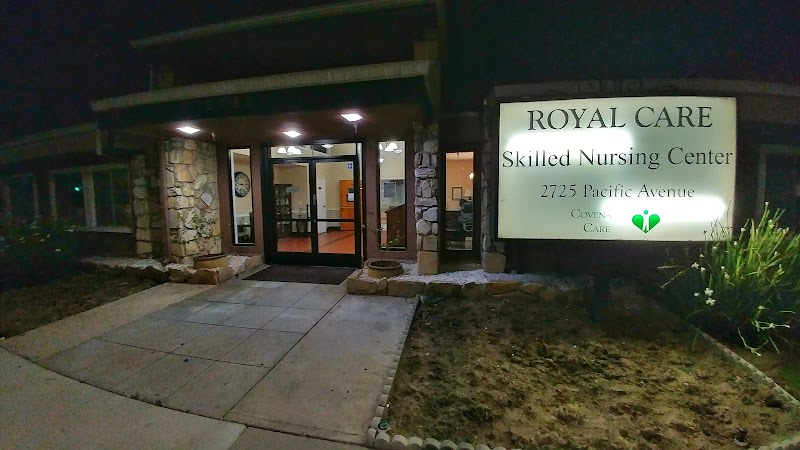
2725 PACIFIC AVENUE, LONG BEACH, CA 90806 (562) 427-7493
For profit - Limited Liability company 98 Beds COVENANT CARE Data: November 2025 1 Immediate Jeopardy citation
Trust Grade
13/100
#895 of 1155 in CA
Last Inspection: January 2025

Within standard 12-15 month inspection cycle. Federal law requires annual inspections.

Overview

Royal Care Skilled Nursing Center in Long Beach, California, has received a Trust Grade of F, indicating significant concerns and a poor overall reputation. With a state rank of #895 out of 1155, they are in the bottom half of California facilities, and at #233 of 369 in Los Angeles County, there are only a few local options that perform better. The facility appears to be improving, as the number of issues reported dropped from 22 in 2024 to 14 in 2025. While staffing received an average rating of 3 out of 5, which reflects a 40% turnover rate, RN coverage is also average, meaning they have enough registered nurses to monitor residents effectively. However, the facility has incurred $139,865 in fines, higher than 94% of California facilities, suggesting ongoing compliance problems. Notably, there were serious incidents where residents did not receive timely medications for pain management and were allowed to elope despite being assessed as high-risk, raising concerns about their safety and care. Overall, while there are some signs of improvement, the facility's history of fines and critical incidents highlights significant weaknesses that families should carefully consider.

Trust Score
F
13/100
In California
#895/1155
Bottom 23%
Safety Record
High Risk
Review needed
Inspections
Getting Better
22 → 14 violations
Staff Stability
○ Average
40% turnover. Near California's 48% average. Typical for the industry.
Penalties
✓ Good
$139,865 in fines. Lower than most California facilities. Relatively clean record.
Skilled Nurses
⚠ Watch
Each resident gets only 28 minutes of Registered Nurse (RN) attention daily — below average for California. Fewer RN minutes means fewer trained eyes watching for problems.
Violations
⚠ Watch
66 deficiencies on record. Higher than average. Multiple issues found across inspections.
★★☆☆☆
2.0
Overall Rating
★★★☆☆
3.0
Staff Levels
★★★☆☆
3.0
Care Quality
★★☆☆☆
2.0
Inspection Score
Stable
2024: 22 issues
2025: 14 issues

The Good

  • Full Sprinkler Coverage · Fire safety systems throughout facility
  • No fines on record
  • Staff turnover below average (40%)

    8 points below California average of 48%

Facility shows strength in fire safety.

The Bad

2-Star Overall Rating

Below California average (3.1)

Below average - review inspection findings carefully

Staff Turnover: 40%

Near California avg (46%)

Typical for the industry

Federal Fines: $139,865

Well above median ($33,413)

Significant penalties indicating serious issues

Chain: COVENANT CARE

Part of a multi-facility chain

Ask about local staffing decisions and management

The Ugly 66 deficiencies on record

1 life-threatening 2 actual harm
Jun 2025 2 deficiencies
CONCERN (D) 📢 Someone Reported This

A family member, employee, or ombudsman was alarmed enough to file a formal complaint

Potential for Harm - no one hurt, but risky conditions existed

Deficiency F0558 (Tag F0558)

Could have caused harm · This affected 1 resident

**NOTE- TERMS IN BRACKETS HAVE BEEN EDITED TO PROTECT CONFIDENTIALITY** Based on interview and record review, the facility failed to ensure the following for two of five sampled residents (Resident 1 ...

Read full inspector narrative →
**NOTE- TERMS IN BRACKETS HAVE BEEN EDITED TO PROTECT CONFIDENTIALITY** Based on interview and record review, the facility failed to ensure the following for two of five sampled residents (Resident 1 and Resident 5): 1. Failed to ensure Resident 1 did not develop a Moisture Associated Skin Damage (MASD: skin inflammation caused by prolonged exposure to various sources of moisture such as urine and stool) to her peri-area (region between the buttocks and female reproductive area). 2. Failed to ensure Resident 1's family was able to contact Resident 1 via telephone while residing in the facility. 3. Failed to address ongoing concerns expressed in written grievances for answering call lights for Resident 1 and Resident 5. A. During a review of Resident 1's admission Record (Face Sheet), the admission Record indicated Resident 1 was admitted to the facility 5/9/2025 with diagnoses including dislocation of right shoulder joint (two or more bones connect), injury of axillary (armpit) artery (major blood vessel in the upper limb that supplies blood to shoulder and arm put) on right side, and generalized muscle weakness. During a review of Resident 1's history and physical (H&P) dated 5/12/2025, the H&P indicated Resident 1 has the capacity to make decisions for herself. During a review of Resident 1's Minimum Data Set (MDS: a resident assessment tool) dated 5/16/2025, the MDS indicated Resident 1 was cognitively (having problems remembering things, concentrating, making decisions and solving problems) intact. The MDS indicated Resident 1 is dependent on chair/bed-to-chair transfer, toilet transfer, roll left and right, putting on footwear, required maximal assistance (provides more than half the effort) for toileting hygiene, bathing, upper (above waist) and lower body (waist below) dressing, personal hygiene, and required supervision for eating and oral hygiene. The MDS indicated Resident 1 is frequently incontinent (having no control) for both urine and bowel. 1. During a review of Resident 1's Treatment Administration Record (TAR: document that tracks the administration of medications and other treatments to residents) dated 5/1/2025-5/31/2025, the TAR indicated Resident 2 received treatment of Nystatin Powder (antifungal medication) 100,000 unit (system used to measure weight, distance, volume)/gram (gm: unit of mass) to apply to peri area every shift for MASD. During a review of Resident 1's progress note dated 5/22/2025 at 3:50 a.m., the progress note indicated Resident 1 was evaluated due to reported discomfort and visible irritation in the peri-area. The progress note indicated Resident 1's skin was erythematous, warm to touch, and shows signs of early maceration (the softening and breakdown of skin due to prolonged exposure to moisture). Resident 1 expressed pain during hygiene care related to prolonged exposure to urine. During a review of Resident 1's Change of Condition (COC) dated 5/22/2025 at 3:57a.m., the COC indicated Resident 1's groin area appeared to be inflamed, with moist erythematous (abnormally red) regions and visible signs of irritation in peri-genital area. The COC indicated to notify the doctor for topical treatment orders, implement more frequent incontinence checks and do prompt cleansing. During a review of the grievance/complaint resolution report dated 5/22/2025 at 10:25a.m., Resident 1's Family Member 1 (FM 1) filed a grievance report with an initial allegation date of 5/21/2025 during the 11:00p.m. to 7:00a.m. shift. The grievance report indicated FM G stated her concerns as Resident 1 had verbalized the CNAs during the 11:00p.m. to 7:00a.m. shift did not change her for the whole night. During a review of the grievance/complaint resolution report dated 6/2/2025 at 1:50p.m. was filed by FM 1 indicated Resident 1 stated it takes too long for the CNAs to change her. During an interview on 6/23/2025 at 9:29a.m. with FM 1, FM 1 stated Resident 1 had complained about not getting changed frequently. During an interview on 6/23/2025 at 2:43p.m. with Certified Nursing Assistant 2 (CNA 2), CNA 2 stated they have used sheets to cover Resident 1 as a diaper and has reported that she has not been cleaned all night. CNA 2 stated she has received in service for perineal care as no residents should be left like that. CNA 2 stated everyone should be able to answer the call lights to assist residents so see what they need to fulfill their needs. CNA 2 stated if no one responded to call lights, the residents could fall and hurt themselves. 2. During a review of the grievance/complaint resolution report dated 5/22/2025 at 11a.m., Resident 1's FM 1 filed a grievance report with an initial allegation date of 5/13/2025 during 5:00p.m. to 5:10p.m. The grievance indicated FM 1 complained on 5/13/2025, she called the facility multiple times around 5:00p.m. with no answer. The front desk phone log history indicated some calls were not being answered. During a record review on 5/30/2025 at 11:28a.m., an email was received from IT indicated the phone rings, but no one picked up on some calls. During a review of the grievance/complaint resolution report dated 6/2/2025 at 12:42p.m., Resident 1's FM 1 filed a grievance report with an initial allegation date of 5/31/2025 during 3:00 p.m. to 11:00 p.m., FM 1 expressed concerns again stating on 5/31/2025 at 10:21p.m., she called numerous times, however no one answered in the facility. The grievance report indicated the receptionist inspected the nursing station call log and front desk and identified that calls are not being transferred automatically to the nursing station after receptionist hours. During an interview on 6/23/2025 at 9:29a.m. with FM 1, FM 1 stated she has called the facility about 30 times, and they did not answer the phone calls. FM 1 stated she has been unable to get a hold of the facility ever since Resident 1 was admitted to the facility. During an interview on 6/23/2025 at 1:41p.m. with the Social Service Director (SSD), the SSD stated there were 4 grievances filed for Resident 1. SSD stated there is a receptionist from 7:00a.m. to 9:00p.m. every day and on the weekends, and after 9:00p.m., the calls go directly to the nursing station. The SSD stated there was an incident regarding the night shift (11:00p.m. to 7:00a.m.) not assisting Resident 1 and the phone calls not being answered. The SSD stated another issue about the phone not being answered after 9:00p.m. was brought to their attention two weeks later. The SSD stated the phone calls are supposed to go to the nursing station, however the phone was not getting transferred automatically after 9:00p.m. The SSD stated the family will feel worried if they cannot get a hold of the facility and indicated their phone system changed about 6 months ago. During a concurrent interview and record review on 6/24/2025 at 3:14p.m. with the Receptionist (RECPST), the RECPST stated during the first incident on the grievance dated 5/22/2025, some of the calls were not picked up because they were on the line with someone. RECPST stated she was not sure if someone just neglected the calls. The RECPST stated she saw a number that was called multiple times and indicated this was a technical issue and should have been set for all calls to be transferred automatically to the nursing station after hours. The RECPST stated if they had full control over their phone system, this could have been avoided. B. During a review of Resident 5's Face Sheet, the admission Record indicated Resident 5 was initially admitted to the facility on [DATE] and was readmitted on [DATE] with diagnoses including fracture of unspecified part of right clavicle (collarbone: long curved bone that connects arm to body), rheumatoid arthritis (a chronic progressive disease-causing inflammation in the joints and resulting in painful deformity and immobility), and systemic lupus erythematosus (chronic autoimmune disease where the body immune system attacks health tissues and organs). During a review of Resident 5's H&P dated 3/1/2025, the H&P indicated Resident 5 has the capacity to make her own medical decisions at this time. During a review of Resident 5's MDS dated [DATE], the MDS indicated Resident 5 was cognitively intact. The MDS indicated Resident 5 required maximal assistance for toileting hygiene, bathing, lower body dressing, chair/bed-to-chair transfer, toilet transfer, and required moderate assistance (provides less than half the effort) for eating, oral hygiene, upper body dressing, and personal hygiene. 3.During a review of the Resident Council Meeting Minutes dated 3/27/2025, the Resident Council Minutes indicated a resident (un-named) had noticed their roommates call light is always disconnected and is worried if she needs the call light, no one will get her attention. During a review of the Resident Council Meeting Minutes dated 5/15/2025, the Resident Council Meeting Minutes indicated on 5/14/2025 during the 3:00p.m. to 11:00p.m. shift, a resident has waited almost 2 hours for her call light to be answered. During a review of the Resident Council Meeting Minutes dated 6/19/2025, the Resident Council Meeting Minutes indicated call lights were not being answered in a timely manner and licensed staff need to help out when Certified Nurse Assistants (CNA) are not available. During an interview on 6/24/2025 at 3:31p.m. with the Director of Nursing (DON), the DON stated an in service regarding the family member not being able to reach the facility was done and indicated this incident could have been avoided if there was an open and proper communication. The DON stated from the first grievance that was filed, the second incident of the family not being able to get a hold of the facility should have been avoided. The DON stated everyone answers call lights and should be answered in a timely manner. The DON stated if no one answered call lights, the residents could develop skin issues. During a review of the facility's policy and procedure (P&P) titled, Resident Rights dated 10/2022, the P&P indicated the facility will ensure that all direct and indirect care staff members, including contractors and volunteers, are educated on the rights of residents and the responsibility of the facility to properly care for its residents. The resident has the right to be informed of, and participate in, his or her treatment, including the right to receive the services and/or items included in the plan of care. The resident has the right to be treated with respect and dignity, including: the right to reside and receive services in the facility with reasonable accommodation of resident needs and preferences. During a review of the facility's P&P titled, Call Lights: Accessibility and Timely Response dated 10/28/2023, the P&P indicated all staff members who see or hear an activated call light are responsible for responding. If the staff member cannot provide what the resident desires, the appropriate personnel should be notified. During a review of the facility's policy and procedure (P&P) titled, Dignity-Promoting/Maintaining Dignity dated 10/2022, the P&P indicated it is the practice of this facility to protect and promote resident rights and treat each resident with respect and dignity as well as care for each resident in a manner and in an environment, that maintains or enhances resident's quality of life by recognizing each resident's individuality. Staff members involved in providing care or interacting with residents must promote and maintain resident dignity and respect's Resident Rights. Respond to requests for assistance in a timely and courteous manner.
CONCERN (D) 📢 Someone Reported This

A family member, employee, or ombudsman was alarmed enough to file a formal complaint

Potential for Harm - no one hurt, but risky conditions existed

Pressure Ulcer Prevention (Tag F0686)

Could have caused harm · This affected 1 resident

**NOTE- TERMS IN BRACKETS HAVE BEEN EDITED TO PROTECT CONFIDENTIALITY** Based on interview and record review the facility failed to ensure one out of four sampled residents (Resident 2) received care ...

Read full inspector narrative →
**NOTE- TERMS IN BRACKETS HAVE BEEN EDITED TO PROTECT CONFIDENTIALITY** Based on interview and record review the facility failed to ensure one out of four sampled residents (Resident 2) received care and services to promote wound healing and to prevent worsening pressure injuries (localized, pressure-related damage to the skin and/or underlying tissue usually over a bony prominence) from occurring by failing to implement interventions such as a special low air-loss mattress (designed to prevent pressure injuries, treat pressure injuries) and vitamin supplements such as zinc (mineral that plays a crucial role in numerous bodily functions, including immune system support and wound healing), vitamin C (form protein called collagen to make skin and blood vessels), and a multivitamin (dietary supplement that provides foundational support for daily nutritional needs that is not taken through diet) to promote wound healing for Resident 2. This deficient practice resulted in Resident 2's sacrococcyx (fused bone structure that consist of the sacrum [triangular bone at the base of the spine] and coccyx [tail bone]) wound progressing from a stage I (non-blanchable redness of intact skin indicating localized damage due to pressure) to a stage 2 (skin loss appearing as a shallow open ulcer with a red or pink wound bed) with a deep tissue pressure injury (DTI: a form of pressure-induced damage to underlying tissues, including muscles, bones, and subcutaneous layers, while the skin surface might remain intact leading to decreased blood flow and dead tissue). During a review of Resident 2's admission Record (Face Sheet), the admission Record indicated Resident 2 was admitted to the facility 5/19/2025 with diagnoses including radiculopathy (condition caused by pinched nerve in your spine that leads to pain, numbness, and weakness), vertebrogenic low back pain (low chronic back pain caused by layers of bone and cartilage at the top and bottom of each back bone become damaged), fusion of spine (surgical procedure that connects two or more bones in the spine to alleviate pain and restore stability), and Type II Diabetes Mellitus ( a chronic disease that affects how the body processes sugar). During a review of Resident 2's history and physical (H&P: initial visit and evaluation) dated 5/21/2025, the H&P indicated Resident 2 does not have the capacity to make decisions for himself but can make needs known. During a review of Resident 2's minimum data set (MDS: a resident assessment tool) dated 5/28/2025, the MDS indicated Resident 2 was cognitively (mental action or process of acquiring knowledge and understanding ability) intact. The MDS indicated Resident 2 is dependent on chair/bed-to-chair transfer, shower transfer, required maximal assistance (provides more than half the effort) for toileting hygiene, bathing, lower body (waist below) dressing, sit to lying, lying to sitting on side of bed, required supervision for rolling left to right), and required set up for eating, oral hygiene, and personal hygiene. The MDS indicated Resident 2 was frequently incontinent for both bowl and bladder. During a review of Resident 2's CP untitled, dated 5/20/2025, the CP indicated actual pressure ulcer; sacrococcyx pressure injury stage 1. The CP interventions included to notify MD as needed if ulcer fails to show progress in healing and provide offloading of ulcer site. During a review of Resident 2's Order Summary Report dated 6/23/2025, the report indicated Resident 2 had the following wound care orders placed: 1.Sacrococcyx pressure injury stage 1: cleanse with normal saline station (NSS: a mixture of salt and water used to clean wounds, hydration), pat dry. Apply zinc oxide (medication applied to specific area of the body to aid in wound healing and act as a skin protectant) and leave open to air (LOA) every shift ordered 5/20/2025. 2. Sacrococcyx with non-blanchable redness moist: cleanse with NSS, pat dry. Apply zinc oxide and leave open to air every shift ordered 5/20/2025. During a review of Resident 2's Skin Inspection assessment dated [DATE] at 9:08 a.m., the skin inspection assessment indicated Resident 2 had a sacrococcyx area pressure injury stage I. During a review of Resident 2's Skin Inspection assessment dated [DATE] at 9:57a.m., the skin inspection assessment indicated Resident 2 had a sacrococcyx pressure injury stage II with surrounding area DTI measuring size 6cm x 5cm x 0.1cm, eight days later. During a review of the Braden Scale (assessment tool used to predict a resident's risk of developing pressure injuries) dated 5/19/2025 at 7:28p.m., the Braden Scale indicated Resident 2 was at moderate risk (score range 13-14) with a score of 13. During a review of the Braden Scale dated 5/26/2025 at 12:54p.m., the Braden Scale indicated Resident 2 was at risk (score range 15-18) with a score of 18. During an interview on 6/23/2025 at 11:39 a.m. with the Infection Preventionist Nurse (IPN), the IPN stated residents who are bed bound or residents who have a stage II to stage IV (deep wounds that may impact muscle, tendons, ligaments, and bone) need a low air mattress. During a concurrent interview and record review on 6/24/2025 at 2:09 p.m. with the Treatment Nurse (TXN), the TXN stated the primary physician (MD 1) will give an order for a wound consult and indicated if she notices a stage II (open) pressure ulcer during the wound assessment, she will request a wound consult from the MD 1. The TXN 1 stated Resident 2's sacrococcyx wound was getting worse because he only had a stage I on 5/20/2025, but on the day of discharge (5/28/2025), when she checked his skin, it got worse. The TXN stated if a resident has a stage II or if a wound became worse, she would request supplements or nourishments from the MD. The TXN stated Resident 2's did not have any vitamins ordered by the MD. During an interview on 6/24/2025 at 2:50p.m. with Certified Nursing Assistant 1 (CNA 1), CNA 1 stated the day she noticed any changes to Resident 2's skin was on the day of his discharge on [DATE]. During an interview on 6/24/2025 at 6:22p.m. with Family Member 2 (FM 2), FM 2 stated Resident 2's wound was getting worse, and he should not go home. FM 2 stated she believes Resident 2 was not getting turned at the facility. During a concurrent interview and record review on 6/25/2025 at 3:47p.m. with Dietary Assistant Manager (DAM), the DAM stated if a resident has altered nutrition with a wound, she will inform the dietitian, review the resident, and would order vitamins, zinc with the treatment nurse and provide protein. The DAM stated she did not see any vitamin C or zinc orders for Resident 2 and indicated they should have been recommended. The DAM stated it is important for residents to receive adequate nutrition and hydration to promote wound healing. During an interview on 6/25/2025 at 4:50p.m. with MD 1, MD 1 stated he was aware of Resident 2's stage I pressure injury upon admission MD 1 stated ordering vitamin supplements for Resident 2 would have been beneficial since Resident 1 came to the facility with a wound and the supplements (Vitamin C, Multivitamins) would aid in wound healing. During a concurrent interview and record review on 6/25/2026 at 5:10p.m. with the DON, the DON stated if Resident 2's stay at the facility was short, it might have been preventable. The DON stated on the IDT initial assessment date 5/19/2025, the skin integrity is assessed by the RD, DON, and TXN. The DON stated the RD was not present during the initial assessment for the IDT to give recommendations. During a review of the facility's policy and procedure (P&P) titled, Resident Rights dated 10/2022, the P&P indicated the facility will ensure that all direct and indirect care staff members, including contractors and volunteers, are educated on the rights of residents and the responsibility of the facility to properly care for its residents. The resident has the right to be informed of, and participate in, his or her treatment, including the right to receive the services and/or items included in the plan of care. The resident has the right to be treated with respect and dignity, including: the right to reside and receive services in the facility with reasonable accommodation of resident needs and preferences. During a review of the facility's P&P titled, Title: Nutrition Assessment, dated 2/09, the P&P indicated each resident receives a comprehensive nutritional assessment upon admission and annually and whenever a resident is identified as having a significant change in status. The Nutritional Screening and Assessment includes the information noted on the form as well as additional pertinent information with may include: a. Physical appearance, noting any signs of malnutrition or dehydration b. Vitamin and mineral supplements c. Condition of the skin, noting any pressure ulcers or wounds d. Identification of medical nutritional therapy needs goals and approaches that will be addressed on the interdisciplinary plan of care During a review of the facility's P&P titled, Title: Nutritional Wound Therapy, dated 2/09, the P&P indicated purpose: to provide appropriate nutrition to prevent development of wounds. To facilitate healing of wounds while considering resident's individual preferences and needs. All residents with wounds will be assessed and documented upon by nursing and a Registered Dietitian. Based on a review of the medical record, interviews with the resident and caregivers, and observation of the resident at meals, a Registered Dietitian should evaluate the resident's nutritional status, write a nutritional assessment, and make recommendations for medical nutrition therapy in conjunction with nursing. The assessment of residents should include: 1. Diagnosis and recent changes in condition. 2. Risk factors for pressure ulcer development: immobility 3. Below 18 score on a Braden Skin Risk Assessment (identify current skin condition). 4. Food and fluid intake adequacy compared to calculated nutritional needs (calories, protein, Vitamin C, Zinc, fluids). 5. Nutrition-related lab values (albumin, hemoglobin, serum transferrin, additional indicators: pre-albumin, cholesterol, hematocrit, and serum cholesterol). During a review of the facility's P&P titled, Registered Dietitian, undated, the P&P indicated: evaluate the nutrition care of residents and document in the medical record, using the Company formulary, recommends dietary interventions according to the status of the resident, provide high quality service to everyone, as though they are your 'family,' and takes the initiative whenever they can to identify clinical or service problems, identify solutions, and works with our fellow employees and managers to implement them.
Mar 2025 3 deficiencies 1 IJ
CRITICAL (J) 📢 Someone Reported This

A family member, employee, or ombudsman was alarmed enough to file a formal complaint

Immediate Jeopardy (IJ) - the most serious Medicare violation

Deficiency F0773 (Tag F0773)

Someone could have died · This affected 1 resident

**NOTE- TERMS IN BRACKETS HAVE BEEN EDITED TO PROTECT CONFIDENTIALITY** Based on interview and record review, the facility failed to ensure one of four sampled residents (Resident 1), who had a histor...

Read full inspector narrative →
**NOTE- TERMS IN BRACKETS HAVE BEEN EDITED TO PROTECT CONFIDENTIALITY** Based on interview and record review, the facility failed to ensure one of four sampled residents (Resident 1), who had a history of gastrointestinal bleeding ([GI] bleeding anywhere in the digestive tract from the mouth to the rectum), anemia (when the blood doesn ' t have enough healthy red blood cells and hemoglobin [a protein in the red blood cells that carries oxygen to carry oxygen all through the body), and a low hemoglobin, their Stat (immediate) laboratory (lab) order for a Complete Blood Count ([CBC] a common blood test that measures red blood cells {specialized cells in the blood that play a crucial role in transporting oxygen throughout the body}, white blood cells {a type of blood cell that play a crucial role in the body ' s immune system}, platelets {a tiny disc shaped pieces of cells in the blood that help stop bleeding by forming clots [a mass of blood that forms when clot platelets, proteins, and cells stick together] when a blood vessel is damaged}, hemoglobin and hematocrit}a measure of the proportion of red blood cells in the total volume of blood}, was carried out, per the physician ' s order, and followed up to ensure lab results were obtained promptly (within two to six hours). These deficient practices resulted in a delay in obtaining Resident 1 ' s blood specimen in order to obtain a STAT CBC causing a delay in the CBC test results. Resident 1 ' s hemoglobin was critically (a laboratory test result that indicates a life-threatening condition and requires immediate medical attention) low, which resulted in Resident 1 ' s admission to a General Acute Care Hospital (GACH), where he received one unit of blood and was subsequently admitted to the GACH ' s Telemetry unit because his condition was unstable. This deficient practice had the potential for Resident 1 to suffer severe complications such as heart failure, organ damage, and death. On 3/27/2025 at 3:23 p.m., an Immediate Jeopardy ([IJ] a situation in which the facility's noncompliance with one or more requirements of participation caused, or was likely to cause, serious injury, harm, impairment, or death to a resident) was called in the presence of the facility ' s Regional Administrator (ADM) and the Director of Nursing (DON) due to the facility ' s inability to provide laboratory services to Resident 1 as ordered by his physician. On 3/28/2025, the facility submitted an acceptable IJ Removal Plan ([IJRP] interventions to immediately correct the deficient practices). After an onsite verification of the facility ' s IJRP ' s implementation through observation, interview, and record review, the IJ was removed on 3/28/2025 at 4:45 p.m., in the presence of the facility ' s Designated ADM, the ADM in Training (A.I.T.), and the DON. The facility ' s IJRP included the following immediate actions: How the correction(s) will be accomplished for those residents found to have been affected by the deficient practice. Resident 1 was readmitted to facility on 3/11/2025. No new STAT lab orders have been ordered since his readmission. Resident 1 has not refused any labs since readmission. Resident 1 ' s Alteration for Hematological care plan for lab orders and nursing interventions was updated on 3/27/2025 to include observing, reporting, and documenting signs and symptoms of anemia, monitoring vital signs every day and as needed (PRN) and notifying the Medical Doctor (MD) via phone of abnormalities. If abnormal labs are reported or the patient refuses lab work, the MD will be notified via phone and the MD will respond in like manner. The lab report and orders will be documented in the patient ' s chart under progress notes. The pending labs and results will be tracked via the communications tab in Point Click Care ([PCC] a software platform used for electronic health records), verbal reports from nurse to nurse and progress notes documented in PCC. If the results are late (2-6 hours for STAT labs), the nurse will call the lab to follow up, and if no result are available, the MD will be notified for further orders. If the patient ' s MD doesn ' t respond timely the Medical Director will be notified. How the facility will identify other residents having the potential to be affected by the same deficient practice and what corrective action will be taken. On 3/25/2025, DON and Medical Records Director (MRD) audited and reviewed 16 residents with STAT lab orders from the prior three months for residents with diagnoses of Anemia, GI bleeding and low hemoglobin. The audit showed no other STAT lab orders were given in last three months, all other labs were done as ordered and reported timely. On 3/27/2025, the DON and MRD audited and reviewed 14 residents who had diagnoses of Anemia, GI bleeding and low hemoglobin care plans, for lab orders and nursing interventions. The care plans were reviewed and updated to reflect lab orders and nursing interventions including observing, reporting, documenting signs and symptoms of anemia, and monitoring vital signs every day and PRN, and notifying the MD via phone for abnormalities. What measures will be put into place or what systemic changes will the facility make to ensure that the deficient practice does not recur. The DON and Registered Nurse Supervisors (RNS) provided all licensed nurses (LN) in-service training beginning 3/20/2025 through 3/27/2025 and will continue until all active LNs have been in-serviced. In-services included Stat Lab orders included policy and procedures (P/P), timely reporting of labs, timely reporting of Change of Conditions (COC) and resident refusals to physicians. How to correctly communicate accurate orders to the lab to obtain STAT lab blood draws timely, following care plans for residents, follow up procedure for all stat lab orders, facility P/P for lab results, physician orders and COC and how to properly endorse resident status to oncoming shifts. Nursing staff are to use verbal endorsements and a written endorsement log between shifts to communicate pending labs/orders. Who will monitor to ensure compliance? 1. The MRD, weekend RNS or designee will complete the audit of the endorsement log and PCC communications of all new STAT lab orders daily to ensure orders are completed, and results are obtained in a timely manner. 2. The DON or designee will review prior to daily stand up meeting any COC and/or refusal of the resident using the endorsement log and PCC to ensure staff communicate with the physician to allow the physician to assess the resident ' s care needs and give instructions for treatment. 3. The MRD, weekend RNS or designee will complete an audit of all STAT lab orders daily using the endorsement log and PCC to ensure that orders are followed up and results obtained in a timely manner. 4.The MRD, weekend RNS or designee will complete audit of new STAT lab orders daily using PCC to verify the communication between the lab and the nurse matches the physician ' s order. This is to ensure orders are communicated accurately to the lab to obtain STAT lab blood draws, and results are obtained in a timely manner. 5. The DON or designee will audit residents ' new or changed care plans pertaining to lab work or COCs during daily stand-up meetings. The Interdisciplinary Team (IDT) will review, and update care plans as needed to ensure they follow lab orders and that nursing interventions are measurable. 6. The MRD, weekend RNS or designee will complete an audit of all STAT lab orders daily to ensure orders are followed up on, and results are obtained in a timely manner. 7. The MRD, weekend RNS or designee will complete an audit of all STAT lab orders daily to ensure lab test results are completed and results are obtained and reported in a timely manner. The MRD or designee will audit any COCs and new physician orders prior to daily stand-up meetings to ensure physician orders and COC P/P are followed correctly. 8. The DON or designee will audit the shift endorsement log and PCC communications daily to ensure that facility staff are endorsing resident status and COCs to oncoming shifts for continuity of care. Facility plan to monitor the process and sustain compliance/Integrate into the Quality Assurance System. The DON or Administrator will report the findings of the audits to the Quality Assurance meeting monthly until sustained compliance is achieved for at least one month, then quarterly for 6 months or according to the Quality Assessment and Assurance (QAA) committee to ensure STAT lab orders are completed and results obtained and reported in a timely manner. Findings: During a review of Resident 1 ' s admission Record (Face Sheet), the Face Sheet indicated Resident 1 was admitted to the facility on [DATE] with diagnoses including GI bleed and anemia. During a review Resident 1 ' s Minimum Data Set ([MDS] a resident assessment tool) dated 2/5/2025, the MDS indicated Resident 1 was unable to make decisions for himself that were consistent and reasonable. During a review of Resident 1 ' s Care Plan on anemia dated 2/18/2025, the Care Plan indicated a goal for Resident 1 was to maintain his laboratory values within acceptable parameters and to be free from signs/symptom (s/s), and complications of anemia with interventions that included observing, documenting, and reporting to Resident 1 ' s physician any s/s of fatigue, dizziness, change in cognition, paleness, low hemoglobin, obtain and monitor laboratory work as ordered, report the results to Resident 1 ' s physician and follow up as indicated. During a review of Resident 1 ' s COC dated 3/5/2025 and timed at 5:37 a.m., the COC indicated Resident 1 had increased confusion, hit his right leg on the bed frame and was bleeding from a skin tear on his right lower leg. During a review Resident 1 ' s COC dated 3/5/2025 and timed at 6:01 a.m., the COC indicated Resident 1 was tired, more confused and drowsier after an incident of a bleeding from his right leg skin tear and swelling on his right lower leg. During a review of Resident 1 ' s Fall Incident Report dated 3/5/2025 and timed at 11:27 a.m., the Fall Incident Report indicated Resident 1 had an unwitnessed fall and was found on the floor near his bathroom with more confusion. During A review of Resident 1 ' s COC dated 3/6/2025 and timed at 2:09 p.m., the COC indicated Resident 1 had a small amount of black tarry stool (occurs when there is bleeding in the upper digestive system, black or brown in color, with a sticky consistency and may have an unpleasant odor), Resident 1 ' s physician ordered a STAT CBC. During a review of Resident 1 ' s Lab Results Report dated 3/6/2025 and timed at 8:05 p.m., the Lab Results Report indicated Resident 1 ' s hemoglobin result was 7.0 grams per deciliter ([g/dl] a unit of measurement; reference range is 13.5 g/dl to 16.9 g/dl). During a review of Resident 1 ' s Nursing Progress Notes dated 3/6/2025 and timed at 11:31 p.m., the Nursing Progress Notes indicated Resident 1 ' s physician was notified of Resident 1 ' s hemoglobin result, pending a response (order). During a review of Resident 1 ' s Nursing Progress Notes dated 3/7/2025 and timed at 8:12 a.m., the Nursing Progress Notes indicated Resident 1 was hypotensive (low blood pressure [BP]) with a BP of 86/48 millimeters of mercury (mm/Hg). (reference range 120/80 mm/Hg). The Nursing Progress Notes indicated the paramedics were called but Resident 1 ' s Responsible Party (RP) refused to transfer Resident 1 to a GACH due to a paracentesis (a medical procedure that removes fluid from the abdominal cavity) appointment that was scheduled for that day (3/7/2025). The Nursing Progress Notes indicated Resident 1 ' s physician was aware and ordered a STAT CBC to be completed when Resident 1 returned from his appointment. During a review of Resident 1 ' s Order Summary Report (Physician ' s Order) dated 3/24/2025, the Physician ' s Order indicated a STAT CBC was ordered on 3/7/2025 at 8:28 a.m. and reordered at 2:20 p.m. upon Resident 1 ' s return to the facility from paracentesis appointment. During a review of Resident 1 ' s Nursing Progress Notes dated 3/7/2025 and timed at 2:20 p.m., the Nursing Progress Notes indicated Resident 1 returned to the facility after his paracentesis appointment and the lab was called to confirm Resident 1 ' s lab order for a STAT CBC. During a review of the Laboratory Call Log Recording on 3/7/2025 at 2:20 p.m., the Laboratory Call Log Recording indicated Licensed Vocational Nurse (LVN) 1 spoke to laboratory personnel indicating she was following up on an order for a CBC for Resident 1. The Laboratory Call Log Recording did not indicate that LVN 1 said the lab order was STAT. During a review of the laboratory ' s Dispatch Log dated 3/7/2025, the Dispatch Log indicated a phlebotomist (a healthcare professional trained to collect blood samples from patients) attempted to draw Resident 1 ' s blood on 3/7/2025 at 10:09 p.m. (approximately eight hours after the order was placed on 3/7/2025 at 2:20 p.m.) but Resident 1 refused. During a review of Resident 1 ' s untimed Nursing Progress Note dated 3/7/2025, the Nursing Progress Note indicated there was no documentation that Resident 1 ' s physician or RP were notified when Resident 1 refused to have his blood drawn. During a review of Resident 1 ' s Physician ' s order dated 3/7/2025, and timed at 11:59 p.m., the Physician ' s Order indicated a STAT CBC for Resident 1. During a review of Resident 1 ' s Lab Results Report dated 3/8/2025, the Lab Results Report indicated Resident 1 ' s labs were drawn on 3/8/2025, at 9:44 a.m., (almost 10 hours after the order was made on 3/7/2025 at 11:59 p.m.). The Lab Results Report indicated Resident 1 ' s hemoglobin result was critical at 6.7 g/dl, his hematocrit count was 21.5%, (reference range is 39.5% to 50.0% ) and his platelet count was 52,000 platelets per microliter ([mcl] with a reference range of 150, 000 to 400,000 platelets per mcl). The Lab Results Report indicated Resident 1 ' s lab results were available at 11 a.m., on 3/8/2025, and the lab attempted several times to notify the facility of Resident 1 ' s critical lab value but was unable to reach the facility until 3/8/2025 at 1:31 p.m., because no one at the facility picked up the phone. During a review of the Laboratory Call Log dated 3/8/2025, the Laboratory Call Log indicated lab personnel attempted to report Resident 1 ' s critical hemoglobin result to the facility at 11 a.m., 11:54 a.m., 12:19 p.m., 12:53 p.m., and 1:14 p.m. The Laboratory Call Log indicated Resident 1 ' s critical laboratory result (hemoglobin) was finally reported to the facility on 3/8/2025 at 1:31 p.m. During a review of Resident 1 ' s Transfer Form dated 3/8/2025 and timed at 2:17 p.m., the Transfer Form indicated Resident 1 was transferred to a GACH at 3:30 p.m., due to black tarry stools, a decreased hemoglobin, a low hematocrit and a low platelet count. During a review of the GACH ' s Emergency Department (ED) Note dated 3/8/2025 and timed at 4:10 p.m., the ED Note indicated Resident 1 was admitted to the ED with a chief complaint of three episodes of black tarry stools within two days, a hemoglobin of 6.7 g/dl, and a chronic (last for an extended period, typically, for three months or more) hematoma (a pool of mostly clotted blood that forms in an organ, tissue, or body space) to Resident 1 ' s lower extremities (legs). The ED Note indicated Resident 1 received 1 unit of packed red blood cells ([PRBC] a concentrated preparation of red blood cells [specialized cells that circulate in the blood steam] obtained from whole blood after the plasma {the liquid component of whole blood}is removed) and was admitted to the GACH ' s telemetry unit (a specialized ward where patients requiring continuous cardiac monitoring receive care) because his condition was unstable. During an interview on 3/20/2025 at 1:20 p.m., Registered Nurse Supervisor (RNS) 1 stated a STAT lab order should be completed within four hours and the lab result should be reported to the facility within two hours. During a subsequent interview on the same day at 2:05 p.m., RNS 1 stated Resident 1 had an order for a STAT CBC on 3/7/2025 at 8:28 a.m., but Resident 1 ' s blood was not drawn until 3/8/2024 at 9:44 a.m. RNS 1 stated there was a miscommunication between the licensed nursing staff on 3/7/2024 on all shifts which delayed Resident 1 ' s STAT lab order. RNS 1 stated there was no follow up on Resident 1 ' s lab order to ensure his labs were completed and results obtained. During an interview on 3/20/2025 at 3:31 p.m., RNS 2 stated she worked on the 3 p.m., to 11 p.m., shift on 3/7/2025 and received a report from RNS 1, who worked the 7 a.m., to 3 p.m. shift (3/7/2025), that Resident 1 had an order for a STAT CBC. RNS 2 stated she processed the lab order but when the lab technician came to the facility (3/8/2025) Resident 1 refused to have his blood drawn. During a subsequent interview on 3/24/2025 at 6:24 p.m., RNS 2 stated she reordered another STAT CBC for Resident 1 on 3/7/2025 11:59 p.m., and verbally endorsed the order to the 11 p.m. to 7 a.m. shift and documented the endorsement in the facility ' s communication board through their electronic medical record system. RNS 2 stated she did not call Resident 1 ' s physician to notify him that Resident 1 refused to have his blood drawn. RNS 2 stated she should have called the physician and Resident 1 ' s RP to notify them of Resident 1 ' s refusal and to allow Resident 1 ' s physician to give instructions for Resident 1 ' s care. During an interview on 3/20/2025 at 3:50 p.m., RNS 3, who worked from 7 a.m., to 3 p.m., on 3/8/2025, stated he did receive an endorsement from the 11 p.m., to 7 a.m. shift regarding a STAT CBC for Resident 1. RNS 3 stated he checked the facility ' s Electronic Communication Board after conducting resident rounds and saw an order for a STAT lab for Resident 1. RNS 3 stated the STAT lab order had not been completed and there was no documentation in Resident 1 ' s Progress Notes, why it had not been done. During a telephone interview on 3/25/2025 at 1:24 p.m., Resident 1 ' s Physician stated Resident 1 had a GI bleed and had he been notified of Resident 1 ' s refusal to have his blood drawn, he could have reordered another lab or sent Resident 1 to the GACH to be evaluated, instead of waiting. During an interview on 3/25/2025 at 2 p.m., the ADM acknowledged and stated there was a gap of time between Resident 1 ' s lab order and results of his labs caused by the licensed nursing staff. During an interview on 3/25/2025 at 5 p.m., after listening to the Laboratory Audio Call Log, LVN 1 stated she did not tell the lab that Resident 1 ' s lab order was STAT. LVN 1 stated she should have communicated with the lab that Resident 1 ' s lab order was STAT to ensure the labs were done based on the doctor ' s order and to prevent a delay in obtaining the blood sample and results. During an interview on 3/26/2025 at 5:13 p.m., the DON stated there was a lack of communication amongst the licensed nurses and because of that they did not ensure Resident 1 ' s lab were completed, and results obtained. The DON stated staff should have notified Resident 1 ' s physician as well as Resident 1 ' s RP when Resident 1 refused to have his blood drawn to prevent a delay in the care of Resident 1. During a review of the facility ' s P/P titled Processing Physician Orders dated 8/2017, the P/P indicated the facility shall maintain accuracy of physician orders to provide appropriate care and services related to patients/residents ' risks. During a review of the facility ' s undated P/P titled Reporting Laboratory Test Results the P/P indicated the facility shall ensure all emergency laboratory draws should have results in two to six hours.
CONCERN (D) 📢 Someone Reported This

A family member, employee, or ombudsman was alarmed enough to file a formal complaint

Potential for Harm - no one hurt, but risky conditions existed

Notification of Changes (Tag F0580)

Could have caused harm · This affected 1 resident

**NOTE- TERMS IN BRACKETS HAVE BEEN EDITED TO PROTECT CONFIDENTIALITY** Based on interview and record review, the facility failed to ensure the physician and Responsible Party (RP) for one of four sam...

Read full inspector narrative →
**NOTE- TERMS IN BRACKETS HAVE BEEN EDITED TO PROTECT CONFIDENTIALITY** Based on interview and record review, the facility failed to ensure the physician and Responsible Party (RP) for one of four sampled residents (Resident 1), who had a history of gastrointestinal bleeding ([GI] bleeding anywhere in the digestive tract from the mouth to the rectum), anemia (when the blood doesn ' t have enough healthy red blood cells and hemoglobin [a protein in the red blood cells that carries oxygen) to carry oxygen all through the body], and a low hemoglobin, were notified when Resident 1 refused to have his blood drawn in order to obtain a Complete Blood Count ([CBC] a common blood test that measures red blood cells {specialized cells in the blood that play a crucial role in transporting oxygen throughout the body}, white blood cells {a type of blood cell that play a crucial role in the body ' s immune system}, platelets {a tiny disc shaped pieces of cells in the blood that help stop bleeding by forming clots [a mass of blood that forms when clot platelets, proteins, and cells stick together] when a blood vessel is damaged}, hemoglobin and hematocrit} a measure of the proportion of red blood cells in the total volume of blood}, per the physician ' s order. This deficient Practice resulted in a delay Resident 1 ' s critical hemoglobin results of 6.7 grams per deciliter ([g/dl] a unit of measurement; reference range is 13.5 g/dl to 16.9 g/dl), abnormal hematocrit results of 21.5%, (reference range is 39.5% to 50.0% ), and abnormal platelet count results of 52,000 platelets per microliter ([mcl] with a reference range of 150, 000 to 400,000 platelets per mcl), due to Resident 1 ' s blood sample not being obtained. This deficient practice had the potential for Resident 1 to suffer severe complications such as heart failure, organ damage, and death. Findings: During a review of Resident 1 ' s admission Record (Face Sheet), the Face Sheet indicated Resident 1 was admitted to the facility on [DATE] with diagnoses including GI bleed and anemia. During a review Resident 1 ' s Minimum Data Set ([MDS] a resident assessment tool) dated 2/5/2025, the MDS indicated Resident 1 was unable to make decisions for himself that were consistent and reasonable. During a review of Resident 1 ' s Nursing Progress Notes dated 3/7/2025 and timed at 8:12 a.m., the Nursing Progress Notes indicated Resident 1 was hypotensive (low blood pressure [BP]) with a BP of 86/48 millimeters of mercury (mm/Hg). (reference range 120/80 mm/Hg). The Nursing Progress Notes indicated the paramedics were called but Resident 1 ' s Responsible Party (RP) refused to transfer Resident 1 to a GACH due to a paracentesis (a medical procedure that removes fluid from the abdominal cavity) appointment that was scheduled for that day (3/7/2025). The Nursing Progress Notes indicated Resident 1 ' s physician was aware and ordered a STAT CBC to be completed when Resident 1 returned from his appointment. During a review of Resident 1 ' s Order Summary Report (Physician ' s Order) dated 3/24/2025, the Physician ' s Order indicated a STAT CBC was ordered on 3/7/2025 at 8:28 a.m. and reordered at 2:20 p.m. upon Resident 1 ' s return to the facility from paracentesis appointment. During a review of Resident 1 ' s Nursing Progress Notes dated 3/7/2025 and timed at 2:20 p.m., the Nursing Progress Notes indicated Resident 1 returned to the facility after his paracentesis appointment and the lab was called to confirm Resident 1 ' s lab order for a STAT CBC. During a review of the laboratory ' s Dispatch Log dated 3/7/2025, the Dispatch log indicated a phlebotomist (a healthcare professional trained to collect blood samples from patients) attempted to draw Resident 1 ' s blood on 3/7/2025 at 10:09 p.m. but Resident 1 refused. During a review of Resident 1 ' s Nursing Progress Note dated 3/7/2025 on the 3 p.m. to 11 p.m. shift, the Nursing Progress Note indicated there was no documentation that Resident 1 ' s physician or RP were notified when Resident 1 refused to have his blood drawn. During a telephone interview on 3/25/2025 at 11:25 a.m., RP 1 stated she was not notified on 3/7/2025 during the 3 p.m. to 11 p.m. shift when Resident 1 refused to have his blood drawn and stated she should have been notified and allowed to make medical decision for Resident 1. During an interview on 3/20/2025 at 3:31 p.m., Registered Nurse Supervisor (RNS) 2 stated she worked on the 3 p.m., to 11 p.m., shift on 3/7/2025 and received a report from RNS 1, who worked the 7 a.m., to 3 p.m. shift (3/7/2025), that Resident 1 had an order for a STAT CBC. RNS 2 stated she processed the lab order but when the lab technician came to the facility (3/8/2025) Resident 1 refused to have his blood drawn. RNS 2 stated she did not call Resident 1 ' s physician to notify him that Resident 1 refused to have his blood drawn. RNS 2 stated she should have called the physician and Resident 1 ' s RP to notify them of Resident 1 ' s refusal and to allow Resident 1 ' s physician to give instructions for Resident 1 ' s care. During a telephone interview on 3/25/2025 at 1:24 p.m., Resident 1 ' s Physician stated Resident 1 had a GI bleed and had he been notified of Resident 1 ' s refusal to have his blood drawn, he could have reordered another lab or sent Resident 1 to the GACH to be evaluated, instead of waiting. During an interview on 3/26/2025 at 5:13 p.m., the Director of Nursing Services (DON) stated the licensed nursing staff are expected to call the primary physician and the RP to notify them when there is a COC and/or difficulty in completing an order. The DON stated staff should have notified Resident 1 ' s physician as well as his RP when Resident 1 refused to have his blood drawn to prevent a delay in the care of Resident 1. During a review of the facility ' s Policy and Procedure (P/P) titled Resident Rights dated 10/2022, the P/P indicated the facility shall have the residents and their responsible parties be informed of, in advance and participate in, their treatment including changes of plan of care. During a review of the facility ' s P/P titled Change of Condition dated 2016, the P/P indicated the facility shall provide treatment and services to address changes in accordance with the residents ' needs by notifying the physician of the residents ' current status, assessment findings and subsequent actions. The P/P indicated the facility shall notify the resident and /or responsible party of the resident ' s current status and subsequent actions/orders
CONCERN (D) 📢 Someone Reported This

A family member, employee, or ombudsman was alarmed enough to file a formal complaint

Potential for Harm - no one hurt, but risky conditions existed

Quality of Care (Tag F0684)

Could have caused harm · This affected 1 resident

**NOTE- TERMS IN BRACKETS HAVE BEEN EDITED TO PROTECT CONFIDENTIALITY** Based on interview and record review, the facility failed to promptly identify and intervene to ensure Resident 1 received treat...

Read full inspector narrative →
**NOTE- TERMS IN BRACKETS HAVE BEEN EDITED TO PROTECT CONFIDENTIALITY** Based on interview and record review, the facility failed to promptly identify and intervene to ensure Resident 1 received treatment and care in accordance with professional standards and their comprehensive person-centered care plan when two physician's orders for Stat (immediately) laboratory (lab) tests were not completed within the required time frame for one of four sampled residents (Resident 1), reviewed for gastrointestinal bleeding ([GI] bleeding anywhere in the digestive tract from the mouth to the rectum). The physician placed a STAT order for Complete Blood Count ([CBC] a common blood test that measures red blood cells {specialized cells in the blood that play a crucial role in transporting oxygen throughout the body}, white blood cells {a type of blood cell that play a crucial role in the body's immune system}, platelets {a tiny disc shaped pieces of cells in the blood that help stop bleeding by forming clots [a mass of blood that forms when clot platelets, proteins, and cells stick together] when a blood vessel is damaged}, hemoglobin and hematocrit}a measure of the proportion of red blood cells in the total volume of blood}to assess and treat Resident 1's anemia and history of GI bleeding. The first STAT CBC order was completed in 7 hours 49 minutes, which is outside the 4-hour time requirement. The second STAT CBC order was completed in 9 hours and 45 minutes, which is outside the 4-hour time requirement with the results communicated in 12 hours and 32 minutes, which is outside the 6-hour time requirement.The facility failed to: 1. Ensure when Resident 1 refused to have his blood drawn for a laboratory analysis/test (CBC), his physician was notified in order to obtain instructions for Resident 1's care. 2. Ensure the laboratory was provided with an accurate order indicating a STAT priority to prevent a delay in processing of the order and obtaining Resident 1's blood and test results promptly. 3. Ensure staff followed Resident 1's Care Plan that indicated obtain and monitor Resident 1's laboratory test as ordered. 4. Ensure the facility had a system in place to follow up on Resident 1's STAT lab order, in order to obtain STAT lab results promptly, within two to six hours. 5. Ensure staff followed the facility's undated Policy and Procedure (P/P) titled Reporting Laboratory Test Results that indicated emergency STAT lab work should have results in two to six hours 6. Ensure staff followed the facility's P/P titled, Processing Physician Orders dated 8/2017 that indicated the facility shall maintain accuracy of physician orders to provide appropriate care and services related to patient/residents' risks. 7. Ensure staff followed the facility's P/P titled Change of Condition dated 2016 that indicated the facility shall provide treatment and services to address changes in accordance with the residents' needs These deficient practices had the potential for hemorrhage, hypovolemic shock, and death from blood loss. Findings: During a review of Resident 1's admission Record (Face Sheet), the Face Sheet indicated Resident 1 was admitted to the facility on [DATE] with diagnoses including GI bleed and anemia. During a review Resident 1's Minimum Data Set ([MDS] a resident assessment tool) dated 2/5/2025, the MDS indicated Resident 1 was unable to make decisions for himself that were consistent and reasonable. During a review of Resident 1's Care Plan on anemia dated 2/18/2025, the Care Plan indicated a goal for Resident 1 was to maintain his laboratory values within acceptable parameters and to be free from signs/symptom (s/s), and complications of anemia with interventions that included observing, documenting, and reporting to Resident 1's physician any s/s of fatigue, dizziness, change in cognition, paleness, low hemoglobin, obtain and monitor laboratory work as ordered, report the results to Resident 1's physician and follow up as indicated. During a review of Resident 1's COC dated 3/5/2025 and timed at 5:37 a.m., the COC indicated Resident 1 had increased confusion, hit his right leg on the bed frame and was bleeding from a skin tear on his right lower leg. During a review Resident 1's COC dated 3/5/2025 and timed at 6:01 a.m., the COC indicated Resident 1 was tired, more confused and drowsier after an incident of a bleeding from his right leg skin tear and swelling on his right lower leg. During a review of Resident 1's Fall Incident Report dated 3/5/2025 and timed at 11:27 a.m., the Fall Incident Report indicated Resident 1 had an unwitnessed fall and was found on the floor near his bathroom with more confusion. (GI bleeding can lead to confusion, fatigue, tiredness, weakness, dizziness, and falls). During a review of Resident 1's COC dated 3/6/2025 and timed at 2:09 p.m., the COC indicated Resident 1 had a small amount of black tarry stool (occurs when there is bleeding in the upper digestive system, black or brown in color, with a sticky consistency and may have an unpleasant odor), Resident 1's physician ordered a STAT CBC. During a review of Resident 1's Lab Results Report dated 3/6/2025 and timed at 8:05 p.m., the Lab Results Report indicated Resident 1's hemoglobin result was 7.0 grams per deciliter ([g/dl] a unit of measurement; reference range is 13.5 g/dl to 16.9 g/dl). Review of Resident 1's Lab Results Report for the previous day, 3/5/2025 and timed at 12:09 AM, documented Resident 1's hemoglobin was 8.5 g/dl, a significant decrease. During a review of Resident 1's Nursing Progress Notes dated 3/6/2025 and timed at 11:31 p.m., the Nursing Progress Notes indicated Resident 1's physician was notified of Resident 1's hemoglobin result, pending a response (order). During a review of Resident 1's Nursing Progress Notes dated 3/7/2025 and timed at 8:12 a.m., the Nursing Progress Notes indicated Resident 1 was hypotensive (low blood pressure [BP]) with a BP of 86/48 millimeters of mercury (mm/Hg). (reference range 120/80 mm/Hg). The Nursing Progress Notes indicated the paramedics were called but Resident 1's Responsible Party (RP) refused to transfer Resident 1 to a GACH due to a paracentesis (a medical procedure that removes fluid from the abdominal cavity) appointment that was scheduled for that day (3/7/2025). The Nursing Progress Notes indicated Resident 1's physician was aware and ordered a STAT CBC to be completed when Resident 1 returned from his appointment. Review of Resident 1's previous BP and Heart Rate (HR) measurements documented: 3/4/25 at 3:51 PM with BP of 130/84 and HR of 80, 3/5/25 at 5:44 AM with BP of 128/68 and HR of 68 at 9:40 PM with BP of 114/67 and HR of 80, 3/6/25 at 1:38 with BO of 114/67 and HR of 80, at 2:15 PM with BP of 121/62 and HR of 77. During a review of Resident 1's Order Summary Report (Physician's Order) dated 3/24/2025, the Physician's Order indicated a STAT CBC was ordered on 3/7/2025 at 8:28 a.m. and reordered at 2:20 p.m. upon Resident 1's return to the facility from paracentesis appointment. During a review of Resident 1's Nursing Progress Notes dated 3/7/2025 and timed at 2:20 p.m., the Nursing Progress Notes indicated Resident 1 returned to the facility after his paracentesis appointment and the lab was called to confirm Resident 1's lab order for a STAT CBC.During a review of the Laboratory Call Log Recording on 3/7/2025 at 2:20 p.m., the Laboratory Call Log Recording indicated Licensed Vocational Nurse (LVN) 1 spoke to laboratory personnel indicating she was following up on an order for a CBC for Resident 1. The Laboratory Call Log Recording did not indicate that LVN 1 said the lab order was STAT. During a review of the laboratory's Dispatch Log dated 3/7/2025, the Dispatch Log indicated a phlebotomist (a healthcare professional trained to collect blood samples from patients) attempted to draw Resident 1's blood on 3/7/2025 at 10:09 p.m. (approximately eight hours after the order was placed on 3/7/2025 at 2:20 p.m.) but Resident 1 refused. A review of Resident 1's untimed Nursing Progress Note dated 3/7/2025, the Nursing Progress Note indicated there was no documentation that Resident 1's physician or RP were notified when Resident 1 refused to have his blood drawn. During a review of Resident 1's Physician's order dated 3/7/2025, and timed at 11:59 p.m., the Physician's Order indicated a STAT CBC for Resident 1. During a review of Resident 1's Lab Results Report dated 3/8/2025, the Lab Results Report indicated Resident 1's labs were drawn on 3/8/2025, at 9:44 a.m., (almost 10 hours after the order was made on 3/7/2025 at 11:59 p.m.). The Lab Results Report indicated Resident 1's hemoglobin result was critical at 6.7 g/dl, his hematocrit count was 21.5%, (reference range is 39.5% to 50.0%) and his platelet count was 52,000 platelets per microliter ([mcl] with a reference range of 150, 000 to 400,000 platelets per mcl). The Lab Results Report indicated Resident 1's lab results were available at 11 a.m., on 3/8/2025, and the lab attempted several times to notify the facility of Resident 1's critical lab value but was unable to reach the facility until 3/8/2025 at 1:31 p.m., because no one at the facility picked up the phone. Review of The National Cancer Institute (NCI) grading of anemia documented Mild anemia is defined as Hemoglobin levels between 10.0 g/dL and the lower limit of normal. Moderate anemia is defined as Hemoglobin levels between 8.0 and 10.0 g/dL. Severe anemia is defined as Hemoglobin levels below 8.0 g/dL, and Life-threatening anemia is defined as Hemoglobin levels below 6.5 g/dL. During a review of the Laboratory Call Log dated 3/8/2025, the Laboratory Call Log indicated lab personnel attempted to report Resident 1's critical hemoglobin result to the facility at 11 a.m., 11:54 a.m., 12:19 p.m., 12:53 p.m., and 1:14 p.m. The Laboratory Call Log indicated Resident 1's critical laboratory result (hemoglobin) was finally reported to the facility on 3/8/2025 at 1:31 p.m. (more than 12 hours after the order was made on 3/7/2025 at 11:59 p.m.). During a review of Resident 1's Transfer Form dated 3/8/2025 and timed at 2:17 p.m., the Transfer Form indicated Resident 1 was transferred to a GACH at 3:30 p.m., due to black tarry stools, a decreased hemoglobin, a low hematocrit and a low platelet count. During a review of the GACH's Emergency Department (ED) Note dated 3/8/2025 and timed at 4:10 p.m., the ED Note indicated Resident 1 was admitted to the ED with a chief complaint of three episodes of black tarry stools within two days, a hemoglobin of 6.7 g/dl, and a chronic (last for an extended period, typically, for three months or more) hematoma (a pool of mostly clotted blood that forms in an organ, tissue, or body space) to Resident 1's lower extremities (legs). The ED Note indicated Resident 1 received 1 unit of packed red blood cells ([PRBC] a concentrated preparation of red blood cells [specialized cells that circulate in the blood steam] obtained from whole blood after the plasma {the liquid component of whole blood}is removed) and was admitted to the GACH's telemetry unit (a specialized ward where patients requiring continuous cardiac monitoring receive care) because his condition was unstable. During an interview on 3/20/2025 at 1:20 p.m., Registered Nurse Supervisor (RNS) 1 stated a STAT lab order should be completed within four hours, and the lab result should be reported to the facility within two hours. During a subsequent interview on the same day at 2:05 p.m., RNS 1 stated Resident 1 had an order for a STAT CBC on 3/7/2025 at 8:28 a.m., but Resident 1's blood was not drawn until 3/8/2024 at 9:44 a.m. RNS 1 stated there was miscommunication between the licensed nursing staff on 3/7/2024 on all shifts which delayed Resident 1's STAT lab order. RNS 1 stated there was no follow up on Resident 1's lab order to ensure his labs were completed and results obtained. During an interview on 3/20/2025 at 3:31 p.m., RNS 2 stated she worked on the 3 p.m., to 11 p.m., shift on 3/7/2025 and received a report from RNS 1, who worked the 7 a.m., to 3 p.m. shift (3/7/2025), that Resident 1 had an order for a STAT CBC. RNS 2 stated she processed the lab order but when the lab technician came to the facility (3/8/2025) Resident 1 refused to have his blood drawn. During a subsequent interview on 3/24/2025 at 6:24 p.m., RNS 2 stated she reordered another STAT CBC for Resident 1 on 3/7/2025 11:59 p.m. and verbally endorsed the order to the 11 p.m. to 7 a.m. shift and documented the endorsement in the facility's communication board through their electronic medical record system. RNS 2 stated she did not call Resident 1's physician to notify him that Resident 1 refused to have his blood drawn. RNS 2 stated she should have called the physician and Resident 1's RP to notify them of Resident 1's refusal and to allow Resident 1's physician to give instructions for Resident 1's care. During an interview on 3/20/2025 at 3:50 p.m., RNS 3, who worked from 7 a.m. to 3 p.m., on 3/8/2025, stated he did receive an endorsement from the 11 p.m., to 7 a.m. shift regarding a STAT CBC for Resident 1. RNS 3 stated he checked the facility's Electronic Communication Board after conducting resident rounds and saw an order for a STAT lab for Resident 1. RNS 3 stated the STAT lab order had not been completed and there was no documentation in Resident 1's Progress Notes, why it had not been done. During an interview on 3/25/2025 at 5 p.m., after listening to the Laboratory Audio Call Log, LVN 1 stated she did not tell the lab that Resident 1's lab order was STAT. LVN 1 stated she should have communicated with the lab that Resident 1's lab order was STAT to ensure the labs were done based on the doctor's order and to prevent a delay in obtaining the blood sample and results. During a telephone interview on 3/25/2025 at 1:24 p.m., Resident 1's Physician stated Resident 1 had a GI bleed and had he been notified of Resident 1's refusal to have his blood drawn, he could have reordered another lab or sent Resident 1 to the GACH to be evaluated, instead of waiting. During an interview on 3/25/2025 at 2 p.m., the ADM acknowledged and stated there was a gap of time between Resident 1's lab order and results of his labs caused by the licensed nursing staff. During an interview on 3/26/2025 at 5:13 p.m., the DON stated there was a lack of communication amongst the licensed nurses and because of that they did not ensure Resident 1's lab was completed, and results obtained. The DON stated staff should have notified Resident 1's physician as well as Resident 1's RP when Resident 1 refused to have his blood drawn to prevent a delay in the care of Resident 1. During a review of the facility's P/P titled Processing Physician Orders dated 8/2017, the P/P indicated the facility shall maintain accuracy of physician orders to provide appropriate care and services related to patients/residents' risks. During a review of the facility's undated P/P titled Reporting Laboratory Test Results the P/P indicated the facility shall ensure all emergency laboratory draws should have results in two to six hours but did not specify the timeliness standards for physician order and blood collection. During a review of the facility's Laboratory Services Agreement, dated 7/22/2019, the agreement did not outline the time expectations for emergency laboratory orders; including both laboratory drawings and results. Please also see F580.
Jan 2025 9 deficiencies
CONCERN (D)

Potential for Harm - no one hurt, but risky conditions existed

PASARR Coordination (Tag F0644)

Could have caused harm · This affected 1 resident

**NOTE- TERMS IN BRACKETS HAVE BEEN EDITED TO PROTECT CONFIDENTIALITY** During an interview and record review the facility failed to ensure one out of 18 sampled residents Resident 40 had an updated P...

Read full inspector narrative →
**NOTE- TERMS IN BRACKETS HAVE BEEN EDITED TO PROTECT CONFIDENTIALITY** During an interview and record review the facility failed to ensure one out of 18 sampled residents Resident 40 had an updated Pre-admission screening and resident review (PASARR - a federal assessment requirement to help ensure that individuals who have a mental disorder or intellectual disabilities are placed in facilities that can provide the appropriate care) to reflect Resident 40's medical condition. This failure had the potential to result in inappropriate placement and unidentified specialized services for Resident 40. Findings: During a review of Resident 40' s admission Record, dated 1/10/2025 the admission Record indicated, Resident 40 was admitted to the facility on [DATE] with diagnosis including psychoses (a severe mental condition in which thought, and emotions ae so affected that contact is lost with reality) and anxiety (emotion characterized by feelings of tension, worried thoughts). During a review of Resident 40's Minimum Data Set ({MDS}- a resident assessment tool) dated 12/26/25 the MDS indicated Resident 40 has moderate cognitive impairment. The MDS also indicated Resident 40 needs partial/moderate assistance (helper does less than half the work) with activities of daily living (ADL's- activities such as bathing, dressing, and toileting a person performs daily). The MDS also indicates Resident 40 has an anxiety and psychotic disorder (a severe mental condition in which thought, and emotions ae so affected that contact is lost with reality). During a review of Resident 40's History and Physical (H&P), dated 5/30/24 indicated, Resident 40 had impaired cognition and needs help with her affairs. During a review of Resident 40's PASARR Level 1 Screening, dated 5/25/2022, the PASARR level 1 screening indicated Resident 40 had a negative Level 1 screening which indicates a Level II mental health evaluation was not required. During a review of Resident 40's Social Service assessment dated [DATE], the Social Service assessment indicated, Resident 40 was still having episodes/behavior of paranoia and delusional, however it seems to be stable and controlled at this assessment. During a review of resident 40's Social Service Assessment dated 3/27/24, the social service assessment indicated, Resident 40 was still having episodes/behavior of paranoia (a pattern of behavior where a person feels distrustful and suspicious of other people) and delusional. (having false or unrealistic beliefs), suspicious, and fixated on certain staff. During a review of Resident 40's Order Summary Report dated 1/10/25, the Order Summary Report indicated Resident 40 had orders to monitor behavior of psychosis as manifested by increased paranoia every shift. During a review of Resident 40's Care Plan titled Resident has behavior of increased hallucinations (sights, sounds, smells, tastes, or touches that a person believes to be real but are not real) related to psychosis revision date 5/9/2024, the care plan goal indicated, to have less episodes/behavior of paranoia and hallucinations. During an interview on 1/10/2025 at 2:34 p.m., with the Director of Nursing (DON), the DON stated that any resident that has a mental illness needs to have a PASARR level II completed, and that Resident 40 does have a diagnosis of psychosis and anxiety. The DON stated Resident 40 should have had a PASARR Level II resident review done to reflect her medical condition. The DON stated there was a possibility Resident 40 could have missed out on some special services. During a review of the facility's policy and procedure (P&P) titled Resident Assessment-Coordination with PASARR Program dated 5/2024, the P&P indicated Any resident who exhibits a newly evident or possible serious disorder, intellectual disability or a related condition will be referred promptly to the state mental health or intellectual disability authority for a level II resident review. Examples include: A. A resident who exhibits behavioral, psychiatric, or mood related symptoms suggesting the presence of a mental disorder (where dementia is not the primary diagnosis). B. A resident whose intellectual disability or related condition was not previously identified and evaluated through PASARR. C. A resident transferred, admitted , or readmitted to the facility following an inpatient psychiatric stay or equally intensive treatment.
CONCERN (D)

Potential for Harm - no one hurt, but risky conditions existed

Pressure Ulcer Prevention (Tag F0686)

Could have caused harm · This affected 1 resident

**NOTE- TERMS IN BRACKETS HAVE BEEN EDITED TO PROTECT CONFIDENTIALITY** Based on observation, interview, and record review, the facility failed to provide daily wound care treatment and services for o...

Read full inspector narrative →
**NOTE- TERMS IN BRACKETS HAVE BEEN EDITED TO PROTECT CONFIDENTIALITY** Based on observation, interview, and record review, the facility failed to provide daily wound care treatment and services for one of five sampled residents (Resident 41) per physician order. This failure had the potential for Resident 41 wound to worsen and delay wound healing. Findings: During a review of Resident 41's admission Record, the admission Record indicated Resident 41 was admitted to the facility on [DATE] with diagnoses including, gastrostomy tube (GT-surgical opening that allows for nutritional support or stomach drainage), chronic obstructive pulmonary disease ( COPD-is a chronic lung disease that causes breathing difficulties.), muscle weakness ( loss of muscle strength), pressure ulcer (localized, pressure-related damage to the skin and/or underlying tissue usually over a bony prominence) of the right heel. During a review of Resident 41's Minimum Data Set (a resident assessment tool) dated 11/8/2024 indicated Resident 41 was able to make self-understood, and able to understand others. The MDS indicated Resident 41 needs extensive assistance with transfer, dressing, eating, toilet use, and personal hygiene. During a review of Resident 41's Braden Scale for Predicting Pressure Sore Risk (tool used to assess a patient's risk of developing a pressure sore), the Braden Scale for Predicting Pressure Sore Risk indicated Resident 41 was at high risk of developing pressure sore. During an observation on 01/07/2025 at 1:13p.m observed Resident 41's in bed. Observed Licensed Vocational Nurse 2 (LVN 2) performing dressing change on Resident 41's gastrostomy tube site. LVN 2 stated Resident 41 only have GT dressing and no other wound treatment. During a concurrent interview and record review on 1/7/2025 at 2:19 p.m., with LVN 2, reviewed Resident 41's clinical record. Resident 41 has a resolved pressure ulcer on left heel, right heel with stage 4 (full-thickness skin and tissue loss with exposed muscle, tendon, ligament, cartilage, or bone), with a physician order for daily wound treatment to right heel, cleanse with normal saline ( wound cleanser) pat dry, apply Santyl ( wound medication) ointment to wound, surrounding area, zinc oxide wound medication ) ointment cover with dry dressing every day for 30 day. LVN 2 stated she forgot to do the treatment on Resident 41's right heel thinking it was healed already. LVN 2 stated she missed Resident 41's right heel wound treatment on 1/7/2025. LVN 2 stated she thought Resident 41 only had GT dressing. LVN 2 stated she failed to look at the physician orders and compare it with the treatment administration record. During an interview on 01/09/25 at 1:24 p.m., LVN 2, stated before she does the wound treatment she need to read and follow the physician's order to ensure correct wound care treatment was done. LVN 2 stated if failed to follow physician order, Resident 41 will miss the wound treatment and would cause delay in wound healing. During an interview on 01/09/25 01:45 p.m., with the Director of Nursing (DON), the DON stated licensed nurses should follow physician orders for wound treatment and compare with Treatment Administration Record. The DON stated if wound care treatment was missed before the end of the day, it should be done by any other staff or else it would develop wound infection.
CONCERN (D)

Potential for Harm - no one hurt, but risky conditions existed

Deficiency F0688 (Tag F0688)

Could have caused harm · This affected 1 resident

**NOTE- TERMS IN BRACKETS HAVE BEEN EDITED TO PROTECT CONFIDENTIALITY** Based on observation, interview, and record review, the facility failed to ensure one of 21 sampled residents (Resident 37), rec...

Read full inspector narrative →
**NOTE- TERMS IN BRACKETS HAVE BEEN EDITED TO PROTECT CONFIDENTIALITY** Based on observation, interview, and record review, the facility failed to ensure one of 21 sampled residents (Resident 37), received the Restorative Nursing Assistant (RNA, certified nursing aide program that helps residents to maintain their function and joint mobility) program as recommended by the physical therapist (PT, licensed professional aimed in the restoration, maintenance, and promotion of optimal physical function) on 12/12/2024. This failure had the potential to result in range of motion [ROM, full movement potential of a joint (where two bones meet)] decline and contracture (a condition of shortening and hardening of muscles, tendons, or other tissue, often leading to deformity and rigidity of joints). Findings: During a review of Resident 37's admission Record, the admission Record indicated Resident 37 was admitted to the facility on [DATE] with diagnoses including amputations a surgical procedure that removes a limb or part of a limb) of the left and right leg below the knee, muscle weakness, and diabetes mellitus (DM-a disorder characterized by difficulty in blood sugar control and poor wound healing). During a review of Resident 37's History and Physical (H&P), dated 11/10/2024, the H&P indicated Resident 37 had the capacity to understand and make decisions. During a review of Resident 37's Minimum Data Set (MDS - a resident assessment tool), dated 11/13/2024, the MDS indicated Resident 37 was dependent on nursing staff for transferring to and from a chair and shower. The MDS indicated Resident 37 needed maximal assistance from nursing staff with toileting, showering, and lower body dressing. The MDS indicated Resident 37 needed partial to moderate assistance from nursing staff with upper body dressing, moving from sitting on the side of the bed to lying flat on the bed, and moving from lying on the back to sitting on the side of the bed with no back support. During a review of Resident 37's Restorative Therapy Referral, dated 12/12/2024, the Restorative Therapy Referral indicated Resident 37 at risk for decline in range of motion and strength on both lower legs. The Restorative Therapy Referral indicated the PT reviewed the RNA program with the RNA and completed training with the RNA. The Restorative Therapy Referral indicated the MDS was made aware of the transfer of care. During a review of Resident 37's PT Discharge summary, dated [DATE], the PT Discharge Summary indicated Resident 37 had reached the maximum potential with skilled services and referred to the RNA program. During an interview on 1/9/2025 at 11:35 a.m., with Restorative Nursing Assistant (RNA) 1, RNA 1 stated Resident 37 does not get RNA services and does not have an order for RNA services. During an interview on 1/9/2025 at 11:50 a.m., with Registered Nurse Supervisor (RNS) 1, RNS 1 stated Resident 37 had a referral on 12/12/2024 for RNA services. RNS 1 stated the referral should have been followed up by the licensed nursing staff. The RNS 1 stated Resident 37's physician should have been contacted to get an order for RNA program. RNS 1 stated if Resident 37 failed to receive RNA services as recommended by PT, Resident 37 could become contracted. During an interview on 1/10/2025 at 2:36 p.m., with Minimum Data Set Coordinator (MDSC), MDSC nurse stated she was not aware of the RNA referral and was usually given a copy of the referral. MDSC stated RNA program prevents declines in function after receiving physical therapy and maintains function. During an interview on 1/10/2025 at 2:44 p.m., with the Director of Nursing, the DON stated it was important for residents to receive RNA program to prevent self-isolation, decline in mobility and range of motion. The DON stated the referral for the RNA program was missed by the licensed nurses for Resident 37. During a review of the facility's policy and procedure (P&P) titled, Covenant Care Restorative Nursing Program, dated 11/2017, the P&P indicated, Referral to the Restorative Nursing Program (RNP) can occur at the termination of therapy services or at any time the resident is deemed appropriate for the program. To this end, a resident may move from skilled therapy to concurrent skilled and restorative intervention as a progression through treatment. The therapist (Physical, Occupational, or Speech) will document which parts of the program are to be executed under the RNP and which are being carried out under skilled therapy by completing the restorative therapy referral.
CONCERN (D)

Potential for Harm - no one hurt, but risky conditions existed

Dental Services (Tag F0791)

Could have caused harm · This affected 1 resident

**NOTE- TERMS IN BRACKETS HAVE BEEN EDITED TO PROTECT CONFIDENTIALITY** Based on observation, interview, and record review the facility failed to ensure one out of 21 sampled residents (Resident 31) r...

Read full inspector narrative →
**NOTE- TERMS IN BRACKETS HAVE BEEN EDITED TO PROTECT CONFIDENTIALITY** Based on observation, interview, and record review the facility failed to ensure one out of 21 sampled residents (Resident 31) received a new upper and lower denture as recommended by Resident 31's dentist on 8/22/2024. This failure had the potential to result in the inability to effectively chew foods, weight loss, and low self-esteem. Findings: During a review of Resident 31's admission Record, the admission Record indicated, Resident 31 was admitted to the facility on [DATE] with diagnoses including diabetes mellitus (DM-a disorder characterized by difficulty in blood sugar control and poor wound healing), end stage renal disease (ESRD-irreversible kidney failure), dysphagia (difficulty swallowing), and severe protein calorie malnutrition (a condition where a person is severely deficient in both protein and calories). During a review of Resident 31's Order Summary Report, dated 7/1/2024, the Order Summary Report indicated, Resident 31 may have a dental consultation with follow up treatment as needed. During a review of Resident 31's History and Physical (H&P), dated 7/2/2024, the H&P indicated, Resident 31 had the capacity to make decisions. During a review of Resident 31's Care Plan, dated 7/7/2024, the Care Plan indicated, dental evaluation. During a review of Resident 31's Care Plan, dated 7/19/2024, the Care Plan indicated, to coordinate arrangements for dental care, transportation as needed and as ordered. During a review of Resident 31's Minimum Data Set (MDS -a resident assessment tool), dated 10/3/2024, the MDS indicated Resident 31 was dependent on staff for transferring to the shower. The MDS indicated Resident 31 needed substantial to maximal assistance from nursing staff with oral hygiene, toileting, showering, upper and lower body dressing, putting on and taking off footwear, and personal hygiene. The MDS indicated Resident 31 needed partial to moderate assistance from nursing staff with rolling from left to right, sitting to lying flat on the bed, sitting to standing and transferring. The MDS indicated Resident 31 did not have any signs or symptoms of a possible swallowing disorder. During a concurrent observation and interview on 1/7/2025 at 10:54 a.m., with Resident 31 in Resident 31's room, observed Resident 31 did not have any teeth or dentures in her mouth. Resident 31 stated she needs dentures and was seen several months ago by the dentist for denture, but there was no follow up from the facility. During an interview on 1/09/2025 at 10:03 a.m., with Licensed Vocational Nurse (LVN) 2, LVN 2 stated the dentist comes when scheduled by the Social Service Director (SSD). The LVN 2 stated if residents need dentures the residents were referred to the SSD. LVN 2 stated on 8/22/2024 Resident 31 had a dental consultation, and new dentures were requested by Resident 31 and dentures were recommended by the dentist. LVN 2 stated there has been no follow up for dentures and Resident 31 should have a follow up for dentures. LVN 2 stated if Resident 31 does not have dentures she will not be able to eat very well. During an interview on 1/9/2025 at 1:41 p.m., with Assistant Social Service Director (ASSD), ASSD stated upon admission social services does assessments, dental referrals, and schedules dental visits. ASSD stated recommendations are sent by email so the resident can be seen as soon as possible. ASSD stated if a recommendation for dentures was made the social services department will send the recommendation to the insurance company for approval. Then once the recommendation was approved an informed consent will be sent for the resident to sign and a date. ASSD stated on 8/22/2024 Resident 31 was seen by the dentist and requested upper and lower dentures and a referral was sent. ASSD stated he was waiting for the dental office to call. ASSD stated he followed up 1/9/2025 with the dentist for updates and the recommendation was approved. ASSD stated Resident 31 might be upset if she does not have dentures. During an interview on 1/9/2025 at 2:21 p.m., with Dental Office Manager (DOM), the DOM stated Resident 31 was approved for dentures and a reminder was sent on 9/20/2024, 10/7/2024 and 11/8/2024 to the facility. The DOM stated after the third reminder, the DOM stated she stopped sending the reminders. The DOM stated she received a phone call from ASSD on 1/9/25. The DOM stated she told the ASSD once again that we have the approval and sent the consent. During an interview on 1/9/2025 at 2:25 p.m., with Social Service Director (SSD), SSD stated Resident 31 was seen by the dentist on 8/22/2024 for a comprehensive exam and dentures were recommended. SSD stated she received emails from the dentist office on 9/20/2024, 10/7/2024 and 11/8/2024 for authorization. SSD stated she overlooked the emails and was not sure what happened. SSD stated she failed to follow up with the dental office after receiving the correspondence on 9/20/2024, 10/7/2024 and 11/8/2024. SSD stated she was responsible for making sure recommendations from the dentist were carried out. During an interview on 1/10/2025 at 2:32 p.m., with the Director of Nursing (DON), the DON stated social services was responsible for dental services. The DON stated Resident 31 has the potential for weight loss if not getting dental services. The DON stated dental services was important and needs to be followed up. During a record review of Resident 31's Dental Progress Notes, dated 8/22/2024, the Dental Progress Notes indicated, Resident 31 was without teeth and a recommendation for new upper and lower dentures per resident request was made. During a record review of Resident 31's Social Services Progress Notes, dated 8/23/2024, the Social Services Progress Notes indicated, Resident 31 was seen by the dentist on 8/22/2024 for a comprehensive oral exam. The Social Services Progress Notes indicated, the dentist recommended new upper and lower dentures. The Social Services Progress Notes indicated social services will continue to follow up as needed. During a review of Resident 31's Social Services Assessment, dated 1/2/2025, the Social Services Assessment indicated, Resident 31 needed a dental referral and was seen by the dentist on 8/22/2024. During a review of the facility's policy and procedure (P&P) titled F250 Social Service, dated 11/2016, the P&P indicated, Factors with a potentially negative effect on physical, mental, and psychosocial, wellbeing includes an unmet need for: Dental if residents do not have dentures to eat, they will have to have a diet downgrade to puree. This diet change often causes residents to lose weight as they do not care for the presentation or food texture. Furthermore, a resident may suffer negative psychosocial outcome from missing dentures or partials as the resident may become isolative due to the change in his/her physical appearance.
CONCERN (D)

Potential for Harm - no one hurt, but risky conditions existed

Infection Control (Tag F0880)

Could have caused harm · This affected 1 resident

**NOTE- TERMS IN BRACKETS HAVE BEEN EDITED TO PROTECT CONFIDENTIALITY** Based on observation, interview and record review, the facility failed to observe infection control measures by not ensuring Lic...

Read full inspector narrative →
**NOTE- TERMS IN BRACKETS HAVE BEEN EDITED TO PROTECT CONFIDENTIALITY** Based on observation, interview and record review, the facility failed to observe infection control measures by not ensuring Licensed Vocational Nurse (LVN) 2 and Certified Nursing Assistant (CNA) 2 perform hand hygiene for one out of five sample residents (Resident 41). This failure had the potential to result in cross contamination (the physical movement or transfer of harmful bacteria from one person, object, or place to another) and place the residents at risk for the spread of infection. Findings: During a review of Resident 41's admission Record, the admission Record indicated Resident 41 was admitted to the facility on [DATE] with diagnoses including, gastrostomy status (surgical opening that allows for nutritional support or stomach drainage), chronic obstructive pulmonary disease ( COPD-is a chronic lung disease that causes breathing difficulties.), muscle weakness ( loss of muscle strength), pressure ulcer (localized, pressure-related damage to the skin and/or underlying tissue usually over a bony prominence) of the right heel. During a review of Resident 41's Minimum Data Set (a resident assessment tool) dated 11/8/2024 indicated Resident 41 was able to make self-understood, and able to understand others. The MDS indicated Resident 41 needs extensive assistance with transfer, dressing, eating, toilet use, and personal hygiene. During a concurrent observation and interview on 01/07/2025 at 1:13 p.m., with LVN 2, LVN 2 did not performed hand hygiene, changed her gloves, and washed her hands during and after wound care. Observed LVN 2 used the same gloves after LVN 2 performed wound care on Resident 41's right heel pressure ulcer. LVN 2 used the same gloves to check Resident 41's healing wound on Resident 41's buttocks and used the same gloves to cover the residents with linen. LVN 2 did not removed gloves to turn off the bed head light. During an observation on 01/08/2025 at 09:51 a.m., Certified Nursing Assistance 2 (CNA 2) was observed walking in and out of resident rooms without performing hand hygiene after dropping dirty linen in the hamper outside resident's room and wheel another resident (unknown) to the dining room without washing hands. During an interview 01/09/2025 at 1:24 p.m., LVN 2 stated she should perform hand hygiene before and after resident care. During an interview with Infection Preventionist (IP) nurse on 01/09/25 at 1:43 p.m., IP nurse stated if facility staff were not performing hand hygiene it will put the residents at risk including the staff for the spread of infection and disease. During a phone interview with CNA 2 on 01/10/2025 at 1:43 p.m., CNA 2 stated she should perform hand hygiene by using the hand sanitizer and wash her hands, but she forgets because she was rushing out. CNA 2 stated it was not a safe practice to not perform hand hygiene. During an interview with Director of Nursing (DON) on 1/09/25 at 1:45 p.m., the DON stated all facility staff should always perform hand hygiene. The DON stated this will prevent the spread of infectious disease on all resident and staff. The DON stated all staff needs to wash hands, gel in and gel out before and after each resident care. During a review of the facility's policy and procedure (P&P) revised 10/22, titled Infection Prevention and Control Program, the P&P indicated, Hand hygiene shall be performed in accordance with our facility's established hand hygiene procedure. The objectives of the infection control policies and practices are to provide a safe, sanitary, and comfortable environment to help prevent the development and transmission of communicable disease and infections as per accepted national standards and guidelines.
CONCERN (D)

Potential for Harm - no one hurt, but risky conditions existed

Antibiotic Stewardship (Tag F0881)

Could have caused harm · This affected 1 resident

**NOTE- TERMS IN BRACKETS HAVE BEEN EDITED TO PROTECT CONFIDENTIALITY** Based on interview and record review, the facility failed to implement Antibiotic Stewardship Program (measures used by the faci...

Read full inspector narrative →
**NOTE- TERMS IN BRACKETS HAVE BEEN EDITED TO PROTECT CONFIDENTIALITY** Based on interview and record review, the facility failed to implement Antibiotic Stewardship Program (measures used by the facility to ensure antibiotics [drug to treat infection] are used only when necessary and appropriate) for one of 21 sampled residents (Resident 42). This failure had the potential to put Resident 42 at risk for antibiotic resistance (when bacteria change to resist antibiotics used to effectively treat them) and inappropriate use of antibiotic. Findings: During a review of Resident 42's admission Record, the admission Record indicated, Resident 42 was admitted to the facility on [DATE] with diagnoses including left temporomandibular joint disorder (a condition that affects the joint that connects the jaw to the [NAME] and causes pain and discomfort in the jaw, face, neck and shoulders.), muscle weakness and chronic viral hepatitis C (a lifelong liver infection caused by the hepatitis C virus). During a review of Resident 42's Physician Progress Notes History and Physical, dated 12/23/2024, the Physician Progress Notes History and Physical indicated, Resident 42 did not appear to have decision making capacity. During a review of Resident 42's Minimum Data Set (MDS -a resident assessment tool), dated 10/3/2024, the MDS indicated Resident 42 needed partial to moderate assistance from nursing staff with toileting, showering, dressing, and transferring. The MDS indicated Resident 42 needed nursing staff supervision or touching assistance with rolling from left to right, eating, oral hygiene, and personal hygiene. The MDS indicated Resident 42 did not attempt to walk due to medical condition or safety concerns. During a concurrent interview and record review on 1/10/2025 at 11:12 a.m., with the Infection Preventionist (IP), Resident 42's Progress Notes, dated 12/30/2024 was reviewed. The Progress Note indicated, on 12/20/2024 Resident 42 had left facial pain of unclear etiology. The Progress Notes indicated, Resident 42 was being treated with Augmentin (amoxicillin/clavulanate- an antibiotic used to treat bacterial infections) 875-125 milligrams (mg-unit of measurement) one tablet by mouth every 12 hours for seven days just in case the cause of the pain was from dental or soft tissue. The Progress Notes indicated after being seen by the physician he was unable to differentiate if the pain was from a tooth, the jaw, or the cheek. IP stated Resident 42 had a bacterial infection and was prescribed amoxicillin to treat a bacterial infection. IP stated the McGeer criteria was not used, and the physician ordered Augmentin for seven days for symptoms of left facial pain. IP stated the McGeer determines if there was an actual infection for skin or soft tissue and is used to establish if infection was present. IP stated on 12/27/2024 Resident 42 was referred to the dentist but was not seen by the dentist due to being discharged from the facility. IP stated before antibiotics were given to residents an assessment should be done by the licensed nurse, the physician orders labs, and the results of the labs are reviewed by the doctor. IP stated she reviews the Loeb Minimum Criteria (a set of signs and symptoms that indicate a resident in long-term care may have an infection and could benefit from antibiotics) to see if the resident meets the criteria for antibiotics. IP stated Resident 42 did not have an assessment documented, and labs were not ordered. IP stated she did not check to see if Resident 42 met the Loeb Minimum Criteria. IP stated she was not aware Resident 42 was prescribed antibiotics. IP stated the licensed nurse who transcribed the order was supposed to notify the IP or put the order in the facility's communication board. IP stated when the McGeer criteria (set of guidelines used by healthcare providers in for long term care facilities to determine when a resident likely has a significant infection and needs antibiotics based on symptoms) or Loeb criteria was not used prior to antibiotic used, residents can become resistant to antibiotics, the resident could be taken antibiotics unnecessarily, or the resident could be taking the wrong antibiotic. During an interview on 1/10/2025 at 2:08 p.m., with Registered Nurse Supervisor (RNS) 1, RNS 1 stated the McGeer criteria was a screening tool used before starting antibiotics. RNS 1 stated when an antibiotic order was received the licensed nurses always notify the IP of any antibiotics ordered. RNS 1 stated the IP needs to be notified for Antibiotic Stewardship to make sure the resident gets the right antibiotics. RNS 1 stated if Antibiotic Stewardship was not done the resident could develop resistance to the antibiotic and the resident will be hard to treat with antibiotic if the resident gets an infection. During a review of the facility's policy and procedure (P&P) titled, Antibiotic Stewardship Program, date revised 6/2023, the P&P indicated, Nursing staff shall assess residents who are suspected to have an infection prior to notifying the physician. Laboratory testing shall be in accordance with current standards of practice. The facility uses the McGeer criteria to define infections. The Loeb Minimum Criteria may be used to determine whether to treat an infection with antibiotics. Prescriptions for antibiotics shall specify the dose. Duration, and indication for use. Whenever possible, narrow-spectrum antibiotics that are appropriate for the condition being treated shall be utilized.
CONCERN (D)

Potential for Harm - no one hurt, but risky conditions existed

Deficiency F0883 (Tag F0883)

Could have caused harm · This affected 1 resident

**NOTE- TERMS IN BRACKETS HAVE BEEN EDITED TO PROTECT CONFIDENTIALITY** Based on interview and record review the facility failed to ensure two out of five sampled residents, Residents 42 and 71 were p...

Read full inspector narrative →
**NOTE- TERMS IN BRACKETS HAVE BEEN EDITED TO PROTECT CONFIDENTIALITY** Based on interview and record review the facility failed to ensure two out of five sampled residents, Residents 42 and 71 were provided with education regarding the risk and benefits of refusing an influenza (Flu-a contagious respiratory illness), pneumonia (PNA-an infection of the lungs), Corona virus-19 (COVID 19 virus that causes fever and cough) vaccine (medication to prevent a particular disease). This failure violated the resident or responsible party's rights to make an informed decision and placed two residents at a higher risk of acquiring and transmitting the influenza, pneumonia and COVID19 to other vulnerable and immunocompromised (a weak immune system) residents in the facility. Findings: During a review of Resident 42's admission Record, dated 1/10/2025, the admission Record indicated, Resident 42 was admitted to the facility on [DATE] with diagnoses including hepatitis c (a viral infection of the liver that leads to illness and can be spread by contact with the contaminated blood), asthma (airways become inflamed), schizophrenia (a mental illness that is characterized by disturbances in thought). During a review of Resident 42's Minimum Data Set (MDS- a resident assessment tool) dated 12/27/2024, the MDS indicated Resident 42's cognition (ability to think, understand, learn, and remember) was intact. The MDS indicated, Resident 42 needs partial/moderate assistance (helper does less than half the work) with her activities of daily living (ADL's- activities such as bathing, dressing, and toileting a person performs daily). During a review of Resident 42's History and Physical (H&P), dated 5/30/2024, the H&P indicated, Resident 42 does not appear to have decision making capacity. During a review of Resident 42's Immunization Informed Consent Record dated 12/20/2024, the immunization informed consent record indicated, Resident 42 refused PNA, COVID 19 and influenza vaccines. During a review of Resident 71s admission Record dated 1/10/25 the admission Record indicated Resident 71 was admitted to the facility on [DATE] with diagnoses including, osteomyelitis (inflammation of bone or bone marrow, usually due to infection), type II diabetes mellitus (DM-a disorder characterized by difficulty in blood sugar control and poor wound healing), morbid obesity (excessive body fat that increases the risk of health problems). During a review of Resident 71's MDS dated [DATE], the MDS indicated Resident 71 has moderate cognitive impairment. The MDS also indicated Resident 71 needs substantial/maximal assistance (helper does more than half the work) with her ADL's During a review of Resident 71's Immunization Informed Consent Record dated 12/29/2024, the Immunization Informed Consent Record indicated, Resident 71 refused the PNA, COVID 19 and influenza vaccines. During an interview on 1/10/2025 at 10:23 a.m., with the Infection Preventionist (IP), the IP stated that all residents are offered the influenza, PNA, and COVID 19 vaccines upon admission. The IP stated that after the vaccines were offered the nurses should document in the clinical record if the resident accepted or refused and that education was provided. The IP stated that it was important with these resident population that we make sure they were informed and educated on the risks and benefits of refusing vaccines. The IP stated that she could not find in the clinical record that Residents 42 or Resident 71 were educated on the risk and benefits of refusing the vaccines. During an interview on 1/10/2025 at 2:34 p.m. with the Director of Nursing (DON), the DON stated that when the resident refuses to get a vaccine the nurses should educate the resident on the risk and benefits of refusing and document in the clinical record, that the resident knows the importance of getting vaccinated. The DON stated she was aware that Resident's 42 and 71 did not have documentation of being educated of the risk and benefits of refusing the vaccine in the clinical record. During a review of the facility's policy and procedure (P&P) titled Infection Prevention and Control Program dated 10/22 the P&P indicated this facility has established and maintains an infection prevention and control program designed to provide a safe, sanitary, and comfortable environment and to help prevent the development and transmission of communicable diseases and infections as per accepted national standards and guidelines. 1.Influenza and Pneumococcal Immunization: Residents will be offered the influenza vaccine each year between October 1 and March 31 unless contraindicated or received the vaccine elsewhere during that time. ' Residents will be offered the pneumococcal vaccines recommended by the CDC upon admission, unless contraindicated or received the vaccines elsewhere. Education will be provided to the residents and/or representatives regarding the benefits and potential side effects of the immunizations prior to offering the vaccines. Residents will have the opportunity to refuse the immunizations. Documentation will reflect the education provided and details regarding whether or not the resident received the immunizations. 2.COVID-19 Immunization: Residents and staff will be offered the COVID-19 vaccine when vaccine supplies are available to the facility. Residents and staff will be screened prior to offering the vaccination for prior immunization medical precautions and contraindications to determine candidacy for the vaccination. ' Education about the vaccine, risks, benefits, and potential side effects will be given to residents or resident representatives and staff prior to offering the vaccine. Residents or resident representatives will have the opportunity to accept or refuse a COVID-19 vaccination, and change their decision based on current guidance. Documentation will reflect the education provided and details regarding whether or not the resident or staff received the vaccine.
CONCERN (E)

Potential for Harm - no one hurt, but risky conditions existed

Deficiency F0698 (Tag F0698)

Could have caused harm · This affected multiple residents

**NOTE- TERMS IN BRACKETS HAVE BEEN EDITED TO PROTECT CONFIDENTIALITY** Based on observation, interview, and record review, the facility failed to ensure three out of three sampled residents, Resident...

Read full inspector narrative →
**NOTE- TERMS IN BRACKETS HAVE BEEN EDITED TO PROTECT CONFIDENTIALITY** Based on observation, interview, and record review, the facility failed to ensure three out of three sampled residents, Residents 26,31 and 61 who were receiving hemodialysis (clinical purification of blood as a substitute for the normal function of the kidney) treatments had an emergency dialysis kits (supplies needed to use in an emergency) at bedside, to respond to a potential medical complication, such as bleeding. This failure had the potential to cause a delay in treatment in case of an emergency. Findings: During a review of Resident 61s admission Record, dated 1/10/2025, the admission record indicated, Resident 61 was readmitted to the facility on [DATE] with diagnoses including end stage renal disease (ESRD-irreversible kidney failure), dependence on renal dialysis and type 2 diabetes mellitus (DM-a disorder characterized by difficulty in blood sugar control and poor wound healing). During a review of Resident 61's Minimum Data Set (MDS - a resident assessment tool) dated 1/2/2025 the MDS indicated Resident 61 has moderate cognitive (ability to think, understand, learn, and remember) impairment. The MDS also indicated, Resident 61 needs substantial assistance (helper does more than half the work) with activities of daily living (ADL- activities such as bathing, dressing, and toileting a person performs daily). The MDS indicated that Resident 61 was receiving hemodialysis. During a review of Resident 61s History and Physical (H&P), dated 1/2/2025, the H&P indicated, Resident 61 does have the capacity to understand and make decisions. During a review of Resident 61's Order Summary Report dated 1/10/2025, the order summary report indicated, Resident 61 has orders to go to the dialysis center three times a week on Monday, Wednesday, and Friday, dialysis access site left femoral (groin) artery (main blood vessel supplying blood to the lower body). During an observation on 1/7/2025 at 9:00 a.m. in Resident 61's room there was no emergency dialysis kit at the bedside. During a review of Resident 31's admission Record, dated 1/10/2025, the admission record indicated, that Resident 31 was admitted to the facility on [DATE] with diagnoses including ESRD, dependence on renal dialysis, and type 2 DM. During a review of Resident 31's MDS dated [DATE] the MDS indicated Resident 31 has moderate cognitive impairment. The MDS also indicated Resident 31 needs substantial assistance (helper does more than half the work) with her ADL's. The MDS indicated, Resident 31 was receiving hemodialysis. During a review of Resident 31's H&P, dated 7/2/2024, the H&P indicated, Resident 31 does have the capacity to understand and make decisions. During a review of Resident 31's Order Summary Report dated 1/10/2025, the order summary report indicated, Resident 31 has orders to go to the dialysis center three times a week on Monday, Wednesday, and Friday. The order summary report also indicated to check arteriovenous access site (AV-surgical connection between artery and a vein that allows for blood access during hemodialysis) to left upper arm every shift. During an observation on 1/10/2025 at 8:45 a.m. in Resident 31's room there was no emergency dialysis kit at bedside. During a review of Resident 26's admission Record, dated 1/10/25 the admission Record indicated, Resident 26 was admitted to the facility on [DATE] with diagnoses including ESRD, dependence on renal dialysis, and type 2 DM. During a review of Resident 26's MDS dated [DATE] the MDS indicated Resident 26 has severe cognitive impairment. The MDS indicated Resident 31 was dependent (helper does all the work) with ADL's. The MDS indicated Resident 26 was receiving hemodialysis. During a review of Resident 26 H&P, dated 7/22/24, the H&P indicated, Resident 26 does not have the capacity to understand and make decisions. During a review of Resident 26's Order Summary Report dated 1/10/2025, the order summary report indicated, Resident 26 had orders to go to the dialysis center three times a week on Tuesday, Thursday, and Saturday. The order summary report also indicated to check dressing to left upper AV fistula and remove if no signs and symptoms of bleeding after dialysis visits in the evening. During an observation on 1/10/2025 at 9:03 a.m. in Resident 26's room there was no emergency dialysis kit at the bedside. During a concurrent observation and interview on 1/10/2025 at 8:45 a.m. with Certified Nursing Assistant (CNA)1, CNA1 stated that if the resident's dialysis access site was to start bleeding, she would apply pressure to the site and call the licensed nurse. CNA1 stated she believes she has seen an emergency dialysis kit in the resident's bedside drawer. Walking rounds done with CNA 1 for Residents 26,31, and 61, observed no emergency dialysis kits were found at the bedside. During a concurrent observation and interview on 1/10/2025 at 9:03 a.m. with Licensed Vocational Nurse (LVN)1, LVN 1 stated that there should be an emergency dialysis kit with a dressing, clamp, and tape at the bedside of residents who are receiving hemodialysis. Walking rounds done with LVN 1 for Residents 26,31, and 61, observed no emergency dialysis kits were found at the bedside. LVN 1 stated if there was emergency bleeding we could stop it right away with an emergency dialysis kit. LVN 1 stated there was a risk for residents on hemodialysis to have a severe hemorrhage (bleeding). During an interview on 1/10/2025 at 2:34 p.m. with the Director of Nursing (DON), the DON stated she was made aware that there were no emergency dialysis kits at Resident 26,31, and 61's bedside and that they were in central supply. The DON stated, there should be an emergency dialysis kit at the bedside for all residents on hemodialysis. The DON stated there was a safety concern with residents who are receiving hemodialysis these residents could get hypotension (low blood pressure) and bleed out. During a review of the facility's policy and procedure (P&P) titled Hemodialysis Care dated Sept. 2007 indicated if bleeding is apparent, apply direct pressure direct pressure over the shunt site or graft site for 10-12 minutes. If bleeding is persistent or severe call physician immediately and notify dialysis center.
CONCERN (E)

Potential for Harm - no one hurt, but risky conditions existed

Food Safety (Tag F0812)

Could have caused harm · This affected multiple residents

Based on observation interview and record review the facility failed to ensure a label of open date and use by dates were placed on an open bag of frozen pancakes and cinnamon rolls. This failure had ...

Read full inspector narrative →
Based on observation interview and record review the facility failed to ensure a label of open date and use by dates were placed on an open bag of frozen pancakes and cinnamon rolls. This failure had the potential to expose residents to a food-borne illnesses (any illness resulting from eating contaminated/spoiled foods). Findings: During an observation 1/07/2025 at 8:10 a.m. in the kitchen freezer an open bag of pancakes and cinnamon rolls did not have a label of open date or use by date on the bag. During an interview on 1/7/2025 at 8:10 a.m., with the Dietary Supervisor (DS), the DS stated that there was not a label of open date or use by date on the open bag of pancakes or cinnamon rolls. DS stated there always needs to be label of open date and use by date on food after it has been opened to ensure the quality of the food was good and palatable for the residents. During an interview on 1/10/2025 at 2:34 p.m. with the Director of Nursing (DON), the DON stated all open food needs to have a label of open date and best by date to ensure the food was fresh. The DON stated there was a possibility for gastrointestinal (GI) illness if residents were served food that was expired. During a review of the facility's policy and procedure (P&P) titled Food Receiving dated February 2009, the P&P indicated, Upon delivery and/ or opening / using a food item's, label and date the food items at the time they are opened, follow the used- by- dates and expiration date on the product.
Nov 2024 1 deficiency
CONCERN (E) 📢 Someone Reported This

A family member, employee, or ombudsman was alarmed enough to file a formal complaint

Potential for Harm - no one hurt, but risky conditions existed

Comprehensive Care Plan (Tag F0656)

Could have caused harm · This affected multiple residents

**NOTE- TERMS IN BRACKETS HAVE BEEN EDITED TO PROTECT CONFIDENTIALITY** Based on interview and record review, the facility failed to ensure the care plan for one of four sampled residents (Resident 1)...

Read full inspector narrative →
**NOTE- TERMS IN BRACKETS HAVE BEEN EDITED TO PROTECT CONFIDENTIALITY** Based on interview and record review, the facility failed to ensure the care plan for one of four sampled residents (Resident 1) was revised when Resident 1 had two unwitnessed falls on 10/4/2024 and 10/12/24 and the fall risk assessments on 9/17/2024 and 10/14/2024 identified Resident 1 as high risk for falls. These deficient practices resulted in Resident 1 ' s third unwitnessed fall and subsequent injury on 10/17/2024, when Resident 1 was found on the floor with bleeding on the top of the right side of his head, and later at a General Acute Care Hospital (GACH) was assessed with a subdural hematoma (bleeding in the area between the brain and the skull Findings: During a review of Resident 1 ' s admission Record (Face Sheet), the Face Sheet indicated Resident 1 was admitted to the facility on [DATE] with diagnosis including Parkinsonism (an umbrella term that refers to brain conditions that cause slowed movements, rigidity [stiffness] and tremors), osteoporosis (a condition in which bones become weak and brittle) and a history of falls. During a review of Resident 1 ' s Minimum Data Set ([MDS] a resident assessment too) dated 9/17/2024, the MDS indicated Resident 1 was able to make decisions that were reasonable and consistent and needed a one person assist to complete his activities of daily living ([ADLs] routine tasks/activities such as bathing, dressing and toileting a person performs daily to care for themselves) such as positioning from a sitting to standing position, chair/bed to chair transfer and toilet transfer. During a review of Resident 1 ' s Fall Risk assessment dated [DATE] and timed at 11:20 a.m., the Fall Risk Assessment indicated a score of 55 (a score of 45 and higher, was considered high risk for falls). The Fall Risk Assessment indicated, Resident 1 had a weak gait (pattern of walking), overestimates his abilities, forgets his functional limitations and needed a front wheel walker ([FWW] a mobility aid designed for people who were unstable walking or who have difficulty walking), to ambulate (the ability to walk from place to place). During a review of Resident 1 ' s Care Plan, revised 1/22/2024, the Care Plan indicated Resident 1 had a risk for falls and injuries related to his medications and medical factors such as hypotension (low blood pressure [BP]) and Parkinson ' s disease. The Care Plan ' s goals indicated to minimize and manage Resident 1 ' s risks for falls. The Care Plan ' s interventions included assessing Resident 1 ' s toileting needs, encouraging him to use the call light, placing his personal belongings within reach and observing Resident 1 for side effects of medications. During a review of Resident 1 ' s Situation, Background, Assessment, Recommendation ([SBAR] a communication tool used by healthcare workers when there is a change is condition among the residents) Fall Report of Incident dated 10/4/2024 and timed at 9:23 p.m., the SBAR indicated Resident 1 had an unwitnessed or suspected fall incident and was found in his room on the right side of his bed with skin tears on his right arm. During a review of Resident 1 ' s Interdisciplinary Team ([IDT] a group of healthcare professionals with various areas of expertise who work together toward the goals of their residents and/or clients) Meeting Notes dated 10/8/2024 (no time was indicated), the IDT Meeting Notes indicated Resident 1 rolled off his bed and fell on the side of his bed. The IDT Meeting Notes indicated an Xray (a procedure used to capture pictures of the inside of the body) of the Cervical Spine (the bony part of the neck that supports the skull and allows for movement) was ordered. During a review of Resident 1 ' s Cervical Spine Xray dated 10/8/2024 and timed at 9:43 a.m., the Cervical Spine Xray indicated Resident 1 had subluxation (partially dislocated joints) of the cervical 3 and cervical 4 bones (the bones on the neck area of the backbone) and there was disc narrowing (narrowing of the spinal canal that occurs when the space around the spinal cord become too narrow) of the spine (back bone). During a review of Resident 1 ' s SBAR Fall Report of Incident dated 10/12/2024 and timed at 3:08 a.m., the SBAR indicated Resident 1 had an unwitnessed or suspected fall and was found on the floor by his bedside. The SBAR indicated Resident 1 reported to staff he was changing position in bed when he fell. During a review of Resident 1 ' s Fall Risk assessment dated [DATE] and timed at 8:49 a.m., the Fall Risk Assessment indicated a score of 80. The Fall Risk Assessment indicated Resident 1 had fallen in the last three months, had a weak gait and required a FWW on ambulation, overestimates his abilities and forgets his functional limitations. During a review of Resident 1 ' s SBAR Fall Report of Incident dated 10/17/2024 and timed at 3:38 p.m., the SBAR indicated Resident 1 had an unwitnessed or suspected fall incident. The SBAR indicated Resident 1 was found on the floor with superficial bleeding on the right top side of his head. The SBAR indicated because of a change in Resident 1 ' s level of consciousness (unspecified) the paramedics were called at 2:25 p.m., however, when the paramedics arrived at the facility at 2:32 p.m., Resident 1 refused to be transferred to the General Acute Care Hospital (GACH). During a review of Resident 1 ' s Nursing Progress Notes dated 10/17/2024 and timed at 7:19 p.m., the Nursing Progress Notes indicated Resident 1 agreed to be transferred to the GACH and was transported by a regular ambulance to the GACH at 7 p.m. During a review of Resident 1 ' s Transfer Form dated 10/17/2024 and timed at 6:50 p.m., the Transfer Form indicated Resident 1 was transferred to GACH due to a fall. During a review of the GACH ' s Emergency Department (ED) documentation dated 10/17/2024 and timed at 7:25 p.m., the ED documentation indicated Resident 1 presented with head pain, blood to the right side of his head and a 7 out of 10 pain level, on an eleven point pain scale, (where pain is rated from zero to 10; 0=no pain, 1-3=mild pain, 4-6=moderate pain, and 7-10=severe pain, and 10=worst imaginable pain) to the right lateral (the side that is away from the middle or center of) side of his chest after suffering an unwitnessed ground level fall. The ED documentation indicated Resident 1 had a Computerized Tomography scan ([CT] a diagnostic imaging procedure that uses a combination of X rays and computer technology to produce images of the inside of the body) of the cervical spine on 10/17/2024 at 9:12 p.m. The CT scan indicated Resident 1 had a contusion (a bruise) and hematoma (an abnormal pooling of blood in the body under the skin that results from a broken or ruptured blood vessel) to the left suboccipital (underneath the back of the skull) scalp extending over the left upper neck. The ED documentation indicated Resident 1 had a CT scan of his head on 10/17/2024 at 9:34 p.m. The CT scan of Resident 1 ' s head indicated Resident 1 had a trace subdural hemorrhage along the anterior falcine (an area of the skull that separates the left and right hemisphere [two halves of the brain] of the brain) and was admitted to the Intensive Care Unit ([ICU] a specialized treatment given to patients who are acutely unwell and require medical care) for frequent neurologic (pertaining to the brain and nerves) checks and close monitoring. During a review of GACH ' s Neurosurgery (a medical specialty concerned with the diagnosis and treatment of patient with an injury or disorders to the brain and spinal column [backbone]) Consultation Notes dated 10/19/2024 and timed at 12:44 a.m., the Neurosurgery Consultation Notes indicated no neurosurgical intervention was needed; however, Resident 1 should be observed with strict fall precautions. During an interview on 11/6/2024 at 2:35 p.m., Resident 1 stated, there were times he would not use his call light and would try to go to the bathroom on his own, especially if the nursing staff did not check on him or did not answer when he used his call light in a timely manner. During an interview on 11/6/2024 at 5:28 p.m., Certified Nursing Assistant 2 (CNA 2) stated she was not aware of Resident 1 ' s fall risk or any previous and/or recent fall incident before 10/12/2024, and the licensed nursing staff did not tell her about Resident 1 ' s plan of care. CNA 2 stated Resident 1 had a fall on 10/12/2024 on the 11 p.m. to 7 a.m. shift but she was not aware of how it happened. During a telephone interview on 11/7/2024 at 6:09 a.m., Registered Nurse Supervisor 1 (RNS 1) stated Resident 1 was coherent (speech was understandable and clear) with episodes of forgetfulness and he would try to do tasks beyond his capabilities. RNS 1 stated Resident 1 was at risk for falls and interventions such as frequent visual checks, offering help and assistance, cueing and anticipation of Resident 1 ' s needs should have been added to his care plan to prevent repeated fall incidents. During a telephone interview on 11/7/2024 at 9:12 a.m., Responsible Party 1 (RP 1) stated Resident 1 could not move steadily and at times could be forgetful, he would not listen to instructions, and he would try to do tasks on his own. RP 1 stated she met with the facility a couple times and told them Resident 1 needed a bar to help him move in bed and floor mats on the floor in case he fell. RP 1 stated Resident 1 needed to be checked on frequently, given reminders, and supervised because Resident 1 had Parkinson ' s disease and had previous fall episodes at home. During an interview on 11/7/2024 at 12:17 p.m., CNA 3 stated Resident 1 told her he was trying to go to the bathroom, when he fell on [DATE] but he tripped and hit his head on the door. During an interview and record review on 11/7/2024 at 1:21 p.m., Licensed Vocational Nurse 2 (LVN 2) stated Resident 1 was forgetful and impulsive; however, those behaviors had not been added to Resident 1 ' s plan of care. LVN 2 confirmed Resident 1 had three recent episodes of unwitnessed falls on 10/4/2024, 10/12/2024 and 10/17/2024, and the fall risk assessments dated 9/17/2024 and10/14/2024 indicated Resident 1 was high risk for falls because of his weak gait, his overestimation of his abilities and forgetfulness of his functional limitations. LVN 2 stated Resident 1 ' s fall risk care plan should have been revised by the licensed nurses to reflect additional interventions to address Resident 1 ' s behaviors such frequent cueing, anticipation of Resident 1 ' s needs and offering support and/or assistance for tasks Resident 1 needed to complete, to prevent delay of care and services and to prevent fall incidents that could cause injuries and even death. During an interview on 4:14 p.m. the Director of Nursing Services (DON) stated all licensed nurses should update, revise, and modify residents ' plan of care based on the needs of the residents to ensure their safety. The DON stated Resident 1 ' s fall could have been prevented if interventions such as checking on his need for repositioning, use of the toilet were provided to Resident 1. During a review of the facility ' s Policy and Procedure (P/P) titled, Care plan, Comprehensive dated 12/2017, the P/P indicated the facility shall develop, in conjunction with the residents and their representatives, the Comprehensive Resident Care plan directed towards achieving and maintaining the optimal status of health, functional ability and quality of life of the residents, should be individualized through the identification of resident concerns, unique characteristics, strengths and individual needs and residents ' regularly evaluated to revise approaches and update as appropriate. During a review of the facility ' s Policy and Procedure (P/P) titled, Fall Prevention and Response revised 8/2023, the P/P indicated each resident of the facility will be assessed for fall risk factors and will receive care and services in accordance with individualized level of risk to minimize the likelihood of falls by implementing assessment of the residents ' risk factors utilizing a Fall Risk Assessment Scale, initiation and/or implementation of a comprehensive, resident centered fall prevention plans and/or interventions for each resident at risk for falls, or with a recent history of falls to minimize risk and reduce injuries.
Sept 2024 2 deficiencies
CONCERN (D) 📢 Someone Reported This

A family member, employee, or ombudsman was alarmed enough to file a formal complaint

Potential for Harm - no one hurt, but risky conditions existed

Free from Abuse/Neglect (Tag F0600)

Could have caused harm · This affected 1 resident

**NOTE- TERMS IN BRACKETS HAVE BEEN EDITED TO PROTECT CONFIDENTIALITY** Based on interview and record review, the facility failed to ensure residents have the right to be free from physical abuse for ...

Read full inspector narrative →
**NOTE- TERMS IN BRACKETS HAVE BEEN EDITED TO PROTECT CONFIDENTIALITY** Based on interview and record review, the facility failed to ensure residents have the right to be free from physical abuse for one of two sampled residents (Resident 1). This deficient practice resulted in Resident 2 hitting Resident 1 on the right knee twice. Findings: a. During a review of the Resident 1 ' s admission record (Face Sheet), the Face Sheet indicated Resident 1 was admitted to the facility on [DATE] with diagnoses including pancytopenia (condition in which there is a significant reduction in the number of blood forming cells), hypertension (high blood pressure), heart failure (progressive heart disease affecting function of the heart), end stage renal disease (ESRD: chronic condition in which the kidneys lose the ability to remove waste and fluids), abnormalities of gait and mobility, and Type II Diabetes (diseases that affects the way the body processes blood sugar). During a review of Resident 1 ' s Minimum Data Set [(MDS) a standardized assessment and care screening tool], dated 7/5/2024, the MDS indicated Resident 1 ' s cognitive skills (the mental action or process of acquiring knowledge and understanding through thought, experience, and the senses) were mildly impaired. The MDS indicated Resident 1 required moderate assistance for transferring from chair/bed to chair, sit to lying, and required maximal assistance on bathing changing, and performing oral/toileting/personal hygiene. The MDS indicated Resident 1 utilized a wheelchair and walker for mobility and does not have impairments on both the upper and lower extremities (arms and legs). During an interview on 9/23/2024 at 2:36p.m. with Resident 1, Resident 1 stated on 9/9/2024 (the day of the incident) she came back from dialysis (treatment that removes excess water and toxins from the blood due to kidney impairment) and said she wishes she could use the bathroom. Resident 1 stated after that comment, Resident 2 suddenly became irate, Resident 1 stated she asked Resident 2 why she was being such a mean b***h. Resident 1 stated Resident 2 responded asked her if Resident 1 had called her a b***h. Resident 1 stated she asked Resident 2 again, why she was being such a mean b***h. Resident 1 stated it was a just a figure of speech. Resident 1 stated Resident 1 just started hitting her. Resident 1 stated she pushed Resident 2 ' s hand away and the staff came in and separated them. Resident 1 was moved to a new room on 9/9/2024 and is currently content with her new room and roommate and feels safe being at the facility. b. During a review of the Resident 2 ' s Face Sheet, the Face Sheet indicated Resident 2 was admitted to the facility on [DATE] with diagnoses including hemiplegia (immobility of one side of the body) and hemiparesis (weakness on one side of the body), major depressive disorder (serious mental illness that affects how a person feels and acts), anxiety (unpleasant feeling of fear or uneasiness) disorder, and Type II Diabetes. During a review of Resident 2 ' s MDS dated [DATE], the MDS indicated Resident 2 ' s cognitive skills were intact. The MDS indicated Resident 2 was dependent in transferring from chair/bed to chair, bathing, and toilet hygiene. The MDS indicated Resident 2 utilized a wheelchair for mobility and had impairments on one side of the upper and lower extremities. The MDS indicated Resident 2 did not have any behavioral symptoms such as hitting, grabbing, threatening others, and screaming at others. During a review of a Change of Condition (COC), the COC indicated on 6/28/2024, Resident 2 had an altercation with her roommate, exchanged words, and tossed a pitcher of water on her roommates bed. Both of the residents were separated and moved to different rooms. During a review of an untitled Care Plan, the CP indicated on 8/14/2024, Resident 2 ' s roommate stated she was hot but Resident 2 was cold, and a Certified Nursing Assistant U (CNA U) offered Resident 2 a blanket, however Resident 2 refused, and attempted to pick up an item and throw it at the roommate but was prevented on 9/10/2024. During a review of an untitled Care Plan, the CP indicated on 8/14/2024, Resident 2 ' s roommate stated she was hot but her roommate Resident 2 was cold, and a CNA 32 (CNA 32) offered Resident 2 a blanket, Resident 2 refused the blanket, and attempted to pick up an item and throw it at the roommate but was prevented on 9/10/2024. During a review of a COC dated 9/9/2024 at 3:25p.m., the COC indicated Resident 1 had her call light on and wanted to be changed. Licensed Vocational Nurse 1 (LVN 1) informed Resident 1 she will get Certified Nursing Assistant 2 (CNA 2) to assist her, and when she came back to inform Resident 1 CNA 2 would be there shortly, Resident 2 had scooted towards Resident 1 screaming I am not a b***c. At this time the Case Manager (CM) entered the room, and took Resident 1 away from Resident 2 . The COC indicated Resident 2 struck Resident 1 on the right knee. During a review of the Order Summary (doctor ' s notes), the order summary indicated a physician's order dated 9/16/2024 (7 days after the abuse incident) to monitor Resident 2 related to aggression on 9/9/2024. During an interview on 9/23/2024 at 11:31 a.m., with Resident 2, Resident 2 stated both herself and Resident 1 were in their room in their respective wheelchairs and all of a sudden Resident 1 called Resident 2 a b***h and did not know why she called her that so she hit Resident 1. Resident 2 stated she hit Resident 1 twice on her right leg. Resident 2 stated what else do you do when someone called you a b***h. Resident 2 stated Resident 1 had never said anything like this before and never had any issues with Resident 1. Resident 2 stated she had no issues with her current roommates and feels safe being at the facility. During an on 9/23/2024 at 1:27 p.m., with LVN 1, LVN 1 stated this was considered abuse and the facililty followed it's abuse protocol, reporting, investigating, and monitoring the resident. During an interview on 9/23/2024 at 3:01p.m. with the Director of Nursing (DON), the DON stated this is considered abuse, and once this incident was reported by LVN 1, it was reported to the Administrator, reported within two hours, called the ombudsman, law enforcement, did COC, and initiated an in service about abuse. The DON stated the facility investigated the incident. The DON stated Resident 2 has angry outbursts due to the diagnosis of anxiety and depression. During a concurrent interview and record review on 9/23/2024 at 4:33 p.m., with the Minimum Data Set Nurse (MDSN), the MDSN stated Resident 2 has a history of being aggressive. The MDSN stated on 6/28/2024 after Resident 2 tossed the water pitcher at her roommate, Resident 2 was monitored for 72 hours for her behavior. The MDSN stated she has heard Resident 2 gets agitated and frustrated regarding small things. The MDSN stated Resident 2 could have benefited from continuous monitoring, due to her behaviors and the doctor could have adjusted her medications as needed, increased psychologist (a physician that treats mental illness) meetings, or involved the family more. The MDSN stated this is incident should be reported to the Californai Department of Health and all other authorities per facility policy. The MDSN stated residents have the right to be free from abuse, and if no one reportes incidents of abuse, Resident 2 could have harmed someone else or could have harmed herself. During a review of the facility ' s policy and procedure (P&P), titled, Alleged or Suspected Abuse and Crime Reporting, revised 11/2016, the P&P indicated each resident has the right to be free from abuse, neglect, misappropriation or resident property, and exploitation. The facility will implement policies and procedures to prevent and prohibit all types of abuse, neglect, misappropriation of resident property, and exploitation that achieves the identification, ongoing assessment, care planning for appropriate interventions, and monitor of residents with needs and behaviors which might lead to conflict or neglect. The facility will monitor the adequacy of assessment, care planning and monitoring of residents with needs ot behaviors that may likely lead to conflict, altercation, abuse, neglect, exploitation, and misappropriation and mistreatment such as physically aggressive or self-injurious behaviors and verbally abusive behavior towards others.
CONCERN (D) 📢 Someone Reported This

A family member, employee, or ombudsman was alarmed enough to file a formal complaint

Potential for Harm - no one hurt, but risky conditions existed

Comprehensive Care Plan (Tag F0656)

Could have caused harm · This affected 1 resident

**NOTE- TERMS IN BRACKETS HAVE BEEN EDITED TO PROTECT CONFIDENTIALITY** Based on interview and record review, the facility failed to initiate a person-centered base line care plan for one of two sampl...

Read full inspector narrative →
**NOTE- TERMS IN BRACKETS HAVE BEEN EDITED TO PROTECT CONFIDENTIALITY** Based on interview and record review, the facility failed to initiate a person-centered base line care plan for one of two sampled residents (Resident 2) for a behavior of throwing water at her previous roommate. This deficient practice potentially led to Resident 2's agression not being addressed and escalating, compromising other residents' safety. Findings; During a review of the Resident 2 ' s Face Sheet, the Face Sheet indicated Resident 2 was admitted to the facility on [DATE] with diagnoses including hemiplegia (immobility of one side of the body) and hemiparesis (weakness on one side of the body), major depressive disorder (serious mental illness that affects how a person feels and acts), anxiety (unpleasant feeling of fear or uneasiness) disorder, and Type II Diabetes. During a review of Resident 2 ' s miminum data set (MDS-a standardized assesment and care screening tool) dated 7/11/2024, the MDS indicated Resident 2 ' s cognitive skills were intact. The MDS indicated Resident 2 was dependent in transferring from chair/bed to chair, bathing, and toilet hygiene. The MDS indicated Resident 2 utilized a wheelchair for mobility and had impairments on one side of the upper and lower extremities. The MDS indicated Resident 2 did not have any behavioral symptoms such as hitting, grabbing, threatening others, and screaming at others. During a review of a Change of Condition (COC), the COC indicated on 6/28/2024 at 9:58p.m., Resident 2 had an altercation with her roommate, exchanged words, and tossed water on her roommates bed. Both of the residents were separated and moved to different rooms. The COC indicated Resident 2 had behavioral symptoms (agitation, psychosis). A follow up nursing note on 6/28/2024 at 10:00p.m. indicated under the Interdisciplinary (IDT: group of specialized individuals meeting to determine plan of care) comments/other recommendations to continue to monitor Resident 2 and notify her Medical Doctor (MD) of any issues or further behavioral problems. The follow up notes did not specify what type of behavior Resident 2 had. During a review of Resident 2 ' s medical record, Resident 2 did not have a care plan for the incident that occurred on 6/28/2024. During a review of Resident 2 ' s untitled CP dated 9/11/2022, the CP indicated potential behavioral disturbance related to depression as evidenced by verbalization of sadness initiated on 9/11/2022. The CP intervention indicated to monitor for behavior of agitation and remove from situation if behavior seen initiated and revised on 9/11/2022. During a review of Resident 2 ' s untitled CP dated 8/23/2024, the CP indicated on 8/14/2024, Resident 2 ' s roommate stated she was hot but Resident 2 was cold, and a Certified Nursing Assistant 32 (CNA 32) offered Resident 2 a blanket, however Resident 2 refused the blanket, and attempted to pick up an item and throw it at the roommate but was prevented. The CP intervention indicated to monitor resident ' s increase in behaveiors and notify the medical doctor (MD). This CP intervention indicated it was resolved on 9/10/2024. During a review of Resident 2 ' s behavioral notes, the behavioral note dated 7/30/2024 indicated Resident 2 experiences periods of agitation and anxiousness and can be short tempered. The behavioral note treatment objective indicated Resident 2 will recognize the precursors that lead to her depressed mood and agitated state and her feelings of loneliness .understand how her thoughts and feelings regarding her experiences of loneliness lead to depressive and agitated states and will improve her mood and lessen her agitation. During a concurrent interview and record review on 9/23/2024 at 4:33 p.m., of the COC dated 6/28/2024 with the Minimum Data Set Nurse (MDSN), the MDSN stated they do not have a care plan for the incident of Resident 2 tossing water at her roommate. During a concurrent interview and record review on 9/24/2024 at 10:19 a.m., of the COC dated 6/28/2024 with the Director of Nursing (DON), the DON stated they should have had a care plan for this incident. The DON stated the purpose of the care plan is to address the behavior Resident 2 had based on her medical diagnosis, current medications, and side effects. During a concurrent interview and record review of the Medication Administration Record (MAR: electronic document that indicates medications administered to the residents) for August on 9/24/2024 at 10:52p.m. with the DON, the DON stated Resident 2 was being monitored for behaviors for depressive mood/sad feelings which included frustration and agitation but does not have a specific monitoring behavior for agitation. During a review of the facility ' s policy and procedure (P&P), titled, Baseline Care Plan, dated October 2022, the P&P indicated the facility will develop and implement a baseline care plan for each resident that includes the instructions needed to provide effective and person-centered care for the resident that meet professional standards of quality care. During a review of the facility ' s policy and procedure (P&P), titled, Care Plan, Comprehensive, dated December 2017, the P&P indicated care plans should be developed by the interdisciplinary Team (IDT), which includes activities, dietary, nursing management, social services, and therapy and includes input from direct care staff including Licensed Nurses and Nursing Assistants. Plans are reviewed and revised by the IDT at least quarterly, following completion of the MDS assessment or following an assessment for a significant change of condition. Care plans are individualized through the identification of resident concerns, unique characteristics, strengths, and individual needs. Resident progress is regularly evaluated, and approaches revised or updated as appropriate. Care plan documentation guidelines: actual or potential individualized resident centered problems, goals, and approaches. During a review of the facility ' s policy and procedure (P&P), titled, Behavioral Health Services, dated October 2022, the facility utilizes the comprehensive assessment process for identifying and assessing a resident ' s mental and psychosocial status and providing person-centered care. This process includes, but not limited to ongoing monitoring of mood and behavior and care plan development and implementation.
Sept 2024 1 deficiency
CONCERN (D) 📢 Someone Reported This

A family member, employee, or ombudsman was alarmed enough to file a formal complaint

Potential for Harm - no one hurt, but risky conditions existed

Deficiency F0558 (Tag F0558)

Could have caused harm · This affected 1 resident

**NOTE- TERMS IN BRACKETS HAVE BEEN EDITED TO PROTECT CONFIDENTIALITY** Based on interview and record review the facility failed to ensure call light was answered in a timely manner for two of two sam...

Read full inspector narrative →
**NOTE- TERMS IN BRACKETS HAVE BEEN EDITED TO PROTECT CONFIDENTIALITY** Based on interview and record review the facility failed to ensure call light was answered in a timely manner for two of two sampled residents (Resident 2 and Resident 4). This deficient practice resulted in Resident 2 and Resident 4 sitting in their urine and feces for a long period of time and has the potential for Resident 2 and Resident 4 to feel embarrassed and humiliated. Findings: During a review of Resident 2 ' s admission Record, the admission Record indicated Resident 2 was admitted on [DATE] with diagnoses including diabetes mellitus type 2 (a condition in which the body fails to process glucose (sugar) correctly) depression (serious mental health condition that involves a persistent low mood or loss of interest in activities), and transient ischemic attack (blockage of blood flow to the brain) During a review of Resident 2 ' s Minimum Data Set (MDS comprehensive assessment and care screening tool), dated 6/12/ 2024, the MDS indicated Resident 2 was able to understand and make decisions. The MDS indicated Resident 2 needs supervision with transfers. During an interview on 9/6/2024 at 12:59 p.m. with Resident 2, Resident 2 stated the staff on the 3 pm to 11 pm shift would turn off the call light and will say they will come back to assist but will not return. Resident 2 stated that there were times when it would take 30-40 minutes for staff to come and assist, resulting in Resident 2 having a bowel movement in his pants. Resident 2 stated he felt extremely down and embarrassed. During a review of Resident 4 ' s admission Record, the admission Record indicated Resident 4 was admitted on [DATE] with diagnoses including hemiplegia left side (paralysis on one side), depression, and muscle weakness. During a review of Resident 4 ' s MDS), dated [DATE], the MDS indicated Resident 4 was able to understand and make decisions. The MDS indicated Resident 4 needs partial/moderate assist with transfers. During an interview on 9/6/24 12:41 p.m., with Resident 4, Resident 4 stated she had to sit in a urine-soaked diaper. Resident 4 stated the staff on the 3pm to 11 pm shift would turn off the call light and will say they will come back to assist but will not return. Resident 4 stated there were times when she transfers herself in her wheelchair and go out of her room to look for staff when she had a bowel movement. Resident 4 stated she annoyed when the staff does not come back to assist her with her needs. During a record review of Resident Council-Meeting Minutes dated 7/23/24, indicated improvement was recommended for the staff to let the residents know when they go on break. During a record review of Resident Council Meeting Minutes dated 8/20/24, indicated improvement was recommended for the staff to answer call lights in a timely manner. During a concurrent interview and record review on 9/6/24 at 12:25 p.m. with the Activities Director (AD), AD stated that concerns with the call lights have been identified and was one of topics at the resident council meetings, in July and August. During an interview on 9/6/24 at 1:14 p.m., with Director of Staff Development (DSD), the DSD stated call light should be answered as prompt as possible. DSD stated 30 to 40 minutes was too long to answer the call light. DSD stated anyone can answer call light. Resident could develop skin breakdown if call lights were not answered promptly. During an interview on 9/6/24 at 1:42 p.m., with the Director of Nursing (DON), the DON stated call lights should be answered in 2-3 minutes. The DON stated all staff should answer the call lights. The DON stated residents (in general) should not have to wait 30 to 40 minutes for the call light to be answered. Call lights should be answered in a timely manner for resident safety. During a review of the facility ' s policy and procedure (P&P) titled, Call Lights: Accessibility and Timely Response dated 10/22, indicated, To facilitate timely call light response, all staff members who see or hear an activated call light are responsible for responding. If the staff member cannot provide what the resident desires, the appropriate personnel should be notified. Process for responding to call lights: A. Turn off the signal light in the resident's room. B. Identify yourself and call the resident by name. C. Listen to the resident's request and respond accordingly. Inform the resident if you cannot meet the need and assure him/her that you will notify the appropriate personnel. D. Inform the appropriate personnel of the resident's need. E. Do not promise something you cannot deliver. F. If assistance is needed with a procedure, summon help by using the call light. Stay with the resident until help arrives.
Aug 2024 5 deficiencies
CONCERN (D) 📢 Someone Reported This

A family member, employee, or ombudsman was alarmed enough to file a formal complaint

Potential for Harm - no one hurt, but risky conditions existed

Deficiency F0761 (Tag F0761)

Could have caused harm · This affected 1 resident

Based on observation, interview and record review, the facility failed to ensure a medication cart (a movable piece of equipment used in healthcare facilities to store, transport, and dispense medicin...

Read full inspector narrative →
Based on observation, interview and record review, the facility failed to ensure a medication cart (a movable piece of equipment used in healthcare facilities to store, transport, and dispense medicines, medical supplies, and emergency equipment), located on Station two was locked. This deficient practice resulted in unsecured medications and had the potential for resident's, visitors, and other unauthorized staff to access medications that were left unsecured and out of visual sight of the licensed nurse assigned to the medication cart, which could lead to theft, loss, and/or ingestion of medications not intended for resident's use. Findings: During an observation on 8/6/2024 at 12:11 p.m., on the Station two hallway, an unlocked and unattended medication cart was observed. During an interview on 8/6/2024 at 12:12 p.m., Licensed Vocational Nurse 1 (LVN 1) stated she forgot to lock the medication cart prior to stepping away from it. LVN 1 stated if the medication cart was left unlocked and unattended, everyone in the facility had access to the medications in the cart. During an interview on 8/8/2024 at 5:27 p.m., the Director of Nursing (DON) stated all licensed nurses who are assigned a medication cart are responsible for ensuring the cart was locked prior to stepping away from it. The DON stated there was a potential for residents, staff, and/or visitors to take medications from the unlocked/unsecured medication cart and consume the medications not intended for their use. During a review of the facility's policy and procedure (P&P), titled, Medication Storage in the Facility IDI 1: Storage of Medications, updated 8/2019, the P&P indicated medications and biologicals are stored safely, securely, the medication supply is accessible only to licensed nursing personnel, pharmacy personnel, or staff members lawfully authorized to administer medications, only licensed nurses, pharmacy personnel, and those lawfully authorized to administer medications are allowed access to medications, and medication rooms, carts, and medication supplies are locked or attended by persons with authorized access.
CONCERN (E) 📢 Someone Reported This

A family member, employee, or ombudsman was alarmed enough to file a formal complaint

Potential for Harm - no one hurt, but risky conditions existed

Deficiency F0559 (Tag F0559)

Could have caused harm · This affected multiple residents

**NOTE- TERMS IN BRACKETS HAVE BEEN EDITED TO PROTECT CONFIDENTIALITY** Based on interview and record review, the facility failed to ensure two of two sampled Residents (Residents 2 and 5) and/or thei...

Read full inspector narrative →
**NOTE- TERMS IN BRACKETS HAVE BEEN EDITED TO PROTECT CONFIDENTIALITY** Based on interview and record review, the facility failed to ensure two of two sampled Residents (Residents 2 and 5) and/or their Responsible Parties (RPs) were informed and/or provided a written notice when Resident 2 and 5's rooms were changed. These deficient practices resulted in Residents 2 and 5 and/or their RPs not being given the option to accept or decline the room change and being unaware of and not knowing why Resident 2 and 5's rooms were changed. Findings: a. During a review of Resident 2's admission Record (Face Sheet), the Face Sheet indicated Resident 2 was admitted to the facility on [DATE] with diagnosis including unspecified dementia (impaired ability to remember, think, or make decisions which interfere with doing everyday activities) and major depressive disorder ([MDD] a mood disorder which causes a persistent feeling of sadness and loss of interest). During a review of Resident 2's History and Physical (H/P) dated 7/22/2023, the H&P indicated Resident 2 could make his needs known but could not make medical decisions. During a review of Resident 2's Minimum Data Set ([MDS] a standardized assessment and care screening tool) dated 4/10/2024, the MDS indicated Resident 2's cognition was severely impaired. During a review of the facility's Census List dated 7/16/2024, the Census List indicated on 7/16/2024, Resident 2 was moved to another room. During a review of Resident 2's Clinical Record, there was no documentation indicating Resident 2 or his Power of Attorneys ([POA] legal authorization for a designated person to make decisions about another person's property, finances, or medical care) 1 and 2 were informed via telephone or a written notice that Resident 2 was moved to another room prior to or on 7/16/2024 when Resident 2's room change occurred. During a telephone interview on 8/7/2024 at 3:05 p.m., Resident 2's POA 1 and POA 2 stated they were not informed of Resident 2's room change via telephone or in writing on 7/16/2024 b. During a review of Resident 5's admission Record (Face Sheet), the Face Sheet indicated Resident 5 was admitted to the facility on [DATE] with a diagnosis of an infection (the invasion and growth of germs) of the left lower extremity (an end part of a limb of the body) amputation (the surgical removal of a body part) stump (the remaining portion of an arm or leg after an amputation). During a review of Resident 5's MDS dated [DATE], the MDS indicated Resident 5's cognition was intact, and he had the ability to understand and be understood by others. During a review of the facility's Census List dated 1/24/2024, the Census List indicated Resident 5 was moved to another room. During a review of Resident 5's Clinical Record, the Clinical Record indicated there was no documentation indicating Resident 5 received a written notice when he was transferred to another room prior to or on 7/16/2024 when Resident 5's room change occurred. During an interview on 8/8/2024 at 1:07 p.m., the Social Services Director (SSD) stated, prior to changing a resident's room, staff should inform the resident and/or their RP in advance. During a review of the facility's policy and procedure (P/P) revised 5/2023, the P/P indicated prior to making a room change or roommate assignment, persons involved in the change/assignment, such as residents and their representatives, will be given advance notice of such a change as is possible. The notice of a change in room or roommate will be provided in writing, in a language and manner the resident and representative understand and will include the reason(s) why the move or change is required. The Social Service designee or Licensed Nurse should inform the resident's sponsor/family in advance of a change in the resident's room or roommate.
CONCERN (E) 📢 Someone Reported This

A family member, employee, or ombudsman was alarmed enough to file a formal complaint

Potential for Harm - no one hurt, but risky conditions existed

Free from Abuse/Neglect (Tag F0600)

Could have caused harm · This affected multiple residents

**NOTE- TERMS IN BRACKETS HAVE BEEN EDITED TO PROTECT CONFIDENTIALITY** Based on interview and record review, the facility failed to ensure six of eight sampled residents (Residents 2, 3, 4, 7, 8 and ...

Read full inspector narrative →
**NOTE- TERMS IN BRACKETS HAVE BEEN EDITED TO PROTECT CONFIDENTIALITY** Based on interview and record review, the facility failed to ensure six of eight sampled residents (Residents 2, 3, 4, 7, 8 and 9) were not verbally abused by Resident 1 after the facility continued to allow residents to reside with Resident 1 despite having a history of threatening and harassing behavior's with his roommates. These deficient practices resulted in Residents 2, 3, 4, 7, 8, and Resident 9 being subjected to Resident 1's verbal abuse, bullying, harassment, and intimidating behavior. These deficient practices had the potential for other resident's admitted to Resident 1's room to suffer verbal abuse. Findings: a. During a review of Resident 1's admission Record (Face Sheet), the Face Sheet indicated Resident 1 was admitted to the facility on [DATE] with diagnosis including paraplegia (a chronic [lasting for a long time or constantly recurring] condition which causes a loss of muscle function in the lower half of the body, including both legs), depression (a mental health condition which causes persistent feeling of sadness, and loss of interest in activities a person normally enjoys), and a unspecified mood disorder (a disorder which describes a person's mood disturbances) During a review of Resident 1's History and Physical (H&P) dated 11/28/2023, the H&P indicated Resident 1 had the capacity to understand and make decisions. During a review of Resident 1's Minimum Data Set ([MDS] a standardized assessment and care screening tool) dated 5/22/2024, the MDS indicated Resident 1's cognition was intact, and he had the ability to understand and be understood by others. The MDS indicated Resident 1 had behavioral symptoms that put others at risk for physical injury, significantly intruded on the privacy or activity of others, and significantly disrupted the care or living environment. During a review of Resident 1's MDS dated [DATE], the MDS indicated Resident 1 exhibited verbal behavioral symptoms directed towards others During a telephone interview on 8/5/2024 at 3:55 p.m., the Complainant stated on 7/17/2024 she received a phone call from the facility's Administrator (ADM) requesting guidance on how to handle Resident 1's behaviors towards staff and other residents in the facility. The Complainant stated, the ADM told her Resident 1 bullies or abuses his roommates and other residents and calls the police on residents so he could have his own private room. The Complainant stated on 7/18/2024 she instructed the ADM to file a report with CDPH on behalf of all residents so the allegations of abuse could be thoroughly investigated. The Complainant stated, the ADM then rescinded his previous statement to her saying he never said anything happened with other residents, only that other residents have had rough experiences with Resident 1 in the past. During an interview on 8/8/2024 at 2:57 p.m., Resident 1 stated he did threaten to call immigration on one of his roommates (Resident 4) because he (Resident 1) felt Resident 4 spoke too loud and did not respect his rights because he would not speak English. Resident 1 stated he mentioned to the Administrator (ADM) on several occasions that he had difficulty with roommates and sleeping at night. Resident 1 stated he like to rest during the day and his roommates would not allow him to rest during the day. Resident 1 stated he requested not to have a roommate but the ADM refused to honor his request. b. During a review of Resident 2's Face Sheet, the Face Sheet indicated Resident 2 was admitted to the facility on [DATE] with diagnosis including unspecified dementia (impaired ability to remember, think, or make decisions which interfere with doing everyday activities) and major depressive disorder ([MDD] a mood disorder which causes a persistent feeling of sadness and loss of interest). During a review of Resident 2's MDS dated [DATE], the MDS indicated Resident 2's cognition was severely impaired. During a review of Resident 2's H&P dated 7/22/2023, the H&P indicated Resident 2 could make his needs known but could not make medical decisions. During an interview on 8/6/2024 at 2:11 p.m., Certified Nurse Assistant 2 (CNA 2) stated while care was provided to Resident 2, Resident 1 yelled, It smells like s**t in here. CNA 2 stated they knew Resident 1 made the comment towards Resident 2 because Resident 2 had just had a bowel movement. CNA 2 felt that Resident 1 was disrespectful to Resident 1 and Resident 2 should not have to tolerate Resident 1's behavior. CNA 2 stated looking back, they should have reported Resident 1's comments that were made toward Resident 2, to the charge nurse because what Resident 1 said could be considered verbal abuse and no resident should have to be subjected to that. During an interview on 8/6/2024 at 2:34 p.m., CNA 3 stated Resident 1 had a long history of verbally harassing his previous roommates. CNA 3 stated on several occasions, Resident 1 would say to Resident 2, You f***ing white boy, I don't want you in my room, and he would say Pendejo (a derogatory word used to insult someone and imply they were foolish, stupid, or incompetent) to Resident 2 as well as f**ker. CNA 3 stated she didn't know why the facility kept putting residents in the room with Resident 1 because it was known that Resident 1 would verbally abuse his roommates so he could have the room to himself. c. During a review of Resident 3's admission Record (Face Sheet), the Face Sheet indicated Resident 3 was admitted to the facility on [DATE] with diagnoses including left side hemiplegia (one-sided paralysis [complete or partial loss of function especially when involving the motion or sensation in a part of the body] or weakness) and hemiparesis (weakness or inability to move one side of the body). The Face Sheet indicated Resident 3 was admitted to the same room as Resident 1. During a review of Resident 3's MDS dated [DATE], the MDS indicated Resident 3 had severe cognitive impairment and was sometimes able to understand and be understood by others. During a review of Resident 1's Social Service Note dated 6/5/2024 and timed at 4:26 p.m., the Social Service Note indicated Resident 1 turned the volume of his television very loud because Resident 3 and his family were speaking a language other than English. The Social Service Note indicated Resident 3 and his family had difficulty having a conversation because of the volume of the television, but Resident 1 refused to turn the volume down. The social Service Note indicated Resident 3 was moved to another room. d. During a review of Resident 4's admission Record (Face Sheet), the Face Sheet indicated Resident 4 was admitted to the facility on [DATE] and was admitted to the same room as Resident 1. During a review of Resident 1's General Note dated 7/31/2024 and timed at 10:54 p.m., the General Note indicated Resident 1 made rude comments to Licensed Vocational Nurse (LVN) 3 saying You suck his d*cK mother f**ker (referring and pointing to the Resident 4) During a review of Resident 1's General Note dated 8/1/2024 and timed at 12:12 a.m., the General Note indicated Resident 1 was made disrespectful comments to his roommate (Resident 4). The General Note indicated, Resident turned the volume of his television to the loudest volume in order to make Resident 4 uncomfortable and upset. During an interview on 8/6/2024 at 1:22 p.m., Resident 4 stated, when he was in the room with Resident 1, Resident 1 called him a f***ing Mexican, then said he (Resident 1) was going to report him to immigration so he (Resident 4) would be deported. Resident 4 stated Resident 1 threatened him and said he had a gun and was going to kill him. Resident 4 stated he later found out that Resident 1 had a history of threatening several of his (Resident 1) previous roommates and he (Resident 4) would have preferred not to be in a room with Resident 1 knowing of his behaviors. e. During a review of Resident 7's admission Record (Face Sheet), the Face Sheet indicated Resident 7 was admitted to the facility on [DATE] with diagnoses including dementia. During a review of Resident 7's MDS dated [DATE], the MDS indicated Resident 7 cognitive skills for daily decision making was severely impaired. During a review of Resident 7's Census List dated 6/19/2024, the Census List indicated Resident 7's was roommates with Resident 1. During an interview on 8/8/2024 at 2:47 p.m., Resident 7's Family Member (FM 1) stated they would report to the facility staff that Resident 1 was loud at night and would force her (FM 1) to keep the curtains in the room closed and lights in the room off during the day. FM 1 stated she felt Resident 7 was harassed by Resident 1 because he (Resident 1) forced herself and Resident 7 to go by his rules. FM 1 stated she was worried because Resident 7 could not speak for himself and she was concerned that his health would decline. FM 1 stated they pleaded with staff on several occasions to have Resident 7's room changed, but it did not happen for several days. d. During a review of Resident 8's Face Sheet, the Face Sheet indicated Resident 8 was admitted to the facility on [DATE] with diagnosis including schizophrenia (a mental health disorder which is characterized by disruptions in thought processes, perceptions, emotional responsiveness, and social interactions) and bipolar disorder (a serious mental illness which causes unusual shifts in mood). During a review of Resident 8's MDS dated [DATE], the MDS indicated Resident 8 had no cognitive impairment and usually had the ability to understand and was usually understood by others. During a review of Resident 1's General Note dated 2/22/2024 and timed at 12:24 a.m., the General Note indicated Resident 1 verbally threatened his roommate (Resident 8). The General Note indicated Resident 1 screamed derogatory phrases at Resident 8 and Resident 8's family members e. During a review of Resident 9's Face Sheet, the Face Sheet indicated Resident 9 was admitted to the facility on [DATE] with diagnosis including urinary tract infection (a condition in which bacteria [germs] invade and grow in the urinary tract [kidneys, ureters, bladder, and urethra]). The Face Sheet indicated Resident 9 was admitted to the same room as Resident 1. During a review of the facility's Grievance/Complaint Resolution Report dated 8/2/2024, the Grievance/Complaint Resolution Report indicated Resident 9's Family Member 2 (FM 2) reported that Resident 1 would have his television's volume up loud, he would play loud machine gun sounds through his cell phone, would use vulgar language toward Resident 9 and his family, and not allow Resident 9 to sleep at night. The Grievance/Complaint Resolution Report indicated Resident 9 was moved to another room due to roommate incompatibility. During an interview on 8/6/2024 at 1:15 p.m., Resident 9 stated he was admitted to the facility to recover and get better and needed his rest and Resident 1 wouldn't allow him to sleep at night. Resident 9 stated he didn't know why they would put anyone in the room with Resident 1 knowing that he was up all night. During a telephone interview on 8/7/2024 at 9:21 a.m., Resident 9's Family Member 1 (FM 1) stated on 8/2/2024 while visiting Resident 9, Resident 1 yelled at her and Resident 9 and saying, Get out of my f**king room. FM 1 stated Resident 1 continued with this behavior, and she reported this to facility staff (identity of staff is unknown). During an interview on 8/6/2024 at 3:13 p.m., the Admissions Coordinator (AC) 1, stated the ADM was aware of Resident 1's history of verbally abusing his previous roommates but was instructed by the ADM to continue to admit residents to Resident 1's room despite her concerns. During an interview on 8/6/2024 at 4:31 p.m., the Social Service Director (SSD) stated the facility shouldn't have continued to have residents share a room with Resident 1 because of his history of roommate incompatibility but the ADM insisted on placing residents in the same room with Resident 1. The SSD stated she worried not only about residents who are placed in the room with Resident 1 being subjected to verbal abuse by Resident 1, but was also concerned that Resident 1 would be verbally abused and/or assaulted by his roommates. During an interview on 8/7/2024 at 11:59 a.m., the ADM stated he was not aware of the alleged verbal abuse between Resident 1 and Residents 4 and 7 or any alleged verbal abuse between Resident 1 and 2. The ADM stated he knew that Resident 2 was not a good fit to be Resident 1's roommate because of Resident 1's behaviors. When asked what behaviors the ADM would only say, it wasn't a good fit. The ADM stated he was aware of the incident between Resident 1, Resident 9, and FM 1, but after interviewing Resident 9, Resident 9 only stated, he (Resident 1) was a jerk and did not consider the incident between them as verbal abuse because he thought it only involved Resident 1's family, not Resident 9, and he did not think it needed to be reported. The ADM stated the licensed nurses should have reported the allegations of verbal abuse between Resident 1 and Residents 4 and 7 to me, the Director of Nursing (DON), CDPH, the Ombudsman office, and the local PD as necessary. During an interview on 8/8/2024 at 9:10 a.m., the Director of Nursing (DON) stated all residents have the right to be free from verbal abuse including threats, others, harassment, intimidation, and mental abuse. The DON stated after the incident on 2/22/2024 between Resident's 1 and 8, no one should have been admitted to Resident 1's room The DON stated they had an obligation to protect the residents in the facility and could have prevented the verbal abuse from occurring. During an interview on 8/8/2024 at 1:29 p.m., the Regional Administrator (RADM) stated it was not acceptable for any resident to be subjected to any type of abuse because the residents should have a positive and pleasant environment which is safe and comfortable for them to live in. The RAM stated the abuse could have been avoided had the facility attempted to get to the root cause of the problem with Resident 1. The RAM stated moving forward, the facility would no longer place residents in the same room with Resident 1 because there was a potential for Resident 1 to continue abusing his roommates. During a review of the facility's policy and procedure (P/P) titled, Alleged and Suspected Abuse and Crime Reporting, revised 10/2022, the P/P indicated each resident has the right to be free from abuse, neglect, .The facility will implement policies and procedures to prevent and prohibit all types of abuse, neglect, .The facility will monitor the adequacy of assessment, care planning and monitoring of residents with needs or behaviors that may likely lead to conflict, altercation, abuse, neglect, exploitation, and misappropriation and mistreatment.
CONCERN (E) 📢 Someone Reported This

A family member, employee, or ombudsman was alarmed enough to file a formal complaint

Potential for Harm - no one hurt, but risky conditions existed

Report Alleged Abuse (Tag F0609)

Could have caused harm · This affected multiple residents

**NOTE- TERMS IN BRACKETS HAVE BEEN EDITED TO PROTECT CONFIDENTIALITY** Based on interview, and record review, the facility failed to report four allegations of resident to resident verbal abuse to th...

Read full inspector narrative →
**NOTE- TERMS IN BRACKETS HAVE BEEN EDITED TO PROTECT CONFIDENTIALITY** Based on interview, and record review, the facility failed to report four allegations of resident to resident verbal abuse to the California Department of Public Health (CDPH), the State Long Term Care Ombudsman (a public advocate) and local law enforcement, within the regulated time frame of two hours for four of five sampled residents (Resident's 2, 4, 8, and 9). These deficient practices resulted in CDPH not being aware of the abuse allegations that occurred between 2/22/2024 and 8/1/2024 until 8/6/2024 and the inability to investigation the allegations. These deficient practices had the potential for pertinent information to be lost and/or forgotten, more allegations of abuse to go unreported. Findings: a. During a review of Resident 1's admission Record (Face Sheet), the Face Sheet indicated Resident 1 was admitted to the facility on [DATE] with diagnosis including paraplegia (a chronic [lasting for a long time or constantly recurring] condition which causes a loss of muscle function in the lower half of the body, including both legs), depression (a mental health condition which causes persistent feeling of sadness, and loss of interest in activities a person normally enjoys), and a unspecified mood disorder (a disorder which describes a person's mood disturbances) During a review of Resident 1's History and Physical (H&P) dated 11/28/2023, the H&P indicated Resident 1 had the capacity to understand and make decisions. During a review of Resident 1's Minimum Data Set ([MDS] a standardized assessment and care screening tool) dated 5/22/2024, the MDS indicated Resident 1's cognition was intact, and he had the ability to understand and be understood by others. The MDS indicated Resident 1 had behavioral symptoms that put others at risk for physical injury, significantly intruded on the privacy or activity of others, and significantly disrupted the care or living environment. During a review of Resident 1's MDS dated [DATE], the MDS indicated Resident 1 exhibited verbal behavioral symptoms directed towards others During a telephone interview on 8/5/2024 at 3:55 p.m., the Complainant stated on 7/17/2024 she received a phone call from the facility's Administrator (ADM) requesting guidance on how to handle Resident 1's behaviors towards staff and other residents in the facility. The Complainant stated, the ADM told her Resident 1 bullies or abuses his roommates and other residents and calls the police on residents so he could have his own private room. The Complainant stated on 7/18/2024 she instructed the ADM to file a report with CDPH on behalf of all residents so the allegations of abuse could be thoroughly investigated. The Complainant stated, the ADM then rescinded his previous statement to her saying he never said anything happened with other residents, only that other residents have had rough experiences with Resident 1 in the past. b. During a review of Resident 2's Face Sheet, the Face Sheet indicated Resident 2 was admitted to the facility on [DATE] with diagnosis including unspecified dementia (impaired ability to remember, think, or make decisions which interfere with doing everyday activities) and major depressive disorder ([MDD] a mood disorder which causes a persistent feeling of sadness and loss of interest). During a review of Resident 2's MDS dated [DATE], the MDS indicated Resident 2's cognition was severely impaired. During a review of Resident 2's H&P dated 7/22/2023, the H&P indicated Resident 2 could make his needs known but could not make medical decisions. During a review of Resident 2's Census List dated 6/21/2024, the Census List indicated Resident 2, and Resident 1 were roommates. During an interview on 8/6/2024 at 2:11 p.m., Certified Nurse Assistant 2 (CNA 2) stated while care was provided to Resident 2, Resident 1 yelled, It smells like s**t in here. CNA 2 stated they knew Resident 1 made the comment towards Resident 2 because Resident 2 had just had a bowel movement. CNA 2 felt that Resident 1 was disrespectful to Resident 1 and Resident 2 should not have to tolerate Resident 1's behavior. CNA 2 stated looking back, they should have reported Resident 1's comments that were made toward Resident 2, to the charge nurse because what Resident 1 said could be considered verbal abuse and no resident should have to be subjected to that. During an interview on 8/6/2024 at 2:34 p.m., CNA 3 stated Resident 1 had a long history of verbally harassing his previous roommates. CNA 3 stated on several occasions, Resident 1 would say to Resident 2, You f***ing white boy, I don't want you in my room, and he would say Pendejo (a derogatory word used to insult someone and imply they were foolish, stupid, or incompetent) to Resident 2 as well as f**ker. CNA 3 stated she didn't know why the facility kept putting residents in the room with Resident 1 because it was known that Resident 1 would verbally abuse his roommates so he could have the room to himself. c. During a review of Resident 4's Face Sheet, the Face Sheet indicated Resident 4 was admitted to the facility on [DATE] with diagnosis including pleural effusion (a buildup of fluid between the layers of tissue that line the lungs and chest cavity). The Face Sheet indicated Resident 4 was admitted to the same room as Resident 1. During a review of Resident 1's General Note dated 7/31/2024 and timed at 10:54 p.m., the General Note indicated Resident 1 made rude comments to Licensed Vocational Nurse (LVN) 3 saying You suck his d_cK mother f**ker (referring and pointing to the Resident 4) During an interview on 8/6/2024 at 1:22 p.m., Resident 4 stated, when he was in the room with Resident 1, Resident 1 called him a f***ing Mexican, then said he (Resident 1) was going to report him to immigration so he (Resident 4) would be deported. Resident 4 stated Resident 1 threatened him and said he had a gun and was going to kill him. Resident 4 stated he later found out that Resident 1 had a history of threatening several of his (Resident 1) previous roommates and he (Resident 4) would have preferred not to be in a room with Resident 1 knowing of his behaviors. d. During a review of Resident 8's Face Sheet, the Face Sheet indicated Resident 8 was admitted to the facility on [DATE] with diagnosis including schizophrenia (a mental health disorder which is characterized by disruptions in thought processes ,perceptions, emotional responsiveness, and social interactions) and bipolar disorder (a serious mental illness which causes unusual shifts in mood). During a review of Resident 8's MDS dated [DATE], the MDS indicated Resident 8 had no cognitive impairment and usually had the ability to understand and was usually understood by others. During a review of Resident 1's General Note dated 2/22/2024 and timed at 12:24 a.m., the General Note indicated Resident 1 verbally threatened his roommate (Resident 8). The General Note indicated Resident 1 screamed derogatory phrases at Resident 8 and Resident 8's family members e. During a review of Resident 9's Face Sheet, the Face Sheet indicated Resident 9 was admitted to the facility on [DATE] with diagnosis including urinary tract infection (a condition in which bacteria [germs] invade and grow in the urinary tract [kidneys, ureters, bladder, and urethra]). The Face Sheet indicated Resident 9 was admitted to the same room as Resident 1. During a review of the facility's Grievance/Complaint Resolution Report dated 8/2/2024, the Grievance/Complaint Resolution Report indicated Resident 9's Family Member 2 (FM 2) reported that Resident 1 would have his television's volume up loud, he would play loud machine gun sounds through his cell phone, would use vulgar language toward Resident 9 and his family, and not allow Resident 9 to sleep at night. The Grievance/Complaint Resolution Report indicated Resident 9 was moved to another room due to roommate incompatibility. During a telephone interview on 8/7/2024 at 9:21 a.m., Resident 9's Family Member 1 (FM 1) stated on 8/2/2024 while visiting Resident 9, Resident 1 yelled at her and Resident 9 and saying, Get out of my f**king room. FM 1 stated Resident 1 continued with this behavior, and she reported this to facility staff (identity of staff is unknown). During an interview on 8/7/2024 at 11:59 a.m., the ADM stated he was not aware of the alleged verbal abuse between Resident 1 and Residents 4 and 7 or any alleged verbal abuse between Resident 1 and 2. The ADM stated he knew that Resident 2 was not a good fit to be Resident 1's roommate because of Resident 1's behaviors. When asked what behaviors the ADM would only say, it wasn't a good fit. The ADM stated he was aware of the incident between Resident 1, Resident 9, and FM 1, but after interviewing Resident 9, Resident 9 only stated, he (Resident 1) was a jerk and did not consider the incident between them as verbal abuse because he thought it only involved Resident 1's family, not Resident 9, and he did not think it needed to be reported. The ADM stated the licensed nurses should have reported the allegations of verbal abuse between Resident 1 and Residents 4 and 7 to me, the Director of Nursing (DON), CDPH, the Ombudsman office, and the local PD as necessary. During an interview on 8/7/2024 at 4:28 p.m., LVN 5 they (facility staff) reported Resident 1's verbal abuse to the ADM on several occasions, and he was aware of Resident 1's verbal abuse towards his roommates. During a telephone interview on 8/7/2024 at 5:39 p.m., LVN 2 stated they (facility staff) reported the verbal abuse between Resident 1 and his roommates to the Registered Nurse Supervisors, the DON, and the ADM several times. During an interview on 8/8/2024 at 1:29 p.m., the facility's Regional Administrator (RADM) stated all allegations of abuse should be reported immediately to CDPH, the Ombudsman and the local PD. During a review of the facility's policy and procedure (P&P) titled, Alleged or Suspected Abuse and Crime Reporting, revised 10/2022, the P&P indicated each resident has the right to be free from abuse, neglect .and exploitation. It is the responsibility of all employees to immediately report to facility administrator, and to other officials in accordance with Federal and State law, any incident of suspected or alleged abuse, neglect .to treat the resident's medical symptoms. Alleged violations involving abuse or resulting in serious bodily injury will be reported immediately, but not later than two hours after the allegation is made.
CONCERN (E) 📢 Someone Reported This

A family member, employee, or ombudsman was alarmed enough to file a formal complaint

Potential for Harm - no one hurt, but risky conditions existed

Comprehensive Care Plan (Tag F0656)

Could have caused harm · This affected multiple residents

**NOTE- TERMS IN BRACKETS HAVE BEEN EDITED TO PROTECT CONFIDENTIALITY** Based on interview and record review, the facility failed to ensure a care plan was developed for one sampled resident (Resident...

Read full inspector narrative →
**NOTE- TERMS IN BRACKETS HAVE BEEN EDITED TO PROTECT CONFIDENTIALITY** Based on interview and record review, the facility failed to ensure a care plan was developed for one sampled resident (Resident 1), who had a history of verbal abuse, threats, and harassment towards residents who were admitted in his room, to include not allowing admission of other residents to Resident 1's room. This deficient practice resulted in subjecting Residents 2, 3, 4, 8, and 9, who were admitted to Resident 1's room, to Resident 1's known and continued behavior of verbal abuse, threats, and harassment. Findings: a. During a review of Resident 1's admission Record (Face Sheet), the Face Sheet indicated Resident 1 was admitted to the facility on [DATE] with diagnosis including paraplegia (a chronic [lasting for a long time or constantly recurring] condition which causes a loss of muscle function in the lower half of the body, including both legs), depression (a mental health condition which causes persistent feeling of sadness, and loss of interest in activities a person normally enjoys), and a unspecified mood disorder (a disorder which describes a person's mood disturbances) During a review of Resident 1's Minimum Data Set ([MDS] a standardized assessment and care screening tool) dated 5/22/2024, the MDS indicated Resident 1's cognition was intact, and he had the ability to understand and be understood by others. The MDS indicated Resident 1 had behavioral symptoms that put others at risk for physical injury, significantly intruded on the privacy or activity of others, and significantly disrupted the care or living environment. During a review of Resident 1's MDS dated [DATE], the MDS indicated Resident 1 exhibited verbal behavioral symptoms directed towards others. During a review of Resident 1's History and Physical (H&P) dated 11/28/2023, the H&P indicated Resident 1 had the capacity to understand and make decisions. During a review of Resident 1's Clinical Record (Care Plan section), Resident 1's Care Plans had no interventions preventing residents from being admitted to Resident 1's room. b. During a review of Resident 2's admission Record (Face Sheet), the Face Sheet indicated Resident 2 was admitted to the facility on [DATE] with diagnosis including unspecified dementia (impaired ability to remember, think, or make decisions which interfere with doing everyday activities) and major depressive disorder (MDD] a mood disorder which causes a persistent feeling of sadness and loss of interest). During a review of Resident 2's Census List dated 6/21/2024, the Census List indicated Resident 2 was roommates with Resident 1. During a review of Resident 1's General Note dated 7/31/2024 and timed at 10:54 p.m., the General Note indicated Resident 1 said you suck his d**k, Mother F***er (referring to and pointing at Resident 4). During a review of Resident 1's General Note dated 8/1/2024 and timed at 12:12 a.m., the General Note indicated Resident 1 made disrespectful comments to Resident 4. The General Note indicated, Resident 1 turned the television up to the loudest volume in order to make Resident 4 uncomfortable and upset. The General Note indicated; Resident 4 was moved to another room on 8/1/2024. During an interview on 8/6/2024 at 2:34 p.m., Certified Nurse Assistant 3 (CNA 3) stated on several occasions, Resident 1 would say to Resident 2, You f***ing white boy, I don't want you in my room and say pendejo (a derogatory word used to insult someone and imply they are foolish, stupid, or incompetent), and said f***er to him. c. During a review of Resident 3's admission Record (Face Sheet), the Face Sheet indicated Resident 3 was admitted to the facility on [DATE] with diagnoses including left side hemiplegia (one-sided paralysis [complete or partial loss of function especially when involving the motion or sensation in a part of the body] or weakness) and hemiparesis (weakness or inability to move one side of the body). The Face Sheet indicated Resident 3 was admitted to the same room as Resident 1. During a review of Resident 1's Social Service Note dated 6/5/2024 and timed at 4:26 p.m., the Social Service Note indicated Resident 1 turned the volume of his television very loud because Resident 3 and his family were speaking a language other than English. The Social Service Note indicated Resident 3 and his family had difficulty having a conversation because of the volume of the television, but Resident 1 refused to turn the volume down. The social Service Note indicated Resident 3 was moved to another room. During a review of Resident 3's Room/Roommate Change Form dated 6/5/2024, the Room/Roommate Change Form indicated Resident 3 was moved to another room due to roommate incompatibility with Resident 1. d. During a review of Resident 4's admission Record (Face Sheet), the Face Sheet indicated Resident 4 was admitted to the facility on [DATE] and was admitted to the same room as Resident 1. During a review of Resident 4's Census List dated 8/1/2024, the Census List indicated Resident 4's room was changed. During an interview on 8/6/2024 at 1:22 p.m., Resident 4 stated, when he was in the room with Resident 1, Resident 1 called him a f***ing Mexican, then said he (Resident 1) was going to report him to immigration so he would be deported. Resident 4 stated Resident 1 threated him and said he had a gun and was going to kill him. Resident 4 stated he later found out that Resident 1 had a history of threatening several of his previous roommates and stated he would have preferred not to be in a room with Resident 1 knowing how he had treated his previous roommates. e. During a review of Resident 8's admission Record (Face Sheet), the Face Sheet indicated Resident 8 was admitted to the facility on [DATE] with diagnosis including schizophrenia (a mental health disorder which is characterized by disruptions in thought processes, perceptions, emotional responsiveness, and social interactions) and bipolar disorder (a serious mental illness which causes unusual shifts in mood). The Face Sheet indicated Resident 8 was admitted to the same room as Resident 1. During a review of Resident 1's General Note dated 2/22/2024 and timed at 12:24 a.m., the General Note indicated Resident 1 screamed derogatory phrases at Resident 8 and Resident 8's family members and threatened to have staff and other residents killed and/or beaten up by his (Resident 1) friends and/or family. Resident 8 was moved to another room on 2/22/2024. During a review of Resident 8's Room/Roommate Change Form dated 2/22/2024, the Room/Roommate Change Form indicated Resident 8 was moved to another room due to roommate incompatibility with Resident 1. f. During a review of Resident 9's admission Record (Face Sheet), the Face Sheet indicated Resident 9 was admitted to the facility on [DATE] and was admitted to the same room as Resident 1. During a review of the facility's Grievance/Complaint Resolution Report dated 8/2/2024, the Grievance/Complaint Resolution Report indicated Resident 9's Family Member 2 (FM 2) filed a grievance against Resident 1 indicating Resident 1 played his television loud, played loud machine gun sounds through his cell phone, and used vulgar language towards Resident 9 and his family. The Grievance/Complaint Report indicated Resident 1 did not allow Resident 9 to sleep at night. The Grievance/Complaint Report indicated Resident 9 was moved to another room due to roommate incompatibility. During an interview on 8/6/2024 at 1:15 p.m., Resident 9 stated he was admitted to the facility to recover and get better and needed his rest and Resident 1 wouldn't allow him to sleep at night. Resident 9 stated he doesn't know why they would put anyone in the room with Resident 1 knowing that he (Resident 1) was up all night. During a telephone interview on 8/7/2024 at 9:21 a.m., FM 1 stated on 8/2/2024 while visiting Resident 9, Resident 1 yelled at Resident 9 saying Get out of my f***ing room. During an interview on 8/8/2024 at 9:10 a.m., the Director of Nursing (DON) stated after the incident on 2/22/2024 between Resident's 1 and 8, no one should have been admitted to Resident 1's room, and his care plan should have been updated. During a review of the facility's policy and procedure (P/P) dated 12/2017, the P/P indicated the care plan is directed toward achieving and maintaining optimal status of health, functional ability, and quality of life. The P/P indicated care plans are individualized through the identification of resident concerns, unique characteristics, strengths, and individual needs.
Jul 2024 1 deficiency
CONCERN (D) 📢 Someone Reported This

A family member, employee, or ombudsman was alarmed enough to file a formal complaint

Potential for Harm - no one hurt, but risky conditions existed

Free from Abuse/Neglect (Tag F0600)

Could have caused harm · This affected 1 resident

**NOTE- TERMS IN BRACKETS HAVE BEEN EDITED TO PROTECT CONFIDENTIALITY** Based on observation, interview and record review, the facility failed to ensure one of three sampled residents (Resident 1) was...

Read full inspector narrative →
**NOTE- TERMS IN BRACKETS HAVE BEEN EDITED TO PROTECT CONFIDENTIALITY** Based on observation, interview and record review, the facility failed to ensure one of three sampled residents (Resident 1) was not verbally abused by a Certified Nursing Assistant (CNA 1), when CNA 1, during Resident 1's physical therapy ([PT] a branch of rehabilitative health that uses exercise and equipment to help patients improve their physical abilities) spoke to Resident 1 using a curse word in a loud, angry, and aggressive tone, in a foreign language that Resident 1 happened to understand. This deficient practice resulted in Resident 1's hurt feelings, because he (Resident 1) was making an effort to do the rehabilitation (a set of interventions designed to optimize functioning and reduce disability in individuals with health conditions) exercises and CNA 1 didn't have to curse at him. This deficient practice had the potential for other episodes of verbal abuse to occur. Findings: During a review of Resident 1's admission Record (Face Sheet), the Face Sheet indicated Resident 3 was admitted to the facility on [DATE] with a diagnosis of lobar pneumonia (damaged lung caused by an infection), and pulmonary embolism (a clot in lungs). During a review of Resident 3's Minimum Data Set ([MDS] a standardized assessment and care screening tool), dated 6/20/2024, the MDS indicated Resident 1 was able to make independent decisions that were reasonable and consistent and he had the ability to make himself understood and to be understood by others. During a review of Resident 1's Physician's Order dated on 6/14/2024, the Physician's Order indicated for Resident 1 to receive occupational therapy([OT] a branch of health care that helps people who have physical, sensory or cognitive [thoughts] problem) to include therapeutic exercises, therapeutic activity, and activities of daily living ([ADL] task such as bathing or showering, dressing, getting in and out of bed or a chair, walking, using the toilet and eating) training three times per week, every day shift, for four weeks. During a review of Resident 1's Physician's Order dated 6/14/2024, the Physician's Order indicated for Resident 1 to receive PT to include neuromuscular reeducation ([NMRE] prescribed motions to re-develop normal motion with in an injured body part), therapeutic activities and gait (how a person walks) training five times per week, every day shift for five weeks. During a review of the facility's Summary of Investigative findings dated 7/4/2024, the Summary of Investigative findings indicated Resident 1 was in the facility's PT gym with Physical Therapy Assistant 1 ([PTA 1] a licensed clinician who works with patients to help them improve their movement and regain independence) attempting to stand up from his wheelchair to use the parallel bars. The Summary of Investigative findings indicated Resident 1 expressed fear of falling and if the small woman who were assisting him would be able to catch him if he fell during PT. The Summary of Investigative findings indicated the PTA 1 attempted to get Resident 1 to stand but Resident 1 was not interested. The Summary of Investigative findings indicated CNA 1 who was outside of the PT room was invited inside the PT room by the PTA 1 to help accommodate Resident 1. The Summary of Investigative findings indicated Resident 1 was sitting in his wheelchair as CNA 1 encouraged Resident 1 to stand up saying, let's go man, followed by an expletive (an oath or swear word) in Tagalog. Resident 1 responded with the same expletive, in English, back to CNA 1, saying I know what that means, I have Filipino friends. During an interview on 7/12/2024, at 11:49 a.m., Resident 1 stated CNA 1 cursed him out using an expletive in another language (Tagalog). Resident 1 stated that language usually does not bother him, he knows and works with Filipinos, and he chooses not to say anything in order to keep the peace, but why did he (CNA 1) talk and act like that? Resident 1 stated his feelings were hurt and he was embarrassed and humiliated in front of people because he (Resident 1) was making an effort to do the rehabilitation exercises, he stopped to catch his breath and CNA 1 said putang [NAME] mo to him. Resident 1 stated it means F*** you in Tagalog, he knows because he has many friends who are Filipinos. During an interview on 7/12/2024 at 11:55 a.m., the Director of Rehabilitation (DOR) stated Resident 1 wanted to take a break while doing parallel bar (a pair of bars that provide two-sided support, helping people maintain their balance during ambulation and coordination exercises) exercises, CNA 1 said f*** you in Tagalog, to Resident 1, in response to Resident 1 taking a break. The DOR stated she was caught off guard and shocked and did not know why CNA 1 used that word towards Resident 1. During an interview on 7/12/2024 at 12 p.m., PTA 1 stated she was present (6/28/2024) and heard CNA 1 speaking to Resident 1 in a loud, aggressive tone and stated CNA 1 should not have spoken to Resident 1 that way just because Resident 1 wanted to stop and catch his breath while doing rehabilitation exercises. During an interview on 7/12/2024 at 12:10 p.m., PTA 2 stated she was shocked at what she heard from CNA 1,CNA 1 used an expletive toward Resident 1 during patient care. During an interview on 7/12/2024 at 12:14 p.m., the Director of Staff Development (DSD) stated all residents have the right to be free from any form abuse including verbal abuse, expletives, and profanities. During an interview on 7/12/2024 at 12:22 p.m., the Director of Nursing (DON) stated residents are here at the facility to recuperate and heal and how they are treated or if they are mistreated could affect them psychologically and physically. During an interview on 7/12/2024 at 1:24 p.m., the Administrator (ADM) stated he learned about the allegation of verbal abuse during an Interdisciplinary ([IDT] a group of healthcare professionals from different fields who work together to provide the best care for a resident) meeting, during his investigation it was reported to him that Resident 1 and CNA 1 were laughing it off like it was a joke. The ADM stated CNA 1 was unprofessional with poor bedside manners but stated he did not believe what CNA 1 said to Resident 1 qualified as verbal abuse because it was meant to encourage and motivate Resident 1. During a review of the facility's Policy and Procedure (P/P), titled, Abuse, suspected abuse, reporting, revised 10/2022, the P/P indicated the residents of the facility have the right to be free from verbal abuse. The facility must protect the residents from abuse by anyone including facility staff.
May 2024 1 deficiency
CONCERN (E) 📢 Someone Reported This

A family member, employee, or ombudsman was alarmed enough to file a formal complaint

Potential for Harm - no one hurt, but risky conditions existed

Investigate Abuse (Tag F0610)

Could have caused harm · This affected multiple residents

**NOTE- TERMS IN BRACKETS HAVE BEEN EDITED TO PROTECT CONFIDENTIALITY** Based on interview and record review, the facility failed to ensure a thorough investigation was conducted following two separat...

Read full inspector narrative →
**NOTE- TERMS IN BRACKETS HAVE BEEN EDITED TO PROTECT CONFIDENTIALITY** Based on interview and record review, the facility failed to ensure a thorough investigation was conducted following two separate allegations of abuse by one sampled resident (Resident 1). This deficient practice resulted in the facility not identifying other potential residents who may have been affected by abuse and had the potential for the facility not to be able to determine if abuse actually occurred. Findings: During a review of Resident 1's admission Record (Face Sheet), the Face Sheet indicated Resident 1 was admitted to the facility on [DATE] with diagnosis including right hemiplegia (paralysis on one side of the body) and hemiparesis (weakness or inability to move on one side of the body) following a cerebral infarction ([stroke] damage to tissues in the brain due to a loss of oxygen). During a review of Resident 1's History and Physical (H&P) dated 3/22/2024, the H&P indicated Resident 1's cognition (thought process) was intact. During a review of Resident 1's Minimum Data Set ([MDS] a standardized assessment and care screening tool) dated 4/18/2024, the MDS indicated Resident 1 had the ability to understand and be understood by others. The MDS indicated Resident 1 required substantial/maximum assistance from staff for rolling left to right in bed and was totally dependent on staff requiring two or more-person physical assistance for toileting and showering. During a review of Resident 1's Situation, Background, Assessment, Recommendation ([SBAR] a form of communication between members of a health care team) of Alleged Abuse Report of Incident, dated 5/15/2024, the SBAR indicated Resident 1 reported an allegation of physical abuse, alleging Certified Nurse Assistant 1 (CNA 1) punched her (Resident 1) in her lower back on 5/10/2024 at 4 a.m. During a review of the facility's Verification of Incident/Administrative Summary dated 5/21/2024, the Verification of Incident/Administrative Summary indicated the investigation of the alleged abuse involving Resident 1 and CNA 1 did not include interviews from other residents that CNA 1 was assigned to on 5/10/2024 to identify if there were any other allegations of physical abuse against CNA 1. During a review of Resident 1's SBAR dated 5/26/2024, the SBAR indicated Resident 1 reported a second allegation of physical abuse alleging CNA 2 hit her (Resident 1) in her chest on 5/25/2024 at 9 a.m. During a review of the facility Verification of Incident/Administrative Summary, dated 5/30/2024, the Verification of Incident/Administrative Summary indicated while Resident 1 was being showered by CNA 2 on 5/25/2024, CNA 2 hit Resident 1 in the chest and pulled her (Resident 1) hair. The Administrative Summary did not include interviews from other residents that CNA 2 was assigned to on 5/25/2024 to identify if there were any other allegations of physical abuse against CNA 2, nor were there interviews with RN 1 who was called to the shower room after the alleged abuse incident occurred or with CNA 3 who took over Resident 1's care following the allegation of abuse by Resident 1. During an interview on 5/31/2024 at 4:45 p.m., the Administrator (ADM) stated for both allegations of abuse involving Resident 1, he did not interview any other residents or staff other than what was reported on the facility's Verification of Incident/Administrative Summaries to determine if there might have been other allegations of abuse against CNA 1 and CNA 2. During a review of the facility's policy and procedure (P&P) titled, Alleged or Suspected Abuse and Crime Reporting, revised 10/2022, the P&P indicated all reports of alleged abuse shall be thoroughly investigated. The P&P indicated any involved individuals should be interviewed including anyone else with direct knowledge of the incident. The investigation should be focused on determining the extent of abuse that may occurred and providing a complete and thorough investigation.
Apr 2024 3 deficiencies 1 Harm
SERIOUS (G) 📢 Someone Reported This

A family member, employee, or ombudsman was alarmed enough to file a formal complaint

Actual Harm - a resident was hurt due to facility failures

Accident Prevention (Tag F0689)

A resident was harmed · This affected 1 resident

**NOTE- TERMS IN BRACKETS HAVE BEEN EDITED TO PROTECT CONFIDENTIALITY** Based on interview and record review, the facility failed to ensure a resident, who was under conservatorship (a legal status in...

Read full inspector narrative →
**NOTE- TERMS IN BRACKETS HAVE BEEN EDITED TO PROTECT CONFIDENTIALITY** Based on interview and record review, the facility failed to ensure a resident, who was under conservatorship (a legal status in which a judge appoints a person [conservator] to manage the financial and personal affairs of a minor or incapacitated person) with a history of elopement (an unauthorized departure of a patient from an around-the-clock care setting without the facility's knowledge and supervision), and assessed as high risk for elopement, did not elope from the facility for one of three sampled residents (Resident 1). The facility failed to: 1. Ensure Resident 1 did not elope from the facility twice, the first time on 1/19/2024 and again 4/13/2024. 2. Ensure Resident 1 was not placed in a room with access to an outside patio with a door that opened to an alley. The door's alarm, when sounded, was faint and could be heard only when in close proximity to it and would shut off within five seconds after activation. 3. Have a system in place to alert staff when the facility's front entrance/exit door as well as the rehabilitation patio door was opened, to prevent residents from leaving the facility without staff knowledge. 4. Develop and implement a care plan for Resident 1 when Resident 1 was identified as a risk for elopement on 12/29/2023. 5. Ensure a care plan was developed to address Resident 1's risk for elopement with appropriate time sensitive interventions that defined frequent visual checks and documentation of times when Resident 1 was monitored. 6. Develop and implement a care plan for Resident 1's refusal to wear and taking off his wander guard bracelet (a device placed on a resident that triggers an alarm alerting staff that a resident is close to a door to prevent the resident from leaving unattended). As a result of these deficient practices, Resident 1 eloped from the facility and was missing for 11 hours on 1/19/2024 and eloped from the facility again on 4/13/2024. These deficient practices placed Resident 1 at risk for exposure to harsh environmental conditions (rain and/or cold), hypothermia (a dangerously low body temperature), injury from motor vehicle accidents, medical complications related to his diagnosis of paranoid (a pattern of behavior where a person feels distrustful and suspicious of other people) schizophrenia (a serious mental disorder in which people interpret reality abnormally) and psychosis (when a person has trouble telling the difference between what's real and what's not) without receiving prescribed medication, lack of food with the risk of malnutrition (health problems that may arise due to lack of nutrients), dehydration (abnormally low fluid levels in the body), and possible death. Findings: During a review of Resident 1's General Acute Care Hospital (GACH) Face Sheet, the Face Sheet indicated Resident 1 was brought to the GACH for a mental health evaluation, after being taken into custody and arrested breaking into a car. Resident 1 was admitted to the GACH on 5/17/2023 with a diagnosis of psychosis. Resident 1 was subsequently placed on a 5150 72-hour hold (an involuntary detention of an adult who is experiencing a mental health crisis) due to Resident 1's incoherent statements, Resident 1's inability to explain a safety plan and being found inappropriate for voluntary hospitalization. During a review of Resident 1's Psychiatric Evaluation from the GACH, dated 5/18/2023, the Psychiatric Evaluation indicated Resident 1 made bizarre statements including hearing demons and angels fighting and hearing voices tormenting him, telling him to walk into traffic, or overdose (taking more than the usual recommended amount of something, often medicine or drugs). The Psychiatric Evaluation indicated Resident 1 stated, I just feel like dying. During a review of the GACH's Discharge summary, dated [DATE] and timed at 7:33 p.m., the Discharge Summary indicated Resident 1's chief complaint was wanting to harm himself. The Discharge Summary indicated Resident 1's baseline level (an initial measurement of a condition taken at an early point in time that is used for comparison over time to look for changes) was disorganized (odd, bizarre behavior such as smiling, laughing, or talking to oneself or being preoccupied/responding to internal stimuli). During a review of Resident 1's facility's admission Record (Face Sheet), the Face Sheet indicated Resident 1 was admitted to the facility on [DATE] with diagnoses including paranoid schizophrenia, psychosis, and absence of his right leg above the knee. During a review of Resident 1's Conservatorship documents dated 11/22/2023, the Conservatorship documents indicated Resident 1 was gravely disabled (a condition in which a person, as a result of a mental disorder, is unable to provide for his or her basic personal needs for food, clothing, or shelter) as a result of a mental health disorder (a clinically significant disturbance in an individual's cognition, emotional regulation, or behavior). During a review of Resident 1's Elopement Evaluation dated 12/29/2023, the Elopement Evaluation indicated Resident 1 scored one (a score of one or higher indicates a risk of elopement). During a review of Resident 1's clinical record, the Care Plan section, indicated there was no care plan in place addressing Resident 1's history of elopement or his elopement risk, as assessed on 12/29/2023. During a review of Resident 1's Minimum Data Set ([MDS] a standardized assessment and care screening tool) dated 2/20/2024, the MDS indicated Resident 1 was cognitively intact (a person who can follow two simple commands). The MDS indicated Resident 1 received antipsychotic (medication used to treat hallucinations [sights, sounds, smells, tastes, or touches that a person believes to be real but are not real] and delusions [false beliefs]) and antianxiety (medication used to treat symptoms of anxiety [feelings of fear, dread, uneasiness]) medication. During a review of Resident 1's Order Summary Report (Physician's Orders), the Physician's Orders indicated Resident 1 was receiving the following medications as ordered: 1. On 11/17/2023 - Divalproex Sodium 250 milligrams ([mg] a unit of measurement), once a day for seizures. 2. On 11/20/2023 - Risperidone 2 mg, twice a day for psychosis as manifested by visual hallucinations. 3. On 11/29/2024 - Invega 6 mg once a day for psychosis manifested by sudden angry outbursts. During a review of the facility's undated floor plan, the floor plan indicated Resident 1's room had access to an outside patio which had direct access to an alley. During a review of Resident 1's Situation Background, Assessment, and Recommendation ([SBAR] a communication tool between members of the health care team about a patient's condition) Elopement Report of Incident, dated 1/20/2024 and timed at 12:12 a.m., the SBAR indicated Resident 1 left the building (1/19/2024) without informing the staff. During a review of Resident 1's Nurses Notes dated 1/20/2024 and timed at 1:30 a.m., the Nurses Notes indicated on 1/19/2024 at 10:40 p.m., Resident 1 was seen sitting at the nurses' station. The Nursing Notes indicated at around 11:30 p.m., Resident 1 was not in his room nor in the building. The Nursing Notes indicated the surrounding area was searched and the resident was not located. During a review of Resident 1's Nurses Notes dated 1/20/2024 and timed at 11:20 a.m., the Nursing Notes indicated Resident 1 was accompanied back to the facility on 1/20/2024 around 11 a.m., after being found at a laundromat, 0.4 miles away from the facility (approximately 11.5 hours after Resident 1 went missing). A physician's order was obtained to place a wander guard on Resident 1 for monitoring. During a review of Resident 1's Physician's Order dated 1/20/2024, the Physician's Order indicated to check placement of the wander guard bracelet every shift and check its function every week. During a review of Resident 1's Elopement Evaluation dated 1/20/2024, the Elopement Evaluation indicated Resident 1 scored six (a score of 6 indicated Resident 1 was a high elopement risk). During a review of Resident 1's Care Plan, dated 1/20/2024, the Care Plan indicated Resident 1 was identified as a high risk for elopement related to a history of elopement and irritable behaviors as evidenced by excessive pacing for no apparent reason. The Care Plan's goal indicated Resident 1 would be safe while at the facility through a review date of 5/14/2024. The Care Plan's interventions included relocating Resident 1 closer to the nursing station for better monitoring and visual checks as needed, and to check Resident 1's wander guard placement and functioning. During a review of Resident 1's Social Service Notes dated 1/26/2024 and timed at 12:53 p.m., the Social Service Notes indicated Resident 1 verbalized to his Conservator that he had a plan to leave the facility when staff was not around. During a review of Resident 1's Social Service Notes dated 1/26/2024 and timed at 3:59 p.m., the Social Service Notes indicated Resident 1 verbalized he would escape if nobody was looking. During a review of Resident 1's Nursing Note, dated 1/31/2024 and timed at 6:30 p.m., the Nursing Note indicated Resident 1's wander guard was found on Resident 1's dresser. The Nursing Note indicated Resident stated the wander guard drove him crazy when he wore it, especially when the alarm went off when he went outside to smoke. During a review of Resident 1's Medication Administration Record (MAR) Note, dated 1/31/2024 and timed at 8:05 p.m., the MAR Administration Note indicated Resident 1 refused to wear the wander guard. During a review of Resident 1's clinical record, the Care Plan section indicated there was no Care Plan in place addressing Resident 1's behavior of taking his wander guard off or refusing to wear his wander guard. During a review of Resident 1's Physician's Order dated 3/30/2024, the Physician's Order indicated to administer Ativan 1 mg every 12 hours as needed for irritability as evidenced by excessive pacing for no apparent reason. During a review of Resident 1's MAR dated 4/2024, the MAR indicated Resident 1 received Ativan for irritability as evidenced by pacing for no apparent reason on the following dates and times: 1. On 4/1/2024, at 2:45 p.m. 2. On 4/2/2024, at 3 a.m. 3. On 4/3/2024, at 4:02 a.m. 4. On 4/5/2024, at 4:06 a.m. 5. On 4/6/2024, at 7:48 p.m. 6. On 4/8/2024, at 7:38 p.m. 7. On 4/9/2024, at 9:50 a.m. 8. On 4/10/2024, at 8:10 a.m. 9. On 4/12/2024, at 7:57 p.m. During a review of Resident 1's Progress Notes dated 4/10/2024, the Progress Notes indicated at 11:52 a.m., Resident 1 went out on pass for a court appointment. During a review of Resident 1's Court Minutes dated 4/10/2024 and timed at 1:30 p.m., the Court Minutes indicated Resident 1 remained gravely disabled as a result of a mental disorder and Resident 1's Conservator was reappointed over Resident 1 and his estate. During a review of Resident 1's SBAR Elopement Report of Incident, dated 4/13/2024 and timed at 7:45 p.m., the SBAR indicated Resident was previously seen by staff at approximately 7:25 p.m. During a review of Resident 1's Nursing Note dated 4/13/2024 and timed at 7:45 p.m., the Nursing Note indicated on 4/13/2024 at around 7:30 p.m., Resident 1 was noted by staff outside of the facility wheeling himself across the street. The Nursing Note indicated Resident 1's wander guard was discovered ripped and lying on top of Resident 1's side table. The Nursing Note indicated a search for Resident 1 was initiated outside of the facility and Resident 1 was not found. During a tour of the facility on 4/16/2024 at 3:27 p.m., a total of seven doors were observed. Four of the seven doors were observed with alarms as well as a wander guard system. One door that lead to the rehabilitation patio was observed with an alarm and no wander guard system. One door at the front of the facility, that was used as the primary entrance into the facility and exit out of the facility was observed with a wander guard system but did not have an audible alarm in place. One door was observed in the kitchen that lead to an alley without an or wander guard system. During a concurrent tour of the facility's outside patio and interview with the MS on 4/16/2024 at 3:53 p.m., the facility's outside patio door was observed with access to the alley. The door's alarm, when sounded, was faint and could be heard only when in close proximity to it, and the alarm once activated would shut off within five seconds. The MS stated the alarm was not loud enough to be heard at a distance and didn't stay on long enough for anyone to hear it. During an interview on 4/16/2024 at 5:32 p.m., a certified nursing assistant (CNA 1) stated on 4/13/2024 around 7:30 p.m., she was sitting in her car and saw a man approximately 300 feet away from the facility in a wheelchair crossing the street and blocking oncoming traffic. CNA 1 stated it was difficult to see initially if it was Resident 1 because it was raining really hard. CNA 1 stated once she realized it was Resident 1 crossing the street, she immediately went inside the facility and notified the registered nurse (RN 1) that Resident 1 was outside of the facility crossing the street. CNA 1 stated the facility's front door was locked and she had to ring the doorbell and wait for someone to open the door (not sure of how much time lapsed from identifying Resident 1 outside the facility and obtaining help). CNA 1 stated she did not immediately chase after Resident 1 or yell for him to come back because she was in shock and her first thought was to get help. During an interview on 4/16/2024 at 6:27 p.m., the licensed vocational nurse (LVN 1) stated on 1/20/2024 Resident 1 eloped from the facility around 11:30 p.m. LVN 1 stated the facility staff did not know how Resident 1 eloped from the facility. LVN 1 stated on 4/13/2024 around 7:30 p.m., she heard CNA 1 yelling that Resident 1 was outside of the facility crossing the street. LVN 1 stated she did not recall hearing an alarm sound during her shift, but she did see Resident 1's wander guard lying on his bedside table, and it looked as if Resident 1 had ripped it off. During an interview on 4/17/2024 at 10:25 a.m., the MDS Nurse (a nurse who collects and assesses information for the health and well-being of residents) after reviewing Resident 1's Elopement Evaluation dated 12/29/2023 and Nursing Notes dated 1/31/2024, stated a care plan related to Resident 1's elopement risk should have been created as well as a care plan addressing Resident 1's behavior of refusing to wear his wander guard bracelet and taking it off. During an interview on 4/17/2023 at 12:02 p.m., the DON stated all staff are responsible for the safety of the residents, and anything could happen to a resident when they elope from the facility. The DON stated she was aware Resident 1 had a history of elopement, but they could not hold a resident against their will. During an interview on 4/18/2024 at 2:28 p.m., Resident 5 stated on 4/10/2024, Resident 1 had a court hearing to determine if he (Resident 1) could leave the facility. Resident 5 stated when Resident 1 returned from his court hearing, he was upset because he wanted to leave the facility and the court would not let him leave. Resident 5 stated Resident 1 carried a backpack which looked full and told him (Resident 5) I always gotta be ready to leave at any time. During an interview on 4/18/2024 at 4:21 p.m., with the ADM and the DON, the ADM stated, there was a potential for Resident 1 to be injured and/or killed since his whereabouts and health status were unknown. The DON stated, Resident 1 was not taking his psychiatric medications, and there was a potential for him to harm others and/or himself. During a telephone interview on 4/25/2024 at 1:53 p.m., Resident 1's Conservator stated Resident 1 was appointed a psychiatric conservatorship 12/2021 because of Resident 1's mental health disorder and being gravely disabled. The Conservator stated Resident 1 had no plan for self-care and could be a danger to himself and/or other's if he did not continue his medication regimen. The Conservator stated Resident 1 had a history of elopement which was discussed with the facility prior to his admission on [DATE]. The Conservator stated Resident 1 also had a history of alcohol and illegal drug abuse which placed Resident 1 at further risk of harming himself and/or others because he could consume substances not prescribed to him and he was not taking his prescribed medications. During a review of the facility's P&P titled, Incident & Accident Management Policy, revised 10/2011, the P&P indicated the purpose is to promptly acknowledge and manage facility incidents and accidents to ensure the medical needs of affected individuals are identified and addressed; to analyze contributing factors and environmental conditions that may be modified in order to provide a safe environment and reduce incidents of reoccurrence; to provide a process for tracking and trending incident data for improved quality of care and facility safety, as well as reduce legal risk to the facility. The P&P indicated an incident is defined as any event in which an injury was sustained by a resident .or may have the potential to cause injury. During a review of the facility's P&P titled, Elopement and Missing Resident, dated 12/2027, the P&P indicated to monitor and evaluate residents at risk for wandering and elopement. The Interdisciplinary Team (IDT) is responsible for identifying residents at risk for elopement, implementing preventative measures to reduce risk, and provide a process for action if an incident of elopement occurs. The P&P indicated an elopement occurs when a resident leaves the premises or a safe area without authorization or staff notification and/or any necessary supervision to do so. The P&P indicated to initiate interventions to address resident's elopement risk.
CONCERN (D) 📢 Someone Reported This

A family member, employee, or ombudsman was alarmed enough to file a formal complaint

Potential for Harm - no one hurt, but risky conditions existed

Report Alleged Abuse (Tag F0609)

Could have caused harm · This affected 1 resident

**NOTE- TERMS IN BRACKETS HAVE BEEN EDITED TO PROTECT CONFIDENTIALITY** Based on interview, and record review, the facility failed to report an allegation of resident to resident physical abuse to the...

Read full inspector narrative →
**NOTE- TERMS IN BRACKETS HAVE BEEN EDITED TO PROTECT CONFIDENTIALITY** Based on interview, and record review, the facility failed to report an allegation of resident to resident physical abuse to the California Department of Public Health (CDPH) and the State Long Term Care Ombudsman ([LTC] public advocate) within the regulated time frame of two hours and they failed to report the results of their investigation to CDPH within five working days of the incident for one of two sampled residents (Resident 4). This deficient practice resulted CDPH not being aware of the abuse allegation that occurred 1/2024 until 4/2024 and the inability to investigation the allegation. This deficient practice had the potential for pertinent information to be lost and/or forgotten, more allegations of abuse to go unreported and continued abuse to occur. Findings: a. During a review of Resident 1's admission Record (Face Sheet), the Face Sheet indicated Resident 1 was admitted to the facility on [DATE] with diagnoses including paranoid (a pattern of behavior where a person feels distrustful and suspicious of other people) schizophrenia (a serious mental disorder in which people interpret reality abnormally), psychosis (when a person has trouble telling the difference between what's real and what's not) and absence of his right leg above the knee. During a review of Resident 1's Minimum Data Set ([MDS] a standardized assessment and care screening tool) dated 2/20/2024, the MDS indicated Resident 1 was cognitively intact (a person who can follow two simple commands). The MDS indicated Resident 1 received antipsychotic (medication used to treat hallucinations [sights, sounds, smells, tastes, or touches that a person believes to be real but are not real] and delusions [false beliefs]) and antianxiety (medication used to treat symptoms of anxiety [feelings of fear, dread, uneasiness]) medications. During a review of Resident 1's Nursing Notes dated 12/8/2023 and timed at 7:59 a.m., the Nursing Notes indicated Resident 4 called the police alleging Resident 1 assaulted him. The Nursing Notes indicated Resident 1 alleged that Resident 4 was verbally aggressive to him. During a review of Resident 1's Nursing Notes dated 12/8/2023 and timed at 11:41 a.m., the Nursing Notes indicated, following the facility's investigation, the allegations were considered an unusual occurrence. b. During a review of Resident 4's admission Record (Face Sheet), the Face Sheet indicated Resident 4 was admitted to the facility on [DATE] with diagnosis including paraplegia (a partial or complete paralysis [complete or partial loss of function] of the lower half of the body) and depression (a constant feeling of sadness and loss of interest, which stops one from doing their normal activities). During a review of Resident 4's MDS dated [DATE], the MDS indicated Resident 4 had the ability to understand and be understood by others. The MDS indicated Resident 4 exhibited behavioral symptoms (e.g., physical symptoms not directed towards others such as hitting or scratching self, pacing, rummaging, verbal/vocal symptoms like screaming, and disruptive sounds) and was administered antidepressant (medication used to treat depression) and hypnotic (a medication used to induce sleep and treat insomnia [trouble sleeping]) medications. During an interview on 4/20/2024 at 1:07 p.m., Resident 4 stated in 12/2023, while he was in his room, his previous roommate (Resident 1) hit him across the face. Resident 4 stated Resident 1 was always talking to himself and making weird noises, so he told Resident 1 to shut up. Resident 4 stated after he told Resident 1 to shut up, Resident 1 came over to him and hit him across the face. Resident 4 stated, he immediately called the police to report the assault to them. During a review of Resident 4's Clinal Record, the Clinical Record indicated there was no documentation related to the altercation between Resident 1 and Resident 4. During a review of the facility's Verification of Incident Investigation/Administrative Summary dated 12/8/2023, there was no documentation indicating CDPH or the Ombudsman was notified of the incident. During an interview on 4/19/2024 at 3:48 p.m., the Social Services Director (SSD) stated she investigated the allegation of physical and verbal abuse which occurred on 12/8/2023 between Resident 1 and 2, however it was determined by the previous Administrator (ADM 2) that the incident was not reportable to CDPH or the Ombudsman because it was considered an unusual occurrence. The SSD stated all allegations of abuse should be reported to CDPH and the Ombudsman within two hours of the allegation. During an interview on 4/20/2024 at 12:50 p.m., ADM 1 stated during the incident between Resident 1 and Resident 4 (12/8/2023), the facility had a different ADM at that time (ADM 2), and ADM 2 did not report the incident to CDPH or the Ombudsman because based on the facility's investigation, ADM 2 considered the incident an unusual occurrence and not an allegation of abuse because the facility was not able substantiate the allegation. During a review of the facility's Policy and Procedure titled, Alleged of Suspected Abuse and Crime Reporting, revised 10/2022, the P&P indicated it is the responsibility of all employees to immediately report to the facility administrator, and to other officials in accordance with Federal and State law, any incident of suspected or alleged abuse. The P Facility Administrator, or designee, shall report investigative findings to officials in accordance with State law, including the State Licensing & Certification agency, within five working days of the incident.
CONCERN (D) 📢 Someone Reported This

A family member, employee, or ombudsman was alarmed enough to file a formal complaint

Potential for Harm - no one hurt, but risky conditions existed

QAPI Program (Tag F0867)

Could have caused harm · This affected 1 resident

**NOTE- TERMS IN BRACKETS HAVE BEEN EDITED TO PROTECT CONFIDENTIALITY** Based on interview, and record review, the facility's Quality Assessment and Assurance ([QAA] a committee that develop and imple...

Read full inspector narrative →
**NOTE- TERMS IN BRACKETS HAVE BEEN EDITED TO PROTECT CONFIDENTIALITY** Based on interview, and record review, the facility's Quality Assessment and Assurance ([QAA] a committee that develop and implement appropriate plans of action to correct identified quality deficiencies) and Quality Assurance Performance Improvement ([QAPI] a committee that takes a systematic, interdisciplinary, comprehensive, and data-driven approach to maintaining and improving safety and quality in nursing homes while involving residents and families, and all nursing home caregivers in practical and creative problem solving) committee failed to identify Resident 1's elopement (a situation in which a resident leaves the premises or a safe area without the facility's knowledge and supervision) on 1/19/2024. They failed to develop and implement appropriate plans of action to ensure the QAA/QAPI committee systematically implemented and evaluated measures to monitor, review, and analyze data for performance improvement regarding elopements to help prevent the reoccurrence of incidents of elopement and include person-centered interventions for residents who had a history of elopement and/or are assessed as an elopement risk. This deficient practice resulted in Resident 1 eloping from the facility again on 4/13/2024. This deficient practice had the potential to affect other residents who were assessed as an elopement risk and/or As of 4/22/2024, Resident 1 is still missing. Findings: During a review of Resident 1's admission Record (Face Sheet), the Face Sheet indicated Resident 1 was admitted to the facility on [DATE] with diagnoses including paranoid (a pattern of behavior where a person feels distrustful and suspicious of other people) schizophrenia (a serious mental disorder in which people interpret reality abnormally), psychosis (when a person has trouble telling the difference between what's real and what's not) and absence of his right leg above the knee. During a review of Resident 1's Minimum Data Set ([MDS] a standardized assessment and care screening tool) dated 2/20/2024, the MDS indicated Resident 1 was cognitively intact (a person who can follow two simple commands). The MDS indicated Resident 1 received antipsychotic (medication used to treat hallucinations [sights, sounds, smells, tastes, or touches that a person believes to be real but are not real] and delusions [false beliefs]) and antianxiety (medication used to treat symptoms of anxiety [feelings of fear, dread, uneasiness]) medication. During a review of Resident 1's Conservatorship documents dated 11/22/2023, the Conservatorship documents indicated Resident 1 was gravely disabled (a condition in which a person, as a result of a mental disorder, is unable to provide for his or her basic personal needs for food, clothing, or shelter) as a result of a mental health disorder (a clinically significant disturbance in an individual's cognition, emotional regulation, or behavior). During a review of Resident 1's Elopement Evaluation dated 12/29/2023, the Elopement Evaluation indicated Resident 1 scored one (a score of one or higher indicates a risk of elopement). During a review of Resident 1's clinical record, the Care Plan section, indicated there was no care plan in place addressing Resident 1's history of elopement or his elopement risk, as assessed on 12/29/2023. During a review of Resident 1's Situation Background, Assessment, and Recommendation ([SBAR] a communication tool between members of the health care team about a patient's condition) Elopement Report of Incident, dated 1/20/2024 and timed at 12:12 a.m., the SBAR indicated Resident 1 left the building (1/19/2024) without informing the staff. During a review of Resident 1's Nurses Notes dated 1/20/2024 and timed at 1:30 a.m., the Nurses Notes indicated on 1/19/2024 at 10:40 p.m., Resident 1 was seen sitting at the nurses' station. The Nursing Notes indicated at around 11:30 p.m., Resident 1 was not in his room nor in the building. The Nursing Notes indicated the surrounding area was searched and the resident was not located. During a review of Resident 1's Nurses Notes dated 1/20/2024 and timed at 11:20 a.m., the Nursing Notes indicated Resident 1 was accompanied back to the facility on 1/20/2024 around 11 a.m., (approximately 11.5 hours after Resident 1 went missing). A physician's order was obtained to place a wander guard on Resident 1 for monitoring. During a review of Resident 1's Physician's Order dated 1/20/2024, the Physician's Order indicated to check placement of the wander guard bracelet every shift and check it's function every week. During a review of Resident 1's Elopement Evaluation dated 1/20/2024, the Elopement Evaluation indicated Resident 1 scored six (a score of 6 indicated Resident 1 was a high elopement risk). During a review of Resident 1's Care Plan, dated 1/20/2024, the Care Plan indicated Resident 1 was identified as a high risk for elopement related to a history of elopement and irritable behaviors as evidenced by excessive pacing for no apparent reason. The Care Plan's goal indicated Resident 1 would be safe while at the facility through a review date of 5/14/2024. The Care Plan's interventions indicated to relocate Resident 1 closer to the nursing station for better monitoring and visual checks as needed, and to check Resident 1's wander guard placement and functioning. During a review of Resident 1's Social Service Notes dated 1/26/2024 and timed at 12:53 p.m., the Social Service Notes indicated Resident 1 verbalized to his Conservator that he had a plan to leave the facility when staff was not around. During a review of Resident 1's Social Service Notes dated 1/26/2024 and timed at 3:59 p.m., the Social Service Notes indicated Resident 1 verbalized he would escape if nobody was looking. During a review of Resident 1's Nursing Note, dated 1/31/2024 and timed at 6:30 p.m., the Nursing Note indicated Resident 1's wander guard was found on Resident 1's dresser. The Nursing Note indicated Resident stated the wander guard drove him crazy when he wore it, especially when the alarm went off when he went outside to smoke. During a review of Resident 1's Medication Administration Record (MAR) Note, dated 1/31/2024 and timed at 8:05 p.m., the MAR Administration Note indicated Resident 1 refused to wear the wander guard. During a review of Resident 1's clinical record, the Care Plan section indicated there was no Care Plan in place addressing Resident 1's behavior of taking his wander guard off or refusing to wear his wander guard. During a review of Resident 1's SBAR Elopement Report of Incident, dated 4/13/2024 and timed at 7:45 p.m., the SBAR Elopement Report of Incident indicated Resident was previously seen by staff last at approximately 7:25 p.m. During a review of Resident 1's Nursing Note dated 4/13/2024 and timed at 7:45 p.m., the Nursing Note indicated on 4/13/2024 at around 7:30 p.m., Resident 1 was noted by staff outside of the facility and wheeling himself across the street. The Nursing Note indicated Resident 1's wander guard was discovered ripped and lying on top of Resident 1's side table. The Nursing Note indicated a search for Resident 1 was initiated outside of the facility and Resident 1 was not found. During a concurrent interview and record review on 4/18/2024 at 11:30 a.m., with the Administrator (ADM), the facility's QAA/QAPI Meeting Minutes, dated 3/15/2024, was reviewed. The QAA/QAPI Meeting Minutes indicated there were no incidents of elopement or residents with an elopement risk identified or addressed as a current issue during the QAA/QAPI meeting. The ADM stated an elopement was when a resident was missing from the facility for more than 24 hours and Resident 1 was missing from the facility on 1/19/2024 and was found on 1/20/2024, less than 24 hours and therefore he did not consider leaving the facility as an elopement and did not report to QAA/QA because Resident 1 was found on 1/20/2024 hence why the incident was not reported to the QAA/QAPI. During a review of the facility's Policy and Procedure (P&P) titled, Quality Assurance Performance Improvement Program, dated 11/2017, the P&P indicated one of the programs objectives is to provide a means where quality issues can be identified and resolve though the interdisciplinary approach and effective systems and positive outcomes can be reinforced. An objective of the program is to develop plans of correction and evaluate corrective actions taken to obtain desired results. During a review of the facility's P&P titled, titled Elopement and Missing Resident, dated 12/2017, the P&P indicated an elopement occurs when a resident leaves the premises or a safe area without authorization or staff notification and/or any necessary supervision to do so. The P&P indicated the Administrator report the incident to the facility quality committee for tracking and trending. During a review of the facility's Emergency Response Missing Resident/Elopement, updated 11/2023, the Emergency Response indicated the following procedure is utilized when a resident is determined to be missing. The P&P indicated to report the elopement to the Quality Assurance/Risk/Safety Committee.
Feb 2024 2 deficiencies
CONCERN (D) 📢 Someone Reported This

A family member, employee, or ombudsman was alarmed enough to file a formal complaint

Potential for Harm - no one hurt, but risky conditions existed

Comprehensive Care Plan (Tag F0656)

Could have caused harm · This affected 1 resident

**NOTE- TERMS IN BRACKETS HAVE BEEN EDITED TO PROTECT CONFIDENTIALITY** Based on interview and record review, the facility failed to ensure a care plan was developed for one of eight sampled residents...

Read full inspector narrative →
**NOTE- TERMS IN BRACKETS HAVE BEEN EDITED TO PROTECT CONFIDENTIALITY** Based on interview and record review, the facility failed to ensure a care plan was developed for one of eight sampled residents (Resident 1), who had a prior history of three strokes. This deficient practice resulted in the care needs of Resident 1, related to prior history of strokes, not being addressed and had the potential for care interventions to not be implemented that would provide Resident 1 with appropriate care to recognize changes in Resident 1 ' s health status, assess, monitor, and/or prevent a recurrence of Resident 1 ' s stroke. Findings: During a review of Resident 1 ' s admission Record (Face Sheet), the Face Sheet indicated Resident 1 was admitted to the facility on [DATE] with diagnoses including cerebral infarction (a stroke that occurs as a result of disrupted blood flow to the brain due to problems with the blood vessels that supply it) with left sided hemiplegia (paralysis of the arm, leg, and trunk on the same side of the body), respiratory failure with hypoxia (develops when the lungs cannot get enough oxygen into the blood) and atrial fibrillation (an irregular and often very fast heartbeat). During a review of Resident 1 ' s Minimum Data Set ([MDS] a standardized assessment and care screening tool), dated 1/24/2024, the MDS indicated Resident 1 was able to make independent decisions that were reasonable and consistent. During a review of the care plan section of Resident 1 ' s clinical record, there was no documentation that a care plan had been developed to address Resident 1 ' s diagnosis of cerebral infarction. During an interview on 2/26/2024 at 2:19 p.m., Licensed Vocational Nurse 2 (LVN 2) stated after reviewing Resident 1 ' s clinical record and confirming there was no care plan in Resident 1 ' s clinical record addressing Resident 1 ' s history of stroke, a care plan should have been developed to address Resident 1 ' s stroke history with goals and interventions to provide care to Resident 1. During an interview on 2/27/2024 at 11:00 the Director of Nursing (DON) stated Resident 1 ' s should have a specific plan of care for her primary diagnosis (stroke) so the healthcare team could implement interventions needed for Resident 1 ' s care. During a review of the facility ' s Policy and Procedure (P/P) dated 2008, the P/P indicated the facility must develop, in conjunction with the resident and/or representative, the Comprehensive Resident Care Plan with a goal for the residents to achieve and maintain their optimal health status, functional ability and quality of life.
CONCERN (D) 📢 Someone Reported This

A family member, employee, or ombudsman was alarmed enough to file a formal complaint

Potential for Harm - no one hurt, but risky conditions existed

Quality of Care (Tag F0684)

Could have caused harm · This affected 1 resident

**NOTE- TERMS IN BRACKETS HAVE BEEN EDITED TO PROTECT CONFIDENTIALITY** Based on interview and record review, the facility failed to ensure one of eight sampled residents (Resident 1), who had a chang...

Read full inspector narrative →
**NOTE- TERMS IN BRACKETS HAVE BEEN EDITED TO PROTECT CONFIDENTIALITY** Based on interview and record review, the facility failed to ensure one of eight sampled residents (Resident 1), who had a change of condition (COC) and was found lethargic (decreased level of consciousness similar to sleepiness, fatigue, or drowsiness) on 2/19/2024 at 1:06 p.m., was continually assessed, monitored and documentation of Resident 1 ' s status was completed. This deficient practice resulted in Resident 1 ' s medical status being unknown by nursing staff from 1:06 p.m. through 5:39 p.m., on 2/19/2024 (four hours and 30 minutes after Resident 1 was assessed as lethargic), no assessment conducted to determine the cause of Resident 1 ' s lethargy and/or as a baseline assessment, such as a blood sugar (b/s) check and neurological assessment (an assessments to identify if there is a change to the resident ' s level of consciousness). Findings: During a review of Resident 1 ' s admission Record (Face Sheet), the Face Sheet indicated Resident 1 was admitted to the facility on [DATE] with diagnoses including cerebral infarction (a stroke that occurs as a result of disrupted blood flow to the brain due to problems with the blood vessels that supply it) with left sided hemiplegia (paralysis of the arm, leg, and trunk on the same side of the body), respiratory failure with hypoxia (develops when the lungs cannot get enough oxygen into the blood) and atrial fibrillation (an irregular and often very fast heartbeat). During a review of Resident 1 ' s Minimum Data Set ([MDS] a standardized assessment and care screening tool), dated 1/24/2024, the MDS indicated Resident 1 was able to make independent decisions that were reasonable and consistent. During a review of Resident 1 ' s COC Evaluation dated 2/19/2024 and timed at 1:06 p.m., the COC Evaluation indicated Resident 1 lethargic and had been sleeping since this morning (2/19/2024), was able to say yes when asked was she was ok, then went back to sleep. The COC Evaluation indicated Resident 1 ' s blood glucose ([b/s]) was left blank and Resident 1 ' s Neurological Status Evaluation was documented as not clinically applicable to the COC being reported. During a review of Resident 1 ' s COC Evaluation dated 2/19/2024 and timed at 8 p.m., the COC Evaluation indicated Resident 1 was worse (than the prior COC Evaluation on 2/19/2024 at 1:06 p.m.) and Resident 1 was now unresponsive to noxious stimuli (a motion or action strong enough to awake the body ' s responses. If there is no response to a painful stimulus, the patient is said to be unresponsive and considered in a coma). The COC indicated Resident 1 ' s physician recommended to transfer Resident 1 to a GACH for further observation and treatment. During a review of Resident 1 ' s clinical record, the clinical record indicated the next time staff had contact with Resident 1 was at 5:39 p.m., (four hours and 30 minutes after Resident 1 was assessed with a COC of lethargy at 1:06 p.m.) and at 7:07 p.m. (six hours after Resident 1 was assessed with a COC of lethargy and approximately one hour and 30 minutes after the prior contact at 5:39 p.m.). Continued review of Resident 1 ' s clinical record indicated there was no objective (what is seen, felt, and clinically evaluated), documented assessment and/or narrative of Resident 1 ' s status was from 1:06 p.m., through 8:10 p.m., when Resident 1 was transferred to a GACH for observation and treatment (approximately seven hours after initial documentation that Resident 1 was lethargic). During a review of Resident 1 ' s Progress Note dated 2/19/2024 and timed at 10:15 p.m., the Progress Note indicated Resident 1 was transferred to a GACH by the paramedics at 8:10 p.m. During a telephone interview on 2/26/2024 at 12 p.m., Resident 1 ' s Responsible Party 2 (RP 2) stated she was at the facility (2/19/2024 ) at 9:30 a.m., and noticed Resident 1 was very sleepy, she (RP 2) left the facility and returned to the facility at 6:30 p.m., and stated Resident 1 was out of it and totally unresponsive. RP 2 stated she (RP 2) tried to wake Resident 1 up by touching her face and squeezing her hands but there was no response like earlier in the morning when she (Resident 1) opened her eyes and smiled. RP 2 stated she reported to the nursing staff that Resident 1 was non-responsive, that was when nursing staff called the paramedics to transfer Resident 1 to a GACH. RP 2 stated she was very displeased with the care Resident 1 received at the facility. RP 2 stated when she arrived at the facility (6:30 p.m.), she spoke to the Charge Nurse (Licensed Vocational Nurse 3 [LVN 3] and was told that Resident 1 had been sleeping all day. RP 2 stated LVN 3 went to Resident 1 ' s room to check on her, came back and said, Oh yeah, this is not like her. RP 2 stated no one checked on Resident 1 since she (RP 2) left the facility earlier, and no one recognized that she (Resident 1) had gotten worse and that it could have been related to the three strokes that she (Resident 1) had previously. RP 2 stated the nurses are expected to properly care for residents in a timely manner and if she (RP 2) had not come back to the facility to check on Resident 1, Resident 1 would not be alive. During an interview on 2/26/2024 at 1:58 p.m., the Occupational Therapist ([OT] a health care professional who helps people that have difficulties carrying out day-to day activities because of a disability, illness, trauma, ageing, and a range of long-term conditions) stated Resident 1 was not able to participate in therapy (2/19/2024) because she (Resident 1) was very drowsy. The OT stated she informed the Licensed Vocational Nurse (LVN 1) about Resident 1 ' s condition. During an interview on 2/26/2024 at 2:19 p.m., LVN 3 stated when she arrived to work (2/19/2024) LVN 1 had already left the facility so she did not get a verbal report from her. LVN 3 stated she learned that Resident 1 was altered from reading the 24 hour communication log and later she received a verbal report from RNS 1 regarding Resident 1 ' s status. LVN 3 stated she kept visually checking Resident 1 and took her v/s but she did not document Resident 1 ' s v/s until 5:39 p.m., when she administered Resident 1 ' s medication. LVN 3 stated she and the nursing staff should have assessed Resident 1 by obtaining her b/s and performing a neurological check along with monitoring her to determine if Resident 1 ' s condition worsened and documented Resident 1 ' s assessment. During a telephone interview on 2/26/2024 at 3 p.m., Registered Nurse Supervisor 1 (RNS 1) stated when Resident 1 was found lethargic, he assessed Resident 1, took her v/s, and called Resident 1 ' s physician. RNS 1 stated Resident 1 ' s physician gave an order to monitor Resident 1, but a b/s was not obtained and there was no neurological assessment conducted. RNS 1 stated it was necessary to conduct a neurological assessment and obtain a b/s to determine if Resident 1 ' s condition was getting better or worse so they could provide timely care. During a telephone interview on 2/26/2024 at 3:18 p.m., RNS 2 stated he called the paramedics to transfer Resident 1 to the GACH when RP 2 reported to him that Resident 1 was not at her baseline and had a history of three previous strokes. During an interview and record review on 2/27/2024 at 11 a.m., the Director of Nursing (DON) stated Resident 1 ' s v/s were only checked at 5:39 p.m., and 7:07 p.m., after Resident 1 was assessed as lethargic at 1:06 p.m., on 2/19/2024. The DON stated Resident 1 ' s b/s was checked only once on 2/19/2024 at 7:27 p.m., (approximately six hours and 20 minutes after Resident 1 was assessed as lethargic), and there was no neurological assessments conducted after Resident 1 ' s COC was identified. The DON stated all residents must be closely monitored upon identifying a change of condition to prevent serious complications and potential delay of care and services. During a review of the facility ' s Policy and Procedure (P/P) titled, Change in Condition, dated 2016, the P/P indicated it is the responsibility of the licensed nurse to appropriately assess, document and communicate changes of condition to the residents ' primary doctor by ensuring assessment guidelines that included but not limited to vital signs, pain, and cognition among others. The assessment findings must be documented in the residents ' chart and must be communicated to the healthcare team. During a review of the facility ' s P/P titled, Vital Signs dated 10/2022, the P/P indicated the vital signs are indicator of health status and must be checked by the licensed nurses when the residents ' general condition changes.
Feb 2024 6 deficiencies 1 Harm
SERIOUS (G) 📢 Someone Reported This

A family member, employee, or ombudsman was alarmed enough to file a formal complaint

Actual Harm - a resident was hurt due to facility failures

Deficiency F0697 (Tag F0697)

A resident was harmed · This affected 1 resident

**NOTE- TERMS IN BRACKETS HAVE BEEN EDITED TO PROTECT CONFIDENTIALITY** Based on interview and record review, the facility failed to ensure a resident, who was admitted to the facility for pain manage...

Read full inspector narrative →
**NOTE- TERMS IN BRACKETS HAVE BEEN EDITED TO PROTECT CONFIDENTIALITY** Based on interview and record review, the facility failed to ensure a resident, who was admitted to the facility for pain management, from a General Acute Care Hospital (GACH) following two spinal fusion (a surgical procedure to connect two or more bones in the lower part of the spine) surgeries, was medicated to control the pain for one of five sampled residents (Resident 1). The facility failed to: 1. Provide Dilaudid (a narcotic medication used to treat moderate to severe pain), for approximately six hours, to Resident 1 who complained of a pain level of 10 out 10 on a 0-10 pain rating scale (where zero= no pain and 10= is the worst pain possible). 2. Follow up with the pharmacy to confirm the pharmacy received the fax order for Dilaudid. 3. Contact Resident 1's physician and/or the facility's pharmacy to request access to the facility's Emergency Kit ([E-Kit] a kit containing a small supply of medication that can be dispensed when the medication is not available from the pharmacy) in order to obtain Dilaudid to administer to Resident 1 for a pain level of 10 out of 10. 4. Ensure Licensed Vocational Nurse (LVN 1) was knowledgeable regarding the purpose of the E-Kit, was trained/instructed when the E-Kit should be used and, on the protocol/procedure necessary to access the medications that were in the E-Kit. 5. Ensure LVN 1, when she was made aware of Resident 1's pain level of 10 out of 10, continued to assess and monitor Resident 1's status and documented care provided to Resident 1 to relieve her pain. These deficient practices resulted in Resident 1 experiencing increased, unrelieved severe intense pain for approximately six hours and had the potential to affect Resident 1's sleep, appetite, mental health and delay her recovery. Findings: During a review of Resident 1's GACH's admission Record, the admission Record indicated Resident 1 was admitted to the GACH on 2/2/2024. During a review of Resident 1's Neurosurgery Operative report, from the GACH, dated 2/2/2024, the Operative Report indicated Resident 1 had a lumbar (lower part of the back) two to lumbar three lateral retroperitoneal approach (surgery performed through an incision over the patient's side) surgery with discectomy (surgical removal of the damaged portion of the disk in the spine) and insertion of a biomechanical device (spine surgery to connect two or more bones with screws in the lower part of the spine). During a review of Resident 1's Neurosurgery Operative report dated 2/6/2024, the Operative Report indicated Resident 1 had a lumbar one to lumbar three intertransverse (between the bones of the spine) and posterolateral (on the side and toward the back of the body) lumbar fusion (back surgery where the spine is fused together to treat pain) surgery. During a review of Resident 1's GACH Medication Administration Record (MAR) dated 2/10/2024, the MAR indicated Resident 1 received Dilaudid 1 mg at 2:24 a.m., 5:38 a.m., 8:58 a.m., 12:26 p.m., 3:30 p.m., and 6:35 p.m. During a review of Resident 1's GACH Discharge Summary Note dated 2/10/2024, the Discharge Summary Note indicated Resident 1's pain was managed well with a Fentanyl patch (medication used to treat moderate to severe patch in the form of a patch placed on the skin of a patient) and Dilaudid medication. During a review of Resident 1's admission Record (Face Sheet) for the facility, the Face Sheet indicated Resident 1 was admitted on [DATE] with the diagnosis of fusion of the lumbar region of the spine (a surgical procedure to permanently join two or more bones in the spine so there is no movement between them). During a review of Resident 1's History and Physical (H&P) dated 2/12/2024, the H&P indicated Resident 1 had the mental capacity to make decisions. The H&P indicated the plan for Resident 1 was for pain management. During a review of Resident 1's Physician's Orders dated 2/10/2024, the following medications were prescribed to Resident 1 for pain: 1. Dilaudid 1 milligram ([mg] a unit of measurement) tablet every three hours as needed for moderate pain (4-6) and severe pain (7-10). 2. Tylenol (a medication used to treat minor aches, pains, and fever) 650 mg tablet every four hours as needed for mild pain (1-3). During a review of Resident 1's Care Plan for Acute/Chronic Pain dated 2/10/2024, the Care plan indicated Resident 1 had acute/chronic pain and the goal was for Resident 1 to report satisfactory pain control. The Care Plan's interventions included evaluating Resident 1's pain, medicating Resident 1 with pain medication as needed and evaluating the effectiveness of the pain medication. During a review of Resident 1's MAR dated 2/11/2024, the MAR indicated Tylenol 650 mg was administered to Resident 1 on 2/11/2024 at 2:36 a.m., for a pain level of 10 out of 10. During a review of the facility's Narcotic Emergency Box (E-Kit), the list of contents dated 12/31/2024 included four tablets of Dilaudid 2 mg per tablet. During an interview on 2/13/2024 at 11:46 a.m., and a subsequent interview on 2/16/2024 at 10:35 a.m., Resident 1 stated she was given pain medication at the GACH at approximately 6:40 p.m., on 2/10/2024, before she was transferred to the facility and her pain was under control when she arrived at the facility. Resident 1 stated she began asking about the status of the Dilaudid delivery at approximately 11 p.m., on 2/10/2024 because she did not want to wait until the pain was unmanageable and she was given different reasons why the Dilaudid was not available. Resident 1 stated the next time she received Dilaudid at the facility was 8:30 a.m., on 2/11/2024 and by that time she was delirious (a disturbed state of mind resulting from illness, characterized by restlessness and the inability to think or speak in a sensible and reasonable way) with pain. Resident 1 stated her pain was an 18 out of 10 (indicating it was worse than a 10 on the pain scale). Resident 1 stated on 2/11/2024 at 2:30 a.m., she was in the bed hollering, screaming in pain and crying for someone to help her. Resident 1 stated she experienced a burning sensation which extended from her lower back to her upper thighs. Resident 1 stated the pain continued to get worse, she reported it to the staff, they offered her Tylenol, and she took the Tylenol knowing it would not help stop the pain. During a telephone interview on 2/13/2024 at 3:35 p.m., Resident 1's Family Member (FM) stated when she spoke to the facility's staff on 2/10/2024 she was told the facility did not have Resident 1's Dilaudid pain medication and she (FM) even offered to pick it up. Resident 1's FM stated she spoke to the morning charge nurse on 2/11/2024 and was told the Dilaudid was available in the facility's E-kit. Resident 1's FM stated it was so hard to hear her sister in tears because of the pain she (Resident 1) experienced throughout the night. During an interview on 2/14/2024 at 11:46 p.m., Registered Nurse Supervisor 1 (RNS 1) stated he admitted Resident 1 to the facility on 2/10/2024 at approximately 8 p.m., and he faxed Resident 1's medication orders to the pharmacy but the medications were not delivered before the end of his shift (3 p.m. - 11 p.m.). RNS 1 stated Resident 1's FM came to the facility on 2/11/2024 around 7 a.m., upset because Resident 1 had not received any pain medication throughout the night. RNS 1 stated he refaxed the medication orders to the pharmacy on 2/11/2024 and received authorization from the pharmacy to access the E-kit to obtain the Dilaudid. RNS 1 stated the purpose of the E kit was to have medication available if the pharmacy was not able to deliver it, if medications were missing, or if the resident was newly admitted and needed medication immediately. During an interview on 2/14/2024 at 12:18 p.m., the MDS Nurse (a nurse who collects and assesses information for the health and well-being of residents in a Medicare or Medicaid certified nursing facility) stated if medication was not delivered by the pharmacy, licensed nurses could contact the physician to obtain authorization to get medication from the E kit and administer a onetime dose to a resident. The MDS Nurse stated Resident 1 received Tylenol 650 mg on 2/11/2024 at 2:36 a.m., for a pain level of 10 out of 10, but it was indicated for mild pain (1-3). The MDS Nurse stated there was no documentation to indicate if the Tylenol was effective in relieving Resident 1's pain. The MDS Nurse stated pain medication effectiveness should be reassessed 30 minutes to one hour after administration of pain medications. The MDS Nurse stated if the pain medication was not effective the resident's physician should be contacted for additional instructions or to authorize access to the E-Kit, if the resident's physician could not be reached, the medical director should be called. During an interview on 2/14/2024 at 1:13 p.m., and subsequent interviews on 2/16/2024 at 10:04 a.m., and at 4:01 p.m., Licensed Vocational Nurse 1 (LVN 1) stated Resident 1 was admitted to the facility on [DATE] and her pain began that night between 11 p.m., and 12:30 a.m. LVN 1 stated Resident 1's FM called the facility around midnight asking what could be done for Resident 1 to relieve her pain. LVN 1 stated she explained to Resident 1's FM that Resident 1 would have to wait for the pain medication to be delivered. LVN 1 stated she did not contact Resident 1's physician or the pharmacy because the pain medication had already been ordered and she thought it would arrive during the first delivery (1 a.m. - 2 a.m.). LVN 1 stated she administered Tylenol 650 mg to Resident 1 because that, was the only pain medication available. LVN 1 stated Resident 1 agreed to take Tylenol even though she (Resident 1) knew it would not relieve her pain. LVN 1 stated she checked on Resident 1 after the Tylenol was given to her and Resident 1 was still in pain. LVN 1 stated she did not notify of Resident 1's physician of Resident 1's unrelieved pain. LVN 1 stated she was expecting and hoping Resident 1's pain medication would be delivered from the pharmacy during her shift (11 p.m. to 7 a.m.) but it was not delivered. LVN 1 stated when RNS 1 arrived the next morning (2/11/2024), her and RNS 1 called the pharmacy to obtain authorization to access the E-Kit and administered Dilaudid 1 mg to Resident 1. LVN 1 stated she thought the E kit was for specific residents and not intended for Resident 1's use, she did not know how to access the medications in the E kit, and she did not understand the medication in the E-Kit were for any resident that needed them. LVN 1 stated she was not provided training on the E kit during her orientation. During a review of the facility's Emergency Kit Pharmacy Log, the log indicated Resident 1 received Dilaudid 0.5 mg tablet on 2/11/2024 at 7:45 a.m. During an interview on 2/15/2024 at 2:30 p.m., the Pharmacy Nurse Executive stated when the facility gets a new admission, the facility's licensed nurses should fax the medication order to the pharmacy and follow up with a phone call in 20 minutes to ensure the pharmacy received the fax. During an interview on 2/15/2024 at 3:11 p.m., the Director of Pharmacy Operations stated if a resident was experiencing pain and the resident's physician was unavailable, the pharmacist could assess the resident's profile to give a onetime authorization for the resident to receive pain medication. During an interview on 2/15/2024 at 3:45 p.m., and a subsequent interview on 2/16/2024 at 12:07 p.m., the RDCO stated if medication had not arrived from the pharmacy, the licensed nurses should follow up with the pharmacy, the resident's physician and if the resident's physician was not available, the licensed nurses should call the medical director. The RDCO stated the purpose of the E-Kit was to provide medication to residents when medication was not available from the pharmacy or if there was an emergency situation. The RDCO stated if the resident does not receive pain medication, they could experience continued pain or an increased intensity in pain. During a review of the facility's policy and procedure (P/P), titled Medication Administration, dated 10/2022, the P/P indicated medications should be administered by the licensed nurse as ordered by the physician and in accordance with professional standards of practice. During a review of the facility's P/P titled Pain Management, dated 10/2022, the P/P indicated the facility must ensure pain management is provided to residents who require such services, consistent with professional standards of practice, the comprehensive person-centered care plan, and the residents' goals and preferences. During a review of the facility's P/P titled Emergency Pharmacy Service and Emergency Kits, dated 2/2020, the P/P indicated emergency needs for medication are met by using the facility's approved emergency medication supply. When there is an emergency, the charge nurse should determine if the order is a true emergency, if the order cannot wait until the next scheduled pharmacy delivery and ascertain whether the ordered medication is contained in the emergency kit by referring to the list of contents posted at the nursing station or on the box. During a review of the facility's Job Description for an LVN the Job Description indicated the key job functions for a LVN included: accurate assessment, over-sight, and monitoring of patients for quality medical management and early detection of changes in condition, respond promptly to evaluate and remedy patient concerns and complaints, maintains familiarity with use of emergency medical supplies, and facilitates the availability of medications to comply with physician orders and invokes STAT procedure when needed, and appropriately monitors, assesses, documents, and medicates pain throughout the shift.
CONCERN (D) 📢 Someone Reported This

A family member, employee, or ombudsman was alarmed enough to file a formal complaint

Potential for Harm - no one hurt, but risky conditions existed

Deficiency F0726 (Tag F0726)

Could have caused harm · This affected 1 resident

**NOTE- TERMS IN BRACKETS HAVE BEEN EDITED TO PROTECT CONFIDENTIALITY** Based on interview, and record review, the facility failed to sufficiently train one of four licensed nurses, Licensed Vocationa...

Read full inspector narrative →
**NOTE- TERMS IN BRACKETS HAVE BEEN EDITED TO PROTECT CONFIDENTIALITY** Based on interview, and record review, the facility failed to sufficiently train one of four licensed nurses, Licensed Vocational Nurse 1 (LVN 1), regarding pain management when LVN 1: 1. Failed to monitor, assess, and document interventions provided to Resident 1 to alleviate the pain, when Resident 1 complained of 10/10 pain. 2. Failed to access the medications in the emergency medication kit (E-Kit, medication kit which contains a small supply of medication that can be dispensed when the medication is not available from the pharmacy) because of lack of knowledge regarding when to use the E-Kit, how to access the medications and the protocol/procedure necessary to obtain the medications from the E-kit. 3. Failed to contact Resident 1's physician and/or the facility's pharmacy to request access to the emergency kit (E-Kit) to obtain Dilaudid, per the facility ' s policy and procedure, to administer to Resident 1 for pain. This deficient practice resulted in Resident 1 to experience unrelieved 10/10 burning pain starting from her incision site (left side of her back) to her upper thighs which caused her body to become tense and the pain to increase as time progressed (eight hours) without the pain medication and had the potential to cause a delay in pain medication administration for 34 current residents who are prescribed narcotic medication for pain management. Findings During a review of Resident 1's admission Record, the admission Record indicated an admission date of 2/10/2024 with the diagnosis of fusion of the lumbar region of the spine (surgery to permanently join two or more bones in the spine so there is no movement between them). During a review of Resident 1's History and Physical (H&P) dated 2/12/2024, the H & P indicated Resident 1 had mental capacity to make decisions. The H & P indicated the plan for Resident 1 was pain management. During a review of Resident 1's admission physician orders dated 2/10/2024, the orders indicated Dilaudid 1 mg tablet by mouth every three hours as needed for moderate pain (4-6) and severe pain (7-10). During a review of Resident 1's care plan focused on acute pain dated 2/10/2024, the care plan indicated a goal for Resident 1 to report satisfactory pain control and included interventions of medicating Resident 1 with medications as needed if non-medication interventions are ineffective and to evaluate the effectiveness of pain medication relieving interventions. During an interview on 2/13/2024 at 11:46 a.m. with Resident 1, Resident 1 stated she was admitted on [DATE], upon arrival to the facility her pain was still under control with the pain medication that was administered from the GACH. Resident 1 stated she had received pain medication at 6:40 p.m. while at the GACH and the next time she received dilaudid was 8:30 a.m. on 2/11/2024 at the facility. Resident 1 stated by the time she received the dilaudid she was delirious with pain and rated the pain 18/10 on the pain scale. Resident 1 stated she was told different reasons about why the dilaudid was not available at the facility. In a subsequent interview on 2/16/2024 at 10:35 a.m., Resident 1 stated by 11:21 p.m. on 2/10/2024 she had been asking about the status of the dilaudid because she did not want to wait until the pain was unmanageable. Resident 1 stated she was in the bed hollering and crying for someone to help her and the staff would offer her Tylenol. Resident 1 stated by 2:30 am, she was screaming in pain and was experiencing a burning sensation which extended from her lower back to her upper thighs. Resident 1 stated it was getting worse and she had reported it to the staff. Resident 1 stated she took the Tylenol knowing that it would not help her pain. Resident 1 stated she was texting her sister because she was in so much pain. During a review of Resident 1's Medication Administration Record (MAR) dated 2/11/2024, the MAR indicated Acetaminophen 325 mg tablet, give two tablets by mouth every six hours as needed for mild pain (1-3 on the pain scale) was administered on 2/11/2024 at 2:36 a.m. for a pain level of 10. During an interview on 2/14/2024 at 12:18 p.m. with the Minimum Data Set Nurse (MDS), the MDS stated if medication has not been delivered by the pharmacy, the licensed staff can contact the physician and the medications can be accessed from the E kit and the staff can administer a one-time dose. The MDS stated Resident 1 did receive a dose of Tylenol on 2/11/2024 at 2:36 a.m. for pain rated 10. The MDS stated the Tylenol was indicated for mild pain (1-3). The MDS could not find any documentation related to the effectiveness of the Tylenol. The MDS stated pain medication effectiveness should be reassessed after 30 min to 1 hour after administration. The MDS stated if the pain medication is not effective, the physician should be called and if necessary, additional medication can be accessed from the E kit. The MDS stated if the physician cannot be reached, the medical director can be called. During an interview on 2/14/2024 at 1:13 p.m. with Licensed Vocational Nurse 1 (LVN 1), LVN 1 stated Resident 1 was experiencing pain on 2/10/2024 but the medications were not delivered by the pharmacy the night Resident 1 was admitted . LVN 1 stated she did not reach out to the physician or the pharmacy regarding the medication orders because she thought it was already ordered and would arrive during the first delivery (1-2 a.m.). LVN 1 stated she did administer Tylenol to Resident 1 since that was the only medication available indicated for pain. LVN 1 stated Resident 1 agreed to take the Tylenol even though Resident 1 knew it would not work on her pain. LVN 1 stated when she checked on Resident 1, Resident 1 ' s pain was not relieved by the Tylenol. LVN 1 did not call the primary care physician when her pain was unrelieved by the Tylenol. LVN 1 stated she was expecting and hoping the medication would be delivered from the pharmacy during her shift. LVN 1 stated when RNS 1 arrived the next morning, the LVN 1 and RNS 1 called the pharmacy to obtain access to the E kit to administer the dilaudid to Resident 1. LVN 1 stated she thought the E kit was for specific residents and did not understand the purpose of the E kit. LVN 1 stated she did not know how to access the medications in the E kit. LVN 1 stated she felt as if she did everything she could have done in that situation. In a subsequent interview on 2/16/2024 at 10:04 a.m. with LVN 1, LVN 1 stated she was not provided any training on the E kit during her orientation. During a review of LVN 1's New Hire and Orientation Checklist dated 11/6/2023, there was no documentation regarding training on the protocol/procedure on accessing the E-kit medication. During a review of the facility's in-service for Pain Management dated 1/11/2024, LVN 1 ' s signature was not on the sign-in sheet. During an interview on 2/15/2024 at 12:48 p.m. with Regional Director of Clinical Operations (RDCO), the RDCO stated the facility could not provide any completed documentation for new hire orientation for LVN 1. The RDCO could not state who was provided the trainings. During a subsequent interview on 2/15/2024 at 3:45 p.m. with the RDCO, the RDCO stated if the medication has not arrived from the pharmacy, the licensed staff can follow up with the pharmacy or call the physician. The RDCO stated if the physician is not available, the licensed staff can call the medical director. The RDCO stated the E kit can be accessed after authorization is received from pharmacy. The RDCO stated if the resident does not receive pain medication, the resident is at risk to continue to experience pain and could be in distress. In a subsequent interview on 2/16/2024 at 12:07 p.m. with the RDCO, the RDCO stated the purpose of the E kit is to provide a supply of medication, when the medication is not available from the pharmacy. The RDCO stated the E kit can be accessed if there is an emergency situation following the procedure in the policy. During a review of the facility's job description for a Licensed Vocational Nurse (LVN) undated, the job description indicated the key job functions for a LVN included: accurate assessment, over-sight, and monitoring of patients for quality medical management and early detection of changes in condition, responds promptly to evaluate and remedy patient concerns and complaints, maintains familiarity with use of emergency medical supplies, and facilitates the availability of medications to comply with physician orders and invokes STAT procedure when needed, and appropriately monitors, assesses, documents, and medicates pain throughout the shift. During a review of the facility's policy titled Employee Orientation undated, the policy indicated the Director of Staff Development (DSD) should ensure the lesson plans include nursing daily routine and nursing policies and procedures. The policy indicated each department head is responsible for the completion of the department's job specific orientation for each newly hired employee. The policy indicated the DSD will complete the orientation checklist for each employee. The policy indicated the checklist will be signed and dated by the orientee and the DSD reflecting each date of the orientation and will be placed in the employee's personnel file. Based on interview, and record review, the facility failed to sufficiently train one of four licensed nurses, Licensed Vocational Nurse 1 (LVN 1), regarding pain management when LVN 1: 1. Failed to monitor, assess, and document interventions provided to Resident 1 to alleviate the pain, when Resident 1 complained of 10/10 pain. 2. Failed to access the medications in the emergency medication kit (E-Kit, medication kit which contains a small supply of medication that can be dispensed when the medication is not available from the pharmacy) because of lack of knowledge regarding when to use the E-Kit, how to access the medications and the protocol/procedure necessary to obtain the medications from the E-kit. 3. Failed to contact Resident 1's physician and/or the facility's pharmacy to request access to the emergency kit (E-Kit) to obtain Dilaudid, per the facility's policy and procedure, to administer to Resident 1 for pain. This deficient practice resulted in Resident 1 to experience unrelieved 10/10 burning pain starting from her incision site (left side of her back) to her upper thighs which caused her body to become tense and the pain to increase as time progressed (eight hours) without the pain medication and had the potential to cause a delay in pain medication administration for 34 current residents who are prescribed narcotic medication for pain management. Findings During a review of Resident 1's admission Record, the admission Record indicated an admission date of 2/10/2024 with the diagnosis of fusion of the lumbar region of the spine (surgery to permanently join two or more bones in the spine so there is no movement between them). During a review of Resident 1's History and Physical (H&P) dated 2/12/2024, the H & P indicated Resident 1 had mental capacity to make decisions. The H & P indicated the plan for Resident 1 was pain management. During a review of Resident 1's admission physician orders dated 2/10/2024, the orders indicated Dilaudid 1 mg tablet by mouth every three hours as needed for moderate pain (4-6) and severe pain (7-10). During a review of Resident 1's care plan focused on acute pain dated 2/10/2024, the care plan indicated a goal for Resident 1 to report satisfactory pain control and included interventions of medicating Resident 1 with medications as needed if non-medication interventions are ineffective and to evaluate the effectiveness of pain medication relieving interventions. During an interview on 2/13/2024 at 11:46 a.m. with Resident 1, Resident 1 stated she was admitted on [DATE], upon arrival to the facility her pain was still under control with the pain medication that was administered from the GACH. Resident 1 stated she had received pain medication at 6:40 p.m. while at the GACH and the next time she received dilaudid was 8:30 a.m. on 2/11/2024 at the facility. Resident 1 stated by the time she received the dilaudid she was delirious with pain and rated the pain 18/10 on the pain scale. Resident 1 stated she was told different reasons about why the dilaudid was not available at the facility. In a subsequent interview on 2/16/2024 at 10:35 a.m., Resident 1 stated by 11:21 p.m. on 2/10/2024 she had been asking about the status of the dilaudid because she did not want to wait until the pain was unmanageable. Resident 1 stated she was in the bed hollering and crying for someone to help her and the staff would offer her Tylenol. Resident 1 stated by 2:30 am, she was screaming in pain and was experiencing a burning sensation which extended from her lower back to her upper thighs. Resident 1 stated it was getting worse and she had reported it to the staff. Resident 1 stated she took the Tylenol knowing that it would not help her pain. Resident 1 stated she was texting her sister because she was in so much pain. During a review of Resident 1's Medication Administration Record (MAR) dated 2/11/2024, the MAR indicated Acetaminophen 325 mg tablet, give two tablets by mouth every six hours as needed for mild pain (1-3 on the pain scale) was administered on 2/11/2024 at 2:36 a.m. for a pain level of 10. During an interview on 2/14/2024 at 12:18 p.m. with the Minimum Data Set Nurse (MDS), the MDS stated if medication has not been delivered by the pharmacy, the licensed staff can contact the physician and the medications can be accessed from the E kit and the staff can administer a one-time dose. The MDS stated Resident 1 did receive a dose of Tylenol on 2/11/2024 at 2:36 a.m. for pain rated 10. The MDS stated the Tylenol was indicated for mild pain (1-3). The MDS could not find any documentation related to the effectiveness of the Tylenol. The MDS stated pain medication effectiveness should be reassessed after 30 min to 1 hour after administration. The MDS stated if the pain medication is not effective, the physician should be called and if necessary, additional medication can be accessed from the E kit. The MDS stated if the physician cannot be reached, the medical director can be called. During an interview on 2/14/2024 at 1:13 p.m. with Licensed Vocational Nurse 1 (LVN 1), LVN 1 stated Resident 1 was experiencing pain on 2/10/2024 but the medications were not delivered by the pharmacy the night Resident 1 was admitted . LVN 1 stated she did not reach out to the physician or the pharmacy regarding the medication orders because she thought it was already ordered and would arrive during the first delivery (1-2 a.m.). LVN 1 stated she did administer Tylenol to Resident 1 since that was the only medication available indicated for pain. LVN 1 stated Resident 1 agreed to take the Tylenol even though Resident 1 knew it would not work on her pain. LVN 1 stated when she checked on Resident 1, Resident 1's pain was not relieved by the Tylenol. LVN 1 did not call the primary care physician when her pain was unrelieved by the Tylenol. LVN 1 stated she was expecting and hoping the medication would be delivered from the pharmacy during her shift. LVN 1 stated when RNS 1 arrived the next morning, the LVN 1 and RNS 1 called the pharmacy to obtain access to the E kit to administer the dilaudid to Resident 1. LVN 1 stated she thought the E kit was for specific residents and did not understand the purpose of the E kit. LVN 1 stated she did not know how to access the medications in the E kit. LVN 1 stated she felt as if she did everything she could have done in that situation. In a subsequent interview on 2/16/2024 at 10:04 a.m. with LVN 1, LVN 1 stated she was not provided any training on the E kit during her orientation. During a review of LVN 1's New Hire and Orientation Checklist dated 11/6/2023, there was no documentation regarding training on the protocol/procedure on accessing the E-kit medication. During a review of the facility's in-service for Pain Management dated 1/11/2024, LVN 1's signature was not on the sign-in sheet. During an interview on 2/15/2024 at 12:48 p.m. with Regional Director of Clinical Operations (RDCO), the RDCO stated the facility could not provide any completed documentation for new hire orientation for LVN 1. The RDCO could not state who was provided the trainings. During a subsequent interview on 2/15/2024 at 3:45 p.m. with the RDCO, the RDCO stated if the medication has not arrived from the pharmacy, the licensed staff can follow up with the pharmacy or call the physician. The RDCO stated if the physician is not available, the licensed staff can call the medical director. The RDCO stated the E kit can be accessed after authorization is received from pharmacy. The RDCO stated if the resident does not receive pain medication, the resident is at risk to continue to experience pain and could be in distress. In a subsequent interview on 2/16/2024 at 12:07 p.m. with the RDCO, the RDCO stated the purpose of the E kit is to provide a supply of medication, when the medication is not available from the pharmacy. The RDCO stated the E kit can be accessed if there is an emergency situation following the procedure in the policy. During a review of the facility's job description for a Licensed Vocational Nurse (LVN) undated, the job description indicated the key job functions for a LVN included: accurate assessment, over-sight, and monitoring of patients for quality medical management and early detection of changes in condition, responds promptly to evaluate and remedy patient concerns and complaints, maintains familiarity with use of emergency medical supplies, and facilitates the availability of medications to comply with physician orders and invokes STAT procedure when needed, and appropriately monitors, assesses, documents, and medicates pain throughout the shift. During a review of the facility's policy titled Employee Orientation undated, the policy indicated the Director of Staff Development (DSD) should ensure the lesson plans include nursing daily routine and nursing policies and procedures. The policy indicated each department head is responsible for the completion of the department's job specific orientation for each newly hired employee. The policy indicated the DSD will complete the orientation checklist for each employee. The policy indicated the checklist will be signed and dated by the orientee and the DSD reflecting each date of the orientation and will be placed in the employee's personnel file.
CONCERN (D) 📢 Someone Reported This

A family member, employee, or ombudsman was alarmed enough to file a formal complaint

Potential for Harm - no one hurt, but risky conditions existed

Deficiency F0760 (Tag F0760)

Could have caused harm · This affected 1 resident

**NOTE- TERMS IN BRACKETS HAVE BEEN EDITED TO PROTECT CONFIDENTIALITY** Based on observation, interview and record review, the facility failed to ensure Licensed Vocational Nurse 2 (LVN 2) administere...

Read full inspector narrative →
**NOTE- TERMS IN BRACKETS HAVE BEEN EDITED TO PROTECT CONFIDENTIALITY** Based on observation, interview and record review, the facility failed to ensure Licensed Vocational Nurse 2 (LVN 2) administered medication ([Lenalidomide] a medication used to treat cancer) on time, to one of two sampled residents (Resident 2) when LVN 2 administered Lenalidomide to Resident 2 at 11:28 a.m., instead of 9 a.m., as prescribed and no later than 10 a.m. This deficient practice resulted in Resident 2 receiving Lenalidomide two hours and 30 minutes after the ordered administration time and one hours and 30 minutes after the accepted administration time, which had the potential for mismanagement of Resident 1's medication regimen. Findings During a review of Resident 2's admission Record (Face Sheet), the Face Sheet indicated Resident 2 was admitted to the facility on [DATE] with a diagnosis of malignant neoplasm of the brain (brain cancer). During a review of Resident 2's Minimum Data Set ([MDS] a standardized assessment and care screening tool) dated 1/2/2024, the MDS indicated Resident 2 was able to make independent decisions that were reasonable and consistent. During a review of Resident 2's Physician's Order dated 1/30/2024, the Physician's Order indicated Resident 2 was to receive Lenalidomide 25 milligrams ([mg] a unit of measurement) one time a day for brain cancer. During a review of the facility's guidelines for Medication Administration, the guidelines indicated daily medication should be administered at 9 a.m. During an observation of Resident 2 on 2/13/2024 LVN 2 was observed administering Lenalidomide 25 mg to Resident 2 at 11:28 a.m. During an interview on 2/13/2024 at 11:28 a.m., LVN 2 stated Resident 2's Lenalidomide was past due, and he needed to be quicker when administering medication to residents. LVN 2 stated medications should be administered no earlier than one hour before the scheduled administration time and no later than one hour after the scheduled administration time. LVN 2 stated late medication administration could potentially affect the therapeutic effect of the medication. During an interview on 2/15/2024 at 12:48 p.m., the Regional Director of Clinical Operations (RDCO) stated medication should be given within the appropriate time frames, no earlier than one hour before and no later than one hour after the scheduled administration time. The RDCO stated if the medication was given outside of the scheduled time frame, the licensed staff was not following the physician's order. During a review of the facility's Policy and Procedure (P/P), titled, Medication Administration, dated 10/2022, the P/P indicated medication should be administered within sixty minutes prior to or after scheduled time unless otherwise ordered by the physician. Based on observation, interview and record review, the facility failed to ensure Licensed Vocational Nurse 2 (LVN 2) administered medication ([Lenalidomide] a medication used to treat cancer) on time, to one of two sampled residents (Resident 2) when LVN 2 administered Lenalidomide to Resident 2 at 11:28 a.m., instead of 9 a.m., as prescribed and no later than 10 a.m. This deficient practice resulted in Resident 2 receiving Lenalidomide two hours and 30 minutes after the ordered administration time and one hours and 30 minutes after the accepted administration time, which had the potential for mismanagement of Resident 1's medication regimen. Findings During a review of Resident 2's admission Record (Face Sheet), the Face Sheet indicated Resident 2 was admitted to the facility on [DATE] with a diagnosis of malignant neoplasm of the brain (brain cancer). During a review of Resident 2's Minimum Data Set ([MDS] a standardized assessment and care screening tool) dated 1/2/2024, the MDS indicated Resident 2 was able to make independent decisions that were reasonable and consistent. During a review of Resident 2's Physician's Order dated 1/30/2024, the Physician's Order indicated Resident 2 was to receive Lenalidomide 25 milligrams ([mg] a unit of measurement) one time a day for brain cancer. During a review of the facility's guidelines for Medication Administration, the guidelines indicated daily medication should be administered at 9 a.m. During an observation of Resident 2 on 2/13/2024 LVN 2 was observed administering Lenalidomide 25 mg to Resident 2 at 11:28 a.m. During an interview on 2/13/2024 at 11:28 a.m., LVN 2 stated Resident 2's Lenalidomide was past due, and he needed to be quicker when administering medication to residents. LVN 2 stated medications should be administered no earlier than one hour before the scheduled administration time and no later than one hour after the scheduled administration time. LVN 2 stated late medication administration could potentially affect the therapeutic effect of the medication. During an interview on 2/15/2024 at 12:48 p.m., the Regional Director of Clinical Operations (RDCO) stated medication should be given within the appropriate time frames, no earlier than one hour before and no later than one hour after the scheduled administration time. The RDCO stated if the medication was given outside of the scheduled time frame, the licensed staff was not following the physician's order. During a review of the facility's Policy and Procedure (P/P), titled, Medication Administration, dated 10/2022, the P/P indicated medication should be administered within sixty minutes prior to or after scheduled time unless otherwise ordered by the physician.
CONCERN (D) 📢 Someone Reported This

A family member, employee, or ombudsman was alarmed enough to file a formal complaint

Potential for Harm - no one hurt, but risky conditions existed

Deficiency F0806 (Tag F0806)

Could have caused harm · This affected 1 resident

**NOTE- TERMS IN BRACKETS HAVE BEEN EDITED TO PROTECT CONFIDENTIALITY** Based on the observation, interview and record review, the facility failed to follow the food preference for one sampled residen...

Read full inspector narrative →
**NOTE- TERMS IN BRACKETS HAVE BEEN EDITED TO PROTECT CONFIDENTIALITY** Based on the observation, interview and record review, the facility failed to follow the food preference for one sampled resident (Resident 2) when they served him rice and chicken for lunch when his tray card indicated Resident 2 disliked rice and chicken breast. This deficient practice resulted in Resident 1 purchasing his own food and had the potential for Resident 1 to go without food and potentially lose weight. Findings: During a review of Resident 2's admission Record (Face Sheet), the Face Sheet indicated Resident 2 was admitted to the facility on [DATE] with a diagnosis of malignant neoplasm of the brain (brain cancer). During a review of Resident 2's Minimum Data Set ([MDS] a standardized assessment and care screening tool) dated 1/2/2024, the MDS indicated Resident 2's was able to make independent decisions that were reasonable and consistent. During a record review of Resident 2's tray card (a list that provides specific resident diet order, food preferences, dislikes, and allergies) dated 2/13/2024, the tray card indicated Resident 2 disliked rice, carrots, chicken breast, cereal, and milk. During a record review of the facility's menu dated 2/13/2024, the menu indicated the lunch included Spanish rice. During an interview on 2/13/2024 at 10:39 a.m., and a subsequent interview on the same day at 12:25 p.m., Resident 2 stated food at the facility was an issue for him. Resident 2 stated he shared his food preferences with the facility (unknown who specifically), but they continued to serve him food that he could not eat. Resident 2 stated he buys outside food so he does not lose weight and he would not eat what the facility served for lunch (2/13/2024, chicken tacos and rice). Resident 2 stated he disliked rice and chicken, but the facility served it to him for lunch. During an observation of Resident 2's lunch tray on 2/13/2024 at 12:25 p.m., Resident 2' lunch tray included rice and chicken tacos. During an interview on 2/13/2024 at 12:52 p.m., Certified Nursing Assistant 1 (CNA 1) stated Resident 2 did not like the chicken or the rice that was served for lunch (2/13/2024) and she was going to get him something else from the kitchen. During an interview on 2/13/2024 at 1:05 p.m. and a subsequent interview on 2/15/2024 at 11:16 a.m., the Dietary Manager (DM) stated if a resident did not like rice, potatoes were available as an alternative today (2/13/2024). The DM stated Resident 2 did not have potatoes on his lunch tray, he was served rice and she did not know why the rice was on his tray instead of potatoes. The DM stated following residents' food preferences helps them to maintain their weight, health, and hydration. The DM stated if food preferences were not followed there was a high risk for weight loss. During a review of the facility's Policy and Procedure (P/P), titled Food Preparation Guidelines, dated 10/2022, the P/P indicated staff shall accommodate resident's preferences and provide appropriate alternatives when needed. Staff shall offer residents appropriate alternatives when the residents chose not to consume food/drink that is initially served or when a different food/drink choice is requested. Based on the observation, interview and record review, the facility failed to follow the food preference for one sampled resident (Resident 2) when they served him rice and chicken for lunch when his tray card indicated Resident 2 disliked rice and chicken breast. This deficient practice resulted in Resident 1 purchasing his own food and had the potential for Resident 1 to go without food and potentially lose weight. Findings: During a review of Resident 2's admission Record (Face Sheet), the Face Sheet indicated Resident 2 was admitted to the facility on [DATE] with a diagnosis of malignant neoplasm of the brain (brain cancer). During a review of Resident 2's Minimum Data Set ([MDS] a standardized assessment and care screening tool) dated 1/2/2024, the MDS indicated Resident 2's was able to make independent decisions that were reasonable and consistent. During a record review of Resident 2's tray card (a list that provides specific resident diet order, food preferences, dislikes, and allergies) dated 2/13/2024, the tray card indicated Resident 2 disliked rice, carrots, chicken breast, cereal, and milk. During a record review of the facility's menu dated 2/13/2024, the menu indicated the lunch included Spanish rice. During an interview on 2/13/2024 at 10:39 a.m., and a subsequent interview on the same day at 12:25 p.m., Resident 2 stated food at the facility was an issue for him. Resident 2 stated he shared his food preferences with the facility (unknown who specifically), but they continued to serve him food that he could not eat. Resident 2 stated he buys outside food so he does not lose weight and he would not eat what the facility served for lunch (2/13/2024, chicken tacos and rice). Resident 2 stated he disliked rice and chicken, but the facility served it to him for lunch. During an observation of Resident 2's lunch tray on 2/13/2024 at 12:25 p.m., Resident 2' lunch tray included rice and chicken tacos. During an interview on 2/13/2024 at 12:52 p.m., Certified Nursing Assistant 1 (CNA 1) stated Resident 2 did not like the chicken or the rice that was served for lunch (2/13/2024) and she was going to get him something else from the kitchen. During an interview on 2/13/2024 at 1:05 p.m. and a subsequent interview on 2/15/2024 at 11:16 a.m., the Dietary Manager (DM) stated if a resident did not like rice, potatoes were available as an alternative today (2/13/2024). The DM stated Resident 2 did not have potatoes on his lunch tray, he was served rice and she did not know why the rice was on his tray instead of potatoes. The DM stated following residents' food preferences helps them to maintain their weight, health, and hydration. The DM stated if food preferences were not followed there was a high risk for weight loss. During a review of the facility's Policy and Procedure (P/P), titled Food Preparation Guidelines, dated 10/2022, the P/P indicated staff shall accommodate resident's preferences and provide appropriate alternatives when needed. Staff shall offer residents appropriate alternatives when the residents chose not to consume food/drink that is initially served or when a different food/drink choice is requested.
CONCERN (D) 📢 Someone Reported This

A family member, employee, or ombudsman was alarmed enough to file a formal complaint

Potential for Harm - no one hurt, but risky conditions existed

Infection Control (Tag F0880)

Could have caused harm · This affected 1 resident

**NOTE- TERMS IN BRACKETS HAVE BEEN EDITED TO PROTECT CONFIDENTIALITY** Based on observation, interview and record review, the facility failed to follow infection control measures for 0ne sampled resi...

Read full inspector narrative →
**NOTE- TERMS IN BRACKETS HAVE BEEN EDITED TO PROTECT CONFIDENTIALITY** Based on observation, interview and record review, the facility failed to follow infection control measures for 0ne sampled residents (Resident 2) when Licensed Vocational Nurse 2 (LVN 2) administered Tramadol 1 tablet (a pain medication) to Resident 2 after the tablet fell onto the top of a dirty medication cart. This deficient practice resulted in Resident 2 ingesting medication that was potentially contaminated and had the potential to lead to health related issues. Findings: During a review of Resident 2's admission Record (Face Sheet), the Face Sheet indicated Resident 2 was admitted to the facility on [DATE] with a diagnosis of malignant neoplasm of the brain (brain cancer). During a review of Resident 2's Minimum Data Set ([MDS] a standardized assessment and care screening tool) dated 1/2/2024, the MDS indicated Resident 2's was able to make independent decisions that were reasonable and consistent. During a review of Resident 2's Physician's Order dated 11/03/2023, the Physician's Order indicated Resident 2 was to receive Tramadol HCL (Hydrochloride) 50 milligrams ([mg] a unit of measurement) one tablet via a gastrostomy tube ([G tube] a tube inserted through the abdomen where nutrition and/or medications are directly sent to the stomach) every six hours as needed for severe pain level of 7-10, on a zero to 10 pain rating scale (a subjective [personal view] measure in which individuals rate their pain on an 11 point scale; 0=no pain, 1-3=mild pain, 4-6=moderate pain, and 7-10=severe pain, and 10=worst imaginable pain) During an observation and concurrent interview with LVN 2 on 2/13/2024 at 11:12 a.m., LVN 2 was observed preparing Resident 2's medication for administration when she pushed the Tramadol tablet out of the medication's bubble pack (a card that packages doses of medication within small, clear, or light-resistant, amber-colored plastic bubble) and the tablet landed on the top of the medication cart. LVN 2 was observed picking the Tramadol tablet up from the surface of the medication cart, placing the tablet in a medication cup and administering it to Resident 2. LVN 2 stated he did not want to waste the medication by getting another pill especially because it was a narcotic, and the resident had a limited supply. LVN 2 stated the top of the medication cart was not clean and infection control practices should be followed because not doing so would place residents at risk for acquiring infections. During an interview on 12/14/2024 at 10:53 a.m., the Infection Prevention Nurse (IPN) stated germs and viruses can grow on surfaces and the licensed nurses should clean the medication cart prior to medication administration. The IPN stated if medication is dropped or touched without using gloves, the medication should be replaced because it is considered contaminated. During an interview on 2/15/2024 at 12:48 p.m., the Regional Director of Clinical Operations (RDCO) stated if a medication was dropped, a new medication should be prepared. The RDCO stated the dropped medication should not be given to the resident because of infection control issues. During a review of the facility's P/P, titled, Medication Administration, dated 10/2022, the P/P indicated the medication cart should be kept clean. Medications are administered by licensed nurses as ordered by the physician and in accordance with professional standards of practice, in a manner to prevent contamination or infection. Based on observation, interview and record review, the facility failed to follow infection control measures for one sampled residents (Resident 2) when Licensed Vocational Nurse 2 (LVN 2) administered Tramadol 1 tablet (a pain medication) to Resident 2 after the tablet fell onto the top of a dirty medication cart. This deficient practice resulted in Resident 2 ingesting medication that was potentially contaminated and had the potential to lead to health related issues. Findings: During a review of Resident 2's admission Record (Face Sheet), the Face Sheet indicated Resident 2 was admitted to the facility on [DATE] with a diagnosis of malignant neoplasm of the brain (brain cancer). During a review of Resident 2's Minimum Data Set ([MDS] a standardized assessment and care screening tool) dated 1/2/2024, the MDS indicated Resident 2's was able to make independent decisions that were reasonable and consistent. During a review of Resident 2's Physician's Order dated 11/03/2023, the Physician's Order indicated Resident 2 was to receive Tramadol HCL (Hydrochloride) 50 milligrams ([mg] a unit of measurement) one tablet via a gastrostomy tube ([G tube] a tube inserted through the abdomen where nutrition and/or medications are directly sent to the stomach) every six hours as needed for severe pain level of 7-10, on a zero to 10 pain rating scale (a subjective [personal view] measure in which individuals rate their pain on an 11 point scale; 0=no pain, 1-3=mild pain, 4-6=moderate pain, and 7-10=severe pain, and 10=worst imaginable pain) During an observation and concurrent interview with LVN 2 on 2/13/2024 at 11:12 a.m., LVN 2 was observed preparing Resident 2's medication for administration when she pushed the Tramadol tablet out of the medication's bubble pack (a card that packages doses of medication within small, clear, or light-resistant, amber-colored plastic bubble) and the tablet landed on the top of the medication cart. LVN 2 was observed picking the Tramadol tablet up from the surface of the medication cart, placing the tablet in a medication cup and administering it to Resident 2. LVN 2 stated he did not want to waste the medication by getting another pill especially because it was a narcotic, and the resident had a limited supply. LVN 2 stated the top of the medication cart was not clean and infection control practices should be followed because not doing so would place residents at risk for acquiring infections. During an interview on 12/14/2024 at 10:53 a.m., the Infection Prevention Nurse (IPN) stated germs and viruses can grow on surfaces and the licensed nurses should clean the medication cart prior to medication administration. The IPN stated if medication is dropped or touched without using gloves, the medication should be replaced because it is considered contaminated. During an interview on 2/15/2024 at 12:48 p.m., the Regional Director of Clinical Operations (RDCO) stated if a medication was dropped, a new medication should be prepared. The RDCO stated the dropped medication should not be given to the resident because of infection control issues. During a review of the facility's P/P, titled, Medication Administration, dated 10/2022, the P/P indicated the medication cart should be kept clean. Medications are administered by licensed nurses as ordered by the physician and in accordance with professional standards of practice, in a manner to prevent contamination or infection.
CONCERN (E) 📢 Someone Reported This

A family member, employee, or ombudsman was alarmed enough to file a formal complaint

Potential for Harm - no one hurt, but risky conditions existed

QAPI Program (Tag F0867)

Could have caused harm · This affected multiple residents

**NOTE- TERMS IN BRACKETS HAVE BEEN EDITED TO PROTECT CONFIDENTIALITY** Based on interview and record review, the facility's Quality Assessment and Assurance ([QAA] a group which develops and implemen...

Read full inspector narrative →
**NOTE- TERMS IN BRACKETS HAVE BEEN EDITED TO PROTECT CONFIDENTIALITY** Based on interview and record review, the facility's Quality Assessment and Assurance ([QAA] a group which develops and implements appropriate plans of action to correct identified quality deficiencies) committee and Quality Assurance Performance Improvement ([QAPI] a group who takes a systemic, interdisciplinary, comprehensive, and data driven approach to maintaining and improving safety and quality in nursing homes while involving residents and families, and all nursing home caregivers in practical and creative problem solving) committee failed to implement corrective action from their recent re-recertification survey (12/22/2023) focused on monitoring, treating, and evaluating residents' pain. These deficient practices resulted in Resident 1 experiencing increased, unrelieved severe pain for approximately 6 hours which had the potential to affect Resident 1's sleep, appetite, mental health and delay her recovery. Findings: During a review of the CMS 2567 Statement of Deficiencies and Plan of Correction (POC) dated 12/22/2023, the POC indicated the facility failed to properly assess and manage pain for one of six sampled residents. The POC indicated the facility's plan to monitor the process and sustain compliance and to integrate into the Quality Assurance system included their Health Information Manager or designee would provide a summary trend analysis of pain medication administration audit, monthly to the CQI (Continuous Quality Improvement ) Steering committee for further review and recommendations beginning 2/2024, for a period of three months, or until substantial compliance was achieved. The POC indicated the Director of Nursing (DON) would provide a summary of the trend analysis of residents' pain management review, monthly to the CQI Steering Committee for further review and recommendations, beginning 2/2024, for a period of three months, or until substantial compliance was achieved. During a review of Resident 1's admission Record (Face Sheet), the Face Sheet indicated Resident 1 was admitted to the facility on [DATE] with the diagnosis of fusion of the lumbar region of the spine (a surgical procedure to permanently join two or more bones in the spine so there is no movement between them). During a review of Resident 1's History and Physical (H&P) dated 2/12/2024, the H&P indicated Resident 1 had the mental capacity to make decisions. The H&P indicated the plan for Resident 1 was for pain management. During a review of Resident 1's Physician's Orders dated 2/10/2024, the following medications were prescribed to Resident 1: 1. Dilaudid 1 milligram ([mg] a unit of measurement) every three hours as needed for moderate pain (4-6) and severe pain (7-10). 2. Tylenol (a medication used to treat minor aches, pains, and fever) 650 mg tablet every four hours as needed for mild pain (1-3). During a review of Resident 1's Care Plan dated 2/10/2024, the Care plan indicated Resident 1 has acute/chronic pain. Under this Care Plan a goal was for Resident 1 to report satisfactory pain control. The Care Plan's interventions included evaluating Resident 1's pain, medicating Resident 1 with as needed medications if non-medication interventions were ineffective and to evaluating the effectiveness of pain-relieving interventions (non-medication and medication). During a review of Resident 1's Medication Administration Record (MAR) dated 2/11/2024, the MAR indicated Acetaminophen (Tylenol) 650 mg was administered to Resident 1 on 2/11/2024 at 2:36 a.m., for a pain level of 10. During a review of the facility's Narcotic Emergency box (E-Kit), the list of contents dated 12/31/2024 included four tablets of Dilaudid 2 mg. During an interview on 2/13/2024 at 11:46 a.m., and a subsequent interview on 2/16/2024 at 10:35 a.m., Resident 1 stated she was given pain medication at the GACH at approximately 6:40 p.m., before she was transferred to the facility (2/10/2024) and her pain was under control when she arrived at the facility. Resident 1 stated she began asking about the status of the delivery of the Dilaudid at approximately 11 p.m., on 2/10/2024 because she did not want to wait until the pain was unmanageable and was given different reasons why the Dilaudid was not available. Resident 1 stated the next time she received Dilaudid was 8:30 a.m., on 2/11/2024 at the facility and by that time she was delirious with pain. Resident 1 stated her pain was an 18/10 (indicating it was worse than a 10 on the pain scale). Resident 1 stated on 2/11/2024 at 2:30 a.m., she was in the bed hollering, screaming in pain and crying for someone to help her. Resident 1 stated she experienced a burning sensation which extended from her lower back to her upper thighs. Resident 1 stated the pain continued to get, she reported it to the staff, they offered her Tylenol, and she took the Tylenol knowing it would not help stop the pain. During a telephone interview on 2/13/2024 at 3:35 p.m., Resident 1's Family Member (FM) stated when she spoke to the staff (2/10/2024) she was told the facility did not have Resident 1's pain medication and she (FM) even offered to pick it up. Resident 1's FM stated she spoke to the morning charge nurse on 2/11/2024 and was told the pain medication was available in the facility's E-kit. Resident 1's FM stated it was so hard to hear her sister in tears because of the pain she (Resident 1) experienced throughout the night. During an interview on 2/14/2024 at 11:46 p.m., Registered Nurse Supervisor 1 (RNS 1) stated he admitted Resident 1 to the facility on 2/10/2024 at approximately 8 p.m., and he faxed Resident 1's medication orders to the pharmacy but the medications were not delivered before the end of his shift (3 p.m. - 11 p.m.). RNS 1 stated Resident 1's FM came to the facility on 2/11/2024 around 7 a.m., upset because Resident 1 had not received any pain medication throughout the night. RNS 1 stated he refaxed the medication orders to the pharmacy on 2/11/2024 and received authorization from the pharmacy to access the E-kit to obtain the Dilaudid. RNS 1 stated the purpose of the E kit was to have medication available if the pharmacy was not able to deliver it, if medications were missing, or if the resident was a new admit and needed medication immediately. During an interview on 2/14/2024 at 1:13 p.m., and subsequent interviews on 2/16/2024 at 10:04 a.m., and 4:01 p.m., Licensed Vocational Nurse 1 (LVN 1) stated Resident 1 was admitted to the facility on [DATE] and her pain began that night between 11 p.m., and 12:30 a.m. LVN 1 stated Resident 1's FM called the facility around midnight asking what could be done for Resident 1 to relieve her pain. LVN 1 stated she explained to Resident 1's FM that Resident 1 would have to wait for the pain medication to be delivered. LVN 1 stated she did not contact Resident 1's physician or the pharmacy because the pain medication had already been ordered and she thought would arrive during the first delivery (1 a.m. - 2 a.m.). LVN 1 stated she administered Tylenol to Resident 1 because that was the only pain medication available. LVN 1 stated Resident 1 agreed to take Tylenol even though she (Resident 1) knew it would not relieve her pain. LVN 1 stated she checked on Resident 1 after the Tylenol was given to her and Resident 1 was still in pain but she (LVN 1) did not call Resident 1's Physician to notify him of Resident 1's continued, unrelieved pain. LVN 1 stated she was expecting and hoping Resident 1's pain medication would be delivered from the pharmacy during her shift (11 p.m. - 7 a.m.) but it was not delivered. LVN 1 stated when RNS 1 arrived the next morning (2/11/2024), her and RNS 1 called the pharmacy to obtain authorization to access the E-Kit and administered Dilaudid 1 mg to Resident 1. LVN 1 stated she thought the E kit was for specific residents and not intended for Resident 1's use, she did not know how to access the medications in the E kit, and she did not understand the medication in the E-Kit were for any resident that needed them. LVN 1 stated she was not provided training on the E kit during her orientation. During a review of the facility's Emergency Kit Pharmacy Log, the log indicated Resident 1 received Hydromorphone (Dilaudid) 0.5 tablet on 2/11/2024 at 7:45 a.m. During an interview on 2/15/2024 at 2:30 p.m., the Pharmacy Nurse Executive stated when the facility gets a new admission, the licensed staff should fax the medication order to the pharmacy and follow up with a phone call in 20 minutes to ensure the pharmacy received the fax. During an interview on 2/15/2024 at 3:11 p.m., the Director of Pharmacy Operations stated if a resident was experiencing pain and the resident's physician was unavailable, the pharmacist could assess the resident's profile to give a onetime authorization for the resident to receive pain medication. During an interview on 2/15/2024 at 3:45 p.m., and a subsequent interview on 2/16/2024 at 12:07 p.m., the RDCO stated if medication had not arrived from the pharmacy, the licensed nurses should follow up with the pharmacy, the resident's physician and if the resident's physician was not available, the licensed nurses should call the medical director. The RDCO stated the purpose of the E-Kit was to provide medication to residents when medication was not available from the pharmacy or if there was an emergency situation. The RDCO stated if the resident does not receive pain medication, they could experience continued and/or increased pain. During an interview on 2/21/2024 at 12:02 p.m., the RDCO stated the current topics that the QAPI committee had been working on for approximately three weeks include pressure ulcers, weight loss, re-hospitalizations, infections, antipsychotics, and falls. During an interview on 2/21/2024 at 12:50 p.m., the DON stated the QAPI committee meets every third week of the month, and the last meeting was 11/2023 (three months since the last QAPI meeting). The DON stated due to a change in administrator there had been no QAPI meeting since 11/2023. The DON stated they have not incorporated the previous recertification survey findings into the QAPI, they had only collected data. The DON stated the data had not been reviewed and a plan had not been made. During an interview on 2/21/2024 at 3:27 p.m., the RDCO and the Administrator (ADM) stated the purpose of QAA and QAPI committee was to facilitate processes for the facility to be proactive on issues and to prevent reoccurrence of those issues. The ADM stated the committee meets monthly so they could check in with the members and assess if interventions were effective or if they needed to be revised. During a review of the facility's Policy and Procedure (P/P), titled, Quality Assurance Performance Improvement Program, dated 11/2017, the P/P indicated one of programs objectives is to provide a means where quality issues can be identified and resolved through an interdisciplinary approach and effective systems and positive outcomes can be reinforced. An objective of the program is to develop plans of correction and evaluate corrective actions taken to obtain desired results. Minimally the QAPI committee is responsible for collecting and reviewing the quality data from Federal and State survey and other regulatory visit results. Based on interview and record review, the facility's Quality Assessment and Assurance ([QAA] a group which develops and implements appropriate plans of action to correct identified quality deficiencies) committee and Quality Assurance Performance Improvement ([QAPI] a group who takes a systemic, interdisciplinary, comprehensive, and data driven approach to maintaining and improving safety and quality in nursing homes while involving residents and families, and all nursing home caregivers in practical and creative problem solving) committee failed to implement corrective action from their recent re-recertification survey (12/22/2023) focused on monitoring, treating, and evaluating residents' pain. These deficient practices resulted in Resident 1 experiencing increased, unrelieved severe pain for approximately 6 hours which had the potential to affect Resident 1's sleep, appetite, mental health and delay her recovery. Findings: During a review of the CMS 2567 Statement of Deficiencies and Plan of Correction (POC) dated 12/22/2023, the POC indicated the facility failed to properly assess and manage pain for one of six sampled residents. The POC indicated the facility's plan to monitor the process and sustain compliance and to integrate into the Quality Assurance system included their Health Information Manager or designee would provide a summary trend analysis of pain medication administration audit, monthly to the Continuous Quality Improvement ([CQI] an ongoing process of identifying, analyzing, and improving patient care outcomes and organizational performance) Steering committee for further review and recommendations beginning 2/2024, for a period of three months, or until substantial compliance was achieved. The POC indicated the Director of Nursing (DON) would provide a summary of the trend analysis of residents' pain management review, monthly to the CQI Steering Committee for further review and recommendations, beginning 2/2024, for a period of three months, or until substantial compliance was achieved. During a review of Resident 1's admission Record (Face Sheet), the Face Sheet indicated Resident 1 was admitted to the facility on [DATE] with the diagnosis of fusion of the lumbar region of the spine (a surgical procedure to permanently join two or more bones in the spine so there is no movement between them). During a review of Resident 1's History and Physical (H&P) dated 2/12/2024, the H&P indicated Resident 1 had the mental capacity to make decisions. The H&P indicated the plan for Resident 1 was for pain management. During a review of Resident 1's Physician's Orders dated 2/10/2024, the following medications were prescribed to Resident 1: 1. Dilaudid 1 milligram ([mg] a unit of measurement) every three hours as needed for moderate pain (4-6) and severe pain (7-10). 2. Tylenol (a medication used to treat minor aches, pains, and fever) 650 mg tablet every four hours as needed for mild pain (1-3). During a review of Resident 1's Care Plan dated 2/10/2024, the Care plan indicated Resident 1 has acute/chronic pain. Under this Care Plan a goal was for Resident 1 to report satisfactory pain control. The Care Plan's interventions included evaluating Resident 1's pain, medicating Resident 1 with as needed medications if non-medication interventions were ineffective and to evaluating the effectiveness of pain-relieving interventions (non-medication and medication). During a review of Resident 1's Medication Administration Record (MAR) dated 2/11/2024, the MAR indicated Acetaminophen (Tylenol) 650 mg was administered to Resident 1 on 2/11/2024 at 2:36 a.m., for a pain level of 10. During a review of the facility's Narcotic Emergency box (E-Kit), the list of contents dated 12/31/2024 included four tablets of Dilaudid 2 mg. During an interview on 2/13/2024 at 11:46 a.m., and a subsequent interview on 2/16/2024 at 10:35 a.m., Resident 1 stated she was given pain medication at the GACH at approximately 6:40 p.m., before she was transferred to the facility (2/10/2024) and her pain was under control when she arrived at the facility. Resident 1 stated she began asking about the status of the delivery of the Dilaudid at approximately 11 p.m., on 2/10/2024 because she did not want to wait until the pain was unmanageable and was given different reasons why the Dilaudid was not available. Resident 1 stated the next time she received Dilaudid was 8:30 a.m., on 2/11/2024 at the facility and by that time she was delirious with pain. Resident 1 stated her pain was an 18/10 (indicating it was worse than a 10 on the pain scale). Resident 1 stated on 2/11/2024 at 2:30 a.m., she was in the bed hollering, screaming in pain and crying for someone to help her. Resident 1 stated she experienced a burning sensation which extended from her lower back to her upper thighs. Resident 1 stated the pain continued to get, she reported it to the staff, they offered her Tylenol, and she took the Tylenol knowing it would not help stop the pain. During a telephone interview on 2/13/2024 at 3:35 p.m., Resident 1's Family Member (FM) stated when she spoke to the staff (2/10/2024) she was told the facility did not have Resident 1's pain medication and she (FM) even offered to pick it up. Resident 1's FM stated she spoke to the morning charge nurse on 2/11/2024 and was told the pain medication was available in the facility's E-kit. Resident 1's FM stated it was so hard to hear her sister in tears because of the pain she (Resident 1) experienced throughout the night. During an interview on 2/14/2024 at 11:46 p.m., Registered Nurse Supervisor 1 (RNS 1) stated he admitted Resident 1 to the facility on 2/10/2024 at approximately 8 p.m., and he faxed Resident 1's medication orders to the pharmacy but the medications were not delivered before the end of his shift (3 p.m. – 11 p.m.). RNS 1 stated Resident 1's FM came to the facility on 2/11/2024 around 7 a.m., upset because Resident 1 had not received any pain medication throughout the night. RNS 1 stated he refaxed the medication orders to the pharmacy on 2/11/2024 and received authorization from the pharmacy to access the E-kit to obtain the Dilaudid. RNS 1 stated the purpose of the E kit was to have medication available if the pharmacy was not able to deliver it, if medications were missing, or if the resident was a new admit and needed medication immediately. During an interview on 2/14/2024 at 1:13 p.m., and subsequent interviews on 2/16/2024 at 10:04 a.m., and 4:01 p.m., Licensed Vocational Nurse 1 (LVN 1) stated Resident 1 was admitted to the facility on [DATE] and her pain began that night between 11 p.m., and 12:30 a.m. LVN 1 stated Resident 1's FM called the facility around midnight asking what could be done for Resident 1 to relieve her pain. LVN 1 stated she explained to Resident 1's FM that Resident 1 would have to wait for the pain medication to be delivered. LVN 1 stated she did not contact Resident 1's physician or the pharmacy because the pain medication had already been ordered and she thought would arrive during the first delivery (1 a.m. - 2 a.m.). LVN 1 stated she administered Tylenol to Resident 1 because that was the only pain medication available. LVN 1 stated Resident 1 agreed to take Tylenol even though she (Resident 1) knew it would not relieve her pain. LVN 1 stated she checked on Resident 1 after the Tylenol was given to her and Resident 1 was still in pain, but she (LVN 1) did not call Resident 1's Physician to notify him of Resident 1's continued, unrelieved pain. LVN 1 stated she was expecting and hoping Resident 1's pain medication would be delivered from the pharmacy during her shift (11 p.m. – 7 a.m.) but it was not delivered. LVN 1 stated when RNS 1 arrived the next morning (2/11/2024), her and RNS 1 called the pharmacy to obtain authorization to access the E-Kit and administered Dilaudid 1 mg to Resident 1. LVN 1 stated she thought the E kit was for specific residents and not intended for Resident 1's use, she did not know how to access the medications in the E kit, and she did not understand the medication in the E-Kit were for any resident that needed them. LVN 1 stated she was not provided training on the E kit during her orientation. During a review of the facility's Emergency Kit Pharmacy Log, the log indicated Resident 1 received Hydromorphone (Dilaudid) 0.5 tablet on 2/11/2024 at 7:45 a.m. During an interview on 2/15/2024 at 2:30 p.m., the Pharmacy Nurse Executive stated when the facility gets a new admission, the licensed staff should fax the medication order to the pharmacy and follow up with a phone call in 20 minutes to ensure the pharmacy received the fax. During an interview on 2/15/2024 at 3:11 p.m., the Director of Pharmacy Operations stated if a resident was experiencing pain and the resident's physician was unavailable, the pharmacist could assess the resident's profile to give a onetime authorization for the resident to receive pain medication. During an interview on 2/15/2024 at 3:45 p.m., and a subsequent interview on 2/16/2024 at 12:07 p.m., the RDCO stated if medication had not arrived from the pharmacy, the licensed nurses should follow up with the pharmacy, the resident's physician and if the resident's physician was not available, the licensed nurses should call the medical director. The RDCO stated the purpose of the E-Kit was to provide medication to residents when medication was not available from the pharmacy or if there was an emergency situation. The RDCO stated if the resident does not receive pain medication, they could experience continued and/or increased pain. During an interview on 2/21/2024 at 12:02 p.m., the RDCO stated the current topics that the QAPI committee had been working on for approximately three weeks include pressure ulcers, weight loss, re-hospitalizations, infections, antipsychotics, and falls. During an interview on 2/21/2024 at 12:50 p.m., the DON stated the QAPI committee meets every third week of the month, and the last meeting was 11/2023 (three months since the last QAPI meeting). The DON stated due to a change in administrator there had been no QAPI meeting since 11/2023. The DON stated they have not incorporated the previous recertification survey findings into the QAPI, they had only collected data. The DON stated the data had not been reviewed and a plan had not been made. During an interview on 2/21/2024 at 3:27 p.m., the RDCO and the Administrator (ADM) stated the purpose of QAA and QAPI committee was to facilitate processes for the facility to be proactive on issues and to prevent reoccurrence of those issues. The ADM stated the committee meets monthly so they could check in with the members and assess if interventions were effective or if they needed to be revised. During a review of the facility's Policy and Procedure (P/P), titled, Quality Assurance Performance Improvement Program, dated 11/2017, the P/P indicated one of programs objectives is to provide a means where quality issues can be identified and resolved through an interdisciplinary approach and effective systems and positive outcomes can be reinforced. An objective of the program is to develop plans of correction and evaluate corrective actions taken to obtain desired results. Minimally the QAPI committee is responsible for collecting and reviewing the quality data from Federal and State survey and other regulatory visit results.
Dec 2023 12 deficiencies
CONCERN (D)

Potential for Harm - no one hurt, but risky conditions existed

Resident Rights (Tag F0550)

Could have caused harm · This affected 1 resident

**NOTE- TERMS IN BRACKETS HAVE BEEN EDITED TO PROTECT CONFIDENTIALITY** Based on observation, interview, and record review the facility failed to ensure dignity to one of eight sampled residents (Resi...

Read full inspector narrative →
**NOTE- TERMS IN BRACKETS HAVE BEEN EDITED TO PROTECT CONFIDENTIALITY** Based on observation, interview, and record review the facility failed to ensure dignity to one of eight sampled residents (Resident 218), when Resident 218 urine collection bag was not covered with a dignity or privacy bag and the bag visible to other residents and visitors. This failure resulted in Resident 218's rights to dignity and privacy being violated. Findings: During a review of Resident 218's admission Record (Face Sheet ), the Face Sheet indicated Resident 218 was admitted to the facility on [DATE] with diagnoses dysphagia, hypertension, diabetes, muscle weakness, and UTI. A review of Resident 218's Minimum Data Set ([MDS] a comprehensive standardized assessment and care-screening tool) dated 11/24/2023, the MDS indicated Resident 218 was alert, and oriented to person, place, totally dependent on staff for dressing, toilet use, personal hygiene, and bathing. During a concurrent observation and interview on 12/29/2023 at 11:26 a.m., in Resident 218's room with CNA 2, observed Resident 218's urine collection bag was not covered with dignity or privacy bag. CNA 2 stated Resident 218's urine collection bag should be covered with dignity bag to provide Resident 218 with dignity and privacy. During an interview on 12/21/2023 at 01:14 p.m., with LVN 2, LVN 2 stated all residents that have a urine collection bag should have a dignity bag covering the urine collection bag, and it provides resident dignity and privacy. A review of facility's P&P, titled Catheter Care, undated, the P&P indicated, It is the policy of this facility to ensure that residents with indwelling catheter receive appropriate catheter care and maintain their dignity and privacy. 1. Privacy bags will be available and catheter drainage bags will be covered at all times while in use.
CONCERN (D)

Potential for Harm - no one hurt, but risky conditions existed

Deficiency F0558 (Tag F0558)

Could have caused harm · This affected 1 resident

**NOTE- TERMS IN BRACKETS HAVE BEEN EDITED TO PROTECT CONFIDENTIALITY** Based on observation, interview and record review, the facility failed to ensure reasonable accommodation to meet the residents ...

Read full inspector narrative →
**NOTE- TERMS IN BRACKETS HAVE BEEN EDITED TO PROTECT CONFIDENTIALITY** Based on observation, interview and record review, the facility failed to ensure reasonable accommodation to meet the residents needs when the residents' call light was out of reach for three of eight sampled residents (Resident 41, 218, and 46). This deficient practice had the potential to negatively impact the psychosocial well-being of the residents or result in delayed provision of care or services. Findings: a. During a review of Resident 41's admission Record (Face Sheet), the Face Sheet indicated Resident 41 as admitted to the facility on [DATE] with diagnoses of hypertension (high blood pressure), muscle weakness (a lack of strength in the muscles), and dysphagia (swallowing difficulties). During a review of Resident 41's Minimum Data Set ([MDS] a comprehensive standardized assessment and care-screening tool) dated 10/20/2023, the MDS indicated Resident 41 was totally dependent on staff for dressing, toilet use, personal hygiene, and bathing. During a review of Resident 41's Care Plan ([CP] a form where summarize a person's health conditions and specific care needs), dated 11/06/2019, the CP indicated Resident 41 high risk for falls and injuries, keep call light within reach. During a concurrent observation and interview on 12/19/2023 at 10:50 a.m., in Resident 41's room, Resident 41's call light found on the floor behind Resident 41's privacy curtain and not within reach. Resident 41 stated I was told to use the call light when I need assistance, but I don't know where the call light is. Resident 41 stated doesn't want to get out of bed without nurse assistance because may fall and get injured. During a concurrent observation and interview, on 12/19/2023 at 10:55 a.m., in Resident 41's room with Certified Nursing Assistant (CNA1), CNA 1 observed Resident 41's call light was on the floor and not within reach. CNA 1 stated call light should be within reach at bedside, clipped to Resident 41's bed and to use the call light when assistance is needed. CNA 1 stated the call light that is unreachable is a safety risk, resident may fall and get injury, and may have an emergency that nurses may not know. b. During a review of Resident 218's Face Sheet, the Face Sheet indicated Resident 218 was admitted to the facility on [DATE] with diagnoses dysphagia, hypertension, diabetes (high blood sugar), muscle weakness, and urinary tract infection ([UTI] an infection of the urinary system involved the bladder (organ in humans that stores urine). During a review of Resident 218's MDS dated [DATE], the MDS indicated Resident 218 was totally dependent on staff for dressing, toilet use, personal hygiene, and bathing. During a review of Resident 218's CP dated 10/28/2023, the CP indicated Resident 218's high risk for falls and injuries, keep call light within reach. During a concurrent observation and interview, on 12/19/2023 at 11:26 a.m., in Resident 218's room, Resident 218 was lying in bed, call light under Resident 218's bed and not within reach , and was asking for nurse. Resident 218 stated he wants the nurse to come and assist with diaper change. During a concurrent observation and interview, on 12/19/2023 at 11:30 a.m., with CNA 2 in Resident 218's room. CNA 2 observed call light under Resident 218's bed and not within reach. CNA 2 picked up call light and attached to Resident 218's bed. CNA 2 stated call light should be within reach, and resident should be able to use call light when assistance needed. CNA 2 stated call light not within reach puts Resident 218 at high risk for falls and injuries. c. During a review of Resident 46's Face Sheet, the Face Sheet indicated Resident 46 was admitted to the facility on [DATE] with diagnoses of hypertension, congestive heart failure (condition when heart doesn't pump enough blood for body's needs), and muscle weakness. During a review of Resident 46's MDS, dated [DATE], the MDS indicated Resident 46 was totally dependent on staff for dressing, toilet use, personal hygiene, and bathing. During a review of Resident 46's CP, dated 04/07/2021, the CP indicated Resident 46 is high risk for falls, injuries, and keep call light within reach. During an observation on 12/19/2023 at 11:45 a.m., in Resident 46's room, Resident 46's call light was on the floor under the bed and not within Resident 46's reach. During a concurrent observation and interview, on 12/19/2023 at 11:45 a.m., with Licensed Vocational Nurse (LVN 1), LVN 1 observed resident 46's call light on the floor under the bed. LVN 1 picked up call light and attached to Resident 46's bed. LVN 1 stated the call light should be within reach at resident bedside for resident to be able to use call light when assistance needed. LVN 1 stated if Resident 46 not able to reach call light puts Resident 46 at risk for falls and injuries. LVN 1 stated Resident 46 may have an emergency chocking, not able to breath, or fall, and staff will not know Resident 46 needs assistance. During an interview on 12/21/2023 at 01:31 p.m. with Director of Nursing (DON), DON stated residents call light should be within reach at resident bedside. DON stated residents should be able to reach and use call light when assistance needed. DON stated if residents not able to reach and use call light it is safety risk, falls, injuries, delay care and services. DON stated call light is a direct contact between residents and facility staff. During a review of the facility's Policy and Procedure (P &P), titled Call Lights: Accessibility and Timely Response, dated 10/22, the P&P indicated: 1. Staff will be ensuring resident access to the call light. 2. Staff will ensure the call light is within reach of resident and secured. 3. The call light will be accessible to residents while in their bed.
CONCERN (D)

Potential for Harm - no one hurt, but risky conditions existed

Deficiency F0646 (Tag F0646)

Could have caused harm · This affected 1 resident

**NOTE- TERMS IN BRACKETS HAVE BEEN EDITED TO PROTECT CONFIDENTIALITY** Based on observation, interview, and record review, the facility failed to ensure the Preadmission Screening and Resident Review...

Read full inspector narrative →
**NOTE- TERMS IN BRACKETS HAVE BEEN EDITED TO PROTECT CONFIDENTIALITY** Based on observation, interview, and record review, the facility failed to ensure the Preadmission Screening and Resident Review (PASARR resident screening prior to admission, to determine if the person has, or is suspected of having, a mental illness) screening was completed for Resident 64. This deficient practice had the potential for Resident 64 had the potential for not receiving the necessary and appropriate behavioral treatment and services. Findings: During a review of Resident 64's admission record, the admission record indicated Resident 64 was admitted to the facility on [DATE] with diagnoses including paranoid schizophrenia (serious mental illness that affect how a person thinks, feels, and behaves), and Parkinson's disease (a movement disorder). During a review of Resident 64's Minimum Data Set (MDS), a standardized assessment and care screening tool, dated 9/19/2023, the MDS indicated Resident 64 's cognitive (mental process by which knowledge is acquired, including perception, intuition, and reasoning) skills for daily decision making was intact. During a concurrent interview and record review on 12/21/2023, at 1:18 p.m., with the Admissions Coordinator (AC 1), AC 1 confirmed that Resident 64's PASSAR Level I screening was done inaccurately due to missing the assessment on Section V-Mental Illness (MD) section, because Resident 64 was admitted to the facility with chronic schizophrenia. AC 1 stated, she and Director of Nursing (DON) were responsible for following up that the PASSAR Level I screening was done correctly upon admission and quarterly. During an interview on 12/21/2023, at 1:16 p.m., with the DON, the DON stated she is the responsible person that ensures the PASARR Level I was completed correctly for each resident. The DON stated, if the PASARR screening is not completed correctly, they cannot provide adequate service regarding specialized care to residents with MD. The DON stated, PASSAR Level I screening is important to complete accurately so that residents with mental illness will receive the proper care. During a review of facility's policy and procedure (P/P) titled, Resident Assessment-Coordination with PASARR Program, revised 11/2023, the P/P indicated the facility coordinates assessments with the preadmission screening and resident review (PASARR) program under Medicaid to ensure that individuals with mental disorder, intellectual disability or a related condition receives care and services in the most integrated setting appropriate to their needs. The P/P indicated, any resident who exhibits a newly evident or possible serious mental disorder, intellectual disability, or a related condition will be referred promptly to the state mental health or intellectual disability authority for a level II resident review.
CONCERN (D)

Potential for Harm - no one hurt, but risky conditions existed

Deficiency F0657 (Tag F0657)

Could have caused harm · This affected 1 resident

**NOTE- TERMS IN BRACKETS HAVE BEEN EDITED TO PROTECT CONFIDENTIALITY** Based on observation, interview, and record review, the facility failed to create and update a patient focused care plan to addr...

Read full inspector narrative →
**NOTE- TERMS IN BRACKETS HAVE BEEN EDITED TO PROTECT CONFIDENTIALITY** Based on observation, interview, and record review, the facility failed to create and update a patient focused care plan to address fluid restrictions and significant weight gain for one of six sampled residents (Resident 68). This deficit practice resulted in Resident 68 inaccurately being monitored for a fluid restriction of 1.5 liters (L, a unit of measurement of volume) and placed Resident 68 at risk for increased weight gain and fluid overload (too much fluid in the body). Findings: During a review of Resident 68's admission record, the admission record indicated Resident 68 was admitted to the facility on [DATE] with diagnoses including hyponatremia (low sodium level in the blood), Type II Diabetes Mellitus (DM: condition that happens due to the way the body regulates sugar) diabetic neuropathy (nerve damage caused by diabetes), hyperlipidemia (high level of cholesterol and fat in the blood), acute kidney failure (sudden episode of kidney failure or kidney damage that causes the kidneys to keep the right balance of fluid in the body), hypertension (high blood pressure), low back pain, and polyneuropathy (simultaneous malfunction of many peripheral nerves throughout the body). During a review of Resident 68's Minimum Data Set (MDS, a standardized assessment and care screening tool), dated 12/7/2023, the MDS indicated Resident 68's cognitive (the mental action or process of acquiring knowledge and understanding through thought, experience, and the senses) skills were intact. During a review of the Order Summary Report (Physician Orders) dated 12/2023, the Order Summary Report indicated Resident 68 had an active order of fluid restriction of 1500 milliliters (mL) total per 24 hours as follows: dietary department: 840mL total on meal trays (breakfast: 360mL, lunch: 240mL, dinner 240mL) and nursing department 660mL total (days 350mL, evening shift 200mL, and night shift: 110mL) every shift document in progress note from 7/15/2023. During a review of Resident 68's weight trend, Resident 68 has gone from being 135 pounds (lbs a unit of measure of weight) on 6/4/2023 to 171bs on 12/1/2023, indicating a significant weight gain of 36lb (26.67%) weight gain within six months. During a review of Resident 68's untitled Care Plan (CP: document the patient's needs, wants, and nursing interventions planned to meet the needs), there was no CP about fluid restriction or the weight gain. During an interview and concurrent observation on 12/21/2023 at 11:04 a.m., in Resident 68's room, there was a water pitcher at Resident 68's bedside and Resident 68 stated she was not aware she had fluid restrictions or why her menu stated fluid restrictions. Resident 68 stated she drinks a lot of fluids throughout the day but was trying to cut out some juice because of her weight gain. Resident 68 stated she has gained so much weight. Resident 68 stated she drinks nine cups of coffee a day, three at each meal on top of water and other fluids she consumes throughout the day. During an interview on 12/21/2023 at 11:29 a.m., certified nursing assistant (CNA4) stated Resident 68 was not on fluid restrictions and she requests coffee many times a day. CNA4 stated if Resident 68 was on fluid restrictions the charge nurse was to inform the CNAs regarding the fluid restriction and the staff would not leave a full water pitcher in the room. CNA4 stated no one had informed her that Resident 68 was on fluid restrictions. CNA4 stated Resident 68 drank a lot of coffee throughout the day. During an interview and concurrent record review of Resident 68's physician orders on 12/21/2023 at 1:05 p.m., with licensed vocational nurse (LVN3), LVN 3 stated she did not know Resident 68 was on fluid restrictions, but the review of the physician's orders did indicate there was an order for 1.5 L fluid restrictions for Resident 68. LVN3 reviewed Resident 68's nurses progress notes and stated there was no notes regarding the fluid restriction or weight gain. During an interview on 12/21/23 at 1:44 p.m., the modified data set nurse (MDS nurse) stated there should be a fluid restriction care plan as well as a CP for weight variance because Resident 68 experienced a significant weight gain but there was not. The MDS nurse stated it was important to have a fluid restriction care plan and weight variance CP to prevent worsening of Resident 68's condition, weight gain, and heart failure. The MDS indicated the CP and interventions should have been in place for fluid restrictions and weight variance and all staff should be aware. During a review of the facilities policy and procedure (P/P) titled Fluid Restriction dated 8/2014, the P/P indicated a CP for fluid restriction should have been implemented with identified goals of fluid management and the number of fluids which may be provided by dietary and nursing staff each shift. During a review of the facilities P/P titled Weight Management dated 8/2014, the P/P indicated residents identified to be at risk for weight variance, will have routine assessment and CP interventions implemented.
CONCERN (D)

Potential for Harm - no one hurt, but risky conditions existed

Pressure Ulcer Prevention (Tag F0686)

Could have caused harm · This affected 1 resident

Based on interview and record review, the facility failed to ensure one of 18 residents (Resident 62) was not left in a wet diaper which resulted in moisture associated skin damage ([MASD] skin damage...

Read full inspector narrative →
Based on interview and record review, the facility failed to ensure one of 18 residents (Resident 62) was not left in a wet diaper which resulted in moisture associated skin damage ([MASD] skin damage from exposure to moisture for long periods of time). This failure resulted in Resident 62 developing MASD to his peri-anal (the skin around the anus), and groin area. Findings: During a review of Resident 62's admission Record, dated 8/1/2023, the admission record indicated Resident 62 was admitted to the facility 8/1/2023 with diagnoses not limited to diabetes mellitus (a disorder in which the body does not produce enough or respond normally to insulin (lowers the levels of blood sugar [glucose] in the blood) and cerebrovascular disease (a group of conditions that affect blood flow and blood vessels in the brain). During a review of Resident 62's Minimum Data Set (MDS), a standardized assessment and care screening tool, dated 8/14/2023, the MDS indicated Resident 62's cognitive skills for daily decision making was severely impaired. The MDS indicated there was no MASD anywhere on Resident 62's skin. During a review of Resident 62's Skin Inspection Assessment, dated 8/3/2023, the Skin Inspection Assessment showed no indication of skin breakdown. During an interview on 12/19/2023 at 9:50 a.m., with Family Member 1 ([FM1] Resident 62's Responsible Party), FM 1 stated Resident 62 did not get cleaned up in a timely manner on the night shift. FM 1 stated when she comes in most mornings Resident 62 was soaked in urine. FM 1 stated Resident 62 developed the rash to his groin area at the facility in October of 2023. During an interview on 12/21/2023 at 11:44 a.m., with Certified Nursing Assistant (CNA) 3, CNA 3 stated Resident 62 was usually soaked in urine when she comes on shift in the morning. CNA 3 stated the wife of Resident 62 had spoken with her about Resident 62 lying in urine-soaked diapers for a long time. CNA 3 stated she spoke with the Director of Nursing (DON) about Resident 62 being soaked in urine when she comes in the morning. During an interview on 12/22/2023 at 11:50 a.m., with treatment nurse (TN) 1, TN1 stated she was the treatment nurse for Resident 62. TN 1 stated Resident 62 has a peri anal MASD that was spreading to his groin. TN1 stated since October 2023, she has been treating the MASD with Zinc Oxide (medication to treat skin irritation) and it was improving. TN1 stated she was aware Resident 62 was incontinent (unable to control urination) and that he got the MASD from not being changed on time. TN 1 stated FM 1 expressed her concern to the staff that Resident 62 was not being changed in a timely manner and he has a rash. TN 1 stated the residents should be checked every 2 hours and more frequently if needed. During an interview on 12/22/2023 at 3:12 p.m., with the DON, the DON stated Resident 62 was dependent with care from staff and was incontinent. The DON stated Resident 62 required one to two person assist with his Activities of Daily Living ([ADL]activities related to personal care). The DON stated there was a complaint Resident 62 was left with wet diapers which she told the staff to endorse and round on the residents at shift change. The DON stated skin inspection and assessments were supposed to be done weekly by the treatment nurse, but Resident 62's chart indicated it has not been done since 8/5/2023. She does not know why it has not been done and that it was important to monitor the changes in the resident's skin. The DON stated FM 1 spoke with her two to three weeks ago about Resident 62 was not changed on the night shift but there was no documentation of this discussion in the chart. The DON stated there was a shower log that was filled out by the CNA's regarding the resident's skin. The DON stated there was no Change of Condition (COC) done regarding Resident 62's MASD and the nurses should have made a COC. During a review of the facility's policy and procedure (P&P) titled, Activities of Daily Living (ADLs), dated 2022, the P&P indicated A resident who is unable to carry out activities of daily living will receive the necessary services to maintain good nutrition, grooming and personal and oral hygiene. During a review of the facility's P&P titled, Incontinence, dated December 2021, the P&P indicated Resident's that are incontinent of bladder of bowel will receive appropriate treatment to prevent infections (caused by germs that get inside your body).
CONCERN (D)

Potential for Harm - no one hurt, but risky conditions existed

Deficiency F0692 (Tag F0692)

Could have caused harm · This affected 1 resident

**NOTE- TERMS IN BRACKETS HAVE BEEN EDITED TO PROTECT CONFIDENTIALITY** Based on observation, interview, and record review the facility failed to implement and follow the physician's order for fluid r...

Read full inspector narrative →
**NOTE- TERMS IN BRACKETS HAVE BEEN EDITED TO PROTECT CONFIDENTIALITY** Based on observation, interview, and record review the facility failed to implement and follow the physician's order for fluid restrictions for one out of six sampled residents (Resident 68). This deficient practice had the potential for Resident 68 to experience worsening hyponatremia (low salt in the body) and develop fluid overload (too much fluid in the body). Findings: During a review of Resident 68's admission record, the admission record indicated Resident 68 was admitted to the facility on [DATE] with diagnoses including hyponatremia, acute kidney failure (sudden episode of kidney failure or kidney damage that causes the kidneys to keep the right balance of fluid in the body), and hypertension (high blood pressure). During a review of Resident 68's Minimum Data Set (MDS, a standardized assessment and care screening tool), dated 12/7/2023, the MDS indicated Resident 68's cognitive (the mental action or process of acquiring knowledge and understanding through thought, experience, and the senses) skills were intact. During a review of the Order Summary Report (Physician Orders) dated 12/2023, the Order Summary Report indicated Resident 68 had an active order of fluid restriction of 1500 milliliters (mL a unit of measure of volume) total per 24 hours as follows: dietary department: 840mL total on meal trays (breakfast: 360mL, lunch: 240mL, dinner 240mL) and nursing department 660mL total (days 350mL, evening shift 200mL, and night shift: 110mL) every shift document in progress note, order placed 7/15/2023. During a review of Resident 68's Lab (test) Results Report dated 12/18/2023, the Lab Results Report indicated Resident 68's sodium (salt) level was 126 millimole (mmol, a unit of measurement)/ L (liter, a unit of measurement) (regular sodium level= 136 to 145 mmol/L) which indicated hyponatremia. Resident 68's prior lab work from 6/13/2023 indicated Resident 68's sodium level at that time was 133 mmol/L. During an interview and concurrent observation on 12/21/2023 at 11:04 a.m., in Resident 68's room, there was a pitcher of water at Resident 68's bedside and Resident 68 stated she was not aware she had fluid restrictions or why her menu stated fluid restrictions. Resident 68 stated she drinks a lot of fluids throughout the day but was trying to cut out some juice because of her weight gain (significant weight gain: Resident 68 was 135 pounds (lbs a unit of measure of weight) on 6/4/2023 and 171bs on 12/1/2023, indicating a weight gain of 36lb (26.67%) within six months). Resident 68 stated she has gained so much weight. During an interview on 12/21/2023 at 11:29 a.m., certified nursing assistant (CNA4) stated Resident 68 was not on fluid restrictions and she requests coffee many times a day. CNA4 stated if Resident 68 was on fluid restrictions the charge nurse was to inform the CNAs regarding the fluid restriction and the staff would not leave a full water pitcher in the room. CNA4 stated no one had informed her that Resident 68 was on fluid restrictions. CNA4 stated Resident 68 drank a lot of coffee throughout the day. During an interview and concurrent record review of Resident 68's physician orders on 12/21/2023 at 1:05 p.m., with licensed vocational nurse (LVN3), LVN 3 stated she did not know Resident 68 was on fluid restrictions, but the review of the physician's orders did indicate there was an order for 1.5 L fluid restrictions for Resident 68 due to low sodium. During an interview on 12/21/23 at 1:44 p.m., the modified data set nurse (MDS nurse) stated Resident 68's weight gain had the possibility of being caused by retained fluids and there was a potential for Resident 68 to develop shortness of breath (SOB), fluid overload, that can affect her heart, and cause respiratory distress (trouble breathing). During a review of the facilities policy and procedure (P/P) titled Fluid restriction dated 10/2022, the P/P indicated the facility was to ensure that fluid restrictions be followed in accordance with physician's orders. The P/P indicated water was not to be provided at bedside unless it was calculated into the daily total fluid restriction. The P/P indicated the risks and benefits of the fluid restriction was to be explained to the resident.
CONCERN (D)

Potential for Harm - no one hurt, but risky conditions existed

Deficiency F0697 (Tag F0697)

Could have caused harm · This affected 1 resident

**NOTE- TERMS IN BRACKETS HAVE BEEN EDITED TO PROTECT CONFIDENTIALITY** Based on observation, interview and record review, the facility failed to properly assess and manage pain for one of six sampled...

Read full inspector narrative →
**NOTE- TERMS IN BRACKETS HAVE BEEN EDITED TO PROTECT CONFIDENTIALITY** Based on observation, interview and record review, the facility failed to properly assess and manage pain for one of six sampled residents (Resident 75). The deficient practice resulted in Resident 75 experiencing uncontrolled pain. Findings: During a review of Resident 75's admission Record, the admission Record indicated Resident 75 was initially admitted to the facility 10/25/2023 and readmitted [DATE] with diagnoses of sepsis (infection in the bloodstream) and peripheral autonomic neuropathy (weakness, numbness, and pain from nerve damage) and colitis (swelling and inflammation of the large intestine [colon]). During a review of Resident 75's Minimum Data Set (MDS, a standardized assessment and care screening tool), dated 11/23/2023, the MDS indicated Resident 75's cognitive (the mental action or process of acquiring knowledge and understanding through thought, experience, and the senses) skills were intact. The MDS indicated Resident 75 occasionally experienced pain that affected sleep and and limited Resident 75's day-to-day activities. Resident 75's pain was described as moderate pain. During a review of Resident 75's Care Plans, initiated on 12/1/2023 with a focus on Resident 75 having pain related to colitis and peripheral autonomic neuropathy. The care plan goal for Resident 75 was Resident 75 was to verbalize adequate pain relief or the ability to cope with incompletely relieved pain with interventions that included, administering pain medication as ordered, anticipating the resident's need for pain relief and respond immediately to any complaints of pain, and evaluating the effectiveness of pain interventions. During a review of Resident 75's Order Summary Report for active physician's orders as of 12/22/2023, the Order Summary Report indicated on 11/14/2023 orders were placed to record Resident 75's highest level of pain every shift (pain scale: 1 to 3 mild pain, 4 to 6 is moderate pain, and 7 to 10 is severe pain) and to record any non-drug pain interventions taken by the facility for every shift. On 11/14/2023 an order was placed for Tylenol (an over-the-counter pain medication) 650 milligrams (mg, a unit of measurement of weight) every six (6) hours as needed for mild pain. On 11/17/2023 an order was placed for Pregabalin (nerve pain medication) 75 mg twice a day for nerve pain. On 12/5/2023 an order was placed for Norco (Hydrocodone and Tylenol combined, a strong pain medication) 5-325 mg every 6 hours as needed for moderate pain level of 4-6. During a review of Resident 75's Medication Administration Record (MAR) for the month of 12/2023, the MAR indicated Resident 75 was given; Tylenol 650 mg on: 12/7/2023 at 12:04 a.m., for a pain level of 5 (moderate pain), 12/15/2023 at 4:10 p.m., for a pain level of 4 (moderate pain) and on 12/18/2023 at 6:26 a.m., for a pain level of 7 (severe pain). Resident 75 was given Norco 5-325 mg on: 12/2/2023 at 5:30 p.m., for a pain level of 8 (severe pain), 12/3/2023 at 5:08 a.m., for a pain level of 7 (severe pain), 12/4/2023 at 1:47 a.m., for a pain level of 7 (severe pain), 12/7/2023 at 11:20 a.m., for a pain level of 7 (severe pain), 12/10/2023 at 10 p.m., for a pain level of 8 (severe pain), 12/18/2023 at 12:56 p.m., for a pain level of 8 (severe pain), 12/20/2023 at 10:36 a.m., for a pain level of 8 (severe pain). During an interview and concurrent observation on 12/19/2023 at 11:55 a.m., in Resident 75's room, Resident 75's visitor (VS1) was massaging Resident 75's right leg and Resident 75 stated she had chronic pain and gets Norco for the pain, but it does not work. During an interview on 12/21/2023 at 2:09 p.m., licensed vocational nurse (LVN4) stated Resident 75 seeks (a behavior that refers to a person who is reporting symptoms of pain with a specific goal of obtaining pain medications) a lot of pain medication. LVN4 stated Resident 75 always requests Norco first even when it seems as though Tylenol works for her. LVN4 stated that Resident 75's order for Norco indicated it was for a pain scale of 4 to 6. LVN 4 stated if Resident 75's pain was higher than a 6, the physician should have been contacted for another pain medication that met Resident 75's needs. LVN4 stated there was no indication in Resident 75's electronic medical record that her physician was called to inform of the severe pain Resident 75 was experiencing. During an interview on 12/22/2023 at 9:23 a.m., the director of nursing (DON) stated if pain was not controlled by the current medications a resident was prescribed then the physician needed to be notified. The DON stated based on the physician's orders the interventions and new orders should be documented in the resident's progress notes and if there was no documentation, that Resident 75's physician was notified of her severe pain level. During an interview on 12/22/2023 at 3:09 p.m., Resident 75 stated that the nurses sometimes do not give her pain medication at night or if they do give pain medication, they do not come back to check on her to ensure the pain medication was effective. Resident 75 stated her current pain level was an 8 out of 10 and the Tylenol and Norco does not work for her. During an interview on 12/22/2023 at 3:36 p.m., the director of nursing (DON) stated Resident 75's physician should have been contacted if she was experiencing break through severe pain and only had an order for Norco for moderate pain of 4 to 6. During a review of the facilities policy and procedure (P/P) titled Pain Management and dated 10/2022, the P/P indicated the facility was to reassess and adjust pain medications to optimize the resident's pain relief while monitoring the effectiveness of the medications. The P/P indicated facility staff was to notify the physician if the resident's pain was not controlled by the current treatment regimen.
CONCERN (D)

Potential for Harm - no one hurt, but risky conditions existed

Deficiency F0761 (Tag F0761)

Could have caused harm · This affected 1 resident

Based on observation, interview, and record reviews, the facility failed to ensure that the medication room temperature was consistently monitored and recorded in a Room Temperature Log to ensure a sa...

Read full inspector narrative →
Based on observation, interview, and record reviews, the facility failed to ensure that the medication room temperature was consistently monitored and recorded in a Room Temperature Log to ensure a safe temperature range for medication storage. This deficient practice had the potential to harm residents due to the potential loss of strength and effectiveness of the medications. Findings: During a concurrent interview and record review on 12/21/2023 at 1:37p.m. with Registered Nurse Supervisor 1 (RNS 1), the Temperature Record Report indicated the temperature was not documented on 11/31/2023 during the afternoon and night shift and on 12/20/2023 during the afternoon shift. The Temperature Record Report indicated to check the temperature daily. RNS 1 stated the licensed nurses are in charge of checking and logging the medication room temperature. RNS 1 stated that there are medications that need to be stored at certain temperatures, and if the temperatures are not checked, it can potentially degrade the effectiveness of the medication. During a review of the facility's policy and procedure (P&P) titled Storage of Medication Requiring Refrigeration revised on 10/22, the P&P indicated refrigerators used for storage of medications and biologicals: temperatures to be monitored daily to ensure proper temperature control and documented on the temperature log with date, time, and signature of person performing the check clearly written.
CONCERN (D)

Potential for Harm - no one hurt, but risky conditions existed

Deficiency F0847 (Tag F0847)

Could have caused harm · This affected 1 resident

Based on interview and record review, the facility failed to ensure one of three resident's (Resident 62) family representative understood the arbitration agreement (a document that settles any disput...

Read full inspector narrative →
Based on interview and record review, the facility failed to ensure one of three resident's (Resident 62) family representative understood the arbitration agreement (a document that settles any disputes between two parties through binding arbitration, a dispute resolution mechanism that is out of the court system. This failure resulted in a resident (Resident 62) entering into an agreement for binding arbitration (the process of resolving a dispute outside of the court system by using a neutral third party), without fully understanding what they were signing. Findings: During a review of Resident 62's admission Record, dated 8/1/2023, the admission record indicated Resident 62 was admitted to the facility 8/1/2023 with diagnoses not limited to diabetes mellitus (a disorder in which the body does not produce enough or respond normally to insulin (lowers the levels of blood sugar [glucose] in the blood) and cerebrovascular disease (a group of conditions that affect blood flow and blood vessels in the brain). During a review of Resident 62's Minimum Data Set (MDS), a standardized assessment and care screening tool, dated 8/14/2023, the MDS indicated Resident 62 cognitive skills for daily decision making was severely impaired. During a review of Resident 62's Arbitration Agreement form, on 12/20/2023 at 10:17 a.m., the arbitration agreement indicated Family Member (FM)1 (Resident 62's responsible party) signed the Arbitration Agreement form dated 8/3/2023 in the presence of Admission's Coordinator (AC) 2. During an interview on 12/21/2023 at 1:33 p.m., with AC 2, AC2 stated she remembered speaking with FM 1 about the Arbitration Agreement that she signed, and that FM 1 understood what she was signing. AC 2 was unable to say how she knew FM 1 understood what she was signing. During an interview on 12/22/2023 at 9:45 a.m., with FM 1, she stated she would have never signed the Arbitration Agreement form if she understood what she was signing. FM 1 asked if she could cancel the Arbitration Agreement that she signed on 8/3/2023 but was now past the 30 days. During a review of the facility's policy and procedure (P&P) titled, Binding Arbitration Agreements, dated 10/2022, the P&P indicated, the facility shall explain to the resident and his or representative in a form and manner that he or she understands, including in a language the resident and his or her representative understands. The facility shall ensure the resident or his or her representative acknowledges that he or she understands the agreement.
CONCERN (E)

Potential for Harm - no one hurt, but risky conditions existed

Accident Prevention (Tag F0689)

Could have caused harm · This affected multiple residents

**NOTE- TERMS IN BRACKETS HAVE BEEN EDITED TO PROTECT CONFIDENTIALITY** Based on observation, interview and record review, the facility failed to maintain a safe environment for two of eight sampled r...

Read full inspector narrative →
**NOTE- TERMS IN BRACKETS HAVE BEEN EDITED TO PROTECT CONFIDENTIALITY** Based on observation, interview and record review, the facility failed to maintain a safe environment for two of eight sampled residents (Resident 383 and Resident 183) who were identified high risk for fall, when Resident 383's and 183's bed was not in the lowest position and one of eight sampled residents (Resident 51) was at the smoking area without supervision and with unsafe keeping of smoking materials (cigarette and lighter). This deficient practice had the potential for Resident 383 and 183 to sustain an injury due to a fall and Resident 51 to accidently burn while smoking. Findings: a) During a review of Resident 383's admission Record indicated, Resident 383 was admitted to the facility on [DATE] with diagnoses of unspecified hallucinations (sensations of hearing, seeing, smelling, tasting, feeling, or thinking that are not real), and dizziness. During a review of Resident 383's Fall Risk Assessment, dated 11/29/2023, indicated a score of 75. A score above 45 on the Fall Risk Assessment indicated resident was high risk for falls. The Fall Risk Assessment also indicated Resident 383 overestimates abilities and forgetful of limitations. During a review of Resident 383's Care Plan for fall, dated 11/29/2023, indicated Resident 383 was at risk for falls and injury related to psychotropic medications (medications that affect the mind, emotions, and behavior)/ cardiovascular medications (medicines that are used to treat medical conditions associated with the heart)/ pain medications and medical factors such as history of falls, dizziness, and chronic vertigo (a?sensation?of whirling and loss of balance, associated particularly with looking down from a great height, or caused by disease; giddiness). The Care Plan for fall indicated a goal to decreased risk of fall and/or minimize injuries from falls, and several interventions was indicated to maintain a safe environment. During a review of Resident 383's Minimum Data Set (MDS - a standardized assessment and care-screening tool) dated 12/6/2023, indicated Resident 383 needed substantial/maximal assistance (helper does more than half the effort) with toileting, bathing self, and dressing. Resident 383 needed substantial/maximal assistance for rolling left to right, sit to lying, lying to sitting on the side of the bed, sit to stand, and chair/bed-to-chair transfer. During a concurrent observation and interview on 12/20/2023, at 10:04 a.m., with Certified Nurse Assistance (CNA) 5, in Resident 383's room, Resident 383 was observed wearing a yellow wrist band which indicated fall risk. Resident 383's bed was observed in a working height position. CNA 5 stated the bed was not in the lowest position and took Resident 383's bed remote and lowered the bed. CNA 5 stated keeping the bed in high position would place Resident 383 at risk for fall and could result injury if resident falls. During a concurrent observation and interview on 12/20/2023, at 1:16 p.m., with Licensed Vocational Nurse (LVN) 2, in Resident 383's room, Resident 383's bed was observed in working height position. LVN 2 stated she could check if Resident 383's bed was in the lowest position, LVN 2 took the bed remote and lowered the residents' bed in the lowest position. LVN 2 stated, No, it was not in the lowest position. LVN 2 there was a very high possibility that Resident 383 could fall, and sustain injury if bed was not in the lowest position. During an interview with the Director of Nursing (DON) on 12/21/2023 at 11:39 a.m., the DON stated if resident cannot ambulate by themselves, interventions were to place the bed in low position. The DON stated the bed should be in the lowest position if residents' fall risk assessment score was 55 or higher. During an interview with the DON on 12/21/2023 at 1:25 p.m., the DON stated when the residents have a lack of safety awareness, residents' bed should be placed in low position. If the resident was not identified as fall risk in admission, and resident has no wrist band, resident might fall, potential for injury and for more future falls. During a review of the facility's policy and procedure (P&P), titled Fall Prevention and Response, dated 8/2023, the P&P indicated, for residents with identified fall risk factor upon admission, facility will implement, universal safety interventions in response to risk, which may include maintaining bed in lowest, locked position that allows Resident's feet to be flat on the floor when sitting on edge of bed; or lowest possible position if they cannot self-transfer. b) During a review of Resident 183's admission record, the admission record indicated Resident 183 was admitted to the facility on [DATE] with diagnoses including fracture (break in the bone) of fifth cervical vertebra (neck region of the backbone), fracture of seventh to eighth thoracic vertebra (upper and middle part of the backbone), and type 2 diabetes mellitus (irregular blood sugar level) . During a review of Resident 183's History and Physical (H/P), dated 12/19/2023, the H/P indicated Resident 183 had a ground level fall with a fracture of the right parietal bone (side and top of the head) and he was wearing a Cervical collar (C-collar: neck brace to support and immobilize a person's neck). During a review of Resident 183's Fall Risk assessment dated [DATE], the record indicated, Resident 183 had score of 65 from the fall risk assessment ( a score of 45 and above means high risk for fall). During a review of Resident 183's Care Plan (C/P) dated 12/19/2023, the CP indicated Resident 183 was at risk for falls and injuries. The interventions for C/P indicated to place the bed at a low height. During an observation of Resident 183's room on 12/20/2023 at 1:00 p.m., with Licensed Vocational Nurse (LVN 2), there was no yellow star (was placed at resident's room number and Resident 183 did not wear a fall risk wristband, LVN 2 stated, he was not aware that Resident 183 was a high risk for falls. LVN 2 stated, Resident 183's bed height was not in low position. During an interview on 12/21/2023 at 1:24 p.m., with the Director of Nursing (DON), the DON stated, her current Quality Assurance and Performance Improvement (QAPI) is to identify residents with a fall risk and indicate them with a star. The DON stated, the yellow falling star and yellow wristband indicate the resident is at risk for falls. The DON stated, we also implemented fall prevention such as low bed, call light within reach, and floor mat. The DON stated, not clearly identifying residents at risk for falls and not implementing fall prevention measures, puts the residents at risk for falls and potentially lead to serious injury related to fall. During a review of facility's policy and procedure (P/P) titled, Fall Prevention and Response, revised 08/2023, the P/P indicated the following: 4. For Resident's with identified fall risk factors upon admission, facility will implement, universal safety interventions in response to risk, which may include but is not limited to: iv. Maintaining bed in lowest, locked position that allows Resident's feet to be flat on floor when sitting on edge of bed; lowest possible position if they cannot self-transfer. 7. Heightened Fall Risk Prevention Protocols for very-high-risk Residents may be considered in managing those most at risk, to potentially include, but is not limited to: i. Implementing a pre-shift, team-huddle approach with bedside caregivers to discuss/review residents who have heightened fall potential during the shift. This may include Residents who have fallen recently (e.g. past 72 hours). ii. Implementing a routine rounding schedule during shift targeting very high-risk Residents. iii. Delegating individualized nursing care approaches accordingly. c.During a review of Resident 51's admission Record , the admission record indicated Resident 51 was admitted to the facility on [DATE] and readmitted on [DATE] with the diagnoses of muscle weakness, diabetes, hypertension, and bipolar disorder (a mental illness that cause unusual change in a person's mood, energy, and concentration). During a review of Resident 51's Minimum Data Set ([MDS] a comprehensive standardized assessment and care-screening tool) dated 10/19/2023, the MDS indicated Resident 51 was alert, oriented, needed moderate assistance with bathing, dressing, using toilet, and walking. During a review of facility's Smokers List, dated 12/15/2023, indicated, Resident 51 was a smoker. During a concurrent observation and interview on 12/19/2023 at 03:40 p.m. at facility outdoor patio with Resident 51, observed Resident 51 seating in wheelchair, unsupervised, without smoking apron, removed cigarette pack, and lighter from his pants packet and start smoking. Resident 51 stated he smokes three to four times per day at outdoor patio and keeps lighter with him. During an observation, on 12/19/203 at 03:45 p.m., of Activity Director (AD), AD walked into outdoor patio placed smoking apron on Resident 51, left Resident 51 unsupervised and walked back inside facility. During an interview on 12/19/2023 at 03:45 p.m. with AD, AD stated smoking residents should be supervised to prevent accidents and keep residents safe. AD stated cigarettes and lighter are keeps secure by facility staff and will provide to smoking residents during smoking time.AD stated Resident 51 wants to be left alone while smoking and wants to keep smoking materials. During a concurrent interview and record review on 12/19/2023 at 03:47 p.m. with AD Resident 51's CP dated 11/15/2023 was reviewed. The CP indicated Resident 51 is high risk for accidental injury due to smoking, and with interventions to supervised on smoking times (specially smoking times). Resident 51 will be supervised in smoking at outdoor patio. AD stated Resident 51 should be supervised during smoking to prevent accidents and injuries. During a record review of Resident 51's Smoking Safety Screen (SSS), dated 11/14/2023, the SSS indicated Resident 51 must be supervised and wear a protective no-flammable cover (smoking apron) when smoking and retain smoking materials in secure container. During a review of facility's P&P, titled Smoking Policy, with revised date 10/2022, indicated, 1. Staff will be responsible for supervising residents while smoking. 2. Smoking materials of Residents will be maintained by staff.
CONCERN (E)

Potential for Harm - no one hurt, but risky conditions existed

Food Safety (Tag F0812)

Could have caused harm · This affected multiple residents

Based on observation, interview, and record review, the facility staff failed to ensure all food items stored in the kitchen refrigerators were labeled and dated and failed to remove expired foods fro...

Read full inspector narrative →
Based on observation, interview, and record review, the facility staff failed to ensure all food items stored in the kitchen refrigerators were labeled and dated and failed to remove expired foods from the refrigerator. These deficient practices could expose residents to harmful bacteria growth, leading to foodborne illness for 83 residents who received food from the kitchen. Findings: During an initial tour and observation of the kitchen on 12/19/2023 at 8:30 a.m., the following were in the kitchen refrigerator: nine cups of unlabeled applesauce in a tray, two unlabeled cabbages, three unlabeled green papers, and parsley in a wet plastic bag labeled 11/12/2023. During a concurrent observation and interview on 12/19/2023 at 9:00 a.m., the dietary supervisor (DS) 1 stated the parsley looked old and needed to be discarded from the refrigerator. DS 1 could not identify the preparation date of the nine applesauce cups, the delivery date, or the best-buy date of the cabbages and green peppers. During an interview on 12/21/2023 at 2:23 p.m., DS 1 stated that everyone, including her, should check the labeling of each item stored in the refrigerator daily. DS 1 stated it is important to label each item because they follow the first in and first out method (FIFO method: earliest purchased or produced goods are sold/removed and expensed first). The DS 1 stated she could not identify which items would be expensed first without having a label. The DS stated that she follows the facility's policy that they need to dispose of vegetables and fruit not used for 1-2 weeks from the refrigerator. During a review of facility policy and procedure (P/P) titled Food Safety In Receiving and Storage, dated 2/2009, indicated that food will be inspected for signs of contamination when delivered to the facility and before storage. Examples of signs of contamination include the following: d. Dampness or mold may be signs of spoilage or bacterial growth. 2. Checking expiration and use-by dates to ensure the dates are within acceptable parameters. 5. When adding newly delivered food into the current inventory, the FIFO (first in/first out) method will be utilized so that old stock will be rotated to the front and utilized first.
CONCERN (E)

Potential for Harm - no one hurt, but risky conditions existed

Infection Control (Tag F0880)

Could have caused harm · This affected multiple residents

**NOTE- TERMS IN BRACKETS HAVE BEEN EDITED TO PROTECT CONFIDENTIALITY** Based on observation, interview and record review the facility staff failed to perform hand hygiene while administrating medicat...

Read full inspector narrative →
**NOTE- TERMS IN BRACKETS HAVE BEEN EDITED TO PROTECT CONFIDENTIALITY** Based on observation, interview and record review the facility staff failed to perform hand hygiene while administrating medication for one of eight sampled resident (Resident 27) and ensure for one of eight sampled residents (Resident 218) 's indwelling catheter (also known as Foley catheter, a tube that allows urine to drain from the bladder into a bag that is usually attached to the thigh) drainage bag was not touching the floor and Resident 218's oxygen nasal cannula tubing (a device used to deliver supplemental oxygen placed directly on a resident's nostrils) was not on the floor, improperly stored, and undated. These deficient practices placed Resident 27 and 218 at risk for contracting infections. Findings: a.During a review of Resident 27's admission record, the admission record indicated Resident 27 was admitted to the facility on [DATE] with diagnoses including hemiplegia (paralysis of partial or total body function on one side of the body) and hemiparesis (one-sided weakness without complete paralysis) affecting the non-dominant left side, gastrostomy (G-tube: tube inserted through the belly that directly supplies nutrients and medications to the stomach), dysphagia (difficulty swallowing), hypertension (high blood pressure), muscle weakness, and peptic ulcer (sore in the lining of the stomach, small intestine, or esophagus). During a review of Resident 27's Minimum Data Set (MDS a standardized assessment and care screening tool), dated 9/27/2023, the MDS indicated Resident 27's cognitive (the mental action or process of acquiring knowledge and understanding through thought, experience, and the senses) skills were moderately impaired. The MDS indicated Resident 27 was totally dependent on transferring, toilet use, eating, and moving from one location to another, and required extensive assistance for bed mobility, dressing, and personal hygiene. The MDS indicated Resident 27 used a wheelchair for mobility and was impaired on the upper extremity (arms and shoulder) on one side. During an observation on 12/20/2023 at 9:03 a.m. with Licensed Vocational Nurse 2 (LVN 2), LVN 2 was observed administering Resident 27's eye drops, did not perform hand hygiene, placed dirty gloves into his left pocket, put on new gloves, and proceeded to assess Resident 27's g-tube site for any signs and symptoms of infections (invasion and multiplication of microorganisms like bacteria that are not normally present within the body that can cause redness and pain). During an observation on 12/20/2023 at 9:28 a.m. with LVN 2, LVN 2 was observed not performing hand hygiene when reentering Resident 27's room and after de-clogging Resident 27's g-tube. LVN 2 continued to place his dirty gloves in his pocket, put on new gloves, and proceeded to administer Resident 27's medication through the g-tube. During an interview on 12/20/2023 at 9:45 a.m. with LVN 2, LVN 2 stated hand hygiene is performed before entering and after exiting the room, after patient care, and after assessment. LVN 2 stated changing gloves is not considered hand hygiene and he was supposed to use the alcohol based hand rub or the bathroom to wash his hands to prevent infections from spreading to the resident. During a review of the facility's P&P titled Hand Hygiene revised on November 2017, the P&P indicated the purpose is to decrease the risk of transmission of infection by appropriate hand hygiene. If hands are not visibly soiled, use an alcohol-based hand rub for routinely decontaminating hands in all clinical situations. Staff must perform hand hygiene (even if gloves are used) at minimum before and after contact with the resident, after removing personal protective equipment (e.g., gloves, gown, facemask). b. During a review of Resident 218's admission Record, the admission record indicated Resident 218 was admitted to the facility on [DATE] with diagnoses of, hypertension (high blood pressure), diabetes (irregular blood sugar levels), Chronic obstructive pulmonary disease ([COPD] lung disease that block airflow and make difficult to breath), muscle weakness, and urinary tract infection (UTI an infection along the urine producing and extrusion canal). During a review of Resident 218's Minimum Data Set ([MDS] a comprehensive standardized assessment and care-screening tool) dated 11/24/2023, the MDS indicated Resident 218 was totally dependent on staff for dressing, toilet use, personal hygiene, and bathing. During a review of Resident 218's MD order, dated 11/20/2023, the MD order indicated change oxygen tubing weekly and put a date when changed. During a review of Resident 218's CP dated 10/28/2023, the CP indicated to ensure the foley catheter tubing and drainage bag are properly positioned to prevent contamination. During a concurrent observation and interview on 12/19/2023 at 11:26 a.m. in Resident 218's room with CNA 2, observed Resident 218's oxygen nasal cannula on the floor, and with foley catheter drainage bag touching the floor. CNA 2 stated it is an infection concern if Resident 218's nasal cannula and foley catheter drainage bag touching the floor. CNA 2 stated could lead to an infection, and Resident 218 could get sepsis (infection) and death. During an interview on 12/21/2023 at 01:14 p.m. with LVN 2, LVN 2 stated the Resident 218's oxygen nasal cannula should be stored in the plastic bag to prevent contamination (infection) and dated. LVN 2 stated nasal cannula should be change weekly. LVN 2 stated if the nasal cannula was not stored properly in the bag and changed every week Resident 218 could get an infection. LVN 2 stated Resident 218's foley catheter drainage bag should be secured below the level of the bladder and keep off the floor to prevent contamination and infection. During a review of facility's procedure Catheter insertion, Catheter Care, undated, procedure indicated Secure urinary drainage bag below the level of bladder AND KEEP OFF THE FLOOR AT ALL TIMES.
Nov 2023 1 deficiency
CONCERN (D) 📢 Someone Reported This

A family member, employee, or ombudsman was alarmed enough to file a formal complaint

Potential for Harm - no one hurt, but risky conditions existed

Quality of Care (Tag F0684)

Could have caused harm · This affected 1 resident

**NOTE- TERMS IN BRACKETS HAVE BEEN EDITED TO PROTECT CONFIDENTIALITY** Based on interview and record review, the facility failed to ensure one of three sampled residents (Resident 1), who tested posi...

Read full inspector narrative →
**NOTE- TERMS IN BRACKETS HAVE BEEN EDITED TO PROTECT CONFIDENTIALITY** Based on interview and record review, the facility failed to ensure one of three sampled residents (Resident 1), who tested positive for COVID-19 (Coronavirus disease -a contagious respiratory infectious illness) on 11/2/2023 and had a change of condition (COC) of shortness of breath and lethargy (condition of deep and lasting drowsiness from which the person can be aroused only with difficulty and temporarily) on 11/6/2023, was provided care. The facility failed to: 1. Ensure Resident 1 was assessed, monitored, and had vital signs (VS- measurements of the body's most basic functions temperature, pulse rate, respiration rate [rate of breathing] and blood pressure)including oxygen saturation ([O2 sat] blood oxygen level) checked every shift as ordered by the physician. 2. Ensure Resident 1 ' s physician was informed of the continuous shortness of breath after Resident 1 was seen by the medical doctor (MD) on 11/7/2023. 3. Ensure staff followed the facility ' s policy and procedure (P&P) titled, Change of Condition To appropriately assess, document, and communicate change of condition .to provide treatment and services to address changes in accordance with resident needs . 4. Ensure staff followed the facility ' s P&P titled, Covid-19 Management & Mitigation Policy. Monitor vital signs and symptoms each shift (minimally) to promptly identify conditions changes and quickly identify residents who require a higher level of care. These failures resulted in a delay of identification of abnormal changes in Resident 1 ' s status on 11/6/2023. Resident 1 had low oxygen saturation of 70 percent ([%] normal oxygen saturation was 95 %-100%), with shortness of breath, congestion (accumulation of mucus in the lungs), and change in mental status (lethargic). Resident 1 was transferred to a General Acute Care Hospital (GACH) for an oxygen saturation of 70 % and admitted with acute respiratory failure (results from acute or chronic impairment of gas exchange [occurs in the lungs and the blood] with hypoxemia (an abnormally low level of oxygen in the blood), and consequently was placed on a Bipap machine (a device that helps with breathing) to assist with Resident 1 ' s breathing. Findings: During a review of Resident 1 ' s admission Record, indicated Resident 1 was admitted to the facility on [DATE], with diagnoses including dementia (a decline in memory, language, problem-solving and other thinking skills that affect a person's ability to perform everyday activities), congested heart failure (a serious condition in which the heart doesn't pump blood as efficiently as it should), and failure to thrive (a term used to describe inadequate weight, appetite, nutrition, mood, and physical activity). During a review of Resident 1 ' s History and Physical (H&P), dated 11/7/23, the H&P indicated, Resident 1 did not have the capacity to understand and make decisions. During a review of Resident 1 ' s Minimum Data Set [(MDS), a standardized assessment and screening tool), dated 11/3/23, the MDS indicated Resident 1 had difficulty communicating some words or finishing thoughts but was able if prompted or given time. The MDS indicated Resident 1 was dependent (relies on support from another individual) with sit to lying, oral hygiene, toileting hygiene, showering, and dressing. During an interview on 11/9/23 at 9:52 am with Resident 1 ' s Representative (RR), RR stated, she visited Resident 1 at the facility on Monday 11/6/23 approximately 1:00 pm. RR stated Resident 1 was having shortness of breath (SOB) and was lethargic. RR reported to licensed vocational nurse (LVN) 1 regarding Resident 1 ' s condition (SOB and lethargy). RR stated LVN 1 administered a breathing treatment (procedure that delivers medication directly to the lungs) to Resident 1. RR stated after the breathing treatment was given Resident 1 continued to have SOB. RR stated LVN 1 did not check Resident 1 ' s VS and oxygen level at the time she reported Resident 1 having shortness of breath. RR stated Resident 1 would not respond to her verbally and had a lot of mucous (slimy substance that is produced by the body) in his mouth. RR stated Resident 1 ' s was able to respond to her verbally prior to 11/6/2023. RR stated she was notified on 11/7/23 at 11:30 pm that Resident 1 was being transferred to the hospital. During a concurrent interview and record review on 11/9/23 at 12:46 pm, with Registered Nurse (RN) 1, RN 1 stated Resident 1 was verbal, Spanish speaking, alert, and oriented. RN 1 stated Resident 1 was on continuous oxygen via nasal cannula (a device that delivers oxygen through a tube and into the nose) and due to congestion, needed frequent oral suctioning (inserting a small plastic tube into the mouth or nose that is attached to a suction machine to remove saliva or mucus). Resident 1 ' s Nurses Progress Notes dated 11/7/2023 timed at 7:13 pm was reviewed and indicated Resident 1 had difficulty breathing, labored breathing and shortness of breath, upon exertion and mental status was lethargic. RN 1 stated if staff knew that Resident 1 was having difficulty breathing, Resident 1 ' s physician should be notified about his condition so the resident could be transferred to a higher level of care (GACH). RN 1 stated when Resident 1 had an oxygen saturation of 70 % (normal oxygen saturation was 95 %-100%) that would be considered a significant change of condition (a sudden clinically important deviation from a patient's baseline in physical, cognitive, behavioral, or functional domain). During a concurrent interview and record review on 11/9/23 at 1:00 pm, with Director of Nursing (DON), the DON stated an oxygen saturation of 70% would be considered a change of condition and should be reported immediately to the physician. The DON stated when a resident has a change of condition (SOB, congestion, and Oxygen saturation of 70%) an assessment including VS and oxygen saturation should be done every 4 hours. The DON stated when a resident has low oxygen saturations the resident could go into respiratory failure, or cardiac arrest. The DON stated, LVN 2 informed her on 11/8/23 at 12:00 am, via text message, that Resident 1 ' s oxygen saturation was low, and she instructed LVN 2 to call 911 immediately. The DON stated, vital signs should be done at the beginning of each shift and documented in Resident 1 ' s medical record, to have a baseline of Resident 1 ' s condition, because vital signs could be abnormal and appropriate interventions could be done if needed. The DON reviewed the Weights and Vitals Summary dated 11/7/23 that indicated Resident 1 ' s oxygen saturation was checked at 11:15 pm and was 70 percent and no other documentation for vital signs were noted for the shift by LVN 2. The DON stated if Resident 1 was having difficulty breathing at the beginning of the shift (3-11 shift) vital signs including oxygen saturation should have been obtained to prevent a delay in Resident 1 ' s care and the need to be transferred to a higher level of care. During an interview on 11/9/23 at 2:34 pm with LVN 2, LVN 2 stated Resident 1 was having difficulty breathing on 11/7/2023 at the beginning of 3 pm to 11 pm shift, but Resident 1 was not gasping for air. LVN 2 stated, Resident 1 had labored breathing on two liters (the flow of oxygen you receive from your oxygen delivery device) of oxygen as ordered. LVN 2 stated Resident 1 was observed trying hard to breath. LVN 2 stated she administered a breathing treatment on 11/7/2023 at 5:00 pm. LVN 2 stated she did not obtain VS and oxygen saturation before or after administering the breathing treatment. LVN 2 stated VS and oxygen saturation should be checked before and after a breathing treatment, to know if the treatment was effective. LVN 2 stated she did not take Resident 1 ' s VS at the start of her shift. LVN 2 stated she only took Resident 1 ' s VS and oxygen saturation at 11:00 pm before transferring the resident to the GACH. LVN 2 stated Resident 1 ' s condition declined rapidly by the end of her shift. During an interview on 11/10/23 at 9:22 am with LVN 1, LVN 1 stated, Resident 1 ' s representative informed him that Resident 1 was having difficulty breathing when she visited on 11/6/23 at approximately 1 pm to 2 pm. LVN 1 stated upon his assessment Resident 1 was having difficulty breathing and he (LVN 1) gave Resident 1 a breathing treatment. LVN 1 stated, Resident 1 ' s vital signs including oxygen saturation were not checked before or after the breathing treatment, so he did not know Resident 1 ' s oxygen saturation. LVN 1 stated VS including oxygen saturation should have been checked when Resident 1 was assessed of having difficulty breathing, lethargy and before and after a breathing treatment to get a baseline of the Resident 1 ' s condition. LVN 1 stated the MD came on 11/7/2023 at 5 pm and examined the resident and informed LVN1 the resident had chest congestion and a chest x-ray (pictures of the inside of your body) was ordered (the resident continued to have SOB). LVN 1 stated, when a Resident 1 had a change of condition the process was to do a COC, inform the MD, and resident representatives. During an interview on 11/10/23 at 9:55 am, with Certified Nursing Assistant (CNA) 4, CNA 4 stated she informed LVN 2 that Resident 1 was having difficulty breathing on 11/7/23 at 3:00 pm, the beginning of the shift and LVN 2 stated she would check on Resident 1. CNA 4 stated she does not know if LVN 2 checked on Resident 1 at that time. CNA 4 stated, Resident 1 ' s breathing got worse by the end of the shift (3-11 shift). During a review of Resident 1 ' s Nurses Progress Notes dated 11/7/23 at 7:13 pm, the progress notes indicated Resident 1 was having difficulty breathing, labored breathing and shortness of breath, noted upon exertion. The Nurses Progress Notes indicated Resident 1 ' s mental status was lethargic. During a review of Resident 1 ' s Weights and Vitals Summary dated 11/7/23 at 11:15 pm indicated, Resident 1 ' s oxygen saturation with two liters oxygen via nasal cannula was 70 percent (normal range is ninety-five [95] to one hundred [100] percent [%]). During a review of Resident 1 ' s Care Plan dated 11/2023 titled, Potential for severe illness or complications related to symptoms of COVID-19, the Care Plan indicated to monitor respiratory status and lung sounds for oxygenation and perfusion issues, report to MD as needed (PRN). During a review of Resident 1 ' s Care Plan dated 11/2023 and titled, The Resident has Congestive Heart Failure upon admission, the care plan indicated to monitor/document/report prn any signs/symptoms of congestive heart failure .shortness of breath (SOB) upon exertion .lethargy and disorientation. During a review of Resident 1 ' s Care Plan dated 10/2023 and titled Bilateral Hands Non-Pitting Edema +3 (occurs when excess fluid builds up in the body, causing swelling), indicated notify MD promptly of acute mental status changes .breathing difficulties. During a review of Resident 1 ' s Paramedic Run Sheet, (run sheet- a standard document used by first responders and other emergency medical service care providers that documents the patient's chief complaint, and history), dated 11/7/23 at 11:27 pm, the run sheet indicated, Resident 1 was found supine (lying face upward) in bed at the facility, conscious but altered level of consciousness (ALOC- refers to a change in a patient's state of awareness ability to relate to self and the environment and arousal alertness) and shortness of breath (SOB-difficulty breathing). Per facility staff symptoms began yesterday (11/6/2023) with ALOC tonight (11/7/2023). During a review of Resident 1 ' s GACH H&P dated 11/8/2023 at 7:29 pm, the H&P indicated Resident 1 with complaint of SOB and altered mental status (baseline was alert oriented), lethargic and oxygen saturation of 71 %. The H&P indicated Resident 1 with acute respiratory failure with hypoxemia, and consequently was placed on a Bipap machine to assist with his breathing. During a review of Resident 1 ' s GACH diagnostic radiology chest x-ray report, dated 11/8/23, the chest x-ray report indicated, impression of bilateral infiltrates (an abnormal substance that accumulates gradually within cells or body tissues) could be due to pneumonia or edema. During a review of the facility ' s P&P titled, Notification of Changes, dated 2022, the P&P indicated, The purpose of this policy is to ensure the facility promptly informs the resident, consults the resident ' s physician: and notifies, consistent with his or her authority, the resident ' s representative when there is a change requiring notification. During a review of the facility ' s LVN Job Description/Performance Evaluation, dated 2017, the LVN job description indicated, Key job functions: Provides accurate assessment, over-sight, and monitoring of patients for quality medical management and early detection of changes in condition. During a review of facility ' s P&P titled Covid-19 Management & Mitigation Policy dated 2023, the P&P indicated Actions for Covid-19 Positive Test Results in Residents .Monitor vital signs and symptoms each shift (minimally) to promptly identify condition changes and quickly identify residents who require a higher level of care. During a review of facility ' s P&P titled Covid-19 Prevention, Response and Reporting Policy, dated 2023, the P&P indicated Staff will be alert to signs of Covid-19 and notify the resident ' s physician/practitioner if evident: shortness of breath or difficulty breathing.
Oct 2023 1 deficiency
CONCERN (D) 📢 Someone Reported This

A family member, employee, or ombudsman was alarmed enough to file a formal complaint

Potential for Harm - no one hurt, but risky conditions existed

Deficiency F0557 (Tag F0557)

Could have caused harm · This affected 1 resident

**NOTE- TERMS IN BRACKETS HAVE BEEN EDITED TO PROTECT CONFIDENTIALITY** Based on interview and record review, for one of six sampled residents (Resident 1), the facility failed to: 1. Ensure Resident ...

Read full inspector narrative →
**NOTE- TERMS IN BRACKETS HAVE BEEN EDITED TO PROTECT CONFIDENTIALITY** Based on interview and record review, for one of six sampled residents (Resident 1), the facility failed to: 1. Ensure Resident 1 was treated with respect when two Certified Nurse Assistants (CNA), CNA 3 and CNA 4, was speaking hostile (aggressive) and rudely (impolite, insulting) at Resident 1 and did not provide Resident 1 the opportunity to express herself in a language (spanish) she can fluently speak. 2. Ensure Resident 1, who speaks spanish, was offered, and provided translation services or a spanish-speaking staff to assist Resident 1 in making herself understood and her needs known. These failures resulted in Resident 1 feeling ignored and disrespected and had the potential to affect Resident 1's safety and health condition when health concerns were not heard and understood and can potentially cause poor-quality and delay of care and services necessary to maintain the highest practicable physical, mental, and psychosocial well-being of the resident (Resident 1). Findings: During observation and concurrent interview on 10/12/2023 at 11:00 a.m. with Resident 1, Resident 1 requested for her assigned Certified Nursing Assistant 1 (CNA), a bilingual (speaks spanish and english) staff to help interpret during the interview. Resident 1 stated she needs an interpreter because she can only speak and understand very little english but is fluent speaking and understanding the spanish language. During the interview, Resident 1 cried and stated that something bad happened to her in her room that day (9/27/2023), but she could only recall that she was trying to let the two CNAs know that she was not feeling well because her blood sugar might have been low. Resident 1 stated the two CNAs were talking to her loudly, have not understood what she was telling them and left Resident 1's room laughing. Resident 1 stated the two CNAs ignored her and she felt disrespected. During a review of Resident 1's medical record titled, Situation, Background, Assessment, Recommendation (SBAR, a verbal or written communication tool that helps provide essential, concise information, usually during crucial situations), SBAR-Alleged Abuse Report of Incident ([NAME]) form, dated 9/27/2023 at 1:18 p.m., the [NAME] indicated Resident 1 had experienced verbal abuse from two (2) CNAs and was witnessed/ and reported by CNA 2. During an interview on 10/12/2023 at 12:08 p.m., with CNA 1, CNA 1 stated Resident 1 was comfortable expressingherself in spanish because she knows very little english. CNA 1 also stated the facility is supposed to accommodate her preferences and provide her needs. CNA 1 stated the staff must allow the residents to express themselves and be understood because it makes them feel secure and valued. During an interview on 10/12/2023 at 12:54 p.m., with the Activity Director (AD), the AD stated Resident 1 speaks spanish and very little english. The AD stated the facility must have someone bilingual to assist Resident 1 to make her needs and condition known, and it is her right to be allowed to express herself. During a telephone interview on 10/12/2023 at 1:58 p.m. with CNA 2, CNA 2 stated Resident 1 was found lying on floor that day, 9/27/2023, 7:00 a.m. to 3:00 p.m. shift, and helped Resident 1 to calm down and provide reassurance. CNA 2 stated, CNA 3 was talking in a loud voice and told Resident 1 in english language that Resident 1 need to speak in english because the facility staffs do not speak spanish. CNA 2 also stated that CNA 3 stated if Resident 1 won't speak in english, since Resident 1 is not in Mexico (another country), Resident 1 will not be assisted. CNA 2 also stated that CNA 4, in a sarcastic (mocking or insulting) voice, stated that Resident 1 can go back to Station 1 if Resident 1 is not happy at Station 2. CNA 2 further stated thatCNA 4 told her (CNA 2) it would be easier for her if she speaks in english because Resident 1 speaks english too. During an interview on 10/12/2023 at 2:26 p.m. with CNA 3, CNA 3 stated she was with Licensed Vocational Nurse 1 (LVN) when LVN 1 asked CNA 2 to translate for her (LVN1) because Resident 1 was anxious. But LVN 1 felt it was rude for CNA 2 to talk in spanish while helping Resident 1 and therefore, she told CNA 2 to talk in english because Resident 1 can understand and speak english too. During a telephone interview on 10/12/2023 at 3:21 p.m. with CNA 4, CNA 4 stated she told CNA 2 to speak in english while CNA 2 was helping Resident 1 because she knows that Resident 1 can talk straight english. CNA 4 also stated she told CNA 2 in the presence of Resident 1, that Resident 1 can go back to the previous station where she was if she complains about her room mates and was not happy where she is now. During an interview on 10/12/2023 at 1:18 p.m., with LVN 1, LVN 1 stated Resident 1 has a right to express herself in whatever language she is more comfortable. LVN 1 stated the bilingual staff can be called to interpret or a language line (a service provided by a vendor who offers accurate and reliable telephone on-line interpretation services) can be accessed to help translate for Resident 1 so Resident 1 can be understood. During an interview on 10/12/2023 at 3:43 p.m. with Registered Nurse Supervisor 1 (RNS 1), RNS 1 stated the staff should put their personal issues aside while they are on the job. The staffs were expected to provide care for the residents and not to intimidate them. RNS 1 stated the residents will feel disrespected if the staff are arguing in front of the residents and the residents' concerns can potentially be missed which could affect their well-being and safety. During an interview on 10/12/2023 at 3:57 p.m., with the Director of Staff Development (DSD), the DSD stated the residents must be the priority in the facility regardless of race and color. Their preferences must be accommodated, and they should be treated with respect and dignity. During an interview on 10/12/2023 at 4:25 p.m., with the Social Service Director (SSD), the SSD stated the residents must feel safe and nothing should affect them emotionally. The SSD stated if the residents' rights are upheld, there should never be any incidence of abuse of any form that can happen in the facility. During an interview on 10/12/2023 at 4:33 p.m., with the Director of Nursing (DON), the DON stated the expectation of all facility staff is to care for the residents with compassion and dignity. The DON stated all staff have been regularly in serviced of Resident Rights and Abuse Prevention and such topics were discussed during the employee orientation. During an interview on 10/12/2023 at 4:49 p.m., with the Administrator (ADM), the ADM stated, abuse in all forms is not acceptable and Resident Rights must be always upheld. During a review of Resident 1's admission Record (face sheet), the face sheet indicated Resident 1 was admitted to the facility on [DATE] with a diagnosis that included pulmonary embolism [a condition in which one or more arteries (large blood vessels) in the lungs become blocked by a blood clot], syncope (temporary loss of consciousness caused by a fall in blood pressure) and diabetes mellitus (a disease that occurs when the blood sugar is too high). During a review of Resident 1's Minimum Data Set (MDS), a standardized assessment and care screening tool, dated 9/29/2023, the MDS indicated Resident 1, despite periods of disorientation, was able to make reasonable decisions for her needs that were generally consistent, requires limited one-person physical assist to complete her activities of daily living (ADLs) such as eating, bathing, dressing, grooming, toileting, transfer and bed mobility and is incontinent (loss of control) in both bladder and bowel functions. During a review of Resident 1's medical record titled, Activity Initial Assessment (AIA) dated 9/15/2023, the AIA indicated Resident 1 speaks spanish and the accommodation that should be made/ encourage indicated that Resident 1 was provided a spanish picture communication board and a spanish- speaking staff available in the facility to accommodate communication deficit. During a review of Resident 1's untitled document, initiated 9/25/2023, indicated, Resident 1 is at Risk for Impaired Communication. The goal indicated Resident 1 will be able to effectively communicate her basic needs and to be able to effectively comprehend commands. The interventions included for staff to allow Resident 1 adequate time for resident's response, educate representative/ staff on anticipation of resident's needs until an alternate communication method can be established,staff to provide emotional support for Resident 1 regarding impaired communication and verbal feedback and /or updates on her care and treatment. The interventions did not indicate any alternate communication method indicated. During a review of another Resident 1's untitled document, initiated 9/15/2023, indicated, Resident 1 speaks spanish language . The intervention indicated to provide Resident 1 a spanish picture communication board for better understanding and for spanish speaking staff available in the building. During a review of the facility's policy and procedure (P/P) titled, Resident Rights , dated 10/2022, the P/P indicated all residents has the right to be treated with respect and dignity and they will be treated equally regardless of age, race, ethnicity, religion, culture, language, physical or mental disability, socioeconomic status, sex, sexual orientation, or gender identity or expression. During a review of the facility's P/P titled, Accommodation of Needs undated, the P/P indicated the facility will treat each resident with respect and dignity and will evaluate and will make reasonable accommodations for the individual needs and preferences of the resident. During a review of the facility's P/P titled, Abuse Prevention, Intervention, Investigation and Crime Reporting Policy , revised 12/2012, the P/P indicated any form of mistreatment, including but not limited to abuse, neglect, exploitation, involuntary seclusion, or misappropriation of property. The P/P indicated verbal abuse is defined as the use of oral, written, or gestured language that willfully includes disparaging and derogatory terms to residents, or within their hearing distance regardless of their age, ability to comprehend, or disability.
Jul 2023 1 deficiency
CONCERN (D) 📢 Someone Reported This

A family member, employee, or ombudsman was alarmed enough to file a formal complaint

Potential for Harm - no one hurt, but risky conditions existed

Antibiotic Stewardship (Tag F0881)

Could have caused harm · This affected 1 resident

**NOTE- TERMS IN BRACKETS HAVE BEEN EDITED TO PROTECT CONFIDENTIALITY** Based on interview and record review, the facility failed to implement their protocol for Antibiotic Stewardship (the effort to ...

Read full inspector narrative →
**NOTE- TERMS IN BRACKETS HAVE BEEN EDITED TO PROTECT CONFIDENTIALITY** Based on interview and record review, the facility failed to implement their protocol for Antibiotic Stewardship (the effort to measure and improve how antibiotics (a medication used to kill bacteria and to treat infections) are prescribed by clinicians and used by patients) for one of five sampled residents (Resident 1). Resident 1 was prescribed an antibiotic without meeting the criteria, after Resident 1 developed a suspected urinary tract infection (UTI, infection of any part of the urinary tract). This deficient practice had the potential for Resident 1 to develop antibiotic resistance (not effective to treat infection) from unnecessary or inappropriate antibiotic use. Findings: During a review of Resident 1 ' s admission record face sheet, the face sheet indicated Resident 1 was admitted to the facility on [DATE] with diagnoses including stress incontinence (unable to hold urine) and hypertension (high blood pressure). During a review of Resident 1 ' s Minimum Data Set ([MDS] a standardized assessment and care screening tool), dated 3/28/2023, the MDS indicated Resident 1 had the ability to be understood and to understand others. During a review of Resident 1 ' s Change in Condition Follow-Up Nurses Notes (CIC), dated 6/28/2023, the CIC indicated Resident 1 was experiencing symptoms of a suspected UTI (burning and dysuria (pain while urinating)). The CIC indicated Resident 1 ' s physician (MD1) was notified and MD1 gave a new order for Macrobid (antibiotic medication) 100 milligrams (mg, unit of measurement) for seven (7) days. The CIC did not indicate an order was placed for laboratory blood test to check for infection nor a urine analysis (UA, urine specimen). During an interview on 7/6/2023 at 12:15 p.m., Resident 1 stated she just got finished with a course of antibiotics for a UTI. Resident 1 stated she found it strange that the facility just prescribed her antibiotics to take without doing any blood laboratory tests or take a urine sample. Resident 1 stated the antibiotics caused her an upset stomach, so she was happy when she was finished taking them. During a concurrent interview and record review on 7/6/2023 at 1:20 p.m. with the infection preventionist nurse (IPN), Resident 1 ' s Order Summary Report (OSR), dated June and July 2023, the OSR indicated Resident 1 was prescribed Macrobid Oral Capsule 100 mg give 1 capsule by mouth two times a day for UTI until 7/4/2023. The IPN stated there was not an order for a UA, culture and sensitivity (C&S, identifies infectious organism), or laboratory blood test for Resident 1 prior to starting the antibiotic. The IPN stated it was the facility policy & procedure (P&P) to utilize the McGeer criteria (McGeer criteria for UTI, to meet UTI criteria the patient must fulfill 1. At least one sign or symptom (e.g., acute dysuria (pain with urination) and 2. Positive Microbiological (laboratory) criteria. If the resident does not meet criteria 1 and 2, the UTI criteria is not met) when residents had symptoms of infection. The IPN stated he reviewed resident ' s antibiotics daily and he should have followed up with MD1 regarding the missing laboratory results and UA for Resident 1. During an interview on 7/6/2023 at 2:30p, the IPN stated following the P&P for the antibiotic stewardship program was important to follow because they wanted to minimize antibiotic resistance and reduce the amount of antibiotics being ordered that do not work for the infection the resident had. The IPN indicated it was important to review the UA and C&S results because the facility wanted to ensure the antibiotic prescribed to the residents was the right one and not the wrong one. The IPN stated the importance of having the UA and C&S results was to confirm the antibiotic was appropriate and to decrease antibiotic resistance. During an interview on 7/6/2023 at 2:40 p.m., licensed vocational nurse (LVN1) stated when a resident was having symptoms of a UTI, the nurse was to call the physician and obtain orders for blood laboratory test, a UA, and a C&S. LVN1 stated it was important to monitor the labs closely to ensure the antibiotic was appropriate. LVN1 stated if they called the doctor to report UTI symptoms and the physician just ordered an antibiotic but no laboratory test, the nurse should have asked the physician if they wanted to order the test. LVN1 stated if the physician declined the order for tests, the nurse should have documented the declination in the patient chart. During an interview on 7/6/2023 at 2:54 p.m., the director of nursing (DON) stated laboratory test should be ordered and carried out prior to starting the antibiotic to get accurate results. The DON stated antibiotic stewardship was important to identify a true infection, to monitor the resident to ensure they were on the correct antibiotic and identify the correct infection the facility was treating. The DON stated the DON stated the UA and C&S was important to identify the infectious organism and ensure that organism was not resistant to the antibiotic prescribed. During a review of the facility ' s P&P titled, Antibiotic Stewardship Program, dated 6/2023, the P&P indicated, the antibiotic use protocol was, laboratory testing should be in accordance with current standards of practice and the facility was utilizing the McGeer criteria to define infections. The P&P indicated nursing staff was to monitor the initiation of antibiotics on residents and conduct an antibiotic timeout (antibiotic review) within 48-72 hours of antibiotic therapy to monitor response to antibiotics and review laboratory results and consult with the practitioner to determine if antibiotics needed to be adjusted or continued.
Jan 2023 15 deficiencies
CONCERN (D)

Potential for Harm - no one hurt, but risky conditions existed

Resident Rights (Tag F0550)

Could have caused harm · This affected 1 resident

**NOTE- TERMS IN BRACKETS HAVE BEEN EDITED TO PROTECT CONFIDENTIALITY** Based on interview and record review the facility failed to ensure 2 of 21 sampled Residents (Resident 278 and Resident 279) was...

Read full inspector narrative →
**NOTE- TERMS IN BRACKETS HAVE BEEN EDITED TO PROTECT CONFIDENTIALITY** Based on interview and record review the facility failed to ensure 2 of 21 sampled Residents (Resident 278 and Resident 279) was provided a diaper change for over an hour and a half until after the meal trays were picked up. This failure resulted in Resident 278 and Resident 279 experiencing a loss of dignity and had the potential of lowering the resident's self-esteem and self-worth. Findings: a. During a review of Resident 278's admission Record, the admission Record indicated, Resident 278 was admitted to the facility on [DATE], with diagnoses of but not limited fracture of the right femur (a break in the thighbone), fall, constipation, chronic obstructive pulmonary disease (a group of diseases that cause airflow blockage and breathing-related problems), and muscle weakness. During a review of Resident 278's History and Physical (H&P), dated 1/20/23, the H&P indicated, Resident 278 is alert and oriented to person, place, time, and situation. The H&P indicated, Resident 278 had the mental capacity to make decisions. During a record review of Resident 278's Activities of Daily Living flow sheet dated 1/23/2023 indicated, Resident 278 needed one-person physical assistance for tilting, bathing, transferring and personal hygiene. During an interview on 1/24/23 at 9:55 am with Resident 278, Resident 278 stated, I can not get my diaper changed if meals are being served. Resident 278 stated I waited 2 hours. Resident 278 stated we eat our meals sitting in our waste then after the meal the staff will come change us. Resident 278 stated we are here to get better and not have our dignity taken away. Resident 278 stated this makes me mad, I have never been treated with a lack of dignity it is ridiculous to be treated this way. b. During a review of Resident 279's admission Record, the admission Record indicated, Resident 279 was admitted to the facility on [DATE], with diagnoses of but not limited congestive heart failure (a condition that makes the heart too weak to pump blood properly), respiratory failure (a serious condition that makes it difficult to breathe), constipation, type 2 diabetes mellitus (high blood sugar) and muscle weakness. During a review of Resident 279's Care Plan titled Self Care Deficit as Evidenced by Needs Assistance with Activities of Daily Living, dated 1/20/23, the Care Plan indicated, Resident 279 required one-person physical assistance for be mobility, transferring, toilet use, locomotion, dressing, personal hygiene, and bathing. The Care Plan also indicated the goal for Resident 279 is to be clean, dry, and well-groomed. During a review of Resident 279's History and Physical (H&P), dated 1/21/23, the H&P indicated, Resident 279 was alert and oriented to person, place and time. The H&P indicated, Resident 279 was capable of making medical decisions. During an interview on 1/24/23 at 10:01 am, with Resident 279, Resident 279 stated, At 7:30 this morning I asked to have my diaper changed and was told I would have to wait until meals are finished, I waited 1 hour and a half to have my diaper changed. Resident 279 stated, I felt messy and was squirming in bed, I do not like to wait to have my diaper changed. During an interview on 1/26/23 at 12:57 pm, with Certified Nurse Assistant (CNA) 6, CNA6 stated cna's cannot change a residents' diaper when the food trays are out. CNA6 stated, after meals and the trays are picked up, that is when residents diapers are changed. During an interview on 1/27/23 at 8:46 am, with Certified Nurse Assistant (CNA) 1, CNA1 stated, Residents may have to wait an hour to have a diaper changed. CNA1 stated, Residents must wait until after the meal trays are picked up to have a diaper changed. CNA1 stated, it is not right for Residents to be in a soiled diaper when meals are being served and wait until trays are picked up to have their diaper changed. During an interview on 1/27/23 at 6:02 pm with the Director of Nursing (DON), DON stated, yes Residents must wait until meals are served and meal trays are picked up before a Resident can have a diaper changed. The DON stated, it is a difficult situation to address and is an issue with the Residents dignity and Residents rights. During a review of the facility's policy and procedure (P&P) titled, Residents Rights, dated 10/2022. The P&P indicated, The resident has a right to be treated with respect and dignity, including the right to reside and receive services in the facility with reasonable accommodation of resident needs and preferences, except when to do so would endanger the health or safety of the resident or other residents. The resident has a right to a safe, clean, comfortable and homelike environment, including but not limited to receiving treatment and supports for daily living safely.
CONCERN (D)

Potential for Harm - no one hurt, but risky conditions existed

Deficiency F0558 (Tag F0558)

Could have caused harm · This affected 1 resident

Based on observation, interview, and record review, the facility failed to provide reasonable accommodation for resident needs for one of 8 sampled residents (Resident 11) by failing to ensure Residen...

Read full inspector narrative →
Based on observation, interview, and record review, the facility failed to provide reasonable accommodation for resident needs for one of 8 sampled residents (Resident 11) by failing to ensure Resident 11 had the correct size wheelchair for his height and weight. This deficient practice has resulted in Resident 11 not being able to sit comfortably in his wheelchair and resulted in the resident falling. It also had the potential for lack of dignity and not meeting the residents' needs. Findings: During an observation and interview on the initial tour, on 1/9/23 at 12:25 p.m., Resident 11 was observed sitting in his wheelchair in his room, with his elbows rubbing against the metal bars of the wheelchair armrest and part of his lower body sitting outside the seat of the wheelchair. Resident has communication board at bedside and when asked, he wrote that the wheelchair is too small for him, and he hits his arms on the metal arm rest. Resident 11 was asked if he was uncomfortable in his wheelchair, and he nodded his head yes. During a record review of the admission record for Resident 11 dated 7/26/2012, the admission record indicated, Resident 11 was admitted to the facility for contracture (condition of shortening and hardening of muscles leading to deformity) of the right hand and ankle, stroke (interruption of blood supply to the brain), and epilepsy (sudden recurrent episodes of convulsions, associated with abnormal electrical activity in the brain). During a record review of the Minimum Data Set (MDS - a comprehensive assessment and care screening tool) for Resident 11 dated 11/30/22, the MDS indicated, Resident 11 memory was intact, and he was moderately independent in making daily decisions regarding his care and activities. The MDS further indicated, Resident 11 was wheelchair dependent for mobility and has impairment (function being weakened or damaged) on both sides of his arms and hands. During a record review of the physician order dated 1/6/23 for Resident 11, the physician order indicated, for the facility therapy staff to evaluate Resident 11 for positioning and safety in his wheelchair. The facility notes further indicated, the evaluation for Resident 11 did not occur until 1/25/23. During a record review of the care plan for Resident 11 initiated 3/12/2015 and revised on 1/24/23, the care plan indicated, Resident 11 personal preferences will be assessed and addressed by the facility staff. It further indicated, the facility will follow up on new request as soon as possible and will resolve care choice issues with the resident. During an interview on 1/25/23 at 3:57 p.m. with the Director of Rehabilitation (DOR), the DOR stated, she was not aware of a physician order to evaluate Resident 11 for positioning and safety in his wheelchair, dated 1/6/23. The DOR stated, she was told Resident 11 needed a new wheelchair about two weeks ago, but she didn't see anything wrong with the current chair. The DOR later confirmed, Resident 11 should have a bigger wheelchair. During an interview on 1/25/23 4:10 p.m. with Resident 11, Resident 11 stated, he slid out of his wheelchair onto the floor in his room on Christmas around 4:40 p.m. and said a Certified Nurse Assistant (CNA) picked him up from the floor. Resident 11 stated, he has fallen out his current wheelchair three times. During an observation and interview on 1/25/23 4:12 p.m. with the DOR, the DOR stated, Resident 11 did not look comfortable and is not safe in his current wheelchair. Resident 11 became agitated during the observation and interview and leaned back in the wheelchair causing both front wheels off the ground during his agitation, compromising his safety. During an interview on 1/27/23 8:40 a.m. with CNA 1, the CNA 1 stated, Resident 11 told her he wanted a new bigger wheelchair. CNA 1 stated that she has seen Resident 11 get agitated and feels Resident 11 is able to fall out of the wheelchair when he is having a fit. CNA 1 stated, Resident 11 leans back in his wheelchair and the wheels are off the ground. Lastly, she confirmed, she informed the DOR that Resident 11 wanted a new wheelchair about three weeks ago and he still does not have a new wheelchair. During an interview on 1/27/23 at 8:48 a.m. with the DOR, the DOR stated, Resident 11 current wheelchair is 18x16 inches and based on Resident 11 height and weight, his wheelchair should be 20x16 inches. During a record review of the job description titled Staff Therapist undated, the job description indicated the staff therapist should: 1. Evaluate residents in a timely manner. 2. Ensure safe, effective, efficient use of equipment to ensure best continued quality of life care. 3. Make appropriate changes to the treatment plan with physician approval. 4. Provide accurate and thorough evaluations in accordance with accepted standards of practice. During a record review of the facility Policy and Procedure (P&P) titled, Accommodation of Needs dated 12/2011, the P&P indicated: 1. The facility staff is instructed to meet the resident's personal, mental, and physical needs. 2. The staff is encouraged to meet the psychosocial needs of the residents which include requests for care and choices in everyday activity. 3. The facility will ensure that the physical environment will aid residents to maintain independent functioning which includes, promoting mobility and good body alignment by providing equipment. During a record review of the facility P&P titled, Residents Rights dated 10/2022, the P&P indicated, the resident has the right to reside and receive services in the facility with reasonable accommodation of the residents needs and preferences, except when to do so would endanger the health or safety of the resident. It further indicated, the resident has a right to a safe, comfortable environment including but not limited to receiving treatment and supports for daily living safely. During a record review of the facility P&P titled, Physician Orders dated revised 1/2019, the P&P indicated, all treatment plan modalities and procedures should be delivered according to stated frequency and duration, any deviation should be noted as a daily note. It further indicated, any change to the plan of care require communication with the physician and a corresponding updated clarification order.
CONCERN (D)

Potential for Harm - no one hurt, but risky conditions existed

Deficiency F0578 (Tag F0578)

Could have caused harm · This affected 1 resident

**NOTE- TERMS IN BRACKETS HAVE BEEN EDITED TO PROTECT CONFIDENTIALITY** b. During a review of Resident 5's admission Record, the admission Record indicated, Resident 5 was originally admitted to the f...

Read full inspector narrative →
**NOTE- TERMS IN BRACKETS HAVE BEEN EDITED TO PROTECT CONFIDENTIALITY** b. During a review of Resident 5's admission Record, the admission Record indicated, Resident 5 was originally admitted to the facility on [DATE] and self-responsible for making health care decisions. The admission Record indicated, Resident 5 was admitted with diagnoses of but not limited to dysphagia (difficulty swallowing) following a cerebral infarction (stroke caused by damage to tissue in the brain due to a loss oxygen to the area), type 2 diabetes (high blood sugar), aphasia (difficulty speaking), and malignant neoplasm of the endometrium (a type of cancer that begins in the uterus). During a review of Resident 5's Minimum Data Set (Set (MDS- a standardized assessment and screening tool) dated 12/2/22, the MDS indicated, Resident 5 could make self understood and is able to understand others. The MDS indicated, Resident 5 needed extensive assistance with bed mobility, transferring, dressing, toilet use, and personal hygiene. During a review of Resident 5's Care Plan dated 6/15/22, the Care Plan indicated, to provide information regarding advance directives upon admission and ensure resident or responsible party (if other that resident) is aware of the implications of the Advance Directives. c. During a review of Resident 278's admission Record, the admission Record indicated, Resident 278 was admitted to the facility on [DATE], with diagnoses of but not limited fracture of the right femur (a break in the thighbone), fall, constipation, chronic obstructive pulmonary disease (a group of diseases that cause airflow blockage and breathing-related problems), and muscle weakness. During a review of Resident 278's History and Physical (H&P), dated 1/20/23, the H&P indicated, Resident 278 is alert and oriented to person, place, time, and situation. The H&P indicated, Resident 278 had the mental capacity to make decisions. During a record review of Resident 278's Activities of Daily Living flow sheet dated 1/23/2023 indicated, Resident 278 needed one-person physical assistance for toileting, bathing, transferring and personal hygiene During an interview on 1/27/23 at 2:35 pm with Social Service (SS), SS stated, she verbally gave information to Resident 5 and Resident 278 on the process of obtaining and advance directives but did not give any written information. During an interview on 1/27/23 at 5:34 pm with the Director of Nursing, the DON stated advance directive information should be in the admission packet and is not sure if the facility is providing written information. During a review of the facility's policy and procedure (P&P) titled, Promoting the Right of Self Determination for Healthcare Decisions and Advanced Healthcare Directives, dated 11/2016, the P&P indicated, The facility will notify the resident/ legal healthcare decision maker in writing of Residents Rights under state law concerning the right to choose a preferred intensity of care and the availability for the resident to implement an Advanced Directive including foregoing or withdrawing care or life sustaining treatment. Based on interview and record review, the facility failed to ensure the resident's medical records were updated regarding advance directives (written statement of a person's wishes regarding medical treatment made to ensure those wishes are carried out should the person be unable to communicate them to a doctor) for three (3) of four (4) sampled residents (Resident 5, 39, and 278) by failing to: a. Ensure a copy of Resident 39's advance directives was in the resident's medical record. b. Provide appropriate, consistent, and individualized care to these residents (Resident 5 and 278). These deficient practices had the potential for violating Resident 5, 39, and 278 choices for end-of-life medical care. Findings: a. During a review of Resident 39's admission Record (AR), the AR indicated Resident 39 was admitted to the facility on [DATE], with diagnoses that included encephalopathy (brain damage), respiratory failure (condition in which your blood doesn't have enough oxygen or has too much carbon dioxide), type 2 diabetes (chronic condition that affects how the body processes sugar), and Resident 39 was self-responsible. During a review of Resident 39's History and Physical (H&P), dated, 1/23/22, the H&P indicated, Resident 39 had the capacity to understand and make decisions. During a review of Resident 39's Minimum Data Set (MDS-comprehensive screening tool), dated 11/6/22, the MDS indicated Resident 39 had severely impaired cognitive (ability to learn remember, understand, and make decisions) skills for daily decision making, and required extensive assistance with Activities of Daily Living (ADL's - daily self-care activities). During a concurrent interview and record review on 1/27/23 at 9:13 a.m., with Social Service (SS), Resident 39's Social Service Assessment (SSA), dated 11/18/22 was reviewed. SS stated, Resident 39 last psychosocial assessment was done 11/18/2022 and indicated Resident 39 had an advance directive that was current and in place. SS stated after reviewing Resident 39's medical chart she was unable to locate Resident 39's advance directive. SS stated the facility must obtain a copy of Resident 39's advance directive and keep a copy in the chart. SS stated it is important to have copy of the advance directive to ensure Resident 39's wishes for end-of-life care is honored and if Resident 39's wishes are not known it could lead to Resident 39 receiving end of life care that was not wanted. During an interview on 1/27/23 at 5:14 p.m., with Director of Nursing (DON), DON stated an advance directive addresses end of life decision, and the healthcare wishes of a resident. DON stated, it is important to have a copy of Resident 39's advance directive in the medical chart to determine the care needs and end of life decisions in which Resident 39 requested while he was able to make decisions for himself. DON stated, if the social service assessment indicate Resident 39 had an advance directive on admission the staff must obtain a copy of the advance directive and ensure the document is in Resident 39's medical chart. During a review of the facility's policy and procedure (P&P), titled Promoting the Rights of Self-Determination for Healthcare Decisions and Advance Healthcare Directives, dated 11/2016 the P&P indicated staff should document in the medical chart, the existence of an advance directive and should review the documents for completeness and confirm with the resident and/or legal healthcare decision maker that the documents are current and the advance directive must be placed in the front of a resident's medical chart.
CONCERN (D)

Potential for Harm - no one hurt, but risky conditions existed

Comprehensive Care Plan (Tag F0656)

Could have caused harm · This affected 1 resident

**NOTE- TERMS IN BRACKETS HAVE BEEN EDITED TO PROTECT CONFIDENTIALITY** Based on observation, interview, and record review, the facility failed to develop and implement an individualized, person-cente...

Read full inspector narrative →
**NOTE- TERMS IN BRACKETS HAVE BEEN EDITED TO PROTECT CONFIDENTIALITY** Based on observation, interview, and record review, the facility failed to develop and implement an individualized, person-centered, comprehensive care plan with measurable objectives, timeframe, and interventions for two of 18 residents (Resident 43 and 55) by: a. Failing to develop a comprehensive care plan to address Resident 55's post-traumatic stress disorder (PTSD - occurs in some individuals who have encountered a shocking, scary, or dangerous situation). b. Failing to implement a comprehensive care plan indicating acute or chronic pain for Resident 43. These failures had the potential to result in Resident 43 having increased pain, and Resident 55 feeling anxious, fearful, and agitated and could negatively affect the delivery of care and services. Findings: a. During a review of Resident 55's admission Record (AR), the AR indicated Resident 55 was admitted to the facility on [DATE] with diagnoses that included PTSD, schizophrenia (a serious mental illness that affects how a person thinks, feels, and behaves), and anxiety (intense, excessive, and persistent worry and fear about everyday situations). During a review of Resident 55's history and physical (H&P) dated 1/18/23, the H&P indicated Resident 55 followed commands, and was seemingly in a more positive mood. During a review of Resident 55's Minimum Data Set (MDS-comprehensive screening tool), dated, 11/8/22, the MDS indicated Resident 55 had moderately impaired cognitive (ability to learn remember, understand, and make decisions) skills for daily decision making, exhibited no mood, physical, verbal, or behavioral symptoms, required supervision with eating, limited assistance with transfers, walking in room and around facility, and dressing, required extensive assistance bed mobility, and personal hygiene, was totally dependent for bathing, was unsteady on his feet, and had a diagnoses of PTSD. During a concurrent interview and record review on 1/26/23, at 1:10 p.m., with Licensed Vocational Nurse (LVN) 1, Resident 55's care plans, dated 5/12/22 and revised on 11/1/22 was reviewed. The care plan indicated there was no specific care plan related to PTSD. LVN 1 stated he was aware Resident 55 had a diagnosis of PTSD, but he was not aware of Resident 55's triggers or the interventions to treat behaviors related to Resident 55's PTSD. LVN 1 stated all licensed nurses are responsible for developing patient centered care plans and it is important to have care plan for Resident 55's PTSD so staff can know and be aware of the approaches to take and avoid triggering Resident 55's PTSD to prevent episodes and exacerbations. During an interview on 1/27/23 at 5:46 p.m., with Director of Nursing (DON), DON stated if a resident has a diagnosis of PTSD there must be a care plan specific to PTSD that include problems, goals, and intervention. DON stated staff must be aware of Resident 55's triggers and the specific approaches for care, so triggers are avoided. DON stated there is no specific PTSD training done in facility, staff ensure all residents are safe from behavioral issues. DON stated the care plan serves as a guide to care for resident and the care needs for clinical behaviors, and all clinical staff and IDT members are responsible for developing care plans. b. During a record review of the admission record for Resident 43, the admission record indicated Resident 43 was admitted to the facility on [DATE] for low back pain due to spinal stenosis (narrowing of the spinal canal), pain in the right hip and status post fall at home with surgery to the right hip. During a record review of the (MDS, a standardized assessment and care screening tool), dated 11/19/22, the MDS Section C indicated, Resident 43 alert, oriented and independent for making decisions regarding tasks of daily life. During a record review of the facility progress note dated 1/18/23, the progress note indicated, Resident 43 has a history of neuropathy (nerve pain), depression (medical illness that negatively affects how you feel, think or act) and history of five back surgeries. During a record review of Resident 43 Medication Administration Record (MAR), the MAR indicated, Resident 43 was receiving Tylenol 650mg every 4 hours as needed for mild pain, Tramadol 50mg every 8 hours as needed for moderate pain and previously received Oxycodone 10mg every 8 hours as needed for severe pain. During an interview and record review on 1/26/23 at 11:15 a.m. with Licensed Vocational Nurse (LVN 2), LVN 2 stated, Resident 43 complained of pain at times. LVN 2 also confirmed during record review, that there is no care plan for pain in the electronic record for Resident 43 and there should be a care plan for pain. During an interview on 1/26/23 with Registered Nurse Supervisor (RNS), RNS stated, she is familiar with Resident 43, and he does complain of back pain. RNS also confirmed during record review that Resident 43 does receive pain medication and there was no care plan initiated for pain. RNS stated, it was important to develop a care plan to individualize care to the resident and give what is needed to the resident. Lastly, she stated, it is the responsibility of nursing to implement the care plan. During a record review of the facility Policy and Procedure (P&P) titled, Pain Assessment and Management dated 1/1/2021, the P&P indicated, that the facility should complete a comprehensive pain assessment that includes diagnosis, goals and evaluations for the development of acute or chronic pain. During a record review of the facility Policy and Procedure (P&P) titled, Comprehensive Care Plan dated 2008, the P&P indicated that it is the policy of the facility to develop, in conjunction with the resident, the Comprehensive Resident Care Plan. It further indicated that it should be completed no later than 7 days after the completion of the resident assessment indicator and it is reviewed and revised by the Interdisciplinary Team quarterly.
CONCERN (D)

Potential for Harm - no one hurt, but risky conditions existed

Deficiency F0658 (Tag F0658)

Could have caused harm · This affected 1 resident

**NOTE- TERMS IN BRACKETS HAVE BEEN EDITED TO PROTECT CONFIDENTIALITY** Based on observation and interview, the facility failed to ensure that Licensed Vocational Nurse seven (LVN 7) provided care and...

Read full inspector narrative →
**NOTE- TERMS IN BRACKETS HAVE BEEN EDITED TO PROTECT CONFIDENTIALITY** Based on observation and interview, the facility failed to ensure that Licensed Vocational Nurse seven (LVN 7) provided care and services according to accepted standards of clinical practice by leaving one metoprolol and two vitamins on the bedside table, for one (1) out of two (2) sampled residents, Resident 133. This deficient practice had the potential to result in Resident 133 in unintended complications related to the management of blood pressure such as high blood pressure. Findings: During a review of Resident 133's admission record dated 2/17/23, the admission Record indicated, Resident 133 was admitted on [DATE]. Resident 133 diagnosis included but not limited to hypertensive heart disease with heart failure (long term condition that develops over many years in people who have unmanaged high blood pressure and when your heart doesn't pump enough blood for your body's needs, atherosclerosis of aorta ( a material called plaque (fat and calcium) has built up in the inside of a large blood vessel called the aorta), and presence of a cardiac pacemaker (an electronic device that is implanted in the body to monitor the heart rate and rhythm). During a review of Resident 133's History and Physical Examination (H&P), dated 9/15/22, the H&P indicated, Resident 133 had the capacity to understand and make decisions. During a review of Resident 133's Minimum Data Set (MDS, a standardized assessment and care screening tool) dated 1/31/23, the MDS indicated, Resident 133 BIMS (Brief Interview for Mental Status- a tool used to calculate cognition [process of thinking]; was seven (7). Scores between 0-7 indicate severe impairment). Resident 133 required extensive assistance and one (1) person assist with bed mobility, dressing, toilet use, and personal hygiene and required total assistance and 1 person assistance with transfer. During a review of Resident 133's physician Order Summary Report, dated 2/17/23, indicated, Metoprolol Succinate ER tablet extended release 24 hour 100mg, give 1 tablet by mouth one time a day for hypertension, hold if systolic blood pressure less than 110, or heart rate less than 60, Calcium - Vitamin D tablet 600-200mg- unit, give 1 tablet by mouth one time a day for supplementation, and multiple minerals- vitamins tablet, give 1 tablet by mouth one time a day for daily support. There is also no physician order for Resident 133 to self- administer medications During a concurrent observation and interview on 2/14/23 at 1:44 p.m., with Licensed Vocational Nurse (LVN) 7, Resident 133 was observed with a clear medication cup with three (3) medications inside sitting on top of Resident 133's bedside table. LVN 7 acknowledged the 9 a.m. medications should not be left sitting at the bedside at 1:44 p.m. LVN 7 stated, it is not safe to leave medications at the bedside because, another resident could take the medication, or you don't know what time the resident took the medication and could possibly overdose and suffer the interaction of taking too much medication and possibly die or have adverse side effects. During a review of the facility's policy and procedure (P&P) titled, Administering Medications, dated 4/2006, indicated, medications will be administered in a timely manner and as prescribed by the resident's attending physician or the facility's Medical Director. The P&P further stated, self- administration of drugs permitted only when approved by the attending physician and the Interdisciplinary Care Planning Team.
CONCERN (D)

Potential for Harm - no one hurt, but risky conditions existed

Accident Prevention (Tag F0689)

Could have caused harm · This affected 1 resident

Based on interview and record review, the facility failed to identify evaluate and implement interventions to prevent a fall for one of 8 sample residents (Resident 11). This deficient practice resul...

Read full inspector narrative →
Based on interview and record review, the facility failed to identify evaluate and implement interventions to prevent a fall for one of 8 sample residents (Resident 11). This deficient practice resulted in one witnessed fall for Resident 11 which increased the risk for accidents and had potential for serious harm to Resident 11. Findings: During an observation and interview on the initial tour, on 1/9/23 at 12:25 p.m., Resident 11 was observed sitting in his wheelchair in his room, with his elbows rubbing against the metal bars of the wheelchair armrest and part of his lower body sitting outside the seat of the wheelchair. Resident has communication board at bedside and when asked, he wrote that the wheelchair is too small for him, and he hits his arms on the metal arm rest. Resident 11 was asked if he was uncomfortable in his wheelchair, and he nodded his head yes. During a record review of the admission record for Resident 11 dated 7/26/2012, the admission record indicated that Resident 11 was admitted to the facility for contracture (condition of shortening and hardening of muscles leading to deformity) of the right hand and ankle, stroke (interruption of blood supply to the brain), and seizures (sudden recurrent episodes of convulsions, associated with abnormal electrical activity in the brain). During a record review of the History and Physical (H&P) dated 11/25/2020 for Resident 11, the H&P indicated, Resident 11 has a history of thrombocytopenia (deficiency of clotting factors in the blood that causes bleeding), seizure disorder, and physical deconditioning/wheelchair bound (mobility by wheelchair). During a record review of the Minimum Data Set (MDS - a comprehensive assessment and care screening tool) for Resident 11 dated 11/30/22, the MDS indicated, Resident 11 memory was intact, and he was moderately independent in making daily decisions regarding his care and activities. The MDS also indicated, Resident 11, was wheelchair dependent for mobility and has impairment (function being weakened or damaged) on both sides of his arms and hands. During a record review of the facility care plan revised on 4/28/2015, the care plan indicated, Resident 11 was at risk for falls and injuries related to medications, seizure disorder and agitation. The care plan further indicated, Resident 11 was impulsive and changed positions/moves abruptly in the wheelchair. It further indicated the goal was to decrease the risk of falls and minimize injuries from falls. During an interview on 1/25/23 at 4:10 p.m. with Resident 11, Resident 11 wrote on his communication board and indicated, he slid out of his wheelchair onto the floor on 12/25 around 4:40 pm and that CNA 3 picked him up from the floor. Resident 11 also communicated he fell out the wheelchair three times because it is too small. During an interview on 1/27/23 at 8:40 a.m. with CNA 1, CNA 1 stated, Resident 11 is very capable of falling out of his wheelchair and she informed the Director of Rehabilitation (DOR) that Resident 11 wanted a new wheelchair about three weeks ago. During an interview on 1/27/23 at 4:47 p.m. with CNA 3, CNA 3 stated, Resident 11 was trying to scoot up in his wheelchair. CNA 3 stated, Resident 11 is very tall and too heavy for his current wheelchair, so he fell on the floor. CNA 3 stated, Resident 11 was uncomfortable in his wheelchair, and he complains a lot about the wheelchair. CNA 3 lastly confirmed, Resident 11 wheelchair is too small for his height, because he is more than 6 feet tall. Resident 11 is 6 feet and 178 pounds. During a record review of the facility Change of Condition (COC) dated 1/25/23 at 7:00 p.m., the COC indicated, Resident 11 was observed falling off his wheelchair onto the floor by the Certified Nurse Assistant (CNA 3) on 12/25/22. Resident 11 ended up on the floor next to his bed. This fall incident was reported to the physician and family on 1/25/23, a month later. During a record review of the nursing progress notes dated 12/25/22, there was no documentation recorded that Resident 11 had a fall or that it was reported to the family or physician. During a record review of the facility Policy and Procedure (P&P) Falls dated 10/2010, the P&P indicated, the facility should evaluate risk factors and provide interventions to minimize risk, injury, and occurrences. It further indicated: 1. To notify the physician and responsible party as soon as practicable following a fall. 2. Evaluate actual or suspected causal factors for opportunities to prevent occurrences. 3. Documentation is to include a Fall/Change of Condition nurse note in the medical record. During a record review of the facility P&P titled Accommodation of Needs dated 12/2011, the P&P indicated: 1. The facility staff is instructed to meet the residents personal, mental, and physical needs. 2. The staff is encouraged to meet the psychosocial needs of the residents which include requests for care and choices in everyday activity. 3. The facility will ensure that the physical environment will aid residents to maintain independent functioning which includes, promoting mobility and good body alignment by providing equipment. During a record review of the facility P&P titled Residents Rights dated 10/2022, the P&P indicated, the resident has the right to reside and receive services in the facility with reasonable accommodation of the residents needs and preferences, except when to do so would endanger the health or safety of the resident. It also indicated the resident has a right to a safe, comfortable environment including but not limited to receiving treatment and supports for daily living safely.
CONCERN (D)

Potential for Harm - no one hurt, but risky conditions existed

Deficiency F0692 (Tag F0692)

Could have caused harm · This affected 1 resident

**NOTE- TERMS IN BRACKETS HAVE BEEN EDITED TO PROTECT CONFIDENTIALITY** Based on observation, interview, and record review the failed to ensure one of 21 sampled residents (Resident 67) weight and nut...

Read full inspector narrative →
**NOTE- TERMS IN BRACKETS HAVE BEEN EDITED TO PROTECT CONFIDENTIALITY** Based on observation, interview, and record review the failed to ensure one of 21 sampled residents (Resident 67) weight and nutritional status was maintained by not visually assessing Resident 67's ability to chew and swallow, providing one to one staff feeding assistance consistently as ordered, and not providing meals to respect Resident 67 cultural preference. This failure resulted in Resident 67 continued weight loss. Findings: During a review of Resident 67 admission Record, the admission Record indicated, Resident 67 was admitted to the facility on [DATE], with diagnoses of but not limited to benign neoplasm of the parotid gland (noncancerous tumors on the salivary gland), dementia (a group of symptoms affecting memory, thinking and social abilities severely enough to interfere with daily life), type 2 diabetes (high sugar levels in the blood), and paranoid schizophrenia (a serious mental disorder in which people interpret reality abnormally). During a review of Resident 67's Minimum Data Set (MDS- a standardized assessment and screening tool) dated 12/12/22, the MDS indicated, Resident 67's cognitive skills for daily decision making was moderately impaired and required supervision. The MDS indicate Resident 67 also required limited assistance for eating and extensive assistance from staff for bed mobility, transferring, walking, dressing, toilet use and personal hygiene. During an observation on 1/24/23 at 12:30 pm in Resident 67's room, Resident 67 was observed being fed a consistent carbohydrate regular diet. Resident 67 was given three bites of the food and was observed pocketing the food in his cheeks and swallowing slowly. After eight minutes at 12:38 pm, the certified nurse assistant removed Resident 67's meal tray left the room and returned with an Ensure supplement drink. Resident 67 took 2 sips and motioned the certified nurse assistant to stop. The drink was placed on the bedside table and the certified nurse assistant left the room and did not return. During an interview on 1/25/23 at 11:01 am, with Resident 67's nephew, the nephew stated Resident 67 had loss a significant amount of weight and wants Resident 67 to return home so he can feed Resident 67 the foods he likes to eat. The nephew stated he thinks the weight loss is due to a cultural issue with the food. During an interview on 1/26/23 at 7:45 am with Licensed Vocational Nurse (LVN) #5, LVN#5 stated Resident 67 came to the facility walking and eating 100% of his meals. LVN #5 stated Resident 67 had lost a lot of weight and had not been provided one to one supervision for feeding until now. LVN#5 stated, when Resident 67 was first admitted to the facility he was eating on his own. During an interview on 1/26/23 at 2:33 pm with the Registered Dietician (RD), the RD stated Resident 67 required one to one feeding and 22 days after his admission on [DATE] was diagnosed with failure to thrive. The RD stated resident 67 weight loss occurred on 12/19/22. The RD stated on 12/20 22 was notified of Resident 67's weight loss. The RD stated, interventions before the weight loss occurred was a fortified diet ordered on 12/8/22. The RD stated Resident 67 had a 4-pound weight loss in one week. The RD stated Resident 67 was ordered one to one feeding but has not received one to one feeding with every meal. The RD stated she is not aware of Resident 67 ability to chew or swallow because she never observed the resident eat and it would be beneficial to Resident 67 is she had the opportunity to observe Resident 67 eating. The RD stated she met with Resident 67's doctor on 1/24/23 to discuss weight loss, food intake, disease process and discharge planning. The RD stated Resident 67 had no weight gain since admission and since she had been monitoring him. During a review of Resident 67's order summary report, the order summary report indicated, on 1/16/23 Resident 67 had an order for one-to-one feeding assistance with meals. On 1/17/23 Resident 67 had an order for consistent carbohydrate diet with regular texture. On 1/17/23 Resident 67 had an order for a health shake three times a day to promote nutrient intake for 30 days between meals. On 1/24/23 Resident 67 had an order for Glucerna three times a day to promote nutrient intake for 30 days 1 can between meals with medication administration. During a review of Resident 67's Care Plan revised on 1/17/23, the Care Plan indicated, the identified goal was to have no unintended weight loss/gain, and to encourage 75 percent meal intake. The identified intervention was to honor the resident's cultural preferences related to food and fluid whenever possible. During a review of Resident 67's Documentation Survey Report, regarding eating and the amount of food eaten, Resident 67 ate 75 percent of the meal on 1/2/23 and 1/17/23 the remaining days of the month of January 2023 Resident 67 ate 50 percent or less of the meals for breakfast, lunch, and dinner. Resident 67 received one to one assistance with meals on 1/18/23 for dinner, on 1/24/23 received extensive assistance with resident involvement, on 1/24 received one to one assistance for dinner, and on 1/26/23 received one to one assistance for breakfast and lunch. During a review of Resident 67's weights indicated the following: admission weight on 12/7/22 was 105 pounds 12/12/22 104 pounds 12/30/22 97 pounds 1/2/23 99 pounds 1/9/23 93 pounds 1/16/23 92 pounds 1/23/23 88 pounds During a review of Resident 67 Progress Notes dated 1/24/23, the dietary notes indicated, Resident 67 had malnutrition related to adult failure to thrive and had a 12% weight loss within one month. During a review of Resident 67 Progress Notes dated 1/26/23, the Progress Notes indicated, Resident 67's nephew stated that Resident 67 prefers cultural food. The Progress Notes indicated, the RD recommended a swallow evaluation, downgraded Resident 67's diet to soft and bite sized textured food and obtained an updated food preference. During a review of the facility's policy and procedure (P&P) titled, Nutrition Assessment, dated 2/2009, the P&P indicated, The Nutritional Screening and Assessment includes the information noted on the form as well as additional pertinent information which may include the ability to chew and swallow and religious or ethnic food preferences.
CONCERN (D)

Potential for Harm - no one hurt, but risky conditions existed

Drug Regimen Review (Tag F0756)

Could have caused harm · This affected 1 resident

**NOTE- TERMS IN BRACKETS HAVE BEEN EDITED TO PROTECT CONFIDENTIALITY** Based on interview and record review the facility failed to ensure two (2) of five (5) sampled residents (Resident 34 and 55) we...

Read full inspector narrative →
**NOTE- TERMS IN BRACKETS HAVE BEEN EDITED TO PROTECT CONFIDENTIALITY** Based on interview and record review the facility failed to ensure two (2) of five (5) sampled residents (Resident 34 and 55) were free of unnecessary medication. By failing to: a. Ensure Resident 55's medication regimen was review by the consultant pharmacist for the month of December 2022. b. Indicate in the drug Medication Regimen Review (MMR) policies and procedures specific method and time frames the facility will use to readily and timely act upon the pharmacist's recommendations for one (1) out of the 8 sampled residents (Resident 34). These failures had the potential to result in Resident 34 and 55 receiving unnecessary medication and could lead to adverse side effects. Findings: a. During a review of Resident 55's admission Record (AR), the AR indicated Resident 55 was admitted to the facility on [DATE] with diagnoses that included PTSD, schizophrenia (a serious mental illness that affects how a person thinks, feels, and behaves), and anxiety (intense, excessive, and persistent worry and fear about everyday situations). During a review of Resident 55's history and physical (H&P), dated, 1/18/23, the H&P indicated Resident 55 follow commands, and seemingly in a more positive mood. During a review of Resident 55's Minimum Data Set (MDS-comprehensive screening tool), dated, 11/8/22, the MDS indicated Resident 55 had moderately impaired cognitive (ability to learn remember, understand, and make decisions) skills for daily decision making, exhibited no mood, physical, verbal, or behavioral symptoms, had a diagnoses of PTSD, anxiety, and schizophrenia, and received antipsychotic and antidepressant medication seven (7) out of 7 days prior to the assessment. During review of the facility's Pharmacy Consultation Report, dated, 12/14/22 - 12/15/22, the pharmacy report indicated Resident 55's name was not on the report, all residents listed on the report had the monthly Medication Regimen Review (MRR), and based upon the information available at the time of review, no new irregularities were identified. During a telephone interview on 1/27/23 at 3:50 p.m. with the Consultant Pharmacist (CP) and the Director of Nursing (DON), the CP stated the facility's MRR report for December 2022 was completed, Resident 55 was included in the review with pharmacy recommendation. CP stated the MRR report was emailed to the administrator (ADM), the DON, and Medical Records (MR) in December 2022, and the MRR report was emailed a second time to the ADM on 1/26/23. During a concurrent interview and record review with MR on 1/27/23 at 4 p.m., Resident 55's facility census report was reviewed. MR stated Resident 55's census report indicated Resident 55 was active in the facility from 8/10/22 to 12/24/22. MR stated she could not locate Resident 55's MRR report for December 2022. During an interview with the DON on 1/27/23 at 4:05 p.m., the DON stated the ADM, and the DON reviewed all pharmacy emails for December 2022 and January 2023, and they could not locate Resident 55's MRR, pharmacist recommendation form for December 2022. During an interview with the DON on 1/27/23 at 5:57 p.m., the DON stated all residents in the facility when the CP completes the facility's monthly MRR must have their medication regimen reviewed for unnecessary medication. The DON stated if a resident is in the facility and the residents name is not on the pharmacy report it indicates the resident's medication review was not completed. DON stated after reviewing Resident 55's chart and the pharmacy consultation reports for December 2022, Resident 55's medication review was not completed for December 2022. DON states it is her responsible to ensure all residents have a monthly MRR by a pharmacist and the pharmacist recommendation are sent to the physician in a timely manner. b. During a record review of Resident 34 admission record dated, originally admitted on [DATE] and re-admitted on [DATE], the admission record indicated, Resident 34 was admitted to the facility for anemia (lack of red blood cells reducing oxygen flow the body's organs), pulmonary embolism (blood clot in the lungs), atrial fibrillation (irregular rapid heart rate) and sepsis (infection in the blood). During a record review of Resident Minimum Data Set (MDS - a standardized assessment and screening tool), the MDS indicated, Resident 34 was alert and oriented and capable of making decisions regarding her medical care and activities of daily life. During a record review of Resident 34 physician orders dated January 2020, it indicated for: 1. Anticoagulant Side Effect Monitoring every shift: Monitor for excessive signs/symptoms of bleeding and/or bruising initiated 5/7/22. 2. Eliquis 5mg once a day by mouth initiated 12/20/22. During an interview on 1/27/23 at 1:04 p.m. with the Registered Nurse Supervisor (RNS), RNS stated, nursing staff has seventy-two hours to follow up with the doctor for the MMR. RNS stated, she has just seen the MMR report dated January 17, 2023, today, 10 days later and it has not been reported to the doctor. RNS stated, it was important to follow up on this report because Resident 34 could bleed out, the report could be critical or even lead to resident death. Lastly, RNS stated, it is nursing responsibility to inform the doctor of the consultant pharmacy recommendations. During an interview on 1/27/23 at 1:25 p.m. with the Health Information Manager (HIM), HIM indicated, she missed the MMR report this month and it was emailed to her on the 17th from the CP, but just saw it yesterday 1/26/23. Lastly, HIM stated, it is not within her scope of practice to send this report to the physician. During an interview on 1/27/23 at 5:57 p.m. with the Director of Nurses (DON), the DON stated, the physician should be notified of recommendation of the MMR from the CP as soon as report is received from pharmacy. The DON stated, the expectation is, if the recommendations on the MMR came in on 1/17/23, the report should have been faxed the same day and it is not acceptable for HIM staff to delay sending pharmacy recommendations to the physician. Lastly, the DON stated, it's her responsible to ensure pharmacy recommendations are sent to the physician in a timely manner. During a record review of Resident 34 Consultant Pharmacist's Medication (Drug) Regimen Review dated January 17, 2023, the MMR indicated the following recommendation: 1. To decrease Eliquis to 2.5 mg to provide the correct dosing interval for atrial fibrillation. A record review of the facility's Policies and Procedure (P&P) titled Medication Regimen Review, dated December 1, 2017, the P&P indicated, the facility should encourage the physician and nursing receiving the MMR to act upon the recommendations contained in the MMR. It also indicated, for issues that require physician intervention, the facility should encourage the physician to either accept, act upon the recommendation, or reject all or some of the recommendations contained in the MMR. Lastly it indicated that the physician should provide an explanation as to why the recommendation was rejected. The facility policies and procedures did not indicate the specific method and time frames the facility will use to readily and timely act upon the pharmacist's Medication Regimen Review recommendations per Federal Guidelines and Regulations.
CONCERN (D)

Potential for Harm - no one hurt, but risky conditions existed

Deficiency F0757 (Tag F0757)

Could have caused harm · This affected 1 resident

**NOTE- TERMS IN BRACKETS HAVE BEEN EDITED TO PROTECT CONFIDENTIALITY** Based on observation interview and record review the facility failed to ensure 1 of 21 sampled residents (Resident 18) did not r...

Read full inspector narrative →
**NOTE- TERMS IN BRACKETS HAVE BEEN EDITED TO PROTECT CONFIDENTIALITY** Based on observation interview and record review the facility failed to ensure 1 of 21 sampled residents (Resident 18) did not receive an unneccessary medication for hypertention (high pressure) when the systolic blood pressure (SBP-the top number that measures the pressure in the arteries when the heart beats) was less than 120 and the heart rate was less than 60 beats per minute. This failure had the potential to result in Resident 18's hypertension being ineffectively managed and potentially causing a harmful significant drop in the heart rate and blood pressure of Resident 18. Findings: During a review of Resident 18's admission Face sheet, the face sheet indicated, Resident 18 was admitted to facility originally on 9/22/20 with diagnosis of but not limited to hypertension (high blood pressure), rhabdomyolysis (a breakdown of skeletal muscle due to direct or indirect muscle injury), non-ST elevation myocardial infarction (NSTEMI) (a type of heart attack), hemiplegia (paralysis on one side of the body), and dysphagia (difficulty swallowing food or liquid). During a review of Resident 18's Minimum Data Set dated 12/13/22, indicated, Resident 18 had the ability to make self understood and the ability to understand other. During a review of Resident 18's Order Summary Report, the Order Summary Report indicated, on 1/30/21 Resident 18 had an order to receive carvedilol (medication used to treat high blood pressure and heart failure) 6.25 mg one tablet every 12 hours for hypertension and to hold for systolic blood pressure less than 120 and/or heart rate greater than 60. During a record review of Resident 18's Medication Administration Record (MAR), dated 11/21/22 at 9:00 pm, the MAR indicated Resident 18's blood pressure was 117/63, and was administered carvedilol 6.25 mg one tablet orally. During a record review of Resident 18's MAR, dated 12/14/22 at 9:00 am, the MAR indicated, Resident 18's heart rate was 55, and was administered carvedilol 6.25 mg one tablet orally. During a record review of Resident 18's MAR, dated 1/10/23 at 9:00 m, the MAR indicated, Resident 18's blood pressure was 117/62, and was administered carvedilol 6.25 mg one tablet orally. During a record review of Resident 18's MAR, dated 1/11/23 at 9:00 pm, the MAR indicated, Resident 18's blood pressure was 119/64, and was administered carvedilol 6.25 mg one tablet orally. During a concurrent observation and interview on 1/26/23 at 10:39 am with Licensed Vocational Nurse (LVN) 1, LVN 1 was observed checking the blood pressure and heart rate of Resident 18. LVN 1 stated the blood pressure is 129/61 and the heart rate is 58. LVN 1 was observed placing carvedilol 6.25 mg in a medicine cup prepared to be given to Resident 18. LVN 1 stated he was ready to administer the medication and he checked everything. LVN 1 was asked to read the parameters (a limit or boundary that defines the scope of a particular process or activity) for carvedilol. LVN 1 read the parameters removed the medication from the medicine cup and stated due to the heart rate of 58 I will not give the medication, if carvedilol is given the heart rate will go lower. During a review of the facility's policy and procedure (P&P) titled, General Dose Preparation and Medication Administration, revised on 1/1/13, the P&P indicated, Facility staff should verify that the medication name and dose are correct and the facility staff should verify each time a medication is administered that it is the correct medication, at the correct dose, at the correct route, at the correct rate, at the correct time, for the correct resident. Based on interviews and records review, the facility failed to ensure psychotropic drugs (any medication capable of affecting the mind, emotions, and behavior) were not used unnecessarily for one of 8 sampled residents (Resident 43) by: 1. Failing to ensure Resident 43 did not receive duplicate drug therapy with psychotropic drugs unless the medication was necessary to treat a diagnosed specific condition that was documented in the clinical record for Resident 43. 2. Failing to notify Resident 43 physician that two anti-psychotic drugs were prescribed on the same day and/or appropriate for use. 3. Increased Resident 43 risk in developing serotonin syndrome (a rare but serious condition) by taking Effexor (antidepressant) and Prozac (antidepressant), which could lead to confusion, extreme changes in blood pressure, increased heart rate, fever, excessive sweating, shivering or shaking, This deficient practice had the potential to result in unnecessary medications usage which, could have lead to adverse effects such as, falls and injuries and the use of duplicate drug therapy without a clinical reason. Findings: During an observation and interview on 1/24/23 at 3:20 p.m. during the initial tour with Resident 43, Resident 43 was observed alert and oriented, in bed and wearing oxygen. Resident 43 stated, he has a history of tremors (involuntary quivering movement) to both upper arms but is shaking more all the time now. During a record review of the admission record for Resident 43, the admission record indicated Resident 43 was admitted to the facility on [DATE] for low back pain due to spinal stenosis (narrowing of the spinal canal), anxiety (a feeling of worry or nervousness) and depression (mood disorder that causes a persistent feeling of sadness and loss of interest). During a record review of the (MDS, a standardized assessment and care screening tool), dated 11/19/22, the MDS Section C indicated, Resident 43 alert, oriented and independent for making decisions regarding tasks of daily life. MDS Section D for Mood dated 11/19/22 indicated, when Resident 43 was asked if he had any symptoms for depression in the last two weeks, Resident 43 answered no. During a record review of the physician orders dated 1/11/23 for Resident 43, the physicians orders indicated an order for Effexor XR 37.5 mg once a day (antidepressant med) and Prozac 20 mg once a day (antidepressant) was written on the same day for Resident 43. Both medications only indication was for depression and Resident 43 has currently received duplicate drug therapy for 15 days without indication for both antipsychotic medications. During an interview on 1/26/23 at 11:15 a.m. with Licensed Vocational Nurse (LVN 2), LVN 2 stated, Resident 43 is receiving two antidepressants, but don't know why. LVN 2 stated that Resident 43 has a lot of tremors in both arms. LVN 2 stated, that he doesn't know if there are any interactions to take both antidepressants at the same time. During an interview and record review on 1/26/23 at 11:51 a.m. with the Registered Nurse Supervisor (RNS), the RNS stated, it is common for residents to be on two anti-depressants. RNS stated, the behavior manifestations for the antidepressants should be monitored on the Medication Administration Record (MAR) to see if the medications are working and for the benefit of the resident. RNS confirmed, there is no behavioral monitoring done but it should be and it is the responsibility of nursing to document it. During an interview on 1/27/23 at 2:41 p.m. with the Medical Director, MD stated, he is not sure why the Resident 43 was on two antidepressants. MD stated, he doesn't prescribe that combination ever and the pharmacy or nursing did not notify him. MD stated an adverse reaction would be a QT prolongation (an irregular heart rhythm that can be seen on an electrocardiogram). Lastly, MD stated, if it was my family member, I would be pissed off. During a record review of the facility Policy and Procedure (P&P) titled Psychotropic Medication Management dated12/2017, the P&P indicated: 1. The facility is to avoid unnecessary medications and facilitate the proper use, dose and duration of psychotropic agents in accordance with the Resident assessed needs and condition. 2. When psychoactive medications are prescribed, the clinical record should reflect the diagnosis, and specific condition or targeted behavior being treated. 3. Monitoring of medication side effects should be documented in the electronic health record. 4. If antipsychotic medications are used, and assessment will be completed upon admission, at the onset of a new order, every six months, and if the medication dose is increased. 5. Maintain highest practical wellbeing at the lowest therapeutic dose. 6. Medications prescribed outside of federal guidelines are to be supported by documented evidence from the practitioner evaluating risks versus benefits of use. During a record review of the facility P&P titled Processing Physician Orders, dated 9/2017, the P&P indicated: 1. The facility should clarify any orders with the attending physician, including communication of any system identified medication contraindications prior to submission to the pharmacy. 2. To verify and maintain accuracy of physician orders to provide appropriate care and services and reduce medication related patient risk. 3. To comply with drug regimen review regulatory requirements. 4. All new orders are reviewed the next business day by nursing management. 5. Facility staff will review all Drug-Drug, Drug Allergy, and Drug-to-Disease monographs from the pharmacy and communicate information to the prescribing physician. During a record review of the State of Operations Manual (SOM) Federal Regulations, the SOM indicates that the facilities use of multiple psychotropic medications can increase the risk of adverse consequences and/or confound the effects of individual medications although there may be infrequent times when use of multiple psychotropic medications is indicated, such as to treat multiple symptoms of a condition or to address side effects. Additionally, the medical record should show evidence that the resident, family member or representative is aware of and involved in the decision. In some cases, the benefits of treatment may outweigh the risks or burdens of treatment, so the medication(s) may be continued. During a review of United States Pharmacy: US Pharm. 2010;35(11):HS-16-HS-21. It indicated that a potentially lethal condition, serotonin syndrome (SS) is caused most often when certain antidepressant agents are taken concurrently with other drugs that modulate synaptic serotonin levels.1,2 When patients take two or more antidepressants from different pharmacologic classes, drug-drug interactions may occur; these interactions may lead to potentially severe serotonin toxicity, or SS. This syndrome was first described during the 1960s in studies of monotherapy and combination therapy with antidepressant medications. Both drug factors and patient factors can contribute to the toxicity of SSRIs in some individuals. SS typically occurs when a patient takes two or more drugs that elevate serotonin levels through different mechanisms. A triad of clinical features characterize SS: 1) cognitive or mental-status changes (e.g., agitation, confusion, delirium, hallucinations, hyperactivity, hypervigilance, hypomania, pressured speech); 2) neuromuscular abnormalities (clonus [spontaneous, inducible, or ocular], hyperreflexia, increased muscle tone and spasms, restlessness, rhabdomyolysis, rigidity, shivering, tremor); and 3) autonomic hyperactivity symptoms (diaphoresis, diarrhea, fever, flushing, hypotension or hypertension, increased bowel sounds, mydriasis, increased respiratory rate, tachycardia, tearing).4,17,29,30 In this regard, caution should be observed.
CONCERN (D)

Potential for Harm - no one hurt, but risky conditions existed

Medication Errors (Tag F0758)

Could have caused harm · This affected 1 resident

**NOTE- TERMS IN BRACKETS HAVE BEEN EDITED TO PROTECT CONFIDENTIALITY** Based on interview and record review, the facility failed to ensure an adverse drug reaction (undesired harmful effect from a me...

Read full inspector narrative →
**NOTE- TERMS IN BRACKETS HAVE BEEN EDITED TO PROTECT CONFIDENTIALITY** Based on interview and record review, the facility failed to ensure an adverse drug reaction (undesired harmful effect from a medication) of a psychotropic drug did not place for one of 8 residents (Resident 43) and put at risk by failing to: 1. Access current medication references to promote safe administration and monitoring of medications. 2. Evaluate the residents physical, behavioral, mental, and psychosocial signs and symptoms in order, to identify possible adverse consequences of medication interactions per Manufacturers black boxed warnings (the highest safety-related warning that medications can have assigned that carry serious safety risks). 3. Monitor medications for efficacy and adverse consequences such as confusion, hallucination, seizure, extreme changes in blood pressure, increased heart rate, fever, excessive sweating, blurred vision, muscle spasm or stiffness and tremors. This deficient practice had the potential to place Resident 43 at risk for receiving psychotropics and pain medications that could lead to unrecognized adverse reactions with the administration of Effexor (psychotropic drug used for depression) and Tramadol (medication used for pain). Findings: During an observation and interview on 1/24/23 at 3:20 p.m. during the initial tour with Resident 43, Resident 43 was observed alert and oriented, in bed and wearing oxygen. Resident 43 stated, he has a history of tremors (involuntary quivering movement) to both upper arms but is shaking more all the time now. During a record review of the admission record for Resident 43, the admission record indicated Resident 43 was admitted to the facility on [DATE] for low back pain due to spinal stenosis (narrowing of the spinal canal), anxiety (a feeling of worry or nervousness) and depression (mood disorder that causes a persistent feeling of sadness and loss of interest). During a record review of the (MDS, a standardized assessment and care screening tool), dated 11/19/22, the MDS Section C indicated, Resident 43 alert, oriented and independent for making decisions regarding tasks of daily life. MDS Section D for Mood dated 11/19/22 indicated, when Resident 43 was asked if he had any symptoms for depression in the last two weeks, Resident 43 answered no. During a record review of the physician orders for Resident 43, the physician's orders indicated an order for Effexor XR 37.5 mg once a day dated 1/11/23 and Tramadol 50 mg initiated 1/20/23. During an interview on 1/26/23 at 9:49 a.m. with the Licensed Vocational Nurse (LVN 2), LVN 2 stated that Resident 43 needed his pain medication, but he doesn't think the Tramadol is working for Resident 43 and he may still be in pain. During an interview on 1/26/23 3:11 p.m. with the Consultant Pharmacist (CP), CP 2 stated, there is an interaction like sweating, metabolic changes, tremors and reduced liver function with Effexor and Tramadol and it would be considered a light to moderate interaction medication adverse reaction. CP2 stated, it would be up to the pharmacy, nursing staff and the doctor, to ensure it was safe for use for Resident 43. CP2 lastly stated, there is no documentation that there was any communication between the pharmacy and the physician for consultation between for the adverse drug interactions of both medications. During an interview on 1/27/23 at 1:04 p.m. with the Registered Nurse Supervisor (RNS), the RNS stated, Resident 43 was sent to the General Acute Care Hospital (GACH) on 1/26/23 to be closely monitored and evaluated because she thinks he was having a reaction to the Effexor and Resident 43 was more confused and agitated. During an interview on 1/27/23 at 2:41 p.m. with the Medical Director (MD), MD stated, the pharmacy or nursing staff did not notify him of the adverse drug reaction, but it could have had an affect Resident 43 cardiac (heart) status. The MD stated that he will speak with the Director of Nurses (DON) because the ball was dropped and if he gives an order, and there is an adverse reaction and not caught, he expects nursing to call to clarify the order. Lastly, MD stated, it was a communication issue between nursing and pharmacy and should have been an immediate red flag. During a record review of the facility Policy and Procedure (P&P) titled Psychotropic Medication Management dated12/2017, the P&P indicated: 1. The facility is to avoid unnecessary medications and facilitate the proper use, dose, and duration of psychotropic agents in accordance with the Resident assessed needs and condition. 2. When psychoactive medications are prescribed, the clinical record should reflect the diagnosis, and specific condition or targeted behavior being treated. 3. Monitoring of medication side effects should be documented in the electronic health record. 4. If antipsychotic medications are used, and assessment will be completed upon admission, at the onset of a new order, every six months, and if the medication dose is increased. 5. Maintain highest practical wellbeing at the lowest therapeutic dose. 6. Medications prescribed outside of federal guidelines are to be supported by documented evidence from the practitioner evaluating risks versus benefits of use. During a record review of the facility P&P titled Processing Physician Orders, dated 9/2017, the P&P indicated: 1. The facility should clarify any orders with the attending physician, including communication of any system identified medication contraindications prior to submission to the pharmacy. 2. To verify and maintain accuracy of physician orders to provide appropriate care and services and reduce medication related patient risk. 3. To comply with drug regimen, review regulatory requirements. 4. All new orders are reviewed the next business day by nursing management. 5. Facility staff will review all Drug-Drug, Drug Allergy, and Drug-to-Disease monographs from the pharmacy and communicate information to the prescribing physician. During a record review of the State of Operations Manual (SOM) Federal Regulations, the SOM indicates that the facilities use of multiple psychotropic medications can increase the risk of adverse consequences and/or confound the effects of individual medications although there may be infrequent times when use of multiple psychotropic medications is indicated, such as to treat multiple symptoms of a condition or to address side effects. Additionally, the medical record should show evidence that the resident, family member or representative is aware of and involved in the decision. In some cases, the benefits of treatment may outweigh the risks or burdens of treatment, so the medication(s) may be continued.
CONCERN (D)

Potential for Harm - no one hurt, but risky conditions existed

Unnecessary Medications (Tag F0759)

Could have caused harm · This affected 1 resident

Based on observation, interview, and record review, the facility failed to ensure it was free of a medication error rate of five percent or greater, as evidenced by the identification of two medicatio...

Read full inspector narrative →
Based on observation, interview, and record review, the facility failed to ensure it was free of a medication error rate of five percent or greater, as evidenced by the identification of two medication errors out of 26 opportunities, to yield a cumulative error rate of 7.69 percent for two of 21 Sampled Residents (Resident 54 and Resident 18). This failure had the potential to result in Resident 54 receiving the wrong dose of medication and Resident 18's hypertension being ineffectively managed and potentially causing a harmful significant drop in the heart rate and blood pressure of Resident 18. Findings: a. During a review of Resident 54's admission Face sheet, the face sheet indicated, Resident 54 was admitted to facility originally on 3/28/22 with diagnosis of but not limited to adult failure to thrive, type two diabetes, immunodeficiency, and atherosclerotic heart disease. During a review of Resident 54's Minimum Data Set dated 3/28/22, indicated, Resident 54 had the ability to make self-understood and the ability to understand other. During a review of Resident 54's Order Summary Report dated 1/27/23, the Order Summary Report indicated, to give Resident 54 Cholecalciferol (vitamin D) 10 mcg one tablet by mouth one time a day was ordered on 12/13/22. During a concurrent observation and interview on 1/25/23 at 9:37 am with LVN 1, LVN 1 was observed placing Cholecalciferol 25 mg tablet in a medicine cup. LVN 1 stated this does not match the Medication Administration Record (MAR). LVN stated he gave Resident 54 Cholecalciferol 25 mg yesterday and he gave the wrong dose and should have informed the doctor and the charge nurse to change the milligrams to other options for the right calculations. LVN 1 removed the Cholecalciferol 25 mg from the medicine cup and stated he will inform the doctor to change the brand or prescription. This was counted as one medication error. b. During a review of Resident 18's admission Face sheet, the face sheet indicated, Resident 18 was admitted to facility originally on 9/22/20 with diagnosis of but not limited to hypertension (high blood pressure), rhabdomyolysis (a breakdown of skeletal muscle due to direct or indirect muscle injury), non-ST elevation myocardial infarction (NSTEMI) (a type of heart attack), hemiplegia (paralysis on one side of the body), and dysphagia (difficulty swallowing food or liquid). During a review of Resident 18's Minimum Data Set dated 12/13/22, indicated, Resident 18 had the ability to make self-understood and the ability to understand other. During a review of Resident 18's Order Summary Report dated 1/27/23, the Order Summary Report indicated, to give Resident 18 Carvedilol (medication used to treat high blood pressure and heart failure) 6.25 mg one tablet every 12 hours for hypertension and to hold for systolic blood pressure (SBP-the top number that measures the pressure in the arteries when the heart beats) less than 120 and/or heart rate greater than 60. During a concurrent observation and interview on 1/25/23 at 10:39 am with LVN 1, LVN 1 was observed checking the blood pressure and heart rate of Resident 18. LVN 1 stated the blood pressure is 129/61 and the heart rate is 58. LVN 1 was observed placing Carvedilol 6.25 mg in a medicine cup prepared to be given to Resident 18. LVN 1 stated he was ready to administer the medication and he checked everything. LVN 1 was asked to read the parameters (a limit or boundary that defines the scope of a particular process or activity) for Carvedilol. LVN 1 read the parameters removed the medication from the medicine cup and stated due to the heart rate of 58 he will not give the medication, if Carvedilol is given the heart rate will go lower. During a review of the facility's policy and procedure (P&P) titled, General Dose Preparation and Medication Administration, revised on 1/1/13, the P&P indicated, Facility staff should verify that the medication name and dose are correct. The facility staff should verify each time a medication is administered that it is the correct medication, at the correct dose, at the correct route, at the correct rate, at the correct time, for the correct resident. The pharmacy should be contacted to provide the correct dose.
CONCERN (D)

Potential for Harm - no one hurt, but risky conditions existed

Deficiency F0760 (Tag F0760)

Could have caused harm · This affected 1 resident

**NOTE- TERMS IN BRACKETS HAVE BEEN EDITED TO PROTECT CONFIDENTIALITY** Based on observation, interview, and record review, the facility failed to ensure Resident 49 was free from significant medicati...

Read full inspector narrative →
**NOTE- TERMS IN BRACKETS HAVE BEEN EDITED TO PROTECT CONFIDENTIALITY** Based on observation, interview, and record review, the facility failed to ensure Resident 49 was free from significant medication error by not administering one (1) medication amlodipine (a blood pressure medication that blocks calcium from going into the muscles in the heart and blood vessels) in a timely manner to 1 out of two (2) sampled residents, Resident 49. This deficient practice had the potential to cause serious complications such as raising the chances of a heart attack, stroke, or other complications. Findings: During a review of Resident 49's admission Record, dated 2/27/23, the admission Record indicated, Resident 49 is [AGE] years old and admitted on [DATE]. Resident 49's diagnosis includes but not limited to essential primary hypertension (occurs when you have abnormally high blood pressure that's not the result of a medical condition), atherosclerosis of aorta (a common condition that develops when a sticky substance called plaque builds up inside of the arteries), and hyperlipidemia (an excess of lipids or fats in the blood). During a review of Resident 49's Skilled Nursing Facility admission History and Physical (H&P), dated 1/12/23, the H&P indicated, Resident 49 has fluctuating level of capacity to understand and make decisions. During a review of Resident 49's Minimum Data Set (MDS) (a comprehensive assessment and care screening tool), dated 1/18/23, the MDS indicated, Resident 49's thinking was mildly impaired. During a review of Resident 49's Order Summary Report, dated 2/17/23, the physician Order Summary indicated, amlodipine Besylate Oral Tablet 10mg, give 1 tablet by mouth one time a day for hypertension hold if systolic blood pressure is less than 110. During an interview on 2/16/23, at 10:45 a.m., with Licensed Vocational Nurse (LVN) 4, stated, medications should be given on time because the blood pressure could possibly go high and cause complications such as heart attack or stroke. Resident 49 blood pressure was 121/55 at 9:16 a.m. The Medication Administration Record (MAR) was also reviewed and demonstrated Amlodipine Besylate 10mg once daily was given at 10:45 a.m. During a review of the facility's policy and procedure (P&P) titled, Administering Medications, dated 4/2006, the P&P indicated, Medications will be administered in a timely manner and as prescribed by the resident's attending physician or the facility's Medical Director.
CONCERN (D)

Potential for Harm - no one hurt, but risky conditions existed

Deficiency F0761 (Tag F0761)

Could have caused harm · This affected 1 resident

Based on observation, interview, and record review the facility failed to ensure the safe storage of medications under proper refrigerated temperature for one of one medication in the medication cart....

Read full inspector narrative →
Based on observation, interview, and record review the facility failed to ensure the safe storage of medications under proper refrigerated temperature for one of one medication in the medication cart. This deficient practice had the potential to result in deterioration in the integrity of medication and potential for the residents to receive ineffective drug dosages. Findings: During a concurrent observation, interview on 1/27/23 at 9:37 am, during a medication administration observation with Licensed Vocational Nurse (LVN)1, LVN1 was observed removing a medicine bottle of lactobacillus (a type of bacteria naturally found in the gastrointestinal tract and other parts of the body and in certain foods) from the medication cart. LVN1 removed one capsule from the medication bottle and placed it in a medicine cup for administering. LVN1 was asked to read the label on the lactobacillus medication bottle and stated this should be stored in the refrigerator, I will not give this. During a review of the facility's policy and procedure titled, Storage and Expiration of Medications, Biologicals, Syringes, and Needles, revised on 1/1/13, the P&P indicated, Facility should ensure that medications and biologicals are stored at their appropriate temperatures according to the United States Pharmacopeia guidelines for temperature ranges.
CONCERN (D)

Potential for Harm - no one hurt, but risky conditions existed

Deficiency F0847 (Tag F0847)

Could have caused harm · This affected 1 resident

**NOTE- TERMS IN BRACKETS HAVE BEEN EDITED TO PROTECT CONFIDENTIALITY** Based on interview and record review, the facility failed to ensure three (3) out of three sampled residents, Residents, 36, 45,...

Read full inspector narrative →
**NOTE- TERMS IN BRACKETS HAVE BEEN EDITED TO PROTECT CONFIDENTIALITY** Based on interview and record review, the facility failed to ensure three (3) out of three sampled residents, Residents, 36, 45, and 65 were: 1. Explained the arbitration agreement in a simple manner that the sampled residents could understand, before signing the agreement. 2. Informed that they have the right to terminate the agreement within thirty (30) calendar days of signing. This deficient practice resulted in the 3 sampled residents signing a facility contractual agreement without understanding. Findings: a. During a review of Resident 36's admission Record, dated 1/27/23, the admission Record indicated, Resident 36 had an original admission date of 7/7/22. Resident 36 diagnosis included but not limited to Anxiety disorder (having episodes of sudden, unexpected, intense fear that comes with symptoms like heart pounding, having trouble breathing, or feeling dizzy, shaky, or sweaty), unspecified hearing loss left ear (problem with the left ear, not able to hear as well), unilateral osteoarthritis left knee (on one side left knee, happens when the cartilage in your knee joint breaks down, enabling the bones to rub together), presence of right artificial knee joint (a joint replaced with metal, ceramic, or heavy duty plastic to replace damaged cartilage), and depression (a mood disorder that causes a persistent feeling of sadness and loss of interest). During a review of Resident 36's History and Physical (H&P), dated 7/9/22, the H&P indicated, Resident 36 had the mental capacity to understand and make decisions. a. During a review Resident 36's Minimum Data Set (MDS, a comprehensive assessment and care- screening tool), dated 1/3/23, the MDS indicated, Resident 36 had the ability to understand others, make self-understood, and indicated Resident 36 thinking was intact. b. During a review of Resident 45's admission Record, dated 1/27/23, the admission record indicated, Resident 45 was originally admitted on [DATE] and re-admitted on [DATE]. Diagnosis included but not limited to unspecified depression (a mood disorder that causes a persistent feeling of sadness and loss of interest), chronic obstructive pulmonary disease (a group of diseases that cause airflow blockage and breathing related problems), osteoarthritis of right shoulder (breakdown of cartilage in shoulder joint that leads to pain and stiffness), dependence on supplemental oxygen (a treatment that provides extra oxygen to breathe in). During a review of Resident 45's H&P dated 9/8/22, then H&P indicated Resident 45 has mental capacity. During a review of Resident 45's Minimum Data Set, dated [DATE], indicated, Resident 45 thinking was intact, had the ability to make self-understood, and ability to understand others. c. During a review of Resident 65's admission Record, dated 1/27/23, the admission Record indicated, Resident 65 was originally admitted on [DATE]. Resident 65 diagnosis included but not limited to chronic pain syndrome (persistent pain that lasts three (3) months, pain can be there all the time or may come and go), spondylosis without myelopathy (an age related degeneration of the spine marked by the breakdown of one (1) or more of the disks that separate the bones of the spine), neuralgia and neuritis unspecified (type of nerve pain usually caused by inflammation, injury, or infection by damage or dysfunction of the nerves During a review of Resident 65's MDS, dated [DATE], the MDS indicated Resident 65 Brief Interview for Mental Status (a screening tool to assess cognition (thinking) was intact, had the ability to make self-understood, and had the ability to understand others. During an interview with Resident 36 on 1/26/23, at 2:202 pm stated, I signed an arbitration form and did not understand. During an interview with Resident 45 on 1/26/23, at 2:03pm, stated, she had not seen the arbitration form before and did not understand arbitration. During an interview with Resident 65 on 1/26/23, at 2:04pm, stated, she had not seen the arbitration form before and did not understand arbitration. During a concurrent interview and record review, with the admission Coordinator (AC), stated, I show the title of the document to the resident on the computer tablet and explain each section that the dispute will try to be settled internally then if not internally, then an arbitrator will be found. At the end of the admission packet, the AC informs the residents have thirty (30) days to change their mind. During a review of the facility's policy and procedure titled, Resident Rights, dated 10/2022 indicated, the facility will inform Resident both orally and in writing, in a language Resident understands, of his or her rights and all rules and regulations governing resident conduct and responsibilities during stay in the facility.
CONCERN (D)

Potential for Harm - no one hurt, but risky conditions existed

Deficiency F0883 (Tag F0883)

Could have caused harm · This affected 1 resident

**NOTE- TERMS IN BRACKETS HAVE BEEN EDITED TO PROTECT CONFIDENTIALITY** Based on interview and record review the facility failed to ensure the Infection Preventionist Nurse (IPN) offered the pneumococ...

Read full inspector narrative →
**NOTE- TERMS IN BRACKETS HAVE BEEN EDITED TO PROTECT CONFIDENTIALITY** Based on interview and record review the facility failed to ensure the Infection Preventionist Nurse (IPN) offered the pneumococcal (PNA) vaccine (prevents infection by Streptococcus (bacterium that causes one of the most common and severe forms of pneumonia) to two of five sampled residents (Residents 130 and 230). This failure placed Residents 130 and 230 at a higher risk of acquiring pneumonia. Findings: During a review of Resident 130's admission Record (AR), the AR indicated Resident 130 was admitted to the facility on [DATE], with diagnoses that included colon cancer [cancer that forms in the colon (the longest part of the intestine], dementia (a decline in memory, language, problem-solving and other thinking skills that affect a person's ability to perform everyday activities), and hypertension (HTN - high blood pressure). During a review of Resident 130's Minimum Data Set (MDS-comprehensive screening tool), dated 1/10/23, the MDS indicated Resident 39 had moderately impaired cognitive (ability to learn remember, understand, and make decisions) skills for daily decision making, required limited assistance with Activities of Daily Living (ADL's - daily self-care activities), was up to date on his pneumococcal vaccine. During a review of Resident 130's immunization record indicated on 4/1/16, Resident 130 received the Prevnar 13 (PCV 13 - pneumococcal vaccine) from an outside source. It was indicated Prevnar 23 required a consent and does not indicate the vaccine was offered. During a review of Resident 230's AR, the AR indicated Resident 230 was admitted to the facility on [DATE], with diagnoses that included dementia, and hypertension. During a review of Resident 230's History and Physical (H&P), dated, 1/16/23, the H&P indicated, Resident 230 had the capacity to understand and make decisions. During a review of Resident 230's MDS, dated [DATE], the MDS indicated Resident 230 had severely impaired cognitive (ability to learn remember, understand, and make decisions) skills for daily decision making, was totally dependent for transfers, and moving around the facility, required extensive assistance bed mobility, dressing, eating, toilet use, personal hygiene, bathing, not up to date on pneumococcal vaccine. During a review of Resident 230's immunization records undated, indicated Prevnar 13 and Prevnar 23 require a consent and did not indicate the vaccines were offered. During a concurrent interview and record review with the IPN, on 1/27/23 at 11:52 a.m., Resident 130 and 230's immunization record and scanned documents were reviewed. The IPN stated Resident 130 and 230's immunization record indicated a consent is required prior to administering the PNA vaccine. IPN stated there is no documentation in the medical chart indicating Resident 130 and 230 was offered and declined the PNA vaccine. The IPN stated there is no declination or PNA vaccine consent form scanned into Resident 130 and 230's medical record. The IPN stated it is his responsibility to ensure the PNA vaccine is offered to all residents, and it is important to offer the PNA vaccine to all residents because most resident are vulnerable and by not receiving the PNA vaccine, residents are at risk of developing severe respiratory illness that could spread to other residents. During a review of the facility's Policy and Procedure (P&P) titled, Pneumococcal Vaccine Program, dated, 9/22 the P&P indicted all residents will be offered a pneumococcal immunization, unless medically contraindicated or resident is already immunized. Upon admission, residents will be assessed for eligibility to receive the pneumococcal vaccine series. Record in the medical record the decision to accept or decline vaccination, including reason why vaccine was declined or delayed. Administration of the pneumococcal vaccines or revaccination will be made in accordance with the current Center for Disease Control and Prevention (CDC) recommendations. During a review of the CDC's website, updated 4/2022, CDC recommend persons over [AGE] years of age who received the pneumococcal conjugant (PCV13) vaccine also receive the pneumococcal 23 (PCV 23) vaccine at least one year apart, then the series is complete.
Understanding Severity Codes (click to expand)
Life-Threatening (Immediate Jeopardy)
J - Isolated K - Pattern L - Widespread
Actual Harm
G - Isolated H - Pattern I - Widespread
Potential for Harm
D - Isolated E - Pattern F - Widespread
No Harm (Minor)
A - Isolated B - Pattern C - Widespread

Questions to Ask on Your Visit

  • "What changes have you made since the serious inspection findings?"
  • "Can I speak with families of current residents?"
  • "What's your RN coverage like on weekends and overnight?"

Our Honest Assessment

Strengths
  • • 40% turnover. Below California's 48% average. Good staff retention means consistent care.
Concerns
  • • Multiple safety concerns identified: 1 life-threatening violation(s), 2 harm violation(s), $139,865 in fines. Review inspection reports carefully.
  • • 66 deficiencies on record, including 1 critical (life-threatening) violation. These warrant careful review before choosing this facility.
  • • $139,865 in fines. Extremely high, among the most fined facilities in California. Major compliance failures.
  • • Grade F (13/100). Below average facility with significant concerns.
Bottom line: Trust Score of 13/100 indicates significant concerns. Thoroughly evaluate alternatives.

About This Facility

What is Royal Care Skilled Nursing Ctr's CMS Rating?

CMS assigns ROYAL CARE SKILLED NURSING CTR an overall rating of 2 out of 5 stars, which is considered below average nationally. Within California, this rating places the facility higher than 0% of the state's 100 nursing homes. A rating at this level reflects concerns identified through health inspections, staffing assessments, or quality measures that families should carefully consider.
How is Royal Care Skilled Nursing Ctr Staffed?

CMS rates ROYAL CARE SKILLED NURSING CTR's staffing level at 3 out of 5 stars, which is average compared to other nursing homes. Staff turnover is 40%, compared to the California average of 46%. This relatively stable workforce can support continuity of care.

What Have Inspectors Found at Royal Care Skilled Nursing Ctr?

State health inspectors documented 66 deficiencies at ROYAL CARE SKILLED NURSING CTR during 2023 to 2025. These included: 1 Immediate Jeopardy (the most serious level, indicating potential for serious harm or death), 2 that caused actual resident harm, and 63 with potential for harm. Immediate Jeopardy findings are rare and represent the most serious regulatory concerns. They require immediate corrective action.
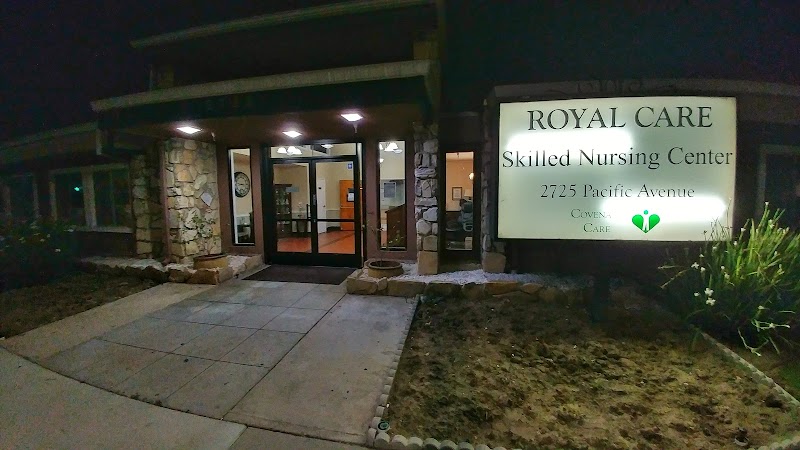
Who Owns and Operates Royal Care Skilled Nursing Ctr?

ROYAL CARE SKILLED NURSING CTR is owned by a for-profit company. For-profit facilities operate as businesses with obligations to shareholders or private owners. The facility is operated by COVENANT CARE, a chain that manages multiple nursing homes. With 98 certified beds and approximately 81 residents (about 83% occupancy), it is a smaller facility located in LONG BEACH, California.

How Does Royal Care Skilled Nursing Ctr Compare to Other California Nursing Homes?

Compared to the 100 nursing homes in California, ROYAL CARE SKILLED NURSING CTR's overall rating (2 stars) is below the state average of 3.1, staff turnover (40%) is near the state average of 46%, and health inspection rating (2 stars) is below the national benchmark.

What Should Families Ask When Visiting Royal Care Skilled Nursing Ctr?

Based on this facility's data, families visiting should ask: "What changes have been made since the serious inspection findings, and how are you preventing similar issues?" "Can I visit during a mealtime to observe dining assistance and food quality?" "How do you handle medical emergencies, and what is your hospital transfer rate?" "Can I speak with family members of current residents about their experience?" These questions are particularly relevant given the facility's Immediate Jeopardy citations.

Is Royal Care Skilled Nursing Ctr Safe?

Based on CMS inspection data, ROYAL CARE SKILLED NURSING CTR has documented safety concerns. Inspectors have issued 1 Immediate Jeopardy citation (the most serious violation level indicating risk of serious injury or death). The facility has a 2-star overall rating and ranks #100 of 100 nursing homes in California. Families considering this facility should ask detailed questions about what corrective actions have been taken since these incidents.

Do Nurses at Royal Care Skilled Nursing Ctr Stick Around?

ROYAL CARE SKILLED NURSING CTR has a staff turnover rate of 40%, which is about average for California nursing homes (state average: 46%). Moderate turnover is common in nursing homes, but families should still ask about staff tenure and how the facility maintains care continuity when employees leave.

Was Royal Care Skilled Nursing Ctr Ever Fined?

ROYAL CARE SKILLED NURSING CTR has been fined $139,865 across 2 penalty actions. This is 4.1x the California average of $34,478. Fines at this level are uncommon and typically indicate a pattern of serious deficiencies, repeated violations, or failure to correct problems promptly. CMS reserves penalties of this magnitude for facilities that pose significant, documented risk to resident health or safety. Families should request specific documentation of what issues led to these fines and what systemic changes have been implemented.

Is Royal Care Skilled Nursing Ctr on Any Federal Watch List?

ROYAL CARE SKILLED NURSING CTR is not on any federal watch list. The most significant is the Special Focus Facility (SFF) program, which identifies the bottom 1% of nursing homes nationally based on persistent, serious quality problems. Not being on this list means the facility has avoided the pattern of deficiencies that triggers enhanced federal oversight. This is a positive indicator, though families should still review the facility's inspection history directly.