ALCOTT REHABILITATION HOSPITAL

3551 WEST OLYMPIC BLVD., LOS ANGELES, CA 90019 (323) 737-2000
For profit - Limited Liability company 121 Beds DAVID & FRANK JOHNSON Data: November 2025 1 Immediate Jeopardy citation
Trust Grade
51/100
#278 of 1155 in CA
Last Inspection: October 2024

Within standard 12-15 month inspection cycle. Federal law requires annual inspections.

Overview

Alcott Rehabilitation Hospital has a Trust Grade of C, indicating it is average and in the middle of the pack for nursing homes. It ranks #278 out of 1,155 facilities in California, placing it in the top half, and #44 out of 369 in Los Angeles County, meaning it has some competition but is not the worst option available. The facility is improving, having decreased issues from 14 in 2024 to just 1 in 2025, which is a positive sign. Staffing is a strong point with a rating of 4 out of 5 stars and a turnover rate of only 22%, much lower than the California average of 38%, suggesting that staff are stable and dedicated. However, it has faced concerning incidents, including a critical failure to provide CPR to a resident who needed immediate life-saving support and serious violations regarding the supervision of a resident who fell and sustained multiple fractures. Overall, while there are strengths, families should be aware of these troubling incidents when considering this facility.

Trust Score
C
51/100
In California
#278/1155
Top 24%
Safety Record
High Risk
Review needed
Inspections
Getting Better
14 → 1 violations
Staff Stability
✓ Good
22% annual turnover. Excellent stability, 26 points below California's 48% average. Staff who stay learn residents' needs.
Penalties
✓ Good
$20,279 in fines. Lower than most California facilities. Relatively clean record.
Skilled Nurses
✓ Good
Each resident gets 42 minutes of Registered Nurse (RN) attention daily — more than average for California. RNs are trained to catch health problems early.
Violations
⚠ Watch
46 deficiencies on record. Higher than average. Multiple issues found across inspections.
★★★★☆
4.0
Overall Rating
★★★★☆
4.0
Staff Levels
★★★★★
5.0
Care Quality
★★★☆☆
3.0
Inspection Score
Stable
2024: 14 issues
2025: 1 issues

The Good

  • 4-Star Staffing Rating · Above-average nurse staffing levels
  • 5-Star Quality Measures · Strong clinical quality outcomes
  • Low Staff Turnover (22%) · Staff stability means consistent care
  • Full Sprinkler Coverage · Fire safety systems throughout facility
  • No fines on record
  • Staff turnover is low (22%)

    26 points below California average of 48%

Facility shows strength in staffing levels, quality measures, staff retention, fire safety.

The Bad

Federal Fines: $20,279

Below median ($33,413)

Minor penalties assessed

Chain: DAVID & FRANK JOHNSON

Part of a multi-facility chain

Ask about local staffing decisions and management

The Ugly 46 deficiencies on record

1 life-threatening 2 actual harm
May 2025 1 deficiency
CONCERN (E) 📢 Someone Reported This

A family member, employee, or ombudsman was alarmed enough to file a formal complaint

Potential for Harm - no one hurt, but risky conditions existed

Infection Control (Tag F0880)

Could have caused harm · This affected multiple residents

**NOTE- TERMS IN BRACKETS HAVE BEEN EDITED TO PROTECT CONFIDENTIALITY** Based on observation, interview, and record review the facility failed to ensure three of eight sampled staff (the Environmental...

Read full inspector narrative →
**NOTE- TERMS IN BRACKETS HAVE BEEN EDITED TO PROTECT CONFIDENTIALITY** Based on observation, interview, and record review the facility failed to ensure three of eight sampled staff (the Environmental Services Director [EVSD], Certified Nursing Assistant 2 [CNA 2] and Dietary Aide 1 [DA 1], maintained infection control practices (refers to policies and procedures used to minimize the risk of spreading infections) during a COVID-19 (a respiratory illness that can spread from person to person) outbreak (a rise in the number of cases of a disease) in the facility by failing to: 1.Ensure the EVSD performed hand hygiene (a general term that applies to hand washing, antiseptic hand wash, and alcohol-based hand rub) after throwing a cup in the trash for a resident (unidentified) in room A. 2. Ensure CNA 2 and DA 1 wore an N95 mask (highly effective air filter for your face designed to block a very high percentage of tiny particles, including those that can carry viruses like COVID-19 from being breathed in or exhaled). These deficient practices had the potential to spread infection and illnesses to residents, staff, and visitors. Findings: During a concurrent observation and interview on 5/14/2025 at 12:30 PM with the Infection Preventionist (IP – a healthcare professional who works to prevent the spread of infections among patients, staff, and visitors by making sure everyone follows proper guidelines for cleaning, handwashing, and other measures to keep everyone healthy) outside of room A, the EVSD came out of room [ROOM NUMBER] and walked down the hallway and did not sanitize his hands after exiting the room. The EVSD stated he (EVSD) went inside the room to throw away a cup for a resident (unidentified) inside the room. The EVSD stated if he (EVSD) did not sanitize his hands, he (EVSD) could spread infections. The IP nurse stated the EVSD did not sanitize his hands and stated the EVSD could spread infection. During an observation and interview on 5/14/2025 at 1:23 PM with the Director of Nursing (DON) and DA 1 in the kitchen, DA 1 was observed wearing a surgical mask (do not form a tight seal around the face, meaning they may not be as effective at filtering out very small airborne particles [aerosols] that can also carry the virus). DA 1 was then observed changing the surgical mask for an N95 respirator mask once DA 1 noticed the DON and surveyor made rounds in the kitchen. The DON stated DA 1 should have been wearing an N95 respirator mask and not a surgical mask. During an observation on 5/14/2025 at 1:26 PM at the facility entrance, CNA2 was observed wearing a surgical mask and sitting at a table screening employees and visitors for possible signs and symptoms of infection such as COVID. During an interview on 5/14/2025 at 1:31 PM with the IP, the IP stated the facility was considered to be in an outbreak status and all staff needed to wear N95 respirator masks. The IP stated the facility ' s COVID outbreak could be prolonged if the staff did not wear the N95 respirators. During an interview on 5/14/2025 at 1:39 PM with the DON and the Administrator (ADM), the DON stated if the staff (in general) did not wear the N95 respirator during the COVID outbreak, it would be an infection control issue. The DON stated CNA 2 who was the designated to screen at the front of the facility, CNA 2 would not be protected from COVID and could spread the infection if CNA2 did not wear the N95 respirator while screening visitors to the facility. During a review of the undated facility ' s flu and COVID vaccination records, the vaccination records indicated the EVSD declined the COVID vaccine on 11/20/2025, CNA 2 declined the COVID vaccine on 3/21/2025, and DA 1 declined the COVID vaccine on 11/20/2025. During a review of the facility ' s policy and procedure (P&P) titled Hand Hygiene, dated 3/7/2025, the P&P indicated hand hygiene is a general term for cleaning your hands by handwashing with soap and water or the use of an antiseptic hand rub, also known as alcohol-based hand rub (ABHR). The P&P indicated all staff will perform proper hand hygiene procedures to prevent the spread of infection to other personnel, residents, and visitors. This applies to all staff working in all locations within the facility. The P&P indicated staff will perform hand hygiene when indicated, using proper technique consistent with accepted standards of practice. The P&P indicated hand hygiene is indicated and will be performed under the conditions listed in, but not limited to, the attached hand hygiene table. The hand hygiene table indicated staff would need to either use soap and water or (ABHR) between resident contact, after handing contaminated objects, before and after handing clean or soiled dressings, linens, etc., after handing items potentially contaminated with blood, body fluids, secretions (the process by which an animal produces and releases a liquid such as saliva) or excretions ( he process of eliminating waste products from the body) and when in doubt. During a review of the facility ' s P&P titled Infection Outbreak Response and Investigation, dated3/7/2025, the P&P indicated outbreak generally refers to the occurrence of more cases of a communicable disease (a disease that is spread from one person to another through a variety of ways that include: contact with blood and bodily fluids) than expected in a given area or among a specific group of people over a particular period of time. If a condition is rare or has serious health implications, an outbreak may involve only one case. The P&P indicated symptomatic (having symptoms) employees will be screened by the Infection Preventionist, or designee, and referred to appropriate medical provider. The P&P indicated standard precautions (basic hygiene practices and precautions that healthcare workers and patients use to prevent the spread of infections) will be emphasized. Transmission-based precautions (used in addition to standard precautions for patients with known or suspected infection) will be implemented (put in place) as indicated for the particular organism (any living thing). The P&P indicated will be educated on the mode of transmission of the organism, symptoms of infection, and isolation or other special procedures. This includes special environmental infection control measures that are warranted based on the organism and current CDC (Center for Disease control is the nation ' s health protection agency that protects America from preventable diseases and health threats) guidelines. The P&P indicated surveillance (monitoring) activities will increase to daily for the duration of the outbreak. During a review of the facility ' s P&P titled Transmission (how a disease spreads)-Based (Isolation - special steps taken to keep a sick person separate from healthy people to prevent the spread of germs or infections) Precautions, dated 3/7/2025, the P&P indicated it was the facility ' s policy to take appropriate precautions to prevent transmission of pathogens, based on the pathogens ' modes of transmission. For training and quick referencing purposes, a summary of precautions is contained at the end of this policy. The P&P indicated the following definitions: Airborne precautions refer to actions taken to prevent or minimize the transmission of infectious agents/organisms that remain infectious over long distances when suspended in the air. Contact precautions refer to measures that are intended to prevent transmission of infectious agents which are spread by direct or indirect contact with the resident or the resident ' s environment. Droplet precautions refer to actions designed to reduce/prevent the transmission of pathogens spread through close respiratory or mucous membrane contact with respiratory secretions. Transmission-based precautions (a.k.a. Isolation Precautions) refer to actions (precautions) implemented in addition to standard precautions that are based upon the means of transmission (airborne, contact and droplet) in order to prevent or control infections. The P&P indicated the facility will use standard approaches, as defined by the CDC or local public health, for transmission-based precautions: airborne, contact, and droplet precautions. The category of transmission-based precautions will determine the type of personal protective equipment (PPE) to be used. The P&P indicated staff will wear a fit-tested (the method for finding the respirator that fits your face and making sure it provides a tight seal to help keep you protected) N95 or higher-level respirator and other appropriate PPE while delivering care to the resident. During a review of the CDC Infection Control Guidance: SARS-CoV-2 (https://www.cdc.gov/covid/hcp/infection-control/index.html), dated 6/24/2024, indicated when performing an outbreak response to a known case, facilities should always defer to the recommendations of the jurisdiction's public health authority. During a review of an email provided by the IP, dated 5/12/2025, indicated the Los Angeles County Public Health Outbreak Investigator ([NAME]), recommended surgical masks for visitors readily available at the entrance and N95 masks readily available at the entrance for staff. The email indicated all staff to wear a mask (N95) at all times during the outbreak and should be masked if more than one person in the room, such as offices.
Nov 2024 1 deficiency
CONCERN (D) 📢 Someone Reported This

A family member, employee, or ombudsman was alarmed enough to file a formal complaint

Potential for Harm - no one hurt, but risky conditions existed

Infection Control (Tag F0880)

Could have caused harm · This affected 1 resident

**NOTE- TERMS IN BRACKETS HAVE BEEN EDITED TO PROTECT CONFIDENTIALITY** Based on observation, interview, and record review the facility failed to implement its policies and procedure on infection cont...

Read full inspector narrative →
**NOTE- TERMS IN BRACKETS HAVE BEEN EDITED TO PROTECT CONFIDENTIALITY** Based on observation, interview, and record review the facility failed to implement its policies and procedure on infection control to prevent the spread of coronavirus disease 2019 (COVID-19, a highly contagious infection affecting the respiratory system caused by a virus that can spread from person to person). By failing to: 1. Ensure all personnel wear N95 mask (disposable face mask that covers the user's nose and mouth which offers protection form small solid or liquid droplets found in the air) during the COVID-19 outbreak. 2. All staff perform COVID-19 test at beginning of their shift. 3. Pause resident activity during the COVID-19 outbreak. 4. Use dedicated shower room for COVID-19 positive residents only. 5. Place portable air purifiers with High Efficiency Particulate Air (HEPA, can help reduce airborne contaminants including viruses in a building or small space) in all hallways. These deficient practices had the potential to continue to spread the COVID-19 to all residents, staff, and visitors. Findings: During a review of the local health department Viral Respiratory Illness Outbreak Notification dated 10/17/24 and sent by email to the facility on [DATE] at 3:48 p.m., indicated the local health department .will review site-specific control measures that you (facility) are required to implement to help control the outbreak and protect residents, personnel and/or other individuals at your site. Measures included all staff to test for the COVID-19 before each shift, to pause resident dining/activities, all staff to wear N95 mask during the COVID19 outbreak and to place air purifiers in all hallways. During an observation on 11/4/24 at 8:25 a.m., Certified Nursing Assistant 1 (CNA 1) was observed wearing a surgical mask (a loose fitting, disposable device that creates barrier between the mouth and nose of the wearer and potential contaminants in the immediate environment). CNA 1 stated she removes the surgical mask and replace with the N95 mask when she is directly taking care of the COVID-19 positive resident. CNA 1 stated she tests for the COVID-19 two times a week only. During an interview on 11/4/24 at 8:27 a.m., CNA 2 stated she does not test for the COVID19 at the start of her shift. During an interview on 11/4/24 at 8:34 a.m., CNA 3 stated she does not test daily for the COVID-19. During an observation and interview on 11/4/24 at 8:52 a.m. with the Director of Staff Developer (DSD) CNA 4 was observed wearing a surgical mask. CNA 4 was observed inside the shower room giving a bath to Resident 1. The shower room had a sign posted on the door reserved for covid patients only. DSD stated CNA 4 was giving shower to Resident 1 who was not COVID19 positive. During an observation and interview on 11/4/24 at 9:03 am., 13 residents were observed sitting in wheelchairs in the activity/dining room, sitting close to each other. Activity Assistant (AA) stated there are 13 residents attending activity. AA further stated she tests for COVID19 every week. During observation and interview on 11/4/24 at 10 a.m., Infection Preventionist (IP) stated, there is one air purifier in the west nursing station and in the activity room. No other air purifier was observed in the hallways. During an interview on 11/4/24 at 12:38 p.m., the IP stated, it is important for staff to test for the COVID19 before the start of their shift so that if they are positive, staff do not bring the COVID19 in the facility. IP stated further, it is important to have dedicated shower room for residents who are COVID19 positive to prevent exposure and prevent spread of the COVID19 in the facility. During the exit conference with the administrator (ADM), director of nursing (DON) and the IP on 11/4/24 at 1:22 p.m., the ADM stated some of the facility staff were wearing surgical masks. IP stated, it is important to wear the N95 as barrier and as droplet precautions (a set of infection control measures used to prevent the spread of illnesses through air droplets). The ADM stated the facility did not pause activities but limited the number of participants (including residents). During a review of the facility's Policy and Procedures (P&P) reviewed on 3/27/24 titled Infection Prevention and Control Program reviewed on 3/27/24, indicated, the facility has established and maintains an infection prevention and control program designed to provide a safe, sanitary, and comfortable environment and to help prevent the development and transmission of communicable diseases and infections as per accepted national standards and guidelines. During a review of the facility's P&P titled Coronavirus Prevention and Response reviewed on 3/27/24, indicated, the facility will respond promptly upon suspicion of illness associated with COVID-19 infection in efforts to identify, treat, and prevent the spread of the virus. The same P&P indicated, source control options for health care workers include respirator with N95 filters or higher. When the COVID19 community transmission levels are not high, the facility may choose not to require universal source control. However, even if source control is not universally required, it is recommended for individuals in the facility who have otherwise had source control recommended by public health authorities. The facility will explore options to improve ventilation delivery and indoor quality in resident rooms and all shared areas. The facility will take measures to limit crowding in communal areas. The same P&P indicated, the facility will perform viral testing as per (Centers for Disease Control and Prevention (CDC, federal agency that conducts and supports health promotion and prevention) guidance and facility policy. Local health jurisdictions may continue to implement additional requirements that are stricter than federal CDC and state recommendations. Ensure to follow the local county health public health guidelines.
Oct 2024 11 deficiencies
CONCERN (D)

Potential for Harm - no one hurt, but risky conditions existed

Resident Rights (Tag F0550)

Could have caused harm · This affected 1 resident

Based on observation, interview, and record review, the facility failed to provide care in a manner that maintained or enhanced a resident's dignity and respect for one of five sampled residents (Resi...

Read full inspector narrative →
Based on observation, interview, and record review, the facility failed to provide care in a manner that maintained or enhanced a resident's dignity and respect for one of five sampled residents (Resident 51) when Certified Nursing Assistant (CNA) 3 was observed standing over Resident 51 while feeding the resident lunch. This deficient practice had the potential to cause psychosocial harm to the Resident 51 and violated the resident's right to be treated with dignity. Findings: A review of Resident 51's face sheet (admission record), indicated the facility re-admitted the resident on 9/25/2024 with diagnoses including dementia (loss of cognitive functioning - thinking, remembering, and reasoning - to such an extent that the loss interferes with a person's daily life and activities), lack of coordination (a condition that affects muscle control), muscle weakness (lack of muscle strength), and dysphagia (difficulty swallowing). A review of Resident 51's Minimum Data Set (MDS, a federally mandated resident assessment tool) dated 9/30/2024, indicated the resident had severely impaired cognition (lack of the ability to think, remember, and make decisions). The MDS indicated Resident 51 required partial / moderate assistance with eating and would hold food in their mouth / checks after meals. During an observation on 10/15/2024 at 12:52 PM. CNA 3 was observed feeding Resident 51 lunch. CNA 3 was observed standing up on the right side of Resident 51 next to the resident's bed feeding the resident. CNA 3 was observed looking down at Resident 51 while the resident was looking up at CNA 3. During a concurrent interview, CNA 3 stated Resident 51 was a feeder and required assistance with meals. CNA 3 stated she was supposed to be sitting down while feeding Resident 51, that she usually would sit in a chair. CNA 3 stated she was supposed to be at eye level with the resident. During an interview on 10/27/2024 at 1:06 PM, the Director of Nursing (DON) stated when a staff member was feeding a resident they should be sitting and maintaining themselves at eye level with the resident. The DON stated this was done to protect resident dignity and there was a potential for the resident to not feel respected if staff stood up while feeding the resident. A review of the facility's policy and procedure titled, Promoting / Maintaining resident Dignity During Mealtimes, reviewed 3/27/2024, indicated to treat each resident with respect and dignity and care for each resident in a manner and in an environment that maintains or enhances his or her quality of life, recognizing each resident's individuality and protecting the rights of each resident. Staff members involved in providing feeding assistance to resident promote and maintain resident dignity during mealtimes. All staff will be seated, if possible, while feeding a resident.
CONCERN (D)

Potential for Harm - no one hurt, but risky conditions existed

Comprehensive Care Plan (Tag F0656)

Could have caused harm · This affected 1 resident

**NOTE- TERMS IN BRACKETS HAVE BEEN EDITED TO PROTECT CONFIDENTIALITY** Based on observation, interview, and record review, the facility failed to update the person-centered care plan for one of three...

Read full inspector narrative →
**NOTE- TERMS IN BRACKETS HAVE BEEN EDITED TO PROTECT CONFIDENTIALITY** Based on observation, interview, and record review, the facility failed to update the person-centered care plan for one of three sampled residents (Resident 43), who suffered from depression. Resident 43's care plan did not include the resident's preferred activities. This deficient practice caused an increased risk of Resident 43 having meaningful activity to promote and enhance the resident's quality of life. Findings: A review of the admission Record indicated Resident 43 was admitted to the facility on [DATE], with diagnoses including major depressive disorder (depression [a mood disorder that causes a persistent feeling of sadness and loss of interest and can interfere with your daily activities of living]), dementia (a chronic condition that causes a gradual decline in cognitive abilities, such as thinking, remembering, and reasoning), muscle wasting and atrophy (decrease in size and thinning of muscle tissue). A review of the Minimum Data Set (MDS, a federally mandated resident assessment tool) dated 7/17/2024, indicated Resident 43 had severe cognitive impairment (problems with a person's ability to think, remember, use judgement, and make decisions) and was totally dependent with bed mobility, transfer, dressing, feeding, toileting, personal hygiene, and bathing. A review of Resident 43's care plan for alteration in activity related to hearing impairment, cognitive impairment, self-care, and mobility deficits, revised on 7/17/2024 indicated the goal was for Resident 43 to participate in activities of resident's choice 3-4 times a week. The care plan interventions included praise efforts for attendance and participation in church service. During an observation on 10/17/2024 at 9:13 AM, Resident 43 was lying in bed awake, was nonverbal and unable to make needs known. While observing Resident 43, church service could be heard from the activities room. There was no attempt from facility staff observed to assist Resident 43 to church service. During an observation on 10/17/2024 at 10:18 AM, Resident 43 was lying in bed watching television and the Rehabilitation Nursing Assistant (RNA 1) was outside of Resident 43's room. During a concurrent interview, RNA 1 was asked if Resident 43 would be going to Church Service and RNA 1 stated that Resident 43 did not like going. RNA 1 stated Resident 43 would become agitated while at Church Service and the family comes and takes Resident 43 out daily. RNA 1 stated Resident 43 enjoyed spending time with family. During an interview on 10/17/2024 at 12:05 PM, the Activities Director (AD) stated Resident 43 used to attend Church Service but no longer enjoyed going. The AD stated Resident 43 preferred to spend time with their family. During a concurrent review of Resident 43's activities care plan, the AD stated the care plan for Resident 43 should have been updated to reflect their current interests of enjoying time with family. On 10/17/2024 at 2:45 PM, the family member was called regarding Resident 43's activity preference for attending church service. There was no answer and the family member did not return the message. A review of the facility's policy and procedure (P&P) titled, Comprehensive Care Plans, revised 3/27/2024, indicated to develop and implement a comprehensive person-centered care plan for each resident, consistent with resident rights that included measurable objectives and timeframes to meet a resident's medical, nursing, and mental and psychosocial needs that were identified in the resident's comprehensive assessment.
CONCERN (D)

Potential for Harm - no one hurt, but risky conditions existed

Deficiency F0657 (Tag F0657)

Could have caused harm · This affected 1 resident

**NOTE- TERMS IN BRACKETS HAVE BEEN EDITED TO PROTECT CONFIDENTIALITY** b. A Review of Resident 75's admission Record indicated the resident was originally admitted to the facility on [DATE] with diag...

Read full inspector narrative →
**NOTE- TERMS IN BRACKETS HAVE BEEN EDITED TO PROTECT CONFIDENTIALITY** b. A Review of Resident 75's admission Record indicated the resident was originally admitted to the facility on [DATE] with diagnoses including Type II diabetes (a disorder characterized by difficulty in blood sugar control and poor wound healing), major depressive disorder (a mood disorder that causes a persistent feeling of sadness and loss of interest), and vascular dementia (a progressive state of decline in mental abilities). A review of Resident 75'S Braden Scale Assessment (a tool used for predicting pressure ulcer/sore risk) dated 5/17/2024 indicated a total score of 14 which placed the resident at moderate risk for developing pressure ulcer. A review of Resident 75's MDS dated [DATE] indicated the resident's cognition (the ability to think and process information) was severely impaired and was at risk for developing pressure ulcers/injuries. A review of the Physician's Order dated 10/14/2024, indicated Resident 75 was to receive the APP overlay for skin and wound management. A review of Resident 75's At Risk for potential skin breakdown and development of pressure injuries care plan, revised 10/14/2024, indicated an intervention for a pressure reduction mattress in bed (low air loss mattress, LAL) and APP (alternating pressure pad) overlay for skin and wound management. During a concurrent observation and interview on 10/16/2024 at 1:25 PM with Registered Nurse 1 (RN 1), Resident 75 was observed in his room. RN 1 stated and confirmed Resident 75 had an alternating pressure pad and did not have a low air loss mattress. RN 1 stated it was important to follow the care plan interventions to prevent any skin injuries from residents who were risk for developing skin issues. During a concurrent record review and interview on 10/16/2024 at 1:45 PM with Treatment Nurse 1 (TX 1), Resident 75's At Risk for potential skin breakdown care plan was reviewed. TX 1 stated the plan was for the resident to have an APP to prevent skin breakdown and that it was confusing to have an intervention for the low loss mattress and alternating pressure pad in the same care plan. TX 1 stated Resident 75's care plan should have been revised to include the APP intervention only. During a concurrent record review and interview with the Director of Nursing (DON) on 10/18/2024 at 9:20 AM, Resident 75's care plan at risk for potential skin breakdown was reviewed. The DON stated Resident 75's care plan should have been updated to resolve the intervention for the LAL mattress because the plan was for the resident to have an APP mattress. The DON stated it was important to resolve the care plan interventions that were no longer needed to ensure the resident was getting the interventions needed. A review of the facility's policy and procedure (P&P) titled, Comprehensive Care Plans, revised 3/2024, indicated the facility will develop and implement a comprehensive person-centered care plan for each resident, consistent with resident rights, and include measurable objectives and timeframes to meet a resident's medical, nursing, mental and psychological that are identified in the resident's comprehensive assessment. Based on interview and record review, the facility failed to review, update, and/or revise the care plans for two of three sampled residents (Resident 71 and Resident 75). Resident 71 did not have current wound care treatment indicated for the Stage III sacral pressure ulcer and Resident 75's care plan did not include updated interventions for pressure injury prevention. These deficient practices had the potential to affect the provision of necessary care, treatment, and services for Resident 71 and Resident 75. Findings: a. A review of Resident 71's admission Record indicated the resident was admitted to the facility on [DATE], with diagnoses including dementia (impaired ability to remember, or make decisions that interferes with doing everyday activities) and pressure ulcer of sacral region Stage III. A review of the Physician's Orders dated 9/27/2024, indicated to cleanse the sacro coccyx (tail bone) pressure injury with normal saline (NS-a salt solution), pat dry, apply Santyl (medication that removes dead tissue from a wound) ointment, apply Bacitracin (topical antibiotic used to prevent infection) ointment, and apply foam dressing every day shift. A review of Resident 71's potential for pressure ulcer development related to the sacro coccyx pressure ulcer care plan dated 9/30/2024, indicated the resident's pressure ulcer would show signs of healing and remain free from infection by or through review date. The care plan indicated to administer medications and treatment as ordered. A review of Resident 71's 35's Minimum Data Set (MDS- a federally mandated resident assessment tool) dated 10/1/2024, indicated the resident had severe cognitive impairment and did not have the capacity to understand or make their own decisions. The MDS further indicated Resident 71 needed maximum assistance with bed mobility, transfer, and personal hygiene. During an observation on 10/17/2024 at 11:34 AM, the Treatment Nurse (TX 1) performed wound care treatment on Resident 71's sacral pressure ulcer. During a concurrent interview, TX 1 stated Resident 71's wound was healing and had gotten smaller since the resident was first admitted . TX 1 stated if there was a change in the resident's wound status or if a treatment was changed it should be updated in the care plan to ensure continuity of care. TX 1 stated they forgot to revise and update the care plan for Resident 71. During an interview on 10/17/24 12:41 PM, the Minimum Data Set Coordinator (MDS) stated that treatment orders for pressure ulcers should be indicated in the care plan because it was important to know what the recent treatment for the resident was and if the interventions were effective. The MDS also stated the stage of the pressure ulcer should also be indicated in the care plan. A review of the facility's policy and procedures (P&P) titled, Comprehensive Care Plans, revised on 3/27/2024, indicated to develop and implement a comprehensive person-centered care plan for each resident consistent with resident rights, that includes measurable objectives and timeframes to meet a resident's medical, nursing, and mental and psychosocial needs that are identified in the resident's comprehensive assessment.
CONCERN (D)

Potential for Harm - no one hurt, but risky conditions existed

Pressure Ulcer Prevention (Tag F0686)

Could have caused harm · This affected 1 resident

**NOTE- TERMS IN BRACKETS HAVE BEEN EDITED TO PROTECT CONFIDENTIALITY** Based on observation, interview, and record review, the facility failed to ensure one of three sampled residents (Resident 75), ...

Read full inspector narrative →
**NOTE- TERMS IN BRACKETS HAVE BEEN EDITED TO PROTECT CONFIDENTIALITY** Based on observation, interview, and record review, the facility failed to ensure one of three sampled residents (Resident 75), who was assessed as a moderate risk to develop pressure ulcer (localized, pressure-related damage to the skin and/or underlying tissue usually over a bony prominence) was provided with a pillow or heel protectors (pressure relieving devices) to the left and right heels and repositioned every two hours and PRN (as needed), per the resident's care plan. This deficient practice placed Resident 75 at increased risk for developing pressure sores. Findings: A review of Resident 75's admission Record indicated the resident was originally admitted to the facility on [DATE] with diagnoses including Type II diabetes (a disorder characterized by difficulty in blood sugar control and poor wound healing), major depressive disorder (a mood disorder that causes a persistent feeling of sadness and loss of interest), and vascular dementia (a progressive state of decline in mental abilities). A review of Resident 75's Braden Scale assessment (a tool used for predicting pressure ulcer/sore risk) dated 5/17/2024 indicated a total score of 14 which placed the resident at moderate risk for developing pressure ulcer. A review of Resident 75's Minimum Data Set (MDS- a federally mandated resident assessment tool) dated 8/15/2024 indicated the resident's cognition (the ability to think and process information) was severely impaired and was at risk for developing pressure ulcers/injuries. A review of Resident 75's At Risk for potential skin breakdown and development of pressure injuries care plan revised 10/14/2024 indicated the interventions were turning and reposition Resident 75 every two hours and PRN (as needed) and reducing pressure off heel(s) with pillow(s) or heel protectors. During an interview on 10/16/2024 at 1:06 PM, Certified Nurse Assistant (CNA 2) stated and confirmed she was the nurse assistant assigned to Resident 75. CNA 2 stated she did not know if Resident 75 required heel protectors. CNA 2 stated she was repositioning the resident every two hours but was not keeping track of the repositioning because only the residents with a wound had a repositioning log. During a concurrent observation and interview on 10/16/2024 at 1:25 PM with Registered Nurse 1 (RN 1), Resident 75 was observed in his room. Resident 75 was observed laying in his bed and RN 1 stated and confirmed the resident did not have pillows or heel protectors to reduce pressure from the resident's left and right heels. RN 1 stated it was important to follow the residents care plan interventions to prevent any skin injuries from residents who were at risk for developing skin issues. During an interview with the Director of Staff Developer (DSD) on 10/16/2024 at 2:46 PM, the DSD stated there was a binder at the nurse's station with a list of residents who needed repositioning ever two hours. The DSD stated the staff have a log for each resident and log repositioning ever two hours and pressure reduction from the heels. The DSD stated Resident 75 was not on the list and there was no documentation that the resident was repositioned every two hours or that staff reduced pressure off his heels from 10/1 to 10/16/2024. The DSD stated it was important to reposition the resident every two hours and use pillows to reduce pressure off the heels to prevent skin breakdown. A review of the facility's policy and procedure (P&P) titled, Pressure Injury Prevention and Management, revised 3/2024, indicated the facility was committed to the prevention of avoidable pressure injuries, unless clinically unavoidable, and to provide treatment and services to heal the pressure ulcer/injury, prevent infection and the development of additional ulcers/injuries. Interventions for prevention and to promote healing included evidenced-based interventions for prevention would be implemented for all residents who are assessed at risk or who have pressure injury present. The policy indicated basic or routine care interventions could include but are not limited to redistributing pressure (such as repositioning, protecting, and/or offloading heels, etc.).
CONCERN (D)

Potential for Harm - no one hurt, but risky conditions existed

Deficiency F0688 (Tag F0688)

Could have caused harm · This affected 1 resident

**NOTE- TERMS IN BRACKETS HAVE BEEN EDITED TO PROTECT CONFIDENTIALITY** Based on interview and record review, the facility failed to provide services for one of two sampled residents (Residents 84) at...

Read full inspector narrative →
**NOTE- TERMS IN BRACKETS HAVE BEEN EDITED TO PROTECT CONFIDENTIALITY** Based on interview and record review, the facility failed to provide services for one of two sampled residents (Residents 84) at risk for decline in range of motion (ROM, full movement potential of a joint) and mobility. Resident 84 did not receive Restorative Nursing Aide program (RNA, nursing aide program that help residents to maintain their function and joint mobility) treatments for passive range of motion (PROM, movement at a given joint with full assistance from another person) exercises and left knee extension splint, per the care plan. This deficient practice had the potential to cause further decline in functional mobility, ROM, and quality of life for Residents 84. Findings: A review of Resident 84's admission Record indicated the resident was originally admitted to the facility on [DATE] with diagnosis including hemiplegia (total paralysis of the arm, leg, and trunk on the same side of the body) and hemiparesis (condition that causes weakness or an inability to move on one side of the body) following cerebral infarction (occurs as a result of disrupted blood flow to the brain) affecting left non-dominant side, contracture (a stiffening/shortening at any joint, that reduces the joint's range of motion) of left knee, and age-related osteoporosis (weak and brittle bones due to lack of calcium and Vitamin D). A review of Resident 84's care plan initiated 12/18/2023 indicated the resident was on the RNA program for PROM exercises on BLE, BUE, and bilateral knee extension splint assistance to address potential for decline in range of motion. The interventions included PROM daily five times a week as tolerated to the right and left upper extremity, PROM daily seven times a week as tolerated to the right and left lower extremity, and right and left knee extension splint to be worn two hours daily seven times a week as tolerated. A review of Resident 84's Minimum Data Set (MDS- a federally mandated resident assessment tool) dated 7/11/2024 indicated the resident's cognition (the ability to think and process information) was severely impaired, was dependent with toileting and shower. The MDS indicated Resident 84 had impairment on both sides of the lower extremity and no impairment on both sides of the upper extremity. A review of Resident 84's Documentation Survey Report for September 2024 indicated the resident received PROM to the right and left lower extremity nine times on the following dates: 9/5, 9/7, 9/9 - 9/12/24, 9/15, 9/26 and 9/30/2024, PROM to the right and left upper extremity seven times on the following dates: 9/5, 9/9 - 9/12/2024, 9/27, and 9/30/2024, and right and left knee extension splint assistance nine times on the following dates: 9/5, 9/7, 9/9 - 9/12/2024, 9/15, 9/27, and 9/30/2024. A review of Resident 84's Rehab Screen dated 10/10/2024 indicated the resident maintained functional task performances and bilateral upper and lower extremity ROM. The screen indicated Resident 84 would benefit from continued restorative nursing program to maintain current functional task performances. A review of Resident 84's Documentation Survey Report for October 2024 indicated the resident received PROM to the right and left lower extremity six times on the following dates: 10/3, 10/5, 10/9, 10/10, 10/14, and 10/17/2024, PROM to the right and left upper extremity five times on the following dates: 10/3, 10/9, 10/10, 10/14, and 10/17/2024, and right and left knee extension splint assistance five times on the following dates: 10/3, 10/5, 10/9, 10/10, 10/14, and 10/17/2024. During a concurrent record review and interview, on 10/18/2024 at 9 AM, Resident 84's Documentation Survey Report for September 2024 and October 2024 were reviewed with the Director of Nursing (DON). The DON stated and confirmed Resident 84 was on the RNA program for the following: PROM to the lower extremity seven times as tolerated, PROM to the upper extremity [NAME] time a week as tolerated, and bilateral knee splint assistance seven times a week for two hours as tolerated. The DON confirmed Resident 84 received RNA services to the lower extremity nine times in the month September 2024, RNA services to the upper extremity seven times in the month of September 2024, and assistance with the knee splints nine times in the month September 2024. The DON stated Resident 84 received RNA services to the lower extremity six times from October 1 to 17, 2024, RNA services to the upper extremity five times from October 1 to 17, 2024, and assistance with the knee splints six times from October 1 to 17, 2024. The DON stated based on the documentation, the staff were not following Resident 84's RNA Program. The DON stated it was important to follow the residents RNA Program to maintain mobility because there was a risk for a decline in mobility. A review of the facility's policy and procedure (P&P) titled, Restorative Nursing Program, revised 3/2024, indicated it was the policy of this facility to provide maintenance and restorative services designed to maintain or improve a resident's abilities to the highest practicable level. The policy indicated restorative aides will implement the plan for a designated length of time, performing the activities, and documenting the electronic health record.
CONCERN (D) 📢 Someone Reported This

A family member, employee, or ombudsman was alarmed enough to file a formal complaint

Potential for Harm - no one hurt, but risky conditions existed

Accident Prevention (Tag F0689)

Could have caused harm · This affected 1 resident

**NOTE- TERMS IN BRACKETS HAVE BEEN EDITED TO PROTECT CONFIDENTIALITY** Based on interview and record review, the facility failed to provide an environment free from accident hazards to prevent avoida...

Read full inspector narrative →
**NOTE- TERMS IN BRACKETS HAVE BEEN EDITED TO PROTECT CONFIDENTIALITY** Based on interview and record review, the facility failed to provide an environment free from accident hazards to prevent avoidable accidents for one of two sampled residents (Resident 306), who was admitted to the facility with a history of falls and was at continued risk for falls, by failing to: -Accurately assess Resident 306's risk for falls dated 9/10/2024. -Evaluate and analyze fall risk hazards, implement individualized interventions to reduce risk of falling, and monitor for effectiveness of interventions. -Reevaluate and update individualized interventions to prevent recurrent falls after Resident 306 fell on 9/16 and 9/17/2024. -Ensure Resident 306 was not left without staff supervision in the facility patio. As a result, on 9/16/2024 Resident 306 stood up from the wheelchair in front of the nurse's station and fell. On 9/17/2024, Resident 306 was left alone in the wheelchair with a family member and Resident 306 fell again from the wheelchair. These deficient practices placed Resident 306 at increased risk for recurrent falls and complications related to fall injuries such as fractures, cuts, and internal bleeding. Findings: A review of Resident 306's admission Record indicated the resident was admitted to the facility on [DATE] with diagnoses including unspecified dementia (impaired ability to remember, think, or make decisions that interferes with doing everyday activities), history of falling, and wedge compression of the second to fourth lumbar vertebrae (a type of spinal compression fracture that occurs when the front of a vertebra collapses, giving it a wedge shape). A review of Resident 306's Fall Risk assessment dated [DATE] indicated the resident had a total score of 17 and was at risk for falls. A review of Resident 306's care plan for at risk for fall injury dated 7/13/2024, indicated intervention for facility staff included to monitor the resident for behavioral issues manifested by restlessness and agitation. A review of Resident 306's Minimum Data Set (MDS- a federally mandated resident assessment tool) dated 7/16/2024 indicated the resident's cognition (the ability to think and process information) was severely impaired and had a history of a fall in the month prior to admission to the facility. A review of Resident 306's Fall Risk assessment dated [DATE] indicated the resident had a total score of 17 which placed the resident at risk for falls. The assessment indicated no falls in past three months under the section titled History of Falls. A review of Resident 306's care plan regarding 9/10/2024 resident had an actual fall with no injury dated 9/10/2024 indicated to continue interventions on the at-risk plan. A review of Resident 306's Interdisciplinary Team (IDT, a team of health care professions, which include the facility's medical director, Director of Nursing (DON), social worker, registered nurse, and other staff as needed who work together to establish plans of care for residents) Progress Note dated 9/11/2024 indicated the resident had a fall on 9/10/2024 at the nursing station. The IDT progress note indicated Resident 306 was observed standing up from the wheelchair, lost balance, and fell. The IDT Progress Note indicated a recommendation to continue rehab treatment, continue to encourage the resident to call for assistance when transferring, frequently check the resident (did not indicate the frequency) when up in the wheelchair, continue falling star program, and follow up with psychiatric doctor. A review of Resident 306's At Risk for Fall Injury care plan dated 9/11/2024 indicated interventions to continue rehab treatment, continue to encourage the resident to call for assistance when transferring, frequently check the resident when up in the wheelchair, continue falling star program, and follow up with psychiatric doctor. A review of Resident 306's Nurse Progress Note dated 9/16/2024 indicated the resident had a fall by the nurse's station. The note indicated an unidentified staff member observed Resident 306 stand from the wheelchair with an unsteady gait and fall to the floor. A review of Resident 306's Fall Risk assessment dated [DATE] indicated the resident had a total score of 21 and was at risk for falls. A review of Resident 306's Progress Note dated 9/17/2024 indicated the resident was sitting on the wheelchair in the patio with a family member. The note indicated on 9/17/2024 at about 3:30 PM, a staff member found Resident 306 sitting on the ground. The note indicated Resident 306 reported she had fallen. A review of Resident 306's IDT Progress Note dated 9/19/2024 indicated the resident had a fall incident on 9/16/024 and 9/17/2024. The IDT recommended to continue rehab treatment, continue to encourage the resident to call for assistance when transferring, frequently check the resident when she was up in the wheelchair, continue fall star program, and follow up with psychiatric doctor. A review of Resident 306's At Risk for Fall Injury care plan dated 9/19/2024 indicated interventions to continue rehab treatment, continue to encourage the resident to call for assistance when transferring, frequently check the resident when up in the wheelchair, continue falling star program, and follow up with psychiatric doctor. During an interview on 10/17/2024 at 3:40 PM, Registered Nurse (RN) 3 stated Resident 306 had a witnessed fall on 9/16/2024 in front of the nurse's station. RN 3 stated the resident had another fall on 9/17/2024. RN 3 stated on 9/17/2024, Resident 306 was calm and sitting in her wheelchair outside in the patio with a family member. RN 3 stated she did not think Resident 306 needed frequent monitoring. RN 3 stated she saw Resident 306 at 3:30 PM and at about 3:41 PM, another staff member reported Resident 306 had fallen in the patio. During a concurrent record review and interview with the Director of Nursing (DON) on 10/18/2024 at 11:01 AM, Resident 306's Fall Risk assessment dated [DATE] was reviewed. The DON stated the fall risk assessment was incorrect because the second question was answered incorrectly and should have indicated 1-2 or more falls in past 3 months and would have resulted in a higher fall risk score. The DON stated the higher number would indicate the resident had a higher risk for falls. The DON stated it was important to have an accurate fall assessment for residents to prevent falls. During a concurrent record review and interview with the DON on 10/18/2024 at 11:15 AM, Resident 306's Interdisciplinary Progress Note dated 9/11/2024 was reviewed. The DON stated the recommendation of frequently checking the resident when up in the wheelchair was included in the care plan. The DON stated frequent checking meant staff would visually check the resident when rounding or providing care. The DON stated the intervention was broad and should have indicated a frequency of how often to check the resident. The DON stated there was no documentation to show that Resident 306 was frequently checked when she was up in the wheelchair. The DON stated it was important to frequently check the resident to prevent falls and to have specific interventions that included a frequency to ensure the resident was getting the supervision needed. During a concurrent record review and interview with the DON on 10/18/2024 at 11:15 AM, Resident 306's Interdisciplinary Progress Note dated 9/19/2024 was reviewed. The DON stated the IDT met to discuss Resident 306's fall on 9/16/2024 and 9/17/2024. The DON stated during the meeting, IDT discussed more frequent visual checking of the resident while in the wheelchair. The DON stated Resident 306's falls occurred while the resident was in the wheelchair. The DON confirmed there were no new interventions from the IDT meeting on 9/19/2024 and there were no new interventions added the care plan. The DON stated it was important to determine new interventions to prevent the resident from falling. A review of the facility's policy and procedures (P&P) titled, Fall Prevention Program, revised 3/2024 indicated each resident will be assessed for fall risk and will receive care and services in accordance with their individualized level of risk to minimize the likelihood of falls. The policy indicated each resident's risk factors and environmental hazards will be evaluated when developing the resident's comprehensive care plan and the plan of care will be revised as needed. The policy indicated the at-risk protocols included additional services as directed by the resident's assessment, including but not limited to increased frequency of rounds. A review of the facility's P&P titled, Comprehensive Care Plans, revised 3/2024, indicated the comprehensive care plan will describe resident specific interventions that reflect the resident's needs and preferences and align with the resident's cultural identity, as indicated.
CONCERN (D)

Potential for Harm - no one hurt, but risky conditions existed

Deficiency F0761 (Tag F0761)

Could have caused harm · This affected 1 resident

**NOTE- TERMS IN BRACKETS HAVE BEEN EDITED TO PROTECT CONFIDENTIALITY** Based on observation, interview, and record review, the facility failed to ensure one opened vial of Novolin R (a medication use...

Read full inspector narrative →
**NOTE- TERMS IN BRACKETS HAVE BEEN EDITED TO PROTECT CONFIDENTIALITY** Based on observation, interview, and record review, the facility failed to ensure one opened vial of Novolin R (a medication used to control blood sugar) was labeled with an open date per the manufacturer's requirements in one of two inspected medication carts (West Medication Cart.) The deficient practices of failing to store or label medications per the manufacturers' requirements increased the risk that residents could have received medication that had become ineffective or toxic due to improper storage or labeling possibly leading to health complications resulting in hospitalization or death. Findings: During a concurrent observation on [DATE] at 11:06 AM of [NAME] Medication Cart, with the Licensed Vocational Nurse (LVN 1), the following medications were found either expired, stored in a manner contrary to their respective manufacturer's requirements, or not labeled with an open date as required by their respective manufacturer's specifications: -One opened vial of Novolin R was found stored at room temperature and not labeled with an open date. According to the manufacturer's product labeling, once stored at room temperature, vials of Humulin R were to be used or discarded within 42 days. During a concurrent interview, LVN 1 stated the Novolin R was opened, but not labeled with an open date. LVN 1 stated without an open date, there was no way to know when the product would expire because the expiration date could not be determined, nor exactly how long the Novolin R had been stored at room temperature. LVN 1 stated if expired insulin was administered to a resident, expired insulin could cause medical complications due to poor blood sugar control. A review of the facility's policy titled, Medication Storage, revised [DATE], indicated to ensure all medications housed on our premises will be stored in the pharmacy and / or medication rooms according to the manufacturer's recommendations. A review of the facility's policy titled, Labeling of Medications and Biologicals, revised [DATE], indicated labels for multi-use vials must include the date the vial was initially opened or accessed (needle punctured). All opened or accessed vials should be discarded within 28 days unless the manufacturer specifies a different (shorter or longer) date for that opened vial.
CONCERN (D)

Potential for Harm - no one hurt, but risky conditions existed

Deficiency F0813 (Tag F0813)

Could have caused harm · This affected 1 resident

Based on observation, interviews, and record review, the facility failed to have a policy that addressed how to store and reheat resident's left-over food brought into the facility from outside kitche...

Read full inspector narrative →
Based on observation, interviews, and record review, the facility failed to have a policy that addressed how to store and reheat resident's left-over food brought into the facility from outside kitchens / restaurants to ensure safe and sanitary food storage, handling, and consumption. This deficient practice had the potential to cause food borne illness in residents in the facility who were served the food brought by family or visitors. Findings: During an interview on 10/16/2024 at 2:45 PM, Registered Nurse (RN 1) stated resident families were encouraged to bring enough food for one meal and take the leftovers home or discard the leftovers. RN 1 stated the facility did not encourage the storage of resident food brought from outside. RN 1 stated facility policy did not allow storing perishable food (food that needs refrigeration) for residents. During an interview on 10/16/2024 at 3 PM, RN 2 stated there was no refrigerator for residents to keep food brought from the outside. RN 2 stated there was a refrigerator in the Director of Nursing's (DON) office that could be used for resident food if leftovers needed to be stored. RN 2 stated there had been situations where residents insisted on storing leftovers and not discarding the leftovers. RN 2 did not remember the residents or families who requested to store the food. During an interview with Director of Staff Development (DSD) on 10/16/2024 at 3:15 PM, the Director of Staff Development (DSD) stated the facility policy was to not to store leftovers or food brought to residents from outside. The DSD stated if the food required refrigeration facility staff was to encourage the resident to finish the food and discard the rest. The DSD stated if the food was nonperishable then the food could be stored at bedside in the resident room in a container. During an interview on 10/16/2024 at 4 PM, the DON stated facility policy indicated no outside food for residents was to be stored and the facility did not have a refrigerator to store resident food from family or visitors. The DON stated the facility only allowed the family to bring enough food to consume for one meal and family needed to discard or take leftovers back. During a concurrent review of facility policy and interview with the DON on 10/16/2024 at 4:45 PM, the DON stated the policy indicated food would be consumed or discarded and not stored. The DON stated he was not aware of any residents who requested food to be stored for later consumption. The DON stated if residents wanted to store the food, the facility did not have a policy and procedures that addressed how and where to store food safely. A review of facility policy titled, Use and storage of Food Brought in by Family or Visitors, revised 3/27/24 indicated, All food items that are already prepared by the family or visitor brought in, must be eaten within 2 hours of receiving and the remaining food must be discarded, all food items brought in that are manufactured and do not require refrigeration may be kept in the resident room inside a sealed container, it is the responsibility of the resident and representative to maintain container and items in the container.
CONCERN (E)

Potential for Harm - no one hurt, but risky conditions existed

Infection Control (Tag F0880)

Could have caused harm · This affected multiple residents

Based on observation, interview, and record review, the facility failed to implement and maintain infection control procedures when the facility did not screen family members and visitors for three da...

Read full inspector narrative →
Based on observation, interview, and record review, the facility failed to implement and maintain infection control procedures when the facility did not screen family members and visitors for three day on signs and symptoms of Coronavirus (COVID-19, a contagious and infectious disease that is characterized by fever and cough and is capable of progressing to severe symptoms and in some cases death, especially in older people and those with underlying health conditions) during a COVID-19 outbreak (a sudden increase in occurrences of a disease when cases are in excess of normal expectancy for the location or season) in the facility. This deficient practice had the potential to result in the spread of COVID 19 to residents and staff. Findings: During an observation on 10/17/2024 at 11:50 AM, Family Member (FM) 1 was observed entering the facility unmasked. Upon entering the facility, FM 1 was observed entering Resident 15's room. FM 1 did not screen themselves for sign and symptoms of COVID-19. During an interview on 10/17/2024 at 12 PM, FM 1 stated they did not sign in on the visitor screening log and stated she was not screened for COVID-19. FM 1 stated they were not informed of the screening process and stated she just walked into the facility. During an observation on 10/17/2024 at 12:45 PM, the facility's visitor screening log was observed on a table at the entrance of the facility. There was no designated staff observed to screen visitors upon entrance. During a concurrent review of the facility's visitor screening log dated 10/15 to 10/17/2024, the facility had 26 visitors on 10/15/2024, 26 visitors on 10/16/2024, and 23 visitors on 10/17/2024. The visitor screening log indicated the visitors who signed the log on 10/15/2024 to 10/17/2024 did not indicate if they had any signs and symptoms of COVID 19. During a concurrent interview and record review on 10/17/2024 at 1:03 PM, the Infection Preventionist (IP) stated the outbreak of COVID-19 in the facility started on 10/15/2024. The IP stated there were two residents who were positive for COVID-19 and no staff were positive for COVID-19. The IP stated the facility had a log for visitors to sign in prior to entering the facility and visitors were supposed to fill out the log before entering the facility. The IP stated the log had visitors sign their name, indicate the resident they were visiting, the room number, the visitors COVID-19 test results, and asked if the visitors had any signs and symptoms of COVID-19. The IP stated the facility did not have a designated staff to screen visitors coming into the facility. The IP reviewed the visitor screening log for 10/15 - 10/17/2024 and confirmed visitors did not indicate whether the visitors had signs and symptoms of COVID-19 on the visitor screening log. The IP stated visitors were supposed to be screened for signs and symptoms of COVID-19. The IP stated there was a potential for COVID-19 to be spread to more residents and staff if visitors were not screened prior to entering the facility. A review of an e-mail from the Department of Public Health (DPH) to the IP titled, Department of Public Health - COVID-19 Outbreak, dated 10/17/2024, indicated the following recommendations: Please complete symptom check for all visitors before entering the facility. Masking is required at all times during visitation. During a concurrent interview and record review with the Director of Nursing (DON) on 10/18/2024 at 1:06 PM, the facility's visitor screening log was reviewed. The DON stated and confirmed visitors were not being screened for signs and symptoms of COVID-19. The DON stated the facility currently had an outbreak of COVID-19 and the residents at the facility were long term care residents and did not really leave the facility, so there was a possibility the residents may have gotten COVID-19 from the visitors. The DON stated there were no facility staff who were positive of COVID-19 and there was a potential for COVID-19 to spread amongst residents if visitors were not screened prior to entering the facility. A review of the facility's policy and procedures titled, Infection Prevention and Control Program, Reviewed 3/27/2024 indicated resident/Family/Visitor Education and Screening: Residents, family members, and visitors were provided information relative to the rationale for the isolation, behaviors required of them in observing there precautions, and conditions for which to notify the nursing staff. More active screening, such as the completion of screening tools or questionnaires that elicits information related to recent exposures or current symptoms may be used as per facility policy.
MINOR (B)

Minor Issue - procedural, no safety impact

Deficiency F0911 (Tag F0911)

Minor procedural issue · This affected multiple residents

**NOTE- TERMS IN BRACKETS HAVE BEEN EDITED TO PROTECT CONFIDENTIALITY** Based on observation, interview, and record review the facility failed to meet the requirement for no more than four residents p...

Read full inspector narrative →
**NOTE- TERMS IN BRACKETS HAVE BEEN EDITED TO PROTECT CONFIDENTIALITY** Based on observation, interview, and record review the facility failed to meet the requirement for no more than four residents per room for one of 63 resident residential rooms (room [ROOM NUMBER]). This deficient practice had the potential to result in inadequate space to provide necessary and safe nursing care and privacy for the residents in room [ROOM NUMBER]. Findings: During a concurrent observation and interview 10/17/2024 at 9:56 AM of room [ROOM NUMBER], a total of five residents were in the room. Certified Nursing Assistant (CNA), CNA 1 stated the facility staff had no issues when providing care in the resident's rooms. CNA 1 stated if the facility staff needed to use a Hoyer lift (mechanical device that helps caregivers safely transfer patients who have limited mobility), for example, there was enough space to provide care and the Hoyer lift did not invade the space of any of the other residents. During an interview on 10/17/2024 at 10:16 AM, Registered Nurse (RN 1) stated she believed there was enough space in room [ROOM NUMBER] to provide care for the residents and did not have any complaints. RN 1 stated if a resident had any complaints about the size of the room, the facility would move them to a bigger room or a single occupancy room if it was available. RN 1 stated she was not aware of any residents who had any complaints about the size of their room. A review of the facility's policy and procedures (P&P) titled, Resident Rooms, revised on 3/27/2024, indicated resident bedrooms must be designed and equipped for adequate nursing care, comfort and privacy of resident and will measure at least 80 square feet per resident in multiple resident bedrooms.
MINOR (B)

Minor Issue - procedural, no safety impact

Deficiency F0912 (Tag F0912)

Minor procedural issue · This affected multiple residents

Based on observation and interview the facility failed to ensure 24 out of 63 rooms (Rooms 4, 6, 8, 12, 19, 24, 26, 30, 32, 37, 39, 40, 41, 45, 48, 50, 54, 56, 58, 59 61, 52, 62, and 63) met the requi...

Read full inspector narrative →
Based on observation and interview the facility failed to ensure 24 out of 63 rooms (Rooms 4, 6, 8, 12, 19, 24, 26, 30, 32, 37, 39, 40, 41, 45, 48, 50, 54, 56, 58, 59 61, 52, 62, and 63) met the required 80 square feet per resident. This deficient practice had the potential to result in inadequate space necessary to provide safe nursing care and privacy for residents. Findings: During an observation on 10/17/24 at 11:07 AM, the Maintenance Supervisor (MS) measured rooms 4, 6, 8, 12, 19, 24, 26, 30, 32, 37, 39, 40, 41, 45, 48, 50, 54, 56, 58, 59 61, 52, 62, and 63. The rooms measured as follows: Room No: Room Sq. Resident Capacity: Square Ft. 4 216 sq ft 3 beds 19.16x11.25 6 223 sq ft 3 beds 20.5x11 8 377 sq ft 5 beds 22.16x17 12 223 sq ft 3 beds 19.25x11.58 19 142 sq ft 2 beds 11.41x12.41 24 218 sq ft 3 beds 19.25x11.33 30 218 sq ft 3 beds 19.25x11.33 32 216 sq ft 3 beds 19.16x11.25 37 228 sq ft 3 beds 20x11.41 39 222 sq ft 3 beds 19.5x11.41 40 222 sq ft 3 beds 19.5x11.41 41 222 sq ft 3 beds 19.5x11.41 45 222 sq ft 3 beds 19.5x11.41 46 222 sq ft 3 beds 19.5x11.41 48 222 sq ft 3 beds 19.5x11.41 50 218 sq ft 3 beds 19.41x11.25 54 218 sq ft 3 beds 19.41x11.25 56 222 sq ft 3 beds 19.5x11.41 58 221 sq ft 3 beds 19.33x11.41 59 222 sq ft 3 beds 19.5x11.41 61 221 sq ft 3 beds 19.33x11.41 62 225 sq ft 3 beds 19.58x11.5 63 222 sq ft 3 beds 19.5x11.41 The measurements were compared to the client accommodation analysis dated 10/17/2024 and all measurements indicated in the client accommodation analysis matched the measured taken by the MS on 10/17/24 at 11:07 AM. During an interview on 10/17/2024 at 9:56 AM, the Certified Nursing Assistant (CNA) 1 stated that facility staff had no issues when providing care in the resident's rooms. CNA 1 stated if facility staff needed to use a Hoyer lift (mechanical device that helps caregivers safely transfer patients who have limited mobility), for example, there was enough space to provide care and the Hoyer lift did not invade the space of any of the other residents. During an interview on 10/17/2024 at 10:16 AM, Registered Nurse (RN 1) stated she believed there was enough space in the resident's rooms to provide care for the residents and did not have any complaints. RN 1 stated if a resident had any complaints about the size of the room, the facility would move them to a bigger room or a single occupancy room if it was available. RN 1 stated she was not aware of any residents who had any complaints about the size of their room. A review of the facility's policy and procedures (P&P) titled, Resident Rooms, revised on 3/27/2024, indicated resident bedrooms must be designed and equipped for adequate nursing care, comfort and privacy of resident and will measure at least 80 square feet per resident in multiple resident bedrooms.
Mar 2024 1 deficiency
CONCERN (D) 📢 Someone Reported This

A family member, employee, or ombudsman was alarmed enough to file a formal complaint

Potential for Harm - no one hurt, but risky conditions existed

Report Alleged Abuse (Tag F0609)

Could have caused harm · This affected 1 resident

**NOTE- TERMS IN BRACKETS HAVE BEEN EDITED TO PROTECT CONFIDENTIALITY** Based on interview and record review, the facility failed to report a resident-to-resident altercation to the state survey agenc...

Read full inspector narrative →
**NOTE- TERMS IN BRACKETS HAVE BEEN EDITED TO PROTECT CONFIDENTIALITY** Based on interview and record review, the facility failed to report a resident-to-resident altercation to the state survey agency (SSA) within 2 hours for two of three sampled residents (Resident 1 and Resident 2). This deficiency resulted in a delay of an onsite inspection by the Department of Public Health and had a potential for ongoing resident-to-resident altercations leading to resident harm. Findings: A review of Resident 1's admission Record indicated the facility originally admitted the resident on 7/20/2021 with diagnoses including ischemic heart disease (heart damage caused by poor blood flow to your heart), Type II diabetes (a long term condition I which the body has trouble controlling blood sugar and using it for energy, leading to high sugar levels in the blood), chronic kidney disease (a condition in which the kidneys are damages and cannot filter blood as well as they should), Alzheimer's disease (a progressive disease that destroys memory and other important mental functions) and dementia (the loss of cognitive functioning - thinking, remembering, and reasoning - to such an extent that it interferes with a person's daily life and activities). A review of Resident 1's History and Physical dated 7/25/2023, indicated the resident had fluctuating capacity to understand and make decisions. A review of Resident 1's Minimum Data Set (MDS, a standardized assessment and care screening tool) dated 12/26/2023, indicated the resident had severe cognitive impairment (trouble remembering, learning new things, concentrating, or making decisions) and did not exhibit any behavioral symptoms (such as hitting, kicking, scratching, threatening others, or screaming at others). The MDS indicated Resident 1 required substantial / maximal assistance for putting on / taking off footwear, required partial / moderate assistance for oral hygiene, toileting hygiene, upper body/lower body dressing, and personal hygiene. The MDS further indicated Resident 1 required set up or clean up assistance for eating. The MDS indicated Resident 1 was always incontinent (loss of voluntary control) of bowel and urine. A review of Resident 1's Nurse's Progress Note dated 2/23/2024 at 11 AM, indicated the Director of Nursing (DON) received report that morning from the Assistant Director of Nursing (ADON) indicating there was a resident-to-resident altercation that happened on 2/22/2024 around 7:20 PM. The note indicated Resident 1 was found with a slight scratch and discoloration on the back of their right hand. The note indicated Resident 1 and Resident 2 were separated until their behaviors calmed down and Resident 1 had a head-to-toe assessment done with no other injuries noted. The note indicated Resident 1 stated that their roommate took off their incontinent brief. Resident 1 told their roommate not to do that in a little bit of a high tone because the incontinent brief was dirty. Resident 1 indicated their roommate did not listen and kept pulling out their incontinent brief. The note indicated Resident 1 indicated their roommate grabbed their hand. The note indicated two nurses then came into the room and separated Resident 1 from their roommate and placed Resident 1 in a wheelchair. The note indicated Resident 1 stated they did not have any problems with their roommate after that incident. The noted indicated Resident 1 stated they were fine and understood their roommate did not have any intentions; Resident 1 knew their roommate was confused. A review of Resident 2's admission Record indicated the facility originally admitted the resident on 9/26/2022 with diagnoses that included dementia, cardiomegaly (enlarged heart), hyperlipidemia (high cholesterol levels in the blood), and a history of falls. A review of Resident 2's History and Physical dated 9/3/2023, indicated the resident did not have the capacity to understand and make decisions. A review of Resident 2's MDS dated [DATE], indicated the resident had severely impaired cognition and did not exhibit any behavioral symptoms. The MDS indicated Resident 2 required partial / moderate assistance for eating, oral hygiene, upper body dressing, and personal hygiene. The MDS indicated Resident 2 required substantial / maximum assistance for lower body dressing, was dependent on assistance for toileting hygiene, putting on/taking off footwear and showering/bathing self. The MDS further indicated Resident 2 was always incontinent of bowel and urine. A review of Resident 2's Nurses Progress Notes dated 2/23/2023 at 11 PM, indicated the DON received report that morning from the ADON. The note indicated Resident 2 had a head-to-toe assessment, with no injury noted. The note indicated Resident 2 was asked about the altercation, but the resident was not able to answer, they just shook their head from side to side. The note indicated Resident 2 denied any pain or discomfort. A review of the facility's Transmission Verification Report dated 2/23/2024 at 1:44 PM, indicated the ombudsman (advocates for residents of nursing homes, board and care homes, and assisted living facilities) was notified of Resident 1 and Resident 2's altercation via fax. A review of the facility's Transmission Verification Report dated 2/23/2024 at 1:46 PM, indicated the department of public health was notified of Resident 1 and Resident 2's altercation via fax. During a telephone interview on 3/6/2024 at 11:38 AM, Certified Nursing Assistant (CNA) 1 stated she was working the 11 PM - 7 AM shift on 2/22/2024 when Resident 1 and Resident 2 had an altercation. CNA 1 stated she was doing her rounds and saw Resident 1 and Resident 2 were arguing in their room. CNA 1 stated she saw each resident pulling the curtain. CNA 1 stated she went to try and help Resident 2 to go back to bed, but indicated the resident started getting aggressive and agitated so she called out for help. CNA 1 stated staff did not come, so she went to the nursing station and got help from Registered Nurse (RN) 1. CNA 1 stated both her and RN 1 went back into the room and saw Resident 1 pulling the hair of Resident 2. CNA 1 stated RN 1 went between both residents and was able to help Resident 2 into a wheelchair and Resident 1 back to bed. CNA 1 stated Resident 2 was very agitated, so RN 1 separated both residents and brought Resident 2 to the nurses station in a wheelchair. CNA 1 stated the RN Supervisor (RNS) was informed of the altercation, and indicated the resident-to-resident altercation was not reported to the Administrator and DON until the next day because when she went to the facility for her shift on 2/23/2024 for the 7 AM - 3 PM shift, she saw that Resident 1 and Resident 2 were still in the same room. CNA 1 stated she told the Director of Staff Development Assistant (DSDA) about the resident-to-resident altercation who then told the ADON about what had happened. CNA 1 stated resident to resident altercations and abuse were to be reported immediately to the ombudsman, Department of Public Health, the Administrator, and DON. During an interview on 3/6/2024 at 12:20 PM, the DSDA stated when she came to work on the morning shift on 2/23/2024 CNA 1 informed her of what had happened between Resident 1 and Resident 2 during the nighttime. The DSDA stated she asked the ADON if there was a report made about the altercation that happened that night. The DSDA stated the ADON stated there were not any reports about the altercation. The DSDA stated the ADON indicated she would notify the DON. The DSDA stated the altercation between Resident 1 and Resident 2 should have been reported to the Administrator, the DON, the ombudsman, the Department of Public Health, and law enforcement immediately. During an interview on 3/6/2014 at 3:17 PM, RN 1 stated she was working the 3 PM to 11 PM shift on 2/22/2024. RN 1 stated she was not assigned to take care of Resident 1 and Resident 2 but indicated CNA 1 had her go into the resident's room. RN 1 stated she informed LVN 1 and the RNS about the altercation. RN 1 indicated she did not report it to the Administrator, DON, ombudsman, Department of Public Health, or the law enforcement because she did not think it was abuse since both residents have dementia. RN 1 stated allegations of abuse must be reported to the Administrator, DON, ombudsman, Department of Public Health, law enforcement right away. During an interview on 3/6/2024 at 3:27 PM, the RNS stated the altercation between Resident 1 and Resident 2 was reported to her on the 3 PM - 11 PM shift on 2/22/2024. RNS 1 stated both residents did not remember what had happened because they were confused. RNS stated she did not report the altercation to the Administrator, DON, ombudsman, Department of Public Health, or law enforcement. RNS 1 stated the altercation between both residents was considered physical abuse and should have been reported to the Administrator right away. During an interview on 3/6/2024 at 3:50 PM, the Administrator stated she was informed of the altercation between Resident 1 and Resident 2 on 2/23/2024. The Administrator stated the alteration occurred on 2/23/2024 around 7:20 PM. The Administrator stated the altercation should have been reported to the Administrator, DON, ombudsman, department of public health, and law enforcement within 2 hours to ensure timely investigation by the SSA. A review of the facility's policy and procedure titled, Abuse, Neglect and Exploitation, reviewed 1/27/2023, indicated It is the policy of this facility to provide protections for the health, welfare and rights of each resident by developing and implementing written policies and procedures that prohibit and prevent abuse, neglect, exploitation and misappropriation of property. The facility will make efforts to ensure all residents are protected from physical and psychosocial harm, as well as additional abuse, during and after the investigation. Examples include but are not limited to: Responding immediately to protect the alleged victim and integrity of the investigation; examining the alleged victim for any sign of injury, including a physical examination or psychosocial assessment if needed; increased supervision of the alleged victim and residents; room or staffing changes, if necessary, to protect the resident (s) from the alleged perpetrator; protection from retaliation; providing emotional support and counseling to the resident during and after the investigation, as needed; revision of the resident's care plan if the resident's medical, nursing, physical, mental, or psychosocial needs or preferences change as a result of an incident of abuse. The facility will have written procedures that include: Reporting of all alleged violations to the Administrator, state agency, adult protective services and to all other required agencies (e.g., law enforcement when applicable) within specified time frames: Immediately or as soon as possible, but not later than 2 hours after the allegation is made, if the events that cause the allegation involve abuse or result in serious bodily injury, or not later than 24 hours if the events that cause the allegation do not involve abuse and do not result in serious bodily injury. A review of the facility's policy and procedure titled, Compliance with Reporting Allegations of Abuse/Neglect/Exploitation, reviewed 12/19/2023, indicated It is the policy of this facility to report all allegations of abuse/neglect/exploitation or mistreatment, including injuries of unknown sources and misappropriation of resident property are reported immediately to the Administrator of the facility and to other appropriate agencies in accordance with current state and federal regulations within prescribed timeframes. Any owner, operator, employee, manager, agent, or contractor of the facility can report an allegation of abuse / neglect / exploitation to the abuse agency hotline without fear of retaliation. When suspicion of abuse/neglect/exploitation or reports of abuse/neglect/exploitation occur, the following procedure will be initiated: The licensed nurse will respond to the needs of the resident and protect him/her from further incident. Removed the accursed employee from resident care area. Notify the Administrator or designee. Notify the attending physician, resident's family / legal representative, and medical director. Monitor and document the resident's condition, including response to medical treatment or nursing interventions, document actions taken in the medical record. Complete an incident report is indicated. Revise the resident's care plan if the resident's medical, nursing, physical, mental, or psychosocial needs or preferences change a a result of an incident of abuse. The Administrator or designee will: notify the appropriate agencies as soon as possible but no later than 24 hours after discovery of the incident. In the case of serious bodily injury, no later than 2 hours after discovery or forming the suspicion.
Jan 2024 1 deficiency 1 Harm
SERIOUS (G) 📢 Someone Reported This

A family member, employee, or ombudsman was alarmed enough to file a formal complaint

Actual Harm - a resident was hurt due to facility failures

Accident Prevention (Tag F0689)

A resident was harmed · This affected 1 resident

**NOTE- TERMS IN BRACKETS HAVE BEEN EDITED TO PROTECT CONFIDENTIALITY** Based on observations, interviews, and record reviews, the facility failed to provide supervision to one of three sampled reside...

Read full inspector narrative →
**NOTE- TERMS IN BRACKETS HAVE BEEN EDITED TO PROTECT CONFIDENTIALITY** Based on observations, interviews, and record reviews, the facility failed to provide supervision to one of three sampled residents (Resident 1), who had history of falls, diagnosis of fractured thigh bone, and dementia (impaired ability to remember, think, or make decisions that interferes with doing everyday activities), received the care, treatment and services to prevent falls. The facility failed to: -Provide the correct level of assistance (two or more while eating) per the comprehensive assessment and the fluid imbalance care plan. - Implement a comprehensive person-centered fall care plan to include supervision of Resident 1 to prevent falls. As a result, on 1/7/2024, at 7 PM, Resident 1 fell from her bed and sustained a second acute fracture of the right radius (the thicker and shorter of the two long bones in the forearm) and a fracture of the ulna (the other of the two bones which make up the lower forearm). Findings: A review of the admission Record indicated Resident 1 was admitted to the facility on [DATE] with diagnoses including displaced fracture of the base of neck of right femur (a break in the uppermost part of thighbone, next to hip joint), dementia (impaired ability to remember, think, or make decisions that interferes with doing everyday activities), difficulty in walking, age-related osteoporosis (a bone disease that develops when bone mineral density and bone mass decreases), and history of falling. A review of Resident 1's Risk for Injury Care Plan initiated on 11/2/2023, indicated this risk was related to poor body control secondary to right displaced femoral neck fracture, poor safety awareness secondary to impaired cognition, unsteady gait, advanced dementia, unclear speech and trying to get out of bed without assist. The care plan indicated the goals for Resident 1 were to provide preventive intervention to minimize injury potential. The care plan interventions indicated to assist with transfer and ambulation, to be sure the resident's call light was within reach, to keep area clutter free and well-lit and to encourage the resident to use call light for assistance as needed. The care plan interventions indicated to apply floor bed, to apply blue pad on both sides of the bed and provide meal tray table during mealtime. The care plan did not indicate supervision was required for Resident 1. A review of Resident 1's Risk for Fall Care Plan initiated on 11/3/2023, indicated this risk was related to trying to get out of bed without assistance. The goal for Resident 1 was to provide preventive intervention to minimize potential injury. The care plan interventions indicated to apply floor bed, blue pads on both sides of the bed, and to provide a meal tray table during mealtime. The care plan did not indicate supervision was required for Resident 1. A review of the Fall Risk assessment dated [DATE], indicated Resident 1 had was at risk for fall. The Fall Risk Assessment indicated Resident 1 was disoriented x3 at all the times, had no falls in the past three months, was chair bound -required assist with elimination, had a decreased muscular coordination, unsteady gait, required the use of an assistive device, took three or more medications currently and/or within the last seven days, and had three or more predisposing disease present (advanced dementia, osteoporosis, fractures). The Fall Risk Assessment did not indicate whether Resident 1 was low or moderate risk for falls. According to a review of the History and Physical (H&P) dated 11/4/2023, Resident 1 did not have the capacity to understand and make decisions. A review of the Minimum Data Set (MDS, a standardized assessment and care screening tool) dated 11/6/2023, indicated Resident 1 had severely impaired cognition (decisions poor; cues/supervision required). The MDS indicated Resident 1 was dependent on assistance of two or more for eating, oral hygiene, toileting hygiene, shower, upper and lower body dressing, personal hygiene and on chair-to-bed transfer. A review of the Fluid Imbalance Care Plan (potential for dehydration), initiated on 11/3/2023, indicated Resident 1 was at risk related to displaced femoral neck fracture, dementia and osteoporosis. The care plan indicated Resident 1 was total dependent for all meals due to mental status and the care plan interventions indicated to provide assistance with meals. A review of Situation Background Assessment Resolution Communication Form (SBAR) dated 1/7/2024 indicated Resident 1 was found on the floor in supine position (on her back, face upward) near her bed at 7 PM. The SBAR form indicated there was no change in level of consciousness (LOC), no complaints of pain, no swelling on affected site. The SBAR indicated there was slight purplish color on right forearm, no skin tear or active bleeding observed. According to a review of the Progress Note dated 1/7/2024 at 7 PM, the Certified Nursing Assistant (CNA 1) reported to the Licensed Nurse (LN 1) that Resident 1 was found on the floor in her room. The Progress Note indicated LN 1 went to Resident 1's room and found the resident in the middle of the floor in supine position and performed head-to-toe body assessment. The Progress Note indicated there was slight purplish discoloration noted on right forearm, ice pack applied. The Progress Note indicated Resident 2 witnessed when Resident 1 was eating dinner on the bed and suddenly Resident 1 tried get out of the bed, lost her balance, and started crawling toward Resident 2. The Progress Note did not indicate Resident 1 had assistance while eating dinner. A review of Progress Note dated 1/8/2024, indicated Resident 1 was on monitoring for observed on floor. The nursing note indicated at 4:30 AM the resident had swelling with slight skin discoloration on right forearm, Resident 1 complained of pain on the affected area, and a stat X-ray was ordered at 4:50 AM. A review of Radiology Report dated 1/8/2024, Resident 1's findings indicated: There is a fracture of the distal radius with minimal impaction. There is minimally separated of the styloid ulna fracture. Fractures appears to be acute or subacute. A review of the Physician's Order dated 1/8/2024 at 9:24 AM, indicated to transfer Resident 1 to the General Acute Care Hospital (GACH) for fracture of the distal radius and distal ulna. A review of the Physician's Progress notes, dated 1/11/2024, indicated Resident 1 had a fracture of the right distal radius and to continue using the current splint. On 1/18/2023 at 3:15 AM, during a phone interview, CNA 1 stated she was walking past Resident 1's room when the call light went on and she saw Resident 1 on the floor in supine position. CNA 1 stated Resident 1 was confused and was not able to say what happened. CNA 1 stated she called the charge nurse to report what she saw. CNA 1 stated during dinner time Resident 1's bed was raised to serve the dinner on the bedside table. During an observation on 1/18/2023 at 12:50 PM, Resident 1 was observed in her room with the bed in the lowest position with floor mats to the left and right side of the bed. Resident was observed with splint on her right forearm. During an observation on 1/18/2023 at 12:55 PM, Resident 2 was observed sitting in wheelchair next to her bed. During a concurrent interview Resident 2 stated that a few days ago she saw Resident 1 was eating dinner on the bed and suddenly Resident 1 tried get out of the bed, lost her balance, and started crawling toward Resident 2. Resident 2 stated that she pushed call light for assistance when she noticed Resident 1 on the floor. On 1/18/2024 at 3:20 PM, during a phone interview, CNA 1 stated she was taking care of Resident 1 on 1/7/2024 and that during mealtime CNA 1 would raise Resident 1's bed to set up the dinner tray on the bedside table. CNA 1 stated that she was providing frequent visual checks on Resident 1, but she was not aware that Resident 1 needed constant supervision during her mealtime. CNA 1 stated she was walking past Resident 1's room when the call light went on and she saw Resident 1 on the floor in a supine position. CNA 1 stated Resident 1 was confused and was not able to say what had happened. CNA 1 stated she called the charge nurse to report what she saw. On 1/18/204 at 3:59 PM, during concurrent interview and record review with Minimum Data Set Coordinator (MDSC), the MDSC reviewed Resident 1's MDS dated [DATE]. The MDSC stated that section GG of the MDS indicated Resident 1 was dependent on assistance of two or more helpers for eating. During an observation on 1/18/2023 at 4:30 PM, with the DON, Resident 1 was observed in her room on the floor bed with floor mats to the left and right side of the bed. Resident 1 was observed eating dinner served on a new bedside table without raising the floor bed and eating dinner without any assistance. During a concurrent interview, the DON stated they were not raising the floor bed for Resident 1 during mealtime anymore and that the resident can eat dinner without assistance, even with a splint on. A review of the facility's policy and procedure titled, Fall Risk Assessment, reviewed 12/19/2023, indicated to provide an environment that was free from accident hazards, provide supervision and assistive devices to each resident to prevent avoidable accidents. A review of the facility's policy and procedure titled, Fall Prevention Program, reviewed 12/19/2023, indicated to provide intervention that addresses unique risk factors measured by the risk assessment tool: medications, psychosocial, cognitive status, or recent changes in functional status. Provide additional intervention as directed by the resident's assessment, including but not limited to assistive devices, increased frequency of rounds, sitter if indicated. A review of the facility's policy and procedure titled, Comprehensive Care Plans, dated 12/19/2022 indicated to develop and implement a comprehensive person-centered care plan for each resident, that includes measurable objectives and timeframes to meet a resident's medical, nursing and psychosocial needs that are identified in the resident's comprehensive assessment. The policy indicated the comprehensive care plan would describe at a minimum, the services that are to be furnished to attain or maintain the resident's highest practicable physical, mental and psychosocial well-being. The policy indicated qualifies staff responsible for carrying out interventions specified in the care plan would be notified of their roles and responsibilities for carrying out the interventions initially and when changes are made.
Dec 2023 1 deficiency
CONCERN (D) 📢 Someone Reported This

A family member, employee, or ombudsman was alarmed enough to file a formal complaint

Potential for Harm - no one hurt, but risky conditions existed

Accident Prevention (Tag F0689)

Could have caused harm · This affected 1 resident

**NOTE- TERMS IN BRACKETS HAVE BEEN EDITED TO PROTECT CONFIDENTIALITY** Based on observation, interviews, and record review, facility failed to ensure one of one sampled residents (Resident 1) receive...

Read full inspector narrative →
**NOTE- TERMS IN BRACKETS HAVE BEEN EDITED TO PROTECT CONFIDENTIALITY** Based on observation, interviews, and record review, facility failed to ensure one of one sampled residents (Resident 1) received adequate supervision and assistance to prevent a fall by failing to ensure bed siderails were up before leaving the resident's bedside. This deficient practice led Resident 1 falling from her bed on 11/23/2023 resulting in a laceration which required stitches. Findings: On 11/23/2023 9:50AM an unannounced visit was made to the facility to investigate an allegation that Resident 1 had sustained an injury of unknown origin. A review of Resident 1 ' s admission record indicated facility admitted the [AGE] year old female on 09/30/2023 with diagnoses which included hemiplegia (paralysis of one side of the body) and hemiparesis (muscle weakness of one side of the body) following cerebral infarction (a condition caused by disrupted blood supply and restricted oxygen supply to part of the brain) affecting the right dominant side, urinary tract infection (UTI), Alzheimer ' s disease (a brain disorder that slowly destroys memory and thinking skills and ability to carry out the simplest tasks) and a history of falling. A review of Resident 1 ' s history and physical (H&P) dated 10/3/2023 indicated, Resident1 did not have the capacity to understand and make decisions. A review of Resident 1 ' s Minimum Data Set (MDS-a standardized assessment and care planning tool), dated, 10/7/2023 indicated Resident 1 ' s cognitive (mental ability to make decisions for daily living) was severely impaired and mobility (process for determining how much a patient can move). The MDS indicated Resident 1 was dependent on facility staff for chair /bed to chair transfer, sitting to standing, lying to sitting on the side of the bed and sitting to lying. A review of Resident 1 ' s situation background assessment and recommendation (SBAR) form dated 11/23/2023 at 5:30 PM, indicated the resident suffered a fall. The SBAR indicated the resident had pain to the left eyebrow area (2/10), grimacing to touch. The SBAR did not indicate how the fall occurred. The SBAR indicated the resident was to be transferred to the hospital. A review of Resident 1 ' s Nurses Note dated 11/23/2023 at 5:45PM, indicated on 11/23/2023 at 5:25 PM Certified Nurse Assistant (CNA3) was removing dinner tray from the resident's room. Suddenly, CNA discovered that the resident was on the floor on left side lying position. The resident fell on the blue pad except her head. CNA Immediately called the charge nurse. Head to toe assessment done immediately. Skin laceration on left forehead size 2.5 x 4 x 0.2 cm (cm-unit of measurement) noted with bleeding. Pressed the site with gauze. Cleanse with normal saline, pat dry. Applied steri-strip on the site. Applied pressure dressing, then Icepack applied. Neuro check was done. No change in LOC. No SOB or acute distress noted. Resident was able to move all extremities. Slight facial grimace noted. Administered Tylenol 325mg 2 tabs po as ordered. Multiple skin discoloration on both upper extremities as before. Resident is non-verbal, confused, and unable to describe the situation. The note indicated Bed was elevated for feeding dinner. The note also indicated the resident was Educated/remind the resident not to stand up by herself and to use call light for assistance. A review of Resident 1 ' s nurses progress note dated 11/23/2023 at 5:30 PM, indicated the resident was picked up by an ambulance and sent to the hospital. A review of Resident 1 ' s nurses progress note dated 11/24/2023 at 4:51 AM, indicated the resident returned to the facility on [DATE] at 12:10 AM. The note indicated the resident returned with sutures to the left forehead. The note did not indicate any other injury was assessed or identified.resident was a high risk for falls. CNA1 stated the resident was always attempting to get up and walk and would get agitated when she is unable to get up and walk. During an interview on 12/11/2023 at 1:10pm, Vocational Nurse (LVN1) stated Resident 1 had Alzheimer ' s disease and was mostly quiet and did not talk much to staff. During an interview on 12/11/2023 at 1:30pm, the Director of Nursing (DON) stated Resident 1 had an unwitnessed fall on 11/23/2023 that caused a laceration with bleeding to the left eyebrow. The DON stated first aid was immediately rendered and a head-to-toe assessment was completed to rule out any more injuries, the resident ' s doctor was notified, and an order was given and carried out to transfer Resident 1 to a higher level of care for further evaluation. The DON stated the fall and subsequent injury was avoidable and could have been prevented if CNA3 had lowered Resident 1 ' s bed back to the lowest position prior to exiting Resident 1 ' s room on 11/23/2023. A Review of a facility Policy and Procedure (P&P) titled Fall Prevention Program implemented 12/19/2023 and revised 12/19/2023 indicated, Each resident will be assessed for fall risk and will receive care and services in accordance with the individualized level of risk to minimize the likelihood of falls. Policy also states fall interventions include but not limited to .monitor for changes in resident ' s cognition, gait, ability to rise/sit, and balance .provide interventions that address unique risk factors measured by the risk assessment tool .cognitive status, or recent change in functional status.
Nov 2023 2 deficiencies
CONCERN (D) 📢 Someone Reported This

A family member, employee, or ombudsman was alarmed enough to file a formal complaint

Potential for Harm - no one hurt, but risky conditions existed

Investigate Abuse (Tag F0610)

Could have caused harm · This affected 1 resident

**NOTE- TERMS IN BRACKETS HAVE BEEN EDITED TO PROTECT CONFIDENTIALITY** Based on interview and record review, the facility failed to implement its policy and procedures (P&P) of incident reporting for...

Read full inspector narrative →
**NOTE- TERMS IN BRACKETS HAVE BEEN EDITED TO PROTECT CONFIDENTIALITY** Based on interview and record review, the facility failed to implement its policy and procedures (P&P) of incident reporting for unusual occurrence for one of seven sampled residents (Resident 1) by failing to report an unusual occurrence to the State Survey Agency and send a written report within 24 hours of Resident 1's death. This deficient practice resulted in a delay of an onsite inspection by the Department of Public Health and had potential to place other residents during an COVID-19 (an infectious disease that can cause respiratory illness in humans) outbreak. Findings: A review of Resident 1's admission Record indicated Resident 1 was originally admitted to the facility on [DATE] and readmitted on [DATE] with diagnoses including type II diabetes mellitus (DM-a chronic condition that affects the way the body processes blood sugar [glucose]), peripheral vascular disease (PVD - a circulatory condition in which narrowed blood vessels reduce blood flow to the limbs), and chronic obstructive pulmonary disease (COPD - a group of lung diseases that block airflow and make it difficult to breathe). A review of Resident 1's Minimum Data Set (MDS - a standardized assessment and screening tool), dated 11/1/2023, indicated Resident 5's cognitive skill (mental action or process of acquiring knowledge and understanding) for daily decision-making were moderately impaired. The MDS indicated Resident 1 required moderate to maximal assistance from staffs for activities of daily living (ADL - oral hygiene, toileting, shower/bathe, upper and lower body dressing). A review of facility's COVID-19 Outbreak Notification Letter and Health Officer Order (HOO) sent by the Los Angeles County Department of Public Health (LACDPH), dated 11/3/2023, indicated to A COVID-19 outbreak is a reportable situation that requires investigation and follow-up as specified by the Acute Communicable Disease Control Program. A review of Resident 1's COVID-19 rapid test indicated, tested positive for COVID-19 on 11/5/2023. A further polymerase chain reaction (PCR test for COVID-19 - a test used to diagnose people infected with SARS-CoV-2, the virus that causes COVID-19) confirmed, Resident 1 was detected with COVID-19 infection. A review of Resident 1's Care plan for positive COVID-19, revised on 11/5/2023 indicated an intervention that included follow current policy and procedure for management of Coronavirus (COVID-19). A review of Resident 1's Situation Background Assessment Recommendation (SBAR - a written or verbal communication tool used to provide essential and concise information, usually during crucial situations), dated 11/5/2023 at 4:20 p.m., indicated, change of condition of fever with positive (test) COVID-19, noted sore throat with cough, recommendations of contact/droplet isolation (separation of an infected individual from the healthy until that individual is no longer able to transmit the disease) and monitor COVID-19 symptoms every 4 hours. A review of Resident 1's SBAR dated 11/6/2023 at 11:25 a.m., indicated, change of condition of tachycardia (fast heart rate [HR]) of 130 - 150 heart rate (HR) beats per minute (bpm - normal HR is between 60 - 100 bpm) with recommendations by the medical doctor to transfer to hospital emergency room (ER). A review of Resident 1's medical chart indicated, Resident 1 passed away with date of death : 11/13/2023 and time of death: 12:00 p.m. During an interview with Registered Nurse 1 (RN 1) on 11/14/2023 at 3:07 p.m., RN 1 stated, Resident 1 tested positive of COVID-19 on 11/5/2023 and symptomatic with fever, sore throat and cough. RN 1 stated, Resident 1 was transferred to ER on [DATE] due to tachycardia and returned to the facility on the same day (11/6/2023). RN 1 stated, Resident 1 would have on and off tachycardia after returning to the facility with some shortness of breath and labored breathing. RN 1 stated, on 11/13/2023, the staff nurse reported to her that Resident 1 was found unresponsive. RN 1 stated, Resident 1 passed away on 11/13/2023. During an interview with Infection Preventionist Nurse (IPN) on 11/14/2023 at 11/14/2023 at 4:01 p.m., IPN stated, Resident 1 tested positive of COVID-19 and was symptomatic with fever, sore throat and cough. IPN further stated, Resident 1 passed away 11/13/2023 while she had COVID-19. IPN stated, this incident was not reported to the State Agency, and she did not know that this was reportable incident. A review of the facility's P&P titled, Coronavirus Prevention and Response , revised on 3/14/2023 indicated, This facility will respond promptly upon suspicion of illness associated with a SARS-CoV-2 infection in efforts to identify, treat and prevent the spread of the virus. A review of the facility's P&P titled, Unusual Occurrence , revised on 12/19/2022 indicated, It is the policy of the facility that an unusual occurrence is reported to the Department of Public Health within 24 hours of occurrence . The State of California, Department of Public Health distributed in January 1996 the following list of unusual occurrences. This list was not all inclusive .: an epidemic outbreak of any disease, prevalence of communicable disease . death of a patient/resident, personnel or visitor because of unnatural causes . other occurrences which constitute an interference with facility operations which affect the welfare, safety, or health of patients/residents, personnel or visitors.
CONCERN (E) 📢 Someone Reported This

A family member, employee, or ombudsman was alarmed enough to file a formal complaint

Potential for Harm - no one hurt, but risky conditions existed

Deficiency F0658 (Tag F0658)

Could have caused harm · This affected multiple residents

**NOTE- TERMS IN BRACKETS HAVE BEEN EDITED TO PROTECT CONFIDENTIALITY** Based on observation, interview and record review, the facility failed to ensure the facility's policy and procedure (P&P) for P...

Read full inspector narrative →
**NOTE- TERMS IN BRACKETS HAVE BEEN EDITED TO PROTECT CONFIDENTIALITY** Based on observation, interview and record review, the facility failed to ensure the facility's policy and procedure (P&P) for Personal Protective Equipment are implemented by failing to: a. Ensure the Certified Nursing Assistant 1 and Certified Nursing Assistant 2 (CNA 2) wear the full personal protective equipment (PPE-a barrier precaution which includes the use of gloves, gown, mask, face shield, when anticipating coming in contact with blood, body fluids or other communicable toxins or agents) while providing care to four out of 10 sampled residents (Resident 5, 6, 7, 8's) room who are on transmission based precaution. b. Ensure the Certified Nursing Assistant 3 (CNA 3) wear a fit-tested NIOSH approved N95 or higher-level respiratory protection (mask that protect used by filtering out contaminants in the air) in the facility. These deficient practices had the potential to transmit infectious diseases and increase the risk of infection to the residents, staffs and visitors. Findings: 1a. A review of Resident 5's admission Record indicated Resident 5 was admitted to the facility on [DATE] with diagnoses including type II diabetes mellitus (DM-a chronic condition that affects the way the body processes blood sugar [glucose]), dementia (loss of cognitive functioning-thinking, remembering, and reasoning), abnormalities of gait (a person's manner of walking) and mobility (the ability to move or be moved freely and easily), and muscle weakness. A review of Resident 5's Minimum Data Set (MDS - a standardized assessment and screening tool), dated 8/12/2023, indicated Resident 5's cognitive skill (mental action or process of acquiring knowledge and understanding) for daily decision-making were moderately impaired. The MDS indicated Resident 5 required extensive assistance from staffs for activities of daily living (ADL - bed mobility, surface to surface transfer, locomotion on and off unit, dressing and toilet use). The MDS indicated Resident 2 was not steady (ability to balance), only able to stabilize with staff assistance for moving from seated to standing position, walking, turning around, and moving on and off toilet. A review of Resident 5's Physician's Order Summary, dated 11/8/2023 indicated, contact/droplet isolation (separation of an infected individual from the healthy until that individual is no longer able to transmit the disease) . A review of Resident 5's Situation Background Assessment Recommendation (SBAR - a written or verbal communication tool used to provide essential and concise information, usually during crucial situations), dated 11/8/2023 indicated, positive (test) COVID-19 (an infectious disease that can cause respiratory illness in humans). A review of Resident 5's Care plan for positive COVID-19, revised on 11/8/2023 indicated an intervention that included follow current policy and procedure for management of Coronavirus (COVID-19). 1b. A review of Resident 6's admission Record indicated Resident 6 was originally admitted to the facility on [DATE] and readmitted on [DATE] with diagnoses including hemiplegia and hemiparesis (loss of the ability to move in one side of the body) following cerebral infarction (lack of blood flow resulting in severe damage to some of the brain tissue) affecting right dominant side, DM, COVID-19, and muscle weakness. A record review of Resident 6's MDS dated [DATE], indicated Resident 6's cognitive for daily decision-making were moderately impaired. The MDS indicated Resident 6 required maximal assistance to dependence from staffs for ADL - oral hygiene, toileting, shower/bathe, and upper and lower body dressing. A review of Resident 6's Physician's Order Summary, dated 11/7/2023 indicated, contact/droplet isolation . A review of Resident 6's Care plan for COVID-19 infection initiated on 11/7/2023, indicated an intervention that included follow current policy and procedure for management of Coronavirus. 1c. A review of Resident 7's admission Record indicated Resident 7 was admitted to the facility on [DATE] with diagnoses including DM, atrial fibrillation (afib- an irregular and very rapid heart rhythm that and can lead blood clots in the heart), and dementia. A review of Resident 7's MDS dated [DATE], indicated Resident 7's cognitive for daily decision-making were severely impaired. The MDS indicated Resident 7 required maximal assistance to dependence from staffs for ADL - oral hygiene, toileting, shower/bathe, upper and lower body dressing, and personal hygiene. A review of Resident 7's Physician's Order Summary, dated 11/8/2023 indicated, contact/droplet isolation . A review of Resident 7's SBAR dated 11/8/2023 indicated, positive (test) COVID-19. A review of Resident 7's Care plan for confirmed COVID-19 positive, revised on 11/8/2023, indicated interventions that included follow current policy and procedure for management of Coronavirus. 1d. A review of Resident 8's admission Record indicated Resident 8 was originally admitted to the facility on [DATE] and readmitted on [DATE] with diagnoses including DM, spinal stenosis (narrowing of the spaces within the spine, which can put pressure on the nerves that travel through the spine), and chronic kidney disease (CKD-a longstanding disease of the kidneys leading to renal failure). A review of Resident 8's MDS dated [DATE], indicated Resident 8's cognitive for daily decision-making were intact. The MDS indicated Resident 8 required extensive assistance from staffs for ADL - bed mobility, surface to surface transfer, locomotion on unit, dressing, toilet use and personal hygiene. The MDS indicated Resident 8 was not steady and only able to stabilize with staff assistance for moving from seated to standing position, walking, turning around, and moving on and off toilet. A review of Resident 8's Physician's Order Summary, dated 11/8/2023 indicated, contact/droplet isolation . A review of Resident 8's SBAR dated 11/8/2023 indicated, positive (test) COVID-19. A review of Resident 8's Care plan for COVID-19 infection, initiated on 11/8/2023, indicated interventions that included follow current policy and procedure for management of Coronavirus. During a concurrent observation and interview with CNA1 and CNA 2 on 11/14/2023 at 12:20 p.m., observed CNA 1 and CNA 2 inside Resident 5, 6, 7 and 8's shared room not wearing the full PPE of gown and gloves. CNA 1 stated, she is passing lunch trays and should be wearing the full PPE while inside contact/droplet isolation room of residents who have COVID-19. CNA 2 stated and confirmed, she did not wear the full PPE when she went inside Resident 5, 6, 7, 8's shared room and this might cause spreading infections to others. During an interview with Registered Nurse 1 (RN 1) on 11/14/2023 at 3:07 p.m., RN 1 stated, staffs should wear full PPE which includes N95 respirator, face shield or goggles, gowns and gloves when going inside COVID-19 residents' rooms. A review of the facility's policy and procedure (P&P) titled, Transmission-Based (Isolation) Precautions , revised on 7/18/2023 indicated, It is our policy to take appropriate precautions to prevent transmission of pathogens, based on the pathogens' modes of transmission . based upon the pathogen or clinical syndrome, if there is risk of exposure of mucous membranes or substantial spraying of respiratory secretions is anticipated, gloves and gown as well as goggles (or face shield) should be worn. 2a. A review of Resident 2's admission Record indicated Resident 2 was admitted to the facility on [DATE] with diagnoses including atrial fibrillation, spinal stenosis, difficulty in walking and muscle weakness. A review of Resident 2's MDS dated [DATE], indicated Resident 2's cognitive for daily decision-making were severely impaired. The MDS indicated Resident 2 required extensive assistance to total dependence from staffs for ADL - bed mobility, surface to surface transfer, locomotion on unit, dressing, toilet use and personal hygiene. A review of Resident 2's Physician's Order Summary, dated 11/8/2023 indicated, contact/droplet isolation . A review of Resident 2's Care plan for risk of getting COVID-19 infection, revised on 9/29/2023, indicated interventions that included follow current policy and procedure for management of Coronavirus. 2b. A review of Resident 3's admission Record indicated Resident 3 was originally admitted to the facility on [DATE] and readmitted on [DATE] with diagnoses including congestive heart failure (CHF- a progressive condition that affects the pumping power of the heart muscle), DM, atrial fibrillation. A review of Resident 3's MDS dated [DATE], indicated Resident 3's cognitive for daily decision-making were moderately impaired. A review of Resident 3's Care plan for risk of getting COVID-19 infection, revised on 9/29/2023, indicated interventions that included follow current policy and procedure for management of Coronavirus. 2c. A review of Resident 4's admission Record indicated Resident 4 was admitted to the facility on [DATE] with diagnoses including chronic pancreatitis (condition characterized by inflammation of the pancreas), dementia, difficulty in walking and muscle weakness. A review of Resident 4's MDS dated [DATE], indicated Resident 4's cognitive for daily decision-making were severely impaired. The MDS indicated Resident 2 required moderate assistance from staffs for ADL - toileting hygiene, shower/bathe, upper and lower body dressing and personal hygiene. A review of Resident 4's Physician's Order Summary, dated 11/10/2023 indicated, enhance standard precautions (infection control intervention designed to reduce transmission of resistant organisms). A review of Resident 4's Care plan for risk of getting COVID-19 infection, revised on 11/8/2023, indicated interventions that enhanced standard precautions. During a concurrent observation and interview with CNA 3 on 11/14/2023 at 12:10 p.m., observed CNA 3 wearing a KN95 mask (a type of particulate mask not approved in the United States for healthcare use). CNA 3 stated, she is assigned to Resident 2, 3, 4 who are in an enhanced isolation room because they were closed contact with COVID-19 positive residents. CNA 3 stated, she bought the KN95 herself and was not fit-tested for it. During an interview with Director of Nursing (DON) on 11/14/2023 at 12:17 p.m., DON stated, CNA 3 was wearing a mask that she was not fit-tested for. DON stated, all staffs in the facility must wear an N95 that they were fit tested for since they are on COVID-19 outbreak. A review of the facility's P&P titled, Coronavirus Prevention and Response , revised on 3/14/2023 indicated, Residents placed in empiric transmission-based precautions based on close contact with someone with COVID-19 infection should be maintained in transmission-based precautions . Healthcare provider (HCP) who enter the room of a resident with suspected or confirmed COVID-19 infection should adhere to standard precautions and use a NIOSH-approved particulate respirator or N95 filters or higher, gown, gloves, and eye protection . respirators should be used in the context of a comprehensive respiratory protection program in accordance with Occupational Safety and Health Administration (OSHA - ensures safe and healthful working conditions for workers by setting and enforcing standards and by providing training, outreach, education and assistance) Respiratory Protection Standard.
Nov 2023 13 deficiencies
CONCERN (D)

Potential for Harm - no one hurt, but risky conditions existed

Resident Rights (Tag F0550)

Could have caused harm · This affected 1 resident

Based on observation, interview, and record review, the facility failed to provide privacy and dignity by leaving a resident uncovered without pants, with briefs (adult diaper) showing, and without us...

Read full inspector narrative →
Based on observation, interview, and record review, the facility failed to provide privacy and dignity by leaving a resident uncovered without pants, with briefs (adult diaper) showing, and without use of privacy curtain for one of one sampled resident (Resident 306). This deficient practice had the potential for Resident 306 to experience loss of privacy and dignity. Findings: A review of Resident 306's admission record indicated the facility admitted the resident on 10/13/2023 with unspecified dementia (decline in mental ability severe enough to interfere with daily functioning/life), Parkinsonism (degenerative disorder affecting the motor system with symptoms that included shaking, rigidity, slowness of movement and difficulty with walking and gait), and diabetes mellitus Type II (a chronic condition that affects the way the body processes blood sugar [glucose]). A review of Resident 306's Minimum Data Set (MDS- a standardized assessment and care screening tool) dated 10/10/2023 indicated the resident was moderately cognitively impaired (decisions poor; cues/supervision required). The MDS indicated Resident 306 required substantial / maximal assistance with toileting hygiene, and moderate assistance for upper and lower body dressing, and supervision for personal hygiene. During an observation on 10/30/2023 at 9:36 AM, with Licensed Vocational Nurse 1 (LVN 1), in Resident 306's room, the resident was observed in bed, without pants, with briefs (adult diaper) showing, and without use of a privacy curtain. During a concurrent interview, LVN 1 stated the resident was not supposed to be uncovered, without pants, and showing briefs. LVN 1 stated leaving the resident uncovered without pants, and with briefs showing can deny the resident privacy and dignity. During an interview on 10/31/2023 at 9:26 AM, Family Member 1 (FM 1) stated she would not be happy if Resident 306 was left uncovered, without pants, and would want him to have privacy. On 11/2/2023 at 12:05 PM, during an interview, the Director of Nursing (DON) stated residents have the right to privacy and dignity and if Resident 306 was left uncovered, without pants, and with briefs showing, there was a potential for loss of privacy and dignity. A review of the facility's policy and procedure (P&P) titled, Dignity, reviewed 12/19/2022, indicated all staff members are involved in providing care to residents to promote and maintain resident dignity and respect resident rights.
CONCERN (D)

Potential for Harm - no one hurt, but risky conditions existed

Report Alleged Abuse (Tag F0609)

Could have caused harm · This affected 1 resident

**NOTE- TERMS IN BRACKETS HAVE BEEN EDITED TO PROTECT CONFIDENTIALITY** Based on observation, interview, and record review, the facility failed to report serious bodily injury to the state survey agen...

Read full inspector narrative →
**NOTE- TERMS IN BRACKETS HAVE BEEN EDITED TO PROTECT CONFIDENTIALITY** Based on observation, interview, and record review, the facility failed to report serious bodily injury to the state survey agency (SSA) within 24 hours for two of three sampled residents (Resident 18 and Resident 87). The facility failed to report: -Resident 18, an [AGE] year-old confused female, who sustained a left clavicle fracture (broken bone) after a fall on 8/22/2023. -Resident 87, an [AGE] year-old confused female who on 8/19/2023, had left wrist swelling and was then transferred to a general acute care hospital (GACH) and diagnosed with a wrist fracture (broken bone). Five days after the wrist fracture, on 8/24/2023, Resident 87 fell in her room and was unable to relate how she fell. These deficient practices resulted in a delay of onsite inspection from the SSA and caused an increased risk of injuries or potential abuse to Resident 18 and Resident 87. Findings: a. A review of Resident 18's admission record indicated the facility originally admitted Resident 18 on 11/29/2018 and readmitted her on 5/31/2023, with diagnoses including dementia (loss of memory, language, problem solving and other thinking abilities that are severe enough to interfere with daily life), encephalopathy (a disease damaged the functions of the brain) and difficulty walking. A review of Resident 18's Fall Risk assessment dated [DATE] at 7:48 PM, indicated Resident 18 had a score of 18 which indicated she was at risk for fall. A review of the admission Minimum Data Set (MDS - a standardized assessment and care screening tool) dated 6/5/2023 indicated Resident 18 sometimes understood and had a BIMS score of 6 which indicated severely cognitively impaired. The MDS indicated Resident 18 required extensive assistance with one person physical assist for transfer and was totally dependent upon staff when moving to or from distant areas within the facility. A review of Resident 18's care plan initiated 6/1/2023 indicated the resident was a Risk for Fall/Injury including a history of falling, unsteady gate, and dementia. The care plan goal indicated to provide preventative intervention to minimize injury potential. The care plan interventions included to assist with transfer and ambulation as needed, encourage the resident to call for assistance, and place the call light within easy reach. According to a review of Resident 18's History and Physical, dated 6/9/2023, the resident did not have the capacity to understand and make decisions. A review of Resident 18's [NAME] Fall Screen dated 8/22/2023 at 12 PM (the day of the fall), indicated a score of 14 which indicated a high risk for fall. A review of the Nursing Progress Note, dated 8/22/2023 at 12:22 PM, indicated Resident 18 was found on the floor in a sitting position. Resident 18 verbalized with gestures that she lost her balance and slipped from the toilet. She bumped her head and shoulder on the edge of the toilet. The nursing progress note also indicated Resident 18 had one centimeter by 0.5 centimeter (cm - a unit of measure) abrasion, and a bump on the left side of her head. The resident's left shoulder was red, ice pack was applied to the affected area and 650 milligrams (mg) of Tylenol was given for her pain. The note also indicated Resident 18's physician was notified at 11:40 AM and ordered a stat x-ray. A review of the Situation, Background, Assessment, Recommendation (SBAR) Communication form (a technique that can be used to facilitate prompt and appropriate communication between the different disciplines caring for the resident), dated 8/22/2023 at 11:40 AM, indicated Resident 18 attempted to walk despite having an unsteady gait and refusing assistance. The SBAR indicated Resident 18 fell on the left side of the body, with assistance from a Licensed Vocational Nurse (LVN). A review of Resident 18's X-ray report dated 8/22/2023 indicated the resident's left clavicle was fractured. A review of Resident 18's Care Plan initiated 8/22/2023 indicated the resident had an alteration in musculoskeletal status related to fracture of the left clavicle due to a fall. A goal of the care plan was the resident's wound would heal and progress without complications. The care plan interventions included to encourage / supervise / assist the resident with the use of the arm sling as recommended and to monitor for fatigue. Plan activities during optimal times when pain and stiffness was abated. According to a review of Resident 18's Physician's Orders, dated 8/22/2023 at 9:42 PM, the facility was to apply a left arm sling to Resident 18 at all times and the resident had a new diagnosis of acute nondisplaced distal left clavicle fracture. A review of the interdisciplinary team (IDT, - a group of healthcare professionals from different disciplines [nurses, social worker, therapist, physician, etc.] that provide care for the residents) conference note, dated 8/23/2023, indicated Resident 18 had an unwitnessed fall on 8/22/2023 at 11:30 AM inside of the resident's bathroom. A review of the Physician's Orders, dated 8/25/2023, indicated Resident 18 was to have an appointment with an orthopedic surgeon for follow up. During an interview on 10/31/2023 at 1:44 PM, RN 1 stated Resident 18 sustained an abrasion on her head and was bleeding from the fall on 8/22/2023. RN 1 stated Resident 18 complained of left shoulder pain and she received an x-ray of the left shoulder. Results of the x-ray was a left clavicle (collar bone) fracture (break). RN 1 stated Resident 18 was not sent to the hospital at that time. The doctor ordered an orthopedic consultation. During an interview on 11/1/2023 at 1:30 PM, the Director of Nursing (DON) stated Resident 18's fall on 8/22/2023 was not reported to the SSA. The DON stated the SSA was not notified of Resident 18's clavicle fracture. The DON further stated we do not have to report major injures if we know how it happened. During an interview on 11/2/2023 at 1:24 PM, the DON stated Resident 18's clavicle fracture was a major injury. The DON further stated unusual occurrences were reported because an injury with an unknown cause may be due to abuse. The DON further stated unusual occurrences were reported within 24 hours because there was a risk of abuse or danger to the resident. b. A review of Resident 87's admission record indicated the facility admitted the resident to the facility on 8/4/2023 and readmitted her on 8/20/2023 with diagnoses including encephalopathy (disease of the brain manifested by an altered mental state sometimes accompanied by physical changes), muscle weakness and diabetes mellitus (high blood sugar). A review of Resident 87's Care Plan, initiated 8/5/2023, indicated the resident was a fall risk due to unsteady gait, delirium, and encephalopathy. The care plan goal was to provide preventive interventions to minimize injury potential. The care plan interventions indicted to assist with transfer and ambulation as needed, assistive devices as needed (no indication of the specific device), and to encourage resident to call for assistance. A review of Resident 87's Care Plan, initiated 8/5/2023, indicated the resident had cognitive loss as evidenced by short term memory impairment, long term memory impairment, poor memory recall, problem making herself understood and a problem understanding others. The care plan interventions included to use short simple sentences and ask yes or no questions. According to a review of Resident 87's History and Physical, dated 8/7/2023, the resident did not have the capacity to understand and make decisions. A review of the Minimum Data Set (MDS, a standardized assessment and care screening tool) dated 8/11/2023, indicated Resident 87 was disoriented to year month and day. The resident required extensive assistance one-person physical assist with bed mobility, transfer, dressing, eating, personal hygiene and bathing. The MDS indicated Resident 87 was totally dependent upon staff for toileting and moving between location in her room and throughout the facility. A review of the SBAR Communication Form, dated 8/19/2023, indicated Resident 87 had left wrist swelling and was suspected of having a fracture. The SBAR indicated the physician recommended to transfer Resident 87 to the General Acute Care Hospital (GACH) emergency room (ER). A review of the Skilled Nursing Facility/Nursing Facility (SNF/NF) to Hospital Transfer Form, dated 8/19/2023 at 10:30 PM, indicated Resident 87 was transferred to GACH due to suspected left wrist fracture and that the resident was not alert. A review of the GACH X-ray report, dated 8/20/2023 at 3:38 AM, indicated Resident 87 had fractures of her radius (one of the two bones that make up the forearm) and ulnar (the longer of the two bones in your forearm. It helps you move your arm, wrist and hand). A review of the Physician's Orders, dated 8/20/2023, indicated Resident 87 was to have an orthopedic appointment in the next few days for a follow up for a left distal fracture and the facility was to administer two 500 milligram (mg) tablets (total of 1000 mg) of Tylenol Extra Strength (ES) to Resident 87 twice a day for pain on left wrist due to left distal radius fracture for 14 days. According to a review of the Nurse's Note, dated 8/20/2023, Resident 87 returned from the GACH with a new diagnosis of left distal radius fracture and that the resident had a splint to her left arm. A review of the IDT note dated 8/22/2023, indicated the team met to review Resident 87's wrist fracture incident. The IDT note indicated the resident was alert and confused with poor safety awareness at her baseline. The IDT note indicated the recommendations for the resident included to move the resident closer to the nurses station, continue to keep left splint, monitor for any complications, and to assist the resident to the restroom per her request. A review of the Nurse's Progress Note, dated 8/24/2023, indicated around 5:50 PM, Resident 87's roommate called out and Resident 87 was found on the floor lying on her right side. The Nurse's Progress Note indicated a quote by Resident 87 as saying, I was eating dinner, but I don't remember why I am on the floor now. The progress note indicated the nurse found redness on Resident 87's right shoulder measuring 1 cm by 1 cm and an ice pack was applied to the area. A review of the facility census dated 8/24/2023 indicated Resident 87 and Resident 18 were roommates. During an interview on 11/1/2023 at 11:08 AM, Certified Nursing Assistant 4 (CNA 4) stated Resident 87 was very confused when she was admitted to the facility and the resident tried to get out of bed on her own. CNA 4 further stated Resident 87 continued to complain of wrist pain. During an interview on 11/1/2023 at 1:08 PM, Registered Nurse 1 (RN 1) stated we just found swelling on 8/19/2023, so we took an x-ray of Resident 87 and she went to the hospital. RN 1 stated the GACH indicated Resident 87 had a fracture and she returned with a cast. RN 1 further stated on 8/24/2023 Resident 87 fell. She was found on the floor next to her bed and the resident indicated she did not remember anything. During an interview on 11/1/2023 at 1:19 PM, the DON stated Resident 87's fall was not reported to the SSA because Resident 87's fall was witnessed by her roommate (who had dementia). On 11/2/2023 at 9:37 AM, during an interview the Minimum Data Set Coordinator (MDSC) stated Resident 18 was Resident 87's roommate when Resident 87 fell on 8/24/2023. MDSC stated at that time Resident 18's BIMS (Brief Interview for Mental Status - used to assess cognitive status in elderly residents) score was 5 (moderately impaired -decisions poor; cues/supervision required), on 6/5/2023 her score was 5, and on 9/4/2023 her BIMS score remained a 5. The MDSC further stated Resident 18 knew her name but did not know the year and had to be cued to remember situations. During a concurrent observation and interview on 11/2/2023 at 10:21 AM, in Resident 87's room, Resident 87 was observed lying in bed with a brace on her left wrist. When asked how the resident broke her wrist, Resident 87 stated she lost her balance and hit her wrist on the wall. Resident 87 stated her wrist hurts but did not require pain medication. Resident 87 further stated she did not remember her fall on 8/24/2023. During an interview on 11/2/2023 at 10:34 AM, RN 1 stated unwitnessed falls were reported because, We don't know what happened. During an interview on 11/2/2023 at 1:15 PM, the DON stated he did not report Resident 87's fall because it was witnessed by Resident 18 and did not report Resident 87's wrist fracture because Resident 87 (who was unable to understand and make decisions) was able to state what happened. The DON further stated, he only reports falls with major injury, When we don't know what happened. A review of the facility's policy and procedure titled, Unusual Occurrence, dated 12/19/2022, indicated the facility will report an unusual occurrence to the Department of Public Health (DPH) within 24 hours of occurrence. It also indicated reporting to DPH will be made by telephone and confirmed in writing within 24 hours of occurrence. Unusual occurrences shall be reported by telephone to appropriate agencies as required by current law and/or regulations within 24 hours of such incident or as otherwise required by federal and state regulations. It further indicated the State of California Department of Public Health distributed a list of unusual occurrences in January 1996 and the list was not all inclusive and was not intended to replace good judgement. A review of the facility's policy and procedure titled, Abuse, Neglect and Exploitation, dated revised 12/19/2022 indicated The facility will designate an Abuse Prevention Coordinator in the facility who is responsible for reportingallegations or suspected abuse, to the state survey agency and other officials in accordancewith state law. Investigation of Alleged Abuse, Neglect and Exploitation. The policy indicated an immediate investigation is warranted when suspicion of abuse, neglect or exploitation, or reports of abuse,neglect or exploitation occur. Written procedures for investigations include: .Investigating different types of alleged violations. Focusing the investigation on determining if abuse, neglect, exploitation, and/or mistreatment hasoccurred, the extent, and cause; and providing complete and thorough documentation of the investigation. The Administrator to confirm the initial report was received, and to report the results of the investigation when final within 5 working days of the incident, as required by state agencies.
CONCERN (D)

Potential for Harm - no one hurt, but risky conditions existed

Comprehensive Assessments (Tag F0636)

Could have caused harm · This affected 1 resident

**NOTE- TERMS IN BRACKETS HAVE BEEN EDITED TO PROTECT CONFIDENTIALITY** Based on interview and record review the facility failed to conduct a comprehensive admission assessment for elopement risk (lea...

Read full inspector narrative →
**NOTE- TERMS IN BRACKETS HAVE BEEN EDITED TO PROTECT CONFIDENTIALITY** Based on interview and record review the facility failed to conduct a comprehensive admission assessment for elopement risk (leaving the facility without staff knowledge, presenting an imminent threat to the resident's health and safety) for one of one sampled resident (Resident 19). This deficient practice caused an increased risk of Resident 19's elopement and care plan goals. Findings: A review of the admission Record indicated the facility admitted Resident 19 on 1/25/2023 and readmitted on [DATE] with diagnoses including vascular dementia (decline in mental ability severe enough to interfere with daily functioning/life), chronic kidney disease Stage IV (CKD - longstanding disease of the kidneys' failure to filter waste from the blood and excrete into the urine), and congestive heart failure (CHF - heart muscle is weakened and cannot pump enough blood to meet the body's needs for blood and oxygen). A review of a Physician's Order for Resident 19 dated 6/28/2023, indicated Ambien (sedative [induce sleep or calm] medication to treat insomnia) oral tablet 5 mg give 1 tablet by mouth at bedtime for insomnia (inability to sleep). A review of the Minimum Data Set (MDS, a standardized assessment and care screening tool) dated 8/31/2023, indicated Resident 19 was cognitively intact (decisions consistent / reasonable) and required limited assistance with one person assist for transfer, locomotion off unit, and toilet use. A review of the comprehensive admission assessment for Resident 19 dated 3/25/2023, indicated no elopement risk assessment was conducted. During an interview on 11/1/2023 at 12:20 PM, the Minimal Data Set Coordinator (MDSC) stated the facility started conducting elopement risk assessment recently for new admission starting in 8/2023. She stated the facility did not conduct elopement risk assessments for admission residents before 8/2023. The MDSC stated she was unable to provide a documented assessment to indicate if Resident 19 was at risk or not at risk for elopement at the time of his admission on [DATE]. She stated the potential outcome of not conducting a comprehensive assessment for care areas, including for elopement risk, was the resident would not be assessed for risk areas and potentially not receive comprehensive care. During an interview on 11/2/2023 at 12:11 PM, the Director of Nursing (DON) stated previously there was no elopement risk assessment conducted upon admission unless a resident had an actual elopement, history of elopement, or wandering behavior. He stated the elopement risk assessment was currently being assessed for all new admissions as part of the comprehensive assessment since 8/2023. The DON stated before 8/2023 it was the facility protocol to not conduct elopement risk assessment for all new admissions. When asked why the facility was now conducting elopement risk assessment for all new admission residents even those without wandering behavior or history of elopement, he stated the corporate office required the facility to conduct elopement risk assessment as part of the comprehensive assessment for all new residents admitted to the facility. The DON stated he was not able to provide a documented assessment to indicate Resident 19 was not an elopement risk at the time of admission on [DATE]. A review of the facility's policy and procedure (P&P) titled, Elopements and Wandering Residents, reviewed 12/19/2022, indicated this facility ensured that residents who exhibit wandering behavior and/or were at risk for elopement received adequate supervision to prevent accidents, and receive care in accordance with their person-centered plan of care addressing the unique factors contributing to wandering or elopement risk. It further indicated, the facility shall establish and utilize a systemic approach to monitoring and managing residents at risk for elopement or unsafe wandering, including identification and assessment of risk.
CONCERN (D)

Potential for Harm - no one hurt, but risky conditions existed

Deficiency F0657 (Tag F0657)

Could have caused harm · This affected 1 resident

**NOTE- TERMS IN BRACKETS HAVE BEEN EDITED TO PROTECT CONFIDENTIALITY** Based on observation, interview, and record review, the facility failed to revise a care plan for at risk for falls for one of t...

Read full inspector narrative →
**NOTE- TERMS IN BRACKETS HAVE BEEN EDITED TO PROTECT CONFIDENTIALITY** Based on observation, interview, and record review, the facility failed to revise a care plan for at risk for falls for one of three sampled residents (Resident 87), who sustained a fall on 8/24/2023 and was unable to explain how the fall occurred. This deficient practice had the potential to place Resident 87 at risk for recurrent falls. Findings: A review of Resident 87's admission record indicated the facility admitted the resident on 8/4/2023 and readmitted her on 8/20/2023 with diagnoses including encephalopathy (disease of the brain manifested by an altered mental state sometimes accompanied by physical changes), muscle weakness, and diabetes mellitus (high blood sugar). A review of Resident 87's Care Plan initiated 8/5/2023, indicated the resident was a fall risk due to unsteady gait, delirium, and encephalopathy. The care plan goal was to provide preventive intervention to minimize injury potential. -What were the interventions? A review of Resident 87's Cognitive Loss Care Plan, initiated 8/5/2023, indicated the resident had short term memory impairment, long term memory impairment, poor memory recall, problem making herself understood and a problem understanding others. The care plan interventions included to use short simple sentences and ask yes or no questions. A review of Resident 87's History and Physical, dated 8/7/2023, indicated the resident did not have the capacity to understand and make decisions. A review of the Minimum Data Set (MDS, a standardized assessment and care screening tool) dated 8/11/2023, indicated Resident 87 was disoriented to year month and day. Resident 87 required extensive assistance one-person physical assist with bed mobility, transfer, dressing, eating, personal hygiene and bathing and was totally dependent upon staff for toileting and moving between location in her room and throughout the facility. A review of the Nurse's Progress Note, dated 8/24/2023, indicated around 5:50 PM, Resident 87's roommate called out and Resident 87 was found on the floor lying on her right side. The progress note quoted Resident 87 as saying, I was eating dinner, but I don't remember why I am on the floor now. The progress note indicated the nurse found redness on Resident 87's right shoulder measuring 1 cm by 1 cm and an ice pack was applied to the area. A review of the Resident 87's IDT note, dated 8/26/2023 at 9:40 AM indicated the meeting was held to review a witnessed fall. It indicated predisposing factors for the fall included Resident 87's gait imbalance, impaired memory, poor safety judgement and confusion. During an interview on 11/1/2023 at 1:08 PM, Registered Nurse 1 (RN 1) stated on 8/24/2023, Resident 87 fell. She was found on the floor next to her bed. RN 1 stated the resident indicated that she did not remember how the fall occurred. During an interview on 11/1/2023 at 1:19 PM, the Director of Nursing (DON) stated no new care plan interventions to prevent a fall were implemented because all of the fall interventions were already in place. During an interview on 11/2/2023 at 9:37 AM, MDS Coordinator (MDSC) stated a fall care plan for Resident 87 was created upon admission on [DATE] because she was a fall risk due to diagnoses and the care plan was updated on 8/7/2023. The MDSC further stated no new interventions to prevent Resident 87 were initiated. The MDSC further stated care plans were updated so everyone knows what happened to the resident, and everyone knows the goal and interventions in order to prevent the same problem or a decline in her condition. A review of the facility's policy and procedure titled, Fall Prevention Program, dated 12/19/2022, indicated each resident will be assessed for fall risk and will receive care and services in accordance with their individualized level of risk to minimize the likelihood of falls. It also indicated when any resident experiences a fall, the facility will review the residence care plan and update as indicated. A review of the facility's policy and procedure titled, Comprehensive Care Plans, revised 12/19/2022, indicated, the comprehensive care plan will include measurable objectives and timeframes to meet the resident's needs as identified in the resident's comprehensive assessment. The objectives will be utilized to monitor the resident's progress. Alternative interventions will be documented, as needed.
CONCERN (D)

Potential for Harm - no one hurt, but risky conditions existed

Deficiency F0676 (Tag F0676)

Could have caused harm · This affected 1 resident

Based on observation, interview, and record review, the facility failed to ensure a resident was provided a communication device with the language that the resident was able to understand for one of o...

Read full inspector narrative →
Based on observation, interview, and record review, the facility failed to ensure a resident was provided a communication device with the language that the resident was able to understand for one of one sampled resident (Resident 98). This deficient practice prevented Resident 98 from communicating with the staff and had a potential to delay receiving appropriate care/treatment the resident needed. Findings: A review of Resident 98's admission Record indicated the facility admitted Resident 98 on 8/30/2023, with diagnoses including unspecified dementia (decline in mental ability severe enough to interfere with daily functioning/life), generalized muscle weakness (lack of physical or muscle strength and the feeling that extra effort is required to move your arms, legs, or other muscles), and hypertension (HTN - elevated blood pressure). A review of Resident 98's Minimum Data Set (MDS - standardized assessment and care planning tool) dated 9/2/2023, indicated the resident was cognitively mildly impaired (some difficulty in new situations only). The MDS indicated Resident 98's preferred language was Korean and needed or wanted an interpreter with a doctor or health care staff. The MDS further indicated the resident required extensive assistance with one person assist for bed mobility, toilet use, and dressing. A review of Resident 98's care plan for cognitive loss as evidenced by short term memory impairment, initiated 8/31/2023, indicated to encourage the resident to make decisions and talk to resident clearly, directly, and distinctly. A review of Resident 98's care plan for self-care deficit, initiated 8/31/2023, indicated to setup adaptive equipment and provide verbal, visual and tactile cues. During an interview on 10/30/2023 at 12:54 PM, in Resident 98's room, Resident 98 stated she had a hard time communicating with Certified Nursing Assistant 1 (CNA 1) today. She stated she felt cold and wanted her clothes, but CNA 1 did not understand her. Resident 98 stated she wanted the sweater her daughter brought her. She stated she pushed the call light and asked CNA 1 to bring her clothes more than three times. Resident 98 stated she felt frustrated she could not make CNA 1 understand. She stated CNA 1 did not use a communication paper/board or get a Korean translator at the time. Resident 98 stated she never saw a Korean language communication paper in her room. During a concurrent observation of Resident 98's room, there was no Korean language communication paper / board. During an interview on 10/30/2023 at 1:13 PM, Certified Nursing Assistant 1 (CNA 1) stated there was no Korean language communication paper or board in Resident 98's room. She stated she was provided an in-service and training to communicate with Korean speaking residents. CNA1 stated the facility provided her a Korean language communication paper and that she keeps it in her locker. CNA1 stated Resident 98 did say something to her about clothes on 10/30/2023 but the CNA did not ask for a translator or used the Korean language communication paper at the time to ask what the resident wanted. During an interview on 11/2/2023 at 12:22 PM, the Director of Nursing (DON) stated facility staff were provided and trained to use communication papers or boards to help communicate with residents. He stated staff were also encouraged to get a Korean translator and/or use a Korean language communication board if they were having a hard time understanding what a Korean speaking resident was saying. The DON stated if a staff failed to use a communication paper or board when speaking with Resident 98, the potential outcome was the inability to communicate with the resident accurately and understand her needs. A review of the facility's policy and procedure titled, Effective Communication, revised 7/17/2023, indicated staff will communicate with the resident, in accordance with his/her established routine for communication. Adaptative techniques include but are not limited to using communication boards or writing materials.
CONCERN (D)

Potential for Harm - no one hurt, but risky conditions existed

Staffing Information (Tag F0732)

Could have caused harm · This affected 1 resident

Based on observation, interview and record review, the facility failed to ensure the actual direct care staffing hours were posted daily in the facility for the month of October. As a result, the actu...

Read full inspector narrative →
Based on observation, interview and record review, the facility failed to ensure the actual direct care staffing hours were posted daily in the facility for the month of October. As a result, the actual hours worked by the staff was not readily accessible to residents, family or visitors. Findings: During an observation on 11/1/2023 at 1:07 PM, posted in the lobby of the facility, the Nurse Staff Projection Form, dated 10/31/2023, indicated for the three shifts (Day shift, evening shift and night shift), there were a total of 402 hours for seven Registered Nurses (RN), five Licensed Vocational Nurses (LVNs), 33 Certified Nursing Assistants (CNAs), three Restorative Nurse Assistants (RNA), one Treatment Nurse, two Minimum Data Set Coordinators and one admission staff. The Nurse Staff Projection Form indicated the average daily census was 109. The projected Nursing Hours Per Patient Day (NHPPD) was 3.688 hours. The projected CNA NHPPD was 2.477. It also indicated 0.00 for Actual NHPPD and 0.00 for Actual CNA NHPPD. There was also a column for Actual hours worked for all listed staff and the column was blank. During an observation on 11/2/2023 at 9:28 AM, posted in the lobby of the facility, the Nurse Staff Projection Form, dated 11/2/2023 indicated for the listed staff there was a NHPPD of 4.458 and Projected NHPPD of 3.125, for the Actual NHPPD was 0 and for the Actual CNA NHPPD was 0. The column of Actual Hours worked for all listed staff was blank. During an interview on 11/2/2023 at 11:39 AM, the Corporate Director of Staff Development (CDSD) stated that the payroll staff did the DHPPD staffing. During an interview on 11/2/2023 at 12:04 PM, the Receptionist / Payroll staff (RPAY) stated she calculated the projected direct care hours based on the LVN and CNA staff schedules. The RPAY stated after the Director of Nursing (DON) or the Director of Staff Development (DSD) approved the form, the projected hours were posted out in the lobby. The RPAY stated she calculated the actual hours the next day and placed it in a packet that was kept inside her office. The RPAY stated the actual hours worked by direct care staff were not posted, only the projected. The RPAY also stated she had not posted the actual hours for the month of October or for the first of November. The RPAY stated the posting of staffing, Is a requirement of CMS (The Centers for Medicare & Medicaid Services - a federal agency that provides health coverage). It's good for residents and families to know how many nurses there are and to make sure everyone is adequately cared for. During a concurrent observation, interview and record review on 11/2/2023 at 1:05 PM, the Staff Posting for 11/2/2023 was observed and reviewed in the lobby of the facility with the DON. The DON stated it was the projected staffing report for 11/2/2023 and the projected was not listed because the day was not completed. The DON further stated that the facility did not post the actual hours worked by direct care staff. The DON further stated staffing was posted to make sure the facility was completing the minimum nursing hours. During an interview on 11/2/2023 at 2:50 PM, the CDSD stated the facility did not have a policy and procedure regarding the posting of staffing hours. A review of the federal guidelines indicated for Nurse Staffing Information; the facility must post the following information on a daily basis: (i) Facility name. (ii) The current date. (iii) The total number and the actual hours worked by the following categories of licensed and unlicensed nursing staff directly responsible for resident care per shift: (A) Registered nurses. (B) Licensed practical nurses or licensed vocational nurses (as defined under State law). (C) Certified nurse aides. (iv) Resident census.
CONCERN (D)

Potential for Harm - no one hurt, but risky conditions existed

Deficiency F0757 (Tag F0757)

Could have caused harm · This affected 1 resident

**NOTE- TERMS IN BRACKETS HAVE BEEN EDITED TO PROTECT CONFIDENTIALITY** Based on interview and record review, the facility failed to ensure one of five sampled residents (Resident 50) who received Rem...

Read full inspector narrative →
**NOTE- TERMS IN BRACKETS HAVE BEEN EDITED TO PROTECT CONFIDENTIALITY** Based on interview and record review, the facility failed to ensure one of five sampled residents (Resident 50) who received Remeron (an antidepressant) had a gradual dose reduction (GDR - the stepwise tapering of a dose to determine if symptoms, conditions, or risks can be managed by a lower dose or if the dose or medication can be discontinued) attempted. This deficient practice had the potential to result in the continued use of unnecessary medications causing adverse consequences. Findings: A review of Resident 50's admission record indicated the resident was admitted to the facility on [DATE] with diagnoses that included dementia (a decline in mental ability severe enough to interfere with daily life) without behavioral disturbance and dysphagia (difficulty swallowing). A review of the Physician's Order for Resident 50 dated 11/17/2022, indicated to administer Remeron 15 mg by mouth at bedtime for poor oral intake. A review of the Consultant Pharmacist's Medication Regimen Review, dated 7/3/2023, indicated the pharmacist recommended to the doctor to decrease Resident 50's Remeron dose from 15 mg to 7.5 mg. It further indicated that Remeron 7.5 mg was the preferred dose for appetite stimulation. A review of Resident 50's IDT Care Conference dated 7/5/2023, indicated Resident 50 was on Remeron 15 mg and the current therapy was to continue with no change, 'please document risk versus benefit rationale to support continued usage.' A review of Resident 50's care plan for use of Remeron, dated 8/18/2023, indicated the resident was at risk for experiencing side effects from Remeron and the care plan interventions included to refer to IDT for review as needed, to evaluate for effectiveness of medication and to monitor for side effects. A review of Resident 50's H&P, dated 9/3/2023, indicated Resident 50 did not have the capacity to understand and make decisions. A review of Resident 50's Minimum Data Set (MDS - a standardized assessment and care screening tool) dated 9/20/2023, indicated Resident 50's cognition (mental action or process of acquiring knowledge and understanding) for daily decision-making was severely impaired. The MDS indicated Resident 50 required extensive one-person assistance with bed mobility, locomotion on the unit, dressing, eating, toilet use, and personal hygiene. It also indicated Resident 50 was taking an antidepressant medication. A review of Resident 50's Medication Administration Records (MAR) indicated Resident 50 was administered Remeron 15 mg nightly from 11/17/2022 to 10/31/2023. During an interview on 11/2/2023 at 2:57 PM, the DON stated for Resident 50 a GDR was never completed and he could not find any documentation from a physician on why the GDR was not performed. The DON stated for psychotropic medications a GDR was attempted every three months and psychotropics, Can be considered a restraint, so we try to adjust the dose and see the effectiveness. A review of the facility policy and procedure titled, Use of Psychotropic Medication, dated 12/19/2022 indicated residents who use psychotropic drugs shall receive gradual dose reductions, unless clinically contraindicated, in an effort to discontinue these drugs. It also indicated a psychotropic drug was any drug that affects brain activities associated with mental processes and behavior. Psychotropic drugs include but are not limited to the following categories: antipsychotics, antidepressants, anti-anxiety, and hypnotics. A review of the facility's policy and procedure titled, Gradual Dose Reduction of Psychotropic Drugs, dated 12/19/2022, indicated residents who use psychotropic drugs receive gradual dose reductions and behavioral interventions, unless clinically contraindicated, in an effort to discontinue these drugs.
CONCERN (D)

Potential for Harm - no one hurt, but risky conditions existed

Deficiency F0761 (Tag F0761)

Could have caused harm · This affected 1 resident

Based on observation, interview and record review, the facility failed to ensure safe provision of pharmaceutical services by failing to remove an expired morphine sulfate solution (opioid analgesic [...

Read full inspector narrative →
Based on observation, interview and record review, the facility failed to ensure safe provision of pharmaceutical services by failing to remove an expired morphine sulfate solution (opioid analgesic [a class of medication], indicated for the relief of moderate to severe pain) medication, from the Middle East medication cart 2, for one of one sampled resident (Resident 17). This deficient practice had the potential to cause medication errors by possibly administering an expired medication. Findings: A review of Resident 17's admission Record indicated the facility admitted Resident 17 to the facility on 8/5/2022 with medical diagnosis that included type 2 diabetes mellitus (a chronic condition that affects the way the body processes blood sugar [glucose]), chronic kidney disease stage 1 (CKD - longstanding disease of the kidneys' failure to filter waste from the blood and excrete into the urine), hemiplegia (one sided paralysis) and hemiparesis (inability to move one side of the body) following cerebral infarction (lack of blood flow resulting in severe damage to some of the brain tissue) affecting left non-dominant side. A review of a Physician's Order for Resident 17 dated 8/5/2022, indicated to adminis ter morphine sulfate solution 100 milligram (mg -unit of measure) per 5 milliliters (ml - unit of measure) give 0.25 ml sublingually (applied under the tongue) every four hours as needed for breakthrough pain. A review of the Minimum Data Set (MDS, a standardized assessment and care screening tool) dated 8/10/2023 indicated Resident 17 was cognitively moderately impaired (decisions poor; cues/supervision required). The MDS indicated Resident 17 required total dependence with two people assist for transfers, and one person assist for locomotion on unit, and toilet use. During a medication cart inspection on 10/31/2023 at 2 PM, with Registered Nurse 3 (RN 3), of the Middle East Medication Cart 2, morphine sulfate solution 0.25 ml for Resident 17 was observed with an expiration date 2/2023 in Cart 2. During an interview on 10/31/2023 at 2:05 PM, with Registered Nurse 3 (RN 3), she stated Resident 17's morphine sulfate solution medication was expired on 2/2023 and was not supposed to be in the medication cart. RN 3 stated expired or discontinued medications are required to be removed from the medication cart right away, placed in the locked cabinet in the medication room, or given to the Director of Nursing right away for destruction. She stated there is a potential the expired medication can be given to the resident and potential for theft of the medication if left in the medication cart. During an interview on 10/31/2023 at 2:09 PM, with the Director of Nursing (DON), he stated all expired or discontinued medications must be removed from the medication carts and placed in the locked cabinet in the medication room or in the DON's office for disposition (destruction). The DON stated keeping expired medication including narcotic or opioids in the medication cart may potentially lead to giving residents expired medications and potential theft of the narcotic. He stated facility staff failed to remove the expired morphine sulfate medication expired 2/2023 for Resident 17 from the medication cart #2. During a review of the facility's policy and procedure (P&P) titled, Medication Storage reviewed 12/19/2022, indicated it is the policy of the facility to ensure all medications housed on our premises will be stored in the medication rooms according to the manufacturer's recommendations and sufficient to ensure proper sanitation, temperature, light, ventilation, moisture control, segregation, and security. During a review of the facility's policy and procedure (P&P) titled, Controlled Substance Administration & Accountability, revised 6/5/2023, indicated when obtaining, removing, destroying medications, the entire amount of controlled substance obtained or dispensed is accounted for. Two licensed staff must witness any disposal or destruction of a controlled substance and document same on the Drug Disposition Record, Controlled Drug Record, or via the automated dispending system.
CONCERN (D)

Potential for Harm - no one hurt, but risky conditions existed

Infection Control (Tag F0880)

Could have caused harm · This affected 1 resident

Based on observation, interview, and record review, the facility failed to follow infection control practices as evidenced by: -Failing to label and date intravenous (IV - a way to give fluids, medici...

Read full inspector narrative →
Based on observation, interview, and record review, the facility failed to follow infection control practices as evidenced by: -Failing to label and date intravenous (IV - a way to give fluids, medicine, nutrition, or blood directly into the blood stream through a vein) tubing for Resident 6. -Failing to ensure Resident 81 had a date on the nasal cannula (device used to deliver supplemental oxygen placed directly on a resident' s nostrils) to ensure prompt weekly changing of the nasal cannula. These deficient practices had the potential to result in complications of intravenous and oxygen therapy, including the spread of diseases and infection. Findings: a. A review of Resident 6's admission record indicated the facility admitted the resident on 9/26/2023 with diagnoses that included sepsis (the body's extreme reaction to an infection that can lead to organ failure, tissue damage, and death), hydronephrosis (a condition where one or both kidneys become stretched and swollen as the result of a build-up of urine inside them), polyneuropathy (damage of the body's peripheral nerves), dysphagia (swallowing difficulties), Stage II pressure ulcer (a wound that breaks down the skin and underlying tissue, caused when an area of skin is placed under pressure) of the left hip and sacral region, anemia (a condition that develops when your blood produces a lower-than-normal amount of health red blood cells), urinary tract infection (infection that is caused by bacteria that gets into your urine and travels up to the bladder), hypertension (high blood pressure), and benign prostatic hyperplasia (enlarged prostate). A review of Resident 6's Minimum Data Set (MDS- an assessment and care screening tool), dated 9/30/2023, indicated the resident's cognition (ability to think, understand, and reason) was intact. The MDS indicated Resident 6 required total dependence and one-person physical assistance for locomotion (movement) off the unit and toilet use. The MDS further indicated Resident 6 required extensive assistance and one-person physical assistance for bed mobility, transferring, locomotion on unit, dressing, and personal hygiene. A review of the Physician's Order dated 10/24/2023, indicated Resident 6 was to receive Dextrose-Sodium Chloride intravenous solution 5-0.45%, 1000 milliliters (ml) intravenously every shift for poor PO (by mouth) intake for 7 days. The Physician's Order indicated to infuse the intravenous solution continuously at a rate of 50 ml per hour. During an observation on 10/30/2023 at 9:39 AM, Resident 6 was observed with an intravenous catheter (IV - a thin plastic tube inserted into a vein using a needle that allows for the administration of medications, fluids and/or blood products) in the right arm. Resident 6 was observed receiving an IV solution of Dextrose-Sodium Chloride 5-45% at 50 ml per hour. The IV tubing was not labeled or dated. During a concurrent observation and interview on 10/30/2023 at 9:48 AM, Resident 6's IV tubing was observed with Registered Nurse (RN). RN 1 verified Resident 6's IV tubing was not labeled or dated and stated Resident 6's IV tubing should be dated and labeled for infection control. During an interview on 11/2/2023 1:11 PM, the Director of Nursing (DON) stated the purpose of labeling the IV tubing with the date was to know when the IV was started and to know when to change it. The DON stated all IV tubing should be labeled and dated for infection control. A review of the facility's policy and procedure titled, Intravenous Therapy, dated 12/19/2022, indicated to label all IV tubing with the date and initials. b. A review of Resident 81's admission Record indicated the facility admitted the resident on 6/3/2022 with diagnoses that included, Type II diabetes mellitus (a chronic condition that affects the way the body processes blood sugar [glucose]), hypertension (HTN - elevated blood pressure), and atrial fibrillation (an abnormal heart rhythm characterized by rapid and irregular beating). A review of Resident 81's Physician's Order dated 2/22/2023, indicated Oxygen (O2) at two Liters (unit of measure) per minute via nasal cannula (NC - device used to deliver supplemental oxygen placed directly on a resident' s nostrils) continuously. A review of Resident 81's Careplan for Alteration in Cardiovascular (heart and blood vessel) function due to diagnoses of atrial fibrillation and hypertension, initiated 2/22/2023, indicated to infuse oxygen two liters per minute via nasal cannula continuously. A review of Resident 81's Minimum Data Set (MDS- a standardized assessment and care screening tool) dated 7/31/2023 indicated the resident was cognitively severely impaired (never/rarely made decisions) and required extensive assistance with two people assist for bed mobility, transfer and one person assist for toilet use. The MDS further indicated Resident 81 received oxygen therapy. During an observation and concurrent interview on 10/30/2023 at 10 AM, with Registered Nurse 1 (RN 1), in Resident 81's room, Resident 81's nasal cannula tubing was observed without a date indicating when it was last changed. RN 1 stated there was no date of when the nasal cannula was changed and RN 1 was not sure when it was last changed. She stated nasal cannulas were changed weekly and was to be labeled with the date it was changed. During an interview on 11/2/2023 at 12:07 PM, the Director of Nursing (DON) stated the facility staff were required to label the oxygen tubing including nasal cannula with the date it was changed. He stated the facility protocol was to change the oxygen tubing once a week on Mondays. The DON stated if the oxygen tubing was not dated, the facility staff failed to properly document the nasal cannula start date for Resident 81, and there was a potential the resident would be at increased risk for infection. The DON stated the date was required to ensure oxygen tubing was changed timely and for infection control. A review of the facility's policy and procedure (P&P) titled, Oxygen: Administration, revised 6/5/2023, indicated to change the oxygen tubing and mask/cannula weekly, and as needed, if it becomes soiled or contaminated.
CONCERN (E)

Potential for Harm - no one hurt, but risky conditions existed

Deficiency F0578 (Tag F0578)

Could have caused harm · This affected multiple residents

**NOTE- TERMS IN BRACKETS HAVE BEEN EDITED TO PROTECT CONFIDENTIALITY** Based on observation, interview, and record review the facility failed to ensure the Physician's Orders for Life Sustaining Trea...

Read full inspector narrative →
**NOTE- TERMS IN BRACKETS HAVE BEEN EDITED TO PROTECT CONFIDENTIALITY** Based on observation, interview, and record review the facility failed to ensure the Physician's Orders for Life Sustaining Treatment (POLST - a document that indicates what emergency treatment a resident wants the facility to provide if the resident's heart or lungs stop working) were accurate and/or complete for three of ten sampled residents (Resident 11, Resident 255, and Resident 256) as evidenced by observations of blank POLSTs signed by a physician in Resident 11's, Resident 255's and Resident 256's active chart. This deficient practice had the potential to result in Resident 11, Resident 255, and Resident 256 receiving medical treatment that would not honor the resident's wishes and decisions regarding end-of-life care. Findings: a. A review of Resident 11's admission Record indicated the facility originally admitted the resident on [DATE] and re-admitted the resident on [DATE] with diagnoses including aftercare following joint replacement surgery (a surgical procedure in which parts of a damaged joint are removed and replaced with a mental, plastic or ceramic device called a prosthesis), dementia (a group of conditions characterized by impairment of brain functions such as memory loss and judgement), atherosclerotic heart disease (thickening or hardening of the arteries), major depressive disorder (a mood disorder that causes a persistent feeling of sadness and loss of interest that can interfere with daily activities of living), malignant neoplasm (cancer-abnormal mass of tissue) of right breast, hypertension (high blood pressure), asthma (a condition in which your airways narrow and swell and may produce extra mucus), and history of falling. The admission Record further indicated Resident 11's responsible party was Family Member (FM) 2. A review of Resident 11's Physician's Orders for Life-Sustaining Treatment (POLST) prepared [DATE], indicated the resident was a 'do not attempt resuscitation' (DNR- allow natural death in the event the heart stops, and the resident is not breathing) with selective treatment (treating medical conditions while avoiding burdensome measures). The POLST indicated Resident 11 did not have an advance directive. The POLST indicated Physician (MD) 1 discussed the information with Resident 11's legally recognized decision maker and was signed by MD 1 and FM 2. A review of Resident 11's Minimum Data Set (MDS- an assessment and care screening tool) dated [DATE], indicated the resident had severely impaired cognition (never/rarely made decisions), required extensive assistance and one-person physical assistance for bed mobility, transferring, walking in the corridor, locomotion (movement) on and off the unit, dressing, and toilet use. The MDS further indicated the resident required limited assistance and one-person physical assistance for personal hygiene. A review of Resident 11's Physician's Order dated [DATE], indicated the resident was to be considered DNR with selective treatment. A review of Resident 11's active chart on [DATE] indicated there was a second undated POLST signed by MD 1. Upon review, the POLST sections for cardiopulmonary resuscitation (CPR - an emergency lifesaving procedure performed when the heart start beating), medical interventions, and artificially administered nutrition were not completed. The POLST solely indicated a signature from MD 1. Further review of the undated POLST indicated 'a copy of the signed POLST form is a legally valid physician order. Any section not completed implies full treatment for that section.' b. A review of Resident 255's admission Record indicated the facility originally admitted the resident on [DATE] and re-admitted the resident on [DATE] with diagnoses including hemiplegia and hemiparesis (paralysis of one side of the body), endocarditis (inflammation of the inside lining of the heart chambers and heart valves), anemia (a condition that develops when your blood produces a lower than normal amount of healthy blood cells), colitis (swelling/inflammation of the large intestine), muscle weakness, hyperlipidemia, atherosclerotic heart disease, osteoarthritis of the right hip (a condition in which the tissues in the joint break down over time), and osteoporosis (a bone disease that develops when bone mineral density and bone mass decreases). The admission Record further indicated Resident 255 was self-responsible. A review of Resident 255's POLST prepared [DATE], indicated the resident was to be DNR with comfort-focused treatment (medical interventions that have a primary goal of maximizing comfort if the resident is found with a pulse and/or breathing) and no hospitalization. The POLST indicated Resident 255 did not have an advance directive. The POLST further indicated MD 2 discussed the information with Resident 255 who had capacity, and indicated it was signed by MD 2 and the resident. A review of Resident 255's Physician's Order dated [DATE], indicated the resident was to be DNR with comfort-focused treatment and no hospitalization. The Physician's Order further indicated it was on hold from [DATE] at 4:29 PM to [DATE] at 4:28 PM. A review of Resident 255's History and Physical dated [DATE], indicated the resident did not have the capacity to understand and make decisions. A review of Resident 255's active chart on [DATE] at 11:21 AM, indicated a second POLST dated [DATE] that was signed by MD 2. Upon review, the POLST sections for CPR, medical interventions, and artificially administered nutrition were not completed. The POLST solely indicated a signature from MD 2. Further review of the POLST indicated, 'a copy of the signed POLST form is a legally valid physician's order. Any section not completed implies full treatment for that section.' c. A review of Resident 256's admission Record indicated the facility originally admitted the resident on [DATE] and re-admitted the resident on [DATE] with diagnoses including fracture of the left clavicle (broken collarbone), dementia, history of falling, Type II diabetes (a condition that causes blood sugar levels to become too high), hypertension (high blood pressure), hypothyroidism (a condition where the thyroid gland does not release enough thyroid hormone into the blood stream), asthma, muscle weakness, osteoarthritis of the right knee, and osteoporosis. The admission Record further indicated FM 3 was Resident 256's responsible party. A review of Resident 256's History and Physical dated [DATE], indicated the resident had fluctuating capacity to understand and make decisions. A review of Resident 256's active chart on [DATE], indicated a POLST dated [DATE] was signed by MD 2. Upon review, the POLST sections for cardiopulmonary resuscitation, medical interventions, and artificially administered nutrition were not completed. Upon review, the POLST solely indicated a signature from MD 2, the remainder of the POLST was blank. During a concurrent interview and record review on [DATE] at 1:08 PM, with the Director of Nursing (DON), the DON verified the POLST for Resident 11 was undated, not completed but was signed by MD 1. The DON verified the POLST for Resident 255 dated [DATE] was not completed but was signed by MD 2. The DON verified the POLST for Resident 256 dated [DATE] was not completed but was signed by MD 2. The DON stated the POLST was a Physician's Order for life sustaining treatment and tells us whether to do compressions or not and/or provide full or selective treatment if the resident had cardiac arrest. The DON stated the POLST was signed by the resident or responsible party and the physician. The DON stated for the POLST, the residents and family discuss with the physician their wishes for the resident's code status, then the physician signs the POLST. The DON stated the POLST should not be in this form, stated the physician should sign the form after talking to the resident and/or family and stated the form should be completed and not just signed by the physician. During a concurrent interview and record review on [DATE] at 1:28 PM, with the Social Services Director (SSD), the SSD verified the POLST for Resident 11 was undated, not completed but was signed by MD 1. The SSD verified the POLST for Resident 255 dated [DATE] was not completed but was signed by MD 2. The SSD verified the POLST for Resident 256 dated [DATE] was not completed but was signed by MD 2. The SSD stated she was not sure what happened and why the POLST's were signed. The SSD stated the physician was supposed to discuss the POLST with the resident and responsible party and then sign. The SSD further stated she could discuss the POSLT with the resident and responsible party, give the POLST to the doctor to review and go over with the resident themselves, and if the physician was not at the facility the POLST could be faxed to the physician for them to sign. The SSD stated it was not proper practice for the physician to just sign a blank POLST. The SSD stated the proper practice would be for the physician to fill out and sign the POLST after discussion with the resident and their family. The SSD stated she would remove the signed blank POLST form from the chart. During a concurrent interview and record review on [DATE] at 11:45 PM with Medical Records, MR indicated the facility did not have specific policy and procedure for a POLST.
CONCERN (E)

Potential for Harm - no one hurt, but risky conditions existed

Food Safety (Tag F0812)

Could have caused harm · This affected multiple residents

Based on observation, interview, and record review, the facility failed to store food in a sanitary manner to prevent the growth of microorganisms that could cause food borne illness as evidenced by: ...

Read full inspector narrative →
Based on observation, interview, and record review, the facility failed to store food in a sanitary manner to prevent the growth of microorganisms that could cause food borne illness as evidenced by: -Failing to label and date an opened bottle of white distilled vinegar and a half sandwich in two out of four refrigerators. -Failing to dispose of an open bag of tater tots and a can of granulated mushroom bullion which had past their use by date. These deficient practices had the potential to place residents in the facility at risk for food borne illness and/or contamination. Findings: During an initial kitchen tour on 10/30/2023 at 7:47 AM, the following were observed: -An opened bottle of white distilled vinegar with a received date of 10/23/2023. The opened bottle of white distilled vinegar was observed half empty without an open or use by date. -Half a sandwich wrapped in plastic wrap without a label or date. -An open bag of tater tots with an open date of 9/12/2023 and a use by date of 10/17/2023. -A can of granulated mushroom bullion with a receive date of 2/16/2023, an open date of 4/19/2023, and a use by date of 10/19/2023. During a concurrent observation and interview on 10/30/2023 at 8:03 AM, [NAME] 1 verified that the opened bottle of white distilled vinegar and half a sandwich were not labeled and dated. [NAME] 1 also verified that the bag of open tater tots had a use by date of 10 /17/2023 and the can of granulated mushroom bullion had a use by date of 10/19/2023. [NAME] 1 stated, all food items should be labeled with a received date, open date, and use by date. [NAME] 1 further stated, all food items past their use by date should be disposed of. [NAME] 1 stated the purpose of labeling and dating food and disposing of food past their use by date was to make sure the residents were not given expired food and to prevent food borne illness. During an interview on 11/2/2023 at 12:28 PM, the Dietary Supervisor (DS) stated food should be labeled with an open date, use by date, and expiration date. The DS stated if food was past the use by date, the food should be tossed out. The DS stated not properly labeling foods and not disposing of foods past their use by date could cause food borne illness if the food was given to residents. The DS stated they did not want residents to get sick. During an interview on 11/2/2023 at 1:11 PM, the Director of Nursing (DON) stated the purpose of labeling and dating food and disposing of food past the use by date was to know when food was bad, know when to throw it out, and to prevent food-borne illness. The DON stated not labeling and dating food and disposing of food past the use by date can lead to food-borne illness and contamination. A review of the facility's policy and procedure titled, Date Marking for Food Safet,y dated 12/19/2022 indicated the food shall be clearly marked to indicate the date or day by which the food shall be consumed or discarded. The marking system shall consist of a color-coded label, the day/date of opening, and the day/date the item must be consumed or discarded.
MINOR (B)

Minor Issue - procedural, no safety impact

Deficiency F0911 (Tag F0911)

Minor procedural issue · This affected multiple residents

**NOTE- TERMS IN BRACKETS HAVE BEEN EDITED TO PROTECT CONFIDENTIALITY** Based on observation, interview, and record review, the facility failed to meet the requirement for no more than four residents ...

Read full inspector narrative →
**NOTE- TERMS IN BRACKETS HAVE BEEN EDITED TO PROTECT CONFIDENTIALITY** Based on observation, interview, and record review, the facility failed to meet the requirement for no more than four residents per room for one of 24 sampled resident residential rooms (room [ROOM NUMBER]). This deficient practice had the potential to result in inadequate space to provide necessary and safe nursing care and privacy for the residents in room [ROOM NUMBER]. Findings: A review of the Client Accommodation Analysis form completed by the facility, indicated room [ROOM NUMBER] housed five beds. On 9/1/2023, the Administrator submitted a letter requesting for a waiver for rooms with more than four residents per room for room [ROOM NUMBER] with five residents. During a concurrent observation and interview on 10/30/2023 at 9:40 AM, five residents were observed located in room [ROOM NUMBER]. The five residents were observed to have sufficient space and privacy. The five residents located in room [ROOM NUMBER], verbalized no concerns with their privacy and or the amount of space in the room. During an interview on 10/31/2023 at 1:30 PM with the responsible party (FM 4) for the fifth resident in room [ROOM NUMBER], he stated he felt there was enough room for him to sit and visit his family in the room with privacy. A review of the waiver letter for the facility dated 9/1/2023, indicated the rooms were in accordance with the special needs of the residents and will not have an adverse effect on the resident's health and safety or impede the ability of any resident in the room to attain his/her highest practical well-being.
MINOR (B)

Minor Issue - procedural, no safety impact

Deficiency F0912 (Tag F0912)

Minor procedural issue · This affected multiple residents

**NOTE- TERMS IN BRACKETS HAVE BEEN EDITED TO PROTECT CONFIDENTIALITY** Based on observation, interview and record review, the facility failed to meet the required room size of 80 square feet for 24 o...

Read full inspector narrative →
**NOTE- TERMS IN BRACKETS HAVE BEEN EDITED TO PROTECT CONFIDENTIALITY** Based on observation, interview and record review, the facility failed to meet the required room size of 80 square feet for 24 of 44 resident rooms. This deficient practice had the potential to result in continued inadequate space to provide the necessary safe nursing care and privacy for the residents. Findings: A review of the Client Accommodations Analysis form indicated the following: Room No: Room Sq. Footage: Resident Capacity: Square Ft. Per 4 216 3 72.00 6 223 3 73.33 8 377 5 74.33 12 223 3 73.33 19 142 2 71.00 24 218 3 72.66 30 218 3 72.66 32 216 3 72.00 37 228 3 76.00 39 222 3 74.00 40 222 3 74.00 41 222 3 74.00 45 222 3 74.00 46 222 3 74.00 48 222 3 74.00 50 218 3 72.66 54 218 3 72.66 56 222 3 74.00 58 221 3 73.66 59 222 3 74.00 61 221 3 73.66 62 225 3 75.00 63 222 3 74.00 A review of the facility's request for Room Size Waiver dated 9/1/2023, indicated a waiver request for the following rooms: Rooms 4, 6, 8, 12, 19, 24, 26, 30, 32, 37, 39, 40, 41, 45, 46, 48, 50, 54, 56, 58, 59, 61, 62 and 63. A review of the letter dated 9/1/2023 from the Administrator, indicated a request for a room waiver for the above-mentioned rooms, stating the rooms in accordance with the special needs of the residents will not have adverse effect on the resident's health and safety or impede the ability of any resident in the room to attain his/her highest practicable wellbeing. Resident, staff, and visitor safety was not compromised by our exiting room square footage. During a concurrent observation and interview on 10/30/2023 at 9:40 AM, five residents were observed located in room [ROOM NUMBER]. The five residents were observed to have sufficient space and privacy. The four residents located in room [ROOM NUMBER], verbalized no concerns with their privacy and or the amount of space in the room. During an interview on 10/31/2023 at 1:30 PM with Family Member 4 (FM 4)regarding the fifth resident in room [ROOM NUMBER], FM 4 stated he felt there was enough room for him to sit and visit his wife in the room with privacy. During the general observation from 10/30/2023 to 11/2/2023, there was ample space to provide care to the residents in the rooms, and ample space to move freely inside the rooms.
Oct 2023 1 deficiency 1 Harm
SERIOUS (G) 📢 Someone Reported This

A family member, employee, or ombudsman was alarmed enough to file a formal complaint

Actual Harm - a resident was hurt due to facility failures

Free from Abuse/Neglect (Tag F0600)

A resident was harmed · This affected 1 resident

**NOTE- TERMS IN BRACKETS HAVE BEEN EDITED TO PROTECT CONFIDENTIALITY** Based on interview and record review, for one of three residents (Resident 1), the facility failed to protect Resident 1's right...

Read full inspector narrative →
**NOTE- TERMS IN BRACKETS HAVE BEEN EDITED TO PROTECT CONFIDENTIALITY** Based on interview and record review, for one of three residents (Resident 1), the facility failed to protect Resident 1's right to be free from physical abuse by a Certified Nursing Attendant (CNA) in accordance with the facility's policy and procedures (P&P) titled Abuse, Neglect and Exploitation dated 12/19/2022. As a result, Resident 1 suffered a right femur (bone in the thigh) fracture (cracking or breaking of a bone) on 10/15/2023 and was transferred to a general acute care hospital (GACH) for further evaluation and management on 10/15/2023 at GACH at 5:15 PM. On 10/16/2023 Resident 1 had open reduction internal fixation (ORIF-surgical procedure that puts pieces of a broken bone into place using screws, plates, or rods that are used to hold the broken bone together) to repair the right femur fracture. Findings: A review of Resident 1's admission record, indicated Resident 1 was admitted to the facility (skilled nursing facility [SNF]) initially on 11/5/2021 with a readmission to the facility on [DATE] with diagnoses that included cerebral infarction (lack of blood supply to the brain causing damage to the brain) with left sided weakness, bipolar disorder (mental health condition that causes extreme mood swings that include emotional highs and lows), type 2 diabetes (a condition that happens because of a problem in the way the body regulates and uses sugar as a fuel), dementia (impaired ability to remember, think, or make decisions that interferes with doing everyday activities), restlessness (the inability to rest or relax as a result), agitation and contracture (a condition of shortening and hardening of muscles or other tissue, often leading to deformity [disfigurement or distortion ]) of the left knee. The admission record did not indicate Resident 1 had osteoporosis (brittle/fragile bones). A review of Resident 1's history and physical dated 11/29/2022, indicated Resident 1 did not have the capacity to understand and make decisions on her own. A review of Resident 1's Minimum Data Set (MDS - a standardized assessment and care screening tool) dated 8/11/2023, indicated Resident 1's cognition (a person's mental ability to think, learn, remember, use judgement, and make decisions) is severely impaired. Resident 1 required one person physical assist with bed mobility, transfer, eating, toilet use and personal hygiene. A review of Resident 1's care plans did not reveal Resident 1 had kicking or thrashing behavior. A review of Resident 1's Change of Condition (COC- a deterioration in health, mental status, or psychosocial [mental, emotional, social, and spiritual health] status) form, dated 10/15/2023, indicated that on 10/15/2023 at 4:20 PM, Resident 1 was noted to have a misaligned (having an incorrect position or alignment) right thigh with a fracture was suspected. Resident 1 unable to move the right leg. Resident 1 complained of moderate pain, 4 out of 10 (4/10) pain level, using the numeric pain scale (numeric pain scale of 0 to 10 pain level with 0 as no pain, and score of 10, the highest level of pain). Resident 1 was administered Tylenol (medication given for pain). Resident 1's medical doctor (MD) ordered to transfer Resident 1 to a General Acute Care Hospital (GACH) for higher level of care (further evaluation and management). A review of Resident 1's Transfer Form (facility initiated form to inform the GACH of resident current condition) dated 10/15/2023 at 5:15 PM, indicated Resident 1 transferred to GACH via Emergency Medical Services (EMS-ambulance emergency services or paramedic services that provide urgent pre-hospital treatment and stabilization for serious illness and injuries and transport to definitive care) due to suspected fracture of the right thigh. A review of Resident 1's emergency room (ER - department/unit of the GACH for initial assessment and treatment) Physician note, dated 10/15/2023, indicated Resident 1 presented with right leg swelling with significantly deformed right distal femur fracture. The ER notes indicated the mechanism of the fracture was unclear and a concern for possible neglect/elder abuse. The ED notes indicated x-ray (a specialized image of a body part) of the right femur showed Resident 1 had displaced femur fracture, considering this traumatic (caused by various forces from outside of the body, which can either be blunt or penetrating [sharp]) injury, will do board imaging (expanded pictures of the body) to evaluate for any other traumatic injuries Consultation with orthopedic physician (a doctor who specializes in part of the human body that includes your bones, cartilage, ligaments, tendons and connective tissues injuries), x-ray results impression showed moderate to severely displaced comminuted (bone that is broken in at least two places) fracture of the midshaft of the right femur for [Resident 1]. A review of Resident 1's GACH Xray report dated 10/15/2023 at 8:24 PM, indicated Resident 1 had a moderate to severely displaced comminuted extra-articular (outside of the joint) fracture of the mid shaft of the right femur. A review of Resident 1's GACH Operative Report dated 10/16/2023, indicated Resident 1 had a right femur ORIF completed under general anesthesia (a method of medically inducing loss of consciousness that renders a patient unarousable even with painful stimuli) to repair the right femur fracture. A review of Resident 1's GACH Discharge summary dated [DATE], indicated Resident 1 had right femur ORIF completed on 10/16/2023 and was tolerated well. Complicated with metabolic encephalopathy (commonly defined as an alteration in consciousness caused due to brain dysfunction) after surgery .Day of discharge had no significant complaints and agreeable to plan of discharge. [Resident 1] was discharged back to the facility [SNF] on 10/20/2023 . During an interview on 10/24/2023 at 1:45 PM with Resident 1's responsible party (RP) 1, RP 1 stated that she was very involved in her Resident 1's care. RP 1 stated that she visits Resident 1 at the SNF twice a day on most days. RP 1 stated that on 10/15/2023 at 2 PM, she arrived at the facility to be with Resident 1. RP 1 stated she left the faciity on [DATE] at around 3 PM. RP 1 stated that on 10/15/2023 at around 4 PM, she received a call from the SNF informing her that Resident 1 was being transferred to GACH following an injury to the right leg. RP 1 stated that she went directly to the GACH ED on 10/15/2023 and met with Resident 1. RP 1 stated that she observed that Resident 1's right thigh had a deformity. RP 1 stated that when she last saw Resident 1 at the SNF on 10/15/2023 at around 3 PM, Resident 1 did not have a deformity of the right thigh. RP 1 stated that she asked Resident 1 what happened to Resident 1's right leg to which Resident 1 said, the big lady referring to Certified Nurse Assistant 1 (CNA 1), hit my leg while demonstrating a hitting motion with her [Resident 1's] hand. During an interview on 10/24/2023 at 3:15 PM with CNA 2, CNA 2 stated that she was working the day shift (7AM to 3PM) on 10/15/2023 and was assigned to provide care to Resident 1. CNA 2 stated that on 10/15/2023 at around 10:20 AM, she placed Resident 1 in a wheelchair (WC) and then wheeled Resident 1 to the patio area. CNA 2 stated stayed with Resident 1 while Resident 1 drank coffee and ate a cookie. CNA 2 stated that she placed Resident 1 back into bed around 10:45 AM. CNA 2 stated that RP 1 arrived at the SNF at around 2 PM on 10/15/2023 and that RP 1 stayed with Resident 1 until 2:40 PM on the same day. CNA 2 stated she checked on Resident 1 at 2:45 PM to see if Resident 1 needed to be cleaned/provided care prior to CNA 2 ending her shift at 3 PM. CNA 2 stated that she did not observe Resident 1's right leg deformity at any time during her the 7AM to 3PM shift. During an interview on 10/24/2023 at 3:32 PM with LVN 1, LVN 1 stated he worked on 10/15/2023 on 3PM to 11PM shift. LVN 1 stated he was the charge nurse for Resident 1. LVN 1 stated that on 10/15/2023 around 4 PM, he was sitting at the nursing station far from Resident 1's room. LVN 1 stated CNA 1 came and told him that Resident 1 had a loose leg (not firmly or tightly fixed in place). LVN 1 stated that he went to Resident 1's room right away and found Resident 1 lying on her back with her head slightly elevated and her right foot was rotated in towards her left leg. LVN 1 stated Resident 1's right thigh, was curved. Not normal appearing and called the Registered Nurse Supervisor (RNS). LVN 1 stated he observed a new (clean and unused) incontinent brief (a product designed to help manage urinary or bowel output) at the foot of Resident 1's bed. LVN 1 stated Resident 1 was yelling in pain. LVN 1 stated Resident 1's skin was intact, no bleeding or redness observed. LVN 1 stated RNS came to the bedside of Resident 1. LVN 1 stated that CNA 1 stated that Resident 1 was like that when she entered the room. LVN 1 stated that he asked Resident 1 what happened but Resident 1 said she was in pain. LVN 1 stated that RNS called a medical doctor (MD). LVN 1 stated that he administered Tylenol (medication for pain) to Resident 1 for pain control for 7 out of 10 pain level. LVN 1 stated that EMS arrived and transferred Resident 1 to the GACH. During an interview translated by RP 1 on 10/25/2023 at 11:23 AM, Resident 1 stated the big lady, referring to CNA 1, came into her room, placed her leg onto the bedrail on the right side of the bed and hit her leg. Resident 1 stated that she asked CNA 1 why she was doing this to her. Resident 1 stated that she [Resident 1] did not do anything to CNA 1. During an interview on 10/26/2023 at 3:15 PM with RNS, RNS stated that on 10/15/2023, she was working the afternoon (3 PM to 11 PM) shift as the RNS. RNS stated that on 10/15/2023 at around 4:10 PM, she received a call from LVN 1 that something was wrong with Resident 1's right leg. RNS stated she went quickly to Resident 1's room and found LVN 1 and CNA 1 in Resident 1's room. RNS stated that she observed Resident 1 lying on her back with the head of the bed slightly elevated. RNS stated Resident 1 had a right leg deformity. RNS stated Resident 1 stated Resident 1 was in pain at a pain level of 4 /10. RNS 1 stated she contact the MD who ordered for Resident 1 to be transferred to GACH. During an interview on 10/26/2023 at 3:35 PM with CNA 1, CNA 1 stated she was assigned to work on the evening shift (3 PM to 11 PM). CNA 1 stated she arrived late at work on 10/15/2023 at 3:45 PM. CNA 1 stated she her assignment included Resident 1. CNA 1 stated she went to provide care to Resident 1 around 4 PM and when she entered Resident 1's room, she observed Resident 1 lying on her bed without clothes on and had removed her incontinent brief. CNA 1 stated that initially she did not notice any deformity on Resident 1's right leg or if Resident 1 was in pain. CNA 1 stated Resident 1 did not complain of any pain when CNA 1 entered Resident 1's room. CNA 1 stated she went to Resident 1's left side of the bed, turned Resident 1 onto the left side and noticed Resident 1's right leg was loose. CNA 1 stated that once she noticed Resident 1's right leg was loose, she went and informed LVN 1. CNA 1 stated she did not remember how long she was in Resident 1's room for. CNA 1 stated that she did not turn Resident 1 to Resident 1 left side. During an interview on 10/26/2023 at 4:05 PM with the Director of Nursing (DON), the DON stated that on 10/15/2023 at around 4 PM, RNS informed him that Resident 1 had an injury of unknown origin to the right leg. The DON stated he right away informed the Administrator (ADM) and Social Services Director (SSD). The DON stated the RNS told him that she received MD's order to transfer Resident 1 to GACH. The DON stated CNA 1 and LVN 1 were suspended until the investigation on how Resident 1 sustained a fracture of the right femur was completed. The DON stated during facility's investigation interview, CNA 1 explained that when she entered the room on 10/15/2023, CNA 1 noticed Resident 1's right leg was misaligned. The DON stated he could not remember if CNA 1 informed him that CNA 1 had attempted to turn Resident 1. The DON stated that the facility was unable to determine how Resident 1 sustained a right femur fracture. During an interview on 10/26/2023 at 4:35 PM with the ADM, the ADM stated that on 10/15/2023 at around 4 PM (unsure of the exact time), the DON informed her that Resident 1 had an injury of unknown origin to the right leg. The ADM stated during facility's investigation all staff involved (CNA 1, CNA 2 and LVN 1) were interviewed. The ADM stated CNA 1 said that when she [CNA 1] entered Resident 1's room, CNA 1 noticed Resident 1's right leg was misaligned (incorrect position). The ADM stated that the ADM and the DON reviewed the facility's inhouse video footage, and that CNA 1 was observed entering room and exiting Resident 1's room on 10/15/2023 at around 4 PM. CNA 1 was observed exiting Resident 1's two to three minutes after entering the Resident 1's room. The ADM stated the facility was unable to determine how Resident 1 sustained a right femur fracture. The ADM stated, [CNA 1] will no longer be assigned to provide care for [Resident 1]. A review of the facility's P&P titled, Abuse, Neglect and Exploitation dated 12/19/2022, indicated, It is the policy of this facility protections for health, welfare and rights of each resident by developing and implementing written policies and procedures that prohibit and prevent abuse, neglect, exploitation and misappropriation of resident property .The facility will provide ongoing oversight and supervision of staff in order to assure that its policies are implemented as written .Establishing a safe environment .The facility will have written procedure to assist staff in identifying the different types of abuse .Possible indicators of abuse include .Physical injury of a resident, of unknown source .Sudden or unexplained changes in behaviors and/or activities such as fear of a person or place, or feelings of guilt or shame.
Jul 2023 3 deficiencies 1 IJ
CRITICAL (J) 📢 Someone Reported This

A family member, employee, or ombudsman was alarmed enough to file a formal complaint

Immediate Jeopardy (IJ) - the most serious Medicare violation

Deficiency F0678 (Tag F0678)

Someone could have died · This affected 1 resident

**NOTE- TERMS IN BRACKETS HAVE BEEN EDITED TO PROTECT CONFIDENTIALITY** Based on interview and record review, the facility failed to ensure one of three sampled residents (Resident 1), received immedi...

Read full inspector narrative →
**NOTE- TERMS IN BRACKETS HAVE BEEN EDITED TO PROTECT CONFIDENTIALITY** Based on interview and record review, the facility failed to ensure one of three sampled residents (Resident 1), received immediate basic life-saving support, including cardiopulmonary resuscitation (CPR, any medical intervention used to restart a person's heartbeat and breathing after one or both have stopped), as per the resident's representative wishes and not by the Physician Orders for Life Sustaining Treatment (POLST - is a written medical order from a physician, nurse practitioner or physician assistant that helps give people with serious illnesses more control over their own care by specifying the types of medical treatment they want to receive during serious illness) form the Social Services Director (SSD) asked Resident 1 to sign on [DATE] despite Resident 1 being confused, unable to make decisions, and having Family Member 2 (FM 2) as the resident's representative. The POLST indicated do no attempt resuscitation (DNR) and comfort focused treatment (refers to medical treatment of a dying person where the natural dying process is permitted to occur while assuring maximum comfort). As a result, on [DATE] at 11:40 a.m., when Resident 1 had no blood pressure reading, CPR was not attempted. Resident 1 was pronounced dead on [DATE], at 11:46 a.m. Because of the seriousness related to Resident 1's signing a POLST when impaired and against the Resident 1's representative wishes and not providing the necessary care and treatments, on [DATE], at 4:48 p.m., the State Survey Agency (SSA) called an Immediate Jeopardy (IJ - a situation in which the facility's non-compliance with one or more requirements of participation has caused, or is likely to cause, serious injury, harm, impairment, or death of a resident) under the 42 Code of Regulation (CRF) §483.24 Quality of Life (F678) with the scope and severity of J (isolated) in the presence of the facility's Administrator, Company's lead DSD, Company's Chief Nursing Officer, and the Director of Nursing (DON). On [DATE], at 6:32 p.m., after the facility provided an acceptable IJ Removal Plan (interventions to correct the deficient practice), while onsite, the team confirmed the implementation of the immediate corrective actions through observation, interview, and record review. The SSA removed the IJ situation in the presence of the Administrator and the DON on [DATE], at 6:45 p.m. The IJ Removal Plan included the following summarized actions: a. On [DATE], the facility's Medical Director (FMD) was notified of the complaint visit and that an intent to cite was issued to the facility. b. On [DATE], the FMD was notified of the IJ situation. The DON, DSD, Lead DSD or designee completed a chart audit on every resident and compared the advance directives, including POLST/Advance Directive to the physician order for accuracy as well as resident's capacity to make decision. Six residents had the POLST signed by family member and not the responsible party. 1l residents with the capacity had the POLST signed by responsible party. The facility reached out to the responsible parties or spoke with residents respectively on [DATE]. c. Residents with change of condition for the past 24 hours were audited to ensure that responsible party and primary physicians were notified as indicated and that medical emergency response were implemented were indicated. d. On [DATE], the Resource Nurse Consultant provided one on one (ASS) on how to complete the POLST focusing on a resident's mental capacity to understand and make decision. Residents must be competent (have the mental capacity) to make medical decision. The SSD and ASS were inserviced on the facility's policy and procedures (P&P) and on notifying a resident's family member regarding any resident's POLST status whether Full Code, No Code or Comfort-Focused Treatment or Selective Treatment. e. The Resource Nurse Consultant and Lead DSD re-educated licensed nurses on the facility's P&P regarding the immediate notification of the attending physicians when a residents develops a significant change of condition (COC - a significant change) and how to complete the POLST/ Advance Directive focusing on a resident's mental capacity to understand and make decisions. A resident's family member must be notified of any resident's POLST status. f. By [DATE], the Resource Nurse Consultant and Lead DSD educated licensed nurses on the facility's P&P for medical emergency response including transfer to a General Acute Care Hospital respecting residents' wishes. g. A Quality Assurance Performance Improvement (QAPI) Performance Improvement Project (PIP) was implemented on [DATE]. The DON or a designee to monitor for code status, resident's capacity to make decisions, COC timely notification of responsible party and primary physician and medical emergency response including transfer to a general acute care hospital (GACH) compliance for at least five resident's chart during their scheduled care conference meeting starting on [DATE]. h. The Medical Records Director (MRD) or designee to audit new admissions (residents) and to compare the resident's POLST, advance directives with resident's capacity to make decisions to the physician orders for accuracy. The audit trends will be reported and reviewed at the monthly QAA Committee meeting for three months or until substantial compliance is sustained. Findings: A review of Resident 1's admission Record indicated the facility admitted the resident on [DATE] with diagnoses including Alzheimer dementia (A progressive disease that destroys memory and other important mental functions), diabetes mellitus (group of diseases that result in too much sugar in the blood [high blood glucose]), chronic kidney disease (CKD - a condition in which the kidneys are damaged and cannot filter blood as well as they should), and gastroenteritis (intestinal infection that includes symptoms such as watery diarrhea, stomach cramps, nausea or vomiting), and dysphagia (difficulty or abnormality of swallowing) oropharyngeal phase (characterized by difficulty initiating a swallow - occurring in the mouth and/or the throat). The admission Record indicated FM 2 was Resident 1's representative. A review of Resident 1's Standard admission Agreement, dated [DATE], indicated that on [DATE], FM 2 electronically signed the standard admission agreement as the legal representative for Resident 1. The standard admission agreement further indicated, The resident consents to routine nursing care ., as well as emergency care that is required. A review of Resident 1's POLST prepared on [DATE] indicated: - Section A Cardiopulmonary Resuscitation (CPR): Do not attempt resuscitation/DNR (allow natural death). - Section B Medical intervention: Comfort focused treatment - Section C Artificially Administered Nutrition: No artificially means of nutrition including feeding tubes (flexible tubes inserted in the nose or through the stomach for nutrition, medication, and hydration). - Section D Information and Signatures: discussed with patient (patient has capacity); Patient has no advance directives (a legal document that states a person's wishes about receiving medical care if that person is no longer able to make medical decisions because of a serious illness or injury). Resident 1 signed with a date of [DATE] overwritten on the date of [DATE]. However, the physician signed on [DATE]. The signature box indicated, I am aware that this form is voluntary. By signing this form, the person legally recognized acknowledges that this form regarding resuscitative measures is consistent with the known desires of. and with the best interest of. the individual who is the subject of this form. A review of Resident 1's Minimum Data Set (MDS - a standardized assessment and care-screening tool), dated [DATE], indicated Resident 1 had moderately impaired cognition (a person has trouble remembering, learning new things, concentrating, or making decisions that affect their everyday life). Resident 1 required extensive staff assistance with bed mobility, transfers, dressing, toilet use, and personal hygiene. A review of the Physician's Order for Resident 1, dated [DATE], indicated DNR and comfort focused treatment. A review of the Physician's Order for Resident 1 dated [DATE], indicated to give intravenous fluid (IVF - administer into a vein) Dextrose (sugar) 5% with Sodium Chloride (salt) 0.9% solution (D5w/NS) at 50 milliliters (ml - unit of measurement) per hour (ml/hr) every shift for poor oral intake for five days. A review of Resident 1's nursing Progress Notes, dated [DATE] and timed at 8 a.m., indicated Resident 1 was in sleeping state, able to arouse, receiving IVF, and Resident 1's grandkids were at bedside. There was no documentation the licensed nurse called Resident 1's attending physician about the resident being in a sleeping state (asleep). A review of Resident 1's nursing Progress Notes, dated [DATE] and timed at 10:45 a.m., indicated Resident 1 was sleeping, able to open eyes, answer yes / no questions, and did not eat her breakfast. At 11 a.m., Resident 1 was noted with labored (difficult) breathing, her Oxygen (O2) Sat was 85%. Resident 1 was administered oxygen (O2) at 2 liters per minute (2L/min) through a nasal cannula (device consists of a lightweight tube which on one end splits into two prongs which are placed in the nostrils). At 11:30 a.m., Resident 1's O2 Sat increased to 92%, the resident was still in a lethargic state (condition that involves deep and lasting drowsiness from which the person can be aroused only with difficulty), with a weak pulse, the heart rate was 67 beats per minute (bpm, normal rate 60-100 bpm), the breathing rate was 16 breath per minute (normal range 16 to 20 breaths/min), the blood pressure was 85/60 millimeters of mercury (mmHg - unit of measurement [normal blood pressure less than 120/80 mmHg), the body temp 97.8 degrees Fahrenheit (°F, normal range 97°F to 99°F), and the O2 Sat was 82%. FM 2 arrived and requested to transfer Resident 1 to hospital. Called 911 (telephone number for emergencies to request emergency medical services [EMS, paramedics - are healthcare professionals who respond to emergency calls for medical help outside of a hospital]) and came. At 11:40 a.m., the paramedics were unable to obtain Resident 1's blood pressure. At 11:52 a.m. unable to check apical pulse (taken in the left center of the chest, just below the nipple) and the resident was not breathing. Family at bedside. At 12 p.m., the paramedics called the police who arrived at 12:30 p.m. The police called and spoke to Resident 1's attending physician. Family called the mortuary and cleaned Resident 1's body. At 2:40 p.m., the mortuary picked up Resident 1's body. A review of Resident 1's SSD notes dated [DATE], a late entry for [DATE], indicated SSD communicated with FM 2 on [DATE] during a care conference and SSD informed FM 2 that Resident 1 clearly did not want to be full code (do CPR). SSD explained that if CPR was checked on the POLST, then a resident would receive full treatment, with the option of intubation (a process where a healthcare provider inserts a tube through a person's mouth or nose, then down into their trachea (airway/windpipe) and advance respiratory interventions. FM 2 stated he would speak with Resident 1 and would get back to SSD. On [DATE], at 9:30 a.m., during a telephone interview, FM 1 stated that on [DATE], at 10:56 a.m., she was at Resident 1's bedside since earlier in the day. FM 1 stated Licensed Vocational Nurse 2 (LVN 2) checked on Resident 1 and told FM 1 that Resident 1 did not look well. LVN 2 checked Resident 1's vital signs (include blood pressure, heart and respiratory rate, body temperature). LVN 2 placed Resident 1 on oxygen and the bed in Trendelenburg position (the patient lays flat on the back on a 15-30-degree incline with the feet elevated above the head). LVN 2 told FM 1 to call the rest of family members. FM 1 stated FM 2 arrived at the facility at 11:25 a.m. and asked the nurses if they had called 911 and Registered Nurse 2 (RN 2) provided FM 2 with Resident 1's POLST and asked FM 2 if he still wanted RN 2 to call 911. FM1 stated FM 2 questioned RN 2 about the validity of Resident 1's POLST document because FM 2 was Resident 1's legal representative. FM 1 stated FM 2 told RN 2 to call 911. FM 1 stated that when paramedics arrived, the paramedics told FM 2 that Resident 1 was pulseless (no heart beat) and unresponsive (not reacting when touched, spoken to, etc.) and asked if FM 2 wanted them to initiate CPR and FM 2 said no. FM 1 stated that FM 1, FM 2, and other family members visited Resident 1 every day and the staff did not inform any of them that Resident 1 had signed a POLST and was a DNR with comfort focused care. On [DATE], at 12:55 p.m., during an interview with RN 1 and concurrent review of Resident 1's POLST, RN 1 stated she was familiar with the care of Resident 1 and was aware the family was very involved in Resident 1's care, visited and checked on Resident 1 every day. RN 1 stated Resident 1 was deemed by the attending physician as unable to make decisions and could not sign a POLST (date not provided). On [DATE], at 1:25 p.m., during an interview, the SSD stated that on [DATE] the facility conducted interdisciplinary team (IDT - a group of health care professionals from various disciplines who work together on the care of the resident) care conference and she (SSD) informed FM 2 about the POLST Resident 1 signed. FM 2 stated he wanted CPR done for Resident 1 and he would discuss the signed POLST with Resident 1 and get back to SSD, but FM 2 did not get back to her (SSD). On [DATE], at 3:10 p.m., during an interview, the Director of Nursing (DON) stated Resident 1 did not have the mental capacity to make decisions or consent to a POLST. On [DATE], at 10:34am, during an interview, RN 2 stated she was the supervisor on [DATE], when Resident 1 experienced a change of condition and subsequently died. RN 2 stated Resident 1 has a signed POLST for DNR and comfort measures and that was the reason they did not call the physician or paramedics. RN 2 stated that when the paramedics arrived, Resident 1 had no heartbeats and was not breathing. Paramedics asked FM 2, if he wanted the paramedics to initiate CPR but FM 2 declined. On [DATE], at 11:30 a.m., during an interview, LVN 2 stated that on [DATE], when she returned from her break at 10:59 a.m., she went to check Resident 1's blood sugar Resident 1 responded sluggishly to her compared to how Resident 1 was at 8 a.m. when LVN 2 last spoke to Resident 1. LVN 2 stated Resident 1's blood sugar was 441 milligrams per deciliters (mg/dl), and she administered Resident 1 a dose of 12 units of insulin (medication to decrease the blood sugar) as ordered and notified RN 2. LVN 2 stated when FM 2 arrived at the facility and yelled out loudly, why is no one doing anything? Did you call 911? On [DATE], at 10 a.m., during an interview, the SSD stated she and the assistant SS (ASS) interviewed Resident 1 regarding the POLST. The SSD stated the ASS spoke Resident 1's native language and also interpreted for the SSD. The SSD stated that during Resident 1's assessment interview, Resident 1 was able to state her name. The SSD stated Resident 1 said had a weak heart and knew that she was in a hospital but could not know which hospital. The SSD stated that based on Resident 1's response, she determined Resident 1 was capable of understanding and making decisions and SSD had Resident 1 sign the POLST. The SSD stated Resident 1 agreed to a DNR status with comfort measures only (refers to medical treatment of a dying person where the natural dying process is permitted to occur while assuring maximum comfort). The SSD stated she did not review Resident 1's medical record to check if Resident 1 had the capacity to understand and make decisions. On [DATE], at 10:30 a.m., during an interview, the DON stated Resident 1 expired unexpectedly in the facility and paramedics pronounced (declared) Resident 1 dead on [DATE], at 11:46 a.m. On [DATE], at 11:15 a.m., during an interview, FM 2 stated on [DATE], the facility conducted an IDT meeting with him and discussed Resident 1's treatment plan, care plan plans and goals. FM 2 stated during the IDT meeting he expressed his desired goal for Resident 1 to eat more, get stronger, and return to the Assisted living Facility (AFL, housing and services for people who need some help with daily care) the resident lived before going to the hospital. FM 2 stated FM 1 called him on [DATE], at 11 a.m., to inform him Resident 2 did not look well and the nurses were asking for him (FM 2) to come to the facility. FM 2 stated he arrived at the facility at about 11:25 a.m. and asked the nurses if they had called 911 and RN 2 gave him Resident 1's POLST form. FM 2 stated RN 2 refused to answer when he questioned the validity of the POLST why no one had discussed Resident 1's POLST with him as the resident's legal representative and he was the signatory of all the other documents pertaining to Resident 1's admission to the facility. FM 2 stated when the paramedics arrived, Resident 1 was already dead and that is the reason he declined when paramedics asked him if he wanted them to initiate CPR. On [DATE], at 3:47 p.m., during an interview, the facility's Medical Director (FMD) stated a medical assessment is required to determine a resident's capability to understand and make decisions. The FMD stated it was important to involve the resident's family members in the care of the resident. The FMD stated if medical interventions have been attempted and a resident does not respond positively to the treatment/interventions, the resident should be transferred to a hospital for further evaluation and diagnostic tests to rule out any medical problems. A review of the paramedics Patient Care Report dated [DATE], indicated dispatch was notified at 11:30 a.m., paramedics arrived at Resident 1's bedside at 11:46 a.m., to find an [AGE] year-old female on bed supine (face up) unresponsive, apneic (not breathing), pale, pupils dilated (when the black/dark center of the eyes are larger than normal), non-responsive, pulseless, asystole (no heartbeat) on monitor. A review of facility's policy and procedures (P&P) titled, Informed Consent (a process in which patients are given important information, including possible risks and benefits, about a medical procedure or treatment) dated [DATE] indicated, it is the responsibility of the healthcare professional who proposes any medical interventions or treatment that requires informed consent to provide information to the resident/resident representative regarding the resident's condition and circumstances that are pertinent to a decision to accept or refuse the proposed intervention or treatment. A review of the facility's P&P titled, Residents' Rights Regarding Treatment and Advanced Directives dated [DATE] indicated, In the event the resident is unable to formulate an Advance Directive (AD) due to cognitive impairment or deemed by the medical doctor that the resident is incapable of making decisions on his or her own, the facility will provide information and education to the resident representative. A review of facility's P&P titled, Residents' Rights Regarding Treatment and advanced Directives, dated [DATE], indicated, Policy Explanation and Compliance Guidelines: 1. a. In the event the resident is unable to formulate an Advance Directive (AD) due to cognitive impairment or deemed by the medical doctor that the resident is incapable of making decisions on his or her own, the facility will provide information and education to the resident representative.
CONCERN (D) 📢 Someone Reported This

A family member, employee, or ombudsman was alarmed enough to file a formal complaint

Potential for Harm - no one hurt, but risky conditions existed

Deficiency F0578 (Tag F0578)

Could have caused harm · This affected 1 resident

**NOTE- TERMS IN BRACKETS HAVE BEEN EDITED TO PROTECT CONFIDENTIALITY** Based on, interview, and record review, for one of three sampled residents (Resident 1) with cognitive (mental ability to unders...

Read full inspector narrative →
**NOTE- TERMS IN BRACKETS HAVE BEEN EDITED TO PROTECT CONFIDENTIALITY** Based on, interview, and record review, for one of three sampled residents (Resident 1) with cognitive (mental ability to understand and make decisions) impairment, the facility failed to: 1. Honor Resident 1's Family Member 2 (FM 2) request for time to formulate an advanced Directive for Resident 1. 2. Ensure Resident 1 did not sign the Physician Orders for Life Sustaining Treatment (POLST - a medical order that tells emergency health care professionals what to do during a medical crisis where the patient cannot speak for him or herself). As a result: Resident 1 signed the POLST on [DATE], had a change in condition on [DATE]. Resident 1 died in the facility on [DATE]. Findings: On [DATE], at 11:30am an unannounced visit was made to the facility to investigate a complaint regarding quality of care and death. A review of Resident 1's admission record indicated the facility admitted Resident was admitted to the facility on [DATE], with diagnoses of Alzheimer (a brain disorder that slowly destroys memory and thinking skills and eventually, the ability to carry out the simplest tasks), dementia (a progressive, persistent loss of intellectual functioning, especially with impairment of memory and abstract thinking), diabetes (a long term metabolic disease characterized by elevated levels of sugar in the blood), and chronic kidney disease (CKD - a condition in which the kidneys are damaged and cannot filter blood as well as they should). A review of the facility's Standard admission Agreement for Skilled Nursing Facilities and Intermediate Care Facilities dated [DATE], indicated, FM 2 electronically signed the entire agreement on [DATE], that he was Resident 1's legal representative. A review of Resident 1's care plan, initiated on [DATE], titled Cognitive Loss as evidenced by short and long term, poor memory and decision making skill recall impairment, problem understanding others and problem making self-understood. The care plan further indicated Resident 1 had Alzheimer and Dementia. A review of Resident 1's POLST dated [DATE], section D subtitle Signature of Patient or Legally Recognized Decision Maker indicated, . By signing this form, the legally recognized decisionmaker acknowledges that this request regarding resuscitative measures is consistent with the known desires of and with the best interest of, the individual who is the subject of the form. A review of Resident 1's Advanced Directive Acknowledgement form dated [DATE], indicated FM2 checked I have not executed an Advanced Directive. I do not have an executed POLST. A review of the facility's undated document titled, POLST Frequently Asked Questions for Consumers, indicated, . The POLST form complements an advanced directive and is not intended to replace that document [advanced directive]. A healthcare professional can complete the POLST from based on family member's understanding of their loved one wishes. The appointed decision-maker can then sign the POLST on behalf of their loved one. A review of the facility's Audit Report, dated [DATE], timed at 12:48 p.m., indicated Resident 1 was, Alert and oriented x2 (two) with episodes of forgetfulness. A review of Resident 1's History and Physical (H&P) dated [DATE], indicated Resident 1 did not have the capacity to understand and make decisions. A review of Resident 1's Minimum Data Set (MDS - a standardized assessment and care screening tool) dated [DATE], indicated Resident 1 had moderately impaired cognitive (the mental ability to make decisions of daily living) skills. The MDS indicated Resident 1 required extensive staff assistance for bed mobility, transfer, dressing, toilet use, and personal hygiene and was totally dependent for bathing. On [DATE], at 9:30 a.m., during a telephone interview, Resident 1's FM1 stated that on [DATE], at 10:56 a.m., FM1 was at Resident 1 ' s bedside. FM 1 stated that Licensed Vocational Nurse 2 (LVN2) checked on Resident 1 and told FM1 that Resident 1, didn't look well. FM 1 stated LVN2 observed Resident 1 as severely lethargic with slurred and sluggish speech. FM 1 stated LVN 2 checked Resident 1 ' s blood pressure (BP-is the pressure of blood pushing against the walls of your arteries) and the BP was 86/42 (RR - 120/80 millimeters of mercury [Mmhg - unit of measurement] and SO2 was in the 80s%. FM 2 stated LVN 2 immediately placed Resident 1 on oxygen and Resident 1 ' s SO2 increased to 92%. FM 1 also stated LVN 2 placed Resident 1's bed in Trendelenburg position (the patient lays flat on the back on a 15-30 degree incline with the feet elevated above the head). FM 1 stated that LVN 2 told her [FM 1] to call Resident 1's family members. F1 stated she told LVN 1 that family members were on the way to the facility. FM 1 stated FM 2 arrived at the facility at 11:25 a.m. and asked the nurses what they [nurses] were doing and if they had called 911 (the telephone number used to reach emergency medical, fire, and police services). FM1 stated, Registered Nurse 2 (RN 2) provided FM 2 with Resident 1's POLST and asked FM2 if FM 2 still wanted RN 2 to call 911. FM 1 stated FM 2 questioned RN 2 about the validity of Resident 1's POLST document because FM 2 was Resident 1's legal representative. FM 1 stated FM 2 told RN 2 to call 911 and RN 2 called 911. FM1 stated that when paramedics arrived, they [paramedics] told FM 2 that Resident 1 was pulseless (no heart beat) and unresponsive (not reacting or able to react in a normal way when touched, spoken to, etc) and asked FM 2 if the wanted them 911 to initiate CPR and FM 2 said no. FM 1 stated that F1, FM 2 and other family members visited Resident 1 every day at the facility and that the facility did not inform Resident 1's family members or FM 2 [Resident 1's legal representative] that Resident 1 had signed a POLST and was a DNR with comfort focused care (orders that address patient's potential bodily symptoms of discomfort that may be implemented when curative treatment has been stopped and death is expected) only. On [DATE], at 1:25 p.m., during an interview, the SSD stated that on [DATE] (a day after Resident 1 signed the POLST), the facility conducted interdisciplinary care conference (IDT - a group of health care professionals with various areas of expertise who work together toward the goals of their clients) with FM 2, SSD, MDS, AD, and the Dietary Supervisor (DDS) to discuss treatment plans, goals and expectations for Resident 1. The SSD stated that during the meeting, she [SSD] mentioned to FM 2 that Resident 1 had consented to a POLST and was a DNR with comfort- focused treatment only. The SSD stated that FM 2 said that he wanted CPR done for Resident 1 and that he FM 2 will discuss the POLST with Resident 1 and get back to SSD at a later date. The SSD stated she made a late entry on Resident 1 ' s notes on [DATE] and documented her communication with FM 2. The SSD stated the facility does not have a policy and procedures on DNR. On [DATE], at 3:10 p.m., during an interview, the Director of Nursing (DON) was asked if a Resident with Alzheimer ' s, dementia and was deemed by a MD as unable to make medical decisions could consent to a POLST. The DON answered, No because the mental capacity of a patient diagnosed with Alzheimer ' s and dementia tends to fluctuate (constant irregular changes of level, intensity, or value). The DON stated the facility does not have a policy and procedures for DNR. On [DATE], at 10:34 a.m., during an interview, RN 2 stated she was the RN supervisor in charge on [DATE], when Resident 1 experienced a medical COC and subsequently died at the facility on [DATE]. RN 2 stated on 617/2023, she greeted and asked Resident 1 had eaten breakfast. RN 2 stated Resident 1 responded and said No in weak voice. RN 2 stated she was not worried by Resident 1's weak response because Resident 1 was weak but audible due to poor oral intake. RN 2 stated she told FM1 and another visitor at Resident 1's bedside, that Resident 1 ' s had poor oral (by mouth) intake and that the facility had implemented interventions to help increase Resident 1 ' s appetite, oral intake and help Resident 1 get stronger. RN 2 stated that on [DATE], at about 10:59am, LVN 2 checked on Resident 1 and observed the Resident had become much weaker compared to how Resident 1 last was at 8 am. RN 2 stated LVN 2 checked Resident 1's BP and SO2 and both the BP and SO2 were low. RN2 stated Resident 1 has a signed POLST that indicated she (Resident 1) was a DNR with medical interventions for comfort measures only so the facility did not immediately call 911 or initiate CPR. RN 2 stated LVN 2 immediately placed Resident 1 on oxygen, lowered the head of the bed and raised the foot of the bed to raise Resident 1's BP. RN 2 further stated LVN 2 asked FM 1 to contact her FM 2 and another family member. FM 1 told LVN 2 that FM 2 and another family member were on the way to the facility. RN2 stated, FM 2 walked into the facility at about 11:25am and asked RN 2 to call 911. RN 2 stated she called 911 at 11:30am, and also provided FM 2 with Resident 1's signed POLST. However, RN 2 did not mention that a crash cart (a wheeled container carrying medicine and equipment for use in emergency resuscitations [the act or an instance of reviving someone from apparent death]) was brought to Resident 1's bed. RN 2 stated the paramedics arrived, checked on Resident 1, said Resident 1 was pulseless and asked FM 2, if he wanted the paramedics to initiate CPR but FM 2 declined. RN 2 stated FM 2 asked the facility to transfer the remains of Resident 1 a Mortuary. On [DATE], at 11:15 a.m., during an interview, FM 2 stated Resident 1 was admitted to facility on [DATE]. FM 2 stated on [DATE], the facility conducted an IDT meeting with FM 2 and discussed Resident 1 ' s treatment plan, care plan plans and goals. FM 2 stated during the IDT meeting, FM 2 expressed his desired goal for Resident 1 to eat more, get stronger, and return to Assisted living (housing and services for people who need some help with daily care) facility because Resident 1 was not eating well and was physically weak. FM 2 stated FM 1 called him on [DATE], at 11 a.m., and stated that Resident 1 did not look well, and the nurses were asking for FM 2 to come to the facility. FM 2 stated he arrived at the facility on [DATE], at about 11:25 a.m., and asked nurses what they (facility) were doing and if they had called 911. FM 2 stated RN 2 gave him a POLST signed by Resident 1 and that the POLST indicated Resident 1 was a DNR, with Comfort Focused Care only for medical interventions (Primary goal of maximizing comfort. Relieve Pain and suffering with medication by any route as needed: use oxygen, suctioning, and manual treatment of airway obstruction). FM2 stated RN2 refused to answer when FM2 questioned the validity of the POLST and asked RN 2 the following who, why and how they [facility] gave Resident 1, an Alzheimer dementia patient any legal document to sign. FM 2 stated RN 2 refused to answer FM 2. FM 2 further stated RN 2 refused to answer, when FM 2 asked RN 2 why no one at the facility had discussed Resident 1's POLST with him as the Legal Resident's Representative even though he was the signatory of all the other documents pertaining to Resident 1 ' s admission to the facility. FM 2 stated the paramedics arrived at the facility and assessed Resident 1 and told FM 2 that Resident 1 was unresponsive and pulseless and asked if FM 2 wanted the paramedics to initiate CPR. FM 2 stated he said no because Resident 1 was already pulseless and looked dead. On [DATE], at 3:47 p.m., during an interview, the facility's Medical Director (FMD) stated a medical assessment is required to determine a resident's capability to understand and make decisions. The FMD stated a resident must have the mental capacity to make decision in order to sign a POLST. A review of the paramedics Patient Care Report dated [DATE], indicates dispatch was notified at 11:30 a.m., Paramedics arrived on scene at 11:42 a.m., were at Resident 1's bedside at 11:46 a.m., EMS narrative indicated, arrived they [paramedics] on scene to find an [AGE] year old female on bed supine unresponsive, apneic (slowed or stopped breathing), pale, pupils dilated, non-responsive, pulseless, asystole (no heart beat) on monitor. A review of the facility's policy and procedures titled, Residents' Rights Regarding Treatment and advanced Directives, dated [DATE], indicated, Policy Explanation and Compliance Guidelines: 1. a. In the event the resident is unable to formulate an Advance Directive (AD) due to cognitive impairment or deemed by the medical doctor that the resident is incapable of making decisions on his or her own, the facility will provide information and education to the resident representative.
CONCERN (D) 📢 Someone Reported This

A family member, employee, or ombudsman was alarmed enough to file a formal complaint

Potential for Harm - no one hurt, but risky conditions existed

Quality of Care (Tag F0684)

Could have caused harm · This affected 1 resident

**NOTE- TERMS IN BRACKETS HAVE BEEN EDITED TO PROTECT CONFIDENTIALITY** Based on interview and record review, for one of three sampled residents (Resident 1), the facility failed to: 1. Conduct a comp...

Read full inspector narrative →
**NOTE- TERMS IN BRACKETS HAVE BEEN EDITED TO PROTECT CONFIDENTIALITY** Based on interview and record review, for one of three sampled residents (Resident 1), the facility failed to: 1. Conduct a comprehensive assessment who was deemed by the attending physician as unable to understand and make decisions and who had a family member (FM 2) as the designated resident's representative, was not asked to sign the Physician Orders for Life Sustaining Treatment (POLST) form. On [DATE], the Social Services Director (SSD) asked Resident 1 to sign a POLST indicating no cardiopulmonary resuscitation (CPR -lifesaving technique consisting of chest compressions when someone's breathing or heartbeat has stopped), no attempt resuscitation (DNR) and comfort focused treatment (refers to medical treatment of a dying person where the natural dying process is permitted to occur while assuring maximum comfort). 2. Resident 1's was not provided with the necessary treatment and services including notification of the physician, transfer to a hospital, call emergency medical services (EMS, paramedics [are healthcare professionals who respond to emergency calls for medical help outside of a hospital]) and CPR. Resident 1 developed a change in condition (a life threatening deterioration in health, mental, or psychosocial status) on [DATE]. As a result, on [DATE] at 11 a.m., when Resident 1 exhibited signs and symptoms of decompensating (a sudden worsening of a resident's medical condition) as evidence by becoming less responsive, having elevated blood sugar (441 milligrams per deciliter [mg/dl - unit of measurement], normal range 70 - 100 mg/dl), low blood pressure (BP) reading (85/60 [normal blood pressure 120/80] millimeters of mercury [mmHg]), and having oxygen saturation (O2 Sat, the percentage of oxygen present in the blood) abnormally low (normal O2 Sat is 95% or higher), Resident 1 was pronounced dead on [DATE], at 11:46 a.m. Findings: A review of Resident 1's admission Record indicated the facility admitted the resident on [DATE] with diagnoses including Alzheimer dementia (A progressive disease that destroys memory and other important mental functions), diabetes mellitus (group of diseases that result in too much sugar in the blood [high blood glucose]), chronic kidney disease (CKD - a condition in which the kidneys are damaged and cannot filter blood as well as they should), and gastroenteritis (intestinal infection that includes symptoms such as watery diarrhea, stomach cramps, nausea or vomiting), and dysphagia (difficulty or abnormality of swallowing) oropharyngeal phase (characterized by difficulty initiating a swallow - occurring in the mouth and/or the throat). The admission Record indicated FM 2 was Resident 1's representative. A review of Resident 1's Standard admission Agreement, dated [DATE], indicated the standard admission agreement was electronically signed on [DATE] by FM 2 as the legal representative. A review of Resident 1's POLST prepared on [DATE], indicated Resident 1 signed the POLST and checked, Do not attempt Cardiopulmonary Resuscitation (CPR)/DNR (allow natural death) on [DATE]. However, the date for [DATE], was overwritten on [DATE]. A physician signed the POLST on [DATE]. The signature box on the POLST indicated, I am aware that this form is voluntary. By signing this form, the person legally recognized acknowledges that this form regarding resuscitative measures is consistent with the known desires of and with the best interest of the individual who is the subject of this form. A review of Resident 1's Minimum Data Set (MDS - a standardized assessment and care-screening tool), dated [DATE], indicated Resident 1 had moderately impaired cognition (a person has trouble remembering, learning new things, concentrating, or making decisions that affect their everyday life). Resident 1 required extensive staff assistance with bed mobility, transfers, dressing, toilet use, and personal hygiene. A review of the Physician's Order for Resident 1, dated [DATE], indicated DNR and comfort focused treatment. A review of the Physician's Order for Resident 1 dated [DATE], indicated to give intravenous fluid (IVF - administer into a vein) Dextrose (sugar) 5% with Sodium Chloride (salt) 0.9% solution (D5w/NS) at 50 milliliters (ml - unit of measurement) per hour (ml/hr) every shift for poor oral intake for five days. A review of Resident 1's Medication Administration Record (MAR) dated 6/2023, indicated Resident 1's blood sugar was 441 mg/dl at 11:30 a.m., on [DATE]. The MAR indicated to administer Insulin (medication to control/lower blood sugar) 10 units subcutaneously (SQ- into body fat). A review of Resident 1's nursing Progress Notes, dated [DATE], and timed at 8 a.m., indicated Resident 1 was in sleeping state, able to arouse, receiving IVF, and Resident 1's grandkids were at bedside. There was no documentation that the licensed nurse called Resident 1's attending physician about the resident being in a sleeping state. A review of Resident 1's nursing Progress Notes, dated [DATE] and timed at 11:10 a.m., indicated that at 10:45 a.m., Resident 1 was sleeping, able to open eyes, answer yes / no questions, and did not eat her breakfast. At 11 a.m., Resident 1 was noted with labored (difficult) breathing, her oxygen saturation (O2 Sat, the percentage of oxygen present in the blood) was 85% (normal O2 Sat is 95% or higher). Resident 1 was administered oxygen (O2) at 2 liters per minute (2L/min) through a nasal cannula (device consists of a lightweight tube which on one end splits into two prongs which are placed in the nostrils). At 11:30 a.m., Resident 1's O2 Sat increased to 92%, the resident was still in a lethargic state (condition that involves deep and lasting drowsiness from which the person can be aroused only with difficulty), with a weak pulse, the heart rate was 67 beats per minute (bpm, normal rate 60-100 bpm), the breathing rate was 16 breath per minute (normal range 16 to 20 breaths/min), the blood pressure was 85/60 millimeters of mercury (mmHg, a low blood pressure is lower than 90/60 mm Hg.), the body temp 97.8 degrees Fahrenheit (°F, normal range 97°F to 99°F), and the O2 Sat was 82%. FM 2 arrived and requested to transfer Resident 1 to hospital. Called 911 (telephone number for emergencies to request emergency medical services [EMS, paramedics]) and came. At 11:40 a.m. unable to check blood pressure. At 11:52 a.m. unable to check apical pulse (taken in the left center of the chest, just below the nipple) and the resident was not breathing. Family at bedside. At 12 p.m., the paramedics called the police who arrived at 12:30 p.m. and the police called and spoke to Resident 1's attending physician. Family called the mortuary and cleaned Resident 1's body. At 2:40 p.m., the mortuary picked up Resident 1's body. Prior to Resident 1's passing, there was no documentation that the licensed nurses called the resident's attending physician for further instructions. A review of Resident 1's Situation Background Assessment Recommendation (SBAR) Form dated [DATE], timed at 11:33 a.m., indicated Resident 1 had altered level of consciousness, had labored (difficulty breathing)/rapid (fast), BP 85/60 mmHg, and the pulse rate was 68/min and weak. Resident 1 had decreased mobility. The SBAR indicated the primary care clinician was notified on [DATE], at 11:33 a.m., who ordered to transfer Resident 1 to a GACH. A review of Resident 1's Social Service Director (SSD) notes dated [DATE], with a late entry for [DATE], indicated the SSD communicated with FM2 on [DATE] during a care conference and she informed FM 2 that Resident 1 clearly did not want to be full code (perform CPR). The SSD stated that FM 2 said he [FM 2] would speak with Resident 1 about the POLST and would get back to SSD. On [DATE], at 9:30 a.m., during a telephone interview, FM 1 stated that on [DATE], at 10:56 a.m., she was at Resident 1's bedside since earlier in the day. FM 1 stated Licensed Vocational Nurse 2 (LVN 2) checked on Resident 1 and told FM 1 that Resident 1 did not look well. LVN 2 checked Resident 1's vital signs (include blood pressure, heart and respiratory rate, body temperature). LVN 2 placed Resident 1 on oxygen and the bed in Trendelenburg position (the patient lays flat on the back on a 15-30-degree incline with the feet elevated above the head). LVN 2 told FM 1 to call the rest of family members. FM 1 stated FM 2 arrived at the facility at 11:25 a.m. and asked the nurses if they had called 911 and Registered Nurse 2 (RN 2) provided FM 2 with Resident 1's POLST and asked FM 2 if he still wanted RN 2 to call 911 (an emergency telephone number used to reach emergency medical, fire, and police services). FM1 stated FM 2 questioned RN 2 about the validity of Resident 1's POLST document because FM 2 was Resident 1's legal representative. FM 1 stated FM 2 told RN 2 to call 911. FM 1 stated that when paramedics arrived, the paramedics told FM 2 that Resident 1 was pulseless (no heart beat) and unresponsive (not reacting when touched, spoken to, etc.) and asked if FM 2 wanted them to initiate CPR and FM 2 said no. FM 1 stated that FM 1, FM 2, and other family members visited Resident 1 every day and the staff did not inform any of them that Resident 1 had signed a POLST and was a DNR with comfort focused care. On [DATE], at 12:55 p.m., during an interview with RN 1 and concurrent review of Resident 1's POLST, RN 1 stated Resident 1's attending physician deemed Resident 1 as unable to make decisions and could not sign a POLST. On [DATE], at 1:25 p.m., during an interview, the SSD stated that on [DATE], the facility conducted interdisciplinary team (IDT - a group of health care professionals from various disciplines who awork together on the care of the resident) care conference. The SSD stated she informed FM 2 that Resident 1 had signed the POLST. The SSD stated FM 2 said he wanted CPR done for Resident 1. The SSD stated FM 2 said that he would discuss about the POLST with Resident 1 and get back to SSD, but FM 2 did not get back to her (SSD). On [DATE], at 3:10 p.m., during an interview, the DON stated Resident 1 was unable to make decisions or consent to a POLST. On [DATE], at 10:34am, during an interview, RN 2 stated she was the supervisor on [DATE], when Resident 1 experienced a COC and subsequently died. RN 2 stated Resident 1 had a signed POLST for DNR and comfort measures and that was the reason they [nurses] did not call the physician or paramedics. RN 2 stated that when the paramedics arrived, Resident 1 had no heartbeats and was not breathing. RN 2 stated the Paramedics asked FM 2, if he wanted the paramedics to initiate CPR but FM 2 declined. On [DATE], at 11:30 a.m., during an interview, LVN 2 stated that on [DATE], when she returned from her break at 10:59 a.m., she went to check Resident 1's blood sugar Resident 1 responded sluggishly to her compared to how Resident 1 was at 8 a.m. when LVN 2 last spoke to Resident 1. LVN 2 stated Resident 1's blood sugar was 441 milligrams per deciliter (mg/dl - unit of measurement [normal range 70 to 100 mg/dl). LVN 2 stated she administered Resident 1 a dose of 12 units of insulin (medication to decrease the blood sugar) as ordered and notified RN 2. LVN 2 stated when FM 2 arrived at the facility and yelled out loudly, why is no one doing anything? Did you call 911? On [DATE], at 10 a.m., during an interview, the SSD stated she and the assistant SS (ASS) interviewed Resident 1 regarding the POLST. The SSD stated the ASS spoke Resident 1's native language and also interpreted for the SSD. The SSD stated that during Resident 1's assessment interview, Resident 1 was able to state her name. The SSD stated Resident 1 said had a weak heart and knew that she was in a hospital but could not know which hospital. The SSD stated that based on Resident 1's response, she determined Resident 1 was capable of understanding and making decisions and SSD had Resident 1 sign the POLST. The SSD stated Resident 1 agreed to a DNR status with comfort measures only. The SSD stated she did not review Resident 1's medical record to check if Resident 1 had the capacity to understand and make decisions. On [DATE], at 11:15 a.m., during an interview, FM 2 stated on [DATE], the facility conducted an IDT meeting with him and discussed Resident 1's treatment plan, care plan plans and goals. FM 2 stated during the IDT meeting he expressed his desired goal for Resident 1 to eat more, get stronger, and return to the Assisted living Facility (AFL, housing and services for people who need some help with daily care) the resident lived before going to the hospital. FM 2 stated FM 1 called him on [DATE], at 11 a.m., to inform him that Resident 1 did not look well, and the nurses were asking for him (FM 2) to come to the facility. FM 2 stated he arrived at the facility on [DATE] at about 11:25 a.m. and asked the nurses if they had called 911 and RN 2 gave him Resident 1's POLST form. FM 2 stated RN 2 refused to answer when he questioned the validity of the POLST why no one had discussed Resident 1's POLST with him as the resident's legal representative and he was the signatory of all the other documents pertaining to Resident 1's admission to the facility. FM 2 stated when the paramedics arrived, Resident 1 was already dead and that is the reason he declined when the paramedics asked him if he wanted them to initiate CPR. A review of the paramedics Patient Care Report dated [DATE], indicated dispatch was notified on [DATE], at 11:30 a.m. The paramedics arrived at Resident 1's bedside at 11:46 a.m., to find an [AGE] year-old female on bed supine (face up) unresponsive, apneic (not breathing), pale, pupils dilated, non-responsive, pulseless, asystole (no heartbeat) on monitor. On [DATE], at 3:47 p.m., during an interview, the FMD stated a medical assessment is required to determine a resident's capability to understand and make decisions. The FMD stated it was important to involve the resident's family members in the care of the resident. The FMD stated if medical interventions have been attempted and a resident does not respond positively to the treatment/interventions, the resident should be transferred to a hospital for further evaluation and diagnostic tests to rule out any medical problems. A review of facility's P&P titled, Informed Consent (a process in which patients are given important information, including possible risks and benefits, about a medical procedure or treatment) dated [DATE], indicated, it is the responsibility of the healthcare professional who proposes any medical interventions or treatment that requires informed consent to provide information to the resident/resident representative regarding the resident's condition and circumstances that are pertinent to a decision to a accept or refuse the proposed intervention or treatment. A review of the facility's P&P titled, Residents' Rights Regarding Treatment and Advanced Directives dated [DATE], indicated, In the event the resident is unable to formulate an Advance Directive (AD) due to cognitive impairment or deemed by the medical doctor that the resident is incapable of making decisions on his or her own, the facility will provide information and education to the resident representative. A review of facility's P&P titled, Notification of Changes dated [DATE], indicated, The purpose of this policy is to ensure the facility promptly informs the resident, consults the resident's physician, and notifies, . the resident's representative when there is a change requiring notification. Definitions: Life-threatening conditions. The facility must inform the resident, consult with the resident's physician and/or notify the resident's family member or legal representative when there is a change requiring notification. Circumstances requiring notification include . i. Acute (sudden onset) condition. ii. Exacerbation (worsening) of a chronic (ongoing) condition. Significant change in the Resident's physical mental or psychosocial conditions such as deterioration in health, mental or psychosocial status. 2. Residents incapable of making decisions: a. The representative would make decisions that have to be made.
May 2023 1 deficiency
CONCERN (D) 📢 Someone Reported This

A family member, employee, or ombudsman was alarmed enough to file a formal complaint

Potential for Harm - no one hurt, but risky conditions existed

Deficiency F0573 (Tag F0573)

Could have caused harm · This affected 1 resident

Based on interview and record review the facility's Medical Record (MR) staff failed to provide the Complainant a copy of the medical records for one of three residents (Resident 1) (including in an e...

Read full inspector narrative →
Based on interview and record review the facility's Medical Record (MR) staff failed to provide the Complainant a copy of the medical records for one of three residents (Resident 1) (including in an electronic form or format when such records are maintained electronically) upon request. This failuer to provide the medical made the complaintant frustrated and angry. Findings: A complaint investigation was conducted on 4/21/23, indicated the facility's MR staff of not providing al records for Resident 1. A record review indicated Complainant 1 issued a request for the MR for Resident 1 on April 6, 2023, and had not been provided with the records as of 4/21/23. During a interview on 4/21/23 at 12:00 p.m., the Director of Medical Records (DMR) stated the family requested a copy of the MR 9/29/21, which was provided to the family. On 4/6/23, the facility received the request for a copy of the MR and the DMR assumed the family would provide the Complainant with the copy of the MR. On further interview the DMR stated he had not provided the records nor contacted the complainant. The facility's policy and procedures dated and revised on 9/2/22, titled, Release of Medical Records indicated upon receipt of a request for medical record copies, the facility should notify the requesting party, in writing, of the cost for obtaining records and that records are available 2 days after receipt of payment for the copies, neither was done.
Nov 2022 10 deficiencies
CONCERN (D)

Potential for Harm - no one hurt, but risky conditions existed

Comprehensive Care Plan (Tag F0656)

Could have caused harm · This affected 1 resident

Based on observation, interview, and record review, the facility failed to develop and implement a person-centered care plan with measurable objectives, timeframes, and interventions for Ativan (Loraz...

Read full inspector narrative →
Based on observation, interview, and record review, the facility failed to develop and implement a person-centered care plan with measurable objectives, timeframes, and interventions for Ativan (Lorazepam- medication used to treat anxiety and insomnia) to meet the needs) according to the Psychotropic Medication Assessment for of one sampled residents (Resident 89). This deficient practice had the potential to negatively affect the delivery of necessary care and services to Resident 89. Findings: A review of Resident 89's admission Record indicated the facility initially admitted Resident 89 on 8/18/2021 with diagnoses including Alzheimer's Diseases (irreversible, progressive brain disorder that slowly destroys memory and thinking skills, and eventually the ability to carry out the simplest tasks), Contact with (suspected) exposure to COVID-19 (a highly contagious [condition(s)] infection that easily transmits from person to person, causing respiratory problems and may cause death), protein calorie malnutrition (a condition defined as not getting enough calories of the right amount of key nutrients), major depressive disorder (a mood disorder that causes a persistent feeling of sadness and loss of interest), dementia (a chronic or persistent disorder of the mental processes caused by brain disease or injury and marked by memory disorders, personality changes, and impaired reasoning), hypertension (HTN- high blood pressure), overactive bladder, insomnia (inability to sleep), urinary incontinence, (loss of urine control causing to pass urine unexpectedly). A review of Resident 89's care plan on Psych (Psychiatry) Problem (the study and treatment of mental illness, emotional disturbance, and abnormal behavior) dated 8/9/2022, indicated Resident 89 was on Ativan 1 mg QHS (hour of sleep/at bedtime). However, the care plan did not include nonpharmacological interventions (any type of health intervention that does not involve drugs) to be implemented for Resident 89 prior to administration of Ativan. A review of a Physician's telephone order for Resident 89 dated 8/9/2022, at 10:30 am, indicated to start Resident 89 on Lorazepam 1 mg (milligram - unit dose measurement) PO (by mouth) HS (at bedtime) for mood disorder. A review of Resident 89's telephone communication record, dated 8/9/2022, at 10:40 am, indicated Ativan Tablet 1 mg give 1 tablet by mouth at bedtime for Mood disorders NOS (not otherwise specified) M/B (manifested by) persistent crying out, yelling, screaming. A review of Resident 89's Psychotropic (any drug that affects a person's behavior, mood, thoughts or perception), Medication Assessment dated 8/9/2022 at 10:54 am, indicated nonpharmacological interventions attempted prior to initiation of psychotropic medication included 1:1 (one staff to one resident supervision/monitoring) conversation, music/radio/TV, offer space, provide quiet environment, reassurance/orientation, redirection/refocus/diversion, removal of stimuli, rule out infection, rule out pain, and verbal cues/prompting/encouraging. A review of Resident 89's Nursing Progress Notes dated 8/9/2022 timed 10:54 am, indicated nonpharmacological interventions attempted prior to initiation of psychotropic medication included 1:1 (one to one supervision/monitoring) conversation, redirection/refocus/diversion, removal of stimuli, rule out infection, rule out pain, verbal cues/prompting/encouraging, music/radio/TV, offer space, provide quiet environment, and reassurance/orientation. A review of Resident 89's Minimum Data Set (MDS- a standardized screening and assessment tool) dated 11/8/2022, indicated Resident 89 had limited ability to make herself understood by making simple requests and had limited ability to understand others by responding to simple, direct communication only. Resident 89 required extensive to total staff assist with transfers from bed and a staff person's physical assistance for activities of daily living (ADLs - bed mobility, transfers from bed, eating, dressing, toilet use, and personal hygiene). On 11/15/2022, at 2:48 pm, during an interview, with the Social Services Director (SSD) stated Resident 89 has a caregiver during the day and this really calms her down. The SSD stated nonpharmacological interventions for Resident 89 included family visits. On 11/16/2022, at 11:58 am, during an interview and record review, Licensed Vocational Nurse 1 (LVN 1) stated she talks and speaks in Resident 89 primary language which provides emotional support the resident. LVN 1 stated Resident 89 was calm and yelled less when attending activities. LVN 1 stated, she was unable to find/locate nonpharmacological interventions care plan for Resident 89. On 11/16/2022, at 12:49 pm, during an interview, Certified Nursing Assistant 1 (CNA 1) stated Resident 89 cries less and when family or a caregiver visit, and when the TV (television) was turned on. On 11/16/2022, at 1:03 pm, during an interview, the Director of Nursing (DON) stated Resident 89's family members have suggested interventions including reading the scriptures, gospel, having Christian TV on, and radio music with the facility. The DON stated there was no nonpharmacological interventions care plan to address yelling/crying behavior for Resident 89. On 11/17/2022, at 8:31 am, during an interview, the DON stated Resident 89 should have a care plan with individualized nonpharmacological interventions to address the resident's yelling and crying behavior. A review of the facility's Policy and Procedures (P&P) titled Care Planning- Comprehensive, revised 11/2016, indicated, an individualized comprehensive care plan that includes measurable objectives and timetables to meet the resident's medical, physical, mental, and psychosocial needs shall be developed for each resident. The facility's IDT, in coordination with the resident and/or his/her family or representative, must develop and implement a comprehensive person-centered care plan for each resident that includes measurable objectives and timeframes to meet a resident's medical, physical, and mental, and psychosocial needs that are identified in the comprehensive assessment. Assessments of residents are ongoing and care plans are reviewed and revised as information about the resident's condition change. A review of the facility's Policy and Procedures (P&P) titled Use of Psychotropic Medication, revised 10/2022, indicated, Residents who use psychotropic drugs shall also receive non-pharmacological interventions to facilitate reduction or discontinuation of the psychotropic drugs.
CONCERN (D)

Potential for Harm - no one hurt, but risky conditions existed

Deficiency F0657 (Tag F0657)

Could have caused harm · This affected 1 resident

**NOTE- TERMS IN BRACKETS HAVE BEEN EDITED TO PROTECT CONFIDENTIALITY** Based on observation, interview, and record review, the nursing staff failed to revise a care plan for with measurable objective...

Read full inspector narrative →
**NOTE- TERMS IN BRACKETS HAVE BEEN EDITED TO PROTECT CONFIDENTIALITY** Based on observation, interview, and record review, the nursing staff failed to revise a care plan for with measurable objectives, timeframes, and interventions to meet the needs of two of five sampled resident (Resident 89 and Resident 57) by failing to ensure: a.) Resident 89's care plan was revised/updated to include nonpharmacological (any type of health intervention that does not involve drugs) to interventions. b.) Resident 57's care plan revision was revised/updated to include care and interventions for a foley catheter. These deficient practices had the potential to negatively affect the delivery of necessary care and services for Residents 89 and 57. Findings: a.) A review of Resident 89's admission Record indicated the facility initially admitted Resident 89 on 8/18/2021 with diagnoses including Alzheimer's Diseases (irreversible, progressive brain disorder that slowly destroys memory and thinking skills, and eventually the ability to carry out the simplest tasks), Contact with (suspected) exposure to COVID-19 (a highly contagious [condition(s)] infection that easily transmits from person to person, causing respiratory problems and may cause death), protein calorie malnutrition (a condition defined as not getting enough calories of the right amount of key nutrients), major depressive disorder (a mood disorder that causes a persistent feeling of sadness and loss of interest), dementia (a chronic [long term] or persistent disorder of the mental processes caused by brain disease or injury and marked by memory disorders, personality changes, and impaired reasoning), hypertension (HTN- high blood pressure), overactive bladder, insomnia (inability to sleep), urinary incontinence, (loss of urine control causing to pass urine unexpectedly). A review of Resident 89's care plan on Psych (Psychiatry) Problem (the study and treatment of mental illness, emotional disturbance, and abnormal behavior) dated 8/9/2022, indicated Resident 89 was on Ativan 1 mg (milligram-unit dose measurement) QHS (hour of sleep/at bedtime). However, the care plan did not include nonpharmacological interventions to be implemented for Resident 89 prior to administration of Ativan. A review of a physician's telephone order for Resident 89 dated 8/9/2022, at 10:30 am, indicated to start Resident 89 on Lorazepam 1 mg (milligram - unit dose measurement) PO (by mouth) HS (at bedtime) for mood disorder. A review of Resident 89's telephone communication record, dated 8/9/2022, at 10:40 am, indicated Ativan Tablet 1 mg give 1 tablet by mouth at bedtime for Mood disorders NOS (not otherwise specified), M/B (manifested by) persistent crying out, yelling, screaming. A review of Resident 89's Psychotropic (any drug that affects a person's behavior, mood, thoughts or perception), Medication Assessment dated 8/9/2022 at 10:54 am, indicated nonpharmacological, (any type of health intervention that does not involve drugs) interventions attempted prior to initiation of psychotropic medication included 1:1 conversation, music/radio/TV, offer space, provide quiet environment, reassurance/orientation, redirection/refocus/diversion, removal of stimuli, rule out infection, rule out pain, and verbal cues/prompting/encouraging. A review of Resident 89's Nursing Progress Notes dated 8/9/2022 timed 10:54 am, indicated nonpharmacological interventions attempted prior to initiation of psychotropic medication included 1:1 (one to one supervision/monitoring) conversation, redirection/refocus/diversion, removal of stimuli, rule out infection, rule out pain, verbal cues/prompting/encouraging, music/radio/TV, offer space, provide quiet environment, and reassurance/orientation. A review of Resident 89's Minimum Data Set (MDS- a standardized screening and assessment tool) dated 11/8/2022, indicated Resident 89 had limited ability to make herself understood by making simple requests and had limited ability to understand others by responding to simple, direct communication only. Resident 89 required extensive to total staff assist with transfers from bed and a staff person's physical assistance for activities of daily living (ADLs - bed mobility, transfers from bed, eating, dressing, toilet use, and personal hygiene). On 11/15/2022, at 2:48 pm, during an interview, with the Social Services Director (SSD) stated Resident 89 had a caregiver during the day which really calmed the resident down. The SSD further stated nonpharmacological interventions for Resident 89 included family visits. On 11/16/2022, at 11:58 am, during an interview and record review, Licensed Vocational Nurse 1 (LVN 1) stated she talks and speaks in Resident 89 primary language which provides emotional support the resident. LVN 1 stated Resident 89 was calm and yelled less when attending activities. LVN 1 stated, she was unable to find/locate nonpharmacological interventions care plan for Resident 89. On 11/16/2022, at 12:49 pm, during an interview, Certified Nursing Assistant 1 (CNA 1) stated Resident 89 cried less when family or a caregiver visited, and when watching TV (television). On 11/16/2022, at 1:03 pm, during an interview, the Director of Nursing (DON) stated Resident 89's family members had suggested interventions to include reading the scripture(s), gospel, Christian TV channel on, and listening to radio music. The DON stated the facility did not develop a nonpharmacological interventions care plan to address Resident 89's yelling/crying behavior. On 11/17/2022, at 8:31 am, during an interview, the DON stated the facility should have developed an individualized nonpharmacological interventions care plan to address the resident's yelling and crying behavior for Resident 89. A review of the facility's Policy and Procedures (P&P) titled Care Planning- Comprehensive, revised 11/2016, indicated, an individualized comprehensive care plan that includes measurable objectives and timetables to meet the resident's medical, physical, mental, and psychosocial needs shall be developed for each resident. The facility's IDT, in coordination with the resident and/or his/her family or representative, must develop and implement a comprehensive person-centered care plan for each resident that includes measurable objectives and timeframes to meet a resident's medical, physical, and mental, and psychosocial needs that are identified in the comprehensive assessment. Assessments of residents are ongoing and care plans are reviewed and revised as information about the resident's condition change. A review of the facility's Policy and Procedures (P&P) titled Use of Psychotropic Medication, revised 10/2022, indicated, Residents who use psychotropic drugs shall also receive non-pharmacological interventions to facilitate reduction or discontinuation of the psychotropic drugs. b.) A review of Resident 57's admission Record indicated the facility admitted Resident 57 on 9/9/2022 with diagnoses including hyperlipidemia (elevated cholesterol), spinal stenosis (narrowing of spinal canal), anemia (low red blood cells), muscle weakness, dysphagia (inability to swallow), hypertension, dementia, benign prostatic hyperplasia (enlarged prostate gland) with lower urinary tract infection symptoms, and history of falls. A review of Resident 57's MDS dated [DATE] indicated Resident 57 had moderate cognitive impairment and required extensive staff assist with bed mobility, transferring (bed to wheelchair and chair to bed), dressing and toileting. A review of a Physician's Order for Resident 57 dated 10/5/2022, indwelling urinary catheter (a soft flexible tube inserted into the bladder to drain urine) for Resident 57. A review of a Physician's order for Resident 57 dated 10/5/2022, the treatment care included to clean the urinary catheter care with soap and water and change the urinary catheter and catheter drainage bag drainage for blockage, leaking, pulling out, and or excessive sedimentation (small solid particles in the urine/urine bag). On 11/15/2022, at 1:00 pm, during an interview and record review, the MDS nurse stated Resident 57 had a care plan for at risk for urinary tract infections with interventions to change the catheter with drainage bag monthly. The MDS nurse further stated, the facility did not develop an individualized care plan for the urinary catheter for Resident 57. The MDS nurse stated a care plan was required for when the urinary catheter was inserted including the goals and interventions on how to care for the urinary catheter for Resident 57. On 11/18/2022, at 2:00 pm, during an interview, the DON stated, the facility needed to develop an individualized care plan to address the urinary catheter with goals and interventions for Resident 57. A review of the facility's Policy and Procedures (P&P) titled Care Planning- Comprehensive, revised 11/2016, indicated, an individualized comprehensive care plan that includes measurable objectives and timetables to meet the resident's medical, physical, mental, and psychosocial needs shall be developed for each resident. The facility's IDT, in coordination with the resident and/or his/her family or representative, must develop and implement a comprehensive person-centered care plan for each resident that includes measurable objectives and timeframes to meet a resident's medical, physical, and mental, and psychosocial needs that are identified in the comprehensive assessment. Assessments of residents are ongoing and care plans are reviewed and revised as information about the resident's condition change.
CONCERN (D)

Potential for Harm - no one hurt, but risky conditions existed

Tube Feeding (Tag F0693)

Could have caused harm · This affected 1 resident

Based on observation, interview, and record review, the facility failed to ensure one of two sampled residents (Resident 13) who are fed by enteral means received appropriate treatment and services by...

Read full inspector narrative →
Based on observation, interview, and record review, the facility failed to ensure one of two sampled residents (Resident 13) who are fed by enteral means received appropriate treatment and services by failing to: 1. Elevate (raise) the head of the bed while receiving medication through the gastrostomy tube (GT - a tube inserted through the abdomen that delivers nutrition directly to the stomach) for Resident 13. 2. Ensure the GT feeding was started at the scheduled time as ordered by the physician. These deficient practice had the potential to cause aspiration (inhalation of foreign materials) and can lead to pneumonia (a lung infection) and had the potential to result in receiving inadequate nutrition. A review of Resident 13's admission Record indicated the facility admitted Resident 13 on 9/7/2022 with admitting diagnoses including dementia (memory loss), anemia (low red blood cells), urinary tract infection (bacteria in urine), encephalopathy (brain disease), hyperlipidemia (elevated cholesterol), muscle weakness, hypertension (elevated blood pressure), and sepsis (life threatening severe infection in the blood). A review of Resident 13's Minimum Data Set (MDS- a standardized screening and assessment tool) dated 11/8/2022, indicated Resident 13 was unable make himself understood and was unable to understand others. The MDS indicated Resident 13 required total two person assist with bed mobility, transfers, and total one-person physical assist with dressing, eating, toilet use and personal hygiene. A review of a Physician's order for Resident 13 dated 9/9/2022, indicated enteral feed (tube feeding) every shift continuous enteral feeding: formula Fiber source 1.2 rate 60ml/hr. start at 1:00PM until 1140 milliliters has infused. A review of Resident 13's Plan of care dated 9/8/2022, indicated Resident 13 was at risk for fluid imbalance, weight variance, malnutrition, and altered nutritional status related to status post gastrostomy tube placement (a tube inserted through the belly that brings nutrition directly to the stomach). The goal included to meet 90 to 100% (percent) of enteral nutrition via gastrostomy tube. The interventions included to elevate the head of bed 30 to 45 degrees during feeding time and 30 minutes after bolus feeding. On 11/15/2022 at 9:00 am, during an observation of medication administration, Licensed Vocational Nurse 2 (LVN 2) was observed administering mediation to Resident 13 via the gastrostomy tube. Resident 13's head of bed was observed flat (not raised). During a concurrent interview after the mediation administration for Resident 13, LVN 2 stated she forgot to elevate the Head of bed to 45 degrees for Resident 13. LVN 2 stated it was important to keep the HOB elevated to prevent aspiration (food and or fluid entering the airway/lungs). On 11/15/2022 at 3:00 pm, during an observation in Resident 13's room, Resident 13's GT feeding machine was turned off. On 11/15/2022 at 3:10 pm, during an interview, LVN 2 stated the physician's order indicated to start the GT feeding at 1:00 pm for Resident 13. LVN 2 stated, she forgot to restart Resident 13's feeding at 1:00 pm. LVN 2 stated it was important to follow the scheduled feeding times per physician's order to maintain/support the resident's caloric needs. On 11/17/2022 at 10:00 am, During an interview, DON stated the Head of bed always needs to be elevated 45 degrees while the resident is received a feeding or medications through the gastrostomy tube to prevent aspiration. DON also stated the feedings need to be started at the scheduled time ordered by the physician so that the resident gets his caloric needs. A review of the facility's Policy and Procedures (P&P) titled, Medication Administration via Enteral Tube, dated 1/2017, indicated, it is the policy of the facility to ensure the safe and effective administration of medication via enteral feeding tubes by utilizing best practice guidelines. The procedure indicates to elevate the bed to a comfortable working height and place the resident in fowler's position (a standard patient position in which the patient is seated in a semi- sitting position (45-60 degrees). A review of the facility's P&P titled, Enteral Tube Feeding via Continuous Pump, dated 12/2011, indicated, the purpose of the procedure is to provide nourishment to the resident who is unable to obtain nourishment orally and it indicates to administer gastrostomy feedings close to the prescribed time (one hour before and one hour after) until completed.
CONCERN (D)

Potential for Harm - no one hurt, but risky conditions existed

Deficiency F0694 (Tag F0694)

Could have caused harm · This affected 1 resident

Based on observation, interview, and record review, the facility failed to date, time, and initial an intravenous (IV-a line inside a vein to get fluids) dressing for one of one sampled resident (Resi...

Read full inspector narrative →
Based on observation, interview, and record review, the facility failed to date, time, and initial an intravenous (IV-a line inside a vein to get fluids) dressing for one of one sampled resident (Resident 57). This deficient practice had the potential for Resident 57 to have delayed IV dressing changes, infection control risks and IV malfunctions including leaking of IV to tissue and pain along the IV site. Findings: A review of Resident 57's admission Record indicated the facility admitted Resident 57 on 9/9/2022 with medical diagnoses including hyperlipidemia (elevated cholesterol), dementia (memory loss), spinal stenosis (narrowing of spinal canal), anemia (lack of blood), muscle weakness, dysphagia (inability to swallow), hypertension (elevated blood pressure) A review of the Minimum Data Set (MDS, a standardized assessment and care screening tool) dated 10/8/2022, indicated Resident 57 had moderate cognitive impairment (mental ability to make decisions of daily living) and required extensive staff assist with bed mobility, transferring (bed to wheelchair/wheelaahir to bed), dressing and toileting. A review of a Physician's order for Resident 57 dated 11/11/2022, indicated to monitor IV site for redness, swelling, pain every shift for 7 (seven) days. A review of a Physician's order for Resident 57 dated 11/11/2022, indicated restart IV site change every 96 hours and as needed for complications for 7 days. The physician's order further indicated the IV site may be extended for poor venous access if no complications present. On 11/14/2022 at 1:28 pm, during a room inspection/observation, Resident 57 was observed in bed and had an IV access to the left forearm. Resident 57's IV dressing did not have a date, time or initials when the IV line was accessed. On 11/14/2022 at 1:35 pm, during a room inspection/observation and interview, Registered Nurse 1 (RN 1) stated Resident 57's IV site dressing should have the date and time the IV was inserted and the initials of the nurse who inserted the IV. RN 1 confirmed there was no date, time, and initials on Resident 57's left forearm IV access site. On 11/17/2022 at 9:00 am, during an interview, the Director of Nursing (DON) stated the IV dressing should have a date and time when the IV site was inserted or replaced. The DON stated it was important to date and time the IV site dressing so the staff will know when to change/replace the IV site. A review of the facility`s undated and revised policy and procedures, titled Peripheral Venous Catheter Insertion, Maintenance, and Removal, indicated to label dressing with date and initials.
CONCERN (D)

Potential for Harm - no one hurt, but risky conditions existed

Deficiency F0761 (Tag F0761)

Could have caused harm · This affected 1 resident

**NOTE- TERMS IN BRACKETS HAVE BEEN EDITED TO PROTECT CONFIDENTIALITY** Based on observation, interview and record review, the facility failed to ensure safe provision of pharmaceutical services by fa...

Read full inspector narrative →
**NOTE- TERMS IN BRACKETS HAVE BEEN EDITED TO PROTECT CONFIDENTIALITY** Based on observation, interview and record review, the facility failed to ensure safe provision of pharmaceutical services by failing to label the insulin (a hormone produced in the body that regulates the amount of glucose in the blood) pen with resident's name, dose, route, and time for one of one sampled resident (Resident 29). This deficient practice had the potential to cause medication errors by possibly administering the medications at different times than intended. Findings: A review of Resident 29's admission Record indicated the facility admitted Resident 29 on 1/23/2013 and was readmitted on [DATE] with medical diagnosis type 2 diabetes mellitus with hyperglycemia (elevated blood glucose levels), hemiplegia (one sided paralysis), hemiparesis (inability to move one side of the body), anorexia (an eating disorder), dementia (loss of memory), right and left contracture (a condition of shortening and hardening of muscles). A review of the Minimum Data Set (MDS, a standardized assessment and care screening tool) dated 10/14/2022, indicated Resident 29 had severe cognitive (mental ability to make decisions of daily living) impairment. The MDS indicated Resident 29 required extensive staff assist with bed mobility, transferring (bed to wheelchair), dressing and toileting. A review of a Physician's Order for Resident 29 dated 6/20/2022, indicated Lantus (medication used to treat/control diabetes) Solution pen-injector 100 unit/ml (milliliters- unit dose measurement) inject 10 units subcutaneously (SQ- into body fat) at bedtime for diabetes (a group of diseases that result in too much sugar in the blood). On 11/17/2022 at 1:00 pm, during a medication cart inspection and interview, Licensed Vocational Nurse (LVN 1) stated Resident 29's Lantus (long acting insulin) pen injector did not have a label to indicate the resident's name, dose, time, or route of administration. LVN 1 stated, the insulin pen needs to have a label and she will be ordering a new pen with a label. The facility did not provide a policy and procedures on Medication Labeling.
CONCERN (D)

Potential for Harm - no one hurt, but risky conditions existed

Infection Control (Tag F0880)

Could have caused harm · This affected 1 resident

Based on observation, interview, and record review, the facility failed to ensure the staff adhered to the facility`s infection control policy and procedures by failing to: 1. Ensure Resident 57's in...

Read full inspector narrative →
Based on observation, interview, and record review, the facility failed to ensure the staff adhered to the facility`s infection control policy and procedures by failing to: 1. Ensure Resident 57's indwelling urinary catheter bag did not touch the floor. 2. Develop and implement a water management program (a program that helps identify hazardous conditions and take steps to minimize the growth and transmission of Legionella [disease is a type of pneumonia caused by legionella bacteria]). These deficient practices had the potential to result in urinary catheter associated infection, and the spread of water related infection leading to serious harm and/or death to residents and staff. Findings: a.) A review of Resident 57's admission Record indicated the facility admitted Resident 57 on 9/9/2022 with diagnoses including hyperlipidemia (elevated cholesterol), spinal stenosis (narrowing of spinal canal), anemia (low red blood cells), muscle weakness, dysphagia (inability to swallow), hypertension (elevated blood pressure), dementia (memory loss), benign prostatic hyperplasia (prostate gland enlargement) with lower urinary tract symptoms, and history of falls. A review of the Minimum Data Set (MDS, a standardized assessment and care screening tool) dated 10/8/2022, indicated Resident 57 had moderate cognitive (mental ability to make decisions of daily living) impairment. The MDS indicated Resident 57 required extensive staff assist with bed mobility, transferring (bed to wheelchair/wheelchair to bed), dressing and toileting. A review of a Physician's order for Resident 57 dated 10/5/2022, indicated indwelling urinary catheter (a soft flexible tube inserted into the bladder to drain urine) for Resident 57. A review of a Physician's order for Resident 57 dated 10/5/2022, indicated an treatment order to care for the indwelling urinary catheter with soap and water, and to change the urinary catheter and drainage bag for blockage, leaking, pulling out, and excessive sedimentation (solid particles). On 11/14/2022 at 11:40 am, during an observation, Resident 57 was noted in bed and the indwelling urinary catheter bag was touching the floor. On 11/14/2022 at 11:45 am, during an interview, Registered Nurse 2 (RN 2) stated the urinary catheter bag should not touch the floor because of risk for infection. On 11/17/2022 at 12:32 pm, during an interview, the Director of Nurses (DON) stated, the indwelling urinary catheter bag should not touch the floor because it would place the resident at a high risk of infection. The DON stated she would provide an in service to the nurses. A review of the facility's undated policy and procedures titled, Catheter Care, indicated it is the policy of the facility to ensure that residents with indwelling catheters receive appropriate catheter care and maintain their dignity and privacy when indwelling catheters are in use. The policy does not address foley catheter bag must be kept off the floor. b.) During an annual recertification survey from 11/14/2022 to 11/17/2022, it was determined through interviews and record review, the facility had not developed an adequate water management program and other waterborne pathogens. On 11/16/2022 at 2:30 pm, during an interview, the Infection Preventionist (IP) stated that she was not aware if the facility had a water management program in place. On 11/16/2022 at 3:20 pm, during an interview, the Maintenance Supervisor (MS) stated that he was not aware if the facility had a water management program in place. On 11/17/2022 at 11:45 am, during an interview, the Administrator (ADMIN) stated that she could not locate the facilities water management program and was unsure if the facility had a water management program. A review of Center for Medicare and Medicaid Services form 20054, titled, Infection Prevention, Control and Immunizations, dated 10/2022, indicated, skilled nursing facilities have assessed where Legionella (disease is a type of pneumonia caused by legionella bacteria) and other opportunistic waterborne pathogens can grow and spread, measures to prevent the growth of Legionella and other opportunistic waterborne pathogens in building water systems that is based on nationally accepted standards .have a way to monitor the measures they (the facility) have in place (e.g., testing protocols, acceptable ranges), and established ways to intervene when control limits are not met.
CONCERN (D)

Potential for Harm - no one hurt, but risky conditions existed

Deficiency F0919 (Tag F0919)

Could have caused harm · This affected 1 resident

Based on observation, interview and record review the facility failed to ensure the call light was within reach for one of ten sampled residents (Resident 69). This deficient practice had the potenti...

Read full inspector narrative →
Based on observation, interview and record review the facility failed to ensure the call light was within reach for one of ten sampled residents (Resident 69). This deficient practice had the potential for a delay in medical care and treatment and had the potential for falls. Findings: A review of Resident 69's admission Record indicated the facility admitted Resident 69 on 8/1/2022 with medical diagnoses including type 2 diabetes mellitus (elevated blood glucose levels), hemiplegia (one-sided paralysis), hemiparesis (weakness or inability to move one side of the body), hyperlipidemia (elevated cholesterol), hypertension (elevated blood pressure, adult failure to thrive, dysphagia (inability to swallow), and hearing loss. A review of the Minimum Data Set (MDS, a standardized assessment and care screening tool) dated 11/3/2022, indicated Resident 69 had severe cognitive impairment (mental ability to make decisions of daily living). Resident 69 functional status in the MDS indicated extensive assistance (staff has to provide support) in bed mobility, transferring (bed to wheelchair), dressing and toileting. A review of Resident 69's care plan dated 8/2/2022, indicated the resident was at risk for falls and injury related to poor body control second to cerebrovascular accident with right sided weakness. The goal included interventions to minimize injury potential. The Interventions indicated to place call light within reach. On 11/14/2022 at 9:00 am, during an observation and interview, Resident 69 was noted in bed with call light on the floor. Resident 69 stated, he did not know where his call light was located. On 11/14/2022 at 9:15 am, during an interview, Licensed Vocational Nurse 2 (LVN 2) stated, the call light should always be within a resident's reach. A review of the facility's undated policy and procedures titled, Call lights: Accessibility and Timely Response indicated the facility is adequately equipped with a call light at each resident's bedside, toilet, and bathing facility to allow residents to call for assistance. The call system must be accessible to residents while in their bed.
CONCERN (E)

Potential for Harm - no one hurt, but risky conditions existed

Food Safety (Tag F0812)

Could have caused harm · This affected multiple residents

**NOTE- TERMS IN BRACKETS HAVE BEEN EDITED TO PROTECT CONFIDENTIALITY** Based on observation, interview, and record review, the facility failed to ensure all food items stored in the refrigerator, wal...

Read full inspector narrative →
**NOTE- TERMS IN BRACKETS HAVE BEEN EDITED TO PROTECT CONFIDENTIALITY** Based on observation, interview, and record review, the facility failed to ensure all food items stored in the refrigerator, walk in freezer, and dry storage areas of facility kitchen were labeled and dated. This deficient practice placed the facility residents at risk for foodborne illness. Findings: During the initial tour of the facility's kitchen on 11/14/2022 at 7:43 am, various food items were observed unlabeled in the reach-in refrigerator area. On 11/14/2022 at 7:46 am, during a concurrent observation and interview, Dietary Aide visually confirmed and verified Food items in fridge are not all labeled. The Dietary Aide stated that all items in the fridge must be labeled per facility policy. The following food items were observed with no use by date, open date, expired date: -One box of Vanilla shakes not labeled with 'Use By' Date. -Opened 1.36L bottle of Prune juice not labeled with: 'Opened Date'; 'Use By' Date'; or 'Expiration' Date. -A clear storage container of sliced ham not labeled with: 'Opened Date'; 'Use By' Date'; or 'Expiration' Date. Also, various food items were observed unlabeled in the facility's walk-in freezer area. On 11/14/2022 at 7:52 am, during an observation and interview, the Dietary Aide visually confirmed and verified Food items in freezer are not all labeled. The Dietary Aide stated that all items in the walk-in freezer must be labeled per facility's policy. The following food items were observed with no use by date, open date, expired date: -A large 10-pound box of Fully cooked, boneless, diced Ham not labeled with: 'Expired' Date; 'Open' Date; or 'Use By' Date. -A large 2-pound box of Boned & Rolled Sliced Ham not labeled with: 'Expired' Date; 'Open' Date; or 'Use By' Date. -A large 10-pound box of Pork Chops not labeled with: 'Expired' Date; 'Open' Date; or 'Use By' Date -A large 10-pound box of Pork sausage patties not labeled with: 'Expired' Date; 'Open' Date; or 'Use By' Date -A large 10-pound box of Ground pork not labeled with: 'Expired' Date; 'Open' Date; or 'Use By' Date Various food items were observed unlabeled in the facility dry storage area. On 11/14/2022 at 7:54 am, during an observation and interview, the Dietary Aide visually confirmed and verified Food items in dry storage are not all labeled. The Dietary Aide stated that all items in the dry storage area must be labeled per facility policy. The following food items were observed with no use by date, open date, expired date: - A 'opened' 1.36L bottle of [NAME] ReadyCare 'Thickened Water' - not labeled with: 'Expired' Date; 'Open' Date; or 'Use By' Date -Several bottles of sesame oil not labeled with: 'Expired' Date; 'Open' Date; or 'Use By' Date -A large plastic jug of salsa not labeled with: 'Expired' Date; 'Open' Date; or 'Use By' Date -Several jars of roasted bean paste not labeled with: 'Expired' Date; 'Open' Date; or 'Use By' Date -A bag of dry noodles not labeled with: 'Expired' Date; 'Open' Date; or 'Use By' Date -Onne (1)-pound bottle of Ground black pepper not labeled with: 'Expired' Date; 'Open' Date; or 'Use By' Date -One (1)-pound bottle of Powdered onion not labeled with: 'Expired' Date; 'Open' Date; or 'Use By' Date -A clear storage container of 6 medium sized oranges not labeled with: 'Expired' Date; 'Open' Date; or 'Use By' Date -One (1) large uncut watermelon not labeled with: 'Expired' Date; 'Open' Date; or 'Use By' Date - A bag of approximately 20 unpeeled potatoes not labeled with: 'Expired' Date; 'Open' Date; or 'Use By' Date -Several bags of sliced bread loaves not labeled with: 'Expired' Date; 'Open' Date; or 'Use By' Date On 11/14/2022 at 12:43 pm, during an observation and interview with the Dietary Service Supervisor (DSS) - inside the facility walk in freezer, the DSS visually witnessed and confirmed that not all food items in walk-in freezer were labeled. The DSS stated all food items must be labeled with 'Expired' Date; 'Open' Date; and 'Use By' Date. DSS noted and stated, Danger of not properly labeling food is staff will not know when to use the meats by. Unlabeled meats may be expired, have gone bad - and can make residents sick. A review of the facility's policy and procedures (P&P) titled Labeling and Dating of Foods, dated 2020, indicated all food items in the storeroom, refrigerator, and freezer need to be labeled and dated. The P&P further indicated, Newly opened food items will need to be closed and labeled with an open date and used by date that follows guidelines. A review of the facility's policy and procedures titled Procedure for Freezer Storage, dated 2018, indicated all frozen food should be labeled and dated. A review of the facility's policy and procedures (P&P) titled Storage of Food and Supplies, dated 2020, under 'Procedures for Dry Storage' section indicated, labels should be visible, and the arrangement should permit rotation of supplies so that oldest items will be used first. All food will be dated - month, day, year. All food products will be used per the times specified in the 'Dry Food Storage Guidelines.' The storage times in the guidelines are intended to be on the safe side. The P&P further indicated, Food and supplies will be stored properly and in a safe manner.
MINOR (B)

Minor Issue - procedural, no safety impact

Deficiency F0911 (Tag F0911)

Minor procedural issue · This affected multiple residents

**NOTE- TERMS IN BRACKETS HAVE BEEN EDITED TO PROTECT CONFIDENTIALITY** Based on observation, interview, and record review the facility failed to meet the requirement for no more than four residents p...

Read full inspector narrative →
**NOTE- TERMS IN BRACKETS HAVE BEEN EDITED TO PROTECT CONFIDENTIALITY** Based on observation, interview, and record review the facility failed to meet the requirement for no more than four residents per room for one of 24 resident residential rooms (room [ROOM NUMBER]). This deficient practice had the potential to result in inadequate space to provide necessary and safe nursing care and privacy for the residents in room [ROOM NUMBER]. Findings: A review of the Client Accommodation Analysis form completed by the facility, indicated room [ROOM NUMBER] housed five beds. On 9/28/2022, the Administrator submitted a letter requesting for a waiver for room with more than four residents per room for room [ROOM NUMBER]- with five residents. On 11/17/2022, at 11:57 AM, during an observation, five resident beds were located in room [ROOM NUMBER]. The four residents residing in room [ROOM NUMBER] (with an application for variance), had a sufficient space to move freely inside the rooms. On 11/17/2022, at 11:57 AM, during an interview, the four residents located in room [ROOM NUMBER], verbalized no concerns with their privacy or the amount of space in the room. A review of the waiver letter for the facility dated 9/28/2022, indicated the rooms are in accordance with the special needs of Residents will not have an adverse effect on the Resident's health and safety or impede the ability of any Resident in the room to attain his/her highest practical well-being.
MINOR (B)

Minor Issue - procedural, no safety impact

Deficiency F0912 (Tag F0912)

Minor procedural issue · This affected multiple residents

**NOTE- TERMS IN BRACKETS HAVE BEEN EDITED TO PROTECT CONFIDENTIALITY** Based on observation interview and record review, the facility failed to meet the required room size of 80 square feet for 24 of...

Read full inspector narrative →
**NOTE- TERMS IN BRACKETS HAVE BEEN EDITED TO PROTECT CONFIDENTIALITY** Based on observation interview and record review, the facility failed to meet the required room size of 80 square feet for 24 of 44 resident rooms. This deficient practice had the potential to result in inadequate space to provide necessary and safe nursing care and privacy for the residents. Findings: A review of the Client Accommodations Analysis indicates the following: Room No: Room Sq. Footage: Resident Capacity: Square Ft. Per 4 216 3 72.00 6 223 3 73.33 8 377 5 74.33 12 223 3 19 142 2 71.00 24 218 3 72.66 30 218 3 72.66 32 216 3 72.00 37 228 3 76.00 39 222 3 74.00 40 222 3 74.00 41 222 3 74.00 45 222 3 74.00 46 222 3 74.00 48 222 3 74.00 50 218 3 72.66 54 218 3 72.66 56 222 3 74.00 58 221 3 73.66 59 222 3 74.00 61 221 3 73.66 62 225 3 75.00 63 222 3 74.00 A review of the facility's request for Room Size Waiver dated 9/28/2022, indicated a waiver request for the following rooms: Rooms 4, 6, 8, 12, 19, 24, 26, 30, 32, 37, 39, 40, 41, 45, 46, 48, 50, 54, 56, 58, 59, 61, 62 and 63. The facilities waiver letter dated 9/28/2022, indicated the rooms were in accordance with the special needs of Residents and would not have an adverse effect on the Resident's health and safety or impede the ability of any Resident in the room to attain his/her highest practical well-being. On 11/17/2022, at 11:57 am, during an observation, five residents were located in room [ROOM NUMBER]. The five residents were observed to have sufficient space and privacy. During a concurrent interview, the five residents located in room [ROOM NUMBER], verbalized no concerns with their privacy and or the amount of space in the room. During the general observation from 11/14/2022 to 11/17/2022, there was ample space to provide care to the residents in the rooms, and ample space to move freely inside the rooms.
Understanding Severity Codes (click to expand)
Life-Threatening (Immediate Jeopardy)
J - Isolated K - Pattern L - Widespread
Actual Harm
G - Isolated H - Pattern I - Widespread
Potential for Harm
D - Isolated E - Pattern F - Widespread
No Harm (Minor)
A - Isolated B - Pattern C - Widespread

Questions to Ask on Your Visit

  • "What changes have you made since the serious inspection findings?"
  • "Can I speak with families of current residents?"
  • "What's your RN coverage like on weekends and overnight?"

Our Honest Assessment

Strengths
  • • 22% annual turnover. Excellent stability, 26 points below California's 48% average. Staff who stay learn residents' needs.
Concerns
  • • Multiple safety concerns identified: 1 life-threatening violation(s), 2 harm violation(s). Review inspection reports carefully.
  • • 46 deficiencies on record, including 1 critical (life-threatening) violation. These warrant careful review before choosing this facility.
  • • $20,279 in fines. Higher than 94% of California facilities, suggesting repeated compliance issues.
  • • Grade C (51/100). Below average facility with significant concerns.
Bottom line: Mixed indicators with Trust Score of 51/100. Visit in person and ask pointed questions.

About This Facility

What is Alcott Rehabilitation Hospital's CMS Rating?

CMS assigns ALCOTT REHABILITATION HOSPITAL an overall rating of 4 out of 5 stars, which is considered above average nationally. Within California, this rating places the facility higher than 99% of the state's 100 nursing homes. This rating reflects solid performance across the metrics CMS uses to evaluate nursing home quality.

How is Alcott Rehabilitation Hospital Staffed?

CMS rates ALCOTT REHABILITATION HOSPITAL's staffing level at 4 out of 5 stars, which is above average compared to other nursing homes. Staff turnover is 22%, compared to the California average of 46%. This relatively stable workforce can support continuity of care.

What Have Inspectors Found at Alcott Rehabilitation Hospital?

State health inspectors documented 46 deficiencies at ALCOTT REHABILITATION HOSPITAL during 2022 to 2025. These included: 1 Immediate Jeopardy (the most serious level, indicating potential for serious harm or death), 2 that caused actual resident harm, 37 with potential for harm, and 6 minor or isolated issues. Immediate Jeopardy findings are rare and represent the most serious regulatory concerns. They require immediate corrective action.
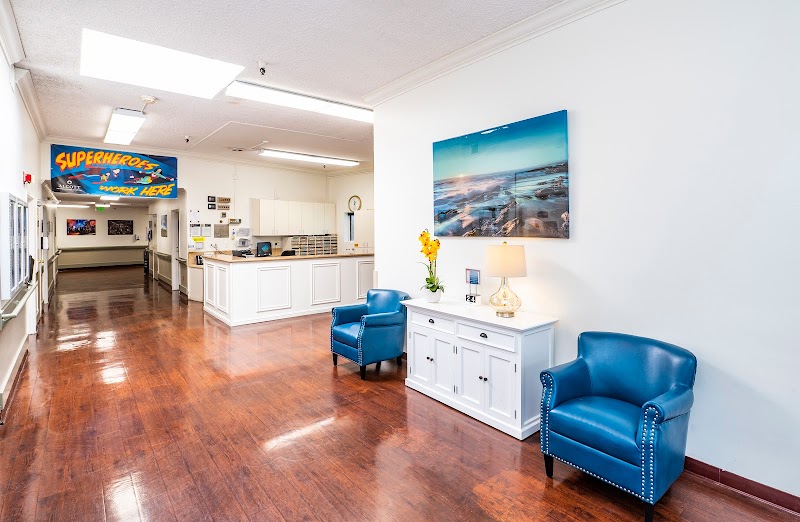
Who Owns and Operates Alcott Rehabilitation Hospital?

ALCOTT REHABILITATION HOSPITAL is owned by a for-profit company. For-profit facilities operate as businesses with obligations to shareholders or private owners. The facility is operated by DAVID & FRANK JOHNSON, a chain that manages multiple nursing homes. With 121 certified beds and approximately 109 residents (about 90% occupancy), it is a mid-sized facility located in LOS ANGELES, California.
How Does Alcott Rehabilitation Hospital Compare to Other California Nursing Homes?

Compared to the 100 nursing homes in California, ALCOTT REHABILITATION HOSPITAL's overall rating (4 stars) is above the state average of 3.2, staff turnover (22%) is significantly lower than the state average of 46%, and health inspection rating (3 stars) is at the national benchmark.

What Should Families Ask When Visiting Alcott Rehabilitation Hospital?

Based on this facility's data, families visiting should ask: "What changes have been made since the serious inspection findings, and how are you preventing similar issues?" "Can I visit during a mealtime to observe dining assistance and food quality?" "How do you handle medical emergencies, and what is your hospital transfer rate?" "Can I speak with family members of current residents about their experience?" These questions are particularly relevant given the facility's Immediate Jeopardy citations.

Is Alcott Rehabilitation Hospital Safe?

Based on CMS inspection data, ALCOTT REHABILITATION HOSPITAL has documented safety concerns. Inspectors have issued 1 Immediate Jeopardy citation (the most serious violation level indicating risk of serious injury or death). The facility has a 4-star overall rating and ranks #1 of 100 nursing homes in California. Families considering this facility should ask detailed questions about what corrective actions have been taken since these incidents.

Do Nurses at Alcott Rehabilitation Hospital Stick Around?

Staff at ALCOTT REHABILITATION HOSPITAL tend to stick around. With a turnover rate of 22%, the facility is 24 percentage points below the California average of 46%. Low turnover is a positive sign. It means caregivers have time to learn each resident's needs, medications, and personal preferences. Consistent staff also notice subtle changes in a resident's condition more quickly. Registered Nurse turnover is also low at 6%, meaning experienced RNs are available to handle complex medical needs.

Was Alcott Rehabilitation Hospital Ever Fined?

ALCOTT REHABILITATION HOSPITAL has been fined $20,279 across 2 penalty actions. This is below the California average of $33,282. While any fine indicates a compliance issue, fines under $50,000 are relatively common and typically reflect isolated problems that were subsequently corrected. Families should ask what specific issues led to these fines and confirm they've been resolved.

Is Alcott Rehabilitation Hospital on Any Federal Watch List?

ALCOTT REHABILITATION HOSPITAL is not on any federal watch list. The most significant is the Special Focus Facility (SFF) program, which identifies the bottom 1% of nursing homes nationally based on persistent, serious quality problems. Not being on this list means the facility has avoided the pattern of deficiencies that triggers enhanced federal oversight. This is a positive indicator, though families should still review the facility's inspection history directly.