ANGELS NURSING HEALTH CENTER

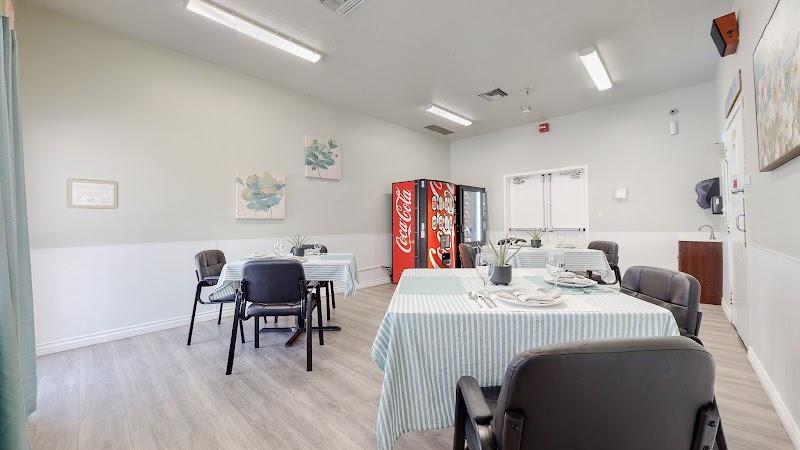
415 S UNION AVENUE, LOS ANGELES, CA 90017 (213) 484-0784
For profit - Limited Liability company 49 Beds Independent Data: November 2025 2 Immediate Jeopardy citations
Trust Grade
41/100
#8 of 1155 in CA
Last Inspection: May 2025

Inspected within the last 6 months. Data reflects current conditions.

Overview

Angels Nursing Health Center has a Trust Grade of D, indicating below-average performance with some concerns. It ranks #8 out of 1,155 facilities in California, placing it in the top half, and #1 out of 369 in Los Angeles County, meaning it is the best local option. The facility is improving, having reduced issues from 20 in 2024 to 10 in 2025. While staffing received a 3-star rating, with a turnover rate of 40%, which is average, the RN coverage is concerning as it is lower than 89% of other California facilities. There have been serious incidents, including a critical failure to provide a resident at risk for aspiration with a necessary pureed diet and inadequate supervision for another resident who suffered a fall resulting in a serious head injury. Overall, while there are strengths in its rankings and care quality measures, the facility has notable weaknesses in staffing and compliance issues that families should consider.

Trust Score
D
41/100
In California
#8/1155
Top 1%
Safety Record
High Risk
Review needed
Inspections
Getting Better
20 → 10 violations
Staff Stability
○ Average
40% turnover. Near California's 48% average. Typical for the industry.
Penalties
✓ Good
$33,885 in fines. Lower than most California facilities. Relatively clean record.
Skilled Nurses
⚠ Watch
Each resident gets only 16 minutes of Registered Nurse (RN) attention daily — below average for California. Fewer RN minutes means fewer trained eyes watching for problems.
Violations
⚠ Watch
42 deficiencies on record. Higher than average. Multiple issues found across inspections.
★★★★★
5.0
Overall Rating
★★★☆☆
3.0
Staff Levels
★★★★★
5.0
Care Quality
★★★★☆
4.0
Inspection Score
Stable
2024: 20 issues
2025: 10 issues

The Good

  • 5-Star Quality Measures · Strong clinical quality outcomes
  • Full Sprinkler Coverage · Fire safety systems throughout facility
  • No fines on record
  • Staff turnover below average (40%)

    8 points below California average of 48%

Facility shows strength in quality measures, fire safety.

The Bad

Staff Turnover: 40%

Near California avg (46%)

Typical for the industry

Federal Fines: $33,885

Above median ($33,413)

Moderate penalties - review what triggered them

The Ugly 42 deficiencies on record

2 life-threatening 2 actual harm
Jun 2025 1 deficiency
CONCERN (E) 📢 Someone Reported This

A family member, employee, or ombudsman was alarmed enough to file a formal complaint

Potential for Harm - no one hurt, but risky conditions existed

Pharmacy Services (Tag F0755)

Could have caused harm · This affected multiple residents

Based on observation, interview, and record review, the facility failed to maintain accountability for 17 Percocet (an opioid pain medication used to relieve severe pain) tablets, schedule II Medicati...

Read full inspector narrative →
Based on observation, interview, and record review, the facility failed to maintain accountability for 17 Percocet (an opioid pain medication used to relieve severe pain) tablets, schedule II Medications (drugs with a high potential for abuse, with use potentially leading to severe psychological or physical dependence) for one of three sampled residents (Resident 1). This failure had the potential to result in a drug diversion (when a medication is taken for use by someone other than whom it is prescribed), opioid abuse (excessive use of a drug in a way that is detrimental to self, society, or both), and accidental overdose (unintentional intake or administration of a substance in doses higher than what is considered safe or recommended) for Resident 1 and or other residents. Findings: During a review of Resident 1 ' s admission Record, the admission Record indicated the facility admitted Resident 1 on 3/18/2025 with diagnoses including muscle weakness and spina bifida (a condition that affects the spine). During a review of Resident 1 ' s History and Physical Examination dated 3/19/2025, the History and Physical Examination indicated Resident 1 had the capacity to understand and make decisions. During a review of Resident 1 ' s Medication Administration Record (MAR) dated for 5/1/2025 to 5/31/2025, the MAR indicated an order for the resident to receive Percocet 10-325 milligrams (mg, a unit of measurement) one tablet by mouth every six hours as needed for severe pain. The MAR indicated the order was discontinued on 5/31/2025 at 3:59 pm. The inventory account indicated 17 Percocet tablets were not administered at the time of discontinuation and were unaccounted for. During a review of the facility ' s pharmacy Manifest form (document that records) dated 5/20/2025 indicated the facility ' s contracted pharmacy delivered 24 tablets of Percocet prescribed for Resident 1 on 5/20/2024. During a review of Resident 1 ' s Skilled Nursing Pharmacy Antibiotic or Controlled Drug Record between 5/20/2025 to 5/28/2025, the Skilled Nursing Pharmacy Antibiotic or Controlled Drug Record indicated the last Percocet administered to Resident 1 was on 5/28/2025 at 6:45pm. During a review of the facility ' s Narcotic Inventory list (a detailed document used to track the movement and management of drugs like opioids) dated 5/1/2025 to 5/31/2025 and 6/1/2025 to 6/4/2025, indicated the list was signed by outgoing (off duty) and incoming (on duty) nurses and did not indicate any discrepancies at each change of shift. The Narcotic Inventory sheet indicated Countable drugs are to be counted at each change of shift. The Last person whose name appears on the inventory sheet is responsible for the drugs. During a review of Resident 1 ' s MAR dated 6/4/2025 indicated seven Percocet 10-325 (medication dose) milligrams (mg-unit of measure) tablets were administered after 5/28/2025 at 18:45pm as follow: · 5/29/2025 at 5:00am and 7:30pm · 5/30/2025 at 2:00am, 8:14am and7:30pm · 5/31/2025 at 2:14am and 11:30 am. During an observation and interview on 6/4/2025 at 8:39 am, with Resident 1 inside Resident 1 ' s room, Resident 1 was awake and was well groomed. Resident 1 stated he (Resident 1) would receive the medications timely, and he (Resident 1) did not have any concerns. During a telephone interview on 6/4/2025 at 8:59am, with Licensed Vocational Nurse (LVN2), LVN 2 stated she (LVN2) carried out (completed) an order issued by Resident 1 ' s physician to discontinue Percocet for Resident1. LVN2 stated she (LVN2) informed LVN 3 (Resident 1 ' s medication nurse) of the discontinued Percocet order and they (LVN2 and LVN3) removed the skilled Nursing Pharmacy controlled drug record sheet wrapped it around the remaining Percocet medication ' s bubble pack (a type of packaging used to organize and dispense medications) and placed it at the back of the Narcotic box inside Med Cart 1. LVN2 indicated she did not carry out an inventory check of the remaining Percocet with LVN3 and was unable to state the number of Percocet medications left in the bubble pack. During a telephone interview on 6/4/2025 at 11:12 am, LVN 3 indicated she (LVN3) began her work shift on 5/31/2025 at 6:45am - 7:00pm and left work at approximately 8:30pm, LVN3 indicated she did not carry out an inventory check of the discontinued Percocet ' s with LVN2, LVN3 indicated the process for handling discontinued medication is to remove the medication from the med Cart, perform an inventory of remaining narcotic and to place the narcotics in a locked cabinet, LVN3 indicated she endorsed the Medication Cart 1 (Med Cart 1, a mobile storage unit used in healthcare settings to hold and transport medications) key to LVN4 at the end of her shift at 7 pm. LVN3 stated she (LVN3) did not remember carrying out an off duty narcotic inventory count with LVN4 on 6/1/2025 at the end of her shift at 7 pm. During a review of Cart 1 ' s Narcotic Inventory sheet dated 5/2025 indicated LVN3 signed off on the Narcotic inventory sheet on 5/31/2025 with on duty LVN4. The Narcotic Inventory sheet indicated there were no discrepancies were reported. During a telephone interview on 6/4/2025 at 11:42am with LVN4, LVN 4 stated she (LVN4) began her work shift on 5/31/2025 7pm to 6/1/2025 7 am, LVN4 stated she (LVN4) carried out a narcotic inventory count with LVN3 at the beginning of her shift on 5/31/2025 at 7pm. LVN4 stated there were no narcotic discrepancies. LVN4 stated she (LVN4) noticed there was a bubble pack of Percocet wrapped in a narcotic count sheet during the narcotic count. LVN4 stated she (LVN4) asked LVN3 about the Percocet tablet. LVN 4 stated LVN3 stated the Percocet medication had been discontinued. LVN4 stated on 6/1/2025 LVN6 arrived late for the 7am-3pm shift. LVN4 stated she (LVN4) left the Med Cart 1 key inside a drawer at the nursing station and clocked out at 7:13 am. LVN4 stated she (LVN4) did not do a narcotic inventory with LVN6. LVN4 stated she (LVN4) left the facility and assumed the incoming desk nurse Registered Nurse (RN1) who was also late for his shift would carry out the narcotic count with LVN6. During a telephone interview on 6/4/2025 at 12:40pm with RN, RN1 stated on 6/1/2025 he (RN1) worked the 7am to 3pm shift. RN1 stated he (RN1) arrived at work between 7:20 and 7:30am. RN1 stated when he (RN1) arrived at the facility LVN6 was on Med Cart 1 passing medications. RN1 stated LVN6 completed her (LVN6) shift and left at the end of her shift at 3 pm. RN1 stated LVN6 did not report any concerns and/or narcotic discrepancies to RN1. During a telephone interview on 6/4/2025 at 12:24pm with LVN6, LVN6 stated she (LVN6) arrived at the facility on 6/1/2024 at 7:07am for her 7am-3pm work shift. LVN6 stated she (LVN6) asked the charge nurses (LVN3 and LVN5) about her work assignment, and they (LVN3 and LVN5) told LVN6 she (LVN6) was assigned to Med Cart 1. LVN6 stated LVN3 had the key to Med Cart 1 and proceeded to carry out a narcotic count with LVN6. LVN 6 stated there were no discrepancies and LVN3 gave LVN6 the Med Cart 1 key after the Narcotic inventory count. LVN6 stated there was no narcotic sheet wrapped with discontinued bubble pack during the Narcotic Inventory count with LVN3. During a follow-up telephone interview on 6/5/2025 at 10:32 am with LVN3, LVN3 stated on the morning of 6/1/2025 she (LVN3) carried out a narcotic count with LVN 6 and handed over Med Cart 1 key to LVN6. LVN3 stated she (LVN3) did not mention to LVN6 that there was a narcotic sheet wrapped with discontinued Percocet bubble pack in the narcotic box. LVN3 stated she (LVN3) did not check if the Narcotic count sheet wrapped in discontinued Percocet Bubble Pack was still in the narcotic box. During an interview on 6/5/2025 at 12:15 pm Director of Nursing (DON), the DON stated a Licensed Nurse (in general) should only hand it (Medication Cart keys) over to another licensed nurse and/or supervisor when going on break or leaving the facility. The DON stated Medication Cart keys should never leave be left in a drawer unattended, because drawers were not secure and were accessible to anyone. The DON stated an unattended med cart key gave unaccounted access to all medications in the Medication Cart including narcotics. The DON stated an unauthorized person with access key could take narcotics lead to diversion, drug abuse and/or drug overdose. During a review of facility Policy and Procedure (P&P) titled Medication Storage in the facility dated 1/2025, the P&P indicated Schedule II-V medications and other medications subject to abuse are stored in a separate area under double lock. Medications nurse on duty maintains possession of the key to controlled medications storage areas. At each shift changed, a physical inventory of all controlled medications, including the emergency supply is conducted by tow licensed nurses and is documented on the controlled medications accountability record. Any discrepancy in controlled substance medication count is reported to the director of nursing immediately. Current controlled medication accountability records are kept at nursing station. When completed, accountability records are kept on file for 1 year at the facility. During a review of facility policy and procedure (P&P) titled Drug Diversion dated 01/2025 indicated, only authorized personnel may have access to controlled substances. The designated staff member(s) will be responsible for maintaining the controlled substance inventory, storage, and disposal. During a review of Licensed Vocational Nurse (LVN) job description, undated, indicated essential LVN responsibilities and job functions as: -Monitoring and removing any discontinued . medications from the medication carts. -Maintaining a current, accurate listing of all resident medications.
May 2025 6 deficiencies
CONCERN (D)

Potential for Harm - no one hurt, but risky conditions existed

Deficiency F0578 (Tag F0578)

Could have caused harm · This affected 1 resident

**NOTE- TERMS IN BRACKETS HAVE BEEN EDITED TO PROTECT CONFIDENTIALITY** c.During a review of Resident 28's admission Record, the admission Record indicated the facility readmitted the resident on 1/8/...

Read full inspector narrative →
**NOTE- TERMS IN BRACKETS HAVE BEEN EDITED TO PROTECT CONFIDENTIALITY** c.During a review of Resident 28's admission Record, the admission Record indicated the facility readmitted the resident on 1/8/2025 with diagnoses that included quadriplegia (paralysis from the neck down, including legs, and arms, usually due to a spinal cord injury), and dementia (a progressive state of decline in mental abilities). During a review of Resident 28's History and Physical (H&P) dated 1/9/2025, the H&P indicated the resident did not have the capacity to make decisions. During a review of Resident 28's ADA dated 1/17/2025, the ADA indicated section 2 was not completed. During a review of Resident 28's MDS dated [DATE], the MDS indicated Resident 28 had the ability to understand others however missed some part/intent of the message but comprehended most of the conversation. During an interview on 5/20/2025 at 12:52 PM with Registered Nurse (RN) 1, RN 1 stated the social worker was supposed to follow up on the advance directives and that sometimes the licensed staff (in general) also would follow up. RN 1 stated the resident would need an advance directive upon admission and a new advance directive if readmitted . RN 1 stated the ADA form was not official if not signed by the resident or their representative. During an interview on 5/20/2025 at 12:53 PM with the SSD, the SSD stated that upon admission the advance directive must be signed, including upon readmission. The SSD stated Resident 28's advance directive was incomplete. During a concurrent interview and record review on 5/20/2025 at 12:55 PM with the SSD, the facility's policy and procedures (P&P) titled, Advance Directives dated 2/9/2024 was reviewed. The SSD stated the P&P indicated the admission staff or designee would obtain a [NAME] of a resident's advance directive.The SSD stated the P&P indicated a copy of the resident's advance directive would be included in the resident's medical record. The P&P indicated upon admission, the admissions staff or designee will provide written information to the residents concerning his or her right to make decisions concerning medical care, including the right to accept or refuse medical or surgical treatment, and the right to formulate advance directives. The SSD stated that the policy indicated the advance directive for Resident 28 should be done on admission and readmission. During an interview on 5/20/2025 at 1 PM with the ADM, the ADM stated that if the ADA form was incomplete, the facility would not know what the resident's wishes were. b.During a review of Resident 26's admission Record indicated the facility admitted the resident on 3/11/2021 with diagnoses that included vascular dementia (reduced blood flow to the brain leading to damage and death of brain cells) and metabolic encephalopathy (a dysfunction that disrupts the body's chemical processes and affect brain function). During a review of Resident 26's History and Physical dated 7/15/2024, the History and Physical indicated Resident 26 could make needs known but could not make medical decisions. During a review of Resident 26's Minimum Data Set (MDS, a resident assessment tool) dated 3/22/2025, the MDS indicated the resident was not oriented to year, month, or day and had poor recall. During an interview on 5/20/2025 at 11:19 AM with the Social Services Director (SSD), the SSD stated Resident 26 did not have an advance directive. The SSD stated Resident 26 did not have family or friends to be a representative. The SSD stated the Interdisciplinary Team (IDT, group of diverse health care professionals from different fields) could make decisions for Resident 26 per their policy. The SSD stated she (SSD) applied for a conservator for Resident 26 dated 5/2/2025. The SSD stated she (SSD) went back and forth with the public guardian department to determine if Resident 26 would be assigned a conservator. The SSD stated she (SSD) applied to the conservatorship due to the IDT team being Resident 26's only decision maker. During an interview on 5/21/2025 at 9:58 with the SSD, the SSD stated if a resident (in general) did not have the capacity to make decisions, the Bioethics Committee, which was made up of the members of the IDT team, could meet and determine Resident 26 was a full treatment and resuscitation. During an interview on 5/21/2025 at 10:28 AM with the Director of Nursing (DON), the DON stated if Resident 26 did not have an advance directive, then the resident would be considered a full code (a patient who chooses to be resuscitated if he or she stops breathing of if the heart stops beating). The DON stated it was difficult for the facility to determine what to do for the resident. The DON stated without an advance directive the facility did not know the wishes of Resident 26. During a review of the facility's policy and procedures (P&P) titled, Advance Directives dated 2/9/2024, the P&P indicated the admission staff or designee will obtain a copy of a resident's advance directive. A copy of the resident's advance directive will be included in the resident's medical record. Upon admission, the admissions staff or designee will provide written information to the residents concerning his or her right to make decisions concerning medical care, including the right to accept or refuse medical or surgical treatment, and the right to formulate advance directives. Based on interview and record review the facility failed to ensure three of nine sampled residents (Resident 18, Resident 26, and Resident 28) had a documented advance directive (written statement of a person's wishes regarding medical treatment, often including a living will, made to ensure those wishes are carried out should the person be unable to communicate them to a doctor). This failure had the potential for the facility not to know the wishes of Resident 18, Resident 26, and Resident 28. Findings: a. During a review of Resident 18's admission Record, the admission Record indicated the facility originally admitted the resident on 4/13/2018 and readmitted him on 7/13/2023 with diagnoses that included metabolic encephalopathy (change in how your brain works due to an underlying condition), dementia (a progressive state of decline in mental abilities) and a history of mental and behavioral disorders (conditions that affect how a person thinks, feels, and behaves). The admission Record indicated Resident 18 had a responsible party (a person who is named in as someone who the facility could reach for questions and to help make decisions for the resident) identified as Family Member 1 (FAM1). During a review of Resident 18's social worker progress note dated 11/9/2023, the social worker progress note indicated Resident 18's FAM1 was the resident's responsible party. During a review of Resident 18's History and Physical (H&P) dated 12/11/2024, the H&P indicated Resident 18 did not have the capacity to understand (ability to understand the meaning of something) and make decisions. During a review of resident 18's Advance Directive Acknowledgement (ADA, a form given to a resident that indicates the resident understands their options for an advanced directive [a legal document indicating resident preference on end-of-life treatment decisions]) dated 12/11/2024, indicated the resident, or their representative did not sign the form. The ADA indicated only the physician signed the form. The ADA indicated the initials on the following sections were blank: -The resident/representative had been given materials about their right to accept or refuse medical treatments. -The resident/representative had been informed of their rights to formulate (create) an advanced directive. -The resident/representative understood they were not required to have an advanced directive in order to receive medical treatment at the facility. -The resident/representative understood the terms of any advanced directive that they have executed (put into place) will be followed by the health care facility and the resident's caregivers to the extent permitted by law. During a review of Resident 18's Minimum Data Set (MDS, a resident assessment tool) dated 2/9/2025, the MDS indicated Resident 18's temporal orientation (ability to tell the year, month, and week) was impaired. The MDS indicated Resident 18 could not answer what day, month or year it was. The MDS indicated Resident 18 could not recall (remember) the words sock, blue, and bed when asked to repeat those words. The MDS indicated Resident 18's memory, orientation, and judgment were severely impaired. During a concurrent interview and record review on 5/20/2025 at 12:52 PM with Registered Nurse 1 (RN 1), Resident 18's ADA dated 12/11/2025 was reviewed. RN 1 stated the facility's social worker was supposed to follow up with the resident/resident representative for advanced directives. RN 1 stated the ADA was not signed by the resident or their representative. RN 1 stated the ADA form was not official if it was not signed by the resident or their representative. During a concurrent interview and record review on 5/20/2025 at 12:55 PM with the Social Services Director (SSD) the facility's policy and procedure (P&P) titled Advanced Directives, dated 2/9/2024 and the ADA dated 12/11/2024 was reviewed. The SSD stated the P&P indicated the facility would obtain (get) a copy of a resident's advanced directive upon admission and place it into the resident's medical record. The SSD stated the P&P indicated if a resident did not have an advanced directive, the facility would provide the resident and/or next of kin (is the closest living relative to someone who would step in if the person is unable to make decisions for themselves) with information about advanced directive upon admission. The SSD stated the ADA is not complete. The SSD stated the facility should have fille out Resident 18 ' s ADA when he was readmitted per the facility's policy. During an interview on 5/20/2025 at 1pm with the facility's Administrator (ADM), the ADM stated if Resident 18 ' s advanced directive was not completed the facility would not know what his end-of-life wishes were.
CONCERN (D)

Potential for Harm - no one hurt, but risky conditions existed

Pressure Ulcer Prevention (Tag F0686)

Could have caused harm · This affected 1 resident

**NOTE- TERMS IN BRACKETS HAVE BEEN EDITED TO PROTECT CONFIDENTIALITY** b. During a review of Resident 28's admission Record, the admission Record indicated the facility readmitted the resident on 1/8...

Read full inspector narrative →
**NOTE- TERMS IN BRACKETS HAVE BEEN EDITED TO PROTECT CONFIDENTIALITY** b. During a review of Resident 28's admission Record, the admission Record indicated the facility readmitted the resident on 1/8/2025 with diagnoses that included contractures (a stiffening/shortening at any joint, that reduces the joint's range of motion) on both knees, both ankles, both hands and right elbow, type 2 diabetes mellitus, quadriplegia and gastrostomy (a surgical opening fitted with a device to allow feedings to be administered directly to the stomach common for people with swallowing problems). During a review of Resident 28's Order Summary Report, the Order Summary Report indicated the resident had a physician order dated 1/9/2025, for the resident to have a LALM for wound care and management. The order indicated for staff to check the LALM placement and function every shift. During a review of Resident 28's care plan titled, The resident has pressure relieving device: LAL mattress, dated 1/21/2025, the care plan indicated to Set device to appropriate setting related to resident ' s weight. During a review of Resident 28's MDS dated [DATE], the MDS indicated Resident 28 had the ability to understand others however Resident 28 missed some part/intent of the message but comprehends most of the conversation. The MDS indicated Resident 28 was dependent on others for going from sitting to lying position, lying to sitting on the side of the bed, and transferring from chair/bed to chair, toilet, and tub/shower. During a review of the facility's vitals for Resident 28 dated 5/2/2025, the vitals indicated Resident 28 weighed 153 lbs. During an observation on 5/19/2025 at 9:30 AM in Resident 28's room, Resident 28's LALM pump located at the food of her bed was observed to be set to 230 lbs. A sticker to the left of the pump indicated the LALM should be set to 150-180 lbs. During an interview on 5/19/2025 at 9:35 AM with the Certified Nurse Assistant (CNA) 1, CNA 1 stated they (CNAs in general) were not allowed to touch the buttons on the LALM pump. During an interview on 5/19/2025 at 9:37 AM with the Infection Control Nurse(IP, nurse who helps prevent and identify the spread of infectious agents like bacteria and viruses in a healthcare environment), the IP stated the LALM must have been disconnected by the maintenance personnel (unidentified) while on break because before going on break, the bed was at the correct setting. During an interview on 5/19/2025 at 9:41 AM with the IP, the IP stated the LALM was used to prevent sores on the buttocks, elbows, and other body parts with bony prominences. The IP stated if the LALM was not within the proper range, it could not achieve their goal. The IP stated the LALM was set to 230 lbs., and it should have been lower since Resident 28 weighed 153 lbs. The IP stated the bed could be too hard for Resident 28, which could cause pressure sores. During an interview on 5/19/2025 at 9:45 AM with the Maintenance Director (MD), the MD stated the LALM was never unplugged because he (MD) was working on finding a solution for the feeding machines cords to reach the outlet. During an interview on 5/20/2025 at 8:59 AM with the TX, the TX stated the LALM should be set based on the resident's weight. The TX stated the LALM settings were evaluated daily to ensure it was functioning properly and to ensure the LALM had the correct setting. During an interview on 5/20/2025 at 9:08 AM with the TX, the TX stated she (TX) was not sure what the facility's LALM policy and stated the licensed nurses (in general) set the pump setting based on the resident ' s weight and make sure that it was working properly. The TX stated if there were any issues with the LALM the facility would call the manufacturer. During an interview on 5/20/2025 at 9:25 AM with the Director of Nursing (DON), the DON stated that if the LALM is too hard, it could cause a wound ulcer, slow wound healing or make a wound ulcer worse. During a review of the LALM manufacturer guidelines titled, Proactive medical products Operation Manual for Proteckt® Aire 6000, dated 10/25/2023, the manufacturer guidelines indicated the LALM was selected by patients weight guide listed on the panel providing pressure change options. The manufacturer guideline indicted users can adjust the air mattress to a desired firmness according to the patient ' s weight and comfort. Based on observation, interview, and record review, the facility failed to maintain the appropriate Low Air Loss Mattress (LALM, a pressure-relieving mattress used to prevent and treat pressure injuries [localized damage to the skin and/or underlying soft tissue usually over a bony prominence or related to a medical or other device]) settings for two of six sampled residents (Resident 6 and Resident 28). This failure had the potential to place Resident 6 and Resident 28 at risk for discomfort and worsening of wounds and pressure ulcers/injuries Findings: a. During a review of Resident 6's admission Record, the admission Record indicated the facility readmitted the resident on 2/28/2025 with diagnoses that included right buttock (butt) pressure ulcer stage 4 (Full-thickness skin and tissue loss with exposed muscle, tendon, ligament, cartilage, or bone), left hip pressure ulcer stage 3 (a deep wound that has broken through all layers of the skin and into the fat tissue underneath, but not yet to the muscle, bone, or tendon), type 2 diabetes mellitus (DM, a disorder characterized by difficulty in blood sugar control and poor wound healing), and quadriplegia (paralysis from the neck down, including legs, and arms, usually due to a spinal cord injury). During a review of Resident 6's Order Summary Report, the Order Summary Report indicated the resident had a physician order dated 2/28/2025, for the resident to have a LALM for skin management. The Order Summary Report indicated for staff to check the LALM placement and function every shift. During a review of Resident 6's Minimum Data Set (MDS, a resident assessment tool) dated 3/5/2025, the MDS indicated Resident 6 had the ability to understand others and had the ability to make herself understood. The MDS indicated Resident 6 was dependent on others for toileting (going to the bathroom), dressing, putting on/taking off footwear, showering, rolling left and right, going from sitting to lying position, and transferring from chair to chair. During an review of the facility's SBAR (a simple communication tool, often used in healthcare, that breaks down a message into four key parts: Situation, Background, Assessment, and Recommendation) Communication dated 3/19/2025, the SBAR Communication indicated Resident 6's right ischium (one of the three bones that make up each hip bone, forming the lower and back part) stage 4 pressure ulcer depth had increased in size. Previous measurements: 1.5 x 1.4 x 3.9 (the length, width, and depth of a wound/ulcer measured in inches). Most recent measurements: 1.4 x 1.2 x 6.9). During a review of Resident 6's care plan titled, the resident has pressure relieving device: LAL mattress, dated 3/28/2025, the care plan indicated to set device to appropriate setting related to residents' weight. During a review of the facility's vitals (group of measurements) record for Resident 6 dated 5/2/2025, the vitals record indicated Resident 6 weighed 135 pounds (lbs.). During an observation on 5/20/2025 at 8:35 AM in Resident 6's room, Resident 6's LALM pump located at the foot of her bed was observed to be set to 230 lbs. A sticker to the left of the pump indicated the LALM should be set to 130 lbs. During an interview on 5/20/2025 at 8:59 AM with the treatment nurse (TX), the TX stated Resident 6's LALM should be set based on Resident 6's weight. TX stated she (TX) evaluated Resident 6's LALM settings daily to ensure it was functioning properly and to ensure the LALM had the correct setting. The TX nurse stated she (TX) did not know what Resident 6's LALM was set to and would need to go to Resident 6's room to check. During an interview on 5/20/2025 at 9:06 AM with the TX, the TX stated Resident 6's LALM was set to 180 and stated Resident 6 weight 135 lbs. The TX stated Resident 6's LALM should have been set to 130. The TX stated she (TX) was not sure what the facility's LALM policy stated and stated the licensed nurses (in general) were responsible to check the LALM function and settings. The TX stated if there were any issues with the LALM the facility would call the manufacturer.
CONCERN (D)

Potential for Harm - no one hurt, but risky conditions existed

Pharmacy Services (Tag F0755)

Could have caused harm · This affected 1 resident

Based on observation, interview, and record review, the facility failed to inform two of three sampled residents (Resident 24 and Resident 250) of the medications that were administered to them during...

Read full inspector narrative →
Based on observation, interview, and record review, the facility failed to inform two of three sampled residents (Resident 24 and Resident 250) of the medications that were administered to them during medication pass, as per facility's policy and procedure (P&P), titled Medication Administration - General Guidelines, dated 10/2017 and nurses' education document, titled Principles of Medication Administration, dated 2/5/2025. This deficient practice failed to provide information about medications to Resident 24 and Resident 250 before administering them. Findings: a. During a review of Resident 24's admission Record (a document containing demographic and diagnostic information), dated 5/21/2025, the admission Record indicated the facility originally admitted Resident on 2/26/2021 and readmitted the resident on 3/2/2021 with diagnoses including, but not limited to, hypertensive (high blood pressure) heart disease without heart failure (a heart disorder which causes the heart to not pump the blood efficiently, sometimes resulting in leg swelling), other iron deficiency (low level of iron) anemias, hyperlipidemia (a medical condition with high level of lipids [fatty compounds] in the blood), Type 2 Diabetes Mellitus (DM - a disorder characterized by difficulty in blood sugar control and poor wound healing) with hyperglycemia (high blood glucose level), paranoid Schizophrenia (a mental illness that is characterized by disturbances in thought), schizoaffective disorder (a mental illness that can affect thoughts, mood, and behavior), bipolar (sometimes called manic-depressive disorder; mood swings that range from the lows of depression to elevated periods of emotional highs type) and anxiety disorder. During a review of Resident 24's Minimum Data Set (MDS, a resident assessment tool) dated 3/9/2025, the MDS indicated Resident 24 had severely impaired cognition (mental action or process of acquiring knowledge and understanding through thought and senses). The MDS indicated Resident 24 needed setup or clean-up assistance from the facility staff for performing activities of daily living (ADLs, routine tasks/activities such as bathing, dressing and toileting a person performs daily to care for themselves) such as eating, oral hygiene, toileting and upper body dressing, and supervision level assistance for showering, lower body dressing, putting on/taking off footwear and personal hygiene. During a concurrent observation and interview on 5/20/2025 at 8:55 AM with Licensed Vocational Nurse1 (LVN 1) in Resident 24's room, LVN 1 checked Resident 24's blood pressure. LVN 1 stated Resident 24's blood pressure reading was systolic blood pressure (SBP, the pressure caused by heart while contracting) of 122 millimeters of mercury (mmHg, a measurement of pressure) and diastolic blood pressure (DBP the pressure in the arteries when the heart rests between beats) of 70 mmHg, and heart rate was 74 beats per minute. During a concurrent observation and interview on 5/20/2025 at 8:55 AM, LVN 1 did not identify medications by their name and/or explain their purpose and indications to Resident 24 before he (Resident 24) took his medications. LVN 1 prepared and administered the following nine medications to Resident 24: 1. One tablet of benztropine (a medication used to treat extrapyramidal symptoms [movement disorders caused by use of antipsychotics]) 2 milligrams (mg, a unit of measurement for mass). 2. One tablet of docusate sodium (a medication used to treat constipation) 100 mg. 3. One capsule of fish oil (a medication used to treat high level of lipids) 1000 mg. 4. One capsule of hydrochlorothiazide (a medication used to treat high blood pressure) 12.5 mg. 5. One-half tablet of metoprolol succinate (a medication used to treat high blood pressure) extended release (ER) 25 mg (dose of 12.5 mg). 6. One tablet of multivitamin. 7. One tablet of risperidone (a medication used to treat schizoaffective disorder) 3 mg. 8. One tablet of vitamin C (a vitamin used to treat low level of vitamin C) 500 mg. 9. One tablet of vitamin D3 (a vitamin used to treat low level of vitamin D) 25 micrograms (mcg - a unit of measurement for mass). During a medication reconciliation (a process of comparing medications) review on 5/20/2025 at 11:13 AM, Resident 24's Order Summary Report (a document containing a summary of all active physician orders), dated 5/21/2025 was reviewed. The Order Summary Report indicated but not limited to the following physician orders: 1. Benztropine mesylate tablet 2 mg give one tablet by mouth two times a day for extrapyramidal and movement disorder, order date 2/26/2021, start date 02/26/2021. 2. Docusate sodium oral tablet 100 mg, give one tablet by mouth one time a day for bowel management, hold for loose stools, order date 1/6/2024, start date 1/7/2024 3. Fish oil 1000 mg soft gel, give 1000 mg by mouth one time a day for supplement, order date 5/19/2025, start date 5/20/2025 4. Hydrochlorothiazide capsule 12.5 mg, give one capsule by mouth one time a day related to hypertensive heart disease without heart failure, hold if SBP is less than 110 or pulse rate less than 60, order date 9/1/2022, start date 9/2/2022. 5. Metoprolol succinate ER oral tablet, give 12.5 mg by mouth one time a day related to hypertensive heart disease without heart failure, hold if SBP <110 or pulse rate <55, order date 1/10/2024, start date 1/11/2024. 6. Multivitamins tablet, give 1 tablet by mouth one time a day for supplement, order date 2/26/2021, start date 2/27/2021. 7. Risperidone tablet 3 mg, give one tablet by mouth two times a day for paranoia that people are out to hurt him related to paranoid schizophrenia, order date 2/26/2021, start date 2/26/2021. 8. Vitamin C tablet 500 mg, give one tablet by mouth two times a day for supplement, order date 2/26/2021, start date 2/26/2021. 9. Vitamin D3 tablet 25 mcg, give 1 tablet by mouth one time a day for supplement, order date 2/26/2021, start date 2/27/2021. b. During a review of Resident 250's admission Record, the admission Record indicated the facility admitted Resident 250 on 5/1/2025 with diagnoses including unilateral primary osteoarthritis (inflammation and pain in joints) right knee, polyneuropathy (nerve pain), essential primary hypertension and other abnormalities of gait and mobility. During a review of Resident 250's History and Physical, dated 5/3/2025, the History and Physical indicated Resident 250 had the capacity to understand and make decisions. During a concurrent observation and interview on 5/20/2025 at 9:38 AM with LVN 1 in Resident 250's room, LVN 1 checked Resident 250's blood pressure. LVN 1 stated Resident 250's blood pressure reading was SBP of 138 mmHg and DBP of 76 mmHg, and heart rate was 82 beats per minute. During a concurrent observation on 5/20/2025 at 9:38 AM LVN 1 did not identify medications by their name and/or explain their purpose and indications to Resident 250 before he took his medications. LVN 1 prepared and administered the following 13 medications to Resident 250: 1. One tablet of amlodipine (a medication used to treat high blood pressure) 10 mg. 2. One capsule of celecoxib (a medication used to manage osteoarthritis) 200 mg. 3. One capsule of docusate sodium 100 mg. 4. One tablet of ferrous sulfate (a medication used to treat low level of iron) 325 mg. 5. One capsule of fish oil 1000 mg. 6. One tablet of folic acid (a vitamin used to treat low level of B vitamin) 1 mg. 7. One tablet of metoprolol tartrate 100 mg. 8. One tablet of multivitamin with minerals. 9. One capsule of tamsulosin (a medication used to treat benign prostatic hyperplasia ([BPH] a medical condition for prostate) 0.4 mg. 10. One tablet of lisinopril (a medication used to treat high blood pressure) 40 mg. 11. One tablet of vitamin C 500 mg. 12. One tablet of vitamin D3 125 mcg (5000 international units ([IU] a measurement for dose). 13. 30 mg of enoxaparin (a medication used to prevent blood clots) sodium injection 30 mg per 0.3 milliliters ([mL] a unit of measurement for volume) injected subcutaneously (under the skin). During a medication reconciliation review on 5/20/2025 at 11:13 AM, Resident 250's order summary report, dated 5/21/2025 was reviewed. The Order Summary Report indicated the following physician orders: 1. Amlodipine besylate oral tablet 10 mg, give 1 tablet by mouth one time a day for HTN hold for SBP <110, order date 5/1/2025, start date 5/2/2025. 2. Celecoxib oral capsule 200 mg, give 1 capsule by mouth two times a day for swelling/pain for right knee arthroplasty, order date 5/1/2025, start date 5/1/2025. 3. Docusate sodium soft gel, give 100 mg by mouth two times a day for bowel management prophylaxis, order date 05/19/2025, start date 5/19/2025. 4. Enoxaparin sodium injection solution prefilled syringe 30 mg/0.3 mL, inject 30 mg subcutaneously two times a day for deep venous thrombosis (DVT, a medical condition with blood clot in extremities like legs, which can lead to stroke [loss of blood flow to a part of the brain]) alternate site, order date 5/1/2025, start date 5/1/2025. 5. Ferrous sulfate tablet 325 (65 Fe [iron]), give 1 tablet by mouth two times a day for supplement, order date 05/09/2025, start date 5/10/2025. 6. Fish oil 1000 mg soft gel, give 1000 mg by mouth one time a day for supplement, order date 5/19/2025, start date 5/20/2025. 7. Folic acid 1 mg, give 1 tablet by mouth one time a day for supplement, order date 5/5/2025, start date 5/6/2025. 8. Lisinopril oral tablet 40 mg, give 1 tablet by mouth one time a day for HTN hold for SBP<110, order date 5/1/2025, start date 5/2/2025. 9. Metoprolol tartrate oral tablet, give 1 tablet by mouth two times a day for HTN hold for SBP <110 and HR <60, order date 5/1/2025, start date 5/2/2025. 10. Multivitamin-minerals oral tablet, give 1 tablet by mouth one time a day for supplement, order date 05/15/2025, start date 5/16/2025. 11. Tamsulosin hydrochloride (HCl) oral capsule 0.4 mg, give 1 capsule by mouth one time a day for BPH, order date 05/01/2025, start date 5/2/2025. 12. Vitamin C oral tablet 500 mg, give 1 tablet by mouth one time a day for supplement, order date 05/15/2025, start date 5/16/2025. 13. Vitamin D3 tablet 125 mcg (5000 IU), give 1 tablet by mouth one time a day for supplement, order date 5/5/2025, start date 5/6/2025. During an interview on 5/20/2025 at 12:49 PM with LVN 1, LVN 1 stated while administering medications to Resident 24 and Resident 250, she (LVN1) would explain to the residents if they were receiving blood pressure medications. LVN 1 stated the facility's policy usually stated to explain if residents were getting new medications. LVN 1 stated since she had been giving medications for a long time and residents were familiar with the medications it was not necessary to explain those medications. During an interview on 05/21/2025 at 12:22 PM with the Director of Nursing (DON), the DON stated the facility nurses (in general) should have identified the name of medications, their indication and possible side effects to the residents during medication administration. The DON stated the nurse should have explained the medications (for example, risperidone), to the residents who were alert and oriented. The DON stated it was important to receive consent from residents before administering medications. The DON stated the facility staff were instructed to explain medications to residents during a recent in-service (education) conducted at the facility. The DON stated it would be a part of ensuring resident rights policy that all residents Especially who are alert and oriented were informed of the medications being administered to them. During a review of the facility's nurses' education document titled, Principles of Medication Administration, dated 2/5/2025, the document indicated, Administration Phase: involves diligent clinical judgement, decision making and full understanding of medication(s) and their side effects. Explain each procedure to the resident before performing them. During a review of the facility's P&P titled, Medication Administration - General Guidelines, dated 10/2017, the P&P indicated, Medications are administered as prescribed in accordance with good nursing principles and practices and only by persons legally authorized to do so. During a review of the facility's policy and procedure (P&P) titled, Resident Rights, dated 02/09/2024, the P&P indicated, All residents have a right to a dignified existence and communication with and access to persons and services inside and outside the facility including those specified in this policy.
CONCERN (D)

Potential for Harm - no one hurt, but risky conditions existed

Garbage Disposal (Tag F0814)

Could have caused harm · This affected 1 resident

Based on observation, interview, and record review, the facility failed to ensure the trash stored in the dumpster area was maintained in a sanitary manner. On 5/20/2025 at 10:30AM one of the two gar...

Read full inspector narrative →
Based on observation, interview, and record review, the facility failed to ensure the trash stored in the dumpster area was maintained in a sanitary manner. On 5/20/2025 at 10:30AM one of the two garbage dumpsters was overfilled with trash bags and uncovered. This failure had the potential for harborage and feeding of pests. Findings: During a concurrent observation and interview with the Dietary Supervisor (DS) and the Maintenance Supervisor (MS) on 5/20/2025 at 10:30AM, one large dumpster outside of the kitchen back door was not covered. The dumpster was overfilled with trash bags and not covered.There was another large trash dumpster that was behind gates and not accessible to staff. During a concurrent interview on 5/20/2025 at 10:30AM with the DS and the MS, the DS stated trash should be covered so flies did not accumulate around the trash areas. During the same interview on 5/20/2025 at 10:30AM with the MS, The MS stated trash was picked up three times a week. The MS stated the large dumpster that was behind the gate was empty and it should be accessible to staff to throw away trash instead of overfilling one dumpster with lid open. The MS stated all trash lids should be covered to prevent from attracting flies and pests in the facility. During a review of the facility's policy titled, Garbage and Trash (dated 2023) the policy indicated, Garbage and trashcans must be inspected daily that no debris is on the ground or surrounding area, and that the lids are closed. A review of Food and Drug Administration (FDA) Food Code 2022, code number 5-501.113 titled Covering receptacles, indicated: receptacles and waste handling units for refuse, recyclables, and returnable shall be kept covered with tight-fitting lids or doors if kept outside the establishment. The Food Code also indicated under code number 5-501.110 titled Storing Refuse, Recyclables, and Returnable indicated refuse, recyclables, and returnable shall be stored in receptacles or waste handling units so that they are inaccessible to insects and rodents.
CONCERN (E)

Potential for Harm - no one hurt, but risky conditions existed

Menu Adequacy (Tag F0803)

Could have caused harm · This affected multiple residents

Based on observation, interview, and record review, the facility failed to ensure the standardized recipes for lunch menu were followed on 5/20/2025 when: 1.Fortified Diets (Diet enriched to increase ...

Read full inspector narrative →
Based on observation, interview, and record review, the facility failed to ensure the standardized recipes for lunch menu were followed on 5/20/2025 when: 1.Fortified Diets (Diet enriched to increase caloric content of the foods commonly consumed by the resident. The amount of calorie increase should be 300-400 per day) were not prepared and were not served to seven residents who were on a fortified diet. 2.The facility failed to ensure cooks followed the spreadsheet (food portions and serving guide) 14 residents on regular diet did not receive the seasoned peas (vegetable dish) on their plate per menu and residents who were on the renal diet (a diet intended for residents with decreased kidney function. This diet regulates the dietary intake of sodium, potassium, and protein to lighten the work of the diseased kidney.) received the three-bean salad instead of wheat roll with margarine per menu. These failures had the potential to result in meal dissatisfaction, decreased nutritional intake, and weight loss. Findings: During the tray line observation on 5/20/2025 at 11:45AM, residents who were on a fortified diet, Dietary Aide (DA1) did not communicate the fortified diet orders written on the meal tickets during tray line service for lunch. A review of resident's tray or meal tickets that were placed on the carts indicated the orders for fortified diets. DA1 did not read out loud the fortified diet and Cook1 who was serving the food did not add any additional food items per fortified menu. During a concurrent observation and interview with Cook1 and DA1 on 5/20/2025 at 12:45PM regarding diet fortification process, Cook1 stated when there was a fortified diet, melted butter or margarine was added to the vegetables. [NAME] 1 stated he did not hear any fortified diet and did fortify the meal. DA1 stated he forgot to read the fortified diet orders, forgot to read resident food likes and dislikes and the different diets such as renal or carbohydrate control (diet for residents with high blood sugar). DA1 stated this resulted in some residents being served food they (residents) did not like and not serving the ordered additional calories for the residents who were on a fortified diet. DA1 stated this could result in residents being unhappy with the food and weight loss. 2.According to the facility lunch menu for the regular diet on 5/20/2025, the following items would be served on the regular diet: Roast turkey 3 ounces (oz.-unit of measure); cranberry ginger citrus sauce; bread dressing 1/3 cup; seasoned peas ½ cup; three bean salad ½ cup; vanilla mousse chocolate chip garnish 1/3 cup; milk. Renal Diet: Roast Turkey with cranberry ginger citrus sauce; bread dressing 1/3 cup; seasoned peas ½ cup; Wheat Roll and margarine; applesauce for dessert ½ cup; beverage. During an observation of tray line service for lunch on 5/20/2025 at 11:45AM, residents who were on regular diet did not receive the seasoned peas and the residents who were on renal diet received the three-bean salad instead of the wheat roll and margarine. During a concurrent observation and interview on 5/20/2025 at 11:45AM with cook 1 and DA1, Cook1 stated the menu for 5/20/2025 was roast turkey with bread dressing. Residents on mechanical soft (food is chopped into smaller pieces and served soft) receive seasoned peas and the resident on a regular diet received the three-bean salad instead of the peas. During the same interview on 5/20/2025 at 11:45AM with DA1, DA1 stated he was not familiar with the menu and did not know if residents on regular diet should receive the seasoned peas along with the three-bean salad. DA1 stated every tray received the three-bean salad including the residents on renal diet. During a concurrent review of the spreadsheet and interview with Cook1 on 5/20/2025 at 12:45PM, Cook1 stated the residents on regular diet should receive the seasoned peas for their vegetable choice and they did not. Cook1 stated the residents on renal diet should have received the whole wheat roll with margarine and not the three bean salad. [NAME] 1 stated he did not review the spreadsheet and made mistakes during serving lunch. Cook1 stated residents on a regular diet received less food. During an interview on 5/202/2025 at 12:45PM with the DS and District manager (DM), the DS stated there were multiple mistakes during lunch service. The DS stated the residents on renal diet should have received the whole wheat bread with margarine instead of three bean salad. The DS stated the Renal diet should not have beans. The DS stated the plate looked empty for the resident (unidentified) on the regular diet who did not receive vegetables. During the same interview on 5/202/2025 at 12:45PM with the DM, the DM stated cooks (in general) should always review and follow the menu. The DM stated the staff (in general) should read all the notes and orders that were on the resident's meal ticket. During a dining observation in the residents dining room adjacent to the kitchen on 5/20/2025 at 1:15PM residents on a regular diet, their plate consisted of two items the roast turkey and bread dressing no vegetables. During a review of the facility's policy titled Menu (revised 10/2022) the policy indicated, Menus will be served as written, unless a substation is provided in response to preference, unavailability of an item. .
CONCERN (E)

Potential for Harm - no one hurt, but risky conditions existed

Food Safety (Tag F0812)

Could have caused harm · This affected multiple residents

Based on observation, interview and record review, the facility failed to ensure safe and sanitary food and preparation practices in the kitchen by failing to: 1. Ensure Dietary Staff Dietary Aide1 (D...

Read full inspector narrative →
Based on observation, interview and record review, the facility failed to ensure safe and sanitary food and preparation practices in the kitchen by failing to: 1. Ensure Dietary Staff Dietary Aide1 (DA1) washed his hands after changing gloves and when removing the clean and sanitized dishes from the dish machine when working in the kitchen. 2. Ensure to maintain a clean kitchen when the floor and shelving in the dry storage area were dirty, one package of dried pasta was open. The Coffee machine glass gauge pipe was stained with dark brown color residue. Resident dishes were not clean and had dried white and yellow stains on them. These failures had the potential to result in harmful bacteria growth and cross contamination (transfer of harmful bacteria from one place to another) that could lead to foodborne illness in 35 out of 36 residents who received food from the facility. Findings: 1.During an observation in the dishwashing area on 5/20/2025 at 9:45AM, DA1 was rinsing soiled dishes and loading the dirty dishes in the dish machine. DA1 had gloves on, and after the dish machine stopped DA1 removed soiled gloves and proceeded to remove the clean and sanitized dishes from the dish machine without washing hands. During a concurrent observation and interview with DA1 on 5/20/2025 at 9:55AM, DA1 stated he (DA1)did not wash his hands after removing gloves and before touching the clean dishes. DA1 stated he (DA1) needed to go to the handwashing sink to wash then return to pick up the clean dishes. DA1 stated that not washing hands could contaminate clean dishes. During a concurrent interview on 5/20/2025 at 9:55AM, with dietary supervisor (DS), the DS stated two staff members (unidentified) worked in the dishwashing area. The DS stated one staff member was responsible for dirty dishes and the other would remove the clean and sanitized dishes to avoid cross contamination. The DS stated the second staff was late assisting the dishwasher in removing the clean dishes. During a review of the facility's policy titled, Food: Preparation (Revised 2/2023), the policy indicated, All staff will practice proper hand washing techniques and glove use. During a review of the facility's policy titled, Ware washing (revised 2/2023), the policy indicated, All dishware, service ware, and utensils will be cleaned and sanitized after each use, all dishes will be air dried and properly stored. During a review of the 2022 U.S. Food and Drug Administration Food Code, Code 2-301.14 titled When to wash. The Code indicated, Food employees shall clean their hands and exposed portions of their arms as specified under § 2-301.12 immediately before engaging in food preparation including working with exposed food, clean equipment and utensils, and unwrapped single-service and single-use articles and E) After handling soiled equipment or utensils. 2. During an observation in the kitchen on 5/20/2025 at 10 AM, observed the coffee maker machine had glass gauge pipe in front of the machine. The pipes were half filled with coffee and there were dark brown stains inside the pipe. During a concurrent interview on 5/20/2025 at 10 AM with the DS, the DS stated the coffee machine was cleaned every week and the glass gauge/pipes should be cleaned with a special thin pipe brush. The DS looked at the coffee machine and stated the glass pipe was dirty. The DS did not find the special thin brush that was used to clean the glass pipe. The DS stated the stained and dirty coffee maker could contaminate the coffee and change the quality of the coffee. During an interview on 5/20/2025 at 10:05AM with Cook2 (Cook2), Cook2 stated he had never seen the brush and he had not tried to clean the coffee machine glass gauge/pipes. Cook2 stated he did not know how to access the inside of the coffee machine glass gauge for cleaning. During a review of the facility's policy titled, Equipment (revised 9/2017) the policy indicated, All equipment will be routinely cleaned and maintained in accordance with manufacture's direction and training materials. All staff members will be properly trained in the cleaning and maintenance of all equipment. During a review of facility's daily cleaning schedule log, the schedule indicated cleaning the coffee container, coffee pots and machine once a week and did not indicate cleaning the gauge and pipe. During an observation in the dry storage area on 5/20/2025 at 10:10AM, the floor behind the shelf was dirty with food particles, there was one bag of pasta with a date of 5/16/2025 stored on the shelf and the bag was open not sealed. During a concurrent observation and interview 5/20/2025 at 10:10AM, with the DS, the DS stated the dry storage room is cleaned and the floors are swept every day. The DS stated all items in the dry storage area should be labeled and packages sealed to prevent contaminants from going inside the food. The DS stated the pasta in the open bag would be discarded because it had been open and exposed to the environment. The DS looked under the shelf and stated there were food debris on the floor.The DS stated the floor behind the shelves had not been swept. The DS stated it was important to keep the floors and the food area clean to prevent attracting pests and harborage of pests. During a review of facility's policy titled Food Storage: Dry Goods (revised 2/2023) the policy indicated, All packaged and canned food items will be kept clean, dry and properly sealed. Storage areas will be neat, arranged for easy identification, and date marked as appropriate. During an observation of the tray line service for lunch (a system of food preparation, in which trays move along an assembly line) on 5/20/2025, at 11:30AM, observed three serving plates were dirty with dried white and yellow food stains on them. During a concurrent interview on 5/20/2025, at 11:30AM, with Cook1, Cook1 stated he did not notice the dirt on the plates while waiting for service. Cook1 stated food should not be served on dirty plates. Plates were expected to be cleaned and sanitized. During an interview on 5/20/2025 at 11:35AM with the DS, the DS stated the plates were not clean and there was dried food debris stuck on them. The DS stated dishes should be scrubbed, rinsed and then loaded in the dish machine. The DS removed the dishes and instructed DA1 to rewash and scrub before loading in the dishwashing machine. The DS stated dirty dishes could contaminate food served on the plates. During a review of the 2002 U.S. Food and Drug Administration Food Code, code 3-304.11 titled Food Contact with Equipment and Utensils code indicated, Food shall only contact surfaces of: (A) Equipment and utensils that are cleaned and sanitized .Pathogens can be transferred to food from utensils that have been stored on surfaces which have not been cleaned and sanitized.
Apr 2025 1 deficiency
CONCERN (D) 📢 Someone Reported This

A family member, employee, or ombudsman was alarmed enough to file a formal complaint

Potential for Harm - no one hurt, but risky conditions existed

Accident Prevention (Tag F0689)

Could have caused harm · This affected 1 resident

**NOTE- TERMS IN BRACKETS HAVE BEEN EDITED TO PROTECT CONFIDENTIALITY** Based on interview and record review the facility failed to investigate and determine how a resident got out of the facility for...

Read full inspector narrative →
**NOTE- TERMS IN BRACKETS HAVE BEEN EDITED TO PROTECT CONFIDENTIALITY** Based on interview and record review the facility failed to investigate and determine how a resident got out of the facility for one of three sampled residents (Resident 1). For Resident 1, who was found in the facility ' s parking lot on 4/13/25, the facility failed to determine how Resident 1 left her room unattended and was found in the facility ' s parking lot. This deficient practice had the potential for Resident 1 to leave the facility unattended again and potentially be exposed to danger. Findings: During a review of the admission Record indicated the facility initially admitted Resident 1 on 2/25/14 and readmitted on [DATE] with diagnoses including schizophrenia (a mental illness that is characterized by disturbances in thought) and anxiety disorder. During a review of Resident 1 ' s Minimum Data Set (MDS, a resident screening tool) dated 1/22/25 indicated Resident 1 had moderately impaired cognitive skills. Resident 1 needed supervision with shower/bathe self, set-up or clean-up assistance with oral hygiene/toileting hygiene, upper/lower body dressing, putting on/taking off footwear, personal hygiene and independent with eating. During a review of Resident 1 ' s Elopement Risk assessment dated [DATE] at 3:43 p.m., indicated Resident 1 had intermittent confusion, ambulatory and was at risk for elopement. During an interview on 4/24/25 at 9:04 a.m., guard 1 stated Resident 1 was found in the parking lot on 4/13/25. Guard 1 stated the facility ' s location is not in a very good neighborhood. Guard 1 stated Resident 1 can be exposed to danger when Resident 1 leaves the facility unattended. During a telephone interview, on 4/24/25 at 10:08 a.m., guard 2 stated he saw Resident 1 standing in the parking lot adjacent to the facility. Guard 2 stated he does not know how Resident 1 got to the parking lot but thinks that Resident 1 may have exited from the window of Resident 1 ' s room. Guard 2 stated he escorted Resident 1 back inside the facility. During a telephone interview on 4/24/25 at 10:30 a.m., licensed vocational nurse (LVN) 1 stated Resident 1 was found in the parking lot on 4/13/25. LVN 1 stated she does not know how long Resident 1 was in the parking lot. LVN 1 stated guard 2 found Resident 1 in the parking lot and escorted Resident 1 back inside the building. LVN 1 stated she did not document because Resident 1 was found in the facility property. LVN1 stated it is important to monitor Resident 1 ' s whereabouts because Resident 1 was a wanderer and to ensure Resident 1 is safe. During an interview on 4/24/25 at 11 a.m., the director of nursing (DON) stated LVN 1 notified the DON that Resident 1 was found in the parking lot. DON stated he does not know how Resident 1 left her room and was found in the parking lot. DON agreed there was no documentation of the incident. During an interview on 4/24/25 at 12:36 p.m., the administrator (ADM) stated the facility did not investigate how Resident 1 left her room and was found in the facility parking lot. ADM stated there was no red flag because Resident 1 was found within the facility property. During a review of the facility's policy and procedures (P&P) titled Safety and Supervision of Residents revised on 7/24, the P&P indicated our facility strives to make the environment as free from accident hazards as possible. Resident safety and supervision, and assistance to prevent accidents are facility-wide priorities. The same Policy indicated our individualized, resident-centered approach to safety addresses safety and accident hazards for individual residents. The interdisciplinary team shall analyze information obtained from assessments and observations to identify any specific accident hazards or risks for individual residents. The care team shall target interventions to reduce individual risks related to hazards in the environment including adequate supervision and assistive devices.
Mar 2025 1 deficiency
CONCERN (D) 📢 Someone Reported This

A family member, employee, or ombudsman was alarmed enough to file a formal complaint

Potential for Harm - no one hurt, but risky conditions existed

Free from Abuse/Neglect (Tag F0600)

Could have caused harm · This affected 1 resident

**NOTE- TERMS IN BRACKETS HAVE BEEN EDITED TO PROTECT CONFIDENTIALITY** Based on observation, interview, and record review the facility failed to provide protection from physical abuse for one out of ...

Read full inspector narrative →
**NOTE- TERMS IN BRACKETS HAVE BEEN EDITED TO PROTECT CONFIDENTIALITY** Based on observation, interview, and record review the facility failed to provide protection from physical abuse for one out of three sampled residents (Resident 2), by failing to: 1. To follow facility policy and procedures (P&P) titled Behavior-Management, dated 2/9/2024, and document Resident 1's specific identified aggressive behaviors. Resident 1 had aggressive behaviors 17 out of 28 days in February 2025, the type of aggressive behaviors was not documented. 2. Update care plan and interventions to address increase in aggression and behavioral changes quarterly and with changes in condition (COCs) and after identified aggressive behaviors as per facility P&P titled Behavior-Management dated 2/9/2024, and P&P titled Care Planning dated 2/9/2024. As a result on 2/25/2025, Resident 1 hit Resident 2 on the chest, after Resident 2 refused to give Resident 1 money. This deficient practice had the potential for Resident 2 to feel unprotected and suffer physical and/or psychosocial harm (any situation or factor that can negatively impact someone's mental health, well-being, or emotional state). Findings: During a review of Resident 1's admission record, the admission record indicated the facility originally admitted the resident on 8/17/2021 and readmitted the resident on 7/22/2024, with the diagnoses of schizophrenia (a mental illness that is characterized by disturbances in thought), generalized anxiety disorder (you are worrying constantly and can't control it), and bipolar disorder (sometimes called manic-depressive disorder; mood swings that range from the lows of depression to elevated periods of emotional highs). During a review of Resident 1's Minimum Data Set (MDS - a resident assessment tool) dated 2/22/2025, the MDS indicated Resident 1 had the ability to make himself understood and had the ability to understand others. The MDS indicated Resident 1 hallucinated (when you experience something seeing, hearing, smelling, tasting, or feeling something that isn't there, but your mind believes it is real). During a review of Resident 1's history and physical (H&P) dated 7/23/2024, the H&P indicated Resident 5 was anxious, had a labile affect (someone experiences unpredictable and rapid shifts in their emotions, often seeming out of proportion to the situation), and had paranoid/persecutory delusions (fixed, false beliefs that someone is being harmed, harassed, or conspired against, despite proof or information that shows something is not true). The H&P indicated Resident 1 had a history of aggression, insomnia (trouble falling asleep or staying asleep), inadequate attention/concentration (having trouble focusing on tasks, easily getting distracted, and struggling to maintain your focus for any length of time), with impaired judgement (when someone struggles to make good decisions or understand the consequences of their actions, potentially leading to risky or inappropriate behavior) and impaired insight (when someone struggles to understand or recognize that they have a mental health problem or that their behavior is abnormal, even when it's obvious to others). The H&P indicated diagnoses of bipolar disorder and psychosis (a severe mental condition in which thought, and emotions are so affected that contact is lost with reality). The H&P indicated Resident 1 did not have the capacity to understand and make decisions. During a review of Resident 1's psychiatric progress note dated 12/5/2025, the psychiatric progress note indicated Resident 1 had intermittent (something that happens on and off) auditory (relating to or involving the sense of hearing) hallucinations, partially impaired (difficulty controlling) impulse control, insight, and judgement. The psychiatric progress note indicated Resident 1 was a high risk for decompensation (a person starts to experience a worsening of their symptoms and struggles to cope) if Resident 1's medication was lowered or discontinued. During a review of Resident 1's facility's situation, background, assessment and recommendation (SBAR) report dated 2/25/2025, the SBAR indicated Resident 2 was in his wheelchair at the doorway of the room he shared with Resident 1. The SBAR indicated Resident 1 approached Resident 2 and indicated Resident 1 told Resident 2 he was not going to let him fuck with him. The report indicated Resident 2 got up and Resident 1 hit him on the left side of his chest. The SBAR indicated Resident 1's physician ordered the facility to transfer Resident 1 to the hospital for behavior evaluation. During a review of Resident 1's physician Order Summary Report (OSR) dated 3/3/2025, the OSR indicated the facility was to give Resident 1 Haloperidol (a medication used to treat nervous, emotional, and mental conditions like schizophrenia) 5 milligrams (mg- metric unit of measurement, used for medication dosage and/or amount) three times a day for schizophrenia and to monitor Resident 1 for aggressive and confrontational (behaving in an angry or unfriendly way that is likely to cause an argument) behavior toward staff. During a review of Resident 1's care plan titled, The resident has altered (changed or modified in some way) behavior problems and schizophrenia, dated 7/23/2025, the care plan indicated the staff were to focus on Resident 1's aggressive and confrontational behavior towards staff, the resident's repetitive health concerns, hearing voices, talking to self, and poor impulse control (struggling to resist urges or acting without thinking about the consequences, often leading to actions that are harmful). The care plan goal was for Resident 1 to have a decrease in aggressive behaviors. The care plan interventions included giving Resident 1 Lurasidone (used to treat symptoms of mental disorders, such as schizophrenia) 40 mg, Haloperidol 5 mg, Ativan (a medication to treat anxiety) 0.5 mg, and Depakote Delayed Release Tablet (treat manic [abnormally elevated or irritable mood, increased energy and activity, and potentially impulsive or risky behaviors] episodes (something that happens) related to bipolar disorder in adults) 500 mg. The care plan indicated the interventions (specific care and services facility staff need to provide a resident to promote healing and prevent a worsening of a condition) were last updated 7/23/2024 During a review of Resident 1's care plan titled, the resident is on antipsychotic medication (a class of drugs used to treat symptoms of psychosis like hallucinations and delusions, primarily in conditions like schizophrenia and bipolar disorder) for episodes of delusions dated 7/2/23/2025, the care plan indicated a goal for Resident 1 to limit his aggressive behavior to zero to one episode of aggressive and confrontational behavior toward staff a day or zero to one episode a week. The care plan interventions included encouraging Resident 1 to be involved in activities, for staff to listen to Resident 1 and address concerns, for staff to refocus Resident 1's inappropriate behavior (offensive behavior), and to monitor the side effects of antipsychotic medication. The care plan also indicated the staff would monitor Resident 1's behavior and summarize it monthly for the physician to evaluate. The care plan indicated the interventions were last updated 7/23/2024. During a review of Resident 1's Medication Administration Record (MAR), date the month of February 2025, the MAR indicated Resident 1 initially had an order for Haloperidol 5 mg by mouth twice a day then Resident 1's physician increased the Haloperidol to 5 mg three times a day on 2/25/2025. The MAR indicated the facility documented Resident 1 had aggressive behavior toward staff as follows: Day shift Resident 1 had one instance of aggressive behavior on 2/1/2025, 2/2/2025, 2/4/2025, 2/5/2025, 2/11/2025, 2/12/2025, 2/13/2025, 2/14/2025, 2/15/2025, 2/17/2025, 2/20/2021, 2/21/2025, 2/22/2025, 2/23/2025, 2/24/2025, and 2/28/2025. Evening shift Resident 1 had one instance of aggressive behavior on 2/1/2025, 2/3/2025, 2/4/2025, 2/13/2025, 2/14/2025, 2/15/2025, 2/19/2025, 2/20/2025, 2/21/2025, 2/27/2025, and 2/28/2025. Night shift Resident 1 had one instance of aggressive behavior on 2/3/2025, 2/4/2025, 2/13/2025, 2/19/2025, 2/20/2025, 2/25/ 2025, 2/26/2025, and 2/27/2025. During a concurrent observation and interview on 3/3/2025 at 12:32 PM with Resident 1 in Resident 1's room, Resident 1 was observed to be irritable (easily annoyed, frustrated, or angered, and may react with a short temper or quick impatience). Resident 1 stated he was arguing with Resident 2 when Resident 2 got up from his wheelchair and Resident 1 thought Resident 2 was going to hit him. Resident 2 stated he then hit Resident 1. During a review of Resident 2's admission record, the admission record indicated Resident 2 was admitted to the facility on [DATE] with the diagnoses of multiple rib fractures (broken bones) on the left side, pneumonia (an infection of the lungs), history of falls, and unspecified fracture of the lumbar vertebra (a break or crack in one of the bones in your lower back). During a review of Resident 2's MDS dated [DATE], the MDS indicated Resident 2 had the ability to make himself understood and had the ability to understand others. The MDS indicated Resident 2 did not have any behavior issues. The MDS indicated Resident 2 used a walker and a wheelchair. During a review of Resident 2's H&P dated 11/8/2024, the H&P indicated Resident 2 had the capacity to understand and make decisions. The H&P indicated Resident 2 had rib fractures and a history of falls. During a review of Resident 2's care plan titled, resident to resident altercation, dated 2/25/2025 indicated the goal of the care plan was for Resident 2 to feel safe. The care plan interventions included anticipating Resident 2's needs, getting a psychiatric consultation (evaluation), intervening (to become involved in a situation to try and change it, often to help or improve it, or to stop something from happening) to protect resident rights and safety, and monitoring/modifying (changing) behaviors. During a review of Resident 2's SBAR dated 2/25/2025, the SBAR indicated Resident 2 was sitting in his wheelchair at the doorway in the room he shared with Resident 1. The SBAR indicated Resident 1 approached Resident 2 and stated, you want to fuck with me but I'm not going to let you. The SBAR indicated Resident 2 stood up and Resident 1 raised his hand and struck Resident 2 on the left side of his chest. The SBAR indicated Resident 2 lost his balance and sat on the trash can behind him. The SBAR indicated the RN supervisor placed herself between the residents. The SBAR indicated both residents were moved to different rooms. The SBAR indicated Resident 2's physician was notified, and an order was received for a psychiatric evaluation. During a review of Resident 2's psychiatric evaluation dated 2/25/2025, the psychiatric evaluation indicated Resident 1 had an altercation with another resident. The psychiatric evaluation indicated Resident 2 was frequently approached by a resident (Resident 1) asking Resident 2 for money and when the resident said no, the other resident (Resident 1) became angry. The psychiatric evaluation indicated Resident 2 had no previous psychiatric history. During a concurrent observation interview on 3/3/2025 at 12:23 PM with Resident 2 in front of Resident 2's room, Resident 2 stated Resident 1 asked him for money for soda and Resident 2 refused to give Resident 1 money. Resident 2 stated Resident 1 left and then came back and stated Resident 1 was upset so Resident 2 stool up from his seat and was immediately hit in the chest by Resident 1. Resident 2 stated he did not sustain any injuries. An observation of Resident 2's chest did not show and bruising, redness, or visual signs or injury. During a review of the facility's Follow-Up Investigation Report dated 3/2/2025, the report indicated Registered Nurse Supervisor 1 (RNS 1) witness Resident 1 struck Resident 2 in the chest causing Resident 2 to lose his balance and then sat himself on the trash can behind him. The report indicated Resident 2 usually gave Resident 1 a dollar when Resident 1 asked him for money. The report indicated on 2/25/2025 Resident 1 asked Resident 2 for money but Resident 2 refused and Resident 1 became upset. The report indicated Resident 2 was moved to a different room. The report indicated the facility transferred Resident 1 to the hospital for psychiatric evaluation and treatment. During an interview on 3/3/2025 at 12:47 PM with the Director of Rehabilitation (DR), the DR stated she saw Resident 1 on the day of the incident (2/25/2025), come out of his room and was upset and rambling (talking in a way that is long-winded, confused, and often wanders off the main topic). She stated Resident 1 went back to the room Resident 1 and Resident 2 shared. She stated she saw Resident 2 stand up and saw Resident 1 take a swing at Resident 2. During an interview on 3/3/2025 at 3:42 PM with the Director of Nursing (DON), the DON stated the facility staff had been documenting Resident 1's behavior on the MAR, Resident 1's Haloperidol was increased from 5 mg twice a day to 5 mg three times a day on 2/26/25, the day after Resident 1 hit Resident 2. The DON stated the facility did not call the doctor right away because the facility would report it to the doctor at the end of the month. The DON stated Resident 1's behavior was normal for the resident. During an interview on 3/4/2025 at 8:21 AM with Licensed Vocational Nurse 2 (LVN 2), LVN 2 stated if a resident had been aggressive, the facility staff should have called the resident's physician about the behavior. LVN 2 stated the doctor usually reviewed the resident's medication at the end of the month. LVN 2 stated the facility updated a resident's care plan monthly, quarterly (every 3 months), and for a change in condition. LVN 2 stated Resident 1's care plan was not revised until Resident 1 hit Resident 2. LVN 2 stated if the care plan was not updated or revised, the staff would not be able to tell if the care plan interventions were effective or if the care plan was still appropriate for the resident. LVN 2 stated the facility's care plan for Resident 1 was not effective in managing his behavior. During a concurrent interview and record review on 3/4/2025 at 8:36 AM with the DON, Resident 1's care plan titled The resident is on anti-psychotic medication for episodes of delusions aeb verbalization of chest pain and needing to go to the hospital, hearing voices & talking to self-related, confrontational and verbally aggressive to staff related to schizophrenia with an intervention indicating The resident will manifested behavior will be limited to 0-1 episodes per day 0-1 times a week dated 7/23/2024, was reviewed. The DON reviewed Resident 1's MAR for February 2025 indicating Resident 1 had multiple episodes of being aggressive with staff. The DON stated the facility should have been updating Resident 1's care plans every 3 months and for a change in condition. The DON stated the facility staff had not been documenting Resident's care plan interventions and it would be difficulty for the facility staff to assess the effectiveness of the interventions if the staff did not document them. During an interview on 3/4/2025 at 10:16 A M with Resident 1's PGC, the PGC stated Resident 1 had enough funds for soda and the facility should have been directing Resident 1 to the facility's social worker or other staff when he approached other residents for money. During a review of the facility's P&P titled Abuse Prevention and Prohibition Program dated 2/9/2024, the P&P indicated each resident has the right to be free from abuse, neglect, mistreatment, and/or misappropriation of property (to take possession of something that belongs to someone else without the right to do so). The P&P indicated the facility would train staff regarding appropriate interventions to deal with aggressive and/or catastrophic reactions (an over-the-top, sudden, and often disruptive emotional or behavioral outburst that someone experiences when feeling overwhelmed or unable to cope with a situation, even if it seems minor to others) of residents. The P&P indicated residents identified by staff as being self-injurious or exhibiting abusive behavior that requires professional services not provided in the Facility (e.g., mental health services), will be reviewed by the IDT (Interdisciplinary Team is a group of professionals with different skills and backgrounds who work together to provide comprehensive care for a patient, focusing on the patient's needs and goals) and/or physician. The P&P indicated Resident assessments (a process by which nursing home staff identifies your health care needs, daily schedules and habits, and likes and dislikes) and care planning are performed to monitor resident needs and address behaviors that may lead to conflict (serious disagreement and argument about something). During a review of the facility's P&P titled Care Planning dated 2/9/2024, the P&P indicated the care plan purpose was to ensure that a comprehensive person-centered (prioritizing the individual's needs, preferences, and values in all aspects of care, support, and treatment, ensuring a holistic and personalized experience) Care Plan is developed for each resident based on their individual assessed (evaluated) needs. The P&P indicated 'the Baseline (starting point) Care Plan will be updated to reflect changes in the resident's condition or needs occurring prior to the development of the Comprehensive Care Plan (a detailed roadmap outlining all aspects of a patient's care, including medical, nursing, and other health-related activities, to ensure their needs are met). The P&P indicated The Comprehensive Care Plan must be completed within 7 days after completion of the Comprehensive admission Assessment (a thorough examination of a patient's health history, physical condition, and psychosocial factors, conducted upon admission to gain a complete understanding of their needs), and must be periodically (from time to time) reviewed and revised (something has been changed or updated) by a team of qualified persons after each assessment, including the comprehensive and quarterly (something that happens or is done every three months, or four times a year) review assessments. During a review of the facility P&P titled Behavior-Management, dated 2/9/2024, the P&P indicated the purpose of the P&P was to ensure facility staff performs an appropriate assessment of the resident's behavioral symptoms and implement (to put a plan, idea, or policy into action) appropriate interventions before and after the resident begins taking psychotherapeutic (medicines used to treat mental health conditions) medications. The P&P indicated When a resident exhibits (shows) adverse behavioral symptom (yelling, hitting, resisting care, etc.), Licensed Nursing Staff will document the behaviors in the medical record, noting the time the behavior(s) occur, antecedent events (something that happens before a behavior or action, and can potentially trigger or influence it), possible causal (causes) factors and interventions attempted. The P&P indicated when the resident exhibits behaviors, the Licensed Nurse will document the resident's medical record and include the following as indicated: i. Any precipitating factors (triggers or events that directly lead to or worsen a problem, illness, or behavior) ii. Interventions used to redirect behavior iii. The resident's response to the intervention iv. Notification of Attending Physician (a medical doctor who is responsible for the overall care of a patient) and responsible party (the person who is financially responsible for paying the patient's medical bills, often the patient themselves, but sometimes a parent, guardian, or other designated individual) as indicated. v. Update the plan of care as indicated.
Feb 2025 1 deficiency
CONCERN (E) 📢 Someone Reported This

A family member, employee, or ombudsman was alarmed enough to file a formal complaint

Potential for Harm - no one hurt, but risky conditions existed

Safe Transfer (Tag F0626)

Could have caused harm · This affected multiple residents

**NOTE- TERMS IN BRACKETS HAVE BEEN EDITED TO PROTECT CONFIDENTIALITY** Based on interview and record review, the facility failed to readmit one of three sampled residents (Resident 1) on 2/13/2025 to...

Read full inspector narrative →
**NOTE- TERMS IN BRACKETS HAVE BEEN EDITED TO PROTECT CONFIDENTIALITY** Based on interview and record review, the facility failed to readmit one of three sampled residents (Resident 1) on 2/13/2025 to the facility after hospitalization to a General Acute Care Hospital (GACH), as indicated in the facility's policy titled Readmission. As a result, Resident 1 remained in the GACH with discharge orders written on 2/12/2025 to return to the facility. Denying the resident the right to return to their home in the facility and placing Resident 1 at risk for psychosocial harm. Findings: During a review of Resident 1's admission Records dated 2/26/2025, the resident was initially admitted to the facility on [DATE] and readmitted on [DATE] with diagnoses including quadriplegia (paralysis below the neck that affects all a person's limbs), type two diabetes (A long-term condition in which the body has trouble controlling blood sugar and using it for energy). During a review of Resident 1 ' s Minimum Data Set (MDS- a resident assessment tool), dated 12/11/2024 the MDS indicted Resident 1 had intact cognitive skills (mental action or process of acquiring knowledge and understanding) to make daily decisions on self-care activities. The MDS indicated the resident was dependent on staff for position changes such as sitting to lying, lying to sitting on side of bed, sit to stand, chair/bed-to-chair transfer. During a review of Resident 1 ' s History and physical (H&P) dated 6/6/2024, the H&P indicated Resident 1 had a cervical 3 to cervical 5 spinal injury, functional quadriplegic (paralysis below the neck that affects all a person's limbs), type two diabetes (A long-term condition in which the body has trouble controlling blood sugar and using it for energy). The H&P indicated resident has the capacity to understand and make decisions. During a review of Resident 1 ' s General Acute Care Hospital (GACH) Patient Orders dated 2/12/2025 indicated, Resident 1 was to be discharged from GACH back to the Skilled Nursing Facility (SNF) on 2/12/2025. During a revie of Resident 1 ' s GACH Patient Orders dated 2/12/2025 indicated, Discharge to NF (Nursing Facility) today, continue IV (Intravenous) Vancomycin (an antibiotics medication used to treat and prevent various bacterial infections) 1250 milligram IVPB (Intravenous Piggy Bag) daily times 2 more weeks, and Ceftriaxone (an antibiotics medication used to treat bacterial infections in many different parts of the body) 2 milligram IVPB daily times one more week. During a review of the facility census ' from 2/12/2025 to 2/18/2025, the census ' indicated the following: 2/11/2025 total census 48, one female bed open. New female resident admitted on [DATE] into room with the bed hold. 2/12/2025 total census 47, no female bed open. 2/13/2025 total census 48, one female bed open. 2/14/2025 total census 47, one female bed open. 2/15/2025 total census 47, one female bed open. 2/16/2025 total census 48, one female bed open. 2/17/2025 total census 47, one female bed open. 2/18/2025 total census 49. One open female bed given to a different bed hold resident returning from GACH. During an interview on 2/20/2025 at 10:48 AM with facility case manager (CM), the CM stated, CM had communicated with GACH case manager on 2/12/2025 and received an email indicating the resident was ready to be discharged back to the facility. During a telephone interview on 2/20/2025 at 11:00 AM with GACH Discharge Coordinator (DC), the DC stated, Resident 1 had a discharge plan since 1/23/2025. The DC stated the facility had denied readmission on [DATE] because the resident was on three intravenous (IV: medication administered directing into a vein) antibiotics and the facility would not provide a Registered Nurse (RN) 24/7. The DC stated on 2/12/2025 the facility was informed the resident ' s IV antibiotics had been reduced from three to just one IV antibiotic. The facility CM informed the DC the facility did not have a female bed available. During an interview on 2/20/2025 at 11:15 AM with the Director of Nursing (DON), the DON confirmed having been informed by the GACH DC the resident was ready for discharge on [DATE] and the facility informed the DC the resident could not be readmitted with three IV antibiotics because the facility would only staff one RN 8 hours per day. The DON stated from 2/12/2025 to the date of interview (2/20/2025) there was one female bed available, but the bed was on hold for a resident who was expected to come back within the bed hold time frame. The DON could not produce documentation of a discharge order from the GACH for the resident the facility was holding the bed for. During a review of the facility ' s Policy and Procedure (P&P) titled Readmission, implemented on 2/9/2024, the P&P indicated An individual is a readmit if he or she was readmitted to the Facility form a hospital to which he/she was transferred for the purpose of receiving care or was discharged to a lower-level care and directly returned to the facility. A resident who exercised his/her bed hold rights prior to transfer from the Facility is not considered readmitted if the resident returns within the bed hold period. When a bed hold is not exercised or expires will be permitted to return to their previous room, if available or the next available bed in a semi-private room, assuming the resident still requires services offered by the facility.
Dec 2024 1 deficiency
CONCERN (D) 📢 Someone Reported This

A family member, employee, or ombudsman was alarmed enough to file a formal complaint

Potential for Harm - no one hurt, but risky conditions existed

Deficiency F0657 (Tag F0657)

Could have caused harm · This affected 1 resident

**NOTE- TERMS IN BRACKETS HAVE BEEN EDITED TO PROTECT CONFIDENTIALITY** Based on interview and record review, the facility failed to revise a bipolar (sometimes called manic-depressive disorder; mood ...

Read full inspector narrative →
**NOTE- TERMS IN BRACKETS HAVE BEEN EDITED TO PROTECT CONFIDENTIALITY** Based on interview and record review, the facility failed to revise a bipolar (sometimes called manic-depressive disorder; mood swings that range from the lows of depression to elevated periods of emotional highs) care plan on a quarterly basis for one of three sampled residents (Resident 1). This deficient practice had the potential to negatively affect the provision of care and services for Resident 1. Findings: A review of the admission Record indicated Resident 1 was admitted to the facility on [DATE] and readmitted on [DATE], with diagnoses including bipolar disorder, anxiety (feelings of worry), and schizophrenia (a mental illness that is characterized by disturbances in thought). A review of Resident 1 ' s Minimum Data Set (MDS - a federally mandated resident assessment tool) dated 10/22/2024, indicated Resident 1 had moderate cognitive impairment (difficulty with complex tasks and occasional confusion) but was able to make her needs known. The MDS further indicated Resident 1 had delusions (false belief) and was taking antipsychotic medication. A review of the altered behavior pattern care plan for Resident 1, revised 5/25/2024, indicated Resident 1 had altered behavior related to bipolar disorder with a goal to reduce the episodes of behaviors. The care plan interventions included to approach the resident in a calm and friendly manner and to administer lithium carbonate (a medication that is used to treat bipolar disorder) as ordered. During an interview with the Director of Nursing (DON) on 12/17/2024 at 1:30 PM, the DON stated that resident care plans should be updated when there was a change of condition, quarterly, and as needed. The DON further stated it was important to have an updated plan of care for a resident so that the interventions and goals were appropriate. A review of the facility ' s policy and procedure titled, Care Planning, dated 2/9/2024, indicated the comprehensive care plan must be periodically reviewed and revised by a team of qualified persons after each assessment, including the quarterly review assessments.
Aug 2024 1 deficiency
CONCERN (D) 📢 Someone Reported This

A family member, employee, or ombudsman was alarmed enough to file a formal complaint

Potential for Harm - no one hurt, but risky conditions existed

Infection Control (Tag F0880)

Could have caused harm · This affected 1 resident

Based on interview, and record review the facility failed to implement policies and procures to prevent and control the transmission of COVID-19 (coronavirus disease 2019 is an infectious disease caus...

Read full inspector narrative →
Based on interview, and record review the facility failed to implement policies and procures to prevent and control the transmission of COVID-19 (coronavirus disease 2019 is an infectious disease caused by virus that can result in different symptoms from mild to severe respiratory illnesses and it spread during close contact and through the air from person to person) infection. By failing to ensure Licensed Vocational Nurse 3 (LVN 3) immediately left the facility upon testing positive for COVID-19. LVN 3 tested positive on 7/27/2024 at 7 PM and continued to work until 8 PM, charting and preparing medications for approximately 20 residents. This deficient practices had the potential to transmit infectious disease microorganisms and increase the risk of infection to all 43 residents and staff. Findings: A review of the facility ' s Nursing Staffing Assignment and Sign-In Sheet dated 7/27/2024, indicated LVN 3 was assigned to work on 7/27/2024 from 4pm to 12am and was assigned medication administration. During an interview on 7/31/2024 at 9:34 AM, the Infection Preventionist (IP) stated on 7/27/2024, LVN 3 tested positive while at work in the facility. The IP stated LVN 3 stayed for a period in the facility to assist the registered nurse supervisor, who was to take over for LVN 3, by preparing medications for LVN 3 ' s assigned residents (approximately 20). The IP stated the current guidelines in place were for positive staff to go home, isolate for 5 days and return to work once symptoms were improving and had a negative test. The IP stated the guidelines were in place to ensure the safety of the facility ' s residents. The IP stated the spread of COVID in the facility could have been stopped if positive staff was removed from the facility. During an interview on 7/31/2024 at 12:14 PM, Resident 2 stated he has COVID-19. Resident 2 stated he had COVID-19 and was moved to this room when he tested positive. During a phone interview on 8/1/2024 at 9:32 AM, Licensed Vocational Nurse 3 (LVN 3) stated around 7 PM on 7/27/2024 while working the 3-11 PM shift at the facility she started feeling symptoms of COVID-19 that included headache and a runny nose. LVN 3 stated she tested positive at the facility then stayed at the nurse ' s station for about an hour to complete her charting and prepared the resident ' s medications (approximately 20) for the registered nurse supervisor to give. LVN 3 stated it was the facility ' s policy for staff to go home once testing positive. LVN 3 also stated staff had leave the facility due to residents being at high risk for becoming infected with COVID-19 and it was a very serious condition. During a phone interview on 8/1/2024 at 10:08 AM, the facility ' s Public Health Nurse (PHN) stated once a staff member tested positive, they were required to leave the facility because they were no longer able to work. During an interview on 8/1/2024 at 10:36 AM, the Director of Staff Development (DSD) stated LVN 3 tested positive on 7/27/24 while working at the facility. The DSD stated once the LVN 3 tested positive she should have left facility immediately. The DSD repeated LVN 3 she should not have stayed in the facility after testing positive. The DSD stated LVN 3 exposed the residents receiving the medication LVN 3 prepared to COVID-19. During an interview on 8/1/2024 at 3:01 PM, the Director of Nursing (DON) stated if staff who have tested positive for COVID-19 were not allowed to work. The DON stated positive staff were required to stay away from the facility for 5 days. The DON stated contact tracing should have been initiated right away to find out patient zero (first COVID-10 positive) and to know if it was staff, a visitor, or a resident. The DON stated not conducting contact tracing right away could lead to further spread of COVID in the building. A review of the facility ' s policy and procedures (P&P) titled, Infection Prevention and Control Program dated February 9, 2024, indicated The Facility must establish an Infection Prevention and Control Program under which it- A. Identifies, investigates, controls, and prevents infections in the Facility; B. Decides what procedures, such as isolation, should be applied to an individual resident; and C. Maintains a record of incidents and corrective actions related to infections. During an interview on 8/1/2024 at 8:53 AM, the IP stated the facility used their COVID-19 Mitigation plan as the facility ' s policy because the current policy and procedures were being reviewed and revised to meet current guidelines.
Jul 2024 4 deficiencies
CONCERN (D) 📢 Someone Reported This

A family member, employee, or ombudsman was alarmed enough to file a formal complaint

Potential for Harm - no one hurt, but risky conditions existed

Comprehensive Care Plan (Tag F0656)

Could have caused harm · This affected 1 resident

**NOTE- TERMS IN BRACKETS HAVE BEEN EDITED TO PROTECT CONFIDENTIALITY** Based on interview and record review, the facility failed to implement a comprehensive care plan that meets the care/services ba...

Read full inspector narrative →
**NOTE- TERMS IN BRACKETS HAVE BEEN EDITED TO PROTECT CONFIDENTIALITY** Based on interview and record review, the facility failed to implement a comprehensive care plan that meets the care/services based on the resident's individual assessed needs for one of five sampled residents (Resident 1 [R1]) by failing to ensure that a comprehensive CP was implemented for R1 risk for elopement (leaving the facility unsupervised and without staff knowledge). This deficient practice had the potential to result negative impact on residents' health and safety, as well as the quality of care and services received. Cross Reference F689 Findings: A review of R1's admission Record indicated R1 was originally admitted to the facility 8/17/2021 and was readmitted on [DATE] with diagnoses including chronic obstructive pulmonary disease (COPD - a group of lung diseases that block airflow and make it difficult to breathe), metabolic encephalopathy (a disease in which the functioning of the brain is affected by some agent or condition-such as viral infection or toxins in the blood), and schizophrenia (a disorder that affects a person's ability to think, feel, and behave clearly). A review of R1's History and Physical dated 10/18/2023, indicated R1 does not have the capacity to understand and make decisions. A review of the Minimum Data Set (MDS - a standardized comprehensive assessment and care screening tool), dated 5/30/2024, indicated R1's cognitive (mental action or process of acquiring knowledge and understanding) skills for daily decision-making were moderately impaired and required assistance from staff with walking and R1 does not use a wheelchair. A review of R1's Wandering & Elopement Risk Assessment, dated 10/18/2023 indicated, R1 is a moderate actual risk with recent observable evidence of wandering that involves wandering that is not easily ended or diverted. The Wandering & Elopement Risk Assessment on 10/18/2023 also indicated, R1 had a history of elopement and being a wanderer. A review of R1's Care Plan for episodes of elopement and aggressive behavior, initiated on 10/17/2023 and revised on 7/23/2024 indicated, an intervention including to investigate reports, and assess level of mental status of the resident. A review of R1's Care Plan for Actual Episode of Wandering and subsequent transgression or unplanned exits of facility's safety precaution and injury prevention policy by successful attempt of elopement, initiated on 10/17/2023 indicated a goal of, be free of injury or unplanned exits. A review of R1's Care Plan for risk for fall-related to constant pacing, poor safety awareness, initiated on 7/23/2024 indicated an intervention including to monitor whereabouts every hour. A review of the Resident 1's Situation Background Assessment Recommendation (SBAR - a written or verbal communication tool used to provide essential and concise information, usually during crucial situations) dated 7/17/2024, the SBAR indicated, at 8:20 p.m., patient (R1) complained of chest pain, insisted to be transfer to the hospital . at 8:30 p.m., called 911 (a phone number used to contact the emergency services) for assistance . at 8:40 p.m., Paramedics (a healthcare professional trained in the medical model, whose main role has historically been to respond to emergency calls for medical help outside of a hospital) came, report given . at 8:50 p.m., R1 left the facility via 911 to GACH 1. During an interview with Licensed Vocational Nurse 2 (LVN 2) on 7/31/2024 at 12:48 p.m., LVN 2 stated, that on 7/17/2024, R1 was observed walking out of the facility through the front gate. LVN 2 stated, R1 wanted to leave the facility and go to the hospital for medications. LVN 2 stated, she did not document in R1's Progress Notes about what happened on 7/17/2024 with R1 and she did not call and notify R1's MD regarding the incident with R1. During an interview with Treatment Nurse 1 (TXN 1) on 7/31/2024 at 1:08 p.m., TXN 1 stated, she saw R1 walking out of the facility on 7/17/2024. TXN 1 stated, she tried to stop and convince R1 from leaving the facility but R1 got aggressive, so she ended up walking with him (R1) on the street alongside him. TXN 1 stated, she did not document this incident in R1's Progress Notes. TXN 1 stated, she did not call R1's MD regarding this incident as well. During an interview with Director of Nursing (DON) on 7/31/2023 at 1:59 p.m., DON stated, on 7/17/2024, R1 attempted to elope and left the facility. The DON stated, R1 was verbally aggressive, walked few blocks from the facility and did not want to come back when staff tried to talk to him. The DON stated, R1 got tired and complained of chest pain after walking and staff called 911. The DON stated, this incident should have been documented in the progress notes with an Interdisciplinary Team (IDT - a group of dedicated healthcare professionals who work to bring knowledge together to help residents receive the care they need) meeting initiated after the incident. DON further stated, R1's CP regarding risk of elopement should have been implemented. A review of facility's policy and procedures (P&P) titled, Elopement, date implemented 2/9/2024, indicated, the licensed nurse most familiar with the incident will document in the resident's medical record how the elopement occurred. The facility will make necessary reports to state agencies in compliance with policy. When an individual who departed without following proper procedures returns to the facility, the DON or licensed nurse should examine the resident for any possible injuries; notify the attending physician' and notify the resident's responsible party . The IDT with input from the licensed nurse, will conduct a thorough review of the elopement, document its findings in the IDT notes, and update the Care Plan to prevent a recurrence. A review of the facility's P&P titled, Care Planning, date implemented 2/9/2024 indicated, to ensure that a comprehensive person-centered care plan is developed for each resident based on their individual assessed needs.
CONCERN (D) 📢 Someone Reported This

A family member, employee, or ombudsman was alarmed enough to file a formal complaint

Potential for Harm - no one hurt, but risky conditions existed

Accident Prevention (Tag F0689)

Could have caused harm · This affected 1 resident

**NOTE- TERMS IN BRACKETS HAVE BEEN EDITED TO PROTECT CONFIDENTIALITY** Based on interview, and record review, the facility failed to ensure one of five sampled residents (Resident 1 [R1]) was properl...

Read full inspector narrative →
**NOTE- TERMS IN BRACKETS HAVE BEEN EDITED TO PROTECT CONFIDENTIALITY** Based on interview, and record review, the facility failed to ensure one of five sampled residents (Resident 1 [R1]) was properly supervised to prevent elopement (leaving the facility unsupervised and without staff knowledge) by failing to: 1. Implement the facility's policy and procedures (P&P) regarding elopement. 2. Implement the comprehensive care plan for actual episode of wandering and previous successful attempts of elopement. These deficient practices resulted in R1 eloping on 7/17/2024 and was transferred to general acute care hospital 1 (GACH 1) due to chest pain. Findings: A review of R1's admission Record indicated R1 was originally admitted to the facility 8/17/2021 and was readmitted on [DATE] with diagnoses including chronic obstructive pulmonary disease (COPD - a group of lung diseases that block airflow and make it difficult to breathe), metabolic encephalopathy (a disease in which the functioning of the brain is affected by some agent or condition-such as viral infection or toxins in the blood), and schizophrenia (a disorder that affects a person's ability to think, feel, and behave clearly). A review of R1's History and Physical dated 10/18/2023, indicated R1 does not have the capacity to understand and make decisions. A review of the Minimum Data Set (MDS - a standardized comprehensive assessment and care screening tool), dated 5/30/2024, indicated R1's cognitive (mental action or process of acquiring knowledge and understanding) skills for daily decision-making were moderately impaired and required assistance from staff with walking and R1 does not use a wheelchair. A review of R1's Wandering & Elopement Risk Assessment, dated 10/18/2023 indicated, R1 is a moderate actual risk with recent observable evidence of wandering that involves wandering that is not easily ended or diverted. The Wandering & Elopement Risk Assessment on 10/18/2023 also indicated, R1 had a history of elopement and being a wanderer. A review of R1's Care Plan for episodes of elopement and aggressive behavior, initiated on 10/17/2023 and revised on 7/23/2024, indicated, an intervention including to investigate reports, and assess level of mental status of the resident. A review of R1's Care Plan for Actual Episode of Wandering and subsequent transgression or unplanned exits of facility's safety precaution and injury prevention policy by successful attempt of elopement, initiated on 10/17/2023, indicated a goal for R1 to be free of injury or unplanned exits. A review of R1's Care Plan for risk for fall-related to constant pacing, poor safety awareness, initiated on 7/23/2024, indicated an intervention including to monitor whereabouts every hour. A review of the Resident 1's Situation Background Assessment Recommendation (SBAR - a written or verbal communication tool used to provide essential and concise information, usually during crucial situations) dated 7/17/2024, the SBAR indicated, at 8:20 p.m., patient (R1) complained of chest pain, insisted to be transfer to the hospital . at 8:30 p.m., called 911 (a phone number used to contact the emergency services) for assistance . at 8:40 p.m., Paramedics (a healthcare professional trained in the medical model, whose main role has historically been to respond to emergency calls for medical help outside of a hospital) came, report given . at 8:50 p.m., R1 left the facility via 911 to GACH 1. During an interview with Licensed Vocational Nurse 2 (LVN 2) on 7/31/2024 at 12:48 p.m., LVN 2 stated, on 7/17/2024, R1 was observed walking out of the facility through the facility's front gate. LVN 2 stated, R1 wanted to leave the facility and go to the hospital for medications. LVN 2 stated, she did not document in the Progress Notes about what happened on 7/17/2024 and she did not call and notify R1's MD regarding the incident. During an interview with Treatment Nurse 1 (TXN 1) on 7/31/2024 at 1:08 p.m., TXN 1 stated, she saw R1 walking out of the facility on 7/17/2024. TXN 1 stated, she tried to stop and convince R1 from leaving the facility but R1 got aggressive, so she ended up walking with him (R1) on the street alongside him. TXN 1 stated, she did not document this incident in the Progress Notes. TXN 1 stated, she did not call r1's MD regarding this incident as well. During an interview with Director of Nursing (DON) on 7/31/2023 at 1:59 p.m., the DON stated, on 7/17/2024, R1 attempted to elope and left the facility. DON stated, R1 was verbally aggressive, walked few blocks from the facility and did not want to come back when staff tried to talk to him. The DON stated, R1 got tired and complained of chest pain after walking and staff called 911. The DON stated, this incident should have been documented in the progress notes with an Interdisciplinary Team (IDT - a group of dedicated healthcare professionals who work to bring knowledge together to help residents receive the care they need) meeting initiated after the incident. A review of facility's policy and procedures (P&P) titled, Elopement, date implemented 2/9/2024, indicated, the licensed nurse most familiar with the incident will document in the resident's medical record how the elopement occurred. The facility will make necessary reports to state agencies in compliance with policy. When an individual who departed without following proper procedures returns to the facility, the DON or licensed nurse should examine the resident for any possible injuries; notify the attending physician' and notify the resident's responsible party . The IDT with input from the licensed nurse, will conduct a thorough review of the elopement, document its findings in the IDT notes, and update the Care Plan to prevent a recurrence.
CONCERN (D) 📢 Someone Reported This

A family member, employee, or ombudsman was alarmed enough to file a formal complaint

Potential for Harm - no one hurt, but risky conditions existed

Deficiency F0726 (Tag F0726)

Could have caused harm · This affected 1 resident

**NOTE- TERMS IN BRACKETS HAVE BEEN EDITED TO PROTECT CONFIDENTIALITY** Based on interview and record review, the facility failed to ensure appropriate competencies to provide nursing and related serv...

Read full inspector narrative →
**NOTE- TERMS IN BRACKETS HAVE BEEN EDITED TO PROTECT CONFIDENTIALITY** Based on interview and record review, the facility failed to ensure appropriate competencies to provide nursing and related services to assure resident safety by failing to maintain and update basic life support/ Cardiopulmonary Resuscitation (BLS/CPR) certification to one of eight sampled facility staff (Certified Nursing Assistant 1- CNA1). This deficient practice had the potential to place resident at risk of not getting proper immediate care during a life-threatening situation. Findings: During a record review of CNA1's staff file, indicated CNA1's BLS/CPR was missing. During an interview with the Director of Nursing (DON) on [DATE] at 2:21 p.m., the DON stated that staff files should be updated and that staff BLS/CPR certification should be updated and filed. A review of facility's policy and procedures (P&P), titled, Personnel Records, reviewed on 6/2023, P&P indicated, facility maintains certain records for each employee which are directly related to his/her employment. A review of facility job description (JD), titled, CNA, undated, P&P indicated CNAs are required to be certified in CPR.
CONCERN (D) 📢 Someone Reported This

A family member, employee, or ombudsman was alarmed enough to file a formal complaint

Potential for Harm - no one hurt, but risky conditions existed

Medication Errors (Tag F0758)

Could have caused harm · This affected 1 resident

**NOTE- TERMS IN BRACKETS HAVE BEEN EDITED TO PROTECT CONFIDENTIALITY** Based on interview and record review, the facility failed to ensure that one of five sampled resident (Resident 1-R1's) psychotr...

Read full inspector narrative →
**NOTE- TERMS IN BRACKETS HAVE BEEN EDITED TO PROTECT CONFIDENTIALITY** Based on interview and record review, the facility failed to ensure that one of five sampled resident (Resident 1-R1's) psychotropic medication regimen was managed and monitored to promote or maintain the highest practicable mental, physical, and psychosocial well-being by failing to: 1. Ensure a behavior monitoring for episodes of anxiety specific for R1's Ativan (anti-anxiety medication) use was properly ordered and implemented. 2. Ensure a behavior monitoring for episodes of psychosis specific for R1's Depakote (anti-psychotic medication) use was properly ordered and implemented. These failures had the potential to place R1 at risk of receiving unnecessary medications and/or overuse of medication; and at risk for adverse consequences while taking psychotropic medications. Findings: During a review of R1's admission Record indicated R1 was originally admitted to the facility 8/17/2021 and was readmitted on [DATE] with diagnoses including chronic obstructive pulmonary disease (COPD - a group of lung diseases that block airflow and make it difficult to breathe), metabolic encephalopathy (a disease in which the functioning of the brain is affected by some agent or condition-such as viral infection or toxins in the blood), and schizophrenia (a disorder that affects a person's ability to think, feel, and behave clearly). During a review of R1's History and Physical dated 10/18/2023, indicated R1 did not have the capacity to understand and make decisions. During a review of the Minimum Data Set (MDS - a standardized comprehensive assessment and care screening tool), dated 5/30/2024, indicated R1's cognitive (mental action or process of acquiring knowledge and understanding) skills for daily decision-making was moderately impaired and requiring assistance from staff with walking and R1 does not use a wheelchair. During a review of R1's Order Summary Report (OSR), dated 7/22/2024, the OSR indicated a physician order for the following for R1: · Ativan 0.5 milligram (mg - unit of measurement) tablet by mouth (PO) every eight hours as needed for restlessness as evidenced by verbalization of distress related to generalized anxiety. · Depakote delayed release (DR) 500 mg PO two times a day for Bipolar/Mood Disorders (a disorder associated with episodes of mood swings ranging from depressive lows to manic highs)manifested by poor impulse control. · Anti-anxiety behavior monitoring-Monitor behavior for generalized anxiety manifested by aggressive behavior (yelling or uncontrolled behavior) every shift tally by hashmarks. · Anti-psychotropic behavior monitoring-Monitor behavior for psychosis manifested by delusions as evidenced by verbalization of needing to go to the hospital every shift and tally by hashmarks. · Anti-psychotropic behavior monitoring-Monitor behavior for schizophrenia manifested by aggressive behavior every shift and tally by hashmarks. · Anti-psychotropic behavior monitoring-Monitor behavior for schizophrenia manifested by hearing voices and talking to self every shift and tally by hashmarks. · Anti-psychotropic behavior monitoring-Monitor behavior for schizophrenia manifested by paranoia (irrational and persistent feeling that people are 'out to get you' or that you are the subject of persistent, intrusive attention by others) as evidenced by overly concerned over his health every shift and tally by hashmarks. During a concurrent interview and record review with the Director of Nursing (DON) on 7/31/2024 at 2:21 p.m., the DON stated that all psychotropic medications should have behavior monitoring specific to the resident's behavior as ordered with the psychotropic medications to be able to properly monitor the behavior. During a review of facility's policy and procedures (P&P) titled, Behavior Management, dated 2/9/2024, P&P indicated, that facility is responsible for providing behavioral health care and services that create an environment that promotes emotional and psychosocial well-being to meet each resident's needs and include an individualized approaches to care. During a review of facility's P&P, titled, Psychotherapeutic Drug Management, revised 5/17/2024, P&P indicated, that the facility will promote or maintain the resident's highest practicable mental, physical, and psychosocial well-being, promote resident safety and security, and to enhance the resident's ability to interact positively with his/her environment. P&P indicated that the facility will also ensure that the resident receives only those medications, in doses and for the duration clinically indicated to treat the resident's assessed conditions. P&P also indicated, that the nurse staff will be responsible to monitor the presence of target behaviors on a daily basis.
Jul 2024 1 deficiency 1 Harm
SERIOUS (G) 📢 Someone Reported This

A family member, employee, or ombudsman was alarmed enough to file a formal complaint

Actual Harm - a resident was hurt due to facility failures

Accident Prevention (Tag F0689)

A resident was harmed · This affected 1 resident

**NOTE- TERMS IN BRACKETS HAVE BEEN EDITED TO PROTECT CONFIDENTIALITY** Based on interview and record review, the facility failed to ensure one of three sampled residents (Resident 1), who had a histo...

Read full inspector narrative →
**NOTE- TERMS IN BRACKETS HAVE BEEN EDITED TO PROTECT CONFIDENTIALITY** Based on interview and record review, the facility failed to ensure one of three sampled residents (Resident 1), who had a history of falls and was assessed as high risk for falls, received the care and services necessary to prevent accidents and falls as evidenced by failing to provide the resident with assistance and supervision when ambulating (walking) to the bathroom. As a result, on 7/5/2024 (three days after admission), Resident 1 was found on the floor bleeding, and with a four-centimeter laceration (deep cut or tear in the skin or flesh) on the occipital posterior area of the head (back of the head). Resident 1 was transferred to General Acute Care Hospital (GACH) 2 where Resident 1 was diagnosed with subdural hematomas (pools of blood between the brain and its outermost covering caused by a head injury strong enough to burst blood vessels). Findings: A review of Resident 1's General Acute Care Hospital (GACH) 1 History and Physical (H&P) dated 6/3/2024 at 11:34 PM, indicated the resident was brought in by ambulance from their home to GACH 1 after having a fall. The H&P indicated Resident 1 fell while attempting to get out of the bed. The H&P indicated Resident 1 also fell when attempting to use the restroom in the Emergency Department (ED) at GACH 1. A review of Resident 1's admission Record indicated the resident was admitted on [DATE] from GACH 1 with diagnoses including subarachnoid hemorrhage (bleeding in the space between the brain and surrounding membrane), hemiplegia (paralysis of one side of the body) and hemiparesis (one-sided muscle weakness) following cerebral infarction (also known as a stroke; refers to damage to tissues in the brain due to a loss of oxygen to the area), abnormalities of gait and mobility (when the pattern in which you walk and move is not normal), lack of coordination (impaired balance), repeated falls, and history of falls. A review of Resident 1's Fall Risk assessment dated [DATE] at 9:50 AM, indicated the resident was a high risk for falls with a score of 80 (a score of 45 or more indicated a resident was a high risk for falling). The Fall Risk Assessment indicated Resident 1 had fallen before, had more than one diagnosis, used crutches, a cane, or a walker as an ambulatory (walking) aid; had a weak gait (stooped [having the head and shoulders bent forward] but able to lift head without losing balance, steps were short, resident may shuffle [to walk by pulling your feet slowly along the ground rather than lifting them]); and forgets limits or overestimated. A review of Resident 1's At Risk for Falls Care Plan related to a cerebral vascular accident (CVA, also known as a stroke; refers to damage to tissues in the brain due to a loss of oxygen to the area), lack of safety awareness, poor safety awareness, weakness, and a recent fall incident at home was initiated on 7/2/2024. The care plan indicated a goal to reduce the risk of falls and/or injury for Resident 1 through appropriate interventions. The care plan interventions included to assist Resident 1 with all ambulation or transfers as needed. A review of Resident 1's Physical Therapy (PT) Evaluation and Plan of Treatment dated 7/3/2024, indicated the resident was referred to PT due to exacerbation (increase in the worsening of a disease or symptoms) of decrease in functional mobility (a person's ability to move independently and safely), decrease in strength, decrease coordination, reduced dynamic balance (the ability to remain standing and stable while performing movements or actions), reduced static balance (the ability to hold the body in a specific position and posture) and increased need for assistance from others. The Evaluation and Plan of Treatment indicated Resident 1 felt unsteady when standing and walking. The Evaluation and Plan of Treatment indicated Resident 1 worried about falling. A review of Resident 1's Minimum Data Set (MDS, a standardized assessment and care screening tool) dated 7/5/2024, indicated the resident had moderately impaired cognition (reduced ability to think, understand, and reason) and previously used a walker. The MDS indicated Resident 1 required partial/moderate assistance with toileting hygiene, toilet transfers, walking 10 feet, and walking 50 feet with two turns. The MDS indicated Resident 1 was frequently incontinent (having no voluntary control over urination or defecation) of urine and bowel. The MDS further indicated Resident 1 had a fall in the last month prior to admission. A review of Resident 1's Situation, Background, Assessment, and Recommendation (SBAR, a technique that provides a framework for communication between members of the health care team about a patient's condition) Form and Progress Note dated 7/5/2024 at 10:37 PM indicated the resident had an unwitnessed fall. The note indicated at 8:35 PM, Resident 1 had a fall incident in the resident's bathroom and did not use the call light for assistance. The note indicated Resident 1 was found lying on the floor, on their back with blood coming out from the resident's head. The note indicated a pressure dressing was applied and the resident was transferred back to their bed assisted by four nurses. The SBAR note indicated at 8:50 PM, 911 was called for medical assistance, at 8:55 PM the paramedics arrived and per the paramedics' assessments Resident 1 was stable enough to be transferred to the hospital via regular ambulance. The SBAR note indicated Resident 1 had a four-centimeter laceration on the occipital posterior area of the head, was in stable condition, awake, alert, and could make their needs known. The note indicated Resident 1's physician was notified and gave orders to transfer the resident to the General Acute Care Hospital (GACH) 2 for evaluation of the resident's head/trauma fall. The note indicated Resident 1 left the facility at 10:05 PM. A review of the Physician's Order dated 7/5/2024, indicated to transfer Resident 1 to GACH 2 for evaluation of head trauma/fall and head laceration. A review of Resident 1's GACH 2 Face Sheet Report indicated the resident was admitted to the GACH on 7/5/2024 at 10:16 PM. A review of Resident 1's GACH 2 Patient Results, indicated the resident had a Computed Tomography (CT - diagnostic imaging procedure that uses a computer linked x-ray machine to create detailed images of the inside of the body) of the head on 7/5/2024 at 11:15 PM, with an acute on chronic subdural hematomas (refers to a second episode of sudden bleeding that occurs in same area where bleeding in the brain had already existed) which measured 7 millimeters (mm) on the right and 4 mm on the left. The CT results further indicated Resident 1 had a moderate left parietal scalp hematoma (a collection of blood that collects in the skin and muscle on the upper back of the head, not affecting the brain). A review of Resident 1's Emergency Department (ED) Note from GACH 2 dated 7/6/2024 at 1:04 AM, indicated the resident presented to the ED after a fall two hours prior to arrival. The note indicated Resident 1 stated he did not hit his head or lose consciousness (to no longer be awake and aware of what is happening around you). The note indicated Resident 1 stated he had a headache that was mild. According to a review of Resident 1's Patient Results from GACH 2, the resident had a second CT of the head on 7/6/2024 at 5:18 AM, which indicated Resident 1 had stapling of their left parietal scalp laceration (deep cut of the upper back of the head). A review of Resident 1's Post Fall Interdisciplinary Team (IDT) note dated 7/8/2024, indicated on 7/5/2024 at around 8:35 PM, the resident had a fall incident outside their bathroom. Resident 1 was found lying on the floor, on his back with blood coming out from the head. The Post Fall IDT note indicated Resident 1 can ambulate with supervision using the front wheel walker (FWW). Per nursing, the call light was not on at the time of incident, it was assumed that the resident did not use the call light or ask for assistance to go to the bathroom. The resident was continent of bowel and bladder and used a urinal when in bed. The resident goes to the toilet for bowel movements with assistance of the nursing aide. The IDT documentation further indicated Resident 1's periods of confusion may have contributed to the resident's poor safety judgment by not asking for assistance or using the call light to go to the bathroom. During a telephone interview on 7/16/2024 at 12:54 PM, Certified Nursing Assistant (CNA) 1 stated they were assigned to take care of Resident 1 on 7/5/2024, and did not see Resident 1 fall. CNA 1 stated after being called to Resident 1's room, they saw Resident 1 on the floor, bleeding from the back of their head. CNA 1 stated there was a lot of blood. CNA 1 stated Resident 1 normally used a walker when ambulating and required one-person assistance to the bathroom. During a telephone interview on 7/16/2024 at 1:45 PM, CNA 2 stated they were working on 7/5/2024 during the 3 PM - 11 PM shift and was watching the facility's front door that night. CNA 2 stated she saw Resident 1 walking to the bathroom with a walker but the resident did not use the call light to ask for assistance to the bathroom. CNA 2 stated they did not assist Resident 1 to the bathroom because the resident was walking fine. CNA 2 stated they then saw Resident 1 fall, so they called for help for the resident. During an interview on 7/16/2024 at 2:32 PM, Physical Therapist (PT) 1 stated, they had been seeing the resident after they were admitted to the facility. PT 1 stated Resident 1 required minimal to moderate assistance with bed mobility and transferring. PT 1 stated Resident 1 could walk approximately 10-20 feet. PT 1 stated Resident 1 had unsteady gait and needed to use a walker. PT 1 stated Resident 1 was not safe to ambulate independently. PT 1 stated Resident 1 needed assistance with close supervision and always needed supervision when walking. During an interview on 7/16/2024 at 3 PM, Registered Nurse Supervisor (RNS) 1 stated at about 8:35 PM on 7/5/2024 Resident 1 fell. RNS 1 stated when she entered the room, she found Resident 1 on the floor with their head towards the door of the bathroom. When the resident was asked what happened, the resident stated they fell but did not know why. RNS 1 stated they saw blood coming from Resident 1's head, as there was a laceration to the occipital area. RNS 1 stated Resident 1 did not use the call light and usually always called for assistance. RNS 1 stated Resident 1 should have assistance when going to the bathroom. RNS 1 stated any staff who sees a resident ambulating should provide assistance for safety reasons to ensure the resident did not fall. RNS 1 stated if Resident 1 had assistance to the bathroom that night the resident probably would not have fallen. During an interview on 7/16/2024 at 3:30 PM, the Director of Nursing (DON) stated Resident 1 always used the call light but was not sure what happened that night on 7/5/2024. The DON stated he had not seen Resident 1 walk or go to the bathroom in the past, but stated from what he gathered from the nurses was that the Resident 1 normally utilized a walker and needed assistance and supervision when ambulating. Furthermore, the DON stated that according to the Fall Risk Assessment, Resident 1 was at high risk for falls. The DON stated Resident 1's care plan indicated that the staff were to provide Resident 1 with assistance when ambulating as needed. The DON stated that if Resident 1 was provided with supervision and assistance when ambulating the resident might not have fallen. A review of the facility's policy and procedure titled, Fall Management Program, dated 2/9/2024, indicated the purpose was to prevent resident falls and minimize complications associated with falls through the development of a Fall Management Program. It was the policy of this facility to provide the highest quality of care in the safest environment for the residents residing in the facility. The facility developed a Fall Management Program that strives to prevent resident falls through meaningful assessments, interventions, education, and reevaluation. The licensed nurse will assess each resident for their risk of falling upon admission, quarterly, and with a significant change in condition. Based on the information gathered from the history and assessment of the resident, the Nursing Staff, and Interdisciplinary Team (IDT), with input from the Attending Physician, will identify and implement interventions to reduce the risk of falls. The following are suggested measures that can be used in the prevention of falls. This list is not all-inclusive. Assist patient with toileting as appropriate. Encourage use of assistive devices (i.e. walker/wheeled walker and cane) as appropriate.
Apr 2024 13 deficiencies 2 IJ
CRITICAL (J)

Immediate Jeopardy (IJ) - the most serious Medicare violation

Quality of Care (Tag F0684)

Someone could have died · This affected 1 resident

Based on interview and record review, the facility failed to identify and ensure one of three sampled residents (Resident 43), who had difficulty swallowing and was at risk for aspiration (accidentall...

Read full inspector narrative →
Based on interview and record review, the facility failed to identify and ensure one of three sampled residents (Resident 43), who had difficulty swallowing and was at risk for aspiration (accidentally inhaling your food or liquid into your airway), received necessary care and services in accordance with professional standards of practice by failing to: -Follow the Physician's Order dated 2/12/2024, for Resident 43 to receive a pureed diet (food has been ground, pressed, and/or strained to a soft, smooth consistency, like a pudding). - Assess for tolerance of diet, per the Alteration in Oral / Dental Status care plan dated 2/12/2024. - Develop comprehensive person-centered Dysphagia (difficulty swallowing) care plan, per the facility's Comprehensive Plan of Care policy. -Monitor Resident 43 for any changes in condition and inform the physician, per the Activities of Daily Living care plan dated 2/12/2024. -Perform assessments consistently and accurately, during each shift or Resident 43's change in condition and report to physician timely. As a result, on 2/21/2024 at 12:38 AM, after eating a regular food brought in by the family, Resident 43 became congested, had difficulty breathing, and cyanotic (blue- indicating reduced blood oxygen levels). Resident 43 became unresponsive, required cardiopulmonary resuscitation (CPR - medical intervention used to restore circulatory and/or respiratory function that has stopped) and at 1 AM, Resident 43 was pronounced dead (nine days after his admission). On 4/28/2024 at 8:11 PM, an Immediate Jeopardy (IJ, a situation in which the facility's noncompliance with one or more requirements of participation has caused, or is likely to cause, serious injury, harm, impairment, or death to a resident) was identified in the presence of the Administrator (ADM), regarding the facility's failure to identify and ensure Resident 43, who had difficulty swallowing and was at risk for aspiration, received necessary care and services in accordance with professional standards of practice. On 4/30/2024 at 1:12 PM, while onsite at the facility, the IJ was removed in the presence of the ADM, after the ADM submitted an acceptable Removal Plan (interventions and implementation to correct the deficient practices) which was verified and confirmed through observation, interview, and record review. The acceptable removal plan was as follows: On 4/29/2024, the Minimum Data Set (MDS) nurse reviewed the diet orders of all current residents (42) to determine if their diet texture and fluid consistency needed to be clarified with the physician. 39 residents needed clarification of their diet orders. The MDS completed the clarification of diet orders on the same day. Starting 4/28/2024, the Nurse Consultant provided an in-service to 6 Interdisciplinary Team (IDT - a group of healthcare professionals from different disciplines [nurses, social worker, therapist, physician, etc.] that provide care for the residents) members to inform the resident's family, during the initia1 IDT meeting and subsequent IDT meetings as needed, about the resident's prescribed diet order and the facility's policy on Food for Resident from Outside Sources. The resident's family will be asked to sign a form acknowledging that they have received this information. The DON was the remaining IDT member who will be provided with an in-service by the Nurse Consultant upon their return to work. Starting 4/29/2024, the IDT reviewed 36 current residents who were on a therapeutic diet and informed their family members via telephone conversation about the resident's prescribed diet order and the facility's policy on Food for Resident from Outside Sources. The information was provided using the family members' native language. The IDT members documented in the resident's chart that the family has been informed. The consultant provided an in-service to RNs, Licensed Vocational Nurses, Certified Nursing Assistants and Restorative Nurse Aides (60% of staff) regarding the facility's policy on Food for Resident from Outside Sources and the different diet textures available in the facility. The in-service emphasized the following: o Diet orders will be printed daily by the licensed nurse and will be made available as a reference at the nurses' station. o Food brought in by family from outside sources must be consistent with the resident's prescribed diet; o Food brought in by family from outside sources should be shown to the licensed nurse for evaluation if it matches the resident's prescribed diet. o The licensed nurse must be notified if the resident is observed to be eating food that does not match the diet order or when the family is observed to have brought in food for the resident that is different from the diet order. o The licensed nurse will check on residents who have food brought in by family every two hours and as needed; and, o The licensed nurse will record both the evaluation of the food brought from outside and the q2 hour visual checks in a log that will be submitted to the DON or designee for further review. Licensed nurses and CNAs were asked questions at the end of the in-service to evaluate their knowledge of the information provided in the in-service. In-services will be completed for all the active nursing staff by the Nurse Consultant on or before 4/30/2024. Staff who were currently on vacation or on leave will be provided the in-service upon their return to work. Starting 4/29/2024, the Nurse Consultant checked competencies of two RNs, eight LVNs, and 16 CNAs in identifying different diet textures by presenting them with different sample meal trays and asking them to correctly identify different diet textures and fluid consistencies. Competency evaluations will be performed by the Nurse Consultant and completed for all active nursing staff by 4/30/2024. Staff who were currently on vacation or on leave will have their competencies evaluated upon their return to work. On 4/29/2024, the Nurse Consultant provided a one-to-one in-service with CNA 1 regarding the facility's policy on Food for Resident from Outside Sources, emphasizing the importance of reporting to the licensed nurse when the resident was observed to be eating food that was different from the diet order. At the end of the in-service, the CNA was asked questions to evaluate his knowledge about the information provided to him and was able to answer questions correctly. On 4/29/2024, the Nurse Consultant provided an in-service to 15 CNAs and two RNAs (50%) regarding the importance of immediately reporting to the licensed nurse any observed changes in the resident's condition and acting upon any actions that do not match the facility's policy on Food for Resident from Outside Sources. The Nurse Consultant would complete the in-service for all the active CNAs and RNAs by 4/30/2024. Staff who were currently on vacation or on leave will be provided the in-service upon their return to work. Starting 4/28/2024, the Nurse Consultant provided an in-service to 2 RNs and 8 LVNs (60%) regarding the facility's policy on Change of Condition. The in-service addressed the importance of identifying significant changes in condition, performing a timely assessment, providing appropriate interventions, and immediately notifying the physician of a resident's change in condition. The in-service also addressed notifying the alternate physician or the medical director of the changes in condition within a two -hour timeframe if unable to contact the primary physician, except during medical emergencies. A post-test was given to evaluate the staff's knowledge about the information they received. Passing score was three out of three Licensed nurses who did not pass will be asked to attend the in-service and take the posttest again. The Nurse Consultant will complete the in-service and post-test for all of active licensed nurses by 4/30/2024. Staff who were currently on vacation or on leave will be provided the in-service and post-test upon their return to work. Starting 4/29/2024, the Medical Records staff will conduct changes in condition audits daily Monday through Friday, five times a week to identify changes in condition, determine completeness of documentation, and determine if physician notification had occurred. On Mondays, the audit will cover changes in condition that occurred during the weekend. The DON or RN designee will review the audits daily five times a week to review the timeliness and appropriateness of the assessment and interventions in response to the change in condition. RN 2 was dismissed from facility and no longer an employee of the facility since 3/14/2024. Starting 4/29/2024, the Director of Nursing (DON) or Director of Staff Development (DSD) would evaluate licensed nurses' competencies related to identifying, managing, and notifying the physician, alternate physician, or medical director of any changes in condition upon hire and annually. On 4/28/2024, the Nurse Consultant provided a one-to-one in-service with the Administrator regarding the statute on Reporting Unusual Occurrences, emphasizing the definition of an unusual occurrence and the requirement to report unusual occurrences to the state survey agency within 24 hours of the incident. Starting 4/28/2024, the Nurse Consultant provided in-service to 48 facility staff (60%) regarding the statute on Reporting Unusual Occurrences, emphasizing the definition of an unusual occurrence, the importance of reporting unusual occurrences to the Administrator, the requirement to report unusual occurrences to the state survey agency within 24 hours of the incident, and to report to the state survey agency unusual occurrences that constitute abuse within 2 hours of the incident. The Administrator will review changes of condition during the stand-up meeting daily five times a week to identify abuse, suspicious deaths, major injuries, and other types of unusual occurrences and ensure that they are reported timely. The outcome of the review will be recorded in the stand-up meeting minutes. Findings: A review of Resident 43's admission Record indicated the facility admitted the resident on 2/12/2024, with diagnoses including but not limited to history of stroke, adult failure to thrive, repeated falls and presence of cardiac pacemaker. A review of Resident 43's admission Assessment, dated 2/12/2024, indicated the resident was admitted with a regular heartbeat and a strong pulse. The admission Assessment indicated Resident 43 did not have a cough, breath sounds were clear, and was not receiving respiratory therapy. A review of Resident 43's Nursing Progress Notes, dated 2/12/2024, indicated Resident 43 was awake, alert and oriented to name. Resident 43 was able to make his needs known, responsive to all stimuli, had no complaints of pain or discomfort and his breathing was even and unlabored. According to a review of the Physician's Order Summary Report, dated 2/12/2024, Resident 43 was to receive a pureed diet, speech therapy (ST), physical therapy (PT) and occupational therapy (OT) evaluations. A review of Resident 43's Alteration in Oral / Dental Status care plan initiated 2/12/2024, indicated the resident did not have teeth and the goal was for Resident 43 to not have unrecognized signs and symptoms of oral or dental problems daily. The care plan interventions indicated to provide the diet as ordered and monitor percentage of intake, ensure good oral hygiene and for staff to assess for tolerance of prescribed diet. A review of the Activities of Daily Living (ADLs -essential and routine activities include eating, dressing, getting into or out of a bed or chair, taking a bath or shower, and using the toilet) care plan, dated 2/12/2024, indicated Resident 43 required limited assistance with eating and the interventions included to monitor the resident for any changes in condition and inform physician. A review of the Nursing Progress notes, dated 2/15/2024, indicated Resident 43 was able to make his needs known, responsive to all stimuli, there were no significant changes, was calm and compliant, denied pain or discomfort, and the resident's breathing was even and unlabored. A review of Resident 43's admission Interdisciplinary Team (IDT) conference record dated 2/16/2024, indicated Resident 43's diagnoses, physical therapy and the resident's pain were discussed. The IDT conference record indicated Resident 43's diet and diet texture was not mentioned. According to a review of the Minimum Data Set (MDS, a standardized assessment and care-screening tool) dated 2/17/2024, Resident 43 had moderate cognitive impairment (problems with a person's ability to think, learn, remember, use judgement) and required setup or clean up assistance with eating. The MDS indicated the resident had a mechanically altered diet (required change in texture of food or liquids [pureed food, thickened liquids]) and did not have a problem with vomiting. The MDS indicated Resident 43 had complaints of difficulty or pain with swallowing and had no natural teeth or tooth fragments. A review of the Speech-Language Pathologist (SLP) Evaluation and Plan of Treatment, dated 2/18/2024, indicated Resident 43's oral motor (movements of the muscles in the mouth, jaw, tongue, lips and cheeks) structure and function was impaired. The SLP evaluation indicated a recommendation for Resident 43 to receive pureed food. A review of the Physician's Order, dated 2/18/2024, indicated Resident 43 was to receive Speech Therapy (ST) three times a week for dysphagia (difficulty swallowing) and the treatment included diet assessment, compensation strategies (learning new ways to perform tasks in an alternative manner) and resident / caregiver education. A review of the Skilled ST care plan dated 2/18/2024, indicated the goals for Resident 43 included to demonstrate improved oral motor strength for functional swallowing, the progression of his diet and for Resident 43 to tolerate his diet without signs and symptoms of aspiration. The care plan interventions included safe swallowing strategies, ongoing assessment of swallow efficiency and skilled ST evaluation and treatment. A review of the Nutritional Assessment, dated 2/20/2024, indicated Resident 43's current diet order was a mechanically altered diet, pureed with regular consistency liquids due to dysphagia. A review of the Nutritional Assessment, dated 2/20/2024, indicated Resident 43's current diet order was a mechanically altered diet (foods that can be safely and successfully swallowed) pureed with regular consistency liquids (no chewing required) due to dysphagia. According to a review of the Situation, Background, Assessment, Recommendation (SBAR - a technique that can be used to facilitate prompt and appropriate communication between the different disciplines caring for the resident) dated 2/20/2024 at 11:21 PM, it was reported by the prior shift (3-11 PM staff) that Resident 43 vomited a large amount of undigested food (around 5PM). At 12:38 AM, on 2/21/2024, Resident 43 had congestion which worsened, manifested by an acute change in the resident's level of consciousness (LOC), shallow and labored breathing with cyanotic nail beds and cold, clammy skin. The SBAR indicated code blue (a person is in need of immediate medical attention) was announced, 911 (a telephone number used to reach emergency medical, fire, and police services) was called and pulmonary resuscitation CPRP with high flow oxygen support through ambu bag (a device used to provide respiratory support to patients in emergency situations) was initiated, while active chest compression were performed by a trained support staff. At 12:55 AM, paramedics arrived and assumed care. A review of Resident 43's Certificate of Death indicated the resident expired on 2/21/2024 at 1 AM, with the cause of death as acute cardiopulmonary arrest (the heart and lungs suddenly and unexpectedly stop working), with acute myocardial infarction (heart attack). The Certificate of Death indicated Resident 43 passed away at the facility. During an interview on 4/28/2024 at 10:21 AM, Registered Nurse 1 (RN 1) stated on 2/20/2024, RN 1 worked the 11 PM to 7 AM shift, and the prior shift nurse, Registered Nurse (RN) 2, told RN 1 that during the 3PM to 11 PM shift, Resident 43 had eaten foods with a regular texture including a tortilla, and subsequently vomited a large amount of undigested food. RN 1 stated Resident 43 later became congested with difficulty breathing. After review of Resident 43's electronic chart, RN 1 stated RN 2 had not documented any progress notes, had not completed an SBAR and had not notified the primary physician regarding any of these changes of condition for the resident (eating regular textured food, vomiting). RN 1 stated he left a message for the primary physician due to Resident 43's congestion and difficulty breathing, the resident became more congested and then was unresponsive around 12:38 AM, on 2/21/2024. RN 1 stated he started CPR, called emergency services and the paramedics took over the CPR upon their arrival. Resident 43 was pronounced dead several minutes later. RN 1 further stated Resident 43's congestion may have resulted from the resident ingesting regular textured foods. During an interview on 4/28/2024 at 12:06 PM, the Registered Dietician (RD) 1 stated Resident 43 was on a pureed diet and if Resident 43 received a regular texture while prescribed a puree diet, this would make the resident at risk for aspiration or choking. During an interview on 4/28/2023 at 12:53 PM, the Dietary Supervisor (DS) stated a pureed diet was to be creamy soft, as it was placed in a food processor to have a smooth texture with no pieces inside of it. The primary physician did not respond to requests for interview. RN 2 did not respond to voicemail requests for interview. During a phone interview on 4/28/2024 at 4:35 PM, Certified Nursing Assistant 1 (CNA) 1 stated he saw from outside the room that the family brought in food for Resident 43. CNA 1 stated he saw Resident 43 eating the food and did not attempt to stop the resident. CNA 1 stated he did not enter the room because he was busy. CNA 1 further stated Resident 43 then vomited about 30 minutes later and that was when he notified RN 2 that Resident 43 had eaten the wrong texture food. During an interview on 4/30/2024 at 11:03 AM, the Director of Staff Development (DSD) stated the facility policy indicated that food brought in by family should be shown to the charge nurse or RD prior to giving it to the resident. The DSD stated when CNA 1 knew Resident 43 was eating the wrong diet, he should have gone in and reminded the resident and his family that the resident was eating the wrong food. Resident 43 had difficulty swallowing, choking could be very imminent, and the food could go to the lungs. The DSD stated RN 2 should have assessed the resident once Resident 43 vomited and should have notified the physician. The DSD stated if the resident's doctor was not responding, staff can contact the physician's alternate physician or the medical director. The DSD also stated there was a delay in care after the resident was found to have eaten the wrong type of food, after the resident vomited, and also when the resident was found to be congested. During an interview on 4/30/2024 at 12:29 PM, the Medical Director (MD) stated she was not aware of Resident 43's death in the facility and the primary physician should be notified of all changes in condition. The MD further stated she was always available if staff were unable to contact the primary physician. During a phone interview on 5/1/2024 at 12:26 PM, Family Member (FM) 1 stated he called the facility and received permission to bring in food for Resident 43. FM 1 stated he brought in chicken quesadillas for Resident 43, and no one educated him on any special diet or texture that Resident 43 was to receive. A review of the facility's Certified Nursing Assistant (CNA) Job Description, undated indicated essential responsibilities and job functions were to ensure that any change in resident condition or unusual circumstances was reported immediately to the charge nurse. A review of the facility's Registered Nurse (RN) Job Description, undated, indicated the RN was under the general supervision of the Director of Nursing. The Registered Nurse performs a variety of resident care functions and closely observes residents for changes in medical status. Consistently and accurately performs reassessments during each shift and when the resident condition changes and reports all abnormal test results to physician in a timely manner; triages activities based on borderline and/or abnormal and/or unusual findings. A review of the facility's policy and procedure (P&P) titled, Change of Condition, reviewed 1/18/2024, indicated to promptly notify the resident, his or her Attending Physician, and representative (sponsor), of changes in the resident's medical/mental condition and/or status. Under 'Procedure,' the P&P indicated acute medical changes or any sudden or serious change in condition manifested by a marked change in physical, mental and psychosocial status: -a Licensed Nurse will notify the physician, -If unable to contact attending physician or alternate physician, notify the Medical Director, -Notify and inform legal surrogate for any change of condition. -Using the Interact Tool SBAR - notify physician for all signs and symptoms manifested by the patient. The form will be used to initiate change of condition documentation for any decline or improvement. The P&P also indicated nurses notes would record information relative to changes in the resident's medical/mental condition or status. A review of the facility's P&P titled, Comprehensive Plan of Care, reviewed 1/18/2024, indicated to provide each resident with comprehensive plan of care that includes goals, measurable objectives, and timetables to meet their medical, nursing, psychosocial needs identified during comprehensive assessment. The comprehensive care plan would address resident's needs, strengths, and preferences, would include treatment goals with measurable objectives, interventions to prevent avoidable decline in function or functional level and would be periodically reviewed and revised by the IDT team as changes in the resident's care and treatment occur. The comprehensive care plan was required to be maintained in the resident's current chart.
CRITICAL (J)

Immediate Jeopardy (IJ) - the most serious Medicare violation

Deficiency F0813 (Tag F0813)

Someone could have died · This affected 1 resident

Based on interview and record review, the facility failed to ensure one of three sampled resident (Resident 43), who had difficulty swallowing and was at risk for aspiration (accidentally inhaling you...

Read full inspector narrative →
Based on interview and record review, the facility failed to ensure one of three sampled resident (Resident 43), who had difficulty swallowing and was at risk for aspiration (accidentally inhaling your food or liquid into your airway), received care and monitoring of the resident's food consumption within the guidelines of the diet order by failing to: - Implement the facility's policy and procedure (P&P) titled, Food for Residents from Outside Sources, that food brought in from outside the facility for a resident would be first shown to the Charge Nurse for approval that the food was within the diet order (therapeutic and texture). - Implement the facility's P&P titled, Food for Residents from Outside Sources, by providing the family of Resident 43 with the information sheet, Bringing in Food for A Resident. - Ensure facility staff had ongoing communication and coordination to support the nutritional well-being and safety of Resident 43, when Family Member (FM) 1 brought food into the facility. -Report to charge nurse when Certified Nursing Assistant (CNA) 1 observed Resident 43 eating regular textured food brought by FM 1. As a result, on 2/21/2024 at 12:38 AM, after eating a regular textured food brought in by the family, around six hours prior, Resident 43 became congested, had difficulty breathing, and cyanotic (blue- indicating reduced blood oxygen levels). Resident 43 soon became unresponsive, required cardiopulmonary resuscitation (CPR - medical intervention used to restore circulatory and/or respiratory function that has stopped) and at 1 AM on 2/21/2024, Resident 43 was pronounced dead (nine days after his admission). On 4/28/2024 at 8:11 PM, an Immediate Jeopardy (IJ, a situation in which the facility's noncompliance with one or more requirements of participation has caused, or is likely to cause, serious injury, harm, impairment, or death to a resident) was identified in the presence of the Administrator (ADM), regarding the facility's failure to identify and ensure Resident 43, who had difficulty swallowing and was at risk for aspiration, received necessary care and services in accordance with professional standards of practice. On 4/30/2024 at 1:12 PM, while onsite at the facility, the IJ was removed in the presence of the ADM, after the ADM submitted an acceptable Removal Plan (interventions and implementation to correct the deficient practices) which was verified and confirmed through observation, interview, and record review. The acceptable removal plan was as follows: -On 4/29/2024, the Minimum Data Set (MDS - a standardized assessment and care screening tool) Nurse reviewed the diet orders of all current residents (42) to determine if their diet texture (qualities of a food that can be felt with the fingers, tongue, palate, or teeth) and fluid consistency (refers to the thickness of the liquid) needed to be clarified with the physician. Thirty-nine residents needed clarification of their diet orders. The MDS Nurse completed the clarification of diet orders on the same day. -Starting 4/28/2024, the Nurse Consultant provided an in-service to six Interdisciplinary Team (IDT members Activities Director, MDS Nurse, Director of Rehab, Dietary Supervisor, Administrator, Social Services Director, and Director of Staff Development) to inform the resident's family, during the initial IDT meeting and subsequent IDT meetings as needed, about the resident's prescribed diet order and the facility's policy on Food for Resident from Outside Sources. The resident's family would be asked to sign a form acknowledging they received this information. The DON was the only remaining IDT member who would be provided with an in-service by the Nurse Consultant upon their return to work. -Starting 4/29/2024, the IDT reviewed 36 current residents who were on a therapeutic diet (meal plan that controls the intake of certain foods or nutrients in the treatment or management of certain diseases, illnesses, or medical conditions) and informed their family members via telephone conversation about the resident's prescribed diet order and the facility's policy on Food for Resident from Outside Sources. The information was provided using the family members' native language. The IDT members documented in the resident's chart that the family has been informed. -Consultant provided an in-service to Registered Nurses (RNs), Licensed Vocational Nurses (LVN), Certified Nursing Assistants (CNA) and Restorative Nurse Aides (RNA), 60% of staff, regarding the facility's policy on Food for Resident from Outside Sources and the different diet textures available in the facility. The in-service emphasized the following: -Diet orders will be printed daily by the licensed nurse and will be made available as a reference at the nurses' station. -Food brought in by family from outside sources must be consistent with the resident's prescribed diet; -Food brought in by family from outside sources should be shown to the licensed nurse for evaluation if it matches the resident's prescribed diet. -The licensed nurse must be notified if the resident is observed to be eating food that does not match the diet order or when the family is observed to have brought in food for the resident that is different from the diet order. -The licensed nurse will check on residents who have food brought in by family every 2 hours and as needed; and, -The licensed nurse will record both the evaluation of the food brought from outside and every two-hour visual checks in a log that would be submitted to the DON or designee for further review. -Licensed nurses and CNAs were asked questions at the end of the in-service to evaluate their knowledge of the information provided in the in-service. In-services would be completed for all the active nursing staff by the Nurse Consultant on or before 4/30/2024. Staff who were currently on vacation or on leave will be provided the in-service upon their return to work. -Starting 4/29/2024, the Nurse Consultant checked competencies of two RNs, eight LVNs and 16 CNAs, as in identifying different diet textures by presenting them with different sample meal trays and asking them to correctly identify different diet textures and fluid consistencies. Competency evaluations would be performed by the Nurse Consultant and completed for all active nursing staff by 4/30/2024. Staff who were currently on vacation or on leave would have their competencies evaluated upon their return to work. -On 4/29/2024, the Nurse Consultant provided a one-to-one in-service with CNA 1 regarding the facility's policy on Food for Resident from Outside Sources, emphasizing the importance of reporting to the licensed nurse when the resident was observed to be eating food that was different from the diet order. At the end of the in-service, the CNA was asked questions to evaluate his knowledge about the information provided to him and was able to answer questions correctly. -On 4/29/2024, the Nurse Consultant provided an in-service to 15 CNAs and 2 RNAs (50%) regarding the importance of immediately reporting to the licensed nurse any observed changes in the resident's condition and acting upon any actions that do not match the facility's policy on Food for Resident from Outside Sources. The Nurse Consultant would complete the in-service for all the active CNAs and RNAs by 4/30/2024. Staff who were currently on vacation or on leave would be provided the in-service upon their return to work. -The RD would review diet orders once a week to ensure diet orders were clear and correct. She would conduct rounds once a week to ensure that residents were provided the correct diet texture and fluid consistency. Findings would be reported to the Director of Nursing (DON) and Administrator weekly for follow-up. Findings: A review of Resident 43's admission Record indicated the facility admitted the resident, on 2/12/2024, with diagnoses including but not limited to history of stroke, adult failure to thrive, and presence of cardiac pacemaker. A review of Resident 43's admission Assessment, dated 2/12/2024, indicated the resident was alert and oriented x 1, had a regular heartbeat with a strong pulse, he did not have a cough and breath sounds were clear. A review of the Physician's Order Summary Report, dated 2/12/2024, indicated Resident 43 was to receive a pureed diet texture. regular consistency. According to a review of Resident 43's Nursing Progress Notes, dated 2/12/2024, the resident was able to make his needs known, responsive to all stimuli, and had no complaints of pain or discomfort. A review of Resident 43's Alteration in Oral / Dental Status care plan initiated 2/12/2024, indicated the resident did not have teeth and the goal was for Resident 43 to not have unrecognized signs and symptoms of oral or dental problems daily. The care plan interventions indicated to provide the diet as ordered and monitor percentage of intake, ensure good oral hygiene and for staff to assess for tolerance of prescribed diet. A review of the Activities of Daily Living care plan, dated 2/12/2024, indicated Resident 43 required limited assistance with eating and the interventions included to monitor the resident for any changes in condition and inform the physician. A review of the Nursing Progress notes, dated 2/15/2024, indicated Resident 43 was able to make his needs known, responsive to all stimuli, there were no significant changes, was calm and compliant, denied pain or discomfort, and the resident's breathing was even and unlabored. A review of Resident 43's admission Interdisciplinary Team (IDT) conference record dated 2/16/2024, indicated Resident 43's diagnoses, physical therapy and the resident's pain were discussed. The IDT conference record indicated Resident 43's diet and diet texture was not mentioned. A review of Resident 43's Minimum Data Set (MDS, standardized assessment and care-planning tool) dated 2/17/2024, indicated Resident 43 had moderately impaired cognition (problems with a person's ability to think, learn, remember, use judgement), required setup or clean up assistance with eating and had a mechanically altered diet (required change in texture of food or liquids [pureed food, thickened liquids]). The MDS indicated the resident did not have a problem with vomiting, had complaints of difficulty or pain with swallowing and the resident had no natural teeth or tooth fragment(s). A review of the Physician's Order, dated 2/18/2024, indicated Resident 43 was to receive Speech Therapy (ST) three times a week for dysphagia (difficulty swallowing) and the treatment included diet assessment, compensation strategies (learning new ways to perform tasks in an alternative manner) and resident / caregiver education. According to a review of the Speech-language pathologist (SLP) Evaluation and Plan of Treatment, dated 2/18/2024, Resident 43's oral motor structure (movements of the muscles in the mouth, jaw, tongue, lips and cheeks) and function was impaired and the recommendation was for Resident 43 to receive pureed food. A review of the Skilled Speech Therapy care plan dated 2/18/2024, indicated the goals for Resident 43 included to demonstrate improved oral motor strength for functional swallowing, the progression of his diet and for Resident 43 to tolerate his diet without signs and symptoms of aspiration. The care plan interventions included safe swallowing strategies, ongoing assessment of swallow efficiency and skilled ST evaluation and treatment. A review of the Nutritional Assessment, dated 2/20/2024, indicated Resident 43's current diet order was a mechanically altered diet (foods that can be safely and successfully swallowed) pureed with regular consistency liquids due to dysphagia. According to a review of the Situation, Background, Assessment, Recommendation (SBAR - a technique that can be used to facilitate prompt and appropriate communication between the different disciplines caring for the resident) dated 2/20/2024 at 11:21 PM, it was reported by the prior shift (3 -11 PM staff) that Resident 43 vomited a large amount of undigested food (around 5pm). At 12:38 AM, on 2/21/2024, Resident 43's had congestion which worsened manifested by an acute change in the resident's level of consciousness (LOC), shallow and labored breathing with cyanotic nail beds and cold / clammy skin. The SBAR indicated code blue was announced, 911 (a telephone number used to reach emergency medical, fire, and police services) was called and pulmonary resuscitation (CPR) with high flow oxygen support through ambu bag (type of device known as a bag valve mask, which is used to provide respiratory support to patients) was initiated, while active chest compression was performed by a trained support staff. At 12:55 AM, paramedics arrived and assumed care. A review of Resident 43's Certificate of Death indicated the resident expired on 2/21/2024 at 1 AM, with the cause of death as acute cardiopulmonary arrest (the heart and lungs suddenly and unexpectedly stop working), with acute myocardial infarction (heart attack). The Certificate of Death indicated Resident 43 passed away at the facility. During an interview on 4/28/2024 at 10:21 AM, Registered Nurse 1 (RN 1) stated on 2/20/2024, RN 1 worked the 11 PM to 7 AM shift, and the prior shift nurse, Registered Nurse (RN) 2, told RN 1 that during the 3PM to 11 PM shift, Resident 43 had eaten foods with a regular texture including a tortilla, and subsequently vomited a large amount of undigested food. RN 1 stated Resident 43 later became congested with difficulty breathing. After review of Resident 43's electronic chart, RN 1 stated RN 2 had not documented any progress notes, had not completed an SBAR and had not notified the primary physician regarding any of these changes of condition for the resident (eating regular textured food, vomiting). RN 1 stated he left a message for the primary physician due to Resident 43's congestion and difficulty breathing, the resident became more congested and then was unresponsive around 12:38 AM, on 2/21/2024. RN 1 stated he started CPR, called emergency services and the paramedics took over the CPR upon their arrival. Resident 43 was pronounced dead several minutes later. RN 1 stated Resident 43's congestion may have resulted from the resident ingesting regular textured foods. During an interview on 4/28/2024 at 12:06 PM, the Registered Dietician (RD) 1 stated Resident 43 was on a pureed diet and if Resident 43 received a regular texture while prescribed a puree diet, this would make the resident at risk for aspiration or choking. During an interview on 4/28/2023 at 12:53 PM, the Dietary Supervisor (DS) stated a pureed diet was to be creamy soft, as it was placed in a food processor to have a smooth texture with no pieces inside of it. RN 2 did not respond to voicemail requests for interview. During a phone interview on 4/28/2024 at 4:35 PM, Certified Nursing Assistant 1 (CNA) 1 stated he saw from outside the room that the family brought in food for Resident 43. CNA 1 stated he saw Resident 43 eating the food and did not attempt to stop the resident. CNA 1 stated he did not enter the room because he was busy. CNA 1 further stated Resident 43 then vomited about 30 minutes later and that was when he notified RN 2 that Resident 43 had eaten the wrong texture food. On 4/30/2024 at 11:03 AM, during an interview, the DSD stated the facility policy indicated that food brought in by family should be shown to the charge nurse or RD prior to giving it to the resident. The DSD stated when CNA 1 knew Resident 43 was eating the wrong diet, he should have gone in and reminded the resident and his family that the resident was eating the wrong food. Resident 43 had difficulty swallowing, choking could be very imminent, and the food could go to the lungs. During a phone interview on 5/1/2024 at 12:26 PM, Family Member (FM) 1 stated he called the facility and received permission to bring in food for Resident 43. FM 1 stated he brought in chicken quesadillas for Resident 43, and no one educated him on any special diet or texture that Resident 43 was to receive. A review of the facility's policy and procedure (P&P) titled, Food for Residents from Outside Sources, reviewed 1/18/2024, indicated food brought in from outside the facility kitchen for residents' consumption would be monitored. This was done to measure the effectiveness of this intervention in residents with low food intake, to be sure the food was within the guidelines of the diet order, and to better assess nutrient intake. Nursing and/or Admissions would provide the family of new admits with the information sheet, Bringing in Food for A Resident (Section 6, page 6.24). The P&P indicated the following was to be done to ensure the above was accomplished: -Food brought in from outside the facility for a resident would be first shown to the Charge Nurse for approval that the food was within the diet order (therapeutic and texture). If there were any questions, the Nurse would consult with the FNS Director or the Facility Registered Dietitian. -The Nurse would alert the resident's CNA to the food brought in. The CNA would be responsible for recording the food and the amount consumed, in accordance with the facility meal percentage documentation standard.
SERIOUS (G)

Actual Harm - a resident was hurt due to facility failures

Accident Prevention (Tag F0689)

A resident was harmed · This affected 1 resident

**NOTE- TERMS IN BRACKETS HAVE BEEN EDITED TO PROTECT CONFIDENTIALITY** Based on interview and record review, the facility failed to ensure three of four sampled residents (Residents 13, 29, and 36) r...

Read full inspector narrative →
**NOTE- TERMS IN BRACKETS HAVE BEEN EDITED TO PROTECT CONFIDENTIALITY** Based on interview and record review, the facility failed to ensure three of four sampled residents (Residents 13, 29, and 36) received care and services necessary to prevent accidents and falls by failing to: -Assess Resident 13 accurately for a high fall risk on 11/3/2023. - Identify measures and interventions for risk for falls prior to Resident 13's fall on 1/20/2024. -Complete the Fall Risk Assessments quarterly for Residents 29 and 36, per facility policy. As a result, Resident 13 had a witnessed fall on 1/20/2024, was transferred to the General Acute Care Hospital (GACH) 1 and sustained an acute (new) left femoral neck fracture (hip fracture) and placed Resident 29 and 36 at increased risk for recurrent falls. Findings: A review of Resident 13's admission Record (face sheet) indicated the facility admitted the resident on 9/16/2014, with diagnoses including fracture of left femur (thigh bone), personal history of traumatic healed fracture (occurs when significant or extreme force is applied to a bone), pain in left hip, chronic pain syndrome (occurs when pain remains long after an illness or injury has healed), schizophrenia (a serious mental illness that affects how a person thinks, feels, and behaves), and lack of coordination (not able to move different parts of the body together well or easily) and muscle weakness. A review of Resident 13's History and Physical (H&P) dated 2/26/2020, indicated the resident could make needs known but could not make medical decisions. The H&P indicated Resident 13 required Physical Therapy (PT- certain exercises, massages, and treatments that relieve pain and help you move better), and Occupational Therapy (OT-therapy that focuses on helping people do all the things that they want and need to do in their daily lives) due to potential for falls. A review of Resident 13's Physical Therapy (PT) Evaluation and Plan of Treatment dated 3/5/2023, indicated the resident exhibited knee instability which was associated with the underlying causes of muscle weakness and reduced functional activity tolerance. The PT evaluation indicated Resident 13 had reduced quad (a group of muscles in our front thigh that support activities such as standing, walking, climbing, and running) strength and felt unsteady when walking. A review of Resident 13's Pain assessment dated [DATE], indicated the resident had pain to his bilateral (both) knees and he thought the chronic pain syndrome and osteoarthritis (a joint disease, in which the tissues in the joint break down over time) were the causes of his pain. The pain assessment further indicated Resident 13 was feeling sharp pain to his knees. A review of Resident 13's Minimum Data Set (MDS- standardized assessment and care planning tool) dated 11/3/2023, indicated the resident had moderately impaired cognition (problems with a person's ability to think, learn, remember, use judgement), required facility staff set up or clean up assistance with putting on taking off footwear and toilet transfer. The MDS indicated Resident 13 required partial assistance for mobility and ambulation (walking from room to room). According to a review of the Fall Risk assessment dated [DATE], Resident 13 had never fallen, had more than one diagnoses, was not using ambulatory aids (wheelchairs, walkers, canes, and crutches), and exhibited normal gait (the pattern that you walk). The fall risk assessment indicated Resident 13 had a score of 15 and a score from 1 - 24 indicated a low risk for falls. A review of Resident 13's Situation Background Assessment and Recommendation Form (SBAR - a form that was a documentation of a complete assessment in response to a change in condition) dated 1/20/2024, indicated Resident 13 had pain to his left leg due to a witnessed fall while ambulating in the hallway, near the nurse's station. The SBAR form indicated Resident 13 fell on his left side. A review of Resident 13's left hip X-Ray result dated 1/20/2024, indicated there was no acute fracture or dislocation of Resident 13's left hip. According to review of the Post Fall assessment dated [DATE], Resident 13 went to smoke in the patio and while returning back to his room, he attempted to ambulate independently, tripped while wearing slippers, and fell on the floor on 1/20/2024. Resident 13 was found on the floor in the hallway next to the nurse's station. A review of Resident) Post Event / Fall Assessment Form dated 1/22/2024, indicated the following factors contributed to Resident 13's current fall: improper use or failure to use assistive device, mobility issues, taking psychoactive (medications that affect the brain) anti-hypertensive medications (used to treat high blood pressure), and diagnoses of schizophrenia and depression (a mood disorder that causes a persistent feeling of sadness and loss of interest). A review of Resident 13's Fall Event / Interdisciplinary Team (IDT, health care professionals who work together to establish plans of care for residents) Progress Note dated 1/22/2024, indicated the root/cause analysis (technique that helps people answer the question of why the problem occurred in the first place) of the resident's fall on 1/20/2024, was improper use of footwear, impulsiveness, and unsteady gait. The IDT progress note indicated that on 1/24/2024, during rounds, Resident 13 reported to Social Service Director (SSD) and Activity Director (AD) that he had pain to his left leg rating 6-7 out of 10 (using pain rating scale of zero being no pain and 10 being the worst pain possible) when trying to get up. The IDT progress note indicated a registered nurse on duty notified Resident 13's physician and received an order for left pelvis (lower part of the trunk, between the abdomen and the thighs) X-Ray. A review of Resident 13's left hip X-Ray result dated 1/24/2024, indicated an acute left femoral neck fracture. A review of Resident 13's SBAR Communication Form dated 1/24/2024, indicated the resident complained of left hip pain 8/10, and the staff noted a swelling (an abnormal enlargement of a part of the body) to Resident 13 left hip. The SBAR communication form indicated Resident 13's physician ordered to transfer the resident to GACH 1 for further evaluation and treatment of acute left femoral neck fracture. According to a review of GACH 1 Physician Progress Notes dated 2/1/2024, Resident 13 underwent left hip hemiarthroplasty surgery (a surgery to replace half of a hip joint). A review of Resident 13's active care plans on 4/27/2024, indicated the licensed staff did not develop a care plan with person-centered interventions for Resident 13's risk for fall. During a concurrent interview and record review, on 4/27/2024 at 4:40 PM, with the MDS Coordinator (MDSN), Resident 13's care plans were reviewed. The MDSN stated licensed nurses did not develop a care plan for Resident 13's risk for fall. The MDSN stated on 1/20/2024, Resident 13 was wearing slippers while he was walking towards the nurse's station and fell on the floor. During a concurrent interview and record review, on 4/27/2024 at 4:48 PM, with Registered Nurse Supervisor 1 (RN 1), Resident 13's medical record was reviewed. RN 1 stated Resident 13 was taking anti-depressant, anti-psychotic medications and anti-hypertensive medications. There is a risk for fall if a resident is taking these types of medications. RN 1 stated, Seems like there is no care plan with specific goals and person-centered interventions for Resident 13's risk for fall in his medical chart. During a concurrent interview and record review, on 4/27/2024 at 5:05 PM, with the Director of Staff Development (DSD), Resident 13's Fall Risk Assessments were reviewed. The DSD stated Resident 13's fall risk assessments dated 11/3/2023, indicated he was considered a low risk for potential falls and the licensed nurses documented Resident 13 had normal gait. The DSD stated Resident 13's gait was not normal. The DSD stated, Resident 13 had a history of surgery and pain to his left leg and both knees. Resident 13 was limping. The DSD further stated licensed staff should have documented weak gait instead of normal gait when completing Resident 13's fall risk assessments dated 11/3/2023. The DSD stated Resident 13 was not considered a high risk for fall based on the incorrect fall risk assessments. Therefore, appropriate interventions were not implemented to prevent his fall. The DSD stated, Resident 13 was wearing an open toe slipper and that is why he tripped and fell. During an interview on 4/30/2024 at 11:35 AM, Licensed Vocational Nurse (LVN) 3 stated Resident 13 was a risk for falls because of his abnormal gait because of his knee pain. The resident was bowlegged (having legs that curve outward at the knee) and was walking fast. LVN 3 stated Resident 13 was wearing a pair of open-toe slippers and he fell because he tripped on his open toe slippers. Those slippers were not safe for the resident and Resident 13 was insisting to wear them. LVN 3 further stated, We could have prevented Resident 13's fall on 1/20/2024, by not letting him wear those slippers. LVN 3 stated licensed staff did not develop a care plan for Resident 13's non-compliance (not obeying a rule) of wearing inappropriate footwear. b. A review of Resident 29's admission record indicated the facility re-admitted the resident, on 5/25/2021, with diagnoses including atrial fibrillation (an irregular and often very fast heartbeat that can lead to blood clots, stroke and heart failure), liver failure and dementia (is a brain disorder that affects a person's ability to carry out daily activities and that may cause changes in mood and personality). A review of the High Risk for Falls care plan, initiated 6/1/2022, indicated Resident 29 was at high risk for falls due to psychoactive drug use, unaware of safety needs and his gait/balance problems. The care plan interventions included to follow the facility's fall protocol and for staff to review information on past falls and attempt to determine cause of falls, to record possible root causes and educate family/resident/caregivers as to the causes of his falls. A review of the SBAR Communication Form dated 6/24/2023, indicated Resident 29 had an unwitnessed fall with a skin tear on the left forearm. A review of the IDT meeting, dated 9/12/2023, indicated Resident 29 required limited to extensive assistance with activities of daily living (ADLs -essential and routine activities include eating, dressing, getting into or out of a bed or chair, taking a bath or shower, and using the toilet) and supervision to limited assist with eating. According to a review of the Fall Risk Assessments, the most recent was dated 12/8/2023 with a score of 55, indicating a high risk for falls. There was no quarterly fall assessment for March 2023. A review of the Quarterly MDS dated [DATE], indicated Resident 29 had severe cognitive impairment (problems with a person's ability to think, learn, remember, use judgement. A review of the April 2024 Medication Administration Record (MAR) indicated Resident 29 was administered Seroquel (a psychoactive medication-any medication capable of affecting the mind, emotions, and behavior) 25 milligrams (mg) by mouth at bedtime for behavioral or psychological symptoms of dementia at 9 PM for from 4/1/2024 to 4/25/2024. A review of National Library of Medicine (NLM)'s DailyMed a searchable database provides the most recent labeling submitted to the Food and Drug Administration (FDA), revised date of 1/27/2022, manufacturer's labeling for Seroquel indicated, the medication could cause low blood pressure and sleepiness which may lead to falls. During an observation on 4/26/2024 at 6:55 PM, a star on a red piece of paper was located on Resident 29's nameplate. Resident 29 was sleeping and lying in a low bed. During an interview on 4/27/2024 at 1:19 PM, CNA 2 stated the red star next to Resident 29's name indicated the resident was on fall precautions. CNA 2 stated at times, Resident 29 tried to get out of bed and go to the restroom on his own. CNA 2 stated Resident 29 was in a low bed to prevent falls. During an interview on 4/27/2024 at 1:45 PM, Licensed Vocational Nurse 3 (LVN 3) stated Resident 29 had a fall during the 3 PM to 11 PM shift on 6/24/2023. LVN 3 stated Resident 29's last fall risk assessment was completed in December 2023 and the resident should have one completed in March 2024. c. A review of Resident 36's admission Record indicated the facility admitted the resident on 3/7/2023, with diagnoses including difficulty in walking, lack of coordination, and repeated falls. A review of the Fall Risk assessment dated [DATE], indicated Resident 36 had fallen before, had more than one diagnoses, was using ambulatory aids, exhibited impaired gait and forgets his limits. The assessment indicated Resident 36 had a score of 90 and that a total score was 45 and higher, the resident was considered a high risk for potential falls. A review of Resident 36's Fall Risk assessment dated [DATE], indicated 36 had fallen before, had more than one diagnoses in his chart, was using ambulatory aids (tools like wheelchairs, walkers, canes, and crutches to help in walking), exhibited impaired gait and knows his limit. The assessment indicated Resident 36 had a score of 75 and was a high risk for fall. A review of Resident 36's MDS dated [DATE], indicated the resident had severely impaired cognition, required partial/moderate staff assistance with personal hygiene, required staff supervision or touching with oral hygiene, toileting hygiene, showering and upper and lower body dressing. During a concurrent interview and record review on 4/27/2024 at 1:31 PM, with RN 1, Resident 36's fall risk assessments were reviewed. RN 1 stated licensed staff did not develop any fall risk assessment for Resident 36 after 12/15/2023 and the fall risk assessments were completed by licensed staff quarterly, and after each incident of fall. RN 1 stated the potential outcome of not developing a fall risk assessment quarterly was the inability to deliver required care and services and consequently repeated falls and injuries. During an interview on 4/27/2024 at 1:40 PM, the MDSN stated, I am in charge of completing assessments for the residents and I am behind. The MDSN stated no fall risk assessment was initiated and documented for Resident 36 after 12/15/2023. A review of the facility's policy and procedures (P&P) titled, Fall Prevention Program, revised 1/18/2024, indicated all residents will be assessed for risk for fall in order to facilitate fall prevention and reduction program. If a resident is at risk for falls, it will be identified on the care plan. A review of the facility's P&P titled Fall Risk Assessment, revised 1/18/2024, indicated the facility will complete a fall risk assessment on admission, and update after any falls or change of condition and with quarterly and annual MDS assessment. All residents will be assessed for risk for fall in order to facilitate fall prevention and reduction program. A review of the facility's policy and procedure titled, Post Fall Management Program, dated 12/2016, indicated all residents will be assessed for risk of fall in order to facilitate fall prevention and reduction program. To ensure that all residents are assessed following an incident of fall. It also indicated Seroquel was a prescription medication that increases the risk for fall for patients 65 and older.
CONCERN (D)

Potential for Harm - no one hurt, but risky conditions existed

Comprehensive Care Plan (Tag F0656)

Could have caused harm · This affected 1 resident

**NOTE- TERMS IN BRACKETS HAVE BEEN EDITED TO PROTECT CONFIDENTIALITY** Based on interview and record review, the facility failed to develop a resident centered comprehensive care plan (a document out...

Read full inspector narrative →
**NOTE- TERMS IN BRACKETS HAVE BEEN EDITED TO PROTECT CONFIDENTIALITY** Based on interview and record review, the facility failed to develop a resident centered comprehensive care plan (a document outlining a detailed approach to care customized to an individual resident's need) for three of 13 sampled residents (Resident 9, Resident 13, and Resident 28) as evidenced by: 1. Failing to develop a care plan for Resident 9's gastrostomy tube (G-tube: a surgical procedure to insert a tube through the abdomen and into the stomach used for feeding, usually via a feeding tube) and tube feeding (TF, a liquid form of food that's carried through your body through a G-tube). 2. Failing to develop a care plan with goals and interventions for pain for Resident 13's post-surgery left hip pain. 3. Failing to develop a care plan for Resident 28's antipsychotic [a type of medication primarily used to manage psychosis (when people lose some contact with reality) principally in schizophrenia (a disorder that affects a person's ability to think, feel, and behave clearly)] and antidepressant medication [medication used to treat depression (a mood disorder that causes a persistent feeling of sadness and loss of interest and can interfere with your daily life)]. These deficient practices had the potential to for the residents to receive inadequate care which could affect the resident's quality of care and cause resident harm. Findings: 1. A review of Resident 9's admission record indicated the resident was originally admitted to the facility on [DATE] and re-admitted on [DATE] with diagnoses that included severe protein-calorie malnutrition (when the body doesn't get enough nutrients caused by a poor diet, digestive conditions, or another disease), gastrostomy (also known as G-tube, a tube inserted through the belly that brings nutrition directly to the stomach), type 2 diabetes (a long-term condition in which the body has trouble controlling blood sugar and using it for energy) and adult failure to thrive (a decline in older adults that manifests as a downward spiral of health and ability). A review of Resident 9's Minimum Data Set (MDS, a standardized assessment and care screening tool) dated 3/30/2024, indicated the resident had moderately impaired cognition (the ability to think, understand, and make decisions). The MDS indicated Resident 9 required partial/moderate assistance from facility staff with showering/bathing, upper body dressing, and personal hygiene. The MDS indicated Resident 9 required substantial/maximal assistance with oral hygiene, toileting hygiene, lower body dressing, and putting on/taking off footwear. The MDS indicated Resident 9 was dependent on help for eating. The MDS indicated Resident 9 had a feeding tube and was on a therapeutic diet (a meal plan that controls the intake of certain foods or nutrients and is part of the treatment of a medical condition). A review of Resident 9's physician order dated 1/5/2024 indicated the resident was to receive Glucerna 1.5 (a type of tube feeding formula used for individuals with type 2 diabetes) at 70 milliliters (ml) per hour (hr) via g-tube pump two times a day. A review of Resident 9's undated care plan indicated the resident had a g-tube. The care plan did not address Resident 9's tube feeding of Glucerna 1.5. During a concurrent interview and record review on 4/27/2024 at 1:57 PM, Resident 9's undated care plan was reviewed with the Minimum Data Set Nurse (MDSN). The MDSN stated Resident 9 had a g-tube and was receiving tube feeding of Glucerna 1.5. The MDSN stated Resident 9's care plan did not indicate the type of tube feeding the resident was receiving. The MDSN stated that care plans needed to be resident specific and stated Resident 9's was not specific. The MDSN stated Resident 9's care plan should have indicated what kind of tube feeding the resident was receiving. The MDSN stated there was a potential for the resident to not receive adequate care if the care plan was not resident specific. During a concurrent interview and record review on 4/28/2024 at 1:49 PM with Registered Nurse (RN) 1, Resident 9's undated care plan was reviewed. RN 1 stated Resident 9's care plan should have been resident specific and should have addressed the type of tube feeding the resident was receiving. RN 1 stated not having a specific care plan may affect the resident's quality of care. 2. A review of Resident 13`s admission Record indicated the facility originally admitted the resident on 9/16/2014, and readmitted on [DATE], with diagnoses including pain in left hip, chronic pain syndrome (occurs when pain remains long after an illness or injury has healed), and lack of coordination (not able to move different parts of the body together well or easily). A review of Resident 13's Minimum Data Set (MDS - a standardized assessment and screening tool) dated 2/7/2024, indicated that the resident had intact cognition (decisions consistent/reasonable). The MDS indicated Resident 13 was dependent on facility staff (helper does all the job) for showering. The MDS indicated that Resident 13 required partial/moderate assistance (helper does less than half the effort) with personal hygiene, toileting hygiene, dressing upper and lower body, and oral hygiene. The MDS indicated Resident 13 almost constantly experienced pain, occasionally pain made it hard for him to sleep at nights, and the pain frequently limited Resident 13 `s day-to-day activities. A review of Resident 13's History and Physical dated 2/2/2024, indicated the resident does not have the capacity to understand and make decisions. A review of Resident 13`s Physician orders dated 3/15/2024, indicated to administer Tylenol (pain medication) oral tablet 325 milligrams (mg - a unit of measure for mass), two tablets by mouth two times a day for pain management related to chronic pain syndrome. During a concurrent observation and interview on 4/28/2024 at 6:00PM, inside Resident 13`s room, Resident 13 was observed sitting on his bed. Resident 13`s left leg appeared to be swollen. Resident 13 stated he used to be able to walk. The resident stated he was involved in an accident and his left leg was injured and experienced pain since the accident. Resident 13 stated that he tripped and fell in the facility and underwent surgery to his left hip. Resident 13 stated the pain to the left leg had improved but was still taking pain medication every day. A review of Resident 13`s Care Plans on 4/29/2024 at 12:19 PM, indicated there was no individualized person-centered care plan for Resident 27`s pain which includes measurable objectives, monitoring, and a timetable to meet resident`s needs. During a concurrent interview and record review on 4/30/2024 at 11:20 AM, with the Director of Staff Development (DSD), Resident 13`s care plans were reviewed. The DSD stated that licensed staff did not initiate a person-centered care plan for Resident 13`s pain. The DSD stated Resident 13 had chronic pain and staff were required to develop a care plan with interventions and measurable goals for the resident's pain. The DSD stated the potential outcome of not initiating a care plan for pain was lack of care and inability to deliver necessary interventions to manage resident`s pain. 3. A review of Resident 28's admission Record indicated the facility originally admitted the resident on 12/8/2020 and readmitted the resident on 1/3/2024 with diagnoses that included dementia (impaired ability to remember, think, or make decisions that interferes with doing everyday activities), paranoid schizophrenia, and major depressive disorder (a mood disorder that causes a persistent feeling of sadness and loss of interest and can interfere with your daily life). A review of Resident 28's MDS dated [DATE], indicated the resident had moderately impaired cognition. The MDS indicated Resident 28 required supervision or touching assistance with eating and required substantial/maximal assistance for oral hygiene, toileting hygiene, showering/bathing self, upper body dressing, putting on/taking off footwear, and personal hygiene. The MDS indicated Resident 28 was dependent on help for lower body dressing. The MDS indicated Resident 28 was taking antipsychotic and antidepressant medication. A review of Resident 28's physician order dated 4/5/2024, indicated the resident was to receive Remeron (antidepressant medication) 15 milligram (mg) 1 tablet by mouth at bedtime for depression manifested by loos of appetite. A review of Resident 28's physician order dated 4/5/2024, indicated the resident was to receive Risperdal (antipsychotic medication) 0.25 mg, 1 tablet by mouth two times a day for paranoid schizophrenia, due to resident stating people were out to get her. A review of Resident 28's care plan indicated the resident did not have a care plan for Remeron or Risperdal. During a concurrent interview and record review on 4/27/2024 at 5:33 PM, Resident 28's care plan was reviewed with RN 1. RN 1 stated Resident 28 was on Remeron and Risperdal and verified there was no care plan for either medication in the resident's chart. RN 1 stated Resident 28 needed a care plan for both Remeron and for Risperdal. RN 1 stated care plans are formulated to prevent unwanted effects and are formulated to ensure residents have appropriate interventions. RN 1 sated Resident 28 could have abnormal side effects that were not monitored due to there being no care plan for antipsychotic or antidepressant medication. RN 1 stated there was a potential to affect Resident 28's overall well-being. During an interview on 4/30/2024 at 1:30 PM, the Administrator stated care plans were important documentation and an important part of care. The Administrator stated there was a potential for non-personalized care if care plans were not developed. A review of the facility's policy and procedure titled, Comprehensive Plan of Care, reviewed 1/18/2024, indicated It is the policy of this facility to provide each resident with a comprehensive plan of care developed that includes, goals, measurable objectives and timetables to meet their medical, nursing, mental, psychosocial needs identified during comprehensive assessment. The comprehensive care plan must describe services that are provided to the resident to attain or maintain the resident's highest physical, mental, and psychosocial well-being. The comprehensive plan of care will include: address the resident's individual needs, strengths, and preferences; reflect current standards of professional practice; include treatment goals with measurable objectives' reflect interventions to meet both short and long-term resident goals. Develop goals and approaches for each problem and/or condition that are realistic, specific, measurable, and include interventions/approaches that related to each stated long or short term goal.
CONCERN (D)

Potential for Harm - no one hurt, but risky conditions existed

Deficiency F0691 (Tag F0691)

Could have caused harm · This affected 1 resident

Based on interview and record review, the facility failed to ensure one of two sampled residents (Resident 27) received the necessary care and services to prevent complications from an Ileostomy (an o...

Read full inspector narrative →
Based on interview and record review, the facility failed to ensure one of two sampled residents (Resident 27) received the necessary care and services to prevent complications from an Ileostomy (an opening in the abdominal wall that's made during surgery, and it is used to move waste out of the body) in accordance with the resident's comprehensive (complete/detailed) person-centered care plan. This deficient practice had the potential for Resident 27 to suffer from infection, skin breakdown, and pain. Findings: A review of Resident 27's admission Record indicated the facility admitted the resident on 10/18/2023, with diagnoses including ileostomy and lack of coordination. A review of Resident 27's Minimum Data Set (MDS, a standardized assessment and care-screening tool) dated 3/22/2024, indicated Resident 27 had intact cognition (decisions consistent/reasonable). The MDS indicated that Resident 27 required partial/moderate staff assistance (helper does less than half the effort) from facility staff with personal hygiene, dressing upper and lower body, and oral hygiene. The MDS indicated that Resident 27 required maximal facility staff assistance (helper does more than half the effort) with showering. The MDS indicated that Resident 27 had ileostomy. A review of Resident 27's History and Physical dated 10/18/2023, indicated the resident had the capacity to understand and make decisions. A review of Resident 27's Physician's Orders dated 3/17/2024, indicated facility staff was to monitor the resident's ileostomy site for any swelling, redness, pain, abdominal distention (a visible increase in abdominal girth [the measure around anything]), and skin breakdown during every shift. The physician order indicated facility staff was to document the sign (+) if the above symptoms were present, and document (-) if the symptoms were absent. The physician order indicated facility staff were to notify the physician for any significant changes. A review of Resident 27`s Care Plan dated 3/18/2024, indicated Resident 27 had an alteration in bowel elimination (a change in the process of getting rid of waste from the body) secondary (due to) to ileostomy. The care plan goal for the resident was to maintain skin integrity (health of the skin) surrounding stoma (a surgically made hole in the abdomen that allows body waste to be removed). The care plan interventions (specific care and services facility staff need to provide a resident to promote healing and prevent a worsening of a condition) were to provide ileostomy care during every shift, assess bowel sounds (sounds produced by the movement of fluid and air in the abdomen), assess for any abdominal distention, encourage adequate (enough) hydration, and to monitor and manage the stoma. A review of Resident 27's Treatment Administration Record (TAR) for the months for February, March, and April 2024, indicated there was no documentation present regarding assessing Resident 27's bowel sounds. The TARs for February, March, and April 2024 indicated there was no documentation indicating the presence and/or absence of swelling, redness, pain, abdominal distention, and skin breakdown as indicated in the physician order dated 3/17/2024. During a concurrent interview and record review on 4/27/24 at 1:13 PM, Registered Nurse Supervisor 1 (RN1) reviewed Resident 27`s care plan for ileostomy and TARs for February, March, and April were reviewed. RN1 stated one of the ileostomy care plan interventions was to assess Resident 27`s bowel sounds. RN1 stated that the licensed staff did not document anywhere in Resident 27`s medical records that the assessment of bowel sounds was implemented. RN1 stated licensed staff were required to implement all interventions specified in the resident`s person-centered care plan. RN1 stated licensed staff documented in Resident 27`s January, March, and April TAR Resident 27's stoma site was monitored for swelling, redness, pain in the TAR. RN1 stated that the licensed staff did not display (+) if any symptoms occurred or (-) if symptoms were absent as ordered by the resident`s physician. RN1 stated the potential outcome of not following physician orders for ileostomy care and not implementing care plan interventions was insufficient care and a potential for skin breakdown and injury to the resident. During an interview on 4/30/2024 at 1:44 PM, with the facility's Administrator (ADM), the ADM stated licensed nurses were required to follow physician's orders and the licensed nurses were required to implement all the interventions specified in the residents care plans. The ADM stated the potential outcome of not following physician orders for ileostomy care and not implementing care plan interventions was insufficient care and risk for injuries. A review of facility's policy and procedure titled, Colostomy and Ileostomy Care, dated February 2024, indicated the purpose of this policy is to maintain resident`s hygiene, control odor, prevent skin irritation or breakdown and provide supporting care to the residents. Colostomy and ileostomy care is provided to all residents requiring ostomy care unless contraindicated by the physician. Stoma and surrounding skin will be monitored for irritation for routine care and as part of licensed nurses' weekly assessment.
CONCERN (D)

Potential for Harm - no one hurt, but risky conditions existed

Deficiency F0692 (Tag F0692)

Could have caused harm · This affected 1 resident

**NOTE- TERMS IN BRACKETS HAVE BEEN EDITED TO PROTECT CONFIDENTIALITY** Based on observation, interview, and record review ,the facility failed to ensure one of two sampled residents (Resident 144), w...

Read full inspector narrative →
**NOTE- TERMS IN BRACKETS HAVE BEEN EDITED TO PROTECT CONFIDENTIALITY** Based on observation, interview, and record review ,the facility failed to ensure one of two sampled residents (Resident 144), who was at risk for unplanned severe weight (wt.) loss (a body weight loss of greater than five [5] percent [% - unit of measure] in one month) received the care and services necessary to prevent severe weight loss. By failing to implement Resident 144's physician's orders for weekly weights dated 4/1/2024. These deficient practices placed Resident 144 at risk for nutritional decline, dehydration, impaired healing, and weight loss. Findings: A review of Resident 144's admission Record indicated the facility originally admitted the resident on 3/11/2020 and re-admitted the resident on 4/1/2024, with diagnoses including but not limited to colon cancer, liver failure and dementia (loss of memory, thinking and reasoning). A review of Resident 144's Nutritional Assessment, dated 3/52024, indicated the resident's weighed 110 pounds (lbs.) on 3/5/2024. The Nutritional Assessment indicated the resident was on speech therapy for dysphagia (difficult swallowing) and had a significant weight loss during the last 3 and 6 months. The intervention (specific care and services facility staff need to provide a resident to promote healing and prevent a worsening of a condition) section of the nutritional assessment indicated staff were to monitor the resident's weight, intake, and diet tolerance. A review of Resident144's Nutrition/Dietary Note dated 3/26/2024, indicated from 9/4/2023 to 3/26/2024 Resident 144 had a weight loss of 23 lbs. (18.11% weight loss in six months). The note indicated the plan was to monitor the resident's weight, intake, diet tolerance, skin integrity, labs as ordered, hydration status, adjust diet as needed for Resident 144. A review of Resident 144's physician orders dated 4/1/2024 indicated the facility was to weigh Resident 144 weekly for four weeks then every month. A review of Resident 144's initial Minimum Data Set (MDS, standardized assessment and care-planning tool) dated 4/6/2024, indicated the resident had moderate cognitive (ability to acquire and understand knowledge) impairment. The MDS indicated Resident 144's weight was 114 lbs.; the resident had a weight loss of 5% or more in the last month or loss of 10% or more in last 6 months and the resident was not on a prescribed weight-loss regimen. A review of Resident 144's Alteration in Nutritional Status Care Plan developed on 4/2/2024 indicated the resident was at risk for weight loss. The care plan (a plan of care that summarizes a resident's health conditions, specific care needs, and current treatments) indicated the resident was below ideal body and was malnourished. The care plan indicated Resident 144 had a body weight twenty percent or more under ideal weight. The interventions to prevent weight loss included to adhere to food preferences, offer substitute for any meals refused or poor intakes and to monitor weights. The care plan indicated the registered dietician (RD) was to follow up as indicated. A review of Resident 144's Nutritional assessment dated [DATE], indicated Resident 144 weighed 94 lbs. on 4/4/2024. The Nutritional Assessment indicated the resident had significant weight loss possibly due to multiple medical problems. The intervention section of the assessment indicated staff were to monitor weight, intake, and diet tolerance. During a concurrent observation inside Resident 144's room and interview on 4/26/2024 at 6:30 PM, Resident 144 was observed sitting in bed in a darkened room, with a fan blowing and a wash basin lined with plastic on the overbed table. Resident 144 stated she did not know what was wrong with her and felt nauseated. Resident 144 stated the dark room and fan helped with the nausea. A review of Resident 144's Weights and Vitals Summary dated 4/27/2024, indicated Resident 144's weights were: -109 lbs. on 3/18/2024. -104 lbs. on 3/252024 (a 5 lbs. (4.59%) weight loss in 1 week). -94 lbs. on 4/4/2024 (a 10 lbs. (9.62%) weight loss in 10 days and 14.55% in one month weight loss. There were no weights entered after 4/4/2024. During a concurrent observation in Resident 144's room and interview on 4/26/2024 at 6:42 PM, Resident 144 was observed lying in bed with a pink wash bin lined with a plastic bag on her overbed table. There was a fan running on the floor and the room was dark. Resident 144 stated she felt nauseated and dark room helped with the nausea. During an interview on 4/27/2024 at 11:32 AM, Registered Nurse Supervisor 1 (RN 1) stated Resident 144's had been recently hospitalized because she (Resident 144) was not eating, and the resident was on weekly weights due to poor oral intake. RN 1 stated Resident 144's weight was to be monitored weekly, so facility staff closely monitor the resident's weight. RN 1 stated Resident 144's weight had to be monitored weekly and RN 1 did not know what happened, but the last weight was on 4/4/2024. RN 1 stated monitoring the resident's weight was part of the nutrition risk care plan. RN 1 stated not weighing the resident weekly as ordered placed the resident at risk of continuing to lose weight and the weight loss going unnoticed. During a phone interview on 4/28/2024 at 11:55 AM, Registered Dietician 1 (RD 1) stated Resident 144 was a high risk for weight loss due to her cancer diagnosis. RD 1 stated the weight variance committee was following Resident 144 and Resident 144 was on weekly weights to evaluate the resident's weight loss. RD 1 stated if weekly weights were not done, the facilty would not know what to monitor for. During an interview on 4/30/2024 at 1:32 PM, the facility Administrator (ADM) stated Resident 144 had a physician order for weekly weights. The ADM stated the facility staff were to follow physician orders and not following physician orders could lead to poor quality of care. A review of the facility policy and procedures (P&P) titled, Unplanned Weight Loss, reviewed 1/18/2024, indicated It is the policy of the facility to identify conditions and potential causes of weight loss that places the residents at risk. The purpose of this procedure is to provide appropriate intervention for any unplanned weight loss. The P&P indicated The Physician, with input from the staff, will determine the most appropriate intervals for weight assessments, weights will be documented in the progress notes.
CONCERN (D)

Potential for Harm - no one hurt, but risky conditions existed

Tube Feeding (Tag F0693)

Could have caused harm · This affected 1 resident

**NOTE- TERMS IN BRACKETS HAVE BEEN EDITED TO PROTECT CONFIDENTIALITY** Based on observation, interview, and record review, the facility failed to ensure three of six sampled residents (Residents 9) r...

Read full inspector narrative →
**NOTE- TERMS IN BRACKETS HAVE BEEN EDITED TO PROTECT CONFIDENTIALITY** Based on observation, interview, and record review, the facility failed to ensure three of six sampled residents (Residents 9) received the appropriate treatment and services needed to maintain and prevent tube feeding (TF, a form of nutrition that is delivered into the digestive system as a liquid) complications, as evidenced by: -Failing to ensure TF was not disconnected from Resident 9's gastrostomy tube (also known as g-tube, a small tube placed through the skin into the stomach to medicines and liquids, including liquid foods). -Failing to ensure Resident 9 was wearing an abdominal binder (a wide compression belt that encircles the abdomen; that can be used minimize inadvertent pulling or tugging of a g-tube) to secure the g-tube as per the plan of care. These deficient practices had a potential for Resident 9 to pull out his g-tube and to not to receive the full dose of TF as ordered by the physician. Findings: A review of Resident 9's admission record indicated the resident was originally admitted to the facility on [DATE] and re-admitted on [DATE] with diagnoses that included severe protein-calorie malnutrition (when the body doesn't get enough nutrients caused by a poor diet, digestive conditions, or another disease), gastrostomy (g-tube insertion), type 2 diabetes (a long-term condition in which the body has trouble controlling blood sugar and using it for energy) and adult failure to thrive (a decline in older adults that manifests as a downward spiral of health and ability). A review of Resident 9's physician order dated 1/5/2024 indicated the resident was to receive Glucerna 1.5 (a type of tube feeding formula used for individuals with type 2 diabetes) at 70 milliliters (ml) per hour (hr) via g-tube pump two times a day. A review of Resident 9's Minimum Data Set (MDS, a standardized assessment and care screening tool) dated 3/30/2024, indicated the resident had moderately impaired cognition (the ability to think, understand, and make decisions). The MDS indicated Resident 9 required partial/moderate assistance from facility staff with showering/bathing, upper body dressing, and personal hygiene. The MDS indicated Resident 9 required substantial/maximal assistance from facility staff with oral hygiene, toileting hygiene, lower body dressing, and putting on/taking off footwear. The MDS indicated Resident 9 was dependent on facility staff for eating. The MDS indicated Resident 9 had a feeding tube and was on a therapeutic diet (a meal plan that controls the intake of certain foods or nutrients and is part of the treatment of a medical condition). A review of Resident 9's Care Plan reviewed 4/24/2024, indicated the resident was at risk for injury secondary to a tendency to pull out life-sustaining tubes, a g-tube. The care plan indicated a goal to minimize the risk of Resident 9 pulling out life sustaining tube daily through the review date. The care plan indicated interventions (specific care and services facility staff need to provide a resident to promote healing and prevent a worsening of a condition) that included to apply an abdominal binder as ordered, and release as needed; assess for proper placement during care time, assess for signs and symptoms of anxiety or restlessness and notify the medical doctor as indicated. During an observation in Resident 9's room on 4/26/2024 at 6:12 PM, Resident 9 was observed lying in bed watching television (TV). A feeding pump (a pump that moves liquid nutrition from a bag, through a feeding tube, into the stomach) was observed turned on indicated the resident was receiving Glucerna 1.5 at 70 ml/hr. The TF was disconnected from Resident 9, and the resident's bed was observed saturated (soaked) by the TF. Resident 9 stated he could feel his bed wet from the TF, but stated he didn't know how long the TF was disconnected. During a concurrent observation in Resident 9's room and interview on 4/26/2024 at 6:15 PM, Licensed Vocational Nurse (LVN) 4 verified Resident 9's TF was disconnected, and the bed was saturated with TF. LVN 4 stated he did not know how long the TF was disconnected from the resident. LVN 4 stated Resident 9 needed to be changed and cleaned up. LVN 4 stated Resident 9 tended to pull and disconnect himself from the TF. LVN 4 stated Resident 9 was not wearing an abdominal binder. LVN 4 stated Resident 9 should have been connected to the TF so the resident could receive the TF per the physician's order. LVN 9 stated there was a potential Resident 9 would not receive the full dose of TF if the resident was disconnected from the TF. During a concurrent interview and record review on 4/27/2024 at 1:57 PM, the Minimum Data Set Nurse (MDSN) stated Resident 9's g-tube care plan indicated to apply an abdominal binder as ordered. The MDSN stated Resident 9 was not wearing an abdominal binder. The MDSN stated Resident 9 tended to disconnect the TF and had pulled out the g-tube before. The MDSN stated an abdominal binder would keep the TF connected and help prevent Resident 9 from disconnecting the TF and pulling out his g-tube. The MDSN stated there was a potential for Resident 9 to not receive the full dose TF and to remove the g-tube again if the care plan was not followed. During a concurrent interview and record review on 4/28/2024 at 1:49 PM, Registered Nurse (RN 1) stated Resident 9 had a history of pulling out his g-tube and disconnecting the TF. RN 1 stated Resident 9's care plan indicated the resident was to wear an abdominal binder to help prevent the resident from disconnecting the TF and pulling out the g-tube. RN 1 stated Resident 9 was not currently wearing an abdominal binder. RN 1 stated there was a potential for Resident 9 to disconnect himself from the TF and pull out the g-tube. RN 1 also stated there was a potential for Resident 9 not to receive the full dose of TF as the physician ordered. A review of the facility's policy and procedure titled, Comprehensive Plan of Care, reviewed 1/18/2024, indicated It is the policy of this facility to provide each resident with a comprehensive plan of care developed that includes, goals, measurable objectives and timetables to meet their medical, nursing, mental, psychosocial needs identified during comprehensive assessment. The comprehensive care plan must describe services that are provided to the resident to attain or maintain the resident's highest physical, mental, and psychosocial well-being. The comprehensive plan of care will include: address the resident's individual needs, strengths, and preferences; reflect current standards of professional practice; include treatment goals with measurable objectives' reflect interventions to meet both short and long-term resident goals. Develop goals and approaches for each problem and/or condition that are realistic, specific, measurable, and include interventions/approaches that related to each stated long or short term goal. A review of the facility's policy and procedure titled Enteral Feeding Via Pump Administration, reviewed 1/18/2024, indicated It is the facility's policy to ensure that care is given to residents receiving enteral feeding via pump administration. Check the label on the enteral formula against the physician order. Verify placement prior to enteral feeding administration according to gastrostomy placement procedure. Initiate enteral feeding. After verifying placement and checking GRV, attach the primped feeding pump set to enteral tube and unclamp tube. Hand feeding bag on IV pole. Connect the infusion pump, set rate and press start for continuous feeding.
CONCERN (D)

Potential for Harm - no one hurt, but risky conditions existed

Deficiency F0805 (Tag F0805)

Could have caused harm · This affected 1 resident

**NOTE- TERMS IN BRACKETS HAVE BEEN EDITED TO PROTECT CONFIDENTIALITY** Based on observation, interview, and record review, the facility failed to ensure therapeutic diets (a meal plan prescribed by a...

Read full inspector narrative →
**NOTE- TERMS IN BRACKETS HAVE BEEN EDITED TO PROTECT CONFIDENTIALITY** Based on observation, interview, and record review, the facility failed to ensure therapeutic diets (a meal plan prescribed by a physician that controls the intake of certain foods or nutrients) were served for one of six sampled residents (Resident 6). By failing to ensure Resident 6 received a mechanical soft (diet is designed for people who have trouble chewing and swallowing) fortified (addition of one or more essential nutrients to a food) finely chopped diet (cut into very small and thin pieces) as per physician's orders dated 11/23/2023. This deficient practice had the potential to result in the risk for decreased nutritional intake, aspiration (accidentally inhaling your food or liquid through your vocal cords into your airway, instead of swallowing through your food pipe), and weight loss. Findings: A review of Resident 6's admission Record indicated the facility originally admitted the resident on 11/30/2003, and readmitted the resident on 8/1/2023, with diagnoses including dementia (short-term memory loss, confusion, personality, and behavior changes), history of falling, and chronic pain syndrome (occurs when pain remains long after an illness or injury has healed). A review of Resident 6's Minimum Data Set (MDS - a standardized assessment and screening tool) dated 8/7/2023, indicated the resident had moderately impaired cognition (decisions poor, cues/supervision required). The MDS indicated the resident required extensive assistance from facility staff with walking, and personal hygiene. The MDS indicated the resident required supervision with eating. The MDS indicated Resident 6 did not have a swallowing disorder and did not have any weight loss or weight gain in the last six months. A review of Resident 6's physician order dated 11/23/2023, indicated the diet order was mechanical soft fortified finely chopped diet. A review of the Resident 6's Nutritional assessment dated [DATE], indicated that the resident`s current diet was mechanical soft, fortified, finely chopped diet for weight management, and to ease with chewing and swallowing. During an observation in the dining room on 4/27/2024 at 12:20 PM, Resident 6 was observed coughing. Resident 6 observed to had been served chopped pasta, carrots in a circle shape, and chunks of beef in a sauce. During a concurrent observation of Resident 6's lunch tray and interview on 4/27/2024 at 12:22 PM, Licensed Vocational Nurse 3 (LVN3) stated Resident 6`s carrots and beef served were not finely chopped. LVN3 then went to the kitchen and requested a new lunch tray for the resident. LVN3 stated the potential outcome of not serving a finely chopped diet to Resident 6 would be the resident's inability to consume the food and a potential for aspiration and weight loss. During an interview on 4/30/2024 at 1:40 PM, the facility's Administrator (ADM) stated staff were required to check the residents` meal trays with the physician orders to make sure that the correct diet was served to the residents. The ADM stated the potential outcome of not providing a finely chopped diet to a resident was the risk for aspiration and the resident`s inability to consume the food. A review of the facility's policy and procedure titled, Therapeutic Diet, reviewed 1/18/2024, indicated it is the policy of the facility to provide therapeutic diets in accordance with physician orders. The master menu will include therapeutic modification for nutrient and/or texture modified diets.
CONCERN (E)

Potential for Harm - no one hurt, but risky conditions existed

MDS Data Transmission (Tag F0640)

Could have caused harm · This affected multiple residents

**NOTE- TERMS IN BRACKETS HAVE BEEN EDITED TO PROTECT CONFIDENTIALITY** Based on interviews and record reviews, the facility failed to submit the required complete information contained in the Minimum...

Read full inspector narrative →
**NOTE- TERMS IN BRACKETS HAVE BEEN EDITED TO PROTECT CONFIDENTIALITY** Based on interviews and record reviews, the facility failed to submit the required complete information contained in the Minimum Data Set (MDS- a standardized data collection tool used to assess cognitive and functional status, and care needs) for four of 13 sampled residents (Resident 2, Resident 29, Resident 32, and Resident 34) within 14 days of initiation to the Centers for Medicare & Medicaid Services (CMS: a federal agency within the United States Department of Health and Human Services) System. This deficient practice had the potential to deny Resident 2, Resident 29, Resident 32, and Resident 34 proper healthcare monitoring to ensure all the necessary care and services were provided. Findings: A review of Resident 2's admission Record indicated the facility originally admitted the resident on 11/16/2027 and readmitted the resident on 11/27/2023 with diagnoses that included chronic obstructive pulmonary disease (COPD, a lung disease that causes airflow blockage and breathing-related problems), urinary tract infection (infection that happens when bacteria enters the urethra and infects the urinary tract), type 2 diabetes (a condition in which the body maintain high levels of blood sugar), anxiety disorder (persistent and excessive worry that interferes with daily activities), bipolar disorder (a mental illness that causes unusual shifts in a person's mood, energy, activity levels, and concentration), and hyperlipidemia (high levels of cholesterol in the blood). A review of Resident 2's MDS dated [DATE], indicated the resident had moderately impaired cognition (ability to make decisions, think, and understand). The MDS indicated Resident 2 required setup or clean up assistance from facility staff for eating, putting on/taking off footwear, and personal hygiene. The MDS indicated Resident 2 required supervision or touching assistance for oral hygiene, toileting hygiene, showering/bathing self, upper body dressing and lower body dressing. A review of Resident 29's admission Record indicated the facility originally admitted the resident 5/22/2020 and readmitted the resident on 5/25/2021 with diagnoses that included hepatic failure (a condition in which liver cells are damaged), atrial fibrillation (when the heart beats irregularly), chronic kidney disease (a condition in which the kidneys are damaged and cannot filter blood as well as they should), and benign prostatic hyperplasia (an enlarged prostate). A review of Resident 29's MDS dated [DATE], indicated the resident had severely impaired cognition. The MDS indicated Resident 29 required supervision or touching assistance for eating and was dependent on help for oral hygiene, toileting hygiene, showering/bathing self, upper body dressing, lower body dressing, putting on/taking off footwear, and personal hygiene. A review of Resident 32's admission Record indicated the facility originally admitted the resident on 3/11/2021 and readmitted the resident on 3/14/2022 with diagnoses that included hemiplegia (paralysis of one side of the body) and hemiparesis (weakness to one side of the body) , chronic obstructive pulmonary disease, gastrostomy (a tube that is inserted through the belly to bring nutrition into the stomach), dementia (impaired ability to remember, think, or make decisions that interferes with doing everyday activities), adult failure to thrive (a decline in older adults that manifests as a downward spiral of health and ability), and benign prostatic hyperplasia. A review of Resident 32's MDS dated [DATE], indicated the resident had severely impaired cognition. The MDS indicated Resident 32 was dependent on facility staff for help for eating, oral hygiene, toileting hygiene, showering/bathing self, upper/lower body dressing, putting on/taking off footwear, and personal hygiene. A review of Resident 34's admission Record indicated the facility originally admitted the resident on 6/24/2022 and re-admitted the resident on 1/24/2023 with diagnoses that included congestive heart failure (a weakened heart condition that causes fluid buildup in the feet, arms, lungs, and other organs), type 2 diabetes, chronic pulmonary edema, adult failure to thrive, chronic kidney disease, bipolar disorder (a mental disorder that causes dramatic shifts in a person's mood or energy, and may affect the ability to think clearly), and major depressive disorder (a mood disorder that causes a persistent feeling of sadness and loss of interest and can interfere with daily life). A review of Resident 34's MDS dated [DATE], indicated the resident had severely impaired cognition. The MDS indicated Resident 34 was dependent on facility staff for help with oral hygiene, toileting hygiene, showering/bathing self, upper/lower body dressing, putting on/taking off footwear, and personal hygiene. During a concurrent interview and record review, on 4/29/2024 at 10 AM, the facility's Batch Report (electronic report of MDS submissions to the CD) document was reviewed with the Minimum Data Set Nurse (MDSN). The MDSN stated Resident 2's last quarterly MDS assessment was dated 3/11/2024. The MDSN stated she submitted Resident 2's MDS assessment on 4/28/2024. The MDSN stated there had been a delay in the submission of the assessment because she had been busy with admissions lately. The MDSN stated Resident 2's MDS assessment was opened on 3/11/2024 but it was not submitted until 4/28/24. The MDSN stated Resident 29's MDS assessment was opened on 3/20/2024 but was submitted to CMS on 4/28/2024. The MDSN stated there was a delay in the submission of Resident 29's MDS assessment. The MDSN stated Resident 32's MDS assessment was opened on 3/21/2024 but was submitted to CMS on 4/24/2024. The MDSN stated there was a delay in the submission of Resident 32's MDS assessment. The MDSN stated Resident 34's MDS assessment was opened on 3/21/2024 but stated it was submitted to CMS on 4/24/2024. The MDSN stated there was a delay in the submission of Resident 34's MDS assessment. The MDS stated the facility had only 14 days from the time of opening and initiating the assessment to submitting the assessment to CMS. The MDSN stated the potential outcome of not submitting MDS assessment on time is a delay of care for the residents. During an interview on 4/30/2024 at 1:30 PM, the Administrator stated the MDS assessments should not be opened for more than two weeks and was required to be submitted with 14 days to CMS. The Administrator stated there was a potential for delay in care for the residents if the MDS assessments were not submitted timely. A review of the facility's policy and procedure titled, Minimum Data Set (MDS) Assessment Schedule reviewed 1/18/2024, indicated The facility shall adhere to Resident Assessment Instrument (RAI) Manual assessment schedules as required by federal and state agencies Minimum Data Set (MDS) provides a core set of screening, clinical and functional status elements that forms the foundation of the comprehensive assessment for all residents of long term care facilities certified to participate in Medicare and Medicaid. MDS Assessment timing schedule will be completed per attachment A. admission Assessment, Transmission Date: Care Plan Completion date + 14 calendar days, Annual Assessment, Transmission Date, Transmission Date: Care Plan Completion date + 14 calendar days, Significant Change in Status Assessment, Transmission Date: Care Plan Completion date + 14 calendar days Quarterly Assessment, Transmission Date: Care Plan Completion date + 14 calendar days.
CONCERN (E)

Potential for Harm - no one hurt, but risky conditions existed

Deficiency F0726 (Tag F0726)

Could have caused harm · This affected multiple residents

Based on interview and record review, the facility failed to perform required annual staff competency evaluation (an evaluation of the skills, knowledge, and abilities of a staff member) for three of ...

Read full inspector narrative →
Based on interview and record review, the facility failed to perform required annual staff competency evaluation (an evaluation of the skills, knowledge, and abilities of a staff member) for three of seven sampled staff (Registered Nurse (RN) 2, Licensed Vocational Nurse (LVN) 1, and LVN 2). This deficient practice had the potential for residents to not receive the appropriate care and services needed, which could affect the quality of care received, and potentially lead to resident harm. Findings: During a record review on 4/28/2024 at 4:30 PM, RN 2's employee file was reviewed. The file indicated the facility hired RN 2 in 2018. The file indicated RN 2 had a skill competency evaluation on 11/20/2020, there were no evaluations observed in RN 2's employee file for 2021, 2022, 2023, or 2024. During a concurrent interview and record review on 4/28/2024 at 5:03 PM, RN 2's employe file was reviewed with the Director of Staff Development (DSD). The DSD verified the last skill competency evaluation in RN 2's employee file was dated 11/20/2020. The DSD stated skill competency evaluations were done 90 days after hire and then annually. The DSD stated skill competency evaluations were done to ensure staff knew their job responsibilities and could perform the responsibilities correctly and safely. The DSD stated residents could potentially be at risk for harm if staff were not evaluated for skill competencies annually. During a record review on 4/29/2024 at 10:43 AM, LVN 1's employee file was reviewed. The file indicated the facility hired LVN 1 on 3/7/2022. There were no competencies available for review in LVN 1's employee file. During a record review on 4/29/2024 at 11:00 AM, LVN 2's employee file was reviewed. The file indicated the facility hired LVN 2 on 7/1/2008. There were no competencies available for review in LVN 2's employee file. During an interview on 4/29/2024 at 2:04 PM, the Director of Staff Development (DSD) stated she was unable to locate the annual competencies for LVN 1 and LVN 2. During an interview on 4/29/2024 at 2:10 PM, LVN 2 stated she was not sure when her last skill competency evaluation was done. During an interview on 4/29/2024 at 2:20 PM, LVN 1 stated she did not remember the date or the last time she had a skill competency evaluation. LVN 1 stated It's been a while; we're supposed to have it done every year. During an interview on 4/30/2024 at 1:30 PM, the Administrator stated the skill competency evaluations for LVN 1, LVN 2, and RN 2 could not be located. The Administrator stated skill competency evaluations were required to be done annually for licensed staff. The Administrator stated the quality of care for the facility residents could be affected (negatively) if staff were not evaluated for skill competencies annually. A review of the facility's policy and procedures titled, Competency Evaluation, reviewed 7/20/2023, indicated It is the facility's policy to performance competency evaluation for all employees. Annually, each employee's competency will be review during performance evaluation review.
CONCERN (E)

Potential for Harm - no one hurt, but risky conditions existed

Pharmacy Services (Tag F0755)

Could have caused harm · This affected multiple residents

**NOTE- TERMS IN BRACKETS HAVE BEEN EDITED TO PROTECT CONFIDENTIALITY** Based on observation, interview, and record review, the facility failed to ensure professional standards of practice and facilit...

Read full inspector narrative →
**NOTE- TERMS IN BRACKETS HAVE BEEN EDITED TO PROTECT CONFIDENTIALITY** Based on observation, interview, and record review, the facility failed to ensure professional standards of practice and facility policy and procedures (P&P) for Disposal of Medications and Medication-Related Supplies reviewed [DATE] were followed. By failing to ensure unused medications were stored in a securely locked area. This deficient practice had the potential to result in diversion (the illegal distribution or abuse of prescription drugs or their use for purposes not intended by the prescriber), overdose, and death. Findings: During a concurrent and interview on [DATE] at 10 AM, the facility's medication room was observed with Registered Nurse (RN) 1. The medication room was observed with a container bin that contained the following: 1. Hydralazine (medication used to treat high blood pressure) 10 milligrams (mg) 30 tablets. 2. Dorzolamide Hydrochloride and Timolol Maleate Ophthalmic Solution (medication used to treat increased pressure in the eyes) 2%/0.5% 8 packages. 3. Latanoprost (medication used to lower pressure inside the eye) 0.005% eye drops 1 bottle. 4. Brimonidine (medication used to lower pressure inside the eye) 0.2% eye drops 1 bottle. 5. Atorvastatin (medication to help lower cholesterol levels in the blood) 20 mg 3 tablets. 6. Cyclobenzaprine (medication used to relax muscles) 5 mg 40 tablets. 7. Gabapentin (medication used to treat nerve pain) 100 mg 50 capsules. 8. Risperidone (medication used to treat schizophrenia, a mental illness that affects how a person thinks, feels, and behaves) 0.25 mg 8 tablets. 9. Metformin (medication used to lower blood sugar levels) 1,000 mg 21 tablets. 10. Mirtazapine (medication used to treat depression, a mood disorder that causes a persistent feeling of sadness and loss of interest and can interfere with your daily life) 15 mg 4 tablets. 11. Memantine HCL (Medication that is used to treat the symptoms of Alzheimer's disease; a brain disease that slowly destroys the memory and the ability to think) 10 mg 13 tablets. 12. Folic Acid (a supplement that is used to treat low levels of folate which is an important part of red blood cell formation) 1 mg 18 tablets. 13. Celecoxib (a medication used to treat mild to moderate pain) 100 mg 3 capsules. RN 1 stated the medications stored in the container were supposed to have been disposed of in the medication waste bin. RN 1 stated medication was disposed of with a second licensed nurse and then documented on the medication disposition record with the name of the medication, the method and date of disposition, and a signature of both licensed nurses. RN 1 stated the medication was then disposed of in the waste bin. RN 1 stated the medication was supposed to be disposed of immediately. RN 1 stated he did not know how long the medication had been ion the container. RN 1 stated there was a risk for misuse of medications if medications were not disposed of immediately. During an interview on [DATE] at 1:30 PM, the Administrator stated medication that was wasted had to be disposed of immediately. The Administrator stated there was risk the medication could be misused if not disposed of immediately. A review of the facility's policy and procedure titled, Disposal of Medications and Medication-Related Supplies, reviewed [DATE] indicated When medications are expired, discontinued by a prescriber, a resident is transferred or discharged and does not take medications with him/her, or in the event of a resident's death, the medications are marked as discontinued or stored in a separate location and later destroyed. Medications awaiting disposal are store in a locked secure area designated for that purpose until destroyed. Internal and external medications shall be stored separately. Medications are removed from the medication cart or storage area prior to expiration and immediately upon receipt of an order to discontinue.
CONCERN (F)

Potential for Harm - no one hurt, but risky conditions existed

Infection Control (Tag F0880)

Could have caused harm · This affected most or all residents

Based on observation, interview, and record review, the facility failed to maintain a safe, sanitary environment to help prevent the spread of airborne infections (infectious agents/organisms that rem...

Read full inspector narrative →
Based on observation, interview, and record review, the facility failed to maintain a safe, sanitary environment to help prevent the spread of airborne infections (infectious agents/organisms that remain infectious over long distances when suspended in the air) by failing to fit test (check whether a respirator properly fits the face of someone who wears it) six of six sampled staff (Registered Nurse 1 (RN 1), Licensed Vocational Nurse 1 (LVN 1), LVN3, Certified Nursing Assistant 2 (CNA 2), Restorative Nurse Aide 1 (RNA 1) and [NAME] 1 (CK 1) for their N95 mask (respirator: a respiratory protective device designed to achieve a very close facial fit and provide efficient filtration of airborne particles). This deficient practice had the potential to result in respiratory infections for all residents in the facility. Findings: During a record review of facility provided Respirator Fit Test Records on 4/29/2024 at 10:12 AM, the fit test records of RN1, LVN 1, LVN3, CNA 2, RNA 1 and CK 1, indicated the most recent fit test was completed 8/26/2022. During an interview on 4/29/2024 at 2:18 PM, the Director of Staff Development (DSD) stated the last fit test the facility had was in 2022. The DSD stated the last COVID-19 (coronavirus disease 2019 is an infectious disease caused by virus that can result in different symptoms from mild to severe respiratory illnesses and it spread during close contact and through the air from person to person) outbreak (a disease or illness that spreads rapidly among individuals in an area or population at the same time) was in July 2023. The DSD stated fit testing was required to be done yearly. The DSD stated not fit testing facility staff yearly could spread respiratory disease to the residents in the building. During a concurrent interview and record review on 4/29/2024 at 2:38 PM with RNA 1, RNA 1's fit test record was reviewed. RNA 1 stated his last fit test was done on 8/26/2022. RNA 1 stated fit tests had to be completed yearly. During an interview on 4/30/2024 at 10:54 AM, LVN 3 stated her last fit test was on 8/26/2022 fit test. LVN 3 stated fit testing had to be completed yearly. During an interview on 4/30/2024 at 1:30 PM, the facility Administrator (ADM) stated the facility did not have an Infection Preventionist (IP). The ADM stated no other fit tests were completed since 8/262022 because the fit test was scheduled the day after the former IP resigned. A review of the facility's policy and procedures (P&P) titled, N95 Fit Testing Policy, dated 1/10/2020, indicated employees who must wear respiratory protection to guard against aerosol transmissible pathogens will use NIOSH-certified N95 respirators that have been fit tested. The P&P indicated the facility shall make N95 respirators or equivalent available to employees who work near residents requiring droplet precautions or for high hazard procedures performed on residents requiring droplet precautions (procedures in place to prevent the spread of infection from one person to another by droplets of moisture released from the upper respiratory tract either by sneezing or coughing). The P&P indicated the facility shall conduct fit testing for employees before they are required to wear a respirator and the facility shall conduct fit tests for each employee according to the following schedule: - at the time of the initial fitting - when a different size, make, model or style of respirator is used; and - at least annually.
CONCERN (F)

Potential for Harm - no one hurt, but risky conditions existed

Deficiency F0882 (Tag F0882)

Could have caused harm · This affected most or all residents

**NOTE- TERMS IN BRACKETS HAVE BEEN EDITED TO PROTECT CONFIDENTIALITY** Based on interview and record review, the facility failed to employ an Infection Preventionist Nurse (IP) at least part time as ...

Read full inspector narrative →
**NOTE- TERMS IN BRACKETS HAVE BEEN EDITED TO PROTECT CONFIDENTIALITY** Based on interview and record review, the facility failed to employ an Infection Preventionist Nurse (IP) at least part time as per the facility assessment (the facility's self-evaluation of its resident population and identification of the resources needed to provide the necessary person-centered care and services the residents require) dated January 2024. This deficient practice had to potential to affect the facility's ability to prevent and manage the spread of infection and diseases. Findings: A review of the facility assessment dated [DATE] indicated the full-time equivalent (FTE - measures the total amount of full-time employees working at any one organization) of required IP for the facility was 1. During an interview on 4/27/2024 at 3:48 PM, the Medical Records Designee (MRD) stated Licensed Vocational Nurse 3 (LVN 3) was the facility's IP. During an interview on 4/30/2024 at 10:54 AM, LVN 3 stated, I am a charge nurse, 7[am] to 3[pm] shift. I am not the IP at this time. LVN 3 stated the IP was responsible for preventing infections in the facility not only during COVID-19. LVN 3 stated it was important to have an IP to not only provide updates on immunizations and antibiotics, but it was for the safety and health of the residents. LVN 3 stated the IP prevented contamination in the facility that could harm the residents and staff. During an interview on 4/30/2024 at 1:30 PM, the facility Administrator (ADM) stated the facility did not have an IP. The ADM stated the last IP quit after one day of work. A review of the facility's policy and procedure titled, Scope of Infection Control Program, dated 6/2022, indicated, the infection preventionist refers to the person(s) designated by the facility to be responsible for the infection prevention and control program. It also indicated the infection control policies and procedures implementation and oversight are facilitated by the Infection Control Preventionist.
Jan 2022 12 deficiencies
CONCERN (D)

Potential for Harm - no one hurt, but risky conditions existed

Transfer Notice (Tag F0623)

Could have caused harm · This affected 1 resident

Based on interview and record review, the facility failed to send the Notice of Transfer/Discharge for 1 of 3 sampled residents (Resident 29) to the Office of the State Long Term Care Ombudsman (assis...

Read full inspector narrative →
Based on interview and record review, the facility failed to send the Notice of Transfer/Discharge for 1 of 3 sampled residents (Resident 29) to the Office of the State Long Term Care Ombudsman (assists residents in long-term care facilities with issues related to day-to-day care, health, safety, and personal preferences) when Resident 29 was discharged to the General Acute Care Hospital 1 (GACH 1). This deficient practice had the potential to deny Resident 29's protection from being inappropriately discharged . Findings: A review of the Comprehensive Resident Assessment indicated the facility admitted Resident 29 on 10/1/2021 with diagnoses that included End Stage Renal Disease (ESRD - final, permanent stage of chronic kidney disease, where kidney function has declined to the point that the kidneys can no longer function on their own) with dialysis (a treatment that filters and purifies the blood using a machine). A review of the Minimum Data Set (MDS - assessment and screening tool), dated 2/2/2021, indicated Resident 29 had short-term memory problem and had some difficulty in making decisions regarding tasks of daily life in new situations only. During an interview on 1/12/2022 at 11:30 a.m., and concurrent record review, Licensed Vocational Nurse 1 (LVN 1) stated there was no documented evidence the facility sent Resident 29's Notice of Transfer/Discharge to the State Long Term Care Ombudsman when Resident 29 was discharged to the GACH 1 on 1/3/2022. The facility was not able to provide a policy and procedure regarding sending a copy of the Notice of Transfer/Discharge to the Office of the State Long Term Care Ombudsman.
CONCERN (D)

Potential for Harm - no one hurt, but risky conditions existed

Medication Errors (Tag F0758)

Could have caused harm · This affected 1 resident

**NOTE- TERMS IN BRACKETS HAVE BEEN EDITED TO PROTECT CONFIDENTIALITY** Based on observation, interview, and record review, the facility failed to adequately identify and document the presence of cons...

Read full inspector narrative →
**NOTE- TERMS IN BRACKETS HAVE BEEN EDITED TO PROTECT CONFIDENTIALITY** Based on observation, interview, and record review, the facility failed to adequately identify and document the presence of constant and involuntary tongue movement as a possible side effect related to the use of an antipsychotic (a drug to treat mental disorders) medication for one of six residents (Resident 32) reviewed for unnecessary medications. The deficient practice had the potential to result in inaccurate monitoring and placed Resident 32 at risk of receiving unnecessary medication and unrecognized adverse reactions (any unexpected or dangerous reaction to a drug). Findings: During an initial tour on 1/10/2022 at 10 a.m., Resident 32 was in bed observed having constant and involuntary tongue movements. On 1/11/2022 at 11:23 a.m. and 1/12/2022 at 3:15 p.m., Resident 32 was observed having constant tongue movements. A review of Resident 32's admission Record indicated the facility originally admitted the resident on 2/5/2014 and readmitted on [DATE], with a diagnoses that included schizophrenia (a disorder that affects a person's ability to think, feel, and behave clearly). A review of Resident 32's Minimum Data Set (MDS - a standardized assessment and screening tool), dated 11/9/2021, indicated the resident had moderate cognitive (thought process) impairment and needed supervision with bed mobility, transferring, locomotion on and off the unit, walking in room, walking in corridor, dressing, eating, toilet use and personal hygiene. During an interview on 1/12/2022, at 3:15 p.m., Registered Nurse (RN 1) stated he was aware Resident 32 was on antipsychotic medications that may lead to side effects including involuntary facial and tongue movements. RN 1 also stated Resident 32 was assessed for possible antipsychotic medication side effects once every shift by licensed staff. During a review of Resident 32's Physician's order, dated 3/24/2019, indicated to administer Haloperidol (drug used to treat certain mental/mood conditions) 10 milligrams (mg- a unit measured for mass) by mouth at bedtime for symptoms related to schizophrenia. During a review Resident 32's Physician's Order, dated 10/14/2019, indicated to administer Zyprexa (drug used to treat certain mental/mood conditions) 5 mg by mouth in the morning and at bedtime for symptoms related to schizophrenia. During a review of Resident 32's Physician's Order, dated 10/14/2019, indicated to monitor adverse side effects and monitor adverse reaction of anti-psychotic medication, including, but not limited to, facial tongue movement, every shift and to tally by hashmarks. During a concurrent observation and interview on 1/12/2022, at 3:15 p.m., RN 1 assessed Resident 32 for side effects and adverse reactions of anti-psychotics. RN 1 stated he observed Resident 32 had constant and uncontrolled tongue movement which he stated the symptoms should be documented in the Medication Administration Record (MAR) as a side effect of antipsychotic medication and the physician should be made aware. During a concurrent interview and record review on 1/12/2022, at 3:40 p.m., RN stated Resident 32's MAR, dated 1/2022, indicated there was a total of zero hashmarks for facial tongue movements on 1/1/2022 to 1/12/2022. RN 1 stated there should be hashmarks tallied for facial tongue movements based on his assessment of Resident 32 and that the physician should be notified. A review of the facility's policy and procedure entitled, Psychoactive Medication Assessment, dated 7/2017, indicated Residents with any change related to involuntary movement will be reported to the physician; Licensed nurses will document any decline and increase in behaviors being monitored for at least 72 hours.
CONCERN (E)

Potential for Harm - no one hurt, but risky conditions existed

Comprehensive Care Plan (Tag F0656)

Could have caused harm · This affected multiple residents

**NOTE- TERMS IN BRACKETS HAVE BEEN EDITED TO PROTECT CONFIDENTIALITY** 2.a. A review of Resident 41's admission Record indicated the facility admitted the resident on 1/24/2021. A review of Resident...

Read full inspector narrative →
**NOTE- TERMS IN BRACKETS HAVE BEEN EDITED TO PROTECT CONFIDENTIALITY** 2.a. A review of Resident 41's admission Record indicated the facility admitted the resident on 1/24/2021. A review of Resident 41's History and Physical (H&P), dated 1/25/2021, indicated a diagnosis of dementia (a chronic disorder of mental process caused by brain disease marked by personality changes and impaired reasoning), right eye blindness, and that resident does not have the capacity to understand and make decisions. A review of Resident 41's Minimum Data Set (MDS - an assessment and care screening tool), dated 12/24/2021, indicated Resident 41 needed physical help for part of bathing activity and support was provided. A review of Resident 41's Plan of Care for Activities of Daily Living (such a bathing, dressing, ambulating etc.), dated 1/24/2021, under problems and concerns the section for bathing was blank. A review of Resident 41's Nurse's Aide Notes from 1/2022 indicated resident had one shower on 1/8/2022 from 1/1/2022 through 1/11/2022. During an interview on 1/12/2022 at 10:57 a.m., the Director of Staff Development (DSD) stated there was no care plan for bathing for Resident 41 and the potential negative outcome to resident was that he will not receive assistance in bathing. 2.b. A review of Resident 25's admission Record, dated 4/23/2021, indicated an admission date of 10/8/2018 with diagnoses of schizophrenia (a long-term mental disorder can lead to faulty perception, inappropriate actions and delusions) and dementia with behavioral disturbances (a chronic disorder of mental process caused by brain disease marked by personality changes and impaired reasoning). A review of Resident 25's care plan for noncompliance, dated 11/6/2018, did not include refusal of showers. A review of Resident 25's Nurses Aid notes on 11/2021 indicated Resident 25 had two showers on 11/3/2021 and 11/10/2021. During an interview on 1/12/2022 at 2:24 p.m., Licensed Vocational Nurse (LVN 2) confirmed that Resident 25 had two showers for the month of of 11/2021. She stated this was because resident often refused. During a concurrent interview and record review on 1/12/2022 at 2:45 p.m., LVN 1 stated there was no noncompliance care plan with showers for Resident 25. LVN stated it was important that a care plan must be develop for refusals of showers because of the negative outcome for residents. A review of the facility's policy and procedure titled, Routine Resident Care, dated 8/2017, indicated residents receive the necessary assistance to maintain good grooming and personal/oral hygiene Showers, tub baths, and or shampoos are scheduled at least twice weekly and more often as needed. Based on observation, interview, and record review, the facility failed to develop a comprehensive person-centered care plan for the following: 1. For one of one sampled resident (Resident 11), there was no care plan on food preferences. 2. For two of seven sampled residents (Resident 41 and 25), there were no care plans regarding bathing. These deficient practices had the potential to negatively affect the delivery of care and services for residents by not having their needs and preferences met. Findings: 1. A review of Resident 11's admission Record indicated the facility originally admitted the resident on 5/14/2015 and re-admitted on [DATE] with diagnoses that included type 2 diabetes mellitus (a disease in which the blood sugar levels are too high). A review of Resident 11's History and Physical Examination, dated 9/4/2021, indicated resident had the capacity to understand and make decisions. A review of Resident 11's Minimum Data Set (MDS - an assessment and care planning tool), dated 9/8/2021, indicated resident had intact cognition (though process). During an observation on 1/10/2022 at 1:01 p.m., Resident 11 was lying in bed with no lunch tray given to the resident. The Director of Nursing (DON) asked if resident had eaten, Resident 11 said no. The DON offered alternatives, Resident 11 still refused. During an interview on 1/12/2022 at 11:05 p.m., the Director of Staff Development (DSD) stated Resident 1 refused to eat meals and preferred to eat chinese food. The DSD stated there was no documented evidence that an Interdisciplinary Team (IDT - allows the members of the treatment team to coordinate care and to document the communication among all members of the team related to the resident's plan of care and treatment goals) meeting on diet and nutrition was done. The DSD stated there was no documented evidence there was a care plan on food preferences. During an interview on 1/12/2022 at 11:19 a.m., the DSD and Licensed vocational Nurse 1 (LVN 1) stated it was not okay not to have a care plan on food preferences because Resident 11 who was refusing lunch meals may not meet the required nutritional and calorie needs. A review on the facility's policy and procedure titled, Resident Nutritional Services, with release date on 4/2018, indicated, Each resident shall receive the correct diet, with preferences accomodated as feasible and shall receive prompt meal service and appropriate feeding assistance.
CONCERN (E)

Potential for Harm - no one hurt, but risky conditions existed

Respiratory Care (Tag F0695)

Could have caused harm · This affected multiple residents

**NOTE- TERMS IN BRACKETS HAVE BEEN EDITED TO PROTECT CONFIDENTIALITY** Based on observation, interview, and record review, the facility failed to provide respiratory care that was consistent with pro...

Read full inspector narrative →
**NOTE- TERMS IN BRACKETS HAVE BEEN EDITED TO PROTECT CONFIDENTIALITY** Based on observation, interview, and record review, the facility failed to provide respiratory care that was consistent with professional standards of practice for one of one resident (Resident 16) reviewed for respiratory care by failing to: a. Administer oxygen therapy in accordance with the physician's order. Resident 16 was observed receiving five liters per minute (LPM - unit of volumetric flow rate of a gas) and the order was two LPM. b. Change and date the humidifier (a device that adds moisture to the air in a room for therapeutic reasons) and the nasal cannula (NC) tubing (a device used to deliver additional oxygen or increased airflow to a person in need of respiratory help) in accordance with the physician's order for Resident 16. These deficient practices had the potential to result in Resident 16 receiving more oxygen than required and had the potential for infection that can negatively impact the resident's health and well-being. Findings: During an initial tour on 1/10/2022 at 9:45 a.m., Resident 16 was observed awake in bed and receiving oxygen via nasal cannula. Upon closer inspection of the oxygen concentrator (device which concentrates the oxygen from a gas supply to supply an oxygen enriched gas stream), the oxygen was observed to be set to 5 LPM. Resident 16's NC tubing was also observed to be dated 12/5/2021. Resident 16's humidifier was also observed to have no date written on it to indicate date of opening. A review of Resident 16's admission Record indicated the the facility originally admitted the resident on 6/25/2015 and readmitted on [DATE] with diagnoses that included chronic obstructive pulmonary disease (COPD - a group of progressive lung disorders characterized by increasing breathlessness). A review of Resident 16's Minimum Data Set (MDS - an assessment and care screening tool), dated 11/5/2021, indicated the resident had a moderate cognitive impairment and required supervision with bed mobility, transferring, locomotion on and off the unit, dressing, eating, toilet use, and personal hygiene. The MDS also indicated Resident 16 also required oxygen therapy. A review of Resident 16's Physician's Order, dated 11/17/2021, indicated to administer oxygen to resident at two liters per minute via nasal cannula continuously every shift for shortness of breath and oxygen saturation (measurement of oxygen in the blood) less than 92%. A review of Resident 16's Physician's Order, dated 11/17/2021, indicated to change humidifier every week on Sundays and as needed. A review of Resident 16's Physician's Oder, dated 11/17/2021, indicated to change oxygen tubing every week on Sundays and as needed. During a concurrent interview and record review on 1/11/2022 at 3:09 p.m., Licensed Vocational Nurse (LVN 1) stated Resident 16 had an order for oxygen and stated he was aware that giving more than the physician ordered 2 LPM of oxygen to a resident with COPD had the potential for oxygen overload. LVN 1 also stated the humidifier and oxygen tubing were supposed to be dated when opened and changed every week on Sundays. A review of Resident 16's care plan titled, Resident Care Plan-Respiratory, initiated on 11/17/2021, indicated the goal was for the resident to have no signs or symptoms of poor oxygen absorption through the review date. Nursing interventions included to give medications as ordered and breathing treatment as ordered by the physician. A review of the facility's policy and procedure titled, Guidelines for Changing of Disposable Respiratory Equipment, dated 8/2017, indicated oxygen humidifiers will be labeled with the resident's name, room number, and date changed. The policy and procedure also indicate that humidifiers should be changed every 72 hours or when empty. A review of the facility's policy and procedure titled, Oxygen Administration, Nasal Cannula, dated 8/2017, indicated the nurse should verify there is a physician's order as oxygen is considered a drug. Procedures included documenting O2 administration in Nurses Notes according to order, reason for use and resident's response to treatment and Oxygen delivery by nasal cannula at liter flows of 4 LPM or less will be administered by nurse by use of a nipple adapter attached to the flow meter. A review of the facility's policy and procedure titled, Guidelines for Changing of Disposable Respiratory Equipment, dated 8/2017, indicated nurses should change a resident's nasal cannula every 7 days or as often as necessary.
CONCERN (E)

Potential for Harm - no one hurt, but risky conditions existed

Staffing Information (Tag F0732)

Could have caused harm · This affected multiple residents

Based on observation, interview, and record review, the facility failed the following: 1. To post in a visible and prominent place on a daily basis the actual hours worked by licensed and unlicensed ...

Read full inspector narrative →
Based on observation, interview, and record review, the facility failed the following: 1. To post in a visible and prominent place on a daily basis the actual hours worked by licensed and unlicensed nursing staffing directly responsible for resident care per shift; and 2. To fill out the Direct Care Service Hours per patient day (DHPPD) on 11/1/2021 to 1/11/2022. These deficient practices resulted to the actual staffing information not readily accessible and available to residents and visitors. They also had the potential to cause inadequate staffing. Findings: During an interview on 1/11/2022 at 11:56 a.m., and concurrent observation, the Facility Administrator stated it was the projected staffing information that was posted outside the Director of Nursing's (DON) Office. The Facility Administrator stated the actual staffing information was not available. During an interview on 1/11/2022 at 2:15 p.m., and concurrent observation, the Director of Staff Development (DSD) stated what was posted outside the DON's office was the projected staffing information. The DSD was not able to show the actual hours worked by licensed and unlicensed nursing staffing directly responsible for resident care per shift was posted in a visible and prominent place on a daily basis. The DSD stated the facility failed to post the actual hours worked by licensed and unlicensed nursing staffing directly responsible for resident care per shift. During an interview on 1/11/2022 at 2:33 p.m., the DON stated the facility was not able to do the actual staffing ratios. During an interview on 1/11/2022 at 3:03 p.m., the DSD stated there was no documented evidence the facility filled out the Direct Care Service Hours per patient day (DHPPD) on 11/1/2021 to 1/11/2022. The DSD stated the potential negative outcome was the facility will not know if they were short of staff. A review of the Daily Nurses Shift Staffing, dated 1/12/2022, posted by the facility outside the DON's office indicated, Section 941 of the Medicare, Medicaid, and SCHIP Benefits Improvement and Protection Act of 2000 requires skilled nursing facilities and nursing facilities to post daily for each shift the number of licensed and unlicensed nursing staff directly responsible for resident care in the facility. This information should be displayed in a clearly visible place. This information must include the actual hours of and total number of hours worked for licensed and unlicensed nursing staff directly responsible for the care of residents for that particular day on each shift in the facility This information must be prominently displayed where residents, staff, and the public may view it.
CONCERN (E)

Potential for Harm - no one hurt, but risky conditions existed

Pharmacy Services (Tag F0755)

Could have caused harm · This affected multiple residents

**NOTE- TERMS IN BRACKETS HAVE BEEN EDITED TO PROTECT CONFIDENTIALITY** Based on observation, interview, and record review, the facility failed to: 1. Accurately account for one dose of controlled sub...

Read full inspector narrative →
**NOTE- TERMS IN BRACKETS HAVE BEEN EDITED TO PROTECT CONFIDENTIALITY** Based on observation, interview, and record review, the facility failed to: 1. Accurately account for one dose of controlled substances (medications with a high potential for abuse) affecting 1 resident (Resident 14) in one of two inspected medication carts (Medication Cart 1). 2. Perform disposition (destruction) of controlled substances at regular intervals as required by the facility's policies and procedures. 3. Ensure that a physician's order was given prior to administering medication to resident for one out of 44 residents (Resident 16). These deficient practices had the potential to increase the risk that residents receive too much or too little medication due to lack of documentation, increase the risk that medications could be diverted (moved from a legal to an illegal use), and increase the risk that residents could have had a serious health complication due to self-administering medications not ordered by a physician. Findings: a. During a concurrent observation and interview of Medication Cart 1, with Licensed Vocational Nurse 1 (LVN 1) on 1/10/2022 at 2:38 p.m., the following discrepancy was found between the Controlled Drug Record (a log signed by the nurse with the date and time each time a controlled substance is given to a resident) and the medication card (bubble pack from the dispensing pharmacy labeled with the resident's information that contains the individual doses of the medication). Resident 14's Controlled Drug Record for clonazepam (a medication used to treat seizures) 0.25 milligrams (mg- a unit measured for mass) indicated there were seven doses left, however, the medication card contained six doses. During a concurrent interview, LVN 1 stated he administered the missing dose of the clonazepam for resident 14 that morning but failed to sign for the dose administered on the Controlled Drug Record. LVN 1 stated the facility's policy is to sign the Controlled Drug Record immediately after each dose was given to the resident to ensure that the residents do not get too much. LVN 1 stated that it was important to sign for administered doses immediately to maintain accountability of controlled substances and to ensure residents do not receive too much or too little medication. LVN 1 stated if the residents receive too much medication, it could cause health complications possibly resulting in hospitalization. During a review of the facility's policy titled, Controlled Medications, dated 8/2014, the policy indicated, When a controlled medication is administered, the licensed nurse administering the medication immediately enters the following information on the accountability record and the medication administration record (MAR): 1. Date and time of administration. 2. Amount administered. 3. Signature of the nurse administering the dose on the accountability record at the time the medication is removed from the supply. 4. Initials of the nurse administering the dose on the MAR after the medication is administered. b. During a review of the, Destruction Record of Schedule II, III, and IV Drugs (a log indicating the dates the facility destroyed discontinued controlled medications), the log indicated that the facility last performed the destruction of controlled substances in 8/2021. During an interview on 1/12/2022, at 9:21 a.m., the DON stated the facility had not done controlled drug disposition since 8/2021. DON stated he understood it needed to be done every 90 days, but since he took over as DON in 8/2021, he had not performed it yet with the pharmacist. During a review of the facility's policy titled, Controlled Medication Proposal, dated 1/2013 the policy indicated that Medications included in the Drug Enforcement Administration (DEA) classification as controlled substances are subject to special handling, storage, disposal, and recordkeeping in the facility in accordance with federal and state laws and regulations. c. During the initial facility tour on 1/10/2022 at 9:45 a.m., Resident 16 was observed awake in bed and receiving oxygen via nasal cannula. Upon closer inspection, two red and round medications were found in a medication cup on the resident's bedside table. When questioned about the medication, Resident 16 stated that it was given to him last night by LVN 3 for coughing and a sore throat. A review of Resident 16's admission Record indicated the facility originally admitted the resident on 6/25/2015 and readmitted on [DATE] with diagnoses that included chronic obstructive pulmonary disease (COPD- a group of progressive lung disorders characterized by increasing breathlessness). A review of Resident 16's Minimum Data Set (MDS - an assessment and care screening tool), dated 11/5/2021, indicated the resident had moderate cognitive (thought process) impairment. During a concurrent interview and record review of Resident 16's Physician Orders on 1/11/22 at 3:17 p.m., LVN 1 stated the two red and round medications were lozenges. LVN 1 added there was no order for lozenges and no order for medication self-administration. During an interview on 1/11/22 3:32 p.m., the DON stated there should be an order for the medication and should not be left at bed side without administering it. He also added there should be an assessment and an order for self-administering of medication. A review of the facility's policy and procedure titled, Physician Orders, dated 12/2016, indicated that Physician orders are obtained to provide a clear direction in the care of the resident. The procedure includes the licensed nurse receiving the order must verify to ensure the order is complete and that it includes date, time, physician signature, accurate dosage, accurate frequency, duration as applicable, accurate route and/or sire if applicable, and other information as may be necessary to accurately and completely carry out the order. A review of the facility's policy and procedure titled, Self-administration of Medication, dated 7/2017, indicated that if a resident desires to participate in self-administration, the interdisciplinary team will assess the competence of the resident to participate, by completing a Self-administration of Medication Administration Assessment. The above policy also indicates that the nurse will obtain a physician's order for each resident self-administering medication.
CONCERN (E)

Potential for Harm - no one hurt, but risky conditions existed

Deficiency F0761 (Tag F0761)

Could have caused harm · This affected multiple residents

**NOTE- TERMS IN BRACKETS HAVE BEEN EDITED TO PROTECT CONFIDENTIALITY** Based on observation, interview, and record review, the facility failed to: 1. Discard expired glucometer quality control soluti...

Read full inspector narrative →
**NOTE- TERMS IN BRACKETS HAVE BEEN EDITED TO PROTECT CONFIDENTIALITY** Based on observation, interview, and record review, the facility failed to: 1. Discard expired glucometer quality control solution (a solution used to calibrate a machine use to measure blood sugar levels) in one of two inspected medication carts (Medication Cart 2) 2. Label a multi-use sterile injectable medication with an open date for one resident (Resident 31) in one of two inspected medication carts (Medication Cart 2). 3. Monitor the temperature in one of two refrigerators that contained medications in one of one inspected medication room (Medication room [ROOM NUMBER]). 4. Store five medications at room temperature according to manufacturer's requirement for one resident (Resident 1) in one of one medication room (Medication room [ROOM NUMBER]). These deficient practices increased the risk that residents could have received medications that have become ineffective or toxic which could have led to health complications possibly resulting in hospitalization or death. Findings: During an observation on [DATE], at 2:49 p.m., of Medication Cart 2 the following medications were found either expired, stored in a manner contrary to their respective manufacturer's requirements, or not labeled with an open date as required by their respective manufacturer's specifications: 1. One opened bottle of glucometer quality control solution labeled with an open date of [DATE]. Per the manufacturer's product labeling, the control solution should be discarded 90 days after opening. 2. One open vial of injectable cyanocobalamin (an injectable form of vitamin B12, a supplement) for Resident 31 was not labeled with an open date. During a concurrent observation and interview on [DATE], at 3:07 p.m., with a Licensed Vocational Nurse 1 (LVN 1), in Medication room [ROOM NUMBER]: 1. One of two refrigerators containing medications was found lacking a designated thermometer. 2. A total of five medications for Resident 1 were being stored in the refrigerator when they were supposed to be stored at room temperature: a. atropine sulfate eye drops (a type of medication that is used to reduce lung secretions) b. morphine sulfate oral solution (a type of medication that is used to relieve moderate to severe pain) c. prochlorperazine suppository (a type of medication that is used to reduce nausea or vomiting) d. bisacodyl suppository (a type of medication that is used to treat constipation) e. acetaminophen suppository (a type of medication that is used to relieve mild to moderate pain) Per the manufacturers' product labeling, these medications should be stored at room temperature. During an interview on [DATE], at 9:33 a.m., the Director of Nursing (DON) stated glucometer solution should always be in date to avoid an erroneous calibration of the glucometer. DON stated if the glucometers gave erroneous readings, it could lead to incorrect doses of insulin which could result in hospitalization or death. DON stated injectable medications should be labeled with an open date when they are multi-use or discarded when they are single use. DON stated injecting a medication that was no longer sterile could cause an infection leading to health complications. DON stated medications should be stored at the correct temperature per the manufacturer's requirements to maintain their potency and effectiveness. During a review of the facility's policy and procedure titled, Medication Storage in the Facility, dated 4/2008, indicated, Medications requiring storage at 'room temperature' are kept at temperatures ranging from 59 degrees Fahrenheit to 86 degrees Fahrenheit . Outdated, contaminated, or deteriorated medications . are immediately removed from stock, disposed of according to procedures for medication disposal, and reordered from the pharmacy if current order exists.
CONCERN (E)

Potential for Harm - no one hurt, but risky conditions existed

Food Safety (Tag F0812)

Could have caused harm · This affected multiple residents

Based on observation, interview, and record review, the facility failed to ensure safe and sanitary food storage and food preparation practices in the kitchen when: a. One container of sliced turkey ...

Read full inspector narrative →
Based on observation, interview, and record review, the facility failed to ensure safe and sanitary food storage and food preparation practices in the kitchen when: a. One container of sliced turkey deli meat was stored in the refrigerator with a date of 12/27/2021 and one large container of previously cooked burritos with a date of 12/30/2021 exceeding storage periods for ready to eat food. In addition, there were several food items not dated or labeled in the reach in freezer and refrigerator and in the dry storage area to indicate contents. The dry storage area floor was dirty and covered with dust and food debris. b. Nutritional supplements which were labeled to be stored as frozen with manufacturer's instruction to use within 14 days of thawing were not monitored for the date they were thawed, to ensure shakes were discarded after this timeframe. c. Chicken was thawing and stacked on top of ground beef, and a bag of garden burger inside the reach-in fridge. d. The floor under the dish washing machine was not smooth, was torn and had cracks. Grime, dust, and food debris were observed under the counters. These failures had the potential to result in harmful bacteria growth, cross contamination (transfer of harmful bacteria from one place to another) and foodborne illness for 43 out of 43 residents who received food from the kitchen. Findings: a. During an observation of the dry storage area on 1/10/2022 at 10:12 a.m., there were food crumbs on the floor, one bag of open egg noodles and one bag of rice which was not dated. There was dust accumulated in the corner of the room next to the entrance door. During an interview with Dietary Aid (DA1) on 1/10/2022 at 10:20 a.m., she stated no one sweeps the dry storage area. A Review of facility policy titled Food Storage: Dry Goods, revised on 9/2017 indicated, All packaged and canned food items will be kept clean, dry, and properly sealed and storage area will be neat, arranged for easy identification, and date marked as appropriate. During a concurrent interview and observation with the cook (Cook1) on 1/10/2022 at 9:00 a.m., there was a bag of fish patty not in original box stored in the reach-in freezer with no open date and label. There was one bag of sausage patty with no label or date, and one large bag of meat balls with no open date. [NAME] 1 stated the patties were chicken patties. During an observation of the original sausage box, indicated they were sausage patties. Cook1 stated that she should label all food items not in the original container with the name of the item to properly identify what kind of food item was being stored. During a concurrent observation DA1 and [NAME] on 1/10/2022 at 9:15 a.m., the following were observed: 1. There was a container of turkey cold cuts with an open date of 12/27/2021 stored in the reach in refrigerator. 2. There was fortified milk in a plastic pitcher with no open date or label. 3. One open gallon of milk had no open date or label. 4. One large plastic container of previously prepared frozen burritos with an open date of 12/30/2021. During a concurrent interview with [NAME] 1, the cook stated staff put the frozen burritos in fridge yesterday but forgot to update the date. [NAME] 1 and Diet Aid 1 stated policy was for food to be kept in refrigerator for three days and then discarded. A Review of facility policy titled Food Storage: Cold foods revised on 4/2018 indicated All foods will be stored wrapped or in covered containers, labeled and dated. A Review of facility policy titled Food Preparation policy no#16 (revised 9/2017) indicated All TCS (Time/temperature Control for Safety foods .will be labeled and dated with a prepare date (Day 1) and a use by date (Day 7). A Review of Healthcare Services Group Food Storage & Retention guide Ready-to-eat/ prepared foods can be storage up to seven days. A review of the 2017 U.S. Food and Drug Administration Food Code 302.12, Except for containers holding food that can be readily and unmistakably recognized such as dry pasta, working containers holding food or food ingredients that are removed from their original packages for use in the food establishment, shall be identified with the common name of the food. b. During a concurrent observation and interview with the DA1 on 1/10/2022 at 9:20 a.m., there were 24 individual containers of vanilla nutritional supplement shakes stored in the reach in refrigerator had no date label. An observation on the of the manufacturer's label on the shakes indicated store frozen with instructions to use within 14 days of thawing. The DA1 stated she did not know when the shakes were put in the refrigerator or what was the expiration date. A review of Healthcare Service Group Food Storage & Retention guide indicated specialty items including shakes were to follow manufacturer's guidelines when stored in refrigerator. c. During an observation of the reach-in refrigerator on 1/10/2021 at 9:20 a.m. chicken was thawing in a deep pan placed on top of ground beef wrapped in a plastic bag. Garden burgers were observed on top of the ground beef. During an interview with Dietary Supervisor (DS) on 1/13/22 11:41 a.m., the DS stated this was not the proper way to store these foods but was done due to limited space in the kitchen. The DS stated she aware that improper storage of foods can lead to cross contamination. A review of facility policy titled Food Preparation revised on 9/2017 indicated the cook(s) thaw frozen items in the refrigerator in a manner that prevents cross-contamination. A review of a manufacturer's poster titled Cross-Contamination Prevention provided by DS indicated the proper food storage order was ready to eat foods, raw sea food, raw whole meets, raw ground meats, then raw poultry. A review of the 2017 U.S. Food and Drug Administration Food Code 3-302.11(A)(2), indicated Raw animal foods should be separated by type, cooking temperatures such that foods requiring a higher cooking temperature, like chicken, should be stored below or away from foods requiring a lower temperature, like pork and beef. In addition, raw animal foods should be spaced or placed in separate container. During an observation of the kitchen on 1/10/2022 at 8:50 a.m. the floor under dishwasher was noted to be discolored, tiles cracked, and trim missing pieces. The floor surface was observed to be uneven. During an interview with Maintenance Supervisor (MS) on 1/10/2022 at 9:30 a.m., the MS stated the floors under the dish machine area needs to be fixed. He added the paint was peeling and facility was working on it. During an observation and interview with dietary Regional Manager (RM) on 1/10/2022 at 1:30 p.m., the RM stated that I agree that the floor under dish machine area needs to be fixed, the floor is not smooth and could harbor pests in the cracks. During the same observation and interview with the Dietary Supervisor (DS), she stated the floor under the dish machine and the wash board counter was dirty, and I will clean it today. A review of LA County Health Inspection report dated 11/17/2021 indicated, to ensure kitchen floors, walls and ceiling are smooth, and free of any peeling paint, the report also indicated, there were brown debris on the caulking under the dishwashing counter. A review of the 2017 U.S. Food and Drug Administration Food Code 6-201.11 indicated, floors, floor coverings, walls, wall coverings and ceilings shall be designed, constructed, and installed so they are smooth and easily cleanable.
CONCERN (E)

Potential for Harm - no one hurt, but risky conditions existed

Garbage Disposal (Tag F0814)

Could have caused harm · This affected multiple residents

Based on observation, interview, and record review the facility failed to ensure trash stored in the trash area outside facility was maintained in a sanitary manner. This failure had the potential to...

Read full inspector narrative →
Based on observation, interview, and record review the facility failed to ensure trash stored in the trash area outside facility was maintained in a sanitary manner. This failure had the potential to attract disease causing pests to harbor in the trash area adjacent to the Food and Nutrition Services department loading, food delivery dock and storage area. Findings: During an observation on 1/10/2022 at 10:15 a.m., two large trash bins were noted with open lids both with overflowing garbage bags. Twelve trash bags were on the ground by the large bins. Roaches were observed around trash and on some of the bags. During an interview on 1/10/2022 at 10:30 a.m., the Maintenance Supervisor (MS) stated waste management missed a day of pick-up last week due to the holiday. MS stated there had been an increase in waste in terms of Personal Protective Equipment (disposable gloves and gowns) and disposable trays because the facility had a yellow zone (isolation zone to prevent the spread of an infection). During a review of the facility's policy and procedure titled,Dispose of Garbage and Refuse, dated 8/2017, indicated, the area surrounding the exterior dumpster area is maintained in a manner free of rubbish or other debris. According to the 2017 U.S. Food and Drug Administration Food Code, proper storage and disposal of garbage and refuse are necessary to minimize the development of odors, prevent such waste from becoming an attractant and harborage or breeding place for insects and rodents, and prevent the soiling of food preparation and food service areas. Improperly handled garbage creates nuisance conditions, makes housekeeping difficult, and may be a possible source of contamination of food, equipment, and utensils. In addition, storage areas must be large enough to accommodate all the containers necessitated by the operation in order to prevent scattering of the garbage and refuse. All containers must be maintained in good repair and cleaned as necessary in order to store garbage under sanitary conditions as well as to prevent the breeding of flies. https://www.fda.gov/media/110822/download (p. 172).
CONCERN (E)

Potential for Harm - no one hurt, but risky conditions existed

Medical Records (Tag F0842)

Could have caused harm · This affected multiple residents

**NOTE- TERMS IN BRACKETS HAVE BEEN EDITED TO PROTECT CONFIDENTIALITY** Based on interview and record review, the facility failed to maintain complete and accurate medical records for two of two sampl...

Read full inspector narrative →
**NOTE- TERMS IN BRACKETS HAVE BEEN EDITED TO PROTECT CONFIDENTIALITY** Based on interview and record review, the facility failed to maintain complete and accurate medical records for two of two sampled residents (Resident 30 and Resident 29) by failing to ensure the following: 1. For Resident 29, the following were lacking: a. No documentation on the Pre and Post Dialysis Monitoring, dated 12/30/2021. b. No Nurse's signature, date, and time on the Pre and Post Dialysis Monitoring, dated 1/2/2022. 2. For Resident 30, there was no information in the admission Record, dated 12/8/2021, of the fall incident that happened on 11/27/2022. These deficient practices placed Resident 29 and Resident 30 at risk of not receiving appropriate care due to inaccurate and incomplete information and the potential to result in confusion in the care and services. Findings: 1. A review of the Comprehensive Resident Assessment indicated the facility admitted Resident 29 on 10/1/2021 with diagnoses that included End Stage Renal Disease (ESRD - final, permanent stage of chronic kidney disease, where kidney function has declined to the point that the kidneys can no longer function on their own) with dialysis (a treatment that filters and purifies the blood using a machine). A review of the Minimum Data Set (MDS - assessment and screening tool), dated 2/2/2021, indicated Resident 29 had short-term memory problem and had some difficulty in making decisions regarding tasks of daily life in new situations only. During an interview on 1/12/2022 at 1:55 p.m., and concurrent record review, Licensed Vocational Nurse 1 (LVN 1) stated there was no documentation on the Pre and Post Dialysis Monitoring, dated 12/30/2021, and no Nurse's signature, date, and time on the Pre and Post Dialysis Monitoring, dated 1/2/2022. 2. A review of the admission Record indicated the facility originally admitted Resident 30 on 11/15/2021 and re-admitted on [DATE] with diagnoses that include difficulty in walking and localized osteoporosis (a medical condition in which the bones become brittle and fragile from loss of tissue, typically as a result of hormonal changes, or deficiency of calcium or vitamin D). A review of the care plan for falls, dated 11/27/2021, indicated Resident 30 had a fall incident on 11/27/2021. A review of the Fall Risk Assessment, dated 12/8/2021, indicated Resident 30 had a history of fall in the past three months. During an interview on 1/12/2022 at 2:13 p.m., and concurrent record review, LVN 1 stated the admission Record did not indicate Resident 30 had a fall incident on 11/27/2021. LVN 1 stated that was not okay. The facility was not able to provide a copy of the policy and procedure regarding accuracy and completeness of medical records.
CONCERN (E)

Potential for Harm - no one hurt, but risky conditions existed

Infection Control (Tag F0880)

Could have caused harm · This affected multiple residents

**NOTE- TERMS IN BRACKETS HAVE BEEN EDITED TO PROTECT CONFIDENTIALITY** 2. During an observation on 1/10/2022, at 10:40 a.m., there was no isolation or transmission-based precautions sign posted in fr...

Read full inspector narrative →
**NOTE- TERMS IN BRACKETS HAVE BEEN EDITED TO PROTECT CONFIDENTIALITY** 2. During an observation on 1/10/2022, at 10:40 a.m., there was no isolation or transmission-based precautions sign posted in front of room [ROOM NUMBER]. During a concurrent observation and interview on 1/12/2022, at 11:07 a.m., the Infection Preventionist Nurse (IPN) stated all the 18 residents' rooms were in fact in isolation rooms for Person Under Investigation (PUI) for Corona Virus Disease 2019 or Covid-19. IPN stated there was no signage for transmission-based precautions posted for room [ROOM NUMBER]. He added there should be a signage indicating that the room was for transmission-based precautions for PUI for Covid-19. During a review of the facility's policy and procedure titled, Isolation Procedure Standard, dated 6/2019, indicated the use of isolation signs to prevent transmission of infectious agents. Based on observation, interview, and record review, the facility failed the following: 1. To ensure the Certified Nursing Assistant 1 (CNA 1) who entered a resident's room, that was on transmission-based precaution, was wearing gloves, to deliver a lunch tray. 2. To place the appropriate signage for transmission-based precautions (used to prevent transmission of infection) for coronavirus disease posted outside the resident's isolation rooms for one of 18 rooms (room [ROOM NUMBER]). These deficient practices placed all the residents, staff, and the community at higher risk for cross contamination, and increased spread of COVID-19 infection in the facility and the community. Findings: 1. During an observation on 1/10/2022 at 12:21 p.m., the Certified Nursing Assistant 1 (CNA 1) entered Resident 27's room, which was designated as a yellow room and was on contact precautions, with gown and N95 respirator (a respiratory protective device designed to achieve a very close facial fit and very efficient filtration of airborne particles) but with no gloves on. CNA 1 delivered the luch tray of Resident 27. CNA 1 was seen touching the curtains, blankets, and Resident 27 with her bare hands. During an observation and concurrent interview on 1/10/2022 at 12:23 p.m., the Director of Nursing (DON) stated CNA 1 was not wearing any gloves inside Resident 27's room. The DON immediately went outside Resident 27's room and gave verbal instructions to CNA 1 to do hand hygiene and put on gloves. A review of the facility's policy and procedure titled, Scope of Infection Control Program, with release date on 7/2017, indicated, The policy will provide the scope of the infection control program for the facility The program includes: . Control and management of infection - includes how to control types of infection (communicable or non-communicable) and how to manage infection on a single episode or in episodes of outbreak for staff, volunteers, visitors and individuals on contractual contracted with the facility. Precautions and measures will include safeguard and provision of personnel protective equipment as well as the use of transmission based precautions, also known in California as enhanced standard precautions. A review of the Centers for Disease Control and Prevention (CDC) 2007 Guideline for Isolation Precautions: Preventing Transmission of Infectious Agents in Healthcare Settings, updated on 7/2019, which was provided by the facility indicated that for contact precautions under Transmission-Based Precautions, Healthcare personnel caring for patients on Contact Precautions wear a gown and gloves for all interactions that may involve contact with the patient or potentially contaminated areas in the patient's environment.
CONCERN (E)

Potential for Harm - no one hurt, but risky conditions existed

Room Equipment (Tag F0908)

Could have caused harm · This affected multiple residents

Based on observation, interview, and record review, the facility failed to ensure the reach-in refrigerator and reach-in freezer were maintained in good operating condition. These deficient practices...

Read full inspector narrative →
Based on observation, interview, and record review, the facility failed to ensure the reach-in refrigerator and reach-in freezer were maintained in good operating condition. These deficient practices resulted in the inappropriate storage of food in a warm refrigerator and freezer at temperatures that could support the growth of bacteria that could cause food borne illness. This had the potential to affect 44 of 44 residents in the facility. Findings: During an observation in the facility kitchen on 1/10/2022 at 10 a.m. the temperature reading for Reach-in fridge for produce is at 45 degrees Fahrenheit (unit of measurement). During a concurrent observation, record review, and interview on 1/10/2022 at 1:40 p.m., reach-in freezer noted to be at 10 degrees Fahrenheit. Frozen potato, cookie dough, and butter were soft to the touch. Freezer temperature log from 1/6/22 indicates the freezer was at 10 degrees Fahrenheit and maintenance was not informed. The Dietary Supervisor (DS) stated, I wanted to call to service for freezer, but, I did not. During the same observation, record review, and interview the Reach-in fridge temperature reading for produce was at 50 degrees Fahrenheit. Refrigerator temperature log for 1/10/2022 indicated that temperature was not recorded. DS stated that must have stopped working today and would call maintenance. DS stated they would remove items from freezer in hopes it would work better with more air flow. During a concurrent observation and interview on 1/11/2022 at 11:40 a.m., produce reach-in fridge had a temperature of 55 degrees Fahrenheit. DS stated maintenance was called and were coming today. A review of the facility's policy titled, Food Storage: Cold storage, revised on 4/2018, indicated that all perishable foods will be maintained at a temperature of 41 degrees Fahrenheit or below, and freezer temperature will be maintained at a temperature of 0 degrees Fahrenheit or below, and a written record of daily temperatures will be recorded. A review of the facility's policy titled, Safety Policy, revised on 9/2017, indicated that all equipment will be maintained in proper working condition.
Understanding Severity Codes (click to expand)
Life-Threatening (Immediate Jeopardy)
J - Isolated K - Pattern L - Widespread
Actual Harm
G - Isolated H - Pattern I - Widespread
Potential for Harm
D - Isolated E - Pattern F - Widespread
No Harm (Minor)
A - Isolated B - Pattern C - Widespread

Questions to Ask on Your Visit

  • "What changes have you made since the serious inspection findings?"
  • "Can I speak with families of current residents?"
  • "What's your RN coverage like on weekends and overnight?"

Our Honest Assessment

Strengths
  • • 40% turnover. Below California's 48% average. Good staff retention means consistent care.
Concerns
  • • Multiple safety concerns identified: 2 life-threatening violation(s), 2 harm violation(s), $33,885 in fines, Payment denial on record. Review inspection reports carefully.
  • • 42 deficiencies on record, including 2 critical (life-threatening) violations. These warrant careful review before choosing this facility.
  • • $33,885 in fines. Higher than 94% of California facilities, suggesting repeated compliance issues.
  • • Grade D (41/100). Below average facility with significant concerns.
Bottom line: Trust Score of 41/100 indicates significant concerns. Thoroughly evaluate alternatives.

About This Facility

What is Angels Nursing's CMS Rating?

CMS assigns ANGELS NURSING HEALTH CENTER an overall rating of 5 out of 5 stars, which is considered much above average nationally. Within California, this rating places the facility higher than 99% of the state's 100 nursing homes. This rating reflects solid performance across the metrics CMS uses to evaluate nursing home quality.
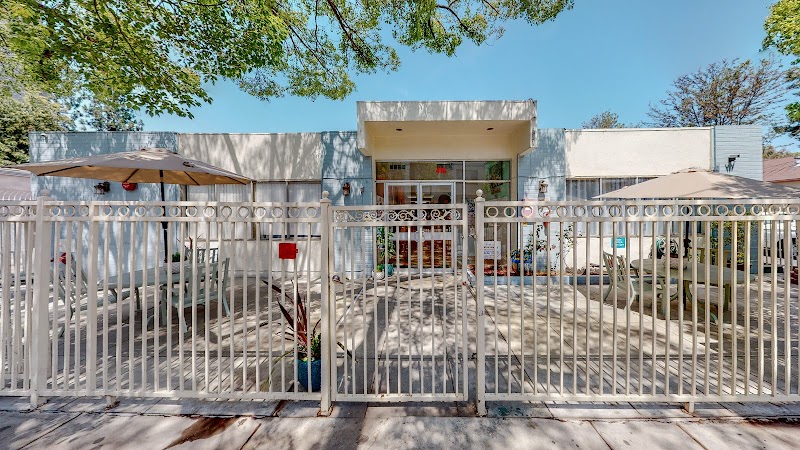
How is Angels Nursing Staffed?

CMS rates ANGELS NURSING HEALTH CENTER's staffing level at 3 out of 5 stars, which is average compared to other nursing homes. Staff turnover is 40%, compared to the California average of 46%. This relatively stable workforce can support continuity of care. RN turnover specifically is 67%, which is notably high. RNs provide skilled clinical oversight, so turnover in this role can affect medical care quality.

What Have Inspectors Found at Angels Nursing?

State health inspectors documented 42 deficiencies at ANGELS NURSING HEALTH CENTER during 2022 to 2025. These included: 2 Immediate Jeopardy (the most serious level, indicating potential for serious harm or death), 2 that caused actual resident harm, and 38 with potential for harm. Immediate Jeopardy findings are rare and represent the most serious regulatory concerns. They require immediate corrective action.
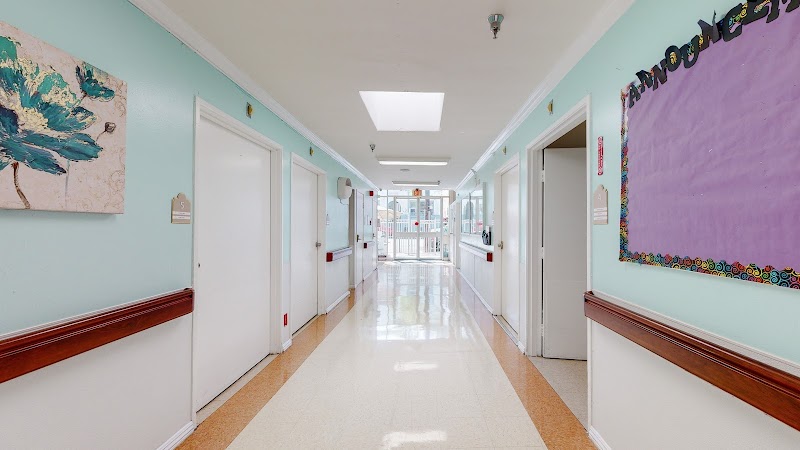
Who Owns and Operates Angels Nursing?

ANGELS NURSING HEALTH CENTER is owned by a for-profit company. For-profit facilities operate as businesses with obligations to shareholders or private owners. The facility operates independently rather than as part of a larger chain. With 49 certified beds and approximately 47 residents (about 96% occupancy), it is a smaller facility located in LOS ANGELES, California.
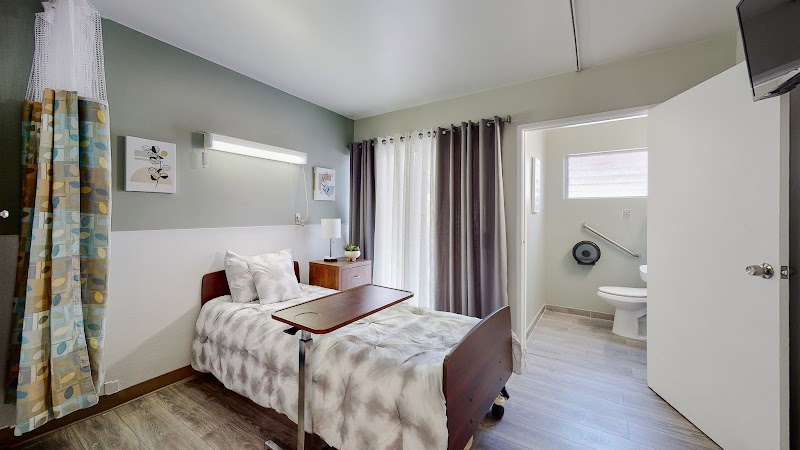
How Does Angels Nursing Compare to Other California Nursing Homes?

Compared to the 100 nursing homes in California, ANGELS NURSING HEALTH CENTER's overall rating (5 stars) is above the state average of 3.2, staff turnover (40%) is near the state average of 46%, and health inspection rating (4 stars) is above the national benchmark.

What Should Families Ask When Visiting Angels Nursing?

Based on this facility's data, families visiting should ask: "What changes have been made since the serious inspection findings, and how are you preventing similar issues?" "Can I visit during a mealtime to observe dining assistance and food quality?" "How do you handle medical emergencies, and what is your hospital transfer rate?" "Can I speak with family members of current residents about their experience?" These questions are particularly relevant given the facility's Immediate Jeopardy citations.

Is Angels Nursing Safe?

Based on CMS inspection data, ANGELS NURSING HEALTH CENTER has documented safety concerns. Inspectors have issued 2 Immediate Jeopardy citations (the most serious violation level indicating risk of serious injury or death). The facility has a 5-star overall rating and ranks #1 of 100 nursing homes in California. Families considering this facility should ask detailed questions about what corrective actions have been taken since these incidents.

Do Nurses at Angels Nursing Stick Around?

ANGELS NURSING HEALTH CENTER has a staff turnover rate of 40%, which is about average for California nursing homes (state average: 46%). Moderate turnover is common in nursing homes, but families should still ask about staff tenure and how the facility maintains care continuity when employees leave.

Was Angels Nursing Ever Fined?

ANGELS NURSING HEALTH CENTER has been fined $33,885 across 1 penalty action. The California average is $33,418. While any fine indicates a compliance issue, fines under $50,000 are relatively common and typically reflect isolated problems that were subsequently corrected. Families should ask what specific issues led to these fines and confirm they've been resolved.

Is Angels Nursing on Any Federal Watch List?

ANGELS NURSING HEALTH CENTER is not on any federal watch list. The most significant is the Special Focus Facility (SFF) program, which identifies the bottom 1% of nursing homes nationally based on persistent, serious quality problems. Not being on this list means the facility has avoided the pattern of deficiencies that triggers enhanced federal oversight. This is a positive indicator, though families should still review the facility's inspection history directly.