BURLINGTON CONVALESCENT HOSPITAL
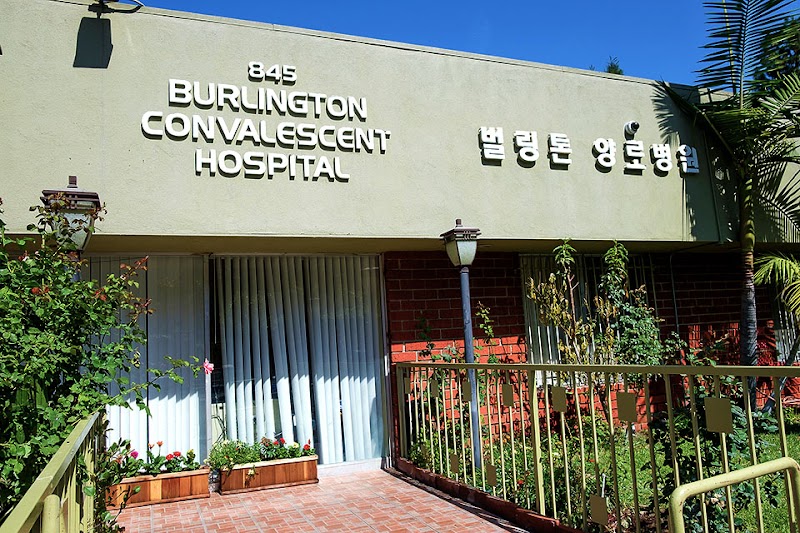
845 S.BURLINGTON AVENUE, LOS ANGELES, CA 90057 (213) 381-5585
For profit - Limited Liability company 124 Beds LONGWOOD MANAGEMENT CORPORATION Data: November 2025
Trust Grade
63/100
#305 of 1155 in CA
Last Inspection: February 2025

Within standard 12-15 month inspection cycle. Federal law requires annual inspections.

Overview

Burlington Convalescent Hospital has a Trust Grade of C+, which means it is slightly above average but not without concerns. It ranks #305 out of 1,155 facilities in California, placing it in the top half of the state, and #49 out of 369 in Los Angeles County, indicating it has several local competitors. However, the facility's trend is worsening, with issues increasing from 7 in 2024 to 12 in 2025. Staffing received an average rating of 3/5 stars, with a turnover rate of 37%, which is slightly below the California average, suggesting that some staff remain long-term. The facility has incurred $11,625 in fines, which is average and suggests some compliance problems. There are strengths, such as a quality measures rating of 5/5 and the presence of registered nurses, but there are also significant weaknesses. For example, one serious incident involved a resident who fell and suffered a hip fracture because the care plan was not updated after a previous fall. Additionally, there were concerns about food quality and safety, with reports of unappetizing meals and unsafe food storage practices. Overall, while there are positives, families should weigh these issues carefully.

Trust Score
C+
63/100
In California
#305/1155
Top 26%
Safety Record
Moderate
Needs review
Inspections
Getting Worse
7 → 12 violations
Staff Stability
○ Average
37% turnover. Near California's 48% average. Typical for the industry.
Penalties
✓ Good
$11,625 in fines. Lower than most California facilities. Relatively clean record.
Skilled Nurses
⚠ Watch
Each resident gets only 22 minutes of Registered Nurse (RN) attention daily — below average for California. Fewer RN minutes means fewer trained eyes watching for problems.
Violations
⚠ Watch
36 deficiencies on record. Higher than average. Multiple issues found across inspections.
★★★★☆
4.0
Overall Rating
★★★☆☆
3.0
Staff Levels
★★★★★
5.0
Care Quality
★★★☆☆
3.0
Inspection Score
Stable
2024: 7 issues
2025: 12 issues

The Good

  • 5-Star Quality Measures · Strong clinical quality outcomes
  • Full Sprinkler Coverage · Fire safety systems throughout facility
  • No fines on record
  • Staff turnover below average (37%)

    11 points below California average of 48%

Facility shows strength in quality measures, fire safety.

The Bad

Staff Turnover: 37%

Near California avg (46%)

Typical for the industry

Federal Fines: $11,625

Below median ($33,413)

Minor penalties assessed

Chain: LONGWOOD MANAGEMENT CORPORATION

Part of a multi-facility chain

Ask about local staffing decisions and management

The Ugly 36 deficiencies on record

1 actual harm
Jun 2025 1 deficiency
CONCERN (D) 📢 Someone Reported This

A family member, employee, or ombudsman was alarmed enough to file a formal complaint

Potential for Harm - no one hurt, but risky conditions existed

Medical Records (Tag F0842)

Could have caused harm · This affected 1 resident

Based on interview and record review the facility failed to maintain record that is complete and accurate for one of three sampled residents (Resident 1). For Resident 1 the facility failed to: 1.Prov...

Read full inspector narrative →
Based on interview and record review the facility failed to maintain record that is complete and accurate for one of three sampled residents (Resident 1). For Resident 1 the facility failed to: 1.Provide assistance with activities of daily living (ADLs) on 11/11/22. 2.Document nursing services that were provided to Resident 1 on 11/11/22 from 7 p.m. to 12:30 a.m. These deficient practices resulted in incomplete and inaccurate medical record for Resident 1. Findings: During a review of the admission Record indicated the facility admitted Resident 1 on 11/11/22 with diagnoses including respiratory failure (impaired gas exchange between the lungs (breathing organ) and the blood) and chronic obstructive pulmonary disease (COPD-a chronic lung disease causing difficulty in breathing). During a review of Resident 1's admission Assessment indicated the facility admitted Resident 1 on 11/11/22 at 7 p.m. The Assessment indicated Resident 1 was confused. Resident 1 was dependent with eating/nutrition, personal hygiene and grooming. Resident 1 was incontinent of bowel and bladder. During a concurrent interview and record review on 6/12/25 at 12:01 p.m., Resident 1's admission Assessment was reviewed the registered nurse supervisor (RNS 1). RNS 1 stated the facility admitted Resident 1 on 11/11/22 at 7 p.m. RNS 1 stated the nurses should make rounds at least every two to three hours, check on how Resident 1 was doing and make sure Resident 1 was okay . RNS 1 stated she was unable to find documentation that the nurses made their rounds. RNS 1 stated it is important to document what .we did for the patient (Resident 1). RNS 1 stated the documentation communicates how Resident 1 was doing during the shift. During a concurrent interview and record review, on 6/12/25 at 1:26 p.m., Resident 1's Documentation Survey Report (record of ADLs and assistance provided to residents) for 11/22 was reviewed with the director of staff development (DSD). DSD stated she was unable to find documentation that the certified nursing assistant (CNA) provided care to Resident 1. DSD stated even if Resident 1 was a new admit on 11/11/22, the CNA should do frequent rounds to find out how Resident 1 was doing. DSD stated the CNA should document what was done for the patient that included if Resident 1 had voided or was turned. During a review of the facility Policy titled Activities of Daily Living (ADLs), Supporting , reviewed on 12/18/24 indicated residents will be provided with care, treatment and services as appropriate to maintain or improve their ability to carry out activities of daily living (ADLs). The same Policy indicated appropriate care, and services will be provided for residents who are unable to carry out ADLs independently with the consent of the resident and in accordance with the plan of care, including appropriate support and assistance with: a. hygiene (bathing, dressing, grooming and oral care) b. Mobility (transfer and ambulation, including walking) c. elimination (toileting) d. dining (meals and snacks) e. communication (speech, language and any functional communication systems). During a review of the facility Policy titled Charting and Documentation reviewed on 12/18/24 indicated all services provided to the resident, progress toward the care plan goals or any changes in the resident's medical, functional or psychosocial condition shall be documented in the resident's medical record. The medical record should facilitate communication between the interdisciplinary team regarding the resident's condition and response to care. The same Policy indicated the following information is to be documented in the resident medical record: a. objective observations b. medications administered c. treatments or services performed d. changes in the residents' condition e. events, incidents or accidents involving the resident and f. progress toward or changes in the care plan goals and objectives The same Policy indicated the documentation in the medical record will be objective (not opinionated or speculative), complete and accurate.
Feb 2025 11 deficiencies 1 Harm
SERIOUS (G) 📢 Someone Reported This

A family member, employee, or ombudsman was alarmed enough to file a formal complaint

Actual Harm - a resident was hurt due to facility failures

Accident Prevention (Tag F0689)

A resident was harmed · This affected 1 resident

**NOTE- TERMS IN BRACKETS HAVE BEEN EDITED TO PROTECT CONFIDENTIALITY** Based on interview and record review, the facility failed to revise/update fall care plan to include updated interventions after...

Read full inspector narrative →
**NOTE- TERMS IN BRACKETS HAVE BEEN EDITED TO PROTECT CONFIDENTIALITY** Based on interview and record review, the facility failed to revise/update fall care plan to include updated interventions after the fall on 12/28/2024 to prevent a repeat fall for one of two residents (Resident 165) who was a high risk for fall. As a result, on 2/3/25, Resident 165 fell again and suffered severe pain of 7 (seven) out of 10 (7/10 - a numerical pain scale assessment tool where zero is no pain and 10 is severe pain) to the buttocks and to the left and right thighs. On 2/5/2025, the facility transferred Resident 165 to General Acute Care Hospital (GACH) 1 via non-emergency medical transportation where Resident 165 was diagnosed with a left hip fracture (broken bone). On 2/16/25, GACH 1 performed an open reduction and internal fixation (ORIF - a type of surgery used to stabilize and repair broken bones, using screws, plates, sutures, or rods to hold the bone together and for healing) on Resident 165. Findings: During a record review, Resident 165's admission Record indicated the facility admitted the resident on 10/2/2019 with diagnoses including dementia (a progressive state of decline in mental abilities), peripheral vascular disease (PVD - a slow progressive narrowing of the blood flow to the arms and legs), osteoarthritis (a progressive disorder of the joints, caused by a gradual loss of cartilage) and a history of falling. During a record review, Resident 165's at risk for falls care plan, initiated on 10/17/2019 and reviewed on 1/7/2025, indicated the resident was at risk for falls due to the resident's diagnosis of dementia, being unaware of safety and poor judgment. The care plan indicated the goal included to reduce the resident's risk of falls and injury. The care plan interventions indicated staff to: - Visibly observe resident frequently. - Encourage the resident to attend and participate in activity programs; and - Provide safety instruction to resident regarding ambulation, transfers, and ADLs when appropriate. Bilateral 1/3 side rails (a barrier on the side of the bed that prevents one from falling out of bed) up and grab bars (bars are safety devices designed to enable a person to maintain balance, lessen fatigue while standing), walker. The care plan indicated all interventions were initiated on 10/18/2019. During a record review, Resident 165's care plan titled, Resident is at risk for spontaneous/ pathological (a break in the bone caused by a disease and not an injury)/ stress fracture (a small crack in the bone caused by placing too much stress on the bone), initiated on 2/22/2022 and reviewed on 1/7/2025, indicated the resident was at risk for fracture due to related to dx of osteoarthritis. The care plan goal included to reduce the risk of fracture and injury to Resident 1. The care plan interventions indicated to: - Perform x-ray as indicated - Provide a safe and hazard free environment - Assist with all transfers and ambulation as needed - Facility POP (Protect Our Patients from Pathological Fracture) program -Fall risk interdisciplinary team (IDT - a group of healthcare professionals from different disciplines [nurses, social worker, therapist, physician, etc.] that provide care for the residents) conference. The care plan interventions were not updated since 2/22/2022. During a record review, Resident 165's History and Physical (H&P), dated 11/13/2024, indicated Resident 165 did not have the capacity to understand and make decisions. During a record review, Resident 165's Change of Condition (COC- clinically important deviation from a patient's baseline) form, dated 12/28/2024, indicated Resident 165 was observed sitting on the floor on the left side by the housekeeping staff and the charge nurse (Licensed Vocational Nurse - LVN) in the smoking patio. The COC indicated the resident reported to Registered Nurse (RN) 1 that he was walking towards the resident's chair to sit down when he [Resident 165] fell. The COC indicated that per Resident 165, the resident landed on the butt and back and did not have pain or discomfort. The COC further indicated Resident 165 was noted with same shuffling gate pattern. During a record review, Resident 165's Quarterly Minimum Data Set (MDS- a resident assessment tool) dated 1/2/2025, indicated the resident's cognition (ability to think, understand, and reason) was moderately impaired. The MDS indicated Resident 165 required supervision or touch assistance (helper provides verbal cues and /or touching/steadying as the resident completes the activity) with oral hygiene, upper body dressing and toileting hygiene. The MDS also indicated Resident 165 uses a walker for mobility and required supervision or touching with walking 10 feet, 50 feet and 150 feet. The MDS further indicated Resident 165 had one prior fall since the last MDS assessment (assessments are completed every 3 months. [Date not indicated.]) During a record review, Resident 165's Fall Risk assessment dated [DATE] (one month prior to the 2/3/2025 fall), indicated Resident 165 scored 22 (high risk for falls). During a record review, Resident 165's COC form, dated 2/3/2025 (37 days after the 12/28/24 fall), indicated Resident 165 was observed sitting on the smoking patio floor. Resident 165 complained of pain to the buttocks and both thighs. The COC also indicated the resident reported a 7/10 pain level with movement and the physician ordered a stat (immediate) x-ray of both hips. During a record review, Resident 165's Radiology Results Report (from the facility), dated 2/4/2025, indicated Resident 165 had x-ray of both hips. The x-ray report indicated Resident 165 had an intertrochanteric left femoral fracture (left thigh bone break). During a record review, Resident 165's COC form, dated 2/4/2025, indicated the x-ray results indicated Resident 165 had left thigh fracture. The COC further indicated a physician ordered to transfer the resident to GACH. During record review, Resident 165's Physician Order, dated 2/4/2025, indicated the facility to transfer Resident 165 to GACH 1 for evaluation of acute intertrochanteric left femoral fracture sustained after a fall. During a record review Resident 165's Progress Note, dated 2/5/2025, indicated the resident was transferred to GACH 1 via non-emergency medical transportation. During a record review, Resident 1's GACH 1's Emergency Department (ED) Medical Doctor (MD) Note, dated 2/5/2025, indicated Resident 165 presented to the ED after falling while trying to smoke. The ED MD note also indicated Resident 165 complained of left arm and hip pain and received Morphine (an opioid pain medication) 2 milligrams (mg - unit of measurement) intravenously (IV -inside a vein) for pain control (pain level not indicated). The ED MD note further indicated Resident 165's x-ray showed a comminuted (where the bone breaks in two or three places) left hip fracture. During a record review, Resident 165's Orthopedic (branch of medicine that focuses on the diagnosis and treatment of bones, muscles, and ligaments) Surgical Consultation Report, dated 2/5/25, indicated the resident came to the GACH complaining of pain involving the left hip, which developed following a ground level fall landing on the left hip. The Orthopedic Surgical Consultation Report also indicated there was tenderness and swelling around the left hip and that Resident 165 experienced pain when attempting range of motion (ROM - the extent to which a joint in the body can move) to the left hip. The Orthopedic Surgical Consultation Report further indicated the x-ray of the left him revealed a comminuted unstable left hip fracture. During a record review, Resident 165's GACH 1 Operative Report, dated 2/16/2025, indicated Resident 165 had an ORIF surgery on 2/16/2025 to treat the resident's left femoral fracture. During a concurrent interview and record review 2/20/2025 at 10:18 AM with Registered Nurse Supervisor (RN) 1, Resident 165's electronic health records were reviewed. While reviewing Resident 165's COC form dated 2/3/2025, RN 1 stated that Resident 165 was found sitting on the ground on the smoking patio. RN 1 stated whenever a resident is found on the floor, the resident is considered to have fallen. RN 1 stated Resident 165 complained of pain when found on the patio floor and was administered Tylenol (pain medication). RN 1 stated Resident 165 had slight pain relief. RN 1 further stated that on 12/28/2024, Resident 165 previously fell when RN 1 was on duty and that the resident did not have any injuries. During a concurrent review of Resident 1's care plans, RN 1 stated RN 1 did not update Resident 165's fall care plan after the fall on 12/28/2024. Also, RN 1 stated that RN 1 did not create a new care plan that addressed the resident falling. RN 1 stated the fall care plan should have been updated to prevent the resident from falling again. RN 1 further stated an updated care plan should address the resident's needs and may have prevented the resident from falling and breaking his bone. During a concurrent interview and record review with the Director of Nursing (DON) on 2/21/2025 at 10:40 AM, Resident 165's care plans and COCs were reviewed. The DON stated Resident 165 had two recent falls. The DON stated after Resident 165 last fell on 2/3/2025, the resident was transferred to a GACH and was diagnosed with a left hip fracture. Upon reviewing Resident 165's care plans, the DON stated Resident 165's care plan interventions to prevent falling were not updated after the resident fell on [DATE]. The DON stated Resident 165's risk for fall care plan interventions were not updated after 10/18/2019. The DON further stated the care plan addresses the resident's identified problems and contains interventions to prevent or minimize the risk to residents. The DON further indicated staff update the care plan when new issues arise or and the care should have been updated after the 12/28/24 fall to prevent or minimize the risk of Resident 165 falling again. During a record review, the facility's policy, and procedures (P&P) titled, Safety and Supervision of Residents, revised 7/2017, indicated, resident safety and supervision and assistance to prevent accidents are facility-wide priorities. The P&P also indicated, monitoring the effectiveness of interventions shall include evaluating the effectiveness of interventions, modifying or replacing interventions as needed and evaluating the effectiveness of new or revised interventions. During a record review, the facility's P&P titled, Falls - Clinical Protocol, revised 3/2018, indicated, while many falls are isolated individual incidents, a few individuals fall repeatedly. Those individuals often have an identifiable underlying cause. For an individual who has fallen, the staff will begin to try to identify possible causes within 24 hours of the fall. Often, multiple factors contribute to a falling problem. The P&P also indicated, The staff and physician will continue to collect and evaluate information until either the cause of the falling is identified, or it is determined that the cause cannot be found or is not correctable. The P&P further indicated, based on the preceding assessment, the staff and physician will identify pertinent interventions to try to prevent subsequent falls and to address the risks of clinically significant consequences of falling. During a record review, the facility's P&P titled, Care Plans, Comprehensive Person-Centered, reviewed 3/2023, indicated, a comprehensive care plan that included measurable objectives and timetables to meet the resident's physical, psychosocial, and functional needs was to be developed and implemented for each resident. The care planning process will include an assessment of the resident's strengths and needs, incorporate the resident's personal and cultural preferences in developing the goals of care. The P&P further indicated, assessments of residents are ongoing and care plans are revised as information about the residents and the resident's conditions change.
CONCERN (D)

Potential for Harm - no one hurt, but risky conditions existed

Deficiency F0554 (Tag F0554)

Could have caused harm · This affected 1 resident

**NOTE- TERMS IN BRACKETS HAVE BEEN EDITED TO PROTECT CONFIDENTIALITY** Based on observation, interview, and record review, the facility's interdisciplinary team (IDT- a group of health care professio...

Read full inspector narrative →
**NOTE- TERMS IN BRACKETS HAVE BEEN EDITED TO PROTECT CONFIDENTIALITY** Based on observation, interview, and record review, the facility's interdisciplinary team (IDT- a group of health care professionals with various areas of expertise who work together toward the goals of their clients) failed to ensure that a resident would not be allowed to keep medications at the bedside without a physician's order and/or without being assessed to determine if the resident is capable to self-administer medications for one of 12 sampled residents (Resident 58). This deficient practice had the potential for other residents to gain access/ingest the medication and or result in adverse reaction to the medication. Findings: During record review, Resident 58's admission record indicated Resident 58 was admitted to the facility on [DATE], with diagnoses that include atrial fibrillation (an irregular and often very rapid heart rhythm), hypertension (a medical condition characterized by persistently elevated blood pressure), encephalopathy (a change in your brain function due to injury or disease), rhabdomyolysis ( a breakdown of muscle tissue, leading to the release of harmful substances into the bloodstream.), and acute kidney failure (a condition in which kidneys suddenly stop working, causing a buildup of waste and fluid in the body). During record review, Resident 58's Minimum Data Set (MDS - a resident assessment tool) dated 1/3/2025 indicated Resident 58's cognition (The mental ability to make decision of daily living) was intact, Resident 53's required setup for eating, upper body dressing and taking off foot wear, supervision for oral hygiene, toileting hygiene and lower body dressing, Resident 58 required partial/moderate assistance with shower/bathing and personal hygiene. During record review, Resident 58's history and physical (H&P) dated 1/6/2025 indicated Resident 58 did not have the capacity to understand and make decisions. During a facility tour on 2/18/2025 at 10:08 AM, Resident 58 was observed to have to round pills on top of a box of tissue that was on his dresser. During a concurrent interview, Resident 58 stated the pills were tums (a medication used to treat heartburn, indigestion and an upset stomach caused by too much stomach acid), Resident 58 stated he takes the tums after meals, and he was going to take the tums after his noon time meals. During an interview on 2/28/2025, at 10:25 AM, licensed vocational nurse (LVN) stated the medication at Resident 58's bedside was Simethicone (medication used to treat abdominal symptoms of gas, fullness, pressure, and bloating). LVN 2 stated Resident 58 did not have a physician's order for self-administration of medication, LVN 2 was unable to state the risks of leaving medications at Resident 58's bedside. During an interview on 2/21/2025 at 12:17 PM Director of Nursing (DON) stated Residents are only allowed for have Meds at bedside if they have been assessed to be cognitive and physically demonstrated they can safely able to do so and have a physician approval, DON stated medication at bedside should be in a locked container, DON further stated medications should not be left at bedside, because an confused wandering Resident may consume the medications which could lead to an adverse reactions, unnecessary hospitalization and possible poor outcomes, During record review, the facility's policy and procedures titled Self-Administration of Medication dated 03/2023 indicated, .the Interdisciplinary Team (IDT- a group of health care professionals with various areas of expertise who work together toward the goals of the Resident), assesses each resident's cognitive and physical abilities to determine whether self-administering medications is safe and clinically appropriate for the Resident. Self-administered medications are stored in a safe and secure place, which is not accessible by other Residents .
CONCERN (D)

Potential for Harm - no one hurt, but risky conditions existed

Deficiency F0637 (Tag F0637)

Could have caused harm · This affected 1 resident

Based on interview and record review, the facility failed to complete a change of condition (COC -a sudden deviation from person/patient's baseline in physical, cognitive, behavioral or function) in a...

Read full inspector narrative →
Based on interview and record review, the facility failed to complete a change of condition (COC -a sudden deviation from person/patient's baseline in physical, cognitive, behavioral or function) in accordance with the facility's policy and procedures (P&P) titled Change in a Residents Condition or status revised 3/2023 for one of four sampled residents (Resident 39). This deficient practice had the potential to result in the delay of care for Resident 39. Findings: During record review, Resident 39's admission Record indicated the facility admitted Resident 39 on 6/12/2024 and readmitted Resident 39 on 9/9/2024 with diagnoses including diabetes (DM-a disorder characterized by difficulty in blood sugar control and poor wound healing), personal history of transient ischemic attack (TIA - a temporary blockage of blood flow to the brain) and cerebral vascular accident (CVA- Stroke) without residuals, and hypertension (HTN - elevated blood pressure). During record review Resident 39's Weight Summary indicated the following weights: 10/29/2024 : 105.0 pounds (lbs -unit of measure) 10/15/2024: 104.0 lbs 10/8/2024: 104.0 lbs 10/4/2024: 104.0 lbs 9/9/2024: 114.0 lbs During record review, the Nutrition/Dietary note dated 10/4/2024, at 4:19 P.M., indicated Resident 39 lost 10 lbs weight loss related to wounds, recent hospitalization, fluid shifts, advanced age, variable by mouth intake, mechanically altered diet . unavoidable. During record review, Resident 39's Minimum Data Set (MDS - a resident assessment tool) dated 12/16/2024, indicated Resident 39 was cognitively intact (when a person has no trouble remembering, learning new things, concentrating, or making decisions that affect their everyday life). The MDS indicated Resident 39 required extensive staff assistance with activities of daily living (ADLs- routine tasks/activities such as bathing, dressing and toileting a person performs daily to care for themselves). During a concurrent interview and record review, on 2/20/2025, at 12:45 P.M., with Minimum Data Set/ Registered Nurse Supervisor (MDS/RNS), Resident 39's electronic chart was reviewed. MDS/RNS stated Resident 39 had lost a total of 10 lbs between 9/9/2024 and 10/4/2024. MDS/RNS stated facility should have done a COC of the weight loss, however, there is no documented evidence that a COC was done. Weight loss is a change in condition that needs to be monitored, physician needs to be notified as well as family member or representative so that the resident should not lose more weight, get weak and have an overall decline in ADL. During an interview on 2/21/2025, at 7:27 A.M., the Director of Nursing (DON) stated, a COC is a deviation from the resident's baseline and should be done as soon as the deviation is noted. DON stated the COC for weight loss is done to alert everyone, licensed nurses, certified nursing assistants, all the departments including the doctor and family that there was a change in the resident's condition that needs to be monitored and if the COC is not done, the doctor may not know what is happening to the resident and the right interventions will not be applied. During record review, the facility's P&P, titled, Change in a Residents Condition or status revised 3/2023, indicated, Policy statement: Our facility promptly notifies the resident, his or her attending physician, and the resident's representative of changes in the residents medical/mental condition and/or status. 2. A significant change of condition is a major decline or improvement in the resident's status that: a. will not normally resolve itself without intervention by staff or by implementing standard disease related clinical interventions.
CONCERN (D)

Potential for Harm - no one hurt, but risky conditions existed

Comprehensive Care Plan (Tag F0656)

Could have caused harm · This affected 1 resident

Based on interview and record review, the facility failed to develop a baseline care plan in accordance with the facility's policy and procedures (P&P) titled Care plans, Comprehensive Person-Centered...

Read full inspector narrative →
Based on interview and record review, the facility failed to develop a baseline care plan in accordance with the facility's policy and procedures (P&P) titled Care plans, Comprehensive Person-Centered revised 3/2023 for one of four sampled residents (Resident 39). These deficient practices had the potential to negatively affect the delivery of necessary care and services for Resident 39. Findings: During record review, Resident 39's admission Record indicated the facility admitted Resident 39 on 6/12/2024 and readmitted Resident 39 0n 9/9/2024 with diagnoses including diabetes (DM-a disorder characterized by difficulty in blood sugar control and poor wound healing), personal history of transient ischemic attack (TIA - a temporary blockage of blood flow to the brain) and cerebral vascular accident (CVA- Stroke) without residuals, and hypertension (HTN - elevated blood pressure). During record review, Resident 39's Minimum Data Set (MDS - a resident assessment tool) dated 12/16/2024, indicated Resident 39 was cognitively intact (when a person has no trouble remembering, learning new things, concentrating, or making decisions that affect their everyday life). The MDS indicated Resident 39 required extensive staff assistance with activities of daily living (ADLs- routine tasks/activities such as bathing, dressing and toileting a person performs daily to care for themselves). During a concurrent interview and record review, on 2/20/2025, at 12:45 P.M., with Minimum data set coordinator/Registered Nurse Supervisor (MDS/RNS), Resident 39's electronic chart was reviewed. The MDS/RNS stated a care plan is a tool for staff to know what they are supposed to be doing and follow the approach and interventions for that resident in order to meet the goals for the resident. The MDS/RNS stated Resident 39's weight loss should have been care planned, however, there is no documented evidence of a care plan. The MDS/RNS further stated without a care plan, facility staff will not have a guide on what to do for Resident 39 which might lead to her losing more weight. During an interview, on 2/21/2025, at 7:27 A.M., with the Director of Nursing (DON), the DON stated a care plan is done to solve, minimize or alleviate a problem that have been identified, care plans should be done as soon as the problem has been identified and if Resident 39's care plan for weight loss is not done, it can cause the resident to loose more weight, a decline in function and increased weakness. During record review, the facility's P&P, titled, Care plans, Comprehensive Person-Centered revised 3/2023, indicated, A comprehensive, person-centered care plan that includes measurable objectives and timetables to meet the resident's physical, psychosocial, and functional needs is developed and implemented for reach resident. 2. The comprehensive, person-centered care plan is developed within seven (7) days of the completion of the required MDS assessment (Admission, Annual or significant change in status), and no more than 21 days after admission.
CONCERN (D) 📢 Someone Reported This

A family member, employee, or ombudsman was alarmed enough to file a formal complaint

Potential for Harm - no one hurt, but risky conditions existed

ADL Care (Tag F0677)

Could have caused harm · This affected 1 resident

**NOTE- TERMS IN BRACKETS HAVE BEEN EDITED TO PROTECT CONFIDENTIALITY** Based on interview and record review, the facility failed to provide activities of daily living (ADL-such as bathing, showering,...

Read full inspector narrative →
**NOTE- TERMS IN BRACKETS HAVE BEEN EDITED TO PROTECT CONFIDENTIALITY** Based on interview and record review, the facility failed to provide activities of daily living (ADL-such as bathing, showering, toileting, and mobility) for one of four residents (Residents 14) This failure had the potential to result in Resident 14 acquiring infection, and foul odor of the feet. Findings: During record review, Resident 14's admission Record indicated the resident was re-admitted to the facility on [DATE] with diagnoses not limited to hemiplegia (complete paralysis on one side of the body), hemiparesis (weakness or reduced movement on one side of the body), and anemia (a condition in which the body does not have enough healthy red blood cells). During record review, resident 96's Minimum Data Set (MDS- a resident assessment tool) dated 11/25/24, indicated Resident 14's cognitive skills- (the core skills your brain uses to think, read, learn, remember, reason, and pay attention) for daily decision making was not intact. The MDS further indicated Resident 14 needed extensive assistance with ADL's (bathing, showering, and toileting), and moderate assistance with dressing. During an observation on 2/18/25 at10:26 am, Resident 14 was observed sitting in a wheelchair (WC). Resoident 14's shoes had dark stains on the white portion of the shoes, grime, and were dusty. Certified Nursing Assistant (CNA) 1 put the shoes on Resident 14's feet and then wheeled the resident to the activity room. During an interview on 2/18/25 at 10:26 am, CNA 1 stated she does not know the last time she had in-service on ADL care. CNA 1 stated the nurses are supposed to clean the resident's shoes or send them to the laundry to be washed. CNA stated Resident 14's, dirty shoes is a hygiene and infection control issue. CNA 1 stated that Resident 14 can get a fungal foot infection, a rash, or have a foul odor to both feet. During an observation and interview on 2/18/25 at 10:56 am the Activities Director was observed bringing/wheeling Resident 14 back to the resident's room to change the resident's dirty shoes. The Activities Director stated she brought Resident 14 back to the resident's room to change his shoes because the shoes were very dirty. The Activities Director stated the nurses are not supposed to put the resident on dirty shoes. The Activities Director stated the nurses are supposed make sure all the residents are clean and well-groomed before the residents leave their room. The Activities Director stated the Resident 14 could get a foot infection by wearing dirty shoes. During an interview on 2/18/25 at 11:29 am, with Licensed Vocational Nurse (LVN) 2 for Resident 14. LVN 2 stated the residents should always wear clean clothes and shoes. LVN 2 stated if the residents wear dirty shoes, they can have foul odor, get a bad rash, or get a fungal infection to their feet. During record review, the facility document titled Activities of Daily Living (ADL's), Supporting revised on 3/2023, indicated, Residents will be provided with care, treatment and services to maintain or improve their ability to carry out activities of daily living (ADL's). Residents who are unable to carry out activities of daily living independently will receive the services necessary to maintain good nutrition, grooming, and personal and oral hygiene.
CONCERN (D)

Potential for Harm - no one hurt, but risky conditions existed

Deficiency F0760 (Tag F0760)

Could have caused harm · This affected 1 resident

Based on observation, interview, and record review, the facility failed to ensure that staff did not crush Ferrous Sulfate (supplement) Oral (by mouth) tablet 325 (65 Fe) mg 1 tablet by mouth and admi...

Read full inspector narrative →
Based on observation, interview, and record review, the facility failed to ensure that staff did not crush Ferrous Sulfate (supplement) Oral (by mouth) tablet 325 (65 Fe) mg 1 tablet by mouth and administered via gastrointestinal tube (G-tube -feeding tube surgically inserted into the stomach). for one of four sampled residents (Resident 315). This deficient practice: 1. Resulted in staff crushing and administering Ferrous Sulfate Oral tablet 325 mg 1 tablet via GT for six days. 2. Had the potential to result in increasing the risks of side effects, toxic effects and/or hospitalization. Findings: During record review, Resident 315's admission Record indicated the facility admitted Resident 315 on 6/9/2023, and readmitted Resident 315 on 2/12/2025 with diagnoses including anemia (a condition where the body does not have enough healthy red blood cells), dementia (loss of memory, language, problem-solving and other thinking abilities that are severe enough), and adult failure to thrive (a noticeable decline in health). During record review, the physician's orders dated 2/12/2025 and 2/13/2025, indicated Ferrous sulfate (mineral used to increase iron level in the blood) oral tablet 325 (65 Fe [iron]) milligrams (mg- metric unit of measurement, used for medication dosage and/or amount), give 1 tablet via G-tube. During record review, Resident 315's Minimum Data Set (MDS - a resident assessment tool) dated 2/19/2024, indicated Resident 315 had cognitive impairment (when a person has trouble remembering, learning new things, concentrating, or making decisions that affect their everyday life). The MDS indicated Resident 315 required extensive staff assistance with activities of daily living (ADLs- activities such as bathing, dressing and toileting a person performs daily). During record review, the Medication Administration Record (MAR) for 2/2025, indicated Ferrous Sulfate Oral tablet 325 (65 Fe) mg give 1 tablet by mouth via G-tube one time a day for supplement. The MAR further indicated there were check marks with staff initials that indicated Ferrous Sulfate 325 mg tablet was administered via GT to Resident 315 on 2/13/2025, 2/14/2025, 2/15/2025, 2/16/2025, 2/17/2025, and 2/18/2025. During a concurrent observation and interview on 2/19/2025, at 8:50 A.M., Licensed Vocation Nurse (LVN) 2 dispensed a ferrous sulfate tablet 325 mg 1 tablet (red in color with a shiny coating), placed the tablet in a pill crushing pouch. LVN 2 then crushed the ferrous sulfate tablet and placed the crushed ferrous sulfate tablet in a medication dispenser cup. LVN 2 then donned personal protective equipment (PPE- [gown, gloves, masks .]). LVN 2 then added water to the crushed ferrous sulfate tablet, connected feeding g-tube syringe to the g-tube and the surveyor/writer stopped LVN 2 just before LVN 2 was about to pour the ferrous sulfate mixed with water into the g-tube syringe. LVN 2 stated that the ferrous sulfate tablet was coated, should not be crushed because it needs to be given time to dissolve to protect the stomach and if crushed can cause stomachache. During a concurrent observation and interview on 2/21/2025, at 7:17 A.M., with the Director of Nursing (DON), a picture of the ferrous sulfate tablets was observed. The DON stated, the ferrous sulfate tablet is red, shiny, and appeared to have a coating on it. The coating on the tablet is there to protect the stomach wall by slowly releasing the tablet. The DON stated if the coated tablet is crushed before consumption, it creates a fast absorption of the tablet, cause harm to the stomach, causing stomachache, nausea, and uneasiness to the resident. During record review, the facility's policy and procedures, titled, Preparation and general guidelines effective 10/2017, indicated, Medications are administered as prescribed in accordance with good nursing principles and practices . a. Long acting or enteric coated dosage forms should generally not be crushed; an alternative should be sought.
CONCERN (D)

Potential for Harm - no one hurt, but risky conditions existed

Medical Records (Tag F0842)

Could have caused harm · This affected 1 resident

Based on interview and record review, facility failed to accurately and completely document medication administration in the resident's chart for one of four sampled residents (Resident 39). This defi...

Read full inspector narrative →
Based on interview and record review, facility failed to accurately and completely document medication administration in the resident's chart for one of four sampled residents (Resident 39). This deficient practice had the potential to negatively affect the delivery of necessary care and services for Resident 39. Findings: During record review, Resident 39's admission Record indicated the facility admitted Resident 39 on 6/12/2024 and readmitted Resident 39 on 9/9/2024 with diagnoses including diabetes (DM-a disorder characterized by difficulty in blood sugar control and poor wound healing), personal history of transient ischemic attack (TIA - a temporary blockage of blood flow to the brain) and cerebral vascular accident (CVA- Stroke) without residuals, and hypertension (HTN - elevated blood pressure). During record review, Resident 39's Minimum Data Set (MDS - a resident assessment tool) dated 12/16/2024, indicated Resident 39 was cognitively intact (when a person has no trouble remembering, learning new things, concentrating, or making decisions that affect their everyday life). The MDS indicated Resident 39 required extensive staff assistance with activities of daily living (ADLs- routine tasks/activities such as bathing, dressing and toileting a person performs daily to care for themselves). During record review, Resident 39's change of condition (COC -a sudden deviation from person/patient's baseline in physical, cognitive, behavioral or function) dated 9/3/2024, at 8:15 A.M., indicated Registered Nurse Supervisor (RNS) documented that on 9/3/2023 at 7:30 A.M., Resident 39 was having on and off abdominal pain and had been taking Pepto bismuth for gastric pain, Zofran (medication) for nausea and vomiting. During an interview on 2/18/2024, at 11:06 A.M., Resident 39 stated she (Resident 39) was having abdominal pain, and that facility staff gave her pain medication with no relief and therefore the resident was transferred to a general acute care hospital (GACH). During a concurrent interview and record review on 2/20/2024, at 12:20 P.M., with the Minimum Data Set Coordinator/Registered Nurse Supervisor (MDS/RNS), Resident 39's COC, physicians' orders, and medication administration records (MAR) were reviewed. The MDS/RNS stated that COC done on 9/3/2024 indicated that Resident 39 reported to have had on and off abdominal pain, dizziness, and that the resident was administered Pepto bismuth and Zofran. However, the MDS/RNS stated that there was not documented evidence that Pepto bismuth and or Zofran were administered to Resident 39 because the MAR was blank. The MDS/RNS stated Resident 39's pain assessment level was documented as 0 meaning no pain even though the COC stated resident 39 was having abdominal pain. During an interview on 2/21/2025, at 7:27 A.M., the Director of Nursing (DON) stated that documentation is done to show what happened and what was done for the resident. The DON stated medication administration documentation should be done right after the medication has been administered to communicate with other team members what it was done, and if not documented then it was not done. During record review, the facility's policy and procedures, titled, Charting and Documentation revised 7/2017, indicated, that all services provided to the resident, progress toward the care plan goals, or any changes in the residents medical, physical, functional, or psychosocial condition, shall be documented in the residents' medical records. The medical record should facilitate communication between the interdisciplinary team regarding the resident's condition and response to care. 2. The following information is to be documented in the resident's medical record: . b. Medications administered: . e. Events, incidents or accidents involving the resident.
CONCERN (E)

Potential for Harm - no one hurt, but risky conditions existed

Deficiency F0804 (Tag F0804)

Could have caused harm · This affected multiple residents

**NOTE- TERMS IN BRACKETS HAVE BEEN EDITED TO PROTECT CONFIDENTIALITY** c. During an observation and concurrent interview on 2/20/2025 at 12:49 PM, the facility served a test tray to State Agency (SA)...

Read full inspector narrative →
**NOTE- TERMS IN BRACKETS HAVE BEEN EDITED TO PROTECT CONFIDENTIALITY** c. During an observation and concurrent interview on 2/20/2025 at 12:49 PM, the facility served a test tray to State Agency (SA). The test tray consisted of rice mixed with red kidney beans, roast beef, carrots, and a brownie, and not appealing. Dietary Supervisor (DS) used a thermometer to tested the temperature of the roast beef. The roast beef temperature registered at 127 degrees Fahrenheit (F - a scale for measuring temperature). SA tasted the food from the test tray but barely ate any of the test tray food. SA tested the food and stated that the roast beef was hard to chew and did not have any flavor, the carrots were not palatable or tender, the red beans and rice was mushy and salty, the temperature was okay, but the portions were small. During record review, the facility policy and procedures titled Food and Nutrition Services revised 10/2017, indicated, 7. the food appears palatable and attractive, and it is served at a safe and appetizing lempe.rature. a. If an incorrect meal is provided to a resident, or a meal does not appear palatable, nursing staff will report it to the food service manager so that a new food tray can be issued. b. Foods that are left without a source of heat (for hot foods) or refrigeration (for cold foods) longer than 2 hours will be discarded. b. During record review, Resident 58's admission Record indicated Resident 58 was admitted to the facility on [DATE], with diagnoses that include atrial fibrillation (an irregular and often very rapid heart rhythm), hypertension (a medical condition characterized by persistently elevated blood pressure), encephalopathy (a change in your brain function due to injury or disease), rhabdomyolysis ( a breakdown of muscle tissue, leading to the release of harmful substances into the bloodstream.), and acute kidney failure (a condition in which kidneys suddenly stop working, causing a buildup of waste and fluid in the body). During record review, Resident 58's Minimum Data Set (MDS - a resident assessment tool) dated 01/3/2025, indicated the Resident 58's cognition (The mental ability to make decision of daily living) was intact, Resident 53's required setup for eating, upper body dressing and taking off foot wear, supervision for oral hygiene, toileting hygiene and lower body dressing, Resident 58 required partial/moderate assistance with shower/bathing and personal hygiene. During record review, Resident 58's History and Physical (H&P) dated 1/6/2025, indicated Resident 58 did not have the capacity to understand and make decisions. During a facility tour and concurrent interview on 2/18/2025 at 11:50 AM, Resident 58 stated, lunch and dinner meals taste awful. Resident 58 stated he does not eat the food most of the time because the food looks like dog food and had lost a significant amount of weight since admission to the facility. During record review, Resident 58's electronic health record (EHR) indicated Resident 58 had lost 8 pounds (lbs-unit of measurement) in 2 months. During record review, the facility policy and procedures titled Food and Nutrition Services revised 10/2017, indicated, 7. the food appears palatable and attractive, and it is served at a safe and appetizing lempe.rature. a. If an incorrect meal is provided to a resident, or a meal does not appear palatable, nursing staff will report it to the food service manager so that a new food tray can be issued. b. Foods that are left without a source of heat (for hot foods) or refrigeration (for cold foods) longer than 2 hours will be discarded. Based on observation, interview, and record review, the facility failed to ensure residents received meals with flavor, attractive, appetizing, nutritive value, proper temperature, safe, and adequate portions. This deficient practice had the potential for the residents to experience poor/reduced meal intake, weight loss, and a decline in their health status. Findings: a. During a record review, the Resident Council Meeting minutes 11/13/2024 at 2 PM, a resident complained that the, Rice is not cook enough and can't digest it. During Resident Council Meeting on 2/19/2025 at 10:50 AM, four residents (Residents 40, 45, 62, and 65) were present. Resident 62 stated the facility give so little food and we eat cold soup. Resident 40 stated, the sandwich has cheese, and no meat. Resident 65 stated the sandwich has two breads and a cheese, no meat, nothing more. I didn't like the food. The food is not enough. Resident 45 stated that, the food food was cold when it's supposed to be hot. During record review, the facility policy and procedures titled Food and Nutrition Services revised 10/2017, indicated, 7. the food appears palatable and attractive, and it is served at a safe and appetizing lempe.rature. a. If an incorrect meal is provided to a resident, or a meal does not appear palatable, nursing staff will report it to the food service manager so that a new food tray can be issued. b. Foods that are left without a source of heat (for hot foods) or refrigeration (for cold foods) longer than 2 hours will be discarded. During record review, the facility policy and procedures (P&P - policy explains the rules and presents them in a logical framework while procedures outline the step-by-step implementation of various tasks) titled Food Preparation and Service revised in 2022, indicated, Potentially harzadous foods include meats, poultry, seafood, cut melon, eggs, milk, yogurt, . When food is left in the danger zone (temperatures between 41-135 degrees F) for more than four hours rapid growth of pathogenic microorganisms (organisms that can cause disease) can cause foodborne illness (a disease or infection caused by consuming contaminated food). The P&P did not address palatability (quality of food being tasty) of the food served to residents.
CONCERN (E)

Potential for Harm - no one hurt, but risky conditions existed

Food Safety (Tag F0812)

Could have caused harm · This affected multiple residents

Based on observation, interview, and record review, the facility failed to ensure safe and sanitary food storage and food preparation practices in the kitchen by failing to ensure that: 1. Kitchen sta...

Read full inspector narrative →
Based on observation, interview, and record review, the facility failed to ensure safe and sanitary food storage and food preparation practices in the kitchen by failing to ensure that: 1. Kitchen staff are trained and competent in food cooling down method 2. Cooked left over chicken and ground beef are not stored in the refrigerator 3. Kitchen staff recorded and retained documented evidence of the cooling down food/meat following the cooling down method. These failures had the potential to result in harmful bacteria growth and cross contamination (a transfer of harmful bacteria from one place to another or one object to another) that could lead to foodborne illness (illness caused by food contaminated with bacteria, viruses and other toxins) medically compromised residents who received food from the kitchen. Findings: During the initial tour and observation of the kitchen on 02/18/2025 at 7:29 am, with Tray line staff, the kitchen refrigerator had a container of cooked chicken and ground beef. During a concurrent interview, the Tray line staff he stated the cooks are not supposed to store cooked food in the refrigerator at any time. During an interview with Dietary Cook, Dietary [NAME] stated that she cooked the ground beef on 2-17-25. Dietary [NAME] stated she does not know the cooling down method for food/meats. Dietary [NAME] stated, if cooked food is not stored properly the residents could get very sick or have a stomachache. During an interview with on 02/18/25 at 11 am, Dietary Supervisor stated kitchen staff is not supposed to store cooked chicken and ground beef in the refrigerator. Dietary Supervisor stated the dietary department does not have a cooling down process for food/meats because the cooks are not supposed to keep cooked food in the refrigerator. Dietary Supervisor stated the cooks prepares and cooks fresh food for every meal. Dietary Supervisor stated, if food is not stored properly the residents could get salmonella (bacteria that causes diarrhea, fever and stomach pains) and sickness to the residents. During record review, the facility policy and procedures titled Safe Cooling Method dated12/18/2024, indicated, Policy: All cooked food not prepared for immediate use will be cooled properly to keep bacteria form developing. A. 6-hour or two stage method. 2. A cooling log will be maintained to ensure standards are met.
CONCERN (E)

Potential for Harm - no one hurt, but risky conditions existed

Deficiency F0813 (Tag F0813)

Could have caused harm · This affected multiple residents

Based on observation and record review, the facility failed to provide a refrigerator to store food brought in for the residents. This deficient practice had the potential to cause food borne illness...

Read full inspector narrative →
Based on observation and record review, the facility failed to provide a refrigerator to store food brought in for the residents. This deficient practice had the potential to cause food borne illness due to the residents not having a refrigerator to store their food. Findings: During record review, the Facility Listing Report dated 2/18/2025, indicated the resident census was 111. During an observation and interview on 2/20/25 02:41 pm with the Registered Dietician, the Registered Dietician stated that the facility does not have a refrigerator for the residents to store food brought in from outside the facility. Registered Dietician stated she recommends that the residents and the residents family members to not bring in food that needs refrigeration. Registered Dietician stated it is the residents right to have food bought in by their families. During record review, the facility policy and procedures titled Food From Outside Sources indicated, Policy: Food brought to the facility by visitors and family is permitted.
MINOR (B)

Minor Issue - procedural, no safety impact

Deficiency F0912 (Tag F0912)

Minor procedural issue · This affected multiple residents

Based on observation, interview and record review, the facility failed to provide at least 80 square feet (sq. ft.) per resident in multiple resident bedrooms for 39 of 45 resident room(rooms 3,5,6,7,...

Read full inspector narrative →
Based on observation, interview and record review, the facility failed to provide at least 80 square feet (sq. ft.) per resident in multiple resident bedrooms for 39 of 45 resident room(rooms 3,5,6,7,8,9,10,12,15,16,17,18,19,20,21,22,23,24,25,26,27,28,29,30,31,32,33,34,35,36,37,38,39,40,41,42,43,44,45). Rooms 3,5 and 6 had two beds inside the room. Rooms 8,9,10,12,15,16,17,18,19,20,21,22,23,24,25,26,27,28,29,30,31,32,33,34,35,36,37,38,39,40,41,42,43,44,45 had three beds inside the room. This deficient practice had the potential to result in inadequate useable living space for the residents and working space for the staff, which could affect the quality of life and safety for the residents. Findings: During record review, the Request for Room Size Waiver letter submitted by the Administrator (ADM), dated 2/18/2025, indicated 39 resident rooms in the facility do not meet the requirement of at least 80 square feet per resident per federal regulation. The letter also indicated the resident beds are in accordance with the special needs of the residents and will not adversely affect resident's health and safety and do not impede the ability of the residents in the room to obtain their highest practicable well- being. The following rooms provided are less than 80 sq.ft. pr resident: Room # Room Size Floor Area #of beds 3 14.75'x10.6' 153 sq.ft. 2 5 14.5'x10.9 158 sq.ft. 2 6 14.5'x10.9' 158 sq. ft. 2 7 18.9 x 10.9' 206 sq.ft. 3 8 18.9'x10.9' 206 sq.ft. 3 9 18.9'x10.9' 206 sq.ft. 3 10 19' x 11.4' 217 sq. ft. 3 12 18.9'x10.9' 206 sq.ft. 3 15 18.9'x10.9' 206 sq.ft. 3 16 18.9'x10.9' 206 sq.ft. 3 17 18.9'x10.9' 206 sq.ft. 3 18 18.9'x10.9' 206 sq.ft. 3 19 18.9'x10.9' 206 sq.ft. 3 20 18.9'x11.3' 213 sq.ft. 3 21 19.5'x11.1' 216 sq.ft. 3 22 18.9'x11.3' 213 sq.ft. 3 23 19.1'x10.8' 206 sq.ft. 3 24 19.1'x10.8' 206 sq.ft. 3 25 19.1'x10.8' 206 sq.ft. 3 26 19.1' x 11.1' 210 sq.ft. 3 27 18.1'x11.1' 199 sq.ft. 3 28 19'x11' 209 sq.ft. 3 29 19'x11' 209 sq.ft. 3 30 19.1x10.8' 206 sq. ft. 3 31 19'x11' 209 sq.ft. 3 32 19'x11' 209 sq.ft. 3 33 19'x11' 209 sq.ft. 3 34 19'x11.1' 210 sq.ft. 3 35 19'x11' 209 sq.ft. 3 36 19'x11' 209 sq.ft. 3 37 19'x11' 209 sq.ft. 3 38 18.9'x10.8' 204 sq.ft. 3 39 18.9'x10.8' 204 sq.ft. 3 40 18.9'x10.8' 204 sq.ft. 3 41 18.9'x10.8' 204 sq.ft. 3 42 18.9'x10.8' 204 sq.ft. 3 43 18.9'x10.8' 204 sq.ft. 3 44 19'x11.1' 210 sq.ft. 3 45 19'x11.1' 210 sq.ft. 3 According to the federal regulation, the minimum square footage for a 2-bed room is at least 160 sq.ft. and the minimum square footage for a 3 bedroom is at least 240 sq. ft. During the recertification Survey on 2/18/2024, staff interviews indicated there were no concerns regarding the size of the rooms. During multiple observations of the resident's rooms on 2/18/2024-2/21/2024, the residents had ample space to move freely inside the rooms. There were sufficient spaces to provide freedom of movement for the residents and for nursing staff to provide care to the residents. There were also sufficient spaces for bedside tables, side tables and resident care equipment. During an interview on 2/18/2024 at 11:42 A.M., the ADM stated the facility submitted a written request for the continued room waiver although the room sizes do not impede resident care. During a concurrent observation and interview on 2/19/2024 at 11:47 A.M., with the maintenance supervisor (MS), the MS used a tape measurer to measure the size of the room from the window to the door for the length, then to measure the room from wall to wall horizontally for the width. The MS stated, this is how I measure to verify the size of the rooms.
Feb 2024 7 deficiencies
CONCERN (D)

Potential for Harm - no one hurt, but risky conditions existed

Deficiency F0578 (Tag F0578)

Could have caused harm · This affected 1 resident

**NOTE- TERMS IN BRACKETS HAVE BEEN EDITED TO PROTECT CONFIDENTIALITY** Based interview, and record review, the facility failed to ensure that advanced healthcare directives (legal documents that outl...

Read full inspector narrative →
**NOTE- TERMS IN BRACKETS HAVE BEEN EDITED TO PROTECT CONFIDENTIALITY** Based interview, and record review, the facility failed to ensure that advanced healthcare directives (legal documents that outline an individual's preferences regarding major medical decision) information was provided to the resident representative (RP) for one of eight sampled residents (Resident 11). This deficient practice had a potential to violate the resident's rights related to the provision of health care. Findings: A review of Resident 11's admission Record indicated the resident was admitted to the facility on [DATE] and was readmitted on [DATE] with medical diagnoses that included dementia (impaired ability to remember, think or make decisions that interferes with doing everyday activities), diabetes mellitus (DM- a metabolic disease, involving inappropriately elevated blood glucose[sugar] levels), and hypertension (HTN -elevated blood pressure). A review of Resident 11's History and Physical (H&P-a comprehensive formal assessment by a physician), dated 7/17/2023, indicated Resident 11 did not have the capacity to understand and make decisions. A review of Resident 11's Minimum Data Set (MDS - a standardized assessment and care-screening tool), dated 11/17/2023, indicated Resident 11 had impaired cognition (when a person has trouble remembering, learning new things, concentrating, or making decisions that affect their everyday life) and was dependent on staff for eating, toilet use, oral hygiene, and personal hygiene. During a concurrent interview and record review on 2/7/2024 at 3:00 P.M., with the Social Services Director (SSD), Resident 11's advanced directive acknowledgement form dated 6/11/2021 was reviewed. The SSD stated Resident 11 is not capable of making preferred intensity of care decisions and she (SSD) should have reached out to the resident's representative and provided the representative advance directive information regarding Resident 11's right for an advanced healthcare directive. The SSD further stated advanced healthcare directives should be addressed to ensure the residents wishes for healthcare are known by the facility and how to provide them (Resident) proper care. During an interview on 2/9/2024, at 10:40 A.M., with the Director of Nursing (DON), the DON stated advanced healthcare wishes should be completed and placed in the resident chart to ensure their wishes are known especially when they are sick. A review of the facility's policy and procedure titled Advance Directives, Revised 9/2022, indicated, The resident or representative is provided with written information concerning the right to refuse or accept medical or surgical treatment and to formulate an advance directive if he or she chooses to do so.
CONCERN (E)

Potential for Harm - no one hurt, but risky conditions existed

Deficiency F0558 (Tag F0558)

Could have caused harm · This affected multiple residents

**NOTE- TERMS IN BRACKETS HAVE BEEN EDITED TO PROTECT CONFIDENTIALITY** Based on observation, interview, and record review, the facility failed to ensure that call buttons were within reach for two of...

Read full inspector narrative →
**NOTE- TERMS IN BRACKETS HAVE BEEN EDITED TO PROTECT CONFIDENTIALITY** Based on observation, interview, and record review, the facility failed to ensure that call buttons were within reach for two of 26 sampled residents (Resident 1 and Resident 11). This deficient practice had the potential for the residents' needs not being met, placing the residents at risk for accidents including falls and injuries. Findings: 1. A review of Resident 1's admission Record indicated the resident was admitted to the facility on [DATE] with medical diagnoses that included hemiplegia (one sided muscle paralysis or weakness), dementia (impaired ability to remember, think or make decisions that interferes with doing everyday activities), and ataxia (poor muscle control that causes clumsy movements). A review of Resident 1's Minimum Data Set (MDS - a standardized assessment and care-screening tool), dated 1/18/2024, indicated Resident 1 had impaired cognition (when a person has trouble remembering, learning new things, concentrating, or making decisions that affect their everyday life) and was dependent on staff for eating, toilet use, oral hygiene, and personal hygiene. During an observation on 2/6/2024 at 9:44 A.M., in Resident 1's room, Resident 1's call button was observed hanging from the left side rail of her bed. During a concurrent observation and interview on 2/6/2024 at 9:46 A.M., with the Treatment Nurse (TN), the TN stated Resident 1's call button was hanging on the side rail, it's not within reach of the resident, it (Call button) needed to be within reach. The TN further stated potential adverse outcome of not having the call button within reach is that resident may not be able to call for assistance which may lead to falls. 2. A review of Resident 11's admission Record indicated the resident was admitted to the facility on [DATE] and was readmitted on [DATE] with medical diagnoses that included dementia, diabetes mellitus (DM- a disorder in which the amount of sugar in the blood is too high), and hypertension (HTN -elevated blood pressure). A review of Resident 11's MDS, dated [DATE], indicated Resident 11 had impaired cognition and was dependent on staff for eating, toilet use, oral hygiene, and personal hygiene. During a concurrent observation and interview on 2/6/2024 at 9:50 A.M., in Resident 11's room, Resident 11's call button was observed at the head of Resident 11's bed under the pillow. Resident 11 stated I am not able to find the call light. During a concurrent observation and interview on 2/6/2024 at 9:52 A.M., with the TN, the TN stated Resident 1's call button was at the head of Resident 11's bed, it's not within reach of the resident, it (Call button) needed to be within reach. The TN further stated potential adverse outcome of not having the call button within reach is that resident may not be able to call for assistance which may lead to falls. During an interview on 2/9/2024 at 10:30 A.M., with Director of Nursing (DON), the DON stated call buttons need to be within reach of the residents to ensure that they can reach staff for help; not having call buttons within reach of the residents may lead to fall. A review of the facility's policy and procedure titled Answering the Call Light, Revised 3/2023, indicated ensure that the call light is accessible to the resident when in bed or wheelchair in room, from the toilet or shower room in necessary.
CONCERN (E)

Potential for Harm - no one hurt, but risky conditions existed

Deficiency F0639 (Tag F0639)

Could have caused harm · This affected multiple residents

**NOTE- TERMS IN BRACKETS HAVE BEEN EDITED TO PROTECT CONFIDENTIALITY** Based on interview and record review, facility failed to obtain and retain all resident assessment for hospice (care that is foc...

Read full inspector narrative →
**NOTE- TERMS IN BRACKETS HAVE BEEN EDITED TO PROTECT CONFIDENTIALITY** Based on interview and record review, facility failed to obtain and retain all resident assessment for hospice (care that is focused on the comfort and quality of life for a person with a serious illness who is approaching the end of life) care in residents active record for one of three sampled residents (Resident 44). This deficient practice had the potential for the resident not receiving needed care according to assessment and care plans. Findings: Cross Reference F849 A review of Resident 44's admission Record indicated the resident was admitted to the facility on [DATE] and was readmitted on [DATE] with medical diagnoses that included dementia (impaired ability to remember, think or make decisions that interferes with doing everyday activities), cervical spinal cord injury (affecting the head, neck region above the shoulder), and diabetes mellitus (DM- a metabolic disease, involving inappropriately elevated blood glucose[sugar] levels). A review of Resident 44's Minimum Data Set (MDS - a standardized assessment and care-screening tool), dated 12/19/2023, indicated Resident 44 had impaired cognition (when a person has trouble remembering, learning new things, concentrating, or making decisions that affect their everyday life) and was dependent on staff for eating, toilet use, oral hygiene, and personal hygiene. A review of the physician's orders, dated 12/9/2023, indicated hospice care due to dementia. A review of Resident 44's Hospice binder, there were no documented records of Resident 44's hospice care plan, visiting schedule and assessments. During a concurrent interview and record review on 2/8/2024 at 2:15 P.M., with the Assistant Director of Nursing (ADON), Resident 44's Hospice binder was reviewed. The ADON stated Resident 44's hospice binder should contain the hospice visitation calendar, care plan, and assessments. The ADON stated there was no documented evidence of the hospice assessment, care plan or visitation calendar in Resident 44's hospice binder or physical chart. The ADON further stated there were no other places where these records could be found. The ADON stated they (care plan, assessments, and visitation calendar) should have been in the hospice binder or Resident 44's chart for continuity of care for the resident (Resident 44), so the facility may know when the hospice staff comes into the facility for visitation of Resident 44 and to know the plan of care of the resident (Resident 44). The ADON stated there was no specified point of contact between the hospice agency and the facility and that collaboration between the entities was a collaborated effort of all facility staff such as nurses, social services, the ADON and the Director of Nursing (DON). During an interview on 2/9/2024 at 9:26 A.M., with the Administrator for Hospice (AFH), the AFH stated, Resident 44 had been on their hospice service since 12/9/2024, and hospice visits for Resident 44 were once a week unless there are any changes. The AFH stated the hospice nurse notifies and gives a copy of orders, if any, to the assigned charge nurse of the shift during hospice visits in the facility. The AFH further stated hospice notes (assessment) are not left with the facility on the day of the visit and are only provided to the facility upon request, adding they (facility) just asked me for those records yesterday and I emailed the records to them. During an interview on 2/9/2024 at 11:06 A.M., with the DON, the DON stated Resident 44's hospice binder should include the visiting calendar for the hospice staff, care plans for hospice and assessments done by hospice on the day of each visit for Resident 44. The DON stated there was no documented evidence of those documents and as the DON it is my responsibility to make sure those documents (assessments, care plans, and visitation calendar) were in the binder. The DON stated that retaining and ensuring these records are readily available is so the facility know who is coming from hospice, when they are coming and the resident's condition on the day of the visit. The DON stated not having the documents may lead to lack of continuity of care, not knowing what changes may have happened to the resident and the updated plan of care thereof. A review of the facility's policy and procedure titled, Retention of Medical Records, revised 12/2006, indicated, Medical records shall be retained by the facility in accordance with current applicable laws.
CONCERN (E)

Potential for Harm - no one hurt, but risky conditions existed

Food Safety (Tag F0812)

Could have caused harm · This affected multiple residents

Based on observation, interview, and record review, the facility failed to ensure safe and sanitary food preparation and food thawing practices in the kitchen when: a. Thawing pork at room temperatur...

Read full inspector narrative →
Based on observation, interview, and record review, the facility failed to ensure safe and sanitary food preparation and food thawing practices in the kitchen when: a. Thawing pork at room temperature. b. One of five staff did not wear gloves during Trayline food preparation. These deficient practices had the potential to result in harmful bacteria growth and cross contamination (transfer of bacteria from one object to another) that could lead to foodborne illness in medically compromised residents who received food from the kitchen. Findings: a. During the initial kitchen tour observation of the food preparation sink on 2/6/2024 at 7:38 A.M., pork ribs in a food container and chopped pork in food storage bags were thawing in the food preparation sink at room temperature. During an interview on 2/6/2024 at 7:48 A.M., [NAME] 1 stated the meat was pork and [NAME] 1 was preparing to cook the meat for lunch. [NAME] 1 stated that the meat should be thawed under running water. b. During observation of the Trayline food preparation on 2/7/2024 at 12:10 A.M., Dietary Aide 1 (DA1) did not wear gloves while handling food to be served directly to residents. During an interview on 2/7/2024 at 7:48 A.M., DA1 stated he would usually have gloves on, but he forgot to put them on today. DA1 stated that if he does not use gloves while handling food there is a possibility that the food could be contaminated. During an interview on 2/7/2024 at 1:41 A.M., the DS stated all staff must wear gloves during Trayline food preparation. The DS stated that all staff were trained to wear gloves when handling food during food service. The DS also stated handwashing should be performed when changing gloves and gloves soiled. The DS stated when thawing meat, the meat must not be left to thaw at room temperature; the cook must take the meat out of the freezer and thaw it under running water for about 30 minutes to 1 hour. A review of the facility's Policy and Procedures (P&P) titled Thawing Food, dated Revised 2019, indicated All food will be thawed in a safe and sanitary manner. 1. In a refrigerator at 40 degrees F or colder. Allow 2 to 3 days to defrost, depending on the quantity and weight of the product. a. All defrosted items must indicate product name and thaw date. b. Meat will be thawed on the bottom shelf below prepared or ready-to-eat foods. c. All raw meats will be thawed separately from each other, and separately from any other foods. Never thaw chicken and beef on the same tray. 2. Under potable, running water at a temperature of 70 degrees F or lower, with sufficient velocity to agitate and float off loose food particles into the overflow. 3. In a microwave if foods are to be cooked immediately following the thawing process, or when the entire cooking process will be completed in the microwave. 4. Food can be thawed as part of the cooking process. A review of the facility's Policy and Procedure (P&P) titled Sanitation and Infection Control, dated Revised 2019, indicated Disposable gloves will be worn when handling food directly with bare hands to prevent food borne illnesses.
CONCERN (E)

Potential for Harm - no one hurt, but risky conditions existed

Deficiency F0849 (Tag F0849)

Could have caused harm · This affected multiple residents

**NOTE- TERMS IN BRACKETS HAVE BEEN EDITED TO PROTECT CONFIDENTIALITY** Based on interview and record review, facility failed to obtain and retain all resident assessment for hospice (care that is foc...

Read full inspector narrative →
**NOTE- TERMS IN BRACKETS HAVE BEEN EDITED TO PROTECT CONFIDENTIALITY** Based on interview and record review, facility failed to obtain and retain all resident assessment for hospice (care that is focused on the comfort and quality of life for a person with a serious illness who is approaching the end of life) care in residents active record for one of three sampled residents (Resident 44). This deficient practice had the potential for the resident not receiving needed care according to assessment and care plans. Findings: Cross Reference F639 A review of Resident 44's admission Record indicated the resident was admitted to the facility on [DATE] and was readmitted on [DATE] with medical diagnoses that included dementia (impaired ability to remember, think or make decisions that interferes with doing everyday activities), cervical spinal cord injury (affecting the head, neck region above the shoulder), and diabetes mellitus (DM- a metabolic disease, involving inappropriately elevated blood glucose[sugar] levels). A review of Resident 44's Minimum Data Set (MDS - a standardized assessment and care-screening tool), dated 12/19/2023, indicated Resident 44 had impaired cognition (when a person has trouble remembering, learning new things, concentrating, or making decisions that affect their everyday life) and was dependent on staff for eating, toilet use, oral hygiene, and personal hygiene. A review of the physician's orders, dated 12/9/2023, indicated hospice care due to dementia. A review of Resident 44's Hospice binder, there were no documented records of Resident 44's hospice care plan, visiting schedule and assessments. During a concurrent interview and record review on 2/8/2024 at 2:15 P.M., with the Assistant Director of Nursing (ADON), Resident 44's Hospice binder was reviewed. The ADON stated Resident 44's hospice binder should contain the hospice visitation calendar, care plan, and assessments. The ADON stated there was no documented evidence of the hospice assessment, care plan or visitation calendar in Resident 44's hospice binder or physical chart. The ADON further stated there were no other places where these records could be found. The ADON stated they (care plan, assessments, and visitation calendar) should have been in the hospice binder or Resident 44's chart for continuity of care for the resident (Resident 44), so the facility may know when the hospice staff comes into the facility for visitation of Resident 44 and to know the plan of care of the resident (Resident 44). The ADON stated there was no specified point of contact between the hospice agency and the facility and that collaboration between the entities was a collaborated effort of all facility staff such as nurses, social services, the ADON and the Director of Nursing (DON). During an interview on 2/9/2024 at 9:26 A.M., with the Administrator for Hospice (AFH), the AFH stated, Resident 44 had been on their hospice service since 12/9/2024, and hospice visits for Resident 44 were once a week unless there are any changes. The AFH stated the hospice nurse notifies and gives a copy of orders, if any, to the assigned charge nurse of the shift during hospice visits in the facility. The AFH further stated hospice notes (assessment) are not left with the facility on the day of the visit and are only provided to the facility upon request, adding they (facility) just asked me for those records yesterday and I emailed the records to them. During an interview on 2/9/2024 at 11:06 A.M., with the DON, the DON stated Resident 44's hospice binder should include the visiting calendar for the hospice staff, care plans for hospice and assessments done by hospice on the day of each visit for Resident 44. The DON stated there was no documented evidence of those documents and as the DON it is my responsibility to make sure those documents (assessments, care plans, and visitation calendar) were in the binder. The DON stated that retaining and ensuring these records are readily available is so the facility know who is coming from hospice, when they are coming and the resident's condition on the day of the visit. The DON stated not having the documents may lead to lack of continuity of care, not knowing what changes may have happened to the resident and the updated plan of care thereof. A review of the facility's policy and procedure titled, Retention of Medical Records, revised 12/2006, indicated, Medical records shall be retained by the facility in accordance with current applicable laws.
CONCERN (E)

Potential for Harm - no one hurt, but risky conditions existed

Room Equipment (Tag F0908)

Could have caused harm · This affected multiple residents

Based on observation, interview, and record review, the facility failed to maintain the handwashing sink for kitchen area in a safe operating condition. This deficient practice had the potential for ...

Read full inspector narrative →
Based on observation, interview, and record review, the facility failed to maintain the handwashing sink for kitchen area in a safe operating condition. This deficient practice had the potential for kitchen staff not being able to perform hand washing which was required for staff before starting work in the kitchen and before and after handling foods. Findings: During the initial kitchen tour on 2/6/2024 at 7:38 A.M., at the entrance to the kitchen area, Dietary Supervisor (DS) stated the cold-water faucet at the handwashing sink had been leaking for over two weeks. During an observation on 02/07/24 at 11:45 A.M., handwashing sink at the entrance to the kitchen area had leaking cold water. The hot water measured by the DS was 135.7 Fahrenheit (F) & 136.2 F degrees after 3 minutes of running the hot water. During an interview with dietary supervisor (DS) on 2/7/2024 at 11:45 A.M., the DS stated the cold-water faucet had been broken for over two weeks. The DS stated that she notified the maintenance supervisor (MS) about the problem two weeks ago. During an interview with the MS on 2/8/2024 at 10:13 A.M., the MS stated that he fixed the leak in the handwashing sink. The MS stated that he was notified on 2/7/2024 at 9:00 A.M. about the issue. The MS stated that he did not keep any paper records of repair requests from the kitchen, because he fixed the problem immediately. A review of the facility's Policy and Procedures (P&P) titled Sanitation and Infection Control dated revised 2019, indicated Handwashing 1. Before starting work in the kitchen. 2. After handling carts, soiled dishes, and utensils. 3. Before and after using cleaning products. 4. Before and after handling foods.
MINOR (B)

Minor Issue - procedural, no safety impact

Deficiency F0912 (Tag F0912)

Minor procedural issue · This affected multiple residents

Based on observation, interview and record review, the facility failed to provide at least 80 square feet (sq. ft.) per resident in multiple resident bedrooms for 39 of 45 resident room(rooms 3,5,6,7,...

Read full inspector narrative →
Based on observation, interview and record review, the facility failed to provide at least 80 square feet (sq. ft.) per resident in multiple resident bedrooms for 39 of 45 resident room(rooms 3,5,6,7,8,9,10,12,15,16,17,18,19,20,21,22,23,24,25,26,27,28,29,30,31,32,33,34,35,36,37,38,39,40,41,42,43,44,45). Rooms 3,5 and 6 had two beds inside the room. Rooms 8,9,10,12,15,16,17,18,19,20,21,22,23,24,25,26,27,28,29,30,31,32,33,34,35,36,37,38,39,40,41,42,43,44,45 had three beds inside the room. This deficient practice had the potential to result in inadequate useable living space for the residents and working space for the staff, which could affect the quality of life and safety for the residents. Findings: A review of the Request for Room Size Waiver letter submitted by the Administrator (ADM), dated 2/6/2024, indicated 39 resident rooms in the facility do not meet the requirement of at least 80 square feet per resident per federal regulation. The letter also indicated the resident beds are in accordance with the special needs of the residents and will not adversely affect resident's health and safety and do not impede the ability of the residents in the room to obtain their highest practicable well- being. The following rooms provided are less than 80 sq.ft. pr resident: Room # Room Size Floor Area #of beds 3 14.75'x10.6' 153 sq.ft. 2 5 14.5'x10.9 158 sq.ft. 2 6 14.5'x10.9' 158 sq. ft. 2 7 18.9 x 10.9' 206 sq.ft. 3 8 18.9'x10.9' 206 sq.ft. 3 9 18.9'x10.9' 206 sq.ft. 3 10 19' x 11.4' 217 sq. ft. 3 12 18.9'x10.9' 206 sq.ft. 3 15 18.9'x10.9' 206 sq.ft. 3 16 18.9'x10.9' 206 sq.ft. 3 17 18.9'x10.9' 206 sq.ft. 3 18 18.9'x10.9' 206 sq.ft. 3 19 18.9'x10.9' 206 sq.ft. 3 20 18.9'x11.3' 213 sq.ft. 3 21 19.5'x11.1' 216 sq.ft. 3 22 18.9'x11.3' 213 sq.ft. 3 23 19.1'x10.8' 206 sq.ft. 3 24 19.1'x10.8' 206 sq.ft. 3 25 19.1'x10.8' 206 sq.ft. 3 26 19.1' x 11.1' 210 sq.ft. 3 27 18.1'x11.1' 199 sq.ft. 3 28 19'x11' 209 sq.ft. 3 29 19'x11' 209 sq.ft. 3 30 19.1x10.8' 206 sq. ft. 3 31 19'x11' 209 sq.ft. 3 32 19'x11' 209 sq.ft. 3 33 19'x11' 209 sq.ft. 3 34 19'x11.1' 210 sq.ft. 3 35 19'x11' 209 sq.ft. 3 36 19'x11' 209 sq.ft. 3 37 19'x11' 209 sq.ft. 3 38 18.9'x10.8' 204 sq.ft. 3 39 18.9'x10.8' 204 sq.ft. 3 40 18.9'x10.8' 204 sq.ft. 3 41 18.9'x10.8' 204 sq.ft. 3 42 18.9'x10.8' 204 sq.ft. 3 43 18.9'x10.8' 204 sq.ft. 3 44 19'x11.1' 210 sq.ft. 3 45 19'x11.1' 210 sq.ft. 3 According to the federal regulation, the minimum square footage for a 2-bed room is at least 160 sq.ft. and the minimum square footage for a 3 bedroom is at least 240 sq. ft. During the recertification Survey on 2/9/2024, staff interviews indicated there were no concerns regarding the size of the rooms. During multiple observations of the resident's rooms from 2/6/2024-2/9/2024, the residents had ample space to move freely inside the rooms. There were sufficient spaces to provide freedom of movement for the residents and for nursing staff to provide care to the residents. There were also sufficient spaces for bedside tables, side tables and resident care equipment. During an interview on 2/9/2024 at 11:42 A.M., the ADM stated the facility submitted a written request for the continued room waiver although the room sizes do not impede resident care. During a concurrent observation and interview on 2/9/2024 at 11:47 A.M., with the maintenance supervisor (MS), the MS used a tape measurer to measure the size of the room from the window to the door for the length, then to measure the room from wall to wall horizontally for the width. The MS stated, this is how I measure to verify the size of the rooms.
Dec 2023 1 deficiency
CONCERN (D) 📢 Someone Reported This

A family member, employee, or ombudsman was alarmed enough to file a formal complaint

Potential for Harm - no one hurt, but risky conditions existed

Accident Prevention (Tag F0689)

Could have caused harm · This affected 1 resident

**NOTE- TERMS IN BRACKETS HAVE BEEN EDITED TO PROTECT CONFIDENTIALITY** Based on interview, and record review, the facility failed to ensure the residents ' environment remained free of accident hazar...

Read full inspector narrative →
**NOTE- TERMS IN BRACKETS HAVE BEEN EDITED TO PROTECT CONFIDENTIALITY** Based on interview, and record review, the facility failed to ensure the residents ' environment remained free of accident hazards for one of three residents (Resident 1) by failing to ensure that a box of hand rubber gloves was not left within reach of a resident with a dementia (a decline in thinking skills). On 12/13/2023, Resident 1 developed acute (severe) sudden shortness of breath. This deficient practice resulted in Resident 1 was transferred to the General Acute Care Hospital (GACH 1) and during endotracheal intubation (a medical procedure in which a tube is placed into the windpipe through the mouth or nose) a rubber glove was found intraorally and was removed. Findings: A review of Resident 1 ' s admission record indicated, facility admitted the resident on 12/12/2023 with diagnoses which included urinary tract infection (UTI-infection of the urinary tract), vascular dementia (a decline in thinking skills caused by reduced blood flow to the brain) type 2 diabetes (a condition that affects the way the body processes blood sugar) and chronic kidney (organ that filters waste and excess fluid from the blood) disease (a gradual loss of kidney function). A review of Resident 1 ' s history and physical (H&P) dated 12/1/2023 indicated Resident 1 did not have the capacity to understand and make decisions. A review of Resident 1 ' s Minimum Data Set (MDS-a standardized assessment and care planning tool), dated, 12/5/2023 indicated Resident 1 ' s cognitive (mental ability to make decisions for daily living) was severely impaired and mobility (process for determining how much a patient can move). The MDS indicated Resident 1 required setup or clean up assistance for eating, and partial/moderate assistance for oral hygiene. A review of Resident 1 ' s medical record indicated Resident 1 was re-admitted to the facility on [DATE] at 11:10 p.m. from an acute care hospital, Resident 1 was awake, responsive with even and unlabored breathing. Vital signs (measurement of the body ' s basic functions including temperature of 97.4, heart rate (HR) of 77 beats per minute, respirations of 19 breaths per minute, blood pressure (B/P) of 126/72, oxygen saturation (SpO2) of 98% and pain level of 0/10. Resident 1 had no complaints of pain, no discomfort, no facial grimace, no shortness of breath and no distress. A review of Resident 1 ' s nurses notes dated 12/13/2023 at 4:16 am indicated on 12/13/2023 at 3:45am, Resident 1 was observed sitting on the edge of the bed and had difficulty breathing. Resident 1 ' s vital signs were B/P :183/104, HR:111, SpO2: 75, Resident 1 was immediately started on 15 liters (L) of 02 by non-rebreather mask. SpO2 went up 88 but Resident 1 still appeared to have difficulty breathing. 911 (a phone number used to contact emergency services) was called by supervisor (RN2) at3: 59a.m. Paramedics arrived and assessed Resident 1 at 4:05a.m. Paramedic transferred Resident 1 to the Acute care for higher level of care. A review of Resident 1 ' s GACH emergency room (ER) admission records dated 12/13/2023, indicated Resident 1 was found to be in respiratory distress, and subsequently taken to the ER. The GACH records indicated that on arrival to the ER patient had a cardiac arrest (heart suddenly and unexpectedly stops beating), when Resident 1 was being endotracheally intubated (a medical procedure in which a flexible tube is inserted through the mouth or nose and into the windpipe to establish and maintain an open airway) a rubber hand glove was found in intraorally (inside the mouth) in the posterior pharynx (back of the throat). After intubation patient had a return of spontaneous circulation (ROSC). During an interview on 12/14/2023 at 10:20 a.m., Assistant Director of Nursing (ADON) stated, Resident 1 was admitted to the facility on [DATE] at approximately 11p.m. and was transferred out to GACH1 for a higher level of care after developing sudden shortness of breath that could not be corrected with supplemental oxygen. The ADON stated two police officers arrived at the on 12/13/2023 at 8:30 a.m., Police officers asked ADON if an elderly female Resident was transferred by the facility to GACH1, ADON stated she acknowledged to the Police that Resident 1 was transferred to Acute care, Police asked why the Resident was transferred to the hospital, ADON stated she told the Police Resident 1 developed shortness of breath and that is why she was sent to the hospital for higher level of care. ADON states the Police informed ADON that GACH1 reported to the Police that Resident 1 was found with a glove in her mouth when she (Resident 1) arrived and was assessed in the emergency room. ADON stated Police asked to be shown the room where Resident 1 was residing, ADON states she accompanied the Police to Resident 1 ' s room, the Police observed an open hand glove box by Resident 1 ' s nightstand and then the Police left the facility. During an interview on 12/14/2023 at 10:53 a.m., Director of Nursing (DON) stated Resident 1 had been a resident at the facility for a long time and had just been re-admitted to back to the facility on [DATE] at 11:10 p.m. from GACH2 where the resident was transferred after a fall and possible fracture on 12/5/2023 for a higher level of care. DON stated Resident 1 was admitted and assessed immediately after re-admission to the facility and was medically stable (conscious and comfortable with vital signs within normal limits). DON stated Resident 1 developed sudden shortness of breath at 3:30 a.m. (4.5 hours after admission) and became hypoxic (low levels of oxygen in the body tissues, causing changes in breathing with oxygen saturation of 75%) normal oxygen saturation is between 95%-100%. Resident 1 was immediately started on supplemental oxygen (a colorless odorless gas used as a safe and standard medical treatment for low blood oxygen), Resident 1 ' s oxygen levels improved slightly to 88% but was not therapeutic enough resolve the effects of low oxygen levels. Emergency services were called, paramedics arrived at the facility and assessed Resident 1 then transferred Resident 1 to GACH 1 for higher level of care. On 12/14/2023 at 11:30 a.m. during a telephone interview with Registered Nurse 1 (RN1), RN1 stated Resident 1 was re-admitted to the facility at 11:10 p.m. by the supervisor (RN2), RN1 states, Resident 1 seemed confused but was not short of breath, RN1 states Resident 1 spoke to her in their native language stating that she (Resident 1) needed to go to the bathroom despite having a foley catheter (a flexible plastic tube inserted into the bladder to provide continuous urinary drainage), Resident 1 also stated to RN1 that someone was calling her and that she (Resident 1) needed to go home. RN1 states she kept a close watch on Resident 1 because of Resident 1 history of falls and dementia diagnosis. RN 1 stated at 3a.m., she (RN1) and Certified Nurse Assistant (CNA1) helped Resident 1 put on incontinence brief. RN1 gave Resident 1 some water, Resident 1 swallowed the water without difficulty. RN1 stated at 3:45 a.m. she (RN1) checked on Resident 1 and observed her (Resident 1) seated on the edge of the bed on the left side, Resident 1 looked like she was going to stand up. RN1 assisted Resident 1 back to bed, adjusted her foley catheter, and raised the head of her bed because she observed Resident 1 to be out of breath. RN1 stated Resident 1 had her mouth open, was trying to breath but was not coughing or holding her neck as if to signal she was choking. RN1 states she called RN2, RN2 placed Resident 1 on 15 liters (l) of oxygen per min (l/min) via a non-rebreather mask (a device used to give oxygen in an emergency) 911 was called. Paramedics arrived, assessed Resident 1, and transferred her to the hospital for a higher level of care. On 12/19/2023, at 10:27 a.m. during a telephone interview, MD1 stated if a Resident was to develop a sudden onset of acute shortness of breath, he would expect facility to assess vital signs, perform a physical assessment including heart and lungs sounds, assess resident ' s mental status and check oral cavity to ensure there is nothing occluding resident breathing. On 12/20/2023, at 1:35 p.m. during a telephone interview, MD2 stated Resident 1 was brought to ER via ambulance, upon arrival, MD2 states Resident 1 ' s mouth was closed, Resident was not alert, was not coughing, appeared weak and unstable, was unable to speak, Resident 1 ' s blood pressure dropped, Resident 1, became unresponsive, went into cardiac arrest and when she (Resident 1) was being endotracheally intubated, a rubber glove was found intraorally and was removed. After intubation Resident 1 had return of spontaneous circulation (ROSC). MD2 further stated the glove was (off white) opaque in color and was not the rubber kind used in the hospital. A review of the facility's policy and procedure, titled Safety and Supervision of Resident revised July 2017 under subtitle individualized, Resident-Centered Approach to safety states facility individualized, resident-centered approach to safety addresses safety and accident hazards for individual resident. Policy further states, interdisciplinary care team shall analyze information obtained from assessment sand observations to identify specific accidents hazards or risks for individual residents.
Mar 2023 13 deficiencies
CONCERN (D)

Potential for Harm - no one hurt, but risky conditions existed

Grievances (Tag F0585)

Could have caused harm · This affected 1 resident

**NOTE- TERMS IN BRACKETS HAVE BEEN EDITED TO PROTECT CONFIDENTIALITY** 2. A review of Resident 49's admission Record indicated the facility initially admitted Resident 49 on 1/14/2021 and was readmit...

Read full inspector narrative →
**NOTE- TERMS IN BRACKETS HAVE BEEN EDITED TO PROTECT CONFIDENTIALITY** 2. A review of Resident 49's admission Record indicated the facility initially admitted Resident 49 on 1/14/2021 and was readmitted on [DATE] with diagnoses including Alzheimer's Diseases (irreversible, progressive brain disorder that slowly destroys memory and thinking skills, and eventually the ability to carry out the simplest tasks), dementia (a chronic or persistent disorder of the mental processes caused by brain disease or injury and marked by memory disorders, personality changes, and impaired reasoning), and hypertension (high blood pressure). A review of Resident 49's care plan titled alteration of oral dental status dated 1/21/2021, indicated Resident 49 wore full upper and full lower dentures. The care plan interventions indicated assess dental condition and refer to dentist as indicated. A review of Resident 49's oral/dental assessment dated [DATE] timed at 10:35 a.m., indicated staff referred to social services for dental consult for possible replacement of lost dentures for Resident 49. A review of Resident 49's concern record form (theft/loss and grievance report) dated 10/20/2021, indicated Resident 49's responsible representative reported Resident 49's dentures were missing. The care plan further indicated Resident 49's lower dentures were present. but upper dentures were not found. A review of Resident 49's Minimum Data Set (MDS- a standardized screening and assessment tool) dated 1/13/2023, indicated Resident 49 had limited ability to make herself understood by making simple requests and had limited ability to understand others by responding to simple, direct communication only. The MDS indicated Resident 49 did not have natural teeth or tooth fragments and was on a mechanically altered diet (modified diet that restricts foods that are difficult to chew or swallow). On 3/14/2023, at 8:23 a.m., during a concurrent observation and interview, Resident 49 was observed eating breakfast and was not wearing dentures (artificial teeth). Resident 49 stated (translated by the Social Services Director (SSD) she wanted dentures. On 3/14/2023, at 08:28 a.m., during an interview, the SSD verified and stated Resident 49's dentures were lost the dentures and was not sure when Resident 49 lost them. On 3/15/2023, at 3:12 p.m., during a concurrent interview and record review, Registered Nurse Supervisor (RNS) confirmed and stated Resident 49's care plan on alteration of oral dental status dated 1/21/2021, indicated Resident 49 had both her upper and lower dentures. On 3/16/2023, at 7:44 a.m., during an observation, Resident 49 was observed eating breakfast with no dentures. Translation provided by the SSD. Resident 49 stated she still wants dentures. On 3/16/2023, at 7:46 a.m., during an interview, Certified Nursing Assistant 1 (CNA 1) stated Resident 49 previously had dentures but were lost and was uncertain if Resident 49 still had the dentures or not. On 3/16/2023, at 1:23 p.m., during a concurrent interview and record review, the SSD stated she completed a concern record form for the dentures on 10/20/2021 and had notified Resident 49's family member about the lost dentures. The SSD confirmed and stated the concern record form indicated Resident 49's upper dentures were missing. The SSD further stated it was the facility responsibility to keep track and replace Resident 49's dentures if the insurance company did not cover the missing dentures. The SSD verified and stated there was no follow-up for the lost dentures for Resident 49. A review of the facility's policy and procedures (P&P) titled Dental Services, revised on 12/2016 and reviewed on 8/19/2022, indicated, Dentures will be protected from loss or damage to the extent practicable, while being stored. Lost or damaged dentures will be replaced at the resident's expense unless an employee or contractor of the facility is responsible for accidentally or intentionally damaging the dentures. A review of the facility's policy and procedures P&P) titled (Grievances) Concerns Resolution Program, reviewed on 8/19/2022, indicated, to identify investigate and resolve concerns presented by residents, responsible parties, families, or staff members to improve customer service. Based on observation, interview, and record review, the facility failed to ensure: 1. Ensure the residents were educated on the facility's grievance process and provided the location to obtain grievance forms for seven of seven resident who attended the Resident Council Meeting, the resident were not aware of the facility's grievance process and did not know where to obtain a grievance forms. 2. Follow up on grievance for the lost upper dentures (artificial teeth) for one of two sampled residents (Resident 49). These deficient practices had the potential for a decline in quality of life and inability to file grievances for residents in the facility. Findings: 1. During a resident council meeting on 3/15/2023 at 1:30 p.m., seven resident council members shared the facility did not inform/educate them about the grievance forms and the grievance process. On 3/16/2023 at 9:30 a.m., during an interview, the Social Services Director (SSD) stated, the facility does have a grievance process as known as Concern Resolution Program. The SSD further stated the resident inform staff if the residents have a concern for any reason and the staff completes a concern record. The SSD stated the concern records are located at the front desk of the social services office and at the nursing stations. The SSD stated all staff educate the residents on admission about the grievance process. The SSD stated a grievance form is completed, submitted to the SSD office when a resident has a concern, and then forwarded to the correct department head for investigation and the concern is discussed with the resident. On 3/16/2023 at 10:15 a.m., during an observation, the SSD confirmed and stated there were no concern record forms located at Nursing Station 2 (Two). The SSD stated she would place a new binder with concern records in Nursing Station 2. A review of the facility's policy and procedures titled Concern Resolution Program dated 7/2013, indicated This facility will identify, investigate, and resolve concerns of residents/family members and others . The Administrator is the concern coordinator, The concern forms are available at the front desk, social service office and nursing stations for residents, responsible parties, and others to document their concerns. Concerns will be directed to the appropriate department head/responsible staff member for a follow up as indicated, this may require immediate follow up.
CONCERN (D)

Potential for Harm - no one hurt, but risky conditions existed

Comprehensive Care Plan (Tag F0656)

Could have caused harm · This affected 1 resident

**NOTE- TERMS IN BRACKETS HAVE BEEN EDITED TO PROTECT CONFIDENTIALITY** Based on observation, interview, and record review, the facility failed to develop, implement, and update a person-centered care...

Read full inspector narrative →
**NOTE- TERMS IN BRACKETS HAVE BEEN EDITED TO PROTECT CONFIDENTIALITY** Based on observation, interview, and record review, the facility failed to develop, implement, and update a person-centered care plan with measurable objectives, timeframes, and interventions for one of 25 sampled residents (Resident 49). These deficient practices had the potential to negatively affect the delivery of necessary care and services for Resident 49. Findings: A review of Resident 49's admission Record indicated the facility initially admitted Resident 49 on 1/14/2021 and readmitted Resident 9 on 10/10/2021 with diagnoses including Alzheimer's disease (irreversible, progressive brain disorder that slowly destroys memory and thinking skills, and eventually the ability to carry out the simplest tasks), dementia (a chronic or persistent disorder of the mental processes caused by brain disease or injury and marked by memory disorders, personality changes, and impaired reasoning), and hypertension (high blood pressure). A review of Resident 49's Minimum Data Set (MDS- a standardized screening and assessment tool) dated 1/13/2023, indicated Resident 49 had limited ability to make herself understood by making simple requests and had limited ability to understand others by responding to simple, direct communication only. Resident 49 required extensive to total staff assist with transfers from bed and other activities of daily living (ADLs - bed mobility, transfers from bed, eating, dressing, toilet use, and personal hygiene). The MDS further indicated Resident 49 had no natural teeth or tooth fragments and was on a mechanically altered diet (requires change in texture of food or liquids). A review of Resident 49's care plan on alteration of oral dental status dated 1/21/2021, indicated Resident 49 used dentures full upper, full lower. The care plan interventions indicated to assess Resident 49's dental condition and refer to a dentist (a person qualified to treat the diseases and conditions that affect the teeth and gums) as needed. A review of Resident 49's care plan on alteration in nutritional status revised 7/27/2021, indicated Resident 49's alteration in nutritional status was related to missing teeth and mechanically altered therapeutic diet. The care plan interventions indicated dental consult as needed. A review of Resident 49's Interdisciplinary Team (IDT - a group of health care professionals from diverse fields who work in a coordinated fashion toward a common goal for the patient) meeting notes from dates 10/10/2021-3/15/2023, did not indicated IDT was completed for refusal of dentures or loss of dentures for Resident 49. A review of Resident 49's admission assessment dated [DATE] timed at 11:43 p.m., indicated Resident 49 did not have dentures upon admission to the facility. A review of Resident 49's oral/dental assessment dated [DATE] timed at 10:35 a.m., indicated nursing staff referred Resident 49 to social services for dental consult for possible replacement of lost dentures. A review of Resident 49's concern record form (theft/loss and grievance report) dated 10/20/2021, indicated Resident 49's family member reported missing dentures for Resident 49. A review of Resident 49's Dental notes, dated from 11/16/2021 to 11/28/2022, indicated Resident 49 very difficult to examine and refused on dates 11/16/2021, 2/17/2022, 3/11/2022, 3/23/2022, and 11/28/2022 to be examined for a dental impression. A review of Social Services progress notes, dated 2/18/2022 timed at 10:48 a.m., indicated Resident 49 was seen by a dentist on 2/17/2022, but Resident 49 declined treatment . A review of the Speech Therapy evaluation and plan of treatment, dated 12/23/2022 timed at 11:16 a.m., indicated the current diet of mechanical soft solids was discontinued and change to puree diet with thin liquids for Resident 49. On 3/14/2023, at 8:23 a.m., during a concurrent observation and interview with the Social Services Director (SSD), Resident 49 was observed eating breakfast, with no dentures. Translated by SSD, Resident 49 stated she wanted dentures. A review of Resident 49's care plan on alteration in oral/dental status secondary to Edentulous (had no natural teeth or tooth fragments) dated 3/15/2023, indicated interventions included assess dental condition and refer to dentist as indicated for Resident 49. The care plan interventions did not address Resident 49's desire to have dentures. On 03/15/2023, at 3:12 p.m., during a concurrent interview and record review, the Registered Nurse Supervisor (RNS) confirmed and stated Resident 49's last dental assessment was completed on 1/12/2023 by the facility's previous Social Services Assistant (SSA). The RNS confirmed and stated Resident 49's care plan on alteration of oral dental status dated 1/21/2021, indicated Resident 49 had both her upper and lower dentures. The RNS stated, this was the only care plan the resident (Resident 49) has on dentures. On 3/15/2023, at 3:19 p.m., during an interview, the MDS Nurse stated it was the facility's responsibility to keep and protect residents' dentures and property. The MDS nurse stated moving forward the facility will review the dentist notes, discuss the notes during the IDT meeting, and then update Resident 49's care plan. The MDS confirmed Resident 49's refusal of denture evaluations, or the recommendations of the dentist was not discussed or documented in the IDT meeting and should have been. On 3/16/2023, at 7:44 a.m., during an observation, Resident 49 was observed eating breakfast and was not wearing dentures. The SSD translated and Resident 49 stated she still wanted dentures. On 3/16/2023, at 7:46 a.m., during an interview, Certified Nursing Assistant 1 (CNA) 1 stated Resident 49 had dentures in the past, but the dentures got lost. CNA 1 stated she was not sure if Resident 49 still had dentures or not. A review of the facility's policy and procedures (P&P) titled Dental Services, reviewed on 8/19/2022, indicated routine and emergency dental services are available to meet the resident's oral health services in accordance with the resident's assessment and plan of care. Direct care staff will assist residents with denture care, including removing, cleaning, and storage of dentures. Dentures will be protected from loss or damage to the extent practicable, while being stored. Lost or damaged dentures will be replaced at the resident's expense unless an employee or contractor of the facility is responsible for accidentally or intentionally damaging the dentures. A review of the facility's P&P titled The Resident Care Plan, reviewed, 8/19/2022, and undated, indicated, The Care Plan shall be implemented for each resident on admission, and developed throughout the assessment process. Health care professionals involved in the care of the resident shall contribute to the residents written care plan. Professionals from each discipline right the portion of the plan that pertains to their field, including their approach to the residence current problem(s). Meetings shall be held hereafter as often as necessary to keep the plan current and effective the residents plan of care shall be reviewed at least quarterly care plans are considered comprehensive in nature and shall be reviewed in its entirety. Problems, goals, and approaches can be addressed in more than one or different areas of the plan of care. The Care Plan generally includes identification of medical, nursing, and psychosocial needs. Reassessment and change as needed to reflect current status. It is the responsibility of the Director of Nursing to ensure that each professional involved in the care of the resident is aware of the written plan of care, including its location, the current problems 'of the resident, and the goals or objectives of the plan. It is the responsibility of the licensed Nurse to ensure that the plan of care is initiated and evaluated. If a resident requires the services of a professional not currently involved in the resident's care, the assigned staff shall arrange for the appropriate services, and request the professional visit the resident; that the professional chart observations, treatment, and opinions; and that the professional contribute to the resident care plan. The Nursing care plan acts as a communication instrument between nurses and other disciplines. It contains information of importance for all nurses concerning nursing approach and problem solving. Team floor conference should be conducted at regular intervals. Problems should be discussed and entered on the plan.
CONCERN (D)

Potential for Harm - no one hurt, but risky conditions existed

Quality of Care (Tag F0684)

Could have caused harm · This affected 1 resident

**NOTE- TERMS IN BRACKETS HAVE BEEN EDITED TO PROTECT CONFIDENTIALITY** Based on interview and record review the facility failed to provide treatment and services to one of two sampled residents (Resi...

Read full inspector narrative →
**NOTE- TERMS IN BRACKETS HAVE BEEN EDITED TO PROTECT CONFIDENTIALITY** Based on interview and record review the facility failed to provide treatment and services to one of two sampled residents (Resident 110) who had history of cocaine (a powerfully addictive drug) use, was admitted to the facility with no monitoring or withdrawal services. Resident 110 left the facility against medical advice two days after the facility found a glass pipe in the resident's room. This deficient practice had the potential for the resident to experience cocaine withdrawals, such as suicidal urges, paranoid thoughts and even temporary psychosis (disruption in thought and mental process). Findings: A review of the General Acute Care Hospital (GACH) discharge instructions, dated [DATE], indicated the need for Drug Abuse services related to resident's recent use of cocaine as a result of a positive toxicology test. Health information for suicide prevention was included in the discharge instructions. A review of Resident 110's admission Record indicated the facility initially admitted Resident 110 on 11/7/2022 and readmitted Resident 110 on 12/7/2022 with diagnoses including cocaine abuse. A review of Resident 110's care plans for smoking dated 12/7/2023, indicated Resident 110 required no supervision for smoking. A review of Resident 110's Minimum Data Set (MDS - a standard assessment and care screening tool) dated 12/14/2022, indicated Resident 110 did not cognitive (mental ability to make decisions of daily living) impairment. A review of Resident 110's History and Physical (H&P) dated 12/8/2022, indicated Resident 110 had a history of cocaine abuse and the plan did not include interventions for cocaine problem. A review of Resident 110's care plan for Illicit (forbidden by law) Drug Use developed on 1/2/2023 (26 days after admission), indicated the goals included no illicit drug use and no negative outcomes. A review of the Multidisciplinary Progress Record dated 1/10/2023, 8 days after the care plan for Illicit Drug Use was initiated the note, indicated a Certified Nursing Assistant (CNA) reported Resident 110 had a glass pipe (a device for smoking/inhalation illicit drugs) to the Social Services Director (SSD). On 3/17/2023 at 11:07 a.m., during an interview, the Social Services Director (SSD) she verified and stated Resident 110 was discharged twice from the facility. The SSD further stated Resident 110 was homeless and missed his homeless lifestyle. The SSD verified and stated she (SSD) found a glass pipe in Resident 110's room. The SSD stated the facility did not provide any specific services when asked if the facility provided detoxification (detox - a process or period of time in which one abstains from or rids the body of toxic or unhealthy substances) services to Resident 110. On 3/17/2023 at 11:10 a.m., during an interview, the Director of Nursing (DON) stated she screens residents and approves their admission to the facility. The DON further stated she reviewed Resident 110's diagnoses from GACH. The DON verified and stated Resident 110 had a history of cocaine addiction and stated no detox services were provided in the facility for the resident. The DON verified and stated she was not aware Resident 110 used drugs one week prior to being admitted at the facility. The DON stated she remembered the facility staff reporting founding a glass pipe in the resident's room. A review of the facility's policy and procedures titled admission Procedures dated 1/2004, indicated the hospital health record should be review for the appropriate admitting diagnosis to determine the covered services for the resident.
CONCERN (D)

Potential for Harm - no one hurt, but risky conditions existed

Drug Regimen Review (Tag F0756)

Could have caused harm · This affected 1 resident

**NOTE- TERMS IN BRACKETS HAVE BEEN EDITED TO PROTECT CONFIDENTIALITY** Based on interview and record review, the facility failed to follow up on the recommendation from the pharmacy consultant medica...

Read full inspector narrative →
**NOTE- TERMS IN BRACKETS HAVE BEEN EDITED TO PROTECT CONFIDENTIALITY** Based on interview and record review, the facility failed to follow up on the recommendation from the pharmacy consultant medication regimen review (MRR- a thorough evaluation of the medication regimen of a resident, with the goal of promoting positive outcomes and minimizing adverse consequences and potential risks associated with medication) for a laboratory monitoring, for one of five sampled residents (Resident 66) reviewed for potential unnecessary medications. For Resident 66, a blood test (HgA1c- also known as the hemoglobin A1C test-is a simple blood test that measures your average blood sugar levels over the past 3 months) was not performed as recommended for the use of insulin. This deficient practice had the potential for unnecessary medication use leading to an adverse drug reaction (undesirable or non-therapeutic effect of the medication) which could result in harm and injuries to the resident. Findings: A review of admission Record indicated Resident 66 was admitted to the facility on [DATE], with diagnoses that included Type 2 Diabetes (a chronic health condition that affects how your body turns food into energy), Acute Kidney Failure (occurs when your kidneys suddenly become unable to filter waste products from your blood), Major Depressive Disorder (a mood disorder that causes a persistent feeling of sadness and loss of interest), Osteoporosis (a bone disease that develops when bone mineral density and bone mass decreases, or when the structure and strength of bone changes),Dementia (a general term for loss of memory, language, problem-solving and other thinking abilities that are severe enough to interfere with daily life), Alzheimer's Disease (a brain disorder that slowly destroys memory and thinking skills and, eventually, the ability to carry out the simplest tasks) A review of the Minimum Data Set (MDS-a standardized resident assessment and care screening tool), dated 2/17/2023, indicated Resident 66 was sometimes able to understand others and required extensive assistance (resident able to participate in activity) with one person assist for toilet use and personal hygiene. A review of the Pharmacy consultant medication regimen review (MRR) dated 1/04/2023, indicated the recommendation to order laboratory testing. The MRR further indicated This resident has orders for sliding scale insulin Aspart (a rapid acting, human insulin that the FDA approved for the treatment of type-1 and type-2 diabetes) three times a day, before meal and at bedtime. The new Beer's Criteria recommends avoidance of sliding scale insulin in all care settings due to a higher risk of hypoglycemia (low blood glucose, or blood sugar) without improvement in hypoglycemia management. There was neither documentation that the physician was notified, nor any other evidence a laboratory testing was done. During an interview on 3/16/2023 at 2:15 p.m., with Director of Nursing (DON), the DON reviewed Resident 66's medical records and verified there were no orders or progress notes for the follow up of MRR recommendation made on 1/4/2023, for a HgA1c lab testing. A review of the facility's policy and procedure titled Consultant Pharmacist Report Medication Regimen Review (monthly report) dated December 2016, indicated the consultant pharmacist performs a comprehensive medication regimen review (MRR) at lease monthly. The MRR includes evaluating the resident's response to medication therapy to determine that the resident maintains the highest practicable level of functioning and prevents or minimizes adverse consequences related to medication therapy.
CONCERN (D)

Potential for Harm - no one hurt, but risky conditions existed

Dental Services (Tag F0791)

Could have caused harm · This affected 1 resident

Based on observation, interview, and record review, the facility failed to provide necessary dental services as indicated on the dental consult report for one of two sampled Residents (Resident 41). T...

Read full inspector narrative →
Based on observation, interview, and record review, the facility failed to provide necessary dental services as indicated on the dental consult report for one of two sampled Residents (Resident 41). This deficient practice had the potential to result in the resident having the inability to effectively chew foods, weight loss, lack of energy and loss of muscle mass. Findings: A review of Resident 41's admission Record indicated that the facility admitted Resident 41 on 2/3/2021 with diagnoses including diabetes mellitus (high blood sugar), arteriosclerotic heart disease (ASHD- a thickening and hardening of the walls of the coronary arteries), and major depressive disorder. A review of Resident 41's Minimum Data Set (MDS - a standard assessment and care screening tool) dated 10/13/2022, indicated Resident 1 was cognitively (relating to mental ability to make decisions of daily living) intact. The MDS indicated Resident 41 required supervision for bed mobility, limited assistance for transfers, dressing and independent with bed mobility. A review of Resident 41's Dental Physician order dated 11/28/2022, indicated the treatment recommendation for upper and lower extraction then full upper and partial lower dentures after extraction. A review of Resident 41's Social Services Assessment (Dental) v1.1 dates 1/31/2023 at 10:58 a.m., indicated Resident 41 had mouth pain, with broken, loose, or carious teeth Resident was experiencing some mouth pain due to broken teeth, Dentist to extract. On 3/14/2023 at 12:15 p.m., Resident 41 was observed with loose upper front teeth. During a concurrent interview, Resident 41 stated the Dentist was aware of his upper frontal loose teeth when he saw the Dentist two months ago, however, he had not heard anything since then from the facility staff or the Dentist. On 3/16/2023 at 8:35 a.m., during a concurrent interview and record review of Social Services Assessment (Dental) v1.1 and Dental Physician Orders, Social Services Director (SSD) stated she was aware of Resident 41's loose upper front teeth and the dental treatment recommendations to extract then full upper and partial lower dentures thereafter. The SSD stated she did not follow up on the dental treatment recommendation made on 11/28/2022. The SSD answered yes stating she should have followed up because things like this (missed order) can happen and affect the residents body condition. On 3/16/2023 at 9:09 a.m., during a concurrent interview and record review of Social Services Assessment (Dental) v1.1 and Dental Physician Orders with Minimum Data Set Nurse (MDS), the MDS Nurse stated there was no documented evidence that a follow up was made with the dentist regarding the treatment recommendations made on 11/28/2022. The MDS Nurse also stated yes they (SS-socail services) should have followed up, adding it is important for the Residents chewing benefits, to make sure the Resident is comfortable with chewing. Prevent delay in care. On 3/16/2023 at 11:02 a.m., during a concurrent interview and record review of Social Services Assessment (Dental) v1.1 and Dental Physician Orders, the Director of Nursing (DON) stated the treatment recommendations made on 11/28/2022 was not followed up with Dentist. The DON also stated to prevent pain, worsening issues . eating is important. On 3/17/2023 at 10:48 a.m., during an interview with the Doctor of Dental Surgery (DDS), the DDS stated a copy of the treatment recommendations was given to the SSD and the SW (social worker) to follow up with their office for approval and Lumina. A review of the facility's policy and procedures (P&P), titled Dental Services, revised 12/2016, the policy statement indicated routine and emergency dental services are available to meet the resident's oral health services in accordance with the resident's assessment and plan of care. A review of the facility's policy and procedures (P&P), titled Availability of Services, Dental revised 8/2007, indicated Social Services will be responsible for making necessary dental appointments. A review of the facility's policy and procedures (P&P), titled Emergency Dental Care revised 4/2007, indicated Emergency dental services include services needed to treat an episode of acute pain in teeth, gums, or palate: broken, or otherwise damaged teeth, or any problem of the oral cavity appropriately treated by a dentist that requires immediate attention.
CONCERN (D)

Potential for Harm - no one hurt, but risky conditions existed

Deficiency F0947 (Tag F0947)

Could have caused harm · This affected 1 resident

Based on interview and record review, the facility failed to ensure one of five Certified Nursing Assistants (CNA 1) was provided in-services and maintain a process to track CNA's participation in the...

Read full inspector narrative →
Based on interview and record review, the facility failed to ensure one of five Certified Nursing Assistants (CNA 1) was provided in-services and maintain a process to track CNA's participation in the required trainings. This deficient practice had the potential to result in incompetency of nursing skills, leading to inadequate resident care. Findings: On 3/17/2023 at 2:30 p.m., during a concurrent interview and record review of the interview binder with the Director of Staff Development (DSD), the DSD stated Certified Nursing Assistant 1 (CNA 1) was only provided in-services on biohazard and abuse, missed in-services on falls, catheter care and infection control. The DSD stated, there is no log to track the in-services given to CNA's and that in-services are important to fix the issue (inadequacy) to make sure it does not happen again. A review of the facility's policy and procedures (P&P), titled Inservice Training, All Staff, revised 8/2022, indicated Policy statement: All staff must participate in initial orientation and annual Inservice training. The primary objective of the Inservice training is to ensure that staff are able to interact in a manner that enhances the resident's quality of life and quality of care and can demonstrate competency in the topic areas of the training.
CONCERN (E)

Potential for Harm - no one hurt, but risky conditions existed

Resident Rights (Tag F0550)

Could have caused harm · This affected multiple residents

**NOTE- TERMS IN BRACKETS HAVE BEEN EDITED TO PROTECT CONFIDENTIALITY** Based on observation, interview, and record review the facility failed to promote residents' dignity and self-determination by n...

Read full inspector narrative →
**NOTE- TERMS IN BRACKETS HAVE BEEN EDITED TO PROTECT CONFIDENTIALITY** Based on observation, interview, and record review the facility failed to promote residents' dignity and self-determination by not allowing residents to dine in the dining room for three of three residents (Residents 30, 53, and 77) dining services. This deficient practice had the potential to affect the resident's self-worth and dignity. Findings: A review of Resident 53's admission Record indicated the facility admitted Resident 53 on 11/12/2018 with diagnoses including stage 3 chronic (long term) kidney disease (the kidneys have mild to moderate damage, and they are less able to filter waste and fluid out of a person's blood) and thrombocytopenia (A condition in which there is a lower-than-normal number of platelets-specialized cells that help in clotting process in the blood.) A review of Resident 53's Minimum Data Set (MDS - a standardized screening and assessment tool) MDS dated [DATE], indicated Resident 53 was cognitively (mental ability to make decisions of daily living) intact. Resident 53 required staff supervision with transfers from bed and setup for ADLs (activities of daily living). A review of Resident 30's admission Record indicated the facility admitted Resident 30 on 3/23/2022 with diagnoses including hemiplegia (one-sided muscle paralysis or weakness), and hemiparesis (is weakness or the inability to move on one side of the body), following cerebral infarction (occurs as a result of disrupted blood flow to the brain due to problems with the blood vessels that supply it), affecting right dominant side, hypertension (high blood pressure), and diabetes mellitus (A disease in which the body does not control the amount of glucose [a type of sugar] in the blood and the kidneys make a large amount of urine). A review of Resident 30's MDS dated [DATE], indicated Resident 30 was cognitively intact and required staff assist with transfers from bed. A review of Resident 77's admission Record indicated the facility initially admitted Resident 77 on 4/20/2022 and readmitted on [DATE] with diagnoses including presence of left artificial knee joint, muscle weakness, difficulty walking, major depressive disorder (is a mood disorder that causes a persistent feeling of sadness and loss of interest). On 3/14/2023 at 10:30 a.m., during an observation, the facility was providing activities in the dining area which was full of residents. On 3/14/2023, at 12:00 p.m., during an observation, the residents' dining room doors were closed, and the facility staff were observed eating lunch in the residents' dining room. On 3/14/2023, at 1:00 p.m., during an interview, Resident 53 stated he would like to have the option to eat and watch TV (television) in the dining room. On 3/14/2023 at 1:30 p.m., during an interview, the Infection Preventionist Nurse (IPN-) stated the facility closed the communal (residents') dining because several residents had tested positive for Coronavirus disease (COVID-19-is an infectious [likely to be transmitted] disease caused by the SARS-CoV-2 virus). The IPN stated the facility has not had a resident in isolation (to separate) for about three weeks and was preparing a list of residents requesting to eat in the dining room. On 3/17/2023, at 7:45 a.m., during an observation, the residents' dining room doors were closed, and no residents were in the residents' dining room. Staff were observed serving several breakfast trays to residents in their rooms. On 3/17/2023, at 7:46 a.m., during an interview, the Administrator (ADMIN) stated, the residents can and should have the right to receive dining services. The ADMIN stated the last confirmed COVID positive case was on 2/9/2023 and the dining room should have been reopened for residents. On 3/17/2023, at 8:35 a.m., during an interview, Resident 30 stated he eats outside because the facility staff eat in the residents' dining room. A review of the facility's policy and procedures (P&P) titled Respect, Dignity/Right to have personal property, reviewed on 8/19/2022, indicated, it is the policy of the facility to provide care and services in such a manner to acknowledge and respect resident rights. Exercising rights means that residents have autonomy and choice, to maximize extent possible, about how they wish to live their everyday lives and receive care, subject to the facility rules, as long as those rules do not violate a regulatory requirement.
CONCERN (E)

Potential for Harm - no one hurt, but risky conditions existed

Report Alleged Abuse (Tag F0609)

Could have caused harm · This affected multiple residents

**NOTE- TERMS IN BRACKETS HAVE BEEN EDITED TO PROTECT CONFIDENTIALITY** Based on an interview and record review, the facility failed to immediately report and no later than two hours, two incidents of...

Read full inspector narrative →
**NOTE- TERMS IN BRACKETS HAVE BEEN EDITED TO PROTECT CONFIDENTIALITY** Based on an interview and record review, the facility failed to immediately report and no later than two hours, two incidents of allegation of resident to resident abuse to the California Department of Public Health (CDPH), to ombudsman (advocates for the residents of long-term care facilities), and to local law enforcement, for one of three sampled residents (Residents 77) as evidenced by: 1. Resident 7 cursed and threw cups multiple times at Resident 77. 2. Resident 15 cursed and scratched Resident 77. 3. Resident 15 attempted to take Resident 77's computer. This deficient practice had the potential for delayed investigation and placed Resident 77 at increased risk for further abuse. Findings: A review of Resident 7's admission Record indicated the facility initially admitted Resident 7 on 8/11/2022 and readmitted Resident 7 on 2/17/2023 with diagnoses including schizophrenia (a serious mental disorder in which people interpret reality abnormally), psychosis (to perceive or interpret reality in a very different way from people), hypertension (high blood pressure), muscle weakness, mood disorder, anxiety disorder, insomnia (difficulty falling or staying asleep), and encephalopathy (any disease of the brain that alters brain function or structure), nicotine dependence (is an addiction to tobacco products caused by the drug nicotine), and alcohol abuse. A review of Resident 7's Minimum Data Set (MDS- a standardized screening and assessment tool) dated 2/24/2023, indicated Resident 7 was unable to make daily decisions or make himself understood. Resident 7 required limited one staff assist with transfers from bed and ADLs. A review of Resident 15's admission Record indicated the facility initially admitted Resident 15 on 6/21/2017 and readmitted Resident 15 on 2/13/2023 with diagnoses including psychosis, schizophrenia, bipolar disorder (is a mental illness that causes unusual shifts in a person's mood, energy, activity levels, and concentration), dementia (the impaired ability to remember, think, or make decisions that interferes with doing everyday activities), and major depressive disorder (is a mood disorder that causes a persistent feeling of sadness and loss of interest). A review of Resident 15's MDS dated [DATE], indicated Resident 15 was unable to make daily decisions or make herself understood. Resident 15 required limited to extensive one staff assist with transfer from bed and for ADLs. A review of Resident 26's admission Record indicated the facility admitted Resident 26 on 7/06/2022 with diagnoses including schizoaffective disorder, anxiety disorder, and insomnia. A review of Resident 26's MDS dated [DATE], indicated Resident 26 had intact cognition. A review of Resident 77's admission Record indicated the facility initially admitted Resident 77 on 4/20/2022 and readmitted Resident 77 on 1/11/2023 with diagnoses including muscle weakness, difficulty walking, and anxiety disorder (involves persistent and excessive worry that interferes with daily activities). A review of Resident 77's MDS dated [DATE], indicated Resident 77 was cognitively (mental ability to make decisions of daily living) intact for making decisions regarding tasks of daily life and required assistance with transfers from bed and a staff person's physical assistance for activities of daily living (ADLs - bed mobility, transfers from bed, eating, dressing, toilet use, and personal hygiene). On 3/17/2023, at 8:23 a.m., during an interview, Resident 77 stated on multiple times, Resident 7 cursed her out, threatened her, and threw cups at her while she [Resident 7] was outside smoking. Resident 77 stated Resident 26 (roommate) always accompanied her and protected her from Resident 7 whenever she (Resident 77) went outside to smoke. Resident 77 stated she reported the incidents with Resident 7 to the Director of Nursing (DON), Licensed Vocational Nurse 1 (LVN 1), and the Social Services Director (SSD) on 1/6/2023 and 2/9/2023. On 3/17/2023, at 8:27 a.m., during an interview, Resident 26 stated she witnessed Resident 7 mess [curse at] with Resident 77. Resident 26 stated she always protected Resident 77 from Resident 7 whenever Resident 77 goes outside to smoke a cigarette. Resident 26 stated Resident 7 throws cups at Resident 77. On 3/17/2023, at 8:42 a.m., during an interview, Resident 77 stated in 12/2022 (unable to recall the date), Resident 15 entered her room, scratched her arm and tried to take her computer. Resident 77 further stated about two weeks ago Resident 15 entered her room and cursed her out. Resident 77 stated she reported Resident 77 to LVN 1 and the DON and nothing was done about it. Resident 77 stated Resident 15 returned from hospital about two to three weeks ago and continued curse Resident 77 out. Resident 77 stated she did not tell anyone of the staff because they do not do anything and that Resident 26 witnessed the aforementioned incidents with Resident 15. On 3/17/2023, at 8:48 a.m., during an interview, LVN 1 stated she remembered Resident 77 telling her that Resident 15 was acting aggressive towards Resident 77 and that Resident 77 did not feel safe. LVN 1 stated she reported the incident to Registered Nurse Supervisor 2 (RNS 2) and the DON. LVN 1 verified and stated Resident 15's aggressive behavior towards Resident 77 was a form of abuse. LVN 1 stated she was a mandated reporter and should have immediately report the incident to the ADMIN, ombudsman, CDPH, and the police. On 3/17/2023, at 8:57 a.m., during an interview, LVN 1 stated she was aware of the incidents between Resident 77 and Resident 7. LVN 1 stated Resident 77 reported to her that Resident 7 cursed at Resident 77. LVN 1 stated she notified the DON and RNS 2 and should have immediately reported the incidents to the Administrator (ADMIN), CDPH, Ombudsman, and the police. On 3/17/2023, at 9:03 a.m., during an interview, LVN 1 stated on 1/23/2023, Resident 77 reported to her (LVN 1) that Resident 7 talked loudly at Resident 77 and that Resident 77 felt scared. LVN 1 further stated she did not notify the Ombudsman, CDPH, and police on 1/23/2023. LVN 1 stated she informed the DON and RNS 2 of the incident between Resident 77 and Resident 7. On 3/17/2023, at 9:19 a.m., during an interview, the DON stated all allegations of abuse must be immediately reported to the ombudsman, CDPH, and the police. On 3/17/2023, at 11:15 a.m., during an interview, Resident 77 stated Resident 7 yelled curse words and threw cups at Resident 77 multiple times and informed to LVN 1 and the DON multiple times and nothing was done about it. On 3/17/2023, at 11:15 a.m., during an interview, Resident 7 stated he cursed and threw things at Resident 77 because Resident 77 threatened him. Resident 7 stated he overhears Resident 77 and Resident 26's conversations and they are talking about someone that sounds like me [Resident 7]. On 3/17/2023, at 1:35 p.m., during an interview, the ADMIN stated no one told him about the incidents with Resident 77. A review of the facility's in-service (required staff training) titled Abuse/Manage Aggressive Behavior dated 1/10/2023, indicated staff must report Abuse within 2 hrs (two hours) and to review facility policy on resident abuse in accordance with state and federal regulations. A review of the facility's P&P titled Abuse and Mistreatment of Residents reviewed on 8/19/2022, indicated to uphold a residence right to be free from verbal, sexual, and mental abuse, corporal punishment, and involuntary seclusion . Verbal abuse is defined as any oral use of oral, written, or gesture language that willfully includes disparaging and derogatory terms to residents ., examples of verbal abuse include but are not limited to threats of harm; saying things to frighten a resident, . The Facility shall ensure reporting of all alleged and substantiated violations to the state agency and other agencies as required . Any mandated reporter, in his or her professional capacity or within the scope of his or her employment has observed or has knowledge of an incident that reasonably appears to be a physical abuse, . or is told by an elder or dependent adult that he/she has experienced behavior constituting physical abuse, or reasonably suspected abuse, shall report the known or suspected instant of abuse by telephone immediately or as soon as practically possible. The facility shall report the incident by notifying the CDPH within 2 (two) hours of the knowledge of such incident, .
CONCERN (E)

Potential for Harm - no one hurt, but risky conditions existed

Pressure Ulcer Prevention (Tag F0686)

Could have caused harm · This affected multiple residents

**NOTE- TERMS IN BRACKETS HAVE BEEN EDITED TO PROTECT CONFIDENTIALITY** Based on observation, interview, and record review, for one of three sampled residents (Resident 10), the facility failed to pro...

Read full inspector narrative →
**NOTE- TERMS IN BRACKETS HAVE BEEN EDITED TO PROTECT CONFIDENTIALITY** Based on observation, interview, and record review, for one of three sampled residents (Resident 10), the facility failed to provide necessary interventions consistent with the resident's needs, goals and professional standards of practice, to prevent formation of and promote healing of pressure ulcer (localized injury to the skin and or underlying tissue usually over a bony prominence because of pressure or pressure in combination with shear-layers are laterally shifted in relation to each other, and or friction-surfaces sliding against each other) by failing to: 1. Assess and document Resident 10's weekly skin assessment, 2. Ensure Resident 10's Low air Loss mattress (LAL -a pressure relieving mattress for the management of pressure ulcers) was set at the appropriate pressure per the manufacture's guidance; and 3. Reposition Resident 10 every two hours according to Resident 10's Documentation Survey Report. These deficient practices had the potential to delay provision of necessary care and services and had the potential to delay for pressure ulcer healing for Resident 10. Findings: A review of Resident 10's admission Record indicated the facility initially admitted Resident 10 on 2/12/2020 and readmitted Resident 10 on 6/23/2021 with diagnoses including dementia (loss of memory, language, problem-solving and other thinking abilities that are severe enough), and diabetes mellitus (high blood sugar). A review of Resident 10's Monthly weight report indicated Resident 10's weight were as follows: 1/2023 - 92.0 pounds (lbs- unit of measure), 2/2023 - 92.0 lbs; and 3/2023 - 93.0 lbs. A review of the manufacturer's LAL (Low Air Loss) Model: Comfort Adjust Setting indicated Comfort Setting Based on Weight (Quick Reference) were as follows: Firmest Setting =LED Light (8) = 310 pounds (lbs -unit of measure) to 350 lbs LED Light (7) = 275 lbs to 310 lbs LED Light (6) = 240 lbs to 275 lbs LED Light (5) = 205 lbs to 240 lbs LED Light (4) = 170 lbs to 205 lbs LED Light (3) = 135 lbs to 170 lbs LED Light (2) = 100 lbs to 135 lbs Softest Setting = LED Light (1) = 0 lbs to 100 lbs A review of Resident 10's History and Physical (H&P) dated 3/6/2022, indicated Resident 10 did not have the capacity to understand and make decisions. A review of Resident 10's Minimum Data Set (MDS - a standard assessment and care screening tool) dated 3/9/2023, indicated Resident 10 was cognitively (mental ability to make decisions of daily living) severely impaired. The MDS indicated Resident 10 was totally dependent for bed mobility, dressing and toilet use. A review of Resident 10's Care Plan for Risk for developing redness, pressure sore, skin tears, skin abrasions, blister, and other types of skin breakdown initiated 6/15/2021 and revised on 10/6/2022, indicated the goal was to minimize the risk of skin breakdown/pressure sore daily and interventions that included weekly body check A review of Resident 10's Skin Progress Reports dated 12/27/2022, indicated on 8/30/2022, Resident 10 was observed for the first time with a sacrum (large triangle shaped bone in the lower spine that forms part of the pelvis) pressure ulcer with measurement of 2.5 centimeters (cm - unit of measurement) length and 2 cm width. The skin progress reports indicated the therapeutic measures included LAL mattress, turning/repositioning, pain management, incontinent care, supplemental medications, and nutritional support. A review of Resident 10's Weekly Progress Report completed on 1/03/2023, indicated Resident 10's pressure ulcer had resolved. A review of Resident 10's Weekly Body Check completed on 1/6/2023, 1/13/2023, 1/20/2023 and 1/27/2023, indicated Resident 10 had generalized body Tinea corporis (a superficial fungal infection of the skin). There was no documented evidence of body check assessments done for the month of 6/2023 and 3/2023. A review of Resident 10's Documentation Survey Report dated 2/2023, indicated intervention/task included to monitor, turn, and reposition every two hours or as needed for Resident 10. A review of Resident 10's wound risk assessment dated [DATE] at 09:37 a.m., indicated residents 10's Braden score of 16 the instructions stated if the score is 8 or greater, the resident should be considered as high risk for skin breakdown and the predisposition conditions indicated Resident 10 required assistance or is totally dependent with bed mobility. On 3/14/2023 at 8:25 a.m., during an observation, Resident 10 was lying in the supine (lying face up) position on a LAL mattress. The LAL mattress machine had four led lights fully lit and on the fifth light partially lit at the base of the LAL machine. On 3/14/2023 at 10:35 a.m., during an observation, Resident 10 was lying in the supine position. On 3/14/2023 at 11:25 a.m., during an observation and interview with Certified Nurse assistant 4 (CNA 4), Resident 10 was seen lying in supine position. CNA 4 stated Resident 10 had a pressure ulcer above the buttocks and the treatment nurse provides wound (pressure ulcer) care. CNA 4 stated Resident 10 needs to be repositioned every two hours to prevent pressure ulcers. On 3/14/2023 at 12:27 p.m., during an observation and interview with Treatment Nurse 1 (TN 1), Resident 10's Documentation Survey Report was reviewed. TN 1 stated Resident 10 had a stage three pressure ulcer (a wound that extends through the second layer of skin and into the fatty subcutaneous), required Resident 10 repositioning every two hours to prevent worsening of pressure ulcer. TN stated Resident 10 needed to be on soft setting for the LAL mattress to promote wound healing. On 3/15/2023 at 1:47 p.m., during a concurrent interview and record review with Treatment Nurse 2 (TN 2), the LAL mattress guide was reviewed and Resident 10's weights were reviewed. TN 2 stated resident 10's weight was 93 lbs, Resident 10's LAL mattress settings should have been on light two because each light is fifty pounds. It could get worse or something. On 3/15/2023 at 12:29 p.m., during a concurrent interview and record review with RNS 1, Resident 10's medical chart was reviewed. RNS 1 stated residents need to be repositioned every two hours to prevent worsening of pressure ulcers. RNS 1 stated residents need to have weekly skin check assessment however, there is no documented evidence of the weekly skin check from 1/3/2023 to 2/28/2028 It was not done, it should have been done. I only see a skin progress note for 2/28/2023 showing a redeveloped pressure ulcer. RNS 1 stated weekly skin checks should have been done to easily determine if there is a pressure ulcer so it would not progress to stage three. On 3/17/2023 at 11:18 a.m., during a concurrent interview and record review with the MDS nurse, the facility's manufacturer LAL guide was reviewed. The MDS nurse stated Resident 10's weight for the last three months was steady in the 90's and based on the manufacturer's LAL (Low Air Loss) Model: Comfort Adjust Setting guide, indicated Comfort Setting Based on Weight (Quick Reference), Resident 10 should have been set to led light one for zero lbs to 100 lbs. A review of the facility's undated policy and procedures (P&P), titled Pressure Reducing Mattress, indicated if alternating pressure mattress was installed, check tubes for proper functioning. A review of the facility's policy and procedures (P&P), titled Procedure: Body Checks, indicated the objective to help reduce skin impairment in the geriatric residents. Residents' loose sensitivity in their skin and may not feel discomfort until it is too late, and a condition has become severe. It is important to inspect these Residents during daily care and also on a weekly basis.
CONCERN (E)

Potential for Harm - no one hurt, but risky conditions existed

Incontinence Care (Tag F0690)

Could have caused harm · This affected multiple residents

**NOTE- TERMS IN BRACKETS HAVE BEEN EDITED TO PROTECT CONFIDENTIALITY** Based on observation, interview, and record review, the facility failed to ensure residents who are incontinent of bladder recei...

Read full inspector narrative →
**NOTE- TERMS IN BRACKETS HAVE BEEN EDITED TO PROTECT CONFIDENTIALITY** Based on observation, interview, and record review, the facility failed to ensure residents who are incontinent of bladder receive appropriate treatment and services to prevent urinary tract infection (UTI - an infection that can occur in any area of the urinary tract, including the ureters, bladder, kidneys, or urethra) and skin breakdown for two of 25 sampled residents (Residents 32 and 103) by: 1. Failing to provide all the preventative measures to prevent a urinary tract infection and skin breakdown for Residents 32 and 103. 2. Failing to provide proper peri-care in a timely manner for Residents 32 and 103, who have a history of UTI. These deficient practices had the potential for Residents 32 and 103 to develop UTIs and skin breakdown. Findings: 1. A review of Resident 103's admission record indicated Resident 103 was admitted to the facility on [DATE], with diagnoses that included multiple fractures (A complete or partial break in a bone) of the shaft of the right tibia and fibula, right wrist, humerus of the right arm, reduced mobility, muscle weakness, and history of falls. A review of Resident 103's Minimum Data Set (MDS - a standard assessment and care screening tool) date 5/7/2023, indicated Resident 103's cognition was intact (being able to follow two simple commands), total dependent for toilet use, and was incontinent of bladder and bowel. A review of Resident 103's medication administration record indicated resident was started on Keflex (antibiotic to treat urine infections) 500 milligrams (mg, unit of measurement), 1 capsule by mouth two times a day for 5 days on 3/6/2023. A review of Resident 103's care plan titled, Alteration in Elimination r/t Bowel and Bladder, with no date initiated, indicated [Resident 103] was always incontinent. The resident's goal included to be clean, dry, and odor-free daily and to minimize the risk of skin breakdown daily. The interventions included to change brief promptly when soiled, keep clean, dry and odor-free, observe good peri-care, monitor for signs and symptoms of UTI. On 3/14/2023, at 12:35 p.m., during an observation, Resident 103 was sitting up in bed, awake, alert, and oriented to person, place, and time. During a concurrent interview, Resident 103 stated no one had come and changed her. Resident asked if I could find someone to change her. Resident was advised to use her call light. Resident turned on her call light and stated, they will check on others and not me. On3/14/2023, at 1:01 p.m., during an observation, lunch trays arrived for Residents 2 and 103. On 3/16/2023 at 12:56 p.m., during an interview, Resident 103 stated, yesterday was a difficult day after I saw you. I had a sick tummy. You see I had an emergency. I was asking for diaper change because I had poop all over me. The nurse told me it's dinnertime and just walked away. 2. A review of Resident 32's admission record indicated Resident 32 was admitted to the facility on [DATE], with diagnoses that included heart failure, presence of cardiac pacemaker (A pacemaker is a small device that's placed in the chest to help control the heartbeat), respiratory failure (a condition in which your blood doesn't have enough oxygen or has too much carbon dioxide), unspecified with hypoxia (occurs when you do not have enough oxygen in your blood), diabetes (a metabolic disease, involving inappropriately elevated blood glucose levels), hypertension (is a condition in which the blood vessels have persistently raised pressure), reduced mobility, generalized weakness, and functional quadriplegia (complete immobility due to severe physical disability or frailty). A review of Resident 32's MDS date 12/29/2022, indicated Resident 32 had no cognitive impairment (confusion or memory loss that is happening more often or is getting worse during the past 12 months), required extensive assistance for toilet use, and was incontinent of bladder and bowel. A review of Resident 32's medication administration record indicated Cipro (medication used to treat infections) 500 mg was started for a urine infection 12/28/2022. A review of Resident 32's care plan titled, Risk for Skin Breakdown related to Incontinence of Bowel and Bladder, initiated on1/5/2023 with resident's goal to minimize the risk of skin breakdown/pressure sore daily. The interventions included provide good skin care every shift and clean after each episode of incontinence. On3/14/2023, at 12:28 p.m., during an observation and a concurrent interview with the Treatment Nurse 1 (TN 1), Resident 32 was observed sitting up in bed, awake, alert, and oriented to person, place, and time. Resident stated she had been sitting in wet brief for hours. TN 1 stated the nurse was late because they were passing trays. On 3/14/2023, at 12:42 p.m., during an observation, Certified Nurse Assistant 2 (CNA 2) did not address Resident 103 when call light was answered, instead she checked on resident 16 and did not address Resident 103. CNA 2 was observed putting a towel over Resident 103 in preparation for her lunch tray. There were no lunch trays observed at that time. During a concurrent interview, CNA 2 stated, I was trained if it's not breakfast or lunch, I have to wait to change them before I bring out the barrels. Once they are done with their meal then that will be my first thing to do. CNA further stated she can't bring out the carts for dirty linen and trash because she has to prevent contamination from the dirty barrels and the trays. CNA 2 further stated, I personally will change them right then and there if it isn't during breakfast or lunch. On 3/16/2023, at 10:13 a.m., during an interview, the Director of Staff Development (DSD) stated when residents are soiled change them immediately. The DSD further stated if it was close to mealtime and trays have not been passed out yet then they need to clean them and it was unacceptable if they tell residents to wait until after lunch. Residents should be changed because you don't want the smell while you are eating and its good skin care. The DSD further stated, staff should not use infection control as an excuse. The inservices per DSD interview was to change residents immediately. The facility's policy and procedures regarding timely incontinet care was requested from the DSD. The facility was unable to provide a P & P for timely incontinent care.
CONCERN (E)

Potential for Harm - no one hurt, but risky conditions existed

Menu Adequacy (Tag F0803)

Could have caused harm · This affected multiple residents

Based on observation, interview and record review, the facility failed to follow the menu portions sizes during lunch tray services by not using the correct size serving utensil for Kimchi (a traditio...

Read full inspector narrative →
Based on observation, interview and record review, the facility failed to follow the menu portions sizes during lunch tray services by not using the correct size serving utensil for Kimchi (a traditional Korean side dish of salted and fermented vegetables, such as napa cabbage and Korean radish) resulting in 40 out of 40 residents on regular texture diet not receiving the correct portion size. The facility also failed to ensure the correct portion of beef fritter patties were severed to 5 out of 5 residents. These deficient practices had the potential for residents on a regular texture diet not to receive the correct amount of caloric intake and protein in their diet. Findings: During an observation of try line services in the kitchen on 3/15/2023 at 12:20 PM, Dietary Aid (DA) stated that she scooped the Kimchi with the green scoop (serving utensil) and pointed to the green scoop, which is the number 12 scoop. A review of the daily menu called for Kimchi to be served with a size 16 scoop, the blue handled scoop. During an interview on 3/15/2023 at 12:22 PM with the Dietary Supervisor (DS), the DS stated that the Kimchi should have been prepared with the number 16 scoop, the blue handled scoop. During an observation of tray line on 3/15/2023 at 12:30 PM, [NAME] (CK) was preparing the regular lunch trays with one beef fritter patty for five (5) observed trays. During a concurrent interview, the CK stated that she thought the menu called for one beef fritter patty. After the review of the daily menu indicated two (2) beef fritter patties, the CK proceeded to place two beef fritter patties on the regular trays. During a concurrent observation and interview, the DS stated that the menu indicated 2 beef fritter patties for portion size. The DS weighted one beef fritter patty that weighed 2.8 ounces. A review of the facility policy and procedure titled Menu, dated 2019, indicated, the standard menu will insure nutritional adequacy of all diets, offer a variety of food in adequate amounts at each meal and a standardized food productions .Menus are planned to meet the recommended dietary allowances of the food and nutrition board, national research council, adjusted to the age, activity and environment of the group involved .The menus will be prepared as written using standardized recipes. The dietary services supervisor and cooks are trained and responsible for the preparation and service of therapeutic diets prescribed.
CONCERN (E)

Potential for Harm - no one hurt, but risky conditions existed

Deficiency F0925 (Tag F0925)

Could have caused harm · This affected multiple residents

Based on observation, interview, and record review, the facility failed to ensure the facility was free from the cockroach infestations. These deficient practices had the potential to result in sickn...

Read full inspector narrative →
Based on observation, interview, and record review, the facility failed to ensure the facility was free from the cockroach infestations. These deficient practices had the potential to result in sickness among 111 residents in the facility due to the bacteria carried by cockroaches, which were observed in the kitchen and one resident room. Findings: A review of the undated article entitled Effective Management of Cockroach Infestations from the County of Los Angeles Department of Public Health Vector Management Program indicated, Cockroaches are nocturnal .and most like warm hiding places with access to water. The article indicated monitoring cockroaches included Common signs to watch for are fecal matter (e.g., dark sports or smears), cast skins (shed skin when an immature cockroach grows), egg cases, and live or dead cockroaches. During an initial tour on 3/14/2023 at 11:30 AM in one of resident rooms, two live cockroaches were observed on the floor next to the resident's bed. During a kitchen tour on 3/15/2023 at 11:45 AM, one live cockroach was observed in a bait trap under the sink and two live cockroaches were observed in a second bait trap under the sink. During a concurrent interview with Dietary Supervisor (DS), the DS stated that he was unaware of any cockroaches in the traps and was informed of what traps the cockroaches were in. A review of the Pest Control Services Report from the facility dated 3/16/2023 at 5:34 AM, indicated a service technician inspected the facility and indicated, found American roach activity in the kitchen device, inspected, all areas for possible activity no signs of pest activity found. Will highly recommend for the kitchen back door exit to dumpster/alley way be fixed; door has openings around the frame. Exterior alley has rodent and pest activity and with gaps in the doors it can favor rodents and pest as entry ways into the facility. Trees around the property will recommend for branches to be trimmed three to four feet away from the structure, areas can favor rodent/wildlife and pest walkways into the facility. During an interview on 3/16/2023 at 12:00 PM with Maintenance Supervisor (MS), the MS stated that on 3/16/2023, he toured the facility with the service technician from the pest control services and is currently working on completing the recommendations from the service technician. During an interview on 3/16/2023 at 1:30 PM with Administrator (ADM), the ADM stated that the facility does have a regular pest control services to service the building regularly. The ADM also stated the company did come out this morning to complete an inspection. The ADM further stated the facility will be following the recommendations from the pest control services to make sure the facility does not have any further roaches within the facility. A review of the facility policy and procedure titled Integrated Pest Management Program, undated, stated Key elements of an Integrated Pest Management program takes cooperation and sharing information between several hospital departments and pest control technician .Monitoring regular site inspects and pest trappings to help determine whether pest are present and whether they are present at a level that requires measuring .Roaches Sanitation is a must, food in patient rooms must be in pest-proof airtight container, no corrugated cardboard boxes allowed in patient rooms, dead roaches must be vacuumed out of bedside cabinets to prevent re-infestation .Corrugated cardboard boxes must be removed from storerooms, no personnel items are to be stored in the kitchens, floors are to be kept clean of food and grease build up, this includes under tables and stoves, if not any roaches baiting program will not work, kitchen walls, under steam tables, dishwashing area, behind stove, around door frames must be caulked and sealed to prevent nesting and places for roaches.
MINOR (B)

Minor Issue - procedural, no safety impact

Deficiency F0912 (Tag F0912)

Minor procedural issue · This affected multiple residents

**NOTE- TERMS IN BRACKETS HAVE BEEN EDITED TO PROTECT CONFIDENTIALITY** Based on observation, interview and record review, the facility failed to provide at least 80 square feet (sq. ft.) per resident...

Read full inspector narrative →
**NOTE- TERMS IN BRACKETS HAVE BEEN EDITED TO PROTECT CONFIDENTIALITY** Based on observation, interview and record review, the facility failed to provide at least 80 square feet (sq. ft.) per resident in multiple resident bedrooms for 39 of 45 resident rooms (Rooms 3, 5, 6, 8, 9, 10, 12, 15, 16, 17, 18, 19, 20, 21, 22, 23, 24, 25, 26, 27, 28, 29, 30, 31, 32, 33, 34, 35, 36, 37, 38, 39, 40, 41, 42, 43, 44, 45). rooms [ROOM NUMBER] had two beds inside the room. Rooms 8, 9, 10, 12, 15, 16, 17, 18, 19, 20, 21, 22, 23, 24, 25, 26, 27, 28, 29, 30, 31, 32, 33, 34, 35, 36, 37, 38, 39, 40, 41, 42, 43, 44, 45 had three beds inside the room. This deficient practice had the potential to result in inadequate useable living space for all the residents and working space for the health caregivers, which could affect the quality of life for the residents. Findings: A review of the Request for Room Size Waiver letter submitted by the Administrator, dated 3/17/2023, indicated 39 resident rooms in the facility do not meet the requirement of at least 80 square feet per resident per federal regulation. The letter indicated the resident beds are in accordance with the special needs of the residents and will not adversely affect resident's health and safety and do not impede the ability of the residents in the room to obtain their highest practicable well-being. The following rooms provided are less than 80 square feet per resident: Rooms # Beds Floor Area Sq. Ft. Sq. Ft/Resident 3 2 153.7 76.85 5 2 158.05 79.025 6 2 158.05 79.025 7 3 206.1 68.7 8 3 206.1 68.7 9 3 206.1 68.7 10 3 206.1 68.7 12 3 206.1 68.7 15 3 206.1 68.7 16 3 206.1 68.7 17 3 206.1 68.7 18 3 206.1 68.7 19 3 206.1 68.7 20 3 213.57 71.19 21 3 216.45 72.15 22 3 213.57 71.19 23 3 206.28 68.76 24 3 206.28 68.76 25 3 206.28 68.76 26 3 210.9 70.3 27 3 199.1 66.4 28 3 209 69.7 29 3 209 69.7 30 3 206.28 68.76 31 3 209 69.7 32 3 209 69.7 33 3 209 69.7 34 3 210.9 70.3 35 3 209 69.7 36 3 209 69.7 37 3 209 69.7 38 3 204.12 68.04 39 3 204.12 68.04 40 3 204.12 68.04 41 3 204.12 68.04 42 3 204.12 68.04 43 3 204.12 68.04 44 3 210.9 70.3 45 3 210.9 70.3 According to the federal regulation, the minimum square footage for a 2-bed room is at least 160 sq. ft. and the minimum square footage for a 3-bed room is at least 240 sq. ft. During the recertification survey on 3/14/2023, staff interviews indicated there were no concerns regarding the size of the aforementioned rooms. During the Resident Council meeting on 3/15/2023, at 1:30 p.m., no concerns were brought up by the residents regarding the size of the rooms. During the multiple observations of the residents' rooms from 3/14/2023 to 3/17/2023, the residents had ample space to move freely inside the rooms. There were sufficient spaces to provide freedom of movement for the residents and for nursing staff to provide care to the residents. There were also sufficient spaces for beds, side tables and resident care equipment in the rooms. On 3/17/2023 at 10:48 a.m., during a concurrent interview and observation of the room measurements and space with the Administrator and Maintenance Supervisor, they both stated the facility had submitted a written request for continued room waiver.
Jan 2023 1 deficiency
CONCERN (E) 📢 Someone Reported This

A family member, employee, or ombudsman was alarmed enough to file a formal complaint

Potential for Harm - no one hurt, but risky conditions existed

Free from Abuse/Neglect (Tag F0600)

Could have caused harm · This affected multiple residents

**NOTE- TERMS IN BRACKETS HAVE BEEN EDITED TO PROTECT CONFIDENTIALITY** Based on observation, interview, and record review, the facility failed to protect the residents right to be free from physical ...

Read full inspector narrative →
**NOTE- TERMS IN BRACKETS HAVE BEEN EDITED TO PROTECT CONFIDENTIALITY** Based on observation, interview, and record review, the facility failed to protect the residents right to be free from physical abuse for two of three sampled residents (Residents 1 and 3) by failing to ensure: -Resident 2 did not hit the back of Resident 1's head and slammed Resident 1's wheelchair (WC) into a bedframe. -Resident 2 did not take Resident 3's snacks, computer, and or personal belongings. As a result: Resident 1 became very upset and suffered physical pain to his legs and was at risk for psychosocial (mental health) harm. Resident 3 yelled for help and felt her personal belongings were unsafe in the facility. Findings: 1. A review of Resident 1's admission Record (face sheet) indicated the facility admitted Resident 1 on 9/2/2022 with diagnoses including cerebral infarction (a lack of adequate blood supply to brain, deprives brain of oxygen and vital nutrients which can cause parts of the brain to die off), functional quadriplegia (partial or total loss of use of all four limbs and torso), and hypertension (high blood pressure). A review of Resident 1's Minimum Data Set (MDS - a standardized assessment and care planning tool) dated 9/8/2022, indicated Resident 1 had the ability to make decisions and be understood. The MDS indicated Resident 1 required extensive staff assist with transfers from bed and one-person physical assist for activities of daily living (ADLs - bed mobility, transfers from bed, toilet use, and personal hygiene). The MDS further indicated Resident 1 had impairment on one side of his upper and lower extremities. The MDS indicated Resident 1used a WC for mobility. A review of Resident 1's Situation, Background, Assessment, Recommendation (SBAR- communication technique between the health care team) form, dated 11/18/2022 timed at 1:30pm, indicated Resident 1 complained of left leg pain 6/10 (numerical pain assessment tool where zero is no pain and 10 is the worst pain) at 1:45pm and was administered Tramadol (strong pain medication) 50 mg (milligrams - unit dose measurement) 1 (one) tab (tablet) for the left leg pain. The SBAR further indicated Resident 1 claimed another resident slapped the back of his head while sitting in his WC inside his room. The SBAR further indicated the nurses heard Resident 1 scream and immediately separated the other resident (Resident 2) from Resident 1. The SBAR further indicated Resident 1 was assessed from head to toe, and no swelling noted on back of his head, no discoloration, or open skin. The SBAR indicated Resident 1 denied pain on back of his head but was very upset about the incident. A review of Resident 1's Medication Administration Record (MAR) for the month of 11/2022, indicated Resident 1 received Tramadol 50 mg as needed for 6/10 (moderate to severe) pain level on 11/18/2022 at 1:45 pm. 2. A review of Resident 2's admission Record indicated the facility admitted Resident 2 on 8/23/2022 with diagnoses including dementia (loss of memory, thinking and reasoning), with other behavioral disturbance, psychosis (a severe mental disorder), schizophrenia (a serious mental disorder in which people interpret reality abnormally) and anxiety (nervousness) disorder. A review of Resident 2's MDS dated [DATE], indicated Resident 2 had severely impaired cognition (mental ability) for daily decision making and could not be understood. The MDS indicated Resident 2 had no potential for psychosis (a severe mental disorder). A review of Resident 2 's SBAR form, dated 11/18/2022 at 3:53pm, indicated Resident 2 was walking in the hall and apparently was pushing a resident's (Resident 1) WC without Resident 1's permission on 22/28/2022 at 2:00pm. The SBAR also indicated Resident 2 slapped the back of the resident's (Resident 1) head. The SBAR further indicated Resident 2 was very angry and confused as to what was happening in this situation. A review of Resident 2's IDT (Interdisciplinary Team- a team of professionals who plan, coordinate, and deliver personalized health care) notes dated 11/18/2022 timed at 4:58pm, indicated IDT met and discussed the incident where Resident 2 was accused of allegedly pushing another resident's (Resident 1) WC from behind accidentally hitting the footrest against the bed then slapping the same resident at back of head creating risk of injuries to self and others. A review of Resident 2's Initial Psychologist (a professional specializing in diagnosing and treating diseases of the brain, emotional disturbance, and behavior) Assessment, dated 11/23/2022, indicated Resident 2 clearly meets medical necessity based on symptoms (e. g., behavioral disturbances, psychosis, anxiety, dementia), diagnosis and overall clinical presentation. Psychosis is dementia related in nature. The Psychologist's report further indicated Resident 2 continues to present with symptoms that warrant clinical attention (e.g., behavior disturbances, psychosis, dementia). The recommendations included psychiatric treatment as needed. A review of General Acute Care Hospital (GACH) records titled, Hospital Physician H&P (History and Physical) for Resident 2, dated 11/20/2022 timed 12:20pm, indicated Resident 2 was noted with increased aggressive and hostile behavior and appeared to be paranoid (a mental disorder in which a person has an extreme fear and distrust of others). The H&P report further indicated Resident 2 presented altered with aggression. A review of GACH records titled, Psychiatric (medical specialty devoted to the diagnosis, prevention, and treatment of mental disorders including those related to mood, behavior, cognition, and perceptions) Evaluation for Resident 2 dated 11/21/2022, indicated Resident 2 was admitted to the GACH on 11/21/2022 due to altered mental status and aggressive behavior. The GACH notes also indicated The patient (Resident 2) is confused, disorganized, forgetful with impaired insight and judgment . patient wanders in the unit, goes into other peers' rooms, very confused and slow to follow redirection. Currently, the patient is overly anxious and unable to relax. The psychiatric evaluation report further indicated Resident 2 would benefit from psychiatric care for titration (medication started at a low dose) of psychotropic medication (medications that affects a person's mind, thoughts, and function). 3. A review of Resident 3's admission Record indicated the facility initially admitted Resident 3 on 4/20/2022 and was readmitted on [DATE] with diagnoses including mechanical complication of internal left knee prothesis (a device, such as an artificial leg, that replaces a part of the body), abnormalities of gait and mobility, lack of coordination, functional quadriplegia (partial or total loss of use of all four limbs and torso [trunk]), major depressive disorder (a persistent feeling of sadness and loss of interest), anxiety disorder (intense, excessive, and persistent worry and fear about everyday situations). A review of Resident 3's MDS dated [DATE], indicated Resident 3 had the ability to make decisions and be understood. The MDS indicated Resident 3 required extensive staff assist with transfers from bed and one-person physical assistance for ADLs. The MDS further indicated Resident 3 had impairment on one side of her lower extremity and used a WC for mobility. On 11/23/2022, at 9:30 am, during an interview, Resident 1 stated on 11/18/2022 afternoon, he was sitting in his WC in his room, watching television, when Resident 2, came inside his room and tried to steal his candy. Resident 1 stated this was the third time he (Resident 2) came into his room to take his candy. Resident 1 stated, Resident 2 snuck behind him (Resident 1) and hit him in the back of his head. Resident 1 stated he yelled for help and tried to grab and hold Resident 2, but he could not reach him. Resident 1 stated Resident 2 took his WC and slammed his (Resident 1) legs against Resident 1's bedframe bed. Resident 1 stated he experienced pain after the incident and the nurses administered him pain medication. Resident 1 stated Resident 2 walks around the facility like a zombie (a person who is or appears to be lifeless, apathetic, or totally lacking in independent judgment) and wished Resident 2 would stop coming into his room and take his personal belongings. On 11/23/2022, at 10:08 am, during an interview, Resident 3 stated Resident 2 came in her room and tried to take her snacks and computer. Resident 3 stated, she had to yell for help for staff to come and get Resident 2 out of her room. Resident 3 stated, the last time Resident 2 came into her room was two weeks ago and tried to take her personal belongings. Resident 3 stated, The staff don't do anything. Resident 2 is a thief. Resident 3 sated she felt her personal belongings are not safe. Resident 3 stated Resident 2 constantly walked around the facility unsupervised. On 11/23/2022, at 10:40 am, during an interview, Certified Nurse Assistant 1 (CNA 1) stated on Friday 11/18/2022 at around 2 pm, she heard Resident 1 scream and saw Resident 2 smack (hit) Resident 1 in the back of the head. CNA 1 stated the RN Supervisor, and the Physical Therapist Assistant (PTA) came and removed Resident 2's hands from Resident 1's WC. CNA 1 stated Resident 2 is strong. CNA 1 stated Resident 2 gets angry and does not know when to talks to him. CNA 1 stated there is no easy way to control Resident 2 when he was in a bad mood. On 11/23/2022, at 12 pm, during an interview, the SSD stated, she has told the Administrator (ADMIN) and the Director of Nursing (DON) her concerns about Resident 2 remaining in the facility. The SSD stated she reported to the Administrator, and the DON that Resident 2 tried to grab Resident 8's cell phone and they (ADMIN and DON) have not done anything. On 11/23/2022, at 12:30 pm, during an interview, the PTA stated he heard shouting from Resident 1's room while he was in the Rehabilitation (Rehab- physical therapy) room. Resident 2 would not let go of Resident 1's chair until he removed Resident 2 from the Resident 1's WC. The PTA stated he has witnessed Resident 2 become aggressive when the nurses try to change his clothes. The PTA stated Resident 2 wanders around the facility. On 11/23/2022, from 1:17pm to 1:22pm, during an observation, Resident 2 was walking in the hallway unsupervised. No staff observed in the hallways and no nursing station observed near the hallway. On 11/23/2022, at 1:26 pm, during a concurrent interview and record review with the MDS nurse, Resident 2's medical chart was reviewed. The MDS nurse stated a psychiatrist did not see Resident 2 for the month of 10/2022. Resident 2 care plans were also reviewed. The MDS nurse confirmed and stated the facility did not develop care plans to address Resident 2's wandering behavior into other residents' rooms and or taking other residents belongings. The MDS nurse stated she could not find/locate any documentation that addressed previous incidents whereby Resident 2 tried taking other residents belongings. On 11/23/2022, at 3:04 pm, during an interview, the DON stated the incident between Residents 1, 2, and 3 was preventable if the facility staff watched Resident 2 more closely and frequently. The DON confirmed and stated Resident 2 did not have a care plan including interventions to address his behaviors of going in and out of resident rooms and trying to take their belongings. On 11/23/2022, at 3:45 pm, during an interview, the ADMIN stated the facility completed the 5-Day report and investigation and concluded that the abuse allegation between Residents 1 and 2 was substantiated. On 11/23/2022, at 4:30 pm, during an interview, the facility's Psychologist stated Resident 2 required a psychiatrist (medical doctor who specializes in mental health, including substance use disorders and are qualified to assess both the mental and physical aspects of psychological problems) to manage the residents' behavior. The Psychologist further stated, if the facility was unable to control Resident 2's behavior, he (Resident 2) should be transferred to a psych facility (Psychiatry - also known as mental health hospitals, behavioral health hospitals, are hospitals or wards specializing in the treatment of severe mental disorders) or somewhere where he can be better controlled. On 11/29/2022, at 11:41 am, during an interview, CNA 4 stated she has reported Resident 2's abusive behavior to the DON, and she (DON) will not do anything. On 11/29/2022, at 12:39 pm, during an interview, the ADMIN stated, the facility is working on hiring registry so Resident 2 can have one-to-one (1:1- health care support worker whose role it is to provide one to one nursing or observation care to an individual patient) supervision at all times. A review of the facility's Policy and Procedures (P&P) titled, Abuse and Mistreatment of Residents, dated, 2/2016, indicated to uphold a Resident Right to be free from verbal, sexual, and mental abuse, corporal punishment, and involuntary punishment. The P&P further indicated, Abuse is defined as the willful infliction of injury, unreasonable confinement, or punishment with resulting physical harm or pain or mental anguish, or deprivation by an individual, including a caretaker of goods or services that are necessary to attain or maintain physical mental and psychosocial well-being. A review of the facility's undated Policy and Procedures (P&P) titled, Management of Acute Aggressive Episodes, indicated to protect the residents and staff from harm. while bringing aggressive incidents and occurrences under control. If the resident is a threat to himself or others, or if the episode may be repeated, initiate a discharge to an appropriate facility A review of the facility's undated P&P titled, Aggressive Acting Out, indicated, the interdisciplinary team will then assess resident's behavior, develop a plan of care with appropriate interventions related to these behaviors in the following manner: a. Identify the problem behavior b. Gather information. Develop plan of care based on assessment and in consultation with interdisciplinary team. The Residential Care plan will be reviewed and updated within a reasonable time frame determined by the IDT. Behavioral intervention strategies will be the primary consideration when determining a plan of care. The IDT will continue to monitor and review the resident's behavior and related care plan on a timely basis until the problem is resolved. A review of the facility's undated P&P titled, The Resident Care Plan, indicated the care plan generally includes identification of medical, nursing, and psychosocial needs. Reassessment and change as needed to reflect current status. Team floor conference should be conducted at regular intervals. Problems should be discussed and entered on the plan. A review of the facility's undated P&P titled, Physician Psychotherapeutic Intervention Progress Note, indicated Environmental Behavioral therapy approaches attempted included appropriate room placement, activity plan, and one-to-one (1:1) room visit.
Dec 2022 1 deficiency
CONCERN (D) 📢 Someone Reported This

A family member, employee, or ombudsman was alarmed enough to file a formal complaint

Potential for Harm - no one hurt, but risky conditions existed

Infection Control (Tag F0880)

Could have caused harm · This affected 1 resident

Based on observation, interview, and record review, the facility failed to ensure: 1. Staff were issued with and wore fitted N95 masks (A respiratory protective device designed to achieve a very close...

Read full inspector narrative →
Based on observation, interview, and record review, the facility failed to ensure: 1. Staff were issued with and wore fitted N95 masks (A respiratory protective device designed to achieve a very close facial fit and very efficient filtration of airborne particles used to protect the wearer from exposure and/or exposing others to airborne/droplet acquired respiratory diseases), 2. Staff correctly wore PPE (Personal Protective Equipment - not limited to face shield, face masks, gowns and gloves); and 3. Staff appropriately disposed of contaminated PPE to prevent and/or contain the spread of COVID-19 (An acute disease in humans caused by the coronavirus which is characterized mainly by fever and cough and can progress to severe symptoms and in some cases death) during COVID-19 in the facility. These deficient practices had the potential to expose and for further spread of COVID-19 among residents, and to visitors and or staff in the facility. Findings: On 12/07/2022, at 11:10 a.m., an unannounced visit was made to the facility to investigate a complaint regarding an allegation of infection control Non- Compliance and PPE Inadequate Supply/Improper Use during COVID-19 outbreak in the facility. On 12/8/2022 at 11:18 a.m., during the initial facility tour, several used/contaminated disposable gowns were observed in a trash bag attached onto a handle of a medication cart. Registered Nurse 1 (RN1) standing Infront of the medication cart, was asked the process of discarding used/contaminated disposable gowns. RN1 stated the gowns should be placed in a trash bin located inside a COVID-19 designated room. RN1 further stated the used/contaminated disposable gowns may be a source of infection and should not be placed on the medication cart. RN1 was observed remove the trash bag with used gowns from the medication cart for appropriate disposal. On 12/8/2022 at 11:49 a.m., during an observation, the Activities Director (AD) was observed wearing N95 Mask below her nose while communicating with a resident and walking the hallways towards a resident ' s room. The AD did not answer but adjusted the mask upwards to cover her nose when asked if the correct way to wear a mask was below the nose. The AD stated she was aware the facility had residents who had tested positive for Covid-19. On 12/8/2022 at 1:01 p.m., during an observation, Certified Nurse Assistant 2 (CNA2) walking in the hallway with N95 mask below his nose and was carrying a cup of noodles. CNA2 stated the cup of noodles was for a resident. CNA2 did not answer but adjusted the mask upwards to cover his nose when asked if the correct way to wear a mask was below the nose. CNA2 stated he was aware the facility had residents who had tested positive for Covid-19 On 12/8/2022 at 1:25pm During a concurrent interview and record review with IPN (Infection preventionist Nurse), the IPN nurse stated, all facility licensed and unlicensed have been mask fit tested, were trained on how to don (put on), doff (take off) and or safely discard contaminated PPE. The IPN further stated all facility department heads were trained as PPE coaches and were required to monitor staff for PPE compliance. The IPN stated the correct way to wear N95 mask, was to pull the top panel toward the bridge of the nose and the bottom panel under the chin to get a good/proper seal around the nose to prevent air leakage that could lead to Covid-19 exposure. A review of facility's 2019 Covid -19 mitigation plan subsection titled Personal Protective Equipment (PPE), indicated Trash disposal bins are positioned as near as possible to the exit inside of the resident room to make it easy for staff to discard PPE after removal, prior to exiting the room, or before providing care for another resident in the room. A review of facility's undated PPE Policy and procedure, indicated the Director of Nursing (DON)/Registered Nurse (RN)/Director of staff Development (DSD)/Infection Preventionist (IP) will regularly monitor the staff performing donning (putting on) and doffing (taking off) PPE to ensure appropriate PPE to reduce the risk of Covid transmission.
Nov 2022 1 deficiency
CONCERN (E) 📢 Someone Reported This

A family member, employee, or ombudsman was alarmed enough to file a formal complaint

Potential for Harm - no one hurt, but risky conditions existed

Deficiency F0725 (Tag F0725)

Could have caused harm · This affected multiple residents

**NOTE- TERMS IN BRACKETS HAVE BEEN EDITED TO PROTECT CONFIDENTIALITY** Based on observation, interview and record review the facility failed to ensure adequate certified nursing aids (CNA) staffing t...

Read full inspector narrative →
**NOTE- TERMS IN BRACKETS HAVE BEEN EDITED TO PROTECT CONFIDENTIALITY** Based on observation, interview and record review the facility failed to ensure adequate certified nursing aids (CNA) staffing to provide restorative nursing aid (RNA) services (certified nursing aids that have acquired special knowledge, skills and techniques in therapeutic rehabilitation and work alongside rehab staff caring for residents with limited mobility and capacity for self-care) for two of three sampled residents (Residents 1 and 2). This deficient practice had the potential to result in decreased mobility and decline in function for Residents 1 and 2. Findings 1. A review of Resident 1 ' s admission Record indicated the facility originally admitted the resident on 6/18/2021 and was readmitted on [DATE] with diagnoses including but not limited to diabetes mellitus( a disease in which the body ' s ability to produce insulin or respond to the hormone insulin in impaired, resulting in abnormal metabolism of carbohydrates and elevated levels of glucose in the blood and urine), hypertension (high blood pressure), hemiplegia (muscle weakness or partial paralysis on one side of the body that can affect the arms and legs and facial muscles) of the right side following cerebral infarction (stroke-disrupted blood flow to the brain due to problems with the blood vessels that supply it). A review of Resident 1's Minimum Data Set (MDS - standardized assessment and care screening tool) dated 6/22/2022 ,indicated Resident 1 ' s cognition (ability to think, learn and process information to make decisions) was intact. The also indicated Resident 1 required assistive devices (wheelchair or walker) when walking and needed extensive staff assist to perform activities of daily living (ADL- getting dressed, eating, toileting). The MDs further indicated Resident 1 was receiving active range of motion (ROM- the extent or limit to which a part of the body can be moved around a joint or a fixed point) 5 x (five times) a week. A review of a Physician's order for Resident 1 dated 8/1/2022, indicated RNA to perform active assisted range of motion (AAROM- when the joint receives partial assistance from an outside source) for (BUE- bilateral upper extremities/arms) five times a week or as tolerated. A review of the facility's Order Listing Report dated 11/2022, indicated 55 residents had orders for RNA services. 40 of the 50 residents were received RNA services five time a week .15 of 55 residents were to receive RNA services three time a week. A review of Resident 1 ' s Documentation Survey Report v2 dated 11/17/2022, indicated no documentatin (left blank) entry under RNA to perform AAROM for BUE (bilateral [both] upper extremities [arms] 5 (five) times a week. A review of the facility ' s Nursing Staff Assignment Sign-In Sheet for 7:00 a.m. to 3:00 p.m. shift dated 11/17/2022, indicated 11 CNAs signed in to work. Two of the 11 CNAs worked as activity staff and no RNA(s) noted on the nursing staff assignment sheet. On 11/17/2022 the California Department of Public Health (CDPH) received a complaint about CNA striking (refusal to work organized by a body of employees as a form of protest, typically to gain a concession from their employer) taking place at the facility. On 11/17/2022 at 11:20 a.m., during an observation, no staff were seen striking outside of facility. On 11/17/2022 at 1:22 p.m., during an interview, Resident 1 confirmed and stated he did not receive any arm exercises while in bed on 11/17/2022. On 11/17/2022 at 11:50 a.m. CNA 1 confirmed she was notified by the registry to come in to work this morning and she arrived at 9:00 a.m. She stated she was assigned 11 residents, three of which needed a shower, and the rest bed baths and one resident that needed assistance with feeding. CNA 1 was asked if she had enough time to complete all of this care by the end of the shift and stated she is used to this workload and has enough time. On 11/17/2022 at 12:15 p.m. during an interview the director of staff development (DSD) stated the projected staffing for 11/17/2022 included a total of 14 CNAs (including 2 RNA ' s) who were scheduled to work on 11/17/2022. The DSD confirmed and stated 9 of the 14 CNAs including 2 RNAs participated in the strike outside the facility on 11/17/2022. The DSD confirmed and stated that because of the strike, each CNA was assigned 12-13 residents and was not an ideal assignment because the potential for the CNAs not to have enough time to complete each resident ' s necessary and required care. The DSD confirmed and stated each CNA should be assigned 7 to 8 residents maximum (limit) to allow quality care for each resident. On 11/17/2022 at 12:25 p.m. during a concurrent record review of the facility Order Listing Report dated 11/2022 and interview, the DSD confirmed and stated 40 residents did not receive RNA services during the strike and physical therapy department was going to assist with RNA services for the residents. On 11/17/2022 at 1:33 p.m., during an interview, the director of rehabilitation (DOR) confirmed she was not asked to assist with RNA services for the residents during the strike. The DOR stated she was not aware of the strike and had no meeting with administration regarding a plan to complete RNA services for the residents. The DOR stated her priority was to perform treatment for residents receiving skilled services (care of treatment provided by licensed staff) and that is what her therapist were doing on this day (11/17/2022). On 11/17/2022 at 1:55 p.m., during in interview, the DSD confirmed he did not have any conversations with physical therapy department regarding assisting with RNA services while staff were on strike. The DSD did not respond when asked to state a plan developed by the facility to ensure RNA services were provided. On 11/21/2022 at 12:11 p.m. during a telephone interview RNA 1 confirmed she participated in the strike on 11/17/2022 and went home after the facility strike was resolved within two hours. RNA 1 stated the group (staff) decided to strike because they were tired of staffing shortage, the facility asking the staff to perform multiple tasks, and the staff wanted a pay raise. RNA 1 further stated that on 11/15/2022 due to multiple call offs she was asked to split a patient assignment with RNA 2 and provide care as a CNA. RNA 1 further stated she was unable to complete RNA services for over 20 residents on 11/17/2022. RNA 1 confirmed and stated staffing shortages occurs at least once or twice a week. On 11/21/2022 at 12:41 p.m. during a telephone interview and concurrent review, the facility ' s Nursing Staff Assignment Sign-In Sheet for 7:00 a.m. to 3:00 p.m. shift dated 11/15/2022 was reviewed with the DSD. The nursing staff assignment indicated split next to a CNA room assignment with RNA 1 and RNA 2 ' s name next to the room assignment. The DSD confirmed both RNA 1and 2 were pulled from their RNA assignment to provide resident care as CNAs. The DSD did not respond when asked to state a plan developed by the facility to ensure RNA services were provided for the residents on 11/17/2022. On 11/21/2022 at 12:50 p.m. during an interview and concurrent record review, the facility's census and direct care service hours per patient day (DHPPD) dated 11/15/2022 was reviewed together with the DSD. The DHPPD indicated the actual CNA hours was 2.12 hours. The DSD confirmed and stated the DHPDD hours should be 2.4 hours. The DSD confirmed this was not an ideal/safe assignment as the CNA ' s would not have adequate time to provide quality care for each resident and complete all activities of daily living. 2. A review of Resident 2 ' s admission Record indicated the facility admitted the resident on 9/21/2022 with diagnoses including but not limited to anorectal abscess (collection of pus around the anus and rectum), Parkinson ' s disease( a progressive disease of the nervous system marked by tremor, muscular rigidity, and slow, imprecise movement), generalized muscle weakness (when your full effort doesn ' t produce a normal muscle contraction or movement) and unsteady on fee t(unable to stand or walk easily). A review of Resident 2's MDS at dated 9/28/2022 indicated Resident 2 ' s cognition (ability to think, learn and process information to make decisions) was intact. The also indicated Resident 2 required assistive devices (wheelchair or walker) when walking and needed extensive assistance to perform activities of daily living (ADL- getting dressed, eating, toileting). A review of a Physician's order for Resident 2 dated 10/24/2022, indicated RNA to perform AAROM for BUE five times a week or as tolerated. A review of a Physician's order for Resident 2 dated 11/2/2022, indicated RNA to ambulate (walk) resident with FWW (front wheel walker- assistive device used for walking with wheels on the two front legs only) five time a week as tolerated. A review of Resident 2 ' s Documentation Survey Report v2 dated 11/15/2022 and 11/17/2022, indicated no docuemnetation (a blank entry) under RNA to perform AAROM for BUE 5 time a week. A review of Resident 2 ' s Documentation Survey Report v2 dated 11/15/2022 and 11/17/2022, indicated no docuementaion (a blank entry) under RNA to perform ambulation with FWW 5 times a week as tolerated. On 11/17/2022 at 12:05 p.m. during an interview and concurrent observation, the assistant DSD (ADSD) was observed pushing Resident 2 out of room in wheelchair. The ADSD stated she was wheeling Resident 2 to the therapy room to get his exercises done and that Resident 2 was asking for RNA 1 by name because RNA 1 told Resident 2 that he was going to have therapy today (11/17/2022). The ADSD informed Resident 2 that RNA 1 was not there. The ADSD was observed to immediately return with Resident 2 and stated there was no one in the therapy room and left Resident 2 parked outside a room in a wheelchair. The ADSD further stated she was pulled to work on the floor this morning at 7:00 a.m. and was assigned 13 residents. The ADSD confirmed and stated no RNAs were scheduled to work on 11/17/2022 and Resident 2 did not receive any RNA services today (11/17/2022). A review of the facility's undated policy and procedures tilted. Restorative Nursing Program, indicated each resident is to be encouraged and/ or assisted to achieve and maintain the highest level of self-care and independence. Each resident shall be given care to reduce the risk of formation of pressure sore, contracture, deformities and decline in functional activities that include range of motion exercises. A review of the facility's undated policy and procedures titled Staffing, indicated daily staffing is projected to at least meet the State-mandated 2.4 CNA NHPPD.
Understanding Severity Codes (click to expand)
Life-Threatening (Immediate Jeopardy)
J - Isolated K - Pattern L - Widespread
Actual Harm
G - Isolated H - Pattern I - Widespread
Potential for Harm
D - Isolated E - Pattern F - Widespread
No Harm (Minor)
A - Isolated B - Pattern C - Widespread

Questions to Ask on Your Visit

  • "Can I speak with families of current residents?"
  • "What's your RN coverage like on weekends and overnight?"

Our Honest Assessment

Strengths
  • • 37% turnover. Below California's 48% average. Good staff retention means consistent care.
Concerns
  • • 36 deficiencies on record, including 1 serious (caused harm) violation. Ask about corrective actions taken.
  • • $11,625 in fines. Above average for California. Some compliance problems on record.
Bottom line: Mixed indicators with Trust Score of 63/100. Visit in person and ask pointed questions.

About This Facility

What is Burlington Convalescent Hospital's CMS Rating?

CMS assigns BURLINGTON CONVALESCENT HOSPITAL an overall rating of 4 out of 5 stars, which is considered above average nationally. Within California, this rating places the facility higher than 99% of the state's 100 nursing homes. This rating reflects solid performance across the metrics CMS uses to evaluate nursing home quality.
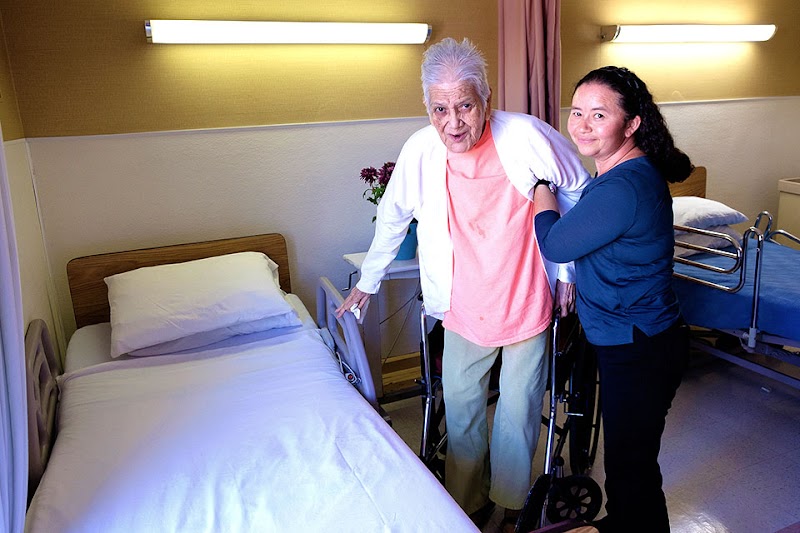
How is Burlington Convalescent Hospital Staffed?

CMS rates BURLINGTON CONVALESCENT HOSPITAL's staffing level at 3 out of 5 stars, which is average compared to other nursing homes. Staff turnover is 37%, compared to the California average of 46%. This relatively stable workforce can support continuity of care.

What Have Inspectors Found at Burlington Convalescent Hospital?

State health inspectors documented 36 deficiencies at BURLINGTON CONVALESCENT HOSPITAL during 2022 to 2025. These included: 1 that caused actual resident harm, 32 with potential for harm, and 3 minor or isolated issues. Deficiencies causing actual harm indicate documented cases where residents experienced negative health consequences.
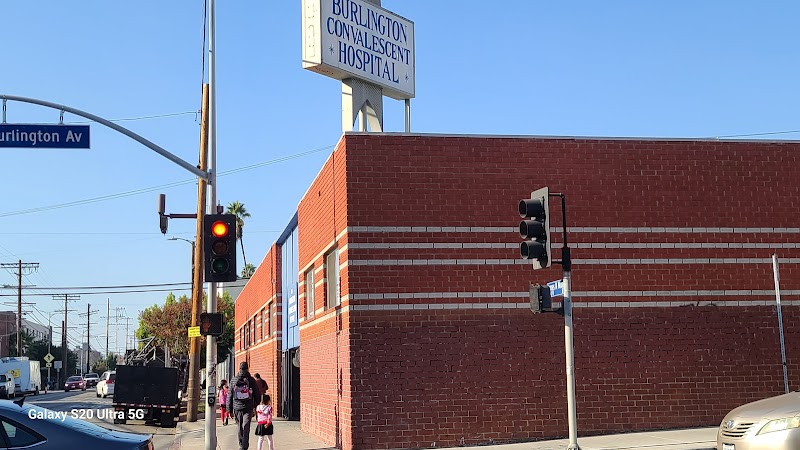
Who Owns and Operates Burlington Convalescent Hospital?

BURLINGTON CONVALESCENT HOSPITAL is owned by a for-profit company. For-profit facilities operate as businesses with obligations to shareholders or private owners. The facility is operated by LONGWOOD MANAGEMENT CORPORATION, a chain that manages multiple nursing homes. With 124 certified beds and approximately 116 residents (about 94% occupancy), it is a mid-sized facility located in LOS ANGELES, California.
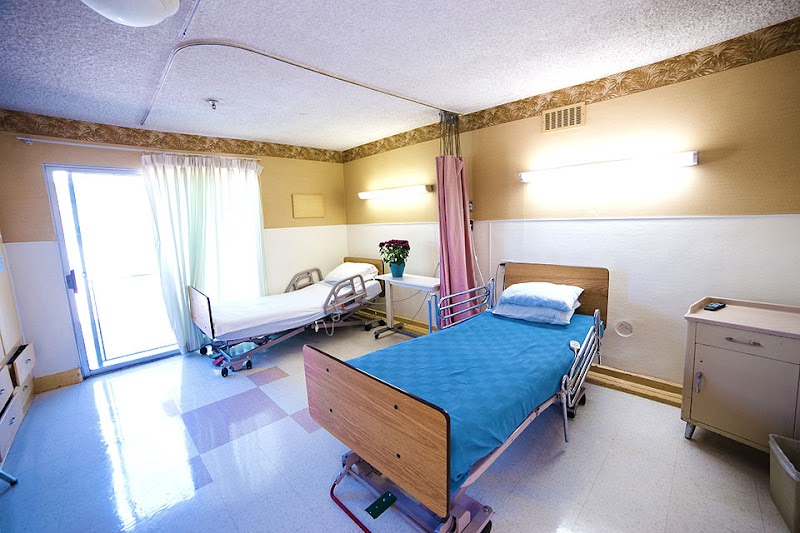
How Does Burlington Convalescent Hospital Compare to Other California Nursing Homes?

Compared to the 100 nursing homes in California, BURLINGTON CONVALESCENT HOSPITAL's overall rating (4 stars) is above the state average of 3.2, staff turnover (37%) is near the state average of 46%, and health inspection rating (3 stars) is at the national benchmark.

What Should Families Ask When Visiting Burlington Convalescent Hospital?

Based on this facility's data, families visiting should ask: "Can I visit during a mealtime to observe dining assistance and food quality?" "How do you handle medical emergencies, and what is your hospital transfer rate?" "Can I speak with family members of current residents about their experience?"

Is Burlington Convalescent Hospital Safe?

Based on CMS inspection data, BURLINGTON CONVALESCENT HOSPITAL has a clean safety record: no substantiated abuse findings (meaning no confirmed cases of resident harm), no Immediate Jeopardy citations (the most serious violation level indicating risk of serious injury or death), and is not on the Special Focus Facility watch list (a federal program monitoring the lowest-performing 1% of nursing homes). The facility has a 4-star overall rating and ranks #1 of 100 nursing homes in California. While no facility is perfect, families should still ask about staff-to-resident ratios and recent inspection results during their visit.

Do Nurses at Burlington Convalescent Hospital Stick Around?

BURLINGTON CONVALESCENT HOSPITAL has a staff turnover rate of 37%, which is about average for California nursing homes (state average: 46%). Moderate turnover is common in nursing homes, but families should still ask about staff tenure and how the facility maintains care continuity when employees leave.

Was Burlington Convalescent Hospital Ever Fined?

BURLINGTON CONVALESCENT HOSPITAL has been fined $11,625 across 1 penalty action. This is below the California average of $33,195. While any fine indicates a compliance issue, fines under $50,000 are relatively common and typically reflect isolated problems that were subsequently corrected. Families should ask what specific issues led to these fines and confirm they've been resolved.

Is Burlington Convalescent Hospital on Any Federal Watch List?

BURLINGTON CONVALESCENT HOSPITAL is not on any federal watch list. The most significant is the Special Focus Facility (SFF) program, which identifies the bottom 1% of nursing homes nationally based on persistent, serious quality problems. Not being on this list means the facility has avoided the pattern of deficiencies that triggers enhanced federal oversight. This is a positive indicator, though families should still review the facility's inspection history directly.