GUARDIAN REHABILITATION HOSPITAL
533 S. FAIRFAX AVE, LOS ANGELES, CA 90036 (323) 931-1061
For profit - Corporation 93 Beds THE MANDELBAUM FAMILY Data: November 2025
Trust Grade
70/100
#89 of 1155 in CA
Last Inspection: January 2025

Within standard 12-15 month inspection cycle. Federal law requires annual inspections.

Overview

Guardian Rehabilitation Hospital has a Trust Grade of B, indicating it is a good choice, ranking in the top half of California facilities at #89 out of 1,155. Within Los Angeles County, it stands at #20 out of 369, showing it is one of the better local options. The facility is improving, with reported issues decreasing from 26 in 2024 to just 7 in 2025. Staffing is rated at 4 out of 5 stars, though turnover is average at 40%, which is similar to the state average. However, there are concerning aspects, including $32,040 in fines, which is higher than 75% of California facilities, suggesting ongoing compliance issues. Specific incidents include a serious case where a resident, who was at high risk for falls, fell from her bed and suffered significant injuries due to a lack of safety measures. Additionally, there were failures to ensure proper staffing hours were posted, preventing families from knowing who was available to care for their loved ones. Lastly, some residents did not receive the necessary services for maintaining their mobility, which could lead to further health complications. Overall, while there are notable strengths in care quality and improvement trends, these weaknesses highlight the need for ongoing attention to safety and compliance.

Trust Score
B
70/100
In California
#89/1155
Top 7%
Safety Record
Moderate
Needs review
Inspections
Getting Better
26 → 7 violations
Staff Stability
○ Average
40% turnover. Near California's 48% average. Typical for the industry.
Penalties
✓ Good
$32,040 in fines. Lower than most California facilities. Relatively clean record.
Skilled Nurses
○ Average
Each resident gets 38 minutes of Registered Nurse (RN) attention daily — about average for California. RNs are the most trained staff who monitor for health changes.
Violations
⚠ Watch
46 deficiencies on record. Higher than average. Multiple issues found across inspections.
★★★★★
5.0
Overall Rating
★★★★☆
4.0
Staff Levels
★★★★★
5.0
Care Quality
★★★★☆
4.0
Inspection Score
Stable
2024: 26 issues
2025: 7 issues

The Good

  • 4-Star Staffing Rating · Above-average nurse staffing levels
  • 5-Star Quality Measures · Strong clinical quality outcomes
  • Full Sprinkler Coverage · Fire safety systems throughout facility
  • No fines on record
  • Staff turnover below average (40%)

    8 points below California average of 48%

Facility shows strength in staffing levels, quality measures, fire safety.

The Bad

Staff Turnover: 40%

Near California avg (46%)

Typical for the industry

Federal Fines: $32,040

Below median ($33,413)

Moderate penalties - review what triggered them

Chain: THE MANDELBAUM FAMILY

Part of a multi-facility chain

Ask about local staffing decisions and management

The Ugly 46 deficiencies on record

1 actual harm
Jan 2025 7 deficiencies
CONCERN (D)

Potential for Harm - no one hurt, but risky conditions existed

Accident Prevention (Tag F0689)

Could have caused harm · This affected 1 resident

Based on observation, interview, and record review, the facility failed to implement interventions to prevent accident risks and hazards for one of five sampled residents (Resident 77. Resident 77 was...

Read full inspector narrative →
Based on observation, interview, and record review, the facility failed to implement interventions to prevent accident risks and hazards for one of five sampled residents (Resident 77. Resident 77 was not provided supervision and assistance with transfers. This deficient practice resulted in Resident 77 sustaining a fall on 1/27/2025, which had the potential for the resident to develop an injury. Findings: A review of Resident 77's admission Record indicated the facility admitted the resident on 1/9/2025 with diagnoses including hemiplegia (severe or complete loss of strength or paralysis on one side of the body) and hemiparesis (mild or partial weakness or loss of strength on one side of the body), difficulty in walking, lack of coordination (a condition that affects the body's ability to control and execute smooth, precise movements), cerebral infarction (stroke, injury to part of the brain that can affect the use of the body and the ability to speak and walk), depression (a mood disorder that causes a persistent feeling of sadness and loss of interest and can interfere with your daily activities of living), and unspecified mood affective disorder (a group of mental health conditions characterized by significant and persistent disturbances in mood). A review of Resident 77's Minimum Data Set (MDS, a resident assessment tool) dated 1/16/2025, indicated the resident had severe cognitive impairment (ability to think, understand, and reason) and normally used a walker and a wheelchair. The MDS indicated Resident 77 required substantial / maximal assistance (helper does more than half the effort) with toileting hygiene, required partial / moderate assistance (helper does less than half the effort) with walking 10 feet, with sitting to standing, and with transferring to and from a bed to a chair or wheelchair. The MDS further indicated Resident 77 did not have any fall history on admission to the facility. A review of Resident 77's Fall Risk Evaluation dated 1/23/2025, indicated the resident was considered a high risk for potential falls. A review of Resident 77's care plan revised 1/23/2025, indicated the resident had an actual fall on 1/22/2025 and an unwitnessed fall on 1/23/2025. The care plan indicated the goal for Resident 77 was to be free from future falls and complications. The care plan interventions included frequent visual monitoring, placing the call light within easy reach, encouraging the resident not to get up without assistance, keeping the resident's surroundings free from clutter, and applying a bed alarm. During a concurrent observation and interview on 1/27/2025 at 12:38 AM, in Resident 77's room, the resident was observed sitting on floor, a wheelchair was observed near the resident, and the resident's call light was lying on the bed. Resident 77 stated he did not know how he got on the floor. There were no injuries observed on Resident 77's head or body. Resident 77 stated he was not in pain. Further observation indicated there were no facility staff present in Resident 77's room. During an interview on 1/27/2025 at 1 PM, Registered Nurse Supervisor (RNS) 1 stated Resident 77 fell from his wheelchair. RNS 1 stated Resident 77 was brought into his room by wheelchair from the dining room prior to the fall. RNS 1 stated that she assessed Resident 77, and the resident did not have any visible physical injuries. RNS 1 stated Resident 77 was not in pain but could not recall what happened. RNS 1 stated Resident 77's Nurse Practitioner (NP) was at bedside assessing the resident and provided orders to transfer the resident to the General Acute Care Hospital (GACH). RNS 1 stated there were no staff that saw Resident 77 fall. RNS 1 stated Resident 77 was a high risk for falls and normally needed assistance with transferring from the wheelchair, the bed, and with ambulation to the bathroom. RNS 1 stated if Resident 77 had assistance with transferring the resident would not have attempted to get out of the wheelchair by themselves and would not have fallen. RNS 1 stated there was a potential Resident 77 could have injured himself because of the fall. A review of Resident 77's SBAR (situation, background, assessment, recommendation - a communication tool used by healthcare workers when there is a change of condition among the residents) Communication Form dated 1/27/2025, indicated the resident had a fall, was awake, verbally responsive, and had no shortness of breath. The form indicated Resident 77 was found sitting on the floor, was assessed and denied any pain or discomfort. The form indicated Resident 77 was able to move both upper and lower extremities without difficulty and had no new skin breakdown. The form indicated Resident 77 answered incoherently and the Nurse Practitioner was notified. A review of the Physician's Order dated 1/27/2025 at 1:46 PM, indicated Resident 77 was transferred to GACH 1 for further evaluation status post fall. A review of Resident 77's GACH After Visit Summary dated 1/27/2025, indicated the resident was seen in the emergency department when he was found fallen out of his wheelchair. The summary indicated Resident 77 had a Computed Tomography (CT - diagnostic imaging procedure that uses a computer linked x-ray machine to create detailed images of the inside of the body) scan of the brain and neck which did not show any internal bleeding or injuries. The summary indicated Resident 77's blood work did not show any acute abnormal findings. The summary further indicated it was safe for Resident 77 to return to the facility. During an interview on 1/30/2025 at 2:45 PM, the Director of Nursing (DON) stated Resident 77 was a high risk for potential falls and had fallen before at the facility. The DON stated Resident 77 needed assistance transferring and was not safe to ambulate on their own. The DON stated Resident 77 needed frequent visual monitoring and supervision to prevent falls. The DON stated there was a potential for Resident 77 to fall again and develop an injury if the resident would not be adequately monitored and supervised. A review of the facility's policy and procedure titled, Fall Risk & Prevention of Injury to Include Pathological Fractures, reviewed 1/14/2025 indicated, It is the policy of the facility to identify residents that are at risk for falls and to implement a plan of care in an attempt to prevent falls. This include minimizing risk for pathological fractures .If the Fall Risk Assessment score is ten (10) or above, the resident is at risk for falls and a plan of care will be developed with approaches in an attempt to prevent falls, including falls with serious injury .Approaches to prevent falls and/or fracture may include: . Encouraging the resident to ask for assistance .scheduled toileting programs .assisting residents with ambulation as appropriate.
CONCERN (D)

Potential for Harm - no one hurt, but risky conditions existed

Respiratory Care (Tag F0695)

Could have caused harm · This affected 1 resident

**NOTE- TERMS IN BRACKETS HAVE BEEN EDITED TO PROTECT CONFIDENTIALITY** Based on observation, interview and record review, the facility failed to ensure one sampled resident (Resident 230) receiving o...

Read full inspector narrative →
**NOTE- TERMS IN BRACKETS HAVE BEEN EDITED TO PROTECT CONFIDENTIALITY** Based on observation, interview and record review, the facility failed to ensure one sampled resident (Resident 230) receiving oxygen therapy had properly labeled nasal cannula (tubing that provides additional oxygen through the nose), pre-filled humidifier (a medical device that adds water vapor to oxygen to help prevent dry air from irritating the sinuses and lungs), and a physician's order to administer the oxygen therapy. This deficient practice caused an increased risk in Resident 230 having skin breakdown and exacerbation of symptoms. Findings: A review of Resident 230's admission record indicated the resident was admitted to the facility on [DATE] with a diagnoses including chronic obstructive pulmonary disease (COPD-a chronic lung disease causing difficulty in breathing), cerebral infarction (a medical condition where blood flow to the brain is interrupted, causing brain tissue to die), and nicotine dependence. A review of Resident 230's Minimum Data Set (MDS - a resident assessment tool), dated 1/31/25, indicated no acute change in mental status, resident was alert and oriented, and had no indicators for psychosis. During a concurrent observation and interview on 1/27/25 at 9:35 am with Licensed Vocational Nurse (LVN) 2 in Resident 230's room, Resident 230 was lying in bed on her cell phone with the call light was within reach. During the observation, Resident 230 received oxygen at two liters via nasal cannula with a pre-filled humidifier. LVN 2 confirmed and stated Resident 230's nasal cannula and humidifier were not labeled, and both should be labeled. During concurrent interview and record review on 1/28/25 at 9:48 am with the Director of Staff Development (DSD), Resident 230's physician's orders were reviewed. The physician's orders indicated Resident 230 did not have an order for oxygen. The DSD stated she did not see the order for oxygen for Resident 230. The DSD stated there must be a physician's order for oxygen for residents diagnosed with COPD. The DSD stated the risk to Resident 230 was the special parameters for residents with COPD on oxygen may be missed. A review of the Physician's Order dated 1/28/25 timed at 10:07 am, indicated Resident 230 to receive oxygen via nasal cannula on continuous flow to maintain the oxygen saturation (measure of how well the body is oxygenating the blood) above 94% for diagnosis of COPD. During an interview on 1/29/25 at 9:07 am, the Director of Nursing (DON) stated both the nasal cannula and humidifier should be labeled with date and initials of the nurse who prepped the oxygen. The DON stated the risk to Resident 230 without labeling the nasal cannula and humidifier would be skin breakdown and the humidifier could run out which caused Resident 230 to have an exacerbation of symptoms such as shortness of breath. The DON stated when there was a respiratory diagnosis, there was a standard as needed oxygen order that was used, unless the nurse practitioner or physician had other oxygen orders. The DON stated for Resident 230, the standing order should have been initiated but it was missed upon the resident's admission. The DON stated the risk to Resident 230 without a physician's order would be the nurses could not administer the required oxygen. A review of the facility's policy and procedure (P&P) titled, Oxygen Administration, dated 3/2017, indicated to verify there was a physician's order for oxygen administration. A review of the facility's P&P titled, Oxygen Concentrators, dated 6/2017, indicated pre-filled humidifiers should be dated and replaced weekly or as needed.
CONCERN (D)

Potential for Harm - no one hurt, but risky conditions existed

Medical Records (Tag F0842)

Could have caused harm · This affected 1 resident

**NOTE- TERMS IN BRACKETS HAVE BEEN EDITED TO PROTECT CONFIDENTIALITY** Based on observation, interview, and record review, the facility failed to maintain complete and accurate documentation for one ...

Read full inspector narrative →
**NOTE- TERMS IN BRACKETS HAVE BEEN EDITED TO PROTECT CONFIDENTIALITY** Based on observation, interview, and record review, the facility failed to maintain complete and accurate documentation for one of six sampled residents (Resident 49), when Resident 49's tolerance of both knee splints (rigid material or apparatus used to support and immobilize a broken bone or impaired joint) were not documented with the accurate time. This deficient practice had the potential for inaccurate medical documentation and reporting of RNA treatments, which can minimize the facility's ability to recognize a change of condition and reassess Resident 49's tolerance for knee splints. Findings: A review of Resident 49's admission Record indicated the resident was originally admitted to the facility on [DATE] and readmitted on [DATE] with diagnoses including severe sepsis (a life-threatening blood infection) with septic shock (life-threatening drop in blood pressure), muscle wasting and atrophy (gradual decline), generalized osteoarthritis (a progressive disorder of the joints, caused by a gradual loss of cartilage). A review of Resident 49's History and Physical (H&P) dated 11/14/24 indicated the resident lacked the capacity to make medical decisions. According to a review of Resident 49's Care Plan for Contractures revised 11/21/24, the resident was at risk for contractures related to limited mobility with impaired ROM of BUE and BLE. The care plan goal indicated Resident 49 would minimize the incidence of contractures daily for 90 days. The interventions indicated to report any abnormality to physician, RNA program as ordered, and physical therapy (PT, a rehabilitation profession that restores, maintains, and promotes optimal physical function) and occupational therapy (OT, rehabilitative profession that provides services to increase and/or maintain a person's capability to participate in everyday life activities) evaluation and treatment. A review of Resident 49's Minimum Data Set (MDS - a resident assessment tool) dated 10/29/25, indicated the resident had severe cognitive impairments (difficulty with or unable to make decisions, learn, remembering things), had functional limitations in range of motion (ROM) on both sides of the lower extremities (hip, knee, ankle, foot), and did not have any functional limitations in ROM on the upper extremities (UE, shoulder, elbow, wrist, hand). The MDS also indicated Resident 49 required dependent assistance from staff with toileting hygiene, showering, lower body dressing, sit to lying, sit to stand, and bed-to-chair transfers. A review of the Physician's Order Summary Report dated 1/28/25, indicated on 12/13/24 for RNAs to perform donning (put on) and doffing (take off) of bilateral (both sides) knee splints four to six hours as tolerated to prevent further tightness / contracture (a stiffening/shortening at any joint, that reduces the joint's range of motion) once a day seven days a week. A review of Resident 49's January 2025 RNA flowsheet, there was no indication of how many hours Resident 49 wore both knee splints from 1/1 to 1/27/25, for the RNA task to perform donning/doffing of bilateral knee splints 4 to 6 hours as tolerated to prevent further tightness/contracture once a day, seven times a week. During an observation and interview on 1/28/25 at 10:17 a.m., in Resident 49's room, Resident 49 was sitting up in a wheelchair next to the bed. Restorative Nursing Aide (RNA) 1 performed ROM exercises to Resident 49's BUE and BLE. RNA 1 stated he could not find the knee splints and did not put on the knee splints for the resident. At the conclusion of the RNA treatment, RNA 1 reviewed Resident 49's January 2025 RNA flowsheet documentation and stated, yesterday on 1/27/25, Resident 49 tolerated both knee splints for two hours only. RNA 1 did not document the splint wearing time on the RNA flowsheet. RNA 1 reviewed the front and back of the RNA flowsheet and confirmed it was not documented. RNA 1 stated Resident 49 sometimes could tolerate the splints for four hours, but sometimes she could only tolerate two hours. RNA 1 stated it should be documented how long Resident 49 was wearing the knee splints each day. RNA 1 stated there were other days Resident 49 could only tolerate two hours, but he could not remember which days because he did not document it. RNA 1 could remember that yesterday, 1/27/25, Resident 49 could tolerate wearing both knee splints for two hours. During an interview and record review on 1/28/25 at 10:51 a.m., the Physical Therapist (PT)1 stated if an RNA order indicated to put on the splints for 4 to 6 hours, it meant that the RNAs should put on the splints for 4 to 6 hours. PT 1 stated if the resident could not tolerate the splints for 4 or 6 hours, it should be documented and it should be reported to the therapy department, because it could mean that the resident may need to have therapy again to assess and adjust the splints. During a concurrent interview and record review on 1/29/25 at 9:51 a.m. with the Director of Staff Development (DSD), Resident 49's January 2025 RNA flowsheet was reviewed. The DSD stated RNA 1 did not document Resident 49 tolerated wearing both knee splints for two hours on 1/27/25. The DSD stated the RNA order for Resident 49 was to wear both knee splints for four to six hours and RNAs should document how long Resident 49 tolerated the splints each day. The DSD stated the RNA documentation should be accurate and include how long Resident 49 could tolerate the splints, because documentation should reflect what happened to the resident during RNA treatment. During an interview on 1/29/25 at 2:22 p.m., the Director of Nursing (DON) stated the RNA program was established by therapy and the program helped the residents to maintain their strength and function. The DON stated it was important for the RNAs to follow the RNA orders. The DON stated RNAs needed to document accurately to reflect what was happening during RNA treatment including how long a resident was wearing a splint. A review of the facility's policy and procedure (P&P) titled, Documentation Principles, dated 11/17, indicated resident's health record shall be current and kept in detail consistent with good medical and professional practice based on the service provided to each resident. Entries must be accurate .specific - definite .descriptive - adequately explained.
CONCERN (E)

Potential for Harm - no one hurt, but risky conditions existed

Deficiency F0688 (Tag F0688)

Could have caused harm · This affected multiple residents

**NOTE- TERMS IN BRACKETS HAVE BEEN EDITED TO PROTECT CONFIDENTIALITY** Based on observation, interview, and record review, the facility failed to ensure two of seven sampled residents (Residents 49 a...

Read full inspector narrative →
**NOTE- TERMS IN BRACKETS HAVE BEEN EDITED TO PROTECT CONFIDENTIALITY** Based on observation, interview, and record review, the facility failed to ensure two of seven sampled residents (Residents 49 and 54) received appropriate services to prevent a decline in range of motion (ROM, full movement potential of a joint) and mobility by failing to: -For Resident 49, put on a left knee splint correctly during the 1/28/25 Restorative Nursing Aide (RNA, nursing aide program that help residents to maintain their function and joint mobility) treatment session as ordered by a physician. -For Resident 49, provide an appropriate RNA order for wearing both knee splints for no more than three hours as determined by physical therapy. -For Resident 54, provide resident with active range of motion (AROM, movement at a given joint when the person moves voluntarily) exercises to both upper extremities and both lower extremities during the 1/28/25 RNA treatment session as ordered by a physician. These deficient practices had the potential for injury and worsening of contractures (a stiffening / shortening at any joint, that reduces the joint's range of motion) in Resident 49 and a decline in strength and functioning in Resident 54. CROSS REFERENCE TO F726 Findings: a. A review of Resident 49's admission Record indicated the resident was originally admitted to the facility on [DATE] and readmitted on [DATE] with diagnoses including severe sepsis (a life-threatening blood infection) with septic shock (life-threatening drop in blood pressure), muscle wasting and atrophy (gradual decline), and generalized osteoarthritis (a progressive disorder of the joints, caused by a gradual loss of cartilage). A review of Resident 49's History and Physical (H&P) dated 11/14/24 indicated the resident lacked the capacity to make medical decisions. A review of Resident 49's Contractures Care Plan revised 11/21/24, indicated the resident was at risk for contractures related to limited mobility with impaired ROM of BUE and BLE. The care plan interventions indicated to report any abnormality to physician, RNA program as ordered, and physical therapy (PT, a rehabilitation profession that restores, maintains, and promotes optimal physical function) and occupational therapy (OT, rehabilitative profession that provides services to increase and/or maintain a person's capability to participate in everyday life activities) evaluation and treatment. A review of the Physician's Order Summary Report dated 12/13/24 indicated for RNAs to perform donning (put on) and doffing (take off) of bilateral (both sides) knee splints four to six hours as tolerated for Resident 49, to prevent further tightness / contracture once a day seven days a week. A review of Resident 49's Minimum Data Set (MDS - a resident assessment tool) dated 10/29/25, indicated the resident had severe cognitive impairments (difficulty with or unable to make decisions, learn, remembering things), had functional limitations in ROM on both sides of the lower extremities (LE, hip, knee, ankle, foot) and did not have any functional limitations in ROM on the upper extremities (UE, shoulder, elbow, wrist, hand). The MDS indicated Resident 49 required dependent assistance from staff with toileting hygiene, showering, lower body dressing, sit to lying, sit to stand, and bed-to-chair transfers. During an observation on 1/28/25 at 10:38 a.m., in Resident 49's room, Resident 49 was sitting up in a wheelchair. RNA 1 took two splints from the closet and put the knee splints on Resident 49's left and right knees. RNA 1 put the left knee splint low on the Resident 49's leg and the knee portion of the splint was on the lower part of the leg and not over the left knee. RNA 1 put the right knee splint over the right knee. RNA 1 then indicated the RNA treatment was complete and left the room. During an observation and concurrent interview on 1/28/25 at 11:07 a.m., in Resident 49's room, Physical Therapist (PT) 1 observed the left knee splint on Resident 49's left leg and stated the left knee splint was too low and should be put on higher. PT 1 proceeded to take off the left knee splint and placed it higher on Resident 49's leg and the knee portion of the splint was over the left knee. PT 1 stated splints should be put on correctly because otherwise the splints were not serving its purpose, and the contracture could get worse. During an interview on 1/29/25 at 2:22 p.m., the Director of Nursing (DON) stated RNAs need to place splints on residents correctly so that residents did not develop contractures and have limitations in ROM. A review of the facility's policy and procedure (P&P) titled, Splint Application, revised 5/17 indicated, Splints must be applied correctly to maintain the resident's range of motion and prevent contractures and further loss of range of motion. b. A review of Resident 49's Physical Therapy Evaluation and Plan for Treatment dated 11/14/24, indicated the resident had impairments in ROM in both knees in extension (cannot fully straighten both knees). The PT Evaluation indicated a long-term goal for Resident 49 to safely wear a knee extension splint on left knee and right knee for up to four hours with minimal signs and symptoms of redness, swelling, discomfort or pain. A review of Resident 49's PT Treatment Encounter Notes dated 11/19/24, indicated the resident tolerated both knee splints for 30 minutes. The PT Treatment Encounter Notes indicated on : -11/26/24, Resident 49 tolerated both knee splints for 45 minutes. -11/27/24, Resident 49 tolerated both knee splints for 45 minutes. -12/2/24, Resident 49 tolerated both knee splints for 45 minutes. -12/3/24, Resident 49 tolerated both knee splints for one hour -12/4/24, Resident 49 tolerated both knee splints for one hour. -12/5/24, Resident 49 tolerated both knee splints for two hours. -12/6/24, Resident 49 tolerated both knee splints for two and a half hours. -12/9/24, Resident 49 tolerated both knee splints for three hours without signs of skin breakdown or redness. -12/10/24, Resident 49 tolerated both knee splints for three hours without adverse skin effects. -12/11/24, Resident 49 tolerated both knee splints for three hours. A review of the PT Discharge summary dated [DATE], indicated Resident 49's maximum tolerance for the goal of wearing a knee extension splint on left and right knee with minimal signs and symptoms of redness, swelling, discomfort or pain was three hours. During a concurrent interview and record review on 1/29/25 at 9:19 a.m. with PT 1, Resident 49's Physical Therapy records were reviewed. PT 1 stated PT established the maximum time Resident 49 could tolerate both knee splints without the splints bothering her was three hours. PT 1 stated three hours was the safe wearing time for Resident 49 without the splints causing skin irritation or breakdown or pain. PT 1 stated Resident 49's current RNA order was to wear both knee splints for four to six hours as tolerated. PT 1 stated the RNA order should not be to wear both knee splints for four to six hours, it should be to wear both knee splints for three hours maximum. PT 1 stated because Resident 49 was tolerating the knee splints for three hours with PT, Resident 49 should not wear the knee splint for more than three hours, because Resident 49 could have skin irritation, pain, skin breakdown, and soreness. A review of the facility's P&P titled, Splint Application, revised 5/17, indicated splints be applied correctly to maintain the resident's range of motion and prevent contractures and further loss of range of motion. c. A review of Resident 54's admission Record indicated the resident was admitted to the facility on [DATE] with diagnoses including hemiplegia (weakness to one side of the body) and hemiparesis (inability to move one side of the body) following cerebral infarction (blockage of the flow of blood brain, causing or resulting in brain tissue death) affecting left non-dominant side and bilateral primary osteoarthritis (a progressive disorder of the joints, caused by a gradual loss of cartilage) of knee. A review of Resident 54's MDS dated [DATE], indicated the resident had no cognitive impairment, had functional limitation in ROM impairment on one side of the upper extremity, and did not have any functional limitation in ROM on the lower extremities. The MDS indicated Resident 54 required setup or clean-up assistance with eating and oral hygiene, moderate assistance with bed mobility, sit to stand, bed-to-chair transfers, and walking, and dependent assistance with toileting hygiene and lower body dressing. The MDS also indicated Resident 54 received six days of RNA for active ROM and six days of RNA for walking. A review of the Physician's Order Summary Report dated 1/28/25, indicated the following orders for Resident 54: -RNAs to perform ambulation using front-wheeled walker (FWW, type of mobility aid with wide base of support and two wheels in the front) once a day, six times a week as tolerated dated 7/2/24. -RNAs to perform AROM to BLE every day six times a week as tolerated dated 7/2/24. -RNAs to perform AROM to BUE every day six times a week as tolerated dated 7/2/24. -RNAs to supervise resident using stationary bike (personal bike) for 10 minutes every day six times a week as tolerated dated 12/9/24. A review of Resident 54's Musculoskeletal Care Plan revised 12/12/24, indicated the resident was at risk for impaired mobility and function related to limited mobility, impaired ROM of RUE, and left sided hemiplegia. The care plan goal indicated to maintain current level of function without any signs and symptoms of complications daily for 90 days. The care plan interventions included RNA program as ordered. A review of Resident 54's Contractures Care Plan, revised 12/12/24, indicated the resident was at risk for impaired contractures related to limited mobility and impaired ROM of RUE. The goal indicated to minimize incidence of contractures daily for 90 days and the care plan interventions included RNA program as ordered and encourage participation to exercise and activity program. During an observation and concurrent interview on 1/28/25 at 8:50 a.m., Resident 54 was sitting up in a wheelchair in Resident 54's room. Resident 54 stated she walked with RNA, would like to keep doing exercises for her arms and legs, and now only walked. Resident 54 stated walking did not help with the arms and legs. Resident 54 was able to move both arms a little past shoulder level, and was able to straighten and bend both elbows, wrist and fingers. During an observation of Resident 54's RNA treatment session and interview on 1/28/25 at 9:51 a.m., Resident 54 was sitting in a WC in the hallway. RNA 1 and RNA 2 assisted Resident 54 to stand up. RNA 1 walked with Resident 54 with FWW while RNA 2 followed behind with the wheelchair. Resident 54 ambulated down two and a half hallways and sat down to rest for about four minutes. Resident 54 proceeded to walk with the FWW down half a hallway back into Resident 54's room. RNA 1 assisted Resident 54 in setting up the personal leg exercise stepper and Resident 54 completed the exercise for 10 minutes. RNA 1 left Resident 54's room and went to another resident's room to complete the RNA treatment for a different resident. Resident 54 did not perform any AROM exercises with RNA. During an interview and record review on 1/28/25 at 10:28 a.m., RNA 1 reviewed Resident 54's RNA orders and stated Resident 54 had RNA orders for AROM for BUE and BLE six times a week. RNA 1 stated RNA 1 did not complete the AROM exercises yet for BUE and BLE and would go back to Resident 54 to complete those exercises. During an observation and concurrent interview on 1/28/25 at 10:38 a.m., Resident 54 was sitting up in a wheelchair in Resident 54's room. RNA 1 put his hand on Resident 54's elbow and wrists and performed passive range of motion (PROM, movement at a given joint with full assistance from another person) to Resident 54's right shoulder, right elbow, right wrist, right fingers followed by PROM to Resident 54's left shoulder, left elbow, left wrist, and left fingers. RNA 1 then left Resident 54's room. RNA 1 did not complete any AROM exercises for Resident 54's BUE or BLE. RNA 1 stated Resident 54 had orders for AROM for BUE and BLE. On 1/28/25 at 10:51 a.m., during an interview, PT 1 stated residents were discharged after therapy to an RNA program depending on each resident's capacity. PT 1 stated if residents had the cognition and strength to complete AROM exercises, then residents would be put on an RNA program for AROM exercises. During an interview on 1/28/25 at 11:07 a.m., PT 1 stated RNAs should be following the AROM exercise RNA orders as written in order for the residents to use their muscles and maintain their strength. PT 1 stated residents who could perform AROM exercises should not do passive ROM exercises, because the residents could get weaker or develop contractures. During an interview on 1/29/25 at 10:07 a.m., the Director of Staff Development (DSD) stated Resident 54 had an order for RNA for AROM for BUE and BLE. The DSD stated that RNAs should perform AROM exercises for BUE and BLE for Resident 54 because that was the physician's order and that was the specific program that the rehabilitation department determined was appropriate for Resident 54. The DSD stated it was important for Resident 54 to perform the BUE and BLE AROM exercises herself because otherwise Resident 54 would rely on equipment or others to move their joints. During an interview on 1/29/25 at 2:22 p.m., the Director of Nursing (DON) stated the RNA program was to help residents maintain their strength, endurance, and abilities so that the residents did not decline in ambulation and function. The DON stated the RNA program was established by rehabilitation department for each resident. The DON stated it was important for RNAs to follow the RNA program and RNA orders. The DON stated it was important for RNAs to communicate if they were not completing AROM exercises for the resident. A review of the facility's P&P titled, Limitations in Range of Motion and Mobility and Referrals for Therapy, revised 10/17, indicated a resident who enters the facility without limited range of motion did not experience a reduction in range of motion. A resident with limited range of motion would be provided appropriate treatment and services.
CONCERN (E)

Potential for Harm - no one hurt, but risky conditions existed

Deficiency F0726 (Tag F0726)

Could have caused harm · This affected multiple residents

Based on observation, interview, and record review, the facility failed to ensure annual competencies were completed for six of six sampled Restorative Nursing Aides, who perform RNA program tasks inc...

Read full inspector narrative →
Based on observation, interview, and record review, the facility failed to ensure annual competencies were completed for six of six sampled Restorative Nursing Aides, who perform RNA program tasks including putting on and taking off splints and braces. This deficient practice had the potential to result in injury, worsening contractures (a stiffening/shortening at any joint, that reduces the joint's range of motion), and skin breakdown for residents who require splints and braces for physical therapy. CROSS REFERENCE TO F688 Findings: A review of Restorative Nursing Aide (RNA) 2's RNA Competency Evaluation dated 8/23/24 indicated there was no skills performance check on how to put on and take off splints and braces. A review of RNA 1's RNA Competency Evaluation dated 11/18/24 indicated there was no skills performance check on how to put on and take off splints and braces. A review of RNA 3's RNA Competency Evaluation dated 11/29/24 indicated there was no skills performance check on how to put on and take off splints and braces. Further review of RNA 4, 5 and 6's competency evaluations indicated there was no skills performance check on how to put on and take off splints and braces. During an observation on 1/28/25 at 10:38 a.m., in Resident 49's room, Resident 49 was sitting up in a wheelchair. Restorative Nursing Aide (RNA) 1 took two knee splints from the closet and placed knee splints on Resident 49's left and right knees. RNA 1 put the left knee splint low on the Resident 49's leg and the knee portion of the splint was on the lower part of the leg and not over the left knee. RNA 1 put the right knee splint over the right knee. RNA 1 indicated the RNA treatment was complete and left the room. During an observation and interview on 1/28/25 at 11:07 a.m. in Resident 49's room, Physical Therapist (PT) 1 observed the left knee splint on Resident 49's left leg and stated the left knee splint was too low and should be placed higher on the left leg. PT 1 proceeded to take off the left knee splint and placed it higher on Resident 49's leg where the knee portion of the splint was over the left knee. PT 1 stated splints should be put on correctly because otherwise the splints were not serving its purpose and Resident 49's contracture could get worse. During an interview and record review on 1/29/25 at 10:07 a.m., the Director of Staff Development (DSD) stated she was the supervisor for the RNAs and the RNA competencies were completed annually with the therapy department. The DSD reviewed RNA 1 and RNA 2's annual competency dated 11/18/24 and 8/23/24 and stated there was no competency check for how to put on and take off splints and braces. The DSD stated there should be a competency check for how to put on and take off splints and braces, because the facility needed to make sure the RNAs were putting the splints and braces on properly and in the correct place, to ensure it did not cause any injury to the residents. The DSD stated the RNA annual competency checklist did not include splints or braces. During an interview and record review on 1/29/25 at 2:48 p.m., the DSD reviewed annual competencies for RNA 3 4, 5 and 6 and confirmed the RNAs did not receive an annual competency for putting on and taking off splints and braces. During an interview and record review on 1/30/25 at 8:12 a.m., PT 1 reviewed the annual RNA competency checklist and confirmed PT 1 did not review and evaluate RNAs on splinting and brace skills. A review of the facility's policy and procedure titled, Policy for Staff Competencies, revised 1/2017, indicated, performance evaluations are to ensure that staff has the appropriate competencies and skills to assure resident safety and to provide care which includes assessing, evaluating, planning and implementing resident care plans and responding to resident needs, performance evaluations of staff will be completed annually. A review of the facility's policy and procedure titled, Splint Application, revised 5/2017, indicated, it is the policy of the facility that splints be applied correctly to maintain the resident's range of motion and prevent contractures and further loss of range of motion.
CONCERN (E)

Potential for Harm - no one hurt, but risky conditions existed

Room Equipment (Tag F0908)

Could have caused harm · This affected multiple residents

Based on observation, interview, and record review, the facility failed to maintain six of six electrical rehabilitation therapy (given to restore an individual back to their highest possible level of...

Read full inspector narrative →
Based on observation, interview, and record review, the facility failed to maintain six of six electrical rehabilitation therapy (given to restore an individual back to their highest possible level of physical, mental, and psychosocial well-being) equipment for resident use. This deficient practice had the potential for injury to residents using the therapy equipment during therapy treatment. Findings: A review of the upper and lower extremity bicycle - Therapy Equipment (TE) 1 and TE 2's User Manual (UM) revised 12/8/2020, indicated a Certificate of Conformance Inspection, consisting of an electrical safety check, was recommended to be performed at least biannually (every two years). Users should follow and complete the following recommendations on an ongoing basis: routinely check for power cord fraying or any other damages to the power cord. Check to ensure that the cycle ergometer was operating smoothly. Always check that the power cord, cardia pickup and display control cables were properly routed and were not in danger or being snagged/pulled by the lower or upper cycle operation. Always keep the system clean and keep any debris, such as paper, string, cloth, or clothing away from the cycle moving parts. A review of the automatic parallel bars (TE 4's) undated Operation and Service Guide (OSG) indicated, under Preventative Maintenance, to frequently inspect the power cord and plug for frayed wires and/or damaged insulation. Gears should be checked every six months for adequate grease. During an observation on 1/28/25 at 11:07 am, in the facility's Occupational Therapy (OT) gym, a resident was observed using an upper and lower extremity bicycle, (TE 1). During a concurrent interview, Physical Therapist (PT) 1 stated the facility's rehabilitation department had six different electrical equipment items for residents to use during therapy treatment sessions. PT 1 stated in the OT gym, there was a TE 1 and an adjustable work table (TE 3). PT 1 proceeded to walk to the gym on the other side and stated there was another upper and lower extremity bicycle (TE 2), automatic parallel bars (TE 4), an exercise leg stepper (TE 5), and an adjustable therapy mat (TE 6). PT 1 stated the rehabilitation department did not calibrate or check any of the six electrical therapy equipment items. During an interview on 1/28/25 at 3:15 pm, in the PT and OT gym, the facility's Maintenance Director (MTD) stated the staff did not have any logs or documentation of any preventive or general maintenance performed on the six therapy equipment items. The MTD stated he had not performed any maintenance checks on TE 3, TE 6, or TE 4 and had checked TE 1, TE 2, and TE 5 as needed, if the therapists reported any issues. During an interview on 1/29/25 at 8:40 am, the Administrator (ADM) stated the facility did not have any policy regarding maintenance of electrical equipment for the rehabilitation department. The ADM stated the facility's policy was to follow the manufacturer's manual for each equipment item. During an interview and record review on 1/29/25 at 10:25 am, the ADM stated it was important to perform maintenance on electrical rehabilitation equipment because residents could be injured by the equipment. The ADM stated the facility did not have a manufacturer's user manual for TE 3 (the adjustable work table). On 1/29/25 at 2:22 pm, during an interview, the Director of Nursing (DON) stated it was important to maintain the rehabilitation equipment, because many of the residents use the equipment during therapy to regain their strength and endurance to return to the community. The DON stated the rehabilitation equipment needed to be safe for the residents to use. A review of TE 5's undated UM indicated do not attempt any servicing or adjustments other than those described in this manual. All else must be left to trained serviced personnel familiar with electro-mechanical equipment and authorized under the laws of the country in question to carry out maintenance and repair work. TE 5's UM indicated under Maintenance to check the pedal to make sure they are tight (monthly), all bolts that were installed during assembly need to be tightened as much as possible. A review of TE 6's Operating and Technical Manual (OTM) revised 1/2016, indicated under Quality Assurance, It is recommended that a program of regular and appropriate quality assurance including electrical safety inspections be utilized for this equipment. A qualified service personnel or third party service organization should be capable of performing the necessary testing and documentation.
MINOR (B)

Minor Issue - procedural, no safety impact

Deficiency F0912 (Tag F0912)

Minor procedural issue · This affected multiple residents

**NOTE- TERMS IN BRACKETS HAVE BEEN EDITED TO PROTECT CONFIDENTIALITY** Based on observation, interview and record review, the facility failed to ensure two of 32 sampled resident rooms (room [ROOM NU...

Read full inspector narrative →
**NOTE- TERMS IN BRACKETS HAVE BEEN EDITED TO PROTECT CONFIDENTIALITY** Based on observation, interview and record review, the facility failed to ensure two of 32 sampled resident rooms (room [ROOM NUMBER] and 125) met the minimum space requirements of 80 square feet for each resident in multiple resident bedrooms. This deficient practice had the potential to result in inadequate space to provide safe nursing care and privacy for the residents in rooms [ROOM NUMBERS]. Findings: During an initial tour observation of the facility on 1/27/2025 from 9 AM to 11:20 AM, nursing staff were observed with enough space to provide care to the residents in each facility room. A review of a facility letter submitted to the Department, dated 1/27/2025, by the Administrator (ADM), indicated the facility requested a room variance for two resident rooms (room [ROOM NUMBER] and room [ROOM NUMBER]). The letter indicated that upon measurement, the rooms were slightly smaller than required, but the rooms had adequate space for the residents. The letter indicated the rooms were in accordance with the special needs of residents and would not have an adverse effect on the residents' health and safety or impede the ability of any resident in the room to attain his/her highest practicable well-being, The minimum square footage for a two (2) bedroom was 160 square feet. The minimum square footage for a three (3) bedroom was 240 square feet. The room waiver indicated rooms [ROOM NUMBERS] measurements were as follows: Room number Room size Number of Beds 102 158.35 square feet 2 125 229.54 square feet 3 During an interview on 1/30/2025 at 7:50 AM, Licensed Vocational Nurse (LVN) 1 stated he was taking care of the residents in room [ROOM NUMBER]. LVN 1 stated the room was a bit smaller when compared to other rooms but that the space was not an issue. LVN 1 stated the space in room [ROOM NUMBER] did not interfere with his ability to care for the residents in the room. During an interview on 1/30/2025 at 1:28 PM, Certified Nursing Assistant (CNA) 1 stated he was taking care of the residents in room [ROOM NUMBER]. CNA 1 stated he did not have any concerns about the amount of space in room [ROOM NUMBER] and that he felt the room was a good size. During a concurrent observation and interview on 1/30/2025 at 1:41 PM, in room [ROOM NUMBER], Resident 25 was observed being assisted by CNA 2 to her wheelchair. A dresser and bedside table were observed next to Resident 25's bed. Resident 25 stated she had no complaints about the space in her room and that she felt she had a good amount of space for her belongings. CNA 2 stated she was able to move Resident 25 in and out of her wheelchair without problems. CNA 2 stated she was fine with the amount of space in room [ROOM NUMBER]. During a concurrent observation and interview on 1/30/2025 at 2:10 PM, in room [ROOM NUMBER], Resident 27 was observed sitting on the side of his bed. A dresser and bedside table were observed next to Resident 27's bed. A wheelchair was observed on the wall across from Resident 27's bed. Resident 27 stated he had no problems with his room or the space in his room. Resident 27 stated the nursing staff was able to move him around in his wheelchair in the room.
Aug 2024 2 deficiencies
CONCERN (D) 📢 Someone Reported This

A family member, employee, or ombudsman was alarmed enough to file a formal complaint

Potential for Harm - no one hurt, but risky conditions existed

Assessment Accuracy (Tag F0641)

Could have caused harm · This affected 1 resident

**NOTE- TERMS IN BRACKETS HAVE BEEN EDITED TO PROTECT CONFIDENTIALITY** Based on interview and record review, the facility failed to ensure one of three sampled residents (Residents 1's) comprehensive...

Read full inspector narrative →
**NOTE- TERMS IN BRACKETS HAVE BEEN EDITED TO PROTECT CONFIDENTIALITY** Based on interview and record review, the facility failed to ensure one of three sampled residents (Residents 1's) comprehensive assessment accurately reflected the residents' history of fall and functional limitation in range of motion [ROM, full movement potential of a joint (where two bones meet)]. This deficient practice had the potential to result in a negative effect to Resident 1's plan of care that can lead to an injury or fall. Findings: a. A review of the Orthopaedic Surgery H&P notes from the General Acute Care Hospital (GACH) dated 7/15/24 indicated Resident 1 presented with right hip pain on 7/14 after an unwitnessed ground level fall at home. The clinical impression indicated a right hip fracture. A review of Resident 1 ' s admission Record indicated the facility originally admitted the resident on 7/21/24 with diagnoses including repeated falls and displaced comminuted fracture (bone breaks into three or more pieces) of shaft of right femur and was readmitted on [DATE] with diagnoses including periprosthetic fracture around internal prosthetic right hip joint (a broken bone that occurs around the implants of a total hip replacement). A review of Resident 1 ' s History and Physical (H&P), dated 7/23/24, indicated the resident had a history of fall and had fluctuating capacity to understand and make decisions. A review of Resident 1 ' s Minimum Data Set (MDS – a standardized resident assessment and care screening tool) dated 7/27/24, indicated the resident had severe cognitive impairment (problems with a person ' s ability to think, learn, remember, use judgement, and make decisions). The MDS indicated the resident was dependent (helper does all of the effort) with toilet hygiene and showering and required partial/moderate assistance (helper does less than half the effort) with eating, oral and personal hygiene. A review of the fall history section of the MDS indicated Resident 1 was coded as not having a fall in the last month or any fracture related to a fall in the last 6 months prior to admission/entry or reentry. A review of the functional limitation in ROM section of the MDS indicated the resident had no impairment on the lower extremity (hip, knee, ankle, foot). During a concurrent interview and record review on 8/21/24 at 10:54 AM with the MDS coordinator, Resident 1 ' s MDS Section J Health Conditions and Section GG Functional Abilities and Goals dated 7/27/24 were reviewed. The MDS Coordinator acknowledged the discrepancy and stated Resident 1 ' s Fall History in Section J and Functional Limitation in ROM in Section GG was inaccurate. The MDS coordinator stated the MDS should have indicated yes for a fall in the last month and a fracture related to a fall in the last 6 months prior to admission. The MDS Coordinator stated the MDS should have indicated impairment on one side of the lower extremity. The MDS coordinator stated it was important to have an accurate assessment of a residents fall history and ROM. During a concurrent interview and record review on 8/22/24 at 10:35 AM with the Director of Nursing (DON), Resident 1 ' s MDS Section J Health Conditions and Section GG Functional Abilities and Goals dated 7/27/24 were reviewed. The DON acknowledged the discrepancy in the Resident 1 ' s fall history and functional limitation of range of motion. The DON stated it was important to have an accurate assessment of the residents fall history and ROM limitation. The DON stated there was a risk for injury or fall with inaccurate assessments. A review of the facility ' s undated job description titled, Resident Assessment/Care Plan Coordinator (MDS) Job Description, indicated the general duties and responsibilities include conducting and coordinating the development and completion of the resident assessment (MDS) in accordance with current rules, regulations, and guidelines that govern the resident assessment.
CONCERN (D) 📢 Someone Reported This

A family member, employee, or ombudsman was alarmed enough to file a formal complaint

Potential for Harm - no one hurt, but risky conditions existed

Accident Prevention (Tag F0689)

Could have caused harm · This affected 1 resident

**NOTE- TERMS IN BRACKETS HAVE BEEN EDITED TO PROTECT CONFIDENTIALITY** Based on observation, interview, and record review, the facility failed to ensure one of three sampled residents (Resident 1), w...

Read full inspector narrative →
**NOTE- TERMS IN BRACKETS HAVE BEEN EDITED TO PROTECT CONFIDENTIALITY** Based on observation, interview, and record review, the facility failed to ensure one of three sampled residents (Resident 1), who had a history of falls, received supervision per the Interdisciplinary Team (IDT) plan to provide a sitter from 3 PM to 7 AM. Resident 1 was observed in the room without a staff member present. This deficient practice caused an increased risk of another fall with injury for Resident 1. Findings: a. A review of the Orthopaedic Surgery H&P notes from General Acute Care Hospital (GACH) dated 7/15/24 indicated Resident 1 presented with right hip pain on 7/14/24 after an unwitnessed ground level fall at home. The clinical impression indicated a right hip fracture. A review of Resident 1 ' s admission Record indicated the facility originally admitted the resident on 7/21/24 with diagnoses including repeated falls and displaced comminuted fracture (bone breaks into three or more pieces) of shaft of right femur and was readmitted on [DATE] with diagnoses including periprosthetic fracture around internal prosthetic right hip joint (a broken bone that occurs around the implants of a total hip replacement). A review of Resident 1 ' s Minimum Data Set (MDS – a standardized resident assessment and care screening tool) dated 7/27/24, indicated the resident had severe cognitive impairment (problems with a person ' s ability to think, learn, remember, use judgement, and make decisions). The MDS indicated the resident was dependent (helper does all of the effort) with toilet hygiene and showering and required partial/moderate assistance (helper does less than half the effort) with eating, oral and personal hygiene. A review of Resident 1 ' s Fall care plan dated 8/12/24 indicated the resident was a high risk for fall and injury related to unsteady gait, cognitive impairment, and history of falls. The care plan goal was to minimize the risk of fall and fall reoccurrance daily. The care plan interventions indicated to implement fall precautions i.e., provide safe environment. A review of the Interdisciplinary (IDT) Care Plan Conference Summary dated 8/14/24 indicated Resident 1 had a fall in the facility on 8/7/24 and the IDT plan was for Resident 1 to have a sitter a from 3 PM to 7 AM. A review of the facility Staff Assignment form dated 8/21/24, indicated CNA 1 was the sitter for Resident 1 ' s room. During an observation on 8/21/24 at 6:47 AM, CNA 1 was observed exiting Resident 1 ' s room with a trash bag in her hand, as Resident 1 remained in the room without staff. During a concurrent observation and interview with CNA 1 on 8/21/24 at 6:48 AM, CNA 1 was observed walking back to Resident 1 ' s room and stated that she exited Resident 1 ' s room to remove the trash. CNA 1 stated she did not inform another nurse or staff member that she was leaving Resident 1 ' s room. CNA 1 stated a staff member should be with Resident 1 at all times and that there was a risk Resident 1 could fall when left unsupervised. During an interview on 8/21/24 at 6:52 AM, Licensed Vocational Nurse 1 (LVN 1) stated she was the charge nurse for Resident 1 who was a high fall risk and CNA 1 was assigned to watch Resident 1. LVN 1 stated CNA 1 should not leave Resident 1 unsupervised and should communicate with LVN 1 or another staff member when she needs to leave the room. LVN 1 stated another staff member needed to replace CNA 1 when she was not in Resident 1 ' s room. LVN 1 confirmed CNA 1 did not communicate with her that she was leaving Resident 1 ' s room and she was unaware CNA 1 had stepped out of Resident 1 ' s room. LVN 1 stated it was important that CNA 1 did not leave Resident 1 unsupervised because there was a potential the resident could fall. During an interview on 8/22/24 at 10:40 AM, the Director of Nursing (DON) stated a sitter needed to notify the charge nurse if they were going on break or stepping out of a resident ' s room. The DON stated the sitter should not leave the resident unsupervised and should notify the charge nurse. The DON stated it was important a sitter did not leave a resident unattended because there was a risk of fall or injury. After review of the fall care plan, the DON stated the fall care plan was not updated to include the IDT plan of a sitter from 3 PM to 7 AM. The DON stated it was important to follow the plan of care discussed in the IDT meeting and update the care plan to ensure that staff were aware of the interventions for Resident 1. The DON stated that not updating the care plan had the potential to result in another fall or injury for Resident 1. During an interview on 8/22/24 at 2:13 PM, the Administrator (ADM) stated the facility did not have a sitter policy or a one to one supervision policy. A review of the facility ' s policy and procedure titled, Safety and Supervision of Residents, revised February 2019, indicated the interdisciplinary team (IDT) shall analyze information obtained from assessments and observations to identify any specific accident hazards or risks for each resident. The care team shall target interventions to reduce potential accidents. The policy indicated resident supervision was a core component of the systems approach to safety. The type and frequency of resident supervision was determined by the individual needs and identified hazards in the environment.
Jul 2024 1 deficiency
CONCERN (D) 📢 Someone Reported This

A family member, employee, or ombudsman was alarmed enough to file a formal complaint

Potential for Harm - no one hurt, but risky conditions existed

Quality of Care (Tag F0684)

Could have caused harm · This affected 1 resident

**NOTE- TERMS IN BRACKETS HAVE BEEN EDITED TO PROTECT CONFIDENTIALITY** Based on interview and record review, the facility failed to ensure for one of four sampled residents (Resident 1) who had a cha...

Read full inspector narrative →
**NOTE- TERMS IN BRACKETS HAVE BEEN EDITED TO PROTECT CONFIDENTIALITY** Based on interview and record review, the facility failed to ensure for one of four sampled residents (Resident 1) who had a change in condition (CIC- is a sudden significant deviation from a patient's baseline in physical, cognitive mental ability to make decisions), manifested by chest congestion (abnormal or excessive accumulation of a body fluid), and productive cough, was assessed without a delay in treatment by failing to: 1. Ensure Licensed Vocational Nurse 3 (LVN 3) immediately checked Resident 1's vital signs (blood pressure [BP], heart rate [HR], respirations [RR], oxygen saturation [O2 Sat - amount of oxygen in the blood] and temperature [Temp]) when Certified Nursing Assistant 2 (CNA 2) informed LVN 3 that Resident 1 had a change in condition on 6/14/2024 at around 7:30 AM. 2. Ensure LVN 3 immediately informed a Registered Nurse 1 (RN) on duty when Resident 1 had a CIC and Resident 1's chest was congested and had a productive cough (a cough that produces mucus) on 6/14/2024 at around 7:30 AM. 3. Ensure RN 1 immediately checked and assessed Resident 1's BP, HR, RR, O2 Sat, and Temp, and performed chest auscultation (listening to the sounds of the lungs and heart) in accordance with the resident's care plan (CP- a guideline for nurses to help them create and achieve a solid plan of action in the treatment of a patient), after LVN 3 informed RN 1 that Resident 1 had a productive cough on 6/14/2024 at 10 AM. 4. Ensure RN 1 immediately notified a medical doctor (MD) or the nurse practitioner (NP- a nurse with advanced clinical education and training) and provided an accurate assessment report that Resident 1 had a CIC with productive cough and chest congestion on 6/14/2024 at around 7:30 AM. These deficient practices resulted in 7 hours 10 minutes delay of necessary medical services for Resident 1. On 6/14/2024 at 2:30 PM, Resident 1 was found unresponsive (when a person does not react or able to react in a normal way when touched, spoken to) in the facility. On 6/14/2024 at 2:40 PM, Resident 1 was transferred to a general acute care hospital (GACH) via 911. The GACH diagnosed Resident 1 with septic shock (a life-threatening condition in which a widespread infection caused organ failure and dangerously low blood pressure), severe dehydration (a life-threatening emergency that happens when the body's response to an infection damages vital organs and, often, causes death). Resident 1 died on 6/16/2024 at 3:23 PM, two days following transfer to the GACH. Findings: A review of Resident 1's admission Record (Face Sheet) indicated Resident 1 was initially admitted to the facility on [DATE] and was readmitted on [DATE] with diagnoses including heart transplant (the patient's own heart is either removed and replaced with the donor heart), immunodeficiency (decreased ability of the body to fight infections and other diseases) due to drugs, essential hypertension (high blood pressure), chronic kidney disease stage 4 (longstanding disease of the kidneys leading to renal failure), and quadriplegia (complete or partial loss of muscle strength that affects all four limbs and body from the neck down). A review of Resident 1's Physician Orders for Life-Sustaining Treatment (POLST - is a medical order that tells emergency health care professionals what to do during a medical crisis where the patient cannot speak for him or herself) dated 7/20/2023, indicated, Resident 1 selected Do Not Attempt Resuscitation/DNR (allow natural death). The POLST Interventions included Selective Treatment - Goal of treating medical conditions while avoiding burdensome measures . Use medical treatment, intravenous (IV - into a vein [blood vessel] antibiotics (medication to prevent or treat infection), and IV fluids as indicated . A review of Resident 1's Physician Order Summary Report dated 12/23/2023, indicated, Resident 1 was able to consent and/or participate in treatment plan. A review of Resident 1's Minimum Data Set (MDS - a required standardized assessment and care planning tool) dated 5/1/2024, indicated, Resident 1 was cognitively intact (mental ability to make decisions on activities of daily living), and was dependent on staff for activities of daily living, and used wheelchair for mobility. A review of Resident 1's Nursing Notes dated 6/14/2024 at 10 AM indicated, LVN 3 documented that Resident 1's O2 Sat was 95% (normal between 95% and 100%) on room air. However, the progress notes did not indicate LVN 3, or RN 1 also checked Resident 1's BP, HR, RR, and or assessed the resident's breath sounds (Respiratory sounds, are specific sounds generated by the movement of air through the respiratory system [lungs etc]. Lungs that are functioning normally create a smooth, soft sound, and clear sounds). A review of Resident 1's Nursing Notes on the Change of Condition (COC - is a clinically important deviation from a patient's baseline in physical, cognitive, behavioral, or functional domains that, without intervention, may result in complications or death) dated 6/14/2024 at 10 AM, indicated, the licensed nurses did not describe Resident 1's productive cough such as presence of phlegm (thick substance secreted from the lungs and respiratory passages) and frequency that can be indicative of a respiratory problem. The progress notes indicated LVN 3 informed Family Member for Resident 1 (FMR1) that Resident 1 had a productive cough. A review of Resident 1's Nursing Notes on the COC dated 6/14/2024 at 10 AM, indicated, LVN 3 did not document the character, color, and amount of Resident 1's productive cough in accordance with the resident's CP. The progress notes indicated there were no additional orders to identify the root cause of the resident's symptoms of cough and chest congestion. The progress notes indicated LVN 3 informed Family Member for Resident 1 (FMR1) that Resident 1 had a productive cough. A review of Nurse Practitioner 1 (NP 1) order dated 6/14/2024 at 10:38 AM, indicated RN 1 documented to give Resident 1 Geri-Tussin (medication for cough) 5 milliliters (mL - a unit of measure in fluid volume) by mouth every six hours as needed for cough. A review of Resident 1's Situation-Background-Assessment-Recommendation (SBAR - a technique that provides a framework for communication between members of the health care team and used as a tool to foster patient safety) Communication form dated 6/14/2024 at 2:30 PM, indicated, LVN 3 documented that Resident 1 had CIC with congestion, cough, SOB, tachycardia (HR over 100 beats per minute [bpm]; normal heart rate 60-100 bpm), and difficult to arouse (lack of awareness, alertness, and wakefulness). The SBAR form indicated, Resident 1 had a productive cough (consistency and color not indicated). The SBAR indicated Resident 1's BP was 104/58 millimeters of mercury (mmHg - normal 120/80mmHg), HR was 150 bpm (normal 60-100 bpm), RR was 30 breaths per minute (normal 16-20 breaths per minute) and Temp was 100.3 degrees Fahrenheit (F - unit of measurement: Average normal body temperature 98.6 degrees F). However, there was no SBAR dated 6/14/2024 from 7:30 AM after CNA 3 informed LVN 3 that the resident had a CIC. A review of Resident 1's Care Plan (CP- a guideline for nurses to help them create and achieve a solid plan of action in the treatment of a patient) titled Alteration in respiratory function, dated 6/14/2024 with a re-evaluation date of 6/17/2024, indicated, Resident 1 had an alteration in respiratory function as evidence by productive cough with SOB and congestion. The CP interventions included to notify the MD to obtain Lab orders, assess Resident 1's productive cough and the character and amount, color, and odor of the sputum, and the resident's breath sounds and RR. A review of MD 1 order documented by RN 1 on 6/14/2024 at 2:50 PM, indicated MD 1 gave an order to transfer Resident 1 to GACH for SOB, lethargy (an unusual decrease in consciousness), desaturation (low oxygen level in the blood) via 911 (the telephone number used to reach emergency medical, fire, and police services). A review of Resident 1's GACH recurring laboratory (Lab) results indicated that on 6/14/2024 at 4:58 PM, Resident 1's blood was drawn for white blood count (WBC - cells responsible for fighting infection). The same Lab results indicated Resident 1's WBC was 11.5 thousand/microliter (thous/mcL-unit of measurement: Normal range is between 4.0-10.5 thousand per mcL). A review of Resident 1's CP titled Periods of lethargy at risk for fall/injury dated 6/14/2024 with a re-evaluation date of 6/17/2024, indicated, Resident 1 had periods of lethargy at risk for fall/injury. The CP interventions included to notify the MD if Resident 1 continued to have change in level of consciousness (a state in one's awareness and alertness). A review of Resident 1's CP titled elevated temperature dated 6/14/2024 with a re-evaluation date of 6/17/2024, indicated, Resident 1 had an elevated temperature. The CP interventions included to administer prescribed medication, provide cooling measures (unspecified) for comfort, Lab orders, monitor vital signs, and report changes to MD. A review of Resident 1's Nursing Notes dated 6/14/2024 at 2:30 PM, indicated that on 6/14/2024 at 2:30 PM, LVN 3 informed FMR1 via telephone, that Resident 1's condition was deteriorating (worsening/declining), and that resident was unresponsive, was desaturation, was receiving supplemental (extra) oxygen, the resident's HR was 150 bpm, and that the resident was transferred to a GACH emergency room (ER) via 911 on 6/14/2024 at 2:30 PM. A review of Resident 1's GACH ER records dated 6/14/2024 at 3:15 PM, indicated, Resident 1 arrived to the GACH from the facility on 6/14/2024 (time not specified) The Resident had altered mental status (AMS - a change in mental function) showing symptoms of with lethargy and confusion with a Glasgow Coma Scale (GCS - describes the extent of impaired consciousness; GCS score range from 3 to 15; 15 means fully awake, score of 8 or less means person is in a coma (prolonged unconsciousness brought on by illness or injury) of 7. The ER records further indicated the resident required a Bilevel ( a pressure-controlled, time-triggered, time-cycled mode of ventilation that allows unrestricted, spontaneous breathing with or without pressure support) Positive Airway Pressure (BIPAP - a small breathing device that helps a person breathe more easily) machine to assist Resident 1 with breathing. A review of Resident 1's GACH ER Laboratory result dated 6/14/2024, indicated, Resident 1 tested positive for COVID-19 (a highly contagious respiratory disease caused by a respiratory virus). A review of Resident 1's GACH ER Lab records dated 6/14/2024 ordered at 3:16 PM, indicated, Resident 1 was positive for Escherichia coli (E. Coli - a bacterial infection in the intestines that causes damage to the kidneys) in the blood, positive for COVID-19 through a nasal swab, and positive for Pseudomonas Aeruginosa (a bacterial infection that can cause pneumonia, and bloodstream infections) in the urine resulting in urinary tract infection (UTI - infection in the urinary system). A review of Resident 1's GACH ER Lab records dated 6/14/2024 at 3:17 PM, indicated, Resident 1's arterial blood gas (ABG - a test that measures the balance of oxygen and carbon dioxide in the body to see how well the lungs are working) was metabolic acidosis (too much acid in the blood interfering), WBC was 10.68 thous/mcL, and lactic acid (a chemical in the body that ais produced when cells break down carbohydrates for energy) was 4.2 millimoles per Liter (mmol/L - unit of measurement; normal is between 0.5 and 2.2). A review of Resident 1's GACH ER records dated 6/14/2024 at 3:27 PM, indicated, Resident 1 had an electrocardiogram (ECG or EKG - a quick test to check the heart rhythm), with results of sinus tachycardia (Heartbeat greater than 100 bpm; normal 60 to 100 bpm) at 135 bpm. A review of Resident 1's GACH ER diagnostic records dated 6/14/2024 at 3:40 PM, indicated, Resident 1's chest Xray (CXR) indicated Resident 1 had pulmonary vascular congestion/edema (enlargement of the blood vessels in the lungs), and infection, plus minus atelectatic (collapse of the lungs) changes. A review of Resident 1's GACH ER diagnostic records dated 6/14/2024 at 5:41 PM, indicated, Resident 1's computed tomography (CT - an imaging test that helps detect diseases and injuries in the body) scan of the brain, indicated the resident had bilateral (both sides) mastoid (large bone behind the ear) effusions (accumulation of fluid in response to negative pressure or inflammation). A review of Resident 1's GACH ER diagnostic records dated 6/14/2024 at 5:43 PM, indicated, Resident 1's CT scan of the chest, abdomen, and pelvis indicated the resident had bilateral pneumonia, and volume overload which small ascites (accumulation of fluid in the abdomen) and diffused anasarca (extreme swelling throughout the entire body). A review of Resident 1's GACH ER records dated 6/14/2024 at 6:24 PM, indicated, Resident 1's FMR1, changed Resident 1's code status from DNR to a trial of intubation and aggressive treatment but no chest compressions, shock, or dialysis. The GACH ER records indicated Resident 1 was intubated (tube insertion through mouth or nose down into the windpipe to open the airway so oxygen can get through) due to hypoxemia (low levels of oxygen in the blood), received intravenous (IV- inside a vein) fluid resuscitation of 2,000 milliliter [mL - there is 1,000 mL in one liter] of Lactated Ringer's solution (LR - fluid used to correct metabolic acidosis [buildup of acids in the body]) used during resuscitation to improve and restore intravascular volume [volume of blood in a person's cells in the body]), antimicrobial therapy for presumed sepsis (high likelihood of body responding improperly to an infection) were ordered, serial laboratory and diagnostic tests were performed. A review of Resident 1's GACH records dated 6/14/2024 at 6:53 PM, indicated, Resident 1 . was started on remdesivir (an antiviral medication for COVID-19), dexamethasone (aid in reducing swelling in the body), vancomycin (antimicrobial antibiotic; treatment for septic shock), cefepime (antibiotic treatment of UTI) and azithromycin (treatment for COVID-19). Resident 1 was seen by heart transplant team, infection control (prevents or stops the spread of infection) team, and nephrology (kidney) team from 6/14/2024 until 6/16/2024. A review of Resident 1's GACH ER's History and Physical (H&P) dated 6/14/2024 at 11:48 PM indicated GACH diagnosed Resident 1 with acute (sudden onset) urinary tract infection (UTI - an infection of the any part of the urinary system), septic shock, COVID-19, acute encephalopathy (severe and sudden onset of brain damage), and severe dehydration (excessive loss of body fluid). A review of GACH ER records dated 6/14/2024 at 11:53 PM, indicated, a central line (used for multiple vasoactive medications (raises the BP), and large amounts of fluids or medicines) insertion was successfully placed to Resident 1's right femoral vein (large blood vessel in the right thigh). Resident 1 was started on vasopressors (medicines that treat severely low blood pressure) after successful insertion of the central line. Resident 1's BP was 57/40 mmHg. A review of Resident 1's GACH ER diagnostic records dated 6/14/2024 at 11:59 PM, indicated, Resident 1 underwent a heart ultrasound of the inferior vena cava (IVC - largest vein the in the body) showed IVC diameter collapsed greater than 50% (normal 0 to 5 mmHg). A review of Resident 1's GACH ER result dated 6/15/2024 at 3:10 AM, indicated, Resident 1's cytomegalovirus DNA (CMV DNA - a test used as an aid in the management of solid organ transplant patients and to detect whether a CMV virus exists in the body) result was detected at less than 500 International Units per milliliter (IU/mL - a unit of measurement commonly used for biological activity of substances; normal range 200 to 100,000,000 IU/ mL). A review of Resident 1's GACH Coronary Care Unit (CCU - hospital unit that specializes in the care of patients with heart problems) records dated 6/15/2024 at 7:30 AM, indicated, Resident 1's transthoracic echocardiogram (TTE - uses sound waves to create images of the heart to see how the heart beats and for any heart issues) final result was a left ventricular ejection fraction (left side of the heart showed how much oxygen-rich blood was pumped out throughout the body) was severely depressed at 20% to 25% (normal 50% to 70%), bilateral (both sides) pleural effusions (buildup of excess fluid between the layers of the lungs) are seen, and pulmonary artery systolic pressure plus right atrial pressure (right side of the heart collects venous blood from the body) was at 36 mmHg (normal 20 mmHg or less). A review of Resident 1's GACH Death Pronouncement (to make a formal declaration of the death) Note dated 6/16/2024 at 3:24 PM, indicated, On my physician exam, the patient [Resident 1] was found to be without pulses, heart sounds (HR) or breath sounds. Pupils fixed (not reacting to light) and dilated. Patient [Resident 1] was pronounced dead on 6/16/2024 at 3:23 PM . A review of Resident 1's GACH CCU records dated 6/16/2024 at 4:23 PM, indicated, Resident 1 continued to decline even with aggressive medical management. FMR1 decided to transition Resident 1 to comfort care measures (provide physical, emotional, social, and spiritual support to patient and family) and end of life care (control pain and provide comfort). Resident 1 was pronounced dead on 6/16/2024 at 3:23 PM. During a telephone interview on 7/6/2024 at 10:36 AM with FMR1, FMR1 stated that on 6/14/2024 left at around 5:30 pm or so, RN 1 left a voicemail message for FMR1 stating that Resident 1, was not doing well, we (facility) called 911 and [Resident 1] was taken to the hospital. FMR1 stated, no one called me about his change of conditions. FMR1 stated FMR1 returned the telephone call and a nurse (unable to remember) told FMR1 that Resident 1 was found not very responsive and that Resident 1 , seemed to be very, very weak and that was the reason the facility transferred Resident 1 to the GACH. During an interview on 7/6/2024 at 11:11 AM with Resident 2, Resident 2 stated Resident 2 was sharing a room with Resident 1. Resident 2 stated Resident 1 sometimes would cough a lot and then it would be done in a day or two. I think it (cough) started around end of May or early June 2024. Resident 2 stated he was not in his room when Resident 1 was sent to the GACH on 6/14/2024 at 2:40 PM. During an interview on 7/6/2024 at 2:21 PM with CNA 2, CNA 2 stated that on 6/14/2024 at around 7:30 AM, CNA 2 verbally notified LVN 3 that Resident 1 was already looking off, [Resident 1] wasn't alert as usual, pale, overly tired. CNA 2 stated that on the same day, CNA 2 was feeding lunch around 12 PM and 12:30 PM to Resident 1, but Resident 1 only had a small piece of the food and didn't want any more. CNA 2 stated, I told [LVN 3] that [Resident 1] was quiet and didn't each much of anything at all. CNA 2 stated on the same day between 2:30 PM and 2:40 PM, I observed [Resident 1] to be worse compared to morning. [Resident 1's] breathing was shallow, he looked very tired, his eyes were closed, he responded only after I tried to wake him up so many times, he just gruntled (mumbled-difficult to hear/understand) and spoke softly. It was hard for him to respond. CNA 2 stated, I got the charge nurse [LVN 3] right away. During an interview on 7/6/2024 at 3:01 PM with LVN 2, LVN 2 stated that on 6/14/2024 at 3:01 PM, LVN 2 went to Resident 1's room to assist LVN 3 and took Resident 1's vital signs. LVN 2 stated Resident 1 had elevated temp 100.3 F. [Resident 1] was hot to touch, the breathing was abnormal, was unable to record/get the BP, HR was 150 bpm, and O2 Sat was 80%. LVN 2 stated Resident 1 was started on 15 liters of supplemental (extra) oxygen. During a record review on 7/7/2024 at 8:30 AM of Resident 1's entire medical paper chart, there were no Labs or CXR orders received/documented from NP 1 for 6/14/2024 for Resident 1 when the resident's CIC was reported to NP1. During a telephone interview on 7/7/2024 at 12:18 PM with RN 1, RN 1 stated charge nurses (LVNs) are responsible for taking initial and follow up vital signs. RN 1 stated LVNs only chart if there are any change of condition to a resident, if everything is normal, nothing to chart. RN 1 stated LVN 3 notified RN 1 that Resident 1 was coughing on 6/14/2024 around 10 AM or 11 AM . RN 1 stated that on the same day at around 2:30 PM, LVN 3 informed RN 1 that Resident 1 was experiencing SOB, and RN 1 then informed NP 1 that Resident 1 was experiencing SOB. RN 1 stated RN 1 assessed Resident 1 in the morning and at 2:30 PM. However, RN 1 was not able to provide any documentation to support Resident 1's assessment by RN 1. During a telephone interview on 7/7/2024 at 12:59 PM with LVN 3, LVN 3 stated, if CNAs notice anything on a resident then I will document that in the resident's chart. LVN 3 stated if a resident's vital signs are abnormal or there's a change of condition (COC - a significant decline in a resident's mental, psychosocial, or physical condition). LVN 3 stated that on 6/14/2024 at 10 AM, LVN 3 administered Geri-Tussin as per NP 1's order to Resident 1. LVN 3 stated Resident 1's cough was productive with not too thick yellow phlegm/sputum. LVN 3 stated LVN 3 did not document Resident 1's productive on the resident's nursing notes. During a telephone interview on 7/8/2024 at 1:44 PM with LVN 3, LVN 3 confirmed and stated that CNA 2 notified LVN 3 on 6/14/2024 at around 10 AM and 10:30 AM, that Resident 1 was coughing but did not remember if CNA 2 mentioned that Resident 1 had a change in condition. LVN 3 stated that on 6/14/2024 at 2:30 PM, Resident 1's BP was 104/58 mmHg which LVN 3 documented on the resident's SBAR. LVN 3 stated that on 6/14/2024 at 2:30 PM, it was very difficult to get [Resident 1's] BP, the resident had SOB and was desaturating (low oxygen levels in the blood). LVN 3 stated after listening to Resident 1's lungs, LVN 3 notified either the RN 1 or NP 1 but was not sure who I spoke to. LVN 3 stated LVN 3 did not document Resident 1's productive on the resident's nursing notes. During a telephone interview on 7/8/2024 at 1:44 PM with LVN 3, LVN 3 stated LVN 3 only checked Resident 1's O2 Sat on 6/14/2024 between 10 AM and 10:30 AM. LVN 3 stated LVN 3 checked Resident 1's lung sounds, it was clear. [Resident 1] coughed out yellowish phlegm not too thick sputum. LVN 3 stated if he documented all his assessments, it would have been written in the SBAR. When asked why it was important to notify RN 1, MD, or NP 1 about Resident 1's productive cough, LVN 3 stated, it could lead to more serious problems if not treated right away. When asked what could happen to Resident 1 if RN 1, MD, or NP 1 were not notified of Resident 1's COC and productive cough, LVN 3 stated, [Resident 1] could have declined (to deteriorate) further and develop lung problems which could lead to SOB, desaturation, and worsening of the cough. During a telephone interview on 7/8/2024 at 1:44 PM with LVN 3, LVN 3 stated when Resident 1 had a fever of 99.4 F (normal Temp range 97 F to 99 F) on 6/14/2024 at 11 AM, LVN 3 did not notify anyone (RN, MD, or NP 1). LVN 3 stated LVN 3 stated LVN 3 applied cold towel on Resident 1's forehead and ice packs under each the resident's armpit. When asked why he did not notify RNS 1 or NP 1 about the low-grade fever, LVN 3 stated, because the temperature was not over 100 F. Upon reassessment after I gave the cooling measures, Resident 1's temperature went down to about 98 F. When asked what would have happened to Resident 1 when his low-grade fever was not treated, LVN 3 stated Resident 1 may experience chills, headaches, seizures, changes in his level of consciousness. During a telephone interview on 7/8/2024 at 1:44 PM with LVN 3, LVN 3 stated that on 6/14/2024 at 2:30 PM, Resident 1 was difficult to arouse ,I was calling his name with a loud voice, I touched him and shook his shoulders, he did not open his eyes, he did not verbally respond to me and immediately notified RN 1 of Resident 1's CIC condition. LVN 3 stated other nurses came into Resident 1's room to assist. LVN 3 stated he used the sphygmomanometer (manual blood pressure) to check on Resident 1's BP but was not able to get any readings. LVN 3 stated he asked other nurses to check on Resident 1's BP but the nurses was not able to get any BP readings on Resident 1. LVN 3 stated that on the same day at 2:30 PM, Resident 1's HR was 150 bpm, RR 30 per minute, O2 Sat was 82%, Temp was 100.3 F. LVN 3 stated the resident's blood glucose was checked but LVN 3 could not remember the reading. LVN 3 stated Resident 1 was administered supplemental oxygen of 15 liters using the non-rebreather mask (medical device that delivers high concentration of oxygen). LVN 3 stated CPR was not performed because Resident 1 was a do not resuscitate (DNR - no resuscitation attempt when the heart or breathing stops). During an interview on 7/8/2024 at 2:56 PM with RN 1, RN 1 stated LVN 3 did not notify RN 1 that Resident 1 had a productive cough, [LVN 3] told me [Resident 1] is coughing. RN 1 did not ask LVN 3 the description of Resident 1's productive cough. RN 1 stated, if [LVN 3] told me the resident's cough was productive, right away I will request for a chest x-ray (CXR) order, check the lung sounds, do blood draws and .to check on the resident's oxygen saturation. RN 1 stated RN 1 visually assessed Resident 1 for SOB and none was noted. RN 1 stated, I saw [Resident 1's] chest rising and normal breathing. I listened to [Resident 1's] lung sounds and was normal. RN 1 stated RN 1 checked on Resident 1 two times before lunch, there was nothing abnormal . RN 1 stated LVN 3 did not notify RN 1 that Resident 1's Temp was 99.4 degrees F on 6/14/2024 at 11 AM. RN 1 stated a temp of 99.4 degrees F means a possible infection is coming or already here. RN 1 stated she would have requested MD or NP for CXR order to see if Resident 1 had lung infection and blood work to check if his white blood count (white blood cells fight infection) was high. RN 1 stated RN 1 would have checked if Resident 1 was dehydrated (losing more fluid than taking in) when urine output was low, decreased food intake, high HR, and the low BP. During a concurrent observation of the facility's iPad (small computer) and interview on 7/8/2024 at 2:56 PM with RN 1, RN 1 stated nurses use an iPad just for texting doctors or NPs .nothing else. RN 1 searched on the iPad for messages between the nurses and NP 1 on 6/14/2024 for 15 minutes and re-started the iPad three times. When asked RN 1 to show evidence for the conversation between nurses and NP 1, RN 1 stated the text messages, were erased; only messages from 6/25/2024 and after, are available. The other text messages to MDs and NPs messages are all here, just NP 1 messages are gone. RN 1 was not able to show SA any communications made on 6/14/2024 between nurses and NP 1. During a return telephone call on 7/9/2024 at 10:37 AM from NP 1, NP 1 stated the facility's nurses contact NP 1 via text message. When asked if any of the facility nurses reported Resident 1 was having a productive cough with yellowish phlegm (sputum), NP 1 stated that on 6/14/2024 sometime in the morning (unable to state exact time), the text communication stated only that he was congested. When NP 1 was asked if any of the nurses had informed NP 1 that Resident 1 had a fever of 99.4 F, NP 1 stated, I don't recall them (nurses) mentioning it (fever). I don't see any report about a fever for this patient. NP 1 stated that the initial communication was that the patient [Resident 1] had a cough and not a fever. Then in the afternoon, the patient was still coughing and congested, but no fever was mentioned. Labs and CXR were ordered by phone. A review of the facility's undated RN Supervisor job description (a written explanation that outlines the essential responsibilities and requirements for a specific position) indicated, RN supervisor's general duties and responsibilities included performed resident assessment, initiate emergency measures, communicates with the physician the status of the resident condition and carry out any orders. However, CXR was not performed while the resident was in the facility. A review of the facility's P&P titled Emergency Care dated 1/2017 indicated, all resident change of conditions (COC). If the resident's condition has changed, the attending physician should be called and the changes that have been observed should be reported. Emergency care is to be provided as necessary . Resident's family should be notified of a change in the resident's condition . Observation of the resident at regular intervals. A review of the facility's P&P titled Physician Services and Orders dated 1/2017 indicated, verbal orders must be recorded immediately in the resident's clinical record by the person receiving the order and must include the date and time of order. A review of the facility's P&P titled Certified Nursing Assistant (CNA) Notes dated 11/2017, indicated, CNA shall record entries in the resident's health record after .observation of how the resident looks, feels, eats, drinks, reacts, interacts . CNAs must document their observation in the resident's chart and to report all change of conditions to the charge nurse and to document in the daily notes. A review of the facility's policy and procedure (P&P - policy explains the rules and presents them in a logical framework while procedures outline the step-by-step implementation of various tasks) titled Licensed Nurses - Assessments and Notes dated 11/2017 indicated, changes in the resident's condition that require a call to the physician shall be recorded by the nurse reporting; the physician shall be notified promptly and the resident representative of any sudden and/or marked adverse change in signs, symptoms or behavior exhibited by a resident. Acute conditions in the resident shall have adequate follow-up notes concerning the progress and resolution of the condition.
Jun 2024 2 deficiencies
CONCERN (D) 📢 Someone Reported This

A family member, employee, or ombudsman was alarmed enough to file a formal complaint

Potential for Harm - no one hurt, but risky conditions existed

Resident Rights (Tag F0550)

Could have caused harm · This affected 1 resident

**NOTE- TERMS IN BRACKETS HAVE BEEN EDITED TO PROTECT CONFIDENTIALITY** Based on interview and record review, the facility failed to provide care in a manner that promote or enhanced resident's dignit...

Read full inspector narrative →
**NOTE- TERMS IN BRACKETS HAVE BEEN EDITED TO PROTECT CONFIDENTIALITY** Based on interview and record review, the facility failed to provide care in a manner that promote or enhanced resident's dignity and respect for one of two sampled resident (Resident 1) by failing to ensure facility staff gave some time to Resident 1 when Resident 1 had an episode of resisting care with combativeness during activities of daily living (ADL-bed mobility, surface transfer, eating, walk in room, dressing, toileting, and personal hygiene). This deficient practice had the potential to cause psychosocial harm to the Resident 1 and can violate resident's right to be treated with dignity. Findings: A review of Resident 1's admission Record indicated Resident 1 was admitted to the facility on [DATE], with diagnoses including multiple sclerosis (MS- a disabling disease of the brain and spinal cord [ central nervous system]), right hand contracture (permanent tightening of the muscles that causes joints to shorten and become very stiff) and dementia (loss of cognitive functioning-thinking, remembering, and reasoning). A review of Resident 1's history and physical (H&P) dated 8/1/2023, H&P indicated Resident 1 has fluctuating capacity to understand and make decisions. A review of Resident 1's Minimum Data Set (MDS - a comprehensive standardized assessment and care-screening tool), dated 5/23/2024, indicated Resident 1 has an intact cognition (mental action or process of acquiring knowledge and understanding) for daily decision-making and needing maximal assistance from staff for ADLs. During an interview with the Certified Nursing Assistant 1 (CNA1) on 6/18/2024 at 12:10 p.m., CNA1 stated that on 5/26/2024, Resident 1 had episodes of refusing to be changed and cleaned. CNA1 stated that when Resident 1 finally let him (CNA1), Resident 1 was becoming combative to CNA1. CNA1 stated that he could not find anyone at that time and continued on assisting Resident 1. During an interview with the Director of Nursing (DON) on 6/18/2024 at 12:51 p.m., DON stated that when a resident became resistive and combative during the care, staff should stop whatever the staff was doing to prevent any injury to both staff and resident. A review of the facility's policy and procedures (P&P), titled, Resident Rights, reviewed on 1/16/2024, P&P indicated that is it the facility's goal to promote exercising residents' rights, including any who face barriers (such as communication problems, vision, hearing problems and cognition limits.) P& P also indicated that residents must be treated with consideration, respect and full recognition of dignity and individuality.
CONCERN (D) 📢 Someone Reported This

A family member, employee, or ombudsman was alarmed enough to file a formal complaint

Potential for Harm - no one hurt, but risky conditions existed

Notification of Changes (Tag F0580)

Could have caused harm · This affected 1 resident

**NOTE- TERMS IN BRACKETS HAVE BEEN EDITED TO PROTECT CONFIDENTIALITY** Based on interview and record review, the facility staff failed to ensure physician (MD) notification and change of condition (C...

Read full inspector narrative →
**NOTE- TERMS IN BRACKETS HAVE BEEN EDITED TO PROTECT CONFIDENTIALITY** Based on interview and record review, the facility staff failed to ensure physician (MD) notification and change of condition (COC/SBAR [situation, background, appearance and review/notify- structured tool for healthcare provider that provides communication between members. Also, being used as documentation for any changes of condition]) documentation was done for one of one sampled resident (Resident 1). Resident 1 had multiple, scattered skin discolorations on upper extremities (arm/leg) and had an episode of resisting care with combativeness during activities of daily living (ADL-bed mobility, surface transfer, eating, walk in room, dressing, toileting, and personal hygiene). These deficient practices had the potential to result in possible delayed provision of necessary care and services specific for Resident 1. Findings: A review of Resident 1's admission Record indicated Resident 1 was admitted to the facility on [DATE], with diagnoses including multiple sclerosis (MS- a disabling disease of the brain and spinal cord [ central nervous system]), right hand contracture (permanent tightening of the muscles that causes joints to shorten and become very stiff) and dementia (loss of cognitive functioning-thinking, remembering, and reasoning). A review of Resident 1's history and physical (H&P) dated 8/1/2023, H&P indicated Resident 1 has fluctuating capacity to understand and make decisions. A review of Resident 1's Minimum Data Set (MDS - a comprehensive standardized assessment and care-screening tool), dated 5/23/2024, indicated Resident 1 has an intact cognition (mental action or process of acquiring knowledge and understanding) for daily decision-making and needing maximal assistance from staff for ADLs. During an interview with the Certified Nursing Assistant 1 (CNA1) on 6/18/2024 at 12:10 p.m., CNA1 stated that on 5/26/2024, Resident 1 had episodes of refusing to be changed and cleaned. CNA1 stated that when Resident 1 finally let him (CNA1), Resident 1 was becoming combative to CNA1. CNA1 stated that he could not find anyone at that time and did not notify the nurses since he needed to go on his lunch break. During an interview with the Registered Nurse 1 (RN1) on 6/19/2024 at 11:43 a.m., RN1 stated that Resident 1 had multiple scattered skin discolorations on his (Resident 1's) arms prior to the incident. RN1 also stated that she (RN1) was made aware of Resident 1's refusals of care and was combative during the ADLs after CNA1 came back from his lunch break. RN1 stated that CNA1 was supposed to report any issues or concerns to the nurses right away. RN1 also stated that staff should stop and give them some time when a resident becomes agitated or resistive with care for the staff and resident's safety. During an interview with the Licensed Vocational Nurse 1 (LVN1) on 6/19/2024 at 1:26 p.m., LVN1 stated that Resident 1 had multiple skin discolorations on bilateral upper extremities prior to his (Resident 1) transfer to GACH (general acute hospital) although was unsure if a COC/SBAR was done and MD was notified. LVN1 also stated that CNAs supposed to immediately report to him any issues especially refusals or resisting care so he can notify the MD and do COC/SBAR. During a concurrent record review and interview with the Treatment Nurse 1 (TX1) on 6/20/2024 at 9:51 a.m., Resident 1's skin and body assessment (SBA) was reviewed dated 5/9/2024, prior to transfer to GACH, SBA indicated no skin discolorations documented. TX1 stated that for any new issues in the skin such as skin discolorations, they are supposed to notify the MD and document via COC/SBAR. During an interview with the Director of Nursing (DON) on 6/20/2024 at 10:42 a.m., DON stated that for any new skin discolorations and any resident's behavior such as refusals of care and combativeness, they have to be reported right away so they can notify the MD and do documentation via COC/SBAR. A review of the facility's policy and procedures (P&P), titled, Change of Condition-SBAR assessment, reviewed on 1/16/2024, P&P indicated that for any changes in a resident's condition that facility will thoroughly assess and evaluate using the SBAR process with MD notification for early clinical management.
May 2024 2 deficiencies
CONCERN (D) 📢 Someone Reported This

A family member, employee, or ombudsman was alarmed enough to file a formal complaint

Potential for Harm - no one hurt, but risky conditions existed

Grievances (Tag F0585)

Could have caused harm · This affected 1 resident

**NOTE- TERMS IN BRACKETS HAVE BEEN EDITED TO PROTECT CONFIDENTIALITY** Based on interview and record review, the facility failed to ensure documentation of grievances was completed for one of three s...

Read full inspector narrative →
**NOTE- TERMS IN BRACKETS HAVE BEEN EDITED TO PROTECT CONFIDENTIALITY** Based on interview and record review, the facility failed to ensure documentation of grievances was completed for one of three sampled residents (Resident 1). This deficient practice violated Resident 1 ' s family right to have their grievance addressed. Findings: A review of Resident 1 ' s admission Record indicated Resident 1 was admitted to the facility on [DATE] with diagnoses including cerebral infarction (lack of blood flow resulting in severe damage to some of the brain tissue), difficulty in walking and abnormal posture. A review of Resident 1 ' s Minimum Data Set (MDS - a comprehensive assessment and care screening tool), dated 4/5/2024, indicated Resident 1 ' s cognitive (mental action or process of acquiring knowledge and understanding) skills for daily decision-making was severely impaired and requiring moderate assistance from staff for activities of daily living (ADLs- bed mobility, transfer, dressing, and toilet use). A review of facility ' s Grievances from 4/1/2024 to 4/24/2024, indicated no grievance was completed on 4/17/2024. During an interview with Resident 1 ' s family member (R1 FM), on 4/24/2024 at 8:24 a.m., R1 FM stated that on 4/17/2024 at around 3:00-3:30 p.m., she (R1 FM) found Resident 1 sitting in the wheelchair with no undergarments and pants below the knee. R1 FM also stated that the head nurse was made aware regarding the concern. During an interview with the Registered Nurse 1 (RN1) on 4/24/2024 at 12:57 p.m., RN1 stated that R1 FM came to see her (RN1) and notified her regarding a concern. RN1 stated that she (RN1) notified the Director of Nursing (DON) and the Director of Staff Development (DSD) regarding R1 FM ' s concern. During an interview with the DSD on 4/24/2024 at 1:24 p.m., DSD stated that she (DSD) was made aware regarding R1 FM ' s concern by RN1. DSD stated that a grievance was not done due to R1 FM refused to talk to her (DSD) regarding the issues. During an interview with the DON on 4/24/2024 at 1:32 p.m., DON stated that is important to do a grievance so they can investigate, identify and solve the issue. DON also stated that they should have done a grievance report during the incident with Resident 1. A review of the facility ' s policy and procedures (P&P), titled, Grievance Procedure, reviewed on 1/9/2024, P&P indicated that the resident has the right to and the facility must make prompt efforts to resolve grievances that the resident, responsible party, other family members, or advocates may have.
CONCERN (D) 📢 Someone Reported This

A family member, employee, or ombudsman was alarmed enough to file a formal complaint

Potential for Harm - no one hurt, but risky conditions existed

Deficiency F0757 (Tag F0757)

Could have caused harm · This affected 1 resident

**NOTE- TERMS IN BRACKETS HAVE BEEN EDITED TO PROTECT CONFIDENTIALITY** Based on interview and record review, the facility failed to document a medication intolerance for cephalexin (medication to tre...

Read full inspector narrative →
**NOTE- TERMS IN BRACKETS HAVE BEEN EDITED TO PROTECT CONFIDENTIALITY** Based on interview and record review, the facility failed to document a medication intolerance for cephalexin (medication to treat infection) medication in the medication allergy profile between 3/12/2024 and 4/15/2024 for one of three sampled residents (Resident 1). Resident 1 received the first dose on 3/12/2024, causing Resident 1 to have an episode of nausea and vomiting. Facility staff failed to document intolerance of cephalexin medication use for Resident 1 ' s medication allergy profile. This deficient practice caused Resident 1 to receive another dose on 4/15/2024, causing Resident 1 to experience another episode of nausea and vomiting related to the use of cephalexin. Findings: A review of Resident 1 ' s admission Record indicated Resident 1 was admitted to the facility on [DATE] with diagnoses including cerebral infarction (lack of blood flow resulting in severe damage to some of the brain tissue), difficulty in walking and abnormal posture. A review of Resident 1 ' s Minimum Data Set (MDS - a comprehensive assessment and care screening tool), dated 4/5/2024, indicated Resident 1 ' s cognitive (mental action or process of acquiring knowledge and understanding) skills for daily decision-making was severely impaired and requiring moderate assistance from staff for activities of daily living (ADLs- bed mobility, transfer, dressing, and toilet use). A review of Resident 1 ' s SBAR (situation, background, appearance and review/notify- structured tool for healthcare provider that provides communication between members. Also, being used as documentation for any changes of condition) dated 3/11/2024, SBAR indicated that Resident 1 had a urinary tract infection (UTI-infection in the urinary system [kidneys, bladder, or urethra]) with physician order for cephalexin 500 milligram (mg, unit of measurement) by mouth three times a day for seven days. A review of Resident 1 ' s SBAR, dated 3/12/2024, indicated that Resident 1 had an episode of nausea and vomiting. A review of Resident 1 ' s Medication Administration Record (MAR) from 3/1/2024 to 3/31/2024, MAR indicated that Cephalexin was administered on 3/12/2024 to Resident 1, discontinued on 3/14/2024 and replaced by Macrobid (Antibiotic) medication on 3/13/2024. A review of Resident 1 ' s SBAR, dated 4/15/2024, indicated Resident 1 had dysuria (discomfort, pain or burning when urinating). A review of Resident 1 ' s Physician Order (PO) dated 4/15/2024 at 4:50 p.m., PO indicated an order for Cephalexin 500 mg PO three times a day for five days. PO also indicated that Cephalexin was not approved resident is allergic. A review of Resident 1 ' s MAR from 4/1/2024 to 4/30/2024, MAR indicated that Cephalexin was administered on 4/15/2024 to Resident 1. A review of Resident 1 ' s Physician Order (PO) dated 4/15/2024 at 8:25 p.m., PO indicated to discontinue an order for Cephalexin due to vomiting. A review of Resident 1 ' s Allergy Profile, dated 4/15/2024, allergy profile indicated that Resident 1 was allergic to Cephalexin. During an interview with the Director of Nursing (Don) on 5/1/2024 at 1:02 p.m., DON stated that she (DON) was unsure why a Cephalexin allergy was not added to Resident 1 ' s medical record during the first episode of nausea and vomiting. DON also stated that if the allergy was documented, it is likely that Cephalexin medication would have not been administer to Resident 1 and would have avoided the second episode of nausea and vomiting. During an interview with Resident 1 ' s physician (R1 ' s MD) on 5/1/2024 at 1:54 p.m., R1 ' s MD stated that he (R1 ' s MD) was unaware that Resident 1 did not tolerate Cephalexin during the first order and was not aware that Resident 1 had an episode of nausea and vomiting. R1 ' s MD also stated that if the facility had listed Cephalexin as an allergy after the first incident on 3/12/2024, he (R1 ' s MD) would have not prescribed it the second time and the pharmacy would have not dispensed it without first checking with him. A review of the facility ' s policy and procedures (P&P), titled, Medication Administration-General Guidelines, reviewed on 1/16/2024, P&P indicated that Medications are administered as prescribed in accordance with good nursing principles and practices. A review of the facility ' s P&P, titled, Medication Orders, reviewed on 1/16/2024, P&P indicated that the prescriber is contacted to verify or clarify an order (e.g., when the resident had allergies to the medication, there are contraindications to the medication .).
Mar 2024 1 deficiency
CONCERN (D) 📢 Someone Reported This

A family member, employee, or ombudsman was alarmed enough to file a formal complaint

Potential for Harm - no one hurt, but risky conditions existed

Comprehensive Care Plan (Tag F0656)

Could have caused harm · This affected 1 resident

**NOTE- TERMS IN BRACKETS HAVE BEEN EDITED TO PROTECT CONFIDENTIALITY** Based on interview and record review, the facility failed to develop and implement a comprehensive care plan that met the care/s...

Read full inspector narrative →
**NOTE- TERMS IN BRACKETS HAVE BEEN EDITED TO PROTECT CONFIDENTIALITY** Based on interview and record review, the facility failed to develop and implement a comprehensive care plan that met the care/services based on the resident's individual assessed needs for one of four sampled residents (Resident 1) by failing to develop a comprehensive care plan for physician ' s order of, May go out on pass with two responsible parties for four (4) hours at all times. This deficient practice had the potential to result negative impact on residents ' health and safety, as well as the quality of care and services received. Findings: A review of admission Record indicated Resident 1 was admitted to the facility on [DATE] with diagnoses including cerebral infarction (lack of blood flow resulting in severe damage to some of the brain tissue) due to thrombosis (blood clot in the deep vein), abnormalities of gait and mobility, and dysphagia (difficulty swallowing food or liquid). A review of the Minimum Data Set (MDS - a comprehensive assessment and care screening tool) dated 1/11/2024, indicated Resident 1 ' s cognitive (mental action or process of acquiring knowledge and understanding) skills for daily decisions was severely impaired. The MDS indicated Resident 1 required moderate assistance from staffs for mobility and activities of daily living (ADLs – sit to lying position, sit to stand, toilet transfer and walking 150 feet). The MDS also indicated, Resident 1 uses a manual wheelchair. A review of Resident 1 ' s Order Summary Report order dated 3/7/2024, the Physician ordered, may go out on pass with two responsible parties for four hours at all times. A review of Resident 1 ' s Care Plan as of 3/22/2024, there was no care plan developed for an out on pass order with two responsible parties at all times by the physician. There was no goal and interventions developed for Resident 1 ' s out on pass order. A review of Resident 1 ' s Social Worker Progress Notes dated 3/7/2024 indicated, Family Member 2 (FM 2) does not feel safe with Resident 1 going out of pass without two people for resident ' s safety. During an interview with Registered Nurse 1 (RN 1) on 3/22/2024 at 1:44 p.m., RN 1 stated, FM 2 requested to have two family members with Resident 1 if she wants to go out from the facility and physician ordered it for safety. RN 1 stated, the goal is for Resident 1 to be safe when she go out from the facility and for Resident 1 to not sustain any accident and/or injury. RN 1 stated and confirmed, they did not develop a comprehensive care plan for this physician ' s order. RN 1 further stated, they should have developed a comprehensive care plan. During an interview with Director of Nursing (DON) on 3/22/2024 at 2:18 p.m., DON stated, for resident ' s safety, they need to develop a care plan for physician ' s order of an out of pass with two responsible people at all times for Resident 1. They should also developed and implemented the interventions that should be specific and comprehensive for Resident 1. A review of the facility ' s policy and procedures (P&P) titled, dated 1/16/2024 indicated, It is the policy of this facility that a comprehensive care plan be developed for each resident . The plan must include measurable objectives and time frames and describe the services that are to be furnished to attain or maintain the resident ' s highest practicable level of well-being. The plan of care is driven not only by identified resident issues and/or conditions but also by the resident ' s unique characteristics, strengths and needs, goals, life history and preferences and discharge planning.
Mar 2024 3 deficiencies
CONCERN (D) 📢 Someone Reported This

A family member, employee, or ombudsman was alarmed enough to file a formal complaint

Potential for Harm - no one hurt, but risky conditions existed

Deficiency F0558 (Tag F0558)

Could have caused harm · This affected 1 resident

**NOTE- TERMS IN BRACKETS HAVE BEEN EDITED TO PROTECT CONFIDENTIALITY** Based on interview and record review, the facility failed to provide reasonable accommodations for resident needs and preference...

Read full inspector narrative →
**NOTE- TERMS IN BRACKETS HAVE BEEN EDITED TO PROTECT CONFIDENTIALITY** Based on interview and record review, the facility failed to provide reasonable accommodations for resident needs and preferences for one of one sampled resident (Resident 1) by failing to assist resident to the restroom timely and change her wet and soiled incontinent brief. This deficient practice had the potential to affect Resident 1 ' s wellbeing, level of satisfaction with life and feeling of self-worth and self-esteem due to lack of or delay in receiving sufficient services to maintain personal hygiene. Findings: A review of admission Record indicated Resident 1 was admitted to the facility on [DATE] with diagnoses including cerebral infarction (lack of blood flow resulting in severe damage to some of the brain tissue), difficulty in walking and muscle wasting and atrophy (characterized by a significant shortening of the muscle fibers and a loss of overall muscle mass). A review of the Minimum Data Set (MDS - a comprehensive assessment and care screening tool) dated 1/5/2024, indicated Resident 1 ' s cognitive (mental action or process of acquiring knowledge and understanding) skills for daily decisions was severely impaired. The MDS indicated Resident 1 required moderate to maximal assistance from staffs for activities of daily living (ADLs – toileting hygiene, shower/bathe, upper and lower body dressing, and personal hygiene). During an interview with Resident 1 on 3/7/2024 at 2:05 p.m., Resident 1 stated, this morning, she waited for almost two hours for someone to help her go to the restroom to be changed as she had urinated and had a bowel movement on her incontinent brief. Resident 1 stated, she pressed her call light at around 8:00 a.m. after breakfast and she was not changed until 10:00 a.m. Resident 1 stated, this caused her to feel uncomfortable and cold on her hips due to her wet and soiled incontinent brief. During an interview with Certified Nursing Assistant 2 (CNA 2) on 3/7/2024 at 2:10 p.m., CNA 2 stated, she helped Resident 1 to the restroom at almost 10:00 a.m. this morning. CNA 2 stated, she was helping other residents that was assigned to her and did not know that Resident 1 called for an assistance. CNA 2 stated, she was busy this morning and was unable to help her to the bathroom until almost 10:00 a.m. CNA 2 stated and confirmed, Resident 1 had a wet and soiled incontinent brief and had a bowel movement. A review of the facility ' s policy and procedure (P&P) titled, Resident Rights, checked on 1/16/2024 indicated, The resident has a right to a dignified existence, self-determination, and communication with and access to persons and services inside and outside the facility. A facility must protect and promote the rights of each resident, including each of the following rights: . to be treated with consideration, respect and full recognition of dignity and individuality, including privacy in treatment and in care of personal needs.
CONCERN (D) 📢 Someone Reported This

A family member, employee, or ombudsman was alarmed enough to file a formal complaint

Potential for Harm - no one hurt, but risky conditions existed

Report Alleged Abuse (Tag F0609)

Could have caused harm · This affected 1 resident

**NOTE- TERMS IN BRACKETS HAVE BEEN EDITED TO PROTECT CONFIDENTIALITY** Based on interview and record review, the facility failed to implement their policy regarding reporting of residents ' allegatio...

Read full inspector narrative →
**NOTE- TERMS IN BRACKETS HAVE BEEN EDITED TO PROTECT CONFIDENTIALITY** Based on interview and record review, the facility failed to implement their policy regarding reporting of residents ' allegation of sexual abuse and to submit a conclusion report of investigation within five days or in accordance with state or federal law for one of six sampled residents (Resident 2). This resulted in a delay of an onsite inspection by the Department of Public Health to ensure the residents' allegation of abuse was investigated which can also lead to a delay in prevention of further sexual abuse for Resident 2. Findings: A. A review of Resident 2's admission Record indicated the resident was admitted to the facility on [DATE] and readmitted on [DATE] with diagnosis including type 2 diabetes mellitus (DM-a chronic condition that affects the way the body processes blood sugar [glucose]), chronic respiratory failure (condition in which your blood does not get enough oxygen or has too much carbon dioxide) with hypoxia (low levels of oxygen in the body causing confusion, bluish skin, and changes in breathing and heart rate), chronic obstructive pulmonary disease (COPD - a group of lung diseases that block airflow and make it difficult to breathe) and chronic congestive heart failure (CHF- a progressive condition that affects the pumping power of the heart muscle). A review of Resident 2's Minimum Data Set (MDS - a comprehensive standardized assessment and care-screening tool) dated 12/16/2023, indicated Resident 2 ' s cognition (the mental action or process of acquiring knowledge and understanding through thought, experience, and the senses) was intact for daily decision-making and required moderate assistance to dependent from staff for activities of daily living (ADL- toileting hygiene, shower/bathe self, upper and lower body dressing and putting on/taking off footwear). A review of Resident 2 ' s Nursing Notes dated 2/16/2024 at 8:30 p.m. indicated, resident (Resident 2) verbalized concern another resident (Resident 5) last night around 11:30 p.m., as per Resident (2), another resident (Resident 5) wained into the room and peeked into room Bed A and Bed B curtain, she (Resident 2) intervened and told resident to leave them alone since they are sleeping . resident (5) walked to her, initiating conversation with her, patient (Resident 2) stated that he (Resident 5) touched her arm and he mentioned how soft her skin was . He (Resident 5) also told her that he wanted to get nude and cuddle, resident (Resident 2) pressed call light for assistance and Certified Nursing Assistant 1 (CNA 1) removed Resident 5 from room. A review of Resident 2 ' s Social Worker Progress Notes dated 2/20/2024 indicated, Social Services (Social Services Director – SSD) informed by Assistant Director of Nursing (ADON), resident (2) with incident over the weekend with a male resident entering room and disturbing her sleep. A review of Resident 2 ' s Care Plan: Psychosocial well-being dated 2/16/2024 indicated, Resident (2) is at risk for psychosocial impairment due to incident of another resident verbalizing sexual remarks towards her. During an interview with Resident 2 on 3/7/2024 at 1:50 p.m., Resident 2 stated, on 2/15/2024 at around 10:00 p.m. – 10:30 p.m., the entry door was closed when all of a sudden, Resident 5, a male resident entered their room and opened Resident 1 (Bed B) and Resident 2 ' s (Bed A) curtain while sleeping. Resident 2 stated, Resident 5 then walked into her bed and told her to get nude because he wants to cuddle with her, she told him to leave because they are not married, and he does not belong there. Resident 2 then pressed the call light and CNA 1 answered the call light and removed Resident 5 from their room. Resident 2 stated, the CNA did not report anything that night, therefore she told the charge nurse the next day of the incident. Resident 2 further stated, the SSD talked to her the following Monday and explained to her of the reporting protocol and asked her if they would like to report the incident. Resident 2 stated, she doesn ' t remember refusing about reporting but she ' s afraid that Resident 5 might do it again. b. A review of Resident 5 ' s admission Record indicated Resident 5 was admitted to the facility on [DATE] with diagnoses including type 2 diabetes (DM-a chronic condition that affects the way the body processes blood sugar [glucose]), diastolic congestive heart failure (CHF- a progressive condition that affects the pumping power of the heart muscle), and cardiomyopathy (a disease of the heart muscle that makes it harder for the heart to pump blood to the rest of the body). A review of the MDS dated [DATE], indicated Resident 5 ' s cognitive skills for daily decisions was severely impaired. The MDS indicated Resident 5 required moderate assistance to supervision from staffs for ADLs – eating, oral hygiene and personal hygiene. A review of Resident 5 ' s Situation Background Assessment Recommendation (SBAR - a written or verbal communication tool used to provide essential and concise information, usually during crucial situations) dated 2/17/2024 indicated, Resident (5) wandering around facility – noted multiple episodes of wandering facility and entering resident ' s room. A review of Resident 5 ' s Care Plan for Mood state, dated 2/17/2024 indicated, Resident 5 has an alteration in mood/behavior related to wandering facility/entering residents ' room with intervention to monitor behavior every shift. During an interview with SSD on 3/7/2024 at 2:36 p.m., SSD stated, she was informed of the report of the sexual allegation by Resident 2 and she spoke to her on 2/20/2024. SSD stated, she asked Resident 2 if she would like them to report the sexual abuse allegation but Resident 2 ' s family member refused. SSD stated, she did not report the incident to the State agency, Police or Ombudsman. SSD further stated, she followed-up with Resident 2 for the next 48 hours. When asked if this incident was reportable to the State, Police and Ombudsman, SSD stated, yes. SSD was asked why it was not reported to the State Agency, SSD stated, I ' m unable to answer that. During an interview with CNA 1 on 3/7/2024 at 5:26 p.m., CNA 1 stated, Resident 5 tends to wander around the facility and would enter other residents ' room. CNA 1 stated, he found Resident 5 inside Resident 2 ' s room because Resident 2 pressed her call light. CNA 1 stated, he did not see what Resident 5 did inside Resident 2 ' s room and how long he was in Resident 2 ' s room. During an interview with Administrator (ADM) on 3/7/2024 at 5:42 p.m., ADM stated, he was called on the day of 2/17/2024 regarding Resident 2 ' s allegation of sexual abuse and he instructed the ADON to open an investigation. ADM stated, Resident 2 refused on reporting the sexual abuse and it is their right to refuse. ADM stated, they did not report the allegation of sexual abuse accordingly to their policy. A review of the facility ' s policy and procedure (P&P) titled, Abuse Reporting and Prevention, checked on 1/16/2024 indicated, To ensure that resident rights are protected by providing a method of investigation and reporting of alleged violations involving mistreatment, neglect, abuse including injuries of unknown sources, unusual occurrences . The Administrator, as the abuse coordinator, will investigate each alleged violation thoroughly and report results to appropriate agencies and personnel. The administrator of his/her designee, will report each alleged abuse to the Ombudsman ' s office and Department of Public Health immediately or within 2 hours . All alleged allegations and all substantiated incidents will be reported to the Department of Public Health and to all other agencies as required by State law . The results of the investigation must be reported within 5 working days of the incident.
CONCERN (D) 📢 Someone Reported This

A family member, employee, or ombudsman was alarmed enough to file a formal complaint

Potential for Harm - no one hurt, but risky conditions existed

Investigate Abuse (Tag F0610)

Could have caused harm · This affected 1 resident

**NOTE- TERMS IN BRACKETS HAVE BEEN EDITED TO PROTECT CONFIDENTIALITY** Based on interview and record review, the facility failed to implement its abuse prevention policy by failing to report an alleg...

Read full inspector narrative →
**NOTE- TERMS IN BRACKETS HAVE BEEN EDITED TO PROTECT CONFIDENTIALITY** Based on interview and record review, the facility failed to implement its abuse prevention policy by failing to report an allegation of abuse within 2 hours or in accordance with state or federal law for one of six sampled residents, Resident 2. This resulted in a delay of an onsite inspection by the Department of Public Health to ensure the residents' allegation of abuse was investigated which can also lead to a delay in prevention of further sexual abuse for Resident 2. Cross Reference F609 Findings: A. A review of Resident 2's admission Record indicated the resident was admitted to the facility on [DATE] and readmitted on [DATE] with diagnosis including type 2 diabetes mellitus (DM-a chronic condition that affects the way the body processes blood sugar [glucose]), chronic respiratory failure (condition in which your blood does not get enough oxygen or has too much carbon dioxide) with hypoxia (low levels of oxygen in the body causing confusion, bluish skin, and changes in breathing and heart rate), chronic obstructive pulmonary disease (COPD - a group of lung diseases that block airflow and make it difficult to breathe) and chronic congestive heart failure (CHF- a progressive condition that affects the pumping power of the heart muscle). A review of Resident 2's Minimum Data Set (MDS - a comprehensive standardized assessment and care-screening tool) dated 12/16/2023, indicated Resident 2 ' s cognition (the mental action or process of acquiring knowledge and understanding through thought, experience, and the senses) was intact for daily decision-making and required moderate assistance to dependent from staff for activities of daily living (ADL- toileting hygiene, shower/bathe self, upper and lower body dressing and putting on/taking off footwear). A review of Resident 2 ' s Nursing Notes dated 2/16/2024 at 8:30 p.m. indicated, resident (Resident 2) verbalized concern another resident (Resident 5) last night around 11:30 p.m., as per Resident (2), another resident (Resident 5) wained into the room and peeked into room Bed A and Bed B curtain, she (Resident 2) intervened and told resident to leave them alone since they are sleeping . resident (5) walked to her, initiating conversation with her, patient (Resident 2) stated that he (Resident 5) touched her arm and he mentioned how soft her skin was . He (Resident 5) also told her that he wanted to get nude and cuddle, resident (Resident 2) pressed call light for assistance and Certified Nursing Assistant 1 (CNA 1) removed Resident 5 from room. A review of Resident 2 ' s Social Worker Progress Notes dated 2/20/2024 indicated, Social Services (Social Services Director – SSD) informed by Assistant Director of Nursing (ADON), resident (2) with incident over the weekend with a male resident entering room and disturbing her sleep. A review of Resident 2 ' s Care Plan: Psychosocial well-being dated 2/16/2024 indicated, Resident (2) is at risk for psychosocial impairment due to incident of another resident verbalizing sexual remarks towards her. During an interview with Resident 2 on 3/7/2024 at 1:50 p.m., Resident 2 stated, on 2/15/2024 at around 10:00 p.m. – 10:30 p.m., the entry door was closed when all of a sudden, Resident 5, a male resident entered their room and opened Resident 1 (Bed B) and Resident 2 ' s (Bed A) curtain while sleeping. Resident 2 stated, Resident 5 then walked into her bed and told her to get nude because he wants to cuddle with her, she told him to leave because they are not married, and he does not belong there. Resident 2 then pressed the call light and CNA 1 answered the call light and removed Resident 5 from their room. Resident 2 stated, the CNA did not report anything that night, therefore she told the charge nurse the next day of the incident. Resident 2 further stated, the SSD talked to her the following Monday and explained to her of the reporting protocol and asked her if they would like to report the incident. Resident 2 stated, she doesn ' t remember refusing about reporting but she ' s afraid that Resident 5 might do it again. b. A review of Resident 5 ' s admission Record indicated Resident 5 was admitted to the facility on [DATE] with diagnoses including type 2 diabetes (DM-a chronic condition that affects the way the body processes blood sugar [glucose]), diastolic congestive heart failure (CHF- a progressive condition that affects the pumping power of the heart muscle), and cardiomyopathy (a disease of the heart muscle that makes it harder for the heart to pump blood to the rest of the body). A review of the MDS dated [DATE], indicated Resident 5 ' s cognitive skills for daily decisions was severely impaired. The MDS indicated Resident 5 required moderate assistance to supervision from staffs for ADLs – eating, oral hygiene and personal hygiene. A review of Resident 5 ' s Situation Background Assessment Recommendation (SBAR - a written or verbal communication tool used to provide essential and concise information, usually during crucial situations) dated 2/17/2024 indicated, Resident (5) wandering around facility – noted multiple episodes of wandering facility and entering resident ' s room. A review of Resident 5 ' s Care Plan for Mood state, dated 2/17/2024 indicated, Resident 5 has an alteration in mood/behavior related to wandering facility/entering residents ' room with intervention to monitor behavior every shift. During an interview with SSD on 3/7/2024 at 2:36 p.m., SSD stated, she was informed of the report of the sexual allegation by Resident 2 and she spoke to her on 2/20/2024. SSD stated, she asked Resident 2 if she would like them to report the sexual abuse allegation but Resident 2 ' s family member refused. SSD stated, she did not report the incident to the State agency, Police or Ombudsman. SSD further stated, she followed-up with Resident 2 for the next 48 hours. When asked if this incident was reportable to the State, Police and Ombudsman, SSD stated, yes. SSD was asked why it was not reported to the State Agency, SSD stated, I ' m unable to answer that. During an interview with CNA 1 on 3/7/2024 at 5:26 p.m., CNA 1 stated, Resident 5 tends to wander around the facility and would enter other residents ' room. CNA 1 stated, he found Resident 5 inside Resident 2 ' s room because Resident 2 pressed her call light. CNA 1 stated, he did not see what Resident 5 did inside Resident 2 ' s room and how long he was in Resident 2 ' s room. During an interview with Administrator (ADM) on 3/7/2024 at 5:42 p.m., ADM stated, he was called on the day of 2/17/2024 regarding Resident 2 ' s allegation of sexual abuse and he instructed the ADON to open an investigation. ADM stated, Resident 2 refused on reporting the sexual abuse and it is their right to refuse. ADM stated, they did not report the allegation of sexual abuse accordingly to their policy. A review of the facility ' s policy and procedures (P&P) titled, Abuse Reporting and Prevention, checked on 1/16/2024 indicated, To ensure that resident rights are protected by providing a method of investigation and reporting of alleged violations involving mistreatment, neglect, abuse including injuries of unknown sources, unusual occurrences . The Administrator, as the abuse coordinator, will investigate each alleged violation thoroughly and report results to appropriate agencies and personnel. The administrator of his/her designee, will report each alleged abuse to the Ombudsman ' s office and Department of Public Health immediately or within 2 hours .
Feb 2024 2 deficiencies
CONCERN (D) 📢 Someone Reported This

A family member, employee, or ombudsman was alarmed enough to file a formal complaint

Potential for Harm - no one hurt, but risky conditions existed

Safe Transfer (Tag F0626)

Could have caused harm · This affected 1 resident

**NOTE- TERMS IN BRACKETS HAVE BEEN EDITED TO PROTECT CONFIDENTIALITY** Based on interview and record review, the facility failed to allow and readmit one of three sampled resident (Resident 1) to ret...

Read full inspector narrative →
**NOTE- TERMS IN BRACKETS HAVE BEEN EDITED TO PROTECT CONFIDENTIALITY** Based on interview and record review, the facility failed to allow and readmit one of three sampled resident (Resident 1) to return to the facility following therapeutic leave at General Acute Care Hospital 1 (GACH 1) on 1/15/2024 according to the facility's policy and procedure (P&P) titled Bed hold and Notice. As a result, Resident 1 experienced sadness as Resident 1 was sent to another facility after hospitalization and was not allowed to be readmitted to her original facility where she had resided. Findings: A review of Resident 1 ' s admission Record indicated resident was originally admitted to the facility on [DATE] with diagnoses including type II diabetes mellitus (DM-a chronic condition that affects the way the body processes blood sugar [glucose]), urinary tract infection (UTI- an infection in any part of the urinary system, including the kidney, bladder or urethra), unspecified dementia (loss of cognitive functioning-thinking, remembering, and reasoning), and depression (a mood disorder that causes persistent feeling of sadness and loss of interest). A review of the Minimum Data Set (MDS - a comprehensive standardized assessment and care screening tool) dated 1/15/2024, indicated Resident 1 ' s cognitive (mental action or process of acquiring knowledge and understanding) skills for daily decisions was severely impaired. The MDS indicated Resident 1 required moderate assistance from staff for activities of daily living (ADLs – toileting hygiene, shower/bathe self, upper and lower body dressing). The MDS also indicated, Resident 1 presented feeling down, depressed, or hopeless, two to six days (several days). A review of Resident 1 ' s Physician Order Report dated 1/15/2024 indicated: i. Transfer to GACH 1 via regular transportation for further evaluation ii. Bed hold for seven (7) days A review of facility ' s census on 1/19/2024 indicated, there are 15 vacant beds available in the facility. During an interview with Resident 1 ' s Family Member 1 (FM 1) on 2/22/2024 at 1:06 p.m., FM 1 stated, Resident 1 was sent to another facility after hospitalization on 1/15/2024 without any notifications sent to FM 1. FM 1 stated, she tried to have the facility readmit Resident 1, but she was told that they cannot readmit Resident 1 even though she (Resident 1) was still on bed hold. FM 1 further stated, Resident 1 ended up living at another facility and was not eating due to sadness and loneliness. During an interview with admission Coordinator 1 (AC 1) on 2/22/2024 at 1:22 p.m., AC 1 stated, she spoke with FM 1 on 1/19/2024 where FM 1 asked for Resident 1 to be readmitted since she was still on bed hold order. FM 1 stated they were not able to readmit Resident 1 after hospitalization because of the unavailability of a room that was close to the nursing station. AC 1 stated the facility had asked Resident 1 ' s physician to refer Resident 1 to a memory care unit facility due to Resident 1 ' s behavior. When asked if there is a physician ' s order to transfer Resident 1 to another facility after hospitalization, AC 1 stated, no. During an interview with the Assistant Director of Nursing (ADON) on 2/22/2024 at 2:38 p.m., ADON stated Resident 1 was a high risk for falls and injury. ADON stated, they wanted to placed Resident 1 close to nursing station and with a one-to-one sitter, and on 1/19/2024, they didn ' t have a room closer to the nursing station, and therefore, they weren ' t able to readmit Resident 1 back. ADON further stated, the facility has available beds on 1/19/2024. A review of the facility ' s P&P titled, Bed Hold and Notice checked on 2/22/2024, indicated, inform the resident or resident representative, in writing, of their right to exercise the bed hold provision and the state bed-hold policy of seven days, which will permit the resident to return and resume residents in the facility. The same P&P also indicated, Provide this written information at the time of admission and transfer to a general acute care hospital or for a therapeutic leave. A review of the facility ' s P&P titled, Resident Rights checked on 2/22/2024 indicated, A facility must protect and promote the rights of each resident, including each of the following rights: to be transferred or discharged only for medical reasons, or the resident ' s welfare or that of other residents or for nonpayment for his or her stay and to be given reasonable advance notice to ensure an orderly transfer or discharge.
CONCERN (E) 📢 Someone Reported This

A family member, employee, or ombudsman was alarmed enough to file a formal complaint

Potential for Harm - no one hurt, but risky conditions existed

Deficiency F0760 (Tag F0760)

Could have caused harm · This affected multiple residents

**NOTE- TERMS IN BRACKETS HAVE BEEN EDITED TO PROTECT CONFIDENTIALITY** Based on observation, interview, and record review, the facility failed to ensure one of three sampled resident (Resident 2) was...

Read full inspector narrative →
**NOTE- TERMS IN BRACKETS HAVE BEEN EDITED TO PROTECT CONFIDENTIALITY** Based on observation, interview, and record review, the facility failed to ensure one of three sampled resident (Resident 2) was free from significant medication error by failing to properly administer Resident 2's medications by the Licensed Vocational Nursing 1 (LVN 1) who prepared the medications and administered medications in the scheduled timeframe per physician's order. These deficient practices resulted in the Resident 2 missed the medication as scheduled and placed Resident 2 at risk of inadequate pain relief and experienced health complications from her medication therapy. Findings: A review of Resident 2's admission Record indicated Resident 2 was admitted to the facility on [DATE] and readmitted on [DATE] with diagnosis including type II diabetes mellitus (DM-a chronic condition that affects the way the body processes blood sugar [glucose]), chronic respiratory failure (condition in which your blood does not get enough oxygen or has too much carbon dioxide) with hypoxia (low levels of oxygen in the body causing confusion, bluish skin, and changes in breathing and heart rate), chronic obstructive pulmonary disease (COPD - a group of lung diseases that block airflow and make it difficult to breathe) and chronic congestive heart failure (CHF- a progressive condition that affects the pumping power of the heart muscle). A review of Resident 2's Minimum Data Set (MDS - a comprehensive standardized assessment and care-screening tool) dated 12/16/2023, indicated Resident 2's cognition (the mental action or process of acquiring knowledge and understanding through thought, experience, and the senses) was intact for daily decision-making and required moderate assistance to dependent from staff for activities of daily living (ADL- toileting hygiene, shower/bathe self, upper and lower body dressing and putting on/taking off footwear). During an interview with Resident 2 on 2/22/2024 at 11:53 a.m., Resident 2 stated, her medications were often given late by the nurses in the facility. Resident 2 stated, she takes a lot of medications such as insulin medication, pain medication, blood pressure medications and antibiotic. During an interview with LVN 1 on 2/22/2024 at 12:30 p.m., LVN 1 stated, Resident 2 refused her morning medications that were due at 9:00 a.m. as she was not ready to take it this morning. LVN 1 stated, she had just administered her medications about 20 minutes ago (approximately 12:10 p.m.). LVN 1 stated, she did not follow-up with Resident 2 and tried to ask if she was ready to take her medications within 1 hour of scheduled time. LVN 1 further stated, she also had not documented in the Medication Administration Record (MAR) that she had administered the medications. A review of Resident 1's Medication Administration Record for 2/22/2024 indicated the following medications were administered by LVN 1 and documented administered at 1:08 p.m. to 1:43 p.m.: i. Creon (used to help improve food digestion in certain conditions where the pancreas is not working properly) oral capsule delayed release 24000-76000 unit - give by mouth three times a day - due at 7:00 a.m. ii. Prednisone (can treat many diseases and conditions, especially those associated with inflammation) oral tablet 5 milligram (mg) - give by mouth one time a day - due at 7:00 a.m. iii. Carvedilol (can treat high blood pressure and heart failure) tablet 12.5 mg - give by mouth two times a day for hypertension (high blood pressure) - due at 9:00 a.m. iv. Rifaximin (antibiotic used to treat irritable bowel syndrome with diarrhea) oral tablet 550 mg - give by mouth two times a day - due at 9:00 a.m. v. Gemfibrozil (can lower high cholesterol and triglyceride [fat] levels in the blood) oral tablet 600 mg - give by mouth two times a day - due at 9:00 a.m. vi. Tolterodine tartrate (can treat overactive bladder symptoms such as loss of bladder control [incontinence] or a frequent need to urinate) extended release oral capsuled 4 mg - give by mouth one time a day - due at 9:00 a.m. vii. Cholecalciferol (a dietary supplement prescribed for individuals with vitamin D insufficiency or deficiency) tablet 1000 unit - give by mouth in the morning - due at 9:00 a.m. viii. Venlafaxine (used to treat depression) extended-release oral tablet 225 mg - give 1 tablet in the morning - due at 9:00 a.m. ix. Furosemide (can treat fluid retention [edema] and swelling caused by congestive heart failure) tablet 40 mg - give 1 tablet by mouth two times a day - due at 9:00 a.m. x. Gabapentin (used with other medications to prevent and control seizure and also used to relieve nerve pain) oral tablet 800 mg - give by mouth four times a day - due at 9:00 a.m. xi. Spironolactone (treat high blood pressure) tablet 50 mg - give by mouth one time a day xii. Vitamin C oral tablet 500 mg - give by mouth one time a day - due at 9:00 a.m. xiii. Ferrous sulfate oral tablet 325 mg - give by mouth in the morning every other day - due at 9:00 a.m. xiv. Tresiba (long-acting insulin to help control blood sugar to treat DM) subcutaneous (SQ - insertion of medication under the skin) solution 100 unit/millimeter (u/ml) - inject 60 unit two times a day - due at 9:00 a.m. xv. Pantoprazole (reduces the amount of acid stomach makes) sodium tablet delated release 40 mg - give by mouth two times a day - take on empty stomach - due at 11:30 a.m. xvi. Insulin lispro (rapid-acting insulin to lower blood sugar) injection solution - inject 20-unit SQ before meals - due at 11:45 a.m. xvii. Insulin lispro injection solution - inject as per sliding scale SQ before meals and at bedtime - due at 11:45 a.m. During an interview with Assistant Director of Nursing (ADON) on 2/22/2024 at 2:38 p.m., ADON stated, licensed nurses should administer medications as scheduled per physician's order. ADON stated, licensed nurses should also document medications as given in the MAR right after administering the medications. ADON further stated, if resident refuses medications, they must try to ask resident three times within the next hour and if they still refused, then they need to inform the physician and document in the medical record. A review of the facility's policy and procedures (P&P) titled, Medication Administration - General Guidelines checked on 2/22/2024, the P&P indicated, Medications are administered in accordance with written orders of the attending physician . medications are administered within 60 minutes of scheduled time (1 hour before and 1 hour after), except before or after meal orders, which are administered based on mealtimes . the individual who administers the medication dose records the administration on the resident's MAR directly after the medication is given. At the end of medication pass, the person administering the medications reviews the MAR to ensure necessary doses were administered and documented . if a dose of regularly scheduled medication is withheld, refused, or given at other than the scheduled time, the space provided on the front of the MAR for that dosage administration is initialed and circled.
Feb 2024 13 deficiencies
CONCERN (D) 📢 Someone Reported This

A family member, employee, or ombudsman was alarmed enough to file a formal complaint

Potential for Harm - no one hurt, but risky conditions existed

Deficiency F0558 (Tag F0558)

Could have caused harm · This affected 1 resident

Based on observation, interview, and record review, the facility failed to provide reasonable accommodations for one of three sampled residents (Resident 25), by failing to ensure the resident's call ...

Read full inspector narrative →
Based on observation, interview, and record review, the facility failed to provide reasonable accommodations for one of three sampled residents (Resident 25), by failing to ensure the resident's call light was answered timely. This deficient practice had the potential to result in Resident 25 not having their needs met resulting in possibly injury. Findings: A review of Resident 25's admission Record indicated the facility admitted the resident on 5/2/2023 and re-admitted the resident on 12/9/2023 with diagnoses including neuromuscular dysfunction of the bladder (a lack of bladder control due to a brain, spinal cord or nerve problem), acute kidney failure (a condition in which the kidneys suddenly can't filter waste from the blood), overactive bladder (a frequent and sudden urge to urinate that may be difficult to control), and Urinary Tract Infection (UTI, infection in the urinary system). A review of Resident 25's Minimum Data Set (MDS, a standardized assessment and care screening tool) dated 12/16/2023, indicated the resident was cognitively (ability to think, understand, and reason) intact and required setup or clean up assistance with eating. The MDS indicated Resident 25 required supervision or touching assistance for oral and personal hygiene and required partial/moderate assistance for upper body dressing. The MDS indicated Resident 25 was dependent on help for toileting hygiene, showering/bathing self, lower body dressing, and putting on/taking off footwear. The MDS further indicated Resident 25 had an indwelling catheter (a flexible tube used to empty the bladder and collect urine in a drainage bag). During an interview on 2/9/2024 at 5:23 PM, Resident 25 stated staff take a long time to answer call lights, especially during the nighttime. Resident 25 stated she used an incontinent brief and needed help getting cleaned when soiled. Resident 25 stated she gets frustrated at times, because when she called staff using the call light, staff can take up to 30 minutes to answer her call. During an observation on 2/9/2024 at 5:25 PM, Resident 25 was observed pressing the call light. During an observation on 2/9/2024 at 5:37 PM, 12 minutes after Resident 25 pressed the call light, Certified Nursing Assistant (CNA) 3 was observed entering Resident 25's room. CNA 3 was observed turning off Resident 25's call light then asked Resident 25's roommate if they needed assistance. CNA 3 did not ask Resident 25 if they needed assistance. During an interview on 2/9/2024 at 6:30 PM, CNA 3 stated she was informed the call light was on for Resident 25's room. CNA 3 stated she did not answer the call light for Resident 25 right away because she was given instruction to handle dinner trays first, so the food would not get cold. CNA 3 stated after she passed the dinner trays, she went to Resident 25's room and thought Resident 25's roommate pressed the call light. CNA 3 stated she did not ask if Resident 25 needed assistance because she was going to help Resident 25's roommate first. During an interview on 2/11/2024 at 5:25 PM, the Assistant Director of Nursing (ADON) stated an appropriate time frame to answer call lights would be 5-7 minutes. The ADON stated if call lights were not answered timely, it can put the resident at risk for injury. During an interview on 2/11/2024 at 5:27 PM, the Administrator stated call lights should be answered within 5-7 minutes and that the resident had a potential for injury if call lights were not answered timely. A review of the facility's policy and procedure titled, Call lights, revised 1/2017, indicated call lights should be answered promptly (with little or no delay, immediately).
CONCERN (D) 📢 Someone Reported This

A family member, employee, or ombudsman was alarmed enough to file a formal complaint

Potential for Harm - no one hurt, but risky conditions existed

Deficiency F0578 (Tag F0578)

Could have caused harm · This affected 1 resident

**NOTE- TERMS IN BRACKETS HAVE BEEN EDITED TO PROTECT CONFIDENTIALITY** Based on interview and record review, the facility failed to ensure a current copy of the resident's advance directive (a writte...

Read full inspector narrative →
**NOTE- TERMS IN BRACKETS HAVE BEEN EDITED TO PROTECT CONFIDENTIALITY** Based on interview and record review, the facility failed to ensure a current copy of the resident's advance directive (a written instruction, recognized under State law, relating to the provision of health care when the individual was unable to make decisions for themselves) was in the resident's medical chart for one of seven sampled residents (Resident 26). This deficient practice had the potential for the facility to not honor the resident's medical decisions regarding end-of-life treatment. Findings: A review of Resident 26's admission Record indicated the facility originally admitted the resident on 6/30/2022, and readmitted on [DATE], with diagnoses including acute (sudden) and chronic (lasting a long time) respiratory failure (a condition where there's not enough oxygen or too much carbon dioxide in the body, essential hypertension (high blood pressure), and lack of coordination. A review of Resident 26's Advance Directive Acknowledgement Form dated 7/20/2022, indicated the resident had executed an Advanced Directive and that a copy of the Advance Directive was requested from the resident's Responsible Party (RP). A review of Resident 26's Minimum Data Set (MDS, a standardized assessment and care screening tool) dated 2/2/2024, indicated the resident had severely impaired cognition (never/rarely made decisions) and was dependent to staff for oral hygiene, toileting hygiene, showering/bathing, dressing, and personal hygiene. A review of Resident 26's physical medical chart indicated there was no advance directive readily available for review. During a concurrent interview and record review on 2/11/2024 at 11:05 AM, with the Director of Social Services (DSS), Resident 26's physical medical chart was reviewed. The DSS stated Resident 26's Advance Directive Acknowledgement Form indicated the resident executed an Advance Directive. The DSS stated there was no Advance Directive readily available in Resident 26's physical medical chart. The DSS stated she requested a copy of the Advance Directive from the resident's RP but she did not make any follow up attempts to ensure the facility had a copy of Resident 26's Advance Directive in the medical chart. During an interview on 2/11/2024 at 5:12 PM, the facility Administrator (ADM) stated if the resident executed an Advance Directive, a copy of it should be placed in the resident's medical chart. The ADM stated there could be a potential for residents to not receive care per their wishes. A review of the facility's policy and procedure titled, Advanced Directives for Healthcare, dated May 2019, indicated it was the policy of this facility to promote a resident's right to accept or refuse medical or surgical treatment, and the right to formulate an advanced directive. The facility was to record the resident's wishes in the medical record and to follow those wishes to the extent practicable and allowable under state law. The policy indicated the facility would comply with all state laws pertaining to acceptable advanced directives.
CONCERN (D) 📢 Someone Reported This

A family member, employee, or ombudsman was alarmed enough to file a formal complaint

Potential for Harm - no one hurt, but risky conditions existed

ADL Care (Tag F0677)

Could have caused harm · This affected 1 resident

Based on observation, interview, and record review, the facility failed to provide assistance with activities of daily living (ADL) for one of six sampled residents (Resident 69). For Resident 69, who...

Read full inspector narrative →
Based on observation, interview, and record review, the facility failed to provide assistance with activities of daily living (ADL) for one of six sampled residents (Resident 69). For Resident 69, who was unable to feed herself, staff did not provide assistance to feed the resident during lunch while the lunch tray sat untouched in front of Resident 69. This deficient practice had the potential for the resident to experience poor oral intake, loss of dignity and risk for weight loss. Findings: A review of Resident 69's admission Record indicated the facility admitted the resident on 10/21/2023 with diagnose including cachexia (a condition that leads to extreme weight loss and muscle wastage), and adult failure to thrive (syndrome of weight loss, decreased appetite, and poor nutrition). A review of the Physician's Order dated 10/22/2023, indicated Resident 69 was to receive a 1:1 feeder (the action of a person feeding another person who cannot otherwise feed themselves). A review of the Physician's History and Physical (H&P) dated 10/23/2023, indicated Resident 69 could make needs known, but could not make medical decisions. A review of the Minimum Data Set (MDS- a comprehensive standardized assessment and care screening tool), dated 1/24/2024, indicated Resident 69 had severely impaired cognition (rarely made decisions) and required maximum assistance for oral hygiene, showering/bathing, and upper and lower body dressing. The MDS further indicated Resident 69 was required supervision or touching assistance when eating. During an observation on 2/10/2024 at 11:40 AM, Treatment Nurse 1 (TN 1) was checking lunch trays of residents who required staff assistance with feeding. During a concurrent interview, TN 1 stated Resident 69 did not require feeding assistance and she was able to eat on her own. During an observation on 2/10/2024 at 12:15 PM, Resident 69 was observed sitting on her bed with a full lunch tray in front of her, drinking her apple juice. During a concurrent interview, Resident 69 stated she was not hungry now and she would eat later. There were no staff members inside Resident 69's room. During another observation at 12:50 PM, Resident 69 was observed in the same position with an untouched lunch tray in front of her. During a concurrent observation and interview on 2/10/2024 at 12:54 PM, with the facility's Director of Staff Development (DSD), Resident 69's lunch tray was observed. The DSD stated Resident 69 did not eat her lunch. The DSD stated Resident 69 was required 1:1 feeding assistance, and she instructed a Certified Nursing Assistance (CNA) to assist the resident with feeding. The DSD stated the potential outcome of not feeding a resident who required feeding assistance was weight loss. During an interview on 2/10/2024 at 5:08 PM, the Administrator stated Resident 69 had an active order for 1:1 feeder since October 2023. The ADM stated staff were required to follow physician's order to provide assistance with feeding. The ADM stated the potential outcome was weight loss. A review of the facility's policy and procedure titled, Feeding the Dependent Resident, revised 1/2017, indicated it was the policy of the facility to ensure adequate nutrition for residents who were unable to feed themselves. Some residents cannot feed themselves because of severe weakness, doctor's order, or impaired ability and cannot use their hands. A review of the facility's policy and procedure titled, Activities of Daily Living, Quality of Care, Routine Resident Monitoring, and Scope of Service, dated 6/2022, indicated if a resident was unable to carry out activities of daily living, they were to be provided services to maintain good nutrition, grooming, and personal and oral hygiene.
CONCERN (D) 📢 Someone Reported This

A family member, employee, or ombudsman was alarmed enough to file a formal complaint

Potential for Harm - no one hurt, but risky conditions existed

Quality of Care (Tag F0684)

Could have caused harm · This affected 1 resident

**NOTE- TERMS IN BRACKETS HAVE BEEN EDITED TO PROTECT CONFIDENTIALITY** Based on interview and record review, the facility failed to monitor and record the intake and output for one of five sampled re...

Read full inspector narrative →
**NOTE- TERMS IN BRACKETS HAVE BEEN EDITED TO PROTECT CONFIDENTIALITY** Based on interview and record review, the facility failed to monitor and record the intake and output for one of five sampled residents (Resident 26), who was dependent on staff for fluid intake and at risk of dehydration, per the care plan and physician's order. This deficient practice had the potential to cause Resident 26 to suffer dehydration or fluid overload. Findings: A review of Resident 26's admission Record indicated the facility re-admitted the resident on 1/25/2024 with diagnoses including protein-calorie malnutrition (inadequate intake of food as a source of protein, calories, and other essential nutrients) occurring in the absence of significant inflammation, injury, or another condition , unstageable pressure ulcer (injuries to skin and underlying tissue resulting from prolonged pressure on the skin where the extent of the injury is unknown) and dysphagia (difficulty swallowing). A review of Resident 26's care plan developed 1/25/2024, indicated the resident was at risk for dehydration related to being dependent on staff for fluid intake and dysphagia. The goal was for the resident to maintain a good skin turgor (skin elasticity) daily. The interventions included to monitor the resident's intake, monitor the resident's weight and observe for nausea/vomiting, diarrhea, skin turgor, dry mouth, sunken eyeballs, change in level of consciousness (LOC). A review of the Physician's Order dated 1/26/2024, indicated to record intake and output every shift for one month for Resident 26. A review of the Physician's Order Summary Report indicated on 1/26/2024 Resident 26 was to have a urinary catheter. A review of Resident 26's Physician's follow up note dated 1/29/2024, indicated the resident had a percutaneous endoscopic gastrostomy (PEG -a surgical procedure for inserting a tube through the abdomen wall and into the stomach) was placed on 10/20/2023 due to dysphagia with poor oral intake. A review of Resident 26's January and February 2024 Medication Administration Records (MARs) indicated the resident's intake and output was not recorded. According to a review of the Minimum Data Set (MDS - a comprehensive standardized assessment and care-screening tool), dated 2/2/2024, Resident 26's cognition was severely impaired (rarely/never made decisions) and resident was totally dependent on staff for transfer, dressing, toileting hygiene, personal hygiene, and bathing. During a concurrent interview and record review, on 2/11/2024 at 3:08 PM, Resident 26's electronic medical chart was reviewed. Licensed Vocational Nurse 2 (LVN 2) stated Resident 26 was admitted on [DATE] and was placed on intake and output for one month. LVN 2 stated the intake and output monitoring was documented on the MAR. LVN 2 stated Resident 26's input was not recorded in January or February 2024. LVN 2 stated how the order was never transcribed on the MAR. LVN 2 stated one must always follow physician's orders. LVN 2 further stated a possible outcome of not monitoring Resident 26's intake and output per physician's orders was the resident's nutrition could suffer or the resident could be at risk for dehydration. During an interview on 2/11/2024 at 5:10 PM, the Assistant Administrator (ADM) stated nurses should follow physician's orders and if the order was not appropriate, they can clarify the order with the physician. The ADM further stated all new admissions with gastric tubes or urinary catheters were monitored for intake and output in order to monitor their nutrition and hydration status. A review of the facility policy and procedure titled, Intake and Output, revised 5/2016, indicated it was the policy of the facility to record fluid intake and output in accordance with the physician's order and for each resident admitted with an indwelling catheter. Intake and output records were to be evaluated at least weekly and each evaluation shall be included in the licensed nurses' progress notes. After 30 days the resident shall be reevaluated by the licensed nurse to determine if there was any further need for recording the resident's intake and output.
CONCERN (D) 📢 Someone Reported This

A family member, employee, or ombudsman was alarmed enough to file a formal complaint

Potential for Harm - no one hurt, but risky conditions existed

Pressure Ulcer Prevention (Tag F0686)

Could have caused harm · This affected 1 resident

Based on observation, interview, and record review, the facility failed to provide services that promote the prevention of pressure ulcer injury (injury to the skin caused by pressure) for one of thre...

Read full inspector narrative →
Based on observation, interview, and record review, the facility failed to provide services that promote the prevention of pressure ulcer injury (injury to the skin caused by pressure) for one of three sampled residents (Resident 69). For Resident 69, who was a high risk for pressure ulcer injury, the low air loss mattress (LALM-mattress designed to treat and prevent pressure ulcers) was not monitored to ensure turned on, properly functioning, and maintained proper weight settings for the mattress. These deficient practices had the potential for worsening of pressure ulcer and harm to Resident 69. Findings: A review of Resident 69's admission Record indicated the facility admitted the resident on 10/21/2023, with diagnose including Stage IV pressure ulcer (very deep and reaches into the muscle and bone causing extensive damage), on the sacral region (a large, triangular bone at the base of the spine). A review of the Physician's Orders dated 10/22/2023, indicated to apply a LALM for wound management and to monitor the LALM every shift. A review of the Physician's History and Physical (H&P) dated 10/23/2023, indicated Resident 69 could make needs known, but could not make medical decisions. A review of the Minimum Data Set (MDS- a comprehensive standardized assessment and care screening tool), dated 1/24/2024, indicated Resident 69 had severely impaired cognition (rarely made decisions) and required maximum assistance for oral hygiene, showering/bathing, and upper and lower body dressing. The MDS indicated Resident 69 was at risk for developing pressure ulcers, had one Stage IV pressure ulcer that was present upon admission, was receiving pressure ulcer care, pressure reducing device for bed and chair, and nutrition and hydration interventions to manage skin problems. A review of the Braden Scale (pressure ulcer risk predictor tool) form dated 1/26/2024, indicated Resident 69 had a Braden score of 13 which placed the resident in the high-risk category to develop a pressure ulcer. A review of the Weekly Weight Record dated 2/7/2024, indicated Resident 69 weighed 83 pounds (lbs.) During a concurrent observation and interview on 2/10/2024 at 9:25 AM, with Treatment Nurse 1 (TN 1) inside Resident 69's room, Resident 69 was observed laying on her bed with a LALM that was turned off. TN 1 stated the LALM was off and tried to turn it on but it was not able to. TN 1 stated, I checked earlier today, and it was working. TN 1 then paged the Maintenance Supervisor (MS) for assistance. At 9:31 AM, the MS inspected the LALM and observed that the machine was unplugged at the back and plugged it back in. TN 1 stated, The purpose of LALM is to prevent extra weight on the wound and when it is off, it is not functioning. TN 1 stated the potential outcome was a worsening of the resident's wound. TN 1 stated that she was in charge of setting up the LALM and the settings of the LALM were determined by the resident's weight. She stated Resident 69 was required to be on Level 2 and placed the set up for Resident 69 on Level 2. During an observation the set-up descriptions written on the LALM indicated Level 1 was for residents weighing up to 120 lbs., and Level 2 - 5 was for residents weighing between 120-400 lbs. During an interview on 2/10/2024 at 9:50 AM, TN 1 stated Resident 1 weighs 83 lbs. and her LALM set up should be on Level 1. TN 1 stated, I made a mistake. TN 1 stated the potential outcome of incorrect LALM setting was worsening of the resident's wound. During an interview on 2/11/2024 at 5 PM, the facility's Administrator (ADM) stated, Resident 69 is being repositioned every two hours by staff. When the staff move the bed, the outlet disconnects. The ADM stated all staff were required to check LALM after repositioning the resident to ensure it was plugged in, on, and functioning. The ADM stated the LALM settings were determined by the resident's weight and the incorrect settings on the LALM was a deficient practice. The ADM stated the potential outcome was worsening of the resident's pressure ulcer. A review of Harmony, True Air Loss, Tri-Therapy Mattress Replacement System Instruction Manual, dated 1/30/2018, indicated to connect the quick connector from air mattress to the control unit. Make sure the connector was in the right position as per the diagram on the left. When a click sound is felt or heard, the connection was completed and secured. The control unit was only operable when the quick connector was connected to the system. Using the comfort weight setting buttons, adjust according to the weight and height of the patient, adjust the pressure setting to the most suitable level without bottoming out. A review of the facility's policy and procedure titled, Low Air Low mattress, revised 3/2017, indicated it was the policy of the facility for the proper placement and management of a low air loss mattress when utilized by a resident. The Manufacturer's guidelines should be reviewed for each individual to ensure that this policy was what is recommended.
CONCERN (D) 📢 Someone Reported This

A family member, employee, or ombudsman was alarmed enough to file a formal complaint

Potential for Harm - no one hurt, but risky conditions existed

Accident Prevention (Tag F0689)

Could have caused harm · This affected 1 resident

**NOTE- TERMS IN BRACKETS HAVE BEEN EDITED TO PROTECT CONFIDENTIALITY** Based on interview and record review, the facility failed to follow its policy and procedure titled,Fall Risk and Prevention of ...

Read full inspector narrative →
**NOTE- TERMS IN BRACKETS HAVE BEEN EDITED TO PROTECT CONFIDENTIALITY** Based on interview and record review, the facility failed to follow its policy and procedure titled,Fall Risk and Prevention of Injuries, for one of three sampled residents (Resident 51). For Resident 51, who was a high fall risk and found on the floor, there was no post fall risk assessment completed. This deficient practice placed Resident 51 at increased risk for recurrent falls and injuries. Findings: A review of Resident 51's admission Record (Face Sheet) indicated the facility admitted the resident on 1/24/2024, with diagnoses including repeated falls, and difficulty in walking. A review of Resident 51's Fall Risk assessment dated [DATE], indicated Resident 1 had 1-2 falls in the past three months, was chair bound, legally blind, and was not able to stand on both feet. The fall risk assessment indicated Resident 1 had a total score of 16 and a score of 10 or greater indicated the resident should be considered at high risk for potential falls. A review of Resident 51's nursing Progress Notes dated 1/28/2024 at 3:55 AM, indicated the charge nurse went inside the resident's room to administer medications and found the resident face up on the floor next to her bed. The notes further indicated that Resident 51 denied hitting her head against something and was not in pain. A review of Resident 51's Situation-Background-Assessment and Recommendation (SBAR- a written communication tool that helps provide important information) Communication Form dated 1/28/2024, indicated the resident had an unwitnessed fall. A review of the Minimum Data Set (MDS - a standardized assessment and care-screening tool) dated 1/31/2024, indicated Resident 51 had intact cognition (decisions consistent / reasonable) and required moderate assistance with eating, personal hygiene, oral hygiene, and upper body dressing. During an observation on 2/9/2024 at 7 PM, Resident 51 was observed laying on her bed. The landing mats (high density foam that is used for safe cushioning in the event of fall) were observed on both sides of her bed. During a concurrent interview with Certified Nursing Assistant 2 (CNA 2) present inside Resident 51's room, she stated, Resident 51 has history of falls and is at a high risk. I am assigned to this room to monitor the resident. During a concurrent interview and record review on 2/10/2024 at 10:04 AM, with the MDS Coordinator (MDSC), Resident 51's fall risk assessments were reviewed. The MDSC stated the post fall risk assessment was not completed by staff after Resident 51's fall on 1/28/2024. The MDSC stated licensed staff were required to complete a post fall risk assessment after each resident's fall and the potential outcome was a recurring fall. During an interview on 2/11/2024 at 5:14 PM, the Administrator (ADM) stated staff were required to complete a post fall risk assessment after each resident's fall in the facility. The ADM stated a post fall risk assessment for Resident 51 was not completed after her fall on 1/28/2024, and the potential outcome was recurrent falls and injuries. A review of the facility's policy and procedure titled, Fall Risk and Prevention of Injury to Include Pathological Fractures, revised 3/2019, indicated upon admission, a fall risk assessment will be completed for all residents. The fall risk assessment will be reviewed quarterly and after each fall. A review of the facility's policy and procedure titled, Falls By A Resident, revised 7/2017, indicated a post fall assessment is completed to identify possible causative factors that could have contributed to a fall. The Information is then used to formulate a plan of care in an attempt to prevent further falls or accidents.
CONCERN (D) 📢 Someone Reported This

A family member, employee, or ombudsman was alarmed enough to file a formal complaint

Potential for Harm - no one hurt, but risky conditions existed

Incontinence Care (Tag F0690)

Could have caused harm · This affected 1 resident

Based on observation, interview, and record review, the facility failed to provide the care and services necessary to prevent urinary tract infections (UTI, infection in the urinary system) for one of...

Read full inspector narrative →
Based on observation, interview, and record review, the facility failed to provide the care and services necessary to prevent urinary tract infections (UTI, infection in the urinary system) for one of three sampled residents (Resident 25) by failing to maintain the resident's urinary catheter bag below the level of the bladder. This deficient practice placed Resident 25 at risk for urine backflow through the catheter tubing and back into the resident's bladder and kidneys, placing the resident at risk for a UTI, sepsis (infection throughout the blood), and possible death. Findings: A review of Resident 25's admission Record indicated the facility originally admitted the resident on 5/2/2023 and re-admitted the resident on 12/9/2023 with diagnoses including neuromuscular dysfunction of the bladder (a lack of bladder control due to a brain, spinal cord or nerve problem), acute kidney failure (a condition in which the kidneys suddenly cannot filter waste from the blood), overactive bladder (a frequent and sudden urge to urinate that may be difficult to control), and UTI. A review of Resident 25's Minimum Data Set (MDS, a standardized assessment and care screening tool) dated 12/16/2023, indicated the resident was cognitively (ability to think, understand, and reason) intact and required setup or clean up assistance with eating. The MDS indicated Resident 25 required supervision or touching assistance for oral and personal hygiene. The MDS indicated the resident required partial/moderate assistance for upper body dressing and was dependent on help for toileting hygiene, showering/bathing self, lower body dressing, and putting on/taking off footwear. The MDS further indicated Resident 25 had an indwelling catheter (a flexible tube used to empty the bladder and collect urine in a drainage bag). A review of the Physician's Orders dated 12/9/2023, indicated Resident 25 had a suprapubic catheter (a hollow flexible tube that is used to drain urine from the bladder through a cut in the abdomen); and was to receive suprapubic catheter care every day shift. According to a review of the Suprapubic Catheter Care Plan dated 12/19/2023, Resident 25 was at risk for infection of the urinary tract and urinary trauma/injury. The goal of the Care Plan indicated, the resident would be free from signs and symptoms of UTI and would be free of related complications daily for 90 days. The Care Plan further indicated an intervention to monitor and keep the catheter tubing patent and below the level of the bladder. During a concurrent observation and interview on 2/9/2024 at 5:23 PM, Resident 25 was observed lying in bed on her back, hanging on the resident's bedframe was the urinary drainage bag connected to a clear tube that led from the resident. The urinary drainage bag was observed hanging above the level of the bladder slightly above Resident 25's elbow. Resident 25 stated she had a suprapubic catheter. During a concurrent observation and interview on 2/9/2024 at 5:53 PM, Resident 25's urinary drainage bag was observed with Licensed Vocational Nurse (LVN) 3. LVN 3 confirmed Resident 25's urinary drainage bag was not hanging below the resident's bladder. LVN 3 stated not placing the urinary drainage bag below the level of the bladder placed the resident at risk for a UTI. During an interview on 2/11/2024 at 5:17 PM, the Assistant Director of Nursing (ADON) stated the urinary drainage bag for a catheter should be kept below the level of the bladder. The ADON stated if the urinary drainage bag was kept above the level of the bladder it can cause urine backflow and cause a UTI. During an interview on 2/11/2024 at 5:20 PM, the Administrator stated the urinary drainage bag for a catheter should be kept below the bladder to prevent recurrent UTI's and infection. A review of the facility's policy and procedure titled, Indwelling Catheter Use-Indications, revised 1/2017, indicated the catheter and tubing must remain patent, with the drainage bag kept below the level of the bladder, to maintain unobstructed urine flow and prevent pooling and back flow of urine into the bladder.
CONCERN (D) 📢 Someone Reported This

A family member, employee, or ombudsman was alarmed enough to file a formal complaint

Potential for Harm - no one hurt, but risky conditions existed

Respiratory Care (Tag F0695)

Could have caused harm · This affected 1 resident

Based on observation, interview, and record review, the facility failed to provide necessary respiratory care services for one of four sampled residents (Resident 132) by failing to ensure the residen...

Read full inspector narrative →
Based on observation, interview, and record review, the facility failed to provide necessary respiratory care services for one of four sampled residents (Resident 132) by failing to ensure the resident had a date on the nasal cannula (a device used to deliver supplemental oxygen) tubing and humidifier bottle (a medical device used to increase humidity or moisture and decrease dryness of supplemental oxygen during therapy) for prompt weekly changing. This deficient practice had the potential to cause complications associated with oxygen therapy, including infections and/or respiratory distress. Findings: A review of Resident 132's admission Record indicated the facility admitted the resident on 2/2/2024 with diagnoses including acute respiratory failure (a condition when the lungs can not release enough oxygen into your blood), acute pulmonary edema (an abnormal buildup of fluid in the lungs), and pleural effusion (an unusual amount of fluid around the lung). A review of the Physician's Order dated 2/2/2024, indicated Resident 132 was to receive oxygen at 2 liters per minute (LPM) via nasal cannula continuously, to maintain oxygen saturation (the amount of oxygen you have circulating in your blood, a level below 92% could indicate hypoxia, a low level of oxygen in the blood) greater than 92% for a diagnosis of acute hypoxic respiratory failure. A review of Resident 132's History and Physical dated 2/3/2024, indicated the resident had fluctuating capacity to understand and make decisions. During an observation on 2/9/2024 at 5:57 PM, Resident 132 was observed with unlabeled and undated oxygen tubing and humidifier. During an observation on 2/9/2024 at 5:59 PM, Resident 132's oxygen tubing and humidifier was observed with Licensed Vocational Nurse (LVN) 3. During a concurrent interview, LVN 3 stated Resident 132's oxygen tubing and humidifier was not dated or labeled. LVN 3 stated Resident 132's oxygen tubing should be labeled with the date it was started, so staff would know when to change the tubing and the humidifier. LVN 3 stated this was done to prevent the resident from getting a respiratory infection. During an interview on 2/11/2024 at 5:22 PM, the Assistant Director of Nursing (ADON) stated when oxygen was started, the tubing and humidifier should be dated. The ADON stated the oxygen tubing and humidifier should be changed weekly and as needed for the purpose of changing timely and to prevent the resident from getting an infection. A review of the facility's policy and procedure titled, Oxygen Concentrators, revised 6/2017, indicated it was the policy of the facility to use disposable pre-filled humidifiers, tubing, and cannulas, as applicable, for residents receiving oxygen. Pre-filled humidifiers are to be dated and replaced weekly or as needed. Cannulas should be replaced weekly.
CONCERN (D) 📢 Someone Reported This

A family member, employee, or ombudsman was alarmed enough to file a formal complaint

Potential for Harm - no one hurt, but risky conditions existed

Deficiency F0698 (Tag F0698)

Could have caused harm · This affected 1 resident

Based on interview and record review, the facility failed to ensure one of two sampled residents (Resident 15) who received dialysis (process of removing waste products and excess fluid from the body)...

Read full inspector narrative →
Based on interview and record review, the facility failed to ensure one of two sampled residents (Resident 15) who received dialysis (process of removing waste products and excess fluid from the body) treatment received care in accordance with standards of practice, by failing to: -Review the Dialysis Unit Progress and Post Dialysis Checklist following Resident 15 returning from dialysis treatment. -Contact the dialysis center to provide the missing documentation. These deficient practices had the potential to place Resident 15 at risk for a delay in detecting complications related to dialysis including, infections, hypotension and bleeding. Findings: A review of Resident 15's admission record indicated the facility admitted the resident on 10/17/2022 with diagnoses including end stage renal disease (ESRD - loss of kidney function in which the kidneys no long work to meet the body's needs) and dependence on renal dialysis (the process of removing waste products and excess fluid from the body using a machine when the kidneys are not able to do so) and diabetes (high blood sugar). A review of the Physician's Order Summary Report dated 10/17/2022 indicated Resident 15 to receive monitoring of the permacath (a flexible tube, placed into the blood vessel in your neck or upper chest, used for dialysis treatment) site: right upper chest wall for bleeding and signs and symptoms of infection every shift. A review of the Physician's Order Summary Report dated 12/13/2022 indicated for Resident 15 to receive dialysis every Monday, Wednesday and Friday via a right upper arm permacath. A review of Resident 15's dialysis care plan, initiated 7/11/2023, indicated the resident was at risk for fluid overload related to the kidney's inability to regulate fluid balance and the resident was at risk for hemodialysis (HD) access site infections and bleeding. The resident goal was to have no episodes of shortness of breath, chest pain, pruritis, nausea or vomiting and swelling. The interventions included to coordinate HD schedule with dialysis center and transportation, assess for dependent edema if present, notify MD. Labs as ordered and coordinate with HD center. According to a review of the Physician's History and Physical dated, 9/13/2023, Resident 15 could make her needs known but could not make medical decisions. It also indicated Resident 15 was diagnosed with ESRD and on hemodialysis. A review of the Minimum Data Set (MDS - a comprehensive assessment and care screening tool) dated 1/6/2024 indicated Resident 15's cognition was moderately impaired. The MDS indicated Resident 15 required extensive assistance with one-person assist in bed mobility, locomotion on and off unit, dressing and personal hygiene. It also indicated the resident was totally dependent upon staff for toileting hygiene, bathing, dressing and personal hygiene. The MDS indicated Resident 15 was receiving dialysis treatment. A review of the facility's Dialysis Unit Progress and Post Dialysis Checklist indicated the front page consisted of a pre- and post-dialysis checklist to be completed by the facility and on the back page there was dialysis unit progress section that the dialysis center was to complete. It also indicated there was an instruction to review and enter in resident's chart the dialysis notes from the dialysis center. A review of Resident 15's Dialysis Unit Progress and Post Dialysis Checklist dated 2/9/2024 indicated in the section for the dialysis unit to complete there was no assessments of post dialysis weight, vital signs (heart rate, breathing or respiratory rate, blood pressure and body temperature, pain, dialysis access site or dressing. A review of Resident 15's Licensed Personnel Progress Notes, dated 2/9/2024, indicated the resident returned from HD via gurney with no acute distress, no shortness of breath or signs and symptoms of infection noted. It did not indicate the Dialysis Unit Progress and Post Dialysis Checklist was reviewed or that the dialysis center was contacted in order for them to complete the dialysis unit progress section of the communication form. During a concurrent interview and record review on 2/10/2024 at 11:52 AM, Resident 15's medical chart was reviewed. Licensed Vocational Nurse 1 (LVN 1) stated the dialysis center's section was not completed on the dialysis communication form, dated 2/9/2024. LVN 1 stated the Dialysis Unit Progress and Post Dialysis Checklist should be completely filled out. LVN 1 stated it was important to know what occurred during the dialysis treatment because the resident could experience hypotension, hypovolemia, or edema. LVN 1 stated when the dialysis section was not filled out the nurse or medical records contacts the dialysis center to have them complete the form. LVN 1 stated there was no documentation in the chart indicating the dialysis center was contacted regarding the 2/9/2024 form. On 2/10/2024 at 12:29 PM, during an interview, the Medical Records Assistant (MRA) stated they had not contacted the dialysis center regarding Resident 15's dialysis communication form. During a concurrent interview and record review on 2/11/2024 at 5:13 PM, the Dialysis Unit Progress and Post Dialysis Checklist was reviewed. The Administrator (ADM) stated the Dialysis Unit Progress and Post Dialysis Checklist dated 2/9/2024 should have been reviewed by the facility staff when the resident returned from dialysis and the dialysis center should have been contacted in order to complete the form. The ADM stated a possible outcome of not having the form completed was the resident could experience low blood pressure. A review of the facility's policy and procedure titled, Dialysis Care, revised 1/2017, under the section Dialysis Unit Progress and Post Dialysis Checklist indicated this form will accompany the resident to dialysis and requests that the dialysis unit complete with the following information: a. Information regarding the name, address and phone number of the dialysis unit. b. Information regarding the type of access site and condition of the dressing and access site. c. Pre-and post-dialysis weight and vital signs. d. Any labs performed and results. e. Any diet changes. f. Any medications administered or Epogen given. g. Any comments or special instructions and signature.
CONCERN (D) 📢 Someone Reported This

A family member, employee, or ombudsman was alarmed enough to file a formal complaint

Potential for Harm - no one hurt, but risky conditions existed

Food Safety (Tag F0812)

Could have caused harm · This affected 1 resident

Based on observation, interview, and record review the facility failed to: -Ensure all opened food items stored in one of one walk-in freezers were labeled with the name of the food item, open date, a...

Read full inspector narrative →
Based on observation, interview, and record review the facility failed to: -Ensure all opened food items stored in one of one walk-in freezers were labeled with the name of the food item, open date, and expiration date. -Ensure one metal container of minced garlic was properly sealed in one of one walk-in refrigerator. These deficient practices had the potential to cause food-borne illnesses. Findings: During initial kitchen tour on 2/9/2024 at 4:41 PM, an opened package of hamburger buns and frozen dinner rolls were observed stored in the freezer without a date. During a concurrent interview, the facility's Assistant Dietary Supervisor (ADS) stated the hamburger buns and dinner rolls were not dated and they should have been. The ADS stated staff label and date all opened items to prevent foodborne illnesses. There was also one metal container of prepared minced garlic observed, dated as opened on 2/7/2024 and with an expiration date of 2/10/2024, uncovered. During a concurrent interview, the ADS stated all prepared food should be completely covered and sealed to prevent contamination. During an interview on 2/11/2024 at 5:17 PM, the Administrator (ADM) stated all opened food must be labeled and covered in order to prevent contamination. We don't want the residents to consume any food that can cause infections. A review of facility's policy and procedure titled, Procedure for Freezer Storage, dated 2023, indicated all frozen food should be labeled and dated. A review of the facility's policy and procedure titled, Procedure for Refrigerated Storage, dated 2023, indicated leftovers would be covered, labeled, and dated.
CONCERN (E) 📢 Someone Reported This

A family member, employee, or ombudsman was alarmed enough to file a formal complaint

Potential for Harm - no one hurt, but risky conditions existed

Pharmacy Services (Tag F0755)

Could have caused harm · This affected multiple residents

Based on observation, interview, and record review, the facility failed properly store and dispose of seven used Fentanyl (a medication classified as a narcotic which is a drug that produces pain reli...

Read full inspector narrative →
Based on observation, interview, and record review, the facility failed properly store and dispose of seven used Fentanyl (a medication classified as a narcotic which is a drug that produces pain relief, narcosis [state of stupor or deep sleep], and possible addiction [physical dependence on the drug]) patches (a medicated adhesive patch that is placed on the skin to deliver a specific dose of medication through the skin) per the facility's policy. This deficient practice had the potential to result in the untimely disposal of narcotic waste. Findings: During an observation on 2/11/2024 at 10:50 AM, Medication Cart 1 was observed with Licensed Vocational Nurse (LVN) 7. In Medication Cart 1, seven used Fentanyl patches were observed, each patch was stored in a small plastic bag. Two patches were dated 1/20/2024, one patch was undated, and the remaining four patches were dated 1/17, 1/26/2024, 2/3, and 2/11/2024. During a concurrent interview, LVN 7 stated the Fentanyl patches were supposed to be given to the Director of Nurses (DON) for storage, the DON was then supposed to dispose of the Fentanyl patches with the pharmacist. LVN 7 stated there was no timeline of when the used Fentanyl patches were supposed to be given to the DON, but staff should give the patches to the DON as soon as possible. During a concurrent observation and interview, on 2/11/2024 at 11:41 AM, Medication Cart 1 was observed with the Administrator. The Administrator stated the DON had a locked storage for narcotic medication waste. The Administrator stated the seven used Fentanyl patches should have been given to the DON for storage and waste with the pharmacist. During an interview on 2/11/2024 at 3:53 PM, the Assistant Director of Nursing (ADON) stated narcotic waste was supposed to be given to the DON so it can be wasted with the pharmacist. The ADON stated the DON had a locked storage for narcotic waste. The ADON stated the used Fentanyl patches should have been given to the DON for storage right after use for timely waste. A review of the facility's policy and procedure titled, Disposal of Medications and Medication-Related Supplies IE1: Controlled Medication Disposal, dated 1/2013, indicated Fentanyl patches when removed from the resident shall be properly identified, stored and accounted for consistent with facility requirements for monitoring of controlled medication supplies. When the resident was discharged , the order discontinued, or the current prescription supply of new patches had been used, the remaining used patches shall be provided for disposition. Removed patches shall be provided to the director of nursing or designated facility registered nurse for proper storage until disposal as outlined under the procedure of Schedule II-V controlled substances. A review of the facility's policy and procedure titled,Disposal of Medications and Medication-Related Supplies IE5: Medication Destruction, dated 10/2017, indicated controlled substances were retained in a securely locked area using double-lock procedures, with restricted access until destroyed by the facility director of nursing or a register nurse employed by the facility and a consultant pharmacist.
CONCERN (F) 📢 Someone Reported This

A family member, employee, or ombudsman was alarmed enough to file a formal complaint

Potential for Harm - no one hurt, but risky conditions existed

Staffing Information (Tag F0732)

Could have caused harm · This affected most or all residents

Based on observation, interview and record review, the facility failed to post daily actual hours worked by licensed and unlicensed staff providing direct care to the residents for 1/1/2023 to 2/10/20...

Read full inspector narrative →
Based on observation, interview and record review, the facility failed to post daily actual hours worked by licensed and unlicensed staff providing direct care to the residents for 1/1/2023 to 2/10/2024. As a result, residents and visitors did not know the accurate number of hours of staff working. Findings: On 2/11/2024 at 11:56 AM, a review of copies of the Projected Daily Care Staffing form for the months of January and February 2024 indicated there were no actual hours worked by direct care staff posted. During a concurrent interview, the Director of Staff Development (DSD) stated she was responsible for posting the daily staffing report and that she only posted the projected staffing hours. The DSD stated she had never posted the actual hours worked by direct care staff because she did not know that she needed to and that it was not part of her training. The DSD stated, Staffing was posted in order for residents and their families or visitors to see that we are meeting our staffing hours. During an interview on 2/11/2024 at 5:16 PM, the Administrator (ADM) stated the current day's projected staffing and yesterday's actual staffing hours were to be posted daily. The ADM stated posting the nursing hours in a visible area was crucial for families and the residents to see that there were enough nurses to fulfill their needs. A review of the facility's policy and procedure titled, Staffing Nurse Information, revised 1/2017, indicated it was the policy of the facility to post nurse staffing information daily. It also indicated the facility must post the following information daily at the beginning of each shift the total number and the actual hours worked by the following categories of licensed and unlicensed nursing staff directly responsible for resident care per shift.
MINOR (B)

Minor Issue - procedural, no safety impact

Deficiency F0912 (Tag F0912)

Minor procedural issue · This affected multiple residents

**NOTE- TERMS IN BRACKETS HAVE BEEN EDITED TO PROTECT CONFIDENTIALITY** Based on observation and record review, the facility failed to ensure two of 32 sampled resident rooms (rooms [ROOM NUMBERS]) me...

Read full inspector narrative →
**NOTE- TERMS IN BRACKETS HAVE BEEN EDITED TO PROTECT CONFIDENTIALITY** Based on observation and record review, the facility failed to ensure two of 32 sampled resident rooms (rooms [ROOM NUMBERS]) met the minimum space requirements of 80 square feet for each resident in multiple resident bedrooms. This deficient practice had the potential to result in inadequate space to provide safe nursing care and privacy for the residents in rooms [ROOM NUMBERS]. Findings: A review of a facility letter dated 1/9/2024, submitted by the Administrator, indicated the facility was requesting a room variance for two Resident rooms (room [ROOM NUMBER] and room [ROOM NUMBER]). The letter indicated that upon measurement the rooms were slightly smaller than required, but the rooms had adequate space for the residents. The letter indicated the rooms were in accordance with the special needs of residents and would not have an adverse effect on the residents' health and safety or impede the ability of any resident in the room to attain his/her highest practicable well-being. The minimum square footage for a two (2) bedroom was 160 square feet. The minimum square footage for a three (3) bedroom was 240 square feet. The room waiver indicated rooms [ROOM NUMBERS] measurements were as follows: Room # Room Size Number of Beds 102 158.35 square feet 2 125 231.66 square feet 3 During observations from 2/9/2024 to 2/11/2024, residents were observed to move freely inside rooms [ROOM NUMBERS]. The nursing staff were further observed to have enough space to provide care safely to these residents with space for the beds, side tables, dressers, and resident care equipment in room [ROOM NUMBER] and 125.
Nov 2023 1 deficiency
CONCERN (D) 📢 Someone Reported This

A family member, employee, or ombudsman was alarmed enough to file a formal complaint

Potential for Harm - no one hurt, but risky conditions existed

Quality of Care (Tag F0684)

Could have caused harm · This affected 1 resident

Based on interview, and record review, the facility failed to ensure one of three sampled residents (Resident 1) received treatment and care in accordance with physician's orders to maintain the highe...

Read full inspector narrative →
Based on interview, and record review, the facility failed to ensure one of three sampled residents (Resident 1) received treatment and care in accordance with physician's orders to maintain the highest practicable physical, mental, and psychosocial well-being by failing to ensure: -Licensed staff followed Resident 1's Nurse Practitioner's (NP- a nurse who is qualified to treat certain medical conditions without the direct supervision of a doctor) order to inform NP that an In and Out catheter (a catheter that is inserted and left in only long enough to empty the bladder and then is removed) was placed and kept inside for Resident 1. -A person-centered care plan was initiated for indwelling urinary catheter (a tube inserted inside the bladder which drains urine from bladder into a bag outside the body) after the insertion and catheter monitoring was conducted. These deficient practices had the potential to negatively affect the delivery of care and services necessary for Resident 1. Findings: A review of Resident 1's admission Record indicated the facility admitted the resident on 3/22/2023, with diagnoses including malignant neoplasm of prostate (a disease in which cancer cells form in the tissues of the prostate) and malignant neoplasm of bladder (a disease in which cancer cells form in the tissues of the bladder [an organ in the lower abdomen that stores urine]). A review of Resident 1's Minimum Data Set (MDS- a standardized assessment and care screening tool) dated 3/26/2023, indicated the resident had moderately impaired cognition (decisions poor; cues/supervision required). The MDS indicated the resident required extensive assistance with one-person physical assist for bed mobility, transfer, walk in room, dressing, and toilet use. A review of the Physician's Order dated 3/29/2023 at 12:28 PM, indicated to insert an In and Out catheter one time for Resident 1. If the urine output volume was greater than 300 cubic centimeter [cc]- volume unit), keep the catheter in place and notify the Nurse Practitioner (NP). A review of the Nursing Progress Notes dated 3/29/2023 at 12 PM, indicated Registered Nurse 1 (RN 1) received a new order from NP to insert an In and Out catheter for Resident 1. The order indicated that if the urine output volume was greater than 300 cc, the catheter should be kept in place and the NP notified. The progress note indicated that RN 1 notified the Treatment Nurse (TN) of the new order. A review of Resident 1's Treatment Administration Record (TAR) dated 3/29/2023, indicated the TN inserted an In and Out catheter for Resident 1. A review of the Nursing Progress Notes on 10/24/2023 at 1:15 PM, indicated the absence of the required notification to the NP after insertion of an In and Out catheter for Resident 1. During a concurrent interview and record review with Treatment Nurse (TN) on 10/24/2023 at 1:38 PM, Resident 1's TAR for March 2023 was reviewed. The TN stated, On 3/29/2023, RN 1 informed me to insert an In and Out catheter for Resident 1. When the NP was in the facility earlier that day, she observed that Resident 1's abdomen was distended (enlarged). I inserted the In and Out catheter for Resident 1. The urine output was more than 300 cc, so I kept the catheter inside. The TN stated, there was an order to notify the NP after the In and Out catheter was kept inside because of the high urine volume. However, I did not follow the order and I did not personally call the NP to inform her about the urine output volume or that the catheter was left inside. I should have informed the NP as ordered. During an interview on 10/24/2023 at 2:10 PM with the Director of Nursing (DON) stated licensed staff were required to follow Physician's Orders. The DON stated, I checked Resident 1's medical records and I did not find any notes about communication between the TN and the NP regarding the in and out catheter remaining in place, or Resident 1's urine output after the catheterization. The DON stated the potential outcome was a delay in care and treatment. A review of Resident 1's SBAR communication Form (Situation, Background, Assessment, Recommendation - a written communication tool that helps provide essential information usually during critical situations) dated 4/1/2023 without a time stamp, indicated a change of condition with signs and symptoms of confusion, urinary retention (a condition that you cannot empty urine from bladder), white penis discharge (the flow of fluid from part of the body), and indwelling urinary catheter change. The form indicated there was no urine output from the urinary indwelling catheter. Further review of the SBAR form indicated there was no time record of when the event occurred, when the licensed nurses notified Resident 1's physician, or when the responsible party was made aware of the change of condition. A review of the Care Plans indicated that the care plan for Resident 1's indwelling urinary catheter was initiated on 4/3/2023. The interventions indicated staff to monitor for signs and symptoms of urinary tract infection (UTI) and report to the physician. Monitor catheter for urine color, consistency; 1=yellow/clear, 2= cloudy, 3= blood or pus (a thick yellowish white liquid produced in infected tissue). If the urine color and consistency was abnormal, notify the attending physician. Check the skin every shift. Report any changes immediately to physician, TN, and family and to give adequate hydration and nutrition. During a telephone interview on 11/7/2023 at 10:58 AM, RN 2 confirmed that she initiated Resident 1's SBAR form dated 4/1/2023. RN 2 stated I did not document the time when Resident 1's change of condition occurred on 4/1/2023. RN 2 stated it was required to indicate the exact time of Resident 1's change of condition on SBAR form. RN 2 indicated it was also required to document the time the resident's physician and responsible party were notified. During a concurrent interview and record review on 11/7/2023 at 11:36 AM, with the DON, Resident 1's SBAR dated 4/1/2023 and care plans were reviewed. The DON confirmed that the time of Resident 1's change of condition, the time that NP was notified, and the time of responsible party's notification were not documented on the form. The DON stated licensed staff were required to complete the SBAR form thoroughly and document the time of all events so that the information included was complete. The DON further stated that the SBAR dated 4/1/2023 indicated there was no urine output from Resident 1's indwelling urinary catheter. The DON stated staff were required to initiate a person centered care plan for Resident 1 after insertion of urinary indwelling catheter and even after Resident 1 had urinary retention with no urine output from the catheter on 4/1/2023. The DON agreed that Resident 1's indwelling catheter monitoring was not performed by the licensed staff between 3/29/2023 and 4/3/2023. The DON stated the potential outcome was the lack of monitoring resident's condition and potential delay in delivery of necessary care. A review of the facility's policy and procedure titled, Significant Change in Condition, revised April 2017, indicated the resident's change of condition shall be reported immediately to the nursing supervisor. A licensed nurse shall assess the resident for signs and symptoms of physical or mental change of condition. Notification of the physician, time, and date (month, day, and year) were to be documented in nurses notes. Notification of the family or responsible party shall be documented in the nurses notes including the time and name of the person informed. A review of the facility's policy and procedure titled, Quality of Care, Routine Resident Monitoring and Scope of Service, revised January 2017, indicated it was the policy of the facility that each resident received, and the facility must provide the necessary care and services to attain or maintain the highest practicable physical, mental, and psychosocial well-being consistent with the resident's comprehensive assessment and plan of care. This will include that nursing staff conduct routine resident monitoring to ensure resident safety and well-being. A review of the facility's policy and procedure titled, Care Planning, Interdisciplinary Team, revised January 2017, indicated the care plan was based on the resident's needs and the resident's comprehensive assessment and was developed by a care planning Interdisciplinary Team. A review of the facility's policy and procedure titled, Indwelling Catheter Use-Indications, revised January 2017, indicated a plan of care should be developed to address the use of an indwelling catheter with approaches to prevent complications associated with its use.
Nov 2023 1 deficiency
CONCERN (D) 📢 Someone Reported This

A family member, employee, or ombudsman was alarmed enough to file a formal complaint

Potential for Harm - no one hurt, but risky conditions existed

Report Alleged Abuse (Tag F0609)

Could have caused harm · This affected 1 resident

**NOTE- TERMS IN BRACKETS HAVE BEEN EDITED TO PROTECT CONFIDENTIALITY** Based on interview and record review the facility failed to implement its' abuse prevention policy and procedures (P &P) for one...

Read full inspector narrative →
**NOTE- TERMS IN BRACKETS HAVE BEEN EDITED TO PROTECT CONFIDENTIALITY** Based on interview and record review the facility failed to implement its' abuse prevention policy and procedures (P &P) for one of three sampled residents, (Resident 1), when Resident 1's son reported to the Administrator that his mom told him that a male nurse touched her inappropriately in her private area on 05/13/2022. This deficeint practice resulted in the delay of an onsite inspection by the State Survey Agency (SSA), to rule out abuse placing Resident 1 and others residents at risk for further abuse and to ensure the safety of all residents. Findings: A unannounced visit was conducted at the facility on 10/31/20023, regarding an alleged abuse incident. A review of Resident 1's admission Record indicated Resident 1, was originally admitted to the facility on [DATE], with diagnoses including closed fracture repair of the lower end of the femur (fracture of the leg) difficulty walking, lack of coordination and generalized muscle weakness. A review of Resident 1's Minimum Data Set (MDS-a standardized assessment and care screening tool), dated 5/16/2022, indicated Resident 1 was alert and oriented with clear speech able to understand and be understood. Requiring set-up or one-person assistance with extensive assistance to total dependence with staff on activities of daily living (ADLs-bed mobility, transfers, locomotion on and off the unit, dressing, eating, toilet use, and personal hygiene). During an interview and a concurrent record review with the Director of Nursing (DON), on 10/31/2023 at 12:00 and 1:00 p.m., the DON stated I do not remember any abuse allegation incidents with Resident 1 she was only admitted to the facility for three days. During a concurrent interview and record review with the administrator (ADM), on 10/31/2023 at 1:40 p.m., the ADM stated I do remember Resident 1 requested not to have any male certified nurses assistants(CNA) provide care to her so we assigned female CNA's, she also requested to transfer to another SNF which was done. The ADM stated a Grievance Form was filed, a investigation was conducted (investigation requested). Review of the investigation disclosed there was no interviews with the male CNA's on duty that night. The ADM stated they were not assigned to Resident 1. When asked was the allegation of abuse reported to the State Agency (SA), police or the Ombudsman he stated no because Resident 1's son told him everything was okay so it was not reported to the SA nor other authorities. When asked both ADM and DON agreed they should have reported the alleged abuse to the proper authorities. During an interview with Resident 1 on 10/31/2023 at 3:28pm. Resident 1 stated that on 05/13/2022 at 12 midnight, a male nurse came into her room, woke her up to change her adult brief, Resident 1 stated, she said no, however, the male nurse proceeded to change her and touched her private area inappropriately. Resident 1 further stated, she have no bowel movement and also did not wet her adult brief. A review of the facility 's policy and procedures (P&P), titled, Abuse Prevention, revised 2/1/2023, indicated the facility will ensure that all alleged violations by anyone are reported immediately to the administrator of the facility. The administrator as the abuse coordinator will investigate each alleged violation thoroughly and report the results to the appropriate agencies and personnel. The administrator, or his / her designee, will report each alleged abuse to the Ombudsman's office and the Department of Public Health immediately or within 2 hours per Section 1418.91 of the Health and Safety Code.
Aug 2023 1 deficiency
CONCERN (D) 📢 Someone Reported This

A family member, employee, or ombudsman was alarmed enough to file a formal complaint

Potential for Harm - no one hurt, but risky conditions existed

Infection Control (Tag F0880)

Could have caused harm · This affected 1 resident

Based on interview, and record review, the facility failed to maintain an effective infection prevention and control program (A system for preventing, identifying, reporting, investigating, and contro...

Read full inspector narrative →
Based on interview, and record review, the facility failed to maintain an effective infection prevention and control program (A system for preventing, identifying, reporting, investigating, and controlling infections and communicable diseases) to include monitoring and tracking all communicable diseases including Coronavirus (COVID-19, a virus that spreads from person to person causing respiratory illness). This deficient practice had the potential to expose residents and staff to communicable disease and infections including Coronavirus. Findings: A review of Resident 1's admission record indicated the facility admitted the resident on 7/6/2023 with fracture (broken bone) of the lumbar vertebra (five bones in the lower spine), Type II diabetes mellitus (a chronic condition that affects the way the body processes blood sugar), and Coronavirus (COVID-19, a virus that spreads from person to person causing respiratory illness). A review of the Physician's Order dated 7/6/2023 indicated COVID-19 swab via anterior nares (external portion of the nose) testing. A review of Resident 1's Minimum Data Set (MDS- a standardized assessment and care screening tool) dated 7/13/2023 indicated the resident was mildly cognitively impaired (some difficulty in new situations only) and needed extensive assistance with two people assist for bed mobility, transfer, and toilet use. A review of Resident 1's COVID-19 test, collected 8/18/2023, indicated the resident was positive for COVID-19. A review of the Situation-Background-Assessment-Recommendation (SBAR) form dated 8/18/2023, indicated Resident 1 had cough, congestion, and was COVID-19 positive. During a concurrent record review and interview on 8/30/2023 at 12:36 PM, with Infection Preventionist (IP), the August 2023 infection control and prevention surveillance log was reviewed. The August 2023 infection control and prevention surveillance log did not include Resident 1's COVID-19 respiratory infection. The IP stated she conducted infection surveillance for infections requiring antibiotics but was not tracking infections that do not require antibiotics. She stated she was required to track all infections including COVID-19, influenza, and other infections not requiring antibiotic use.The IP stated she did not implement and maintain an infection control surveillance to include infections not requiring antibiotic use. She stated she did not conduct infection surveillance for Resident 1's positive COVID-19 on 8/18/2023. The IP stated the potential outcome of not conducting the facility system for recording and tracking all identified infections was the spread of infection including COVID-19 to all residents and staff. During an interview on 8/30/2023 at 2:50 PM, the Director of Nursing (DON) stated the facility policy and procedure, Infection Control Program System, indicated a system for recording incidents identified under the facility's infection prevention and control program. The Infection Preventionist (IP) manages the monitoring and tracking of the clinical status of residents to detect and prevent the transmission of infection and disease. The DON stated there were no surveillance documents to indicate infection control surveillance was conducted for respiratory infection such as COVID-19, including for Resident 1's COVID-19 positive on 8/18/2023. The DON stated the potential outcome of failing to conduct a complete infection control surveillance for all infections was the spread of infection to all residents and staff. A review of the facility's policy and procedure (P&P) titled, Infection Control Program System, reviewed 1/2023, indicated the facility had established infection prevention and control program designed to provide a safe, sanitary, and comfortable environment and to help prevent the development and transmission of communicable disease and infections. A system for recording incidents identified under the facility's infection prevention and control program. The Infection Preventionist (IP) manages the monitoring and tracking of the clinical status of residents to detect and prevent the transmission of infection and disease. The IP collects data and analyzes the information, utilizing the facility's surveillance tools, to develop strategies to prevent further infection transmission.
Dec 2022 1 deficiency 1 Harm
SERIOUS (G) 📢 Someone Reported This

A family member, employee, or ombudsman was alarmed enough to file a formal complaint

Actual Harm - a resident was hurt due to facility failures

Accident Prevention (Tag F0689)

A resident was harmed · This affected 1 resident

**NOTE- TERMS IN BRACKETS HAVE BEEN EDITED TO PROTECT CONFIDENTIALITY** Based on observation, interview, and record review, the facility failed to ensure one of three sampled residents (Resident 1), w...

Read full inspector narrative →
**NOTE- TERMS IN BRACKETS HAVE BEEN EDITED TO PROTECT CONFIDENTIALITY** Based on observation, interview, and record review, the facility failed to ensure one of three sampled residents (Resident 1), who was identified as a high risk for falls and with a prior history of a fall, was provided with a landing mat. This deficient practice resulted in Resident 1 acquiring a laceration on her arm, breaking her pelvis bone and sacrum (base of vertebrae connected to the pelvis) on 10/3/2022 when she fell from her bed, landing on the floor. Resident 1 was transferred to the General Acute Care Hospital (GACH) for further evaluation. Findings: A review of Resident 1's Face sheet (admission record), indicated Resident 1 was admitted to the facility on [DATE] with diagnoses including difficulty walking and muscle weakness. A review of Resident 1's risk for fall/injury care plan initiated 7/30/2022 indicated Resident 1 was a high risk for falls and injury related to an unsteady gait, cognitive impairment (unable to make decisions), weakness, the need for assistance with walking and had a history of fall. The care plan interventions included having a front wheel walker during rehabilitation therapy and for the bed to be in the lowest position with a landing mat. A review of Resident 1's History and Physical (H&P), dated 8/1/2022, indicated Resident 1 had a history of weakness and fall without head strike, a fall with right sided hip strike, and the resident was at the facility for rehabilitation. A review of the Minimum Data Set (MDS - a comprehensive, standardized assessment and care screening tool), dated 8/5/2022, indicated Resident 1 had impaired vision, cognition was moderately impaired (decisions poor; cues/supervision required), and required extensive assistance with one-person physical assist with bed mobility, transferring, walking in room, walking in corridor, dressing, toileting, and personal hygiene. According to a review of the admission Interdisciplinary Team note (IDT, - a group of healthcare professionals from different disciplines [nurses, social worker, therapist, physician, etc.] that provide care for the residents) dated 8/5/2022, before Resident 1's admission to the facility, the resident previously had a fall in the kitchen at home. A review of Resident 1's Fall Risk Assessment, dated 8/8/2022, indicated Resident 1 scored an 18, as a score of ten or greater indicated the resident was a high risk for falls. The fall risk assessment further indicated Resident 1 had a fall in the past three months, was chair bound, had poor vision, and required assistive devices (i.e., canes, wheelchairs, walkers, furniture). A review of the Activities of Daily Living care plan initiated 8/8/2022, indicated Resident 1 required the use of a wheelchair or front wheeled walker for ambulation (walking) and had a balance problem when moving from a seated to a standing position, walking, turning around, and moving on and off the toilet. The care plan goal indicated Resident 1 would have no incident of falls, or skin breakdown for 90 days. The care plan interventions indicated to monitor and anticipate the resident's needs, provide assistance with personal hygiene and toilet needs, maintain a safe and clutter free environment. A review of Resident 1's potential for spontaneous fractures care plan initiated 8/8/2022 indicated the resident was at risk for fractures due to a history of fractures and the aging process. The care plan interventions indicated to handle Resident 1 gently on transfer. According to a review of the Physician's Order Report dated 10/1 - 10/31/2022, on 7/30/2022, the physician ordered for Resident 1's bed to be in the lowest position with a landing mat, to minimize potential injury from spontaneous / involuntary movement from bed to landing mat. A review of the Situation, Background, Assessment, Recommendation form (SBAR - a technique that can be used to facilitate prompt and appropriate communication between the different disciplines caring for the resident), dated 10/3/2022, indicated Resident 1 fell from the bed to the floor and sustained a 4 centimeters (cm) x 4 cm laceration on the arm. A review of Resident 1's nursing progress notes, dated 10/3/2022, indicated Resident 1 was found on the floor at 6:50 AM by a restorative nurse assistant. The nursing progress notes indicated Resident 1 was noted to have a skin tear on her left forearm that measured 4 x 4 cm, and the resident complained of severe pain to her left hip and left leg. A review of Resident 1's Status Post Fall assessment dated [DATE], indicated the rehab professional was unable to assess the resident due to the pain and it took five people to transfer Resident 1 back to bed. A review of the Medication Administration Record (MAR) dated 10/3/2022, indicated Resident 1 was administered Tylenol 650 milligrams (mg) by mouth at 7 AM for a pain level rated at eight out of ten (using the scale of zero to ten, ten being the most severe pain). Pain rated at an eight indicated intense pain, physical activity was severely limited, and conversing required great effort. A review of the Physician's Order dated 10/3/2022 at 7:15 AM, indicated Resident 1 was to receive steri-strips one time now applied to the forearm skin tear and to monitor for any changes for 14 days. The physician's order indicated to transfer Resident 1 to the GACH for further evaluation. According to a review of the GACH emergency department (ED) note dated 10/3/2022, Resident 1 was brought in by ambulance for an unwitnessed fall. Resident 1 stated she fell to the floor on her left side and was complaining of pain all over but especially the left side. A review of the GACH H&P dated 10/3/2022 indicated Resident 1 had an unwitnessed fall and was found to have a left pelvic fracture. A review of the GACH Imaging (X-ray) results dated 10/3/20222 indicated Resident 1 had a minimally displaced superior pelvic fracture (broken bone that shifted at the top), a nondisplaced inferior pelvic fracture (broken bone on the bottom) and a sacral fracture; broken in three different areas on the left side. A review of the facility's fracture care plan initiated 10/3/2022 (after the fall) indicated Resident 1 sustained sacral and pelvic fractures. A review of the GACH Physical Therapy (PT) Initial Evaluation dated 10/5/2022 indicated Resident 1 had three documented falls in the past noted in her chart and the PT diagnoses included a decline in function and a decline in functional tolerance, and Resident 1 had left hip pain when moved or touched. A review of the GACH Discharge summary dated [DATE] indicated Resident 1 was found to have a left pelvic fracture that was treated without surgery and a urinary tract infection. The resident was treated with Zosyn and Vancomycin (antibiotics) and had significant pain with movement. During an observation on 10/19/2022 at 2:13 PM, Resident 1 was in bed sleeping. The landing mat was observed on both sides of the bed with bed in low position. During an interview and concurrent record review with the Director of Rehabilitation (DOR) on 10/19/2022 at 2:32 PM, Resident 1's rehabilitation notes were reviewed. The DOR stated the resident will have PT and OT five times a week, required maximum assist with bed mobility, and was total assist with transfer sit to standing. The DOR stated Resident 1 was not able to ambulate during the evaluation. During an interview with Resident 1 on 10/19/2022 at 3:19 PM, Resident 1 stated she fell, and it took two people to get her back to bed. Resident 1 stated, I cannot walk. I am in the bed. I cannot walk. They try to force me (to do therapy), but it is very hard to do it. It's amazing what could happen in one second and your life can change. I could walk before. During an interview with Licensed Vocational Nurse (LVN) 1 on 10/20/2022 at 4:14 AM, LVN 1 stated, Restorative Nurse Assistant (RNA) 1 called her around 6:50 AM in the morning and stated Resident 1 was laying on the floor next to her bed. LVN 1 stated when she entered the room, Resident 1 was on the floor holding the bed control. When asked did Resident 1 have a landing mat, LVN 1 stated, She did not have a mat. We did not have any history of falling at that time. On 10/20/2022 at 4:30 AM, during an interview regarding Resident 1's fall on 10/3/2022, RNA 1 stated, I was passing the trays and I saw the resident lying on the floor and I called the charge nurse. She was lying on her back. She did not have a landing mat on the floor. RNA 1 stated Resident 1 Was not considered a fall risk at that time because she always called for assistance. However, Resident 1's Fall Risk Assessment, dated 8/8/2022, indicated Resident 1 scored an 18, as a score of ten or greater indicated the resident was a high risk for falls. The fall risk assessment further indicated Resident 1 had a fall in the past three months, was chair bound, had poor vision, and required assistive devices. During an interview on 11/8/2022 at 11:50 AM, the Assistant Director of Nursing (ADON) stated, The resident was a fall risk and required extensive assistance with her ADLs. During her admission she was a fall risk. When asked was it important for Resident 1 to have a landing mat, the ADON stated Yes. The landing mat is to minimize injury. The ADON further stated Resident 1 had diagnoses of osteopenia (a loss of bone mineral density that weakens bones) and because the resident was high risk for fracture due to the osteopenia, the landing mat can minimize the potential for injury. During an interview on 11/10/2022 at 2 PM, the Nurse Practitioner (NP) 1 stated she was not aware the facility had not provided Resident 1 with a landing mat. NP 1 stated, I know that she has had falls in the past and with (the most recent fall, 10/3/2022) she had a significant fracture. NP 1 stated that she typically orders the landing mat for patients with a history of repeated falls and to minimize the potential for injury. A review of the facility's policy & procedure (P&P) titled, Fall Risk/Prevention, revised 7/2017, indicated it was the policy of the facility to identify residents that are at a risk for falls and to implement a plan of care to prevent falls. The P&P indicated that for a fall risk assessment score of ten or above, the resident was at risk for falls and a plan of care will be developed with approaches in an attempt to prevent falls. A review of the facility's P&P titled, Falling Star Program, revised 7/2018, indicated its purpose was to identify residents who are a high risk for falls, and the general safety precautions and interventions should be used for residents which may include maintaining the bed in the lowest position and providing floor mats at the bedside. A review of the facility's P&P titled, Falls by a Resident, revised 7/2017, indicated if the fall risk assessment score was ten or above, the resident was at risk for falls and a plan of care will be developed with approaches in an attempt to prevent falls.
Oct 2021 9 deficiencies
CONCERN (D)

Potential for Harm - no one hurt, but risky conditions existed

Comprehensive Care Plan (Tag F0656)

Could have caused harm · This affected 1 resident

**NOTE- TERMS IN BRACKETS HAVE BEEN EDITED TO PROTECT CONFIDENTIALITY** Based on observation, interview, and record review, the facility failed to implement care plan interventions to meet one of one ...

Read full inspector narrative →
**NOTE- TERMS IN BRACKETS HAVE BEEN EDITED TO PROTECT CONFIDENTIALITY** Based on observation, interview, and record review, the facility failed to implement care plan interventions to meet one of one sampled resident (Resident 54)'s medical need for special mattress assistive device. This deficient practice placed Resident 54 at increased risk for worsening of, and development of additional, Pressure Ulcers (also known as pressure sores or bedsores: injury to the skin and underlying tissue, primarily caused by prolonged pressure on the skin). Findings: A review of the admission record indicated Resident 54 was admitted to the facility on [DATE] and re-admitted on [DATE]. Resident 54's diagnoses included Gastrostomy malfunction (or complications of 'Gastrostomy': A surgical opening into the stomach - used for feeding, usually via a feeding tube called a gastrostomy tube), Pressure ulcer of right heel, and Pressure ulcer of sacral region, stage 2 (a pressure ulcer breaks the skin). A review of Resident 54's Minimum Data Set (MDS - a comprehensive assessment and care screening tool), dated September 22, 2021, indicated Resident 54 was not oriented to year, month, or day. Resident 54 had a Brief Interview for Mental Status (BIMS) Score of 00 - meaning severe cognitive (thinking, reasoning, or remembering) impairment. The MDS also indicated that Resident 54 was totally dependent on staff for transfer, dressing, eating, toilet use, personal hygiene and bathing. During a concurrent observation and interview on October 19, 2021 at 10:57 a.m., Licensed Vocational Nurse (LVN 4) verified that Alternating Pressure Mattress (APM) console was turned off, as indicated by non-illuminated lights. LVN 4 stated I see that the lights are not on. The APM mattress is turned off. When asked if that was appropriate, LVN 4 answered No. We have a physician order to keep it on continuously throughout this shift. LVN 4 further stated,Resident 54 is bedfast and a high risk for skin breakdown and pressure ulcers. A review of Resident 54's Physician Order Report indicated the following treatment from 09/16/2021 - Open Ended May Apply APM Mattress for wound management - Monitor every shift; 11:00 p.m. - 7:00 a.m., 07:00 a.m. - 03:00 p.m., 03:00 p.m. - 11:00 p.m. A review of Resident 54's plan of care for Risk for Skin Breakdown/ Pressure Ulcer, dated September 22, 2021, indicated the resident's problem Resident 54 is at risk for potential unavoidable development of pressure ulcers / skin impairment and requires assistance with mobility and transfer. Care plan interventions included APP mattress in bed. A review of the facility's revised policy, titled Pressure Ulcer/ Injury Management, dated June 2019, indicated the interventions, which included Pressure reducing mattresses will be provided for residents if necessary. The purpose (of the policy) stated, It is the policy of the facility to provide guidelines for the treatment of pressure ulcers/ injuries to facilitate healing.
CONCERN (D)

Potential for Harm - no one hurt, but risky conditions existed

Quality of Care (Tag F0684)

Could have caused harm · This affected 1 resident

Based on observation, interview, and record review, the facility failed to verify the time to apply Lidoderm (a medication used to treat pain) 5% (percent) patch with the ordering physician for one sa...

Read full inspector narrative →
Based on observation, interview, and record review, the facility failed to verify the time to apply Lidoderm (a medication used to treat pain) 5% (percent) patch with the ordering physician for one sampled resident (Resident 238). This deficient practice resulted in the incorrect time application of Lidoderm 5% Patch for Resident 238. Findings: A review of Resident 238's Face Sheet (admission Record), indicated the facility admitted Resident 238 on 10/15/2021. A review of Resident 238's History and Physical report dated 10/18/2021, indicated Resident 238 diagnoses included Diabetes Mellitus (high blood sugar, a disease in which the body's ability to produces or respond to the hormone insulin is impaired), Human Immunodeficiency Virus (HIV, a virus that attacks the body's immune system), Hypertension (a condition in which the force of the blood against the artery walls is too high), Hyperlipidemia (a condition in which there are high levels of fat particles in the blood), Chronic Kidney Disease (longstanding disease of the kidneys leading to renal failure), Fibromyalgia (widespread muscle pain and tenderness). A review of Resident 238's physician order's dated 10/18/2021, indicated to apply Lidoderm 5% patch on Resident 238's L (left) mid back at 9:00 p.m., daily. The physician's order further indicated to leave on for (x) 12 hours and remove at 9:00 a.m. daily. A review of Resident 238's Medication Administration Record (MAR) dated 10/2021 indicate to apply Lidoderm 5% patch to Resident 238's L mid back at 9:00 p.m. daily. Leave on x 12 hours and remove at 9 a.m. daily. The MAR further indicated the facility applied Lidoderm 5% patch on Resident 238 at 9:00 a.m., on 10/19/2021. During an interview with Licensed Vocational Nurse 3 (LVN 3) on 10/21/2021 at 12:33 p.m., LVN 3 stated the typical administration for Lidoderm pain patch is 9:00 a.m., on 9:00 p.m. off. LVN 3 further stated Resident 238's order is written to administer in a non-traditional manner. A review of the facility's Medication Administration policy dated 4/2008, indicated that medications are administered in accordance with written orders of the attending physician.
CONCERN (D)

Potential for Harm - no one hurt, but risky conditions existed

Accident Prevention (Tag F0689)

Could have caused harm · This affected 1 resident

**NOTE- TERMS IN BRACKETS HAVE BEEN EDITED TO PROTECT CONFIDENTIALITY** Based on observation, interview, and record review, the facility failed to implement the smoking policy and procedure to safely ...

Read full inspector narrative →
**NOTE- TERMS IN BRACKETS HAVE BEEN EDITED TO PROTECT CONFIDENTIALITY** Based on observation, interview, and record review, the facility failed to implement the smoking policy and procedure to safely cigarettes and lighters, and provide supervision during smoke periods for three of three samppled residents (Residents 26, 67, and 238). This deficient practice placed smoking Residents 26, 67, 238, and rest of the residents, visitors, and staff in the facility, at risk for smoking rekated hazzards and or accidents. Findings: a. A review of Resident 26's Face Sheet (admission Record), indicated the admitted Resident 26 on 5/15/2019, and re-admitted Resident 26 on 4/24/2021 with diagnoses that included COVID-19 (a disease that can cause severe respiratory illness), and difficulty in walking. A review of Resident 26's Minimum Data Set (MDS, a standardized assessment and care screening tool) dated 8/16/2021, indicated Resident 26 cognition (ability to make decisions of daily living) was intact. b. A review of Resident 67's Face Sheet, indicated the facility admitted Resident 67 on 9/14/2021 with diagnoses that included Infection and inflammatory reaction due to internal left hip prosthesis (device designed to replace a missing body part or make a part of the body work better), and other abnormalities of gait (manner of walking) and mobility (movement). A review of Resident 67's MDS dated [DATE], indicated Resident 67's cognition was intact. During an interview with the Administrator on 10/19/2021 at 2:25 p.m., the Administrator stated Resident 67 smoked cigarettes. Concurrently, a review of the facility's Resident List of Smokers, indicated Resident 7 name was not included. The Administrator stated Resident 67's name should be on the list of residents who smoke. A review of the facility's Smoking Policy with the Administrator dated 3/2017, indicated The facility will maintain a log of all residents who smoke. c. A review of Resident 238's Face Sheet, indicated the facility admitted Resident 238 on 10/15/2021, with diagnoses that included nondisplaced fracture (break in a bone) of greater trochanter (near end of a thigh bone) of left femur (thigh bone), subsequent encounter for closed fracture with routine healing and difficulty walking. A review of Resident 238's History and Physical dated 10/18/2021, indicated Resident 238 had diagnoses that included Diabetes Mellitus (a disease in which the body's ability to produces or respond to the hormone insulin is impaired), Human Immunodeficiency Virus (HIV, a virus that attack the body's immune system), Hypertension (a condition in which the force of the blood against the artery walls is too high), Hyperlipidemia (a condition in which there are high levels of fat particles in the blood), Chronic Kidney Disease (longstanding disease of the kidneys leading to renal failure), Fibromyalgia (widespread muscle pain and tenderness). A review of Resident 238's care plan initiated on 10/15/2021, indicated Resident 238 was a smoker and was at risk for injury. The goal included Resident 238 would comply with the facility's smoking policy, smoke in a designated area at a designated time only and will lessen risk of injury daily x 90 days. The interventions included to explain all procedures and policies to Resident 238, instruct Resident 238 to smoke in a designated area only, encourage Resident 238 to comply with smoking schedule and encourage Resident 238 to comply at all times. During an observation on 10/19/2021 at 10:17 a.m., a pack of cigarettes and lighter were observed on Resident 238's bedside table. During an interview with Resident 238 on 10/19/2021 at 2:43 p.m., Resident 238 stated that the facility did not include Resident 238 on the smoking schedule. Resident 238 further stated he goes out to smoke four to five times a day without staff supervision. A concurrent observation and interview on 10/21/2021 at 11: 16 a.m., Resident 238 was observed seated in a wheelchair, smoking a cigarette unsupervised in the outside patio. Resident 238 did not wear a smoking apron. During an interview, Resident 238 stated the facility did not usually supervise Resident 238 while smoking. During a concurrent observation and interview with the Administrator and Licensed Vocational Nurse 4 (LVN 4) on 10/21/2021 at 11:18 a.m., both the Administrator and LVN 4 stated that the facility's smoking policy was to implement designated smoking hours and for residents to wear an apron while smoking. The Administrator stated that the nursing staff are to provide supervision to residents while smoking. The Administrator further stated that the facility's smoking assessment assists the nursing staff to determine residents' safety. The Administrator stated residents' cigarettes are confiscated on admission and stored in the nurses' station, and residents could request for cigarettes from the nursing staff when they want to smoke. A review of Resident 238's Safe Smoking Risk Assessment 10/15/2021, indicated that resident is determined to be an unsafe smoker and must be under supervision while smoking During a concurrent interview and record review with LVN 6 on 10/21/2021 at 12:43 p.m., LVN 6 stated that Resident 238 had not signed the facility's Smoking Behavior Contract form. During an observation and interview with Resident 238 on 10/21/2021 at 10:42 a.m., Resident 238 stated that Resident 238 retrieved cigarette and lighter Right here, from my pocket. Resident 238 further stated No, Resident 238 had not received orientation on the Smoking Policy, and had been in the facility for five or six days. During an interview with the Infection Control Preventionist (IP) on 10/21/2021 at 10:31 a.m., the IP stated Nurses and staff distribute cigarettes and lighters to residents, and that the residents are not permitted to keep personal cigarettes due to safety concerns. A review of the facility's policy and procedures (P&P) titled Smoking Policy revised 3/2017, indicated that on admission, residents who smoke will be provided with the facility policy, facility smoking schedule and the facility rules policy. Residents are not permitted to have cigarettes, including electronic cigarettes, or lighters stored in their room. The Purpose was to promote residents safety and to ensure that residents who smoke behave in a safe manner and adhere to facility smoking rules. The Smoking Policy P&P further indicated that: 1. On admission, residents who smoke or their responsible party will be provided with the facility policy, facility smoking schedule and the facility rules policy. A smoking assessment will be conducted to determine whether the resident is a safe or unsafe smoker. A smoking behavior contract will be completed with the resident or the resident's responsible party. 2. Residents are not permitted to have cigarettes, including electronic cigarettes, lighter or smoking aprons stored in their room. 3. The facility will maintain a log of all resident who smoke. Once a day, the resident's room will be monitored by central supply personnel or designee, in an attempt that no smoking materials are in possession of the resident or in their room. The log will simply indicate yes or no. No will indicate that there are no smoking materials in the resident's possession or room. If the resident is found to have any smoking materials, they will be removed and an interdisciplinary team meeting will be scheduled with the resident and/or their responsible party. 4. Routine monitoring of the resident's room will be included as a approach on the resident's plan of care which will indicate the level of supervision required for the resident.
CONCERN (D)

Potential for Harm - no one hurt, but risky conditions existed

Deficiency F0692 (Tag F0692)

Could have caused harm · This affected 1 resident

**NOTE- TERMS IN BRACKETS HAVE BEEN EDITED TO PROTECT CONFIDENTIALITY** Based on observation, interview and record review, the facility failed to report food dislikes and provide food alternatives for...

Read full inspector narrative →
**NOTE- TERMS IN BRACKETS HAVE BEEN EDITED TO PROTECT CONFIDENTIALITY** Based on observation, interview and record review, the facility failed to report food dislikes and provide food alternatives for one of six sampled residents (Resident 7) diagnosed with severe protein-calorie malnutrition (a state of inadeqaute intake of food). This deficient practice placed the resident at risk for further worsening of nutritional status for Resident 7. Findings: A review of Resident 7's Face Sheet (admission Record), indicated the facility admitted Resident 7 on 7/3/2019, and readmitted Resident 7 on 1/17/2021 with diagnoses that included end stage renal disease (ESRD, kidney function decline and can no longer function), and unspecified dementia (general term for loss of memory, language, problem-solving and other thinking abilities that are severe enough to interfere with daily life). During an observation on 10/21/2021 at 8:15 a.m., Certified Nursing Assistant 3 (CNA 3) removed Resident 7's breakfast meal tray from the bedside. The surveyor inspected Resident 7's meal tray in the presence of CNA 3, and Resident 7's meal tray had two unconsumed medium sized egg omelette squares left on the tray. In a concurrent interview, CNA 3 stated Resident 7 ate 20% of breakfast. CNA 3 further stated Resident 7 ate two bacon strips, oatmeal; drank coffee and juice. CNA 3 stated Yes that the amount of breakfast Resident 7 ate was sufficient. CNA 3 further stated Resident 7 Does not like eggs. So I just let her have what she (Resident 7) wants. CNA 3 stated Resident 7 ate Something'. That's enough for me. CNA 3 stated the Licensed Vocational Nurse (LVN) is informed what or how much Resident 7 would eat. During a concurrent interview, Resident 7 stated Yes all done eating breakfast. Resident 7 further stated I hate eggs. And they know this. During a review of Resident 7's Medication Administration Record (MAR) with LVN 5 on 10/21/2021 at 8:30 a.m., Resident 7's MAR indicated Resident 7 to have Fortified Regular NAS/CCHO; Double protein at breakfast dated 11/01/2020-open ended. [NAME] concurrent interview, LVN 5 stated No that CNA 3 reported how much Resident 7 ate at breakfast. LVN 5 stated Not meeting the physician ordered double protein requirement when the surveyor shared with LVN 5 how much Resident 7 ate at breakfast. LVN 5 further stated I would like to see her (Resident 7) eat 80% breakfast. LVN 5 continued to state There is no order for a protein shake for supplement for Resident 7, and that I will have to call the doctor for an order. A review of Resident 7's Physician Order Report with 'start date' and 'end date': 11/01/2020 - Open Ended, indicated Resident 7 was on special diet Fortified Regular NAS/CCHO. Double Protein at breakfast with meals: 7:00 a.m., 12:00 p.m., 5:00 p.m. A review of Resident 7's 'Nutritional Status' Care Plan dated 10/13/2021, indicated: Problem - Resident 7 has the pre-disposing diagnoses of End Stage Renal Disease on hemodialysis, and is at risk for protein-calorie malnutrition . Current Diet: Regular Diet, no added salt, CCHO, double protein. Goal - Will consume 80% to 100% of most meals. Interventions - Encourage food intake/ diet as ordered. Offer alternative food choices for food items refused or left untouched . Obtain food preferences from resident. Discontinue Sugar Free HealthShake, once daily. A review of the facility's policy and procedure titled Dietary - Menus, Food and Drink, revised on 1/2017, indicated that if a resident refuses the meal that is served the facility's staff would offer appealing options of similar nutritive value. Each resident will receive food in the appropriate nutritive content as prescribed by their physician. Purpose It is the policy of the facility to meet the nutritional needs of residents in accordance with established national guidelines.
CONCERN (D)

Potential for Harm - no one hurt, but risky conditions existed

Deficiency F0761 (Tag F0761)

Could have caused harm · This affected 1 resident

**NOTE- TERMS IN BRACKETS HAVE BEEN EDITED TO PROTECT CONFIDENTIALITY** Based on observation, interview and record review, facility failed to dispose of two expired (should not be used because it mayb...

Read full inspector narrative →
**NOTE- TERMS IN BRACKETS HAVE BEEN EDITED TO PROTECT CONFIDENTIALITY** Based on observation, interview and record review, facility failed to dispose of two expired (should not be used because it maybe spoiled, damaged, or ineffective) Huber (hollow needle used with a chemotherapy (medication to treat cancer) port (a vein-access device is that is implanted under to directly access a vein, where chemotherapy medications can be delivered directly into the port rather than a vein, eliminating the need for needle sticks) needles and one open package of a winged infusion set (set includes a needle used for both intravenous [IV, inside a vein] delivery of fluids or drugs or for blood collection) found in one medication room. This failure had the potential for the facility to use expired huber needles and IV infusion set on the residents. Findings: During an observation and a concurrent interview with Licensed Vocational Nurse 6 (LVN 6) on [DATE] at 8:14 a.m., one opened sterile package of winged IV infusion set, and two Huber needles expired on 2/2017, were observed inside a storage carry caddy to the left of the medicine refrigerator in the facility's medication room. LVN 6 stated the open package and the two expired Huber needles should be thrown out. LVN 6 then discarded the opened package of IV infusion set and the two expired Huber needles A review of the facility's policy and procedures titled Medication Storage in the Facility, effective date 4/2008, indicated, Medications and biologicals are stored safely, securely, and properly, following manufacturer's recommendations or those of the supplier.
CONCERN (E)

Potential for Harm - no one hurt, but risky conditions existed

Deficiency F0800 (Tag F0800)

Could have caused harm · This affected multiple residents

Based on observation, interview and record review, the facility failed to store, prepare, distribute, and serve food in accordance with professional standards for food service safety when: 1) Dietary ...

Read full inspector narrative →
Based on observation, interview and record review, the facility failed to store, prepare, distribute, and serve food in accordance with professional standards for food service safety when: 1) Dietary Aide 2 (DA 2) used a chlorine test strip to measure quaternary ammonium compound sanitizer in a sanitizer bucket in the kitchen. 2) The kitchen staff failed to maintain all sanitizer buckets in the kitchen within the acceptable range in accordance with the policy. 3) DA 5 failed to demonstrate proper manual dishwashing process. These deficient practices had the potential to result in food-borne illness in medically vulnerable residents who consumed the food prepared by the facility kitchen. Findings: 1) During a concurrent observation and interview on 10/19/2021, at 8:33 a.m., with DA 2, in the kitchen, he stated he prepared all three sanitizer buckets in the kitchen by using the quaternary ammonium compound sanitizer dispenser in the kitchen. The DA 2 further stated he used a sanitizer test strip to check for sanitizer concentration. He brought two different types of test strips (i.e. chlorine test strip and quaternary ammonium compound test strip) and used a chlorine test strip to measure one of the sanitizer buckets. A review of the facility's document titled, Quaternary Ammonium Log, dated 2018, indicated that Test the ammonium concentration in the quaternary sanitizer per policy using the proper strips. 2) During a concurrent observation and interview on 10/19/2021, at 8:33 a.m., with DA 2, in the kitchen, he stated that he prepared all three sanitizer buckets in the kitchen by using the quaternary ammonium compound sanitizer dispenser in the kitchen. During an observation on 10/19/2021, at 8:42 a.m., with [NAME] 1 and the DA 2, in the kitchen, all three sanitizer buckets in the kitchen were measured with test trips designed to measure quaternary ammonium compound, and all their readings were close to 0 (zero) ppm (parts per million). The DA 2 re-filled all three sanitizer buckets from the quaternary ammonium compound sanitizer dispenser, and they were all measured at 400 ppm. During an interview on 10/19/2021, at 8:51 a.m., with the Dietary Supervisor (DS), she stated there was a log for recording sanitizer bucket concentration. A review of the facility's policy and procedures titled, Quaternary Ammonium Log Policy, dated 2018, indicated The quaternary solution, used for sanitizing clean work surfaces in the kitchen, will be made according to the instructions on the product container or dispensing device set up for the specific quat product and the solution will be replaced when the reading is below 200 ppm. A review of the facility's document titled, Quaternary Ammonium Log, dated 2018, indicated Ammonium reading should be at least 200 ppm, or manufacturer's recommendation. A review of the instructions on the quaternary ammonium compound (quat) product label, undated, indicated active quat concentration should be either between 150 and 400 ppm or 200 and 400 ppm depending on water hardness (the amount of dissolved calcium and magnesium in the water) level for sanitizing food contact surfaces, food processing equipment and other hard surfaces in food processing locations, dairies, or restaurants. 3) During a concurrent observation and interview on 10/20/2021, at 11:24 a.m., with DA 5, in the kitchen, the DA 5 stated he only washed dishes in the kitchen and worked for the facility for three years. DA 5 performed soaping and rinsing process and did not sanitize after rinsing. DA 5 stated that he forgot to sanitize after rinsing. DA 5 rinsed the pots under running sanitizer solution from the quaternary ammonium compound sanitizer dispenser. After rinsing the pots with the sanitizer solution, he placed them on a dishwasher rack and stated that he finished the manual dishwashing process. A review of the facility's policy and procedures titled, Compartment Procedure for Manual Dish Washing, dated 2018, indicated, All washed items must be immersed in quaternary ammonium compound solution (200 - 400 part per million) for not less than one minute.
CONCERN (E)

Potential for Harm - no one hurt, but risky conditions existed

Food Safety (Tag F0812)

Could have caused harm · This affected multiple residents

Based on observation, interview, and record review, the facility failed to ensure cooling of multiple potentially hazardous foods (e.g. roast beef, chicken, and beef broth) were completed and logged i...

Read full inspector narrative →
Based on observation, interview, and record review, the facility failed to ensure cooling of multiple potentially hazardous foods (e.g. roast beef, chicken, and beef broth) were completed and logged in accordance to the facility's cooling policy. This deficient practice had the potential to result in food-borne illness to residents who may consume the food. Findings: During a concurrent observation and interview on 10/19/2021, at 9:20 a.m., with Dietary Supervisor (DS), in the kitchen, 4 pieces of roast beef (approximately 5 pounds each) were observed in a metal pan in the walk-in refrigerator. The DS stated that the roast beef was prepared yesterday for today's lunch. The DS further stated that the roast beef's cooling process started yesterday and its temperature should be measured below 40°F by now. The DS used three different thermometers, and all four pieces of the roast beef were measured from 43.3°F to 44.9°F. During a concurrent observation and interview on 10/19/2021, at 9:30 a.m., with the DS, in the kitchen, multiple cooked chicken legs (a total of approximately 5 pounds) were observed in a metal pan in the walk-in refrigerator. The DS stated the chicken legs were prepared yesterday, and their cooling process started yesterday. The DS used three different thermometers, and the chicken legs were measured from 42.2°F to 42.6°F. During a concurrent observation and interview on 10/19/2021, at 9:35 a.m., with the DS, in the kitchen, a metal pot holding approximately 2 gallons of beef broth for gravy was observed in the walk-in cooler. The DS stated this item was also prepared yesterday. The DS used two different thermometers, and the broth was measured from 44.8°F to 45.0°F. During an interview on 10/19/2021, at 9:40 a.m., with the DS, she reviewed the cooling log in the kitchen and stated that the food items that were prepared and cooled from yesterday were not listed on the log. During an interview on 10/19/2021, at 1:53 p.m., Dietary Aide 4 (DA 4), stated he worked the PM shift yesterday and prepared and cooled down the food items that were cooled down overnight. The DA 4 further stated he should have completed the cool down log when cooling down the food items, but he failed to do it because he was too busy. A review of the facility's document titled, Cool Down Log, undated, indicated the last cooled down item on the log was dated 10/16/2021. A review of the facility's policy and procedures, titled Cooling and Reheating Potentially Hazardous Foods (PHF) also called Time/Temperature Control for Safety (TCS), dated 2018, indicated, The method is the two-stage method. Cool cooked from 140°F to 70°F within two hours. Then cool from 70°F to 41°F or less in an additional four hours for a total cooling time of six hours. When cooling down food, use the Cool Down Log to document proper procedure. The FNS Director will visually monitor the food service employees during his shift and review and sign all logs prior to filing. Keep logs on file for one year. The FNS Director will modify production schedules and staff hours to allow for implementation of proper cooling procedures. Note that if there will not be staff in the evening to complete cooling down of any potentially hazardous leftover foods, then the foods must be thrown away.
CONCERN (E)

Potential for Harm - no one hurt, but risky conditions existed

Infection Control (Tag F0880)

Could have caused harm · This affected multiple residents

Based on observation, interview, and record review, the facility failed to ensure two of three sampled residents (Residents 26 and 67) did not share and smoke the same cigarette. This deficient practi...

Read full inspector narrative →
Based on observation, interview, and record review, the facility failed to ensure two of three sampled residents (Residents 26 and 67) did not share and smoke the same cigarette. This deficient practice had the potential to spread COVID-19 (a disease that can cause severe respiratory illness) pandemic (world wide) and other infection among Residents 26 and 67. Findings: During an observation of the facility's outdoor smoking patio accompanied by the Minimum Data Set (MDS, a standardized assessment and care screening and tool) Nurse on 10/21/2021 at 10:40 a.m., Residents 26 and 67 were observed to share and smoke the same cigarette. In a concurrent interview, Residents 26 and 67 and 26 responded Yes we always share cigarettes. We have been doing so for about a month now. When the surveyor asked the MDS Nurse if it was appropriate for residents to share and smoke same cigarettes, the MDS Nurse stated No. Each resident should have their own cigarette. The MDS Nurse further stated Cigarettes should not be shared because it is an infection risk. A review of the facility's policy and procedures titled 'Infection Control Program' revised on 10/2011, indicated The facility shall establish an infection control program designed to provide a safe, sanitary and comfortable environment for residents and staff to help prevent the development and transmission of disease and infection.
MINOR (B)

Minor Issue - procedural, no safety impact

Deficiency F0912 (Tag F0912)

Minor procedural issue · This affected multiple residents

**NOTE- TERMS IN BRACKETS HAVE BEEN EDITED TO PROTECT CONFIDENTIALITY** Based on observation, interview, and record review, the facility failed to ensure two of 32 resident rooms (Rooms 102 an 125) me...

Read full inspector narrative →
**NOTE- TERMS IN BRACKETS HAVE BEEN EDITED TO PROTECT CONFIDENTIALITY** Based on observation, interview, and record review, the facility failed to ensure two of 32 resident rooms (Rooms 102 an 125) met the minimum space requirements of 80 square feet for each resident in multiple resident bedrooms. This deficient practice had the potential to result in inadequate space to provide safe nursing care and privacy for the residents in rooms [ROOM NUMBERS]. Findings: During observations from 10/19/21 to 10/20/21, residents were observed to move freely inside rooms [ROOM NUMBERS]. The nursing staff were further observed to have enough space to provide care safely to these residents with space for the beds, side tables, dressers and resident care equipment in rooms [ROOM NUMBERS]. During an interview with Resident 53 on 10/20/2021, at 10:57 a.m., Resident 53 stated the facility placed in room [ROOM NUMBER] about 3 weeks ago. Resident 53 further stated it was difficult to access his bed with his wheelchair. Resident 53 stated he felt the bedside space was too cramped. A review of the facility's room size waiver request letter, dated 10/22/2021, submitted by the Administrator, indicated rooms [ROOM NUMBERS] did not meet the room size requirement per resident per Federal regulations. The letter further indicated Residents 102 and 125 had enough space to provide for each residents' care, dignity, and privacy, and the rooms were in accordance with the special needs of the residents' health and safety, and did not impede the ability of any resident in the rooms to attain his or her highest practicable well-being. The required minimum square footage for a two (2) bedroom is 160 square feet. The minimum square footage for a three (3) bedroom is 240 square feet.The room waiver letter indicated rooms [ROOM NUMBERS] measurements were as follows: Room #Beds Square Feet Square Feet/Resident 102 2 158.35 79.175 125 3 231.66 77.22 The facility submitted a written request for continued waiver.
Understanding Severity Codes (click to expand)
Life-Threatening (Immediate Jeopardy)
J - Isolated K - Pattern L - Widespread
Actual Harm
G - Isolated H - Pattern I - Widespread
Potential for Harm
D - Isolated E - Pattern F - Widespread
No Harm (Minor)
A - Isolated B - Pattern C - Widespread

Questions to Ask on Your Visit

  • "Can I speak with families of current residents?"
  • "What's your RN coverage like on weekends and overnight?"

Our Honest Assessment

Strengths
  • • 40% turnover. Below California's 48% average. Good staff retention means consistent care.
Concerns
  • • 46 deficiencies on record, including 1 serious (caused harm) violation. Ask about corrective actions taken.
  • • $32,040 in fines. Higher than 94% of California facilities, suggesting repeated compliance issues.
Bottom line: Mixed indicators with Trust Score of 70/100. Visit in person and ask pointed questions.

About This Facility

What is Guardian Rehabilitation Hospital's CMS Rating?

CMS assigns GUARDIAN REHABILITATION HOSPITAL an overall rating of 5 out of 5 stars, which is considered much above average nationally. Within California, this rating places the facility higher than 99% of the state's 100 nursing homes. This rating reflects solid performance across the metrics CMS uses to evaluate nursing home quality.
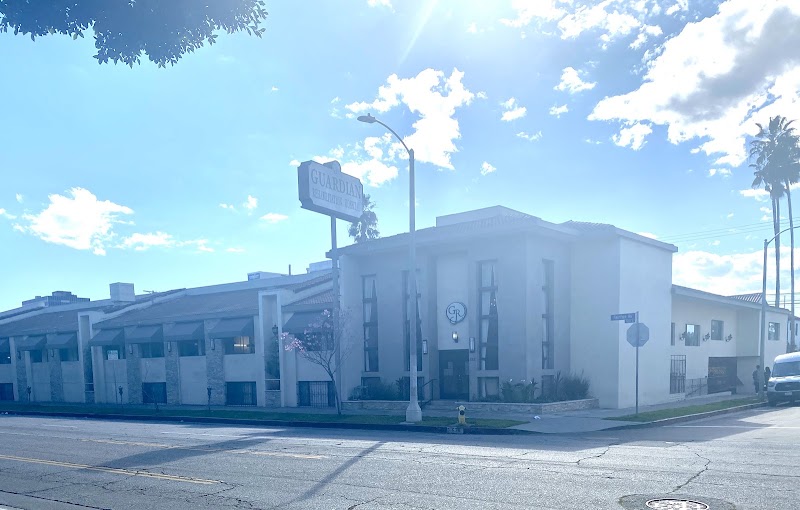
How is Guardian Rehabilitation Hospital Staffed?

CMS rates GUARDIAN REHABILITATION HOSPITAL's staffing level at 4 out of 5 stars, which is above average compared to other nursing homes. Staff turnover is 40%, compared to the California average of 46%. This relatively stable workforce can support continuity of care.

What Have Inspectors Found at Guardian Rehabilitation Hospital?

State health inspectors documented 46 deficiencies at GUARDIAN REHABILITATION HOSPITAL during 2021 to 2025. These included: 1 that caused actual resident harm, 42 with potential for harm, and 3 minor or isolated issues. Deficiencies causing actual harm indicate documented cases where residents experienced negative health consequences.
Who Owns and Operates Guardian Rehabilitation Hospital?

GUARDIAN REHABILITATION HOSPITAL is owned by a for-profit company. For-profit facilities operate as businesses with obligations to shareholders or private owners. The facility is operated by THE MANDELBAUM FAMILY, a chain that manages multiple nursing homes. With 93 certified beds and approximately 85 residents (about 91% occupancy), it is a smaller facility located in LOS ANGELES, California.
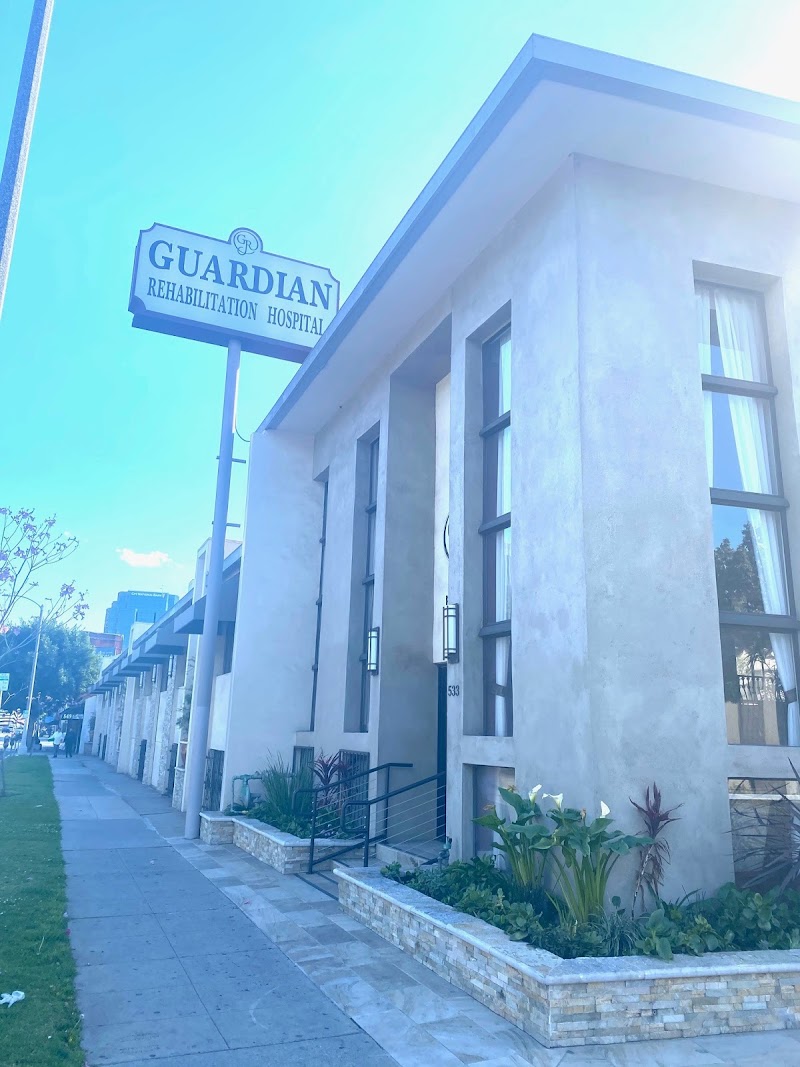
How Does Guardian Rehabilitation Hospital Compare to Other California Nursing Homes?

Compared to the 100 nursing homes in California, GUARDIAN REHABILITATION HOSPITAL's overall rating (5 stars) is above the state average of 3.2, staff turnover (40%) is near the state average of 46%, and health inspection rating (4 stars) is above the national benchmark.

What Should Families Ask When Visiting Guardian Rehabilitation Hospital?

Based on this facility's data, families visiting should ask: "Can I visit during a mealtime to observe dining assistance and food quality?" "How do you handle medical emergencies, and what is your hospital transfer rate?" "Can I speak with family members of current residents about their experience?"

Is Guardian Rehabilitation Hospital Safe?

Based on CMS inspection data, GUARDIAN REHABILITATION HOSPITAL has a clean safety record: no substantiated abuse findings (meaning no confirmed cases of resident harm), no Immediate Jeopardy citations (the most serious violation level indicating risk of serious injury or death), and is not on the Special Focus Facility watch list (a federal program monitoring the lowest-performing 1% of nursing homes). The facility has a 5-star overall rating and ranks #1 of 100 nursing homes in California. While no facility is perfect, families should still ask about staff-to-resident ratios and recent inspection results during their visit.

Do Nurses at Guardian Rehabilitation Hospital Stick Around?

GUARDIAN REHABILITATION HOSPITAL has a staff turnover rate of 40%, which is about average for California nursing homes (state average: 46%). Moderate turnover is common in nursing homes, but families should still ask about staff tenure and how the facility maintains care continuity when employees leave.

Was Guardian Rehabilitation Hospital Ever Fined?

GUARDIAN REHABILITATION HOSPITAL has been fined $32,040 across 1 penalty action. This is below the California average of $33,399. While any fine indicates a compliance issue, fines under $50,000 are relatively common and typically reflect isolated problems that were subsequently corrected. Families should ask what specific issues led to these fines and confirm they've been resolved.

Is Guardian Rehabilitation Hospital on Any Federal Watch List?

GUARDIAN REHABILITATION HOSPITAL is not on any federal watch list. The most significant is the Special Focus Facility (SFF) program, which identifies the bottom 1% of nursing homes nationally based on persistent, serious quality problems. Not being on this list means the facility has avoided the pattern of deficiencies that triggers enhanced federal oversight. This is a positive indicator, though families should still review the facility's inspection history directly.