HOLLYWOOD PRESBYTERIAN MEDICAL CENTER D/P SNF
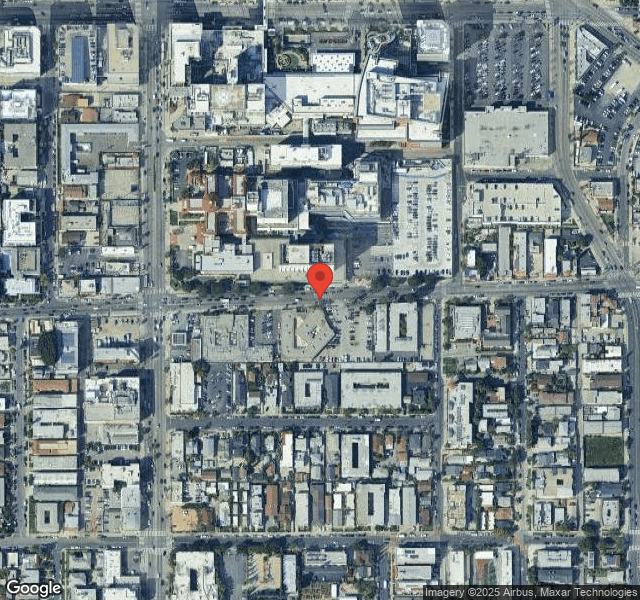

4636 FOUNTAIN AVENUE, LOS ANGELES, CA 90029 (323) 913-4830
For profit - Individual 89 Beds Independent Data: November 2025
Trust Grade
65/100
#600 of 1155 in CA
Last Inspection: December 2024

Within standard 12-15 month inspection cycle. Federal law requires annual inspections.

Overview

Hollywood Presbyterian Medical Center D/P SNF has a Trust Grade of C+, which means it is considered decent-slightly above average but not particularly outstanding. It ranks #600 out of 1155 nursing homes in California, placing it in the bottom half overall, and #110 out of 369 facilities in Los Angeles County, indicating that only a few local options are better. The facility is showing improvement, having reduced its issues from 17 in 2024 to just 3 in 2025. Staffing is a relative strength, with a 2/5 star rating and a turnover rate of 17%, which is well below the state average of 38%, suggesting that staff members tend to stay longer and know the residents well. While the facility reported no fines, which is a positive sign, there have been some concerning incidents. For example, the facility did not provide proper personal protective equipment for staff showering a patient, increasing the risk of infection. Additionally, the safety of all patients was compromised due to the use of standard gurneys instead of specialized shower gurneys, which could lead to falls. Overall, while there are strengths in staffing and an improving trend, families should be aware of the specific safety and compliance issues that have been identified.

Trust Score
C+
65/100
In California
#600/1155
Bottom 49%
Safety Record
Low Risk
No red flags
Inspections
Getting Better
17 → 3 violations
Staff Stability
✓ Good
17% annual turnover. Excellent stability, 31 points below California's 48% average. Staff who stay learn residents' needs.
Penalties
✓ Good
No fines on record. Clean compliance history, better than most California facilities.
Skilled Nurses
✓ Good
Each resident gets 66 minutes of Registered Nurse (RN) attention daily — more than 97% of California nursing homes. RNs are the most trained staff who catch health problems before they become serious.
Violations
⚠ Watch
51 deficiencies on record. Higher than average. Multiple issues found across inspections.
★★★☆☆
3.0
Overall Rating
★★☆☆☆
2.0
Staff Levels
★★★★★
5.0
Care Quality
★★☆☆☆
2.0
Inspection Score
Stable
2024: 17 issues
2025: 3 issues

The Good

  • 5-Star Quality Measures · Strong clinical quality outcomes
  • Low Staff Turnover (17%) · Staff stability means consistent care
  • Full Sprinkler Coverage · Fire safety systems throughout facility
  • No fines on record
  • Staff turnover is low (17%)

    31 points below California average of 48%

Facility shows strength in quality measures, staff retention, fire safety.

The Bad

3-Star Overall Rating

Near California average (3.1)

Meets federal standards, typical of most facilities

The Ugly 51 deficiencies on record

Mar 2025 1 deficiency
CONCERN (D) 📢 Someone Reported This

A family member, employee, or ombudsman was alarmed enough to file a formal complaint

Potential for Harm - no one hurt, but risky conditions existed

Deficiency F0688 (Tag F0688)

Could have caused harm · This affected 1 resident

**NOTE- TERMS IN BRACKETS HAVE BEEN EDITED TO PROTECT CONFIDENTIALITY** Based on observation, interview, and record review, the facility failed to ensure two of three sampled residents (Resident 1 and...

Read full inspector narrative →
**NOTE- TERMS IN BRACKETS HAVE BEEN EDITED TO PROTECT CONFIDENTIALITY** Based on observation, interview, and record review, the facility failed to ensure two of three sampled residents (Resident 1 and 2) received the appropriate services to prevent a decline in range of motion (ROM, full movement potential of a joint) and mobility by failing to: -Ensure Resident 1 received hand rolls (devices used to assist with finger extension [the act of straightening a finger at its joints] and prevent finger flexion contractures [a condition where one or more fingers become permanently bent in a flexed position]) in both her hands as ordered by the physician. -Ensure Resident 2 received a hand roll in her right hand as ordered by the physician. These deficient practices had the potential for Resident 1 and Resident 2 to develop worsened contractures and injury. Findings: During a review of Resident 1's admission Record, the admission Record indicated the facility re-admitted the resident on 1/20/2025 with diagnoses that included chronic respiratory failure (a condition in which the lungs are unable to adequately exchange oxygen and carbon dioxide over an extended period), hemiplegia (total paralysis of the arm, leg, and truck on the same side of the body) and hemiparesis (mild or partial weakness or loss of strength on one side of the body), cerebral infarction (stroke, loss of blood flow to a part of the brain), contracture (a condition of shortening and hardening of muscles, tendons, or other tissue, often leading to deformity and rigidity of joints) of the left hand, contracture of the right hand, tracheostomy (an opening created at the front of the neck so a tube can be inserted into the windpipe to help you breathe), gastrostomy (G-Tube, a tube inserted through the abdomen that delivers nutrition directly to the stomach), and dependence on the ventilator (a serious medical condition that occurs when a patient requires mechanical ventilation to breathe). During a review of the Physician's Order dated 1/21/2025, indicated for the Restorative Nursing Aide (RNA, nursing aide program that help residents to maintain their function and joint mobility) to don (put on) bilateral (both sides) hand rolls on at all times/or as tolerated for contracture management. During a review of Resident 1's Minimum Data Set (MDS, a resident assessment tool) dated 2/21/2025, indicated the resident had severely impaired cognitive skills (never/rarely made decisions) for daily decision making. The MDS further indicated Resident 1 was dependent on help for oral hygiene, toileting hygiene, showering/bathing self, upper body dressing, lower body dressing, putting on/taking off footwear, and personal hygiene. During a review of Resident 1's Care Plan (CP) revised 2/26/2025, the care plan indicated the resident needed restorative nursing because the resident was at risk for developing contracture or a decrease in ROM. The CP indicated a goal for Resident 1 to maintain her current joint ROM. The CP further indicated interventions that included the RNA to don bilateral hand rolls on at all times/or as tolerated for contracture management. During a review of Resident 1's Restorative Nursing Assistant Record (RNAR) dated 2/1/2025-2/28/2025, the RNAR indicated on 2/1/2025, 2/6/2025, 2/7/2025, 2/13/2025, 2/15/2025, 2/18/2025, 2/21/2025, 2/23/2025, 2/27/2025, and 2/28/2025 there was no documentation bilateral hand rolls were donned for Resident 1. During a review of Resident 1's RNAR dated 3/1/2025 - 3/10/2025, the RNAR indicated on 3/4/2025 and 3/7/2025 there was no documentation bilateral hand rolls were donned for Resident 1. During a review of Resident 1's Progress Notes (PN) dated 2/1/2025 - 3/10/2025, the PN did not indicate there was documentation that the resident could not tolerate hand rolls. During a review of Resident 2's admission Record, the admission Record indicated the facility admitted the resident on 1/7/2025 with diagnoses that included chronic respiratory failure, cerebral palsy (a group of movement disorders that affect a person's ability to control their muscles, balance, and posture), contracture of other specified joint, tracheostomy, gastrostomy, intellectual disabilities (a lifelong condition that impacts a person's ability to learn and function in daily life), and dependence on supplemental oxygen. During a review of Resident 2's MDS dated [DATE], the MDS indicated the resident had severely impaired cognition. The MDS further indicated Resident 2 was dependent on help for oral hygiene, toileting hygiene, showering/bathing self, upper body dressing, lower body dressing, putting on/taking off footwear, and personal hygiene. A review of the Physician's Order dated 1/9/2025, indicated the resident was to don right hand rolls on at all times or as tolerated while monitoring for skin breakdown and comfort. During a review of Resident 2's RNAR dated 2/1/2025-2/28/2025, the RNAR indicated on 2/1/2025, 2/13/2025, 2/15/2025, 2/21/2025, 2/23/2025, 2/27/2025, and 2/28/2025 there was no documentation that a hand roll was donned to Resident 2's right hand. During a review of Resident 2's RNAR dated 3/1/2025 - 3/10/2025, the RNAR indicated on 3/4/2025, and 3/7/2025 there was no documentation that a hand roll was donned to Resident 2's right hand. During a review of Resident 2's Progress Notes (PN) dated 2/1/2025 - 3/11/2025, the PN did not indicate there was documentation that the resident could not tolerate hand rolls. During a concurrent interview and record review on 3/11/2025 at 10:50 AM, Resident 1 and 2's physician's orders, RNAR dated 2/1/2025 - 2/28/2025, and RNAR dated 3/1/2025 - 3/10/2025 were reviewed with RNA 1. RNA 1 stated he performed RNA services for Resident 1 and Resident 2. RNA 1 stated Resident 1 and Resident 2 both had physician's orders for hand rolls; Resident 1 was to have bilateral hand rolls and Resident 2 was to have hand rolls in her right hand. RNA 1 stated if a resident was given hand rolls it would be documented on the RNAR. RNA 1 stated the days when there was no documentation on the RNAR means the resident did not receive hand rolls. RNA 1 stated hand rolls should be on every day 24 hours a day to prevent contractures from getting worse. During a concurrent observation and interview on 3/11/2025 at 11 AM, in Resident 2's Room, Resident 2 was observed with RNA 1 and the Interim Director of Nursing (IDON). Resident 2 was observed lying in bed on her back with pillows beneath her legs. Resident 2's right hand was observed without a hand roll. RNA 1 and the DON confirmed Resident 2 did not have a hand roll in her right hand. RNA 1 stated Resident 2 should have a hand roll in her right hand. RNA 1 stated hand rolls should be on at all times. During a concurrent observation and interview on 3/11/2025 at 11:25 AM, in Resident 1's Room, Resident 1 was observed with RNA 1. Resident 1 was observed lying in bed on her back. Resident 1's hands were observed without hand rolls. RNA 1 confirmed Resident 1 did not have hand rolls in her hands. RNA 1 stated that hand rolls were supposed to be on at all times to prevent contractures. During a concurrent interview and record review on 3/11/2025 at 2:11 PM, Resident 1 and Resident 2's physician's orders, RNAR dated 2/1/2025 - 2/28/2025, and RNAR dated 3/1/2025 - 3/10/2025 were reviewed with the IDON. The IDON confirmed Resident 1 and Resident 2 had physician's orders to don hand rolls at all times or as tolerated. The IDON confirmed during the observations of Resident 1 and Resident 2, both residents were observed without hand rolls. The IDON confirmed Resident 1 and Resident 2 had missing documentation for the donning of hand rolls on the RNARs dated 2/1/2025 - 2/28/2025 and 3/1/2025 - 3/10/2025. The IDON stated if a resident was not tolerating hand rolls it would have been documented in the nursing progress notes. The IDON further stated the hand rolls were supposed to be used to help prevent contractures from worsening. During a review of the facility's Policy & Procedure (P&P) titled, Range of Motion/Joint Mobility Management, reviewed 9/25/2024, the P&P indicated Purpose: To maintain the resident's optimal level of functioning, mental and psychosocial function to assist and achieve the resident's highest possible level of self-care, and functional independence and wellbeing. It is the policy that the Therapist will: Develop RNA program appropriate to the resident's identified needs. Develop specific measurable goals and document goals and interventions and implement on the resident's RNA care plan. Procedure: The therapist will assess the Range of Motion of each resident's extremities and document in the medical record to include range of motion with any limitations. The policy indicated the therapist will implement strategies for preventing further limitations and maintenance of the joint range of motion. The therapist will obtain a physician's order for RNA treatment (program). Implementation is guided from the assessment, reassessment and plan of care .Charge nurse is responsible to carry out the RNA orders and place the resident in the RNA program, and to initiate and maintain the Plan Of Care, to monitor the RNA personnel, and to communicate with physician and therapy service for resident ' s progress and condition .In the event when there is no RNA available, CNA and Charge Nurse are responsible to carry out the program for continuity of care.
Jan 2025 2 deficiencies
CONCERN (E) 📢 Someone Reported This

A family member, employee, or ombudsman was alarmed enough to file a formal complaint

Potential for Harm - no one hurt, but risky conditions existed

Infection Control (Tag F0880)

Could have caused harm · This affected multiple residents

Based on observation, interview, and record review, the facility failed to ensure that proper personal protective equipment (PPE) was supplied and utilized by staff when showering a patient (Patient 1...

Read full inspector narrative →
Based on observation, interview, and record review, the facility failed to ensure that proper personal protective equipment (PPE) was supplied and utilized by staff when showering a patient (Patient 1). This deficient practice regarding infection control protocols increases the risk of cross-contamination. Without proper PPE, staff and patients may be exposed to blood, bodily fluids, or other potentially infectious materials, increasing the likelihood of transmitting infections. This poses a potential threat to the safety and health of both patients and staff. Findings: During a review of Patient 1's History and Physical (H&P), dated , the H&P indicated, Patient 1 past medical history and present illness include neuromuscular disease (a wide-range of diseases affecting the peripheral nervous system, which consists of all the motor and sensory nerves that connect the brain and spinal cord to the rest of the body), functional quadriplegia (the complete inability to move due to severe disability or frailty), wheelchair limited since eight years old, severe scoliosis (abnormal lateral curvature of the spine), and mechanical ventilator (a machine that takes over the work of breathing when a person is not able to breathe enough on their own) dependence. During a concurrent observation and interview on 1/29/2025 at 11:15 a.m. with the Director of Nursing (DNS) in the shower room located on the East/South of the subacute ( a level of care that is defined as a level of care needed by a patient who does not require hospital acute care but who requires more intensive licensed skilled nursing care than is provided to the majority of patients in a skilled nursing facility) unit, two staff members (CNA 1 and CNA 2) were showering Patient 1. Patient 1 was lying on a standard gurney rather than an appropriate gurney. Both staff are standing in water, and the entire floor of the shower room was wet. Notably, CNA 1 was not wearing shoes covers, and the bottom of their pants appeared wet. Patient 1 was positioned on their side, with CNA 1 holding onto the torso and shoulder to prevent them from rolling over, while CNA 2 was spraying water on the patient's back. Water was running off the side of the gurney onto CNA 1's shoes. DNS also stated that both shower gurneys had been broken for a few months, which is why the facility had utilized standard gurneys for showering patients. NDS stated today staff will be showering 20 patients. The NDS confirmed that Patient 1, 2, 3, 4, 5, 6, 7, 8, 9, 10, 11, 12, 13, and 14 were showed this morning using the standard gurney. During an interview on 1/30/2025 1:06 p.m. with Nursing Director of the subacute unit (NDS), NDS stated both shower gurney was broken and taken out of service since September 2024 (four month ago) the facility could not find a rental and was not able to secure a delivery date for the new shower gurney. NDS also confirmed that there is a safety concern regarding the use of a standard gurney, which is not designed for showering patients. Despite the safety concerns, after discussion with the facility administrator, the decision was made to use the standard gurney as a shower gurney. During an interview on 1/29/2025 at 11:20 a.m. with CNA 3, CNA 3 stated shower gurney had been broken for about four to five months. Using the standard gurney makes it difficult to shower patients safely, and water goes on their feet. Additionally, transferring the patient is not safe. During an interview on 1/29/2025 at 11:30 a.m. with CNA 4, CNA 4 stated during showering, their feet get wet and that it is difficult to transfer patients using the standard gurney. During an interview on 1/29/2025 at 11:30 a.m. with CNA 2, who was observed at 11:15 a.m. showering patient 1, CNA 2 stated that they would be showering 21 patients today. CNA 2 also confirmed that the shower gurney had been broken for over four to five months. Stated the standard gurney complicates safe transfer patient due to the wet floor there is risk of slipping and falling. They mentioned that when their socks become soaked, they have to change them. During a concurrent observation and interview on 1/29/2025 at 11:35 a.m. with CNA 1 in the DNS's office, CNA 1's lower pants appear wet. CNA 1 stated during showering of Patient 1, he went to the bathroom and returned to the shower room but forgot to put on the shoe covers. The shoe covers used by staff were provided by CNA 2. Upon examination, the shoe covers supplied by the facility was found not to be water-resistant and were not made of plastic. The box that the shoe covers come in indicated, Poly-coated .Footwear users should be aware that risk of slipping exits. During an interview on 1/30/2024 at 11:41 a.m. with the Clinical Educator (CES), CES stated they are not aware that the subacute unit is utilizing the standard gurney to shower patients. Stated for safety of the patients and staff appropriate personal protective equipment (PPE, equipment used to prevent or minimize exposure to hazards) must be worn during shower of the patient. CES stated the staff should don gloves, gown, and shoe covers. CES confirmed that PPE should be water-resistant to prevent the staff from getting wet and to minimize the risk of cross-contamination and risk of slipped and fall. During an interview on 1/30/2024 at 12:20 p.m. with the Infection Preventionist (IP), IP stated they are not aware the subacute unit has been utilizing the standard gurney to shower patients. IP stated during the shower process, it is important for staff to don appropriate PPE, such as gown, gloves and shoes protection to prevent getting wet during the shower process. IP stated all PPE worn should be water-resistant, as wet shoes and ankles pose significant issues regarding infection control and increase the risk of cross-contamination. During a review of the facility's policy and procedure (P&P) titled, Personal Protective Equipment (PPE), dated 6/28/2023, the P&P indicated, To establish individual responsibilities to minimize the transmission of transmissible microorganisms to, from, and between patients, and all other persons at Hollywood (name of the facility). To provide a safe environment by preventing the transmission of infectious diseases throughout the facility, and to provide consistent care for all patients regardless of the nature of their illness . Standard Precautions: An alternative concept to Universal Precautions that defines all blood, body fluids and substances as infectious. Standard Precautions are used whenever there is a risk of exposure to blood, body fluids, broken skin, mucous membranes and items soiled with other potentially infectious materials (OPIM). Occupational Exposure: Reasonably anticipated skin, eye, mucous membrane or parenteral contact with blood or other potentially infectious materials that may result from employees performing their duties. Employees whose job classifications are determined to have occupational exposure to blood or regulated medical waste are responsible for compliance with Standard Precautions procedures. Managers are responsible for providing and maintaining availability of personal protective equipment (PPE), and for ensuring the training of employees regarding PPE. Personal Protective Equipment Protective equipment/supplies will be placed in convenient locations in all patient care areas throughout the medical center. During a review of the facility's policy and procedure (P&P) titled, Infection Prevention Risk Assessment and Plan, dated 2023 , the P&P indicated, The plan serves as the foundation for the prevention, identification, and prevention of healthcare-associated infections through ongoing surveillance, evidence-based intervention, education, and evaluation to effectively improve delivery of health and serve the health needs of caregivers, patients, and visitors within the facility and the surrounding community . Infection Prevention Activities: To identify areas of priority, maintain a system to identify, report, and evaluate infections among patients and hospital caregivers . To communicate Infection Prevention Committee findings and recommendations to appropriate individuals and departments . Employee Centered Responsibilities (in partnership with Employee Health) includes but not limited to the following: Adherence/compliance with infection prevention and control measures and activities. Consultations for infection Prevention issues.
CONCERN (E) 📢 Someone Reported This

A family member, employee, or ombudsman was alarmed enough to file a formal complaint

Potential for Harm - no one hurt, but risky conditions existed

Room Equipment (Tag F0908)

Could have caused harm · This affected multiple residents

Based on observation, interview, and record review, the facility failed to ensure the safety of fourteen of fourteen sampled Patients (Patient 1, 2, 3, 4, 5, 6, 7, 8, 9, 10, 11, 12, 13, and 14) was co...

Read full inspector narrative →
Based on observation, interview, and record review, the facility failed to ensure the safety of fourteen of fourteen sampled Patients (Patient 1, 2, 3, 4, 5, 6, 7, 8, 9, 10, 11, 12, 13, and 14) was compromised when the facility failed to utilize an appropriate shower gurney designed specifically with safety features for use in a wet environment. This deficient practice placed Patient 1, 2, 3, 4, 5, 6, 7, 8, 9, 10, 11, 12, 13, and 14 in an unsafe situation, creating a risk of falling off the gurney, as standard gurneys may lack the necessary safety features to secure a patient during showering. Regular gurneys are not engineered to provide the requisite support for patients in wet conditions. If the gurney becomes slippery due to water exposure, it may not offer adequate stability to keep the patient securely in place. Findings: During a review of Patient 1's History and Physical (H&P), dated , the H&P indicated, Patient 1 past medical history and present illness include neuromuscular disease (a wide-range of diseases affecting the peripheral nervous system, which consists of all the motor and sensory nerves that connect the brain and spinal cord to the rest of the body), functional quadriplegia (the complete inability to move due to severe disability or frailty), wheelchair limited since eight years old, severe scoliosis (abnormal lateral curvature of the spine), and mechanical ventilator (a machine that takes over the work of breathing when a person is not able to breathe enough on their own) dependence. During a concurrent observation and interview on 1/29/2025 at 11:15 a.m. with the Director of Nursing (DNS) in the shower room located on the East/South of the subacute (a level of care that is defined as a level of care needed by a patient who does not require hospital acute care but who requires more intensive licensed skilled nursing care than is provided to the majority of patients in a skilled nursing facility) unit, two staff members (CNA 1 and CNA 2) were showering Patient 1. Patient 1 was lying on a standard gurney. The gurney's side rail was inadequate, featuring bars with approximately twelve-inch gaps, allowing water to flow freely out of these openings as the patient was being showered. There was an absence of barriers at both the head and foot of the gurney. Both staff members were standing in water, and the entire floor of the shower room was soaked. CNA 1 was not wearing shoes covers, and the bottom of their pants appeared damp. Patient 1 was positioned on their side, with CNA 1 holding onto the torso and shoulder to prevent them from rolling while CNA 2 was sprayed water on the Patient1's back. Water was running off the side of the gurney and onto CNA 1's shoes. DNS stated that staff should be wearing shoes covers and confirmed that wet shoes can increase risk for slipping and falling, as well as create infection control issues. DNS also stated that both shower gurneys had been broken for a few months, which is why the facility had utilized standard gurneys for showering patients. NDS stated today staff will be showering 20 patients. The NDS confirmed that Patient 1, 2, 3, 4, 5, 6, 7, 8, 9, 10, 11, 12, 13, and 14 were showerd this morning using the standard gurney. During an interview on /30/2025 at 10:30 a.m. with the Director of Supply Chain Operations (DSCO), the DSCO stated that in September, when both shower gurneys were broken, there was a plan to repair them. However, when the repair engineer arrived on 12/12/2024, they could not locate the broken shower gurneys anywhere in the facility. They then called for rentals but were unsuccessful. The facility subsequently decided to purchase new shower gurneys. An order was placed, but there is no estimated date for when the new shower gurneys will be received. The DSCO stated that the Supply Chain Department does not have records of how may shower gurneys the subacute unit has. Therefore, the order for shower gurneys must indicate STAT (without delay; immediately) to ensure it is prioritized. However, the DSCO stated that there were no orders indicating that the subacute unit needed the shower gurneys on a STAT basis. During an interview on 1/30/2025 1:06 p.m. with Nursing Director of the subacute unit (NDS), NDS stated both shower gurney was broken and taken out of service since September 2024 (four month ago) the facility could not find a rental and was not able to secure a delivery date for the new shower gurney. NDS also confirmed that there is a safety concern regarding the use of a standard gurney, which is not designed for showering patients. Despite the safety concerns, after discussion with the facility administrator, the decision was made to use the standard gurney as a shower gurney. During a review of the facility's policy and procedure (P&P) titled, Environment of Care Safety Management Plan, dated September 2024, the P&P indicated, The Environment of Care (EOC) Safety Management Plan outlines the methods and practices used to design, implement and monitor a program to minimize safety risks for patients and all others who enter (name of the facility) .The EOC Safety Management Plan provides a framework for managing the environment of care and addresses six areas of the environment of care: safety, security, hazardous materials and waste, fire safety, medical equipment and utility systems. Separate management plans are available for the Emergency Management and Life Safety programs. The objective of the EOC Safety Management Plan is to provide a guideline for the development of a safety management program that will enable the hospital: o To comply with all relevant safety standards and regulations o To develop or maintain effective program elements that contribute to an overall reduction in workplace injuries and improved patient safety o To improve employee performance through effective safety education and training o To develop standards to monitor, assess, measure and improve EOC performance o To monitor the effectiveness of the safety program A. The CEO is responsible for assuring the existence and effectiveness of a comprehensive safety program by providing the vision, leadership, financial and administrative support to facilitate the ongoing activities of the EOC committee. The CEO shall designate a member of the Executive Staff to serve as the administrative representative on the committee . The EOC Committee oversees and monitors the hospital's safety management program . Subcommittees and working groups may be established to help identify and resolve safety issues .The committee analyzes environment of care issues in a timely manner through monthly and quarterly reports to the committee. The results of data analysis are used to identify opportunities to resolve environmental safety issues. Action is taken on identified opportunities, and changes are evaluated to determine if they have resolved the identified issues . During a review of the operation manual provided by the facility for the standard gurney that was utilized by the facility because their shower gurneys were broken on 9/10/2024 (more than four months and 19 days since both shower gurney was taken out of service) titled Stryker Operations Manual, not dated, the operation manual indicates that while Model 1015 stretchers can be power washed, it emphasizes that proper procedures must be followed. Key points from the manual include: the stretcher must not be submerged or used inappropriately. Cleaning solutions should not pool on any components. Stretchers must have maintenance performed after a minimum of every fifth washing. Refer to the maintenance manual for specific lubrication instructions . Do not allow cleaning solutions or other fluids to pool on the display unit.
Dec 2024 15 deficiencies
CONCERN (D)

Potential for Harm - no one hurt, but risky conditions existed

Deficiency F0558 (Tag F0558)

Could have caused harm · This affected 1 resident

**NOTE- TERMS IN BRACKETS HAVE BEEN EDITED TO PROTECT CONFIDENTIALITY** Based on observation, interview, and record review, the facility failed to ensure the call light device was within reach and ans...

Read full inspector narrative →
**NOTE- TERMS IN BRACKETS HAVE BEEN EDITED TO PROTECT CONFIDENTIALITY** Based on observation, interview, and record review, the facility failed to ensure the call light device was within reach and answered in a timely manner for one of four sampled residents (Resident 65). These deficient practices had the potential to result in Resident 65 not being able to have their needs met leading to potential resident harm or injury. Findings: A review of Resident 65's admission Record indicated the resident was admitted to the facility on [DATE] with diagnoses including chronic respiratory failure (a serious condition that occurs when the lungs have difficulty getting enough oxygen into the blood), poly neuropathy (a disease that affects the peripheral nerves, causing weakness, numbness, and pain in similar areas on both sides of the body), acute embolism (a life-threatening condition that occurs when a blood clot or other foreign object blocks a pulmonary artery), gastrostomy (G-Tube, a tube inserted through the abdomen that delivers nutrition directly to the stomach), neuromuscular dysfunction of the bladder (a condition where the nerves and muscles controlling the bladder are not functioning properly due to damage to the brain, spinal cord, tracheostomy (an opening created at the front of the neck so a tube can be inserted into the windpipe to help you breathe), and dysphagia (difficulty swallowing). A review of Resident 65's Minimum Data Set (MDS, a federally mandated resident assessment tool) dated 10/2/2024, indicated the resident had moderately impaired cognition (some problems with a person's ability to think, remember, use judgement, and make decisions). The MDS indicated Resident 65 was dependent on help for oral hygiene, toileting hygiene, showering/bathing self, upper/lower body dressing, putting on/taking off footwear, and personal hygiene. During an interview on 12/9/2024 at 9:33 AM, Resident 65 was observed lying in bed, with their call light observed on the bedside table, away from the resident's reach. Resident 65 stated that sometimes the nurses did not come to her room when she calls. Resident 65 stated she Calls for help by yelling hello, hello, but they don't always come. Resident 65 stated sometimes she needs cleaned or her mouth is dry and would like some water, but when she calls she had to wait for the staff for an hour. Resident 65 stated sometimes the staff come to the room and sometimes not. Resident 65 stated she yelled for help because she had trouble pressing the call light because she was not strong enough. During an observation on 12/9/2024 at 9:36 AM, Resident 65's call light alarmed. Three staff were observed passing by Resident 65's room, the three staff members were observed looking inside the resident's room but did not enter. During a concurrent observation and interview on 12/9/2024 at 9:46 AM, Certified Nursing Assistant (CNA) 3 was observed passing by Resident 65's room. CNA 3 did not answer Resident 65's call light. CNA 3 stated they saw the Resident 65's call light on but did not enter room because the resident does not use the call light. CNA 3 stated they were familiar with Resident 65 and had taken care of the resident before. CNA 3 confirmed Resident 65's call light was not within reach, but stated the resident did not like the call light on her bed because the volume of the TV was too loud, and the resident could not press it. CNA 3 stated Resident 65 would benefit from an adaptable call light. CNA 3 stated when staff see a call light on, they were supposed to check on the resident if they need anything, they were not supposed to pass a room with a call light on it because the resident may need emergent help. During an interview on 12/12/2024 at 3:17 PM, the Director of Nursing (DON) stated staff were to answer call lights as soon as possible; 10 minutes was too long of a time for the resident to wait for assistance. The DON stated if the resident's call light was on, the staff should not be passing room with a call light. The DON stated the call light should always be within the resident's reach. The DON stated if the resident cannot press the call light the facility had other methods for the resident to use like an adaptive call light or a bell. The DON stated there was a potential for residents to be waiting a long period of time for help and a risk for the resident's to not have the needs met immediately especially if it was an emergency. A review of the facility's policy and procedure titled, Call Light System, dated 11/26/2024, indicated All caregivers in acute and subacute care areas are required to respond to call lights promptly to meet patient needs and prevent any potential harm. For paraplegic patients/residents, education should be tailored to their specific needs and physical abilities. Call lights must be responded to within 5 minutes of activation. In critical care areas or for high-acuity and paraplegic patients/residents, response time should be as immediate as possible. All caregivers must prioritize the prompt response to call lights from paraplegic patients/residents to ensure their safety, comfort, and dignity and due to their heightened dependency on caregivers from mobility and other needs. The policy indicated the first available staff member, regardless of patient's/resident's assigned caregiver, should respond to the call light. Ensure the call light is within reach of the patient/resident at all times. When out of bed, the call light will be placed in such ways as to be available to the patient/resident whether they be on a chair or wheelchair. For paraplegic patient/resident, ensure adaptive call light device is positioned correctly at all times. Respond with courtesy and respect within 5 minutes. Turn off call light as soon as possible.
CONCERN (D)

Potential for Harm - no one hurt, but risky conditions existed

Comprehensive Assessments (Tag F0636)

Could have caused harm · This affected 1 resident

**NOTE- TERMS IN BRACKETS HAVE BEEN EDITED TO PROTECT CONFIDENTIALITY** Based on interview and record review, the facility failed to complete and submit the Minimum Data Set (MDS, a federally mandated...

Read full inspector narrative →
**NOTE- TERMS IN BRACKETS HAVE BEEN EDITED TO PROTECT CONFIDENTIALITY** Based on interview and record review, the facility failed to complete and submit the Minimum Data Set (MDS, a federally mandated resident assessment tool) upon discharge for one of 17 sampled residents (Resident 62). This deficient practice had the potential to negatively affect the provision of necessary care and services for Resident 62. Findings: A review of Resident 62's admission Record indicated the facility admitted the resident on 3/21/2024 with diagnoses including chronic respiratory failure (a serious condition that occurs when the lungs have difficulty getting enough oxygen into the blood), cachexia (a general state of ill health involving great weight loss and muscle loss), tracheostomy (an opening created at the front of the neck so a tube can be inserted into the windpipe to help you breathe), gastrostomy (g-tube - an opening to the stomach from the abdominal wall made surgically for the introduction of food), dependence on respirator (dependence on a respirator (a serious medical condition that occurs when a patient requires mechanical ventilation to breathe), and dysphagia (difficulty swallowing). A review of Resident 62's MDS dated [DATE], indicated the resident had severely impaired cognitive skills for daily decision making. The MDS further indicated Resident 62 was dependent on help for oral hygiene, toileting hygiene, showering/bathing themselves, lower body dressing, putting on/taking off footwear, and personal hygiene. A review of Resident 62's electronic health record (EHR) indicated there were no other MDS assessments completed for the resident after 7/18/2024. The EHR further indicated Resident 62 was discharged from the facility on 9/25/2024. During a concurrent interview and record review on 12/12/2024 at 2:24 PM, Resident 62's EHR was reviewed with MDS Coordinator (MDSC) 1. MDSC 1 stated he was responsible for completing and submitting the MDS to the Centers for Medicare and Medicaid Services (CMS). MDSC 1 stated Resident 62 was discharged home on 9/25/2024 and a MDS assessment was not completed for Resident 62 when they were discharged . MDSC 1 stated they were supposed to complete and submit a MDS assessment upon Resident 62's discharge, but it was missed and should have been completed. MDSC 1 stated the discharge MDS should have been done and submitted within 14 days. During an interview on 12/12/2024 at 3:20 PM, the Director of Nurses (DON) stated a MDS assessment should be completed within one week of the resident's discharge and submitted to CMS in 14 days. The DON stated there was a potential for the resident to not have their condition followed up on and receive necessary care if the MDS assessment was not completed and submitted timely. A review of a CMS document titled, Long-Term Care Facility Resident Assessment Instrument 3.0 User's Manual, dated 10/2024, indicated Nursing homes are required to submit Omnibus Budget Reconciliation Act (OBRA) required Minimum Data Set (MDS) records for all residents in Medicare or Medicaid certified beds regardless of the payer source. For all non-admission OBRA and PPS assessments, the MDS completion date must be no later than 14 days after the Assessment Reference Date (ARD). For a Quarterly, Significant Correction to Prior Quarterly, Discharge or PPS assessment, encoding must occur within 7 days after the MDS completion date. Submission Time Frame for MDS Records, Discharge Assessment. Submit by MDS Assessment Completion Date + 14 days. A review of the facility's policy and procedure titled, Coding Procedure, Sub Acute, dated 1/24/2024, indicated to use the patient information while the patient is in house to determine the diagnoses for the MDS and to be in compliance with regulatory agencies for timely completion of the medical record.
CONCERN (D)

Potential for Harm - no one hurt, but risky conditions existed

Pressure Ulcer Prevention (Tag F0686)

Could have caused harm · This affected 1 resident

Based on observation, interview, and record review, the facility failed to maintain the correct Low Air Loss Mattress (LALM, a mattress designed to distribute the patient's body weight over a broad su...

Read full inspector narrative →
Based on observation, interview, and record review, the facility failed to maintain the correct Low Air Loss Mattress (LALM, a mattress designed to distribute the patient's body weight over a broad surface area and help prevent skin breakdown) settings for one of three sampled residents (Resident 10). This deficient practice had the potential to lead to poor circulation (reduced blood flow to various body parts) and cause a pressure injury (also known as pressure ulcer, localized skin and soft tissue injuries that form because of prolonged pressure and shear, usually exerted over bony prominences) for Resident 10. Findings: A review of Resident 10's admission Record indicated the facility admitted the resident on 7/24/2024 with diagnoses that included anoxic brain damage (an injury to the brain caused by a lack of oxygen to the brain), neuromuscular dysfunction (a condition that affects the muscles, nerves, or the communication between them causing muscle weakness), epilepsy (a brain disorder that causes people to have recurring seizures, abnormal electrical brain activity), pressure ulcer of the sacral (tailbone area) region stage 4 (the most severe stage, where the wound extends through all layers of skin, damaging underlying muscle, tendon, or bone, often exposing these structures with visible tissue loss and a high risk of infection), tracheostomy (an opening created at the front of the neck so a tube can be inserted into the windpipe to help you breathe), gastrostomy (G-Tube, a tube inserted through the abdomen that delivers nutrition directly to the stomach), and dependence on a respirator (a serious medical condition that occurs when a patient requires mechanical ventilation to breathe). A review of the Physician's Order dated 7/27/2024 indicated Resident 10 was to have a LALM for wound management, to monitor the LALM for functioning and the correct setting every day shift. A review of the Resident 10's Minimum Data Set (MDS, a federally mandated resident assessment tool) dated 9/20/2024 indicated the resident was dependent on help for oral hygiene, toileting hygiene, showering/bathing self, upper/lower body dressing, putting on/taking off footwear, and personal hygiene. The MDS indicated Resident 10 was at risk of developing pressure ulcers. The MDS further indicated Resident 10 had one stage 4 pressure ulcer and had a pressure reducing device for a bed. A review of Resident 10's Care Plan revised on 9/27/2024, indicated the resident was at risk for delayed wound healing, wound regression (return to a worse state), infection due to immobility, fragile skin, history of healed pressure ulcer on their sacral area, type 2 diabetes (a long-term condition in which the body has trouble controlling blood sugar and using it for energy), and anemia (a condition where the body does not have enough healthy red blood cells). The care plan indicated a goal for Resident 10's wound to respond to treatment for 30 days. The care plan further indicated an intervention for Resident 10 to have a LALM. A review of Resident 10's Weight and Vitals Summary indicated the resident's weight of 104.1 pounds (lbs.) on 12/7/2024. During a concurrent observation, interview, and record review, on 12/11/2024 at 7:59 AM with Licensed Vocational Nurse (LVN) 5, Resident 10 was observed lying in bed on a K-4oem Aire-Float LALM. LVN 5 stated that the settings for the LALM was based on the resident's weight. LVN 5 reviewed Resident 10's weight on 12/7/2024. LVN 5 stated Resident 10 weighed 104.1 lbs. LVN 5 stated Resident 10 was on a LALM with settings set at 3 for 140 lbs. LVN 5 stated Resident 10's LALM was on the wrong setting. LVN 5 stated the resident's LALM should be at a setting of two for 105 lbs. LVN 5 stated Resident 10 was on a LALM to help prevent pressure ulcers. LVN 5 further stated there could be a potential for the LALM to not be effective in helping prevent pressure ulcers if it was at the wrong settings. During an interview on 12/12/2024 at 3:18 PM, the Director of Nursing (DON) stated the LALM settings were determined by the resident's weight. The DON stated the LALM was used to help prevent skin breakdown. The DON stated there was a potential for the LALM to not be effective in preventing skin breakdown if it was not at the right settings for Resident 10's weight. A review of the undated manual titled, Operating Instructions K-3 & K-4 Elite & OEM Series, indicated Press the Patient Set-up key and follow the on screen instructions to set the patient height's and weight. Patient comfort settings will be automatic when done with settings. To exit automatic patient comfort settings, press the Soft or Firm pressure comfort keys to adjust comfort pressure manually.
CONCERN (D)

Potential for Harm - no one hurt, but risky conditions existed

Accident Prevention (Tag F0689)

Could have caused harm · This affected 1 resident

**NOTE- TERMS IN BRACKETS HAVE BEEN EDITED TO PROTECT CONFIDENTIALITY** Based on observation, interview, and record review, the facility failed to ensure residents environment remained free of acciden...

Read full inspector narrative →
**NOTE- TERMS IN BRACKETS HAVE BEEN EDITED TO PROTECT CONFIDENTIALITY** Based on observation, interview, and record review, the facility failed to ensure residents environment remained free of accident hazards for two of two sampled residents (Resident 1 and 66). Resident 1 and 66, who had diagnosis of epilepsy (a chronic brain disorder that causes seizures, which are abnormal electrical activity in the brain) did not have padded side rails. This deficient practice may result in injuries during a seizure (a disorder in which nerve cell activity in the brain is disturbed, causing seizures/convulsions) if bed side rail remained unpadded. Findings: a. A review of Resident 1's admission Record indicated the resident was originally admitted to the facility on [DATE] with diagnoses including epilepsy and anoxic brain damage (occurs when the brain is completely deprived of oxygen, which results in brain cell death). A review of Resident 1's physician's order dated 4/1/2024 indicated padded side rails x 2 for seizure precaution every shift. A review of Resident 1's Minimum Data Set (MDS- a federally mandated resident assessment tool) dated 9/27/2024, indicated the resident was severely impaired in cognitive skills for daily decision making, and was dependent (helper does all the help) on staff for activities of daily living. A review of Resident 1's care plan revised on 10/9/2024 indicated the resident had a seizure disorder and was at risk for injury. The intervention included padded side rails x 2 for seizure precaution. During a concurrent observation and interview on 12/9/2024 at 9:38 AM with Licensed Vocation Nurse 4 (LVN) in Resident 1's room, LVN 4 stated and confirmed Resident 1 had one padded side rail on her bed and needed two padded side rails, per the physician's order. LVN 4 stated Resident 1 had padded side rails for seizure precaution, and it was important to have two padded side rails to prevent injury during a seizure. During an interview on 12/11/2024 at 1:53 PM, the Director of Nursing (DON) stated seizure precautions included padded side rails and elevating the head of the bed. The DON stated it was important that residents with a history of seizure or epilepsy had padded side rails for safety. The DON stated there was a risk for injury when a resident had a seizure, and the side rails were not padded. b. A review of Resident 66's admission Record indicated the resident was originally admitted to the facility on [DATE] with diagnoses including epilepsy and anoxic brain damage (occurs when the brain is completely deprived of oxygen, which results in brain cell death). A review of Resident 66's physician's order dated 6/17/2024 indicated may use padded side rails x 2 for seizure precaution. A review of Resident 66's MDS dated [DATE], indicated the resident was severely impaired in cognitive skills for daily decision making, and was dependent (helper does all the help) from the staff for activities of daily living. A review of Resident 66's care plan revised on 9/30/2024 indicated the resident had a diagnosis of seizure disorder. The intervention included padded side rails x 2 for seizure precaution. During a concurrent observation and interview on 12/9/2024 at 10:41 AM with Licensed Vocational Nurse 3 (LVN 3) in Resident 66's room, LVN 3 stated and confirmed Resident 66 had one padded side rail on her bed. LVN 3 stated Resident 66 had padded side rails for seizure precautions. LVN 3 stated it was important the resident had two padded side rails to provide protection from injury during a seizure, per the physician's order. A review of the facility's policy and procedure (P&P) titled, Seizure Management and Precautions-Chalet, dated 12/12/2024, indicated the purpose was to ensure the safety of residents during seizure activity. The policy indicated seizure precautions included padding the side rails, as applicable.
CONCERN (D)

Potential for Harm - no one hurt, but risky conditions existed

Tube Feeding (Tag F0693)

Could have caused harm · This affected 1 resident

**NOTE- TERMS IN BRACKETS HAVE BEEN EDITED TO PROTECT CONFIDENTIALITY** Based on observation, interview, and record review, the facility failed to ensure two of two sampled residents (Resident 44 and ...

Read full inspector narrative →
**NOTE- TERMS IN BRACKETS HAVE BEEN EDITED TO PROTECT CONFIDENTIALITY** Based on observation, interview, and record review, the facility failed to ensure two of two sampled residents (Resident 44 and 46), who are fed by enteral means, received appropriate treatment and services. -For Resident 44 who was receiving nutrition by gastrostomy tube (GT - a flexible tube surgically inserted through the abdomen into the stomach for feeding, fluid, and medication administration), the resident's head of the bed was not elevated more than 30 degrees while the tube feeding was on. -For Resident 46, the gastrostomy tube dressing was not dated. This deficient practice placed Resident 44 at risk for aspiration (inhaling small particles of food or drops of liquid into the lungs) that can lead to lung problems such as pneumonia; and had the potential to cause infection to Resident 46. Findings: A review of Resident 44's admission Record indicated the resident was originally admitted to the facility on [DATE] with diagnoses including gastrostomy (surgical procedure that creates an opening in the abdomen and inserts a feeding tube into the stomach), quadriplegia (paralysis from the neck down, including legs, and arms, usually due to a spinal cord injury), and chronic respiratory failure with hypoxia (condition that occurs when the lungs cannot get enough oxygen into the blood). A review of Resident 44's physician's order dated 12/20/2022 indicated to keep the head of the bed elevated 30 to 45 degrees at all times when consuming enteral feeding every shift. A review of Resident 44's physician's order dated 11/21/2023 indicated enteral feed every shift GT: Jevity 1.5 (a high-protein, fiber-fortified formula) at 38 cc/hr for 22 hours. A review of Resident 44's physician's order dated 11/21/2023 indicated water flushing at 27 ml/hr for 22 hours via continuous feeding pump. A review of Resident 44's Minimum Data Set (MDS- a federally mandated resident assessment tool) dated 10/18/2024, indicated the resident was severely impaired in cognitive skills for daily decision making. The MDS indicated Resident 44 had a feeding tube while a resident and 51% or more of the proportion of total calories were received through parental or tube feeding. A review of Resident 44's care plan revised on 10/27/2024 indicated the resident required tube feeding of Jevity 1.5 (a high-protein, fiber-fortified formula) at 38 cc/hr for 22 hours. The intervention included the head of the bed elevated 45 degreed during and 30 minutes after tube feed. During a concurrent observation and interview on 12/9/2024 at 10:01 AM with Licensed Vocational Nurse 3 (LVN 3) in Resident 44's room, LVN 3 confirmed Resident 44's tube feeding was on at 38 cc/hr and the resident's bed was elevated at 25 degrees. LVN 3 stated the head of the bed should be elevated more than 30 degrees during tube feeds because there was a risk for aspiration. During an interview on 12/11/2024 at 12:35 PM, the Director of Nursing (DON) stated when a resident's tube feeding was on, the head of the bed should be elevated between 30 to 45 degrees. The DON stated it was important the head of the bed was elevated while on tube feed to prevent aspiration. b. A review of Resident 46's admission Record dated 3/4/2024, indicated the resident had diagnoses including anoxic brain injury (when the brain is deprived of oxygen for an extended period, causing damage), dysphagia (swallowing difficulties), and gastrostomy tube. A review of Resident 46's History and Physical (H&P), dated 10/9/2024, the resident had severe encephalopathy (brain function is damaged). A review of MDS dated [DATE], indicated Resident 46 was dependent on staff for eating, oral hygiene, toileting hygiene, shower, upper body dressing, lower body dressing, putting on/taking off footwear, and personal hygiene. A review of the physician's (MD) order for Resident 46 dated 4/18/2024, indicated daily GT site dressing change and as needed when soiled. A review of Resident 46's care plan, reviewed on 10/24/2024, indicated to remain free of complications related to tube feeding. During an interview on 12/10/2024 at 2:40 PM, Licensed Vocational Nurse 5 (LVN 5) stated she did daily dressing changes for the residents to check skin dryness, crust formation, GT site skin irritation, infection from leaks and changes the dressing with date and initials. During a concurrent observation and interview on 12/10/2024 at 3:45 PM with LVN 5 in Resident 46's room, Resident 46's GT tube site dressing did not indicate a date or initials for when and who completed the treatment. LVN 5 stated the current dressing did not have a date and initials. LVN 5 further stated, without the date and initials, the dressing change could have potentially been skipped and cause complications. During an interview on 12/12/2024 at 3:45 PM the Director of Nursing (DON) stated when performing GT site care, the dressing should be dated and initialed by the nurse. The DON stated it was important to date and initial a dressing change to validate when it was last done. The DON stated dressing changes with a date placed prevents infection in the residents. A review of the facility's policy and procedure (P&P) titled, Enteral Feeding Tubes (Insertion, Feedings, Discontinuation), revised 12/2024, indicated patients with nasogastric / enteral tubes will receive daily insertion site care, including assessment and prevention measures to prevent redness, excoriation, or any other alteration in skin /mucous membrane integrity. A review of the facility's P&P titled, Enteral Feeding Tubes (Insertion, Feedings, Discontinuation, revised 11/28/2018 indicated the purpose was to reduce or prevent the risk of aspiration related to gastric residual volumes. The policy indicated management and care of the patient receiving tube feedings included maintaining the head of the bed at least 30 degrees, unless contraindicated (reduces the risk of aspiration).
CONCERN (D)

Potential for Harm - no one hurt, but risky conditions existed

Deficiency F0726 (Tag F0726)

Could have caused harm · This affected 1 resident

**NOTE- TERMS IN BRACKETS HAVE BEEN EDITED TO PROTECT CONFIDENTIALITY** Based on interview and record review, the facility failed to complete an annual Sub Acute Registered Nurse (SARN, a health profe...

Read full inspector narrative →
**NOTE- TERMS IN BRACKETS HAVE BEEN EDITED TO PROTECT CONFIDENTIALITY** Based on interview and record review, the facility failed to complete an annual Sub Acute Registered Nurse (SARN, a health professional who provides care and treatment for chronically hospitalized patients in their home or skilled nursing facility [a place that provides short or long-term medical and rehabilitation care for people who need more care than they can get at home]) competency assessment (an ongoing process of initial development, maintenance of knowledge and skills) for one of six sampled staff members (Registered Nurse [RN] 2). This deficient practice had the potential to affect the quality-of-care facility residents receive causing potential resident harm. Findings: During a concurrent interview and record review on 12/12/2024 at 11:14 AM, RN 2's employee file was reviewed with Human Resources (HR) 1. HR 1 stated RN 2 had their last SARN competency assessment on 3/21/2023. HR 1 stated RN 2 did not have a SARN competency assessment on file for 2024. During a concurrent interview and record review on 12/12/2024 at 2:28 PM, RN 2's SARN competency assessment dated [DATE] was reviewed with the Director of Nursing (DON). The DON confirmed that RN 2 did not have a SARN competency assessment dated after 3/21/2023. The DON stated competencies were done annually. The DON stated RN 2 was due to have their competency check done on 3/21/2024. The DON stated competency checks were done to ensure staff can correctly perform nursing skills and tasks such as passing medication and suctioning. The DON stated there was a potential for the quality of care the residents to receive to be affected if the nursing staff do not have an annual SARN competency assessment performed. A review of the facility's policy and procedure titled, Competency assessment dated [DATE], indicated Competency - The integration of knowledge, skills, and abilities to ensure effective job performance. Competency is validated by demonstration of observable and measurable behaviors which are critical to ensure successful performance. Competency is demonstrated by the ability to successfully perform the expectations of one's job. Department Competencies - Competencies specific to a department. Typically the department head and leadership are responsible for developing these competencies with assistance from the Education department based on the patient population to the specific area. All staff and contractors who interact with patient will demonstrate competency as required by regulatory standards, e.g. the Joint Commission, state, federal, and hospital policy. All departments must have a process to evaluate staff competency at the time of hire and ongoing for the duration of their employment, Ongoing Competency Assessment, Each supervisor/manager/admin director will be responsible for ensuring that the competency of all employees is assessed, maintained, demonstrated, and improved continually. Any deficiencies noted will be reviewed by management with the employee on a continuous basis, or as needed. At least annually, nursing services patient care personnel shall receive a written performance evaluation. The evaluation shall include, but is not limited to, measuring individual performance against established competency standards. Admin Directors/Managers/Supervisors are responsible for: Maintaining full and complete files that include annual competency assessment.
CONCERN (D)

Potential for Harm - no one hurt, but risky conditions existed

Pharmacy Services (Tag F0755)

Could have caused harm · This affected 1 resident

Based on interview and record review, the facility failed to ensure that their policy on drug disposition (process of returning or destroying unused medications) designated the person responsible for ...

Read full inspector narrative →
Based on interview and record review, the facility failed to ensure that their policy on drug disposition (process of returning or destroying unused medications) designated the person responsible for performing the dispositions and the person serving as the witness. The facility's policy also indicated the facility should be in compliance with state and federal laws, however, the policy did not refer to the correct regulation. Findings: During an interview on 12/10/2024 at 3:13 PM, Registered Nurse (RN) 1 stated a nurse performs the disposition of discontinued medications that did not belong to the class of controlled substances (medications that the use and possession of are controlled by the federal government). RN 1 stated the process did not require a witness. A review of the facility's policy and procedures titled, Discontinued Medications in the Chalet (last revised 8/2019) indicated discontinued medications are disposed or destroyed in compliance with state and federal laws. This policy did not indicate the process and the person responsible for performing the drug disposition. During an interview on 12/10/2024 at 3:36 PM, the facility pharmacist (Pharm 2) stated the facility policy did not denote who should perform the non-controlled drug disposition and who would serve as witness. Pharm 2 stated the policy referred to a California Code of Regulations, section 73369, which was incorrect. Pharm 2 confirmed the regulation reference should be section 72371 for the disposition of drugs.
CONCERN (D)

Potential for Harm - no one hurt, but risky conditions existed

Drug Regimen Review (Tag F0756)

Could have caused harm · This affected 1 resident

Based on interview and record review, the facility failed to clarify the physician's orders for Creon (a prescription medicine used to treat people who cannot digest food normally because their pancre...

Read full inspector narrative →
Based on interview and record review, the facility failed to clarify the physician's orders for Creon (a prescription medicine used to treat people who cannot digest food normally because their pancreas does not make enough enzymes) as recommended by the facility's pharmacy consultant during the monthly medication regimen review for one of two sampled residents (Resident 45), who was taking the medication for pancreatic insufficiency (a condition that occurs when the pancreas can't produce enough digestive enzymes to break down food, causing symptoms of abdominal discomfort). This deficient practice had the potential to place Resident 10 at increased risk of experiencing symptoms such as diarrhea, pain in the abdomen, bloating, and excessive gas. Findings: A review of resident 45's admission Record indicated the facility re-admitted the resident on 8/19/2022 with diagnoses that included chronic respiratory failure (a serious condition that occurs when the lungs have difficulty getting enough oxygen into the blood) with hypoxia (a condition where the body's tissues do not receive enough oxygen), type 2 diabetes (a long-term condition in which the body has trouble controlling blood sugar and using it for energy), morbid obesity (a disorder that involves having too much body fat, which increases the risk of health problems), gastrostomy (G-Tube, a tube inserted through the abdomen that delivers nutrition directly to the stomach), tracheostomy (an opening created at the front of the neck so a tube can be inserted into the windpipe to help you breathe), heart failure (condition in which the heart muscle is unable to pump enough blood to meet the body's needs for blood and oxygen), dependence on the ventilator dependence on a respirator (a serious medical condition that occurs when a patient requires mechanical ventilation to breathe), and gastro-esophageal reflux disease (GERD, a condition in which the stomach contents move up into the esophagus) A review of the Physician's Order dated 4/5/2023 indicated Resident 45 was to receive Creon 24000-76000 units one capsule orally three times a day for pancreatic insufficiency. The order did not specify Creon was to be given before meals. A review of Resident 45's Minimum Data Set (MDS, a federally mandated resident assessment tool) dated 11/8/2024, indicated the resident was cognitively intact (had the ability to think, red, learn, remember, reason, express thoughts, and make decisions). The MDS indicated Resident 45 was dependent on help for toileting hygiene, showering/bathing self, lower body dressing, putting on/taking off footwear. The MDS indicated Resident 45 required substantial/maximal assistance for oral hygiene, upper body dressing. The MDS further indicated Resident 45 required partial/moderate assistance with personal hygiene. A review of Resident 45's Document titled, Chalet Concurrent Medication Regimen Review, dated 11/14/2024, indicated a recommendation from the pharmacy to clarify the resident's Creon order to include before PO (by mouth) meals. A review of Resident 45's Medication Administrator Record dated 12/1 - 12/10/2024 indicated the resident received 30 doses of Creon and did not indicate if Creon was given before meals. During a concurrent interview and record review on 12/11/2024 at 12:38 PM, Resident 45's Chalet Concurrent Medication Regimen Review dated 11/14/2024 was reviewed with the Director of Nursing (DON). The DON stated the document indicated to clarify Resident 45's Creon order to include before PO meals. The DON confirmed Resident 45's physician's order for Creon had not been updated or clarified to include before PO meals. The DON stated the recommendation was received from the pharmacy on 11/14/2024 and should have been clarified by nursing staff as soon as possible. The DON stated there was a potential for Creon to not be as effective and cause stomach discomfort for Resident 45. During a concurrent interview and record review on 12/11/2024 at 12:43 PM, Resident 45's Chalet Concurrent Medication Regimen Review dated 11/14/2024 was reviewed with the Director of Pharmacy (Pharm 2). Pharm 2 stated the pharmacy will make the recommendation and then it was given to the charge nurse and DON who would act upon the recommendation. Pharm 1 stated the recommendation should be acted upon as soon as possible within 14 days. Pharm 1 stated Resident 45's recommendation for Creon to be clarified to include before PO meals was not fulfilled. Pharm 1 stated Creon was an enzyme that should be given before meals to help aid in digestion. A review of the facility's policy and procedure titled, Medication Regimen Review, Chalet, revised 10/2024 indicated the Medication Regimen Review consists of a review and analysis of prescribed medication therapy and medication use review, including nursing documentation of medication ordering and administration. The Consultant Pharmacist reviews the medication regimen of each resident on admission and at least monthly. Monthly medication reviews are conducted to ensure that every resident's medications are clinically necessary and appropriate for their treatment. Findings and recommendations are reported to the Administrative Director of the Chalet Sub Acute, the Director of Nursing or designee, the attending physician, and the Medical Director. Nursing Documentation Review: The Consultant Pharmacist provides a written report to the Administrative Director of Chalet and the Director of Nursing within ten working days of review. Nursing personnel provide a written response to the review within two weeks after the report is received. A copy of the report is kept by the facility until the nurse's response is returned. Nursing staff response to the report is provided to the Consultant Pharmacist for review and then filed by the facility. The facility maintains copies of completed reports on file for three years. A review of the Medication Guide for Creon revised 2/2024, indicated Creon is a prescription medication used to treat people who cannot digest food normally because their pancreas does not make enough enzymes. Always take Creon with a meal or snack and enough liquid (water, juice, breast milk, for formula) to swallow Creon completely, the most common side effects of Creon include, blood sugar increase (hyperglycemia) or decrease hypoglycemia, pain in your stomach, frequent or abnormal bowel movements, gas, vomiting, dizziness, sore throat, and cough.
CONCERN (D)

Potential for Harm - no one hurt, but risky conditions existed

Infection Control (Tag F0880)

Could have caused harm · This affected 1 resident

**NOTE- TERMS IN BRACKETS HAVE BEEN EDITED TO PROTECT CONFIDENTIALITY** Based on observation, interview, and record review, the facility failed to observe infection control measures for one of three s...

Read full inspector narrative →
**NOTE- TERMS IN BRACKETS HAVE BEEN EDITED TO PROTECT CONFIDENTIALITY** Based on observation, interview, and record review, the facility failed to observe infection control measures for one of three sampled residents (Residents 60), as Resident 60's condom catheter (a medical device used to collect urine from men who have difficulty or are unable to urinate on their own into a bag) drainage bag was closed. This deficient practice resulted in Resident 60's urine to leak out of the drainage bag onto the floor and placed the resident at risk for infection. Findings: A review of the admission record indicated Resident 1 was admitted to the facility on [DATE], with diagnoses including chronic respiratory failure (a condition where the lungs are unable to adequately exchange oxygen and carbon dioxide over an extended period), muscular dystrophy (progressive weakness and loss of muscle mass), quadriplegia (partial or complete loss of function in all four limbs (arms and legs) and the torso), dysphagia (difficulty swallowing), and tracheostomy (a surgical procedure that creates an opening in the trachea (windpipe) to insert a tube and provide an airway for breathing). A review of the Physician's Orders dated 11/14/2024, indicated condom catheter care was to be done every shift and that Resident 60 was on contact isolation precaution (infection control measures designed to prevent the transmission of infectious agents that are spread through direct or indirect contact with an infected patient or their environment) for candida auris (species of fungus that grows as yeast). A review of the condom catheter care plan, initiated on 11/17/2024, indicated Resident 60 had a condom catheter related to incontinence (a condition where a person involuntarily loses urine). The interventions included to check tubing for kinks each shift and as needed. The goal was for the resident to be free from catheter related trauma. A review of Resident 60's contact isolation care plan, initiated on 11/17/2024, indicated Resident 60 was on contact isolation precautions related to candida auris and the goal for the resident was to have no further complications from their current infection. A review of Resident 60's quarterly Minimum Data Set (MDS - a federally mandated resident assessment tool) dated 11/21/2024, indicated the resident had intact cognition, was able to make self-understood, was able to understand others, and needed extensive assistance with bed mobility, dressing, toilet use, personal hygiene, bathing, and transfers. The MDS further indicated Resident 60 had an external catheter. During an observation on 12/9/2024 at 9:22 AM in Resident 60's room, Resident 60 was lying in bed. Upon inspection of the resident's environment and his bed, it was observed that the catheter drainage bag was anchored to the lower side of the low bed, covered with a dignity bag and urine from the bag leaked onto the floor. During a concurrent interview, Certified Nursing Assistant (CNA) 4, who was inside Resident 60's room, inspected Resident 60's drainage bag and stated and confirmed that the catheter bag was not closed. CNA 4 stated the urine on the floor was a poor infection control practice. During an interview on 12/12/2024 at 3:30, the Director of Nursing (DON) stated it was important to ensure that urinary collection bags were properly secured to prevent contamination of the resident's environment, which could potentially create risk for infection to the resident, resident's roommates, staff, and visitors.
CONCERN (D)

Potential for Harm - no one hurt, but risky conditions existed

Deficiency F0919 (Tag F0919)

Could have caused harm · This affected 1 resident

**NOTE- TERMS IN BRACKETS HAVE BEEN EDITED TO PROTECT CONFIDENTIALITY** Based on observation, interview, and record review, the facility failed to provide one of three sampled residents (Resident 55) ...

Read full inspector narrative →
**NOTE- TERMS IN BRACKETS HAVE BEEN EDITED TO PROTECT CONFIDENTIALITY** Based on observation, interview, and record review, the facility failed to provide one of three sampled residents (Resident 55) an adaptable call light. This deficient practice had the potential to result in staff delay in meeting Resident 55's needs for hydration, toileting, and activities of daily living. Findings: A review of Resident 55's admission record indicated the resident was originally admitted to the facility on [DATE] and readmitted on [DATE], with diagnoses including chronic respiratory failure (a condition where the lungs are unable to adequately exchange oxygen and carbon dioxide over an extended period), chronic obstructive pulmonary disease (COPD, a chronic lung disease causing difficulty in breathing), Guillain-Barré syndrome (GBS, an autoimmune disease that occurs when the body's immune system attacks the peripheral nervous system), tracheostomy (a surgical procedure that creates an opening in the trachea [windpipe] to insert a tube and provide an airway for breathing), ventilator dependence (a medical device to help support or replace breathing) and neuromuscular dysfunction of bladder (when the nerves and muscles that control the bladder are damaged). A review of Resident 55's quarterly Minimum Data Set (MDS - a federally mandated resident assessment tool) dated 11/19/2024, indicated the resident had intact cognition, was able to make self-understood, and was able to understand others. The MDS further indicated the resident needs extensive assistance with bed mobility, dressing, toilet use, personal hygiene, bathing, and transfers. During a concurrent observation and interview on 12/9/2024 at 10:11 AM, Resident 55 was observed in his room, lying in bed, awake, alert, and able to respond to interview. When asked about his call light, Resident 55 stated that he was unable to use it due to severe weakness in both hands. Resident 55 stated that to call a staff member he would make a clicking noise with his mouth. During an interview on 12/11/2024 at 6:42 AM with the Licensed Vocational Nurse (LVN 8), LVN 8 stated that for residents who were alert but cannot use a push call light, the resident would be given a tap call light. LVN 8 stated that if a resident was unable to call for assistance it could potentially lead to a delay in their care. During an interview on 12/12/2024 at 3:17 PM, the Director of Nursing (DON) stated that all resident's at the facility were assessed upon admission and as needed on the appropriate type of call light that was needed for their specific needs. The DON stated that if a resident did not have the appropriate type of call light there was a potential risk for the resident to not get attended to in a timely manner. A review of the facility's policy and procedure titled, Call Light System, revised on 10/2024, indicated that for residents who may have limited upper body mobility, adaptive call light devices should be provided to ensure they can easily signal for assistance.
CONCERN (E)

Potential for Harm - no one hurt, but risky conditions existed

Deficiency F0688 (Tag F0688)

Could have caused harm · This affected multiple residents

**NOTE- TERMS IN BRACKETS HAVE BEEN EDITED TO PROTECT CONFIDENTIALITY** Based on interview and record review, the facility failed to ensure its residents with or without limited range of motion (ROM -...

Read full inspector narrative →
**NOTE- TERMS IN BRACKETS HAVE BEEN EDITED TO PROTECT CONFIDENTIALITY** Based on interview and record review, the facility failed to ensure its residents with or without limited range of motion (ROM - movement of the joints) received appropriate treatment and services to increase, prevent, or maintain the ROM mobility for two of three sampled residents (Resident 6 and 72). -The facility failed to provide Resident 6 with Restorative Nursing Aide program (RNA, nursing aide program that help residents to maintain their function and joint mobility) treatments for passive range of motion (PROM, movement at a given joint with full assistance from another person) exercises on both lower extremities (BLE, hip, knee, ankle, feet) five times a week, both upper extremities (BUE, shoulder, elbow, wrist and hand) five times a week, and bilateral knee and elbow splints five times a week for three to four hours as ordered by the physician. -The facility failed to provide Resident 72 with RNA treatment for PROM on BUE and BLE five times a week, bilateral elbow splints five times a week for three to five hours, right knee splint five times a week for three to four hours, and bilateral hand splints five days a week for a maximum of four hours as ordered by the physician. This deficient practice had the potential to cause further decline in functional mobility, ROM, and quality of life for Residents 6 and 72. Findings: a. A review of Resident 6's admission Record indicated the resident was originally admitted to the facility on [DATE] with diagnosis including anoxic brain injury damage (occurs when the brain is completely deprived of oxygen, which results in brain cell death) and dependent on ventilator (when a patient cannot breathe independently and requires a mechanical ventilator [machine that helps people breathe]). A review of Resident 6's physician's order dated 8/23/2023 indicated RNA to perform PROM exercises to the left lower and upper extremity once daily five times a week or as tolerated, the right lower and upper extremity once daily five times a week or as tolerated and to apply left and right elbow splint, once daily three to four hours a day for five times a week or as tolerated. A review of Resident 6's care plan revised 3/28/2024 indicated the resident had a need for restorative nursing related to resident was at risk for developing contracture or decrease in ROM. The interventions included RNA to apply bilateral elbow and knee splints three to four hours a day for five times a week or as tolerated and RNA to perform PROM bilateral upper and lower extremities once daily five times a week or as tolerated. A review of Resident 6's physician's order dated 5/11/2024 indicated RNA to apply bilateral knee splints once daily three to four hours a day for five times a week or as tolerated. A review of Resident 6's Minimum Data Set (MDS- a federally mandated resident assessment tool) dated 10/8/2024 indicated the resident's cognition (the ability to think and process information) was severely impaired. The MDS indicated Resident 6 was dependent (helper does all of the effort) with toileting, shower, oral, and personal hygiene. The MDS indicated Resident 6 had impairment on both sides of the lower and upper extremity, received restorative nursing programs, and received five days of passive range of motion and six days of splint or brace assistance. A review of Resident 6's Joint Mobility assessment dated [DATE] indicated the resident maintained assessed mobility without new changes and would continue the RNA program. A review of Resident 6's Restorative Nursing Assistant Documentation for October 2024 indicated the resident did not receive PROM to the BUE and BLE and bilateral elbow and knee splints on 10/8, 10/10, 10/11, and 10/12/2024. A review of Resident 6's Restorative Nursing Assistant Documentation for November 2024 indicated the resident did not receive PROM to the BUE and BLE and bilateral elbow and knee splints on 11/14 - 11/16/2024, 11/19, 11/22, and 11/23/2024. A review of Resident 6's Restorative Nursing Assistant Documentation for December 2024 indicated the resident did not receive PROM to the BUE and BLE and bilateral elbow and knee splints on 12/1, 12/3 and 12/4/2024. During a concurrent interview and record review, on 12/12/2024 at 9:51 AM with the Director of Nursing (DON), Resident 6's Restorative Nursing Assistant Documentation for October 2024, November 2024, and December 2024 were reviewed. The DON stated and confirmed Resident 6 was on the RNA program for the following: PROM to the BLE and BUE extremity once daily five times a week or as tolerated and bilateral knee and elbow splints once daily three to four hours a day for five times a week or as tolerated. The DON stated the x on the Restorative Nursing Assistant Documentation meant the resident did not receive RNA service on that day. The DON confirmed two treatments for the week of 10/6/2024, one treatment for the week of 11/10/2024 and 11/17/2024, and one treatment for the week of 12/1/2024 were missed. The DON stated it was important the resident received the ordered RNA treatment to prevent decline in mobility and contractures. A review of the facility's policy and procedure (P&P) titled, Range of Motion/Joint Mobility Management, dated 10/2024, indicated the therapist would develop the RNA program appropriate to the resident's identified needs and in the event there was no RNA available, CNA and charge nurse were responsible to carry out the program for continuity of care. A review of the facility's undated job description titled, CNA/Restorative Nurse Assistant, indicated the RNA implements and incorporates restorative activities across the continuum by effectively communicating with physicians, staff, and other disciplines. The job description indicated the CNA/RNA provides positioning/splinting equipment for appropriate patients and monitors correct use of the equipment and performs ROM, strengthening exercises and ambulation for residents in the RNA Program. b. A review of Resident 72's admission Record indicated the resident was originally admitted to the facility on [DATE] with diagnosis including traumatic subdural hemorrhage (bleeding near your brain that can happen after a head injury) with loss of consciousness and dependent on ventilator (when a patient cannot breathe independently and requires a mechanical ventilator [machine that helps people breathe]). A review of Resident 72's physician's order dated 7/25/2024 indicated RNA to perform PROM exercises to the BLE an BUE once daily five times a week or as tolerated, and RNA to apply bilateral elbow splints once daily three to four hours a day for five times a week or as tolerated. A review of Resident 72's physician's order dated 8/17/2024 indicated RNA to apply right knee splint once daily three to four hours a day for five times a week or as tolerated and RNA to don (put on) bilateral hand splints five times a week for a maximum of four hours. A review of Resident 72's MDS dated [DATE] indicated the resident was in a persistent vegetative state (a chronic condition where a person appears to be awake but shows no signs of awareness of their surrounding). The MDS indicated Resident 72 was dependent (helper does all of the effort) with toileting, shower, oral, and personal hygiene. The MDS indicated Resident 72 had impairment on both sides of the lower and upper extremity. The MDS indicated Resident 72 received restorative nursing programs and had received five days of passive range of motion and splint or brace assistance. A review of Resident 72's Joint Mobility assessment dated [DATE] indicated the resident had maintained assessed mobility without new changes. The assessment indicated Resident 72 would continue the RNA program. A review of Resident 72's Restorative Nursing Assistant Documentation for October 2024 indicated the resident did not receive PROM to the BUE extremities, bilateral elbow splints, right knee splint, and bilateral hand splints on 10/8, 10/10, 10/11, 10/12/2024. A review of Resident 72's Restorative Nursing Assistant Documentation for November 2024 indicated the resident did not receive PROM to the BUE and BLE extremities, bilateral elbow splints, right knee splint, and bilateral hand splints on 11/14 - 11/16/2024. A review of Resident 72's Restorative Nursing Assistant Documentation for November 2024 indicated the resident did not receive PROM to the BUE extremities and bilateral elbow splints on 11/19, 11/20, 11/22, and 11/23/2024. A review of Resident 72's Restorative Nursing Assistant Documentation for November 2024 indicated the resident did not receive PROM to the BLE extremities, bilateral hand splints, and right knee splint on 11/19, 11/22, and 11/23/2024. A review of Resident 72's Restorative Nursing Assistant Documentation for December 2024 indicated the resident did not receive PROM to the BUE and BLE extremities, bilateral elbow splints, right knee splint, and bilateral hand splints on 12/1, 12/3, and 12/4/2024. A review of Resident 72's care plan revised 12/12/2024 indicated the resident had a need for restorative nursing related to resident was at risk for developing contracture or decrease in ROM. The interventions included RNA to perform PROM bilateral upper and lower extremities once daily five times a week or as tolerated and bilateral elbow splints five times a day for three to five hours or as tolerated. During a concurrent interview and record review on 12/12/2024 at 10:13 AM with the Director of Nursing (DON), Resident 72's Restorative Nursing Assistant Documentation for October 2024, November 2024, and December 2024 were reviewed. The DON stated and confirmed Resident 72 was on the RNA program for the following: PROM to the BLE and BUE extremity once daily five times a week or as tolerated, bilateral elbow splints three to five hours a day for five times a week or as tolerated, right knee splint for three to four hours daily for five times a week or as tolerated, and bilateral hand splint five days a week for a maximum of four hours. The DON stated the x on the Restorative Nursing Assistant Documentation meant the resident did not receive RNA service on that day. The DON confirmed the following treatments for October 2024 were missed: two treatments for the week of 10/6/2024 for the order of PROM to the BUE, hand splints, elbow splints, and R knee splint, three treatments for the week of 10/6/2024 for the order for PROM to the BLE. The DON confirmed for November 2024 the following treatment were missed: one treatment for the order of PROM to the BUE and BLE extremities, bilateral elbow splints, right knee splint, and bilateral hand splints on the week of 11/10/2024, two treatments for BUE extremities and bilateral elbow splints on the week of 11/17/2024, and one treatment for BLE extremities, bilateral hand splints, and right knee splint on the week of 11/17/2024. The DON confirmed for December 2024 the following treatments were missed: one treatment for PROM to the BUE and BLE extremities, bilateral elbow splints, right knee splint, and bilateral hand splints on the week of 12/1/2024. The DON stated it was important the resident received the ordered RNA treatment to prevent decline in mobility and contractures. During an interview on 12/12/2024 at 12:15 PM, RNA 1 stated when the CNA's were short staffed, RNA's get pulled to do the CNA work. RNA 1 stated it happened often (cannot say how often) and when he had gotten pulled to do CNA work, he could not do his RNA work. RNA 1 stated it was important for the residents to receive RNA treatment to maintain the mobility and prevent contracture. A review of the facility's policy and procedure (P&P) titled, Range of Motion/Joint Mobility Management, dated 10/2024, indicated the therapist will develop RNA program appropriate to the resident's identified needs and in the event there was no RNA available, CNA and charge nurse were responsible to carry out the program for continuity of care. A review of the facility's undated job description titled, CNA/Restorative Nurse Assistant, indicated the RNA implements and incorporates restorative activities across the continuum by effectively communicating with physicians, staff, and other disciplines. The job description indicated the CNA/RNA provides positioning/splinting equipment for appropriate patients and monitors correct use of the equipment and performs ROM, strengthening exercises and ambulation for residents in the RNA Program.
CONCERN (E)

Potential for Harm - no one hurt, but risky conditions existed

Deficiency F0725 (Tag F0725)

Could have caused harm · This affected multiple residents

**NOTE- TERMS IN BRACKETS HAVE BEEN EDITED TO PROTECT CONFIDENTIALITY** Based on interview and record review, the facility failed to provide adequate and sufficient nursing staff to ensure Restorative...

Read full inspector narrative →
**NOTE- TERMS IN BRACKETS HAVE BEEN EDITED TO PROTECT CONFIDENTIALITY** Based on interview and record review, the facility failed to provide adequate and sufficient nursing staff to ensure Restorative Nursing Aide program (RNA, nursing aide program that help residents to maintain their function and joint mobility) treatments and services were completed for two of two sampled residents (Residents 6 and 72) as indicated on the physician's order. This deficient practice had the potential to decrease the residents' range of motion and mobility, which could affect the residents' overall function. Cross Reference to F688 Findings: a. A review of Resident 6's admission Record indicated the resident was originally admitted to the facility on [DATE] with diagnoses including anoxic brain injury damage (occurs when the brain is completely deprived of oxygen, which results in brain cell death) and dependent on ventilator (when a patient cannot breathe independently and requires a mechanical ventilator [machine that helps people breathe]). A review of Resident 6's physician's order dated 8/23/2023 indicated RNA to perform passive range of motion (PROM, movement at a given joint with full assistance from another person) exercises to the left lower and upper extremity once daily five times a week or as tolerated, to perform PROM exercises to the right lower and upper extremity once daily five times a week or as tolerated, and to apply left and right elbow splint, once daily three to four hours a day for five times a week or as tolerated. A review of Resident 6's care plan revised 3/28/2024 indicated the resident had a need for restorative nursing related to resident was at risk for developing contracture or decrease in range of motion (ROM - movement of the joints). The interventions included RNA to apply bilateral elbow and knee splints three to four hours a day for five times a week or as tolerated and RNA to perform PROM bilateral upper and lower extremities once daily five times a week or as tolerated. A review of Resident 6's physician's order dated 5/11/2024 indicated RNA to apply bilateral knee splints once daily three to four hours a day for five times a week or as tolerated. A review of Resident 6's Minimum Data Set (MDS- a federally mandated resident assessment tool) dated 10/8/2024 indicated the resident's cognition (the ability to think and process information) was severely impaired. The MDS indicated Resident 6 was dependent (helper does all of the effort) with toileting, shower, oral, and personal hygiene. The MDS indicated Resident 6 had impairment on both sides of the lower and upper extremity. The MDS indicated Resident 6 received restorative nursing programs and had received five days of passive range of motion and six days of splint or brace assistance. A review of Resident 6's Joint Mobility assessment dated [DATE] indicated the resident had maintained assessed mobility without new changes. The assessment indicated Resident 6 would continue the RNA program. A review of Resident 6's Restorative Nursing Assistant Documentation for October 2024 indicated the resident did not receive PROM to bilateral lower extremities (BLE, hip, knee, ankle, feet) and bilateral upper extremities (BUE, shoulder, elbow, wrist and hand) and bilateral elbow and knee splints on the following dates 10/8, 10/10 - 10/12/2024. A review of Resident 6's Restorative Nursing Assistant Documentation for November 2024 indicated the resident did not receive PROM to the BUE and BLE and bilateral elbow and knee splints on 11/14 - 11/16/2024, 11/19, 11/22 and 11/23/2024. A review of Resident 6's Restorative Nursing Assistant Documentation for December 2024 indicated the resident did not receive PROM to the BUE and BLE and bilateral elbow and knee splints on 12/1, 12/3 and 12/4/2024. During a concurrent interview and record review on 12/12/2024 at 9:51 AM with the Director of Nursing (DON), Resident 6's Restorative Nursing Assistant Documentation for October 2024, November 2024, and December 2024 were reviewed. The DON stated and confirmed Resident 6 was on the RNA program for the following: PROM to the BLE and BUE extremity once daily five times a week or as tolerated and bilateral knee and elbow splints once daily three to four hours a day for five times a week or as tolerated. The DON stated the x on the Restorative Nursing Assistant Documentation meant the resident did not receive RNA service on that day. The DON confirmed the following treatments were missed: two treatments for the week of 10/6/2024, one treatment for the week of 11/10/2024 and 11/17/2024, and one treatment for the week of 12/1/2024. The DON stated it was important the resident received the ordered RNA treatment to prevent decline in mobility and contractures. During a concurrent interview and record review on 12/12/2024 at 10:39 AM with the DON, the Nursing Staffing Assignment and Sign-In Sheet for October 2024, November 2024, and December 2024 were reviewed. The DON stated and confirmed for October 2024 there were two RNA's on the following dates: 10/6 - 10/8/2024, 10/10 - 10/12/2024. The DON confirmed for November 2024 there were two RNA's on the following dates: 11/10, 11/11, 11/13, 11/15 - 11/17/2024, 11/20, 11/21, and 11/23/2024 and one RNA on the following dates: 11/19 and 11/22/2024. The DON confirmed for December 2024 there were two RNA's on the following dates: 12/1, 12/2, 12/5, and 12/6/2024 and no RNA on 12/4/2024. The DON stated one to two RNA's were not enough staff for residents to receive RNA treatment. The DON stated there should be three RNA's to ensure there was one RNA for each station to ensure that the residents received RNA treatment. The DON stated when certified nurse assistants (CNA) call off, RNA's were pulled from the RNA assignment to perform CNA duties. The DON stated it was important to have enough RNA's to ensure the residents received RNA treatment to prevent decline in mobility. During an interview on 12/12/2024 at 12:15 PM, RNA 1 stated there should be three RNA's so there was one RNA assigned to each station. RNA 1 stated when the CNA's are short staffed, RNA's get pulled to do the CNA work. RNA 1 stated it happened often (cannot say how often) and when he has gotten pulled to do CNA work, he could not do his RNA work. RNA 1 stated two RNA's are not enough to provide RNA treatment to all the residents. RNA 1 stated it was important for the residents to receive RNA treatment to maintain the mobility and prevent contracture. A review of the facility's policy and procedure (P&P) titled, Staffing Projection Process, revised 12/2024, indicated the DON and the Administrator will establish nursing hours and make adjustments to meet resident needs. b. A review of Resident 72's admission Record indicated the resident was originally admitted to the facility on [DATE] with diagnosis including traumatic subdural hemorrhage (bleeding near your brain that can happen after a head injury) with loss of consciousness and dependent on ventilator (when a patient cannot breathe independently and requires a mechanical ventilator [machine that helps people breathe]). A review of Resident 72's physician's order dated 7/25/2024 indicated RNA to perform PROM exercises to the BLE an BUE once daily five times a week or as tolerated, RNA to apply bilateral elbow splints once daily three to four hours a day for five times a week or as tolerated. A review of Resident 72's physician's order dated 8/17/2024 indicated RNA to apply right knee splint once daily three to four hours a day for five times a week or as tolerated, and RNA to don (put on) bilateral hand splints five times a week for a maximum of four hours. A review of Resident 72's Restorative Nursing Assistant Documentation for October 2024 indicated the resident did not receive PROM to the BUE extremities, bilateral elbow splints, right knee splint, and bilateral hand splints on 10/8, 10/10, 10/11, or 10/12/2024. A review of Resident 72's MDS dated [DATE] indicated the resident was in a persistent vegetative state (a chronic condition where a person appears to be awake but shows no signs of awareness of their surrounding). The MDS indicated Resident 72 was dependent (helper does all of the effort) with toileting, shower, oral, and personal hygiene. The MDS indicated Resident 72 had impairment on both sides of the lower and upper extremity. The MDS indicated Resident 72 received restorative nursing programs and had received five days of passive range of motion and splint or brace assistance. A review of Resident 72's Restorative Nursing Assistant Documentation for November 2024 indicated the resident did not receive PROM to the BUE and BLE extremities, bilateral elbow splints, right knee splint, and bilateral hand splints on 11/14 - 11/16/2024, did not receive PROM to the BUE extremities and bilateral elbow splints 11/19, 11/20, 11/22, or 11/23/2024 and did not receive PROM to the BLE extremities, bilateral hand splints, and right knee splint on 11/19, 11/22, or 11/23/2024. A review of Resident 72's Joint Mobility assessment dated [DATE] indicated the resident maintained assessed mobility without new changes. The assessment indicated Resident 72 would continue the RNA program. A review of Resident 72's Restorative Nursing Assistant Documentation for December 2024 indicated the resident did not receive PROM to the BUE and BLE extremities, bilateral elbow splints, right knee splint, and bilateral hand splints on 12/1, 12/3 and 12/4/2024. A review of Resident 72's care plan revised 12/12/2024 indicated the resident had a need for restorative nursing related to resident was at risk for developing contracture or decrease in ROM. The interventions included RNA to perform PROM bilateral upper and lower extremities once daily five times a week or as tolerated and bilateral elbow splints five times a day for three to five hours or as tolerated. During a concurrent interview and record review on 12/12/2024 at 10:13 AM with the Director of Nursing (DON), Resident 72's Restorative Nursing Assistant Documentation for October 2024, November 2024, and December 2024 were reviewed. The DON confirmed Resident 72 was on the RNA program for the following: PROM to the BLE and BUE extremity once daily five times a week or as tolerated, bilateral elbow splints three to five hours a day for five times a week or as tolerated, right knee splint for three to four hours daily for five times a week or as tolerated, and bilateral hand splint five days a week for a maximum of four hours. The DON stated the x on the Restorative Nursing Assistant Documentation meant the resident did not receive RNA service on that day. The DON confirmed the following treatments for October 2024 were missed: two treatments for the week of 10/6/2024 for the order of PROM to the BUE, hand splints, elbow splints, and R knee splint, three treatments for the week of 10/6/2024 for the order for PROM to the BLE. The DON confirmed for November 2024 the following treatment were missed: one treatment for the order of PROM to the BUE and BLE extremities, bilateral elbow splints, right knee splint, and bilateral hand splints on the week of 11/10/2024, two treatments for BUE extremities and bilateral elbow splints on the week of 11/17/2024, and one treatment for BLE extremities, bilateral hand splints, and right knee splint on the week of 11/17/2024. The DON confirmed for December 2024 the following treatments were missed: one treatment for PROM to the BUE and BLE extremities, bilateral elbow splints, right knee splint, and bilateral hand splints on the week of 12/1/2024. The DON stated it was important the resident received the ordered RNA treatment to prevent decline in mobility and contractures. During a concurrent interview and record review on 12/12/2024 at 10:39 AM with the DON, the Nursing Staffing Assignment and Sign-In Sheet for October 2024, November 2024, and December 2024 were reviewed. The DON confirmed for October 2024 there were two RNA's on 10/6 - 10/8/2024, 10/10 - 10/12/2024. The DON confirmed for November 2024 there were two RNA's on 11/10, 11/11, 11/13, 11/15 - 11/17, 11/20, 11/21, and 11/23/2024 and one RNA on 11/19 and 11/22/2024. The DON confirmed for December 2024 there were two RNA's on 12/1, 12/2, 12/5 and 12/6/2024 and no RNA on 12/4/2024. The DON stated one to two RNA's were not enough staff for residents to receive RNA treatment. The DON stated there should be three RNA's to ensure there was one RNA for each station to ensure that the residents received RNA treatment. The DON stated when certified nurse assistants (CNA) call off, RNA's were pulled from the RNA assignment to perform CNA duties. The DON stated they were working on hiring more RNA's. The DON stated it was important to have enough RNA's to ensure the residents received RNA treatment to prevent decline in mobility. During an interview on 12/12/2024 at 12:15 PM, RNA 1 stated there should be three RNA's so there was one RNA assigned to each station. RNA 1 stated when the CNA's were short staffed, RNA's get pulled to do the CNA work. RNA 1 stated it happens often (cannot say how often) and when he has gotten pulled to do CNA work, he could not do his RNA work. RNA 1 stated two RNA's were not enough to provide RNA treatment to all the residents. RNA 1 stated it was important for the residents to receive RNA treatment to maintain the mobility and prevent contracture. A review of the facility's policy and procedure (P&P) titled, Staffing Projection Process, revised 12/2024, indicated the DON and the Administrator will establish nursing hours and make adjustments to meet resident needs.
CONCERN (E)

Potential for Harm - no one hurt, but risky conditions existed

Unnecessary Medications (Tag F0759)

Could have caused harm · This affected multiple residents

Based on observations, interview, and record review, the facility failed to ensure the medication error rate would not be five (5) percent or greater. The facility had three errors out of 25 opportuni...

Read full inspector narrative →
Based on observations, interview, and record review, the facility failed to ensure the medication error rate would not be five (5) percent or greater. The facility had three errors out of 25 opportunities for the wrong time, which produced an error rate of 12%. This deficient practice had the potential of increased risks for adverse effect and / or worsening of resident's health condition. Findings: During an observation on 12/10/2024 at 10:34 AM, a licensed vocational nurse (LVN) 2 was pouring medications in preparation of a medication administration for Resident 59. At 10:57 AM, there were 14 medications poured in medicine cups on top of the medication cart. Eleven (11) of the 14 medications were in tablet forms and LVN 2 started crushing those medications individually and added 10 milliliters of water to each medicine cup to dissolve the crushed medication powder. At 11 AM, LVN 2 checked the placement of Resident 59's gastrostomy tube (aka G-tube, a tube inserted through the belly that brings nutrition and medication directly to the stomach) and proceeded to start medication administration. At 11:25 AM, LVN 2 completed the administration of Resident 59's medications. During an interview on 12/10/2024 at 1:29 PM, the Director of Nursing (DON) stated the aforementioned administration of Resident 59's 14 medications were due at 9 AM. The DON stated each LVN assigned to pass medications had an average of 10 residents assigned. The DON agreed it would take an average of roughly 30 minutes to prepare and administer 10 medications via G-tube; therefore, approximately 300 minutes per LVN to complete the medication administrations assigned in the morning. The DON stated 300 minutes equals to 5 hours. During an interview on 12/10/2024 at 1:56 PM, the facility pharmacists presented a facility nursing in-service reference that defined non-time critical meds. During a concurrent review of the facility policy and procedures, Standard Medication Administration Times, indicated Non-Time-critical scheduled medications: all medications early or delayed administration of which within a specified range of either 1 or 2 hours should not cause harm or result in suboptimal therapy or pharmacological effect. All Non-time-critical scheduled medications prescribed more frequently than daily but no more frequently than every 4 hours will be administered within 1 hour before or after the scheduled time. During an interview on 12/10/2024 at 2 PM, the facility pharmacist stated medications with dosing schedule more frequently than once daily, should be administered within 1 hour, before or after the scheduled time. During an interview on 12/10/2024 at 2:29 PM, the DON stated three of the Resident 59's aforementioned 14 medications, that were administered around 11 AM, were given at more than one hour late. Those medications were Eliquis (a medication to prevent blood clot from forming), carvedilol (a medication to treat certain heart condition and high blood pressure), and famotidine (a medication to prevent or treat certain gastrointestinal issues).
CONCERN (E)

Potential for Harm - no one hurt, but risky conditions existed

Deficiency F0760 (Tag F0760)

Could have caused harm · This affected multiple residents

Based on observations, interview, and record review, the facility failed to prevent three (3) significant wrong time errors for 1 of 2 residents (Resident 59) observed during medication administration...

Read full inspector narrative →
Based on observations, interview, and record review, the facility failed to prevent three (3) significant wrong time errors for 1 of 2 residents (Resident 59) observed during medication administration observations. This deficient practice had the potential of adverse effects on resident's health condition. Findings: (Refer to F-755) A review Resident 59's admission record indicated the admission date was on 10/13/2023 with diagnoses included chronic respiratory (breathing) failure with hypoxia (lack of oxygen), acute embolism (obstruction or blockage in a blood vessel) and of deep veins thrombosis (DVT, blood clots blocking veins or arteries) of left upper extremity, hypertension (high blood pressure), and atherosclerotic heart disease (a condition that occurs when plaque builds up in the walls of arteries which can lead to serious health problems). During an observation on 12/10/2024 at 11:25 AM, a licensed vocational nurse (LVN 2) completed the administration of Resident 59's 14 medications. During an interview on 12/10/2024 at 1:29 PM, the Director of Nursing (DON) stated the aforementioned administration of Resident 59's 14 medications given at 11 AM were due at 9 AM, 3 of 14 were significant medication, two hours after it was due. A review of the Physician's Order for Eliquis (brand name of apixaban, a medication to prevent blood clot from forming), dated 10/13/2023 at 10:57 PM, indicated to give apixaban 5 milligrams (mg, unit to measure mass) via gastrostomy tube (aka G-tube, a tube inserted through the belly that brings nutrition and medication directly to the stomach) to Resident 59 two times a day. A review of Resident 59's physician's order dated 10/13/2023 at 10:57 PM, for carvedilol (a medication to treat certain heart condition and high blood pressure), indicated to give 3.125 mg via G-tube two times a day. A review of Resident 59's physician's order dated 10/25/2023 at 11:32 AM, for famotidine (a medication to prevent or treat certain gastrointestinal, or GI, issues), indicated to give 20 mg via G-tube two times a day for GI bleeding. During an interview on 12/11/2024 at 12:17 PM, the director of nursing (DON) stated administering medications outside of scheduled dose had potential to affect resident's condition. The DON stated irregular administration of carvedilol had the potential of worsening resident's heart condition and blood pressure, irregular administration of Eliquis may increase resident's risk of DVT, and the irregular administration of famotidine may lead to worsening of GI issues.
CONCERN (F)

Potential for Harm - no one hurt, but risky conditions existed

Administration (Tag F0835)

Could have caused harm · This affected most or all residents

Based on interview and record review, the facility failed to ensure adequate administration services as the facility's administrator did not have an administrator's license and failing to ensure the f...

Read full inspector narrative →
Based on interview and record review, the facility failed to ensure adequate administration services as the facility's administrator did not have an administrator's license and failing to ensure the facility had a designated administrator. The deficient practice had the potential for the facility resident's to not have their concerns and needs addressed in a timely manner. Cross Reference F725 Findings: A review of the Administrator's Job Description dated 3/20/2023, indicated she held the title of Chief Nursing Officer (CNO). The Job Description indicated the CNO coordinated and directed the operations of the Nursing Departments, ensured quality patient care was given across the continuum with appropriate level of care, and was actively involved, at the executive level, in the leadership of the organization. The CNO organized and administered areas of Patient Care services to attain the hospital's objectives established by the Governing Body, identified and articulates the vision and strategic direction for the discipline of Nursing and collaborates on the implementation of strategies to achieve them and directs performance improvement and continuous quality improvement (CQI) activities. The Job Description indicated a current Registered Nurse (RN) License was required for the CNO position. A review of the organizational chart for General Acute Care Hospital (GACH) 1 dated 11/6/2024, indicated the facility Administrator was the CNO for GACH 1. A review of the undated organizational chart for the facility, indicated the Administrator held the title of Administrator for the facility. During an initial tour of the facility on 12/9/2024 at 9 AM, there was no posted Administrator license observed on the facility's bulletin board. During an interview on 12/10/2024 at 12:17 PM, the Director of Nursing (DON) stated and confirmed there was no posted Administrator license on the facility's bulletin board. The DON stated the previous administrator resigned from the facility in 4/2024 and when the previous administrator left, the CNO of GACH 1 became the Administrator for the facility. The DON stated she was not sure if the current Administrator (CNO) had an administrator's license. The DON stated the Administrator came to the facility every day. During an interview on 12/10/2024 at 12:22 PM, Licensed Vocational Nurse (LVN) 6 stated the facility did not have an administrator and the DON had been the only one they had seen in the facility. LVN 6 stated they had not seen the CNO for GACH 1 at the facility. During an interview on 12/10/2024 at 12:27 PM, LVN 7 stated the facility had no administrator. LVN 7 stated the facility solely had a DON and that the CNO for GACH 1 rarely came to the facility. LVN 7 stated sometimes the CNO for GACH 1 did not come at all. During an interview on 12/11/2024 at 2:53 PM, the Administrator (CNO) stated she was the CNO for GACH 1 and the Administrator for the facility. The Administrator stated she had been the CNO for GACH 1 for two years and started as the Administrator for the facility in 4/2024. The Administrator (CNO) stated she had a RN license and did not have an Administrator's license. The Administrator (CNO) stated she did not have a set number of hours that she spent at the facility or at GACH 1 but spent time at both. The Administrator (CNO) stated she met with the DON as frequently as she could. The Administrator (CNO) further stated she had no set time to come to the facility but would come as needed and would go back and forth between GACH 1 and the facility. During an interview on 12/12/2024 at 3:52 PM, the Medical Director (MD) 1 stated the facility's previous Administrator left in 4/2024. MD 1 stated the facility did not have a dedicated Administrator and that the CNO for GACH 1 had been the facility's acting Administrator since the previous administrator resigned. MD 1 stated with the facility not having a dedicated Administrator there was a potential for the facility residents to be impacted when it comes to having the resident and/or family concerns addressed. MD 1 stated he and the DON could not address all administrative concerns because there were too many people. MD 1 stated there was no one to immediately address resident and family concerns. A policy and procedure regarding Administration was requested from the facility but was not provided.
Apr 2024 2 deficiencies
CONCERN (D) 📢 Someone Reported This

A family member, employee, or ombudsman was alarmed enough to file a formal complaint

Potential for Harm - no one hurt, but risky conditions existed

Report Alleged Abuse (Tag F0609)

Could have caused harm · This affected 1 resident

**NOTE- TERMS IN BRACKETS HAVE BEEN EDITED TO PROTECT CONFIDENTIALITY** Based on interview and record review, the facility failed to report to the Department an allegation of physical abuse involving ...

Read full inspector narrative →
**NOTE- TERMS IN BRACKETS HAVE BEEN EDITED TO PROTECT CONFIDENTIALITY** Based on interview and record review, the facility failed to report to the Department an allegation of physical abuse involving one of one sampled resident (Resident 1) when staff became aware of an alleged physical abuse involving Resident 1 and a Licensed Vocational Nurse 1 (LVN 1), who worked at the facility. This deficient practice had the potential for the underreporting of abuse incidents and a delay in an investigation of an abuse allegation, placing Resident 1 and other residents at risk for further potential abuse. Findings: A review of Resident 1's admission Record, (undated), indicated Resident 1 was admitted on [DATE] with a primary diagnosis of chronic respiratory failure with hypoxia (a long-time serious condition that makes it difficult to breathe on your own without enough oxygen). Other active diagnoses include tracheostomy (helps air and oxygen reach the lungs by creating an opening from outside a person's neck), anxiety disorder (feelings of worry, nervousness, or unease), blindness (unable to see), and diabetes mellitus (abnormal break down of sugars/starch resulting in higher levels of sugar in the blood and urine). A review of Resident 1's Progress Notes, dated 3/25/2024 at 2:34 p.m., indicated the Interdisciplinary Team (IDT) met with Resident 1's daughter who stated that Resident 1 complained about the night Licensed Vocational Nurse (LVN) 1 punched Resident 1 on the right and left side of the face during tracheostomy care. The note also indicated IDT tried to explain to Resident 1's daughter that when tracheostomy care is performed, staff may need to turn the resident's face side to side, and that Resident 1 may have misinterpreted the procedure due to Resident 1's anxiety. A review of Resident 1's Progress Notes, dated 3/25/2024 at 3:02 p.m., indicated Resident 1 was Spanish speaking only and legally blind with a history of anxiety. The note further indicated Social Worker (SW) met with Resident 1's daughter who was upset and requested a meeting with the Director of Nursing (DON), Administrator, and Social Worker (SW). Staff met with Resident 1's daughter who reported that LVN 1 hit Resident 1 on the left and right side of the face during tracheostomy care. During an interview on 4/4/2024 at 12:07 p.m. with the Director of Nursing (DON), DON stated, Resident 1's daughter reported LVN 1 slapped or punched Resident 1's face with a closed fist. During an interview on 4/4/2024 at 1:15 p.m. with the Director of Nursing (DON), DON stated abuse consists of hitting, verbal insults, or withholding items (food, water, money, etc.) and should be reported within 24 hours. DON stated, following receiving reports of LVN 1 hitting Resident 1, Resident 1's daughter was specifically asked are you saying Resident 1 was abused by LVN 1 and Resident 1's daughter responded no. DON stated, that's why the facility did not report the allegations because Resident 1's daughter stated the allegation was not abuse. During a concurrent interview and record review with the Director of Therapy Services (DTS) on 4/4/2024 at 1:35 p.m., the facility's Abuse Policy, dated 3/22/2023, was reviewed. DTS stated, when Resident 1's daughter reported that Resident 1 was hit by LVN 1, DTS reports getting ready to call the police, Ombudsman, etc. but due to Resident 1's daughter insisting not to call, it was not reported. DTS said, based on the abuse policy, page two, letter A, under title Policy, number three indicated when an elder or dependent adult tells the reporter that he or she has experienced behavior-constituting abuse, Social Services may be called to assist with the evaluation and reporting. DTS stated this was why the SW was called to sit in on the interview with Resident 1's daughter and document the statements which was signed by Resident 1's daughter. During an interview with the DTS, on 4/4/2024 at 1:35 p.m., DTS stated, if a resident or family reports being hit by a staff member, DTS should report the incident to the appropriate officials immediately, suspend the employee until the investigation is completed, and check on other residents' that the suspected employee cared for. A review of the facility's policy and procedure (P&P) titled, Abuse or Neglect, Elder or Dependent Adult, dated 3/22/2023, page two, letter A, titled policy, indicated hospital personnel shall screen, assess, and report all suspected cases to the proper authorities. A review of the facility's policy and procedure (P&P) titled, Residents' Rights and Responsibilities, dated 11/28/2018, page 20, letter T, titled Resident Behavior and Facility Practices (483.13), number four, indicated the facility must ensure that all alleged violations involving mistreatment, neglect or abuse, including injuries of unknown source, and misappropriation of resident property are reported immediately to the administrator of the facility and to other officials in accordance with State law through established procedures (including to the State survey and certification agency).
CONCERN (D) 📢 Someone Reported This

A family member, employee, or ombudsman was alarmed enough to file a formal complaint

Potential for Harm - no one hurt, but risky conditions existed

Investigate Abuse (Tag F0610)

Could have caused harm · This affected 1 resident

**NOTE- TERMS IN BRACKETS HAVE BEEN EDITED TO PROTECT CONFIDENTIALITY** Based on interview and record review, the facility failed to ensure that an allegation of abuse was thoroughly investigated for ...

Read full inspector narrative →
**NOTE- TERMS IN BRACKETS HAVE BEEN EDITED TO PROTECT CONFIDENTIALITY** Based on interview and record review, the facility failed to ensure that an allegation of abuse was thoroughly investigated for one of one sampled resident (Resident 1), when the facility failed to obtain a statement or interview from Resident 1 as well as CNA 1, who reportedly witnessed the incident. This deficient practice had the potential for the facility to not appropriately determine necessary interventions that may be implemented for the protection of residents. Findings: A review of Resident 1's admission Record, (undated), indicated Resident 1 was admitted on [DATE] with a primary diagnosis of chronic respiratory failure with hypoxia (a long-time serious condition that makes it difficult to breathe on your own without enough oxygen). Other active diagnoses include tracheostomy (helps air and oxygen reach the lungs by creating an opening from outside a person's neck), anxiety disorder (feelings of worry, nervousness, or unease), blindness (unable to see), and diabetes mellitus (abnormal break down of sugars/starch resulting in higher levels of sugar in the blood and urine). A review of Resident 1's Progress Notes, dated 3/25/2024 at 2:34 p.m., indicated the Interdisciplinary Team (IDT) met with Resident 1's daughter who stated that Resident 1 complained about the night Licensed Vocational Nurse (LVN) 1 punched Resident 1 on the right and left side of the face during tracheostomy care. The note also indicated IDT tried to explain to Resident 1's daughter that when tracheostomy care is performed, staff may need to turn the resident's face side to side, and that Resident 1 may have misinterpreted the procedure due to Resident 1's anxiety. A review of Resident 1's Progress Notes, dated 3/25/2024 at 3:02 p.m., indicated Resident 1 was Spanish speaking only and legally blind with a history of anxiety. The note further indicated Social Worker (SW) met with Resident 1's daughter who was upset and requested a meeting with the Director of Nursing (DON), Administrator, and Social Worker (SW). Staff met with Resident 1's daughter who reported that LVN 1 hit Resident 1 on the left and right side of the face during tracheostomy care. During an interview on 4/4/2024 at 11:30 a.m. with the Director of Therapy Services (DTS), DTS stated, Resident 1's daughter arrived on 3/25/2024 and reported that LVN 1 punched Resident 1 twice. During an interview on 4/4/2024 at 12:07 p.m. with the Director of Nursing (DON), the DON stated, Resident 1's daughter reported LVN 1 slapped or punched Resident 1's face with a closed fist. DON reports responding by asking Resident 1's daughter are you saying this is abuse?, to which Resident 1's daughter replied no, it's not abuse. DON stated she informed Resident 1's daughter, if this is abuse, we need to call the police and report it. DON stated, Resident 1's daughter replied no, it's not abuse. DON stated the allegation was not reported because Resident 1's daughter insisted that the reported incident of LVN 1 punching or slapping Resident 1 in the face twice was not abuse. During an interview on 4/4/2024 at 12:38 p.m. with the Director of Nursing (DON), the DON stated, Resident 1 was assessed with no marks, bruises, or anything. DON said, Resident 1 did not say anything about the incident. DON stated, Resident 1's daughter was in Resident 1's room holding Resident 1's hand during the assessment along with two other family members. DON said, Resident 1 was not asked about the allegations or interviewed about the incident as DON did not want to mention the incident in the presence of family. During an interview on 4/4/2024 at 12:38 p.m. with the Director of Nursing (DON), the DON stated she (DON) spoke with LVN 1 about the alleged abuse. DON said a written statement of events was received from LVN 1. DON stated, CNA 1 was present in Resident 1's room during the tracheostomy care and medication pass but was not interviewed about the allegation as part of the facility's internal investigation because Resident 1's daughter stated the incident was not abuse. A review of the facility's policy and procedure (P&P) titled Abuse or Neglect, Elder or Dependent Adult, dated 3/22/2023, page four, letter E, indicated, when a case of abuse/neglect/assault is suspected, a physician will investigate: number six indicated, get names and statements from witnesses, friends, neighbors, etc. A review of the facility's policy and procedure (P&P) titled, Residents' Rights and Responsibilities, dated 11/28/2018, page 20-21, letter T, heading Resident Behavior and Facility Practices (483.13), number five indicated the facility must have evidence that all alleged violations are thoroughly investigated and must prevent further potential abuse while the investigation is in progress.
Dec 2023 15 deficiencies
CONCERN (D)

Potential for Harm - no one hurt, but risky conditions existed

Deficiency F0552 (Tag F0552)

Could have caused harm · This affected 1 resident

**NOTE- TERMS IN BRACKETS HAVE BEEN EDITED TO PROTECT CONFIDENTIALITY** Based on interview, and record review, the facility failed to obtain informed consent (a process by which residents or their res...

Read full inspector narrative →
**NOTE- TERMS IN BRACKETS HAVE BEEN EDITED TO PROTECT CONFIDENTIALITY** Based on interview, and record review, the facility failed to obtain informed consent (a process by which residents or their responsible parties have the choice to accept or decline certain medication therapy or treatments once they are educated about the risks and benefits) prior to administering psychotropic medications (medications that affect brain activities associated with mental processes and behavior) for one of five sampled residents (Resident 25). This deficient practice denied Residents 25 and /or his Responsible Party's (RP) right to be informed regarding the risks and benefits of psychotropic medication therapy possibly resulting in diminished overall physical, mental, and psychosocial well-being. Findings: A review of Resident 25's admission Record indicated the facility originally admitted Resident 25 on 11/1/2023, and readmitted on [DATE], with diagnoses including anxiety disorder (a mental health condition with feeling of worry, anxiety, or fear interfering with one's daily activities) and dependence on respirator ( cannot breathe without a machine). A review of Resident 25's Minimum Data Set (MDS - a standardized assessment and screening tool) dated 11/8/2023, indicated the resident is comatose ( in a coma [deep sleep], unconscious [unable to respond to people and activities] and unable to communicate).The MDS indicated the resident is total dependent for oral and toileting hygiene, dressing and personal hygiene. A review of Resident 25's Order Summary Report on 12/2/2023, indicated Lorazepam (a medication used to treat anxiety) 1 milligram (mg - a unit of measure for mass) via gastrostomy tube (G-tube- a tube inserted through the belly that brings nutrition directly to the stomach) every six hours as needed for anxiety manifested by hyperventilation (rapid or deep breathing) and shortness of breath with respiration rate more than 25 breaths per minute (normal respiration rate for an adult person at rest ranges from 12 to 16 breaths per minute) for 14 days. A review of Resident 25's Medication Administration Record (MAR) for the month of December 2023, indicated that Resident 25 received Lorazepam 1 mg via G-tube every 6 hours as needed for anxiety on 12/3/2023, 12/5/2023, 12/7/2023, and 12/12/2023. A review of Resident 25's clinical records on 12/15/2023 at 6:13 PM, indicated that the informed consent for Lorazepam was not signed by Resident 25`s Responsible Party (RP). During a concurrent interview, and record review on 12/15/2023 at 7:30 PM, with the Registered Nurse Supervisor 1 (RN 1 ), the RN 1 confirmed that the informed consent for Lorazepam was not signed by Resident 25`s RP. RN 1 stated licensed staff are required to obtain a signed informed consent from the resident or their representative prior to administering psychotropic medications. RN 1 stated the potential outcome was a denial of a resident or RP's rights. During an interview on 12/17/2023 at 3:55 PM, with the facility`s Director of Nursing (DON), the DON stated administering Lorazepam to Resident 25 without a signed consent is a deficient practice. The DON further stated informed consents must be obtained from the resident or their representative prior to the use of psychotropic medications in order to ensure they are fully aware of the risks involved with this type of drug therapy and to give them the opportunity to decline treatment if they choose to do so. A review of the facility's policy and procedure titled, Psychotherapeutic Medication Use in Residents with Dementia, revised 10/27/2021, indicated informed consent will be obtained from the resident and/or power of attorney before an antipsychotic medication was started.
CONCERN (D)

Potential for Harm - no one hurt, but risky conditions existed

Transfer Notice (Tag F0623)

Could have caused harm · This affected 1 resident

**NOTE- TERMS IN BRACKETS HAVE BEEN EDITED TO PROTECT CONFIDENTIALITY** Based on interview and record review, the facility failed to notify the Ombudsman (a representative that helps families and resi...

Read full inspector narrative →
**NOTE- TERMS IN BRACKETS HAVE BEEN EDITED TO PROTECT CONFIDENTIALITY** Based on interview and record review, the facility failed to notify the Ombudsman (a representative that helps families and residents in long-term care facilities by investigating and resolving complaints and serving as an advocate) of the transfer/discharge of one of three sampled residents (Resident 39). This deficient practice had the potential for Resident 39 to be improperly discharged from the facility. Findings: A review of Resident 39's admission Record indicated the facility originally admitted Resident 39 on 1/25/2023 and readmitted on [DATE] with diagnoses including chronic respiratory failure (a condition where there's not enough oxygen or too much carbon dioxide in the body), Type II diabetes (disease in which there is a high level of sugar (glucose) in the blood), anoxic brain damage (brain injury caused by a complete lack of oxygen to the brain), gastrostomy (a surgical procedure used to insert a tube, often referred to as a G-tube, through the abdomen and into the stomach and used to provide a route for tube feeding), tracheostomy (an opening created at the front of the neck so a tube can be inserted into the windpipe (trachea) to help you breathe), rheumatoid arthritis (a chronic inflammatory disorder affecting many joints including those in the hands and feet) and dependence on the ventilator (a machine that helps you breathe or breathes for you). A review of Resident 39's Minimum Data Set (MDS, a standardized assessment and care-screening tool) dated 11/7/2023, indicated the resident had severely impaired cognition (never/rarely made decisions) and impairment on both sides of the upper and lower extremities. The MDS indicated Resident 39 was dependent on help for oral hygiene, toileting hygiene, shower/bathing self, upper body dressing, lower body dressing, putting on/taking off footwear, and personal hygiene. The MDS indicated Resident 39 always incontinent of urine. The MDS further indicated that while Resident 39 had been a resident at the facility, they had oxygen therapy, suctioning, an invasive mechanical ventilator, and tracheostomy care performed. A review of Resident 39's Notice of Transfer/Discharge Form dated 11/29/2023, indicated Family Member (FM) 1 was notified via telephone of Resident 39's transfer/discharge. The form did not indicate the Ombudsman was notified of Resident 39's transfer/discharge from the facility. A review of Resident 39's physical chart, did not indicate the ombudsman was notified of Resident 39's transfer/discharge from the facility. A review of Resident 39's Discharge Summary indicated the resident was discharged from the facility on 11/30/2023 for complications leukocytosis and abnormal labs. During a concurrent interview and record review on 12/17/2023 at 2:40 PM, Resident 39's Notice of Transfer/Discharge Form dated 11/29/2023 and physical chart with reviewed with Registered Nurse (RN) 1. RN 1 confirmed the notice of transfer/discharge form did not indicate the Ombudsman was notified of Resident 39's transfer/discharge from the facility. RN 1 stated the Notice of Transfer/Discharge Form should be faxed to the ombudsman, and confirmed there was not fax confirmation in Resident 39's chart. During an interview on 12/17/2023 at 4:31 PM, the Director of Nursing (DON) stated the Ombudsman should be notified when a resident was discharged or transferred from the facility. The DON stated if the Ombudsman was not notified, there was a potential for the Ombudsman not to monitor if the resident was improperly discharged from the facility. A review of the facility's policy and procedure titled, Transfer and Discharge - Sub-Acute Resident, reviewed 11/29/2023, indicated the Notice of Proposed Transfer and Discharge Form will be faxed as soon as possible to the Local State Ombudsman.
CONCERN (D)

Potential for Harm - no one hurt, but risky conditions existed

Comprehensive Care Plan (Tag F0656)

Could have caused harm · This affected 1 resident

**NOTE- TERMS IN BRACKETS HAVE BEEN EDITED TO PROTECT CONFIDENTIALITY** Based on interview and record review, the facility failed to follow its Interdisciplinary Care Plan, policy and procedure for tw...

Read full inspector narrative →
**NOTE- TERMS IN BRACKETS HAVE BEEN EDITED TO PROTECT CONFIDENTIALITY** Based on interview and record review, the facility failed to follow its Interdisciplinary Care Plan, policy and procedure for two of seven sampled residents (Residents 25, and 71). These deficient practices had the potential to lead to the inadequate care of Residents 25 and 71. Findings: a. A review of Resident 25's admission Record indicated the facility originally admitted Resident 25 on 11/1/2023, and readmitted on [DATE], with diagnoses including anxiety disorder (a mental health condition with feeling of worry, anxiety, or fear interfering with one's daily activities), and dependence on respirator ( cannot breathe without a machine). A review of Resident 25's Minimum Data Set (MDS - a standardized assessment and screening tool) dated 11/8/2023, indicated the resident was comatose (in a coma [deep sleep], unconscious [unable to respond to people and activities] and unable to communicate).The MDS indicated the resident was total dependent for oral and toileting hygiene, dressing and personal hygiene. A review of Resident 25's Order Summary Report on 12/2/2023, indicated Lorazepam (a medication used to treat anxiety) 1 milligram (mg - a unit of measure for mass) via Gastrostomy tube (G-tube- a tube inserted through the belly that brings nutrition directly to the stomach) every six hours as needed for anxiety manifested by hyperventilation (rapid or deep breathing) and shortness of breath with respiration rate of more than 25 breath per minute (normal respiration rate for an adult person at rest ranges from 12 to 16 breaths per minute) for 14 days. A review of Resident 25's Medication Administration Record (MAR) for the month of December 2023, indicated that Resident 25 received Lorazepam 1 mg via G-tube every 6 hours as needed for anxiety on 12/3/2023, 12/5/2023, 12/7/2023 and 12/12/2023. During a concurrent interview and record review on 12/15/2023 at 7:40 PM, with the Registered Nurse Supervisor 1 (RN 1), Resident 25's care plans were reviewed. The RN 1 confirmed that the licensed staff did not develop a person-centered care plan for lorazepam. The RN 1 stated all antipsychotic medication require to have a care plan for monitoring. During an interview on 12/17/2023 at 4 PM, the Director of Nursing (DON) stated licensed nurses did not initiate a care plan regarding lorazepam as it relates to Resident 25's. The DON stated care plans should be specific to what the resident was being treated for and should be individualized. The DON stated a care plan for lorazepam should have been initiated to make sure Resident 25 was receiving the appropriate care, treatment, and monitoring. b. A review of Resident 71's admission Record indicated the resident was originally admitted to the facility on [DATE], with diagnoses including chronic respiratory failure (a condition in which one does not have enough oxygen in their blood), chronic kidney disease (kidneys are damaged and cannot filter blood as well as they should) and Type II diabetes mellitus (a disease that result in too much sugar in the blood). A review of Resident 71's MDS, dated [DATE], indicated the resident had severe impairment in cognitive skills (ability to think) for daily decision making and was totally dependent on staff for bed mobility, transfers, dressing, personal hygiene, requiring two or more persons to assist, and was totally dependent with eating requiring one person to assist. A review of Resident 71's Physician's Order, dated 9/2/2023, indicated the resident was to have an indwelling Foley catheter for urinary retention. It also indicated to change the catheter as needed for leakage or dislodgement. A review of Resident 71's medical record indicated there was no documentation on monitoring or record signs and symptoms of urinary tract infection or other complications due to Resident 71's urinary catheter. A review of Resident 71's indwelling catheter care plan initiated 9/15/2023, indicated the resident had the urinary catheter due to urinary retention. The care plan further indicated the goal was for the resident to show no signs or symptoms of urinary infection. A further review of the care plan indicated the interventions included to monitor for signs and symptoms of discomfort with urination, to monitor/record and report to physician signs of UTI, of pain, burning, blood-tinged urine, cloudiness, no output and foul-smelling urine. During a concurrent interview and observation on 12/16/2023 at 3:41 PM, Resident 71's indwelling urinary catheter was observed. Licensed Vocational Nurse 4 (LVN 4) stated Resident 71 was nonresponsive and total care. LVN 4 also stated Resident 71 had a urinary catheter with sediment and the only care provided for Resident 71's catheter was to change it when it leaks. During an interview on 12/16/2023 at 3:50 PM, the MDS Coordinator (MDSC) stated Resident 71's indwelling catheter plan of care included interventions to monitor and document intake and output as per facility policy. Monitor for signs and symptoms of discomfort on urination and frequency. MDSC further stated the plan of care interventions were to monitor/document for pain/ discomfort due to catheter. Monitor/record report to MD for signs and symptom of UTI pain, burning, blood-tinged urine and cloudiness no output deepening of urine color increased pulse increased temp. During a concurrent interview and record review on 12/17/2023 at 10:12 AM, Resident 71's medical chart was reviewed. MDSC stated he was unable to find any documentation for the interventions in Resident 71's urinary catheter care plan. MDSC stated a potential consequence of not implementing the care plan interventions were not recognizing early symptoms and the resident could develop an infection or other complications. During an interview on 12/17/2023 at 4:18 PM, the DON stated all care plan interventions requiring monitor and or documenting should be located on the resident's MAR. Resident 71's urinary care plan was the guidance for his care and the interventions must be monitored to know if the care plan was effective. A review of the facility's policy and procedure titled, Urinary Catheter Indications, Maintenance. Infection Prevention Measures - Chalet, approved 6/28/2023, indicated staff must continuously assess the need for Foley catheter and documentation for the assessment of urine must be completed, including color, and if present, a description of sediment. A review of the facility's policy and procedure titled, Interdisciplinary Care Plan, revised 11/2023, indicated that the facility ensured that all residents care needs were identified through continuous assessments and those needs were care planned with corresponding measurable objectives and adequate interventions. All residents would have a comprehensive care plan to meet their individual needs that was prepared by an interdisciplinary team (IDT) after admission and periodically reviewed and revised after subsequent assessments or change in condition. Care planning shall include review of clinical issues, discharge planning, coordination of care and resources.
CONCERN (D)

Potential for Harm - no one hurt, but risky conditions existed

Deficiency F0657 (Tag F0657)

Could have caused harm · This affected 1 resident

**NOTE- TERMS IN BRACKETS HAVE BEEN EDITED TO PROTECT CONFIDENTIALITY** Based on interview and record review, the facility failed to revise and update the care plan to reflect current unstageable pres...

Read full inspector narrative →
**NOTE- TERMS IN BRACKETS HAVE BEEN EDITED TO PROTECT CONFIDENTIALITY** Based on interview and record review, the facility failed to revise and update the care plan to reflect current unstageable pressure ulcer (a type of bed sore that occurs due to prolonged pressure on a specific area of the skin, resulting in the lack of blood flow and oxygen to the tissue. It is a full thickness tissue loss where the depth of the wound or bed sore is completely obscured by eschar [a dark scab] in the wound bed) treatment orders for one of three sampled residents (Resident 17). This deficient practice had the potential to cause worsening of Resident 17's pressure ulcer. Findings: A review of Resident 17's admission Record indicated the facility originally admitted the resident on 11/15/2022 and readmitted on [DATE] with diagnoses including chronic respiratory failure (a condition where there's not enough oxygen or too much carbon dioxide in the body), type 2 diabetes (disease in which there is a high level of sugar (glucose) in the blood), epilepsy (a brain disorder that causes recurring, unprovoked seizures - uncontrolled electrical activity in the brain), chronic kidney disease (a condition in which the kidneys are damaged and cannot filter blood as well as they should), dementia (impaired ability to remember, think, or make decisions that interferes with doing everyday activities) gastrostomy (a surgical procedure used to insert a tube, often referred to as a G-tube, through the abdomen and into the stomach and used to provide a route for tube feeding), tracheostomy (an opening created at the front of the neck so a tube can be inserted into the windpipe (trachea) to help you breathe), dependence on the ventilator (a machine that helps you breathe or breathes for you), and dysphagia (difficulty swallowing). A review of Resident 17's Minimum Data Set (MDS, a standardized assessment and care screening tool) dated 11/17/2023, indicated the resident had severely impaired cognition (never/rarely made decisions) and impairment on both side of the upper and lower extremities. The MDS indicated Resident 17 was dependent on help for oral hygiene, toileting hygiene, shower/bathing self, upper body dressing, lower body dressing, putting on/taking off footwear, and personal hygiene. The MDS indicated Resident 17 always incontinent of urine and bowel. The MDS further indicated that while Resident 17 had been a resident at the facility, they had oxygen therapy, suctioning, an invasive mechanical ventilator, and tracheostomy care performed. A review of Resident 17's Care Plan revised 12/8/2023, indicated the resident had an unstageable pressure ulcer on the right lateral knee. The care plan indicated a goal for Resident 17's pressure ulcer to show signs of healing and remain free from infection by/through the review date. The care plan included interventions to administer treatments as ordered and to monitor for effectiveness. Further interventions indicated to cleanse with normal saline pat dry, apply Santyl (ointment that is used to remove damaged tissue from chronic skin ulcers) ointment, cover with mepilex (absorbent foam dressing) dressing daily for three weeks every day shift. The care plan did not indicate it was revised and updated to include Resident 17's physician's orders for treatment to the right lateral knee re-opened unstageable pressure injury dated 12/10/2023. A review of Resident 17's Physician's Order dated 12/10/2023 indicated the resident was to receive treatment on his right lateral knee re-opened unstageable pressure injury. The order indicated to cleanse Resident 17's right lateral knee re-opened unstageable pressure injury with normal saline, pat dry, apply collagen power (a treatment that is used to stimulate tissue growth) and calcium alginate (protective gel dressing) and cover with mepilex dressing every day shift for 3 weeks. During a concurrent interview and record review on 12/16/2023, Resident 17's Care Plan for the unstageable pressure ulcer on the right lateral knee was reviewed with Registered Nurse (RN) 3. RN 3 confirmed the care plan was not updated to reflect Resident 17's current treatment orders. RN 3 stated the care plan should be updated with Resident 17's new physician's orders. During a concurrent interview and record review on 12/17/2023 at 4:19 PM, Resident 17's Care Plan for the unstageable pressure ulcer on the right lateral knee was reviewed with the Director of Nursing (DON). The DON confirmed the care plan was not revised and updated to reflect the resident's current treatment. The DON stated the care plan should be updated because it acts as a guide for staff. The DON stated that there was a potential for worsening of the Resident 17's wound if the care plan was not updated. The DON stated the care plan should be resident centered. A review of the facility's policy and procedure titled, Interdisciplinary Care Plan, reviewed 11/2023, indicated all residents would have a comprehensive care plan to meet their individual needs that was prepared by an interdisciplinary team (IDT) after admission and periodically reviewed and revised after subsequent assessments or change in condition. Care planning shall include review of clinical issues, discharge planning, coordination of care and management resources.
CONCERN (D)

Potential for Harm - no one hurt, but risky conditions existed

ADL Care (Tag F0677)

Could have caused harm · This affected 1 resident

Based on observation, interview, and record review, the facility failed to ensure residents who were not able to carry out activities of daily living (ADLs) received the necessary services to maintain...

Read full inspector narrative →
Based on observation, interview, and record review, the facility failed to ensure residents who were not able to carry out activities of daily living (ADLs) received the necessary services to maintain personal hygiene for one of 23 sampled residents (Resident 73). Residents 73 who was totally dependent upon staff for all ADLs was left soiled for more than 40 minutes. This deficient practice had the potential for Resident 73 to develop more pressure ulcers or an infection. Findings: A review of Resident 73's admission Record indicated the facility admitted the resident on 11/21/2023, with diagnoses including respiratory failure (a serious condition that makes it difficult to breathe on your own), urinary retention (inability to urinate), Stage II pressure ulcer (a wound that have a break in the top two layers of skin), and high blood pressure. A review of Resident 73's Minimum Data Set (MDS - an assessment and care screening tool) dated 11/28/2023, indicated Resident 73 was totally dependent upon staff for all activities of daily living (ADLs -essential and routine activities include eating, dressing, getting into or out of a bed or chair, taking a bath or shower, and using the toilet). It further indicated Resident 73 had a tracheostomy (an opening created at the front of the neck so a tube can be inserted into the windpipe to help you breathe) and required a ventilator (a device for maintaining artificial respiration). A review of Resident 73's Physician's Order, dated 11/21/2023, indicated the resident was on contact precautions for Clostridium Difficile (C. diff- a germ that causes diarrhea[loose stool]). A review of Resident 73's Physician's Order dated 11/22/2023, indicated the resident was to have an indwelling urinary catheter. A review of Resident 73's ADL care plan, initiated 12/4/2023, indicated Resident 73 had a self-care performance deficit. A further review of the care plan indicated the interventions included to monitor and anticipate needs, encourage the resident to use bell to call for assistance. A review of Resident 73's catheter care plan, initiated 12/4/2023, indicated Resident 73 had a urinary catheter due to neurogenic bladder (condition in which one lacks bladder control due to brain spinal cord or nerve problem). A goal of the care plan was for the resident to show no signs or symptoms of urinary infection. The care plan interventions indicated the staff were to monitor and report signs of urinary tract infection (UTI) including pain, burning, blood-tinged urine and foul-smelling urine. A review of Resident 73's Physician's Order, dated 12/6/2023, indicated Resident 73 had a Stage III sacral pressure injury with orders to cleanse with normal saline (NS), pat dry then apply santyl ointment and cover with mepilex (an absorbent foam dressing for exuding wounds) every day for 21 days. During a concurrent interview and observation on 12/15/2023 at 5:31 PM, at Resident 73's bedside, Resident 73's was observed with liquid stool pooled between her legs and extending from under the resident's buttocks to her knees. The stool was covering Resident 73's indwelling urinary catheter. Family Member 2 (FM 2) stated the resident had been that way for the past 20 minutes. FM 1 stated it takes a long time for staff to assist Resident 73 and regularly had to wait up to 40 minutes. FM 1 pressed the call light. It took 20 minutes before Licensed Vocational Nurse 2 (LVN 2) answered the call light. During a concurrent interview and observation on 12/15/2023 at 5:53 PM, LVN 2 stated call lights should be answered right away within five minutes. LVN 2 stated it was important to check on residents quickly because it could be an emergency. LVN 2 stated Resident 73 could develop a urinary infection from remaining soiled for a long period of time. During an interview on 12/17/2023 at 10:44 AM, Certified Nursing Assistant 1 (CNA 1) stated the facility does not have enough staffing. CNA 1 further stated, We're kind of short. and being short staffed makes residents have to wait a long time to get care. During an interview on 12/17/2023 at 4:28 PM, the Director of Nursing (DON) stated per the policy call lights should be answered in three to five minutes. The DON stated everyone in the facility can answer call lights and LVNs can perform ADL care. The DON stated Resident 73 was at risk for skin breakdown, for her wound to not heal or she could acquire an infection by remaining soiled. A review of the facility's policy and procedure titled, Call Light - Answering, approved 8/28/2019, indicated the purpose of this policy was to meet the residents needs and requests within an appropriate time frame. The policy indicated it was the only mechanism at the patient's bedside whereby residents were able to alert nursing personnel to their needs.
CONCERN (D)

Potential for Harm - no one hurt, but risky conditions existed

Pressure Ulcer Prevention (Tag F0686)

Could have caused harm · This affected 1 resident

**NOTE- TERMS IN BRACKETS HAVE BEEN EDITED TO PROTECT CONFIDENTIALITY** Based on observation, interview, and record review, the facility failed to provide services that promote the prevention of press...

Read full inspector narrative →
**NOTE- TERMS IN BRACKETS HAVE BEEN EDITED TO PROTECT CONFIDENTIALITY** Based on observation, interview, and record review, the facility failed to provide services that promote the prevention of pressure ulcer injury for two of six sampled residents (Resident 26 and Resident 33) as evidenced by: -Failing to maintain proper weight settings for the low air loss mattress (LALM-mattress designed to treat and prevent pressure ulcers) of Resident 26 and Resident 33. -Failing to perform weekly skin assessments for Resident 33. These deficient practices had the potential to cause harm to Resident 26 and Resident 33 by not providing services to promote the prevention pressure ulcer development. Findings: a. A review of Resident 26's Face Sheet (admission record) indicated the facility originally admitted the resident on 10/17/2023, and re-admitted on [DATE], with a diagnoses including but not limited to dementia (a chronic or persistent disorder of the mental processes caused by brain disease or injury and marked by memory disorders, personality changes, and impaired reasoning), and Stage II right and left buttock pressure ulcers (injury to the skin caused by pressure that extends below the skin's surface) and liver cirrhosis ( a condition in which the liver is scared and damaged). A review of Resident 26's Physician's Order dated 11/10/2023, indicated the resident was to have a Low Air Loss Mattress (LALM-a mattress designed to distribute the patient's body weight over a broad surface area and help prevent skin breakdown) for wound management. A review of Resident 26's Braden Scale form (pressure ulcer risk predictor tool) dated 11/10/2023, indicated Resident 26 had a Braden score of 13 which placed the resident in the moderate risk category to develop a pressure ulcer. A review of Resident 26's Stage I pressure ulcer care plan, initiated 11/10/2023, indicated the resident had a pressure ulcer due to immobility. The goal included the resident's pressure ulcer will show signs of healing and remain free from infection. A further review of the care plan indicated the interventions included to administer medications as ordered and to monitor and report any changes in skin status as needed and to educate the resident and family on causes of skin breakdown. A review of Resident 26's Physician's Order dated 12/3/2023, indicated to treat the resident's sacrococcygeal redness by cleansing with normal saline (NS), pat dry, apply zinc oxide 20% ointment mix with Vitamin A&D ointment every shift until 12/24/2023. A review of Resident 26's Vital Signs and Weight Record, dated 12/2023/2023 indicated Resident 26 weighed 145.9 pounds (lbs.) on 12/8/2023. During an observation on 12/16/2023 at 9:51 AM, Resident 26 was observed laying on a LALM, with settings with the settings for the LALM observed on the weight setting of 280 lbs. During an interview on 12/16/2023 at 12:49 PM at Resident 26's bedside, Registered Nurse 2 (RN 2) stated Resident 26's LALM was set at 280 pounds. RN 2 stated Resident 26 was 145.9 lbs. RN 2 stated the LALM setting was determined by the resident's weight. During a concurrent interview and observation on 12/17/2023 at 1:44 PM, Licensed Vocational Nurse 9 (LVN 9) stated Resident 26 sacral pressure injury was healed and currently had sacral redness that was being treated. LVN 9 stated LALM helped the resident's skin integrity. LVN 9 stated Resident 26's LALM setting was at 280 pounds. LVN 9 stated she did not know how much Resident 26 weighed. LVN 9 further stated Resident 26 could develop another wound if the LALM was set at the wrong setting. b. A review of Resident 33's admission Record indicated the facility originally admitted the resident on 2/24/2021, and re-admitted on [DATE], with diagnoses including cerebral infarction (damage to tissues in the brain due to a lack of oxygen to the area), Stage IV pressure ulcer (deep wound reaching the muscles, ligaments, or bones) and Type II diabetes mellitus (a disease that result in too much sugar in the blood). A review of Resident 33's impaired cognitive function care plan, initiated 5/12/2023 indicated the goal was for the resident's basic needs to be met on a daily basis. The care plan interventions indicated staff was to turn and reposition during care and inspect for any skin changes. A review of Resident 33's ADL care plan, initiated 8/16/2023, indicated the resident had a self-care deficit related to her dementia, limited range of motion and impaired mobility. A further review indicated, the interventions included the resident was bedfast (inability to change one's position in bed without the assistance of another person), to have side rails raised for safety during care to assist with bed mobility. A review of Resident 33's skin breakdown Care Plan initiated 2/16/2022, indicated Resident 33 was at risk for skin breakdown related to total dependence with ADLs, incontinence, and fragile skin. The skin breakdown care plan further indicated were to use caution during transfers and bed mobility to prevent striking arms, legs, and hands against any sharp or hard surface. A review of Resident 33's MDS dated [DATE], indicated Resident 33 was fully dependent on staff for bed mobility, transferring, toileting, personal hygiene, and dressing. The MDS further indicated Resident 33 had three stage 4 pressure ulcers. A review of Resident 33's skin integrity impairment care plan, initiated 11/1/2023, indicated the resident had right ischium Stage IV pressure injury. The care plan goals included the resident will maintain or develop clean and intact skin. pressure injury will show signs of healing and remain free from infection. A further review of the care plan indicated the interventions included to educate resident and family causes of and measures to prevent skin injury, to monitor/document location, size and treatment of skin injury, to complete weekly treatment documentation to include measurement of each area of skin breakdown's width, length, depth, type of tissue and exudate. It also indicated the resident needed a pressure relieving/reducing mattress, pillows to protect the skin while in bed. A review of Resident 33's Pressure Ulcer Assessment (Weekly), dated 11/8/2023, indicated Resident 33 had three Stage IV pressure ulcers located on her sacrum (tail bone), right trochanter (hip) and left ischium. A further review indicated the wounds location, measurement, presence of drainage and treatment were assessed for all three wounds. A review of Resident 33's Braden Scale form dated 11/9/2023, indicated Resident 33 had a Braden score of 10 which placed the resident in the high-risk category to develop a pressure ulcer. A review of Resident 33's skin integrity impairment care plan, initiated 11/2023/2023, indicated the resident had left ischium Stage IV pressure injury. The goal included the resident's left ischial Stage IV skin injury will be healed. The interventions included to follow facility protocols for treatment of injury, the resident needed a pressure relieving/reducing mattress, pillows to protect the skin while in bed and for staff to complete weekly exudate and any other notable changes or observations. A review of Resident 33's Pressure Ulcer Assessment (Weekly) forms, dated 11/22, 11/28/2023, 12/6 and 12/13/2023, indicated the wound assessed was Resident 33's left ischial wound. A review of Resident 33's Treatment Administration Record (TAR) for November 2023, indicated Resident 33's right and left ischial Stage IV pressure injuries were being treated by cleansing with normal saline, patting dry, applying collagen powder and covering with calcium alginate and a mepilex dressing for all 30 days of November. It also indicated Resident 33's sacral wound was healed as of 11/24/2023. A review of Resident 33's Weights and Vitals Summary, dated 12/17/2023, indicated Resident 33 the resident weighed 125.2 pounds (lbs.) on 12/2/2023. During an interview on 12/17/2023 at 4:36 PM, the Director of Nursing (DON) stated the LALM settings were based on weight and having the wrong setting can cause the resident's wound to get worse. The DON also stated wounds were to be assessed weekly with measurements and if the wounds were not assessed, We will not know if the wound is healing, if it has gotten worse, or has become infected. A review of the K-3 and K-4 Series Owner's Manual undated, indicated to input the patient's height and weight and patient comfort settings will be automatic when done with settings. A review of the facility's policy and procedure titled, Wound Care: Assessment and Documentation, approved 4/27/2022, indicated upon identification of need, place patient on most appropriate support surface available. Specialty beds require physician order. It also indicated the resident's wound assessment would document description of each wound in the electronic medical record including location, size, undermining/tunneling, appearance and drainage.
CONCERN (D)

Potential for Harm - no one hurt, but risky conditions existed

Deficiency F0725 (Tag F0725)

Could have caused harm · This affected 1 resident

**NOTE- TERMS IN BRACKETS HAVE BEEN EDITED TO PROTECT CONFIDENTIALITY** Based on observation, interview, and record review, the facility failed to provide sufficient nursing staff in order to accommod...

Read full inspector narrative →
**NOTE- TERMS IN BRACKETS HAVE BEEN EDITED TO PROTECT CONFIDENTIALITY** Based on observation, interview, and record review, the facility failed to provide sufficient nursing staff in order to accommodate residents needs for two of seven sampled residents (Residents 67, and 73). These deficient practices resulted in residents not receiving timely and efficient care and needed services. Findings: a. A review of Resident 73's admission Record indicated the facility admitted the resident on 11/21/2023, with diagnoses including respiratory failure (a serious condition that makes it difficult to breathe on your own), urinary retention (inability to urinate), Stage II pressure ulcer (a wound that have a break in the top two layers of skin), and high blood pressure. A review of Resident 73's Minimum Data Set (MDS - an assessment and care screening tool) dated 11/28/2023, indicated Resident 73 was totally dependent upon staff for all activities of daily living (ADLs -essential and routine activities include eating, dressing, getting into or out of a bed or chair, taking a bath or shower, and using the toilet). It further indicated Resident 73 had a tracheostomy (an opening created at the front of the neck so a tube can be inserted into the windpipe to help you breathe) and required a ventilator (a device for maintaining artificial respiration). A review of Resident 73's Physician's Order, dated 11/21/2023, indicated the resident was on contact precautions (used for infections, diseases, or germs that are spread by touching the patient or items in the room) for Clostridium Difficile (C. diff- a germ that causes diarrhea[loose stool]). A review of Resident 73's Physician's Order dated 11/22/2023, indicated the resident was to have an indwelling urinary catheter. During a concurrent interview and observation on 12/15/23 at 5:31 PM, at Resident 73's bedside, Resident 73's was observed with liquid stool pooled between her legs and extending from under the resident's buttocks to her knees. The stool was covering Resident 73's indwelling urinary catheter. Family Member 2 (FM 2) stated the resident had been that way for the past 20 minutes. FM 2 stated it takes a long time for staff to assist Resident 73. FM 2 stated he regularly had to wait up to 40 minutes. FM 2 pressed the call light for assistance and it took 20 minutes before Licensed Vocational Nurse 2 (LVN 2) answered the call light. During a concurrent interview and observation on 12/15/2023 at 5:53 PM, LVN 2 stated call lights should be answered right away within five minutes. LVN 2 stated it was important to check on residents quickly because it could be an emergency. LVN 2 stated Resident 73 could develop a urinary infection from remaining soiled for a long period of time. During an interview on 12/17/2023 at 10:44 AM, Certified Nursing Assistant 1 (CNA 1) stated the facility did not have enough staffing. CNA 1 further stated, We're kind of short. and being short staffed makes residents have to wait a long time to get care. b. A review of Resident 67's admission Record indicated the facility admitted Resident 67 on 6/15/2023, with diagnoses including gastrostomy (a tube inserted through the belly that brings nutrition directly to the stomach), and chronic respiratory failure (a condition in which your lungs have a hard time loading your blood with oxygen or removing carbon dioxide). A review of Resident 67's MDS dated [DATE], indicated Resident 67 had severely impaired cognition and was total dependent for bed mobility, dressing, eating, toilet use, and personal hygiene. The MDS further indicated that tube feeding was a nutritional approach performed for Resident 67 while inside the facility. During a concurrent observation and interview on 12/16/2023 at 11:09 PM, with the Infection Preventionist Nurse (IP), Resident 67's G-tube insertion site was observed. Resident 67 appeared unkept and her blankets were all over the place. The surveyor and IP observed that the G-tube dressing was not at insertion site but rather further down the tube, far from the resident's abdomen. Resident 67's brief was entirely saturated with urine. The IP stated, Resident 67 appeared to not have been taken care of in a long time. The IP stated the potential outcome of not changing residents frequently was skin breakdown and infection. During an interview on 12/16/2023 at 1:08 PM with CNA 2 assigned to Resident 67, CNA2 stated, I am assigned to 11 residents today. All residents require a lot of care. Taking care of 11 residents is very difficult. When I checked Resident 67 in the morning, she was not wet so, I started working with another resident. I did not have time to go back and check on her again. I should have checked on Resident 67 earlier. During an interview on 12/17/2023 at 10:45 AM, CNA 4 stated the facility was short staffed. CNA 4 stated they had 12 residents in their assignment. CNA 4 stated before the assignment would consist of 6-7 residents. CNA 4 stated when the facility was short staffed, they have to take care of more residents. CNA 4 stated almost all residents in the facility were dependent on staff for care, and the short staffing makes it difficult to answer call lights right away and to change residents timely when they were soiled. During an interview on 12/17/2023 at 10:47 AM, LVN 7 stated the facility was short staffed. LVN 7 stated her assignment consisted of 12 residents. LVN 7 stated before the assignment would be 8 to 10 residents max. LVN 7 stated they found the workload heavy because all the residents require a lot of assistance to be cleaned up. LVN 7 stated it was difficult to provide quality care when there was not enough staff, and indicated the care becomes delayed. During an interview on 12/17/2023 at 10:49 AM, CNA 3 stated the facility was short staffed. CNA 3 stated they felt it was difficult to provide timely care because the residents were total care residents. CNA 3 stated when there was not enough staff, there was not enough help. CNA 3 stated it then takes longer for residents to receive care such as showers or changing. During an interview on 12/17/2023 at 4:30 PM, the Director of Nursing (DON) stated staff were required to check and monitor residents frequently to make sure the residents were receiving the care and attention they require. The DON stated it was a deficient practice to leave a resident soiled for an extended period of time. The DON further stated the potential outcome was skin damage, infection, and harm to resident. A review of facility's policy and procedure titled, Facility Assessment 2023 Chalet, indicated the purpose of this assessment was to determine what resources are necessary to care for our residents completely during both day-to-day operations and emergencies on an annual basis. This assessment was being used to create decisions about direct care, staff needs as well as our capabilities to provide services to our residents. Using competency-based approach focused on ensuring each resident was provided care that allows our residents to maintain or attain their highest practicable physical, mental, and psychological well-being. Staffing assignments based on Title 22 requirement four (4) hours of licensed staff per patient per day and two (2) of Certified Nursing Assistants per patient per day. We staff beyond that due to the acuity of our patients which were dependent in care majority on ventilators.
CONCERN (D)

Potential for Harm - no one hurt, but risky conditions existed

Staffing Information (Tag F0732)

Could have caused harm · This affected 1 resident

Based on observation, interview and record review, the facility failed to post daily the actual hours and/or projected hours worked by licensed and unlicensed staff providing direct care to the reside...

Read full inspector narrative →
Based on observation, interview and record review, the facility failed to post daily the actual hours and/or projected hours worked by licensed and unlicensed staff providing direct care to the residents per shift. This deficient practice had the potential to result in residents and visitors not knowing the accurate number of staff and staff hours worked. Findings: During an observation on 12/15/2023 at 8:03 PM, the facility posting of their Shift Staffing Form was observed. The Shift Staffing Form was observed to be dated 12/14/2023 and had a census of 71. The Shift Staffing Form was observed to list the number of Registered Nurses (RN), Licensed Vocational Nurses (LVN), and Certified Nursing Assistants (CNA) on the 7 AM to 7 PM shift. The form also indicated the number of CNAs for the 7 AM to 3 PM shift. The form did not indicate the number of RNs or LVNs working the 7 PM shift to 7 AM shift. The form did not indicate the number of CNAs working the 3 PM to 11 PM shift or the 11 PM to the 7 AM shift. The Shift Staffing Form also did not indicate the actual or projected hours worked by nursing staff. During a concurrent record review and interview on 12/15/2023 at 8:10 PM, the Shift Staffing Report dated 12/14/2023 was reviewed with the Director of Staff Development (DSD). The DSD stated the report was not fully completed. The DSD further stated the shift staffing did not indicate the actual or projected hours worked by nursing staff. The DSD stated the Shift Staff Report should include both the actual and projected hours worked by nursing staff and indicated it should be posted daily at the start of the shift. The DSD stated there was a potential for family and visitors to not know what the facility staffing was if it was not posted correctly. During a concurrent interview and record review on 12/17/2023 at 4:34 PM, the Shift Staffing Form dated 12/14/2023 was reviewed with the Director of Nursing (DON). The DON stated the shift staffing form did not include the actual or projected nursing staff for the day. The DON stated stated the staffing should be posted daily at the beginning of the shift and should include the actual and projected nurse staffing for the day. The DON stated there was a potential for residents and visitors to not know the projected staffing for the day if the staffing hours were not posted. During an interview on 12/17/2023 at 6 PM, the Administrator stated the facility did not have a policy and procedure for the posting of nursing staff hours.
CONCERN (D)

Potential for Harm - no one hurt, but risky conditions existed

Deficiency F0761 (Tag F0761)

Could have caused harm · This affected 1 resident

Based on observations, interviews, and record review, the facility failed to discard a bottle of Admelog (generic name lispro - a fast-acting medication used to treat high blood sugar) insulin with an...

Read full inspector narrative →
Based on observations, interviews, and record review, the facility failed to discard a bottle of Admelog (generic name lispro - a fast-acting medication used to treat high blood sugar) insulin with an opened date of 11/18/2023, according to the manufacturer's requirements affecting Resident 18 in one of two medication storage rooms inspected (West Medication Room). This deficient practice had the potential for the loss of efficacy of Ademalog and had the potential to cause ineffective management of Resident 18's diabetes mellitus (DM - high blood sugar). Findings: A review of Resident 18's admission record indicated the facility admitted the resident on 3/21/2017, with diagnoses including Type II diabetes mellitus (a disease that result in too much sugar in the blood), paraplegia (paralysis of the lower half of your body, including both legs) and heart failure (condition in which the heart muscle is unable to pump enough blood to meet the body's needs for blood and oxygen). A review of Resident 18's Physician's Order dated 7/14/2023, indicated to administer lispro insulin per sliding scale coverage (progressive increase in the insulin dose, based on pre-defined blood glucose ranges) subcutaneously (SQ - administering medication where a short needle is used to inject a medication into the tissue layer between the skin and the muscle) at 6 AM, 12 noon and 6 PM for diabetes mellitus (DM - high blood sugar). A review of the Annual Minimum Data Set (MDS, a resident assessment and care-screening tool), dated 9/22/2023, indicated Resident 18's had moderate cognitive (ability to acquire and understand knowledge) impairment. During a concurrent observation and interview on 12/17/2023 at 8:33 AM, of [NAME] Medication Room with Director of Pharmacy Services (PHARMD), there was one opened vial (a small container made of glass for holding liquid medications) of lispro insulin for Resident 18 found labeled with an open date of 11/18/2023. The PHARMD stated Resident 18's current vial of lispro was opened on 11/18/2023, and should have been discarded one day ago on 12/16/2023. The PHARMD stated 28 days was the expiration date for unrefrigerated insulin. The PHARMD was unable to state the length of time for refrigerated insulin to expire. During an interview on 12/17/2023 at 9:05 AM, Licensed Vocational Nurse 1 (LVN 1) stated insulin was good for 28 days after opening. During an interview on 12/17/2023 at 4:55 PM, the Director of Nursing (DON) stated insulin vials were good for 28 days. The insulin should be discarded after 28 days. The DON also stated using insulin past 28 days may affect the effectiveness of the medication. A review of National Library of Medicine (NLM)'s DailyMed a searchable database provides the most recent labeling submitted to the Food and Drug Administration (FDA), updated 9/19/2023, manufacturer's labeling for Admelog - insulin lispro solution indicated, refrigerated and room temperature opened Admelog vials must be used within 28 days or be discarded. A review of the facility's policy and procedure (P&P) titled, Labeling and Storage and Pharmaceuticals, approved 9/28/2022, indicated all multi-dose vials were to be marked with the date of expiration and discarded after 28 days or per manufacturer's recommendation (whichever was sooner).
CONCERN (D)

Potential for Harm - no one hurt, but risky conditions existed

Food Safety (Tag F0812)

Could have caused harm · This affected 1 resident

Based on observation, interview, and record review, the facility failed to ensure all opened food items stored in facility refrigerators were labeled and dated. A container of green salad in the produ...

Read full inspector narrative →
Based on observation, interview, and record review, the facility failed to ensure all opened food items stored in facility refrigerators were labeled and dated. A container of green salad in the produce walk in, and a bag of parmesan cheese in the dairy walk in were not labeled. This deficient practice placed the facility residents at risk for foodborne illness. Findings: During a concurrent observation and interview on 12/15/2023 at 5 PM, with Regional Chef (RC) the kitchen was observed. In the produce walk-in, a prepared green salad in a stainless-steel deep pan and covered with plastic wrap was observed undated. The RC stated the salad should have a label with the date. In the dairy walk-in refrigerator, a large opened clear bag of parmesan cheese was observed undated. The RC stated the cheese should have been labeled and would be thrown out. The RC stated opened food was dated/labeled for food safety, to ensure no pathogens grow and it helped staff differentiate between best by and use by date. During an interview on 12/17/2023 at 4:36 PM, the Director of Nursing (DON) stated she expected opened food in the refrigerator to be dated and that food was dated for food safety and to ensure no one eats expired food. A review of the facility's policy and procedure titled, Standards of Nutrition Care for the Long Term Care/Sub-Acute Unit, approved 9/28/2022, indicated all meals provided to residents were prepared at the acute care hospital. The hospital observes all regulatory requirement for food purchasing, storage, preparation, and service.
CONCERN (E)

Potential for Harm - no one hurt, but risky conditions existed

Deficiency F0578 (Tag F0578)

Could have caused harm · This affected multiple residents

**NOTE- TERMS IN BRACKETS HAVE BEEN EDITED TO PROTECT CONFIDENTIALITY** Based on interview and record review, the facility failed to ensure a current copy of the resident's advance directive (AD, a wr...

Read full inspector narrative →
**NOTE- TERMS IN BRACKETS HAVE BEEN EDITED TO PROTECT CONFIDENTIALITY** Based on interview and record review, the facility failed to ensure a current copy of the resident's advance directive (AD, a written instruction, recognized under State law, relating to the provision of health care when the individual is unable to make decisions for themselves) and/or advance directive acknowledgement form (document provided by the facility that indicates whether a resident has an advance directive, would like information regarding creation of an advance directive, or refusal to create an advance directive) was complete and in the resident's medical chart for four of seven sampled residents (Residents 10, 17, 36 and 60). This deficient practice had the potential for the facility to not honor the resident's medical decisions regarding end-of-life treatment. Findings: a. A review of Resident 10's admission Record indicated the facility admitted the resident on 7/23/2019, with diagnoses including chronic respiratory failure (a condition where there's not enough oxygen or too much carbon dioxide in the body), Type II diabetes (disease in which there was a high level of sugar (glucose) in the blood), encephalopathy (any disturbance of the brain's functioning that affects how well an individual thinks), coma (a state of deep unconsciousness that lasts for a prolonged period of time), gastrostomy (a surgical procedure used to insert a tube, often referred to as a G-tube, through the abdomen and into the stomach and used to provide a route for tube feeding), tracheostomy (an opening created at the front of the neck so a tube can be inserted into the windpipe (trachea) to help you breathe), hypertension (high blood pressure), and dependence on the ventilator (a machine that helps you breathe or breathes for you). A review of Resident 10's Minimum Data Set (MDS, a standardized assessment and care screening tool) dated 11/2/2023; indicated the resident had impairment on both sides of the upper and lower extremities. The MDS indicated Resident 10 was dependent on help for oral hygiene, toileting hygiene, shower/bathing self, upper body dressing, lower body dressing, putting on/taking off footwear, and personal hygiene. The MDS indicated Resident 10 was always incontinent (the inability to control) of urine and bowel. A review of Resident 10's Advance Directive Acknowledgement Form dated 5/18/2020, indicated the resident had executed an Advanced Directive. A review of Resident 10's physical chart indicated there was no advance directive readily available for review. A review of Resident 10's medical chart on 12/16/2023 at 10:08 AM, with Licensed Vocational Nurse (LVN) 6 confirmed Resident 10's Advance Directive Acknowledgement Form indicated the resident executed an advance directive. During a concurrent interview, LVN 6 stated there was no Advance Directive readily available Resident 10's physical chart. b. A review of Resident 17's admission Record indicated the facility originally admitted the resident on 11/15/2022, and readmitted the resident on 2/16/2023, with diagnoses including chronic respiratory failure, type 2 diabetes, epilepsy (a brain disorder that causes recurring, unprovoked seizures - uncontrolled electrical activity in the brain), dementia (impaired ability to remember, think, or make decisions that interferes with doing everyday activities), gastrostomy, tracheostomy, dependence on the ventilator, and dysphagia (difficulty swallowing). A review of Resident 17's MDS dated [DATE], indicated the resident had severely impaired cognition (never/rarely made decisions) and impairment on both side of the upper and lower extremities. The MDS indicated Resident 17 was dependent on help for oral hygiene, toileting hygiene, shower/bathing self, upper body dressing, lower body dressing, putting on/taking off footwear, and personal hygiene. The MDS indicated Resident 17 always incontinent of urine and bowel. The MDS further indicated that while Resident 17 had been a resident at the facility, they had oxygen therapy, suctioning, an invasive mechanical ventilator, and tracheostomy care performed. A review of Resident 17's physical chart on 12/16/2023 at 10:21 AM, indicated there was no information readily available regarding the presence of an Advance Directive. The Advance Directive Acknowledgement Form was observed to be not completed and blank in Resident 17's physical chart. During a concurrent interview and record review on 12/16/2023 at 10:23 AM, Resident 17's Advance Directive Acknowledgement Form was reviewed with Registered Nurse (RN) 3. RN 3 confirmed Resident 17's Advance Directive Acknowledgement Form was not completed. RN 3 stated the form was completed upon admission and indicated Resident 17 was originally admitted on [DATE]. c. A review of Resident 36's admission Record indicated the facility originally admitted the resident on 2/10/2021, and readmitted on [DATE], with diagnoses including chronic respiratory failure, Type II diabetes, gastrostomy, tracheostomy, dysphagia, hypertension, and encephalopathy. A review of Resident 36's MDS dated [DATE], indicated the resident had severely impaired cognition (never/rarely made decisions) and impairment on both sides of the upper and lower extremities. The MDS indicated Resident 36 was dependent on help for oral hygiene, toileting hygiene, shower/bathing self, upper body dressing, lower body dressing, putting on/taking off footwear, and personal hygiene. The MDS indicated Resident 36 had an indwelling catheter and was always incontinent of bowel. The MDS further indicated that while Resident 36 had been a resident at the facility, they had oxygen therapy, suctioning, and tracheostomy care performed. A review of Resident 36's physical chart on 12/16/2023 at 10:28 PM, indicated there was no information readily available regarding the presence of an Advance Directive (a written instruction, recognized under State law, relating to the provision of health care when the individual was unable to make decisions for themselves). The Advance Directive Acknowledgement Form was observed to be not completed and blank in Resident 36's physical chart. During a concurrent interview and record review on 12/16/2023 at 10:30 AM, LVN 6 confirmed Resident 36's Advance Directive Acknowledgement Form was not completed. LVN 6 indicated Resident 36 was admitted on [DATE]. LVN 6 stated the acknowledgment form is supposed to be completed on admission. d. A review of Resident 60's admission Record indicated the facility admitted Resident 60 on 9/6/2023, with diagnoses including epilepsy, and chronic respiratory failure. A review of Resident 60's MDS dated [DATE], indicated Resident 60 had severely impaired cognition (never/rarely made decision). The MDS further indicated Resident 60 was dependent (helper does all of the effort) for oral and toileting hygiene, dressing upper and lower body, showering/bathing, and personal hygiene. A review of Resident 60's Advanced Directive Acknowledgment form dated 9/12/2023, indicated that Resident 60`s Responsible Party (RP) executed an Advanced Directive. A review of Resident 60's Medical Records, indicated that there was no executed advanced directive in the resident's medical chart. During an interview on 12/17/2023 at 4:53 PM with the Clinical Social Worker (CSW), the CSW stated that she asked Resident 60`s RP to provide a copy of the executed advanced directive. However, the RP had not yet provided any records. The CSW stated she did not make any follow ups about this matter. The CSW stated it was required to place a copy of resident's advanced directive in the chart to ensure that information was available for professional staff. During an interview on 12/17/2023 at 4:29 PM, the Director of Nursing (DON) stated the Advance Directive Acknowledgement Form should be conducted on admission, to educate and inform residents and their families on Advance Directives. The DON stated the Advance Directive Acknowledgement Form was a way to determine if the resident had executed an advance directive. The DON stated if the resident had executed and Advance Directive, a copy of it should be placed in the resident's chart. The DON stated if the Advance Directive Acknowledgement Form was not completed or there was no copy of the advance directive in the resident chart this could cause confusion and a delay in care. The DON stated there could be a potential for residents to not receive care per their wishes. A review of the facility's policy and procedure titled, Advanced Health Care Directive, reviewed March 2020, indicated Health information Management (HIM) shall identify the health record of the resident with an advanced directive for easy document retrieval. The HIM department will place the Advanced Directive in the front of the resident`s chart with the face sheet and Conditions of admission (COA). Every effort will be made to ensure that the resident's advanced directive was obtained, placed in the chart, and reviewed.
CONCERN (E)

Potential for Harm - no one hurt, but risky conditions existed

Deficiency F0582 (Tag F0582)

Could have caused harm · This affected multiple residents

**NOTE- TERMS IN BRACKETS HAVE BEEN EDITED TO PROTECT CONFIDENTIALITY** Based on interview and record review, the facility failed to ensure three out of three sampled residents (Resident 29, 69, and 1...

Read full inspector narrative →
**NOTE- TERMS IN BRACKETS HAVE BEEN EDITED TO PROTECT CONFIDENTIALITY** Based on interview and record review, the facility failed to ensure three out of three sampled residents (Resident 29, 69, and 126) were provided with a Notice of Medicare Non-Coverage (NOMNC - a notice that is provided to beneficiaries that indicates when their Medicare covered services are ending) and/or a Skilled Nursing Facility Advance Beneficiary Notice of Non-Coverage (SNF ABN, a notification that is provided to a resident when it believes Medicare will not pay for extended care services or items that have been ordered by a physician). This deficient practice had the potential to result in the residents not being informed of their coverage end date and not being able to exercise their right to file an appeal. Findings: a. A review of Resident 29's admission Record indicated the resident was originally admitted to the facility on [DATE] and re-admitted on [DATE] with diagnoses including chronic respiratory failure (a condition where there's not enough oxygen or too much carbon dioxide in the body), Type II diabetes (disease in which there is a high level of sugar (glucose) in the blood), tracheostomy (an opening created at the front of the neck so a tube can be inserted into the windpipe (trachea) to help you breathe), heart failure (a condition in which the heart does not pump blood as well as it should), gastrostomy (a surgical procedure used to insert a tube, often referred to as a G-tube, through the abdomen and into the stomach and used to provide a route for tube feeding), dysphagia (difficulty swallowing), bipolar disorder (a mental illness that causes unusual shifts in a person's mood, energy, activity levels, and concentration), dementia (impaired ability to remember, think, or make decisions that interferes with doing everyday activities), and dependence on the ventilator (a machine that helps you breathe or breathes for you). A review of Resident 29's Minimum Data Set (MDS, a standardized assessment and care screening tool) dated 11/11/2023, indicated the resident had severely impaired cognition (never/rarely made decisions) and no impairment to the upper or lower extremities. The MDS indicated Resident 29 required partial/moderate assisted with personal hygiene. The MDS indicated Resident 29 required substantial/maximal assistance with oral hygiene, and upper body dressing. The MDS indicated Resident 29 was dependent on help for toileting hygiene, lower body dressing, showering/bathing self, and putting on/taking off footwear. A review of Resident 29's SNF Beneficiary Protection Notification Review form indicated the resident's last covered day for Medicare Part A skilled services was on 11/11/2023. The form indicated the facility did not provide Resident 29 with a SNF ABN and/or NOMNC. The from indicated the reason for not providing Resident 29 with a SNF ABN and/or NOMNC was a practice oversight due to staff transition. b. A review of Resident 69's admission Record indicated the facility admitted the resident on 8/8/2023, with diagnoses including chronic respiratory failure, chronic kidney disease (a condition in which the kidneys are damaged and cannot filter blood as well as they should), epilepsy (a brain disorder that causes recurring, unprovoked seizures - uncontrolled electrical activity in the brain), tracheostomy, anoxic brain damage (brain injury caused by a complete lack of oxygen to the brain), gastrostomy, and dependence on the ventilator. A review of Resident 69's MDS dated [DATE], indicated the resident had severely impaired cognition (never/rarely made decisions). The MDS indicated Resident 69 had impairment to one side of their upper extremities. The MDS indicated Resident 69 required partial/moderate assistance with upper body dressing. The MDS indicated Resident 69 required substantial / maximal assistance with lower body dressing. The MDS indicated Resident 69 was dependent on help for eating, toileting hygiene, showering / bathing self, and putting on / taking off footwear. A review of Resident 69's SNF Beneficiary Protection Notification Review form indicated the resident's last covered day for Medicare Part A skilled services was on 11/15/2023. The form indicated the facility did not provide Resident 69 with a SNF ABN and/or NOMNC. The from indicated the reason for not providing Resident 69 with a SNF ABN and/or NOMNC was a practice oversight due to staff transition. c. A review of Resident 126's admission Record indicated the facility admitted the resident on 10/9/2023, with diagnoses that included chronic respiratory failure, type 2 diabetes, aphasia (loss of the ability to express speech), tracheostomy, gastrostomy, cardiac pacemaker (a small, battery-powered device that prevents the heart from beating too slowly), and dependence on the ventilator. A review of Resident 126's MDS dated [DATE], indicated the resident wad dependent on help for toileting hygiene, showering/bathing self, upper body dressing, lower body dressing, putting on/taking off footwear, and personal hygiene. A review of Resident 126's SNF Beneficiary Protection Notification Review form indicated the resident's last covered day for Medicare Part A skilled services was on 10/16/2023. The form indicated the facility did not provide Resident 126 with a SNF ABN and/or NOMNC. The from indicated the reason for not providing Resident 126 with a SNF ABN and/or NOMNC was a practice oversight due to staff transition. During an interview on 12/17/2023 at 5:33 PM, the Administrator indicated Beneficiary Notifications were not provided to Resident 29, 69, and 126. The Administrator stated facility was in the middle of going through a transition with staff and was not able to provide the SNF ABN and/or NOMNC to resident 29, 69, and 126. During an interview on 12/17/2023 at 5:35 PM, the Director of Nursing (DON) stated if a NOMNC or SNF ABN was not provided to residents, they and their family would not know when their coverage end date would be. This could lead to a potential of the residents not being able to file an appeal and cause a delay in care. A review of the Centers for Medicare and Medicaid Services (CMS) undated document titled, Form Instructions for the Notice of Medicare Non-Coverage (NOMC) CMS -10123l, indicated a Medicare provider or health plan (Medicare Advantage plans and cost plans, collectively referred to as plans) must deliver a completed copy of the Notice of Medicare Non-Coverage (NOMNC) to beneficiaries/enrollees receiving covered skilled nursing, home health (including psychiatric home health), comprehensive outpatient rehabilitation facility, and hospice services. The NOMNC must be delivered at least two calendar days before Medicare covered services end or the second to last day of service if care is not being provided daily. A review of CMS undated document titled, Form Instructions Skilled Nursing Facility Advanced Beneficiary Notice of Non-coverage (SNFABN) Form CMS-10055 (2018), indicated Medicare requires SNFs to issue the SNFABN to Original Medicare, also called fee-for-service (FFS), beneficiaries prior to providing care that Medicare usually covers, but may not pay for in this instance because the care is: not medically reasonable and necessary; or considered custodial. The SNFABN provides information to the beneficiary so that s/he can decide whether or not to get the care that may not be paid for by Medicare and assume financial responsibility. SNFs must use the SNFABN when applicable for SNF Prospective Payment System services (Medicare Part A). SNFs will continue to use the ABN Form CMS-R-131 when applicable for Medicare Part B items and services.
CONCERN (E)

Potential for Harm - no one hurt, but risky conditions existed

Accident Prevention (Tag F0689)

Could have caused harm · This affected multiple residents

**NOTE- TERMS IN BRACKETS HAVE BEEN EDITED TO PROTECT CONFIDENTIALITY** Based on observation, interview, and record review, the facility failed to implement accident risk and hazard interventions for ...

Read full inspector narrative →
**NOTE- TERMS IN BRACKETS HAVE BEEN EDITED TO PROTECT CONFIDENTIALITY** Based on observation, interview, and record review, the facility failed to implement accident risk and hazard interventions for three of five sampled residents (Residents 54, 60 and 67). These deficient practices had the potential to place Residents 54, 60, and 67 at risk for injuries. Findings: a.A review of Resident 54's admission Record indicated the facility admitted Resident 54 on 1/6/2022 and readmitted on [DATE] with diagnoses including epilepsy (a brain condition that causes recurring seizures[a sudden, uncontrolled burst of electrical activity in the brain]), and chronic respiratory failure ( a condition in which your lungs have a hard time loading your blood with oxygen or removing carbon dioxide). A review of Resident 54's Minimum Data Set (MDS - a standardized assessment and screening tool) dated 9/13/2023, indicated Resident 54 had mildly impaired cognition (some difficulty in new situations only). The MDS further indicated Resident 54 required extensive assistance with one-person physical assist for transfer, bed mobility, dressing, toilet use, and personal hygiene. A review of Resident 54's Physician's Orders dated 8/2/2023, indicated to utilize padded side rails for all sides for seizure precaution during every shift. During an observation on 12/16/2023 at 1:39 PM, Resident 54 was observed in her bed. Resident 54's bedrails did not have any padding as a precaution for seizure. During a concurrent observation and interview on 12/16/2023 at 1:43 PM, with the Director of Nursing (DON), the DON stated Resident 54's bedrails were not padded. The DON stated Resident 54 had diagnoses for seizure and it was required to pad and cover her bed side rails to protect her from injury caused by seizure. A review of Resident 54's Medication Administration Record (MAR) for December 2023, indicated licensed staff checked off the padded side rails for seizure precaution as in place for every shift from December 1 to December 16, 2023. b.A review of Resident 60's admission Record indicated the facility admitted Resident 60 on 9/6/2023, with diagnoses including epilepsy, and chronic respiratory failure. A review of Resident 60's MDS dated [DATE], indicated Resident 60 had severely impaired cognition (never/rarely made decision). The MDS further indicated Resident 60 is dependent (helper does all of the effort) for oral and toileting hygiene, dressing upper and lower body, showering/bathing, and personal hygiene. A review of Resident 60's Physician's Orders dated 9/6/2023, indicated to utilize padded side rails for all sides for seizure precaution during every shift. During a concurrent observation and interview on 12/16/2023 at 3:40 PM, with the DON, Resident 60 was observed in her bed. The DON confirmed that there was no padding for the resident's side rails. The DON stated staff were required to implement physician's orders for seizure precautions. The DON stated the potential outcome was safety issues and injuries during seizure activity. c.A review of Resident 67's admission Record indicated the facility admitted Resident 67 on 6/15/2023, with diagnoses including gastrostomy (a tube inserted through the belly that brings nutrition directly to the stomach), and chronic respiratory failure. A review of Resident 67's MDS dated [DATE], indicated Resident 67 had severely impaired cognition. The MDS further indicated Resident 67 was total dependent for bed mobility, dressing, eating, toilet use, and personal hygiene. The MDS further indicated that tube feeding was a nutritional approach performed for Resident 67 while inside the facility. A review of Resident 67's Physician's Orders dated 9/7/2023, indicated to apply abdominal binder (compression belts that encircle abdomen) to prevent the resident from pulling out the G-tube during every shift. During a concurrent observation and interview on 12/16/2023 at 11:09 PM, with the Infection Preventionist Nurse (IP), Resident 67's G-tube insertion site was observed. The surveyor and IP observed that an abdominal binder was not placed at Resident 67's abdomen. The IP stated there was a physician's order to apply abdominal binder to Resident 67's abdomen to prevent her from pulling the g-tube out. The IP stated, It must have been removed. The IP stated the potential outcome was that Resident 67 could pull out her G-tube which could cause pain and injury to the resident. A review of the facility's policy and procedure titled, Acknowledging Orders, revised April 2019, indicated the purpose of this policy was to provide accurate and prompt implementation of patient care orders. The Registered Nurse (RN) was responsible for verifying that any order received was appropriate and applicable to the patient. The RN will evaluate all orders for completeness.
CONCERN (E)

Potential for Harm - no one hurt, but risky conditions existed

Respiratory Care (Tag F0695)

Could have caused harm · This affected multiple residents

**NOTE- TERMS IN BRACKETS HAVE BEEN EDITED TO PROTECT CONFIDENTIALITY** Based on observation, interview, and record review, the facility failed to label and date the humidifiers (a device that adds mo...

Read full inspector narrative →
**NOTE- TERMS IN BRACKETS HAVE BEEN EDITED TO PROTECT CONFIDENTIALITY** Based on observation, interview, and record review, the facility failed to label and date the humidifiers (a device that adds moisture to the air to prevent dryness that can cause irritation) for two of seven sampled residents (Resident 36, 50 and 64). This deficient practice had the potential to result in staff not knowing when to change the humidifier leading to resident discomfort and/or infection. Findings: a. A review of Resident 64's admission Record indicated the facility admitted the resident on 1/7/2023 with diagnoses that included chronic respiratory failure (a condition where there was not enough oxygen or too much carbon dioxide in the body), dementia (impaired ability to remember, think, or make decisions that interferes with doing everyday activities), and encephalopathy (any disturbance of the brain's functioning that affects how well an individual thinks). A review of Resident 64's Minimum Data Set (MDS, a standardized assessment and care screening tool) dated 10/13/2023, indicated the resident had impairment to both sides of the upper and lower extremities. The MDS indicated Resident 64 was dependent on help for toileting, showering/bathing self, upper body dressing, lower body dressing, putting on/taking off footwear, and personal hygiene. The MDS indicated Resident 64 had an indwelling catheter (a flexible tube used to empty the bladder and collect urine in a drainage bag) and was always incontinent (the inability to control) of bowel. The MDS further indicated Resident 64 had active diagnoses that included gastrostomy (a surgical procedure used to insert a tube, often referred to as a G-tube through the abdomen and into the stomach and used to provide a route for tube feeding) and tracheostomy (an opening created at the front of the neck so a tube can be inserted into the windpipe (trachea) to help you breathe). The MDS further indicated that while Resident 64 had been a resident at the facility, they had oxygen therapy, suctioning, and tracheostomy care performed. During an observation on 12/15/2023 at 6:14 PM, Resident 64 was observed using a humidifier that was not labeled or dated. During a concurrent observation and interview on 12/15/2023 at 6:16 PM, Resident 64's humidifier was observed with the Infection Preventionist Nurse (IP). The IP confirmed the humidifier Resident 64's was using was not labeled or dated. b.A review of admission Record indicated Resident 50 was originally admitted to the facility on [DATE], and readmitted on [DATE], with diagnoses including chronic respiratory failure (a condition in which one does not have enough oxygen in their blood), chronic obstructive pulmonary disease (COPD - a lung disease characterized by long term poor airflow), and heart failure (condition in which the heart muscle is unable to pump enough blood to meet the body's needs for blood and oxygen. A review of Resident 50's Quarterly Minimum Data Set (MDS, a resident assessment and care-screening tool) dated 11/9/2023, indicated Resident 50's cognition intact and the resident was totally dependent on staff for dressing lower body, toileting, and bathing. The MDS also indicated Resident 50 had a tracheostomy (an opening created at the front of the neck so a tube can be inserted into the windpipe to help you breathe) and required oxygen therapy. A review of Resident 50's care plan, initiated 2/3/2022, indicated the resident was at risk for impaired breathing pattern related to her tracheostomy. The care plan indicated the goal was for Resident 50 to be free from respiratory infection. The interventions included to provide care and changing of tracheostomy every shift and to assess every shift for signs and symptoms of infection, distress, and skin breakdown around the tracheostomy site. A review of Resident 50's Physician's Order dated 8/19/2022, indicated the resident was to receive fraction of inspired oxygen (FiO2 - the concentration of oxygen in the gas mixture) of 40% via her tracheostomy. During a concurrent interview and observation with Respiratory Therapist 1 (RT 1) on 12/15/2023 at 7:57 PM, at Resident 50's bedside, the humidifier bottle connected to the resident's oxygen tank was observed. RT 1 stated the humidifier bottle was not dated. RT 1 stated the humidifier was to be dated because it was an infection control issue. c. A review of Resident 36's admission Record indicated the facility originally admitted the resident on 2/10/2021 and re-admitted on [DATE] with diagnoses including chronic respiratory failure, Type II diabetes (disease in which there is a high level of sugar (glucose) in the blood), gastrostomy, tracheostomy, dysphagia (difficulty swallowing), hypertension (high blood pressure), and encephalopathy. A review of Resident 36's MDS dated [DATE], indicated the resident had severely impaired cognition (never/rarely made decisions) and impairment on both sides of the upper and lower extremities. The MDS indicated Resident 36 was dependent on help for oral hygiene, toileting hygiene, shower/bathing self, upper body dressing, lower body dressing, putting on/taking off footwear, and personal hygiene. The MDS indicated Resident 36 had an indwelling catheter and was always incontinent of bowel. The MDS further indicated that while Resident 36 had been a resident at the facility, they had oxygen therapy, suctioning, and tracheostomy care performed. During an observation on 12/15/2023 at 6:21 PM, Resident 36 was observed using a humidifier that was not labeled or dated. During a concurrent observation and interview on 12/15/2023 at 6:22 PM, Resident 36's humidifier was observed with the IP. The IP confirmed the humidifier Resident 36's was using was not labeled or dated. The IP stated the humidifier should be labeled and dated so staff would know when it was started and when it needed to be changed. During an interview on 12/17/2023 at 4:27 PM, the Director of Nursing (DON) stated the humidifier should be labeled and dated whenever the humidifier was changed. The DON stated this was to ensure staff knew when to change it and to prevent infection control issues. A review of the facility's policy and procedure, revised 8/2022, indicated the humidifier shall be changed at the following intervals: at least every three (3) days, regardless of water level of humidifier, whenever water level falls to the pre-marked replacement level, when therapy was discontinued, and when each patient shall have his/her own humidifying device and oxygen set-up.
CONCERN (E)

Potential for Harm - no one hurt, but risky conditions existed

Deficiency F0883 (Tag F0883)

Could have caused harm · This affected multiple residents

**NOTE- TERMS IN BRACKETS HAVE BEEN EDITED TO PROTECT CONFIDENTIALITY** Based on interview and record review, the facility failed to implement its policies and procedures related to the influenza (a h...

Read full inspector narrative →
**NOTE- TERMS IN BRACKETS HAVE BEEN EDITED TO PROTECT CONFIDENTIALITY** Based on interview and record review, the facility failed to implement its policies and procedures related to the influenza (a high contagious viral infection of the respiratory passages) and the pneumonia / pneumococcal (PNA-lung inflammation caused by infection) vaccines for four of six sampled residents (Residents 25, 73, 50, and 58). These deficient practices placed Residents 25, 73, 50, and 58 at increased risk of acquiring and transmitting the flu and pneumonia viruses to other residents in the facility. Findings: a. A review of Resident 25's admission Record indicated the facility originally admitted Resident 25 on 11/1/2023, and readmitted on [DATE], with diagnoses including anxiety disorder (a mental health condition with feeling of worry, anxiety, or fear interfering with ones daily activities), and dependence on respirator ( cannot breathe without a machine). A review of Resident 25's Minimum Data Set (MDS - a standardized assessment and screening tool) dated 11/8/2023, indicated the resident was comatose (in a coma [deep sleep], unconscious [unable to respond to people and activities] and unable to communicate) and was total dependent for oral and toileting hygiene, dressing and personal hygiene. During a concurrent interview and record review on 12/15/2023 at 6:30 PM, with the Infection Preventionist Nurse (IP), Resident 25's vaccination records reviewed. The IP stated the licensed staff did not offer Resident 25 the PNA vaccine upon admission and I am not sure if he is eligible to receive the vaccine. b. A review of Resident 58's admission Record indicated the facility originally admitted Resident 58 on 1/13/2023, and readmitted on [DATE], with diagnoses including chronic respiratory failure (a condition that occurs when the lungs cannot get enough oxygen into the blood or eliminate enough carbon dioxide from the body), and dependence on respirator. A review of Resident 58's MDS dated [DATE], indicated Resident 58 had severely impaired cognition (never/rarely made decisions) and was dependent upon staff for oral and toileting hygiene, showering, bathing, dressing and personal hygiene. During a concurrent interview and record review on 12/17/2023 at 10:48 AM, with the IP, Resident 58's vaccination records were reviewed. The IP stated the facility did not offer Resident 58 the influenza and PNA vaccines after his admission to the facility. c. A review of Resident 50's admission Record indicated the facility originally admitted Resident 50 on 8/19/2021, and readmitted on [DATE], with diagnoses including chronic respiratory failure, and dependence on respirator. A review of Resident 50's MDS dated [DATE], indicated Resident 50 had intact cognition (decisions consistent/reasonable) and the resident was dependent upon staff for toileting hygiene, showering/bathing and lower body dressing. During a concurrent interview and record review on 12/17/2023 at 11:25 AM, with the IP, Resident 50's vaccination records were reviewed. The IP stated Resident 50 declined to receive the Influenza vaccine on 8/26/2022, and 10/7/2022. However, the facility did not offer the influenza vaccine during the flu season in 2023. The IP further stated the facility also did not offer PNA vaccine to Resident 50 in 2023. d. A review of Resident 73's admission Record indicated the facility admitted the resident on 11/21/2023, with diagnoses including chronic respiratory failure, and pneumonia (an infection that affects one or both lungs). A review of Resident 73's MDS dated [DATE], indicated Resident 73 had moderately impaired cognition and was dependent upon staff for eating, dressing, taking a bath or shower, and personal hygiene. During a concurrent interview and record review, on 12/17/2023 at 12 PM, with IP, Resident 73's vaccination records were reviewed. The IP stated the facility did not offer Resident 73 the influenza and PNA vaccinations upon admission, that she was not in charge of offering vaccinations to the residents upon admission and she was not sure why the PNA and Influenza vaccinations were not offered to these residents. The IP stated licensed staff were required to offer PNA and Influenza vaccinations to all residents upon admission and We are now in the flu season and residents could get sick if they do not receive the flu and PNA vaccines. The IP stated the potential outcome of not offering PNA and Flu vaccines to the residents was acquiring a virus and becoming sick. During an interview on 12/17/2023 at 4:05 PM, the Director of Nursing (DON) stated vaccinations were offered to prevent residents from getting sick, in order to build up their immune system and also prevent infection. The DON stated licensed staff were required to offer the PNA and Influenza vaccinations to all residents upon admission. The DON stated the potential outcome of not offering the flu and PNA vaccines to the residents places them at the risk of contracting the virus and getting sick. A review of the facility's policy and procedure titled, Pneumococcal/Influenza Vaccine Screening and Administration, Global immunization, revised 8/2022, indicated screening and administration if indicated for Pneumococcal vaccine was conducted all year. Screening and administration if indicated for Influenza vaccine was conducted October 1 through March 31, as defined by the Center of Disease Control (CDC). When a patient six months of age or older, was admitted to the hospital, the pneumococcal and influenza vaccinations screening would be conducted. The Registered Nurse or Licensed Vocational Nurse should notify the physician when unsure whether the patient was a candidate for the vaccines or not, when patient meets the criteria, but refuses the vaccines, when patient does not meet the criteria but wants to receive the vaccines, when the vaccines were not available for administration.
Apr 2023 1 deficiency
CONCERN (D) 📢 Someone Reported This

A family member, employee, or ombudsman was alarmed enough to file a formal complaint

Potential for Harm - no one hurt, but risky conditions existed

Deficiency F0688 (Tag F0688)

Could have caused harm · This affected 1 resident

**NOTE- TERMS IN BRACKETS HAVE BEEN EDITED TO PROTECT CONFIDENTIALITY** Based on observation, interview, and record review, the facility failed to provide range of motion (ROM, movement aimed at impro...

Read full inspector narrative →
**NOTE- TERMS IN BRACKETS HAVE BEEN EDITED TO PROTECT CONFIDENTIALITY** Based on observation, interview, and record review, the facility failed to provide range of motion (ROM, movement aimed at improving movement of a specific joint) exercises five times per week, as ordered by the physician for three of three sampled residents (1, 2, 3). This deficient practice had the potential for contractures (a shortening of muscles, tendons, and ligament, or skin causing stiffness) to worsen. Findings: On 4/19/2023 at 2:55 pm, the following was observed during a tour of the facility. Resident 1 was asleep in bed. Resident 1's hands and arms were contracted. Resident 2's was asleep. Resident 2's hands were bent and the elbow and both hands were contracted. Resident 3 was awake, alert, and sitting in bed. Resident's 3's family member (FM 1) was at the bedside. Resident 3 was non-verbal but was able to communicate with FM 1 using gestures and sign language. On 4/19/2023 at 3 pm, during an interview with FM 1 and Resident 3, FM 1 stated she Resident 3 was able to communicate using sign language. FM 1 stated she visited every day and has not observed the facility provide ROM exercises on Resident 3. Resident 3 indicated, via sign language that was translated by FM 1, that the facility sometimes provided ROM exercises. On 4/19/2023 at 2:13 pm, the restorative nursing assistant (RNA, a nurse assistant that specializes in rehabilitative exercises) 1 stated all resident received ROM exercises as ordered by the physician, either three or five times a week. On 4/19/20123 at 3:52 pm, during an interview and record review of Resident 1's, 2's, and 3's, the Administrator (ADM) verified that ROM exercises were not provided five times a week as ordered by the physician for Residents 1, 2, and 3. The ADM stated that the ROM exercises should be provided as ordered. A review of Resident 1's medical record indicated Resident 1 was admitted to the facility on [DATE]. Resident 1's diagnosis had a history of anoxic brain damage (damage to the brain caused by a complete lack of oxygen), and contracture to the right wrist. A review of Resident 1's Minimum Data Set (MDS, a screening tool for functional capabilities), dated 3/07/2023, indicated Resident 3 was totally dependent on staff for activities of daily living. A review of physician's order for Resident 1, dated 2/08/2023 at 3:59 pm, indicated RNA to perform PROM (passive ROM, when someone physically moves or stretches a part of the body) exercises for bilateral upper extremities and bilateral lower extremities once daily five times a week (5 x/week) x 10 repetitions (reps) or as tolerated. A review of Resident 1's documentation for Restorative PROM for 3/2023 and 4/2023, indicated Resident 1 did not receive PROM five times a week, as ordered. Resident 1 received PROM, as follows. From 4/05/2023 to 4/11/2023, ROM was performed on 4/05, 4/06, and 4/10. A review of Resident 2's medical record indicated Resident 2 was admitted to the facility on [DATE]. Resident 2's diagnosis included history of traumatic brain injury (brain dysfunction caused by an outside force, usually a violent blow to the head), and contractures of the left and right elbow. A review of Resident 2's Minimum Data Set, 2/10/2023, indicated Resident 2 was totally dependent on staff for activities of daily living. A review of physician's order for Resident 2, dated 12/7/2022 at 3 pm, indicated RNA for PROM to bilateral upper extremities and lower extremities (5 x/week, all planes of motion, 10 - 15 repetitions) for maintenance of assessed joint integrity. A review of Resident 2's documentation for Restorative passive ROM for 3/2023 and 4/2023, indicated Resident 2 did not receive PROM five times a week, instead Resident 2 received ROM four times a week, as follows. From 3/15/2023 to 3/21/2023, ROM was performed on 3/17, 3/18, 3/19, and 3/20. From 3/22/2023 to 3/28/2023, ROM was performed on 3/23/, 3/24, 3/25, and 3/26. From 3/29/2023 to 4/04/2023, ROM was performed on 3/29, 3/30, 3/31, and 4/04. From 4/05/2023 to 4/11/2023, ROM was performed on 4/05, 4/06, 4/10, and 4/11. A review of Resident 3's medical record indicated Resident 3 was admitted to the facility on [DATE]. Resident 3's diagnosis included history of traumatic brain injury and encephalopathy (disease of the brain the alters brain function or structure). A review of Resident 3's Minimum Data Set, dated [DATE], indicated Resident 3 was interviewable and was totally dependant on staff for activities of daily living. A review of a physician's order for Resident 3, dated 6/19/2023 at 4:27 pm, indicated RNA to perform AROM (assisted ROM, when someone provides partial assistance) to right upper extremity and lower extremity once daily five times as week x 10 reps or as tolerated. A review of Resident 3's documentation for Restorative AROM for 3/2023 and 4/2023, indicated Resident 3 did not receive AROM five times a week, instead Resident 3 received ROM four times a week, as follows. From 3/29/2023 to 4/04/2023, ROM was performed on 3/29, 3/30, 3/31, and 4/04. From 4/05/2023 to 4/11/2023, ROM was performed on 4/05, 4/06, 4/10, and 4/11.
Feb 2023 1 deficiency
CONCERN (D) 📢 Someone Reported This

A family member, employee, or ombudsman was alarmed enough to file a formal complaint

Potential for Harm - no one hurt, but risky conditions existed

Deficiency F0564 (Tag F0564)

Could have caused harm · This affected 1 resident

Based on observation, interview, and record review, the facility failed to inform visitors of their visitation rights, including visitor's right to refuse COVID-19 (coronavirus disease, a contagious r...

Read full inspector narrative →
Based on observation, interview, and record review, the facility failed to inform visitors of their visitation rights, including visitor's right to refuse COVID-19 (coronavirus disease, a contagious respiratory illness) testing prior to visiting residents for two of two sampled resident's (Resident 1 & 2) visitors (Visitors 1 & 2). This deficient practice had the potential to delay visitation and force visitors to take a COVID-19 test prior to visiting residents. Findings: During an observation and interview with the lobby screener (Screener, person who screens visitors for COVID-19), on 2/24/2023 at 1:14 pm, the facility's Main Entrance had signs posted requiring visitors to face mask and to call the number posted if the visitors had any signs and symptoms (include fever, cough, headache, etc.) of COVID-19. The Screener sat in the lobby. The Screener stated all visitors were tested for COVID-19 prior to visiting residents. The Screener stated the COVID-19 test took fifteen minutes to display the results. During an interview, on 2/24/2023 at 1:25 pm, the Director of the Subacute Unit (DSAU) stated the facility tested visitors for COVID-19 every time they visited because visitors can test negative one day and positive the next day. The DSAU stated visitors could refuse to get tested however, the visitors would not be allowed to enter the resident's room if the room had multiple residents, then visitation would take place in the patio or in the day room. During an interview with the Administrator (ADM) on 2/24/2023 at 1:45 pm, the ADM stated visitors test for COVID-19 onsite prior to visiting residents. The ADM also stated that visitors could refuse to take the test if they choose. The ADM stated that visitors who choose not to test cannot enter the residents' room if other residents also occupy the same room. Special arrangements would have to be made, such as visiting in the patio, or bringing the residents to the Day Room where there is more space and visitors can maintain a six feet distance from others. The ADM stated that the facility has not formally informed visitors or residents of their right to refuse COVID-19 testing prior to visiting residents. The ADM stated that the facility follows local health guidelines and acknowledged that facilities were no longer required to test visitors for COVID-19. During an interview with a visitor (Visitor 1) for Resident 1, on 2/24/2023 at 2:28 pm, Visitor 1 stated she visited Resident 1 everyday. Visitor 1 stated she was told that she needed to get tested for COVID-19 each day she visited. Visitor 1 stated she did not mind being tested everyday, however, she had not been informed that she had the option to refuse Covid-19 testing. During an interview with a visitor (Visitor 2) for Resident 2, on 2/24/2024 at 2:30 pm, Visitor 2 stated she visited Resident 2 everyday. Visitor 2 stated she had to test for COVID-19 every time she visited Resident 2. Visitor 2 stated she had to wait approximately fifteen minutes for the test results. Visitor 2 stated she was not informed by the facility that she had the option to refuse Covid-19 testing. A review of a visitors log for Resident 1, dated 1/2023 - 2/2023, indicated Visitor 1 visited Resident 1 on 1/29/2023, 1/30/2023, 1/31/2023, 2/14/2023, 2/15/2023, 2/16/2023, 2/17/2023, 2/18/2023, 2/20/2023, 2/21/2023, 2/22/2023, 1/23/2023, and 2/24/2023. The Log also indicated that Visitor 1 was tested for COVID-19 on each of those days. A review of a visitors log for Resident 2, dated 2/2023, indicated Visitor 2 visited Resident 2 on 2/22/2023 and 2/24/2023 and tested for COVID-19 on those days. During a observation, interview, and record review, on 2/24/2023 at 3 pm, the Social Worker (SW) was sitting in the lobby. The Visitors Policy was observed in the lobby. The SW stated she was covering for the Screener. The SW stated she was screening visitors for COVID-19 symptoms and testing them for COVID-19 prior to visitation. The SW reviewed the Visitors Log for Resident 1 and Resident 2 and verified that visitors were tested for COVID-19 at each visit. The SW also verified that a visitation policy was not posted in the lobby. A review of the facility's policy and procedure titled, Visitor Policy & Screening Hours, dated 6/15/2022, indicated that at the time of entry into the hospital, visitors must show either proof of being fully vaccinated (for COVID-19) or, for unvaccinated / partially vaccinated individual, documentation of a negative SARS-CoV-2 (COVID-19) test where the specimen collection occurred within forty-eight hours if using a PCR or twenty-four (24) hours if sing antigen testing .For visitors who visit for multiple consecutive days, proof of negative test is only required every third day. Visitors must undergo temperature and symptom screening each time they enter the building. A review of the facility's policy and procedure titled, Residents' Rights and Responsibilities, dated 11/28/2018, indicated in section J., Access and visitation rights. 2. The facility must provide reasonable access to any resident by an entity or individual that provides health, social, legal, or other services to the resident, subject to the resident's right to deny or withdraw consent at any time.
Oct 2019 14 deficiencies
CONCERN (D)

Potential for Harm - no one hurt, but risky conditions existed

Deficiency F0558 (Tag F0558)

Could have caused harm · This affected 1 resident

**NOTE- TERMS IN BRACKETS HAVE BEEN EDITED TO PROTECT CONFIDENTIALITY** Based on observation, interview, and record review, the facility failed to ensure the call light was within reach for 1 of 28 sa...

Read full inspector narrative →
**NOTE- TERMS IN BRACKETS HAVE BEEN EDITED TO PROTECT CONFIDENTIALITY** Based on observation, interview, and record review, the facility failed to ensure the call light was within reach for 1 of 28 sample residents (Resident 5). This deficient practice resulted in the residents not being able to summon health care workers for help when needed. Findings: A review of the admission record indicated Resident 5 was admitted to the facility on [DATE], with a diagnosis that included chronic respiratory failure (when the respiratory system is unable to remove enough carbon dioxide from the blood, causing it to build up in the body). Resident 5 was indicated as being his own responsible party (the person who makes medical decision for a resident, which can be the resident themselves or another person if the resident is unable to make his own decisions). A review of Resident 5's Minimum Data Set (MDS, a standardized assessment and care screening tool), dated 6/24/19, indicated Resident 5 displayed modified independence (some difficulty in new situations only) in cognitive skills (the process of acquiring knowledge and understanding through thought, experience, and the senses) for daily decision making. Resident 5 was one-person totally dependent on staff for dressing, toilet use, and personal hygiene. During an observation and concurrent interview, during the initial tour on 10/1/19 at 9:00 AM, Resident 5 was observed in bed with his call light hanging from the privacy curtain, out of resident's reach. Resident 5 could mouth words that were sometimes audible and sometimes not. Resident 5 nodded acknowledging that he could ring the call light when he needs something but could not see the call light around him. The Director of Staff Development (DSD) came into Resident 5's room. The DSD saw the out-of-reach call light. The DSD stated it should not be up there where it was unreachable, but near the resident. The DSD took it and placed it within Resident 5's reach. A review of the facility's revised policy reviewed March 2019, titled Call Light - Answering, indicated each resident receives direction where the call light is positioned at the bedside. The policy indicated all residents will have a call light in place at all times.
CONCERN (D)

Potential for Harm - no one hurt, but risky conditions existed

Deficiency F0583 (Tag F0583)

Could have caused harm · This affected 1 resident

**NOTE- TERMS IN BRACKETS HAVE BEEN EDITED TO PROTECT CONFIDENTIALITY** Based on observation, interview, and record review, the facility failed to ensure a resident's personal medical record was maint...

Read full inspector narrative →
**NOTE- TERMS IN BRACKETS HAVE BEEN EDITED TO PROTECT CONFIDENTIALITY** Based on observation, interview, and record review, the facility failed to ensure a resident's personal medical record was maintained when two treatment nurses threw a paper in the trash with the resident's first and last names and medical number for one of 28 sampled residents (Resident 29). This deficient practice violated Resident 29's medical record confidentiality. Findings: During a wound observation and concurrent interview, on 10/1/19 at 11:45 AM, Licensed Vocational Nurse 5 (LVN 5) performed the wound dressing change for Resident 29. At the end of the treatment, wound pictures were taken with a ruler with wound measurements documented and label with first and last name, and a medical number included in the photo. LVN 5 then discarded the paper with the first name, last name, and medical number into a trash can in Resident 29's room. When brought to LVN 5's attention, he stated he should not dispose the confidential information in a regular trash bin because it could be a HIPPA (Health Insurance Portability and Accountability Act of 1996, which is legislation that provides data privacy and security provisions for safeguarding medical information) violation. A review of Resident 29's admission record indicated Resident 29 was admitted to the facility on [DATE] and readmitted on [DATE], with diagnoses that included stage IV sacral ulcer (a wound to the a triangular bone in the lower back formed from fused vertebrae and situated between the two hipbones of the pelvis). A review of Resident 29's Minimum Data Set (MDS, a standardized assessment and care screening tool), dated 7/19/19, indicated Resident 29 was moderately impaired in cognitive skills (a process of acquiring knowledge and understanding through thought, experiences, and the senses) for daily decision making. Resident 29 was totally dependent on 1 person staff for dressing, toilet use, and personal hygiene. A review of Resident 29's Physician's Orders, dated 9/24/19, indicated an order to irrigate the sacral pressure sore with normal saline (salty water), pat dry and pack with moist gauze and cover with a dry dressing daily A review of the facility's undated policy and procedure titled, Privacy and Security Policy Definitions, indicated individually identifiable health information is a subset of health information that identifies the individual. The policy is incomplete in that it does not address how physical health information, such as paper, is to be discarded in order to ensure a resident's identity is confidential.
CONCERN (D)

Potential for Harm - no one hurt, but risky conditions existed

Comprehensive Care Plan (Tag F0656)

Could have caused harm · This affected 1 resident

**NOTE- TERMS IN BRACKETS HAVE BEEN EDITED TO PROTECT CONFIDENTIALITY** Based on observation, interview and record review, the facility failed to develop and consistently implement a comprehensive per...

Read full inspector narrative →
**NOTE- TERMS IN BRACKETS HAVE BEEN EDITED TO PROTECT CONFIDENTIALITY** Based on observation, interview and record review, the facility failed to develop and consistently implement a comprehensive person-centered care plan for one of one sampled residents (Resident 1). This deficient practice had the potential to result in a failure in delivering necessary care and services to the resident. Findings: A review of Resident 1's admission Record indicated the resident was admitted to the facility on [DATE] with diagnoses including, but not limited to, chronic respiratory failure, gastrostomy with tube feeding (also called a G-tube- is a tube inserted through the belly that brings nutrition directly to the stomach), and hyperlipidemia (an abnormally high concentration of fats in the blood). A review of Resident 1's Minimum Data Set (MDS- a standardized assessment and screening tool), Section F- Preferences for Customary Routine and Activities, dated 3/26/19, indicated preferences for, including, but not limited to, participating in religious activities or practices. A review of Resident 1's MDS, dated [DATE], indicated Resident 1's cognitive skills (cognition refers to conscious mental activities, and include thinking, reasoning, understanding, learning, and remembering) for daily decision making was severely impaired. The MDS also indicated Resident 1 is totally dependent on staff for bed mobility, personal hygiene, toilet use, and bathing. On 10/03/19 at 9:16 a.m., during a record review and concurrent interview with the Activity Director (AD), the activity records indicated from 6/11/19 to 6/25/19, Resident 1 was not provided activity services as evidenced by a calendar log which are blanked on these dates. During the same month (June 2019), the attendance record did not indicate Resident 1 attended any religious services. According to AD, she was on leave on these dates, and only one assistant handled room visits. The AD stated when one assistant is on leave, only one person will do the activities. Room visits are documented in the activity log. Upon further review, Resident 1's records did not indicate any care plans were initiated for activities for Resident 1. The AD produced an Interdisciplinary Care Conference Review (ICCR), dated 9/20/19, that included the AD as one of the attendees. In this ICCR, an entry in the Summary of Discussion and Concerns, indicated, Patient continue his schedule and is been followed, continue provide play his favorite music, talked to him in room/dayroom. The AD was unable to explain why there was no activity care plan developed for Resident 1. A review of the facility's policy and procedure, dated 3/20/19, titled Activities and Social Events, indicated the residents are provided with the opportunity to participate in activities and social events. Residents will be given the right to choose what types of activities they would like to participate in. The activities department is staffed and equipped to meet the needs and interests of the specific resident population. Activities are designed to encourage self-care and to foster self-esteem. A review of the facility's policy, approved on 3/20/19, titled Interdisciplinary Care Plan, indicated all residents will have a comprehensive care plan to meet their individual needs that is prepared by an interdisciplinary team (IDT) after admission and periodically reviewed and revised after subsequent assessments or change in condition. Cross Reference F679
CONCERN (D)

Potential for Harm - no one hurt, but risky conditions existed

Deficiency F0658 (Tag F0658)

Could have caused harm · This affected 1 resident

Based on observation and interview, the facility failed to ensure a registered nurse (RN 1) could verify that a gastrostomy tube (G-Tube, a tube that is placed directly into the stomach through an abd...

Read full inspector narrative →
Based on observation and interview, the facility failed to ensure a registered nurse (RN 1) could verify that a gastrostomy tube (G-Tube, a tube that is placed directly into the stomach through an abdominal wall incision for the administration of food, fluids, and medications) was functioning before the administration of medications for one of thirty-one (31) sampled residents (Resident 5). This deficient practice had the potential for the resident to not receive services that meet professional standards of quality, which may or may not affect resident's health and/or safety. Findings: On 10/2/2019 at 9:48 AM, during an observation, RN 1 was at the bedside of Resident 5 and attempting to verify Resident 5's G-tube placement prior to the medication administration. RN 1 attempted to inject approximately 10 milliliters (ml) of air through a syringe and in the tube. However, RN 1 indicated it was met with resistance. RN 1 then disconnected the syringe and removed the plunger. However, when RN 1 re-connected the syringe to the G-tube and filled it with 30 ml of water in an attempt to allow water entering the G-tube via gravity, RN 1 appeared to have trouble with the stopcock (an externally operated valve regulating the flow of liquid or gas through the tube). RN 1 then disconnected the syringe and emptied the water in the syringe back into a cup. At that point, RN 1 indicated she was confused and not sure how to continue. At 9:58 AM, RN 1 called out to a licensed vocational nurse (LVN 2), who was behind the curtain at the bedside of the neighboring bed, to assist. However, LVN 2 was in the middle of administering medications to Resident 5's neighbor and could not immediately come to aid. At 10:06 AM, LVN 5 passed by the room and RN 1 called out to LVN 5 for assistance. LVN 5 then performed hand hygiene, donned on gloves, and proceeded to verify Resident 5's G-tube placement, with RN 1 by the bedside. RN 1 asked LVN 5 to verbalize each step. On 10/02/2019, at 10:11 AM, during an interview, RN 1 stated she oversaw medication administrations (or med pass) by other nurses. RN 1 further indicated she didn't know what was happening to Resident 5's G-tube and did not know how to trouble shoot at the moment. On 10/02/2019, at 11:53 AM, during an interview, the director of nursing (DON) stated the scope of practices for all licensed nurses, both LVN and RN, included the verification of G-tube placement and the administration of medications properly via G-tube. The DON indicated the facility evaluated on an annual basis the competency for all nurses through observation and return demonstration.
CONCERN (D)

Potential for Harm - no one hurt, but risky conditions existed

Deficiency F0679 (Tag F0679)

Could have caused harm · This affected 1 resident

**NOTE- TERMS IN BRACKETS HAVE BEEN EDITED TO PROTECT CONFIDENTIALITY** Based on observation, interview and record review, the facility failed to provide on-going activities that incorporates the resi...

Read full inspector narrative →
**NOTE- TERMS IN BRACKETS HAVE BEEN EDITED TO PROTECT CONFIDENTIALITY** Based on observation, interview and record review, the facility failed to provide on-going activities that incorporates the resident's interests based on the comprehensive assessment for one (1) out of 1 sampled resident (Resident 1). This deficient practice had the potential to affect the residents' sense of self-worth and psychosocial well-being through a feeling of usefulness, self-respect, and self-satisfaction. Findings: A review of Resident 1's admission Record indicated the resident was admitted to the facility on [DATE] with diagnoses of, but not limited to, chronic respiratory failure, gastrostomy with tube feeding (also called a G-tube- is a tube inserted through the belly that brings nutrition directly to the stomach), and hyperlipidemia (an abnormally high concentration of fats in the blood). A review of Resident1's Minimum Data Set (MDS- a standardized assessment and screening tool) Section F- Preferences for Customary Routine and Activities, dated 03/26/19, indicated preferences for, including, but not limited to, participating in religious activities or practices. A review of Resident1's Minimum Data Set (MDS- a standardized assessment and screening tool) dated on September 12, 2019 indicated that Resident 1's cognitive skills (cognition refers to conscious mental activities, and include thinking, reasoning, understanding, learning, and remembering) for daily decision making is severely impaired. The MDS also indicated that Resident 1 is totally dependent on staff for bed mobility, personal hygiene, toilet use, and bathing. On 10/03/19 at 9:16 a.m., during a record review and interview with Activity Director (AD), indicated that from 6/11/19 to 6/25/19, Resident 1 was not provided activity services as evidenced by a calendar log which are blanked on these dates. On the same month of 6/2019, Resident 1 has not attended any religious services per attendance record. According to AD, she was on leave on these dates, only one assistant handles room visits, when one is on leave only one person will do the activities, room visits are documented thru the activity log, per AD that`s the way the Department is set-up. A review of the facility's policy and procedure dated 3/20/19, titled Activities and Social Events, indicated that residents are provided with the opportunity to participate in activities and social events. Residents will be given the right to choose what types of activities they would like to participate in. The activities department is staffed and equipped to meet the needs and interests of the specific resident population. Activities are designed to encourage self-care and to foster self-esteem. Cross Reference F656
CONCERN (D)

Potential for Harm - no one hurt, but risky conditions existed

Room Equipment (Tag F0908)

Could have caused harm · This affected 1 resident

**NOTE- TERMS IN BRACKETS HAVE BEEN EDITED TO PROTECT CONFIDENTIALITY** Based on observations and interviews, the facility failed to ensure scheduled equipment maintenances would be performed on four ...

Read full inspector narrative →
**NOTE- TERMS IN BRACKETS HAVE BEEN EDITED TO PROTECT CONFIDENTIALITY** Based on observations and interviews, the facility failed to ensure scheduled equipment maintenances would be performed on four (4) out of 70 feeding pumps. This deficient practice had the potential of malfunctioning equipment that may or may not affect residents' safety and/or health conditions. Findings: On 10/02/2019 at 10:15 AM during an observation by the bedside of Resident 5, the neighboring resident's feeding pump was within sight. There was a sticker on the feeding pump. The registered nurse (RN 1) inspected the sticker and reported that the sticker on the feeding pump indicated the pump was due for scheduled maintenance on 11/2018. It had been past due for almost a year. On 10/02/19 at 10:21 AM during an inspection in room [ROOM NUMBER], the administrative director (ADM) inspected the feeding pump for bed A and indicated the pump was past due on scheduled maintenance since 11/2018. On 10/02/19 at 1:28 PM the ADM reported that the facility's biomedical engineering department had performed an equipment audit for the rest of the feeding pump within the facility. ADM stated a total 4 feeding pumps out of 70 were past due for the scheduled equipment maintenance. A review of the facility policy and procedure dated 10/24/2018, Preventive Maintenance, indicated . The Biomedical Engineering Department will be responsible for all preventive maintenance on medical devices . All equipment will receive a preventive maintenance sticker, indicating maintenance schedule. Preventive maintenance (PM) will occur as determined by schedule .
CONCERN (E)

Potential for Harm - no one hurt, but risky conditions existed

Resident Rights (Tag F0550)

Could have caused harm · This affected multiple residents

**NOTE- TERMS IN BRACKETS HAVE BEEN EDITED TO PROTECT CONFIDENTIALITY** Based on observation, interview, and record review, the facility staff failed to ensure resident`s right to be treated with dign...

Read full inspector narrative →
**NOTE- TERMS IN BRACKETS HAVE BEEN EDITED TO PROTECT CONFIDENTIALITY** Based on observation, interview, and record review, the facility staff failed to ensure resident`s right to be treated with dignity were upheld for three of three sampled residents (Residents 1, 27, and 69). The staff did not knock on the residents' doors or ask permission before entering the resident`s rooms. This deficient practice resulted in a violation of the residents' rights to be treated with consideration, respect and full recognition of dignity and individuality, which had the potential to affect the resident`s sense of self-esteem and self-worth. Findings: a. A review of Resident 1's admission Record indicated the resident was admitted to the facility on [DATE] with diagnoses including, but not limited to, chronic respiratory failure, gastrostomy with tube feeding (also called a G-tube, which is a tube inserted through the abdomen that brings nutrition directly to the stomach), and hyperlipidemia (an abnormally high concentration of fats in the blood). A review of Resident 1's Minimum Data Set (MDS- a standardized assessment and screening tool), dated 9/12/19, indicated Resident 1's cognitive skills (cognition refers to conscious mental activities, and includes thinking, reasoning, understanding, learning, and remembering) for daily decision making is severely impaired. The MDS also indicated Resident 1 is totally dependent on staff for bed mobility, personal hygiene, toilet use, and bathing. On 10/01/19 at 09:37 a.m., during the initial facility tour and while in the [NAME] Station, Licensed Vocational Nurse 1 (LVN 1) was observed positioning the medication cart in Resident 1`s door, removed one G-Tube Feeding Bottle and proceeded to enter Resident 1`s room without knocking on the door or greeting the resident and asking permission to go in the room. LVN 1 then placed the G-Tube feeding bottle at Resident 1`s bedside. LVN 1 then went back to medication cart and started preparing Resident 1` medications. On 10/01/19 at 9:45 a.m., during an interview after LVN 1 was finished with the medication administration to Resident 1, and upon directing his/her attention to what was observed about not knocking on the door prior to entering Resident 1`s room, LVN 1 explained he/she would usually knock, but this time he/she have forgotten. LVN 1 stated respecting the resident`s dignity includes knocking on the resident`s door before going inside. On 10/03/19 at 10:04 a.m., during an interview with the Director of Staff Development (DSD), the DSD stated it is part of their education and training for the staff to promote residents' dignity through, among others, knocking on the door, introducing self, asking permission to come-in and explaining to the resident the care that they are about to provide. According to the DSD, they consider this place as the home of the residents and the facility must promote care for the residents in a manner and in an environment that maintains or enhances each resident`s dignity. b. A review of Resident 27's admission Record indicated the resident was admitted to the facility on [DATE] with diagnoses including, but not limited to, chronic respiratory failure with tracheostomy (can happen when your respiratory system is unable to remove enough carbon dioxide from the blood, causing it to build up in your body [A tracheostomy is a medical procedure - either temporary or permanent - that involves creating an opening in the neck in order to place a tube into a person's windpipe]), G-tube with tube feeding, and seizure disorder (a general term used to describe any condition in which seizures may be a symptom). A review of Resident 27's MDS, dated [DATE], indicated that Resident 27's cognitive skills (cognition refers to conscious mental activities, and include thinking, reasoning, understanding, learning, and remembering) was not assessed due to inability to complete the Brief Interview for Mental Status (BIMS- a brief screener that aids in detecting cognitive impairment) and condition was marked for persistent vegetative state/no discernible consciousness (a condition in which a medical patient is completely unresponsive to psychological and physical stimuli and displays no sign of higher brain function, being kept alive only by medical intervention). The MDS also indicated that Resident 27 is totally dependent on staff for bed mobility, personal hygiene, toilet use, and bathing. On 10/01/19 at 10:25 a.m., during an observation in the hallway across Resident 27`s room, Certified Nurse Assistant 1 (CNA 1) was seen entering Resident 27`s room without donning any personal protective equipment (PPE- is protective clothing, helmets, goggles, or other garments or equipment designed to protect the wearer's body from injury or infection) nor knocking on the door before entering. Upon exiting the room, CNA 1 was interviewed and stated that he/she went inside to check on the resident`s equipment's and did not see the contact precaution sign. CNA 1 also stated that he/she forgot to knock on the resident`s room which according to CNA 1, he/she should have done as a sign respect to the resident. c. A review of Resident 69's admission Record indicated the resident was admitted to the facility on 08 /23/19 with diagnoses including, but not limited to, chronic respiratory failure with tracheostomy (can happen when your respiratory system is unable to remove enough carbon dioxide from the blood, causing it to build up in your body [A tracheostomy is a medical procedure - either temporary or permanent - that involves creating an opening in the neck in order to place a tube into a person's windpipe]), gastrostomy with tube feeding (also called a G-tube- is a tube inserted through the belly that brings nutrition directly to the stomach), and epilepsy (a group of related disorders characterized by a tendency for recurrent seizures). A review of Resident 69's MDS, dated [DATE], indicated Resident 69's cognitive skills were not assessed due to inability to complete the BIMS and condition was marked for persistent vegetative state/no discernible consciousness (a condition in which a medical patient is completely unresponsive to psychological and physical stimuli and displays no sign of higher brain function, being kept alive only by medical intervention). The MDS also indicated Resident 69 is totally dependent on staff for bed mobility, personal hygiene, toilet use, and bathing. On 10/01/19 at 09:33 a.m., during an observation, in the hallway across Resident 69`s room, Respiratory Therapist 1 (RT 1) took a pair of gloves from across the room, put the gloves on and proceeded to walk inside Resident 69's room without knocking. Resident 69 had a contact precaution sign by the door entrance. Resident 69 was then wheeled out of the room in a gurney by RT 1 and one other staff. On 10/01/19 at 9:58 a.m., during an interview with RT 1, immediately after Resident 69 was wheeled back inside the room, RT 1 stated he/she is a rover and his/her task includes providing help when residents are scheduled for shower. According to RT 1, since Resident 69 is on contact precautions, it requires them to don gloves and gown. According to RT 1, he/she forgot to gown up and acknowledged that he did not knock on the door when he/she was entering to assist in taking Resident 69 for the scheduled shower. RT 1 stated they always knock on the resident`s room as a sign of respect for their privacy and to let the resident`s know that they are going inside. A review of the facility`s policy, dated 9/25/19, titled Resident's Rights and Responsibilities, indicated the facility must promote care for residents in a manner and in an environment that maintains or enhances each resident's dignity and respect in full recognition of his or her individuality. A review of the facility`s admission packet, Form CDPH (California Department of Public Health) 327 (05/11), titled Attachment F: Resident [NAME] of Rights, indicated patients shall have the right to be treated with consideration, respect and full recognition of dignity and individuality, including privacy in treatment and in care of personal needs. A review of the facility's Education Training Record, dated 7/30/19, titled Resident's Rights, indicated that being treated with dignity and respect is a basic right of all residents.
CONCERN (E)

Potential for Harm - no one hurt, but risky conditions existed

Deficiency F0688 (Tag F0688)

Could have caused harm · This affected multiple residents

**NOTE- TERMS IN BRACKETS HAVE BEEN EDITED TO PROTECT CONFIDENTIALITY** Based on observation, interview, and record review, the facility failed to ensure that residents, who had limited range of motio...

Read full inspector narrative →
**NOTE- TERMS IN BRACKETS HAVE BEEN EDITED TO PROTECT CONFIDENTIALITY** Based on observation, interview, and record review, the facility failed to ensure that residents, who had limited range of motion (ROM, full movement potential of a joint) or were at high risk for a decline in range of motion, received appropriate treatment and services to increase or maintain ROM and prevent further decrease in ROM for three out of 17 sampled residents (Residents 1, 5, and 10) by failing to: a. Provide Restorative Nursing Aide (RNA, nursing aide program that helps residents maintain current range of motion) range of motion exercises to both upper extremities (BUE, shoulder, elbow, wrist, hand), both lower extremities (BLE, hip, knee, ankle), put on a splint (rigid material or apparatus used to support and immobilize a broken bone or impaired joint) for the left hand, and put on a splint for both knees five times a week, as ordered for Resident 1. b. Provide revisions to interventions of care plans after identifying further declines in joint mobility during two separate joint mobility assessments for Resident 1. c. Provide RNA range of motion exercises to both upper extremities five times a week, as ordered for Resident 5. d. Provide RNA range of motion exercises to both upper extremities and both lower extremities five times a week, as ordered, for Resident 10. These deficient practices had the potential to contribute to the decline in joint ROM in Resident 1, and place Resident 5 and 10 at further risk of ROM decline and joint stiffness. Findings: a. A review of Resident 1's clinical record indicated the resident was admitted to the facility on [DATE] with diagnoses including, but not limited to, chronic respiratory failure, dependence on respirator (a device for maintaining artificial breathing), and unspecified joint contracture (loss of motion of a joint). A review of Resident 1's Minimum Data Set (MDS, a standardized assessment and care-screening tool), dated 9/12/19, indicated the resident was unable to make himself understood and was unable to understand others. The MDS also indicated Resident 1 required total dependence (full staff performance every time) with dressing, hygiene, and eating. The MDS indicated Resident 1 had impairments on both sides on the upper extremities and lower extremities. A review of Resident 1's October 2019 Physician's Orders dated, 3/21/19, indicated the resident had an order for: 1) RNA for splinting on both knees five times a week, two to three hours until further order 2) RNA for splinting on left hand five times a week, two to three hours until further order 3) RNA for passive range of motion (PROM, movement at a given joint with full assistance from another person) to BUE and BLE five times a week until further order. On 10/3/19 at 12:22PM, during an interview and record review, RNA 1 stated he was the RNA for the [NAME] Station and for Resident 1. During a concurrent record review of the September 2019 RNA daily log for Resident 1, RNA 1 stated that if there is an initial/signature, it means the RNA treatment order was completed, if there is an X, it means it was a scheduled day off, if it is blank, it means there was no RNA provided that day. RNA 1 stated that sometimes there were shortages of Certified Nursing Assistants (CNA) for the day and the RNAs helped with CNA tasks and the RNA treatments do not get done. RNA 1 stated that sometimes he reported the missed RNA treatments to the charge nurse, but s/he said, What can you do? In the same interview and record review, RNA 1 stated in September 2019, Resident 1 did not receive RNA ROM exercises or splinting for 10 scheduled days. Resident 1 did not receive splinting to both knees and left hand for six days in a row because there were four missed days and two scheduled days off. RNA 1 stated that if the resident does not receive RNA treatments as ordered, the resident's joint mobility gets worse. A review of Resident 1's RNA daily log for August 2019 indicated that there were five missed days of RNA treatment. A review of Resident 1's RNA daily log for July 2019 indicated that there were four missed days of RNA treatment. A review of Resident 1's RNA daily log for June 2019 indicated that there were seven missed days of RNA treatment. A review of Resident 1's RNA daily log for May 2019 indicated that there were 10 missed days of RNA treatment. A review of Resident 1's RNA daily log for April 2019 indicated that there were nine missed days of RNA treatment. On 10/3/19 at 8:43AM, during an interview, the Director of Nursing (DON) stated that if there is an order for a RNA treatment, then the RNAs will follow that order. If residents are not seen or if they refuse, the RNA should document it and endorse it to the charge nurse for the RNA the next day. On 10/3/19 at 10:26 AM, during an interview and record review, the Rehabilitation Therapy Supervisor (RTS) stated there had been, in the past, instances where residents were not seen by RNA as ordered. RTS stated that if residents who are at high risk for developing contractures and limited range of motion do not receive RNA or treatments and services as ordered, these residents can develop contractures and have a decline in ROM in their joints. A review of Resident 1's care plan titled, Joint Mobility/ROM Status, dated 9/12/19, indicated the resident was at High risk for developing contracture due to impairment in physical function status and at high risk for deterioration in range of motion or joint mobility status due to neurological disease and actual or potential for contracture. The goals identified in the same care plan indicated the resident will Maintain current ROM or joint mobility status within three months and that the resident will have improvement on ROM status while managing and preventing development of contracture within three months. The interventions in the same care plan indicated the facility was to provide RNA therapy as ordered: PROM BUE, BLE, use of left hand and bilateral knee splints 2-3 hours five times a week until further orders. On 10/3/19 at 8:14AM, during an interview, the DON stated the facility does not have any policies and procedures for the RNA program. On 10/3/19 at 11:51AM, during an interview, the DON stated the facility does not have any policies and procedures for joint mobility assessments or monitoring of resident's range of motion. b. A review of Resident 1's clinical record indicated the resident was admitted to the facility on [DATE] with diagnoses including, but not limited to, chronic respiratory failure and dependence on respirator, and unspecified joint contracture. A review of Resident 1's MDS, dated [DATE], indicated the resident was unable to make himself understood and was unable to understand others. The MDS also indicated Resident 1 required total dependence with dressing, hygiene, and eating. The MDS indicated Resident 1 had impairments on both sides on the upper extremities and lower extremities. On 10/3/19 at 9:57 AM, during an interview and record review, the Rehabilitation Therapy Supervisor (RTS) stated Resident 1 was assessed on 3/19/19 for an initial physical therapy and occupational therapy evaluation. The physical therapist and occupational therapist recommended an RNA program for PROM to BUE and BLE as well as splinting to both knees five times a week until further orders. During the same interview and record review, RTS stated Resident 1 was assessed for joint mobility again on 5/3/19 and on 9/12/19. On 5/3/19, the joint mobility assessment indicated a worsening of Resident 1's range of motion in left shoulder flexion (shoulder movement up and down) from moderate to moderate/severe, a worsening in left elbow extension (straightening the elbow) from moderate to moderate/severe, and a worsening in left hip abduction (leg movement away from body) from moderate to moderate/severe. RTS stated that the physical therapist did not document any changes to the RNA program, care plan, or any interventions to address the decline in range of motion. The joint mobility assessment indicated, Effectiveness of program: maintained assessed mobility and adjustments to program: continue per tolerance. RTS stated Resident 1 did have a decline in ROM and did not maintain the same joint mobility from previous joint mobility assessment. During the same interview and record review, RTS stated Resident 1 was assessed for joint mobility on 9/12/19 for the quarterly joint mobility assessment. The joint mobility assessment indicated a worsening of Resident 1's range of motion in left wrist extension from minimal to moderate/severe, a worsening of left finger extension from minimal to moderate/severe. The physical therapist documented, No change of cognitive and functional status, remain dependent in all activities. No Physical Therapy treatment is warranted at this time. Continue with RNA program. It also indicated, Effectiveness of program: maintained assessed mobility. RTS stated Resident 1 did have a decline in ROM and did not maintain the same joint mobility from previous joint mobility assessment. RTS stated that in reviewing the clinical record, Resident 1 had consistent declines in range of motion in multiple joints and in both instances, there were no changes to the RNA program, care plan, or any interventions that were provided from both 5/3/19 and 9/12/19 joint mobility assessments. RTS stated the physical therapist should have re-educated the RNA, revised the RNA program, or communicated with nursing regarding joint mobility. No interventions were provided or actions taken in reviewing the documentation. A review of Resident 1's care plan, titled Joint Mobility/ROM Status, dated 9/12/19, indicated the resident was at High risk for developing contracture due to impairment in physical function status and at high risk for deterioration in range of motion or joint mobility status due to neurological disease and actual or potential for contracture. The goals indicated the resident will Maintain current ROM or joint mobility status within three months and that the resident will have improvement on ROM status while managing and preventing development of contracture within three months. The interventions indicated the facility was to Evaluate/re-evaluate by rehabilitation staff .for any changes noted and provide or modify current therapy as indicated. On 10/3/19 at 8:14 AM, during an interview, the DON stated the facility does not have any policies and procedures for the RNA program. On 10/3/19 at 11:51 AM, during an interview, the DON stated the facility does not have any policies and procedures for joint mobility assessments or monitoring of resident's range of motion. c. A review of Resident 5's clinical record indicated the resident was admitted to the facility on [DATE] with diagnoses including but not limited to, chronic respiratory failure and acquired absence of both legs above knee (amputation of the leg above the knee). A review of the MDS, dated [DATE], indicated the resident usually can make himself understood and usually had the ability understand others. The MDS also indicated that the resident had no ROM impairments in the upper extremities and had ROM impairments on both sides of lower extremities. The MDS also indicated the resident was dependent with eating, toileting, and dressing tasks. A review of Resident 5's October 2019 Physician's Orders indicated the resident had an order, dated 6/18/18, for RNA for active assist range of motion (AAROM, requires some assist from another person to perform the movement of the joint) for BUE five times a week until further orders. On 10/2/19 at 3:32PM, during an interview and record review, the Licensed Vocational Nurse (LVN 2) stated she is the nurse for Resident 5. During a review of the resident's clinical record, LVN 2 stated Resident 5 had an order for RNA for AAROM BUE five times a week until further orders. LVN 2 stated the purpose of RNA was to help provide exercise, which helps with circulation. This resident was always in bed and wanted to continue his quality of life. During the same interview and record review, LVN 2 stated a review of Resident 5's RNA daily log for September 2019 indicated the resident was seen three times from 9/1/19-9/7/19, four times 9/8/19-9/14/19, five times from 9/15/19-9/21/19, and four times from 9/22/19-9/30/19. The resident was not seen five times a week for three out of four weeks in September 2019. On 10/2/19 at 3:51PM, during an interview and record review, the Registered Nurse (RN 2) stated the RNAs are under RN's supervision. If residents are not seen for RNA, there should be a note in the back explaining why they were not seen, such as if the resident refused. RN 2 stated that in reviewing the RNA daily log for September, it did not have any notes regarding why this resident was not seen on the missing days; the notes section was blank. RN 2 was not aware of why Resident 5 had missed RNA treatments. RN 2 stated she did not review the RNA documentation with the RNAs. On 10/3/19 at 8:14 AM, during an interview and record review, the Restorative Nursing Assistant (RNA 2) stated she was the usual RNA for the residents in this nursing station. RNA 2 stated the RNA program was to exercise residents so that they can have continuous joint mobility and to help maintain the resident's current ability. During a review of the RNA daily log for September 2019, RNA 2 stated that X meant that the resident was not scheduled for RNA that day due to the order for five times a week. If it was blank, it meant the resident was not seen on those days. If the resident refused, RNA 2 would circle the box and document why the resident refused or was not seen that day. RNA 2 stated that if the resident refused, it would be reported to the charge nurse (RN). According to the RNA daily log, there were six blank boxes. RNA 2 stated she does not know why the resident did not receive RNA on those days. RNA 2 stated that if the resident did not get RNA five times a week as ordered, the resident could be more stiff and the joint can get harder. On 10/3/19 at 10:50 AM, during an observation and interview of RNA 2 performing RNA ROM exercises with Resident 5, RNA 2 stated the resident had some stiffness in the left fingers. Resident 5 was observed to have limited movement in his left fingers. A review of Resident 5's RNA daily log for August 2019 indicated that there were seven missed days of RNA treatment. A review of Resident 5's RNA daily log for July 2019 indicated that there were 12 missed days of RNA treatment. A review of Resident 5's RNA daily log for June 2019 indicated that there were nine missed days of RNA treatment. A review of Resident 5's RNA daily log for May 2019 indicated that there were four missed days of RNA treatment. A review of Resident 5's RNA daily log for April 2019 indicated that there were six missed days of RNA treatment. On 10/3/19 at 8:43 AM, during an interview, the DON stated that if there is an order for a RNA services, then the RNAs will follow that order. If residents are not seen or if they refuse, the RNA should document it. On 10/3/19 at 10:26 AM, during an interview and record review, the Rehabilitation Therapy Supervisor (RTS) stated usually the physical therapist complete quarterly joint mobility screens on all residents. RTS stated there had been in the past instances where residents were not seen by RNA as ordered. RTS stated that if residents who are at high risk for developing contractures and limited range of motion did not receive RNA treatments and services as ordered, these residents can develop contractures and have a decline in their ROM in their joints. A review of Resident 5's care plan, titled Joint Mobility/ROM Status, dated 9/24/19, indicated, Provide RNA therapy as ordered: AROM Bilateral UE, as scheduled: x5/week-TFO (until further order). It also indicated, Evaluate/re-evaluate by rehabilitation staff .for any changes noted and provide or modify current therapy as indicated. On 10/3/19 at 8:14 AM, during an interview, the DON stated the facility does not have any policies and procedures for the RNA program. On 10/3/19 at 11:51 AM, during an interview, the DON stated the facility does not have any policies and procedures for joint mobility assessments or monitoring of resident's range of motion. d. A review of Resident 10's clinical record indicated the resident was admitted to the facility on [DATE] with diagnoses including, but not limited to, chronic respiratory failure, muscle wasting and atrophy (decrease in muscle mass), and cerebral palsy (a group of disorders that affect movement and muscle tone or posture. It's caused by damage that occurs to the immature brain as it develops, most often before birth). A review of Resident 10's MDS, dated [DATE], indicated the resident sometimes made himself understood and sometimes had the ability to understand others. The MDS also indicated the resident was dependent in dressing, eating, and toileting. The MDS indicated the resident had ROM impairments on both sides of the upper extremity and both sides of the lower extremity. A review of Resident 10's September 2019 Physician's Orders indicated the resident had an order, dated 12/31/18, for RNA for UE and LE PROM five times a week to tolerance. On 10/3/19 at 8:57AM, during an interview and clinical record review, the Registered Nurse (RN 3) stated Resident 10 had orders for RNA PROM BUE and BLE five times a week as tolerated. A review of the RNA daily log for August 2019 indicated there were blank boxes on seven different days. RN 3 stated that maybe there was no RNA provided on those days. RN 3 reviewed the RNA daily log and electronic clinical records and RN 3 stated there were no documentation indicating why the resident was not seen for RNA. RN 3 stated that usually the RNA will inform her if a resident refused the RNA treatment that day, but she had not received any RNA reports of residents not being seen due to any other reason. A review of Resident 10's RNA daily log for September 2019 indicated that there were two missed days of RNA treatment. A review of Resident 10's RNA daily log for July 2019 indicated that there were 11 missed days of RNA treatment. A review of Resident 10's RNA daily log for June 2019 indicated that there were six missed days of RNA treatment. A review of Resident 10's RNA daily log for May 2019 indicated that there were five missed days of RNA treatment. A review of Resident 10's RNA daily log for April 2019 indicated that there were four missed days of RNA treatment. A review of Resident 10's RNA daily log for March 2019 indicated that there were three missed days of RNA treatment. On 10/3/19 at 8:43 AM, during an interview, the Director of Nursing (DON) stated that if there is an order for a RNA services, then the RNA's will follow that order. If residents are not seen or if they refuse, the RNA should document it. On 10/3/19 at 10:26 AM, during an interview and record review, the Rehabilitation Therapy Supervisor (RTS) stated there had been, in the past, instances where residents were not seen by the RNA as ordered. RTS stated that if residents who are at high risk for developing contractures and limited range of motion do not receive RNA or treatments and services as ordered, these residents can develop contractures and have a decline in their ROM in their joints. A review of Resident 10's care plan, titled Joint Mobility/ROM Status, dated 9/27/19, indicated the resident is at High risk for developing contracture due to impairment in physical function status and at high risk for deterioration in range of motion or joint mobility status due to actual or potential for contracture. The goals identified in the same care plan indicated the resident will Maintain current ROM or joint mobility status within three months and that the resident Will have improvement on ROM status while managing and preventing development of contracture within three months. The interventions in the same care plan indicated the facility is to Provide RNA therapy as ordered: BUE and BLE PROM five times a week until further orders. On 10/3/19 at 8:14 AM, during an interview, the DON stated the facility does not have any policies and procedures for the RNA program. On 10/3/19 at 11:51 AM, during an interview, the DON stated the facility does not have any policies and procedures for joint mobility assessments or monitoring of resident's range of motion.
CONCERN (E)

Potential for Harm - no one hurt, but risky conditions existed

Pharmacy Services (Tag F0755)

Could have caused harm · This affected multiple residents

b. During an interview and concurrent record review, on 10/1/2019 at 11:30 AM, LVN 2 said she could sign the South Station September - October 2019 Narcotic Count Verification Sheet (a sheet that is c...

Read full inspector narrative →
b. During an interview and concurrent record review, on 10/1/2019 at 11:30 AM, LVN 2 said she could sign the South Station September - October 2019 Narcotic Count Verification Sheet (a sheet that is completed by two nurses during shift change to ensure that the medication cart narcotic counts are the same for the outgoing nurse and the incoming nurse) at any time during her shift. There were also blank statements under the boxes for the count correct or count incorrect for the previous day, on 9/30/19, although both incoming and outgoing signatures for the 7 AM shift and 7 PM shift were signed. LVN 2 was unable to explain. During an interview with LVN 3, on 10/1/19 at 11:40 AM, she stated the sheet is to be signed at the time the narcotic count is done at shift change by both licensed nurses and not any time before that. During an interview with LVN 2, on 10/1/19 at 11:45 AM, she stated she made a mistake and that the Narcotic Count Verification Sheet should be signed only when 2 nurses are verifying the narcotic counts during shift change. During an interview with the DON, on 10/3/19 at 2 PM, she stated there was no policy on how the narcotic count verification sheets were to be filled out, but is generally filled out at the time the narcotic count is done by both nurses at shift change. A review of the facility's policy and procedure, titled Controlled Substance Storage and Security, dated 5/22/19, indicated the physical inventory of controlled drugs, which includes Schedule II, III, and IV controlled drugs (drugs ranging from high to moderate to low potential for physical and psychological dependence) must be counted at the change of shift by two licensed nurses. Based on observation, interview, and record review, the facility failed to: a. Ensure there would be no discrepancies between residents' medication receipts, inventory on hand, and medication administration records, for one of 31 sampled residents (Resident 27). This deficient practice had the potential for medication errors that may affect residents' health conditions. b. Ensure that a narcotic count verification sheet was filled out correctly to ensure the narcotic counts in the medication carts were correct. This had the potential for there to be diversion (the transfer of any legally prescribed controlled substance from the individual for whom it was prescribed to another person for any illicit use) of medication. Findings: a. On 10/01/2019 at 3:09 PM, at station [NAME] during an inspection of the medication cart 2, with the licensed vocational nurse (LVN 4), there was an open foil pouch of levalbuterol (generic for Xopenex, a steroid inhalation solution for the treatment of various respiratory conditions) 0.63 milligram (mg) per 3 milliliter (ml) labeled for Resident 27. Upon closer inspection, LVN 4 confirmed there were 18 vials left in the open pouch. A concurrent inspection of the pharmacy label for Resident 27 indicated these aforementioned levalbuterol vials were dispensed on 9/9/2019 at a count of 25 vials. During a concurrent interview and review of Resident 27's medication order, LVN 4 confirmed Resident 27 was to receive one vial of Xopenex (levalbutero) via hand held nebulizer three times a day. With 25 vials divided by 3 vials per day, the foil package sent on 9/9/2019 would have been finished approximately 8 days after. LVN 4 could not explain how there were 18 vials remaining in the pouch after more than a month from 9/9/2019. A review of Resident 27's medication administration record (MAR), dated September 2019, indicated Resident 27 had received Xopenex 3 times daily between 9/9/2019 through the end of September, except one day (no initial on 9/9/2019 evening dose). On 10/01/2019 at 4:30 PM, during an interview and a review of Resident 27's MAR, the director of nursing (DON) and the facility pharmacist consultant presented pharmacy delivery receipts. Both the DON and the pharmacist agreed there were discrepancies between the inventory remaining and the administration record for Resident 27's levalbuterol inhalation solution.
CONCERN (E)

Potential for Harm - no one hurt, but risky conditions existed

Medication Errors (Tag F0758)

Could have caused harm · This affected multiple residents

**NOTE- TERMS IN BRACKETS HAVE BEEN EDITED TO PROTECT CONFIDENTIALITY** Based on observation, interview and record review, the facility failed to ensure one of 5 sampled residents (Resident 5) was fre...

Read full inspector narrative →
**NOTE- TERMS IN BRACKETS HAVE BEEN EDITED TO PROTECT CONFIDENTIALITY** Based on observation, interview and record review, the facility failed to ensure one of 5 sampled residents (Resident 5) was free from unnecessary medication. The facility failed to: 1. Ensure Resident 5 was monitored for specific quantitative target behaviors in order to determine the medication effectiveness. 2. Ensure there was a gradual dose reduction (GDR, which involves the stepwise tapering of a medication dose to determine if symptoms, conditions, or risks can be managed by a lower dose or if the medication can be discontinued altogether) was attempted. These failures placed Resident 5 at risk for adverse reactions and side effects related to antipsychotic use with symptoms that included sedation (drowsiness), confusion, and increase the risk of stroke and are associated with higher rates of death in the elderly. Findings: A review of the admission record indicated Resident 5 was admitted to the facility on [DATE] with diagnoses that included chronic respiratory failure (when the respiratory system is unable to remove enough carbon dioxide from the blood, causing it to build up in the body) and schizophrenia (involves a breakdown in the relation between thought, emotion, and behavior, leading to faulty perception, inappropriate actions and feelings, withdrawal from reality and personal relationships into fantasy and delusion). The admission record indicated Resident 5 was self-responsible (the person makes medical decisions for himself/herself). A review of Resident 5's Minimum Data Set (MDS, a standardized assessment and care screening tool), dated 6/24/19, indicated Resident 5 displayed modified independence (some difficulty in new situations only) in cognitive skills (the process of acquiring knowledge and understanding through thought, experience, and the senses) for daily decision making. Resident 5 was one-person totally dependent on staff for dressing, toilet use, and personal hygiene. For the question, did the resident receive antipsychotic medications since admission, the indication was no. There is no indication that a gradual dose reduction (GDR) has been attempted and no date indicated when the last GDR was attempted. A review of Resident 5's Physician's Orders, dated 10/30/18, indicated an order for Zyprexa (a medication to treat schizophrenia) 5 milligrams (mg., a unit of measure) via gastrostomy tube (G-tube, a plastic tube inserted into the stomach to administer nourishment and medications) every 12 hours for antipsychotic manifested by schizophrenia. A review of Resident 5's Medication Reconciliation Form, dated 6/15/18, indicated an order for Zyprexa 5 mg twice a day via G-tube. A review of Resident 5's Medication Regimen Review (MRR), dated 9/5/18, indicated to consider evaluation by psychiatry for GDR. The doctor's response was a check mark on the box indicating, Disagree - GDR is clinically contraindicated according to the definition above. Perceived risks of therapy are outweighed by the benefits. A review of Resident 5's Psychotropic Assessments, dated July 2018 through July 2019, indicated the behavior manifested is auditory hallucinations. There were no specific behaviors documented indicating how the auditory hallucinations are manifested. A review of Resident 5's Initial Psychiatric Evaluations, dated 12/4/18, 1/2/19, and 3/4/19, indicated the thought content is normal. There is no indication that Resident 5 has hallucinations. Resident 5's mood indicated Resident 5 was anxious on 12/4/18 and depressed on 6/13/19. A review of Resident 5's Psychiatric Follow-Up Note, dated 6/13/19, indicated there was no GDR to be attempted. The note indicated the resident was seen, and the case was reviewed and discussed with the interdisciplinary team (IDT). The note indicated the resident is presently stable without any new symptoms and there was no need for any medication adjustments at the time. A review of Resident 5's Medication Administration Record (MAR), dated for the months of January 2019 through October 2019, indicated Resident 5 had no auditory hallucinations. During an observation, during the initial tour, on 10/1/19 at 9 AM, Resident 5 was observed in bed with his call light hanging from the privacy curtain, out of resident's reach. Resident 5 could mouth words that were sometimes audible and sometimes not. Resident 5 could nod to answer yes or no questions. During an interview with Registered Nurse 7 (RN 7), on 10/03/19 at 10:49 AM, she stated, Resident 5 can verbalize. RN 7 stated she assessed if Resident 5 is responding to her or looking somewhere else. During an interview with Licensed Vocational Nurse 7 (LVN 7) and the Director of Staff Development (DSD), on 10/3/19 at 10:55 AM, he stated Resident 5 is alert; if he needs something, he tells you, and that there were no behavioral issues in during his shift. He stated he has been providing care to Resident 5 for the last 6 months. The DSD stated a specific behavior is talking to himself and stated she asks Resident 5 if he hears any auditory hallucinations. During a phone interview with Resident 5's Psychiatric Nurse Practitioner 1 (a nurse who is qualified to treat certain medical conditions without the direct supervision of a doctor) (NP 1), on 10/3/19 at 11 AM, he stated Resident 5 had no behavioral symptoms of schizophrenia; perhaps initially auditory hallucinations. NP 1 was unable to state why there was no GDR for Resident 5 who had had no symptoms since at least January 2019. During an interview with the facility's Pharmacist Consultant, on 10/03/19 at 1:59 PM, she stated there was no GDR attempted for Resident 5. The Pharmacist Consultant stated she recommended a GDR on 9/5/18, but was contraindicated because it interferes with the clinical practice of the doctor. The Pharmacist Consultant stated the doctor checked the disagree box for the GDR because it is clinically contraindicated according to the definition above. The Pharmacist Consultant stated, what is meant by definition above, means it refers to the physician documenting the clinical rationale and perceived risks of therapy are outweighed by the benefits. During an interview with Resident 5's Physician (MD 1), on 10/3/19 at 2:15 PM, he was unable to state any behavioral manifestations of Resident 5's auditory hallucinations or if those behaviors were troubling to Resident 5. MD 1 stated that residents such as Resident 5, who are limited in movement and cognition, may not display the same behaviors that a resident who had control of their movements. MD 1 stated he should have given a specific rationale for not conducting the GDR for Resident 5. A review of the facility's policy and procedure, titled Psychotherapeutic Medications, reviewed August 2019, indicated antipsychotics should not be used for restlessness, impaired memory, anxiety, or depression. The policy indicated there should be documentation on the appropriate flow record of occurrence of behaviors for which psychotherapeutic medications are in use.
CONCERN (E)

Potential for Harm - no one hurt, but risky conditions existed

Deficiency F0761 (Tag F0761)

Could have caused harm · This affected multiple residents

Based on observations, interviews, and record review, the facility failed to ensure opened multi-dosed medications were dated or marked with the discard date, for five (5) of 31 sampled residents (Res...

Read full inspector narrative →
Based on observations, interviews, and record review, the facility failed to ensure opened multi-dosed medications were dated or marked with the discard date, for five (5) of 31 sampled residents (Residents 45, 27, 62, 6, and 10). This deficient practice had the potential for residents receiving contaminated medication and/or out-of-date medications that may or may not affect resident health conditions. Findings: On 10/01/2019 at 3:09 PM during an inspection of medication cart 2 at nursing station [NAME] with the licensed vocational nurse 4 (LVN 4), the following multi-dose medications were identified as out of date, no open date or discard date marked, on the package: there was a bottle of olopatadine (a medication to treat allergies) eye drops for Resident 45 with a written expiration date of 9/17/2019. Furthermore, there were 3 opened foil pouches of levalbuterol (generic for Xopenex, a steroid inhalation solution for the treatment of various respiratory conditions), one each for Residents 27, 62, and 6, respectively. LVN 4 indicated each of those aforementioned levalbuterol pouches did not have pouch opened date marked nor expiration date marked. Upon a concurrent review of the manufacturer printing on the foil pouch, LVN 4 indicated . Once the foil pouch is opened, the vials should be used within two weeks . On 10/01/2019 at 4:10 PM during an inspection of the medication cart 8 located at nursing station East, there was an opened foil pouch of Resident 10's Xopenex (levalbuterol) inhalation solution vials. LVN 6 inspected the package and confirmed it was dispensed on 8/1/2019, however, there was no open date nor expiration date marked. During a concurrent inspection of the medication storage room at the nursing station East, there was an extra supply for Resident 10's Xopenex dispensed on 9/14/2019. LVN 6 confirmed the aforementioned Xopenex pouch had also been opened and not dated. A review of the facility policy and procedure dated 5/22/2019, entitled Labeling and Storage of Pharmaceuticals, indicated that all multi-dose vials are to be marked with the date of expiration and discarded after 28 days or per manufacturer's recommendation (whichever is sooner). A label as such as affixed on the medication to display the expiration date.
CONCERN (E)

Potential for Harm - no one hurt, but risky conditions existed

Food Safety (Tag F0812)

Could have caused harm · This affected multiple residents

Based on observation, interview, and record review, the facility failed to ensure that a loaf of wheat bread was discarded having passed its expiration date of 9/25/19. This deficient practices had th...

Read full inspector narrative →
Based on observation, interview, and record review, the facility failed to ensure that a loaf of wheat bread was discarded having passed its expiration date of 9/25/19. This deficient practices had the potential to compromise the integrity of the food and placed the residents at risk for vomiting and foodborne illnesses (illness caused by the ingestion of contaminated food or beverages).vomiting and other symptoms of food-borne illness (illness caused by food contaminated with bacteria, viruses, or toxins). Findings: On 10/1/19 at 8:20 AM during an observation of the kitchen alongside the Manager of Nutrition Services (MNS) and the Director of Food Services (DFS), it was noted that there was a loaf of wheat bread in the refrigerator with an expiration date of 9/25/19. During a concurrent interview, the DFS confirmed that the wheat bread was expired and stated that it should have been discarded. On 10/3/19 at 3:35 PM during an interview with the Director of Nursing (DON), DON stated the potential outcome for eating expired foods for the facility's vulnerable population could be diarrhea, upset stomach, and, indigestion. A review of the facility's policy and procedure titled, Purchasing, Receiving and Storage, dated 8/22/18, indicated that the shelf life of products will be observed. A food item with a factory printed discard date will be discarded according to the imprinted date.
CONCERN (E)

Potential for Harm - no one hurt, but risky conditions existed

Infection Control (Tag F0880)

Could have caused harm · This affected multiple residents

**NOTE- TERMS IN BRACKETS HAVE BEEN EDITED TO PROTECT CONFIDENTIALITY** Based on observation, interview and record review, the facility failed to: a. Observe infection control measures for two of two ...

Read full inspector narrative →
**NOTE- TERMS IN BRACKETS HAVE BEEN EDITED TO PROTECT CONFIDENTIALITY** Based on observation, interview and record review, the facility failed to: a. Observe infection control measures for two of two sampled residents (Resident 33 and Resident 69) by not donning (putting on) personal protective equipment (PPE- protective clothing designed to protect the wearer's body from infection, via direct contact with infected bodily fluids i.e. blood or urine.) while in the residents` room who had an active diagnosis of PA- MDR ( Pseudomonas Aeruginosa Multi Drug Resistant- causes infections that are resistant to nearly all types of antibiotics) infection. b. Perform adequate infection surveillance to determine if residents have a true infection (the establishment of an infective agent in or on a suitable host, producing clinical signs and symptoms). These deficient practices increased the potential for the development and/or spread of infections among residents and staff members. Findings: a.1. A review of Resident 33's admission Record indicated the resident was admitted to the facility on [DATE] with diagnoses of, but not limited to, chronic respiratory failure with tracheostomy (your respiratory system is unable to remove enough carbon dioxide from the blood, causing it to build up in your body [A tracheostomy is a medical procedure - either temporary or permanent - that involves creating an opening in the neck in order to place a tube into a person's windpipe]), gastrostomy with tube feeding (G-tube- is a tube inserted through the belly that brings nutrition directly to the stomach), and epilepsy (a group of related disorders characterized by a tendency for recurrent seizures). A review of Resident 33's Minimum Data Set (MDS- a standardized assessment and screening tool) dated 07/23/19, indicated that Resident 33's cognitive skills (cognition refers to conscious mental activities, and include thinking, reasoning, understanding, learning, and remembering) was not assessed due to inability to complete the Brief Interview for Mental Status (BIMS- a brief screener that aids in detecting cognitive impairment) and condition was marked for persistent vegetative state/no discernible consciousness (a condition in which a medical patient is completely unresponsive to psychological and physical stimuli and displays no sign of higher brain function, being kept alive only by medical intervention). The MDS also indicated that Resident 33 is totally dependent on staff for bed mobility, personal hygiene, toilet use, and bathing. On 10/01/19 at 10:25 a.m. during an observation in the hallway across Resident 33`s room, Certified Nurse Assistant 1 (CNA 1) was seen entering Resident 33`s room without donning any personal protective equipment (PPE- is protective clothing, helmets, goggles, or other garments or equipment designed to protect the wearer's body from injury or infection). Upon exiting the room, CNA 1 was interviewed and stated that he/she went inside to check on the resident`s equipment's and did not see the contact precaution sign. According to CNA 1, for contact isolation precaution he/she needs to don PPE`s because if he/she does not, they will be spreading infection. On 10/03/19 at 3:15 PM, during an interview with the Director for Staff Development (DSD), the DSD explained that contact isolation precaution is ordered when a patient is positive with an organism that are communicable and can be spread. It requires PPE when staff are providing care for the patient. Per DSD, PPE includes wearing a gown, gloves and putting on a mask and it also requires the family/visitors to put on PPE when they go inside a resident room with no exception. The DSD added that they will place a contact isolation precaution sign prominently by the door. a.2. A review of Resident 69's admission Record indicated the resident was admitted to the facility on [DATE] with diagnoses of, but not limited to, chronic respiratory failure with tracheostomy , gastrostomy with tube feeding, and epilepsy. A review of Resident 69's Minimum Data Set, dated [DATE], indicated that Resident 69's cognitive skills was not assessed due to inability to complete the Brief Interview for Mental Status and condition was marked for persistent vegetative state/no discernible consciousness. The MDS also indicated that Resident 69 is totally dependent on staff for bed mobility, personal hygiene, toilet use, and bathing. A review of Resident 69`s Laboratory Detail Report dated 6/4/19, indicated a moderate growth of Pseudomonas Aeruginosa- Multi Drug Resistant (PA-MDR). A review of Resident 69`s physician`s order dated 6/11/19, indicated an order for Contact Isolation Precaution for MDR Sputum. On 10/01/19 at 09:33 a.m., during an observation and while in the hallway across Resident 69`s room, it was observed that Respiratory Therapist 1 (RT 1) took a pair of gloves from across the room, put the gloves on but did not don a gown and proceeded to enter the resident`s room. Resident 69 had a contact precaution sign by the door entrance. Resident 69 was then wheeled out of the room in a gurney by RT 1 and one other staff. On 10/01/19 at 9:58 a.m., during an interview with RT 1, immediately after Resident 69 was wheeled back inside the room, RT 1 stated that he/she is a rover and his/her task includes providing help when residents are scheduled for shower. According to RT 1, since Resident 69 is on contact precaution, it requires for them to don gloves and gown. According to RT 1 he/she forgot to gown up when he/she was entering to assist in collecting Resident 69 for the scheduled shower. According to RT 1 he/she didn`t see the contact precaution sign and usually the sign is placed in the entrance of the room and added that he should have put on a gown and it was his mistake. A review of the facility's policy and procedure (P&P) dated 3/22/17, titled Infection Prevention, indicated that contact precautions, in addition to Standard Precautions will be implemented as indicated by the presence of epidemiologically significant microorganisms or as indicated by physical assessment of the patient. The P&P, under procedure, indicated to wear a gown whenever anticipating that clothing will have direct contact with the patient or potentially contaminated environmental surfaces or equipment in close proximity to the patient. b. During an interview with the Infection Control Director (ICD) and RN Infection Preventionist (IP), on 10/2/19 at 8:49 AM, he stated he is in communication with staff by phone regarding residents' infections but there was no surveillance log to collect the data on infections. The ICD stated the facility does not have an infection preventionist dedicated to the facility alone, but there is a plan to hire one on a part-time basis. The ICD stated he and the RN IP work in the hospital and are onsite to do the infection control duties. During an interview with the Director of Nurses (DON), on 10/2/19 at 9:51 AM, she stated the night shift fills out a form with sections including the resident, and the presence of various medical devices a resident might have, and what time of organism a resident has if on isolation. The form does not include any data about signs/symptoms and if the resident is on an antibiotic (and if so, for how long and when the antibiotic medication will be completed). The DON was unable to show any kind of structured communication tools to guide nursing-physician interaction (e.g., situation, background, assessment, recommendation, or SBAR protocol, a way to document the communication between licensed nurses and doctors when there is a change in condition). During an interview with Registered Nurse 8 (RN 8), on 10/2/19 at 3:16 PM, she displayed the labs for Resident 29, who had had a lab positive for Extended-spectrum beta-lactamases (ESBL; enzymes that confer resistance to most beta-lactam antibiotics, including penicillins, cephalosporins, and the monobactam aztreonam) to the urine and what antibiotic was prescribed and for how long. RN 8 was explaining the lab results and the different antibiotics Resident 29 was taking. RN 8 was unable to provide information regarding Resident 29's symptoms, and if Resident 29 symptoms were decreasing or if the antibiotic administered was effective. RN 8 stated there is no surveillance log to provide more data on Resident 29. During an interview and concurrent record review with the RN IP, on 10/3/19 at 9:30 AM, data of the facility's residents that were on isolation, the date of the last positive culture, whether isolation is still required, and whether the resident may cohort (share the same room with another resident with the same or similar microorganism) with other residents were discussed. The RN IP showed another data collection of residents, diagnoses and whether there were any positive results within the last 3 days. Neither data collection had any inclusion regarding symptoms. During an interview with ICD and RN IP, on 10/3/19 at 10:37 AM, the ICD provided a form titled, Infection Control Surveillance Tool. The form included areas for resident name, fever, cultures sent, and other pertinent signs and symptoms. The ICD stated this form the nursing staff will start using, but was unable to state why this form was not used before the survey. A review of the facility's policy and procedure, titled Infection Prevention and Control Program, dated July 2019 to June 2020, indicated facility wide surveillance will be performed to identify opportunities to prevent and/or reduce the rate of infections in residents, employees and visitors. A review of the Center for Disease Control and Prevention (CDC) guideline, titled The Core Elements of Antibiotic Stewardship for Nursing Homes, dated 2014, indicated implementing structured communication tools to guide nursing-physician interactions (e.g., situation, background, assessment, recommendation, or SBAR protocol) may improve the quality of communication and the subsequent management process when an infection is suspected.
CONCERN (E)

Potential for Harm - no one hurt, but risky conditions existed

Antibiotic Stewardship (Tag F0881)

Could have caused harm · This affected multiple residents

Based on interview and record review, the facility failed to complete Surveillance Data Collection forms for 66 of 66 residents who had infections .This deficient practice had the potential to increas...

Read full inspector narrative →
Based on interview and record review, the facility failed to complete Surveillance Data Collection forms for 66 of 66 residents who had infections .This deficient practice had the potential to increase antibiotic resistance and provide antibiotics without justification. Findings: During an interview with the Infection Control Director (ICD) and Registered Nurse (RN) Infection Preventionist (IP), on 10/2/19 at 8:49 AM, he stated he is in communication with staff by phone regarding residents' infections, but there is no surveillance log to collect data on infections. The ICD stated the antibiotic stewardship was done by the antibiotic stewardship pharmacist. The ICD stated the antibiotic stewardship program is discussed in QAPI (Quality Assessment, Performance Improvement), but was unable to make any general statements about antibiotic stewardship findings. The ICD stated the facility does not have an infection preventionist, but there is a plan to hire one on a part-time basis. The ICD stated he and the RN IP work in the hospital, and are onsite to do the infection control duties. During an interview with the Director of Nurses (DON), on 10/2/19 at 9:51 AM, she stated the night shift fills out this form with these columns: patient, basic information about their care such as the presence of a ventilator (to help a resident breathe) and the machine settings, and if the resident is on isolation,what type of organism. The form does not include any data about signs/symptoms, if the resident is on an antibiotic and if so for how long. The DON was unable to show any kind of structured communication tools to guide nursing-physician interaction (e.g., situation, background, assessment, recommendation, or SBAR protocol). During an interview, on 10/3/19 at 9:20 AM, the facility's RN IP stated that the licensed nurse completed communications with them by phone for residents with a physician's order for antibiotics to ensure the antibiotics were warranted. The RN IP then stated that there was no surveillance data collection log. During an interview and concurrent record review with the ICD and RN IP, on 10/3/19 at 10:37 AM, the ICD introduced the form, titled Infection Control Surveillance Tool. The form included areas for resident name, fever, cultures sent, and other pertinent signs and symptoms. The ICD stated this is the form the nursing staff will start using, but was unable to state why this form was not used before the survey. The ICD and RN IP were unable to explain the data on the antibiograms (a collection of data usually in the form of a table summarizing the percent of individual bacterial pathogens susceptible to different antimicrobial agents) for gram positive and gram negative bacteria (bacteria that give a result in the Gram stain test, which is traditionally used to quickly classify bacteria into two broad categories according to their cell wall) provide by the Pharmacist Consultant. The RN IP stated she has not reviewed the document before. A review of the facility's policy and procedure, titled Infection Prevention and Control Program, dated July 2019 to June 2020, indicated facility wide surveillance will be performed to identify opportunities to prevent and/or reduce the rate of infection in residents, employees and visitors. A review of the facility's policy and procedure, titled Antimicrobial Stewardship Program, reviewed August 2019, indicated the facility's antibiotic stewardship program team will consist of the Director of Nursing (DON), the Infection Preventionist, the Consultant Pharmacist and a laboratory representative to review antibiograms for institutional trends of resistance. The policy, under the section, Tracking, indicated the infection preventionist will be responsible for infection surveillance and multi-drug resistant organism tracking. A review of the Center for Disease Control and Prevention (CDC) guidelines, titled The Core Elements of Antibiotic Stewardship for Nursing Homes, dated 2014, indicated implementing structured communication tools to guide nursing-physician interactions (e.g., situation, background, assessment, recommendation, or SBAR protocol) may improve the quality of communication and the subsequent management process when an infection is suspected.
Understanding Severity Codes (click to expand)
Life-Threatening (Immediate Jeopardy)
J - Isolated K - Pattern L - Widespread
Actual Harm
G - Isolated H - Pattern I - Widespread
Potential for Harm
D - Isolated E - Pattern F - Widespread
No Harm (Minor)
A - Isolated B - Pattern C - Widespread

Questions to Ask on Your Visit

  • "Can I speak with families of current residents?"
  • "What's your RN coverage like on weekends and overnight?"

Our Honest Assessment

Strengths
  • • No major safety red flags. No abuse findings, life-threatening violations, or SFF status.
  • • No fines on record. Clean compliance history, better than most California facilities.
  • • 17% annual turnover. Excellent stability, 31 points below California's 48% average. Staff who stay learn residents' needs.
Concerns
  • • 51 deficiencies on record. Higher than average. Multiple issues found across inspections.
Bottom line: Mixed indicators with Trust Score of 65/100. Visit in person and ask pointed questions.

About This Facility

What is Hollywood Presbyterian Medical Center D/P Snf's CMS Rating?

CMS assigns HOLLYWOOD PRESBYTERIAN MEDICAL CENTER D/P SNF an overall rating of 3 out of 5 stars, which is considered average nationally. Within California, this rating places the facility higher than 0% of the state's 100 nursing homes. This mid-range rating indicates the facility meets federal standards but may have areas for improvement.

How is Hollywood Presbyterian Medical Center D/P Snf Staffed?

CMS rates HOLLYWOOD PRESBYTERIAN MEDICAL CENTER D/P SNF's staffing level at 2 out of 5 stars, which is below average compared to other nursing homes. Staff turnover is 17%, compared to the California average of 46%. This relatively stable workforce can support continuity of care.

What Have Inspectors Found at Hollywood Presbyterian Medical Center D/P Snf?

State health inspectors documented 51 deficiencies at HOLLYWOOD PRESBYTERIAN MEDICAL CENTER D/P SNF during 2019 to 2025. These included: 51 with potential for harm. While no single deficiency reached the most serious levels, the total volume warrants attention from prospective families.

Who Owns and Operates Hollywood Presbyterian Medical Center D/P Snf?

HOLLYWOOD PRESBYTERIAN MEDICAL CENTER D/P SNF is owned by a for-profit company. For-profit facilities operate as businesses with obligations to shareholders or private owners. The facility operates independently rather than as part of a larger chain. With 89 certified beds and approximately 74 residents (about 83% occupancy), it is a smaller facility located in LOS ANGELES, California.

How Does Hollywood Presbyterian Medical Center D/P Snf Compare to Other California Nursing Homes?

Compared to the 100 nursing homes in California, HOLLYWOOD PRESBYTERIAN MEDICAL CENTER D/P SNF's overall rating (3 stars) is below the state average of 3.1, staff turnover (17%) is significantly lower than the state average of 46%, and health inspection rating (2 stars) is below the national benchmark.

What Should Families Ask When Visiting Hollywood Presbyterian Medical Center D/P Snf?

Based on this facility's data, families visiting should ask: "Can you walk me through typical staffing levels on day, evening, and night shifts?" "Can I visit during a mealtime to observe dining assistance and food quality?" "How do you handle medical emergencies, and what is your hospital transfer rate?" "Can I speak with family members of current residents about their experience?" These questions are particularly relevant given the below-average staffing rating.

Is Hollywood Presbyterian Medical Center D/P Snf Safe?

Based on CMS inspection data, HOLLYWOOD PRESBYTERIAN MEDICAL CENTER D/P SNF has a clean safety record: no substantiated abuse findings (meaning no confirmed cases of resident harm), no Immediate Jeopardy citations (the most serious violation level indicating risk of serious injury or death), and is not on the Special Focus Facility watch list (a federal program monitoring the lowest-performing 1% of nursing homes). The facility has a 3-star overall rating and ranks #100 of 100 nursing homes in California. While no facility is perfect, families should still ask about staff-to-resident ratios and recent inspection results during their visit.

Do Nurses at Hollywood Presbyterian Medical Center D/P Snf Stick Around?

Staff at HOLLYWOOD PRESBYTERIAN MEDICAL CENTER D/P SNF tend to stick around. With a turnover rate of 17%, the facility is 28 percentage points below the California average of 46%. Low turnover is a positive sign. It means caregivers have time to learn each resident's needs, medications, and personal preferences. Consistent staff also notice subtle changes in a resident's condition more quickly. Registered Nurse turnover is also low at 24%, meaning experienced RNs are available to handle complex medical needs.

Was Hollywood Presbyterian Medical Center D/P Snf Ever Fined?

HOLLYWOOD PRESBYTERIAN MEDICAL CENTER D/P SNF has no federal fines on record. CMS issues fines when nursing homes fail to meet care standards or don't correct problems found during inspections. The absence of fines suggests the facility has either maintained compliance or corrected any issues before penalties were assessed. This is a positive indicator, though families should still review recent inspection reports for the full picture.

Is Hollywood Presbyterian Medical Center D/P Snf on Any Federal Watch List?

HOLLYWOOD PRESBYTERIAN MEDICAL CENTER D/P SNF is not on any federal watch list. The most significant is the Special Focus Facility (SFF) program, which identifies the bottom 1% of nursing homes nationally based on persistent, serious quality problems. Not being on this list means the facility has avoided the pattern of deficiencies that triggers enhanced federal oversight. This is a positive indicator, though families should still review the facility's inspection history directly.