HUNTINGTON HEALTHCARE CENTER
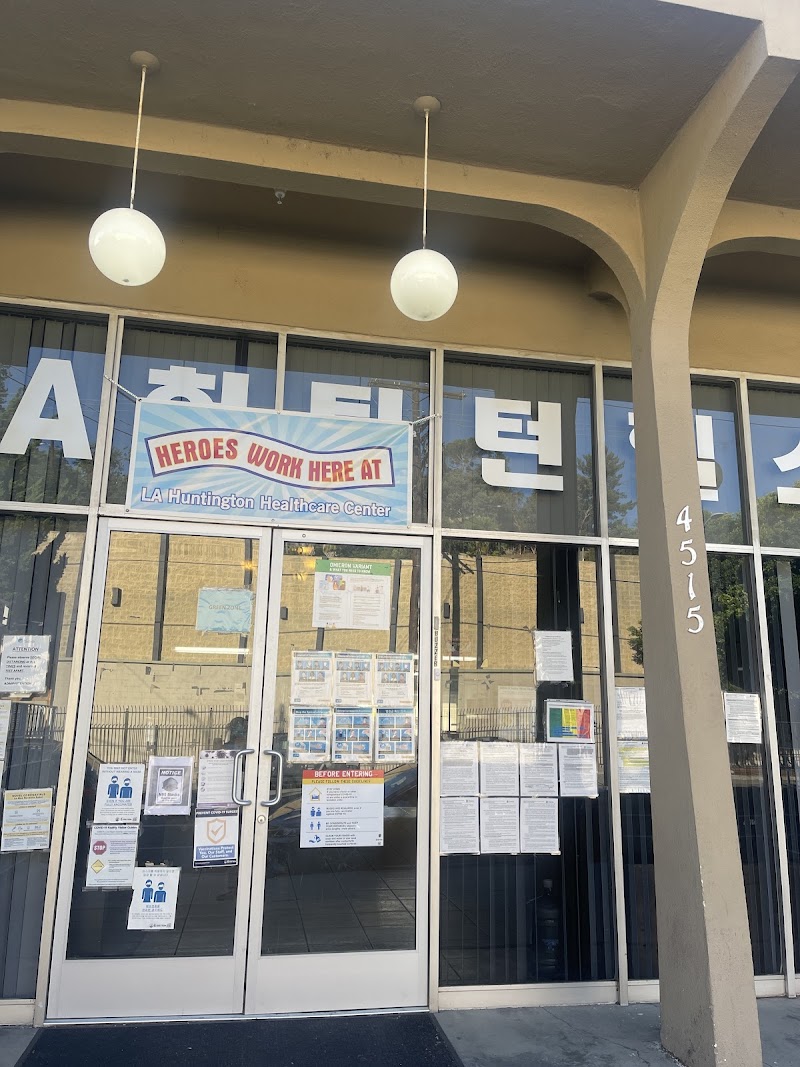
4515 HUNTINGTON DRIVE SOUTH, LOS ANGELES, CA 90032 (323) 225-5991
For profit - Corporation 99 Beds IL & JOAN LEE Data: November 2025
Trust Grade
45/100
#602 of 1155 in CA
Last Inspection: October 2024

Within standard 12-15 month inspection cycle. Federal law requires annual inspections.

Overview

Huntington Healthcare Center has a Trust Grade of D, which indicates below average performance with some concerns about care quality. Ranking #602 out of 1155 facilities in California places it in the bottom half, and #112 out of 369 in Los Angeles County means only 111 local options are better. The facility appears to be improving, having reduced its issues from 12 in 2024 to just 1 in 2025. Staffing is relatively stable, with a 37% turnover rate, which is slightly below the state average, but the RN coverage is concerning as it falls below 98% of California facilities, potentially impacting the quality of care. The facility has faced significant fines totaling $123,598, which is higher than 93% of other facilities in the state, suggesting ongoing compliance issues, including failures to securely store medications and to follow meal preparation guidelines that could affect residents' nutritional needs.

Trust Score
D
45/100
In California
#602/1155
Bottom 48%
Safety Record
Moderate
Needs review
Inspections
Getting Better
12 → 1 violations
Staff Stability
○ Average
37% turnover. Near California's 48% average. Typical for the industry.
Penalties
⚠ Watch
$123,598 in fines. Higher than 95% of California facilities. Major compliance failures.
Skilled Nurses
⚠ Watch
Each resident gets only 11 minutes of Registered Nurse (RN) attention daily — below average for California. Fewer RN minutes means fewer trained eyes watching for problems.
Violations
⚠ Watch
30 deficiencies on record. Higher than average. Multiple issues found across inspections.
★★★☆☆
3.0
Overall Rating
★★★★☆
4.0
Staff Levels
★☆☆☆☆
1.0
Care Quality
★★★★☆
4.0
Inspection Score
Stable
2024: 12 issues
2025: 1 issues

The Good

  • 4-Star Staffing Rating · Above-average nurse staffing levels
  • Full Sprinkler Coverage · Fire safety systems throughout facility
  • No fines on record
  • Staff turnover below average (37%)

    11 points below California average of 48%

Facility shows strength in staffing levels, fire safety.

The Bad

3-Star Overall Rating

Near California average (3.1)

Meets federal standards, typical of most facilities

Staff Turnover: 37%

Near California avg (46%)

Typical for the industry

Federal Fines: $123,598

Well above median ($33,413)

Significant penalties indicating serious issues

Chain: IL & JOAN LEE

Part of a multi-facility chain

Ask about local staffing decisions and management

The Ugly 30 deficiencies on record

Aug 2025 1 deficiency
CONCERN (D) 📢 Someone Reported This

A family member, employee, or ombudsman was alarmed enough to file a formal complaint

Potential for Harm - no one hurt, but risky conditions existed

Infection Control (Tag F0880)

Could have caused harm · This affected 1 resident

**NOTE- TERMS IN BRACKETS HAVE BEEN EDITED TO PROTECT CONFIDENTIALITY** Based on observation, interview and record review, the facility failed to ensure the surgical face mask (a loose-fitting, dispos...

Read full inspector narrative →
**NOTE- TERMS IN BRACKETS HAVE BEEN EDITED TO PROTECT CONFIDENTIALITY** Based on observation, interview and record review, the facility failed to ensure the surgical face mask (a loose-fitting, disposable device that creates a physical barrier between the mouth and nose of the wearer and potential contaminants in the immediate environment) of one of 4 staffs, was worn correctly while in a resident-care area, as indicated in the facility's policy and procedure (P&P) titled, Personal Protective Equipment-Using Face Masks.This failure had the potential to increase the spread of Coronavirus Disease 2019 ([COVID-19] highly contagious viral infection) virus to other residents, staff, and visitors in the facility, resulting in respiratory infections, hospitalizations and death.Findings:During a concurrent observation and interview on 8/18/2025 at 10:30 a.m. with Restorative Nurse Assistant (RNA 1) in Resident 2's room, RNA 1 was observed wearing surgical face mask below her nose with both nares (nasal openings) exposed. RNA 1 acknowledged the surgical face mask was applied incorrectly. RNA 1 stated putting on a surgical face mask incorrectly increased the potential to spread the COVID-19 virus to the residents.During a review of Resident 2's admission Record, the admission Record indicated Resident 2 was originally admitted to the facility on [DATE]and re-admitted on [DATE] with diagnoses including cerebral infarction (a medical condition that occurs when the blood flow to the brain is disrupted due to issues with the arteries that supply it), cellulitis (a bacterial infection of your skin and the tissue beneath your skin) and hypertension (high blood pressure).During a review of Resident 2's Minimum Data Set (MDS-a resident assessment tool) dated 5/19/2025, the MDS indicated Resident 3 had clear speech, was able to express needs and wants and understands. The MDs indicated Resident 2 required partial/moderate assistance (helper does less than half the effort) with oral hygiene, toileting and personal hygiene.During an interview on 8/18/2025 at 10:45 a.m. with the Infection Preventionist Nurse (IPN), the IPN stated all staff should wear their surgical face mask correctly when inside the facility by covering the nose and mouth. The IPN stated not wearing the surgical face mask correctly had the potential to increase the risk in spreading COVID-19 virus and other germs to the other residents, staff and visitors in the facility.During a review of the facility's P&P titled Personal Protective Equipment-Using Face Masks, dated 9/2010, the P&P indicated staff should ensure face mask covers the nose and mouth while performing treatment or services.
Oct 2024 10 deficiencies
CONCERN (D)

Potential for Harm - no one hurt, but risky conditions existed

Notification of Changes (Tag F0580)

Could have caused harm · This affected 1 resident

**NOTE- TERMS IN BRACKETS HAVE BEEN EDITED TO PROTECT CONFIDENTIALITY** Based on interview and record review, the facility failed to notify the responsible party (RP) of a change in condition for one ...

Read full inspector narrative →
**NOTE- TERMS IN BRACKETS HAVE BEEN EDITED TO PROTECT CONFIDENTIALITY** Based on interview and record review, the facility failed to notify the responsible party (RP) of a change in condition for one of 19 sampled residents (Resident 79), in the RP's preferred language of Korean (language spoken in the country of Korea). This deficient practice delayed Resident 79's RP's ability to be informed and aware of Resident 79's plan of care, including changes in Resident 79's condition, hospitalizations, and readmissions. Findings: During a review of Resident 79's admission Record, the record indicated Resident 79 was originally admitted to the facility on [DATE] and was most recently re-admitted on [DATE]. Resident 79's admitting diagnoses included major depressive disorder (a serious mood disorder that affects how a person feels, thinks, and behaves), anxiety disorder (a mental health condition that involves excessive feelings of fear, dread, and uneasiness), dementia (a progressive state of decline in mental abilities), and schizophrenia (a mental illness that is characterized by disturbances in thought). During a review of Resident 79's History and Physical (H&P), dated 10/15/2024, the H&P indicated Resident 79 did not have the capacity to understand or make decisions. During a review of Resident 79's Minimum Data Set (MDS, a federally mandated resident assessment tool), dated 10/5/2024, the MDS indicated Resident 79 had moderately impaired cognition (problems with a person's ability to think, learn, remember, use judgement, and make decisions) and required supervision or touching assistance for activities of daily living (ADLs, routine tasks/activities such as bathing, dressing and toileting a person performs daily to care for themselves). During a review of Resident 79's Change of Condition (COC) assessment, dated 10/4/2024, the assessment indicated Resident 79 was displaying a change in behavior and indicated Licensed Vocational Nurse (LVN) 1 notified Resident 79's RP of the change of condition. During a telephone interview on 10/17/2024 at 12:00 PM, with Resident 79's RP, using a translator, Resident 79's RP stated her preferred language was Korean, and stated she could not speak or understand English well. Resident 79's RP stated that on 10/4/2024 the facility left her a voice message in English, and stated she did not understand what the message said. Resident 79's RP further stated she received an email from the Director of Social Services (DSS) on 10/17/2024 and stated the email was in English. Resident 79's RP stated that she was not aware Resident 79 had a change in condition on 10/4/2024, or that Resident 79 was transferred to the hospital on [DATE]. During an interview on 10/17/2024 at 1:48 PM, with the Director of Nursing (DON), the DON stated if a resident has a RP, the RP was supposed to be notified of any changes in the plan of care, including changes of condition, hospitalizations, and readmissions. The DON stated the RP should be notified immediately. During an interview on 10/18/2024 at 10:26 AM with LVN 1, LVN 1 stated she notified Resident 79's RP of Resident 79's change of condition on 10/4/2024. LVN 1 stated she notified Resident 79's RP by phone, and stated she left a voice message for Resident 79's RP in English. LVN 1 stated there was no language translator used. An attempt was made to contact RN 1 by telephone, but no answer was received. During an interview on 10/17/2024 at 2:06 PM, with RN 2, RN 2 stated she spoke Korean and assisted staff with translation, but she did not work every day, and her responsibilities as an RN meant she was not always available to translate for staff. RN 2 stated that when she was not available, staff notified Resident 79's RP in English, and Resident 79's RP would call the facility when RN 2 was available to translate. RN 2 stated it was important that the facility residents' RPs received information and updates in their preferred language. During an interview on 10/18/2024, at 12:13 PM, with the DON, the DON stated updates to the plan of care, or change in a resident's condition, should be provided in the preferred language of the RP as the RP was an extension of the resident. The DON stated it was the resident's right to provide this information in a language the resident and/or RP could understand. During a review of the facility's policy and procedure (P&P) titled Resident Rights, revised December 2016, the P&P indicated it was the resident's right to be notified of their medical condition and of any changes in their condition. The P&P further indicated it was the resident's right to be informed of the care planning and treatment received. During a review of the facility's P&P titled Accommodation of Needs, revised January 2020, the P&P indicated the resident's needs and preferences were supposed to be accommodated to the extent possible if it would not endanger the health and safety of others. The P&P further indicated staff were supposed to provide care in a manner that accommodated sensory limitations, promoted communication, and maintained dignity. During a review of the facility's P&P titled Communication Policy: Translation and/or Interpretation, revised April 2020, the P&P indicated that if there were no staff or family members available to assist with translation, facility staff were supposed to utilize the facility's contracted interpretation services.
CONCERN (D)

Potential for Harm - no one hurt, but risky conditions existed

Comprehensive Care Plan (Tag F0656)

Could have caused harm · This affected 1 resident

**NOTE- TERMS IN BRACKETS HAVE BEEN EDITED TO PROTECT CONFIDENTIALITY** b. During a review of Resident 37's admission Record, the admission record indicated Resident 37 was admitted to the facility on...

Read full inspector narrative →
**NOTE- TERMS IN BRACKETS HAVE BEEN EDITED TO PROTECT CONFIDENTIALITY** b. During a review of Resident 37's admission Record, the admission record indicated Resident 37 was admitted to the facility on [DATE]. Resident 37's admitting diagnoses included weakness, anemia (a condition where the body did not have enough healthy red blood cells), diabetes mellitus (DM -a disorder characterized by difficulty in blood sugar control and poor wound healing), and dementia. During a review of Resident 37's H&P, dated 4/9/2024, the H&P indicated Resident 37 did not have the capacity to understand and make decisions. During a review of Resident 37's MDS, dated [DATE], the MDS indicated Resident 37's cognitive for daily decisions making was moderately impaired. The MDS indicated Resident 37 receiving a mechanically altered diet (required change in texture of food or liquids) and at risk of developing a pressure ulcer/injury. During a review of Resident 37's physician orders, as of 10/17/2024, the orders indicated a mechanical soft texture diet was ordered on 4/8/2024. During an interview on 10/15/2024 at 2:06 PM with Resident 37, Resident 37 stated her dentures were hurting her and affecting her eating. Resident 37 stated she could not chew without her dentures. During a concurrent interview and record review on 10/17/2024 at 8:34 AM with the Director of Social Services (DSS), Resident 37's care plans as of 10/17/2024 were reviewed. The care plans indicated there was no documentation addressing Resident 37's discomfort with her dentures. The DSS stated there should have a care plan addressing Resident 37's discomfort with her dentures. The DSS stated the purpose of care plans were to correct a resident's problems, to know the resident's needs, and to see what specific staff could help with the resident's issue. The DSS stated the risk of not having a care plan addressing Resident 37's discomfort with her dentures was that staff would not know Resident 37 had a denture issue, and it could potentially delay necessary care. The DSS stated it could also possibly affect Resident 37's oral intake and cause undesired weight loss. The DSS stated a care plan should be done upon admission and when there was an issue. The DSS stated the nursing department was the one responsible for creating a care plan. c. During a review of Resident 74's admission Record, the admission record indicated Resident 74 was originally admitted to the facility on [DATE] and readmitted on [DATE]. Resident 74's admitting diagnoses included weakness, anemia, failure to thrive (a decline caused by chronic diseases and functional impairments which could cause weight loss, decreased appetite, poor nutrition, and inactivity), and anxiety disorder (a mental health condition that involved excessive and persistent feelings of fear, dread, and uneasiness). During a review of Resident 74's H&P, dated 7/3/2024, the H&P indicated Resident 74 did not have the capacity to understand and make decisions. During a review of Resident 74's MDS, dated [DATE], the MDS indicated Resident 74's cognitive skills for daily decisions making was intact. The MDS indicated Resident 74 had no natural teeth or tooth fragments. The MDS indicated Resident 74 lost 10 percent (%) or more of her body weight in the last six months and was prescribed a mechanically altered diet. The MDS indicated Resident 74 was at risk of developing a pressure ulcer/injury. During a review of Resident 74's physician orders, as of 10/17/2024, the orders indicated a mechanical soft texture diet was ordered on 7/5/2024. During an interview on 10/15/2024 at10:59 AM with Resident 74, Resident 74 stated her dentures were missing and she had no grip in her mouth without the dentures. During a concurrent interview and record review on 10/17/2024 at 8:57 AM with the DSS, Resident 74's care plans as of 10/17/2024 were reviewed. There was no care plan addressing the usage of dentures. The DSS stated Resident 74 should have a care plan addressing the usage of dentures. The DSS stated she was aware of Resident 74's missing dentures, and Resident 74 was seen by dentist on 10/11/2024 for a denture try-in (a step in the denture fabrication process where a dentist placed a prototype of the final denture in the patient's mouth to evaluate its fit, function, and appearance). During an interview on 10/17/24 at 10:25 AM with LVN 3, LVN 3 stated residents who had dentures should have a care plan addressing the usage of the dentures. LVN 3 stated the purpose of the care plan was to ensure residents received the care they should. LVN 3 stated the licensed nurse was responsible for creating the care plans. LVN 3 stated it would be a potential delay to necessary care without a care plan addressing the usage of dentures. During a review of the facility policy and procedure (P&P) titled, Care Plans, Comprehensive Person-Centered, revised 2016, the P&P indicated facility residents were supposed to have care plans that incorporated identified problem areas and included interventions that were targeted and meaningful to the resident. The P&P further indicated the care plan was supposed to describe the services to be provided to attain or maintain the resident's highest practicable physical, mental, and psychosocial well-being. Based on interview and record review, the facility failed to develop care plans for three of three sampled residents (Resident 72, 37, and 74) addressing the following: a. The hearing difficulties for Resident 72. b. The discomfort of dentures for Resident 37. c. The usage of dentures for Resident 74. These deficient practices placed Resident 72 at risk of an inability to be aware of the care being provided due to staff being unaware of Resident 72's hearing difficulty and need for staff to speak loudly or speak close to hear. These deficient practices also had the potential to delay necessary care, increase the risk of undesired weight loss, and increase the risk of pressure ulcer (localized, pressure-related damage to the skin and/or underlying tissue usually over a bony prominence) development for Residents 37 and 74. Findings: a. During a review of Resident 72's admission Record, the admission record indicated Resident 72 was admitted to the facility on [DATE]. Resident 72's admitting diagnoses included a history of falling, abnormalities of gait and mobility, dementia (a progressive state of decline in mental abilities), and metabolic encephalopathy (brain dysfunction caused by a chemical imbalance in the blood that affects brain function). During a review of Resident 72's History and Physical (H&P), dated 2/2/2024, the H&P indicated Resident 72 did not have the capacity to understand and/or make decisions. During a review of Resident 72's Minimum Data Set (MDS, a federally mandated resident assessment tool), dated 8/25/2024, the MDS indicated Resident 72 had severely impaired cognition (problems with a person's ability to think, learn, remember, use judgement, and make decisions). The MDS indicated Resident 72 required supervision or touch assistance from staff for activities of daily living (ADLs, routine tasks/activities such as bathing, dressing and toileting a person performs daily to care for themselves). During a review of Resident 72's Ear, Nose, and Throat (ENT) Progress Note, dated 10/10/2024, the progress note indicated Resident 72 had a diagnosis of hearing loss. During a review of Resident 72's Social Service quarterly assessment, dated 8/20/2024, the assessment indicated Resident 72 was hard of hearing and required staff to speak loudly to her. During an interview on 10/15/2024 at 10:22 AM, with Certified Nursing Assistant (CNA) 1, CNA 1 stated Resident 72 was hard of hearing and did not use hearing aids. CNA 1 stated staff needed to speak to Resident 72 in a loud voice or speak closely to her for Resident 72 to hear what was being said. During a concurrent interview and record review, on 10/17/2024 at 12:46 PM, with Licensed Vocational Nurse (LVN) 1, Resident 72's active care plans were reviewed. LVN 1 stated Resident 72 did not have a care plan addressing her hearing loss. LVN 1 stated care plans could be developed, reviewed, and revised by any licensed nursing staff, and stated there should be a care plan addressing Resident 72's difficulty in hearing. LVN 1 stated the care plan would ensure all staff providing care to Resident 72 were aware of the resident's hearing difficulty, and the necessary interventions to provide quality care, including speaking loudly or closer to the resident.
CONCERN (D)

Potential for Harm - no one hurt, but risky conditions existed

Deficiency F0688 (Tag F0688)

Could have caused harm · This affected 1 resident

**NOTE- TERMS IN BRACKETS HAVE BEEN EDITED TO PROTECT CONFIDENTIALITY** Based on observation, interview, and record review, the facility failed to ensure one of six sampled residents (Resident 31) rec...

Read full inspector narrative →
**NOTE- TERMS IN BRACKETS HAVE BEEN EDITED TO PROTECT CONFIDENTIALITY** Based on observation, interview, and record review, the facility failed to ensure one of six sampled residents (Resident 31) received appropriate treatment by applying a wrist hand finger orthosis ([WHFO] a device that provides support and help with joint stiffness and contractures [a condition of shortening and hardening of muscles, or other tissue, often leading to deformity and rigidity of joint]), and an elbow splint (a flexible device used to protect and immobilize a body part) as ordered by the physician. This deficient practice placed Resident 31 at increased risk of further decline to the right elbow and wrist contracture. Findings: During a concurrent observation and interview on 10/15/2024 at 10:05 AM, in Resident 31's room, with Resident 31, Resident 31's right arm elbow and wrist was observed without a splint and/or WHFO. Resident 31 stated he was not able to straighten his right arm and hand. Resident 31 stated he should have a splint on his right arm. During a review of Resident 31's admission Record (Face Sheet), the Face Sheet indicated Resident 31 was originally admitted to the facility on [DATE] and readmitted on [DATE]. Resident 31's diagnoses included right-sided hemiplegia (total paralysis of the arm, leg, and trunk on the same side of the body) and hemiparesis (inability to move on one side of the body), diabetes (disorder characterized by difficulty in blood sugar control and poor wound healing), muscle weakness (loss of muscle strength), and dysphagia (difficulty swallowing). During a review of Resident 31's Minimum Data Set ([MDS] a federally mandated resident assessment tool), dated 8/13/2024, the MDS indicated Resident 31's cognitive (the ability to think and process information) skills for daily decisions making was moderately impaired. The MDS indicated Resident 31 required supervision (helper sets up or cleans up; resident completes activity) from staff for activities of daily living ([ADLs]- routine tasks/activities such as bathing, dressing and toileting a person performs daily to care for themselves). During a review of Resident 31's physician's order, dated 8/14/2024, the physician's order indicated Restorative Nursing Assistant ([RNA] assist the patient in performing tasks that restore or maintain physical function) for application of WHFO to the right upper extremity (RUE) five (5) times a week (5xWK) daily (QD) for four (4) to six (6) hours (4-6 hrs) as tolerated with skin check every one (1) to two (2) hours (1-2 hrs). The physicians' order indicated RNA for application of elbow splint to the RUE 5xWK QD for 4-6 hrs as tolerated with skin check every 1-2 hrs. During an observation on 10/15/2024 at 12:01 PM and 1:43 PM, in the activity room, Resident 31's right arm elbow and wrist was observed without a splint and/or WHFO. During an observation on 10/15/2024 at 2:34 PM, in Resident 31's room, Resident 31's right arm and wrist was observed without a splint and/or WHFO. During an observation on 10/16/2024 at 8:30 AM, in Resident 31's room, Resident 31's right arm and wrist was observed without a splint and/or WHFO. During an interview on 10/16/2024 at 3:00 PM with RNA 1, RNA 1 stated she applied Resident 31's right elbow splint and WHFO around 7:30 AM on 10/15/2024. RNA 1 stated she should have checked Resident 31's skin every 2 hrs per the physicians' order. RNA 1 stated she got busy with other residents' care and did not check Resident 31's skin or the splint and WHFO. RNA 1 she was not aware Resident 31 was not wearing the splint on 10/15/2024 from 10:05 AM until 2:34 PM. RNA 1 stated Resident 31 sometimes removed the splint. RNA 1 stated it was her responsibility to check Resident 31's splint and WHFO and reapply if removed. RNA 1 stated she would report to the rehabilitation (rehab) team when Resident 31 removed the splint and/or refused to wear the splint and WHFO. RNA 1 was not able to provide documentation when she reported to the therapy team of Resident 31's removal/refusal of the splint and WHFO. RNA 1 stated she verbally reported to the rehab team. During an interview on 10/16/2024 at 3:32 PM with Certified Occupational Therapy Assistant (COTA) 1, COTA 1 stated the RNAs were to follow the physician's orders. COTA 1 stated Resident 31's right elbow splint and WHFO not applied as ordered placed Resident 31 at risk for a decline to the right arm and elbow mobility and increased contracture risk. During a concurrent interview and record review on 10/18/2024 at 11:29 AM with RNA 2, Resident 31's Restorative Nursing Weekly Summary ([RNWS]-RNA notes written summary), dated 9/7/2024 through 10/12/2024 was reviewed. RNA 2 stated the RNWS indicated Resident 31 was not refusing and/or taking off the right elbow splint and WHFO. RNA 2 stated the RNWS indicated Resident 31 was compliant with treatment and RNA 1 should have followed the physician's order. During a review of the facility's policy and procedure (P&P) titled Resident Mobility and Range of Motion,, revised 7/2017, the P&P indicated residents with limited mobility would receive appropriate services, equipment, and assistance to maintain or improve mobility. During a review of the facility's P&P titled, Quality of Care, revised 9/4/2024, the P&P indicated the facility was committed to providing exceptional care that met the physical needs of residents. During a review of the facility's P&P tilted Restorative Nursing Assistant (RNA) Job Description, undated, the P&P indicated RNAs responsibilities would perform tasks under required physician's orders and with supervision from nursing, and physical therapist or occupational therapist. The P&P indicated RNAs would assist with placement and use of splints and positioning devices and monitor resident for pressure areas.
CONCERN (D)

Potential for Harm - no one hurt, but risky conditions existed

Accident Prevention (Tag F0689)

Could have caused harm · This affected 1 resident

**NOTE- TERMS IN BRACKETS HAVE BEEN EDITED TO PROTECT CONFIDENTIALITY** Based on observation, interview, and record review, the facility failed to identify fire hazard risks for one of six sampled res...

Read full inspector narrative →
**NOTE- TERMS IN BRACKETS HAVE BEEN EDITED TO PROTECT CONFIDENTIALITY** Based on observation, interview, and record review, the facility failed to identify fire hazard risks for one of six sampled residents (Resident 23) by not knowing Resident 23 kept a lighter and cigarettes at the bedside. This deficient practice had a potential to increase the risk for injury for Resident 23. Findings: During a concurrent observation and interview on 10/15/2024 at 11:51 AM, in Resident 23's room, a pack of cigarettes and a lighter was observed on top of the nightstand in front of Resident 23's television. Resident 23 stated the lighter and cigarettes belonged to him. During a concurrent observation and interview on 10/16/2024 at 12:34 AM, in the hallway, Resident 23 was observed wheeling himself with a lighter and pack of cigarettes on his lap. Resident 23 stated he had been living in this facility for three and half years, and he kept his lighter and cigarettes with him all the time. Resident 23 stated no staff talked to him regarding the storage of the lighter or cigarettes. During a review of Resident 23's admission Record, the admission Record indicated Resident 23 was originally admitted to facility on 3/26/2021 and re-admitted on [DATE]. Resident 23's diagnoses included chronic obstructive pulmonary disease (COPD-a chronic lung disease causing difficulty in breathing), generalized muscle weakness, schizophrenia (a mental illness that was characterized by disturbances in thought), anxiety (a feeling of fear, dread, or uneasiness), and nicotine dependence. During a review of Resident 23's Minimum Data Set (MDS- a federally mandated assessment tool), dated 10/6/2024, the MDS indicated Resident 1's cognitive (the ability to think and process information) skills for daily decision making was intact. The MDS indicated Resident 1 had impairment on the lower extremities and used a wheelchair for mobility. During a review of Resident 23's Smoking and Safety Assessment, dated 10/6/2024, the assessment indicated Resident 23 used tobacco products and followed the facility's policy on the location and time of smoking. The assessment indicated staff would continue to monitor smoking safety. During a review of Resident 23's care plan titled Resident is a smoker and is at risk for smoking-related injury or conditions, revised 10/13/2023, the care plan indicated the goal was for Resident 23 to smoke safely in accordance with the facility policy. The care plan indicated staff would observe Resident 23 for unsafe smoking behaviors or practices. During an interview on 10/17/2024 at 10:16 AM with Licensed Vocational Nurse (LVN) 3, LVN 3 stated residents should not keep lighters at the bedside because it was a fire hazard and could possibly cause injury. LVN 3 stated he needed to confiscate the resident's lighter if found at the bedside. LVN 3 stated he was not aware Resident 23 kept a lighter and cigarettes at the bedside. LVN 3 stated all staff, particularly the nursing staff, were the ones responsible for ensuring the residents were free from hazards. During an interview on 10/17/2024 at 1:43 PM with the Director of Nursing (DON), the DON stated the purpose of facility's Memorandum posted on the door of the smoking patio was to inform residents, responsible parties, and families of the facility's smoking policy. The DON stated the residents should not keep cigarettes or lighters at the bedside because it was not safe. The DON stated staff should document if a resident refused to give up their cigarettes and lighters. During a concurrent interview and record review on 10/17/2024 at 1:52 PM with LVN 2, Resident 23's care plans, as of 10/17/2024, were reviewed. The care plans indicated there was no documentation regarding Resident 23's refusal to give up his lighter and cigarettes. LVN 2 stated they should have care plans if Resident 23 refused to give up his lighter and cigarettes. During a concurrent interview and record review on 10/17/2024 at 1:52 PM with LVN 2, Resident 23's Nurse's Notes for 2024 were reviewed. The notes indicated there was no documentation regarding Resident 23's refusal to give up his lighter and cigarettes. LVN 2 stated staff should document in the Nurse's Notes if Resident 23 refused to give up his lighter and cigarettes. During a review of the facility's Policy and Procedure (P&P) titled Smoking policy- residents, revised on 7/2017, the P&P indicated only disposable safety lighters were permitted and all other forms of lighters were prohibited. During a review of the facility's Memorandum dated 9/30/2022, the memorandum indicated Resident are not allowed to keep their cigarettes and lighters in their pockets, closets, bedside tables and room. All cigarettes and lighters should be given to the patio monitor to keep in the 'smoking cabin' for safe keeping . For the safety of all residents, lighters and cigarettes shall be confiscated and placed in a secured area under the resident's name for use as needed or according to the smoking schedule.
CONCERN (D)

Potential for Harm - no one hurt, but risky conditions existed

Deficiency F0692 (Tag F0692)

Could have caused harm · This affected 1 resident

**NOTE- TERMS IN BRACKETS HAVE BEEN EDITED TO PROTECT CONFIDENTIALITY** Based on observation, interview, and record review, the facility failed to ensure one of 19 sampled residents (Resident 64) rece...

Read full inspector narrative →
**NOTE- TERMS IN BRACKETS HAVE BEEN EDITED TO PROTECT CONFIDENTIALITY** Based on observation, interview, and record review, the facility failed to ensure one of 19 sampled residents (Resident 64) received a meal tray as prescribed by the physician. This deficient practice created the potential for Resident 64 to suffer from repeat weight loss and malnutrition resulting from not receiving his prescribed and expected number of calories and nutritive value. Findings: During a review of Resident 64's admission Record, the record indicated Resident 64 was admitted to the facility on [DATE]. Resident 64's admitting diagnoses included failure to thrive (a syndrome that describes a general decline in health that can include weight loss, poor nutrition, and inactivity), muscle wasting and atrophy (the loss of muscle tissue and strength), dehydration, and anemia (a problem of not having enough healthy red blood cells or hemoglobin to carry oxygen to the body's tissues). During a review of Resident 64's History and Physical (H&P), dated 4/11/2024, the H&P indicated Resident 64 did not have the capacity to understand or make decisions. During a review of Resident 64's Minimum Data Set (MDS, a federally mandated resident assessment tool), dated 9/23/2024, the MDS indicated Resident 64 had severely impaired cognition (problems with a person's ability to think, learn, remember, use judgement, and make decisions). The MDS indicated Resident 64 required partial to moderate assistance from staff for activities of daily living (ADLs, routine tasks/activities such as bathing, dressing and toileting a person performs daily to care for themselves). During a review of Resident 64's active physician orders dated 6/12/2024, the orders indicated Resident 64 was to receive a fortified diet (a diet that includes foods with added nutrients, such as protein, carbohydrates, or fats, to increase their nutritional value). During an observation on 10/16/2024 at 12:55 PM, at Resident 64's bedside, Resident 64 was observed eating his lunch tray. Resident 64's meal tray ticket, (a piece of paper that displays exactly what that resident will be receiving based on the resident's prescribed diet order), dated 10/16/2024, indicated Resident 64 did not receive a fortified tray. A photo was taken of Resident 64's meal tray ticket. During a concurrent interview and record review, on 10/17/2024 at 10:28 AM, with the Dietary Supervisor (DS), the DS reviewed Resident 64's active diet order and meal tray ticket from 10/16/2024. The DS stated Resident 64's orders indicated he was supposed to receive a fortified tray and stated the meal tray ticket indicated Resident 64 did not receive a fortified tray on 10/16/2024 for lunch. The DS stated a fortified tray meant more calories were added to the tray to assist in weight gain. The DS stated Resident 64 had a history of severe weight loss and stated Resident 64 not receiving the ordered number of calories placed the resident at risk for not meeting his nutritional requirements and experiencing repeated weight loss. During a concurrent interview and record review, on 10/18/2024 at 1:46 PM, with Licensed Vocational Nurse (LVN) 2, Resident 64's active diet order dated 6/12/2024 was reviewed. LVN 2 stated Resident 64 was supposed to receive a fortified tray. LVN 2 stated that before meal trays were delivered to the residents, the staff were to check the meal tray ticket against the physician orders to ensure they matched, and the residents were receiving the correct tray. LVN 2 stated that a fortified diet was for residents with weight loss. LVN 2 stated Resident 64 needed to have the correct tray as ordered to receive the correct number of calories. LVN 2 stated that not receiving the tray as ordered placed Resident 64 at risk for weight loss. During a review of the facility's policy and procedure (P&P) titled Therapeutic Diets, revised 10/2017, the P&P indicated therapeutic diets were prescribed by the physician to support the resident's treatment and plan of care and in accordance with the resident's goals and preferences. During a review of the facility's P&P titled Nursing Home Dietary Tray Line Policy, revised 9/2024, the P&P indicated facility nursing staff or dietary staff were supposed to confirm that the correct meal was delivered.
CONCERN (D)

Potential for Harm - no one hurt, but risky conditions existed

Deficiency F0761 (Tag F0761)

Could have caused harm · This affected 1 resident

**NOTE- TERMS IN BRACKETS HAVE BEEN EDITED TO PROTECT CONFIDENTIALITY** Based on observation, interview, and record review, the facility failed to store and discard (remove, destroy) one expired insul...

Read full inspector narrative →
**NOTE- TERMS IN BRACKETS HAVE BEEN EDITED TO PROTECT CONFIDENTIALITY** Based on observation, interview, and record review, the facility failed to store and discard (remove, destroy) one expired insulin (short-acting regular human insulin) Novolin R (type of insulin injection device) vial for Resident 53 from use, in accordance with facility and manufacturer requirements, in one of one inspected medication room (Medication Room Nursing Station 2.) This deficient practice increased the risk that Resident 53 could have received medication that had become ineffective or toxic due to improper storage, possibly leading to health complications. Findings: During an observation on [DATE] at 12:23 pm, in Medication Room Nursing Station 2, in the presence of Registered Nurse (RN) 2, one opened insulin Novolin R vial for Resident 53 was found stored in the refrigerator with a label indicating use began on [DATE]. According to the manufacturer's product labeling, opened Novolin R vials should be stored at room temperature up to 77 degrees Fahrenheit and used or discarded within 42 days of opening or once use at room temperature began, and to not refrigerate. During a subsequent interview on [DATE] at 12:23 p.m. with RN 2, RN 2 stated the Novolin R vial for Resident 53 was opened and stored in the refrigerator. RN 2 stated usually opened vials are good for 28 days and the open Novolin R vial for Resident 53 needed to be removed from the medication room and replaced with a new one from pharmacy to not be used in error. RN 2 stated that licensed nurses could use the expired Novolin R vial for Resident 53 in error which will not be effective in keeping the blood sugar levels low and harm Resident 53 by causing hyperglycemia (high blood sugar level) leading to change of condition, tremors, dizziness, and potential coma (a state of deep unconsciousness caused by severe injury or illness). During a concurrent interview and record review of Insulin Storage Requirements document provided by the facility, on [DATE] at 3:20 p.m. with the Director of Nursing (DON), the DON stated that open insulin vials should be stored at room temperature and not in the refrigerator. The DON stated once a vial was opened it would be removed from the refrigerator and placed in the medication cart for use. The DON stated that usually opened insulin vials were good for 28 days and that according to the Insulin Storage Requirements document Novolin R vials were good for 42 days. The DON stated that insulin was used to lower blood sugar levels for diabetic residents and that expired insulin will not be effective in decreasing the blood sugar levels. During a review of the facility's policy and procedures (P&P), titled Storage of Medications, dated [DATE], the P&P indicated that The facility stores all drugs and biologicals in a safe, secure, and orderly manner. The P&P indicated discontinued, expired, outdated, or deteriorated drugs or biologicals are destroyed. During a review of the facility's guide titled, Insulin Storage Requirements, [undated], the guide indicated and listed the following: 1. Store unopened insulin in the refrigerator at 36 to 46 degrees Fahrenheit, 2. Store opened, in-use insulin at room temperature. 6. For any questions, refer to package insert. The P&P indicated Novolin R vials are refrigerated (between 36 to 46 degrees Fahrenheit) up to the expiration date on the vial or store unopened vials at room temperature (59 to 86 degrees Fahrenheit) for 28 days. The P&P indicated to store opened vials refrigerated or room temperature for 42 days.
CONCERN (D)

Potential for Harm - no one hurt, but risky conditions existed

Menu Adequacy (Tag F0803)

Could have caused harm · This affected 1 resident

**NOTE- TERMS IN BRACKETS HAVE BEEN EDITED TO PROTECT CONFIDENTIALITY** Based on observation, interview, and record review, the facility failed to honor the food choices and offer alternative menu opt...

Read full inspector narrative →
**NOTE- TERMS IN BRACKETS HAVE BEEN EDITED TO PROTECT CONFIDENTIALITY** Based on observation, interview, and record review, the facility failed to honor the food choices and offer alternative menu options for one of six sampled residents (Resident 15). This deficient practice had the potential to impact Resident 15's nutritional status, quality of life and result in food dissatisfaction leading to insufficient food intake. Findings: During a review of Resident 15's admission Record, dated 8/23/2024, the admission record indicated Resident 15 was admitted to the facility on [DATE]. Resident 15's diagnoses included congestive heart failure (CHF- a heart disorder which causes the heart to not pump the blood efficiently, sometimes resulting in leg swelling), failure to thrive (a decline caused by chronic diseases and functional impairments which can cause weight loss, decreased appetite, poor nutrition, and inactivity), and diabetes mellitus (DM- a disorder characterized by difficulty in blood sugar control and poor wound healing). During a review of Resident 15's Minimum Data Set (MDS - a federally mandated resident assessment tool), dated 9/25/2024, the MDS indicated Resident 15 was cognitively intact (the ability to think, remember and reason). The MDS indicated Resident 15 had the ability to eat independently and a helper was needed to assist with set-up and clean up. During a review of Resident 15's History and Physical (H&P), dated 3/21/2024, the H&P indicated Resident 15 had the capacity to understand and make decisions. The H&P indicated Resident 15 had no food allergies. During a review of Resident 15's care plan titled, At risk for altered nutrition and dehydration (when the body loses more fluids than it takes in) related to cognitive impairment (difficulty with thinking, learning, remembering, and making decisions) and picky with food, initiated 3/21/2024 and revised on 3/27/2024. The care plan's goal indicated Resident 15 would achieve adequate nutritional intake of at least 50-100 percent (%) each meal. The care plan indicated the staff interventions were to encourage Resident 15 to follow his diet, allow sufficient mealtime, and to report any appetite changes. During a review of Resident 15's Interdisciplinary Team (IDT - a group of health care professionals with various areas of expertise who work together toward the goals of their clients) Conference Record, dated 9/26/2024, the IDT conference record indicated Resident 15 had good oral intake and liked chicken nuggets, tuna or ham sandwiches, French fries, and American food. During a review of Resident 15's Order Summary Report, dated 10/17/2023, the order summary report indicated an active order on 3/21/2024 for a regular diet with no salt packet on the tray. During a review of Resident 15's Order Summary Report, dated 10/17/2023, the order summary report indicated an active order on 3/21/2024 to have a snack at night. During an interview with Resident 15 on 10/16/2024 at 9:05 a.m., Resident 15 stated he had issues with the food because it was so bland. Resident 15 stated he could hardly tolerate eating his meals because the food was so tasteless. Resident 15 stated the food turned his stomach. Resident 15 stated he made it clear to staff on several occasions of what could be done to make his food more enjoyable. Resident 15 stated despite his requests and complaints about the food, he (Resident 15) would continue to receive foods he disliked. Resident 15 stated he was promised an alternative menu but had not received it. During a concurrent observation and interview on 10/17/2024 at 7:50 a.m., with Licensed Vocational Nurse (LVN) 3, and Resident 15, in Resident 15's room, Resident 15 was observed finishing his breakfast. Resident 15 was eating his oatmeal. Resident 15 stated he had two bowls of oatmeal and was finishing the second bowl. Resident 15 stated he was offered an alternative menu to choose from a few days ago but he never received the alternate menu. Resident 15 stated he normally requested two servings of oatmeal for breakfast to tie him over because he (Resident 15) did not like the food that was served. Resident 15 stated the oatmeal kept him from being hungry since he could not eat the meals served. Resident 15 stated he did not want it to appear he was complaining so he just settled for two servings of oatmeal every morning to keep him from being hungry. Resident 15 stated on some occasions he would only get one serving of oatmeal when he requested two servings. Resident 15 stated the nursing staff would tell him there was no oatmeal left and he could only have one serving. Resident 15 stated he would be offered alternatives on some days that were worse than his original meal. LVN 3 stated he did not know Resident 15 requested an alternative menu. LVN 3 stated the facility should feel like Resident 15's home and he was allowed to have extra portions of oatmeal at his request. LVN 3 stated Resident 15 should have alternative food choices. LVN 3 stated when a resident did not like what was served, the staff should request an alternative food option the resident preferred from the kitchen. LVN 3 stated if Resident 15 could not get food he liked to eat, he may stop eating and could potentially lose weight or become malnourished. During an interview on 10/17/2024 at 11:51 a.m., with the Dietary Supervisor (DS), the DS stated she was aware Resident 15 wanted alternative food choices. The DS stated Resident 15 could choose something off the alternative menu for his meals if he did not like what was served. The DS stated Resident 15 could have extra portions if he requested it. The DS stated the Resident 15 should be able to have extra oatmeal and should not be told there was no oatmeal left. The DS stated the kitchen could prepare oatmeal or other alternatives upon the residents' request. The DS stated it was the resident's right to have choices with meals. During a review of the facility's policy and procedure (P&P) titled, Food Substitutions for Residents Who Refuse the Meal, dated 2023, the P&P indicated Residents will be provided a suitable nourishing alternate meal after planned, served meal had been refused. The P&P indicated nursing personnel would ask any resident who does not eat his meal or food item as to why he did not eat and offer a food substitution in accordance with the resident's diet order. During a review of the facility's P&P titled, Quality of Care, revised 9/4/2024, the P&P indicated, Residents will receive nutritious meals tailored to their dietary needs and preferences.
CONCERN (E)

Potential for Harm - no one hurt, but risky conditions existed

Deficiency F0657 (Tag F0657)

Could have caused harm · This affected multiple residents

**NOTE- TERMS IN BRACKETS HAVE BEEN EDITED TO PROTECT CONFIDENTIALITY** Based on interview and record review, the facility failed to revise the fall care plan for one of nineteen sampled residents (Re...

Read full inspector narrative →
**NOTE- TERMS IN BRACKETS HAVE BEEN EDITED TO PROTECT CONFIDENTIALITY** Based on interview and record review, the facility failed to revise the fall care plan for one of nineteen sampled residents (Resident 64), following Resident 64's fall with subsequent injury on 6/20/2024. This deficient practice increased the potential for staff to be unaware of the interventions required to prevent Resident 64 from suffering additional avoidable falls and potential subsequent injuries. Findings: During a review of Resident 64's admission Record, the record indicated Resident 64 was admitted to the facility on [DATE]. Resident 64's admitting diagnoses included muscle wasting and atrophy (the loss of muscle tissue and strength), abnormalities of gait and mobility, weakness, and dementia (a progressive state of decline in mental abilities). During a review of Resident 64's Minimum Data Set (MDS, a federally mandated resident assessment tool), dated 9/23/2024, the MDS indicated Resident 64 had severely impaired cognition (problems with a person's ability to think, learn, remember, use judgement, and make decisions). The MDS indicated Resident 64 required partial to moderate assistance from staff for activities of daily living (ADLs, routine tasks/activities such as bathing, dressing and toileting a person performs daily to care for themselves). The MDS further indicated Resident 64 required supervision or touch assistance from staff for mobility while in and out of bed. During a review of Resident 64's Interdisciplinary Team (IDT, group of different disciplines working together towards a common goal of a resident) Conference Record, dated 6/20/2024, the record indicated Resident 64 sustained a fall that resulted with a wound to the left upper eye. The record indicated Resident 64's physician orders and treatment record were reviewed. The record did not indicate that Resident 64's care plans were reviewed. During a review of Resident 64's Fall Risk Evaluation, dated 6/20/2024, the record indicated Resident 64 was at risk for falls. During a concurrent interview and record review, on 10/18/2024 at 11:23 AM, with Registered Nurse (RN) 2, Resident 64's IDT Conference Record, dated 6/20/2024, was reviewed. RN 2 stated the record did not indicate that Resident 64's care plans were reviewed following the fall he sustained on 6/20/2024. RN 2 stated the care plans were where staff would document interventions to prevent additional falls. During a concurrent interview and record review, on 10/18/2024 at 11:55 AM, with the Director of Nursing (DON), Resident 64's care plan titled Resident at risk for fall, revised 8/8/2024. The DON stated that after a fall, a resident was at risk for repeat falls, and stated that the care plan should have been updated. The DON stated Resident 64's care plan was not updated until 8/8/2024. During a review of the facility's policy and procedure (P&P) titled Fall Risk Assessment, revised 8/2018, the P&P indicated the staff and attending physician were supposed to collaborate to identify and address modifiable fall risk factors and interventions to try to minimize the consequences of risk factors that are not modifiable. During a review of the facility's P&P titled Care Plans, Comprehensive Person-Centered, revised 12/2016, the P&P indicated assessments of residents were ongoing and care plans were supposed to be revised as information about the residents and the residents' conditions change. The P&P further indicated the Interdisciplinary Team was supposed to review and update the care plan when there had been a significant change in the resident's condition.
CONCERN (E)

Potential for Harm - no one hurt, but risky conditions existed

Pharmacy Services (Tag F0755)

Could have caused harm · This affected multiple residents

**NOTE- TERMS IN BRACKETS HAVE BEEN EDITED TO PROTECT CONFIDENTIALITY** Based on interview and record review the facility failed to: 1. Account for one dose of Controlled Substances (also known as Con...

Read full inspector narrative →
**NOTE- TERMS IN BRACKETS HAVE BEEN EDITED TO PROTECT CONFIDENTIALITY** Based on interview and record review the facility failed to: 1. Account for one dose of Controlled Substances (also known as Controlled Drug and Controlled Medications [CS, CD, CM]- medications which have a potential for abuse and may also lead to physical or psychological dependence) for Residents 23, in one of two inspected medication carts (Medication Cart 1.) 2. Include the verifying signatures of either the Director of Nursing (DON) or a Registered Nurse (RN) along with the Licensed Vocational Nurse (LVN) on the Controlled Drug accountability logs for six of six sampled records awaiting disposal (removal, destroying) in the DON's office. 3. Include the witness signatures and quantity on the Medication Disposition log for 16 non-CMs disposed on 10/14/2024. As a result, control and accountability of the CS's did not follow state and federal regulations and facility policy and procedures. These deficient practices increased the opportunity for CS diversion (the transfer of a controlled medication or other medication from a lawful to an unlawful channel of distribution or use,) the risk that Residents 23 could have accidental overdose (administering more than the prescribed dose causing adverse drug reactions [unwanted, uncomfortable, or dangerous effects that a medication may have, such as coma (a state of deep unconsciousness) and delayed treatment and continuity of care due to lack of availability of the CS negatively impacting Resident 23's health and well-being, and the potential for accidental exposure to harmful medications to all residents in the facility, possibly leading to physical and psychosocial harm and hospitalization. Findings: During a concurrent interview and record review on 10/15/2024 at 12:47 PM with the DON, in the DON's office, six (6) Controlled Drug accountability logs for CS's awaiting final disposition did not contain verifying signatures, and 16 non-CM disposals did not contain the witness signatures and quantities on the Medication Disposition log dated 10/14/2024. The DON stated the DON was unable to locate the verifying signatures of the LVN and Registered Nurse (RN) and/or DON on the six (6) Controlled Drug accountability logs. The DON stated the DON failed to sign the Controlled Drug accountability logs upon receipt of the CSs and the LVN's failed to sign upon handing the CSs to the DON. The DON stated she counts the CSs with the LVNs upon receipt of the accountability logs and knows who gave them to her, however there was no consistent process to sign & date the logs. The DON stated the DON understood the importance of CS accountability to ensure each CS dose was accounted for until disposed throughout the process of CS accountability. The DON stated it was important to verify and sign the logs to prevent medication diversions and accidental exposure of harmful substances to residents. The DON stated she was also unable to locate the witness signatures and quantity destroyed for non-CMs on the Medication Disposition logs dated 10/14/2024 for 16 non-CMs that were already disposed. The DON stated sometimes the DON disposes the non-CMs herself without a witness to help the LVNs and failed to include quantities destroyed. During an observation on 10/25/2024 at 1:57 PM, with LVN 3, in Medication Cart 2, there was a discrepancy in the count between the Controlled Drug accountability log and the amount of medication remaining in the medication bubble pack (medication packaging system that contains individual doses of medication per bubble) for the following resident: 1. One dose of diazepam (a CS used for muscle spasm) 5 milligram ([mg] - a unit of measure of mass) tablet was missing from the medication bubble pack compared to the count indicated on the Controlled Drug accountability log for Resident 23. The Controlled Drug accountability log for diazepam indicated the medication bubble pack should have contained a total of 29 diazepam 5 mg tablets, after the last administration of diazepam 5 mg tablet documented/signed-off on 10/15/2024 at 6 AM, however the medication bubble pack contained 28 diazepam 5 mg tablets and contained no other documentation of subsequent administrations. During a concurrent interview, LVN 3 stated LVN 2 administered diazepam 5 mg tablet to Resident 23 that afternoon (10/15/2024) at 1:45 PM and forgot to sign the Controlled Drug accountability log. LVN 3 stated LVN 3 failed to follow the facility's policy of signing each CS dose on the Controlled Drug accountability log after preparing the dose for the resident. LVN 3 stated LVN 3 understood it was important to sign each dose once administered to ensure accountability, prevent CS diversion and accidental overdose to Resident 23. During an interview on 10/15/2024 at 3:20 PM with the DON, the DON stated LVN 3 failed to follow facility policy of documenting the preparation of CS immediately on the Controlled Drug accountability log for Resident 23. The DON stated not documenting the Controlled Drug accountability log timely can lead to accountability failures, CS diversion and accidental overdose leading to adverse drug effects. During a review of Resident 23's Order Summary Report, dated 10/15/2024, the report indicated Resident 23 was admitted to the facility on [DATE] with a diagnosis including muscle spasm. The report also indicated Resident 23 was prescribed diazepam 5 mg to give 1 tablet by mouth every 8 hours for muscle spasm, starting 7/18/2023. During a review of Resident 23's Medication Administration Record ([MAR] - a record of mediations administered to residents), for October 2024, the MAR indicated Resident 23 was prescribed diazepam 5 mg to give 1 tablet by mouth every 8 hours for muscle spasm scheduled at 6 AM, 2 PM and 10 PM. During a review of the facility's policy and procedures (P&P), titled Controlled Substances, dated April 2019, the P&P indicated the facility complies with all laws, regulations and other requirements related to handling, storage, disposal, and documentation of CM. The P&P indicated upon Administration the nurse administering the mediation is responsible for recording: (2) Name, strength, and dose of the medication. (3) Time of administration. (4) Method of administration. (5) Quantity of the medication remaining. (6) Signature of nurse administering medication. During a review of the P&P titled Discarding and Destroying Medications, dated April 2019, the P&P indicated Medications will be disposed of in accordance with federal, state, and local regulations governing management of non-hazardous pharmaceuticals, hazardous waste and CS. The P&P indicated Non-controlled and Schedule V (non-hazardous) CS will be disposed of in accordance with state regulations and federal guidelines regarding disposition of non-hazardous medications. The P&P indicated Schedule II, III, and IV (non-hazardous) CS will be disposed of in accordance with the state regulations and federal guidelines regarding disposition of non-hazardous CM. The P&P indicated the medication disposition record will contain the following information: b. Date medication disposed. e. The quantity disposed. h. Signature of witnesses.
CONCERN (E)

Potential for Harm - no one hurt, but risky conditions existed

Food Safety (Tag F0812)

Could have caused harm · This affected multiple residents

Based on observation, interview, and record review, the facility failed to ensure safe and sanitary food preparation practices for 89 of 89 residents when: 1. The dietary staff failed to perform hand ...

Read full inspector narrative →
Based on observation, interview, and record review, the facility failed to ensure safe and sanitary food preparation practices for 89 of 89 residents when: 1. The dietary staff failed to perform hand hygiene and change gloves when leaving and returning to the tray line to prepare food. 2. The dietary staff failed to wear a N-95 mask (a disposable face mask that covers the user's nose and mouth which offers protection from small solid or liquid droplets found in the air) appropriately while preparing food on the tray line. These deficient practices had the potential to result in harmful bacteria growth and cross contamination (transfer of harmful bacteria from one place to another) that could lead to foodborne illnesses in all residents who received food from the kitchen. Findings: During an observation of the tray line service for lunch on 10/16/2024 at 11:44 a.m., Dietary Aide (DA) 1's N-95 face mask was not covering her nose and partially covering the mouth. During an observation of the tray line service for lunch on 10/16/2024 at 12:20 p.m. and 12:25 p.m., DA 1 left the tray line wearing gloves to retrieve supplies from the storage area. DA 1's gloves were not changed nor did DA 1 perform hand hygiene before she returned to the tray line. During an observation of the tray line service for lunch on 10/16/2024 at 12:28 p.m., DA 2 left the tray line wearing gloves to retrieve a pan from a cart located outside of the tray line area. DA 2 returned to the tray line wearing the same gloves and did not perform hand hygiene before she proceeded to serve trays on the tray line. During an interview on 10/16/2024 at 12:38 p.m., with DA 2, DA 2 stated she should have washed her hands and changed her gloves when leaving the tray line area and returning. During an interview on 10/16/2024 at 12:40 p.m., with DA 1, DA 1 stated the masks were worn while preparing food to prevent germs from getting in the food. DA 1 stated she should have worn her mask to cover her nose and mouth, changed her gloves and washed her hands when she returned to the tray line. DA 1 stated it was important to wash her hands and change gloves for infection control purposes because residents could get sick if the food was contaminated. During an interview on 10/16/2024 at 1:07 p.m., with the Dietary Supervisor (DS), the DS stated the facility required the kitchen staff to always wear N-95 masks while in the kitchen to prevent infection and protect the residents from illness. The DS stated N95s must cover the nose and mouth and must be worn correctly to be effective. The DS stated when staff leave the tray line, the staff should wash their hands and change their gloves. The DS stated improper hand hygiene could spread infection to residents who may already have other illnesses. During a review of the facility's policy and procedure (P&P) titled, Handwashing/Hand Hygiene, revised August 2019, the P&P indicated, This facility considers hand hygiene the primary means to prevent the spread of infections. During a review of the facility's P&P titled, Food Handling, dated 2023, the P&P indicated, Food will be prepared and served in a safe and sanitary manner. The P&P indicated all food and nutrition services personnel will wash their hands prior to handling food. During a review of the facility's P&P titled, Nursing Home Dietary Tray Line Policy, dated 9/4/2024, the P&P indicated, the facility aims to maintain high standards of food hygiene, presentation and timely delivery to promote the health and well-being of all residents. The P&P indicated that dietary staff would maintain cleanliness and sanitation throughout the tray line process and all staff must wash hands and wear appropriate personal protective equipment such as gloves, aprons, and hairnets.
Mar 2024 2 deficiencies
CONCERN (D) 📢 Someone Reported This

A family member, employee, or ombudsman was alarmed enough to file a formal complaint

Potential for Harm - no one hurt, but risky conditions existed

Deficiency F0697 (Tag F0697)

Could have caused harm · This affected 1 resident

**NOTE- TERMS IN BRACKETS HAVE BEEN EDITED TO PROTECT CONFIDENTIALITY** Based on interview and record review, the facility failed to manage pain for one of three sampled residents (Resident 1) by fail...

Read full inspector narrative →
**NOTE- TERMS IN BRACKETS HAVE BEEN EDITED TO PROTECT CONFIDENTIALITY** Based on interview and record review, the facility failed to manage pain for one of three sampled residents (Resident 1) by failing to ensure Resident 1's pain medication was available and administered for severe pain as ordered by the physician and according to the resident's care plan. This deficient practice resulted a delay in treatment and unrelieved pain for Resident 1. Findings: During a review of Resident 1's admission Record (Face sheet), the Face Sheet indicated Resident 1 was admitted to the facility on [DATE], with diagnoses that included type 2 diabetes (high blood sugar), hypertension (high blood pressure), and low back pain. During a review of Resident 1's care plan titled, At risk for pain/general discomfort related to back pain and spinal problem dated 11/6/2023, the care plan interventions indicated to administer medication for mild, moderate and severe pain as ordered or as needed. During a review of Resident 1's History and Physical (H&P) dated 11/9/2023, the H&P indicated Resident 1 had the capacity to understand and make medical decisions. During a review of Resident 1's Minimum Data Set ([MDS] a standardized care assessment and care screening tool), dated 11/12/2023, the MDS indicated Resident 1's was able to understand and be understood by others. The MDS indicated Resident 1 required substantial/maximal assistance (staff does more than half the effort) for Activities of Daily Living (ADL's) such dressing, toilet use, personal hygiene, transfer (moving between surfaces to and from bed, chair, and wheelchair) and bed mobility (how resident moves from lying to turning side to side). The MDS indicated Resident 1 was dependent on a wheelchair for mobility. During a review of Resident 1's physician orders dated 2/2024, the physician orders indicated Resident 1 was prescribed hydrocodone-acetaminophen ([Norco] medication used to relieve pain), 10-300 milligrams ([mg] unit of measurement), give 1.5 tablets by mouth every four (4) hours as needed for severe pain 7-10 (numeric pain scale used indicating 1 being the least amount of pain and 10 being the worst pain). During a review of Resident 1's Nurse's Note dated 2/19/2024 at 7:35 p.m., the Note indicated, received an order from Primary Care Physician (MD 1) for psych evaluation for opiate use and for the psych doctor to oversee the narcotic use and authorization. The Note indicated pharmacy informed the nurse that they called MD 1 and asked for authorization and MD 1 denied the authorization because he wanted to do a psych consultation for Resident 1 first. The Note indicated pharmacy informed nursing they would send 15 tablets. During a review of fax correspondence to Resident 1's physician (MD 2) dated 2/21/2024, the fax correspondence indicated the need for authorization for Norco indicating the need for the medication as soon as possible for Resident 1. During a review of Resident 1's Nurse's Note dated 2/22/2024 at 10:55 a.m., the Note indicated pharmacy was contacted regarding resident's pain medication not being delivered. The Note indicated that the form faxed was invalid without a physician's signature. The Note indicated licensed nurse would follow-up. During a review of Resident 1's Nurse's Note dated 2/22/2024 at 12:53 p.m., the Note indicated the licensed nurse contacted Resident 1's Nurse Practioner (NP), and the NP stated to fax the authorization form to the primary physician's office so that they could sign it and fax it to the pharmacy. The Note indicated the facility would follow up with pharmacy once the authorization form was faxed and signed. During a review of Resident 1's Situation, Background, Assessment, and Recommendation (SBAR-form of communication between staff) form dated 2/22/2024 at 4:02 p.m., the SBAR form indicated Resident 1 complained of severe lower back pain 10 out of 10. The SBAR indicated Resident 1 requested to go to general acute care hospital (GACH). The SBAR indicated Resident 1's attending physician was made aware and ordered to transfer Resident 1 to GACH for severe lower back pain. The SBAR indicated physician orders were carried out and paramedics picked up the resident on 2/22/2024 at 7:25 p.m. During a review of Resident 1's narcotic log sheet (spreadsheet used to keep track of dosages administered and tablets remaining) dated 2/2024, the narcotic log sheet indicated Resident 1 received the last dose of Norco on 2/22/2024 at 6:30 a.m. During a review of Resident 1's Medication Administration Record (MAR) dated 2/2024, the MAR indicated there was no documentation to indicate Norco was administered for pain as ordered by the physician. The MAR indicated the last dose of Norco was administered on 2/22/2024 at 6:30 a.m. During an interview on 3/202/2024 at 11:30 a.m. with the Director of Nursing (DON), the DON stated on 2/22/2024 at 4:02 p.m., Resident 1 complained of 10/10 pain. The DON stated Norco was not available and had not been delivered by pharmacy therefore was not administered to the resident. DON stated Resident 1 was picked up by the ambulance on 2/22/2023 at 7:25 p.m. During an interview on 3/20/2024 at 3:30 p.m. with pharmacy staff, the pharmacy staff stated they received Resident 1's order for Norco on 2/22/2024 and it was processed that same day. The pharmacy staff stated Resident 1's medication was dispensed and sent out for delivery on 2/23/2024 at 1:46 a.m. During an interview on 3/20/2024 at 4:50 p.m. with License Vocational Nurse (LVN) 2, LVN 2 stated Resident 1 would ask for Norco every 4 hours and Resident had verbalized that was the medication that helped with his pain. LVN 2 stated she did not follow up with pharmacy on the status of Resident 1's pain medication and it was not communicated with her. LVN 2 stated she was not made aware that she needed to follow up. During an interview on 3/20/2024 at 4:55 p.m. with Registered Nurse (RN) 1, RN 1 stated she did not follow up with pharmacy in regard to the status of Resident 1's pain medication because there was an order for Resident 1 to be transferred to GACH. During a review of the facility's Policy and Procedure (P&P) titled, Medication and Treatment orders with a revision date of July 2016, the P&P indicated drugs and biologicals that were required to be refilled must be reordered from the issuing pharmacy not less than three (3) days prior to the last dosage being administered to ensure that refills are readily available. During a review of the facility's P&P titled, Pain-Clinical Protocol dated 3/2018, the P&P indicated the physician and staff would identify individuals who have pain or who are at risk for having pain. The P&P indicated the physician would order appropriate non-pharmacologic and medication interventions to address the individual's pain. During a review of the facility's P&P titled, Administering Medications with a revision date of April 2019, the P&P indicated Medication administration times are determined by resident need and benefit, not staff convenience. Factors that are considered include honoring resident's choices and preference, consistent with his or her care plan.
CONCERN (D) 📢 Someone Reported This

A family member, employee, or ombudsman was alarmed enough to file a formal complaint

Potential for Harm - no one hurt, but risky conditions existed

Room Equipment (Tag F0908)

Could have caused harm · This affected 1 resident

**NOTE- TERMS IN BRACKETS HAVE BEEN EDITED TO PROTECT CONFIDENTIALITY** Based on observation, interview and record review, the facility failed maintain the toilet in safe condition for 1 of 3 resident...

Read full inspector narrative →
**NOTE- TERMS IN BRACKETS HAVE BEEN EDITED TO PROTECT CONFIDENTIALITY** Based on observation, interview and record review, the facility failed maintain the toilet in safe condition for 1 of 3 residents' toilets, (Resident 1). This deficient practice placed the resident at risk for falls and injuries. Findings During a review of Resident 1's admission, the admission record indicated Resident 1 was admitted to the facility on [DATE], with diagnoses that included type 2 diabetes (high blood sugar), hypertension (high blood pressure), and low back pain. During a review of Resident 1's history and physical (H&P) dated 11/9/2023, the H&P indicated Resident 1 had the capacity to understand and make medical decisions. During a review of Resident 1's minimum data set ([MDS] a standardized care assessment and care screening tool), dated 11/12/2023, the MDS indicated Resident 1's cognitive skills (thought process) was intact and was ablet to understand and be understood by others. The MDS indicated Resident 1 required extensive assistance with one to two persons assist with activities such as dressing, toilet use, personal hygiene, transfer (moving between surfaces to and from bed, chair, and wheelchair) and bed mobility (how resident moves from lying to turning side to side). The MDS indicated Resident 1 was dependent on a wheelchair for mobility. During an observation on 2/23/2024 at 9:50 a.m., Resident 1's bathroom toilet was observed not tightly secured (loose) to the ground. During an interview on 2/23/2024 at 10:30 a.m. with Certified Nurse Assistant 1 (CNA 1), CNA 1 stated he noticed the toilet in Resident 1's bathroom was loose, and he reported the issue to the Maintenance Supervisor. CNA 1 stated when there is equipment that required maintenance, it should be documented in the maintenance log and reported to the Charge Nurse. CNA 1 stated he did not document the loose toilet in the maintenance log. CNA 1 stated it was important that malfunctioned equipment is reported and documented immediately for the safety of the residents and to prevent injuries and falls. During a concurrent interview and record review on 2/23/2024 at 11:04 a.m., the maintenance log for February 2024 was reviewed with the Maintenance Supervisor. The Maintenance Supervisor indicated Resident 1's bathroom toilet was not documented on the maintenance log and the issue was not brought up to his attention. The Maintenance Supervisor indicated the importance of documenting malfunctioned equipment is to protect the residents from falls and injuries. During an interview with the Director of Nursing (DON) on 2/23/2024 at 12 p.m., the DON stated it was facility policy to document in the maintenance log, and report any damaged or malfunctioning equipment to the maintenance supervisor. The DON indicated the loose toilet in Resident 1's bathroom should have been documented and reported immediately to prevent injuries and harm to the residents. During a review of the facility's policy and procedure (P&P) titled, Work orders, Maintenance, dated April 2010, the P&P indicated in order to establish a priority of maintenance service, work order must be filled out and forwarded to the maintenance director .
Oct 2023 3 deficiencies
CONCERN (E)

Potential for Harm - no one hurt, but risky conditions existed

Deficiency F0578 (Tag F0578)

Could have caused harm · This affected multiple residents

**NOTE- TERMS IN BRACKETS HAVE BEEN EDITED TO PROTECT CONFIDENTIALITY** Based on interview and record review, the facility failed to: 1. Ensure the Advance Directives (a written statement of a person...

Read full inspector narrative →
**NOTE- TERMS IN BRACKETS HAVE BEEN EDITED TO PROTECT CONFIDENTIALITY** Based on interview and record review, the facility failed to: 1. Ensure the Advance Directives (a written statement of a person's wishes regarding medical treatment) of two of 12 sampled residents' (Residents 86 and 88), were completed by the residents and/or their responsible parties. This deficient practice violated the residents' and/or the responsible parties' right to be fully informed of the option to formulate their advance directives and had the potential to cause conflict with the residents' wishes regarding health care. 2. Implement its policy and procedure titled, Policy for Conservator/Public Guardian Signing Physician Orders for Life Sustaining Treatment (POLST, a written medical order from a physician, nurse practitioner or physician assistant that helps give people with serious illnesses more control over their own care by specifying the types of medical treatment they want to receive during serious illness) for 1 of 6 residents, Resident 37, whose POLST form was left blank. This failure had the potential to delay lifesaving interventions, ignore the resident and/ or conservator's desired treatment during medical emergency, and had the potential to affect the quality of care and life provided to the affected resident, Resident 37. Findings: 1. During a review of Resident 86's admission Record (facesheet), dated 10/20/2023, the face sheet indicated Resident 86 was initially admitted to the facility on [DATE], and readmitted on [DATE] with the diagnoses that include type 2 diabetes mellitus (abnormal blood sugar), chronic kidney disease (a condition which the kidneys are damaged and cannot filter blood as well as they should), and alzheimer's disease (a progressive disease beginning with mild memory loss and possibly leading to loss of the ability to carry on a conversation and respond to the environment). During a review of Resident 86's History and Physical (H&P), dated 9/25/2023, the H&P indicated Resident 86 does not have the capacity to understand and make decisions. During a concurrent interview and record review of Resident's 86 Advance Directive (a written statement of a person's wishes regarding medical treatment) Acknowledgment form on 10/19/2023 at 10:21 a.m. with the Social Service Director (SSD), the Advance Directive Acknowledgment form dated 9/25/2023 was not completely filled-up. The SSD stated that the form (Advance Directive) for Resident 86 should have been filled out completely. The SSD stated if the form is not completely filled out, then it could affect Resident 86 decision regarding the medical care and treament he wishes in case of emergency. During a concurrent interview and record review on 10/20/2023 at 12:40 p.m. with Director of Nursing (DON) of Resident's 86 Advance Directive Acknowledgment form, dated 9/25/2023, the DON stated the form should have been filled out completely. DON stated it is important to make sure the form is completed correctly and completely because the Advance Directive is a way of letting the residents wishes be known. During a review of Resident 88's admission Record (Face Sheet), the face sheet indicated Resident 88 was admitted to the facility on [DATE]. Resident 88's diagnoses included hypertension (high blood pressure), dementia (the loss of thinking, remembering, and reasoning), psychosis (a mental disorder characterized by a disconnection from reality). During a review of Resident 88's History and Physical (H&P), dated 4/21/2023, the H&P indicated Resident 88 can make needs know but cannot make medical decisions. During a review of Resident 88's Minimum Data Set ([MDS] a comprehensive assessment and care-screening tool), dated 7/28/2023, the MDS indicated Resident 88's cognition (ability to learn, reason, remember, understand, and make decisions) was not able to recall information when ask to repeat information. During a concurrent interview and record review on 10/19/2023 at 2:58 p.m., with the SSD, the Advance Directive Acknowledgement form was reviewed and did not indicate the form was completed and unclear if Resident 88 had an Advance Directive. The SSD stated the Advance Directive Acknowledgement form was not completed and did not indicate what Resident 88's treatment wishes were. The SSD also stated that Resident 88s' Advance Directive form had been reviewed upon admission and quarterly and it is important to complete the form (Advance Directive) to appropriately perform the treatment wishes for Resident 88. SSD also stated if Resident 88 was to be transferred to the hospital, the hospital would not have guidance with Resident 88's treament wishes if there was no Advance Directive. During a concurrent interview and record review of the Advance Directive Acknowledgement form on 10/19/2023, at 3:15 p.m. with the Registered Nurse (RN) 1, RN 1 acknowledged that the Advance Directive Acknowledgement forms for Residents 86 and 88 were not completed and unclear if Residents 86 and 88 had an Advance Directive. RN 1 stated the Advance Directive forms were blank. RN 1 stated, it is important to have the Advance Directive form completed by the residents (Residents 86 and 88 ) to communicate to other health care providers involved in the residents' care, such as the general acute hospital, so that medical personnel will be aware of their wishes for medical treatment. During a review of the facility's policy and procedure (P&P) titled, Advance Directives, dated 12/2016, the P&P indicated, Advance directives will be respected in accordance with state law and facility policy .Prior to or upon admission of a resident, the Social Services Director or designee will inquire of the resident or representative, about the existence of any written advance directive .information about whether or not the resident has executed an advance directive shall be displayed prominently in the medical record. 2. During a concurrent observation, interview, and record review on 10/18/2023 at 8:50 a.m., with the Social Service Director (SSD). Resident 37's POLST dated 9/19/2023 was reviewed. The POLST did not indicate documentation to attempt resuscitation or do not attempt resuscitation (DNR, a legal order signed by a physician that specifies you do not want to be resuscitated in an emergency) nor any medical interventions, like artificially administered nutrition, and advance directive information. The POLST did not have a signature to indicate the Public Guardian, a conservator (a judge-appointed person to act or make decisions for the person who needs help), was informed and acknowledged the form. When asked, the SSD stated Resident 37 is a full code (meaning that if a person's heart stopped beating and/or they stopped breathing, all resuscitation procedures will be provided to keep them alive). However, Resident 37's clinical chart cover was observed and had a DNR sticker on the inside cover. Resident 37's face sheet, dated 9/19/2023, was reviewed and indicated DNR. The SSD stated failure to document the code status and advance directive form may cause staff failure to follow the resident's and/ or responsible party's wishes on what emergency lifesaving interventions were preferred. During a review of Resident 37's admission record, dated 9/19/2023, the admissions record indicated Resident 37 was re-admitted to the facility on [DATE] with diagnosis of chronic kidney disease (a condition in which the kidneys are damaged and cannot filter blood as well as they should), functional quadriplegia ( complete immobility due to severe disability or frailty from another medical condition without injury to the brain or spinal cord) and muscle weakness. Resident 37's admission record also indicated DNR. During a review of Resident 37's Minimum Data Set (MDS-an assessment and care planning tool), dated 6/30/2023. The MDS indicated Resident 37 has no speech, rarely/never understood, and rarely/never understands. During a review of Resident 37's care plan titled Baseline Care Plan, dated 9/19/2023. The care plan indicated Resident 37's POLST was reviewed, and the code status is DNR. The baseline care plan did not indicate goals or interventions to implement. During a review of Resident 37's social service progress note dated 9/19/2023, the progress note indicated Resident 37 has a Public Guardian and no changes in the POLST and no advance directives. During a review of the facility's undated policy and procedure titled, Policy for Conservator/Public Guardian Signing POLST for the Patent, indicated this policy is established to outline the procedure for a conservator/public guardian to sign a POLST form on behalf of a resident who is unable to make their own medical decisions. The policy indicated all residents under conservatorship/public guardian who do not have the capacity to make decisions for the POLST shall be considered full code. Additional documentation from the physician shall be submitted to the public guardian/conservator for the public guardian to consider recommendations regarding end-of-life decisions.
CONCERN (E)

Potential for Harm - no one hurt, but risky conditions existed

Food Safety (Tag F0812)

Could have caused harm · This affected multiple residents

Based on observation, interview and record review, the facility failed to ensure: 1. Expired mustard packets in the dry storage room was discarded after its expiration date. 2. Dietary aide perform...

Read full inspector narrative →
Based on observation, interview and record review, the facility failed to ensure: 1. Expired mustard packets in the dry storage room was discarded after its expiration date. 2. Dietary aide performed hand hygiene after removing gloves during the tray line (preparation of food), touching menu book and returning to tray line to continue preparing meal trays. These deficient practices had the potential to cause food-borne illnesses. Findings: a. During an observation of the kitchen, on 10/17/2023 at 8:59 a.m., while in the dry storage area, mustard packets were observed in a bin sitting on pantry shelf. The Mustard packets were labeled with a received date of 10/14/2022 and an expiration date of 10/14/2023. During a concurrent observation and interview, on 10/17/2023 at 9:13 a.m., the Dietary Supervisor (DS) stated the facility's protocol should have been to discard the mustard on or after 10/14/2023. DS proceeded to discard the expired mustard packets. DS stated the risk of providing residents with expired mustard packets is, It can be bad for the residents and get them sick. I will throw them away now. b. During an observation of tray line (preparation of food), on 10/18/2023 at 12:30 p.m., with the DS and Dietary staff, Dietary Aide 2 (DA 2) was observed removing gloves during tray line to look at the facility's recipe book. DA 2 then put on new gloves, walked back to tray line and continued preparing food without washing hands. During an interview, on 10/18/2023 at 12:33 p.m., with DS, DS acknowledged that DA 2 did not wash hands after removing the gloves, touching the recipe book, and returning to tray line. DS stated to DA 2, Before changing into gloves, you are supposed to wash your hands. DA 2 stated .I changed my gloves. DS stated the facility's protocol is to wash hands when gloves are taken off and before putting new gloves on. DS stated the risk of not washing hands can cause potential bacteria to contaminate food. During an interview, on 10/18/23 at 2:02 PM, with the DA 2, DA 2 admitted to taking off gloves during tray line and touching the recipe book to look at a measurement in recipe. DA 2 stated when taking gloves off, hand hygiene is to be performed before applying on new gloves. DA 2 stated, I forgot to do it. I'm sorry. DA 2 stated the risks for not performing hand hygiene can cause the residents to become sick and potentially spread germs. A review of the facility's policy and procedure titled, Food Receiving and Storage, dated July 2014, indicated dry foods that are stored in bins will be removed from its original packaging, labeled and dated with a use-by date. A review of the facility's policy and procedure titled Handwashing/Hand Hygiene, dated 2012, indicated Hand-washing will be performed before and after eating or handling foods, and, The use of gloves does not replace handwashing/hand hygiene. Integration of glove use along with routine hand hygiene is recognized as the best practice for preventing healthcare-associated infections.
CONCERN (E)

Potential for Harm - no one hurt, but risky conditions existed

Room Equipment (Tag F0908)

Could have caused harm · This affected multiple residents

Based on observation, interview and record review, the facility failed to ensure the two dryers were free of lints, and to maintain a log to record maintenance for lint removal and water temperature. ...

Read full inspector narrative →
Based on observation, interview and record review, the facility failed to ensure the two dryers were free of lints, and to maintain a log to record maintenance for lint removal and water temperature. These failures places the facility at high risk for fire when the dryer was not maintained in a safe manner and the potential to increase the risk of spreading bacteria when resident clothes and linens are not washed with the right water temperature. Findings: During a concurrent interview and record review on 10/17/2023 at 1:15 p.m., with the maintenance supervisor, the water temperature and lint removal logs for October 2023 were reviewed. The water temperature and lint removal logs for 10/16/2023 a.m. shift were not documented. The maintenance supervisor stated the failure of not documenting the water temperature log may cause improper laundering of resident's clothes and linens because of the water temperature that needed to be used and maintained. The failure of not documenting the lint removal log may increase the risk of fire because the lint had to be removed and the lint container need to be kept clear. During a concurrent observation and interview on 10/17/2023 at 1:20 p.m., with the maintenance supervisor and the laundry aide, the top of the dryers were observed covered in lint and dust. The laundry aide stated maintenance was responsible for cleaning the top of the dryers and they were cleaned about a month ago. The Maintenance supervisor stated failure to remove the lint and dust from the top of the dryers increases the risk of fire. During a review of the facility's policy and procedure titled, Maintenance Service, dated December 2009, indicated maintenance service shall be provided to all areas of the building, grounds, and equipment. The maintenance director is responsible for developing and maintaining a schedule of maintenance service to assure that the buildings, grounds, and equipment are maintained in a safe and operable manner.
Oct 2022 14 deficiencies
CONCERN (D)

Potential for Harm - no one hurt, but risky conditions existed

Safe Environment (Tag F0584)

Could have caused harm · This affected 1 resident

**NOTE- TERMS IN BRACKETS HAVE BEEN EDITED TO PROTECT CONFIDENTIALITY** Based on observation, interview, and record review, the facility failed to ensure one of 21 sampled residents (Resident 87) was ...

Read full inspector narrative →
**NOTE- TERMS IN BRACKETS HAVE BEEN EDITED TO PROTECT CONFIDENTIALITY** Based on observation, interview, and record review, the facility failed to ensure one of 21 sampled residents (Resident 87) was provided a safe, clean, comfortable, and homelike environment by failing to provide a room that did not have peeling paints on the bedroom walls. This deficient practice has the potential for Resident 87 to be exposed to dirt, harsh chemicals, and accidents. Findings: During a review of Resident 87's admission Record (Face sheet), dated 10/12/2022, the face sheet indicated Resident 87 was admitted on [DATE], and re-admitted on [DATE], with diagnoses which included epilepsy (brain disorder that causes recurring, unprovoked seizures), paraplegia (inability to voluntarily move the lower parts of the body), and osteomyelitis of vertebra (inflammation or swelling that occurs in the backbone). During a review of Resident 87's Minimum Data Set ([MDS], a standardized assessment and care planning tool), dated 7/28/2022, MDS indicated intact cognition (the ability to think and process information) with Brief Interview for Mental Status (BIMS) score of 15. MDS indicated Resident 87 required extensive assistance with one-person physical assist for activities of daily living ([ADL] daily self-care activities) for bed mobility and transfer. During an observation on 10/11/2022, at 9:20 a.m., in the Resident 87's room, Resident 87 was observed lying in the bed. The wall behind the Resident 87's head of the bed was observed to have peeling paints and its particles were collected on the floor. The Resident 87 stated she was unaware of the peeling paints behind the head of the bed. During a concurrent observation and interview on 10/12/2022, at 3:50 p.m., with Maintenance Supervisor (MS), in the Resident 87's room, he stated the room check was performed by department heads, but he was unable to verbalize the frequency of the room check. MS stated if there were any issues with the room or equipment, staffs would let him know or would document in the maintenance log. During a concurrent interview and record review with MS, the facility's maintenance log was reviewed. MS stated he was not notified by the staffs regarding Resident 87's bedroom wall condition and there was no documented record of any issues in Resident 87's room. During an interview on 10/13/2022, at 4:20 p.m., with Director of Nursing (DON), DON stated each department staff does the room audits in the morning and if there were any issues in the room, staff would record it in the maintenance log for MS to review. During a review of the facility's policy and procedure (P&P) titled, Quality of Life - Homelike Environment, revised May 2017, the P&P indicated the facility staff and management shall maximize, to the extent possible, the characteristics of the facility that reflect a personalized, homelike setting. These characteristics include clean, sanitary, and orderly environment.
CONCERN (D)

Potential for Harm - no one hurt, but risky conditions existed

Deficiency F0604 (Tag F0604)

Could have caused harm · This affected 1 resident

**NOTE- TERMS IN BRACKETS HAVE BEEN EDITED TO PROTECT CONFIDENTIALITY** Based on observation, interview, and record review the facility failed to ensure one of one sampled Resident (Resident 37) was a...

Read full inspector narrative →
**NOTE- TERMS IN BRACKETS HAVE BEEN EDITED TO PROTECT CONFIDENTIALITY** Based on observation, interview, and record review the facility failed to ensure one of one sampled Resident (Resident 37) was assess for the need of using an abdominal binder as physical restraint (a device, material or equipment attached or adjacent to a person body preventing the person from moving easily) This deficient practice had the potential to prevent Resident 37 from moving freely. Findings: During a record review of Resident 37's admission record, the admission record indicated Resident 37 was admitted to the facility on [DATE] and re-admitted on [DATE]. Resident 37's diagnoses included hypertension (high blood pressure), encounter for attention gastrostomy (a surgical opening so that food and medications can be delivered directly into the stomach bypassing the mouth and throat), atherosclerotic heart disease (build-up of fats and other substances in and on the heart causing preventing blood from flowing well). A review of Resident 37's Minimum Data Set (MDS-a comprehensive screening tool) dated 8/5/2022, the MDS indicated Resident 37 had a clear speech, and the ability to make himself understood and be understood by others. The MDS indicated trunk restraint not in use while in bed or in wheelchair. During an interview on 10/14/2022 at 9:18 a.m. with the MDS coordinator (MDSC), the MDSC stated there was no restraint in the facility. The MDSC stated the restraints were like seatbelt or siderails and prevented residents from moving freely. The MDSC stated before placing a resident on restraints, the resident had to be assessed, provide consent, the physician provide an order, and the restraint care planned. The MDSC stated she (MDSC) was responsible for quarterly assessments and that she missed Resident 37's assessment for an abdominal binder. The MDSC also stated that there was a consent and a care plan on the resident's chart but no assessment, to indicate if Resident 37 needed a restraint. During an interview on 10/14/2022 at 9:38 a.m. with the Licensed Vocational Nurse (LVN 2), LVN 2 stated Resident 37 used a Geri- chair when out of bed. LVN 2 stated Resident 37 had some stiffness on both hands. LVN 2 stated the resident had an abdominal binder all the time except during Activities of daily living. During an interview on 10/14/2022 at 10:01 a.m. with Restorative Nurse Assistant (RNA) 1, RNA 1 stated Resident 37 had stiffness on both upper extremities and was receiving passive range of motion exercises (staff is the one moving the resident's upper extremity for exercises) on both extremities. During a record review of Resident 37's Physicians' s order dated 5/24/2022, the Physicians' s order indicated apply abdominal binder to prevent pulling out Gastrostomy tube (G-tube) every shift. During a record review of a signed informed consent (IC) dated 7/04/2020, the IC indicated abdominal binder for prevention measure for pulling out G-tube. During a record review of a care plan dated 10/20/2020, the care plan indicated that Resident 37 required an abdominal binder to prevent pulling out of G-tube. The care plan's Interventions indicated a least restrictive measure as appropriate. During an interview on 10/14/2022 at 2:03 p.m. with the Administrator (Admin), the Admin stated the facility was a restraint free facility, and there was no policy on restraints. During a record review of the MDS manual titled Long term Care Facility Resident Assessment Instrument 3.0 dated October 2019, the MDS indicated prior to using any physical restraint, the nursing home must assess the resident to properly identify the resident's needs and the medical symptom(s) that the restraint is being employed to address. The MDS indicated if a physical restraint was needed to treat the resident's medical symptom, the nursing home was responsible for assessing the appropriateness of that restraint.
CONCERN (D)

Potential for Harm - no one hurt, but risky conditions existed

Report Alleged Abuse (Tag F0609)

Could have caused harm · This affected 1 resident

**NOTE- TERMS IN BRACKETS HAVE BEEN EDITED TO PROTECT CONFIDENTIALITY** Based on interview, and record review, the facility failed to report an allegation of abuse to law enforcement immediately, and ...

Read full inspector narrative →
**NOTE- TERMS IN BRACKETS HAVE BEEN EDITED TO PROTECT CONFIDENTIALITY** Based on interview, and record review, the facility failed to report an allegation of abuse to law enforcement immediately, and no later than two hours after the allegation was made for two of four sampled residents (Resident 18 and 79). This deficient practice placed Resident 18 and 79 at risk for further abuse, feeling of intimidation and neglect. Findings: During a record review of Resident 18's admission Record, the admission record indicated Resident 18 was admitted to the facility on [DATE], with diagnoses including coronary artery disease ([CAD] a disease of the heart muscle that makes it harder for the heart to pump blood to the rest of the body), and hypertension (high blood pressure). During a review of Resident 18's Minimum Data Set ([MDS] a standardized assessment t and care screening tool) dated 7/19/2022, the MDS indicated Resident 18's usually understood others and was usually understand by others. The MDS indicated Resident 18 required supervision with bed mobility and eating. The MDS indicated Resident 18 required limited assistance with transfers and with toilet use. The MDS indicated Resident 18 required extensive assistance with walking in the room and corridor, dressing, personal hygiene. A review of Resident 79's admission Record, the admission record indicated Resident 79 was admitted to the facility on [DATE] with diagnoses including dementia (a chronic or persistent disorder of the mental processes caused by brain disease or injury and marked by memory disorders, personality changes, and impaired reasoning), schizophrenia (a serious mental disorder in which people interpret reality abnormally), and arthritis (painful inflammation and stiffness of the joints). During a review of Resident79's MDS dated [DATE], the MDS indicated Resident 79's cognition (ability to think, make decisions, understand, learn, and make needs known) was moderately impaired. The MDS indicated Resident 79 required supervision with bed mobility, transfers, dressing, eating, and limited assistance with toilet use, and personal hygiene. A review of Resident 53's admission Record, the admission record indicated Resident 53 was admitted to the facility on [DATE] with diagnoses that included cerebral infarction (disrupted blood flow to the brain which can cause confusion, sudden numbness or weakness in the face, arm, or leg, especially on one side of the body), pneumonia (infection that inflames air sacs in one or both lungs, which may fill with fluid), cardiomyopathy (a disease of the heart muscle that makes it harder for the heart to pump blood to the rest of the body), hypertension (a condition in which the force of the blood against the artery walls is too high), gastroesophageal reflux disease ([GERD] disorder that occurs when stomach acid repeatedly flows back into the tube connecting your mouth and stomach), neuromuscular dysfunction of bladder (when a person lacks bladder control due to brain, spinal cord or nerve problems) and moderate malnutrition (a serious condition that happens when a person's diet does not contain the right amount of nutrients). During a review of Resident 53's MDS dated [DATE], the MDS indicated Resident 53's was able to make needs known. The MDS indicated Resident 53 required supervision with bed mobility, transfers, dressing, eating, and limited assistance with toilet use, and personal hygiene. During an interview with Resident 53 on 10/12/22 at 2:35 p.m., Resident 53 stated on 10/12/22 at 3:40 a.m., he heard noises in his room and saw Resident 18 punching Resident 79. Resident 53 stated he notified the staff. During an interview with a Licensed Voacational Nurse (LVN 6) on 10/13/22 at 6:21 a.m., LVN 6 stated, For abuse reporting, you have to report physical, and all abuse allegations immediately to the administrator even if it occurred early in the morning. LVN 6 stated she had not received any abuse reports recently. LVN 6 stated she only knew there was an incident regarding Resident 53's behavior and did not consider it to be an allegation of abuse. During an interview with the Administrator (Admin) on 10/14/22 at 4:50p.m., the Admin stated she was the abuse coordinator and a mandated reporter. The Admin stated, Any abuse needs to be reported, so it can be investigated. We don't decide if to report. The Admin stated, Within 2 hours let the State know and call the police department to notify about the alleged abuse. The Admin stated Resident 53 notified the Admin on 10/12/22 around 1:41 p.m., about the altercation between Residents 18 and 79. The Admin stated, based on the ADON's full body assessment, there were no discoloration or bruises on Resident 79 and Resident 18. The Admin stated she did not call the police on 10/12/22 to notify the police about the alleged of abuse. A review of the facility's final report (dated 10/17/22) regarding Resident 53's allegation of abuse reported on 10/12/22, indicated the incident was reported approximately at 7:30 a.m. and the initial report written on 10/13/22. The final report indicated, Resident 53 reported the incident to the 7am-3pm shift charge nurse and she reported to the Director of Nursing (DON). The report indicated the alleged aggressor and victim were interviewed. During a review of an email from the Admin dated 10/19/22 at 12:23 p.m. titlrd 'Police Report, the email's attachment indicated a photocopy of a business card from the Los Angeles Police Department (LAPD), dated 10/13/22 at 8:20 p.m. with incident number 3318. The front of the LAPD card indicated LAPD Officer 1 and LAPD Officer 2 responded to a report for alleged abuse. The back of the LAPD card indicated, Respond for roommate dispute, advised no crime, handled by staff. A review of the facility's undated policy and procedure (P/P) titled, Policy and Procedure Patient Abuse and Prevention, the P/P indicated the facility shall uphold resident's right to be free from any form of verbal, sexual, physical, and mental abuse, corporal punishment, and involuntary seclusion. The policy indicated, the facility shall ensure reporting of all alleged and/or substantiated violations to the state agency and all other agencies as required and to take all necessary corrective actions based on the results of the investigation. The P/P indicated the Administrator shall be responsible for reporting all alleged and substantiated violations to the state agency and all other agencies as required. The P/P also indicated the facility shall report non-physical abuse such as abandonment, abduction, deprivation, financial abuse, isolation, mental suffering or neglect immediately or as soon as practically possible by phone or via fax the LTC Ombudsman and Law Enforcement or within 2 working days, a written report SOC 341 to the LTC Ombudsman and Law Enforcement. Physical abuse with serious bodily injury will be reported immediately to the law enforcement and within 2 hours, a written report SOC341 to LTC Ombudsman, Law Enforcement and Licensing Agency. A review of the California Department of Public Health's All Facilities Letter (AFL 21-26), dated 7/26/21, indicated, This AFL reminds facilities of mandated reporting requirements of abuse, neglect, exploitation, and/or mistreatment of residents, particularly elders or dependent adults. Pursuant to Title 42 CFR section 483.12(c)(1) and WIC section 15630, facilities must report suspected or known abuse to their local law enforcement agency, long term care (LTC) ombudsman, and district office (DO). The AFL 21-26, indicated, Pursuant to Title 42 CFR section 483.12(c)(1) for incidents that involve abuse or result in serious bodily injury, facilities must: Call local law enforcement immediately, but no later than two hours after the allegation is made, and file a written or electronic report to the LTC ombudsman, local law enforcement, and DO within two hours.
CONCERN (D)

Potential for Harm - no one hurt, but risky conditions existed

Assessment Accuracy (Tag F0641)

Could have caused harm · This affected 1 resident

**NOTE- TERMS IN BRACKETS HAVE BEEN EDITED TO PROTECT CONFIDENTIALITY** Based on observation, interview, and record review, the facility failed to accurately code the Minimum Data Set ([MDS], a standa...

Read full inspector narrative →
**NOTE- TERMS IN BRACKETS HAVE BEEN EDITED TO PROTECT CONFIDENTIALITY** Based on observation, interview, and record review, the facility failed to accurately code the Minimum Data Set ([MDS], a standardized assessment and care planning tool), related to resident's special treatments, procedures, and programs for one of 21 sampled residents (Resident 30). This deficient practice had the potential to negatively affect Resident 30's plan of care and delivery of necessary care and services. Findings: During a review of Resident 30's admission Record (Face sheet), dated 10/12/2022, the face sheet indicated Resident 30 was admitted to the facility on [DATE], with diagnoses which included type 2 diabetes mellitus (high blood sugar), end stage renal disease (when kidneys can no longer function on their own), and dependence on renal dialysis (a treatment for kidney failure that rids the body of unwanted toxins, waste products and excess fluids by filtering the blood). During a review of Resident 30's MDS, dated [DATE], MDS indicated moderately impaired cognition (the ability to think and process information) with Brief Interview for Mental Status (BIMS) score of 10. MDS indicated Resident 30 required limited to extensive assistance with one-person physical assist for activities of daily living ([ADL] daily self-care activities). During a concurrent observation and interview on 10/11/2022, at 9:16 a.m., with Resident 30, in the resident's room, Resident 30 was observed to have left upper arm arteriovenous ([AV] abnormal connection between an artery and a vein, surgically created to help with hemodialysis [treatment to filter wastes and water from your blood] treatment). Resident 30 stated he was scheduled for hemodialysis three times a week. During a review of Resident 30's physician's order dated 5/19/2022, the order indicated dialysis on Monday, Wednesday, and Friday at 11:30 a.m. During a review of Resident 30' quarterly MDS under facility's electronic health records (EHRs), dated 7/29/2022, on 10/12/2022 at 8:23 a.m., the MDS Section O, under special treatments, procedures, and programs was observed to be blank under the dialysis section. During an interview on 10/13/2022, at 12:06 p.m., with MDS Coordinator (MDSC), the MDSC stated that the Resident 30's MDS under special treatments, procedures, and programs, dated 7/29/2022 was not coded correctly as resident was on dialysis. MDSC stated it was corrected on 10/12/2022 after she found out it was not coded accurately. During a review of the facility's policy and procedure (P&P) titled, Resident Assessments, revised March 2022, the P&P indicated the resident assessment coordinator is responsible for ensuring that the interdisciplinary team conducts timely and appropriate resident assessments and reviews .
CONCERN (D)

Potential for Harm - no one hurt, but risky conditions existed

Comprehensive Care Plan (Tag F0656)

Could have caused harm · This affected 1 resident

**NOTE- TERMS IN BRACKETS HAVE BEEN EDITED TO PROTECT CONFIDENTIALITY** Based on observation, interview, and record review, the facility failed to develop and implement residents' care plan interventi...

Read full inspector narrative →
**NOTE- TERMS IN BRACKETS HAVE BEEN EDITED TO PROTECT CONFIDENTIALITY** Based on observation, interview, and record review, the facility failed to develop and implement residents' care plan interventions for two (2) of 2 sampled residents (Residents 84), by not: 1. Ensure Resident 84 with status post fall on 10/7/2022. This deficiency practice had the potential to place the Resident 84 at high risk for fall. Findings: During a review Resident 84's admission Record (Face Sheet), the admission Record indicated Resident 84 was initially admitted to the facility on [DATE] and readmitted [DATE]. Resident 84's diagnoses included dementia (long term and often gradual decrease in the ability to think and remember severe enough to affect a person's daily functioning), seizures (a sudden, uncontrolled electrical disturbance in the brain. It can cause changes in your behavior, movements or feelings, and in levels of consciousness), cerebral arteriosclerosis (is the result of thickening and hardening of the walls of the arteries in the brain. Symptoms of cerebral arteriosclerosis include headache, facial pain, and impaired vision). During a review of Resident 84's Quarterly Minimum Data Set (MDS - a standardized assessment and screening tool) dated 8/15/2022, indicated the resident had severely impaired cognitive skills for daily decision-making. The MDS indicated the resident needed extensive assistance with bed mobility, transfers and dressing, eating, toilet use, personal hygiene, and bathing. MDS also indicated Resident 84 were always incontinent bladder and bowel. During concurrent observation and interview on 10/11/2022 at 9:14 a.m. room [ROOM NUMBER]C, Resident 84 was lying on bed awake and soaked with urine. Resident 84's call light was out of reach, and it was seen laying in the floor at left side of the bed. CNA9 stated that Resident 84's does not know how to use call light. Resident 84 was seen unable to press the button of the call light when it was on his hand. CNA9 stated that Resident 84 is at risk for fall and if not attended timely he may fall unknowingly. During an interview on 10/13/2022 at 3:43p.m. with the Director of Nursing (DON), DON stated that call light is for Residents use to ask for help if needed. DON stated that it should be always accessible and close to the patient. DON also added that the type of calling system should be appropriate for the resident current status. During a review of Resident 84's SBAR (an acronym for Situation-Background-Assessment-Recommendation is a technique used to provide a framework for communication between members of the health care team) form and progress note dated 10/7/2022, indicated Resident 84 had a fall. Resident found face down on the floor with legs on bed. Notified physician and family member. During a review of care plan titled Resident is at risk for fall and Resident had actual fall, indicated the goal is to provide safe environment that minimizes complications associated with falls and not to have fall; Intervention: call light within reach, remind resident to use call light and encourage use of assistance device with call light.
CONCERN (D)

Potential for Harm - no one hurt, but risky conditions existed

Deficiency F0658 (Tag F0658)

Could have caused harm · This affected 1 resident

**NOTE- TERMS IN BRACKETS HAVE BEEN EDITED TO PROTECT CONFIDENTIALITY** Based on observation, interview, and record review, the facility failed to meet professional standards of quality for two of fou...

Read full inspector narrative →
**NOTE- TERMS IN BRACKETS HAVE BEEN EDITED TO PROTECT CONFIDENTIALITY** Based on observation, interview, and record review, the facility failed to meet professional standards of quality for two of four sampled residents (Resident 84 and Resident 38) by not properly labelling opened and refused medications. This deficient practice had the potential to result in the medication being wrongly administered to Resident 84 and 38. Findings: During a review of Resident 84's admission Records (face sheet) dated 10/12/2022, the face sheet indicated Resident 84 was admitted to the facility on [DATE] with diagnoses including dementia (memory loss), seizure disorder (a sudden, uncontrolled electrical disturbance in the brain activity), and depression (a mood disorder that causes a persistent feeling of sadness and loss of interest). During a review of Resident 84's Minimum Data Set ([MDS] a standardized assessment and care screening tool) dated 9/15/2022, the MDS indicated Resident 84's cognition (ability to think, make decisions, understand, learn, and make needs known) was moderately impaired. The MDS indicated Resident 84 required extensive one-person assistance with bed mobility, transfers, dressing, toilet use, and personal hygiene. During a review of Resident 38's admission Records (face sheet) dated 10/12/2022, the face sheet indicated Resident 38 was admitted to the facility on [DATE] with diagnoses including cerebral infarction (a condition that results on disrupted blood flow to the brain) and hypertension (high blood pressure). During a review of Resident 38's MDS dated [DATE], the MDS indicated Resident 38's required staff supervision with bed mobility, transfers, dressing, eating, toilet use, and personal hygiene. During a medication adminstration observation on 10/12/2022, at 9:08 a.m., in Resident 84's room, Licensed Vocational Nurse (LVN) 5 was going to adminster Resident 84 crushed medications and Resident 84 refused his medications. LVN 5 stored the crushed medications in the medication cart first drawer inside a unlabbeled cup. During an medication adminstration observation on 10/12/2022, at 9:34 a.m., in Resident 38's room, Resident 38 refused his medications. LVN 5 put Resident 38's medications in the medication cart first drawer, inside a cup, without labelling, next to Resident 84's unlabelabed medications. During an interview on 10/12/2022, at 9:08 a.m., with LVN5, LVN5 stated she would offer to adminster the medication later for Resident 84 and 38. LVN 5 stated knew what unlabeled medication cup belong to Resident 84 and 38. During an interview on 10/12/2022, at 10:23 p.m., with Pharmacist, the Pharmacist stated all unopened medications should be disposed in proper waste bins, Pharmacist stated, all medications not adminstered to the residents needed to be labeled to reduce the chance of medication error. During an interview on 10/12/2022, at 3:53 p.m., with Director of Nursing (DON), the DON stated when the residents refused their medications the licensed nurses should dispose the open medications immediately. The DON stated the licensed nurse should not keep the unlabelled medication in the medication cart. DON stated the facility did not have a written policy for the labeling of opened and unused medication. The DON stated these medications should be disposed in the waste bin. During a review of policy and procedures titled Discarding and Destroying Medications Policy revised on 4/2019, indicated medications would be disposed of in accordance with state regulations and federal guidelines. The National Library of Medicine (NIH) Titled Nursing Rights of Medication Administration dated 9/5/2022, indicated most medication errors occurred during medication preparation and adminstration phase. Therefore, nurses need to be proficient in considering how to manage the environment in which they work to facilitate a reduction in medication errors and follow the five rights of medication adminstration (right patient, medication, route, dose, and time). Nurse must verify the five rights of medication administration.
CONCERN (D)

Potential for Harm - no one hurt, but risky conditions existed

Deficiency F0697 (Tag F0697)

Could have caused harm · This affected 1 resident

**NOTE- TERMS IN BRACKETS HAVE BEEN EDITED TO PROTECT CONFIDENTIALITY** Based on observation, interview, and record review, the facility failed to effectively manage resident's pain for one of four sa...

Read full inspector narrative →
**NOTE- TERMS IN BRACKETS HAVE BEEN EDITED TO PROTECT CONFIDENTIALITY** Based on observation, interview, and record review, the facility failed to effectively manage resident's pain for one of four sampled residents (Resident 75) by failing to ensure Resident 75's pain management was consistent with the comprehensive person-centered care plan, resident's goals and interventions. This deficient practice resulted in Resident 75 to experience pain and had the potential to negatively affect the resident's psychosocial wellbeing and quality of life. Findings: During a review of Resident 75's admission Record (Face sheet), dated 10/13/2022, the face sheet indicated Resident 75 was admitted on [DATE], and re-admitted on [DATE] with diagnoses which included heart failure, dementia (broad term that describes a loss of thinking ability, memory, attention, and logical reasoning), polyarthritis (when five or more joints are affected with joint pain). During a review of Resident 87's Minimum Data Set ([MDS], a standardized assessment and care planning tool), dated 7/28/2022, MDS indicated Resident 75 had intact cognition (the ability to think and process information) with Brief Interview for Mental Status (BIMS) score of 15. MDS indicated Resident 75 required extensive assistance with one-person physical assist for activities of daily living ([ADL] daily self-care activities) for bed mobility and transfer. During a review of Resident 75's History and Physical (H&P), dated 9/5/2022, indicated the resident could make her needs known but cannot make medical decisions. During a review of Resident 75's care plan titled, Initial plan of care: Actual Pain, initiated on 9/3/2022, indicated goal of Resident 75's pain would be alleviated with both pharmacological and non-pharmacological interventions with evidence of pain relief through both verbal and non-verbal indicators. The care plan indicated the facility staff will observe for signs and symptoms of verbal and non-verbal indicators at each medication pass, and periodically. The care plan interventions indicated the staff would notify the doctor of unrelieved pain, provide medication as ordered, and document effectiveness results of medication administration. During a review of Resident 75's pain assessment for September and October 2022, the record indicated Resident 75 had 0 out of 10 (0 with no pain to 10 with worst pain). During a concurrent observation and interview on 10/11/2022, at 12:03 p.m., with Resident 75, in the resident's room, Resident 75 was observed sitting in the wheelchair. Resident 75 stated she had bone pain and stated she did not receive pain medication. Resident 75 was unable to indicate the pain level using the pain scale but was observed to be grimacing in pain as she pointed toward her legs. During a concurrent interview and record review on 10/12/2022, at 2 p.m., with Licensed Vocational Nurse (LVN) 1, Resident 75's physician order was reviewed. LVN 1 stated Resident 75 was able to verbalize her needs if she was in pain but stated there was no PRN (as needed) pain medication ordered for Resident 75. During a review of Resident 75's progress noted, dated 10/12/2022, 7:44 p.m., the note indicated physician ordered Acetaminophen extra strength tablet 500 milligram (mg), 2 tablets by mouth, every 6 hours as needed for pain. During a concurrent interview and record review on 10/13/2022, at 3:08 p.m., with Assistant Director of Nursing (ADON), Resident 75's care plan for pain was reviewed. ADON stated the care plan was important to understand how to manage resident's care. ADON stated Resident 75 did not have any PRN pain medication ordered from the physician until the previous day (10/12/2022). During a concurrent observation and interview on 10/14/2022, at 10:15 a.m., with Resident 75, in the activities room, Resident 75 was observed to be participating in the group activities. Resident 75 stated she received the pain medication yesterday (10/13/2022) and stated it did help with her pain. During a review of the facility's undated policy and procedure (P&P) titled, Policy on pain assessment and management, the P&P indicated a pain management plan of care is initiated, re-evaluated or revised by the licensed nurse to include non-medication interventions that may be helpful either alone or in conjunction with medication administration. During a review of the facility's P&P titled, Resident Care plan, dated August 2005, the P&P indicated it is the responsibility of the director of nursing to ensure that each professional involved in the care of the resident is aware of the written plan of care, including its location, the current problems of the resident, and the goals or objective of the plan.
CONCERN (D)

Potential for Harm - no one hurt, but risky conditions existed

Deficiency F0730 (Tag F0730)

Could have caused harm · This affected 1 resident

Based on interview and record review of facility documentation, the facility failed to maintain an effective tracking system to ensure that Certified Nursing Aide's (CNA) received twelve hours of mand...

Read full inspector narrative →
Based on interview and record review of facility documentation, the facility failed to maintain an effective tracking system to ensure that Certified Nursing Aide's (CNA) received twelve hours of mandatory in-service training. This was identified for 2 of 2 CNAs whose files were reviewed for in-service education training (CNA 1, and CNA2), and was evidenced by the following: On 10/13/22 at 11:06 A.M., the surveyor reviewed the in-service education hours for two randomly selected Certified Nursing Aides (CNA), whose files which were provided by the facility. This deficient practice had the potential for physcial and psychosocial harm to residents with dementia due to inadequate knowledge and incorrect interventions by CNA's when caring for patients with dementia. Findings: During a concurrent interview and record review of the yearly in- service calendar, on 10/13/2022 at 11:18 a.m., with the Director of Staff Development (DSD), the DSD stated that she follows the calendar and she in-services, new staff upon hire regarding Dementia. The DSD stated that she did not document long the in- service's were but she did two in-services for the year 2022. Per DSD she did one in February and another oneion August. DSD stated that no other specific day she did training for CNA. During a concurrent interview and record review of the following: CNA #1 had a hire date of 8/29/17. According to the employee in-service record, CNA #1 had completed a total of two (2) hours of in-service education for the year 2022. CNA #2 had a hire date of 4/14/21 and had no training for Dementia except the in-service (onsite staff education). DSD stated that she was not aware of how many hours per year of Dementia training were required for CNA's. During a record review of the in- service dated 2/3/2022 topic dementia behavior time 2:00p.m. and 10:00p.m. with no length of time indicated. During a record review of the in- service dated 8/5/2022 titled Caring of patients with Dementia no start time and no end time indicated. During a record review of the state operation manual dated 09/30/2022 it indicated that facility must complete a performance review of every nurse aide at least once every 12 months and must provide regular in-service education based on the outcome of these reviews. During a reivew of the facilities document titled Dementia - Clinical Protocol, revised November 2018, the protocol indicated nursing assistant's will recieive initial training in the care of residents with dementia and related behaviors. In-services will be condcuted at least annually thereafter. Additionally, performance reviews will be conducted annualy and in-service education will be based on the results of the reviews.
CONCERN (E)

Potential for Harm - no one hurt, but risky conditions existed

Deficiency F0558 (Tag F0558)

Could have caused harm · This affected multiple residents

**NOTE- TERMS IN BRACKETS HAVE BEEN EDITED TO PROTECT CONFIDENTIALITY** Based on observation, interview, and record review, the facility failed to ensure the call light was within reach for one out of...

Read full inspector narrative →
**NOTE- TERMS IN BRACKETS HAVE BEEN EDITED TO PROTECT CONFIDENTIALITY** Based on observation, interview, and record review, the facility failed to ensure the call light was within reach for one out of of eight sampled residents (Resident 60). This deficient practice had a potential for residents not being able to call for help as needed. Findings: During a review of Resident 60's admission Record, the admission record indicated Resident 60 was admitted to the facility on [DATE] and readmitted on [DATE], with diagnoses including hypertension (high blood pressure), chronic obstructive pulmonary disease ([COPD] a group of lung diseases that block airflow and make breathing difficult), and diabetes mellitus ([DM] abnormal blood sugar). During a review of Resident 60's Minimum Data Set ([MDS], a standardized assessment and care-screening tool), dated 08/29/2022, the MDS indicated Resident 60's cognitive skills (the ability to understand or be understood by others) for daily decisions making were moderately impaired. The MDS indicated Resident 60 required extensive assistance from staff for activities of daily living (ADL) including bed mobility, locomotion on and off unit, toilet use, dressing, bathing, and personal hygiene. The MDS indicated Resident 60 required limited staff assistance for eating. During an initial tour of the facility on 10/11/2022 at 9:36 a.m., Resident 60 was observed in a wheelchair with oxygen at 5 Liters ([L] unit of measurement) per minute (PM). Resident 60 was observed yelling A-PO and a Certified Nursing Assistant (CNA) walked by at the hallway but no one responded to her yell. Resident 60's call light device wasa attached in the middle of the bed. During a concurrent observation and interview on 10/11/2022, at 10:45 a.m., with Licensed Vocational Nurse (LVN) 5, LVN 5 stated Resident 60 looked uncomfortable and the CNA assigned to her would be asked to help put the Resident 60 back to bed. LVN 5 was observed walking away without placing Resident 60's call light within her reach. During a concurrent observation and interview on 10/11/2022, at 12:56 p.m., with CNA 13, CNA 13 stated she was assigned to Resident 60. CNA 13 stated Resident 60 normally yells A-PO when she needed help. During an interview on 10/13/2022, at 3:43p.m., with the Director of Nursing (DON), the DON stated the call lights were for the residents to use, in case of need. The DON stated the call lights should always be accessible and close to the residents. During a record review of the facility's policy and procedure(P/P) dated 05/2020 titled Communication- Call System, P/P indicated that call cords would be placed within the resident's reach in the resident's room, when the resident was out of bed, the call cord would be clipped to the bedspread in a way as to make it available to a wheelchair bound resident.
CONCERN (E)

Potential for Harm - no one hurt, but risky conditions existed

Infection Control (Tag F0880)

Could have caused harm · This affected multiple residents

Based on observation, interview and record review, the facility failed to ensure Licensed Vocational Nurses (LVNs) washed and/or sanitized their hands prior to and after providing resident care and s...

Read full inspector narrative →
Based on observation, interview and record review, the facility failed to ensure Licensed Vocational Nurses (LVNs) washed and/or sanitized their hands prior to and after providing resident care and sanitized blood pressure (BP) cuffs between residents use for four out of four sampled residents (3, 15, 53 and 38). These deficient practices resulted in Residents 3, 15, 38 and 53's care being provided in an unsanitary manner and had the potential to spread COVID-19 (a highly contagious infection, caused by a virus that can easily spread from person to person) and other infections amongst residents, staff, and visitors. Findings: a. During a medication administration observation on 10/12/2022 at 9:12 a.m., LVN 2 entered Resident 3's room without washing or sanitizing her hands and proceeded to apply a BP cuff to Resident 3's left upper arm. LVN 2 then exited Resident 3's room without washing or sanitizing her hands or the BP cuff used on Resident 3. b. During a medication administration observation on 10/12/2022 at 9:28 a.m., LVN 2 entered Resident 15's room without washing or sanitizing her hands. LVN 2 proceeded to apply the same BP cuff to Resident 15's left upper arm that was previously used on Resident 3 without sanitizing it. LVN 2 then exited Resident 15's room without washing or sanitizing her hand or the BP cuff used on Resident 15. c. During concurrent observation and interview on 10/12/2022, at 9:34 a.m., LVN 5 entered Resident 38's room and proceeded to apply the same wrist BP cuff to Resident 38's wrist that was previously used on Resident 96 without disinfecting it before or after use. LVN 5 stated everything used from a previous resident should be wiped down to prevent the spread of infection between residents. d. During concurrent observation and interview on 10/12/2022 at 9:42 a.m., LVN 2 entered Resident 53's room without washing or sanitizing her hands and proceeded to apply the same BP cuff around Resident 53's left upper arm that was used on Resident 15 without sanitizing it. LVN 2 then exited Resident 53's room without washing or sanitizing her hands or the BP cuff used on Resident 53. LVN 2 stated she should have washed her hands prior to and after providing care to the residents and stated she should have disinfected the BP cuff between residents to prevent the spread of infection. During an interview on 10/13/2022, at 3:34 p.m., with the Infection Preventionist Nurse (IPN), the IPN stated, all equipment needs to be sanitized before and after each resident use. The IPN stated, currently there was no in-services available regarding infection control. During a review of the facility's policy and procedure (P/P), titled Cleaning and Disinfection of Resident-Care Items and Equipment, revised 10/2018, the P/P indicated non-critical items are those that come in contact with intact skin but not mucous membranes. Non-critical resident care items include bedpans, blood pressure cuffs, crutches and computers. Most non-critical reusable items can be decontaminated where they are used (as opposed to being transported to a central processing location). Reusable items are cleaned and disinfected or sterilized between residents (e.g., stethoscopes, durable medical equipment). During a a review of the facility's P/P, titled, Handwashing/Hand Hygiene, dated 8/2019, the P/P indicated the facility considers hand hygiene the primary means to prevent the spread of infections. Use an alcohol-based hand rub containing at least 62% alcohol; or, alternatively, soap (antimicrobial or non antimicrobial) and water for the following situations: before and after direct contact with residents, after contact with a resident's intact skin, after contact with objects (e.g., medical equipment) in the immediate vicinity of the resident and after removing gloves.
CONCERN (F)

Potential for Harm - no one hurt, but risky conditions existed

Deficiency F0761 (Tag F0761)

Could have caused harm · This affected most or all residents

Based on observation, interview, and record review, the facility failed to ensure safe storage of medications by not: 1. Ensuring unsealed controlled substance emergency drug supply (Ativan) from emer...

Read full inspector narrative →
Based on observation, interview, and record review, the facility failed to ensure safe storage of medications by not: 1. Ensuring unsealed controlled substance emergency drug supply (Ativan) from emergency kit (e-kit), was not left unattended inside the refrigerator in station 2. 2. Ensuring unsealed disposal medication bin with multiple unknown discarded medications, was not left open inside the medication room. These deficient practices had the potential to result in undetected drug diversion (a medical and legal concept involving the transfer of medication from the individual for whom it was prescribed to another person) of controlled and non-controlled medications. Findings: During concurrent interview and record review on, 10/12/2022 at 10:25 a.m., medication room, an inspection with Assistant Director of Nursing (ADON), she acknowledged that an Ativan e-kit container inside the refrigerator was not sealed. ADON stated that she confirmed that there were two sets of plastic (black and green colored) lock ties inside the box of Ativan e-kit. ADON stated that the green plastic lock ties should be securely attached to the controlled substance container, since the medication was not yet use. ADON added that if the medication was use, the black colored lock ties must use to secure the e-kit container to prevent theft and/or drug diversion. During an interview on 10/12/2022, at 10:30 a.m.,the Director of Nursing (DON) stated that she confirmed that Ativan e-kit inside the medication room was not securely attached with plastic green nor black lock ties. The DON also confirmed that the disposal medication bin does not was not cover-sealed and a hand can easily grab disposed multiple unknown medications inside the bin. The DON stated that she will call the pharmacy agent to replace the e-kit medications and will make sure the disposal medication bin must have cover-sealed to prevent drug diversion and theft. During a review of the facility's policy and procedure (P/P) revised 10/2012 and titled, Controlled Substances, the P/P indicated the facility shall comply with all laws, regulations and other requirements related to handling, storage, disposal and documentation of Schedule II and other controlled substances. 1. Only authorized licensed nursing and/or pharmacy personnel shall have to Schedule II controlled drugs maintained on premises. 2. The Director of Nursing Services will identify staff members who are authorized to handle controlled substances. 3. Controlled substances must be counted upon delivery. The nurse receiving the medication, along with the person delivering the medication, must count the controlled substances together. Both individuals must sign the designated controlled substance record. 4. Controlled substances must be stored in the medication room in a locked container, separate from containers for any non-controlled medications. This must remain locked at all times, except when it is accessed to obtain medications for residents. 5. All keys to controlled substance containers shall be on a single key ring that is different from any other keys. 6. The Charge Nurse on duty will maintain the keys to controlled substance containers. The Director of Nursing Services will maintain a set of back-up keys for all medication storage areas including keys to controlled substance containers. 7. Unless otherwise instructed by the Director of Nursing Services, when a resident refuses a non0unit dose medication (or it is not given), or a resident receives partial tablets or single dose ampules (or it is not given), the medication shall be destroyed and may not be returned to the container. 8. Nursing staff must count controlled medications at the end of each shift. The coming on duty and the nurse going off duty must make the count together. They must document and report any discrepancies to the Director of Nursing Services.
CONCERN (F)

Potential for Harm - no one hurt, but risky conditions existed

Menu Adequacy (Tag F0803)

Could have caused harm · This affected most or all residents

**NOTE- TERMS IN BRACKETS HAVE BEEN EDITED TO PROTECT CONFIDENTIALITY** Based on observation, interview, and record review, the facility failed to follow its menu during lunch preparation. This failu...

Read full inspector narrative →
**NOTE- TERMS IN BRACKETS HAVE BEEN EDITED TO PROTECT CONFIDENTIALITY** Based on observation, interview, and record review, the facility failed to follow its menu during lunch preparation. This failure has the potential for nutritional requirements of residents to not be met. Findings: During an initial tour on 10/11/2022 at 8:14 a.m. observed [NAME] (CK1) preparing lunch food no menu around the kitchen area. During an interview on 10/11/2022 at 8:46 a.m. with CK1, she stated that she is preparing salad, she said it has cucumber, radish, red pepper, onion, mayonnaise, and Italian dressing. During follow up observation and interview on 10/12/2022 at 9:10 a.m. CK1 stated that she is preparing food for lunch. CK1 stated chicken stew with shrimp, cucumber salad, steamed rice, would be on the Korean Menu and for dessert American dessert or fruit. CK1 stated that she is adding chicken powder to the stew to add flavor, even though it was not part of the menu recepie. During an interview on 10/12/2022 at 9:45 a.m. with [NAME] (CK) 2, CK2 stated that she is responsible for preparing food for the American menu, she stated that she is cooking tomato soup, salad, and crispy gourmet fish. During a follow up observation and interview at 10/12/2022 at 10:06 a.m. with CK2, CK2 stated that she prepared the tomato soup for dinner she meant to do vegetable couscous and there is also coleslaw. During an interview on 10/12/2022 at 1:46 p.m. Dietary Supervisor (DS) stated that the menu folder is with her in her office. DS stated that menu should be followed because it is approved by the Registered Dietician (RD) and should match with the menu that was posted at the Residents board for them to know what food they are getting. DS stated that she could not find the S-37 (regular cole slaw) recipe, so she provided S-200 (creamy coleslaw) recepie instead. DS further added that it is important not too add some spices that are not in the recipe since it might be too much sodium in Resident's diet, which is nutritionaly unhealthy. DS stated that there were a lot of hypertensive and diabetic Residents in the facility, so CK1 should be strictly follow the receipies on the menu. DSS further confirmed that when she checked the Chicken powder, (that was added for flavor ) she noted that the sodium content is high and it not good for Residents. During a record review of the daily menu [NAME] 2022 serving dates 9/14/2022, 10/12/2022 and 11/09, the menu indicated the recipe number for regular coleslaw - S-37. During a record review of the chicken stew with shrimp (E-510) the ingredients indicated chicken boneless, shrimp tiny salted, soused, green onion, garlic, ginger juice, sesame oil, sesame salt, black pepper, red potatoes, red peppers, green peppers, and onion. The receipie did not indicate to add chicken powder. During a record review of the facility's P/P dated 2018 titled Menus, the P/P indicated that menus are planned to meet the guidelines as established by the most current federal/ state regulations, and the Dietary reference intakes (DRI) from the food and Nutrition Board of the Institute of Medicine. All menus provide adequate nutrients to meet the special needs of the residents/ patients, including special dietary modifications. Menus will be consistent with current trends in medical nutrition therapy. All menus and therapeutic modifications will be evaluated for nutritional adequacy by Registered Dietician Nutritionist.
CONCERN (F)

Potential for Harm - no one hurt, but risky conditions existed

Deficiency F0805 (Tag F0805)

Could have caused harm · This affected most or all residents

**NOTE- TERMS IN BRACKETS HAVE BEEN EDITED TO PROTECT CONFIDENTIALITY** Based on observation, interview, and record review, the facility failed to follow its menu during lunch preparation. This failu...

Read full inspector narrative →
**NOTE- TERMS IN BRACKETS HAVE BEEN EDITED TO PROTECT CONFIDENTIALITY** Based on observation, interview, and record review, the facility failed to follow its menu during lunch preparation. This failure has the potential for nutritional requirements of residents to not be met. Findings: During an initial tour on 10/11/2022 at 8:14 a.m. observed [NAME] (CK1) preparing lunch food no menu around the kitchen area. During an interview on 10/11/2022 at 8:46 a.m. with CK1, she stated that she is preparing salad, she said it has cucumber, radish, red pepper, onion, mayonnaise, and Italian dressing. During follow up observation and interview on 10/12/2022 at 9:10 a.m. CK1 stated that she is preparing food for lunch. CK1 stated chicken stew with shrimp, cucumber salad, steamed rice, would be on the Korean Menu and for dessert American dessert or fruit. CK1 stated that she is adding chicken powder to the stew to add flavor, even though it was not part of the menu recepie. During an interview on 10/12/2022 at 9:45 a.m. with [NAME] (CK) 2, CK2 stated that she is responsible for preparing food for the American menu, she stated that she is cooking tomato soup, salad, and crispy gourmet fish. During a follow up observation and interview at 10/12/2022 at 10:06 a.m. with CK2, CK2 stated that she prepared the tomato soup for dinner she meant to do vegetable couscous and there is also coleslaw. During an interview on 10/12/2022 at 1:46 p.m. Dietary Supervisor (DS) stated that the menu folder is with her in her office. DS stated that menu should be followed because it is approved by the Registered Dietician (RD) and should match with the menu that was posted at the Residents board for them to know what food they are getting. DS stated that she could not find the S-37 (regular cole slaw) recipe, so she provided S-200 (creamy coleslaw) recepie instead. DS further added that it is important not too add some spices that are not in the recipe since it might be too much sodium in Resident's diet, which is nutritionaly unhealthy. DS stated that there were a lot of hypertensive and diabetic Residents in the facility, so CK1 should be strictly follow the receipies on the menu. DSS further confirmed that when she checked the Chicken powder, (that was added for flavor ) she noted that the sodium content is high and it not good for Residents. During a record review of the daily menu [NAME] 2022 serving dates 9/14/2022, 10/12/2022 and 11/09, the menu indicated the recipe number for regular coleslaw - S-37. During a record review of the chicken stew with shrimp (E-510) the ingredients indicated chicken boneless, shrimp tiny salted, soused, green onion, garlic, ginger juice, sesame oil, sesame salt, black pepper, red potatoes, red peppers, green peppers, and onion. The receipie did not indicate to add chicken powder. During a record review of the facility's P/P dated 2018 titled Menus, the P/P indicated that menus are planned to meet the guidelines as established by the most current federal/ state regulations, and the Dietary reference intakes (DRI) from the food and Nutrition Board of the Institute of Medicine. All menus provide adequate nutrients to meet the special needs of the residents/ patients, including special dietary modifications. Menus will be consistent with current trends in medical nutrition therapy. All menus and therapeutic modifications will be evaluated for nutritional adequacy by Registered Dietician Nutritionist.
CONCERN (F)

Potential for Harm - no one hurt, but risky conditions existed

Food Safety (Tag F0812)

Could have caused harm · This affected most or all residents

Based on observation, interview, and record review, the facility failed to ensure food was stored in a sanitary manner to prevent growth of microorganisms (a small organism [life form] especially a ba...

Read full inspector narrative →
Based on observation, interview, and record review, the facility failed to ensure food was stored in a sanitary manner to prevent growth of microorganisms (a small organism [life form] especially a bacterium, virus or fungus) that could cause food borne illness (any illness resulting from the food spoilage or contaminated food) for 92 out of 101 residents by not: 1. Maintaining the ice machine in a clean and sanitary condition to ensure the ice was safe to consume 2. Ensuring a working thermometer was placed in the refrigerator to monitor the refrigerator's temperature. 3. Using expired sanitizing strips to check the concentration of sanitizer in the dishwashing machine. These deficient practices resulted residents being exposed to potentially harmful germs that placed residents at risk for upset stomach, stomach cramps, nausea, vomiting, diarrhea and fever and could lead to other serious medical complications and hospitalization. Findings: a. During an initial tour and observation of the kitchen with Dietary Aid 1 (DA1) on 10/11/2022 at 8:14 a.m., DA1 wiped the inside compartment of the ice machine using a paper towel and a black substance was noted on the paper towel. DA1 stated the ice machine is due to be cleaned because it's been a month since it was last cleaned and it is expected to be dirty. DA1 stated the black substance found in the ice machine could cause food borne illness. During an interview on 10/11/2022 at 1:45 p.m., with the Maintenance Supervisor (MS), the MS stated he does not clean the ice machine. The MS stated an outside company comes to the facility every month to clean the ice machine. During an interview on 10/11/2022 at 2:30 p.m., with the Dietary Services Supervisor (DSS), the DSS stated she calls an outside vendor to clean the ice machine and the black substance found could be a source of bacteria and place residents at risk for developing gastrointestinal (stomach) problems like vomiting and/or diarrhea. During a review of the facility's policy and procedure (P/P) dated 12/2014 titled Refrigerators and Freezers, the P/P indicated the facility will ensure safe refrigerator and freezer maintenance. b. During a review of the facility's temperature log and concurrent interview with DA1 on 10/11/2022 at 8:42 a.m., the temperature log indicated temperatures were not documented on multiple days. DA1 stated the cook usually checks the temperature of refrigerators and the thermometer calibration daily. DA1 stated the temperature checks were missed on the days the log was blank. During a review of the thermometer calibration log for the month of 10/2022, the log indicated no entries were made the entire day on 10/6/2022 and 10/9/2022 and 10/11/2022 during the breakfast slot. During a review of the refrigerator and freezer temperature log for the month of 10/2022, the log indicated the walk in refrigerator, milk refrigerator, and meat refrigerator for 10/10/2022 during the 3 p.m. - 11 p.m. shift were blank. During an interview on 10/11/2022 at 2:30 p.m., with the DSS, the DSS stated cooks are responsible for checking the temperature of the refrigerators because if the temperatures do not meet a specific degree (41 degrees Fahrenheit) we have to correct it because we don't want to serve food that is spoiled. The DSS stated it is important to know the temperatures because food will grow bacteria quickly if the food is out of temperature range. During a review of the facility's P/P dated 2018 titled Sanitation and Infection Control, the P/P indicated all perishable food will be stored in refrigerated storage. The refrigerated areas will be managed so that proper time temperature is maintained to avoid food spoilage and time temperature abuse. c. During the initial tour of the kitchen with DA1 on 10/11/2022 at 8:35 a.m., the Dishwasher (DW1) was observed checking the sanitization using a chlorine strip during the wash cycle. During an interview on 10/11/2022 at 2:30 p.m., with DW1, DW1 stated she is responsible for checking the sanitizing strip to ensure the chlorine levels are in range. DW1 stated she makes sure the strip is in the appropriate range by checking and comparing the color of the strip after it is dipped in the dishwashing water, against the color coded range on the bottle where the sanitizing strips are stored. During an interview on 10/12/2022 at 9:56 a.m., with the DSS, the DSS stated the sanitizing strip should be compared to what the color range on the bottle where the sanitizing strips are stored and the bottle's expiration date should be checked as well. The DSS stated it is important to check the water used to wash the dishes using the sanitizing strip to make sure the sanitizing agents are the correct pH (a measure of the amount of sanitizing agent in the water). During a concurrent interview on 10/12/2022 at 10 a.m., with the DSS and a review of the surface cleaner sanitizer strip bottle, the bottle indicated an expiration date of 7/2022. The DSS stated the sanitizer strips should have been replaced with the facility's back up strips. During a review of the facility's policy and procedure (P/P), titled Dishwashing Machine Use dated 3/2020 and their P/P titled Sanitization dated 10/2018 indicated no reference to checking the expiration of the sanitizing strips
Understanding Severity Codes (click to expand)
Life-Threatening (Immediate Jeopardy)
J - Isolated K - Pattern L - Widespread
Actual Harm
G - Isolated H - Pattern I - Widespread
Potential for Harm
D - Isolated E - Pattern F - Widespread
No Harm (Minor)
A - Isolated B - Pattern C - Widespread

Questions to Ask on Your Visit

  • "Can I speak with families of current residents?"
  • "What's your RN coverage like on weekends and overnight?"

Our Honest Assessment

Strengths
  • • 37% turnover. Below California's 48% average. Good staff retention means consistent care.
Concerns
  • • 30 deficiencies on record. Higher than average. Multiple issues found across inspections.
  • • $123,598 in fines. Extremely high, among the most fined facilities in California. Major compliance failures.
  • • Grade D (45/100). Below average facility with significant concerns.
Bottom line: Trust Score of 45/100 indicates significant concerns. Thoroughly evaluate alternatives.

About This Facility

What is Huntington Healthcare Center's CMS Rating?

CMS assigns HUNTINGTON HEALTHCARE CENTER an overall rating of 3 out of 5 stars, which is considered average nationally. Within California, this rating places the facility higher than 0% of the state's 100 nursing homes. This mid-range rating indicates the facility meets federal standards but may have areas for improvement.

How is Huntington Healthcare Center Staffed?

CMS rates HUNTINGTON HEALTHCARE CENTER's staffing level at 4 out of 5 stars, which is above average compared to other nursing homes. Staff turnover is 37%, compared to the California average of 46%. This relatively stable workforce can support continuity of care.

What Have Inspectors Found at Huntington Healthcare Center?

State health inspectors documented 30 deficiencies at HUNTINGTON HEALTHCARE CENTER during 2022 to 2025. These included: 30 with potential for harm.

Who Owns and Operates Huntington Healthcare Center?

HUNTINGTON HEALTHCARE CENTER is owned by a for-profit company. For-profit facilities operate as businesses with obligations to shareholders or private owners. The facility is operated by IL & JOAN LEE, a chain that manages multiple nursing homes. With 99 certified beds and approximately 96 residents (about 97% occupancy), it is a smaller facility located in LOS ANGELES, California.

How Does Huntington Healthcare Center Compare to Other California Nursing Homes?

Compared to the 100 nursing homes in California, HUNTINGTON HEALTHCARE CENTER's overall rating (3 stars) is below the state average of 3.1, staff turnover (37%) is near the state average of 46%, and health inspection rating (4 stars) is above the national benchmark.

What Should Families Ask When Visiting Huntington Healthcare Center?

Based on this facility's data, families visiting should ask: "Can I visit during a mealtime to observe dining assistance and food quality?" "How do you handle medical emergencies, and what is your hospital transfer rate?" "Can I speak with family members of current residents about their experience?"

Is Huntington Healthcare Center Safe?

Based on CMS inspection data, HUNTINGTON HEALTHCARE CENTER has a clean safety record: no substantiated abuse findings (meaning no confirmed cases of resident harm), no Immediate Jeopardy citations (the most serious violation level indicating risk of serious injury or death), and is not on the Special Focus Facility watch list (a federal program monitoring the lowest-performing 1% of nursing homes). The facility has a 3-star overall rating and ranks #100 of 100 nursing homes in California. While no facility is perfect, families should still ask about staff-to-resident ratios and recent inspection results during their visit.

Do Nurses at Huntington Healthcare Center Stick Around?

HUNTINGTON HEALTHCARE CENTER has a staff turnover rate of 37%, which is about average for California nursing homes (state average: 46%). Moderate turnover is common in nursing homes, but families should still ask about staff tenure and how the facility maintains care continuity when employees leave.

Was Huntington Healthcare Center Ever Fined?

HUNTINGTON HEALTHCARE CENTER has been fined $123,598 across 23 penalty actions. This is 3.6x the California average of $34,315. Fines at this level are uncommon and typically indicate a pattern of serious deficiencies, repeated violations, or failure to correct problems promptly. CMS reserves penalties of this magnitude for facilities that pose significant, documented risk to resident health or safety. Families should request specific documentation of what issues led to these fines and what systemic changes have been implemented.

Is Huntington Healthcare Center on Any Federal Watch List?

HUNTINGTON HEALTHCARE CENTER is not on any federal watch list. The most significant is the Special Focus Facility (SFF) program, which identifies the bottom 1% of nursing homes nationally based on persistent, serious quality problems. Not being on this list means the facility has avoided the pattern of deficiencies that triggers enhanced federal oversight. This is a positive indicator, though families should still review the facility's inspection history directly.